Shakspeare and His Times (Vol. I. of II.), by Nathan Drake, M.D
Whole book · 20 sections
Transcriber's Notes: In footnotes and attributions, commas and periods
seem to be used interchangeably. They remain as printed. Variations in
spelling, hyphenation, and accents remain as in the original unless
noted. A complete list of corrections as well as other
notes follows the text.
SHAKSPEARE.
Engraved by W. T. Fry after a Cast made by Mr. George Bullock from
the Monumental Bust at Stratford-upon-Avon.
SHAKSPEARE AND HIS TIMES: INCLUDING THE BIOGRAPHY OF THE POET; CRITICISMS ON HIS GENIUS AND WRITINGS; A NEW CHRONOLOGY OF HIS PLAYS; A DISQUISITION ON THE OBJECT OF HIS SONNETS; AND A HISTORY OF THE MANNERS, CUSTOMS, AND AMUSEMENTS, SUPERSTITIONS, POETRY, AND ELEGANT LITERATURE OF HIS AGE .
By NATHAN DRAKE, M.D.
AUTHOR OF "LITERARY HOURS," AND OF "ESSAYS ON PERIODICAL LITERATURE."
Triumph my Britain! thou hast one to show,
To whom all scenes of Europe homage owe.—
————— Soul of the age,
The applause, delight, the wonder of our stage,
My Shakspeare, rise!
Ben Jonson.
The very age and body of the time, his form and pressure.
Shakspeare.
IN TWO VOLUMES.
VOL. I.
LONDON:
PRINTED FOR T. CADELL AND W. DAVIES, IN THE STRAND.
1817.
Printed by A. Strahan,
Printers-Street, London.
PREFACE.
Though two centuries have now elapsed, since the death of Shakspeare, no
attempt has hitherto been made to render him the medium for a
comprehensive and connected view of the Times in which he lived.
Yet, if any man be allowed to fill a station thus conspicuous and
important, Shakspeare has undoubtedly the best claim to the distinction;
not only from his pre-eminence as a dramatic poet, but from the intimate
relation which his works bear to the manners, customs, superstitions,
and amusements of his age.
Struck with the interest which a work of this kind, if properly
executed, might possess, the author was induced, several years ago, to
commence the undertaking, with the express intention of blending with
the detail of manners, &c. such a portion of criticism, biography, and
literary history, as should render the whole still more attractive and
complete.
In attempting this, it has been his aim to place Shakspeare in the
fore-ground of the picture, and to throw around him, in groups more or
less distinct and full, the various objects of his design; giving them
prominency and light, according to their greater or smaller connection
with the principal figure.
More especially has it been his wish, to infuse throughout the whole
plan, whether considered in respect to its entire scope, or to the parts
of which it is composed, that degree of unity and integrity, of relative
proportion and just bearing, without which neither harmony, simplicity,
nor effect, can be expected, or produced.
With a view, also, to distinctness and perspicuity of elucidation, the
whole has been distributed into three parts or pictures,
entitled,—"Shakspeare in Stratford;"—"Shakspeare in
London;"—"Shakspeare in Retirement;"—which, though inseparably united,
as forming but portions of the same story, and harmonized by the same
means, have yet, both in subject and execution, a peculiar character to
support.
The first represents our Poet in the days of his youth, on the banks
of his native Avon, in the midst of rural imagery, occupations, and
amusements; in the second, we behold him in the capital of his
country, in the centre of rivalry and competition, in the active pursuit
of reputation and glory; and in the third, we accompany the venerated
bard to the shades of retirement, to the bosom of domestic peace, to the
enjoyment of unsullied fame.
It has, therefore, been the business of the author, in accordancy with
his plan, to connect these delineations with their relative
accompaniments; to incorporate, for instance, with the first, what he
had to relate of the country, as it existed in the age of Shakspeare;
its manners, customs, and characters; its festivals, diversions, and
many of its superstitions; opening and closing the subject with the
biography of the poet, and binding the intermediate parts, not only by a
perpetual reference to his drama, but by their own constant and direct
tendency towards the developement of the one object in view.
With the second, which commences with Shakspeare's introduction to the
stage as an actor, is combined the poetic, dramatic, and general
literature of the times, together with an account of metropolitan
manners and diversions, and a full and continued criticism on the poems
and plays of our bard.
After a survey, therefore, of the Literary world, under the heads of
Bibliography, Philology, Criticism, History, Romantic, and Miscellaneous
Literature, follows a View of the Poetry of the same period, succeeded
by a critique on the juvenile productions of Shakspeare, and including a
biographical sketch of Lord Southampton, and a new hypothesis on the
origin and object of the Sonnets.
Of the immediately subsequent description of diversions, &c. the Economy
of the Stage forms a leading feature, as preparatory to a History of
Dramatic Poetry, previous to the year 1590; and this is again
introductory to a discussion concerning the Period when Shakspeare
commenced a writer for the theatre; to a new chronology of his plays,
and to a criticism on each drama; a department which is interspersed
with dissertations on the fairy mythology, the apparitions, the
witchcraft, and the magic of Shakspeare; portions of popular
credulity which had been, in reference to this distribution, omitted in
detailing the superstitions of the country.
This second part is then terminated by a summary of Shakspeare's
dramatic character, by a brief view of dramatic poetry during his
connection with the stage, and by the biography of the poet to the close
of his residence in London.
The third and last of these delineations is, unfortunately, but too
short, being altogether occupied with the few circumstances which
distinguish the last three years of the life of our bard, with a review
of his disposition and moral character, and with some notice of the
first tributes paid to his memory.
It will readily be admitted, that the materials for the greater part of
this arduous task are abundant; but it must also be granted, that they
are dispersed through a vast variety of distant and unconnected
departments of literature; and that to draw forth, arrange, and give a
luminous disposition to, these masses of scattered intelligence, is an
achievement of no slight magnitude, especially when it is considered,
that no step in the progress of such an undertaking can be made,
independent of a constant recurrence to authorities.
How far the author is qualified for the due execution of his design,
remains for the public to decide; but it may, without ostentation, be
told, that his leisure, for the last thirty years, has been, in a great
decree, devoted to a line of study immediately associated with the
subject; and that his attachment to old English literature has led him
to a familiarity with the only sources from which, on such a topic,
authentic illustration is to be derived.
He will likewise venture to observe, that, in the style of criticism
which he has pursued, it has been his object, an ambitious one it is
true, to unfold, in a manner more distinct than has hitherto been
effected, the peculiar character of the poet's drama; and, lastly, to
produce a work, which, while it may satisfy the poetical antiquary,
shall, from the variety, interest, and integrity of its component parts,
be equally gratifying to the general reader.
Hadleigh, Suffolk, April 7th, 1817.
CONTENTS OF THE FIRST VOLUME .
PART I.
SHAKSPEARE IN STRATFORD.
CHAP. I.
Birth of Shakspeare—Account of his Family—Orthography of his Name.
The House in which Shakspeare was born—Plague at Stratford, June 1564—Shakspeare
educated at the Free-school of Stratford—State of Education,
and of Juvenile Literature in the Country at this period—Extent of Shakspeare's
acquirements as a Scholar.
Shakspeare, after leaving School, follows his Father's Trade—Statement of
Aubrey—Probably present in his Twelfth Year at Kenelworth, when
Elizabeth visited the Earl of Leicester—Tradition of Aubrey concerning
him—Whether there is reason to suppose that, after leaving his Father, he
was placed in an Attorney's Office, who was likewise Seneschal or Steward
of some Manor—Anecdotes of Shakspeare—Allusions in his Works to
Barton, Wilnecotte, and Barston, Villages in Warwickshire—Earthquake
in 1580 alluded to—Whether, after leaving School, he acquired any
Knowledge of the French and Italian languages.
Shakspeare married to Anne Hathaway—Account of the Hathaways—Cottage
at Shottery—Birth of his eldest Child, Susanna—Hamnet and
Judith baptized—Anecdote of Shakspeare—Shakspeare apparently settled
in the Country.
A View of Country-Life during the Age of Shakspeare—Its Manners and
Customs—Rural Characters; the Country-Gentleman—the Country-Coxcomb—the
Country-Clergyman—the Country-Schoolmaster—the
Farmer or Yeoman, his Mode of Living—the Huswife, her Domestic
Economy—the Farmer's Heir—the Poor Copyholder—the Downright
Clown, or Plain Country-Boor.
A View of Country-Life during the Age of Shakspeare—Manners and Customs
continued—Rural Holidays and Festivals; New-Year's Day—Twelfth
Day—Rock-Day—Plough-Monday—Shrove-tide—Easter-tide—Hock-tide—May-Day—Whitsuntide—Ales;
Leet-ale—Lamb-ale—Bride-ale—Clerk-ale—Church-ale—Whitsun-ale—Sheep-shearing
Feast—Candlemas-Day—Harvest-Home—Seed-cake
Feast—Martinmas—Christmas.
View of Country-Life during the Age of Shakspeare, continued—Diversions—The
Itinerant Stage—Cotswold Games—Hawking—Hunting—Fowling—Fishing—Horse-racing—The
Quintaine—The Wild-goose Chase—Hurling—Shovel-board—Juvenile
Sports—Barley-breake—Parish-Top.
View of Country-Life during the Age of Shakspeare, continued—An Account
of some of its Superstitions; Winter-Night's Conversation—Peculiar
Periods devoted to Superstition—St. Paul's Day—St. Swithen's Day—St.
Mark's Day—Childermas—St. Valentine's Day—Midsummer-Eve—Michaelmas—All
Hallow-Eve—St. Withold—Omens—Charms—Sympathies—Superstitious
Cures—Miscellaneous Superstitions.
Biography of Shakspeare resumed—His Irregularities—Deer-stealing in
Sir Thomas Lucy's Park—Account of the Lucy family—Daisy-hill, the
Keeper's Lodge, where Shakspeare was confined, on the Charge of stealing
Deer—Shakspeare's Revenge—Ballad on Lucy—Severe Prosecution by
Sir Thomas—never forgotten by Shakspeare—this Cause, and probably
also Debt, as his Father was now in reduced Circumstances, induced him
to leave the Country for London about 1586—Remarks on this Removal.
Shakspeare's Arrival in London about the Year 1586, when twenty-two
Years of Age—Leaves his Family at Stratford, visiting them occasionally—His
Introduction to the Stage—His Merits as an Actor.
Shakspeare commences a Writer of Poetry, probably about the year 1587, by
the composition of his Venus and Adonis—Historical Outline of Polite
Literature, during the Age of Shakspeare—General passion for Letters—Bibliography—Shakspeare's
Attachment to Books—Philology—Criticism—Shakspeare's
Progress in both—History, general, local, and personal,
Shakspeare's Acquaintance with—Miscellaneous Literature.
BIRTH OF SHAKSPEARE—HIS FAMILY—THE ORTHOGRAPHY OF HIS NAME.
William Shakspeare, the object almost of our idolatry as a dramatic
poet, was born at Stratford-upon-Avon, in Warwickshire, on the 23d of
April, 1564, and he was baptized on the 26th of the same month.
Of his family, not much that is certain can be recorded; but it would
appear, from an instrument in the College of Heralds, confirming the
grant of a coat of arms to John Shakspeare in 1599, that his great
grandfather had been rewarded by Henry the Seventh, "for his faithefull
and approved service, with lands and tenements given to him in those
parts of Warwickshire, where," proceeds this document, "they have
continued by some descents in good reputation and credit."
Notwithstanding this assertion, however, no such grant, after a minute
examination, made by Mr. Malone in the chapel of the Rolls, has been
discovered; whence we have reason to infer, that the heralds have been
mistaken in their statement, and that the bounty of the monarch was
directed through a different channel. From the language, indeed, of two
rough draughts of a prior grant of arms to John Shakspeare in 1596, it
is probable that the service alluded to was of a military cast, for it
is there expressly said, that he was rewarded "for his faithful and
valiant service," a term, perhaps, implying the heroism of our poet's
ancestor in the field of Bosworth.
That the property, thus bestowed upon the family of Shakspeare,
descended to John, the father of the poet, and contributed to his
influence and respectability, there is no reason to doubt. From the
register, indeed, and public writings relating to Stratford, Mr. Rowe
has justly inferred, that the Shakspeares were of good figure and
fashion there, and were considered as gentlemen. We may presume,
however, that the patrimony of Mr. John Shakspeare, the parent of our
great dramatist, was not very considerable, as he found the profits of
business necessary to his support. He was, in fact, a wool-stapler, and,
there is reason to suppose, in a large way; for he was early chosen a
member of the corporation of his town, a situation usually connected
with respectable circumstances, and soon after, he filled the office of
high bailiff or chief magistrate of that body. The record of these
promotions has been thus given from the books of the corporation.
"Jan. 10, in the 6th year of the reign of our sovereign lady Queen
Elizabeth, John Shakspeare passed his Chamberlain's accounts."
"At the Hall holden the eleventh day of September, in the eleventh year
of the reign of our sovereign lady Elizabeth, 1569, were present Mr.
John Shakspeare, High Bailiff."[2:A]
It was during the period of his filling this important office, that he
first obtained a grant of arms; and, in a note annexed to the subsequent
patent of 1596, now in the College of Arms[2:B], it is stated that he
was likewise a justice of the peace, and possessed of lands and
tenements to the amount of 500l. The final confirmation of this grant
took place in 1599, in which his shield and coat are described to be,
In a field of gould upon a bend sable, a speare of the first, the
poynt upward, hedded argent; and for his crest or cognisance, A
falcon with his wyngs displayed, standing on a wrethe of his coullers,
supporting a speare armed hedded, or steeled sylver.[3:A]
Mr. John Shakspeare married, though in what year is not accurately
known, the daughter and heir of Robert Arden, of Wellingcote, in the
county of Warwick, who is termed, in the Grant of Arms of 1596, "a
gentleman of worship." The Arden, or Ardern family, appears to have been
of considerable antiquity; for, in Fuller's Worthies, Rob. Arden de
Bromwich, ar. is among the names of the gentry of this county returned
by the commissioners in the twelfth year of King Henry the Sixth, 1433;
and in the eleventh and sixteenth years of Elizabeth, A. D. 1562 and
1568, Sim. Ardern, ar. and Edw. Ardrn, ar. are enumerated, by the same
author, among the sheriffs of Warwickshire.[3:B] It is well known that
the woodland part of this county was formerly denominated Ardern,
though, for the sake of euphony, frequently softened towards the close
of the sixteenth century, into the smoother appellation of Arden; hence
it is not improbable, that the supposition of Mr. Jacob, who reprinted,
in 1770, the Tragedy of Arden of Feversham, a play which was originally
published in 1592, may be correct; namely that Shakspeare, the poet, was
descended by the female line from the unfortunate individual whose
tragical death is the subject of this drama; for though the name of this
gentleman was originally Ardern, he seems early to have experienced the
fate of the county district, and to have had his surname harmonized by a
similar omission. In consequence of this marriage, Mr. John Shakspeare
and his posterity were allowed, by the College of Heralds, to impale
their arms with the ancient arms of the Ardrns of Wellingcote.[3:C]
Of the issue of John Shakspeare by this connection, the accounts are
contradictory and perplexed; nor is it absolutely ascertained, whether
he had only one wife, or whether he might not have had two, or even
three. Mr. Rowe, whose narrative has been usually followed, has given
him ten children, among whom he considers William the poet, as the
eldest son.[4:A] The Register, however, of the parish of
Stratford-upon-Avon, which commences in 1558, is incompatible with this
statement; for, we there find eleven children ascribed to John
Shakspeare, ten baptized, and one, the baptism of which had taken
place before the commencement of the Register, buried.[4:B] The dates of
these baptisms, and of two or three other events, recorded in this
Register, it will be necessary, for the sake of elucidation, to
transcribe:
"Jone, daughter of John Shakspere, was baptized Sept. 15,
1558.
"Margaret, daughter of John Shakspere, was buried April 30,
1563.
"William, son of John Shakspere, was baptized April 26, 1564.
"Gilbert, son of John Shakspere, was baptized Oct. 3, 1566.
"Jone[4:C], daughter of John Shakspere, was baptized April
15, 1569.
"Anne, daughter of Mr. John Shakspere, was baptized Sept.
28, 1571.
"Richard, son of Mr. John Shakspere, was baptized March 11,
1573-4.
"Edmund, son of Mr. John Shakspere, was baptized May 3,
1580.
"John Shakspere and Margery Roberts were married Nov. 25,
1584.
"Margery, wife of John Shakspere, was buried Oct. 29, 1587.
"Ursula, daughter of John Shakspere, was baptized March 11,
1588.
"Humphrey, son of John Shakspere, was baptized May 24, 1590.
"Philip, son of John Shakspere, was baptized Sept. 21, 1591.
"Mr. John Shakspere was buried Sept. 8, 1601.
"Mary Shakspere, widow, was buried Sept. 9, 1608."
Now it is evident, that if the ten children which were baptized,
according to this Register, between the years 1558 and 1591, are to be
ascribed to the father of our poet, he must necessarily have had
eleven, in consequence of the record of the decease of his daughter
Margaret. He must also have had three wives, for we find his second
wife, Margery, died in 1587, and the death of a third, Mary, a widow, is
noticed in 1608.
It was suggested to Mr. Malone[5:A], that very probably, Mr. John
Shakspeare had a son born to him, as well as a daughter, before the
commencement of the Register, and that this his eldest son, was, as is
customary, named after his father, John; a supposition which, (as no
other child was baptized by the Christian name of the old gentleman,)
carries some credibility with it, and was subsequently acquiesced in by
Mr. Malone himself.
In this case, therefore, the marriage recorded in the Register, is that
of John Shakspeare the younger with Margery Roberts, and the three
children born between 1588 and 1591, Ursula, Humphrey, and Philip, the
issue of this John, not by the first, but by a second marriage; for as
Margery Shakspeare died in 1587, and Ursula was baptized in 1588-9,
these children must have been by the Mary Shakspeare, whose death is
mentioned as occurring in 1608, and as she is there denominated a
widow; the younger John must consequently have died before that date.
The result of this arrangement will be, that the father of our poet
had only nine children, and that William was not the eldest, but the
second son.
On either plan, however, the account of Mr. Rowe is equally inaccurate;
and as the introduction of an elder son involves a variety of
suppositions, and at the same time nothing improbable is attached to the
consideration of this part of the Register in the light in which it
usually appears, that is, as allusive solely to the father, it will, we
think, be the better and the safer mode, to rely upon it, according to
its more direct and literal import. This determination will be greatly
strengthened by reflecting, that old Mr. Shakspeare was, on the
authority of the last instrument granting him a coat of arms, living in
1599; that on the testimony of the Register, taken in the common
acceptation, he was not buried until September 1601; and that in no part
of the same document is the epithet younger annexed to the name of
John Shakspeare, a mark of distinction which there is every reason to
suppose would have been introduced, had the father and a son of the same
Christian name been not only living at the same time in the same town,
but the latter likewise a parent.
That the circumstances of Mr. John Shakspeare were, at the period of his
marriage, and for several years afterwards, if not affluent, yet easy
and respectable, there is every reason to suppose, from his having
filled offices of the first trust and importance in his native town;
but, from the same authority which has induced us to draw this
inference, another of a very different kind, with regard to a subsequent
portion of his life, may with equal confidence be taken. In the books of
the corporation of Stratford it is stated, that—
"At the hall holden Nov. 19th, in the 21st year of the reign of our
sovereign lady Queen Elizabeth, it is ordained, that every Alderman
shall be taxed to pay weekly 4d., saving John Shakspeare and Robert
Bruce, who shall not be taxed to pay any thing; and every burgess to pay
2d." Again,
"At the hall holden on the 6th day of September, in the 28th year of our
sovereign lady Queen Elizabeth:
"At this hall William Smith and Richard Courte are chosen to be Aldermen
in the places of John Wheler and John Shakspeare, for that Mr. Wheler
doth desire to be put out of the company, and Mr. Shakspeare doth not
come to the halls, when they be warned, nor hath not done of long
time."[6:A]
The conclusion to be drawn from these memoranda must unavoidably be,
that, in 1579, ten years after he had served the office of High
Bailiff, his situation, in a pecuniary light, was so much reduced, that,
on this account, he was excused the weekly payment of 4d.; and that,
in 1586, the same distress still subsisting, and perhaps in an
aggravated degree, he was, on the plea of non-attendance, dismissed the
corporation.
The causes of this unhappy change in his circumstances cannot now, with
the exception of the burthen of a large and increasing family, be
ascertained; but it is probable, that to this period is to be referred,
if there be any truth in the tradition, the report of Aubrey, that
"William Shakspeare's father was a butcher." This anecdote, he affirms,
was received from the neighbours of the bard, and, on this account,
merits some consideration.[7:A]
We are indebted to Mr. Howe for the first intimation concerning the
trade of John Shakspeare; his declaration, derived also from tradition,
that he was a "considerable dealer in wool," appears confirmed by
subsequent research. From a window in a room of the premises which
originally formed part of the house at Stratford, in which Shakspeare
the poet was born, and a part of which premises has for many years been
occupied as a public-house, with the sign of the Swan and Maidenhead, a
pane of glass was taken, about five and forty years ago, by Mr. Peyton,
the then master of the adjoining Inn called The White Lion. This pane,
now in the possession of his son, is nearly six inches in diameter, and
perfect, and on it are painted the arms of the merchants of the
wool-staple—Nebule on a chief gules, a lion passant or. It appears,
from the style in which it is finished, to have been executed about the
time of Shakspeare, the father, and is undoubtedly a strong
corroborative proof of the authenticity of Mr. Rowe's relation.[7:B]
These traditionary anecdotes, though apparently contradictory, may
easily admit of reconcilement, if we consider, that between the
employment of a wool-dealer, and a butcher, there is no small affinity;
"few occupations," observes Mr. Malone, "can be named which are more
naturally connected with each other."[8:A] It is highly probable,
therefore, that during the period of John Shakspeare's distress, which
we know to have existed in 1579, when our poet was but fifteen years of
age, he might have had recourse to this more humble trade, as in many
circumstances connected with his customary business, and as a great
additional means of supporting a very numerous family.
That the necessity for this union, however, did not exist towards the
latter part of his life, there is much reason to imagine, both from the
increasing reputation and affluence of his son William, and from the
fact of his applying to the College of Heralds, in 1596 and 1599, for a
grant of arms; events, of which the first, considering the character of
the poet, must almost necessarily have led to, and the second directly
pre-supposes, the possession of comparative competence and
respectability.
The only remaining circumstance which time has spared us, relative to
the personal conduct of John Shakspeare, is, that there appears some
foundation to believe that, a short time previous to his death, he made
a confession of his faith, or spiritual will; a document still in
existence, the discovery and history of which, together with the
declaration itself, will not improperly find a place at the close of
this commencing chapter of our work.
About the year 1770, a master-bricklayer, of the name of Mosely, being
employed by Mr. Thomas Hart, the fifth in descent, in a direct line,
from the poet's sister, Joan Hart, to new-tile the house in which he
then lived, and which is supposed to be that under whose roof the bard
was born, found hidden between the rafters and the tiling of the house,
a manuscript, consisting of six leaves, stitched together, in the form
of a small book. This manuscript Mosely, who bore the character of an
honest and industrious man, gave (without asking or receiving any
recompense) to Mr. Peyton, an alderman of Stratford; and this gentleman
very kindly sent it to Mr. Malone, through the medium of the Rev. Mr.
Davenport, vicar of Stratford. It had, however, previous to this
transmission, unfortunately been deprived of the first leaf, a
deficiency which was afterwards supplied by the discovery, that Mosely,
who had now been dead about two years, had copied a great portion of it,
and from his transcription the introductory parts were supplied.[9:A]
The daughter of Mosely and Mr. Hart, who were both living in the year
1790, agreed in a perfect recollection of the circumstances attending
the discovery of this curious document, which consists of the following
fourteen articles.
1.
"In the name of God, the Father, Sonne and Holy Ghost, the most holy and
blessed Virgin Mary, Mother of God, the holy host of archangels, angels,
patriarchs, prophets, evangelists, apostles, saints, martyrs, and all
the celestial court and company of heaven: I John Shakspear, an unworthy
member of the holy Catholic religion, being at this my present writing
in perfect health of body, and sound mind, memory, and understanding,
but calling to mind the uncertainty of life and certainty of death, and
that I may be possibly cut off in the blossome of my sins, and called to
render an account of all my transgressions externally and internally,
and that I may be unprepared for the dreadful trial either by sacrament,
pennance, fasting, or prayer, or any other purgation whatever, do in the
holy presence above specified, of my own free and voluntary accord, make
and ordaine this my last spiritual will, testament, confession,
protestation, and confession of faith, hopinge hereby to receive pardon
for all my sinnes and offences, and thereby to be made partaker of life
everlasting, through the only merits of Jesus Christ my saviour and
redeemer, who took upon himself the likeness of man, suffered death, and
was crucified upon the crosse, for the redemption of sinners.
2.
"Item, I John Shakspear doe by this present protest, acknowledge, and
confess, that in my past life I have been a most abominable and grievous
sinner, and therefore unworthy to be forgiven without a true and sincere
repentance for the same. But trusting in the manifold mercies of my
blessed Saviour and Redeemer, I am encouraged by relying on his sacred
word, to hope for salvation, and be made partaker of his heavenly
kingdom, as a member of the celestial company of angels, saints, and
martyrs, there to reside for ever and ever in the court of my God.
3.
"Item, I John Shakspear doe by this present protest and declare, that
as I am certain I must passe out of this transitory life into another
that will last to eternity, I do hereby most humbly implore and intreat
my good and guardian angell to instruct me in this my solemn
preparation, protestation, and confession of faith, at least
spiritually, in will adoring and most humbly beseeching my Saviour, that
he will be pleased to assist me in so dangerous a voyage, to defend me
from the snares and deceites of my infernal enemies, and to conduct me
to the secure haven of his eternal blisse.
4.
"Item, I John Shakspear doe protest that I will also passe out of this
life, armed with the last sacrament of extreme unction: the which if
through any let or hindrance I should not then be able to have, I doe
now also for that time demand and crave the same; beseeching his Divine
Majesty that he will be pleased to anoynt my senses both internall and
externall with the sacred oyle of his infinite mercy, and to pardon me
all my sins committed by seeing, speaking, feeling, smelling, hearing,
touching, or by any other way whatsoever.
5.
"Item, I John Shakspear doe by this present protest, that I will never
through any temptation whatsoever despaire of the divine goodness, for
the multitude and greatness of my sinnes; for which, although I confesse
that I have deserved hell, yet will I steadfastly hope in God's infinite
mercy, knowing that he hath heretofore pardoned many as great sinners as
myself, whereof I have good warrant sealed with his sacred mouth, in
holy writ, whereby he pronounceth that he is not come to call the just,
but sinners.
6.
"Item, I John Shakspear do protest, that I do not know that I have
ever done any good worke meritorious of life everlasting: and if I have
done any, I do acknowledge that I have done it with a great deale of
negligence and imperfection; neither should I have been able to have
done the least without the assistance of his divine grace. Wherefore let
the devill remain confounded: for I doe in no wise presume to merit
heaven by such good workes alone, but through the merits and bloud of my
Lord and Saviour Jesus, shed upon the cross for me most miserable
sinner.
7.
"Item, I John Shakspear do protest by this present writing, that I
will patiently endure and suffer all kind of infirmity, sickness, yea,
and the paine of death itself: wherein if it should happen, which God
forbid, that through violence of paine and agony, or by subtilty of the
devill, I should fall into any impatience or temptation of blasphemy, or
murmuration against God, or the Catholic faith, or give any signe of
bad example, I do henceforth, and for that present, repent me, and am
most heartily sorry for the same: and I do renounce all the evill
whatsoever, which I might have then done or said; beseeching his divine
clemency that he will not forsake me in that grievous and paignefull
agony.
8.
"Item, I John Shakspear, by virtue of this present testament, I do
pardon all the injuries and offences that any one hath ever done unto
me, either in my reputation, life, goods, or any other way whatsoever;
beseeching sweet Jesus to pardon them for the same; and I do desire that
they will doe the like by me whome I have offended or injured in any
sort howsoever.
9.
"Item, I John Shakspear do here protest, that I do render infinite
thanks to his Divine Majesty for all the benefits that I have received,
as well secret as manifest, and in particular for the benefit of my
creation, redemption, sanctification, conservation, and vocation to the
holy knowledge of him and his true Catholic faith: but above all for his
so great expectation of me to pennance, when he might most justly have
taken me out of this life, when I least thought of it, yea, even then,
when I was plunged in the durty puddle of my sinnes. Blessed be
therefore and praised, for ever and ever, his infinite patience and
charity.
10.
"Item, I John Shakspear do protest, that I am willing, yea, I do
infinitely desire and humbly crave, that of this my last will and
testament the glorious and ever Virgin Mary, mother of God, refuge and
advocate of sinners, (whom I honour specially above all saints,) may be
the chiefe executresse, togeather with these other saints, my patrons,
(Saint Winefride,) all whome I invoke and beseech to be present at the
hour of my death, that she and they comfort me with their desired
presence, and crave of sweet Jesus that he will receive my soul into
peace.
11.
"Item, In virtue of this present writing, I John Shakspear do likewise
most willingly and with all humility constitute and ordaine my good
angell for defender and protector of my soul in the dreadfull day of
judgment, when the finall sentence of eternall life or death shall be
discussed and given: beseeching him that, as my soule was appointed to
his custody and protection when I lived, even so he will vouchsafe to
defend the same at that houre, and conduct it to eternall bliss.
12.
"Item, I John Shakspear do in like manner pray and beseech all my dear
friends, parents, and kinsfolks, by the bowells of our Saviour Jesus
Christ, that since it is uncertain what lot will befall me, for fear
notwithstanding least by reason of my sinnes I be to pass and stay a
long while in purgatory, they will vouchsafe to assist and succour me
with their holy prayers and satisfactory workes, especially with the
holy sacrifice of the masse, as being the most effectual means to
deliver soules from their torments and paines; from the which, if I
shall by God's gracious goodnesse, and by their vertuous workes, be
delivered, I do promise that I will not be ungratefull unto them for so
great a benefitt.
13.
"Item, I John Shakspear doe by this my last will and testament
bequeath my soul, as soon as it shall be delivered and loosened from the
prison of this my body, to be entombed in the sweet and amorous coffin
of the side of Jesus Christ; and that in this life-giving sepulcher it
may rest and live, perpetually enclosed in that eternall habitation of
repose, there to blesse for ever and ever that direful iron of the
launce, which, like a charge in a censore, formes so sweet and pleasant
a monument within the sacred breast of my Lord and Saviour.
14.
"Item, Lastly I John Shakspear doe protest, that I will willingly
accept of death in what manner soever it may befall me, conforming my
will unto the will of God; accepting of the same in satisfaction for my
sinnes, and giving thanks unto his Divine Majesty for the life he hath
bestowed upon me. And if it please him to prolong or shorten the same,
blessed be he also a thousand thousand times; into whose most holy hands
I commend my soul and body, my life and death: and I beseech him above
all things, that he never permit any change to be made by me John
Shakspear of this my aforesaid will and testament. Amen.
"I John Shakspeare have made this present writing of protestation,
confession, and charter, in presence of the blessed Virgin Mary, my
angell guardian, and all the celestial court, as witnesses hereunto: the
which my meaning is, that it be of full value now presently and for
ever, with the force and vertue of testament, codicill, and donation in
course of death; confirming it anew, being in perfect health of soul and
body, and signed with mine own hand; carrying also the same about me,
and for the better declaration hereof, my will and intention is that it
be finally buried with me after my death.
"Pater noster, Ave maria, Credo.
"Jesu, son of David, have mercy on me.—Amen."[14:A]
If the intention of the testator, as expressed in the close of this
will, were carried into effect, then, of course, the manuscript which
Mosely found, must necessarily have been a copy of that which was buried
in the grave of John Shakspeare.
Mr. Malone, to whom, in his edition of Shakspeare, printed in 1790, we
are indebted for this singular paper, and for the history attached to
it, observes, that he is unable to ascertain, whether it was drawn up by
John Shakspeare the father, or by John his supposed eldest son; but he
says, "I have taken some pains to ascertain the authenticity of this
manuscript, and, after a very careful inquiry, am perfectly satisfied
that it is genuine."[15:A] In the "Inquiry," however, which he published
in 1796, relative to the Ireland papers, he has given us, though without
assigning any reasons for his change of opinion, a very different
result: "In my conjecture," he remarks, "concerning the writer of that
paper, I certainly was mistaken; for I have since obtained documents
that clearly prove it could not have been the composition of any one of
our poet's family."[15:B]
In the "Apology" of Mr. George Chalmers "for the Believers in the
Shakspeare-Papers," which appeared in the year subsequent to Mr.
Malone's "Inquiry," a new light is thrown upon the origin of this
confession. "From the sentiment, and the language, this confession
appears to be," says this gentleman, "the effusion of a Roman Catholic
mind, and was probably drawn up by some Roman Catholic priest.[15:C] If
these premises be granted, it will follow, as a fair deduction, that the
family of Shakspeare were Roman Catholics; a circumstance this, which is
wholly consistent with what Mr. Malone is now studious to inculcate,
viz. "that this confession could not have been the composition of any of
our poet's family." The thoughts, the language, the orthography, all
demonstrate the truth of my conjecture, though Mr. Malone did not
perceive this truth, when he first published this paper in 1790. But, it
was the performance of a clerke, the undoubted work of the
family-priest. The conjecture, that Shakspeare's family were Roman
Catholics, is strengthened by the fact, that his father declined to
attend the corporation meetings, and was at last removed from the
corporate body."[16:A]
This conjecture of Mr. Chalmers appears to us in its leading points very
plausible; for that the father of our poet might be a Roman Catholic is,
if we consider the very unsettled state of his times with regard to
religion, not only a possible but a probable supposition: in which case,
it would undoubtedly have been the office of the spiritual director of
the family to have drawn up such a paper as that which we have been
perusing. It was the fashion also of the period, as Mr. Chalmers has
subsequently observed, to draw up confessions of religious faith, a
fashion honoured in the observance by the great names of Lord Bacon,
Lord Burghley, and Archbishop Parker[16:B]. That he declined, however,
attending the corporation-meetings of Stratford from religious motives,
and that his removal from that body was the result of non-attendance
from such a cause, cannot readily be admitted; for we have clearly
seen that his defection was owing to pecuniary difficulties; nor is it,
in the least degree, probable that, after having honourably filled the
highest offices in the corporation without scruple, he should at length,
and in a reign too popularly protestant, incur expulsion from an avowed
motive of this kind; especially as we have reason to suppose, from the
mode in which this profession was concealed, that the tenets of the
person whose faith it declares, were cherished in secret.
From an accurate inspection of the hand-writing of this will, Mr. Malone
infers that it cannot be attributed to an earlier period than the year
1600[16:C], whence it follows that, if dictated by, or drawn up at the
desire of, John Shakspeare, his death soon sealed the confession of his
faith; for, according to the register, he was buried on September 8th,
1601.
Such are the very few circumstances which reiterated research has
hitherto gleaned relative to the father of our poet; circumstances
which, as being intimately connected with the history and character of
his son, have acquired an interest of no common nature. Scanty as they
must be pronounced, they lead to the conclusion that he was a moral and
industrious man; that when fortune favoured him, he was not indolent,
but performed the duties of a magistrate with respectability and effect,
and that in the hour of adversity he exerted every nerve to support with
decency a numerous family.
Before we close this chapter, it may be necessary to state, that the
very orthography of the name of Shakspeare has occasioned much dispute.
Of Shakspeare the father, no autograph exists; but the poet has left
us several, and from these, and from the monumental inscriptions of his
family, must the question be decided; the latter, as being of the least
authority, we shall briefly mention, as exhibiting, in Dugdale, three
varieties,—Shakespeare; Shakespere, and Shakspeare. The former
present us with five specimens which, singular as it may appear, all
vary, either in the mode of writing, or mode of spelling. The first is
annexed to a mortgage executed by the poet in 1613, and appears thus,
Wm Shakspea: the second is from a deed of bargain and sale,
relative to the same transaction, and of the same period, and signed,
William Shaksper̄: the third, fourth, and fifth are taken from the
Will of Shakspeare executed in March 1616, consisting of three
briefs or sheets, to each of which his name is subscribed. These
signatures, it is remarkable, differ considerably, especially in the
surnames; for in the first brief we find William Shackspere; in the
second, Willm Shakspe re, and in the third, William Shakspeare. It
has been supposed, however, that, according to the practice in
Shakspeare's time, the name in the first sheet was written by the
scrivener who drew the will.
In the year 1790, Mr. Malone, from an inspection of the mortgage,
pronounced the genuine orthography to be Shakspeare[17:A]; in 1796,
from consulting the deed of sale, he altered his opinion, and declared
that the poet's own mode of spelling his name was, beyond a possibility
of doubt, that of Shakspere, though for reasons which he should assign
in a subsequent publication, he should still continue to write the name
Shakspeare.[18:A]
To this decision, relative to the genuine orthography, Mr. Chalmers
cannot accede; and for this reason, that, "when the testator subscribed
his name, for the last time, he plainly wrote Shakspeare."[18:B]
It is obvious, therefore, that the controversy turns upon, whether there
be, or be not, an a introduced in the second syllable of the last
signature of the poet. Mr. Malone, on the suggestion of an anonymous
correspondent, thinks that there is not, this gentleman having clearly
shown him, "that though there was a superfluous stroke when the poet
came to write the letter r in his last signature, probably from the
tremor of his hand, there was no a discoverable in that syllable; and
that this name, like both the other, was written Shakspere."[18:C]
From the annexed plate of autographs, which is copied from Mr.
Chalmers's Apology, and presents us with very perfect fac-similes of the
signatures, it is at once evident, that the assertion of the anonymous
correspondent, that the last signature, "like both the other, was
written Shakspere," cannot be correct; for the surname in the first
brief is written Shackspere, and, in the second, Shakspe re. Now the
hiatus in this second signature is unaccounted for in the fac-simile
given by Mr. Malone[18:D]; but in the plate of Mr. Chalmers it is found
to have been occasioned by the intrusion of the word the of the
preceding line, a circumstance which, very probably, might prevent the
introduction of the controverted letter. It is likewise, we think, very
evident that something more than a superfluous stroke exists between
the e and r of the last signature, and that the variation is,
indeed, too material to have originated from any supposed tremor of the
hand.
Upon the whole, it may, we imagine, be safely reposed on as a fact, that
Shakspeare was not uniform in the orthography of his own name; that he
sometimes spelt it Shakspere and sometimes Shakspeare; but that no
other variation is extant which can claim a similar authority.[19:A] It
is, therefore, nearly a matter of indifference which of these two
modes of spelling we adopt; yet, as his last signature appears to have
included the letter a, it may, for the sake of consistency, be proper
silently to acquiesce in its admission.
FOOTNOTES:
[2:A] Communicated to Mr. Malone by the Rev. Mr. Davenport,
vicar of Stratford-upon-Avon.
[4:C] "It was common in the age of Queen Elizabeth to give the
same Christian name to two children successively. This was undoubtedly
done in the present instance. The former Jone having probably died,
(though I can find no entry of her burial in the Register, nor indeed of
many of the other children of John Shakspeare) the name of Jone, a very
favourite one in those days, was transferred to another new-born
child."—Malone from Reed's Shakspeare, vol. i. p. 134.
[7:A] MS. Aubrey, Mus. Ashmol. Oxon. Lives, p. 1. fol. 78, a.
(Inter Cod. Dugdal.) Vide Reed's Shakspeare, vol. iii. p. 213.
[7:B] Reed's Shakspeare, vol. iii. p. 214. and Ireland's
Picturesque Views on the Upper or Warwickshire Avon, p. 190, 191. Since
this passage was written, however, the proof which it was supposed to
contain, has been completely annihilated. "If John Shakspeare's
occupation in life," observes Mr. Wheeler, "want confirmation, this
circumstance will unfortunately not answer such a purpose; for old
Thomas Hart constantly declared that his great uncle, Shakspeare Hart, a
glazier of this town, who had the new glazing of the chapel windows,
where it is known, from Dugdale, that such a shield existed, brought it
from thence, and introduced it into his own window."—Wheeler's Guide to
Stratford, pp. 13, 14.
[15:C] As a specimen, let us take the beginning of this
declaration of faith, and see still stronger terms in the conclusion of
this protestation, confession, and charter.
[16:A] "The place too, the roof of the house where this
confession was found, proves, that it had been therein concealed, during
times of persecution, for the holy Catholick religion." Apology, p. 198,
199.
[19:A] A want of uniformity in the spelling of names, was a
species of negligence very common in the time of Shakspeare, and may be
observed, remarks Mr. Chalmers, "with regard to the principal poets of
that age; as we may see in England's Parnassus, a collection of poetry
which was published in 1600: thus,
Sydney
Sidney.
Spenser
Spencer.
Jonson
Johnson
Jhonson.
Dekker
Dekkar.
Markeham
Markham.
Sylvister
Sylvester
Silvester.
Sackwill
Sackuil.
Fitz Geffrey
Fitzjeffry
Fitz Jeffray.
France
Fraunce.
Midleton
Middleton.
Guilpin
Gilpin.
Achelly
Achely
Achilly
Achillye.
Drayton
Draiton.
Daniel
Daniell.
Davis
Davies.
Marlow
Marlowe.
Marston
Murston.
Fairefax
Fairfax.
Kid
Kyd.
Yet, it is remarkable, that in this collection of diversities, our
dramatist's name is uniformly spelt Shakespeare: in whatever manner this
celebrated name may have been pronounced in Warwickshire, it certainly
was spoken in London, with the e soft, thus, Shakespeare: in the
registers of the Stationers' Company, it is written, Shakespere, and
Shakespeare." Chalmers's Supplemental Apology, p. 129, 130.
A curious proof of the uncertain orthography of the poet's surname among
his contemporaries and immediate successors, may be drawn from a
pamphlet, entitled, "The great Assizes holden in Parnassus by Apollo and
his Assessours: at which Sessions are arraigned, Mercurius Britannicus,
&c. &c. London: Printed by Richard Cotes for Edward Husbands, and are to
be sold at his shop in the Middle Temple. 1645. qto. 25 leaves."
In this rare tract, among the list of the jurors is found the name of
our bard, written William Shakespeere; and in the body of the poem, it
is given Shakespeare, and Shakespear. Vide British Bibliographer,
vol. i. p. 513.
CHAPTER II.
THE HOUSE IN WHICH SHAKSPEARE WAS BORN—PLAGUE AT STRATFORD,
JUNE 1564—SHAKSPEARE EDUCATED AT THE FREE-SCHOOL OF
STRATFORD—STATE OF EDUCATION, AND OF JUVENILE LITERATURE IN
THE COUNTRY AT THIS PERIOD—EXTENT OF SHAKSPEARE'S
ACQUIREMENTS AS A SCHOLAR.
The experience of the last half century has fully proved, that every
thing relative to the history of our immortal dramatist has been
received, and received justly too, by the public with an avidity
proportional to his increasing fame. What, if recorded of a less
celebrated character, might be deemed very uninteresting, immediately
acquires, when attached to the mighty name of Shakspeare, an importance
nearly unparalleled. No apology, therefore, can be necessary for the
introduction of any fact or circumstance, however minute, which is, in
the slightest degree, connected with his biography; tradition, indeed,
has been so sparing of her communications on this subject, that every
addition to her little store has been hitherto welcomed with the most
lively sensation of pleasure, nor will the attempt to collect and embody
these scattered fragments be unattended with its reward.
The birth-place of our poet, the spot where he drew the first breath of
life, where Fancy
—— "fed the little prattler, and with songs
Oft sooth'd his wond'ring ears,"
has been the object of laudable curiosity to thousands, and happily the
very roof that sheltered his infant innocence can still be pointed out.
It stands in Henley-street, and, though at present forming two separate
tenements, was originally but one house.[21:A] The premises are still
in possession of the Hart family, now the seventh descendants, in a
direct line, from Jone the sister of the poet. From the plate in Reed's
Shakspeare, which is a correct representation of the existing state of
this humble but interesting dwelling, it will appear, that one portion
of it is occupied by the Swan and Maidenhead public-house, and the other
by a butcher's shop, in which the son of old Mr. Thomas Hart, mentioned
in the last chapter, still carries on his father's trade.[22:A] "The
kitchen of this house," says Mr. Samuel Ireland, "has an appearance
sufficiently interesting, abstracted from its claim to notice as
relative to the Bard. It is a subject very similar to those that so
frequently employed the rare talents of Ostade, and therefore cannot be
deemed unworthy the pencil of an inferior artist. In the corner of the
chimney stood an old oak-chair, which had for a number of years received
nearly as many adorers as the celebrated shrine of the Lady of Loretto.
This relic was purchased, in July 1790, by the Princess Czartoryska, who
made a journey to this place, in order to obtain intelligence relative
to Shakspeare; and being told he had often sat in this chair, she placed
herself in it, and expressed an ardent wish to become a purchaser; but
being informed that it was not to be sold at any price, she left a
handsome gratuity to old Mrs. Hart, and left the place with apparent
regret. About four months after, the anxiety of the Princess could no
longer be withheld, and her secretary was dispatched express, as the fit
agent, to purchase this treasure at any rate: the sum of twenty guineas
was the price fixed on, and the secretary and chair, with a proper
certificate of its authenticity on stamped paper, set off in a chaise
for London."[23:A] The elder Mr. Hart, who died about the year 1794,
aged sixty-seven, informed Mr. Samuel Ireland, that he well remembered,
when a boy, having dressed himself, with some of his playfellows, as
Scaramouches (such was his phrase), in the wearing-apparel of
Shakspeare; an anecdote of which, if we consider the lapse of time, it
may be allowed us to doubt the credibility, and to conclude that the
recollection of Mr. Hart had deceived him.
Little more than two months had passed over the head of the infant
Shakspeare, when he became exposed to danger of such an imminent kind,
that we have reason to rejoice he was not snatched from us even while
he lay in the cradle. He was born, as we have already recorded, on the
23d of April, 1564; and on the 30th of the June following, the plague
broke out at Stratford, the ravages of which dreadful disease were so
violent, that between this last date and the close of December, not less
than two hundred and thirty-eight persons perished; "of which number,"
remarks Mr. Malone, "probably two hundred and sixteen died of that
malignant distemper; and one only of the whole number resided, not in
Stratford, but in the neighbouring town of Welcombe. From the two
hundred and thirty-seven inhabitants of Stratford, whose names appear in
the Register, twenty-one are to be subducted, who, it may be presumed,
would have died in six months, in the ordinary course of nature; for in
the five preceding years, reckoning, according to the style of that
time, from March 25. 1559, to March 25. 1564, two hundred and twenty-one
persons were buried at Stratford, of whom two hundred and ten were
townsmen: that is, of these latter, forty-two died each year at an
average. Supposing one in thirty-five to have died annually, the total
number of the inhabitants of Stratford at that period was one thousand
four hundred and seventy; and consequently the plague, in the last six
months of the year 1564, carried off more than a seventh part of them.
Fortunately for mankind it did not reach the house in which the infant
Shakspeare lay; for not one of that name appears in the dead list. May
we suppose, that, like Horace, he lay secure and fearless in the midst
of contagion and death, protected by the Muses, to whom his future life
was to be devoted, and covered over:—
It is now impossible to ascertain with any degree of certainty the mode
which was adopted in the education of this aspiring genius; all that
time has left us on the subject is, that he was sent, though but for a
short period, to the free-school of Stratford, a seminary founded in the
reign of Henry the Sixth, by the Rev. —— Jolepe, M. A., a native of
the town; and which, after sharing, at the general dissolution of
chantries, religious houses, &c. the usual fate, was restored and
patronised by Edward the Sixth, a short time previous to his death. Here
it was, that he acquired the small Latin and less Greek, which Jonson
has attributed to him, a mode of phraseology from which it must be
inferred, that he was at least acquainted with both languages; and,
perhaps, we may add, that he who has obtained some knowledge of Greek,
however slight, may, with little hesitation, be supposed to have
proceeded considerably beyond the limits of mere elementary instruction
in Latin.
At the period when Shakspeare was sent to school, the study of the
classical languages had made, since the era of the revival of
literature, a very rapid progress. Grammars and Dictionaries, by various
authors, had been published[25:A]; but the grammatical institute then in
general use, both in town and country, was the Grammar of Henry the
Eighth, which, by the order of Queen Elizabeth, in her Injunctions of
1559, was admitted, to the exclusion of all others: "Every
schoolmaster," says the thirty-ninth Injunction, "shall teach the
grammar set forth by King Henrie the Eighth, of noble memorie, and
continued in the time of Edward the Sixth, and none other;" and in the
Booke of certain Cannons, 1571, it is again directed, "that no other
grammar shall be taught, but only that which the Queen's Majestie hath
commanded to be read in all schooles, through the whole realm."
With the exception of Wolsey's Rudimenta Grammatices, printed in 1536,
and taught in his school at Ipswich, and a similar work of Collet's,
established in his seminary in St. Paul's churchyard, this was the
grammar publicly and universally adopted, and without doubt the
instructor of Shakspeare in the language of Rome.
Another initiatory work, which we may almost confidently affirm him to
have studied under the tuition of the master of the free-school at
Stratford, was the production of one Ockland, and entitled ΕΙΡΗΝΑΡΧΙΑ,
siveElizabetha. The object of this book, which is written in Latin
verse, is to panegyrise the characters and government of Elizabeth and
her ministers, and it was, therefore, enjoined by authority to be read
as a classic in every grammar-school, and to be indelibly impressed upon
the memory of every young scholar in the kingdom; "a matchless
contrivance," remarks Bishop Hurd, "to imprint a sense of loyalty on the
minds of the people."[26:A]
To these school-books, to which, being introduced by compulsory edicts,
there is no doubt Shakspeare was indebted for some learning and much
loyalty, may be added, as another resource to which he was directed by
his master, the Dictionary of Syr Thomas Elliot, declaring Latin by
English, as greatly improved and enriched by Thomas Cooper in 1552. This
lexicon, the most copious and celebrated of its day, was received into
almost every school, and underwent numerous editions, namely, in 1559,
and in 1565, under the title of Thesaurus Linguæ Romanæ et Britannicæ,
and again in 1573, 1578, and 1584. Elizabeth not only recommended the
lexicon of Cooper, and professed the highest esteem for him, in
consequence of the great utility of his work toward the promotion of
classical literature, but she more substantially expressed her opinion
of his worth by promoting him to the deanery of Gloucester in 1569, and
to the bishoprics of Lincoln and Winchester in 1570 and 1584, at which
latter see he died on the 29th of April, 1594.[27:A]
Thus far we may be allowed, on good grounds, to trace the very books
which were placed in the hands of Shakspeare, during his short noviciate
in classical learning; to proceed farther, would be to indulge in mere
conjecture, but we may add, and with every just reason for the
inference, that from these productions, and from the few minor classics
which he had time to study at this seminary, all that the most
precocious genius, at such a period of life, and under so transient a
direction of the mind to classic lore, could acquire, was
obtained.[27:B]
The universality of classical education about the era of 1575, when, it
is probable, Shakspeare had not long entered on the acquisitions of the
Latin elements, was such that no person of rank or property could be
deemed accomplished who had not been thoroughly imbued with the learning
and mythology of Greece and Rome. The knowledge which had been
previously confined to the clergy or professed scholars, became now
diffused among the nobility and gentry, and even influenced, in a
considerable degree, the minds and manners of the softer sex. Elizabeth
herself led the way in this career of erudition, and she was soon
followed by the ladies of her court, who were taught, as Warton
observes, not only to distil strong waters, but to construe Greek.[28:A]
The fashion of the court speedily became, to a certain extent, the
fashion of the country, and every individual possessed of a decent
competency, was solicitous that his children should acquire the
literature in vogue. Had the father of our poet continued in prosperous
circumstances, there is every reason to conclude that his son would have
had the opportunity of acquiring the customary erudition of the times;
but we have already seen, that in 1579 he was so reduced in fortune, as
to be excused a weekly payment of 4d., a state of depression which had
no doubt existed some time before it attracted the notice of the
corporation of Stratford.
One result therefore of these pecuniary difficulties was the removal of
young Shakspeare from the free-school, an event which has occasioned,
among his biographers and numerous commentators, much controversy and
conjecture as to the extent of his classical attainments.
From the short period which tradition allows us to suppose that our poet
continued under the instruction of a master, we have a right to
conclude that, notwithstanding his genius and industry, he must
necessarily have made a very superficial acquaintance with the learned
languages. That he was called home to assist his father, we are told by
Mr. Rowe; and consequently, as the family was numerous and under the
pressure of poverty, it is not likely that he found much time to
prosecute what he had commenced at school. The accounts, therefore,
which have descended to us, on the authority of Ben Jonson, Drayton,
Suckling, &c. that he had not much learning, that he depended almost
exclusively on his native genius, (that his Latin was small and his
Greek less,) ought to have been, without scruple, admitted. Fuller, who
was a diligent and accurate enquirer, has given us in his Worthies,
printed in 1662, the most full and express opinion on the subject. "He
was an eminent instance," he remarks, "of the truth of that rule, Poeta
non fit, sed nascitur; one is not made but born a poet. Indeed his
learning was very little, so that as Cornish diamonds are not
polished by any lapidary, but are pointed and smoothed even as they are
taken out of the earth, so nature itself was all the art which was
used upon him."[29:A]
Notwithstanding this uniform assertion of the contemporaries and
immediate successors of Shakspeare, relative to his very imperfect
knowledge of the languages of Greece and Rome, many of his modern
commentators have strenuously insisted upon his intimacy with both,
among whom may be enumerated, as the most zealous and decided on this
point, the names of Gildon, Sewell, Pope, Upton, Grey, and Whalley. The
dispute, however, has been nearly, if not altogether terminated, by the
Essay of Dr. Farmer on the Learning of Shakspeare, who has, by a
mode of research equally ingenious and convincing, clearly proved that
all the passages which had been triumphantly brought forward as
instances of the classical literature of Shakspeare, were taken from
translations, or from original, and once popular, productions in his
native tongue. Yet the conclusion drawn from this essay, so far as it
respects the portion of latinity which our poet had acquired and
preserved, as the result of his school-education, appears to us greatly
too restricted. "He remembered," says the Doctor, "perhaps enough of
his school-boy learning to put the Hig, hag, hog, into the mouth of Sir
Hugh Evans:" and might pick up in the writers of the time, or the
course of his conversation, a familiar phrase or two of French or
Italian: but his studies were most demonstratively confined to nature
and his own language.[30:A]
A very late writer, in combating this part of the conclusion of Dr.
Farmer, has advanced an opinion in several respects so similar to our
own, that it will be necessary, in justice to him and previous to any
further expansion of the idea which we have embraced, to quote his
words. "Notwithstanding," says he, "Dr. Farmer's essay on the deficiency
of Shakspeare in learning, I must acknowledge myself to be one who does
not conceive that his proofs of that fact sufficiently warrant his
conclusions from them: 'that his studies were demonstrably confined to
nature and his own language' is, as Dr. Farmer concludes, true enough;
but when it is added, 'that he only picked up in conversation a familiar
phrase or two of French, or remembered enough of his school-boy's
learning to put hig, hag, hog, in the mouths of others:' he seems to
me to go beyond any evidence produced by him of so little knowledge of
languages in Shakspeare. He proves indeed sufficiently, that Shakspeare
chiefly read English books, by his copying sometimes minutely the very
errors made in them, many of which he might have corrected, if he had
consulted the original Latin books made use of by those writers: but
this does not prove that he was not able to read Latin well enough to
examine those originals if he chose; it only proves his indolence and
indifference about accuracy in minute articles of no importance to the
chief object in view of supplying himself with subjects for dramatic
compositions. Do we not every day meet with numberless instances of
similar and much greater oversights by persons well skilled in Greek as
well as Latin, and professed critics also of the writings and abilities
of others? If Shakspeare made an ignorant man pronounce the French word
bras like the English brass, and evidently on purpose, as being a
probable mistake by such an unlearned speaker; has not one learned
modern in writing Latin made Paginibus of Paginis, and another
mentioned a person as being born in the reign of Charles the First, and
yet as dying in 1600, full twenty-five years before the accession of
that king? Such mistakes arise not from ignorance, but a heedless
inattention, while their thoughts are better occupied with more
important subjects; as those of Shakspeare were with forming his plots
and his characters, instead of examining critically a great Greek volume
to see whether he ought to write on this side of Tiber or on that side
of Tiber; which however very possibly he might not be able to read; but
Latin was more universally learnt in that age, and even by women, many
of whom could both write and speak it; therefore it is not likely that
he should be so very deficient in that language, as some would persuade
us, by evidence which does not amount to sufficient proofs of the fact.
Nay, even although he had a sufficiency of Latin to understand any Latin
book, if he chose to do it, yet how many in modern times, under the same
circumstances, are led by mere indolence to prefer translations of them,
in case they cannot read Latin with such perfect ease, as never to be at
a loss for the meaning of a word, so as to be forced to read some
sentences twice over before they can understand them rightly. That
Shakspeare was not an eminent Latin scholar may be very true, but that
he was so totally ignorant as to know nothing more than hic, hæc, hoc,
must have better proofs before I can be convinced."[31:A]
The truth seems to be, that Shakspeare, like most boys who have spent
but two or three years at a grammar-school, acquired just as much Latin
as would enable him, with the assistance of a lexicon, and no little
share of assiduity, to construe a minor classic; a degree of acquisition
which we every day see, unless forwarded by much leisure and much
private industry, immediately becomes stationary, and soon retrograde.
Our poet, when taken from the free-school of Stratford, had not only to
direct his attention to business, in order to assist in warding off from
his father's family the menacing approach of poverty; but it is likewise
probable that his leisure, as we shall notice more at large in the next
chapter, was engaged in other acquisitions; and when at a subsequent
period, and after he had become a married man, his efforts were thrown
into a channel perfectly congenial to his taste and talents, still to
procure subsistence for the day was the immediate stimulus to exertion.
Under these circumstances, and when we likewise recollect that popular
favour and applause were essential to his success, and that nearly to
the last period of his life he was a prolific caterer for the public in
a species of poetry which called for no recondite or learned resources,
it is not probable, nay, it is, indeed, scarcely possible, that he
should have had time to cultivate and increase his classical
attainments, originally and necessarily superficial. To translations,
therefore, and to popular and legendary lore, he was alike directed by
policy, by inclination, and by want of leisure; yet must we still agree,
that, had a proficiency in the learned languages been necessary to his
career, the means resided within himself, and that, on the basis merely
of his school-education, although limited as we have seen it, he might,
had he early and steadily directed his attention to the subject, have
built the reputation of a scholar.
That the powers, however, of his vast and capacious mind, especially if
we consider the shortness of his life, were not expended on such an
attempt, we have reason to rejoice; for though his attainments, as a
linguist, were truly trifling, yet his knowledge was great, and his
learning, in the best sense of the term, that is, as distinct from the
mere acquisition of language, multifarious, and extensive beyond that of
most of his contemporaries.[32:A]
It is, therefore, to his English studies that we must have recourse
for a due estimate of his reading and research; a subject which will be
treated of in a future portion of the work.
FOOTNOTES:
[21:A] It is with some apprehension of imposition that I quote
the following passage from Mr. Samuel Ireland's Picturesque Views on the
River Avon. This gentleman, the father of the youth who endeavoured so
grossly to deceive the public by the fabrication of a large mass of MSS.
which he attributed to Shakspeare, was undoubtedly, at the time he wrote
this book, the complete dupe of his son; and though, as a man of
veracity and integrity, to be depended upon with regard to what
originated from himself, it is possible, that the settlement which he
quotes may have been derived from the same ample store-house of forgery
which produced the folio volume of miscellaneous papers, &c. This
settlement, in the possession of Mr. Ireland, is brought forward as a
proof that the premises in Henley-street were certainly in the
occupation of John Shakspeare, the father of the poet; it is dated
August 14th, thirty-third of Elizabeth, 1591, and Mr. Ireland professes
to give the substance of it in the subsequent terms:—"'That George
Badger, senior, of Stratford upon Avon, conveys to John and William
Courte, yeomen, and their heirs, in trust, &c. a messuage or tenement,
with the appurtenances, in Stratford upon Avon, in a certain streete
called Henley-streete, between the house of Robert Johnson on the one
part, and the house of John Shakspeare on the other; and also two
selions (i. e. ridges, or ground between furrows) of land lying
between the land of Thomas Combe, Gent. on the one hand, and Thomas
Reynolde, Gent. on the other.' It is regularly executed, and livery of
seisin on the 29th of the same month and year indorsed." P. 195, 196.
[22:A] "In a lower room of this public house," says Mr. Samuel
Ireland, "which is part of the premises wherein Shakspeare was born, is
a curious antient ornament over the chimney, relieved in plaister,
which, from the date, 1606, that was originally marked on it, was
probably put up at the time, and possibly by the poet himself: although
a rude attempt at historic representation, I have yet thought it worth
copying, as it has, I believe, passed unnoticed by the multitude of
visitors that have been on this spot, or at least has never been made
public: and to me it was enough that it held a conspicuous place in the
dwelling-house of one who is himself the ornament and pride of the
island he inhabited. In 1759, it was repaired and painted in a variety
of colours by the old Mr. Thomas Harte before-mentioned, who assured me
the motto then round it had been in the old black letter, and dated
1606. The motto runs thus:
Golith comes with sword and spear,
And David with a sling:
Although Golith rage and sweare,
Down David doth him bring."
Picturesque Views, p. 192, 193.
[23:A] Picturesque Views, p. 189, 190. It is probable that Mr.
Ireland, though, it appears, unconnected with the forgeries of his son,
might, during his tour, be too eager in crediting the tales which were
told him. One Jordan, a native of Alverton near Stratford, was for many
years the usual cicerone to enquirers after Shakspeare, and was
esteemed not very accurate in weighing the authenticity of the anecdotes
which he related.
[25:A] It is possible also that the following grammars and
dictionaries, independent of those mentioned in the text, may have
contributed to the school-education of Shakspeare:—
1. Certain brief Rules of the Regiment or Construction of the Eight
Partes of Speche, in English and Latin, 1537.
2. A short Introduction of Grammar, generallie to be used: compiled and
set forth, for the bringyng up of all those that intend to attaine the
knowledge of the Latin tongue, 1557.
3. The Scholemaster; or, Plaine and perfite Way of teaching Children to
understand, write, and speak, the Latin Tong. By Roger Ascham. 1571.
4. Abecedarium Anglico-Latinum, pro tyrunculis, Ricardo Huloeto
exscriptore, 1552.
5. The Short Dictionary, 1558.
6. A little Dictionary; compiled by J. Withals, 1559. Afterwards
reprinted in 1568, 1572, 1579, and 1599; and entitled, A Shorte
Dictionarie most profitable for young Beginners: and subsequently, A
Shorte Dictionarie in Lat. and English.
7. The brefe Dyxcyonary, 1562.
8. Huloets Dictionary; newlye corrected, amended, and enlarged, by John
Higgins, 1572.
9. Veron's Dictionary; Latin and English, 1575.
10. An Alvearie, or Quadruple Dictionarie; containing foure sundrie
Tongues: namelie, English, Latine, Greeke, and Frenche. Newlie enriched
with varietie of wordes, phrases, proverbs, and divers lightsome
observations of grammar. By John Baret, 1580.
11. Rider's Dictionary, Latine, and English, 1589.
[26:A] Moral and Political Dialogues, vol. ii. p. 28. edit.
1788.
[27:A] That school-masters and lexicographers were not usually
so well rewarded, notwithstanding the high value placed on classical
literature at this period, may be drawn from the complaint of Ascham:
"It is pitie," says he, "that commonlie more care is had, yea, and that
amonge verie wise men, to find out rather a cunnynge man for their
horse, than a cunnynge man for their children. They say nay in worde,
but they do so in deede. For, to the one they will gladlie give a
stipend of 200 crownes by yeare, and loth to offer to the other 200
shillings. God, that sitteth in heaven, laugheth their choice to skorne,
and rewardeth their liberalitie as it should; for he suffereth them to
have tame, and well ordered horse, but wilde and unfortunate children;
and therefore, in the ende, they finde more pleasure in their horse than
comforte in their children."—Ascham's Works, Bennet's edition, p. 212.
[27:B] It is more than possible that the Eclogues of Mantuanus
the Carmelite may have been one of the school-books of Shakspeare. He is
familiarly quoted and praised in the following passage from Love's
Labour's Lost:—
"Hol. Fauste, precor gelidâ quando pecus omne sub umbrâ Ruminat,—and
so forth. Ah, good old Mantua! I may speak of thee as the traveller doth
of Venice:
——— Vinegia, Vinegia,
Chi non te rede, ci non te pregia.
Old Mantuan! old Mantuan! who understandeth thee not, loves thee not."
Act iv. sc. 2. And his Eclogues, be it remembered, were translated and
printed, together with the Latin on the opposite page, for the use of
schools, before the commencement of our author's education; and from a
passage quoted by Mr. Malone, from Nashe's Apologie of Pierce
Penniless, 1593, appear to have continued in use long after its
termination. "With the first and second leafe, he plaies very prettilie,
and, in ordinarie terms of extenuating, verdits Pierce Pennilesse for a
grammar-school wit; saies, his margine is as deeply learned as, Fauste,
precor gelidâ." Mantuanus was translated by George Turberville in 1567,
and reprinted in 1591.—Vide Reed's Shakspeare, vol. vii. p. 95.
[28:A] Warton's History of English Poetry, vol. iii. p. 491.
[32:A] "If it were asked from what sources," observes Mr. Capel
Lofft, "Shakspeare drew these abundant streams of wisdom, carrying
with their current the fairest and most unfading flowers of poetry, I
should be tempted to say, he had what would be now considered a very
reasonable portion of Latin; he was not wholly ignorant of Greek; he had
a knowledge of the French, so as to read it with ease; and I believe not
less of the Italian. He was habitually conversant in the chronicles of
his country. He lived with wise and highly cultivated men; with Jonson,
Essex, and Southampton, in familiar friendship. He had deeply imbibed
the Scriptures. And his own most acute, profound, active, and original
genius (for there never was a truly great poet, nor an aphoristic writer
of excellence without these accompanying qualities) must take the lead
in the solution." Aphorisms from Shakspeare: Introduction, pp. xii. and
xiii.
Again, in speaking of his poems, he remarks—"Transcendent as his
original and singular genius was, I think it is not easy, with due
attention to these poems, to doubt of his having acquired, when a boy,
no ordinary facility in the classic language of Rome; though his
knowledge of it might be small, comparatively, to the knowledge of that
great and indefatigable scholar, Ben Jonson. And when Jonson says he had
'less Greek,' had it been true that he had none, it would have been as
easy for the verse as for the sentiment to have said 'no
Greek.'"—Introduction, p. xxiv.
CHAPTER III.
SHAKSPEARE, AFTER LEAVING SCHOOL, FOLLOWS HIS FATHER'S
TRADE—STATEMENT OF AUBREY—PROBABLY PRESENT IN HIS TWELFTH
YEAR, AT KENELWORTH, WHEN ELIZABETH VISITED THE EARL OF
LEICESTER—TRADITION OF AUBREY CONCERNING HIM—WHETHER THERE
IS REASON TO SUPPOSE THAT, AFTER LEAVING HIS FATHER, HE WAS
PLACED IN AN ATTORNEY'S OFFICE WHO WAS LIKEWISE SENESCHAL OR
STEWARD OF SOME MANOR—ANECDOTES OF SHAKSPEARE—ALLUSIONS IN
HIS WORKS TO BARTON, WILNECOTTE AND BARSTON, VILLAGES IN
WARWICKSHIRE—EARTHQUAKE IN 1580 ALLUDED TO—WHETHER, AFTER
LEAVING SCHOOL, HE ACQUIRED ANY KNOWLEDGE OF THE FRENCH AND
ITALIAN LANGUAGES.
That Shakspeare, when taken from the free-school of Stratford, became an
assistant to his father in the wool-trade, has been the general opinion
of his biographers from the period of Mr. Rowe, who first published the
tradition in 1709, to the present day. The anecdote was probably
collected by Mr. Betterton the player, who visited Stratford in order to
procure intelligence relative to his favourite poet, and from whom Mr.
Rowe professes to have derived the greater part of his
information.[34:A] A few incidental circumstances tend also to
strengthen the account that both father and son were engaged in this
employment, and, for a time, together: in the first place, we may
mention the discovery already noticed of the arms of the merchants of
the wool-staple on a window of the house in which the poet was
born[34:B]; secondly, the almost certain conclusion that the poverty of
John Shakspeare, which we know to have been considerable in 1579, would
naturally incline him to require the assistance of his son, in the only
way in which, at that time, he could be serviceable to him; and thirdly,
we may adduce the following passages from the works of our Dramatist,
which seem to imply a more than theoretic intimacy with his father's
business. In the Winter's Tale, the Clown exclaims,
"Let me see:—Every 'leven wether—tods; every tod
yields—pound and odd shilling: fifteen hundred shorn,—What
comes the wool to?"
Act IV. Scene 2.
Upon this passage Dr. Farmer remarks, "that to tod is used as a verb
by dealers in wool; thus, they say, 'Twenty sheep ought to tod fifty
pounds of wool,' &c. The meaning, therefore, of the Clown's words is,
'Every eleven wether tods; i. e. will produce a tod, or twenty-eight
pounds of wool; every tod yields a pound and some odd shillings; what
then will the wool of fifteen hundred yield?'"
"The occupation of his father," subjoins Mr. Malone, "furnished our poet
with accurate knowledge on this subject; for two pounds and a half of
wool is, I am told, a very good produce from a sheep at the time of
shearing."
"Every 'leven wether—tods," adds Mr. Ritson, "has been rightly
expounded to mean that the wool of eleven sheep would weigh a tod,
or 28lb. Each fleece would, therefore, be 2lb. 8oz. 11-1/2dr., and the
whole produce of fifteen hundred shorn 136 tod, 1 clove, 2lb. 6oz.
2dr. which at pound and odd shilling per tod, would yield 143l.
3s. 0d. Our author was too familiar with the subject to be suspected
of inaccuracy.
"Indeed it appears from Stafford's Breefe Conceipte of English
Pollicye, 1581, p. 16, that the price of a tod of wool was at that
period twenty or two and twenty shillings: so that the medium
price was exactly 'pound and odd shilling.'"[35:A]
In Hamlet, the prince justly observes,
There's a divinity that shapes our ends,
Rough-hew them how we will.
Act V. Scene 2.
Lines, of which the words in italics were considered by Dr. Farmer as
merely technical. "A woolman, butcher, and dealer in skewers," says
Mr. Stevens, "lately observed to him (Dr. F.), that his nephew, an idle
lad, could only assist him in making them; '—he could rough-hew
them, but I was obliged to shape their ends.' To shape the ends of
wool-skewers, i. e. to point them, requires a degree of skill; any
one can rough-hew them. Whoever recollects the profession of
Shakspeare's father, will admit that his son might be no stranger to
such terms. I have frequently seen packages of wool pinned up with
skewers."[36:A]
We may, therefore, after duly considering all the evidence that can now
be obtained, pretty confidently acquiesce in the traditional account
that Shakspeare was, for a time, and that immediately on his being taken
from the free-school, the assistant of his father in the wool-trade; but
it will be necessary here to mention, that Aubrey, on whose authority it
has been related that John Shakspeare was, at one period of his life, a
butcher, adds, with regard to our poet, that "when he was a boy, he
exercised his father's trade;" and that "when he killed a calfe, he
would do it in a high style, and make a speech."[36:B] That John
Shakspeare, when under the pressure of adversity, might combine the two
employments, which are, in a certain degree, connected with each other,
we have already recorded as probable; it is very possible, also, that
the following similes may have been suggested to the son, by what he had
occasionally observed at home:
And as the butcher takes away the calf,
And binds the wretch, and beats it when it strays,
Bearing it to the bloody slaughter-house;
Even so, remorseless, have they borne him hence.
And as the dam runs lowing up and down,
Looking the way her harmless young one went,
And can do nought but wail her darling's loss;
Even so, &c. &c.
Henry VI. Part II. Act III. Scene 1.
but that the father of our poet, the former bailiff of Stratford,
should employ his children, instead of servants, in the slaughter of his
cattle, is a position so revolting, so unnecessarily degrading on the
part of the father, and, at the same time, must have been so discordant
with the well-known humane and gentle cast of the poet's disposition,
that we cannot, for a moment, allow ourselves to conceive that any
credibility can be attached to such a report.
At what age he began to assist his father in the wool-trade, cannot now
be positively ascertained; but as he was early taken from school, for
this purpose, we shall probably not err far, if we suppose this change
to have taken place when he was twelve years old; a computation which
includes a period of scholastic education sufficiently long to have
imbued him with just such a portion of classical lore, as an impartial
enquirer into his life and works would be willing to admit.
A short time previous to this, when our poet was in his twelfth year,
and in the summer of 1575, an event occurred which must have made a
great impression on his mind; the visit of Queen Elizabeth to the
magnificent Earl of Leicester, at Kenelworth Castle. That young
Shakspeare was a spectator of the festivities on this occasion, was
first suggested by Bishop Percy[37:A], who, in his Essay on the Origin
of the English Stage, speaking of the old Coventry play of Hock Tuesday,
which was performed before Her Majesty during her residence at the
castle, observes,—"Whatever this old play, or 'storial show,' was at
the time it was exhibited to Queen Elizabeth, it had probably our young
Shakspeare for a spectator, who was then in his twelfth year, and
doubtless attended with all the inhabitants of the surrounding country
at these 'Princely Pleasures of Kenelworth,'[37:B]whence Stratford is
only a few miles distant. And as the Queen was much diverted with the
Coventry play, 'whereat Her Majestie laught well,' and rewarded the
performers with two bucks, and five marks in money: who, 'what rejoicing
upon their ample reward, and what triumphing upon the good acceptance,
vaunted their play was never so dignified, nor ever any players before
so beatified:' but especially if our young Bard afterwards gained
admittance into the castle to see a play, which the same evening, after
supper, was there 'presented of a very good theme, but so set forth by
the actors' well-handling, that pleasure and mirth made it seem very
short,' though it lasted two good hours and more, we may imagine what an
impression was made on his infant mind. Indeed the dramatic cast of many
parts of that superb entertainment, which continued nineteen days, and
was the most splendid of the kind ever attempted in this kingdom, must
have had a very great effect on a young imagination, whose dramatic
powers were hereafter to astonish the world."[38:A]
Of the gorgeous splendour, and elaborate pageantry which were displayed
during this princely fete at Kenelworth, some idea may be formed from
the following summary. The Earl met the Queen on Saturday the 9th of
July 1575, at Long Ichington, a town seven miles from Kenelworth, where
His Lordship had erected a tent, for the purpose of banqueting Her
Majesty, upon such a magnificent scale, "that justly for dignity," says
Laneham, "may be comparable with a beautiful palace; and for greatness
and quantity, with a proper town, or rather a citadel;" and to give his
readers an adequate conception of its vast magnitude, he adds that "it
had seven cart load of pins pertaining to it."[38:B] At the first
entrance of the Queen into His Lordship's castle a floating island was
discerned upon the pool, glittering with torches, on which sat the Lady
of the Lake, attended by two nymphs, who addressed Her Majesty in verse,
with an historical account of the antiquity and owners of the castle;
and the speech was closed with the sound of cornets, and other
instruments of loud music. Within the base-court was erected a stately
bridge, twenty feet wide, and seventy feet long, over which the Queen
was to pass; and on each side stood columns, with presents upon them to
Her Majesty from the gods. Silvanus offered a cage of wild-fowl, and
Pomona various sorts of fruits; Ceres gave corn, and Bacchus wine;
Neptune presented sea-fish; Mars the habiliments of war; and Phœbus all
kinds of musical instruments. During the rest of her stay, varieties of
sports and shows were daily exhibited. In the chase was a savage-man
clad in ivy accompanied by satyrs; there were bear-baitings and
fire-works, Italian tumblers, and a country brideale, running at the
Quintain, and Morrice-dancing. And, that no sort of diversion might be
omitted, hither came the Coventry-men and acted the old play already
mentioned, called Hock Tuesday, a kind of tilting match, representing,
in dumb show, the defeat of the Danes by the English, in the reign of
King Ethelred. There were besides on the pool, a Triton riding on a
Mermaid eighteen feet long, and Arion upon a Dolphin. To grace the
entertainment, the Queen here knighted Sir Thomas Cecil, eldest son to
the lord treasurer; Sir Henry Cobham, brother to the Lord Cobham; Sir
Francis Stanhope, and Sir Thomas Tresham. An estimate may be formed of
the expense from the quantity of ordinary beer, that was drank upon this
occasion, which amounted to three hundred and twenty hogsheads.[39:A]
To the ardent and opening mind of our youthful Bard what exquisite
delight must this grand festival have imparted, the splendour of which,
as Bishop Hurd remarks, "claims a remembrance even in the annals of our
country."[39:B] A considerable portion of the very mythology which he
had just been studying at school, was here brought before his eyes, of
which the costume and language were under the direction of the first
poets of the age; and the dramatic cast of the whole pageantry, whether
classical or Gothic, was such, as probably to impress his glowing
imagination with that bias for theatrical amusements, which afterwards
proved the basis of his own glory, and of his country's poetic fame.
Here, could he revisit the glimpses of the day, how justly might he
deplore, in his own inimitable language, the havoc of time, and the
mutability of human grandeur; of this princely castle, once the seat of
feudal hospitality, of revelry and song, and of which Laneham, in his
quaint style and orthography, has observed,—"Who that considerz untoo
the stately seat of Kenelworth Castl, the rare beauty of bilding that
His Honor hath avaunced; all of the hard quarry-stone: every room so
spacious, so well belighted, and so hy roofed within; so seemly too
sight by du proportion without; a day tyme, on every side so glittering
by glasse; a night, by continuall brightnesse of candel, fyre, and
torch-light, transparent thro the lyghtsome wyndow, as it wear the
Egiptian Pharos relucent untoo all the Alexandrian coast: or els
(too talke merily with my mery freend) thus radiant, as thoogh Phœbus
for hiz eaz woold rest him in the Castl, and not every night so to
travel doown untoo the Antipodes; heertoo so fully furnisht of rich
apparell and utensilez apted in all points to the best;"[40:A] of this
vast pile the very ruins are now so reduced, that the grand gateway, and
the banquetting hall, eighty-six feet in length, and forty-five in
width, are the only important remains.[40:B]
If Shakspeare were taken as early from school as we have supposed, and
his slender attainments in latinity strongly warrant the supposition, it
is more than probable, building on the traditional hint in Rowe, of his
aid being wanted at home[42:A], that he continued to assist his father
in the wool-trade for some years; that is, in all likelihood, until his
sixteenth or eighteenth year. Mr. Malone, however, not adverting to
this tradition, has, in a note to Rowe's Life, declared his belief,
"that, on leaving school, Shakspeare was placed in the office of some
country attorney, or the seneschal of some manor court[43:A]:" a
position which we think improbable only in point of time; and, in
justice to Mr. Malone, it must be added, that in other places he has
given a much wider latitude to the period of this engagement.
The circumstances on which this conjecture has been founded, are
these:—that, in the first place, throughout the dramas of Shakspeare,
there is interspersed such a vast variety of legal phrases and
allusions, expressed with such technical accuracy, as to force upon
the mind a conviction, that the person who had used them must have been
intimately acquainted with the profession of the law; and, secondly,
that at the close of Aubrey's manuscript anecdotes of Shakspeare, which
are said to have been collected, at an early period, from the
information of the neighbours of the poet, it is positively asserted,
that our bard "understood Latin pretty well, for he had been in his
younger years a schoolmaster in the country."[43:B]
On the first of these data, it has been observed by Mr. Malone, in his
"Attempt to ascertain the Order in which the Plays of Shakspeare were
written," that the poet's "knowledge of legal terms is not merely such
as might be acquired by the casual observation of even his
all-comprehending mind; it has the appearance of technical skill; and
he is so fond of displaying it on all occasions, that I suspect he was
early initiated in at least the forms of law, and was employed, while
he yet remained at Stratford, in the office of some country-attorney,
who was at the same time a petty conveyancer, and perhaps also the
seneschal of some manor-court."[43:C] In confirmation of this opinion,
various instances are given of his legal phraseology, which we have
copied in the note below[43:D]; and here we must remark that the
expression, while he yet remained at Stratford, leaves the period of
his first application to the law, from the time at which he left school
to the era of his visiting London, unfixed; a portion of time which we
may fairly estimate as including the lapse of ten years.
With regard to the affirmation of Aubrey, that Shakspeare had been in
his younger years a schoolmaster in the country, the same ingenious
critic very justly remarks, that "many traditional anecdotes, though not
perfectly accurate, contain an adumbration of the truth;" and then adds,
"I am strongly inclined to think that the assertion contains, though not
the truth, yet something like it: I mean that Shakspeare had been
employed for some time in his younger years as a teacher in the
country; though Dr. Farmer has incontestably proved, that he could not
have been a teacher of Latin. I have already suggested my opinion,
that before his coming to London he had acquired some share of legal
knowledge in the office of a petty country-conveyancer, or in that of
the steward of some manorial court. If he began to apply to this study
at the age of eighteen, two years afterwards he might have been
sufficiently conversant with conveyances to have taught others the
form of such legal assurances as are usually prepared by
country-attorneys; and perhaps spent two or three years in this
employment before he removed from Stratford to London. Some uncertain
rumour of this kind might have continued to the middle of the last
century, and by the time it reached Mr. Aubrey, our poet's original
occupation was changed from a scrivener to that of a
schoolmaster."[46:A]
In this quotation it will be immediately perceived that the period of
our author's application to the study of the law, is now supposed to
have occurred at the age of eighteen, when he must have been long
removed from school, and that he is also conceived to have been a
teacher of what he had acquired in the profession.
These conjectures of Mr. Malone, which, in their latter and modified
state, appear to me singularly happy, have met with a warm advocate in
Mr. Whiter: "The anecdotes," he remarks, "which have been delivered down
to us respecting our poet, appear to me neither improbable nor, when
duly examined, inconsistent with each other: even those which seem least
allied to probability, contain in my opinion the adumbrata, if not
expressa signa veritatis. Mr. Malone has admirably sifted the accounts
of Aubrey; and there is no truth, that is obtained by a train of
reasoning not reducible to demonstration, of which I am more convinced
than the conjecture of Mr. Malone, who supposes that Shakspeare, before
he quitted Stratford, was employed in such matters of business as
belonged to the office of a country-attorney, or the steward of a
manor-court. I have stated his conjecture in general terms, that the
fact, as it relates to our poet's legal allusions, might be
separated from any accidental circumstances of historical truth. I am
astonished, however, that Mr. Malone has confirmed his conjecture by so
few examples. I can supply him with a very large accession."[46:B]
Mr. Chalmers, however, refuses his aid in the structure of this
conjectural fabric, and asserts that Shakspeare might have derived all
his technical knowledge of the law from a very few books. "From Totell's
Presidents, 1572; from Pulton's Statutes, 1578; and from the Lawier's
Logike, 1588."[47:A]
That these books were read by Shakspeare, there can, we think, be
little doubt; but this concession by no means militates against the idea
of his having been employed for a short period in some profitable branch
of the law. After weighing all the evidence which can now be adduced,
either for or against the hypothesis, we shall probably make the nearest
approximation to the truth in concluding, that the object of our
research, having assisted his father for some years in the wool-trade,
for which express purpose he had been early taken from school, might
deem it necessary, on the prospect of approaching marriage, to acquire
some additional means of supporting a domestic establishment, and,
accordingly, annexed to his former occupation, or superseded it, by a
knowledge of an useful branch of the law, which, by being taught to
others, might prove to himself a source of revenue. Thus combining the
record of Rowe with the tradition of Aubrey, and with the evidence
derived from our author's own works, an inference has been drawn which,
though not amounting to certainty, approaches the confine of it with no
small pretensions.
Of the events and circumstances which must have occurred to Shakspeare
in the interval between his leaving the free-school of Stratford, and
his marriage, scarcely any thing has transpired; the following anecdote,
however, which is still preserved at Stratford and the neighbouring
village of Bidford, may be ascribed with greater propriety to this than
to any subsequent period of his life. We shall give it in the words of
the author of the "Picturesque Views on the Avon," who professes to have
received it on the spot, as one of the traditional treasures of the
place. Speaking of Bidford, which is still equally notorious for the
excellence of its ale, and the thirsty clay of its inhabitants, he adds,
"there were antiently two societies of village-yeomanry in this place,
who frequently met under the appellation of Bidford Topers. It was a
custom with these heroes to challenge any of their neighbours, famed for
the love of good ale, to a drunken combat: among others the people of
Stratford were called out to a trial of strength, and in the number of
their champions, as the traditional story runs, our Shakspeare, who
forswore all thin potations, and addicted himself to ale as lustily as
Falstaff to his sack, is said to have entered the lists. In confirmation
of this tradition we find an epigram written by Sir Asten Cockayn, and
published in his poems in 1658, p. 124: it runs thus—
TO MR. CLEMENT FISHER, OF WINCOT.
Shakspeare, your Wincot ale hath much renown'd,
That fox'd a beggar so (by chance was found
Sleeping) that there needed not many a word
To make him to believe he was a lord:
But you affirm (and in it seems most eager)
'Twill make a lord as drunk as any beggar.
Bid Norton brew such ale as Shakspeare fancies
Did put Kit Sly into such lordly trances:
And let us meet there (for a fit of gladness)
And drink ourselves merry in sober sadness.
"When the Stratford lads went over to Bidford, they found the topers
were gone to Evesham fair; but were told, if they wished to try their
strength with the sippers, they were ready for the contest. This being
acceded to, our bard and his companions were staggered at the first
outset, when they thought it adviseable to sound a retreat, while the
means of retreat were practicable; and then had scarce marched half a
mile, before they were all forced to lay down more than their arms, and
encamp in a very disorderly and unmilitary form, under no better
covering than a large crab-tree; and there they rested till morning:
"This tree is yet standing by the side of the road. If, as it has been
observed by the late Mr. T. Warton, the meanest hovel to which
Shakspeare has an allusion interests curiosity, and acquires an
importance, surely the tree that has spread its shade over him, and
sheltered him from the dews of the night, has a claim to our attention.
"In the morning, when the company awakened our bard, the story says they
intreated him to return to Bidford, and renew the charge; but this he
declined, and looking round upon the adjoining villages, exclaimed, 'No!
I have had enough; I have drank with
Piping Pebworth, Dancing Marston,
Haunted Hillbro', Hungry Grafton,
Dudging Exhall, Papist Wicksford,
Beggarly Broom, and Drunken Bidford.'
"Of the truth of this story I have very little doubt: it is certain that
the crab-tree is known all round the country by the name of Shakspeare's
crab; and that the villages to which the allusion is made, all bear the
epithets here given them: the people of Pebworth are still famed for
their skill on the pipe and tabor: Hillborough is now called Haunted
Hillborough; and Grafton is notorious for the poverty of its
soil."[50:A]
To the immediate neighbourhood indeed of Stratford, and to the adjacent
country, with which, at this early period of his life, our poet seems to
have been familiarised by frequent excursions either of pleasure or
business, are to be found some allusions in his dramatic works. In the
Taming of the Shrew, Christopher Sly, being treated with great
ceremony and state, on waking in the bed-chamber of the nobleman,
exclaims—"What, would you make me mad? Am not I Christopher Sly, old
Sly's son of Burton-Heath; by birth a pedlar, by education a
card-maker, by transmutation a bear-herd, and now by present profession
a tinker? Ask Marian Hacket, the fat ale-wife of Wincot, if she know
me not: if she say I am not fourteen pence on the score for sheer ale,
score me up for the lyingest knave in Christendom. What, I am not
bestraught!"[50:B]
There are two villages in Warwickshire called Burton Dorset and
Burton Hastings; but that which was the residence of old Sly, is, in
all probability, Burton on the Heath, on the south side of the Avon,
opposite to Bidford, and about eighteen miles from Stratford. The first
scene of the play is described as Before an Alehouse on a Heath, and
it is remarkable that on Burton-heath there still remains a tenement,
which was formerly a public-house, under the name of Woncott or Onecott:
yet there is much reason to conclude, from the mode in which Wincot is
spoken of, both in this place, and in the following passage, that
Burton-heath and Wincot were considerably distant: in the Second Part of
King Henry IV. Davy says to Justice Shallow, "I beseech you, Sir, to
countenance William Visor of Wincot against Clemont Perkes of the
hill[50:C]," a phraseology which seems to imply, not an insulated house,
but a village, an inference which is strongly supported by the fact that
near Stratford there is actually a village with the closely resembling
name of Wilnecotte, which, in the pronunciation and orthography of the
common people, would almost necessarily become Wincot. It should
likewise be mentioned that Mr. Warton is of opinion that this is the
place to which Shakspeare alludes, and he adds, "the house kept by our
genial hostess still remains, but is at present a mill."[51:A]
We are indebted also to the Second Part of King Henry IV. for another
local allusion of a similar kind: Silence, addressing Pistol, nicknames
him "goodman Puff of Barson[51:B]," a village which, under this
appellation, and that of Barston, is situated between Coventry and
Solyhall. It may indeed excite some surprise that we have not more
allusions of this nature to commemorate; that the scenery which occurred
to him early in life, and especially at this period, when the imagery
drawn from nature must have been impressed on his mind in a manner
peculiarly vivid and defined, when he was free from care, unshackled by
a family, and at liberty to roam where fancy led him, has not been
delineated in some portion of his works, with such accuracy as
immediately to designate its origin. For, if we consider the excursive
powers of his imagination, and the desultory and unsettled habits which
tradition has ascribed to him during his youthful residence at
Stratford, we may assert, without fear of contradiction, and as an
undoubted truth, that his rambles into the country, and for a poet's
purpose, were both frequent and extensive, and that not a stream, a
wood, or hamlet, within many miles of his native town, was unvisited by
him at various times and under various circumstances.
Yet, if we can seldom point out in his works any distinct reference to
the actual scenery of Stratford and its neighbourhood, we may observe,
that few of the remarkable events of his own time appear to have escaped
his notice; and among these may be found one which occurred at this
juvenile period of his life, and to which we have an allusion in Romeo
and Juliet; for though the personages of the drama exist and act in a
foreign clime, yet in this, and in many similar instances, he hesitates
not to describe the events of his native country as occurring wherever
he has chosen to lay the scene. Thus the nurse, describing to Lady
Capulet the age at which Juliet was weaned, says
"'Tis since the earthquake now eleven years,"—
a line, which, as Mr. Tyrwhitt and Mr. Malone have observed[52:A],
manifestly alludes to a phenomenon of this kind that had been felt
throughout England in the year 1580, and of which Holinshed, the
favourite historian of our bard, has given the following striking
account:—"On the sixt of April (1580), being Wednesdaie in Easter
weeke, about six of the clocke toward evening, a sudden earthquake
happening in London, and almost generallie throughout all England,
caused such an amazednesse among the people as was wonderfull for the
time, and caused them to make their earnest praiers to Almighty God! The
great clocke bell in the palace at Westminster strake of it selfe
against the hammer with the shaking of the earth, as diverse other
clocks and bels in the steeples of the cities of London and els-where
did the like. The gentlemen of the Temple being then at supper, ran from
the tables, and out of their hall with their knives in their hands. The
people assembled at the plaie-houses in the fields, as at the Whoreater
(the Theater I would saie) were so amazed, that doubting the ruine of
the galleries, they made hast to be gone. A péece of the Temple church
fell downe, some stones fell from Saint Paule's church in London: and at
Christ's church neere to Newgate-market, in the sermon while, a stone
fell from the top of the same church, which stone killed out of hand one
Thomas Greie an apprentice, and another stone fell on his fellow-servant
named Mabell Eueret, and so brused hir that she lived but four daies
after. Diverse other at that time in that place were sore hurt, with
running out of the church one over an other for feare. The tops of
diverse chimnies in the citie fell downe, the houses were so shaken: a
part of the castell at Bishops Stratford in Essex fell downe. This
earthquake indured in or about London not passing one minute of an
houre, and was no more felt. But afterward in Kent, and on the sea coast
it was felt three times; and at Sandwich at six of the clocke the land
not onelie quaked, but the sea also fomed, so that the ships tottered.
At Dover also the same houre was the like, so that a péece of the cliffe
fell into the sea, with also a péece of the castell wall there: a piece
of Saltwood castell in Kent fell downe: and in the church of Hide the
bels were heard to sound. A peece of Sutton church in Kent fell downe,
the earthquake being there not onlie felt, but also heard. And in all
these places and others in east Kent, the same earthquake was felt three
times to move, to wit, at six, at nine, and at eleven of the
clocke."[53:A] In this passage, to which we shall again have occasion to
revert, the violence and universality of the event described, are such
as would almost necessarily form an era for reference in the poet's
mind; and the date, indeed, of the prima stamina of the play in which
the line above-mentioned is found, may be nearly ascertained by this
allusion.
If, as some of his commentators have supposed, Shakspeare possessed any
grammatical knowledge of the French and Italian languages, it is highly
probable that the acquisition must have been obtained in the interval
which took place between his quitting the grammar-school of Stratford
and his marriage, a period, if our arrangement be admitted, of about six
years; and consequently, any consideration of the subject will almost
necessarily claim a place at the close of this chapter.
That the dramas of our great poet exhibit numerous instances in which
both these languages are introduced, and especially the former, of which
we have an entire scene in Henry V., will not be denied by any reader of
his works; nor will any person, acquainted with the literature of his
times, venture to affirm, that he might not have acquired by his own
industry, and through the medium of the introductory books then in
circulation, a sufficient knowledge of French and Italian for all the
purposes which he had in view. We cannot therefore agree with Dr.
Farmer, when he asserts, that Shakspeare's acquaintance with these
languages consisted only of a familiar phrase or two picked up in the
writers of the time, or the course of his conversation.[54:A]
The corrupted state of the French and Italian passages, as found in the
early editions of our poet's plays, can be no argument that he was
totally ignorant of these languages; as it would apply with nearly equal
force to prove that he was similarly situated with regard to his
vernacular tongue, which in almost every scene of these very editions
has undergone various and gross corruptions. Nor will greater conviction
result, when it is affirmed that this foreign phraseology might be the
interpolation of the players; for it remains to be ascertained, that
they possessed a larger portion of exotic literature than Shakspeare
himself.
The author of an essay on Shakspeare's learning in the Censura
Literaria, from which we have already quoted a passage in favour of his
having made some progress in latinity, is likewise of opinion that his
knowledge of the French was greater than Dr. Farmer is willing to allow.
"I have been confirmed in this opinion," he observes, "by a casual
discovery of Shakspeare having imitated a whole French line and
description in a long French epic poem, written by Garnier, called the
Henriade, like Voltaire's, and on the same subject, first published in
1594.
"In As You Like It, Shakspeare gives an affecting description of the
different manners of men in the different ages of life, which closes
with these lines:
"What ends this strange eventful history
Is second childishness and mere oblivion,
Sans teeth, sans eyes, sans taste, sans every thing."
"Now—why have recourse for an insipid preposition to a language of
which he is said to have been totally ignorant? I always supposed
therefore that there must have been some peculiar circumstance well
known in those times, which must have induced him to give this motley
garb to his language:—but what that circumstance was I could not
discover until I accidentally in a foreign literary journal, met with a
review of a republication of that poem of Garnier at Paris, in which
were inserted, as a specimen of the poem, a description of the
appearance of the ghost of Admiral Coligny on the night after his murder
at the massacre of St. Bartholomew, and in the following lines:
"Sans pieds, sans mains, sans nez, sans oreilles, sans yeux,
Meurtri de toutes parts; la barbe et les cheveux
Poudreux, ensanglantez, chose presque incredible!
Tant cette vision etoit triste et horrible!"
"Here it immediately appeared to what author Shakspeare had gone for the
archetype of his own description of the last stage of old age, which, by
a parody on the above lines, he meant to represent like to that
mutilated ghost; and this seems to indicate that he had read that poem
in the original; for we even find the meurtri de toutes parts imitated
by sans every thing. A friend of mine formerly mentioned this to Mr.
Steevens, and he has briefly noticed this parody, if I recollect
rightly, in his joint edition along with Johnson[55:A], but he did not
copy the original lines of Garnier; nor so far as I know any editor
since; which however are too remarkable to be altogether consigned to
oblivion; and it is not very likely, that any Englishman will ever read
through that long dull poem; neither should I myself have known of
those lines, if they had not been quoted as a specimen. Steevens's note
is so very brief as to be quite obscure in regard to what consequence he
thought deducible from the imitation: he seems to suggest as if there
might have been some English translation of the poem published, though
now unknown; this is the constant refuge for Shakspeare's knowledge of
any thing written originally in another language. But even if the fact
were true, yet no translator would have preserved the repetition of that
word sans; for this he must have gone to the French poem itself,
therefore must at least have been able to read that line in French, if
not also the whole description of the ghost; and if that, why not able
also to read other French books? It may indeed, be supposed, that some
friend may have shown him the above description, and explained to him
the meaning of the French lines, but this is only to make a second
supposition in order to support a former one made without sufficient
foundation: we may just as well make a single supposition at once, that
he was himself able to read and understand it, since he has evidently
derived from it his own description of the decrepitude of old age. Upon
the whole, if his copy of a single word from Holinshed, viz. 'on this
side Tiber,' is a proof of his having read that historian, why also is
not his copy of the repetition of sans, and his parody of Coligny's
ghost, an equally good proof of his having read the poem of Garnier in
the original French language? To reason otherwise is to say, that when
he gives us bad French, this proves him not to understand it; and that
when he gives us good French, applied with propriety and even with
ingenuity, yet this again equally proves that he neither understood what
he wrote, nor was so much as able to read the French lines, which he has
thus so wittily imitated."[56:A]
Dr. Farmer has himself granted that Shakspeare began to learn Latin:
why then not allow, from premises still more copious and convincing,
that he began likewise to learn French and Italian? That he wanted not
inclination for the attempt, the frequent use of these languages in his
works will sufficiently evince; that he had some leisure at the period
which we have appropriated to these acquisitions, namely, between the
years 1576 and 1582, few will be disposed to deny; and that he had books
which might enable him to make some progress in these studies, the
following list will ascertain:—
1. A Treatyse English and French right necessarye and profitable for all
young Children. 1560.
2. Principal Rules of the Italian Grammar, &c. Newly corrected and
imprinted by Wykes: 1560, reprinted 1567.
3. The Italian Grammar and Dictionary: By W. Thomas. 1561.
4. Lentulo's Italian Grammar, put into English: By Henry Grenthem. 1578.
5. Ploiche, Peter, Introduction to the French Tongue. 1578.
6. An Alvearie, or Quadruple Dictionarie, containing foure sundrie
tongues: namelie, English, Latine, Greeke, and French: By I. Baret.
1580.[57:A]
In short, with regard to the literature of Shakspeare, the nearest
approximation to the truth will be found to arise from taking a medium
course between the conclusions of Dr. Farmer, and of those who have gone
into a contrary extreme. That he had made some and that the usual
progress in the Latin language during the short period of his
school-education, it is, we think, in vain to deny; but that he ever
attained the power of reading a Roman classic with facility, cannot with
any probability be affirmed: it will be likewise, we are disposed to
believe, equally rational and correct, if we conclude, from the evidence
which his genius and his works afford, that his acquaintance with the
French and Italian languages was not merely confined to the picking up
a familiar phrase or two from the conversation or writings of others,
but that he had actually commenced, and at an early period too, the
study of these languages, though, from his situation, and the
circumstances of his life, he had neither the means nor the opportunity
of cultivating them to any considerable extent.[58:A]
FOOTNOTES:
[34:A] "Mr. Betterton," observes Mr. Malone, "was born in 1635,
and had many opportunities of collecting information relative to
Shakspeare, but unfortunately the age in which he lived was not an age
of curiosity. Had either he or Dryden or Sir William d'Avenant taken the
trouble to visit our poet's youngest daughter, who lived till 1662, or
his grand-daughter, who did not die till 1670, many particulars might
have been preserved which are now irrecoverably lost. Shakspeare's
sister, Joan Hart, who was only five years younger than him, died at
Stratford in Nov. 1646, at the age of seventy-six; and from her
undoubtedly his two daughters, and his grand-daughter Lady Bernard, had
learned several circumstances of his early history antecedent to the
year 1600." Reed's Shakspeare, p. 119, 120.
[34:B] It has already been observed, in a note written some
years after the composition of the text, that this supposed
corroboration is no longer to be depended upon.
[36:A] Reed's Shakspeare, vol. xviii. p. 346, 347.
[36:B] Aubrey MS.—Reed's Shakspeare, vol. iii. p. 213.
[37:A] Mr. Malone is also of opinion that Shakspeare was
present at this magnificent reception of Elizabeth. Vide "Inquiry," p.
150. note 82.
[37:B] So denominated from a tract, written by George
Gascoigne Esq., entitled "The Princely Pleasures of Kenelworth Castle."
It is inserted in Nichols's Progresses of Queen Elizabeth, vol. i.
[38:A] Reliques of Ancient English Poetry, vol. i. p. 143. 4th
edition.
[38:B] Nichols's Progresses and Public Processions of Queen
Elizabeth, vol. i. Laneham's Account of the Queen's Entertainment at
Killingworth Castle, 1575, p. 50. or 78. of the original pamphlet.
[39:A] Life of Robert Dudley, Earl of Leicester, 1727. 8vo. p.
92.
[39:B] Hurd's Moral and Political Dialogues, vol. i. p. 148.
Edit. of 1788.
[40:B] The following extract from Laneham's Letter, which
immediately follows the passage given in the text, and in which I have
dropped the author's singular orthography, will afford the reader a
curious and very entertaining description of the costly and magnificent
gardens of Kenelworth Castle, gardens in which it is probable the
youthful Shakpeare had more than once wandered with delight:—
"Unto this, His Honour's exquisite appointment of a beautiful garden, an
acre or more of quantity, that lieth on the north there: wherein hard
all along the castle-wall is reared a pleasant terrace of a ten foot
high, and a twelve broad: even under foot, and fresh of fine grass; as
is also the side thereof toward the garden, in which, by sundry equal
distances, with obelisks, spheres, and white bears, all of stone, upon
their curious bases, by goodly shew were set: to these two fine arbours
redolent by sweet trees and flowers, at each end one, the garden plot
under that, with fair allies green by grass, even voided from the
borders a both sides, and some (for change) with sand, not light or too
soft or soily by dust, but smooth and firm, pleasant to walk on, as a
sea-shore when the water is availd: then, much gracified by due
proportion of four even quarters: in the midst of each, upon a base a
two foot square, and high, seemly bordered of itself, a square pilaster
rising pyramidally of a fifteen foot high: simmetrically pierced through
from a foot beneath, until a two foot of the top: whereupon for a
capital, an orb of a ten inches thick: every of these (with his base)
from the ground to the top, of one whole piece; hewn out of hard
porphery, and with great art and heed (thinks me) thither conveyed and
there erected. Where, further also, by great cast and cost, the
sweetness of savour on all sides, made so repirant from the redolent
plants and fragrant herbs and flowers, in form, colour, and quantity so
deliriously variant; and fruit-trees bedecked with apples, pears, and
ripe cherries.
"And unto these, in the midst against the terrace, a square cage,
sumptuous and beautiful, joined hard to the north wall (that a that side
gards the garden as the garden the castle), of a rare form and
excellency, was raised: in height a twenty foot, thirty long, and a
fourteen broad. From the ground strong and close, reared breast high,
whereat a soil of a fair moulding was couched all about: from that
upward, four great windows a front, and two at each end, every one a
five foot wide, as many more even above them, divided on all parts by a
transome and architrave, so likewise ranging about the cage. Each window
arched in the top, and parted from other in even distance by flat fair
bolted columns, all in form and beauty like, that supported a comely
cornish couched all along upon the bole square; which with a wire net,
finely knit, of mashes six square, an inch wide (as it were for a flat
roof) and likewise the space of every window with great cunning and
comeliness, even and tight was all over-strained. Under the cornish
again, every part beautified with great diamonds, emeralds, rubies, and
sapphires; pointed, tabled, rok and round; garnished with their gold, by
skilful head and hand, and by toil and pencil so lively expressed, as it
mought be great marvel and pleasure to consider how near excellency of
art could approach unto perfection of nature.
"Holes were there also and caverns in orderly distance and fashion,
voided into the wall, as well for heat, for coolness, for roost a nights
and refuge in weather, as also for breeding when time is. More, fair
even and fresh holly-trees for pearching and proining, set within,
toward each end one.
"Hereto, their diversity of meats, their fine several vessels for their
water and sundry grains; and a man skilful and diligent to look to them
and tend them.
"But (shall I tell you) the silver sounded lute, without the sweet touch
of hand; the glorious golden cup, without the fresh fragrant wine; or
the rich ring with gem, without the fair featured finger; is nothing
indeed in his proper grace and use: even so His Honour accounted of this
mansion, till he had placed their tenants according. Had it therefore
replenished with lively birds, English, French, Spanish,
Canarian, and (I am deceived if I saw not some) African. Whereby,
whether it became more delightsome in change of tunes, and harmony to
the ear; or else in difference of colours, kinds, and properties to the
eye, I'll tell you if I can, when I have better bethought me.
"In the centre (as it were) of this goodly garden, was there placed a
very fair fountain, cast into an eight-square, reared a four foot high;
from the midst whereof a column up set in shape of two Athlants joined
together a back half; the one looking east, tother west, with their
hands upholding a fair formed bowl of a three foot over; from whence
sundry fine pipes did lively distill continual streams into the receipt
of the fountain, maintained still two foot deep by the same fresh
falling water: wherein pleasantly playing to and fro, and round about,
carp, tench, bream, and for variety, perch, and eel, fish fair-liking
all, and large: In the top, the ragged staff; which with the bowl, the
pillar, and eight sides beneath, were all hewn out of rich and hard
white marble. A one side Neptune with his tridental fuskin triumphing
in his throne, trailed into the deep by his marine horses. On another,
Thetis in her chariot drawn by her dolphins. Then Triton by his
fishes. Here Proteus herding his sea-bulls. There Doris and her
daughters solacing a sea and sands. The waves scourging with froth and
foam, intermingled in place, with whales, whirlpools, sturgeons,
tunnies, conchs, and wealks, all engraven by exquisite device and skill,
so as I may think this not much inferior unto Phœbus gates, which
(Ovid says) and peradventure a pattern to this, that Vulcan himself
did cut: whereof such was the excellency of art, that the work in value
surmounted the stuff, and yet were the gates all of clean massy silver.
"Here were things, ye see, mought inflame any mind to long after
looking: but whoso was found so hot in desire, with the wreast of a cok
was sure of a cooler: water spurting upward with such vehemency, as they
should by and by be moistened from top to toe; the he's to some
laughing, but the she's to more sport. This some time was occupied to
very good pastime.
"A garden then so appointed, as wherein aloft upon sweet shawdowed walk
of terrace, in heat of summer, to feel the pleasant whisking wind above,
or delectable coolness of the fountain spring beneath: to taste of
delicious strawberries, cherries and other fruits, even from their
stalks: to smell such fragrancy of sweet odours, breathing from the
plants, herbs, and flowers: to hear such natural melodious musick and
tunes of birds: to have in eye, for mirth, some time these under
springing streams; then, the woods, the waters (for both pool and chase
were hard at hand in sight,) the deer, the people (that out of the east
arbour in the base court also at hand in view,) the fruits trees, the
plants, the herbs, the flowers, the change in colours, the birds
flittering, the fountain streaming, the fish swimming, all in such
delectable variety, order, dignity; whereby, at one moment, in one
place, at hand, without travel, to have so full fruition of so many
God's blessings, by entire delight unto all senses (if all can take) at
once: for etymon of the word worthy to be called Paradise: and
though not so goodly as Paradise for want of the fair rivers, yet
better a great deal by the lack of so unhappy a tree." Pages 66-72.
"Purchase is here used in its strict legal sense, in contradistinction
to an acquisition by descent.
'Unless the devil have him in fee-simple, with fine and recovery.'
Merry Wives of Windsor.
'He is 'rested on the case.'
Comedy of Errors.
'——— with bills on their necks, Be it known unto all men by these presents,' &c.
As you like it.
'——— who writes himself armigero, in any bill, warrant, quittance, or obligation.'
Merry Wives of Windsor.
'Go with me to a notary, seal me there
Your single bond.'
Merchant of Venice.
'Say, for non-payment that the debt should double.'
Venus and Adonis.
"On a conditional bond's becoming forfeited for non-payment of money
borrowed, the whole penalty, which is usually the double of the
principal sum lent by the obligee, was formerly recoverable at law. To
this our poet here alludes.
'But the defendant doth that plea deny;
To 'cide his title, is impanell'd
A quest of thoughts.'
Sonnet 46.
"In Much Ado about Nothing, Dogberry charges the watch to keep their
fellow's counsel and their own. This Shakspeare transferred from the
oath of a grand juryman.
'And let my officers of such a nature
Make an extent upon his house and lands.'
As you like it.
'He was taken with the manner.'
Love's Labour's lost.
'Enfeof'd himself to popularity.'
K. Hen. IV. P. I.
'He will seal the fee-simple of his salvation, and cut the
entail from all remainders, and a perpetual succession for it
perpetually.'
All's Well that ends Well.
'Why, let her accept before excepted.'
Twelfth Night.
'——— which is four terms or two actions;—and he shall laugh without intervallums.'
K. Hen. IV. P. II.
'——— keeps leets and law-days.'
K. Richard II.
'Pray in aid for kindness.'
Anthony and Cleopatra.
"No writer but one who had been conversant with the technical language
of leases and other conveyances, would have used determination as
synonymous to end. Shakspeare frequently uses the word in that sense.
See vol. xii. (Reed's Shakspeare,) p. 202. n. 2.; vol. xiii. p. 127. n.
4.; and (Mr. Malone's edit.) vol. x. p. 202. n. 8. 'From and after the
determination of such a term,' is the regular language of
conveyancers.
'Humbly complaining to Your Highness.'
K. Richard III.
'Humbly complaining to Your Lordship, your orator,' &c. are the first
words of every bill in chancery.
'A kiss in fee farm! In witness whereof these parties
interchangeably have set their hands and seals.'
Troilus and Cressida.
'Art thou a feodary for this act?'
Cymbeline.
"See the note on that passage, vol. xviii. p. 507, 508. n. 3. Reed's
edit.
'Are those precepts served?' says Shallow to Davy, in K.
Henry IV.
"Precept in this sense is a word only known in the office of a justice
of peace.
'Tell me what state, what dignity, what honour,
Can'st thou demise to any child of mine?'
K. Richard III.
'——— hath demised, granted, and to farm let,' is the constant
language of leases. What poet but Shakspeare has used the word
demised in this sense?
"Perhaps it may be said, that our author in the same manner may be
proved to have been equally conversant with the terms of divinity or
physic. Whenever as large a number of instances of his ecclesiastical or
medicinal knowledge shall be produced, what has now been stated will
certainly not be entitled to any weight." Malone, Reed's Shakspeare,
vol. ii. p. 276. n. 9.
[46:B] Whiter's Specimen of a Commentary, p. 95. note. As Mr.
Whiter has not chosen to append these additional examples, I have
thought it would be satisfactory to give the few which more immediately
occur to my memory.
"Immediately provided in that case."
Midsummer Night's Dream.
"Royally attornied."
Winter's Tale.
"That doth utter all men's ware-a."
Winter's Tale.
"Thy title is affeer'd." (This is a law-term for confirmed.)
"Keep leets, and law-days, and in sessions sit."
Othello.
"Why should calamity be full of words?
Windy attorneys to their client woes."
Richard III.
"But when the heart's attorney once is mute,
The client breaks, as desperate in his suit."
Venus and Adonis.
"So now I have confessed that he is thine,
And I myself am mortgaged to thy Will."
Sonnet 134.
"He learn'd but, surety-like, to write for me,
Under that bond that him as fast doth bind.
The statute of thy beauty, &c."
Sonnet 134.
[47:A] Chalmers's Apology, p. 554. The "Lawiers Logike" was
written by Abraham Fraunce.
[51:A] Mr. Edwards and Mr. Steevens have conjectured that
Barton and Woodmancot, vulgarly pronounced Woncot, in
Gloucestershire, might be the places meant by Shakspeare; and Mr. Tollet
remarks, that Woncot, may be put for Wolphmancote, vulgarly
Ovencote, in Warwickshire. Vide Reed's Shakspeare, vol. ix. p. 30.,
and vol. xii. p. 240.
[53:A] Holinshed's Chronicles, vol. iv. p. 126. edit. of 1808.
[54:A] Reed's Shakspeare, vol. ii. p. 85. Mr. Capel Lofft's
opinion of the Italian literature of Shakspeare is somewhat more
extended than my own. "My impression," says he, "is, that Shakspeare was
not unacquainted with the most popular authors in Italian prose: and
that his ear had listened to the enchanting tones of Petrarca and some
others of their great poets." Preface to his Laura, p. cxcii.
[55:A] This notice does not appear in the Variorum edition of
1803.
[56:A] Censura Literaria, vol. ix. p. 287. et seq.
[57:A] Vide Chalmers's Apology, p. 549. and Bibliotheca
Reediana, p. 9.
[58:A] Since these observations were written, a work has fallen
into my hands under the title of "A Tour in Quest of Genealogy, through
several parts of Wales, Somersetshire, and Wiltshire, in a Series of
Letters to a Friend in Dublin; interspersed with a description of
Stourhead and Stonehenge; together with various Anecdotes and curious
Fragments from a Manuscript Collection ascribed to Shakespeare. By a
Barrister." London, 1811.
These manuscripts ascribed to Shakspeare, which, from the language and
sentiment of almost every line, are manifestly a mere fiction, are said
to have been purchased at an auction at Carmarthen, consisting of verses
and letters that passed between Shakspeare and his mistress Anne
Hatheway, together with letters to and from him and others, a journal of
Shakspeare, an account of many of his plays, memoirs of his life by
himself, &c. I have mentioned the publication in this place, as it is
worthy of remark, that the fabricator of these MSS., whoever he is,
appears to have entertained an idea similar to my own, with regard to
the period when our poet attempted the acquisition of the modern
languages; for of the supposed memoirs said to be written by Shakspeare
himself, the following, among others, is given as a specimen:—
"Having an ernest desier to lerne forraine tonges, it was mie good happ
to have in mie fathere's howse an Italian, one Girolama Albergi, tho he
went bye the name of Francesco Manzini, a dier of woole; but he was not
what he wished to passe for; he had the breedinge of a gentilman, and
was a righte sounde scholer. It was he taught me the littel Italian I
know, and rubbed up my Latten; we redd Bandello's Novells together, from
the which I gatherid some delliceous flowres to stick in mie dramattick
poseys. He was nevew to Battisto Tibaldi, who made a translacion of the
Greek poete, Homar, into Italian; he showed me a coppy of it given him
by hys kinsman, Ercole Tibaldi." P. 202.
I must do the author of this literary forgery, however, the justice to
say, that in taste and genius he is immeasurably beyond his youthful
predecessor, and that some of the verses ascribed to Anna Hatheway, as
he terms her, possess no inconsiderable beauties. It is most
extraordinary, however, that any individual should venture to bring
forward the following lines, which are exquisitely modern in their
structure, as the production of a cottage girl of the sixteenth century.
TO THE BELOVYD OF THE MUSES AND MEE.
Sweete swanne of Avon, thou whoose art
Can mould at will the human hart,
Can drawe from all who reade or heare,
The unresisted smile and teare:
By thee a vyllege maiden found,
No care had I for measured sounde;
To dresse the fleese that Willie wrought
Was all I knewe, was all I sought.
At thie softe lure too quicke I flewe,
Enamored of thie songe I grew;
The distaffe soone was layd aside,
And all mie woork thie straynes supply'd.
Thou gavest at first th' inchanting quill,
And everie kiss convay'd thie skill;
Unfelt, ye maides, ye cannot tell
The wondrous force of suche a spell.
Nor marvell if thie breath transfuse
A charme repleate with everie muse;
They cluster rounde thie lippes, and thyne
Distill theire sweetes improv'd on myne.
Anna Hatheway.
CHAPTER IV.
SHAKSPEARE MARRIED TO ANNE HATHAWAY—ACCOUNT OF THE
HATHAWAYS—COTTAGE AT SHOTTERY—BIRTH OF HIS ELDEST CHILD,
SUSANNA—HAMNET AND JUDITH BAPTIZED—ANECDOTE OF
SHAKSPEARE—APPARENTLY SETTLED IN THE COUNTRY.
Shakspeare married and became the father of a family at a very early
period; at a period, indeed, when most young men, even in his own days,
had only completed their school-education. He had probably been attached
also to the object of his affections, who resided very near to him, for
a year or two previous to the nuptial connection, which took place in
1582; and Mr. Malone is inclined to believe that the ceremony was
performed either at Hampton-Lacy, or at Billesley, in the August of that
year[59:A], when consequently the poet had not attained the age of
eighteen and a half!
The maiden name of the lady who had induced her lover to enter thus
early on the world, with little more than his passion to console, and
his genius to support them, was Anne Hathaway, the daughter of
Richard Hathaway, a substantial yeoman, residing at Shottery, a village
about a mile distant from Stratford. It appears also from the tomb-stone
of his mistress[60:A] in the church of Stratford, that she must have
been born in 1556, and was therefore eight years older than himself.
Of the family of the Hathaways little now, except the record of a few
deaths and baptisms, can be ascertained with precision: in the
register-books of the parish of Stratford, the following entry, in all
probability, refers to the father of the poet's wife:—
"Johanna, daughter of Richard Hathaway, otherwise Gardiner, of
Shottery, was baptized May 9, 1566."[60:B]
As the register does not commence before 1558, the baptism of Anne
could not of course be included; but it appears that the family of this
Richard was pretty numerous, for Thomas his son was baptized at
Stratford, April 12. 1569; John, another son, Feb. 3. 1574; and William,
another son, Nov. 30. 1578.[60:C] Thomas died at Stratford in 1654-5, at
the advanced age of eighty-five.[60:D] That the Hathaways have continued
resident at Shottery and the neighbourhood, down to the present age,
will be evident from the note below, which records their deaths to the
year 1785, as inscribed on the floor, in the nave and aisle of Stratford
church.[60:E]
The cottage at Shottery, in which Anne and her parents dwelt, is said
to be yet standing, and is still pointed out to strangers as a subject
of curiosity. It is now impossible to substantiate the truth of the
tradition; but Mr. Ireland, who has given a sketch of this cottage in
his Picturesque Views on the Avon, observes, "it is still occupied
by the descendants of her family, who are poor and numerous. To this
same humble cottage I was referred when pursuing the same inquiry, by
the late Mr. Harte, of Stratford, before-mentioned. He told me there
was an old oak chair, that had always in his remembrance been called
Shakspeare's courting chair, with a purse that had been likewise his,
and handed down from him to his grand-daughter Lady Bernard, and from
her through the Hathaway family to those of the present day. From the
best information I was able to collect at the time, I was induced to
consider this account as authentic, and from a wish to obtain the
smallest trifle appertaining to our Shakspeare, I became a purchaser of
these relics. Of the chair I have here given a sketch: it is of a date
sufficiently ancient to justify the credibility of its history; and
as to farther proof, it must rest on the traditional opinion and the
character of this poor family. The purse is about four inches square,
and is curiously wrought with small black and white bugles and beads;
the tassels are of the same materials. The bed and other furniture
in the room where the chair stood, have the appearance of so high
antiquity, as to leave no doubt but that they might all have been the
furniture of this house long before the time of Shakspeare.
"The proprietor of this furniture, an old woman upwards of seventy, had
slept in the bed from her childhood, and was always told it had been
there since the house was built. Her absolute refusal to part with this
bed at any price was one of the circumstances which led to a persuasion
that I had not listened with too easy credulity to the tale she told me
respecting the articles I had purchased. By the same person I was
informed, that at the time of the Jubilee, the late George Garrick
obtained from her a small inkstand, and a pair of fringed gloves, said
to have been worn by Shakspeare."[61:A]
Of the personal charms of the poet's mistress nothing has been
transmitted to us by which we can form the smallest estimate, nor can we
positively ascertain whether convenience, or the attraction of a
beautiful form, was the chief promoter of this early connection. Mr.
Rowe merely observes, that, "in order to settle in the world after a
family-manner, he thought fit to marry while he was yet very[62:A]
young;" language which seems to imply that prudence was the prime
motive with the youthful bard. Theobald proceeds still further, and
declares "it is probable, a view of interest might partly sway his
conduct in this point: for he married the daughter of a substantial
yeoman in his neighbourhood, and she had the start of him in age no
less than eight years."[62:B] Capell, on the contrary, thinks that the
marriage was contracted against the wishes of his father, whose
displeasure was the consequence of their union.[62:C]
A moment's consideration of the character of Shakspeare will induce us
to conclude that interest could not be his leading object in forming
the matrimonial tie. In no stage of his subsequent life does a motive of
this kind appear strongly to have influenced him; and it is well known,
from facts which we shall have occasion shortly to record, that his
juvenility at Stratford was marked, rather by carelessness and
dissipation, than by the cool calculations of pecuniary wisdom. In
short, to adopt, with slight variation, a line of his own, we may
confidently assert that at this period,
"Love and Liberty crept in the mind and marrow of his youth."
Timon of Athens.
Neither can we agree with Mr. Capell in supposing that the father of our
bard was averse to the connection; a supposition which he has built on
the idea of old Mr. Shakspeare being "a man of no little substance," and
that by this marriage of his son he was disappointed in a design which
he had formed of sending him to an [62:D]University! Now it has been
proved that John Shakspeare was, at this period, if not in distressed
yet in embarrassed circumstances, and that neither the school-education
of his son, nor his subsequent employment at home, could be such as was
calculated in any degree to prepare him for an academical life.
We conclude, therefore, and certainly, with every probability on our
side, that the young poet's attachment to Anne Hathaway was, not only
perfectly disinterested, but had met likewise with the approbation of
his parents. This will appear with more verisimilitude if we consider,
in the first place, that though his bride were eight years older than
himself, still she could be but in her twenty-sixth year, an age
compatible with youth, and with the most alluring beauty; secondly, it
does not appear that the finances of young Shakspeare were in the least
improved by the connection; and thirdly, we know that he remained some
years at Stratford after his marriage, which it is not likely that he
would have done, had he been at variance with his father.
It is to be regretted, and it is indeed somewhat extraordinary, that not
a fragment of the bard's poetry, addressed to his Warwickshire beauty,
has been rescued from oblivion; for that the muse of Shakspeare did not
lie dormant on an occasion so propitious to her inspiration we must
believe, both from the costume of the times, and from his own amatory
disposition. He has himself told us that
"Never durst poet touch a pen to write,
Until his ink were temper'd with love's sighs."—
Love's Labour's Lost, act iv. sc. 3.
and we have seen that an opportunity for qualification was very early
placed within his power. That he availed himself of it, there can be no
doubt; and had his effusions, on this occasion, descended to posterity,
we should, in all probability, have been made acquainted with several
interesting particulars relative to his early life and character, and to
the person and disposition of his mistress.[63:A]
Our ignorance on this subject, however, would have been compensated,
had any authentic documents been preserved relative to his establishment
at Stratford, in consequence of his marriage; but of his domestic
arrangements, of his business or professional employment, no
information, or tradition to be depended upon, has reached us. We can
only infer, from the evidence produced in the preceding chapter, and
from the necessity, which must now have occurred, of providing for a
family-establishment, that if, as we have reason to conclude, he had
entered on the exercise of a branch of the manorial law, previous to his
marriage, and with a view towards that event, he would, of course, be
compelled, from prudential motives, to continue that occupation, after
he had become a householder, and most probably to combine with it the
business of a woolstapler, either on his own separate interest, or in
concert with his father.
If any further incitement were wanting to his industry, it was soon
imparted; for, to the claims upon him as a husband, were added, during
the following year, those which attach to the name of a parent; his
eldest child, Susanna, being born in May 1583, and baptized on the 26th
of the same month. Thus, scarcely had our poet completed his nineteenth
year, when the most serious duties of life were imperiously forced upon
his attention, under circumstances perhaps of narrow fortune not
altogether calculated to render their performance easy and pleasant; a
situation which, on a superficial view, would not appear adapted to
afford that leisure, that free and unincumbered state of intellect, so
necessary to mental exertion; but with Shakspeare the pressure of these
and of pecuniary difficulties served only to awaken that energy and
elasticity of mind, which, ultimately directing his talents into their
proper channel, called forth the brightest and most successful
emanations of a genius nearly universal.
The family of the youthful bard gathered round him with rapidity; for,
in 1584-5, it was increased by the birth of twins, a son and daughter,
named Hamnet and Judith, who were baptized on February the 2d, of the
same year.
The boy was christened by the name of Hamnet in compliment to his
god-father Mr. Hamnet Sadler, and the girl was called Judith, from a
similar deference to his wife, Mrs. Judith Sadler, who acted as her
sponsor. Mr. Hamnet or Hamlet Sadler, for they were considered as
synonymous names, and therefore used indiscriminately[65:A], appears to
have been some relation of the Shakspeare family; he is one of the
witnesses to Shakspeare's will, and is remembered in it in the following
manner:—"Item, I give and bequeath to Hamlet Sadler twenty-six
shillings eight-pence, to buy him a ring." Mr. Sadler died at Stratford
in October 1624, and is supposed to have been born about the year 1550.
His wife was buried there March 23. 1613-14, and Mr. Malone conjectures
that our poet was probably god-father to their son William, who was
baptized at Stratford, February 5. 1597-8.[65:B] In the Stratford
Register are to be found entries of the baptism of six of Mr. Sadler's
children, four sons and two daughters, William being the last but one.
An anecdote of Shakspeare, unappropriated to any particular period of
his life, and which may with as much, if not more, probability, be
ascribed to this stage of his biography, as to any subsequent era, has
been preserved as a tradition at Stratford. A drunken blacksmith, with a
carbuncled face, reeling up to Shakspeare, as he was leaning over a
mercer's door, exclaimed, with much vociferation,
"Now, Mr. Shakspeare, tell me, if you can,
The difference between a youth and a young man:"
a question which immediately drew from our poet the following reply:
"Thou son of fire, with thy face like a maple,
The same difference as between a scalded and a coddled apple."
A part of the wit of this anecdote, which, says Mr. Malone, "was related
near fifty years ago to a gentleman at Stratford, by a person then above
eighty years of age, whose father might have been contemporary with
Shakspeare," turns upon the comparison between the blacksmith's face and
a species of maple, the bark of which, according to Evelyn, is
uncommonly rough, and the grain undulated and crisped into a variety of
curls.
It would appear, indeed, from a book published in 1611, under the title
of Tarleton's Jeasts, that this fancied resemblance was a frequent
source of sarcastic wit; for it is there recorded of this once
celebrated comedian, that, "as he was performing some part 'at the Bull
in Bishopsgate-street, where the Queen's players oftentimes played,'
while he was 'kneeling down to aske his father's blessing,' a fellow in
the gallery threw an apple at him, which hit him on the cheek. He
immediately took up the apple, and, advancing to the audience, addressed
them in these lines:
'Gentlemen, this fellow, with his face of mapple,
Instead of a pippin hath throwne me an apple;
But as for an apple he hath cast a crab,
So instead of an honest woman God hath sent him a drab.'
'The people,' says the relator, 'laughed heartily; for the fellow had a
quean to his wife.'"[66:A]
Shakspeare was now, to all appearance, settled in the country; he was
carrying on his own and his father's business; he was married and had a
family around him; a situation in which the comforts of domestic privacy
might be predicted within his reach, but which augured little of that
splendid destiny, that universal fame and unparalleled celebrity, which
awaited his future career.
In adherence, therefore, to the plan, which we have announced, of
connecting the circumstances of the times with our author's life, we
have chosen this period of it, as admirably adapted for the introduction
of a survey of country life and manners, its customs, diversions and
superstitions, as they existed in the age of Shakspeare. These,
therefore, will be the subject of the immediately following chapters, in
which it shall be our particular aim, among the numerous authorities to
which we shall be obliged to have recourse, to draw from the poet
himself those passages which throw light upon the topics as they rise to
view; an arrangement which, when it shall have been carried, in all its
various branches, through the work, will clearly show, that from
Shakspeare, more than from any other poet, is to be collected the
history of the times in which he lived, so far as that history relates
to popular usage and amusement.
[60:A] "Heere Lyeth Interrid The Bodye of Anne, Wife of Mr.
William Shakespeare, Who Depted. This Life The 6th Day of Avgvst, 1623,
Being of The Age of 67 Yeares."—Wheler's Stratford, p. 76.
[60:E] "Richard Hathaway, of Shottery, died 15th April, 1692.
Robert Hathaway died 4th March, 1728, aged 64. Edmund Hathaway died 14th
June, 1729, aged 57. Jane his wife died 12th Dec. 1729, aged 64. John
Hathaway died 11th Oct. 1731, aged 39. Abigail, wife of John Hathaway,
jun. of Luddington, died 5th of May, 1735, aged 29. Mary her daughter
died 13th July, 1735, aged 10 weeks. Robert Hathaway, son of Robert and
Sarah Hathaway, died the 1st of March, 1723, aged 21. Ursula, wife of
John Hathaway, died the 23d of Janry. 1731, aged 50. John Hathaway, sen.
died the 5th of Sept. 1753, aged 73. John Hathaway, of Haddington, died
the 23d of June, 1775, aged 67. S. H. 1756. S. H. 1785."—Wheler's
History and Antiquities of Stratford-upon-Avon, p. 55.
[63:A] Building on the high credibility of Shakspeare having
employed his poetical talents, at this period, on the subject nearest to
his heart, two ingenious gentlemen have been so obliging as not only to
furnish him with words on this occasion, but to offer these to the world
as the genuine product of his genius. It is scarcely necessary to add,
that I allude to the Shakspeare Papers of young Ireland; and to a Tour
in Quest of Genealogy, by a Barrister.
[65:A] Thus in the will of Shakspeare we read, "I give and
bequeath to Hamlet Sadler;" when at the close, Mr. Sadler as a witness
writes his Christian name Hamnet. See Malone's note on this subject,
Reed's Shakspeare, vol. i. p. 135.
[66:A] Malone's Historical Account of the English Stage, Reed's
Shakspeare, vol. iii. p. 140. note 4.
CHAPTER V.
A VIEW OF COUNTRY LIFE DURING THE AGE OF SHAKSPEARE;—ITS
MANNERS AND CUSTOMS.—RURAL CHARACTERS.
It may be necessary, in the commencement of this chapter, to remark,
that rural life, in the strict acceptation of the term, will be at
present the exclusive object of attention; a survey of the manners and
customs of the metropolis, and of the superior orders of society, being
deferred to a subsequent portion of the work.
No higher character will, therefore, be introduced in this sketch than
the country squire, constituting according to Harrison, who wrote
about the year 1580, one of the second order of gentlemen; for these, he
remarks, "be divided into two sorts, as the baronie or estate of lords
(which conteineth barons and all above that degree), and also those that
be no lords, as knights, esquires, and simple gentlemen."[68:A] He has
also furnished us, in another place, with a more precise definition of
the character under consideration. "Esquire (which we call commonlie
squire) is a French word, and so much in Latine as Scutiger vel Armiger,
and such are all those which beare armes, or armoires, testimonies of
their race from whence they be descended. They were at the first
costerels or bearers of the armes of barons, or knights, and thereby
being instructed in martiall knowledge, had that name for a dignitie
given to distinguish them from common souldiers called Gregarii Milities
when they were together in the field."[68:B]
It is curious to mark the minute distinctions of gentlemen as detailed
at this period, in the various books of Armorie or Heraldrie. The
science, indeed, was cultivated, in the days of Shakspeare, with an
enthusiasm which has never since been equalled, and the treatises on the
subject were consequently multitudinous.
exclaims our poet; the aspirants, therefore, to this distinction were
numerous, and in the Gentleman's Academie; or, The Booke of St.
Albans, published by Gervase Markham in 1595, which he says in the
dedication was then absolutely "necessarie and behovefull to the
accomplishment of the gentlemen of this flourishing ile—in the
heroicall and excellent study of Armory," we find "nine sortes" and
"foure maner" of gentlemen expressly distinguished.
"Of nine sortes of gentlemen:
"First, there is a gentleman of ancestry and blood.
"A gentleman of blood.
"A gentleman of coat-armour, and those are three, one of the kings
badge, another of lordship, and the third of killing a pagan.
"A gentleman untriall: a gentleman Ipocrafet: a gentleman spirituall and
temporall: there is also a gentleman spirituall and temporall.—
"The divers manner of gentlemen:
"There are foure maner of gentlemen, to wit, one of auncestrie, which
must needes bee of blood, and three of coate-armour, and not of blood:
as one a gentleman of coate-armour of the kings badge, which is of armes
given him by an herauld: another is, to whome the king giveth a
lordeshippe, to a yeoman by his letters pattents, and to his heires for
ever, whereby hee may beare the coate-armour of the same lordeshippe:
the thirde is, if a yeoman kill a gentleman, Pagan or Sarazen, whereby
he may of right weare his coate-armour: and some holde opinion, that if
one Christian doe kill an other, and if it be lawfull battell, they may
weare each others coate-armour, yet it is not so good as where the
Christian killes the Pagan."
We have also the virtues and vices proper or contrary to the character
of the gentleman, the former of which are divided into five amorous and
four sovereign: "the five amorous are these,—lordly of countenance,
sweet in speech, wise in answere, perfitte in government and cherefull
to faithfulnes: the foure soveraigne are these fewe,—oathes are no
swearing, patient in affliction, knowledge of his owne birth, and to
feare to offend his soveraigne."[70:A] The vices which are likewise
enumerated as nine, are all modifications of cowardice, lechery, and
drunkenness.
That the character of the gentleman was still estimated, in the reign
of Elizabeth, according to this definition of the Prioress of Sopewell,
we have consequently the authority of Markham to assert, who tells us,
that the study of his modernised edition of the Booke of St. Albans was
still "behovefull to the accomplishment of the gentleman" of 1595.
The mansion-houses of the country-gentlemen were, in the days of
Shakspeare, rapidly improving both in their external appearance, and in
their interior comforts. During the reign of Henry the Eighth, and even
of Mary, they were, if we except their size, little better than
cottages, being thatched buildings, covered on the outside with the
coarsest clay, and lighted only by lattices; when Harrison wrote, in the
age of Elizabeth, though the greater number of manor-houses still
remained framed of timber, yet he observes, "such as be latelie builded,
are cōmonlie either of bricke or hard stone, or both; their roomes large
and comelie, and houses of office further distant from their
lodgings."[72:A] The old timber mansions, too, were now covered with the
finest plaster, which, says the historian, "beside the delectable
whitenesse of the stuffe itselfe, is laied on so even and smoothlie, as
nothing in my judgment can be done with more exactnesse[73:A]:" and at
the same time, the windows, interior decorations, and furniture were
becoming greatly more useful and elegant. "Of old time our countrie
houses," continues Harrison, "instead of glasse did use much lattise,
and that made either of wicker or fine rifts of oke in chekerwise. I
read also that some of the better sort, in and before the time of the
Saxons, did make panels of horne insteed of glasse, and fix them in
woodden calmes. But as horne in windows is now quite laid downe in
everie place, so our lattises are also growne into lesse use, because
glasse is come to be so plentifull, and within a verie little so good
cheape if not better then the other.—The wals of our houses on the
inner sides in like sort be either hanged with tapisterie, arras worke,
or painted cloths, wherein either diverse histories, or hearbes, beasts,
knots, and such like are stained, or else they are seeled with oke of
our owne, or wainescot brought hither out of the east countries, whereby
the roomes are not a little commanded, made warme, and much more close
than otherwise they would be. As for stooves we have not hitherto used
them greatlie, yet doo they now begin to be made in diverse houses of
the gentrie.—Likewise in the houses of knights, gentlemen, &c. it is
not geson to behold generallie their great provision of Turkie worke,
pewter, brasse, fine linen, and thereto costlie cupbords of plate, worth
five or six hundred or a thousand pounds, to be deemed by
estimation."[73:B]
The house of every country-gentleman of property included a neat chapel
and a spacious hall; and where the estate and establishment were
considerable, the mansion was divided into two parts or sides, one for
the state or banqueting-rooms, and the other for the household; but in
general, the latter, except in baronial residences, was the only part to
be met with, and when complete had the addition of parlours; thus Bacon,
in his Essay on Building, describing the houshold side of a mansion,
says, "I wish it divided at the first into a hall, and a chappell, with
a partition betweene; both of good state and bignesse: and those not to
goe all the length, but to have, at the further end, a winter, and a
summer parler, both faire: and under these roomes a faire and large
cellar, sunke under ground: and likewise, some privie kitchins, with
butteries and pantries, and the like."[74:A] It was the custom also to
have windows opening from the parlours and passages into the chapel,
hall, and kitchen, with the view of overlooking or controlling what
might be going on; a trait of vigilant caution, which may still be
discovered in some of our ancient colleges and manor-houses, and to
which Shakspeare alludes in King Henry the Eighth, where he describes
His Majesty and Butts the physician entering at a window above, which
overlooks the council-chamber.[74:B] We may add, in illustration of this
system of architectural espionage, that Andrew Borde, when giving
instructions for building a house in his Dietarie of Health, directs
"many of the chambers to have a view into the chapel:" and that Parker,
Archbishop of Canterbury, in a letter, dated 1573, says, "if it please
Her Majestie, she may come in through my gallerie, and see the
disposition of the hall in dynner-time, at a window opening
thereunto."[74:C]
The hall of the country-squire was the usual scene of eating and
hospitality, at the upper end of which was placed the orsille or high
table, a little elevated above the floor, and here the master of the
mansion presided, with an authority, if not a state, which almost
equalled that of the potent baron. The table was divided into upper and
lower messes, by a huge saltcellar, and the rank and consequence of the
visitors were marked by the situation of their seats above, and below,
the saltcellar; a custom which not only distinguished the relative
dignity of the guests, but extended likewise to the nature of the
provision, the wine frequently circulating only above the saltcellar,
and the dishes below it, being of a coarser kind than those near the
head of the table. So prevalent was this uncourteous distinction, that
Shakspeare, in his Winter's Tale, written about the year 1604, or 1610,
designates the inferior orders of society by the term "lower messes."
Dekkar, likewise, in his play called The Honest Whore, 1604, mentions
in strong terms the degradation of sitting beneath the salt: "Plague
him, set him beneath the salt; and let him not touch a bit, till every
one has had his full cut."[75:B] Hall too, in the sixth satire of his
second book, published in 1597, when depicting the humiliated state of
the squire's chaplain, says, that he must not
"ever presume to sit above the salt:"
and Jonson, in his Cynthia's Revells, speaking of a coxcomb, says, "his
fashion is, not to take knowledge of him that is beneath him in clothes.
He never drinkes below the salt." See act i. sc. 2.
This invidious regulation appears to have extended far into the
seventeenth century; for Massinger in his City Madam, acted in 1632,
thus notices it:
The luxury of eating and of good cooking were well understood in the
days of Elizabeth, and the table of the country-squire frequently
groaned beneath the burden of its dishes; at Christmas and at Easter
especially, the hall became the scene of great festivity; "in
gentlemen's houses, at Christmas," says Aubrey, "the first dish that was
brought to table was a boar's head, with a lemon in his mouth. At
Queen's Coll. Oxon. they still retain this custom, the bearer of it
bringing it into the hall, singing to an old tune an old Latin rhyme,
Apri caput defero, &c. The first dish that was brought up to table on
Easter-day was a red-herring riding away on horseback; i. e. a herring
ordered by the cook something after the likeness of a man on horseback,
set in a corn sallad. The custom of eating a gammon of bacon at Easter
(which is still kept up in many parts of England) was founded on this,
viz. to shew their abhorrence of Judaism at that solemn commemoration
of our Lord's resurrection."[76:A]
Games and diversions of various kinds, such as mumming, masqueing,
dancing, loaf-stealing, &c. &c. were allowed in the hall on these days;
and the servants, or heralds, wore the coats of arms of their masters,
and cried 'Largesse' thrice. The hall was usually hung round with the
insignia of the squire's amusements, such as hunting, shooting, fishing,
&c.; but in case he were a justice of the peace, it assumed a more
terrific aspect. "The halls of the justice of peace," observes honest
Aubrey, "were dreadful to behold. The skreen was garnished with corslets
and helmets, gaping with open mouths, with coats of mail, launces,
pikes, halberts, brown bills, bucklers."[76:B]
The following admirable description of an old English hall, which still
remains as it existed in the days of Elizabeth, is taken from the notes
to Mr. Scott's recent poem of Rokeby, and was communicated to the bard
by a friend; the story which it introduces, I have also added, as it
likewise occurred in the same reign, and affords a curious though not a
pleasing trait of the manners of the times; as, while it gives a
dreadful instance of ferocity, it shows with what ease justice, even in
the case of the most enormous crimes, might be set aside.
Littlecote-House stands in a low and lonely situation. On three sides
it is surrounded by a park that spreads over the adjoining hill; on the
fourth, by meadows which are watered by the river Kennet. Close on one
side of the house is a thick grove of lofty trees, along the verge of
which runs one of the principal avenues to it through the park. It is an
irregular building of great antiquity, and was probably erected about
the time of the termination of feudal warfare, when defence came no
longer to be an object in a country-mansion. Many circumstances in the
interior of the house, however, seem appropriate to feudal times. The
hall is very spacious, floored with stones, and lighted by large transom
windows, that are clothed with casements. Its walls are hung with old
military accoutrements, that have long been left a prey to rust. At one
end of the hall is a range of coats of mail and helmets, and there is on
every side abundance of old-fashioned pistols and guns, many of them
with matchlocks. Immediately below the cornice hangs a row of leathern
jerkins, made in the form of a shirt, supposed to have been worn as
armour by the vassals. A large oak-table, reaching nearly from one end
of the room to the other, might have feasted the whole neighbourhood,
and an appendage to one end of it made it answer at other times for the
old game of shuffle-board. The rest of the furniture is in a suitable
style, particularly an arm-chair of cumbrous workmanship, constructed of
wood, curiously turned, with a high back and triangular seat, said to
have been used by Judge Popham in the reign of Elizabeth. The entrance
into the hall is at one end by a low door, communicating with a passage
that leads from the outer door, in the front of the house, to a
quadrangle within; at the other it opens upon a gloomy staircase, by
which you ascend to the first floor, and, passing the doors of some
bed-chambers, enter a narrow gallery, which extends along the back front
of the house from one end to the other of it, and looks upon an old
garden. This gallery is hung with portraits, chiefly in the Spanish
dresses of the sixteenth century. In one of the bed-chambers, which you
pass in going towards the gallery, is a bedstead with blue furniture,
which time has now made dingy and threadbare, and in the bottom of one
of the bed-curtains you are shewn a place where a small piece has been
cut out and sown in again; a circumstance which serves to identify the
scene of the following story:
"It was a dark rainy night in the month of November, that an old midwife
sate musing by her cottage fire-side, when on a sudden she was startled
by a loud knocking at the door. On opening it she found a horseman, who
told her that her assistance was required immediately by a person of
rank, and that she should be handsomely rewarded, but that there were
reasons for keeping the affair a strict secret, and, therefore, she must
submit to be blind-folded, and to be conducted in that condition to the
bed-chamber of the lady. After proceeding in silence for many miles
through rough and dirty lanes, they stopped, and the midwife was led
into a house, which, from the length of her walk through the apartment,
as well as the sounds about her, she discovered to be the seat of wealth
and power. When the bandage was removed from her eyes, she found herself
in a bed-chamber, in which were the lady on whose account she had been
sent for, and a man of a haughty and ferocious aspect. The lady was
delivered of a fine boy. Immediately the man commanded the midwife to
give him the child, and, catching it from her, he hurried across the
room, and threw it on the back of the fire, that was blazing in the
chimney. The child, however, was strong, and by its struggles rolled
itself off upon the hearth, when the ruffian again seized it with fury,
and, in spite of the intercession of the midwife, and the more piteous
entreaties of the mother, thrust it under the grate, and raking the live
coals upon it, soon put an end to its life. The midwife, after spending
some time in affording all the relief in her power to the wretched
mother, was told that she must be gone. Her former conductor appeared,
who again bound her eyes, and conveyed her behind him to her own home;
he then paid her handsomely, and departed. The midwife was strongly
agitated by the horrors of the preceding night; and she immediately made
a deposition of the fact before a magistrate. Two circumstances afforded
hopes of detecting the house in which the crime had been committed; one
was, that the midwife, as she sate by the bed-side, had, with a view to
discover the place, cut out a piece of the bed-curtain, and sown it in
again; the other was, that as she had descended the staircase, she had
counted the steps. Some suspicions fell upon one Darrell, at that time
the proprietor of Littlecote-House and the domain around it. The house
was examined, and identified by the midwife, and Darrell was tried at
Salisbury for the murder. By corrupting his judge, he escaped the
sentence of the law; but broke his neck by a fall from his horse in
hunting, in a few months after. The place where this happened is still
known by the name of Darrell's Hill: a spot to be dreaded by the peasant
whom the shades of evening have overtaken on his way.
"Littlecote-House is two miles from Hungerford, in Berkshire, through
which the Bath road passes. The fact occurred in the reign of Elizabeth.
All the important circumstances I have given exactly as they are told in
the country." Rokeby, 4to. edit. notes, p. 102-106.
The usual fare of country-gentlemen, relates Harrison, was "foure, five,
or six dishes, when they have but small resort;" and accordingly, we
find that Justice Shallow, when he invites Falstaffe to dinner, issues
the following orders: "Some pigeons, Davy; a couple of short-legged
hens; a joint of mutton; and any pretty little tiny kickshaws, tell
William Cook."[79:A] But on feast-days, and particularly on the
festivals above-mentioned, the profusion and cost of the table were
astonishing. Harrison observes that the country-gentlemen and merchants
contemned butchers meat on such occasions, and vied with the nobility in
the production of rare and delicate viands, of which he gives a long
list[79:B]; and Massinger says,
"Men may talk of country-christmasses—
Their thirty-pound butter'd eggs, their pies of carps tongues,
Their pheasants drench'd with ambergris, the carcases
It was the custom in the houses of the country-gentlemen to retire after
dinner, which generally took place about eleven in the morning, to the
garden-bower or an arbour in the orchard, in order to partake of the
banquet or dessert; thus Shallow, addressing Falstaffe after dinner,
exclaims, "Nay, you shall see mine orchard: where, in an arbour, we
will eat a last year's pippin of my own graffing, with a dish of
carraways, and so forth."[80:B] From the banquet it was usual to retire
to evening prayer, and thence to supper, between five and six o'clock;
for in Shakspeare's time, there were seldom more than two meals, dinner
and supper; "heretofore," remarks Harrison, "there hath beene much more
time spent in eating and drinking than commonlie is in these daies, for
whereas of old we had breakfasts in the forenoone, beverages, or
nuntions after dinner, and thereto reare suppers generallie when it was
time to go to rest. Now these od repasts, thanked be God, are verie well
left, and ech one in manner (except here and there some yoong hungrie
stomach that cannot fast till dinner time) contenteth himselfe with
dinner and supper onelie. The nobilitie, gentlemen, and merchantmen,
especiallie at great meetings, doo sit commonlie till two or three of
the clocke at afternoone, so that with manie is an hard matter to rise
from the table to go to evening praier, and returne from thence to come
time enough to supper."[81:A]
The supper which, on days of festivity, was often protracted to a late
hour, and often too as substantial as the dinner, was succeeded,
especially at Christmas, by gambols of various sorts, and sometimes the
squire and his family would mingle in the amusements, or retiring to the
tapestried parlour, would leave the hall to the more boisterous mirth of
their household; then would the Blind Harper, who sold his FIT of mirth
for a groat, be introduced, either to provoke the dance, or to rouse
their wonder by his minstrelsy; his "matter being for the most part
stories of old time, as the tale of Sir Topas, the reportes of Bevis of
Southampton, Guy of Warwicke, Adam Bell, and Clymme of the Clough, and
such other old romances or historical rimes, made purposely for
recreation of the common people at Christmasse dinners and
brideales."[81:B] Nor was the evening passed by the parlour fire-side
dissimilar in its pleasures; the harp of history or romance was
frequently made vocal by one of the party. "We ourselves," says
Puttenham, who wrote in 1589, "have written for pleasure a little brief
romance, or historical ditty, in the English tong of the Isle of Great
Britaine, in short and long meetres, and by breaches or divisions, to be
more commodiously sung to the harpe in places of assembly, where the
company shal be desirous to heare of old adventures, and valiaunces of
noble knights in times past, as are those of King Authur and his Knights
of the Round Table, Sir Bevys of Southampton, Guy of Warwicke, and
others like."[81:C]
The posset at bed-time, closed the joyous day, a custom to which
Shakspeare has occasionally alluded; thus Lady Macbeth says of the
"surfeited grooms," "I have drugg'd their possets[82:A];" Mrs. Quickly
tells Rugby, "Go; and we'll have a posset for't soon at night, in faith,
at the latter end of a sea-coal fire[82:B];" and Page, cheering
Falstaffe, exclaims, "Thou shall eat a posset to-night at my[82:C]
house." Thomas Heywood also, a contemporary of Shakspeare, has
particularly noticed this refection as occurring just before bed-time:
"Thou shall be welcome to beef and bacon, and perhaps a bag-pudding; and
my daughter Nell shall pop a posset upon thee when thou goest to
bed."[82:D]
In short, hospitality, a love of festivity, and an ardent attachment to
the sports of the field, were prominent traits in the character of the
country-gentleman in Shakspeare's days. The floor of his hall was
commonly occupied by his greyhounds, and on his hand was usually to be
found his favorite hawk. His conversation was very generally on the
subject of his diversions; for as Master Stephen says, "Why you know,
an'a man have not skill in the hawking and hunting languages
now-a-dayes, I'll not give a rush for him. They are more studied than
the Greeke, or the Latine."[82:E] Classical acquirements were,
nevertheless, becoming daily more fashionable and familiar with the
character which we are describing; but still an intimacy with heraldry,
romance, and the chroniclers, constituted the chief literary wealth of
the country-gentleman. In his dress he was plain, though occasionally
costly; yet Harrison complains in 1580, that the gaudy trappings of the
French were creeping even into the rural and mercantile world: "Neither
was it merrier," says he, "with England, than when an Englishman was
knowne abroad by his owne cloth, and contented himselfe at home with his
fine carsie hosen, and a meane slop: his coat, gowne, and cloak of
browne, blue, or puke, with some pretie furniture of velvet or furre,
and a doublet of sad tawnie, or blacke velvet, or other comelie silke,
without such cuts and gawrish colours as are worne in these daies, and
never brought in but by the consent of the French, who thinke themselves
the gaiest men, when they have most diversities of jagges and change of
colours about them."[83:A]
Of the female part of the family of the country-gentleman, we must be
indulged in giving one description from Drayton, which not only
particularizes the employments and dress of the younger part of the sex,
but is written with the most exquisite simplicity and beauty; he is
delineating the well-educated daughter of a country-knight:
Some heightening to the picture of the country-gentleman which we have
just given, may be drawn from the character of the upstart squire or
country-knight, as it has been pourtrayed by Bishop Earle, towards the
commencement of the seventeenth century; for the absurd imitation of the
one is but an overcharged or caricature exhibition of the costume of the
other. The upstart country-gentleman, remarks the Bishop, "is a holiday
clown, and differs only in the stuff of his clothes, not the stuff of
himself, for he bare the kings sword before he had arms to wield it; yet
being once laid o'er the shoulder with a knighthood, he finds the herald
his friend. His father was a man of good stock, though but a tanner or
usurer; he purchased the land, and his son the title. He has doffed off
the name of a country-fellow, but the look not so easy, and his face
still bears a relish of churne-milk. He is guarded with more gold lace
than all the gentlemen of the country, yet his body makes his clothes
still out of fashion. His house-keeping is seen much in the distinct
families of dogs, and serving-men attendant on their kennels, and the
deepness of their throats is the depth of his discourse. A hawk he
esteems the true burden of nobility, and is exceeding ambitious to seem
delighted in the sport, and have his fist gloved with his [84:B]jesses.
A justice of peace he is to domineer in his parish, and do his neighbour
wrong with more right. He will be drunk with his hunters for company,
and stain his gentility with droppings of ale. He is fearful of being
sheriff of the shire by instinct, and dreads the assize-week as much as
the prisoner. In sum, he's but a clod of his own earth, or his land is
the dunghill and he the cock that crows over it: and commonly his race
is quickly run, and his children's children, though they scape hanging,
return to the place from whence they came."[85:A]
Notwithstanding the hospitality which generally prevailed among the
country-gentlemen towards the close of the sixteenth century, the
injurious custom of deserting their hereditary halls for the luxury and
dissipation of the metropolis, began to appear; and, accordingly, Bishop
Hall has described in a most finished and picturesque manner the
deserted mansion of his days;
"Beat the broad gates, a goodly hollow sound
With double echoes doth againe rebound;
But not a dog doth bark to welcome thee,
Nor churlish porter canst thou chafing see:
All dumb and silent, like the dead of night,
Or dwelling of some sleepy Sybarite!
The marble pavement hid with desert weed,
With house-leek, thistle, dock, and hemlock-seed.—
Look to the towered chimnies, which should be
The wind-pipes of good hospitalitie:——
Lo, there th'unthankful swallow takes her rest,
And fills the tunnel with her circled nest."[85:B]
That it was no very uncommon thing for country-gentlemen to spend their
Christmas in London at this period, is evident from a letter preserved
by Mr. Lodge, in his Illustrations of British History; it is written by
William Fleetwood, afterwards Queen's Serjeant, to the Earl of Derby; is
dated New Yere's Daye, 1589, and contains the following passage:—"The
gentlemen of Norff. and Suffolk were commanded to deprte from London
before Xtemmas, and to repaire to their countries, and there to kepe
hospitalitie amongest their neighbours.[86:A]" The fashion, however, of
annually visiting the capital did not become general, nor did the
character of the country-squire, such as it was in the days of
Shakspeare, alter materially during the following century.[86:B]
The country-clergyman, the next character we shall attempt to notice,
was distinguished, in the time of Shakspeare, by the appellation of
Sir: a title which the poet has uniformly bestowed on the inferior
orders of this profession, as Sir Hugh in the Merry Wives of Windsor,
Sir Topas in the Twelfth Night, Sir Oliver in As You like It, and
Sir Nathaniel in Love's Labour's lost. This custom, which was not
entirely discontinued until the close of the reign of Charles II., owes
its origin to the language of our universities, which confers the
designation of Dominus on those who have taken their first degree or
bachelor of arts, and not, as has been supposed, to any claim which the
clergy had upon the order of knighthood. The word Dominus was
naturally translated Sir; and as almost every clergyman had taken his
first degree, it became customary to apply the term to the lower class
of the hierarchy. "Sir seems to have been a title," remarks Dr. Percy,
"formerly appropriated to such of the inferior clergy as were only
readers of the service, and not admitted to be preachers, and
therefore were held in the lowest estimation, as appears from a
remarkable passage in Machell's MS. Collections for the History of
Westmoreland and Cumberland, in six volumes, folio, preserved in the
Dean and Chapter's library at Carlisle. The Rev. Thomas Machell, author
of the Collections, lived temp. Car. II. Speaking of the little chapel
of Martindale in the mountains of Westmoreland and Cumberland, the
writer says, 'There is little remarkable in or about it, but a neat
chapel yard, which, by the peculiar care of the old reader, Sir
Richard[89:A], is kept clean, and as neat as a bowling-green.'
"Within the limits of myne own memory all readers in chapels were
called Sirs[89:B], and of old have been writ so; whence, I suppose,
such of the laity as received the noble order of knighthood being
called Sirs too, for distinction sake had Knight writ after them;
which had been superfluous, if the title Sir had been peculiar to
them."[90:A]
Shakspeare has himself indeed sufficiently marked the distinction
between priesthood and knighthood, when he makes Viola say, "I am one
that had rather go with Sir Priest than Sir Knight."[90:B]
Were we to estimate the diameter of the country-clergy, during the age
of Elizabeth, from the sketches which Shakspeare has given us of them, I
am afraid we should be induced to appreciate their utility and moral
virtue on too low a scale. It will be a fairer plan to exhibit the
picture from the delineation of one of their own order, a competent
judge, and who was likewise a contemporary. "The apparell of our
clergiemen," records Harrison, "is comlie, and, in truth, more decent
than ever it was in the popish church: before the universities bound
their graduats unto a stable attire, afterward usurped also even by the
blind Sir Johns. For if you peruse well my chronolojie, you shall find,
that they went either in diverse colors, like plaiers, or in garments of
light hew, as yellow, red, greene, &c.: with their shoes piked, their
haire crisped, their girdles armed with silver; their shoes, spurres,
bridles, &c. buckled with like metall: their apparell (for the most
part) of silke, and richlie furred; their cappes laced and butned with
gold: so that to meet a priest in those daies, was to behold a peacocke
that spreadeth his taile when he danseth before the henne: which now (I
saie) is well reformed. Touching hospitalitie, there was never any
greater used in England, sith by reason that marriage is permitted to
him that will choose that kind of life, their meat and drinke is more
orderly and frugallie dressed; their furniture of houshold more
convenient, and better looked unto; and the poore oftener fed generallie
than heretofore they have beene." Then, alluding to those who reproach
the country-clergy for not being so prodigal of good cheer as in former
days, he adds, "To such as doo consider of the curtailing of their
livings, or excessive prices wherevnto things are growen, and how their
course is limited by law, and estate looked into on every side, the
cause of their so dooing is well inough perceived. This also offendeth
manie, that they should after their deaths leave their substances to
their wives and children: whereas they consider not, that in old time
such as had no lemans nor bastards (verie few were there God wot of this
sort) did leave their goods and possessions to their brethren and
kinsfolk, whereby (as I can shew by good record) manie houses of
gentilitie have growen and beene erected. If in anie age some one of
them did found a college, almes-house, or schoole, if you looke unto
these our times, you shall see no fewer deeds of charitie doone, nor
better grounded upon the right stub of pietie than before. If you saie
that their wives be fond, after the decease of their husbands, and
bestow themselves not so advisedlie as their calling requireth, which
God knoweth these curious surveiors make small accompt of in truth,
further than thereby to gather matter of reprehension: I beseech you
then to look into all states of the laitie, and tell me whether some
duchesses, countesses, barons, or knights' wives, doo not fullie so
often offend in the like as they: for Eve will be Eve, though Adam would
saie naie. Not a few also find fault with our thread-bare gowns, as if
not our patrons but our wives were causes of our wo: but if it were
knowne to all, that I know to have beene performed of late in Essex,
where a minister taking a benefice (of lesse than twentie pounds in the
Quéen's bookes so farre as I remember) was inforced to paie to his
patrone, twentie quarters of otes, ten quarters of wheat, and sixtéene
yéerlie of barleie, which he called hawkes-meat; and another left the
like in farme to his patrone forten pounds by the yéere, which is well
worth fortie at the least, the cause of our thread-bare gowns would
easilie appeere, for such patrones doo scrape the wooll from our
clokes."[91:A]
This delineation is, upon the whole, a favourable one; but the author in
the very next page admits that the country-clergy had notwithstanding
fallen into "general contempt" and "small consideration;" that the cause
of this was not merely owing to the poverty of the ministry, but was for
the most part attributable either to the iniquity of the patron or the
immorality of the priest, will but too clearly appear from the relation
of Harrison himself, and from other contemporary evidence. The historian
declares that it was the custom of some patrons to "bestow advowsons of
benefices upon their bakers, butlers, cookes, good archers, falconers,
and horsekéepers, insted of other recompence for their long and
faithfull service[92:A];" and the following letter from the Talbot
papers presents us with a frightful view of the manners of the
country-clergy at the commencement of the reign of James I.
"Ad. Slack to the Lady Bowes.
"Right worll.
"I understand that one Raphe Cleaton ys curate of the chappell
at Buxton; his wages are, out of his neighbour's benevolence,
about vli yearely: Sr Charles Cavendishe had the tythes
there this last yeare, ether of his owne right or my Lords, as
th' inhabitants saye. The minister aforenamed differeth litle
from those of the worste sorte, and hath dipt his finger both
in manslaughter and p'jurie, &c. The placinge or displacing of
the curate there resteth in Mr. Walker, commissarie of
Bakewell, of which churche Buxton is a chappell of ease.
"I humbly thanke yor Worpp for yore lre to the
justices at the cessions; for Sr Peter Fretchvell, togither
wth Mr. Bainbrigg, were verie earnest against the badd
vicar of Hope; and lykewyse Sr Jermane Poole, and all the
benche, savinge Justice Bentley, who use some vaine —— on
his behalfe, and affirmed that my La. Bowes had been
disprooved before My Lord of Shrowesburie in reports touching
the vicar of Hope; but such answere was made therto as his
mouthe was stopped: yet the latter daie, when all the justic's
but himselffe and one other were rysen, he wold have had the
said vicar lycensed to sell ale in his vicaredge, althoe the
whole benche had comanded the contrarye; whereof Sr Jermane
Poole being adv'tised, retyrned to the benche (contradicting
his speeche) whoe, wth Mr. Bainbrigge, made their warrant
to bringe before them, him, or anie other person that shall,
for him, or in his vicaridge, brue, or sell ale, &c. He ys not
to bee punished by the Justices for the multytude of his
women, untyll the basterds whereof he is the reputed father
bee brought in. I am the more boulde to wryte so longe of this
sorrie matter, in respect you maye take so much better
knowledge of Sr Jo. Bentley, and his p'tialytie in so vile
a cause; and esteeme and judge of him accordinge to yr
wisdome and good discretion. Thus, humbly cravinge p'don, I
com̄itt yr good Wors. to the everlasting Lorde, who ever
keepe you. This 12th of Octob. 1609.
"To the right worll my good Ladie, the La. Bowes of Walton, geive theise."
That men who could thus debase themselves should be held in little
esteem, and their services ill requited, cannot excite our wonder; and
we consequently read without surprise, that in the days of Elizabeth,
the minstrel and the cook were often better paid than the priest;—thus
on the books of the Stationers' Company for the year 1560, may be found
the following entry:
Let us not conclude, however, that the age of Shakspeare was without
instances of a far different kind, and that religion and virtue were
altogether excluded from what ought to have been their most favoured
abode; it will be sufficient to mention the name of Bernard Gilpin,
the most exemplary of parish-priests, whose humility, benevolence, and
exalted piety were never exceeded, and whose ministerial labours were
such as to form a noble contrast to the shameful neglect of the pastoral
care which existed around him. Indeed we are inclined to infer,
notwithstanding the numerous individual instances of profligacy and
dissipation which may be brought forward, that the country clergy then,
as now, if considered in the aggregate, possessed more real virtue and
utility than any other equally numerous body of men; but that
aberrations from the stricter decency of their order were, as is still
very properly the case in the present day, marked with avidity, and
censured with abhorrence. To the younger clergy in the country, also,
was frequently committed the task of education, a labour of unspeakable
importance, but in the period of which we are writing, attended too
often with the most undeserved contumely and contempt. In the
Scholemaster of Ascham may be found the most bitter complaints of the
barbarous and disgraceful treatment of the able instructor of youth; and
the following sketches of the clerical tutor from Peacham and Hall, will
still further heighten and authenticate the picture. The former of these
writers observes, "Such is the most base and ridiculous parsimony of
many of our Gentlemen, (if I may so terme them) that if they can procure
some poore Batchelor of Art from the Universitie to teach their children
to say grace, and serve the cure of an impropriation, who wanting meanes
and friends, will be content upon the promise of ten pounds a yeere at
his first comming, to be pleased with five; the rest to be set off in
hope of the next advouson, (which perhaps was sold before the young man
was borne): Or if it chance to fall in his time, his lady or master tels
him; 'Indeed Sir we are beholden unto you for your paines, such a living
is lately falne, but I had before made a promise of it to my butler or
bailiffe, for his true and extraordinary service.'
"Is it not commonly seene, that the most Gentlemen will give better
wages, and deale more bountifully with a fellow who can but a dogge, or
reclaime a hawke, than upon an honest, learned, and well qualified man
to bring up their children? It may be, hence it is, that dogges are able
to make syllogismes in the fields, when their young masters can conclude
nothing at home, if occasion of argument or discourse be offered at the
table."[95:A]
The domestic chaplain of Bishop Hall is touched with a glowing pencil,
and while it faithfully exhibits the servile and depressed state of the
poor tutor, is, at the same time, wrought up with much point and humour.
From the description of the character of the country clerical tutor, it
is an easy transition to that of the rural pedagogue or schoolmaster,
a personage of not less consequence in the days of Elizabeth, than in
the present period. He frequently combined, indeed, in the sixteenth
century, the reputation of a conjuror with that of a schoolmaster, and
accordingly in the Comedy of Errors, Pinch, in the dramatis
personæ, is described as "a schoolmaster, and a conjuror," and the
following not very amiable portrait of his person is given towards the
conclusion of the play:—
"They brought one Pinch; a hungry lean-faced villain,
Ben Jonson also alludes to this union of occupations when he says, "I
would have ne'er a cunning schoolemaster in England, I mean a
Cunningman as a schoolemaster; that is, a Conjurour."[96:B]
A less formidable figure of a schoolmaster has been given us by
Shakspeare, under the character of Holofernes, in Love's Labour's
Lost, where he has drawn a full-length caricature of the too frequent
pedantry of this profession. Yet Holofernes, though he speak a leash of
languages at once, is not deficient either in ability or
discrimination; he ridicules with much good sense and humour the
literary fops of his day, the "rackers of orthography;" and his
conversation is described by his friend, Sir Nathaniel, the Curate, as
possessing all the requisites to perfection. "Sir: your reasons at
dinner have been sharp and sententious; pleasant without scurrility,
witty without affection, audacious without impudency, learned without
opinion, and strange without heresy."[96:C] "It is very difficult,"
remarks Dr. Johnson, "to add any thing to this character of the
schoolmaster's table-talk, and perhaps all the precepts of Castiglione
will scarcely be found to comprehend a rule for conversation so justly
delineated, so widely dilated, and so nicely limited."[96:D]
The country-schoolmasters in the reigns of Elizabeth and James, were,
however, if we trust to the accounts of Ascham and Peacham, in general
many degrees below the pedagogue of Shakspeare in ability; tyranny and
ignorance appear to have been their chief characteristics; to such an
extent, indeed, were they deficient in point of necessary knowledge,
that Peacham, speaking of bad masters, declares, "it is a generall
plague and complaint of the whole land; for, for one discreet and able
teacher, you shall finde twenty ignorant and carelesse; who (among so
many fertile and delicate wits as England affordeth) whereas they make
one scholler, they marre ten."[97:A]
Ascham had endeavoured, by every argument and mode of persuasion in his
power, to check the severe and indiscriminate discipline which prevailed
among the teachers in his time; it would seem in vain; for Peacham,
about the year 1620, found it necessary to recommend lenity in equally
strenuous terms, and has given a minute and we have no doubt a faithful
picture of the various cruelties to which scholars were then subjected;
a summary of the result of this conduct may be drawn, indeed, from his
own words, where he says, "Masters for the most part so behave
themselves, that their very name is hatefull to the scholler, who
trembleth at their comming in, rejoyceth at their absence, and looketh
his master (returned) in the the face, as his deadly enemy."[97:B]
To the charges of undue severity and defective literature, we must add,
I am afraid, the infinitely more weighty accusation of frequent
immorality and buffoonery. Ludovicus Vives, who wrote just before the
age of Shakspeare, asserts, that "some schoolmasters taught Ovid's books
of love to their scholars, and some made expositions, and expounded the
vices[97:C];" and Peacham, at the close of the era we are considering,
censures in the strongest terms their too common levity and misconduct:
"the diseases whereunto some of them are very subject, are humour and
folly (that I may say nothing of the grosse ignorance and
insufficiency of many) whereby they become ridiculous and contemptible
both in the schoole and abroad. Hence it comes to passe, that in many
places, especially in Italy, of all professions that of pedanteria is
held in basest repute: the schoole-master almost in every comedy being
brought upon the stage, to paralell the Zani or Pantaloun. He made
us good sport in that excellent comedy of Pedantius, acted in our
Trinity Colledge in Cambridge, and if I be not deceived, in
Priscianus Vapulans, and many of our English plays.
"I knew one, who in winter would ordinarily in a cold morning, whip his
boyes over for no other purpose than to get himselfe a heat: another
beat them for swearing, and all the while he sweares himself with
horrible oathes, he would forgive any fault saving that.
"I had I remember myselfe (neere S. Albanes in Hertfordshire, where
I was borne) a master, who by no entreaty would teach any scholler he
had, farther than his father had learned before him; as, if he had onely
learned but to reade English, the sonne, though he went with him seven
yeeres, should goe no further: his reason was, they would then proove
saucy rogues, and controule their fathers; yet these are they that
oftentimes have our hopefull gentry under their charge and tuition, to
bring them in science and civility."[98:A]
We must, I apprehend, from these representations, be induced to
conclude, that ignorance, despotism, and self-sufficiency were leading
features in the composition of the country-schoolmaster, during this
period of our annals; it would not be just, however, to infer from these
premises that the larger schools were equally unfortunate in their
conductors; on the contrary, most of the public seminaries of the
capital, and many in the large provincial towns, were under the
regulation of masters highly respectable for their erudition, men,
indeed, to whom neither Erasmus nor Joseph Scaliger would have refused
the title of ripe and good scholars.
We shall now pass forward, in the series of our rural characters, to the
delineation of one of great importance in a national point of view, that
of the substantial Farmer or Yeoman, of whom Harrison has left us the
following interesting definition:—"This sort of people have a certaine
preheminence, and more estimation than labourers and the common sort of
artificers, and these commonlie live wealthilie, kéepe good houses, and
travell to get riches. They are also for the most part farmers to
gentlemen, or at the leastwise artificers, and with grazing, frequenting
of markets, and kéeping of servants (not idle servants, as the gentlemen
doo, but such as get both their owne and part of their masters living)
do come to great welth, in somuch that manie of them are able and doo
buie the lands of unthriftie gentlemen, and often setting their sonnes
to the schooles, to the universities, and to the Ins of the court; or
otherwise leaving them sufficient lands whereupon they may live without
labour, doo make them by those meanes to become gentlemen: these were
they that in times past made all France afraid. And albeit they be not
called master, as gentlemen are, or sir as to knights apperteineth, but
onelie John and Thomas, &c.: yet have they beene found to have doone
verie good service: and the kings of England in foughten battels, were
woont to remaine among them (who were their footmen) as the French kings
did amongst their horssemen: the prince thereby shewing where his chiefe
strength did consist."[99:A]
After this description of the rank which the farmer held in society, we
shall proceed to state the mode in which he commonly lived in the age of
Elizabeth; and in doing this we have chosen, as usual, to adopt at
considerable length the language of our old writers; a practice to which
we shall in future adhere, while detailing the manners, customs, &c. of
our ancestors, a practice which has indeed peculiar advantages; for the
authenticity of the source is at once apparent, the diction possesses a
peculiar charm from its antique cast, and the expression has a raciness
and force of colouring, which owes its origin to actual inspection, and
which, consequently, it is in vain to expect, on such subjects, from
modern composition.
The houses or cottages of the farmer were built, in places abounding in
wood, in a very strong and substantial manner, with not more than four,
six, or nine inches between stud and stud; but in the open and champaine
country, they were compelled to use more flimsy materials, with here and
there a girding to which they fastened their splints, and then covered
the whole with thick clay to keep out the wind. "Certes this rude kind
of building," says Harrison, "made the Spaniards in quéene Maries daies
to wonder, but chéeflie when they saw what large diet was used in manie
of these so homelie cottages, in so much that one of no small reputation
amongst them said after this manner: 'These English (quoth he) have
their houses made of sticks and durt, but they fare commonlie so well as
the king.' Whereby it appeareth that he liked better of our good fare in
such coarse cabins, than of their owne thin diet in their prince-like
habitations and palaces."[100:A] The cottages of the peasantry usually
consisted of but two rooms on the ground-floor, the outer for the
servants, the inner for the master and his family, and they were
thatched with straw or sedge; while the dwelling of the substantial
farmer was distributed into several rooms above and beneath, was coated
with white lime or cement, and was very neatly roofed with reed; hence
Tusser, speaking of the farm-house, gives the following directions for
repairing and preserving its thatch in the month of May:
"Where houses be reeded (as houses have need)
Now pare of the mosse, and go beat in the reed:
The juster ye drive it, the smoother and plaine,
More handsome ye make it, to shut off the raine."[100:B]
A few years before the era of which we are treating, the venerable Hugh
Latimer, describing in one of his impressive sermons the economy of a
farmer in his time, tells us that his father, who was a yeoman, had no
land of his own, but only "a farm of three or four pounds by the year at
the utmost; and hereupon he tilled so much as kept half a dozen men. He
had a walk for an hundred sheep; and my mother milked thirty kine. He
kept his son at school till he went to the university, and maintained
him there; he married his daughters with five pounds or twenty nobles a
piece; he kept hospitality with his neighbours, and some alms he gave to
the poor; and all this he did out of the said farm."[101:A]
Land let, at this period, it should be remembered, at about a shilling
per acre; but in the reign of Elizabeth its value rapidly increased,
together with a proportional augmentation of the comfort of the farmer,
who even began to exhibit the elegancies and luxuries of life. Of the
change which took place in rural economy towards the close of the
sixteenth century, the following faithful and interesting picture has
been drawn by the pencil of Harrison, who, noticing the additional
splendour of gentlemen's houses, remarks,—"In times past the costlie
furniture staied there, whereas now it is descended yet lower, even
unto manie farmers, who by vertue of their old and not of their new
leases, have for the most part learned also to garnish their cupbords
with plate, their ioined beds with tapistrie and silke hangings, and
their tables with carpets and fine naperie, whereby the wealth of our
countrie (God be praised therefore, and give us grace to imploie it
well) dooth infinitlie appeare. Neither doo I speake this in reproch of
anie man, God is my judge, but to shew that I do rejoise rather, to see
how God hath blessed us with his good gifts; and whilest I behold how
that in a time wherein all things are growen to most excessive prices,
and what commoditie so ever is to be had, is daily plucked from the
commonaltie by such as looke in to everie trade, we doo yet find the
means to obtein and atchive such furniture as here to fore hath beene
unpossible. There are old men yet dwelling in the village where I
remaine, which have noted three things to be marvellouslie altered in
England within their sound remembrance; and other three things too too
much encreased. One is, the multitude of chimnies latelie erected,
wheras in their yoong daies there were not above two or three, if so
manie in most uplandish townes of the realme, (the religious houses, and
manor places of their lords alwaies excepted, and peradventure some
great personages) but ech one made his fire against a rere dosse in the
hall, where he dined and dressed his meat.
"The second is the great (although not generall) amendment of lodging,
for (said they) our fathers (yea and wee ourselves also) have lien full
oft upon straw pallets, on rough mats covered onlie with a shéet, under
coverlets made of dagswain or hop harlots (I use their owne termes) and
a good round log under their heads instead of a bolster or pillow. If it
were so that our fathers or the good man of the house, had within seven
yeares after his mariage purchased a matteres or flockebed, and thereto
a sacke of chaffe to rest his head upon, he thought himselfe to be as
well lodged as the lord of the towne, that peradventure laie seldome in
a bed of downe or whole fethers; so well were they contented, and with
such base kind of furniture: which also is not verie much amended as yet
in some parts of Bedfordshire, and elsewhere further off from our
southerne parts. Pillowes (said they) were thought méet onelie for women
in child bed. As for servants, if they had anie shéet above them it was
well, for seldome had they anie under their bodies, to kéepe them from
the pricking straws that ran oft through the canvas of the pallet, and
rased their hardened hides.
"The third thing they tell of, is the exchange of vessell, as of
treene platters into pewter, and wodden spoones into silver or tin. For
so common was all sorts of tréene stuff in old time, that a man should
hardlie find four péeces of pewter (of which one was peradventure a
salt) in a good farmer's house, and yet for all this frugalitie (if it
may so be justly called) they were scarce able to live and paie their
rents at their daies without selling of a cow, or an horsse, or more,
although they paid but foure pounds at the uttermost by the yeare. Such
also was their povertie, that if some one od farmer or husbandman had
béene at the alehouse, a thing greatlie used in those daies, amongst
six or seven of his neighbours, and there in a braverie to shew what
store he had, did cast downe his purse, and therein a noble or six
shillings in silver unto them (for few such men then cared for gold
because it was not so readie paiment, and they were oft inforced to give
a penie for the exchange of an angell) it was verie likelie that all the
rest could not laie downe so much against it: whereas in my time,
although peradventure foure poundes of old rent be improved to fortie,
fiftie, or an hundred pounds, yet will the farmer as another palme or
date trée thinke his gaines verie small toward the end of his terme, if
he have not six or seven yeares rent lieing by him, therewith to
purchase a new lease, beside a faire garnish of pewter on his cupbord,
with so much in od vessell going about the house, thrée or foure feather
beds, so manie coverlids and carpets of tapistrie, a silver salt, a
bowle for wine (if not an whole neast) and a dozzen of spoones to
furnish up the sute."[103:A]
To this curious delineation of the furniture and household accommodation
of the farmer, it will be necessary, in order to complete the sketch, to
add a few things relative to his diet and hospitality. Contrary to what
has taken place in modern times, the hours for meals were later with the
artificer and the husbandman than with the higher order of society; the
farmer and his servants usually sitting down to dinner at one o'clock,
and to supper at seven, while the nobleman and gentleman took the first
at eleven in the morning, and the second at five in the afternoon.
It would appear that, from the cottage to the palace, good eating was as
much cultivated in the days of Elizabeth as it has been in any
subsequent period; and the rites of hospitality, more especially in the
country, were observed with a frequency and cordiality which a further
progress in civilisation has rather tended to check, than to increase.
Of the larder of the cotter and the shepherd, and of the hospitality of
the former, a pretty accurate idea may be acquired from the simple yet
beautiful strains of an old pastoral bard of Elizabeth's days, who,
describing a nobleman fatigued by the chase, the heat of the weather,
and long fasting, adds that he—
The picture of the shepherd youth is so exquisitely drawn that, though
only a portion of it is illustrative of our subject, we cannot avoid
giving so much of the text as will render the figure complete.
The lines in Italics allude to the favourite beverage of the peasantry,
and the mode in which they recreated themselves over the spicy bowl. To
turne a crab is to roast a wilding or wild apple in the fire for the
purpose of being thrown hissing hot into a bowl of nut-brown ale, into
which had been previously put a toast with some spice and sugar. To this
delicious compound Shakspeare has frequently referred; thus in Love's
Labour's Lost one of his designations of winter is,
Nor can we omit, in closing this series of quotations, the following
stanza of a fine old song in the curious comedy of Gammer Gurton's
Needle, first printed in 1575:
To tell gleeful tales, "whilst round the bole doth trot," was an
amusement much more common among our ancestors, during the age of
Elizabeth, and the subsequent century, than it has been in any later
period. The Winter's Tale of Shakspeare owes its title to this custom,
of which an example is placed before us in the first scene of the second
act.
And Burton, the first edition of whose Anatomy of Melancholy was
published in 1617, enumerates, among the ordinary recreations of Winter,
"merry tales of errant knights, queens, lovers, lords, ladies, giants,
dwarfs, thieves, cheaters, witches, fayries, goblins, friars, &c.—which
some delight to hear, some to tell; all are well pleased with;" and he
remarks shortly afterwards, "when three or four good companions meet,
they tell old stories by the fire-side, or in the sun, as old folks
usually do, remembering afresh and with pleasure antient matters, and
such like accidents, which happened in their younger years."[107:B]
Milton also, in his L'Allegro, first printed in 1645, gives a
conspicuous station
The farmer's daily diet may be drawn with sufficient accuracy from the
curious old Georgic of Tusser, a poem which, more than any other that we
possess, throws light upon the agricultural manners and customs of the
age. In Lent, says this entertaining bard, the farmer must in the first
place consume his red herring, and afterwards his salt fish, which
should be kept in store, indeed, and considered as good even when Lent
is past, and with these leeks and peas should be procured for pottage,
with the view of saving milk, oatmeal, and bread: at Easter veale and
bacon are to be the chief articles; at Martilmas salted beef, "when
country folk do dainties lack:" at Midsummer, when mackrel are out of
season, grasse (that is sallads, &c.) fresh beef and pease: at
Michaelmas fresh herring and fatted [108:A]crones: at All Saints pork
and souse, sprats and spurlings: at Christmas he enjoins the farmer to
"plaie and make good cheere," and he concludes by advising him, as was
the custom in Elizabeth's time, to observe Fridays, Saturdays, and
Wednesdays as fish-days; to "keep embrings well and fasting dayes," and
of fish and fruit be scarce, to supply their want with butter and
cheese.[108:B] To these recommendations he adds, in another place, that
"Good ploughmen look weekly of custom and right,
For rostmeat on sundaies, and thursday at night:"
and he subsequently gives directions for writing what he terms
"husbandlie posies," that is, economical proverbs in rhyme, to be hung
up in the Hall, the parlour, the Ghest's chamber, and the good man's own
bed chamber.[108:C]
If the farmer have a visitor, our worthy bard is not illiberal in his
allowance, but advises him to place three dishes on his table at
dinner, well dressed, which, says he, will be sufficient to pleese your
friend, and will become your Hall.[109:A]
On days of feasting and rejoicing, however, it appears to have been a
common custom for the guests to bring their victuals with them, forming
as it were a pic-nic meal; thus, Harrison, describing the occasional
mirth and hospitality of the farmer, says,—"In feasting the husbandmen
doo exceed after their maner: especiallie at bridales, purifications of
women, and such od meetings, where it is incredible to tell what meat is
consumed and spent, ech one bringing such a dish, or so manie with him
as his wife and he doo consult upon, but alwaies with this
consideration, that the léefer fréend shall have the better provision.
This also is commonlie séene at these bankets, that the good man of the
house is not charged with any thing saving bread, drink, sauce,
houseroome, and fire. (He then gives us the following naïve and pleasing
picture of their festivity and content.) The husbandmen are
sufficientlie liberall, and verie fréendlie at their tables, and when
they méet, they are so merie without malice, and plaine without inward
Italian or French craft and subtiltie, that it would doo a man good to
be in companie among them. Herein only are the inferiour sort somewhat
to be blamed, that being thus assembled, their talke is now and then
such as savoureth of scurrilitie and ribaldrie, a thing naturallie
incident to carters and clowns, who thinke themselves not to be merie
and welcome, if their foolish veines in this behalfe be never so little
restreined. This is moreover to be added in these meetings, that if they
happen to stumble upon a péece of venison, and a cup of wine or verie
strong beere or ale (which latter they commonlie provide against their
appointed daies) they thinke their chéere so great, and themselves to
have fared so well, as the lord Maior of London, with whome when their
bellies be full they will not often sticke to make comparison, (saying,
I have dined so well as my lord maior) because that of a subject there
is no publike officer of anie citie in Europe, that may compare in port
and countenance with him during the time of his office."[109:B]
The dress of the farmer during the middle of the sixteenth century was
plain and durable; consisting, for common purposes, of coarse gray cloth
or fustian, in the form of trunk-hose, frock, or doublet.
To this account of the farmer's mode of living, it will be proper to add
a brief description of his coadjutor in domestic economy, the English
housewife, a personage of no small importance; for, as honest Tusser has
justly observed,
"House keping and husbandry, if it be good,
must love one another, as cousinnes in blood.
The wife to, must husband as well as the man,
or farewel thy husbandry, doe what thou can."[110:A]
Of the qualifications necessary to constitute this useful character,
Gervase Markham has given us a very curious detail, in his work entitled
"The English Housewife;" which, though not published until the close of
the Shakspearian era, appears, from the dedication to Frances, Countess
Dowager of Exeter, to have been written long anterior to its
transmission to the press; for it is there said, "That much of it was a
manuscript which many years ago belonged to an honourable Countess, one
of the greatest glories of our[110:B] kingdom." It is a delineation
which, as supposed of easy practical application, does honour to the sex
and to the age. After expatiating on the necessity of a religious
example to her household, on the part of the good housewife, he thus
proceeds:
"Next unto her sanctity and holiness of life, it is meet that our
English Housewife be a woman of great modesty and temperance, as well
inwardly as outwardly; inwardly, as in her behaviour and carriage
towards her husband, wherein she shall shun all violence of rage,
passion and humour, coveting less to direct than to be directed,
appearing ever unto him pleasant, amiable and delightful; and, tho'
occasion of mishaps, or the mis-government of his will may induce her to
contrary thoughts, yet vertuously to suppress them, and with a mild
sufferance rather to call him home from his error, than with the
strength of anger to abate the least spark of his evil, calling into her
mind, that evil and uncomely language is deformed, though uttered even
to servants; but most monstrous and ugly, when it appears before the
presence of a husband: outwardly, as in her apparel, and dyet, both
which she shall proportion according to the competency of her husband's
estate and calling, making her circle rather strait than large: for it
is a rule, if we extend to the uttermost, we take away increase; if we
go a hairs bredth beyond, we enter into consumption: but if we preserve
any part, we build strong forts against the adversaries of fortune,
provided that such preservation be honest and conscionable: for as
lavish prodigality is brutish, so miserable covetousness is hellish. Let
therefore the Housewife's garments be comely and strong, made as well to
preserve the health, as to adorn the person, altogether without toyish
garnishes, or the gloss of light colours, and as far from the vanity of
new and fantastick fashions, as near to the comely imitation of modest
matrons. Let her dyet be wholesome and cleanly, prepared at due hours,
and cook'd with care and diligence, let it be rather to satisfie nature,
than her affections, and apter to kill hunger than revive new
appetites; let it proceed more from the provision of her own yard,
than the furniture of the markets; and let it be rather esteemed for the
familiar acquaintance she hath without it, than for the strangeness and
rarity it bringeth from other countries.
"To conclude, our English Housewife must be of chast thoughts, stout
courage, patient, untired, watchful, diligent, witty, pleasant, constant
in friendship, full of good neighbour-hood, wise in discourse, but not
frequent therein, sharp and quick of speech, but not bitter or
talkative, secret in her affairs, comfortable in her counsels, and
generally skilful in the worthy knowledges which do belong to her
vocation."[111:A]
These knowledges, he then states, should consist in an intimacy with
domestic physic, with cookery, with the distillation of waters, with the
making and preserving of wines, with the making and dying of cloth, with
the conduct of dairies, and with malting, brewing, and baking; for all
which he gives very ample directions. Markham, indeed, seems to have
taken the greater part of this picture from his predecessor Tusser, in
whose poems on husbandry may be found, among many others, the following
excellent precepts for the conduct of the good house-wife:—
"In Marche and in Aprill from morning to night:
in sowing and setting good huswives delight.
To have in their garden or some other plot:
to trim up their house and to furnish their pot.
Have millons at Mihelmas, parsneps in lent:
in June, buttred beanes, saveth fish to be spent.
With those and good pottage inough having than:
thou winnest the heart of thy laboring man.
From Aprill begin til saint Andrew be past:
so long with good huswives their dairies doe last.
Good milche bease and pasture, good husbandes provide:
good huswives know best all the rest how to guide.
But huswives, that learne not to make their owne cheese:
with trusting of others, have thes for their feese.
Their milke slapt in corners their creame al to sost:
their milk pannes so flotte, that their cheeses be lost.
Where some of a kowe maketh yerely a pounde:
these huswives crye creake for their voice will not sounde.
The servauntes suspecting their dame, lye in waighte:
with one thing or other they trudge away straight.
Then neighbour (for god's sake) if any such be:
if you know a good servant, waine her to me.
Such maister, suche man, and such mistres such mayde:
such husbandes and huswives, suche houses araide.
For flax and for hemp, for to have of her owne:
the wife must in May take good hede it be sowne.
And trimme it and kepe it to serve at a nede:
the femble to spin and the karle for her fede.
Good husbandes abrode seketh al wel to have:
good huswives at home seketh al wel to save.
Thus having and saving in place where they meete:
make profit with pleasure suche couples to greete.[113:A]"
But it is in "The points of Huswifry united to the comfort of
Husbandry," of the good old poet, that we recognise the most perfect
picture of the domestic economy of agricultural life in the days of
Elizabeth. This material addition to the husbandry of our author
appeared in 1570, and embraces a complete view of the province of the
Huswife, with all her daily labours and duties, which are divided
into—1st, Morning Works; 2dly, Breakfast Doings; 3dly, Dinner
Matters; 4thly, Afternoon Works; 5thly, Evening Works; 6thly,
Supper-Matters; and 7thly, After-Supper Matters.
From the details of this arrangement we learn, that the servants in
summer rose at four, and in winter at five o'clock; that in the latter
season they were called to breakfast on the appearance of the day-star,
and that the huswife herself was the carver and distributer of the meat
and pottage. We find, likewise, and it is the only objectionable article
in the admonitions of the poet, that he recommends his dame not to
scold, but to thrash heartily her maids when refractory; and he adds a
circumstance rather extraordinary, but at the same time strongly
recommendatory of the effects of music, that
"Such servants are oftenest painfull and good,
That sing in their labour, as birds in the wood."
Dinner, he enjoins, should be taken at noon; should be quickly
dispatched; and should exhibit plenty, but no dainties.
The bare table, he observes, will do as well, as if covered with a
cloth, which is liable to be cut; and that wooden and pewter dishes and
tin vessels for liquor are the best, as most secure; and then, with his
accustomed piety, he advises the regular use of grace—
"At dinner, at supper, at morning, at night,
Give thanks unto God."
As soon as dinner is over, the servants are again set to work, and he
very humanely adds,
"To servant in seikness, see nothing ye grutch,
A thing of a trifle shall comfort him much."
Many precepts, strictly economical, then follow, in which the huswife is
directed to save her parings, drippings, and skimmings for the sake of
her poultry, and for "medicine for cattle, for cart, and for shoe;" to
employ the afternoon, like a good sempstress, in making and mending; to
keep her maids cleanly in their persons, to call them quarterly to
account, to mark and number accurately her linen, to save her feathers,
to use little spice, and to make her own candle.
The business of the evening commences with preparations for supper, as
soon as the hens go to roost; the hogs are then to be served, the cows
milked, and as night comes on, the servants return, but none
empty-handed, some bringing in wood, some logs, &c. The cattle, both
without and within doors, are next to be attended to, all clothes
brought into the house, and no door left unbolted, and the duties of the
evening close with this injunction:
"Thou woman, whom pity becometh the best,
Grant all that hath laboured time to take rest."
Supper now is spread, and the scene opens with an excellent persuasive
to cheerfulness and hospitality:
"Provide for thy husband, to make him good cheer,
Make merry together, while time ye be here.
A-bed and at board, howsoever befall,
Whatever God sendeth, be merry withall.
No taunts before servants, for hindering of fame,
No jarring too loud, for avoiding of shame."
The servants are then ordered to be courteous, and attentive to each
other, especially at their meals, and directions are given for the next
morning's work.
The last section, entitled "After-supper matters," is introduced and
terminated in a very moral and impressive manner. The first couplet
tells us to
"Remember those children, whose parents be poor,
Which hunger, yet dare not to crave at thy door;"
the bandog is then ordered to have the bones and the scraps; the huswife
looks carefully to the fire, the candle, and the keys; the whole family
retire to rest, at nine in winter, and at ten in summer, and the
farmer's day closes with four lines which ought to be written in letters
of gold, and which, if duly observed, would ensure a great portion of
the happiness obtainable by man:
"Be lowly, not sullen, if aught go amiss,
What wresting may lose thee, that win with a kiss.
Both bear and forbear, now and then as ye may,
Then wench, God a mercy! thy husband will say."[115:A]
Frugality and domestic economy were not, however, the constant
attributes of the farmer's wife in the age of which we are treating;
the luxury of dress, both in England and Scotland, had already
corrupted the simplicity of country-habits. Stephen Perlet, who visited
Scotland in 1553, and Fines Moryson, who made a similar tour in
1598[118:A], agree in describing the dress of the common people of both
countries as nearly if not altogether the same; the picture, therefore,
which Dunbar has given us of the dress of a rich farmer's wife, in
Scotland, during the middle of the sixteenth century, will apply, with
little fear of exaggeration, to the still wealthier dames of England. He
has drawn her in a robe of fine scarlet with a white hood; a gay purse
and gingling keys pendant at her side from a silken belt of silver
tissue; on each finger she wore two rings, and round her waste was bound
a sash of grass-green silk, richly embroidered with silver.[118:B] To
this rural extravagancy in dress, Warner will bear an equal testimony;
for, describing two old gossips cowering over their cottage-fire, and
chatting how the world was changed in their time,
Luxury and extravagance soon spread beyond the female circle, and the
Farmer's Heir of forty pounds a year, is described by Hall, in 1598,
as dissipating his property on the follies and fopperies of the day.
"Vilius, the wealthy farmer, left his heire
Twice twenty sterling pounds to spend by yeare:—
But whiles ten pound goes to his wife's new gowne,
Nor little lesse can serve to suit his owne;
Whiles one piece pays her idle waiting-man,
Or buys an hoode, or silver-handled fanne,
Or hires a Friezeland trotter, halfe yard deepe,
To drag his tumbrell through the staring Cheape;
Or whiles he rideth with two liveries,
And's treble rated at the subsidies;
One end a kennel keeps of thriftlesse hounds;
What think ye rests of all my younker's pounds
To diet him, or deal out at his doore,
To coffer up, or stocke his wasting store?"[119:B]
In contrast to this character, who keeps a pack of hounds, and sports a
couple of liveries, it will be interesting to bring forward the picture
of the poor copyholder, as drawn by the same masterly pencil; the
description of the wretched hovel is given in all the strength of minute
reality, and the avidity of the avaricious landlord is wrought up with
several strokes of humour.
"Of one bay's breadth, God wot, a silly cote,
Whose thatched spars are furr'd with sluttish soote
A whole inch thick, shining like black-moor's brows,
Through smoke that downe the headlesse barrel blows.
We shall close these characters, illustrative of rural manners, as they
existed in the reigns of Elizabeth and James 1st, with a delineation of
the plain Country Fellow or down right Clown, from the accurate pen of
Bishop Earle, who has touched this homely subject with singular point
and spirits.
"A plain country fellow is one that manures his ground well, but lets
himself lye fallow and untilled. He has reason enough to do his
business, and not enough to be idle or melancholy. He seems to have the
punishment of Nebuchadnezzar, for his conversation is among beasts,
and his tallons none of the shortest, only he eats not grass, because
he loves not sallets. His hand guides the plough, and the plough his
thoughts, and his ditch and land-mark is the very mound of his
meditations. He expostulates with his oxen very understandingly, and
speaks gee, and ree, better than English. His mind is not much
distracted with objects, but if a good fat cow come in his way, he
stands dumb and astonished, and though his haste be never so great, will
fix here half an hour's contemplation. His habitation is some poor
thatched roof, distinguished from his barn by the loop-holes that let
out smoak, which the rain had long since washed through, but for the
double ceiling of bacon on the inside, which has hung there from his
grandsire's time, and is yet to make rashers for posterity. His dinner
is his other work, for he sweats at it as much as at his labour; he is a
terrible fastner on a piece of beef, and you may hope to stave the guard
off sooner. His religion is a part of his copy-hold, which he takes from
his land-lord, and refers it wholly to his discretion: yet if he give
him leave he is a good Christian to his power, (that is,) comes to
church in his best cloaths, and sits there with his neighbours, where he
is capable only of two prayers, for rain, and fair weather. He
apprehends God's blessings only in a good year, or a fat pasture, and
never praises him but on good ground. Sunday, he esteems a day to make
merry in, and thinks a bag-pipe as essential to it as evening prayer,
where he walks very solemnly after service with his hands coupled behind
him, and censures the dancing of his parish. His compliment with his
neighbour is a good thump on the back, and his salutation commonly some
blunt curse. He thinks nothing to be vices, but pride and ill husbandry,
from which he will gravely dissuade the youth, and has some thrifty
hob-nail proverbs to clout his discourse. He is a niggard all the week,
except only market-day, where, if his corn sell well, he thinks he may
be drunk with a good conscience. He is sensible of no calamity but the
burning a stack of corn or the overflowing of a meadow, and thinks
Noah's flood the greatest plague that ever was, not because it drowned
the world, but spoiled the grass. For death he is never troubled, and
if he get in but his harvest before, let it come when it will, he cares
not."[122:A]
The nine characters which have now passed in brief review before us,
namely, the Rural Squire; the Rural Coxcomb; the Rural Clergyman;
the Rural Pedagogue; the Farmer or substantial Yeoman; the
Farmer's Wife; the Farmer's Heir; the Poor Copyholder, and the
mere Ploughman or Country Boor, will, to a certain extent, point out
the personal manners, condition, and mode of living of those who
inhabited the country, during the period in which Shakspeare flourished.
They have been given from the experience, and, generally, in the very
words of contemporary writers, and may, therefore, be considered as
faithful portraits. To complete the picture, a further elucidation of
the customs of the country, as drawn from its principal occurrences and
events, will be the subject of the ensuing chapter, in which the
references to the works of our immortal bard will be more frequent than
could take place while collecting mere out-line draughts of rural
character.
FOOTNOTES:
[68:A] Holinshed's Chronicles, edit. of 1807, in six vols. 4to.
vol. i. p. 276.
[70:A] Of the very rare tract from which these extracts are
taken, the following is the entire title-page:—"The Gentleman's
Academie; or, the Booke of St. Albans: containing three most exact and
excellent Bookes: the first of Hawking, the second of all the proper
Termes of Hunting, and the last of Armorie: all compiled by Juliana
Barnes, in the Yere from the Incarnation of Christ 1486. And now reduced
into a better method, by G. M. London. Printed for Humphrey Lownes, and
are to be sold at his shop in Paules Church-yard, 1595." This curious
edition of the Booke of St. Albans, accommodated to the days of
Shakspeare, contains 95 leaves 4to. and I shall add the interesting
dedication:
"To the Gentlemen of England:
and all good fellowship
of Huntsmen and
Falconers.
"Gentlemen, this booke, intreting of Hawking, Hunting, and Armorie; the
originall copie of the which was doone at St. Albans, about what time
the excellent arte of printing was first brought out of Germany, and
practised here in England: which booke, because of the antiquitie of the
same, and the things therein contained, being so necessarie and
behovefull to the accomplishment of the gentlemen of this flourishing
ile, and others which take delight in either of these noble sports, or
in that heroicall and excellent study of Armory, I have revived and
brought again to light the same which was almost altogether forgotten,
and either few or none of the perfect copies thereof remaining, except
in their hands, who wel knowing the excellency of the worke, and the
rarenesse of the booke, smothered the same from the world, thereby to
inrich themselves in private with the knowledge of these delights.
Therfore I humbly crave pardon of the precise and judicial reader, if
sometimes I use the words of the ancient authour, in such plaine and
homely English, as that time affoorded, not being so regardful, nor
tying myself so strictly to deliver any thing in the proper and peculiar
wordes and termes of arte, which for the love I beare to antiquitie, and
to the honest simplicitie of those former times, I observe as wel
beseeming the subject, and no whit disgracefull to the worke, our tong
being not of such puritie then, as at this day the poets of our age have
raised it to: of whom, and in whose behalf I wil say thus much, that our
nation may only thinke herself beholding for the glory and exact
compendiousnes of our longuage. Thus submitting our academy to your kind
censures and friendly acceptance of the same, and requesting you to
reade with indifferency, and correct with judgement; I commit you to
God.
G. M."
From this dedication we learn that the original edition of the Booke of
St. Albans was as scarce towards the close of the sixteenth century as
at the present day; that "few or none of the perfect copies" were to be
obtained; for that those were in the hands of Bibliomaniacs who (like
too many now existing) "smother'd them from the world." We have,
therefore, every reason to conclude, from "the rarenesse (and consequent
value) of the booke" of 1486, that the copy of Juliana's work in the
library of Shakspeare, was the edition by Markham of 1595. I shall just
add, that the copy now before me, was purchased at the Roxburgh sale,
for 9l. 19s. 6d.! It is, notwithstanding, probable, from the
peculiarities attending Markham's re-impression, that this sum, great
as it may appear, will be exceeded at some future sale.
The attachment of Gervase Markham to the subjects which employed the
pen of his favourite Prioress, is very happily introduced by Mr. Dibdin,
while alluding to the similar propensities of the modern Markham, Mr.
Haslewood. "Up starts Florizel, and blows his bugle, at the annunciation
of any work, new or old, upon the diversions of Hawking, Hunting, or
Fishing! Carry him through Camillo's cabinet of Dutch pictures, and
you will see how instinctively, as it were, his eyes are fixed upon a
sporting piece by Wouvermans. The hooded hawk, in his estimation, hath
more charms than Guido's Madonna:—how he envies every rider upon his
white horse!—how he burns to bestride the foremost steed, and to mingle
in the fair throng, who turn their blue eyes to the scarcely bluer
expanse of heaven! Here he recognises Gervase Markham, spurring his
courser; and there he fancies himself lifting Dame Juliana from her
horse! Happy deception! dear fiction! says Florizel—while he throws his
eyes in an opposite direction, and views every printed book upon the
subject, from Barnes to Thornton." Bibliomania, p. 729, 730.
The following very amusing description of "the difference twixt Churles
and Gentlemen," will prove an adequate specimen of Markham's edition,
will be appropriate to the subject in the text, and may be compared with
the accurate reprint of the edition of W. De Worde by Mr. Haslewood.
"There was never gentleman, nor churle ordained, but hee had father and
mother: Adam and Eve had neither father nor mother, and therefore in the
sonnes of Adam and Eve, first issued out both gentleman and churle. By
the sonnes of Adam and Eve, to wit, Seth, Abell, and Caine, was the
royall blood divided from the rude and barbarous, a brother to murder
his brother contrary to the law, what could be more ungentlemanly or
vile? in that, therefore, became Caine and al his ofspring churles, both
by the curse of God, and his owne father. Seth was made a gentleman
through his father and mother's blessing, from whose loynes issued Noah,
a gentleman by kind and linage. Noah had three sonnes truely begotten,
two by the mother, named Cham and Sem, and the third by the father
called Japhet, even in these three, after the world's inundation, was
both gentlenes and vilenes discerned, in Cham was grose barbarisme
founde towardes his owne father in discovering his privities, and
deriding from whence hee proceeded. Japhet the yongest gentlemanlike
reproved his brother, which was to him reputed a vertue, where Cham for
his abortive vilenes became a churle both through the curse of God and
his father Noah. When Noah awoke, hee said to Cham his sonne knowest not
thou how it is become of Caine the sonne of Adam, and of his churlelike
blood, that for them all the worlde is drowned save eight persons, and
wilt thou nowe begin barbarisme againe, whereby the world in after ages
shall be brought to consummation? well upon thee it shall bee and so I
pray the Great one it maye fall out, for to thee I give my curse, and
withall the north part of the world, to draw thine habitation unto, for
there shall it be where sorrow, care, colde, and as a mischievous and
unrespected churle thou shall live, which part of the earth shall be
termed Europe, which is the country of churles. Japhet come hither my
sonne, on thee will I raine my blessing, deare insteede of Seth: Adams
sonne, I make thee a gentleman, and thy renowne shall stretch through
the west part of the world, and to the end of the Occident, where wealth
and grace shall flourish, there shall be thine habitation, and thy
dominion shall bee called Asia, which is the cuntrie of gentlemen. And
Sem my sonne, I make thee a gentleman also, to multiply the blood of
Abell slaine so undeservedlie, to thee I give the orient, that part of
the world which shal be called Africa, which is the country of
temperateres: and thus divided Noah the world and his blessings. From
the of-spring of gentlemanly Japhet came Abraham, Moyses, Aaron and the
Prophets, and also the king of the right line of Mary, of whom that only
absolute gentleman Jesus was borne, perfite God and perfite man,
according to his manhood king of the lande of Juda and the Jewes, and
gentleman by his mother Mary princesse of coat armor." Fol. 44.
[75:C] Massinger's Plays, apud Gifford, vol. iv. p. 7.
[76:A] From a MS. of Aubrey's in the Ashmole Museum, as quoted
by Mr. Malcolm in his Anecdotes of the Manners and Customs of London,
part i. p. 220. 4to.
[79:B] Holinshed, vol. i. p. 281. The particulars of the diet
of our ancestors in the age of Shakspeare will be given in a subsequent
part of the work.
Gervase Markham in his English House-Wife, the first edition of which
was published not long after Shakspeare's death, after mentioning in his
second chapter, which treats of cookery, the manner of "ordering great
feasts," closes his observations under this head, with directions for "a
more humble feast, or an ordinary proportion which any good man may keep
in his family, for the entertainment of his true and worthy friend;"
this humble feast or ordinary proportion, he proceeds to say, should
consist for the first course of "sixteen full dishes, that is, dishes of
meat that are of substance, and not empty, or for shew—as thus, for
example; first, a shield of brawn with mustard; secondly, a boyl'd
capon; thirdly, a boyl'd piece of beef; fourthly, a chine of beef
rosted; fifthly, a neat's tongue rosted; sixthly, a pig rosted;
seventhly, chewets bak'd; eighthly, a goose rosted; ninthly, a swan
rosted; tenthly, a turkey rosted; the eleventh, a haunch of venison
rosted; the twelfth, a pasty of venison; the thirteenth, a kid with a
pudding in the belly; the fourteenth, an olive-pye; the fifteenth, a
couple of capons; the sixteenth, a custard or dowsets. Now to these full
dishes may be added sallets, fricases, quelque choses, and devised
paste, as many dishes more which make the full service no less than two
and thirty dishes, which is as much as can conveniently stand on one
table, and in one mess; and after this manner you may proportion both
your second and third course, holding fulness on one half of the dishes,
and shew in the other, which will be both frugal in the spendor,
contentment to the guest, and much pleasure and delight to the
beholders." P. 100, 101. ninth edition of 1683, small 4to.
[84:A] Chalmers' Poets, vol. iv. p. 435, 436. Drayton, Fourth
Eclogue.
[84:B] "A term in hawking, signifying the short straps of
leather which are fastened to the hawk's legs, by which he is held on
the fist, or joined to the leash." Bliss.
[85:A] Earle's Microcosmography; or a Piece of the World
discovered, in Essays and Characters. Edition of 1811, by Philip Bliss.
[85:B] Hall's Satires, book v. sat. 2. printed in 1598.
[86:A] Lodge's Illustrations of British History, Biography, and
Manners, in the Reigns of Henry VIII., Edward VI., Mary, Elizabeth, and
James I., vol. ii. p. 383.
That this evil kept gradually increasing during the reign of James I.,
may be proved from the testimony of Peacham and Brathwait; the former,
in his Compleat Gentleman, observes,—"Much doe I detest that
effeminacy of the most, that burne out day and night in their beds, and
by the fire side; in trifles, gaming, or courting their yellow
mistresses all the winter in a city; appearing but as cuckoes in the
spring, one time in the yeare to the countrey and their tenants, leaving
the care of keeping good houses at Christmas, to the honest yeomen of
the countrey;" (p. 214.) and the latter, in his English Gentleman,
addressing the rural fashionables of his day, exclaims,—"Let your
countrey (I say) enjoy you, who bred you, shewing there your
hospitality, where God hath placed you, and with sufficient meanes
blessed you. I doe not approve of these, who fly from their countrey, as
if they were ashamed of her, or had committed something unworthy of her.
How blame-worthy then are these Court-comets, whose onely delight is
to admire themselves? These, no sooner have their bed-rid fathers
betaken themselves to their last home, and removed from their crazie
couch, but they are ready to sell a mannor for a coach. They will not
take it as their fathers tooke it: their countrey houses must bee barred
up, lest the poore passenger should expect what is impossible to finde,
releefe to his want, or a supply to his necessity. No, the cage is
opened, and all the birds are fled, not one crum of comfort remaining to
succour a distressed poore one. Hospitality, which was once a relique
of gentry, and a knowne cognizance to all ancient houses, hath lost
her title, meerely through discontinuance: and great houses, which
were at first founded to releeve the poore, and such needfull passengers
as travelled by them, are now of no use but onely as waymarkes to
direct them. But whither are these Great ones gone? To the Court;
there to spend in boundlesse and immoderate riot, what their provident
ancestors had so long preserved, and at whose doores so many needy
soules have beene comfortably releeved." Second edition, 1633. p. 332.
In the margin of the page from which this extract is taken, occurs the
following note:—"This is excellently seconded by a Princely pen, in a
pithy poem directed to all persons to ranke or quality to leave the
Court, and returne into their owne countrey."
[86:B] In confirmation of this remark, I shall beg leave to
give, for the entertainment of my readers, the two following sketches of
country-squires, as they existed towards the middle of the seventeenth,
and commencement of the eighteenth century. "Mr. Hastings," relates
Gilpin from Hutchin's History of Dorsetshire, "was low of stature, but
strong and active, of a ruddy complexion with flaxen hair. His cloaths
were always of green cloth, his house was of the old fashion; in the
midst of a large park, well stocked with deer, rabbits, and fish-ponds.
He had a long narrow bowling green in it; and used to play with round
sand bowls. Here too he had a banquetting room built, like a stand, in a
large tree. He kept all sorts of hounds, that ran buck, fox, hare,
otter, and badger: and had hawks of all kinds, both long and short
winged. His great hall was commonly strewed with marrow bones; and full
of hawk-perches, hounds, spaniels, and terriers. The upper end of it was
hung with fox-skins, of this and the last year's killing. Here and there
a pole-cat was intermixed; and hunter's poles in great abundance. The
parlour was a large room, compleatly furnished in the same style. On a
broad hearth, paved with brick, lay some of the choicest terriers,
hounds and spaniels. One or two of the great chairs had litters of cats
in them, which were not to be disturbed. Of these, three or four always
attended him at dinner, and a little white wand lay by his trencher, to
defend it, if they were too troublesome. In the windows which were very
large, lay his arrows, cross-bows, and other accoutrements. The corners
of the room were filled with his best hunting and hawking poles. His
oyster table stood at the lower end of the room, which was in constant
use twice a day, all the year round; for he never failed to eat oysters
both at dinner and supper; with which the neighbouring town of Pool
supplied him. At the upper end of the room stood a small table with a
double desk; one side of which held a Church Bible; the other the Book
of Martyrs. On different tables in the room lay hawk's-hoods, bells, old
hats, with their crowns thrust in, full of pheasant eggs; tables, dice,
cards, and store of tobacco pipes. At one end of this room was a door,
which opened into a closet, where stood bottles of strong beer and wine;
which never came out but in single glasses, which was the rule of the
house; for he never exceeded himself nor permitted others to exceed.
Answering to this closet, was a door into an old chapel; which had been
long disused for devotion; but in the pulpit, as the safest place, was
always to be found a cold chine of beef, a venison pasty, a gammon of
bacon, or a great apple-pye, with thick crust well baked. His table cost
him not much, though it was good to eat at. His sports supplied all, but
beef and mutton; except on Fridays, when he had the best of fish. He
never wanted a London pudding; and he always sang it in with "My part
lies therein-a." He drank a glass or two of wine at meals; put syrup of
gilly-flowers into his sack; and had always a tun glass of small beer
standing by him, which he often stirred about with rosemary. He lived to
be an hundred; and never lost his eye sight, nor used spectacles. He got
on horseback without help; and rode to the death of the stag, till he
was past four score." Gilpin's Forest Scenery; vol. ii. p. 23. 26.
Mr. Dibdin, in the second edition of his Bibliomania, the most pleasing
and interesting book which Bibliography has ever produced, has quoted
the above passage, and thus alludes, in his text, to the character which
it describes:—"But what shall we say to Lord Shaftesbury's eccentric
neighbour, Henry Hastings? who, in spite of his hawks, hounds, kittens,
and oysters, could not forbear to indulge his book-propensities, though
in a moderate degree! Let us fancy we see him, in his eightieth year,
just alighted from the toils of the chase, and listening, after dinner,
with his 'single glass' of ale by his side, to some old woman with
'spectacle on nose,' who reads to him a choice passage out of John Fox's
Book of Martyrs! A rare old boy was this Hastings." Bibliomania, p.
379.
Mr. Grose, the antiquary, has given us, in his sketches of some worn-out
characters of the last age, a most amusing portrait of the country
squire of Queen Anne's days: "I mean," says he, "the little independant
gentleman of three hundred pounds per annum, who commonly appeared in a
plain drab or plush coat, large silver buttons, a jockey cap, and rarely
without boots. His travels never exceeded the distance of the county
town, and that only at assize and session time, or to attend an
election. Once a week he commonly dined at the next market town, with
the attornies and justices. This man went to church regularly, read the
Weekly Journal, settled the parochial disputes between the parish
officers at the vestry, and afterwards adjourned to the neighbouring
ale-house, where he usually got drunk for the good of his country. He
never played at cards but at Christmas, when a family pack was produced
from the mantle-piece. He was commonly followed by a couple of
grey-hounds and a pointer, and announced his arrival at a neighbours
house by smacking his whip, or giving the view-halloo. His drink was
generally ale, except on Christmas, the fifth of November, or some other
gala days, when he would make a bowl of strong brandy punch garnished
with a toast and nutmeg. A journey to London was, by one of these men,
reckoned as great an undertaking, as is at present a voyage to the East
Indies, and undertaken with scarce less precaution and preparation.
"The mansion of one of these 'Squires was of plaister striped with
timber, not unaptly called callimanco work, or of red brick, large
casemented bow windows, a porch with seats in it, and over it a study;
the eaves of the house well inhabited by swallows, and the court set
round with holly-hocks. Near the gate a horse-block for the conveniency
of mounting.
"The hall was furnished with flitches of bacon, and the mantle-piece
with guns and fishing rods of different dimensions, accompanied by the
broad sword, partizan, and dagger, borne by his ancestor in the civil
wars. The vacant spaces were occupied by stag's horns. Against the wall
was posted King Charles's Golden Rules, Vincent Wing's Almanack, and a
portrait of the Duke of Marlborough; in his window lay Baker's
Chronicle, Fox's Book of Martyrs, Glanvil on Apparitions, Quincey's
Dispensatory, the Complete Justice, and a Book of Farriery.
"In the corner, by the fire side, stood a large wooden two-armed chair
with a cushion; and within the chimney corner were a couple of seats.
Here, at Christmas, he entertained his tenants assembled round a glowing
fire made of the roots of trees, and other great logs, and told and
heard the traditionary tales of the village respecting ghosts and
witches, till fear made them afraid to move. In the mean time the jorum
of ale was in continual circulation.
"The best parlour, which was never opened but on particular occasions,
was furnished with Turk-worked chain, and hung round with portraits of
his ancestors; the men in the character of shepherds, with their crooks,
dressed in full suits and huge full-bottomed perukes: others in complete
armour or buff coats, playing on the base viol or lute. The females
likewise as shepherdesses, with the lamb and crook, all habited in high
heads and flowing robes.
[93:B] Reed's Shakspeare, vol. xx. p. 221. note 7.
[95:A] The Compleat Gentleman. Fashioning him absolut, in the
most necessary and commendable Qualities concerning Minde or Body that
may be required in a Noble Gentleman. By Henry Peacham Master of Arts:
Sometime of Trinitie Colledge in Cambridge.
This book, which is written in an easy and elegant style, was published
in 1622, and has been several times reprinted; it is a work of
considerable interest and amusement, and throws much light on the
education and literature of its times.
[100:B] Three editions of Tusser's Poem on Husbandry are now
before me; the first printed in 1557, entitled A Hundreth good Pointes
of Husbandrie; the 4to. edition of 1586, termed Five Hundred Pointes
of Good Husbandrie; and Tusser Redivivus, by Daniel Hilman, first
published in 1710, and again in 1744; the quatrain just quoted is from
the copy of 1744, p. 56.
[107:B] Burton's Anatomy of Melancholy, p. 172, 173., eighth
edition of 1676.
[107:C] Milton's Poems by Warton, second edition, p. 56. 61.
[108:A] Crones are ewes whose teeth are so worn down, that they
can no longer live in their sheep-walk; but will sometimes, if put into
good pasture, thrive exceedingly.
Even this, and every other description of the duties of the Huswife, may
be traced to "The Book of Husbandry," written by Sir Anthony
Fitzherbert, of Norbury, in Derbyshire.
This gentleman, who was a Judge of the Common Pleas, in the reign of
Henry the Eighth, is justly entitled to the appellation of "the father
of English Husbandry." His work, the first edition of which was printed
by Richard Pynson, in 1528, 4to., underwent not less than eleven
editions during the sixteenth century, and soon excited among his
countrymen a most beneficial spirit of emulation. Notwithstanding these
numerous impressions, there are probably not ten complete copies left in
the kingdom.
One of these is, however, now before me included in a thick duodecimo,
of which the first article is "Xenophon's treatise of householde,"
black letter, title wanting; the colophon, "Imprinted At London in
fletestrete in the house of Thomas Berthelet. Cum privilegio ad
imprimendum solum." No date. The second article is "The booke of
Husbandrye verye profitable and necessary for all maner of persons,
newlye corrected and amended by the auctor fitzherbard, with dyvers
addicions put thereunto. Anno do. 1555," black letter. Colophon,
"Imprinted at London in Flete strete at the signe of the Sunne over
agaynst the Conduit by John Weylande." Sixty-one leaves, exclusive of
the table. The third article is entitled "Surveyinge," An. 1546.
Colophon, "Londini in ædibus Thome Berthelet typis impress. Cum
privilegio ad imprimendum solum." Contains sixty leaves, black letter.
From "The booke of husbandrye," I shall extract the detail of huswifely
duties, as a specimen of the work, and as a proof of the assertion at
the commencement of this note.
"What workes a wyfe shoulde doe in generall.
"First in the mornyng when thou art wakēd and purpose to rise, lift up
thy hand, and blis the and make a signe of the holy crosse. In nomine
patris et filii et spiritus sancti. Amen. In the name of the father
ye sonne, and the holy gost. And if thou saye a Paternoster, an Ave
and a Crede, and remembre thy maker thou shalte spede much the better,
and when thou art up and readye, then firste swepe thy house; dresse up
the dysshe bord, and set al thynges in good order within thy house,
milke ye kie, socle thy calves, sile by thy milke, take up thy
children, and aray them, and provide for thy husbande's breakefaste,
diner, souper, and for thy children and servauntes, and take thy parte
wyth them. And to ordeyne corne and malt to the myll, to bake and brue
withal when nede is. And mete it to the myl and fro the myl, and se that
thou have thy mesure agayne besides the tole or elles the mylner dealeth
not truly wyth the, or els thy corne is not drye as it should be, thou
must make butter and chese when thou may, serve thy swine both mornynge
and eveninge, and give thy polen meate in the mornynge, and when tyme of
yeare cometh thou must take hede how thy henne, duckes and geese do ley,
and to gather up their egges and when they waxe broudy to set them there
as no beastes, swyne, nor other vermyne hurt them, and thou must know
that al hole foted foule wil syt a moneth and all cloven foted foule
wyll syt but three wekes except a peyhen and suche other great foules as
craynes, bustardes, and suche other. And when they have brought forth
theyr birdes to se that they be well kepte from the gleyd, crowes fully
martes and other vermyn, and in the begynyng of March, or a lytle before
is time for a wife to make her garden and to get as manye good sedes and
herbes as she can, and specyally such as be good for the pot and for to
eate and as ofte as nede shall require it must be weded, for els the
wede wyll over grow the herbes, and also in Marche is time to sowe flaxe
and hempe for I have heard olde huswyves say, that better is Marche
hurdes than Apryll flaxe, the reason appereth, but howe it shoulde bee
sowen, weded, pulled, repealed, watred, washen, dried, beten, braked,
tawed, hecheled, spon, wounden, wrapped and oven, it nedeth not for me
to shewe, for they be wyse ynough, and thereof may they make shetes,
bordclothes, towels, shertes, smockes, and suche other necessaryes, and
therefore lette thy dystaffe be alwaye redy for a pastyme, that thou be
not ydell. And undoubted a woman can not get her livinge honestly with
spinning on the dystaffe, but it stoppeth a gap and must nedes be had.
The bolles of flaxe when they be rypled of, must be rediled from the
wedes and made dry with the sunne to get out the sedes. Now be it one
maner of linsede called loken sede wyll not open by the sunne, and
therefore when they be drye they must be sore brusen and broken the
wyves know how, and then wynowed and kept dry til peretime cum againe.
Thy femell hempe must be pulled fro the chucle hempe for this beareth no
sede and thou must doe by it as thou didest by the flaxe. The chucle
hempe doth beare sede, and thou must be ware that birdes eate it not as
it groweth, the hempe thereof is not so good as the femel hempe, but yet
it wil do good service. It may fortune sometime that thou shalte have so
many thinges to do that thou shalte not wel know where is best to begyn.
Then take hede which thing should be the greatest losse if it were not
done and in what space it woulde be done, and then thinke what is the
greatest los and ther begin. But I put case that, that thing that is of
the greatest losse wyll be longe in doing, that thou might do thre or
iiij other thinges in the meane whyle then loke wel if all these thinges
were set togyther whiche of them were greatest losse, and yf these
thynges be of greater losse, and may be al done in as shorte space as
the other, then do thy many thinges fyrst. It is convenient for a
husbande to have shepe of his owne for many causes, and then may his
wife have part of the wooll to make her husbande and her selfe sum
clothes. And at the least waye she may have the lockes of the shepe
therwith to make clothes or blankets, and coverlets, or both. And if she
have no wol of her owne she maye take woll to spynne of cloth makers,
and by that meanes she may have a convenient living, and many tymes to
do other workes. It is a wives occupacion to winow al maner of cornes,
to make malte wash and wring, to make hey, to shere corne, and in time
of nede to helpe her husbande to fyll the mucke wayne or donge carte,
dryve the plough, to lode hey corne and such other. Also to go or ride
to the market to sell butter, chese, mylke, egges, chekens, kapons,
hennes, pygges, gees, and al maner of corne. And also to bye al maner of
necessary thinges belonging to a houshold, and to make a true rekening
and accompt to her husband what she hath receyved and what she hathe
payed. And yf the husband go to the market to bye or sell as they ofte
do, he then to shew his wife in lyke maner. For if one of them should
use to disceive the other, he disceyveth himselfe, and he is not lyke to
thryve, and therfore they must be true ether to other. I could
peraventure shew the husbande of divers pointes that the wives disceve
their husbandes in, and in like maner how husbandes deceve their wives.
But yf I should do so, I shuld shew mo subtil pointes of disceite then
other of them knew of before. And therfore me semeth best to holde my
peace, leste I shuld do as the knight of the tower did the which had
many faire doghters, and of fatherlie love that he oughte to them he
made a boke unto a good intent that they mighte eschewe and flee from
vices and folowe vertues in the which boke he sheweth that yf they were
woed, moved, or styrred by any man after such a maner as is there shewed
that they shuld withstande it, in the which booke he shewed so manye
wayes how a man shuld attaine to his purpose to bryng a woman to vice,
the which waies were so naturall and the wayes to come to theyr purpose
was so subtylly contrived and craftely shewed that hard it wolde be for
any woman to resist or deny their desyre. And by the sayd boke hath made
both the man and the woman to know mo vyces subtylty and crafte then
ever they shoulde have knowen if the boke had not bene made, the which
boke he named him selfe the knighte of the tower. And thus I leave the
wyves to use theyr occupations at theyr owne discression." Fol. 45, 46,
47.
[118:A] See Antiquarian Repertory, vol. i. p. 236; and
Moryson's Itinerary, part iii. fol. 1617.
[118:B] The Freirs of Berwick; Pinkerton's Ancient Scotish
Poems, 12mo. 2 vols. 1786. v. 2. p. 70.
[119:A] Warner's Albion's England, book ix. chap. xlvii.
[122:A] Earle's Microcosmography, p. 64. et seq. edit. of 1811,
by Philip Bliss.
CHAPTER VI.
A VIEW OF COUNTRY LIFE DURING THE AGE OF SHAKSPEARE; ITS
MANNERS AND CUSTOMS.—RURAL HOLYDAYS, AND FESTIVALS.
The record of rural festivity and amusement, must, as far as it is
unaccompanied by any detail of riot or intemperance, be a subject of
pleasing contemplation to every good and cheerful mind. Labour, the
destined portion of by far the greater part of human beings, requires
frequent intervals of relaxation; and the encouragement of innocent
diversion at stated periods, may be considered, therefore, both in a
moral and political point of view, as essentially useful. The sports and
amusements of our ancestors on their holydays and festivals, while they
had little tendency to promote either luxury or dissipation, contributed
very powerfully to preserve some of the best and most striking features
of our national manners and character, and were frequently mingled with
that cheerful piety which forms the most heart-felt species of devotion,
where religion, mixing with the social rite, offers up the homage of a
happy and contented heart.
It may be necessary here to mention, that in enumerating the various
ceremonial and feast days of rural life, we have purposely omitted those
which are peculiarly occupied by superstitious observances, as they
will with more propriety be included under a subsequent chapter,
appropriated to the consideration of popular superstitions.
The ushering in of the New Year, or New Years tide, with rejoicings,
presents, and good wishes, was a custom observed, during the sixteenth
century, with great regularity and parade, and was as cordially
celebrated in the court of the prince as in the cottage of the peasant.
To end the old year merrily and begin the new one well, and in
friendship with their neighbours, were the objects which the common
people had in view in the celebration of this tide or festival.
New-Years Eve, therefore, was spent in festivity and frolic by the men;
and the young women of the village carried about, from door to door, a
bowl of spiced ale, which they offered to the inhabitants of every house
where they stopped, singing at the same time some rude congratulatory
verses, and expecting some small present in return. This practice,
however, which originated in pure kindness and benevolence, soon
degenerated into a mere pecuniary traffic, for Selden, in his Table
Talk, thus alludes to the subject, while drawing the following curious
comparison: "The pope in sending relicks to princes, does as wenches
do by their wassails at New Years Tide.—They present you with a
cup, and you must drink of a slabby stuff; but the meaning is, you
must give them money ten times more than it is worth."[124:A]
It was customary also, on this eve, for the young men and women to
exchange their clothes, which was termed Mumming or Disguising; and
when thus dressed in each other's garments, they would go from one
neighbour's cottage to another, singing, dancing, and partaking of their
good cheer; a species of masquerading which, as may be imagined, was
often productive of the most licentious freedoms.
On the succeeding morning, the first of the New Year, presents, called
new-year's gifts, were given and received, with the mutual expression of
good wishes, and particularly that of a happy New Year. The compliment
was sometimes paid at each other's doors in the form of a song; but more
generally, especially in the north of England and in Scotland, the house
was entered very early in the morning, by some young men and maidens
selected for the purpose, who presented the spiced bowl, and hailed you
with the gratulations of the season.
The custom of interchanging gifts on this day, though now nearly
obsolete, was, in the days of Shakspeare, observed most scrupulously;
and not merely in the country, but, as hath been just before hinted,
even in the palace of the monarch. In fact the wardrobe and jewelry of
Elizabeth appear to have been supported principally by these annual
contributions.
As a brief summary of these presents, though given not in the country,
but at court, will yet, as including almost every rank in life, from the
peer to the dustman, place in a strong light the prevalence of this
custom, and point out of what these gifts usually consisted in a town,
and therefore, by inference, of what they must have included in the
country, its introduction will not, we should hope, be considered as
altogether digressive from the nature of our subject.
To Mr. Nichols, who, in his work entitled "Queen Elizabeth's
Progresses," has printed, from the original rolls in vellum, some very
copious lists of New Year's gifts annually presented to this popular
monarch, are we indebted for the following curious enumeration.
"From all these rolls," says he, "and more of them perhaps are still
existing, it appears that the greatest part, if not all the peers and
peeresses of the realm, all the bishops, the chief officers of state,
and several of the Queen's houshold servants, even down to her
apothecaries, master cook, serjeant of the pastry, &c. gave New Year's
gifts to Her Majesty; consisting, in general, either of a sum of money,
or jewels, trinkets, wearing apparel, &c. The largest sum given by any
of the temporal lords was 20l.; but the Archbishop of Canterbury gave
40l., the Archbishop of York 30l., and the other spiritual lords
20l. and 10l.; many of the temporal lords and great officers, and
most of the peeresses, gave rich gowns, petticoats, smocks, kirtles,
silk stockings, cypres garters, sweet-bags, doblets, mantles, some
embroidered with pearles, garnets, &c. looking-glasses, fans, bracelets,
caskets studded with precious stones, jewels ornamented with sparks of
diamonds in various devices, and other costly trinkets. Sir Gilbert
Dethick, Garter King of Arms, gave a book of the states in King William
the Conqueror's time, and a book of the arms of the noblemen in Henry
the Fifth's time; Absolon, the master of the Savoy, a Bible covered with
cloth of gold, garnished with silver, and gilt, and two plates with the
royal arms; Petruchio Ubaldino, a book covered with vellum of Italian;
Lambarde, the antiquary, his Pandecta of all the Rolls, &c. in the
Tower of London. The Queen's physician presented her with a box of
foreign sweetmeats; another physician with two pots, one of green
ginger, the other of orange flowers; two other physicians gave each a
pot of green ginger, and a pot of the rinds of lemons; her apothecaries
a box of lozenges, a box of ginger candy, a box of grene ginger, a box
of orange candit, a pot of conserves, a pot of wardyns condite, a box of
wood with prunolyn, and two boxes of manus Christi; Mrs. Blanch a
Parry, a little box of gold to put in cumphetts, and a little spoon of
gold; Mrs. Morgan a box of cherryes, and one of aberycocks; her master
cook a fayre marchepayne; her serjeant of the pastry a fayre pie of
quinces oringed; a box of peaches of Jenneway (Genoa); a great pie of
quynses and wardyns guilte; Putrino, an Italian, presented her with
two pictures; Innocent Corry with a box of lutestrings; Ambrose Lupo
with another box of lutestrings, and a glass of sweet water; Petro
Lupo, Josepho Lupo, and Cæsar Caliardo, each with a pair of sweet
gloves; a cutler with a meat knyfe with a fan haft of bone, a conceit
in it; Jaromy with twenty-four drinking-glasses; Jeromy Bassano two
drinking-glasses; Smyth, dustman, two boltes of cambrick."[126:A]
The Queen, though she made returns in plate and other articles, took
sufficient care that the balance should be in her own favour; hence, as
the custom was found to be lucrative, and had indeed been practised with
success by her predecessors on the throne, it was encouraged and
rendered fashionable to an extent hitherto unprecedented in this
kingdom. In the country, however, with the exception of the extensive
households of the nobility, this interchange was conducted on the pure
basis of reciprocal kindness and good will, and without any view of
securing patronage or support; it was, indeed, frequently the channel
through which charity delighted to exert her holy influence, and though
originating in the heathen world, became sanctified by the Christian
virtues.
To the rejoicings on New Year's tide succeeded, after a short interval,
the observance of the Twelfth Day, so called from its being the twelfth
after the Nativity of our Saviour, and the day on which the Eastern
Magi, guided by the star, arrived at Bethlehem to worship the infant
Jesus.
This festive day, the most celebrated of the twelve for the peculiar
conviviality of its rites, has been observed in this kingdom ever since
the reign of Alfred, in whose days, says Collier, "a Law was made with
relation to Holidays, by virtue of which the twelve days after the
Nativity of our Saviour were made Festivals."[127:A]
In consequence of an idea, which seems generally to have prevailed, that
the Eastern Magi were kings, this day has been frequently termed the
Feast of the Three Kings; and many of the rites with which it is
attended, are founded on this conception; for it was customary to elect,
from the company assembled on this occasion, a king or queen, who was
usually elevated to this rank by the fortuitous division of a cake
containing a bean or piece of coin, and he or she to whom this symbol of
distinction fell, in dividing the cake, was immediately chosen king or
queen, and then forming their ministers and court from the company
around, maintained their state and character until midnight.
The Twelfth Cake was almost always accompanied by the Wassail Bowl,
a composition of spiced wine or ale, or mead, or metheglin, into which
was thrown roasted apples, sugar, &c. The term Wassail, which in our
elder poets is connected with much interesting imagery, and many curious
rites, appears to have been first used in this island during the
well-known interview between Vortigern and Rowena. Geoffrey of Monmouth
relates, on the authority of Walter Calenius, that this lady, the
daughter of Hengist, knelt down, on the approach of the king, and
presenting him with a cup of wine, exclaimed "Lord king wæs heil,"
that is, literally "Health be to you." Vortigern being ignorant of the
Saxon language, was informed by an interpreter, that the purport of
these words was to wish him health, and that he should reply by the
expression drinc-heil, or "Drink the health;" accordingly, on his so
doing, Rowena drank, and the king receiving the cup from her hand,
kissed and pledged her.[128:A] Since this period, observes the
historian, the custom has prevailed in Britain of using these words
whilst drinking; the person who drank to another saying was-heil, and
he who received the cup answering drinc-heil.
It soon afterwards became a custom in villages, on Christmas-Eve, New
Year's Eve, and Twelfth Night, for itinerant minstrels to carry to the
houses of the gentry, and others, where they were generally very
hospitably received, a bowl of spiced wine, which being presented with
the Saxon words just mentioned, was therefore called a Wassail-bowl. A
bowl or cup of this description was likewise to be found in almost every
nobleman's and gentleman's house, (and frequently of massy silver,)
until the middle of the seventeenth century, and which was in perpetual
requisition during the revels of Christmas. In "The Antiquarian
Repertory, vol. i. p. 217," relates Mr. Douce, "there is an account,
accompanied with an engraving, of an oaken chimney-piece in a very old
house at Berlen, near Snodland in Kent, on which is carved a wassel-bowl
resting on the branches of an apple-tree, alluding, probably, to part of
the materials of which the liquor was composed. On one side is the word
wassheil, and on the other drincheile."[129:A] "This is certainly," he
adds, "a very great curiosity of its kind, and at least as old as the
fourteenth century. Edmund Mortimer, Earl of March, in his will gave to
Sir John Briddlewood a silver cup called wassail: and it appears that
John Duke of Bedford, the regent, by his first will bequeathed to John
Barton, his maitre d'hotel, a silver cup and cover, on which was
inscribed Washayl."[129:B]
In consequence of the Wassail-bowl being peculiar to scenes of revelry
and festivity, the term wassail in time became synonymous with
feasting and carousing, and has been used, therefore, by many of our
poets either to imply drinking and merriment, or the place where such
joviality was expected to occur. Thus Shakspeare makes Hamlet say of the
king "draining his draughts of Rhenish down," that he
And lastly, in Love's Labour's Lost, Biron, describing the character of
Boyet, says,
"He is wit's pedler: and retails his wares
At wakes, and wassels, meetings, markets, fairs."[130:A]
Ben Jonson has given us two curious personifications of the Wassal; the
first in his Forest, No. 3. whilst giving an account of a rural feast in
the hall of Sir Robert Wroth; he says,
"The rout of rural folk come thronging in,
Their rudenesse then is thought no sin—
The jolly Wassal walks the often round,
And in their cups their cares are drown'd:"[130:B]
and the second in "Christmas, His Masque, as it was presented at Court
1616," where Wassall, as one of the ten children of Christmas, is
represented in the following quaint manner. Like a neat Sempster, and
Songster; her Page bearing a browne bowle, drest with Ribbands, and
Rosemarie before her.[130:C]
Fletcher, in his Faithful Shepherdess, has given a striking description
of the festivity attendant on the Wassal bowl:
——— "The woods, or some near town
That is a neighbour to the bordering down,
Hath drawn them thither, 'bout some lusty sport,
Or spiced Wassel-Boul, to which resort
All the young men and maids of many a cote,
Whilst the trim minstrell strikes his merry note."[130:D]
The persons thus accompanying the Wassal bowl, especially those who
danced and played, were called Wassailers, an appellation which it was
afterwards customary to bestow on all who indulged, at any season, in
intemperate mirth. Hence Milton introduces his Lady in Comus making use
of the term in the following beautiful passage:
During the reigns of Elizabeth and James I. the celebration of Twelfth
Night was, equally with Christmas-Day, a festival through the land, and
was observed with great ostentation and ceremony in both the
Universities, at Court, at the Temple, and at Lincoln's and Gray's-Inn.
Many of the Masques of Ben Jonson were written for the amusement of the
royal family on this night, and Dugdale in his Origines Juridicales,
has given us a long and particular account of the revelry at the Temple
on each of the twelve days of Christmas, in the year 1562. It appears
from this document that the hospitable rites of St. Stephen's Day, St.
John's Day, and Twelfth Day, were ordered to be exactly alike, and as
many of them are, in their nature, perfectly rural, and were, there is
every reason to suppose, observed, to a certain extent, in the halls of
the country-gentry and substantial yeomanry, a short record here, of
those that fall under this description, cannot be deemed inapposite.
The breakfast on Twelfth Day is directed to be of brawn, mustard, and
malmsey; the dinner of two courses, to be served in the hall, and after
the first course "cometh in the Master of the Game, apparalled in green
velvet: and the Ranger of the Forest also, in a green suit of satten;
bearing in his hand a green bow and divers arrows, with either of them a
hunting horn about their necks: blowing together three blasts of venery,
they pace round about the fire three times. Then the Master of the Game
maketh three curtesies," kneels down, and petitions to be admitted into
the service of the Lord of the Feast.
"This ceremony performed, a huntsman cometh into the hall, with a fox
and a purse-net; with a cat, both bound at the end of a staff; and with
them nine or ten couple of hounds, with the blowing of hunting-horns.
And the fox and cat are by the hounds set upon, and killed beneath the
fire. This sport finished, the Marshal (an officer so called, who, with
many others under different appellations, were created for the purpose
of conducting the revels) placeth them in their several appointed
places."
After the second course, the "antientest of the Masters of the Revels
singeth a song, with the assistance of others there present;" and after
some repose and revels, supper, consisting of two courses, is then
served in the hall, and, being ended, "the Marshall presenteth himself
with drums afore him, mounted upon a scaffold, born by four men; and
goeth three times round about the harthe, crying out, aloud, 'A Lord, a
Lord,' &c., then he descendeth, and goeth to dance."
"This done, the Lord of Misrule (an officer whose functions will be
afterwards noticed) addresseth himself to the Banquet; which ended with
some minstralsye, mirth and dancing, every man departeth to
rest."[133:A]
Herrick, who was the contemporary of Shakspeare for the first
twenty-five years of his life, that is, from the year 1591 to 1616, has
given us the following curious and pleasing account of the ceremonies of
Twelfth Night, as we may suppose them to have been observed in almost
every private family:
"TWELFTH-NIGHT,
Or King and Queen.
Now, now the mirth comes
With the cake full of plums,
Where Beane's the king of the sport here;
Beside, we must know,
The Pea also
Must revell, as Queene, in the court here.
Begin then to chuse,
This night as ye use,
Who shall for the present delight here,
Be a King by the lot,
And who shall not
Be Twelfe-day Queene for the night here.
Which knowne, let us make
Joy-sops with the cake;
And let not a man then be seen here,
Who unurg'd will not drinke
To the base from the brink
A health to the King and the Queene here.
Next crowne the bowle full
With gentle lambs-wooll;
Adde sugar, nutmeg and ginger,
With store of ale too;
And thus ye must doe
To make the wassaile a swinger.
Give then to the King
And Queene wassailing;
And though with ale ye be whet here;
Yet part ye from hence,
As free from offence,
As when ye innocent met here."
Herrick's Hesperides, p. 376, 377.
The Twelfth Day was the usual termination of the festivities of
Christmas with the higher ranks; but with the vulgar they were
frequently prolonged until Candlemas, to which period it was thought a
point of much importance to retain a portion of their Christmas cheer.
It should not be forgotten here, that Shakspeare has given the
appellation of Twelfth Night to one of his best and most finished
plays. No reason for this choice is discoverable in the drama itself,
and from its adjunctive title of What You Will, it is probable, that
the name was meant to be no otherwise appropriate than as designating an
evening on which dramatic mirth and recreation were, by custom,
peculiarly expected and always acceptable.[134:A]
It appears from a passage from Warner's Albion's England, that between
Twelfth Day and Plough-Monday, a period was customarily fixed upon for
the celebration of games in honour of the Distaff, and which was termed
Rock-Day.[135:A] The notice in question is to be found in the
lamentations of the Northerne-man over the decline of festivity, where
he exclaims,
That this festival was observed not only during the immediate days of
Warner and Shakspeare, but for some time afterwards, we learn from a
little poem by Robert Herrick, which was probably written between the
years 1630 and 1640. Herrick was born in 1591, and published his
collection of poems, entitled Hesperides, in 1648. He gives us in his
title the additional information that Rock, or Saint Distaff's Day,
was the morrow after Twelfth Day; and he advises that it should
terminate the sports of Christmas.
The first Monday after Twelfth Day used to be celebrated by the
ploughmen as a Holiday, being the season at which the labours of the
plough commenced, and hence the day has been denominated Plough-Monday.
Tusser, in his poem on husbandry, after observing that the "old guise
must be kept," recommends the ploughmen on this day to the hospitality
of the good huswife:
"Good huswives, whom God hath enriched ynough,
forget not the feasts, that belong to the plough:
The meaning is only to joy and be glad,
for comfort with labour, is fit to be had."
He then adds,
"Plough-Munday, next after that Twelftide is past,
bids out with the plough, the worst husband is last:
If plowman get hatchet, or whip to the skreene,
maids loveth their cocke, if no water be seene."
These lines allude to a custom prevalent in the sixteenth and
seventeenth centuries, and which Mr. Hilman, in a note on the passage,
has thus explained: "After Christmas, (which formerly, during the twelve
days, was a time of very little work,) every gentleman feasted the
farmers, and every farmer their servants and task-men. Plough-monday
puts them in mind of their business. In the morning the men and
maid-servants strive who shall shew their diligence in rising earliest;
if the ploughman can get his whip, his plough-staff, hatchet, or any
thing that he wants in the field, by the fire-side, before the maid hath
got her kettle on, then the maid loseth her Shrovetide cock, and it
wholly belongs to the men. Thus did our forefathers strive to allure
youth to their duty, and provided them innocent mirth, as well as
labour. On this Plough-Monday they have a good supper and some strong
drink, that they might not go immediately out of one extreme into
another."[137:A]
In the northern and north-western parts of England, the entire day was
usually consumed in parading the streets, and the night was devoted to
festivity. The ploughmen, apparently habited only in their shirts, but
in fact with flannel jackets underneath, to keep out the cold, and these
shirts decorated with rose-knots of various coloured riband, went about
collecting what they called "plough-money for drink." They were
accompanied by a plough, which they dragged along, and by music, and not
unfrequently two of the party were dressed to personate an old woman,
whom they called Bessy, and a Fool, the latter of these characters
being covered with skins, with a hairy cap on his head, and the tail of
some animal pendent from his back. On one of these antics was devolved
the office of collecting money from the spectators by rattling a box,
into which their contributions were dropped, while the rest of the
ploughmen were engaged in performing a sword-dance, a piece of
pageantry derived from our northern ancestors, and of which Olaus Magnus
has left us an accurate description in his history of the Gothic
nations.[137:B] It consisted, for the most part, in forming various
figures with the swords, sheathed and unsheathed, commencing in slow
time, and terminating in very rapid movements, which required great
agility and address to be conducted with safety and effect.[137:C]
It was the opinion of Dr. Johnson that Shakspeare alluded to the
sword-dance, where, in Anthony and Cleopatra, he makes his hero
observe of Augustus, that
But Mr. Malone has remarked, with more probability, that the allusion is
to the English custom of dancing with a sword worn by the side; in
confirmation of which idea, he quotes a passage from All's Well That
Ends Well, where Bertram, lamenting that he is kept from the wars,
says,
It has been observed in a preceding page, that, among the common people,
the festivities of Christmas were frequently protracted to
Candlemas-Day. This was done under the idea of doing honour to the
Virgin Mary, whose purification is commemorated by the church at this
period. It was generally, remarks Bourne, "a day of festivity, and more
than ordinary observation among women, and is therefore called the
Wives Feast-Day."[138:C] The term Candlemas, however, seems to have
arisen from a custom among the Roman Catholics, of consecrating tapers
on this day, and bearing them about lighted in procession, to which they
were enjoined by an edict of Pope Sergius, A. D. 684; but on what
foundation is not accurately ascertained. At the Reformation, among the
rites and ceremonies which were ordered to be retained in a convocation
of Henry VIII., this is one, and expressedly because it was considered
as symbolical of the spiritual illumination of the Gospel.[138:D]
From Candlemas to Hallowmas, the tapers which had been lighted all the
winter in Cathedral and Conventual Churches ceased to be used; and so
prevalent, indeed, was the relinquishment of candles on this day in
domestic life, that it has laid the foundation of one of the proverbs in
the collection of Mr. Ray:
On Candlemas-day throw Candle and Candlestick away.
On this day likewise the Christmas greens were removed from churches and
private houses. Herrick, who may be considered as the contemporary of
Shakspeare, being five-and-twenty at the period of the poet's death, has
given us a pleasing description of this observance; he abounds, indeed,
in the history of local rites, and, though surviving beyond the middle
of the seventeenth century, paints with great accuracy the manners and
superstitions of the Shakspearean era. He has paid particular attention
to the festival that we are describing, and enumerates the various
greens and flowers appropriated to different seasons in a little poem
entitled
The usage which we have alluded to, of preserving the Christmas cheer
and hospitality to Candlemas, is immediately afterwards recorded and
connected with a singular superstition, in the following poems under the
titles of
To the exorcising power of the Christmas Brand is added, in the
subsequent effusion, a most alarming denunciation against those who
heedlessly leave in the Hall on Candlemas Eve, any the smallest portion
of the Christmas greens.
The next important period of feasting in the country occurred at
Shrove-tide, which among the Roman Catholics was the time appointed for
shriving or confession of sins, and was also observed as a
carnival before the commencement of Lent. The former of these
ceremonies was dispensed with at the Reformation; but the rites
attending the latter were for a long time supported with a rival spirit
of hilarity. The Monday and Tuesday succeeding Shrove Sunday, called
Collop Monday and Pancake Tuesday, were peculiarly devoted to
Shrovetide Amusement; the first having been, in papal times, the
period at which they took leave of flesh, or slices of meat, termed
collops in the north, which had been preserved through the winter by
salting and drying, and the second was a relic of the feast preceding
Lent; eggs and collops therefore on the Monday, and pancakes, as a
delicacy, on the Tuesday, were duly if not religiously served up.
Tusser, in his very curious and entertaining poem on agriculture, thus
notices some of the old observances at Shrovetide:—
"At Shroftide to shroving, go thresh the fat hen,
If blindfold can kill her, then give it thy men:
Maids, fritters and pancakes, ynow see ye make,
Let slut have one pancake, for company sake."
For an explanation of the obsolete custom of "threshing the fat hen," we
are indebted to Mr. Hilman. "The hen," says he, "is hung at a fellow's
back, who has also some horse-bells about him; the rest of the fellows
are blinded, and have boughs in their hands, with which they chase this
fellow and his hen about some large court or small enclosure. The fellow
with his hen and bells shifting as well as he can, they follow the
sound, and sometimes hit him and his hen; at other times, if he can get
behind one of them, they thresh one another well favour'dly; but the
jest is, the maids are to blind the fellows, which they do with their
aprons, and the cunning baggages will endear their sweet-hearts with a
peeping hole, whilst the others look out as sharp to hinder it. After
this the hen is boil'd with bacon, and store of pancakes and fritters
are made. She that is noted for lying in bed long, or any other
miscarriage, hath the first pancake presented to her, which most
commonly falls to the dogs share at last, for no one will own it their
due." Mr. Hilman concludes his comment on the text with a singular
remark; "the loss of the above laudable custom, is one of the benefits
we have got by smoaking tobacco."[142:A]
Shakspeare has twice noticed this season of feasting and amusement;
first, in All's Well That Ends Well, where he makes the Clown tell the
Countess (among a string of other similes), that his answer is "as fit
as a pancake for Shrove-tuesday[143:A];" and in the Second Part of King
Henry IV. he has introduced Silence singing the following song:—
The third line of this song appears to have been proverbial, and of
considerable antiquity; for Adam Davie, who flourished about 1312, has
the same imagery with the same rhyme, in his Life of Alexander:
And the subsequent passage, quoted by Mr. Reed from a writer
contemporary with Shakspeare, proves, that it was a common burden or
under song in the halls of our gentry at that period:—"which done,
grace said, and the table taken up, the plate presently conveyed into
the pantrie, the hall summons this consort of companions (upon payne to
dyne with Duke Humphfrie, or to kisse the hare's foot,) to appear at the
first call: where a song is to be sung, the under song or holding
whereof is, It is merrie in haul where beards wag all." The
Serving-man's Comfort, 1598, sign. C.[144:A]
The evening of Shrove-Tuesday was usually appropriated, as well in the
country as in town, to the exhibition of dramatic pieces. Not only at
Court, where Jonson was occasionally employed to write Masques on this
night[144:B], but at both the Universities, in the provincial schools,
and in the halls of the gentry and nobility, were these the amusements
of Shrovetide, during the days of Elizabeth and James. Warton,
speaking of these ephemeral plays, adds, in a note, "I have seen an
anonymous comedy, Apollo Shroving, composed by the Master of
Hadleigh-school, in Suffolk[144:C], and acted by his scholars, on
Shrove-tuesday, Feb. 7, 1626, printed 1627. 8vo. published, as it seems,
by E. W. Shrove-tuesday, as the day immediately preceding Lent, was
always a day of extraordinary sport and feasting."—"Some of these
festivities," he proceeds to say, "still remain in our universities. In
the Percy Houshold-Book, 1512, it appears, that the clergy and officers
of Lord Percy's chapel performed a play before his lordship upon
Shrowftewesday at night." Pag. 345.[144:D]
The cruel custom of Cock-throwing, which, until lately, was a
diversion peculiar to this day, seems to have originated from the
barbarous, yet less savage, amusement of Cock-fighting. "Every yeare
on Shrove-Tuesday," says Fitzstephen, who wrote in the reign of Henry
II., "the schoole-boyes doe bring cockes of the game to their master,
and all the forenoone they delight themselves in Cock-fighting."[145:A]
At what period this degenerated into Cock-throwing cannot now be
ascertained; Chaucer seems to allude to it in his Nonnes Priests'
Tale, where the Cock revenges himself on the Priest's son, because he
—————— "gave hym a knocke
Upon his legges, when he was yonge and nice;"
and that it was common in the sixteenth century, we have the testimony
of Sir Thomas More, who, describing the state of childhood, speaks of
his skill in casting a cok-stele, that is, a stick or cudgel to throw at
a cock.[145:B]
The first effective blow directed against this infamous sport, was given
by the moral pencil of Hogarth, who in one of his prints called The
Four Stages of Cruelty, has represented, among other puerile
diversions, a groupe of boys throwing at a Cock, and, as Trusler
remarks, "beating the harmless feathered animal to jelly."[145:C] The
benevolent satire of this great artist gradually produced the necessary
reform, and for some time past, the magistrates have so generally
interdicted the practice, that the pastime may happily be considered as
extinct.[145:D]
Easter-tide, or the week succeeding Easter-Sunday, afforded another
opportunity for rejoicing, and was formerly a season of great festivity.
Not only, as bound by every tie of gratitude to do, did man rejoice on
this occasion, but it was the belief of the vulgar that the sun himself
partook of the exhilaration, and regularly danced on Easter-Day. To see
this glorious spectacle, therefore, it was customary for the common
people to rise before the sun on Easter-morning, and though, as we may
conclude, they were constantly disappointed, yet might the habit
occasionally lead to serious thought and useful contemplation;
metaphorically considered, indeed, the idea may be termed both just and
beautiful, "for as the earth and her valleys standing thick with corn,
are said to laugh and sing; so, on account of the Resurrection, the
heavens and the sun may be said to dance for joy; or, as the Psalmist
words it, the heavens may rejoice and the earth may be glad."[146:A]
The great amusement of the Easter-holidays consisted in playing at
hand-ball, a game at which, say the ritualists Belithus and Durandus,
bishops and archbishops used, upon the continent at this period, to
recreate themselves with their inferior clergy[147:A]; nor was it
uncommon for corporate bodies on this occasion in England to amuse
themselves in a similar way with their burgesses and young people;
antiently this was the custom, says Mr. Brand, at Newcastle, at the
feasts of Easter and Whitsuntide, when the mayor, aldermen, and sheriff,
accompanied by great numbers of the burgesses, used to go yearly at
these seasons to the Forth, or little mall of the town, with the mace,
sword, and cap of maintenance carried before them, and not only
countenance, but frequently join in the diversions of hand-ball,
dancing, &c.[147:B]
The constant prize at hand-ball, during Easter, was a tansy-cake,
supposed to be allusive to the bitter herbs used by the Jews on this
festival. Selden, the contemporary of Shakspeare, speaking of our chief
holidays, remarks, that "our Meats and Sports have much of them relation
to Church-Works. The coffin of our Christmas Pies, in shape long, is
in imitation of the Cratch[147:C]: our chusing Kings and Queens on
Twelfth Night, hath reference to the three kings. So likewise our eating
of fritters, whipping of tops, roasting of herrings, Jack of Lents,
&c. they are all in imitation of Church-Works, emblems of martyrdom. Our
Tansies at Easter have reference to the bitter Herbs; though at the
same time 'twas always the fashion for a man to have a Gammon of
Bacon, to shew himself to be no Jew."[147:D] Fuller has noticed this
Easter game under his Cheshire, where, explaining the origin of the
proverb "When the daughter is stolen shut Pepper Gate," he says, "The
mayor of the city had his daughter, as she was playing at ball with
other maidens in Pepper-street, stolen away by a young man through the
same gate, whereupon he caused it to be shut up."[148:A]
Another custom which prevailed in this country, during the sixteenth
century, at Easter, and is still kept up in some parts of the north, was
that of presenting children with eggs stained with various colours in
boiling, termed Paste or more properly Pasche Eggs, which the young
people considered in the light of fairings. This observance appears to
have arisen from a superstition, prevalent among the Roman Catholics,
that eggs were an emblem of the resurrection, and, indeed, in the Ritual
of Pope Paul the Fifth, which was composed for the use of England,
Ireland, and Scotland, there is a prayer for the consecration of eggs,
in which the faithful servants of the Lord are directed to eat this his
creature of eggs on account of the resurrection. On this custom Mr.
Brand has well observed, that "the antient Egyptians, if the
resurrection of the body had been a tenet of their faith, would perhaps
have thought an Egg no improper hieroglyphical representation of it.
The exclusion of a living creature by incubation, after the vital
principle has lain a long while dormant or extinct, is a process so
truly marvellous, that if it could be disbelieved, would be thought by
some a thing as incredible, as that the Author of Life should be able
to re-animate the dead."[148:B] So prevalent indeed was this custom of
egg-giving at Easter, that it forms the basis of an old English
proverb, which, in the collection of Mr. Ray, runs thus:
A popular holiday, called Hoke-Day, or Hock-Day, which used to be
celebrated with much festivity in Shakspeare's native county, was
usually observed on the Tuesday following the second Sunday after
Easter-day. Its origin is doubtful, some antiquaries supposing it was
commemorative of the massacre of the Danes in the reign of Ethelred the
Unready, which took place on the 13th of November 1002; and others that
it was meant to perpetuate the deliverance of the English from the
tyrannical government of the Danes, by the death of Hardicanute on
Tuesday the 8th of June 1041. At Coventry in Warwickshire, however, it
was celebrated in memory of the former event, though the commemoration
was held on a day wide apart from that on which the catastrophe
occurred, a circumstance which originated in an ordinance of Ethelred
himself, who transferred the sports of this day to the Monday and
Tuesday in the third week after Easter. John Rouse, or Ross, the
Warwickshire historian, says, that this day was distinguished by various
sports, in which the people, divided into parties, used to draw each
other by ropes[149:A]; a species of diversion of which Spelman has given
us a more intelligible account by telling us that it "consisted in the
men and women binding each other, and especially the women the men," and
that the day, in consequence of this pastime, was called
Binding-Tuesday.[149:B]
The term hock, by which this day is designated, is thus accounted for
by Henry of Huntingdon. "The secret letters of Ethelred, directed to all
parts of his kingdom from this city (Winchester), ordered that all the
Danes indiscriminately should be put to death; and this was executed, as
we learn from the chronicle of Wallingford, with circumstances of the
greatest cruelty, even upon women and children, in many parts: but in
other places, it seems that the English, instead of killing their
guests, satisfied themselves with what was called hock-shining, or
houghing them, by cutting their ham-strings, so as to render them
incapable of serving in war. Hence the sports which were afterwards
instituted in our city, and from thence propagated throughout the whole
kingdom, obtained the name of Hocktide merriments."
It appears from the following passage in Laneham's Account of Queen
Elizabeth's Entertainment at Kenelworth Castle, A. D. 1575, that the
citizens of Coventry had lately been compelled to give up their annual
amusements on Hock Tuesday, and took the opportunity of the queen's
visit to the Earl of Leicester to petition her for a renewal of the
same. "Hereto followed," says Laneham, "as good a sport (methought),
presented in an historical cue, by certain good-hearted men of
Coventry, my Lord's neighbours there; who understanding among them the
thing that could not be hidden from any, how careful and studious his
Honour was that by all pleasant recreations her Highness might best find
herself welcome, and be made gladsome and merry (the groundwork indeed
and foundation of his Lordship's mirth and gladness of us all), made
petition that they mought renew now their old storial shew: Of argument
how the Danes, whylome here in a troublous season were for quietness
borne withal and suffered in peace; that anon, by outrage and importable
insolency, abusing both Ethelred the King, then, and all Estates
every where beside; at the grievous complaint and counsel of Huna the
King's chieftain in wars on a Saint Brice's night, A. D. 1012 (as
the book says, that falleth yearly on the thirteenth of November) were
all dispatched, and the realm rid. And for because the matter mentioneth
how valiantly our English women for love of their country behaved
themselves, expressed in actions and rymes after their manner, they
thought it mought move some mirth to her Majesty the rather. The thing,
said they, is grounded on story, and for pastime wont to be played in
our city yearly; without ill example of manners, papistry, or any
superstition; and else did so occupy the heads of a number, that likely
enough would have had worse meditations; had an ancient beginning and a
long continuance; till now of late laid down, they knew no cause why,
unless it were by the zeal of certain their preachers, men very
commendable for their behaviour and learning, and sweet in their
sermons, but somewhat too sour in preaching away their pastime: Wished
therefore, that as they should continue their good doctrine in pulpit,
so, for matters of policy and governance of the city, they would permit
them to the Mayor and Magistrates; and said, by my faith, Master
Martyn, they would make their humble petition unto her Highness, that
they might have their Plays up again."[151:A]
As it is subsequently stated that their play was very graciously
received by the queen, who commanded it to be represented again on the
following Tuesday, and gave the performers two bucks, and five marks in
money, we must suppose, that their petition was not rejected, and that
they were allowed to renew yearly at Coventry, their favourite
diversions on Hock-Tuesday. The observance of this day, indeed, was
still partially retained in the time of Spelman, who died A. D.
1641[151:B], and even Plott, who lived until 1696, mentions it then as
not totally discontinued; but the eighteenth century, we believe, never
witnessed its celebration.
We have now reached that period of the year which was formerly dedicated
to one of the most splendid and pleasing of our festal rites. The
observance of May-Day was a custom which, until the close of the reign
of James the First, alike attracted the attention of the royal and the
noble, as of the vulgar class. Henry the Eighth, Elizabeth, and James,
patronized and partook of its ceremonies; and, during this extended era,
there was scarcely a village in the kingdom but what had a May-pole,
with its appropriate games and dances.
The origin of these festivities has been attributed to three different
sources, Classic, Celtic, and Gothic. The first appears to us to
establish the best claim to the parentage of our May-day rites, as a
relique of the Roman Floralia, which were celebrated on the last four
days of April, and on the first of May, in honour of the goddess Flora,
and were accompanied with dancing, music, the wearing of garlands,
strewing of flowers, &c. The Beltein, or rural sacrifice of the
Highlanders on this day, as described by Mr. Pennant and Dr.
Jamieson[152:A], seems to have arisen from a different motive, and to
have been instituted for the purpose of propitiating the various noxious
animals which might injure or destroy their flocks and herds. The Gothic
anniversary on May-day makes a nearer approach to the general purpose of
the Floralia, and was intended as a thanksgiving to the sun, if not
for the return of flowers, fruit, and grain, yet for the introduction of
a better season for fishing and hunting.[152:B]
The modes of conducting the ceremonies and rejoicings on May-day, may
be best drawn from the writers of the Elizabethan period, in which this
festival appears to have maintained a very high degree of celebrity,
though not accompanied with that splendour of exhibition which took
place at an earlier period in the reign of Henry the Eighth. It may be
traced, indeed, from the era of Chaucer, who, in the conclusion of his
Court of Love, has described the Feast of May, when
"—— Forth goth all the court both most and lest,
To fetch the floures fresh, and braunch and blome—
And, it should be observed, that this, the simplest mode of celebrating
May-day, was as much in vogue, in the days of Shakspeare, as the more
complex one, accompanied by the morris-dance, and the games of Robin
Hood. The following descriptions, by Bourne and Borlase, manifestly
allude to the costume of this age, and to the simpler mode of
commemorating the 1st of May: "On the Calends, or the 1st day of May,"
says the former, "commonly called May-day, the juvenile part of both
sexes were wont to rise a little after midnight, and walk to some
neighbouring wood, accompany'd with music, and the blowing of horns,
where they break down branches from the trees, and adorn them with
nosegays and crowns of flowers. When this is done, they return with
their booty homewards, about the rising of the sun, and make their doors
and windows to triumph in the flowery spoil. The after part of the day,
is chiefly spent in dancing round a tall poll, which is called a May
Poll; which being placed in a convenient part of the village, stands
there, as it were consecrated to the Goddess of Flowers, without the
least violence offered it, in the whole circle of the year."[153:B] "An
antient custom," says the latter, "still retained by the Cornish, is
that of decking their doors and porches on the first of May with green
sycamore and hawthorn boughs, and of planting trees, or rather stumps of
trees, before their houses: and on May-eve, they from towns make
excursions into the country, and having cut down a tall elm, brought it
into town, fitted a straight and taper pole to the end of it, and
painted the same, erect it in the most public places, and on holidays
and festivals adorn it with flower garlands, or insigns and
streamers."[154:A]
Now both these passages are little more than a less extended account of
what Philip Stubbes was a witness of, and described, in the year 1595,
in his puritanical work, entitled The Anatomie of Abuses. "Against
Maie-day," relates this vehement declaimer, "every parish, towne, or
village, assemble themselves, both men, women, and children; and either
all together, or dividing themselves into companies, they goe some to
the woods and groves, some to the hills and mountaines, some to one
place, some to another, where they spend all the night in pleasant
pastimes, and in the morning they return bringing with them, birche
boughes and branches of trees to deck their assemblies withal. But their
chiefest jewel they bring from thence is the maie-pole, which they bring
home with great veneration, as thus—they have twentie or fortie yoake
of oxen, every oxe having a sweete nosegaie of flowers tied to the tip
of his hornes, and these oxen drawe home the maie-poale, their stinking
idol rather, which they covered all over with flowers and hearbes, bound
round with strings from the top to the bottome, and sometimes it was
painted with variable colours, having two or three hundred men, women,
and children following it with great devotion. And thus equipp'd it was
reared with handkerchiefes and flagges streaming on the top, they strawe
the ground round about it, they bind green boughs about it, they set up
summer halles, bowers, and arbours, hard by it, and then fall they to
banquetting and feasting, to leaping and dauncing about it, as the
heathen people did at the dedication of their idolls.—I have heard it
crediblie reported," he sarcastically adds, "by men of great gravity,
credite, and reputation, that of fourtie, three score, or an hundred
maides going to the wood, there have scarcely the third part of them
returned home againe as they went."[154:B]
Browne also has given a similar description of the May-day rites in his
Britannia's Pastorals:—
"As I have seene the Lady of the May
Set in an arbour —— —— ——
Built by the May-pole, where the jocund swaines
Dance with the maidens to the bagpipe's straines,
When envious night commands them to be gone,
Call for the merry yongsters one by one,
And for their well performance some disposes,
To this a garland interwove with roses;
To that a carved hooke, or well-wrought scrip,
Gracing another with her cherry lip:
To one her garter, to another then
A handkerchiefe cast o're and o're agen;
And none returneth empty, that hath spent
His paynes to fill their rurall merriment."[155:A]
The custom of rising early on a May-morning to enjoy the season, and
honour the day, is thus noticed by Stow:—"In the month of May," he
says, "namely, on May-day in the morning, every man, except impediment,
would walke into the sweete meddowes and green woods, there to rejoice
their spirits, with the beauty and savour of sweet flowers, and with the
harmony of birds, praysing God in their kind[155:B];" and Shakspeare has
repeated references to the same observance; in Midsummer-Night's
Dream, Lysander tells Hermia,
So generally prevalent was this habit of early rising on May-day, that
Shakspeare makes one of his inferior characters in King Henry the
Eighth exclaim,—
Herrick, the minute describer of the customs and superstitions of his
times, which were those of Shakspeare, and the immediately succeeding
period, has a poem called Corinna's Going A Maying, which includes
most of the circumstances hitherto mentioned; he thus addresses his
mistress:—
"Get up —— and see
The dew bespangling herbe and tree:
Each flower has wept, and bow'd toward the east,
Above an houre since;—it is sin,
Nay profanation to keep in;
When as a thousand virgins on this day,
Spring sooner than the lark, to fetch in May!
Come, my Corinna, come; and comming marke
How each field turns a street, each street a parke
Made green, and trimm'd with trees; see how
Devotion gives each house a bough,
Or branch: each porch, each doore, ere this,
An arke, a tabernacle is
Made up of white-thorn neatly enterwove.—
There's not a budding boy, or girle, this day
But is got up, and gone to bring in May:
A deale of youth, ere this, is come
Back, and with white-thorn laden home.
Some have dispatcht their cakes and creame,
Before that we have left to dreame:
And some have wept, and woo'd, and plighted troth,
And chose their priest, ere we can cast off sloth:
Many a green gown has been given;
Many a kisse, both odde and even:
Many a glance too has been sent
From out the eye, Love's firmament:
Many a jest told of the keyes betraying
This night, and locks pickt, yet w'are not a Maying!"[157:A]
With this, the simplest mode of celebrating the rites of May-day, was
frequently united, in the days of Henry VIII. and Elizabeth, a groupe of
Morris Dancers, consisting of several characters, which were often
varied both in number, appellation, and dress. The Morris Dance
appears to have been introduced into this kingdom about the reign of
Edward the Fourth, and is, without doubt, derived from the Morisco, a
dance peculiar to the Moors, and generally termed the Spanish
Morisco, from its notoriety in Spain, during the dynasty of that people
in the peninsula. The Morris Dance in this country, when performed on
a May-day, and not connected with the Games of Robin Hood, usually
consisted of the Lady of the May, the Fool, or domestic buffoon of the
15th and 16th centuries, a Piper, and two, four, or more, Morris
Dancers. The dress of these last personages, who designated the
amusement, was of a very peculiar kind; they had their faces blackened
to resemble the native Moors, and "in the reign of Henry the Eighth,"
says Mr. Douce, "they were dressed in gilt leather and silver paper, and
sometimes in coats of white spangled fustian. They had purses at their
girdles, and garters to which bells were attached[158:A];" but according
to Stubbes, who wrote in 1595, the costume had been altered, for he
tells us that they were clothed in "greene, yellow, or some other light
wanton collour. And as though that were not gawdy ynough," he continues,
"they bedeeke themselves with scarffes, ribbons, and laces hanged all
over with golde ringes, precious stones, and other jewels: this done,
they tie about either legge twentie or fourtie belles, with rich
handkerchiefe in their handes, and sometimes laide a crosse over their
shoulders and neckes borrowed for the most part of their pretie
Mopsies and loving Bessies for bussing them in the darke."[158:B]
Feathers, too, were usually worn in their hats, and they had
occasionally bells fixed on their arms or wrists, as well as on their
legs. That these jingling ornaments were characteristic of, and derived
from, the genuine Moorish Dance, appears from a plate copied by Mr.
Douce from the habits of various nations, published by Hans Weigel at
Nuremberg, in 1577, and which represents the figure of an African lady
of the kingdom of Fez in the act of dancing, with bells at her
feet.[158:C]
It was the business of these motley figures to dance round the May-pole,
which was painted of various colours; thus in Mr. Tollett's painted
glass window, at Betley in Staffordshire, which represents an English
May-game and morris-dance, the May-pole is stained yellow and black, in
spiral lines[158:D]; and Shakspeare, in allusion to this custom, makes
Hermia tell Helena, whilst ridiculing the tallness of her form, that she
is a "painted May-pole[158:E];" so Stubbes, likewise, in a passage
previously quoted, says, that the Maie-pole was "painted with variable
colours."
That the morris-dance was an almost constant attendant on the May-day
festivities, may be drawn from our usual authority, the works of
Shakspeare; for, in All's Well That Ends Well, the Clown affirms, that
his answer will serve all questions
But, about the commencement of the sixteenth century, or somewhat
sooner, probably towards the middle of the fifteenth century, a very
material addition was made to the celebration of the rites of May-day,
by the introduction of the characters of Robin Hood and some of his
associates. This was done with a view towards the encouragement of
archery, and the custom was continued even beyond the close of the reign
of James I. It is true, that the May-games in their rudest form, the
mere dance of lads and lasses round a May-pole, or the simple morris
with the Lady of the May, were occasionally seen during the days of
Elizabeth; but the general exhibition was the more complicated ceremony
which we are about to describe.
The personages who now became the chief performers in the
morris-dance, were four of the most popular outlaws of Sherwood
forest; that Robin Hood, of whom Drayton says,—
"In this our spacious isle, I think there is not one,
But he hath heard some talk of him and little John;—
Of Tuck the merry friar, which many a sermon made
In praise of Robin Hood, his outlaws and their trade;—
"Of Robin's" mistress dear, his loved Marian,
—— —— —— which wheresoe'er she came,
Was sovereign of the woods, chief lady of the game:
Her clothes tuck'd to the knee, and dainty braided hair,
characters which Warner, the contemporary of Drayton and Shakspeare, has
exclusively recorded as celebrating the rites of May; for, speaking of
the periods of some of our festivals, and remarking that "ere penticost
begun our May," he adds,
These four characters, therefore, Robin Hood, Little John, Friar
Tuck, and Maid Marian, although no constituent parts of the original
English morris, became at length so blended with it, especially on the
festival of May-day, that until the practice of archery was nearly laid
aside, they continued to be the most essential part of the pageantry.
In consequence of this arrangement, "the old Robin Hood of England,"
as Shakspeare calls him[160:B], was created the King or Lord of the May,
and sometimes carried in his hand, during the May-game, a painted
standard.[160:C] It was no uncommon circumstance, likewise, for metrical
interludes, of a comic species, and founded on the achievements of this
outlaw, to be performed after the morris, on the May-pole green. In
Garrick's Collection of Old Plays, occurs one, entitled "A mery Geste of
Robyn Hoode, and of hys Lyfe, wyth a newe Playe for to be played in
Maye-Games, very pleasaunte and full of pastyme;" it is printed at
London, in the black letter, for William Copland, and has figures in the
title page of Robin Hood and Lytel John.[160:D] Shakspeare appears to
allude to these interludes when he represents Fabian, in the Twelfth
Night, exclaiming on the approach of Sir Andrew Ague-Cheek with his
challenge, "More matter for May-morning."[160:E]
Upon this introduction of Robin Hood and his companions into the
celebration of May-day, his paramour Maid Marian, assumed the office
of the former Queen of May. This far-famed lady has, according to Mr.
Ritson, no part in the original and more authentic history of Robin
Hood; but seems to have been first brought forward when the story of
this hero became dramatised, which was at a very early period in this
country; and Mr. Douce is of opinion that the name, which is a stranger
to English history, has been taken from "a pretty French pastoral drama
of the eleventh or twelfth century, entitled Le jeu du berger et de la
bergere, in which the principal characters are Robin and Marian, a
shepherd and shepherdess."[161:A] This appears the more probable, as the
piece was not only very popular in France, but performed at the season
when the May-games took place in England.
Maid Marian, in the days of Shakspeare, was usually represented by a
delicate, smooth-faced youth, who was dressed in all the fashionable
finery of the times; and this assumption of the female garb gave, not
without some reason, great offence to the puritanical dissenters, one of
whom, exclaiming against the amusements of May-day, notices this,
amongst some other abuses, in the following very curious passage:—"The
abuses which are committed in your May-games are infinite. The first
whereof is this, that you doe use to attyre in woman's apparrell whom
you doe most commonly call may-marrions, whereby you infringe that
straight commandment whiche is given in Deut. xxii. 5., that men must
not put on women's apparrell for feare of enormities. Nay I myself have
seene in a may game a troupe, the greater part whereof hath been men,
and yet have they been attyred so like into women, that their faces
being hidde (as they were indeede) a man coulde not discerne them from
women. The second abuse, which of all other is the greatest, is this,
that it hath been toulde that your morice dauncers have dannced naked in
nettes: what greater enticement unto naughtiness could have been
devised? The third abuse is, that you (because you will loose no tyme)
doe use commonly to runne into woodes in the night time, amongst
maidens, to fet bowes, in so muche as I have hearde of tenne maidens
which went to fet May, and nine of them came home with childe."[162:A]
That, in consequence of this custom, effeminate and coxcomical men were
sarcastically compared to Maid Marian, appears from a passage in a
pamphlet by Barnaby Rich, who, satirising the male attire, as worn by
the fops of the reigns of Elizabeth and James I., cries out,—"From
whence commeth this wearing, and this embroidering of long locks, this
curiosity that is used amongst men, in frizeling and curling of their
haire, this gentlewoman-like starcht bands, so be-edged and be-laced,
fitter for Maid Marian in a Moris dance, than for him that hath either
that spirit or courage that shold be in a gentleman."[162:B]
It will not seem surprising that the converse of this was occasionally
applicable to the female sex; and that those women who adopted masculine
airs and habits should be branded with a similarity to the clown who,
though personating the lady of the May, never failed, however nice or
affected he might be, to disclose by the boldness and awkwardness of his
gesture and manner, both his rank and sex. Thus Falstaff is represented
as telling the hostess, when he means to upbraid her for her masculine
appearance and conduct, that "for woman hood Maid Marian may be the
Deputy's wife of the ward to thee."[162:C] A fancy coronet of gilt
metal, or interwoven with flowers, and a watchet coloured tunic, a
kirtle or petticoat of green, as the livery of Robin Hood, were
customary articles of decoration in the dress of the May-Queen.
Friar Tuck, the next of the four characters which we have mentioned as
introduced into the May-games, was the chaplain of Robin Hood, and is
noticed by Shakspeare, who makes one of the outlaws, in the Two
Gentlemen of Verona, swear
"By the bare scalp of Robin Hood's fat friar."[163:A]
He is represented in the engraving of Mr. Tollet's window as a
Franciscan friar in the full clerical tonsure; for, as Mr. T. observes
in giving an account of his window, "when the parish priests were
inhibited by the diocesan to assist in the May games, the Franciscans
might give attendance, as being exempted from episcopal jurisdiction;"
he adds that "most of Shakspeare's friars are Franciscans," and that in
Sir David Dalrymple's extracts from the book of the Universal Kirk, in
the year 1576, he is styled "chaplain to Robin Huid, king of
May."[163:B]
The last of this groupe was the boon companion of Robin, the "brave
Little John," as he is termed in one of the ballads on this popular
outlaw, and who "is first mentioned," remarks Mr. Douce, "together with
Robin Hood, by Fordun the Scotish historian, who wrote in the fourteenth
century, and who speaks of the celebration of the story of these persons
in the theatrical performances of his time, and of the minstrel's
songs relating to them, which he says the common people preferred to all
other romances."[163:C]
With these four personages therefore, who were deemed so inseparable,
that a character in Peele's Edward I. says, "We will live and die
together, like Robin Hood, Little John, Friar Tucke, and Maide
Marian[163:D]," the performers in the simple English Morris, the
fool, Tom the Piper, and the Morris Dancers, peculiarly so called
from their dress and function, were, for a time, generally connected.
Tom the Piper is thus mentioned by Drayton:
And Shakspeare, alluding to the violent gesticulations and music of the
Morris dancers says, speaking of Cade the rebel,
——————— "I have seen him
Caper upright like a wild morisco,
Shaking the bloody darts, as he his bells."[164:B]
The music accompanying the Morris and the May-games, was either the
simple pipe, or the pipe and tabor, or the bag-pipe. In the following
passage from a curious controversial pamphlet, published towards the
close of the sixteenth century, the morris and the pipe and tabor are
thus noticed: "If Menippus, or the man in the moone, be so quick
sighted, that he beholds these bitter sweete jests, these railing
outcries; this shouting at prelates to cast them downe, and heaving at
Martin to hang him up for Martilmas biefe; what would he imagine
otherwise, then as that stranger, which seeing a Quintessence (beside
the foole and the Maid Marian) of all the picked youth, strained out
of an whole Endship, footing the morris about a may pole, and he, not
hearing the crie of the hounds, for the barking of dogs, (that is to
say) the minstrelsie for the fidling, the tune for the sound, nor the
pipe for the noise of the tabor, bluntly demanded if they were not all
beside themselves, that they so lip'd and skip'd whithout an
occasion."[164:C] To this quotation Mr. Haslewood has annexed the
subsequent ludicrous story from a tract entitled, Hay any worke for
Cooper. It is a striking proof of the singular attraction and
popularity of the May-games at this period:—"There is a neighbour of
ours, an honest priest, who was sometimes (simple as he now stands) a
vice in a play, for want of a better; his name is Gliberie of Hawstead
in Essex, hee goes much to the pulpit. On a time, I thinke it was the
last May, he went up with a full resolution to doe his businesse with
great commendations. But, see the fortune of it. A boy in the church,
hearing either the summer lord with his May-game, or Robin Hood with
his morice daunce, going by the church, out goes the boye. Good
Glibery, though he were in the pulpit, yet had a mind to his old
companions abroad, (a company of merry grigs you must thinke them to be,
as merry as a vice on a stage), seeing the boy going out, finished his
matter presently with John of London's amen, saying, ha ye faith, boy!
are they there? Then ha with thee, and so came downe and among them he
goes."[165:A]
That the music of the bag-pipe was highly esteemed in the days of
Shakspeare, and even preferred to the tabor and pipe, we have a strong
instance in his Winter's Tale, where a servant enters announcing
Autolicus in the following terms: "If you did but hear the pedlar at the
door, you would never dance again after a tabor and pipe; no, the
bag-pipe could not move you[165:B];" and that especially in the
country, it was a frequent accompaniment to the morris bells, the
numerous collections of madrigals, published in the sixteenth and
seventeenth centuries, afford many proofs. Thus, from a collection
printed in 1600:
and from another, allusive to the May-games, edited by Thomas Morley:
"Now is the month of Maying,
Fa la la,When merry lads are playing;
Each with his bonny lasse,
Fa la la.Upon the greeny grasse.
The spring clad all in gladness,
Doth laugh at winter's sadnesse;
And to the bagpipe's sound,
The nimphs tread out their ground.
——
About the May-pole new with glee and merriment,
While as the bagpipe tooted it,
Fa la la."[166:A]Thirsis and Cloe fine together footed it;
The Morris and the May-game of Robin Hood attained their most perfect
form when united with the Hobby-Horse and the Dragon. Of these the
former was the resemblance of the head and tail of a horse, manufactured
in pasteboard, and attached to a person whose business it was, whilst he
seemed to ride gracefully on its back, to imitate the prancings and
curvettings of that noble animal, whose supposed feet were concealed by
a foot-cloth reaching to the ground; and the latter, constructed of the
same materials, was made to hiss and vibrate his wings, and was
frequently attacked by the man on the hobby-horse, who then personated
the character of St. George.[166:B]
In the reigns therefore of Elizabeth and James I. these eight
masqueraders, consisting of Robin Hood, Maid Marian, Friar Tuck,
Little John, the Fool, Tom the Piper, the Hobby-Horse, and the
Dragon, with from two to ten morris-dancers, or, in lieu of them,
the same number of Robin Hood's men, in coats, hoods, and hose of
green, with a painted pole in the centre, represented the most
complete establishment of the May-game.[167:A]
All these characters may be traced, indeed, so far back as the middle of
the fifteenth century; and, accordingly, Mr. Strutt, in his interesting
romance, entitled "Queen-hoo Hall," has introduced a very pleasing and
accurate description of the May-games and Morris of Robin Hood, which,
as written in a lively and dramatic style, and not in the least
differing from what they continued to be in the youthful days of
Shakspeare, and before they were broken in upon by the fanaticism of the
puritans, we shall copy in this place for the entertainment of our
readers.
"In the front of the pavilion, a large square was staked out, and fenced
with ropes, to prevent the crowd from pressing upon the performers, and
interrupting the diversion; there were also two bars at the bottom of
the inclosure, through which the actors might pass and repass, as
occasion required.
"Six young men first entered the square, clothed in jerkins of leather,
with axes upon their shoulders like woodmen, and their heads bound with
large garlands of ivy-leaves intertwined with sprigs of hawthorn. Then
followed,
"Six young maidens of the village, dressed in blue kirtles, with
garlands of primroses on their heads, leading a fine sleek cow,
decorated with ribbons of various colours, interspersed with flowers;
and the horns of the animal were tipped with gold. These were succeeded
by
"Six foresters, equipped in green tunics, with hoods and hosen of the
same colour; each of them carried a bugle-horn attached to a baldrick of
silk, which he sounded as he passed the barrier. After them came
"Peter Lanaret, the baron's chief falconer, who personified Robin
Hood; he was attired in a bright grass-green tunic, fringed with gold;
his hood and his hosen were parti-coloured, blue and white; he had a
large garland of rose-buds on his head, a bow bent in his hand, a sheaf
of arrows at his girdle, and a bugle-horn depending from a baldrick of
light blue tarantine, embroidered with silver; he had also a sword and a
dagger, the hilts of both being richly embossed with gold.
"Fabian a page, as Little John, walked at his right hand; and Cecil
Cellerman the butler, as Will Stukely, at his left. These, with ten
others of the jolly outlaw's attendants who followed, were habited in
green garments, bearing their bows bent in their hands, and their arrows
in their girdles. Then came
"Two maidens, in orange-coloured kirtles with white[168:A] courtpies;
strewing flowers; followed immediately by
"The maid Marian, elegantly habited in a watchet-coloured[168:B] tunic
reaching to the ground; over which she wore a white linen[168:C] rochet
with loose sleeves, fringed with silver, and very neatly plaited; her
girdle was of silver baudekin[168:D], fastened with a double bow on the
left side; her long flaxen hair was divided into many ringlets, and
flowed upon her shoulders; the top part of her head was covered with a
net-work cawl of gold, upon which was placed a garland of silver,
ornamented with blue violets. She was supported by
"Two bride-maidens, in sky-coloured rochets girt with crimsom girdles,
wearing garlands upon their heads of blue and white violets. After them,
came
"Four other females in green courtpies, and garlands of violets and
cowslips: Then
"Sampson the smith, as Friar Tuck, carrying a huge quarter-staff on
his shoulder; and Morris the mole-taker, who represented Much the
miller's son, having a long pole with an inflated bladder attached to
one end[169:A]: And after them
"The May-pole, drawn by eight fine oxen, decorated with scarfs,
ribbons, and flowers of divers colours; and the tips of their horns were
embellished with gold. The rear was closed by
"The Hobby-horse and the Dragon.
"When the May-pole was drawn into the square, the foresters sounded
their horns, and the populace expressed their pleasure by shouting
incessantly untill it reached the place assigned for its elevation:—and
during the time the ground was preparing for its reception, the barriers
of the bottom of the inclosure were opened for the villagers to
approach, and adorn it with ribbons, garlands, and flowers, as their
inclination prompted them.
"The pole being sufficiently onerated with finery, the square was
cleared from such as had no part to perform in the pageant; and then it
was elevated amidst the reiterated acclamations of the spectators. The
woodmen and the milk-maidens danced around it according to the rustic
fashion; the measure was played by Peretto Cheveritte, the baron's chief
minstrel, on the bagpipes accompanied with the pipe and labour,
performed by one of his associates. When the dance was finished, Gregory
the jester, who undertook to play the hobby-horse, came forward with his
appropriate equipment, and, frisking up and down the square without
restriction, imitated the galloping, curvetting, ambling, trotting, and
other paces of a horse, to the infinite satisfaction of the lower
classes of the [170:A]spectators. He was followed by Peter Parker, the
baron's ranger, who personated a dragon, hissing, yelling, and shaking
his wings with wonderful ingenuity; and to complete the mirth, Morris,
in the character of Much, having small bells attached to his knees and
elbows, capered here and there between the two monsters in the form of a
dance; and as often as he came near to the sides of the inclosure, he
cast slily a handful of meal into the faces of the gaping rustics, or
rapped them about their heads with the bladder tied at the end of his
[170:B]pole. In the mean time, Sampson, representing Friar Tuck, walked
with much gravity around the square, and occasionally let fall his heavy
staff upon the toes of such of the crowd as he thought were approaching
more forward than they ought to do; and if the sufferers cried out from
the sense of pain, he addressed them in a solemn tone of voice, advising
them to count their beads, say a paternoster or two, and to beware of
purgatory. These vagaries were highly palatable to the populace, who
announced their delight by repeated plaudits and loud bursts of
laughter; for this reason they were continued for a considerable length
of time: but Gregory, beginning at last to faulter in his paces, ordered
the dragon to fall back: the well-nurtured beast, being out of breath,
readily obeyed, and their two companions followed their example; which
concluded this part of the pastime.
"Then the archers set up a target at the lower part of the Green, and
made trial of their skill in a regular succession. Robin Hood and Will
Stukely excelled their comrades: and both of them lodged an arrow in the
centre circle of gold, so near to each other that the difference could
not readily be decided, which occasioned them to shoot again; when Robin
struck the gold a second time, and Stukely's arrow was affixed upon the
edge of it. Robin was therefore adjudged the conqueror; and the prize of
honour, a garland of laurel embellished with variegated ribbons, was put
upon his head; and to Stukely was given a garland of ivy, because he was
the second best performer in that contest.
"The pageant was finished with the archery; and the procession began to
move away, to make room for the villagers, who afterwards assembled in
the square, and amused themselves by dancing round the May-pole in
promiscuous companies, according to the ancient custom."[171:A]
In consequence of the opposition, however, of the puritans, during the
close of Elizabeth's reign, who considered the rights of May-day as
relics of paganism, much havoc was made among the Dramatis Personæ of
this festivity. Sometimes instead of Robin and Marian, only a Lord or
Lady of the day was adopted; frequently the friar was not suffered to
appear, and still more frequently was the hobby-horse interdicted. This
zealous interference of the sectarists was ridiculed by the poets of the
day, and among the rest by Shakspeare, who quotes a line from a
satirical ballad on this subject, and represents Hamlet as terming it an
epitaph; "Else shall he suffer not thinking on," says he, "with the
hobby-horse; whose epitaph is, For, O, for, O, the hobby horse is
forgot."[171:B] He has the same allusion in Love's Labour's
Lost[171:C]; and Ben Jonson has still more explicitly noticed the
neglect into which this character in the May-games had fallen in his
days.
In Beaumont and Fletcher's Tragi-comedy called Women Pleased, the
aversion of the puritans to this festive beast is strikingly depicted;
where the person who was destined to perform the hobby-horse, being
converted by his wife, exclaims vehemently against the task imposed upon
him.
"Hob.
I do defie thee and thy foot-cloth too,
And tell thee to thy face, this prophane riding
I feel it in my conscience, and I dare speak it,
This unedified ambling hath brought a scourge upon us.—
Far.
Will you dance no more, neighbour?
Hob.
Surely no,
Carry the beast to his crib: I have renounc'd him
And all his works.
Soto.
Shall the Hobby-horse be forgot then?
The hopeful Hobby-horse, shall he lye founder'd?
Hob.
I cry out on't,
'Twas the forerunning sin brought in those tilt-staves,
They brandish 'gainst the church, the Devil calls May poles."[173:A]
From one of these puritans, named Stephen Gosson, we learn, likewise,
that Morrice-dancers and Hobby-horses had been introduced even upon the
stage during the early part of the reign of Elizabeth; for this writer,
in a tract published about 1579, and entitled Plays Confuted, says,
that "the Devil beeside the beautie of the houses, and the stages,
sendeth in gearish apparell, maskes, ranting, tumbling, dauncing of
gigges, galiardes, morisces, hobbi-horses, &c."[173:B] By the
continued railings and invectives, however, of these fanatics, the
May-games were, at length, so broken in upon, that had it not been for
the Book of Sports, or lawful Recreations upon Sunday after
Evening-prayers, and upon Holy-days, issued by King James in 1618, they
would have been totally extinct. This curious volume permitted
May-games, Morris-dances, Whitsun-ales, the setting up of May-poles,
&c.[173:C]; and had it not allowed church-ales, and dancing on the
Sabbath, would have been unexceptionable in its tendency; for as honest
Burton observes, in allusion to this very Declaration of King James,
"Dancing, Singing, Masking, Mumming, Stage-playes, howsoever
they be heavily censured by some severe Catoes, yet if opportunely
and soberly used, may justly be approved. Melius est fodere, quam
saltare, saith Augustin: but what is that if they delight in it?
Nemo saltat sobrius. But in what kind of dance? I know these sports
have many oppugners, whole volumes writ against them; when as all they
say (if duly considered) is but ignoratio Elenchi; and some again,
because they are now cold and wayward, past themselves, cavil at all
such youthful sports in others, as he did in the Comedy; they think
them, illico nasci senes, &c. Some out of preposterous zeal object
many times trivial arguments, and because of some abuse, will quite take
away the good use, as if they should forbid wine, because it makes men
drunk; but in my judgment they are too stern: there is a time for all
things, a time to mourn, a time to dance. Eccles. 3. 4. a time to
embrace, a time not to embrace, (ver. 5.) and nothing better than that
a man should rejoice in his own works, ver. 22. For my part, I will
subscribe to the King's Declaration, and was ever of that mind, those
May-games, Wakes, and Whitsun-ales, &c. if they be not at
unseasonable hours, may justly be permitted. Let them freely feast,
sing and dance, have their poppet-playes, hobby-horses, tabers,
crouds, bag-pipes, &c., play at ball, and barley-brakes, and
what sports and recreations they like best."[174:A] All these
festivities, however, on May-day, were again set aside, by still
greater enthusiasts, during the period of the Commonwealth, and were
once more revived at the Restoration; at present, few vestiges remain
either of those ancient rites, or of those attendant on other popular
periodical festivals.[174:B]
Several of the amusements, and some of the characters attendant on the
celebration of May-day, were again introduced at Whitsuntide, especially
the morris-dance, which was as customary on this period of festivity as
on the one immediately preceding it. Thus Shakspeare, in King Henry V.,
makes the Dauphin say, alluding to the youthful follies of the English
monarch,
The rural sports and feasting at Whitsuntide were usually designated by
the term Whitsun-ales; ale being in the time of Shakspeare, and for
a century or two, indeed, before him, synonymous with festival or
merry-making. Chaucer and the author of Pierce Plowman use the word
repeatedly in this sense, and the following passages from our great
poet, from Jonson, and from Ascham, prove that it was familiar, in their
time, in the sense of simple carousing, church-feasting, and Whitsuntide
recreation. Launcelot, in the Two Gentlemen of Verona, exclaims to
Speed, "Thou hast not so much charity in thee, as to go to the ale
with a Christian[175:B];" and Ascham, speaking of the conduct of
husbandmen, in his Toxophilus, observes that those which have their
dinner and drink in the field, "have fatter barnes in the harvest, than
they which will either sleape at noonetyme of the day, or els make
merye with theyr neighbours at the ale."[175:C] In the chorus to the
first act of Pericles, it is recorded of an old song, that
It will be necessary, in this place, therefore, to notice briefly, as
being periods of festivity, the various Ales which were observed by
our ancestors in the sixteenth century. They may be enumerated under the
heads of Leet-ale, Lamb-ale, Bride-ale, Clerk-ale, Church-ale
and Whitsun-ale. We shall confine our attention at present, however,
principally to the two latter; for of the Lamb-ale and Bride-ale, an
occasion will occur to speak more at large in a subsequent part of this
chapter, and a very few words will suffice with regard to the Leet-ale
and the Clerk-ale; the former being merely the dinner provided for the
jury and customary tenants at the court-leet of a manor, or View of
frank pledge, formerly held once or twice a year, before the steward of
the leet[176:C]; to this court Shakspeare alludes, in his Taming of the
Shrew, where the servant tells Sly, that in his dream he would "rail
upon the hostess of the house," and threaten to
and the latter, which usually took place at Easter, is thus mentioned by
Aubrey in his manuscript History of Wiltshire. "In the Easter holidays
was the Clarkes-Ale, for his private benefit and the solace of the
neighbourhood."[176:E]
The Church-ale was a festival instituted sometimes in honour of the
church-saint, but more frequently for the purpose of contributing
towards the repair or decoration of the church. On this occasion it was
the business of the churchwardens to brew a considerable quantity of
strong ale, which was sold to the populace in the church-yard, and to
the better sort in the church itself, a practice which, independent of
the profit arising from the sale of the liquor, led to great pecuniary
advantages; for the rich thought it a meritorious duty, beside paying
for their ale, to offer largely to the holy fund. It was no uncommon
thing indeed to have four, six, or eight of these ales yearly, and
sometimes one or more parishes agreed to hold annually a certain
number of these meetings, and to contribute individually a certain
sum. Of this a very curious proof may be drawn from the following
stipulation, preserved in Dodsworth's Manuscripts in the Bodleian
Library:—"The parishioners of Elveston and Okebrook, in Derbyshire,
agree jointly, to brew four Ales, and every Ale of one quarter of
malt, betwixt this (the time of contract) and the feast of saint John
Baptist next coming. And that every inhabitant of the said town of
Okebrook shall be at the several Ales. And every husband and his wife
shall pay two pence, and every cottager one penny, and all the
inhabitants of Elveston shall have and receive all the profits and
advantages coming of the said Ales, to the use and behoof of the said
church of Elveston. And the inhabitants of Elveston shall brew eight
Ales betwixt this and the feast of saint John Baptist, at the which
Ales the inhabitants of Okebrook shall come and pay as before
rehersed. And if he be away at one Ale, to pay at the toder Ale for
both, &c."[177:A]
The date of this document is anterior to the Reformation, but that
church-ales were equally popular and frequent in the days of
Shakspeare will be evident from the subsequent passages in Carew and
Philip Stubbes. The historian of Cornwall, whose work was first printed
in 1602, says that "for the church-ale, two young men of the parish are
yerely chosen by their last foregoers, to be wardens; who, dividing the
task, make collection among the parishioners, of what soever provision
it pleaseth them voluntarily to bestow. This they imploy in brewing,
baking, and other acates, against Whitsontide; upon which holy-dayes the
neighbours meet at the church-house, and there merily feede on their
owne victuals, contributing some petty portion to the stock; which, by
many smalls, groweth to a meetley greatness: for there is entertayned a
kinde of emulation betweene these wardens, who by his graciousness in
gathering, and good husbandry in expending, can best advance the
churches profit. Besides, the neighbour parishes at those times lovingly
visit one another, and this way frankely spend their money together. The
afternoones are consumed in such exercises as olde and yong folke
(having leysure) doe accustomably weare out the time withall."[178:A]
Stubbes in his violent philippic declares that, "in certaine townes,
where drunken Bacchus bears swaie against Christmas and Easter,
Whitsunday, or some other time, the churchwardens, for so they call
them, of every parish, with the consent of the whole parish, provide
half a score or twentie quarters of mault, whereof some they buy of the
church stocke, and some is given to them of the parishioners themselves,
every one conferring somewhat, according to his ability; which mault
being made into very strong ale, or beer, is set to sale, either in the
church or in some other place assigned to that purpose. Then, when this
nippitatum, this huffe-cappe, as they call it, this nectar of life, is
set abroach, well is he that can get the soonest to it, and spends the
most at it, for he is counted the godliest man of all the rest, and most
in God's favour, because it is spent upon his church forsooth."[178:B]
There is but too much reason to suppose that the satire of this bitter
writer was not, in this instance, ill directed, and that meetings of
this description, though avowedly for the express benefit of the church,
were often productive of licentiousness, and consequently highly
injurious both to morals and religion. A few lines from Ben Jonson will
probably place this beyond doubt. In his Masque of Queens, performed at
Whitehall, 1609, he represents one of his witches as exclaiming
Returning to the consideration of the Whitsuntide amusements, it may
be observed, that not only was the morris a constituent part in their
celebration, but that the Maid Marian of the May-games was frequently
introduced: thus Shirley represents one of his characters exclaiming
against rural diversions in the following manner:
——— "Observe with what solemnity
They keep their wakes, and throw for pewter candlestickes,
How they become the morris, with whose bells
They ring all into Whitson ales, and sweate
Through twentie scarffes and napkins, till the Hobby-horse
The festivities, indeed, on this occasion, as at those on May-day, were
often regulated by a Lord and Lady of the Whitsun-ales.[179:C] Very
frequently, however, there was elected only a Lord of Misrule, and as
the church or holy ales were not unfrequently combined with the
merriments of this season, the church-yard, especially on the
sabbath-day, was too generally the scene of rejoicing. The severity of
Stubbes, when censuring this profanation of consecrated ground, will
scarcely be deemed too keen: "First," says he, "all the wilde heads of
the parish, flocking together, chuse them a graund captaine (of
mischiefe) whom they inrolle with the title of my Lord of misrule, and
him they crowne with great solemnitie, and adopt for their king. This
king annoynted, chooseth foorth twentie, fourtie, threescore, or a
hundred lustie guttes like to himselfe to wait upon his lordly majesty,
and to guarde his noble person.—(Here he describes the dress of the
morris dancers, as quoted in a former page, and proceeds as follows.)
Thus all things set in order, then have they their hobby-horses, their
dragons and other antiques, together with their baudie pipers, and
thundering drummers, to strike up the Devils Daunce withall: then
martch this heathen company towards the church and church-yarde, their
pypers pypyng, their drummers thundering, their stumpes dauncing, their
belles jyngling, their handkercheefes fluttering about their heads like
madde men, their hobbie horses, and other monsters skirmishing amongst
the throng: and in this sorte they goe to the church like Devils
incarnate, with such a confused noise, that no man can heare his owne
voyce. Then the foolish people they looke, they stare, they laugh, they
fleere, and mount upon formes and pewes, to see these goodly pageants
solemnized in this sort. Then after this about the church they goe
againe and againe, and so foorth into the church yard, where they have
commonly their summer haules, their bowers, arbours, and banqetting
houses set up, wherein they feast, banquet, and daunce all that day, and
(peradventure) all that night too. And thus these terrestrial furies
spend the Sabboth day. Another sort of fantastical fooles bring to these
helhoundes (the Lord of misrule and his complices) some bread, some good
ale, some new cheese, some old cheese, some custardes, some cracknels,
some cakes, some flaunes, some tartes, some creame, some meat, some one
thing, some another; but if they knewe that as often as they bringe anye
to the maintenance of these execrable pastimes, they offer sacrifice to
the Devill and Sathanas, they would repente and with drawe their handes,
which God graunt they may."[180:A]
Dramatic exhibitions, called Whitsun plays, were common, at this
season, both in town and country, and in the latter they were chiefly of
a pastoral character. Shakspeare has an allusion to them in his
Winter's Tale, where Perdita, addressing Florizel, says,
Soon after Whitsuntide began the season of sheep-shearing, which was
generally terminated about midsummer, and either at its commencement or
close, was distinguished by the Lamb-ale or Sheep-shearing Feast. At
Kidlington in Oxfordshire, it seems to have been ushered in by
ceremonies of a peculiar kind, for, according to Blount, "the Monday
after the Whitsun week, a fat lamb was provided, and the maidens of the
town, having their thumbs tied behind them, were permitted to run after
it, and she who with her mouth took hold of the lamb was declared the
Lady of the Lamb, which, being killed and cleaned, but with the skin
hanging upon it, was carried on a long pole before the lady and her
companions to the green, attended with music, and a morisco dance of
men, and another of women. The rest of the day was spent in mirth and
merry glee. Next day the lamb, partly baked, partly boiled, and partly
roasted, was served up for the lady's feast, where she sat, majestically
at the upper end of the table, and her companions with her, the music
playing during the repast, which, being finished, the solemnity
ended."[181:B]
The most usual mode, however, of celebrating this important period was
by a dinner, music, with songs, and the election of a Shepherd King, an
office always conferred upon the individual whose flock had produced
the earliest lamb. The dinner is thus enjoined by the rustic muse of
Tusser:—
"Wife make us a dinner, spare flesh neither corne,
Make wafers and cakes, for our sheepe must be shorne,
At sheep-shearing, neighbours none other things crave,
But good cheare and welcome, like neighbours to have."[182:A]
But it is from Drayton that we derive the most minute account of the
festival; who in the fourteenth song of his Poly-Olbion, and still more
at large in his ninth Eclogue, has given a most pleasing picture of this
rural holy-day:—
"When the new-wash'd flock from the river's side,
Coming as white as January's snow,
The ram with nosegays bears his horns in pride,
And no less brave the bell-wether doth go.
After their fair flocks in a lusty rout,
Come the gay swains with bag-pipes strongly blown,
And busied, though this solemn sport about,
Yet had each one an eye unto his own.
And by the ancient statutes of the field,
He that his flocks the earliest lamb should bring,
(As it fell out then, Rowland's charge to yield)
Always for that year was the shepherd's king.
And soon preparing for the shepherd's board,
Upon a green that curiously was squar'd,
With country cates being plentifully stor'd:
And 'gainst their coming handsomely prepar'd.
New whig, with water from the clearest stream,
Green plumbs, and wildings, cherries chief of feast,
Fresh cheese, and dowsets, curds, and clouted cream,
Shakspeare also, in his Winter's Tale, has presented us not only with
a list of the good things necessary for a sheep-shearing feast, but he
describes likewise the attentions which were due, on this occasion, from
the hostess, or Shepherd's Queen.
"Let me see," says the Clown, "what I am to buy for our sheep-shearing
feast? Three pound of sugar; five pound of currants; rice——What will
this sister of mine do with rice? But my father hath made her mistress
of the feast, and she lays it on. She hath made me four-and-twenty
nosegays for the shearers: three-man song-men all[183:B], and very good
ones; but they are most of them means[183:C] and bases: but one Puritan
amongst them, and he sings psalms to horn-pipes. I must have saffron,
to colour the warden pies; mace,—dates,—none; that's out of my note:
nutmegs, seven; a race, or two, of ginger: but that I may
beg;—four pound of prunes, and as many of raisins o' the sun."[183:D]
The culinary articles in this detail are somewhat more expensive than
those enumerated by Drayton; and Mr. Steevens, in a note on this passage
of the Winter's Tale, observes that "the expence attending these
festivities, appears to have afforded matter of complaint. Thus, in
Questions of profitable and pleasant Concernings, &c. 1594: 'If it be
a sheep-shearing feast, maister Baily can entertaine you with his bill
of reckonings to his maister of three sheapheard's wages, spent on
fresh cates, besides spices and saffron pottage."[183:E]
The shepherd's reproof to his adopted daughter, Perdita, as Polixenes
remarks,
——— "the prettiest low-born lass, that ever
Ran on the green-sward,"
implies indirectly the duties which were expected by the peasants, on
this day, from their rural queen, and which seems to have been
sufficiently numerous and laborious:—
"Fye, daughter, when my old wife liv'd, upon
This day, she was both pantler, butler, cook;
Both dame and servant: welcom'd all; serv'd all:
Would sing her song, and dance her turn: now here,
At upper end o'the table, now, ithe middle;
On his shoulder, and his: her face o'fire
With labour; and the thing, she took to quench it,
She would to each one sip: You are retir'd,
As if you were a feasted one, and not
The hostess of the meeting: Pray you, bid
These unknown friends to us welcome: for it is
A way to make us better friends, more known.
Come, quench your blushes; and present yourself
That which you are, mistress o'the feast: Come on,
It should be remarked that one material part of this welcome appears,
from the context, to have consisted in the distribution of various
flowers, suited to the ages of the respective visitors, a ceremony which
was, probably, customary at this season of rejoicing.
"Perdita. Give me those flowers there, Dorcas.—Reverend sirs,
For you there's rosemary, and rue; these keep
Seeming, and savour, all the winter long:
Grace, and remembrance, be to you both,
And welcome to our shearing!———
——————————— Here's flowers for you;
Hot lavender, mints, savory, marjoram;
The marigold, that goes to bed with the sun,
And with him rises weeping; these are flowers
Of middle summer, and, I think, they are given
To men of middle age: You are very welcome.—
———— ———— ——— Now, my fairest friend,
I would, I had some flowers of the spring, that might
A custom somewhat allied to this, that of scattering flowers on the
streams at shearing time, has been long observed in the south-west of
England, and is thus alluded to as an ancient rite by Dyer, in his
beautifully descriptive poem entitled The Fleece:
That one of the principal seasons of rejoicing should take place on
securely collecting the fruits of the field, it is natural to expect;
and accordingly, in almost every country, a Harvest-Home, or Feast, has
been observed on this occasion.
Much of the festivity and jocular freedom however, which subsisted
formerly at this period, has been worn away by the increasing
refinements and distinctions of society. In the sixteenth and
seventeenth centuries, and, indeed, during a part of the eighteenth, the
Harvest, or Mell, Supper, as it was sometimes called, from the French
word Mesler, to mingle or mix together, was a scene not only
remarkable for merriment and hospitality, but for a temporary suspension
of all inequality between master and man. The whole family sate down at
the same table, and conversed, danced, and sang together during the
entire night without difference or distinction of any kind; and, in many
places indeed, this freedom of manner subsisted during the whole period
of getting in the Harvest. Thus Tusser, recommending the social equality
of the Harvest-tide, exclaims,
"In harvest time, harvest folke, servants and al,
should make altogither, good cheere in the hal:
And fil out the blacke bol, of bleith to their song,
and let them be merrie, al harvest time long."[186:A]
Of this ancient convivial licence, a modern rural poet has drawn a most
pleasing picture, lamenting, at the same time, that the Harvest-Feast of
the present day is but the phantom of what it was:—
"The aspect only with the substance gone.
————
Behold the sound oak table's massy frame
Bestride the kitchen floor! the careful dame
And gen'rous host invite their friends around,
While all that clear'd the crop, or till'd the ground,
Are guests by right of custom:——
Here once a year Distinction low'rs its crest,
The master, servant, and the merry guest,
Are equal all; and round the happy ring
The reaper's eyes exulting glances fling,
And, warm'd with gratitude, he quits his place,
With sun-burnt hands and ale-enliven'd face,
Refills the jug his honour'd host to tend,
To serve at once the master and the friend;
Proud thus to meet his smiles, to share his tale,
His nuts, his conversation, and his ale.
Such were the days,——of days long past I sing."[186:B]
It will be necessary to enter a little more minutely into the rites and
ceremonies which accompanied this annual feast in the days of
Shakspeare, and fortunately we can appeal to a few curious documents on
which dependence can be placed. Hentzner, a learned German who travelled
through Germany, England, France, and Italy, towards the close of the
sixteenth century, and whose Itinerary, as far as it relates to this
country, has been translated by the late Lord Orford, says, "as we were
returning to our inn (from Windsor), we happened to meet some country
people celebrating their harvest-home; their last load of corn they
crown with flowers, having besides an image richly dressed, by which,
perhaps, they would signify Ceres; this they keep moving about, while
men and women, men and maid servants, riding through the streets in the
cart, shout as loud as they can till they arrive at the barn."[187:A]
Dr. Moresin also, another foreigner, who published, in the reign of
James I., an elaborate work on the "Origin and Increase of Depravity in
Religion," relates that he saw "in England the country people bringing
home, in a cart from the harvest field, a figure made of corn, round
which men and women were promiscuously singing, preceded by a piper and
a drum."[187:B]
To this custom of accompanying home the last waggon-load of corn, at the
close of harvest, with music, Shakspeare is supposed to allude in the
Merchant of Venice, where Lorenzo tells the musicians to pierce his
mistress' ear with sweetest touches,
It was usual also, not only to feast the men and women, but to reward
likewise the boys and girls who were in any degree instrumental in
getting in the harvest; accordingly Tusser humanely observes,
"Once ended thy harvest, let none be begilde,
please such as did please thee, man, woman and child:
Thus doing, with alwaie such helpe as they can,
thou winnest the praise, of the labouring man;"[188:A]
an injunction which Mr. Hilman has further explained by subjoining to
this stanza the following remark:—"Every one," says he, "that did any
thing towards the Inning, must now have some reward, as ribbons, laces,
rows of pins to boys and girls, if never so small, for their
encouragement, and to be sure plumb-pudding."
The most minute account, however, which we can now any where meet with,
of the ceremonies and rejoicings at Harvest-Home, as they existed during
the prior part of the seventeenth century, and which we may justly
consider as not deviating from those that accompanied the same festival
in the reign of Elizabeth, is to be found among the poems of Robert
Herrick, and will be valued, not exclusively for its striking
illustration of the subject, but for its merit, likewise, as a
descriptive piece.
We must not forget that, during the reign of Elizabeth, another
feast-day fell to the lot of the husbandman, at the close of
wheat-sowing, in October. This was termed, from one of the chief
articles provided for the table, The Seed-Cake, and is no where recorded
so distinctly as by the agricultural muse of Tusser:—
"Wife sometime this week, if the weather hold cleer,
an end of wheat-sowing, we make for this yeere:
Remember thou therefore, though I do it not,
the seed-cake, the pastries, and furmenty pot."[190:A]
Proceeding with the year, and postponing the consideration of All
Hallowmas to the chapter on superstitions, we reach the eleventh of
November, or the festival of St. Martin, usually called Martinmas, or
Martlemas, a day formerly devoted to feasting and conviviality, and on
which a stock of salted provisions was laid in for the winter. This
custom of killing cattle, swine, &c. and curing them against the
approaching season, was, during the sixteenth and seventeenth centuries,
common every where, though now only partially observed in a few
country-villages; for smoke-dryed meat in those days was more generally
relished than at present. We find Tusser, therefore, as might be
expected, recommending this savoury diet; in one place saying to his
farmer,—
"For Easter, at Martilmas, hang up a beefe—
With that and the like, yer grasse beef come in,
thy folke shall look cheerely, when others look thin;"[190:B]
so, likewise, in The Pinner of Wakefield, printed in 1559,
"A piece of beef hung up since Martlemas."
Moresin tells us, in the reign of James I., that there were great
rejoicings and feasting on this day throughout Europe, an assertion
which is verified by the ancient Calendar of the church of Rome, where
under the eleventh of November occur the following
observations:—"Martinalia, Geniale Festum. Vina delibantur et
defecantur. Vinalia veterum festum huc translatum. Bacchus in Martini
figura.—The Martinalia, a genial feast. Wines are tasted of and drawn
from the lees. The Vinalia, a feast of the Antients, removed to this
day. Bacchus in the figure of Martin."[191:A] J. Boëmus Aubanus likewise
informs us, as Mr. Brand remarks, "that in Franconia, there was a great
deal of eating and drinking at this season; no one was so poor or
niggardly that on the Feast of St. Martin had not his dish of the
entrails either of oxen, swine, or calves. They drank, too, he
says, very liberally of wine on the occasion."[191:B]
In this country, merriment and good cheer were equally conspicuous on
St. Martin's feast; the young danced and sang, and the old regaled
themselves by the fire-side. A modern poet, who has beautifully copied
the antique, under the somewhat stale pretence of discovering an ancient
manuscript, presents us with a specimen of his manufacture of
considerable merit, under the title of Martilmasse Daye; this, as
being referred to the age of Elizabeth, and recording, with due
attention to historical costume, the mirth and revelry which used
formerly to distinguish this period, may be admitted here as a species
of traditional evidence of no exceptionable kind. The poem, which is
supposed to have been found at Norwich, at an ancient Hostelrie, whilst
under repair, consists of six stanzas, two of which, however, though
possessing poetical and descriptive point, we have omitted, as not
referable to any peculiar observance of the day:—
Shakspeare has an allusion to this formerly convivial day in the Second
Part of King Henry IV., where Poins, asking Bardolph after Falstaff,
says: "How doth the martlemas, your master?" an epithet by which, as
Johnson observes, he means the latter spring, or the old fellow with
juvenile passions.[193:B]
We have now to record the closing and certainly the greatest festival of
the year, the celebration of Christmas, a period which our ancestors
were accustomed to devote to hospitality on a very large scale, to the
indulgence indeed of hilarity and good cheer for, at least, twelve days,
and sometimes, especially among the lower ranks, for six weeks.
Christmas was always ushered in by the due observance of its Eve,
first in a religious and then in a festive point of view. "Our
forefathers," remarks Bourne, "when the common devotions of the Eve
were over, and night was come on, were wont to light up candles of an
uncommon size, which were called Christmas-candles, and to lay a
log of wood upon the fire, which they termed a Yule-clog, or
Christmas-block. These were to illuminate the house, and turn the night
into day; which custom, in some measure, is still kept up in the
northern parts."[194:A]
This mode of rejoicing, at the winter solstice, appears to have
originated with the Danes and Pagan Saxons, and was intended to be
emblematical of the return of the sun, and its increasing light and
heat; gehol or Geol, Angl. Sax. Jel, Jul, Huil, or Yule,
Dan. Sax. Swed., implying the idea of revolution or of wheel, and
not only designating, among these northern nations, the month of
December, called Jul-Month, but the great feast also of this
period.[194:B] On the introduction of Christianity, the illuminations of
the Eve of Yule were continued as representative of the true light
which was then ushered into the world, in the person of our Saviour, the
Day spring from on High.
The ceremonies and festivities which were observed on Christmas-Eve
during the sixteenth and seventeenth centuries, and which in some parts
of the north have been partially continued, until within these last
thirty years, consisted in bringing into the house, with much parade and
with vocal and instrumental harmony, the Yule or Christmas-block, a
massy piece of fire-wood, frequently the enormous root of a tree, and
which was usually supplied by the carpenter attached to the family. This
being placed in the centre of the great hall, each of the family, in
turn, sate down upon it, sung a Yule-Song, and drank to a merry
Christmas and a happy new year. It was then placed on the large open
hearth in the hall chimney, and, being lighted with the last year's
brand, carefully preserved for this express purpose, the music again
struck up, when the addition of fuel already inflamed, expedited the
process, and occasioned a brilliant conflagration. The family and their
friends were then feasted with Yule-Dough or Yule-cakes, on which
were impressed the figure of the child Jesus; and with bowls of
frumenty, made from wheat cakes or creed wheat, boiled in milk, with
sugar, nutmeg, &c. To these succeeded tankards of spiced ale, while
preparations were usually going on among the domestics for the
hospitalities of the succeeding day.
In the curious collection of Herrick is preserved a poem descriptive of
some of these observances, and which was probably written for the
express purpose of being sung during the kindling of the Yule-clog.
It was customary on this eve, likewise, to decorate the windows of
every house, from the nobleman's seat to the cottage, with bay, laurel,
ivy, and holly leaves, which were continued during the whole of the
Christmas-holidays, and frequently until Candlemas. Stowe, in his Survey
of London, particularly mentions this observance:—"Against the feast
of Christmas," says he, "every man's house, as also their parish
churches, were decked with holm, ivie, bayes, and whatsoever the season
of the yeere aforded to be greene: The conduits and standards in the
streetes were likewise garnished. Amongst the which, I read, that in the
yeere 1444, by tempest of thunder and lightning, on the first of
February at night, Paul's steeple was fired, but with great labour
quenched, and toward the morning of Candlemas day, at the Leaden Hall in
Cornhill, a standard of tree, beeing set up in the midst of the pavement
fast in the ground, nayled full of holme and ivy, for disport of
Christmas to the people; was torne up, and cast downe by the malignant
spirit (as was thought) and the stones of the pavement all about were
cast in the streetes, and into divers houses, so that the people were
sore agast at the great tempests."[196:A]
This custom, which still prevails in many parts of the kingdom,
especially in our parish-churches, is probably founded on a very natural
idea, that whatever is green, at this bleak season of the year, may be
considered as emblematic of joy and victory, more particularly the
laurel, which had been adopted by the Greeks and Romans, for this
express purpose. That this was the opinion of our ancestors, and that
they believed the malignant spirit was envious of, and interested in
destroying these symbols of their triumph, appears from the passage just
quoted from Stowe.
It has been, indeed, conjectured, that this mode of ornamenting churches
and houses is either allusive to numerous figurative expressions in the
prophetic Scriptures typical of Christ, as the Branch of
Righteousness, or that it was commemorative of the style in which the
first Christian churches in this country were built, the materials for
the erection of which being usually wrythen wands or boughs[196:B]; it
may have, however, an origin still more remote, and fancy may trace the
misletoe, which is frequently used on these occasions, to the times of
the ancient Druids, an hypothesis which acquires some probability from a
passage in Dr. Chandler's Travels in Greece, where he informs us, "It is
related where Druidism prevailed, the houses were decked with
evergreens in December, that the Sylvan spirits might repair to
them, and remain unnipped with frost and cold winds, until a milder
season had renewed the foliage of their darling abodes."[197:A]
The morning of the Nativity was ushered in with the chaunting of
Christmas Carols, or Pious Chansons. The Christmas Carol was
either scriptural or convivial, the first being sung morning and
evening, until the twelfth day, and the second during the period of
feasting or carousing.
"As soon as the morning of the Nativity appears," says Bourne, "it is
customary among the common people to sing a Christmas Carol, which is
a song upon the birth of our Saviour, and generally sung from the
Nativity to the Twelfth-day; this custom," he adds, "seems to be an
imitation of the Gloria in Excelsis, or Glory be to God on High, &c.
which was sung by the angels, as they hovered o'er the fields of
Bethlehem on the morning of the Nativity; for even that song, as the
learned Bishop Taylor observes, was a Christmas Carol. As soon, says
he, as these blessed Choristers had sung their Xmas Carol, and taught
the Church a hymn, to put into her offices for ever, on the anniversary
of this festivity; the angels," &c.[197:B] We can well remember that,
during the early period of our life, which was spent in the north of
England, it was in general use for the young people to sing a carol
early on the morning of this great festival, and the burthen of which
was,
"All the angels in heaven do sing
On a Chrismas day in the morning;"
customs such as this, laudable in themselves and highly impressive on
the youthful mind, are, we are sorry to say, nearly, if not totally,
disappearing from the present generation.
To the carols, hymns, or pious chansons, which were sung about the
streets at night, during Christmas-tide, Shakspeare has two allusions;
one in Hamlet, where the Prince quotes two lines from a popular ballad
entitled "The Songe of Jepthah's Daughter," and adds, "The first row
of the pious chanson will show you more[198:A];" and the other in the
Midsummer-Night's Dream, where Titania remarks that
"No night is now with hymn or carol blest."[198:B]
Upon the first of these passages Mr. Steevens has observed that the
"pious chansons were a kind of Christmas carols, containing some
scriptural history thrown into loose rhymes, and sung about the streets
by the common people;" and upon the second, that "hymns and carols,
in the time of Shakspeare, during the season of Christmas, were sung
every night about the streets, as a pretext for collecting money from
house to house."
Carols of this kind, indeed, were, during the sixteenth century, sung at
Christmas, through every town and village in the kingdom; and Tusser, in
his Five Hundred Pointes of Good Husbandrie, introduces one for this
season, which he orders to be sung to the tune of King Salomon.[198:C]
The chief object of the common people in chaunting these nightly
carols, from house to house, was to obtain money or Christmas-Boxes, a
term derived from the usage of the Romish priests, who ordered masses at
this time to be made to the Saints, in order to atone for the excesses
of the people, during the festival of the Nativity, and as these masses
were always purchased of the priest, the poor were allowed to gather
money in this way with the view of liberating themselves from the
consequence of the debaucheries of which they were enabled to partake,
through the hospitality of the rich.
The convivial or jolie carols were those which were sung either by
the company, or by itinerant minstrels, during the revelry that daily
took place, in the houses of the wealthy, from Christmas-Eve to Twelfth
Day. They were also frequently called Wassel Songs, and may be traced
back to the Anglo-Norman period. Mr. Douce, in his very interesting
"Illustrations of Shakspeare and of Ancient Manners," has given us a
Christmas-carol of the thirteenth or fourteenth century written in the
Norman language, and which may be regarded, says he, "as the most
ancient drinking song, composed in England, that is extant. This
singular curiosity," he adds, "has been written on a spare leaf in the
middle of a valuable miscellaneous manuscript of the fourteenth century,
preserved in the British Museum, Bibl. Regal. 16, E. 8."[199:A] To the
original he has annexed a translation, admirable for its fidelity and
harmony, and we are tempted to insert three stanzas as illustrative of
manners and diet which still continued fashionable in the days of
Shakspeare. We shall prefix the first stanza of the original, as a
specimen of the language, with the observation, that from the word
Noel, which occurs in it, Blount has derived the term Ule or Yule;
the French Nouël or Christmas, he observes, the Normans corrupted to
Nuel, and from Nuel we had Nule, or Ule.[199:B]
"Seignors ore entendez a nus,
De loinz sumes renuz a wous,
Pur quere Noel;
Car lem nus dit que en cest hostel
Soleit tenir sa feste anuel
A hi cest jur."
"Lordings, from a distant home,
To seek old Christmas we are come,
Who loves our minstrelsy:
And here, unless report mis-say,
The grey-beard dwells; and on this day
Keeps yearly wassel, ever gay,
With festive mirth and glee.
Lordings list, for we tell you true;
Christmas loves the jolly crew
That cloudy care defy:
His liberal board is deftly spread
With manchet loaves and wastel-bread;
His guests with fish and flesh are fed,
Nor lack the stately pye.
Lordings, it is our hosts' command,
And Christmas joins him hand in hand,
To drain the brimming bowl:
And I'll be foremost to obey:
Then pledge me sirs, and drink away,
For Christmas revels here to day
And sways without controul.
Now Wassel to you all! and merry may ye be!
But foul that wight befall, who Drinks not Health to me!"[200:A]
Manchet loaves, wastel-bread, and the stately pye, that is, a
peacock or pheasant pye, were still common in the days of
Shakspeare. During the prevalence of chivalry, it was usual for the
knights to take their vows of enterprise, at a solemn feast, on the
presentation to each knight, in turn, of a roasted peacock in a golden
dish. For this was afterwards substituted, though only in a culinary
light, and as the most magnificent dish which could be brought to table,
a peacock in a pie, preserving as much as possible the form of the bird,
with the head elevated above the crust, the beak richly gilt, and the
beautiful tail spread out to its full extent. In allusion to these
superb dishes a ludicrous oath was prevalent in Shakspeare's time, which
he has, with much propriety, put into the mouth of Justice Shallow, who,
soliciting the stay of the fat knight, exclaims,
"By cock and pye, sir, you shall not away to night."[201:A]
The use of the peacock, however, as one of the articles of a second
course, continued to the close of the seventeenth century; for Gervase
Markham, in the ninth edition of his English House-Wife, London 1683,
enumerating the articles and ordering of a great feast, mentions this,
among other birds, now seldom seen as objects of cookery; "then in the
second course she shall first preferr the lesser wild-fowl, as &c. then
the lesser land-fowl as &c. &c. then the great wild-fowl, as bittern,
hearn, shoveler, crane, bustard, and such like. Then the greater
land-fowl, as PEACOCKS, phesant, puets, gulls, &c."[201:B]
Numerous collections of Carols, or festal chansons, to be sung at
the various feasts and ceremonies of the Christmas-holidays, were
published during the sixteenth century. One of the earliest of these was
printed by Wynkyn de Worde in 1521, and entitled Christmasse carolles.
It contains, among many very curious specimens of this species of
popular poetry, one, which not only contributed to the hilarity of our
ancestors in the reigns of Henry, Elizabeth, and James, but is still in
use, though with many alterations, in Queen's College, Oxford; it is
designated as a Carol bryngyng in the bores head, which was the first
dish served up at the baron's high table in the great hall on
Christmas-day, and was usually accompanied by a procession, with the
sound of trumpets and other instruments.
For the hospitality, indeed, the merriment and good cheer, which
prevailed during the season of Christmas, this country was peculiarly
distinguished in the sixteenth century. Setting aside the splendid
manner in which this festival was kept at court, and in the capital, we
may appeal to the country, in confirmation of the assertion; the hall of
the nobleman and country-gentleman, and even the humbler mansions of the
yeoman and husbandman, vied with the city in the exhibition of plenty,
revelry, and sport. Of the mode in which the farmer and his servants
enjoyed themselves, on this occasion, a good idea may be formed from the
poem of Tusser, the first edition of which thus admonishes the
housewife:—
"Get ivye and hull, woman deck up thyne house:
and take this same brawne, for to seeth and to souse.
Provide us good chere, for thou know'st the old guise:
olde customes, that good be, let no man despise.
At Christmas be mery, and thanke god of all
and feast thy pore neighbours, the great with the small."[202:B]
And in subsequent impressions, the articles of the Christmas husbandlie
fare are more particularly enumerated; for instance, good drinke, a
blazing fire in the hall, brawne, pudding and souse, and mustard with
all, beef, mutton, and pork, shred or minced pies of the best, pig,
veal, goose, capon, and turkey, cheese, apples, and nuts, with jolie
carols; a pretty ample provision for the rites of hospitality, and a
powerful security against the inclemencies of the season!
The Hall of the baron, knight, or squire, was the seat of the same
festivities, the same gambols, wassailing, mummery, and mirth, which
usually took place in the palaces and mansions of the metropolis, and of
these Jonson has given us a very curious epitome in his Masque of
Christmas, where he has personified the season and its attributes in
the following manner:
"Enter Christmas with two or three of the Guard.
"He is attir'd in round hose, long stockings, a close doublet,
a high crownd hat with a broach, a long thin beard, a
truncheon, little ruffes, white shoes, his scarffes, and
garters tyed crosse, and his drum beaten before him.—
"The names of his Children, with their attyres.
"Mis-rule. In a velvet cap with a sprig, a short cloake,
great yellow ruffe like a reveller, his torch-bearer bearing a
rope, a cheese and a basket.
"Caroll. A long tawny coat, with a red cap, and a flute at
his girdle, his torch-bearer carrying a song booke open.
"Minc'd Pie. Like a fine cooke's wife, drest neat; her man
carrying a pie, dish, and spoones.
"Gamboll. Like a tumbler, with a hoope and bells; his
torch-bearer arm'd with a cole-staffe, and a blinding cloth.
"Post And Paire. With a paire-royall of aces in his hat; his
garment all done over with payres, and purrs; his squier
carrying a box, cards and counters.
"New-Yeares-Gift. In a blew coat, serving-man like, with an
orange, and a sprig of rosemarie guilt on his head, his hat
full of broaches, with a coller of gingerbread, his
torch-bearer carrying a march-paine, with a bottle of wine on
either arme.
"Mumming. In a masquing pied suite, with a visor, his
torch-bearer carrying the boxe, and ringing it.
"Wassall. Like a neat sempster, and songster; her page
bearing a browne bowle, drest with ribbands, and rosemarie
before her.
"Offering. In a short gowne, with a porter's staffe in his
hand; a wyth borne before him, and a bason by his
torch-bearer.
"Babie-Coche. Drest like a boy, in a fine long coat, biggin,
bib, muckender, and a little dagger; his usher bearing a great
cake with a beane, and a pease."[203:A]
Of these personified attributes we have already noticed, at some length,
the most material, such as Misrule, Caroll, New-Year's-Gift and
Wassall; to the account, however, which has been given of the Summer
Lord of Misrule, from Stubbes's Anatomie of Abuses, it will be here
necessary to add, that the sway of this mock prince, both in town and
country, was still more absolute during the Christmas-holidays; "what
time," says Holinshed, "of old ordinarie course there is alwaies one
appointed to make sport in the court, called commonlie Lord of Misrule:
whose office is not unknowne to such as have beene brought up in
noblemen's houses, and among great house-keepers, which use liberal
feasting in that season."[204:A] Stowe, likewise, has recorded, in his
Survey, the universal domination of this holiday monarch. "In the feast
of Christmas," he remarks, "there was in the king's house, wheresoever
he was lodged, a Lord of Misrule, or Master of merry desports, and
the like had yee in the house of every nobleman of honour, or good
worship, were he spirituall or temporall. Amongst the which, the Maior
of London, and either of the Sheriffes had their severall Lords of
Misrule, ever contending without quarrell or offence, who should make
the rarest pastimes to delight the beholders. These Lords beginning
their rule on Alhallow Eve, continued the same til the morrow after the
feast of the Purification, commonly called Candlemas-day: In all which
space, there were fine and subtill disguisings, maskes and mummeries,
with playing at cardes for counters, nayles and points in every house,
more for pastime than for gaine."[204:B]
In short, the directions which are to be found for a grand Christmas in
the capital, were copied with equal splendour and profusion in the
houses of the opulent gentlemen in the country, who made it a point to
be even lavish at this season of the year. We may, therefore, consider
the following description as applying accurately to the Christmas
hospitality of the Baron's hall.
"On Christmas-day, service in the church ended, the gentlemen presently
repair into the hall to breakfast, with brawn, mustard, and malmsey.
"At dinner the butler, appointed for the Christmas, is to see the tables
covered and furnished: and the ordinary butlers of the house are
decently to set bread, napkins, and trenchers, in good form, at every
table; with spoones and knives. At the first course is served in a fair
and large bore's head, upon a silver platter, with minstralsye.
"Two 'servants' are to attend at supper, and to bear two fair torches of
wax, next before the musicians and trumpeters, and stand above the fire
with the music, till the first course be served in through the hall.
Which performed, they, with the musick, are to return into the buttery.
The like course is to be observed in all things, during the time of
Christmas.
"At night, before supper, are revels and dancing, and so also after
supper, during the twelve daies of Christmas. The Master of the Revels
is, after dinner and supper, to sing a caroll, or song; and command
other gentlemen then there present to sing with him and the company; and
so it is very decently performed."[205:A]
Beside the revelry and dancing here mentioned, we may add, that it was
customary, at this season, after the Christmas sports and games had been
indulged in, until the performers were weary, to gather round the ruddy
fire, and tell tales of legendary lore, or popular superstition.
Herrick, recording the diversions of this period, mentions one of them
as consisting of "winter's tales about the hearth[205:B];" and Grose,
speaking of the source whence he had derived many of the superstitions
narrated in the concluding section of his "Provincial Glossary," says,
that he gives them, as they had, from age to age, been "related to a
closing circle of attentive hearers, assembled in a winter's evening,
round the capacious chimney of an old hall or manor-house;" and he adds,
that tales of this description formed, among our ancestors, "a principal
part of rural conversation, in all large assemblies, and particularly
those in Christmas holidays, during the burning of the
Yule-block."[205:C]
Of the conviviality which universally reigned during these holidays, a
good estimate may be taken by a few lines from the author of
Hesperides, who, addressing a friend at Christmas-tide, makes the
following request:
We shall close this detail of the ceremonies and festivities of
Christmas with a passage from the descriptive muse of Mr. Walter Scott,
in which he has collected, with his usual accuracy, and with his almost
unequalled power of costume-painting, nearly all the striking
circumstances which distinguished the celebration of this high festival,
from an early period, to the close of the sixteenth century. They form a
picture which must delight, both from the nature of its subject, and
from the truth and mellowness of its colouring.
—— "Well our Christian sires of old
Loved when the year its course had rolled,
And brought blithe Christmas back again,
With all his hospitable train.
Domestic and religious rite
Gave honour to the holy night:
On Christmas eve the bells were rung;—
The damsel donned her kirtle sheen;
The hall was dressed with holly green;
Forth to the wood did merry-men go,
To gather in the misletoe.
Then opened wide the baron's hall
To vassal, tenant, serf and all;
Power laid his rod of rule aside,
And Ceremony doffed his pride.
The heir with roses in his shoes,
That night might village partner chuse;
The lord, underogating, share
The vulgar game of "post and pair."
All hailed, with uncontrolled delight,
And general voice, the happy night,
That to the cottage, as the crown,
Brought tidings of salvation down.
The fire with well dried logs supplied,
Went roaring up the chimney wide;
The huge hall-table's oaken face,
Scrubbed till it shone, the day to grace,
Bore then upon its massive board
No mark to part the squire and lord.
Then was brought in the lusty brawn,
By old blue-coated serving-man;
Then the grim boar's-head frowned on high,
Crested with bays and rosemary.
Well can the green-garbed ranger tell,
How, when, and where, the monster fell;
What dogs before his death he tore,
And all the baiting of the boar.
The wassol round, in good brown bowls,
Garnished with ribbons, blithely trowls.
There the huge sirloin recked: hard by
Plumb-porridge stood, and Christmas pye;
Nor failed old Scotland to produce,
At such high tide, her savoury goose.
Then came the merry masquers in,
And carols roared with blithesome din;
If unmelodious was the song,
It was a hearty note, and strong.
Who lists may in their mumming see
Traces of ancient mystery;
White shirts supplied the masquerade,
And smutted cheeks the visors made;
But, O! what masquers, richly dight,
Can boast of bosoms half so light!
England was merry England, when
Old Christmas brought his sports again.
'Twas Christmas broached the mightiest ale;
'Twas Christmas told the merriest tale;
A Christmas gambol oft could cheer
The poor man's heart through half the year."[208:A]
FOOTNOTES:
[124:A] Selden, under the article Pope. The Table Talk,
though not printed until A. D. 1689, is a work illustrative of the era
under our consideration.
[126:A] Nichols's Progresses and Public Processions of Queen
Elizabeth, vol. i. preface, p. 25-28.
[127:A] Collier's Ecclesiastical History, vol. i. p. 163.
[128:A] Galfred. Monumeth. l. 3. c. 1. Robert of Gloucester
gives us a similar account of the origin of this ceremony, and makes the
same observation as to its general prevalency. The rude lines of the
ancient poet have been thus beautifully paraphrased in the Antiquarian
Repertory:—
'Health, my Lord King,' the sweet Rowena said—
'Health,' cried the Chieftain to the Saxon maid;
Then gaily rose, and, 'mid the concourse wide,
Kiss'd her hale lips, and plac'd her by his side.
At the soft scene such gentle thoughts abound,
That healths and kisses 'mongst the guests went round:
From this the social custom took its rise,
We still retain, and still must keep the prize.
[129:A] "The ingenious remarker on this representation
observes, that it is the figure of the old Wassel-Bowl, so much the
delight of our hardy ancestors, who on the vigil of the New-Year never
failed to assemble round the glowing hearth, with their chearful
neighbours, and then in the spicy Wassel-Bowl (which testified the
goodness of their hearts) drowned every former animosity, an example
worthy modern imitation. Wassel was the word, Wassel every guest
returned as he took the circling goblet from his friend, whilst song and
civil mirth brought in the infant year." Brand's Observations, by Ellis,
vol. i. p. 3.
[129:B] Douce's Illustrations of Shakspeare and of Ancient
Manners, vol. ii. p. 209, 210.
[129:C] Act i. sc. 4. Reed's edit. vol. xviii. p. 64.
[131:A] Warton's Milton, 2d edit. p. 160. The Peg Tankard, a
species of Wassail-Bowl introduced by the Saxons, was still in use in
the days of Shakspeare. I am in possession of one, which was given to a
member of my family about one hundred and fifty years ago; it is of
chased silver, containing nearly two quarts, and is divided by four
pegs.
This form of the wassail or wish-health bowl was introduced by
Dunstan, with the view of checking the intemperance of his countrymen,
which for a time it effected; but subsequently the remedy was converted
into an additional stimulus to excess; "for, refining upon Dunstan's
plan, each was obliged to drink precisely to a pin, whether he could
sustain a quantity of liquor equal to others or not: and to that end it
became a rule, that whether they exceeded, or fell short of the
prescribed bumper, they were alike compelled to drink again, until
they reached the next mark. In the year 1102, the priests, who had not
been backward in joining and encouraging these drunken assemblies, were
ordered to avoid such abominations, and wholly to discontinue the
practice of "Drinking to Pegs." Some of these Peg or Pin Cups, or
Bowls, and Pin or Peg Tankards, are yet to be found in the cabinets of
antiquaries; and we are to trace from their use some common terms yet
current among us. When a person is much elated, we say he is "In a Merry
Pin," which no doubt originally meant, he had reached that mark which
had deprived him of his usual sedateness and sobriety: we talk of taking
a man "A Peg lower," when we imply we shall check him in any
forwardness; a saying which originated from a regulation that deprived
all those of their turn of drinking, or of their Peg, who had become
troublesome in their liquor: from the like rule of society came also the
expression of "He is a Peg too low," i. e. has been restrained too
far, when we say that a person is not in equal spirits with his company;
while we also remark of an individual, that he is getting on "Peg by
Peg," or, in other words, he is taking greater freedoms than he ought to
do, which formerly meant, he was either drinking out of his turn, or,
contrary to express regulation, did not confine himself to his proper
portion, or peg, but drank into the next, thereby taking a double
quantity." Brady's Clavis Calendaria, vol. ii. p. 322, 323. 1st edit.
[133:A] Nichols's Progresses of Elizabeth, vol. i.
Entertainments at the Temple, &c. p. 22. 24.
[134:A] The only rite that still lingers among us on the
Twelfth Day, is the election of a King and Queen, a ceremony which is
now usually performed by drawing tickets, and of which Mr. Brand, in his
commentary on Bourne's Antiquities of the Common People, has extracted
the subsequent detail from the Universal Magazine of 1774:—"I went to a
Friend's house in the country to partake of some of those innocent
pleasures that constitute a merry Christmas; I did not return till I had
been present at drawing King and Queen, and eaten a Slice of the
Twelfth Cake, made by the fair hands of my good friend's Consort.
After Tea Yesterday, a noble Cake was produced, and two Bowls,
containing the fortunate chances for the different sexes. Our Host
filled up the tickets; the whole company, except the King and
Queen, were to be Ministers of State, Maids of Honour, or Ladies
of the Bed-chamber.
"Our kind Host and Hostess, whether by design, or accident
became King and Queen. According to Twelfth-Day Law, each party
is to support their character till Mid-night. After supper one
called for a Kings Speech, &c." Observations on Popular Antiquities,
edit. of 1810, p. 228.
[135:A] Dr. Johnson's definition of the word Rock in the
sense of the text, is as follows:
"(rock, Danish; rocca, Italian; rucca, Spanish; spinrock, Dutch)
A distaff held in the hand, from which the wool was spun by twirling a
ball below." I shall add one of his illustrations:
"A learned and a manly soul
I purpos'd her; that should with even powers,
The rock, the spindle, and the sheers, controul
Of destiny, and spin her own free hours.
Ben Jonson."
[135:B] Chalmers's Poets, vol. iv. p. 564. Albion's England,
chap. 24.
[137:B] Olai Magni Gent. Septent. Breviar. p. 341.
[137:C] See Brand on Bourne's Antiquitates Vulgares, p. 194;
and Strutt's Sports and Pastimes of the People of England, p. 307. edit.
of 1810. Of this curious exhibition on Plough-Monday, I have often,
during my boyhood, at York, been a delighted spectator, and, as far as I
can now recollect, the above description appears to be an accurate
detail of what took place.
[138:A] Act iii. sc. 9. Reed's Shakspeare, vol. xvii. p. 171.
[141:A] Hesperides, p. 361. Dramatic amusements were frequent
on this day, as well in the halls of the nobility in the country, as at
court. With regard to their exhibition in the latter, many documents
exist; for instance, in a chronological series of Queen Elizabeth's
payments for plays acted before her (from the Council Registers) is the
following entry:
"18th March, 1573-4. To Richard Mouncaster, (Mulcaster, the Grammarian,)
for two plays presented before her on Candlemas-day and Shrove-tuesday
last, 20 marks."[141:B]
[141:B] Gentleman's Magazine, vide life of Richard Mulcaster,
May, June, and July, 1800.
[142:A] Hilman's Tusser, p. 80. Mr. Hilman seems to have had as
great an aversion to tobacco as King James; for, in another part of his
notes, he observes, that "Suffolk and Essex were the counties
wherein our author was a farmer, and no where are better dairies for
butter, and neater housewives than there, if too many of them at
present do not smoke tobacco." p. 19.
[143:A] Reed's Shakspeare, vol. viii. p. 272, 273. Act ii. sc.
2. Warner has also noticed this culinary article as appropriated to
Shrove-Tuesday in his Albion's England, chapter xxiv., where,
enumerating the feasts and holidays of his time, he says, they had
"At fasts-eve pan-puffes."—
Chalmers's Poets, vol. iv. p. 564.
Shrove or Pancake Tuesday, is still called, in the North, Fastens,
or Fasterns E'en, as preceding Ash-Wednesday, the first day of Lent;
and the turning of these cakes in the pan is yet observed as a feat of
dexterity and skill.
Of the pancake-bell which used to be rung on Shrove-Tuesday, Taylor,
the Water Poet, has given us the following most singular
account:—"Shrove-Tuesday, at whose entrance in the morning all the
whole kingdom is unquiet, but by that time the clocke strikes eleven,
which (by the help of a knavish sexton) is commonly before nine, then
there is a bell rung, cal'd pancake-bell, the sound whereof makes
thousands of people distracted, and forgetful either of manners or
humanitie." See his Works, folio, 1630. p. 115.
[143:B] —my wife's as all;]
i. e. as all women are. Farmer.
[143:C] Warton's History of English Poetry, vol. i. p. 225.
note (p).
[144:B] See his Masque on the Shrove-tuesday at night 1608, and
Chloridia, a Masque, at Shrove-tide, 1630.
[144:C] The author of Apollo Shroving was William Hawkins,
who likewise published "Corolla varia contexta per Guil. Haukinum
scholarcham Hadleianum in agro Suffolcienci. Cantabr. ap. Tho. Buck."
12mo. 1634.
It may be observed, that Shrove-Tuesday was considered by the
apprentices as their peculiar holiday, and it appears that in the
days of Shakspeare, they claimed a right of punishing, at this season,
women of ill-fame. To these customs Dekker and Sir Thomas Overbury
allude, when the former says: "They presently (like Prentises upon
Shrove-Tuesday) take the lawe into their owne handes and do what they
list." Seven Deadly Sinnes of London, 4to. p. 35. 1606. And when the
latter, in his Characters, speaking of a bawd, remarks: "Nothing daunts
her so much as the approach of Shrove-Tuesday;" and describing a
"roaring boy," adds, "he is a supervisor of brothels, and in them is a
more unlawful reformer of vice than prentices on Shrove-Tuesday."
[144:D] History of English Poetry, vol. ii. p. 387.
[145:A] Stow's Survey of London, edit. of 1618, p. 142.
[145:B] Vide Strutt's Sports and Pastimes, p. 250.
[145:D] "In some places," says Mr. Strutt, "it was a common
practice to put the cock into an earthern vessel made for the purpose,
and to place him in such a position that his head and tail might be
exposed to view; the vessel, with the bird in it, was then suspended
across the street, about twelve or fourteen feet from the ground, to be
thrown at by such as chose to make trial of their skill; two-pence was
paid for four throws, and he who broke the pot, and delivered the cock
from his confinement, had him for a reward. At North-Walsham, in
Norfolk, about forty years ago, some wags put an owl into one of these
vessels; and having procured the head and tail of a dead cock, they
placed them in the same position as if they had appertained to a living
one; the deception was successful; and at last, a labouring man
belonging to the town, after several fruitless attempts, broke the pot,
but missed his prize; for the owl being set at liberty, instantly flew
away, to his great astonishment, and left him nothing more than the head
and tail of the dead bird, with the potsherds, for his money and his
trouble; this ridiculous adventure exposed him to the continual laughter
of the town's people, and obliged him to quit the place, to which I am
told he returned no more." Sports and Pastimes, p. 251.
"For many years," observes Mr. Brady, "our public diaries, and monthly
publications, took infinite pains to impress upon the minds of the
populace a just abhorrence of such barbarities (cock-fighting and
cock-throwing); and, by way of strengthening their arguments, they
failed not to detail in the most pathetic terms the following fact,
which for the interest it contains is here transcribed, from the
Obituary of the Gentleman's Magazine for April, 1789. 'Died, April 4th,
at Tottenham, John Ardesoif, esquire, a young man of large fortune, and
in the splendour of his horses and carriages, rivalled by few
country-gentlemen. His table was that of hospitality, where it may be
said he sacrificed too much to conviviality. Mr. Ardesoif was very
fond of cock-fighting, and had a favourite cock upon which he had won
many profitable matches. The last bet he laid upon this cock he lost,
which so enraged him, that he had the bird tied to a spit, and roasted
alive before a large fire. The screams of the miserable animal were so
affecting, that some gentlemen who were present attempted to interfere,
which so enraged Mr. Ardesoif, that he seized a poker, and with the
most furious vehemence declared, that he would kill the first man who
interfered: but in the midst of his passionate asseverations, he fell
down dead upon the spot.' Clavis Calendaria, 1st edit. vol. i. p. 200,
201."
[147:A] Bourne's Antiquities apud Brand, p. 277. "Why they
should play at Hand Ball at this time," observes Mr. Bourne, "rather
than any other game, I have not been able to find out, but I suppose it
will readily be granted, that this custom of so playing, was the
original of our present recreations and diversions on Easter Holy Days,"
p. 277.
[147:B] Brand on Bourne, p. 280. note. The morris dance, of
which such frequent mention is made in our old poets, was frequently
performed at Easter; but, as we shall have occasion to notice this
amusement, at some length, under the article "May-Day," we shall here
barely notice that Warner has recorded it as an Easter diversion in the
following line:
"At Paske begun our morrise: and ere Penticost our May."
[148:C] The following whimsical custom, relates Mr. Brand, "is
still retained at the city of Durham on these holidays. On one day the
men take off the women's shoes, which are only to be redeem'd by a
present; on another day the women take off the men's in like manner."
Bourne apud Brand, p. 282.
Stow also records, that in the week before Easter there were "great
shewes made, for the fetching in of a twisted tree, or With, as they
tearmed it, out of the Woods into the King's house, and the like into
every man's house of Honor or Worship," p. 150.; but whether this was
general throughout the kingdom, is not mentioned.
[149:A] Vide Ross, as published by Hearne, p. 105.
[149:B] Spelman's Glossary, under the title Hock-day.
[151:A] Nichols's Progresses of Queen Elizabeth, vol. i.
Laneham's Letter, p. 32-34.
[151:B] That Hock-tide was generally observed in the days of
Shakspeare, is evident from the following passage in Withers's "Abuses
Stript and Whipt." 8vo. London. 1618.
"Who think (forsooth) because that once a yeare
They can affoord the poore some slender cheere,
Observe their country feasts, or common doles,
And entertaine their Christmass Wassaile Boles,
Or els because that, for the Churche's good,
They in defence of Hocktide custome stood:
A Whitsun-ale, or some such goodly motion,
The better to procure young men's devotion:
What will they do, I say, that think to please
Their mighty God with such fond things as these?
Sure, very ill."
P. 232.
[152:A] Vide Pennant's Scotland, p. 91.; and Jamieson's
Etymological Dictionary of the Scottish Language.
[152:B] Olaus Magnus de Gentibus Septentrionalibus, lib. xv. c.
8.
[153:B] Bourne's Antiquitates Vulgares apud Brand, p. 283.
[154:A] Vide Borlase's Natural History of Cornwall, &c.
[154:B] Stubbes's Anatomie of Abuses, p. 109. edit. 1595, 4to.
[155:A] Book ii. Song 4. Chalmers's Poets, vol. vi. p. 296.—It
was no uncommon thing also for the milk-maids to join the procession to
the May-pole on this day, leading a cow decorated with ribands of
various colours, intermingled with knots of flowers, and wreathes of
oaken leaves, and with the horns of the animal gilt.
[155:C] Act i. sc. 1. Reed's Shakspeare, vol. iv. p. 327.
[156:A] Act iv. sc. 1. Reed's Shakspeare, vol. iv. p. 452,
453.—"The rite of this month," observes Mr. Steevens, "was once so
universally observed, that even authors thought their works would obtain
a more favourable reception, if published on May-day. The following is
a title-page to a metrical performance by a once celebrated poet, Thomas
Churchyard:
'Come bring in Maye with me,
My Maye is fresh and greene;
A subjectes harte, an humble mind,
To serve a mayden Queene.
'A discourse of rebellion, drawne forth for to warne the wanton wittes
how to kepe their heads on their shoulders.
'Imprinted at London, in Flete-streat by William Griffith, Anno Domini
1570. The first of Maye.'"
[156:B] Act v. sc. 3. Reed's Shakspeare, vol. xi. p. 201.
[163:C] Douce's Illustrations of Shakspeare, vol. ii. p. 450.
Fordun's Scotichronicon, 1759, folio, tom. ii. p. 104. "In this time,"
says Stow, that is, about the year 1190, in the reign of Richard I.
"were many robbers, and outlawes, among the which Robin Hood and Little
John, renowned theeves, continued in woods, despoyling and robbing the
goods of the rich." Annals, p. 159.
[163:D] Reed's Shakspeare, vol. iv. p. 267. note by Malone.
[164:A] Eclogue iii. Chalmers's Poets, vol. iv. p. 433.
[164:B] Second Part of King Henry the Sixth, act iii. sc. 1.
Reed's Shakspeare, vol. xiii. p. 276.
[164:C] Plaine Percevall the peace-maker of England, &c. &c.
Vide Censura Literaria, vol. ix. p. 250.
[165:B] Act iv. sc. 3. Reed's Shakspeare, vol. ix. p. 345.
[165:C] Canto Madrigals, of 5 and 6 parts, apt for the viols
and voices. Made and newly published by Thomas Weelkes of the Coledge at
Winchester, Organist. At London printed by Thomas Este, the assigne of
Thomas Morley. 1600. 4to.
[166:C] Vide Cantus primo. Madrigals to 3, 4, 5, and 6 voyces.
Made and newly published by Thomas Weelkes at London, printed by Thomas
Este, 1597, 4to. Censura Literaria, vol. ix. p. 9-10.
[167:A] "The English were famed," observes Dr. Grey, "for these
and such like diversions; and even the old, as well as young persons,
formerly followed them: a remarkable instance of which is given by Sir
William Temple, (Miscellanea, Part 3. Essay of Health and Long Life,)
who makes mention of a Morrice Dance in Herefordshire, from a noble
person, who told him he had a pamphlet in his library written by a very
ingenious gentleman of that county, which gave an account how, in such a
year of King James's reign, there went about the country a sett of
Morrice Dancers, composed of ten men, who danced a Maid Marian, and a
taber and pipe: and how these ten, one with another, made up twelve
hundred years. 'Tis not so much, says he, that so many in one county
should live to that age, as that they should be in vigour and humour to
travel and dance." Grey's Notes on Shakspeare, vol. i. p. 382.
[168:A]Courtpie, in women's dress, a short vest. Strutt.
[168:C]Rochet, a lawn garment resembling a surplice gathered
at the wrists. Strutt.
[168:D]Baudekin, a cloth of gold tissue, with figures in
silk, for female dress. Strutt.
[169:A] The mole-taker, in this place, personates the character
of the fool or domestic buffoon.
[170:A] The management of the hobby-horse appears to have been
the most difficult part of the May-day festivities, and from the
following passage in an old play, to have required some preparatory
discipline. A character personating this piece of pageantry, and angry
with the mayor of the town as being his rival, calls out, "Let the mayor
play the hobby-horse among his brethren, an he will, I hope our
towne-lads cannot want a hobby-horse. Have I practic'd my reines, my
careeres, my pranckers, my ambles, my false trotts, my smooth ambles and
Canterbury paces, and shall master mayor put me besides the hobby-horse?
Have I borrowed the fore horse bells, his plumes and braveries, nay had
his mane new shorne and frizl'd, and shall the mayor put me besides the
hobby-horse?" The Vow breaker, by Sampson.
[170:B] The morris-dance in this description of the May-game
seems to have been performed chiefly by the fool, with the occasional
assistance of the hobby-horse, which was always decorated with bells,
and the dragon.
[171:A] Strutt's Queenhoo-Hall, a romance, vol. i. p. 13. et
seq.
[171:B] Act iii. sc. 2. Reed's Shakspeare, vol. xviii. p. 198.
[171:C] Act iii. sc. 1. Reed's Shakspeare, vol. vii. p. 53,
54.
[172:A] Entertainment of the Queen and Prince at Althorpe.
1603. fol. edit. vol. i. p. 99.
[172:B] The Metamorphosed Gipsies, fol. edit. vol. 2. p.
65.—This folio edition of Jonson's works, in two volumes, dated 1640,
is not regularly paged to the close of each volume; for instance, in
vol. i. the Dramas terminate at p. 668, and then the Epigrammes, Forest,
Masques, &c. commence with p. 1.
[173:A] Act iv. sc. 1.—Jonson in his Bartholmew Fayre, acted
in the year 1614, has a character of this kind, a Baker, who has
undergone a similar conversion, and is thus introduced:—
"Win. W. What call you the Reverend Elder, you told me of?
your Banbury-man.
Joh.Rabbi Busy, Sir, he is more than an Elder, he is a
Prophet, Sir.
Quar. O, I know him! a Baker, is he not?
Joh. Hee was a Baker, Sir, but hee do's dreame now, and see
visions, he has given over his Trade.
Quar. I remember that too: out of a scruple hee tooke, that
(in spic'd conscience) those Cakes hee made, were serv'd to
Bridales, May poles, Morrisses, and such prophane feasts
and meetings; his Christen-name is Zeale-of-the-land Busye."
Jonson's Works, fol. edit. vol. ii. p. vi. act i. sc. 3.
[173:B] Reed's Shakspeare, vol. xviii. p. 198, note, Steevens.
[173:C] Wilson, censuring these indulgences, places the era of
the publication of the Book of Sports under 1617, and says of it, that
"some of the Bishops, pretending Recreations, and liberty to
servants and the common people (of which they carved to themselves too
much already) procured the King to put out a Book to permit dancing
about May-poles, Church-ales, and such debauched exercises upon the
Sabbath-Day after Evening-Prayer (being a specious way to make the King,
and them, acceptable to the Rout): which Book came out with a command,
injoyning all Ministers to read it to their parishioners, and to approve
of it; and those that did not, were brought into the high Commission,
imprisoned and suspended." The History of Great Britain, being the Life
and Reign of King James the First, relating to what passed from his
first access to the Crown, till his death. Folio, London 1653. p. 105.
[174:A] Burton's Anatomy of Melancholy, 8th edit. fol. p. 174.
[174:B] "The last May-pole in London was taken down in 1717,
and conveyed to Wanstead in Essex, where it was fixed in the Park for
the support of an immensely large telescope. Its original height was
upwards of one hundred feet above the surface of the ground, and its
station on the East side of Somerset-House, where the new church now
stands.—Pope thus perpetuates its remembrance:
Amidst the area wide they took their stand,
Where the tall May-pole once o'erlook'd the Strand."
Clavis Calendaria, vol. i. p. 318.
[175:A] Act ii. sc. 4. Reed's Shakspeare, vol. xii. p. 354.
[175:B] Reed's Shakspeare, vol. iv. p. 231. act ii. sc. 6.
[181:A] Reed's Shakspeare, vol. ix. p. 341. Act iv. sc.
3.—Whitsun playes or mysteries, which at first were exclusively drawn
from the sacred page, may be traced to the fourteenth century; those
which were performed at Chester have been attributed to Ranulph Higden,
the chronicler, who died 1363.
[181:B] Blount's Ancient Tenures, p. 49, and Strutt's Sports
and Pastimes, p. 316.
[183:D] Reed's Shakspeare, vol. ix. p. 323, 324. Act iv. sc.
2.
[183:E] Reed's Shakspeare, vol. ix. p. 323. note 5.
[184:A] Reed's Shakspeare, vol. ix. p. 334. Act iv. sc. 3.—I
believe the custom of choosing a king and queen at the sheep-shearing
feast, is still continued in several of our counties; that it was
commonly observed, at least, in the time of Thomson, is evident from the
following lines, taken from his description of this festival:—
"One, chief, in gracious dignity enthron'd,
Shines o'er the rest, the Pas'tral Queen, and rays
Her smiles, sweet-beaming on her Shepherd King."
Summer.
[185:A] Reed's Shakspeare, vol. ix. p. 334, 335. 337, 338.
340.
[186:A] Tusser Redivivus, p. 104. In the first edition of
Tusser, 1557, this stanza is as follows:—
"Then welcome thy harvest folke, serveauntes and all:
with mirth and good chere, let them furnish the hall.
The harvest lorde nightly, must give thee a song:
fill him then the blacke boll, or els he hath wrong."
Reprint by Sir Egerton Brydges, p. 19.
[186:B] Bloomfield's Farmer's Boy, Summer, l. 299.
[187:A] Paul Hentzner's Travels in England, during the reign of
Queen Elizabeth, translated by Horace, late Earl of Orford. Edit. of
1797. p. 55.
[187:B] "Anglos vidi spiceam ferre domum in Rheda Imaginem
circum cantantibus promiscuê viris et fœminis, præcedente tibicine aut
tympano." Deprav. Rel. Orig. in verbo Vacina.
[187:C] Reed's Shakspeare, vol. vii. p. 376. Act v. sc. 1.
[188:B]Hock-cart,—by this word is meant the high or
rejoicing-cart, and was applied to the last load of corn, as typical
of the close of harvest. Thus Hock-tide is derived from the Saxon
Hoah-, or high tide, and is expressive of the height of festivity.
[192:A] The magnificent reception of Queen Elizabeth at Norwich
in 1578, has been recorded with great minuteness, in two tracts, by
Bernard Goldingham and Thomas Churchyard the poet, which are reprinted
in Mr. Nichols's Progresses; these accounts are likewise incorporated by
Abraham Fleming as a supplement to Holinshed, and will be found in the
last edition of this chronicler, in vol. iv. p. 375. The pomp and
pageantry which were exhibited during this regal visit were equally
gorgeous, quaint, and operose; "order was taken there," says Churchyard,
"that every day, for sixe dayes together, a shew of some strange device
should be seene; and the maior and aldermen appointed among themselves
and their breethren, that no person reteyning to the Queene, shoulde be
unfeasted, or unbidden to dinner and supper, during the space of those
sixe dayes: which order was well and wisely observed, and gained their
citie more fame and credite, than they wot of: for that courtesie of
theirs shall remayne in perpetuall memorie, whiles the walles of their
citie standeth."—Nichols's Progresses of Q. Elizabeth, vol. ii. p. 56.
[192:B] The wise policy of Elizabeth in establishing the
Flemings in this country gave birth to our vast superiority in the
woollen trade; and the first pageant which met the eyes of Elizabeth on
her entrance into Norwich was the artizan-strangers pageant,
illustrative of the whole process of the manufactory, "a shewe which
pleased her Majestie so greatly, as she particularly viewed the knitting
and spinning of the children, perused the loombes, and noted the several
workes and commodities which were made by these meanes."—Nichols's
Progresses, vol. ii. p. 13.
[192:C] Gerguntum, a fabulous kind of Briton, who is supposed
to have built Norwich Castle; in the procession which went out of
Norwich to meet the Queen, on the 16th of August, 1578, was "one whiche
represented King Gurgunt, some tyme king of Englande, whiche buylded the
castle of Norwich, called Blanch Flowre, and layde the foundation of the
citie. He was mounted uppon a brave courser, and was thus furnished: his
body armed, his bases of greene and white silke; on his head a black
velvet hat, with a plume of white feathers. There attended upon him
three henchmen in white and greene: one of them did beare his helmet,
the seconde his tergat, the thirde his staffe."—Nichols's Progresses,
vol. ii. p. 5, 6.
[194:B] A great display of literature on the etymon of the word
Yule will be found in the Allegories Orientales of M. Count de
Gebelin, Paris, 1773.
[195:A]Teending, a word derived from the Saxon, means
kindling.
[195:B]White-loafe, sometimes called at this period
wastel-bread or cake, from the French wastiaux, pastry; implied
white bread well or twice baked, and was considered as a delicacy.
[199:B] Vide Blount's Ancient Tenures of Land, and Jocular
Customs of some Manors. Beckwith's edit. 8vo. 1784.
[200:A] Douce's Illustrations, vol. ii. p. 215-217. 219.
[201:A] Act v. sc. 1. Reed's Shakspeare, vol. xii. p. 213.
[201:B] English House-Wife, p. 99. The pies which he recommends
immediately subsequent to this enumeration are somewhat curious, and
rather of a more substantial nature than those of modern days; for
instance, red-deer pye, gammon of bacon pye, wild-bore pye, and
roe-pye.
[202:A] Vide Warton's History of English Poetry, vol. iii. p.
143.
[202:B] A hundreth good poyntes of husbandry, 1557. p. 10.
[203:A] Christmas, His Masque; as it was presented at Court
1616. Jonson's Works, folio edit. 1640. vol. ii.
[204:A] Holinshed's Chronicles, vol. iii. p. 1032. edit. 1808.
[204:B] Stowe's Survey of London, p. 149. edit. 1618.
[205:A] Nichols's Progresses and Processions of Queen
Elizabeth, vol. i. p. 20, 21. Anno 1562.
[206:B] Hesperides, p. 146. The following passages place in a
strong and interesting point of view, the hospitality of our ancestors
during this season of the year, and will add not a little to the
impression derived from the text.
"Heretofore, noblemen and gentlemen of fair estates had their heralds
who wore their coate of armes at Christmas, and at other solemne times,
and cryed largesse thrice. They lived in the country like petty kings.
They always eat in Gothic Halls where the Mummings and Loaf-stealing,
and other Christmas sports, were performed. The hearth was commonly in
the middle; whence the saying, round about our coal-fire." Antiquarian
Repertory, No. xxvi. from the MS. Collections of Aubrey, dated 1678.
"An English Gentleman at the opening of the great day, i. e. on
Christmas Day in the morning, had all his tenants and neighbours entered
his Hall by day-break. The strong beer was broached, and the black jacks
went plentifully about with toast, sugar, nutmegg, and good Cheshire
cheese. The Hackin, (the great sausage) must be boiled by day-break, or
else two young men must take the maiden (i. e. the cook,) by the arms
and run her round the market place till she is ashamed of her laziness.
"In Christmass Holidays, the tables were all spread from the first to
the last; the sirloins of beef, the minced pies, the plumb-porridge, the
capons, turkeys, geese, and plumb-puddings, were all brought upon the
board: every one eat heartily, and was welcome, which gave rise to the
proverb, 'Merry in the hall when beards wag all.'" From a Tract entitled
"Round about our Coal-Fire, or Christmas Entertainments;" of which the
first edition was published, I believe, about the close of the
seventeenth century.
"Our ancestors considered Christmas in the double light of a holy
commemoration and a cheerful festival; and accordingly distinguished it
by devotion, by vacation from business, by merriment and hospitality.
They seemed eagerly bent to make themselves and every body about them
happy.—The great hall resounded with the tumultuous joys of servants
and tenants, and the gambols they played served as amusement to the lord
of the mansion and his family, who, by encouraging every art conducive
to mirth and entertainment, endeavoured to soften the rigour of the
season, and mitigate the influence of winter."—The World, No. 104.
[208:A] Scott's Marmion. Introduction to Canto Sixth. 8vo.
edit. p. 300-303.
"At present, Christmas meetings," remarks Mr. Brady, "are chiefly
confined to family parties, happy, it must be confessed, though less
jovial in their nature; perhaps, too, less beneficial to society,
because they can be enjoyed on other days not, as originally was the
case, set apart for more general conviviality and sociability; not such
as our old ballads proclaim, and history confirms, in which the most
frigid tempers gave way to relaxation, and all in eager joy were ready
to exclaim, in honour of the festivity,—
"For, since such delights are thine,
Christmas, with thy bands I join."
Clavis Calendaria, vol. ii. p. 319.
CHAPTER VII.
MANNERS AND CUSTOMS OF THE COUNTRY
CONTINUED—WAKES—FAIRS—WEDDINGS—BURIALS.
Having described, in as brief a manner as was consistent with the nature
of our work, the various circumstances accompanying the celebration of
the most remarkable holidays and festivals, in the country, during the
age of Shakspeare, from whose inimitable compositions we have drawn many
pertinent illustrations on nearly all the subjects as they passed before
us; we shall proceed, in the present chapter, to notice those remaining
topics which are calculated to complete, on the scale adopted, a
tolerably correct view of rural manners and customs, as they existed in
the latter half of the sixteenth, and prior portion of the seventeenth,
century.
A natural transition will carry us, from the description of the rural
festival, to the gaieties of the Wake or Fair. Of these terms, indeed,
the former originally implied the vigil which preceded the festival in
honour of the Saint to whom the parish-church was dedicated; for "on the
Eve of this day," remarks Mr. Borlase, in his Cornwall, "prayers were
said, and hymns were sung all night in the church; and from these
watchings the festivals were stiled Wakes; which name still continues
in many parts of England, though the vigils have been long
abolished."[209:A] The religious institution, however, of the Wake,
whether held on the vigil or Saint's day, was soon forgotten; mirth and
feasting early became the chief objects of this meeting[209:B], and it,
at length, degenerated into something approaching towards a secular
Fair. These Wakes or Fairs, which were rendered more popular in
proportion as they deviated from their devotional origin, were, until
the reign of Henry the Sixth, always held on a Sunday and its eve, a
custom that continued to be partially observed as late as the middle of
the seventeenth century; hence ale-houses, and places of public resort,
in the immediate neighbourhood of church-yards, the former scene of
Wakes, were still common at the close of Shakspeare's life; thus Sir
Thomas Overbury, describing a Sexton, in his Characters, published in
1616, says: "At every church-style commonly there's an ale-house; where
let him (the Sexton) bee found never so idle-pated, hee is still a grave
drunkard."
The increasing licentiousness and conviviality, however, which attended
these church-yard assemblies, frequented as they were by pedlars and
hawkers of every description, finally occasioned their suppression in
all places, at least, where much traffic was expected. In their room
regular Fairs were established, to which in central or peculiar
stations, the resort, at fixed periods, was immense.
Yet the Wake, the meeting for mere festivity and frolic, still
continued in every village and small town, and though not preceded by
any vigil in the church, was popularly termed the Wake-Day. Tusser, in
his catalogue of the "Old Guise," has not forgotten this season of
merriment; on the contrary, he seems to welcome its return with much
cordiality:—
"Fil oven ful of flawnes, Ginnie passe not for sleepe,
to morrow thy father his wake-daie wil keepe:
Then every wanton may danse at hir wil,
both Tomkin and Tomlin, and Jankin with Gil."[210:A]
Mr. Hilman, in his edition of Tusser, has made the following
observations on this passage.—"Waking in the church," says he, "was
left off because of some abuses, and we see here it was converted to
wakeing at the oven. The other continued down to our author's days, and
in a great many places continues still to be observed with all sorts of
rural merriments; such as dancing, wrestling, cudgel-playing, &c."
Bourne observes, that the feasting and sporting, on this occasion,
usually lasted for two or three days[211:A]; and Bishop Hall gives an
impressive idea of the revelry and glee which distinguished these rural
assemblages, when he exclaims, "What should I speak of our merry
Wakes, and May games—in all which put together, you may well say, no
Greek can be merrier than they."[211:B] Indeed from one end of the
kingdom to the other, from north to south, it would appear, that, among
the country-villages, during the reigns of Elizabeth and her two
immediate successors, Wakes formed one of the principal amusements of
the peasantry, and were anticipated with much eagerness and expectation.
In confirmation of this we need only remark that Drayton, speaking of
Lancashire, declares, that
—— "every village smokes at wakes with lusty cheer;"[211:C]
and that Herrick, in Devonshire, has written a very curious little poem,
entitled The Wake, which, as strikingly descriptive of the various
business of this festivity, claims here an introduction:—
Of the pedlars or hawkers who, in general, formed a constituent part of
these village-wakes an accurate idea may be drawn from the character
of the pedlar Autolycus, in the Winter's Tale of Shakspeare, who is
delineated with the poet's customary strength of pencil, rich humour,
and fidelity to nature. The wares in which he dealt are curiously
enumerated in the following passages:—
"Serv. He hath songs, for men, or women, of all sizes; no
milliner can so fit his customers with gloves[212:B]: he has
the prettiest love-songs for maids; he hath ribands of all the
colours i' the rainbow; points more than all the lawyers in
Bohemia can learnedly handle, though they come to him by the
gross; inkles, caddisses[212:C], cambricks, lawns: why, he
sings them over, as they were gods or goddesses: you would
think, a smock were a she-angel; he so chants to the
sleeve-hand, and the work about the square on't."[212:D]
At the close of the feast Autolycus is represented as re-entering, and
declaring "Ha, ha! what a fool honesty is! and trust, his sworn brother,
a very simple gentleman! I have sold all my trumpery; not a counterfeit
stone, not a riband, glass, pomander[213:B], brooch, table-book, ballad,
knife, tape, glove, shoe-tye, bracelet, horn-ring, to keep my pack from
fasting: they throng who should buy first; as if my trinkets had been
hallowed, and brought a benediction to the buyer."[213:C]
In the North, the Village-Wake is still kept up, under the title of The
Hopping, a word derived from the Anglo-Saxon, and thus applied, because
dancing was the favourite amusement of these meetings. The reign of
Elizabeth, indeed, was marked by a peculiar propensity to this exercise,
and neither wake nor feast could be properly celebrated without the
country lads and lasses footing it on the green or yard, or in bad
weather, in the Manor-hall.
In an old play, entitled "A Woman Killed With Kindness," the production
of Thomas Heywood, and acted in 1604, is to be found a very humorous
description of one of these Hoppings, and particularly curious, as it
enumerates the names of the dances then in vogue among these rustic
performers. The poet, after remarking that now
————————— "the mad lads
And country lasses, every mother's child,
With nosegays and bride laces in their hats,
Dance all their country measures, rounds and jigs,"
thus introduces his couples:
"Jenkin. Come, Nick, take you Joan Miniver to trace withal;
Jack Slime, traverse you with Sisly Milk-pail; I will take
Jane Trubkin, and Roger Brickbat shall have Isabel Motley; and
now strike up; we'll have a crash here in the yard.—
Jack Slime. Foot it quickly; if the music overcome not my
melancholy, I shall quarrel; and if they do not suddenly
strike up, I shall presently strike them down.
Jen. No quarrelling, for God's sake: truly, if you do, I
shall set a knave between ye.
Jack Slime. I come to dance, not to quarrel; come, what
shall it be? Rogero?
Jen. Rogero! no; we will dance 'The Beginning of the World.'
Sisly. I love no dance so well, as 'John, come kiss me now.'
Nicholas. I have ere now deserved a cushion; call for the
Cushion-dance.
R. Brick. For my part, I like nothing so well as 'Tom
Tyler.'
Jen. No; we'll have 'The hunting of the Fox.'
Jack Slime. 'The Hay! the Hay!' there's nothing like 'The
Hay.'
Nich. I have said, do say, and will say again.
Jen. Every man agree to have it as Nick says.
All. Content.
Nich. It hath been, it now is, and it shall be.
Sisly. What? Mr. Nicholas? What?
Nich. 'Put on your smock a Monday.'
Jen. So, the dance will come cleanly off: come, for God's
sake, agree of something; if you like not that, put it to the
musicians; or let me speak for all, and we'll have
'Sellenger's Round.'
All. That, that, that!
Nich. No, I am resolved, thus it shall be. First take hands,
then take ye to your heels.
Jen. Why, would you have us run away?
Nich. No; but I would have you shake your heels. Music,
strike up.
The Fair or greater wake was usually held, as hath been observed, in a
central situation, and its period and duration were, as at present,
proclaimed by law. It was a scene of extensive business as well as of
pleasure; for before provincial cities had attained either wealth or
consequence, all communication between them was difficult, and neither
the necessaries nor the elegances of life could be procured but at
stated times, and at fixed depôts. It was usual, therefore, to go fifty
or a hundred miles to one of these fairs, in order both to purchase
goods and accommodations for the ensuing year, and to dispose of the
superfluous products of art or cultivation. In the reign of Henry VI.
the monks of the priories of Maxtoke in Warwickshire, and of Bicester in
Oxfordshire, laid in their annual stores of common necessaries at
Sturbridge Fair in Cambridgeshire, at least one hundred miles distant,
and notwithstanding the two cities of Oxford and Coventry were in their
immediate neighbourhood.[215:A] In the reign of Henry VIII., it appears,
from the Household-Book of Henry Percy, fifth Earl of Northumberland,
that His Lordship's family were supplied with necessaries for the whole
year from fairs. "He that stands charged with my Lordes House for the
houll Yeir, if he maye possible, shall be at all Faires, where the
greice Emptions shall be boughte for the House for the houll Yeir, as
Wine, Wax, Beiffes, Muttons, Wheite and Malt[215:B];" and, in the reign
of Elizabeth, Tusser recommends to his farmer the same plan, both for
purchase and sale:
"At Bartilmewtide, or at Sturbridge faire,
buie that as is needful, thy house to repaire:
Then sel to thy profit, both butter and cheese,
who buieth it sooner, the more he shall leese."[215:C]
That this custom prevailed until the commencement of the eighteenth
century, and to nearly the same extent, is evident from a note on the
just quoted lines of Tusser by Mr. Hilman. "Sturbridge Fair," says he,
"stocks the country (namely, Norfolk, Suffolk, and Essex,) with
clothes, and all other houshold necessaries; and they (the farmers)
again, sell their butter and cheese, and whatever else remains on their
hands; nay, there the shopkeepers supply themselves with divers sorts of
commodities."
In the third year, indeed, of James I., Sturbridge Fair began to acquire
such celebrity, that hackney coaches attended it from London; and it
subsequently became so extensive that for several years not less than
sixty coaches have been known to ply at this fair, then esteemed the
largest in England.
Sturbridge Fair is still annually proclaimed, but now in such a state of
decline, that its extinction, at least in a commercial light, cannot be
far distant.
To these brief notices of wakes and fairs, it may be necessary to
subjoin a slight detail of the state of Country-Inns and Ale-houses
during the age of Shakspeare.
To "take mine ease in mine inn" is a proverbial phrase, which the poet
has placed in the mouth of Falstaff[216:A], and which implies a degree
of comfort which has always been the peculiar attribute of an English
house of public entertainment. That it was not less felt and enjoyed in
Shakspeare's time than in our own, is very apparent from the accounts
which have been left us by Harrison and Fynes Moryson; the former
writing towards the close of the sixteenth, and the latter at the
commencement of the seventeenth century. These descriptions, which are
curiously faithful and highly interesting, paint the provincial
hostelries of England as in a most flourishing state, and, according to
Harrison, indeed, greatly superior to those which existed in the
metropolis.
"Those townes," says the historian, "that we call thorowfaires, have
great and sumptuous innes builded in them, for the receiving of such
travellers and strangers as passe to and fro. The manner of harbouring
wherein, is not like to that of some other countries, in which the host
or goodman of the house dooth chalenge a lordlie authoritie over his
ghests, but clean otherwise, sith every man may use his inne as his owne
house in England, and have for his monie how great or little varietie of
vittels, and what other service himselfe shall thinke expedient to call
for. Our innes are also verie well furnished with naperie, bedding, and
tapisserie, especiallie with naperie: for beside the linnen used at the
tables, which is commonlie washed dailie, is such and so much as
belongeth unto the estate and calling of the ghest. Ech commer is sure
to lie in cleane sheets, wherein no man hath béene lodged since they
came from the landresse, or out of the water wherein they were last
washed. If the traveller have an horsse, his bed dooth cost him nothing,
but if he go on foote he is sure to paie a penie for the same: but
whether he be horsseman or footman if his chamber be once appointed he
may carie the kaie with him, as of his owne house so long as he lodgeth
there. It he loose oughts whilest he abideth in the inne, the host is
bound by a generall custome to restore the damage, so that there is no
greater securitie anie where for travellers than in the gretest ins of
England." He then, after enumerating the depredations to which
travellers are subject on the road, completes the picture by the
following additional touches. "In all innes we have plentie of ale,
biere, and sundrie kinds of wine, and such is the capacitie of some of
them, that they are able to lodge two hundred or three hundred persons,
and their horsses at ease, and thereto with a verie short warning make
such provision for their diet, as to him that is unacquainted withall
may seeme to be incredible. And it is a world to see how ech owner of
them contendeth with other for goodnesse of interteinment of their
ghests, as about finesse and change of linnen, furniture of bedding,
beautie of rooms, service at the table, costlinesse of plate, strength
of drinke, varietie of wines, or well using of horsses. Finallie there
is not so much omitted among them as the gorgeousnes of their verie
signes at their doores, wherein some doo consume thirtie or fortie
pounds, a meere vanitie in mine opinion, but so vaine will they needs
be, and that not onelie to give some outward token of the inne keeper's
welth, but also to procure good ghests to the frequenting of their
houses, in hope there to be well used."[218:A]
"As soone as a passenger comes to an inne," remarks Moryson, "the
servants run to him, and one takes his horse and walkes him till he be
cold, then rubs him down, and gives him meat. Another servant gives the
passenger his private chamber, and kindles his fire; the third pulls off
his bootes and makes them cleane; then the host or hostess visits him;
and if he will eate with the hoste, or at a common table with others,
his meale will cost him sixpence, or in some places but four-pence; but
if he will eate in his chamber he commands what meate he will according
to his appetite; yea the kitchin is open to him to order the meate to be
dressed as he likes beste. After having eaten what he pleases, he may,
with credit, set by a part for the next day's breakfast. His bill will
then be written for him, and, should he object to any charge, the host
is ready to alter it."[218:B]
Taverns and ale-houses were frequently distinguished in Shakspeare's
time by a bush or tuft of ivy at their doors; a custom which more
particularly prevailed in Warwickshire, and is still practised, remarks
Mr. Ritson, in this county "at statute-hirings, wakes, &c. by people who
sell ale at no other time."[218:C] The poet alludes to this observance
in his Epilogue to As You Like It:—"If it be true," he says, "that
Good wine needs no bush, 'tis true, that a good play needs no
epilogue: Yet to good wine they do use good bushes."[218:D] Several
old plays mention the same custom, and Bishop Earle, in his
Microcosmography, tells us that "A Tavern is a degree, or (if you
will) a pair of stairs above an ale-house, where men are drunk with more
credit and apology. If the vintner's rose be at door, it is a sign
sufficient, but the absence of this is supplied by the
ivy-bush."[218:E]
That houses of this description, the whole furniture of which,
according to Earle, consisted but of a stool, a table, and a [219:A]pot
de chambre, were as numerous two hundred years ago as at present, and
the scene of the same disgusting and intemperate orgies, is but too
apparent from the invective of Robert Burton:—"See the mischief," he
exclaims; "many men knowing that merry company is the only medicine
against melancholy, will therefore neglect their business, and in
another extream, spend all their dayes among good fellows, in a Tavern
or an Ale-house, and know not otherwise how to bestow their time but in
drinking; malt-worms, men fishes, or water-snakes, Qui bibunt solum
ranarum more, nihil comedentes, like so many frogs in a puddle. 'Tis
their sole exercise to eat, and drink; to sacrifice to Volupia,
Rumina, Edulica, Potina, Mellona, is all their religion. They
wish for Philoxenus' neck, Jupiter's trinoctium, and that the sun
would stand still as in Joshua's time, to satisfie their lust, that
they might dies noctesque pergræcari et bibere. Flourishing wits, and
men of good parts, good fashion, and good worth, basely prostitute
themselves to every rogues company, to take tobacco and drink, to roar
and sing scurrile songs in base places.
"Invenies aliquem cum percussore jacentem,
Permistum nautis, aut furibus, aut fugitivis."
Juvenal.
"What Thomas Erastus objects to Paracelsus, that he would lye
drinking all day long with carr-men and tapsters in a Brothel-house, is
too frequent amongst us, with men of better note: like Timocreon of
Rhodes, multa bibens, et multa vorans, &c. They drown their wits and
seeth their brains in ale."[219:B]
Few ceremonies are better calculated to throw light on the manners and
customs of a country, than those attendant on WEDDINGS and BURIALS, and
with these, as they occurred in rural life, during the reigns of
Elizabeth and James, we shall close this chapter.
The style of courtship which prevailed in Shakspeare's time, may be
drawn, with considerable accuracy, from the numerous love-dialogues
interspersed throughout his plays. From these specimens not much
disparity, either in language or manner, appears to have existed between
the addresses of the courtier and the country-gentleman; the female
character was indeed, at this period, greatly less important than at
present; the blandishments of gallantry, and the elegancies of
compliment were little known, and consequently the expression of the
tender passion admitted of neither much variety nor much polish. The
amatory dialogues of Hamlet, Hotspur, and Henry the Fifth, are not more
refined than those which occur between Master Fenton and Anne Page, in
the Merry Wives of Windsor; between Lorenzo and Jessica in the
Merchant of Venice, and between Orlando and Rosalind, in As You Like
It. These last, which may be considered as instances taken from the
middle class of life, together with a few drawn from the lower rank of
rural manners, such as the courtship of Touchstone and Audrey, and of
Silvius and Phœbe, in As You Like It, will sufficiently apply to the
illustration of our present subject; but it must be remarked that, in
point of fancy, sentiment, and simplicity, the most pleasing love-scenes
in Shakspeare are those that take place between Romeo and Juliet, and
between Florizel and Perdita; the latter especially present a most
lovely and engaging picture, on the female side, of pastoral naïveté and
sweetness; and will, in part, serve to show, how far, in the opinion of
Shakspeare, refinement was, at that time, compatible, as a just
representation of nature, with cottage-life.
Betrothing or plighting of troth, as an affiance or promise of
future marriage, was still, there is reason to suppose, often observed
in Shakspeare's time, especially in the country, and as a private
rite. The interchange of rings was the ceremony used on this occasion,
to which the poet refers in his Two Gentlemen of Verona:
"Julia. Keep this remembrance for thy Julia's sake. (Giving a ring.)
Pro.Why then we'll make exchange; here take you this.
Jul.And seal the bargain with a holy kiss."[220:A]
The public celebration of this contract, or what was termed
espousals[221:A], was formerly in this country, as well as upon the
continent, a constant preliminary to marriage. It usually took place in
the church, and though nearly, if not altogether, disused, towards the
close of the fifteenth century, is minutely described by Shakspeare in
his Twelfth Night. Olivia, addressing Sebastian, says,—
A description of what passed at this ceremony of espousals or
betrothing, is given by the priest himself in the first scene of the
subsequent act, who calls it
These four observances, therefore; 1st, the joining of hands; 2dly,
the mutually given kiss; 3dly, the interchangement of rings; and
4thly, the testimony of witnesses: appear to have been essential parts
of the public ceremony of betrothing or espousals, which usually
preceded the marriage rite by the term of forty days. The oath indeed,
administered on this occasion, was to the following effect:—"You swear
by God and his holy saints herein and by all the saints of Paradise,
that you will take this woman whose name is N. to wife within forty
days, if holy church will permit." The priest then joining their hands,
said—"And thus you affiance yourselves;" to which the parties
answered,—"Yes, sir."[222:A] So frequently has Shakspeare referred to
this custom of troth-plighting, that, either privately or publickly, we
must conclude it to have been of common usage in his days: thus, in
Measure for Measure, Mariana says to Angelo,
One immoral consequence arising from this custom of public betrothing
was, that the parties, depending upon the priest as a witness,
frequently cohabited as man and wife. It would appear, indeed, from a
passage in Shakspeare, that the ceremony of troth-plight, at least
among the lower orders, was considered as a sufficient warrant for
intercourse of this kind; for he makes the jealous Leontes, in his
Winter's Tale, exclaim,
We must not forget, however, to remark, while on the subject of
betrothing, that a singular proof of delicacy and attention to the fair
sex, on this occasion, during the sixteenth century, has been quoted by
Mr. Strutt, from a manuscript in the Harleian library, and which runs
thus: "By the civil law, whatever is given ex sponsalitia largitate,
betwixt them that are promised in marriage, hath a condition, for the
most part silent, that it may be had again if marriage ensue not; but if
the man should have had a kiss for his money, he should lose one half of
what he gave. Yet with the woman it is otherwise; for kissing or not
kissing, whatever she gave, she may have it again."[223:B]
Concerning the customs attendant on the celebration of the marriage
rite, among the middle and inferior ranks, in the country, during the
period which we are endeavouring to illustrate, much information, of the
description we want, may be found in Shakspeare and his contemporaries.
The procession accompanying a rural bride, of some consequence, or of
the middle rank, to church, has been thus given us:—"The bride being
attired in a gown of sheep's russet, and a kirtle of fine worsted, her
hair attired with a 'billement of gold, and her hair as yellow as gold
hanging down behind her, which was curiously combed and plaited, she was
led to church between two sweet boys, with bride laces and rosemary tied
about their silken sleeves. There was a fair bride-cup of silver, gilt,
carried before her, wherein was a goodly branch of rosemary, gilded very
fair, hung about with silken ribbands of all colours. Musicians came
next, then a groupe of maidens, some bearing great bride-cakes, others
garlands of wheat finely gilded; and thus they passed on to the
church."[224:A]
Rosemary being supposed to strengthen the memory, was considered as an
emblem of fidelity, and, at this period, was almost as constantly used
at weddings as at funerals: "There's rosemary," says Ophelia, "that's
for remembrance."[224:B] Many passages, illustrative of this usage at
weddings, might be taken from our old plays, during the reign of James
I., but two or three will suffice.
Of the peculiarities attending the marriage-ceremony within the church,
a pretty good idea may be formed from the ludicrous wedding of
Catharine and Petruchio in the Taming of the Shrew. It appears from
this description, that it was usual to drink wine at the altar
immediately after the service was closed, a custom which was followed by
the Bridegroom's saluting the bride.
"He calls for wine:—A health, quoth he; as if
He had been aboard, carousing to his mates
After a storm:—Quaff'd off the muscadel,
And threw the sops all in the sexton's face;—
This done, he took the bride about the neck;
And kiss'd her lips with such a clamorous smack,
That, at the parting, all the church did echo."[225:A]
In the account of the procession just quoted, we find that a bride-cup
was carried before the bride; out of this all the persons present,
together with the new-married couple, were expected to drink in the
church. This custom was prevalent, in Shakspeare's time, among every
description of people, from the regal head to the thorough-paced rustic;
accordingly we are informed, on the testimony of an assisting witness,
that the same ceremony took place at the marriage of the Elector
Palatine to King James's daughter, on the 14th day of February, 1612-13:
there was "in conclusion," he relates, "a joy pronounced by the king and
queen, and seconded with congratulation of the lords there present,
which crowned with draughts of Ippocras out of a great golden bowle,
as an health to the prosperity of the marriage, (began by the prince
Palatine and answered by the princess.) After which were served up by
six or seven barons so many bowles filled with wafers, so much of that
work was consummate."[225:B]
This bride-cup or bowl was, therefore, frequently termed the
knitting or contracting cup: thus in Ben Jonson's Magnetick Lady,
Compass says to Practise, after enquiring for a licence,
and Middleton, in one of his Comedies, gives us the following line:—
"Even when my lip touch'd the contracting cup."[226:B]
The salutation of the Bride at the altar was a very ancient custom, and
is referred to by several of the contemporaries of Shakspeare; Marston,
for instance, represents one of his female characters saying,
"The kisse thou gav'st me in the church, here take."[226:C]
It was still customary at this period, to bless the bridal bed at night,
in order to dissipate the supposed illusions of the Devil; a
superstitious rite of which Mr. Douce has favoured us with the form,
taken from the Manual for the use of Salisbury in the 13th[226:D]
century. It is noticed by Chaucer also in his Marchantes Tale, and is
mentioned as one of the marriage-ceremonies in the "Articles ordained by
King Henry VII. for the regulation of his Household."[226:E] Shakspeare
alludes to this ridiculous fashion in the person of Oberon, who tells
his fairies,
To this brief description of marriage-ceremonies, it will be necessary
to subjoin some account of those which accompanied the mere rustic
wedding, or Bride-ale; and fortunately we have a most curious picture
of the kind preserved by Laneham, in his Letter on the Queens
Entertainment at Kenelworth Castle, in 1575, one part of which was the
representation of a country Bride-ale set in order in the Tylt-yard,
and exhibited in the great court of the castle. This grotesque piece of
pageantry, a faithful draught of rural costume, as it then existed, must
have afforded Her Majesty no small degree of amusement.
"Thus were they marshalled. First, all the lustie lads and bold
bachelors of the parish, suitably every wight with his blue buckram
bridelace upon a branch of green broom (cause rosemary is scant there)
tied on his left arm (for a that side lies the heart), and his alder
poll for a spear in his right hand, in martial order ranged on afore,
two and two in a rank: Some with a hat, some in a cap, some a coat, some
a jerkin, some for lightness in his doublet and his hose, clean trust
with a point afore: Some boots and no spurs, he spurs and no boots, and
he neither one nor t'other: One a saddle, another a pail or a pannel
fastened with a cord, for girts wear geazon: And these to the number of
a sixteen wight riding men and well beseem: But the bridegroom foremost,
in his father's tawny worsted jacket (for his friends were fain that he
should be a bridegroom before the Queen), a fair straw hat with a
capital crown, steeple-wise on his head: a pair of harvest gloves on his
hands, as a sign of good husbandry: A pen and inkhorn at his back; for
he would be known to be bookish: lame of a leg, that in his youth was
broken at foot-ball: Well beloved yet of his mother, that lent him a new
mufflar for a napkin that was tied to his girdle for losing. It was no
small sport to mark this minion in his full appointment, that through
good schoolation became as formal in his action, as had he been a
bridegroom indeed; with this special grace by the way, that ever as he
would have framed him the better countenance, with the worse face he
looked.
"Well, Sir, after these horsemen, a lively morrice-dance, according to
the ancient manner; six dancers, maid-marian, and the fool. Then three
pretty puzels, (maids or damsels from pucelle) as bright as a breast
of bacon, of a thirty year old a piece, that carried three special
spice-cakes of a bushel of wheat (they had it by measure out of my
Lords backhouse), before the bride: Cicely with set countinance, and
lips so demurely simpering, as it had been a mare cropping of a thistle.
After these, a lovely lubber woorts[228:A], freckle-faced, red-headed,
clean trussed in his doublet and his hose taken up now indeed by
commission, for that he was so loth to come forward, for reverence
belike of his new cut canvass doublet; and would by his good will have
been but a gazer, but found to be a meet actor for his office: That was
to bear the bride-cup, formed of a sweet sucket barrel, a faire-turned
foot set to it, all seemly besilvered and parcel gilt, adorned with a
beautiful branch of broom, gayly begilded for rosemary; from which, two
broad bride laces of red and yellow buckeram begilded, and gallantly
streaming by such wind as there was, for he carried it aloft: This
gentle cup-bearer, yet had his freckled physiognomy somewhat unhappily
infested as he went, by the busy flies, that flocked about the bride-cup
for the sweetness of the sucket that it savoured on; but he, like a tall
fellow, withstood their malice stoutly (see what manhood may do), beat
them away, killed them by scores, stood to his charge, and marched on in
good order.
"Then followed the worshipful bride, led (after the country manner)
between two ancient parishioners, honest townsmen. But a stale stallion,
and a well spred, (hot as the weather was) God wot, and ill smelling was
she; a thirty-five year old, of colour brown-bay not very beautiful
indeed, but ugly, foul ill favoured; yet marvellous vain of the office,
because she heard say she should dance before the Queen, in which feat
she thought she would foot it as finely as the best: Well, after this
bride, came there by two and two, a dozen damsels for bride-maids; that
for favor, attyre, for fashion and cleanliness, were as meet for such a
bride as a treen ladle for a porridge-pot; more (but for fear of
carrying all clean) had been appointed, but these few were enow."[229:A]
From a passage in Ben Jonson's Tale of a Tub, we learn that the dress
of the downright rustic, on his wedding day, was as follows:
"He had on a lether doublet, with long points,
And a paire of pin'd-up breech's, like pudding bags:
Of the ceremonies attendant on Christenings, it will be necessary to
mention two that prevailed at this period, and which have since fallen
into disuse. Shakspeare, who generally transfers the customs of his own
times to those periods of which he is treating, represents Henry VIII.
saying to Cranmer, whom he had appointed Godfather to Elizabeth,
"Come, come, my lord, you'd spare your spoons;"[230:A]
and again in the dialogue between the porter and his man:
"Port. On my Christian conscience, this one christening will
beget a thousand; here will be father, godfather, and all
together.
In the days of Elizabeth and her predecessor, Mary, it was usual for the
sponsors at christenings to present the child with silver spoons gilt,
on the handles of which were engraved the figures of the apostles,
whence they were commonly called apostle-spoons: thus Ben Jonson in
Bartholomew Fair; "and all this for the hope of two apostle-spoons,
to suffer."[230:C] The opulent frequently gave a complete set of spoons,
namely, the twelve apostles; those less rich, selected the four
evangelists, and the poorer class were content to offer a single spoon,
or, at most, two, on which were carved their favourite saint or saints.
Among the higher ranks, in the reign of Henry VIII. the practice at
christenings was to give cups or bowls of gold or silver. Accordingly
Holinshed, describing the christening of Elizabeth, relates that "the
archbishop of Canturburie gave to the princesse a standing cup of gold:
the dutches of Norfolke gave to her a standing cup of gold, fretted with
pearle: the marchionesse of Dorset gave three gilt bolles, pounced with
a cover: and the marchionesse of Excester gave three standing bolles
graven, all gilt with a cover."[230:D]
In the Harleian MS. Vol. 6395, occurs a scarce pamphlet, entitled
Merry Passages and Jeasts, from which Dr. Birch transcribed the
following curious anecdote, as illustrative both of the custom of
offering spoons, and of the intimacy which subsisted between Shakspeare
and Jonson. "Shakspeare," says the author of this collection, who names
Donne as his authority for the story, "was godfather to one of Ben
Jonson's children, and after the christening, being in deepe study,
Jonson came to cheer him up, and ask'd him why he was so melancholy: No
'faith Ben, says he, not I; but I have been considering a great while
what should be the fittest gift for me to bestow upon my godchild, and I
have resolved at last. I pr'ythee what? says he.—I'faith, Ben, I'll
give him a douzen good latten (Latin) spoons, and thou shalt
translate them."[231:A] It was not until the close of the seventeenth
century, that this practice of spoon-giving at christenings ceased as a
general custom.
Another baptismal ceremony, now laid aside, was the use of the chrisome,
or white cloth, which was put on the child after the performance of the
sacred rite. To this usage Dame Quickly alludes in describing the death
of Falstaff, though, in accordance with her character, she corrupts the
term: "'A made a finer end, and went away, an it had been any christom
child."[231:B]
Previous to the Reformation, oil was used, as well as water, in baptism,
or rather a kind of mixture of oil and balsam, which in the Greek was
called Χρισμα; hence the white cloth worn on this occasion, as an emblem
of purity, was denominated the chrismale or chrism-cloth. During the
era of using this holy unction, with which the priest made the sign of
the cross, on the breast, shoulders, and head of the child, the
chrismale was worn only for seven days, as symbolical, it is said, of
the seven ages of life; but after the Reformation, the oil being
omitted, it was kept on the child until the purification of the mother,
when, after the ceremony of churching, it was returned to the minister,
by whom it had been originally supplied. If the child died during the
month of wearing the chrisome-cloth, it was buried in it, and children
thus situated were called in the bills of mortality chrisoms. This
practice, which was common in the days of Shakspeare, continued in use
for nearly a century afterwards; for Blount in his Glossography, 1678,
explains the word chrisoms as meaning such children as die within the
month of birth, because during that time they use to wear the
chrisom-cloth.[232:A]
We shall now proceed to consider some of the peculiarities accompanying
the Funeral Rites of this period; and, in the first place, we shall
notice the passing-bell. This was rung at an early era of the church,
to solicit the prayers of all good christians for the welfare of the
soul passing into another world: thus Durandus, who wrote towards the
close of the twelfth century, says: "Verum aliquo moriente, campanæ
debent pulsari, ut populus hoc audiens, oret pro illo:" "when any one
is dying, the bells must be tolled, that the people may put up their
prayers for him."[232:B] This custom of ringing a bell for a soul just
departing, which is now relinquished, the bell only tolling after
death, we have reason to believe was still observed in Shakspeare's
time; for he makes Northumberland in King Henry IV. remark on the
"bringer of unwelcome news," that
Another benefit formerly supposed to be derived from the sounding of the
passing-bell, and which, from the scene of Cardinal Beaufort's death,
was probably a part of Shakspeare's creed, consisted in the discomfiture
of the evil spirits, who were supposed to surround the bed of the dying
person; and who, terrified by the tolling of the holy bell, were
compelled to keep aloof; accordingly Durandus mentions it as one of the
effects of bell-ringing, ut dæmones timentes[233:A] fugiant; and in
the Golden Legende, printed by Wynkyn de Worde 1498, it is observed that
"the evill spirytes that ben in the regyon of the ayre, doubte moche
when they here the bells rongen: and this is the cause why the belles
ben rongen—to the ende that the feindes and wycked spirytes shold be
abashed and flee."[233:B]
That these opinions, indeed, relative to the passing-bell, continued
to prevail, as things of general belief, during the greater part of the
seventeenth century, is evident from the works of the pious Bishop
Taylor, in which are to be found several forms of prayer for the souls
of the departing, to be offered up during the tolling of the
passing-bell. In these the violence of Hell is deprecated, and it is
petitioned, that the spirits of darkness may be driven far from the
couch of the dying sinner.[233:C]
So common, indeed, was this practice, that almost every individual had
an exclamation or form of prayer ready to be recited on hearing the
passing-bell, whence the following proverbial rhyme:
"When the Bell begins to toll
Cry, Lord have mercy on the soul."
In the Vittoria Corombona of Webster, this custom is alluded to in a
manner singularly wild and striking. Cornelia says:
"Cor. I'll give you a saying which my grand-mother
Was wont, when she heard the bell, to sing o'er unto her lute.
Ham. Do an you will, do.
Cor. Call for the robin-red-breast, and the wren,
Since o'er shady groves they hover,
And with leaves and flowers do cover
The friendless bodies of unburied men.
Call unto his funeral dole
The ant, the field-mouse, and the mole,
To raise him hillocks that shall keep him warm,
And (when gay tombs are robb'd) sustain no harm,
But keep the wolf far thence: that's foe to men,
For with his nails he'll dig them up again."
Ancient British Drama, vol. iii. p. 41.
Even so late as the commencement of the eighteenth century, it appears
that this custom of praying during the passing-bell still lingered in
some parts of the country; for Mr. Bourne, the first edition of whose
book was published in 1725, after vindicating the practice, adds,—"I
know several religious families in this place (Newcastle), and I hope it
is so in other places too, who always observe it, whenever the
melancholy season offers; and therefore it will at least sometimes
happen, when we put up our prayers constantly at the tolling of the
bell, that we shall pray for a soul departing. And though it be granted,
that it will oftener happen otherwise, as the regular custom is so
little followed; yet that can be no harmful praying for the
dead."[234:A]
Immediately after death a ceremony commenced, the most offensive part of
which has not been laid aside for more than half a century. This was
called the Licke or Lake-wake, a term derived from the Anglo-Saxon
Lic a corpse, and Wæcce a wake or watching. It originally
consisted of a meeting of the friends and relations of the deceased, for
the purpose of watching by the body from the moment it ceased to
breathe, to its exportation to the grave; a duty which was at first
performed with solemnity and piety, accompanied by the singing of psalms
and the recitation of the virtues of the dead. It speedily, however,
degenerated into a scene of levity, of feasting, and intoxication; to
such a degree, indeed, that it was thought necessary at a provincial
synod held in London during the reign of Edward III. to issue a canon
for the restriction of the watchers to the near relations and most
intimate friends of the deceased, and only to such of these as offered
to repeat a fixed number of psalms for the benefit of his soul.[235:A]
To this regulation little attention, we apprehend, was paid; for the
Lake-wake appears to have been observed as a meeting of revelry during
the whole of the sixteenth and seventeenth centuries; and Mr. Bourne, so
late as the year 1725, declares, that it was then "a scene of sport
and drinking and lewdness."[235:B]
In Scotland during the period of which we are treating, and even down to
the rebellion of 1745, the Lake-wake was observed with still greater
form and effect than in England, though not often with a better moral
result. Mr. Pennant describing it, when speaking of the Highland
customs, under the mistaken etymology of Late-wake, says, that the
evening after the death of any person, the relations or friends of the
deceased met at the house, attended by a bag-pipe or fiddle; the nearest
of kin, be it wife, son, or daughter, opened a melancholy ball, dancing
and greeting, i. e. crying violently at the same time; and this
continued till day-light, but with such gambols and frolics among the
younger part of the company, that the loss which occasioned them was
often more than supplied by the consequences of that night.[235:C] Mrs.
Grant, however, in her lately published work on the Superstitions of the
Highlanders, has given us a more favourable account of this ancient
custom, which she has connected with a wild traditionary tale of much
moral interest.
A peasant of Glen Banchar, a dreary and secluded recess in the central
Highlands, "was fortunate in all respects but one. He had three very
fine children, who all, in succession, died after having been weaned,
though, before, they gave every promise of health and firmness. Both
parents were much afflicted; but the father's grief was clamorous and
unmanly. They resolved that the next should be suckled for two years,
hoping, by this, to avoid the repetition of such a misfortune. They did
so; and the child, by living longer, only took a firmer hold of their
affections, and furnished more materials for sorrowful recollection. At
the close of the second year, he followed his brothers; and there were
no bounds to the affliction of the parents.
"There are, however, in the economy of Highland life, certain duties and
courtesies which are indispensable; and for the omission of which
nothing can apologise. One of those is, to call in all their friends,
and feast them at the time of the greatest family distress. The death of
the child happened late in spring, when sheep were abroad in the more
inhabited straths; but, from the blasts in that high and stormy
region, were still confined to the cot. In a dismal snowy evening, the
man, unable to stifle his anguish, went out, lamenting aloud, for a lamb
to treat his friends with at the Late-wake. At the door of the cot,
however, he found a stranger standing before the entrance. He was
astonished, in such a night, to meet a person so far from any frequented
place. The stranger was plainly attired; but had a countenance
expressive of singular mildness and benevolence, and, addressing him in
a sweet, impressive voice, asked him what he did there amidst the
tempest. He was filled with awe, which he could not account for, and
said, that he came for a lamb. 'What kind of lamb do you mean to take?'
said the stranger. 'The very best I can find,' he replied, 'as it is to
entertain my friends; and I hope you will share of it.'—'Do your sheep
make any resistance when you take away the lamb, or any disturbance
afterwards?'—'Never,' was the answer. 'How differently am I treated!'
said the traveller. 'When I come to visit my sheepfold, I take, as I am
well entitled to do, the best lamb to myself; and my ears are filled
with the clamour of discontent by these ungrateful sheep, whom I have
fed, watched, and protected.'
"He looked up in amaze; but the vision was fled. He went however for the
lamb, and brought it home with alacrity. He did more: It was the custom
of these times—a custom, indeed, which was not extinct till after
1745—for people to dance at Late-wakes. It was a mournful kind of
movement, but still it was dancing. The nearest relation of the deceased
often began the ceremony weeping; but did, however, begin it, to give
the example of fortitude and resignation. This man, on other occasions,
had been quite unequal to the performance of this duty; but at this time
he, immediately on coming in, ordered music to begin, and danced the
solitary measure appropriate to such occasions. The reader must have
very little sagacity or knowledge of the purport and consequences of
visions, who requires to be told, that many sons were born, lived, and
prospered afterwards in this reformed family."[237:A]
Some vestiges of the Lake-wake still remain at this day in remote
parts of the north of England, especially at the period of laying out,
or streeking the corpse, as it is termed; and here it may be remarked,
that in the time of Shakspeare, the practice of winding the corse, or
putting on the winding-sheet, was a ceremony of a very impressive
kind, and accompanied by the solemn melody of dirges. Some lines
strikingly illustrative of this pious duty, are to be found in the
White Devil; or Vittoria Corombona of Webster, published in 1612.
Francisco, Duke of Florence, tells Flaminio,
"I found them winding of Marcello's corse;
And there is such a solemn melody,
'Tween doleful songs, tears, and sad elegies;
Such as old grandames, watching by the dead,
Were wont to outwear the nights with; that, believe me,
I had no eyes to guide me forth the room,
They were so o'ercharged with water.——
Cornelia, the Moor, and three other ladies, discovered WINDING
Marcello's corse. A Song.
After the funeral was over, it was customary, among all ranks, to give a
cold, and sometimes a very ostentatious, entertainment to the mourners.
To this usage Shakspeare refers, in the character of Hamlet:
"Thrift, thrift, Horatio! the funeral bak'd meats
Did coldly furnish forth the marriage tables,"
a passage which Mr. Collins has illustrated by the following quotation
from a contemporary writer: "His corpes was with funerall pompe conveyed
to the church, and there sollemnly enterred, nothing omitted which
necessitie or custom could claime; a sermon, a banquet, and like
observations."[238:B]
The funeral feast is not yet extinct; it may occasionally be met with in
places remote from the metropolis, and more particularly in the northern
counties among some of the wealthy yeomanry. Mr. Douce considers the
practice as "certainly borrowed from the cœna feralis of the Romans,"
and adds, "in the North this feast is called an arval or arvil
supper; and the loaves that are sometimes distributed among the poor,
arval-bread. Not many years since one of these arvals was celebrated
in a village in Yorkshire at a public-house, the sign of which was the
family arms of a nobleman whose motto is Virtus post funera vivit. The
undertaker, who, though a clerk, was no scholar, requested a gentleman
present to explain to him the meaning of these Latin words, which he
readily and facetiously did in the following manner; Virtus, a parish
clerk, vivit, lives well, post funera, at an arval. The latter
word is apparently derived from some lost Teutonic term that indicated a
funeral pile on which the body was burned in times of Paganism."[239:A]
A few observations must still be added on the pleasing, though now
nearly obsolete, practice of carrying ever-greens and garlands at
funerals, and of decorating the grave with flowers. There is something
so strikingly emblematic, so delightfully soothing in these old rites,
that though the prototype be probably heathen, their disuse is to be
regretted. "The carrying of ivy, or laurel, or rosemary, or some of
those ever-greens," says Bourne, "is an emblem of the soul's
immortality. It is as much as to say, that though the body be dead, yet
the soul is ever-green and always in life: it is not like the body, and
those other greens which die and revive again at their proper seasons,
no autumn nor winter can make a change in it, but it is unalterably the
same, perpetually in life, and never dying.
"The Romans, and other heathens upon this occasion, made use of cypress,
which being once cut, will never flourish nor grow any more, as an
emblem of their dying for ever, and being no more in life. But instead
of that, the antient Christians used the things before mentioned; they
laid them under the corps in the grave, to signify, that they who die in
Christ, do not cease to live. For though, as to the body they die to the
world, yet as to their souls, they live to God.
"And as the carrying of these ever-greens is an emblem of the soul's
immortality, so it is also of the resurrection of the body: for as these
herbs are not entirely plucked up, but only cut down, and will, at the
returning season, revive and spring up again; so the body, like them, is
but cut down for a while, and will rise and shoot up again at the
resurrection."[239:B]
The bay and rosemary were the plants usually chosen, the former as
being said to revive from the root, when apparently dead, and the latter
from its supposed virtue in strengthening the memory:
"There's rosemary, that's for remembrance."[240:A]
Shakspeare has frequently noticed these ever-greens, garlands, and
flowers, as forming a part of the tributary rites of the departed, as
elegant memorials of the dead: at the funeral of Juliet he adopts the
rosemary:—
Garlands of flowers were formerly either hung up in country-churches,
as a mark of honour and esteem, over the seats of those who had died
virgins, or were remarkable for chastity and fidelity, or were placed in
the form of crowns on the coffins of the deceased, and buried with them,
for the same purpose. Of these crowns and garlands, which were in
frequent use until the commencement of the last century, a very curious
account has been given by a writer in the Gentleman's Magazine.
"In this nation (as well as others)," he observes, "by the abundant zeal
of our ancestors, virginity was held in great estimation; insomuch that
those which died in that state were rewarded, at their deaths, with a
garland or crown on their heads, denoting their triumphant victory over
the lusts of the flesh. Nay, this honour was extended even to a widow
that had enjoyed but one husband (saith Weever in his Fun. Mon. p. 12.)
And, in the year 1733, the present clerk of the parish church of Bromley
in Kent, by his digging a grave in that church-yard, close to the east
end of the chancel wall, dug up one of these crowns, or garlands, which
is most artificially wrought in fillagree work with gold and silver
wire, in resemblance of myrtle (with which plant the funebrial garlands
of the ancients were composed) whose leaves are fastened to hoops of
large wire of iron, now something corroded with rust, but both the gold
and silver remains to this time very little different from its original
splendor. It was also lined with cloth of silver, a piece of which,
together with part of this curious garland, I keep as a choice relic of
antiquity.
"Besides these crowns, the ancients had also their depository garlands,
the use of which were continued even till of late years, (and perhaps
are still retained in many parts of this nation, for my own knowledge of
these matters extends not above twenty or thirty miles round London,)
which garlands at the funerals of the deceased, were carried solemnly
before the corpse by two maids, and afterward hung up in some
conspicuous place within the church, in memorial of the departed person,
and were (at least all that I have seen) made after the following
manner, viz. the lower rim or circlet, was a broad hoop of wood,
whereunto was fixed, at the sides thereof, part of two other hoops
crossing each other at the top, at right angles, which formed the upper
part, being about one third longer than the width; these hoops were
wholly covered with artificial flowers of paper, dyed horn, or silk, and
more or less beauteous, according to the skill and ingenuity of the
performer. In the vacancy of the inside, from the top, hung white paper,
cut in form of gloves, whereon was wrote the deceased's name, age, &c.
together with long slips of various coloured paper, or ribbons. These
were many times intermixed with gilded or painted empty shells of blown
eggs, as farther ornaments; or, it may be, as emblems of the bubbles or
bitterness of this life; whilst other garlands had only a solitary
hour-glass hanging therein, as a more significant symbol of mortality.
"About forty years ago, these garlands grew much out of repute, and were
thought, by many, as very unbecoming decorations for so sacred a place
as the church; and at the reparation, or new beautifying several
churches, where I have been concerned, I was obliged, by order of the
minister and churchwardens, to take the garlands down, and the
inhabitants were strictly forbidden to hang up any more for the future.
Yet, notwithstanding, several people, unwilling to forsake their ancient
and delightful custom, continued still the making of them, and they were
carried at the funerals, as before, to the grave, and put therein, upon
the coffin, over the face of the dead; this I have seen done in many
places." Bromley in Kent. Gentleman's Magazine for June 1747.
Shakspeare has alluded to these maiden rites in Hamlet, where the
priest, at the interment of Ophelia, says,
The term crants, observes Johnson, on the authority of a
correspondent, is the German word for garlands, and was probably
retained by us from the Saxons.[242:B]
The strewments mentioned in this passage refer to a pleasing custom,
which is still, we believe, preserved in Wales, of scattering flowers
over the graves of the deceased.[242:C] It is manifestly copied from the
funeral rites of the Greeks and Romans, and was early introduced into
the Christian church; for St. Jerom, in an epistle to his friend
Pammachius on the death of his wife, remarks, "whilst other husbands
strawed violets and roses, and lilies, and purple flowers, upon the
graves of their wives, and comforted themselves with such like offices,
Pammachius bedewed her ashes and venerable bones with the balsam of
alms[242:D];" and Mr. Strutt, in his Manners and Customs of England,
tells us, "that of old it was usual to adorn the graves of the deceased
with roses and other flowers (but more especially those of lovers, round
whose tombs they have often planted rose trees): Some traces," he
observes, "of this ancient custom are yet remaining in the church-yard
of Oakley, in Surry, which is full of rose trees planted round the
graves."[243:A]
Many of the dramas of our immortal bard bear testimony to his partiality
for this elegantly affectionate tribute; a practice which there is
reason to suppose was in the country at least not uncommon in his days:
thus Capulet, in Romeo and Juliet, observes,
"Our bridal flowers serve for a buried corse;"[243:B]
and the Queen in Hamlet is represented as performing the ceremony at
the grave of Ophelia:
"Queen. Sweets to the sweet: Farewell!
(Scattering Flowers.)
I hop'd, thou should'st have been my Hamlet's wife;
I thought, thy bride-bed to have deck'd, sweet maid,
It was considered, likewise, as a duty incumbent on the survivors,
annually to plant shrubs and flowers upon, and to tend and keep neat,
the turf which covered the remains of their beloved friends; in
accordance with this usage, Mariana is drawn in Pericles decorating
the tomb of her nurse:
————— "I will rob Tellus of her weed,
To strew thy green with flowers: the yellows, blues,
The only relic which yet exists in this country of a custom so
interesting, is to be found in the practice of protecting the hallowed
mound by twigs of osier, an attention to the mansions of the dead, which
is still observable in most of the country-church-yards in the south of
England.
We have thus advanced in pursuit of our object, namely, A Survey of
Country Life during the Age of Shakspeare, as far as a sketch of its
manners and customs, resulting from a brief description of rural
characters, holidays, and festivals, wakes, fairs, weddings, and
burials, will carry us; and we shall now proceed with the picture, by
adding some account of those diversions of our ancestors which could not
with propriety find a place under any of the topics that have been
hitherto noticed; endeavouring in our progress to render the great
dramatic bard the chief illustrator of his own times.
[209:B] Mr. Strutt, in a quotation from an old MS. legend of
St. John the Baptist, preserved in Dugdale's Warwickshire, tells
us,—"In the beginning of holi churche, it was so that the pepul cam to
the chirche with candellys brinnyng, and wold wake and comme with
Light toward the chirche in their devocions, and after they fell to
lecherie and songs, daunces, harping, piping, and also to glotony and
sinne, &c."—Sports and Pastimes, p. 322.
"It appears," says Mr. Brand, "that in antient times the parishioners
brought rushes at the Feast of Dedication, wherewith to strew the
Church, and from that circumstance the Festivity itself has obtained the
name of Rush-bearing, which occurs for a Country-Wake in a Glossary to
the Lancashire dialect."—Brand ap. Ellis, vol. i. p. 436.
[219:B] Burton's Anatomy of Melancholy, 8th edit. p. 191.
[220:A] Reed's Shakspeare, vol. iv. p. 213. Act ii. sc. 2.
[221:A] "Vincent de Beauvais, a writer of the 13th century, in
his Speculum historiale, lib. ix. c. 70., has defined espousals to be
a contract of future marriage, made either by a simple promise, by
earnest or security given, by a ring, or by an oath." Douce's
Illustrations, vol. i. p. 109.
[221:B] Reed's Shakspeare, vol. v. p. 395. Act iv. sc. 3.
[221:C] Reed's Shakspeare, vol. v. p. 403. Act v. sc. 1.
[222:D] Reed's Shakspeare, vol. x. p. 405. Here assur'd is
taken in the sense of affianced or contracted. If necessary, many
more instances of betrothing, and troth-plighting, might be brought
forward from our author's dramas.
[224:C] Ram Alley, or Merry Tricks, by Barry, 1611. Vide
Ancient British Drama, vol. ii.
[224:D] Beaumont and Fletcher's Scornful Lady, 1616.
[224:E] A Faire Quarrel, by Middleton and Rowley, 1617. Besides
rosemary, flowers of various kinds were frequently strewn before the
bride as she passed to church; a custom alluded to in a well-known line
of Shakspeare,
"Our Bridal Flowers serve for a buried corse:"
and more explicitly depicted in the following passage from one of his
contemporaries:—
"Adriana. Come straw apace, Lord shall I never live
To walke to Church on flowers? O 'tis fine,
To see a Bride trip it to Church so lightly,
As if her new Choppines would scorne to bruise
A silly flower!"
Barry's Ram Alley, or Merry Tricks, act v. sc. 1. 4to. 1611.
[225:A] Reed's Shakspeare, vol. ix. p. 114, 115, 116. Act iii.
sc. 2.
[225:B] Finet's Philoxenis, 1656, p. 11. quoted by Mr. Reed in
his Shakspeare, vol. ix. p. 115. note.
[229:B] Jonson's Works, fol. edit. of 1640, vol. ii. A Tale of
a Tub, p. 72.—Much of the spirit and costume of the rural wedding of
the sixteenth century continued to survive until within these eighty
years. "I have received," says Mr. Brand, who wrote in 1776, "from those
who have been present at them, the following account of the customs used
at vulgar Northern Weddings, about half a century ago:—
"The young women in the neighbourhood, with bride-favours (knots of
ribbands) at their breasts, and nosegays in their hands, attended the
Bride on her wedding-day in the morning.—Fore-Riders announced with
shouts the arrival of the Bridegroom; after a kind of breakfast, at
which the bride-cakes were set on and the barrels broached, they
walked out towards the church.—The Bride was led by two young men;
the Bridegroom by two young women: Pipers preceded them, while the
crowd tossed up their hats, shouted and clapped their hands. An indecent
custom prevailed after the ceremony, and that too before the
altar:—Young men strove who could first unloose, or rather pluck off
the Bride's garters: Ribbands supplied their place on this occasion;
whosoever was so fortunate as to tear them thus off from her leggs, bore
them about the church in triumph.
"It is still usual for the young men present to salute the Bride
immediately after the performing of the marriage service.
"Four, with their horses, were waiting without; they saluted the Bride
at the church gate, and immediately mounting, contended who should first
carry home the good news, and WIN what they call the KAIL;" i. e. a
smoking prize of spice-broth, which stood ready prepared to reward the
victor in this singular kind of race.
"Dinner succeeded; to that dancing and supper; after which a posset
was made, of which the Bride and Bridegroom were always to taste
first.—The men departed the room till the Bride was undressed by her
maids, and put to bed; the Bridegroom in his turn was undressed by his
men, and the ceremony concluded with the well-known rite of throwing
the stocking."—Bourne's Antiquitates Vulg. apud Brand, p. 371, 372,
373. edit. 1810.
[230:C] Ben Jonson's Works, fol. edit. 1640. vol. ii. p. 6.
[230:D] Holinshed's Chronicles, vol. iii. p. 787. edit. 1808.
[231:A] Capell's Notes and Various Readings on Shakspeare, vol.
i.; and Reed's Shakspeare, vol. xv. p. 198.—L'Estrange, a nephew to Sir
Roger L'Estrange, appears to have been the compiler of these anecdotes.
Of the truth of the story, however, as far as it relates to Shakspeare
and Jonson, there is reason to entertain much doubt.
[231:B] Reed's Shakspeare, vol. xii. p. 343. Act ii. sc. 3.
[232:A] Vide Douce's Illustrations, vol. i. p. 488.; and Reed's
Shakspeare, vol. xii. p. 345.
[232:B] Vide Rationale Divinorum Officiorum: the first edition
was printed in 1459.
[244:A] Reed's Shakspeare, vol. xviii. p. 576.—In Mr. Malkin's
notes on Mason's Elegy, we have the following elegant and pleasing
description of this pathetic custom, as it still exists in Wales:—"It
is a very antient and general practice in Glamorgan," he remarks, "to
plant flowers on the graves; so that many Church-yards have something
like the splendour of a rich and various parterre. Besides this it is
usual to strew the graves with flowers and ever-greens, within the
Church as well as out of it, thrice at least every year, on the same
principle of delicate respect as the stones are whitened.
"No flowers or ever-greens are permitted to be planted on graves but
such as are sweet-scented: the pink and polyanthus, sweet williams,
gilliflowers, and carnations, mignionette, thyme, hyssop, camomile,
rosemary, make up the pious decoration of this consecrated garden.——
"The white rose is always planted on a virgin's tomb. The red rose is
appropriated to the grave of any person distinguished for goodness, and
especially benevolence of character.
"In the Easter week most generally the graves are newly dressed, and
manured with fresh earth, when such flowers or ever-greens as may be
wanted or wished for are planted. In the Whitsuntide Holidays, or rather
the preceding week, the graves are again looked after, weeded, and other
wise dressed, or, if necessary, planted again.—This work the nearest
relations of the deceased always do with their own hands, and never by
servants or hired persons.—
"When a young couple are to be married, their ways to the Church are
strewed with sweet-scented flowers and ever-greens. When a young
unmarried person dies, his or her ways to the grave are also strewed
with sweet flowers and ever-greens; and on such occasions it is the
usual phrase, that those persons are going to their nuptial beds, not to
their graves.—None ever molest the flowers that grow on graves; for it
is deemed a kind of sacrilege to do so. A relation or friend will
occasionally take a pink, if it can be spared, or a sprig of thyme, from
the grave of a beloved or respected person, to wear it in remembrance;
but they never take much, lest they should deface the growth on the
grave.—
"These elegant and highly pathetic customs of South Wales make the best
impression on the mind. What can be more affecting than to see all the
youth of both sexes in a village, and in every village through which the
corpse passes, dressed in their best apparel, and strewing with
sweet-scented flowers the ways along which one of their beloved
neighbours goes to his or her marriage-bed."
Malkin's Scenery, Antiquities, and Biography of South Wales, 4to. 1804. p. 606.
CHAPTER VIII.
VIEW OF COUNTRY LIFE DURING THE AGE OF SHAKSPEARE
CONTINUED—DIVERSIONS.
The attempt to describe all the numerous rural diversions which were
prevalent during the age of Shakspeare, would be, in the highest degree,
superfluous; for the greatest part of them, it is evident, must remain,
with such slight or gradual modification as to require but little
notice. It will be, therefore, our endeavour, in the course of this
chapter, after giving a catalogue of the principal country-diversions of
the era in question, to dwell only upon those which are now either
entirely obsolete, or which have subsequently undergone such alterations
as to render their former state an object of novelty and curiosity.
This catalogue may be taken, with tolerable accuracy, from Randal Holme
of Chester, and from Robert Burton; the former enumerating the games and
diversions of the sixteenth century, and the latter those of the prior
part of the seventeenth. If to these, we add the notices to be drawn
from Shakspeare, the sketch will, there is reason to suppose, prove
sufficiently extensive.
In the list of Randal Holme will be found the names of some juvenile
sports, which are now perhaps no longer explicable; this poetical
antiquary, however, shall speak for himself.
"—— They dare challenge for to throw the sledge;
To jumpe or lepe over ditch or hedge;
To wrastle, play at stool-balle, or to runne;
To pitch the barre or to shote offe the gunne;
To play at loggets, nineholes, or ten pinnes;
To trye it out at fote balle by the shinnes;
At ticke tacke, seize noddy, maw, or ruffe;
Hot-cockles, leape froggè, or blindman's buffe;
To drinke the halfer pottes, or deale att the whole canne;
To playe at chesse, or pue, and inke-horènne;
To daunce the morris, playe at barley breake;
At alle exploytes a man can thynke or speake;
Att shove-grote, 'venter poynte, att crosse and pyle;
Att "Beshrewe him that's last att any style;"
Att lepynge over a Christmàs bon fyer,
Or att the "drawynge dame owte o' the myre;"
At "Shoote cock, Gregory," stoole-ball, and what not:
Pickè-poynt, top, and scourge to make him hot."[247:A]
Burton, after mentioning Hawking, Hunting, Fowling, and Fishing,
says, "many other sports and recreations there be, much in use, as
ringing, holding, shooting, (with the bow,) keelpins, tronks,
coits, pitching bars, hurling, wrestling, leaping, running,
fencing, mustring, swimming, wasters, foiles, foot-ball,
balown, quintan, &c., and many such which are the common recreations
of the Country folks."[247:B] He subsequently adds bull and bear
baiting as common to both countrymen and[247:C] citizens, and then
subjoins to the list of rural amusements, dancing, singing,
masking, mumming, and stage-players.[247:D] For the ordinary
recreations of Winter as well in the country as in town, he
recommends "cards, tables and dice, shovelboord, chess-play,
the philosopher's game, small trunks, shuttle-cock, balliards,
musick, masks, singing, dancing, ule games, frolicks,
jests, riddles, catches, purposes, questions and commands, and
merry tales."[247:E]
From this statement it will immediately appear, that many of the rural
diversions of this period are those likewise of the present day, and
that no large portion of the catalogue can with propriety call for a
more extended notice.
At the head of those which demand some brief elucidation, we shall place
the Itinerant Stage, a country amusement, however, which, in the
days of Elizabeth, was fast degenerating into contempt. The performance
of secular plays by strolling companies of minstrels, had been much
encouraged for two or three centuries, not only by the vulgar, but by
the nobility, into whose castles and halls they were gladly admitted,
and handsomely rewarded. At the commencement of the sixteenth century,
the custom was still common, and Mr. Steevens, as a proof of it, has
furnished us with the following entry from the fifth Earl of
Northumberland's Household Book, which was begun in the year 1512:—
"Rewards to Players.
"Item, to be payd to the said Richard Gowge and Thomas Percy for rewards
to players for playes playd in Chrystinmas by stranegers in my house
after xxd. every play by estimacion somme xxxiijs. iiijd. Which ys
appoynted to be paid to the said Richard Gowge and Thomas Percy at the
said Christynmas in full contentacion of the said reward ys xxxiijs.
iiijd."[248:A]
That these itinerants were still occasionally admitted into the
country-mansions of the great, during the reign of Elizabeth, we have
satisfactory evidence; but it may be sufficient here to remark, that
Elizabeth herself was entertained with an historical play at Kenelworth
Castle, by performers who came for that purpose from Coventry; and that
Shakspeare has favoured us with another instance, by the introduction of
the following scene in his Taming of the Shrew, supposed to have been
written in 1594:—
"Lord. Sirrah, go see what trumpet 'tis that sounds:—
Exit Servant.
Belike, some noble gentleman; that means,
Travelling some journey, to repose him here.—
Re-enter a Servant.
How now? who is it?
Serv.An it please your honour,
Players that offer service to your lordship.
Lord. Bid them come near:—
Enter Players.
Now, fellows, you are welcome.
1 Play. We thank your honour.
Lord. Do you intend to stay with me to night?
2 Play. So please your lordship to accept our duty.
Lord. With all my heart.—
Go, sirrah, take them to the buttery,
And give them friendly welcome every one:
Let them want nothing that my house affords."[249:A]
From this passage it may be deduced, that the itinerant players of
this period were held in no higher estimation than menial servants; an
inference which is corroborated by referring to the anonymous play of A
Taming of a Shrew, written about 1590, where the entry of the players
is thus marked, "Enter two of the plaiers, with packs at their backs."
The abject condition of these strollers, Mr. Pope has attributed,
perhaps too hastily, to the stationary performers of this reign; "the
top of the profession," he observes, "were then mere players, not
gentlemen of the stage; they were led into the buttery by the steward,
not placed at the lord's table, or the lady's[249:B] toilette;" a
passage on which Mr. Malone has remarked, that Pope "seems not to have
observed, that the players here introduced are strollers; and there is
no reason to suppose that our author, Heminge, Burbage, Condell, &c. who
were licensed by King James, were treated in this manner."[249:C]
On the other hand Mr. Steevens supports the opinion of Pope by
asserting, that "at the period when this comedy (Taming of a Shrew)
was written, and for many years after, the profession of a player was
scarcely allowed to be reputable. The imagined dignity," he continues,
"of those who did not belong to itinerant companies, is, therefore,
unworthy consideration. I can as easily believe that the blundering
editors of the first folio were suffered to lean their hands on Queen
Elizabeth's chair of state, as that they were admitted to the table of
the Earl of Leicester, or the toilette of Lady Hunsden. Like Stephen, in
Every Man in his Humour, the greatest indulgence our histrionic
leaders could have expected, would have been a trencher and a napkin in
the buttery."[250:A]
The inference, however, which Mr. Malone has drawn, appears to have the
authority of Shakspeare himself; for when Hamlet is informed of the
arrival of the players, he exclaims, "How chances it, they travel; their
residence, both in reputation and profit, was better both
ways[250:B];" a question, the drift of which even Mr. Steevens explains
in the following words. "How chances it they travel?—i. e. How happens
it that they are become strollers?—Their residence, both in reputation
and profit, was better both ways—i. e. To have remained in a settled
theatre was the more honourable as well as the more lucrative
situation."[250:C] We have every reason, therefore, to suppose, that
the difference between the stroller and the licensed performer was
in Shakspeare's time considerable; and that the latter, although not the
companion of lords and countesses, was held in a very respectable light,
if his personal conduct were good, and became the occasional associate
of the first literary characters of the age; while the former was
frequently degraded beneath the rank of a servant, and, in the statute,
indeed, 39 Eliz. ch. 4. he is classed with rogues, vagabonds, and sturdy
beggars.
This depreciation of the character of the itinerant player, towards
the close of Elizabeth's reign, soon narrowed his field of action; the
opulent became unwilling to admit into their houses persons thus legally
branded; and the stroller was reduced to the necessity of exhibiting
his talents at wakes and fairs, on temporary scaffolds and barrel heads;
"if he pen for thee once," says Ben Jonson, addressing a strolling
player, "thou shalt not need to travell, with thy pumps full of gravell,
any more, after a blinde jade and a hamper, and stalk upon boards and
barrel-heads to an old crackt trumpet."[250:D]
Many country-towns, indeed, at this period, were privileged to hold
fairs by exhibiting a certain number of stage-plays at their annual
fairs. Of these, Manningtree in Essex was one of the most celebrated;
Heywood mentions it as notorious for yearly plays at its fair[251:A];
and that its festivity on these occasions was equally known, is evident
from Shakspeare's comparison of Falstaff to a "roasted Manningtree ox
with a pudding in his belly."[251:B] The histrionic fame of Manningtree
Mr. Malone proves by two quotations from Nashe and Decker; the former
exclaiming in a poem, called The choosing of Valentines,
——— "Or see a play of strange moralitie,
Shewen by bachelrie of Manning-tree,
Whereto the countrie franklins flock-meale swarme;"
and the latter observing, in a tract entitled Seven deadly Sinnes of
London, 1607, that "Cruelty has got another part to play; it is acted
like the old morals at Manningtree."[251:C]
This custom of stage-playing at annual fairs continued to support a few
itinerant companies; but in general, after the halls of the nobility
and gentry were shut against them[251:D], they divided into small
parties of three or four, and at length became mere jugglers, jesters,
and puppet-show exhibitors. This last-mentioned amusement, indeed, and
its professors, seem to have been known, in this country, under the name
of motions, and motion-men, as early as the commencement of the
sixteenth century[252:A]; and the term, indeed, continued to be thus
applied in the time of Jonson, who repeatedly uses it, in his
Bartholomew Fair.[252:B] The degradation of the STROLLING companies,
by the statutes of Elizabeth and James, rendered the exhibition of
automaton figures, at this period, common throughout the kingdom. They
are alluded to by Shakspeare under the appellation of drolleries; thus
in the Tempest, Alonzo, alarmed at the strange shapes bringing in the
banquet, exclaims
meaning by this epithet to distinguish them from the wooden puppets, the
performers in the shows called drolleries.
A very popular annual diversion was celebrated, during the age of
Shakspeare, and for more than twenty-five years after, on the Cotswold
Hills in Gloucestershire. It has been said that the rural games which
constituted this anniversary, were founded by one Robert Dover on the
accession of James I.;[252:D] but it appears to be ascertained that
Dover was only the reviver, with additional splendour, of sports which
had been yearly exhibited, at an early period, on the same spot, and
perhaps only discontinued for a short time before their revival in 1603.
"We may learn from Rudder's History of Glocestershire," says Mr.
Chalmers, "that, in more early times, there was at Cottswold a customary
meeting, every year, at Whitsontide, called an ale, or Whitson-ale,
which was attended by all the lads, and the lasses, of the villegery,
who, annually, chose a Lord and Lady of the Yule, who were the
authorized rulers of the rustic revellers. There is in the Church of
Cirencester, says Rudder, an ancient monument, in basso relievo, that
evinces the antiquity of those games, which were known to Shakspeare,
before the accession of King James. They were known, also, to Drayton
early in that reign: for upon the map of Glocestershire, which precedes
the fourteenth song, there is a representation of a Whitsun-ale,
with a may pole, which last is inscribed 'Heigh for Cotswold.'
Mr. Strutt also is of opinion that the Cotswold games had a much higher
origin than the time of Dover, and observes that they are evidently
alluded to in the following lines by John Heywood the epigrammatist:
"He fometh like a bore, the beaste should seeme bolde,
For he is as fierce as a lyon of Cotswold."[253:B]
In confirmation of these statements it may be added, that Mr. Steevens
and Mr. Chalmers have remarked, that in Randolph's poems, 1638, is to be
found "An eclogue on the noble assemblies revived on Cotswold hills by
Mr. Robert Dover;" and in D'Avenant's poems published the same year, a
copy of verses "In celebration of the yearely preserver of the games
at Cotswold."[253:C]
The Reviver of these far-famed games was an enterprising attorney, a
native of Barton on the Heath in Warwickshire, and consequently a near
neighbour to Shakspeare's country-residence. He obtained permission from
King James to be the director of these annual sports, which he
superintended in person for forty years. They were resorted to by
prodigious multitudes of people, and by all the nobility and gentry for
sixty miles round, until "the rascally rebellion," to adopt the
phraseology of Anthony Wood, "was begun by the Presbyterians, which gave
a stop to their proceedings, and spoiled all that was generous and
ingenious elsewhere."[254:A]
They consisted originally, and previous to the direction of Dover,
merely of athletic exercises, such as wrestling, leaping,
cudgel-playing, sword and buckler fighting, pitching the bar, throwing
the sledge, tossing the pike, &c. &c. To these Dover added coursing
for the gentlemen and dancing for the ladies; a temporary castle of
boards being erected for the accommodation of the fair sex, and a silver
collar adjudged as a prize for the fleetest greyhound.
To these two eras of the Cotswold Games Shakspeare alludes in the second
part of King Henry IV., and in the Merry Wives of Windsor. Justice
Shallow refers to the original state of this diversion, when in the
first of these dramas he enumerates among the swinge-bucklers, "Will
Squeele, a Cotsole man[254:B];" and to Dover's improvement of them,
when, in the second, he represents Slender asking Page, "How does your
fallow greyhound, Sir? I heard say, he was out-run on Cotsale."[254:C]
Dover, tradition says, was highly delighted with the superintendance of
these Games, and assumed, during his direction of them, a great deal of
state and consequence. "Captain Dover," relates Granger, a title which
courtesy had probably bestowed on this public-spirited attorney, "had
not only the permission of James I. to celebrate the Cotswold Games, but
appeared in the very cloaths which that monarch had formerly
worn[254:D], and with much more dignity in his air and aspect."[254:E]
In 1636, there was published at London a small quarto, entitled,
"Annalia Dubrensia, upon the yearly Celebration of Mr. Robert Dover's
Olympic Games, upon Cotswold Hills," a book consisting entirely of
recommendatory verses, written by Jonson, Drayton, Randolph, and many
others, and with a print prefixed of Dover on horseback.
It is probable that, at this period, and for many subsequent years,
there were several places in the kingdom which had Games somewhat
similar to those of Cotswold, though not quite so celebrated; for Heath
says, that a carnival of this kind was kept every year, about the middle
of July, upon Halgaver-moor, near Bodwin in Cornwall; "resorted to by
thousands of people. The sports and pastimes here held were so well
liked," he relates, "by Charles the Second, when he touched here in his
way to Sicily, that he became a brother of the jovial society. The
custom," he adds, "of keeping this Carnival is said to be as old as the
Saxons."[255:A]
Of the four great rural diversions, Hawking, Hunting, Fowling and
Fishing, the first will require the greatest share of our attention,
as it is now nearly, if not altogether extinct, and was, during the
reigns of Elizabeth and James, the most prevalent and fashionable of all
amusements.
To the very commencement, indeed, of the seventeenth century, we may
point, as to the zenith of its popularity and reputation; for although
it had been introduced into this country as early as the middle of the
eighth century[255:B], it was, until the commencement of the sixteenth,
nearly, if not entirely, confined to the highest rank of society. During
the reigns of Elizabeth and James, however, it descended from the
nobility to the gentry and wealthy yeomanry, and no man could then have
the smallest pretension to the character of a gentleman who kept not a
cast of hawks. Of this a ludicrous instance is given us by Ben Jonson,
in his Every Man in his Humour:
"Master Stephen. How does my coussin Edward, uncle?
Knowell. O, well cousse, goe in and see: I doubt he be
scarce stirring yet.
Steph. Uncle, afore I goe in, can you tell me, an' he have
ere a booke of the sciences of hawking, and hunting? I would
faine borrow it.
Know. Why, I hope you will not a hawking now, will you?
Steph. No, cousse; but I'll practise against next yere
uncle. I have bought me a hawke, and a hood, and bells, and
all; I lacke nothing but a booke to keepe it by.
Know. O, most ridiculous.
Steph. Nay, looke you now, you are angrie, uncle: why you
know, an' a man have not skill in the hawking, and
hunting-languages now-a-days, I'll not give a rush for him.
They are more studied than the Greeke, or the Latine. He is
for no gallant's company without 'hem.—A fine jest ifaith!
Slid a gentleman mun show himselfe like a gentleman!"[256:A]
That the character of Master Stephen is not, in this respect,
overcharged, but represents faithfully the fashionable folly of the age,
is evident from many contemporary writers, and especially from that
sensible old author Richard Brathwait, who, speaking of dogs and hawks,
says, "they are to be used only as pleasures and recreations, of which
to speake sparingly were much better, than onely to discourse of them,
as if our whole reading were in them. Neither doe I speake this
without just cause; for I have noted this fault in many of our younger
brood of Gentry, who either for want of education in learning, or
their owne neglect of learning, have no sooner attained to the strength
of making their fist a pearch for a hawke, but by the helpe of some
bookes of faulconry, whereby they are instructed in the words of art,
they will run division upon discourse of this pleasure: whereas, if at
any time they be interrupted by occasion of some other conference, these
High-flyers are presently to bee mewed up, for they are taken from
their element."[256:B]
Many of the best books on the Art of Falconry were written, indeed, as
might be expected, during this universal rage for the amusement, and
the hawking coxcombs of the day, adopting their language on all
occasions, became necessarily obtrusive and pedantic in a disgusting
degree. Of these manuals the most popular were written by George
Turberville, Gervase Markham, and Edmund Best.[257:A]
But the most detrimental consequence arising from the universality of
this elegant diversion, was the immense expense that attended it, and
which frequently involved those who were not opulent in utter ruin: a
result not to be wondered at, when we find, that at the commencement of
the seventeenth century, a goss-hawk and a tassel-hawk were not to be
purchased for less than a hundred marks; and that in the reign of James
I., Sir Thomas Monson gave one thousand pounds for a cast of hawks.
Brathwait, in his usual strain of propriety, advises those who are not
possessed of good estates, to give up all idea of this diversion, and
exposes its indiscriminate pursuit in the following pleasant manner:—
"This pleasure," observes he, "as it is a princely delight, so it moveth
many to be so dearely enamoured of it, as they will undergoe any charge,
rather than forgoe it: which makes mee recall to mind a merry tale which
I have read, to this effect. Divers men having entered into discourse,
touching the superfluous care (I will not say folly) of such as kept
dogs and hawkes for hawking; one Paulus a Florentine stood up
and spake: Not without cause (quoth hee) did that foole of Millan
laugh at these; and being entreated to tell the tale, hee thus
proceeded; upon a time (quoth he) there was a citizen of Millan, a
physitian for such as were distracted or lunaticke; who tooke upon him
within a certaine time to cure such as were brought unto him. And hee
cured them after this sort: Hee had a plat of ground neere his house,
and in it a pit of corrupt and stinking water, wherein he bound naked
such as were mad to a stake, some of them knee-deepe, others to the
groin, and some others deeper according to the degree of their madnesse,
where hee so long pined them with water and hunger, till they seemed
sound. Now amongst others, there was one brought, whom he had put
thigh-deepe in water; who after fifteene dayes began to recover,
beseeching the physitian that hee might be taken out of the water. The
physitian taking compassion of him, tooke him out, but with this
condition, that he should not goe out of the roome. Having obeyed him
certaine dayes, he gave him liberty to walke up and downe the house, but
not to passe the out-gate; while the rest of his companions, which were
many, remaining in the water, diligently observed their physitian's
command. Now it chanced, as on a time he stood at the gate, (for out hee
durst not goe, for feare he should returne to the pit) he beckoned to a
yong gentleman to come unto him, who had a hawke and two spaniels,
being moved with the novelty thereof; for to his remembrance before hee
fell mad, he had never seene the like. The yong gentleman being come
unto him; Sir, (quoth he) I pray you hear mee a word or two, and answer
mee at your pleasure: What is this you ride on (quoth he) and how do you
imploy him? This is a horse (replied he) and I keepe him for hawking.
But what call you that, you carry on your fist, and how do you use it?
This is a hawke (said he) and I use to flie with it at pluver and
partridge. But what (quoth he) are these which follow you, what doe
they, or wherein doe they profit you? These are dogges (said he) and
necessary for hawking, to finde and retrieve my game. And what were
these birds worth, for which you provide so many things, if you should
reckon all you take for a whole yeere? Who answering, hee knew not well,
but they were worth a very little, not above sixe crownes. The man
replied; what then may be the charge you are at with your horse, dogges
and hawke? Some fiftie crowns, said he. Whereat, as one wondering at the
folly of the yong gentleman: Away, away Sir, I pray you quickly, and
fly hence before our physitian returne home: for if he finde you here,
as one that is maddest man alive, he will throw you into his pit, there
to be cured with others, that have lost their wits; and more than all
others, for he will set you chin-deepe in the water. Inferring hence,
that the use or exercise of hawking, is the greatest folly, unlesse
sometimes used by such as are of good estate, and for recreation sake.
"Neither is this pleasure or recreation herein taxed, but the excessive
and immoderate expence which many are at in maintaining this pleasure.
Who as they should be wary in the expence of their coine, so much more
circumspect in their expence of time. So as in a word, I could wish
yong gentlemen never to bee so taken with this pleasure, as to lay
aside the dispatch of more serious occasions, for a flight of feathers
in the ayre."[259:A]
The same prudent advice occurs in an author who wrote immediately
subsequent to Brathwait, and who, though a lover of the diversion,
stigmatises the folly of its general adoption. "As for hawking," says
he; "I commend it in some, condemne it in others; in men of qualitie
whose estates will well support it, I commend it as a generous and noble
qualitie; but in men of meane ranke and religious men[259:B], I condemne
it with Blesensis, as an idle and foolish vanitie: for I have ever
thought it a kinde of madnesse for such men, to bestow ten pounds in
feathers, which at one blast might be blowne away, and to buy a
momentary monethly pleasure with the labours and expence of a whole
yeare."[260:A]
It is to be regretted, however, that the use of the gun has superseded,
among the opulent, the pursuit of this far more elegant and picturesque
recreation. As intimately connected, for many centuries, with the
romantic manners and costume of our ancient nobility and gentry, it now
possesses peculiar charms for the poet and the antiquary, and we look
back upon the detail of this pastime, and all its magnificent
establishments, with a portion of that interest which time has conferred
upon the splendid pageantries of chivalry. Of the estimation in which it
was held, and of the pleasure which it produced, in Shakspeare's time,
there are not wanting numerous proofs: he has himself frequently alluded
to it, and the poets Turberville, Gascoign, and Sydney, have delighted
to expatiate on its praises, and to adopt its technical phraseology. But
the most interesting eulogia, the most striking pictures of this
diversion, appear to us to be derived from a few strokes in Brathwait,
Nash, and Massinger; writers who, publishing shortly after Shakspeare's
death, and describing the amusement of their youthful days, of course
delineate the features as they existed in Shakspeare's age, with as
much, if not greater accuracy than the still earlier contemporaries of
the bard.
"Hawking," remarks Brathwait, "is a pleasure for high and mounting
spirits: such as will not stoope to inferiour lures, having their mindes
so farre above, as they scorne to partake with them. It is rare to
consider, how a wilde bird should bee so brought to hand, and so well
managed as to make us such pleasure in the ayre: but most of all to
forgoe her native liberty and feeding, and returne to her former
servitude and diet. But in this, as in the rest, we are taught to admire
the great goodnesse and bounty of God, who hath not only given us the
birds of the aire, with their flesh to feede us, with their voice to
cheere us, but with their flight to delight us."[260:B]
"I have in my youthfull dayes," relates Nash, "beene as glad as ever I
was to come from Schoole, to see a little martin in the dead time of the
yeare, when the winter had put on her whitest coat, and the frosts had
sealed up the brookes and rivers, to make her way through the midst of a
multitude of fowle-mouth'd ravenous crows and kites, which pursued her
with more hydeous cryes and clamours, than did Coll the dog, and Malkin
the maide, the Fox in the Apologue.
"When the geese for feare flew over the trees,
And out of their hives came the swarme of bees:"
Chaucer in his Nunes Priests Tale.
and maugre all their oppositions pulled down her prey, bigger than
herselfe, being mounted aloft, steeple-high downe to the ground. And to
heare an accipitrary relate againe, how he went forth in a cleere,
calme, and sun-shine evening, about an houre before the sunne did
usually maske himselfe, unto the river, where finding of a mallard, he
whistled off his faulcon, and how shee flew from him as if shee would
never have turned head againe, yet presently upon a shoote came in, how
then by degrees, by little and little, by flying about and about, she
mounted so high, untill shee had lessened herselfe to the view of the
beholder, to the shape of a pigeon or partridge, and had made the height
of the moone the place of her flight, how presently upon the landing of
the fowle, shee came downe like a stone and enewed it, and suddenly got
up againe, and suddenly upon a second landing came downe againe, and
missing of it, in the downe come recovered it, beyond expectation, to
the admiration of the beholder, at a long; and to heare him tell a third
time, how he went forth early in a winter's morning, to the woody fields
and pastures to fly the cocke, where having by the little white feather
in his tayle discovered him in a brake, he cast of a tasel gentle, and
how he never ceased in his circular motion, untill he had recovered his
place, how suddenly upon the flushing of the cocke he came downe, and
missing of it in the downcome, what working there was on both sides,
how the cocke mounted, as if he would have pierced the skies; how the
hawke flew a contrary way, untill he had made the winde his friend, how
then by degrees he got up, yet never offered to come in, untill he had
got the advantage of the higher ground, how then he made in, what speed
the cocke made to save himselfe, and what hasty pursuit the hawke made,
and how after two long miles flight killed it, yet in killing of it
killed himselfe. These discourses I love to heare, and can well be
content to be an eye-witnesse of the sport, when my occasions will
permit."[262:A]
To this lively and minute detail, which brings the scene immediately
before our eyes, we must be allowed to add the poetical picture of
Massinger, which, as Mr. Gifford has justly observed, "is from the hand
of a great master."
————————— "In the afternoon,
For we will have variety of delights,
We'll to the field again, no game shall rise
But we'll be ready for't——
————————— for the pye or jay, a sparrow hawk
Flies from the fist; the crow so near pursued,
Shall be compell'd to seek protection under
Our horses bellies; a hearn put from her siege,
And a pistol shot off in her breech, shall mount
So high, that, to your view, she'll seem to soar
Above the middle region of the air:
A cast of haggard falcons, by me mann'd,
Eying the prey at first, appear as if
They did turn tail; but with their labouring wings
Getting above her, with a thought their pinions
Clearing the purer element, make in,
And by turns bind with her[262:B]; the frighted fowl,
After these praises and general description of hawking, it will be
proper to mention the various kinds of hawks used for this diversion,
the different modes of exercising it, and a few of the most interesting
particulars relative to the training of the birds.
It will be found, on consulting the Treatise on Hawking, by Dame
Juliana Barnes, printed by Winkin De Worde in 1496, the Gentleman's
Academie, by Markham, 1595, and the Jewel for Gentrie, published in
1614, that during this space of time, the species of hawks employed, and
the several ranks of society to which they were appropriated, had
scarcely, if at all varied. The following catalogue is, therefore, taken
from the ancient Treatyse:
"An eagle, a bawter (a vulture), a melown; these belong unto an Emperor.
A Gerfalcon: a Tercell of a Gerfalcon are due to a King.
There is a Falcon gentle, and a Tercel gentle; and these be for a Prince.
There is a Falcon of the rock; and that is for a Duke.
There is a Falcon peregrine; and that is for an earl.
Also there is a Bastard; and that hawk is for a baron.
There is a Sacre and a Sacret; and these ben for a knight.
There is a Lanare and a Lanrell; and these belong to a squire.
There is a Merlyon; and that hawk is for a lady.
There is an Hoby; and that hawk is for a young man.
And these ben hawks of the tour and ben both illuryd to be called and reclaimed.
And yet there ben more kinds of hawks.
There is a Goshawk; and that hawk is for a yeoman.
There is a Tercel; and that is for a poor man.
There is a Sparehawk; she is an hawk for a priest.
There is a Muskyte; and he is for an holy-water clerk."[264:A]
To this list the Jewel for Gentre adds
A Kesterel, for a knave or servant.
Many of these birds were held in such high estimation by our crowned
heads and nobility, that several severe edicts were issued for the
preservation of their eggs. These were mitigated in the reign of
Elizabeth; but still if any person was convicted of taking or destroying
the eggs of the falcon, gos-hawk or laner, he was liable to suffer
imprisonment for three months, and was obliged to find security for his
good behaviour for seven years, or remain confined until he did.
Hawking was divided into two branches, land and water hawking, and the
latter was usually considered as producing the most sport. The diversion
of hawking was pursued either on horseback or on foot: on the former in
the fields and open country; on the latter, in woods, coverts, and on
the banks of rivers. When on foot, the sportsman had the assistance of a
stout pole, for the purpose of leaping over ditches, rivulets, &c.; a
circumstance which we learn from the chronicle of Hall, where the
historian tells us that Henry the Eighth, pursuing his hawk on foot, in
attempting to leap over a ditch of muddy water with his pole, it broke,
and precipitated the monarch head-foremost into the mud, where, had it
not been for the timely assistance of one of his footmen, named John
Moody, he would soon have been suffocated; "and so," concludes the
venerable chronicler, "God of hys goodnesse preserved him."[264:B]
The game pursued in hawking included a vast variety of birds, many of
which, once fashionable articles of the table, have now ceased to be
objects of the culinary art. Of those which are now obsolete among
epicures may be enumerated, herons, bitterns, swans, cranes, curlews,
sheldrakes, cootes, peacocks; of those still in use, teel, mallard,
geese, ducks, pheasants, quails, partridges, plovers, doves, turtles,
snipes, woodcocks, rooks, larks, starlings, and sparrows.
Hawking, notwithstanding the occasional fatigue and hazard which it
produced, was a favourite diversion among the ladies, who in the pursuit
of it, according to a writer of the seventeenth century, did not
hesitate to assume the male attire and posture. "The [265:A]Bury
ladies," observes he, "that used hawking and hunting, were once in a
great vaine of wearing breeches."[265:B] The same author has preserved a
hawking anecdote of some humour, and which occurred, likewise, at the
same place: "Sir Thomas Jermin," he relates, "going out with his
servants, and brooke hawkes one evening, at Bury, they were no sooner
abroad, but fowle were found, and he called out to one of his falconers,
Off with your jerkin; the fellow being into the wind did not heare him;
at which he stormed, and still cried out, Off with your jerkin, you
knave, off with your jerkin; now it fell out that there was, at that
instant, a plaine townsman of Bury, in a freeze jerkin, stood betwixt
him and his falconer, who seeing Sir Thomas in such a rage, and thinking
he had spoken to him, unbuttoned himself amaine, threw off his jerkin,
and besought his worshippe not to be offended, for he would off with his
doublet too, to give him content."[265:C]
That the training of hawks was a work of labour, difficulty, and
skill, and that the person upon whom the task devolved, was highly
prized, and supported at a great expense, may be readily imagined. The
Falconer was, indeed, an officer of high importance in the household
of the opulent, and his whole time was absorbed in the duties of his
station. That these were various and incessant may be deduced from the
following curious character of a falconer, drawn by a satirist of
1615.[266:A]
"A falkoner is the egge of a tame pullett, hatcht up among hawkes and
spaniels. Hee hath in his minority conversed with kestrils and yong
hobbies: but growing up he begins to handle the lure, and look a fawlcon
in the face. All his learning makes him but a new linguist; for to have
studied and practised the termes of Hawke's Dictionary, is enough to
excuse his wit, manners, and humanity. He hath too many trades to
thrive; and yet if hee had fewer, hee would thrive lesse. Hee need not
be envied therefore, for a monopolie, though he be barber-surgeon,
physitian, and apothecary, before he commences hawk-leech; for though
he exercise all these, and the art of bow-strings together, his patients
be compelled to pay him no further, then they be able. Hawkes be his
object, that is, his knowledge, admiration, labour, and all; they be
indeed his idoll, or mistresse, be they male or female: to them he
consecrates his amorous ditties, which be no sooner framed then
hallowed; nor should he doubt to overcome the fairest, seeing he
reclaimes such haggards, and courts every one with a peculiar dialect.
That he is truly affected to his sweetheart in her fether-bed, appeares
by the sequele, himselfe being sensible of the same misery, for they be
both mewed up together: but he still chuses the worst pennance, by
chusing rather an ale-house, or a cellar, for his moulting place than
the hawke's mew."[266:B]
The training of Hawks consisted principally in the manning, luring,
flying, and hooding them. Of these, the first and second imply a
perfect familiarity with the man, and a perfect obedience to his voice
and commands, especially that of returning to the fist at the appointed
signal.[267:A] The flying includes the appropriation of peculiar hawks
to peculiar game; thus the Faulcon gentle, which, according to Gervase
Markham, is the principal of hawks, and adapted either for the field or
river, will fly at the partridge or the mallard; the Gerfaulcon will
fly at the heron; the Saker at the crane or bittern; the Lanner at
the partridge, pheasant, or chooffe; the Barbary Faulcon at the
partridge only; the Merlin and the Hobby at the lark, or any small
bird; the Goshawk or Tercel at the partridge, pheasant, or hare; the
Sparrow-hawk at the partridge or blackbird, and the Musket at the
bush only.[267:B]
The hooding of hawks, as it embraces many technical terms, which have
been adopted by our poets, and among the rest, by Shakspeare, will
require a more extended explanation, and this we shall give in the words
of Mr. Strutt. "When the hawk," he observes, "was not flying at her
game, she was usually hood-winked, with a cap or hood provided for that
purpose, and fitted to her head; and this hood was worn abroad, as well
as at home. All hawks taken upon 'the fist,' the term used for
carrying them upon the hand, had straps of leather called
jesses[267:C], put about their legs; the jesses were made sufficiently
long, for the knots to appear between the middle and the little fingers
of the hand that held them, so that the lunes, or small thongs of
leather, might be fastened to them with two tyrrits, or rings; and the
lunes were loosely wound round the little finger; lastly, their legs
were adorned with bells, fastened with rings of leather, each leg
having one; and the leathers, to which the bells were attached, were
denominated bewits; and to the bewits was added the creance, or long
thread, by which the bird in tutoring, was drawn back, after she had
been permitted to fly; and this was called the reclaiming of the hawk.
The bewits, we are informed, were useful to keep the hawks from winding
when she bated, that is, when she fluttered her wings to fly after her
game. Respecting the bells, it is particularly recommended that they
should not be too heavy, to impede the flight of the bird; and that they
should be of equal weight, sonorous, shrill, and musical; not both of
one sound, but the one a semitone below the other[268:A]; they ought not
to be broken, especially in the sounding part, because, in that case,
the sound emitted would be dull and unpleasing. There is, says the Book
of St. Alban's, great choice of sparrow-hawk bells, and they are cheap
enough; but for gos-hawk bells, those made at Milan are called the best;
and, indeed, they are excellent; for they are commonly sounded with
[268:B]silver, and charged for accordingly."[268:C]
Thomas Heywood, in his play, entitled A Woman killed with Kindness,
and acted before 1604, has a passage on falconry, four lines of which
have been quoted by Mr. Strutt, as allusive to the toning of the Milan
bells; but as the whole is highly descriptive of the diversion, and is
of no great length, we shall venture to transcribe it, with the
exception of a few lines, entire:
"Sir Charles. So; well cast off; aloft, aloft; well flown.
O, now she takes her at the sowse, and strikes her down
To th' earth, like a swift thunder clap.—
Now she hath seized the fowl, and 'gins to plume her,
To hawking and the language of falconry, Shakspeare, as we have
previously observed, has frequently had recourse, and he has selected
the terms with his wonted propriety and effect; of this five or six
instances will be adequate proof. Othello, in allusion to Desdemona,
exclaims:
A haggard is a species of hawk wild and difficult to be reclaimed, and
which, if not well trained, flies indiscriminately at every bird; a
fault to which Shakspeare again refers in his Twelfth Night, where
Viola tells the Clown that
The phrase to whistle off will be best explained by a simile in
Burton, which opens his chapter on Air. "As a long-winged hawk when he
is first whistled off the fist, mounts aloft, and for his pleasure
fetcheth many a circuit in the air, still soaring higher and higher,
till he be come to his full pitch, and in the end when the game is
sprung, comes down amain, and stoops upon a sudden."[270:D] To let a
hawk down the wind, was to dismiss it as worthless.
Petruchio, soliloquising on the means which he had adopted, in order to
tame his termagant bride, says emphatically,
"My falcon now is sharp, and passing empty;
And, till she stoop, she must not be full-gorged,
For then she never looks upon her lure.
Another way I have to man my haggard,
To make her come, and know her keeper's call,
That is,—to watch her, as we watch these kites,
That bate, and beat, and will not be obedient."[271:A]
To bate in this passage means to flutter or beat the wings, as
striving to fly away, and is metaphorically used in the following
address of Juliet to the night:
If the commencement of the seventeenth century, saw Hawking the most
splendid and prevalent amusement of the nobility and gentry, the close
had to witness its decline and abolition; it gave way to a more sure and
expeditious, though, perhaps, less interesting mode of killing game, and
the adoption of the gun had, before the year 1700, almost entirely
banished the art of the Falconer.
The costume of the next great amusement of the country, that of Hunting,
differs at present in few essential points from what it was in the
sixteenth century. The chief variations may be included in the disuse of
killing game in inclosures, and in the adoption of more speed, and less
fatigue and stratagem in the open chace; or in other words, it is the
strength and speed of the fleet blood-horse, and not of the athletic and
active huntsman, or old steady-paced hunter, that now decide the sport.
"In the modern chace," observes Mr Haslewood, "the lithsomness of youth
is no longer excited to pursue the animals. Attendant footmen are
discontinued and forgotten; while the active and eager rustic with a
hunting pole, wont to be foremost, has long forsaken the field, nor is
there a trace of the character known, except in a country of deep clay,
as parts of Sussex. Few years will pass ere the old steady paced English
hunter and the gabbling beagle will be equally obsolete. All the sport
now consists of speed. A hare is hurried to death by dwarf fox-hounds,
and a leash murdered in a shorter period than a single one could
generally struggle for existence. The hunter boasts a cross of blood,
or, in plainer phrase, a racer, sufficiently professed to render a
country sweepstakes doubtful. This variation is by no means an
improvement, and can only advantage the plethoric citizen, who seeks to
combat the somnolency arising from civic festivals by a short and sudden
excess of exercise."[272:A]
The mode of hunting, indeed, in the reigns of Elizabeth and James, still
continued an emblem of, and a fit preparation for, the fatigues of war;
nor was it unusual to consider the toils of the chace as initiatory to
those of the camp. "The old Lord Gray, our English Achilles," says
Peacham, "when hee was Deputie of Ireland, to inure his sonnes for the
warre, would usually in the depth of winter, in frost, snow, raine, and
what weather so ever fell, cause them at midnight to be raised out of
their beds, and carried abroad on hunting till the next morning; then
perhaps come wet and cold home, having for a breakefast, a browne loafe
and a mouldie cheese, or (which is ten times worse) a dish of Irish
butter[273:A];" and Dekkar, in his praise of hunting, remarks, that "it
is a very true picture of warre, nay, it is a warre in itselfe, for
engines are brought into the field, stratagems are contrived, ambushes
are laide, onsets are given, alarams strucke up, brave encounters are
made, fierce assailings are resisted by strength, by courage, or by
policie: the enemie is pursued, and the pursuers never give over till
they have him in execution, then is a retreate sounded, then are spoiles
divided, then come they home wearied, but yet crowned with honour and
victorie. And as in battailes, there bee several manners of fight; so in
the pastime of hunting, there are several degrees of game. Some hunt the
lyon, &c.—others pursue the long-lived hart, the couragious stag, or
the nimble footed deere; these are the noblest hunters, and they
exercise the noblest game: these by following the chace, get strength of
bodie, a free, and undisquieted minde, magnanimitie of spirit, alacritie
of heart, and unwearisomnesse to breake through the hardest labours:
their pleasures are not insatiable, but are contented to be kept within
limits, for these hunt within parkes inclosed, or within bounded
forests. The hunting of the hare teaches feare to be bold, and puts
simplicitie to her shifts, that she growes cunning and provident;
&c."[273:B]
Hunting in inclosures, that is, in parks, chases, and forests, where the
game was inclosed with a fence-work of netting stretched on posts driven
into the ground, appears to have been the custom of this country from
the time of Edward the Second to the middle of the seventeenth century.
The manuscript treatise of William Twici, grand huntsman to Edward the
Second, entitled Le Art De Venerie, le quel maistre Guillame Twici
venour le roy d'Angleterre fist en son temps per aprandre
Autres[274:A]; the nearly contemporary manuscript translation of John
Gyfford, with the title of A book of Venerie, dialogue[274:B] wise;
the tract called The Maistre of the Game[274:C], in manuscript also,
and written by the chief huntsman of Henry the Fourth, for the
instruction of his son, afterwards Henry the Fifth; the Book of St.
Albans, the first printed treatise on the subject, and written by the
sister of Lord Berners, when prioress at the nunnery of Sopewell, about
1481; the tract on the Noble Art of Venerie, annexed to Turberville on
Falconrie 1575, and supposed to have been written by George Gascoigne,
and the re-impression of the same in 1611, all describe the ceremonies
and preparations necessary for the pursuit of this, now obsolete, mode
of hunting, which, from its luxury and effeminacy, forms a perfect
contrast to the manly fatigues of the open chace.
This style of hunting, indeed, exhibited great splendour and pomp, and
was certainly a very imposing spectacle; but the slaughter must have
been easy and great, and the sport therefore proportionally less
interesting. When the king, the great barons, or dignified clergy,
selected this mode of the diversion, in which either bows or greyhounds
were used, the masters of the game and the park-keepers prepared all
things essential for the purpose; and, if it were a royal hunt, the
sheriff of the county furnished stabling for the king's horses, and
carts for the dead game. A number of temporary buildings, covered with
green boughs, to shade the company from the heat of the sun or bad
weather, were erected by the foresters in a proper situation, and on the
morning of the day chosen for the sport, the master of the game and his
officers saw the greyhounds duly placed, and a person appointed to
announce, by the different intonations of his horn the species of game
turned out, so that the company might be prepared for its reception when
it broke cover.
The enclosure being guarded by officers or retainers, placed at equal
distances, to prevent the multitude prematurely rousing the game, the
grand huntsman, as soon as the king, nobility, or gentry had taken their
respective stations, sounded three long mootes or blasts with the horn,
as a signal for the uncoupling of the hart-hounds, when the game, driven
by the manœuvres of the huntsman, passed the lodges where the company
were waiting, and were either shot from their bows, or individuals,
starting from the groupe, pursued the deer with greyhounds.[275:A]
We find, from the poems of Gascoigne and Turberville, as they appear in
their Book of Hunting of 1575, that every accommodation which beautiful
scenery and epicurean fare could produce, was thought essential to this
branch of the sport. Turberville, describing the scene chosen for the
company to take their stations, says—
"The place should first be pight, on pleasant gladsome greene,
Yet under shade of stately trees, where little sunne is seene:
And neare some fountaine spring, whose chrystall running streames
May helpe to coole the parching heate, ycaught by Phœbus beames.
The place appoynted thus, it neyther shall be clad
With arras nor with tapystry, such paltrie were too bad:
Ne yet those hote perfumes, whereof proude courtes do smell,
May once presume in such a place, or paradise to dwell.
Away with fayned fresh, as broken boughes or leaves,
Away, away, with forced flowers, ygathered from their greaves:
This place must of itselfe, afforde such sweet delight,
And eke such shewe, as better may content the greedie sight;
Where sundry sortes of hewes, which growe upon the ground,
May seeme, indeede, such tapystry, as we by arte, have found.
Where fresh and fragrant flowers, may skorne the courtier's cost,
Which daubes himselfe with syvet, muske, and many an ointment lost,
Where sweetest singing byrdes, may make such melodye,
As Pan, nor yet Apollo's arte, can sounde such harmonye.
Where breath of westerne windes, may calmely yeld content,
Where casements neede not opened be, where air is never pent.
Where shade may serve for shryne, and yet the sunne at hande,
Where beautie need not quake for colde, ne yet with sunne be tande.
In fine and to conclude, where pleasure dwels at large,
Which princes seeke in pallaces, with payne and costly charge.
Then such a place once founde, the Butler first appeares,—
Then comes the captaine Cooke"—
These gentlemen of the household, it seems, came well provided; the
farmer, with wines and ales "in bottles and in barrels," and the latter
with colde loynes of veale, colde capon, beefe and goose, pigeon
pyes, mutton colde, neates tongs poudred well, gambones of the
hogge, saulsages and savery knackes.[276:A]
Of the stag-chace in the open country, and of the ceremonies and
costume attending it, at the castellated mansions of the Baron and
opulent Squire, during the fifteenth and sixteenth centuries, a
tolerably accurate idea may be formed from the following statement,
drawn up from the ancient writers on the subject, and from the works of
the ingenious antiquary Strutt.
The inhabitants of the castle, and the hunters, were usually awakened
very early in the morning by the lively sounding of the bugles, after
which it was not unusual for two or more minstrels to sing an
appropriate roundelay, beneath the windows of the master of the mansion,
accompanied by the deep and mellow chorus of the attending rangers and
falconers. Shakspeare alludes to a song of this kind in his Romeo and
Juliet[276:B], which has been preserved entire by Thomas
Ravenscroft[276:C], and commences thus:—
"The hunt is up, the hunt is up,
Sing merrily wee, the hunt is up;
The birds they sing,
The deere they fling;
Hey nony nony-no; &c."
The Yeoman Keepers, with their attendants, called Ragged Robins, to the
number of ten or twelve, next made their appearance, leading the
slow-hounds or brachets, by which the deer were roused. These men were
usually dressed in Kendal green, with bugles and short hangers by their
sides, and quarter-staffs in their hands, and were followed by the
foresters with a number of greyhounds led in leashes for the purpose of
plucking down the game.
This assemblage in the Court of the castle was soon augmented by a
number of Retainers, or Yeomen who received a small annual pension for
attendance on these occasions; they wore a livery, with the cognisance
of the house to which they belonged, borne, as a badge of adherence, on
their arms, and each man had a buckler on his shoulder, and a burnished
broad sword hanging from his belt. Shortly afterwards appeared the pages
and squires in hunting garbs on horse-back and on foot, and armed with
spears and long and cross bows; and lastly the Baron, his friends, and
the ladies.
The company thus completed, were conducted by the huntsmen to a
thicket, in which, they knew, by previous observation, that a stag had
been harboured all night. Into this cover the keeper entered, leading
his ban-dog (a blood-hound tied in a leam or band), and as soon as the
stag abandoned it, the greyhounds were slipped upon him; these, however,
after running two or three miles, he usually threw out, by again
entering cover, when the slow-hounds and prickers were sent in, to drive
him from his strength. The poor animal now traverses the country for
several miles, and after using every effort and manœuvre in vain,
exhausted and breathless, his mouth embossed with foam, and the tears
dropping from his eyes, he turns in despair upon his pursuers, and in
this situation the boldest hunter of the train generally rides in, and,
at some risque, dispatches him with a short hunting-sword. The
treble-mort is then sounded, accompanied by the shouts of the men and
the yelping of the dogs, and the huntsman ceremoniously presents his
knife to the master of the chase, in order that he may take, as it is
termed, the say of the deer.[278:A]
The danger which the ancient hunter incurred, on dealing the death
stroke to the stag when he turned to bay, is strikingly exemplified by
an incident in the life of Wilson the historian, during the time he
formed a part of the household of the Earl of Essex, in the reign of
Elizabeth.
"Sir Peter Lee, of Lime, in Cheshire, invited my lord one summer, to
hunt the stagg. And having a great stagg in chace, and many gentlemen in
the pursuit, the stagg took soyle. And divers, whereof I was one,
alighted, and stood with swords drawne, to have a cut at him, at his
coming out of the water. The staggs there, being wonderfully fierce and
dangerous, made us youths more eager to be at him. But he escaped us
all. And it was my misfortune to be hindered of my coming nere him, the
way being sliperie, by a fall; which gave occasion to some, who did not
know mee, to speak as if I had falne for feare. Which being told me, I
left the stagg, and followed the gentleman who first spake it. But I
found him of that cold temper, that it seems his words made an escape
from him; as by his denial and repentance it appeared. But this made mee
more violent in pursuit of the stagg, to recover my reputation. And I
happened to be the only horseman in, when the dogs sett him up at bay;
and approaching nere him on horsebacke, hee broke through the dogs, and
run at mee, and tore my horse's side with his hornes, close by my thigh.
Then I quitted my horse, and grew more cunning (for the dogs had sette
him up againe), stealing behind him with my sword, and cut his
hamstrings; and then got upon his back, and cut his throate."[280:A]
A still more difficult and gallant feat, however, of this kind, was
performed by John Selwyn, the under-keeper of Queen Elizabeth, who, one
day, animated by the presence of his royal mistress, at a chase, in her
park of Oatlands, pursued the stag with such activity, that, overtaking
it, he sprung from his horse on the animal; when, after most skilfully
maintaining his seat for some time, he drew his hunting-sword, and, just
as he reached the green, plunged it in the throat of the stag, which
immediately dropped down dead at the feet of Elizabeth; an achievement
which is sculptured on his monument in Walton church, Surrey, where he
is represented in the very act of killing the infuriated beast.[280:B]
The taking the say of, and the breaking up, the deer, were formerly
attended with many ceremonies and superstitions.[280:C] "Touching the
death of a deare, or other wylde beast," says a writer of the sixteenth
century, "yee knowe your selves what ceremonies they use about the same.
Every poore man may cut out an oxe, or a sheepe, whereas such venison
may not be dismembered but of a gentylman; who bareheadded, and set on
knees, with a knife prepared properly to that use, (for every kynde of
knife is not allowable) also with certain jestures, cuttes a sunder
certaine partes of the wild beast, in a certain order very
circumstantly. Which holy misterie, having seen the lyke yet more than a
hundred tymes before. Then (sir) whose happe it bee to eate parte of
the fleshe, marye hee thinkes verily to bee made thereby halfe a
gentilman."[281:A]
After the process of dismemberment, and the selection of choice pieces,
the forester, the keeper, and the hounds had their allotted share, and
superstition granted even a portion to the ominous raven. "There is a
little gristle," relates Turberville, "which is upon the spoone of the
brisket, which we call the raven's bone; and I have seen in some places
a raven so wont and accustomed to it, that she would never fail to croak
and cry for it all the time you were in breaking up of the deer, and
would not depart till she had it."
Of this superstitious observance Jonson has given us a pleasing sketch,
in the most poetical of his works, the Sad Shepherd:—
"Marian. —————— He that undoes him,
Doth cleave the brisket bone upon the spoon,
Of which a little gristle grows——you call it—
Robin Hood. The raven's bone.
Marian. —————— Now o'er head sat a raven
On a sere bough, a grown, great bird and hoarse,
Who, all the time the deer was breaking up,
So croaked and cried for it, as all the huntsmen,
Especially old Scathlocke, thought it ominous!"[281:B]
In an age, when to hawke and to hunt formed the Gentleman's
Academy[281:C], the Falconer and the Huntsman were most important
characters; of the former we have already given an outline from
contemporary authority, and of the latter the following extract
delineates a very curious picture, in which the manners, the dress, and
the accoutrements are marked with singular strength and raciness of
touch.
"A huntsman is the lieutenant of dogs, and foe to harvest: he is frolick
in a faire morning fit for his pleasure; and alike rejoyceth with the
Virginians, to see the rising sun: he doth worship it as they, but
worships his game more than they; and is in some things almost as
barbarous. A sluggard he contemnes, and thinks the resting time might be
shortened; which makes him rise with day, observe the same pace, and
prove full as happy, if the day be happy. The names of foxe, hare, and
bucke, be all attracting sillables; sufficient to furnish fifteene
meales with long discourse in the adventures of each. Foxe, drawes in
his exploits done against cubbes, bitch-foxes, otters and badgers: hare,
brings out his encounters, platformes, engines, fortifications, and
night worke done against leveret, cony, wilde-cat, rabbet, weasell, and
pole-cat: then bucke, the captaine of all, provokes him (not without
strong passion) to remember hart, hind, stagge, doe, pricket, fawne, and
fallow deere. He uses a dogged forme of governement, which might bee
(without shame) kept in humanity; and yet he is unwilling to be governed
with the same reason: either by being satisfied with pleasure, or
content with ill fortune. Hee hath the discipline to marshall dogs, and
sutably; when a wise herald would rather mervaile, how he could
distinguish their coates, birth, and gentry. Hee carries about him in
his mouth the very soule of Ovid's bodies, metamorphosed into trees,
rockes and waters; for, when he pleases, they shall eccho and distinctly
answere; and when he pleases, be extremely silent. There is little
danger in him towards the common wealth; for his worst intelligence
comes from shepherds or woodmen; and that onely threatens the
destruction of hares; a well knowne dry meate. The spring and he are
still at variance; in mockage therefore, and revenge together of that
season, he weares her livery in winter. Little consultations please
him best; but the best directions he doth love and follow, they are his
dogs. If hee cannot prevaile therefore, his lucke must be blamed, for he
takes a speedy course. He cannot be less than a conquerour from the
beginning, though he wants the booty; for he pursues the flight. His
manhood is a crooked sword with a sawbacke; but the badge of his
generous valour is a home to give notice. Battery and blowing up, he
loves not; to undermine is his stratageme. His physick teaches him not
to drinke sweating; in amends whereof, he liquors himselfe to a heate,
upon coole bloud, if he delights (at least) to emulate his dog in a hot
nose. If a kennel of hounds passant take away his attention and company
from church; do not blame his devotion; for in them consists the nature
of it, and his knowledge. His frailties are, that he is apt to mistake
any dog worth the stealing, and never take notice of the collar. He
dreames of a hare sitting, a foxe earthed, or the bucke couchant: and if
his fancy would be moderate, his actions might be full of
pleasure."[283:A]
Making a natural transition from the huntsman to his hounds, we have to
remark, that one great object, at this period, in the construction of
the kennel, was the modulation and harmony of the vocal powers of the
dog. This was carried to a nicety and perfection little practised in the
present day. Gervase Markham seems to write con amore on this subject,
and has penned directions which partake both of the picturesque, and of
the melody on which he is descanting: thus, speaking of the production
of loudness of cry, he says, "if you would have your kennel for
loudness of mouth, you shall not then choose the hollow deep mouth, but
the loud clanging mouth, which spendeth freely and sharply, and as it
were redoubleth in utterance: and if you mix with them the mouth that
roreth, and the mouth that whineth, the cry will be both the louder and
the smarter;—and the more equally you compound these mouths, haveing as
many rorers as spenders, and as many whiners, as of either of the other,
the louder and pleasanter your cry will be, especially, if it be in
sounding tall woods, or under the echo of rocks;" and treating of the
composition of notes in the kennel, he adds, "you shall as nigh as you
can, sort their mouths into three equal parts of musick, that is to say
base, counter-tenor and mean; the base are those mouths which are most
deep and solemn, and are spent out plain and freely, without redoubling:
the counter-tenor are those which are most loud and ringing, whose sharp
sounds pass so swift, that they seem to dole and make division; and the
mean are those which are soft sweet mouths, that though plain, and a
little hollow, yet are spent smooth and freely; yet so distinctly, that
a man may count the notes as they open. Of these three sorts of mouths,
if your kennel be (as near as you can) equally compounded, you shall
find it most perfect and delectable: for though they have not the
thunder and loudness of the great dogs, which may be compared to the
high wind-instruments, yet they will have the tunable sweetness of the
best compounded consorts; and sure a man may find as much art and
delight in a lute as in an organ."[284:A]
Shakspeare, who frequently avails himself of the language, imagery, and
circumstances attendant on this diversion, has particularly noticed, in
a passage of much animation and beauty, the care taken to arrange the
notes of the kennel, and the pleasure derivable from the varied
intonations of the hounds. Theseus addressing Hippolyta, exclaims—
"My love shall hear the musick of my hounds.—
Uncouple in the western valley; go:—
Despatch, I say, and find the forester.—
We will, fair queen, up to the mountain's top,
And mark the musical confusion
Of hounds and echo in conjunction.
Hip. —————— Never did I hear
Such gallant chiding; for, besides the groves,
The skies, the fountains, every region near
Seem'd all one mutual cry: I never heard
So musical a discord, such sweet thunder.
The. My hounds are bred out of the Spartan kind,
So flew'd[284:B], so sanded[284:C]; and their heads are hung
With ears that sweep away the morning dew;
Crook-knee'd, and dew-lap'd like Thessalian bulls;
Slow in pursuit, but match'd in mouth like bells,
Each under each. A cry more tuneable
Was never holla'd to, nor cheer'd with horn."[284:D]
It appears from a scene in Timon of Athens, and from a passage in
Laneham's Account of the Queen's Entertainment at Killingworth Castle,
1575, that it was a common thing, at this period, to hunt after dinner,
or in the evening. Timon, having been employed, during the morning, in
hunting, says to Alcibiades—
"So soon as dinner's done, we'll forth again;"[285:A]
and Elizabeth, twice, during her residence with the Earl of Leicester,
is described as pursuing this exercise in the cool of the evening.
Honest Laneham's narrative of one of these royal chases will amuse the
reader.
"Munday waz hot, and thearfore her Highness kept in till a five a clok
in the eevening: what time it pleazz'd her to ride foorth into the chace
too hunt the Hart of fors; which foound anon, and after sore chased, and
chafed by the hot pursuit of the hooundes, waz fain of fine fors at last
to take soil. Thear to beholl'd the swift fleeting of the deer afore,
with the stately cariage of hiz head in his swimmyng, spred (for the
quantitee) lyke the sail of a ship; the hoounds harroing after, az had
they bin a number of skiphs too the spoyle of a karvell; the ton no
lesse eager in purchaz of his pray, than waz the other earnest in
savegard of hiz life; so az the earning of the hoounds in continuauns of
their crie, the swiftness of the deer, the running of footmen, the
galloping of horsez, the blasting of hornz, the halloing and hewing of
the huntsmen, with the excellent echoz between whilez from the woods and
waters in valliez resounding; moved pastime delectabl in so hy a degree,
az, for ony parson to take pleazure by moost sensez at onez, in mine
opinion, thear can be none ony wey comparable to this; and special in
this place, that of nature iz foormed so feet for the purpoze; in feith,
Master Martin, if ye coold with a wish, I woold ye had bin at it: Wel,
the hart waz kild, a goodly deer."[285:B]
So partial was Her Majesty to this diversion that even in her
seventy-seventh year she still pursued it with avidity; for Rowland
Whyte, one of her courtiers, writing to Sir Robert Sidney on September
12th, 1600, says, "Her majesty is well and excellently disposed to
hunting, for every second day she is on horseback, and continues the
sport long;" and when not disposed to incur the fatigue of joining in
the chase, she was recreated with a sight of the pastime; thus at the
seat of Lord Montecute, in 1591, she saw, after dinner, from a turret,
"sixteen bucks all having fayre lawe, pulled downe with greyhounds in a
laund or lawn."[286:A]
Nor was James the First less passionately addicted to the sport; his
journey from Scotland to England, on his accession to the throne of the
latter kingdom, was frequently protracted by his inability to resist the
temptation of joining in the chase; on his road to Withrington, the seat
of Sir Robert Cary, after a hard ride of thirty-seven miles in less than
four hours, "and by the way for a note," says a contemporary writer,
"the miles according to the northern phrase, are a wey bit longer, then
they be here in the south,—His Majesty having a little while reposed
himselfe after his great journey, found new occasion to travell further:
for, as he was delighting himselfe with the pleasure of the parke, hee
suddenly beheld a number of deere neare the place: the game being so
faire before him hee could not forbeare, but according to his wonted
manner, forth he went and slew two of them;" again, "After his
Majesties short repast to Werslop his Majestie rides forward, but by the
way in the parke he was somewhat stayed; for there appeared a number of
huntes-men all in greene; the chiefe of which with a woodman's speech
did welcome him, offering his Majestie to shew him some game, which he
gladly condiscended to see; and with a traine set he hunted a good
space, very much delighted."[286:B] This diversion from his direct route
is repeatedly noticed by the same author, and proves the strong
attachment of the monarch to this amusement, which he preferred to
either hawking or shooting; he divided his time, says Wellwood, "betwixt
his standish, his bottle, and his hunting; the last had his fair
weather, the two former his dull and cloudy[287:A];" an assertion which
with regard to hunting is corroborated by Wilson, who, recording his
visit to his native dominions in 1617, informs us, that on his return he
exhibited the same keen relish for the sport which he had shown in 1603:
"The King, in his return from Scotland," he remarks, "made his Progress
through the hunting-countries, (his hounds and hunters meeting him,)
Sherwood-Forest, Need-wood, and all the parks and forests in his
way, were ransacked for his recreation; and every night begat a new
day of delight."[287:B] In short, James was so engrossed by his
passion for hunting, that he neglected the most important business to
indulge it; and even affected the garb of a hunter when he ought to have
been in that of a king. Osborne calls him a Sylvan Prince, and adds,
"I shall leave him dressed to posterity in the colours I saw him in the
next Progress after his Inauguration, which was as green as the grass
he trod on, with a feather in his cap, and a horn instead of a
sword by his side."[287:C]
To these brief notices of hawking and hunting, it may be necessary to
add a very few remarks on the kindred amusements of fowling and
fishing, as far as they deviate, either in manner or estimation, from
the practice or opinions of the present day. In the pursuit of
fowling, indeed, there is little or no discrepancy between the two
periods, if we make an exception for two instances; and these now
obsolete modes of exercising the art, were termed horse-stalking and
bird-batting. The former consisted originally of a horse trained for
the purpose, and so mantled over with trappings as to hide the fowler
completely from the game; a contrivance much improved upon for facility
of usage by substituting a stuffed canvas figure, painted to resemble a
horse grazing; this was so light that the sportsman might move it easily
with one hand, and behind it he could securely take his aim; to this
curious species of deception Shakspeare alludes in As You Like It,
where the Duke, speaking of Touchstone, says, "He uses his folly like a
stalking-horse, and under the presentation of that, he shoots his
wit[288:A];" and again, in Much Ado about Nothing, Claudio exclaims,
"Stalk on, stalk on; the fowl sits."[288:B] It appears from Drayton,
that the fowler shot from underneath his horse, where he was concealed
by the mantle-cloth depending to the ground: thus in the Polyolbion.
"One underneath his horse to get a shoot doth stalk;"[288:C]
and in the Muses' Elysium—
"Then underneath my horse, I stalk my game to strike."[288:D]
Sometimes, instead of a stuffed canvas figure, the form of a horse
painted on a cloth was carried before the sportsman: "Methinks," says a
writer of this period quoted by Mr. Reed, "I behold the cunning fowler,
such as I have knowne in the fenne countries and els-where, that doe
shoot at woodcockes, snipes, and wilde fowle, by sneaking behind a
painted cloth which they carry before them, having pictured in it the
shape of a horse; which while the silly fowle gazeth on, it is knockt
down with hale shot, and so put in the fowler's budget."[288:E]
We have reason to suppose that Henry the Eighth often amused himself in
this manner; for in the inventories of his wardrobes, preserved in the
Harleian MS., are to be found frequent allowances of materials for
making "stalking coats, and stalking hose for the use of his
majesty."[289:A]
Of the peculiar mode of netting called bird-batting, the following
account has been given by a once popular authority on these
subjects:—"This sport we call in England most commonly bird-batting,
and some call it low-belling; and the use of it is to go with a great
light of cressets, or rags of linen dipped in tallow, which will make a
good light; and you must have a pan or plate made like a lanthorn, to
carry your light in, which must have a great socket to hold the light,
and carry it before you, on your breast, with a bell in your other hand,
and of a great bigness, made in the manner of a cow-bell, but still
larger; and you must ring it always after one order. If you carry the
bell, you must have two companions with nets, one on each side of you;
and what with the bell, and what with the light, the birds will be so
amazed, that when you come near them, they will turn up their white
bellies: your companions shall then lay their nets quietly upon them,
and take them. But you must continue to ring the bell; for, if the sound
shall cease, the other birds, if there be any more near at hand, will
rise up and fly away."[289:B] This method was used to ensnare
wood-cocks, partridges, larks, &c. and it is probable that to a
stratagem of this kind Shakspeare may allude, when he paints Buckingham
exclaiming—
Fishing, as an art, has deviated little, in this country, from the
state to which it had attained three centuries ago; but it is a subject
of interest and amusement, to mark the enthusiasm with which, during the
period that we are considering, and anteriorly, this delightful
recreation has been discussed, and the minutiæ to which its literary
patrons have descended.
Of books written on the Art of Angling previous to, and during the
age of Shakspeare, five, independent of subsequent editions, may be
enumerated; and from three of these, the most curious of their kind, we
shall quote a few passages indicative of the warm attachment alluded to
in the preceding paragraph. The earliest printed production on this
subject is The Treatyse of Fysshynge wyth an Angle, included, for the
first time, in, what may be termed, the second edition of the Book of
St. Albans, namely, The Treatyses perteynynge to Hawkynge, Huntynge
and Fisshynge with an angle, printed at Westminster, by Wynkyn De
Worde, 1496. This little tract, which has been attributed, though
perhaps not[290:A] correctly, to Dame Juliana Berners, commences with
giving a decided preference to fishing when compared with hunting,
hawking, and fowling, in the course of which the author observes, that
the Angler, if his sport should fail him, "atte the leest, hath his
holsom walke, and mery at his ease, a swete ayre of the swete savoure of
the meede floures, that makyth him hungry; he hereth the melodyous
armony of fowles; he seeth the yonge swannes, heerons, duckes, cotes,
and many other fowles, wyth theyr brodes; wyche me semyth better than
alle the noyse of houndys, the blastes of hornys, and the scrye of
fowlis, that hunters, fawkeners, and foulers can make. And if the Angler
take fysshe; surely, thenne, is there noo man merier than he is in his
spryte[290:B];" and the book concludes in a singularly pleasing strain
of piety and simplicity. "Ye shall not use this forsayd crafty
dysporte," says this lover of fishing, "for no covetysenes, to the
encreasynge and sparynge of your money oonly; but pryncypally for your
solace, and to cause the helthe of your body, and specyally of your
soule: for whanne ye purpoos to goo on your dysportes in fysshynge, ye
woll not desyre gretly many persons wyth you, whyche myghte lette you of
your game. And thenne ye may serve God, devoutly, in sayenge
affectuously youre custumable prayer; and, thus doynge, ye shall eschewe
and voyde many vices."
Of this impression of the Book of St. Albans by De Worde, numerous
editions were published during the sixteenth and seventeenth centuries,
and frequently with new titles, as the "Gentleman's Academie" 1595; the
"Jewell for Gentrie" 1614, and the "Gentleman's Recreation" 1674. Two
small tracts, however, on angling, possessing some originality, were
published by Leonard Mascall, and John Taverner, the former in 1590, and
the latter in[291:A]1600; but the most important work on the subject,
after the Treatyse on Fysshynge, is a poem written by one John Dennys,
or Davors, with the following title: The Secrets of Angling; teaching
the choicest Tooles, Baytes, and Seasons for the taking of any Fish, in
Pond or River: practised and familiarly opened in three Bookes. By J.
D. Esquire. 8vo. Lond. 1613. This is a production of considerable poetic
merit, as will be evident from the author's eulogium on his art: after
reprobating the pastimes of gaming, wantonness, and drinking, he
exclaims—
The poet has entered so minutely into his task, as to give directions
for the colour of the angler's cloaths, which he wishes should be russet
or gray[293:B]; and he opens his third book with a descriptive catalogue
of the moral virtues and qualities of mind necessary to a lover of the
pastime; these, he informs us, are twelve, namely, faith, hope,
charity, patience, humility, courage, liberality, knowledge,
placability, piety, temperance, and memory; an enumeration
sufficiently extensive, it might be supposed, to damp the enthusiasm of
the most eager disciple; yet has Gervase Markham, notwithstanding,
wonderfully augmented the list. This indefatigable author, in an early
edition of his Countrey Contentments[293:C], converted the poetry of
Davors into prose, with the following title: "The whole Art of Angling;
as it was written in a small Treatise in Rime, and now for the better
understanding of the Reader put into prose, and adorned and
inlarged." The additions are numerous and entertaining, a specimen of
which, under the marginal notation of Angler's vertues, will convey a
distinct and curious idea of the estimation in which this art was held
in the reign of James the First, and of the moral and mental
qualifications deemed essential, at this period, towards its successful
attainment.
"Now for the inward qualities of mind, albeit some writers reduce them
to twelve heads, which, indeed, whosoever enjoyeth, cannot chuse but
be very compleat in much perfection, yet I must draw them into many
other branches. The first and most especial whereof is, that a skilful
Angler ought to be a general scholler, and seen in all the liberal
sciences, as a grammarian, to know how either to write or discourse of
his art in true and fitting terms, either without affectation or
rudeness. He should have sweetness of speech, to persuade and intice
others to delight in an exercise so much laudable. He should have
strength of arguments to defend and maintain his profession, against
envy or slander. He should have knowledge in the sun, moon, and stars,
that by their aspects he may guess the seasonableness or
unseasonableness of the weather, the breeding of storms, and from what
coasts the winds are ever delivered. He should be a good knower of
countries, and well used to highwayes, that by taking the readiest paths
to every lake, brook, or river, his journies may be more certain, and
less wearisome. He should have knowledge in proportions of all sorts,
whether circular, square, or diametrical, that when he shall be
questioned of his diurnal progresses, he may give a geographical
description of the angles and channels of rivers, how they fall from
their heads, and what compasses they fetch in their several windings. He
must also have the perfect art of numbring, that in the sounding of
lakes or rivers, he may know how many foot or inches each severally
containeth; and by adding, substracting, or multiplying the same, he may
yield the reason of every river's swift or slow current. He should not
be unskilful in musick, that whensoever either melancholy, heaviness of
his thoughts, or the perturbations of his own fancies, stirreth up
sadness in him, he may remove the same with some godly hymn or anthem,
of which David gives him ample examples.
"He must be of a well settled and constant belief, to enjoy the benefit
of his expectation; for then to despair, it were better never to be put
in practice: and he must ever think where the waters are pleasant, and
any thing likely, that there the Creator of all good things hath stored
up much of plenty, and though your satisfaction be not as ready as your
wishes, yet you must hope still, that with perseverance you shall reap
the fulness of your harvest with contentment: Then he must be full of
love both to his pleasure and to his neighbour: to his pleasure, which
otherwise will be irksome and tedious, and to his neighbour, that he
neither give offence in any particular, nor be guilty of any general
destruction: then he must be exceeding patient, and neither vex nor
excruciate himself with losses or mischances, as in losing the prey when
it is almost in the hand, or by breaking his tools by ignorance or
negligence, but with pleased sufferance amend errors, and think
mischances instructions to better carefulness.
"He must then be full of humble thoughts, not disdaining when occasion
commands to kneel, lye down, or wet his feet or fingers, as oft as there
is any advantage given thereby, unto the gaining the end of his labour.
Then must he be strong and valiant, neither to be amazed with storms,
nor affrighted with thunder, but hold them according to their natural
causes, and the pleasure of the highest: neither must he, like the fox
which preyeth upon lambs, employ all his labour against the smaller
frey; but like the lyon that seizeth elephants, think the greatest fish
which swimmeth, a reward little enough for the pains which he endureth.
Then must he be liberal, and not working only for his own belly, as if
it could never be satisfied; but he must with much cheerfulness bestow
the fruits of his skill amongst his honest neighbours, who being
partners of his gain, will doubly renown his triumph, and that is ever a
pleasing reward to vertue.
"Then must he be prudent, that apprehending the reasons why the fish
will not bite, and all other casual impediments which hinder his sport,
and knowing the remedies for the same, he may direct his labours to be
without troublesomeness.
"Then he must have a moderate contention of the mind to be satisfied
with indifferent things, and not out of any avaritious greediness think
every thing too little, be it never so abundant.
"Then must he be of a thankful nature, praising the author of all
goodness, and shewing a large gratefulness for the least satisfaction.
"Then must he be of a perfect memory, quick and prompt to call into his
mind all the needfull things which are any way in this exercise to be
imployed, lest by omission or by forgetfulness of any, he frustrate his
hopes, and make his labour effectless. Lastly, he must be of a strong
constitution of body, able to endure much fasting, and not of a gnawing
stomach, observing hours, in which if it be unsatisfied, it troubleth
both the mind and body, and loseth that delight which maketh the pastime
only pleasing."[296:A]
It is impossible to read this elaborate catalogue of qualifications
without a smile; for who would suppose that grammar, rhetoric and
logic, astronomy, geography, arithmetic and music, were
necessary to form an angler: yet we must allow, indeed, even in the
present times, that hope, patience, and contentment are still
articles of indispensable use to him who would catch fish; for though,
as Shakspeare justly observes,
yet are we so frequently disappointed of this latter spectacle, that the
art may be truly considered as a school for the temper, and as meriting
the rational encomium of Sir Henry Wotton, a dear lover of the angle in
the days of Shakspeare, and who has declared that, after tedious study,
angling was "a rest to his mind, a cheerer of his spirits, a diverter of
sadness[297:A], a calmer of unquiet thoughts, a moderator of passions, a
procurer of contentedness;" and "that it begat habits of peace and
patience in those that professed and practised it." "Indeed, my friend,"
adds the amiable Walton, "you will find angling to be like the virtue of
humility; which has a calmness of spirit, and a world of other
blessings, attending upon it."[297:B]
A rural diversion of a kind very opposite to that of angling, namely,
Horse-racing, may be considered, during the reigns of Elizabeth and
James, if we compare it with the state to which the rage for gambling
has since carried it, as still in its infancy. It was classed, indeed,
with hawking and hunting, as a liberal pastime, and almost generally
pursued for the mere purposes of exercise or pleasure; hence the moral
satirists of the age, the Puritans of the sixteenth century, have
recommended it as a substitute for cards and dice. That it was, however,
even at this period, occasionally practised in the spirit of the modern
turf, will be evident from the authority of Shakspeare, who says,
and Burton, who wrote at the close of the Shakspearean era, mentions
the ruinous consequences of this innovation: "Horse-races," he observes,
"are desports of great men, and good in themselves, though many
gentlemen by such means gallop quite out of their fortunes."[298:A]
To encourage, however, a spirit of emulation, prizes were established
for the swiftest horses, and these were usually either silver bells or
silver cups; from the prevalence of the former, the common term for
horse-races in the time of James I. was bell-courses, an amusement
which became very frequent in the reign of this prince, and, though the
value of the prize did not amount to more than eight or ten pounds, and
the riders were for the most part the owners of the horses, attracted a
numerous concourse of spectators.
The estimation in which the breed of race-horses was held, even in the
age of Elizabeth, may be drawn from a passage in one of the satires of
Bishop Hall, first published in 1597:—
————————— "Dost thou prize
Thy brute beasts worth by their dam's qualities?
Say'st thou this colt shall prove a swift pac'd steed,
Onely because a Jennet did him breed?
Or say'st thou this same horse shall win the prize,
Because his dam was swiftest Trunchifice
Or Runceval his syre; himself a galloway?
While like a tireling jade, he lags half way."[298:B]
While on this subject, we may remark, that the Art of Riding was,
during the era we are contemplating, carried to a state of great
perfection;
"To turn and wind a fiery Pegasus,
And witch the world with noble horsemanship,"[298:C]
was the pursuit of every eager and aspiring spirit, and various
treatises were written to facilitate the attainment of an accomplishment
at once so useful and so fashionable. Among these, the pieces of Gervase
Markham may be deemed the best; indeed, his earliest work on the
subject, which is dated 1593, claims to be the first ever written in
this country on the art of training Running-horses[299:A]; and is
supposed also to be the first production of Markham: it went through
many impressions under various titles, and from one of these termed
Cavelarice, printed in 1607, I shall select a minutely curious picture
of the "horseman's apparel."
"First, when you begin to learne to ride, you must come to the stable,
in such decent and fit apparel, as is meet for such an exercise, that is
to say, a hat which must sit close and firme upon your heade, with an
indifferent narrow verge or brim, so that in the saults or bounds of the
horse, it may neither through widenesse or unweldinesse fall from your
head, nor with the bredth of the brim fall into your eies, and impeach
your sight, both which are verie grosse errors: About your neck you
shall weare a falling band, and no ruffe, whose depth or thicknesse,
may, either with the winde, or motions of your horse, ruffell about your
face; or, according to the fashion of the Spaniards, daunce
hobby-horse-like about your shoulders, which though in them is taken for
a grace, yet in true judgment it is found an errour. Your doublet shal
be made close and hansome to your bodie, large wasted, so that you may
ever be sure to ride with your points trussed (for to ride otherwise is
most vilde) and in all parts so easye, that it may not take from you the
use of anie part of your bodie. About your waste you must have ever
your girdle and thereon a smal dagger or punniard, which must be so fast
in the sheath that no motion of the horse may cast it forth, and yet so
readie, that upon any occasion you may draw it. Your hose would be
large, rounde, and full, so that they may fill your saddle, which should
it otherwise be emptie and your bodie looke like a small substance in a
great compasse, it were wondrous uncomely. Your bootes must be cleane,
blacke, long, and close to your legge, comming almost up to your middle
thigh, so that they may lie as a defence betwixt your knee and the tree
of your saddle. Your boote-hose must come some two inches higher then
your bootes, being hansomely tied up with pointes. Your spurres must be
strong and flat inward, bending with a compasse under your ancle: the
neck of your spurre must be long and straight, and rowels thereof longe
and sharp, the prickes thereof not standing thicke together, nor being
above five in number. Upon your handes you must weare a hansome paire of
gloves, and in your right hande you must have a long rodde finely
rush-growne, so that the small ende thereof be hardly so great as a
round packe-threed, insomuch that when you move or shake it, the noyse
thereof may be lowde and sharpe."[300:A]
Having thus noticed the great rural diversions of this period, as far
as they deviate from modern practice, the remainder of the chapter will
be occupied by such minor amusements of the country as may now justly be
considered obsolete; for it must be recollected, that to enumerate only
what is peculiar to the era under consideration, forms the object of
our research. It should, likewise, here be added, that those amusements
which are equally common to both country and town, will find their
place under the latter head, such as cards, dice, the practice of
archery, baiting, &c. &c.
Among the amusements generally prevalent in the country, Burton has
included the Quintaine. This was originally a mere martial sport;
and, as Vegetius informs us, familiar to the Romans, from an individual
of which nation, named Quintus, it is supposed to have derived its
etymology. During the early feudal ages of modern Europe it continued to
support its military character, was practised by the higher orders of
society, and preceded, and probably gave origin to, tilting, justs, and
tournaments. These, however, as more elegant and splendid in their
costume, gradually superseded it during the prevalence of chivalry; it
then became an exercise for the middle ranks, for burgesses and
citizens, and at length towards the close of the sixteenth century,
degenerated into a mere rustic sport.
It would appear, from comparing Stowe with Shakspeare, that about the
year 1600, the Quintain was made use of under two forms; the most simple
consisting of a post fixed perpendicularly in the ground, on the top of
which was a cross-bar turning upon a pivot or spindle, with a broad
board nailed at one end and a bag of sand suspended at the other; at the
board they ran on horseback with spears or staves, and "hee," says
Stowe, "that hit not the broad end of the quinten was of all men laughed
to scorne; and hee that hit it full, if he rid not the faster, had a
sound blow in his necke with a bagge full of sand hanged on the other
end."[301:A] A more costly and elaborate machine, resembling the human
form, is alluded to by Shakspeare in As You Like It, where Orlando
says,
——————— "My better parts
Are all thrown down; and that which here stands up,
In Italy, Germany, and Flanders, a quintain, carved in wood in imitation
of the human form, was, during the sixteenth century, in common
use.[301:C] The figure very generally represented a Saracen, armed with
a shield in one hand, and a sword in the other, and, being placed on a
pivot, the skill of those who attacked it, depended on shivering the
lance to pieces between the eyes of the figure; for if the weapon
deviated to the right or left, and especially if it struck the shield,
the quintain turned round with such velocity as to give the horseman a
violent blow on the back with his sword, a circumstance which covered
the performer with ridicule, and excited the mirth of the spectators.
That such a machine, termed the shield quintain, was used in Ireland
during the reign of Richard the Second, we have the authority of
Froissart; it is therefore highly probable, that this species of the
diversion was as common in England, and still lingered here in the reign
of Elizabeth; and that to a quintain of this kind, representing an armed
man, and erected for the purpose of a military exercise, Shakspeare
alludes in the passage just quoted.
It must, however, be allowed, that at the commencement of the
seventeenth century, and for several years anterior, the quintain had
almost universally become the plaything of the peasantry, and was seldom
met with but at rural weddings, wakes, or fairs; or under any other form
than that which Stowe has described. No greater proof of this can be
given than the fact, that when Elizabeth was entertained at Kenelworth
Castle, in 1575, with an exact representation of a Country Bridale, a
quintain of this construction formed a part of it. "Marvellous," says
Laneham, "were the martial acts that were done there that day; the
bride-groom for pre-eminence had the first course at the Quintaine,
brake his spear treshardiment; but his mare in his manage did a little
so titubate, that much ado had his manhood to sit in his saddle, and to
scape the foil of a fall: With the help of his hand, yet he recovered
himself, and lost not his stirrups (for he had none to his saddle); had
no hurt as it hapt, but only that his girth burst, and lost his pen and
inkhorn that he was ready to weep for; but his handkerchief, as good hap
was, found he safe at his girdle; that cheered him somewhat, and had
good regard it should not be filed. For though heat and coolness upon
sundry occasions made him sometime to sweat, and sometime rheumatic; yet
durst he be bolder to blow his nose and wipe his face with the flappet
of his father's jacket, than with his mother's muffler: 'tis a goodly
matter, when youth is mannerly brought up, in fatherly love and motherly
awe.
"Now, Sir, after the bride-groom had made his course, ran the rest of
the band a while, in some order; but soon after, tag and rag, cut and
long tail; where the specialty of the sport was to see how some for his
slackness had a good bob with the bag; and some for his haste to topple
down right, and come tumbling to the post: Some striving so much at the
first setting out, that it seemed a question between the man and the
beast, whether the course should be made a horseback or a foot: and put
forth with the spurs, then would run his race by us among the thickest
of the throng, that down came they together hand over head: Another,
while he directed his course to the quintain, his jument would carry him
to a mare among the people; so his horse as amorous as himself
adventurous: An other, too, run and miss the quintain with his staff,
and hit the board with his head!
"Many such gay games were there among these riders: who by and by after,
upon a greater courage, left their quintaining, and ran one at another.
There to see the stern countenances, the grim looks, the couragious
attempts, the desperate adventures, the dangerous courses, the fierce
encounters, whereby the buff at the man, and the counterbuff at the
horse, that both sometime came toppling to the ground. By my troth,
Master Martin, 'twas a lively pastime; I believe it would have moved
some man to a right merry mood, though it had been told him his wife lay
a dying."[303:A]
This passage presents us with a lively picture of what the rural
quintain was in the days of Elizabeth, an exercise which continued to
amuse our rustic forefathers for more than a century after the princely
festival of Kenelworth. Minshieu, who published his Dictionary in 1617,
the year subsequent to Shakspeare's death, informs us that "A
quintaine or quintelle," was "a game in request at marriages, when Jac
and Tom, Dic, Hob and Will, strive for the gay garland." Randolph in
1642, alluding in one of his poems to the diversions of the Spaniards,
says
"Foot-ball with us may be with them balloone;
As they at tilts, so we at quintaine runne;
And those old pastimes relish best with me,
That have least art, and most simplicitie;"
Plott in his History of Oxfordshire, first printed in 1677, mentions the
Quintain as the common bridal diversion of the peasantry at Deddington
in that county; "it is now," he remarks, "only in request at marriages,
and set up in the way for young men to ride at as they carry home the
bride, he that breaks the board being counted the best man[304:A];" and
in a satire published about the year 1690, under the title of The Essex
Champion; or the famous History of Sir Billy of Billerecay, and his
Squire Ricardo, intended as a ridicule, after the manner of Cervantes,
on the romances then in circulation, the hero, Sir Billy, is represented
as running at a quintain, such as Stowe has drawn in his Survey, but
with the most unfortunate issue, for "taking his launce in his hand, he
rid with all his might at the Quinten, and hitting the board a full
blow, brought the sand-bag about with such force, as made him measure
his length on the ground."[304:B]
Most of the numerous athletic diversions of the country remaining what
they were two centuries ago, cannot, in accordance with our plan,
require any comment or detail; two, however, now, we believe, entirely
obsolete, and which serve to mark the manners of the age, it will be
necessary to introduce. Mercutio, in a contest of pleasantry and banter
with Romeo, exclaims, "Nay, if thy wits run the wild-goose chace, I
have done."[304:C]
This barbarous species of horse-race, which has been named from its
resemblance to the flight of wild-geese, was a common diversion among
the country-gentlemen of this period; Burton, indeed, calls it one of
"the disports of great men[305:A];" a confession which does no honour to
the age, for this elegant amusement consisted in two horses starting
together, and he who proved the hindmost rider was obliged to follow the
foremost over whatever ground he chose to carry him, that horse which
could distance the other winning the race.
Another sport still more extraordinary and rude, and much in vogue in
the south-western counties, was, one of the numerous games with the
ball, and termed Hurling. Of this there were two kinds, hurling to the
Goales and hurling to the Country, and both have been described with
great accuracy by Carew, in his Survey of Cornwall. The first is little
more than a species of hand-ball, but the second, when represented as
the amusement of gentlemen, furnishes a curious picture of the
civilisation of the times.
"In hurling to the country," says Carew, "two or three, or more
parishes agree to hurl against two or three other parishes. The matches
are usually made by gentlemen, and their goales are either those
gentlemen's houses, or some towns or villages three or four miles
asunder, of which either side maketh choice after the nearnesse of their
dwellings; when they meet, there is neyther comparing of numbers nor
matching of men, but a silver ball is cast up, and that company which
can catch and carry it by force or slight to the place assigned, gaineth
the ball and the victory.—Such as see where the ball is played give
notice, crying 'ware east,' 'ware west,' as the same is carried. The
hurlers take their next way over hilles, dales, hedges, ditches; yea,
and thorow bushes, briars, mires, plashes, and rivers whatsoever, so as
you shall sometimes see twenty or thirty lie tugging together in the
water scrambling and scratching for the ball."[305:B]
The domestic, amusements in the country being nearly, if not
altogether, the same with those which prevailed in the city, we shall,
with one exception, refer the consideration of them to another part of
this work. The pastime for which this distinction is claimed, was known
by the name of Shovel-board, or Shuffle-board, and was so universally
prevalent throughout the kingdom, during the era of which we are
treating, that there could scarcely be found a nobleman's or gentleman's
house in the country in which this piece of furniture was not a
conspicuous object. The great hall was the place usually assigned for
its station, though in some places, as, for instance, at Ludlow Castle,
a room was appropriated to this purpose, called The Shovell-Board
Room.[306:A]
The table necessary for this game, now superseded by the use of
Billiards, was frequently upon a very large and expensive scale. "It is
remarkable," observes Dr. Plott, "that in the hall at Chartley the
shuffle-board table, though ten yards one foot and an inch long, is made
up of about two hundred and sixty pieces, which are generally about
eighteen inches long, some few only excepted, that are scarce a foot;
which, being laid on longer boards for support underneath, are so
accurately joined and glewed together, that no shuffle-board whatever is
freer from rubbs or casting.—There is a joynt also in the shuffle-board
at Madeley Manor exquisitely well done."[306:B]
The mode of playing at Shovel-board is thus described by Mr.
Strutt:—"At one end of the shovel-board there is a line drawn across,
parallel with the edge, and about three or four inches from it; at four
feet distance from this line another is made, over which it is necessary
for the weight to pass when it is thrown by the player, otherwise the go
is not reckoned. The players stand at the end of the table, opposite to
the two marks above mentioned, each of them having four flat weights of
metal, which they shove from them, one at a time, alternately: and the
judgment of the play is, to give sufficient impetus to the weight to
carry it beyond the mark nearest to the edge of the board, which
requires great nicety, for if it be too strongly impelled, so as to
fall from the table, and there is nothing to prevent it, into a trough
placed underneath for its reception, the throw is not counted; if it
hangs over the edge, without falling, three are reckoned towards the
player's game; if it lie between the line and the edge, without hanging
over, it tells for two; if on the line, and not up to it, but over the
first line, it counts for one. The game, when two play, is generally
eleven; but the number is extended when four, or more, are jointly
concerned."[307:A]
It appears from a passage in the Merry Wives of Windsor, that, in
Shakspeare's time, the broad shillings of Edward VI. were made use of at
shovel-board instead of the more modern weights. Falstaff is enquiring
of Pistol if he picked master Slender's purse, a query to which Slender
thus replies: "Ay, by these gloves, did he, (or I would I might never
come in mine own great chamber again else,) of seven groats in
mill-sixpences, and two Edward shovel-boards, that cost me two
shillings and two pence a-piece of Yead Miller, by these gloves."[307:B]
"That Slender means the broad shilling of one of our kings," remarks Mr.
Malone, "appears from comparing these words with the corresponding
passage in the old quarto: 'Ay by this handkerchief did he;—two faire
shovel-board shillings, besides seven groats in
mill-sixpences.'"[307:C]
Mr. Douce is of opinion that the game of shovel-board is not much older
than the reign of Edward VI., and that it is only a variation, on a
larger scale, of what was term'd Shove-groat, a game invented in the
reign of Henry VIII., and described in the statutes, of his 33d year, as
a new game.[307:D] Shove-groat was also played, as the name implies,
with the coin of the age, namely silver groats, then as large as our
modern shillings, and to this pastime and to the instrument used in
performing it, Shakspeare likewise, and Jonson, allude; the first in the
Second Part of King Henry IV., where Falstaff, threatening Pistol,
exclaims, "Quoit him down, Bardolph, like a Shove-groat
shilling:"[308:A] the second in Every Man in his Humour, where
Knowell, speaking of Brain-worm, says that he has "translated begging
out of the old hackney pace, to a fine easy amble, and made it run as
smooth off the tongue as a shove-groat shilling."[308:B] That the game
of Shovel-board is subsequent, in point of time, to the diversion of
Shove-groat, is probable from the circumstance noticed by Mr. Douce,
that no coin termed shovel-groat is any where to be found, and
consequently the era of the broad shilling may be deemed that also of
shovel-board. Mr. Strutt supposes the modern game of Justice Jervis to
resemble, in all essential points, the ancient Shove-groat.[308:C]
Between the juvenile sports which were common in the reigns of
Elizabeth and James, and those of the present day, little variation or
discrepancy, worth noticing, can be perceived; they were, under slight
occasional alterations of form and name, equally numerous, trifling, or
mischievous, and Shakspeare has now and then referred to them, for the
purposes of illustration or similitude; he has, in this manner, alluded
to the well-known games of leap-frog[308:D]; handy-dandy[308:E];
wildmare, or balancing[308:F]; flap-dragons[308:G]; loggats, or
kittle-pins[308:H]; country-base, or prisoner's bars[308:I]; fast
and loose[308:J]; nine men's morris, or five-penny morris[308:K];
cat in a bottle[308:L]; figure of eight[308:M], &c. &c.; games
which, together with those derived from balls, marbles, hoops, &c.
require no description, and which, deviating little in their progress
from age to age, can throw no material light on the costume of early
life. Very few diversions, indeed, peculiar to our youthful days have
become totally obsolete; among these, however, may be mentioned one,
which, from the obscurity resting on it, its peculiarity, and former
popularity, is entitled to some distinction. We allude to the diversion
of BARLEY-BREAKE, of the mode of playing which, Mr. Strutt confesses
himself ignorant, and merely quotes the following lines from Sidney, as
given by Johnson in his Dictionary:
"By neighbours prais'd, she went abroad thereby,
At barley-brake her sweet swift feet to try."[309:A]
Barley-breake was, however, among young people, one of the most popular
amusements of the reigns of Elizabeth and James the First, and continued
so until the austere zeal of the Puritans occasioned its suppression:
thus Thomas Randall, in "An Eclogue" on the diversions of Cotswold
Hills, complains that
Before this puritanical revolution took place, barley-breake was a
common theme with the amatory bards of the day, and allusions to it were
frequent in their songs, madrigals, and ballets. With one of these,
written about 1600, we shall present the reader, as a pleasing specimen
of the light poetry of the age:—
There were two modes of playing at barley-breake, and of these one was
rather more complex than the other. Mr. Gifford, in a note on the
Virgin-Martyr of Massinger, where this game, in its more elaborate
form, is referred to, remarks, that "with respect to the amusement of
barley-break, allusions to it occur repeatedly in our old writers; and
their commentators have piled one parallel passage upon another, without
advancing a single step towards explaining what this celebrated pastime
really was. It was played by six people (three of each sex), who were
coupled by lot. A piece of ground was then chosen, and divided into
three compartments, of which the middle one was called hell. It was the
object of the couple condemned to this division, to catch the others,
who advanced from the two extremities; in which case a change of
situation took place, and hell was filled by the couple who were
excluded by pre-occupation, from the other places. In this "catching,"
however, there was some difficulty, as, by the regulations of the game,
the middle couple were not to separate before they had succeeded, while
the others might break hands whenever they found themselves hard
pressed. When all had been taken in turn, the last couple was said to
be in hell, and the game ended."[310:B]
That this description, explanatory of the passage in Massinger,
"He is at barley-break, and the last couple
Are now in hell,"
is accurate and full, will derive corroboration from a scarce pamphlet
entitled "Barley-breake, or a Warning for Wantons," published in 1607,
and which contains a curious representation of this amusement.
As she ran by him, so that none did heare."[311:B]
The simpler mode of conducting this pastime, as it was practised in
Scotland, has been detailed by Dr. Jamieson, who tells us, that it was
"a game generally played by young people in a corn-yard. One stack is
fixed on as the dule, or goal; and one person is appointed to catch
the rest of the company, who run out from the dule. He does not leave it
till they are all out of his sight. Then he sets off to catch them. Any
one who is taken cannot run out again with his former associates, being
accounted a prisoner; but is obliged to assist his captor in pursuing
the rest. When all are taken, the game is finished; and he who was first
taken is bound to act as catcher in the next game."[312:A] It is
evident, from our old poetry, that this style of playing at
barley-breake was also common in England, and especially among the lower
orders in the country.
It may be proper to add, at the close of this chapter, that a species of
public diversion was, during the Elizabethan period, supported by each
parish, for the purpose of innocently employing the peasantry upon a
failure of work from weather or other causes. To this singular though
laudable custom Shakspeare alludes in the Twelfth Night, where Sir
Toby says, "He's a coward, and a coystril, that will not drink to my
niece, 'till his brains turn o' the toe like a [312:B]parish-top."
"This," says Mr. Steevens, "is one of the customs now laid aside;" and
he adds, in explanation, that "a large top was kept in every village, to
be whipped in frosty weather, that the peasants might be kept warm by
exercise, and out of mischief, while they could not work;" a diversion
to which Fletcher likewise refers in his Night-Walker, and which has
given rise to the proverbial expression of sleeping like a town-top.
From this rapid sketch of the diversions of the country, as they existed
in Shakspeare's time, it will be immediately perceived that not many
have become obsolete, and of those which have undergone some change, the
variations have not been such as materially to obscure their origin or
previous constitution. The object of this chapter being, therefore, only
to mark what was peculiar in rural pastime to the age under
consideration, and not to notice what had suffered little or no
modification, its articles, especially if we consider the nature of the
immediately preceding section, (and that nearly all amusements common to
both town and country were referred to a future part,) could not be
either very numerous, or require any very extended elucidation.
What might be necessary in the minute and isolated task of the
commentator, would be tedious and superfluous in a design which
professes, while it gives a distinct and broad outline of the complexion
of the times, to preserve among its parts an unrelaxed attention to
unity and compression.
FOOTNOTES:
[247:A] MS. Harl. Libr., No. 2057, apud Strutt's Customs, &c.
[247:B] Burton's Anatomy of Melancholy, 8th edit. fol. 1676. p.
169, 170.
[251:C] Vide Malone's note in Reed's Shakspeare, vol. xi. p.
307.
[251:D] By the statute of the 39 Eliz. any baron of the realm
might license a company of players; but by the statute of first James I.
"it is declared and enacted, that from thenceforth no authority given,
or to be given or made, by any baron of this realm, or any other
honourable personage of greater degree, unto any interlude players,
minstrels, jugglers, bearward, or any other idle person or persons
whatsoever, using any unlawful games or plays, to play or act, should be
available to free or discharge the said persons, or any of them, from
the pains and punishments of rogues, of vagabonds, and sturdy beggars,
in the said statutes (those of Eliz.) mentioned."
[252:A] A character in Gammar Gurtons Needle, says Mr.
Strutt, a comedy supposed to have been written A. D. 1517, declares he
will go "and travel with young Goose, the motion-man, for a
puppet-player."[252:E] This reference, however, is inaccurate, for after
a diligent perusal of the comedy in question, no such passage is to be
found.
[252:B] Ben Jonson's Works, fol. edit. 1640, vol. ii. p. 77.
act v. sc. 4.
[254:D] They were given him by Endymion Porter, the King's
servant.
[254:E] Biographical History of England, vol. ii. p. 399, 8vo.
edit. of 1775.
[255:A] Strutt's Sports and Pastimes, p. 20, and Heath's
Description of Cornwall, 1750.
[255:B] "About the year 750, Winifrid, or Boniface, a native of
England, and archbishop of Mons, acquaints Ethelbald, a king of Kent,
that he has sent him, one hawk, two falcons and two shields. And
Hedilbert, a king of the Mercians, requests the same archbishop Winifrid
to send him two falcons which have been trained to kill cranes. See
Epistol. Winifrid. (Bonifac.) Mogunt. 1605. 1629. And in Bibl. Patr.
tom. vi., and tom. xiii. p. 70."—Warton's Hist. of English Poetry, vol.
ii. p. 221.
[256:A] Jonson's Works, fol. vol. i. p. 6. act i. sc. 1.
[256:B] Brathwait's English Gentleman, 2d edit. 1633. p. 220.
[257:A] "The Booke of Faulconrie, or Hawking, for the onely
delight and pleasure of all Noblemen and Gentlemen: collected out of the
best aucthors, as wel Italians as Frenchmen, and some English practises
withall concernyng Faulconrie, the contentes whereof are to be seene in
the next page folowyng. By Geo. Turbervile, Gentleman. Nocet empta
dolore voluptas. Imprinted at London for Chr. Barker, at the signe of
the Grashoper in Paules Church-yarde, 1575." To this was added, the
"Noble Arte of Venerie or Hunting;" and a re-impression of both, "newly
revived, corrected, and augmented with many additions proper to these
present times," was published by Thomas Purfoot, in 1611.
Gervase Markham published in 1595 the edition of Dame Julyana Barne's
Treatise on Hawking and Hunting, which we have formerly noticed, and
which was first printed by Caxton, and afterwards by Winkin De Worde;
and in 1615, the first edition of his Country Contentments, which
contains a treatise on Hawking; a work so popular, that it reached
thirteen or fourteen editions.
Edmund Best, who trained and sold hawks, printed a treatise on Hawks and
Hawking in 1619.
[259:A] Brathwait's English Gentleman, 2d edit. 1633. p.
201-203.
[259:B] Henry Peacham, who remarks of Hawking, that it is a
recreation "very commendable and befitting a Noble or Gentleman to
exercise," adds, that "by the Canon Law, Hawking was forbidden unto
Clergie." The Compleat Gentleman, 2d. edit. p. 212, 213.
[260:A] Vide Quaternio, or a Fourefold Way to a Happie Life,
set forth in a Dialogue betweene a Countryman and a Citizen, a Divine
and a Lawyer. Per Tho. Nash, Philopolitean, 1633.
[262:A] Quaternio, 1633. It is, perhaps, scarcely necessary to
add, that the writer of this work must not be confounded with Thos. Nash
the author of Pierce Penniless, who died before 1606.
[262:B] To bind with is to tire or seize.—Gentleman's
Recreation.
[263:A]To cancelier. "Canceller is when a high-flown hawk in
her stooping, turneth two or three times upon the wing, to recover
herself before she seizeth her prey."—Gentleman's Recreation.
[263:B] Gifford's Massinger, vol. iv. p. 136, 137.—The
Guardian, from which this passage is taken, was licensed in October
1633.
[264:A] Dibdin's Typographical Antiquities, vol. ii. p. 57,
58.
[266:A] The Falconer was sometimes denominated the Ostringer
or Sperviter: "they be called Ostringers," says Markham, "which are the
keepers of Goshawkes or Tercelles, and those which keepe Sparrow-hawkes
or Muskets are called Sperviters, and those which keepe any other
kinde of hawke being long-winged are termed Falconers." Gentleman's
Academie or Booke of S. Alban's, fol. 8.
[266:B] Satyrical Essayes, Characters, &c., by John Stephens,
1615, 16mo. 1st edit.
[267:A] "All hawks," says Markham, "generally are manned
after one manner, that is to say, by watching and keeping them from
sleep, by a continuall carrying them upon your fist, and by a most
familiar stroaking and playing with them, with the wing of a dead fowl,
or such like, and by often gazing and looking them in the face, with a
loving and gentle countenance, and so making them acquainted with the
man.
"After your hawks are manned, you shall bring them to the Lure[267:D]
by easie degrees, as first, making them jump unto the fist, after fall
upon the lure, then come to the voice, and lastly, to know the voice and
lure so perfectly, that either upon the sound of the one, sight of the
other, she will presently come in, and be most obedient; which may
easily be performed, by giving her reward when she doth your pleasure,
and making her fast when she disobeyeth: short wing'd hawks shall be
called to the fist only, and not to the lure; neither shall you use unto
them the loudnesse and variety of voice, which you do to the long winged
hawks, but only bring them to the fist by chiriping your lips together,
or else by the whistle." Countrey Contentments, 11th edit. p. 30.
[267:C] Though it sometimes appears that the jesses were made
of silk.
[267:D] An object stuffed like that kind of bird which the hawk
was designed to pursue. The use of the lure was to tempt him back
after he had flown.—Steevens.
[268:A] "These observations are taken from 'The Boke of Saint
Albans;' a subsequent edition says, 'at least a note under.'"[268:D]
[268:B] "I am told, that silver being mixed with the metal,
when the bells are cast, adds much to the sweetness of the sound; and
hence probably the allusion of Shakspeare, when he says,
'How silver sweet sound lovers tongues by night.'"
[268:D] This subsequent edition, to which Mr. Strutt alludes,
is probably that by Gervase Markham, who tells us under the head of
"Hawkes belles:" "The bells which your hawke shal weare, looke in any
wise that they be not too heavy, whereby they overloade hir, neither
that one be heavier than an other, but both of like weight: looke also,
that they be well sounding and shrill, yet not both of one sound, but
one at least a note under the other." He adds "of spar-hawkes belles
there is choice enough, and the charge little, by reason that the store
thereof is great. But for goshawks sometimes belles of Millaine were
supposed to bee the best, and undoubtedly they be excellent, for that
they are sounded with silver, and the price of them is thereafter, but
there be now," he observes, "used belles out of the lowe Countries
which are approoved to be passing good, for they are principally
sorted, they are well sounded, and sweet of ringing, with a pleasant
shrilnesse, and excellently well lasting." Gentleman's Academie, fol.
13.
[269:A] These technical terms may admit of some explanation,
from the following passage in Markham's edition of the Booke of St.
Alban's, 1595, where speaking of the fowl being found in a river or pit,
he adds, "if shee (the hawk) nyme or take the further side of the river
or pit from you, then she slaieth the foule at fere juttie: but if she
kill it on that side that you are on yourselfe; as many times it
chanceth, then you shall say shee killed the foule at the jutty ferry:
if your hawke nime the foule aloft, you shal say she tooke it at the
mount. If you see store of mallards separate from the river and feeding
in the fielde, if your hawke flee covertly under hedges, or close by the
ground, by which means she nymeth one of them before they can rise, you
shall say, that foule was killed at the querre." Gentleman's Academie,
fol. 12.
[271:E] Fairy Queen, book i. cant. 11. stan. 34. "Eyes, or
nias," says Mr. Douce, "is a term borrowed from the French niais,
which means any young bird in the nest, avis in nido. It is the first
of five several names by which a falcon is called during its first
year." Illustrations, vol. i. p. 74.
[274:C] MS. Digb. 182. Bibl. Bodl. Warton, vol. ii. p. 221.
note m.
[275:A] The substance of this account is taken from The
Maistre of the Game, written for the use of Prince Henry.
[276:A] Vide Censura Literaria, vol. x. p. 237, 238.
[276:B] Reed's Shakspeare, vol. xx. p. 173. Act iii. sc. 5.
[276:C] In a work entitled "A Briefe Discourse of the true (but
neglected) use of Charact'ring the degrees by their perfection,
imperfection, and diminution, in measurable musicke, against the common
practice and custome of these times. Examples whereof are exprest in the
harmony of 4 voyces, concerning the pleasure of 5 usuall Recreations. 1.
Hunting. 2. Hawking. 3. Dauncing. 4. Drinking. 5. Enamouring. By Thomas
Ravenscroft, Bachelar of Musicke. London, printed by Edw. Allde for Tho.
Adams, 1614. Cum privilegio Regali, 4to."
Puttenham refers to one Gray as the author of this ballad, who was in
good estimation, he says, with King Henry, "and afterwards with the Duke
of Sommerset Protectour, for making certaine merry ballades, whereof one
chiefly was, The hunte it (is) up, the hunte is up." P. 12.
Ritson refers to another ballad, as the prototype of Shakspeare's line,
which, he says, is very old, and commences thus:—
"The hunt is up, the hunt is up,
And now it is almost day;
And he that's a bed with another man's wife,
It's time to get him away."
Remarks critical and illustrative, &c., 1783, p. 183.
[278:A] Of the language formerly used by the huntsman to his
dogs, a very curious description is given by Markham, in his modernised
edition of the Booke of St. Albans, 1595.
"When the Huntsman," says he, "commeth to the kennell in the morning to
couple up his hounds, and shall jubet once or twice to awake the dogs:
opening the kennell doore, the Huntsman useth some gentle rating, lest
in their hasty comming forth they should hurt one another: to which the
Frenchman useth this worde, Arere, Arere, and we, sost, ho ho ho ho,
once or twice redoubling the same, coupling them as they come out of the
kennell. And being come into the field, and having uncoupled, the
Frenchman useth, hors de couple avant avant, onse or twise with soho
three times together: wee use to jubet once or twice to the dogges,
crying, a traile a traile, there dogges there, and the rather to make
the dogs in trailing to hold close together striking uppon some Brake
crie soho. And if the hounds have had rest, and being over lustie, doe
beginne to fling away, the Frenchmen use to crie, swef ames swef,
redoubling the same, with Arere ames ho: nowe we to the same purpose
use to say, sost ho, heere againe ho, doubling the same, sometimes
calling them backe againe with jubet or hallow: poynting with your
hunting staffe upon the ground, saying soho.
"And if some one of the hounds light upon a pure scent, so that by the
manner of his eager spending you perceive it is very good, yet shall the
same hounds crying, there, now there: and to put the rest of the crie
in to him, you shall crie, ho avant avant, list a Talbot, list list
there. To which the French man useth, Oyes a Talbot le vailant oyes
oyes, trove le coward, in the same manner with little difference. And
if you find by your hounds where a Hare hath beene at relefe, if it be
in the time of greene corne, and if your hounds spend uppon the troile
merily, and make a goodly crie, then shall the Huntsman blow three motes
with his horne, which hee may sundry times use with discretion, when he
seeth the houndes have made away: A double, and make on towards the
seate; now if it be within some field or pasture where the Hare hath
beene at relefe, let the Huntsman cast a ring with his houndes to finde
where she hath gone out, which if the houndes light uppon, he shall
crie, There boyes there, that tat tat, hoe hicke, hicke, hicke avant,
list to him list, and if they chance by their brain sicknesse to
overshoote it, he shall call to his hounds, ho againe ho, doubling the
same twice. And if undertaking it againe, and making it good, hee shall
cheare his hounds: there, to him there, thats he, that tat tat,
blowing a mote. And note, that this word soho is generally used at the
view of any beast of Chase or Venerie: but indeede the word is properly
saho, and not soho, but for the better pronuntiation and fulnes of
the same we say soho not saho. Now the hounds running in full chase,
the Frenchman useth to say, ho ho, or swef alieu douce alieu, and
wee imitating them say, There boies, there avant there, to him there,
which termes are in deede derived from their language."—Gentleman's
Academie, fol. 32, 33. These appear to be the terms in use at the close
of the sixteenth century; for he afterwards mentions that the "olde and
antient Huntsmen had divers termes" which were not in his time "very
needefull."
[280:A] Peck's Desiderata Curiosa, vol. ii. p. 164.
[280:C] To take the assay or say, was to draw the knife
along the belly of the deer, in order to ascertain how fat he was, and
the operation was begun at the brisket.
[281:A] Chaloner's Prayze of Follie, 1577. The whole process of
"undoing the Hart," may be seen in Markham's "Gentlemans Academie," fol.
35.
[286:B] "The true narration of the Entertainment of his Royall
Majestie, from the time of his departure from Edenbrough, till his
receiving at London; with all or the most special occurrences. Together
with the names of those gentlemen whom his Majestie honoured with
Knighthood." At London printed by Thomas Creede, for Thomas Millington,
1603. 4to.
[289:C] Reed's Shakspeare, vol. xv. p. 24. Henry VIII. act i.
sc. 1.
[290:A] Mr. Haslewood, after much research, attributes to the
pen of this ingenious lady only the following portions of De Worde's
edit. of 1496:
1. A small portion of the treatise on Hawking.
2. The treatise upon Hunting.
3. A short list of the beasts of chace.
4. And another short one of beasts and fowls.
The public are much indebted to this elegant antiquary for an admirable
fac-simile reprint of De Worde's rare and interesting volume.
[290:B] Burton has introduced, in his Anatomy of Melancholy,
though without acknowledgment, the very words of this quotation.—Vide
p. 169. 8th edit.
[291:A] The titles of these works are—"A Booke of Fishing with
Hooke and Line, and of all other Instruments thereunto belonginge, made
by L. M. 4to. Lond. 1590:" the 4th edit. of Mascall's Book, was
reprinted in 1606—"Certain Experiments concerning Fish and Fruit,
practised by John Taverner, Gentleman, and by him published for the
benefit of others." 4to. London (printed for Wm. Ponsonby) 1600.—It
would appear, from a note in Walton's Complete Angler, that there was an
impression of Taverner's book of the same date with a different title,
namely, "Approved experiments touching Fish and Fruit, to be regarded by
the lovers of Angling."—Vide Bagster's edit. 1808. Life of Walton, p.
14. note.
A third was designated "The Pleasures of Princes, or Good Men's
Recreations: containing a Discourse of the general Art of Fishing with
the Angle, or otherwise: and of all the hidden Secrets belonging
thereunto. 4to. Lond. 1614."
[293:A] This beautiful encomium has been quoted in Walton's
Complete Angler, with many alterations, and some of them much for the
worse; for instance, the very opening of the quotation is thus given:—
"Let me live harmlessly; and near the brink
Of Trent or Avon have a dwelling-place—
and the conclusion of the fourth stanza:—
"The raging sea, beneath the vallies low,
Where lakes, and rills, and rivulets do flow."
Bagster's edit. p. 123.
[293:B] Gervase Markham, in his Art of Angling, not only
recommends the same colours, but adds a caution which marks the rural
dress of the day: "Let your apparel," says he, "be close to your body,
without any new fashioned flashes, or hanging sleeves, waving loose,
like sails about you." P. 59.
[293:C] The first edition of the Countrey Contentments, 1615,
does not possess the Art of Angling; it probably appeared in the
second, a year or two after; for the work was so popular that it rapidly
ran through several impressions: the fifth is dated 1633.
[296:A] Countrey Contentments, 11th edit. p. 59-62.
[296:B] Reed's Shakspeare, vol. vi. p. 78. Much Ado about
Nothing, act iii. sc 1.
[297:A] To this effect, likewise, Col. Venables gives a decided
testimony; for in the preface to his "Experienc'd Angler," first
published in 1662, he declares, "if example (which is the best proof)
may sway any thing, I know no sort of men less subject to melancholy
than anglers, many have cast off other recreations and embraced it, but
I never knew any angler wholly cast off (though occasions might
interrupt) their affections to their beloved recreation;" and he adds,
"if this art may prove a noble brave rest to my mind, 'tis all the
satisfaction I covet."
[297:B] Walton's Complete Angler apud Bagster, p. 122.—"Let me
take this opportunity," says Mr. Bowles, "of recommending the amiable
and venerable Isaac Walton's Complete Angler; a work the most singular
of its kind, breathing the very spirit of contentment, of quiet, and
unaffected philanthropy, and interspersed with some beautiful relics of
poetry, old songs, and ballads." Bowles's Pope, vol. i. p. 135.
[297:C] Reed's Shakspeare, vol. xviii. p. 512. Cymbeline, act
iii. sc. 2.
[298:A] Anatomy of Melancholy, p. 170. part ii. sat. 2. Mem.
iv.
[298:B] Chalmers's English Poets, vol. v. p. 275. book iv.
satire 3.
[298:C] Reed's Shakspeare, vol. xi. p. 381. Henry IV. part i.
act iv. sc. 1.
[299:A] The title is as follows: "A Discource of
Horsemanshippe: wherein the breeding and ryding of Horses for service,
in a breefe manner is more methodically sette downe then hath been
heretofore, &c. Also the manner to chuse, trayne, ryde and dyet, both
Hunting-horses and Running-horses: with all the secretes thereto
belonging discovered. An arte never hearetofore written by any author.
Bramo assai, poco spero, nulla chiegio." At London. Printed by John
Charlewood for Richard Smith, 1593, 4to. Dedicated "To the Right
Worshipfull, and his singular good father, Ma. Rob. Markham, of Cotham,
in the County of Nottingham, Esq. by Jervis Markham. Licensed 29
January, 1592-3." Vide Herbert, v. 2. 1102.
[300:A] Cavelarice, or the arte and knowledge belonging to the
Horse-ryder, 1607. Book ii. chap. 24.
[311:B] "Barley-breake, or a Warning for Wantons. Written by W.
N., Gent. Printed at London by Simon Stafford, dwelling in the
Cloth-fayre, neere the Red Lyon, 1607. 4to. 16 leaves." Vide British
Bibliographer, vol. i. p. 65.—This poem has been attributed,
notwithstanding the initials, to Nicholas Breton.
[312:A] Jamieson's Etymological Dictionary of the Scottish
Language, 1808.
VIEW OF COUNTRY LIFE DURING THE AGE OF SHAKSPEARE,
CONTINUED—AN ACCOUNT OF SOME OF ITS SUPERSTITIONS.
The popular creed, during the age of Shakspeare, was perhaps more
extended and systematised than in any preceding or subsequent period of
our history. For this effect we are indebted, in a great measure, to the
credulity and superstition of James the First, the publication of whose
Demonology rendered a profession in the belief of sorcery and witchcraft
a matter of fashion and even of interest; for a ready way to the favour
of this monarch was an implicit assumption of his opinions, theological
and metaphysical, as well as political.
It must not be inferred, however, that at the commencement of the
seventeenth century, the human mind was unwilling or unprepared to shake
off the load which had oppressed it for ages. Among the enlightened
classes of society, now rapidly extending throughout the kingdom, the
reception of these doctrines was rather the effect of court example than
of settled conviction; but as the vernacular bards, and especially the
dramatic, who ever hold unbounded influence over the multitude, thought
proper, and certainly, in a poetical light, with great effect, to adopt
the dogmata and machinery of James, the reign of superstition was, for a
time, not only upheld, but extended among the inferior orders of the
people.
"Every goblin of ignorance," observes Warton, speaking of this period,
"did not vanish at the first glimmerings of the morning of science.
Reason suffered a few demons still to linger, which she chose to retain
in her service under the guidance of poetry. Men believed, or were
willing to believe, that spirits were yet hovering around, who brought
with them airs from heaven, or blasts from hell, that the ghost was
duely released from his prison of torment at the sound of the curfew,
and that fairies imprinted mysterious circles on the turf by moon-light.
Much of this credulity was even consecrated by the name of science and
profound speculation. Prospero had not yet broken and buried his
staff, nor drowned his book deeper than did ever plummet sound. It
was now that the alchymist, and the judicial astrologer, conducted his
occult operations by the potent intercourse of some preternatural being,
who came obsequious to his call, and was bound to accomplish his
severest services, under certain conditions, and for a limited duration
of time. It was actually one of the pretended feats of these fantastic
philosophers, to evoke the queen of the Fairies in the solitude of a
gloomy grove, who, preceded by a sudden rustling of the leaves, appeared
in robes of transcendent lustre. The Shakspeare of a more instructed and
polished age would not have given us a magician darkening the sun at
noon, the sabbath of the witches, and the cauldron of
incantation."[315:A]
The history of the popular mythology, therefore, of this era, at a time
when it was cherished by the throne, and adopted, in its fullest extent,
by the greatest poetical genius which ever existed, must necessarily
occupy a large share of our attention. So extensive, indeed, is the
subject, and so full of interest and curiosity, that to exhaust it in
this division of the work, would be to encroach upon that symmetry of
plan, that relative proportion which we wish to preserve. The four great
subjects, therefore, of Fairies, Witchcraft, Magic, and
Apparitions, will be deferred to the Second Part, and annexed as
Dissertations to our remarks on the Midsummer-Night's Dream,
Macbeth, the Tempest, and Hamlet.
As a consequent of this decision, the present chapter, after noticing,
in a general way, the various credulities of the country, will dwell,
at some length, on those periods of the year which have been peculiarly
devoted to superstitious rites and observances, and include the residue
of the subject under the heads of omens, charms, sympathies,
cures, and miscellaneous superstitions.
It is from the Winter-Night's Conversation of the lower orders of the
people that we may derive, in any age, the most authentic catalogue of
its superstitions. This fearful pleasure of children and uneducated
persons, and the eager curiosity which attends it, have been faithfully
painted by Shakspeare:—
"Hermione.Pray you sit by us,
And tell's a tale.
Mamillius.Merry, or sad, shall't be?
Her. As merry as you will.
Mam. A sad tale's best for winter:
I have one of sprites and goblins.
Her.Let's have that, sir.
Come on, sit down:—Come on, and do your best
To fright me with your sprites: you're powerful at it.
Mam. There was a man,——
Her.Nay, come, sit down; then on.
Mam. Dwelt by a church-yard;—I will tell it softly;
For the particulars forming the subject-matter of these tales, and for
their effect on the hearers, we must have recourse to writers
contemporary with the bard, whose object it was to censure or detail
these legendary wonders. Thus Lavaterus, who wrote a book De Spectris,
in 1570, which was translated into English in 1572, remarks that "if
when men sit at the table, mention be made of spirits and elves, many
times wemen and children are so afrayde that they dare scarce go out of
dores alone, least they should meete wyth some evyl thing: and if they
chaunce to heare any kinde of noise, by and by they thinke there are
some spirits behynde them:" and again in a subsequent page, "simple
foolish men—imagine that there be certayne elves or fairies of the
earth, and tell many straunge and marvellous tales of them, which they
have heard of their grandmothers and mothers, howe they have appeared
unto those of the house, have done service, have rocked the cradell,
and (which is a signe of good luck) do continually tary in the
house."[317:A] He has the good sense, however, to reprobate the then
general custom, a practice which has more or less prevailed even to our
own times, of frightening children by stories and assumed appearances of
this kind. "It is a common custome," he observes, "in many places, that
at a certaine of time the yeare, one with a nette or visarde on his face
maketh Children afrayde, to the ende that ever after they should laboure
and be obediente to their Parentes: afterward they tel them that those
which they saw, were Bugs, Witches, and Hagges, which thing they verily
believe, and are commonly miserablie afrayde. How be it, it is not
expedient so to terrifie Children. For sometimes through great feare
they fall into dangerous diseases, and in the nyght crye out, when they
are fast asleep. Salomon teacheth us to chasten children with the rod,
and so to make them stand in awe: he doth not say, we must beare them in
hande they shall be devoured of Bugges, Hags of the night, and such lyke
monsters."[317:B] But it is to Reginald Scot that we are indebted for
the most curious and extensive enumeration of these fables which haunted
our progenitors from the cradle to the grave. "In our childhood," says
he, "our mother's maids have so terrified us with an ouglie divell
having hornes on his head, fier in his mouth, and a taile in his breech,
eies like a bason, fanges like a dog, clawes like a beare, a skin like a
Niger, and a voice roaring like a lion, whereby we start and are afraid
when we heare one crie Bough: and they have so fraid us with
bull-beggers, spirits, witches, urchens, elves, hags,
fairies, satyrs, pans, faunes, syrens, kit with the
can'sticke, tritons, centaurs, dwarfes, giants, imps,
calcars, conjurors, nymphes, changlings, Incubus, Robin
good-fellowe, the spoorne, the mare, the man in the oke, the
hell-waine, the fierdrake, the puckle Tom thombe, hob gobblin,
Tom tumbler, boneless, and such other bugs, that we are afraid of
our own shadowes: in so much as some never feare the divell, but in a
darke night; and then a polled sheepe is a perillous beast, and manie
times is taken for our father's soule, speciallie in a churchyard, where
a right hardie man heretofore scant durst passe by night, but his haire
would stand upright."[318:A]
That this mode of passing away the time, "the long solitary winter
nights," was as much in vogue in 1617 as in 1570 and 1580, is apparent
from Burton, who reckons among the ordinary recreations of winter,
tales of giants, dwarfs, witches, fayries, goblins, and
friers.[318:B]
The predilection which existed, during this period of our annals for the
marvellous, the terrible, and romantic, especially among the peasantry,
has been noticed by several of our best writers. Addison, in reference
to the genius of Shakspeare for the wild and wonderful in poetry,
remarks, that "our forefathers loved to astonish themselves with the
apprehensions of witchcraft, prodigies, charms, and inchantments. There
was not a village in England that had not a ghost in it; the churchyards
were all haunted; every large common had a circle of fairies belonging
to it; and there was scarce a shepherd to be met with who had not seen a
spirit[318:C];" and Mr. Grose, after enumerating several popular
superstitions, extends the subject in a very entertaining manner. "In
former times," says he, "these notions were so prevalent, that it was
deemed little less than atheism to doubt them; and in many instances the
terrors caused by them embittered the lives of a great number of persons
of all ages; by degrees almost shutting them out of their own houses,
and deterring them from going from one village to another after sun-set.
The room in which the head of a family had died, was for a long time
untenanted; particularly if they died without a will, or were supposed
to have entertained any particular religious opinions. But if any
disconsolate old maiden, or love-crossed bachelor, happened to dispatch
themselves in their garters, the room where the deed was perpetrated was
rendered for ever after uninhabitable, and not unfrequently was nailed
up. If a drunken farmer, returning from market, fell from Old Dobbin and
broke his neck,—or a carter, under the same predicament, tumbled from
his cart or waggon, and was killed by it,—that spot was ever after
haunted and impassable: in short, there was scarcely a bye-lane or
cross-way but had its ghost, who appeared in the shape of a headless cow
or horse; or clothed all in white, glared with its saucer eyes over a
gate or stile. Ghosts of superior rank, when they appeared abroad, rode
in coaches drawn by six headless horses, and driven by a headless
coachman and postilions. Almost every ancient manor-house was haunted by
some one at least of its former masters or mistresses, where, besides
divers other noises, that of telling money was distinctly heard: and as
for the churchyards, the number of ghosts that walked there, according
to the village computation, almost equalled the living parishioners: to
pass them at night, was an achievement not to be attempted by any one in
the parish, the sextons excepted; who perhaps being particularly
privileged, to make use of the common expression, never saw any thing
worse than themselves."[319:A]
Of these superstitions, as forming the subject of a country
conversation in a winter's evening, a very interesting detail has been
given by Mr. Bourne; the picture was drawn about a hundred years ago;
but, though even then partially applicable, may be considered as a
faithful general representation of the two preceding centuries.
"Nothing is commoner in Country Places," says this historian of
credulity, "than for a whole family in a Winter's Evening, to sit
round the fire, and tell stories of apparitions and ghosts. Some of
them have seen spirits in the shapes of cows, and dogs and horses; and
some have seen even the devil himself, with a cloven foot.
"Another part of this conversation generally turns upon Fairies.
These, they tell you, have frequently been heard and seen; nay that
there are some still living who were stolen away by them, and confined
seven years. According to the description they give of them, who pretend
to have seen them, they are in the shape of men, exceeding little: They
are always clad in green, and frequent the woods and fields; when they
make cakes (which is a work they have been often heard at) they are very
noisy; and when they have done, they are full of mirth and pastime. But
generally they dance in Moon-light when mortals are asleep, and not
capable of seeing them, as may be observed on the following morn; their
dancing places being very distinguishable. For as they dance hand in
hand, and so make a circle in their dance, so next day there will be
seen rings and circles on the grass.
"Another tradition they hold, and which is often talked of, is, that
there are particular places allotted to spirits to walk in. Thence it
was that formerly, such frequent reports were abroad of this and that
particular place being haunted by a spirit, and that the common people
say now and then, such a place is dangerous to be passed through at
night, because a spirit walks there. Nay, they'll further tell you, that
some spirits have lamented the hardness of their condition, in being
obliged to walk in cold and uncomfortable places, and have therefore
desired the person who was so hardy as to speak to them, to gift them
with a warmer walk, by some well grown hedge, or in some shady vale,
where they might be shelter'd from the rain and wind.
"The last topick of this conversation I shall take notice of, shall be
the tales of haunted houses. And indeed it is not to be wondered at,
that this is never omitted. For formerly almost every place had a house
of this kind. If a house was seated on some melancholy place, or built
in some old romantic manner; or if any particular accident had happened
in it, such as murder, sudden death, or the like, to be sure that house
had a mark set on it, and was afterwards esteemed the habitation of a
ghost. In talking upon this point, they generally show the occasion of
the house's being haunted, the merry pranks of the spirit, and how it
was laid. Stories of this kind are infinite, and there are few villages
which have not either had such an house in it, or near it."[321:A]
The quotations which we have now given from writers contemporary with,
and subsequent to, Shakspeare, will point out, in a general way, the
prevalent superstitions of the country at this period, and the topics
which were usually discussed round the fire-side of the cottage or
manorial hall, when the blast blew keen on a December's night, and the
faggot's blaze was seen, by fits, illumining the rafter'd roof.
The progress of science, of literature, and rational theology, has, in a
very great degree, dissipated these illusions; but there still lingers,
in hamlets remote from general intercourse, a somewhat similar spirit of
credulity, where the legend of unearthly agency is yet listened to with
eager curiosity and fond belief. These vestiges of superstitions which
were once universally prevalent, have been seized upon with avidity by
many modern poets, and form some of the most striking passages in their
works. More particularly the ghostly and traditionary lore of the
cotter's winter-night, has been a favourite subject with them. Thus
Thomson tells us, that
————— "the village rouzes up the fire,
While well attested, and as well believed,
Heard solemn, goes the goblin-story round;
Till superstitious horror creeps o'er all:"[321:B]
and Akenside, still more poetically, that
—————————— "by night
The village-matron round the blazing hearth
Suspends the infant-audience with her tales,
Breathing astonishment! of witching rhymes,
And evil spirits; of the death-bed call
Of him who robb'd the widow, and devour'd
The orphan's portion; of unquiet souls
Risen from the grave to ease the heavy guilt
Of deeds in life conceal'd; of shapes that walk
At dead of night, and clank their chains, and wave
The torch of hell around the murderer's bed.
At every solemn pause the crowd recoil,
Gazing each other speechless, and congeal'd
With shivering sighs: till eager for th' event,
Around the beldame all erect they hang,
Each trembling heart with grateful terrors quell'd."[322:A]
The lamented Kirke White has also happily introduced a similar picture;
having described the day-revels of a Whitsuntide wake, he adds,
and lastly Mr. Scott, in his highly interesting poem entitled Rokeby,
speaking of the tales of superstition, adds,
"When Christmas logs blaze high and wide,
Such wonders speed the festal tide,
While Curiosity and Fear,
Pleasure and pain, sit crouching near,
Till childhood's cheek no longer glows,
And village-maidens lose the rose.
The thrilling interest rises higher,
The circle closes nigh and nigher,
And shuddering glance is cast behind,
As louder moans the wintery wind."
Cant. ii. st. 10.
After this brief outline of the common superstitions of the country, as
they existed in the days of Shakspeare, and as they still linger among
us, we shall proceed, in conformity with our plan, to notice those Days
which have been peculiarly devoted to superstitious rites and
observances.
In entering upon this subject, however, it will be necessary to remark,
that as several of these days are still kept by the vulgar in the same
manner, and with the same spirit of credulity which subsisted in the
reign of Elizabeth, it would be superfluous to enter at large into a
detail of their ceremonies, and that to mark the coincidence of usage,
occurring at these periods, will be nearly all that can be deemed
requisite. Thus on St. Paul's Day, on Candlemas Day, and on St.
Swithin's Day, the prognosticators of weather still find as much
employment, and as much credit as ever.[323:A]St. Mark's Day is still
beheld with dread, as fixing the destinies of life and death, and
Childermas still keeps in countenance the doctrine of lucky and
unlucky days.
A similarity nearly equal may be observed with regard to the rites of
lovers on St. Valentine's Day. The tradition, that birds choosing their
mates on this day, occasioned the custom of drawing valentines, has been
the opinion of our poets from Chaucer to the present hour. Shakspeare
alludes to it in the following passage:
The ceremony of this day, however, has been attributed to various
sources beside the rural tradition just mentioned. The legend itself of
St. Valentine, a presbyter of the church, who was beheaded under the
Emperor Claudius, we are assured by Mr. Brand, contains nothing which
could give rise to the custom; but it has been supposed by some to have
originated from an observance peculiar to carnival time, which occurred
about this very period. It was usual, on this occasion, for vast numbers
of knights to visit the different courts of Europe, where they
entertained the ladies with pageantry and tournaments. Each lady, at
these magnificent feasts, selected a knight, who engaged to serve her
for a whole year, and to perform whatever she chose to command. One of
the never-failing consequences of this engagement, was an injunction to
employ his muse in the celebration of his mistress.
Menage, in his Etymological Dictionary, has accounted for the term
Valentine, by stating that Madame Royale, daughter of Henry the Fourth
of France, having built a palace near Turin, which, in honour of the
Saint, then in high esteem, she called the Valentine, at the first
entertainment which she gave in it, was pleased to order that the ladies
should receive their lovers for the year by lots, reserving to herself
the privilege of being independent of chance, and of choosing her own
partner. At the various balls which this gallant princess gave, during
the year, it was directed that each lady should receive a nosegay from
her lover, and that, at every tournament, the knight's trappings for his
horse should be furnished by his allotted mistress, with this proviso,
that the prize obtained should be hers. This custom, says Menage,
occasioned the parties to be called Valentines.
Mr. Brand, in his observations on Bourne's Antiquities, thinks, that the
usages of this day are the remains of an antient superstition in the
Church of Rome, of choosing patrons for the year ensuing, at this
season; "and that, because ghosts were thought to walk on the night of
this day, or about this time[325:A];" but Mr. Douce, with more
probability, considers them as a relic of paganism. "It was the practice
in ancient Rome," he observes, "during a great part of the month of
February, to celebrate the Lupercalia, which were feasts in honour of
Pan and Juno, whence the latter deity was named februata, februalis,
and februlla. On this occasion, amidst a variety of ceremonies, the
names of young women were put into a box, from which they were drawn by
the men as chance directed. The pastors of the early Christian church,
who by every possible means endeavoured to eradicate the vestiges of
Pagan superstitions, and chiefly by some commutation of their forms,
substituted, in the present instance, the names of particular saints
instead of those of the women: and as the festival of the Lupercalia
had commenced about the middle of February, they appear to have chosen
Saint Valentine's day for celebrating the new feast, because it occurred
nearly at the same time. This is, in part, the opinion of a learned and
rational compiler of the lives of the saints, the Reverend Alban Butler.
It should seem, however, that it was utterly impossible to extirpate
altogether any ceremony to which the common people had been much
accustomed; a fact which it were easy to prove in tracing the origin of
various other popular superstitions: and accordingly the outline of the
ancient ceremonies was preserved, but modified by some adaptation to the
Christian system. It is reasonable to suppose that the above practice of
choosing mates would gradually become reciprocal in the sexes; and that
all persons so chosen would be called Valentines, from the day on
which the ceremony took place."[326:A]
The modes of ascertaining the Valentine for the ensuing year, were
nearly the same in Shakspeare's age as at the present period; they
consisted either in drawing lots on Valentine-eve, or in considering the
first person whom you met early on the following morning, as the
destined object. In the former case the names of a certain number of one
sex, were, by an equal number of the other, put into a vase; and then
every one drew a name; which for the time was termed their Valentine,
and was considered as predictive of their future fortune in the nuptial
state; in the second there was usually some little contrivance adopted,
in order that the favoured object, when such existed, might be the first
seen. To this custom Shakspeare refers, when he represents Ophelia, in
her distraction, singing,
The practice of addressing verses, and sending presents, to the person
chosen, has been continued from the days of James I., in which the
gifts of Valentines have been noticed by Moresin[327:A], to modern
times; and we may add a trait, not now observed, perhaps, on the
authority of an old English ballad, in which the lasses are directed to
pray cross-legged to Saint Valentine, for good luck.[327:B]
It was a usage of the sixteenth century, in its object laudable and
useful, for the inhabitants of towns and villages, during the
summer-season, to meet after sunset, in the streets, and for the
wealthier sort to recreate themselves and their poorer friends with
banquets and bonefires. Of this custom Stowe has left us a pleasing
account:—"In the moneths of June, and July," he relates, "on the
Vigiles of festivall dayes, and on the same festivall dayes in the
evenings, after the sun-setting, there were usually made bonefires in
the streets, every man bestowing wood or labour towards them. The
wealthier sort also before their dores, neere to the said bonefires,
would set out tables on the vigiles, furnished with sweet bread, and
good drink, and on the festivall dayes with meates and drinks
plentifully, whereunto they would invite their neighbours and passengers
also to sit, and be merry with them in great familiarity, praysing God
for his benefits bestowed on them. These were called bonefires, as well
of amity amongst neighbours, that beeing before at controversie, were
there by the labour of others reconciled, and made of bitter enemies,
loving friends; as also for the virtue that a great fire hath, to purge
the infection of the ayre."[328:A] These rites were, however, more
particularly practised on Midsummer-Eve, the Vigil of Saint John the
Baptist, a period of the year to which our ancestors paid singular
attention, and combined with it several superstitious observances. "On
the Vigill of Saint John Baptist," continues Stowe, "every man's dore
beeing shadowed with greene Birch, long Fennell, Saint John's Wort,
Orpin, white Lillies, and such like, garnished upon with Garlands of
beautifull flowers, had also Lamps of glasse, with Oyle burning in them
all the night, some hung out branches of yron curiously wrought,
containing hundreds of Lamps lighted at once, which made a goodly
shew."[328:B]
Of some of the superstitions connected with this Eve, Barnabe Googe has
left us an account in his translation of Neogeorgius, which was
published, and dedicated to Queen Elizabeth, in 1570:—
"Then doth the joyfull feast of John the Baptist take his turne,
When bonfires great, with lofty flame, in every towne doe burne,
And young men round about with maydes doe daunce in every street,
With garlands wrought of mother-wort, or else of vervaine sweet,
And many other flowers faire, with violets in their hands;
Where as they all doe fondly thinke that whosoever stands,
And thorow the flowers behold the flame, his eyes shall feele no paine.
When thus till night they daunced have, they throgh the fire amaine
With striving mindes doe run, and all their herbs they cast therein;
And then, with words devout and prayers, they solemnly begin,
Desiring God that all their illes may there confounded be;
Whereby they thinke, through all that yeare, from agues to be free."[328:C]
This Midsummer-Eve Fire and the rites attending it, appear to be
reliques of pagan worship, for Gebelin in his Allegories Orientales
observes, that at the moment of the Summer Solstice the ancients, from
the most remote antiquity, were accustomed to light fires, in honour of
the New Year, which they believed to have originally commenced in fire.
These fires or Feux de joie were accompanied with vows and sacrifices
for plenty and prosperity, and with dances and leaping over the flames,
"each on his departure snatching a firebrand of greater or less
magnitude, whilst the rest was scattered to the wind, in order that it
might disperse every evil as it dispersed the ashes."[329:A]
Many other superstitions, however, than those mentioned by Googe, were
practised on this mysterious eve. To one of the most important
Shakspeare alludes in the First Part of King Henry the Fourth, where
Gadshill says of himself and company, "We have the receipt of
fern-seed, we walk invisible."[329:B] Jonson and Fletcher have also
ascribed the same wonderful property to this plant, the first in his
New Inn.
It was the belief of our credulous ancestors, that the fern-seed
became visible only on St. John's Eve, and at the precise moment of the
birth of the Saint; that it was under the peculiar protection of the
Queen of Faery, and that on this awful night, the most tremendous
conflicts took place, for its possession, between sorcerers and spirits;
for
"The wond'rous one-night seeding ferne,"
as Browne calls it[330:A], was conceived not only to confer
invisibility at pleasure, on those who succeeded in procuring it, but
it was also esteemed of sovereign potency in the fabrication of charms
and incantations. Those, therefore, who were addicted to the arts of
magic, and possessed sufficient courage for the enterprise, were
believed to watch in solitude during this solemn period, in order that
they might seize the seed on the instant of its appearance.
The achievement, however, was accompanied with great danger; for if the
adventurer were not protected by spells of mighty power, he was exposed
to the assaults of demons and spirits, who envied him the possession of
the plant, and who generally took care that he should lose either his
life or his labour in the attempt. "A person who went to gather it,
reported that the spirits whisked by his ears, and sometimes struck his
hat, and other parts of his body; and at length, when he thought he had
got a good quantity of it, and secured it in papers and a box, when he
came home, he found both empty."[330:B]
Another superstition, of a nature highly impressive and terrible,
consists in the idea that any person fasting on Midsummer-Eve, and
sitting in the church-porch, will at midnight see the spirits of those
who are to die in the parish during that year, approach and knock at the
church door, precisely in the order of time in which they are doomed to
depart. It is related, by the author of Pandemonium, that one of the
company of watchers, on this night, having fallen into a profound sleep,
his ghost or spirit, whilst he lay in this state, was seen by the rest
of his companions, knocking at the church-door.[330:C]
Of these wild traditions of the "olden time" Collins has made a most
striking use in his Ode to Fear:—
"Ne'er be I found, by thee o'eraw'd,
In that thrice-hallow'd eve, abroad,
When ghosts, as cottage-maids believe,
Their pebbled beds permitted leave;
And goblins haunt, from fire, or fen,
Or mine, or flood, the walks of men!"
The observance of Midsummer-Eve by rejoicings, spells, and charms, has
continued until within these fifty years, especially in Cornwall, in the
North of England, and in Scotland. Bourne, in 1725, tells us, that "on
the Eve of St. John Baptist, commonly called Midsummer-Eve, it is
usual in the most of country places, and also here and there in towns
and cities, for both old and young to meet together, and be merry over a
large fire, which is made in the open street. Over this they frequently
leap and play at various games, such as running, wrestling, dancing, &c.
But this is generally the exercise of the younger sort; for the old
ones, for the most part, sit by as spectators, and enjoy themselves and
their bottle. And thus they spend their time till mid-night, and
sometimes till cock-crow[331:A];" and Borlase, in his History of
Cornwall, about thirty years later, states, that "the Cornish make
bonefires in every village on the Eve of St. John Baptist's and St.
Peter's Days."[331:B]
It was a common superstition in the days of Shakspeare, and for two
centuries preceding him, that the future husband or wife might be
discovered on this Eve or on St. Agnes' night, by due fasting and by
certain ceremonies; thus, if a maiden, fasting on Midsummer-Eve, laid
a clean cloth at midnight, with bread, cheese, and ale, and sate down,
with the street door open, the person whom she is fated to marry will
enter the room, fill the glass, drink to her, bow and retire.[332:A] A
similar effect, as to the visionary appearance of the destined
bridegroom, was supposed to follow the sowing of hempseed on this night,
either in the field or church-yard. Mr. Strutt, depicting the manners of
the fifteenth century, has given this latter superstition, from the
mouth of an imaginary witch, in the following rhymes:—
a charm which appears to have been in vogue even in the time of Gay,
who, in his Shepherd's Week, makes Hobnelia say,—
"At eve last midsummer no sleep I sought,
But to the field a bag of hempseed brought;
I scatter'd round the seed on every side,
And three times in a trembling accent cried,
"This hempseed with my virgin hand I sow,
Who shall my true-love be, the crop shall mow."
I straight look'd back, and if my eyes speak truth,
With his keen scythe behind me came the youth."
The Spell, line 27.
Another mode, which prevailed in the 16th and 17th centuries, of
procuring similar information on this festival, through the medium of
dreams, consisted in digging for what was called the plantain coal; the
search was to commence exactly at noon, and the material, when found, to
be placed on the pillow at night. Of a wild-goose expedition of this
kind Aubrey reports himself to have been a spectator. "The last summer,"
says he, "on the day of St. John Baptist, 1694, I accidentally was
walking in the pasture behind Montague-house: it was twelve o'clock. I
saw there about two or three and twenty young women, most of them well
habited, on their knees, very busy, as if they had been weeding. I could
not presently learn what the matter was; at last, a young man told me
that they were looking for a coal under the root of a plantain, to put
under their heads that night, and they should dream who would be their
husbands: it was to be found that day and hour." He adds, "the women
have several magical secrets handed down to them by tradition for this
purpose, as, on St. Agnes' night, 21st January, take a row of pins, and
pull out every one one after another, saying a paternoster, or 'our
father,' sticking a pin in your sleeve, and you will dream of him or her
you shall marry[333:A];" spells to which Ben Jonson alludes, when he
says,—
That it was the custom, in Elizabeth's and James's days, to tell tales
or perform plays and masques on Christmas-Eve, on Twelfth Night, and on
Midsummer-Eve, may be drawn from the dramas of Shakspeare, and the
masques of Jonson. The Midsummer-Night's Dream of the former, appears
to have been so called, because its exhibition was to take place on that
night, for the time of action of the piece itself, is the vigil of
May-Day, as is that of the Winter's Tale the period of sheep-shearing.
It is probable also, as Mr. Steevens has observed, that Shakspeare might
have been influenced in his choice of the fanciful machinery of this
play, by the recollection of the proverb attached to the season, and
which he has himself introduced in the Twelfth-Night, where Olivia
remarks of Malvolio's apparent distraction, that it "is a very
Midsummer madness[334:A];" an adage founded on the common opinion,
that the brain, being heated by the intensity of the sun's rays, was
more susceptible of those flights of imagination which border on
insanity, than at any other period of the year.
The next season distinguished by any very remarkable tincture of the
popular creed, is Michaelmas, or the Feast of St. Michael and All
Angels. When ever this day comes, says Bourne, "it brings into the minds
of the people, that old opinion of Tutelar Angels, that every man has
his Guardian Angel; that is one particular angel who attends him from
his coming in, till his going out of life, who guides him through the
troubles of the world, and strives as much as he can, to bring him to
heaven."[334:B]
That the doctrine of the ministry of angels, and their occasional
interference with the affairs of man, is an old opinion, cannot be
denied. It pervades the whole of the Old and New Testaments, and appears
to have been an article of the patriarchal creed; for from the Book of
Job, perhaps the oldest which exists, may be drawn not only the doctrine
of the ministration of angels, but that of their division into certain
distinct orders, such as angels, intercessors, destroyers, &c.[334:C]
With this general information we ought to have been content: but
superstition has been busy in promulgating hierarchies, the offspring of
its own heated imagination; in minutely ascertaining the numbers and
offices of angels in heaven and on earth; and in naming and
appropriating certain of them as the guardians and protectors of
kingdoms, cities, families, and individuals. The mythologies of Persia,
Arabia, and Greece, abound with these arbitrary arrangements; Hesiod
declares that the angels appointed to watch over the earth, amount
exactly to thirty-thousand[335:A]; and Plato divides the world of
spirits good and bad into nine classes, in which he has been followed by
some of the philosophising Christians. The angelic hierarchy of
Dionysius, however, is the one usually adopted; he professes to
interfere only with good spirits, and divides his angels, perhaps in
imitation of Plato, into nine orders; the first he terms seraphim, the
second cherubim, the third thrones, the fourth dominations, the
fifth virtues, the sixth powers, the seventh principalities, the
eighth archangels, and the ninth angels.[335:B] Not content with
this he goes still farther, and has assigned to every country, and
almost to every person of eminence, a peculiar angel, thus to Adam he
gives Razael; to Abraham, Zakiel; to Isaiah, Raphael; to Jacob,
Peliel; to Moses, Metraton, &c., speaking, as Calvin observes, not
as if by report, but as though he had slipped down from heaven, and told
of the things which he had seen there.[335:C]
Of this systematic hierarchy the greater portion formed, during the age
of Shakspeare, and for nearly a century afterwards, an important part of
the popular creed, as may be ascertained from an inspection of Scot on
Witchcraft in 1584, Heywood's Hierarchie of the Blessed Angells, their
Names, Orders, and Offices, in 1635, and from Burton's Anatomie of
Melancholy, which, though first published in 1617, continued to
re-appear in frequent editions until the close of the seventeenth
century.
The doctrine of Guardian Angels, as appropriated to individuals, more
especially appears to have been entertained by Shakspeare and his
contemporaries; an idea pleasing to the human mind, though, in the
opinion of the most acute theologians, not warranted by Scripture; where
only the general ministry of angels is recorded; and, accordingly, the
collect of the day, in our admirable Liturgy, merely refers to, and
prays for, such general interference in our behalf.
The assignment of a good angel, or of a good and bad angel to every
individual, as soon as created, is supported by the English Lavaterus in
1572, and recorded as the general object of belief, by the rational
Scot, in his interesting discourse on spirits.
"Saint Herome in his Commentaries," says Lavaterus, "and other fathers
do conclude, that God doth assigne unto every soule assoone as he
createth him his peculiar Angell, which taketh care of him. But whether
that every one of the elect have hys proper angell, or many angells be
appoynted unto him, it is not expresly sette foorth, yet this is most
sure and certayne, that God hath given his angells in charge to have
regard and care over us. Daniel witnesseth in his tenth chapter, that
angells have also charge of kingdomes, by whom God keepeth and
protecteth them, and hindreth the wicked counsels of the devill. It may
be proved by many places of the Scripture, that all Christian men have
not only one angell, but also many, whome God imployeth to their
service. In the 34 psalm it is sayde, the angell of the Lorde pitcheth
his tentes rounde about them whiche feare the Lorde, and helpeth them:
which ought not to be doubted but that it is also at this daye, albeit
we see them not. We reade that they appearing in sundrye shapes, have
admonished menne, have comforted them, defended them, delivered them
from daunger, and also punished the wicked. Touching this matter, there
are plentiful examples, whiche are not needefull to be repeated in this
place. Somtimes they have eyther appeared in sleep, or in manner of
visions, and sometimes they have perfourmed their office, by some
internall operations: as when a man's mynde foresheweth him, that a
thing shall so happen, and after it happeneth so in deede, which thyng
I suppose is doone by God, through the minesterie of angells. Angells
for the most part take upon them the shapes of men, wherein they
appeare."[337:A]
"Monsieur Bodin, M. Mal. and manie other papists," observes Scot, who
gives us his opinion on the nature of angels, "gather upon the seventh
of Daniel, that there are just ten millians of angels in heaven. Manie
saie that angels are not by nature, but by office. Finallie, it were
infinite to shew the absurd and curious collections hereabout. I for my
part thinke with Calvine, that angels are creatures of God; though Moses
spake nothing of their creation, who onelie applied himselfe to the
capacitie of the common people, reciting nothing but things seene. And I
saie further with him, that they are heavenlie spirits, whose
ministration and service God useth: and in that respect are called
angels. I saie yet againe with him, that it is verie certaine, that they
have no shape at all; for they are spirits, who never have anie: and
finallie, I saie with him, that the Scriptures, for the capacitie of our
wit, dooth not in vaine paint out angels unto us with wings; bicause we
should conceive, that they are readie swiftlie to succour us. And
certeinlie all the sounder divines doo conceive and give out, that both
the names and also the number of angels are set downe in the Scripture
by the Holie-ghost, in termes to make us understand the greatnesse and
the manner of their messages; which (I saie) are either expounded by the
number of angels, or signified by their names.
"Furthermore, the schoole doctors affirme, that foure of the superior
orders of angels never take anie forme or shape of bodies, neither are
sent of anie arrand at anie time. As for archangels, they are sent onlie
about great and secret matters; and angels are common hacknies about
everie trifle; and that these can take what shape or bodie they list:
marie they never take the forme of women or children. Item, they saie
that angels take most terrible shapes: for Gabriel appeared to
Marie, when he saluted hir, facie rutilante, veste coruscante,
ingressu mirabili, aspectu terribili, &c.: that is, with a bright
countenance, shining attire, wonderfull gesture, and a dredfull visage,
&c. It hath beene long, and continueth yet a constant opinion, not
onlie among the papists; but among others also, that everie man hath
assigned him, at the time of his nativitie, a good angell and a bad.
For the which there is no reason in nature, nor authoritie in Scripture.
For not one angell, but all the angels are said to rejoise more of one
convert, than of ninetie and nine just. Neither did one onlie angel
conveie Lazarus into Abraham's bosome. And therefore I conclude with
Calvine, that he which referreth to one angel, the care that God hath to
everie one of us, dooth himselfe great wrong."[338:A]
That Shakspeare embraced the doctrine common in his age, which assigns
to every individual, at his birth, a good and bad angel, an idea highly
poetical in itself, and therefore acceptable to a fervid imagination, is
evident from the following remarkable passages:
"There is a good angel about him—but the devil out-bids him too."[338:B]
"You follow the young prince up and down like his ill angel."[338:C]
"Thy daemon, that's thy spirit which keeps thee, is
These lines from Antony and Cleopatra and Macbeth, which are
founded on a passage in North's Plutarch, where the soothsayer says to
Antony, "thy Demon, (that is to say, the good angell and spirit that
keepeth thee) is affraied of his," sufficiently prove that the Roman
Catholic doctrine of a good and evil angel is immediately drawn from
the belief of Pagan antiquity in the agency of good and evil genii, a
dogma to which we know their greatest philosophers were addicted, as is
apparent from the Demon of Socrates.
Of the general, and as it may be termed, the patriarchal, doctrine of
the ministry of angels, no poet has made so admirable an use as Milton,
who tells us, in his Paradise Lost, that
"Millions of spiritual creatures walk the earth
Unseen, both when we wake, and when we sleep,
All these, with ceaseless praise, his works behold,
Both day and night. How often, from the steep
Of echoing hill or thicket, have we heard
Celestial voices, through the midnight air,
Sole or responsive to each other's note,
Singing their great Creator! oft, in bands,
While they keep watch; or, nightly walking round,
With heavenly touch of instrumental sounds,
In full harmonic number join'd; their songs
Divide the night, and lift our thoughts to heaven."[339:A]
We must be permitted to observe, in this place, that Dr. Horsley has,
with great propriety, drawn a marked distinction between the full-formed
hierarchy of fanciful theologians, and the Scripture-account of angelic
agency; while he reprobates the one, he supports the other; "those,"
says he, "who broached this doctrine (of an hierarchy of angels
governing this world) could tell us exactly how many orders there are,
and how many angels in each order; that the different orders have their
different departments in government assigned to them; some, constantly
attending in the presence of God, form his cabinet council; others are
his provincial governors; every kingdom in the world having its
appointed guardian angel, to whose management it is intrusted: others
again are supposed to have the charge and custody of individuals. This
system is, in truth, nothing better than Pagan polytheism." He then
subsequently and most judiciously gives us the following summary of
Biblical information on the subject: "that the holy angels," he remarks,
"are often employed by God in his government of this sublunary world, is
indeed clearly to be proved by holy writ: that they have powers over the
matter of the universe analogous to the powers over it which men
possess, greater in extent, but still limited, is a thing which might
reasonably be supposed, if it were not declared: but it seems to be
confirmed by many passages of holy writ, from which it seems also
evident that they are occasionally, for certain specific purposes,
commissioned to exercise those powers to a prescribed extent. That the
evil angels possessed, before the fall, the like powers, which they are
still occasionally permitted to exercise for the punishment of wicked
nations, seems also evident. That they have a power over the human
sensory (which is part of the material universe), which they are
occasionally permitted to exercise, by means of which they may inflict
diseases, suggest evil thoughts, and be the instruments of temptations,
must also be admitted."[340:A]
We shall conclude these observations on St. Michael's Day by adding,
that in both the fifteenth and sixteenth centuries, it was the custom of
landlords to invite their tenants on this day, and to dine them in their
great halls on Geese; birds which were then only kept by the gentry,
and therefore esteemed a great delicacy. We must consequently set aside
the tradition which attributes the introduction of this bird on the
festival of St. Michael to Queen Elizabeth; the tale avers, that, being
on her road to Tilbury Fort, she dined on Michaelmas Day 1588, at Sir
Neville Umfreville's seat, near that place, and that the knight,
recollecting her partiality for high-seasoned food, had taken care to
procure for her a savoury goose, after eating heartily of which she
called for a half-pint bumper of Burgundy, and had scarcely drank it
off to the destruction of the Spanish Armada, when she received the
news of that joyful event; delighted with the speedy accomplishment of
her toast, she is said to have annually commemorated this day with a
goose, and that, of course, the example was followed by the Court and
through the kingdom at large. The custom, however, must be referred to a
preceding age, in which it will be found that the nobility and gentry
had usually this delicious bird at their tables, both on St. Michael's
and St. Martin's Day.[341:A]
We now approach another remarkably superstitious period of the year, the
observance of which took place on the 31st of October, being the Vigil
of All Saints' Day, and has been therefore commonly termed All Hallow
Eve. In the North of England, and in Scotland, this was formerly a night
of rejoicing and of the most mysterious rites and ceremonies. As beyond
the Tweed the harvest was seldom completely got in before the close of
October, Halloween became a kind of Harvest-home-feast; thus, Mr. Shaw
informs us, in his History of the Province of Moray, that "a solemnity
was kept, on the Eve of the first of November, as a thanksgiving for the
safe Ingathering of the produce of the fields. This I am told, but have
not seen it, is observed in Buchan, and other countries, by having
Hallow-Eve Fires kindled on some rising ground."[341:B] In England
Hallow-eve has been generally called Nut-crack Night, from one of the
numerous spells usually had recourse to at this season; and in
Shakspeare it is alluded to under the customary appellation of
Hallowmas, where Speed tells Valentine in the Two Gentlemen of
Verona, that he knows him to be in love, because he has learnt "to
speak puling, like a beggar at Hallowmas[341:C];" a simile which refers
to a relique of the Roman Catholic Festival of All Souls Day on the 2d
of November, when prayers were offered up for the repose of the souls
of the departed; it being the custom, in Shakspeare's time, and is
still, we believe, observed in some parts of the North, for the poor on
All-Saints-Day to go a souling, as they term it, and in a plaintive
or puling voice to petition for soul-cakes. "In various parts of
England," remarks Brady, "the remembrance of monastic customs is still
preserved by giving oaten cakes to the poor neighbours, conformably to
what was once the general usage, particularly in Lancashire, Yorkshire,
Herefordshire, &c. when, by way of expressing gratitude, the receivers
of this liberality offered the following homely benediction:
"God have your saul,
Bones and all;"
bearing more the appearance, in these enlightened days, of rustic scoff,
than of thankfulness."[342:A]
What has rendered All-Hallow-Eve, however, a period of mysterious dread,
is the tradition, that on this night the host of evil spirits, witches,
wizards, &c. are executing their baneful errands, and that the fairy
court holds a grand annual procession, during which, those who have been
carried off by the fairies may be recovered, provided the attempt be
made within a year and a day from the abstraction of the person stolen.
That this achievement, which was attended with great peril, could only
be performed on Hallow-Eve, and that this night was esteemed the
anniversary of the elfin tribe, may be established on the evidence of
our northern poets. Montgomery, in his Flyting against Polwart,
published about 1584, thus mentions the procession:
"In the hinder end of harvest, on All-hallow een,
When our gude neighbours dois ride, if I read right,
Some buckled on a bunewand, and some on a been,
Ay trottand in troups from the twilight;
Some saidled a she-ape, all grathed into green,
Some hobland on a hemp stalk, hovard to the hight,
The king of Pharie and his court, with the elf queen,
With many elfish incubus was ridand that night;"[343:A]
and in the ballad called Young Tamlane, whose antiquity is ascertained
from being noticed in the Complaynt of Scotland, the chief incident of
the story is the recovery of Tamlane from the power of the fairies on
this holy eve:—
It is still recorded by tradition, relates Mr. Scott, that "the wife of
a farmer in Lothian having been carried off by the fairies, she, during
the year of probation, repeatedly appeared on Sunday, in the midst of
her children, combing their hair. On one of these occasions she was
accosted by her husband; when she related to him the unfortunate event
which had separated them, instructed him by what means he might win her,
and exhorted him to exert all his courage, since her temporal and
eternal happiness depended on the success of his attempt. The farmer,
who ardently loved his wife, set out on Hallowe'en, and, in the midst of
a plot of furze, waited impatiently for the procession of the fairies.
At the ringing of the fairy bridles, and the wild unearthly sound which
accompanied the cavalcade, his heart failed him, and he suffered the
ghostly train to pass by without interruption. When the last had rode
past, the whole troop vanished, with loud shouts of laughter and
exultation; among which he plainly discovered the voice of his wife,
lamenting that he had lost her for ever."[344:A]
Numerous have been the ceremonies, spells, and charms, which formerly
distinguished All-Hallow-Eve. In England, except in a few remote places
in the North, they have ceased to be observed for the last half century;
but in the West of Scotland they are still retained with a kind of
religious veneration, as is sufficiently proved by the inimitable poem
of Burns, entitled Halloween, which, in a vein of exquisite poetry and
genuine humour, minutely details the various superstitions, which have
been practised on this night from time immemorial. Of these, as
including all which prevailed in England, and which were, in a great
degree, common to both countries, in the time of Shakspeare, we shall
give a few sketches, nearly in the words of Burns, as annexed in the
notes to his poem, merely observing that one of the spells, that of
sowing hemp-seed, is omitted, as having been already described among the
rites of Midsummer-Eve.
The first ceremony of Hallow-Eve consisted in the lads and lasses
pulling each a stock, or plant of kail. They were to go out, hand in
hand, with eyes shut, and to pull the first they met with. Its being big
or little, straight or crooked, was prophetic of the size and shape of
the grand object of all their spells—the husband or wife. If any
yird, or earth, stuck to the root, that was considered as the
tocher, or fortune; and the taste of the custoc, that is, the heart
of the stem, was deemed indicative of the natural temper and
disposition. Lastly, the stems, or, to give them their ordinary
appellation, the runts, were placed somewhere above the head of the
door; and the Christian names of the people whom chance brought into the
house, were, according to the priority of placing the runts, the names
in question.
In the second, the lasses were to go to the barn-yard, and pull each,
at three several times, a stalk of oats. If the third stalk wanted the
top-pickle, that is, the grain at the top of the stalk, the party in
question would come to the marriage-bed any thing but a maid.
The third depended on the burning of nuts, and was a favourite charm
both in England and Scotland. A lad and lass were named to each
particular nut, as they laid them in the fire, and accordingly as they
burnt quietly together, or started from beside each other, the course
and issue of the courtship were to be determined.
In the fourth, success could only be obtained by strictly adhering to
the following directions. Steal out, all alone, to the kiln, and,
darkling, throw into the pot, a clue of blue yarn; wind it in a new
clue off the old one: and, towards the latter end, something will hold
the thread; demand, who holds it? and an answer will be returned from
the kiln-pot, by naming the christian and sirname of your future spouse.
To perform the fifth, you were to take a candle, and go alone to a
looking-glass; you were then to eat an apple before it, combing your
hair all the time; when the face of your conjugal companion, to be,
will be seen in the glass, as if peeping over your shoulder.
The sixth was likewise a solitary charm, in which it was necessary to
go alone and unperceived to the barn, and open both doors, taking
them off the hinges, if possible, least the being, about to appear,
should shut the doors, and do you some mischief. Then you were to take
the machine used in winnowing the corn, and go through all the attitudes
of letting down the grain against the wind; and on the third repetition
of this ceremony, an apparition would be seen passing through the barn,
in at the windy door, and out at the other, having both the figure of
your future companion for life, and also the appearance or retinue,
marking the employment or station in life.
To secure an effective result from the seventh, you were ordered to
take an opportunity of going, unnoticed, to a Bear-stack, and fathom
it three times round; when during the last fathom of the last time, you
would be sure to catch in your arms the appearance of your destined
yoke-fellow.
In order to carry the eighth into execution, one or more were injoined
to seek a south running spring or rivulet, where "three lairds lands
meet," and to dip into it the left shirt-sleeve. You were then to go to
bed in sight of a fire, and to hang the wet sleeve before it to dry; it
was necessary, however, to lie awake, when at midnight, an apparition,
having the exact figure of the future husband or wife, would come, and
turn the sleeve, as if to dry the other side of it.[346:A]
For the due performance of the ninth, you were directed to take three
dishes; to put clean water in one, foul water in another, and to leave
the third empty: you were then to blindfold a person, and lead him to
the hearth where the dishes were ranged, ordering him to dip the left
hand; when, if this happened to be in the clean water, it was a sign
that the future conjugal mate would come to the bar of matrimony a
maid; if in the foul, a widow; if in the empty dish, it foretold, with
equal certainty, no marriage at all. This ceremony was to be repeated
three times, and every time the arrangement of the dishes was to be
altered.[347:A]
Such are the various superstitions which were formerly observed at
peculiar periods of the year, and which still maintain a certain portion
of credit among the peasantry of Scotland and the North of England. To
the catalogue of Saints thus loaded with the rites of popular credulity,
may be added one whose celebrity seems to be entirely founded on the
casual notice of Shakspeare. In his Tragedy of King Lear, Edgar
introduces St. Withold as an opponent, and a protector against the
assaults, of that formidable Incubus, the Night-mare:—
Warburton informs us, that this agency of the Saint is taken from a
story of him in his legend, and that he was thence invoked as the patron
saint against the distemper, called the night-mare; but Mr. Tyrwhitt
declares, that he could not find this adventure in the common legends of
St. Vitalis, whom he supposes to be synonymous with St. Withold. It is
probable that Shakspeare took the hint, for the ascription of this
achievement to Withold, from Scot's Discoverie of Witchcraft, where a
similar power is attributed to St. George. That writer, after mentioning
that there are magical cures for the night-mare, gives the following as
an example:—
"St. George, S. George, our ladies knight,
He walkt by daie, so did he by night:
Untill such time as he hir found,
He hir beat and he hir bound.
Untill hir troth she to him plight,
She would not come to hir (him) that night:"[348:A]
a form which is quoted nearly verbatim, and professedly as a
night-spell, in the Monsieur Thomas of Fletcher.[348:B] It should be
observed, that the influence over incubi ascribed by our poet to St.
Withold, has been subsequently given to other Calendarian saints, and
especially to that dreaded personage St. Swithin, who is indebted to Mr.
Colman, in his alteration of Lear, for the transference of this
singular power.
The mass of popular credulity, indeed, is so enormous, that, limited, as
we are in this chapter, to the consideration of only a portion of the
subject, it is still difficult, from the number and variety of the
materials, to present a sketch which shall be sufficiently distinct and
perspicuous. It is highly interesting, however, to observe to what
striking poetical purposes Shakspeare has converted these imbecillities
of mind, these workings of fear and ignorance; how by his management
almost every article which he has selected from the mass of vulgar
delusion, assumes a capability of impressing the strongest and most
cultivated mind with grateful terror or sublime emotion. No branch, for
instance, of the popular creed has been more extended, or more burdened
with folly, than the belief in Omens, and yet what noble imagery has not
the poet drawn forth from this accumulation of fear-struck fancy and
childish apprehension.
With the view of placing the detail of this vast groupe in a clearer
light, it will be necessary to ascertain, what were the principal
omens most accredited in the days of Shakspeare, and after giving a
catalogue of those most worthy of notice, to exhibit a few pictures by
the poet as founded on some of the most remarkable articles in the
enumeration, and afterwards to fill up the outline with additional
circumstances from other resources.
How prone the subjects of Elizabeth were to pry into futurity, through
the medium of omens, auguries, and prognostications, may be learnt
from the following passage in Scot, taken from his chapter on the
"common peoples fond and superstitious collections and observations."
"Amongst us," says he, "there be manie wemen and effeminat men (manie
papists alwaies, as by their superstition may appeere) that make great
divinations upon the shedding of salt, wine, &c. and for the observation
of daies, and houres use as great witchcraft as in anie thing. For if
one chance to take a fall from a horse, either in a slipperie or
stumbling waie, he will note the daie and houre, and count that time
unlucky for a journie. Otherwise, he that receiveth a mischance, wil
consider whether he met not a cat, or a hare, when he went first out of
his doores in the morning; or stumbled not at the threshold at his going
out; or put not on his shirt the wrong side outwards; or his left shoo
on his right foote.
"Many will go to bed againe, if the neeze before their shooes be on
their feet; some will hold fast their left thombe in their right hand
when they hickot; or else will hold their chinne with their right hand
whiles a gospell is soong. It is thought verie ill lucke of some, that a
child, or anie other living creature, should passe betweene two friends
as they walke together; for they say it portendeth a division of
freendship.—The like follie is to be imputed unto them, that observe
(as true or probable) old verses, wherein can be no reasonable cause of
such effects: which are brought to passe onlie by God's power, and at
his pleasure. Of this sort be these that follow:
In the almanacks of Elizabeth's and James's reigns, it was customary,
not only to mark the days supposed to have an influence over the
weather, but to distinguish, likewise, those considered as lucky or
unlucky for making bargains, or transacting business on; and,
accordingly, Webster represents a character in one of his plays
declaring—
"By the almanack, I think
To choose good days and shun the critical;"[351:A]
and Shakspeare, referring to the same custom and the same doctrine,
makes Constance in King John exclaim,—
"What hath this day deserv'd? What hath it done;
That it in golden letters should be set,
Among the high tides, in the kalendar?
Nay rather —————————————
—— if it must stand still, let wives with child
Pray, that their burdens may not fall this day,
Lest that their hopes prodigiously be cross'd:
But (except) on this day, let seamen fear no wreck;
No bargains break, that are not this day made:
This day, all things begun come to an ill end;
Yea, faith itself to hollow falsehood change!"[351:B]
But of omens predictive of good and bad fortune, or of the common events
in life, the catalogue may be said to have no termination, and we must
refer the reader, for this degrading display of human weakness and
folly, to the Vulgar Errors of Browne, and to the Commentaries of Brand
on Bourne's Antiquities, confining the subject to that class of the
ominous which has been deemed portentive of the great, the dreadful, and
the strange, and which, being surrounded by a certain degree of dignity
and awe, is consequently best adapted to the genius of poetry.
That danger, death, or preternatural occurrences should be preceded by
warnings or intimations, would appear comformable to the idea of a
superintending providence, and therefore faith in such omens has been
indulged in, by almost every nation, especially in the infancy of its
civilisation. The most usual monitions of this kind are, Lamentings
heard in the air; shakings and tremblings of the earth; sudden gloom
at noon-day; the appearance of meteors; the shooting of stars;
eclipses of the sun and moon; the moon of a bloody hue; the
shrieking of owls; the croaking of ravens; the shrilling of
crickets; the night-howling of dogs; the clicking of the
death-watch; the chattering of pies; the wild neighing of horses,
their running wild and eating each other; the cries of fairies; the
gibbering of ghosts; the withering of bay-trees; showers of blood;
blood dropping thrice from the nose; horrid dreams; demoniacal
voices; ghastly apparitions; winding sheets; corpse-candles;
night-fires, and strange and fearful noises. Of the greater part of
this tremendous list Shakspeare has availed himself; introducing them as
the precursors of murder, sudden death, disasters, and superhuman
events. Thus, previous to the assassination of Julius Cæsar, he tells
us, that—
"In the most high and palmy state of Rome,
A little ere the mightiest Julius fell,
The graves stood tenantless, and the sheeted dead
Did squeak and gibber in the Roman streets—
—Stars with trains of fire and dews of blood 'appear'd,'
Disasters in the sun; and the moist star,
Upon whose influence Neptune's empire stands,
Was sick almost to dooms-day with eclipse:"[352:A]
and again, as predictive of the same event, he adds, in another place—
—————— "There is one within,
Besides the things that we have heard and seen,
Recounts most horrid sights seen by the watch.
A lioness hath whelped in the streets;
And graves have yawn'd and yielded up their dead:
Fierce fiery warriors fight upon the clouds,
In ranks, and squadrons, and right form of war,
Which drizzled blood upon the capitol:
The noise of battle hurtled in the air,
Horses do neigh, and dying men did groan;
And ghosts did shriek and squeal about the streets."[352:B]
The circumstances which are related as preceding and accompanying the
murder of Duncan are, perhaps, still more awful and impressive. "The
night," says Lennox,
—————— "has been unruly: where we lay,
Our chimneys were blown down: and, as they say,
Lamentings heard i' the air; strange screams of death;
And prophecying, with accents terrible,
Of dire combustion, and confus'd events,
New hatch'd to the woeful time. The obscure bird
Clamour'd the livelong night: some say, the earth
Was feverous, and did shake.
Macb.'Twas a rough night."
"Old M. Threescore and ten I can remember well:
Within the volume of which time, I have seen
Hours dreadful, and things strange; but this sore night
Hath trifled former knowings.
Rosse.Ah, good father,
Thou see'st the heavens, as troubled with man's act,
Threaten his bloody stage: by the clock, 'tis day,
And yet dark night strangles the travelling lamp:
Is it night's predominance, or the day's shame,
That darkness does the face of earth intomb,
When living light should kiss it?
Old M.'Tis unnatural,
Even like the deed that's done. On Tuesday last,
A falcon, tow'ring in her pride of place,
Was by a mousing owl hawk'd at, and kill'd.
Rosse. And Duncan's horses, (a thing most strange and certain,)
Beauteous and swift, the minions of their race,
Turn'd wild in nature, broke their stalls, flung out,
In the play of King Richard II. also, the poet has with great taste
and skill selected the following prodigies, as forerunners of the death
or fall of kings:—
"'Tis thought, the king is dead; we will not stay.
The bay-trees in our country are all wither'd,
And meteors fright the fixed stars of heaven;
The pale-fac'd moon looks bloody on the earth,
And lean-look'd prophets whisper fearful change;
Rich men look sad, and ruffians dance and leap,—
The one, in fear to lose what they enjoy,
The other, to enjoy by rage and war:
These signs forerun the death or fall of kings."[354:A]
Omens of the same portentous kind are said to have attended the births
of Owen Glendower and Richard III., and Shakspeare has accordingly
availed himself of the tradition in a manner equally poetical and
striking; the former says of himself,—
———————— "At my nativity,
The front of heaven was full of fiery shapes,
Of burning cressets; and, at my birth,
The frame and huge foundation of the earth
Shak'd like a coward:——
The goats ran from the mountains, and the herds
Were strangely clamorous to the frighted fields:"[354:B]
and Henry VI., in his interview with Richard in the Tower, reproaching
the tyrant for his cruelties, tells him, as indicative of his future
deeds, that
"The owl shriek'd at thy birth, an evil sign;
The night-crow cried, aboding luckless time;
Dogs howl'd, and hideous tempests shook down trees;
The raven rook'd her on the chimney's top,
And chattering pies in dismal discords sung."[354:C]
Dreams, considered as prognostics of good or evil, are frequently
introduced by Shakspeare.
"My dreams presage some joyful news at hand."[355:B]
But it is chiefly as precursors of misfortune that the poet has availed
himself of their supposed influence as omens of future fate. There are
few passages in his dramas more terrific than the dreams of Richard the
Third and Clarence; the latter, especially, is replete with the most
fearful imagery, and makes the blood run chill with horror.
Dæmoniacal voices and shrieks, or monitory intimations and appearances
from the tutelary genius of a family, were likewise imagined to precede
the deaths of important individuals; a superstition to which Shakspeare
alludes in the following lines from his Troilus and Cressida:
"Troil. Hark! you are call'd: Some say, the Genius so
Cries, Come! to him that instantly must die."[355:C]
This superstition was formerly very prevalent in England, and still
prevails in several districts of Ireland, and in the more remote parts
of the Highlands of Scotland. Howell tells us, that he saw at a
lapidary's in 1632, a monumental stone, prepared for four persons of the
name of Oxenham, before the death of each of whom, the inscription
stated a white bird to have appeared and fluttered around the bed, while
the patient was in the last agony[355:D]; and Glanville, remarks Mr.
Scott, mentions one family, the members of which received this solemn
sign by music, the sound of which floated from the family-residence, and
seemed to die in a neighbouring[355:E] wood. It is related, that several
of the great Highland families are accustomed to receive intimations of
approaching fate by domestic spirits or tutelary genii, who sometimes
assume the form of a bird or of a bloody spectre of a tall woman dressed
in white, shrieking wildly round the house. Thus, observes Mr. Pennant,
the family of Rothmurcas had the Bodach-an-dun, or the Ghost of the
Hill; the Kinchardines, the Spectre of the Bloody Hand; Gartinley
house was haunted by Bodach-Gartin; and Tullock Gorms by
Maug-Moulach, or the Girl with the Hairy Left Hand. In certain
places, he says, the death of the people is supposed to be foretold by
the cries of Benshi, or the Fairy's Wife, uttered along the very
path where the funeral is to pass; and it has been added by others,
that when the Benshi becomes visible, she appears in the shape of an old
woman, with a blue mantle and streaming hair.
Of this omen, and of another of a similar kind, Mr. Scott has made his
usual poetical use in the Lady of the Lake, where he relates of Brian,
the lone Seer of the Desert, that
"Late had he heard in prophet's dream,
The fatal Ben-Shie's boding scream,
Sounds, too, had come in midnight blast,
Of charging steeds, careering fast
Along Benharrow's shingly side,
Where mortal horseman ne'er might ride."
This last passage, he informs us, "is still believed to announce death
to the ancient Highland family of M'Lean of Lochbuy. The spirit of an
ancestor slain in battle, is heard to gallop along a stony bank, and
then to ride thrice around the family-residence, ringing his fairy
bridle, and thus intimating the approaching calamity."[356:A]
That the apparition of the Benshie, and the whole train of spectral and
dæmoniacal warnings, were in full force in Ireland, during the
seventeenth century, we have numerous proofs; the former was commonly
called the Shrieking Woman, and of the latter a most remarkable
instance is given by Mr. Scott, from the MS. Memoirs of the accomplished
Lady Fanshaw. "Her husband, Sir Richard, and she, chanced, during their
abode in Ireland, to visit a friend, the head of a sept, who resided in
his ancient baronial castle, surrounded with a moat. At midnight, she
was awakened by a ghastly and supernatural scream, and looking out of
bed, beheld, by the moon-light, a female face and part of the form,
hovering at the window. The distance from the ground, as well as the
circumstance of the moat, excluded the possibility that what she beheld
was of this world. The face was that of a young and rather handsome
woman, but pale, and the hair, which was reddish, loose and dishevelled.
The dress, which Lady Fanshaw's terror did not prevent her remarking
accurately, was that of the ancient Irish. This apparition continued to
exhibit itself for some time, and then vanished with two shrieks similar
to that which had first excited Lady Fanshaw's attention. In the
morning, with infinite terror, she communicated to her host what she had
witnessed, and found him prepared not only to credit, but to account for
the apparition. 'A near relation of my family,' said he, 'expired last
night in this castle. We disguised our certain expectation of the event
from you, lest it should throw a cloud over the cheerful reception which
was your due. Now, before such an event happens in this family and
castle, the female spectre whom you have seen always is visible. She is
believed to be the spirit of a woman of inferior rank, whom one of my
ancestors degraded himself by marrying, and whom afterwards, to expiate
the dishonour done to his family, he caused to be drowned in the castle
moat.'"[357:A]
Another set of omens predictive of disaster, supernatural agency, and
death, was drawn from the appearances of lights, tapers, and fires. When
a flame was seen by night resting on the tops of soldiers' lances, or
playing and leaping by fits among the masts and sails of a ship, it was
deemed the presage of misfortune; of defeat in battle in the one
instance, and of destruction by tempest in the other. As the forerunner
of a storm, Shakspeare has introduced it in his Tempest, where Ariel
says,—
It was also conceived, that the presence of unearthly beings, ghosts,
spirits, and demons, was instantly announced by an alteration in the
tint of the lights which happened to be burning; a very popular notion,
which the poet adopts in his Richard the Third, the tyrant exclaiming,
as he awakens,
But, the chief superstition annexed to this branch of omens, was founded
on the idea, that lights and fires, commonly called corpse-candles and
tomb-fires, preceded deaths and funerals; an article of belief which
was equally prevalent among the Celtic and Teutonic nations; and was
cherished therefore with the same credulity in Scotland, Ireland, and
Wales, as in Scandinavia, Germany, and England. In this island, during
the sixteenth century, it was generally credited by the common people,
that when a person was about to die, a pale flame would frequently
appear at the window of the room in which he was laid, and, after
pausing there for a moment, would glide towards the church-yard,
minutely tracing the path where the future funeral was to pass, and
glowing brightly, for a time, on the spot where the body was to be
interred. Sometimes, however, instead of lights, a procession was seen
by the dim light of the moon: "there have bin seene some in the night,"
says the English Lavaterus, "when the moone shin'd, going solemnlie with
the corps, according to the custome of the people, or standing before
the dores, as if some bodie were to be caried to the church to
burying."[359:A] In Northumberland the fancied appearance of the
corpse-light was termed seeing the Waff (the blast or spirit) of the
person whose death was to take place.
In Wales this superstition was formerly so general, especially in the
counties of Cardigan, Caermarthen, and Pembroke, that scarcely any
individual was supposed to die without the previous signal of a
corpse-candle. Mr. Davis, a Welshman, in a letter to Mr. Baxter,
observes, that "they are called candles, from their resemblance, not of
the body of the candle, but the fire; because that fire doth as much
resemble material candle-lights, as eggs do eggs: saving that in their
journey, these candles are sometimes visible, and sometimes disappear;
especially if any one comes near to them, or in the way to meet them. On
these occasions they vanish, but presently appear again behind the
observer, and hold on their course. If a little candle is seen, of a
pale or bluish colour, then follows the corpse, either of an abortive,
or some infant; if a large one, then the corpse of some one come to age.
If there be seen two, three, or more, of different sizes,—some big,
some small,—then shall so many corpses pass together, and of such ages
or degrees. If two candles come from different places, and be seen to
meet, the corpses will do the same; and if any of these candles be seen
to turn aside, through some bye-path leading to the church, the
following corpse will be found to take exactly the same way."[359:B]
Among the Highlanders of Scotland, likewise, the same species of omen
was so implicitly credited, that it has continued in force even to the
present day. Of this Mrs. Grant has given us, in one of her ingenious
essays, a most remarkable instance, and on the authority, too, of a very
pious and sensible clergyman, who was accustomed, she says, "to go forth
and meditate at even; and this solitary walk he always directed to his
churchyard, which was situated in a shaded spot, on the banks of a
river. There, in a dusky October evening, he took his wonted path, and
lingered, leaning on the churchyard-wall, till it became twilight, when
he saw two small lights rise from a spot within, where there was no
stone, nor memorial of any kind. He observed the course these lights
took, and saw them cross the river, and stop at an opposite hamlet.
Presently they returned, accompanied by a larger light, which moved on
between them, till they arrived at the place from which the first two
set out, when all the three seemed to sink into the earth together.
"The good man went into the churchyard, and threw a few stones on the
spot where the lights disappeared. Next morning he walked out early,
called for the sexton, and shewed him the place, asking if he remembered
who was buried there. The man said, that many years ago, he remembered
burying in that spot, two young children, belonging to a blacksmith on
the opposite side of the river, who was now a very old man. The pastor
returned, and was scarce sat down to breakfast, when a message came to
hurry him to come over to pray with the smith, who had been suddenly
taken ill, and who died next day."[360:A]
Fiery and meteorous exhalations, shooting through the lower regions of
the air, and sinking into the ground, were also deemed predictive of
death. The individual was pointed out by these fires either falling on
his lands or garden, or by gleaming with a lurid light over the family
burying-place. Appearances of this kind were called tomb-fires by the
Scandinavians, and tan-we by the Welsh, who believed that no
freeholder died without a meteor having been seen to sparkle and vanish
on his estate. In fact, as Shakspeare has expressed it, there could
happen
"No natural exhalations in the sky:"
but were considered as
———————— "prodigies, and signs,
Abortives, presages, and tongues of heaven."[361:A]
The idea that sudden and fearful noises are frequently heard before
death takes place, and are indications of such an event, was very common
at the period of which we are writing, both on the continent and in this
country. "It happeneth many times," says the English Lavaterus, "that
when men lye sicke of some deadly disease, there is something heard
going in the chamber, like as the sicke men were wonte, when they were
in good health: yea and the sicke parties themselves, do many times
heare the same, and by and by gesse what wil come to passe. And divers
times it commeth to passe, that when some of our acquaintaunce or
friends lye a dying, albeit they are many miles off, yet there are some
great stirrings or noises heard. Sometimes we think that the house will
fall on our heads, or that some massie and waightie thing falleth downe
throughout all the house, rendring and making a disordered noise: and
shortlie within few monthes after, we understande that those things
happened, the very same houre that our friends departed in. There be
some men of whose stocke none doth dye, but that they observe and marke
some signes and tokens going before: as that they heare the dores and
windowes open and shut, that some thing runneth up the staires, or
walketh up and downe the house, or doth some one or other such like
thing.
"There was a certain parishe priest, a very honest and godly man, whom I
knewe well, who in the plague time, could tell before hand, when any of
his parishe should dye. For in the night time he heard a noise over his
bed, like as if one had throwne downe a sacke full of corne from his
shoulders: which when he heard he would say: Nowe an other biddeth me
farewell. After it was day, he used to inquire who died that night, or
who was taken with the plague, to the end he might comfort and
strengthen them, according to the duty of a good pastour.
"In Abbeys, the Monks, servaunts or any other falling sicke, many have
heard in the night, preparation of chests for them, in such sorte as the
coffin makers did afterwards prepare in deede.
"In some country villages, when one is at death's dore, many times there
are some heard in the evening, or in the night, digging a grave in the
Churcheyarde, and the same the next day is so found digged, as these men
did heare before."[362:A]
The next class of superstitions which we shall notice in this chapter,
is that depending on CHARMS and SPELLS, a fertile source of knavery and
credulity, and which has been chiefly exercised, in our poet's time and
since, by old women. Of this occupation, and its attendant folly and
imposition, the bard has given us a sketch, in his Merry Wives of
Windsor, in the person of the Old Woman of Brentford, who is declared
by Ford to be "a witch, a quean, an old cozening quean!—We are simple
men; we do not know what's brought to pass under the profession of
fortune-telling. She works by charms, by spells, by the figure,
and such daubery as this is; beyond our element: we know
nothing."[362:B]
That women of this description, or as Scot has delineated them, in one
instance, indeed, deviating from the portly form of Shakspeare's
cunning Dame, "leane, hollow-eied, old, beetle browed women[362:C],"
were, as dealers in charms, spells and amulets, a very numerous tribe,
in the days of Elizabeth and James, we have every reason to believe,
from contemporary evidence; but it appears that the trade of
fortune-telling was then, as now, chiefly exercised by the wandering
horde of gipsies, to whose name and characteristic knavery, our great
poet alludes, in Antony and Cleopatra, where the Roman complains that
Cleopatra,
Of this wily people, of the juggle referred to in these lines, and of
their profession of fortune-telling, Scot thus speaks in his thirteenth
book:—"The Aegyptians juggling witchcraft or sortilegie standeth much
in fast or loose, whereof though I have written somewhat generallie
already (p. 197), yet having such opportunitie I will here shew some of
their particular feats; not treating of their common tricks which is so
tedious, nor of their fortune-telling which is so impious; and yet
both of them meere cousenages."[363:A] He then describes two games of
fast and loose; one with a handkerchief, and the other with whip cords
and beads; but as these much resemble the modern trick of pricking at
the belt or girdle, explained by Sir J. Hawkins, in a note on the
passage just quoted from our poet, it will not be necessary to notice
them further in this place.
To palmistry, indeed, or the art of Divination by the lines of the
hand, Shakspeare has allotted a great part of the second scene, in the
first act, of Antony and Cleopatra, no doubt induced to this by the
topographical situation of the opening characters, the play commencing
at Alexandria in Egypt.
He has also occasionally adverted in other dramas to the multitude of
charms, spells, and periapts which were in use in his time; and he
makes La Pucelle, in accordance with the necromantic powers attributed
to her, solemnly invoke their assistance—
"Now help, ye charming spells, and periapts;"[363:B]
but as, to adopt the expression of Scot, he who "should go about to
recite all charmes, would take an infinite worke in hand[363:C]," we
shall confine ourselves to an enumeration, from this scarce and curious
writer, of the evils and the powers, against, and for, which, these
charms, were sought; and shall then add a few specimens of their nature,
force, and composition. It appears that they were eagerly enquired after
in the first place against burning, drowning, pestilence, sword, and
famine, against thieves, spirits, witches, and diseases, and of the last
class, especially against the venom of serpents, scorpions and other
reptiles, the epilepsy, the king's evil, and the bite of a mad dog; and
in the second, to enable the wearer to release a woman in travail, to
conjure a thorn out of any member, or a bone out of the throat, to open
all locks and doors, to know what is said and done behind our backs, to
endure the severest tortures without shrinking, &c. &c.
One of the most efficacious of these charms, was a periapt or tablet,
called an Agnus Dei. This, which was ordered to be constantly worn
round the neck, consisted of a little cake, having the impression of a
lamb carrying a flag on one side, and Christ's head on the other; and in
the centre a concavity sufficiently large to contain the first chapter
of St. John's Gospel, written on fine paper, in a very small character.
It was a spell potent to protect the wearer against thunder and
lightning, fire and water, sin, pestilence, and the perils of
childbirth.[364:A]
A charm against shot, or a waistcoat of proof, was thus to be
obtained:—"On Christmas daie at night, a thread must be sponne of flax,
by a little virgine girle, in the name of the divell: and it must be by
hir woven, and also wrought with the needle. In the brest or forepart
thereof must be made with needle worke two heads; on the head at the
right side must be a hat, and a long beard; the left head must have on a
crowne, and it must be so horrible, that it maie resemble Belzebub, and
on each side of the wastcote must be made a crosse."[364:B]
That some of these spells, however, were not carried into execution with
quite so much ease, as the two we have just transcribed, will be evident
from the directions annexed to the following, entitled a charm for one
possessed: "The possessed bodie must go upon his or hir knees to the
church, how farre soever it be off from their lodging; and so must
creepe without going out of the waie, being the common high waie, in
that sort, how fowle and durtie soever the same be; or whatsoever lie in
the waie, not shunning anie thing whatsoever, untill he come to the
church, where he must heare masse devoutlie, and then followeth
recoverie."[365:A]
It appears, notwithstanding, that, even among the old women of the
sixteenth century, there could be found some who, while they profited
by, could, at the same time, despise, the credulity of their neighbours.
"An old woman," says Scot, "that healed all diseases of cattell (for the
which she never tooke any reward but a penie and a loafe) being
seriouslie examined by what words she brought these things to passe,
confessed that after she had touched the sicke creature, she alwaies
departed immediatlie; saieng:
The same author, after relating the terrible curse or charm of St.
Adelbert against thieves, facetiously adds,—"But I will answer this
cruell cursse with another cursse farre more mild and civill, performed
by as honest a man (I dare saie) as he that made the other.—
"So it was, that a certeine sir John, with some of his companie, once
went abroad a jetting, and in a moone light evening robbed a millers
weire, and stole all his éeles. The poore miller made his mone to sir
John himselfe, who willed him to be quiet; for he would so cursse the
theefe, and all his confederates, with bell, booke and candell, that
they should have small joy of their fish. And therefore the next
sundaie, sir John got him to the pulpit, with his surplisse on his
backe, and his stole about his necke, and pronounced these words
following in the audience of the people.
All you that have stolne the miller's eeles,
Laudate Dominum de cœlis,
And all they that have consented thereto,
Benedicamus Domino.
So (saith he) there is sauce for your éeles my maisters."[366:A]
A third portion of the popular creed may be considered as including the
various kinds of superstitious Cures, Preventatives, and Sympathies; a
species of credulity which has suffered little diminution even in the
present day; for, though the materials selected for the purpose be
different, the folly and the fraud are the same. Instead of animal
magnetism and metallic tractors, the public faith, in the days of
Shakspeare, rested, with implicit confidence, on the virtues supposed to
be inherent in bones, precious stones, sympathetic signs, powders, &c.;
and the poet, accordingly, has occasionally introduced imagery founded
on these imaginary qualities. Thus, in the Merchant of Venice, the
high value which Shylock places on his turquoise ring, was derived
from this source, the turquoise or Turkey-stone, being considered as
inestimable for its properties of indicating the health of the wearer by
the increase or decrease of its colour, and for its protective power in
shielding him from enmity and peril. That this was the cause of
Shylock's deep regret for the loss of his ring, will appear probable
from the more direct intimations of his contemporaries, Jonson and
Drayton; the former, in his Sejanus, remarking of two parasites, that
they would,
This stone or jewel was supposed to secure the possessor from the
effects of poison, and to be, likewise, a sovereign remedy for the
stone.
These important effects are ascribed to it by numerous writers of
Shakspeare's time,—by Gesner[367:B]; by Batman[367:C]; by
Maplett[367:D]; by Fenton[367:E]; by Lupton[367:F]; by Topsell, and,
subsequently, by Fuller.[367:G] It even formed, very early indeed, a
part of medical treatment; for Lloyd, in his Treasure of helth,
recommends its exhibition for the stone, and orders it, after having
been stampt, to be "geven to the pacyent to drinke in warme
wine."[367:H]
To the Bezoar stone also was attributed great potency in expelling the
plague and other pestilential diseases; and Gesner has given it an
origin even more marvellous than the cures for which it has been
celebrated; "when the hart is sick," says he, "and hath eaten many
serpents for his recoverie, he is brought unto so great a heate, that he
hasteth to the water, and there covereth his body unto the very eares
and eyes, at which time distilleth many teares from which the (Bezoar)
stone is gendered."[367:I]
The Belemnites or hag-stones, perforated flints hung up at the bed's
head, to prevent the night-mare, or in stables to secure the horses
from being hag-ridden, and their manes elf-knotted, were, at this
period, in common use. To one of the superstitious evils against which
it was held as a protective, Shakspeare alludes, in his Romeo and
Juliet, where Mercutio exclaims—
———— "This is that very Mab
That plats the manes of horses in the night."[368:A]
"It was believed," remarks Mr. Douce, commenting on this passage, "that
certain malignant spirits whose delight was to wander in groves and
pleasant places, assumed occasionally the likenesses of women clothed in
white; that in this character they sometimes haunted stables in the
night-time, carrying in their hands tapers of wax, which they dropped on
the horses' manes, thereby plaiting them in inextricable knots, to the
great annoyance of the poor animals and vexation of their masters. These
hags are mentioned in the works of William of Auvergne, bishop of Paris
in the thirteenth century. There is a very uncommon old print by Hans
Burgmair relating to this subject. A witch enters the stable with a
lighted torch; and, previously to the operation of entangling the
horse's mane, practises her enchantments on the groom, who is lying
asleep on his back, and apparently influenced by the night-mare."[368:B]
The most copious account of the preservative and curative virtues which
credulity has ascribed to precious stones, is to be drawn from the pages
of Reginald Scot, who appears faithfully and minutely to have recorded
the superstitions of his day. "An Agat (they saie) hath vertue against
the biting of scorpions or serpents. It is written (but I will not stand
to it) that it maketh a man eloquent, and procureth the favour of
princes; yea, that the fume thereof dooth turn awaie tempests.
Alectorius is a stone about the bignesse of a beane, as cleere as the
christall, taken out of a cocks bellie which hath been gelt or made a
capon foure yeares. If it be held in ones mouth, it assuageth thirst,
it maketh the husband to love the wife, and the bearer
invincible:——Chelidonius is a stone taken out of a swallowe, which
cureth melancholie: howbeit, some authors saie, it is the hearbe whereby
the swallowes recover the sight of their yoong, even if their eies be
picked out with an instrument. Geranites is taken out of a crane, and
Draconites out of a dragon. But it is to be noted, that such stones must
be taken out of the bellies of the serpents, beasts, or birds, (wherein
they are) whiles they live: otherwise, they vanish awaie with the life,
and so they reteine the vertues of those starres under which they are.
Amethysus maketh a droonken man sober, and refresheth the wit. The
corall preserveth such as beare it from fascination or bewitching, and
in this respect they are hanged about children's necks. But from whence
that superstition is derived, and who invented the lie, I knowe not: but
I see how redie the people are to give credit thereunto, by the
multitude of coralls that waie emploied. Heliotropius stancheth bloud,
driveth awaie poisons, preserveth health: yea, and some write that it
provoketh raine, and darkeneth the sunne, suffering not him that beareth
it to be abused. Hyacinthus dooth all that the other dooth, and also
preserveth from lightening. Dinothera hanged about the necke, collar, or
yoke of any creature, tameth it presentlie. A Topase healeth the
lunatike person of his passion of lunacie. Aitites, if it be shaken,
soundeth as if there were a little stone in the bellie thereof: it is
good for the falling sicknesse, and to prevent untimelie birth.
Chalcedonius maketh the bearer luckie in lawe, quickeneth the power of
the bodie, and is of force also against the illusions of the divell, and
phantasticall cogitations arising of melancholie. Corneolus mitigateth
the heate of the mind, and qualifieth malice, it stancheth bloudie
fluxes. Iris helpeth a woman to speedie deliverance, and maketh
rainebowes to appeere. A Saphire preserveth the members, and maketh them
livelie, and helpeth agues and gowts, and suffereth not the bearer to be
afraid: it hath vertue against venome, and staieth bleeding at the nose,
being often put thereto. A Smarag is good for the eiesight, and maketh
one rich and eloquent. Mephis (as Aaron and Hermes report out of
Albertus Magnus) being broken into powder, and droonke with water,
maketh insensibilitie of torture. Heereby you may understand, that as
God hath bestowed upon these stones, and such other like bodies, most
excellent and woonderfull vertues: so according to the abundance of
humane superstitions and follies; manie ascribe unto them either more
virtues, or others than they have."[370:A]
This passage has been closely imitated by Drayton, in the ninth Nymphal
of his Muse's Elysium[370:B]; he has made, however, some additions to
the catalogue, one of which we have already noticed, and another will be
shortly quoted.
Virtues of a kind equally miraculous were attributed to bones and horns;
thus Scot tells us, that a bone taken out of a carp's head staunches
blood; that the bone in a hare's foot mitigates the cramp, and that the
unicorn's horn is inestimable[370:C]; and were we to enumerate the
wonders performed by herbs, we might fill a volume. Many of them,
indeed, were considered of such potency as to render the persons who
rightly used them, either invisible or invulnerable, and, therefore, to
those who were engaged to fight a legal duel, an oath was administered,
purporting "that they had ne charme, ne herbe of vertue" about them.
Several diseases were held to be incurable, by ordinary means; such as
wens, warts, the king's evil, agues, rickets, and ruptures; and the
remedies which were adopted present a most deplorable instance of human
folly. Tumours were to be dispelled by stroking them nine times with a
dead man's hand, and the evil by the royal touch, a miraculous power
supposed to have been first exercised by Edward the Confessor, and to
have been since hereditary in the royal line, at least to the period of
the decease of Queen Anne. Of the discharge of this important function
by the Confessor, and of its regal descent, our poet has left us a
pretty accurate description:—
"Malcolm. ——— Comes the king forth, I pray you?
Doctor. Ay, Sir: there are a crew of wretched souls,
That Shakspeare had frequently witnessed Queen Elizabeth's exercise of
this extraordinary gift, is very probable; for it appears from Laneham,
that even on her visits to her nobility, she was in the habit of
exerting this sanative power. In his Account of the Entertainment at
Kenelworth Castle, he records "by her highness accustomed mercy and
charitee, nyne cured of the peynful and dangerous diseaz called the
King's Evil, for that kings and queens of this realm without oother
medsin (than by touching and prayer) only doo it."[371:C]
Most of the superstitious cures for warts and agues remain as articles
of popular credulity; but the mode of removing ruptures and the rickets
which prevailed at this period, and for some centuries before, is now
nearly, if not altogether extinct. A young tree was split
longitudinally, and the diseased child, being stripped naked, was
passed, with the head foremost, thrice through the fissure. The wounded
tree was then drawn together with a cord so as to unite it perfectly,
and as the tree healed, the child was to acquire health and strength.
The same result followed if the child crept through a stone perforated
by some operation of Nature; of stones of this kind there are some
instances in Cornwall, and Mr. Borlase tells us, in his History of that
County, that there was one of this description in the parish of Marden,
which had a perforation through it fourteen inches in diameter, and was
celebrated for its cures on those who ventured, under these complaints,
to travel through its healing aperture.
The doctrine of sympathetic indications and cures was very prevalent
during the era of Elizabeth and James, and is repeatedly insisted upon
by the writers of that age. One of the most generally credited of these
was, that a murdered body bled upon the touch or approach of the
murderer; an idea which has not only been adopted by our elder bards as
poetically striking, but has been adduced, as a truth, by some of our
very grave writers in prose. Among the Dramatists it will be sufficient
to produce Shakspeare, who represents the corpse of Henry the Sixth as
bleeding on the approach of the Tyrant Richard:—
and Drayton seems to have been a firm believer in the same preternatural
effect; for he informs us in his forty sixth Idea, that,
"In making trial of a murther wrought,
If the vile actors of the heinous deed,
Near the dead body happily be brought,
Oft't hath been prov'd the breathless corps will bleed."[373:A]
Of the prose authorities, besides Lupton, and Sir Kenelm Digby mentioned
in the notes of the Variorum Edition of our author, Lavaterus, Reginald
Scot, and King James may be quoted, as reposing an implicit faith in the
miracle. The first of these writers tells us, in his English dress, of
1572, that "some men beeing slayne by theeves, when the theeves come to
the dead body, by and by there gusheth out freshe blood, or else there
is declaration by other tokens, that the theefe is there present;" and
he then adds, "touching these and other such marvellous things there
might be many histories and testimonies alleaged. But whosoever readeth
this booke, may call to their remembraunce, that they have scene these
and suche like things themselves, or that they have heard them of their
freends and acquaintaunce and of such as deserve sufficient
credit."[373:B] The second, in 1584, justifying what he terms common
experience, says, "I have heard by credible report, and I have read many
grave authors constantlie affirme, that the wound of a man murthered
reneweth bleeding; at the presence of a deere freend, or of a mortall
enimie[373:C];" and the third, in 1603, asserts, that "in a secret
murther, if the dead carkasse bee at any time thereafter handled by the
murtherer, it will gush out of bloud, as if the bloud were crying to the
heaven for revenge of the murtherer, God having appointed that secret
supernaturall signe, for triall of that secret unnaturall crime."[373:D]
The influence of sympathy or affection as it was termed, at the period
of which we are writing, over the passions and feelings of the human
mind, is curiously, though correctly exemplified by the poet, in the
character of Shylock, who tells the Duke—
Another sympathy mentioned by Shakspeare, but of a nature wholly
superstitious, relates to the Mandrake, a vegetable, the root of which
was supposed to be endued with animal life, and to shriek so horribly
when drawn out of the ground, as to occasion madness, and even death, in
those who made the attempt:—
exclaims Juliet; and Suffolk, in King Henry the Sixth, declares that
every joint of his body should curse and ban his enemies,
"Would curses kill, as doth the mandrake's groan."[374:C]
To avoid these dreadful effects, it was the custom of those who
collected this root, to compel some animal to be the instrument of
extraction, and consequently the object of punishment. "They doe
affyrme," says Bulleine, "that this herbe (the Mandragora) commeth of
the seede of some convicted dead men: and also without the death of some
lyvinge thinge it cannot be drawnen out of the earth to man's use.
Therefore they did tye some dogge or other lyving beast unto the roote
thereof wyth a corde, and digged the earth in compasse round about, and
in the meane tyme stopp'd their own eares for feare of the terrible
shriek and cry of this Mandrack. In whych cry it doth not only dye
itselfe, but the feare thereof kylleth the dogge or beast which pulleth
it out of the earth."[374:D]
One of the most fantastic sympathies which yet lingers in the popular
creed, is founded on the idea that when a person is seized with a sudden
shivering, some one is walking over his future grave. "Probably,"
remarks Mr. Grose, "all persons are not subject to this sensation;
otherwise the inhabitants of those parishes, whose burial grounds lie in
the common foot-path, would live in one continual fit of
shaking."[375:A]
Of all the modes of sympathetic credulity, however, none was more
prevalent in the reign of James the First, than that which pretended to
the cure of wounds and diseases; no stronger proof, indeed, can be given
of the credulity of that age, than that Bacon was a believer in the
sympathetic cure of warts[375:B], and, with James and his court, in the
efficacy of Sir Kenelm Digby's sympathetic powder. To this far-famed
medicine, the secret of which King James obtained from Sir Kenelm, it is
said, by the Knight himself, in his Discourse on Sympathy, that Mr.
James Howel, the well-known author of the Letters, was indebted for a
cure, when his hand was severely wounded in endeavouring to part two of
his friends engaged in a duel. The King, out of regard to Howel, sent
him his own surgeon; but a gangrene being apprehended, from the violence
of the inflammation, the sufferer was induced to apply to Sir Kenelm, of
whose mode of treatment he had heard the most wonderful accounts.
"I asked him," relates Digby, "for any thing that had the blood upon it;
so he presently sent for his garter, wherewith his hand was first bound;
and as I called for a bason of water, as if I would wash my hands, I
took a handfull of powder of vitriol, which I had in my study, and
presently dissolved it. As soon as the bloody garter was brought me, I
put it within the bason, observing in the interim, what Mr. Howel did,
who stood talking with a gentleman in a corner of my chamber, not
regarding at all what I was doing; but he started suddenly as if he had
found some strange alteration in himself. I asked him what he ailed? 'I
know not what ailes me; but I finde that I feel no more pain. Methinks
that a pleasing kinde of freshnesse, as it were a wet cold napkin, did
spread over my hand, which hath taken away the inflammation that
tormented me before.' I reply'd, 'Since then that you feel already so
good effect of my medicament, I advise you to cast away all your
playsters; only keep the wound clean, and in a moderate temper betwixt
heat and cold.' This was presently reported to the Duke of Buckingham,
and a little after to the king, who were both very curious to know the
circumstance of the businesse, which was, that after dinner I took the
garter out of the water, and put it to dry before a great fire. It was
scarce dry, but Mr. Howel's servant came running that his master felt as
much burning as ever he had done, if not more: for the heat was such as
if his hand were twixt coles of fire. I answered, although that had
happened at present, yet he should find ease in a short time; for I knew
the reason of this new accident, and would provide accordingly; for his
master should be free from that inflammation, it may be before he could
possibly return to him: but in case he found no ease, I wished him to
come presently back again; if not, he might forbear coming. Thereupon he
went; and at the instant I did put again the garter into the water,
thereupon he found his master without any pain at all. To be brief,
there was no sense of pain afterward; but within five or six dayes the
wounds were cicatrized, and entirely healed."[376:A]
To this marvellous cure, which may in truth be attributed to the
dismission of the plasters, we may add that a similar sanative and
sympathetic power was conceived to subsist between the wounds and the
instrument which inflicted them. Thus anointing the weapon with a salve,
or stroking it in a peculiar manner, had an immediate effect on the
wounded person. "They can remedie," says Scot, "anie stranger, and him
that is absent, with that verie sword wherewith they are wounded. Yea,
and that which is beyond all admiration, if they stroke the sworde
upwards with their fingers, the partie shall feele no paine: whereas if
they drawe their finger downewards thereupon, the partie wounded shall
feele intollerable paine."[377:A]
Independent of the superstitions which we have thus classed under
distinct heads, there remain several to be noticed, not clearly
referrible to any part of the above arrangement; but which cannot with
propriety be omitted. These may, therefore, be collected under the term
MISCELLANEOUS, which will be found to include many curious particulars,
in no slight degree illustrative of the subject under consideration.
In the Tempest, towards the close of the fourth act, the poet
represents Prospero and Ariel setting on spirits, in the shape of
hounds, to hunt Stephano and Trinculo, while, at the same time, a noise
of hunters is heard.[377:B] This species of diabolical or spectral chase
was a popular article of belief, and is mentioned or alluded to in many
of the numerous books which were written, during this period, on devils
and spectres. Lavaterus, treating of the various modes in which spirits
act, says, "heereunto belongeth those things which are reported touching
the chasing or hunting of Divels, and also of the daunces of dead men,
which are of sundrie sortes. I have heard of some which have avouched,
that they have seene them[377:C];" and in a translation from the French
of Peter de Loier's Treatise of Spectres, published in 1605, a chase
of this kind is mentioned under the appellation of Arthur's Chace,
"which many," observes this writer, "believe to be in France, and think
that it is a kennel of black dogs, followed by unknown huntsmen, with an
exceeding great sound of horns, as if it was a very hunting of some wild
beast."[377:D]
Of a chase of this supernatural description, Boccacio, in the
fourteenth century, made an admirable use in his terrific tale of
Theodore and Honoria; a narrative which has received new charms and
additional horrors from the masterly imitation of Dryden; and in our own
days the same impressive superstition has been productive of a like
effect in the spirited ballad of Burger.
The hell-hounds of Shakspeare appear to be sufficiently formidable; for,
not merely commissioned to hunt their victims, they are ordered,
likewise, as goblins, to
————————— "grind their joints
With dry convulsions; shorten up their sinews
With aged cramps; and more pinch-spotted make them,
The punishments which our poet has assigned to sinners in the infernal
regions, are most probably founded on the fictions of the monks, who,
not content with the infliction of mere fire as a source of torment,
condemn the damned to suffer the alternations of heat and cold; to
experience the cravings of extreme hunger and thirst, and to be driven
by whirlwinds through the immensity of space. In correspondence with
these legendary horrors, are the descriptions attributed to Claudio in
Measure for Measure, and to the Ghost in Hamlet:—
"Claudio. Ay, but to die, and go we know not where;
Imagery somewhat similar to this may be found in the vulgar Latin
version of Job xxiv. 19.[379:C], and in the Inferno and Purgatorio of
Dante[379:D]; but Shakspeare had sufficient authorities in his own
language. An old homily, quoted by Dr. Farmer, speaking of the pains of
hell, says "the fyrste is fyre that ever brenneth, and never gyveth
lighte; the seconde is passying cold, that yf a greate hylle of fyre
were cast therein, it shold torne to yce[379:E];" and Chaucer, in his
Assemblie of Foules, describing the situation of souls in hell,
declares that
The same doctrine is taught in that once popular and curious old work
The Shepherd's Calendar, which so frequently issued from the presses
of Wynkyn De Worde, Pynson, and Julian Notary. Among the torments of the
damned, the first enumerated
——— "is fire so hote to rekenne
That no manere of thynge may slekenne,
The secunde is colde as seith some
That no hete of fire may over come;"
and Lazarus, describing the punishment of the Envious, says,—"I have
seen in hell a flood frozen as ice, wherein the envious men and women
were plunged unto the navel; and then suddenly came over them a right
cold and a great wind, that grieved and pained them right sore, and when
they would evite and eschew the wonderful blasts of the wind, they
plunged into water with great shouts and cries, lamentable to
hear[380:A];" and again in the eighteenth chapter of the same work, it
is related, as the reward of them that keep the ten commandments of the
Devil, that
—— "a great froste in a water rounes
And after a bytter wynde comes
Whiche gothe through the soules with yre."
In the Songes and Sonnets, also, by Lord Surrey, and others, which
were first published in 1557, the pains of hell are depicted as
partaking of the like vicissitude:—
Hunger and thirst, as forming part of the sufferings of the damned, are
alluded to by Chaucer in his Parson's Tale[381:A], and by Nash in one of
his numerous pamphlets: "Whether," says he, speaking of hell, "it be a
place of horror, stench, and darkness, where men see meat, but can get
none, and are ever thirsty."[381:B]
Heywood in his Hierarchie of Angels[381:C], and Milton in his
Paradise Lost, have adopted Claudio's description of the infernal
abode with regard to the interchange of heat and cold; the picture which
the latter has drawn completely fills up the outline of Shakspeare:—
"Beyond —— a frozen continent
Lies dark and wild, beat with perpetual storms
Of whirlwind and dire hail——
Thither by harpy-footed furies hal'd,
At certain revolutions, all the damn'd
Are brought; and feel by turns the bitter change
Of fierce extremes, extremes by change more fierce,
From beds of raging fire, to starve in ice
Their soft ethereal warmth, and there to pine
Immovable, infix'd, and frozen round,
Periods of time, thence hurried back to fire."[381:D]
The Platonic doctrine or superstition relative to the harmony of the
spheres, and of the human soul, was a favourite embellishment, both in
prose and poetry, during the sixteenth and seventeenth centuries.
Spenser, Shakspeare, Hooker, Milton, have all adopted it as a mode of
illustration, and it forms, in the works of our great Dramatist, one of
his most splendid and beautiful passages:
"How sweet the moon-light sleeps upon this bank!
Here will we sit, and let the sounds of musick
Creep in our ears; soft stillness, and the night,
Become the touches of sweet harmony.
Sit, Jessica: Look, how the floor of heaven
Is thick inlaid with patines of bright gold;
There's not the smallest orb, which thou behold'st,
But in his motion like an angel sings,
Still quiring to the young-ey'd cherubins:
Such harmony is in immortal souls;
But, whilst this muddy vesture of decay
Doth grossly close it in, we cannot hear it."[382:A]
The opinion of Plato, as expressed in the tenth book of his
Republic[382:B] and in his Timæus, represents the music of the
spheres as so rapid, sweet, and variously inflected, as to exceed all
power in the human ear to measure its proportions, and consequently it
is not to be heard of man, while resident in this fleshly mould. The
same species of harmony is averred by Hooker[382:C] and Shakspeare to
reside in the human soul; but, says the latter, "whilst this muddy
vesture of decay doth grossly close this musick in, we cannot hear it:"
that is, whilst the soul is immured in the body, it is neither conscious
of its own harmony, nor of that existing in the spheres; but no sooner
shall it be freed from this incumbrance, and become a pure spirit,
than it shall be sensible both to its own concord of sweet sounds, and
to that diapason or concentus which is addressed by the nine muses or
syrens to the Supreme Being,
Of the various superstitions relative to the Moon, which prevailed in
the days of Shakspeare, a few are still retained. The most common is
that founded on the idea of a human creature being imprisoned in this
beautiful planet. The culprit was generally supposed to be the sinner
recorded in Numbers, chap. xv. v. 32., who was found gathering sticks
upon the sabbath day; a crime to which Chaucer has added the iniquity of
theft; for he describes this singular inhabitant as
"Bearing a bush of thornes on his backe,
Which for his theft might clime no ner the heven."[383:A]
The Italians, however, appropriate this luminary for the residence of
Cain, and one of their early poets even speaks of the planet under the
term of Caino e le spine.[383:B] Shakspeare, with his usual attention
to propriety of character, attributes a belief in this superstition to
the monster Caliban:
"Calib. Hast thou not dropped from heaven?
Steph. Out o'the moon, I do assure thee: I was the man in the moon, when time was.
Cal. I have seen thee in her, and I do adore thee;
My mistress shewed me thee, thy dog and bush."[383:C]
The influence of the moon over diseases bodily and intellectual; its
virtue in all magical rites; its appearances as predictive of evil and
good, and its power over the weather and over many of the minor concerns
of life, such as the gathering of herbs, the killing of animals for the
table, &c. &c. were much more firmly and universally accredited in the
sixteenth century than at present; although we must admit, that traces
of all these credulities may still be found; and that in medical
science, the doctrine of lunar influence still, and to a certain extent,
perhaps with probability, exists.
Shakspeare addresses the moon as the "sovereign mistress of true
melancholy[383:D];" tells us, that when "she comes more near to the
earth than she was wont," she "makes men mad[383:E];" and that, when she
is "pale in her anger—rheumatic diseases do abound."[384:A] He tells
us, also, through the medium of Hecate, that
"Upon the corner of the moon
There hangs a vaporous drop profound"
of power to compel the obedience of infernal spirits[384:B]; and that
its eclipses[384:C], its sanguine colour[384:D], and its apparent
multiplication[384:E], are certain prognostics of disaster.
To kill hogs, to collect herbs, and to sow seed, when the moon was
increasing, was deemed a most essential observance; the bacon was
better, the plants more effective, and the crops more abundant in
consequence of this attention. Implicit confidence was also placed in
the new moon as a prognosticator of the weather, according to its
position, or the curvature of its horns; and it was hailed by blessings
and supplications; the women especially, both in England and Scotland,
were accustomed to curtesy to the new moon, and on the first night of
its appearance the unmarried part of the sex would frequently, sitting
astride on a gate or stile, invoke its influence in the following
curious terms:—
"All hail to the Moon, all hail to thee,
I prithee good Moon declare to me,
This night who my husband shall be."
The credulity of the country was particularly directed at this period,
including the close of the sixteenth century, and the beginning of the
seventeenth century, towards the numerous relations of the existence of
MONSTERS of various kinds; and Shakspeare, who more than any other poet,
availed himself of the superstitious follies of his time, hath
repeatedly both introduced, and satirized, these objects, as articles
of, and exciters of the popular belief. His Caliban, a monster of his
own creation, and, poetically considered, one of the most striking
products of his imagination, will be noticed at length in another place,
and we shall here confine ourselves to his description of the monsters
which, as objects of historical record, had lately become the theme of
credulous wonder, and general speculation.
Othello, in his speech before the senators, familiarly alludes to
These monsters, and many others, which had been described in the
editions of Maundeville's Travels, published by Wynkyn De Worde and
Pynson in 1499-1503, &c. were revived, with fresh claims to belief, by
the voyagers and natural historians of the poet's age. In 1581,
Professor Batman printed his "Doome, warning all men to the judgemente,"
in which not only the Anthropophagi, who eat man's flesh, are
mentioned, but various other races, such as the Œthiopes with four
eyes, the Hippopodes, with their nether parts like horses, the
Arimaspi with one eye in the forehead, &c. &c., and to these he adds
"men called Monopoli, who have no head, but a face in their
breaste."[385:C] In 1596 these marvels were corroborated by Sir Walter
Ralegh's Discoverie of Guiana[385:D], an empire, which, he affirms,
was productive of a similar generation; and Hackluyt, in 1598, tells us
that, "on that branch which is called Caora, are a nation of a people
whose heades appeare not above their shoulders: they are reported to
have their eyes in their shoulders, and their mouthes in the middle of
their breasts."
With the mere English scholar, classical authority was given to these
tales by Philemon Holland's Translation of Pliny's Natural History in
1601, where are the following descriptions both of the Anthropophagi
and of the men whose heads do grow beneath their shoulders:—"The
Anthropophagi or eaters of man's flesh whom we have placed about the
North pole, tenne daies journey by land above the river Borysthenes, use
to drinke out of the sculs of men's heads, and to weare the scalpes,
haire and all, in steed of mandellions or stomachers before their
breasts."[386:A] "The Blemmyi, by report, have no heads, but mouth and
eies both in their breast[386:B];" and again, "beyond these westward,
some there bee without heads standing upon their neckes, who carrie eies
in their shoulders."[386:C]
It is, also, very probable that the attention of Shakspeare was still
further drawn to these headless monsters by the labours of the engraver;
for in Este's edition of Maundeville's Travels, an attempt is made to
delineate one of these deformities, who is represented with the eyes,
nose, and mouth situated on the breast and stomach; and in a translation
of Ralegh's Guiana into Latin, by Hulse, in 1599, a similar plate is
given.[386:D]
That our author viewed this partiality in the public mind for wonders
and strange spectacles, with a smile of contempt, and was willing to
seize an opportunity for ridiculing the mania, appears evident from a
passage in his Tempest, where Trinculo, discovering Caliban extended
on the ground, supposes him to be a species of fish, and observes, "Were
I in England now (as once I was) and had but this fish painted, not a
holiday fool there but would give a piece of silver: there would this
monster make a man; any strange beast there makes a man: when they will
not give a doit to relieve a lame beggar, they will lay out ten to see a
dead Indian."[387:A]
Wild Indians, curious fishes, and crocodiles, seem to have been
singularly numerous in London at this epoch, having been brought thither
by several of our enterprising navigators; and by those who crowded from
every part of the country to view them, many superstitious marvels were
connected with their natural history. Of three or four savages which
Frobisher took in his first voyage, one, we are told, "for very choler
and disdain bit his tong in twaine within his mouth: notwithstanding he
died not thereof, but lived untill he came in Englande, and then he died
of colde, which he had taken at sea[387:B];" the survivors, there is
every reason to suppose, were exhibited; for in the year 1577, there was
entered on the books of the Stationers' Company, "A description of the
portrayture and shape of those strange kinde of people which the worthie
Mr. Martin Fourbosier brought into England in Ao 1576[387:C];" and Mr.
Chalmers relates, that "Lord Southampton, and Sir Francis Gorges,
engaging in voyages of discovery, sent out, in 1611, two vessels under
the command of Harlie, and Nicolas, who sailed along the New England
coast, where they were sometimes well, and often ill, received, by the
natives; and returned to England, in the same year, with five savages,
on board. In 1614, Captain Smith carried out to New England one of those
savages, named Tantum; Captains Harlie and Hopson transported, in the
same year, two others of those savages, called Epenow, and Manawet;
one of those savages adventured to the European continent; and the
fifth Indian, of whom no account is given, we may easily suppose died
in London, and was exhibited for a show."[387:D]
We learn from a publication of Churchyard's in 1578, that Frobisher's
crew found a "straunge fish dead, that had been caste from the sea on
the shore, who had a boane in his head like an Unicorne, which they
brought awaye, and presented to our Prince, when thei came home[388:A];"
and from the Stationers' Books, that, in 1604, an account was printed
"of a monstrous fish, that appeared in the form of a woman from her
waist upward, seene in the sea."[388:B] That the credulity of the public
in Elizabeth's days was remarkably great in swallowing the most
marvellous details in natural history, is proved by a curious scene in
the "City Match" of Jasper Mayne, which, though first acted in 1639,
refers to the age of Elizabeth, as to a period fertile in these wondrous
exhibitions. A set of knaves are described as hanging out the picture
of a strange fish, which they affirm is the fifth they have shown;
and the following dialogue takes place relative to the inscription on
the place which included the monster:—
"Holland. Pray, can you read that? Sir, I warrant
That tells where it was caught, and what fish 'tis.
Plotwell.Within this place is to be seen,
A wonderous fish. God save——the Queen.
Hol. Amen! She is my customer, and I
Have sold her bone-lace often.
Bright. Why the Queen? 'Tis writ the King.
Plot. That was to make the rhime.
Bright. 'Slid, thou did'st read it as twere some picture of
which again alludes to the monster-loving propensities of good Queen
Bess's subjects; for Batman in his work upon Bartholome, published in
1582, says,—"Of late years there hath been brought into England, the
cases or skinnes of such crocodiles, to be seene, and much money given
for the sight thereof; the policy of strangers," he adds, in the spirit
of Shakspeare, "laugh at our folly, either that we are too wealthy, or
else that we know not how to bestow our money[389:B];" and Bullokar, in
his English Expositor of 1616, confirms the charge by telling us, that
a dead crocodile, "but in perfect forme," and nine feet long, had
lately been exhibited in London, a fact to which he annexes the
following tradition:—"It is written," he remarks, "that he will weep
over a man's head when he hath devoured the body, and then he will eat
up the head too. Wherefore—crocodiles tears signifie such tears as are
fained, and spent only with intent to deceive or doe harme."[389:C] Of
this superstition Shakspeare has made a poetical use in two of his
dramas: Margaret in Henry VI. Part 2. complains that Gloucester
beguiles the king,
and Othello, execrating the supposed duplicity of Desdemona, exclaims,
"If that the earth could teem with woman's tears,
Each drop she falls would prove a crocodile."[389:E]
Many superstitions relative to the Dying, existed at this time, among
all ranks of people, and a few of these have been preserved by our poet.
One of the most general was built on the belief, that Satan, or some of
his infernal host, watched the death-bed of every individual, and, if
impenitence or irreligion appeared, immediately took possession of the
soul. The death-scene of Cardinal Beaufort is an admirable
exemplification of this appalling idea; Henry is appealing to the
Almighty in behalf of the agonised sinner, and utters the following
pious petition:—
"O thou eternal Mover of the heavens,
Look with a gentle eye upon this wretch!
O, beat away the busy meddling fiend
That lays strong siege unto this wretch's soul,
And from his bosom purge this black despair!"[390:A]
The powerful delineation of this scene from the pencil of Sir Joshua
Reynolds, in which the "meddling fiend" is personified in all his
terrors, must be considered in strict accordance with the credulity of
the age; for "in an ancient manuscript book of devotions," relates Mr.
Douce, "written in the reign of Henry VI., there is a prayer addressed
to Saint George, with the following very singular passage: 'Judge for me
whan the moste hedyous and damnable dragons of helle shall be redy to
take my poore soule and engloute it in to theyr infernall
belyes'[390:B];" and the books on demonology and spirits, written in the
reigns of Elizabeth and James, clearly prove that this relic of popish
superstition was still a portion of the popular creed.
Another singular conception was, that it was necessary in the agonies of
death, to
"Pluck—men's pillows from below their heads,"[390:C]
in order that they might die the easier; a practice founded on the
ridiculous supposition that, if pigeons' feathers formed a part of the
materials of the pillow, it was impossible the sufferer should expire
but in great misery, and that he would probably continue to struggle for
a prodigious length of time in exquisite torture.
It was common at this period, and the practice, indeed, continued until
the middle of the last century, to consider Wells and Fountains as
peculiarly sacred and holy, and to visit them as a species of
pilgrimage, or for the healing virtues which superstition had fondly
attributed to them. Many of these wells, which had been much frequented
in London, during the days of Fitzstephen, were closed, or neglected,
when Stowe wrote[391:A]; but in the country the habit of resorting to
such springs, and for purposes similar to those which existed in papal
times, was generally preserved. Bourne, who published in 1725, speaks in
language peculiarly descriptive of this superstitious regard for wells
and fountains, not only as it was observed in ancient times, but at the
period in which he lived. "In the dark ages of popery," he says, "it was
a custom, if any well had an awful situation, and was seated in some
lonely melancholy vale; if its water was clear and limpid, and
beautifully margin'd with the tender grass; or if it was look'd upon, as
having a medicinal quality; to gift it to some Saint, and honour it
with his name. Hence it is that we have at this day wells and fountains
called, some St. John's, St. Mary Magdalen's, St. Mary's Well, &c.
"To these kind of wells, the common people are accustomed to go, on a
summer's evening, to refresh themselves with a walk after the toil of
the day, to drink the water of the fountain, and enjoy the pleasing
prospect of shade and stream.
"Now this custom (though, at this time of day, very commendable, and
harmless, and innocent) seems to be the remains of that superstitious
practice of the Papists, of paying adoration to wells and fountains;
for they imagined there was some holiness and sanctity in them, and so
worshipped them."[392:A]
It was in the north especially, where Mr. Bourne resided, that wells of
this description were most frequently to be found, possessing the
advantages of a romantic situation, and preserved with care through the
influence of the traditionary legends of the neighbouring village; for
these retreats were supposed to be the haunts of fairies and good
spirits who were accustomed to meet
At these wells offerings were frequently made, either owing to the
conceived sanctity of the place, or from gratitude for imagined benefit
received through the waters of the spring; and as those who had
recourse to these fountains were usually of the lower class, small
pieces of money were given, or even rags suspended on the trees or
bushes which overhung the stream; whence these fountains in many places
obtained the name of Rag-wells. One thus termed is mentioned, by Mr.
Brand, as still exhibiting these tributary shreds at the village of
Benton near Newcastle; Mr. Pennant records two at Spey and Drachaldy in
Scotland; and Mr. Shaw tells us, that in the province of Moray
pilgrimages to wells are not yet obsolete.[393:A] In many places in
the North, indeed, there are wells still remaining which were manifestly
intended for the refreshment of the way-worn traveller, and are yet held
in veneration. We have seen some of these with ladles of brass affixed
to the stone-work by a chain, a convenience probably as ancient as the
Anglo-Saxon era.
Several traditions of a peculiarly superstitious hue, have been
cherished in this country with regard to the bird-tribe, and most of
them have been introduced by our great poet as accessory either to the
terrible, or the pathetic. The ominous croaking of the raven and the
crow have been already mentioned, and we shall therefore, under the
present head, merely advert to a few additional notices relative to the
owl and the ruddock, the former the supposed herald of horror and
disaster, the latter the romantic minister of charity and pity.
To the fearful bodings of the clamorous owl, which we have already
introduced when treating of omens, may now be added a superstition which
formerly rendered this unlucky bird the peculiar dread of mothers and
nurses. It was firmly believed, that the screech-owl was in the habit of
destroying infants by sucking out their blood and breath as they laid in
the cradle. "Lamiæ," observes Lavaterus, "are things that make children
afrayde. Lamiæ are also called Striges. Striges (as they saye) are
unluckie-birds, whiche sucke out the blood of infants lying in their
cradles. And hereof some men will have witches take their name, who also
are called [393:B]Volaticæ." This credulity relative to the Strix or
screech-owl may be traced to Ovid[394:A], and is alluded to by
Shakspeare in the following lines:—
"We talk of goblins, owls, and elvish sprites;
If we obey them not, this will ensue,
They'll suck out breath, and pinch us black and blue."[394:B]
Another strange legend in the history of the owl is put into the mouth
of the hapless Ophelia:—
"Well, God 'ield you! They say the owl was a baker's daughter;"[394:C]
a metamorphosis of which Mr. Douce has given us the origin; he tells us
that it is yet a common story among the vulgar in Gloucestershire, and
is thus related:—"Our Saviour went into a baker's shop where they were
baking, and asked for some bread to eat. The mistress of the shop
immediately put a piece of dough into the oven to bake for him; but was
reprimanded by her daughter, who insisting that the piece of dough was
too large, reduced it to a very small size. The dough, however,
immediately afterwards began to swell, and presently became of a most
enormous size. Whereupon the baker's daughter cried out 'Heugh, heugh,
heugh,' which owl-like noise, probably induced our Saviour for her
wickedness to transform her into that bird." He adds that this story was
often related to children, in order to deter them from such illiberal
behaviour to poor people.[394:D]
The partiality shown to the ruddock or red-breast seems to have been
founded on the popular ballad of The Children in the Wood, and the
play of Cymbeline. The charitable office, however, which these
productions have ascribed to Robin, has an earlier origin than their
date; for in Thomas Johnson's Cornucopia, 4to. 1596, it is related
that "the robin redbrest if he find a man or woman dead, will cover all
his face with mosse, and some thinke that if the body should remaine
unburied that he would cover the whole body also."[395:A] It is highly
probable that this anecdote might give birth to the burial of the babes,
whom no one heeded,
"Till Robin-red-breast painfully
Did cover them with leaves;"
for, according to Dr. Percy[395:B], this pathetic narrative was built
upon a play published by Rob. Yarrington in 1601. It is likewise
possible that the same passage occasioned the beautiful lines in the
play of Cymbeline, performed about 1606, where Arviragus, mourning
over Imogen, exclaims—
—————— "With fairest flowers,
Whilst summer lasts, and I live here, Fidele,
I'll sweeten thy sad grave: Thou shalt not lack
The flower, that's like thy face, pale primrose; nor
The azur'd hare-bell, like thy veins; no, nor
The leaf of eglantine, whom not to slander,
Out-sweeten'd not thy breath: the ruddock would,
With charitable bill—bring thee all this;
Yea, and furr'd moss besides, when flowers are none,
These interesting pictures of the red-breast would alone be sufficient
to create an affectionate feeling for him; the attachment however has
been ever since kept alive by delineations of a similar kind. In our
author's time Drayton, Webster, and Dekker, have all alluded to this
pleasing tradition: the first in his Owl 1604—
and the third in one of his pamphlets printed in 1616—"They that cheere
up a prisoner but with their sight, are Robin red-breasts that bring
strawes in their bils to cover a dead man in extremitie."[396:B]
Some wonderful properties relative to an imaginary gem, called a
carbuncle, formed likewise a part of the popular creed. It was
supposed to be the most transparent of all the precious stones, and to
possess a native intrinsic lustre so powerful as to illuminate the
atmosphere to a considerable distance around it. It was, therefore, very
appositely adopted by the writers of romance, as an ornament and source
of light for their subterranean palaces, and almost all our elder poets
have gifted it with a similar brilliancy; thus Chaucer, in his Romaunt
of the Rose[396:C]; Gower, in his Confessio Amantis[396:D]; Lydgate,
in his Description of King Priam's Palace[396:E]; and Stephen Hawes,
in his Pastime of Pleasure[396:F], have all celebrated it as a kind of
second sun, and the most valuable of earthly products. Chaucer, more
particularly, mentions it as so clear and bright,—
"That al so sone as it was night,
Men mightin sene to go for nede
A mile, or two in length and brede,
Such light ysprange out of that stone."
That this fiction was credited in the days of Elizabeth and James, may
be conceded, not only from the familiar allusions of the poets, but from
the philosophic writers on the superstitions of the age. To the
unborrowed light of the carbuncle, Shakspeare has referred in King
Henry the Eighth, where the Princess Elizabeth is prophetically termed,
He also mentions this "rich jewel" by way of comparison in
Coriolanus[397:C]; appropriates it as an ornament to the wheels of
Phœbus's chariot in Cymbeline[397:D]; and in the Player's speech in
Hamlet, the eyes of Pyrrhus are said to be "like carbuncles."[397:E]
Drayton describes this fabled stone with nearly as much precision as
Chaucer; he calls it
A modern poet, remarkable for his powers of imagination, has
beautifully, and very happily availed himself of these marvellous
attributes, in describing the magnificent palace of Shedad, a passage
which we shall transcribe, as it leads to an illustrative extract from a
writer of Shakspeare's age:
"Here self-suspended hangs in air,
As its pure substance loathed material touch,
The living carbuncle;
Sun of the lofty dome,
Darkness has no dominion o'er its beams;
Intense it glows, an ever-flowing tide
Of glory, like the day-flood in its source."
"I have no where seen," says Mr. Southey in a note on these lines, "so
circumstantial an account of its (the carbuncle's) wonderful properties
as in a passage of Thuanus, quoted by Stephanius in his notes to
Saxo-Grammaticus.
"Whilst the King was at Bologna, a stone, wonderful in its species and
nature, was brought to him from the East Indies, by a man unknown, who
appeared by his manners to be a Barbarian. It sparkled as though all
burning, with an incredible splendour; flashing radiance, and shooting
on every side its beams, it filled the surrounding air to a great
distance with a light scarcely by any eyes endurable. In this also it
was wonderful, that being most impatient of the earth, if it was
confined, it would force its way, and immediately fly aloft; neither
could it be contained by any art of man in a narrow place, but appeared
only to love those of ample extent. It was of the utmost purity, stained
by no soil nor spot. Certain shape it had none, for its figure was
inconstant, and momentarily changing, and though at a distance it was
beautiful to the eye, it would not suffer itself to be handled with
impunity, but hurt those who obstinately struggled with it, as many
persons before many spectators experienced. If by chance any part of it
was broken off, for it was not very hard, it became nothing
less."[398:A]
An account equally minute, and in terms nearly similar, occurs in Scot's
Discoverie of Witchcraft, 1584, and both were probably taken from the
same source, the writings of Fernel or Fernelius. This physician died in
1558; and his description, as copied by Scot, contributed, no doubt, to
prolong the public credulity in this kingdom; though the English
philosopher attempts to explain the phenomenon by supposing that actual
flame was concentrated and burning in the centre of the gem.
"Johannes Fernelius writeth of a strange stone latelie brought out of
India, which hath in it such a marvellous brightnes, puritie and
shining, that therewith the aire round about is so lightned and cleared,
that one may see to read thereby in the darknes of night. It will not be
conteined in a close roome, but requireth an open and free place. It
would not willingly rest or staie here belowe on the earth, but alwaies
laboureth to ascend up into the aire. If one presse it downe with his
hand, it resisteth, and striveth verie sharplie. It is beautifull to
behold, without either spot or blemish, and yet verie unpleasant to
taste or feele. If any part thereof be taken awaie, it is never a whit
diminished, the forme thereof being inconstant, and at everie moment
mutable."[399:A]
The carbuncle was believed to be an animal substance generated in the
body of a serpent, to possess a sexual distinction, the males having a
star-formed burning nucleus, while the females dispersed their
brilliancy on all sides in a formless blaze; and, like other transparent
gems, to have the power of expelling evil spirits.
While on the subject of superstitious notions relative to luminous
bodies, we may remark, that in the age of Shakspeare, the wandering
lights, termed Will-o-wisp and Jack-o-Lantern, were supposed by the
common people to be occasioned by demons and malignant fairies, with the
view of leading the benighted traveller to his destruction. "Many
tymes," says Lavaterus, "candles and small fiers appeare in the night,
and seeme to run up and downe;—those fiers some time seeme to come
togither, and by and by to be severed and run abroade, and at the last
to vanish clean away. Somtime these fiers go alone in the night season,
and put such as see them, as they travel by night, in great fear. But
these things, and many suche lyke, have their natural causes: and yet
I will not denye, but that many tymes Dyvels delude men in this
manner."[400:A]
Stephano, in the Tempest, attributes this phenomenon to the agency of
a mischievous fairy: "Monster, your fairy, which, you say, is a harmless
fairy, has done little better than played the Jack with us."[400:B]
Various causes have been assigned for the appearance of the ignis
fatuus; modern chemistry asserts it to be occasioned by hydrogen gas,
evolving from decaying vegetables, and the decomposition of pyritic
coal; and when seen hovering on the surface of burial grounds, to
originate from the same gas in a higher state of volatility, through the
agency of phosphoric impregnation.
The partial view which we have now taken of the superstitions of the
country, as they existed in the age of Shakspeare, will, in part,
demonstrate how great was the credulity subsisting at this period; how
well calculated were many of these popular delusions for the purposes of
the dramatic writer, and how copiously and skilfully have these been
moulded and employed by the great poet of our stage. A considerable
portion also of the manners, customs, and diversions of the country,
which had been necessarily omitted in the preceding chapters, will be
found included in this sketch of a part of the popular creed, and will
contribute to heighten the effect of a picture, which can only receive
its completion through the mutual aid of various subsequent departments
of the present work.
FOOTNOTES:
[315:A] Warton's History of English Poetry, vol. iii. p. 496.
[316:A] Reed's Shakspeare, vol. ix. p. 255, 256. Winter's Tale,
act ii. sc. 1.
[317:A] "Of Ghostes and spirites walking by nyght, and of
strange noyses, crackes, and sundry forewarnynges, whiche commonly
happen before the death of menne, great slaughters, and alterations of
kyngdomes. One Booke, Written by Lewes Lavaterus of Tigurine. And
translated into Englyshe by R. H." Printed at London by Henry Benneyman,
for Richard Watkyns, 1572. Vide p. 14. and 49.
[322:B] The Remains of Henry Kirke White, vol. i. p. 311.
[323:A] Gay, in his Trivia, notices, at some length, the
prognostications attendant on these days, and which equally apply to
ancient and to modern times:—
"All superstition from thy breast repel;
Let cred'lous boys and prattling nurses tell
How if the Festival of Paul be clear,
Plenty from lib'ral horn shall strow the year:
When the dark skies dissolve in snow and rain,
The lab'ring kind shall yoke the steer in vain;
But if the threat'ning winds in tempest roar,
Then war shall bathe her wasteful sword in gore.
How if, on Swithen's feast the welkin lours,
And ev'ry penthouse streams with hasty show'rs,
Twice twenty days shall clouds their fleeces drain,
And wash the pavements with incessant rain:
Let no such vulgar tales debase thy mind,
Nor Paul, nor Swithin, rule the clouds and wind."
[324:A] Reed's Shakspeare, vol. iv. p. 453. Midsummer-Night's
Dream, act iv. sc. 1. Buchanan also beautifully records the same
traditionary imagery:
[326:A] Douce's Illustrations of Shakspeare, vol. ii. p. 252,
253.
[326:B] Reed's Shakspeare, vol. xviii. p. 281. Mr. Gay has more
distinctly recorded this ceremony in the following lines:—
"Last Valentine, the day when birds of kind
Their paramours with mutual chirpings find;
I early rose, just at the break of day,
Before the sun had chas'd the stars away;
Afield I went, amid the morning dew,
To milk my kine (for so should housewives do),
Thee First I spied, and the first swain we see
In spite of fortune shall our true Love be."
[327:A] "Et vere ad Valentini festum à viris habent fœminæ;
munera, et alio temporis viris dantur." Moresini Deprav. Relig. 160.
[327:B] Douce's Illustrations of Shakspeare, vol. ii. p.
258.—"I have found unquestionable authority," remarks Mr. Brand, "to
evince that the custom of chusing Valentines was a sport practised in
the houses of the gentry in England as early as the year 1476." Brand
apud Ellis, vol. i. p. 48.
The authority alluded to by Mr. Brand, is a letter, in Fenn's Paston
Letters, vol. ii. p. 211., dated February 1476.
[328:C] Vide Strutt's Sports and Pastimes, p. 317.
[329:A] "L'origine de ce feu que tant de nations conservent
encore, et qui se perd dans l'antiquité, est très simple. C'etoit un feu
de joie allumé au moment où l'année commençoit; car la première de
toutes les Annes, la plus ancienne donc on ait quelque connoissance,
s'ouvroit au mois de Juin.—
"Ces feux-de-joie étoient accompagnés en même tems de Vœux et de
sacrifices pour la prospérité de peuples et des biens de la terre: on
dansoit aussi autour de ce feu; car ya-t-il quelque fête sans danse? et
les plus agiles santoient par dessus. En se retirant, chacun empartoit
un tison plus ou moins grand, et le reste étoit jetté au vent, afin
qu'il emportât tout malheur comme il emportoit ces cendres." Hist.
d'Hercule, p. 203.
[329:B] Reed's Shakspeare, vol. xi. p. 249. act ii. sc. 3.
[331:B] Stowe also mentions, that bonefires and rejoicings were
observed on the Eve of St. Peter and Paul the Apostles; he gives
likewise a curious account of the Marching Watches which had been
regularly kept on Midsummer-Eve, time out of mind, by the citizens of
London and other large towns; but these had ceased before the age of
Shakspeare, the last having been appointed by Sir John Gresham, in 1548,
though an attempt was made to procure their revival, by John Montgomery
in 1585, who published a book on the subject, dedicated to Sir Thos.
Pullison, then Lord Mayor; this offer however did not succeed.
[335:C] Calv. Lib. Instit. I. c. xiv. It is worthy of remark,
that Reginald Scot, from whose Discoverie of Witchcraft, p. 500., this
account of the hierarchy of Dionysius is taken, has brought forward a
passage from his kinsman Edward Deering, which broaches the same
doctrine as that held by Bishop Horsley in the last sermon which he ever
wrote. "If you read Deering," says Scot, "upon the first chapter to the
Hebrues, you shall see this matter (the angelic theory of Dionysius)
notablie handled; where he saith, that whensoever archangell is
mentioned in the Scriptures it signifieth our saviour Christ, and no
creature." p. 501.—Now in the sermon alluded to by Horsley, the text
of which is Dan. iv. 17., he affirms, that the term "Michael," or
"Michael the Archangel," wherever it occurs, is nothing more than a name
for our Saviour. Vide Sermons, vol. ii. p. 376.
[337:A] Of Ghostes and Spirites walking by nyght; p. 160, 161.
[338:A] Scot's Discoverie of Witchcraft, p. 505, 506.
[338:B] Reed's Shakspeare, vol. xii. p. 109. Henry IV. Part ii.
act ii. sc. 4.
[338:C] Ibid. vol. xii. p. 36. Henry IV. Part ii. act i. sc.
2.
[338:D] Ibid. vol. xvii. p. 94, 95. Antony and Cleopatra, act
ii. sc. 3.
It would appear from the passage just quoted from Shakspeare, that he
considered St. Withold as commanding this female incubus to alight
from those she was riding and tormenting; but Fuseli and Darwin, in
their delineations, appear to have mounted a male fiend, or incubus,
on her back, who descending from his steed, sate on the breasts of
those whom he had selected for his victims. The personifications of
the painter and the modern poet are forcibly drawn and highly
terrific:—
"So on his Nightmare through the evening fog
Flits the squab Fiend o'er fen, and lake, and bog;
Seeks some love-wilder'd Maid with sleep oppress'd,
Alights, and grinning sits upon her breast.
—— Such as of late amid the murky sky
Was mark'd by Fuseli's poetic eye;
Whose daring tints, with Shakspeare's happiest grace,
Gave to the airy phantom form and place—
Back o'er her pillow sinks her blushing head,
Her snow-white limbs hang helpless from the bed;
While with quick sighs, and suffocative breath,
Her interrupted heart-pulse swims in death.
—— Then shrieks of captur'd towns, and widow's tears,
Pale lovers stretch'd upon their blood-stain'd biers,
The headlong precipice that thwarts her flight,
The trackless desert, the cold starless night,
And stern-eye'd Murderer with his knife behind,
In dread succession agonize her mind.
O'er her fair limbs convulsive tremors fleet,
Start in her hands, and struggle in her feet;
In vain to scream with quivering lips she tries,
And strains in palsy'd lids her tremulous eyes:
In vain she wills to run, fly, swim, walk, creep;
The Will presides not in the bower of Sleep.
—— On her fair bosom sits the Demon-Ape
Erect, and balances his bloated shape;
Rolls in their marble orbs his Gorgon-eyes,
And drinks with leathern ears her tender cries."
Botanic Garden, 4to. edit. p. 101-103.
[350:A] Scot's Discoverie of Witchcraft, p. 203-205.
[351:A] The Dutchesse of Malfy, act iii. sc. 3. Vide Ancient
British Drama, vol. iii. p. 526.
[371:A] This golden stamp was the coin called an angel, from
the figure which it bore, and was worth ten shillings.
[371:B] Reed's Shakspeare, vol. x. p. 242, 243. Macbeth, act
iv. sc. 3.
[371:C] Nichols's Progresses of Queen Elizabeth, vol. i.: and
Scot, speaking of the pretensions of the French monarchs to cure the
evil, observes of Elizabeth's practice, that "if the French king use it
no woorsse than our Princesse doth, God will not be offended thereat:
for hir majestie onelie useth godlie and divine praier, with some almes,
and referreth the cure to God and to the physician," p. 304., a report
which reflects great credit on her majesty's judgment and good sense.
[372:A] Reed's Shakspeare, vol. xiv. p. 285. Richard the Third,
act i. sc. 2.
[373:A] Chalmers's English Poets, vol. iv. p. 405.
[373:B] Of Ghostes and Spirites walking by nyght, p. 80.
[373:D] The Workes of the Most High and Mighty Prince James,
fol. edit. 1616. p. 136. The Dæmonologie was first printed at Edinburgh
in 1597, and next in London, 1603, 4to.
[374:A] Reed's Shakspeare, vol. vii. p. 344. Merchant of
Venice, act iv. sc. 1.
[374:B] Ibid. vol. xx. p. 208. Romeo and Juliet, act iv. sc.
3.
[379:C] "Ad nimium calorem transeat ab aquis nivium." In the
paraphrase on Genesis, by Cedmon the Saxon poet, the same imagery may be
found.
Of this venerable poet and monk, who flourished in the seventh century,
Mr. Turner has given us a very interesting account, together with a
version of some parts of his paraphrase. One of these is a picture of
the infernal regions, in which he says,—
"There comes at last
the eastern wind,
the cold frost
mingling with the fires."
Hist. of the Anglo-Saxons, 2d edit.
4to. 1807, vol. ii. p. 309. et seq.
[380:A] Dibdin's Typographical Antiquities, vol. ii. p. 534.
598.
[380:B] Chalmers's English Poets, vol. ii. p. 424.
[381:A] Chalmers's English Poets, vol. i. p. 149.—"The mesere
of helle shalbe in defaute of mete and drink. For God sayth thus by
Moyses: They shal be wasted with honger, &c."
[381:B] Pierce Penniless, his Supplication to the Devil, 1595.
[382:B] Εκ πασῶν δε, &c. De Republ. lib. x. p. 520, Lugd. 1590.
Vide Todd's Milton, vol. vii. p. 53.
[382:C] "Such, notwithstanding, is the force there of (musical
harmony), and so pleasing effects it hath in that very part of man which
is most divine, that some have been thereby induced to think, that the
soul itself by nature is or hath in it harmony."—Fifth Book of
Ecclesiastical Polity, published singly in 1597.
[385:D] The Discoverie of the Large, Rich, and Beautiful Empire
of Guiana, with a relation of the Great and Golden Citie of Manoa, which
the Spaniards call El Dorado. Performed in 1595, by Sir W. Ralegh.
Imprinted at London by Rob. Robinson, 1596.
[386:A] The Historie of the World. Commonly called, The Natural
Historie of C. Plinius Secundus. Translated into English by Philemon
Holland, Doctor in Physicke. London, printed by Adam Islip. 1601. vol.
i. p. 154. book vii. chap. 2.
[386:B] Holland's Pliny, vol. i. p. 96. book v. chap. 8.
[386:D] The title of this work is, Brevis et admiranda
Descriptio Regni Gvianæ, auri abundantissimi, in America. It is
accompanied by a map, engraved by Hondius, on which are drawn men
hunting, with their heads beneath their shoulders.
[387:A] Reed's Shakspeare, vol. iv. p. 83. Act i. sc. 2.
[387:B] Frobisher's First Voyage for the Discoverie of
Cataya. 4to. 1578.
[387:C] Reed's Shakspeare, vol. iv. p. 83, note 9.
[388:A] Prayse and Reporte of Maister Martyne Forboisher's
Voyage to Meta Incognita, &c. bl. l. 12mo. 1578. Vide Reed's Shakspeare,
vol. iv. p. 83. note 7.
[388:B] Reed's Shakspeare, vol. iv. p. 83. note 7.—The
existence of mermaids has, within these few years, been asserted by
numerous testimonies; some of which are so clear, minute, and
respectable, as to stagger the most sceptical. It is not only possible,
but from the evidence alluded to it appears indeed somewhat probable,
that a creature partially resembling the human form exists in the ocean,
and occasionally, though rarely, approaches so near the shore as to
become an object of wonder and superstitious horror. The sea round the
Isle of Man was formerly reputed to abound in these monsters, which were
conceived to be of two kinds, the one malignant, the other benevolent
and kind.
[388:C] Ancient British Drama, vol. ii. p. 377, 378.
[392:B] Reed's Shakspeare, vol. iv. p. 356.—A fountain of this
hallowed and mysterious nature, has been described by Mr. Southey in
language most graphically and beautifully descriptive:—
"There is a fountain in the forest call'd
The fountain of the Fairies; when a child,
With most delightful wonder I have heard
Tales of the Elfin tribe that on its banks
Hold midnight revelry. An ancient oak,
The goodliest of the forest, grows beside,
Alone it stands, upon a green grass plat,
By the woods bounded like some little isle.
It ever hath been deem'd their favourite tree,
They love to lie and rock upon its leaves,
And bask them in the moon-shine. Many a time
Hath the woodman shown his boy where the dark round
On the green-sward beneath its boughs, bewrays
Their nightly dance, and bade him spare the tree.
Fancy had cast a spell upon the place
And made it holy; and the villagers
Would say that never evil thing approached
Unpunished there. The strange and fearful pleasure
That fill'd me by that solitary spring,
Ceas'd not in riper years; and now it woke
Deeper delight, and more mysterious awe."
Joan of Arc, vol. i. b. i. p. 126.
[393:A] Bourne's Antiquities apud Brand, p. 94, 95.
[393:B] Of Ghostes and Spirites walking by nyght, p. 6.
[396:B] Villanies discovered by lanthorn and candle light,
chap. xv.—For some modern tributes to the supposed charity of this
domestic little bird, I refer my readers to the first volume of Literary
Hours, 3d. edit. p. 65. et seq.
[400:A] Of Ghostes and Spirites walking by nyght, p. 51.
[400:B] Reed's Shakspeare, vol. iv. p. 142, 143. Act iv. sc.
1.
CHAPTER X. — PART II. SHAKSPEARE IN LONDON.
BIOGRAPHY OF SHAKSPEARE RESUMED—HIS
IRREGULARITIES—DEER-STEALING IN SIR THOMAS LUCY'S
PARK—ACCOUNT OF THE LUCY FAMILY—DAISY-HILL, THE KEEPER'S
LODGE, WHERE SHAKSPEARE WAS CONFINED ON THE CHARGE OF STEALING
DEER—SHAKSPEARE'S REVENGE—BALLAD ON LUCY—SEVERE PROSECUTION
OF SIR THOMAS—NEVER FORGOTTEN BY SHAKSPEARE—THIS CAUSE, AND
PROBABLY ALSO DEBT, AS HIS FATHER WAS NOW IN REDUCED
CIRCUMSTANCES, INDUCED HIM TO LEAVE THE COUNTRY FOR LONDON
ABOUT 1586—REMARKS ON THIS REMOVAL.
After the slight sketch of rural life which we have just given; of its
manners, customs, diversions, and superstitions, as they existed during
the latter part of the sixteenth century, we shall now proceed with the
biographical narrative of our author, resuming it from the close of the
fourth chapter.
To regulate the workings of an ardent imagination, and to control the
effervescence of the passions in early life, experience has uniformly
taught us to consider as a task of great difficulty; and seldom, indeed,
capable of being achieved without the advice and direction of those,
who, under the guidance of similar admonition, have successfully borne
up against the numerous temptations to which human frailty is subjected.
That Shakspeare possessed powers of fancy greatly beyond the common lot
of humanity, and that with these is almost constantly connected a
correspondent fervency of temperament and passion, will not probably be
denied; and if it be recollected that the poet became the arbitrator of
his own conduct at the early age of eighteen, not much wonder will be
excited, although he was a married man, and a father, if we have to
record some juvenile irregularities. Tradition affirms, and the report
has been repeated by Mr. Rowe, that he had the misfortune, shortly after
his settlement in Stratford, to form an intimacy with some young men of
thoughtless and dissipated character, who, among other illegalities, had
been in the habit of deer-stealing, and by whom, more than once, he was
induced, under the idea of a frolic, to join in their reprehensible
practice.
The scene of depredation when Shakspeare and his companions were
detected, was Fulbroke Park, at that time belonging to Sir Thomas Lucy,
Knight. This gentleman, who has obtained celebrity principally, if not
solely, as the prosecutor of Shakspeare, was descended from a family,
whose pedigree has been deduced, by Dugdale, from the reign of Richard
the First; the name of Lucy, however, was not assumed by his ancestors
until the thirty-fourth of Henry the Third. Sir Thomas, in the first
year of the reign of Queen Elizabeth, built a noble mansion at
Charlcott, near Stratford, but on the opposite side of the Avon; this
edifice, which still exists, is constructed of brick with stone coins,
and though somewhat modernized, still preserves, as a whole, its ancient
Gothic character, especially the grand front, which exhibits pretty
accurately its pristine state. Fuller has recorded Sir Thomas as sheriff
for the county of Warwickshire in the tenth year of Elizabeth, and
informs us, that his armorial bearings were Gul. Crusulee Or, 3 Picks
(or Lucies) Hauriant Ar.[402:A]
That the rich woods, sequestered lawns, and romantic recesses of
Fulbroke Park, would very frequently attract the footsteps of our
youthful bard, independent of any lure which the capture of its game
might afford, we may justly surmise; and still more confidently may we
affirm, that his meditations or diversions in this forest laid the
foundation of a part of the beautiful scenery which occurs in As You
Like It. The woodland pictures in this delightful play are faithful
transcripts of what he had felt and seen in those secluded haunts,
particularly the description of the wounded deer, the pathos and
accuracy of which are no doubt referrible to the actual contemplation of
such an incident, in the shades of Fulbroke; they strikingly prove,
indeed, that the habits of the chase, though fostered in the morn of
youth, had not, even in respect to the objects of their sport, in the
smallest degree impaired the native tenderness and humanity of the poet.
The expressions of pity, in fact, for the sufferings of a persecuted
animal were never uttered in words more impressive than what the ensuing
dialogue exhibits:
"Duke. Come, shall we go and kill us venison?
And yet it irks me, the poor dappled fools,—
Being native burghers of this desert city,—
Should, in their own confines, with forked head
Have their round haunches gor'd.
Lord.Indeed, my lord,
The melancholy Jaques grieves at that;
And, in that kind, swears you do more usurp
Than doth your brother that hath banish'd you.
To-day, my lord of Amiens, and myself,
Did steal behind him, as he lay along
Under an oak, whose antique root peeps out
Upon the brook that brawls along this wood:
To the which place a poor sequester'd stag,
That from the hunter's aim had ta'en a hurt,
Did come to languish; and, indeed, my lord,
The wretched animal heav'd forth such groans,
That their discharge did stretch his leathern coat
The detection of Shakspeare in his adventurous amusement, was followed,
it is said, by confinement for a short time in the keeper's lodge, until
the charge had been substantiated against him. A farm-house in the park,
situated on a spot called Daisy Hill, is still pointed out as the very
building which sheltered the delinquent on this unfortunate
occasion.[403:B]
That Sir Thomas had reason to complain of this violation of his
property, and was warranted in taking proper steps to prevent its
recurrence, who will deny? and yet it appears from tradition, that a
reprimand and public exposure of his conduct constituted all the
punishment that was at first inflicted on the offender. Here the
matter would have rested, had not the irritable feelings of our young
bard, inflamed by the disgrace which he had suffered, induced him to
attempt a retaliation on the magistrate. He had recourse to his talents
for satire, and the ballad which he produced for this purpose was
probably his earliest effort as a writer.
Of this pasquinade, which the poet took care should be affixed to Sir
Thomas's park-gates, and extensively circulated through his
neighbourhood, three stanzas have been brought forward as genuine
fragments. The preservation of the whole would certainly have been a
most entertaining curiosity; but even the authenticity of what is said
to have been preserved, becomes a subject of interest, when we
recollect, that the fate and fortunes of our author hinged upon the
consequences of this juvenile production.
The first of these fragments, which is the opening stanza, rests upon
testimony of considerable weight and respectability; upon the authority
of a Mr. Thomas Jones, who was born about 1613 and resided at Tarbick, a
village in Worcestershire, eighteen miles from Stratford, where he died,
aged upwards of ninety, in 1703. He is considered by Mr. Malone, as the
grandson of a Mr. Thomas Jones, who dwelt in Stratford during the period
that Shakspeare was an inhabitant of it, and who had four sons between
the years 1581 and 1590, one of whom, settling at Tarbick, became the
father of the preserver of the fragment.[404:A] This venerable old man
could remember having heard from several very aged people at Stratford
the whole history of the poet's transgression, and could repeat the
first stanza of the ballad which he had written in ridicule of Sir
Thomas. A friend of his to whom he was one day repeating this stanza,
which was the whole that he could recollect, had the precaution to take
a copy of it from his recitation, and the grandson of the person thus
favoured, a Mr. Wilkes, presented a transcript of it to Mr. Oldys and
Mr. Capell. Among the collections for a Life of Shakspeare left by the
former of these gentlemen, this stanza was found, "faithfully
transcribed," says its possessor, "from the copy which his (Mr. Jones's)
relation very courteously communicated to me[405:A];" and of Mr. Oldys's
veracity it is important to add, that Mr. Steevens considered it as
unimpeachable, remarking, at the same time, that "it is not very
probable that a ballad should be forged, from which an undiscovered wag
could derive no triumph over antiquarian credulity."[405:B] It must be
confessed that neither the wit nor the poetry of these lines, which we
are about to communicate, deserve much praise, and that the greater part
of the point, if it can be termed such, depends upon provincial
pronunciation; for in a note on the copy which Mr. Capell possessed, it
is said, that "the people of those parts pronounce lowsie like
Lucy[405:C]:" but let us listen to the commencement of this once
important libel:—
"A parliamente member, a justice of peace,
At home a poor scare-crowe, at London an asse,
If lowsie is Lucy, as some volke miscalle it,
Then Lucy is lowsie whatever befall it:
He thinks himself greate,
Yet an asse in his state
We allowe by his ears but with asses to mate.
If Lucy is lowsie, as some volke miscalle it,
Sing lowsie Lucy, whatever befall it."
Upon the next fragment of this composition, including two stanzas, an
equal degree of confidence cannot be reposed; for it occurs in a
manuscript History of the Stage, written between the years 1727 and
1730, in which many falsehoods have been detected; but still the
internal evidence is such as to render its genuineness far from
improbable. The narrative of its acquisition informs us, that "the
learned Mr. Joshua Barnes, late Greek Professor of the University of
Cambridge, baiting about forty years ago at an inn in Stratford, and
hearing an old woman singing part of the above said song, such was his
respect for Mr. Shakspeare's genius, that he gave her a new gown for the
two following stanzas in it; and could she have said it all, he would
(as he often said in company, when any discourse has casually arose
about him) have given her ten guineas:
The quibble upon the word deer in these lines strongly tends to
authenticate them as a genuine production of our bard; for he has in
more places than one of his dramas amused himself with a similar jingle:
thus in the First Part of Henry the Sixth, allowing this play to have
issued from his pen, Talbot, encouraging his forces, exclaims
"Sell every man his life as dear as mine,
And they shall find dear deer of us my friends;"[406:B]
and again in the First Part of King Henry the Fourth, the Prince,
lamenting over Falstaff, says
Mr. Whiter, who first applied these corroborating passages to the
subject before us, adds, "With respect to the verses in question, I
cannot but observe that, however suspicious their external evidence may
appear, they contain within themselves some very striking features of
authenticity; and may, I think, be readily conceived to have proceeded
from the pen of our young Bard, before he was removed from the little
circle of his native place, when his powers, unformed and unpractised,
were roused only by resentment to a Country Justice, and destined merely
to delight the rustic companions of his deer-stealing adventure.—As an
additional evidence to the quibble on the word deer, which appears to
be intended in these verses, we may observe that there is no topic, to
which our author so delights to allude, as the Horns of the
Cuckold.—Let me be permitted to remark in general, that the anecdotes,
which have been delivered down to us respecting our poet, appear to me
neither improbable, nor, when duly examined, inconsistent with each
other: even those, which seem least allied to probability, contain in my
opinion the adumbrata, if not expressa signa veritatis."[407:A]
Whatever might be the merits of this ballad as a poetical composition,
its effect as a satire was severely felt; nor can we greatly blame the
conduct of Sir Thomas Lucy, if we consider, on the one hand, the lenity
which was at first shown to the young offender, and, on the other, the
publicity which was industriously given to this provoking libel; for it
is recorded by Mr. Jones of Tarbick, that it was the placarding of this
piece of sarcasm "which exasperated the knight to apply to a lawyer at
Warwick to proceed against[407:B] him." More magnanimity, it must be
confessed, would have been displayed by altogether neglecting this
splenetic retaliation; but still the provocation was sufficiently bitter
to excite the resentment of a man who might not be entitled to the
appellations so liberally bestowed on Sir Thomas by one of the poet's
commentators of "vain, weak, and vindictive[407:C]." The protection of
property and character, provided the means resorted to for security be
proportioned to the offence, can neither be deemed foolish nor
oppressive, and that the bounds of moderation were exceeded in this
instance, we have no sufficient grounds for asserting. Of the character
of the magistrate nothing certain has transpired; but if we may be
allowed to form an opinion of his temper and abilities, from the only
trait which can be considered as indicatory, we must pronounce them to
have been neither despicable nor unamiable. In the church at Charlcott
there are still remaining several monuments of the Lucy family, among
which is one to the memory of Sir Thomas and his lady; the effigies of
the knight affords a very pleasing idea of his countenance, but is
unaccompanied by date or inscription; over his wife, however, who
reposes by his side, at the age of sixty-three, is a very striking
encomium written by himself, the conclusion of which is attested in
the following emphatic terms; after much apparently sincere eulogy, he
adds, that she was, "when all is spoken that can be said, a woman so
furnished and garnished with vertue as not to be bettered, and hardly to
be equalled by any. As she lived most vertuously, so she dyed most
godly. Set down by him that best did know what hath been written to be
true. Thomas Lucy."
This may very justly be considered, we think, as a proof, not only of
the conjugal happiness of our knight, but of his possession of an
intellect far from contemptible; yet is it very possible that
resentment, even in a mind of still superior order, should for a time
excite undue warmth and animosity, especially under the lash of satire;
and we are the more willing to believe this to have been the case in the
present instance, both from the known benevolence of the poet's
character, and from the pertinacity with which he continued to remember
the injury; for it is generally agreed that the opening scene of the
Merry Wives of Windsor is intended to ridicule Sir Thomas, under the
character of Justice Shallow. Now the representation of this comedy in
its new-modelled and enlarged state, certainly did not take place until
after the accession of King James, and as the prosecutor of our bard
died on the 18th of August, 1600, it is not probable that the resentment
of the poet would have survived the death of Sir Thomas, had not the
severity of the magistrate been originally pushed too far.
This dialogue also between Shallow, Slender, and Sir Hugh Evans, serves
strongly to confirm the authenticity of the commencing stanza of the
ballad; for the Welsh parson plays upon the word luce in the same
manner as that fragment has done upon the sir-name Lucy. Justice
Shallow, it should likewise be remembered, is complaining of Falstaff
for beating his men, killing his deer, and breaking open his lodge,
and he threatens that "if he were twenty Sir John Falstaffs, he shall
not abuse Robert Shallow, esquire," to which Slender adds,—"In the
county of Gloster, justice of peace, and coram.
"Shal. Ay, cousin Slender, and Cust-alorum.
Slen. Ay, and ratolorum too, and a gentleman born, master
parson; who writes himself armigero; in any bill, warrant,
quittance, or obligation, armigero.
Shal. Ay, that we do; and have done any time these three
hundred years.
Slen. All his successors, gone before him, have done't; and
all his ancestors, that come after him, may: they may give the
dozen white luces in their coat.
Shal. It is an old coat.
Evans. The dozen white louses do become an old coat well;
it agrees well, passant: it is a familiar beast to man, and
signifies—love.
Shal. The luce is the fresh fish; the salt fish is an old
coat.
Slen. I may quarter, coz?
Shal. You may, by marrying.
Evans. It is marring, indeed, if he quarter it.
Shal. Not a whit.
Evans. Yes, py'r-lady; if he has a quarter of your coat,
there is but three skirts for yourself, in my simple
conjectures; but this all one: if Sir John Falstaff have
committed disparagements unto you, I am of the church, and
will be glad to do my benevolence, to make atonements and
compromises between you.
Shal. The Council shall hear it; it is a riot."[409:A]
Though the portrait thus given of Sir Thomas Lucy (in the person of
Shallow) represent him as weak and vain, yet we must recollect that
it is still drawn in the spirit of retaliation and satire, and was most
undoubtedly meant for a caricature.
It appears then more than probable, indeed from the testimony of Mr.
Jones it appears to be the fact, that the prosecution, which, there is
little doubt, had been threatened on the detection of the trespass, was
only carried into execution in consequence of the poetical assault on
the part of our author, who, possibly, thought nothing serious could
occur from such a mode of revenge.
The circumstances, therefore, of the prosecution being threatened in the
first instance, and taking place in the second, might occasion the
report which Mr. Rowe has inserted in his Life of Shakspeare, where,
speaking of the ballad as his first essay in poetry, he adds, "it is
said to have been so very bitter, that it redoubled the prosecution
against him to that degree, that he was obliged to leave his business
and family in Warwickshire, for some time, and shelter himself in
London."[410:A]
That Shakspeare left Stratford for London, about the year 1586 or 1587,
and that the prosecution commenced by Sir Thomas Lucy contributed to
this change of situation, are events which we may with safety admit; but
that the libel was the sole cause of the removal appears not very
probable; and we are inclined to believe with Mr. Chalmers, that debt
added wings to his flight. "While other boys," remarks this ingenious
controversialist, "are only snivelling at school, and thinking nothing
of life, Shakspeare entered the world, with little but his love to make
him happy, and little but his genius to prevent the intrusion of misery.
An increasing family, and pressing wants, obliged him to look beyond the
limits of Stratford, for subsistence, and for fame. He felt, doubtless,
emotions of genius, and he saw, certainly, persons, who had not better
pretensions, than his own, rising to eminence in a higher scene. By
these motives was he probably induced to remove to London, in the
period, between the years 1585, and 1588; chased from his home, by the
terriers of the law, for debt, rather than for deer-stealing, or for
libelling."[410:B]
The probability of this having been the case, will be much heightened,
when we recollect, that between the years 1579 and 1586 the father of
Shakspeare had fallen into distressed circumstances; that during the
first of these periods, he had been excused paying a weekly contribution
of 4d., and that during the latter he was under the necessity of
resigning his office as alderman, not being able to defray the expense
of attendance at the common halls; facts, which while they ascertain his
impoverished state, at the same time prove his utter inability to assist
his son, now burdened with a family, and anxiously looking round for the
means of its support.
For the adoption of the year 1586 or 1587, as the era of our author's
emigration to town, several powerful, and almost convincing, arguments
may be given, and these it will be necessary here to state.
It is well ascertained that Shakspeare married in the year 1582, and Mr.
Rowe has affirmed that "in this kind of settlement he continued for
some time, till an extravagance (the deer-stealing frolic) that he was
guilty of, forced him both out of his country, and that way of living
which he had taken up."[411:A] Now that this settlement for some time
was the period which elapsed between the years 1582 and 1586, will
almost certainly appear, when we recollect the domestic events which
occurred during its progress; that, according to tradition, he had
embraced his father's business, on entering into the marriage-state; and
that the family of the poet in short was increased in this interval, by
the birth of three children, baptized at Stratford; Susanna, May 26th,
1583, and Hamnet and Judith, Feb. 2d, 1584-5.
That the removal was not likely to have taken place later than 1587,
will be generally admitted, when we advert to the commencement of his
literary labours. The issue of research has rendered it highly probable
that our bard was a corrector and improver of old plays for the stage in
1589; it has discovered from evidence amounting almost to certainty,
that he was a writer for the theatre on a plan of greater originality in
1591, and that, even so early as 1592, he was noticed as a dramatic poet
of some celebrity. Now, if we compare these facts, which will be
noticed more fully hereafter, with the poet's own assertion, that the
Venus and Adonis was "the first heir of his invention[412:A]," it
will go far to prove, that this poem, which is not a short one, and is
elaborated with great care, must have been composed between his
departure from Stratford, and his commencement as a writer for the
stage, (that is between the years 1586 and 1589;) for while there is no
ground to surmise that it was written on the banks of the Avon, there is
sufficient evidence to assert that it was finished, though not published
before he was known to fame.
It is impossible to contemplate the flight of Shakspeare from his family
and native town, without pausing to reflect upon the consequences which
followed that event; consequences most singularly propitious, not only
to the intellectual character of his country in particular, but to the
excitation and progress of genius throughout the world. Had not poverty
and prosecution united in driving Shakspeare from his humble occupation
in Warwickshire, how many matchless lessons of wisdom and morality, how
many unparalleled displays of wit and imagination, of pathos and
sublimity, had been buried in oblivion; pictures of emotion, of
character, of passion, more profound than mere philosophy had ever
conceived, more impressive than poetry had ever yet embodied; strains
which shall now sound through distant posterity with increasing energy
and interest, and which shall powerfully and beneficially continue to
influence and to mould both national and individual feeling.
FOOTNOTES:
[402:A] Fuller's Worthies, part iii. p. 132. The Luce or Pike
is very abundant in this part of the Avon, and there may still be seen
in the kitchen of Charlecot-house, the representation of a pike,
weighing forty pounds, a native of this stream, and caught in the year
1640.
[403:A] Reed's Shakspeare, vol. viii. p. 42, 43. Act ii. sc.
1.
[412:A] Vide Dedication of the Poem to the Earl of
Southampton.
CHAPTER I.
SHAKSPEARE'S ARRIVAL IN LONDON ABOUT THE YEAR 1586, WHEN
TWENTY-TWO YEARS OF AGE—LEAVES HIS FAMILY AT STRATFORD,
VISITING THEM OCCASIONALLY—HIS INTRODUCTION TO THE STAGE—HIS
MERITS AS AN ACTOR.
No era in the annals of Literary History ever perhaps occurred of
greater importance, than that which witnessed the entrance of Shakspeare
into the metropolis of his native country; a position which will readily
be granted, if we consider the total revolution which this event
produced in the Literature of the Stage, and the vast influence which,
through the medium of the most popular branch of our poetry, it has
subsequently exerted on the minds, manners, and taste of our countrymen.
Friendless, persecuted, poor, about the early age of twenty-two, was the
greatest poet which the world has ever seen, compelled to desert his
home, his wife, his children, to seek employment from the hands of
strangers. Rich, however, in talent, beyond all the sons of men, blessed
with a cheerful disposition, an active mind, and a heart conscious of
integrity, soon did the clouds which overspread his youth break away,
and unveil a character which has ever since been the delight, the pride,
the boast of England.
We have assigned some strong reasons, at the close of the last chapter,
for placing the epoch of Shakspeare's arrival in London, about 1586 or
1587; and we shall now bring forward some presumptive proofs that he not
only left his wife and family at Stratford on his first visit to the
capital, but that his native town continued to be their settled
residence during his life.
Mr. Rowe has affirmed upon a tradition which we have no claim to
dispute, that he "was obliged to leave his family for some time;" a
fact in the highest degree probable from the causes which led to his
removal; for it is not to be supposed, situated as he then was, that he
would be willing to render his wife and children the companions and
partakers of the disasters and disappointments which it was probable he
had to encounter. Tradition further says, as preserved in the
manuscripts of Aubrey, that "he was wont to go to his native country
once a yeare[414:A];" and Mr. Oldys, in his collections for a life of
our author, repeats this report with an additional circumstance,
remarking, "if tradition may be trusted, Shakspeare often baited at the
Crown Inn or Tavern in Oxford, in his journey to and from
London."[414:B] It is true that these traditions, if insulated from
other circumstances, might merely prove that he visited the place of his
birth annually, without necessarily inferring that his family was also
resident there; but if we consult the parish-register of Stratford,
their testimony will indeed be strong, and powerfully confirm the
deduction; for it appears on that record that, merely including his
children, there is a succession of baptisms, marriages, and deaths in
his family at Stratford, from the year 1583 to 1616.[414:C] This
evidence, so satisfactory in itself, will be strengthened when we
recollect that the poet in his mortgage, dated the 10th of March,
1612-13, is described as William Shakspeare of Stratford-upon-Avon,
gentleman; and that by his contemporaries he was frequently stiled the
Sweet Swan of Avon, designations which, when combined with the
testimony already adduced, must be considered as implying the
family-residence of the poet.[415:A]
It was this concatenation of circumstances which induced Mr. Chalmers,
than whom a more indefatigable enquirer with regard to our author has
not existed, to conclude that Shakspeare had no "fixed residence in the
metropolis," nor "ever considered London, as his home[415:B];" but had
"resolved that his wife and family should remain through life" at
Stratford, "though he himself made frequent excursions to London, the
scene of his profit, and the theatre of his fame[415:C];" adding, in a
note, that the evidence from the parish-register of Stratford had
compelled even scepticism to admit his position to be very
probable.[415:D]
While discussing this subject in his first Apology, he has introduced a
novel and most curious fact, for the purpose of guarding the reader
against an apparently opposing, but too hasty inference. "If documents,"
he observes, "be produced to prove, that one Shakspeare, a player,
resided in St. Saviour's parish, Southwark, at the end of the sixteenth,
or the beginning of the seventeenth, century, this evidence will not be
conclusive proof of the settled residence of Shakspeare: For, it is a
fact, as new, as it is curious, that his brother Edmond, who was
baptized on the 3d of May, 1580, became a player at the Globe; lived
in St. Saviour's; and was buried in the church of that parish: the
entry in the register being without a blur; '1607 December 31, (was
buried) Edmond Shakespeare, a player, in the church;' there can be
no dispute about the date, or the name, or the profession. It is
remarkable, that the parish-clerk, who scarcely ever mentions any other
distinction of the deceased, than a man, or a woman, should, by I
know not what inspiration, have recorded Edmond Shakespeare, as a
player. There were, consequently, two Shakspeares on the stage, during
the same period; as there were two Burbadges, who were also brothers,
and who acted on the same theatre."[416:A]
Upon the whole, we may with considerable confidence and safety conclude,
that the family-residence of Shakspeare was always at Stratford;
that he himself originally went alone to London, and that he spent the
greater part of every year there alone, annually, however, and
probably for some months, returning to the bosom of his family, and that
this alternation continued until he finally left the capital.
Having disposed of this question, another, even still more doubtful,
immediately follows, with regard to the employment and mode of life
which the poet was compelled to adopt on reaching the metropolis. Mr.
Rowe, recording the consequences of the prosecution in Warwickshire,
observes,—"It is at this time, and upon this accident, that he is
said to have made his first acquaintance in the play-house. He was
received into the company then in being, at first in a very mean
rank."[416:B]
From this passage we may in the first place infer, that Shakspeare
immediately on his arrival in town, applied to the theatre for
support; an expedient to which there is reason to suppose he was
induced, by a previous connection or acquaintance with one or more of
the performers. It appears, indeed, from the researches of Mr. Malone,
that the probability of his being known, even while at Stratford, to
Heminge, Burbadge, and Thomas Greene, all of them celebrated comedians
of their day, is very considerable. "I suspect," remarks this acute
commentator, "that both he (namely, John Heminge,) and Burbadge were
Shakspeare's countrymen, and that Heminge was born at Shottery, a
village in Warwickshire, at a very small distance from
Stratford-upon-Avon; where Shakspeare found his wife. I find two
families of this name settled in that town early in the reign of Queen
Elizabeth. Elizabeth, the daughter of John Heming of Shottery, was
baptized at Stratford-upon-Avon, March 12. 1567. This John might have
been the father of the actor, though I have found no entry relative to
his baptism: for he was probably born before the year 1558, when the
Register commenced. In the village of Shottery also lived Richard
Hemyng, who had a son christened by the name of John, March 7. 1570. Of
the Burbadge family the only notice I have found, is, an entry in the
Register of the parish of Stratford, October 12. 1565, on which day
Philip Green was married in that town to Ursula Burbadge, who might
have been sister to James Burbadge, the father of the actor, whose
marriage I suppose to have taken place about that time. If this
conjecture be well founded, our poet, we see, had an easy introduction
to the theatre."[417:A]
The same remark which concludes this paragraph is repeated by the
commentator when speaking of Thomas Greene, whom he terms, a
celebrated comedian, the townsman of Shakspeare, and perhaps his
relation.[417:B] The celebrity of Greene as an actor is fully
ascertained by an address to the reader, prefixed by Thomas Heywood to
his edition of John Cook's Greens Tu Quoque; or, The City Gallant; "as
for Maister Greene," says Heywood, "all that I will speak of him (and
that without flattery) is this (if I were worthy to censure) there was
not an actor of his nature, in his time, of better ability in
performance of what he undertook, more applauded by the audience, of
greater grace at the court, or of more general love in the
city[418:A];" but the townsmanship and affinity rest only on the
inference to be drawn from an entry in the parish-register of Stratford,
and from some lines quoted by Chetwood from the comedy of the Two Maids
of Moreclack, which represent Greene speaking in the character of a
clown, and declaring
As these lines are not, however, in the play from which they are
pretended to have been taken; as they appear to be a parody on a passage
in Milton's Lycidas, and as Chetwood has been detected in falsifying and
forging many of his dates, little credit can be attached to their
evidence, and we must solely depend upon the import of the register,
which records that Thomas Greene, alias Shakspere, was buried there,
March 6th, 1589.[418:C] If this Thomas were the father of the actor,
and the probability of this being the case cannot be denied, and may
even have led to the attempted imposition of Chetwood, the affinity, as
well as the townsmanship, will be established.[418:D]
It seems, therefore, neither rash nor inconsequent to believe, in
failure of more direct evidence, that the channel through which
Shakspeare, immediately on his arrival in town, procured an introduction
to the stage, was first opened by his relationship to Greene, who
possessing, as we have seen, great merit and influence as an actor,
could easily insure him a connection at the theatre, and would naturally
recommend him to his countryman Heminge, who was then about thirty years
of age, and had already acquired considerable reputation as a
performer.[418:E]
Mr. Rowe's second assertion that he was received into the company,
then in being, at first in a very mean rank, has given rise to some
reports relative to the nature of his early employment at the theatre,
which are equally inconsistent and degrading. It has been related that
his first office was that of Call-boy, or attendant on the prompter,
and that his business was to give notice to the performers when their
different entries on the stage were required.[419:A] Another tradition,
which places him in a still meaner occupation, is said to have been
transmitted through the medium of Sir William Davenant to Mr. Betterton,
who communicated it to Mr. Rowe, and this gentleman to Mr. Pope, by
whom, according to Dr. Johnson, it was related in the following
terms:—"In the time of Elizabeth, coaches being yet uncommon, and hired
coaches not at all in use, those who were too proud, too tender, or too
idle to walk, went on horseback to any distant business or diversion.
Many came on horseback to the play, and when Shakspeare fled to London
from the terror of a criminal prosecution, his first expedient was to
wait at the door of the play-house, and hold the horses of those that
had no servants, that they might be ready again after the performance.
In this office he became so conspicuous for his care and readiness, that
in a short time every man as he alighted called for Will. Shakspeare,
and scarcely any other waiter was trusted with a horse while Will.
Shakspeare could be had. This was the first dawn of better fortune.
Shakspeare, finding more horses put into his hand than he could hold,
hired boys to wait under his inspection, who, when Will. Shakspeare was
summoned, were immediately to present themselves, I am Shakspeare's
boy, Sir. In time, Shakspeare found higher employment: but as long as
the practice of riding to the playhouse continued, the waiters that held
the horses retained the appellation of Shakspeare's boys."[419:B]
Of this curious anecdote it should not be forgotten, that it made its
first appearance in Cibber's Lives of the Poets[419:C]; and that if it
were known to Mr. Rowe, it is evident he thought it so little entitled
to credit that he chose not to risque its insertion in his life of the
poet. In short, if we reflect for a moment that Shakspeare, though he
fled from Stratford to avoid the severity of a prosecution, could not be
destitute either of money or friends, as the necessity for that flight
was occasioned by an imprudent ebullition of wit, and not by any serious
delinquency; that the father of his wife was a yeoman both of
respectability and property; that his own parent, though impoverished,
was still in business; and that he had, in all likelihood, a ready
admission to the stage through the influence of persons of leading
weight in its concerns; we cannot, without doing the utmost violence to
probability, conceive that, under these circumstances, and in the
twenty-third year of his age, he would submit to the degrading
employment of either a horse-holder at the door of a theatre, or of a
call-boy within its walls.
Setting aside, therefore, these idle tales, we may reasonably conclude
that by the phrase a very mean rank, Mr. Rowe meant to imply, that his
first engagement as an actor was in the performance of characters of
the lowest class. That his fellow-comedians were ushered into the
dramatic world in a similar way, and rose to higher occupancy by
gradation, the history of the stage will sufficiently prove: Richard
Burbadge, for instance, who began his career nearly at the same time
with our author, and who subsequently became the greatest tragedian of
his age, had, in the year 1589, appeared in no character more important
than that of a Messenger.[420:A] If this were the case with a
performer of such acknowledged merit, we may readily acquiesce in the
supposition that the parts first given to Shakspeare were equally as
insignificant; and as readily allow that an actor thus circumstanced
might very properly be said to have been admitted into the company at
first in a very mean rank.
As Shakspeare's immediate employment, therefore, on his arrival in
town, appears to have been that of an actor, it cannot be deemed
irrelevant if we should here enquire into his merits and success in
this department.
Two traditions, of a contradictory complexion, have reached us relative
to Shakspeare's powers as an actor; one on the authority of Mr. Aubrey,
and the other on that of Mr. Rowe. In the manuscript papers of the first
of these gentlemen, we are told that our author, "being inclined
naturally to poetry and acting, came to London,—and was an actor at one
of the play-houses, and did act exceedingly well[421:A];" but, in the
life of the poet by the second, it is added, after mentioning his
admission to the theatre in an inferior rank, that "his admirable wit,
and the natural turn of it to the stage, soon distinguished him, if not
as an extraordinary actor, yet as an excellent writer. His name is
printed, as the custom was in those times, amongst those of the other
players, before some old plays, but without any particular account of
what sort of parts he used to play; and though I have enquired, I could
never meet with any further account of him this way, than that the top
of his performance was the Ghost in his own Hamlet."[421:B]
Of descriptions thus opposed, a preference only can be given as founded
on other evidence; and it happens that subsequent enquiry has enabled us
to consider Mr. Aubrey's account as approximating nearest to the truth.
Contemporary authority, it is evident, would decide the question, and
happily the researches of Mr. Malone have furnished us with a testimony
of this kind. In the year 1592, Henry Chettle, a dramatic writer,
published a posthumous work of Robert Greene's, under the title of
"Greene's Groatsworth of Wit, bought with a Million of Repentance," in
which the author speaks harshly of Marlowe, and still more so of
Shakspeare, who was then rising into fame. Both these poets were justly
offended, and Chettle, who was of course implicated in their
displeasure, printed, in the December of the same year, a pamphlet,
entitled Kind Harts Dreame, to which is prefixed an address to the
Gentlemen Readers, apologizing, in the following terms, for the offence
which he had given:
"About three months since died M. Robert Greene, leaving many papers in
sundry booksellers' hands, among others his Groatsworth of Wit, in
which a letter written to divers play-makers is offensively by one or
two of them taken; and because on the dead they cannot be re-avenged,
they wilfully forge in their conceites a living author: and after
tossing it to and fro, no remedy but it must light on me. How I have,
all the time of my conversing in printing, hindered the bitter
inveighing against schollers, it hath been very well known; and how in
that I dealt, I can sufficiently prove. With neither of them that take
offence was I acquainted, and with one of them ('Marlowe') I care not if
I never be. The other ('Shakspeare'), whom at that time I did not so
much spare, as since I wish I had, for that as I have moderated the hate
of living writers, and might have used my own discretion, (especially in
such a case, the author being dead,) that I did not, I am as sorry as if
the original fault had been my fault; because myselfe have seene his
demeanour no less civil than he EXCELLENT IN THE QUALITIE HE PROFESSES.
Besides, divers of worship have reported his uprightness of dealing,
which argues his honestie, and his facetious grace in writing, that
approves his art. For the first, whose learning I reverence, and at the
perusing of Greene's booke, strooke out what then in conscience I
thought he in some displeasure writ; or had it been true, yet to publish
it was intollerable; him I would wish to use me no worse than I
deserve."[422:A]
This curious passage clearly evinces that our author was deemed
EXCELLENT as an actor, (for the phrase the qualitie he professes
peculiarly denoted at that time the profession of a player,) in the year
1592, only five or six years, at most, after he had entered on the
stage; and consequently that the information which Aubrey had received
was correct, while that obtained by Rowe must be considered as
unfounded.
So well instructed, indeed, was Shakspeare in the duties and qualities
of an actor, that it appears from Downes' book, entitled Roscius
Anglicanus, that he undertook to teach and perfect John Lowin in the
character of King Henry the Eighth, and Joseph Taylor in that of Hamlet.
Of his competency for this task, several parts of his dramatic works
might be brought forward as sufficient proof. Independent of his
celebrated instructions to the player in Hamlet, which would alone
ascertain his intimate knowledge of the histrionic art, his conception
of the powers necessary to form the accomplished tragedian, may be drawn
from part of a dialogue which occurs between Richard the Third and
Buckingham:—
"Glo. Come, cousin, can'st thou quake and change thy colour?
It would be highly interesting to be able to point out what were the
characters which Shakspeare performed, either in his own plays, or in
those of other writers; but the information which we have on this
subject is, unfortunately, very scanty. Mr. Rowe has mentioned, as the
sole result of his enquiries, that the Ghost in Hamlet was his chef
d'oeuvre. That this part, however, in the opinion of the poet, required
some skill and management in the execution, is evident from the
expressions attributed to Hamlet, who exclaims, on the appearance of the
Royal spectre, during the interview between himself and his mother,—
—————— "Look you how pale he glares!
His form and cause conjoin'd, preaching to stones,
a description, which, there is reason to suppose, the author would not
have ventured to introduce, unless he had been conscious of the
possession of powers capable of doing justice to his own delineation.
Another tradition, preserved by Mr. Oldys, and communicated to him, as
Mr. Malone thinks[424:B], by Mr. Thomas Jones of Tarbick, in
Worcestershire, whom we have formerly mentioned, imports, as corrected
by the commentator just mentioned, that a relation of the poet's, then
in advanced age, but who in his youth had been in the habit of visiting
London for the purpose of seeing him act in some of his own plays, told
Mr. Jones[424:C], that he had a faint recollection "of having once seen
him act a part in one of his own comedies, wherein being to personate a
decrepit old man, he wore a long beard, and appeared so weak and
drooping and unable to walk, that he was forced to be supported and
carried by another person to a table, at which he was seated among some
company, who were eating, and one of them sung a song."[424:D] That this
part was the character of Adam, in As You Like It, there can be no
doubt, and if we add, that, from the arrangement of the names of the
actors and of the persons of the drama, prefixed to Ben Jonson's play of
Every Man in his Humour, first acted in 1598, there is reason to
imagine that he performed the part of Old Knowell in that comedy, we may
be warranted probably in drawing the conclusion, that the representation
of aged characters was peculiarly his forte.
It appears also, from the first four lines of a small poem, written by
John Davies, about the year 1611, and inscribed, To our English
Terence, Mr. William Shakespeare, that our bard had been accustomed to
perform kingly parts;
a passage which leads us to infer, that several of the regal characters
in his own plays, perhaps the parts of King Henry the Eighth, King Henry
the Sixth, and King Henry the Fourth, may have been appropriated to him,
as adapted to the general estimate of his powers in acting.
From the notices thus collected, it will be perceived, that Shakspeare
attempted not the performance of characters of the first rank; but that
in the representation of those of a second-rate order, to which he
modestly confined his exertions, he was deemed excellent. We have just
grounds also for concluding that of the theory of acting in its very
highest departments, he was a complete master; and though not competent
to carry his own precepts into perfect execution, he was a consummate
judge of the attainments and deficiencies of his fellow-comedians, and
was accordingly employed to instruct them in his own conception of the
parts which they were destined to perform.
It may be considered, indeed, as a most fortunate circumstance for the
lovers of dramatic poetry, that our author, in point of execution, did
not attain to the loftiest summit of his profession. He would, in that
case, it is very probable, have either sate down content with the high
reputation accruing to him from this source, or would have found little
time for the labours of composition, and consequently we should have
been in a great degree, if not altogether, deprived of what now
constitute the noblest efforts of human genius.
[414:B] Reed's Shakspeare, vol. i. p. 124.—Antony Wood, it
appears, was the original author of this anecdote, for he tells us in
his Athenæ, that John Davenant, who kept the Crown, was "an admirer and
lover of plays and play-makers, especially Shakspeare, who frequented
his house in his journies between Warwickshire and London." Ath. Oxon.
vol. ii. p. 292.
1st. That his daughter Susanna was baptized there on the 26th May 1583.
2d. That Hamnet and Judith, his twin-son and daughter, were baptized
there the 2d of February 1584.
3d. That his son Hamnet was buried there, on the 11th of August 1596.
4th. That his daughter Susanna was there married to John Hall, on the
5th of June 1607.
5th. That his daughter Judith was there married to Thomas Queeny, on the
10th of February 1615/16.—Vide Chalmers's Apology, p. 247.
[415:A] Ben Jonson, in his Poem to the Memory of Shakspeare,
calls him "Sweet Swan of Avon;" and Joseph Taylor, who represented the
part of Hamlet in 1596, in the Dedication which he and his
fellow-players wrote for Beaumont and Fletcher's Works, in 1647, speaks
of "the flowing compositions of the then expired sweet swan of Avon,
Shakspeare."
[418:E] Mr. Chalmers, speaking of Heminges, says—"There is
reason to believe, that he was, originally, a Warwickshire lad; a
shire, which has produced so many players and poets; the Burbadges; the
Shakspeares; the Greens; and the Harts." Apology, p. 435, 436.
[424:C] "Mr. Jones's informer," observes Mr. Malone, "might
have been Mr. Richard Quincy, who lived in London, and died at Stratford
in 1656, at the age of 69; or Mr. Thomas Quincy, our poet's son-in-law,
who lived, I believe, till 1663, and was twenty-seven years old when his
father-in-law died; or some one of the family of Hathaway. Mr. Thomas
Hathaway, I believe Shakspeare's brother-in-law, died at Stratford in
1654-5, at the age of 85."—Reed's Shakspeare, vol. i. p. 128. note 1.
[425:A] The Scourge of Folly, by John Davies of Hereford, no
date.
CHAPTER II.
SHAKSPEARE COMMENCES A WRITER OF POETRY, PROBABLY ABOUT THE
YEAR 1587, BY THE COMPOSITION OF HIS VENUS AND
ADONIS—HISTORICAL OUTLINE OF POLITE LITERATURE DURING THE AGE
OF SHAKSPEARE.
As the first object of Shakspeare must necessarily have been, from the
confined nature of his circumstances, to procure employment, it is
highly reasonable to conclude that he at first contented himself with
the diligent discharge of those duties which fell to his share as an
actor of inferior rank. That these, however, were calculated to absorb,
for any length of time, a mind so active, ample, and creative, cannot
for a moment be credited; and, indeed, we are warranted, by every fair
inference, to assert, that, no sooner did he consider his situation at
the theatre of Blackfriars as tolerably secured, than he immediately
directed his powers to the cultivation of his favourite art—that of
poetry.
Of his inclination to this elegant branch of literature, we have an
early proof, in the mode of retaliation which he adopted, in consequence
of his prosecution by Sir Thomas Lucy; and that the Venus and Adonis,
"the first heir of his invention," as he terms it, was commenced, not
long subsequent to this period, and shortly after his arrival in town, a
little enquiry will induce us to consider as an almost established fact.
It has, indeed, been surmised, by a very intelligent critic, that this
poem may have been written while its author "felt the powerful incentive
of love," and consequently "before he had sallied from Stratford;"
"certainly," he adds, "before he was known to [426:A]fame." The first
suggestion we may dismiss as a mere supposition; the second must be
acknowledged as founded on truth.
All the commentators agree in fixing on the year 1591, as the LATEST
period for our author's commencement as a dramatic poet: for this
obvious reason, that both Greene and Chettle have mentioned him as a
writer of plays in 1592, and in such a manner, likewise, as proves that
he was even then possessed of some degree of notoriety, the latter
mentioning his "facetious grace in writing," and the former, after
calling him, "an upstart crow beautified with our feathers," and
parodying a line from the Third Part of King Henry VI., concludes by
telling us, that he "is in his own conceit the only Shake-scene in the
country;" circumstances which have naturally induced the most sagacious
critics on our bard to infer, that, thus early to have excited so much
envy as this railing accusation evinces, he must without doubt have been
a corrector and improver of plays anterior to 1590, and very probably in
1589.
Now, though the first edition of the Venus and Adonis was not
published until 1593, yet the author's positive declaration, that it
was "the first heir of his invention," necessarily implies that its
composition had taken place prior to any poetical attempts for the
stage; and as we have seen, that his arrival in town could not have
occurred before 1586; that he was then immediately employed as an actor
in a very inferior rank; and that his earliest efforts as a dramatic
poet may be attributed to the year 1589 or 1590, it will follow, as a
legitimate deduction, if we allow the space of a twelvemonth for his
settlement at the theatre, that the composition of this poem, "the first
heir of his invention," must be given to the interval elapsing between
the years 1587 and 1590, a period not too extended, the nature of his
other engagements being considered, for the completion of a poem very
nearly amounting to twelve hundred lines.
Having thus conducted Shakspeare to his entrance on the career of
authorship and fame, it will now be necessary, in conformity with our
plan, to take a general and cursory survey of Literature, as it existed
in the reigns of Elizabeth and James. The remainder of this chapter will
therefore be devoted to a broad outline on this subject, reserving,
however, the topics of Romance and Miscellaneous Poetry, for distinct
and immediately subsequent consideration, as these will form an apposite
prelude to an estimate of the patronage which our author enjoyed, to a
critique on his poems, and to critical notices of contemporary
miscellaneous poets, enquiries which, while they embrace, in one view,
the merits of Shakspeare as a miscellaneous poet, are, at the same
time, in their preliminary and collateral branches, in some degree
preparatory to his introduction as a dramatic writer; preparatory also
to a sketch of the manners, customs, and diversions of the metropolis,
during his age, and to a discussion of his transcendent powers as the
bard of fancy and of nature.
The literary period of which we are proceeding to give a slight sketch,
may be justly considered as the most splendid in our annals; for in what
equal portion of our history can we bring forward three such mighty
names as Spenser, Bacon, and Shakspeare, each, in their respective
departments, remaining without a rival. As the field, however, is so
ample that even to do justice to an outline will require much attention
to arrangement, it will be necessary to distribute what we have to
offer, in this stage of our work, under the heads of Bibliography,
Philology, Criticism, History, General, Local, and Personal, and
Miscellaneous Literature; premising that as we confine ourselves, in
the strictest sense, to elegant literature, or what has been termed
the Belles Lettres, science, theology, and politics, will, of course,
be excluded.
Literature, which had for some centuries been confined to ecclesiastics
and scholars by profession, was, at the commencement of Elizabeth's
reign, thrown open to the higher classes of general society. The example
was given by the Queen herself; and the nobility, the superior orders of
the gentry, and even their wives and daughters, became enthusiasts in
the cause of letters. The novelty which attended these studies, the
eager desire to possess what had been so long studiously and jealously
concealed, and the curiosity to explore and rifle the treasures of the
Greek and Roman world, which mystery and imagination had swelled into
the marvellous, contributed to excite an absolute passion for study, and
for books. The court, the ducal castle, and the baronial hall, were
suddenly converted into academies, and could boast of splendid
libraries, as well as of splendid tapestries. In the first of these,
according to Ascham, might be seen the Queen reading "more Greeke
every day, than some prebendarie of this church doth read Latin in a
whole week[429:A]," and while she was translating Isocrates or Seneca,
it may be easily conceived that her maids of honour found it convenient
to praise and to adopt the disposition of her time. In the second,
observes Warton, the daughter of a duchess was taught not only to distil
strong waters, but to construe Greek[429:B]; and in the third, every
young lady who aspired to be fashionable was compelled, in imitation of
the greater world, to exhibit similar marks of erudition.
If such were the studious manners of the ladies, it will readily be
credited, that an equal, if not a greater attachment to literature
existed in the other sex; in short, an intimacy with Greek, Latin, and
Italian, was deemed essential to the character of the nobleman and the
courtier; and learning was thus rendered a passport to promotion and
rank. That this is not an exaggerated statement, but founded on
contemporary authority, will be evident from a passage in Harrison's
Description of England, where, after delineating the court, he
adds,—"This further is not to be omitted, to the singular commendation
of both sorts and sexes of our courtiers here in England, that there are
verie few of them, which have not the use and skill of sundrie speaches,
beside an excellent veine of writing before time not regarded.—Trulie
it is a rare thing with us now, to heare of a courtier which hath but
his owne language. And to saie how many gentlewomen and ladies there
are, that beside sound knowledge of the Greeke and Latine toongs, are
thereto no lesse skilfull in the Spanish, Italian, and French, or in
some one of them, it resteth not in me: sith I am persuaded, that as the
noblemen and gentlemen do surmount in this behalfe, so these come verie
little or nothing at all behind them for their parts, which industrie
God continue, and accomplish that which otherwise is wanting!" Again, a
few lines below, he remarks of the ladies of the court, that some of
them employ themselves "in continuall reading either of the holie
scriptures, or histories of our owne or forren nations about us, and
diverse in writing volumes of their owne, or translating of other mens
into our English and Latine toongs[430:A];" employments which now appear
to us very extraordinary as the daily occupations of a court, but were,
then, the natural result of that ardent love of letters, which had
somewhat suddenly been diffused through the higher classes.
Were we, however, to conclude, that the same erudite taste pervaded the
bulk of the people, or even the middle orders of society, we should be
grossly mistaken. Literature, though cultivated with enthusiasm in the
metropolis, was confined even there to persons of high rank, or to those
who were subservient to their education and amusement. In the country,
to read and write were still esteemed rare accomplishments, and among
the rural gentry of not the first degree, little difference, in point of
literary information, was perceptible between the master and his menial
attendant. Of this several of the plays of Shakspeare and Jonson will
afford evidence, especially the comedies of the Merry Wives of
Windsor, and Every Man in his Humour, to which a striking proof may
be added from Burton, who wrote just at the close of the Shaksperian
[430:B]period; and, in treating of study, as a cause of melancholy,
says, "I may not deny, but that we have a sprinkling of our Gentry,
here, and there one, excellently well learned;—but they are but few in
respect of the multitude, the major part (and some again excepted, that
are indifferent) are wholly bent for Hawks and Hounds, and carried away
many times with intemperate lust, gaming, and drinking. If they read a
book at any time, 'tis an English Chronicle, Sir Huon of Bordeaux,
Amadis de Gaul, &c. a play-book, or some pamphlet of News, and that at
such seasons only, when they cannot stir abroad, to drive away time,
their sole discourse is dogs, hawks, horses, and what News? If some one
have been a traveller in Italy, or as far as the Emperour's Court,
wintered in Orleance, and can court his mistris in broken French, wear
his clothes neatly in the newest fashion, sing some choice out-landish
tunes, discourse of lords, ladies, towns, palaces, and cities, he is
compleat and to be admired: otherwise he and they are much at one; no
difference betwixt the master and the man, but worshipful titles: wink
and choose betwixt him that sits down (clothes excepted) and him that
holds the trencher behind him."[431:A]
It is to the court, therefore, and its attendants, to the nobility,
higher gentry, and their preceptors, that we are to look for that ardent
love of books and learning which so remarkably distinguished the reigns
of Elizabeth and James, and which was destined, in another century, to
descend into, and illuminate the larger masses of our population.
Nothing, indeed, can more forcibly paint Elizabeth's passion for books
and learning, than a passage in Harrison's unadorned but faithful
description of her court:—"Finallie," says that interesting pourtrayer
of ancient manners, "to avoid idlenesse, and prevent sundrie
transgressions, otherwise likelie to be committed and doone, such order
is taken, that everie office hath either a bible, or the booke of the
acts and monuments of the church of England, or both, beside some
histories and chronicles lieing therein, for the exercise of such as
come into the same: whereby the stranger that entereth into the court
of England upon the sudden, shall rather imagine himselfe to come into
some publike schoole of the universities, where manie give eare to one
that readeth, than into a princes palace, if you conferre the same with
those of other nations. Would to God all honorable personages would
take example of hir graces godlie dealing in this behalfe, and shew
their conformitie unto these hir so good beginnings! which if they
would, then should manie grievous offenses (wherewith God is highlie
displeased) be cut off and restrained, which now doo reigne
exceedinglie, in most noble and gentlemen's houses, whereof they see no
paterne within hir graces gates."[432:A] Well might Mr. Dibdin
apostrophize this learned Queen in the following picturesque and
characteristic terms:—"All hail to the sovereign, who, bred up in
severe habits of reading and meditation, loved books and scholars to the
very bottom of her heart! I consider Elizabeth as a royal bibliomaniac
of transcendant fame!—I see her, in imagination, wearing her favorite
little Volume of Prayers[432:B], the composition of Queen Catharine
Parr, and Lady Tirwit, 'bound in solid gold, and hanging by a gold chain
at her side,' at her morning and evening devotions—afterwards, as she
became firmly seated upon her throne, taking an interest in the
embellishments of the Prayer Book[432:C], which goes under her own
name; and then indulging her strong bibliomaniacal appetites in
fostering the institution for the erecting of a Library, and an Academy
for the study of Antiquities and History."[432:D]
The example of Elizabeth, whose taste for books had been fostered under
the tuition of Ascham, was speedily followed by some of the first
characters in the kingdom; but by none with more ardent zeal then by
Archbishop Parker, who was such an indefatigable admirer and collector
of curious and precious books, and of every thing that appertained to
them, that, according to Strype, he kept constantly in his house
"drawers of pictures, wood-cutters, painters, limners, writers, and
book-binders,—one of these was Lylye, an excellent writer, that could
counterfeit any antique writing. Him the archbishop customarily used to
make old books compleat."[433:A] No expense, in short, was spared, by
this amiable and accomplished divine, in procuring the most rare and
valuable articles; his library was daily increased through the medium of
numerous agents, whom he employed, both at home and abroad, and among
these was Batman the author of the Doome and the commentator uppon
Bartholome, who, we are told, purchased for him not less than 6700
books "in the space of no more than four years."[433:B]
To Parker succeeded the still more celebrated names of Sir Robert
Cotton and Sir Thomas Bodley, men to whom the nation is indebted for
two of the most extensive and valuable of its public libraries. The
enthusiasm which animated these illustrious characters in their
bibliographical researches is almost incredible, and what gives an
imperishable interest to their biography is, that their morals were as
pure as their literary zeal was glowing.
Sir Thomas Bodley was singularly fortunate in the selection of Dr.
Thomas James for the keeper of his library, whom Camden terms vir
eruditus, et vere φιλόβιβλος[433:C], and of whom Fuller says, that "on
serious consideration one will conclude the Library made for him, and
him for it, like tallies they so fitted one another. Some men live
like mothes in libraries, not being better for the books, but the books
the worse for them, which they only soile with their fingers. Not so
Dr. James, who made use of books for his own and the publique good. He
knew the age of a manuscript, by looking upon the face thereof, and by
the form of the character could conclude the time wherein it was
written."[434:A]
Among the lovers and collectors of curious books, during the reign of
Elizabeth, may be mentioned Dr. John Dee, notorious for his magical and
astrological lore, and who, according to his own account, possessed a
library of "four thousand volumes, printed and unprinted, bound and
unbound, valued at 2000l.," beside numerous boxes and cases of very
rare evidences Irish and Welsh[434:B]; and Captain Cox of Coventry,
whose boudoir of romances and ballads we shall have occasion to notice,
at some length, in the succeeding chapter.
It is remarkable that the two sovereigns included in the era of
Shakspeare, should have felt an equally unbounded inclination to study
and to books. So attached was James to bibliothecal delights, that when
he visited the Bodleian Library in 1605, he is said by Burton to have
exclaimed on his departure, "if it were so that I must be a prisoner,
if I might have my wish, I would desire to have no other prison than
this library, and to be chained together with so many good
authors."[434:C] Burton himself was one of the most inveterate
bibliomaniacs of his day; Hearne tells us that he was a collector of
"ancient popular little pieces," which, together with a multitude of
books of the best kind, he gave to the Bodleian Library.[434:D] In the
preface to his curious folio, he speaks of his eyes aking with reading,
and his fingers with turning the leaves[434:E]; and in the body of his
work, under the article of study, he expatiates, in the highest strain
of enthusiasm, on the luxury of possessing numerous books: "we have
thousands of authors of all sorts," he observes; "many great libraries
full well furnished, like so many dishes of meat, served out for several
palates: and he is a very block that is affected with none of them.—I
could even live and dye with—and take more delight, true content of
mind in them, than thou hast in all thy wealth and sport, how rich
soever thou art.——Nicholas Gerbelius, that good old man, was so much
ravished with a few Greek authors restored to light, with hope and
desire of enjoying the rest, that he exclaims forthwith, Arabibus atque
Indis omnibus erimus ditiores, We shall be richer than all the Arabick
or Indian Princes; of such esteem they were with him, in comparable
worth and value."—He then adopts the emphatic language of Heinsius:
"I no sooner come into the Library, but I bolt the door to me,
excluding lust, ambition, avarice, and all such vices, whose nurse is
idleness, their mother Ignorance, and Melancholy herself, and in the
very lap of eternity, amongst so many divine souls, I take my seat, with
so lofty a spirit and sweet content, that I pity all our great ones, and
rich men that know not this happiness. I am not ignorant in the mean
time," he adds, "notwithstanding this which I have said, how barbarously
and basely for the most part our ruder Gentry esteem of libraries and
books, how they neglect and contemn so great a treasure, so inestimable
a benefit.—For my part I pity these men,—how much, on the other side,
are all we bound that are scholars, to those munificent Ptolomies,
bountiful Mæcenates, heroical patrons, divine spirits,—qui nobis hæc
otia fecerunt, Namque erit ille mihi semper Deus—that have provided
for us so many well furnished libraries as well in our publick Academies
in most cities, as in our private Colledges? How shall I remember Sir
Thomas Bodley, amongst the rest, Otho Nicholson, and the right
reverend John Williams Lord Bishop of Lincolne, (with many other
pious acts) who besides that at St. John's College in Cambridge,
that in Westminster, is now likewise in Fieri with a Library at
Lincolne (a noble president for all corporate towns and cities to
imitate) O quam te memorem (vir illustrissime) quibus elogiis?"[435:A]
The passion for letters and for books, which was thus diffused among
the higher classes, necessarily occasioned much attention to be paid to
the preservation and decoration of libraries, the volumes of which,
however, were not arranged on the shelves in the manner that we are now
accustomed to see them. The leaves, and not the back, were placed in
front, in order to exhibit the silk strings or golden clasps which
united the sides of the cover. Thus Bishop Earl, describing the
character of a young gentleman of the University, says,—"His study has
commonly handsome shelves, his books neat silk strings, which he shews
to his father's man, and is loth to unty or take down for fear of
misplacing."[436:A]
To the most costly of these embellishments, the golden clasps,
Shakspeare has referred, both in a metaphorical and literal sense. In
the Twelfth Night the Duke, addressing the supposed Cesario,
exclaims—
That in gold clasps locks in the golden story."[436:C]
It appears, indeed, that the art of ornamenting the exterior of books
was carried, at this period, to a lavish extent, jewels, as well as
gold, being employed to enhance their splendour. Let us listen to the
directions of the judicious Peacham, on this head, a contemporary
authority, who has thought it not unnecessary to subjoin the best mode
of keeping books, and the best scite for a library. "Have a care," says
he, "of keeping your bookes handsome, and well bound, not casting away
over much in their gilding or stringing for ostentation sake, like the
prayer-bookes of girles and gallants, which are carried to Church but
for their out-sides. Yet for your owne use spare them not for noting or
interlining (if they be printed) for it is not likely you meane to be a
gainer by them, when you have done with them: neither suffer them
through negligence to mold and be moath-eaten, or want their strings or
covers.—Suffer them not to lye neglected, who must make you regarded;
and goe in torn coates, who must apparell your mind with the ornaments
of knowledge, above the roabes and riches of the most magnificent
Princes.
"To avoyde the inconvenience of moathes and moldinesse, let your study
be placed, and your windowes open if it may be, towards the East, for
where it looketh South or West, the aire being ever subject to moisture,
moathes are bred and darkishnesse encreased, whereby your maps and
pictures will quickly become pale, loosing their life and colours, or
rotting upon their cloath, or paper, decay past all helpe and
recovery."[437:A]
The interior, also, as well as the exterior, of books, had acquired a
high degree of richness and finishing during the era of which we are
treating. The black-letter, Roman, and Italic, types were, in general,
clear, sharp, and strong, and though the splendid art of illumination
had ceased to be practised, in the sixteenth century, in consequence of
the establishment of printing, the loss was compensated for, by more
correct ornamental capital initials, cut with great taste and spirit on
wood and copper, and by engraved borders and title-pages. Portraits
were also frequently introduced in the initials, especially by the
celebrated printers Jugge, and Day, the latter of whom, patronised by
Archbishop Parker, became in his turn the patron of Fox the
martyrologist, in the first edition of whose book, 1563, and in Day's
edition of Dee's General and Rare Memorials pertayning to the perfecte
Arte of Navigation, folio, 1577, may be found an admirable specimen of
this style of decoration, the capital initial C including a portrait of
Elizabeth sitting in state, and attended by three of her
ministers.[437:B] A similar mode of costly ornamenture issued from the
presses of Grafton, Whitchurch, Bill, and Barker, and perhaps in no
period of our annals has this species of decorative typography been
carried to a higher state of perfection. Some very grotesque ornaments,
it is true, and some degree of affectation were occasionally exhibited
in title-pages, and to one of the latter class, very common in this age,
Shakspeare alludes in the Second Part of King Henry IV., where
Northumberland, describing the approach of a messenger, says,
imagery drawn from the custom of printing elegiac poems with the
title-page, and every intermediate leaf, entirely black; but, upon the
whole, valuable books, and especially the Bible, had more splendid and
minutely ornamental finishing bestowed upon their pages, than has since
occurred, in this country, until towards the close of the eighteenth
century.
It had been fortunate, if accuracy in typography had kept pace with
the taste for decoration; but this, with few exceptions, may be said
never to have been the case, and about the termination of Elizabeth's
reign, the era of total incorrectness, as Mr. Steevens remarks,
commenced, when "works of all kinds appeared with the disadvantage of
more than their natural and inherent imperfections[438:B];" an assertion
sufficiently borne out by the state in which the dramatic poetry of this
period was published. It may be added that the Black-letter continued to
be the prevailing type during the days of Elizabeth, but seems to have
nearly deserted the English press before the demise of her successor.
Of what extent was the Library of Shakspeare, and of what its chief
treasures consisted, can now only be the subject of conjecture. That he
was a lover and collector of books more particularly within the pale of
his own language, and in the range of elegant literature, is
sufficiently evidenced by his own works. A Bibliotheca Shakspeariana
may, in fact, be drawn, from the industry of his commentators, who have
sought for, and quoted, almost every book to which he has been directly
or remotely indebted. The disquisitions indeed into which we are about
to enter will pretty accurately point out the species of books which
principally ornamented his shelves, and may preclude any other remark
here, than that the chief wealth of his collection consisted of
Historic, Romantic, and Poetic Literature, in all their various
branches.
Philological or grammatical literature, as applied to the English
language, appears to have made little progress until after the middle of
the sixteenth century. We are told by Roger Ascham in 1544, the period
of the publication of his Toxophilus, that "as for the Latine or Greeke
tongue, everye thinge is so excellentlye done in them, that none can do
better; in the Englishe tongue, contrary, everye thinge in a maner so
meanlye both for the matter and handelinge, that no man can do worse.
For therein the least learned, for the most part, have bene alwayes most
readye to write."[439:A] The Toxophilus of this useful and engaging
writer, was written in his native tongue, with the view of presenting
the public with a specimen of a purer and more correct English style
than that to which they had hitherto been accustomed; and with the hope
of calling the attention of the learned, from the exclusive study of the
Greek and Latin, to the cultivation of their vernacular language. The
result which he contemplated was attained, and, from the period of this
publication, the shackles of Latinity were broken, and composition in
English prose became an object of eager and successful attention.
Previous to the exertions of Ascham, very few writers can be mentioned
as affording any model for English style. If we except the Translation
of Froissart by Bourchier, Lord Berners, in 1523, and the History of
Richard III. by Sir Thomas More, certainly compositions of great merit,
we shall find it difficult to produce an author of much value for his
vernacular prose. On the contrary, very soon after the appearance of the
Toxophilus, we find harmony and beauty in English style emphatically
praised and enjoined. Thus, in The Arte of Rhetorike for the use of all
suche as are studious of Eloquence, sette forthe in Englishe by Thomas
Wilson, 1553, we are informed that many now aspired to write English
elegantly. "When we have learned," remarks this critic, "usuall and
accustomable wordes to set forthe our meanynge, we ought to joyne them
together in apte order, that the eare maie delite in hearynge the
harmonie. I knowe some Englishemen, that in this poinct have suche a
gift in the Englishe as fewe in Latin have the like; and therefore
delite the Wise and Learned so muche with their pleasaunte composition,
that many rejoyce when thei maie heare suche, and thinke muche learnyng
is gotte when thei maie talke with them."[440:A] The Treatise of
Wilson powerfully assisted the cause which Ascham had been advocating;
it displays much sagacity and good sense, and greatly contributed to
clear the language from the affectation consequent on the introduction
of foreign words and idiom. The licentiousness, in this respect, was
carried, indeed, at this time, to such a height, that those who affected
more than ordinary refinement, either in conversation or writing, so
Italianated or Latinized their English, as to be scarcely intelligible
to the common people. Wilson severely satirizes this absurd practice.
"Some," says he, "seke so farre for outlandishe Englishe, that they
forget altogether their mother's language. And I dare sweare this, if
some of their mothers were alive, thei were not able to tel what thei
saie: and yet these fine Englishe clerkes wil saie thei speake in their
mother tongue, if a man should charge them for counterfeityng the kinges
Englishe.—He that cometh lately out of Fraunce, will talke Frenche
Englishe, and never blushe at the matter. Another choppes in with
Englishe Italianated, and applieth the Italian phraise to our Englishe
speakyng.—The unlearned or folishe phantasticall, that smelles but of
learnyng (suche fellowes as have seene learned men in their daies) will
so Latine their tongues, that the simple cannot but wonder at their
talke, and thinke surely thei speake by some revelacion. I know them,
that thinke Rhetorike to stande wholie upon darke wordes; and he that
can catche an ynkehorne terme by the taile, hym thei compt to be a fine
Englishman and a good rhetorician." He then adds a specimen of this
style from a letter "devised by a Lincolneshire man for a voide
benefice," addressed to the Lord Chancellor:—"Ponderyng, expendyng, and
revolutyng with myself, your ingent affabilitie, and ingenious
capacitie, for mundane affaires, I cannot but celebrate and extoll your
magnificall dexteritie above all other. For how could you have adapted
suche illustrate prerogative, and dominiall superioritie, if the
fecunditie of your ingenie had not been so fertile and wonderfull
pregnaunt, &c."[441:A] That the same species of pedantry continued to
prevail in 1589, we have the testimony of Puttenham, who, in his chapter
Of Language, observes that "we finde in our English writers many
wordes and speaches amendable, and ye shall see in some many inkhorne
termes so ill affected brought in by men of learning as preachers and
schoole-masters: and many straunge termes of other languages by
Secretaries and Marchaunts and travailours, and many darke wordes and
not usual nor well sounding, though they be dayly spok in Court."[441:B]
Before Puttenham, however, had published, another and a still more
dangerous mode of corruption had infected English composition. In 1581,
John Lilly, a dramatic poet, published a Romance in two parts, of which
the first is entitled, Euphues, The Anatomy of Wit, and the second,
Euphues and his England. This production is a tissue of antithesis and
alliteration, and therefore justly entitled to the appellation of
affected; but we cannot with Berkenhout consider it as a most
contemptible piece of nonsense.[441:C] The moral is uniformly good;
the vices and follies of the day are attacked with much force and
keenness; there is in it much display of the manners of the times, and
though, as a composition, it is very meretricious, and sometimes absurd
in point of ornament, yet the construction of its sentences is
frequently turned with peculiar neatness and spirit, though with much
monotony of cadence. William Webbe, no mean judge, speaking of those who
had attained a good grace and sweet vein in eloquence, adds,—"among
whom I think there is none that will gainsay but Master John Lilly hath
deserved most high commendations, as he who hath stepped one step
farther therein than any since he first began the witty discourse of his
Euphues, whose works surely in respect of his singular eloquence and
brave composition of apt words and sentences, let the learned examine,
and make a tryal thereof through all parts of rhetoric in fit phrases,
in pithy sentences, in gallant tropes, in flowing speech, in plain
sense; and surely in my judgment I think he will yield him that verdict,
which Quintilian giveth of both the best orators, Demosthenes and Tully;
that from the one nothing may be taken away, and to the other nothing
may be added[442:A];" an encomium that was repeated by Nash[442:B],
Lodge[442:C], and Meres[442:D], but which should be contrasted with the
sounder opinion of Drayton, who, in his Epistle of Poets and Poesy,
mentioning the noble Sidney,
"That heroe for numbers and for prose,"
observes that he
——— "thoroughly pac'd our language as to show
The plenteous English hand in hand might go
With Greek and Latin, and did first reduce
Our tongue from Lilly's writing then in use;
Talking of stones, stars, plants, of fishes, flies,
Playing with words, and idle similies,
As th' English apes, and very zanies be
Of every thing, that they do hear and see,
So imitating his ridiculous tricks,
They speak and write, all like mere lunatics."[443:A]
Yet the most correct description of the merits and defects of this once
celebrated author has been given by Oldys, in his Librarian, who remarks
that "Lilly was a man of great reading, good memory, ready faculty of
application, and uncommon eloquence; but he ran into a vast excess of
allusion; in sentence and conformity of style he seldom speaks directly
to the purpose, but is continually carried away by one odd allusion or
simile or other (out of natural history, that is yet fabulous and not
true in nature), and that still overborne by more, thick upon the back
of one another; and through an eternal affectation of sententiousness
keeps to such a formal measure of his periods as soon grows tiresome;
and so, by confining himself to shape his sense so frequently into one
artificial cadence, however ingenious or harmonious, abridges that
variety which the style should be admired for."[443:B]
So greatly was the style of Euphues admired in the court of Elizabeth,
and, indeed, throughout the kingdom, that it became a proof of refined
manners to adopt its phraseology. Edward Blount, who republished six of
Lilly's plays, in 1632, under the title of Sixe Court Comedies,
declares that "Our nation are in his debt for a new English which hee
taught them. Euphues and his England," he adds, "began first that
language. All our ladies were then his scollers; and that beautie in
court who could not parley Euphuesme, was as little regarded as shee
which now there speakes not French;" a representation certainly not
exaggerated; for Ben Jonson, describing, a fashionable lady, makes her
address her gallant in the following terms:—"O master Brisk, (as it is
in Euphues) hard is the choice when one is compell'd, either by
silence to die with grief, or by speaking, to live with shame:" upon
which Mr. Whalley observes, that the court ladies in Elizabeth's time
had all the phrases of Euphues by heart.[443:C]
Scarcely had corruption from this source ceased to violate the purity
and propriety of our language, when the fashion of interlarding
composition with a perpetual series of Latin quotations commenced; a
custom which continued until the close of the reign of James, and gave
to the style of this period a complexion the most heterogeneous and
absurd, being, in fact, composed of two languages, half Latin and half
English. Of this barbarous and pedantic habit, the works of Bishop
Andrews afford the most flagrant instance; an example which, we have
reason to regret, was followed too closely by Robert Burton, who, when
he trusts to his native tongue, has written in a style at once simple
and impressive.
These affectations, arising from the use of inkhorn terms, of
antithesis, alliteration, arbitrary orthography, and the perpetual
intermixture of Latin phraseology, have been deservedly and powerfully
ridiculed by Sir Philip Sidney and Shakspeare; by the former under the
character of Rombus, a village schoolmaster, in a masque presented to
Her Majesty in Wansted Garden, and by the latter in the person of
Holofernes in Love's Labour's Lost. The satire of Sir Philip is
supported with humour; Her Majesty is supposed to have parted, by her
presence, a violent contest between two shepherds for the affection of
the Lady of the May, on which event Rombus comes forward with a
learned oration.
"Now the thunder-thumping Jove transfused his dotes into your
excellent formositie, which have with your resplendent beames thus
segregated the enmity of these rurall animals; I am Potentissima
Domina, a Schoole-master, that is to say, a Pedagogue, one not a little
versed in the disciplinating of the juvenall frie, wherin (to my laud I
say it) I use such geometrical proportions, as neither wanted mansuetude
nor correction, for so it is described.
"Parcare subjectos, et debellire superbos."
"Yet hath not the pulchritude of my vertues protected me from the
contaminating hands of these Plebeians; for coming solummodo, to have
parted their sanguinolent fray, they yeelded me no more reverence, than
if I had been some Pecorius Asinus. I, even I, that am, who am I?
Dixi verbus sapiento satum est. But what said that Troian Æneas,
when he sojourned in the surging sulkes of the sandiferous seas, Hæc
olim memonasse juvebit. Well, well, ad propositos revertebo, the
puritie of the verity is that a certaine Pulchra puella profecto,
elected and constituted by the integrated determination of all this
topographicall region as the soveraigne Ladie of this Dame Maies month,
hath beene quodammodo hunted, as you would say, pursued by two, a
brace, a couple, a cast of young men, to whom the crafty coward Cupid
had inquam delivered his dire-dolorous dart;" here the May-Lady
interfering calls him a tedious fool, and dismisses him; upon which in
anger he exclaims,—
"O Tempori, O Moribus! in profession a childe, in dignitie a woman, in
yeares a Ladie, in cæteris a maide, should thus turpifie the
reputation of my doctrine, with the superscription of a foole, O
Tempori, O Moribus!"[445:A]
The Schoolmaster of Shakspeare appears, from the researches of Warburton
and Dr. Farmer, to have been intended as a satire upon John Florio,
whose First Fruits, or Dialogues in Italian and English, were
published in 1578, his Second in 1591, and his "Worlde of Wordes" in
1598. He was ludicrously pedantic, dogmatic, and assuming, and gave the
first affront to the dramatic poets of his day, by affirming that "the
plaies that they plaie in England, are neither right comedies, nor
right tragedies; but representations of histories without any
decorum."[445:B] The character of Holofernes, however, while it
caricatures the peculiar folly and ostentation of Florio, holds up to
ridicule, at the same time, the general pedantry and literary
affectations of the age; and amongst these very particularly the absurd
innovations which Lilly had introduced. Sir Nathaniel, praising the
specimen of alliteration which Holofernes exhibits in his "extemporal
epitaph," calls it "a rare talent;" upon which the schoolmaster
comments on the compliment in a manner which pretty accurately describes
the fantastic genius of the author of Euphues:—"This is a gift that I
have, simple, simple; a foolish extravagant spirit, full of forms,
figures, shapes, objects, ideas, apprehensions, motions, revolutions:
these are begot in the ventricle of memory, nourished in the womb of
pia mater; and deliver'd upon the mellowing of occasion;" and
subsequently in a strain of good sense not very common from the mouth of
this imperious pedant, he still more definitely points out the foppery
of Lilly both in style and pronunciation,—"He is too picked," he
remarks, "too spruce, too affected, too odd, as it were, too
peregrinate, as I may call it.—He draweth out the thread of his
verbosity finer than the staple of his argument. I abhor such fanatical
phantasms, such insociable and point devise companions; such rackers of
orthography, as to speak, dout, fine, when he should say, doubt; det,
when he should pronounce, debt; d, e, b, t; not d, e, t: he clepeth a
calf, cauf; half, hauf; neighbour, vocatur nebour; neigh, abbreviated,
ne: This is abhominable, (which he would call abominable,) it
insinuateth me of insanie; Ne intelligis domine? to make frantick,
lunatick."[446:A]
Yet, notwithstanding these various attempts, all tending to corrupt the
purity of our language, and originating from the pedantic taste of the
age, and from a love of novelty and over-refinement, English style more
rapidly improved during the reigns of Elizabeth and James, than has been
the case in any previous, or subsequent period of our annals. To
establish this assertion, we have only to appeal to the great writers of
this era, and among these, it will be sufficient to mention the names of
Ralegh, Hooker, Bacon and Daniel, masters of a style, at once
vigorous, perspicuous, and often richly modulated. If to this brief
catalogue, though adequate to our purpose, we add the prose of Ascham,
Sidney, Southwell, Knolles, Hakewell, and Peacham, still
omitting many authors of much merit, it may justly be affirmed, that no
specimens of excellence in dignified and serious composition could be
wanting as exemplars. That the good sense of the age was aware of the
value of these writers, in point of style, though surrounded by
innovations supported by rank and fashion, may be concluded from the
admonitions of Peacham, who in his chapter "Of stile, in speaking and
writing," not only describes the style which ought to be adopted, but
enumerates the authors who have afforded the best examples of it for the
student. "Let your style," he admirably observes, "bee furnished with
solid matter, and compact of the best, choice, and most familiar words;
taking heed of speaking, or writing such words, as men shall rather
admire than understand.—Flowing at one and the selfe same height,
neither taken in and knit up too short, that, like rich hangings of
Arras or Tapistry, thereby lose their grace and beautie, as Themistocles
was wont to say: nor suffered to spread so farre, like soft Musicke in
an open field, whose delicious sweetnesse vanisheth, and is lost in the
ayre.
"To helpe yourselfe herein, make choice of those authors in prose, who
speake the best and purest English. I would commend unto you (though
from more antiquity) the Life of Richard the third, written by Sir
Thomas Moore; the Arcadia of the noble Sir Philip Sidney, whom Du
Bartas makes one of the foure columnes of our language; the Essayes,
and other peeces of the excellent master of eloquence, my Lord of S.
Albanes, who possesseth not onely eloquence, but all good learning, as
hereditary both by father and mother. You have then M. Hooker, his
Policy: Henry the fourth, well written by S. John Heyward; that
first part of our English Kings, by M. Samuel Daniel. There are many
others I know, but these will tast you best, as proceeding from no
vulgar judgment."[447:A]
With regard to the state of colloquial language during this epoch, it
may safely be asserted, that a reference to the works of Shakspeare will
best acquaint us with the "diction of common life," with the tone of
conversation which prevailed both in the higher and lower ranks of
society; for the dialogue of his most perfect comedies is, by many
degrees, more easy, lively, and perspicuous, than that of any other
contemporary dramatic writer.
It is by no means, however, our wish to infer, from what has been said
in praise of the prose writers of this period, that they are to be
considered as perfect models in the nineteenth century; on the contrary,
it must be confessed, that the best of them exhibit abundant proofs of
quaintness and prolixity, of verbal pedantry and inverted phraseology;
and though the language, through their influence, made unparalleled
strides, and fully unfolded its copiousness, energy, and strength, it
remained greatly deficient in correctness and polish, in selection of
words, and harmony of arrangement.[448:A]
These defects, especially the two latter, are to be attributed, in a
great measure, to philological studies being almost exclusively confined
to the learned languages, a subject of complaint with a few individuals,
who lamented the neglect which this classical enthusiasm entailed on
their native tongue. Thus Arthur Golding, in some verses prefixed to
Baret's Alviarie, after observing that
———————— "all good inditers find
Our Inglishe tung driven almost out of kind,
Dismembred, hacked, maymed, rent and torne,
Defaced, patched, mard, and made a skorne,"
adds with great truth and good sense,
"No doubt but men should shortly find there is
As perfect order, as firm certeintie,
As grounded rules to trie out things amisse,
As much sweete grace, as great varietie
Of wordes and phrazes, as good quantitie
For verse or proze in Inglish every waie,
As any comen language hath this daie.
And were wée given as well to like our owne,
And for to clense it from the noisome wéede
Of affectation which hath overgrowne
Ungraciously the good and native séede,
As for to borrowe where wée have no néede:
It would pricke néere the learned tungs in strength,
Perchance, and match mée some of them at length."[449:A]
The ardour for classical acquisition was, at this time, indeed, so
prevalent among the learned and the great, that the mythology as well as
the diction of the ancients became fashionable. The amusements, and even
the furniture of the opulent, their shows, and masques, the hangings and
the tapestries of their houses, and their very cookery, assumed an
erudite, and what would now be termed, a pedantic cast. "Every thing,"
says Warton, speaking of this era, "was tinctured with ancient history
and mythology.—When the Queen paraded through a country town, almost
every pageant was a pantheon. When she paid a visit at the house of any
of her nobility, at entering the hall she was saluted by the Penates,
and conducted to her privy-chamber by Mercury. Even the pastry-cooks
were expert mythologists. At dinner, select transformations of Ovid's
metamorphoses were exhibited in confectionary: and the splendid iceing
of an immense historic plumb-cake, was embossed with a delicious
basso-relievo of the destruction of Troy. In the afternoon, when she
condescended to walk in the garden, the lake was covered with Tritons
and Nereids: the pages of the family were converted into Wood-nymphs,
who peeped from every bower: and the footmen gamboled over the lawns in
the figure of Satyrs."[449:B]
In the course of a few years the same taste descended to the inferior
orders of society, owing to the numerous versions which rapidly appeared
of the best writers of Greece and Rome. The rich catalogue of
translations to which Shakspeare had access, may be estimated from the
very accurate list which is inserted in the Variorum editions of the
poet, and before the death of James the First, not a single classic, we
believe, of any value, remained unfamiliarized to the English reader.
The height which classical learning had attained about the year 1570,
may be estimated from the testimony of Ascham, a most consummate judge,
who, quoting Cicero's assertion with regard to Britain, that "there is
not one scruple of silver in that whole isle; or any one that knoweth
either learnyng or letter[450:A]," thus apostrophizes the Roman Orator:
"But now, master Cicero, blessed be God, and his sonne Jesus Christ,
whom you never knew, except it were as it pleased him to lighten you by
some shadow; as covertlie in one place ye confesse, saying, Veritatis
tantum umbram consectamur[450:B], as your master Plato did before you:
blessed be God, I say, that sixten hundred yeare after you were dead and
gone, it may trewly be sayd, that for silver, there is more comlie plate
in one citie of Englande, than is in four of the proudest cities in
all Italie, and take Rome for one of them: and for learning, beside
the knowledge of all learned tonges and liberal sciences, even your owne
bookes, Cicero, be as well read, and your excellent eloquence is as well
liked and loved, and as trewly folowed in Englande at this day, as it
is now, or ever was since your own tyme, in any place of Italie, either
at Arpinum, where you was borne, or els at Rome, where you was brought
up. And a little to brag with you, Cicero, where you yourselfe, by your
leave, halted in some point of learning in your own tongue, many in
Englande at this day go streight up, both in trewe skill, and right
doing therein."[450:C]
Nor can this progress in the learned languages be considered as
surprising, when we recollect the vast encouragement given to these
studies, not only by the nobility but by the Queen herself; who was, in
fact, a most laborious and erudite author, who wrote a Commentary on
Plato, translated from the Greek two of the Orations of Isocrates, a
play of Euripides, the Hiero of Xenophon, and Plutarch de Curiositate;
from the Latin, Sallust de Bello Jugurthino, Horace de Arte Poetica,
Boethius de Consolatione Philosophiæ, a long chorus from the Hercules
Œtæus of Seneca, one of Cicero's epistles, and another of Seneca's; who
wrote many Latin letters, many English original works, both in prose and
poetry, and who spoke five languages with facility.[451:A] The British
Solomon, it is well known, was equally zealous and industrious in the
cause of learning, and both not only patronized individuals, but founded
and endowed public seminaries; Elizabeth was the founder of
Westminster-School, and of Jesus-College, Oxford, and to James the
University of Edinburgh owes its existence. This laudable spirit was not
confined to regal munificence; in 1584, Emanuel-College, Cambridge, rose
on the site of the Dominican convent of Black Friars, through the
exertions of Sir Walter Mildmay; and in 1594, Sidney-Sussex College, in
the same University, sprung from the patronage of the Dowager of Thomas
Radcliffe, Earl of Sussex.
Of the modern languages cultivated at this period, the Italian took
the lead, and became so fashionable at the court of Elizabeth, and among
all who had pretensions to refinement, that it almost rivalled the
classical mania of the day. The Queen spoke it with great purity, and
among those who professed to teach it, Florio, whom we have formerly
mentioned as the object of Shakspeare's satire, was the most eminent. He
was pensioned by Lord Southampton, and on the accession of James, was
appointed reader of the Italian language to Queen Anne, with a stipend
of 100l. a-year.[451:B] So popular were the writers of this
fascinating country, that the English language was absolutely inundated
with versions of the Italian poets and novellists, a consequence of
which Roger Ascham bitterly complains; for, lamenting the diffusion of
Italian licentiousness, he exclaims,—"These be the inchantmentes of
Circe, brought out of Italie, to marre men's maners in Englande;
much by example of ill life, but more by precepts of fond books, of late
translated out of Italian into Englishe sold in every shop in
London:—there be moe of these ungratious bookes set out in printe
within these few monethes, than have been sene in Englande many score
yeares before.—Then they have in more reverence the triumphes of
Petrarche, than the Genesis of Moses; they make more account of a
tale in Boccace, than a storie of the Bible."[452:A]
It must be allowed, we think, that the censure of Ascham partakes too
much of puritanic sourness; for these "ungratious bookes" we find to
have been the great classics of Italy, Petrarca, Boccacio, &c. writers
who, though occasionally romantic in their incidents, and gross in their
imagery, yet presented many just views of life and manners, and many
rich examples of harmonious style and fervid imagination. They
contributed also very powerfully by the variety and fertility of their
fictions, to stimulate the poets of our country, and especially the
dramatic, who have been indebted to this source more than to any other
for the ground-work of their plots. It is, indeed, sufficiently
honourable to Italian literature, that we shall find our unrivalled
Shakspeare occasionally indebted to it for the hints which awakened his
muse.
We are not to conclude, however, that the labours of our translators
were confined to the poetry and romance of Italy, and that its moral,
historical, and didactic compositions were utterly neglected. This was
so far from being the case, that most of the esteemed productions in
these departments were as speedily naturalized as those of the lighter
class; and among them we may mention two works which must have had no
inconsiderable influence in polishing and refining the manners of our
countrymen. In 1576, Robert Peterson, of Lincolne's-Inn, translated the
Galateo of John de la Casa, a system of politeness to which
Chesterfield has been much indebted[453:A]; and in 1588, Thomas Hobby
published a version of the Cortigiano of Baldassar Castiglione, a work
in equal estimation as a manuel of elegance, and termed by the Italians
"the Golden Book."[453:B]
The philological attainments of this age, with respect to Greek, Latin,
and English, will be placed in a still more compendiously clear light,
by a mere enumeration of those who greatly excelled in rendering their
acquisition more systematic and correct. Both Greek and English
literature were early indebted to the labours of Sir Thomas Smith, who
was appointed public lecturer at Cambridge on the first of these
languages, the study of which he much facilitated by a new method of
accentuation and pronunciation; publishing at the same time an improved
system of orthography for his native tongue. These useful works were
printed together in 4to. in 1568, under the titles of De recta et
emendata linguæ Græcæ pronunciatione, and De recta et emendata linguæ
Anglicæ scriptione.
Another equally eminent Grecian philologer appeared at the same time, in
the person of Sir Henry Savile, who was Greek preceptor to Elizabeth,
warden of Merton-College, and provost of Eton. He was editor of the
works of Chrysostom, with notes, in 8 vols. folio, 1613, the most
elaborate Greek production which had hitherto issued from an English
press: of Xenophon's Cyropædia, and of the Steliteutici of Nazianzen.
He translated also into English, as early as 1581, the first four books
of the History of Tacitus, and his Life of Agricola, accompanied by
very valuable annotations, which were afterwards published in a Latin
version, by Gruter, at Amsterdam.
To his able assistant, also, in editing the works of Chrysostom, the
Rev. John Boys, much gratitude is due for his enthusiasm in the cause
of Grecian lore. So attached was he to this study, that during his
fellowship of St. John's College, Cambridge, he voluntarily gave a Greek
lecture every morning in his own room at four o'clock; and, what affords
a still more striking picture of the learned enthusiasm of the times, it
is recorded that this very early prelection was regularly attended by
nearly all the fellows of his college!
Latin Literature appears to have been cultivated with greater purity and
success in the prior than in the latter portion of Elizabeth's reign. It
is scarcely necessary to mention the great names of George Buchanan
and Walter Haddon, who divided the attention of the classical world,
and drew from Elizabeth the following terse expression on their
comparative merits:—Buchananum omnibus antepono; Haddonum nemini
postpono.[454:A]
Nor can we fail to recollect the truly admirable production of Ascham,
the "Schole Master; or plaine and perfite Way of teaching Children, to
understand, write, and speake, the Latin Tonge:" than which a more
interesting and judicious treatise has not appeared upon the subject in
any language.
Among the most eminent Latin philologers who witnessed the close of the
sixteenth century, may be mentioned the name of Edward Grant, Master
of Westminster-School, who was celebrated for his Latin poetry, and who
published, in 1577, Oratio de vita et obitu Rogeri Aschami, ac
dictionis elegantia, cum adhortatione ad adolescentulos. He died in
1601.
With Grant should be classed the master of the free-school of Taunton in
Somersetshire, John Bond, who subsequently practised as a physician,
and died in 1612. He published, in 1606, some valuable commentaries, in
the Latin language, on the poems of Horace, and, in 1614, on the Six
Satires of Persius.
Roman literature, however, in this country was under yet higher
obligations to John Rider, than to either of the preceding
philologers; this learned prelate being the compiler of the first
dictionary in our language, in which the English is placed before the
Latin. It is entitled A Dictionary Engl. and Latin, and Latin and
English. Oxon. 1589. 4to. Rider was promoted to the See of Killaloe in
1612, and died in 1632.
In our observations on the state of the English language we have
noticed the labours of Ascham and Wilson as pre-eminently conducive
to its improvement; the first of these writers having published two
excellent models for English composition, and the second having
presented us with a valuable treatise on rhetoric. To these should be
added the efforts of Richard Mulcaster, first master of the
Merchant-Taylors School, who, in 1581, published his "Positions, wherein
those primitive circumstances be examined which are necessarie for the
training up of Children, either for skill in theire Booke or Health in
their Bodie;" a work which was followed, in the subsequent year, by "The
first Part of the Elementarie, which entreateth chefely of the right
Writing of the English Tung."
The Positions and the Elementarie of Mulcaster, though inferior in
literary merit to the Scholemaster of Ascham, contributed materially to
the progress of English philology, as they contain many valuable and
acute observations on our language.
It appears, from the assertion of William Bullokar, an able
co-operator in the work of education, that he was the author of the
first English Grammar. In 1586 he printed his "Bref grammar for
English," which is likewise entitled in fol. 1. "W. Bullokar's
abbreviation of his Grammar for English extracted out of his Grammar at
larg for the spedi parcing of English spech, and the eazier coming to
the knowledge of grammar for other langages;" and Warton adds, in his
account of Bullokar's writings, that among Tanner's books was found "a
copy of his bref grammar above mentioned, interpolated and corrected
with the author's own hand, as it appears, for a new impression. In one
of these manuscript insertions, he calls this, 'the first grammar for
Englishe that ever waz, except my grammar at large.'"[456:A]
It is not exactly ascertained in what year the Grammar of Ben Jonson
was written, as it did not appear until after his death; but it may be
safely affirmed that to this production of the once celebrated rival and
contemporary of Shakspeare, the English language has been more indebted
than to the labours certainly of any previous, and we may almost add, of
any subsequent, grammarian, Lowth's and Murray's even not excepted.
The next branch of our present subject embraces the department of
Criticism, which was cultivated in this period to a great extent, and we
are sorry to add not seldom with uncommon bitterness and malignity.
Numerous are the writers who complain of the very severe and sarcastic
tone in which the critics of the age indulged; but one instance or two
will be sufficient to prove both the frequency and asperity of the art.
Robert Armin, in his Address Ad Lectorem hic et ubique, prefixed to
The Italian Taylor and his Boy, says, speaking of his pen, "I wander
with it now in a strange time of taxation, wherein every pen and
inck-horne Boy will throw up his cap at the hornes of the Moone in
censure, although his wit hang there, not returning unlesse monthly in
the wane: such is our ticklish age, and the itching braine of
abon̄dance[456:B];" and in the Troia Britannica of Thomas Heywood, the
author, saluting his various readers under the titles of the Courteous,
the Criticke, and the Scornefull, tells the latter, "I am not so
unexperienced in the envy of this Age, but that I knowe I shall
encounter most sharpe, and severe Censurers, such as continually carpe
at other mens labours, and superficially perusing them, with a kind of
negligence and skorne, quote them by the way, Thus: This is an error,
that was too much streacht, this too slightly neglected, heere many
things might have been added, there it might have been better followed:
this superfluous, that ridiculous. These indeed knowing no other meanes
to have themselves opinioned in the ranke of understanders, but by
calumniating other mens industries."[457:A]
If such proved the strain of general, we need not be surprised if
controversial, criticism assumed a still more tremendous aspect. Between
the Puritans, in the reign of Elizabeth, who carried on their warfare
under the fictitious appellative of Martin Mar-prelate, and the
members of the episcopal church, a torrent of libels broke forth, which
inundated the country with a deluge of distorted ridicule and rancorous
abuse. Nor were the quarrels of literary men conducted with less
ferocity, though perhaps with more wit. The republic of letters was,
indeed, infested for near twenty years, from the year 1580 to 1600, with
a set of Town-wits, who, void of all moral principle or decent
restraint, employed their pens in lashing to death, with indiscriminate
rage, the objects of their envy or their spleen. Of this description
were those noted characters, Christopher Marlow, Robert Greene, Thomas
Decker, and Thomas Nash; men possessed of genius, learning, and
unquestioned ability, as poets, satirists, and critics; but excessively
debauched in their manners, intemperate in their passions, and heedless
of what they inflicted. The treatment which Gabriel Harvey, the
bosom-friend of Spenser and Sidney, received from the scurrilous
criticism of Greene and Nash, was, though not altogether unprovoked,
beyond all measure gross, cruel, and vindictive. The literature and the
moral character of Harvey were highly respectable; but he was vain,
credulous, affected, and pedantic; he published a collection of
panegyrics on himself; he turned astrologer and almanack-maker, he was
perfectly Italianated in his dress and manner, in his style he was
pompously elaborate, and he boasted himself the inventor and introducer
of English Hexameters.[458:A] These foibles, together with the
obscurity of his parentage, his father being a rope-maker at
Saffron-Walden, in Essex, a circumstance of which he had the folly to be
ashamed, furnished to his adversaries an inexhaustible fund of ridicule
and wit; and had these legitimate ingredients been unmingled with
personal invective and brutal sarcasm, Gabriel, who was no mean railer
himself, had not been sinned against; but the malignity of Greene and
Nash was unbounded; and Harvey, who was morbidly irritable and bled at
every pore, catching a portion of their spirit, the controversy became
so outrageously virulent, that the prelates of Canterbury and London,
Whitgift and Bancroft, interfering, issued an order, "that all Nashe's
books and Dr. Harveys bookes be taken wheresoever they may be found, and
that none of the said bookes be ever printed hereafter;" an injunction
which has rendered most of the pamphlets on this literary quarrel
extremely scarce, particularly Harvey's "Four Letters And Certaine
Sonnets. Especially touching Robert Greene and other Poets by him
abused. Imprinted by John Wolfe 1592;" a very curious work, which we
shall have occasion to quote hereafter; and Nash's "Have with you to
Saffron-Walden, or Gabriel Harvey's hunt is up," 1596, which includes a
humorous but unmerciful representation of Gabriel's life and character,
the bitter satirist exulting in the idea that he had brought on his
adversary, by the poignancy of his invectives, the effects of premature
old age. "I have brought him low," he exclaims, "and shrewly broken
him; look on his head, and you shall find a gray haire for everie line I
have writ against him; and you shall have all his beard white too by the
time he hath read over this booke."[459:A]
How great a nuisance this bevy of lampooning critics was considered, and
to what a height their shameless effrontery was carried, may be learnt
from a passage in a pamphlet by Dr. Lodge, a contemporary physician of
great learning and good sense, who, though he terms Nash, and perhaps
very justly, "the true English Aretine," has drawn a picture which
applies to him as accurately as to any individual of the class; "a
fellow," to adopt the words of an old play with respect to this very
man, "that carried the deadly stocke in his pen, whose muze was armed
with a jag tooth, and his pen possest with Hercules furyes."[459:B] "You
shall know him" (the envious critic), says Lodge, "by this; he is a
foule lubber, his tongue tipt with lying, his heart steeled against
charity; he walks, for the most part, in black, under colour of gravity,
and looks as pale as ye wizard of the ghost which cried so miserably
at ye theater, like an oister wife, Hamlet revenge: he is full of
infamy and slander, insomuch as if he ease not his stomach in detracting
somewhat or some man before noontide, he fals into a fever that holds
him while supper time; he is alwaies devising of epigrams or scoffes and
grumbles, necromances continually, although nothing crosse him, he never
laughs but at other men's harms, briefly in being a tyrant over men's
fames; he is a very Titius (as Virgil saith) to his owne thoughtes.
"Titiique vultus inter
Qui semper lacerat comestque mentem.
"The mischiefe is, that by grave demeanour and newes bearing, he hath
got some credite with the greater sort, and manie fowles there bee,
that because he can pen prettilee, hold it gospell whatever he writes or
speakes, his custome is to preferre a foole to credite, to despight a
wise man, and no poet lives by him that hath not a flout of him. Let him
spie a man of wit in a taverne, he is a hare brained quareller. Let a
scholler write, Tush (saith he) I like not these common fellowes; let
him write well, he hath stolen it out of some note booke; let him
translate, tut it is not of his owne; let him be named for preferment,
he is insufficient because poore; no man shall rise in his world, except
to feed his envy; no man can continue in his friendship who hateth all
men." He then adds the following judicious advice, predicting what would
be the consequence of neglecting to pursue it:—"Divine wits for many
things as sufficient as all antiquity (I speake it not on slight
surmise, but considerate judgment) to you belongs the death that doth
nourish this poison; to you the paine that endure the reproofe. Lilly,
the famous for facility in discourse; Spencer, best read in ancient
poetry; Daniel, choice in word and invention; Draiton, diligent and
formall; Th. Nash, true English Aretine. All you unnamed professors, or
friends of poetry (but by me inwardly honoured) knit your industries in
private to unite your fames in publicke; let the strong stay up the
weake, and the weake march under conduct of the strong; and all so
imbattle yourselfes, that hate of vertue may not imbase you. But if
besotted with foolish vain glory, emulation and contempt, you fall to
neglect one another, Quod Deus omen avertat, doubtless it will be as
infamous a thing shortly to present any book whatsoever learned to any
Mæcenas in England, as it is to be headsman in any free city in
Germanie."[460:A]
Turning, however, from this abuse of critical and satiric talent, let us
direct our attention exclusively to those productions of the art which
are distinguished as well by moderation and urbanity, as by learning and
acumen.
It is worthy of remark that in English literature, during this era,
nearly all the professed critical treatises, if we except those of
Wilson and Ascham, were employed on the subject of poetry. We shall
confine ourselves, therefore, to a chronological enumeration,
accompanied by a few observations, of these interesting pieces. The
first, in the order of time, is a production of George Gascoigne the
poet, and was published at the close of the second edition of "The
Posies of George Gascoigne Esquire, Corrected, perfected, and augmented
by the Authour, 1575. Tam Marti, quam Mercurio. Imprinted at London by
H. Bynneman for Richard Smith." It is entitled, "Certayne notes of
Instruction concerning the making of verse or ryme in English, written
at the request of Master Edovardo Donati;" and was again printed in "The
whole workes of George Gascoign Esquyre: newlye compyled into one
volume," small 4to. b. l. 1587. This little tract is more didactic than
critical; but contains several judicious directions, and some sensible
remarks.
Ten years after, appeared a treatise on "Scottis Poesie," from the pen
of King James the First, when only eighteen years of age. This learned
monarch commenced his career of authorship with "The Essayes of a
Premise, in the Divine art of Poesie. Imprinted at Edinburgh, by Thomas
Vautroullier, 1585, 4to. Cum privilegio Regali." The fifth article in
this miscellany includes the criticism in question, under the title of
"Ane schort Treatise, containing some reulis and cautelis to be observit
and eschewit in Scottis poesie." This is a production highly curious, as
well for its manner as matter; for, not content with mere precept, the
royal critic has given us copious specimens of the several kinds of
verse then in use. The eighth chapter of this short treatise is devoted
to this purpose, detailing rules and examples, 1st, For lang
histories. 2dly, For heroic acts. 3dly, For heich and grave
subjects. 4thly, For tragic matters. 5thly, For flyting or
invectives. 6thly, For Sonnet verse. 7thly, For Matters of love;
and 8thly, For Tenfoot verse.
Under the fifth head is given as an exemplar of the Rouncefalles, or
Tumbling verse, the lines formerly quoted from the Flyting of
Montgomery as illustrative of a superstition peculiar to
Allhallow-Eve; and under the seventh, on "love materis," is introduced
as an example of "cuttit and broken verse, quhairof new formes are
daylie inventit according to the Poetis pleasour," the following stanza,
which has been rendered familiar to an English ear by the genius of
Burns:—
"Quha wald have tyrde to heir that tone,
Quhilk birds corroborat ay abone,
Through schouting of the larkis!
They sprang sa heich into the skyes,
Quhill Cupide walknis with the cryis
Of Nature's chapell clerkis.
Then leaving all the heavins above,
He lichted on the card;
Lo! how that lytill god of love
Before me then appeard.
So mylde-like
And child-like,
With bow thre quarters skant,
So moilie
And coylie
He lukit lyke a Sant."
It is observable that James, in assigning his "twa caussis" for
composing this work, tells us that "albeit sindrie hes written of it
(poesie) in English, quhilk is lykest to our language, zit we differ
from thame in sindrie reulis of poesie, as ze will find be experience;"
but who these sundry writers were, has not, with the exception of
Gascoigne's "Notes of Instruction," been hitherto discovered.[462:A]
It is barely possible that the royal critic may have included in his
"sindrie," the next work which we have to record on the subject, the
production of our immortal Spenser, and entitled "The English Poet," a
work which we lament should have been suffered to perish in manuscript.
Its existence was first intimated to the public in 1579, by E. K., in
his argument to the tenth Aeglogue of the Shepheard's Calender, with a
promise, which unfortunately proved faithless, of committing it to the
press. Poetry, observes this commentator, is "no art, but a divine gift
and heavenly instinct not to be gotten by labour and learning, but
adorned with both; and poured into the witte by a certaine Enthusiasmos
and celestial inspiration, as the Author hereof elsewhere at large
discourseth in his booke called The English Poet, which booke being
lately come to my handes, I minde also by God's grace, upon further
advisement, to publish."[463:A] That the taste and erudition of Spenser
had rendered this critical essay highly interesting, there is every
reason to conclude, and though the only positive testimony to its
composition rests on the single authority which we have quoted, it is
extremely probable, from the manner in which its acquisition by the
commentator is mentioned, that the MS. had circulated, and continued to
circulate, among the friends and admirers of the poet, for some years.
Scarcely had the British Solomon published his juvenile criticisms, when
a kindred work issued from the London press, under the title of "A
Discourse of English Poetrie, together with the Author's Judgment
touching the reformation of our English verse. By William Webbe,
Graduate. Imprinted at London by John Charlewood. 4to, 1586." Black
letter.
The chief purport of this pamphlet, now so rare that only three copies
are known to exist[463:B], is to propose, what the author terms, a
"perfect platform, or prosodia of versifying, in imitation of the Greeks
and Latins," a scheme which, though supported by Sidney, Dyer, Spenser,
and Harvey, happily miscarried. "The hexameter verse," says Nash, with
great good sense, in his controversy with Harvey, "I graunt to be a
gentleman of an auncient house, (so is many an English beggar,) yet
this clyme of ours hee cannot thrive in; our speech is too craggy for
him to set his plough in; hee goes twitching and hopping in our
language, like a man running upon quagmires, up the hill in one syllable
and downe the dale in another, retaining no part of that stately smooth
gate which he vaunts himself with amongst the Greeks and Latins."[464:A]
Webbe's "Discourse," however, is valuable on account of the characters
which he has drawn of the English poets, from Chaucer to his own time.
He notices, also, "Gaskoynes Instructions for versifying;" and, after
declaring the Shepherd's Calender inferior neither to Theocritus nor
Virgil, he expresses an ardent wish that the other works of Spenser
might get abroad, and especially his "English Poet, which his friend E.
K. did once promise to publish." The tract concludes with the author's
assertion, that his "onely ende" in compiling it was "not as an
exquisite censure concerning the matter," but "that it might be an
occasion to have the same thoroughly, and with greater discretion taken
in hande, and laboured by some other of greater abilitie, of whom I know
there be manie among the famous poets in London, who both for learning
and leysure may handle the argument far more pythelie."[464:B]
In 1588, Abraham Fraunce, another encourager and writer of English
Hexameter and Pentameter verses, published in octavo, a critical
treatise, a mixture of prose and verse, under the quaint title of "The
Arcadian Rhetoricke, or the Precepts of Rhetoricke made plain by
example, Greeke, Latyne, Englishe, Italyan, and Spanishe." This rare
volume is in the library of Mr. Malone, and is valuable, observes
Warton, for its English examples.[464:C]
In the same year which produced Fraunce's work, appeared the
Touch-Stone of Wittes, written by Edward Hake, and printed at
London by Edmund Botifaunt. This little tract is employed in sketching
the features of the chief poets of the day; but differs not materially
from Webbe's Discourse of English Poetrie, from which, indeed, it is
principally compiled. Hake describes himself (in another of his
productions called "A Touchstone for this time present,") as an
"attorney of the Common Pleas;" mentions his having been educated under
John Hopkins, whom he terms a learned and exquisite teacher, and when
criticising the Mirrour of Magistrates in his Touchstone of Wittes,
speaks of its augmentor, John Higgins, as his particular friend.[465:A]
But by far the most valuable work which was published in the province of
criticism, during the life-time of Shakspeare, was written by George
Puttenham, and entitled "The Arte of English Poesie, Contrived into
three Bookes: The first of Poets and Poesie, the second of Proportion,
the third of Ornament. At London Printed by Richard Field, dwelling in
the black-Friers neere Ludgate. 1589."
This book, which seems to have been composed considerably anterior to
its publication, was printed anonymously, and has been ascribed to
Spenser and Sidney.[465:B] Bolton, whose Hypocritica was written in
the reign of James I., though not printed until 1722, mentions
Puttenham, however, as the reputed author; and a reference to Bolton's
manuscript, preserved in the archives at Oxford, enabled Anthony Wood to
announce this fact to the public. "There is," says he, "a book in being
called The Art of English Poesie, not written by Sydney, as some have
thought, but rather by one Puttenham, sometime a Gentleman Pensioner
to Qu. Elizab."[465:C]
An elegant reprint of this old critic has been lately (1811) edited by
Mr. Haslewood, in which, with indefatigable industry and research, he
has collected all that could throw light on the personal and literary
history of his author. His opinion of the critical acumen of Puttenham,
though favourable, is not too highly coloured. "Puttenham," he remarks,
"was a candid but sententious critic. What his observations want in
argument, is made up for by the soundness of his judgment; and his
conclusions, notwithstanding their brevity, are just and pertinent. He
did not hastily scan his author, to indulge in an untimely sneer, and
his opinions were adopted by contemporary writers, and have not been
dissented from by the moderns."[466:A]
Of the same tenour are the sentiments of Mr. Gilchrist, who opens his
analysis of the Arte of English Poesie, with asserting that it "is on
many accounts one of the most curious and entertaining, and,
intrinsically, one of the most valuable books of the age of Elizabeth;"
infinitely superior, he adds, as an elementary treatise on the arts, to
the volumes of Wilson and Webbe, "as being formed on a more
comprehensive scale, and illustrated by examples; while the copious
intermixture of contemporary anecdote, tradition, manners, opinions, and
the numerous specimens of coeval poetry, no where else preserved,
contribute to form a volume of infinite amusement, curiosity, and
value."[466:B]
To various parts of this interesting treatise, we shall have occasion
frequently to refer, when discussing the subjects of miscellaneous
poetry and metropolitan manners. It is indeed a store-house of poetical
erudition.
The next work which, in the order of publication, falls under our
notice, is Sir John Harrington'sApologie of Poetry, prefixed in 1591
to his Version of the Orlando Furioso of Ariosto. It is a production of
some merit, displaying both judgment and ingenuity; but is most
remarkable for the earliest notice of Puttenham's Arte of Poesie, and
for affording a striking proof of the obscurity in which that critic
had enveloped himself with regard to its parentage; for though two years
had elapsed since its publication, it appears that neither the Queen,
her courtiers, nor the literary world, had the slightest idea of its
origin, and Sir John speaks of the author under the appellation of
"Ignoto." "Neither," says he, "do I suppose it to be greatly
behoovefull for this purpose, to trouble you with the curious
definitions of a poet and poesie, and with the subtill distinctions of
their sundrie kinds; nor to dispute how high and supernatural the name
of a Maker is, so christened in English by that unknowne Godfather,
that this last yeare save one, viz. 1589, set forth a booke called the
Art of English Poetrie: and least of all do I purpose to bestow any long
time to argue, whether Plato, Zenophon, and Erasmus, writing fictions
and dialogues in prose, may justly be called poets, or whether Lucan
writing a story in verse be an historiographer, or whether Master Faire
translating Virgil, Master Golding translating Ovid's Metamorphosis, and
my selfe in this worke that you see, be any more than versifiers, as the
same Ignoto termeth all translators."[467:A]
Poetry, soon after the birth of this Apology, had to boast of a champion
of still greater prowess, in the person of Sir Philip Sidney, whose
Defence of Poesie was first made public in 1595. It had, however, been
previously circulated in manuscript for some years; thus Sir John
Harrington refers to it in his Apology 1591, and there is reason to
believe, that it was written so early as 1581 or 1582. This delightful
piece of criticism exhibits the taste and erudition of Sir Philip in a
striking light; the style is remarkable for amenity and simplicity; the
laws of the Drama and Epopœa are laid down with singular judgment and
precision, and the cause of poetry is strenuously and successfully
supported against the calumny and abuse of the puritanical scowlers, one
of whom had the effrontery to dedicate to him his collection of
scurrility, in the very title-page of which he classes poets with
pipers and jesters, and terms them the "caterpillars of the
commonwealth."[468:A]
A very ingenious "Comparative Discourse of our English Poets, with the
Greeke, Latine, and Italian Poets," was published by Francis Meres, in
1598, under the title of Palladis Tamia, Wit's Treasury.[468:B] Meres
is certainly much indebted to the thirty-first chapter of the first book
of Puttenham's Arte of English Poesie; but he has considerably extended
the catalogue of poets, and it should be added, that his comparisons are
drawn with no small portion of skill and felicity, and that his
criticisms are, for the most part, just and tersely expressed.
Another attempt was made, at the beginning of the seventeenth century,
to introduce the Roman measures into English verse, in a duodecimo
entitled, "Observations in the Art of English Poesie, by Thomas Campion,
wherein it is demonstratively proved, and by example confirmed, that the
English toong will receive eight severall kinds of numbers, proper to
itselfe, which are all in this book set forth, and were never before
this time by any man attempted." London; printed by Richard Field, for
Andrew Wise. 1602.
The object of this tract, which is dedicated to Lord Buckhurst, whom he
terms, "the noblest judge of poesie," was not only to recommend the
adoption of classical metres, but to abolish, if possible, the use of
rhime. "For this end," says he in his preface, "have I studyed to induce
a true forme of versefying into our language, for the vulgar and
unartificial custome of riming hath, I know, detered many excellent wits
from the exercise of English Poesy."
In consequence of this determination, he has enforced his "Observations"
by examples on the classic model, without rhime; and among them, at p.
12. is a specimen of what he calls Lincentiate Iambicks, which is, in
fact, our present blank verse.
This systematic attack upon rhime speedily called forth a consummate
master of the art in its defence; for in 1603 appeared, "A Defence of
Ryme, against a pamphlet intituled, Observations in the Art of Poesie,
wherein is demonstratively proved that ryme is the fittest harmonie of
wordes that comports with our language." By Samuel Daniel.
It need scarcely be said that the elegant and correct poet has obtained
a complete victory over his opponent, whom he censures, not so much for
attempting the introduction of new measures, as for his abuse of rhime;
he might have shown his skill, he justly and eloquently observes,
"without doing wrong to the honour of the dead, wrong to the fame of the
living, and wrong to England, in seeking to lay reproach upon her native
ornaments, and to turn the fair stream and full course of her accents,
into the shallow current of a loose uncertainty, clean out of the way of
her known delight.—Therefore here stand I forth," he adds in a
subsequent paragraph, "only to make good the place we have thus taken
up, and to defend the sacred monuments erected therein, which contain
the honour of the dead, the fame of the living, the glory of peace, and
the best power of our speech, and wherein so many honourable spirits
have sacrificed to memory their dearest passions, showing by what divine
influence they have been moved, and under what stars they lived."[469:A]
Great modesty and good sense distinguish this pamphlet, in which the
author candidly allows that rhime has been sometimes too lavishly used
and where blank verse might have been substituted with better effect,
and he concludes his "Defence" with some excellent remarks on
affectation in the choice and collocation of words, a vice from which he
was more free than any of his contemporaries, simplicity and purity, in
fact, being the leading features of his style.
The last critic of the era to which we are limited, is Edward Bolton,
whose "Hypercritica; Or a Rule of Judgment for writing or reading our
Historys," a small collection of tracts or essays, "occasioned," says
Warton, "by a passage in Sir Henry Seville's Epistle prefixed to his
edition of our old Latin historians, 1596,"[470:A] was supposed by Wood,
in a note on the MS. preserved in the Ashmolean Museum, to have been
written about 1610. But that this date is too early is evident from the
work itself; for in the fourth essay, which is entitled "Prime Gardens
for gathering English: according to the true gage or standard of the
tongue about fifteen or sixteen years ago," King James's poetry is
spoken of in the following manner:—"I dare not presume to speak of his
Majesty's exercises in this heroick kind, because I see them all left
out in that which Montague lord bishop of Winchester hath given us of
his royal writings."[470:B] Now Bishop Montague's edition of James's
Works was not published until 1616.
The principal writers in prose and poetry, anterior to 1600, are noticed
in this fourth division of the Hypercritica, and the judgment passed
upon them is, in general, correct and satisfactory, and does credit to
the "sensible old English critic," as Warton emphatically terms
him.[470:C]
It is remarkable that the Hypercritica should have been suffered to
continue in its manuscript state until 1722, at which period it was
printed by Anthony Hall at the end of Trivet's "Annalium Continuatio."
Oxford, 8vo.
Bolton, whom Ritson calls "a profound scholar and eminent
critic[470:D]," was certainly a man of considerable learning, and
occupied no small space in the public eye as an historian, philologer,
and antiquary.
To this enumeration it may be necessary to add some notice of that
industrious race of critics, termed Commentators; a species which, for
the last half century, has been employed as laboriously on old English,
as formerly were the German Literati on ancient classical, literature.
Of this mode of illustration, which has lately thrown so much light on
the manners and learning of our poet's age, two early and very ingenious
specimens may be mentioned under the reign of Elizabeth and James. The
first is the Commentary of E. K. on the Shepheards Calender of Spenser,
in 1579; and the second, the learned Notes of Selden on the first
eighteen Songs of the Polyolbion of Drayton, 1612; both productions of
great merit, but especially the last, which exhibits a large portion of
acumen and research, united to an equal share of discrimination and
judgment.
Such are the chief critics on English literature who flourished during
the life-time of Shakspeare. That some of them contributed very
materially towards the improvement of polite literature, and especially
of poetry, by stimulating the genius and guiding the taste of their
contemporaries, must be readily granted, and more particularly may these
benefits be attributed to the labours of Webbe, Puttenham, Sidney,
and Meres. How far the manuscripts of Spenser and Bolton, at the
commencement and termination of our critical era, assisted to enlighten
the public mind, cannot now be ascertained; but as the circulation of
works in this state is generally very confined, we cannot suppose, even
admitting the industry and admiration of their favoured readers to have
been strongly excited, that their effect could have been either widely
or permanently felt.
It would be a subject of still greater curiosity, could we determine,
with any approach towards precision, in what degree Shakspeare was
indebted, for his progress in English literature, to the authors whom we
have just enumerated, under the kindred branches of philology and
criticism.
Of his assiduity as a reader of English books, whether original or
translated, his works afford the most positive and abundant proofs; and
that he was peculiarly attentive to the philology of his native language
is to be learnt from the same source. We have already noticed his
satirical allusion to Florio and Lilly in the character of Holofernes,
and a similar stroke on the innovating pedantry of the times, will be
found in his Much Ado about Nothing, which was probably directed
against another equally bold attempt to alter the whole system of
orthography. The experiment was made by Bullokar, of whose Brief Grammar
a slight mention has been given, in a book entitled an Amendment of
Orthographie for English Speech, 1580; in which the author proposes
not only an entire change in the established mode of spelling, but a
total revolution also in the practice of printing. To level a sarcasm at
the head of this daring innovator may have been the aim of the poet,
where he represents Benedict complaining of Claudio, that "he was wont
to speak plain, and to the purpose, like an honest man, and a soldier;
and now he is turned Orthographer; his words are a very fantastical
banquet, just so many strange dishes."[472:A]
In a former part of this work we have mentioned some of the books to
which our great poet must have had recourse in the progress even of his
limited education in the country; and on his settlement in London, we
cannot, with any probability, conceive, that a mind so active,
comprehensive, and acute, would sit down content with its juvenile
acquisitions, and hesitate to inspect those treatises on philology and
criticism which had acquired the popular approbation, and were adapted
to the years of manhood. Not only, indeed, did he peruse with avidity
the Arte of Rhetoricke of Wilson, and the Scolemaster of Ascham, but
we are convinced, from a thorough study of his writings, that so
extensive was his range of reading, that not a translation from the
Greek, the Latin, the Italian, Spanish, or French appeared,
but what was soon afterwards to be found in the hands of Shakspeare. His
dramas, in fact, even without the aid of his indefatigable commentators,
assure us, in almost every page, that, if not erudite from the
possession of many languages, he was truly and substantially learned in
every other sense; in the vast accumulation of materials drawn through
the medium of translation, from the most distant and varied sources.
That he had not only read, but availed himself professionally of
Wilson's Rhetoric, will be evident, we think, from a passage quoted by
Mr. Chalmers, from this critic, in support of a similar opinion. Wilson
has mentioned Timon of Athens in such a manner as might lead
Shakspeare to select this misanthrope for dramatic exhibition; but the
very character and language of Dogberry seem to be anticipated in the
following sketch:—"Another good fellow of the countrey, being an
officer and mayor of a toune, and desirous to speak like a fine learned
man, having just occasion to rebuke a runnegate fellowe, said after this
wise, in a greate heate:—Thou yngraine and vacation knave, if I
take thee any more within the circumcision of my dampnation; I will
so corrupt thee, that all other vacation knaves shall take
ilsample by thee."[473:A]
We cannot, however, coalesce with Mr. Chalmers, in considering the
character of Holofernes as founded on the Scholemaster of Ascham, and
that in drawing the colloquial excellence ascribed to the pedagogue by
Sir Nathaniel, the poet had in his minds-eye the conversation at Lord
Burleigh's table, so strikingly recorded by Ascham in his preface. We
have not the smallest doubt but that our author had read, and with much
pleasure and profit, the invaluable treatise of that accomplished
scholar; but the general folly and pedantry of Holofernes are such,
notwithstanding the eulogium of his clerical companion, as to preclude
all idea that the character could have been sketched from such a
model;—it is, in fact, a broad caricature of some well known pedant of
the day, and we must agree with the commentators in fixing upon Florio
as the most probable prototype.
It will readily be granted, that, if Shakspeare were the assiduous
reader which we have supposed him to be, and no judge, indeed, of his
works can doubt it, he must have perused with peculiar interest the
critical treatises on poets and poetry which were published during his
march to fame. It will be considered, therefore, scarcely as an
assumption to conclude, that the works of Webbe, Puttenham,
Sidney, and Meres were familiar to his mind; and though he must have
written with too much haste, and with too much attention to the
gratifications of the million, to carry their precepts, and especially
the strictures of Sidney, into perfect execution, yet it is very
reasonable to conceive that even his early works may have been rendered
less imperfect by the perusal of Webbe and Puttenham; and that, as he
advanced in his professional career, the improved mechanism of his
dramas, and his greater attention to the unities, may have been in some
degree derived from the keen invectives of Sir Philip.
That Shakspeare, in return, contributed, more than any other poet, to
enrich and modulate his native language, is now freely admitted; but
that he was held in similar estimation by his contemporaries, and even
at an early period of his poetical progress, may be inferred from what
Markham has said of the "poets of his age" in 1595, when Shakspeare
had published some of his poems, and had produced his "Romeo," and from
what Meres, in 1598, more specifically applies to our author; the
former observing, in the Dedication of his Gentleman's Academie, with
reference to the Booke of St. Albans, originally published in 1486, that
"our tong being not of such puritie then, as at this day the Poets of
our age have raised it to: of whom, and in whose behalf I wil say thus
much, that our Nation may only thinke herselfe beholding for the glory
and exact compendiousnes of our longuage;" and the latter expressly
terming our poet, from the superiority of his diction and
versification, "mellifluous and hony-tongued Shakspeare."[475:A]
Reverting to the subject of National Literature, we proceed to notice
the progress which History, General, Local and Personal, may be deemed
to have made, during the era to which we are limited.
History appears in every country to have been late in acquiring its best
and most legitimate form, and to have been usually preceded by annals or
chronicles, which, aspiring to no unity in arrangement, and void of all
political or philosophical deduction, were confined to a bare
chronological detail of facts. Such was the state of this important
branch of literature on the accession of Elizabeth; numerous chroniclers
had flourished from Robert of Gloucester to Fabian and Hall, but with
little to recommend them, except the minuteness of their register, and
the occasional illustration of manners and customs; and more
distinguishable for credulity and prolixity than for any other
characteristics.
The chronicle of Holinshed, however, which appeared in 1577, and a
second edition in 1587, merits a higher title. It is more full and
complete than any of its predecessors, and less loaded with trifling
matter. We are much indebted to Reginald Wolfe, the Queen's printer, for
stimulating the historian to the undertaking, who was assisted, in his
laborious task, by several able coadjutors, and particularly by the Rev.
William Harrison, whose Description of England, prefixed to the
first volume, is the most interesting and valuable document, as a
picture of the country, and of the costume, and mode of living of its
inhabitants, which the sixteenth century has produced.
The example of Holinshed was followed, towards the close of our period,
by Stowe and Speed, writers more succinct in their narrative, more
correct in their style, and more philosophical in their matter. The
"History of Great Britain" by Speed, the second edition of which was
printed under the author's care in 1620, is, in every respect, a work of
very great merit, whether we consider its authorities, or the mode in
which it is written. It is in fact a production which may be read with
great pleasure and profit at the present day, and makes a nearer
approach, than any former chronicle, to the tone of legitimate history.
In the mean time, the more classical form of this branch of literature
was making a rapid progress. Numerous attempts were published, partaking
of a mixed character, neither assuming the dignity of history, nor
descending to the minuteness of the chronicle; Newton's History of the
Saracens[476:A] and Fulbeck's Account of the Roman Factions, previous to
the reign of Augustus[476:B], may be mentioned as specimens; but the
great historians of this period, who condescended to use their native
tongue, were Raleigh, Hayward, Knolles, Bacon, and Daniel, writers who
in this province still hold no inferior rank among the classics of their
country. The "History of the World," by Sir Walter, exhibits great
strength of style, and much solidity of judgment; Hayward's Lives of the
three Norman Kings, and of Henry the IV. and Edward the VI., contain
many curious facts to which sufficient attention has not yet been paid;
his diction is neat and smooth, but he adopts too profusely the
classical costume of framing speeches for his principal characters.
Knolles's "General History of the Turks" is an elaborate and useful
work, and its language is clear, nervous, and often powerfully
descriptive. Bacon's Henry the VIIth betrays too much of the apologist
for arbitrary power, but it is otherwise of great value; it is written
from original, and now lost, materials, with vigour and philosophical
acuteness. But these historians are excelled, in purity of style and
perspicuity of narration, by Daniel, whose "History of England," closing
with the reign of Edward the Third, is a production which reflects
great credit on the age in which it was written.
We must not omit to mention, however, two historians, who, by rejecting
their vernacular language, and adopting that of ancient Rome, acquired
for a time a more extended celebrity in this department. Buchanan and
Camden are, or should be, familiar to all lovers of history and
topography. The "Rerum Scoticarum Historia" of the first of these
historians, and the "Annales Rerum Anglicanarum et Hibernicarum" of the
second, are productions in deserved estimation; the former for the
classical purity and taste exhibited in its composition, the latter for
its accuracy and impartiality.
Of that highly interesting and useful branch of History which is
included under the title of Voyages and Travels, the era of which we are
treating affords a most abundant harvest. The two great collectors,
Hakluyt and Purchas, appear within its range, compilers, whose
industry and research need fear no rivalry. Hakluyt's first collection
was published in a small volume in 1582; was increased to a folio in
1589, and to three volumes of the same size in 1598, containing upwards
of two hundred voyages. The still more ample work of Purchas was
commenced in 1613, by the publication of the first volume folio, with
the title of "Purchas, his Pilgrimage, or Relations of the World, and
the Religions observed in all Ages and Places discovered, from the
Creation unto this present; in four parts." This elaborate undertaking
was greatly augmented in subsequent editions, of which the fourth and
best was published in 1626, in five volumes folio, the last four being
entitled "Hakluytus Posthumous, or Purchas, his Pilgrims; containing a
history of the world, in sea-voyages, and land-travels, by Englishmen
and others." Purchas professes to include, in this immense compilation,
the substance of above twelve hundred authors; it contains also the
maps of Mercator and Hondius, and numerous engravings.
These vast and valuable collections are an honour to the reigns of
Elizabeth and James; and, notwithstanding the industry and research of
the moderns, have not yet been superseded.
To the gigantic labours of these writers, which include almost every
previous book on the subject of voyage or travel, may be added the
publications of two or three contemporaries of singular or useful
notoriety. In 1611, Thomas Coryate printed the most remarkable of his
eccentric productions, under the quaint title of "Crudities hastily
gobbled up in five Months Travels, in France, Savoy, Italy, Rhetia,
Helvetia, some Parts of High Germany, and the Netherlands." Lond. large
4to. Coryate was a man of consummate vanity, of some learning, but of no
judgment. Inflamed with an inextinguishable desire of travelling, he
walked over a great part of Europe and Asia, terminating his life, "in
the midst of his Indian travail," about the year 1617. Nothing can be
more ridiculous than the style, and often the matter of his book, which
is preceded by nearly sixty copies of what Fuller calls mock-commending
verses. "Prince Henry," says the same writer, "allowed him a pension,
and kept him for his servant. Sweet-meats and Coriat made up the
last course at all Court-entertainments. Indeed he was the
courtier's anvil to trie their witts upon, and sometimes this anvil
returned the hammers as hard knocks as it received, his bluntnesse
repaying their abusivenesse."[478:A]
A still greater pedestrian than even Coryate lived, at this time, in the
person of William Lithgow, who published his "Travels" in 1614. His
peregrinations were extended through Europe, Asia, and Africa, and he
declares, at the close of his book, that in his three voyages "his
painful feet have traced over (besides passages of seas and rivers)
thirty-six thousand and odd miles, which draweth near to twice the
circumference of the whole earth." His sufferings through the tyranny of
the Spanish governor of Malaga, who had tortured, robbed, and imprisoned
him, excited so much pity and indignation, that, on his arrival in
England, he was conveyed to Theobalds on a feather-bed, being unable to
stand, that King James might be an eye-witness of his "martyred
anatomy," as he terms the miserable condition to which his body had
been reduced. Lithgow's "Travels" are entertaining, and not ill written,
but they abound in the marvellous, and too often excite the smile of
incredulity.
The "Itinerary, or Ten Yeares Travell through Germany, Italy, England,"
&c. a folio volume by Fines Moryson, is a production of a far
different cast. Moryson is a sober-minded and veracious traveller, and
that part of his book which relates to the manners and customs of
England and Scotland is peculiarly useful and interesting. He was a
native of Lincolnshire, and fellow of Peter-house, Cambridge. "He began
his Travels," relates Fuller, "May the first, 1591, over a great part of
Christendome, and no small share of Turky, even to Jerusalem, and
afterwards printed his observations in a large book, which, for the
truth thereof, is in good reputation, for of so great a traveller, he
had nothing of a traveller in him, as to stretch in his reports. At last
he was Secretary to Charles Blunt, Deputy of Ireland, saw and wrote
the conflicts with, and conquest of Tyrone, a discourse which
deserveth credit, because the writer's eye guides his pen, and the
privacy of his place acquainted him with many secret passages of
importance. He dyed about the year of our Lord 1614."[479:A]
In that department of history which may be termed local, including
topography and antiquities, the latter half of the sixteenth century had
many cultivators. "Persons of greatest eminence in this sort of learning
under queen Elizabeth," remarks Nicolson, "were Humphrey Lhuyd, John
Twyne, William Harrison, and William Camden."[479:B] Lluyd possessed
unrivalled celebrity in his day, for Camden calls him "a learned Briton,
who, for knowledge in antiquities, was reputed to carry, after a sort,
with him, all the credit and honour." He wrote a variety of tracts,
among which is a fragment of a Commentary on Britain; a Description of
the Island of Mona; a Description of the Coasts of Scotland; a
Chorography of England and Wales; and a Translation of Caradoc's History
of Wales, subsequently published by Powel, and again by Wynn. Lluyd
practised physic at Denbigh in Wales, and died there about the year
1570. His friend John Twyne, the translator of his Commentarioli
Britannicæ, under the title of The Breviary of Britain, Lond. 1573, has
been extolled also both by Lee and Nicolson for his knowledge of the
history and antiquities of his country. He died in 1581, leaving behind
him two books of Commentaries on British History[480:A], which reached
the press in 1590, and various Collectanea relative to the antiquities
of Britain.
We must here add to Bishop Nicolson's enumeration the name of William
Lambarde, the learned author of Archaionomia, sive de priscis Anglorum
Legibus, and of the Perambulation of Kent. This last production,
which was printed in 1570, is the prolific parent of our county
histories, works which have in our days very rapidly increased, and
which exhibit the estimation in which they are held, by the high price
annexed to their publication.
Of Harrison's "Historical Description of the Island of Britain" we
have already taken due notice, and it would be superfluous, in this
place, to do more than mention the Britannia of Camden. Proceeding
therefore to the reign of James, we have to increase the catalogue with
the names of Stowe, Norden, Carew, and Burton. The Survey of
London by Stowe, is one of the most early, valuable, and interesting
of our topographical pieces; and on it has been founded the subsequent
descriptions of Hatton, Seymour, Maitland, Noorthouck, Pennant, and
Malcolm. John Norden is well known to the lovers of topography by his
Speculum Britanniæ, which was meant to include the chorography of
England, but unfortunately extends no farther than the counties of
Middlesex and Hertfordshire. Norden was the projector of those useful
works familiarly termed Guides, having written a "Guide for English
Travellers," and a "Surveyor's Guide," both works of singular merit. He
died about the year 1625. Richard Carew, the author of the "Survey of
Cornwall," first printed in 1602, and termed, by Fuller, "the pleasant
and faithfull description of Cornwall," was educated at Christ-Church,
Oxford, where, at the early age of fourteen, though of three years'
standing in the University, "he was called out to dispute extempore,
before the Earls of Leicester and Warwick, with the matchless Sir
Philip Sidney."[481:A] The Cornwall of Carew, though now superseded by
the more elaborate history of Dr. Borlase, is a compilation of great
merit, and makes a nearer approach than Lambarde's Kent to a perfect
model for county topography. Carew died in 1620.
William Burton, the last writer whom we shall mention under this head,
though contemporary with Shakspeare for more than forty years, was not
an author until six years after the poet's death, when he published his
"Description of Leicestershire," folio; a book which, independent of its
own utility, had the merit of stimulating Sir William Dugdale to the
composition of his admirable "History of Warwickshire." Burton's work
was justly considered as carrying forward, on an improved scale, the
plan of Lambarde and Carew; it is now, however, thrown into the shade by
the most copious, and, in every respect, the most complete county
history which this kingdom has hitherto produced, the "Leicestershire"
of Mr. Nichols. Burton was the friend of Drayton, and brother to the
author of the Anatomy of Melancholy.
The third branch of History, the personal or biographical, cannot
boast of any very celebrated cultivator during the period to which we
are confined. Many ephemeral sketches, it is true, were given of the
naval and military commanders of the day, at a time when enterprise and
adventure enjoyed the marked protection of government; but no classical
production in biography, properly so called, no enduring specimen of
personal history seems to have issued from the press; at least we
recollect no example, worth notice, in a separate form, and of the
general compilers in this province, we are reduced to mention the names
of Fox and Pits. The "Acts and Monuments of the Church," by the
first of these writers, commonly called "Fox's Book of Martyrs," is a
mixed composition; but as consisting principally of personal detail and
anecdote, more peculiarly belonging to the department of biography. The
first edition of the "Martyrology" was published in London in 1563, in
one thick volume folio, and the fourth in 1583, four years before the
death of the author, in two volumes folio. This popular work, which was
augmented to three volumes folio in 1632, has undergone numerous
editions, and perhaps no book in our language has been more universally
read. "It may regarded," remarks Granger, "as a vast Gothic building: in
which some things are superfluous, some irregular, and others manifestly
wrong: but which, altogether, infuse a kind of religious reverence; and
we stand amazed at the labour, if not at the skill, of the architect.
This book was, by order of Queen Elizabeth, placed in the common halls
of archbishops, bishops, deans, archdeacons, and heads of colleges; and
was long looked upon with a veneration next to the Scriptures
themselves."[482:A]
John Pits, who died in 1616, was a writer, in not inelegant Latin, of
the lives of the Roman Catholic authors of England. His work, which was
published after his death, at Paris, in 1619, 4to. is usually known and
quoted by the title of De illustribus Angliæ scriptoribus. He is a
bold plagiarist from Bale, partial from religious bigotry, and often
inaccurate with regard to facts and dates.
To this summary of historical literature it will be necessary to add a
few remarks on the translations which were made, during the era in
question, from the Greek and Roman historians, as these would
necessarily have much influence on the public taste, and would throw
open to Shakspeare, and to those of his contemporaries who could not
readily appeal to the originals, many sources of imagery and fable. It
appears then, that from the year 1550 to the year 1616, all the great
historians of Greece and Rome, had been either wholly or in part,
familiarized in our language. That the Grecian classics were translated
with any large portion of fidelity and spirit, will not easily be
admitted, when we find their sense frequently taken from Latin or French
versions; but they still served to stimulate curiosity, and to excite
emulation. The two first books of Herodotus, 4to. appeared in 1584;
Thucydides from the French of Claude de Seyssel, by Thomas Nicolls,
folio, in 1550; a great part of Polybius, by Christopher Watson, 8vo.
in 1568; Diodorus Siculus, by Thomas Stocker, 4to. in 1569; Appian,
4to. in 1578; Josephus, by Thomas Lodge, folio, in 1602; Ælian, by
Abraham Fleming, 4to. in 1576; Herodian, from the Latin version of
Politianus, by Nycholas Smyth, 4to. in 1591; and Plutarch's Lives,
from the French of Amyot, by Sir Thomas North, folio, in 1579.
The Roman writers were more generally naturalized, without the aid of an
intermediate version. Livy and Florus were given to the world by
Philemon Holland, folio, in 1600; Tacitus, by Sir Henry Saville and
Richard Grenaway, 4to. and folio, in 1591 and 1598; Sallust, by Thomas
Paynell, 4to., and by Thomas Heywood, folio, in 1557 and 1608;
Suetonius, by Philemon Holland, folio, 1606; Cæsar, by Arthur
Golding, 4to., 1565, and by Clement Edmundes, folio, 1600; Justin, by
Arthur Golding, 4to., 1564, and by Holland, 1606; Quintus Curtius, by
John Brande, 8vo., 1561; Eutropius, by Nic. Haward, 8vo., 1564, and
Marcellinus, by P. Holland, folio, 1609.
Such are the chief authors, original and translated, which, in the
province of History, general, local, and personal, added liberally to
the mass of information and utility which was rapidly accumulating
throughout the Shakspearean era.
That our great poet amply availed himself of these stores, more
particularly in those dramas which are founded on domestic and foreign
history, every attentive reader of his works must have adequate proof.
Several, indeed, of the writers that we have enumerated, though
exclusively belonging to our period, and throwing much light on the
manners, customs, and literature of their age, came rather too late for
the poet's purpose; but of those who published sufficiently early, he
has made the best use. Traces of his footsteps may be discerned in many
of the authors that we have mentioned, but his greatest inroads seem to
have been made through the compilations of Holinshed and Hakluyt,
and through the version of Plutarch by North. All that was necessary
in the minutiæ of fact, was derivable from the labours of the faithful
Holinshed; much illustration was to be acquired from the
manners-painting pen of Harrison; a knowledge of the globe and its
marvels, was attainable in the narratives of Hakluyt; and the
character and costume of Greece and Rome were vividly delineated in the
delightful, though translated, pages of Plutarch. From these sources,
and from a few which existed previous to the commencement of the poet's
age, such as the Froissart of Lord Berners, and the Chronicle of
Hall, were drawn and coloured those exquisite pictures of manners,
history, and individual character, which fix and enrapture attention
throughout the dramatic annals of Shakspeare. Indeed, from whatever mine
the poet procured his ore, he uniformly purified it into metal of the
finest lustre, and it may truly be added, that on the study of the
"Histories" of Shakspeare, a more intimate acquaintance with human
nature may be founded, than on any other basis.
Whilst on the subject of History, we must deviate in a slight degree
from our plan, which excludes the detail of science, to notice two works
in Natural History, from which our bard has derived various touches of
imagery and description; I mean the Roman and the Gothic Pliny, rendered
familiar to our author by the labours of Holland, and Batman; the former
having published his Translation of Pliny's immense collection in 1601,
folio, and the latter his Commentary upon Bartholome, under the title
of "Batman uppon Bartholome his booke De proprietatibus rerum," in 1582,
folio. "Shakspeare," says Mr. Douce, speaking of Batman's Bartholome,
"was extremely well acquainted with this work;" an assertion which he
has sufficiently established in the course of his
"Illustrations."[485:A] Few, indeed, were the popular books of his day,
to which our author had not access, and from which he has not derived
some slight fact or hint conducive to his purpose.
We now approach the last branch of our present subject, Miscellaneous
Literature; a topic which, were we not restricted by various other
demands, might occupy a volume; for in no era of our annals have
miscellaneous writers been more abundant than during the reign of
Elizabeth.
A set of men at this time infested the town, in a high degree dissipated
in their manners, licentious in their morals, and vindictive in their
resentments, yet possessing a large share of native and acquired talent.
These adventurers, who hung loose upon society, appear to have seized
upon the press for the purpose of indulging an unbounded love of
ridicule and raillery, sometimes excited by the mere spirit of badinage
and frolic, more frequently stimulated by malignity and revenge, and
often goaded to the task by the pressure of deserved poverty. The
fertility of these writers is astonishing; the public was absolutely
deluged with their productions, which proved incidentally useful,
however, in their day, by the exposure of folly, and are valuable, at
this time, for the illustrations which they have thrown upon the most
evanescent portion of our manners and customs.
Another description of miscellaneous authors, consisted of those who,
attached to the discipline of the puritans, employed their pens in
inveighing with great bitterness against the dress and amusements of the
less rigid part of the community; and a third, equally distant from the
levity of the first, and the severity of the second, class, was occupied
in calmly discussing the various topics which morals, taste, and
literature supplied.
As examples of the first species, no age can produce more extraordinary
characters than Nash, Decker, and Greene; men intimately
acquainted with all the crimes, follies, and debaucheries of a
town-life, indefatigable as writers, and possessing the advantages of
learning and genius. Thomas Nash, whose character as a satirist and
critic, we have already given in a quotation from Dr. Lodge, died about
the year 1600, after a life spent in controversy and dissipation. He had
humour, wit, and learning, but debased by a plentiful portion of
scurrility and buffoonery; he was born at Leostoffe in Suffolk, educated
at Cambridge, where he resided as a Member of St. John's College, nearly
seven years, and obtained great celebrity, as the confuter and silencer
of the puritanical Mar-prelates, a service that merited the reputation
which it procured him. He was the boon companion of Robert Greene,
whose vices he shared, and with whom he acted as the unrelenting scourge
of the Harveys.
This terror of his opponents, this Aretine of England, though most
remarkable for his numerous prose pamphlets, was also a dramatic poet.
His productions, as enumerated by Mr. Beloe, amount to five and
twenty.[486:A]
Thomas Decker, an author still more prolific, began his career as a
dramatic poet about the year 1597, and as a prose writer in 1603. His
plays, now lost, preserved, or written in conjunction with others,
amount to twenty-eight; but it is in his capacity as a miscellanist that
we have here to notice him.
His tracts, of which thirty have been attributed to him, and near five
and twenty may be considered as genuine, clearly prove him to have been
an acute observer of the fleeting fashions of his age, and a
participator in all its follies and vices. His "Gul's Horne Booke, or
Fashions to please all sorts of Guls," first printed in 1609, exhibits a
very curious, minute, and interesting picture of the manners and habits
of the middle class of society, and on this account will be hereafter
frequently referred to in these pages.[487:A] That experience had
tutored him in the knaveries of the metropolis, the titles of the
following pamphlets will sufficiently evince. "The Belman of London,
bringing to Light the most notorious Villanies that are now practised in
the Kingdome," 1608; one of the earliest books professing to disclose
the slang of thieves and vagabonds; and remarks Warton, from a
contemporary writer, the most witty, elegant, and eloquent display of
the vices of London then extant.[487:B] "Lanthern and Candle Light: Or,
The Bell-Man's Second Night's Walke. In which he brings to light a Brood
of more strange Villanies than ever were till this Yeare discovered"
4to. 1612. "Villanies discovered by Lanthorn and Candle Light, and the
Helpe of a new Crier called O-per-se-O. Being an Addition to the
Belman's second Night's Walke, with canting Songs never before printed."
4to. 1616. It will occasion no surprise, therefore, if we find this
describer of the arts and language of thieving himself in a jail; he
was, in fact, confined in the King's Bench prison from 1613 to 1616, if
not longer. The most remarkable transaction of his life appears to have
been his quarrel with Ben Jonson, who, no doubt sufficiently provoked,
satirizes him in his Poetaster, 1601, under the character of
Crispinus; a compliment which Decker amply repaid in his
"Satiromastix, or the Untrussing of the humorous Poet," 1602, where he
lashes Ben without mercy, under the designation of Horace Junior. Jonson
replied in an address to the Reader, introduced in the 4to. edition of
his play, in place of the epilogue, and points to Decker, under the
appellation of the Untrusser. Decker was an old man in 1631, for in
his Match me in London, published in that year, he says: "I have been
a priest in Apollo's Temple many years, my voice is decaying with my
age;" he probably died in 1639, the previous year being the date of his
latest production.
Of Robert Greene, the author of near fifty productions[488:A], the
history is so highly monitory and interesting as to demand more than a
cursory notice. It affords, indeed, one of the most melancholy proofs of
learning, taste, and genius being totally inadequate, without a due
control over the passions, to produce either happiness or
respectability. This misguided man was born at Norwich, about the middle
of the sixteenth century, of parents in genteel life and much esteemed.
He was sent to St. John's College, Cambridge, from whence, at an early
period of his education, he was, unfortunately for his future peace of
mind, induced to absent himself, on a tour through Italy and Spain. His
companions were wild and dissolute, and, according to his own
confession[488:B], he ran headlong with them into every species of
dissipation and vice.
On his return to England, he took his degree of Batchelor of Arts at St.
John's, in 1578, and afterwards, removing to Clare-hall, his Master of
Arts degree in that college, 1583. We learn, from one of his numerous
tracts, that, immediately after this event, he visited the metropolis,
where he led a life of unrestrained debauchery. Greene was one of those
men who are perpetually sinning and perpetually repenting; he had a
large share of wit, humour, fancy, generosity, and good-nature, but was
totally deficient in that strength of mind which is necessary to resist
temptation; he was conscious, too, of his great abilities, but at the
same time deeply conscious of the waste of talent which had been
committed to his care. When we find, therefore, that he was intended for
the church, and that he was actually presented to the vicarage of
Tollesbury, in Essex, on the 19th of June, 1584[489:A], we may easily
conceive how a man of his temperament and habits would feel and act; he
resigned it, in fact, the following year, no doubt shocked at the
disparity between his profession and his conduct; for we find, from his
own relation, that a few years previous to this incident, he had felt
extreme compunction on hearing a sermon "preached by a godly learned
man," in St. Andrew's Church, Norwich.[489:B]
It was shortly after this period that he married; and, if any thing
could have saved Greene from himself, this was the expedient; for the
lady he had chosen was beautiful in her person, amiable and moral in her
character, and we know, from the works of this unhappy man, that his
heart had been the seat of the milder virtues, and that he possessed a
strong relish for domestic life.
The result of the experiment must lacerate the feelings of all who hear
it; for it exhibits, in a manner never surpassed, the best emotions of
our nature withering before the touch of Dissipation. The picture is
taken from a pamphlet of our author's, entitled "Never Too Late,"
printed in 1590, where his career is admirably and confessedly shadowed
forth under the character of the Palmer Francesco. It would appear
from this striking narrative, if the minutiæ, as well as the outline of
it, are applicable to Greene, that he married his wife contrary to the
wishes of her father; their pecuniary distress was great, but prudence
and affection enabled them to realize the following scene of domestic
felicity:—"Hee and Isabel joyntly together taking themselves to a
little cottage, began to be as Ciceronicall as they were amorous; with
their hands thrift coveting to satisfy their hearts thirst, and to be as
diligent in labours, as they were affectionate in loves; so that the
parish wherein they lived, so affected them for the course of their
life, that they were counted the very mirrors of methode; for he being a
scholer, and nurst up in the universities, resolved rather to live by
his wit, than any way to be pinched with want, thinking this old
sentence to be true, the wishers and woulders were never good
householders; therefore he applied himselfe in teaching of a schoole,
where by his industry, hee had not onely great favour, but gate wealthe
to withstand fortune. Isabel, that shee might seeme no lesse profitable,
then her husband carefull, fell to her needle, and with her worke sought
to prevent the injurie of necessitie. Thus they laboured to maintain
their loves, being as busie as bees, and as true as turtles, as desirous
to satisfie the world with their desert, as to feede the humours of
their own desires. Living thus in a league of united virtues, out of
this mutuall concord of conformed perfection, they had a sonne
answerable to their owne proportion, which did increase their amitie, so
as the sight of their young infant was a double ratifying of their
affection. Fortune and love thus joyning in league, to make these
parties to forget the stormes, that had nipped the blossom of their
former yeres."[490:A]
The poetry of Greene abounds still more than his prose with the most
exquisite delineations of rural peace and content, and the following
lines feelingly paint this short and only happy period of his life:—
"Sweet are the thoughts that savour of content,
The quiet minde is richer than a crowne:
Sweete are the nights in carelesse slumber spent,
The poor estate scornes Fortune's angry frowne:
Such sweete content, such mindes, such sleepe, such blis,
Beggers injoy, when princes oft doe mis.
The homely house that harbours quiet rest,
The cottage that affoords no pride nor care,
The meane that grees with country musicke best,
The sweete consort of mirth and musick's fare,
Obscured life sets downe a type of blis,
A minde content both crowne and kingdome is."[491:A]
Deeply is it to be lamented, and with a sense, too, of humiliation for
the frailty of human nature, that, with such inducements to a moral and
rational life, with sufficient to support existence comfortably, for he
had some property of his own, and his wife's dowry had been paid[491:B],
and with a child whom he loved, and with a wife whom he confesses was
endowed with all that could endear and dignify her sex, he could suffer
his passions so far to subdue his reason, as to throw these essentials
towards happiness away! In the year 1586 he abandoned this amiable woman
and her son, to revel in all the vicious indulgences of the metropolis.
The causes of this iniquitous desertion may be traced in his works; from
these we learn that, in the first place, she had endeavoured, and
perhaps too importunately for such an irritable character, to reform his
evil propensities[491:C], and secondly that on a visit to London on
business, he had been fascinated by the allurements of a
courtesan[491:D], and on this woman, whose name was Ball, and on her
infamous relations, for her brother was afterwards hanged[491:E], he
squandered both his own property and that of his wife.
It is almost without a parallel that during the remainder of Greene's
life, including only six years, he was continually groaning with anguish
and repentance, and continually plunging into fresh guilt; that in his
various tracts he was confessing his sins with the deepest contrition,
passionately apostrophizing his injured wife, imploring her forgiveness
in the most pathetic terms, and describing, in language the most
touching and impressive, the virtue of her whom he had so basely
abandoned.
He tells us, under the beautifully drawn character of Isabel, by whom he
represents his wife, that upon her being told, by one of his friends, of
his intended residence in London, and by another, of the attachment
which had fixed him there, she would not at first credit the tale; but,
when convinced, she hid her face, and inwardly smothered her sorrows,
yet grieving at his follies, though unwilling to hear him censured by
others, and at length endeavouring to solace her affliction by repeating
to her cittern some applicable verses from the Italian of Ariosto. He
then adds, that she subsequently hinted her knowledge of the amour to
him in a letter, saying "the onely comfort that I have in thine absence
is the child, who lies on his mother's knee, and smiles as wantonly as
his father when he was a wooer. But, when the boy sayes, 'Mam where is
my dad, when wil he come home;' then the calm of my content turneth to a
present storm of piercing sorrow, that I am forced sometime to say,
'unkinde Francesco that forgets his Isabell. I hope Francesco it is
thine affaires, not my faults, that procure this long delay."[492:A]
The following pathetic song seems to have been suggested to Greene by
the scene just described, and is a further proof of the singular
disparity subsisting between his conduct and his feelings:—
"BY A MOTHER TO HER INFANT.
Weepe not, my Wanton, smile upon my knee,
When thou art old theres griefe enough for thee.
Mothers wagge, prettie boy,
Fathers sorrow, fathers joy;
When thy father first did see
Such a boy by him and me,
He was glad, I was woe,
Fortune changd made him so,
When he had left his prettie boy,
Last his sorrow, first his joy.
Weepe not, my Wanton, smile upon my knee,
When thou art old theres griefe enough for thee.
Streaming teares that never stint,
Like pearle drops from a flint,
Fell by course from his eies,
That one anothers place supplies.
Thus he grieved in every part,
Teares of bloud fell from his heart,
When he left his prettie boy,
Fathers sorrow, fathers joy.
Weep not, my Wanton, smile upon my knee,
When thou art old theres griefe enough for thee.
The wanton smilde, father wept,
Mother cried, babie lept;
Now he crow'd more he cride,
Nature could not sorrow hide;
He must goe, he must kisse
Childe and mother, babie blisse,
For he left his prettie boy,
Fathers sorrow, fathers joy.
Weep not, my Wanton, smile upon my knee,
When thou art old theres griefe enough for thee."[493:A]
In the mean time he pursued his career of debauchery in Town, whilst his
forsaken wife retired into Lincolnshire. In July 1588, he was
incorporated at Oxford, at which time, says Wood, he was "a pastoral
sonnet maker, and author of several things which were pleasing to men
and women of his time: they made much sport, and were valued among
scholars."[493:B] In short, such had been the extravagance of Greene,
that he was now compelled to write for his daily support, and his
biographers, probably without any sufficient foundation, have chosen to
consider him as the first of our poets who wrote for bread. It should
be recorded, however, that his pen was employed not only for himself but
for his wife; for Wood tells us, and it is a mitigating fact which has
been strangely overlooked by every other writer, that he "wrote to
maintain his wife, and that high and loose course of living which poets
generally follow."[494:A] We have reason, indeed, to conclude, that the
income which he derived from his literary labours was considerable, for
his popularity as a writer of prose pamphlets, which, as Warton
observes, may "claim the appellation of satires[494:B]," was unrivalled.
Ben Jonson alludes to them in his Every Man out of his Humour[494:C],
and Sir Thomas Overbury, describing a chamber-maid, says "she reads
Greenes works over and over; but is so carried away with the Mirror of
Knighthood, she is many times resolv'd to run out of herself, and become
a lady-errant."[494:D]
It must be confessed that many of the prose tracts of Greene are
licentious and indecent; but there are many also whose object is useful
and whose moral is pure. They are written with great vivacity, several
are remarkable for the most poignant raillery, all exhibit a glowing
warmth of imagination, and many are interspersed with beautiful and
highly polished specimens of his poetical powers. On those which are
employed in exposing the machinations of his infamous associates, he
seems to place a high value, justly considering their detection as an
essential service done to his country; and he fervently thanks his God
for enabling him so successfully to lay open the "most horrible
Coosenages of the common Conny-Catchers, Cooseners and Crosse Biters,"
names which in those days designated the perpetrators of every species
of deception and knavery.[494:E]
But the most curious and interesting of his numerous pieces, are those
which relate to his own character, conduct, and repentance. The titles
of these, as they best unfold the laudable views with which they were
written, we shall give at length.
1. Greene's Mourning Garment, given him by Repentance at the Funerals
of Love, which he presents for a Favour to all young Gentlemen that
wishe to weane themselves from wanton Desires. Both pleasant and
profitable. By R. Greene, Utriusque Academiæ in Artibus Magister. Sero
sed serio. Lond. 1590.
2. Greene's Never Too Late. Sent to all youthful Gentlemen,
decyphering in a true English Historie those particular vanities, that
with their frosty vapours nip the Blossomes of every Braine from
attaining to his intended perfection. As pleasant as profitable, being a
right Pumice Stone, apt to race out Idlenesse with delight and Folly
with admonition. By Robert Greene, In Artibus Magister. Lond. 1590.
3. Greene's Groatsworth of Wit. Bought with a million of Repentance,
describing the Folly of Youth, the Falshood of make-shift Flatteries,
the Miserie of the Negligent, and Mishaps of deceyving Courtezans.
Published at his dying Request, and newly corrected and of many errors
purged. Felicem fuisse infaustum. Lond. 1592.
4. Greene's Farewell to Follie. Sent to Courtiers and Scholers, as a
President to warne them from the vaine Delights that drawe Youth on to
Repentance. Sero sed serio. By Robert Greene.
5. The Repentance of Robert Greene, Maister of Artes. Wherein, by
himselfe, is laid open his loose Life, with the Manner of his Death.
Lond. 1592.
6. Greene's Vision. Written at the instant of his death, conteyning a
penitent Passion for the folly of his Pen. Sero sed serio. By Robert
Greene.
In these publications the author has endeavoured to make all the
reparation in his power, by exposing his own weakness and folly, by
detailing the melancholy effects of his dissipation, and by painting in
the most impressive terms the contrition which he so bitterly felt. In
what exquisite poetry he could deplore his vicious habits, and by what
admirable precepts he could direct the conduct of others, will be learnt
from two extracts taken from his "Never Too Late," in the first of which
the Penitent Palmer, the intended symbol of himself, repeats the
following ode:
The second extract, entitled The Farewell of a friend, is supposed to
be addressed to Francesco the Palmer, "by one of his companions;" such
an one, indeed, as might have saved him from ruin, had he sought for the
original in real life.
"Let God's worship be thy morning's worke, and his wisdome the direction
of thy dayes labour.
"Rise not without thankes, nor sleepe not without repentance.
"Choose but a few friends, and try those; for the flatterer speakes
fairest.
"If thy wife be wise, make her thy secretary; else locke thy thoughts in
thy heart, for women are seldome silent.
"If she be faire, be not jealous; for suspition cures not womens
follies.
"If she be wise, wrong her not; for if thou lovest others she will loath
thee.
"Let thy children's nurture be their richest portion: for wisdome is
more precious than wealth.
"Be not proude amongst thy poore neighbours; for a poore mans hate is
perillous.
"Nor too familiar with great men; for presumption winnes
disdaine."[497:A]
The virtues of Greene were, it is to be apprehended, confined to his
books, they were theoretical rather than practical; for, however sincere
might be his repentance at the moment, or determined his resolution to
reform, the impression seems to have been altogether transient; he
continued to indulge, with few interruptions, his vicious course, until
a death, too accordant with the dissipated tissue of his life, closed
the melancholy scene. He died, says Wood, about 1592, of a surfeit taken
by eating pickled herrings and drinking Rhenish wine.[497:B] It appears
that his friend Nash was of the party.
Of the debauchery, poverty, and misery of Greene, Gabriel Harvey, with
whom he had carried on a bitter personal controversy, has left us a
highly-coloured description. If the last scene of his life be not
exaggerated by this inveterate opponent, it presents us with a picture
of distress the most poignant and pathetic upon record.
"I once bemoned," relates Harvey, "the decayed and blasted estate of M.
Gascoigne, who wanted not some commendable parts of conceit, and
endevour: but unhappy M. Gascoigne, how lordly happy, in comparison of
most unhappy M. Greene? He never envyed me so much as I pitied him
from my hart; especially when his hostesse Isam, with teares in her
eies, and sighes from a deeper fountaine (for she loved him deerely)
tould me of his lamentable begging of a penny pott of Malmesie;—and how
he was faine poore soule, to borrow her husbandes shirte, whiles his
owne was a washing: and how his dublet, and hose, and sworde were sold
for three shillings: and beside the charges of his winding sheete, which
was four shillinges, and the charges of his buriall yesterday in the
New-church yard neere Bedlam, which was six shillinges and foure pence;
how deeply hee was indebted to her poore husbande: as appeered by hys
owne bonde of tenne poundes: which the good woman kindly shewed me: and
beseeched me to read the writing beneath; which was a letter to his
abandoned wife, in the behalfe of his gentle host: not so short as
persuasible in the beginning, and pittifull in the ending.
Doll,
I charge thee by the love of our youth, and by my soules
rest, that thou wilte see this man paide: for if hee and his
wife had not succoured me, I had died in the streetes.
The pity which Harvey assumes upon this occasion may justly be
considered as hypocritical; for the pamphlet whence the above extract
has been taken, abounds in the most rancorous abuse and exaggerated
description of the vices of Greene, and contains, among other
invectives, a sonnet unparalleled, perhaps, for the keen severity of its
irony, and for the dreadful solemnity of tone in which it is delivered.
It is put into the mouth of John Harvey, the physician, who had been
dead some years, but who had largely participated of the torrent of
satire which Greene had poured upon his brothers, Gabriel and Richard.
If it be the composition of Gabriel, and there is reason to suppose this
to be the case, from the tract in which it appears, it must be deemed
infinitely superior, in point of poetical merit, to any thing else which
he has written.
JOHN HARVEY THE PHYSICIAN'S WELCOME TO ROBERT GREENE!
We have entered thus fully into the character and writings of Greene,
from the circumstance of his having been the most popular miscellaneous
author of his day, from the striking talent and genius which his
productions display, and from the moral lesson to be drawn from his
conduct and his sufferings. It may be useful to remark here, that a well
chosen selection from his pamphlets, now all extremely rare, would
furnish one of the most elegant and interesting volumes in the
language.[500:A]
Of the next class of miscellaneous writers, those derived from that part
of the community which adhered to the tenets and discipline of the
Puritans, and who employed their pens chiefly in satirizing their less
enthusiastic neighbours, it will be sufficient to notice two, who have
attracted a more than common share of attention, as well for the rancour
of their animadversion, as for their rooted antipathy to the stage. The
first of these, Stephen Gosson, was educated at Christ Church, Oxford;
on leaving the University, he went to London, where he commenced poet
and dramatist, and, according to Wood, "for his admirable penning of
pastorals, was ranked with Sir P. Sidney, Tho. Chaloner, Edm. Spencer,
Abrah. Fraunce, and Rich. Bernfield."[500:B] His dramatic writings,
which consist of a tragedy, founded on Cataline's conspiracy, a comedy,
and a morality, were never printed. Of his devotion to the Muses,
however, he soon after heartily repented, as of a most heinous sin; for,
imbibing the sour severity of the Puritans, he left the metropolis,
became tutor in a gentleman's family, in the country, and subsequently
took orders, declaiming in a style so vehement against the amusements of
his early days, as to acquire a great share of popular notoriety. The
work by which he is best known is entitled "The Schoole of Abuse.
Conteining a pleasaunt Invective against Poets, Plaiers, Jesters, and
such like Caterpillers, of a Comonwelth; setting up the Flagge of
Defiance to their mischievous exercise, and overthrowing their Bulwarkes
by prophane Writers, naturall Reason and common experience. A Discourse
as pleasaunt for Gentlemen that favour learning, as profitable for all
that wyll follow vertue. By Stephen Gosson, Stud. Oxon." London, 1597.
This was speedily followed by another attack in a pamphlet termed,
"Playes confuted in five Actions, &c. Proving that they are not to be
suffred in a christian common weale, &c.[501:A];" a philippic which he
dedicated to Sir Francis Walsingham, as he had done his Schoole to Sir
Philip Sidney; both of whom considered the liberty which he had taken,
rather in the light of an insult than a compliment.
The warfare of Gosson, however, was mildness itself, compared with that
which Philip Stubbes carried on against the same host of poetical
sinners. This puritanical zealot, whose work we have repeatedly quoted,
commenced his attack upon the public in the year 1583, by publishing in
small 8vo. the first edition of his "Anatomie of Abuses: contayning a
discoverie, or briefe summarie of such notable vices and imperfections
as now rayne in many Christian Countreyes of the Worlde: but
(especiallie) in a verie famous Ilande called Ailgna: &c." A second
impression, which now lies before me, was printed in 1595, 4to. and both
it and the octavo are among the scarcest of Elizabethan books.
"Stubbes," remarks Mr. Dibdin, "did what he could, in his Anatomy of
Abuses, to disturb every social and harmless amusement of the age. He
was the forerunner of that snarling satirist, Prynne; but I ought not
thus to cuff him, for fear of bringing upon me the united indignation of
a host of black-letter critics and philologists. A large and clean
copy of his sorrily printed work, is among the choicest treasures of a
Shakspearean virtuoso." He subjoins, in a note, commencing in the true
spirit of bibliomaniacism, that "Sir John Hawkins calls this 'a curious
and very scarce book;' and so does my friend, Mr. Utterson; who revels
in his morrocco-coated copy of it—'Exemplar olim Farmerianum!'" Then
proceeding more soberly, he adds, "Let us be candid, and not sacrifice
our better judgments to our book-passions. After all, Stubbes's work is
a caricatured drawing. It has strong passages, and a few original
thoughts; and is, moreover, one of the very few works printed in days of
yore, which have running titles to the subjects discussed in them. These
may be recommendations with the bibliomaniac: but he should be informed
that this volume contains a great deal of puritanical cant, and
licentious language: that vices are magnified in it in order to be
lashed, and virtues diminished that they might not be noticed. Stubbes
equals Prynne in his anathemas against Plays and Interludes; and in his
chapters upon 'Dress' and 'Dancing,' he rakes together every coarse and
pungent phrase in order to describe 'these horrible sins' with due
severity. He is sometimes so indecent, that, for the credit of the age,
and of a virgin reign, we must hope that every virtuous dame threw the
copy of his book, which came into her possession, behind the fire. This
may reasonably account for its present rarity."[502:A]
Of the tone in which Stubbes book is written no inaccurate judgment may
be formed from the various passages which we have already quoted; but
the following short extract will more fully develope perhaps, the
acrimony of his pen than any paragraph that has yet been brought
forward. He is speaking of the neglect of Fox's Book of Martyrs, "whilst
other toyes, fantasies and bableries," he adds, "wherof the world is
ful, are suffered to be printed. Then prophane schedules, sacraligious
libels, and hethnical pamphlets of toyes and bableries (the authors
whereof may vendicate to themselves no smal commendations, at the hands
of the devil for inventing the same) corrupt men's mindes, pervert good
wits, allure to baudrie, induce to whordome, suppresse virtue and erect
vice: which thing how should it be otherwise? for are they not invented
and excogitat by Belzebub, written by Lucifer, licensed by Pluto,
printed by Cerberus, and set a broche to sale by the infernal furies
themselves to the poysning of the whole world."[502:B]
The works of Gosson and Stubbes are now chiefly valuable for the
numerous illustrations which they incidentally give of the manners,
customs, dress, and diversions, of their age, and especially for the
light which they throw on the character and costume of the stage.
The progress of discussion has at length brought us to the third class
of Miscellaneous Writers, who may be considered as possessing a more
decorous and philosophic cast in composition than the authors who have
just fallen beneath our notice. The individuals of this genus, too, are
numerous, but we shall content ourselves with the mention of three, who
were more than usually popular in their day, Thomas Lodge, Abraham
Fleming, and Gervase Markham. Lodge was educated at Oxford, which he
entered about 1573; he took his degree of Doctor of Medicine at Avignon,
and practised as a physician in London, where he died in 1625. He was a
dramatic poet as well a miscellaneous writer, and was considered by his
contemporaries as a man of uncommon genius. He appears to have been, not
only a scholar, but a man of the world, to have possessed no small share
of wit and humour, and to have uniformly wielded his pen in support of
morality and good order. Of his pieces no doubt many have perished; in
his professional capacity, only one remains, a Treatise on the Plague;
but the productions which acquired him most celebrity were written to
expose the follies and vices of the times, and of these, about half a
dozen are preserved. He is now best known by his "Wits Miserie and the
Worlds Madnesse. Discovering the Devils incarnate of this Age. Lond.
1596:" a tract which, although so extremely rare as to be in the
possession of only one or two collectors, has been frequently quoted,
owing to its containing some interesting notices of contemporary
writers. The principal faults in the literary character of Lodge seem to
have been a love of quaintness and affectation; the very titles of his
pamphlets indicate the former; the alliteration in the one just
transcribed is notorious, and another is termed "Catharos. Diogenes in
his Singularitie. Wherein is comprehended his merrie baighting fit for
all men's benefits: Christened by him, A Nettle for Nice Noses, 1591."
From a passage in The Returne from Pernassus it is evident that he
was thought to be deeply tainted with Euphuism, the literary folly of
his time. The poet is speaking of Lodge and Watson, both, he says,
Abraham Fleming, the corrector and enlarger of the second edition of
Holinshed's Chronicle in 1585, was prodigiously fertile, both as an
original writer and a translator. In the latter capacity he gave
versions of the Bucolics and Georgics of Virgil, both in rhyme of
fourteen feet, 1575, and in the regular Alexandrine without rhyme, 1589;
of Ælian's Various History in 1576; of Select Epistles of Cicero, 1576,
and in the same year, a Panoplie of Epistles from Tully, Isocrates,
Pliny, and others; of the Greek Panegyric of Synesius, and of various
Latin works of the fifteenth century. As an original miscellaneous
writer, his pieces are still more numerous, and, for the most part,
occupied by moral and religious subjects; for example, one is called
The Cundyt of Comfort, 1579; a second, The Battel between the Virtues
and Vices, 1582, and a third The Diamond of Devotion, 1586. This last
is so singularly quaint both in its title-page and divisions, so
superior, indeed, in these departments, to the titles of his
contemporary Lodge, and so indicative of the curious taste of the times
in the methodical arrangement of literary matter, as to call for a
further description. The complete title runs thus: "The Diamond of
Devotion: Cut and squared into sixe severall pointes: namelie, 1. The
Footepath of Felicitie. 2. A Guide to Godlines. 3. The Schoole of Skill.
4. A swarme of Bees. 5. A Plant of Pleasure. 6. A Grove of Graces. Full
of manie fruitfull lessons availeable unto the leading of a godlie and
reformed life." The Footepath of Felicitie has ten divisions,
concluding with a "looking glasse for the Christian reader;" the Guide
to Godlines, is divided into three branches, and these branches into so
many blossoms; the first branch containing four blossoms, the second
thirteen, and the third ten; the Schoole of Skill is digested into
three sententious sequences of the A. B. C.; the Swarme of Bees is
distributed into ten honeycombs, including two hundred lessons; the
Plant of Pleasure bears fourteen several flowers, in prose and verse;
the Grove of Graces exhibits forty-two plants, or Graces, for dinner
and supper, and the volume concludes with "a briefe praier."
From the specimens which we have seen of Fleming's composition, it would
appear, that his affectation was principally confined to his title pages
and divisions: for his prose is more easy, natural, and perspicuous,
than most of his contemporaries. He was rector of Saint Pancras,
Soper-lane, and died in 1607.[505:A]
Gervase Markham, whom we have incidentally mentioned in various parts
of this work, was the most indefatigable writer of his era. He was
descended of an ancient family in Nottinghamshire, and commenced author
about the year 1592. The period of his death is not ascertained; but he
must have attained a good old age, for he fought for Charles the First,
and obtained a Captain's commission in his army. His education had been
very liberal, for he was esteemed a good classical scholar, and he was
well versed in the French, Italian, and Spanish languages. As he was a
younger son it is probable that his finances were very limited, and that
he had recourse to his pen as an additional means of support. "He
seems," remarks Sir Egerton Brydges, "to have become a general compiler
for the booksellers, and his various works had as numerous impressions
as those of Burn and Buchan in our days."[505:B] No subject, indeed,
appears to have been rejected by Markham; husbandry, huswifry,
farriery, horsemanship, and military tactics, hunting,
hawking, fowling, fishing, and archery, heraldry, poetry,
romances, and the drama:—all shared his attention and exercised his
genius and industry.[506:A] His popularity, in short, in all these
various branches was unrivalled; and such was his reputation as a cattle
doctor, that the booksellers, aware of the value of his works of this
kind in circulation, got him to sign a paper in 1617, in which he bound
himself not to publish any thing further on the diseases of "horse, oxe,
cowe, sheepe, swine, goates, &c." His books on agriculture were not
superseded until the middle of the eighteenth century, and the fifteenth
impression of his Cheap and Good Husbandry, which was originally
published in 1616, is now before us, dated 1695. Nor were his works on
rural amusements less relished; for his Country Contentments, the
first edition of which appeared in 1615, had reached the eleventh in
1675. The same good fortune attended him even as a poet, for in
England's Parnassus, 1600, he is quoted thirty-four times, forming the
largest number of extracts taken from any minor bard in the book. He
appears to have been an enthusiast in all that relates to field-sports,
and his works, now becoming scarce, are, in many respects, curious and
interesting, and display great versatility of talent. By far the greater
part of them, as is evident from their dates, was written before the
year 1620, though many were subsequently corrected and enlarged.
Having thus given a sketch of three great classes of miscellaneous
writers, it will be necessary to add some notice of a few circumstances
which more peculiarly distinguished this branch of literature during the
life-time of our poet.
It is to the reign of Elizabeth, that we have to ascribe the origin of
genuine printed Newspapers, a mode of publication which has now become
absolutely essential to the wants of civilised life. The epoch of the
Spanish invasion forms that of this interesting innovation, for,
previous to the daring attempt of Spain, all public news had been
circulated in manuscript, and it was left to the sagacity of Elizabeth
and the legislative prudence of Burleigh to discover, how highly useful,
in this agitated crisis, would be a more rapid circulation of events,
through the medium of the press. Accordingly, in April 1588, when the
formidable Armada approached the shores of old England, appeared the
first number of The English Mercury. That it was published very
frequently, is evident from the circumstance that No. 50, the earliest
number now preserved, and which is in the British Museum, Sloane MSS.,
No. 4106, is dated the 23d of July 1588. It resembles the London Gazette
of the present day, with respect to the nature of its articles, one of
which presents us with this curious information:—"Yesterday the Scotch
Ambassador had a private audience of Her Majesty, and delivered a letter
from the King his master, containing the most cordial assurances of
adhering to Her Majesty's interests, and to those of the protestant
religion; and the young King said to Her Majesty's minister at his
court, that all the favour he expected from the Spaniards was, the
courtesy of Polyphemus to Ulysses, that he should be devoured the
last."[508:A]
So rapid was the progress of newspapers after this memorable
introduction, that towards the close of the reign of James, Ben Jonson,
in his Staple of News, alludes to them, as fashionable among all ranks
of people, and as sought after with the utmost avidity, one consequence
of which was, that the greater part of what was communicated was
fabricated on the spot. To this grievance the poet refers in an address
to his readers, where, speaking of spurious news, he calls it "news
made like the Times news, (a weekly cheat to draw money,) and could not
be fitter reprehended, than in raising this ridiculous office of the
Staple, wherein the age may see her own folly, or hunger and thirst
after published pamphlets of news, set out every Saturday, but made all
at home, and no syllable of truth in them."[509:A]
Another branch of miscellaneous literature which may be said to have
originated at this period, was that employed in the writing of
Characters; a species of composition which, if well executed,
necessarily throws much light on the manners and customs of its age.
A claim to the first legitimate collection of this kind, may be
allotted, on the authority of Fuller, to Sir Thomas Overbury; "he was,"
says that entertaining compiler, "the first writer of Characters of
our nation, so far as I have observed."[509:B] With the exception of two
small tracts, descriptive of the characters of rogues and knaves[509:C],
this assertion appears to be correct. Few works have been more popular
than Overbury's volume; it was printed several times, according to Wood,
before the author's death in 1613; but the earliest edition now usually
met with, is dated 1614, and is, with great probability, supposed to be
the fifth impression, for the sixth, which is not uncommon, was
published the subsequent year. Various alterations took place in the
title-page of this miscellany, but that of 1614 is as follows:—"A Wife
now the Widdow of Sir Thomas Overbury. Being a most exquisite and
singular Poem of the Choice of a Wife. Whereunto are added many witty
Characters, and conceited Newes, written by himselfe and other learned
Gentlemen his friends.
Dignum laude virum musa vetat mori,
Cælo musa beat.
Hor. Car. lib. iii.
London, Printed for Lawrence Lisle, and are to bee sold at his shop in
Paule's Church-yard, at the signe of the Tiger's head. 1614.
4to."[510:A] The characters in this edition amount to twenty-two, but
were augmented in the eleventh, printed in 1622, to eighty. So extensive
was the sale of this collection, that the sixteenth impression appeared
in 1638.
Both the poem and the characters exhibit no small share of talent and
discrimination. In Overbury's Wife, observes Mr. Neve, "the sentiments,
maxims, and observations with which it abounds, are such as a
considerable experience and a correct judgment on mankind alone could
furnish. The topics of jealousy, and of the credit and behaviour of
women, are treated with great truth, delicacy and perspicuity. The nice
distinctions of moral character, and the pattern of female excellence
here drawn, contrasted as they were with the heinous and flagrant
enormities of the Countess of Essex, rendered this poem extremely
popular, when its ingenious author was no more."[510:B] The prose
characters, though rather too antithetical in their style, are drawn
with a masterly hand, and are evidently the result of personal
observation.
Numerous imitations of both were soon brought forward; in 1614 appeared
"The Husband. A poeme expressed in a compleat man;" small 8vo.: and in
1616, "A Select Second Husband for Sir Thomas Overburie's Wife; now a
matchlesse Widow:" small 8vo.; which were followed by many others. The
prose characters established a still more durable precedent, for they
continued to form a favourite mode of composition for better than a
century. Of these the most immediate offspring were, "Satyrical
Characters" by John Stephens, 8vo. 1615, and "The Good and the Badde, or
Description of the Worthies and Unworthies of this Age. Where the Best
may see their Graces, and the Worst discerne their Basenesse," by
Nicholas Breton, 4to. 1616. Perhaps the most valuable collection of
characters, previous to the year 1700, is that published by Bishop
Earle, in 1628, under the title of Microcosmography, and which may be
considered as a pretty faithful delineation of many classes of
characters as they existed during the close of the sixteenth, and
commencement of the seventeenth, century.[511:A]
One of the earliest attempts at miscellaneous Essay-writing, since
become a most fashionable and popular species of literary composition,
may likewise very justly be ascribed to a similar epoch. In 1601, Thomas
Wright published in small octavo a collection of Essays, on various
subjects, which he entitled The Passions of the Minde. This volume,
consisting of 336 pages independent of the preface, was re-issued from
the press in 1604, enlarged by nearly as much more matter, and in a
quarto form; and a third edition in the same size appeared in 1621.
The work is divided into six books, and, from the specimens which we
have seen, is undoubtedly the production of a practised pen and a
discerning mind. It is termed by Mr. Haslewood, "an amusing and
instructive collection of philosophical essays, upon the customary
pursuits of the mind;" and he adds, "though a relaxation of manners
succeeded the gloomy history of the cowl, and the abolition of the dark
cells of superstition; it was long before the moralist ventured to draw
either example, or precept, from any other source than Scripture, and
the writings of the fathers. Genius run riot in some instances from
excess of liberty, but the calm, rational, and universal essayist was a
character unknown. In the present work there are passages that possess
no inconsiderable portion of ease, spirit, and freedom, diversified with
character and anecdote that prove the author mingled with the world to
advantage; and could occasionally lighten the hereditary shackles that
burthened the moral and philosophical writer."[512:A]
It is, however, to the profound genius of Lord Bacon that we must
attribute the earliest legitimate specimen of essay-writing in this
country; for though his "Essays on Councils, Civil and Moral," were not
completed until 1612, the first part of them was printed in 1597; and in
the intended dedication to Prince Henry of this second edition, he
assigns his reason for adopting the term essay. "To write just
treatises," he observes, "requires leisure in the writer, and leisure in
the reader, and therefore are not so fit, neither in your Highness's
princely affairs, nor in regard of my continual service, which is the
cause that hath made me chuse to write certain brief notes, set down
rather significantly than curiously, which I have called Essays. The
word is late, but the thing is ancient; for Seneca's Epistles to
Lucilius, if you mark them well, are but essays, that is, dispersed
meditations, though conveyed in the form of epistles."[512:B] This
invaluable work, in a moral and prudential light, perhaps the most
useful which any English author has left to posterity, has been the
fruitful parent of a more extensive series of similar productions,
collectively or periodically published, than any other country can
exhibit.
The age of Shakspeare was fertile, also, in what may be termed
Parlour-window Miscellanies; books whose aim was to attract the
attention of the idle, the dissipated, and the gossipping, by
intermingling with the admonitions of the sage, a more than usual share
of wit, narrative, and anecdote. Two of these, as exemplars of the whole
class, it may be necessary to notice. In 1589, Leonard Wright published
"A Display of dutie, dect with sage sayings, pythie sentences, and
proper similies: Pleasant to reade, delightfull to heare, and profitable
to practise;" a collection which Mr. Haslewood calls "an early and
pleasing specimen" of this species of miscellaneous writing. It contains
observations and friendly hints on all the principal circumstances and
events of life; "certaine necessarie rules both pleasant and profitable
for preventing of sicknesse, and preserving of health: prescribed by Dr.
Dyet, Dr. Quiet, and Dr. Merryman;" and concludes with "certaine pretty
notes and pleasant conceits, delightfull to many, and hurtfull to none."
The author closes "A friendly advertisement touching marriage," by
enumerating the infelicities of the man who marries a shrew, where "hee
shall finde compact in a little flesh, a great number of bones too hard
to digest.—And therefore," adds he, "some do thinke wedlocke to be that
same purgatorie, which learned divines have so long contended about, or
a sharpe penance to bring sinnefull men to heaven. A merry fellow
hearing a preacher say in his sermon, that whosoever would be saved,
must take up and beare his cross, ran straight to his wife, and cast her
upon his back. . . . .
"Finally, he that will live quiet in wedlocke, must be courteous in
speech, cheareful in countinance, provident for his house, carefull to
traine up his children in vertue, and patient in bearing the infirmities
of his wife. Let all the keyes hang at her girdle, only the purse at his
own. He must also be voide of jelosie, which is a vanity to thinke, and
more folly to suspect. For eyther it needeth not, or booteth not, and to
be jelious without a cause is the next way to have a cause.
"This is the only way, to make a woman dum:
To sit and smyle and laugh her out, and not a word, but mum."[513:A]
In 1600, appeared the first edition of "The Golden-grove, moralized in
three books: A worke very necessary for all such, as would know how to
governe themselves, their houses, or their countrey. Made by W. Vaughan,
Master of Artes, and Graduate in the Civill Law." A second edition,
"reviewed and enlarged by the Authour," was printed in 1608.
Each book of this work, which displays considerable knowledge both of
literature and of mankind, is divided, after a ridiculous fashion of the
time, into plants, and these again into chapters. The first book, on the
Supreme Being, and on man, contains eleven plants, and eighty-four
chapters; the second, on domestic and private duties, five plants, and
thirty chapters; and the third, upon the commonwealth, nine plants and
seventy-two chapters.
Great extent of reading, and much ingenuity in application, are
discoverable in the Golden Grove, accompanied by many curious tales,
and local anecdotes. It is one of the books, also, which has thrown
light upon the manners and diversions of its age, and will hereafter be
quoted on this account. Vaughan, though he professes himself attached to
poetry from his earliest days, and has devoted a chapter to its praise,
was too much of the puritan to tolerate the stage, against which he
inveighs with more acrimony than discrimination. The passages which
allude to our old English poets, we shall throw together, as a specimen
of his style and composition.
"Jeffery Chaucer, the English poet, was in great account with King
Richard the Second, who gave him in reward of his poems, the mannour of
Newelme in Oxfordshire.—King Henry the eighth, her late Maiesties
father, for a few psalms of David turned into English meeter by
Sternhold, made him groome of his privie chamber, and rewarded him with
many great giftes besides. Moreover, hee made Sir Thomas More Lord
Chauncelour of this realme, whose poeticall workes are as yet in great
regard.—Queene Elizabeth made Doctour Haddon, beyng a poet, Master of
the Requests.—Neither is our owne age altogether to bee dispraysed. Sir
Philip Sydney excelled all our English poets, in rareness of stile and
matter. King James, our dread Soveraigne, that now raigneth, is a
notable poet, and hath lately set out most learned poems, to the
admiration of all his subjects.
"Gladly I could go forward in this subject, which in my stripling
yeeres pleased me beyond all others, were it not I delight to bee
briefe: and that Sir Philip Sydney hath so sufficiently defended it in
his Apology of Poetry; and if I should proceede further in the
commendation thereof, whatsoever I write would be eclipsed with the
glory of his golden eloquence. Wherefore, I stay myselfe in this place,
earnestly beseeching all gentlemen, of what qualitie soever they bee, to
advaunce poetrie, or at least to admire it, and not bee so hastie
shamefully to abuse that, which they may honestly and lawfully
obtayne."[515:A]
We shall conclude these observations on the miscellaneous literature of
Shakspeare's time, by noticing one of the earliest of our Facetiæ, the
production of an author who may be termed, in allusion to this jeu
d'esprit, the Rabelais of England. Had the subject of this satire
been less exceptionable in its nature, the popularity which it acquired
for a season might have been permanent; but its grossness is such as not
to admit of adequate atonement by any portion of wit, however poignant.
It is entitled "A New Discourse of a Stale Subject, called the
Metamorphosis of Ajax. Written by Misacmos to his friend and cosin
Philostilpnos." London, 1596; and is said to have originated from the
author's invention of a water-closet for his house at Kelston.[515:B]
The conceit, or pun upon the word Ajax, or a jakes, appears to have
been a familiar joke of the time, and had been previously introduced by
Shakspeare in his Love's Labour's Lost, when Costard tells Sir
Nathaniel, the Curate, on his failure in the character of Alexander,
"you will be scraped out of the painted cloth for this: your lion, that
holds his poll-ax sitting on a close-stool, will be given to A-jax: he
will be the ninth worthy."[515:C] A similar allusion is to be found in
Camden and Ben Jonson.
The Metamorphosis, for which Sir John published a witty apology,
under the appellation of An Anatomie of the Metamorphosed Ajax,
abounds with humour and sarcastic satire, and is valuable as an
illustration of the domestic manners of the age. Either from its
indecency, however, or its severity upon her courtiers, the facetious
author incurred the displeasure of Elizabeth, and was banished for some
time from her presence. It is probably to the latter cause that his
exile is to be attributed; for in a letter addressed to the knight by
his friend, Mr. Robert Markham, and dated 1598, he says:—"Since your
departure from hence, you have been spoke of, and with no ill will, both
by the nobles and the Queene herself. Your book is almoste forgiven, and
I may say forgotten; but not for its lacke of wit or satyr. Those whome
you feared moste are now bosoming themselves in the Queene's grace; and
tho' her Highnesse signified displeasure in outwarde sorte, yet did she
like the marrowe of your booke. Your great enemye, Sir James, did once
mention the Star-Chamber, but your good esteeme in better mindes outdid
his endeavours, and all is silente again. The Queen is minded to take
you to her favour, but she sweareth that she believes you will make
epigrams and write misacmos again on her and all the courte; she hath
been heard to say, 'that merry poet, her godson, must not come to
Greenwich, till he hath grown sober, and leaveth the ladies sportes and
frolicks.' She did conceive much disquiet on being tolde you had aimed a
shafte at Leicester."[516:A]
The genius of Harrington was destined to revive, with additional vigour,
in the person of Swift, who, to an equal share of physical impurity,
united a richer, and more fertile vein of coarse humour and caustic
satire.
That Shakspeare was well acquainted with the various works which we have
noticed in this class of literature, and probably with most of their
authors, there is much reason to infer. We have already found[517:A]
that he was justly offended with Robert Greene, for the notice which he
was pleased to take of him in his Groat's Worth of Witte bought with a
Million of Repentance, and there can be no doubt that the philippics of
Gosson and Stubbes, being pointedly directed against the stage, would
excite his curiosity, and occasionally rouse his indignation. The very
popular satires also of Nash and Decker must necessarily have attracted
his notice, nor could a mind so excursive as his, have neglected to cull
from the varied store which the numerous miscellanies, characters, and
essays of the age presented to his view. It can be no difficult task to
conceive the delight, and the mental profit, which a genius such as
Shakspeare's, of which one characteristic is its fertility in aphoristic
precept, must have derived from the study of Lord Bacon's Essays! The
apothegmatic treasures of Shakspeare have been lately condensed into a
single volume by the judgment and industry of Mr. Lofft, and it may be
safely affirmed, that no uninspired works, either in our own or any
other language, can be produced, however bulky or voluminous, which
contain a richer mine of preceptive wisdom than may be found in these
two books of the philosopher and the poet, the Essays of Bacon, and
the Aphorisms of Shakspeare.
[432:B] "The reader is referred to an account of a preciously
bound diminutive godly book (once belonging to Q. Elizabeth), in the
first volume of my edition of the British Typographical Antiquities,
p. 83.; for which, I understand, the present owner asks the sum of
150l. We find that in the 16th year of Elizabeth's reign, she was in
possession of 'One Gospell booke, covered with tissue and garnished on
th' inside with the crucifix and the Queene's badges of silver guilt,
poiz with wodde, leaves and all, cxij oz." Archæologia, vol. xiii. 221.
"I am in possession of the covers of a book, bound (A. D. 1569) in thick
parchment or vellum, which has the whole length portrait of Luther on
one side, and of Calvin on the other. These portraits, which are
executed with uncommon spirit and accuracy, are encircled with a
profusion of ornamental borders of the most exquisite taste and
richness." Bibliomania, p. 158.
[432:C] "In the Prayer Book which goes by the name of Queen
Elizabeth's, there is a portrait of Her Majesty kneeling upon a superb
cushion, with elevated hands, in prayer. This book was first printed in
1575; and is decorated with wood-cut borders of considerable spirit and
beauty; representing, among other things, some of the subjects of
Holbein's Dance of Death."
[432:D] Dibdin's Bibliomania, 2d edit. 1811, p. 329-331. This
book, the most fascinating which has ever been written on Bibliography,
is already scarce. It is composed in the highest tone of enthusiasm for
the art, and its dialogue and descriptions are given with a mellowness,
a warmth and raciness, which absolutely fix and enchant the reader.
[447:A] Peacham's Compleat Gentleman, 4to. 2d edit. p. 43. 53.
[448:A] For specimens of the prose writers of this period, the
introduction of which would be too digressive for the plan of this work,
I venture to refer the reader to my Essays on the Tatler, Spectator, and
Guardian, 1805, vol. ii. part 3. Essay II. on the Progress and Merits of
English Style; or to Burnett's Specimens of English Prose-Writers, vol.
ii. 1807.
[449:A] Vide Preface to Baret's Alvearie, or Quadruple
Dictionary, English, Latin, Greek, and French, bl. l. folio, London,
1580.
[449:B] Warton's History of English Poetry, vol. iii. p. 492.
[450:A] Britannici belli exitus exspectatur: constat enim
aditus insulæ esse munitos mirificis molibus. Etiam illud jam cognitum
est, neque argenti scrupulum esse ullum in illa insula, neque ullam spem
prædæ, nisi ex mancipiis: ex quibus nullos puto te literis, aut musicis
eruditos exspectare. Cic. lib. iv. Epist. ad Attic. ep. 16.
[452:A] Ascham's Works, Bennet's edit. 4to. p. 253. 255, 256.
[453:A] "Galateo of Maister John Della Casa, Archbishop of
Beneuenta, or rather a treatise of the mañers and behauiours it behoveth
a man to uze and eschewe, in his familiar conversation. A worke very
necessary and profitable for all gentlemen or other. First written in
the Italian tongue, and now done into English by Robert Paterson of
Lincolnes Inne Gentleman. Satis si sapienter. Imprinted at London for
Raufe Newbery, dwelling in Fleete streate, a little above the Conduit.
An. Do. 1576. 4to. 68 leaves, b. l."
[453:B] "The Courtier of Count Baldessar Castilio, devided into
foure bookes. Verie necessarie and profitable for young Gentlemen and
Gentlewomen abiding in Court, Pallace, or Place. Done into English by
Thomas Hobby. London: Printed by John Wolfe, 1588. 4to. pp. 616."
[454:A] Lord Orford's Royal and Noble Authors apud Park, vol.
i. p. 93.
[456:A] Walton's History of English Poetry, vol. iii. p. 346,
347.
[456:B] The Italian Taylor and his Boy. By Robert Armin,
Servant to the King's most excellent Majestie, 1609.
[457:A] Troia Britannica; or Great Britaine's Troy. A Poem
divided into xvij sevrall Cantons, intermixed with many pleasant
Poeticall Tales. Concluding with an Universall Chronicle from the
Creation, untill these present Times. Written by Tho. Heywood. 1609.
[458:A] One of his specimens of "our Englishe reformed
Versifying," as he terms it, is entitled Encomium Lauri, and commences
thus:—
"What might I call this Tree? A Laurell? O bonny Laurell:
Needes to thy bowes will I bow this knee, and vayle my bonetto;"
lines which Nash, in his Foure Letters confuted, 1593, has most
happily ridiculed, representing Harvey walking under the "ewe-tree at
Trinitie Hall," and addressing it in similar terms, and making "verses
of weather cocks on the top of steeples, as he did once of the weather
cocke of Allhallows in Cambridge:—
"O thou weathercocke, that stands on the top of All-hallows,
Come thy waies down, if thou dar'st for thy crowne, and take the wall of us!"
Vide Todd's Spenser, vol. i. p. xliii.
[459:A] See a copious and interesting account of the
controversy between Nash and Harvey, in D'Israeli's Calamities of
Authors, vol. ii. p. 1. ad 49.
[459:B] The Returne from Parnassus; or the Scourge of Simony,
publiquely acted by the Students in St. John's College in Cambridge,
1606.—Vide Ancient British Drama, vol. i. p. 49.
[460:A] Wits Miserie And The Worlds Madnesse. Discovering the
Devils incarnate of this Age. 1596.—Vide Beloe's Anecdotes of
Literature and Scarce Books, vol. ii. p. 164, 165.
[462:A] For a further and more minute account of James's
"Essayes," I refer the reader to Pinkerton's Ancient Scotish Poems, vol.
i. p. cxix.; to Park's Royal and Noble Authors, vol. i. p. 120; to
Censura Literaria, vol. ii. p. 364; and to Beloe's Anecdotes of
Literature and Scarce Books, vol. i. p. 230.
[463:A] Spenser's Works apud Todd, vol. i. p. 161. See also,
vol. i. p. vii. and p. clviii.
[463:B] One in the King's Library, one in the late Mr. Malone's
collection, and one purchased by the Marquis of Blandford, at the
Roxburgh Sale, for 64l.!
[464:A] Vide Nash's "Four Letters Confuted," and his "Have with
ye to Saffron-Walden," and D'Israeli's Calamities of Authors, vol. i.
[464:B] Vide Oldys's British Librarian, p. 86, and Beloe's
Anecdotes of Literature and Scarce Books, vol. i. p. 234.
[464:C] Warton's History of English Poetry, vol. iii. p. 406.
[465:B] "Mr. Wanley, in his Catalogue of the Harley Library,
says he had been told, that Edm. Spencer was the author of that book,
which came out anonymous." Vide Todd's Spenser, vol. i. p. clviii.
[465:C] Wood's Athenæ Oxon. edit. 1691. vol. i. col. 184.
[468:A] "The Schole of Abuse; containing a pleasant invective
against poets, pipers, players, jesters, &c. and such like caterpillars
of the commonwealth, by Ste. Gossen, Stud. Oxon. dedicated to M. Philip
Sidney, Esquier, 1579."
[468:B] "Palladis Tamia. Wits Treasury. Being the second part
of Wits Common Wealth. By Francis Meres, Maister of Artes of both
Universities. Vivitur ingenio, cætera mortis erunt. At London printed by
P. Short, for Cuthbert Burbie, and are to be solde at his shop at the
Royall Exchange. 1598." Small 8vo. leaves 174. We are under many
obligations to Mr. Haslewood for reprinting the whole of the
"Comparative Discourse" in the ninth volume of the Censura Literaria, as
it must necessarily be to us a subject of frequent reference.
[469:A] Chalmers's English Poets, vol. iii. p. 558, 559.
[470:A] Warton's History of English Poetry, vol. iii. p. 278.
[470:B] Hypercritica. Addresse iv. sect. 3. p. 237.
[472:A] Reed's Shakspeare, vol. vi. p. 62, 63. Act ii. sc. 3.
[473:A] Wilson's Art of Rhetoric, p. 167, and Chalmers's
Apology, p. 160.
[475:A] Meres's Palladis Tamia, in Censura Literaria, vol. ix.
p. 46.
[476:A] A notable history of the Saracens. Lond. 4to. 1575.
[476:B] An historical collection of the continued factions,
tumults, and massacres of the Romans before the peaceable empire of
Augustus Cæsar. Lond. 1600. 8vo. 1601. 4to.
[478:A] Fuller's Worthies of England, part iii. p. 31.
[482:A] Granger's Biographical History of England, 2d edit.
1775. vol. i. p. 222.
[485:A] As Batman's Bartholome, continues Mr. Douce, "is likely
hereafter to form an article in a Shakspearean Library, it may be worth
adding that in a private diary written at the time the original price of
the volume appears to have been eight shillings."—Illustrations, vol.
i. p. 9.
I have lately seen a copy of Batman, marked, in a Sale Catalogue, at
three guineas and a half!
[486:A] Beloe's Anecdotes of Literature and Scarce Books, vol.
i. p. 260-274.
[487:A] We are much obliged to Dr. Nott, for a most elegant
reprint of this interesting tract; the accompanying notes are highly
valuable and illustrative.
[487:B] Vide Warton's Hist. of English Poetry, Fragment of vol.
iv. p. 28-64.
[488:A] For a catalogue of these, as far as they have hitherto
been discovered, we refer the reader to Mr. Beloe's Anecdotes of
Literature, vol. ii., and to Censura Literaria, vol. viii.
[488:B] In his pamphlet, entitled The Repentance of Robert
Greene, he informs us, that "wags as lewd" as himself "drew him to
march into Italy and Spaine," where he "saw and practised such villanie
as is abhominable to declare."
[489:A] See Gilchrist's Examination of the Charges of Ben
Jonson's enmity to Shakspeare, p. 22.
[489:B] Beloe's Anecdotes of Literature, vol. ii. p. 180.
[491:A] From Greene's Farewell to Follie. Vide Beloe's
Anecdotes, vol. vi. p. 7.
[491:B] We learn these circumstances—his having squandered his
paternal inheritance and his marriage portion—from his two tracts,
Never Too Late, and Repentance, where all the prominent events of
his life are detailed.
[491:C] Oldys says, that "he left his wife, for her good
advice, in the year 1586." Berkenhout's Biographia Literaria, p. 390.
note d.
[494:D] Vide New and choice Characters of severall Authors,
together with that exquisite and unmatcht poeme, The Wife; written by
Syr Thomas Overburie. Lond. 1615. p.
[494:E] His "trifling pamphlets of Love," as he himself terms
them, (see Repentance of Robert Greene,) we shall not notice; but there
are two, under the titles of "Penelope's Webb," and "Ciceronis Amor,"
which deserve mention, as exhibiting many excellent precepts and
examples for the youth of both sexes.
[496:A] Vide Beloe's Anecdotes of Literature, vol. vi. p. 9.
[497:A] Never Too Late, part ii. See Censura Literaria, vol.
viii. p. 135, 136.
[498:A] Four Letters and Certaine Sonnets. Especially touching
Robert Greene, and other Poets by him abused. Lond. 1592. Vide Beloe's
Anecdotes, vol. ii. p. 201, 202.
[499:A] Vide D'Israeli's Calamities of Authors, vol. ii. p. 17,
18.
[500:A] This article has been chiefly drawn up from documents
afforded by Wood, Berkenhout, Beloe's Anecdotes of Literature,
D'Israeli, and the Censura Literaria. The extracts selected from his
pamphlets by Mr. Beloe, in the opening of his sixth volume, will enable
the reader to form a pretty good estimate of the poetical genius of
Greene.
[505:A] For catalogues of Fleming's Works, see Herbert's
Typographical Antiquities; Warton's Hist. of English Poetry, vol. iii.
p. 402 ad 405. Tanner's Bibliotheca, p. 287, 288, and Censura Literaria,
No. viii. p. 313, et seq.
[506:A] As no complete catalogue of this ingenious author's
productions is to be found in any one writer, I have thought it
desirable to endeavour to form one, noticing only the first editions,
when ascertained, and referring, for the full titles, to the works cited
at the close of this note.
1. A Discource of Horsemanshippe, 4to. 1593.
2. Thyrsys and Daphne, 1593.
3. The Gentleman's Academie, or Booke of St. Albans, 4to. 1595.
4. The poem of poems, or Sions muse, contayning the divine song of king
Salomon, devided into eight eclogues, 8vo. 1595.
5. The most honourable tragedie of Sir Richard Grenvill knight, a
heroick poem, in eight-line stanzas, 8vo. 1595.
6. Devoreux. Vertues tears for the losse of the most christian king
Henry, third of that name, king of Fraunce: and the untimely death of
the most noble and heroicall gentleman, Walter Devoreux, &c., 4to. 1597.
7. Ariosto's Rogero and Rodomantho, &c. paraphrastically translated.
1598.
8. The Teares of the beloved, or the Lamentation of Saint John, &c. 4to.
1600.
9. Cavelarice, or the English Horseman, 4to. 1607.
10. England's Arcadia, alluding his beginning from Sir Philip Sydney's
ending, 4to. 1607.
11. Ariosto's Satyres, 4to. 1608.
12. The Famous Whore, or Noble Courtezan, 4to. 1609.
13. Cure of all diseases, incident to Horses, 4to. 1610.
14. The English Husbandman in two parts, 1613.
15. The Art of Husbandry, first translated from the Latin of Conr.
Heresbachius, by Barnaby Googe, 4to. 1614.
16. Country Contentments; or the Husbandman's Recreations, 4to. 1615.
17. The English Huswife, 4to. 1615.
18. Cheap and Good Husbandry, 4to. 1616.
19. Liebault's Le Maison Rustique, or the Country Farm, folio. 1616.
20. The English Horseman, 4to. 1617.
(8. How To Chuse, Ride, Traine, And Diet Both Hunting Horses And Running
Horses, 1599.)
22. The Inrichment of the Weald of Kent, 4to.
23. Markham's Farewel to Husbandry, 4to. 1620.
24. The Art of Fowling, 8vo. 1621.
25. Herod and Antipater, a Tragedy, 4to. 1622.
26. The Whole art of Husbandry, contained in Four Bookes, 4to. 1631.
27. The Art of Archerie, 8vo. 1634.
28. The Faithful Farrier, 8vo. 1635.
29. The Soldiers Exercise, 3d edit. 1643.
30. The Way to Get Wealth, 4to. 1638.
31. The English Farrier, 4to. 1649.
32. Epitome concerning the Diseases of Beasts and Poultry, 8vo.
34. His Masterpiece, concerning the curing of Cattle, 4to. an edition
1662.
(10. Marie Magdalen's Lamentations, 4to. 1601.)
Numerous editions of many of these works, with alterations in the
title-pages, were published to the year 1700. See Censura Literaria,
vol. ii. p. 217-225. Ritson's Bibliographia Poetica, p. 273, 274.
Beloe's Anecdotes of Literature, vol. ii. p. 244, et seq. and vol. ii.
p. 339. Bridges's Theatrum Poetarum, p. 278-285. Biographia
Dramatica.British Bibliographer, No. iv. p. 380, 381. Warton's Hist.
of Engl. Poetry, vol. iii. p. 485.
[508:A] See Chalmers's Life of Ruddiman, 8vo. p. 106. Nichols's
Literary Anecdotes, vol. iv. p. 34, and Andrew's History of Great
Britain, vol. i. p. 145, 156.
[509:C] "The Fraternitye of Uacabondes," 1565, and "A Caveat
for common Cursetors vulgarely called Uagabones, set forth by Thomas
Herman, Esq." 1567.
[510:A] Three editions were probably published in 1614; for Mr.
Capel, in his Prolusions, 8vo., notices one in 8vo., and one in 4to.
stated in the title-page to be the fourth. Vide Bliss's edition, of the
Microcosmography, p. 258, and Censura Literaria, vol. v. p. 363.
[510:B] Cursory Remarks on Ancient English Poets, 1789. p. 27,
et seq.
[511:A] For an accurate Catalogue of the various Writers of
Characters to the year 1700, consult Bliss's edition of Earle's
Microcosmography, 1811.
VIEW OF ROMANTIC LITERATURE DURING THE AGE OF
SHAKSPEARE—SHAKSPEARE'S ATTACHMENT TO AND USE OF ROMANCES,
TALES, AND BALLADS.
That a considerable, and perhaps the greater, portion of Shakspeare's
Library consisted of Romances and Tales, we have already mentioned as a
conclusion fully warranted, from the extensive use which he has made of
them in his dramatic works. What the precious tomes specifically were
which covered his shelves, we have now no means of positively
ascertaining; but it is evident that we shall make a near approximation
to the truth, if we can bring forward the library of a contemporary
collector of romantic literature, and at the same time contemporary
authority for the romances then most in vogue.
Now it fortunately happens, that we have not only a few curious
descriptions, by the most unexceptionable authors of the reigns of
Elizabeth and James, of the popular reading of their day, but we possess
also a catalogue of the collection of one of the most enthusiastic
hoarders of the sixteenth century, in the various branches of romantic
lore; a document which may be considered, in fact, as placing within our
view, a kind of fac simile of this, the most copious, department of
Shakspeare's book boudoir.
The interesting detail has been given us by Laneham, in his Account of
the Queen's Entertainment at Killingworth Castle, 1575. The author is
describing the Storial Show by a procession of the Coventry men, in
celebration of Hock Tuesday, when he suddenly exclaims,—"But aware,
keep bak, make room noow, heer they cum.
"And fyrst Captain Cox, an od man I promiz yoo; by profession a Mason,
and that right skilfull; very cunning in fens, and hardy az Gavin;
for hiz ton-sword hangs at hiz tablz eend; great oversight hath he in
matters of storie: For az for King Arthurz book, Huon of Burdeaus,
the foour sons of Aymon, Bevys of Hampton, The Squyre of lo
degree, The Knight of Courtesy, and the Lady Faguell, Frederick
of Gene, Syr Eglamoour, Syr Tryamoour, Syr Lamwell, Syr
Isenbras, Syr Gawyn, Olyver of the Castl, Lucres and
Curialus, Virgil's Life, the Castl of Ladiez, the Wido Edyth,
the King and the Tanner, Frier Rous, Howleglas, Gargantua,
Robinhood, Adam Bel, Clim of the Clough and William of
Clondsley, the Churl and the Burd, the Seven Wise Masters, the
Wife lapt in a Morels Skin, the Sak full of Nuez, the Seargeaunt
that became a Fryar, Skogan, Collyn Clout, the Fryar and the
Boy, Elynor Rumming, and the Nutbrooun Maid, with many moe then I
rehearz heere; I believe hee have them all at hiz fingers endz.
"Then in Philosophy, both morall and naturall, I think hee be az
naturally overseen; beside Poetrie and Astronomie, and oother hid
Sciencez, az I may gesse by the omberty of his books; whearof part, az
I remember, The Shepherd'z Kalender, The Ship of Foolz, Danielz
Dreamz, the Booke of Fortune, Stans puer ad Mensam, The by way to
the Spitl-house, Julian of Brainford's Testament, the Castle of
Love, the Booget of Demaunds, the Hundred Mery Talez, the Book
of Riddels, the Seaven Sororz of Wemen, the Prooud Wives Pater
Noster, the Chapman of a Peneworth of Wit: Beside hiz Auncient
Playz, Yooth and Charitee, Hikskorner, Nugizee, Impacient
Poverty, and herewith Doctor Boords Breviary of Health. What should
I rehearz heer, what a bunch of Ballets and Songs, all auncient; as
Broom broom on Hill, So Wo iz me begon, troly lo, Over a Whinny
Meg, Hey ding a ding, Bony lass upon a green, My hony on gave me a
bek, By a bank as I lay: and a hundred more he hath fair wrapt up in
parchment, and bound with a whip cord. And az for Almanacks of
Antiquitee (a point for Ephemeridees), I ween he can sheaw from Jazper
Laet of Antwarp unto Nostradam of Frauns, and thens untoo oour
John Securiz of Salsbury. To stay ye no longer heerin, I dare say
hee hath az fair a Library for theez Sciencez, and az many goodly
monuments both in prose and poetry, and at after noonz can talk az much
with out book, az ony inholder betwixt Brainford and Bagshot, what
degree soever he be."[520:A]
Of the library of this military bibliomaniac, who is represented as
"marching on valiantly before, clean trust and gartered above the knee,
all fresh in a velvet cap, flourishing with his ton sword," Mr. Dibdin
has appreciated the value when he declares, that he should have
preferred it to the extensive collection of the once celebrated
magician, Dr. Dee. "How many," he observes, "of Dee's magical books he
had exchanged for the pleasanter magic of Old Ballads and Romances,
I will not take upon me to say: but that this said bibliomaniacal
Captain had a library, which, even from Master Laneham's imperfect
description of it, I should have preferred to the four thousand volumes
of Dr. John Dee, is most unquestionable."
He then adds in a note, in reference to the "Bunch of Ballads and
Songs, all ancient!—fair wrapt up in parchment, and bound with a whip
cord!" "it is no wonder that Ritson, in the historical essay prefixed
to his collection of Scotish Songs, should speak of some of these
ballads with a zest, as if he would have sacrificed half his library to
untie the said 'whip cord' packet. And equally joyous, I ween, would my
friend Mr. R. H. Evans, of Pall-Mall, have been—during his editorial
labors in publishing a new edition of his father's collection of
Ballads—(an edition, by the bye, which gives us more of the genuine
spirit of the Coxean Collection than any with which I am
acquainted)—equally joyous would Mr. Evans have been, to have had the
inspection of some of these 'bonny' songs. The late Duke of Roxburgh, of
never-dying bibliomaniacal celebrity, would have parted with half the
insignia of his order of the Garter, to have obtained clean original
copies of these fascinating effusions!"[520:B]
Though the Romances and Ballads in Captain Cox's Library are truly
termed "ancient," yet it appears, from unquestionable contemporary
authority, that these romances, either in their original dress or
somewhat modernised, were still sung to the harp, in Shakspeare's days,
as well in the halls of the nobility and gentry, as in the streets and
ale-houses, for the recreation of the multitude: thus Puttenham, in his
"Arte of English Poesie," published in 1589, speaking of historical
poetry adapted to the voice, says, "we our selves who compiled this
treatise have written for pleasure a little brief Romance or
historicall ditty in the English tong of the Isle of great Britaine in
short and long meetres, and by breaches or divisions to be more
commodiously song to the harpe in places of assembly, where the company
shal be desirous to heare of old adventures and reliaunces of noble
knights in times past, as are those of king Arthur and his knights of
the round table, Sir Bevys of Southampton, Guy of Warwicke and
others like;" and he afterwards notices the "blind harpers or such like
taverne minstrels that give a fit of mirth for a groat, their matter
being for the most part stories of old time, as the tale of Sir Topas,
the reportes of Bevis of Southampton, Guy of Warwicke, Adam
Bell, and Clymme of the Clough and such other old Romances or
historicall rimes, made purposely for recreation of the com̄on people at
Christmasse diners and bride ales, and in tavernes and ale-houses and
such other places of base resort."[521:A]
Bishop Hall, likewise, in his Satires printed in 1598, alluding to the
tales that lay
"In chimney-corners smok'd with winter fires,
To read and rock asleep our drowsy sires,"
exclaims,—
"No man his threshold better knowes, than I
Brute's first arrival, and first victory;
St. George's sorrel, or his crosse of blood,
Arthur's round board, or Caledonian wood,
Or holy battles of bold Charlemaine,
What were his knights did Salem's siege maintaine:
How the mad rival of faire Angelice
Was physick'd from the new-found paradise!"[522:A]
and even so late as Burton, who finished his interesting work just
previous to our great poet's decease, we have sufficient testimony that
the major part of our gentry was employed in the perusal of these
seductive narratives: "If they read a book at any time," remarks this
eccentric writer, "'tis an English Chronicle, Sr. Huon of Bordeaux,
Amadis de Gaul &c.;" and subsequently, in depicting the inamoratoes of
the day, he accuses them of "reading nothing but play books, idle poems,
jests, Amadis de Gaul, the Knight of the Sun, the Seven Champions,
Palmerin de Oliva, Huon of Bordeaux, &c."[522:B]
These contemporary authorities prove, to a certain extent, what were
considered the most popular romances in the reigns of Elizabeth and
James; but it will be satisfactory to enquire a little more minutely
into this branch of literature.
The origin of the metrical Romance may be traced to the fostering
influence of our early Norman monarchs, who cultivated with great ardour
the French language; and it was from the courts of these sovereigns that
the French themselves derived the first romances in their own
tongue.[522:C] The gratification resulting from the recital or chaunting
of these metrical tales was then confined, and continued to be for some
centuries, to the mansions of the great, owing to the vast expense of
maintaining or rewarding the minstrels with whom, at that time, a
knowledge of these splendid fictions exclusively rested. No sooner,
however, was the art of printing discovered, than the wonders of romance
were thrown open to the eager curiosity of the public, and the presses
of Caxton and Winkin de Worde groaned under the production of prose
versions from the romantic poesy of the Anglo-Norman bards.
So fascinating were the wild incidents and machinery of these volumes,
and so rapid was their consequent circulation, that neither the varied
learning nor the theological polemics of the succeeding age, availed to
interrupt their progress; and it was not until towards the close of the
seventeenth century, that the feats of the knight and the spells of the
enchanter ceased to astonish and exhilarate the halls of our fathers.
In the whole course of this extensive career, from the era of the
conquest to the age of Milton, a poet whose youth, as he himself tells
us, was nourished "among those lofty fables and romances, which recount,
in sublime cantos, the deeds of knighthood[523:A]," perhaps no period
can be mentioned in which a greater love of romantic fiction existed,
than that which marks the reign of Elizabeth; and this, too,
notwithstanding the improvement of taste, and the progress of classical
learning; for though the national credulity had been chastened by the
gradual efforts of reason and science, yet was the daring imagery of
romance still the favourite resource of the bard and the novelist, who,
skilfully blending its potent magic with the colder but now fashionable
fictions of pagan antiquity, flung increasing splendour over the union,
and gave that permanency of attraction which only the peculiar and
unfettered genius of the Elizabethan era could bestow.
Confining ourselves at present, however, chiefly to the consideration of
the prose romance, we may observe, that five distinct classes of it
were prevalent in the age of Shakspeare, which we may designate by the
appellations of Anglo-Norman, Oriental, Italian, Spanish, and
Pastoral, Romance.
Under the first of these titles, the Anglo-Norman, we include all
those productions which have been formed on the metrical romances of
the feudal or Anglo-Norman period, and to which the terms Gothic or
Chivalric have been commonly, though not exclusively, applied. These
are blended not only with much classical fiction, but with a large
portion of oriental fable, derived from our commerce with the East
during the period of the Crusades, and are principally occupied either
in relating the achievements of Arthur, Charlemagne, and the knights
engaged in the holy wars, or in chivalarising, if we may use the word,
the heroes of antiquity, or in expanding the wonders of oriental
machinery.
The most popular prose romance of this class was undoubtedly La Morte
D'Arthur, translated from various French romances by Sir Thomas Malory,
and printed by Caxton in 1485, a work which includes in a condensed form
the most celebrated achievements of the knights of the Round
Table.[524:A] This "noble and joyous book," as it is termed by its
venerable printer, was the delight of our ancestors until the age of
Charles the First; and in no period more decidedly so than in the reign
of Elizabeth, when probably there were few lordly mansions without a
copy of this seducing tome, either in the great hall or in the ladies
bower. Such were its fascinations, indeed, as to excite the
apprehensions, and call forth the indignant, and somewhat puritanical,
strictures of Ascham and Meres; the former in his Schoole master 1571,
when, reprobating the inordinate attachment to books of chivalry,
instancing "as one for example, Morte Arthur, the whole pleasure of
which booke," he says, "standeth in two specyall poyntes, in open mans
slaghter and bolde bawdrie: in which booke, those be counted the noblest
knights that doe kill most men without any quarrell, and commit fowlest
adoultries by sutlest shifts: as, Syr Lancelote with the wife of King
Arthure, his maister: Syr Tristram with the wife of King Marke, his
uncle: Syr Lameroche with the wife of King Lote, that was his own aunte.
This is good stuffe for wise men to laughe at, or honest men to take
pleasure at. Yet I knowe when God's Bible was banished the court and
Morte Arthure receaved into the princes chamber, what toyes the dayly
reading of such a booke may worke in the will of a yong gentleman, or a
yong maide, that liveth welthely and idlely, wise men can judge, and
honest men do pittie[525:A];" and the latter declaring in his "Wits'
Commonwealth," that "as the Lord de la Nonne in the sixe discourse of
his politike and military discourses censureth of the bookes of Amadis
de Gaule, which he saith are no less hurtfull to youth, than the workes
of Machiavell, to age; so these bookes are accordingly to be censured
of, whose names follow; Bevis of Hampton, Guy of Warwicke, Arthur of
the Round Table," &c.[525:B]
That these strictures are too severe, and that the consequences
apprehended by these ingenious scholars did not necessarily follow, we
have the authority of Milton to prove; who, so far from deprecating the
study of romances as dangerous to morality, declares "that even those
books proved to me so many enticements to the love and stedfast
observation of virtue[525:C];" a passage which appears to have kindled
in the mind of a modern writer, a spirited defence of the utility of
these productions, even at the present day. "There is yet a point of
view," he remarks, "in which Romance may be regarded to advantage, even
in the present age. The most interesting qualities in a chivalrous
knight, are his high-toned enthusiasm, and disinterested spirit of
adventure—qualities to which, when properly modified and directed,
society owes its highest improvements. Such are the feelings of
benevolent genius yearning to diffuse love and peace and happiness among
the human race. The gorgeous visions of the imagination, familiar to
the enthusiastic soul, purify the heart from selfish pollutions, and
animate to great and beneficent action. Indeed, nothing great or
eminently beneficial ever has been, or can be effected without
enthusiasm—without feelings more exalted than the consideration of
simple matter of fact can produce. That Romances have a tendency to
excite the enthusiastic spirit, we have the evidence of fact in numerous
instances. Hereafter, we shall hear the great Milton indirectly bearing
his testimony of admiration and gratitude for their inspiring influence.
It is of little consequence, comparatively speaking, whether all the
impressions made, be founded in strict philosophical truth. If the
imagination be awakened and the heart warmed, we need give ourselves
little concern about the final result. The first object is to elicit
power. Without power nothing can be accomplished. Should the heroic
spirit chance to be excited by reading Romances, we have, alas! too much
occasion for that spirit even in modern times, to wish to repress its
generation. Since the Gallic hero has cast his malign aspect over the
nations, it is become almost as necessary to social security, as during
the barbarism of the feudal times. There is now little danger of its
being directed to an unintelligible purpose.
"Romances, then, not only merit attention, as enabling us to enter into
the feelings and sentiments of our ancestors,—a circumstance in itself
curious, and even necessary to a complete knowledge of the history of
past ages; they may still be successfully employed to awaken the
mind—to inspire genius: and when this effect is produced, the power
thus created may be easily made to bear on any point desired."[526:A]
The demand for Morte Arthur, which continued for nearly two centuries,
produced of course several re-impressions: the second issued from the
press of Winkin de Worde in 1498, the colophon of which, as specified by
Herbert, is singularly curious. "Here is the ende of the hoole boke of
kynge Arthur, and of his noble knygtes of the rounde table. That whane
they were hoole togyder, there was ever an C. and XL. And here is the
ende of the deth of Arthur. I praye you all gentylmen and gentylwymmen
that rede thys boke of Arthur and his knyghtes from the beginnynge to
the endynge praye for me whyle I am a lyue, that, God send me good
utterance. And when I am deed, I pray you all pray for my soule: for the
translacion of this boke was fynisshed the IX. yere of the regne of kyng
Edwarde the fourth, by syr Thomas Maleore knyght, as Jhesu helpe him for
his grete myghte, as he is the servaunt of Jhesu bothe day and nyghte.
Emprynted fyrst by William Caxton, on whose soul God have mercy."[527:A]
The re-impression of De Worde was followed by the editions of Copland,
East, and William Stansby, this last being dated 1634. Of the elder
copies East's was probably the one most generally used in the reign of
Elizabeth, and it differs only in a few unessential phrases from the
edition of Caxton.
La Morte D'Arthur, which, by its frequent republication, kept alive a
taste for romantic fiction, may be considered as giving us, with a few
exceptions as to costume, a very pleasing though somewhat polished
picture of the chivalric romance of the Anglo-Norman period. It has the
merit also of furnishing an excellent specimen of purity and simplicity
in style and diction; qualities which have stamped upon many of its
otherwise extravagant details the most decided features of sublimity and
pathos. A passage in the twenty-second chapter of the second book, for
example, furnishes a noble instance of the former, and the speech of Sir
Bohort, over the dead body of Sir Launcelot, towards the close of the
work, is as admirable a specimen of the latter. These, as short,
peculiarly interesting, and characteristic of the work, we shall venture
to transcribe.
The description of, and the effect arising from, so simple a
circumstance as that of blowing a horn, are thus painted:—
"So hee rode forth, and within three days hee came by a cross, and
thereon was letters of gold written, that said, It is not for a knight
alone to ride toward this castle. Then saw hee an old hoar gentleman
coming toward him, that said, Balin le Savage, thou passest thy bounds
this way, therefore turn againe and it will availe thee. And hee
vanished away anon; and so hee heard an horne blow as it had been the
death of a beast. That blast, said Balin, is blown for mee; for I am the
prize, and yet am I not dead."
Sir Ector de Maris, the brother of Sir Launcelot, after having sought
him in vain through Britain for seven years, has at length the
melancholy satisfaction of recognising the body of the hero, who had
just breathed his last.
"And then Sir Ector threw his shield, his sword, and his helme, from
him. And when hee beheld Sir Launcelot's visage, hee fell downe in a
sowne. And when hee awaked, it were hard for any tongue to tell the
dolefull complaints that he made for his brother. Ah Sir Launcelot, said
hee, thou were head of all christian knights, and now I dare say, said
Sir Bors, that Sir Launcelot, there thou liest thou were never matched
of none earthly knight's hands. And thou were the curtiest knight that
ever beare shield. And thou were the truest friend to thy lover that
ever bestrod horse, and thou were the truest lover of a sinful man that
ever loved woman. And thou were the kindest man that ever stroke with
sword. And thou were the goodliest parson that ever came among presse of
knights. And thou were the meekest man and the gentlest that ever eate
in hall among ladies. And thou were the sternest knight to thy mortall
foe that ever put speare in the rest."[528:A]
We have taken the more notice of this work, not only as it affords a
pretty correct idea of what the old chivalric metrical romance
consisted, but as it was in Shakspeare's time the favourite book in this
branch of literature, and furnished Spenser with many incidents for his
"Faerie Queene."[529:A] It constitutes, in fact, an exemplar and
abridgment of the marvels of the Round Table, such as were dispersed
through a variety of metrical tales, and can only be found condensed in
this production, and of which the popularity may be considered as an
indubitable mark of the taste of the age in which it was so much admired
and cherished.
If it be objected, that, though Morte Arthur was very popular, it did
not originate during our period, it may be answered, that many prose
imitations of the Anglo-Norman romance, the undoubted offspring of the
Elizabethan era, might, if necessary, be mentioned; but one will
suffice, and this has been selected from its having maintained an
influence over the public mind nearly as long as the Death of Arthur.
We allude to the well-known romance entitled The Seven Champions of
Christendome, written in the age of Elizabeth by Richard Johnson, the
author of various other productions during this and the subsequent
reign. In what year the first part of the Seven Champions made its
appearance is not known; but the second was published with the following
title and date:—"The Second Part of the famous History of the Seven
Champions of Christendome. Likewise shewing the princely Prowesse of
Saint George's three Sonnes, the lively Sparke of Nobilitie. With many
memoriall atchieuements worthy the Golden Spurres of Knighthood. Lond.
Printed for Cuthbert Burbie, &c. 1597." 4to. Black letter.[529:B] If Mr.
Warton's opinion be correct, that Spenser was indebted to this work for
some incidents in the conduct of his Faerie Queene, the first part must
have been printed before 1590; and Mr. Todd, indeed, seems to think that
the second part "was published some time after the first[529:C];" a
supposition which is corroborated by the address to the reader prefixed
to the second part, in which, after mentioning "the great acceptance of
HIS First Part," he nevertheless deprecates the severity of criticism
to which it had been exposed: "thy courtesy," he says, "must be my
buckler against the carping malice of mocking jesters, that being worse
able to do well, scoff commonly at that they cannot mend, censuring all
things, doing nothing, but, monkey-like, make apish jests at any thing
they see in print: and nothing pleaseth them, except it savour of a
scoffing or invective spirit;" passages which indicate that the first
part of this romance had been for some length of time before the public.
We may also add, that Johnson is known to have been a popular writer in
1592, having published in that year his "Nine Worthies of London."
If we except La Morte D'Arthur, and one or two Spanish romances, which
will be afterwards mentioned, the Seven Champions appears to have been
the most popular book of its class. It has accumulated in a small
compass the most remarkable adventures of the ancient metrical romances,
and has related them in a rich and figurative, though somewhat turgid
style. Justice has been done to this compilation, once so high in
repute, both by Percy and Warton: the former speaks of its "strong
Gothic painting," and of its adherence to the old poetical
legends[530:A]; and the latter declares it to contain "some of the most
capital fictions of the old Arabian romance," and instances the
adventure of the Enchanted Fountain.[530:B]
The various editions of this once celebrated compilation attest the
longevity of its fame; and though now no longer the amusement of the
learned and the great, yet is it far from being a stranger to the
literature of our juvenile libraries. A London impression appeared in
1755, and it has lately been reprinted in a pocket-edition of the
British Classics.
Having thus brought forward La Morte D'Arthur and the Seven
Champions as the most popular prose compilations in Shakspeare's
time from the Anglo-Norman metrical romances, we shall proceed to
notice two collections which were more immediately built on an ORIENTAL
foundation, and which have enjoyed, both at the epoch of their first
translation into English in the sixteenth century, and subsequently to a
very modern date, an almost unrivalled circulation.
A little anterior to the birth of our great poet, W. Copland printed,
without date, a romance entitled The Seven Wise Masters, a direct
version from the Latin of a book published in Germany, soon after the
discovery of the art of printing, under the appellation of Historia
Septem Sapientum. This interesting series of tales has been traced by
Mr. Douce[531:A] to an Indian prototype; to "The Book of the Seven
Counsellors, or Parables of Sendebar or Sandabar," an Indian
philosopher, who is supposed to have lived about a century before the
Christian æra. The work of this sage, it appears, had been early
translated into Persic, Syriac, Arabic, and, from this latter, into
Hebrew by Rabbi Joel, under the title of Mischle Sandabar, a version
which is conjectured to have been made about the middle of the
fourteenth century, and is believed to be the only oriental manuscript
of these Parables which has been subjected to the press; having been
printed at Constantinople in 1517, and at Venice in 1544 and 1608. A MS.
of this Hebrew Sandabar is in the British Museum (Harleian MSS., No.
5449.), but no English version of it has been hitherto attempted.
The romance of our Indian fabulist made its next appearance, though with
some alterations in the incidents and names, in Greek, under the title
of Syntipas, of which many MSS. exist, the greater number professing
to be translated from the Syriac; but in the British Museum is preserved
a copy from the Persic, of so late a date as 1667.
The first Latin version is said to have proceeded from the pen of
Jean de Hauteselve, a native of Lorraine, but the existence of such a
copy is now only known, from its having been translated into French
verse, by an ecclesiastic of the name of Herbers, who died 1226, and
who, in the opening of his poem, to which he has given the singular
title of Dolopatos, confesses to have taken it from the "bel Latin"
of Hauteselve.
Another French version, however, of greater importance, as it makes a
nearer approach to the remote original, and has been the source of
numerous imitations, is preserved in the French National Library, and
numbered 7595. It is a MS. in verse, of the 13th century, and was first
noticed by Mr. Ellis, through a communication from Mr. Douce, who
believes it to be not only the immediate original of many imitations in
French prose, but the source whence an old English metrical romance in
the Cotton Library (Galba, E. 9.) has been taken.
This poem, a large fragment of which exists in the Auchinleck MS., is
entire in the Cotton Library, and is written in lines of eight
syllables. It is entitled "The Proces of the Sevyn Sages," and Mr. Ellis
refers its composition to a period not later than 1330.[532:A]
The copy, however, which has given rise to the greatest number of
translations, is that already mentioned under the title of "Historia
Septem Sapientum," the first edition of which, with a date, was
published by John Hoelhoff at Cologne in 1490. This was very rapidly
transfused into the German, Dutch, Italian, French, Spanish, English,
and Scotch languages.
Of the Scotch version, which is metrical, and was undertaken by the
translator "at the request of his Ant Cait (Aunt Kate) in Tanstelloun
Castle, during the siege of Leith," 1560, the first edition was printed
at Edinburgh in 1578, with the following title:—"The Sevin Seages,
Translatit out of Prois in Scottis Meter, Be Johne Rolland, in Dalkeith;
with ane Moralitie after everie Doctouris tale, and siclike after the
Emprice tale, togidder with ane loving and laude to everie Doctour
after his awin tale, and ane exclamation and outcrying when the
Empreouris wife after hir fals construsit tale. Imprentit at Edinburgh
be John Ros, for Henry Charteries."[533:A]
The prose translation by Copland, which made its appearance between the
years 1550 and 1567, under the title of "The Seven Wise Masters," was
one of the most popular books of the sixteenth century. It has undergone
a variety of re-impressions, and when no longer occupying its former
place in the hall of the Baron and the Squire, descending to a less
ambitious station, it became the most delectable volume in the
collection of the School-boy. This change in the field of its influence
seems to have taken place in little better than a century after its
introduction into the English language; for in 1674, Francis Kirkman,
publishing a version from the Italian copy of this romance, which he
entitles the "History of Prince Erastus, son to the emperor Diocletian,
and those famous philosophers called The Seven Wise Masters of Rome,"
informs us, in his preface, "that the book of 'The Seven Wise Masters'
is in such estimation in Ireland, that it was always put into the hands
of young children immediately after the horn-book."[533:B]
The "Book of the Seven Counsellors," in short, appears to have been
familiarised in the language of every civilised nation in Asia and
Europe, and though often interpolated and disguised by the admixture of
fables from other oriental collections, and especially from the fables
of Pilpay, it has still preserved, through every transfusion, a
resemblance of its Indian type. Its admission into English literature
contributed to cherish and keep alive the taste for Eastern romance,
which had been generated during the period of the Crusades, and adopted
by the Anglo-Norman minstrels.
If the collection of oriental apologues, to which we have alluded under
the name of Pilpay, had been as early naturalised amongst us, the
effect in favour of oriental fable would probably have been greater; but
it was the fate of this work, though superior in merit perhaps, and of
equal antiquity and similar origin with the Parables of Sandabar, and
alike popular in the East, not to have acquired an English dress until
the eighteenth century. The Heetopades of Veeshnoo Sarma, the undoubted
source of Pilpay's stories, we, at length, possess, in a correct state,
forming certainly the most interesting series of fables extant.[534:A]
There is another set of tales, however, in their complection almost
entirely oriental, which not only co-operated in their effect, but also
in their period of introduction, with the "Seven Wise Masters," from the
press of Copland.
In 1577 Richard Robinson, a voluminous author who lived by his pen,
published "A record of ancyent historyes intituled in Latin Gesta
Romanorum;" and in a catalogue of his productions, written by himself,
and preserved in the British Museum, he says of this work that it was
"translated (auctore ut supponitur Iohane Leylando antiquario) by mee
perused corrected and bettered."[534:B]
This is a partial version of one of two distinct works entitled, Gesta
Romanorum, collections of tales in the Latin language which, there is
reason to suppose, originated in the fourteenth century, and certainly
once enjoyed the highest popularity.
Of the first, or what may be called the Continental Gesta, Mr.
Warton has given us a very elaborate and pleasing analysis. No
manuscript of this primary collection is known to exist, but it was
printed about 1473; the first six editions of it are in folio without
dates; three containing 152 chapters or gests each, and three 181 each,
and of those printed with dates, in folio, quarto, octavo, and
duodecimo, a list, amounting to twenty-eight, has been published by Mr.
Douce, from the year 1480 to 1555 inclusive. A Dutch translation
appeared in 1481; a German translation in 1489; the first French
translation with a date in 1521; but no English translation until 1703,
when only forty-five histories or gests were published, the translator,
either from want of encouragement, or from some other cause, having only
printed volume the first of his intended version.
The second or English Gesta must be considered as the discovery of
Mr. Douce, for Warton, not perceiving its frequent discrepancy, had
confounded it with the original work. It is likewise remarkable, that
the circumstances attending its circulation are diametrically different
from those accompanying the prior collection; for while numerous MSS. of
the English Gesta exist in this country, not one copy in the original
Latin has been printed.
It appears from the researches of Mr. Douce, that this compilation very
soon followed the original Gesta, and that the first manuscript may with
great probability be ascribed to a period as early as the reign of
Richard the Second; most of the MSS. however, none of which have ever
been found upon the continent, are of the age of fifth and sixth
Henries, and of these twenty-five are yet remaining preserved in the
British Museum, at Oxford, and in other collections.
As the English Gesta was intended as an imitation of the Continental
collection, many of its stories have, of course, been retained; but
these have undergone such alterations in language, and sometimes in
incident, together with new moralizations, and new names, as to give it,
with the addition of forty tales not found in its prototype, the air of
an original work.[535:A] It is not, however, so extensive as the
foreign compilation, the most complete manuscripts containing only one
hundred and two stories; yet as the sources from which it has drawn its
materials are, with a few exceptions, correspondent, in respect to their
oriental origin, with the continental copy, the character which Mr.
Warton has given of the primary, will apply to the secondary, series.
"This work," he observes, "is compiled from the obsolete Latin
chronicles of the later Roman or rather German story, heightened by
romantic inventions, from Legends of the Saints, oriental apologues, and
many of the shorter fictitious narratives which came into Europe with
the Arabian literature, and were familiar in the ages of ignorance and
imagination. The classics are sometimes cited for authorities; but these
are of the lower order, such as Valerius Maximus, Macrobius, Aulus
Gellius, Seneca, Pliny, and Boethius. To every tale a Moralization is
subjoined, reducing it into a christian or moral lesson.
"Most of the oriental apologues are taken from the Clericalis
Disciplina, or a Latin Dialogue between an Arabian Philosopher and
Edric[536:A] his son, never printed[536:B], written by Peter Alphonsus,
a baptized Jew, at the beginning of the twelfth century, and collected
from Arabian fables, apothegms, and examples.[536:C] Some are also
borrowed from an old Latin translation of the Calilah u Damnah, a
celebrated set of eastern fables, to which Alphonsus was indebted.
"On the whole, this is the collection in which a curious enquirer might
expect to find the original of Chaucer's Cambuscan:—
Of the translations of the English Gesta, which, owing to the Latin
original not being known upon the continent, are solely confined to the
English language, three only have been noticed; and of these, the first
is a manuscript in the Harleian collection, No. 7,333, of the age of
Henry the Sixth, containing but seventy stories, and which Mr. Douce
conjectures to have been produced either by Lydgate, Gower, or Occleve,
as the English Gesta appears familiar to them, and this version
possesses not only several pieces by Lydgate, but some tales from the
Confessio Amantis of Gower.[537:B]
The first printed translation is said to have issued from the press of
Wynkyn de Worde, though without a date, and this edition has been
mentioned and referred to, both by Mr. Warton[537:C] and Dr.
Farmer.[537:D] Neither Herbert, however, nor Mr. Dibdin, has been
fortunate enough to detect its existence, and if it really had, or has,
a being, it is probably either the manuscript version of the reign of
Henry the Sixth, or the translation to which Robinson alludes as the
work of Leland the antiquary.
We must, therefore, look to Robinson's Translation of 1577, as the only
one which has met with a general and undisputed circulation; and this
was so popular, that in 1601 it had been printed six times by Thomas
Easte.[537:E] The most enlarged edition, however, of Robinson's
version, contains but forty-four stories, and it is, therefore, much to
be regretted, that the Harleian manuscript is not committed to the
press.
As this was then the only English translation accessible to the public,
of a collection of tales which in the original Latin, and under the same
name, had amused the learned and the curious for some centuries, both on
the continent, and for nearly the same space of time on our own island,
we shall not be surprised if we find, in a subsequent page, that
Shakspeare has availed himself of a portion of its contents, especially
as its subjects, and the mode of treating them, coincided with his track
of reading.
The popularity of Robinson's work seems to have extended to the
eighteenth century; for the last edition, which we can now recollect, is
dated 1703, and there is reason to think it the fifteenth, while the
edition immediately preceding was published in 1689, but fourteen years
anteriorly.
If Ascham thought he had reason to complain of the popularity of Morte
Arthur, and its associates, he found tenfold cause of complaint in the
daily increasing circulation of Italian Romances and Tales; "ten La
Morte d'Arthures," he exclaims, "doe not the tenth parte so much harme,
as one of these bookes made in Italie, and translated in
Englande."[538:A]
The frequent communication indeed with Italy, which took place about the
middle of the sixteenth century, had not only induced an indiscriminate
imitation of Italian manners, but had rendered the literature of the
Italians so fashionable, that, together with their poetry, was imported
into this island a multiplicity of their prose fictions and tales, a
species of composition that had been cultivated in Italy with incredible
ardour from the period of Sacchetti and Boccacio.
These tales, by blending with the romantic fiction of the Normans and
Orientals the scenes of domestic life and manners; by introducing
greater complexity and skill in the arrangement of fable and greater
probability in the nature and construction of incident; by intermingling
more frequent and more interesting traits of the softer passions, and by
exciting more powerfully the emotions of pity and compassion, presented
to the public a new and poignant source of gratification, and furnished
the dramatic poets and the caterers for the then universal appetite for
story-telling with innumerable bases for plays, tales, and
ballads.[539:A]
It may be asserted, we believe, with a close approach to accuracy, that
in the space which elapsed between the middle of the sixteenth century,
and the accession of James the First, nearly all the most striking
fictions of the Italian novellists had found their way to the English
press; either immediately translated from the original Italian, or
through the medium of Latin, French, or Spanish versions.
Of these curious collections of prose narrative, real or imaginary,
comic or tragic, it will be thought necessary that we should notice a
few of the most valuable, and especially those to which our great poet
has been most indebted.
One of the earliest of these works and mentioned by Laneham in 1575, as
an article in Captain Cox's library, was entitled The Hundred Merry
Tales. This series of stories, though existing in English so late as
1659[539:B], is now unfortunately lost; the probability, however, is,
that it was a translation from Les Cent Nouvelles Nouvelles, printed
at Paris before the year 1500, and compiled from Italian writers. The
English copy, says Warton, was licensed to be printed by John Waly, in
1557, under the title of "A Hundreth mery tales," together with The
freere and the boye, stans puer ad mensam, and youthe, charite, and
humylite.[540:A] It is again noticed in the register of the Stationers'
Company for 1581, by Ames, under the article for James Roberts, and in
the following manner in a black-letter pamphlet of 1586:—"Wee want not
also pleasant mad headed knaves that bee properly learned and well reade
in diverse pleasant bookes and good authors. As Sir Guy of Warwicke, the
Foure Sons of Aymon, the Ship of Fooles, the Budget of Demandes, the
Hundredth merry Tales, the Booke of Ryddles, and many other excellent
writers both witty and pleasaunt."[540:B] It is alluded to by
Shakspeare, in his Much Ado about Nothing, written about 1600, where
Beatrice complains of Benedict having declared, that she had "her good
wit out of the Hundred Merry Tales."[540:C] That this collection was
justly entitled to the epithet merry has been proved by Mr. Douce,
from a reference to the supposed original, in which only five stories
out of the hundred are of a tragic cast, and where the title, in the old
editions, gives further propriety to the appellation, by terming these
tales Comptes plaisans et recreatiz pour deviser en toutes compaignies,
et Moult plaisans á raconter par maniere de joyeuseté.[540:D] It should
not be forgotten, however, that the work entitled Cento novelle
antiche was in existence at this period, though no translation of it is
known to have been made, either before or during Shakspeare's age; nor
is it improbable that the term A hundred merry tales, might have
become a kind of cant expression for an attack of personal satire; for
Nashe, as Mr. Douce has observed, "in his Pappe with an hatchet,
speaks of a book then coming out under the title of A hundred merrie
tales, in which Martin Marprelate, i. e. John Penry, and his friends,
were to be satirized."[541:A]
Though no complete translation of the Decameron of Boccacio was executed
before 1620, the greater part of his novels was given to the public in
1566, by William Paynter, in his once popular collection, entitled
"The Pallace of Pleasure." This entertaining work occupies two
volumes, 4to.; of which, the first, dedicated to Lord Warwick, appeared
in the year above-mentioned, "containing sixty novels out of
Boccacio," and the second followed in 1567, including thirty-four
novels, principally from Bandello, and dedicated to Sir George Howard.
It appears to have been the intention of the compiler to have added a
third part; for at the close of the second volume, he tells us, "Bicause
sodeynly, contrary to expectation, this volume is risen to greater heape
of leaves, I doe omit for this present time Sundry Novels of mery
devize, reserving the same to be joyned with the rest of an other part,
wherein shall succeede the remnant of Bandello, specially sutch,
suffrable, as the learned French man François de Belleforrest hath
selected, and the choysest done in the Italian. Some also out of
Erizzo, Ser Giouanni Florentino, Parabosco, Cynthio,
Straparole, Sansovino, and the best liked out of the Queene of
Nauarre, and others;" a passage which is important, as showing, in a
small compass, the nature and extent of his resources.
What motive prevented the continuance of the work, is unascertained; it
certainly could not be want of encouragement, for a second edition of
the first volume, and a third of the second, were published together in
4to. in 1575, and, as the author informs us in his title, "eftsones
perused, corrected, and augmented" by him. The conjecture of Warton,
that Painter, "in compliance with the prevailing mode of publication,
and for the accommodation of universal readers, was afterward persuaded
to print his sundry novels in the perishable form of separate
pamphlets," is not improbable.
The Palace of Pleasure is, without doubt, not only one of the
earliest, but one of the most valuable selections of tales which
appeared during the reign of Elizabeth; and that it formed one of the
ornaments of Shakspeare's library, and one to which he was in the habit
of referring, the industry of his commentators has sufficiently
established.[542:A]
In the same year with the second volume of Painter's Palace, appeared
"Certaine Tragicall Discourses" by Geffray Fenton, in one volume
4to. bl. letter. This passing pleasant booke, as Turberville terms it,
consists of stories principally from Italian writers, and, in the
dedication to Lady Mary Sydney, the author expresses his high opinion of
their merit, by declaring, "neyther do I thinke that oure Englishe
recordes are hable to yelde at this daye a Romant more delicat and
chaste, treatynge of the veraye theame and effectes of love, than theis
Hystories;" an estimate of the value of his collection in which he is
borne out by his friend Turberville, who, in one of the recommendatory
poems prefixed to the book, says—
"The learned stories erste, and sugred tales that laye
Removde from simple common sence, this writer doth displaye:
Nowe men of meanest skill, what Bandel wrought may vew,
And tell the tale in Englishe well, that erst they never knewe:
Discourse of sundrye strange, and tragicall affaires,
Of lovynge ladyes hepless haps, theyr deathes, and deadly cares."
Mr. Warton is of opinion that Fenton's compilation "in point of
selection and size" is "perhaps the most capital miscellany of this
kind."[542:B] In size, however, it is certainly inferior to Painter's
work, and from a survey of its contents with which we have been
indulged, exhibits, in our conception, no superiority to its predecessor
even with regard to selection; it merits, however, the same honour which
is now paying to its rival, that of a re-print.
In 1571 a series of tales, somewhat similar to Fenton's, was published
under the title of "The Forest or collection of Historyes no lesse
profitable, than pleasant and necessary, doone out of Frenche into
English by Thomas Fortescue." This production, which forms a quarto in
black letter, and underwent a second, and a third edition, in 1576 and
1596, includes many stories manifestly of Italian birth and structure,
though the work is said to have been originally written in the Spanish
language.
On the authority of Bishop Tanner, as reported by Warton[543:A], we have
to ascribe to the year 1580, a prose version of the Novelle of
Bandello, next to Boccacio the most celebrated, at that period, among
the Italian novellists; and more chaste perhaps than any of them in his
sentiments, and more easy and natural in the construction of his
incidents. The translation is said to be by W. W. initials which Mr.
Warton is inclined to appropriate, either to William Warner or William
Webbe.
Another collection of tales, several of which are from Giraldi Cinthio
and other Italian fabulists, was given to the public by George
Whetstone, in 1582, under the appellation of Heptameron, a term which
had been rendered fashionable by the popularity of a suite of tales
published at Paris in 1560, and entitled, "Heptameron des Nouvelles de
la Royne de Navarre." Whetstone possessed no inconsiderable reputation
in his day; he has been praised as a poet by Meres and Webbe, and his
Heptameron, though written in prose, with only the occasional
interspersion of poetry, had its share of contemporary fame, and the
still greater celebrity of furnishing some portion of a plot to our
great dramatic bard.[543:B]
The first volume of a large collection of Italian tales made its
appearance at Paris in 1583, under the title of Cent Histoires
Tragiques. This work, the compilation of Francis de Belleforrest and
Boisteau, was ultimately extended to seven volumes, and a part of it,
if not the whole, appears, on the authority of the Stationers' Register,
to have been translated into English, in 1596.[544:A] The edition,
however, to which Warton alludes, must have been posthumous; for
Belleforrest died on January 1st, 1583, and that he had printed
selections from the Italian novellists long anterior, is evident from
Painter's reference to them in the second volume of his Palace of
Pleasure, dated 1567. Probably what the historian terms the "grand
repository" commenced with the copy of 1583.[544:B]
Independent of these large prose collections of Italian tales, a vast
variety of separate stories was in circulation from the same source; and
many of our poets, such as Gascoigne, Turberville, &c.[544:C] amused
themselves by giving them a metrical and sometimes a semi-metrical,
form. By these means the more rugged features of the Anglo-Norman
romance, were softened down, and a style of fiction introduced more
varied and more consonant to nature.
The taste, however, for the wild beauties of Gothic fabling, though
polished and refined by the elegant imagination of the Italians, was
still cultivated with ardour, and, towards the close of Elizabeth's
reign, was further stimulated, by a fresh infusion of similar imagery,
through the medium of the Spanish and Portuguese Romances.
These elaborate, and sometimes very interesting productions, are
evidently constructed on the model of the Anglo-Norman romance, though
with greater unity of design, and with more attention to morality. There
is reason to believe, with Mr. Tyrwhitt, that neither Spain nor Portugal
can produce a romance of this species older than the era of
printing[545:A]; for the manuscript of Amadis of Gaul, which has been
satisfactorily proved by Mr. Southey to have been the production of
Vasco Lobeira, and written in the Portuguese language, during the close
of the fourteenth century[545:B], was never printed, and is supposed to
be no longer in existence; while the Spanish version of Garciordonez de
Montalvo, the oldest extant, and which has, in general, passed for the
original, did not issue from the press before the year 1510, the date of
its publication at Salamanca.
This romance, beyond all doubt the most interesting of its [545:C]class,
is well known as one of the very few in Don Quixote's library which
escaped the merciless fury of the Licentiate and the Barber. "The first
that master Nicholas put into his hands was Amadis de Gaul in four
parts; and the priest said, 'There seems to be some mystery in this;
for, as I have heard say, this was the first book of chivalry printed
in Spain, and all the rest have had their foundation and rise from it;
and, therefore, I think, as head of so pernicious a sect, we ought to
condemn him to the fire without mercy.'—'Not so, sir,' said the barber;
'for I have heard also, that it is the best of all the books of this
kind; and therefore, as being singular in his art, he ought to be
spared.'—'It is true,' said the priest, 'and for that reason his life
is granted him.'"[546:A] Nor is the description which Sir Philip Sidney
has given of the effects of Amadis on its readers less important than
the encomium of Cervantes on its literary merit; "Truly," says the
knight, "I have known men, that even with reading Amadis de Gaul, have
found their hearts moved to the exercise of courtesy, liberality, and
especially courage."[546:B]
The introduction of Amadis into the English language took place in the
year 1592, when the first four or five books were translated from the
French version and printed by Wolfe.[546:C] It experienced the same
popularity here which had attended its naturalisation in France, Italy,
and Spain, and seems to have been in the zenith of its reputation among
us at the close of the Shakspearean era; for Fynes Moryson, who
published his Itinerary in 1617, in his directions to a traveller how to
acquire languages, says, "I think no book better for his discourse than
Amadis of Gaul; for the knights errant, and the ladies of courts, doe
therein exchange courtly speeches, and these books are in all languages
translated by the masters of eloquence;" and Burton in his Anatomy of
Melancholy, written about the same period, mentions Amadis along with
Huon of Bourdeaux, as one of the most fashionable volumes of his day.
Such, indeed, is the merit of this romance, that the lapse of four
hundred years has not greatly diminished its attractions, and the
admirable version of Mr. Southey, which, by rejecting or veiling the
occasional indelicacy of the original, has removed the weightiest
objections of Ascham, most deservedly finds admirers even in the
nineteenth century.
Another specimen of this class of romances of nearly equal popularity
with the preceding, though inferior in point of merit, may be instanced
in the once celebrated Palmerin of England, which, like Amadis of
Gaul, safely passed the ordeal of the Curate of Don Quixote's
village:—"Let Palmerin of England," says the Licentiate, "be preserved,
and kept as a singular piece: and let such another case be made for it,
as that which Alexander found among the spoils of Darius, and
appropriated to preserve the works of the poet Homer.—Therefore, Master
Nicholas, saving your better judgment, let this and Amadis de Gaul be
exempted from the fire, and let all the rest perish without any further
enquiry."[547:A]
Palmerin of England, like its prototype, Amadis de Gaul, is supposed to
have originated in Portugal. Mr. Southey, indeed, confidently attributes
it to the pen of Francis de Moraes; an ascription which is in direct
opposition to the authority of Cervantes, who asserts it to have been
written by a King of Portugal. It has shared the like fate, too, in this
country, with regard to its translator; Anthony Munday having been the
first to usher Palmerin, as well as Amadis, to an English public; in
fact, though in its original garb it appeared a century and a half later
than the romance of Lobeira, it claims priority with regard to its
English dress, having been licensed to Charlewood, and printed in 1580.
The multiplicity and rapid succession of extraordinary events in
Palmerin of England, are such as to distract the most steady attention,
and if it really deserved the encomium which the curate bestowed upon it
in comparison with the rest of the worthy knight's library, little
surprise can be excited at the mental hallucinations which the study of
such a collection might ultimately produce.
Of the versions of honest Anthony, one of the most indefatigable
translators of romance in the reign of Elizabeth, not much can be said,
either in point of style or fidelity. Labouring for those who possessed
an eager and indiscriminating appetite for the marvellous, he was not
greatly solicitous about the preservation of the manners and costume of
his original, but rather strove to accommodate his authors to the taste
of the majority of his readers. To enumerate the various romances which
he attempted to naturalise, would be tedious and unprofitable; the two
that we have already noticed, together with "Palmerin D'Oliva," and "The
honorable, pleasant, and rare conceited Historie of Palmendo[548:A],"
were among the most popular, and will be sufficient to impart an idea of
what, among the peninsular works of fiction, were most in vogue, when
romances were as much read as novels are in the present age.
The last species of romance, which we shall notice as fashionable in
Elizabeth's reign, may be termed the Pastoral. Of this class the most
celebrated specimen that we can mention, is the Arcadia of Sir Philip
Sidney, a book well known to Shakspeare, which continued highly popular
for near a century, and reached an eighth edition as early as 1633,
independent of impressions in Scotland, of which one occurs before the
year 1600.[548:B]
The Arcadia appears to have been commenced by its author for the sole
amusement of himself and his sister, the Countess of Pembroke, during
his residence at Wilton, in 1580, and though prosecuted at various
periods was left incomplete at his death in 1586. The affection of the
Countess, however, to whose care and protection the scattered
manuscripts had been assigned, induced her to publish an impression of
it in the year 1590, revised under her own immediate direction; since
which period fourteen editions have borne testimony to the merits of the
work, and to the correctness of the editor's judgment.
To the publication of this far-famed romance, which is in many respects
truly beautiful, and in every respect highly moral, we may attribute an
important revolution in the annals of fictitious writing. It appears to
have been suggested to the mind of Sir Philip, by two models of very
different ages, and to have been built, in fact, on their admixture;
these are the Ethiopic History of Heliodorus, Bishop of Tricca, in
Thessaly, and the Arcadia of Sannazaro, productions as widely separated
as the fourth and the sixteenth centuries. Their connection, however,
will be more readily explained, when we recollect, that a translation of
Heliodorus into English had been published only three years before the
commencement of Sidney's Arcadia. This was the work of Thomas
Underdowne, who printed a version of the ten entire books in 1577,
dedicating them to Edward de Vere, Earl of Oxford.[549:A] That the
English Heliodorus was chiefly instrumental in giving this peculiar
direction to the genius of Sidney, was the opinion of Warton; but we
must likewise recollect, that the Arcadia of Sannazaro, with which Sir
Philip, as an excellent Italian scholar, must have been well
acquainted[549:B], presented him with the model for his shepherds, for
their costume, diction, and sentiment, and that, like the English work,
it is a mingled composition of poetry and prose.
Dismissing many of the paraphernalia of the ancient chivalric romance,
its magicians, enchanted castles, dragons, and giants, but retaining its
high-toned spirit of gallantry, heroism, and courtesy, combined with the
utmost purity in morals, and with all the traditionary simplicity and
innocence of rural life, the pastoral romance of Sidney exhibited a
species of composition more reconcilable to probability than the
adventures of Arthur and Amadis, but less natural and familiar than the
tales of the Italians. In these last, however, virtue and decency are
too often sacrificed at the shrine of licentiousness, whilst in the
Arcadia of our countryman not a sentiment occurs which can excite a
blush on the cheek of the most delicate modesty. To this moral tendency
of Sidney's fictions, the muse of Cowper has borne testimony in the
following pleasing lines:—
"Would I had fall'n upon those happier days,
That poets celebrate; those golden times,
And those Arcadian scenes, that Maro sings,
And Sidney, warbler of poetic prose.
Nymphs were Dianas then, and swains had hearts.
That felt their virtues: innocence, it seems,
From courts dismissed, found shelter in the groves;
The footsteps of simplicity, impress'd
Upon the yielding herbage, (so they sing)
Then were not all effac'd: then speech profane,
And manners profligate, were rarely found;
Observed as prodigies, and soon reclaim'd."[550:A]
Had the disciples of Sir Philip adhered to the model which he
constructed; had they, rejecting merely his unfortunate attempt to
introduce the Roman metres into modern poetry, preserved his strength
and animation in description, his beauty and propriety of sentiment, his
variety and discrimination of character, the school of Sidney might have
existed at the present hour. On the contrary, whatever was objectionable
and overstrained in their prototype, they found out the art to
aggravate; and by a monstrous and monotonous overcharge of character, by
a bloated tenuity of style, by a vein of sentiment so quaintly exalted
as to have nothing of human sympathy about it, and by an indefinite
prolixity of fable, they contrived to outrage nature nearly as much as
had been effected by the wonders of necromancy and the achievements of
chivalry; and this, too, without producing a scintillation of those
splendid traits of fancy which illumine, and even atone for, the wild
fictions of the Anglo-Norman romance. The Astrea of D'Urfé, written
about twenty years after Sidney's work, though sufficiently tedious, and
frequently unnatural, makes the nearest approach to the pastoral beauty
of the Arcadia; but what longevity can attach to, or what patience shall
endure, the numerous and prodigious tomes of Madame Scuderi?[551:A]
The shades of oblivion seem gathering fast even over the beautiful
reveries of Sidney, a fate most undoubtedly hastened by the prolix and
perverted labours of his successors; and what was the fashion and
delight of the seventeenth century has generally ceased to charm. So
great, indeed, was once the popularity of the Arcadia, that its effects
became an object of consideration to the satirist and the historian. In
1631, we find the former thus admonishing the ladies:—"Insteade of
songes and musicke let them learn cookerie and launderie. And instead of
reading Sir Philip Sidney's Arcadia, let them reade the groundes of
good huswifery."[551:B] But the grave annalist and antiquary, Fuller,
has, with more good sense, vindicated the study of this moral
romance:—"I confess," says he, "I have heard some of modern pretended
wits cavil at the Arcadia, because they made it not themselves: such
who say that his book is the occasion that many precious hours are
otherwise spent no better, must acknowledge it also the cause that many
idle hours are otherwise spent no worse than in reading thereof."[551:C]
There is no work, in short, in the department of prose-fiction which
contains more apothegmatic wisdom than the Arcadia of Sidney; and it is
to be regretted that the volume which had charmed a Shakspeare, a
Milton, and a Waller[551:D], and which has been praised by
Temple[552:A], by Heylin[552:B], and by Cowper, should be suffered, in
any deference to the opinion of Lord Orford[552:C], to slumber on the
shelf.
It is with pleasure, however, that we find a very modern critic not only
passing a just and animated eulogium on the Arcadia, but asserting on
his own personal knowledge, that, even in the general classes of
society, it has still its readers and admirers. "Nobody, it has been
said, reads the Arcadia. We have known very many persons who have read
it, men, women, and children, and never knew one who read it without
deep interest and admiration at the genius of the writer, great in
proportion as they were capable of appreciating it. The verses are very
bad, not that he was a bad poet, (on the contrary, much of his poetry is
of high merit,) but because he was then versifying upon an impracticable
system. Let the reader pass over all the eclogues, as dull interludes
unconnected with the drama, and if he do not delight in the story
itself, in the skill with which the incidents are woven together and
unravelled, and in the Shakespearean power and character of language,
with which they are painted; let him be assured the fault is in himself
and not in the book."[552:D]
After this brief survey of the state of romantic literature, and of the
various romances which were most popular, in the days of Shakspeare, it
will be a proper appendage, if we add a few observations on the yet
lingering relics of chivalric costume. That gorgeous spectacle, the
Tournament, in which numerous knights engaged together on either side,
fighting with the sword and truncheon, was latterly superseded by the
joust or tilting-match, consisting of a succession of combats between
two knights at one time, and in which the spear was the only weapon
used. The dexterous management of this military amusement depended upon
striking the front of the opponent's helmet, in such a manner as either
to beat him backward from his horse, or break the spear in the contest.
Jousting or tilting, which was usually celebrated in honour of the
ladies, by whom the prizes were always awarded and distributed,
continued to be a favourite diversion with Elizabeth to the close of her
reign; she was attached to the gallantry which constituted the soul of
these games, and to the splendour which accompanied their exhibition,
and her nobles were not backward in encouraging and gratifying her
romantic taste. Of this a remarkable instance may be adduced, in the
person of Sir Henry Lee, Knight of the Garter, who vowed that he would
annually, while health and strength permitted, enter the tilt-yard as
his sovereign's knight. The completion of this vow led to annual
contentions in the lists, and twenty-five personages of the first rank,
among whom are to be found Lord Leicester, Sir Christopher Hatton, &c.
agreed to establish a society of arms for this purpose. The presidency
of the association was resigned by Sir Henry, on the plea of infirmity,
in 1590, when he formally invested the Earl of Cumberland with his
dignity, one of the most envied at that time, in the court of
Elizabeth.[553:A]
It was usual at these chivalric exhibitions, which ceased on the demise
of their regal patroness, for the combatants, and even the men of
fashion who attended as spectators, to wear a lady's favour on their
arm; and when a knight had tilted with peculiar grace and spirit, the
ladies were wont to fling a scarf or glove upon him as he passed; a
custom which Shakspeare has attributed, as is frequent with him, to an
age long anterior to chivalric usage, for he represents Coriolanus, on
his way to the capitol, as thus honoured:
It appears also, from a passage in the second part of King Henry the
Fourth, that an oath derived from a singular observance in the days of
chivalry, was common in the days of Shakspeare; for Shallow, persuading
Sir John Falstaff to remain with him as his visitor, exclaims, "By cock
and pye, Sir, you shall not away to night[554:B];" an adjuration which
Steevens and Ridley refer to a corruption of the sacred name, and to a
service-book of the Romish church, called in this country, previous to
the Reformation, a pie; but Mr. Douce has, with more probability,
advanced the origin to which we allude. "It will, no doubt, be
recollected," he observes, "that in the days of ancient chivalry it was
the practice to make solemn vows or engagements for the performance of
some considerable enterprize. This ceremony was usually performed during
some grand feast or entertainment, at which a roasted peacock or
pheasant, being served up by ladies in a dish of gold or silver, was
thus presented to each knight, who then made the particular vow which he
had chosen, with great solemnity. When this custom had fallen into
disuse, the peacock nevertheless continued to be a favourite dish, and
was introduced on the table in a pie, the head, with gilded beak,
being proudly elevated above the crust, and the splendid tail expanded.
Other birds of smaller value were introduced in the same manner, and the
recollection of the old peacock vows might occasion the less serious, or
even burlesque, imitation of swearing not only by the bird itself, but
also by the pie; and hence probably the oath by cock and
pie."[554:C]
As all persons beneath the rank of an esquire were precluded, by the
laws of chivalry, from taking any part in the celebration of justs and
tournaments, while at the same time, a strong desire of imitation was
excited in the public mind, by the attractive nature of these
diversions, it soon became an object with the commonality to establish
something which might bear a striking resemblance to the favourite
amusements of their superiors. Hence the origin of tilting at the
quintain, which we have already noticed in the chapter on Rural
Diversions, and of tilting at the ring and on the water; sports, of
which even the Queen herself condescended not unfrequently to be a
spectator.
Tilting at the ring was considered as the most respectable of the three
amusements, and was generally practised as a preparatory exercise to the
knightly feat of jousting. The ring was suspended at a fixed height, in
a sheath, by the contrivance of two springs, and the object of the
tilter was, while riding at full speed, to thrust the point of his lance
through the ring, drawing it, by the strength of his stroke, from its
sheath, and bearing it away on the summit of his lance. In this pastime,
the horses, as well as the men, required constant training and practice,
and, on the day of contest, the palm of victory was adjudged to him who
in three courses, for this number was allowed to each candidate, carried
the point of his lance the oftenest through the ring.
Of these games the most vulgar, but the most productive of merriment,
was that of tilting on the water, in which the combatants, standing in
the centre of their respective boats, were armed with a lance and
shield, and he was esteemed the conqueror, who, by a dexterous
management of his weapon, contrived to strike his adversary in such a
manner as to overturn him in the water, while he himself remained firm
and stationary. With this curious exhibition it would appear that the
Queen was highly gratified, on her visit to Sandwich, "where certain
wallounds that could well swym, had prepared two boates, and in the
middle of each boate was placed a borde, upon which borde there stood a
man, and so they met together, with either of them a staff and a shield
of wood; and one of them did overthrow another, at which the Queene had
good sport."[556:A]
To jousting, and to tilting at the ring, some of the most remarkable
relics of expiring chivalry, and of which the latter had attained to
almost scientific precision at the commencement of the seventeenth
century, Shakspeare has several allusions in the course of his
dramas.[556:B] The most striking of these refers to an accident which
not unfrequently occurred, when a knight, unable to manage his horse
with due skill, suffered it to deviate sideways in its career, the
consequence of which was, that instead of breaking his lance in a direct
line against his adversary's helmet, it was broken across his breast,
a circumstance deemed highly dishonourable, as the result either of
timidity or want of dexterity:—"O, that's a brave man!" says Celia,
speaking of Orlando, in As You Like It, "he writes brave verses,
speaks brave words, swears brave oaths, and breaks them bravely, quite
traverse, athwart the heart of his lover; as a puny tilter, that spurs
his horse but on one side, breaks his staff like a noble goose."[556:C]
It was about this period too, the close of the sixteenth century, that
another remnant of romantic usage became nearly extinct. We allude to
the profession of the Minstrel, which, until the year 1597, had been
cherished or tolerated in this country, from an era as ancient as the
conquest.
During the reign of Elizabeth, indeed, the character of the Minstrel,
combining the offices of the poet, the singer, and the musician, and
that of the Jestour, or mere reciter of tales and gestes, gradually
lost their importance and respectability, and were no longer protected
by the noble and the opulent. On the accession of the Queen, however,
and for about twenty years afterwards, instances may be adduced where
the Minstrel appears to have acted in his genuine capacity, that is, as
the sole depository of the poems which he chaunted, and not, as was
subsequently the case, the fabricator of songs and ballads merely for
the press. The latest specimens of what may be termed the old
Minstrelsy, Dr. Percy assigns to the years 1569 and 1572, when the
ballads entitled "The Rising in the North," and "Northumberland
betrayed by Douglas," were produced.[557:A] Between the
Minstrel-ballads and those written merely for the press, a marked
difference was usually perceptible, the former exhibiting greater
rudeness of language, with a more northern cast in their structure;
greater irregularity in metre, and incidents more romantic, wild, and
chivalric; while the latter presented altogether a southern dialect,
more correct versification, incidents, though occasionally pathetic,
comparatively tame and insipid, and a costume more modern and familiar.
Of this last kind, were the numerous ballads of the reign of James the
First, frequently collected together, and published under the
appellation of Garlands.
There is reason to suppose, notwithstanding the declining state of the
minstrel tribe, that some attention was yet paid to their appearance and
dress; that their ancient distinguishing costume was well known, and
sometimes imitated, and that, especially in the prior half of the
Elizabethan era, a peculiar garb was still attached to their office. We
are warranted in these inferences by contemporary authority: Laneham, in
his description of Elizabeth's entertainment at Killingworth Castle, in
1575, mentions his having been in company with a person who was to have
performed the character of an ancient Minstrel before the Queen, "if
meete time and place had been foound for it." This man, who was probably
a member of the profession, entertained some worshipful friends, of
which Laneham was one, with a representation of the part which he should
have enacted at the Earl of Leicester's; and it is remarkable that this
assumed minstrel is styled, "a squire minstrel of Middilsex, that
travaild the cuntree THYS soomer season unto fayrz and woorshipfull menz
houzez;" a strong proof that the character, in all its full costume,
was not considered as sufficiently bizarre and obsolete to render such
an assertion improbable. "A person very meete seemed he for the purpose;
(we here drop the author's absurd orthography;) of a XLV years old,
apparelled partly as he would himself. His cap off, his head seemly
rounded tonster-wise; fair kembed, that with a sponge daintily dipt in a
little capon's grease, was finely smoothed to make it shine like a
mallard's wing; his beard smugly shaven; and yet his shirt after the new
trink, with ruffs fair-starched, sleeked, and glistering like a pair of
new shoes: marshalled in good order: with a stetting stick, and stout
that every ruff stood up like a wafer. A side gown of Kendal green,
after the freshness of the year now; gathered at the neck with a narrow
gorget, fastened afore with a white clasp and a keeper close up to the
chin, but easily for heat to undo when he list: seemly begirt in a red
caddis girdle; from that a pair of capped Sheffield knives hanging a to
side (one on each side): out of his bosom drawn forth a lappet of his
napkin, edged with a blue lace, and marked with a true love, a heart,
and a D. for Damian; for he was but a batchelor yet.
"His gown had side sleeves down to midleg, slit from the shoulder to the
hand, and lined with white cotton. His doublet-sleeves of black worsted:
upon them a pair of poynets of tawny chamblet, laced along the wrist
with blue threaden joints; a wealt toward the hand of fustian anapes: a
pair of red neather stocks: a pair of pumps on his feet, with a cross
cut at the toes for cornes; not new, indeed, yet cleanly blacked with
soot, and shining as a shoeing horn. About his neck, a red ribband
suitable to his girdle: his harp in good grace dependent before him: his
wrest[558:A] tied to a green lace, and hanging by. Under the gorget of
his gown a fair flagon chain of pewter (for silver); as a squire
minstrel of Middlesex, that travelled the country this summer season,
unto fairs and worshipful mens houses. From his chain hung a scutcheon,
with metal and colour, resplendent upon his breast, of the ancient arms
of Islington.—After three lowly courtsies, 'he' cleared his voice with
a hem and reach, and spat out withal; wiped his lips with the hollow of
his hand for filing his napkin, tempered a string or two with his wrest,
and after a little warbling on his harp for a prelude, came forth with a
solemn song, warranted for story out of King Arthur's acts."[559:A]
In 1592, Henry Chettle, describing Anthony Now-Now, an aged and
celebrated minstrel of his own time, represents him as "an od old
fellow; low of stature, his head covered with a round cap, his body
with a tawney coate, his legs and feete truste uppe in leather
buskins, his gray haires and furrowed face witnessed his age, his
treble viol in his hande[559:B];" from which it would appear that even
to the last the members of this tuneful tribe were distinguished by some
peculiarity of dress.
In the mean time, however, they were becoming, through the dissoluteness
of their manners, obnoxious to government, and contemptible in the
public estimation. Stubbes, in the first edition of his Anatomie of
Abuses, 1583, terms them a parcel of drunken sockets, and baudy
parasites, that "raunge the countries," he observes, "riming and singing
of unclean, corrupt, and filthy songs in tavernes, ale-houses, innes,
and other publike assemblies.—There is no ship," he exclaims, "so laden
with merchandize, as their heads are pestred with al kinds of baudy
songs, filthy ballades, and scurvy rymes, serving for every purpose, and
for every company. For proof whereof," he subjoins, "who bee baudier
knaves than they? who uncleaner than they? who more licentious, and
looser minded than they? and brieflie, who more inclined to all kind of
insolency and leudness than they?—I think that al good minstrels, sober
and chast musitions, may dance the wild Moris through a needles eye."
He subsequently adds that, notwithstanding their immorality, "every
toune, citie, and countrey, is full of these minstrelles to pipe up a
daunce to the devill."
That this description is not much exaggerated by the puritanical
severity of its author, is evident from the language of Puttenham, a
courtier and polite writer, who calls this degraded race
"cantabanqui," singers "upon benches and barrels heads—minstrels that
give a fit of mirth for a groat—in taverns and ale-houses, and such
other places of base resort[560:A];" a picture corroborated by the
authority of Bishop Hall, who a few years afterwards, speaking of the
exhilarating effect of his own satirical poetry, says it is
"Much better than a Paris-garden beare,
Or prating poppet on a theater,
Or Mimœ's whistling to his tabouret,
Selling a laughter for a cold meal's meat."[560:B]
The character which Shakspeare attributes to the minstrel race of this
period, is in accordance with the preceding passages. In the original
edition of his Rape of Lucrece, which appeared in 1594, he draws his
heroine exclaiming,
The epithet in Italics very distinctly points out the vagrant life of
these attendants on merriment and good cheer. They were accustomed to
travel the country, in search of bride-ales, Christmas dinners, fairs,
&c., and wherever they could get access to the halls of the gentry and
nobility.
It is in the Winter's Tale, however, that the minstrel of our poet's
age is but too faithfully depicted. In the person of Autolycus, whom we
have already noticed, when describing the country wake, is to be found,
in colours faithful to nature, the very object of Stubbe's satire, a
composition very curiously blending the various functions of the
minstrel, the pedlar, and the rogue.
No harshness therefore can be attributed to the act of Queen Elizabeth,
which in 1597 nearly annihilated an occupation so vilely associated and
degraded. In the fourth chapter of this statute the law enacts that "all
fencers, bearwards, common players of enterludes, and MINSTRELLS,
wandering abroad; all juglers, tinkers, pedlars, &c. shall be adjudged
and deemed rogues, vagabonds, and sturdy beggers;" a clause which,
very deservedly, put an end to a profession which, though once highly
respectable and interesting, no longer had a claim to public support; a
clause which enabled Dr. Bull to say, with much truth,
Of the use which Shakspeare made of the various romances, tales, and
ballads which undoubtedly occupied a large portion of his library, an
accurate estimate may be formed from a close inspection of his dramas.
It will be found, that, with the exception of the Historical plays,
derived either from English chronicles or translations of classic story,
the residue of his dramatic productions may be traced to sources
exclusively existing within the regions of romantic literature. As we
shall have occasion, however, hereafter to notice the origin of each
drama, as it passes before us in chronological succession, it will
merely be necessary in this place, in order to afford some proof of his
familiarity with these fictions, to select a few specimens of his
allusion to them from the body of his plays.
That our poet was well acquainted with the celebrated Romance, entitled
Mort d'Arthure, the most popular of its class, would have been readily
admitted from the known course of his studies, even if he had not once
alluded to it in the course of his works. In the Second Part, however,
of King Henry the Fourth, he makes Shallow, vaunting of his youthful
feats to Falstaffe, say, "I was then Sir Dagonet in Arthur's
show[562:A];" a line upon which Mr. Douce observes, "Whatever part Sir
Dagonet took in this show would doubtless be borrowed from Mallory's
romance of the Mort Arture, which had been compiled in the reign of
Henry VII. What there occurs relating to Sir Dagonet was extracted from
the excellent and ancient story of Tristan de Leonnois, in which
Dagonet is represented as the fool of king Arthur[562:B];" a character
certainly well adapted to the powers of the worthy justice.
It should, however, be remarked, that the Arthur's show in this
passage was not, what it might at first be supposed, an exact
representation of the ancient chivalric costume of that romantic Prince
and his knights, but principally an exhibition of Archery by a
toxophilite society, of which Richard Robinson, the translator of the
English Gesta, has given us an account under the title of "The Auncient
Order Societie, and Unitie Laudable, of Prince Arthure and his knightly
Armory of the Round Table. With a Threefold Assertion friendly in favour
and furtherance of English Archery at this day." 1583. 4to.[562:C]
These city-worthies, to the number of fifty-eight, it would seem, had
for some time assumed the arms and the names of the knights of the Round
Table, and Robinson, who the year before had published a translation of
Leland's Assertio Arthvrii, thought proper to dedicate his Ancient
Order to M. Thomas Smith, Esq., the then Prince Arthur of this
fellowship, and compliments him by deducing his society from the
establishment of the round table in the reign of Edward the First. "But
touching your famous order and fellowship of knights in shooting, though
in K. E. I. his time (ann. 1279) a valiant Knight and manly Mortimer at
Kenelworth appointed a knightly game, which was called the Round Table
of 100 knights and so manie Ladies (nameth not expressely shooting to be
one) yet for exercise of armes thither came many warlike knightes of
divers kingdomes. And the most famous and victorious king E. 3. builded
at Winchester (ann. 1344) an house called the Round Table of an
exceeding compasse, to the exercise of like or farre greater Chevalry
therin:—So the most famous, prudent, politike and grave prince K. Henry
the 7 was the first Phenix in chusing out a number of chiefe Archers to
give daily attendance upon his person, whom he named his Garde. But the
high and mighty renowned prince his son, K. H. 8. (ann. 1509) not onely
with great prowes and praise proceeded in that which his father had
begon; but also added greater dignity unto the same, like a most roial
renowned David, enacting a good and godly statute (ann. 33. H. 8. cap.
9.) for the use and exercise of shooting in every degree. And
furthermore for the maintenance of the same laudable exercise in this
honourable city of London by his gratious charter confirmed unto the
worshipful citizens of the same, this your now famous order of Knights
of Prince Arthures Round Table or Society: like as in his life time when
he sawe a good Archer indeede, he chose him and ordained such a one for
a knight of the same order."[563:A]
As this "friendly and franke fellowship of Prince Arthur's Knightes,"
as Mulcaster terms it in his Positions[563:B], bore little resemblance
to its celebrated archetype in any point of chivalric observance, beyond
the name; and as archery had ceased to be an object with government in a
military light, and was considered indeed, in the reign of James I., as
a mere pastime, the society, though respectable in the days of Robinson
and Mulcaster, soon dwindled into contempt, an idle mockery of an
institution which had originally been great and imposing.
In Much Ado About Nothing, our author very distinctly refers to another
of Captain Cox's romances, Huon of Bourdeaux, a production of equal
popularity with Morte Arthure, and which was translated into English by
Lord Berners, in the reign of Henry the Eighth[564:A], under the title
of Sir Hugh of Bourdeaux. Benedict being informed of the approach of
Beatrice, addresses Don Pedro in the following terms:—"Will your grace
command me any service to the world's end? I will go on the slightest
errand now to the Antipodes, that you can devise to send me on; I will
fetch you a tooth-picker now from the farthest inch of Asia; bring you
the length of Prester John's foot; fetch you a hair of the great Cham's
beard; do you any embassage to the Pigmies, rather than hold three
word's conference with this harpy."[564:B] The passage in Italics,
together with the spirit of the context, will be discovered in the
subsequent command and achievement.
"Thou must goe to the citie of Babylon to the Admiral Gaudisse, to bring
me thy hand full of the heare of his beard, and foure of his greatest
teeth. Alas, my lord, (quoth the Barrons,) we see well you desire
greatly his death, when you charge him with such a message."[564:C]
"He opened his mouth, and tooke out his foure great teeth, and then cut
off his beard, and tooke thereof as much as pleased him."[564:D]
This version of Lord Berners furnished Shakspeare with the name, though
not with the character, of Oberon.
The Second Part of King Henry the Sixth supplies us with a reference to
the ancient romance of Sir Bevis of Southampton. In the combat between
Horner and his servant Peter, the former exclaims—"Peter, have at thee
with a downright blow, as Bevis of Southampton fell upon
Ascapart."[565:A]
This romance, which forms the fourth article in the Coventry Library,
was once highly popular, though possessing little merit. It was printed
by Pynson, and issued twice from the press of Copland, and once from
that of East. It has been since frequently republished, in various
forms, for the amusement of the juvenile part of the community.
Of the hero of the tale, Selden has left us the following notice in his
notes on the Polyolbion:—"About the Norman invasion was Bevis famous
with the title of Earl of Southampton; Duncton in Wiltshire known for
his residence.—His sword is kept as a relique in Arundel Castle; not
equalling in length (as it is now worn) that of Edward 3, at
Westminster."[565:B]
Shakspeare has done further honour to this legend, by putting two lines
of it into the mouth of Edgar. Bevis, being confined in a dungeon, was
allowed neither meat nor corn, but
"Rattes and myce and such smal dere
Was his meate that seven yere;"
a distich which the supposed madman in Lear has thus, almost verbally,
adopted:—
Dr. Percy has observed that Shakspeare had doubtless often heard this
metrical romance sung to the harp[566:B]; the popularity of these
legends, indeed, was such that, towards the end of Elizabeth's reign,
most of them were converted into prose, a degradation which befel Sir
Bevis, Sir Guy of Warwick, and many others of equal celebrity. To this
last romance Shakspeare has an allusion in his King John, where the
bastard speaks of
"Colbrand the giant, that same mighty man,"[566:C]
the defeat of this Danish Goliah, in single combat, by Sir Guy, being
one of the leading features of the story.
It is highly probable, that the achievement ascribed to King Richard, in
this play, of tearing out the lion's heart[566:D], was immediately
derived from a copy of the old metrical romance in the poet's library.
It is true that the chronicles of Fabian and Rastall have detailed this
fiction, and there is no doubt, from the same authority; but the
metrical legend of Richard Cœur de Lion being one of the most popular of
the Anglo-Norman romances, and having been thrice printed, twice by W.
De Worde, and once by Will. Copland, there is much reason to conclude
that an acknowledged lover, and collector, of this branch of literature
would prefer taking his imagery from the poem itself, more especially if
it rested upon his shelves.
It appears from this romance, that Richard not only tore out the heart
of the lion, but, dipping it in salt, eat it before the eyes of the
astonished king of Almain, a feat which instantly drew from His Majesty
the peculiar appellation which designates the tale:—
The play of Henry the Fifth furnishes a reference to the fifth article
in Laneham's catalogue of the Coxean collection. Fluellen compelling
Pistol to eat his leek, tells him,—"You called me yesterday,
mountain-squire; but I will make you to-day a squire of low
degree."[567:B]
This romance, which was licensed to John Kynge on the tenth of June
1560[567:C], and printed by William Copland before 1570[567:D], was one
of the most popular of the sixteenth century, and possesses some
striking traits of manners, and several very curious poetical sketches.
It is twice alluded to by Spenser[567:E] in his Faerie Queene, and has
been supposed, though probably without sufficient foundation, to have
existed in manuscript anterior to the age of Chaucer.[567:F]
There are some scenes in Shakspeare which appear to have been originally
derived from Oriental fable. Thus, in Twelfth Night, the leading
ideas of Malvolio's soliloquy (act ii. sc. 5.), bear a strong
resemblance, as Mr. Tyrrwhitt observes, to those of Alnaschar, in The
Arabian Nights Entertainments; an observation which has drawn from Mr.
Steevens the following curious and pertinent note:—
"Many Arabian fictions had found their way into obscure Latin and French
books, and from thence into English ones, long before any professed
version of The Arabian Nights Entertainments had appeared. I meet with
a story similar to that of Alnaschar, in The Dialoge of Creatures
Moralysed, bl. l. no date, but probably printed abroad: 'It is but foly
to hope to moche of vanyteys. Whereof it is told in fablis that a lady
uppon a tyme delyuered to her mayden a galon of mylke to sell at a cite.
And by the waye as she sate and restid her by a dyche side, she began to
thinke yt with ye money of the mylke she wolde bye an henne, the
which shulde bring forth chekyns, and when they were grownyn to hennys
she wolde sell them and by piggis, and eschaunge them into shepe, and
the shepe into oxen; and so whan she was come to richnesse she sholde be
married right worshipfully unto some worthy man, and thus she rejoycid.
And when she was thus marvelously comfortid, and ravished inwardely in
her secrete solace thinkynge with howe great joye she shuld be ledde
towarde the churche with her husbond on horsebacke, she sayde to her
self, Goo wee, goo wee, sodaynelye she smote the grounde with her fote,
myndynge to spurre the horse; but her fote slypped and she fell in the
dyche, and there laye all her mylke; and so she was farre from her
purpose, and never had that she hopid to have. Dial. 100, LL. ij
b."[568:A]
We may also refer the Induction to the Taming of the Shrew to the
same source, to The Sleeper awakened, in the Arabian Nights, a tale
which seems to have crept from its oriental fountain through every
modern European language. Its earliest appearance in English that can
now be traced, is derived from the information of Mr. Warton, who
informs us that his friend Mr. Collins, the celebrated lyric poet, had
in his possession a collection of short comic stories in prose, "sett
forth by maister Richard Edwards, mayster of her Majesties revels," and
with the date of 1570. This book, which was printed in the black letter,
contained the story of the Induction, and was, there is little doubt,
the source whence Shakspeare and the author of the elder Taming of the
Shrew drew their outline.[569:A] A similar tale is the subject of a
ballad in the Pepysian collection, which has been published by
Percy[569:B], and it is to be found also in Sir Richard Barckley's
Discourse on the Felicitie of Man, 1598, in Goulart's Admirable and
Memorable Histories, translated by E. Grimstone, 1607; in Burton's
Anatomie of Melancholy, 1615; in The Apothegms of King James, King
Charles, the Marquis of Worcester, &c. 1658, and in Winstanley's
Historical Rarities, 1684.[569:C] Some of the Arabian Tales and some
of the Fables of Pilpay may be traced in The Seven Wise Masters, and
in the English Gesta Romanorum.
To romances of Italian origin and structure, such as were exhibited in
English versions often mutilated and incorrect, our author's obligations
are so numerous, particularly with regard to the formation of plot,
that, referring to a future consideration of each play for further
illustration on these subjects, we shall only remark in this place, that
many of the faults which have been ascribed to Shakspeare's want of
judgment in the conduct of his dramas, are attributable to the necessity
he was under, either from want of power or want of time, of applying to
versions and imitations in lieu of the originals; a species of
accommodation which frequently led him to adopt the mistakes of a
wretched translation, when a reference to the Italian would immediately
have induced a better choice. This will account for many of the charges
which Mrs. Lennox has brought against the poet, in respect to deficiency
of skill in the arrangement of his incidents.[569:D]
The First Part of King Henry the Fourth presents us with an allusion
to one of those Spanish romances which became so popular towards the
close of Elizabeth's reign. Falstaff, in answer to the Prince, who had
told him, that he saw no reason why he should "be so superfluous to
demand the time of the day," replies, "Indeed, you come near me now,
Hal: for we, that take purses, go by the moon and seven stars; and not
by Phœbus,—he, that wandering knight so fair."[570:A]
The romance to which this passage stands indebted, is entitled, in the
best and most complete edition, "Espeio de Principes, y Cavalleros. En
el qual se cuentan los immortales hechos de Cavallero del Febo," &c.
&c., four parts, folio, and is the subject of the Barber's eulogium in
Don Quixote. "He (the Don) had frequent disputes with the priest of his
village, who was a learned person, and had taken his degrees in
Ciguenza, which of the two was the better knight, Palmerin of England,
or Amadis de Gaul. But master Nicholas, barber-surgeon of the same town,
affirmed, that none ever came up to the Knight of the Sun."[570:B]
This production, the first part of which was translated into English,
under the title of The Myrrour of Knighthood, was well known in
Shakspeare's time; the second part of the first book having been printed
in the black letter, by Thomas Este, in 1585.[570:C] The whole occupies
three volumes in 4to., and in it the Knight of the Sun is represented
not only as "most excellently faire," but as a prodigious wanderer;
so that Falstaff, who, by an easy association, digresses from Phœbus to
this solar knight-errant, has very compendiously combined his
characteristics.
It is probable that the celebrated passage in Hamlet's soliloquy, where
the prince speaks of
may have been founded on a similar idea in the Spanish romance entitled
Palmerin d'Oliva. The translation of Palmerin was first printed in
1588, and in Part II. chap. 3. the reader must be struck with the
following words,—"before he took his journey wherein no creature
returneth agaie." Now, as Hamlet, according to the chronological
arrangement of Mr. Malone, was not written until 1596, and Palmerin
d'Oliva may certainly be reckoned among the most fashionable romances of
its day, the conjecture is entitled to attention. It is necessary,
however, to add, that we are altogether indebted for it to a learned and
ingenious correspondent in the British Bibliographer, whose initial
signature is W. and whose acquaintance with romantic lore appears to be
equally accurate and profound.[571:B]
To this gentleman we are under further obligation for the confirmation
of a supposition made by Mr. Douce, who, commenting on this part of
Hamlet's soliloquy, refers it to a passage in the History of Valentine
and Orson, and adds,—"It is probable that there was an edition of
Valentine and Orson in Shakspeare's time, though none such is supposed
now to remain."[571:C]
Such an edition, it appears, is in the possession of the correspondent
of Sir Egerton Brydges, who has given us a description of it, together
with the following title, as drawn from the colophon:—"The historie of
the two valyante brethren Valentyne and Orson, sônes vn to the Emperour
of Græce. Imprinted at London over a gaynst St. Margaretes Churche in
Lothbery be William Coplande." Small 4to. b. l. sig. I. i. 5.
wood-cuts.[572:A] The antiquity of this copy, though without date, is
ascertained by the circumstance, that Will. Copland, the printer, died
between the years 1568 and 1569; and there is even reason to suppose,
that this is but a re-impression, for, after the table of contents, a
short note states, "Here endeth the table newly correcte."[572:B]
The reference of Mr. Douce is to page 63 of the edition of 1694, in
which occurs a sentence which undoubtedly bears a striking resemblance
to the lines of Shakspeare:—"I shall send some of you here present
into such a country, that you shall scarcely ever return again to
bring tydings of your valour."[572:C]
That our great poet was as well versed in the pages of Valentine and
Orson, as have been the school-boys of this country for the last
century, is our firm belief. "It would be difficult," says the possessor
of Copland's edition, "to find a reader of the present day, who had not
in the hour of childhood voted a portion of his scanty stipend to the
purchase of 'Valentine and Orson,' and withdrawn for a few hours from
more laborious exercises, or amusements, to peruse its fascinating
pages;" and equally difficult would it have been, in Shakspeare's days,
to have found a person of liberal education, who had not devoted a
portion of his leisure to the perusal of this simple but energetic
romance.
From the numerous corresponding passages, however, cited by our author's
commentators, from the period of Catullus to the seventeenth century, it
would seem that the idea, and even the terms in which it has been
expressed, may be considered as a kind of common property, and
consequently rather a mark of coincidence than imitation.
Of the Arcadia of Sir Philip Sidney, the best pastoral romance, and
one of the most popular books of its age, we cannot be surprised that
Shakspeare should have been an ardent admirer, and that occasionally he
should have been indebted to it for an incident or an image. The first
scene of the fourth act, in the Two Gentlemen of Verona, in which
Valentine accepts the captainship of a band of outlaws, appears to be
founded on that part of the Arcadia where Pyrocles, released from prison
by the Helots, consents to be their leader and captain.[573:A]
More certainly is the episode of Gloster and his sons, in King Lear,
derived from the same work, the first edition of which, published in
1590, being divided into chapters, exhibits one with this title:—"The
pitifull state and storie of the Paphlagonian unkinde king, and his
kinde sonne: first related by the sonne, then by the blind father." The
subsequent editions omit the divisions into chapters, and in the copy
before us, which is the seventh impression, the story commences at page
132, being part of the second book. As no other source for this
narrative than the Arcadia, has hitherto been traced, and as the
similarity of incident is considerable, there can be little doubt but
that this portion of King Lear must confess its obligation to the
romance.
The appellation, also, given to Cupid, in a passage in Much Ado about
Nothing, is evidently to be referred to a line in the Arcadia. Don
Pedro, speaking of Benedict, says, "he hath twice or thrice cut Cupid's
bow-string, and the little hangman dare not shoot at him."[573:B] It
has been conjectured, that the word in Italics should be hench-man, a
page or attendant; but to decide the question it is only necessary to
quote the words of Sidney:—
"Millions of yeares this old drivell Cupid lives;
While still more wretch, more wicked he doth prove:
Till now at length that Jove him office gives,
At Juno's suite, who much did Argus love,
In this our world a hangman for to be
Of all those fooles that will have all they see."[573:C]
If, from this catalogue of allusions, our author's intimacy with the
romances of his age, may be considered as proved, his familiarity with
the ballads and songs of the same period will not be deemed less
extensive, or less admitting of demonstration. Throughout his dramas,
indeed, a peculiar partiality for these popular little pieces is very
manifest; he delights to quote them, wherever he can find a place for
their introduction, and his own efforts in this line of poetry are often
of the utmost simplicity and beauty.
How strongly he felt this predilection for the strains of our elder
minstrelsy, and how exquisitely he has expressed his attachment to them,
must be in the recollection of all who have ever read, or seen
performed, his admirable comedy of the Twelfth Night, in which the
Duke exclaims,—
"Give me some musick:—but that piece of song,
That old and antique song we heard last night,
Methought it did relieve my passion much;
More than light airs and recollected terms,
Of these most brisk and giddy-paced times:—
Mark it, Cæsario; it is old, and plain:
The spinsters and the knitters in the sun,
And the free maids, that weave their thread with bones,
Before we notice, however, the ballads which Shakspeare has quoted, or
to which he has alluded, it will be satisfactory, if, to the articles
specified in Captain Cox's "Bunch of Ballets and Songs," we add a few
more of similar popularity, and from a source equally rare and
authentic. In the British Bibliographer, Mr. Haslewood has given us a
description of the fragment of a tract in his possession, entitled The
World's Folly, printed, as he concludes, from the type, before 1600, and
from which, "as every allusion," he justly observes, "to our early
ballads is interesting," he has obliged his readers with some very
curious quotations. "The author," he remarks, "appears to describe the
purgatory of Folly. He wanders from room to room, and to each new
character assigns a ballad, that may be presumed was distinguished for
popularity. A man, whose credit had decayed by trusting servants, and
had commenced botcher, 'had standing by him, for meate and drinke, a pot
of strong ale, which was often at his nose, that it kept his face in so
good a colour, and his braine in so kinde a heate, as forgetting part of
his forepassed pride, in the good humour of grieving patience, made him
with a hemming sigh, ilfavourdly singe the ballad of Whilom I was: to
the tune of Tom Tinker.' An old man, shaking with palsy, who, 'having
beene a man of some possessions, and with too fat feeding of horses, too
high keeping of hawkes, and too much delighting in banquetinges, through
lacke of husbandrie, was forced to leave himself without lande; . . .
after many a deepe sighe, with a hollow voice, in a solemne tune, with a
heavie hearte fell to sing the song of Oken leaves began wither: to
the tune of Heavilie, heavilie.' A dapper fellow that in his youth had
spent more than he got on his person, 'fell to singe the ballad of the
blinde beggar: to the tune of Heigh ho.' The general lover, having
no further credit with beauty, 'howled out the dittie of When I was
faire and young: to the tune of Fortune. The next is whimsically
described as 'one that was once a virgin, had beene a little while a
mayde, knew the name of a wife, fell to be a widdow,' and finally a
procuress; 'she would sing the Lamentation of a sinner: to the tune of
Welladaye.' A decayed prostitute, who had become laundress to the
house, 'stood singing the ballet of All a greene willowe: to the
famous tune of Ding Dong.' A man with good personage, with a froward
wife, 'hummed out the balled of the breeches: to the tune of Never,
never.' His termagant spouse drewe from her pocket 'a ballad of the
tinker's wife that beate her husbande.' To the last character in the
fragment is also given Raleigh's ballad. He was 'one that had beene in
love, sat looking on his mistresse picture, making such a legge to it,
writing such verses in honour to it, and committing such idolatrie with
it, that poore man, I pittied him: and in his behalfe sorrowed to see
how the Foole did handle him: but there sat he, hanging his head,
lifting up the eyes, and with a deepe sigh, singing the ballad of Come
live with me and be my love: to the tune of adieu my deere.'"[576:A]
It is, notwithstanding, to the dramas of our poet, that we must look for
more copious intimations relative to the ballad-poetry of the sixteenth
century, and of the first ten years of the reign of James the First. The
list which we shall collect from his works, in the order in which they
are usually published, will sufficiently evince his love for these
productions, and, at the same time, afford a pretty accurate enumeration
of those which were esteemed the most popular of his age.
Yet, in forming this catalogue of Shakspearean ballads and songs, it may
be necessary to premise, that it is not our intention to comment on the
original pieces of our author in this branch of poetry, which will fall
under consideration in a subsequent chapter; but merely to confine our
notices to his quotations from and allusions to the minstrel strains of
others. We commence, therefore, with the ballad of Queen Dido, which
the poet had no doubt in view, when he represents Gonzalo in the
Tempest so familiar with her name and history.[576:B] That this was a
favourite song with the common people appears from a passage in a scarce
pamphlet quoted by Mr. Ritson, and published in 1604. "O you
ale-knights, you that devoure the marrow of the mault, and drinke whole
ale-tubs into consumptions; that sing Queen Dido over a cupp, and tell
strange newes over an ale-pot."[576:C] Dr. Percy, who has published a
correct copy of this old ballad from his folio MS. collated with two
different printed copies, both in black letter, in the Pepysian
collection, terms it "excellent;" an epithet justly merited, for,
though blended with the manners of a Gothic age, it is certainly both
pathetic and interesting.
Mrs. Ford, in the Merry Wives of Windsor, speaking of Falstaff's
proposals, says, that his disposition and his words "do no more adhere
and keep place together than the hundredth psalm to the tune of Green
Sleeves."[577:A] This seems to have been a very popular song about
1580, for it is licensed several times during this year, and entered on
the books of the Stationers' Company, under the titles of "A newe
northerne dittye of the Lady Green Sleeves," and "A new Northern Song
of Green Sleeves, beginning
"The bonniest lass in all the land."
It is mentioned by Beaumont and Fletcher in The Loyal Subject, but is
supposed to be now no longer extant.
In the same play, Falstaff alludes to another old song, which was
entitled Fortune my foe[577:B], enumerating all the misfortunes
incident to mankind through the instability of fortune. Of this ballad,
which is mentioned by Brewer in his Lingua[577:C], twice by Beaumont
and Fletcher[577:D], and by Burton in his Anatomy of Melancholy[577:E],
the tune is said to be the identical air now known by the song of "Death
and the Lady;" and the first stanza, observes Mr. Malone, was as
follows:—
Sir Hugh Evans, in the first scene of the third act of this[577:G] play,
quotes, though from his trepidation very inaccurately, four lines from
two of the most popular little madrigals at the close of the sixteenth
century, entitled The Passionate Shepherd to His Love, and The
Nymph's Reply to the Shepherd; the first written by Christopher Marlow,
and the second by Sir Walter Raleigh. These had been attributed,
however, to Shakspeare, in consequence of their being included in a copy
of his smaller poems printed by William Jaggard in 1599. This edition
being published during the life-time of the poet, gave currency to the
ascription; but in the year following Marlow's poem appeared in
England's Helicon, with his name annexed, and Raleigh's with his usual
signature of Ignoto[578:A]; and Isaac Walton, in the first edition of
his Compleat Angler, printed in 1653, has attributed these pieces to
the same authors, describing them as "that smooth song, which was made
by Kit Marlow, now at least fifty years ago; and—an Answer to it, which
was made by Sir Walter Raleigh in his younger days—old fashioned
poetry," he adds, "but choicely good; I think much better then the
strong lines that are now in fashion in this critical age."[578:B] Had
Marlow written nothing but this beautiful song, he would yet have
descended to posterity as an excellent poet; the imitations of it have
been numerous.
The Twelfth Night presents us with a variety of fragments of ballads,
songs, and catches; Sir Andrew Ague-cheek calls for the catch of Thou
Knave, of which the words and musical notes are given by Sir J.
Hawkins[578:C]; Sir Toby compares Olivia to Peg-a Ramsay, a licentious
song mentioned by Nash among several other ballads, such as Rogero,
Basilino, Turkelony, All the Flowers of the Broom, Pepper is
black, Green Sleeves, Peggie Ramsie; and immediately afterwards
this jovial knight quotes several detached lines from as many separate
ballads, for instance, Three merry men be we; There dwelt a man in
Babylon, lady, lady; O the twelfth day of December; Farewell, dear
heart, since I must needs be gone.[579:A] Of these the first was a
burden common to many ancient songs, and is called in The Old Wives
Tale, by George Peele, 1595, an Old Proverb, and is thus given:—
an association which acquired such notoriety as to become the frequent
sign of an ale-house, under the appellation of The Three Merry Boys.
The second is the first line and the burden of a ballad which was
licensed by T. Colwell, in 1562, under the title of The goodly and
constant Wyfe Susanna. It is preserved in the Pepysian collection, and
the first stanza of it has been quoted by Dr. Percy in his
Reliques[579:C]; the burden lady, lady, is again alluded to by
Mercutio in Romeo and Juliet, act ii. sc. 4. The third has not been
traced to its source, but the fourth, and the subsequent lines, are
taken, with a little variation, from Corydon's Farewell To Phillis,
published in a little black letter miscellany, called "The Golden
Garland of Princely Delights," and reprinted entire by Dr. Percy.[579:D]
In act iv. sc. 2. the clown is introduced singing part of the first two
stanzas of a song which has been discovered among the ancient MSS. of
Dr. Harrington of Bath, and there ascribed, though perhaps not
correctly, to Sir Thomas Wyat. It is evident that Shakspeare trusted to
his memory in the quotation of these popular pieces, for most of them
deviate, in some degree, from the originals; in the present instance,
the first two lines, as given by the clown,
"Hey Robin, jolly Robin,
Tell me how thy lady does,"
are substituted for the opening stanza of the old song:—
and a song beginning in a similar manner, is mentioned by Mr. Ritson, to
be in Bacchus' Bountie, 4to. bl. l. 1593; Elderton's production was
parodied by a puritan of the name of Birch, under the title of "The
Complaint of a Sinner."[580:C]
In Love's Labours Lost, a sweet air, as Armado terms it, commencing
with the word Concolinel, is sung by Moth[580:D], but no further
intimation is given; and in another part of the same comedy, the burden
of an ancient ditty is chaunted by Roseline and Boyet.[580:E] In As You
Like It Touchstone quotes a stanza from a ballad of which the first
line is O sweet Oliver, and which appears to be the same with the
ballad of
"O sweete Olyver
Leave me not behinde thee,"
entered by Richard Jones, on the books of the Stationers' Company,
August 6th, 1584[580:F]; and in the subsequent act, Orlando alludes to a
madrigal under the title of Wit whither wilt.[580:G]
All's Well that Ends Well affords but two passages from the minstrel
poesy of the day, which are put into the mouth of the clown; one of
these is evidently taken from a ballad on the Sacking of Troy, and the
other seems to have been the chorus of a song on courtship or
marriage.[581:A]
From the Taming of the Shrew we collect the initial lines of two
apparently very popular ballads; the first beginning Where is the life
that late I led[581:B], which is likewise quoted by Ancient
Pistol[581:C], and referred to in A gorgious Gallery of gallant
Inventions, 4to. 1578; there is also a song or sonnet with this title,
observes Mr. Malone, in a handeful of pleasant Delites, containing
sundrie new Sonets, &c. 1584, where we read of "Dame Beautie's replie
to the lover late at libertie, and now complaineth himselfe to be her
captive, intituled, Where is the life that late I led:
has given rise to one of the most pleasing and pathetic of modern
ballads, founded on a professed introduction of as many of our poet's
ballad fragments as could consistently be adapted. "Dispersed through
Shakspeare's plays," says the ingenious associator, "are innumerable
little fragments of ancient ballads, the entire copies of which could
not be recovered. Many of these being of the most beautiful and pathetic
simplicity, the editor was tempted to select some of them, and with a
few supplemental stanzas to connect them together, and form them into a
little Tale."[582:A] That much taste and poetic spirit, together with a
very successful effort in combination, have been exhibited in this
little piece, the public approbation has unequivocally decided.
To the character of Autolycus, in the Winter's Tale, a very humorous
exemplar of the fallen state of the minstrel tribe, we are indebted for
some illustration of the prevalency of ballad-writing at the
commencement of the reign of James the First. Most of the songs
attributed to this adroit rogue, are, there is reason to think, the
composition of Shakspeare, with the exception of the catch beginning
Jog on, jog on, the foot-path way[582:B]; but, in his capacity of
ballad-vender, he throws considerable light on the subjects to which
these motley strains were devoted. He is represented as having ballads
of all descriptions, and "the prettiest love-songs for maids"—"and
where some stretch-mouth'd rascal would, as it were, mean mischief, and
break a foul gap into the matter, he makes the maid to answer, Whoop,
do me no harm, good man; puts him off, slights him, with Whoop, do me
no harm, good man."[582:C] Accordingly at the Fair he is applied to for
these precious wares:—
"Clo. What hast here? ballads?
Mop. Pray now, buy some: I love a ballad in print, a'-life:
for then we are sure they are true.
Aut. Here's one to a very doleful tune, How a usurer's wife
was brought to bed of twenty money-bags at a burden; and how
she longed to eat adder's heads, and toads carbonadoed.
Mop. Is it true, think you?
Aut. Very true; and but a month old.
Dor. Bless me from marrying a usurer!
Aut. Here's the midwife's name to't, one mistress
Taleporter; and five or six honest wives that were present:
Why should I carry lies abroad?
Mop. 'Pray you now, buy it.
Clo. Come on, lay it by: And let's first see more ballads;
we'll buy the other things anon.
Aut. Here's another ballad, Of a fish, that appeared upon
the coast, on Wednesday the fourscore of April, forty thousand
fathom above water, and sung this ballad against the hard
hearts of maids: it was thought she was a woman, and was
turned into a cold fish, for she would not exchange flesh with
one that loved her: The ballad is very pitiful, and as true.
Dor. Is it true, think you?
Aut. Five justices' hands at it; and witnesses, more than my
pack will hold.
Clo. Lay it by too: Another.
Aut. This is a merry ballad; but a very pretty one.
Mop. Let's have some merry ones.
Aut. Why, this is a passing merry one; and goes to the tune
of, Two maids wooing a man: there's scarce a maid westward,
but she sings it; 'tis in request, I can tell you."[584:A]
The request, in fact, for these popular pieces of poetry was then
infinitely greater than has since obtained in more modern times; not a
murder, or an execution, not a battle or a tempest, not a wonderful
event or a laughable adventure, could occur, but what was immediately
thrown into the form of a ballad, and the muse supplied what humble
prose now details to us among the miscellaneous articles of a
news-paper; a statement which is fully confirmed by the observation of
another character in this very play, who tells us that "such a deal of
wonder is broken out within this hour, that ballad-makers cannot be able
to express it."[584:B]
In the Second Part of King Henry the Fourth Falstaff enters a room, in
the Boar's Head Tavern, singing the first two lines of a ballad which
Dr. Percy has reprinted under the title of Sir Lancelot Du
Lake.[585:A] This, which is merely a metrical version of three
chapters from the first part of Morte Arthur, is quoted imperfectly by
the knight, owing to the interruptions attending his situation; the
opening lines of the ballad are,
"When Arthur first in court began,
And was approved king,"
which Falstaff mutilates and alters, by omitting the last word of the
first line, and converting approved into worthy[585:B]; the version
and quotation, it may be remarked, are strong proofs of the popularity
of the romance.
To the admirably drawn character of Silence in this play, we are
indebted for several valuable fragments of popular poesy. This curious
personage, who, when sober, has not a word to say, is no sooner
exhilarated by the circling glass, than he chaunts forth an abundance of
unconnected stanzas from the minstrelsy of his times. Having nothing
original in his ideas, no fund of his own on which to draw, he marks his
festivity by the vociferous repetition of scraps of catches, songs, and
glees. We may, therefore, conceive the poet to have appropriated to this
simple justice in his cups, the most generally known and, of course, the
favourite, convivial songs of the age. They are of such a character,
indeed, as to warrant the belief, that there was not a hall in
Shakspeare's days but what had echoed to these jovial strains; a
conclusion which almost imperatively calls for the admission of a few,
as specimens of the vocal hilarity of our ancestors, when warmed,
according to Shallow's confession, by "too much sack at supper."[585:C]
After drinking another bumper, and singing another song, allusive to the
rights of pledging, Do me right, And dub me knight[586:D]; and quoting
the old ballad of Robin Hood, and the Pindar of Wakefield[586:E],
master Silence is carried to bed, fully saturated with sack and good
cheer.
A character equally versed in minstrel lore, and equally prodigal of his
stock, though wanting the excuse of inebriation, has been drawn by
Beaumont and Fletcher, in the person of Old Merrythought in their
Knight of the Burning Pestle[586:F]; but, in point of nature and
humour, it is a picture which falls infinitely short of Shakspeare's
sketch.
Many of the old songs, or rather the fragments of them, which are
scattered through the dramas of our poet, either proceed from the
professed clown or fool of the play, or are given as the wild and
desultory recollections of derangement, real or feigned; the ebullitions
of a broken heart, and the unconnected sallies of a disordered mind.
Shakspeare's fools may be considered, in fact, as exact copies of the
living manners and costume of these singular personages, who, in his
era, formed a necessary part of the household establishment of the
great. To the due execution of their functions, a lively fancy, and a
copious fund of wit and sarcasm, together with an unlimited licence of
uttering what imagination and the occasion prompted, were essential; but
it was likewise required, that bitterness of allusion, and asperity of
remark, should be softened by the constant assumption of a playful and
unintentional manner. For this purpose, the indirect method of
quotation, and generally from ludicrous songs and ballads, is resorted
to, with the evident intention of covering what would otherwise have
been too naked and too severely felt. Thus, in an old play, entitled A
very mery and pythie Comedy, called, The longer thou livest the more
Foole thou art, printed about 1580, the appearance of a character of
this description is prefaced by the following stage-note:—"Entreth
Moros, counterfaiting a vaine gesture and a foolish countenance,
synging the foote of many songs, as fools were wont."[587:A]
The simple yet sarcastic drollery of the fool, and the wild ravings of
the madman, have been alike employed by Shakspeare, to deepen the gloom
of distress. In the tragedy of Lear it is difficult to ascertain
whether the horrors of the scene are more heightened by the seeming
thoughtless levity of the former, or by the delirious imagery of the
latter. The greater part of the bitterly sportive metres, attributed to
the fool, in this drama, appears evidently to have been written for the
character; and as the reliques drawn from more ancient minstrelsy, seem
rather the foot or burden of each song, than the commencement, and are
at the same time of little poetical value, we shall forbear enumerating
them. The fragments, however, allotted to Edgar are both
characteristic, and apparently initial; the line which Mr. Steevens
asserts to have seen in an old ballad,
"Through the sharp hawthown blows the cold wind,"[588:A]
is so impressive as absolutely to chill the blood; and the legendary
pieces beginning
are reliques which well accord with the dreadful peculiarity of his
situation. The two subsequent quotations are from pastoral songs, of
which the first,
as Mr. Malone observes, has a marked propriety, alluding to an
association then common; for in a description of beggars, published in
1607, one class of these vagabonds is represented as counterfeiting
madness;
———————— "they were so frantique
They knew not what they did, but every day
Make sport with stick and flowers like an antique;—
One calls herself poor Besse, the other Tom."[588:E]
The second seems to have been suggested to the mind of Edgar by some
connection, however distant and obscure, with the business of the scene.
Lear fancies he is trying his daughters; and the lines of Edgar, who is
appointed one of the commission, allude to a trespass which takes place
in consequence of the folly of a shepherd in neglecting his charge,—the
lines appear to be the opening stanza of a lyric pastoral. "A shepherd,"
remarks Dr. Johnson, "is desired to pipe, and the request is enforced by
a promise, that though his sheep be in the corn, i. e. committing a
trespass by his negligence—yet a single tune upon his pipe shall secure
them from the pound.
If the assumed madness of Edgar is heightened by the casual repetition
of these artless strains, how is the real distraction of the
heart-broken Ophelia augmented in its pathos by a similar appeal! The
interesting fragments which she sings, certainly do not produce their
effect, as Sir Joshua Reynolds imagined, by marking an "utter
insensibility to her own misfortunes[589:B];" for they manifestly refer
both to her father's death, and to her own unfortunate attachment, their
influence over the heart being felt as the consequence of this indirect
allusion.
Of the first three fragments, which appear to be parts of the same
ballad, and, as the king observes, are a "conceit upon her father," the
two prior have been beautifully incorporated by Dr. Percy in his Friar
of Orders Gray:
were, there is little doubt, suggested to the fair sufferer's mind, by
an obscure and distant association with the issue of her unfortunate
amour, a connection, however, which is soon dissipated by reverting to
the fate of her father, the scene closing with two fragments exquisitely
adapted to unfold the workings of her mind on this melancholy event.
passages of which Dr. Percy has admirably availed himself in his Friar
of Orders Gray, and to which the Mynstrelle's song in Œlla is indebted
for its pathetic burden:
The vacillation of poor Ophelia amid her heavy afflictions is rendered
strikingly apparent by the insertion of two ballad lines between the
stanzas last quoted, which again manifestly allude to her lover:—
"Oph. You must sing, Down a-down, an you call him adown-a.
O, how the wheel becomes it! It is the false steward, that
stole his master's daughter.——"[591:A]
We may remark that the expression, "O, how the wheel becomes it!" is
meant to imply the popularity of the song, that
"The spinsters and the knitters in the sun
Do use to chaunt it,"
a custom which, as exercised in the winter, is beautifully exemplified
by Mr. Malone, in a passage from Sir Thomas Overbury's characters,
1614:—"She makes her hands hard with labour, and her head soft with
pittie; and when winter evenings fall early, sitting at her merry
wheele, she sings a defiance to the giddy wheele of fortune."[591:C]
In the church-yard scene of this play, one of the grave-diggers, after
amusing himself and his companion by queries, which, as Mr. Steevens
observes, "perhaps composed the chief festivity of our ancestors by an
evening fire[591:D];" sings three stanzas, though somewhat corrupted
either by design or accident, of "A dyttie or sonet made by the lord
Vaus, in the time of the noble quene Marye, representing the image of
death."[591:E] This poem was originally published in Tottel's edition of
Surrey and Wyat, and the Poems of Uncertain Authors; the earliest
poetical miscellany in our language, and first printed in 1557 under the
title of "Songes and sonettes by the right honourable Henry Howard, late
earl of Surrey, and other." To this very popular collection, which
underwent many editions during the sixteenth century[592:A], Slender
alludes, in the Merry Wives of Windsor, where he exclaims, "I had
rather than forty shillings, I had my book of Songs and Sonnets
here[592:B];" from which we may conclude that this was the fashionable
manual for lovers in the age of Elizabeth. Lord Vaux's lines have been
reprinted by Dr. Percy, who remarks on the apparent corruptions of
Shakspeare's transcript, that they were "perhaps so designed by the poet
himself, the better to suit the character of an illiterate
clown."[592:C]
No fragment of our minstrel poetry has been introduced by Shakspeare
with greater beauty and effect, than the melancholy ditty which he
represents Desdemona as singing, under a presentiment of her approaching
fate:
Of this song of willow, ushered in with such a powerful appeal to the
heart, Dr. Percy has given us a copy in his Reliques[592:E]; it is in
two parts, and proves that the poet has not only materially altered the
few lines which he quotes, but has changed also the sex of its subject;
for in the original in the Pepys collection, it is entitled "A Lover's
Complaint, being forsaken of his Love."
From the ample, we may almost say complete, enumeration, which we have
now given, of the fragments selected by Shakspeare from the
minstrel-poetry of his country, together with the accompanying remarks,
may be formed, not only a tolerably accurate estimate of the most
popular songs of this period, but a clear idea of the use to which
Shakspeare has applied them.[593:A] They will be found, in fact, with
scarcely any exceptions, either elucidatory of the business of the
scene, illustrative of the progress of the passions, or powerfully
assistant in developing the features and the shades of character.
It will appear also, from the view which has been taken of romantic
literature, as comprehending all the branches noticed in this chapter,
that its influence, in the age of our poet, was great and universally
diffused; that he was himself, perhaps more than any other individual,
if we except Spenser, addicted to its study and partial to its fictions;
and that, if we take into consideration, what will hereafter be
mentioned, the bases of his various plays, he may be affirmed to have
availed himself of its stores often with great skill, and with as much
frequency as the nature of the province which he cultivated, would
admit.
FOOTNOTES:
[520:A] Nichols's Progresses, vol. i. Laneham's Letter, p.
34-36.
[520:B] Dibdin's Bibliographical Romance, p. 349, 350, and
note.
[521:A] Puttenham's Arte of English Poesie, reprint of 1811, p.
33, 69.
[522:A] Chalmers's English Poets, vol. v. p. 283. col. 2.
[522:B] Anatomy of Melancholy, folio. 8th edit. p. 84. col. 2.
p. 177. col. 2.
[522:C] See Ellis's Specimens of Early English Metrical
Romances, vol. i. Introduction, p. 38.; and the Abbé de la Rue's
Dissertations on the Anglo-Norman poets, Archæologia, vol. xii. and
xiii.
[524:A] The title of this first edition, as gathered from the
prologue and colophon, has been thus given by Mr. Dibdin:—
"A Book of The Noble Hystoryes of Kynge Arthur, and of certeyn of his
knyghtes. Whiche book was reduced in to englyshe by syr Thomas Malory
knyght and by me devyded into XXI bookes chapytred and enprynted, and
fynysshed in th abbey Westmestre the last day of Juyl the yere of our
lord M.CCCC. lxxxv. Folio."—Dibdin's Typographical Antiquities, vol.
i. p. 241.
[533:A] This short summary has been drawn up from the larger
account detailed by Mr. Ellis in his Specimens of Early English Metrical
Romances, vol. iii. p. 1-22.
[533:B] Ellis's Specimens of Early English Metrical Romances,
vol. iii. p. 17.
[534:A] The common version of Pilpay was published in 1747. It
should be remarked, however, that a translation from the Italian of
Doni, containing many of the fables of Pilpay, and professedly rendered
by Doni, from the Directorium Humanæ Vitæ, vel Parabole Antiquorum
Sapientum, was given in English by Sir Thomas North, 4to. 1570, and
1601, under the title of the "Moral Philosophy of Doni." From this
source, therefore, Shakspeare and his contemporaries may have been
partially acquainted with this collection of tales.
[535:A] Two of these tales, chap. 31. and 32. are immediately
taken from The Seven Wise Masters, and may be found also in the
Arabian Nights and Pilpay's Fables.
[536:A] "Edric was the name of Enoch among the Arabians, to
whom they attribute many fabulous compositions. Herbelot, in
V.—Lydgate's Chorle and The Bird is taken from the Clericalis
Disciplina."
[536:B] MSS. Harl. 3861, and in many other libraries. It occurs
in old French verse, MSS. Digb. 86. membrar. "Le Romaune de Peres
Aunfour coment il aprist et chastia son fils belement."
[536:C] "See Tyrwhitt's Chaucer, vol. iv. p. 325. seq."
[537:A] Milton's "Il Penseroso." Warton's History of English
Poetry, vol. iii. Dissertation on the Gesta Romanorum, p. v. vi.
[537:E] According to his own assertion, in the MS. catalogue of
his works in the British Museum, to which he has given the title of
Eupolemia. See Douce's Illustrations, vol. ii. p. 423. 425.
[538:A] Ascham's Schole Master, Bennet's edit. 4to. p. 255.
[539:A] A writer, whose work has just fallen into my hands,
closes a long and accurate analysis of the Italian Tales, with the
following just observations:—"The larger works of fiction," he remarks,
"resemble those productions of a country which are consumed within
itself, while tales, like the more delicate and precious articles of
traffic, which are exported from their native soil, have gladdened and
delighted every land. They are the ingredients from which Shakspeare,
and other enchanters of his day, have distilled those magical drops
which tend so much to sweeten the lot of humanity, by occasionally
withdrawing the mind, from the cold and naked realities of life, to
visionary scenes and visionary bliss."—Dunlop's History of Fiction,
vol. ii. p. 409.
[539:B] "In The London Chaunticleres, 1659, this work, among
others," remarks Mr. Steevens, "is cried for sale by a ballad-man; The
Seven Wise Men of Gotham; a Hundred merry Tales; Scoggin's Jests,"
&c.—See Reed's Shakspeare, vol. vi. p. 42.
[540:A] History of English Poetry, vol. iii. p. 475.
[540:B] The English Courtier and the Cuntrey Gentleman, sig. H.
4. See Reed's Shakspeare, vol. vi. p. 43. note.
[540:C] Reed's Shakspeare, vol. vi. p. 42. Act ii. sc. 1.
[542:A] The Roxburghe copy of the Palace of Pleasure produced
the sum of 42l.
[542:B] History of English Poetry, vol. iii. p. 478.
[543:A] History of English Poetry, vol. iii. p. 473.
[543:B] Ritson thinks that Whetstone's Heptameron was
republished in 1593, under the title of "Aurelia." In the Roxburghe
Library, No. 6392, this romance is termed "The Paragon of Pleasure, or
the Christmas Pleasures of Queene Aurelia," 4to. 1593.
[544:A] Warton's History of English Poetry, vol. iii. p. 487.
[544:B] Of the Italian tales it may be useful to enumerate the
best and most celebrated of those which were written during the
fifteenth and sixteenth centuries; as, in some shape or other, most of
them became familiar to English readers before the death of Shakspeare.
1. Cento Novelle Antike. The earliest collection of Italian novels.
2. Boccacio il Decamerone. Venet. Valdarfer. 1471. This, which is the
first edition, was purchased at the Roxburghe sale, by the Marquis of
Blandford, for 2260l.!
3. Novelle di Sacchetti. Sacchetti died in 1408.
4. Masuccio, Il Novellino, nel quale si contengono cinquanta
Novelle.—Best edition that of 1484, folio.
5. Sabadino, Porretane, dove si narra Novelle settanta una.
6. Sansovino, Cento Novelle scelte da più nobili Scrittori.
7. Giovanni Fiorentino, il Pecorone, nel quale si contengono
cinquanta Novelle antiche. First and best edition, 1559.
8. Novelle del Bandello, 3 vols. 4to. 1554.
9. Straparola, le piacevoli Notte. 2 vols. 1557.
10. Giraldi Cinthio, gli Hecatomithi, (Cento Novelle.) 4 vols.
11. Erizzo, le Sei Giornate, (trenta cinque Novelle) Edizione prim.
4to. Ven. 1567.
12. Parabosco, i Diporti, o varo Novelle, Venet. 1558.
13. Granucci, la piacivol Notte, et lieto Giorno (undici Novelle),
Venet. 1574.
14. Novelle di Ascanio de Mori. 4to. 1585.
15. Malespini, Ducento Novelle, 4to.
[544:C] Vide Gascoigne's Tale of Ferdinando Jeronimi, from the
Italian riding tales of Bartello, in his "Weedes," and Turberville's
"Tragical Tales, translated out of sundrie Italians," 1587.
[545:B] Vide Aikin's General Biography, vol. vi. article
Lobeira.
[545:C] "Amadis of Gaul," remarks Mr. Southey, "is among prose,
what Orlando Furioso is among metrical Romances, not the oldest of its
kind, but the best."—Preliminary Essay to his Translation, 4 vols.
1803.
"This" (Amadis de Gaul), says Mr. Burnet, "is perhaps one of the most
beautiful books that ever was written."—Specimens of English Prose
Writers, vol. i. p. 289. note.
[546:A] Jervis's Translation of Don Quixote, vol. i. chap. 6.
[546:B] Sir Philip Sidney's Works, fol. edit. of 1629. p. 551.
[546:C] This version, which was reprinted in 1618, is by
Anthony Munday.
[548:A] The first edition of Palmerin D'Oliva, translated by
Anthony Munday, was published by Charlewood in 1588. Vide Bibliotheca
Reediana, No. 2665; and his version of Palmendos, was printed by J. C.
for Simon Watersonne (1589), 4to. bl. l.
[548:B] In a letter from Mr. Whyte to Sir Robert Sidney, dated
September 1599, it is said, that "the Arcadia is now printed in
Scotland, according to the best edition, which will make them good
cheap, but is very hurtful to Ponsonbie, who held them at a very high
rate: he must sell as others doe, or they will lye upon his
hands."—Vide Zouch's Memoirs of Sir Philip Sidney, p. 361.
[549:A] A second edition of Underdowne's Heliodorus was printed
in 1587, and a third in 1605.
[549:B] A complete edition of Sannazaro's Arcadia appeared in
1505.
[551:A] Among the bulky romances of this prolific lady, who
died June 2. 1701, aged 94, it may be worth while to enumerate a few,
merely as instances of her uncommon fecundity, viz. Artamene, ou le
Grand Cyrus, 10 vols. 8vo.; Clelie, 10 vols. 8vo.; Almahide ou l'Esclave
Reine, 8 vols. 8vo.; Ibrahim ou l'Illustre Bassa, 4 vols. 8vo.
[551:B] Tom of All Trades, or the plaine Pathway to Preferment,
&c. By Thomas Powell. Lond. 1631. 4to. pp. 47, 48.—Vide Warton's
History of English Poetry, vol. iii. p. 425, and 426.
[552:B] In his Description of Arcadia in Greece, where he tells
us that the Arcadia, "besides its excellent language, rare contrivances,
and delectable stories, hath in it all the strains of poesy,
comprehendeth the universal art of speaking, and to them who can discern
and will observe, affordeth notable rules for demeanor both private and
public."
[552:C] Park's edition of Royal and Noble Authors, vol. ii. p.
221. An excellent defence of the Arcadia against the decision of Lord
Orford, who terms it "a tedious, lamentable, pedantic, pastoral
romance," may be found in the Gentleman's Magazine for 1767, p. 57. See
also Sir Egerton Brydges's edition of Phillip's Theatrum Poetarum, p.
134, et seq., and Zouch's Memoirs of Sidney, p. 155.
[556:A] Nichols's Progresses, vol. i. p. 56., the year 1573.
[556:B] See Comedy of Errors, act iv. sc. 2. Henry IV. Part I.
act ii. sc. 3. Romeo and Juliet, act iii. sc. 1. Love's Labour's Lost,
act v. sc. 2. Taming of the Shrew, act i. sc. 1.
[556:C] Reed's Shakspeare, vol. viii. pp. 124, 125. Act iii.
sc. 4.
[557:A] Percy's Reliques of Ancient English Poetry, vol. i. pp.
liv. 285. 295.
[558:A]Wrest—the key with which the harp is tuned.
[559:A] Nichols's Progresses of Queen Elizabeth, vol. i.
[563:A] British Bibliographer, No. II. p. 126, 127.
[563:B]Positions concerning the training up of Children,
London, 1581 and 1587. 4to. chap. xxvi.
[564:A] The original, the Histoire de Huon de Bordeaux, was
ushered into the world at the Fair of Troyes in Champagne, in the first
century of printing.
[564:B] Reed's Shakspeare, vol. vi. p. 51. Act ii. sc. 1.
[564:D] Chap. xlvi. edit. of 1601. Lord Berners's translation
underwent three editions. The original has had the honour of giving
birth to the Chef d'Oeuvre of Wieland—"the child of his genius,"
observe the Monthly Reviewers, "in moments of its purest converse with
the all-beauteous forms of ideal excellence;—the darling of his fancy,
born in the sweetest of her excursions amid the ambrosial bowers of
fairy-land;—the Oberon,—an epic poem, popular beyond example, yet as
dear to the philosopher as to the multitude; which, during the author's
lifetime, has attained in its native country all the honours of a sacred
book; and to the evolution of the beauties of which, a Professor in a
distinguished university has repeatedly consecrated an entire course of
patronized lectures." New Series, vol. xxiii. p. 576.
The beauties of Oberon are now accessible to the mere English scholar,
through the medium of Mr. Sotheby's version, which, though strictly
faithful to the German, has the spirit and harmony of an original poem.
[565:A] Reed's Shakspeare, vol. xiii. p. 249. Act ii. sc. 3.
[565:B] Chalmers's English Poets, vol. iv. p. 189. col.
1.—Polyolbion, canto ii.
[566:A] Reed's Shakspeare, vol. xvii. p. 475. Act iii. sc. 4.
[566:B] Reliques of Ancient English Poetry, vol. iii. p.
xxiii.
[566:C] Reed's Shakspeare, vol. x. p. 363. Act i. sc. 1.
[567:F] This poet is conjectured to have thrown some ridicule
on the Squire of Low Degree, in his rhyme of Sir Thopas; but Ritson
remarks, that this romance "is never mentioned by any one writer before
the sixteenth century; nor is it known to be extant in manuscript; and,
in fact, the Museum copy is the onely one that exists in print."
Romancees, vol. iii. p. 345.
[571:C] Douce's Illustrations, vol. ii. p. 240.—Mr. Douce
observes, that the "oldest (edition) we know of is that of 1649, printed
by Robert Ibbitson. In 1586, The old book of Valentine and Orson was
licensed to T. Purfoot." P. 240.
[574:A] Reed's Shakspeare, vol. v. pp. 305. 307, 308. Act ii.
sc. 4.
[576:A] British Bibliographer, No. X. pp. 559, 560. This
fragment, says Mr. Haslewood, "is in black letter, one sheet, and bears
signature C."
[576:B] Reed's Shakspeare, vol. iv. p. 60. Act ii. sc. 1.
[576:C] Jacke of Dover, his quest of Inquirie, or his privy
Search for the veriest Foole in England, 4to.—Vide Reed's Shakspeare,
vol. iv. p. 60. note 4.
[577:A] Reed's Shakspeare, vol. v. p. 64. and note by
Steevens.
[581:A] Reed's Shakspeare, vol. viii. pp. 238-240. Act i. sc.
3.
[581:B] Reed's Shakspeare, vol. ix. p. 131. Act iv. sc.
1.—There appears to be allusions to two catches in this scene. Grumio
exclaims "fire, fire; cast on no water," which Judge Blackstone traces
to the following old catch in three parts:—
"Scotland burneth, Scotland burneth.
Fire, fire;——Fire, fire;
Cast on some more water."
Grumio a little afterwards calls out, "Why, Jack boy! ho boy!" the
beginning, as Sir John Hawkins asserts, of an old round in three parts,
of which he has given us the musical notes.
[582:B] Reed's Shakspeare, vol. ix. p. 328. Act iv. sc. 2.
[582:C] Ibid. p. 346. Act iv. sc. 3.—We shall add, in this
note, in order to complete the catalogue, all the fragments of ancient
minstrelsy that have escaped our enumeration in the text.
In Troilus and Cressida, Pandarus, lamenting the approaching departure
of Cressida, expresses his sorrow by quoting an old song beginning—
"O heart, o heart, o heavy heart,
Why sigh'st thou without breaking."
Reed's Shakspeare, vol. xv. p. 393.
Hamlet, bantering Polonius, quotes part of the first stanza of a ballad
entitled, Jephtha, Judge of Israel. This has been published by Dr.
Percy, retrieved, as he relates, from utter oblivion by a lady, who
wrote it down from memory as she had formerly heard it sung by her
father.—Reed's Shakspeare, vol. xviii. p. 142.; and Percy's Reliques,
vol. i. p. 189.
It is probable that Hamlet, who appears to have been well versed in
ballad-lore, has again introduced two morsels from this source, in his
dialogue with Horatio on the conduct of the king at the play: they
strongly mark his triumph in the success of his plan for unmasking the
crimes of his uncle:—
"Why let the strucken deer go weep," &c.
——
"For thou dost know, O Damon dear," &c.
Reed's Shakspeare, vol. xviii. pp. 212. 214.
Iago in the drunken scene with Cassio, in the view of adding to his
exhilaration, sings a portion of two songs; the first apparently a
chorus,—
"And let me the canakin, clink, clink," &c.
the second,
"King Stephen was a worthy peer,"
from a humorous ballad of Scotch origin, preserved by Percy in his
Reliques, vol. i. p. 204.—Vide Reed's Shakspeare, vol. xix. pp. 334.
336.
In Romeo and Juliet, Mercutio, in the following passage, alludes to two
ballads of considerable notoriety:—
"Young Adam Cupid, he that shot so trim,
When king Cophetua lov'd the beggar maid;"
the first line referring to the celebrated ballad of Adam Bell, Clym
of the Clough, and William of Cloudesly, and the second to King
Cophetua and the Beggar-Maid; popular pieces which are again the
objects of allusion in Much Ado about Nothing, act i.; and in the
Second Part of Henry IV. act v. sc. 3.—Reed's Shakspeare, vol. xx. p.
77.; and Percy's Reliques, vol. i. pp. 154. 198.
The same play will afford us three or four additional references;
Mercutio, ridiculing the old Nurse, gives us a ludicrous fragment
commencing "An old hare hoar," vol. xx. p. 116.; and Peter, after
calling for two songs called Heart's ease, and My heart is full of
woe, attempts to puzzle the musicians by asking for an explanation of
the epithet silver in the first stanza of A Song to the Lute in
Musicke, written by Richard Edwards, in the "Paradise of Daintie
Devises," and commencing,
"Where griping griefs the hart would wounde."
Vide Reed's Shakspeare, vol. xx. p. 220. 222.
and Percy's Reliques, vol. i. p. 196.
[584:A] Reed's Shakspeare, vol. ix. pp. 353-355. Act iv. sc.
3.
[586:F] This play was first printed in the year 1613.
[587:A] Reed's Shakspeare, vol. xvii. p. 366, note.
[588:A] Reed's Shakspeare, vol. xvii. p. 463, and 490, note.
This finely descriptive line, Dr. Percy has interwoven in his ballad of
The Friar of Orders Gray.
[588:B] Reed's Shakspeare vol. xvii. p. 472. Act iii. sc. 4.
[593:A] To form a complete enumeration of the songs of the
Elizabethan era, it would be necessary not only to consult all the
dramatic writers of this age, but to acquire a perfect series of the
very numerous Collections of Madrigals which were published during the
same period.
CHAPTER IV. — INDEX.
CURSORY VIEW OF POETRY, WITH THE EXCEPTION OF THE DRAMA,
DURING THE AGE OF SHAKSPEARE.
The space which elapsed between the birth and the death of Shakspeare,
from April 1564 to April 1616, a period of fifty-two years, may be
pronounced, perhaps, the most fertile in our annals, with regard to the
production of poetical literature. Not only were the great outlines of
every branch of poetry chalked out with skill and precision, but many of
its highest departments were filled up and finished in a manner so
masterly as to have bid defiance to all subsequent competition.
Consequently if we take a survey of the various channels through which
the genius of poetry has been accustomed to diffuse itself, it will be
found, that, during this half century, every province had its
cultivators; that poems epic and dramatic, historic and didactic, lyric
and romantic, that satires, pastorals, and sonnets, songs, madrigals,
and epigrams, together with a multitude of translations, brightened and
embellished its progress.
On a subject, however, so productive, and which would fill volumes, it
is necessary, that, in consonancy with the limits and due keeping of our
plan, the utmost solicitude for condensation be observed. In this
chapter, accordingly, which, to a certain extent, is meant to be
introductory to a critical consideration of the miscellaneous poems of
Shakspeare, the dramatic writers are omitted; a future section of the
work being appropriated to a detail of their more peculiar labours for
the stage.
After a few general observations, therefore, on the poetry of this era,
it is our intention to give short critical notices of the principal
bards who flourished during its transit; and with the view of affording
some idea of the extensive culture and diffusion of poetic taste, an
alphabetical table of the minor poets, accompanied by slight memoranda,
will be added. An account of the numerous Collections of Poetry which
reflect so much credit on this age, and a few remarks and inferences,
more particularly with respect to Shakspeare's study of his immediate
predecessors and contemporaries in miscellaneous poetry, will complete
this portion of our subject.
The causes which chiefly contributed to produce this fertility in
poetical genius may, in a great measure, be drawn from what has been
already remarked under the heads of superstition, literature, and
romance.
The sun of philosophy and science, which had just risen with the most
captivating beauty, and which promised a meridian of uncommon splendour,
had not yet fully dissipated those mists that for centuries had
enveloped and darkened the human mind. What remained, however, of the
popular creed, was much less gross and less contradictory to common
experience, than what had vanished from the scroll; these reliques were,
indeed, such, as either appealed powerfully to a warm and creative
imagination, or were intimately connected with those apprehensions which
agitate the breast of man, when speculating on his destiny in another
and higher order of existence.
Under the first of these classes may be included all that sportive,
wild, and terrific imagery which resulted from a partial belief in the
operations of fairies, witches, and magicians, and in the reveries of
the alchemist, the rosicrusian, and the astrologer; and under the second
will be found, what can scarcely be termed superstition in the customary
sense, that awful and mysterious conception of the spiritual world,
which supposes its frequent intervention, through the agency either of
departed spirits, or superhuman beings.
The opinions which prevailed with regard to these topics in the days of
Shakspeare, were such as exactly suited the higher regions of poetry,
without giving any violent shock to the deductions of advancing
philosophy. The national credulity had been, in fact, greatly chastised
through the efforts of enquiry and research, and though it may still
appear great to us, was in perfect accordance with the progress of
civilisation, and certainly much better calculated for poetic purposes
than has been any subsequent though purer creed.
The state of literature, too, was precisely of that kind which
favoured, in a very high degree, the nurture of poetical genius. The
vocabulary of our language was rich, beyond all example, both in natives
and exotics; not only in "new grafts of old withered words[596:A]," but
in a multitude of expressive terms borrowed from the learned languages;
and this wealth was used freely and without restriction, and without the
smallest apprehension of censure.
An enthusiastic spirit for literary acquisition had been created and
cherished by the revival, the study, and the translation of the ancient
classics; and through this medium an exhaustless mine of imagery and
allusion was laid open to our vernacular poets.
Nor were these advantages blighted or checked by the fastidious canons
of dictatorial criticism. Puttenham's was the only Art of Poetry
which had made its appearance, and, though a taste for discussion of
this kind was rapidly advancing, the poet was yet left independent of
the critic; at liberty to indulge every flight of imagination, and every
sally of feeling; to pursue his first mode of conception, and to adopt
the free diction of the moment.
The age of chivalry and romance, also, had not yet passed away; the
former, it is true, was verging fast towards dissolution, but its tone
was still exalting and heroic, while the latter continued to throw a
rich, though occasionally a fantastic light over every species of poetic
composition. In short, the unrestricted copiousness of our language, the
striking peculiarities of our national superstition, the wild beauties
of Gothic invention, and the playful sallies of Italian fiction,
combined with a plentiful infusion of classic lore, and operating on
native genius, gave origin, not only to an unparalleled number of great
bards, but to a cast of poetry unequalled in this country for its
powers of description and creation, for its simplicity and energy of
diction, and for its wide dominion over the feelings.
If we proceed to consider the versification, economy, and
sentiment of the Elizabethan poetry, candour must confess, that
considerable defects will be found associated with beauties equally
prominent, especially in the first and second of these departments. We
must be understood, however, as speaking here only of rhymed poetry, for
were the blank verse of our dramatic poets of this epoch included, there
can be no doubt but that in versification likewise the palm must be
awarded to Shakspeare and his contemporaries. Indeed, even in the
construction of rhyme, the inferiority of our ancestors is nearly, if
not altogether, confined to their management of the pentameter couplet;
and here, it must be granted, that, in their best artificers of this
measure, in the pages of Daniel, Drayton, and Browne, great deficiencies
are often perceptible both in harmony and cadence, in polish and
compactness. It has been said by a very pleasing, and, in general, a
very judicious critic, that "the older poets disdained stooping to the
character of syllable-mongers; as their conceptions were vigorous, they
trusted to the simple provision of nature for their equipment; and
though often introduced into the world ragged, they were always
healthy."[597:A] Now versification is to poetry, what colouring is to
painting, and though by no means among the higher provinces of the art,
yet he who disdains its cultivation, loses one material hold upon the
reader's attention; for, though plainness and simplicity of garb best
accord with vigour, sublimity, or pathos of conception, raggedness can
never coincide in the production of any grand or pleasing effect.
It is remarkable, however, that, in lyrical composition, the poets of
Elizabeth's reign, so far from being defective in harmony of metre,
frequently possess the most studied modulation; and numbers of their
songs and madrigals, as well as many stanzas of their longer poems
constructed on the model of the Italian octava rima, exhibit in their
versification so much high-finishing, and such an exquisite polish, as
must render doubtful, in this province, at least, the assumed
superiority of modern art.
A more striking desideratum in the poetry of this era has arisen from a
want of economy in the use of imagery and ornament, and in the
distribution of parts as relative to a whole. That relief, which is
produced by a judicious management of light and shade, appears to have
been greatly neglected; the eye, after having been fatigued by an
unsubdued splendour and warmth of style, suddenly passes to an extreme
poverty of colouring, without any intermediate tint to blend and
harmonize the parts; in short, to drop the metaphor, after a prodigal
profusion of imagery and description, the exhausted bard sinks for pages
together into a strain remarkable only for its flatness and imbecillity.
To this want of union in style, may be added an equal defalcation in the
disposition, connection, and dependency of the various portions of an
extended whole. These requisites, which are usually the result of long
and elaborate study, have been successfully cultivated by the moderns,
who, since the days of Pope, have paid a scrupulous attention to the
mechanism of versification, to the consonancy and keeping of style, and
to the niceties and economy of arrangement.
We can ascribe, however, to the poets of Elizabeth's reign the greater
merit of excelling in energy and truth of sentiment, in simplicity of
diction, in that artless language of nature which irresistibly makes its
way to the heart. To excite the emotions of sublimity, of terror, of
pity, an appeal to the artificial graces of modern growth will not be
found successful; on the contrary, experience has taught us, that in the
higher walks of poetry, where sensations of grandeur and astonishment
are to be raised, or where the passions in all their native vigour are
to be called forth, we must turn to the earlier stages of the art, when
the poet, unshackled by the overwhelming influence of venerated models,
unawed by the frowns of criticism, and his flow of thought undiverted
by any laborious attention to the minutiæ of diction and cadence, looked
abroad for himself, and drew fresh from the page of surrounding nature,
and from the workings of his own breast, the imagery, and the feelings,
which he was solicitous to impress. In consequence of this
self-dependence, this appeal to original sources, the poetry of the
period under our notice possesses a strength, a raciness, and
verisimilitude which have since very rarely been attained, and which
more than compensate for any subordinate defects in the ornamental
departments of metre, or style.
It is conceivable, indeed, that a poet may arise, who shall happily
combine, even in a long poem of the highest class, the utmost
refinements of recent art, with the originality, strength, and
independency of our elder bards; it is a phenomenon, however, rather to
be wished for than expected, as the excellencies peculiar to these
widely-separated eras appear to be, in their highest degree, nearly
incompatible. Yet is the attempt not to be given up in despair; in short
poems, especially of the lyric species, we know that this union has been
effected among us; for Gray, to very lofty flights of sublimity, has
happily united the utmost splendour of diction, and the utmost
brilliancy of versification; and even in a later and more extended
instance, in "The Pleasures of Hope" by Mr. Campbell, we find some of
the noblest conceptions of poetry clothed in metre exquisitely sweet and
polished, and possessing at the same time great variety of modulation,
and a considerable share of simplicity in its construction.
If, however, upon the large scale, which the highest cast of poetry
demands, the studied harmony of later times be found incapable of
coalescing with effect, there can be no doubt what school we should
adopt; for who would not prefer the sublime though unadorned conception
of Michael Angelo to the glowing colouring even of such an artist as
Titian?
Of the larger poems of the age of Shakspeare, the defects may be
considered as of two kinds, either apparent only, or real; under the
first may be classed that want of high-finishing which is the result,
partly of its incompatibility with greatness of design, and partly as
the effect of a just taste; for much of the minor poetry of the reign of
Elizabeth, as hath been previously observed, is polished even to excess;
while under the second are to be placed the positive defects of want of
union in style, and want of connection and arrangement in economy;
omissions not resulting from necessity, and which are scarcely to be
atoned for by any excellencies, however transcendent.
It is creditable to the present age, that in the higher poetry several
of our bards have in a great degree reverted to the ancient school;
that, in attempting to emulate the genius of their predecessors, they
have judiciously adopted their strength and simplicity of diction, their
freedom and variety of metre, preserving at the same time, and
especially in the disposition of their materials, and the keeping of
their style, whatever of modern refinement can aptly blend with or
heighten the effect of the sublime, though often severely chaste
outline, of the first masters of their art.
That meretricious glare of colouring, that uniform though seductive
polish, and that monotony of versification, which are but too apparent
in the school of Pope, and which have been carried to a disgusting
excess by Darwin and his disciples, not only vitiate and dilute all
developement of intense emotion, but even paralyse that power of
picturesque delineation, which can only subsist under an uncontrolled
freedom of execution, where, both in language and rhythm, the utmost
variety and energy have their full play. He who in sublimity and pathos
has made the nearest approach to our three immortal bards, Spenser,
Shakspeare, and Milton, and who may, therefore, claim the fourth place
in our poetical annals, the lamented Chatterton; and he who, in the
present day, stands unrivalled for his numerous and masterly sketches of
character, and for the truth, locality, and vigour of his descriptions,
the poet of Marmion and of Rokeby; are both well known to have built
their fame upon what may be emphatically termed the old English school
of poesy. The difference between them is, that while both revert to the
costume and imagery of the olden time, one adheres, in a great measure,
to the language of his day, while the other must be deemed a laborious
though not very successful imitator of the phraseology and extrinsic
garb of the remote period to which, for no very laudable purpose, he has
assigned his productions.
These few remarks on the poetry of our ancestors being premised, the
critical notices to which we have alluded, may with propriety commence;
and in executing this part of the subject, as well as in the tabular
form which follows, an alphabetical arrangement will be observed.
1. Beaumont, Sir John. Though the poems of this author were not
published, yet were they written, during the age of Shakspeare, and
consequently demand our notice in this chapter. He was the elder brother
of Francis the dramatic poet, and was born at Grace-dieu, in
Leicestershire, in 1582. He very early attached himself to poetical
studies, and all his productions in this way were the amusements of his
youthful days. Of these, the most elaborate is entitled "Bosworth
Field," a very animated, and often a very poetical detail of the
circumstances which are supposed immediately to precede and accompany
this celebrated struggle. The versification merits peculiar praise;
there is an ease, a vigour, and a harmony in it, not equalled, perhaps,
by any other poet of his time; many of the couplets, indeed, are such as
would be distinguished for the beauty of their construction, even in the
writings of Pope. An encomium so strong as this may require some proofs
for its support, and among the number which might be brought forward,
three shall be adduced as specimens not only of finished versification,
but of the energy and heroism of the sentiments which pervade this
striking poem.
"There he beholds a high and glorious throne,
Where sits a king by lawrell garlands knowne,
Like bright Apollo in the Muses' quires,
His radiant eyes are watchfull heavenly fires;
Beneath his feete pale Envie bites her chaine,
And snaky Discord whets her sting in vaine."
Ferrers, addressing Richard, exclaims,—
"I will obtaine to-day, alive or dead,
The crownes that grace a faithfull souldiers head.
'Blest be thy tongue,' replies the king, 'in thee
The strength of all thine ancestors I see,
Extending warlike armes for England's good,
By thee their heire, in valour as in blood.'"
On the flight of Catesby, who advises Richard to embrace a similar mode
of securing his personal safety, the King indignantly answers,
"Let cowards trust their horses' nimble feete,
And in their course with new destruction meete;
Gaine thou some houres to draw thy fearefull breath:
To me ignoble flight is worse than death."
Of the conclusion of Bosworth Field, Mr. Chalmers has justly observed,
that "the lines describing the death of the tyrant may be submitted with
confidence to the admirers of Shakspeare."[602:A]
The translations and miscellaneous poems of Sir John include several
pieces of considerable merit. We would particularly point out Claudian's
Epigram on the Old Man of Verona, and the verses on his "dear sonne
Gervase Beaumont."
Sir John died in the winter of 1628, aged forty-six.
2. Breton, Nicholas. Of this prolific poet few authenticated facts are
known. His first publication, entitled, "A small handfull of fragrant
flowers," was printed in 1575; if we therefore allow him to have reached
the age of twenty-one before he commenced a writer, the date of his
birth may, with some probability, be assigned to the year 1554. The
number of his productions was so great, that a character in Beaumont and
Fletcher's Scornful Lady, declares that he had undertaken "with labour
and experience the collection of those thousand pieces—of that our
honour'd Englishman, Nich. Breton."[602:B] Ritson has given a catalogue
of twenty-nine, independent of his contributions to the "Phœnix Nest"
and "England's Helicon," and five more are recorded by Mr. Park in the
Censura Literaria.[603:A] Most of these are poetical, some a mixed
composition of rhyme and prose, and a few entirely prose; they are all
extremely scarce, certainly not the consequence of mediocrity or want of
notice, for they have been praised by Puttenham[603:B], Meres[603:C],
and Phillips; and one of his most beautiful ballads is inserted in "The
Muse's Library," 1740. After a lapse of twenty-five years, Dr. Percy
recalled the attention of the public to our author by inserting in his
Reliques the same piece which Mrs. Cowper had previously chosen[603:D];
in 1801 Mr. Ellis favoured us with eight specimens, from his pamphlets
and "England's Helicon[603:E]," and Mr. Park has since added two very
valuable extracts to the number.[603:F] These induce us to wish for a
more copious selection, and at the same time enable us to declare, that
as a lyric and pastoral poet he possessed, if not a splendid, yet a
pleasing and elegant flow of fancy, together with great sweetness and
simplicity of expression, and a more than common portion of metrical
harmony.
He is supposed, on the authority of an epitaph in the church of Norton,
a village in Northamptonshire, to have died on the 22d of June
1624.[603:G]
3. Browne, William, was born at Tavistock, in Devonshire, in 1590, and,
there is reason to suppose, began very early to cultivate his poetical
talents; for in the first book of his Britannias Pastorals, which were
published in folio, in 1613, when in his twenty-third year, he speaks of
himself, "as weake in yeares as skill[603:H]," an expression which
leads to the supposition that his earlier pastorals were written before
he had attained the age of twenty. Indeed all his poetry appears to have
been written previous to his thirtieth year. In 1614, he printed in
octavo, The Shepherds Pipe, in seven eclogues; in 1616, the second
part of his Britannias Pastorals was given to the public, and in 1620,
his Inner Temple Mask is supposed to have been first exhibited.
Browne enjoyed a large share of popularity during his life-time;
numerous commendatory poems are prefixed to the first edition of his
pastorals; and, in a copy of the second impression of 1625, in the
possession of Mr. Beloe, and which seems to have been a presentation
copy to Exeter College, Oxford, of which Browne was a member and Master
of Arts, there are thirteen adulatory addresses to the poet, from
different students of this society, and in the hand-writing of
each.[604:A] Among his earliest eulogists are found the great characters
Selden, Drayton, and Jonson, by whom he was highly respected both as a
poet and as a man; and as a still more imperishable honour, we must not
forget to mention, that he was a favourite with our divine Milton.
Until lately, however, he has been under little obligation to subsequent
times; nearly one hundred and fifty years elapsed before a third edition
of his poems employed the press; this came out in 1772, under the
auspices of Mr. Thomas Davies, and, with the exception of some extracts
in Hayward's British Muse, this long interval passed without any attempt
to revive his fame, by any judicious specimens of his genius.[604:B] A
more propitious era followed the republication of Davies; in 1787, Mr.
Headley obliged us with some striking proofs of, and some excellent
remarks on, his beauties; in 1792, his whole works were incorporated in
the edition of the poets, by Dr. Anderson; in 1801, Mr. Ellis gave
further extension to his fame by additional examples, and in 1810 his
productions again became a component part of a body of English poetry
in the very elaborate and comprehensive edition of the English Poets, by
Mr. Chalmers.
Still it appears to us, that sufficient justice has not, since the era
of Milton, been paid to his talents; for, though it be true, as Mr.
Headley has observed, that puerilities, forced allusions, and conceits,
have frequently debased his materials; yet are these amply atoned for by
some of the highest excellencies of his art; by an imagination ardent
and fertile, and sometimes sublime; by a vivid personification of
passion; by a minute and truly faithful delineation of rural scenery; by
a peculiar vein of tenderness which runs through the whole of his
pastorals, and by a versification uncommonly varied and melodious. With
these are combined a species of romantic extravagancy which sometimes
heightens, but more frequently degrades, the effect of his pictures. Had
he exhibited greater judgment in the selection of his imagery, and
greater simplicity in his style, his claim on posterity had been valid,
had been general and undisputed. Browne is conjectured by Wood to have
died in the winter of 1645.[605:A]
4. Chalkhill, John. This poet was the intimate friend of Spenser, a
gentleman, a scholar, and, to complete the encomium, a man of strict
moral character. He was the author of a pastoral history, entitled,
Thealma and Clearchus; but "he died," relates Mrs. Cooper, "before he
could perfect even the Fable of his poem, and, by many passages in it, I
half believe, he had not given the last hand to what he has left behind
him. However, to do both him and his editor justice, if my opinion can
be of any weight, 'tis great pity so beautiful a relique should be lost;
and the quotations I have extracted from it will sufficiently evidence a
fine vein of imagination, a taste far from being indelicate, and both
language and numbers uncommonly harmonious and polite."[606:A]
The editor alluded to by Mrs. Cooper was the amiable Isaac Walton, who
published this elegant fragment in 8vo. in 1683, when he was ninety
years old, and who has likewise inserted two songs by Chalkhill in his
"Complete Angler."[606:B]
The pastoral strains of Chalkhill merit the eulogium of their female
critic; the versification, more especially, demands our notice, and may
be described, in many instances, as possessing the spirit, variety, and
harmony of Dryden. To verify this assertion, let us listen to the
following passages; describing the Golden age, he informs us,
"Their sheep found cloathing, earth provided food,
And Labour drest it as their wills thought good:
On unbought delicates their hunger fed,
And for their drink the swelling clusters bled:
The vallies rang with their delicious strains,
And Pleasure revell'd on those happy plains."
How beautifully versified is the opening of his picture of the Temple of
Diana!
Mr. Beloe, in the first volume of his Anecdotes, p. 70., has given us a
Latin epitaph on a John Chalkhill, copied from Warton's History of
Winchester. This inscription tells us, that the person whom it
commemorates died a Fellow of Winchester College, on the 20th of May,
1679, aged eighty; and yet Mr. Beloe, merely from similarity of name and
character, contends that this personage must have been the Chalkhill of
Isaac Walton; a supposition which a slight retrospection as to dates,
would have proved impossible. Walton, in the title-page of Thealma and
Clearchus, describes Chalkhill as an acquaintant and friend of Edmund
Spenser; now as Spenser died in January, 1598, and the subject of this
epitaph, aged 80, in 1679, the latter must consequently have been born
in 1599, the year after Spenser's death! The coincidence of character
and name is certainly remarkable, but by no means improbable or
unexampled.
5. Chapman, George, who was born in 1557 and died in 1634, aged
seventy-seven, is here introduced as the principal translator of his
age; to him we are indebted for Homer, Musæus, and part of Hesiod. His
first published attempt on Homer appeared in 1592[607:B], under the
title of "Seaven Bookes of the Shades of Homere, Prince of Poets;" and
shortly after the accession of James the First, the entire Iliad was
completed and entitled, "The Iliads of Homer, Prince of Poets. Never
before in any language truly translated. With a comment upon some of his
chief places: done according to the Greeke."
This version, which was highly prized by his contemporaries, is
executed in rhymed couplets, each line containing fourteen syllables; a
species of versification singularly cumbrous and void of harmony; and,
notwithstanding this protracted metre, fidelity is, by no means, the
characteristic of Chapman. He is not only often very paraphrastic, but
takes the liberty of omitting, without notice, what he could not
comprehend. It has been asserted by Pope, that a daring fiery spirit,
something like what we might imagine Homer himself to have written
before he arrived to years of discretion, animates his translation, and
covers his defects[608:A]; an opinion which seems rather the result of
partiality than unbiassed judgment; for though Chapman is certainly
superior to his successor Hobbes, and occasionally exhibits some
splendid passages, he must be considered by every critic of the present
day as, in general, coarse, bombastic, and often disgusting; a violator,
indeed, in almost every page, of the dignity and simplicity of his
original.
The magnitude and novelty of the undertaking, however, deserved and met
with encouragement, and Chapman was induced, in 1614, to present the
world with a version of the Odyssey. This is in the pentameter couplet;
inferior in vigour to his Iliad, but in diction and versification more
chaste and natural. Of his Musæus and his Georgics of Hesiod, we shall
only remark that the former was printed in 1616, the latter in 1618, and
that the first, which we have alone seen, does not much exceed the
character of mediocrity. As an original writer, we shall have to notice
Chapman under the dramatic department, and shall merely add now, that he
was, in a moral light, a very estimable character, and the friend of
Spenser, Shakspeare, Marlowe, Daniel, and Drayton.
6. Churchyard, Thomas. This author merits notice rather for the quantity
than the quality of his productions, though a few of his pieces deserve
to be rescued from utter oblivion. He commenced a writer, according to
his own account[609:A], in the reign of King Edward the Sixth, and as
Wood informs us that at the age of seventeen he went to seek his fortune
at court, and lived four years with Howard Earl of Surry, who died 1546,
it is probable that he was born about 1524. Shrewsbury had the honour of
producing him, and he continued publishing poetical tracts until the
accession of James the First. Ritson has given us a catalogue, which
might be enlarged, of seventeen of his publications, with dates, from
1558 to 1599, independent of a variety of scattered pieces; some of
these are of such bulk as to include from twelve to twenty subjects, and
in framing their titles the old bard seems to have been very partial to
alliteration; for we have Churchyards Chippes, 1575; Churchyards
Choice, 1579; Churchyards Charge, 1580; Churchyards Change;
Churchyards Chance, 1580; Churchyards Challenge, 1593; and
Churchyards Charity, 1595.[609:B] In the "Mirror for Magistrates,"
first published in 1559, he contributed "The Legend of Jane Shore,"
which he afterwards augmented in his "Challenge," by the addition of
twenty-one stanzas; this is perhaps the best of his poetical labours,
and contains several good stanzas. His "Worthiness of Wales," also,
first published in 1587, and reprinted a few years ago, is entitled to
preservation. This pains-taking author, as Ritson aptly terms him, died
poor on April 4th, 1604, after a daily exertion of his pen, in the
service of the Muses, for nearly sixty years.
7. Constable, Henry, of whom little more is personally known, than that
he took his degree of Bachelor of Arts at St. John's College, Cambridge,
in 1579[609:C]; that he was compelled to leave his native country from a
zealous attachment to the Roman Catholic religion, and that, venturing
to return, he was imprisoned in the Tower of London, but released
towards the close of 1604.[610:A] Constable possessed unrivalled
reputation with his contemporaries as a writer of sonnets; Jonson terms
his muse "ambrosiack[610:B];" in The Return from Parnassus, 1606, we
are told that
and Bolton calls him "a great master in English tongue," and adds, "nor
had any gentleman of our nation a more pure, quick, or higher delivery
of conceit; witness among all other, that Sonnet of his before his
Majesty's Lepanto."[610:D] In consequence of these encomia more modern
authors have prolonged the note of praise; Wood describes him as "a
noted English poet[610:E];" Hawkins, as the "first, or principal
sonnetteer of his time[610:F]," and Warton, as "a noted
sonnet-writer."[610:G]
To justify the reputation thus acquired, we have two collections of his
sonnets still existing; one published in 1594, under the title of
"Diana, or the excellent conceitful sonnets of H. C. augmented with
divers quatorzains of honorable and learned personages, devided into
viij Decads;" and the other a manuscript in the possession of Mr. Todd,
consisting of sonnets divided into three parts, each part containing
three several arguments, and every argument seven sonnets.[610:H]
From the specimens which we have seen of his Diana, and from the sonnet
extracted by Mr. Todd from the manuscript collection, there can be
little hesitation in declaring, that the reputation which Constable
once enjoyed, was built upon no stable foundation, and that mediocrity
is all which the utmost indulgence of the present age can allow him.
8. Daniel, Samuel, a poet and historian of no small repute, was born
near Taunton, in Somersetshire, in 1562. Having received a classical
education at Magdalen Hall, Oxford, and being afterwards enabled to
pursue his studies under the patronage of the Earl of Pembroke's family,
he became the most correct poet of his age. He commenced author as early
as 1585, by a translation of Paulus Jovius's Discourse of rare
Inventions; but his first published poems appear to have been his Delia,
a collection of Sonnets, with the complaint of Rosamond, 1592. He
continued to write until nearly the close of his life, for the Second
Part of his History of England was published in 1618, and he died on the
14th of October 1619.
Of the poetry of Daniel, omitting for the present all notice of his
dramatic works, the most important are his Sonnets to Delia, the
History of the Civil War, the Complaint of Rosamond and the Letter
from Octavia to Marcus Antonius; the remainder consisting of occasional
pieces, and principally of Epistles to his friends and patrons.
The Sonnets are not generally constructed on the legitimate or Petrarcan
model; but they present us with some beautiful versification and much
pleasing imagery. The "Civil Wars between the two houses of Lancaster
and York," the first four books of which were published in 1595, and the
eighth and last in 1609, form the magnum opus of Daniel, and to which
he looked for fame with posterity. That he has been disappointed, must
be attributed to his having too rigidly adhered to the truth of history;
for aspiring rather at the correctness of the annalist than the fancy of
the poet, he rarely attempts the elevation of his subject by any flight
of imagination, or digressional ornaments. Sound morality, prudential
wisdom, and occasional touches of the pathetic, delivered in a style of
then unequalled chastity and perspicuity, will be recognised throughout
his work; but neither warmth, passion, nor sublimity, nor the most
distant trace of enthusiasm can be found to animate the mass. In the
Complaint of Rosamond, and in the Letter from Octavia, he has copied
the manner of Ovid, though with more tenderness and pathos than are
usually found in the pages of the Roman.
In short, purity of language, elegance of style, and harmony of
versification, together with an almost perfect freedom from pedantry and
affectation, and a continual flow of good sense and just reflection,
form the merits of Daniel, and resting on these qualities he is entitled
to distinguished notice, as an improver of our diction and taste; but to
the higher requisites of his art, to the fire and invention of the
creative bard, he has few pretensions.
Daniel was the intimate friend of Shakspeare, Marlowe, Chapman, Camden,
and Cowel; and was so highly esteemed by the accomplished Anne, Countess
of Pembroke, that she not only erected a monument to his memory in
Beckington church, Somersetshire, but in a full length of herself, at
Appleby Castle in Cumberland, had a small portrait of her favourite poet
introduced.[612:A] This partiality seems to have sprung from a
connection not often productive of attachment; Daniel had been her tutor
when she was only thirteen years old, and in his poems he addresses an
epistle to her at this early age, which, as Mr. Park has justly said,
"deserves entire perusal for its dignified vein of delicate
admonition."[612:B] Dissatisfied with the opinions of his contemporaries
as to his poetical merit, which appears to have been similar to the
estimate that we have just given[612:C], he relinquished the busy world,
and spent the closing years of his life in the cultivation of a farm.
9. Davies, Sir John, was born at Chisgrove in Wiltshire in 1570. Though
a lawyer of great eminence, he is chiefly known to posterity through the
medium of his poetical works. His Nosce Teipsum, or poem on the
Immortality of the Soul, on which fame rests, was published in 1599, and
not only secured him the admiration of his learned contemporaries, among
whom may be recorded the great names of Camden, Harrington, Jonson,
Selden, and Corbet, but accelerated his professional honours; for being
introduced to James in Scotland, in order to congratulate him on his
accession to the throne of England, the king, on hearing his name,
enquired "if he was Nosce Teipsum? and being answered in the
affirmative, graciously embraced him, and took him into such favour,
that he soon made him his Solicitor, and then Attorney-General in
Ireland."[613:A]
Beside this philosophical poem, the earliest of which our language can
boast, Sir John printed, in 1596, a series of Epigrams, which were
published at Middleburg, at the close of Marlowe's translation of Ovid's
Epistles, and in the same year the first edition of his "Orchestra, or a
poeme of dauncing;" these, with twenty-six acrostics on the words
Elizabetha Regina, printed in 1599, and entitled "Hymns of Astræa,"
complete the list of his publications.
His "Nosce Teipsum" is a piece of close reasoning in verse, peculiarly
harmonious for the period in which it appeared. It possesses, also, wit,
ingenuity, vigour and condensation of thought, but exhibits few efforts
of imagination, and nothing that is either pathetic or sublime. In point
of argument, metaphysical acuteness and legitimate deduction, the
English poet is, in every respect, superior to his classical model
Lucretius; but how greatly does he fall beneath the fervid genius and
creative fancy of the Latian bard!
Sir John died suddenly on the 7th of December 1626, in the fifty-seventh
year of his age.
10. Davors, John. Of this poet little more is known, than that he
published, in 1613, the following work: "The Secrets of Angling:
teaching the choicest Tooles, Baits, and Seasons, for the taking of any
Fish, in Pond or River: practised and familiarly opened in three
Bookes." 12mo.
Upon a subject so technical and didactic, few opportunities for poetical
imagery might naturally be expected; but Davors has most happily availed
himself of those which occurred, and has rendered his poem, in many
places, highly interesting by beauty of sentiment, and warmth of
description. A lovely specimen of his powers may be found in the
"Complete Angler" of Isaac Walton[614:A], and the following invocation,
from the opening of the First Book, shall be given as a further proof of
the genuineness of his inspiration, and with this additional remark,
that his versification is throughout singularly harmonious:—
"You Nimphs that in the springs and waters sweet,
Your dwelling have, of every hill and dale,
And oft amidst the meadows green do meet
To sport and play, and hear the nightingale,
And in the rivers fresh do wash you feet,
While Progne's sister tels her wofull tale:
Such ayd and power unto my verses lend,
As may suffice this little worke to end.
And thou, sweet Boyd, that with thy wat'ry sway
Dost wash the Cliffes of Deignton and of Week,
And through their rocks with crooked winding way,
Thy mother Avon runnest soft to seek;
In whose fair streams, the speckled trout doth play,
The roch, the dace, the gudgin, and the bleike:
Teach me the skill with slender line and hook
To take each fish of river, pond, and brook."
A second edition of "The Secrets of Angling," "augmented with many
approved experiments," by W. Lawson, was printed in 1652, and a third
would be acceptable even in the present day.
11. Donne, John, D.D. The greater part of the poetry of this prelate,
though not published, was written, according to Ben Jonson, before he
was twenty-five years of age; and as he was born in London in 1573, he
must consequently be ranked as a bard of the sixteenth century. His
poems consist of elegies, satires, letters, epigrams, divine poems, and
miscellaneous pieces, and procured for him, among his contemporaries,
through private circulation and with the public when printed, during the
greater part of the seventeenth century, an extraordinary share of
reputation. A more refined age, however, and a more chastised taste,
have very justly consigned his poetical labours to the shelf of the
philologer. A total want of harmony in versification, and a total want
of simplicity both in thought and expression, are the vital defects of
Donne. Wit he has in abundance, and even erudition, but they are
miserably misplaced; and even his amatory pieces exhibit little else
than cold conceits and metaphysical subtleties. He may be considered as
one of the principal establishers of a school of poetry founded on the
worst Italian model, commencing towards the close of Elizabeth's reign,
continued to the decease of Charles the Second, and including among its
most brilliant cultivators the once popular names of Crashaw, Cleveland,
Cowley, and Sprat.
Dr. Donne died in March 1631, and the first edition of his poems was
published by his son two years after that event.
12. Drayton, Michael, of an ancient family in Leicestershire, was born
in the village of Harshul, in the parish of Atherston, in Warwickshire,
in 1563. This voluminous and once highly-popular poet has gradually sunk
into a state of undeserved oblivion, from which he can alone be
extricated by a judicious selection from his numerous Works. These may
be classed under the heads of historical, topographical,
epistolary, pastoral, and miscellaneous poetry. The first includes
his Barons Warres, first published in 1596 under the title of
"Mortimeriades; the lamentable Civil Warres of Edward the Second, and
the Barons;" his Legends, written before 1598 and printed in an octavo
edition of his poems in 1613, and his Battle of Agincourt. It cannot
be denied that in these pieces there are occasional gleams of
imagination, many just reflections, and many laboured descriptions,
delivered in perspicuous language, and generally in smooth
versification; but they do not interest the heart or elevate the fancy;
they are tediously and minutely historical, void of passion, and, for
the most part, languid and prosaic. The second department exhibits the
work on which he rested his hopes of immortality, the elaborate and
highly-finished Poly-olbion, of which the first eighteen songs made
their appearance in 1612, accompanied by the very erudite notes of
Selden, and the whole was completed in thirty parts in 1622. The chief
defect in this singular poem results from its plan; to describe the
woods, mountains, vallies, and rivers of a country, with all their
associations, traditionary, historical, and antiquarian, forms a task
which no genius, however exalted, could mould into an interesting whole,
and the attempt to enliven it by continued personification has only
proved an expedient which still further taxes the patience of the
reader. It possesses, however, many beauties which are poetically great;
numerous delineations which are graphically correct, and a fidelity with
regard to its materials so unquestioned, as to have merited the
reference of Hearne and Wood, and the praise of Gough, who tells us that
the Poly-olbion has preserved many circumstances which even Camden has
omitted. It is a poem, in short, which will always be consulted rather
for the information that it conveys, than for the pleasure that it
produces.
To England's Heroical Epistles, which constitute the third class, not
much praise can now be allotted, notwithstanding they were once the most
admired of the author's works. Occasional passages may, it is true, be
selected, which merit approbation for novelty of imagery and beauty of
expression; but nothing can atone for their wanting what, from the
nature of the subjects chosen, should have been their leading
characteristic—pathos.
It is chiefly as a pastoral poet that Drayton will live in the memory
of his countrymen. The shepherd's reed was an early favourite; for in
1593 he published his "Idea: the Shepherd's Garland, fashioned in nine
Eglogs: and Rowland's Sacrifice to the nine Muses," which were
reprinted under the title of Pastorals, and with the addition of a tenth
eclogue. His attachment to rural imagery was nearly as durable as his
existence; for the year previous to his death he brought forward another
collection of pastorals, under the title of The Muses Elisium. Of
these publications, the first is in every respect superior, and gives
the author a very high rank among rural bards; his descriptions are
evidently drawn from nature; they often possess a decided originality,
and are couched in language pure and unaffected, and of the most
captivating simplicity.
The miscellaneous productions of Drayton include a vast variety of
pieces; odes, elegies, sonnets, religions effusions, &c. &c. To specify
the individual merit of these would be useless; but among them are two
which, from their peculiar value, call for appropriate notice. A most
playful and luxuriant imagination is displayed to much advantage in the
Nymphidia, or The Court of Fairy, and an equal degree of judgment,
together with a large share of interest, in the poem addressed to his
loved friend Henry Reynolds, On Poets and Poesy. These, with the first
collection of pastorals, part of the second, and some well-chosen
extracts from his bulkier works, would form a most fascinating little
volume. Drayton died on December 23. 1631, and was buried in Westminster
Abbey.
13. Drummond, William. The birth of this truly elegant poet is placed at
Hawthornden in Scotland, on the 13th of December, 1585, and the
publication of the first portion of his Sonnets, in 1616, entitles him
to due notice among these critical sketches.
A disappointment of the most afflictive nature, for death snatched from
him the object of his affection almost immediately after she had
consented to be his, has given a peculiar and very pathetic interest to
the greater part of his poetical compositions, which are endeared to the
reader of sensibility by the charm resulting from a sincere and
never-dying regret for the memory of his earliest love.
His poetry, which has never yet been properly arranged, consists
principally of poems of a lyrical cast, including sonnets, madrigals,
epigrams, epitaphs, miscellanies, and divine poems.
Of these classes, the first and second exhibit numerous instances of a
versification decidedly more polished and elegant than that of any of
his contemporaries, and to this technical merit is frequently to be
added the still more rare and valuable distinctions of beauty of
expression, simplicity of thought, delicacy of sentiment, and tenderness
of feeling. Where he has failed, his faults are to be attributed to the
then prevailing taste for Italian concetti; to the study of Marino,
and his French imitators, Bellày and Du Bartas. These deviations from
correct taste are, however, neither frequent nor flagrant, and are
richly atoned for by strains of native genius, and the felicities of
unaffected diction.[618:A]
Drummond was the intimate friend of Drayton, the Earl of Stirling, and
Ben Jonson; the latter holding him in such estimation as to undertake a
journey to Scotland on foot, solely for the purpose of enjoying his
company and conversation. How far this meeting contributed to enhance
their mutual regard, is doubtful; no two characters could be more
opposed, the roughness and asperity of Jonson ill according with the
elegant manners of the Scottish poet, whose manuscript memoranda
relative to this interview plainly intimate his disapprobation of the
disposition and habits of his celebrated guest; but, unfortunately, at
the same time, display a breach of confidence, and a fastidiousness of
temper, which throw a shade over the integrity of his own friendship,
and the rectitude of his own feelings.
This accomplished bard died on the 4th of December 1649, aged
sixty-three, and though his poems were republished by Phillips, the
nephew of Milton, in 1656, with a high encomium on his genius, he
continued so obscure, that in 1675, when the Theatrum Poetarum of the
same critic appeared, he is said to be "utterly disregarded and laid
aside[618:B];" a fate which, strange as it may seem, has, until these
few years, almost completely veiled the merit of one of the first poets
of the sister kingdom.
14. Fairefax, Edward. The singular beauty of this gentleman's
translation of Tasso, and its influence on English versification, demand
a greater share of notice than is due to any poetical version preceding
that of Pope. He was the son of Sir Thomas Fairefax, of Denton in
Yorkshire, and early cultivating the enjoyment of rural and domestic
life, retired with the object of his affections to Newhall, in the
parish of Fuyistone, in Knaresborough forest, where he usefully occupied
his time in the education of his children, and the indulgence of
literary pursuits. His "Godfrey of Bulloigne," the work which has
immortalised his name, was written whilst he was very young, was
published in 1600, and dedicated to Queen Elizabeth.
This masterly version, which for the last half century has been most
undeservedly neglected, has not hitherto been superseded by any
posterior attempt. Though rendered line by line, and in the octave
stanza of the Italians, it possesses an uncommon share of elegance,
vigour, and spirit, and very frequently exhibits the facility and
raciness of original composition. That it contributed essentially
towards the improvement of our versification, may be proved from the
testimony of Dryden and Waller, the former declaring him superior in
harmony even to Spenser, and the latter confessing that he owed the
melody of his numbers to a studious imitation of his metrical
skill.[619:A]
It is greatly to be regretted that the original poetry of Fairefax, with
the exception of one piece, has been suffered to perish. It consisted
of a poetical history of the Black Prince, and twelve Eclogues, of
which the fourth is preserved by Mrs. Cooper in her Muses' Library. This
lady informs us that the eclogues were all written after the accession
of King James to the throne of England; that they were occupied by
"important subjects relating to the manners, characters, and incidents
of the times he lived in; that they were pointed with many fine strokes
of satire; dignified with wholesome lessons of morality, and policy, to
those of the highest rank; and some modest hints even to Majesty
itself;" and that the learning they contained was "so various and
extensive, that, according to the evidence of his son, (who has written
large Annotations on each,) no man's reading, beside his own, was
sufficient to explain his references effectually."[620:A]
Fairefax died about the year 1632; and, beside his poetical works, was
the author of several controversial pieces, and of a learned essay on
Demonology.
15. Fitzgeffrey, Charles, was a native of Cornwall, of a genteel family,
and was entered a commoner of Broadgate's hall, Oxford, in 1592. Having
taken his degrees in arts, and assumed the clerical profession, he
finally became rector of St. Dominic in his own county. In 1596, he
published a poem to the memory of Sir Francis Drake, entitled "Sir
Francis Drake his honorable Life's commendation; and his tragicall
Deathe's lamentation;" 12mo. This poem, which possesses no small portion
of merit, is dedicated, in a sonnet, "to the beauteous and vertuous Lady
Elizabeth, late wife unto the highlie renowned Sir Francis Drake,
deceased," and is highly spoken of by Browne and Meres; the former
declaring that he unfolded
and the latter asserting that "as C. Plinius wrote the life of Pomponius
secundus, so yong Cha. Fitz-Geffray, that high-touring falcon, hath
most gloriously penned the honourable life and death of worthy Sir
Francis Drake."[621:A]
As the poetry of Fitzgeffrey is very little known, we shall give the
Sonnet to Lady Drake as a pleasing specimen of his genius:
"Divorc'd by Death, but wedded still by Love,
For Love by Death can never be divorc'd;
Loe! England's dragon, thy true turtle dove,
To seeke his make is now againe enforc'd.
Like as the sparrow from the kestrel's ire,
Made his asylum in the wise man's fist:
So, he and I, his tongues-man, do require
Thy sanctuary, envie to resist.
So may heroique Drake, whose worth gave wings
Unto my Muse, that nere before could fly,
And taught her tune these harsh discordant strings
Beside his volume on Drake, Fitzgeffrey was the author of a collection
of Latin epigrams, in three books, under the title of Affaniæ, printed
in 8vo., 1601, and of a religious poem, called "The Blessed Birth-day,"
1634, 4to. He lived highly respected both as a poet and divine, and died
at his parsonage-house in 1636-7.
16. Fletcher, Giles, the elder brother of Phineas Fletcher, was born in
1588, took the degree of bachelor of divinity at Oxford, and died at his
rectory of Alderton, in Suffolk, in 1623. The production which has given
him a poet's fame, was published in 1610, under the title of "Christ's
Victory and Triumph in Heaven and Earth over and after Death,"
Cambridge, 4to. It is written in stanzas of eight lines, and divided
into four parts, under the appellations of Christs Victory in Heaven,
his Triumph on Earth, his Triumph over Death, and his Triumph after
Death.
This is a poem which exhibits strong powers of description, and a great
command of language; it is, however, occasionally sullied by conceits,
and by a frequent play upon words, of which the initial stanza is a
striking proof. Our author was an ardent admirer of Spenser, and has in
many instances successfully imitated his picturesque mode of
delineation, though he has avoided following him in the use of the
prosopopeia.
17. Fletcher, Phineas, who surpassed his brother in poetical genius,
took his bachelor's degree at King's College, Cambridge, in 1604, and
his master's degree in 1608. Though his poems were not published until
1633, there is convincing proof that they were written before 1610; for
Giles, at the close of his "Christ's Victory," printed in this year,
thus beautifully alludes not only to his brother's Purple Island, but to
his eclogues, as previous compositions:—
"But let the Kentish lad, that lately taught
His oaten reed the trumpets silver sound,
Young Thyrsilis; and for his music brought
The willing spheres from Heav'n, to lead around
The dancing nymphs and swains, that sung, and crown'd
Eclectas Hymen with ten thousand flowers
Of choicest praise, and hung her heav'nly bow'rs
With saffron garlands, dress'd for nuptial paramours:
Let his shrill trumpet, with her silver blast
Of fair Eclecta, and her spousal bed,
Be the sweet pipe, and smooth encomiast:
But my green Muse, hiding her younger head,
Under old Camus's flaggy banks, that spread
Their willow locks abroad, and all the day
With their own wa'try shadows wanton play:
Dares not those high amours, and love-sick songs assay."[622:A]
It is, indeed, highly probable, that they were composed even before he
took his bachelor's degree; for, in the dedication of his "Purple
Island" to his learned friend, Edward Benlowes, Esq., he terms them "raw
essays of my very unripe years, and almost childhood."[622:B]
The "Purple Island" is an allegorical description, in twelve cantos, of
the corporeal and intellectual functions of man. Its interest and effect
have been greatly injured by a too minute investigation of anatomical
facts; the first five cantos being little else than a lecture in rime,
and productive more of disgust than any other sensation. In the residue
of the poem, the bard bursts forth with unshackled splendour, and the
passions and mental powers are personified with great brilliancy of
imagination, and great warmth of colouring. Like his brother, however,
he is defective in taste; the great charm of composition, simplicity, is
too often lost amid the mazes of quaint conception and meretricious
ornament. Yet are there passages interspersed through this allegory, of
exquisite tenderness and sweetness, alike simple and correct in diction,
chaste in creative power, and melodious in versification.
The "Piscatory Eclogues," to novelty of scenery, add many passages of
genuine and delightful poetry, and the music of the verse is often
highly gratifying to the ear; but many of the same faults are
discernible in these pieces, which we remarked in the "Purple Island;"
pedantry and forced conceits occasionally intrude, and, though the poet
has not injured the effect of his delineations by coarseness, or
rusticity of expression, he has sometimes forgotten the simple elegance
which should designate the pastoral muse.
Our author was presented to the living of Hilgay, in Norfolk, in 1621,
and died there about the year 1650.
18. Gascoigne, George, the son of Sir John Gascoigne, was descended from
an ancient family in Essex, and, after a private education under the
care of Stephen Nevinson, L.L.D. he was sent to Cambridge, and from
thence to Gray's Inn, for the purpose of studying the law. Like many
men, however, of warm passions and strong imagination, he neglected his
profession for the amusements and dissipation of a court, and having
exhausted his paternal property, he found himself under the necessity of
seeking abroad, in a military capacity, that support which he had failed
to acquire at home. He accordingly accepted a Captain's commission in
Holland, in 1572, under William Prince of Orange, and having signalised
his courage at the siege of Middleburg, had the misfortune to be
captured by the Spaniards near Leyden, and, after four month's
imprisonment, revisited his native country.
He now resumed his profession and his apartments at Gray's Inn; but in
1575, on his return from accompanying Queen Elizabeth in her progress to
Kenelworth Castle, he fixed his residence at his "poore house," at
Walthamstow, where he employed himself in collecting and publishing his
poems. He was not long destined, however, to enjoy this literary
leisure; for, according to George Whetstone, who was "an eye-witness of
his godly and charitable end in this world[624:A]," he expired at
Stamford, in Lincolnshire, on the 7th of October, 1577, when he was
probably under forty years of age.[624:B]
The poetry of Gascoigne was twice collected during his life-time;
firstly, in 1572, in a quarto volume, entitled, "A Hundreth sundrie
Flowres bounde up in one small Poesie. Gathered partely (by translation)
in the fyne outlandish Gardins of Euripides, Ovid, Petrarke, Ariosto,
and others: and partly by invention, out of our owne fruitefull
Orchardes in Englande: Yielding sundrie sweet savors of Tragical,
Comical, and Morall Discourses, both pleasaunt and profitable to the
well smellyng noses of learned Readers. Meritum petere, grave. At
London, Imprinted for Richarde Smith;" and secondly in 1575, with the
title of "The Posies of George Gascoigne Esquire. Corrected, perfected
and augmented by the Authour. Tam Marti, quam Mercurio. Imprinted at
London by H. Bynneman for Richard Smith." The edition is divided into
three parts, under the appellation of Flowers, Hearbes, and
Weedes, to which are annexed "Certayne notes of Instruction concerning
the making of verse or ryme in English, written at the request of Master
Edouardo Donati."
Besides these collections, Gascoigne published separately, "The Glasse
of Government. A Tragical Comedie," 1575. "The Steele Glas. A Satyre,"
1576. "The Princely Pleasures, at the Court at Kenelworth," 1576; and "A
Delicate Diet for daintie mouthde Drunkards," a prose tract, 1576. After
his death appeared, in 1586, his tract, entitled, "The Droome of Doomes
Day;" and in 1587, was given to the world, a complete edition of his
works, in small quarto, black letter.
Gascoigne, though patronised by several illustrious characters, among
whom may be enumerated, Lord Grey of Wilton, the Earl of Bedford, and
Sir Walter Raleigh, appears to have suffered so much from the envy and
malignity of his critics, as to induce him to intimate, that the disease
of which he died, was occasioned by the irritability of mind resulting
from these attacks; and yet, as far as we have an opportunity of
judging, his contemporaries seem to have done justice to his talents; at
least Gabriel Harvey[625:A] and Arthur Hall[625:B], Nash[625:C],
Webbe[625:D], and Puttenham[625:E], have together praised him for his
wit, his imagination, and his metre; and in the Glosse to Spenser's
Calender, he is styled "the very chief of our late rymers."[626:A]
The poetry of our author has not, in modern times, met with all the
attention which it deserves; specimens, it is true, have been selected
by Cooper, Percy, Warton, Headley, Ellis, Brydges, and Haslewood; but,
with the exception of the re-impression of 1810, in Mr. Chalmers's
English Poets, no edition of his works has been published since 1587.
This is the more extraordinary, for, as the ingenious editor just
mentioned has remarked, "there are three respects in which his claims to
originality require to be noticed as æras in a history of poetry. His
Steele Glass is among the first specimens of blank verse in our
language; his Jocasta is the second theatrical piece written in that
measure; and his Supposes is the first comedy written in prose."[626:B]
Warton has pronounced him to have "much exceeded all the poets of his
age in smoothness and harmony of versification[626:C]," an encomium
which peculiarly applies to the lyrical portion of his works, which is
indeed exquisitely polished, though not altogether free from affectation
and antithesis. Among these pieces, too, is to be discovered a
considerable range of fancy, much tenderness and glow of sentiment, and
a frequent felicity of expression. In moral and didactic poetry, he has
likewise afforded us proofs approaching to excellence, and his satire
entitled "The Steele Glass," includes a curious and minute picture of
the manners and customs of the age.
To the "Supposes" of Gascoigne, a translation from the Suppotiti of
Ariosto, executed with peculiar neatness and ease, Shakspeare has been
indebted for a part of his plot of the "Taming of the Shrew."[626:D]
19. Greene, Robert. Of this ingenious and prolific writer, we have
already related so many particulars, that nothing more can be wanting
here, than a brief character of his poetical genius. Were his poetry
collected from his various pamphlets and plays, of which nearly fifty
are known to be extant, a most interesting little volume might be
formed. The extreme rarity, however, of his productions, may render this
an object of no easy attainment; but of its effect a pretty accurate
idea may be acquired from what has been done by Mr. Beloe, who, in his
Anecdotes of Literature, has collected many beautiful specimens from the
following pieces of our author. Tullie's Love, 1616; Penelope's Web,
1601; Farewell to Follie, 1617; Never Too Late, 1590; History of
Arbasto, 1617; Arcadia, or Menaphon, 1589; Orphanion, 1599;
Philomela, 1592.[627:A]
Though most of the productions of Greene were written to supply the
wants of the passing hour, yet the poetical effusions scattered through
his works betray few marks of haste or slovenliness, and many of them,
indeed, may be classed among the most polished and elegant of their day.
To much warmth and fertility of fancy, they add a noble strain of
feeling and enthusiasm, together with many exquisite touches of the
pathetic, and so many impressive lessons of morality, as, in a great
measure, to atone for the licentiousness of several of his prose
tracts.[627:B]
20. Hall, Joseph, Bishop of Exeter and Norwich, was born on the first of
July 1574, at Brestow Park, Leicestershire. He was admitted of Emanuel
College, Cambridge, at the age of fifteen, and when twenty-three years
old, published his satires, under the title of Virgidemiarum, Sixe
Bookes. First Three Bookes of Tooth-less Satyrs: 1. Poetical; 2.
Academicall; 3. Moral; printed by T. Creede for R. Dexter 1597. The
Three last Bookes of Byting Satyrs, by R. Bradock for Dexter, 1598.
Both parts were reprinted together in 1599, and have conferred upon
their author a just claim to the appellation of one of our earliest and
best satiric poets. Of the legitimate satire, indeed, he appears to have
given us the first example, an honour upon which he justly prides
himself, for, in the opening of his prologue, he tells us
"I first adventure, with fool-hardy might,
To tread the steps of perilous despight:
I first adventure, follow me who list,
And be the second English satirist."
On the re-publication of the Virgidemiarum at Oxford, in 1752, Gray, in
a letter to Dr. Wharton, speaking of these satires, says, "they are full
of spirit and poetry, as much of the first as Dr. Donne, and far more of
the latter[628:A];" and Warton, at the commencement of an elaborate and
extended critique on Hall's poetic genius, in the Fragment of his fourth
volume of the History of English Poetry, gives the following very
discriminative character of these satires. They "are marked," he
observes, "with a classical precision, to which English poetry had yet
rarely attained. They are replete with animation of style and sentiment.
The indignation of the satirist is always the result of good sense. Nor
are the thorns of severe invective unmixed with the flowers of pure
poetry. The characters are delineated in strong and lively colouring,
and their discriminations are touched with the masterly traces of
genuine humour. The versification is equally energetic and elegant, and
the fabric of the couplets approaches to the modern standard. It is no
inconsiderable proof of a genius predominating over the general taste of
an age when every preacher was a punster, to have written verses, where
laughter was to be raised, and the reader to be entertained with sallies
of pleasantry, without quibbles and conceits. His chief fault is
obscurity, arising from a remote phraseology, constrained combinations,
unfamiliar allusions, elliptical apostrophes, and abruptness of
expression. Perhaps some will think that his manner betrays too much of
the laborious exactness and pedantic anxiety of the scholar and the
student. Ariosto in Italian, and Regnier in French, were now almost the
only modern writers of satire; and I believe there had been an English
translation of Ariosto's Satires. But Hall's acknowledged patterns are
Juvenal and Persius, not without some touches of the urbanity of Horace.
His parodies of these poets, or rather his adaptations of ancient to
modern manners, a mode of imitation not unhappily practised by Oldham,
Rochester, and Pope, discover great facility and dexterity of invention.
The moral gravity and the censorial declamation of Juvenal, he
frequently enlivens with a train of more refined reflection, or adorns
with a novelty and variety of images."[629:A]
The Satires of Hall exhibit a very minute and curious picture of the
literature and manners, the follies and vices of his times, and numerous
quotations in the course of our work will amply prove the wit, the
sagacity, and the elegance of his Muse. Poetry was the occupation merely
of his youth, the vigour and decline of his days being employed in the
composition of professional works, calculated, by their piety,
eloquence, and originality, to promote, in the most powerful manner, the
best interests of morality and religion. This great and good man died,
after a series of persecution from the republican party, at his little
estate at Heigham, near Norwich, on the 8th of September 1656, and in
the eighty-second year of his age.
21. Harington, Sir John. Among the numerous translators of the
Elizabethan period, this gentleman merits peculiar notice, as having,
through the medium of his Ariosto, "enriched our poetry by a
communication of new stores of fiction and imagination, both of the
romantic and comic species, of Gothic machinery and familiar
manners."[629:B] His version of the Orlando Furioso, of which the first
edition was published in 1591, procured him a large share of celebrity.
Stowe, in his Annals, has classed him among those "excellent poets which
worthily flourish, in their own works, and lived together in Queen
Elizabeth's reign[630:A];" and Fuller[630:B], Philips, Dryden, and
others, to the middle of the eighteenth century, have spoken of him in
terms of similar commendation. In point of poetical execution, however,
his translation, whatever might be its incidental operation on our
poetic literature, must now be considered as vulgar, tame, and
inaccurate. Sir John was born at Kelston near Bath, in 1561, and died
there in 1612, aged fifty-one. His "Epigrams," in four Books, were
published after his death; first in 1615, when the fourth book alone was
printed; again in 1618, including the whole collection; and a third time
in 1625, small 8vo.[630:C] The poetical merit of these pieces is very
trifling, but they throw light upon contemporary character and
manners.[630:D]
22. Jonson, Benjamin. Of this celebrated poet, the friend and companion
of Shakspeare, a very brief notice, and limited to his minor pieces,
will here be necessary, as his dramatic works and some circumstances of
his life, will hereafter occupy their due share of attention. His poems
were divided by himself into "Epigrams," "The Forest," "Under-woods,"
and a translation of "Horace's Art of Poetrie;" to which his late
editors have added, "Miscellaneous Pieces." The general cast of these
poems is not such as will recommend them to a modern ear; they are but
too often cold and affected; but occasionally, instances of a
description the very reverse of these epithets, are to be found, where
simplicity and beauty of expression constitute the prominent features.
It is chiefly, if not altogether, among his minor pieces in the lyric
measure that we meet with this peculiar neatness and concinnity of
diction: thus, in "The Forest," the lines from Catullus, beginning
"Come, my Celia, let us prove," and the well-known song
"Drink to me only with thine eyes;"
in the "Underwoods," the stanzas commencing
"For Love's sake kisse me once again;"
"Or scorne, or pittie on me take;"
and, among his "Songs," these with the initial lines
"Queene and huntresse, chaste and faire;"
"Still to be neat, still to be drest;"
are striking proofs of these excellencies.
We must also remark that, among his "Epistles" and "Miscellaneous
Pieces," there are discoverable a few very conspicuous examples of the
union of correct and nervous sentiment with singular force and dignity
of elocution. Of this happy combination, the Lines to the Memory of
Shakspeare, an eulogium which will claim our attention in a future page,
may be quoted as a brilliant model.
23. Lodge, Thomas, M. D. This gentleman, though possessing celebrity,
in his day, as a physician, is chiefly entitled to the attention of
posterity as a poet. He was a native of Lincolnshire, and born about
1556; educated at Oxford, of which he became a member about 1573, and
died of the plague at London, in September 1625. He has the double
honour of being the first who published, in our language, a Collection
of Satires, so named, and of having suggested to Shakspeare the plot of
his As You Like It. Philips, in his Theatrum Poetarum, characterises him
as "one of the writers of those pretty old pastoral songs, which were
very much the strain of those times[632:A];" but has strangely
overlooked his satirical powers; these, however, have been noticed by
Meres, who remarks, that "as Horace, Lucilius, Juvenal, Persius and
Lucullus are the best for Satyre among the Latins, so with us in the
same faculty, these are chiefe: Piers Plowman, Lodge, Hall of Emanuel
Colledge in Cambridge, the author of Pigmalion's Image," &c.[632:B] The
work which gives him precedence, as a writer of professed satires, is
entitled "A Fig for Momus; containing pleasant Varietie, included in
Satyrs, Eclogues, and Epistles, by T. L. of Lincolnes Inne, Gent."
1595.[632:C] It is dedicated to "William, Earle of Darbie," and though
published two years before the appearance of Hall's Satires, possesses a
spirit, ease and harmony, which that more celebrated poet has not
surpassed. Than the following lines, selected from the first satire, we
know few which, in the same department, can establish a better claim to
vigour, truth, and melody:—
"All men are willing with the world to haulte,
But no man takes delight to knowe his faulte—
Tell bleer-eid Linus that his sight is cleere,
Heele pawne himselfe to buy thee bread and beere;—
Find me a niggard that doth want the shift
To call his cursed avarice good thrift;
A rakehell sworne to prodigalitie,
That dares not terme it liberalitie;
A letcher that hath lost both flesh and fame,
That holds not letcherie a pleasant game:—
Thus with the world, the world dissembles still,
And to their own confusions follow will,
Holding it true felicitie to flie,
Not from the sinne, but from the seeing eie."[633:A]
The debt of Shakspeare to our author is to be found in a pamphlet
entitled "Rosalynde: Euphues Golden Legacie, found after his Death in
his Cell at Silexdra, by T. L. Gent." The poetical pieces interspersed
through this tract correspond with the character given of Lodge's
composition by Phillips; for they are truly pastoral, and are finished
in a style of great sweetness, delicacy, and feeling. Want of taste, or
want of intimacy with this production, has induced Mr. Steevens to give
a very improper estimate of it; "Shakspeare," he remarks, "has followed
Lodge's novel more exactly than is his general custom when he is
indebted to such worthless originals; and has sketched some of his
principal characters, and borrowed a few expressions from it."[633:B]
The poetry of Lodge is to be gleaned from his pamphlets; particularly
from the two which we have mentioned, and from the two now to be
enumerated, namely, "Phillis: honoured with pastorall sonnets, elegies
and amorous delights. Where-unto is annexed, the tragicall complaynt of
Elstred," 1593, 4to., and "A most pleasant historie of Glaucus and
Scilla: with many excellent poems, and delectable sonnets," 1610, 4to.
He contributed, likewise, to the Collections termed The Phœnix Nest,
1593, and England's Helicon, 1600; and in the Preface, by Sir Egerton
Brydges, to the third edition of the latter Miscellany, so just a
tribute is paid to his genius as imperatively demands insertion; more
particularly if we consider the obscurity into which this poet has
fallen. "In ancient writings," observes the critic, "we frequently meet
with beautiful passages; but whole compositions are seldom free from the
most striking inequalities; from inharmonious verses; from lame, or
laboured and quaint expressions; and creeping or obscure thoughts. In
Lodge we find whole pastorals and odes, which have all the ease, polish,
and elegance of a modern author. How natural is the sentiment, and how
sweet the expression of the following in Old Damon's Pastoral:
"Homely hearts do harbour quiet;
Little fear, and mickle solace;
States suspect their bed and diet;
Fear and craft do haunt the palace.
Little would I, little want I,
Where the mind and store agreeth;
Smallest comfort is not scanty;
Least he longs that little seeth.
Time hath been that I have longed.
Foolish I to like of folly,
To converse where honour thronged,
To my pleasures linked wholly:
Now I see, and seeing sorrow
That the day consum'd returns not:
Who dare trust upon to-morrow,
When nor time nor life sojourns not!"
"How charmingly he breaks out in The Solitary Shepherd's Song:—
"O shady vale, O fair enriched meads,
O sacred flowers, sweet fields, and rising mountains;
O painted flowers, green herbs where Flora treads,
Refresh'd by wanton winds and watry fountains!"
"Is there one word or even accent obsolete in this picturesque and truly
poetical stanza?
"But if such a tender and moral fancy be ever allowed to trifle, is
there any thing of the same kind in the whole compass of English poetry
more exquisite, more delicately imagined, or expressed with more
finished and happy artifice of language, than Rosalind's Madrigal,
beginning—
"Love in my bosom, like a bee,
Doth suck his sweet:
Now with his wings he plays with me,
Now with his feet.
Within mine eyes he makes his rest;
His bed amidst my tender breast;
My kisses are his daily feast;
And yet he robs me of my rest.
Ah, wanton, will ye?"—
"Compare Dr. Lodge not only with his cotemporaries but his successors,
and who, except Breton, has so happily anticipated the taste,
simplicity, and purity of the most refined age."[635:A]
Beside his miscellaneous poetry, Lodge published two dramatic
pieces[635:B], and may be considered as a voluminous prose writer. Seven
of his prose tracts are described by Mr. Beloe[635:C], and he translated
the works of Josephus and Luc. An. Seneca.[635:D]
24. Marlow, Christopher. As the fame of this poet, though once in high
repute as a dramatic writer, is now supported merely by one of his
miscellaneous pieces, which is, indeed, of exquisite beauty, it has been
thought necessary briefly to introduce him here; a more extended notice
being deferred to a subsequent page. His earliest attempt appeared in
1587, when he was about twenty-five years of age, in a Translation of
Coluthus's Rape of Helen into English rhyme. This was followed by
"Certaine of Ovid's Elegies," licensed in 1593, but not printed until
1596. His next and happiest version was given to the public in 1598,
under the title of "The Loves of Hero and Leander," being, like the
preceding, a posthumous publication; for the author died prematurely in
1593, leaving this translation, of which the original is commonly but
erroneously ascribed to Musæus, unfinished. Phillips, in his character
of Marlow, comparing him with Shakspeare, says, that he resembled him
not only in his dramatic circumstances, "but also because in his begun
poem of Hero and Leander, he seems to have a resemblance of that clean,
and unsophisticated wit, which is natural to that incomparable
poet."[636:A] Marlow translated also "Lucans first booke, line for
line," in blank verse, which was licensed in 1593, and printed in 1600;
but the production which has given him a claim to immortality, and which
has retained its popularity even to the present day, first made its
appearance in "England's Helicon," under the appellation of The
Passionate Shepheard to his Love. Of an age distinguished for the
excellence of its rural poetry, this is, without doubt, the most
admirable and finished pastoral.
25. Marston, John, who has a claim to introduction here, from his powers
as a satirical poet. In 1598, he published "The Metamorphosis, or
Pigmalion's Image. And certaine Satyres." Of these the former is an
elegant and luxurious description of a well-known fable, and to this
sportive effusion Shakspeare seems to allude in his "Measure for
Measure," where Lucio exclaims, "What, is there none of Pygmalion's
images, newly made woman, to be had now?"[636:B] His fame as a satirist
was established the year following, by the appearance of his "Scourge of
Villanie. Three Bookes of Satyres."
A reprint of these pieces was given to the world by Mr. Bowles, in the
year 1764, who terms the author the "British Persius," and adds, that
very little is recorded of him with certainty. "Antony a Wood," he
remarks, "who is generally exact in his accounts of men, and much to be
relied upon, is remarkably deficient with respect to him; indeed there
seems to be little reason to think he was of Oxford: it is certain from
his works, that he was of Cambridge, where he was cotemporary with Mr.
Hall, with whom, as it appears from his satyre, called Reactio, and from
the Scourge of Villanie, sat. 10., he had some dispute.—It has not been
generally known who was the author of Pigmalion and the five satyres:
but that they belong to Marston is clear from the sixth and tenth
satyres of the Scourge of Villanie: and to this may be added the
evidence of the collector of England's Parnassus, printed 1600, who
cites the five first lines of the dedication to opinion, prefixed to
Pigmalion by the name of J. Marston, p. 221."
"These satyres," says Mr. Warton, "in his observations on Spenser,
contain many well drawn characters, and several good strokes of a
satyrical genius, but are not, upon the whole, so finished and classical
as Bishop Hall's: the truth is, they were satyrists of a different cast:
Hall turned his pen against his cotemporary writers, and particularly
versifiers; Marston chiefly inveighed against the growing foibles and
vices of the age."[637:A]
There is undoubtedly a want of polish in the satirical muse of Marston,
which seems, notwithstanding, the result rather of design than
inability; for the versification of "Pigmalion's Image," is in many of
its parts highly melodious. Strength, verging upon coarseness, is,
however, the characteristic of the "Scourge of Villanie," and may
warrant the assertion of the author of "The Returne from Parnassus,"
that he was "a ruffian in his stile."[637:B] Yet he is highly
complimented by Fitz-Geoffry, no mean judge of poetical merit, who
declares that he is
26. Niccols, Richard. This elegant poet was born in 1584, was entered of
Magdalen College, Oxford, 1602, and took his bachelor's degree in 1606.
In 1607, he published "The Cuckow, a Poem," in the couplet measure,
which displays very vivid powers of description. His next work was a new
and enlarged edition of "The Mirror for Magistrates," dated 1610, and
to which, as a third and last part, he has added, with a distinct title,
"A Winter Night's Vision. Being an Addition of such Princes, especially
famous, who were exempted in the former Historie. By Richard Niccols,
Oxon. Magd. Hall, &c." This supplement consists of an Epistle to the
Reader, a Sonnet to Lord Charles Howard, an Induction, and the Lives of
King Arthur; Edmund Ironside; Prince Alfred; Godwin, Earl of Kent;
Robert Curthose; King Richard the First; King John; King Edward the
Second; the two young Princes murdered in the Tower, and King Richard
the Third; a selection, to which, with little accordancy, he has
subjoined, in the octave stanza, a poem entitled "England's Eliza: or
the victorious and triumphant reigne of that virgin empresse of sacred
memorie, Elizabeth Queene of Englande, &c." This is preceded by a Sonnet
to Lady Elizabeth Clere, an Epistle to the Reader, and an Induction.
Niccols' addition to this popular series of Legends merits considerable
praise, exhibiting many touches of the pathetic, and several
highly-wrought proofs of a strong and picturesque imagination. In the
Legend of Richard the Third, he appears to have studied with great
effect the Drama of Shakspeare.
In 1615, our author published "Monodia: or, Waltham's Complaint upon the
Death of the most virtuous and noble Lady, late deceased, the Lady Honor
Hay;" and in the subsequent year, an elaborate poem, under the title of
"London's Artillery, briefly containing the noble practise of that
worthie Societie; with the moderne and ancient martiall exercises,
natures of armes, vertue of Magistrates, Antiquitie, Glorie and
Chronography of this honourable Cittie." 4to.[638:A] This work,
dedicated to "the Right Honourable Sir John Jolles, Knight, Lord Maior,"
&c. is introduced by two Sonnets, a Preface to the Reader, and a
metrical Induction; it consists of ten cantos, in couplets, with copious
illustrative notes; but, in point of poetical execution, is greatly
inferior to his Cuckow, and Winter Night's Vision. Niccols, after
residing several years at Oxford, left that University for the capital,
where, records Wood, he "obtained an employment suitable to his
faculty."[639:A]
27. Raleigh, Sir Walter. Of this great, this high-minded, but
unfortunate man, it will not be expected that, in his military, naval,
or political character, any detail should here be given; it is only with
Sir Walter, as a poet, that we are at present engaged, and therefore,
after stating that he was born in 1552, at Hayes Farm, in the parish of
Budley in Devonshire, and that, to the eternal disgrace of James the
First, he perished on a scaffold in 1618, we proceed to record the
singular circumstance, that, until the year 1813, no lover of our
literature has thought it necessary to collect his poetry. The task,
however, has at length been performed, in a most elegant and pleasing
manner, by Sir Egerton Brydges[639:B], and we have only to regret that
the pieces which he has been able to throw together, should prove so
few. Yet we may be allowed to express some surprise, that two poems
quoted as Sir Walter's in Sir Egerton's edition of Phillips's "Theatrum
Poetarum," should not have found a place in this collection. Of these,
the first is attributed to Raleigh, on the authority of MSS. in the
British Museum, and is entitled, "Sir Walter Raleigh in the Unquiet Rest
of his last Sickness," a production equally admirable for its sublimity
and Christian morality, and for the strength and concinnity of its
expression[639:C]; the second, of which the closing couplet is quoted by
Puttenham[639:D] as our author's, is given entire by Oldys from a
transcript by Lady Isabella Thynne, where it is designated as "The
Excuse written by Sir Walter Raleigh in his younger years[639:E]," and
though vitiated by conceit, appears to be well authenticated. These,
together with two fragments preserved by Puttenham[640:A], would have
proved welcome additions to the volume, and, with the exception of his
"Cynthia," a poem in praise of the Queen, and now lost, might probably
have included all that has been attributed to the muse of Raleigh.
The poetry of our bard seems to have been highly valued in his own days;
Puttenham says, that "for dittie and amorous ode, I finde Sir Walter
Rawleygh's vayne most loftie, insolent, and passionate[640:B];" and
Bolton affirms, that "the English poems of Sir Walter Raleigh are not
easily to be mended[640:C];" opinions which, even in the nineteenth
century, a perusal of his poems will tend to confirm. Of vigour of
diction, and moral energy of thought, the pieces entitled, "A
Description of the Country's Recreations;" a "Vision upon the Fairy
Queen;" the "Farewell," and the Lines written in "his last
Sickness," may be quoted as exemplars: and for amatory sweetness, and
pastoral simplicity, few efforts will be found to surpass the poems
distinguished as "Phillida's Love-call;" "The Shepherd's Description
of Love;" the "Answer to Marlow," and "The Silent Lover."
The general estimate of Raleigh as a poet, has been sketched by Sir E.
Brydges with his usual felicity of illustration, and as the impression
with which he has favoured the public is very limited, and must
necessarily soon become extremely scarce, a transcript from this portion
of his introductory matter, will have its due value with the reader.
"Do I pronounce Raleigh a poet? Not, perhaps, in the judgment of a
severe criticism. Raleigh, in his better days, was too much occupied in
action to have cultivated all the powers of a poet, which require
solitude and perpetual meditation, and a refinement of sensibility, such
as intercourse with business and the world deadens!
"But, perhaps, it will be pleaded, that his long years of imprisonment
gave him leisure for meditation, more than enough! It has been
beautifully said by Lovelace, that
"Stone walls do not a prison make,
Nor iron bars a cage,"
so long as the mind is free. But broken spirits, and indescribable
injuries and misfortunes, do not agree with the fervour required by the
Muse. Hope, that 'sings of promised pleasure,' could never visit him in
his dreary bondage; and Ambition, whose lights had hitherto led him
through difficulties and dangers and sufferings, must now have kept
entirely aloof from one, whose fetters disabled him to follow as a
votary in her train. Images of rural beauty, quiet, and freedom might,
perhaps, have added, by the contrast, to the poignancy of his present
painful situation; and he might rather prefer the severity of mental
labour in unravelling the dreary and comfortless records of perplexing
History in remote ages of war and bloodshed, than to quicken his
sensibilities by lingering amid the murmurs of Elysian waterfalls!
"There are times when we dare not stir our feelings or our fancies; when
the only mode of reconciling ourselves to the excruciating pressure of
our sorrows is the encouragement of a dull apathy, which will allow none
but the coarser powers of the intellect to operate.
"The production of an Heroic Poem would have nobly employed this
illustrious Hero's mighty faculties, during the lamentable years of his
unjust incarceration. But how could He delight to dwell on the tale of
Heroes, to whom the result of Heroism had been oppression, imprisonment,
ruin, and condemnation to death?
"We have no proof that Raleigh possessed the copious, vivid, and
creative powers of Spenser; nor is it probable that any cultivation
would have brought forth from him fruit equally rich. But even in the
careless fragments now presented to the reader, I think we can perceive
some traits of attraction and excellence which, perhaps, even Spenser
wanted. If less diversified than that gifted bard, he would, I think,
have sometimes been more forcible and sublime. His images would have
been more gigantic, and his reflections more daring. With all his mental
attention keenly bent on the busy state of existing things in political
society, the range of his thoughts had been lowered down to practical
wisdom; but other habits of intellectual exercise, excursions into the
ethereal fields of fiction, and converse with the spirits which inhabit
those upper regions, would have given a grasp and a colour to his
conceptions as magnificent as the fortitude of his soul!"[642:A]
28. Sackville, Thomas, Lord Buckhurst, was born at Withyam, in Sussex,
in 1527.[642:B] Though a statesman of some celebrity in the reign of
Elizabeth, his fame with posterity rests entirely on his merits as a
poet, and these are of the highest order. He possesses the singular
felicity of being the first writer of a genuine English tragedy, and the
primary inventor of "The Mirrour for Magistrates;" two obligations
conferred upon poetry of incalculable extent.
Of Gorboduc, which was acted in 1561, and surreptitiously printed in
1563, we shall elsewhere have occasion to speak, confining our notice,
in this place, to his celebrated Induction and Legend of Henry Duke
of Buckingham, which were first published in the Second Part and
Second Edition of Baldwin's Mirrour for Magistrates, printed in 1563.
To this collection we are, indeed, most highly indebted, if the
observation of Lord Orford be correct:—"Our historic plays," he
remarks, "are allowed to have been founded on the heroic narratives in
the Mirrour for Magistrates; to that plan, and to the boldness of lord
Buckhurst's new scenes, perhaps we owe Shakspeare!"[642:C]
Our gratitude to this nobleman will be still further enhanced, when we
recollect, that he was more assuredly a model for Spenser, the
allegorical pictures in his Induction being, in the opinion of Warton,
"so beautifully drawn, that, in all probability, they contributed to
direct, at least to stimulate, Spenser's imagination." In fact, whoever
reads this noble poem of Lord Buckhurst with attention must feel
convinced, that it awoke into being the allegorical groupes of Spenser;
and that, in force of imagination, in pathos, and in awful and
picturesque delineation, it is not inferior to any canto of the Fairie
Queen. Indeed from the nature of its plan, the scene being laid in hell,
and Sorrow being the conductor of the hapless complainants, it often
assumes a deeper tone and exhibits a more sombre hue than the muse of
Spenser, and more in consonance with the severer intonations of the harp
of Dante. How greatly is it to be lamented that the effusions of this
divine bard are limited to the pieces which we have enumerated, and that
so early in life he deserted the fountains of inspiration, to embark on
a troubled sea of politics. Lord Buckhurst died, full of honours, at the
Council-Table at Whitehall, on April 19th, 1608, aged eighty-one.
Sir Egerton Brydges, speaking of his magnificent seat at Knowle in
West-Kent, tells us, that, "though restored with all the freshness of
modern art, it retains the character and form of its Elizabethan
splendour. The visitor may behold the same walls, and walk in the same
apartments, which witnessed the inspiration of him, who composed The
Induction, and the Legend of the Duke of Buckingham! He may sit under
the same oaks, and behold, arrayed in all the beauty of art, the same
delightful scenery, which cherished the day-dreams of the glowing poet!
Perchance he may behold the same shadowy beings glancing through the
shades, and exhibiting themselves in all their picturesque attitudes to
his entranced fancy!"[643:A]
29. Southwell, Robert. This amiable but unfortunate Roman Catholic
Priest was born at St. Faith's in Norfolk, 1560; he was educated at the
University of Douay, became a member of the Society of Jesus at Rome,
when but sixteen, and finally prefect in the English college there.
Being sent as a missionary to England, in 1584, he was betrayed and
apprehended in 1592, and after being imprisoned three years, and racked
ten times, he was executed, as an agent for Popery, at Tyburn, on the
21st of February 1595.
Whatever may have been his religious intemperance or enthusiasm, his
works, as a poet and a moralist, place him in a most favourable light;
and we are unwilling to credit, that he who was thus elevated, just, and
persuasive in his writings, could be materially incorrect in his
conduct. In 1595, appeared his "Saint Peters Complaint, with other
poems:" 4to., which went through a second impression in the same year,
and was followed by "Mœoniæ. Or certaine excellent poems and spiritual
Hymns; omitted in the last impression of Peter's complaint; being
needefull thereunto to be annexed, as being both divine and wittie,"
1595-1596. 4to. These two articles contain his poetical works; his other
publications, under the titles of "Marie Magdalen's Funerall Tears;"
"The Triumphs over Death; or a consolatorie Epistle, for afflicted
minds, in the effects of dying friends," and "Short Rules of Good Life,"
being tracts in prose, though interspersed with occasional pieces of
poetry.
The productions of Southwell, notwithstanding the unpopularity of his
religious creed, were formerly in great request; "it is remarkable,"
observes Mr. Ellis, "that the very few copies of his works which are now
known to exist, are the remnant of at least seventeen different
editions, of which eleven were printed between 1593 and 1600."[644:A]
The most ample edition of his labours was printed in 1620 in 16mo., and
exhibits five distinct title-pages to the several pieces which we have
just enumerated.
Bolton in his "Hypercritica," written about 1616, does credit, to his
taste, by remarking that "never must be forgotten St. Peter's Complaint,
and those other serious poems, said to be father Southwells: the
English whereof, as it is most proper, so the sharpness and light of wit
is very rare in them."[645:A] From this period, however, oblivion seems
to have hidden the genius of Southwell from observation, until Warton,
by reproducing the criticism of Bolton, in the third volume of his
History of English Poetry 1781, recalled attention to the neglected
bard. Two years afterwards, Mr. Waldron, in his notes to Ben Jonson's
Sad Shepherd, gave us three specimens of Southwell's poetry; Mr. Headley
reprinted these in 1787[645:B]; Mr. Ellis extracted an additional piece
from the "Mœoniæ" in 1801; in 1802 Ritson presented us with a list of
his writings accompanied by the notes of Mr. Park[645:C]; and lastly, in
1808, Mr. Haslewood favoured us with an essay on his life and
works.[645:D]
Both the poetry and the prose of Southwell possess the most decided
merit; the former, which is almost entirely restricted to moral and
religious subjects, flows in a vein of great harmony, perspicuity, and
elegance, and breathes a fascination resulting from the subject and the
pathetic mode of treating it, which fixes and deeply interests the
reader.
Mr. Haslewood, on concluding his essay on Southwell, remarks, that
"those who 'least love the religion,' still must admire and praise the
author, and regret that neither his simple strains in prose, nor his
'polished metre,' have yet obtained a collected edition of his works for
general readers." The promise of such an edition escaped from the pen of
Mr. Headley; at least it was his intention to re-publish "the better
part of Southwell's poetry;" but death, most unhappily, precluded the
attempt.
30. Spenser, Edmund. This great poet, who was born in London in 1553,
has acquired an ever-during reputation in pastoral and epic poetry,
especially in the last. His "Shepheard's Calender: conteining twelve
aeglogues, proportionable to the twelve monethes," was published in
1579; it is a work which has conferred upon him the title of the Father
of the English pastoral, and has almost indissolubly associated his name
with those of Theocritus and Virgil. Yet two great defects have
contributed deeply to injure the popularity of his Calender; the
adoption of a language much too old and obsolete for the age in which it
was written, and the too copious introduction of satire on
ecclesiastical affairs. The consequence of this latter defect, this
incongruous mixture of church polemics, has been, that the aeglogues for
May, July, and September, are any thing but pastorals. Simplicity of
diction is of the very essence of perfection in pastoral poetry; but
vulgar, rugged, and obscure terms, can only be productive of disgust; a
result which was felt and complained of by the contemporaries of the
poet, and which not all the ingenuity of his old commentator, E. K., can
successfully palliate or defend. The pieces which have been least
injured by this "ragged and rustical rudeness," as the scholiast aptly
terms it, are the pastorals for January, June, October and December,
which are indeed very beautiful, and the genuine offspring of the rural
reed.
It is, however, to the Fairie Queene that we must refer for a just
delineation of this illustrious bard. It appears to have been commenced
about the year 1579; the first three books were printed in 1590, and the
fourth, fifth, and sixth, in 1596. Whether the remaining six books,
which were to have completed the design, were finished or not, continues
yet unascertained; Browne, the author of Britannias Pastorals[646:A],
and Sir Aston Cokain[646:B], consider the poem to have been left nearly
in its present unfinished state; while Sir James Ware asserts[646:C]
that the latter books were lost by the carelessness of the poet's
servant whom he had sent before him into England on the breaking out of
the rebellion, and, what seems still more to the purpose, Sir John
Stradling, a contemporary of Spenser, and a highly respectable
character, positively declares that some of his manuscripts were burnt
when his house in Ireland was fired by the rebels.[647:A] Now, as two
cantos of a lost book, entitled The Legend of Constancy, were actually
published in 1609 as a part of Spenser's manuscripts which had escaped
the conflagration of his castle, it is highly probable that the
declaration of Sir John Stradling is correct, and that the poet, if he
did not absolutely finish the Fairie Queene, had made considerable
progress in the work, and that his labours perished with his mansion.
The defects which have vitiated the Shepheard's Calender, are not
apparent in the Fairie Queene; the charge of obsolete diction, which
has been so generally urged against the latter poem, must have arisen
from the just censure which, in this respect, was bestowed upon the
former, and the transference may be considered as a striking proof of
critical negligence, and of the long-continued influence of opinion,
however erroneous. The language of the Fairie Queene is, in fact, the
language of the era in which it was written, and even in the present
day, with few and trifling exceptions, as intelligible as are the texts
of Shakspeare and Milton.[647:B]
Had Spenser, in this admirable poem, preserved greater unity in the
construction of his fable; had he, following the example of Ariosto,
employed human instead of allegorical heroes, he would undoubtedly have
been at once the noblest and most interesting of poets. But, as it is,
the warmest admirer of his numerous excellencies must confess, that the
Personifications which conduct the business of the poem, and are
consequently exposed to the broad day-light of observation, are too
unsubstantial in their form and texture, too divested of all human
organisation, to become the subjects of attachment or anxiety. They flit
before us, indeed, as mere abstract and metaphysical essences, as beings
neither of this nor any other order of planetary existence. A witch, a
fairy, or a magician, is a creation sufficiently blended with humanity,
to be capable of exciting very powerful emotion; but the meteor-shades
of Holiness or Chastity, personally conducting a long series of
adventures, is a contrivance so very remote from all earthly, or even
what we conceive of supernatural, agency, as to baffle and revolt the
credulities of the reader, however ductile or acquiescent.
Yet, notwithstanding these great and obvious errors in the very
foundation of the structure, the merits of Spenser in every other
respect are of so decided and exalted a nature, as to place him, in
spite of every deduction, in the same class with Homer, Dante,
Shakspeare, and Milton. His versification is, in general, uncommonly
sweet and melodious; his powers of description such, with respect to
beauty, fidelity, and minute finishing, as have not since been equalled;
while in strength, brilliancy, and fertility of imagination, it will be
no hyperbole to assert, that he takes precedence of almost every poet
ancient or modern.
One peculiar and endearing characteristic of the Fairie Queene, is the
exquisite tenderness which pervades the whole poem. It is impossible
indeed to read it without being in love with the author, without being
persuaded that the utmost sweetness of disposition, and the purest
sincerity and goodness of heart distinguished him who thus delighted to
unfold the kindest feelings of our nature, and whose language, by its
singular simplicity and energy, seems to breathe the very stamp and
force of truth. How grateful is it to record, that the personal conduct
of the bard corresponded with the impression resulting from his works;
that gentleness, humility, and piety, were the leading features of his
life, as they still are the most delightful characteristics of his
poetry.[649:A]
Yet amiable and engaging as is the general cast of Spenser's genius, he
has nevertheless exhibited the most marked excellence as a delineator of
those passions and emotions which approach to, or constitute, the
sublime. No where do we find the agitations of fear, astonishment,
terror, and despair, drawn with such bold and masterly relief; they
start in living energy from his pen, and bear awful witness to the
grandeur and elevation of his powers.
It is almost superfluous to add, after what has been already observed,
that the morality of the Fairie Queene is throughout pure and
impressive. It is a poem which, more than any other, inculcates those
mild and passive virtues, that patience, resignation, and forbearance,
which owe their influence to Christian principles. While vice and
intemperance are developed in all their hideous deformity, those
self-denying efforts, those benevolent and social sympathies, which
soften and endear existence, are painted in the most bewitching colours:
it is, in short, a work from the study of which no human being can rise
without feeling fresh incitement to cherish and extend the charities of
life.
Spenser died comparatively, though not actually, indigent, on the 16th
of January, 1598.
31. Stirling, William Alexander, Earl of. This accomplished nobleman was
born at Menstrie, in the county of Clackmannan, Scotland, 1580, a
descendant of the family of Macdonald. He was a favourite both of James
the First, and of his son Charles, and by the latter was created
Viscount Canada, and subsequently Earl of Stirling. From an early
period he gave promise of more than common genius, and his attachment to
poetry was fostered, as in Drummond, by the sorrows of unrequited love.
To the stimulus of this powerful passion we are indebted for his
"Aurora: containing the first Fancies of the Author's Youth," 4to.,
which was published, together with some other pieces, in 1604. This
elegant production, the solace of a rural retreat, on his return from a
tour on the continent, consists of one hundred and six sonnets, ten
songs or odes, some madrigals, elegies, &c., and places the talents of
the writer in a very favourable point of view: for the versification is
often peculiarly harmonious, and many beauties, both in imagery and
sentiment, are interspersed through the collection, which, though a
juvenile production, must be pronounced the most poetical of his works.
The diction approximates, indeed, so nearly to that of the present
century, that a specimen may be considered as a curiosity, and will
confirm the assertion of Lord Orford, that he "was greatly superior to
the style of his age."[650:A] With the exception of a little quaintness
in the second line, the subsequent sonnet will equal the expectation of
the reader:—
SONNET X.
"I sweare, Aurora, by thy starrie eyes,
And by those golden lockes whose locke none slips,
And by the corall of thy rosie lippes,
And by the naked snowes which beautie dies;
I sweare by all the jewels of thy mind,
Whose like yet never worldly treasure bought,
Thy solide judgement and thy generous thought,
Which in this darkened age have clearly shin'd:
I sweare by those, and by my spotless love,
And by my secret, yet most fervent fires,
That I have never nurc'd but chast desires,
And such as modestie might well approve.
Then since I love those vertuous parts in thee,
Shouldst thou not love this vertuous mind in me?"[650:B]
The remaining poems of Stirling consist of four tragedies in alternate
rhyme, termed by their author "monarchicke;" namely, Darius, published
in 1603; Crœsus, in 1604; and the Alexandrean Tragedy, and Julius Cæsar,
in 1607. These pieces are not calculated for the stage; but include some
admirable lessons for sovereign power, and several choruses written with
no small share of poetic vigour. With the Aurora in 1604, appeared his
poem entitled, "A Parænesis to the Prince," a production of great value
both in a moral and literary light, and which must have been highly
acceptable to a character so truly noble as was that of Henry, to whose
memory he paid a pleasing tribute, by printing an "Elegie on his Death,"
in 1612.
The most elaborate of this nobleman's works was given to the public at
Edinburgh, in 1614, in 4to., and entitled, "Domes-day; or the great Day
of the Lord's Judgment." It is divided into twelve Houres or Cantos,
and has an encomium prefixed by Drummond. Piety and sound morality,
expressed often in energetic diction, form the chief merit of this long
poem, for it has little pretension to either sublimity or pathos. It had
excited, however, the attention of Addison; for when the first two books
of Domes-day were re-printed by A. Johnstoun in 1720, their editor tells
us, "that Addison had read the author's whole works with the greatest
satisfaction; and had remarked, that 'the beauties of our ancient
English poets were too slightly passed over by modern writers, who, out
of a peculiar singularity, had rather take pains to find fault than
endeavour to excel.'"[651:A]
Lord Stirling republished the whole of his poetical works, with the
exception of the "Aurora," in 1637, in a folio volume, including a new
but unfinished poem, under the title of Jonathan. This impression had
undergone a most assiduous revision, and was the last labour of its
author, who died on the 12th of February, 1640, in his sixtieth year.
32. Sydney, Sir Philip, one of the most heroic and accomplished
characters in the annals of England, was born at Penshurst[652:A], in
West Kent, on Nov. 29th, 1554, and died at the premature age of
thirty-one, on the 17th of October, 1586, having been mortally wounded
on the 26th of the preceding September, in a desperate engagement near
Zutphen. "As he was returning from the field of battle," records his
friend, Lord Brooke, "pale, languid, and thirsty with excess of
bleeding, he asked for water to quench his thirst. The water was
brought; and had no sooner approached his lips, than he instantly
resigned it to a dying soldier, whose ghastly countenance attracted his
notice—speaking these ever-memorable words; This man's necessity is
still greater than mine."[652:B]
Had Sir Philip paid an exclusive attention to the poetical art, there is
every reason to suppose that he would have occupied a master's place in
this department; as it is, his poetry, though too often vitiated by an
intermixture of antithesis and false wit, and by an attempt to introduce
the classic metres, is still rich with frequent proofs of vigour,
elegance, and harmony. His "Arcadia," originally published in 1590,
abounds in poetry, among which are some pieces of distinguished merit.
In 1591, was printed his "Astrophel and Stella," a collection of one
hundred and eight sonnets, and eleven songs, and of these several may be
pronounced beautiful. They were annexed to the subsequent editions of
the Arcadia, together with "Sonets," containing miscellaneous pieces of
lyric poetry, several of which had appeared in Constable's "Diana,"
1594. To these may be added, as completing his poetical works, fifteen
contributions to "England's Helicon," a few sonnets in "England's
Parnassus," three songs in "The Lady of May, a masque," subjoined to the
Arcadia, two pastorals in Davison's poems, 1611, and an English version
of the Psalms of David.
That Sydney possessed an exquisite taste for, and a critical knowledge
of poetry, is sufficiently evident from his eloquent "Defence of Poesy,"
first published in 1595. This, with his Collected Poetry, would form a
very acceptable reprint, especially if recommended by an introduction
from the elegant and glowing pen of Sir Egerton Brydges, whose favourite
Sydney avowedly is, and to whom he has already paid some very
interesting tributes.[653:A]
The moral character of this great man equalled his intellectual energy;
and the last years of his short life were employed in translating Du
Plessi's excellent treatise on the Truth of Christianity.
33. Sylvester, Joshua, a poet who has lately attracted a considerable
degree of attention, from the discovery of his having furnished to
Milton the Prima Stamina of his Paradise Lost.[653:B] He was educated
by his uncle, William Plumb, Esq., and died at Middleburgh, in Zealand,
on the 28th of September, 1618, aged fifty-five. His principal work, a
translation of the "Divine Weeks and Works" of Du Bartas, was commenced
in 1590, prosecuted in 1592, 1598, 1599, and completed in 1605, since
which period it has undergone six editions; three in quarto, and three
in folio, the last being dated 1641.
Both the version of Sylvester, and his original poems, published with
it, are remarkable for their inequality, for great beauties, and for
glaring defects. His versification is sometimes exquisitely melodious,
and was recognised as such by his contemporaries, who distinguished him
by the appellation of "silver-tongued Sylvester."[653:C] His diction
also is occasionally highly nervous and energetic, and sometimes simply
elegant; but much more frequently is it disfigured by tumour and
bombast. Of the golden lines which his Du Bartas contains, it may be
necessary to furnish the reader some proof, and the following, we
imagine, cannot fail to excite his surprise:
"O thrice, thrice happy he, who shuns the cares
Of city-troubles, and of state affairs;
And, serving Ceres, tills with his own team
His own free land, left by his friends to him!—
And leading all his life at home in peace,
Always in sight of his own smoke; no seas,
No other seas he knows, nor other torrent,
Than that which waters with his silver current
His native meadows: and that very earth
Shall give him burial, which first gave him birth.
So popular was this version in the early part of the seventeenth
century, that Jonson, no indiscriminate encomiast, exclaims, in an
epigram to the translator,
34. Turberville, George, a younger son of Nicholas Turberville, of
Whitechurch, in Dorsetshire, a gentleman of respectable family, was born
about the year 1540. He was educated at Winchester and Oxford, and in
1562 became a member of one of the Inns of Court. Here the reputation
which he had acquired for talents and the dispatch of business, obtained
for him the appointment of secretary to Thomas Randolph, Esq.,
ambassador to the Court of Russia, and, whilst in this country, he
employed his leisure in writing poems descriptive of its manners and
customs, addressed to Spenser, Dancie, and Park, and afterwards
published in Hakluyt's Voyages, 1598, vol. i. pp. 384, 385.
On his return from this tour, he added greatly to his celebrity, as a
scholar and a gentleman, by the publication of his "Epitaphes, epigrams,
songs, and sonets, with a discourse of the friendly affections of
Tymetes to Pyndara his ladie," 8vo. 1567. This year, indeed, appears to
have been fully occupied by him in preparing his works for the press;
for, during its course, independent of the collection just mentioned, he
printed "The Heroycall Epistles of the learned Poet Publius Ovidius
Naso: with Aulus Sabinus aunsweres to certaine of the same," 8vo., and
"The Eclogs of the poet B. Mantuan Carmelitan, turned into English
verse, and set forth with the argument to every eglogue." 12mo. These
productions, with his "Tragical Tales, translated in time of his
troubles, out of Sundrie Italians, with the argument and L'Envoye to ech
tale," printed in 1576, and again in 1587, with annexed "Epitaphs and
Sonets, and some other broken pamphlettes and Epistles," together with
some pieces of poetry in his "Art of Venerie," and in his "Booke of
Faulconrie or Hauking," 1575, and a few commendatory stanzas addressed
to his friends, form the whole of his poetical works.
Turberville enjoyed, as a writer of songs, sonnets, and minor poems, a
high degree of popularity in his day; it was not, however, calculated
for durability, and he appears to have been forgotten, as a poet, before
the close of the seventeenth century. His muse has experienced a
temporary revival, through the medium of Mr. Chalmers's English Poets,
and to the antiquary, and lover of old English literature, this reprint
will be acceptable; but, for the general reader, he will be found
deficient in many essential points. Fancy, it is true, may be discovered
in his pieces, although forced and quaint; but of nature, simplicity,
and feeling, the portion is unfortunately small. Occasional felicity of
diction, a display of classical allusion, and imagery taken from the
amusements and customs of the age, are not wanting; but the warmth, the
energy, and the enthusiasm of poetry are sought for in vain.
Our author survived the year 1594, though the date of his death is not
known.
35. Tusser, Thomas, one of the most popular, and, assuredly, one of the
most useful of our elder poets, was born, according to Dr. Mavor, about
1515, and died about 1583.[656:A] The work which ushers him to notice
here, and has given him the appellation of the English Varro, was
published in 1557, and entitled "A Hundreth Good Pointes of Husbandrie,"
a small quarto of thirteen leaves. It was shortly followed by "One
Hundreth Good Poyntes of Huswiffry;" and in 1573, the whole was enlarged
with the title of "Five Hundreth Points of Good Husbandry, united to as
many of Good Huswifery." The most complete edition, however, and the
last in the author's life-time, was printed in 1580. So acceptable did
this production prove to the lovers of poetry and agriculture, that it
underwent nineteen editions during its first century, and Dr. Mavor's
edition, published in 1812, forms the last, and twenty-fourth. The
mutilated state of the old copies, indeed, exemplifies, more than any
thing else, the practical use to which they were subjected; "some
books," remarks Mr. Haslewood, "became heir-looms from value, and
Tusser's work, for useful information in every department of
agriculture, together with its quaint and amusing observations, perhaps
passed the copies from father to son, till they crumbled away in the
bare shifting of the pages, and the mouldering relic only lost its
value, by the casual mutilation of time."[657:A] That the estimation in
which the poems of Tusser were held by his contemporaries, might lead to
such a result, it may be allowable to conclude from the assertion of
Googe, who, speaking of our author's works, says, that "in his fancie,
they may, without any presumption, compare with any of the Varros,
Columellas, or Palladios of Rome."[657:B]
The great merit of Tusser's book, independent of the utility of its
agricultural precepts, consists in the faithful picture which it
delineates of the manners, customs, and domestic life of the English
farmer, and in the morality, piety, and benevolent simplicity, which
pervade the whole. In a poetical light its pretensions are not great.
The part relative to Husbandry is divided into months, and written in
quatrains, of eleven syllables in each line, which are frequently
constructed with much terseness, and with a happy epigrammatic brevity.
The abstracts prefixed to each month, are given in short verses of four
and five syllables each; and numerous illustrative pieces, and nearly
the whole of the Huswifery, present us with a vast variety of metres,
among which, as Ritson has observed, "may be traced the popular stanza
which attained so much celebrity in the pastoral ballads of
Shenstone."[658:A] Little that can be termed ornamental, either in
imagery or episode, is to be found in this poem; but the sketches of
character and costume, of rural employment and domestic economy, are so
numerous, and given with such fidelity, raciness, and spirit, as to
render the work in a very uncommon degree interesting and amusing.
36. Warner, William. Of the biography of this fine old poet, little has
descended to posterity. He is supposed to have been born about the year
1558; and that he died at Amwell in Hertfordshire, and was by profession
an attorney, are two of the principal facts which, by an appeal to the
parish register of Amwell, have been clearly ascertained. In a note to
his poem on this village, Mr. Scott first communicated this curious
document:—"1608-1609. Master William Warner, a man of good yeares, and
of honest reputation: by his profession an atturnye of the Common Pleas:
author of Albion's England, diynge suddenly in the night in his bedde,
without any former complaynt or sicknesse, on Thursday night, beeinge
the 9th day of March: was buried the Saturday following, and lyeth in
the church at the corner, under the stone of Gwalter Fader."[658:B]
The lines which gave occasion to this extract form a pleasing tribute to
the memory of the bard:
"He, who in verse his Country's story told,
Here dwelt awhile; perchance here sketch'd the scene,
Where his fair Argentile, from crowded courts
For pride self-banish'd, in sequester'd shades
Sojourn'd disguis'd, and met the slighted youth
Who long had sought her love—the gentle bard
Sleeps here, by Fame forgotten."
The words in Italics which close this passage, were not at the time they
were written correctly true, for Warner had then been a subject of
great and judicious praise, both to Mrs. Cooper and Dr. Percy; and,
since the era of Scott, he has been imitated, re-edited, and liberally
applauded. He is conjectured to have been a native of Warwickshire, to
have been educated at Magdalen Hall, Oxford, and to have left the
University without a degree, for the purpose of cultivating his poetical
genius in the metropolis. His Albion's England, on which his fame is
founded, was first printed in 1586, when the poet was probably about
eight and twenty. It underwent six subsequent editions during the
author's life-time, namely, in 1589, 1592, 1596, 1597, 1602, and
1606.[659:A]
This extensive poetic history, which is deduced from the deluge to the
reign of Elizabeth, is distributed into twelve books, and contains
seventy-seven chapters; it is dedicated to Henry Cary, Lord Hunsdon,
under whose patronage and protection Warner appears to have spent the
latter portion of his life. Such was the popularity of "Albion's
England," that it threw into the shade what had formerly been the
favourite collection, the "Mirror for Magistrates;" Warner was ranked by
his contemporaries, says Dr. Percy, on a level with Spenser; they were
called the Homer and Virgil of their age[659:B]; and Meres, speaking of
the English tongue, declares, that by his (Warner's) pen, it "was much
enriched and gorgeously invested in rare ornaments and resplendent
habiliments."[659:C] Less hyperbolical, and, therefore, more judicious
praise, was allotted him by Drayton, who, after noticing his
incorrectnesses, adds with a liberal spirit—
a decision which subsequent criticism has confirmed.
One of his most pleasing episodes, "Argentile and Curan," was inserted
by Mrs. Cooper in her "Muses' Library," who justly terms it "a tale full
of beautiful incidents, in the romantic taste, extremely affecting, rich
in ornament, wonderfully various in stile, and, in short, one of the
most beautiful pastorals I ever met with."[660:A] This was again
republished by Percy in his "Reliques[660:B]," and finally honoured by
Mason in the third volume of his Poems, 1796, where it forms a
Legendary Drama in five acts, written on the old English model.
Ritson, Headley, and Ellis, have furnished us with additional extracts,
and at length Albion's England has found its place in the body of our
English Poetry through the taste and exertions of Mr. Chalmers.[660:C]
Ease, simplicity, and pathos, are the leading virtues of Warner's muse.
He eminently excelled in depicting rural and pastoral lite, and in
developing those simple and touching emotions which pervade the innocent
and artless bosom. His vices were those of his age, and may be included
under the heads of indelicacy, inequality, and quaintness; these
expunged, his finer parts strongly interest our affections, and endear
to us the memory of the good old bard.
37. Watson, Thomas, a once popular writer of sonnets, was born in
London, and educated at Oxford, whence he returned to the metropolis for
the purpose of practising the law. In 1581, his principal poetical work
was entered on the Stationers' books, and afterwards published with the
following title, though without date:—"The ΕΚΑΤΟΜΠΑΘΙΑ, or Passionate
Centurie of Love, divided into two Parts: whereof the first expresseth
the Author's Sufferance in Love: the latter, his long Farewell to Love
and all his Tyrannie. Composed by Thomas Watson, Gentleman; and
published at the Request of certeine Gentlemen his very Friends."
Of this Collection, which occupies a thin 4to., black letter, with a
sonnet on each page, an admirable critical analysis has been given by
Sir Egerton Brydges, in the twelfth number of the British Bibliographer,
accompanied by seventeen specimens of the sonnets, and from this
critique, and from the Theatrum Poetarum, edited by the same elegant
scholar, we have drawn our account, for the original is so scarce, as to
be of hopeless acquisition.
It will strike the reader, in the first place, that the poems which
Watson termed Sonnets, have no pretensions, in point of mechanism and
form, to the character of the legitimate sonnet. Instead of the
beautiful though artificial construction of the Petrarcan model, they
consist of eighteen lines, including three quatrains in alternate rhyme,
and a couplet appended to each quatrain; a system of verse totally
destitute of the union and dignity which distinguish this branch of
poetry in the practice of the Italians. It should be remarked, however,
that our poet has occasionally given us a sonnet in Latin verse, in
which he confines himself to fourteen lines, and, as he observes, in the
Introduction to his sixth sonnet, "commeth somwhat neerer unto the
Italian phrase than the English doth."[661:A] Watson was, indeed, an
elegant Latin poet, and in the matter prefixed to his first and sixth
sonnets, informs us that he had written a poem "De Remedio Amoris," and
that he was then "busied in translating Petrarch his sonnets into
Latin,—which one day may perchance come to light."[661:B] In fact there
appears to be more of true poetry in his Latin than in his English
verse; for though to the "Centurie of Love" must be attributed great
purity, correctness, and perspicuity of diction, and a versification
uncommonly polished, harmonious, and well sustained, yet the soul of
poetry, tenderness, simplicity, and energy of sentiment, will be found
wanting. In their place Watson has bestowed upon us a multitude of
metaphysical conceits, an exuberant store of classical mythology, and an
abundance of learned allusion; but, to adopt the interesting
observations of the critic mentioned in the preceding paragraph, "to
meditate upon a subject, till it is broken into a thousand remote
allusions and conceits; to accustom the mind to a familiarity with
metaphysical subtleties and casual similitudes in contradictory objects,
is to cultivate intellectual habits directly opposite to those from
whence real poetry springs; and to produce effects directly opposite to
those which real poetry is intended to produce.
"The real poet does but pursue, fix, and heighten those day-dreams which
every intellectual being more or less at times indulges; though the
difference of the degree, as well as of the frequency, in which
individuals indulge them, is incalculable; arising from the difference
of mental talent and sensibility, as well as of cultivation. But who is
there in whose fancy some absent image does not occasionally revive? And
who is there so utterly dull and hard, that in him it arises
unassociated with the slightest emotion of pain or pleasure? Yet in what
abundance and richness of colouring such images are constantly springing
up in the mind of the poet? Visions adhere to the boughs of every tree;
and painting what he sees and feels with his natural enthusiasm, he
carries the reader of sensibility along with him; kindles his fainter
ideas into a flame; draws forth the yet weak impression into body and
form; and irradiates his whole brain with his own light. The chords of
the heart are touched; and while thus played upon produce enchanting
music; till, as the spell is silent, the object of this borrowed
inspiration is astonished to find, that all this brilliant entertainment
sprung from the wand of the poetical magician.
"If this be the secret of true poetry, what is he who seeks to convey
images so unnatural, that no one had ever even an imperfect glimpse of
them before, and no one can sympathize with them when expressed? Can he
whose thoughts find no mirror in the minds of others be a poet? Is not a
metaphysical poet a contradiction of terms?
"He who adopts these principles, will think of Watson as I do.—Has he
painted the natural emotions of the mind, or the heart? Has he given
"A local habitation and a name"
to those 'airy nothings' which more or less haunt every fancy? Or has
he not sat down rather to exercise the subtlety of his wit, than to
discharge the fullness of his bosom?"[663:A]
Yet has Watson, with these vital defects, been pronounced by Mr.
Steevens superior as a sonneteer to Shakspeare[663:B]; a preference
which we shall have occasion to consider in the chapter appropriated to
the minor poems of our great dramatist.
Beside the "Hekatompathia," Watson published, in 1581, a Latin
translation of the Antigone of Sophocles; in 1582, "Ad Olandum de
Eulogiis serenissimæ nostræ Elizabethæ post Anglorum prœlia cantatis,
Decastichon;" in 1586, a Paraphrase in Latin verse of the "Raptus
Helenæ," of Coluthus; in 1590, an English Version of Italian Madrigalls,
and "Melibœus, a Latin Eclogue on the Death of Sir Francis Walsingham,"
4to.; in 1592, he printed "Amintæ Gaudia," in hexameter verses, 4to.;
and beside other fugitive pieces, two poems of his are inserted in the
"Phœnix Nest," 1593, and in "England's Helicon," 1600.
Watson has been highly praised by Nash[663:C], by Gabriel Harvey[663:D],
and by Meres; the latter asserting that "as Italy had Petrarch, so
England had Thomas Watson."[663:E] He is supposed to have died about the
year 1595, for Nash, in his "Have with you to Saffron Walden," printed
in 1596, speaks of him as then deceased, adding, that "for all things he
has left few his equals in England."
38. Willobie, Henry. From the Preface of Hadrian Dorrell, to the first
edition of Willobie's "Avisa" in 1594, in which he terms the author, "a
young man, and a scholar of very good hope," there is foundation for
conjecturing that our poet was born about the year 1565. It appears also
from this prefatory matter that, "being desirous to see the fashions of
other countries for a time, he not long sithence departed voluntarily to
her majestie's service," and that Dorrell, in his friend's absence,
committed his poem to the press.[664:A] He gave it the following title,
"Willobie his Avisa; or the true picture of a modest Maide and of a
chast and constant wife. In hexameter[664:B] verse. The like argument
whereof was never heretofore published:" 4to. A second edition was
published by the same editor in 1596, with an Apology for the work,
dated June 30, and concluding with the information, that the author was
"of late gone to God." A fourth impression "corrected and augmented,"
consisting of 72 leaves 4to., made its appearance in 1609[664:C], with
the addition of "the victorie of English Chastitie never before
published," and subscribed "Thomas Willoby, frater Henrici Willoby
nuper defuncti."
Mr. Haslewood conjectures from Dorrell's calling Willobie his
chamber-fellow, and then dating his Preface from his chamber in
Oxford; and from a passage in the "Avisa" itself, that our author was
educated in that university, and that he was a native of Kent.[665:A] We
are told likewise by Dorrell, in his "Apologie," that his friend had
written a poem entitled "Susanna," which still remained in manuscript.
The "Avisa," which consists of a great number of short cantos, is
written to exemplify and recommend the character of a chaste woman,
under all the temptations to which the various situations incident to
her life, expose her. "In a void paper," says the editor, "rolled up in
this book, I found this very name Avisa, written in great letters, a
pretty distance asunder, and under every letter a word beginning with
the same letter, in this forme:—
A.
V.
I.
S.
A.
Amans.
Vxor.
Inviolata.
Semper.
Amanda.
"That is, in effect, A loving wife that never violated her faith is
alwayes to be beloved. Which makes me conjecture, that he minding for
his recreation to set out the idea of a constant wife (rather describing
what good wives should do than registring what any hath done,) devised a
woman's name that might fitly expresse this woman's nature whom he would
aime at: desirous in this (as I conjecture) to imitate a far off, either
Plato in his commonwealth, or More in his Utopia."[665:B] Prefixed are
two commendatory copies of verses, of which the second, signed
Contraria Contrariis, is remarkable for an allusion to Shakspeare's
"Rape of Lucrece," and will be noticed hereafter.
Of invention and enthusiasm, the poet's noblest boast, few traits are
discoverable in the Avisa, nor can it display any vivid delineation of
passion; but it occasionally unfolds a pleasing vein of description, and
both the diction and metre are uniformly clear, correct, and flowing.
Indeed, the versification may be pronounced, for the age in which it
appeared, peculiarly sweet and well modulated, and the whole poem, in
language and rhythm, makes a close approximation to modern usage.
39. Wither, George. This very voluminous writer is introduced here, in
consequence of his Juvenilia, which constitute the best of his works,
having been all printed or circulated before the death of Shakspeare. He
was born at Bentworth, near Alton in Hampshire, in 1590, and, after a
long life of tumult, vicissitude, and disappointment, died in his
seventy-eighth year in 1667. He continued to wield his pen to the last
month of his existence, and more than one hundred of his pieces, in
prose and verse, have been enumerated by Mr. Park in a very curious and
elaborate catalogue of his works.[666:A] We shall confine ourselves,
however, for the reason already assigned, to that portion of his poetry
which was in circulation previous to 1616.
It appears from Wither's own catalogue of his works[666:B], that four of
his earliest poems, entitled "Iter Hibernicum," "Iter Boreale,"
"Patrick's Purgatory," and "Philarete's Complaint," were lost in
manuscript. The first of his published productions was printed in 1611,
under the title of "Abuses Stript and Whipt: or Satyricall Essays.
Divided into two Bookes;" 8vo., to which were annexed "The Scourge," a
satire, and "Certaine Epigrams." This book, he tells us[666:C], was
written in 1611, and its unsparing severity involved him in persecution,
and condemned him for several months to a prison. It was nevertheless
highly popular, and underwent an eighth impression in 1633.
An elegant writer in the British Bibliographer has subjoined the
following very just and interesting remarks to his notice of these
poignant satires. "The reign of King James," he observes, "was not
propitious to the higher orders of poetry. All those bold features,
which nourished the romantic energies of the age of his predecessor, had
been suppressed by the selfish pusillanimity and pedantic policy of
this inglorious monarch. Loving flattery and a base kind of luxurious
ease, he was insensible to the ambitions of a gallant spirit, and
preferred the cold and barren subtleties of scholastic learning to the
breathing eloquence of those who were really inspired by the muse.
Poetical composition therefore soon assumed a new character. Its
exertions were now overlaid by learning, and the strange conceits of
metaphysical wit took place of the creations of a pure and
unsophisticated fancy. It was thus that Donne wasted in the production
of unprofitable and short-lived fruit the powers of a most acute and
brilliant mind. It was thus that Phineas Fletcher threw away upon an
unmanageable subject the warblings of a copious and pathetic
imagination. The understanding was more exercised in the ingenious
distortion of artificial stores, than the faculties which mark the poet
in pouring forth the visions of natural fiction.
"Such scenes as youthful poets dream,
On summer eve, by haunted stream,
were now deemed insipid. The Fairy Fables of Gorgeous Chivalry were
thought too rude and boisterous, and too unphilosophical for the erudite
ear of the book-learned king!
"As writers of verse now brought their compositions nearer to the nature
of prose, the epoch was favourable to the satyrical class, for which so
much food was furnished by the motley and vicious manners of the nation.
Wither, therefore, bursting with indignation at the view of society
which presented itself to his young mind, took this opportunity to
indulge in a sort of publication, to which the prosaic taste of the
times was well adapted; but he disdained, and, perhaps, felt himself
unqualified, to use that glitter of false ornament, which was now
substituted for the true decorations of the muse. 'I have arrived,' says
he[667:A], 'to be as plain as a pack-saddle.'—'Though you understand
them not, yet because you see this wants some fine phrases and
flourishes, as you find other men's writings stuffed withal, perhaps
you will judge me unlearned.'—'Yet I could with ease have amended it;
for it cost me, I protest, more labour to observe this plainness, than
if I had more poetically trimmed it.'"[668:A]
The plainness of which Wither here professes himself to have been
studious, forms one of the noblest characteristics of his best writings.
Dismissing with contempt the puerilities and conceits which deformed the
pages of so many of his contemporaries, he cultivated, with almost
uniform assiduity, a simplicity of style, and an expression of natural
sentiment and feeling, which have occasioned the revival of his choicest
compositions in the nineteenth century[668:B], and will for ever stamp
them with a permanent value.
Returning to his Juvenilia, we find that in 1612 he published in a thin
quarto, "Prince Henrie's Obsequies; or mournfull Elegies upon his
Death. With a supposed Interlocution betweene the Ghost of Prince Henry
and Great Britaine;" which was followed the succeeding year by his
"Epithalamia: or Nuptiall Poemes," 4to., on the marriage of Frederick
the Fifth, with Elizabeth, only daughter of James the First. These
pieces have been re-printed, by Sir Egerton Brydges, in his "Restituta:"
the Obsequies contain forty-five elegiac sonnets, succeeded by an
Epitaph, the Interlocution, and a Sonnet of Death, in Latin
rhymes, with a paraphrastic translation. Among the numerous
sonnet-writers of the age of Shakspeare, Wither claims a most
respectable place, and many of these little elegies deserve a rescue
from oblivion. We would particularly point out Nos. 14 and 17, from
which an admirable sonnet might be formed by subjoining six lines of the
former to the first two quatorzains of the latter, and this without the
alteration of a syllable; the octave will then consist of a soliloquy
by the poet himself, and the sestain be addressed to Elizabeth the
sister of Prince Henry; a transition which is productive of a striking
and happy effect:—
In 1614, our author published "A Satyre written to the King's most
excellent Majestie," 8vo.; and "The Shepherds Pipe," 8vo.; the latter,
a production of high poetical merit, having being composed in
conjunction with Browne, the author of Britannia's Pastorals.
In 1615, appeared "The Shepheards Hunting: Being certaine Eglogues,
written during the time of the Author's imprisonment in the Marshalsey,"
8vo. This was intended as a continuation of the "Shepheard's Pipe," and
is fully equal, if not superior, to the prior portion: Phillips, indeed,
speaking of Wither, says, "the most of poetical fancy, which I remember
to have found in any of his writings, is in a little piece of pastoral
poetry, called The Shepherd's Hunting."[669:B]
The next work with which Wither favoured us, though not published for
general circulation before 1619, yet, as the stationer, George
Norton, tells us, had been "long since imprinted for the use of the
author, to bestow on such as had voluntarily requested it in way of
adventure;" words which seem to intimate, that it had been dispersed
for the purpose of pecuniary return, and probably with the intent of
supporting the bard during his imprisonment in the Marshalsea. It has
accordingly a title-page which implies a second impression, and is
termed "Fidelia. Newly corrected and augmented." This is a work which
ought to have protected the memory of Wither from the sarcasms of
Butler, Swift, and Pope; for it displays a vein of poetry at once highly
elegant, impassioned, and descriptive. To Fidelia was first annexed
the two exquisite songs, reprinted by Dr. Percy, commencing
We shall close the list of those works of Wither that fall within the
era to which we are limited, by noticing his "Faire Virtue: the
Mistresse of Phil'arete," 8vo. This beautiful production, glowing with
all the ardours of a poetic fancy, was one of his earliest compositions,
and is alluded to in his "Satire to the King," in 1614, before which
period there is reason to suppose it was widely circulated in
manuscript; for in a prefatory epistle to the copy of 1622, published by
John Grismand, but which was originally prefixed to an anonymous edition
printed by John Marriot, and not now supposed to be in existence, Wither
tells us, that "the poem was composed many years agone, and, unknown to
the author, got out of his custody by an acquaintance;" and he adds,
"when I first composed it, I well liked thereof, and it well enough
became my years." To high praise of this work in its poetical capacity,
Mr. Dalrymple has annexed the important remark, that it unfolds a more
perfect system of female tuition than is any where else to be
discovered.
The great misfortune of Wither was, that the multitude of his subsequent
publications, many of which were written during the effervescence of
party zeal, and are frequently debased by coarse and vulgar language,
overwhelmed the merits of his earlier productions. Yet it must be
conceded, that his prose, during the whole period of his authorship,
generally exhibits great strength, perspicuity, and freedom from
affectation; and on the best of his poetical effusions we may cheerfully
assent to the following encomium of an able and impartial judge:—
"If poetry be the power of commanding the imagination, conveyed in
measure and expressive epithets, Wither was truly a poet. Perhaps there
is no where to be found a greater variety of English measure than in his
writings, (Shakspeare excepted,) more energy of thought, or more
frequent developement of the delicate filaments of the human
heart."[671:A]
40. Wotton, Sir Henry. This elegant scholar and accomplished gentleman
was forty-eight years of age when Shakspeare died, being born at
Boughton-Hall in Kent, in 1568. His correspondence with Milton on the
subject of Comus in 1638, is on record, and it is highly probable that,
on his return from the continent in 1598, after a long residence of nine
years in Germany and Italy, he would not long remain a stranger either
to the reputation or the person of the great Dramatic Luminary of his
times.
Having mentioned these great poets as contemporaries of Sir Henry
Wotton, it may be a subject of pleasing speculation to conjecture how
far they could be personally known to each other. The possibility of
some intercourse of this kind, though transient, seems to have forcibly
struck the mind of an elegant poet and critic of the present day;
speaking of Comus, presented at Ludlow-Castle in 1634, he
remarks,—"Much it has appeared to me of the Shaksperean diction and
numbers and form of sentiment may be traced in this admirable and
delightful Drama: in which the streams of the Avon mix with those of
the Arno, of the Mincius, and the Ilissus. Part of Milton's
affectionate veneration, beside what arises from congenial mind, may
have arisen from personal respect. At the death of Shakspeare,
Milton was in his eighth year.
——— "Heroum laudes et facta Parentum
Jam legere, et quæ sit poterat cognoscere Virtus."
"It is hardly probable that they never met. Shakspeare, if they did see
each other, could not but be charmed with the countenance and manners of
a boy like Milton: and Milton, whose mind was never childish, and whose
countenance at ten has the modest but decisive character of his high
destiny, would feel the interview: his young heart would dilate, and
every recollection would bring Shakspeare, once seen and heard, to his
remembrance and imagination with increasing force."[672:A]
The most powerful circumstance which militates against this interesting
supposition, is, that, if such an interview had taken place, we should,
in all probability, have found it recorded in the minor poems, Latin or
English, of Milton, who has there preserved many of the occurrences of
his youthful days, and would scarcely have failed, we think, to put the
stamp of immortality on such an event.
The poetry of Wotton, though chiefly written for the amusement of his
leisure, and through the excitement of casual circumstances, possesses
the invaluable attractions of energy, simplicity, and the most touching
morality; it comes warm from the heart, and whether employed on an
amatory or didactic subject, makes its appropriate impression with an
air of sincerity which never fails to delight. Of this description are
the pieces entitled, "A Farewell to the Vanities of the World;" the
"Character of a Happy Life," and the Lines on the Queen of Bohemia. One
of his earliest pieces, being "written in his youth," was printed in
Davison's "Poetical Rapsody," 1602, and his Remains were collected and
published by his amiable friend Isaac Walton. Sir Henry died, Provost of
Eton, in December 1639, in the seventy-third year of his age.
In drawing up these Critical Notices of the principal poets who,
independent of the Drama, flourished during the life-time of Shakspeare,
we have been guided chiefly by the consideration of their positive
merit, or great incidental popularity; and few, if any, who, on these
bases, call for admission, have probably been overlooked. There is one
poet, however, whose memory has been preserved by Phillips, and of whom,
from the high character given of him by this critic, it may be necessary
to say a few words; for if the following eulogium on the compositions of
this writer be not the result of a marked partiality, it should
stimulate to an ardent enquiry after manuscripts so truly valuable.
"John Lane, a fine old Queen Elizabeth's gentleman, who was living
within my remembrance, and whose several Poems, had they not had the ill
fate to remain unpublisht, when much better meriting than many, that are
in print, might possibly have gained him a name not much inferior, if
not equal to Drayton, and others of the next rank to Spencer; but they
are all to be produc't in manuscript, namely his 'Poetical Vision,'
his 'Alarm to the Poets,' his 'Twelve Months,' his 'Guy of Warwick,
a Heroic Poem' (at least as much as many others that are so entitled),
and lastly his 'Supplement to Chaucer's Squire's Tale.'"[673:A]
It has happened unfortunately for Lane, that the only specimen of his
writings which has met the eye of a modern critic, has proved a source
of disappointment. Warton, after recording that a copy of Lane's
supplement to Chaucer existed in the Ashmolean Museum at Oxford, adds,
"I conceived great expectations of him on reading Phillips's account.
But I was greatly disappointed, for Lane's performance, upon perusal,
proved to be not only an inartificial imitation of Chaucer's manner, but
a weak effort of invention."[674:A] This discovery, however, should not
arrest all future research; for his four preceding poems, of which the
latter two must necessarily, from their titles, be of considerable
length, may yet warrant the decision of Phillips.[674:B]
To this brief summary of Master-Bards we shall now subjoin, in a tabular
and alphabetic form, a catalogue of those numerous minor poets who were
content to follow in the train of more splendid talent. In carrying this
arrangement into execution it will not be necessary, after the example
of Ritson, to dignify with the name of poet every individual who
contributed a single copy of verses, as a tribute to contemporary
merit—a prostitution of the title which appears truly ridiculous; for
though bulk be no proof of excellence, yet were we to assign the name of
poet to every penner of a stanza, the majority of those who barely read
and write, might be included in the list. To those alone, therefore, who
either published themselves, or had their productions thrown into a
collective form by others, will the appellation be allotted.
With a view to simplicity and brevity, the Table will consist but of
three parts; the first, occupied by the names of the poets; the second,
by abbreviated titles of their works, with their dates; and the third,
in order to prevent the frequent repetition of similar epithets, will
contain arbitrary marks, designative of the general merit of their
writings, and forming a kind of graduated scale. Thus mediocrity will
be designated by a broad black line (|); excellence will be expressed
by eight asterisks before the mark of mediocrity, (* * * * * * * *|), and
absolute worthlessness by eight after it (|* * * * * * * *); while the
intermediate shades of merit will be sufficiently pointed out by the
intervening asterisks. Occasional notes, where peculiarity of any kind
may call for them, will be added.
On this plan of tabular construction, the tediousness of a mere
catalogue will, in a great measure, be avoided; and, at the same time,
an adequately accurate view be given of the multiplicity and diffusion
of poetical composition which pervaded this fertile period.
TABLE of Minor Miscellaneous Poets, during the Age of Shakspeare.
SCALE.
E
M
AW
* * * * * * * *
|
* * * * * * * *
Key:
E
=
Excellence.
M
=
Mediocrity.
AW
=
Absolute Worthlessness.
Acheley, Thomas.
"A most lamentable and tragical Historie."
12mo.
1576
A translation from a novel of Bandello
|
*
Anderson, James.
Ane godly treatis, calit the first and
second cumming of Christ, with the tone of the
wintersnycht. 16mo. Edin.
1595
|
*
Andrewe, Thomas.
The Unmasking of a feminine Machiavell.
4to.
1604
|
*
Anneson, James.
Carolana, that is to say, a Poeme in
Honour of our King, Charles-James, Queen
Anne, and Prince Charles, &c. 4to.
1614
Arthington, Henry.
Principall Points of Holy Profession.
4to.
1607
|
**
Aske, James.
Elizabetha Triumphans. 4to. Blank Verse.
1588
|
*
Avale, Lemeke.
A Commemoration or Dirge of bastarde
Edmonde Boner. 8vo.
1659
|
Balnevis, Henry.
Confession of Faith, conteining how the
troubled man should seeke refuge at his God.
12mo. Edin.
1584
|
Barnefielde, Richard.
Cynthia with certeyne Sonnettes
and the Legend of Cassandra.
Legends of Dame Eleanor Cobham and
Humfrey Plantagenet—in the Myrrour for
Magistrates, edition[682:C]
1578
|
*
Fetherstone, Christopher.
The Lamentations of Jeremie,
in prose and meeter, with apt notes to singe
them withall. 8vo.
1587
Fleming, Abraham.
The Bucolikes of P. Virgilius Maro,
with alphabeticall annotations.
1575
|
*
The Georgiks or Ruralls: conteyning four books.
4to.[682:D]
1589
|
*
Fletcher, Robert.
An Epitaph or briefe Lamentation for
the late Queene. 4to.
1603
Fraunce, Abraham.
The Lamentations of Amintas for the
death of Phillis: paraphrastically translated out
of Latine into English hexameters. 4to.
1588
|
*
"The Arcadian Rhetoricke." Verse and Prose. 8vo.
1588
|
*
The Countess of Pembroke's Emanuel. Conteining
the nativity, passion, burial, and resurrection
of Christ: togeather with certaine psalmes of
David. 4to.
1591
|
*
The Countesse of Pembroke's Ivychurch. Conteining
the affectionate life, and unfortunate death of
Phillis and Amyntas. 4to.[683:A]
1591
|
*
The Third Part of the Countesse of Pembrokes Ivychurch:
entitled: Amintas Dale. 4to.
Linsi-Woolsie: or Two Centuries of
Epigrammes. 12mo.[684:A]
1613
|
*****
Garter, Barnard.
The Tragicall History of two English
Lovers. 8vo.
1565
Gifford, Humphrey.
A Posie of Gilloflowers, eche differing
from other in colour and odour, yet all
sweete. 4to.
1580
*
|
Golding, Arthur.
The XV. Bookes of P. Ovidius Naso,
entytuled Metamorphosis, a worke very pleasaunt
and delectable. 4to.
1567
*
|
Googe, Barnaby.
The Zodiake of Life, written by the
godly and learned poet Marcellus Pallingenius
Stellatus, wherein are conteyned twelve bookes.
Newly translated into English Verse. 4to.
1565
|
The Popish Kingdome, or reigne of Antichrist.
Written in Latine verse by Thomas Naogeorgus,
and Englyshed by Barnaby Googe. 4to.[684:B]
1570
|
The overthrow of the Gowte: written in Latin
verse, by Chr. Balista, translated by B. G.
8vo.[684:C]
1577
|
Gordon, Patrick.
The Famous History of the Valiant
Bruce, in heroic verse. 4to.
1615
*
|
Gorges, Sir Arthur.
The Olympian Catastrophe, dedicated
to the memory of the most heroicall Lord
Henry, late illustrious Prince of Wales, &c.
By Sir Arthur Gorges, Knight.[685:A]
1612
Lucan's Pharsalia: containing the Civill Warres
betweene Cæsar and Pompey. Written in Latine
Heroicall Verse by M. Annæus Lucanus.
Translated into English verse by Sir Arthur
Gorges, Knight.[685:B]
1614
*
|
Gosson, Stephen.
Speculum Humanum. In stanzas of
eleven lines.[685:C]
1580
|
Grange, John.
His Garden: pleasant to the eare and
delightful to the reader, if he abuse not the
scent of the floures. 4to.[685:D]
1577
|
*
Greene, Thomas.
A Poets Vision and a Prince's Glorie. 4to.
1603
Greepe, Thomas.
The true and perfect Newes of the
woorthy and valiaunt exploytes, performed and
doone by that valiant knight Syr Frauncis
Drake. 4to.[686:A]
1587
|
*
Grevile, Sir Fulke. Poems, viz.
Cælica, a collection of 109 songs.
|
A Treatise of Human Learning, in 150 stanzas.
|
Upon Fame and Honour, in 86 stanzas.
|
A Treatise of Wars, in 68 stanzas.
|
Remains, consisting of political and philosophical
poems.
A Commemoration of the most prosperous
and peaceable raigne of our gratious and deere
soveraigne lady Elizabeth. 8vo.
1575
|
A Touchstone for the time present, &c. 12mo.
1574
|
*
Of Gold's Kingdom and this unhelping age, described
in sundry poems. 4to.
1604
Hall, Arthur.
"Ten Books of Homer's Iliades." Translated
from the French of Hugues Salel.
4to.[687:A]
1581
|
**
Hall, John.
The Courte of Vertue, contayning many holy
or spretuall songes, sonnettes, psalms, balletts,
and shorte sentences, &c. 16 mo.
1565
Harbert, Sir William.
Sidney, or Baripenthes, briefely
shadowing out the rare and never-ending laudes
of that most honorable and praise-worthy gent.
Sir Philip Sidney, knight. 4to.
1586
Harbert, William.
A Prophesie of Cadwallader, last
King of the Britaines, &c. 4to.[687:B]
Troia Britanica: or, Great Britaine's
Troy. A Poem, devided into 17 severall Cantons,
&c.[688:A]
1609
|
Higgins, John.
The First Part of the Mirour of Magistrates,
contayning the falles of the first infortunate
Princes of this Lande: from the comming
of Brute to the incarnation of our Saviour, &c.
4to.[688:B]
1575
|
Holland, Robert.
The Holie Historie of our Lord and
Saviour Jesus Christ's nativitie, life, actes,
miracles, doctrine, death, passion, resurrection
and ascension: gathered into English meeter,
&c. 8vo.[688:C]
1594
|
*
Howell, Thomas.
The Arbor of Amitie; wherein is comprised
pleasant poems and pretie poesies.
12mo.[688:D]
1568
|
*
Thomas Howell's Devises for his owne exercise and
his friend's pleasure. 4to.
1581
Hubbard, William.
The Tragicall and Lamentable Historie
of two faythfull mates, Ceyx kynge of
Thrachyne, and Alcione his Wife.
1569
Hudson, Thomas.
The Historie of Judith in forme of a
Poeme. Translated from Du Bartas. 8vo.
1584
|
*
Hume, Alexander.
Hymnes, or Sacred Songes, wherein
the right Use of Poesie may be espied. Edin.
4to.
1599
Hunnis, William.
A Hyve full of Hunnye, contayning the
firste booke of Moses called Genesis. 4to.
1578
|
**
A Handfull of Honisuckles.
1578
|
*
Seven Sobs of a Sorrowfull Soule for Sinne, &c. &c.
24to.
A Discours of the present troobles
in Fraunce, and miseries of this time, compyled
by Peter Ronsard, gentilman of Vandome;—translated
by Thomas Jeney, gentilman. 4to.
1568
Jenynges, Edward.
The Notable Hystory of Two Faithfull
Lovers, named Alfagus and Archelaus. Whearin
is declared the true figure of amytie and freyndship. 4to.
1574
Johnson, Richard.
The Nine Worthies of London. 4to.
1592
|
*
Anglorum Lachrymæ, in a sad passion, complayning
the death of our late Queene Elizabeth. 4to.
1603
|
*
Kelly, Edmund.
Poems on Chemistry, and on the Philosophers
Stone.[689:B]
1591
|
**
Kempe, William.
A Dutifull Invective against the moste
haynous treasons of Ballard and Babington, &c.
4to.
1587
|
*
Kendall, Timothy.
"Flowers of Epigrammes, out of sundrie
the most singular authors, as well auncient
as late writers." To which, as a second part,
are added
Trifles, by Timothie Kendal, devised and written
(for the moste part) at sundrie tymes in his
yong and tender age. 16mo.[690:A]
1577
|
Knell, Thomas.
An Epitaph on the life and death of
D. Boner, sometime unworthy Bishop of London,
&c. 8vo.
1569
Answere to the most heretical and trayterous papistical
bil, cast in the streets of Northampton,
&c.
1570
Kyffin, Maurice.
The Blessednes of Brytaine, or a celebration
of the Queene's holyday, &c. 4to.
1587
|
*
Leighton, Sir William.
The Teares or Lamentations of a
Sorrowfull Soule. 4to.
1613
|
*
Lever, Christopher.
Queene Elizabeth's Teares; or Her
resolute bearing the Christian Crosse, &c. 4to.
1607
|
*
Linche, Richard.
The Fountaine of Ancient Fiction.
Wherein is lively depictured the Images and
Statues of the Gods of the Ancients, &c. Done
out of Italian into English. Verse and Prose.
4to.[691:A]
1599
*
|
Lisle, William.
Babilon, a part of the seconde weeke of
Guillaume de Saluste Seigneur du Bartas, with
the Commentarie, and marginall notes of
S. G. S.
1596
|
**
The Colonyes of Bartas, with the commentarye of
S. G. S.[691:B]
Hilaria: or the triumphant feast for the fift of
August.
1607
|
*
Lok, Henry.
The Booke of Ecclesiastes; and Sundry
Christian Passions, contayned in two hundred
Sonnets. 4to.[692:A]
1597
|
***
Lovell, Thomas.
A Dialogue between Custome and Veritie,
concerning the use and abuse of dauncing and
minstrelsie. 8vo.
1581
Marbeck, John.
The Holie Historie of King David.
4to.
1579
Markham, Gervase.
The Poem of Poems, or Sion's Muse,
contayning the divine song of king Saloman,
devided into eight eclogues. 8vo.
1595
|
The Most Honorable Tragedy of Sir Richard Grenvill
knight; a heroick poem. 8vo.
1595
|
"Devoreux. Vertues Tears for the losse of the most
Christian King Henry, third of that name, king
of Fraunce; and the untimely death of the
most noble and heroicall gentleman, Walter
Devoreux." From the French of Madam
Geneuuesne Petau Maulette. 4to.
1597
*
|
The Tears of the Beloved, or the Lamentation of
St. John, containing the death and passion of
Christ. 4to.
1600
|
Marie Magdalens Lamentations for the losse of her
Master Jesus. 4to.[692:B]
The Famous Whore, or Noble Curtizan, conteining
the lamentable complaint of Paulina, the
famous Roman curtezan, sometimes Mrs. unto
the great cardinall Hypolito, of Est. 4to.
1609
|
Maxwell, James.
The Laudable Life, and Deplorable
Death, of our late peerlesse Prince Henry, &c.
4to.
1612
|
*
Middleton, Christopher.
The Historie of Heaven, containing
the poetical fictions of all the starres in
the firmament. 4to.
Nœnia Consolans, or a comforting
complaint. Latin and English. 4to.
1603
|
*
Munday, Anthony.
The Mirrour of Mutabilitie. Selected
out of the sacred Scriptures. 4to.
1579
|
*
The Pain of Pleasure. 4to.
1580
|
*
The Fountayne of Fame. 4to.
1580
|
*
The Sweet Sobbes and Amorous Complaints of Sheppardes
and Nymphes.
1583
|
*
Munday's Strangest Adventure that ever happened.
4to.
1601
|
*
Murray, David.
"The Tragicall Death of Sophonisba;"
in seven line stanzas, to which is added Cœlia:
containing certaine Sonets. 12mo.[694:A]
1611
*
|
Newton, Thomas.
Atropoion Delion: or the Death of
Delia, with the teares of her funerall. 4to.
1603
|
A Pleasant New History: or, a fragrant posie made
of three flowers, rosa, rosalynd, and rosemary.[694:B]
1604
|
Nicholson, Samuel.
Acolastus, his after witte. 4to.
1600
Nixon, Anthony.
The Christian Navy, wherein is playnely
described the perfect course to sayle to the
haven of happiness. 4to.
1602
Norden, John.
The Storehouse of Varieties, an elegiacall
poeme. 4to.
1601
|
A Pensive Soules Delight. 4to.
1603
The Labyrinth of Mans Life, or Vertues Delyght,
and Envie's Opposite.[694:C] 4to.
1614
|
*
Overbury, Sir Thomas.
A Wife: now the Widdow of Sir
Thomas Overburye: being a most exquisite
and singular poem of the Choise of a Wife.
4to. 4th edition.[694:D]
1614
*
|
Parkes, William.
The Curtaine-Drawer of the World:
or, the Chamberlaine of that great Inne of
Iniquity, &c. 4to.[695:A]
1612
*
|
Parrot, Henry.
The Mouse Trap. Consisting of 100
Epigrams. 4to.
1606
|
The More the Merrier: containing three-score and
odde headlesse epigrams, &c. 4to.
1608
|
"Epigrams." Containing 160. 4to.
1608
|
Laquei Ridiculosi: or Springes for Woodcoks. In
2 books. 12mo.[695:B]
1613
|
Partridge, John.
The Most Famouse and Worthie Historie
of the worthy Lady Pandavola, &c. 8vo.
1566
The Worthye Historie of the most noble and
valiaunt knight Plasidas, &c. 8vo.
1566
The Notable Historie of two famous princes Astianax
and Polixona. 8vo.
1566
Payne, Christopher.
Christenmas-Carrolles
1569
Peacham, Henry.
Minerva Britanna, or a Garden of Heroical
Devises. 4to.
1612
*
|
Peele, George.
A Farewell, entituled to the famous and
fortunate generalls of our English forces: Sir
John Norris and Syr Francis Drake, knights,
&c. Whereunto is annexed a tale of Troy.
4to.
1589
|
*
Polyhymnia describing the honourable triumphs at
tylt, before her Majestie, &c. 4to.
1590
|
*
The Honour of the Garter: displaced in a poeme
gratulatorie, &c. 4to.[696:A]
1593
|
*
Peend, Thomas De la.
The Pleasant Fable of Hermaphroditus
and Salmacis. 8vo.
1565
|
*
The Historie of John Lord Mandozze. From the
Spanish. 12mo.[696:B]
1565
|
*
Percy, William.
Sonnets to the fairest Cælia. 4to.
1594
|
**
Petowe, Henry.
The Second Part of the Loves of Hero
and Leander, &c. 4to.
1598
|
*
Philochasander and Elanira the faire Lady of Britaine,
&c. 4to.[696:C]
1599
|
*
Elizabetha quasi vivans, Elizas funerall, &c. 4to.
1603
The Whipping of Runawaies.
1603
Pett, Peter.
Times Journey to seek his Daughter Truth,
and Truths letter to Fame, of England's
excellencie. 4to.
1599
Phillip, John.
A Rare and Strange Historicall Novell of
Cleomenes and Sophonisba, surnamed Juliet;
very pleasant to reade. 8vo.
1577
A Commemoration of the Right Noble and Vertuous
Ladye Margrit Duglases Good Grace, Countes
of Lennox, &c.[696:D]
1578
|
*
Phiston, William.
A Lamentacion of Englande, for the
Right Reverent Father in God, John Ivele,
Doctor of Divinitie: and Bisshop of Sarisburie.
8vo.[697:A]
Ramsie's Farewell to his late lord and
master therle of Leicester
1588
Rankins, William.
Seven Satyres, &c.
1596
Raynolds, John.
Dolarny's Primerose; or the first part of
the Passionate Hermit, &c. Written by a
Practitioner in Poesie and a stranger amongst
Poets. 4to.[698:A]
1606
*
|
Rice, Richard.
An Invective against vices taken for vertue:
gathered out of the Scriptures, &c. 8vo.
1581
Robinson, Richard.
The Rewarde of Wickednesse, discoursing
the sundrye monstrous abuses of
wicked and ungodly Worldelings, &c. 4to.
1574
|
**
A Dyall of Dayly Contemplacion, or divine Exercise
of the Mind, &c. Verse and Prose.[698:B]
1578
|
**
Rolland, John.
Ane Treatise callit the Court of Venus,
devidit into four Buikes. Edin. 4to.
1575
The Sevin Seages, translatit out of Prois into Scottis
meiter. Edin. 4to.[698:C]
1578
|
Rosse, J.
The Author's Teares upon the death of his
honorable freende Sir William Sackvile knight
of the ordre de la Colade in Fraunce: sonne
to the right ho. the lorde Buckhurst Anno
Dni.[699:A]
1592
*
|
Rous, Francis.
Thule, or Vertues Historie. In two books.
The first booke 4to.
1598
Rowland, Samuel.
1. The Betraying of Christ, &c. 4to.
1598
2. The Famous History of Guy Earle of Warwicke.
4to.
3. The Letting of Humours Blood in the head-vaine:
&c. 4to.[699:B]
1600
4. Looke to it for ile stabbe ye. 4to.
1604
5. Democritus.
1607
6. Humors Looking-Glasse. 8vo.
1608
7. Hell Broke Loose, &c. 4to.
8. Doctor Merrieman, or nothing but mirth. 4to.
1609
9. Martin Markal, beadle of Bridewell. 4to.
1610
10. The Knave of Clubs, or 'tis merrie when Knaves
meet. 4to.
14. Tis Merrie when Gossips Meet; newly enlarged,
with divers songs. 4to.[700:A]
*
|
Sabie, Francis.
Pan his Pipe: conteyning three pastorall
Eglogues in Englyshe hexameter; with other
delightfull verses. 4to.
1595
*
|
The Fissher-mans Tale: of the famous Actes, Life
and love of Cassander a Grecian Knight. 4to.
1595
|
Floras Fortune. The second part and finishing of
the Fisherman's Tale, &c.[700:B]
1595
|
Saker, Aug.
The Labirinth of Liberty.
1579
Sampson, Thomas.
Fortune's Fashion, Pourtrayed in the
troubles of the Ladie Elizabeth Gray, wife to
Edward the Fourth. 4to.
1613
|
*
Sandford, James.
Certayne Poems dedicated to the queenes
moste excellent majestie. 8vo.[700:C]
1576
Scoloker, Anthony.
Daiphantus, or the Passions of Love,
4to.
1604
Scot, Gregory.
A Briefe Treatise agaynst certaine errors
of the Romish Church. 12mo.
1570
Scott, Thomas.
Four Paradoxes: of Arte, of Lawe, of
Warre, of Service. Small 8vo.[700:D]
1602
**
|
Scott, Thomas.
Phylomythie, or Philomythologie: wherein
Outlandish Birds, Beasts, and Fishes, are
taught to speake true English plainely.[701:A]
1616
|
*
Smith, Jud.
A Misticall Devise of the spirituall and godly
love between Christ the spouse, and the Church
or congregation. Firste made by the wise
prince Salomon, and now newly set forth in
Verse, &c. Small 8vo.
1575
|
**
Smith, William.
Chloris, or the complaint of the passionate
despised shepheard. 4to.
1596
Soothern, John.
Pandora, the Musique of the Beautie of
his Mistresse Diana. 4to.[701:B]
1584
|
*****
Stanyhurst, Richard.
The First Four Bookes of Virgil's
Æneis, translated into English heroicall verse
by Richard Stanyhurst: with other poeticall
devises thereto annexed. 4to.[701:C]
1583
|
******
Storer, Thomas.
The Life and Death of Thomas Wolsey,
cardinall, divided into three parts: his aspiring,
triumph, and death. 4to.[702:A]
1599
*
|
Stubbs, Philip.
A View of Vanitie, and Allarum to England,
or retrait from sinne. 8vo.
1582
|
*
Stewart, James the First, King of England.
The Essayes
of a Prentise in the Divine Art of Poesie. 4to.
Edin.[702:B]
1584
|
*
His Majesties Poeticall Exercises at Vacant Houres.
4to. Edin.[702:C]
1591
|
*
Tarlton, Richard.
Toyes: in Verse.
1576
Tragicall Treatises, conteyninge sundrie discourses
and pretie conceipts, bothe in prose and verse.
1577
Tarlton's Repentance, or his farewell to his frendes
in his sickness, a little before his deathe.[702:D]
1589
Taylor, John.
Heaven's Blessing and Earth's Joy, &c. on
the marriage of Frederick Count Palatine, and
the Princess Elizabeth; including Epithalamia,
&c.
1613
|
**
The Nipping or Snipping of Abuses, or the Wool-gathering
of Wit.[703:A]
1614
|
**
Tofte, Roberte.
Two Tales translated out of Ariosto,
&c. With certaine other Italian stanzas and
proverbes. 4to.
1597
|
*
Laura. The toyes of a traveller; or the feast of
fancie, divided into 3 parts. 4to.
1597
Orlando Inamorato. The three first bookes, &c.
Done into English heroicall verse. 4to.
1598
Alba, the month's minde of a melancholy lover. 8vo.
1598
Honours Academy, or the famous pastorall of the
faire shepherdesse Julietta. Verse and prose.
Folio.
1610
|
The Fruits of Jealousie. Contayning the disastrous
Chance of two English Lovers, overthrowne
through meere Conceit of Jealousie. 4to.[703:B]
1615
|
**
Treego, William.
A Daintie Nosegay of divers smelles,
containing many pretie ditties to diverse effects.
1577
Tudor, Elizabeth, Queen of England.
Two Little Anthemes,
or things in meeter of hir majestie.[704:A]
The whole xij Bookes of the Œneidos of
Virgill. Whereof the first ix. and part of the
tenth, were converted into English meeter by
Thomas Phaër esquier, and the residue supplied,
and the whole worke together newly set
forth, by Thomas Twyne gentleman. 4to.
1573
|
*
Tye, Christopher.
A Notable Historye of Nastagio and
Traversari, no less pitiefull than pleasaunt,
translated out of Italian into English. 12mo.
1569
Underdowne, Thomas.
Ovid his Invective against Ibis.
8vo.
1569
*
|
The Excellent Historye of Theseus and Ariadne, &c.
Written in English Meeter. 8vo.
1566
*
|
Vallans, William.
A Tale of Two Swannes, &c. 4to.
1590
Vennard, Richard.
"The Miracle of Nature," and other
poems. 4to.[705:A]
1601
Verstegan, Richard.
Odes: in imitation of the Seaven
Penitential Psalms. With sundry other poemes
and Ditties, tending to devotion and pietie.
8vo.
1601
|
*
Warren, William.
A Pleasant New Fancie, of a fondling's
device, intituled and cald, The nurcerie
of names, &c. 4to.
1581
Webbe, William.
The First and Second Eclogues of Virgil.
In English hexameters, and printed in his
"Discourse of English Poetrie."
1586
|
*
Webster, William.
The Moste Pleasant and Delightful
Historie of Curan, a prince of Danske, and the
fayre princesse Argentill, &c. 4to.[705:B]
|
*
Wedderburn.
Ane Compendious Booke of Godly and Spirituall
Songs, collectit out of sundrie partes of
the Scripture, with sundrie of other Ballates
changed out of Prophane Sanges, for avoyding
of Sinne and Harlotrie. 12mo. Edin.[705:C]
1597
|
*
Weever, John.
A Little Book of Epigrams. 8vo.
1599
The Mirror of Martyrs, or the life and death of
that thrice valiant capitaine and most godly
martyre, Sir John Oldcastle knight, lord Cobham.
18mo.
1601
Wenman, Thomas,
The Legend of Mary, Queen of Scots,
with other Poems.[706:A]
The Rocke of Regard: divided into
foure parts. The first, the Castle of Delight,
&c. The second, the Garden of Unthriftinesse,
&c. The thirde, the Arbour of Virtue, &c.;
and the fourth, the Orchard of Repentance,
4to.[706:B]
1576
|
*
A Report of the Vertues of the right valiant and
worthy knight S. Frauncis, Lord Russell, 4to.[706:C]
Isahac's Inheritance; dew to ovr
high and mightie Prince, James the sixt of
Scotland, &c. 4to.
1603
|
*
Willet, Andrew.
Sacrorum Emblematum centura una, in
Latin and English verse. 4to.[706:E]
Willymat, William.
A Princes Looking Glasse, or a
Princes Direction, &c. 4to.
1603
|
*
Wyrley, William.
Lord Chandos. The glorious life and
honourable death of Sir John Chandos, &c.
4to.
1592
|
**
Capitall de Buz. The honourable life and languishing
death of Sir John de Gralhy Capitall de
Buz. 4to.[707:A]
1592
|
**
Yates, James.
The Castell of Courtesie, whereunto is
adjoyned The Holde of Humilitie; with the
Chariot of Chastitie thereunto annexed. Also
a Dialogue betweene Age and Youth; and
other matters herein conteined. 4to.[707:B]
1582
|
*
Yong, Bartholomew.
Diana of George of Montemayer.
Translated out of Spanish into English. Prose
and Verse. Folio.[707:C]
1598
*
|
Zouche, Richard.
The Dove, or Passages of Cosmography,
by Richard Zouche, Civilian of New
College, in Oxford.[707:D]
1613
|
Several articles in this table, it will be observed, are without any
mark designating their merit in the scale, a defalcation which has
occurred from our not having been able to procure either the works
themselves, or even specimens of them, a circumstance not exciting
wonder, if we consider the extreme rarity of the greater part of the
pieces which form the catalogue.
Another result which may immediately strike the reader will be, that of
one hundred and ninety-three poets included in this list, so few
should have risen even one degree above mediocrity, and so many should
have fallen below it; but it should be recollected that the nobler
bards, amounting to forty, had been previously enumerated, and that
poetic excellence is, at all times, of very rare attainment.
The most legitimate subject of admiration, indeed, arising from a review
of these details, is the extraordinary fecundity of the Shakspearean
era; that in the course of fifty-two years, and independent of any
consideration of dramatic effort, or of the various contributors to
collections of poetry, nearly two hundred and thirty-three bards in
the miscellaneous department should have been produced: and these, not
the writers of scattered or insulated verses, but the publishers of
their own collected works.
A still more heightened conception of the fertility of the period will
accrue from a survey of its numerous Poetical Miscellanies, a species of
publication which constitutes a remarkable feature of the age.
Before the reign of Elizabeth, only one production of the kind had made
its appearance, namely, the Collection, called by Tottel "The Poems of
Uncertaine Auctors," and appended to his edition of Surrey and Wyat in
1557. But, during the first year after the accession of our maiden
queen, appeared the Mirrour for Magistrates, a quarto volume containing
nineteen legends or characters drawn from English history. The plan
originated with Sackville, who, not finding leisure to write more than
an Induction and the Legend of Henry Duke of Buckingham, transferred the
completion of the work to Richard Baldwyne and George Ferrers, who
were further assisted in its prosecution by Churchyard, Phayer,
Skelton, Dolman, Seagers, and Cavyl. A second edition, of what
may be termed Baldwyne's Mirrour, was printed in 1563, with the addition
of eight legends; a third issued from the press in 1571, and a fourth in
1575. With the exception of Sackville's two pieces, on which an eulogium
has already been given, mediocrity may be said to characterise the
productions of Baldwyne and his associates.
In the same year which produced the fourth edition of Baldwyne's
Collection, a new series of Legends was published in 4to. by John
Higgins, which, commencing at an earlier period than his predecessor's
work, he entitled "The firste Part of the Mirour for Magistrates." This
portion commences, after an Induction, with the legend of King Albanact,
the youngest son of Brutus, and terminates with that of Lord Irenglas,
"slayne about the yeere before Christ;" including seventeen histories,
the sole composition of Higgins. It was reprinted, with little or no
alteration, in 1578, and occasioned Baldwyne's prior publication to be
called "The Last Part."
The year 1578, however, not only produced this second impression of
Higgins's Mirrour, but witnessed a fifth and separate edition of
Baldwyne's labours, with the addition of two legends, and an
intermediate part written by Thomas Blener-Hasset, containing twelve
stories, and entitled "The Seconde part of the Mirrour of Magistrates,
conteining the falles of the infortunate Princes of this Lande: from the
Conquest of Cæsar unto the commyng of Duke William the Conquerer," 4to.
A much more complete edition of this very curious collection of of
poetic biography at length appeared in 1587, under the care of Higgins,
who, blending Baldwyne's pieces with his own former publications, and
adding greatly to both parts, produced a quarto volume consisting of
seventy-three legends.
Enlarged and improved as this impression must necessarily be deemed, it
was still further augmented, and, in fact, digested anew by Richard
Niccols, who, in 1610, published his copy of the work with the following
title: "A Mirrour for Magistrates, being a true Chronicle-history of
the untimely falles of such unfortunate princes and men of note as have
happened since the first entrance of Brute into this Iland untill this
our age. Newly enlarged with a last part called a Winter Night's
Vision, being an addition of such Tragedies especially famous as are
exempted, in the former Historie, with a poem annexed called England's
Eliza."
Niccols's edition forms a thick quarto of eight hundred and seventy-five
pages, including ninety legends, and embracing, with the exception of
four pieces, all the parts previously published, in chronological order,
and super-adding an induction and ten poems of his own composition. He
has taken the liberty, however, of modernising and abbreviating some of
the earliest stories, with the view of rendering the series more
acceptable to his contemporaries.
Of the Mirror for Magistrates, the poetical merit must, of course, be
various and discrepant. Sackville stands pre-eminent and apart, the
author, indeed, of a poem, which, for strength and distinctness of
imagery, is almost unrivalled. Next, but with many a length between,
Niccols claims our attention for sweetness of versification, perspicuity
of diction, and occasional flights of fancy. In his legend of Richard
the Third, he is evidently indebted to Shakspeare, and his poem assumes,
on that account, a higher imaginative tone. The other writers of this
bulky collection are as much inferior to Niccols, as he is to Sackville.
The best production of Higgins is his legend of Queen Cordelia; and from
Baldwyne and Ferrers, a few stanzas, animated by the breath of poetry,
might be quoted; but Blener-Hasset seldom, if ever, reaches mediocrity.
The popularity of this work, and its influence on our national poetry
throughout the reigns of Elizabeth and James the First, were very
considerable. Even in its earliest and most unfinished state it had
attracted the admiration of Sir Philip Sidney, who says, "I account the
Mirrour of Magistrates, meetely furnished of beautiful partes[710:A];"
and in its last and most perfect form, it seems to have been considered
as a book necessary to the accomplished gentleman; for in Chapman's
Comedy, entitled May-Day, and printed in 1611, a character versed in
the elegant literature of the time, is described as "One that has read
Marcus Aurelius, Gesta Romanorum, and the Mirrour of
Magistrates."[711:A]
That this Collection contributed to accelerate the progress of dramatic
poetry, and to familiarise the events of our history, there can be
little doubt, if we reflect that, previous to its appearance, historical
plays were scarcely known; that its pages present us with innumerable
specimens of dramatic speeches, incidents, and characters, and that it
has thrown into a metrical form the most interesting passages of the
ancient chroniclers, a medium through which the best parts of those
massive compilations soon descended to the lower orders of society.
The next work which calls for our attention is The Paradyse of Daynty
Devises, originally published in 1576 with the following title:—"The
Paradyse of daynty devises, aptly furnished with sundry pithie and
learned inventions: devised and written for the most part by M. Edwards,
sometimes of her Majesties Chappel: the rest by sundry learned
Gentlemen, both of honor, and worshippe: viz.
S. Barnarde.
Jasper Heywood.
E. O.
F. K.
L. Vaux.
M. Bewe.
D. S.
R. Hill.
M. Yloop, with others.
Imprinted at London, by Henry Disle, dwellyng in Paules Church-yard, at
the South west doore of Saint Paules Church, and are there to be solde,"
4to.
Though, until the late re-print by Sir Egerton Brydges, this miscellany
had become extremely rare[711:B], yet numerous editions of it were
called for during the first thirty years of its existence. In 1577, and
1578, Disle again published it in quarto, and it is remarkable for being
the only book of his printing which has reached the present age. The
edition of 1578 differs, in some respects, from the preceding, and from
all, in including a poem by George Whetstone, no where else
discoverable.
A fourth edition, from the press of Disle, appeared in 1580, varying so
greatly from the earlier copies, that it omits eighteen poems contained
in the first impression, and substitutes eighteen others in their place.
In 1585, the public attention was fixed on a fifth edition by Edward
White, who also republished the work in 1596 and 1600 in 4to. The two
latter impressions were printed by Edward Allde for White, and exhibit
some variations from the copy of 1580, omitting four pieces in that
edition, and adding seven new ones. Beside these, there was an edition,
without date, printed by Allde for White, and constituting an eighth
impression.
That a Collection which ran through so many editions in so short a
period, must possess a considerable share of merit, will be a natural
inference; nor will the readers of the Reprint lately published be
disappointed in such an expectation. It is true that the Paradise of
Daintie Devises contains no piece of such high poetic character as the
Induction of Sackville; for its contributions are chiefly on subjects
of an ethic and didactic cast; but it displays a vast variety of short
compositions, on love, friendship, and adversity; on the consolations of
a contented mind, on the instability of human pleasures, and on many of
the minor morals and events of life. These are expressed, in many
instances, with simplicity and vigour, and often with a flow of
versification and perspicuity of diction, which, considering the age of
their production, is truly remarkable. If no splendour of imagery, or
sublimity of sentiment, arrest the attention, it cannot be denied that
several of these poems make their way to the heart, by attractions
resulting from a clear perception, that the writers wrote from their own
unadulterated feelings, from the instant pressure of what they suffered
or enjoyed.
Of the contributors to this Miscellany, which, in its most perfect
state, consists of one hundred and twenty-four poems, more than one
half was communicated by six individuals; by Lord Vaux fourteen pieces;
by Richard Edwardes fourteen; by William Hunnis twelve; by Francis
Kinwelmarsh ten; by Jasper Heywood eight; and by the Earl of Oxford
seven.
The compositions of Lord Vaux, are uniformly of a moral and pensive
cast, and breathe a spirit of religion and resignation often truly
touching, and sometimes bordering on the sublime. Of this description
more particularly are the poems entitled "Of the instabilitie of youth;"
"Of a contented mind;" and on "Beying asked the occasion of his white
head," from the last of which a few lines will afford a pleasing
specimen of the pathetic tone and unaffected style of this noble bard:—
Of a character still higher for poetic power are the effusions of
Richard Edwards, who excels alike in descriptive, ethic, and pathetic
strains. Of the first, his two pieces called "May" and "I may not" are,
with the exception of the third stanza of the latter poem, very striking
instances; of the second, he has afforded us several proofs; and of the
last, his lines on the maxim of Terence, Amantium iræ amoris
redintegratio est, form one of the most lovely exemplifications in the
language. Of the opening stanza it is scarcely possible to resist giving
a transcription:—
"In going to my naked bed, as one that would have slept,
I heard a wife syng to her child, that long before had wept:
She sighed sore and sang full sore, to bryng the babe to rest,
That would not rest but cried still in suckyng at her brest:
She was full wearie of her watche, and grieved with her child,
She rocked it and rated it, untill on her it smilde:
Then did she saie nowe have I founde the proverbe true to prove,
The fallyng out of faithfull frends renewing is of love."[714:A]
"The happiness of the illustration," remarks Sir Egerton Brydges, "the
facility, elegance, and tenderness of the language, and the exquisite
turn of the whole, are above commendation; and show to what occasional
polish and refinement our literature even then had arrived. Yet has the
treasure which this gem adorned, lain buried and inaccessible, except to
a few curious collectors, for at least a century and an half."[714:B]
Edwards has a song of four stanzas "In commendation of Musick,"[714:C]
of which the first has been quoted by Shakspeare in Romeo and
Juliet[714:D], affording a proof, if any were wanted, that the
madrigals of Edwards were very popular in their day.
Of the poetry of William Hunnis the more remarkable features are a
peculiar flow of versification, and a delicate turn upon the words,
which approximate his songs, in an extraordinary degree, to the standard
of the present age. By dividing his lines of sixteen syllables into two,
this similarity becomes more apparent; for instance,—
From the ten contributions by Kinwelmarsh, three may be selected as
pleasing, both from their sentiment and melody, viz. "On learning;" "All
thinges are vain," which is a truly beautiful poem; and "The complaint
of a Sinner."[715:C] Neither the productions of Heywood, nor of the Earl
of Oxford, surmount mediocrity.
Of the remaining writers who assisted in forming this collection, M.
Bew has written five pieces; Arthur Bourcher, one; M. Candish, one;
Thos. Churchyard, one; G. Gashe, one; Richard Hill, seven;
Lodowick Lloyd, one; T. Marshall, two; Barnaby Rich, one; D.
Sands, five; M. Thorn, two; Yloop, two, and there are five with the
signature of My lucke is losse. There are sixteen poems also with
initials only subjoined, and seven anonymous contributions. Most of
these consist of moral precepts versified, and, though little entitled
to the appellation of poetry, from any display either of imagery or
invention, are yet of high value as developing the progress both of
literary and intellectual cultivation.
The popularity of Edwards's Miscellany produced, two years afterward,
another collection of a similar kind, under the title of "A Gorgious
Gallery of Gallant Inventions. Garnished and decked with Divers Dayntie
Devises, right delicate and delightfull, to recreate eche modest minde
withall. First framed and fashioned in sundrie formes, by Divers Worthy
Workemen of late dayes: and now joyned together and builded up: By T. P.
Imprinted at London, for Richard Jones. 1578."
Of this work, "one copy only," relates Mr. Park, "is known to have
survived the depredation of time. This was purchased by Dr. Farmer, with
the choice poetical stores of Mr. Wynne, which had been formed in the
seventeenth century by Mr. Narcissus Luttrell. At Dr. Farmer's book-sale
this unique was procured by Mr. Malone; from whose communicative
kindness a transcript was obtained, which furnished the present reprint.
One hiatus, occasioned by the loss of a leaf, occurs at p. 102, which it
will be hopeless to supply, unless some chance copy should be lurking in
the corner of a musty chest, a family-library, or neglected
lumber-closet; though, in consequence of the estimation in which all
antiquated rarities are now held, even such hiding-places have become
very assiduously explored."[716:A]
By the Initials T. P. we are to understand Thomas Proctor, the editor
of this "Gorgious Gallery," and who has been noticed in the preceding
table on account of his "Pretie Pamphlets," which commence at p. 125 of
Mr. Park's Reprint. His verses following this title are numerous, and in
various metres, and indicate him to have been no mean observer of life
and manners. If he display little of the fancy of the poet, he is not
often deficient in moral weight of sentiment, and though not remarkable
for either the melody or correctness of his versification, he may be
considered as having passed the limits of mediocrity.
Of the other contributors our information is so scanty, that we can only
mention Anthony Munday and Owen Royden, and this in consequence of
the first having prefixed a copy of verses "In commendation of this
Gallery," and the second a more elaborate poem, "To the curious company
of Sycophants." It is probable that they were both coadjutors in the
body of the work.
The "Gorgious Gallery of Gallant Inventions" consists of seventy-four
poems, and some, especially the "History of Pyramus and Thisbie," of
considerable length. Too many of them are written in drawling couplets
of fourteen syllables in a line, and with too flagrant a partiality for
the meretricious garb of alliteration.[717:A] There appears to be also
too little variety in the selection of topics, and some of the pieces
are reprinted from "Tottel's Miscellany" and the "Paradyse of Dayntie
Devises." It must be pronounced, indeed, inferior to these its
predecessors in the essential points of invention, harmony of metre, and
versatility of style, though it seems to have shared with them no small
portion of popular favour; for Nashe, in his life of Jacke Wilton, 1594,
alluding to the Gardens of Rome, says, that "to tell you of their rare
pleasures, their baths, their vineyards, their galleries, were to write
a second part of the Gorgious Gallerie of Gallant Devices."[717:B]
In 1584 was published, in 16mo., "A Handefull of Pleasant Delites:
containing Sundrie new Sonets and delectable Histories in divers kindes
of meeter. Newly devised to the newest tunes, that are now in use to be
sung: everie sonet orderly pointed to his proper tune. With new
additions of certain songs, to verie late devised notes, not commonly
knowen, nor used heretofore. By Clement Robinson: and divers others. At
London, printed by Richard Jhones: dwelling at the signe of the Rose and
Crowne, neare Holburne Bridge."
Only one copy of the printed original of this Miscellany, which is in
the Marquis of Blandford's library, is supposed to be in existence. The
editor, Clement Robinson, if all the pieces unappropriated to others, be
of his composition, must be deemed worthy of high praise for numerous
productions of great lyric sweetness in point of versification, and
composed in a vein of much perspicuity with regard to diction. His
associates, as far as we have any authority from the work itself, amount
only to five; and these, with the exception of Leonard Gibson, who
claims only one piece, consist of names unknown elsewhere in the annals
of poetry. Two effusions are attributed to J. Tomson; two to Peter
Picks; one to Thomas Richardson, and one to George Mannington. This
last production, denominated "A sorrowfull Sonet," if we make allowance
for a commencement too alliterative, possesses a large share of moral
pathos, and unaffected simplicity.[718:A]
Thirty-two poems occupy the pages of this pleasing little volume, among
which, at p. 23., is A New Courtly Sonet of the Lady Greensleeves, to
the new tune of Greensleeves, alluded to by Shakspeare in the Merry
Wives of Windsor, Act ii. Sc. 1., and which throws some curious light
on the female dress of the period.
In point of interest, vivacity, and metrical harmony, this compilation
has a decided superiority over the "Gorgious Gallery of Gallant
Inventions." It is, in a great measure, formed of ballads and songs,
adapted to well-known popular tunes, and, though its poets have been
arbitrarily confined in the structure of their verse by the pre-composed
music, yet many of their lyrics have a smoothness and sweetness in the
composition of their stanzas, which may even arrest the attention of a
modern ear.
To the publication of Clement Robinson succeeded, in 1593, "The Phœnix
Nest. Built up with the most rare and refined workes of Noblemen, worthy
Knights, gallant Gentlemen, Masters of Arts, and brave Scholers. Full of
varietie, excellent invention, and singular delight. Never before
published. Set foorth by R. S. of the Inner Temple, Gentleman. Imprinted
at London, by John Jackson, 4to."
The opening of Mr. Park's "Advertisement" to his Reprint of this
Collection includes so much just, and elegantly expressed, criticism on
our elder poetry, and on Shakspeare, that we seize with pleasure the
opportunity of transferring it to our pages.
"Between the Gorgious Gallery of Gallant Inventions," he remarks,
"printed in 1578, and the present miscellany in 1593, an interval of
only fifteen years, there will be traced no inconsiderable advance
towards poetical elegance and sentimental refinement. Watson, Breton,
Peele, and Lodge, contributed very materially to the grace, and melody,
and strength, of our amatory, lyric, and satiric verse; while Spenser,
Daniel, and Drayton enlarged the sphere of the allegoric, and historic,
and descriptive Muse. But the magnitude of the works of the two latter
poets, owing to the subjects they unhappily selected, has conduced to
deaden that reputation which several of their minor effusions were
calculated to keep alive. The very labours which might otherwise have
extended their fame, have fatally contracted it. Their ponderous
productions are incorporated indeed with the late general collections of
British Poets, but where is the poetic amateur who peruses them? They
resemble certain drugs in a family-dispensary, which, though seldom if
ever taken, still eke out the assemblage. From reading the fair
specimens put forth by Mr. Ellis, many may be allured to covet the
entire performances of our elder bards: but should these be obtained,
they will probably be found (as Mr. Steevens said by the Shakspearian
quartos) of little more worth than a squeezed orange. The flowers will
appear to have been culled and distilled by the hand of judgment; and
the essence of early poetry, like most other essences, will be
discovered to lie in a narrow compass. 'Old poets in general,' says Mr.
Southey, 'are only valuable because they are old.' It must be allowed
that few poems of the Elizabethan æra are likely to afford complete
satisfaction to a mere modern reader, from the fastidious delicacy of
modern taste. Some antiquated alloy, either from incongruous metaphor or
infelicitous expression, will commonly jar upon his mind or ear. The
backward footstep of Time will be audible, if not visible. Yet the songs
of our unrivalled Shakspeare combine an almost uniform exception to this
remark. They are exquisite in thought, feeling, language, and
modulation. They blend simplicity with beauty, sentiment with passion,
picture with poesy. They unite symmetry of form with consistency of
ornament, truth of nature with perfection of art, and must ever furnish
models for lyric composition. As a sonnet-writer Shakspeare was not
superior to some of his contemporaries: he was certainly inferior to
himself. In lighter numbers and in blank verse, peculiar and
transcendent was his excellence. His songs never have been surpassed,
his dramas never are likely to be."[720:A]
Of the editor of the Phœnix Nest, intended by the initials R. S., no
certain information has been obtained. The work has been attributed to
Richard Stanyhurst, Richard Stapleton, and to Robert Southwell, by
Coxeter, by Warton, and by Waldron; but their claims, founded merely on
conjecture, are entitled to little confidence. It is perhaps more
interesting to know, that the chief contributors to this miscellany were
among the best lyric poets of their age, that Thomas Watson, Nicholas
Breton, and, above all, Thomas Lodge, assisted the unknown editor.
Not less than sixteen pieces have the initials of this last bard, and
many of them are among the most beautiful productions of his genius.
Beside these, George Peele, William Smith, Matthew Roydon, Sir
William Herbert, the Earl of Oxford, and several others, aided in
completing this elegant volume.
The "Phœnix Nest," which comprehends not less than seventy-nine poems,
is certainly one of the most attractive of the Elizabethan miscellanies,
whether we regard its style, its versification, or its choice of
subject, and will probably be deemed inferior only to "England's
Helicon," which, indeed, owes a few of its beauties to this work.
Of the valuable Collection thus mentioned, the first edition made its
appearance in 1600, with the following title-page: "England's Helicon.
Casta placent superis
pura cum veste venite,
Et manibus puris
sumite fontis aquam.
At London. Printed by J. R. for John Flasket, and are to be sold in
Paules Church-yard, at the signe of the Beare." 4to.
The second edition was published in 1614, and entitled, "England's
Helicon, or the Muses Harmony.
The Courts of Kings heare no such straines,
As daily lull the Rusticke Swaines.
London: Printed for Richard More; and are to be sould at his shop in S.
Dunstanes Church-yard." 8vo.
England's Helicon, which, in its first impression, contained one hundred
and fifty poems, and in its second one hundred and fifty-nine, has the
felicity of enrolling among its contributors all the principal poets of
its era. These, enumerated alphabetically, are as follow:—Richard
Barnefield has two pieces; Thomas Bastard, one; Edmund Bolton,
five; Nicholas Breton, eight; Christopher Brooke, one; William
Browne, one; Henry Constable, four; John Davis, one; Michael
Drayton, five; Sir Edward Dyer, six; John Ford, one; Robert
Greene, seven; Fulke Grevile, two; John Gough, one; Howard, Earle
of Surrie, two; Howell, one: William Hunnis, two; Thomas Lodge,
ten; Jervis Markham, two; Christopher Marlow, one; Earle of
Oxenford, one: George Peele, three; Sir Walter Raleigh, fourteen;
William Shakspeare, two; Sir Philip Sidney, fourteen; William
Smith, one; Edmund Spenser, three; Shepherd Tonie, seven; Thomas
Watson, five; John Wootton, two, and Bartholomew Yong, twenty-five.
Of anonymous contributions there are sixteen.
Amid this galaxy of bards we cannot fail to distinguish for their
decided superiority, the productions of Breton, Greene, Lodge,
Marlow, and Raleigh, which might confer celebrity on any selection.
The principal feature, indeed, of England's Helicon is its pastoral
beauty, and in this department how few have surpassed, or even equalled,
the exquisite strains of Lodge or Marlow!
"It cannot be idle or useless," remarks Sir Egerton Brydges, "to study
this early Collection of Pastoral compositions. Here is the fountain of
that diction, which has since been employed and expanded in the
description of rural scenery. Here are the openings of those reflections
on the imagery of nature, in which subsequent poets have so much dealt.
They show us to what occasional excellence, both in turn of thought and
polish of language, the literature of Queen Elizabeth had arrived; and
how little the artificial and incumbered prose of mere scholars of that
time exhibits a just specimen of either the sentiment or phrase of the
court or people! In the best of these productions, even the accentuation
and rhythm scarce differs from that of our days. Lodge and Breton in
particular, who are characterised by their simplicity, are striking
proofs of this!—
"To such as could enjoy the rough and far-fetched subtlety of
metaphysical verses, this Collection must have appeared inexpressibly
insipid and contemptible. To those whose business it was to draw
similitudes from the most remote recesses of abstruse learning, how
childish must seem the delineation of flowers that were open to every
eye, and images which found a mirror in every bosom!!
"But, O, how dull is the intricate path of the philosopher, how
uninteresting is all the laboured ingenuity of the artist, compared with
the simple and touching pleasures which are alike open to the peasant,
as to the scholar, the noble, or the monarch! It is in the gift of
exquisite senses, and not in the adventitious circumstances of birth and
fortune, that one human being excels another!
"The common air, the sun, the skies,
To him are opening Paradise."
"We are delighted to see reflected the same feelings, the same pleasures
from the breasts of our ancestors. We hear the voices of those bearded
chiefs, whose portraits adorn the pannels of our halls and galleries,
still bearing witness to the same natural and eternal truths; still
inveighing against the pomp, the fickleness, and the treachery of
courts; and uttering the songs of the shepherd and the woodman, in
language that defies the changes of time, and speaks to all ages the
touching effusions of the heart.
"If some little additional prejudice in favour of these compositions be
given by the association in our ideas of their antiquity, if we connect
some reverence, and some increased force, with expressions which were in
favourite use with those who for two centuries have slept in the grave,
the profound moral philosopher will neither blame nor regret this
effect. It is among the most generous and most ornamental, if not among
the most useful habits of the mind!
"Such are among the claims of this Collection to notice. But the seal
that has been hitherto put upon this treasure; the deep oblivion in
which the major parts of its contents have for ages been buried, ought
to excite curiosity, and impart a generous delight at its revival. Who
is there so cold as to be moved with no enthusiasm at drawing the mantle
from the figure of Time? For my part, I confess how often I have watched
the gradual developement with eager and breathless expectation; and
gazed upon the reviving features till my warm fancy gave them a glow and
a beauty, which perhaps the reality never in its happiest moments
possessed."[723:A]
That very nearly two hundred years should have elapsed between the
second and third editions of this miscellany is a striking proof of the
neglect to which even the best of our ancient poetry has been hitherto
subjected. The rapidly increasing taste of the present age, however, for
the reliques of long-departed genius, cannot fail of precluding in
future any return of such undeserved obscurity.
In 1600 the industry of Robert Allot presented the public with a large
collection of extracts from the most popular poets of his times, under
the title of "England's Parnassus: or the choysest flowers of our
moderne poets, with their poeticall comparisons. Descriptions of
Bewties, Personages, Castles, Pallaces, Mountaines, Groves, Seas,
Springs, Rivers, &c. Whereunto are annexed other various discourses,
both pleasant and profitable." Small 8vo. pp. 510.
Had the editor of this curious volume, beside citing the names of his
authors, added the titles of the works from which he culled his
specimens, an infinity of trouble would have been saved to subsequent
research; yet the deficiency has served, in a peculiar manner, to mark
the successful progress of modern bibliography. When Oldys wrote his
Preface to Hayward's British Muse, which was first published in 1738, he
complains grievously of this omission, observing that most of Allot's
poets "were now so obsolete, that not knowing what they wrote, we can
have no recourse to their works, if still extant."[724:A] Since this
sentence was written, such has been the industry of our literary
antiquaries, that almost every poem which Allot laid under contribution
in forming his volume, has been ascertained, and rendered accessible to
the curious enquirer; and so far from the writers being obsolete, after
nearly eighty years have been added to their antiquity, we may venture
to affirm that, excepting about half-a-dozen, they are as familiar to us
as the poets of the present reign. It is but just, however, to
acknowledge that a considerable portion of this intimacy may be ascribed
to Allot's book, which, by its numerous passages from bards rendered
scarce by neglect, has stimulated the bibliographical enthusiasm of the
last twenty years to achieve their detection. An enumeration of the
contributors to England's Parnassus, will serve to illustrate and
confirm these remarks:—
1.
Thomas Achelly.
2.
Thomas Bastard.
3.
George Chapman.
4.
Thomas Churchyard.
5.
Henry Constable.
6.
Samuel Daniel.
7.
John Davies.
8.
Thomas Dekkar.
9.
Michael Drayton.
10.
Edmund Fairfax.
11.
Charles Fitzgeffrey.
12.
Abraham Fraunce.
13.
George Gascoigne.
14.
Edward Gilpin.
15.
Robert Greene.
16.
Sir John Harrington.
17.
John Higgins.
18.
Thomas Hudson.
19.
James, King of Scots.
20.
Benjamin Jonson.
21.
Thomas Kyd.
22.
Thomas Lodge.
23.
Gervase Markham.
24.
Christopher Marlowe.
25.
John Marston.
26.
Christopher Middleton.
27.
Thomas Nash.
28.
Oxford, Earl of.
29.
George Peele.
30.
Matthew Roydon.
31.
Sackville, Lord Buckhurst.
32.
William Shakspeare.
33.
Edmund Spenser.
34.
Thomas Storer.
35.
Surrey, Earl of.
36.
Sir Philip Sidney.
37.
Joshua Sylvester.
38.
George Turberville.
39.
William Warner.
40.
Thomas Watson.
41.
John Weever.
42.
William Weever.
43.
Sir Thomas Wyatt.
Though Oldys has severely blamed the judgment of the editor in his
selection of authors and extracts, yet a much more consummate critic,
the highly-gifted Warton, considers him as having exhibited taste in his
choice, and it must be acknowledged that the volume has preserved many
exquisite passages from poets who, but for this selection, had probably
been irrecoverably merged in oblivion.
In the same year with England's Parnassus came forth another
compilation, to which its editor, John Bodenham, gave the following
title: "Bel-vedere, or the Garden of the Muses.
Quem referent Musæ vivet, dum robora tellus,
Dum cælum stellas, dum vehit amnis aquas.
Imprinted at London, by F. K. for Hugh Astley, dwelling at Saint Magnus
Corner. 1600." Small 8vo. pp. 236.
This collection, which underwent a second impression in 1610, with the
omission of its first appellative, Bel-vedere, though it contain a vast
number of quotations, is, on two accounts, inferior to the "Parnassus."
In the first place, no authors' names are annexed to the extracts, and,
in the second, a much greater defect has arisen from the editor's
determination to confine his specimens to one or two lines at most, a
brevity which almost annihilates the interest of the work. To obviate,
however, in some degree, the inconveniences arising from the first of
these plans, he has recourse, in his Proemium, to the following
detail, which, as it gives a very curious narrative of the construction
of the book, will have its due value with the reader:—
"Now that every one may be fully satisfied concerning this Garden, that
no man doth assume to him-selfe the praise thereof, or can arrogate to
his owne deserving those things, which have been derived from so many
rare and ingenious spirits; I have set down both how, whence, and where,
these flowres had their first springing, till thus they were drawne
together into the Muses Garden; that every ground may challenge his
owne, each plant his particular, and no one be injured in the justice of
his merit.
"First, out of many excellent speeches, spoken to her Majestie, at
tiltings, triumphes, maskes, and shewes, and devises perfourmed in
prograce: as also out of divers choise ditties sung to her; and some
especially, proceeding from her owne most sacred selfe! Here are great
store of them digested into their meete places, according as the method
of the worke plainly delivereth. Likewise out of private poems, sonnets,
ditties, and other wittie conceits, given to her honourable Ladies and
vertuous Maids of Honour; according as they could be obtained by sight,
or favour of copying, a number of most wittie and singular sentences.
Secondly, looke what workes of poetrie have been put to the world's eye,
by that learned and right royall king and poet, James King of Scotland;
no one sentence of worth hath escaped, but are likewise here reduced
into their right roome and place. Next, out of sundrie things extant,
and many in private, done by these right honourable persons following:
Thomas, (Henry) Earl of Surrey.
The Lorde Marquesse of Winchester.
Mary Countess of Pembrooke.
Sir Philip Sidney.
"From poems and workes of these noble personages extant:
Edward, Earle of Oxenford.
Ferdinando, Earle of Derby.
Sir Walter Raleigh.
Sir Edward Dyer.
Fulke Grevile, Esq.
Sir John Harrington.
"From divers essayes of their poetrie; some extant among other
honourable personages writings, some from private labours and
translations.
Edmund Spencer.
Henry Constable, Esq.
Samuel Daniell.
Thomas Lodge, Doctor of Physicke.
Thomas Watson.
Michaell Drayton.
John Davies.
Thomas Hudson.
Henrie Locke, Esq.
John Marstone.
Chr. Marlowe.
Benjn. Johnson.
William Shakspeare.
Thomas Churchyard, Esq.
Tho. Nash.
Tho. Kidde.
Geo. Peele.
Robert Greene.
Josuah Sylvester.
Nicolas Breton.
Gervase Markham.
Thomas Storer.
Robert Wilmot.
Chr. Middleton.
Richard Barnefield.
"These being moderne and extant poets, that have lived together, from
many of their extant workes, and some kept in private.
Thomas Norton, Esq.
George Gascoigne, Esq.
Frauncis Hindlemarsh, Esq.
Thomas Atchelow.
George Whetstones.
"These being deceased, have left divers extant labours, and many more
held back from publishing, which for the most part have been perused,
and their due right here given them in the Muses Garden.
"Besides, what excellent sentences have been in any presented Tragedie,
Historie, Pastorall, or Comedie, they have been likewise gathered, and
are here inserted in their proper places."[727:A]
It will be perceived that eleven poets are here enumerated, who had no
share in England's Parnassus; and it may be worth while to remark, that,
among the verses prefixed in praise of the book, are some lines by R.
Hathway, whom Mr. Malone conjectures to have been the kinsman of Ann
Hathaway, the wife of our immortal bard.[727:B]
A small contribution of pieces by a few of the chief poets of the age,
was, in 1601, annexed to a production by Robert Chester, entitled,
"Love's Martyr, or Rosalin's Complaint, allegorically shadowing the
Truth of Love in the constant fate of the Phœnix and Turtle. A poem,
enterlaced with much varietie and raritie; now first translated out of
the venerable Italian Torquato Cæliano, by Robert Chester. With the true
legend of famous King Arthur, the last of the nine worthies; being the
first Essay of a new British poet: collected out of authenticall
records. To these are added some new compositions of several modern
writers; whose names are subscribed to their severall workes; upon the
first subject; viz. the Phœnix and Turtle."
These new compositions have the following second title immediately
preceding them: "Hereafter follow diverse poetical essaies on the
former subject; viz. the Turtle and Phœnix. Done by the best and
chiefest of our modern writers, with their names subscribed to their
particular workes. Never before extant. And now first consecrated by
them all generally to the love and merit of the truly noble Knight, Sir
John Salisburie."
The only known copy of this collection was in Major Pierson's
possession, and it is solely from Mr. Malone, to whom we are indebted
for the above titles, that we learn the names of the principal
contributors; these are Shakspeare, Ben Jonson, Marston, and
Chapman.[728:A] Shakspeare's contribution forms the twentieth poem in
"The Passionate Pilgrim," commencing
"Let the bird of loudest lay," &c.
A miscellany upon a more extensive scale than the preceding, and of
great value for the taste exhibited in its selection, succeeded in 1602,
under the appellation of "A Poetical Rapsodîe; containing diverse
Sonnets, Odes, Elegies, Madrigals, Epigrams, Pastorals, Eglogues, with
other Poems, both in Rime and Measured Verse. For varietie and pleasure,
the like never yet published.
The Bee and Spider by a diverse power,
Sucke hony and poyson from the selfe-same flower.
London. 12mo."
The editor and principal contributor, was Francis Davison, a poet of
no mean talents, and son of that Secretary of State, who experienced in
so remarkable a degree the duplicity of Elizabeth, in relation to Mary
Queen of Scots. In an Address to the Reader, he thus accounts for the
form which the volume assumes:—"Being induced by some private reasons,
and by the instant entreaty of speciall friends, to suffer some of my
worthlesse poems to be published, I desired to make some written by my
deere friends Anonymoi, and my deerer Brother, to beare them
company: both, without their consent; the latter being in the
low-country warres, and the rest utterly ignorant thereof. My friends
names I concealed; mine owne and my brother's, I willed the printer to
suppresse, as well as I had concealed the other, which he having put in
without my privity, we must now undergo a sharper censure perhaps than
our namelesse workes should have done; and I especially. For if their
poems be liked, the praise is due to their invention; if disliked, the
blame both by them and all men will be derived upon me, for publishing
that which they meant to suppresse."
He then enters upon a defence of poetry, experience proving, he remarks,
"by examples of many, both dead and living, that divers delighted and
excelling herein, being princes or statesmen, have gouerned and
counselled as wisely; being souldiers, have commanded armies as
fortunately; being lawyers, have pleaded as judicially and eloquently;
being divines, have written and taught as profoundly; and being of any
other profession, have discharged it as sufficiently, as any other men
whatsoever;" and concludes by alleging, as an excuse "for these poems in
particular, that those under the name of Anonymos were written (as
appeareth by divers things to Sir Philip Sidney living, and of him dead)
almost twenty years since, when poetry was farre from that perfection to
which it hath now attained: that my brother is by profession a souldier,
and was not eighteen years old when he writ these toys: that mine owne
were made most of them sixe or seven yeares since, at idle times as I
journeyed up and downe during my travails."
The division of the "Rapsodie" more peculiarly occupied by these kindred
bards, is that including "Sonnets, Odes, Elegies, Madrigals, and
Epigrams, by Francis and Walter Davison, brethren;" and they were
assisted in that, and the residue of the work, by Spenser, Sidney, Sir
John Davis, Mary Countess of Pembroke, Thomas Campion, Thomas Watson,
Charles Best, Thomas Spelman, and by others, whose initials are supposed
to indicate Henry Constable, Walter Raleigh, Henry Wotton, Robert
Greene, Andrew Willet, and Joshua Sylvester.[730:A]
The "Poetical Rapsodie" is dedicated by Davison in a sonnet, "To the
most noble, honorable, and worthy Lord William Earl of Pembroke, Lord
Herbert of Cardiffe, Marmion, and St. Quintine," and was successively
republished with augmentations in 1608, 1611, and 1621. It may be said
to present us, not only with a felicitous choice of topics, but it
claims the merit of having preserved several valuable poems not
elsewhere to be discovered, and which, owing to the rarity of the book,
although four times subjected to the press, have not, until lately,
attracted the notice that is due to them.
Independent of the ten miscellanies which we have now enumerated, an
immense multitude of Airs, Madrigals, and Songs, set to music, and
printed in Parts, were published during the latter part of the reign of
Elizabeth, and during the reign of James the First. These Collections
contain a variety of lyric poems not elsewhere to be met with, and which
were either written expressly for the Composers, or selected by the
latter from manuscripts, or rare and insulated printed copies. Foremost
among these Professors of Music, who thus indirectly contributed to
enrich the stores of English Poetry, stands William Byrd. This
celebrated composer's first printed work in English was licensed in
1587, and has the following title:—"Tenor. Psalmes, Sonets, and Songs
of sadnes and pietie, made into musicke of five parts: whereof, some of
them going a broad among divers, in untrue coppies, are heere truely
corrected, and the other being Songs very rare and newly composed, are
heere published, for the recreation of all such as delight in Musicke.
By William Byrd, one of the Gent. of the Queene's Maiesties Royall
Chappell." 4to.
The volume is dedicated to Sir Christopher Hatton; and he tells his
reader, in an epistle subscribed the most assured friend to all that
love or learne musicke, William Byrd,—"heere is offered unto thy
courteous acceptation, musicke of sundrie sorts, and to content divers
humors. If thou bee disposed to pray, heere are psalmes. If to bee
merrie, heere are sonets. If to lament for thy sins, heere are songs of
sadnesse and pietie. If thou delight in musicke of great cõpasse, heere
are divers songs, which beeing originally made for instruments to
expresse the harmony, and one voyce to pronounce the dittie, are now
framed in all parts for voyces to sing the same. If thou desire songs of
smal compasse and fit for the reach of most voyces, heere are most in
number of that sort."
Next to Byrd, whose publications of this kind are numerous, we may
mention Thomas Morley, no less remarkable for his skill in music, and
for his fertility in the production of madrigals, ballets, and
canzonets. How fashionable and universal had become the practice of
singing these compositions at every party of amusement, may be drawn
from one of the elementary works of this writer:—"Being at a banquet,"
he relates, "supper being ended, and music books brought to table, the
mistress of the house, according to custom, presented me with a part,
earnestly intreating me to sing; when, after many excuses, I protested
unfeignedly that I could not, every one began to wonder, yea, some
whispered to others demanding how I was brought up."[732:A]
Of the various collections of lyric poetry adapted to music and
published by Morley, who died about the period of the accession of James
the First, we shall notice two; one as indicatory of the manners of the
age, and the other of the estimation in which the science was held by
our composer, who seems, on this occasion, to have partaken the
enthusiasm of Shakspeare; for in a dedication, "To the Worshipfull Sir
Gervis Clifton, Knight," prefixed to "Madrigals to five voyces.
Selected out of the best approved Italian Authors. By Thomas Morley,
Gentleman of hir Maiesties Royall Chappell, 1598," he tells his worthy
patron, "I ever held this sentence of the poet, as a canon of my creede;
That whom God loveth not, they love not Musique. For as the Art of
Musique is one of the most Heavenly gifts, so the very love of Musique
(without art) is one of the best engrafted testimonies of Heavens love
towards us."
In 1601, Morley published in quarto, "Cantus Madrigales. The triumphes
of Oriana, to 5 and 6 voices: composed by divers severall aucthors,"—a
collection remarkable for its object, as it consisted of twenty-five
songs, composed by twenty-four several musicians, for the express
purpose of commemorating the beauty and virginity of Elizabeth, under
the appellation of Oriana, and who was now in the sixty-eighth year of
her age, one, among innumerable proofs, of the extreme vanity of this
singular woman.
That a great proportion of these musical miscellanies consisted of
translations from the Italian, is evident from the publications of
Byrd and Morley, and from the Musica Transalpina of Nicolas
Yonge, printed in two parts, in the years 1588 and 1597, where,
however, equal industry appears to have been exerted in collecting
English songs; the dedication, indeed, points out very distinctly the
sources whence these popular works were derived. "I endeavoured," says
Yonge, "to get into my hands all such English songes as were praise
worthie, and amongst others I had the hap to find in the hands of some
of my good friends certaine Italian Madrigales translated most of them
five years ago by a gentleman for his private delight." The two parts of
Musica Transalpina contain eighty-one songs.
It seems probable, indeed, from Orlando Gibbons's dedication of his
"First set of Mardrigals and Mottets" to Sir Christopher Hatton, dated
1612, that the courtiers of that period sometimes employed themselves in
writing lyrics for their domestic Lutenists; for Orlando tells his
lord,—"They were most of them composed in your own house, and do
therefore properly belong unto you as lord of the soil; the language
they speak you provided them; I only furnished them with tongues to
utter the same." It may be, however, that Sir Christopher was only a
selector of poetry for the lyre of Gibbons.
To enumerate the multitude of music-stricken individuals, who, during
this period, were occupied in procuring and collecting lyric poetry for
professional purposes, would fill a volume. Among the most
indefatigable, may be mentioned John Wilbye, Thomas Weelkes, John
Dowland and Robert Jones; "The Musicall Dream," 1609, and "The
Muse's Gardin of Delights," 1610, by the last of these gentlemen, were
held in great esteem.
We cannot close this subject, indeed, without acknowledging our
obligations to this numerous class for the preservation of many most
beautiful specimens of lyric poetry, which, it is highly probable,
without their care and accompaniments, would either not have existed, or
would have perished prematurely.[733:A]
As a further elucidation of the Poetical Literature of this period, and
with the view of condensing its retrospect, by an arrangement under
general heads, it may prove satisfactory, if we briefly throw into
classes, the names of those poets who may be considered as having given
ornament or extension to their art. The following divisions, it is
expected, will include all that, in this place, it can now be necessary
to notice.
Epic Poetry.
Spenser.
Historic.
Sackville.
Higgins.
Niccols.
Warner.
Daniel.
Drayton.
Shakespeare.
Marlow.
Fitzgeffrey.
Storer.
Willobie.
Beaumont.
Lyric.
Gascoigne.
Greene.
Raleigh.
Breton.
Lodge.
Shakespeare.
Jonson.
Wotton.
Wither.
Didactic.
Tusser.
Davies Sir J.
Davors.
Fletcher G.
Satiric.
Lodge.
Hall.
Marston.
Donne.
Wither.
Sonnet.
Spenser.
Sidney.
Constable.
Watson.
Shakespeare.
Daniel.
Drayton.
Barnes.
Barnefield.
Smith.
Stirling.
Drummond.
Pastoral.
Spenser.
Chalkhill.
Marlow.
Drayton.
Fairefax.
Brown.
Translators.
Chapman.
Harrington.
Fairefax.
Sylvester.
Golding.
We have thus, in as short a compass as the nature of the subject would
admit, given, we trust, a more accurate view of the poetry of the
Shakspearean era, as it existed independent of the Drama, than has
hitherto been attempted.
That Shakspeare was an assiduous reader of English Poetry; that he
studied with peculiar interest and attention his immediate predecessors
and contemporaries, there is abundant reason to conclude from a careful
perusal of his volume of miscellaneous poetry, which is modelled on a
strict adherence to the taste which prevailed at the opening of his
career. The collection, indeed, may, with no impropriety, be classed
under the two divisions of Historic and Lyric poetry; the former
concluding "Venus and Adonis," and the "Rape of Lucrece," and the latter
the "Sonnets," the "Passionate Pilgrim," and the "Lover's Complaint."
The great models of Historic poetry, during the prior portion of
Shakspeare's life, were the "Mirror for Magistrates" and "Warner's
Albion's England;" but for the mythological story of Venus and Adonis,
though deviating in several important circumstances from its prototype,
we are probably indebted to Golding's Ovid; and for the Rape of Lucrece
and the structure of the stanza in which it is composed, to the
reputation and the metre of the Rosamond of Daniel, printed in 1592.
For the Sonnets, he had numerous examples in the productions of Spenser,
Sidney, Watson, and Constable; and, through the wide field of amatory
lyric composition, excellence of almost every kind, in the form of ode,
madrigal, and song, might be traced in the varied effusions of
Gascoigne, Greene and Raleigh, Breton and Lodge.
How far our great bard exceeded, or fell beneath, the models which he
possessed; in what degree he was independent of their influence, and to
what portion of estimation his miscellaneous poetry is justly entitled,
will be the subjects of the next chapter, in which we shall venture to
assign to these efforts of his early days a higher rank in the scale of
excellence than it has hitherto been their fate to obtain.
FOOTNOTES:
[596:A] Preface to Gondibert. Vide Chalmers's English Poets,
vol. vi. p. 351.
[597:A] Headley's Select Beauties of Ancient English Poetry,
vol. i. Introduction, p. 19. edit. 1810.
[603:G] Shaw's Staffordshire, vol. i. p. 442. Ritson's
Bibliographia Poetica, p. 143.
[603:H] Chalmers's English Poets, vol. vi. p. 268. col. 2.
[604:A] Beloe's Anecdotes of Literature and Scarce Books, vol.
vi. p. 58. et seq.
[604:B] It is sufficient praise, however, to remark, that
Milton, both in his L'Allegro and his Lycidas, is under many obligations
to our author.
[605:A] We are told by Prince, in his "Worthies of Devonshire,"
that as Browne "had honoured his country with his sweet and elegant
Pastorals, so it was expected, and he also entreated a little farther to
grace it by his drawing out the line of his poetic ancestors, beginning
in Joseph Iscanus, and ending in himself." Had this design been
executed, how much more full and curious had our information been with
regard to Shakspeare and his contemporaries, and how much is it to be
lamented that so noble a scheme was relinquished.
Since these critical notices were written, Sir Egerton Brydges has
favoured the world with some hitherto unpublished poems of Browne;
productions which not only support the opinions given in the text, but
which tend very considerably to heighten our estimation of the genius
and imagination of this fine old bard.
His rhimes were smooth, his metres well did close;
But yet his manner better fitted prose;"
and Bolton describes his works as containing "somewhat a flat, but yet
withal a very pure and copious English, and words as warrantable as any
man's, and fitter perhaps for prose than measure."
[618:A] Lord Woodhouslee, speaking of our author's poem
entitled, Forth Feasting, observes that it "attracted the envy as well
as the praise of Ben Jonson, is superior, in harmony of numbers, to any
of the compositions of the contemporary poets of England; and is, in its
subject, one of the most elegant panegyrics that ever were addressed by
a poet to a prince."—Life of Lord Kaimes.
[618:B] Theatrum Poetarum, p. 195. original edition.
[619:A] Dr. Johnson was of opinion that the translation of Mr.
Hoole would entirely supersede the labours of Fairefax. With no
discriminating judge of poetry, however, will this ever be the case;
there is a lameness and mediocrity in the version of Mr. Hoole, which
must always place it far beneath the spirited copy of the elder bard.
Had Mr. Brookes completed the Jerusalem with the same harmony and vigour
which he has exhibited in the first three books, a desideratum in
English literature had been supplied, and the immortal poem of Tasso had
appeared clothed in diction and numbers worthy of the most polished era
of our poetry.
[624:A] Whetstone published a pamphlet, entitled, "A
Remembrance of the wel imployed life and godly end of George Gaskoigne
Esquire, who deceased at Stalmford in Lincolne Shire, the 7th of October
1577. The reporte of George Whetstone Gent. an eye witness of his Godly
and charitable end in this world. Formæ nulla Fides. Imprinted At
London for Edward Aggas, dwelling in Pauls Churchyard and are there to
be solde." "Since the antiquities of poetry," observes Mr. Chalmers,
"have become a favourite study, many painful inquiries have been made
after this tract, but it could not be found in Tanner's Library, which
forms part of the Bodleian, or in any other collection, private or
public, and doubts were entertained whether such a pamphlet had ever
existed. About three years ago, however, it was discovered in the
collection of a deceased gentleman, a Mr. Voight, of the Custom-house,
London, and was purchased at his sale by Mr. Malone. It consists of
about thirteen pages small quarto, black letter, and contains, certainly
not much life, but some particulars unknown to his
biographers."—English Poets, vol. ii. p. 447, 448.
[624:B] For further particulars of his life see Chalmers's
English Poets, vol. ii. p. 447. et seq., Censura Literaria, vol. i. p.
110., and British Bibliographer, vol. i. 73.
[625:A] Gratulationes Valdinenses, edit. Binneman, 1578, 4to.
lib. iv. p. 22.
[625:B] In his Dedication prefixed to his Translation of Ten
Books of Homer.
[625:C] In his Address to Gentlemen Students, prefixed to
Green's Arcadia.
[626:A] Todd's Spenser, vol. i. p. 191. Glosse to November.
[626:B] Chalmers's English Poets, vol. ii. p. 455.
[626:C] Observations on the Fairy Queen, vol. ii. p. 168.
[626:D] Reed's Shakspeare, vol. ix. p. 144. note 4.
[627:A] Beloe's Anecdotes, vol. ii. p. 191. et seq.; and vol.
vi. p. 1. 21.
[627:B] The reprint which has just appeared of our author's
Philomela, is a proof, however, that his prose was occasionally the
medium of sound instruction; for the moral of this piece is
unexceptionable. We may also remark, that the confessions wrung from him
in the hour of repentance are highly monitory, and calculated to make
the most powerful and salutary impression.
[630:B] This writer terms Sir John "one of the most ingenious
poets of our English nation," and says "he was a Poet in all things,
save in his wealth, leaving a fair estate to a learned and religious
son."—Worthies, part iii. p. 28.
[630:C] They were also annexed to the third edition of the
Translation of "Orlando Furioso," fol. 1634.
[630:D] The popularity of these epigrams, notwithstanding their
poetical mediocrity, may be estimated from the opinion of the publisher
of the edition of 1625. "If in poetry," he remarks, "heraldry were
admitted, he would be found in happiness of wit near allied to the great
Sidney: yet but near; for the Apix of the Cœlum Empyrium is not more
inaccessible, than is the height of Sidney's poesy, which by imagination
we may approach, by imitation never attain to."—Dedication to George
Villiers Duke of Buckingham.
A subsequent writer has also gifted them with extraordinary longevity:—
"Still lives the Muse's Apollonian son,
The Phœnix of his age, rare Harington!
Whose Epigrams, when time shall be no more,
May die, perhaps, but never can before."
Beedome's Poems, 1641.
Vide Nugæ Antiquæ, vol. i. p. xxiii.
[632:A] Edition of 1800, by Sir Egerton Brydges, p. 197, 198.
[632:B] Vide Beloe's Anecdotes of Literature, vol. ii. p. 114.
[640:C] Vide Phillips's Theatrum apud Brydges, p. 269.
[642:A] Biographical and Critical Introduction, pp. 43-46.
[642:B] The date of this nobleman's birth has been variously
given: thus Ritson affirms in his Bibliographia, p. 324., he was born in
1536; and Sir Egerton Brydges in his edition of the "Theatrum Poetarum,"
also expressly tells us, that "Sackville was not born till 1536," p. 66;
but in "The British Bibliographer" he has corrected this assertion, and
places his nativity in 1527, which is the true era, as he died aged 81,
in 1608.
[642:C] Park's edition of Lord Orford's Royal and Noble
Authors, vol. ii. p. 130.
[646:C] Preface to Spenser's View of the State of Ireland,
1633.
[647:A] Epigrammatum Libri quatuor, 1607, p. 100. For this
striking testimony we are indebted to Mr. Todd's valuable edition of
Spenser, vol. i. p. cxxi.
[647:B] To the charge of "critical negligence," in this
respect, I am sorry to say, that I must plead guilty in my "Literary
Hours;" where, in delineating the character of Spenser, I have brought
forward this accusation of obsolete diction, without the proper
discrimination. Vide Literary Hours, 3d edit. vol. ii. p. 161.—In every
other respect I consider the criticism as correct. I had then read
Spenser but twice through; a further familiarity with the Fairie Queene
has induced me to withdraw the censure, and to accede to the opinion of
Mr. Malone, who conceives the language of the Fairie Queene to have
been "perfectly intelligible to every reader of poetry in the time of
Queen Elizabeth, though the Shepheards Calendar was not even then
understood without a commentary."—See his Dryden's Prose Works, vol.
iii. p. 94.
[649:A] It is impossible to view the portrait prefixed to Mr.
Todd's valuable edition of Spenser, without being incredulous as to its
authenticity. There is a pertness and satirical sharpness in its
expression very inconsistent, not only with the disposition of the poet,
but with the features given to him in every other representation, of
which the leading character is an air of pensive sweetness.
[650:A] Royal and Noble Authors apud Park, vol. v. p. 73.
[651:A] Orford's Royal and Noble Authors apud Park, vol. v. p.
76.
[652:A] "Its rude grandeur, its immense hall, its castellated
form, its numerous apartments, well accord with the images of chivalry,
which the memory of Sydney inspires."—British Bibliographer, vol. i. p.
293.
[653:A] Vide Poems, 1807, 12mo. 4th. edit.; and British
Bibliographer, vol. i. p. 81-105. and 289-295. Censura Literaria, vol.
ii. p. 175. et seq.; and vol. iii. p. 389.
[653:B] Considerations on Milton's Early Reading, and the Prima
Stamina of his Paradise Lost; together with Extracts from a Poet of the
Sixteenth Century. In a Letter to William Falconer, M. D., from Charles
Dunster, Esq. M. A. London, 1800.
[653:C] Vide Wood's Athenæ, vol. i. p. 594.; and Phillips's
Theatrum.
[654:A] For further observations on, and numerous extracts
from, Sylvester's Du Bartas, see Dunster's Considerations, and Drake's
Literary Hours, 3d edit. vol. iii. Nos. 49, 50, and 51.
[655:A] One of the Epigrams prefixed to the folio edition of
Sylvester's Works. Ten pages in the copy of 1641 are occupied by
commendatory Poems on the Translator.
[655:B] Lines by Viccars, under the portrait of Sylvester, in
the edition of 1641.
[656:A] Vide Preliminary Dissertation to his edition of Tusser,
pp. 5. 13. 20, 21. 25.
[664:A] In the Apologie of Dorrell, dated 1596, and annexed to
the second edition, he tells us, that "this poetical fiction was penned
by the author at least for thirty and five yeares sithence." "If there
was sufficient ground for this assertion," remarks Mr. Haslewood, "it
fixes the time of the composition about 1561, and supposing the author
then, as seems reasonable to presume, to have attained his twenty-first
year, it places the time of his birth, as conjecturally fixed by Mr.
Ellis, at 1540. However, some doubt arises whether this inference is not
contradicted by the preface of 1594; which describes the author not only
as 'a scholar of very good hope,' but also as a 'young man,' who,
desirous of seeing the fashions of other countries, had, 'not long
sithence,' departed voluntarily in Her Majesty's service. Here the most
enlarged meaning bestowed on the expression 'not long sithence,' can
neither explain the sentence that calls him a 'scholar of very good
hope,' nor that of a 'young man,' whereby they shall be terms applicable
to a person who had written thirty years before, and from the above
inference might have been then in the fifty-fourth year of his age. It
is probable the preface may be relied on; otherwise the author's
departure from this country will be found too remote for the term of any
voluntary engagement, civil or military, that could be attached to
foreign service. Dorrell's subsequent anachronism may be ascribed to
inadvertency: to a zealous, but hurried attempt to parry the attack of
the critic, by the supposed youth of the writer; and by fixing the
composition at a period sufficiently early to prevent an unfavourable
comparison with more recent productions." British Bibliographer, No.
XIV. p. 242.
[664:B] The term hexameter is here meant to designate stanzas
consisting of six lines.
[664:C] Ritson dates this fourth impression 1609, but Mr.
Haslewood 1605: see Brit. Bibliogr., No. XIV. p. 241.
[668:B] A Selection from Wither's Works, in three volumes 8vo.,
was promised, five years ago, by a gentleman of Bristol. In 1785 Mr.
Alexander Dalrymple published Extracts from his Juvenilia; and
"Fidelia," "Faire Virtue," "The Shepheard's Hunting," and "Abuses Stript
and Whipt," are now separately reprinting from the press of Longman and
Co.—October 1814.
[670:A] Reliques, vol. iii., 4th edit. p. 190-264.
[671:A] Dalrymple's Extracts from Wither's Juvenilia, 1785.
[672:A] "Laura: or an Anthology of Sonnets." By Capel Lofft. 5
vols. Preface, vol. i. p. cxliv. cxlv.
[673:A] Theatrum Poetarum apud Brydges, p. 318, 319.
[674:A] Observations on Spenser, vol. i. p. 155, 156.
[674:B] It may be useful in this note, to place, in immediate
juxta-position, the names of the Poets whom we have thus enumerated, as
leaders of a great portion of their Art, during a period of half a
century.
1.
Beaumont, Sir John.
21.
Harrington.
2.
Breton.
22.
Jonson.
3.
Browne.
23.
Lodge.
4.
Chalkhill.
24.
Marlow.
5.
Chapman.
25.
Marston.
6.
Churchyard.
26.
Niccols.
7.
Constable.
27.
Raleigh.
8.
Daniel.
28.
Sackville.
9.
Davies.
29.
Southwell.
10.
Davors.
30.
Spenser.
11.
Donne.
31.
Stirling.
12.
Drayton.
32.
Sydney.
13.
Drummond.
33.
Sylvester.
14.
Fairfax.
34.
Turberville.
15.
Fitzgeffrey.
35.
Tusser.
16.
Fletcher, Giles.
36.
Warner.
17.
Fletcher, Phineas.
37.
Watson.
18.
Gascoigne.
38.
Willobie.
19.
Greene.
39.
Wither.
20.
Hall.
40.
Wotten.
Lane.
[677:A] "Here, through the course of twenty sonnets, not
inelegant, and which were exceedingly popular, the poet bewails his
unsuccessful love for a beautiful youth, by the name of Ganymede, in a
strain of the most tender passion, yet with professions of the chastest
affection." Warton's Hist. vol. iii. p. 405.—It was the fashion, at
this period, to imitate the second Eclogue of Virgil.
[677:B] The Sonnets of Barnes, which are written in strict
adherence to the recurring rima of the Italian school, frequently
possess no inconsiderable beauties. The Sonnet on Content, selected by
Mr. Beloe (vol. ii. p. 78.), from Parthenophil, is highly pleasing and
harmonious, and at least twenty of his centenary may be pronounced, both
in imagery and versification, above mediocrity.
[677:C] Sheppard, in his Poems, 1651, remarks that "none in
England, save Bastard and Harington, have divulged epigrams worth
notice." A beautiful specimen of his Epigrams is given by Mr. Park, in
Censura Literaria, vol. iv. p. 375.
[677:D] To this poet, Nash dedicated his "Strange Newes," &c.
1592, in the subsequent curious terms: "To the most copious carminist of
our time, and famous persecutor of Priscian, his verie friend maister
Apis lapis."—Vide Ritson, p. 131. note.
[678:A] For an account of this author, see British
Bibliographer, No. VIII. p. 235. In this, as in other instances, I have
only inserted the pieces published during the life of Shakspeare.
[678:B] Two pieces by this writer, entitled "The Mourning Muse
of Thestylis," and "A Pastorall Aeglogue upon the Death of Sir Philip
Sidney," have been inserted in Spenser's Works (Todd's edit. vol. viii.
p. 66. et seq.), and probably form the contents of "The Mourning Muses."
He is described by Spenser as a swain
"Of gentle wit and daintie sweet device,"
and if, as Ritson asserts, (Bibliograph. Poet. p. 146,) "we probably owe
much that has descended to us of the incomparable "Faery Queen," to this
poet, we are greatly his debtors indeed. That Bryskett had importuned
his friend for the continuance of his immortal poem, is evident from
Spenser's thirty-third sonnet, which pleads, as an excuse,
disappointment in love, and closes with the following petitionary
couplet:—
"Cease then, till she vouchsafe to grawnt me rest;
Or lend you me another living breast."
Vol. viii. p. 137.
Bryskett succeeded Spenser as Clerk of the Council of Munster.
[679:A] To these poems by Chester, are added on the first
subject, which, he tells us, "allegorically shadows the truth of love,
in the constant fate of the phœnix and turtle," poems by Shakspeare,
Jonson, Marston, Chapman, and others.—Vide Ritson, p. 159.
[679:B] Ritson remarks,—"This is probably the poem alluded to
in the Midsummer-Night's Dream:—
"Not Shafalus to Procrus was so true,
As Shafalus to Procrus, I to you."
Page 170.
[680:A] That Wittes Pilgrimage was written before 1614, is
evident from its being alluded to in his Scourge for
Paper-Persecutors: annexed to the Scourge of Folly, printed in this
year.
[680:B] Beside these productions here enumerated, Davies
published, in 1617, "Wits Bedlam," 8vo.; containing not less than 400
Epigrams, and about 80 Epitaphs. This writer usually designated himself
by the title of John Davies of Hereford,—See Censura Literaria, vols.
i. ii. v. vi. Brit. Bibliographer, No. VIII, Beloe's Anecdotes, vol.
ii., and Wood's Athenæ Oxon. vol. i. p. 445. He also wrote The Holy
Rood, or Christ's Crosse, 1609.
[680:C] These poetical brothers published their poems with the
above title, in a valuable Collection of Metrical Miscellanies, called
"A Poetical Rapsodie," 1602, which will be noticed hereafter. They are
introduced in the Table as being the principal contributors, and as
distinguishing their pieces by a separate title or division.
[681:A] This writer was the most popular ballad-maker of his
day; he was by trade a silk-weaver, and the compiler of various
Garlands, under the titles of "The Garland of Good Will;" "The Garland
of Delight," &c. &c. Nash, in his "Have with you to Saffron-Walden,"
1596, says, that "his muse from the first peeping forth, hath stood at
livery at an alehouse wispe, never exceeding a penny a quart day nor
night; and this deere yeare, together with the silencing of his looms,
scarce that; he being constrained to betake himself to carded ale:
whence it proceedeth, that since Candlemas, or his jigge of John for
the King, not one merrie dittie will come from him, but The
thunder-bolt against swearers, Repent England repent, and The
strange judgements of God."
[681:B] Drant was a copious Latin Poet, having published two
miscellanies under the titles of Sylva, and Poemata Varia.
[681:C] A quotation from one of the songs or ballads of this
drunken rhymer, is to be found in Much Ado about Nothing, (Reed's
Shakspeare, vol. vi. p. 196.) commencing
"The god of love,
That sits above."
[682:A] This poem, of which a prior edition is noticed in
Censura Literaria, vol. v. p. 349, as published in 4to. 1600, is
conjectured by Ritson, p. 201, to have been the production of William
Evans, who is well known to the lovers of old English poetry, by his
eulogium prefixed to the first edition of Spenser's "Faerie Queene,"
1590. The Thamesiades, which consists of three books or cantos, is
written with vigour, and exhibits some pleasing poetical pictures.
[682:B] This thin volume of 22 leaves, consists of seven
poetical speeches "spoken before the King and Queens most excellent
Majestie, the Prince his highnesse, and the Lady Elizabeth's Grace."
[682:C] He contributed also to the previous editions of 1559
and 1563.
[682:D] The "Georgiks" were added to a new version of the
"Bucolikes," forming one volume, 4to. Both are in regular Alexandrines
without rhyme.
[683:A] This production consists of a pastoral and an elegy;
the former being a translation of the Aminta of Tasso.
[683:B] Fraunce also published in a work of his, entitled "The
Lawyers Logicke," 1586, an hexameter version of Virgil's Alexis. His
affectation of Latin metres has condemned him to oblivion, for as
Phillips justly remarks, "they neither become the English, nor any other
modern language."—Edit. apud Brydges, p. 109.
[683:C] Wood tells us (Ath. Oxon. vol. i. p. 398.), that
Freeman was held in esteem by Donne, Daniel, Chapman, and Shakspeare;
and to these poets, and to Spenser, he has addressed epigrams. For
numerous specimens of this poet, see Warton, vol. iv., Ellis, and Park
in Censura Lit. vol. iv. p. 129.
[683:D] This poem was afterwards annexed to Greene's "History
of Arbasto," 1617, where it is termed "a lovely poem." It was reprinted
in 1626. On Greene's authority, I have ranked it beyond mediocrity.
[684:A] A collection which consists, observes Mr. Park, "of the
saddest trash that ever assumed the name of Epigrams; and which, with a
very slight alteration, well merits the sarcasm bestowed by Shenstone on
the poems of a Kidderminster bard:—
"Thy verses, friend, are linsey woolsey stuff,
And we must own—you've measur'd out enough."
Censura Lit. vol. v. p. 348.
[684:B] The "Popish Kingdome" consists of four books, of which
the last contains a curious and interesting description of feasts,
holidays, and Christmas games; including, of course, many of the
customs, and almost all the amusements of the period in which it was
written.
[684:C] Besides these works, Googe published in 1563, "Eglogs,
Epitaphs, and Sonnets," 12mo.
[685:A] "A Poem in manuscript, of considerable length, together
with some Sonnets, preserved amongst numerous treasures of a similar
nature, which belonged to the late Duke of Bridgewater, and now belong
to the Marquis of Stafford."—Todd's Spenser, vol. i. p. 87. Mr. Todd
has given us a specimen of Sir Arthur's talents, by the production of a
Sonnet from this manuscript treasure, which indicates no common genius,
and induces us to wish for the publication of the whole.
[685:B] Sir Arthur was the intimate friend of Spenser, who
lamented the death of Lady Gorges in a beautiful elegy entitled
"Daphnaida:" he has recorded, likewise, the conjugal affection and the
talents of her husband, under the name of Alcyon, in the following
elegant lines:—
"And there is sad Alcyon, bent to mourne,
Though fit to frame an everlasting dittie,
Whose gentle spright for Daphne's death doth tourne
Sweet layes of love to endlesse plaints of pittie.
Ah pensive boy, pursue that brave conceipt,
In thy sweet eglantine of Meriflure,
Lift up thy notes unto their wonted height,
That may thy Muse and mates to mirth allure."
Todd's Spenser, vol. viii. p. 23.
[685:C] This poem was printed, says Ritson, at the end of
Kenton's "Mirror of man's life," 1580. Gosson is introduced here in
consequence of the celebrity attributed to him by Wood, who declares,
that "for his admirable penning of pastorals, he was ranked with Sir P.
Sidney, Tho. Chaloner, Edm. Spenser, Abrah. Fraunce, and Rich.
Bernfield."
[685:D] This forms the second part of a work by the same
writer, called "The Golden Aphroditis," and consists of 19 pieces, four
of which are in prose.
[686:A] Greepe's poem has been, through mistake, attributed by
Mr. Beloe to Thomas Greene; and Ritson, by a second error, charged with
its omission.—Vide Anecdotes, vol. ii. p. 89.
[686:B] These pieces, written before 1620, were collected in
his Works, folio, 1633, and in his "Remains," 1670. 8vo.
[687:A] Warton observes, that "this translation has no other
merit than that of being the first appearance of a part of the Iliad in
an English dress."—Vol. iii. p. 440.
[687:B] Ritson appears to have confounded these two writers,
Sir William, and William Harbert, and classed them as one. The latter
speaks of his unripened yeares in 1604.—Vide British Bibliographer,
No. IV. p. 300.
[687:C] Beside these Sonnets, amounting to twenty-three, Harvey
was the introducer of the miserable attempts to imitate the Latin
metres, and boasts in this publication of being the first who exhibited
English hexameters.
[687:D] The celebrated sister of Sir Philip Sydney.
[687:E] All that are printed of these, appear in the Paradise
of Daintie Devises, of the date annexed. He had previously translated
three tragedies from Seneca, and died in 1598.
[688:A] A writer known to greater advantage by his Hierarchie
of the Blessed Angels, folio, 1635; a work of singular curiosity and
much amusement.
[688:B] Higgins termed this the first part, merely in
reference to the collection by Baldwin in 1559, which, commencing at a
much later period, was afterwards called "the last part." Higgins's
publication, in 1575, contains 17 Legends from Albanact to Irenglas; but
in 1587 he edited an edition of the Mirrour, including Baldwin's part,
and with the addition of 24 Legends of his own composition, which
carries forward his department to the death of Caracalla.
[688:C] In the Dedication of this work, the fashionable reading
of the times is thus reprobated:—"Novelties in these days delight
dainty eares, and fine filed phrases to fit some fantasy's, that no book
except it abound with the one or the other, or both of these, is brooked
of them. Some read Gascoyne, some Guevasia, some praise the Palace
of Pleasure, and the like, whereon they bestow whole days, yea, some
whole months and years, that scarce bestow one minute on the Bible,
albeit the work of God."
[688:D] For specimens of this volume, which is supposed to be
unique, see British Bibliographer, No. II. p. 105.
[689:A] An edition of this "famous old ballad" was published by
Thomas Gent of York, about 1740, who tells us, that it was "taken from
an antient manuscript, which was transcribed by Mr. Richard Guy, late
schoolmaster at Ingleton, in Yorkshire." Subsequent editions have been
published by Lambe and Weber.
[689:B] Printed in Ashmole's Theatrum Chemicum Britannicum.
[690:A] Perhaps the only piece above mediocrity in Kendall's
Epigrams is the following which I consider as very happily rendered:—
"MARTIAL.
To Himselfe.
Martial, the thinges that do attaine
The hapy life be these I finde:
The riches left, not got with paine;
The fruitefull ground, the quiet minde.
The egall frend; no grudge no strife;
No charge of rule, nor governaunce:
Without disease the healthfull life;
The household of continuance.
The mean dyet, no delicate fare;
True wisdome joynd with simplenes;
The night discharged of all care,
Where wine the wit may not oppresse.
The faithfull wife without debate;
Such sleepes as may beguile the night;
Content thyself with thine estate,
Ne wishe for death, nor feare his might."
Fol. 18, b.
[691:A] This writer transcends mediocrity in consequence of the
singular purity and harmony of his diction and versification. The
subsequent lines, forming the prior part of a sonnet, have the air of
being written rather in the 19th than the 16th century:—
"Hard is his hap who never finds content,
But still must dwell with heavy-thoughted sadnesse:
Harder that heart that never will relent,
That may, and will not turne these woes to gladnesse;
Then joies adue, comfort and mirth, farewell;
For I must now exile me from all pleasure,
Seeking some uncouth cave where I may dwell,
Pensive and solitarie without measure."
[691:B] For an account of this author, and of a poem of his
printed in 1631, see Wood's Fasti, vol. i. col. 147; and Censura
Literaria, vol. i. p. 291.
[691:C] A poem in Alexandrines, printed at the end of the first
edition of his "Pilgrimage of Princes."
[692:A] The 200 Sonnets are followed by 100, entitled "Sundry
affectionate Sonets of a feeling conscience;" by 20, called "An
Introdution to peculiar prayers," and by 59, termed "Sonnets of the
Author to divers." In "The Return from Parnassus," Lok is thus, not
undeservedly, sentenced to oblivion:—"Locke and Hudson, sleep you,
quiet shavers, among the shavings of the press, and let your books lie
in some old nook amongst old boots and shoes: so, you may avoid my
censure."—Ancient British Drama, vol. i. p. 49.
[692:B] This is attributed to Markham on the authority of Mr.
Haslewood. See British Bibliographer, No. IV. p. 381.
[692:C] Mr. Park conceives this translation to be the
production of Robert Tofte, rather than of Markham.—Ritson's
Bibliographia, p. 274, note.
[693:A] It is to be regretted that no complete edition of the
Works of Montgomery has hitherto been published. Those printed by Foulis
and Urie in 1751 and 1754, are very imperfect; but might soon be
rendered faithful by consulting the manuscript collection of
Montgomery's Poems, presented by Drummond to the University of
Edinburgh. This MS., extending to 158 pages 4to., contains, beside odes,
psalms, and epitaphs, 70 sonnets, written on the Petrarcan model; and,
if we may judge from the six published by Mr. Irving, exhibiting a
considerable portion of poetic vigour. The Cherrie and the Slae,
which, as the critic just mentioned observes, "has maintained its
popularity for the space of two hundred years," must be pronounced in
some of its parts, beautiful, and, as a whole, much above mediocrity.
Sibbald has printed ten of our author's poems in the third volume of his
Chronicle of Scottish Poetry.
[694:A] The Sonnets of Murray appeared five years anterior to
those of Drummond, and though not equal to the effusions of the bard of
Hawthornden, are yet entitled to the praise of skilful construction and
frequently of poetic expression. A copy is now seldom to be met with;
but specimens may be found in Campbell's History of Poetry in Scotland,
and in Censura Literaria, vol. x. p. 374, 375.
[694:B] This poet, who, in the former part of his life,
practised as a physician, at Butley, in Cheshire, was a Latin poet of
some eminence, and one of the translators of Seneca's Tragedies,
published in 1581.
[694:C] For a specimen of this poem, see Beloe's Anecdotes,
vol. ii. p. 104.
[694:D] Though said to be the fourth edition, this copy is
supposed by Mr. Neve to be really the first impression. (See Cursory
Remarks on Ancient English Poets, 1789, p. 27.) Few poems have been more
popular than Overbury's "Wife;" owing partly to the good sense with
which it abounds, and partly to the interesting and tragic circumstances
which accompanied the author's fate. It was speedily and frequently
imitated; in 1614, appeared "The Husband. A poeme expressed in a
compleat man," by an anonymous writer; in 1616, "A Select Second
Husband for Sir Thomas Overburie's Wife," by John Davies of Hereford;
in 1619, "The Description of a Good Wife," by Richard Brathwaite; and
in the same year, "A Happy Husband, or Directions for a Maid to chuse
her Mate," by Patrick Hannay. These pieces are inferior to their
prototype, which, though not displaying much poetic inspiration, is
written with elegance and perspicuity.
[695:A] This work is a composition of verse and prose. Mr.
Douce terms Parkes a "writer of great ability and poetical talents,
though undeservedly obscure." Vide Illustrations, vol. ii. p. 75.
[695:B] Warton, in the Fragment of his fourth volume of the
History of English Poetry, remarks at p. 73, that many of Parrot's
epigrams "are worthy to be revived in modern collections." The Laquei
contain many of the epigrams which he had previously published.
[696:A] Peele, who will afterwards be noticed as a dramatic
poet, may be classed with Scoggan, Skelton, and Tarleton, as a buffoon
and jester. He died before 1598, and his "Merrie conceited Jests" were
published in 4to. in 1627.
[696:B] An ample analysis of "The Historie of Lord Mandozze,"
has been given in the British Bibliographer, No. X. p. 523.; and No. XI.
p. 587. Of the poetry of this very rare version, little laudatory can be
said.
[696:C] Of this scarce poem, unknown to Ritson, the reader will
find a description by Mr. Haslewood in the British Bibliographer, No.
III. p. 214.
[696:D] Mr. Beloe conjectures this "Commemoration," not noticed
by Ritson, to have been the production of a writer different from the
John Phillip of the Bibliographia (p. 299.), and assigns for his
reason, the signature, at the conclusion, namely, John Phyllips; but
it is remarkable that the inscription, copied by Mr. Beloe, runs thus:
"To all Right Noble, Honorable, Godlye and Worshipfull Ladyes, John
Phillip wisheth," &c. a variation in the orthography which warrants an
inference as to their identity. Vide Beloe, vol. ii. p. 111. et seq.
[697:A] Mr. Haslewood supposes this poem to have been written
by William Phiston, of London, Student; who is considered by Herbert, p.
1012., as the same person mentioned by Warton, vol. iii. p. 308. under
the appellation of W. Phist.—See Brit. Bibliogr. vol. v. p. 569.
[697:B] Ritson, in his Bibliographia, says, that no one except
Warton appears to have met with this publication; extracts from it,
however, may be found in the Monthly Mirror, vol. xiv. p. 17.
[697:C] These Flowers are the production of one of the most
celebrated agriculturists of the 16th century, the author of the "Jewell
House of Art and Nature;" the "Paradise of Flora;" the "Garden of Eden,"
&c. &c.; but, in his poetical capacity, they prove, as Mr. Park remarks,
that he "did not attain to 'a plat of rising ground in the territory of
Parnassus.'"—Censura Lit. vol. viii. p. 7.
[697:D] These are printed in the latter part of the miscellany,
entitled "A Gorgeous Gallery of Gallant Inventions."
[697:E] Beside these verses in honour of Elizabeth, Puttenham
wrote the "Isle of Great Britain," a little brief romance; "Elpine," an
eclogue; "Minerva," an hymn; and, throughout his "Arte of Poesie," are
interspersed a number of verses, epigrams, epitaphs,
translations, imitations, &c. Mr. Haslewood has prefixed a copy of
the Partheniades to his reprint of "The Arte of English Poesie,"
1811.
[698:A] For specimens of this poem, the British Bibliographer,
No. II. p. 153., may be consulted. Why it was called Dolarny's Primerose
does not appear. Reynolds possesses some merit as a descriptive poet.
[698:B] Of this work, not mentioned by Ritson, an account has
been given by Mr. Haslewood in Censura Literaria, vol. iv. p. 241. The
"Rewarde of Wickednesse" is written on the plan of the "Mirror for
Magistrates," and was composed during the author's night-watches as one
of the sentinels employed to guard the unfortunate Mary Queen of Scots.
Robinson is supposed to be author of "The ruffull tragedy of Hemidos and
Thelay," licensed in 1570.
[698:C] To Sibbald's Chronicle of Scottish Poetry, vol. iii. p.
287., and to Restituta, No. III. p. 177., I refer the reader for the
only account which I can recollect of this obscure writer. Irving and
Pinkerton merely mention the titles of his poems. Mr. Gillies, in a very
interesting article in the Restituta, has given us an ample specimen of
his "Seven Sages."
[699:A] Ritson says, that this is "a poem in 168 six-line
stanzas, of considerable merit, and with great defects: a 4to. MS. in
the possession of Francis Douce, Esq."—Vide Bibliographia Poetica, p.
315.
[699:B] Several extracts from this work, consisting of seven
satires, have been given by Warton in his Fragment of Vol. IV. See also
Censura Literaria, vol. vi. p. 277.; and Beloe's Anecdotes, vol. ii. p.
125., where further notices of this medley may be found. It went through
subsequent editions in 1607 and 1611.
[699:C] This poem and the three succeeding are not recorded by
Ritson. See Censura Lit. vol. ii. p. 150., in an article by Mr.
Gilchrist.
[699:D] For a description of this copy see Brit. Bibliogr., No.
V. p. 548.
[699:E] Curious specimens from this publication have been given
by Mr. Haslewood in the Brit. Bibliographer, No. X. p. 549.
[700:A] Of this voluminous pamphleteer, five more pieces are
enumerated by Ritson, published posterior to 1616. Though a rapid and
careless writer, he occasionally exhibits considerable vigour, and has
often satirized with spirit the manners and follies of his period. He
may be justly classed as surmounting mediocrity, and he is therefore
designated as such at the close of this article.
[700:B] This poem, and the Fisherman's Tale, are written in
blank verse, a species of composition in which Sabie had been preceded
by Surrey, Gascoigne, Turberville, Riche, Peele, Higgins, Blenerhasset,
Aske, Vallans, Greene, Breton, Chapman, Marlowe, &c. A copious analysis
of these pieces has been given by Mr. Haslewood in No. V. of the British
Bibliographer, from p. 488. to 503.; but neither the genius nor the
versification of Sabie merit much notice: his Pan, however, contains
some beautiful rhymed lines.
[700:C] Annexed, says Ritson, to his "Hours of Recreation or
after dinners," 1576, 8vo.
[700:D] The "Four Paradoxes" occupy four portions, each
consisting of 18 six-line stanzas, and the whole is terminated by three
additional ones, entitled his "Resolution." The specimens of this poem
adduced by Mr. Park in Censura Literaria, vol. iii. and iv., speak
highly in its favour, and seem to justify the following
encomium:—"There is much manly observation, forcible truth, apt simile,
and moral pith in the poem itself; and it leaves a lingering desire upon
the mind, to obtain some knowledge of a writer, whose meritorious
production was unheralded by any contemporary verse-man, and whose name
remains unrecorded by any poetical biographer."—Vol. iii. p. 376.
[701:A] An accurate account of this volume, which was
republished in 1622 and 1640, may be found in Censura Literaria, vol.
iii, p. 381. "From the great disparity of merit between this and the
preceding article," observes Mr. Park, "there is little reason to
suppose them by the same author, though they bear the same name."
[701:B] A perfect copy of this miserable collection of poems,
consisting of sonnets, elegies, odes, odellets, &c. was purchased, at a
sale, by Mr. Triphook for twelve guineas. The only copy before known was
without a title, from which Ritson has given a full account, though, at
the same time, he terms the author an "arrogant and absurd coxcomb," and
condemns him for his "wretched style, profligate plagiarism, ridiculous
pedantry, and unnatural conceit."—Vide Bib. Poetica, p. 337. et seq.
[701:C] An ample and interesting description of Stanyhurst, and
his translation, will be found in Censura Literaria, vol. iv. pp. 225.
354., the production of Mr. Haslewood. Nash has not exaggerated when,
alluding to this poet, he says, "whose heroical poetry infired, I should
say inspired, with an hexameter furye, recalled to life whatever hissed
barbarism hath been buried this hundred yeare; and revived by his ragged
quill such carterly varietie, as no hedge plowman in a countrie but
would have held as the extremitie of clownerie: a patterne whereof I
will propound to your judgment, as near as I can, being part of one of
his descriptions of a tempest, which is thus:—
"Then did he make heaven's vault to rebound
With rounce robble bobble,
Of ruffe raffe roaring,
With thicke thwacke thurly bouncing."
Nash's Preface to Greene's Arcadia.
[702:A] Storer's Life of Wolsey, which is about to be
reprinted, has a claim upon our attention, both for its matter and
manner: he was a contributor also to "England's Helicon," and has been
highly extolled by his friend Fitzgeffrey, in Affanis, lib. i.
[702:B] The most interesting part of this volume, from the
nature of its subject, is "Ane schort Treatise conteining some Reulis
and Cautelis to be observit and eschewit in Scottis Poesie," in which
the regal critic observes, that "sindrie hes written of it in English,"
an assertion which would lead to the supposition that some of our
earliest critics had perished; for Gascoigne's "Certayne Notes of
Instruction concerning the making of Verse or Rhyme," 1575, appears now
to be the only piece of criticism on poetic composition which preceded
James's "Essayes."
[702:C] The Poetical Exercises contain but two poems,—the
"Furies," translated from Du Bartas, and "The Lepanto," an original
piece. Several minor poems, introduced into his own works and those of
others, some sonnets and a translation of the psalms, were written by
James after his accession to the English throne.
[702:D] Of this far-famed comedian and jester, Fuller says,
that "when Queen Elizabeth was serious (I dare not say sullen) and out
of good humour, he could undumpish her at his pleasure. Her highest
favourites would in some cases go to Tarlton before they would go to the
Queen, and he was their usher to prepare their advantageous accession to
her. In a word, he told the Queen more of her faults than most of her
chaplains, and cured her melancholy better than all her physicians."
Indeed, in the language of a contemporary,
"Of all the jesters in the lande
He bare the praise awaie."
Vide Ritson Bibl. p. 359.
[703:A] Of this voluminous scribbler, whose rhyming spirit,
remarks Granger, did not evaporate with his youth, who held the pen much
longer than he did the oar, and who was the poetaster of half a century,
I have only been able to insert two of his earliest productions, the
remainder being subsequent to 1616, and extending to 1653. He was
thirty-two when Shakspeare died; and "the waterman," observes Mr.
Chalmers, "must have often sculled Shakspeare, who is said to have
lived on The Bankside."—Apology, p. 101.
[703:B]The Fruites of Jealousie, a long poem in octave
measure, may be found at the close of The Blazon of Jealousie,
translated from the Italian of Varchi, of which an account is given in
Censura Literaria, vol. iv. p. 403.
[704:A] Beside these anthems, which were licensed to her
printer, Christ. Barker, Nov. 15., her Majesty wrote a variety of small
pieces, some of which have been preserved by Hentzner, Puttenham, and
Soothern, and reprinted by Percy, Ellis, and Ritson. The fourteenth
Psalm also, and the Speech of the Chorus in the second Act of the
Hercules Œtæus of Seneca, have been published by Mr. Park, the latter
poem being a specimen of blank verse.—Vide Park's Royal and Noble
Authors, vol. i. p. 102.
Of the execrable flattery which was systematically bestowed on this
monarch, the following eulogium upon her poetry, is a curious instance.
After enumerating the best poets of his age, Puttenham thus
proceeds:—"But last in recitall and first in degree is the Queene our
soveraigne Lady, whose learned, delicate, noble Muse, easily surmounteth
all the rest that have written before her time or since, for sence,
sweetnesse and subtillitie, be it Ode, Elegie, Epigram, or any other
kinde of poeme, Heroick, Lyricke, wherein it shall please her Majestie
to employ her penne, even by as much oddes as her owne excellent estate
and degree exceedeth all the rest of her most humble vassalls."—The
Arte of English Poesie, reprint, p. 51.
[705:A] These poems were published in a tract entitled "The
Right Way to Heaven, and the true testimony of a faithfull and loyall
subject," 1601.
[705:B] This copy is without date, but a second edition was
printed in 1617; it is a miserable paraphrase of Warner's exquisite
episode.
[705:C] Of this Collection Lord Hailes published a specimen in
1765; in 1801, Mr. J. Gr. Dalyell reprinted the whole, with the Scotish
poems of the 16th century. Edin. 2 vols. 12mo.; and Mr. Irving has given
some notices of the author in his Scotish poets, 2 vols. 8vo. 1804.
[706:A] Wenman's Legend and Poems have lately been printed by
Mr. Fry, in an octavo volume, from a quarto manuscript of 52 leaves. The
Legend appears to have been intended for insertion in the Mirror for
Magistrates.
[706:B] For a very full account of "The Rocke of Regard," by
Mr. Park, see Censura Lit. vol. v. p. 1.
[706:C] This poem of 90 seven-line stanzas, is annexed to
Bindley's "Mirror of True Honour and Christian Nobility," &c. 1585.
4to.
[706:D] Of Whitney's Emblemes, which, being printed at Leyden,
is a very rare book, a description will be found in Censura Lit. vol. v.
p. 233.
[706:E] Willet's Emblems were written before 1598, as Meres
alludes to them in his "Palladis Tamia."
[707:A] These biographical poems were added to the author's
"True use of Armorie," 1592, 4to. Of the first poem an extract is given
in Censura Lit. vol. i. p. 149, 150.
[707:B] A copy of these poems, apparently unique, is in the
possession of Mr. Park, who has communicated a description of it in
Censura Lit. vol. iii. p. 175.
[707:C] This romance, which abounds with poetry, is of the
pastoral species; it is written on the plan of Sidney's Arcadia, and,
like it, exhibits many beautiful passages both in prose and verse:
twenty-seven of its poetical effusions have been inserted in "England's
Helicon," and several have been lately reprinted in "Restituta," No.
VII. accompanied by some interesting remarks from the pen of Sir Egerton
Brydges.
[707:D] For a specimen of this poem, which "is a concise
geographical description of three-quarters of the world, Asia, Africa,
and Europe, in the manner of Dionysius," and which Mr. Beloe believes to
be unique, see his Anecdotes, vol. ii. p. 74.
[710:A] Sidney's Works, 7th edit., fol., 1629, p. 561.
[711:A] May-Day; a wittie comedie. Divers times acted at "The
Blacke Fryers;" 4to. Act iii. fol. 39.
[711:B] A copy of this Miscellany, of the edition of 1580, sold
at the Roxburghe Sale, for 55l. 13s.!
[713:A] Reprint by Sir Egerton Brydges, 1810. p. 44.
[717:A] For a notable instance of this figure, we refer the
reader to "The Lover in Bondage," at p. 50. of Mr. Park's reprint. Not
Holofernes himself could more "affect the letter."
[717:B] Quoted by Mr. Park in the Advertisement to his
reprint.
[723:A] England's Helicon, reprint of 1812, Introduction, p.
xx. xxi. xxii.
[724:A] Preface, pp. 8, 9. This Collection of Hayward's had
three different titles; the last dated 1741. The second edition is
called "The Quintissence of English Poetry."
[727:A] The curious Preface, from which we have given this long
extract, is only to be found in the first edition of the Belvedere; its
omission in the second is a singular defect, as it certainly forms the
most interesting part of the impression of 1600.
[732:A] Vide Morley's Plaine and easie Introduction to
Practical Musick.
[733:A] For specimens of these interesting collections, I refer
my reader to Censura Literaria, vol. ix. p. 1. et seq.; vol. x. pp.
179. 294.; and to the British Bibliographer, No. IV. p. 343.; No. V.
p. 563.; No. VI. p. 59.; No. IX. p. 427.; No. XI. p. 652.; No. XII. p.
48.; and No. XV. p. 386. A well-chosen selection from the now scarce
volumes of these Professors of Vocal Music would be a valuable present
to the lovers of English poetry.
END OF THE FIRST VOLUME
Printed by A. Strahan,
Printers-Street, London.
*** The Roman Numerals refer to the Volumes; the Figures to the Pages
of each Volume.
A
Acheley (Thomas), a minor poet of the age of Shakspeare, i. 676.
Acting, art of, consummately known to Shakspeare, i. 423.
Critical account of the fairy mythology of Shakspeare, ii. 302.
Oriental fairies, 302, 303.
The knowledge of the oriental fairy mythology introduced from the Italians, 303.
Origin of the Gothic system of fairy mythology, 304.
Known in England in the eleventh century, 306.
Scandinavian system of fairy mythology, 308-312.
Scandinavian system current in England in the thirteenth century, 313.
Scottish elves, ibid. 314.
Their dress and weapons, 315.
Lowland fairies, 316.
Allusions to fairy superstitions by Chaucer, 313. 317.
Description of Elf or Fairy-land, 318, 319.
Allusions to it by various poets, 319-321.
Fairy processions at Roodsmass, 322.
Fairies in Scotland supposed to appear most commonly by moonlight, 323.
Their supposed influence on pregnant women, 324.
Children said to be stolen and changed by them, 325, 326.
Expedients for recovering them, 326, 327.
Their speech, food, and work, 328, 329.
Account of the malignant fairy called the Wee Brown Man of the Muirs, 329, 330.
Traditions relative to the benevolent sprite, Brownie, 330-336.
The fairy mythology of Shakspeare, though partly founded on Scottish tradition, yet, from its novelty and poetic beauty, meriting the title of the English System, 337, 338.
Critical illustrations of his allusions to fairies and Fairy-land, 337-353.
Scandinavia the parent of our popular fairy mythology, which has undergone various modifications, 353-355.
Zouche (Richard), notice of his "Dove," a geographical poem, i. 707.
TRANSCRIBER'S NOTES:
Pages viii and xiii are blank in the original.
Text that is underlined is in blackletter in the original.
Ellipses match the original.
The index was printed at the end of Vol. II. It has been included
with this volume for reference purposes.
The following corrections have been made to the text:
Page xi: St. Valentine's
Day—Midsummer-Eve—Michaelmas[original has "Michaelas"]
Page 30: into the mouth of Sir Hugh Evans:"[quotation mark
missing in original]
Page 38: pleasure and mirth made it seem very
short,'[quotation mark missing in original]
Page 39: and Sir Thomas[original has "Tnomas"] Tresham
Page 47: That these books were read by Shakspeare[original has
"Shakespeare"]
Page 49: Haunted Hillbro',[original has "Hillbro,'"] Hungry
Page 56: which he has thus so wittily imitated."[quotation
mark missing in original]
Page 61: told me there was an["an" missing in original] old oak
chair
Page 74: in his Dietarie[original has "Dictarie"] of
Health
Page 82: but still an intimacy with heraldry[original has
"heraldy"]
Page 106: coughing o'er a warmed pot of ale."[quotation mark
missing in original]
Page 106: whether it be newe or olde."[quotation mark missing
in original]
Page 113: that the huswife[original has "huswise"] herself was
the carver
Page 119: Stood us in steede of glas."[quotation mark missing
in original]
Page 129: and on the other drincheile."[quotation mark missing
in original]
Page 130: And in their cups their cares are
drown'd:"[quotation mark missing in original]
Page 140: And let all sports with Christmas dye."[quotation
mark missing in original]
Page 144: day of extraordinary sport and feasting."[quotation
mark missing in original]
Page 157: locks pickt, yet[original has "ye"] w'are not a
Maying
Page 189: But for to make it spring againe."[quotation mark
missing in original]
Page 255: Mr. Robert Dover's Olympic Games, upon Cotswold
Hills,"[quotation mark missing in original]
Page 276: Then comes the captaine Cooke"—[quotation mark
missing in original]
Page 291: By J. D. Esquire. 8vo.[original has "8o."] Lond.
1613.
Page 356: and Tullock Gorms by Maug-Moulach[original has
"Maug-Monlach"]
Page 367: "geven to the pacyent to drinke in warme
wine."[quotation mark missing in original]
Page 384: the beginning[original has "begining"] of the
seventeenth century
Page 396: Gower, in his Confessio[original has "Confesssio"]
Amantis
Page 397: like a taper in some monument;"[quotation mark
missing in original]
Page 401: admonition, have successfully[original has
"succesfully"] borne
Page 408: intellect far from contemptible[original has
"contempible"]
Page 428: in their respective[original has "repective"]
departments
Page 438: carried to a higher state of perfection.[original
has a comma]
Page 444: works of Bishop Andrews afford the most[original has
"mort"] flagrant
Page 445: O Tempori, O Moribus!"[quotation mark missing in
original]
Page 456: calls this, 'the first grammar for Englishe that
ever waz, except my grammar at large.'"[original has double
quotes instead of single quotes and missing double quote]
Page 459: [quotation mark missing in original]"Titiique vultus
inter
Page 459: [quotation mark missing in original]"The mischiefe
is, that by grave demeanour
Page 460: But[original has "Bu"] if besotted with foolish vain
glory
Page 483: Diodorus Siculus, by Thomas Stocker[original has
"Hocker"]
Page 501: Anatomie of Abuses:[original has extraneous
quotation mark] contayning a discoverie
Page 522: Was physick'd from the new-found
paradise!"[quotation mark missing in original]
Page 523: chiefly to the consideration[original has
"considertion"] of the prose romance
Page 525: Guy of Warwicke, Arthur of the Round
Table,"[quotation mark missing in original] &c.
Page 531: appellation of Historia Septem Sapientum.[original
has extraneous quotation mark]
Page 537: Gower, or Occleve,[original has two commas] as the
English Gesta
Page 541: Decameron of Boccacio was executed[original has
"excuted"] before 1620
Page 546: his life is granted him.'"[single quote is missing
in original]
Page 558: fayrz and woorshipfull menz houzez;"[quotation mark
missing in original]
Page 570: immortales hechos de Cavallero del Febo,"[quotation
mark missing in original]
Page 580: Leave me not behinde thee,"[quotation mark missing
in original]
Page 589: "[quotation mark missing in original]He is dead and
gone, lady
Page 590: "Good morrow, 'tis Saint Valentine's day,"[quotation
mark missing in original]
Page 591: Do use to chaunt it,"[quotation mark missing in
original]
Page 591: festivity of our ancestors by an evening
fire;"[quotation mark missing in original]
Page 599: be found incapable of[original has "of of"]
coalescing
Page 607: acquaintant and friend of Edmund Spenser;[original
has extraneous quotation mark]
Page 609: years ago, is entitled to preservation[original has
"preservarion"]
Page 626: in smoothness and harmony of
versification{626:C},"[quotation mark missing in original]
Page 627: Arcadia, or Menaphon[original has "Menaphor"],
1589
Page 630: classed him among those "[quotation mark is missing
in original]excellent poets
Page 631: "Epistles" and "[quotation mark missing in
original]Miscellaneous Pieces," there
Page 632: in Cambridge, the author of Pigmalion's
Image,"[quotation mark missing in original] &c.
Page 664: voluntary engagement, civil or military[original has
"miltary"]
Page 665: his Preface from his chamber in Oxford;[original has
extraneous quotation mark]
Page 665: "[quotation mark missing in original]That is, in
effect, A loving wife that never violated
Page 666: makes a close approximation to modern usage[original
has "usuage"]
Page 666: and verse, have been[original has "beeen"]
enumerated
Page 668: first two quatorzains[original has "quartuorzains"]
of the latter
Page 685: Lucan's Pharsalia:[original has a period]
containing the Civill Warres
Page 689: Hunnis, William.A Hyve full of Hunnye[original
has "Hunuye"]
Page 708: by Tottel "The Poems of Uncertaine[original has
"Uucertaine"] Auctors," and
Page 727: Henry[original has "Heny"] Constable, Esq.
Page 729: London. 12mo."[original has a single quote]
[9:A] Reed's Shakspeare[original has "Shakespeare"], vol. iii. p.
197, 198.
[16:C] Reed's Shakspeare, vol. iii. p.[original has "p. iii."]
198.
[22:A] Down David doth him bring."[quotation mark missing in
original]
[25:A] pro tyrunculis, Ricardo Huloeto exscriptore[original
has "Huloets excriptore"]
[46:B]
"Why should calamity be full of words?
Windy attorneys to their client woes."
Quotation mark moved from end of first line to end of second
line.
[68:A] Holinshed's Chronicles, edit. of 1807, in six vols.[original
has "vol."]
[86:B] large casemented bow windows[original has "widows"]
[86:B] "Alas! these men and these houses are no
more!"[quotation mark missing in original]
[144:C] varia contexta per Guil. Haukinuum[original has
"Haukiuum"]
[151:B] Sure, very ill."[quotation mark missing in original]
[163:C] Fordun's Scotichronicon, 1759, folio, tom.[period
missing in original] ii. p. 104.
[171:C] Act iii. sc. 1. Reed's Shakspeare[original has "Shakespeare"]
[172:B] The Metamorphosed[original has "Metamophosed"] Gipsies
[206:B] proverb, 'Merry in the hall when beards wag
all.'"[double quote missing in original]
[269:A] These technical[original has "techical"] terms may
admit of some explanation, from the following
[286:B] whom his Majestie honoured with Knighthood."[quotation
mark missing in original]
[291:A] made by L. M. 4to.[original has "4o."] Lond. 1590
[291:A] Secrets belonging thereunto. 4to.[original has "4o."]
Lond. 1614
[307:B] Reed's Shakspeare[original has "Shakespeare"], vol. v. p.
22.
[354:C] Third Part of King Henry["Henry" is missing in
original] VI. act v. sc. 6.
[363:A] Discoverie[original has "Dicoverie"] of Witchcraft
[458:A] he terms it, is entitled[original has "entiled"]
[506:A] translated from the Latin of Conr.
Heresbachius[original has "Conr Heresbachiso"]
[506:A] 16.[original has a comma] Country Contentments; or the
Husbandman's Recreations, 4to. 1615.
[536:B] [original has extraneous quotation mark]MSS. Harl.
3861, and in many other libraries.
[584:A] Reed's Shakspeare, vol. ix. pp. 353-355. Act iv. sc.
3.[period missing in original]
On page 519, the text reads "Adam Bel, Clim of the Clough and
William of Clondsley". It should be "William of Cloudsley".
Because there is no way to know if the error was in the original
quotation or was caused by the author or printer of this book, the
correction has not been made to this text.
On page 527, quoted text reads "That whane they were hoole togyder,
there was ever an C. and XI." The original source, Dibdin's
"Typographical Antiquities," has "c. and xl." This text has been
corrected to follow the original source document.
On page 571, quoted text reads "before he took his journey wherein no
creature returneth agaie." The text should read "again" or "againe".
Because there is no way to know if the error was in the original
quotation or was caused by the author or printer of this book, no
correction has been made to this text.
On page 663, quoted text reads "Ad Olandum de Eulogiis serenissimæ
nostræ Elizabethæ post Anglorum prœlia cantatis, Decastichon". The text
should read "Oclandum". Because there is no way to know if the error was
in the original quotation or was caused by the author or printer of this
book, no correction has been made to this text.
[494:D] has an incomplete reference. In other editions of this book, the
"p." has been removed.
[547:A] has an incomplete reference. In other editions of this book, the
footnote has been removed.
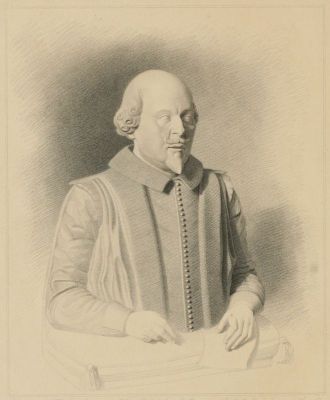
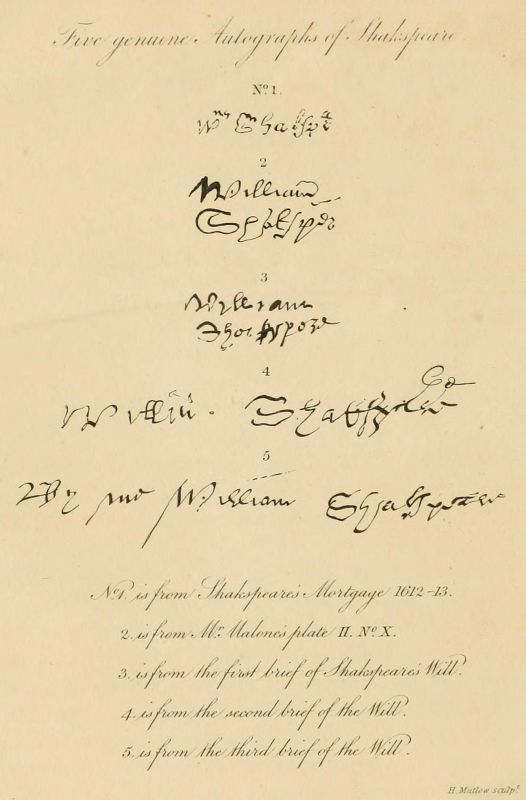
 , or high tide, and is expressive of the height of festivity.