WHAT Emblems are, in the general acceptation
of the word in modern times, is well
set forth in Cotgrave’s Dictionary, Art.
Emblema, where he defines an emblem to
be, “a picture and short posie, expressing some particular
conceit;” and very pithily by Francis Quarles, when he says,—“an
Emblem is but a silent Parable.” Though less terse and
clear than either of these, we may also take Bacon’s description,
in his Advancement of Learning, bk. v. chap. 5;—“Embleme
deduceth conceptions intellectuall to images sensible, and that
which is sensible more forcibly strikes the memory, and is more
easily imprinted than that which is intellectual.”
By many writers of Emblem books, perhaps by the majority
in their practice if not in their theories, there is very little
difference of meaning observed between Symbols and Emblems.
We find, however, in other Authors a more exact usage of the
word Symbol. The Greek poet Pindar[1] speaks of “a trustworthy
symbol, or sign, concerning a future action,” or from
which the future can be conjectured; Iago, recounting the
power of Desdemona over Othello, act ii. scene 3, l. 326,
declares it were easy
“for her
To win the Moor, were’t to renounce his baptism,
All seals and symbols of redeemed sin;”
and Cudworth, in his True Intellectual System of the Universe,
ed. 1678, p. 388, after giving Aristotle’s assertion “that
Numbers were the Causes of the Essence of other things,”
adds, “though we are not ignorant, how the Pythagoreans
made also the Numbers within the Decad, to be Symbols of
things.”
Claude Marginality, or Minōs, the famous commentator on
the Emblems of Andreas Alciatus, in his Tract, Concerning
Symbols, Coats of Arms, and Emblems,—eds. 1581, or 1608, or
1614,—maintains there is a clear distinction between emblems
and symbols, which, as he affirms, “many persons rashly and
ignorantly confound together.”[2] “We confess,” he adds, “that
the force of the Emblem depends upon the Symbol: but they
differ, I say, as Man and Animal; for people who have any
judgment at all know, that here of a certainty the latter is taken
more generally, the former more specially.” Mignault’s meaning
may be carried out by saying, that all men are animals,—but
all animals are not men; so all emblems are symbols,
tokens, or signs, but all symbols are not emblems;—the two
possess affinity but not identity,—they have no absolute convertibility
of the one for the other.

An example of Emblem and Symbol united occurs in
Symeoni’s Dedication[3] “To Madame Diana of Poitiers,
Dutchess of Valentinois;”
for Emblem, there are
“picture and short posie”
expressing the particular
conceit, “Quodcunque
petit, consequitur,”—She
attains whatever she seeks;
and for Symbols, or signs,
the sun, the temple, the
dogs, the arrow, and the
stag; and for exposition,
the stanza;
“Sante le Muse son, santa è Diana,
Caste son quelle, et casta è questa anchora.
Dalle Muse il Sol mai non s’ allontana,
Et d’ Apollo Diana vnica è suora.
Nelle Muse è d’ Amore ogni arte vana,
Et de i lacci d’ Amor Diana è fuora.
Chi fia Diana quel dunque che dica,
Che voi non siete delle Muse amica?”
Thus metrically rendered,
“Holy the Muses are, holy is Diana,
Chaste are they, and chaste also is she.
From the Muses the Sun indeed moves not afar,
And alone of Apollo Diana is sister.
Against the Muses Love’s every art is vain,
And free is Diana from all snares of Love.
Who then is the Diana that says,
That you are not a friend of the Muses?”
The word emblem, ἐμβλημα, is one that has strayed very
widely from its first meaning, and yet by a sort of natural
process, as the apple grows out of the crab, its signification now
is akin to what it was in distant ages. It then denoted the
thing, whether implement or ornament, placed in, or thrown on,
and so joined to, some other thing. Thus a word of cognate
origin, Epiblēs, in the Iliad, bk. xxiv. l. 453,[4] denoted the bolt
of fir that held fast the door;—it was something put against the
door,—the peg or bar that kept it from opening. So in the
Odyssey, bk. ii. l. 37,[5] the sceptre, the emblem of command,
was the baton which the herald Peisēnor placed in the hand of
the son of Ulysses; and again in the Iliad, bk. xiii. l. 319, 20,[6]
the flaming torch was the implement which the son of Kronos
might throw on the swift ships.
Of the changes through which a word may pass, “the word
Emblem presents one of the most remarkable instances.” They
cannot be better given than in the “Sketch of that branch of
Literature called Books of Emblems,” read in 1848 before
the Literary and Philosophical Society of Liverpool, by the late
Joseph Brooks Yates, Esq. He says of the word Emblem,
pp. 8, 9,—“its present signification, ‘Type or allusive representation,’
is of comparatively modern use, while its original
meaning is become obsolete. Among the Greeks an Emblem
(εμβλημα), derived from ενβαλλειν, meant something thrown in or
inserted after the fashion of what we now call Marquetry and
Mosaic work, or in the form of a detached ornament to be affixed
to a pillar, a tablet, or a vase, and put off or on, as there might
be occasion. Pliny, in his Natural History,” bk. xxxiii. c. 12,
“mentions an artist called Pytheus, who executed works of this
last description in silver, one of which, intended to be attached
to a jar (in phialæ emblemate), represented Ulysses and Diomed
carrying off the Palladium.[7] It weighed two ounces, and sold
for 10,000 sesterces = 80l. 14s. 7d. of our money. According to
one ancient manuscript of Pliny, it sold for double that amount.
Marcus Curtius leaping into the gulph forms the subject of a
beautiful silver Emblem, in the possession of the writer.[8] When
the arts of Greece were transplanted into Italy and Sicily, the
word Emblema became naturalised in the Latin tongue, though
not without some resistance on the part of the reigning prince
Tiberius. That emperor is reported by Suetonius,” Tiber. Cæsar
Vita, c. 71, “to have found fault with the introduction of the
word into a Decree of the Senate, as being of foreign growth.
Cicero, however, had used it in his orations against Verres, where
he accuses that rapacious governor (amongst other crimes) of
having compelled the people of Haluntium to bring to him their
vases, from which he carefully abstracted the valuable Emblems
and inserted them upon his own golden vessels. Quintilian,”
lib. 2, cap. 4, “soon after this period, in enumerating the arts of
oratory used by the pleaders of his day, describes some of them
as in the habit of preparing and committing to memory certain
highly finished clauses, to be inserted (as occasion might arise)
like Emblems in the body of their orations.”[9]
“Such was the meaning of the term in the classical ages of
Greece and Rome; nor was its signification altered until some
time after the revival of literature in the fifteenth century.”
Our own Geoffrey Whitney, deriving, as he does the other
parts of his Choice of Emblemes from the writers on the subject
that preceded him, gives very exactly the same explanation as
Mr. Yates. In his address “To the Reader” (p. 2) he says;—“It
resteth now to shewe breeflie what this worde Embleme
signifieth, and whereof it commeth, which thoughe it be borrowed
of others, & not proper in the Englishe tonge, yet that
which it signifieth: Is, and hathe bin alwaies in vse amongst vs,
which worde being in Greek ἐμβάλλεσθαι, vel ἐπεμβλῆσθαι is as
muche to saye in Englishe as To set in, or to put in: properlie
ment by suche figures, or workes; as are wroughte in plate, or in
stones in the pauementes, or on the waules, or suche like, for the
adorning of the place: hauinge some wittie deuise expressed
with cunning woorkemanship, somethinge obscure to be perceiued
at the first, whereby, when with further consideration it is
vnderstood, it maie the greater delighte the behoulder. And
althoughe the worde dothe comprehende manie thinges, and
diuers matters maie be therein contained; yet all Emblemes for
the most parte, maie be reduced into these three kindes, which
is Historicall, Naturall, & Morall. Historicall, as representing
the actes of some noble persons, being matter of historie. Naturall,
as in expressing the natures of creatures, for example, the
loue of the yonge Storkes, to the oulde, or of suche like. Morall,
pertaining to vertue and instruction of life, which is the chiefe of
the three, and the other two maye bee in some sorte drawen into
this head. For, all doe tende vnto discipline, and morall preceptes
of liuing. I mighte write more at large hereof, and of the
difference of Emblema, Symbolum, & Ænigma, hauinge all (as it
weare) some affinitie one with the other. But bicause my meaning
is to write as briefely as I maie, for the auoiding of tediousnes,
I referre them that would further inquire therof, to And.
Alciatus, Guiliel. Perrerius, Achilles Bocchius & to diuers others
that haue written thereof, wel knowne to the learned. For I
purpose at this present, to write onelie of this worde Embleme:
Bicause it chieflie doth pertaine vnto the matter I haue in hande,
whereof I hope this muche, shall giue them some taste that
weare ignoraunt of the same.”
Whitney’s namesake, to whom flattering friendship compared
him, Geoffrey Chaucer, gives us more than the touch of an
Emblem, when he describes, in the Canterbury Tales, l. 159–63,
the dress of “a Nonne, a Prioresse,”—
“Of smale corall aboute hire arm she bare
A pair of bedes, gauded all with grene;
And theron heng a broche of gold ful shene,
On whiche was first ywritten a crouned A,
And after,
Amor vincit omnia.”
[10]
So the “Cristofre,” which the Yeoman wore, l. 115,
“A Cristofre on his brest of silver shene,”
was doubtless a true Emblem, to be put on, and taken off, as
occasion served,—and was probably a cross with the image of
Christ upon it: and if pictured forth according to the description
in The Legend of Good Women, l. 1196–8, an emblematical device
was exhibited, where
“With saddle redde, embrouded with delite
Of gold the barres, up enbossed high,
Sate Dido, all in gold and perrie wrigh.”
This form, the natural form of the Emblem, we may illustrate
from a Greek coin, figured in Eschenburg’s Manual of Classical
Literature, by Fisk, ed. 1844, pl. xl. p. 351.
The Flying Horse and other ornaments of this coin on the
helmet of Minerva are Emblems,—and so are the owl, the
olive wreath, and the amphora, or two-handled vase. Were these
independent castings or mouldings, to be put on or taken off,
they would be veritable emblems in the strict literal sense of
the word.
Spenser’s ideas of devices and ornaments correspond to this
meaning. Mercilla, the allegorical representation of the sovereign
Elizabeth, is described as
“that gratious Queene:
Who sate on high, that she might all men see
And might of all men royally be seene,
Upon a throne of gold full bright and sheene,
Adorned all with gemmes of endless price,
As either might for wealth have gotten beene,
Or could be fram’d by workman’s rare device
And all embost with lyons and with flour de lice.”
Faerie Queene, v. 9. 27.
In Cymbeline, Shakespeare represents Iachimo, act i. sc. 6,
l. 188, 9, describing “a present for the emperor;”
“Tis plate, of rare device; and jewels
Of rich and exquisite form; their values great.”
So Spenser, Faerie Queene, iv. 4. 15, sets forth, “a precious
rebeke in an arke of gold,” as
“A gorgeous Girdle, curiously embost
With pearle and precious stone, worth many a marke;
Yet did the workmanship farre passe the cost.”
In the literal use of the word emblem Shakespeare is very
exact. Parolles, All’s Well, act ii. sc. 1, l. 40, charges the
young lords of the French court, as
“Noble heroes, my sword and yours are kin;” and adds, “Good sparks
and lustrous, a word, good metals: you shall find in the regiment of the
Spinii one Captain Spurio, with his cicatrice, an emblem of war, here on his
sinister cheek; it was this very sword entrenched it.”
The Coronation Scene in Henry VIII., act iv. sc. 1. l. 81–92,
describes the solemnities, when Anne Bullen, “the goodliest
woman that ever lay by man,
“with modest paces
Came to the altar; where she kneel’d, and saint-like
Cast her fair eyes to heaven, and pray’d devoutly:”
Each sacred rite is then observed towards her;—
“She had all the royal makings of a queen;
As holy oil, Edward Confessor’s crown,
The rod, and bird of peace, and all such emblems
Lay’d nobly on her.”
And down to Milton’s time the original meaning of the word
Emblem was still retained, though widely departed from as used
by some of the Emblem writers. Thus he pictures the “blissful
bower” of Eden, bk. iv. l. 697–703, Paradise Lost,
“each beauteous flower,
Iris all hues, roses, and jessamin,
Rear’d high their flourish’d heads between, and wrought
Mosaic: underfoot the violet,
Crocus, and hyacinth, with rich inlay
Broider’d the ground, more colour’d than with stone
Of costliest emblem.”
Thus, in their origin, Emblems were the figures or ornaments
fashioned by the tools of the artists, in metal or wood, independent
of the vase, or the column, or the furniture, they were intended
to adorn; they might be affixed or detached at the
promptings of the owner’s fancy. Then they were formed, as in
mosaic, by placing side by side little blocks of coloured stone, or
tiles, or small sections of variegated wood. Raised or carved
figures, however produced, came next to be considered as
Emblems; and afterwards any kind of figured ornament, or
device, whether carved or engraved, or simply traced, on the
walls and floors of houses or on vessels of wood, clay, stone, or
metal. These ornaments were sometimes like the raised work
on the Warwick and other vases, and formed a crust which
made a part of the vessel which they embellished; but at other
times they were devices, drawings and carvings on a framework
which might be detached from the cup or goblet on which the
owner had placed them, and be applied to other uses.[11]
We may here remark, since embossed ornaments and sculptured
figures on any plain surface are essentially Emblems, the
sculptor, the engraver, the statuary and the architect, indeed all
workers in wood, metal, or stone, who embellish with device or
symbol the simplicity of nature’s materials, are especially entitled
to take rank in the fraternity of the Emblematists. They
and their patrons, the whole world of the civilized and the
intellectual, are not content with the beam out of the forest, or
with the marble from the quarry, or with even the gold from the
mine. In themselves cedar, marble and gold are only forms of
brute and unintelligent nature,—and therefore we impose upon
them signs of deep-seated thoughts of the heart and devices of
wondrous meaning, and out of the rocks call forth sermons,
and lessons and parables, and highly spiritual suggestions. On
the very shrines of God we place our images of corruptible
things,—but then the soul that rightly reads the images lifts
them out of their corruptibility and makes them the teachers of
eternal truths.
The domains of the statuary and of the architect are however
too vast to be entered upon by us, except with a passing
glance; they are like Philosophy; it is all Natural,—and yet
wisely men map it out into kingdoms and divisions, and pursue
each his selected work.
So we remember it is not the Universe of Emblematism we
must attempt, even though Shakespeare should lend us
“The poet’s eye, in a fine frenzy rolling,
To glance from heaven to earth, from earth to heaven;
And as imagination bodies forth
The forms of things unknown,”
should add the gift of “the poet’s pen,” so that we might
“Turn them to shapes, and give to airy nothing
A local habitation and a name.”
Midsummer Night’s Dream, act v. sc. 1. l. 12–17.
Our business is only with that comparatively small section of
the Emblem-World, which, “like mummies in their cerements,”
is wrapped up within the covers of the so called Emblem-books.
Whether, when they are unrolled, they are worth the search and
the labour, some may doubt;—but perchance a scarabæus, or an
emerald, with an ancient harp upon it, may reward our patience.
By a very easy and natural step, figures and ornaments of
many kinds, when placed on smooth surfaces, were named
emblems; and as these figures and ornaments were very often
symbolical, i. e., signs, or tokens of a thought, a sentiment, a
saying, or an event, the term emblem was applied to any painting,
drawing, or print that was representative of an action, of a
quality of the mind, or of any peculiarity or attribute of character.[12]
“Emblems in fact were, and are, a species of hieroglyphics,
in which the figures or pictures, besides denoting the
natural objects to which they bear resemblances, were employed
to express properties of the mind, virtues and abstract ideas, and
all the operations of the soul.”
Tabula Cebetis philosophi so=
cratici-cũ Iohãnis Aeſticãpiani Epiſtola.
Plate 1a
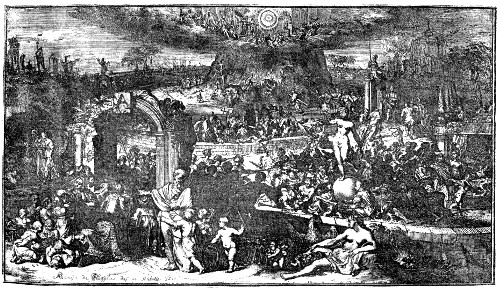
Tableau of Human Life from Cebes B C 390
Thus, the Tablet of Cebes, a work by one of the disciples of
Socrates, about B.C. 390, is an explanation, in the form of a
Dialogue, of a picture, said to have been set up in the temple
of Kronos at Athens or at Thebes, and which was declared to be
emblematical of Human Life.
One of the older Latin versions, printed in 1507, presents the
foregoing illustrative frontispiece.
As the book has come down to modern times it is, generally,
what has sometimes been named, nudum Emblema, a naked
Emblem, because it has neither device nor artistic drawing, but,
like Shakespeare’s comparison of all the world to a stage in which
man plays many parts, the course of Life, with its discipline, false
hopes and false pleasures, is in the Tablet so described,—in
fact so delineated,[13] as to have enabled the Dutch designer and
engraver, Romyn de Hooghe, in 1670, to have pictured “the
whole story of Human Life as narrated to the Grecian sage.”
The Moral of the Allegory may not be set forth with entire
clearness in the picture, but it can be given in the words of one of
the Golden Sentences of Democritus,—see Gale’s Opus. Mythol.:—
“That human happiness does not result from bodily excellencies nor from
riches, but is founded on uprightness of mind and on righteousness of
conduct.”
Coins and medals furnish most valuable examples of emblematical
figures; indeed some of the Emblem writers, as Sambucus
in 1564, were among the earliest to publish impressions
or engravings of ancient Roman money, on which are frequently
given very interesting representations of customs and symbolical
acts. On Grecian coins, which Priestley, in his Lectures on History,
vol. i. p. 126,—highly praises for “a design, an attitude,
a force, and a delicacy, in the expression even of the muscles
and veins of human figures,”—we find, to use heraldic language,
that the owl is the crest of Athens,—a wolf’s head, that of
Argos,—and a tortoise the badge of the Peloponnesus. The
whole history of Louis XIV. and that of his great adversary,
William III., are represented in volumes containing the medals
that were struck to commemorate the leading events of their
reigns, and though outrageously untrue to nature and reality by
the adoption of Roman costumes and classic symbols, they serve
as records of remarkable occurrences.
Heraldry throughout employs the language of Emblems;—it
is the picture-history of families, of tribes and of nations, of
princes and emperors. Many a legend and many a strange
fancy may be mixed up with it and demand almost the credulity
of simplest childhood in order to obtain our credence; yet in the
literature of Chivalry and Honours there are enshrined abundant
records of the glory that belonged to mighty names. I recall
now but one instance. In the fine folio lately emblazoned with
the well-known motto “GANG FORWARD,” “I AM READY,” what
volumes, to those who can interpret each mark and sign and
tutored symbol, are wrapped up in the Examples of the ornamental
Heraldry of the sixteenth Century: London, 1867, 1868.
The custom of taking a device or badge, if not a motto, is
traced by Paolo Giovio, in his Dialogo dell’ Imprese militari et
amorose, ed. 1574, p. 9,[14] to the earliest times of history. He
writes,
“To bear these emblems was an ancient usage.” Gio. “It is a point not
to be doubted, that the ancients used to bear crests and ornaments on the
helmets and on the shields: for we see this clearly in Virgil, when he made
the catalogue of the nations which came in favour of Turnus against the
Trojans, in the eighth book of the Æneid; Amphiaraus then (as Pindar
says) at the war of Thebes bore a dragon on his shield. Similarly Statius
writes of Capaneus and of Polinices, that the one bore the Hydra, and the
other the Sphynx,” &c.
But these were simple emblems, without motto inscribed.
The same Paolo Giovio, and other writers after him,[15] assign both
“picture and short posie,” to two of the early Emperors of Rome.
“Augustus, wishing to show how self-governed and moderate he was in
all his affairs, never rash and hasty to believe the first reports and informations
of his servants, caused to be struck, among several others, on a gold medal of
his own, a Butterfly and a Crab, signifying quickness by the Butterfly, and
by the Crab slowness, the two things which constitute a temperament
necessary for a Prince.”
The motto, as figured below,—“Make haste leisurely.”
The Device is thus applied in Whitney’s Emblems, p. 121,
and dedicated to two eminent judges of Elizabeth’s reign;
“This figure, lo, Avgvstvs did deuise,
A mirror good, for Iudges iuste to see,
And alwayes fitte, to bee before their eies,
When sentence they, of life, and deathe decree:
Then muste they haste, but verie slowe awaie,
Like butterflie, whome creepinge crabbe dothe staie.”
“The Prince, or Iudge, maie not with lighte reporte,
In doubtfull thinges, giue iudgement touching life:
But trie, and learne the truthe in euerie sorte,
And mercie ioyne, with iustice bloodie knife:
This pleased well Avgvstvs noble grace,
And Iudges all, within this tracke shoulde trace.”
The other is the device which the Aldi, celebrated printers of
Venice, from A.D. 1490 to 1563, assumed, of the dolphin and
anchor, but which Titus, son of Vespasian, had long before
adopted, with the motto “Propera tarde,”[16] Hasten slowly:
“facendo,” says Symeoni, “vna figura moderata della velocità di
questo, e della grauezza di quell’ altra, nel modo che noi veggiamo
dinanzi à i libri d’ Aldo.”
But the heraldry of mankind is a boundless theme, and we
might by simple beat of drum heraldic collect almost a countless
host of crests, badges, and quarterings truly emblematical, and
adopted and intended to point out peculiarities or remarkable
events and fancies in the histories of the coat-armour families of
the world.
The emblematism of bodily sign or action constitutes the
language of the dumb. An amusing instance occurs in the
Abbé Blanchet’s “Apologues Orientaux,” in his description
of “The Silent Academy, or the Emblems:”—
“There was at Hamadan, a city of Persia, a celebrated academy, of which
the first statute was conceived in these terms; The academicians shall think
much, write little, and speak the very least that is possible. It was named
the silent Academy; and there was not in Persia any truly learned man who
had not the ambition of being admitted to it. Dr. Zeb, an imaginary person,
author of an excellent little work, The Gag, learned, in the retirement of
the province where he was born, there was one place vacant in the silent
Academy. He sets out immediately; he arrives at Hamadan, and presenting
himself at the door of the hall where the academicians are assembled, he
prays the servant to give this billet to the president: Dr. Zeb asks humbly
the vacant place. The servant immediately executed the commission, but
the Doctor and his billet arrived too late,—the place was already filled.
“The Academy was deeply grieved at this disappointment; it had
admitted, a little against its wish, a wit from the court, whose lively light
eloquence formed the admiration of all ruelles.[17] The Academy saw itself
reduced to refuse Doctor Zeb, the scourge of praters, with a head so well
formed and so well furnished! The president, charged to announce to
the Doctor the disagreeable news, could scarcely bring himself to it, and
knew not how to do it. After having thought a little, he filled a large cup
with water, but so well filled it, that one drop more would have made the
liquid overflow; then he made sign that the candidate should be introduced.
He appeared with that simple and modest air which almost always
announces true merit. The president arose and, without offering a single
word, showed, with an appearance of deep sorrow, the emblematic cup,
this cup so exactly filled. The Doctor understood that there was no more
room in the Academy; but without losing courage, he thought how to
make it understood that one supernumerary academician would disarrange
nothing. He sees at his feet a roseleaf, he picks it up, he places it gently on
the surface of the water, and did it so well that not a single drop escaped.
“At this ingenious answer everybody clapped hands; the rules were
allowed to sleep for this day, and Doctor Zeb was received by acclamation.
The register of the Academy was immediately presented to him, where the
new members must inscribe themselves. He then inscribed himself in it;
and there remained for him no more than to pronounce, according to custom,
a phrase of thanks. But as a truly silent academician, Doctor Zeb returned
thanks without saying a word. He wrote in the margin the number 100,—it
was that of his new brethren; then, by putting a 0 before the figures, 0100,
he wrote below, they are worth neither less nor more. The president
answered the modest Doctor with as much politeness as presence of mind.
He placed the figure 1 before the number 100, i.e. 1100; and he wrote, they
will be worth eleven times more.”
The varieties in the Emblems which exist might be pursued
from “the bird, the mouse, the frog, and the four arrows,” which,
the Father of history tells us,[18] the Scythians sent to Darius, the
invader of their country,—through all the ingenious devices by
which the initiated in secret societies, whether political, social, or
religious, seek to guard their mysteries from general knowledge
and observation,—until we come to the flower-language of the
affections, and learn to read, as Hindoo and Persian maidens
can, the telegrams of buds and blossoms,[19] and to interpret the
flashing of colours, either simple or combined. We should have
to name the Picture writing of the Mexicans, and to declare
what meanings lie concealed in the signs and imagery which
adorn tomb and monument,—or peradventure to set forth the
art by which, on so simple a material as the bark of a birch-tree,
some Indians, on their journey, emblematized a troop with
attendants that had lost their way. “In the party there was
a military officer, a person whom the Indians understood
to be an attorney, and a mineralogist; eight were armed:
when they halted they made three encampments.” With
their knives the Indians traced these particulars on the bark
by means of certain signs, or, rather, hieroglyphical marks;—“a
man with a sword,” they fashioned “for the officer;
another with a book for the lawyer, and a third with a
hammer for the mineralogist; three ascending columns of
smoke denoted the three encampments, and eight muskets
the number of armed men.” So, without paper or print, a
not unintelligible memorial was left of the company that were
travelling together.
And so we come to the very Early Examples—if not the
earliest—of Emblematical Representation, as exhibited in fictile
remains, in the workmanship of the silversmith, and of those by
whom the various metals and precious stones have been wrought
and moulded; and especially in the numerous specimens of the
skill or of the fancy which the glyptic and other artizans of
ancient Egypt have left for modern times.
For the nature of Fictile ornamentation it were sufficient to
refer to the recently published Life of Josiah Wedgwood;[20] but
in the antefixæ, or terra cotta ornaments, derived from the old
Etruscan civilisation, we possess true and literal Emblems. As
the name implies, these ornaments “were fixed before the buildings,”
often on the friezes “which they adorned,” and were
fastened to them by leaden nails. For examples, easy of access,
we refer to the sketches supplied by James Yates, Esq., of
Highgate; to the Dictionary of Gk. and Rom. Antiquities, p. 51;
and especially to that antefixa which represents Minerva superintending
the construction of the ship Argo. The man with the
hammer and chisel is Argus, who built the vessel under her
direction. The pilot Tiphys is assisted by her in attaching the
sail to the yard. The borders at the top and bottom are in the
Greek style, and are extremely elegant.”
And the pressing of clay into a matrix or mould, from which
the form is taken, appears to be of very ancient date. The book
of Job xxxviii. 14, alludes to the practice in the words, “it is
turned as clay to the seal.” Of similar or of higher antiquity is
“the work of an engraver in stone, like the engravings of a
signet,” Exodus xxviii. 11. And “the breastplate of judgment,
the Urim and the Thummim,” v. 30, worn “upon Aaron’s
heart,” was probably a similar emblematical ornament to that
which Diodorus Siculus, in his History, bk. i. chap. 75, tells us
was put on by the president of the Egyptian courts of justice:
“He bore about his neck a golden chain, at which hung an
image, set about, or composed of precious stones, which was
called Truth.”[21]
Among instances of emblematical workmanship by the silversmith
and his confabricators of similar crafts, we may name that
shield of Achilles which Homer so graphically describes,[22] “solid
and large,” “decorated with numerous figures of most skilful
art;”—or the shields of Hercules and of Æneas, with which
Hesiod, Eoeæ, iv. 141–317, and Virgil, Æneid, viii. 615–73,
might make us familiar. Or to come to modern times,—to days
our very own,—there is the still more precious, the matchless
shield by Vehm, whereon, in most expressive imagery, are hammered
out the discoveries of Newton, Milton’s noble epics, and
Shakespeare’s dramatic wonders. We may, too, in passing,
allude to the richly-embossed and ornamented cups for which
our swift racers and grey-hounds, and those “dogs of war,” our
volunteers, contend; and the almost imperial pieces of plate,
such as the Cæsars never beheld, in which genius and the highest
art combine, by their “cunning work,” to carve the deeds and
enhance the renown of some of our great Indian administrators
and illustrious generals; these all, truly “choice emblemes,”
intimate the extent to which our subject might lead. But I
forbear to pursue it, though scarcely any path offers greater
temptations for wandering abroad amid the marvels of human
skill, and for considering reverently and gladly how men have
been “filled with the spirit of God, in wisdom, and in understanding,
and in knowledge, and in all manner of workmanship.”
Exodus xxxi. 3.
Of glyptic art the most ancient, as well as the most ample,
remains are found in the temples and the other monuments of
Egypt. Various modern explorers and writers have given very
elaborate accounts of those remains, and still are carrying on
their researches; but of old writers only Clemens, of Alexandria,
who flourished “towards the end of the second century after
Christ,” “has left us a full and correct account of the principle
of the Egyptian writing,”[23] and has declared what the subjects
were which were included in the word hieroglyphics;[24] and as
far as is known, no other early author, except Horapollo of the
Nile, has written expressly on the Hieroglyphics of Egypt, and
declared that his work—which was probably translated into
Greek in the reign of the emperor Zeno, or even later—was
derived from Egyptian sources; indeed, was a book in the
language of Egypt.
Probably the best account we have of the author and of
the translator, is given by Alexander Turner Cory, in the
Preface to his edition of Horapollo. He says, pp. viii.
and ix.,—
“At the beginning of the fifth century, Horapollo, a scribe of the Egyptian
race, and a native of Phœnebythis, attempted to collect and perpetuate in
the volume before us, the then remaining, but fast fading knowledge of the
symbols inscribed upon the monuments, which attested the ancient grandeur
of his country. This compilation was originally made in the Egyptian language;
but a translation of it into Greek by Philip has alone come down to
us, and in a condition very far from satisfactory. From the internal evidence
of the work, we should judge Philip to have lived a century or two later than
Horapollo; and at a time when every remnant of actual knowledge of the
subject must have vanished.”
However this may be, it is certainly a book of Emblems, and
just previous to Shakespeare’s age, and during its continuance
was regarded as a high authority. Within that time there were
at least five editions of the work,—and it was certainly the mine
in which the writers of Emblem books generally sought for what
were to them valuable suggestions. The edition we have used is
the small octavo of 1551,[25] with many woodcuts, imaginative
indeed, but designed in accordance with the original text. J.
Mercier, a distinguished scholar, who died in 1562, was the
editor. In 1547 he was professor of Hebrew at the Royal
College of Paris, and in 1548 edited the quarto edition of
Horapollo’s Hieroglyphics.
From the edition of 1551, p. 52, we take a very popular
illustration; it is the Phœnix, and may serve to show the nature
of Horapollo’s work.
“How,” he asks, “do
the Egyptians represent
a soul passing a long
time here?” “They
paint a bird—the Phœnix;
for of all creatures
in the world this bird has
by far the longest life.”
Again, bk. i. 37, or
p. 53, “How do they denote
the man who after
long absence will return to his friends from abroad?” By the
Phœnix; “for this bird, after five hundred years, when the
death hour is about to seize it, returns to Egypt, and in
Egypt, paying the debt of nature, is burned with great
solemnity. And whatever sacred rites the Egyptians observe
towards their other sacred animals, these they observe towards
the Phœnix.”
And bk. ii. 57,—“The lasting restoration which shall take
place after long ages, when they wish to signify it, they paint
the bird Phœnix. For when it is born this bird obtains the
restoration of its properties. And its birth is in this manner:
the Phœnix being about to die, dashes itself upon the ground,
and receiving a wound, ichor flows from it, and through the
opening another Phœnix is born. And when its wings are
fledged, this other sets out with its father to the city of the
Sun in Egypt, and on arriving there, at the rising of the
Sun, the parent dies; and after the death of the father, the
young one sets out again for its own country. And the dead
Phœnix do the priests of Egypt bury.”
But the drawings, which in the old editions of Horapollo
were fancy-made, have, through the researches of a succession of
Egyptian antiquaries, assumed reality, and may be appealed to
for proof that Horapollo described the very things which he had
seen, though occasionally he, or his translator Philip, attributes
to them an imaginative or highly mythical meaning. The
results of those researches we witness in the editions of Horapollo,
first by the celebrated Dr. Conrad Leemans, of Leyden,
in 1835,[26] and second, by Alexander Turner Cory, Fellow of
Pembroke College, Cambridge, in 1840;[27] both of which editions,
by their illustrative plates, taken from correct drawings of the
originals, present Horapollo with an accuracy that could not
have been approached in the sixteenth century. We have
indeed of that age the great work of Pierius Valerian (ed. folio,
Bâle, 1556, leaves 449), the Hieroglyphica, dedicated to Cosmo
de’ Medici, with almost innumerable emblems, in fifty-eight
books, and with about 365 devices. But it cannot be regarded
as an exposition of the Egyptian art, and labours under the
same defect as the early editions of Horapollo,—the illustrations
are not taken from existing monuments.
An example or two from Leemans and Cory will supply
sufficient information to enable the reader to understand
something of the nature of Horapollo’s work, and of the actual
Hieroglyphics from which that work has in great part been
verified.
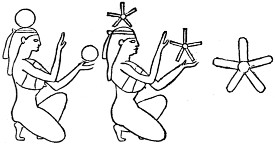
Leemans’ Horapollo, 1835.
The following is the 31st figure in the plates which Leemans
gives; it is the pictorial representation to explain “What
the Egyptians mean when they engrave or paint a star.”[28]
“Would they signify the God who sets in order the world, or
destiny, or the number
five, they paint a star;
God, indeed, because the
providence of God, to
which the motion of the
stars and of all the world
is subject, determines
the victory; for it seems
to them that, apart from
God, nothing whatever could endure; and destiny they signify,
since this also is regulated by stellar management,—and the
number five, because out of the multitude which is in heaven,
five only, by motion originating from themselves, make perfect
the management of the world.”
Of the three figures which are delineated above, the one to
the left hand symbolizes God, that in the middle destiny,
and the third, the number 5, from five rays being used to
indicate a star.
The same subjects are
thus represented in Cory’s
Horapollo.
Cory’s Horapollo, bk. i.
c. 8, p. 15, also illustrates
the question, “How do they
indicate the soul?” by the accompanying symbols; of which
I. represents the mummy and the departing soul, II. the hawk
found sitting on the mummy, and III. the external mummy
case. The answer
to the question
is:—
“Moreover, the
Hawk is put for
the soul, from the
signification of its
name; for among
the Egyptians the
hawk is called
Baieth: and this name in decomposition signifies soul and heart; for the
word Bai is the soul, and ETH the heart: and the heart according to the
Egyptians is the shrine of the soul; so that in its composition the name
signifies ‘soul enshrined in heart.’ Whence also the hawk, from its correspondence
with the soul, never drinks water, but blood, by which, also, the
soul is sustained.”
And in a similar way many of the sacred engravings or drawings
are interpreted. A serpent with its tail covered by the rest
of its body, “depicts Eternity;”[29] “to denote an only begotten, or
generation, or a father, or the world, or a man, they delineate a
SCARABÆUS;”[30] a Lion symbolises intrepidity,—its FOREPARTS,
strength, and its HEAD, watchfulness;[31] the Stork denotes
filial affection, the Crane on the watch, a man on guard against
his enemies, and the FEATHER of an Ostrich, impartial justice,—for,
adds the author, “this animal, beyond other animals, has
the wing feathers equal on every side.”[32]
Christian Art, like the Religious Art of the world in general,—from
the thou and thee of simplest Quakerism, outward and
audible sounds of an inward and silent spirit, up to the profoundest
mystic ritualism of the Buddhist,—Christian Art
abounds in Emblems; gems and colours, genuflexions and other
bodily postures supply them; they are gathered from the mineral,
animal, and vegetable kingdoms, and besides are enriched from
the whole domain of imaginary devices and creatures. Does
the emerald flash in its mild lustre?—it is of “victory and hope,
of immortality, of faith, and of reciprocal love,” that it gives
forth light. Is blue, the colour of heaven, worn in some religious
ceremony?—it betokens “piety, sincerity, godliness, contemplation,
expectation, love of heavenly things.” Do Christian
men bare the head in worship?—it is out of reverence for the
living God, whose earthly temples they have entered. The
badge of St. John the Baptist, is a lamb on a book,—that of St.
John the Evangelist is a cup of gold with a serpent issuing from
it. The Pomegranate, “showing its fulness of seed and now
bursting,” typifies the hope of immortality;—and a Fleur-de-lys,
or the Rose of Sharon, embroidered or painted on a robe,—it
marks the Blessed Virgin. With more intricate symbolism
the Greek Church represents the Saviour’s name ΙHϹΟΥϹ
ΧΡΙϹΤΟϹ.—IesuS CHristuS. The first finger of the hand extended
is for I, the second bent for C or s, the thumb crossed
upon the third finger for Χ or Ch, and the fourth finger curved
for Ϲ or s. Thus are given the initial and final letters of that
Holy Name, the Saviour, the Christ.[33]
Of early Emblems examples enough have now been given to
indicate their nature. Whether in closing this part of the
subject we should name a work of more ancient date even than
the Greek version of Horapollo would admit of doubt, were it
not that every work partakes of an emblematical character,
when the descriptions given or the instances taken pertain, as
Whitney says, “to vertue and instruction of life,” or “doe tende
vnto discipline, and morall preceptes of living.”
Under this rule we hesitate not to admit into the wide category
of Emblem writers, Epiphanius, who was chosen bishop of
Constantia in Cyprus, A.D. 367, and who died in 402. His
Physiologist, published with his sermon on the Feast of Palms,
is, like many writings of the Fathers, remarkable for highly
allegorical interpretations. An edition, by Ponce de Leon, a
Spaniard of Seville, was printed at Rome in 1587, and repeated
at Antwerp[34] in 1588. It relates to the real and imaginary
qualities of animals, and to certain precepts and doctrines of
which those qualities are supposed to be symbolical. As an
example we give here an extract from chapter XXV. p. 106,
“Concerning the Stork.”
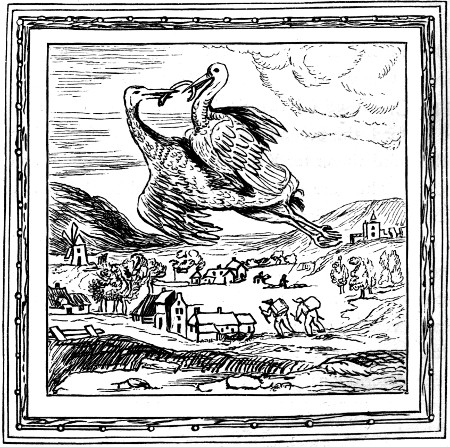
The Stork is described as a bird of extreme purity; and as
nourishing, with wonderful affection, father and mother in their
old age. The “interpretation” or application of the fact is;—“So
also it behoves us to observe these two divine commands,
that is to turn aside from evil and to do good, as the kingly
prophet wrote; and likewise in the decalogue the Lord commands,
thus saying;—Honour thy father and thy mother.”
In a similar way the properties and habits of various animals,—of
the lion, the elephant, the stag, the eagle, the pelican, the
partridge, the peacock, &c., are adduced to enforce or symbolize
virtues of the heart and life, and to set forth the doctrines of the
writer’s creed.
To illustrate the Emblem side of Christian Art a great
variety of information exists in Sketches of the History of
Christian Art, by Lord Lindsay (3 vols. 8vo: Murray, London,
1847); and Northcote and Brownlow’s Roma Sotterranea, compiled
from De Rossi (8vo: Longmans, London, 1869) promises
to supply many a symbol and type of a remote age fully to set
forth the same subject.
CHAPTER II. SKETCH OF EMBLEM-BOOK LITERATURE PREVIOUS TO A.D. 1616. — Section I. EXTENT OF THE EMBLEM LITERATURE TO WHICH SHAKESPEARE MIGHT HAVE HAD ACCESS. — Section II. EMBLEM WORKS AND EDITIONS DOWN TO THE END OF THE FIFTEENTH CENTURY. — Section III. OTHER EMBLEM WORKS AND EDITIONS BETWEEN A.D. 1500 AND 1564. — — — — Section IV. EMBLEM WORKS AND EDITIONS BETWEEN A.D. 1564 AND A.D. 1616. — —
IN the use of the word Emblem there is seldom
a strict adherence observed to an exact definition,—so,
when Emblem Literature is spoken of,
considerable latitude is taken and allowed as to
the kind of works which the terms shall embrace.
In one sense every book which has a picture set in it, or on it,
is an emblem-book,—the diagrams in a mathematical treatise or
in an exposition of science, inasmuch as they may be, and often
are, detached from the text, are emblems; and when to Tennyson’s
exquisite poem of “Elaine,” Gustave Doré conjoins those
wonderful drawings which are themselves poetic, he gives us a
book of emblems;—Tennyson is the one artist that out of the
gold of his own soul fashioned a vase incorruptible,—and Doré
is that second artist who placed about it ornaments of beauty,
fashioned also out of the riches of his mind.
Yet by universal consent, these and countless other works,
scientific, historical, poetic, and religious, which artistic skill has
embellished, are never regarded as emblematical in their character.
The “picture and short posie, expressing some particular
conceit,” seem almost essential for bringing any work within the
province of the Emblem Literature;—but the practical application
of the test is conceived in a very liberal spirit, so that while
the small fish sail through, the shark and the sea-dog rend the
meshes to tatters.
A proverb or witty saying, as, in Don Sebastian Orozco’s
“Emblemas Morales” (Madrid 1610), “Divesqve miserqve,”
both rich and wretched, may be pictured by king Midas at the
table where everything is turned to gold, and may be set forth
in an eight-lined stanza, to declare how the master of millions
was famishing though surrounded by abundance;—and these
things constitute the Emblem. Some scene from Bible History
shall be taken, as, in “Les figures du vieil Testament, & du
nouuel” (at Paris, about 1503), Moses at the burning bush;
where are printed, as if an Emblem text, the passage from
Exodus iii. 2–4, and by its side the portraits of David and
Esaias; across the page is a triplet woodcut, representing
Moses at the bush, and Mary in the stable at Bethlehem with
Christ in the manger-cradle; various scrolls with sentences from
the Scriptures adorn the page:—such representations claim a
place in the Emblem Literature. Boissard’s Theatrum Vitæ
Humanæ (Metz, 1596) shall mingle, in curious continuity, the
Creation and Fall of Man, Ninus king of the Assyrians, Pandora
and Prometheus, the Gods of Egypt, the Death of Seneca,
Naboth and Jezabel, the Advent of Christ and the Last Judgment;—yet
they are all Emblems,—because each has a “picture
and a short posie” setting forth its “conceit.” To be sure there
are some pages of Latin prose serving to explain or confuse, as
the case may be, each particular imagination; but the text
constitutes the emblem, and however long and tedious the
comment, it is from the text the composition derives its name.
“Stam und Wapenbuch hochs und niders Standts,”—A
stem and armorial Bearings-book of high and of low Station,—printed
at Frankfort-on-Mayne, 1579, presents above 270
woodcuts of the badges, shields and helmets, with appropriate
symbols and rhymes, belonging as well to the humblest who
can claim to be “vom gutem Geschlecht,” of good race, as to
the Electoral Princes and to the Cæsarean Majesty of the Holy
Roman Empire. Most of the figures are illustrated by Latin
and German verses, and again “picture and short posie” vindicate
the title,—book of Emblems.
And of the same character is a most artistic work by
Theodore de Bry, lately added to the treasure-house at Keir;
it is also a Stam und Wapenbuch, issued at Frankfort in 1593,
with ninety-four plates all within most beautiful and elaborate
borders. Its Latin title, Emblema Nobilitate et Vulgo scitu
digna, &c., declares that these Emblems are “worthy to be
known both by nobles and commons.”
And so when an Emperor is married, or the funeral rites of
a Sovereign Prince celebrated, or a new saint canonized, or
perchance some proud cardinal or noble to be glorified, whatever
Art can accomplish by symbol and song is devoted to the
emblem-book pageantry,—and the graving tool and the printing
press accomplish as enduring and wide-spread a splendour as
even Titian’s Triumphs of Faith and Fame.
Devotion that seeks wisdom from the skies, and Satire that
laughs at follies upon the earth, both have claimed and used
emblems as the exponents of their aims and purposes.
Plate 2
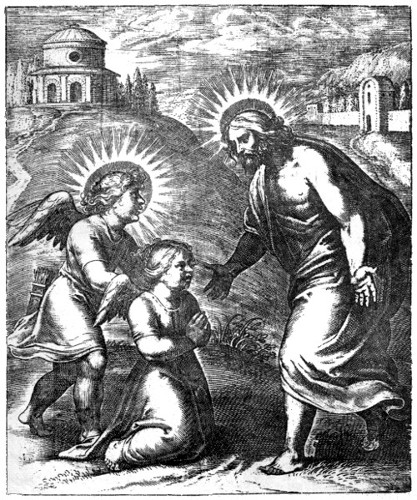
Christ’s adoption of the Human Soul Otho Vænius 1615
With what surpassing beauty and nobleness both of expression
and of sentiment does Otho Vænius in his “Amoris
Divini Emblemata,” Antwerp, 1615, represent to the mind as
well as to the eye the blessed Saviour’s adoption of a human
soul, and the effulgence of love with which it is filled! (See
Plate II.) They are indeed divine Images portrayed for us, and
the great word is added from the beloved disciple,—“Behold,
what manner of love the Father hath bestowed upon us, that
we should be called the sons of God.” And the simple Refrain
follows,—
“C’est par cet Amour que les hommes
Sont esleuez de ce bas lieu;
C’est par cet Amour que nous sommes
Enfans legitimes de Dieu:
Car l’Ame qui garde en la vie
De son Pere la volonté,
Doit au Pere ès cieux estre vnie
(Comme fille) en eternité.”
And that clever imitation of the “Stultifera Nauis,” the
Fool-freighted Ship, of the fifteenth century, namely, the
“Centifolium Stultorum,” edition 1707, or Hundred-leaved
Book of Fools of the eighteenth, proves how the Satirical may
symbolize and fraternize with the Emblematical. The title of
the book alone is sufficient to show what a vehicle for lashing
men’s faults the device with its stanzas and comment may be
made; it is, “A hundred-leaved book of Fools, in Quarto; or an
hundred exquisite Fools newly warmed up, in Folio,—in an
Alapatrit-Pasty for the show-dish; with a hundred fine copper
engravings, for honest pleasure and useful pastime, intended as
well for frolicsome as for melancholy minds; enriched moreover
with a delicate sauce of many Natural Histories, gay Fables,
short Discourses, and edifying Moral Lessons.”
Among the one hundred distinguished characters, we might
select, were it only in self-condemnation, the Glass and Porcelain
dupe, the Antiquity and Coin-hunting dupe, and especially
the Book-collecting dupe. These are among the best of the
devices, and the stanzas, and the expositions. Dupes of every
kind, however, may find their reproof in the six simple German
lines,—p. 171,
“Wer Narren offt viel predigen will,
Ben ihnen nicht wird schaffen viel:
Dann all’s was man am besten redt,
Der Narr zum ärgsten falsch versteht,
Ein Narr, ein Narr, bleibt ungelehrt,
Wann man ihn hundert Jahr schon lehrt.”
meaning pretty nearly in our vernacular English,
“Whoso to fools will much and oft be preaching,
By them not much will make by all his teaching.
For though we of our very best be speaking,
Falsely the fool the very worst is seeking.
Therefore the fool, a fool untaught, remains,
Though five score years we give him all our pains.”
But Politics also have the bright, if not the dark, side of their
nature presented to the world in Emblems. Giulio Capaccio,
Venetia, 1620, derives “Il Principe,” The Prince, from the
Emblems of Alciatus, “with two hundred and more Political
and Moral Admonitions,” “useful,” he declares, “to every
gentleman, by reason of its excellent knowledge of the customs,
economy, and government of States.” Jacobus à Bruck, of
Angermunt, in his “Emblemata Politica,” A.D. 1618, briefly
demonstrates those things which concern government; but Don
Diego Saavedra Faxardo, who died in 1648, in a work of considerable
repute,—“Idea de vn Principe Politico-Christiano,
representada en cien Empresas,”—Idea of a Politic-Christian
Prince, represented in one hundred Emblems (edition, Valencia,
1655), so accompanies his Model Ruler from the cradle to
maturity as almost to make us think, that could we find the bee-bread
on which Kings should be nourished, it would be no more
difficult a task for a nation to fashion a perfect Emperor than it
is for a hive to educate their divine-right ruling Queen.
But, so great is the variety of subjects to which the illustrations
from Emblems are applied, that we shall content ourselves
with mentioning one more, taking out the arguments, as
they are named, from celebrated classic poets, and converting
them into occasions for pictures and short posies. Thus, like
the dust of Alexander, the remains of the mighty dead, of
Homer and Virgil, of Ovid and Horace, have served the base
uses of Emblem-effervescence, and in nearly all the languages of
Europe have been forced to misrepresent the noble utterances of
Greece and Rome. Many of the pictures, however, are very
beautiful, finely conceived, and skilfully executed;—we blame
not the artists, but the false taste which must make little bits
of verses where the originals existed as mighty poems.
Generally it is considered that the Ovids of the fifteenth
century were without pictorial illustrations, and could not, therefore,
be classed among books of Emblems; but the Blandford
Catalogue, p. 21, records an edition, “Venetia, 1497,” “cum
figuris depictis,”—with figures portrayed. Without discussing
the point, we will refer to an undoubted emblematized edition
of the Metamorphoses of Ovid, “Figurato & abbreviato in
forma d’Epigrammi da M. Gabriello Symeoni,”—figured and
abbreviated in form of Epigrams by M. Gabriel Symeoni. The
volume is a small 4to of 245 pages, of which 187 have each
a title and device and Italian stanza, the whole surrounded by a
richly figured border. The volume, dedicated to the celebrated
“Diana di Poitiers, Dvchessa di Valentinois,” was published “A
Lione per Giouanni di Tornes nella via Resina, 1559.” An
Example, p. 13, (see Plate III.,) will show the character of the
work, of which another edition was issued in 1584. The Italian
stanzas are all of eight lines each, and the passages of the
original Latin on which they are founded are collected at the
end of the volume. Thus, for “La Creatione & confusione del
Mondo,” the Latin lines are,
“Ante mare & terras & quod tegit omnia, cœlum.
. . . . . . . Nulli sua forma manebat.
Hanc Deus, & melior litem natura diremit.”
Of the devices several are very closely imitated in the woodcuts
of Reusner’s Emblems, published at Frankfort, in 1581.
The engravings in Symeoni’s Ovid are the work of Solomon
Bernard, “the little Bernard,” a celebrated artist born at Lyons
in 1512; who also produced a set of vignettes for a French
translation of Virgil, L’Eneide de Virgile, Prince des Poetes
latins, printed at Lyons in 1560.
“Qvinti Horatii Flacci Emblemata,” as Otho Vænius
names one of his choicest works, first published in 1607, is a
similar adaptation of a classic author to the prevailing taste of
the age for emblematical representation. The volume is a very
fine 4to of 214 pages, of which 103 are plates; and a corresponding
103 contain extracts from Horace and other Latin
authors, followed, in the edition of 1612, by stanzas in Spanish,
Italian, French and Flemish. An example of the execution of
the work will be found as a Photolith, Plate XVII., near the end
of our volume; it is the “Volat irrevocabile tempus,”—Irrevocable
time is flying,—so full of emblematical meaning.
From the office of the no less celebrated Crispin de Passe,
at Utrecht, in 1613, issued, in Latin and French verse,
“Specvlvm Heroicvm Principis omnium temporum Poëtarum
Homeri,”—The Heroic Mirror of Homer, the Prince of the
Poets of all times. The various arguments of the twenty-four
books of the Iliad have been taken and made the groundwork
of twenty-four Emblems, with their devices most admirably
executed. The Latin and French verses beneath each device
unmistakeably impress a true emblem-character on the work.
The author, “le Sieur J. Hillaire,” appends to the Emblems,
pp. 69–75, “Epitaphs on the Heroes who perished in the Trojan
War,” and also “La course d’Vlisses, son tragitte retour, &
deffaicte des amans qui poursuivoient la chaste & vertueuse
Penelope.”
What might not in this way be included within the wide-encompassing
grasp of the determined Emblematist it is almost
impossible to say; and therefore it ought to be no matter of
surprise to find there is practically a greater extent given to the
Literature of Emblems than of absolute right belongs to it. We
shall not go much astray if we take Custom for our guide, and
keep to its decisions as recorded in the chief catalogues of
Emblem works.
LEAVING for the most part out of view the
discussions which have taken place as to the
exact time and the veritable originators of the
arts of printing by fixed or moveable types,
and of the embellishing of books by engravings on blocks of
wood or plates of copper, we are yet—for the full development
of the condition and extent of the Emblem Literature in the age
of Shakespeare—required to notice the growth of that species of
ornamental device in books which depends upon Emblems for
its force and meaning. We say advisedly “ornamental device
in books,” for infinite almost are the applications of Symbol and
Emblem to Architecture, Sculpture, and Painting, as is testified
by the Remains of Antiquity in all parts of the world, by the
Pagan tombs and Christian catacombs of ancient Rome, by
nearly every temple and church and stately building in the
empires of the earth, and especially in those wonderful creations
of human skill in which form and colour bring forth to sight
nearly every thought and fancy of our souls.
Long before either block-printing or type-printing was practised,
it is well known how extensively the limner’s art was
employed “to illuminate,” as it is called, the Manuscripts that
were to be found in the rich abbeys or convents, and in the
mansions of the great and noble. For instance, the devices
in the Dance of Macaber, undoubtedly
an Emblem Manuscript of the
fourteenth century, were of painter’s
workmanship, and afterwards employed
by the wood-engravers to
embellish type-printed volumes of a
devotional character. To this Brunet,
in his Manuel du Libraire, vol. v.
c. 1557–1560, bears witness, when
speaking of the printer Philip Pigouchet,
and of the bookseller Simon
Vostre, who “furent les premiers à
Paris qui surent allier avec succès la
gravure à la typographie;” and adds
in a note, “La plus ancienne édition
de la Danse macabre que citent les
bibliographes est celle de Paris, 1484;
mais, plus d’un siècle avant cette
date, des miniaturistes français avaient
déjà figuré, sur les marges de plusieurs
Heures manuscrites, des Danses de
morts, représentées et disposées à peu
près comme elles l’ont été depuis
dans les livres de Simon Vostre; c’est ce que nous avons pu
remarquer dans un magnifique manuscrit de la seconde moitié
du quatorzième siècle, enrichi de nombreuses et admirables
miniatures qui, après avoir été conservé en Angleterre dans le
cabinet du docteur Mead, à qui le roi Louis XV. en avait fait
présent, est venu prendre place parmi les curiosités de premier
ordre réunies dans celui de M. Ambr. Firmin Didot.”
A strictly emblematical work in English is the following,
“from a finely written and illuminated parchment roll, in perfect
preservation, about two yards and three quarters in length,”
“The Five Wounds of Christ.” “By William Billyng;”
“Manchester: Printed by R. and W. Dean, 4to, 1814.” The
date is fixed by the editor, William Bateman, “between the
years 1400 and 1430;” and the poem contains about 120 lines,
with six illuminated devices. We give here, on page 40, in
outline, the Device of “The Heart of Jesus the Well of everlasting
Lyfe.”
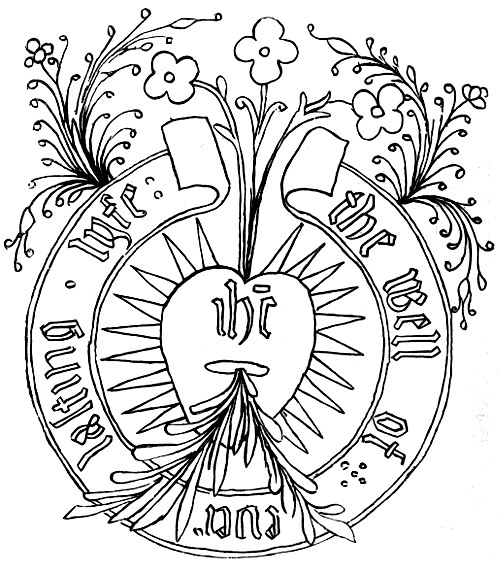
Five wounds of Christ, 1400–1430.
There follows, as to each of the Emblems, a Prayer, or
Invocation; the Device in question has these lines,—
“Hayle welle and cõdyte of eu̾lastyng lyffe
Thorow launced so ferre wtyn my lordes syde
The flodys owt traylyng most aromatys
Hayle prious ♥ wounded so large and wyde
Hayle trusty treuloue our joy to provide
Hayle porte of glorie wt paynes alle embrued
On alle I sprynglyde lyke purpul dew enhuede.”
An Astronomical Manuscript in the Chetham Library,
Manchester, the eclipses in which are calculated from A.D. 1330
to A.D. 1462, contains emblematical devices for the months of
the year, and the signs of the zodiac; these are painted
medallions at the beginning of each month; and to each of the
months is attached a metrical line explanatory of the device.
| Januarius. |
Ouer yis feer I warme myn handes. |
| Februarius. |
Wyth yis spade I delve my londes. |
| Martius. |
Here knitte I my vynes in springe. |
| Aprilis. |
So merie I here yese foules singe. |
| Mayus. |
I am as Joly as brid on bouz. |
| Junius. |
Here wede I my corn, clene I houz. |
| Julius. |
Wyth yis sythe my medis I mowe. |
| Augustus. |
Here repe I my corn so lowe. |
| September. |
Wyth ys flayll I yresche my bred. |
| October. |
Here sowe I my Whete so reed. |
| November. |
Wyth ys knyf I steke my swyn. |
| December. |
Welcome cristemasse Wyth ale and Wyn. |
This manuscript contains, as J. O. Halliwell says of it,
“an astrological volvelle—an instrument mentioned by Chaucer:
it is the only specimen, I believe, now remaining in which
the steel stylus or index has been preserved in its original
state.”
Doubtless it is a copy of the Kalendrier des Bergers, which
with the Compost des Bergers, has in various forms been circulated
in France from the fourteenth century almost, if not quite,
to the present day. An edition in 4to, of 144 pages, printed
at Troyes, in 1705, bears the title, Le Grand Calendrier et
Compost des Bergers; composé par le Berger de la grand
Montagne.
Kindred works issued from the presses of Venice, of
Nuremberg, and of Augsburg, between 1475 and 1478, in
Latin, Italian, and German, and are ascribed to John Muller,
more known under the name of Regiomontanus, a celebrated
astronomer, born in 1436, at Koningshaven, in Franconia, and
who died at Rome in 1476. One of these editions, in folio,
was printed at Augsburg in 1476 by Erhard Ratdolt, being
the first work he sent forth after his establishment in that
city. (See Biog. Univ., vol. xxx. p. 381, and vol. xxxvii. p. 25.)
But the most thoroughly emblematical work from Ratdolt’s
press was an “Astrolabium planũ in tabulis,” “wrought out
anew by John Angeli, master of liberal arts, MCCCCLXXXVIII.”
There are 414 woodcuts, and all of them emblematical.
The library at Keir contains a perfect copy, 4to, in most
admirable condition. Brunet, i. c. 290, names a Venice edition
in 1494, and refers to other astronomical works by the same
author.
In its manuscript form, too, the celebrated “Speculum
Humanæ Salvationis,” Mirror of Human Salvation, exhibits
throughout the emblem characteristics. Of this work, both
as it exists in manuscript and in the earliest printed form
by Koster of Haarlem, about 1430, specimens are given in
“A History of the Art of Printing from its invention to its
wide spread developement in the middle of the sixteenth
century;” “by H. Noel Humphreys,” “with one hundred
illustrations produced in Photo-lithography;” folio: Quaritch,
London, 1867. Pl. 8 of Humphreys’ learned and magnificent
volume exhibits “a page from a manuscript copy of
the Speculum Humanæ Salvationis, executed previous to the
printed edition attributed to Koster;” and pl. 10, “A page
from the Speculum Humanæ Salvationis attributed to Koster
of Haarlem, in which the text is printed from moveable
types.”
The inspection of these plates, and the assurance by Humphreys,
p. 60, that “the illustrations, though inferior to Koster’s
woodcuts, are of similar arrangement,” may satisfy us that the
Speculum Humanæ Salvationis, and all its kindred works, in
German, Dutch, and French, amounting to many editions
previous to the year 1500,[35] are truly books that belong to the
Emblem literature. Thus pl. 8, “though without the decorative
Gothic framework which separates, and, at the same time,
binds together the double illustrations of the xylographic artist,”
exhibits to us the exact character of “the double pictures of the
Speculum.” “These double pictures,” p. 60 of Humphreys,
“illustrate first a passage in the New Testament, and secondly
the corresponding subject of the Old, of which it is the antitype.
In the present page we have Christ bearing His cross (Christus
bajulat crucem) typified by Isaac carrying the wood for his own
sacrifice (Isaac portat ligna sua).” “The engravings,” p. 58,
“i.e., of Koster’s first great effort, occur at the top of each leaf,
and the rest of the page is filled with two columns of text,
which, in the supposed first edition, is composed of Latin verse
(or, rather, Latin prose with rhymed terminations to the lines, as
the lines do not scan); and in later editions, in Dutch prose.”
“This specimen,” pl. 8, p. 60, “will enable the student to
understand precisely the kind of manuscript book which Koster
reproduced in a cheaper form by xylography, to which he
eventually allied the still more important invention of moveable
types.”
From a very fine MS. copy of the Speculum Humanæ Salvationis,
belonging to Mr. Henry Yates Thompson, our fac-simile
Plates IV. and V., though on a smaller scale, present the Title
and the first Pair of devices with their text. The work is in
twenty-nine chapters, and to each there are four devices in four
columns, with appropriate explanations in Latin verse, and at
the foot of the columns are the references to the Old or the
New Testament.
The manuscript entitled “De Volueribus, sive de tribus
Columbis,”—Concerning Birds, or the Three Doves, in the library
“du Grand Seminaire,” at Bruges, is also an emblem-book.
It is excellently illuminated, and the workmanship is probably
of the thirteenth century. (See the Whitney Reprint,
p. xxxii.)
Plate 4
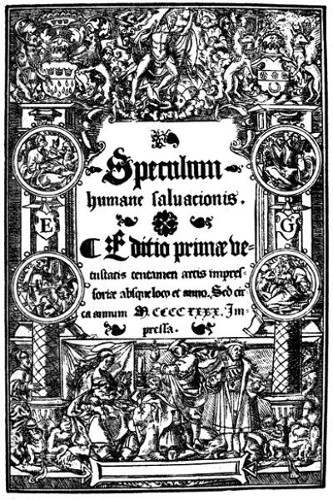
Title Page from a M.S.: “Speculum Humanæ Salvationis”
Plate 5
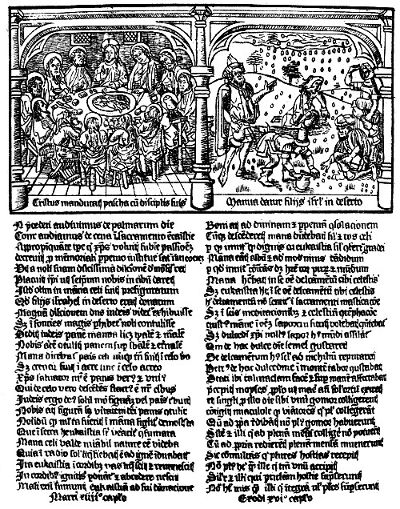
Leaf 31 from a M.S. “Speculum Humanæ Salvationis”
The illuminated Missal,[36] executed in 1425 for John, Duke of
Bedford and regent of France, according to the account published
of it by Richard Gough, 4to, London, 1794, and by
others, abounds in emblem devices. It contains “fifty-nine
large miniatures, which nearly occupy the page, and above a
thousand small ones in circles of about an inch and half
diameter, displayed in brilliant borders of golden foliage, with
variegated flowers, &c. At the bottom of every page are two
lines in blue and gold letters, which explain the subject of each
miniature.” “The Missal,” says Dibdin, “frequently displays
the arms of these noble personages,” (John, Duke of Bedford,
and of his wife Jane, daughter of the Duke of Burgundy,)
“and also affords a pleasing testimony of the affectionate
gallantry of the pair: the motto of the former being ‘A
VOUS ENTIER;’ that of the latter, ‘J’EN SUIS CONTENTE.’”
Among its ornaments are emblems or symbols of the twelve
months, and a large variety of paintings derived from the
Sacred Scriptures, many of which possess an emblematical
meaning.
Not aiming at any exhaustive method in the information we
gather and impart respecting Emblem works and editions
previous to the year A.D. 1500, we pass by the very numerous
other instances in support of our theme which a search into
manuscripts would supply. The “Block-Books,”[37] which, in the
main, are especially emblematical, we next consider. We select
two instances as representative of the whole set;—namely, the
“Biblia Pauperum,” Bibles of the Poor, and the “Ars Memorandi,”
The Art of Remembering.
In his “Bibliographical Decameron,” vol. i. p. 160,
Dibdin tells us, “The earliest printed book, containing text and
engravings illustrative of scriptural subjects, is called the Histories
of Joseph, Daniel, Judith, and Esther. This was executed
in the German language, and was printed by Pfister at Bamberg
in 1462. It is among the rarest of typographical curiosities in
existence.” Dibdin’s dictum is considerably modified, if not set
aside, by Noel Humphreys; who, though affirming, p. 41, that
“a late German edition of the Biblia Pauperum has the date
1475, but that before that period editions had been printed at
the regular press with moveable types, as, for instance, that of
Pfister, printed at Bamberg in 1462,”—yet had previously declared,
p. 39, “many suppose that Laurens Koster, of Haarlem,
who afterwards invented moveable types, was one of the earliest
engravers of Block-books, and that in fact the Biblia Pauperum
was actually his work.” “The period of its execution
may probably be estimated as lying between 1410 and 1420:
probably earlier, but certainly not later.”
The earliest editions of these Biblia Pauperum contain
forty leaves, the later editions fifty, printed only on one side.
Opposite to p. 40, Noel Humphreys gives, pl. 2, “A Page from
the Biblia Pauperum generally supposed to be one of the
earliest block-books.”
Plate 6
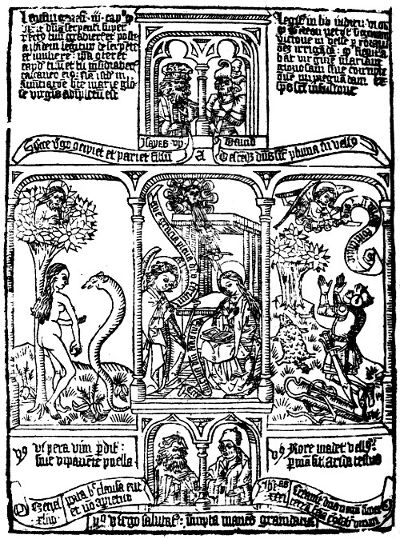
A Page from the “Biblia Pauperum” generally supposed one of the earliest Block Books
Availing ourselves of the Author’s remarks, p. 40, we yet
prefer, on account of some inaccuracies in his decyphering the
Latin contractions, giving our own description of this plate.
The page is in three divisions, all in the Gothic decorative style,
with separating archways between the subjects. In the upper
division, in the centre, are seated, each in his niche, “Isaya” and
“Dauid.” (See Plate VI.) In the upper corners, on the right
hand of the first, and on the left hand of the second, are Latin
inscriptions,—the former relating to Eve’s seed bruising the
serpent’s head, Genesis iii. c., and the latter to Gideon’s fleece
saturated with dew, Judges vi. c. The middle compartment is a
triptych, consisting of Eve’s Temptation, the Annunciation by
the Angel to the Blessed Virgin; and Gideon in his armour, on
his knees, with his shield on the ground, watching the fleece.
Over Eve’s Temptation there is a scroll issuing from Isaiah’s
niche, and having this inscription: “Ecce virgo concipiet et pariet
filium,”—Behold a virgin shall conceive and bear a son, Is. vii. 14;
Eve stands near the tree of life, emblematized by God the
Father among the branches,—and erect before her is the serpent,
almost on the tip of its tail, with its body slightly curved. In
the Annunciation appears a ray of light breathed upon the
Virgin from God the Father seated in the clouds, and in the ray
are the dove, the emblem of the Holy Spirit, descending, and an
infant Christ bearing his cross; the Angel stands before Mary
addressing to her the salutation, “Ave gratiâ plena, dominus
tecum,”—Hail full of grace, the Lord is with thee, Luke i. 28; and
Mary, seated with a book on her knees, and her hands devoutly
crossed on her breast, replies, “Ecce, ancilla domini, fiat mihi,”—Behold,
the handmaid of the Lord, be it unto me, Luke i. 38. Of
Gideon and the fleece little needs be said, except that over him
from the niche of David issues a scroll with the words “Descendet
dominus sicut pluvia in vellus,” in the Latin Vulgate, Ps. lxxi. 6,
i.e. The Lord shall descend as rain upon the fleece; but in the
English version, Ps. lxxii. 6, He shall come down like rain upon
the mown grass. The Angel also addressing Gideon bears a
scroll, not quite legible, but evidently meaning, “Dominus tecum
virorum fortissime,” Judges vi. 12,—English version, The Lord is
with thee, thou mighty man of valour. The lower compartment,
like the upper, has in the centre two arched niches, which contain,
the one Ezekiel, the other Jeremiah; beneath Eve’s temptation
and Gideon’s omen are the alliterative and rhyming
couplets
“Vipera vim perdet,
Sine vi pariente puella.”
“Rore madet vellus
Permansit arida tellus;”[38]
and beneath the Annunciation, “Virgo salutatur, Innupta
manens gravidatur.”
From Ezekiel’s niche issues the scroll, Ez. xliv. 2, “Porta hæc
clausa erit, et non aperietur;” and from Jeremiah’s, xxxi. 22,
“Creavit dominus novum super terram, femina circumdabit
virum.”
It requires no argument to prove the emblematical nature of
the middle compartment of this page from the Biblia Pauperum;
and the texts on scrolls are but the accessories to the
devices, and serve only the more clearly to mark this Block-book
as an Emblem-book.
Plate 7
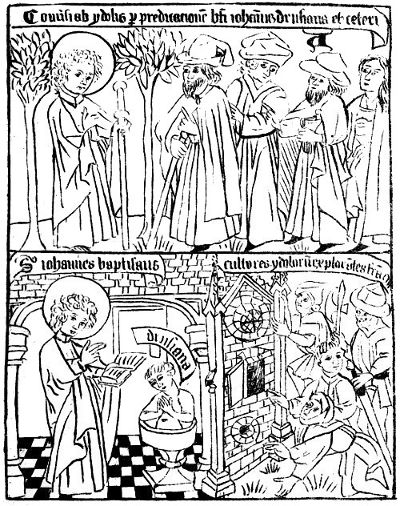
S. John the Evangelist. 1st edition Block Book from the Corser Collection.
Plate 8
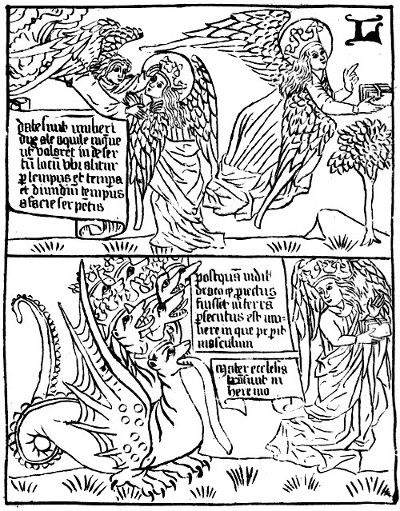
A Page of the Apocalypse from Block Book in the Corser Collection.
Passing by similar Block-books, as The Book of Canticles,
and The Apocalypse of St. John, we will conclude the subject
with a notice of Humphreys’ pl. 5, following p. 42 of his
text; it is “A Subject from the Block-book entitled ‘Ars
memorandi,’ executed probably at the beginning of the fifteenth
century.”
“The entire work,” we are informed, p. 42, “consists of the
symbols of the four evangelists, each occupying a page, and
being most grotesquely treated, the bull of St. Luke and the
lion of St. Mark standing upright on their hind legs. These
symbols are surrounded with various objects, calculated to recall
the leading events in their respective Gospels.”
But the whole passage in explanation of the Plate is so much
to our purpose, that we ask pardon of the author for inserting it
entire. He says:—
“The page I have selected for reproduction is the fourth ‘image or
symbol’ of St. Matthew—the Angel. The objects grouped around are many
of them very curious, and, without the assistance of the accompanying
explanations, would certainly not serve to aid the memory of the modern
Biblical students. The symbolic Angel holds in the left hand objects numbered
18, which by the explanation we learn to be the sun and moon,
accompanied by an unusual arrangement of stars and planets; intended to
recall the passage, ‘there were signs in the sun and moon’—erant signa
in sole et luna. I give the text of monkish explanation in MS. No. 19, the
clasped hands, represents marriage, in reference to the generations of the
Ancestors of Christ as enumerated by St. Matthew. No. 20, the cockle
shell and the bunch of grapes are emblems of travelling and pilgrimage, and
appear to represent the flight into Egypt; 21, the head of an ass, is intended
to recall the entrance of Christ into Jerusalem riding on an ass; 22, a table,
with bread-knife and drinking cup, recalls the Last Supper (Cæna magna);
and the accompanying symbol, without a number, represents the census
rendered to Cæsar.”[39]
With great kindness Mr. Corser, of Stand, offered me, in the
spring of 1868, the use of a very choice Block-book, soon after
sold for £415, entitled Historia S. Joan. Euangelist. per Figuras,
and which is, I believe, the very copy from which Sotheby’s
specimens of the work are taken. Whether it be the “editio
princeps,” as a former owner claimed it to be, is doubted
on merely conjectural grounds; but a most precious copy it
is, internally vindicating its claim to priority. The volume
measures 2.82 decimetres by 2.14; or 11 inches by 8.42. There
are forty-eight leaves, in perfect preservation, printed on one
side. The figures, all coloured, relate either to the traditions
and legends of the Evangelist, or to the visions of the
Apocalypse, the former being simply pictorial, the latter emblematical.
The two Plates uncoloured (Plate VII. and Plate VIII.)
very clearly show the difference between the mere drawing
and the device. The pictures of the Evangelist preaching, of
Drusiana being baptized, and of the search after John, have
no meaning beyond the historical or legendary event;—but
the two wings of an eagle given to the woman, of the angel
flying with a book above the tree of life, of the dragon persecuting
the woman, and of the mother-church passing
into the desert: these have a meaning beyond that of the
figures delineated;—they are emblematical of hidden truths;—so
are all the other plates of this Block-book which represent
the visions of the Apocalypse. The date is probably
1420 to 1425.
The Bodleian Library at Oxford is very rich in this particular
Block-book, possessing no fewer than three copies of the History
of S. John the Evangelist. Among its treasures, however, is a
MS. on the same subject, worth them all by reason of its beauty
and exquisite finish, which the Block-books certainly do not
claim. This MS., on fine vellum and finely drawn and illuminated,
is said to have been written in the twelfth century, and
to have belonged to Henry II.
But the printing with moveable types is firmly established,
and Emblem-books are among its earliest productions. At
Bamberg, a city on the Regnitz, near its influx into the Main,
the first purely German book was printed in 1461, by the same
Pfister who published an edition of the Biblia Pauperum, and
who probably learned his art at Mayence with Guttenberg
himself. The work in question was a Collection of eighty-five
Fables in German, with 101 vignettes cut on wood, each
accompanied by a German text of rhyming verses. The first
device, says Brunet, vol. i. p. 1096, represents three apes and
a tree, and the verses begin with—
“Once on a time came an ape (gerãt) upright.”
The colophon, or subscription, at the end informs us,
“At Bamberg this little book ended is
After the birth of our Lord Jesus Christ,
When one counts a thousand four hundred year,
And to it, as truth, one and sixty more,
On the day of holy Valentine;
God shield us from the wrath divine. Amen.”
The fables were collected by Ulric Boner, a Dominican friar
of Bonn, in the thirteenth or at the beginning of the fourteenth
century. Their chief value is that they present the most precious
remains of the Minnesingers, or German Troubadours, and
possess much grace, and “une moralité piquante.” See Biographie
Universelle, vol. v. pp. 97, 98: Paris, 1812; and vol. xxxiii.
p. 584: Paris, 1823.
Of Æsop’s Fables in Greek, the Milan edition, about A.D.
1480, was the earliest. There had been Latin versions, previously
at Rome in 1473, at Bologna and Antwerp in 1486,
and elsewhere. The German translation appeared in 1473, the
Italian in 1479, the French and the English in 1484, and the
Spanish in 1489. Besides these there were at least thirty other
editions previous to the year 1500.
It has been doubted if Fables should be classed among
the Emblem Literature,—but whether nude, as other emblems
have been named when unclothed in the ornaments of wood
or copper engravings, or adorned with richly embellished
devices, they are, as Whitney would name them, naturally
emblematical. Apart from whatever artistic skill can effect
for them, they have in themselves meanings to be evolved
different from those which the words convey. The Lion,
the Fox, and the Ass are not simply names for the
veritable animals, but emblems of different characters and
qualities among the human race; they symbolize moral
sentiments and actions, and when we add the figures of the
creatures, though we may make pleasing and significant
pictures, we do little for the real development of the
emblems.
Books of Fables, however, are so numerous that they and
their editors may be counted by hundreds; and as Dibdin
intimates, the Bibliomaniac who had gathered up all the editions
of Æsop in nearly all the languages of the civilized world,
would have formed a very considerable library. Only on a few
occasions therefore shall we make mention of books of Fables in
our present inquiries.
We shall not however pass unnoticed, since it belongs
especially to this period, the “Dyalogus Creaturarum,” or,
Dialogues of the Creatures, a collection of Latin Fables,
attributed in the fourteenth century to Nicolas Pergaminus,
first printed at Gouda in Holland by Gerard Leeu in 1480,
and at Stockholm by John Snell in 1483. (See Brunet, vol. ii.
p. 674.) A French version, by Colard Mansion, was issued at
Lyons in 1482, Dialogue des Creatures moralizie; and an
English version, about 1520, by J. Rastall, “Powly’s Churche,”
London, namely, “The Dialogue of Creatures moralyzed, of
late translated out of latyn in to our English tonge.”
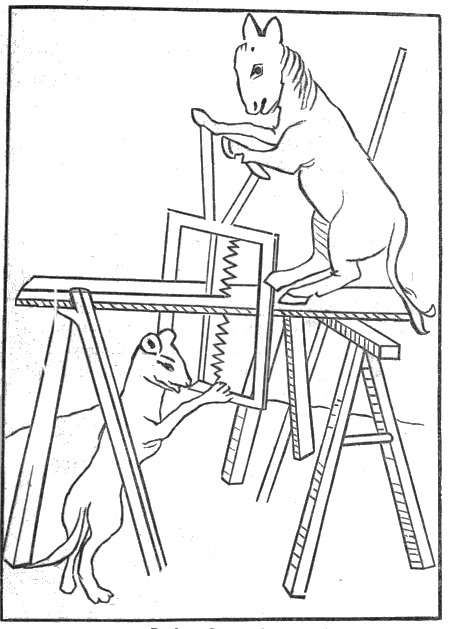
Dyalogus Creat., ed. 1480.
There were various editions and modifications of the work,[40]
but perhaps the contrast between them cannot be better pointed
out than by selecting the Fable of the Wolf and the Ass from
the Gouda edition of 1480, and also from the Antwerp edition
of 1584. The original edition, with the woodcut on the next
page in mere outline, tells in simple Latin prose how a wolf and
an ass were sawing a log of wood together. From good nature
the ass worked up above, the wolf through maliciousness
down below, desiring to find an opportunity for devouring the
ass; therefore he complained that the ass was sending the
sawdust into his eyes. The ass replied, “It is not I who am
doing this,—I only guide the saw. If you wish to saw up
above I am content,—I will work faithfully down below.” And
so they talked on, until the wolf threatening revenge drew back,
and the fissure in the beam being suddenly widened, the wedge
fell upon the wolf’s head, and the wolf himself was killed.
The Antwerp edition of 1584[41] changes the simple Latin prose
into the elegant Latin elegiacs of John Moerman, and the outline
woodcuts of an unknown artist into the copperplate engravings
of Gerard de Jode, the eldest of four generations of engravers.
The Wolf and the Ass are made to emblematize, “scelesti
hominis imago et exitus,”—the image and end of a wicked man.
Moerman’s Latin may thus be rendered, from leaf 54, ed. 1584:—
“The Wolf and careless Ass a treaty made,
Both studious with a saw a beam to rive;—
The ready Ass above directs the blade,
The Wolf doth down below deceit contrive.
He seeks for cause the wretched Ass to slay,
And cries,—‘With sawdust much thou troublest me,—
The trouble check, or with these teeth, I say,
My spoil to be devoured thou straight shalt be.’
To this the Ass,—‘Friend Wolf, be not annoyed;
Guileless the saw I guide with might and main.’
But soon the long-eared brute would be destroyed,
When falls the wedge;—ah! ’tis the Wolf is slain.”
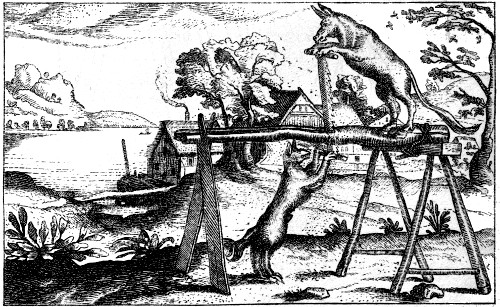
Apologi Creaturarum, 1584.
“Insonti qui insidias struit, ipse perit.”
“Who for the innocent spreads snares,
Himself shall perish unawares.”
“The wicked man his nets doth spread
The innocent to take the while;
But who would harm his brother’s head
Doth perish from his selfish guile.
God will not deem him innocent,
Nor raise him to the stars above,
Who on unrighteous thoughts is bent,
Or neighbours serves with feigned love.
But after death to the fiery marsh
Of Phlegethon shall he be hurled,
Where Tartaræan Pluto harsh
With hated sceptres rules a world.”
As in the Blandford Catalogue, it has been usual to count
among Emblem-books the “Ecatonphyla,” printed at Venice
in 1491. The French translation of 1536 describes the title as,
“signifiãt centiesme amour, sciemment appropriees a la dame
ayãt en elle autant damour que cent aultres dames en pouroient
comprendre,” signifying a hundredth love, knowingly appropriated
to the lady having in her as much love as a hundred other ladies
could possibly comprehend. (Brunet’s Manuel, i. c. 131, 132.) The
author of this work, of which there are several editions, was the
celebrated Italian architect, Leoni-Baptista Alberti, born of a
noble family of Florence in 1398, and living as some suppose up
to 1480. He was a universal scholar, a doctor of laws, a priest,
a painter, and a good mechanic.
We are inclined to ask whether Gli Trionfi del Petrarcha,
printed at Bologna in 1475,—especially, when as in the Venice
editions of 1500 and 1523 they were adorned by the vignettes
and wood engravings of Zoan Andrea Veneziano,—whether
these “Triumphs of Love, Chastity, and Death” may not, from
their highly allegorical character, be included among the
Emblem-books of this age?[42] The same question we might ask
respecting “Das Heldenbuch,”—The Book of Heroes,—printed
at Augsburg, in 1477, by Gunther Zainer, who had first been a
printer at Cracow about 1465; and also concerning the “Libri
Cronicarum cũ figuris et imaginibus ab inicio mũdi,” a large folio
known as the Chronicles of Nuremberg, which with its 2000 fine
wood engravings, attributed to Michael Wohlgemuth, was
published in that city in 1493.[43]
The original “Todtentanz,” or Dance of Death, painted as a
memorial of the plague which raged during the Council of Bâle,
held between 1431 and 1446 (Bryan, p. 335), certainly was not
the work of either of the Holbeins. There are several representations
of a Death-dance in the fifteenth century, between
1485 and 1496 (Brunet, v. 873, 874); and there can be little
doubt of their emblematical character. The renowned Dance
of Death by Hans Holbein the younger we will reserve for its
proper place in the next section.
We must not however leave unmentioned The Dance of Macaber,
especially as it is presented to us in an English form by John
Lydgate, a monk of the Benedictine abbey of Bury St. Edmunds,
who was born about 1375, and attained his greatest eminence
about 1430. His own power for supplying the materials for an
Emblem-device we observe in the lines on “God’s Providence.”
“God hath a thousand handés to chastise;
A thousand dartés of punicion;
A thousand bowés made in divers wise;
A thousand arlblasts bent in his dongèon.”
For an account of Lydgate’s Dance of Macaber, and indeed
for his version in English, we should do well to consult the
remarks by Francis Douce, in Wenceslaus Hollar’s Dance of
Death, published about the year 1790, and more particularly
the remarks in Douce’s Dissertation, edition 1833.
Plate 9
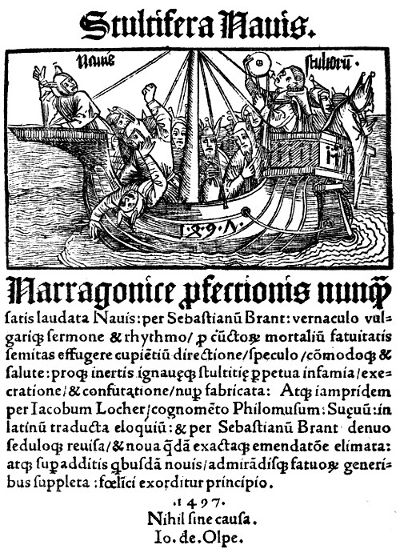
Title of Brandts Stultifera Navis edition, 1497.
The earliest known edition of La Danse Macabre, originally
composed in German, is dated at Paris, 1484, but before the
completion of the century there were seven or eight other
reprints, some with alterations and others with additions. It
was a most popular work, issued at least eight or ten times
during the sixteenth century, and still exciting interest.[44] At
p. 39 may be seen copies of some of the devices as used by
Verard.
The chief Emblem deviser and writer towards the end of the
century was Sebastian Brandt, born at Strasburg in 1458, and
after a life of great usefulness and honour dying at Bâle in 1520.
The publication in German Iambic verse of his “Narren
Schyff,” Bâle, Nuremberg, Rüttlingen, and Augsburg, A.D. 1494,
forms quite an epoch in Emblem-book literature. Previous
to A.D. 1500, Locher, crowned poet laureate by the Emperor
Maximilian I., translated the German into Latin verse, with the
title “Stultifera Nauis” (see Plate IX.); Riviere of Poitiers,
the Latin into French verse, “La Nef des Folz du Monde;”
and Droyn of Amiens, into French prose, “La grãt Nef des Folz
du Monde.” Early in the next century, 1504, or even in 1500,
there was a Flemish version; and in 1509 two English versions,—one
translated out of French, “The Shyppe of Fooles,” by
Henry Watson, and printed by “Wynkyn de Worde, MCCCCCIX.”
(see Dibdin’s Tour, ii. p. 103); the other,—“Stultifera
Nauis,” or “The Shyp of Folys of the Worlde;” “Inprentyd
in the Cyte of London, by Richard Pynson, M.D.IX.” (Dibdin’s
Typ. Ant. ii. p. 431.) This latter was “translated out of Latin,
French, and Duch into Englishe, by Alexander Barclay, Priest;”
and reprinted in 1570, during Shakespeare’s childhood by the
“Printer to the Queenes Maiestie.” At the same time, 1570,
another work by Barclay was published, which, although
without devices, partakes of an allegorical or even of an
emblematical character; it is The Mirrour of good Maners;
“conteining the foure Cardinal Vertues.”
Dibdin, in his Bibliographical Antiquarian, iii. p. 101,
mentions “a pretty little volume—‘as fresh as a daisy,’ the
Hortulus Rosarum de Valle Lachrymarum, ‘A little Garden of
Roses from the Valley of Tears’ (to which a Latin ode by
S. Brandt is prefixed), printed by J. de Olpe in 1499,”—but
he gives no intimation of its character; conjecturing from its
title and from the woodcuts with which it is adorned, it will
probably on further inquiry be found to bear an emblematical
meaning.
Dibdin also, in the same work, iii. p. 294, names “a German
version of the ‘Hortulus Animæ’ of S. Brant,” in manuscript;
“undoubtedly,” he says, “among the loveliest books in
the Imperial Library.” The Latin edition was printed at
Strasburg in 1498, and is ornamented with figures on wood;
many of these are mere pictures, without any symbolical
meaning,—but it often is the case that the illuminated manuscripts,
especially if devotional, and the early printed books of
every kind that have pictorial illustrations in them, present
various examples of symbolical and emblematical devices.
The last works we shall name of the period antecedent to
A.D. 1501, are due to the industry and skill of John Sicile,
herald at arms to Alphonso King of Aragon, who died in 1458.
Sicile, it seems, prepared two manuscripts, one the Blazonry of
Arms,—the other, the Blazonry of Colours. Of the former there
was an edition printed at Paris in 1495, Le Blason de toutes
Armes et Ecutz, &c.—and of the latter at Lyons early in the
sixteenth century, Le Blason des Couleurs en Armes, Liurees et
deuises. Within an hundred years, ending with 1595, above
sixteen editions of the two works were issued.
Several other authors there are belonging to the period of
which we treat,—but enough have been named to show to what
an extent Emblem devices and Emblem-books had been
adopted, and with what an impetus the invention of moveable
types and greater skill in engraving had acted to multiply the
departments of the Emblem Literature. It was an impetus
which gathered new strength in its course, and which, previous
to Shakespeare’s youth and maturity, had made an entrance
into almost every European nation. Already in 1500, from
Sweden to Italy and from Poland to Spain, the touch was felt
which was to awaken nearly every city to the west of
Constantinople, to share in the supposed honours of adding to
the number of Emblem volumes.
LABORIOUS in some degree is the enterprise which
the title of this Section will indicate before it shall
be ended. Perchance we shall have no myths to
perplex us, but the demands of sober history are often more
inexorable than those flexible boundaries within which the
imagination may disport amid facts and fictions.
Better, as I trust, to set this period of sixty-three years before
the mind, it may be well to take it in three divisions: 1st, the
twenty-one years before Alciatus appeared, to conquer for himself
a kingdom, and to reign king of Emblematists for about a century
and a half; 2nd, the twenty-one years from the appearance of the
first edition of Alciat’s Emblems in 1522 at Milan, until Hans
Holbein the younger had introduced the Images and Epigrams of
Death, and La Perriere and Corrozet, the one his Theatre of good
Contrivances in one hundred Emblems, and the other his Hecatomgraphie,
or descriptions of one hundred figures; 3rd, the twenty-one
years up to Shakespeare’s birth, distinguished towards its
close chiefly by the Italian writers on Imprese, Paolo Giovio,
Vincenzo Cartari, Girolamo Ruscelli, and Gabriel Symeoni.
Stulte̦ gustationis scapha.
I.—A Fool-freighted Ship was the title of almost the last book
of the fifteenth century,—by a similar title is the Emblem-book
called which was launched at the beginning of the sixteenth
century; it is, “Jodoci Badii ascēsii Stultifere̦ nauicule̦ seu
scaphe̦ Fatuarum mulierum: circa sensus quinq̃ exteriores
fraude nauigantium,”—The Fool-freighted little ships of Josse
Badius ascensius, or the skiffs of Silly women in delusion sailing
about the five outward senses,—“printed by honest John Prusz, a
citizen of Strasburg, in the year of Salvation M.CCCCC.II.” There
was an earlier edition in 1500,—but almost exactly the same.
From that before us we give a specimen of the work, The Skiff
of Foolish Tasting. A discourse follows, with quotations from
Aulus Gellius, Saint Jerome, Virgil, Ezekiel, Epicurus, Seneca,
Horace, and Juvenal; and the discourse is crowned by twenty-four
lines of Latin elegiacs, entitled “Celeusma Gustationis
fatue̦,”—The Oarsman’s cry for silly Tasting,—thus exhorting—
“Slothful chieftains of the gullet!
Offspring of Sardanapálus!
In sweet sleep no longer lull it,—
Rouse ye, lest good cheer should fail us.
Gentle winds to pleasures calling
Waft to regions soft and slow;
On a thousand dishes falling,
How our palates burn and glow!
Suppers of Lucillus name not,
Ancient faith! nor plate of veal;
Ancient faith to luncheon came not
Crowned with flowers that age conceal.
Let none boast of pontiff’s dishes,—
Nor Mars’ priests their suppers spread;
Alban banquets bless our wishes,—
Cæsar’s garlands deck our head.
Now the dish of Æsop yielding,
Apicius all his luxuries pours;
And Ptolomies the sceptres wielding
Richest viands give in showers.”
And so on, until in the concluding stanza Badius declares—
“If great Jove himself invited
At our feasting takes his seat,
Jove would say, ‘I am delighted,
Not in heaven have I such meat.’
Therefore, stupids! what of summer
Enters now our pinnace gay,—
Onward in three hours ’twill bear us
Where kingdoms blessed bid us stay.”
[45]
The same work was published in another form, “La nef des
folles, selon les cinq sens de nature, composé selon levangile de
monseigneur saint Mathieu, des cinq vierges qui ne prindrent
point duylle avec eulx pour mectre en leurs lampes:” Paris 4to,
about 1501.
Of Badius himself, born in 1462 and dying in 1535, it is to be
said that he was a man of very considerable learning, professor
of “belles lettres” at Lyons from 1491 to 1511, when he was
tempted to settle in Paris. There he established the famous
Ascensian Printing Press,—and like Plantin of Antwerp, gave
his three daughters in marriage to three very celebrated
printers: Michel Vascosan, Robert Etienne, and Jean de Poigny.
He was the author of several works besides those that have
been mentioned. (Biog. Univ. vol. iii. p. 201.)
Symphorien Champier, Doctor in Theology and Medicine, a
native of Lyons, who was physician to Anthony Duke of
Lorraine when he accompanied Louis XII. to the Italian war,
graduated at Pavia in 1515, and, after laying the foundations of
the Lyons College of Physicians, and enjoying the highest
honours of his native city, died about 1540. (Aikin’s Biog. ii.
579.) His medical and other works are of little repute, but
among them are two or three which may be regarded as imitations
of Emblem-books. We will just name,—Balsat’s work
with Champier’s additions, La Nef des Princes et des Batailles
de Noblesse, &c. (Lyons, 4to goth. with woodcuts, A.D. 1502.);
also, La Nef des Dames vertueuses cōposee par Maistre Simphoriē
Champier, &c. (Lyons, 4to goth. with woodcuts, A.D. 1503.)
“Bible figures,” too, again have a claim to notice. A very fine
copy of “Les figures du vieil Testament, & du nouuel,” which
belonged to the Rev. T. Corser, Rector of Stand, near Manchester,
supplies the opportunity of noticing that it is decidedly
an Emblem work. It is a folio, of 100 leaves, containing forty-one
plates, of which one is introductory, and forty are on
Scriptural subjects, unarranged in order either of time or place.
The work was published in Paris in 1503 by Anthoine Verard,
and is certainly, as Brunet declares, ii. c. 1254, “une imitation
de l’ouvrage connu sous le nom de Biblia Pauperum.” There
are forty sets of figures in triptychs, the wood engravings
being very bold and good. Each is preceded or followed by a
French stanza of eight lines, declaring the subject; and has
appended two or three pages of Exposition, also in French.
The Device pages, each in three compartments, are in Latin,
and may thus be described. At the top to the left hand, a
quotation from the Vulgate appropriate to the pictorial representation
beneath it; in the centre two niches, of which David
always occupies one, and some writer of the Old Testament
the other, a scroll issuing from each niche. The middle compartment
is filled by a triptych, the centre subject from the New
Testament, the right and left from the Old. At the bottom are
Latin verses to the right and left, with two niches in the centre
occupied by biblical writers. The Latin verses are rhyming
couplets, as on fol. a. iiij, beneath Moses at the burning bush,
“Lucet et ignescit, sed non rubus igne calescit,”—It shines and
flames, but the bush is not heated by the fire. In triptych, on
p. i. rev. are, Enoch’s Translation, Christ’s Ascension, and the
Translation of Elijah.
The Aldine press at Venice, A.D. 1505, gave the world the
first printed edition of the “Hieroglyphica” of Horapollo.
It was in folio, having in the same volume the Fables of Æsop,
of Gabrias, &c. See Leemans’ Horapollo, pp. xxix-xxxv. A
Latin version by Bernard Trebatius was published at Augsburg
in 1515, at Bale in 1518, and at Paris in 1521; and another
Latin version by Phil. Phasianinus, at Bologna in 1517. Previous
to Shakespeare’s birth there were translations into French in
1543, into Italian in 1548, and into German in 1554,—and down
to 1616 sixteen other editions may readily be counted up.
John Haller, who had introduced printing into Cracow in
1500, published in 1507 the first attempt to teach logic by
means of a game of cards; it was in Murner’s quarto entitled,
“Chartiludium logice̦ seu Logica poetica vel memorativa
cum jocundo Pictasmatis Exercimento,”—A Card-game of Logic,
or Logic poetical or memorial, with the pleasant Exercise of pictured
Representation. It is a curious and ingenious work, and
reprints of it appeared at Strasburg in 1509 and 1518; at Paris,
by Balesdens, in 1629; and again in 1650, 4to, by Peter
Guischet. As an imitation of Brandt’s Ship of Fools, so far as
it relates to the follies and caprices of mankind, mention should
also be made of Murner’s “Narren Beschwoerung,”—Exorcism
of Fools,—Strasburg, 4to, 1512 and 1518; which certainly at
Francfort, in 1620, gave origin to Flitner’s “Nebvlo nebvlonvm,”—or,
Rascal of Rascals.
“Speculū Paciētierum theologycis Consolationibus Fratris
Ioannis de Tambaco,”—The Mirror of Patience with the theological
Consolations of Brother John Tambaco,—Nuremberg,
MCCCCCIX., 4to, is a work of much curiousness. On the reverse
of the title is an Emblematical device of Job, Job’s wife, and
the Devil, followed by exhortations to patience; and on the
reverse of the introduction to the second part, also an Emblematical
device,—the Queen of Consolation, with her four maidens
by her side, and two men kneeling before her. The chapters on
consolation are generally in the form of sermonettes, in which
the maidens, three or four, or even a dozen, expatiate on
different subjects proper for reproof, exhortation, and comfort.
The devices in this volume are understood to be from the pencil
of Albert Durer.
This same year, 1509, witnessed two English translations, or
paraphrases, of Brandt’s “Narren Schif,”—the one The Shyppe
of Fooles, taken from the French by Henry Watson, and printed
by De Worde;—the other rendered out of Latin, German, and
French, The Ship of Fooles, by Alexander Barclay, and printed
by Pinson. Of Watson little, if anything, is known, but Barclay
is regarded as one of the improvers of the English tongue, and
to him it is chiefly owing that a true Emblem-book was made
popular in England.
Of the “Dyalogus Creaturarum,” written in the fourteenth
century by Nicolas Pergaminus, and printed by Gerard Leeu,
at Gouda, in 1480, an English version appeared about 1520,—“The
dialogue of Creatures moralyzed, of late translated out
of Latyn in to our English tonge.”
The famous preacher and the founder of the first public
school in Strasburg was John Geyler, born in 1445. He was
highly esteemed by the Emperor Maximilian, and after a
ministry of about thirty years, died in 1510. Two Emblem-books
were left by him, both published in 1511 by James
Other;—the one “Navicula sive Speculũ Fatuorum,”—The
little Ship or Mirror of Fools; the other, “Navicula Penitentie,”—The
little Ship of Penitence. To the first there are 110 emblems
and 112 devices, each having a discourse delivered on one
of the Sabbaths or festivals of the Catholic Church—the text
always being, Stultorum infinitus est,—“Infinite is the number
of fools.” The second, not strictly an Emblem-book, is devoted
“to the praise of God and the salvation of souls in Strasburg,”
and consists really of a series of sermons for Lent and other seasons
of the year, but all having the same text, Ecce ascendimus
Hierosolimam,—“Behold we go up to Jerusalem.” There were
several reprints of both the works, and two German translations;
and the edition of 1520, folio, with wood engravings, is remarkable
for being the first book to which was granted the “Imperial
privilege.” It is said that the rhymes of Brandt’s Ship of Fools
which Geyler had translated into Latin in 1498, not unfrequently
served him for texts and quotations for his sermons. Alas! we
have no such lively preachers in these sleepy days of perfect
propriety of phrase and person. Our prophets, in putting away
“locusts and wild honey,” too often forget to cry, “Repent, for
the kingdom of heaven is at hand.”
Next, however, to the famous preacher, we name a notorious
prophet, the Abbot Joachim, who died between the years 1201
and 1202, but whose works, if they really were his, did not
appear in print, until the folio edition was issued about 1475,—Revelations
concerning the State of the chief Pontiffs. An Italian
version, “Prophetia dello Abbate Joachimo circa li Pontefici
& Re,” appeared in 1515; and another Latin edition, with wood
engravings, by Marc-Antoine Raimondi, in 1516.[46] Many tales
are related of the Abbot and of his followers; suffice it to say,
that they maintained the Gospel of Christ would be abolished
A.D. 1260; and thenceforward Joachim’s “true and everlasting
Gospel” was to be prevalent in the world.
According to the Blandford Catalogue, p. 6, we should here
insert P. Dupont’s Satyriques Grotesques (Desseins Orig.), 8vo,
Paris, 1513; but it may be passed over with the simplest notice.
If we judge from the wonderfully beautiful copy on finest
vellum in the Hunterian Museum at Glasgow, the next
Emblem-book surpasses all others we have named; it is the
“Tewrdannckh”—or, Dear-thought,—usually attributed to Melchior
Pfintzing, a German poet, born at Nuremberg in 1481, and
who at one time was secretary to the Emperor Maximilian.
The poem is allegorical and chivalric, and adorned with 118
plates, some of which are considered the workmanship of Albert
Durer.[47]
The Tewrdanck was intended to set forth the dangers and
love adventures of the emperor himself on occasion of his
marriage to the great heiress of that day, Mary of Burgundy.
There are some who believe that Maximilian was the author, or
at least that he sketched out the plan which Pfintzing executed.
As, however, the espousals took place in 1479, before the poet
was born, and Mary had early lost her life from a fall,—the
probability is that the emperor supplied some of the incidents
and suggestions, and that his secretary completed the work.
The splendid volume was dedicated to Charles V. in 1517, and
published the same year, a noble monument of typographic art.
Of a later work known under the name of “Turnierbuch,”—The
Tournament-book,—by George Rüxner, namely, Beginning,
Source, and Progress of Tournaments in the German nation
(Siemern, S. Rodler, 1530, folio, pp. 402), Brunet informs us
(Manuel, vol. iv. c. 1471), “There are found for the most part in
this edition printed at the castle of Simmern” (about twenty-five
miles south of Coblentz) “in 1530, the characters already
employed in the two editions of the Tewrdannckh of 1517 and
1519; there may also be remarked numerous engravings on
wood of the same kind as those of the romance in verse we have
just cited.” The edition of 1532 “printed at the same castle,”
is not in the same characters as that of 1530.
Cebes, the Theban, the disciple of Socrates, though mentioned
at pp. 12, 13, must again be introduced, for an edition of
his little work in Latin had appeared at Boulogne in 1497, and
at Venice in 1500; also at Francfort, “by the honest men
Lamperter and Murrer,” in 1507, with the letter of John Æsticampianus;
the Greek was printed by Aldus in 1503, and
several other editions followed up to the end of the century;—indeed
there were translations into Arabic, French, Italian,
German, and English.[48]
Plate 1b
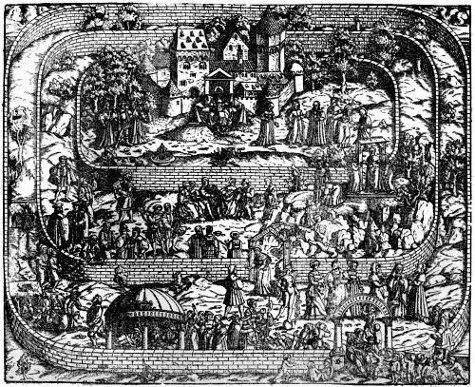
Tableau of Human Life from Cebes. B.C. 390.
II.—Andrew Alciat, the celebrated jurisconsult, remarkable,
as some testify, for serious defects, as for his surpassing
knowledge and power of mind, is characterized by Erasmus as
“the orator best skilled in law,” and “the lawyer most eloquent
of speech;”—of his composition there was published in 1522, at
Milan, an Emblematum Libellus, or “Little Book of Emblems.”[49]
It established, if it did not introduce, a new style for Emblem
Literature, the classical in the place of the simply grotesque
and humorous, or of the heraldic and mythic. It is by no
means certain that the change should be named an unmixed
gain. Stately and artificial, the school of Alciat and his followers
indicates at every stanza its full acquaintance with
mythologies Greek and Roman, but it is deficient in the easy
expression which distinguishes the poet of nature above him
whom learning chiefly guides: it seldom betrays either enthusiasm
of genius or depth of imaginative power.
Nevertheless the style chimed in with the taste of the age,
and the little book,—at least that edition of it which is the
earliest we have seen, Augsburg, A.D. 1531,[50] contained in eighty-eight
pages, small 8vo, with ninety-seven Emblems and as
many woodcuts,—won its way from being a tiny volume of
11.5 square inches of letterpress on each of eighty-eight pages,
until with notes and comments it was comprised only in a large
4to of 1004 pages with thirty-seven square inches of letter-press
on each page. Thus the little one that had in it only
1012 square inches of text and picture became a mountain, a
monument in Alciat’s honour, numbering up 37,128 square
inches of text, picture, and comment. The little book of Augsburg,
1531, may be read and digested, but only an immortal
patience could labour through the entire of the great book of
Padua, 1621. In that interval of ninety years, however, edition
after edition of the favourite emblematist appeared; with translations
into French 1536, into German 1542, into Spanish and
Italian in 1549, and, if we may credit Ames’ Antiquities of
Printing, Herbert’s edition, p. 1570, into English in 1551. The
total number of the editions during that period was certainly not
less than 130, of seventy of which a pretty close examination
has been made by the writer of this sketch. The list of editions,
as far as completed, numbers up about 150, and manifests a
persistence in popularity that has seldom been attained.
The earliest French translator was John Lefevre, an ecclesiastic,
born at Dijon in 1493,—Les Emblemes de Maistre Andre
Alciat: Paris, 1536. He was secretary to Cardinal Givry,
whose protection he enjoyed, and died in 1565. Bartholomew
Aneau, himself an emblematist, was the next translator into
French, 1549; and a third, Claude Mignault, appeared in 1583.
Wolfgang Hunger, a Bavarian, in 1542,[51] and Jeremiah Held
of Nördlingen, were the German translators; Bernardino Daza
Pinciano, in 1549, Los Emblemas de Alciato, was the Spanish;
and Giovanni Marquale, in 1547, the Italian,—Diverse Imprese.
The notes and comments upon Alciat’s Emblems manifest
great research and very extensive learning. Sebastian Stockhamer
supplied commentariola, short comments, to the Lyons
edition of 1556. Francis Sanctius, or Sanchez, one of the
restorers of literature in Spain, born in 1523, also added commentaria
to the Lyons edition of 1573. Above all we must
name Claude Mignault, whose praise is that “to a varied
learning he joined a rare integrity.” He was born near Dijon
about 1536, and died in 1606. His comments in full appeared in
Plantin’s[52] Antwerp edition, 8vo, of 1573, and may be appealed
to in proof of much patient research and extensive erudition.
Lorenzo Pignoria, born at Padua in 1571, and celebrated for his
study of Egyptian antiquities, also compiled notes on Alciat’s
Emblems in MDCXIIX.[53] The results of the labours of the three,
Sanchez, Mignault, and Pignorius, were collected in the Padua
editions of 1621 and 1661. It is scarcely possible that so many
editions should have issued from the press, and so much
learning have been bestowed, without the knowledge of Alciat’s
Emblems having penetrated every nook and corner of the
literary world.
With a glance only at the “Prognosticatio,” of Theophrastus
Paracelsus, the alchemist and enthusiast, written in
1536, and expressed in thirty-two copperplates, we pass at once
to the Dance of Death, by Hans Holbein, which Bewick, 1789,
and Douce, 1833, in London, and Schlotthauer and Fortoul,
1832, in Munich and Paris, have made familiar to English,
German, and French readers. Of Holbein himself, it is sufficient
here to say that he was born at Bâle in 1495, and died in
London in 1543.
Mr. Corser’s copy of the first edition of the Dance of Death,
and which was the gift of Francis Douce, Esq., to Edward
Vernon Utterson, supplies the following title, “Les simulachres
& Historiees faces de la Mort, avtant elegammēt
pourtraictes, que artificiellement imaginées: A Lyon, soubz
l’escu de Coloigne, M.D.XXXVIII.” The volume is a small quarto
of 104 pages, unnumbered, dedicated to Madame Johanna de
Touszele, the Reverend Abbess of the convent of Saint Peter at
Lyons. There are forty-one emblems, each headed by a text
of scripture from the Latin version; the devices follow, with a
French stanza of four lines to each; and there are sundry
Dissertations by Jean de Vauzelles, an eminent divine and
scholar of the same city. But who can speak of the beauty of
the work? The designs by Holbein are many of them wonderfully
conceived,—the engravings by Hans Lützenberge, or
Leutzelburger, as admirably executed.[54]
Rapidly was the work transferred into Latin and Italian, and
before the end of the century at least fifteen editions had issued
from the presses of Lyons, Bâle, and Cologne.
Scarcely less celebrated are Holbein’s Historical Figures
of the Old Testament, which Sibald Beham’s had preceded in
Francfort by only two years. Beham’s whole series of Bible
Figures are contained in 348 prints, and were published between
1536 and 1540. Dibdin’s Decameron, vol. i. pp. 176, 177, will
supply a full account of Holbein’s “Historiarum Veteris Instrumenti
icones ad vivum expressæ una cum brevi, sed quoad
fieri potuit, dilucida earundem expositione:” Lyons, small 4to,
1538. The edition of Frellonius, Lyons, 1547, is a very close
reprint of the second edition, and from this it appears that the
work is contained in fifty-two leaves, unnumbered, and that
there are ninety-four devices, which are admirable specimens of
wood-engraving. The first four are from the Dance of Death,
but the others appropriate to the subjects, each being accompanied
by a French stanza of four lines.
A Spanish translation was issued in 1543; and in 1549, at
Lyons, an English version, “The Images of the Old Testament,
lately expressed, set forthe in Ynglishe and Frenche, vuith a
playn and brief exposition.” All the editions of the century
were about twelve.
Hans Brosamer, of Fulda, laboured in the same mine, and
between 1551 and 1553, copying chiefly from Holbein and
Albert Durer, produced at Francfort his “Biblische Historien
kunstlich fürgemalet,”—Bible Histories artistically pictured
(3 vols. in 1).
We will, though somewhat earlier than the exact date,
continue the subject of Bible-Figure Emblem-books by alluding
to the Quadrins historiques de la Bible,—“Historic Picture-frames
of the Bible,”—for the most part engraved by “Le Petit
Bernard,” alias Solomon Bernard, who was born at Lyons in
1512. Of these works in French, English, Spanish, Italian,
Latin, Flemish, and German, there were twenty-two editions
printed between 1553 and 1583. Their general nature may be
known from the fact that to each Scripture subject there is a
device, in design and execution equally good, and that it is
followed or accompanied by a Latin, Italian, &c. stanza, as the
case may be. In the Italian version, Lyons, 1554, the Old
Testament is illustrated by 222 engravings, and the New by
ninety-five.
The first of the series appears to be Quadrins historiques du
Genèse, Lyons, 1553; followed in the same year by Quadrins
historiques de l’Exode. There is also of the same date (see
Brunet, iv. c. 996), “The true and lyuely historyke Pvrtreatures
of the woll Bible (with the arguments of eache figure, translated
into english metre by Peter Derendel): Lyons; by Jean of
Tournes.”
To conclude, there were Figures of the Bible, illustrated by
French stanzas, and also by Italian and by German; published
at Lyons and at Venice between 1564 and 1582. (See Brunet’s
Manuel, ii. c. 1255.) Also Jost Amman, at Francfort, in 1564;
and Virgil Solis, from 1560 to 1568, contributed to German
works of the same character.
Two names of note among emblematists crown the years
1539 and 1540, both in Paris: they are William de la Perrière,
and Giles Corrozet; of the former we know little more than
that he was a native of Toulouse, and dedicated his chief work
to “Margaret of France, Queen of Navarre, the only sister
of the very Christian King of France;” and of the latter,
that, born in Paris in 1510, and dying there in 1568, he was
a successful printer and bookseller, and distinguished (see
Brunet’s Manuel, ii. cc. 299–308) for a large number of works
on History, Antiquities, and kindred subjects.
La Perrière’s chief Emblem-work is Le Theatre des bons
Engins, auquel sont contenus cent Emblemes: Paris, 8vo, 1539.
There are 110 leaves and really 101 emblems, each device
having a pretty border. His other Emblem-works are—The
Hundred Thoughts of Love, 1543, with woodcuts to each page;
Thoughts on the Four Worlds, “namely, the divine, the angelic,
the heavenly, and the sensible,” Lyons, 1552; and “La
Morosophie,”—The Wisdom of Folly,—containing a hundred
moral emblems, illustrated by a hundred stanzas of four lines,
both in Latin and in French.
Corrozet’s “Hecatomgraphie,” Paris, 1540, is a description
of a hundred figures and histories, and contains Apophthegms,
Proverbs, Sentences, and Sayings, as well ancient as modern.
Each page of the 100 emblems is surrounded by a beautiful
border, the devices are neat woodcuts, having the same borders
with La Perrière’s Theatre of good Contrivances. There is also
to each a page of explanatory French verses.
It requires a stricter inquiry than I have yet been able to
make in order to determine if Corrozet’s Blasons domestiques;
Blason du Moys de May; and Tapisserie de l’Eglise chrestienne
& catholique, bear a decided emblematical character; the titles
have a taste of emblematism, but are by no means decisive of
the fact.
III.—Maurice Sceve’s Delie, Object de plus haulte Vertu,
Lyons, 1544, with woodcuts, and 458 ten-lined stanzas on love,
is included in the Blandford Catalogue; and in the Keir Collection
are both The very admirable, very magnificient and triumphant
Entry of Prince Philip of Spain into Antwerp in 1549,[55]
by Grapheus, alias Scribonius; edition 1550: and Gueroult’s
Premier Livre des Emblemes; Lyons, 1550. The same year,
1550, at Augsburg, has marked against it “Geschlechtes
Buch,”—Pedigree-book,—which recurs in 1580.
Claude Paradin, the canon of Beaujeu, a small town on the
Ardiere, in the department of the Rhone, published the first
edition of his simple but very interesting Devises heroiques,
with 180 woodcuts, at Lyons in 1557. It was afterwards
enlarged by gatherings from Gabriel Symeoni and other writers;
but, either under its own name or that of Symbola heroica
(edition 1567) was very popular, and before 1600 was printed at
Lyons, Antwerp, Douay, and Leyden, not fewer than twelve
times. The English translation, with which it is generally
admitted that Shakespeare was acquainted, was printed in
London, in 12mo, in 1591, and bears the title, The Heroicall
Devises of M. Clavdivs Paradin, Canon of Beauieu, “Whereunto
are added the Lord Gabriel Symeons and others. Translated
out of Latin into English by P.S.”
To another Paradin are assigned Quadrins historiques de la
Bible, published at Lyons by Jean de Tournes, 1555; and of
which the same publisher issued Spanish, English, Italian,
German, and Flemish versions.
The rich Emblem Collection at Keir furnishes the first
edition of each of Doni’s three Emblem-works, in 4to, printed by
Antonio Francesco Marcolini at Venice in 1552–53; they are:
1. “I Mondi,”—i.e., The Worlds, celestial, terrestrial, and infernal,—2
parts in 1, with woodcuts. 2. “I Marmi,”—The
Marbles,—4 parts in 1, a collection of pleasant little tales and
interesting notices, with woodcuts by the printer; who also,
according to Bryan, was an engraver of “considerable merit.”
3. “La Moral Filosofia,”—Moral Philosophy drawn from
the ancient Writers,—2 parts in 1, with woodcuts. In it
are abundant extracts from the ancient fabulists, as Lokman
and Bidpai, and a variety of little narrative tales and allegories.
Of an English translation, two editions appeared in London
in 1570 and 1601, during Shakespeare’s lifetime; namely,
“The Morall Philosophie of Doni, englished out of italien by sir
Th. North,”[56] 4to, with engravings on wood.
Under the two titles of “Picta Poesis,” and “Limagination
poetique,” Bartholomew Aneau, or Anulus, published his
“exquisite little gem,” as Mr. Atkinson, a former owner of the
copy which is now before me, describes the work. It appeared
at Lyons in 1552, and contains 106 emblems, the stanzas to
which, in the Latin edition, are occasionally in Greek, but in the
French edition, “vers François des Latins et Grecz, par l’auteur
mesme d’iceux.”
Achille Bocchi, a celebrated Italian scholar, the founder, in
1546, of the Academy of Bologna, Virgil Solis, of Nuremberg,
an artist of considerable repute, Pierre Cousteau, or Costalius, of
Lyons, and Paolo Giovio, an accomplished writer, Bishop of
Nocera, give name to four of the Emblem-books which were
issued in the year 1555. That of Bocchius is entitled “Symbolicarvm
Qvaestionvm, libri qvinqve,” Bononiæ, 1555, 4to;
and numbers up 146, or, more correctly, 150 emblems in 340
pages: the devices are the work of Giulio Bonasone, from
copper-plates of great excellence. In 1556, Bononiæ Sambigucius
put forth In Hermathenam Bocchiam Interpretatio, which
is simply a comment on the 102nd emblem of Bocchius. Virgil
Solis published in 4to, at Nuremberg, the same year, “Libellus
Sartorum, seu Signorum publicorum,”—A little Book of Cobblers,
or of public Signs. Cousteau’s “Pegma,”[57] which some say appeared
first in 1552, is, as the name denotes, a Structure of
emblems, ninety-five in number, with philosophical narratives,—each
page being surrounded by a pretty border. And Giovio’s
“Dialogo dell’ Imprese Militari et Amore,”—Dialogue of
Emblems of War and of Love; or, as it is sometimes named,
“Ragionamento, Discourse concerning the words and devices
of arms and of love, which are commonly named Emblems,”—is
probably the first regular treatise on the subject which had yet
appeared, and which attained high popularity.
Its estimation in England is shown by the translation which
was issued in London in 1585, entitled, “The Worthy tract of
Paulus Iouius, contayning a Discourse of rare inuentions, both
Militarie and Amorous, called Imprese. Whereunto is added a
Preface contay-ning the Arte of composing them, with many
other notable deuises. By Samuell Daniell late Student in
Oxenforde.”
Intimately connected with Giovio’s little work, indeed often
constituting parts of the same volume, were Ruscelli’s “Discorso”
on the same subject, Venice, 1556; and Domenichi’s
“Ragionamento,” also at Venice, in 1556. From the testimony
of Sir Egerton Brydges (Res Lit.), “Ruscelli was one of
the first literati of his time, and was held in esteem by princes
and all ranks of people.”
Very frequently, too, in combination with Giovio’s Dialogue
on Emblems, are to be found Ruscelli’s “Imprese illvstri,”
Venice, 1566; or Symeoni’s “Imprese heroiche et morali,”
Lyons, 1559; and “Sententiose Imprese,” Lyons,
1562.
Roville’s Lyons edition, of 1574, thus unites in one title-page
Giovio, Symeoni, and Domenichi, “Dialogo Dellimprese
militari et amorose, De Monsignor Giouio Vescouo
di Nocera Et del S. Gabriel Symeoni Fiorentino, Con vn
ragionamento di M. Lodouico Domenichi, nel medesimo soggetto.”
Taking together all the editions in Italian, French, and
Spanish, of these four authors, single or combined, which I have
had the opportunity of examining, there are no less than twenty-two
between 1555 and 1585, besides five or six other editions
named by Brunet in his Manuel du Libraire. Roville’s French
edition, 4to, Lyons, 1561, is by Vasquin Philieul, “Dialogve des
Devises d’Armes et d’Amovrs dv S. Pavlo Iovio, Auec vn
Discours de M. Loys Dominique—et les Deuises Heroiques et
Morales du Seigneur Gabriel Symeon.”
At this epoch we enter upon ground which has been
skilfully upturned and cultivated by Claude Francis Menestrier,
born at Lyons in 1631, and “distinguished by his
various works on heraldry, decorations, public ceremonials,
&c.” (Aikin’s Gen. Biog. vii. p. 41.) In his “Philosophia
Imaginum,”—Philosophy of Images,—an octavo volume of 860
pages, published at Amsterdam, 1695, he gives, in ninety-four
pages, a “Judicium,” i.e., a judgment respecting all authors who
have written on Symbolic Art; and of those Authors whom we
have named, or may be about to name, within the Period to
which our Sketch extends, he mentions that he has examined
the works of
| A.D. |
|
| 1555.[58] |
Paulus Jovius, p. 1. |
| 1556. |
Ludovicus Dominicus, p. 3. |
| ” |
Hieronymus Ruscellius, p. 4. |
| 1561. |
Alphonsus Ulloa, ibid. |
| 1562. |
Scipio Amiratus, p. 5. |
| 1571. |
Alexander Farra, p. 6. |
| ” |
Bartholoæmus Taëgius, p. 7. |
| 1574. |
Lucas Contile, p. 9. |
| 1577. |
Johannes Andreas Palatius, p. 10. |
| 1578. |
Scipio Bergalius, p. 12. |
| 1580. |
Franciscus Caburaccius, p. 12. |
| 1588. |
Abrahamus Fransius, p. 15. |
| 1591. |
Julius Cæsar Capacius, ibid. |
| ” |
D. Albertus Bernardetti, p. 17. |
| 1594. |
Torquatus Tassus, p. 14. |
| 1600. |
Jacobus Sassus, p. 18. |
| 1601. |
Andreas Chioccus, ibid. |
| 1612. |
Hercules Tassus, p. 19. |
| ” |
P. Horatius Montalde, p. 23. |
| ” |
Johannes Baptista Personé, ib. |
| 1620. |
Franciscus d’Amboise, ibid. |
It may also be gathered from the “Judicium” that Menestrier
had read with care what had been written on Emblems by
the following authors:—
| A.D. |
|
| 1551. |
Gabriel Simeoni, p. 63. |
| 1557. |
Claudius Paradinus, p. 68. |
| 1562. |
Mauritius Sevus, p. 55. |
| 1565. |
J. Baptista Pittonius, p. 70. |
| 1573. |
Claudius Minos, p. 54. |
| 1588. |
Bernardinus Percivalle, p. 64. |
| ” |
Principius Fabricius, p. 76. |
| 1600. |
Johannes Pinedi, p. 60. |
| 1609. |
Jacobus Le Vasseur, p. 91. |
| 1613. |
J. Franciscus de Villava, p. 55. |
Excluding the editions before enumerated, the books of
emblems which I have noted from various sources as assigned to
the authors in the above lists from Menestrier, amount to from
twenty-five to thirty, with the titles of which there is no occasion
to trouble the reader.
Returning from this digression, Vincenzo Cartari should next
be named in order of time. At Venice, in 1556, appeared his
“Imagini Dei Dei degli Antichi,”—Images of the Gods of the
Ancients,—4to, of above 500 pages. It contains an account of
the Idols, Rites, Ceremonies, and other things appertaining to
the old Religions. It was a work often reprinted, and in 1581
translated into French by Antoine du Verdier, the same who,
in 1585, gave in folio a Catalogue of all who have written or
translated into French up to that time.
A folio of 1100 pages, which within the period of our sketch
was reprinted four times, issued from Bâle in 1556; it is,
“Hieroglyphica,”—Hieroglyphics, or, Commentaries on the
Sacred Literature of the Egyptians,—by John Pierius Valerian, a
man of letters, born in extreme poverty at Belluno in 1477, and
untaught the very elements of learning until he was fifteen.
(Aikin’s Gen. Biog. ix. 537.) He died in 1558. As an exposition
of the Egyptian hieroglyphics, his very learned work is little
esteemed; but it contains emblems innumerable, comprised in
fifty-eight books, each book dedicated to a person of note, and
treating one class of objects. The devices—small woodcuts—amount
to 365.
Etienne Jodelle, a poet, equally versatile whether in Latin or
in French, was skilled in the ancient languages, and acquainted
with the arts of painting, sculpture, and architecture, as well as
dexterous in the use of arms. He published, in 1558, a thin
quarto “Recueil,” or Collection of the inscriptions, figures,
devices, and masks ordained in Paris at the Hôtel de Ville.
The same year, and again in 1569 and 1573, appeared the large
folio volume, in five parts, “Austriacis Gentis Imagines,”—Portraits
of the Austrian family,—full lengths, engraved by
Gaspar ab Avibus, of Padua. At the foot of each portrait are a
four-lined stanza, a brief biographical notice, and some emblematical
figure. Of similar character, though much inferior as a
work of art, is Jean Nestor’s Histoire des Hommes illustres de
la Maison de Medici; a quarto of about 240 leaves, printed at
Paris in 1564. (See the Keir Catalogue, p. 143.) It contains
“twelve woodcuts of the emblems of the different members of
the House of Medici.”
Hoffer’s “Icones catecheseos,” or Pictures of instruction,
and of virtues and vices, illustrated by verses, and also by
seventy-eight figures or woodcuts, was printed at Wittenberg in
1560. The next year, 1561—if not in 1556 (see Brunet’s
Manuel, vol. ii. cc. 930, 931)—John Duvet, one of the earliest
engravers on copper in France, at Lyons, published in twenty-four
plates, folio, his chief work, “Lapocalypse figuree;”
and in 1562, at Naples, the Historian of Florence, Scipione
Ammirato, gave to the world “Il Rota overo dell’ Imprese,”
or, Dialogue of the Sig. Scipione Ammirato, in which he
discourses of many emblems of divers excellent authors, and of
some rules and admonitions concerning this subject written to
the Sig. Vincenzo Carrafa.
Were it less a subject of debate between Dutch and German
critics as to the exact character of the “Spelen van sinne,”[59]
which were published by the Chambers of Rhetoric at Ghent in
1539, and by those of Antwerp in 1561 and 1562 (see Brunet’s
Manuel, vol. v. c. 484), we should claim these works for our
Emblem domain. But whether claimed or not, the exhibitions
and amusements of the Chambers of Rhetoric, especially at
their great gatherings in the chief cities of the Netherlands, were
often very lively representations by action and accessory devices
of dramatic thought and sentiment, from “King Herod and his
Deeds,” “enacted in the Cathedral of Utrecht in 1418,” to what
Motley, in his Dutch Republic, vol. i. p. 80, terms the “magnificent
processions, brilliant costumes, living pictures, charades,
and other animated, glittering groups,”—“trials of dramatic and
poetic skill, all arranged under the superintendence of the
particular association which in the preceding year had borne
away the prize.”
“The Rhetorical Chambers existed in the most obscure
villages” (Motley, i. p. 79); and had regular constitutions, being
presided over by officers with high-sounding titles, as kings,
princes, captains, and archdeacons,—and each having “its
peculiar title or blazon, as the Lily, the Marigold, or the Violet,
with an appropriate motto.” After 1493 they were “incorporated
under the general supervision of an upper or mother-society
of Rhetoric, consisting of fifteen members, and called by
the title of ‘Jesus with the balsam flower.’”
As I have been informed by Mr. Hessells, Siegenbeek, in his
Geschiedenis der Nederlandsche Letterkunde, says,—“Besides the
ordinary meetings of the Chambers, certain poetical feasts were
in vogue among the Rhetor-gevers, whereby one or other subject,
to be responded to in burdens or short songs (liedekens), according
to the contents of the card, was announced, with the
promise of prizes to those who would best answer the proposed
question. But the so-called Entries deserve for their magnificence,
and the diversity of poetical productions which they give
rise to, especially our attention.
“It happened from time to time that one or other of the most
important Chambers sent a card in rhyme to the other Chambers
of the same province, whereby they were invited to be at a
given time in the town where the senders of the card were
established, for the sake of the celebration of a poetical feast.
This card contained further everything by which it was desired
that the Chambers, which were to make their appearance, should
illustrate this feast, viz., the performance of an allegorical play
(zinnespel) in response to some given question;[60] the preparation
of esbatementez (drawings), facéties (jests), prologues; the
execution of splendid entries and processions; the exhibitions of
beautifully painted coats of arms, &c. These entries were of
two kinds, landiuweelen, and haagspelen>;—the landjewels were
the most splendid, and were performed in towns; the hedge-plays
belonged properly to villages, though sometimes in towns
these followed the performance of a landjewel.” Originally,
landjewel meant a prize of honour of the land; called also
landprys (land-prize).
Such were the periodic jubilees of a neighbouring people,
their “land-jewels,” as they were termed, when the birthtime of
our greatest English dramatist arrived. And as we mark the
wide and increasing streams of the Emblem Literature flowing
over every European land, and how the common tongue of
Rome gave one language to all Christendom, can we deem it
probable that any man of genius, of discernment, and of only
the usual attainments of his compeers, would live by the side of
these streams and never dip his finger into the waters, nor wet
even the soles of his feet where the babbling emblems flowed?
Some there have been to maintain that Shakespeare had
visited the Netherlands, or even resided there; and it is consequently
within the limits of no unreasonable conjecture that he
had seen the landjewels distributed, and at the sight felt himself
inspirited to win a nobler fame.
IN the year at which this Section begins,
Shakespeare was born, and for a whole
century the Emblem tide never ebbed.
There was an uninterrupted succession of
new writers and of new editions. Many
eminent names have appeared in the past,
and names as eminent will adorn the future.
The fifty years which remain to the period comprised within
the limits of this Sketch of Emblem Literature we divide into
two portions of twenty-five years each: 1st, up to 1590, when
Shakespeare had fairly entered on his dramatic career; and
2nd, from 1590 to 1615, when, according to Steevens (edition
1785, vol. i. p. 354), his labours had ended with The Twelfth
Night, or, What You Will. As far as actual correspondences
between Shakespeare and the Emblem Writers demand, our
Sketch might finish with 1610, or even earlier: for some time
will of necessity intervene, after a work has been issued, before
it will modify the thoughts of others, or enter into the phrases
which they employ. However, there is nothing very incongruous
in making this Sketch and the last of Shakespeare’s
dramas terminate with the same date.
I.—In 1564, at Rome, in 4to, the distinguished Latinist,
Gabriel Faerno’s Fables were first printed, 100 in number;—it
was three years after his death. The plates are from designs
which Titian is said to have drawn. Our English Whitney
adopts several of Faerno’s Fables among his Emblems, and on
this authority we class them with books of Emblems. From
time to time, as late as to 1796, new editions and translations of
the Fables have been issued. A copy in the Free Library,
Manchester, “Romæ Vincentius Luchinus, 1565,” bears the
title, Fabvlae Centvm ex antiqvis avctoribvs delectae, et a Gabriele
Faerno, Cremonensi carminibvs explicatae.
Virgil Solis, a native of Nuremberg, where he was born in
1514, and where he died in 1570; and Jost Amman, who was
born at Zurich in 1539, but passed his life at Nuremberg, and
died there in 1591, were both artists of high repute, and contributed
to the illustration of Emblem-works. The former,
between 1560 and 1568, produced 125 New Figures for the New
Testament, and An Artistic little Book of Animals; and the
latter, from 1564 to 1586, contributed very largely to books of
Biblical Figures, of “Animals,” of “Genealogies,” of “Heraldry,”
and of the Habits and Costumes of All Ranks of the Clergy of
the Roman Church, and of Women of every “Condition, profession,
and age,” throughout the nations of Europe.
From the press of Christopher Plantin, of Antwerp, there
issued nearly fifty editions of Emblem-books between 1564 and
1590. Of these, one of the earliest was, “Emblemata cvm
aliqvot Nvmmis antiqvis,”—Emblems with some ancient
Coins,—4to, 1564, by the Hungarian, John Sambucus, born at
Tornau in 1531. A French version, Les Emblemes de Jehan
Sambucus, issued from the same press in 1567. Among
Emblematists, none bears a fairer name as “physician, antiquary,
and poet.” According to De Bry’s Icones, pt. iii., ed.
1598, pp. 76–83, he obtained the patronage of two emperors,
Maximilian II. and Rudolph II., under whom he held the offices
of counsellor of state and historian of the empire. To him also
belonged the rare honour of having his work commented on by
one of the great heroes of Christendom, Don John of Austria,
in 1572.
Les Songes drolatiqves de Pantagrvel, by Rabelais, appeared
at Paris in 1565, but its emblematical character has been
doubted. Not so, however, the ten editions of the “Emblemata”
of Hadrian Junius, a celebrated Dutch physician, of
which the first edition appeared in 1565, and justly claims to be
“the most elegant which the presses of Plantin had produced at
this period.”
We may now begin to chronicle a considerable number of
works and editions of Emblems by Italian writers, which, to
avoid prolixity and yet to point out, we present in a tabulated
form, giving only the earliest editions:—
| Pittoni’s |
Imprese di diversi principi, duchi, &c. |
sm.fol. |
Venice |
1566 k.[61] |
| Troiano’s |
Discorsi delli triomfi, giostre, &c. |
4to |
Monica |
1568 k. |
| Rime |
Rime de gli Academici occvlti, &c. |
4to |
Brescia |
1568 k. |
| Farra’s |
Settenario dell’ humana riduttione |
... |
... |
1571 v. |
| Dolce’s |
Le prime imprese del conte Orlando |
4to |
Venice |
1572 v. |
| ” |
Dialogo |
8vo |
Venice |
1575 k. |
| Contile’s |
Ragionamento—sopra la proprieta delle Imprese, &c. |
Fol. |
Pavia |
1574 k. |
| Fiorino’s |
Opera nuova, &c. |
4to |
Lyons |
1577 k. |
| Palazza’s |
I Discorsi—Imprese, &c. |
8vo |
Bologna |
1577 k. |
| Caburacci’s |
Trattato,—dove si dimostra il vero e novo modo di fare le Imprese. |
4to |
Bologna |
1580 k. |
| Guazzo’s |
Dialoghi piacevoli |
4to |
Venice |
1585 k. |
| Camilli’s |
Imprese—co i discorsi, et con le figure |
4to |
Venice |
1586 k. |
| Cimolotti’s |
Il superbi |
4to |
Pavia |
1587 k. |
| Fabrici’s |
Delle allusioni, imprese & emblemi sopra la vita, &c., di Gregorio XIII. |
4to |
Roma |
1588 k. |
| Rinaldi’s |
Il mostruosissimo |
8vo |
Ferrara |
1588 k. |
| Porro’s |
Il primo libro |
4to |
Milano |
1589 k. |
| Pezzi’s |
La Vigna del Signore—Sacramenti, Paradiso, Limbo, &c. |
4to |
Venetia |
1589 t. |
| Bargagli’s |
Dell’ Imprese |
4to |
Venetia |
1589 v. |
So, briefly, in the order of time, may we name several of the
French, Latin, and German Emblem-writers of this period,
together with the Spanish and English:—
| French. |
| |
| Grevin’s |
Emblemes d’Adrian La Jeune |
16mo |
Anvers |
1568 v. |
| Vander Noot’s |
Theatre ... les inconueniens et miseres qui suiuent les mondains et vicieux, &c. |
8vo |
Londres |
1568 v. |
| De Montenay’s |
Emblêmes ou devises chrestiennes |
4to |
Lyon |
1571 k. |
| Chartier’s |
Les Blasons de vertu par vertu |
4to |
Aureliæ |
1574 v. |
| Droyn’s[62] |
La Grand nef des fols du monde |
fol. |
à Lyon |
1579 c. |
| Goulart’s |
Les Vrais Pourtraits des Hommes illustres. |
4to |
Genue |
1581 k. |
| Verdier’s |
Les images des anciens dieux (par V. Cartari). |
4to |
Lyon |
1581 v. |
| Anjou |
La joyeuse et magnif. entrée de Mons. Françoys, duc de Brabant, Anjou, &c., en ville d’Anvers. |
fol. |
à Anvers |
1582 k. |
| L’Anglois |
Discours des hierog. égyptiens, emblêmes, &c. |
4to |
Paris |
1583 k. |
| Messin |
Emblêmes latins de J.J. Boissard, avec l’interpretation françoise. |
4to |
Metis |
1588 c. |
Of these works, Vander Noot’s was translated into English,
says Brunet, (v. c. 1072,) by Henry Bynneman, 1569, and is
remarkable for containing (see Ath. Cantab. ii. p. 258) certain
poems, termed sonnets, and epigrams, which Spenser wrote
before his sixteenth year. Mademoiselle Georgette de Montenay
was a French lady of noble birth, and dedicated her 100
Emblems “to the very illustrious and virtuous Princesse,
Madame Jane D’Albret, Queen of Navarre.” Chartier, a
painter and engraver, flourished about 1574; L’Anglois is not
mentioned in the Hieroglyphics of Dr. Leemans, nor do I find
any notice of Messin.
| Latin. |
| |
| Schopperus |
Πανοπλία, omnium illiberalium mechanicarum, &c. |
8vo |
Francof |
1568 v. |
| ” |
De omnibus illiberalibus sive mechanicis artibus. |
8vo |
Francof |
1574 t. |
| Arias Montanus |
Humanæ salutis monumenta, &c. |
4to |
Antverpiæ |
1572 k. |
| Sanctius |
Commentaria in A. Alciati Emblemata. |
8vo |
Lugduni |
1573 k. |
| Furmerus |
De rerum usu et abusu |
4to |
Antverpiæ |
1575 t. |
| Lonicer, Ph. |
Insignia sacræ Cæsareæ, maj. &c. |
4to |
Francof |
1579 k. |
| Estienne, Henri |
Anthologia gnomica |
8vo |
Francof |
1579 k. |
| Freitag |
Mythologia ethica |
4to |
Antverpiæ |
1579 t. |
| Microcosm |
Μικροκοσμος, parvus mundus, &c. |
4to |
... |
1579 v. |
| ΜΙΚΡΟΚΟΣΜΟΣ |
Parvus Mundus |
4to |
Antverpiæ |
1592 k. |
| Beza |
Icones—accedunt emblemata |
4to |
Genevæ |
1581 c. |
| Hesius, G. |
Emblemata sacra |
4to |
Francof |
1581 v. |
| Reusner |
Emblemata—partim ethica et physica, &c. |
4to |
Francof |
1581 k. |
| ” |
Aureolorum Emblem. liber singularis. |
8vo |
Argentor |
1591 t. |
| Lonicer, J.A. |
Venatus et Aucupium Iconibus artif. |
4to |
Francof |
1582 c. |
| Moherman |
Apologi Creaturarum |
4to |
Antverpiæ |
1584 t. |
| Emblemata |
Emblemata Evangelica ad XII. signa, &c. |
fol. |
... |
1585 k. |
| Bol. |
Emblemata Evang. ad. XII. Signa cœlestia. |
4to |
Francof |
1585 v. |
| Hortinus |
Icones operum, &c. |
4to |
Romæ |
1585 k. |
| Modius |
Liber—ordinis Ecclesiastici origo, &c. |
8vo |
Francof |
1585 t. |
| ” |
Pandectæ triumphales, &c. |
fol. |
Francof |
1586 k. |
| Fraunce |
Insignium, Armorum, Emblematum, Hierogl., &c. |
4to |
Londini |
1588 t. |
| Zuingerus |
Icones aliquot clarorum Virorum, &c. |
8vo |
Basileæ |
1589 t. |
| Cælius (S.S.) |
Emblemata Sacra |
8vo |
Romæ |
1589 v. |
| Hortinus |
Emblemata Sacra |
4to |
Trajecti |
1589 v. |
| Camerarius |
Symbolorum et Emblematum, &c. |
4to |
Norimberg |
1590 k. |
Arias Montanus, born in Estremadura in 1527, was one of
the very eminent scholars of Spain; Furmerus, a Frieslander,
flourished during the latter half of the sixteenth century, and
his work was translated into Dutch by Coörnhert in 1585;
Henri Estienne, one of the celebrated printers of that name, was
born in Paris in 1528, and died at Lyons in 1598; a list of his
works, many of them of high scholarship, occupies eight pages in
Brunet’s Manuel du Libraire. The name of Beza is of similar
renown;—both Etienne and he had to seek safety from persecution;
and when Etienne’s effigy was being burnt, he pleasantly
said “that he had never felt so cold as on the day when he was
burning.” Laurence Haechtanus was the author of the Parvus
Mundus, 1579, which Gerardt de Jode den liefhebbers der
consten, the lover of art, has so admirably adorned. Nicolas
Reusner was a man of extensive learning, to whom the emperor
Rudolph II. decreed the poetic crown. Francis Modius was a
Fleming, a learned jurisconsult and Latinist, who died at Aire
in Artois, in 1597, at the age of sixty-one; Theodore Zuinger
was a celebrated physician of Bâle; and Joachim Camerarius,
born at Nuremberg in 1534, also a celebrated physician, one of
the first to form a botanical garden, “attained high reputation
in his profession, and was consulted for princes and persons of
rank throughout Germany.”
An edition of a work reputed to be emblematic belongs to
this period—to 1587; it is the Physiologist, by S. Epiphanius,
to whom allusion has been made at p. 28.
| German. |
| |
| Stimmer |
Neue Kunstliche Figuren Biblischen, &c. |
4to |
Besel |
1576 t. |
| Feyrabend |
Stam und Wapenbuch |
4to |
Franckfurt |
1579 k. |
| Schrot |
Wappenbuch |
8vo |
Munich |
1581 k. |
| Lonicer, J. A. |
Stand und Orden der heiligen Römischen Catholischen Kirchen. |
4to |
Francfurt |
1585 v. |
| Clamorinus |
Thurnier-buch |
4to |
Dresden |
1590 k. |
Tobias Stimmer was an artist, born at Schaffhausen in 1544,
and in conjunction with his younger brother, John Christopher
Stimmer, executed part of the woodcuts in the Bible of Basle,
1576 and 1586. The younger brother also prepared the prints
for a set of Emblems, Icones Affabræ, published at Strasburg in
1591. Sigismund Feyrabend is a name of great note as a designer,
engraver on wood, and bookseller, at Francfort, towards
the end of the sixteenth century. Who Martin Schrot was, does
not appear from the Biographie Universelle; and Clamorinus
may probably be regarded as only the editor of a republication
of Rüxner’s Book of Tournaments that was printed in 1530.
| Dutch or Flemish. |
| |
| Van Ghelen |
Flemish translation, Navis stultorum. |
... |
Anvers |
1584 v. |
| Coörnhert |
Recht Ghebruyck ende Misbruyck van tydlycke Have. |
4to |
Leyden |
1585 v. |
| |
| Spanish. |
| |
| Manuel |
El conde Lucanor (apologues & fables). |
4to |
Sevilla |
1575 v. |
| Boria |
Emprese Morales |
4to |
Praga |
1581 k. |
| Guzman |
Triumphas morales (nueuamente corregidos). |
8vo |
Medina |
1587 t. |
| Horozco |
Emblemas Morales |
8vo |
Segovia |
1589 t. |
Don Juan Manuel was a descendant of the famous Alphonso
V. His work consists of forty-nine little tales, with a
moral in verse to each. It is regarded, says the Biog. Univ.
vol. xxvi. p. 541, “as the finest monument of Spanish literature
in the sixteenth century.” There are earlier editions of Francisco
de Guzman’s Moral Triumphs, as at Antwerp in 1557, but
the edition above named claims to be more perfect than the
others. Horozco y Covaruvias was a native of Toledo, and died
in 1608; one of his offices was that of Bishop of Girgenti in
Sicily. In 1601 he translated his Emblems into Latin, and
printed it under the title of Symbolæ Sacræ.
| English. |
| |
| Bynneman’s |
Translation of Vander Noot’s Theatre. |
8vo |
London |
1569 v. |
| North |
The Morall Philosophie of Doni |
4to |
London |
1570 v. |
| Daniell |
The worthy tract of Paulus Jovius, &c. |
8vo |
London |
1585 k. |
| Whitney |
A Choice of Emblemes, &c. |
4to |
Leyden |
1586 k. |
Henry Bynneman, whose name is placed before the version
of Vander Noot’s Theatre, is not known with any certainty to
have been the translator. He was a celebrated printer in
London from about 1566 to 1583. Sir Thomas North, to whose
translation of Plutarch, Shakespeare was largely indebted,
was probably an ancestor of the Lord Keeper of the Great
Seal under Charles II. Samuel Daniell enjoyed considerable
reputation as a poet, and on Spenser’s death in 1598, was
appointed poet-laureate to the Queen. Of Whitney it is known
that he was a scholar of Oxford and of Cambridge, and that his
name appears on the roll of the university of Leyden. He was
a native of Cheshire, and died there in 1601. It may be added
that an edition of Barclay’s Ship of Fooles was in 1570
“Imprinted at London in Paules Churchyarde by John Cawood
Printer to the Queenes Maiestie.”
Thus, in the period between Shakespeare’s birth and his full
entry on his dramatic career, we have named above sixty
persons, many of great eminence, who amused their leisure, or
indulged their taste, by composing books of Emblems; had we
named also the editions of the same authors, within these
twenty-five years, they would have amounted to 156, exclusive
of many reprints from other authors who wrote Emblems
between A.D. 1500 and A.D. 1564.
II.—Shakespeare’s Dramatic Career comprises another
period of twenty-five years,—from 1590 to 1615. From the
necessity of the case, indeed, few, if any of the Emblem writers
and compilers towards the end of the time could be known to
him, and any correspondence between them in thoughts or
expressions must have been purely accidental. For the completion
of our Sketch, however, we proceed to the end of the
period we had marked out. And to save space, and, we hope,
to avoid tediousness, we will continue the tabulated form
adopted in the last Section.
| Italian. |
| |
| Bernardetti |
Giornata prima dell’ Imprese |
... |
... |
about 1592 v. |
| Capaccio |
Delle Imprese trattato, in tre libri diviso. |
4to |
Napoli |
1594 k. |
| Tasso |
Discorsi del Poeme |
4to |
Napoli |
1594 k. |
| Porri |
Vaso di verita ... dell’ antichristo |
4to |
Venetia |
1597 v. |
| Dalla Torre |
Dialogo |
4to |
Trivegi |
1598 k. |
| Caputi |
La Pompa |
4to |
Napoli |
1599 k. |
| Zoppio |
La Montagna |
4to |
Bologna |
1600 k. |
| Belloni |
Discorso |
4to |
Padova |
1601 k. |
| Chiocci |
Delle imprese, e del vero modo di formarle. |
... |
... |
1601 v. |
| Pittoni |
Imprese di diversi principi, &c. (reprint). |
fol. |
Venezia |
1602 v. |
| Ripa |
Iconologia, &c., Concetti, Emblemi, ed Imprese. |
4to |
Roma |
1603 k. |
| ” |
” ” ” |
4to |
Siena |
1613 t. |
| Vænius |
Amorum Emblemata, in Latin, English, and Italian. |
obl. 4to |
Antverp |
1608 k.t. |
| Glissenti |
Discorsi morali ... contra il dispiacer del morire, &c. |
4to |
Venetia |
1609 v. |
Giulio Cesare Capaccio, besides his Neapolitan History, and
one or two other works, is also the author of Il Principe,
Venetia, 1620, a treatise on the Emblems of Alciatus, with more
than 200 political and moral notices. Torquato Tasso is a
name that needs no praise here. Of Alessio Porri I have found
no other mention; and I may say the same of Gio. Dalla Torre,
of Ottavio Caputi, and of Gio. Belloni. Melchior Zoppio, born
in 1544 at Bologna (Biog. Univ. vol. lii. p. 430), was one of the
founders of the Academia di Gelati, in his native town. Battisti
Pittoni was a painter and engraver, who flourished between 1561
and 1585. The extensive work of Cesare Ripa of Perugia,
which has passed through about twenty editions in Italian,
Latin, Dutch, Spanish, German, and English, is alphabetically
arranged, and treats of nearly 800 different subjects, with about
200 devices. Otho van Veen, or Vænius, belongs to Holland,
not to Italy,—and his name appears here simply because his
Emblems of Love were translated into Italian. Fabio Glissenti
in 1609 introduced into his work (Brunet, iii. c. 256, 7) twenty-four
of the plates out of the forty-one which adorned an Italian
edition of the Images of Death in 1545.
| French. |
| |
| Desprez |
Théatre des animaux ... actions de la vie humaine. |
4to |
Paris |
1595 v. |
| Boissart |
Mascarades recueillies, Geyn (J. de) Opera. |
4to |
... |
1597 v. |
| Emblesmes |
Emblesmes sus les Actions—du Segnor Espagnol. |
12mo |
Mildelbourg |
1605 k. |
| Hymnes |
Hymnes des vertus ... par belles et délicates figures. |
8vo |
Lyon |
1605 v. |
| Vænius |
Amorum Emblemata (Latin,Italian, and French). |
4to |
Antverpiæ |
1608 v. |
| Vasseur |
Les Devises des Empereurs Romains, &c. |
8vo |
Paris |
1608 t. |
| ” |
Les Devises des Rois de France. |
... |
Paris |
1609 v. |
| Valence |
Emblesmes sur les Actions—du Segnor Espagnol. |
8vo |
... |
1608 k. |
| Rollenhagen |
Les Emblemes ... mis en vers françois. |
4to |
Coloniæ |
1611 v. |
| Dinet |
Les cinq Livres des Hiéroglyphiques. |
4to |
Paris |
1614 v. |
| De Bry |
Pourtraict de la Cosmographie morale. |
4to |
Francfort |
1614 v. |
Robert Boissart, a French engraver (Bryan, p. 90) flourished
about 1590, and is said to have resided some time in England.
Of Vænius, so well known, there is no occasion to speak here.
Jacques de Vasseur was archdeacon of Noyon, celebrated as the
birth-place of Calvin, and in 1608 also published another work
in French verse, Antithises, ov Contrepointes du Ciel & de la
Terre. Desprez and Valence are unknown save by their books
of Emblems. Pierre Dinet is very briefly named in Biog. Univ.
vol. ii. p. 371; and Rollenhagen and De Bry will be mentioned
presently.
| Latin. |
| |
| Callia |
Emblemata sacra, e libris Mosis excerpta. |
32mo |
Heidelbergæ |
1591 k. |
| Borcht |
P. Ovidii Nasonis Metamorphoses. |
obl. |
16mo Antverpiæ |
1591 t. |
| Stimmer |
Icones Affabræ |
... |
Strasburg |
1591 v. |
| Mercerius |
Emblemata |
4to |
Bourges |
1592 t. |
| De Bry |
Emblemata nobilitate et vulgo scitu digna. |
obl. 4to |
Francof |
1592 v. |
| |
| ” |
Emblemata secularia |
4to |
” |
1593 v. |
| Freitag |
Viridiarium Moralis Phil. per fabulas, &c. |
4to |
Coloniæ |
1594 k. |
| Taurellius |
Emblema physico-ethica, &c. |
8vo |
Norimbergæ |
1595 k. |
| Boissard |
Theatrum vitæ Humanæ |
4to |
Metz |
1596 t. |
| Franceschino |
Hori Apollinis selecta hieroglyphica. |
16mo |
Romæ |
1597 v. |
| Le Bey de Batilly. |
Emb. a J. Boissard delineata, &c. |
4to |
Francof |
1596 t. k. |
| Altorfinæ |
Emb. anniversaria Academiæ Altorfinæ. |
4to |
Norimbergæ |
1597 k.c.t. |
| David |
Virtutis spectaculum |
4to |
Francof |
1597 v. |
| ” |
Veridicus christianus |
4to |
Antverpiæ |
1601 t. k. |
| David |
Occasio arrepta, neglecta, &c. |
4to |
Antverpiæ |
1605 c. t. |
| ” |
Pancarpium Marianum |
8vo |
” |
1607 t. |
| ” |
Messis myrrhæ et aromatum, &c. |
8vo |
” |
1607 v. |
| ” |
Paradisus sponsi et sponsæ, &c. |
8vo |
” |
1607 k. |
| ” |
Dvodecim Specvla, &c. |
8vo |
” |
1610 t. k. |
| Sadeler, Æg. |
Symbola Divina et Humana Pontif. Imper., &c. |
fol. |
Prague |
1600 k. |
| ” |
Symb. Div. et. Hum., &c.;Isagoge Jac. Typotii. |
fol. |
Francof |
1601, 2, 3 k. |
| Passæus |
Metamorphoseωn Ouidianarum typi, &c. |
obl.4to |
... |
1602 t. |
| Epidigma |
Emblematum Philomilæ Thiloniæ Epidigma. |
4to |
... |
1603 v. |
| Vænius |
Horatii Emblemata, imaginibus (ciii.) in æs incisis. |
4to |
Antuerp |
1607 k. |
| ” |
Amorvm Emblemata, Figvris æneis incisa. |
4to |
Antuerpiæ |
1608 t. k. |
| ” |
Amoris Divini Emblemata |
4to |
Antuerpiæ |
1615 t. |
| Pignorius |
Vetustissimæ tabulæ æneæ sacris Ægyptiorum simulacris cœlatæ explicatio. |
4to |
Venetia |
1605 v. |
| ” |
Characteres Ægyptii ... per Jo. Th. et Jo. Isr. de Bry. |
4to |
Francofurti |
1608 v. |
| Sadeler, Æg. |
Theatrum morum. Artliche gespräch der Thier met wahren Historien, &c. |
4to |
Pragæ |
1608 |
| Broecmer |
Emblemata moralia et œconomica. |
4to |
Arnhemi |
1609 t. |
| Aleander |
Explicatio antiquæ Fabulæ marmoreæ Solis effigie, symbolisque exsculptæ, &c. |
4to |
Romæ |
1611 k. |
| Rollenhagen |
Nvclevs Emblematum selectissimorum. |
4to |
Coloniæ |
1611–13 c. t. |
| ” |
” ” ” |
4to |
Arnhemi |
1615 k. |
| Hillaire |
Specvlvm Heroicvm—Homeri—Iliados. |
4to |
Traject. Bat. |
1613 c. |
| À Bruck |
Emblemata moralia et bellica |
4to |
Argentinæ |
1615 v. |
Peter Vander Borcht, born at Brussels about A.D. 1540,
engraved numerous works, and among them 178 prints for this
edition of Ovid. The Stimmers have been mentioned before,
p. 90. Jean Mercier, born at Uzès in Languedoc, wrote the
Latin version of the Hieroglyphics of Horapollo, Paris, 1548,—but
probably it was his son Josias whose Emblems are mentioned
under the year 1592, and who dates them from Bruges.
Theodore De Bry, born at Liege in 1528 (Bryan, p. 119), carried
on the business of an engraver and bookseller in Francfort,
where he died in 1598. He was greatly assisted by his sons
John Theodore and John Israel. The Procession of the Knights
of the Garter in 1566, and that at the Funeral of Sir Philip
Sidney, are his workmanship. Nicolas Taurellius was a
student, and afterwards professor of Physic and Medicine in
the University of Altorf in Franconia. An oration of his appears
in the Emblemata Anniversaria of that institution. He was
named “the German Philosopher.” Denis le Bey de Batilly
appears to have been royal president of the Consistory of Metz.
John David, born at Courtray in Flanders, in 1546, entered the
Society of the Jesuits, and was rector of the colleges of Courtray,
Brussels, and Ghent; he died in 1613. Ægidius Sadeler,
known as the Phœnix of engravers, was a native of Antwerp,
born in 1570, the nephew and disciple of the two eminent
engravers John and Raphael Sadeler. He enjoyed a pension
from three successive emperors, Rodolphus II., Matthias, and
Ferdinand II. Of Crispin de Passe, born at Utrecht about 1560,
Bryan (p. 548) says, “He was a man of letters, and not only
industrious to perfect himself in his art, but fond of promoting
it.” His works were numerous, and have examples in the
Emblem-books of his day. Otho van Veen, of a distinguished
family, was born at Leyden in 1556. After a residence of seven
years in Italy, he established himself at Antwerp, and had the
rare claim to celebrity that Rubens became his disciple. In his
Emblem-works the designs were by himself, but the engravings
by his brother Gilbert van Veen. (Bryan, p. 853, 4.) Lawrence
Pignorius, born at Padua, 1571, and educated at the Jesuits’
school and the university of that city, gained a high reputation
by several learned works, and especially by those on Egyptian
antiquities. He died of the plague in 1631. The work of
Richard Lubbæus Broecmer, is little more than a reprint of one
by Bernard Furmer, in 1575, On the Use and Abuse of Wealth.
Jerome Aleander, nephew of one of Luther’s stoutest opponents,
the Cardinal Aleander, was of considerable literary reputation at
Rome, being a member of the society of Humourists, established
in that city,—his death was in 1631. According to
Oetlinger’s brief notice, Bibliog. Biograph. Univ., Gabriel Rollenhagen,
of Magdeburg, was a German schoolmaster, born in
1542, and dying in 1609; his Kernel of Emblems is well illustrated
by Crispin de Passe. The same “excellent engraver”
adorned The Mirror of Heroes, founded on Homer’s Iliad by “le
sieur de la Rivière, Isaac Hillaire.” Both Latin and French
verses are appended to the Emblems, and at their end are curious
“Epitaphs on the Heroes who fell in the Trojan war,” too late,
it is to be feared, to afford any gratification to their immediate
friends. To Jacobus à Bruck, surnamed of Angermunde, a town
of Brandenberg, there belongs another Emblem-book, Emblemata
Politica, Cologne, 1618. In it are briefly demonstrated the
duties which belong to princes; it is dedicated “to his most
merciful Prince and Lord, the Emperor Matthias I., ‘semper
Augusto.’”
| German. |
| |
| De Bry |
Emblemata Secvlaria—rhythmis Germanicis, &c. |
4to |
Francofurti |
1596 v. |
| ” |
” ” ” |
4to |
Oppenhemii |
1611 t. |
| Boissard |
Shawspiel Menschliches Lebens |
4to |
Franckf. |
1597 v. |
| Sadeler |
Theatrum morum. Artliche gespräch der Thier, &c. |
4to |
Praga |
1608 v. |
| |
| Dutch or Flemish. |
| |
| David |
Christelücke |
4to |
Antuerp |
1603 k. |
| Vænius |
Zinnebeelden der Wereldtsche Liefde. |
4to |
Amstel. |
1603 v. |
| À Ganda |
Spiegel van de doorluchtige,&c., Vrouwen. |
obl. 4to |
Amsterod. |
1606 t. |
| ” |
Emblemata Amatoria Nova |
obl. 4to |
Lugd. Bat. |
1613 k. |
| Moerman |
De Cleyn Werelt ... metover schoone Const-platen. |
4to |
Amstelred. |
1608 k. |
| Ieucht |
Den nieuwen Ieucht spieghel ... C. de Passe. |
obl. 4to |
... |
1610 t. |
| Embl. Amat. |
Afbeeldinghen, &c. |
obl. 4to |
Amsterd. |
1611 k. |
| Gulden |
Den Gulden Winckel der Konstliev ende Nederlanders Gestoffeert. |
4to |
Amsterdam |
1613 k. |
| Bellerophon |
Bellerophon, of Lust tot Wysheyd. |
4to |
Amsterdam |
1614 k. |
| Visscher |
Sinnepoppen (or Emblem Play) van Roemer Visscher. |
12mo |
Amsterdam |
1614 k. |
De Bry, Sadeler, David, and Vænius have been mentioned
in page 96. Theocritus à Ganda is known for this work,
The Mirror of virtuous Women, for which Jost de Hondt
executed the fine copper-plates that accompany it; and also
for Emblemata Amatoria Nova, published at Amsterdam in
1608, and at Leyden in 1613. The Little World, by Jan
Moerman, is of the same class with Le Microcosme, Lyons, 1562,
by Maurice de Sceve; or with “ΜΙΚΡΟΚΟΣΜΟΣ,” Antwerp,
1584 and 1594, and which Sir Wm. Stirling-Maxwell attributes
to Henricus Costerius of Antwerp. The New Mirror of Youth,
1610; The Delineations, 1611; The golden Ship of the Art-loving
Netherlander finished, 1613; and Bellerophon, or Pleasure
of Wisdom, 1614; are all anonymous. Roemer van
Visscher, born at Amsterdam in 1547 (Biog. Univ. vol. xlix.
p. 276), is of high celebrity as a Dutch poet,—with Spiegel
and Coörnhert, he was one of the chief restorers of the Dutch
language, and an immediate predecessor of the two illustrious
poets of Holland, Cornelius van Hooft and Josse du
Vondel.
| Spanish. |
| |
| De Soto |
Emblemas Moralizadas |
8vo |
Madrid |
1599 t. k. |
| Vænius |
Amorum emblemata. (Latin and Spanish verses). |
4to |
Antuerpiæ |
1608 v. |
| ” |
Amoris divini Emb....hispanicè, &c. |
4to |
” |
1615 t. |
| Orozco |
Emblemas Morales |
4to |
Madrid |
1610 t. k. |
| Villava |
Empresas Espirituales y Morales |
4to |
Baeça |
1613 k. |
Hernando de Soto was auditor and comptroller for the
King of Spain in his house of Castile. At the end are stanzas
of three verses each, in Latin and Spanish on alternate pages,
“to our Lady the Virgin.” Don Sebastian de Couarrubias
Orozco was chaplain to the King of Spain, schoolmaster and
canon of Cuenca, and adviser of the Holy Office. Both Soto and
Orozco dedicate their works to Don Francisco Gomez de Sandoual,
Duke of Lerma. Juan Francisco de Villava dedicates his
first Emblem “to the Holy and General Inquisition of Spain.”
Neither of the three names occurs in the Biographies to which
I have access.
| English. |
| |
| P. S. |
The Heroicall Devises of M. Clavdivs Paradin. |
8vo |
London |
1591 c. |
| Wyrley |
The true use of Armorie, shewed by historic, and plainly proved by example. |
4to |
London |
1592 v. |
| Willet |
Sacrorvm Emblematvm Centvria vna, &c. A Century of Sacred Emblems. |
4to |
Cambridge |
1598 v. |
| Crosse |
Crose his Covert, or a Prosopopœicall Treatise. |
MS. |
|
About 1600 c. |
| Vænius |
Amorum Emblemata (Latin, English, and Italian). |
4to |
Antverpiæ |
1608 k. t. |
| Guillim |
A Display of Heraldry |
fol. |
London |
1611 k. |
| Peacham |
Minerva Britanna, or a Garden of Heroical Deuises, &c. |
4to |
London |
1612 c. t. k. |
| Yates, MS. |
The Emblems of Alciatus in English verse. |
MS. |
|
About 1610 t. |
William Wyrley’s True use of Arms, was reprinted in 1853.
In Censura Lit., i. p. 313, Samuel Egerton Brydges gives a
pleasing account of the character of Andrew Willet, whom
Fuller ranks among England’s worthies (vol. i. p. 238). Of John
Crosse himself, nothing is known, but his MS. is certainly
not later than Elizabeth’s reign, for the royal arms, at p. 33,
are of earlier date than the accession of the Stuarts; and the
allusion to the Belgian dames, pp. 2–6, agrees with her times.
The work contains 120 shields and devices, and was lent me by
my very steadfast friend in Emblem lore, Mr. Corser of Stand.
At pp. 10 and 37, it is said,—
“In Troynovant a famous schoole was founde
By famous Citizens; whilome the grounde
Of noble Boone;”—
and
“To traine vp youth in tongues fewe might compare
With Mulcaster, whose fame shall never fade.”
Now it was in 1561 Richard Mulcaster, of King’s College,
Cambridge, and of Christchurch, Oxford, was appointed head
master of Merchant-Taylor’s School in London, then just
founded. (Warton, iii. 282.) Thus it is shown to be very
probable that Crosse his Covert may take date not later than
A.D. 1600. It may be added that at the end of the MS. the
figure of Fortune, or Occasion, on a wheel, is almost a fac-simile
from Whitney’s Device, p. 181, which was itself struck from the
block (Emb. 121. p. 438) of Plantin’s edition of Alciatus,
MDLXXXI. John Guillim’s work on Heraldry passed through
five editions previous to that of Capt. John Logan, in 1724; the
original folio is one of the book-treasures at Keir. Henry
Peacham, Mr. of Artes, as he terms himself, was a native of
Leverton in Holland, in the county of Lincoln, and a student
under “the right worshipfull Mr. D. Laifeild,” in Trinity College,
Cambridge. He has dedicated his work “to the Right High
and Mightie Henrie, Eldest Sonne of our Soveraigne Lord the
King.”
Singular it is, that except the MS. which belonged to the late
Joseph B. Yates, of Liverpool, there is not known to exist any
translation into English of the once famous Emblems of
Alciatus. That MS. (see Transact. Liverpool L. and P. Society,
Nov. 5, 1849) “appears to be of the time of James the First.”
The Devices are drawn and coloured, and have considerable
resemblance to those in Rapheleng’s edition of Alciatus, 1608.
As a specimen we add the translation of Emblem XXXIII.
p. 39, “Signa fortium.”
“O Saturn’s birde! what cause doth thee incyte
Upon Aristom’s tombe so highe to sitt?
‘As I all other birds excell in mighte—
So doth Aristom, Lords, in strength and witt.
Let fearful Doves on cowards’ tombs take rest—
We Eagles stoute to stoute men give a crest.’”
How pleasant to feel that this Sketch of Emblem-books and
their authors, previous to and during the times of Shakespeare,
has been brought to an end. “Vina coronant,” fill a bumper,
“let the sparkling glass go round.”
The difficulty really has been to compress. The materials
collected were most abundant. From curiously or artistically
arranged title pages,—from various dedications,—from devices
admirably designed or of wondrous oddity,—and from the
countless collateral subjects among which the Emblem writers
and their commentators disported themselves, the temptations
were so rich to wander off here and there, that it was necessary
continually to remember that it was a veritable sketch I was
engaged on and not a universal history. I lashed myself therefore
to the mast and sailed through a whole sea of syrens, deaf,
though they charmed ever so sweetly to make me sing with
them of emperors and kings, of popes and cardinals, of the
learned and the gay, who appeared to believe that everyone’s
literary salvation depended on the contrivance of a device and
the interpretation of an emblem.
Had I known where to refer my readers for a general view of
my subject, either brief or prolix, I should have spared myself the
labour of compiling one. The results are, that, previous to the year
1616, the Emblem Literature of Europe could claim for its own
at least 200 authors, not including translators, and that above
770 editions of original texts and of versions had issued from
the press.[63]
If Shakespeare knew nothing of so wide-spread a literature it
is very wonderful; and more wondrous far, if knowing, he did
not inweave some of the threads into the very texture of his
thoughts.
In this Sketch of Emblem writers, it will be perceived,
though their names are seldom heard of except among the
antiquaries of letters, that, as a class, they were men of deep
erudition, of considerable natural power, and of large attainments.
To the literature of their age they were as much
ornaments as to the literature of our modern times are the
works, illustrated or otherwise, with which our hours of leisure
are wont to be both amused and instructed. No one who is
ignorant of them can possess a full idea of the intellectual
treasures of the more cultivated nations of Europe about the
period of which the works of Alciatus and of Giovio are the
types. We may be learned in its controversies, well read in
its ecclesiastical and political history, intimate even with the
characters and pursuits of its great statesmen and sovereigns,
and strong as well as enlightened in our admiration of its
painters, statuaries, poets, and other artistic celebrities, but we
are not baptized into its perfect spirit unless we know what
entertainment and refreshing there were for men’s minds when
serious studies were intermitted and the weighty cares and
business of life for a while laid aside.
Take up these Emblem writers as great statesmen and
victorious commanders did; read them as did the recluse in his
study and the man of the world at his recreation; search into
them as some did for good morals suitable to the guidance of
their lives, and as others did for snatches of wit and learning
fitted to call forth their merriment; and see, amid divers
conceits and many quaintnesses, and not a few inanities and
vanities, how richly the fancy was indulged, and how freely the
play of genius was allowed; and then will you be better
prepared to estimate the whole literature of the nations of that
busy, stirring time, when authorities were questioned that had
reigned unchallenged for centuries, and men’s minds were
awakened to all the advantages of learning, and their tastes
formed for admiring the continually varying charms of the
poet’s song and the artist’s skill.
True; those strange turns of thought, those playings upon
mere words, those fanciful dreamings, those huntings up and
down of some unfortunate idea through all possible and impossible
doublings and windings, are not approved either by a purer
taste, or by a better-trained judgment. We have outgrown the
customs of those logo-maniacs, or word-worshippers, whom old
Ralph Cudworth, in his True Intellectual System of the Universe,
p. 67, seems to have had in view, when he affirms, “that they
could not make a Rational Discourse of anything, though never
so small, but they must stuff it with their Quiddities, Entities,
Essences, Hæcceities, and the like.”
But at the revival of literature, when the ancient learning
was devoured without being digested, and the modern investigations
were not always controlled by sound discretion,—when the
child was as a giant, and the giant disported himself in fantastic
gambols,—we must not wonder that compositions, both prose
and poetic, were perpetrated which receive unhesitatingly from
the higher criticism the sentence of condemnation. But in
condemning let not the folly be committed of despising and
undervaluing. We may devotedly love our more advanced
civilization, our finer sensibilities, and our juster estimate of
what true taste for the beautiful demands, and yet we may
accord to our leaders and fathers in learning and refinement the
no unworthy commendation, that, with their means and in their
day, they gave a mighty onward movement to those literary
pursuits and pleasures in which the powers of the fancy heighten
the glow of our joy, and the resources of accurate knowledge
bestow an abiding worth upon our intellectual labours.
CHAPTER III. SHAKESPEARE’S ATTAINMENTS AND OPPORTUNITIES WITH RESPECT TO THE FINE ARTS.
AMONG some warm admirers of Shakespeare
it has not been unusual to depreciate
his learning for the purpose of
exalting his genius. It is thought that
intuition and inborn power of mind
accomplished for him what others, less
favoured by the inspiration of the all-directing
Wisdom, could scarcely effect
by their utmost and life-patient labours. The worlds of nature
and of art were spread before him, and out of the materials,
with perfect ease, he fashioned new creations, calling into
existence forms of beauty and grace, and investing them at will
with the rare attributes of poetic fancy.
On the very surface, however, of Shakespeare’s writings, in
the subjects of his dramas and in the structure of their respective
plots, though we may not find a perfectly accurate scholarship,
we have ample evidence that the choicest literature of his native
land, and, through translations at least, the ample stores of
Greece and of Italy were open to his mind. Whether his scenes
be the plains of Troy, the river of Egypt, the walls of Athens, or
the capitol of Rome, his learning is amply sufficient for the
occasion; and though the critic may detect incongruities and
errors,[64] they are probably not greater than those which many a
finished scholar falls into when he ventures to describe the
features of countries and cities which he has not actually visited.
The heroes and heroines of pagan mythology and pagan
history, the veritable actors in ancient times of the world’s great
drama,—or the more unreal characters of fairy land, of the
weird sisterhood, and of the wizard fraternity,—these all stand
before us instinct with life.[65] And from the old legends of
Venice, of Padua and Verona,—from the traditionary lore of
England, of Denmark, and of Scotland,—or from the more
truth-like delineations of his strictly historical plays, we may of
a certainty gather, that his reading was of wide extent, and that
with a student’s industry he made it subservient to the illustration
and faithfulness of poetic thought.
Trusting, as we may do in a very high degree, to Douce’s
Illustrations of Shakspeare and of Ancient Manners (2 vols.,
London, 1807), or to the still more elaborate and erudite work
of Dr. Nathan Drake, Shakspeare and his Times (2 vols., 4to,
London, 1817), we need not hesitate at resting on Mr. Capel
Lofft’s conclusion, that Shakespeare possessed “a very reasonable
portion of Latin; he was not wholly ignorant of Greek; he
had a knowledge of French, so as to read it with ease; and I
believe not less of the Italian. He was habitually conversant
with the chronicles of his country. He lived with wise and
highly cultivated men, with Jonson, Essex, and Southampton,
in familiar friendship.” (See Drake, vol. i. pp. 32, 33, note.)
And again, “It is not easy, with due attention to his poems, to
doubt of his having acquired, when a boy, no ordinary facility
in the classic language of Rome; though his knowledge of it
might be small, comparatively, to the knowledge of that great
and indefatigable scholar, Ben Jonson.”
Dr. Drake and Mr. Capel Lofft differ in opinion, though not
very widely, as to the extent of Shakespeare’s knowledge of
Italian literature. The latter declares, “My impression is, that
Shakespeare was not unacquainted with the most popular
authors in Italian prose, and that his ear had listened to the
enchanting tones of Petrarca, and some others of their great
poets.” And the former affirms, that “From the evidence which
his genius and his works afford, his acquaintance with the
French and Italian languages was not merely confined to the
picking up a familiar phrase or two from the conversation or
writings of others, but that he had actually commenced, and at
an early period too, the study of these languages, though, from
his situation, and the circumstances of his life, he had neither
the means, nor the opportunity, of cultivating them to any
considerable extent.” (See Drake, vol. i. pp. 54, note, and
57, 58.)
Now the Emblem-writers of the sixteenth century, and
previously, made use chiefly of the Latin, Italian, and French
languages. Of the Emblem-books in Spanish, German, Flemish,
Dutch, and English, only the last would be available for Shakespeare’s
benefit, except for the suggestions which the engravings
and woodcuts might supply. It is then well for us to understand
that his attainments with respect to language were
sufficient to enable him to study this branch of literature, which
before his day, and in his day, was so widely spread through all
the more civilized countries of Europe. He possessed the
mental apparatus which gave him power, should inclination or
fortune lead him there, to cultivate the viridiaria, the pleasant
blooming gardens of emblem, device, and symbol.
Even if he had not been able to read the Emblem writers in
their original languages, undoubtedly he would meet with their
works in the society in which he moved and among the learned
of his native land. As we have seen, he was in familiar friendship
with the Earl of Essex. To that nobleman Willet, in 1598,
had dedicated his Sacred Emblems. Of men of Devereux’s
stamp, several had become acquainted with the Emblem Literature.
To his rival, Robert Dudley, the Earl of Leicester,
Whitney devoted the Choice of Emblemes, 1586; in 1580, Beza
had honoured the young James of Scotland with the foremost
place in his Portraits of Illustrious Men, to which a set of
Emblems were appended; Sir Philip Sidney, during his journey
on the continent, 1571–1575, became acquainted with the
works of the Italian emblematist, Ruscelli; and as early as
1549, it was “to the very illustrious Prince James earl of Arran
in Scotland,” that “Barptolemy Aneau” commended his French
version of Alciat’s classic stanzas.
And were it not a fact, as we can show it to be, that Shakespeare
quotes the very mottoes and describes the very drawings
which the Emblem-books contain, we might, from his highly
cultivated taste in other respects, not unreasonably conclude
that he must both have known them and have used them. His
information and exquisite judgment extended to works of
highest art,—to sculpture, painting, and music, as well as to
literature. There is, perhaps, no description of statuary extant
so admirable for its truth and beauty as the lines quoted by
Drake, p. 617, from the Winter’s Tale,[66] “where Paulina unveils
to Leontes the supposed statue of Hermione.”
“Paulina.As she lived peerless,
So her dead likeness, I do well believe,
Excels whatever yet you look’d upon,
Or hand of man hath done; therefore I keep it
Lonely, apart. But here it is: prepare
To see the life as lively mock’d as ever
Still sleep mock’d death: behold, and say ’tis well.
[Paulina draws a curtain, and discovers Hermione
standing like a statue.
I like your silence, it the more shows off
Your wonder: but yet speak; first, you, my liege.
Comes it not something near?
Leontes.Her natural posture!
Chide me, dear stone, that I may say indeed
Thou art Hermione. . . .
Even with such life of majesty, warm life,
As now it coldly stands, when first I woo’d her!
I am ashamed: does not the stone rebuke me
For being more stone than it?
. . . . . .
Paul. No longer shall you gaze on’t, lest your fancy
May think anon it moves.
Leon.Let be, let be.
Would I were dead, but that, methinks, already—
What was he that did make it? See, my lord,
Would you not deem it breathed? and that those veins
Did verily bear blood?
Paul.Masterly done:
The very life seems warm upon her lip.
Leon. The fixure of her eye has motion in’t,
As we are mock’d with art. . . .
Still, methinks
There is an air comes from her: what fine chisel
Could ever yet cut breath? Let no man mock me,
For I will kiss her.
Paul.Good my lord, forbear:
The ruddiness upon her lip is wet;
You’ll mar it if you kiss it; stain your own
With oily painting. Shall I draw the curtain?
Leon. No, not these twenty years.
Perdita.So long could I
Stand by, a looker on.”
This exquisite piece of statuary is ascribed by Shakespeare
(Winter’s Tale, act v. sc. 2, l. 8, vol. iii. p. 420) to “that rare
Italian master Julio Romano, who, had he himself eternity, and
could put breath into his work, would beguile Nature of her
custom, so perfectly is he her ape: he so near to Hermione
hath done Hermione, that they say one would speak to her, and
stand in hope of answer.”
According to Kugler’s “Geschichte der Malerei,”—History
of Painting (Berlin, 1847, vol. i. p. 641),—Julio Romano
was one of the most renowned of Raphael’s scholars, born about
1492, and dying in 1546. “Giulio war ein Künstler von
rüstigem, lebendig, bewegtem, keckem Geiste, begabt mit einer
Leichtigkeit der Hand, welche den kühnen und rastlosen
Bildern seiner Phantasie überall Leben und Dasein zu geben
wusste.”[68]
His earlier works are to be found at Rome, Genoa, and Dresden.
Soon after Raphael’s death he was employed in Mantua
both as an architect and a painter; and here exist some of his
choice productions, as the Hunting by Diana, the frescoes of the
Trojan War, the histories of Psyche, and other Love-tales of the
gods. Pictures by him are scattered over Europe,—some at
Venice, some in the sacristy of St. Peter’s, and in other places in
Rome; some in the Louvre, and some in the different collections
of England,[69] as the Jupiter among the Nymphs and Corybantes.
Whether any of his works were in England during the reign of
Elizabeth, we cannot affirm positively; but as there were “sixteen
by Julio Romano” in the fine collection of paintings at Whitehall,
made, or, rather, increased by Charles I., of which Henry VIII.
had formed the nucleus, it is very probable there were in England
some by that master so early as the writing of the Winter’s Tale,
or even before, in which, as we have seen, he is expressly named.
It may therefore be reasonably conjectured that in the statue of
Hermione Shakespeare has accurately described some figure
which he had seen in one of Julio Romano’s paintings.
The same rare appreciation of the beautiful appears in the
Cymbeline, act ii. sc. 4, lines 68–74, 81–85, 87–91, vol. ix.
pp. 207, 208, where the poet describes the adornments of Imogen’s
chamber:—
“It was hang’d
With tapestry of silk and silver; the story
Proud Cleopatra, when she met her Roman,
And Cydnus swell’d above the banks, or for
The press of boats, or pride: a piece of work
So bravely done, so rich, that it did strive
In workmanship and value. . . . . .
And the chimney-piece
Chaste Dian, bathing:
[70] never saw I figures
So likely to report themselves: the cutter
Was as another nature, dumb; outwent her,
Motion and breath left out. . . . . . .
The roof o’ the chamber
With golden cherubins is fretted: her andirons—
I had forgot them—were two winking Cupids
Of silver, each on one foot standing, nicely
Depending on their brands.”
So, in the Taming of the Shrew, act ii. sc. 1, lines 338–348,
vol. iii. p. 45, Gremio enumerates the furniture of his house in
Padua:—
“First, as you know, my house within the city
Is richly furnished with plate and gold;
Basins and ewers to lave her dainty hands;
My hangings all of Tyrian tapestry;
In ivory coffers I have stuff’d my crowns;
In cypress chests my arras counterpoints,
Costly apparel, tents, and canopies,
Fine linen, Turkey cushions boss’d with pearl,
Valance of Venice gold in needlework,
Pewter and brass and all things that belong
To house or housekeeping.”
And Hamlet, when he contrasts his father and his uncle,
act iii. sc. 4, lines 55–62, vol. viii. p. 111, what a force of artistic
skill does he not display! It is indeed a poet’s description, but
it has all the power and reality of a most finished picture. The
very form and features are presented, as if some limner, a
perfect master of his pencil, had portrayed and coloured them:—
“See what a grace was seated on this brow;
Hyperion’s curls, the front of Jove himself,
An eye like Mars, to threaten and command;
A station like the herald Mercury
New lighted on a heaven-kissing hill;
A combination and a form indeed,
Where every god did seem to set his seal
To give the world assurance of a man.”
In the Merchant of Venice, too, act iii. sc. 2, lines 115–128,
vol. ii. p. 328, when Bassanio opens the leaden casket and discovers
the portrait of Portia, who but one endowed with a
painter’s inspiration could speak of it as Shakespeare does!—
“Fair Portia’s counterfeit! What demi-god
Hath come so near creation? Move these eyes?
Or whether, riding on the balls of mine,
Seem they in motion? Here are sever’d lips,
Parted with sugar breath: so sweet a bar
Should sunder such sweet friends. Here in her hairs
The painter plays the spider, and hath woven
A golden mesh to entrap the hearts of men,
Faster than gnats in cobwebs; but her eyes,—
How could he see to do them? Having made one,
Methinks it should have power to steal both his
And leave itself unfurnish’d.”
Such power of estimating artistic skill authorises the supposition
that Shakespeare himself had made the painter’s art a
subject of more than accidental study; else whence such expressions
as those which in the Antony, act ii. sc. 2, lines 201–209,
vol. ix. p. 38, are applied to Cleopatra?—
“For her own person.
It beggar’d all description: she did lie
In her pavilion, cloth-of-gold of tissue,
O’er-picturing that Venus where we see
The fancy outwork nature: on each side her
Stood pretty dimpled boys, like smiling Cupids,
With divers-colour’d fans, whose wind did seem
To glow the delicate cheeks which they did cool,
And what they undid did.”
Or, even when sportively, in Twelfth Night, act i. sc. 5, lines
214–230, vol. iii. p. 240, Olivia replies to Viola’s request,
“Good Madam, let me see your face,”—is it not quite in an
artist’s or an amateur’s style that the answer is given? “We
will draw the curtain and show you the picture. Look you, sir,
such a one I was this present: is’t not well done?” [Unveiling.
“Viol. Excellently done, if God did all.
Oli. ’Tis in grain, sir; ’twill endure wind and weather.
Vio. ’Tis beauty truly blent, whose red and white
Nature’s own sweet and cunning hand laid on:
Lady, you are the cruel’st she alive,
If you will lead these graces to the grave
And leave the world no copy.
Oli. O, sir, I will not be so hard-hearted; I will give out divers schedules
of my beauty: it shall be inventoried, and every particle and utensil labelled
to my will: as, item, two lips, indifferent red; item, two grey eyes, with lids
to them; item, one neck, one chin, and so forth.”
But from certain lines in the Taming of the Shrew (Induction,
sc. 2, lines 47–58), it is evident that Shakespeare had seen
either some of the mythological pictures by Titian, or engravings
from them, or from similar subjects. Born in 1477, and dying in
1576, in his ninety-ninth year, the great Italian artist was contemporary
with a long series of illustrious men, and his fame
and works had shone far beyond their native sky. Our distant
and then but partially civilised England awoke to a perception of
their beauties, and though few—if any—of Titian’s paintings so
early found a domicile in this country, yet pictures were, we are
assured,[71] “a frequent decoration in the rooms of the wealthy.”
Shakespeare even represents the Countess of Auvergne,
1 Henry VI., act ii. sc. 3, lines 36, 37, vol. v. p. 33, as saying to
Talbot,—
“Long time thy shadow hath been thrall to me,
For in my gallery thy picture hangs.”
The formation of a royal gallery, or collection of paintings,
had engaged the care of Henry VIII.; and the British nobility
at the time of his daughter Elizabeth’s reign, “deeply read in
classical learning, familiar with the literature of Italy, and
polished by foreign travel,” “were well qualified to appreciate
and cultivate the true principles of taste.”
Titian, as is well known, “displayed a singular mastery in
the representation of nude womanly forms, and in this the
witchery of his colouring is manifested with fullest power.”[72]
Many instances of this are to be found in his works. Two are
presented by the renowned Venus-figures at Florence, and by
the beautiful Danae at Naples. The Cambridge gallery contains
the Venus in whose form the Princess Eboli is said to
have been portrayed, playing the lute, and having Philip of
Spain seated at her side. In the Bridgewater gallery are two
representations of Diana in the bath,—the one having the story
of Actæon, and the other discovering the guilt of Calisto; and
in the National Gallery are a Bacchus and Ariadne, and also a
good copy, from the original at Madrid, of Venus striving to
hold back Adonis from the chase. To these we may add the
Arming of Cupid, in the Borghese palace at Rome, in which he
quietly permits Venus to bind his eyes, while another Cupid
whispering leans on her shoulder, and two Graces bring forward
quivers and bows.
It is to such a School of Painting, or to such a master of
his art, that Shakespeare alludes, when, in the Induction scene
to the Taming of the Shrew, Christopher Sly is served and
waited on as a lord:—
Sec. Serv. Dost thou love pictures? we will fetch thee straight
Adonis painted by a running brook.
And Cytherea all in sedges hid,
Which seem to move and wanton with her breath,
Even as the waving sedges play with wind.
Lord. We’ll show thee Io as she was a maid,
And how she was beguiled and surprised,
As lively painted as the deed was done.
Third Serv. Or Daphne roaming through a thorny wood,
Scratching her legs that one shall swear she bleeds,
And at that sight shall sad Apollo weep,
So workmanly the blood and tears are drawn.”
Among Shakespeare’s gifts was also the power to appreciate
the charms of melody and song. Their influence he felt, and
their effect he most eloquently describes. He speaks of them
with a sweetness, a gentleness, and force which must have had
counterparts in his own nature. As in the Midsummer Night’s
Dream, act ii. sc. 1, line 148, vol. ii. p. 215, when Oberon bids
Puck to come to her,—
“Thou rememberest
Since once I sat upon a promontory,
And heard a mermaid, on a dolphin’s back,
Uttering such dulcet and harmonious breath,
That the rude sea grew civil at her song,
And certain stars shot madly from their spheres
To hear the sea-maid’s music.”
And again, in the Merchant of Venice, act v. sc. 1, lines
2 and 54, vol. ii. p. 360, how exquisite the description!—
“When the sweet wind did gently kiss the trees,
And they did make no noise.”
Lorenzo’s discourse to Jessica is such as only a passion-warmed
genius could conceive and utter:—
“How sweet the moonlight sleeps upon this bank!
Here will we sit, and let the sounds of music
Creep in our ears: soft stillness and the night
Become the touches of sweet harmony.
Sit, Jessica. Look how the floor of heaven
Is thick inlaid with patines of bright gold:
There’s not the smallest orb which thou behold’st
But in his motion like an angel sings,
Still quiring to the young-eyed cherubins;
Such harmony is in immortal souls.”
And Ferdinand, in the Tempest, act i. sc. 2, l. 387, vol. i, p. 20,
after listening to Ariel’s song, “Come unto these yellow sands,”
thus testifies to its power:—
“Where should this music be? i’ th’ air, or th’ earth?
It sounds no more: and sure it waits upon
Some god o’ th’ island. Sitting on a bank,
Weeping again the king my father’s wreck,
This music crept by me upon the waters
Allaying both their fury and my passion
With its sweet air: thence have I follow’d it,
Or it hath drawn me rather.”
Thus, from his sufficient command over the requisite languages,
from his diligent reading in the literature of his country,
translated as well as original, from his opportunities of frequent
converse with the cultivated minds of his age, and still more
from what we have shown him to have possessed,—accurate
taste and both an intelligent and a warm appreciation of the
principles and beauties of Imitative Art,—we conclude that
Shakespeare found it a study congenial to his spirit and powers,
to examine and apply, what was both popular and learned in
its day,—the illustrations, by the graver’s art and the poet’s pen,
of the proverbial wisdom which constitutes almost the essence of
the Emblematical writers of the sixteenth century. To him, as
to others, their works would be sources of interest and amusement;
and even in hours of idleness many a sentiment would
be gathered up to be afterwards almost unconsciously assimilated
for the mind’s nurture and growth.
When we maintain that Shakespeare not unfrequently made
use of the Emblem writers, we do not mean to imply that he
was generally a direct copyist from them. This is seldom the
case. But a word, a phrase, or an allusion, sufficiently demonstrates
whence particular thoughts have been derived, and how
they have been coloured and clothed. They have been
gathered as flowers in a country-walk are gathered—one from
this hedge-side, another from that, and a third from among the
standing corn, and others from the margin of some murmuring
stream; but all have their natural beauty heightened by the
skill with which they are blended so as to impart gracefulness
to the whole. Flora’s gems they may be, but the enwoven
coronal borrows its chief charm from the artistic power and
fitness with which its parts are arranged: break the thread, or
cut the string with which Genius has bound them together, and
they fall into inextricable confusion—a mass of disorder—no
longer a pride and a joy: but let them remain, as a most
excellent skill has placed them, and for ever could we gaze on
their loveliness. A matchless beauty has been achieved, and
all the more do we value it, because upon it there is also stamped
eternal youth.
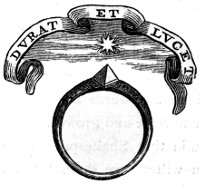
CHAPTER IV. THE KNOWLEDGE OF EMBLEM-BOOKS IN BRITAIN, AND GENERAL INDICATIONS THAT SHAKESPEARE WAS ACQUAINTED WITH THEM.
MONUMENTS, or memorial stones, with
emblematical figures and characters
carved upon them, are of ancient date
in Britain as elsewhere—probably antecedent
even to Christianity itself. Manuscripts,
too, ornamented with many a
symbolical device, carry us back several
hundred years. These we may dismiss
from consideration at the present moment, and simply take up
printed books devoted chiefly or entirely to Emblems.
I.—Of printed Emblem-books in the earlier time down to
1598, when Willet’s Century of Sacred Emblems appeared, though
there were several in the English language, there were only few
of pure English origin. Watson and Barclay, in 1509, gave
English versions of Sebastian Brant’s Fool-freighted Ship. Not
later than 1536, nor earlier than 1517, The Dialogue of Creatures
moralysed was translated “out of latyn in to our English tonge.”
In 1549, at Lyons, The Images of the Old Testament, &c., were
“set forthe in Ynglishe and Frenche;” and in 1553, from the
same city, Peter Derendel gave in English metre The true and
lyvely historyke Portreatures of the woll Bible.
The Workes of Sir Thomas More Knyght, sometyme Lorde
Chauncellour of England, were published in small folio, London,
1557, and in them at the beginning (signature C ijv—C iiij) are
inserted what the author names “nyne pageauntes,” which, as
they existed in his father’s house about A.D. 1496, were certainly
Emblems. To this list Sir Thomas North, in London, 1570,
added The Morall Philosophie of Doni, “out of Italien;”
Daniell, in 1585, The worthy Tract of Paulus Jovius, which
Whitney, in 1586, followed up by A Choice of Emblemes,
“Englished and moralized;” and Paradin’s Heroicall Devises
were “Translated out of Latin into English,” London, 1591.
To vindicate something of an English origin for a few
emblems at least, reference may again be made to the fact that
about the year 1495 or 6, “Mayster Thomas More in his youth
deuysed in hys fathers house in London, a goodly hangyng of
fyne paynted clothe, with nyne pageauntes,[73] and verses ouer
of euery of those pageauntes: which verses expressed and
declared, what the ymages in those pageauntes represented:
and also in those pageauntes were paynted, the thynges that the
verses ouer them dyd (in effecte) declare.” In 1592, Wyrley
published at London The true use of Armories, &c.; soon after
appeared Emblems by Thomas Combe, which, however, are no
longer known to be in existence; and then, in 1598, Andrew
Willet’s Sacrorvm Emblematvm Centvria vna, &c.,—“A Century
of Sacred Emblems.” Guillim, in 1611, supplied A Display of
Heraldry; and Peacham, in 1612, A Garden of Heroical
Devices. There were, too, in MSS., several Emblem-works in
English, some of which have since been edited and made
known.
Yet we must not suppose that the knowledge of Emblem-books
in Britain depended on those only of which an English
version had been achieved. To men of culture, the whole series
was open in almost its entire extent. James Hamilton, Earl of
Arran, had resided in France, and in 1555, being high in the
favour of Henry II., “was made captain of his Scotch life-guards.”
A few years before, namely, in 1549, as we have
mentioned, p. 108, Aneau’s French translation of Alciat’s
Emblems had been dedicated to him as, “filz de tres noble
Prince Jacque Due de Chastel le herault, Prince Gouverneur du
Royaume d’Escoce.”
Among the rare books in the British Museum is Marquale’s
Italian Version of Alciat’s Emblems, printed at Lyons in 1549;
a copy of it, a very lovely book, in the original binding, bears on
the back the royal crown, and at the foot the letters “E. VI. R.,”—Edwardus
Sextus Rex; and, as he died in 1553, we thus have
evidence at how early a date the work was known in England.
To the young king it would doubtless be a book “for delight
and for ornament.”
Of Holbein’s Imagines Mortis, Lyons, 1545, by George
Æmylius, Luther’s brother-in-law, a copy now in the British
Museum “was presented to Prince Edward by Dr. William Bill,
accompanied with a Latin dedication, dated from Cambridge,
19th July, 1546, wherein he recommends the prince’s attention
to the figures in the book, in order to remind him that all must
die to obtain immortality; and enlarges on the necessity of
living well. He concludes with a wish that the Lord will long
and happily preserve his life, and that he may finally reign to
all eternity with his most Christian father. Bill was appointed
one of the king’s chaplains in ordinary, 1551, and was made the
first Dean of Westminster in the reign of Elizabeth.”—Douce’s
Holbein, Bohn’s ed., 1858, pp. 93, 94.
In 1548, Mary of Scotland was sent into France for her education
(Rapin, ed. 1724, vol. vi. p. 30), and here imbibed the taste
for, or rather knowledge of, Emblems, which afterwards she put
into practice. To her son, in his fourteenth year, emblems were
introduced by no less an authority than that of Theodore Beza.
A copy indeed of the works of Alciatus was bound for him
when he became King of England,—it is a folio edition, in six
volumes or parts, and is still preserved in the British Museum;
the royal arms are on the cover, front and back, and fleurs-de-lis
in the corners. It was printed at Lyons in 1560, and possibly
the Emblems in vol. vi., leaves 334–354, with their very beautiful
devices, may have been the companions of his boyhood
and early years. By the Emblem-works of Beza and of
Alciat probably was laid the foundation of the king’s love
for allegorical representations, which, under the name of
masques, were provided by Jonson for the Court’s amusement.
The king’s weakness in this respect is wittily set forth in the
French epigram soon after his death (Rapin’s History, 4to,
vol. vii. p. 259):—
“Tandis qu’ Elisabeth fut Roi,
L’Anglois fut d’Espagne l’effroi;
Maintenant, dévise & caquette,
Régi par la Reine Jaquette.”[74]
To English noblemen, in 1608, Otho van Veen, from
Antwerp, commends his Amorum Emblemata,—“Emblems of
the Loves,”—with 124 excellent devices. Thus the dedication
runs: “To the moste honorable and woerthie brothers, William
Earle of Pembroke, and Philip Earle of Mountgomerie, patrons
of learning and cheualrie.” In England, therefore, as in Scotland,
there were eminent lovers of the Emblem literature.
But an acquaintance with that literature may be regarded as
more spread abroad and increased when Emblem-books became
the sources of ornamentation for articles of household furniture,
and for the embellishment of country mansions. A remarkable
instance is supplied from The History of Scotland, edition
London, 1655, “By William Drummond of Hauthornden.” It
is in a letter “To his worthy Friend Master Benjamin Johnson,”
dated July 1, 1619, respecting some needle-work by Mary
Queen of Scots, and shows how intimately she was acquainted
with several of the Emblem-books of her day, or had herself
attained the art of making devices. The whole letter, except a
few lines at the beginning, is most interesting to the admirers of
Emblems. Drummond thus writes:—
“I have been curious to find out for you the Impresaes and Emblemes on
a Bed of State[75] wrought and embroidered all with gold and silk by the late
Queen Mary, mother to our sacred Sovereign, which will embellish greatly
some pages of your Book, and is worthy your remembrance; the first is the
Loadstone turning towards the pole, the word her Majesties name turned on
an Anagram, Maria Stuart, sa virtu, m’attire, which is not much inferiour to
Veritas armata. This hath reference to a Crucifix, before which with all
her Royall Ornaments she is humbled on her knees most liuely, with the
word, undique; an Impresa of Mary of Lorrain, her Mother, a Phœnix in
flames, the word,[76] en ma fin git mon commencement. The Impressa of an
Apple-Tree growing in a Thorn, the word, Per vincula crescit. The Impressa
of Henry the second, the French King, a Cressant, the word, Donec totum
impleat orbem. The Impressa of King Francis the first, a Salamander
crowned in the midst of Flames, the word, Nutrisco et extinguo. The
Impressa of Godfrey of Bullogne, an arrow passing through three birds, the
word, Dederit ne viam Casusve Deusve. That of Mercurius charming Argos,
with his hundred eyes, expressed by his Caduceus, two Flutes, and a Peacock,
the word, Eloquium tot lumina clausit. Two Women upon the Wheels of
Fortune, the one holding a Lance, the other a Cornucopia; which Impressa
seemeth to glaunce at Queen Elizabeth and herself, the word, Fortunæ
Comites. The Impressa of the Cardinal of Lorrain her Uncle, a Pyramid
overgrown with ivy, the vulgar word, Te stante virebo; a Ship with her Mast
broken and fallen in the Sea, the word, Nusquam nisi rectum. This is for
herself and her Son, a Big Lyon and a young Whelp beside her, the word,
Unum quidem, sed Leonem. An embleme of a Lyon taken in a Net, and
Hares wantonly passing over him, the word, Et lepores devicto insultant
Leone. Cammomel in a garden, the word, Fructus calcata dat amplos. A
Palm Tree, the word, Ponderibus virtus innata resistit. A Bird in a Cage,
and a Hawk flying above, with the word, Il mal me preme et me spaventa a
Peggio. A triangle with a Sun in the middle of a Circle, the word, Trino
non convenit orbis. A Porcupine amongst Sea Rocks, the word, Ne volutetur.
The Impressa of king Henry the eight, a Portculles, the word, altera securitas.
The Impressa of the Duke of Savoy, the annunciation of the Virgin Mary,
the word, Fortitudo ejus Rhodum tenuit. He had kept the Isle of Rhodes.
Flourishes of Armes, as Helms, Launces, Corslets, Pikes, Muskets, Canons,
the word, Dabit Deus his quoque finem. A Tree planted in a Church-yard
environed with dead men’s bones, the word, Pietas revocabit ab orco.
Ecclipses of the Sun and the Moon, the word, Ipsa sibi lumen quod invidet
aufert, glauncing, as may appear, at Queen Elizabeth. Brennus Ballances, a
sword cast in to weigh Gold, the word, Quid nisi Victis dolor! A Vine tree
watred with Wine, which instead to make it spring and grow, maketh it fade,
the word, Mea sic mihi prosunt. A wheel rolled from a Mountain in the Sea,
the word, Piena di dolor voda de Sperenza. Which appeareth to be her own,
and it should be, Precipitio senza speranza. A heap of Wings and Feathers
dispersed, the word, Magnatum Vicinitas. A Trophie upon a Tree, with
Mytres, Crowns, Hats, Masks, Swords, Books, and a Woman with a Vail
about her eyes or muffled, pointing to some about her, with this word, Ut casus
dederit. Three crowns, two opposite and another above in the Sea, the word,
Aliamque moratur. The Sun in an Ecclipse, the word, Medio occidet Die.”
“I omit the Arms of Scotland, England, and France severally by themselves,
and all quartered in many places of this Bed. The workmanship is
curiously done, and above all value, and truely it may be of this Piece said,
Materiam superabat opus.”[77]
It would be tedious to verify, as might be done in nearly
every instance, the original authors of these twenty-nine Impreses
and Emblems. Several of them are in our own Whitney,
several in Paradin’s Devises heroiques, and several in Dialogve
des Devises d’armes et d’amovrs dv S. Pavlo Jovio, &c., 4to, A
Lyon, 1561.
From the last named author we select as specimens two of
the Emblems with which Queen Mary embellished the bed for
her son;—the first is “the Impressa of King Francis the First,”
who, as the Dialogue, p. 24, affirms, “changea la fierté des
deuises de guerre en la douceur & ioyeuseté amoureuse,”—“And
to signify that he was glowing with the passions of love,—and
so pleasing were they to him, that he had the boldness to
say that he found nourishment in them;—for this reason he
chose the Salamander, which dwelling in the flames is not consumed.”
(See woodcut next page.) The second, p. 25, is “the
Impressa of Henry the second, the French King,” the son and
successor of Francis in 1547. (See woodcut, p. 127.)
He had adopted the motto and device when he was Dauphin,
and continued to bear them on his succession to the throne;—in
the one case to signify that he could not show his entire
worth until he arrived at the heritage of the kingdom; and in
the other that he must recover for his kingdom what had been
lost to it, and so complete its whole orb.
It may appear almost impossible, even on a “Bed of State,”
to work twenty-nine Emblems and the arms of Scotland,
England, and France, “severally by themselves and all quartered
in many places of the bed,”—but a bed, probably of equal
antiquity, was a few years since, if not now, existing at Hinckley
in Leicestershire, on which the same number “of emblematical
devices, and Latin mottoes in capital letters conspicuously
introduced,” had found space and to spare. All these emblems
are, I believe, taken from books of Shakespeare’s time, or before
him; as, “An ostrich with a horseshoe in the beak,” the word,
Spiritus durissima coquit; “a cross-bow at full stretch,” the
word, Ingenio superat vires. “A hand playing with a serpent,”
the word, Quis contra nos? “The tree of life springing from the
cross on an altar,”[78] the word, Sola vivit in illo. (See Gentleman’s
Magazine, vol. lxxxi. pt. 2, p. 416, Nov. 1811.)
Of the use of Emblematical devices in the ornamenting of
houses, it will be sufficient to give the instance recorded in
“The History and Antiquities of Hawsted and Hardwick, in the
county of Suffolk, by the Rev. Sir John Cullum, Bart:” the 2nd
edition, royal 4to, London, 1813, pp. 159–165. This History
makes it evident that in the reign of James I., if not earlier,
Emblems were so known and admired as to have been freely
employed in adorning a closet for the last Lady Drury. “They
mark the taste of an age that delighted in quaint wit, and
laboured conceits of a thousand kinds,” says Sir John; nevertheless,
there were forty-one of them in “the painted closet” at
Hawsted, and which, at the time of his writing, were put up in a
small apartment at Hardwick. To all of them, as for King
James’s bed, and for the “very antient oak wooden bedstead,
much gilt and ornamented,” at Hinckley, there were a Latin
motto and a device. Some of them we now present to the
reader, adding occasionally to our author’s account a further
notice of the sources whence they were taken:
Emblem 1. Ut parta labuntur,—“As procured they are
slipping away.” “A monkey, sitting in a window and scattering
money into the streets, is among the emblems of Gabriel Simeon:”
it is also in our own English Whitney, p. 169, with the word,
Malè parta malè delabuntur,—“Badly gotten, badly scattered.”
Emblem 5. Quò tendis?—“Whither art thou going?” “A
human tongue with bats’ wings, and a scaly contorted tail,
mounting into the air,” “is among the Heroical Devises of Paradin:”
leaf 65 of edition Anvers, 1562.
Emblem 8. Jam satis,—“Already enough.” “Some trees,
leafless, and torn up by the roots; with a confused landscape.
Above, the sun, and a rainbow;” a note adds, “the most faire
and bountiful queen of France Katherine used the sign of the
rainbow for her armes, which is an infallible sign of peaceable
calmeness and tranquillitie.”—Paradin. Paradin’s words, ed.
1562, leaf 38, are “Madame Catherine, treschretienne Reine de
France, a pour Deuise l’Arc celeste, ou Arc en ciel: qui est le vrai
signe de clere serenité & tranquilité de Paix.”
Emblem 20. Dum transis, time,—“While thou art crossing,
fear.” “A pilgrim traversing the earth: with a staff, and a light
coloured hat, with a cockle shell in it.” In Hamlet, act iv. sc. 5,
l. 23, vol. viii. p. 129,—
“How should I your true love know
From another one?
By his cockle hat and staff,
And his sandal shoon.”
“Or,” remarks Sir John Cullum, “as he is described in Greene’s
Never too Late, 1610;”—
“With Hat of straw, like to a swain,
Shelter for the sun and rain,
With scallop-shell before.”
Emblem 24. Fronte nulla fides,—“No trustworthiness on the
brow.” The motto with a different device occurs in Whitney’s
Emblems, p. 100, and was adopted by him from the Emblems
of John Sambucus; edition Antwerp, 1564, p. 177. The device,
however, in “the painted closet” was “a man taking the dimensions
of his own forehead with a pair of compasses;” “a contradiction,”
inaptly remarks Sir J. Cullum, “to a fancy of Aristotle’s
that the shape and several other circumstances, relative to a
man’s forehead, are expressive of his temper and inclination.”
POVR CONGNOISTRE
VN HOMME.
Upon this supposition Symeon,[79] before mentioned, has invented
an Emblem, representing a human head and a hand issuing out
of a cloud, and pointing to it, with this motto, Frons hominem
præfert,—“The forehead shows the man.”
Emblem 33. Speravi et perii,—“I hoped and perished;”—the
device, “A bird thrusting its head into an oyster partly open.”
A very similar sentiment is rather differently expressed by
Whitney, p. 128, by Freitag, p. 169, and by Alciat, edition
Paris, 1602, emb. 94, p. 437, from whom it was borrowed.
Here the device is a mouse invading the domicile of an oyster,
the motto, Captivus ob gulam,—“A prisoner through gluttony;”
and the poor little mouse—
“That longe did feede on daintie crommes,
And safelie search’d the cupborde and the shelfe:
At lengthe for chaunge, vnto an Oyster commes,
Where of his deathe, he guiltie was him selfe:
The Oyster gap’d, the Mouse put in his head,
Where he was catch’d, and crush’d till he was dead.”
Now, since so many Emblems from various authors were
gathered to adorn a royal bed,[80] “a very antient oak wooden
bed,” and “a lady’s closet,” in widely distant parts of Britain,
the supposition is most reasonable that the knowledge of them
pervaded the cultivated and literary society of England and
Scotland; and that Shakespeare, as a member of such society,
would also be acquainted with them. The facts themselves are
testimonies of a generally diffused judgment and taste, by which
Emblematic devices for ornaments would be understood and
appreciated.
And the facts we have mentioned are not solitary. About
the period in question, in various mansions of the two kingdoms,
Device and Emblem were employed for their adorning. In
1619, close upon Shakespeare’s time, and most likely influenced
by his writings, there was set up in the Ancient Hall of the
Leycesters of Lower Tabley, Cheshire, a richly carved and very
curious chimney-piece, which may be briefly described as emblematizing
country pursuits in connection with those of heraldry,
literature, and the drama. In high relief, on one of the upright
slabs, is a Lucrece, as the poet represents the deed, line 1723,—
“Even here she sheathed in her harmless breast
A harmful knife, that thence her soul unsheathed.”
On the other slab is a Cleopatra, with the deadly creature in
her hand, though not at the very moment when she addressed
the asp;—act. v. sc. 2, l. 305, vol. ix. p. 151,—
“Peace, peace!
Dost thou not see my baby at my breast,
That sucks the nurse asleep?”
The cross slab represents the hunting of stag and hare, which
with the hounds have wonderfully human faces. Here might
the words of Titus Andronicus, act. ii. sc. 2, l. 1, vol. vii. p. 456,
be applied,—
“The hunt is up, the moon is bright and gray,
The fields are fragrant, and the woods are green;
Uncouple here, and let us make a bay,
And wake the emperor and his lovely bride,
And rouse the prince, and ring a hunter’s peal
That all the court may echo with the noise.”
The heraldic insignia of the Leycesters surmount the whole,
but just below them, in a large medallion, is an undeniable
Emblem, similar to one which in 1624 appeared in Hermann
Hugo’s Pia Desideria, bk. i. emb. xv. p. 117; Defecit in dolore
vita mea et anni mei in gemitibus (Psal. xxx. or rather Psal.
xxxi. 10),—“My life is spent with grief, and my years with
sighing.” Appended to Hugo’s device are seventy-six lines of
Latin elegiac verses, and five pages of illustrative quotations
from the Fathers; but the character of the Emblem will be seen
from the device presented.
Drayton in his Barons’ Wars, bk. vi., published in 1598,
shows how the knowledge of our subject had spread and was
spreading; as when he says of certain ornaments,—
“About the border, in a curious fret,
Emblems, impressas, hieroglyphics set.”
There is, however, no occasion to pursue any further this
branch of our theme, except it may be by a short continuation
or extension of our Period of time, to show how Milton’s greater
Epic most curiously corresponds with the title-page of a Dutch
Emblem-book, which appeared in 1642, several years before
Paradise Lost was written. (See Plate X.) The book is, Jan
Vander Veens Zinne-beelden, oft Adams Appel,—“John Vander
Veen’s Emblems, or Adam’s Apple,”—presenting some Dutch
doggerel lines, of which this English doggerel contains the
meaning,—
“When wounded Adam lay from the sin and the fall,
Out of the accursed wound flowed corruption and gall;
Hence is all wickedness and evil bred,
As here in print ye see the Devil fashioned.”
And again,—
“Out of Adam’s Apple springs
Misery, Sin, and deadly things.”
Singularly like to Milton’s Introduction (bk. i. lines 1–4),—
“Of Man’s first disobedience, and the fruit
Of that forbidden tree, whose mortal taste
Brought death into the world, and all our woe,
With loss of Eden.”
Plate 10
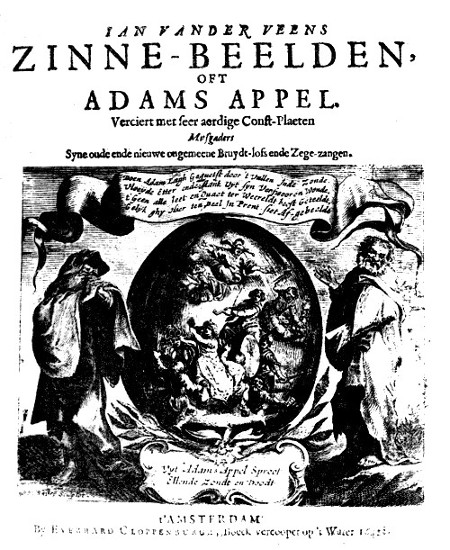
Title of “Adam’s Appel” Vander Veen 1642
Plate 11
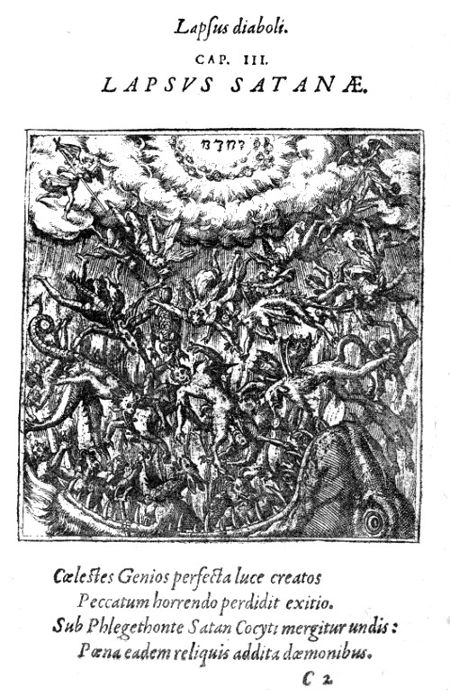
Fall of Satan from Boissard’s “Theatrum Vitæ Humanæ,” 1596
With equal singularity appears in Boissard’s Theatrum Vitæ
Humanæ,—“Theatre of Human Life,”—edition Metz, 1596, p. 19,
the coincidence with Milton’s Fall of the rebel Angels. We have
here pictured and described the Fall of Satan (see Plate XI.)
almost as in modern days Turner depicted it, and as Milton has
narrated the terrible overthrow (Paradise Lost, bk. vi.), when they
were pursued
“With terrors, and with furies, to the bounds
And crystal wall of heaven; which, opening wide,
Roll’d inward, and a spacious gap disclosed
Into the wasteful deep: the monstrous sight
Struck them with horror backward, but far worse
Urged them behind: headlong themselves they threw
Down from the verge of heaven....
Nine days they fell: confounded Chaos roar’d,
And felt tenfold confusion in their fall
Through his wild anarchy.”
[81]
That same Theatre of Human Life, p. 1 (see Plate XIV.),
also contains a most apt picture of Shakespeare’s lines, As You
Like It, act. ii. sc. 7, l. 139, vol. ii. p. 409,—
“All the world’s a stage,
And all the men and women merely players:
They have their exits and their entrances;
And one man in his time plays many parts,
His acts being seven ages.”
The same notion is repeated in the Merchant of Venice, act. i.
sc. 1, l. 77, vol. ii. p. 281, when Antonio says,—
“I hold the world but as the world, Gratiano;
A stage where every man must play a part,
And mine a sad one.”
In England, as elsewhere, emblematical carvings and writings
preceded books of Emblems, that is, books in which the art of
the engraver and the genius of the poet were both employed to
illustrate one and the same motto, sentiment, or proverbial
saying. Not to repeat what may be found in Chaucer and
others, Spenser’s Visions of Bellay,[82] alluded to in the fac-simile
reprint of Whitney, pp. xvi & xvii, needed only the designer and
engraver to make them as perfectly Emblem-books as were the
publications of Brant, Alciatus and Perriere. Those visions
portray in words what an artist might express by a picture.
For example, in Moxon’s edition, 1845, p. 438, iv.,—
“I saw raisde vp on pillers of Iuorie,
Wereof the bases were of richest golde,
The chapters Alabaster, Christall frises,
The double front of a triumphall arke.
On eche side portraide was a Victorie,
With golden wings, in habite of a nymph
And set on hie vpon triumphing chaire;
The auncient glorie of the Romane lordes.
The worke did shew it selfe not wrought by man,
But rather made by his owne skilfull hands
That forgeth thunder dartes for Ioue his sire.
Let me no more see faire thing vnder heauen,
Sith I haue seene so faire a thing as this,
With sodaine falling broken all to dust.”
Now what artist’s skill would not suffice from this description
to delineate “the pillers of Iuorie,” “the chapters of Alabaster,”
“a Victorie with golden wings,” and “the triumphing chaire, the
auncient glorie of the Romane lordes;” and to make the whole
a lively and most cunning Emblem?
In his Shepheards Calender, indeed, to each of the months
Spenser appends what he names an “Emblem;” it is a motto,
or device, from Greek, Latin, Italian, French, or English, expressive
of the supposed leading idea of each Eclogue, and forming
a moral to it. The folio edition of Spenser’s works, issued in
1616, gives woodcuts for each month, and so approaches very
closely to the Emblematists of a former century. In the month
“FEBRVARIE,” there is introduced a veritable word-picture of
“the Oake and the Brier,” and also a pictorial illustration, with
the sign of the Fishes in the clouds, to indicate the season of
the year. The oak is described as “broughten to miserie:”
l. 213,—
“For nought mought they quitten him from decay,
For fiercely the goodman at him did laye.
The blocke oft groned under the blow,
And sighed to see his neere overthrow.
In fine, the steele had pierced his pith,
Tho downe to the earth hee fell forthwith.”
The Brier, “puffed up with pryde,” has his turn of adversity:
l. 234,—
“That nowe upright hee can stand no more;
And, being downe, is trod in the durt
Of cattel, and brouzed, and sorely hurt.”
The whole Eclogue, or Fable, is rounded off by the curious
Italian proverbs, to which Spenser gives the name of Emblems,—
“Iddio, perche é vecchio,
Fa suoi al suo essempio.”
“Niuno vecchio
Spaventa Iddio.”
i.e., “God, although he is very aged, makes his friends copies of
himself,” makes them aged too; but the biting satire is added.
“No old man is ever terrified by Jove.”
The Emblem for June represents a scene which the poet does
not describe; it is the field of the haymakers, with the zodiacal
sign of the Crab, and appropriate to the characters of Hobbinoll
and Colin Clout,— but it certainly does not translate into
pictures what the poet had delineated in words of great beauty:
“Lo! Colin, here the place whose plesaunt syte
From other shades hath weaned my wandring minde,
Tell mee, what wants mee here to worke delyte?
The simple ayre, the gentle warbling winde,
So calme, so coole, as nowhere else I finde;
The grassie grounde with daintie daysies dight,
The bramble bush, where byrdes of every kinde
To the waters fall their tunes attemper right.”
No more needs be said respecting the knowledge of Emblem-books
in Britain, unless it be to give the remarks of Tod, the
learned editor of Spenser’s works, edition 1845, p. x. “The
Visions are little things, done probably when Spenser was
young, according to the taste of the times for Emblems.[83] The
Theatre of Wordlings, I must add, evidently presents a series
of Emblems.”
II. We will now state some of the general indications that
Shakespeare was acquainted with Emblem-books, or at least had
imbibed “the taste of the times.”
Here and there in Shakespeare’s works, even from the way
in which sayings and mottoes, in Spanish, as well as in French
and Latin, are employed, we have indications that he had seen
and, it may be, had studied some of the Emblem-writers of his
day, and participated of their spirit. Thus Falstaff’s friend, the
ancient Pistol, 2 Henry IV. act. ii. sc. 4, l. 165, vol. iv. p. 405,
quotes the doggerel line, as given in the note, Si fortuna me
tormenta, il sperare me contenta,—“If fortune torments me, hope
contents me,”—which doubtless was the motto on his sword,
which he immediately lays down. As quoted, the line is
Spanish; a slight alteration would make it Italian; but
Douce’s conjecture appears well founded, that as Pistol was
preparing to lay aside his sword, he read
off the motto which was upon it. Such
mottoes were common as inscriptions upon
swords; and Douce, vol. i. pp. 452, 3, gives
the drawing of one with the French line,
“Si fortune me tourmente, L’esperance me
contente.”
He gives it, too, as a fact, that “Haniball
Gonsaga being in the low-countries
overthrowne from his horse by an English
captaine and commanded to yeeld himselfe
prisoner, kist his sword, and gave it to
the Englishman, saying, ‘Si fortuna me
tormenta, il speranza me contenta.’” Allow
that Shakespeare served in the Netherlands,
and we may readily suppose that
he had heard the motto from the very
Englishman to whom Gonsaga had surrendered.
The Clown in Twelfth Night, act. i.
sc. 5, l. 50, vol. iii. p. 234, replies to the
Lady Olivia ordering him as a fool to be
taken away,—“Misprision in the highest
degree! Lady, cucullus non facit monachum,
[—it is not the hood that makes the monk,]—that’s
as much to say as I wear not
motley in my brain.” The saying is one
which might appropriately adorn any Emblem-book of the
day;—and the motley-wear receives a good illustration from a
corresponding expression in Whitney, p. 81:
“The little childe, is pleas’de with cockhorse gaie,
Although he aske a courser of the beste:
The ideot likes, with bables for to plaie,
And is disgrac’de when he is brauelie dreste:
A motley coate, a cockescombe, or a bell,
Hee better likes, than Jewelles that excell.”
So, during Cade’s rebellion, when the phrase is applied by
Lord Say, in answer to Dick the butcher’s question, “What say
you of Kent?” 2 Henry VI. act. iv. sc. 7, l. 49, vol. v. p. 197,—
“Nothing but this: ’Tis bona terra, mala gens;”
or when falling under the attack of York on the field of
St. Alban’s, Lord Clifford exclaims, La fin couronne les œuvres
(2 Henry VI. act. v. sc. 2, l. 28, vol. v. p. 217); these again are
instances after the methods of Emblem-writers; and if they
were carried out, as might be done, would present all the
characteristics of the Emblem, in motto, illustrative woodcut,
and descriptive verses.
It is but an allusion, and yet the opening scene, act. i. sc. 1,
l. 50, vol. ii. p. 280, of the Merchant of Venice might borrow that
allusion from an expression of Alciatus, edition Antwerp, 1581,
p. 92, Jane bifrons,—“two-headed Janus.” (See woodcut, p. 140.)
Iane bifrons, qui iam transacta futuraq̃ calles,
Quiq̃ retro sannas, sicut & ante, vides;—
“Janus two-fronted, who things past and future well knowest,
And who mockings behind, as also before dost behold.”
[84]
The friends of Antonio banter him for his sadness, and one
of them avers,—
“Now by two-headed Janus,
Nature hath framed strange fellows in her time:
Some that will evermore peep through their eyes,
And laugh like parrots at a bag-piper;
And other of such vinegar aspect
That they’ll not show their teeth in way of smile,
Though Nestor swear the jest be laughable.”
Even if Shakespeare understood no Latin, the picture itself,
or a similar one, would be sufficient to give origin to the phrase
“two-headed Janus.”
He adopts the picture,
but not one of
the sentiments; these,
however, he did not
need: it was only as
a passing illustration
that he named Janus,
and how the author
described the god’s
qualities was no part
of his purpose.
Or if the source of
the phrase be not in
Alciatus, it may have been derived either from Whitney’s Choice
of Emblemes, p. 108, or from Perriere’s Theatre des Bons Engins,
Paris, 1539, emb. i., reproduced in 1866 to illustrate pl. 30 of the
fac-simile reprint of Whitney. Perriere’s French stanza is to
this effect:—
“In old times the god Janus with two faces
Our ancients did delineate and portray,
To demonstrate that counsels of wise races
Look to a future, as well as the past day;
In fact all time of deeds should leave the traces,
And of the past recordance ever have;
The future should foresee like providence,
Following up virtue in each noble quality,
Seeking God’s strength from sinfulness to save.
Who thus shall do will learn by evidence
That he has power to live in great tranquillity.”
[85]
Another instance of Emblem-like delineation, or description,
we have in King Henry V. act iii. sc. 7, lines 10–17, vol. iv.
p. 549. Louis the Dauphin, praising his own horse, as if
bounding from the earth like a tennis ball (see woodcut on next
page), exclaims,—
“I will not change my horse with any that treads but on four
pasterns. Ça, ha! he bounds from the earth, as if his entrails were
hairs; le cheval volant, the Pegasus, chez les narines de feu! When I
bestride him, I soar, I am a hawk: he trots the air; the earth sings
when he touches it; the basest horn of his hoof is more musical than the
pipe of Hermes.[86]
Orl. He’s of the colour of the nutmeg.
Dau. And of the heat of the ginger. It is a beast for Perseus: he is
pure air and fire; and the dull elements of earth and water never appear in
him, but only in patient stillness, while his rider mounts him: he is indeed a
horse; and all other jades you may call beasts.
Con. Indeed, my lord, it is a most absolute and excellent horse.
Dau. It is the prince of palfreys; his neigh is like the bidding of a
monarch, and his countenance enforces homage.”
This lively description suits well the device of a Paris printer,
Christian Wechel, who, in 1540,[87] dwelt “a l’enseigne du Cheval
volant;” or that of Claude Marnius of Francfort, who, before
1602, had a similar trade-mark. At least three of Reusner’s
Emblems, edition Francfort, 1581, have the same device; and
the Dauphin’s paragon answers exactly to a Pegasus in the first
Emblem, dedicated to Rudolph II., who, on the death of his
father, Maximilian, became Emperor of Germany.
ΣΥΝ ΔΥΩ ΕΡΧΟΜΕΝΩ.
Non abſque Theſeo.
EMBLEMA I.
Ad Diuum Rudolphum Secundum
Cæſarem Romanum.
Here[88] we have a Pegasus like that which Shakespeare
praises; it has a warrior on its back, and bounds along, trotting
the air. In other two of Reusner’s Emblems, the Winged
Horse is standing on the ground, with Perseus near him; and
in a third, entitled Principis boni imago,—“Portrait of a good
prince,”—St. George is represented on a flying steed[89] attacking
the Dragon, and delivering from its fury the Maiden chained to
a rock, that shadows forth a suffering and persecuted church.
Shakespeare probably had seen these or similar drawings before
he described Louis the Dauphin riding on a charger that had
nostrils of fire.
The qualities of good horsemanship Shakespeare specially
admired. Hence those lines in Hamlet, act iv. sc. 7, l. 84,
vol. viii. p. 145,—
“I’ve seen myself, and served against, the French,
And they can well on horseback: but this gallant
Had witchcraft in’t; he grew unto his seat,
And to such wondrous doing brought his horse,
As he had been incorpsed and demi-natured
With the brave beast.”
An emblem in Alciatus, edition 1551, p. 20, also gives the
mounted warrior on the winged horse;—it is Bellerophon in his
contest with the Chimæra. The accompanying stanza has in it
an expression like one which the dramatist uses,—
“Sic tu Pegaseis vectus petis æthera pennis,”—
“So thou being borne on the wings of Pegasus seekest the air.”
Equally tasting of the Emblem-writers of Henry’s and
Elizabeth’s reigns is that other proverb in French which Shakespeare
places in the mouth of the Dauphin Louis. The subject
is still his “paragon of animals,” which he prefers even to his
mistress. See Henry V. act iii. sc. 7, l. 54, vol iv. p. 550. “I
had rather,” he says, “have my horse to my mistress;” and the
Constable replies, “I had as lief have my mistress a jade.”
“Dau. I tell thee, constable, my mistress wears his own hair.
Con. I could make as true a boast as that, if I had a sow to my
mistress.
Dau. Le chien est retourné à son propre vomissement, et la truie
lavée au bourbier. Thou makest use of anything.” [“The dog has returned
to his vomit, and the sow that had been washed, to her mire.”]
Though the French is almost a literal rendering of the Latin
Vulgate, 2 Pet. ii. 23, “Canis reversus ad suum vomitum: & sus
lota in volutabro luti;” the whole conception is in the spirit of
Freitag’s Mythologia Ethica, Antwerp, 1579, in which there is appended
to each emblem a text of Scripture. A subject is chosen, a
description of it given, an engraving placed on the opposite page,
and at the foot some passage from the Latin vulgate is applied.
It may indeed be objected that, if Shakespeare was well
acquainted with the Emblem literature it is surprising he should
pass over, almost in silence, some Devices which partake
peculiarly of his general spirit, and which would furnish suggestions
for very forcible and very appropriate descriptions. Were
we to examine his works thoroughly, we should discover some
very remarkable omissions of subjects that appear to be exactly
after his own method and perfectly natural to certain parts of
his dramas. We may instance the almost total want of commendation
for the moral qualities of the dog, whether “mastiff,
greyhound, mongrel grim, hound or spaniel, brach or lym, or
bob-tail tike, or trundle-tail.” The whole race is under a ban.
So industry, diligence, with their attendant advantages,—negligence,
idleness, with their
disadvantages, are scarcely alluded
to, and but incidentally
praised or blamed.
We may take one of Perriere’s
Emblems, the 101st of Les Bons
Engins, as our example, to show
rather divergence than agreement,—or,
at any rate, a different
way of treating the subject.
“En ce pourtraict pouuez veoir diligence,
Tenant en main le cornet de copie:
Elle triumphé̩[e/]̩ en grand magnificence:
Car de paressé̩[e/]̩ one ne fut assoupie:
Dessoubz ses piedz tiẽt faminé̩[e/]̩ acroupie
Et attachéé̩[e/]̩ en grand captiuité:
Puis les formys par leur hastiuité
Diligemment tirent le tout ensemble:
Pour demonstrer qu’ auec oysiuité,
Impossiblé̩[e/]̩ est que grãdz biẽs l’õ assẽble.”
“A portrait here you see of diligence
Bearing in hand full plenty’s horn,
Triumphant in her great magnificence,
And ever holding laziness in scorn;
Crouching beneath her feet famine forlorn
In fetters bound of strong captivity.
And then the ants with their activity
The whole most diligently along do draw,—
A demonstration clear that idleness
Finds it impossible by nature’s law
With stores of goods her poverty to bless.”
Under the motto, Otiosi semper egentes,—“The idle always
destitute,”—Whitney, p. 175, describes the same conditions,—
“Here, Idlenes doth weepe amid her wantes,
Neare famished: whome, labour whippes for Ire:
Here, labour sittes in chariot drawen with antes:
And dothe abounde with all he can desire.
The grashopper, the toyling ante derides,
In Sommers heate, cause she for coulde prouides.”
The idea is in some degree approached in the Chorus of
Henry V. act i. l. 5, vol. iv. p. 491,—
“Then should the warlike Harry, like himself
Assume the port of Mars; and at his heels,
Leash’d in like hounds, should famine, sword, and fire
Crouch for employment.”
The triumph of industry may also be inferred from the
marriage blessing which Ceres pronounces in the Masque of the
Tempest, act iv. sc. 1, l. 110, vol. i. p. 57,—
“Earth’s increase, foison plenty,
Barns and garners never empty;
Vines with clustering bunches growing;
Plants with goodly burthen bowing;
Spring come to you at the farthest
In the very end of harvest!
Scarcity and want shall shun you,
Ceres’ blessing so is on you.”
Yet for labour, work, industry, diligence, or by whatever
other name the virtue of steady exertion may be known, there
is scarcely a word of praise in Shakespeare’s abundant vocabulary,
and of its effects no clear description. We are told in
Cymbeline, act iii. sc. 6, l. 31, vol. ix. p. 240,—
“The sweat of industry would dry and die,
But for the end it works to.... Weariness
Can snore upon the flint, when resty sloth
Finds the down pillow hard.”
And in contrasting the cares of royalty with the sound sleep of
the slave, Henry V. (act iv. sc. 1, l. 256, vol iv. p. 564) declares
that the slave,—
“Never sees horrid night, the child of hell;
But like a lacquey, from the rise to set,
Sweats in the eye of Phœbus, and all night
Sleeps in Elysium; next day, after dawn,
Doth rise, and help Hyperion to his horse;
And follow so the ever running year
With profitable labour to his grave;”
but the subject is never entered upon in its moral and social
aspects, unless the evils which are ascribed by the Duke of
Burgundy (Henry V. act v. sc. 2, l. 48, vol. iv. p. 596) to war, are
also to be attributed to the negligence which war creates,—
“The even mead, that erst brought sweetly forth
The freckled cowslip, burnet and green clover,
Wanting the scythe, all uncorrected, rank,
Conceives by idleness; and nothing teems
But hateful docks, rough thistles, kecksies, burs,
Losing both beauty and utility.”
Another instance we may give of that Emblem spirit, which
often occurs in Shakespeare, and at the same time we may
supply an example of Freitag’s method of illustrating a subject,
and of appending to it a scriptural quotation. (See Mythologia
Ethica, Antwerp, 1579, p. 29.) The instance is from King Lear,
act ii. sc. 4, l. 61, vol. viii. p. 317, and the subject, Contraria
industriæ ac desidiæ præmia—“The opposite rewards of industry
and slothfulness.”
When Lear had arrived at the Earl of Gloster’s castle, Kent
inquires,—
“How chance the king comes with so small a train?
Fool. An thou hadst been set i’ the stocks for that question, thou hadst well deserv’d it.
Gent. Why, fool?
Fool. We’ll set thee to school to an ant to teach thee there’s no labouring
in the winter.”
That school we have presented to us in Freitag’s engraving
(see woodcut on next page), and in the stanzas of Whitney,
p. 159. There are the ne’er-do-well grasshopper and the sage
schoolmaster of an ant, propounding, we may suppose, the
wise saying, Dum ætatis ver agitur: consule brumæ,—“While
the spring of life is passing, consult for winter,”—and the poet
moralizes thus:
“In winter coulde, when tree, and bushe, was bare,
And frost had nip’d the rootes of tender grasse:
The antes, with ioye did feede vpon their fare,
Which they had stor’de, while sommers season was:
To whome, for foode the grashopper did crie,
And said she staru’d, if they did helpe denie.
Whereat, an ante, with longe experience wise?
And frost, and snowe, had manie winters seene:
Inquired, what in sommer was her guise.
Quoth she, I songe, and hop’t in meadowes greene:
Then quoth the ante, content thee with thy chaunce,
For to thy songe, nowe art thou light to daunce?”
Contraria induſtriae ac deſidiæ præmia.
Propter frigus piger arare noluit: mendicabit ergo æſtate, & non dabitur illi.
Prouerb. 20, 4.
“The sluggard will not plow by reason of the cold; therefore shall he
beg in harvest, and have nothing.”
Freitag’s representation makes indeed a change in the season
at which the “ante, with longe experience wise,” administers
her reproof; but it is equally the school for learning in the time
of youth and strength, to provide for the infirmities of age and
the adversities of fortune.
And more than similar in spirit to the Emblem writers which
preceded, almost emblems themselves, are the whole scenes
from the Merchant of Venice, act ii. sc. 7 and 9, and act iii. sc. 2,
where are introduced the three caskets of gold, of silver, and
of lead, by the choice of which the fate of Portia is to be
determined,[90]—
“The first, of gold, who this inscription bears,
‘Who chooseth me shall gain what many men desire;’
The second, silver, which this promise carries,
‘Who chooseth me shall get as much as he deserves;’
This third, dull lead, with warning all as blunt,
‘Who chooseth me must give and hazard all he hath.’”
Act ii. sc. 7, lines 4–9.
And when the caskets are opened, the drawings and the
inscriptions on the written scrolls, which are then taken out,
examined and read, are exactly like the engravings and the
verses by which emblems and their mottoes are set forth.
Thus, on unlocking the golden casket, the Prince of Morocco
exclaims,—
“O hell! what have we here?
A carrion Death, within whose empty eye
There is a written scroll! I’ll read the writing. [Reads.]
All that glisters is not gold;
Often have you heard that told:
Many a man his life hath sold
But my outside to behold:
Gilded tombs do worms infold.
Had you been as wise as bold,
Young in limbs, in judgment old,
Your answer had not been inscroll’d:
Fare you well; your suit is cold.”
Act ii. sc. 7, lines 62–73.
The Prince of Arragon, also, on opening the silver casket,
receives not merely a written scroll, as is represented in
Symeoni’s “Distichi Morali,”—Moral Stanzas,—but what
corresponds to the device or woodcut of the Emblem-book;
“The portrait of a blinking idiot,” who presents to him “The
schedule,” or explanatory rhymes,—
“The fire seven times tried this:
Seven times tried that judgment is,
That did never choose amiss.
Some there be that shadows kiss;
Such have but a shadow’s bliss:
There be fools alive, I wis,
Silver’d o’er; and so was this.
Take what wife you will to bed,
I will ever be your head:
So be gone: you are sped.”
Act ii. sc. 9, lines 63–72.
These Emblems of Shakespeare’s are therefore complete in
all their parts; the mottoes, the pictures, “a carrion Death”
and “a blinking idiot,” and the descriptive verses.
Coſi viuo Piacer conduce à morte.
The words of Portia (act. ii. sc. 9, l. 79, vol. ii. p. 319), when
the Prince of Arragon says,—
“Sweet adieu, I’ll keep my oath,
Patiently to bear my wroth;”
are moreover a direct reference
to the Emblems which occur
in various authors. Les Devises
Heroiqves, by Claude Paradin,
Antwerp, 1562, contains the adjoining
Emblem, Too lively a
pleasure conducts to death.
And Giles Corrozet in his
“Hecatomgraphie, C’est à dire,
les descriptions de cent figures,
&c.,”[91] adopting the motto, War
is sweet only to the inexperienced, presents, in illustration, a butterfly
fluttering towards a candle.
La guerre doulce aux inexperimentez.
Les Papillons ſe vont bruſler
A la chandelle qui reluyct.
Tel veult à la bataillé̩[e/]̩ aller
Qui ne ſcaict combien guerre nuyct.
“The Butterflies themselves are about to burn,
In the candle which still shines on and warms;
Such foolish, wish to battle fields to turn,
Who know not of the war, how much it harms.”
This device, in fact, was
one extremely popular with
the Emblem literati. Boissard
and Messin’s Emblems,
1588, pp. 58, 59, present it
to the mottoes, “Temerité
dangereuse,” or Temere ac
Pericvlose,—“rashly and dangerously.”
Joachim Camerarius,
in his Emblems Ex Volatilibus
et Insectis (Nuremberg,
4to, 1596), uses it, with the
motto, Brevis et damnosa
Voluptas—“A short and destructive
pleasure,”—and fortifies
himself in adopting
it by no less authorities
than Æschylus and Aristotle.
Emblemes of Love, with
Verses in Latin, English, and Italian, by Otho Vænius,
4to, Antwerp, 1608, present Cupid to us, at p. 102, as watching
the moths and the flames with great earnestness, the
mottoes being, Brevis et damnosa voluptas,—“For one pleasure
a thousand paynes,”—and Breue gioia,—“Brief the
gladness.”
There is, too, on the same subject, the elegant device which
Symeoni gives at p. 25 of his “Distichi Morali,” and which
we repeat on the next page.
The subject is, Of Love too much; and the motto, “Too much
pleasure leads to death,” is thus set forth, almost literally, by
English rhymes:—
“In moderation Love is praised and prized,
Loss and dishonour in excess it brings:
In burning warmth how fail its boasted wings,
As simple butterflies in light chastised.”
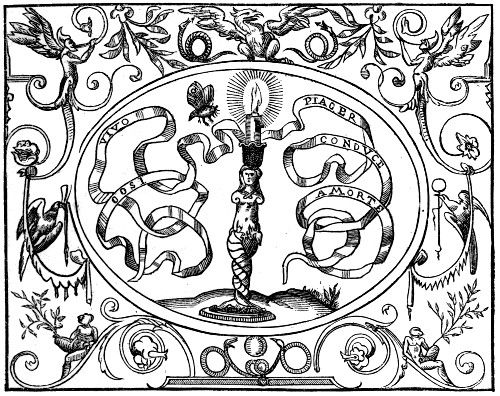
Giovio and Symeoni, 1561.
Il moderato amor ſi loda & prezza,
Ma il troppo apporta danno & diſhonore,
Et ſpeſſo manca nel ſouerchio ardore,
Qual ſemplice farfalla al lume auuezza.
Coſi
piacer
conduce à
morte.
Now can there be unreasonableness in supposing that out of
these many Emblem writers Shakespeare may have had some
one in view when he ascribed to Portia the words,—
“Thus hath the candle singed the moth.
O, these deliberate fools! when they do choose,
They have the wisdom by their wit to lose.”
Act ii. sc. 9, lines 79–81.
The opening of the third of the caskets (act. iii. sc. 2, l. 115,
vol. ii. p. 328), that made of lead, is also as much an Emblem
delineation as the other two, excelling them, indeed, in the
beauty of the language as well as in the excellence of the device,
a very paragon of gracefulness. “What find I here?” demands
Bassanio; and himself replies,—
“Fair Portia’s counterfeit! What demi-god
Hath come so near creation? Move these eyes?
Or whether, riding on the balls of mine
Seem they in motion? Here are sever’d lips,
Parted with sugar breath: so sweet a bar
Should sunder such sweet friends. Here in her hairs
The painter plays the spider, and hath woven
A golden mesh to entrap the hearts of men,
Faster than gnats in cobwebs:
[92] but her eyes,—
How could he see to do them? Having made one,
Methinks it should have power to steal both his,
And leave itself unfurnish’d. Yet look, how far
The substance of my praise doth wrong this shadow
In underprizing it, so far this shadow
Doth limp behind the substance. Here’s a scroll,
The continent and summary of my fortune.
[Reads] You that choose not by the view,
Chance as fair, and choose as true!
Since this fortune falls to you,
Be content and seek no new.
If you will be pleased with this,
And hold your fortune for your bliss,
Turn you where your lady is,
And claim her with a loving kiss.”
In these scenes of the casket, Shakespeare himself, therefore,
is undoubtedly an Emblem writer; and there needs only the
woodcut, or the engraving, to render them as perfect examples
of Emblem writing as any that issued from the pens of Alciatus,
Symeoni, and Beza. The dramatist may have been sparing in
his use of this tempting method of illustration, yet, with the
instances before us, we arrive at the conclusion that Shakespeare
knew well what Emblems were. And surely he had seen, and in
some degree studied, various portions of the Emblem literature
which was anterior to, or contemporary with himself.

Cebes, ed. 1552. Motto from Plate
CHAPTER V. SIX DIRECT REFERENCES IN THE PERICLES TO BOOKS OF EMBLEMS, SOME OF THEIR DEVICES DESCRIBED, AND OF THEIR MOTTOES QUOTED.
SHAKESPEARE’S name, in three quarto
editions, published during his lifetime,
appears as author of the play of Pericles,
Prince of Tyre; and if a decision be made
that the authorship belongs to him, and
that in the main the work was his composition,
then our previous conjectures are changed into certainties,
and we can confidently declare who were the Emblem
writers he refers to, and can exhibit the very passages from
their books which he has copied and adopted.
The early folio editions of the plays, those of 1623 and 1632,
omit the Pericles altogether, but later editions restore it to a
place among the works of Shakespeare. Dr. Farmer contends
that the hand of the great dramatist is visible only in the last act;
but others controvert this opinion, and maintain, though he was
not the fabricator of the plot, nor the author of every dialogue
and chorus, that his genius is evident in several passages.
In Knight’s Pictorial Shakspere, supplemental volume, p. 13,
we are informed: “The first edition of Pericles appeared in 1609,”—several
years before the dramatist’s death,—“under the following
title,—‘The late and much admired play, called Pericles, Prince
of Tyre, &c. By William Shakespeare: London, Glosson, 1609.’”
According to the Cambridge editors, vol. ix. p. i, Preface,
“another edition was issued in the same year.” The publication
was repeated in 1611, 1619, 1630 and 1635, so that at the very
time when Shakespeare was living, his authorship was set forth;
and after his death, while his friends and contemporaries were
alive, the opinion still prevailed.
The conclusion at which Knight arrives, sup. vol. pp. 118, 119,
is thus stated by him: “We advocate the belief that Pyrocles,
or Pericles was a very early work of Shakspere in some form,
however different from that which we possess.” And again,
“We think that the Pericles of the beginning of the seventeenth
century was the revival of a play written by Shakspere some
twenty years earlier.... Let us accept Dryden’s opinion, that
“‘Shakespeare’s own Muse his Pericles first bore.’”
The Cambridge editors, vol. ix. p. 10, ed. 1866, gave a firmer
judgment:—“There can be no doubt that the hand of Shakespeare
is traceable in many of the scenes, and that throughout
the play he largely retouched, and even rewrote, the work of
some inferior dramatist. But the text has come down to us in
so maimed and imperfect a state that we can no more judge of
what the play was when it left the master’s hand than we should
have been able to judge of Romeo and Juliet, if we had only had
the first quarto as authority for the text.”
Our own Hallam tells us,—“Pericles is generally reckoned to
be in part, and only in part, the work of Shakespeare:” but
with great confidence the critic Schlegel declares,—“This piece
was acknowledged to be a work, but a youthful work of Shakespeare’s.
It is most undoubtedly his, and it has been admitted
into several later editions of his works. The supposed imperfections
originate in the circumstance that Shakespeare here
handled a childish and extravagant romance of the old poet
Gower, and was unwilling to drag the subject out of its proper
sphere. Hence he even introduces Gower himself, and makes
him deliver a prologue in his own antiquated language and
versification. This power of assuming so foreign a manner is at
least no proof of helplessness.”
There are, then, strong probabilities that in the main the
Pericles was Shakespeare’s own composition, or at least was
adopted by him; it belongs to his early dramatic life, and at
any rate it may be taken as evidence to show that the Emblem
writers were known and made use of between 1589 and 1609 by
the dramatists of England.
Books of Emblems are not indeed mentioned by their titles,
nor so quoted in the Pericles as we are accustomed to do, by
making direct references; they were a kind of common property,
on which everyone might pasture his Pegasus or his Mule without
any obligation to tell where his charger had been grazing.
The allusions, however, are so plain, the words so exactly alike,
that they cannot be misunderstood. The author was of a
certainty acquainted with more than one Emblem writer, in
more than one language, and Paradin, Symeoni, and our own
Whitney may be recognised in his pages. We conclude that
he had them before him, and copied from them when he penned
the second scene of the Second Act of Pericles.
The Dialogue is between Simonides, king of Pentapolis, and
his daughter, Thaisa, on occasion of the “triumph,” or festive
pageantry, which was held in honour of her birthday. (Pericles,
act. ii. sc. 2, lines 17–47, vol. ix. pp. 343, 344.)
“Enter a Knight; he passes over, and his Squire presents his shield to the Princess.
Sim. Who is the first that doth prefer himself?
Thai. A knight of Sparta, my renowned father;
And the device he bears upon his shield
Is a black Ethiope reaching at the sun;
The word, ‘Lux tua vita mihi.’
Sim. He loves you well that holds his life of you.
[The Second Knight passes.
Who is the second that presents himself?
Thai. A prince of Macedon, my royal father;
And the device he bears upon his shield
Is an arm’d knight that’s conquer’d by a lady;
The motto thus, in Spanish, ‘Piu por dulzura que por fuerza.’
[The Third Knight passes.
Sim. And what’s the third?
Thai. The third of Antioch;
And his device, a wreath of chivalry;
The word, ‘Me pompæ provexit apex.’
[The Fourth Knight passes.
Sim. What is the fourth?
Thai. A burning torch that’s turned upside down;
The word, ‘Quod me alit, me extinguit.’
Sim. Which shows that beauty hath his power and will,
Which can as well inflame as it can kill.
[The Fifth Knight passes.
Thai. The fifth, an hand environed with clouds,
Holding out gold that’s by the touchstone tried;
The motto thus, ‘Sic spectanda fides.’
[The Sixth Knight passes.
Sim. And what’s
The sixth and last, the which the knight himself
With such a graceful courtesy deliver’d?
Thai. He seems to be a stranger; but his present is
A wither’d branch, that’s only green at top;
The motto, ‘In hac spe vivo.’
Sim. A pretty moral;
From the dejected state wherein he is,
He hopes by you his fortunes yet may flourish.”
As with the ornaments “in silk and gold,” which Mary
Queen of Scotland worked on the bed of her son James, or with
those in “the lady’s closet” at Hawsted, we trace them up to
their originals, and pronounce them, however modified, to be
derived from the Emblem-books of their age; so, with respect
to the devices which the six knights bore on their shields, we
conclude that these have their sources in books of the same
character, or in the genius of the author who knew so well how
to contrive and how to execute. Emblems beyond a doubt they
are, though not engraved on our author’s page, as they were on
the escutcheons of the knightly company. Take the device
and motto of the gnats or butterflies and the candle; we trace
them from Vænius, Camerarius, and Whitney, to Paradin, from
Paradin to Symeoni, and from Symeoni to Giles Corrozet,—at
every step we pronounce them Emblems,—and should pass the
same judgment, though we could not trace them at all. It is
the same with these devices in the Triumph Scene of Pericles;
we discover the origin of some of them in Emblem works of, or
before Shakespeare’s era,—and where we fail to discover, there
we attribute invention, invention guided and perfected by
masters in the art of fashioning pictures to portray thoughts by
means of things. We will, however, in due order consider the
devices and mottoes of these six knights who came to honour
the king’s daughter.
The first knight is the Knight of Sparta,—
“And the device he bears upon his shield
Is a black Ethiope reaching at the sun;
The word, Lux tua vita mihi.”
Act ii. sc. 2, lines 19–21.
A motto almost identical belongs to an old family of Worcestershire,
the Blounts, of Soddington, of which Sir Edward Blount,
Bart., is, or was the representative; their motto is, Lux tua vita
mea,—“Thy light, my life;”—but their crest is an armed foot
in the sun, not a black Ethiop reaching towards him. There
was a Sir Walter Blount slain on the king’s side at the battle
of Shrewsbury, and whom, previous to the battle, Shakespeare
represents as sent by Henry IV. with offers of pardon to Percy.
(Henry IV. Pt. 1. act. iv. sc. 3, l. 30, vol. iv. p. 323.) A Sir James
Blount is also briefly introduced in Richard III. act. v. sc. 2,
l. 615. The name being familiar to Shakespeare, the motto also
might be;—and by a very slight alteration he has ascribed it to
the Knight of Sparta.
I have consulted a considerable number of books of Emblems
published before the Pericles was written, but have not discovered
either the device or “the word” exactly in the form
given in the play. There is a near approach to the device in
Reusner’s Emblems, printed at Francfort in 1581 (Emb. 7, lib. i.
p. 9). A man is represented stretching forth his hand towards
the meridian sun, and the device is surmounted by the motto,
Sol animi virtus,—“Virtue the sun of the soul.” The elegiac
verses which follow carry out the thought with considerable
clearness,—
“Sol, oculus cœli, radijs illuminat orbem:
Et Phœbe noctem disjicit alba nigram.
Sol animi virtus sensus illuminat ægros:
Et tenebras mentis discutit alma fides.
Si menti virtus, virtuti præuia lucet
Pura fides: nihil hoc clarius esse potest.
Aurea virtutis species, fideiq., Philippe,
Præradians, cœlo sic tibi monstrat iter.
Scilicet hic vitæ Sol est, & Lucifer vnus:
Hæc Phœbe, noctem quæ fugat igne suo.
Quæ dum mente vides correcta lumina; mundi
Impauidus tenebras despicis, atq. metus.
Sol magno Phœbeq. micent, & Lucifer orbi:
Dum tibi sic virtus luceat, atq. fides.”[93]
Among these lines is one to illustrate the first knight’s motto;
“Scilicet hic vitæ Sol est, & Lucifer vnus,”
“This in truth is the Sun of life, and the one Light-bringer.”
But Plautus, the celebrated comic poet of Rome, gives in his
Asinaria, 3. 3. 24, almost the very words of the Spartan knight:
Certe tu vita es mihi,—“Of a truth thou art life to me.”
The introduction of an Ethiop was not unusual with Shakespeare.
In the Two Gentlemen of Verona (act. ii. sc. 6. l. 25,
vol. i. p. 112), Proteus avers,—
“And Silvia,—witness Heaven that made her fair!—
Shows Julia but a swarthy Ethiope;”
and in Love’s Labour’s Lost (act. iv. sc. 3, l. 111, vol. ii. p. 144),
Dumain reads these verses,—
“Do not call it sin in me,
That I am forsworn for thee;
Thou for whom Jove would swear
Juno but an Ethiope were.”
A genius so versatile as that of Shakespeare, and capable of
creating almost a whole world of imagination out of a single
hint, might very easily accommodate to his own idea Reusner’s
suggestive motto, and make it yield the light of love to the lover
rather than to the reverend sage. Failing in identifying the
exact source of the “black Ethiope reaching at the sun,” we
may then not unreasonably suppose that Shakespeare himself
formed the device, and fitted the Latin to it.
In the Emblem-books of the sixteenth and seventeenth
centuries, the Latin mottoes very greatly preponderated over
those of other languages; and had Shakespeare confined himself
to Latin, it might remain doubtful whether he knew anything
of Emblem works beyond those of our own countrymen—Barclay
and Whitney—and of the two or three translations into
English from Latin, French, and Italian. But the quotation of
a purely Spanish motto, that on the second knight’s device,
Piu por dulzura que por fuerza,—“More by gentleness than by
force” (act ii. sc. 2, l. 27),—shows that his reading and observation
extended beyond mere English sources, and that with
other literary men of his day he had looked into, if he had not
studied, the widely-known and very popular writings of Alciatus
and Sambucus among Latinists, of Francisco Guzman and
Hernando Soto among Spaniards, of Gabriel Faerni and Paolo
Giovio among Italians, and of Bartholomew Aneau and Claude
Paradin among the French.
Shakespeare gives several snatches of French, as in Twelfth
Night, act iii. sc. 1, l. 68, vol. iii. p. 265,—
“Sir Andrew. Dieu vous garde, monsieur,
Viola. Et vous aussi; votre serviteur;”
and in Henry V. act iii. sc. 4; act iv. sc. 4 and 5; act v. sc. 2,
vol. iv. pp. 538–540, 574–577, and 598–603: in the scenes
between Katharine and Alice; Pistol and the French soldier
taken prisoner; and Katharine and King Henry. Take the
last instance,—
“K. Hen. Fair Katharine, and most fair,
Will you vouchsafe to teach a soldier terms
Such as will enter at a lady’s ear
And plead his love-suit to her gentle heart?
Kath. Your majesty shall mock at me; I cannot speak your England.
K. Hen. O fair Katharine, if you will love me soundly with your French
heart, I will be glad to hear you confess it brokenly with your English
tongue. Do you like me, Kate?
Kath. Pardonnez-moi, I cannot tell vat is ‘like me.’
K. Hen. An angel is like you, Kate, and you are like an angel.
Kath. Que dit-il? que je suis semblable à les anges?
Alice. Oui, vraiment, sauf votre grace, ainsi dit-il.
K. Hen. I said so, dear Katharine; and I must not blush to affirm it.
Kath. O bon Dieu! les langues des hommes sont pleines de tromperies.”
Appropriately also to the locality of the Taming of the
Shrew (act i. sc. 2, l. 24, vol. iii. p. 23), Hortensio’s house in
Padua, is the Italian quotation.
“Pet. ‘Con tutto il core ben trovato,’ may I say.
Hor. Alla nostra casa ben venuto, molto honorato, signor mio Petrucio.”
We find only two Spanish sentences, those already quoted,—one
being Pistol’s motto on his sword, Si fortuna me tormenta
sperato me contenta; the other, that of the Prince of Macedon, on
his shield, Piu por dulzura que por fuerza.
Similar proverbs and sayings abound both in Cervantes, who
died in 1616, the year of Shakespeare’s death, and in the
Spanish Emblem-books of an earlier date. I have very carefully
examined the Emblems of Alciatus, translated into Spanish in
1549, but the nearest approach to the motto of the Prince of
Macedon is, Que mas puede la eloquençia que la fortaliza (p. 124),—“Eloquence
rather than force prevails,”—which may be taken
from Alciat’s 180th Emblem, Eloquentia fortitudine præstantior.
Other Spanish Emblem-books of that day are the Moral
Emblems of Hernando de Soto, published at Madrid in 1599,
and Emblems Moralized, of Don Sebastian Orozco, published in
the year 1610, also at Madrid; but neither of these gives the
words of the second knight’s device. Nor are they contained
in the Moral Triumphs, as they are entitled, of Francisco
Guzman, published in 1587, the year after Whitney’s work
appeared. The Moral Emblems, too, of Juan de Horozco, are
without them,—an octavo, published at Segovia in 1589.
But, although there has been no discovery of this Spanish
motto in a Spanish Emblem-book, the exact literal expression
of it is found in a French work of extreme rarity—Corrozet’s
“Hecatomgraphie,” Paris, 1540. There, at Emblem 28,
Plus par doulceur que par force,[94]—“More by gentleness than
by force,”—is the saying which introduces the old fable
of the Sun and the Wind, and of their contest with the
travellers. Appended are a symbolical woodcut and a French
stanza,
Contre la froidure du vent,
L’homme ſe tient clos & ſe ſerre,
Mais le Soleil le plus ſouuent
Luy faict mettre ſa robé̩[e/]̩ à terre.
Plus par doulceur que par force.
which may be pretty accurately rendered by the English
quatrain,—
“Against the wind’s cold blasts
Man draws his cloak around;
But while sweet sunshine lasts,
He leaves it on the ground.”
This comment in verse follows Corrozet’s Emblem,—
“Qvand le vent est fort & subit,
Violent pour robe emporter,
L’homme se serré̩[e/]̩ en son habit,
Affin qu’il ne luy puisse oster.
Mais quand le Soleil vient iecter
Sur luy ses rays clers & luysantz,
Le cauld le faict sans arrester
Despouiller ses habitz plaisantz.
* Ainsi ãmytié & doulceur
Faict plus que force & violence,
Doulceur est d’amour propre sœur,
Qui rend l’homme plein d’excellence.
II ne fault doncq mettré̩[e/]̩ en silence
Ceste tres noble courtoisie,
Mais l’extoller en precellence;
Commé̩[e/]̩ vne vertu bien choisie.
* Hommes, chassez de vous rigueur
Qui vostre grand beaulté efface,
Prenez de doulceur la vigueur,
Qui enrichera vostre face.
Doulceur ci bien meilleure grace,
Qui rend le visagé̩[e/]̩ amoureux,
Que d’estre dict en toute place
L’oultre cuidé, fol, rigoureuz.”
There is a brief allusion to this fable in King John (act iv.
sc. 3, l. 155, vol. iv. p. 76), in the words of Philip, the half-brother
of Faulconbridge,—
“Now happy he whose cloak and cincture can
Hold out this tempest.”
Moderata vis impotenti violentia potior,—
The same fable is given in Freitag’s “Mythologia Ethica,”
Antwerp, 1579, p. 27. It is to a very similar motto,—
“Moderate force more powerful than impotent violence,”—to
which are added, below the woodcut, two quotations from the
Holy Scriptures,—
“Non quia dominamur fidei.”—2 Cor. i. 24.
“Factus sum infirmis infirmus; vt infirmos lucrifacerem.”—1 Cor. ix. 22.
“Not that we have dominion over your faith;”
“To the weak I became as weak, that I might gain the weak;”
implying that not by the rigid exercise of authority, but by a
sympathising spirit, the true faith will be carried onward unto
victory.
Now, as the motto of the second knight existed in French,
and, as we have seen, Emblem-books were translated into
Spanish, the supposition is justifiable, though we have failed to
trace out the very fact, that the author of the Pericles—Shakespeare,
if you will—copied the words of the motto from some
Spanish Emblem-book, or book of proverbs, that had come
within his observation, and which applied the saying to woman’s
gentleness subduing man’s harsher nature. Future inquirers
will, perhaps, clear up this little mystery, and trace the very
work in which the Spanish saying is original, Piu por dulzura
que por fuerza.
We pass to the third, the fourth, and the fifth knights, with
their “devices” and “words;” and to illustrate these we have
almost a superabundant wealth of emblem-lore, from any
portion of which Shakespeare may have made his choice. His
materials may have come from some one of the various editions
of Claude Paradin’s, or of Gabriel Symeoni’s “Devises Heroiqves,”
which appeared at Lyons and Antwerp, in French and
Italian, between the years 1557 and 1590; or, as the learned
Francis Douce supposes, in his Illustrations of Shakspere,
pp. 302, 393, the dramatist may have seen the English translation
of these authors, which was published in London in
1591, or, with greater probability, as some are inclined to
say, he may have used the emblems of our countryman, Geffrey
Whitney. Were it not that Daniell’s translation, in 1585, of The
Worthy Tract of Paulus Jovius is without plates, we should
include this in the number.
Of the devices in question, Whitney’s volume contains two,
and the other works the three; but between certain expressions
of Whitney’s and those of the Pericles, the similarity is so great,
that the evidence of circumstance inclines, I may say decidedly
inclines, to the conclusion that for two out of the three emblems
referred to, Shakespeare was indebted to his fellow Elizabethan
poet, and not to a foreign source.
From his use of Spanish and French mottoes, as well as
Latin, it is evident that Shakespeare, no more than Spenser,
needed the aid of translations to render the emblem treasures
available to himself; and if, as some maintain,[95] the Pericles
was in existence previous to the year 1591, it could not have
been that use was made of the English translation of that date
of the “Devises Heroiqves,” by P. S.; it remains, therefore,
that for two out of the three emblems he must either have
employed one of the original editions of Lyons and of Antwerp,
or have been acquainted with our Whitney’s Choice of Emblemes,
and have obtained help from them; and for the third emblem
he must have gone to the French or Italian originals.
The third knight, named of Antioch, has for his device
“a wreath of chivalry,”—
“The word, Me pompæ provexit apex;”—
(Act ii. sc. 2, l. 30,)
i. e., “The crown at the triumphal procession has carried me onward.”
On the 146th leaf of Paradin’s “Devises Heroiqves,”
edition Antwerp, 1562, the wreath and the motto are exactly as
Shakespeare describes them. But Paradin gives a long and
interesting account of the laurel-wreath, and of the high value
accorded to it in Roman estimation. “It was,” as that author
remarks, “the grandest
recompense, or the
grandest reward which
the ancient Romans
could think of to offer
to the Chieftains over
armies, to Emperors,
Captains, and victorious
Knights.”
To gratify the curiosity
which some may
feel respecting this subject,
I add the whole of
the original.
“La plus grande recompense, ou plus grãd loyer que les antiques
Rommains estimassent faire aus Chefz d’armee, Empereurs, Capitaines, et
Cheualiers victorieux, c’estoit de les gratifier & honnorer (selon toutefois
leurs merites, estats, charges, & degrez) de certaines belles Couronnes: qui
generalemẽt (à cette cause) furent apellees Militaires. Desquelles (pour auoir
estées indice & enseignes de prouesse & vertu) les figures des principales &
plus nobles, sont ci tirees en deuises: tant a la louange & memoire de
l’antique noblesse, que pareillement à la recreation, consolation, & esperance
de la moderne, aspirãt & desirãt aussi de paruenir aus gages & loyers
apartenãs & dediez aus defenseurs de la recommendable Republique. La
premiere donques mise en reng, representera la Trionfale: laquelle estant
tissue du verd Laurier, auec ses bacques, estoit donnée au Trionfateur, auquel
par decret du Senat, estoit licite de trionfer parmi la vile de Romme, sur
chariot, comme victorieus de ses ennemis. Desquels neantmoins lui conuenoit
deuant la pompe, faire aparoir de la deffaite, du nombre parfait de cinq mile,
en vne seule bataille. La susdite Couronne trionfale, apres long trait de
temps (declinant l’Empire) fut commẽcee à estre meslee, & variée de Perles
& pierrerie, & puis entierement changée de Laurier naturel en Laurier
buriné, & enleué, sus vn cercle d’or: comme se void par les Medailles, de
plusieurs monnoyes antiques.”[96]
Shakespeare does not add a single word of explanation,
or of amplification, which he might be expected to have
done, had he used an English translation; but simply,
and without remark, he adopts the emblem and its motto,
as is natural to anyone who, though not unskilled in the
language by which they are expressed, is not perfectly at
home in it.
Of chivalry, however, he often speaks,—“of chivalrous
design of knightly trial.” To Bolingbroke and Mowbray wager
of battle is appointed to decide their differences (Richard II.
act i. sc. 1, l. 202, vol. iv. p. 116), and the king says,—
“Since we can not atone you, we shall see
Justice design the victor’s chivalry.”
And (vol. iv. p. 137) John of Gaunt declares of England’s
kings; they were,—
“Renowned for their deeds as far from home,
In Christian service and true chivalry,
As is the sepulchre in stubborn Jewry
Of the world’s ransom, blessed Mary’s Son.”
But in the case of the fourth and fifth knights, it is not the
simple adoption of a device which we have to consider; the
very ideas, almost the very phrases in which those ideas were
clothed, have also been given, pointing out that the Dramatist
had before him something more than explanations in an unfamiliar
tongue.
The device of the fourth knight is both described and
interpreted,—
“A burning torch that’s turned upside down;
The word, Quod me alit, me extinguit.
Which shows, that beauty hath this power and will,
Which can as well inflame as it can kill.”
Act ii. sc. 2, lines 32–35.
Thus presented in Symeoni’s “Tetrastichi Morali,” edition
Lyons, 1561, p. 35,—
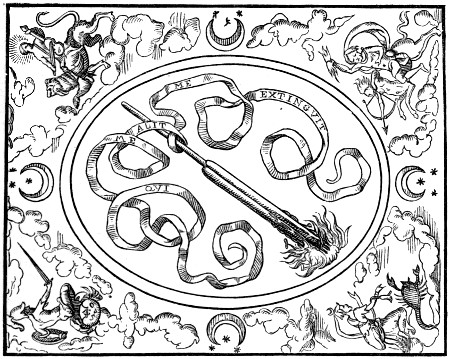
Symeoni, 1561 (diminished copy).
An Italian stanza explains the device,—
“Nutriſce il fuoco à lui la cera intorno,
Et la cera l’eſtingue. ò quanti ſono,
Che dopo vn riceuuto & largo dono,
Dal donator riceuon danno & ſcorno.”
“Qui me alit,
me extinguit.”
The sense of which we now endeavour to give,—
“The wax here within nourishes the flames
And the wax stifles them; how many names
Who after a large gift and kindness shown,
Get from the giver harm and scorn alone.”
“Who nourishes me,
extinguishes me.”
Symeoni (from edition Lyons, 1574, p. 200) adds this little
piece of history:—
“In the battle of the Swiss, routed near Milan by King
Francis, M. de Saint Valier, the old man, father of Madame the
Duchess de Valentinois,[97] and captain of a hundred gentlemen
of the king’s house, bore a standard, whereon was painted a
lighted torch with the head downward, on which flowed so much
wax as would extinguish it, with this motto ‘Qvi me alit, me
extingvit,’ imitating the emblem of the king his master; that
is, ‘Nvtrisco et extingvo.’ It is the nature of the wax, which
is the cause of the torch burning when held upright, that with
the head downward it should be extinguished. Thus he wished
to signify, that as the beauty of a lady whom he loved nourished
all his thoughts, so she put him in peril of his life. See still
this standard in the church of the Celestins at Lyons.”[98]
Paradin, who confessedly copies from Symeoni, agrees very
nearly with this account, but gives the name of the Duchess
“Diane de Poitiers,” and omits mentioning “the emblem of the
king.”
Qui me alit, me extinguit.
As stated in the fac-simile Reprint of Whitney’s Emblemes,
p. 302, Douce in his Illustrations of Shakespeare, pp. 302, 393,
advances the opinion that the translation of Paradin into
English, 1591, by P. S., was the source of Shakespeare’s torch-emblem;
“but it is very note-worthy that the torch in the
English translation is not a torch ‘that’s turned upside down,’
but one held uninverted, with the flame naturally ascending.
This contrariety to Shakespeare’s description seems fatal therefore
to the translator’s claim.” P. S., however, renders the
motto, “He that nourisheth me, killeth me;” and so may put
in a claim to the suggestion
of the line,—
“Which can as well inflame as it can kill.”
Let us next take
Whitney’s stanza of six
lines to the same motto
and the same device,
p. 183; premising that
the very same wood-block
appears to have
been used for the Paradin
in 1562, and for
the Whitney in 1586.
“Even as the waxe dothe feede, and quenche the flame,
So, loue giues life; and loue, dispaire doth giue:
The godlie loue, doth louers croune with fame:
The wicked loue, in shame dothe make them liue.
Then leaue to loue, or loue as reason will,
For, louers lewde doe vainlie languishe still.”
Now, comparing together Symeoni, Paradin, Whitney, and
Shakespeare, as explanatory of the fourth knight’s emblem, we
can scarcely fail to perceive in the Pericles a closer resemblance,
both of thought and expression, to Whitney than to the other
two. Whitney wrote,—
“So, loue giues life; and loue, dispaire doth giue,”
which the Pericles thus amplifies:
“Which shows, that beauty hath this power and will,
Which can as well inflame as it can kill.”
We conclude, therefore, from this instance, that Whitney’s
Choice of Emblemes was known to the author of the Pericles, and
that in this instance he has simply carried out the idea which
was there suggested to him.
A slight allusion to this same device of the burning torch is
made in 3 Henry VI. (act iii. sc. 2, l. 51, vol. v. p. 281), when
Clarence remarks,—
“As red as fire! nay, then her wax must melt;”
but a very distinct one in Hamlet’s words (act iii. sc. 4, l. 82,
vol. viii. p. 112),—
“O shame! where is thy blush? Rebellious hell,
If thou canst mutine in a matron’s bones,
To flaming youth let virtue be as wax
And melt in her own fire; proclaim no shame
When the compulsive ardour gives the charge,
Since frost itself as actively doth burn,
And reason panders will.”
The “Amorvm Emblemata,”—Emblemes of Loue,—with
verses in Latin, English, and Italian: 4to, Antverpiæ, M.DC.IIX.,
gives the same variation in the reading of the motto as Shakespeare
does, namely, “Quod” for “Qui;” and as Daniell had
done in The Worthy Tract of Paulus Jouius, in 1585, by substituting
“Quod me alit” for “Qui me alit.”[99] The latter is the
reading in Paulus Jovius himself,—and is also found in some of
the early editions of this play. (See Cambridge Shakespeare,
vol. ix. p. 343.) The Amorum Emblemata, by Otho Vænius,
named above, and dated 1608—one year before “Pericles,
Prince of Tyre,” was first published, in quarto—has the Latin
motto, “Qvod nvtrit, extingvit,” Englished and Italianised
as follows:
“Loue killed by his owne nouriture.”
“The torche is by the wax maintayned whyle it burnes,
But turned vpsyde-down it straight goes out & dyes,
Right so by Cupids heat the louer lyues lykewyse,
But thereby is hee kild, when it contrarie turnes.”
“Quel che nutre, estingue.”
“Nutre la cera il foco, e ne lo priua
Quando è riuolto in giù: d’Amor l’ardore
Nutre e sfare l’Amante in vn calore,
Contrario effetto vn sol suggetto auiua.”
At a much earlier date, 1540, Corrozet’s Hecatomgraphie
gives the inverted torch as a device, with the motto, “Mauluaise
nourriture,”—
“Quelcun en prenant ses esbatz
M’ainsi mise contrebas
La cire le feu nourrissant
L’estainct & le faict perissant.”
DEVISES
Sic spectanda fides.
But the “device” and “the word” of the fifth knight,—
“An hand environed with clouds,
Holding out gold that’s by the touchstone tried;
The motto thus, Sic spectanda fides,”
(Act ii. sc. 2, lines 36–38,)
“So is fidelity to be proved,”—occur
most exactly in Paradin’s
“Devises Heroiques,”
edition 1562, leaf 100, reverse;
they are here figured.
Paradin often presents an
account of the origin and
appropriation of his emblems,
but, in this instance, he offers only an application. “If, in
order to prove fine gold, or other metals, we bring them to the
touch, without trusting to their glitter or their sound;—so, to
recognise good people and persons of virtue, it is needful to
observe the splendour of their deeds, without dwelling upon their
mere talk.”[100]
The narrative which Paradin neglects to give may be supplied
from other sources. This Emblem or Symbol is, in fact,
that which was appropriated to Francis I. and Francis II., kings
of France from 1515 to 1560, and also to one of the Henries—probably
Henry IV. The inscription on the coin, according to
Paradin and Whitney’s woodcut, is “Franciscvs Dei Gratia
Fran. Rex;” this is for Francis I.; but in the Hierographia
Regvm Francorvm[101] (vol. i. pp. 87 and 88), the emblem is
inscribed, “Franciscus II. Valesius Rex Francorum XXV.
Christianissimus.” A device similar to Paradin’s then follows,
and the comment, Coronatum aureum nummum, ad Lydium
lapidem dextra hæc explicat & sic, id est, duris in rebus fidem
explorandam docet,—“This right hand extends to the Lydian
stone a coin of gold which is wreathed around, and so teaches that
fidelity in times of difficulty is put to the proof.” The coin applied
to the touchstone bears the inscription, “Franciscvs II. Francorv.
Rex.” An original drawing,[102] by Crispin de Passe, in the
possession of Sir William Stirling Maxwell, Bart., of Keir,
presents the inscription in another form, “Henricvs, D. G.
Francorv. Rex.” The first work of Crispin de Passe is dated
1589, and Henry IV. was recognised king of France in 1593.
His portrait, and that of his queen, Mary of Medicis, were
painted by De Passe; and so the Henry on the coin in the
drawing above alluded to was Henry of Navarre.
The whole number of original drawings at Keir, by Crispin
de Passe, is thirty-five, of the size of the following plate,—No 27
of the series.
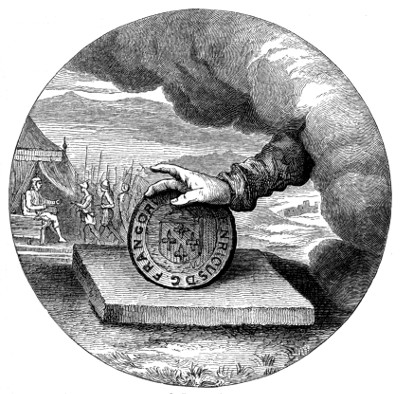
Crispin de Passe, about 1595.[103]
The mottoes in Emblemata Selectiora are,—
“Pecunia sanguis et anima mortalium.
Quidquid habet mundus, regina Pecunia vincit,
Fulmineoque ictu fortius una ferit.”
“’t Geld vermag alles.
’t Geld houd den krygsknecht in zyn plichten,
Kan meer dan’t dondertuig uit richten.”
“Money the blood and life of men.
Whatever the world possesses, money rules as queen,
And more strongly than by lightning’s force smites together.”
“Money can do everything.
To his duty the warrior, ’tis money can hold,—
Than the thunderbolt greater the influence of gold.”
Very singular is the correspondence of the last two mottoes
to a scene in Timon of Athens (act iv. sc. 3, lines 25, 377, vol. vii.
pp. 269, 283). Timon digging in the wood finds gold, and asks,—
“What is here?
Gold! yellow, glittering, precious gold!”
and afterwards, when looking on the gold, he thus addresses it,—
“O thou sweet king-killer, and dear divorce
’Twixt natural son and sire! thou bright defiler
Of Hymen’s purest bed! thou valiant Mars!
Thou ever young, fresh, loved, and delicate wooer,
Whose blush doth thaw the consecrated snow
That lies on Dian’s lap! thou visible god,
That solder’st close impossibilities,
And makest them kiss! that speak’st with every tongue,
To every purpose! O thou touch of hearts!
Think, thy slave man rebels; and by thy virtue
Set them into confounding odds, that beasts
May have the world in empire!”
The Emblem which Shakespeare attributes to the fifth knight
is fully described by Whitney (p. 139), with the same device and
the same motto, Sic spectanda fides,[104]—
“The touche doth trye, the fine, and purest goulde:
And not the sound, or els the goodly showe.
So, if mennes wayes, and vertues, wee behoulde,
The worthy men, wee by their workes, shall knowe.
But gallant lookes, and outward showes beguile,
And ofte are clokes to cogitacions vile.”
If, in the use of this device, and in their observations upon it,
Paradin, either in the original or in the English version, and
Whitney be compared with the lines on the subject in Pericles,
it will be seen “that Shakespeare did not derive his fifth knight’s
device either from the French emblem or from its English
translator, but from the English Whitney which had been
lately published. Indeed, if Pericles were written, as Knight
conjectures, in Shakespeare’s early manhood, previous to the
year 1591, it could not be the English translation of Paradin
which furnished him with the three mottoes and devices of the
Triumph Scene.”
To the motto, “Amor certvs in re incerta cernitvr,”—Certain
love is seen in an uncertain matter,—Otho Vænius, in
his Amorum Emblemata, 4to, Antwerp, 1608, represents two
Cupids at work, one trying gold in the furnace, the other on the
touchstone. His stanzas, published with an English translation,
as if intended for circulation in England, may, as we have conjectured,
have been seen by Shakespeare before 1609, when the
Pericles was revived. They are to the above motto,—
“Nummi vt adulterium exploras priùs indice, quam sit
Illo opus: haud aliter ritè probandus Amor.
Scilicet vt fuluium spectatur in ignibus aurum:
Tempore sic duro est inspicienda fides.”
As gold is by the fyre, and by the fournace tryde,
And thereby rightly known if it be bad or good,
Hard fortune and distresse do make it vnderstood,
Where true loue doth remayn, and fayned loue resyde.”
Sû la pietra, e nel foco l’or si proua,
E nel bisogno, come l’or nel foco,
Si dee mostrar leale in ogni loco
l’Amante; e alhor si vee d’Amor la proua.”
The same metaphor of attesting characters, as gold is proved
by the touchstone or by the furnace, is of frequent occurrence in
Shakespeare’s undoubted plays; and sometimes the turn of the
thought is so like Whitney’s as to give good warrant for the
supposition, either of a common original, or that Shakespeare had
read the Emblems of our Cheshire poet and made use of them.
King Richard III. says to Buckingham (act iv. sc. 2, l. 8,
vol. v. p. 580),—
“O Buckingham, now do I play the touch,
To try if thou be current gold indeed.”
And in Timon of Athens (act iii. sc. 3, l. 1, vol. vii. p. 245), when
Sempronius observes to a servant of Timon’s,—
“Must he needs trouble me in’t,—hum!—’bove all others?
He might have tried Lord Lucius and Lucullus;
And now Ventidius is wealthy too,
Whom he redeem’d from prison: all these
Owe their estates unto him.”
The servant immediately replies,—
“My lord,
They have all been touch’d and found base metal, for
They have all denied him.”
Isabella, too, in Measure for Measure (act ii. sc. 2, l. 149,
vol. i. p. 324), most movingly declares her purpose to bribe
Angelo, the lord-deputy,—
“Not with fond shekels of the tested gold,
Or stones whose rates are either rich or poor
As fancy values them; but with true prayers
That shall be up at heaven and enter there
Ere sun-rise, prayers from preserved souls,
From fasting maids whose minds are dedicate
To nothing temporal.”
In the dialogue from King John (act iii. sc. 1, l. 96, vol. iv.
p. 37) between Philip of France and Constance, the same testing
is alluded to. King Philip says,—
“By heaven, lady, you shall have no cause
To curse the fair proceedings of this day:
Have I not pawn’d to you my majesty?”
But Constance answers with great severity,—
“You have beguiled me with a counterfeit
Resembling majesty, which being touch’d and tried,
Proves valueless: you are forsworn, forsworn.”
One instance more shall close the subject;—it is from the
Coriolanus (act iv. sc. 1, l. 44, vol. vi. p. 369), and contains a very
fine allusion to the testing of true metal; the noble traitor is
addressing his mother Volumnia, his wife Virgilia, and others of
his kindred,—
“Fare ye well:
Thou hast years upon thee; and thou art too full
Of the wars’ surfeits, to go rove with one
That’s yet unbruised: bring me but out at gate.
Come, my sweet wife, my dearest mother, and
My friends of noble touch, when I am forth,
Bid me farewell, and smile.”
So beautifully and so variously does the great dramatist carry
out that one thought of making trial of men’s hearts and characters
to learn the metal of which they are made.
To finish our notices and illustrations of the Triumph Scene in
Pericles, there remain to be considered the device and the motto
of the sixth—the stranger knight—who “with such a graceful
courtesy delivered,”—
“A wither’d branch, that’s only green at top,
[105]The motto, In hac spe vivo;”
(Act ii. sc. 2, lines 43, 44;)
and on which the remark is made by Simonides,—
“A pretty moral:
From the dejected state wherein he is,
He hopes by you his fortune yet may flourish.”
With these I have found nothing identical in any of the
various books of Emblems which I have examined; indeed, I
cannot say that I have met with anything similar. The sixth
knight’s emblem is very simple, natural, and appropriate; and I
am most of all disposed to regard it as invented by Shakespeare
himself to complete a scene, the greater part of which had been
accommodated from other writers.
“Spes ſimul & Nemeſis noſtris altaribus adſunt,
Scilicet vt ſperes non niſi quod liceat.”
The unlawful thing not to be hoped for.
“Here Nemesis, and Hope: our deedes doe rightlie trie,
Which warnes vs, not to hope for that, which justice doth denie.”
Yet the sixth device and motto need not remain without illustration.
Hope is a theme which Emblematists could not possibly
omit. Alciatus gives a series of four Emblems on this virtue,—Emblems
43, 44, 45, and 46; Sambucus, three, with the mottoes
“Spes certa,” “In spe fortitudo,”
and “Spes aulica;”
and Whitney, three from
Alciatus (pp. 53, 137, and
139); but none of these can
be accepted as a proper
illustration of the In hac
spe vivo. Their inapplicability
may be judged of
from Alciat’s 46th Emblem,
very closely followed by
Whitney (p. 139).
In the spirit, however,
if not in the words of the
sixth knight’s device, the
Emblem writers have fashioned
their thoughts.
From Paradin’s “Devises
Heroiqves,” so often
quoted, we select two devices
(fol. 30 and 152) illustrative of our subject. The one, an
arrow issuing from a tomb, on which is the sign of the cross,
and having verdant shoots twined around it, was the emblem
which Madame Diana of Poitiers adopted to express her
strong hope of a resurrection from the dead;[106] and the same
hope is also shadowed forth by ears of corn growing out of
a collection of dry bones, and ripening and shedding their seed.
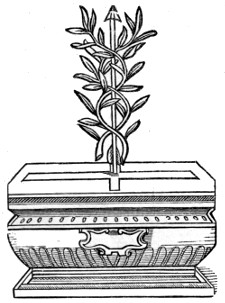
The first, Sola viuit in
illo,—“Alone on that,” i.e.,
on the cross, “she lives,”—we
now offer with Paradin’s
explanation; “L’esperance
que Madame Diane de Poitiers
Illustre Duchesse de
Valentinois, a de la resurrection,
& que son noble
esprit, contemplant les cieus
en cette view, paruiendra en
l’autre après la mort: est
possible signifié par sa Deuise,
qui est d’vn Sercueil,
ou tombeau, duquel sort vn
trait, acompagné de certains
syons verdoyans.” i.e.,—“The hope which Madame Diana of
Poitiers, the illustrious Duchess de Valentinois, has of the resurrection,
and which her noble spirit, contemplating the heavens
in this life, will arrive at in the other, after death: it is really
signified by her Device, which is a Sepulchre or tomb, from
which issues an arrow, accompanied by certain verdant shoots.”
The motto of the second is more directly to the purpose, Spes
altera vitæ,—“Another hope of life,” or “The hope of another
life,”—and its application is thus explained by Paradin (leaf 151
reverso),—“Les grains des Bleds, & autres herbages, semées &
mortifiées en terre, se reuerdoyent, & prennent nouuel accroissement:
aussi les corps humains tombãs par Mort, seront relevés en gloire,
par generale resurrection.”—i.e., “The seeds of wheat, and other
herbs, sown and dying in the ground, become green again, and
take new growth: so human bodies cast down by Death will be
raised again in glory, by the general resurrection.”
We omit the woodcut which Paradin gives, and substitute for
it the 100th Emblem, part i. p. 102, from Joachim Camerarius,
edition, 1595, which bears the very same motto and device.
“Securus moritur, qui scit se morte renasci:
Non ea mors dici, sed noua vita potest.”
“Fearless doth that man die, who knows
From death he again shall be born;
We never can name it as death,—
’Tis new life on eternity’s morn.”
A sentence or two from the comment may serve for explanation;
“The seeds and grains of fruits and herbs are thrown
upon the earth, and as it were entrusted to it; after a certain
time they spring up again and produce manifold. So also our
bodies, although already dead, and destined to burial in the
earth, yet at the last day shall arise, the good to life, the wicked
to judgment.”... “Elsewhere it is said, One Hope survives,
doubtless beyond the grave.”[107]
“Mort vivifiante,” of Messin, In Morte Vita, of Boissard,
edition 1588, pp. 38, 39, also receive their emblematical representation,
from wheat growing among the signs of death.
“En vain nous attendons la moisson, si le grain
Ne se pourrit au creux de la terre beschée.
Sans la corruption, la nature empeschée
Retient toute semence au ventre soubterrain.”
At present we must be content to say that the source of the
motto and device of the sixth knight has not been discovered.
It remains for us to conjecture, what is very far from being an
improbability, that Shakespeare had read Spenser’s Shepherd’s
Calendar, published in 1579, and from the line, on page 364 of
Moxon’s edition, for January (l. 54),—
“Ah, God! that love should breed both ioy and paine!”—
and from the Emblem, as Spenser names it, Anchora speme,—“Hope
is my anchor,”—did invent for himself the sixth knight’s
device, and its motto, In hac spe vivo,—“In this hope I live.”
The step from applying so suitably the Emblems of other
writers to the construction of new ones would not be great; and
from what he has actually done in the invention of Emblems in
the Merchant of Venice he would experience very little trouble
in contriving any Emblem that he needed for the completion of
his dramatic plans.
The Casket Scene and the Triumph Scene then justify our
conclusion that the correspondencies between Shakespeare and
the Emblem writers which preceded him are very direct and
complete. It is to be accepted as a fact that he was acquainted
with their works, and profited so much from them, as to be able,
whenever the occasion demanded, to invent and most fittingly
illustrate devices of his own. The spirit of Alciat was upon
him, and in the power of that spirit he pictured forth the ideas
to which his fancy had given birth.
CHAPTER VI. CLASSIFICATION OF THE CORRESPONDENCIES AND PARALLELISMS OF SHAKESPEARE WITH EMBLEM WRITERS. — Section I. HISTORICAL EMBLEMS. — Section II. HERALDIC EMBLEMS, OR EMBLEMS APPLIED TO HERALDRY. — Section III. EMBLEMS FOR MYTHOLOGICAL CHARACTERS. — Section IV. EMBLEMS ILLUSTRATIVE OF FABLES. — Section V. EMBLEMS IN CONNEXION WITH PROVERBS. — Section VI. EMBLEMS FROM FACTS IN NATURE, AND FROM THE PROPERTIES OF ANIMALS. — Section VII. EMBLEMS FOR POETIC IDEAS. — Section VIII. MORAL AND ÆSTHETIC EMBLEMS.
HAVING established the facts that Shakespeare
invented and described Emblems of his own,
and that he plainly and palpably adopted
several which had been designed by earlier
authors, we may now, with more consistency, enter on the
further labour of endeavouring to trace to their original
sources the various hints and allusions, be they more or less
express, which his sonnets and dramas contain in reference
to Emblem literature. And we may bear in mind that we
are not now proceeding on mere conjecture; we have dug
into the virgin soil and have found gold that can bear
every test, and may reasonably expect, as we continue our
industry, to find a nugget here and a nugget there to reward
our toil.
But the correspondencies and parallelisms existing in
Shakespeare between himself and the earlier Emblematists
are so numerous, that it becomes requisite to adopt some
system of arrangement, or of classification, lest a mere chaos
of confusion and not the symmetry of order should reign
over our enterprise. And as “all Emblemes for the most
part,” says Whitney to his readers, “maie be reduced into
these three kindes, which is Historicall, Naturall, & Morall,”
we shall make that division of his our foundation, and considering
the various instances of imitation or of adaptation
to be met with in Shakespeare, shall arrange them under the
eight heads of—1, Historical Emblems; 2, Heraldic Emblems;
3, Emblems of Mythological Characters; 4, Emblems illustrative
of Fables; 5, Emblems in connexion with Proverbs;
6, Emblems from Facts in Nature, and from the Properties of
Animals; 7, Emblems for Poetic Ideas; and 8, Moral and
Æsthetic, and Miscellaneous Emblems.
AS soon as learning revived in Europe, the great
models of ancient times were again set up on
their pedestals for admiration and for guidance.
Nearly all the Elizabethan authors,
certainly those of highest fame, very frequently introduce, or
expatiate upon, the worthies of Greece and Rome,—both
those which are named in the epic poems of Homer and
Virgil, and those which are within the limits of authentic
history. It seemed enough to awaken interest, “to point
a moral, or adorn a tale,” that there existed a record
of old.
Shakespeare, though cultivating, it may be, little direct
acquaintance with the classical writers, followed the general
practice. He has built up some of the finest of his Tragedies,
if not with chorus, and semi-chorus, strophe, anti-strophe,
and epode, like the Athenian models, yet with a
wonderfully exact appreciation of the characters of antiquity,
and with a delineating power surprisingly true to history and
to the leading events and circumstances in the lives of the
personages whom he introduces. From possessing full and
adequate scholarship, Giovio, Domenichi, Claude Mignault,
Whitney, and others of the Emblem schools, went immediately
to the original sources of information. Shakespeare,
we may admit, could do this only in a limited degree, and
generally availed himself of assistance from the learned translators
of ancient authors. Most marvellously does he transcend
them in the creative attributes of high genius: they supplied
the rough marble, blocks of Parian perchance, and a few
tools more or less suited to the work; but it was himself,
his soul and intellect and good right arm, which have produced
almost living and moving forms,—
“See, my lord,
Would you not deem it breath’d? and that those veins
Did verily bear blood?”
Winter’s Tale, act v. sc. 3, l. 63.
For Medeia, one of the heroines of Euripides, and for
Æneas and Anchises in their escape from Troy, Alciat
(Emblem 54), and his close imitator Whitney (p. 33), give each
an emblem.
To the first the motto is,—
“Ei qui semel sua prodegerit, aliena credi non oportere,”—
“To that man who has once squandered his own, another person’s ought not to be entrusted,”—
similar, as a counterpart, to the Saviour’s words (Luke xvi. 12),
“If ye have not been faithful in that which is another man’s,
who shall give you that which is your own.”
The device is,—
with the following Latin elegiacs,—
Colchidos in gremio nidum quid congeris? eheu
Neſcia cur pullos tam malè credis auis?
Dira parens Medea ſuos ſæuiſſima natos
Perdidit; & ſperas parcat vt illa tuis?
Which Whitney (p. 33) considerably amplifies,—
“Medea loe with infante in her arme,
Whoe kil’de her babes, shee shoulde haue loued beste:
The swallowe yet, whoe did suspect no harme,
Hir Image likes, and hatch’d vppon her breste:
[108]And lifte her younge, vnto this tirauntes guide,
Whoe, peecemeale did her proper fruicte deuide.
Oh foolishe birde, think’ste thow, shee will haue care,
Vppon thy yonge? Whoe hathe her owne destroy’de,
And maie it bee, that shee thie birdes should spare?
Whoe slue her owne, in whome shee shoulde haue ioy’d.
Thow arte deceau’de, and arte a warninge good,
To put no truste, in them that hate theire blood.”
And to the same purport, from Alciat’s 193rd Emblem, are
Whitney’s lines (p. 29),—
“Medea nowe, and Progne, blusshe for shame:
By whome, are ment yow dames of cruell kinde
Whose infantes yonge, vnto your endlesse blame,
For mothers deare, do tyrauntes of yow finde:
Oh serpentes seede, each birde, and sauage brute,
Will those condempne, that tender not theire frute.”
The stanza of his 194th Emblem is adapted by Alciat, and
by Whitney after him (p. 163), to the motto,—
Pietas filiorum in parentes,—
“The reverence of sons towards their parents.”
Per medios hoſteis patriæ cùm ferret ab igne
Aeneas humeris dulce parentis onus:
Parcite, dicebat: vobis ſene adorea rapto
Nulla erit, erepto ſed patre ſumma mihi.
“Aeneas beares his father, out of Troye,
When that the Greekes, the same did spoile, and sacke:
His father might of suche a sonne haue ioye,
Who throughe his foes, did beare him on his backe:
No fier, nor sworde, his valiaunt harte coulde feare,
To flee awaye, without his father deare.
Which showes, that sonnes must carefull bee, and kinde,
For to releeue their parentes in distresse:
And duringe life, that dutie shoulde them binde,
To reuerence them, that God their daies maie blesse:
And reprehendes tenne thowsande to their shame,
Who ofte dispise the stocke whereof they came.”
The two emblems of Medeia and of Æneas and Anchises,
Shakespeare, in 2 Henry VI. (act. v. sc. 2, l. 45, vol. v. p. 218),
brings into close juxta-position, and unites by a single description;
it is, when young Clifford comes upon the dead body of
his valiant father, stretched on the field of St. Albans, and bears
it lovingly on his shoulders. With strong filial affection he
addresses the mangled corpse,—
“Wast thou ordain’d, dear father,
To lose thy youth in peace, and to atchieve
The silver livery of advised age;
And, in thy reverence, and thy chair-days, thus
To die in ruffian battle?”
On the instant the purpose of vengeance enters his mind, and
fiercely he declares,—
“Even at this sight,
My heart is turn’d to stone; and, while ’tis mine,
It shall be stony. York not our old men spares;
No more will I their babes: tears virginal
Shall be to me even as the dew to fire;
And beauty, that the tyrant oft reclaims,
Shall to my flaming wrath be oil and flax.
Henceforth I will not have to do with pity:
Meet I an infant of the house of York,
Into as many gobbets will I cut it,
As wild Medea young Absyrtus did:
In cruelty will I seek out my fame.”
Then suddenly there comes a gush of feeling, and with most
exquisite tenderness he adds,—
“Come, thou new ruin of old Clifford’s house:
As did Æneas old Anchises bear,
So bear I thee upon my manly shoulders:
But then Æneas bare a living load,
Nothing so heavy as these woes of mine.”
The same allusion, in Julius Cæsar (act. i. sc. 2, l. 107, vol.
vii. p. 326), is also made by Cassius, when he compares his own
natural powers with those of Cæsar, and describes their stout
contest in stemming “the troubled Tyber,”—
“The torrent roar’d, and we did buffet it
With lusty sinews, throwing it aside
And stemming it with hearts of controversy;
But ere he could arrive the point proposed,
Cæsar cried, ‘Help me, Cassius, or I sink!’
I, as Æneas our great ancestor
Did from the flames of Troy upon his shoulder
The old Anchises bear, so from the waves of Tiber
Did I the tired Cæsar: and this man
Is now become a god, and Cassius is
A wretched creature, and must bend his body
If Cæsar carelessly but nod on him.”
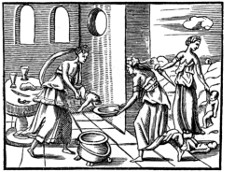
Progne, or Procne, Medeia’s counterpart for cruelty, who
placed the flesh of her own son Itys before his father Tereus,
is represented in Aneau’s
“Picta Poesis,” ed. 1552,
p. 73, with a Latin stanza
of ten lines, and the motto,
“Impotentis Vindictæ
Foemina,”—The Woman of
furious Vengeance. In the
Titus Andronicus (act. v. sc.
2, l. 192, vol. vi. p. 522) the
fearful tale of Progne enters
into the plot, and a similar revenge is repeated. The two sons
of the empress, Chiron and Demetrius, who had committed
atrocious crimes against Lavinia the daughter of Titus, are
bound, and preparations are made to inflict such punishment
as the world’s history had but once before heard of. Titus
declares he will bid their empress mother, “like to the earth
swallow her own increase.”
“This is the feast that I have bid her to,
And this the banquet she shall surfeit on;
For worse than Philomel you used my daughter,
And worse than Progne I will be revenged.”
’Tis a fearful scene, and the father calls,—
“And now prepare your throats. Lavinia, come,
[He cuts their throats.
Receive the blood: and when that they are dead,
Let me go grind their bones to powder small,
And with this hateful liquor temper it;
And in that paste let their vile heads be baked.
Come, come, be every one officious
To make this banquet; which I wish may prove
More stern and bloody than the Centaurs’ feast.”
A character from Virgil’s Æneid (bk. ii. lines 79–80; 195–8;
257–9),[109] frequently introduced both by Whitney and Shakespeare,
is that of the traitor Sinon, who, with his false tears and
lying words, obtained for the wooden horse and its armed men
admission through the walls and within the city of Troy. Asia,
he averred, would thus secure supremacy over Greece, and
Troy find a perfect deliverance. It is from the “Picta Poesis”
of Anulus (p. 18), that Whitney (p. 141) on one occasion
adopts the Emblem of treachery, the untrustworthy shield of
Brasidas,—
Perfidvs familiaris,—
“The faithless friend.”
Per medium Brasidas clypeum traiectus ab hoſte:
Quóque foret læſus ciue rogante modum.
Cui fidebam (inquit) penetrabilis vmbo fefellit.
Sic cvi ſæpe fides credita: proditor eſt.
Thus rendered in the Choice of Emblemes,—
“While throughe his foes, did boulde Brasidas thruste,
And thought with force, their courage to confounde:
Throughe targat faire, wherein he put his truste,
His manlie corpes receau’d a mortall wounde.
Beinge ask’d the cause, before he yeelded ghoste:
Quoth hee, my shielde, wherein I trusted moste.
Euen so it happes, wee ofte our bayne doe brue,
When ere wee trie, wee trust the gallante showe:
When frendes suppoas’d, do prooue them selues vntrue.
When Sinon false, in Damons shape dothe goe:
Then gulfes of griefe, doe swallowe vp our mirthe,
And thoughtes ofte times, doe shrow’d vs in the earthe.
But, if thou doe inioye a faithfull frende,
See that with care, thou keepe him as thy life:
And if perhappes he doe, that may offende,
Yet waye thy frende: and shunne the cause of strife,
Remembringe still, there is no greater crosse;
Then of a frende, for, to sustaine the losse.
Yet, if this knotte of frendship be to knitte,
And Scipio yet, his Lelivs can not finde?
Content thy selfe, till some occasion fitte,
Allot thee one, according to thy minde:
Then trie, and truste: so maiste thou liue in rest,
But chieflie see, thou truste thy selfe the beste?”
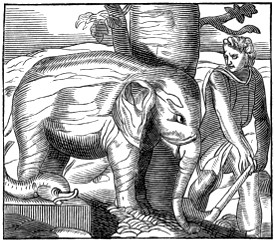
And again, adopting
the Emblem of John
Sambucus, edition Antwerp,
1564, p. 184,[110] and
the motto,
Nusquam tuta fides,—
“Trustfulness is never sure,”
with the exemplification
of the Elephant
and the undermined tree,
Whitney writes (p. 150),—
“No state so sure, no seate within this life
But that maie fall, thoughe longe the same haue stoode:
Here fauninge foes, here fained frendes are rife.
With pickthankes, blabbes, and subtill Sinons broode,
Who when wee truste, they worke our ouerthrowe,
And vndermine the grounde, wheron wee goe.
The Olephant so huge, and stronge to see,
No perill fear’d: but thought a sleepe to gaine
But foes before had vndermin’de the tree,
And downe he falles, and so by them was slaine:
First trye, then truste: like goulde, the copper showes:
And Nero ofte, in Nvmas clothinge goes.”
Freitag’s “Mythologia ethica,” pp. 176, 177, sets forth
the well-known fable of the Countryman and the Viper, which
after receiving warmth and nourishment attempted to wound
its benefactor. The motto is,—
Maleficio beneficium compensatum,—
“A good deed recompensed by maliciousness.”
“Qui reddit mala pro bonis, non recedet malum de domo eius.”—Prouerb, 17, 13.
“Whoso rewardeth evil for good, evil shall not depart from his house.”
Nicolas Reusner, also, edition Francfort, 1581, bk. ii. p. 81,
has an Emblem on this subject, and narrates the whole fable,—
Merces anguina,—“Reward from a serpent.”
“Frigore confectum quem rusticus inuenit anguem
Imprudens fotum recreat ecce sinu.
Immemor hic miserum lethale sauciat ictu:
Reddidit hìc vitam; reddidit ille necem.
Si benefacta locis malè, simplex mente, bonusq.:
Non benefacta quidem, sed malefacta puta.
Ingratis seruire nefas, gratisq. nocere:
Quod benè fit gratis, hoc solet esse lucro.”[111]
In several instances in his historical plays, Shakespeare very
expressly refers to this fable. On hearing that some of his
nobles had made peace with Bolingbroke, in Richard II. (act. iii.
sc. 2, l. 129, vol. iv. p. 168), the king exclaims,—
“O villains, vipers, damn’d without redemption!
Dogs, easily won to fawn on any man!
Snakes, in my heart blood warm’d that sting my heart!”
In the same drama (act. v. sc. 3, l. 57, vol. iv. p. 210) York urges
Bolingbroke,—
“Forget to pity him, lest thy pity prove,
A serpent that will sting thee to the heart.”
And another, bearing the name of York, in 2 Henry VI. (act.
iii. sc. 1, l. 343, vol. v. p. 162), declares to the nobles,—
“I fear me, you but warm the starved snake,
Who, cherish’d in your breasts, will sting your hearts.”
Also Hermia, Midsummer Night’s Dream (act. ii. sc. 2, l. 145,
vol. ii. p. 225), when awakened from her trance-like sleep, calls
on her beloved,—
“Help me, Lysander, help me! do thy best
To pluck this crawling serpent from my breast.”
Whitney combines Freitag’s and Reusner’s Emblems under
one motto (p. 189), In sinu alere serpentem,—“To nourish a
serpent in the bosom,”—but applies them to the siege of
Antwerp in 1585 in a way which Schiller’s famous history
fully confirms:[112]—“The government of the citizens was
shared among too many hands, and too strongly influenced
by a disorderly populace to allow any one to consider with
calmness, to decide with judgment, or to execute with firmness.”
The typical Sinon is here introduced by Whitney,—
“Thovghe, cittie stronge the cannons shotte dispise,
And deadlie foes, beseege the same in vaine:
Yet, in the walles if pining famine rise,
Or else some impe of Sinon, there remaine.
What can preuaile your bulwarkes? and your towers,
When, all your force, your inwarde foe deuoures.”
In fact, Sinon seems to have been the accepted representative
of treachery in every form; for when Camillus,
at the siege of Faleria, rewarded the Schoolmaster as he
deserved for attempting to give up his scholars into captivity,
the occurence is thus described in the Choice of Emblemes,
p. 113,—
“With that, hee caus’de this Sinon to bee stripte,
And whippes, and roddes, vnto the schollers gaue:
Whome, backe againe, into the toune they whipte.”
Shakespeare is even more frequent in his allusions to this
same Sinon. The Rape of Lucrece, published in 1594, speaks of
him as “the perjured Sinon,” “the false Sinon,” “the subtle
Sinon,” and avers (vol. ix. p. 537, l. 1513),—
“Like a constant and confirmed devil,
He entertain’d a show so seeming just,
And therein so ensconc’d his secret evil,—
That jealousy itself could not mistrust,
False creeping craft and perjury should thrust
Into so bright a day such black-faced storms,
Or blot with hell-born sin such saint-like forms.”
Also in 3 Henry VI. (act. iii. sc. 2, l. 188, vol. v. p. 285), and in
Titus Andronicus (act. v. sc. 3, l. 85, vol. vi. p. 527), we read,—
“I’ll play the orator as well as Nestor,
Deceive more slyly than Ulysses could,
And like a Sinon, take another Troy;”
and,—
“Tell us what Sinon hath bewitch’d our ears,
Or who hath brought the fatal engine in
That gives our Troy, our Rome, the civil wound.”
But in Cymbeline (act. iii. sc. 4, l. 57, vol. ix. p. 226), Æneas is
joined in almost the same condemnation with Sinon. Pisano
expostulates with Imogen,—
“Pis.Good madam, hear me.
Imo. True honest men being heard, like false Æneas,
Were in his time thought false; and Sinon’s weeping
Did scandal many a holy tear, took pity
From most true wretchedness: so thou, Posthumus,
Wilt lay the leaven on all proper men;
Goodly and gallant shall be false and perjured
From thy great fail.”
Doubtless it will be said that such allusions to the characters
in classical history are the common property of the whole
modern race of literary men, and that to make them implies no
actual copying by later writers of those who preceded them in
point of time; still in the examples just given there are such
coincidences of expression, not merely of idea, as justify the
opinion that Shakespeare both availed himself of the usual
sources of information, and had read and taken into his mind
the very colour of thought which Whitney had lately spread
over the same subject.
The great Roman names, Curtius, Cocles, Manlius and
Fabius gave Whitney the opportunity for saying (p. 109),—
“With these, by righte comes Coriolanus in,
Whose cruell minde did make his countrie smarte;
Till mothers teares, and wiues, did pittie winne.”
And these few lines, in fact, are a summary of the plot and chief
incidents of Shakespeare’s play of Coriolanus, so that it is far
from being unlikely that they may have been the germ, the very
seed-bed of that vigorous offset of his genius. Almost the exact
blame which Whitney imputes is also attributed to Coriolanus
by his mother Volumnia (act. v. sc. 3, l. 101, vol. vi. p. 407), who
charges him with,—
“Making the mother, wife and child, to see
The son, the husband and the father, tearing
His country’s bowels out.”
And when wife and mother have conquered his strong hatred
against his native land (act. v. sc. 3, l. 206, vol. vi. p. 411),
Coriolanus observes to them,—
“Ladies, you deserve
To have a temple built you: all the swords
In Italy, and her confederate arms,
Could not have made this peace.”
The subject of Alciat’s 119th Emblem, edition 1581, p. 430,
is the Death of Brutus, with the motto,—
Fortuna virtutem superans,—
“Fortune overcoming valour.”
Cæsareo poſtquàm ſuperatus milite, vidit
Ciuili vndantem ſanguine Pharſaliam;
Jam iam ſtricturus moribunda in pectora ferrum,
Audaci hos Brutus protulit ore ſonos:
Infelix virtus; & ſolis prouida verbis,
Fortunam in rebus cur ſequeris dominam?
On the ideas here suggested Whitney enlarges, p. 70, and
writes,—
“When Brvtvs knewe, Avgvstvs parte preuail’de,
And sawe his frendes, lie bleedinge on the grounde,
Such deadlie griefe, his noble harte assail’de,
That with his sworde, hee did him selfe confounde:
But firste, his frendes perswaded him to flee,
Whoe aunswer’d thus, my flighte with handes shalbee.
And bending then to blade, his bared breste,
Hee did pronounce, theise wordes with courage great:
Oh Prowes vaine, I longe did loue thee beste,
But nowe I see, thou doest on fortune waite.
Wherefore with paine, I nowe doe prouue it true,
That fortunes force, maie valiant hartes subdue.”
So, in the Julius Cæsar (act. v. sc. 5, l. 25, vol. vii. p. 413),
the battle of Philippi being irretrievably lost to the party of the
Republic, and Marcus Cato slain, Brutus, meditating self-destruction,
desires aid from one of his friends that he may
accomplish his purpose,—
“Good Volumnius,
Thou know’st that we two went to school together:
Even for that our love of old, I prithee,
Hold thou my sword-hilts, whilst I run on it.
Vol. That’s not an office for a friend, my lord.”
The alarum continues,—the friends of Brutus again remonstrate,
and Clitus urges him to escape (l. 30),—
“Cli. Fly, fly, my lord; there is no tarrying here.
Bru. Farewell to you; and you; and you, Volumnius.
Strato, thou hast been all this while asleep;
Farewell to thee, too, Strato. Countrymen,
My heart doth joy that yet in all my life
I found no man but he was true to me.
I shall have glory by this losing day,
More than Octavius and Mark Antony
By this vile contest shall attain unto.
So, fare you well at once; for Brutus’ tongue
Hath almost ended his life’s history:
Night hangs upon mine eyes; my bones would rest,
That have but labour’d to attain this hour.”
Once more is the alarum raised,—“Fly, fly, fly.” “Hence, I
will follow thee,” is the hero’s answer; but when friends are gone,
he turns to one of his few attendants, and entreats (l. 44),—
“I prithee, Strato, stay thou by thy lord:
Thou art a fellow of a good respect;
Thy life hath had some smatch of honour in it:
Hold then my sword, and turn away thy face,
While I do run upon it. Wilt thou, Strato?
Stra. Give me your hand first: fare you well, my lord.
Bru. Farewell, good Strato. [Runs on his sword.] Cæsar, now be still:
I kill’d not thee with half so good a will.[Dies.]”
In the presence of the conquerors Strato then declares,—
“The conquerors can but make a fire of him;
For Brutus only overcame himself,
And no man else hath honour by his death.
Lucil. So Brutus should be found. I thank thee, Brutus,
That thou hast proved Lucilius’ saying true.”
And we must mark how finely the dramatist represents the
victors at Philippi testifying to the virtues of their foe (l. 68),—
“Antony. This was the noblest Roman of them all:
All the conspirators, save only he,
Did that they did in envy of great Cæsar;
He only, in a general honest thought
And common good to all, made one of them.
* * * * * *
Octavius.[113] According to his virtue let us use him,
With all respect and rites of burial.
Within my tent his bones to-night shall lie,
Most like a soldier, order’d honourably.”
The mode of the catastrophe differs slightly in the two
writers; and undoubtedly, in this as in most other instances,
there is a very wide difference between the life and spiritedness
of the dramatist, and the comparative lameness of the Emblem
writers,—the former instinct with the fire of genius, the latter
seldom rising above an earth-bound mediocrity; yet the
references or allusions by the later poet to the earlier can
scarcely be questioned; they are too decided to be the results
of pure accident.
In one instance Whitney (p. 110, l. 32) hits off the characteristics
of Brutus and Cassius in a single line,—
“With Brutus boulde, and Cassius, pale and wan.”
It is remarkable how Shakespeare amplifies these two epithets,
“pale and wan” into a full description of the personal manner
and appearance of Cassius. Cæsar and his train have re-entered
upon the scene, and (act. i. sc. 2, l. 192, vol. vii. p. 329) the
dictator haughtily and satirically gives order,—
“Cæs. Let me have men about me that are fat,
Sleek-headed men, and such as sleep o’ nights:
Yond Cassius has a lean and hungry look;
He thinks too much: such men are dangerous.
Ant. Fear him not, Cæsar; he’s not dangerous;
He is a noble Roman, and well given.
Cæs. Would he were fatter! but I fear him not:
Yet if my name were liable to fear,
I do not know the man I should avoid
So soon as that spare Cassius. He reads much;
He is a great observer, and he looks
Quite through the deeds of men: he loves no plays,
As thou dost, Antony; he hears no music;
Seldom he smiles, and smiles in such a sort
As if he mock’d himself and scorn’d his spirit
That could be moved to smile at any thing.
Such men as he be never at heart’s ease
Whiles they behold a greater than themselves,
And therefore are they very dangerous.”
“Pale and wan,”—two most fruitful words, certainly, to bring
forth so graphic a description of men that are “very dangerous.”
Of names historic the Emblem writers give a great many
examples, but only a few, within the prescribed boundaries of
our subject, that are at the same time historic and Shakespearean.
Vel post mortem formidolosi,—“Even after death to be
dreaded,”—is the sentiment with which Alciatus (Emblem 170),
and Whitney after him (p. 194), associate the noisy drum and
the shrill-sounding horn; and thus the Emblem-classic illustrates
his device,—
“Cætera mutescent, coriumq. silebit ouillum,
Si confecta lupi tympana pelle sonent.
Hanc membrana ouium sic exhorrescit, vt hostem
Exanimis quamuis non ferat exanimem.
Sic cute detracta Ziscas, in tympana versus,
Boëmos potuit vincere Pontifices.”
Literally rendered the Latin elegiacs declare,—
“Other things will grow dumb, and the sheep-skin be silent,
If drums made from the hide of a wolf should sound.
Of this so sore afraid is the membrane of sheep,
That though dead it could not bear its dead foe.
So Zisca’s skin torn off, he, changed to a drum,
The Bohemian chief priests was able to conquer.”
These curious ideas Whitney adopts, and most lovingly enlarges,—
“A Secret cause, that none can comprehende,
In natures workes is often to bee seene;
As, deathe can not the ancient discorde ende,
That raigneth still, the wolfe and sheepe betweene;
The like, beside in many thinges are knowne,
The cause reueal’d, to none, but God alone.
For, as the wolfe, the sillye sheepe did feare,
And make him still to tremble, at his barke:
So beinge dead, which is most straunge to heare,
This feare remaynes, as learned men did marke;
For with their skinnes, if that two drommes bee bounde,
That, clad with sheepe, doth iarre; and hathe no sounde.
And, if that stringes bee of their intrailes wroughte,
And ioyned both, to make a siluer sounde:
No cunninge care can tune them as they oughte,
But one is harde, the other still is droun’de:
Or discordes foule, the harmonie doe marre;
And nothinge can appease this inward warre.
So, Zisca thoughte when deathe did shorte his daies,
As with his voice, hee erste did daunte his foes;
That after deathe hee shoulde new terror raise,
And make them flee, as when they felte his bloes.
Wherefore, hee charg’d that they his skinne shoulde frame,
To fitte a dromme, and marche forth with the same.
So, Hectors sighte greate feare in Greekes did worke,
When hee was showed on horsebacke, beeinge dead:
Hvniades, the terrour of the Turke,
Thoughe layed in graue, yet at his name they fled:
And cryinge babes, they ceased with the same,
The like in France, sometime did Talbots name.”
The cry[114] “A Talbot! a Talbot!” is represented by Shakespeare
as sufficient in itself to make the French soldiers flee and
leave their clothes behind; 1 Henry VI. (act ii. sc. 1, l. 78, vol. v.
p. 29),—
Sold.i> I’ll be so bold to take what they have left.
The cry of Talbot serves me for a sword;
For I have loaden me with many spoils
Using no other weapon but his name.”
And in the same play (act ii. sc. 3, l. 11, vol. v. p. 32), when
the Countess of Auvergne is visited by the dreaded Englishman,
the announcement is made,—
“Mess. Madam,
According as your ladyship desired,
By message craved, so is Lord Talbot come.
Count. And he is welcome. What! is this the man?
Count. Is this the scourge of France?
Is this the Talbot, so much fear’d abroad
That with his name the mothers still their babes?”
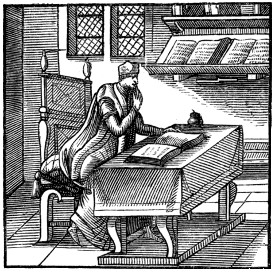
Five or six instances may be found in which Shakespeare
introduces the word “lottery;” and, historically, the word is
deserving of notice,—for it was in his boyhood that the first
public lottery was set on foot in England; and judging from the
nature of the prizes, he appears to have made allusion to them.
There were 40,000 chances,—according to Bohn’s Standard
Library Cyclopædia, vol. iii. p. 279,—sold at ten shillings each:
“The prizes consisted of articles of plate, and the profit was
employed for the repair of certain harbours.” The drawing took
place at the west door of St. Paul’s Cathedral; it began “23rd
January, 1569, and continued incessantly drawing, day and night,
till the 6th of May following.”[115] How such an event should find
its record in a Book of
Emblems may at first be
accounted strange; but in
addition to her other mottoes,
Queen Elizabeth had,
on this occasion of the
lottery, chosen a special
motto, which Whitney (p.
61) attaches to the device,—
which, after six stanzas, he closes with the lines,—
“Th’ Ægyptians wise, and other nations farre,
Vnto this ende, Harpocrates deuis’de,
Whose finger, still did seeme his mouthe to barre,
To bid them speake, no more than that suffis’de,
Which signe thoughe oulde, wee may not yet detest,
But marke it well, if wee will liue in reste.”
Written to the like effecte, vppon
Video, & taceo.
Her Maieſties poëſie, at the great Lotterie in London,
begon M.D.LXVIII. and ended M.D.LXIX.
I See, and houlde my peace: a Princelie Poëſie righte,
For euerie faulte, ſhoulde not provoke, a Prince, or man of mighte.
For if that Iove ſhoulde ſhoote, ſo ofte as men offende,
The Poëttes ſaie, his thunderboltes ſhoulde ſoone bee at an ende.
Then happie wee that haue, a Princeſſe ſo inclin’de.
That when as iuſtice drawes hir ſworde, hath mercie in her minde,
And to declare the ſame, howe prone ſhee is to ſaue:
Her Maieſtie did make her choice, this Poëſie for to haue.
Sed piger ad pœnas princeps, ad prœmia velox:
Cuique dolet, quoties cogitur eſſe ferox.[116]
Lines from Ovid, 2 Trist., are in the margin,—
“Si quoties peccãt homines sua fulmina mittat
Jupiter, exiguo tempore inermis erit.”[117]
Silence, also, was represented by the image of the goddess
Ageniora. In an Emblem-book by Peter Costalius, Pegma,
edition Lyons, 1555, p. 109, he refers to her example, and concludes
his stanza with the words, Si sapis à nostra disce tacere
dea,—“If thou art wise, learn from our goddess to be silent.”
That Casket Scene in the Merchant of Venice (act i. sc. 2, l. 24),—from
which we have already made long extracts,—contains a
reference to lotteries quite in character with the prizes, “articles
of plate and rich jewelry.” Portia is deeming it hard, that
according to her father’s will, she “may neither choose whom
she would, nor refuse whom she disliked.” “Is it not hard,
Nerissa, that I cannot choose one, nor refuse none?”
“Ner. Your father was ever virtuous; and holy men, at their death, have
good inspirations: therefore, the lottery, that he hath devised in these three
chests of gold, silver, and lead,—whereof who chooses his meaning chooses
you—will, no doubt, never be chosen by any rightly, but one who shall
rightly love.”
The Prince of Morocco (act ii. sc. 1, l. 11) affirms to Portia,—
“I would not change this hue,
Except to steal your thoughts, my gentle queen;”
and Portia answers,—
“In terms of choice I am not solely led
By nice direction of a maiden’s eyes;
Besides the lottery of my destiny
Bars me the right of voluntary choosing.”
The prevalence of lotteries, too, seems to be intimated by the
Clown in All’s Well that Ends Well (act i. sc. 3, l. 73, vol. iii.
p. 123), when he repeats the song,—
“Among nine bad if one be good,
Among nine bad if one be good,
There’s yet one good in ten;”
and the Countess reproving him says,—
“What, one good in ten? you corrupt the song, sirrah.
Clo. One good woman in ten, madam; which is a purifying o’ the song:
would God would serve the world so all the year! we’d find no fault with the
tithe-woman, if I were the parson: one in ten, quoth a’! an’ we might have
a good woman born but one every blazing star, or at an earthquake, ’twould
mend the lottery well: a man may draw his heart out, ere a’ pluck one.”
Shakespeare’s words will receive a not inapt illustration from
the sermon of a contemporary prelate, Dr. Chatterton, Bishop of
Chester from 1579 to 1595, and to whom Whitney dedicated
the Emblem on p. 120, Vigilantia et custodia,—“Watchfulness
and guardianship.”[118] He was preaching a wedding sermon in
Cambridge, and Ormerod, i. p. 146, quoting King’s Vale Royal,
tells us,—
“He used this merry comparison. The choice of a wife is full of hazard,
not unlike to a man groping for one fish in a barrel full of serpents: if he
escape harm of the snakes, and light on the fish, he may be thought fortunate;
yet let him not boast, for perhaps it may be but an eel.”
That “good woman” “to mend the lottery well,” that “one
fish in a barrel full of serpents,” came, however, to the chance of
one of Cæsar’s friends. Even when Antony (Antony and Cleopatra,
act ii. sc. 2, l. 245, vol. ix. p. 40) was under the witchery
of the “rare Egyptian queen,” that “did make defect, perfection,”
the dramatist says,—
“If beauty, wisdom, modesty, can settle
The heart of Antony, Octavia is
A blessed lottery to him.”
The Emblems applicable to Shakespeare’s historical characters
are only a few among the numbers that occur in the
Emblem writers, as Alciat, Cousteau, Giovio, Symeoni, &c.: but
our choice is limited, and there would be no pertinency in
selecting devices to which in the dramas of our author there are
no corresponding expressions of thought, though there may be
parallelisms of subject.
Alciat’s Arms (Giovio, ed. 1562).
KNOTTED together as are Emblems and
the very language of Heraldry, we must
expect to find Emblem writers devoting
some at least of their inventions to
heraldic purposes. This has been done
to a very considerable extent by the
Italians, especially by Paolo Giovio,
Domenichi, Ruscelli, and Symeoni; but in several other
authors also there occur heraldic devices among their more
general emblems. These are not full coats of arms and the
complete emblazonnes of “the gentleman’s science,” but rather
cognizances, or badges, by which persons and families of note
may be distinguished. In this respect Shakespeare entirely
agrees with the Emblem writers; neither he nor they give us
the quarterings complete, but they single out for honourable
mention some prominent mark or sign.
I attempt not to arrange the subject according to the Rules
of the Art, but to exhibit instances in which Shakespeare
and the Emblematists agree, of Poetic Heraldry, the Heraldry
of Reward for Heroic Achievements, and the Heraldry of
Imaginative Devices.
Of Poetic Heraldry the chief type is that bird of renown,
which was a favourite with Shakespeare, and from which he has
been named by general consent, “the Swan of Avon.” A white
swan upon a shield occurs both in Alciat and in Whitney, and is
expressly named Insignia Poetarum,—“The poets’ ensigns.”
The swan, in fact, was sacred to Apollo and the Muses; and
hence was supposed to be musical. Æschylus, in his Agamemnon,
makes Cassandra speak of the fable, when the Chorus
bewail her sad destiny (vv. 1322, 3),—
“Ἃπαξ ἔπ’ εἰπεῖν ῥῆσιν ἢ θρῆνον θέλω
ἐμὸν τὸν αὐτῆς.”
i.e.,—“Yet once again I wish for her to speak forth prophecy or
lamentation, even my own,”—and Clytæmnēstra mentions the
singing of the swan at the point of death (vv. 1444–7),—
“Ὁ μὲν γὰρ οὕτως· ἡ δέ τοι κύκνου δίκην
τὸν ὓστατον μέλψασα θανάσιμον γόον
κεῖται φίλητωρ, τοῦδ’, ἐμοὶ δ’ ἐπηγαγεν
εὐνης παροψώνημα τῆς ἐμῆς χλιδῆς.”
Which is to this effect: that when she has sung the last mortal
lamentation, according to the custom of the swan, she lies down
as a lover, and offers to me the
solace of the bed of my joy.
This notion of the singing
of the swan is to be traced
even to the hieroglyphics of
Egypt. In answer to the question,
“Πῶς γέροντα μουσικόν·”—how
to represent “an old man
musical?”—Horapollo, edition
Paris, 1551, p. 136, replies,—
“Ιἐροντα μουσικὸν βουλόμενοι σημῇναι, κύκνον ζωγραφοῦσιν. οὑ~τος γαρ ἡδύτατον μέλος
ᾅδει γηράσκων.”
i.e.—“Wishing to signify an old man musical, they paint a swan; for this
bird sings its sweetest melody when growing old.”
Virgil frequently speaks of swans, both as melodious and as
shrill voiced. Thus in the Æneid, vii. 700–3; xi. 457,—
“Cum sese è pastu referunt, et longa canoros
Dant per colla modos: sonat amnis et Asia longè
Pulsa palus.”
i.e.—“When they return from feeding, and through their long necks give forth
melodious measures; the river resounds and the Asian marsh from far.”
“Piscosóve amne Padusæ
Dant sonitum rauci per stagna loquacia cycni.”[119]
i.e.—“Or on the fish-abounding river Po the hoarse swans give forth a sound
through the murmuring pools.”
Horace, Carm. iv. 2. 25, names Pindar Dircæum cycnum,—“the
Dircæan swan;” and Carm. ii. 20. 10, likens himself to an
album alitem,—“a white-winged creature;” which a few lines
further on he terms a canorus ales,—“a melodious bird,”—and
speaks of his apotheosis to immortal fame.[120]
Anacreon is called by Antipater of Sidon, Anthol. Græc.
Carm. 76, κύκνος Τηϊος,—“the Teïan swan.”
Poets, too, after death, were fancifully supposed to assume
the form of swans. It was believed also that swans foresaw
their own death, and previously sang their own elegy. Thus in
Ovid, Metam. xiv. 430,—
“Carmina jam monens canit exequialia Cygnus,”—
“Now dying the Swan chants its funereal songs.”
Very beautifully does Plato advert to this fiction in his
account of the conversation of Socrates with his friends on the
day of his execution. (See Phædon, Francfort edition, 1602,
p. 77, 64A.) They were fearful of causing him trouble and vexation;
but he reminds them they should not think him inferior in
foresight to the swans; for these,—
“Fall a singing, as soon as they perceive that they are about to die, and
sing far more sweetly than at any former time, being glad that they are about
to go away to the God whose servants they are.... They possess the
power of prophesying, and foreseeing the blessings of Hades they sing and
rejoice exceedingly. Now I imagine that I am also a fellow-servant with the
Swans and sacred to the same God, and that I have received from the same
Master a power of foresight not inferior to theirs, so that I could depart from
life itself with a mind no more cast down.”
Thus the melodious dirge of the swan was attributed to the
same kind of prescience which enables good men to look forward
with delight to that time “when this mortal shall put on
immortality.”
The “Picta Poesis,” p. 28, adopts the same fancy of the
swan singing at the end of life, but makes it the emblem of “old
age eloquent.” Thus,—
“Facvnda Senectvs.
“Candida Cygnus auis suprema ætate canora est:
Inquam verti homines tabula picta docet,
Nam sunt canitie Cygni dulciq. canore,
Virtute illustres, eloquioque senes.
Dulce vetus vinum: senis est oratio dulcis,
Dulcior hoc ipso quò sapientior est.”
i.e.—“At the end of life tuneful is the bird, the white swan, into which the
painted tablet teaches that men are changed, for swans are illustrious from
hoariness and the sweet singing, old men illustrious for virtue and for eloquence.
Old wine is sweet; of an old man sweet is the speech; sweeter,
for this very cause, the wiser it is.”
Shakespeare himself adopts this notion in the Merchant of
Venice (act i. sc. 2, l. 24, vol. ii. p. 286), when he says, “Holy
men at their death have good inspirations.”
Reusner, however, luxuriating in every variety of silvery and
snowy whiteness, represents the swan as especially the symbol of
the pure simplicity of truth. (Emblemata, lib. ii. 31, pp. 91, 92,
ed. 1581.)
“Albo candidius quid est olore,
Argento, niue, lilio, ligustro?
Fides candida, candidiq’ mores,
Et mens candida, candidi sodalis.
Te Schedi niueam fidem Melisse,
Moratum benè, candidamq’ mentem
Possidere sodalis integelli:
Ligustro niueo nitentiorem:
Argento niueo beatiorem:
Albis liliolis fragrantiorem:
Cygnis candidulis decentiorem:
Armorum niueus docet tuorum
Cygnus: liliolis decorus albis:
Phœbea redimitus ora lauro.
Albo candidior cygnus ligustro:
Argento preciosior beato:
Cui nec par eboris decus, nec auri,
Nec gemmæ valor est, nitorq’ pulcræ:
Et si pulcrius est in orbe quicquam.”
i.e.—“Than a white swan what is brighter,—than silver, snow, the lily, the
privet? Bright faith and bright morals,—and the bright mind of a bright
companion. That thou of good morals, O Schedius Melissus, dost possess
snow-like faith, and the bright mind of an uncorrupted companion;—that
(thou art) more fair than the snowy privet,—more blessed than the snowy
silver,—more fragrant than the white lilies,—more comely than the little
bright swans,—the snowy swan on thy arms doth teach: a swan handsome
with white lilies, encircled as to its features with the laurel of Phœbus; a
swan brighter than the white privet,—more precious than the blessed silver;
to which cannot be equalled the comeliness of ivory, or of gold; nor the
worth and the splendour of a beautiful gem: and if in the world there is any
thing more beautiful still.”
To a short, but very learned dissertation on the subject, and
to the device of a swan on a tomb, in his work, De Volatilibus,
edition 1595, Emb. 23, Joachim Camerarius affixes the motto,
“Sibi canit et orbi,”—It sings for itself and for the world,—
“Ipsa suam celebrat sibi mens bene conscia mortem,
Vt solet herbiferum Cygnus ad Eridanum.”
i.e.—“The mind conscious of good celebrates its own death for itself; as the
swan is accustomed to do on the banks of the grassy Eridanus.”[121]
Shakespeare’s expressions, however, as to the swan, correspond
more closely with the stanzas of Alciat (edition
Lyons, 1551, p. 197) which are contained in the woodcut on
next page.
Whitney (p. 126) adopts the same ideas, but enlarges upon
them, and brings out a clearer moral interpretation, fortifying
himself with quotations from Ovid, Reusner, and Horace,—
“The Martiall Captaines ofte, do marche into the fielde,
With Egles, or with Griphins fierce, or Dragons, in theire shielde.
But Phœbus sacred birde, let Poëttes moste commende.
Who, as it were by skill deuine, with songe forshowes his ende.
And as his tune delightes: for rarenes of the same.
So they with sweetenes of theire verse, shoulde winne a lasting name.
And as his colour white: Sincerenes doth declare.
So Poëttes must bee cleane, and pure, and must of crime beware.
For which respectes the Swanne, should in their Ensigne stande.
No forren fowle, and once suppos’de kinge of Ligvria Lande.”
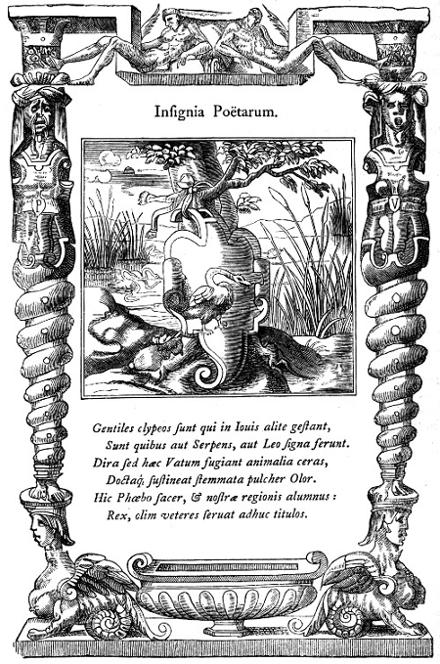
Alciat, Lugd. 1551, p. 197.
In the very spirit of these Emblems of the Swan, the great
dramatist fashions some of his poetical images and most tender
descriptions. Thus in King John (act v. sc. 7, lines 1–24,
vol. iv. p. 91), in the Orchard Scene at Swinstead Abbey,
the king being in his mortal sickness, Prince Henry demands,
“Doth he still rage?” And Pembroke replies,—
“He is more patient
Than when you left him; even now he sung.
P. Hen. O vanity of sickness! fierce extremes
In their continuance will not feel themselves.
Death, having prey’d upon the outward parts,
Leaves them invisible, and his siege is now
Against the mind, the which he pricks and wounds
With many legions of strange fantasies,
Which in their throng and press to that last hold,
Confound themselves. ’Tis strange that death should sing.
I am the cygnet to this pale faint swan,
Who chants a doleful hymn to his own death,
And from the organ pipe of frailty sings
His soul and body to their lasting rest.”
To the same purport, in Henry VIII. (act iv. sc. 2, l. 77,
vol. vi. p. 88), are the words of Queen Katharine, though she
does not name the poet’s bird,—
“I have not long to trouble thee. Good Griffith,
Cause the musicians play me that sad note
I named my knell, whilst I sit meditating
On that celestial harmony I go to.”
And in the Casket Scene, so often alluded to (Merchant of
Venice, act iii. sc. 2, l. 41, vol. ii. p. 325), when Bassanio is about
to try his fortune, Portia thus addresses him,—
“If you do love me, you will find me out.
Nerissa and the rest, stand all aloof.
Let music sound while he doth make his choice;
Then, if he lose, he makes a swan-like end,
Fading in music: that the comparison
May stand more proper, my eye shall be the stream,
And watery death-bed for him. He may win;
And what is music then? Then music is
Even as the flourish when true subjects bow
To a new-crowned monarch: such it is
As are those dulcet sounds in break of day
That creep into the dreaming bridegroom’s ear
And summon him to marriage.”
In the sad ending, too, of the Moor of Venice (act v. sc. 2,
l. 146, vol. viii. p. 581), after Othello had said of Desdemona,—
“Nay, had she been true,
If heaven would make me such another world
Of one entire and perfect chrysolite,
I’d not have sold her for it:”
and the full proof of innocence having been brought forward,
Emilia desires to be laid by her dead “Mistress’ side,” and
inquires mournfully (l. 249, p. 586),—
“What did thy song bode, lady?
Hark, canst thou hear me? I will play the swan,
And die in music. [Singing.] Willow, willow, willow.
Moor, she was chaste; she loved thee, cruel Moor,
So come my soul to bliss, as I speak true;
So speaking as I think, I die, I die. [Dies.]”
After this long dissertation anent swans, there may be
readers who will press hard upon me with the couplet from
Coleridge,—
“Swans sing before they die: ’twere no bad thing,
Should certain persons die before they sing.”
From Heraldry itself the Midsummer Night’s Dream (act iii.
sc. 2, l. 201, vol. ii. p. 239) borrows one of its most beautiful
comparisons; it is in the passage where Helena so passionately
reproaches Hermia for supposed treachery,—
“O, is all forgot?
All school-days’ friendship, childhood innocence?
We, Hermia, like two artificial gods,
Have with our needles created both one flower,
Both on one sampler, sitting on one cushion,
Both warbling of one song, both in one key;
As if our hands, our sides, voices, and minds,
Had been incorporate. So we grew together,
Like to a double cherry, seeming parted;
But yet an union in partition,
Two lovely berries moulded on one stem;
So, with two seeming bodies, but one heart;
Two of the first, like coats in heraldry,
Due but to one, and crowned with one crest.”
In speaking of the Heraldry of Heroic Achievements, we
may refer to the “wreath of chivalry” (p. 168), already
described from the Pericles. There were, however, other
wreaths which the Romans bestowed as the rewards of great
and noble exploits. Several of these are set forth by the
Emblem writers; we will select one from Whitney (p. 115),
Fortiter & feliciter,—“Bravely and happily.”
To this device of an armed hand grasping a spear, on which
are hanging four garlands or crowns of victory, the stanzas
are,—
“Marc Sergivs nowe, I maye recorde by righte,
A Romane boulde, whome foes coulde not dismaye:
Gainste Hannibal hee often shewde his mighte,
Whose righte hande loste, his lefte hee did assaye
Vntill at lengthe an iron hande hee proou’d:
And after that Cremona siege remoou’d.
Then, did defende Placentia in distresse,
And wanne twelue houldes, by dinte of sworde in France,
What triumphes great? were made for his successe,
Vnto what state did fortune him aduance?
What speares? what crounes? what garlandes hee possest;
The honours due for them, that did the beste.”
Of such honours, like poets generally, Shakespeare often
tells. After the triumph at Barnet (3 Henry VI., act v. sc. 3,
l. 1, vol. v. p. 324), King Edward says to his friends,—
“Thus far our fortune keeps an upward course,
And we are grac’d with wreaths of victory.”
Wreaths of honour and of victory are figured by Joachim
Camerarius, “Ex Re Herbaria,” edition 1590, in the 99th
Emblem. The laurel, the oak, and the olive garlands are
ringed together; the motto being, “His ornari avt mori,”—With
these to be adorned or to die,—
“Fronde oleæ, lauri, quercus contexta corolla
Me decoret, sine qua viuere triste mihi,”—
i.e.
“From bough of olive, laurel, oak, a woven crown
Adorns me, without which to live is sadness to me.”
Among other illustrations are quoted the words of the Iliad,
which are applied to Hector, τεθνάτω, οὔ οἱ ἀεικὲς ἀμυνομένω περὶ
πάτρης,—“Let death come, it is not unbecoming to him who dies
defending his country.”
Of the three crowns two are named (3 Henry VI., act iv.
sc. 6, l. 32, vol. v. p. 309), when Warwick rather blames the king
for preferring him to Clarence, and Clarence replies,—
“No, Warwick, thou art worthy of the sway,
To whom the heavens in thy nativity
Adjudged an olive branch and laurel crown,
As likely to be blest in peace and war,
And therefore I yield thee my free consent.”
The introduction to King Richard III. (act i. sc. 1, l. 1, vol. v.
p. 473) opens suddenly with Gloster’s declaration,—
“Now is the winter of our discontent
Made glorious summer by this sun of York;
And all the clouds, that lour’d upon our house,
In the deep bosom of the ocean bury’d.”
“Sun of York” is a direct allusion to the heraldic cognizance
which Edward IV. adopted, “in memory,” we are told, “of the
three suns,” which are said to have appeared at the battle which
he gained over the Lancastrians at Mortimer’s Cross. Richard
then adds,—
“Now are our brows bound with victorious wreaths,
Our bruised arms hung up for monuments;
Our stern alarums changed to merry meetings,
Our dreadful marches to delightful measures.”
We meet, too, in the Pericles (act ii. sc. 3, l. 9, vol. ix. p. 345)
with the words of Thaisa to the victor,—
“But you, my knight and guest;
To whom this wreath of victory I give,
And crown you king of this day’s happiness.”
But in the pure Roman manner, and according to the usage
of Emblematists, Shakespeare also tells of “victors’ crowns;”
following, as would appear, “Les Devises Heroiqves” of
Paradin, edition Anvers, 1562, f. 147 verso, which contains
several instances of garlands for noble brows. Of these, one is
entitled, Seruati gratia ciuis,—“For sake of a citizen saved.”
The garland is thus
described in Paradin’s
French,—
“La Courõne, apellee Ciuique,
eſtoit dõnee par le Citoyẽ, au Citoyẽ
qu’il auoit ſauué en guerre: en
repreſentatiõ de vie ſauuee. Et
eſtoit cete Courõne, tiſſue de
fueilles, ou petis rameaus de
Cheſne: pour autãt qu’au Cheſne,
la vielle antiquité, ſouloit prẽdre
ſa ſubſtãce, ſõ mãger, ou sa
nourriture.”
i.e.—“The crown called Civic
was given by the Citizen to
the Citizen[122] whom he had
saved in war; in testimony of
life saved. And this Crown was an inweaving of leaves or small branches
of Oak; inasmuch as from the Oak, old antiquity was accustomed to take
its subsistence, its food, or its nourishment.”
“Among the rewards” for the Roman soldiery, remarks
Eschenburg (Manual of Classical Literature, p. 274), “golden or
gilded crowns were particularly common; as, the corona castrensis,
or vallaris, to him who first entered the enemy’s entrenchments;
corona muralis, to him who first scaled the enemy’s
walls; and corona navalis, for seizing a vessel of the enemy in a
sea-fight; also wreaths and crowns formed of leaves and blossoms;
as the corona civica, of oak leaves, conferred for freeing a citizen
from death or captivity at the hands of the enemy; the corona
obsidionalis, of grass, for delivering a besieged city; and the
corona triumphalis, of laurel, worn by a triumphing general.”
Shakespeare’s acquaintance with these Roman customs we
find, where we should expect it to be, in the Coriolanus and in
the Julius Cæsar. Let us take the instances; first, from the
Coriolanus, act i. sc. 9, l. 58, vol. vi. p. 304; act i. sc. 3, l. 7,
p. 287; act ii. sc. 2, l. 84, p. 323; and act ii. sc. 1, l. 109, p. 312.
Cominius thanks the gods that “our Rome hath such a soldier”
as Caius Marcius, and declares (act i. sc. 9, l. 58),—
“Therefore, be it known,
As to us, to all the world, that Caius Marcius
Wears this war’s garland: in token of the which,
My noble steed, known to the camp, I give him,
With all his trim belonging; and from this time.
For what he did before Corioli, call him,
With all the applause and clamour of the host,
Caius Marcius Coriolanus. Bear
The addition nobly ever!”
With most motherly pride Volumnia rehearses the brave
deed to Virgilia, her son’s wife (act i. sc. 3, l. 7),—
“When, for a day of kings’ entreaties, a mother should not sell him an
hour from her beholding; I, considering how honour would become such a
person; that it was no better than picture-like to hang by the wall, if renown
made it not stir, was pleased to let him seek danger where he was like to find
fame. To a cruel war I sent him; from whence he returned, his brows bound
with oak. I tell thee, daughter, I sprang not more in joy at first hearing
he was a man-child than now in first seeing he had proved himself a man.”
And the gaining of that early renown is most graphically
drawn by Cominius, the consul (act ii. sc. 2, l. 84),—
“At sixteen years,
When Tarquin made a head for Rome, he fought
Beyond the mark of others: our then dictator,
Whom with all praise I point at, saw him fight,
When with his Amazonian chin he drove
The bristled lips before him: he bestrid
An o'er press’d Roman, and i’ the consul’s view
Slew three opposers: Tarquin’s self he met,
And struck him on his knee: in that day’s feats,
When he might act the woman in the scene,
He proved best man i’ the field, and for his meed
Was brow-bound with the oak. His pupil age
Man-enter’d thus, he waxed like a sea;
And, in the brunt of seventeen battles since,
He lurch’d all swords of the garland.”
The successful general is expected in Rome, and this dialogue
is held between Menenius, Virgilia, and Volumnia (act ii. sc. 1,
l. 109, p. 312),—
“Men. Is he not wounded? he was wont to come home wounded.
Vir. O, no, no, no.
Vol. O, he is wounded; I thank the gods for’t.
Men. So do I too, if it be not too much: brings a’ victory in his pocket?
The wounds become him.
Vol. On’s brows: Menenius, he comes the third time home with the
oaken garland.”
Next, we have an instance from the Julius Cæsar (act v.
sc. 3, l. 80, vol. vii. p. 409), on the field of Philippi, when “in
his red blood Cassius’ day is set,” Titanius asks,—
“Why didst thou send me forth, brave Cassius?
Did I not meet thy friends? and did not they
Put on my brows this wreath of victory,
And bid me give it thee? Didst thou not hear their shouts?
Alas, thou hast misconstrued every thing!
But, hold thee, take this garland on thy brow;
Thy Brutus bid me give it thee, and I
Will do his bidding.”
The heraldry of honours from sovereign princes, as testified
to, both by Paradin in his “Devises Heroiqves,” edition
Antwerp, 1562, folio 12v, and 25, 26, and by Shakespeare,
embraces but two or three instances, and is comprised in the
magniloquent lines (1 Henry VI., act iv. sc. 7, l. 60, vol. v. p. 80)
in which Sir William Lucy inquires,—
“But where’s the great Alcides of the field,
Valiant Lord Talbot, Earl of Shrewsbury,
Created, for his rare success in arms,
Great Earl of Washford, Waterford and Valence;
Lord Talbot of Goodrig and Urchinfield,
Lord Strange of Blackmere, Lord Verdun of Alton,
Lord Cromwell of Wingfield, Lord Furnival of Sheffield,
The thrice-victorious Lord of Falconbridge:
Knight of the noble order of Saint George,
Worthy Saint Michael and the Golden Fleece;
Great marshal to Henry the Sixth
Of all his wars within the realm of France?”
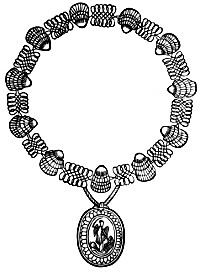
Paradin, ed. 1562, p. 12v.
From Paradin we learn that the Order of St. Michael had
for its motto Immensi tremor Oceani,—“The trembling of the
immeasurable ocean,”—and
for its badge the adjoining
collar.—
“This order was instituted by
Louis XI., King of France, in the
year 1469.[123] He directed for its
ensign and device a collar of gold,
made with shells laced together
in a double row, held firm upon
little chains or meshes of gold;
in the middle of which collar on
a rock was a gold-image of Saint
Michael, appearing in the front.
And this the king did (with respect
to the Archangel) in imitation
of King Charles VII. his
father; who had formerly borne
that image as his ensign, even at
his entry into Rouen. By reason
always (it is said) of the apparition, on the bridge of Orleans, of Saint Michael
defending the city against the English in a famous attack. This collar then
of the royal order and device of the Knights of the same is the sign or
true ensign of their nobleness, virtue, concord, fidelity and friendship;
Pledge, reward and remuneration of their valour and prowess. By the
richness and purity of the gold are pointed out their high rank and grandeur;
by the similarity or likeness of its shells, their equality, or the equal
fraternity of the Order (following the Roman senators, who also bore
shells on their arms for an ensign and a device); by the double lacing
of them together, their invincible and indissoluble union; and by the
image of Saint Michael, victory over the most dangerous enemy. A
device then instituted for the solace, protection and assurance of this so
noble a kingdom; and, on the contrary, for the terror, dread and confusion
of the enemies of the same.”
Precium non vile laborum,—
“No mean reward of labours.”
Paradin (f. 25) is also our authority with respect to the
Order of the Golden Fleece, its motto and device being thus
presented:—
“The order of the Golden
Fleece,” says Paradin, “was instituted
by Philip, Duke of Burgundy,
styled the Good, in the
year 1429, for which he named[124]
twenty-four Knights without reproach,
besides himself, as chief
and founder, and gave to each
one of them for ensign of the
said Order a Collar of gold
composed of his device of the
Fusil, with the Fleece of gold
appearing in front; and this (as
people say) was in imitation of
that which Jason acquired in
Colchis, taken customarily for
Virtue, long so much loved by
this good Duke, that he merited
this surname of Goodness, and
other praises contained on his
Epitaph, where there is mention
made of this Order of the
Fleece, in the person of the
Duke saying,—
'Pour maintenir l’Eglise, qui est de Dieu maison,
J’ai mis sus le noble Ordre, qu’on nomme la Toison.'”
The expedition of the Argonauts, and Jason’s carrying off
of the Golden Fleece may here be appropriately mentioned;
they are referred to by the Emblem writers, as well as the
exploit of Phrixus, the brother of Helle, in swimming across
the Hellespont on the golden-fleeced ram. The former
Whitney introduces when describing the then new and
wonderful circumnavigation of the globe by Sir Francis
Drake (p. 203),—
“Let Græcia then forbeare, to praise her Iason boulde?
Who throughe the watchfull dragons pass’d, to win the fleece of goulde.
Since by Medeas helpe, they weare inchaunted all,
And Iason without perrilles, pass’de: the conqueste therfore small?
But, hee, of whome I write, this noble minded Drake,
Did bringe away his goulden fleece, when thousand eies did wake.”
Tranat aquas reſidẽs precioſo in vellere Phrixus,
Et flauam impauidus per mare ſcandit ouem.
Ecquid id est? vir ſenſu hebeti, ſed diuite gaza,
Coniugis aut ſerui quem regit arbitrium.
The latter forms the subject of one of Alciat’s Emblems,
edition Antwerp,
1581, Emb. 189, in
which, seated on
the precious fleece,
Phrixus crosses the
waters, and fearless
in the midst of the
sea mounts the
tawny sheep, the
type of “the rich
man unlearned.”
Whitney (p. 214)
substitutes In diuitem,
indoctum,—“To
the rich man,
unlearned,”—and
thus paraphrases
the original,—
“On goulden fleece, did Phryxus passe the waue,
And landed safe, within the wished baie:
By which is ment, the fooles that riches haue,
Supported are, and borne throughe Lande, and Sea:
And those enrich’de by wife, or seruauntes goodds,
Are borne by them like Phryxus through the floodds.”
In a similar emblem, Beza, edition Geneva, 1580, Emb. 3,
alludes to the daring deed of Phrixus,—
“Aurea mendaci vates non vnicvs ore
Vellera phrixeæ commemorauit ouis.
Nos, te, Christe, agnum canimus. Nam diuite gestas
Tu verè veras vellere solus opes.”
Thus rendered in the French version,—
“Maint poete discourt de sa bouche menteuse
Sur vne toison d’or. Nous, à iuste raison,
Te chantons, Christ, agneau, dont la riche toison
Est l’vnique thresor qui rend l’Eglise heureuse.”
The Merchant of Venice (act. i. sc. 1, l. 161, vol. ii. p. 284)
presents Shakespeare’s counterpart to the Emblematists; it is in
Bassanio’s laudatory description of Portia, as herself the golden
fleece,—
“In Belmont is a lady richly left;
And she is fair, and, fairer than that word,
Of wondrous virtues: sometimes from her eyes
I did receive fair speechless messages:
Her name is Portia; nothing undervalued
To Cato’s daughter, Brutus’ Portia:
Nor is the wide world ignorant of her worth;
For the four winds blow in from every coast
Renowned suitors: and her sunny locks
Hang on her temples like a golden fleece:
Which makes her seat of Belmont Colchos strand,
And many Jasons come in quest of her.”
To this may be added a line or two by Gratiano, l. 241, p. 332,—
“How doth that royal merchant, good Antonio?
I know he will be glad of our success;
We are the Jasons, we have won the fleece.”
The heraldry of Imaginative Devices in its very nature offers
a wide field where the fancy may disport itself. Here things
the most incongruous may meet, and the very contrariety only
justify their being placed side by side.
Let us begin with the device, as given in the “Tetrastichi
Morali,” p. 56, edition Lyons, 1561, by Giovio and Symeoni,
used between 1498 and 1515; it is the device
DI LVIGI XII. RE
DI FRANCIA.
Giovio and Symeoni, 1561.
to the motto, “Hand to hand and afar off”—
Di lontano & da preſſo il Re Luigi,
Feri’l nimico, & lo riduſſe à tale,
Che dall’ Indico al lito Occidentale
Di ſua virtù ſi veggiono i veſtigi.
A Porcupine is the badge, and the stanza declares,—
“From far and from near the King Louis,
Smites the enemy and so reduces him,
That from the Indian to the Western shore,
Of his valour the traces are seen.”
Camerarius with the same motto and the like device testifies
that this was the badge of Louis XI., king of France, to whose
praise he also devotes a stanza,—
“Cominus ut pugnat jaculis, atq. eminus histrix,
Rex bonus esto armis consiliisque potens.”
i.e.
“As close at hand and far off the porcupine fights with its spines,
Let a good king be powerful in arms and in counsels.”
It was this Louis who laid claim to Milan, and carried Ludovic
Sforza prisoner to France. He defeated the Genoese after their
revolt, and by great personal bravery gained the victory of
Agnadel over the Venetians in 1509. At the same time he
made war on Spain, England, Rome, and Switzerland, and was
in very deed the porcupine darting quills on every side.
The well known application in Hamlet (act. i. sc. 5, l. 13, vol.
viii. p. 35) of the chief characteristic of this vexing creature is
part of the declaration which the Ghost makes to the Prince of
Denmark,—
“But that I am forbid
To tell the secrets of my prison-house,
I could a tale unfold whose lightest word
Would harrow up thy soul, freeze thy young blood,
Make thy two eyes, like stars, start from their spheres,
Thy knotted and combined locks to part
And each particular hair to stand an end,
Like quills upon the fretful porpentine.”
And of “John Cade of Ashford,” in 2 Henry VI. (act. iii. sc. 1,
l. 360, vol. v. p. 162), the Duke of York avers,—
“In Ireland I have seen this stubborn Cade
Oppose himself against a troop of kernes;
And fought so long, ’till that his thighs with darts
Were almost like a sharp-quill’d porcupine.”
From the same source, Giovio’s and Symeoni’s “Sententiose
Imprese,” Lyons, 1561, p. 115, we also derive the cognizance,—
DEL CAPITANO GIROLAMO
MATTEI ROMANO.
Giovio and Symeoni, 1561.
Diuora il ſtruzzo con ingorda furia
Il ferro, & lo ſmaltiſce poi pian piano,
Coſi (come dipinge il buon Romano)
Smaltir fa il tempo ogni maggiore ingiuria.
Spiritus duriſſima
coquit.
To this Ostrich, with a large iron nail in its mouth, and with
a scroll inscribed, “Courage digests the hardest things,” the
stanza is devoted which means,—
“Devour does the ostrich with eager greediness
The iron, and then very easily digests it,
So (as the good Romano represents)
Time causes every injury to be digested.”
Camerarius, to the same motto, Ex Volatilibus (ed. 1595, p. 19),
treats us to a similar couplet,—
“Magno animo fortis perferre pericula suevit,
Vllo nec facile frangitur ille metu.”
i.e.
“With mighty mind the brave grows accustomed to bear dangers,
Nor easily is that man broken by any fear.”
Shakespeare’s description of the ostrich, as given by Jack
Cade, 2 Henry VI. (act iv. sc. 10, l. 23, vol. v. p. 206), is in close
agreement with the ostrich device,—
“Here’s the lord of the soil,” he says, “come to seize me for a stray, for
entering his fee-simple without leave. Ah, villain, thou wilt betray me, and
get a thousand crowns of the king for carrying my head to him; but I’ll
make thee eat iron like an ostrich, and swallow my sword like a great pin,
ere thou and I part.”
Note the iron pin in the ostrich’s mouth.
Sola facta ſolum Deum ſequor.
“My Lady Bona of
Savoy,” as Paradin (ed.
1562, fol. 165) names her,
“the mother of Ian Galeaz,
Duke of Milan, finding
herself a widow, made
a device on her small
coins of a Phœnix in
the midst of a fire, with
these words, ‘Being made
lonely, I follow God alone.’
Wishing to signify that,
as there is in the world
but one Phœnix, even
so being left by herself,
she wished only to love
conformably to the only God, in order to live eternally.”[125]
The “Tetrastichi Morali” presents the same Emblem, as
indeed do Giovio’s “Dialogo dell’ Imprese,” &c., ed. Lyons,
1574, and “Dialogve des Devises,” &c., ed. Lyons, 1561;
DI MADAMA BONA
DI SAVIOA.
Giovio, 1574 (diminished).
with the same motto, and the invariable Italian Quatrain,—
Sola facta solũ
Deũ sequor.
Perduto ch’ hebbe il fido ſuo conſorte
La nobil Donna, qual Fenice ſola,
A Dio volſe ogni priego, ogni parola,
Dando vita al penſier con l’ altrui morte.
In English,—
“Lost had she her faithful consort,
The noble Lady, as a Phœnix lonely,
To God wills every prayer, every word
Giving life to consider death with others.”
The full description and characteristics of the Phœnix we
reserve for the section which treats of Emblems for Poetic Ideas;
but the loneliness, or if I may use the term, the oneliness of
this fabulous bird Shakespeare occasionally dwells upon.
In the Cymbeline (act i. sc. 6, l. 12, vol. ix. p. 183), Posthumus
and Iachimo had made a wager as to the superior qualities and
beauties of their respective ladies, and Iachimo takes from
Leonatus an introduction to Imogen; the Dialogue thus
proceeds,—
“Iach. The worthy Leonatus is in safety,
And greets your highness dearly. [Presents a letter.
Imo. Thanks, good sir:
You're kindly welcome.
Iach. [Aside.] All of her that is out of door most rich!
If she be furnish’d with a mind so rare,
She is alone the Arabian bird, and I
Have lost the wager.”
Rosalind, in As You Like It (act iv. sc. 3, l. 15, vol. ii. p. 442),
thus speaks of the letter which Phebe, the shepherdess, had
sent her,—
“She says I am not fair, that I lack manners;
She calls me proud, and that she could not love me,
Were man as rare as phœnix.”
The oneliness of the bird is, too, well set forth in the Tempest
(act iii. sc. 3, l. 22, vol. i. p. 50),—
“In Arabia
There is one tree, the phœnix' throne; one phœnix
At this hour reigning there.”
To the Heraldry of Imaginative Devices might be referred
the greater part of the coats of arms, badges and cognizances by
which noble and gentle families are distinguished. To conclude
this branch of our subject, I will name a woodcut which was
probably peculiar to Geffrey Whitney at the time when Shakespeare
wrote, though accessible to the dramatist from other
sources; it is the fine frontispiece to the Choice of Emblemes,
setting forth the heraldic honours and arms of Robert, Earl of
Leycester, and in part of his brother, Ambrose, Earl of Warwick.
Each of these noblemen bore the same crest, and it was, what
Shakespeare, 2 Henry VI. (act v. sc. 1, l. 203, vol. v. p. 215), terms
“the rampant bear chained to the ragged staff.”
How long this had been the cognizance
of the Earls of Warwick, and
whether it was borne by all the various
families of the Saxon and Norman races
who held the title,—by the Beauchamps,
the Nevilles, and the Dudleys, admits of
doubt; but it is certain that such was the
cognizance in the reign of Henry VI.
and in that of Elizabeth.
According to Dugdale’s Antiquities
of Warwickshire, edition 1730, p. 398,
the monument of Thomas Beauchamp,
Earl of Warwick in Edward III.’s time,
has a lion, not a bear; and a lamb
for his Countess, the Lady Katherine Mortimer. Also on the
monument of another Earl (p. 404), who died in 1401, the bear
does not appear; but on the monument of Richard Beauchamp,
who died “the last day of Aprill, the year of our lord god 1434,”
the inscriptions are crowded with bears, instead of commas and
colons; and the recumbent figure of the Earl has a muzzled
bear at his feet (p. 410). The Nevilles now succeeded to the
title, and a limner’s or designer’s very curious bill, of the fifteenth
year of Henry VI., 1438, shows that the bear and ragged staff
were then both in use and in honour,—
“First CCCC Pencels bete with the Raggidde staffe of silver
pris the pece v d. 08l. 06s. 00
Item for a grete Stremour for the Ship of XI yerdis length and
IIII yerdis in brede, with a grete Bere and Gryfon holding
a Raggid staffe, poudrid full of raggid staves; and for a
grate Crosse of S. George for the lymmynge and portraying 01 . 06 . 08
Item XVIII Standardes of worsted, entretailled with the
Bere and a Chayne, pris the pece xii d. 00 . 18 . 00”
Among the monuments in the Lady Chapel at Warwick is a
full length figure of “Ambrose Duddeley,” who died in 1589,
and of a muzzled bear crouching at his feet. Robert Dudley,
Earl of Leycester, his brother, died in 1588; and on his magnificent
tomb, in the same chapel, is seen the same cognizance of
the bear and ragged staff. The armorial bearings, however, are
a little different from those which Whitney figures.
If, according to the Cambridge edition of Shakespeare’s
works, 1863–1866, vol. v. p. vii., “the play upon which the Second
part of Henry the Sixth was founded was first printed in quarto,
in 1594;” or if, as some with as much reason have supposed,[126] it
existed even previous to 1591, it is not likely that these monuments
of elaborate design and costly and skilled workmanship
could have been completed, so that from them Shakespeare had
taken his description of “old Nevil’s crest.” Nathan Drake’s
Shakspeare and his Times (vol. i. pp. 410, 416) tells us that he
left Stratford for London “about the year 1586, or 1587;” yet
“the family residence of Shakspeare was always at Stratford:
that he himself originally went alone to London, and that he
spent the greater part of every year there alone, annually,
however, and probably for some months, returning to the
bosom of his family, and that this alternation continued until
he finally left the capital.”
Of course, had the monuments in question existed before the
composition of the Henry VI., his annual visits to his native
Warwickshire would have made them known to him, and he
would thus have noted the family cognizance of the brother
Earls; but reason favours the conjecture that these monuments
in the Lady Chapel were not the sources of his knowledge.
Common rumour, indeed, may have supplied the information;
but as Geffrey Whitney’s book appeared in 1586, its first novelty
would be around it about the time at which Shakespeare was
engaged in producing his Henry VI. That Emblem-book was
dedicated to “Robert Earle of Leycester;” and, as we have
said, contains a drawing, remarkably graphic, of a bear grasping
a ragged staff, having a collar and chain around him, and standing
erect on the helmet’s burgonet. There is also a less elaborate
sketch of the same badge on the title-page to the second
part of Whitney’s Emblemes, p. 105.
Most exactly, most artistically, does the dramatist ascribe
the same crest, in the same attitude, and in the same standing
place, to Richard Nevil, Earl of Warwick, the king-setter-up and
putter-down of History. In the fields between Dartford and
Blackheath, in Kent, the two armies of Lancaster and York are
encamped; in the Dialogue, there is almost a direct challenge
from Lord Clifford to Warwick to meet upon the battle-field.
York is charged as a traitor by Clifford (2 Henry VI., act v.
sc. 1, l. 143, vol. v. p. 213), but replies,—
“I am the king, and thou a false-heart traitor.
Call hither to the stake my two brave bears,
That with the very shaking of their chains
They may astonish these fell-lurking curs:
Bid Salisbury and Warwick come to me.
Enter the Earls of Warwick and Salisbury.
Clif. Are these thy bears? we’ll bait thy bears to death,
And manacle the bear-ward in their chains,
If thou darest bring them to the baiting place.
Rich. Oft have I seen a hot o’erweening cur
Run back and bite, because he was withheld;
Who, being suffer’d with the bear’s fell paw,
Hath clapp’d his tail between his legs and cried:
And such a piece of service will you do,
If you oppose yourselves to match Lord Warwick.”
The Dialogue continues until just afterwards Warwick makes
this taunting remark to Clifford (l. 196),—
“War. You were best to go to bed and dream again,
To keep thee from the tempest of the field.
Clif. I am resolved to bear a greater storm
Than any thou canst conjure up to-day;
And that I’ll write upon thy burgonet,
Might I but know thee by thy household badge.
War. Now, by my father’s badge, old Nevil’s crest,
The rampant bear chain’d to the ragged staff,
This day I’ll wear aloft my burgonet,
As on a mountain top the cedar shows
That keeps his leaves in spite of any storm,
Even to affright thee with the view thereof.
Clif. And from thy burgonet I’ll rend thy bear
And tread it underfoot with all contempt,
Despite the bear-ward that protects the bear.”
A closer correspondence between a picture and a description of
it cannot be desired; Shakespeare’s lines and Whitney’s frontispiece
exactly coincide;
“Like coats in heraldry
Due but to one, and crowned with one crest.”
By Euclid’s axiom, “magnitudes which coincide are equal;”
and though the reasonings in geometry and those in heraldry
are by no means of forces identical, it may be a just conclusion;
therefore, the coincidences and parallelisms of Shakespeare, with
respect to Heraldic Emblems, have their original lines and sources
in such writers as Giovio, Paradin, and Whitney. It was not he
who set up the ancient fortifications, but he has drawn circumvallations
around them, and his towers nod over against theirs,
though with no hostile rivalry.
ECHO has not more voices than Mythology has
transmutations, eccentricities, and cunningly devised
fancies,—and every one of them has its tale
or its narrative—its poetic tissues woven of such
an exquisite thinness that they leave no shadows where they
pass. The mythologies of Egypt and of Greece, of Etruria and
of Rome, in all their varying phases of absolute fiction and
substantial truth, perverted by an unguarded imagination, were
the richest mines that the Emblem writers attempted to work;
they delighted in the freedom with which the fancy seemed
invited to rove from gem to gem, and luxuriated in the many
forms into which their fables might diverge. Now they touched
upon Jove’s thunder, or on the laurel for poets’ brows, which the
lightning’s flash could not harm—then on the beauty and gracefulness
of Venus, or on the doves that fluttered near her car;—Dian’s
severe strictness supplied them with a theme, or Juno
with her queenly birds; and they did not disdain to tell of
Bacchus and the vine, of Circe, and Ulysses, and the Sirens.
The slaying of Niobe’s children, Actæon seized by his hounds,
and Prometheus chained to the rock, Arion rescued by the
dolphin, and Thetis at the tomb of Achilles,—these and many
other myths and tales of antiquity grew up in the minds of
Emblematists, self-sown—ornaments, if not utilities.
Though the great epic poems are inwrought throughout
with the mosaic work of fables that passed for divine, and of
exploits that were almost more than human, Ovid’s Metamorphoses,
printed as early as 1471, and of which an early French
edition, in 1484, bears the title La Bible des poetes, may be
regarded as the chief storehouse of mythological adventure and
misadventure. The revival of literature poured forth the work
in various forms and languages. Spain had her translation in
1494, and Italy in 1497; and as Brunet informs us (vol. iv.
c. 277), to another of Ovid’s books, printed in Piedmont before
1473, there was this singularly incongruous subscription, “Laus
Deo et Virgini Mariæ Gloriosissimæ Johannes Glim.” Caxton,
in England, led the way by printing Ovid’s Metamorphoses in
1480, which Arthur Golding may be said to have completed in
1567 by his English Metrical Version.
Thus everywhere was the storehouse of mythology open;
and of the Roman fabulist the Emblem writers, as far as they
could, made a Book of Emblems, and often into their own works
transported freely what they had found in his.
And for a poet of no great depth of pure learning, but of
unsurpassed natural power and genius, like Shakespeare, no
class of books would attract his attention and furnish him with
ideas and suggestions so readily as the Emblem writers of the
Latin and Teutonic races. “The eye,” which he describes, “in
a fine phrensy rolling,” would suffice to take in at a single glance
many of the pictorial illustrations which others of duller sensibilities
would only master by laborious study; and though
undoubtedly, from the accuracy with which Shakespeare has
depicted ancient ideas and characters, and shown his familiarity
with ancient customs, usages, and events, he must have read
much and thought much, or else have thought intuitively, it is a
most reasonable conjecture that the popular literature of his
times—the illustrated Emblem-books, which made their way of
welcome among the chief nations of middle, western, and
southern Europe—should have been one of the fountains at
which he gained knowledge. Nature, indeed, forms the poet,
and his storehouses of materials on which to work are the inner
and outer worlds, first of his own consciousness, and next of
heaven and earth spread before him. But as a portion of this
latter world we may name the appliances and results of artistic
skill in its delineations of outward forms, and in the fixedness
which it gives to many of the conceptions of the mind. To the
artist himself, and to the poet not less than to the artist, the pictured
shapes and groupings of mythological or fabulous beings
are most suggestive, both of thoughts already embodied there, and
also of other thoughts to be afterwards combined and expressed.
Hence would the Emblem-books, on some of which the foremost
painters and engravers had not disdained to bestow their
powers, become to poets especially fruitful in instruction. A
proverb, a fable, an old world deity is set forth by the pencil
and the graving tool, and the combination supplies additional
elements of reflection. Thus, doubtless, did Shakespeare use such
works; and not merely are some of his thoughts and expressions
in unison with them, but moulded and modified by them.
For much indeed of his mythological lore he was indebted to
Ovid’s Metamorphoses, or, rather, I should say, to “Ovid’s Metamorphoses
translated out of Latin in English metre by Arthur
Golding, gent. A worke very pleasaunt and delectable; 4to
London 1565.” That he did attend to Golding’s couplet,—
“With skill, heed, and judgment, thys work must be red,
For els too the reader it stands in small stead,”—
will appear from some few instances; as,—
“Thy promises are like Adonis’ gardens
That one day bloom’d, and fruitful were the next.”—
1 Hen. VI., act i. sc. 6, l. 6.
“Apollo flies and Daphne holds the chase,
The dove pursues the griffin; the mild hind
Makes speed to catch the tiger.”—
Midsummer Night’s Dream, act ii. sc. 1, l. 231.
“We still have slept together,
Rose at an instant, learn’d, play’d, eat together,
And wheresoe’er we went, like Juno’s swans,
Still we went coupled and inseparable.”
As You Like It, act i. sc. 3, l. 69.
“Approach the chamber and destroy your sight
With a new Gorgon.”
Macbeth, act ii. sc. 3, l. 67.
“I’ll have no worse a name than Jove’s own page;
And therefore look you call me Ganymede.”
As You Like It, act i. sc. 3, l. 120.
and,—
“O Proserpina,
For the flowers now, that frighted thou let’st fall
From Dis’s waggon! daffodils,
That come before the swallow dares, and take
The winds of March with beauty; violets dim
But sweeter than the lids of Juno’s eyes
Or Cytherea’s breath; pale primroses,
That die unmarried, ere they can behold
Bright Phœbus in his strength, a malady
Most incident to maids; bold oxlips and
The crown imperial; lilies of all kinds,
The flower-de-luce being one! O, these I lack
To make you garlands of; and my sweet friend
To strew him o'er and o'er!”
Winter’s Tale, act iv. sc. 4, l. 116.
Yet from the Emblem writers as well he appears to have
derived many of his mythological allusions and expressions; we
may trace this generally, and with respect to some of the
Heathen Divinities,—to several of the ancient Heroes and
Heroines, we may note that they supply him with most beautiful
personifications.
Generally, as in Troilus and Cressida (act ii. sc. 3, l. 240), the
expression “bull-bearing Milo” finds its device in the Emblemata
of Lebeus Batillius, edition Francfort, 1596, where we are
told that “Milo by long custom in carrying the calf could also
carry it when it had grown to be a bull.” In Romeo and Juliet
(act ii. sc. 5, l. 8) the lines,—
“Therefore do nimble-pinion’d doves draw love
And therefore hath the wind swift Cupid wings.”
We have the scene pictured in Corrozet’s Hecatomgraphie, Paris,
1540, leaf 70, with, however, a very grand profession of regard
for the public good,—
“Ce n’est pas cy Cupido ieune enfant
Que vous voier au carre triumphant,
Mais c’est amour lequel tiẽt en sa corde
Tous les estatz en grãd paix & cõcorde.”
In Richard II.(act iii. sc. 2, l. 24) Shakespeare seems to have in
view the act of Cadmus, when he sowed the serpent’s teeth,—
“This earth shall have a feeling and these stones
Prove armed soldiers, ere her native king
Shall falter under foul rebellion’s arms.”
And the device which emblematizes the fact occurs in Symeoni’s
abbreviation of the Metamorphoses into the form of
Italian Epigrams (edition Lyons, 1559, device 41, p. 52).
And lastly, in 3 Henry VI. (act v. sc. 1, l. 34), from a few
lines of dialogue between Warwick and King Edward, we
read,—
“War. ’Twas I that gave the kingdom to thy brother.
K. Edw. Why then ’tis mine, if but by Warwick’s gift.
War. Thou art no Atlas for so great a weight;
And weakling, Warwick takes his gift again.”
But a better comment cannot be than is found in Giovio’s
“Dialogve,” edition Lyons, 1561, p. 129, with Atlas carrying
the Globe of the Heavens, and with the motto, “Svstinet
nec fatiscit,”—He bears nor grows weary.
The story of Jupiter and Io is presented in the Emblem-books
by Symeoni, 1561, and by the Plantinian edition of
Ovid’s Metamorphoses, Antwerp, 1591, p. 35. From the latter,
were it needed, we could easily have added a pictorial illustration
to the Taming of the Shrew (Induction, sc. 2, l. 52),—
“We'll show thee Io as she was a maid
And how she was beguiled and surprised,
As lively painted as the deed was done.”
The Antony and Cleopatra (act ii. sc. 7, l. 101, vol. ix. p. 60),
in one part, presents the banquet, or, rather, the drinking bout,
between Cæsar, Antony, Pompey, and Lepidus, “the third part
of the world.” Enobarbus addresses Antony,—
“Eno. [To Antony.] Ha, my brave emperor!
Shall we dance now the Egyptian Bacchanals,
And celebrate our drink?
Pom. Let’s ha’t, good soldier.
Ant. Come, let’s all take hands,
Till that the conquering wine hath steep’d our sense
In soft and delicate Lethe.
Eno. All take hands.
Make battery to our ears with the loud music:
The while I’ll place you: then the boy shall sing;
The holding every man shall bear as loud
As his strong sides can volley.
[Music plays, Enobarbus places them hand in hand.
“Come, thou monarch of the vine,
Plumpy Bacchus with pink eyne!
In thy fats our cares be drown’d,
With thy grapes our hairs be crown’d:
Cup us, till the world go round,
Cup us, till the world go round!”
Now, the figures in Alciat, in Whitney, in the Microcosmos,[127]
and especially in Boissard’s “Theatrvm Vitæ Humanæ,” ed.
Metz, 1596, p. 213, of a certainty suggest the epithets “plumpy
Bacchus” “with pink eyne,” a very chieftain of “Egyptian Bacchanals.”
This last depicts the “monarch of the vine” approaching
to mellowness.
The Latin stanzas subjoined would, however, not have
suited Enobarbus and the roistering triumvirs of the world,—
“Suave Dei munus vinum est: hominumque saluti
Conducit: præsit dummodò sobrietas.
Immodico sed si tibi proluat ora Lyæo,
Pro dulci potas tetra aconita mero.”
i.e.
“Wine is God’s pleasant gift, and for men’s health
Conduces, when sobriety presides;
But if excessive drained Lyæan wealth,
For liquor sweet black aconite abides.”
The phrase, “rempli de vin dont son visage est teint,” in “Le
Microcosme,” Lyons, 1562, suggests the placing the stanzas in
which it occurs, in illustration of Shakespeare’s song; they are,—
“Le Dieu Bacchus d’ordinaire on depeint
Ayant en main vn chapelet de lierre,
Tenant aussi vne couppe ou vn verre
Rempli de vin dont son visage est teint.
Des deux costes son chef on void aislé,
Et pres de luy d’vne pasture belle
Le genereux Pegasus à double aisle
Se veut guinder vers le ciel estoilé.”
In ſtatuam Bacchi.
Dialogismvs.
XXV.
It may give completion
to this sketch if we
subjoin the figured Bacchus
of Alciat (edition
Antwerp, 1581, p. 113),
and present the introductory
lines,—
“Bacche pater quis te mortali lumine nouit,
Et docta effinxit quis tua membra manu?
Praxiteles, qui me rapientem Gnossida vidit,
Atque illo pinxit tempore, qualis eram.”
Of Alciat’s 36 lines, Whitney, p. 187, gives the brief yet
paraphrastic translation,—
“The timelie birthe that Semele did beare,
See heere, in time howe monstêrous he grewe:
With drinkinge muche, and dailie bellie cheare,
His eies weare dimme, and fierie was his hue:
His cuppe, still full: his head, with grapes was croun’de;
Thus time he spent with pipe, and tabret sounde.
[128]
Which carpes all those, that loue to much the canne,
And dothe describe theire personage, and theire guise:
For like a beaste, this doth transforme a man,
And makes him speake that moste in secret lies;
Then, shunne the sorte that bragge of drinking muche,
Seeke other frendes, and ioyne not handes with suche.”
On the same subject we may refer to Love’s Labour’s Lost
(act iv. sc. 3, l. 308, vol. ii. p. 151), to the long discourse or argument
by Biron, in which he asks,—
“For where is any author in the world
Teaches such beauty as a woman’s eye?”
The offensiveness of excess in wine is then well set forth (l. 333),—
“Love’s feeling is more soft and sensible,
Than are the tender horns of cockled snails;
Love’s tongue proves dainty Bacchus gross in taste.”
On these words the best comment are two couplets from
Whitney (p. 133), to the sentiment, Prudentes vino abstinent,—“The
wise abstain from wine.”
Loe here the vine dothe claſpe, to prudent Pallas tree,
The league is nought, for virgines wiſe, doe Bacchus frendſhip flee.
Quid me vexatis rami? Sum Palladis arbor,
Auferte hinc botros, virgo fugit Bromium.
Why vexe yee mee yee boughes? ſince I am Pallas tree:
Remoue awaie your cluſters hence, the virgin wine doth flee.
Not less degrading and brutalising than the goblets of
Bacchus are the poisoned cups of the goddess Circe. Her
fearful power and enchantments form episodes in the 10th
book of the Odyssey, in the 7th of the Æneid, and in the
14th of the Metamorphoses. So suitable a theme for their
art is not neglected by the Emblem writers. Alciat adopts
it as a warning against meretricious allurements (edition
1581, p. 184),—
Cauendum à meretricibus.
Emblema lxxvi.
Sole ſatæ Circes tam magna potentia fertur,
Verterit vt multos in noua monſtra viros.
Teſtis equûm domitor Picus, tum Scylla biformis,
Atque Ithaci poſtquàm vina bibere sues.
Indicat illustri meretricem nomine Circe,
Et rationem animi perdere, quiſquis amat.
Adopting another motto, Homines voluptatibus transformantur,—“Men
are transformed by pleasures,”—Whitney (p. 82) yet
gives expression to Alciat’s idea,—
“See here Vlisses men, transformed straunge to heare:
Some had the shape of Goates, and Hogges, some Apes, and Asses weare.
Who, when they might haue had their former shape againe,
They did refuse, and rather wish’d, still brutishe to remaine.
Which showes those foolishe sorte, whome wicked loue dothe thrall,
Like brutishe beastes do passe theire time, and haue no sence at all.
And thoughe that wisedome woulde, they shoulde againe retire,
Yet, they had rather Circes serue, and burne in theire desire.
Then, loue the onelie crosse, that clogges the worlde with care,
Oh stoppe your eares, and shutte your eies, of Circes cuppes beware.”
The striking lines from Horace (Epist. i. 2) are added,—
“Sirenum voces, & Circes pocula nosti:
Quæ si cum sociis stultus, cupidusq’ bibisset,
Sub domina meretrice fuisset turpis, & excors,
Vixisset canis immundus, vel amica luto sus.”
i.e.
“Of Sirens the voices, and of Circe the cups thou hast known:
Which if, with companions, anyone foolish and eager had drunk,
Under a shameless mistress he has become base and witless,
Has lived as a dog unclean, or a sow in friendship with mire.”
Circe and Ulysses are also briefly treated of in The Golden
Emblems of Nicholas Reusner, with Stimmer’s plates, 1591,
sign C. v.
Bellua dira libido
Pulcra facit Circe meretrix excordia corda:
Fortis Vlyſseâ, qui ſapit, arte domat.
Ins Bieh verzäubert Circe vil,
Schlägt hurn von sich, mer weiß sein will.
Reusner (edition 1581, p. 134), assuming that “Slothfulness
is the wicked Siren,” builds much upon Virgil and Horace, as
may be seen from the epithets he employs. We give only a
portion of his Elegiacs, and the English of them first,—
“Through various chances, through so many dangerous things,
While again and again the Ithacan pursues the long ways:
The voices of Sirens, and of Circe the kingdoms he forsakes:
Nor does the bland Atlantis his journey retard.
But as Circe to his companions supplies the potations foul,
Witless and shameless this becomes a sow and that a dog.”
Improba Siren deſidia.
Emblema xxiv.
Ad Vuolfgangum, & Carolum Rechlingeros,
Patr. Auguſtanos.
PEr varios caſus, per tot diſcrimina rerum,
Dum longas Ithacus itq́₃que, reditq́₃que vias:
Sirenum voces, & Circes regna relinquit:
Blanda nec Atlantis tunc remoratur iter.
At ſocijs Circe dum pocula fœda miniſtrat:
Excors, & turpis ſus fit hic, ille canis.
Now, Shakespeare’s allusions to Circe are only two. The
first, in the Comedy of Errors (act v. sc. 1, l. 269, vol. i. p. 455),
when all appears in inextricable confusion, and Antipholus of
Ephesus demands justice because of his supposed wrongs. The
Duke Solinus in his perplexity says,—
“Why what an intricate impeach is this!
I think you all have drunk of Circe’s cup.”
The second, in 1 Henry VI. (act v. sc. 3, l. 30, vol. v. p. 86). On
fighting hand to hand with the Maid of Orleans, and taking her
prisoner, the Duke of York, almost like a dastard, reproaches
and exults over her noble nature,—
“Damsel of France I think, I have you fast:
Unchain your spirits now with spelling charms
And try if they can gain you liberty.
A goodly prize, fit for the devil’s grace!
See, how the ugly witch doth bend her brows,
As if, with Circe, she would change my shape!”
So closely connected with Circe are the Sirens of fable that
it is almost impossible to treat of them separately. As usual,
Alciat’s is the Emblem-book (edition 1551) from which we
obtain the illustrative print and the Latin stanzas.
Abſque alis volucres, & cruribus abſque puellas,
Roſtro abſq́₃que, & piſces, qui tamen ore canant:
Quis putet eſſe vllos? iungi hæc natura negauit
Sirenes fieri ſed potuiſſe docent.
Illicitum eſt mulier, quæ in piſcem deſinit atrum,
Plurima quòd ſecum monſtra libido vehit.
Aſpectu, verbis, animi candore, trahuntur,
Parthenope, Ligia, Leucoſiaq́₃que viri.
Has muſæ explumant, has atque illudit Vlyſſes.
Scilicet eſt doctis cum meretrice nihil.
It is Whitney who provides the poetic comment (p. 10),—
“Withe pleasaunte tunes, the Syrenes did allure
Vlisses wise, to listen to theire songe:
But nothinge could his manlie harte procure,
Hee sailde awaie, and scap’d their charming stronge,
The face, he lik’de, the nether parte, did loathe:
For womans shape, and fishes had they bothe.
Which shewes to vs, when Bewtie seekes to snare
The carelesse man, whoe dothe no daunger dreede,
That he shoulde flie, and shoulde in time beware,
And not on lookes, his fickle fancie feede:
Such Mairemaides liue, that promise onelie ioyes:
But hee that yeldes, at lengthe him selffe distroies.”
The Dialogue, from the Comedy of Errors (act iii. sc. 2, lines
27 and 45, vol. i. pp. 425, 6), between Luciana and Antipholus
of Syracuse, maintains,—
“’Tis holy sport, to be a little vain,
When the sweet breath of flattery conquers strife;”
and the remonstrance urges,—
“O train me not, sweet mermaid, with thy note,
To drown me in thy sister flood of tears:
Sing, siren, for thyself, and I will dote:
Spread o'er the silver waves thy golden hairs,
And, as a bed I'll take them, and there lie;
And, in that glorious supposition, think
He gains by death that hath such means to die.”
And in the Titus Andronicus (act ii. sc. 1, l. 18, vol. vi.
p. 451), Aaron, the Moor, resolves, when speaking of Tamora
his imperial mistress,—
“Away with slavish weeds and servile thoughts!
I will be bright, and shine in pearl and gold,
To wait upon this new-made empress.
To wait, said I? to wanton with this queen,
This goddess, this Semiramis, this nymph.
This siren, that will charm Rome’s Saturnine,
And see his shipwreck and his commonweal’s.”
[129]
To recommend the sentiment that “Art is a help to nature,”
Alciatus (edition 1551, p. 107) introduces the god Mercury and
the goddess Fortune,—
Vt sphæræ Fortuna, cubo ſic inſidet Hermes:
Artibus hic, varijs caſibus illa præeſt.
Aduerſus vim Fortunæ eſt ars facta: ſed artis
Cùm fortuna mala eſt, ſæpe requirit opem.
Diſce bonas artes igitur ſtudioſa iuuentus,
Quæ certæ ſecum commoda ſortis habent.
i.e.
“As on a globe Fortune rests, so on a cube Mercury:
In various arts this one excells, that in mischances.
Against the force of Fortune art is used; but of art,
When Fortune is bad, she often demands the aid.
Learn good arts then ye studious youth,
Which being sure have with themselves the advantages of destiny.”
Sambucus takes up the lyre of some Emblem Muse and
causes Mercury to strike a similar strain to the saying, “Industry
corrects nature.”
Induſtria naturam corrigit.
Tam rude & incultum nihil eſt, induſtria poſſit
Naturæ vitium quin poliiſſe, labor.
Inuentam caſu cochleam, temereq́ue iacentem
Inſtruxit neruis nuntius ille Deûm.
Informem citharam excoluit: nunc gaudia mille,
Et reddit dulces pectine mota ſonos.
Cur igitur quereris, naturam & fingis ineptam?
Nónne tibi ratio eſt? muta loquuntur, abi.
Ritè fit è concha teſtudo, ſeruit vtrinque:
In venerem hæc digitis, ſæpiùs illa gula.
The god is mending a broken or an imperfect musical instrument,
a lyrist is playing, and a maiden dancing before him.
Whitney thus performs the part of interpreter (p. 92),—
“The Lute, whose sounde doth most delighte the eare
Was caste aside, and lack’de bothe striges, and frettes:
Whereby, no worthe within it did appeare,
Mercvrivs came, and it in order settes:
Which being tun’de, such Harmonie did lende,
That Poëttes write, the trees theire toppes did bende.
Euen so, the man on whome dothe Nature froune,
Wereby, he liues dispis’d of euerie wighte,
Industrie yet, maie bringe him to renoume,
And diligence, maie make the crooked righte:
Then haue no doubt, for arte maie nature helpe.
Thinke howe the beare doth forme her vgly whelpe.”
The cap with wings, and the rod of power with serpents
entwined, are almost the only outward signs of which Shakespeare
avails himself in his descriptions of Mercury, so that in
this instance there is very little correspondence of idea or of
expression between him and our Emblem authors. Nevertheless,
we produce it for what it is worth.
In King John (act iv. sc. 2, l. 170, vol. iv. p. 67), the monarch
urges Falconbridge’s brother Philip to inquire respecting the
rumours that the French had landed,—
“Nay, but make haste; the better foot before.
O, let me have no subject enemies,
When adverse foreigners affright my towns
With dreadful pomp of stout invasion!
Be Mercury, set feathers to thy heels
And fly like thought from them to me again.”
One of Shakespeare’s gems is the description which Sir Richard
Vernon gives to Hotspur of the gallant appearance of “The nimble-footed
madcap Prince of Wales” (1 Henry IV., act iv. sc. 1, l.
104, vol. iv. p. 318),—
“I saw young Harry, with his beaver on,
His cuisses on his thighs, gallantly arm’d,
Rise from the ground like feather’d Mercury,
And vaulted with such ease into his seat,
As if an angel dropp’d down from the clouds,
To turn and wind a fiery Pegasus
And witch the world with noble horsemanship.”
The railer Thersites (Troilus and Cressida, act ii. sc. 3, l. 9,
vol. vi. p. 168) thus mentions our Hermes,—
“O thou great thunder-darter of Olympus, forget that thou art Jove the
king of gods; and Mercury, lose all the serpentine craft of thy caduceus.”
And centering the good qualities of many into one, Hamlet
(act iii. sc. 4, l. 55, vol. viii. p. 111) sums up to his mother the
perfections of his murdered father,—
“See what a grace was seated on this brow;
Hyperion’s curls, the front of Jove himself,
An eye like Mars, to threaten and command;
A station like the herald Mercury
New lighted on a heaven-kissing hill;
A combination and a form indeed,
Where every god did seem to set his seal
To give the world assurance of a man.”
Personifications, or, rather, deifications of the powers and
properties of the natural world, and of the influences which
presided over them, belong especially to the ancient Mythology.
Of these, there is one from the Emblem writers decidedly
claiming our notice, I may say, our admiration, because of its
essential truth and beauty;—it is the Personification of Fortune,
or, as some writers name the goddess, Occasion and Opportunity;
and it is highly poetical in all its attributes.
From at least four distinct sources in the Emblem-books of
the sixteenth century, Shakespeare might have derived the characteristics
of the goddess; from Alciat, Perriere, Corrozet, and
Whitney.
Perriere’s “Theatre des Bons Engins,” Paris, 1539, presents
the figure with the stanzas of old French here subjoined,—
“Qvel est le nõ de la presenté̩[e/]̩ image?
Occasion ce nõme pour certain.
Qui fut l’autheur? Lysipus fist l’ouurage:
Et que tient ellé̩[e/]̩? vng rasoir en sa main.
Pourquoi? pourtãtque tout trâche souldain.
Ellé̩[e/]̩ a cheueulx deuât & non derriere?
Cest pour mõstrer quelle tourne ẽ arriere
Sõ fault le coup quãd on la doibt tenir
Aulx talons a dis esles? car barriere
(Quellesque soit) ne la peult retenir.”
These French verses may be accepted as a translation of
the Latin of Alciat, on the goddess Opportunity; as may
be seen, she is portrayed standing on a wheel that is floating
upon the waves; and as the tide rises, there are apparently
ships or boats making for the shore. The figure holds a
razor in the right hand, has wings upon the feet, and
abundance of hair streaming from the forehead.
Lyſippi hoc opus eſt, Sycion cui patria. Tu quis?
Cuncta domans capti temporis articulus.
Cur pinnis ſtas? vſque rotor. Talaria plantis
Cur retines? Paſſim me leuis aura rapit.
In dextra eſt tennis dic vnde nouacula? Acutum
Omni acie hoc ſignum me magis eſſe docet.
Cur in frõte coma? Occurrẽs vt prẽdar. At heus tu
Dic cur pars calua eſt poſterior capitis?
Ne ſemel alipedem si quis permittat abire,
Ne poſſim apprehenſo poſtmodo crine capi.
Tali opifex nos arte, tui cauſa, edidit hoſpes.
Vtq́₃que omnes moneam: pergula aperta tenet.
Whitney’s English lines (p. 181) sufficiently express the
meaning, both of the French and of the Latin stanzas,—
“What creature thou? Occasion I doe showe.
On whirling wheele declare why doste thou stande?
Bicause, I still am tossed too, and froe.
Why doest thou houlde a rasor in thy hande?
That men maie knowe I cut on euerie side,
And when I come, I armies can deuide.
But wherefore hast thou winges vppon thy feete?
To showe, how lighte I flie with little winde.
What meanes longe lockes before? that suche as meete,
Maye houlde at firste, when they occasion finde.
Thy head behinde all balde, what telles it more?
That none shoulde houlde, that let me slippe before.
Why doest thou stande within an open place?
That I maye warne all people not to staye,
But at the firste, occasion to imbrace,
And when shee comes, to meete her by the waye.
Lysippus so did thinke it best to bee,
Who did deuise mine image, as you see.”
The correspondent part to the thought contained in these
three writers occurs in the Julius Cæsar (act iv. sc. 3, l. 213,
vol. vii. p. 396), where Brutus and Cassius are discussing the
question of proceeding to Philippi and offering battle to “young
Octavius and Marc Antony;” it is decided by the argument
which Brutus urges with much force,—
“Our legions are brim-full, our cause is ripe:
The enemy increaseth every day;
We, at the height, are ready to decline.
There is a tide in the affairs of men
Which taken at the flood leads on to fortune;
Omitted, all the voyage of their life
Is bound in shallows and in miseries.
On such a full sea are we now afloat,
And we must take the current when it serves,
Or lose our ventures.”
These lines, we may observe, are an exact comment on
Whitney’s text; there is the “full sea,” on which Fortune is
“now afloat;” and people are all warned, “at the first occasion
to embrace,” or “take the current when it serves.”
The “images,” too, of Fortune and of Occasion in Corrozet’s
“Hecatomgraphie,” Embs. 41 and 84, are very suggestive of
the characteristics of the “fickle goddess.”
Fortune is standing upright upon the sea; one foot is
on a fish, the other on a globe; and in the right hand is a
broken mast. Occasion is in a boat and standing on a wheel;
she has wings to her feet, and with her hands she holds out
a swelling sail; she has streaming hair, and behind her
in the stern of the boat Penitence is seated, lamenting for
opportunities lost. The stanzas to “Occasion” are very
similar to those of other Emblem writers; and we add, therefore,
only the English of the verses to “Fortune,”—The
Image of Fortune.
“A strange event our Fortune is,
Unlocked for, sudden as a shower;
Never then, worldling! give to her
Right over thee to wield her power.”
A series of questions follow,—
“Tell me, O fortune, for what end thou art holding the broken mast
wherewith thou supportest thyself? And why also is it that thou art painted
upon the sea, encircled with so long a veil? Tell me too why under thy feet
are the ball and the dolphin?”
As in the answers given by Whitney, there is abundant plainness
in Corrozet,—
“It is to show my instability, and that in me there is no security. Thou
seest this mast broken all across,—this veil also puffed out by various winds,-beneath
one foot, the dolphin amid the waves; below the other foot, the
round unstable ball;—I am thus on the sea at a venture. He who has made
my portraiture wishes no other thing to be understood than this, that distrust
is enclosed beneath me and that I am uncertain of reaching a safe haven;—near
am I to danger, from safety ever distant: in perplexity whether to weep
or to laugh,—doubtful of good or of evil, as the ship which is upon the seas
tossed by the waves, is doubtful in itself where it will be borne. This then is
what you see in my true image, hither and thither turned without security.”
A description, very similar to this, occurs in the dialogue
between Fluellen, a Welsh captain, and “an aunchient
lieutenant” Pistol (Henry V., act iii. sc. 6, 1. 20, vol. iv.
P. 543),—
“ Pist. Captain, I thee beseech to do me favours:
The Duke of Exeter doth love thee well.
Flu. Ay, I praise God; and I have merited some love at his hands.
Pist. Bardolph, a soldier, firm and sound of heart.
And of buxom valour, hath, by cruel fate,
And giddy Fortune’s furious fickle wheel,
That stands upon the rolling, restless stone—
Flu. By your patience, Aunchient Pistol, Fortune is painted blind, with a
muffler afore her eyes, to signify to you that fortune is blind; and she is
painted also with a wheel, to signify to you, which is the moral of it, that
she is turning, and inconstant, and mutability, and variation: and her foot,
look you, is fixed upon a spherical stone, which rolls, and rolls, and rolls:
in good truth, the poet makes a most excellent description of it: Fortune
is an excellent moral.”
Fortune on the sphere, or “rolling, restless stone,” is also well
pictured in the “ΜΙΚΡΟΚΟΣΜΟΣ,” editions 1579 and 1584. The
whole device is described in the French version,—
“L’oiseau de Paradis est de telle nature
Qu’en nul endroit qui soit on ne le void iucher,
Car il n’a point de pieds, & ne peut se rucher
Ailleurs qu’en l’air serein dont il prend nourriture.
En cest oiseau se void de Fortune l’image,
En laquelle n’y a sinon legreté:
Iamais son cours ne fut egal & arresté,
Mais tousiours incertain inconstant & volage.
Pour la quelle raison on souloit la pourtraire,
Tenant vn voile afin d’aller au gré du vent,
Des aisles aux costez pour voler bien auant,
Ayant les pieds coupez, estant sur vne sphære;
Et pourtant cestuy la qui se fie en Fortune,
Au lieu de fier au grand Dieu souuerain,
Est bien maladuisé, & se monstre aussi vain
Que celuy qui bastit sur le dos de Neptune.”
The ideas of the Emblematists respecting the goddess
“Occasion” are also embodied by Shakespeare two or three
times. Thus on receiving the evil tidings of his mother’s death
and of the dauphin’s invasion, King John (act iv. sc. 2, l. 125,
vol. iv, p. 65) exclaims,—
“Withhold thy speed, dreadful Occasion!
O make a league with me, till I have pleased
My discontented peers!”
In 2 Henry IV. (act iv. sc. 1, l. 70, vol. iv. p. 431) the Archbishop
of York also says,—
“We see which way the stream of time doth run,
And are enforced from our most quiet there
By the rough torrent of occasion.”
Most beautiful too, and forcible are the stanzas on Occasion,
or Opportunity from Lucrece (lines 869–882, vol. ix. p. 515),—
“Unruly blasts wait on the tender spring;
Unwholesome weeds take root with precious flowers;
The adder hisses where the sweet birds sing;
What virtue breeds iniquity devours:
We have no good that we can say is ours
But ill-annexed Opportunity
Or kills his life or else his quality.
O Opportunity, thy guilt is great!
’Tis thou that executes! the traitor’s treason;
Thou set’st the wolf where he the lamb may get;
Whoever plots the sin, thou point’st the season;
’Tis thou that spurn’st at right, at law, at reason,
And in thy shady cell, where none may spy him,
Sits Sin, to seize the souls that wander by him.”
[131]
Dvm Tempvs labitvr, Occasionē fronte capillatā remorātvr. 7.
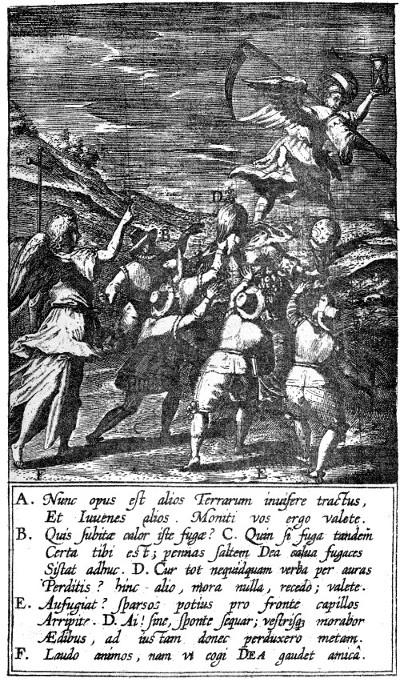
From David’s “Occasio arrepta neglecta &c” 1605
Very appropriately in illustration of these and other passages
in Shakespeare may we refer to John David’s work, “Occasio
arrepta neglecta” (4to, Antwerp, 1605),—Opportunity seized
or neglected. It contains twelve curiously beautiful plates by
Theodore Galle, showing the advantages of seizing the Occasion,
the disadvantages of neglecting it. We choose an example, it is
Schema 7, cap. 1, p. 117. (See Plate XII.)
“While Time is passing onward men keep Occasion back by seizing the
hair on her forehead.”
Various speakers are introduced,—
“Time. Now the need is to visit other climes of earth
And other youths. Ye warned then, bid farewell.
B. What this heat of sudden flight?
C. If flight indeed at length
For thee is fix’d, her swift wings let the bald goddess
At least rest here.
Occasion. Why to no purpose words in air
Waste ye? hence elsewhere, no delay, I go; farewell.
E. Should she flee? rather her scattered locks in front
Seize hold of.
Occasion. Alas! freely I follow, at your own homes
Will tarry, till in just measure I prolong my stay.
Faith. I praise your spirit, for by friendly force the goddess
Rejoices to be compelled.”
The line, “her scattered locks in front seize hold of,” has its
parallel in Othello (act iii. sc. 1, l. 47, vol. viii. p. 505),—
“he protests he loves you,
And needs no other suitor but his likings
To take the safest occasion by the front
To bring you in again.”
Classical celebrities, whether hero or heroine, wrapt round
with mystery, or half-developed into historical reality, may also
form portion of our Mythological Series.
The grand character in Æschylus, Prometheus Bound, is
depicted by at least four of the Emblematists. The hero of
suffering is reclining against the rock on Caucasus, to which he
had been chained; a vulture is seated on his broad chest and
feeding there. Alciat’s Emblem, from the Lyons edition of 1551,
or Antwerp, 1581, number 102, has the motto which reproves
men for seeking the knowledge which is beyond them: Things
which are above us, are nothing to us,—they are not our concern.
The whole fable is a warning.
Quæ ſupra nos, nihil ad nos.
Caucaſi a æternùm pendens in rupe Prometheus
Diripitur ſacri præpetis vngue iecur.
Et nollet feciſſe hominem: figulosq́₃que peroſus
Accenſam rapto damnat ab igne facem.
Roduntur variis prudentum pectora curis,
Qui cœli affectant ſcire, deûmqúe vices.
“On the Caucasian rock Prometheus eternally suspended,
Has his liver torn in pieces by talons of an accursed bird.
And unwilling would he be to have made man; and hating the potters
Dooms to destruction the torch lighted from stolen fire.
Devoured by various cares are the bosoms of the wise,
Who affect to know secrets of heaven, and courses of gods.”
Similarly as a dissuasive from vain curiosity, Anulus, in his
“Picta Poesis” (Lyons, 1555, p. 90), sets up the notice,—
CVRIOSITAS FVGIENDA.
“Curiosity must be shunned.”
Mitte arcana Dei cœlumq́₃que inquirere quid ſit.
Nec ſapias pluſquàm debet homo ſapere.
Caucaſeo vinctus monet hoc in rupe Prometheus
Scrutator cœli, fur & in igne Iouis.
Cui cor edax Aquila in rediuiuo vulnere rodit.
Materia pœnis ſufficiente ſuis.
Ἣ δὲ προμηθέι’ ἂχ

δάκνει κέαρ ἔντερον ἔνδον
Καρδιοβρόσκ
ὃμως ἂετ
ἐσθὶν ἂχ
.
The device is almost the same with Alciat's,—the stanzas, however,
are a little different,—
“Forbear to inquire the secrets of God, and what heaven may be.
Nor be wise more than man ought to be wise.
Bound on Caucasian rock this does Prometheus warn,
Scrutator of heaven and thief in the fire of Jove.
His heart the voracious Eagle gnaws in ever reviving wound,
Material sufficient this for all his penalties.”—
“As for Prometheus pain gnaws his heart the bosom within,
So is pain the eagle that consumes the heart.”
The “Microcosme,” first published in 1579, fol. 5, celebrates
in French stanzas Prometheus and his cruel destiny; a fine
device accompanies the emblem, representing him bound not to
Caucasus, but to the cross.
“Promethee s’ estant guindé iusques aux cieux
Pour desrober le feu des redoubables Dieux,
Pour retribution de ceste outrecuidance
Fut par eux poursuiui d’une rude vengeance.
Il fut par leur decret à la croix attaché,
La ou pour expier deuenant son peché,
L'Aigle de Iupiter le becquetoit sans cesse,
Si que ce patient estoit en grand oppressé.”
But Reusner’s Emblems (bk. i. Emb. 27, p. 37, edition 1581),
and Whitney’s (p. 75), adopt the same motto, O vita misero
longa,—“O life, how long for the wretched.” The stanzas of
the latter may be accepted as being in some degree representative
of those of the former,—
“To Caucasus, behoulde Promethevs chain’de,
Whose liuer still, a greedie gripe dothe rente:
He neuer dies, and yet is alwaies pain’de,
With tortures dire, by which the Poëttes ment,
That hee, that still amid misfortunes standes,
Is sorrowes slaue, and bounde in lastinge bandes.
For, when that griefe doth grate vppon our gall,
Or surging seas, of sorrowes moste doe swell,
That life is deathe, and is no life at all,
The liuer rente, it dothe the conscience tell:
Which being launch’de, and prick’d, with inward care,
Although wee liue, yet still wee dyinge are.”
How Shakespeare applies this mythic story appears in the
Titus Andronicus (act ii. sc. 1, l. 14, vol. vi. p. 451), where Aaron,
speaking of his queen, Tamora, affirms of himself,—
“Whom thou in triumph long
Hast prisoner held, fetter’d in amorous chains,
And faster bound to Aaron’s charming eyes
Than is Prometheus tied to Caucasus.”
And still more clearly is the application made, 1 Henry VI. (act
iv. sc. 3, l. 17, vol. v. p. 71), when Sir William Lucy thus urges
York,—
“Thou princely leader of our English strength,
Never so needful on the earth of France,
Spur to the rescue of the noble Talbot,
Who now is girdled with a waist of iron
And hemm’d about with grim destruction:”
and at York’s inability, through “the vile traitor Somerset,” to
render aid, Lucy laments (l. 47, p. 72),—
“Thus, while the vulture of sedition
Feeds in the bosoms of such great commanders,
Sleeping neglection doth betray to loss
The conquest of our scarce cold conqueror,
That ever living man of memory,
Henry the Fifth.”
It may readily be supposed that in writing these passages
Shakespeare had in memory, or even before him, the delineations
which are given of Prometheus, for the vulture feeding on
the heart belongs to them all, and the allusion is exactly one of
those which arises from a casual glance at a scene or picture
without dwelling on details.
This casual glance indeed seems to have been the way
in which our Dramatist appropriated others of the Emblem
sketches. In the well-known quarrel scene between Brutus and
Cassius, in Julius Cæsar (act iv. sc. 3, l. 21, vol. vii. p. 389),
Brutus demands,—
“What, shall one of us,
That struck the foremost man of all this world
But for supporting robbers, shall we now
Contaminate our fingers with base bribes,
And sell the mighty space of our large honours
For so much trash as may be grasped thus?
I had rather be a dog, and bay the moon,
Than such a Roman.”
The expression is the perfect counterpart of Alciat’s
164th Emblem (p. 571, edition Antwerp, 1581); the motto,
copied by Whitney (p. 213), is, Inanis impetus,—“A vain
attack.”
“By night, as at a mirror, the dog looks at the lunar orb:
And seeing himself, believes another dog to be on high,
And barks: but in vain is his angry voice driven by winds,
The silent Diana ever onward goes in her course.”
[132]
The device engraved on Alciat’s and Whitney’s pages depicts
the full moon surrounded by stars, and a large dog baying.
Whitney’s stanzas give the meaning of Alciat's, and also of
Beza's, which follow below,—
“By shininge lighte, of wannishe Cynthias raies,
The dogge behouldes his shaddowe to appeare:
Wherefore, in vaine aloude he barkes, and baies,
And alwaies thoughte, an other dogge was there:
But yet the Moone, who did not heare his queste,
Hir woonted course, did keep vnto the weste.
This reprehendes, those fooles which baule, and barke,
At learned men, that shine aboue the reste:
With due regarde, that they their deedes should marke,
And reuerence them, that are with wisedome bleste:
But if they striue, in vaine their winde they spende,
For woorthie men, the Lorde doth still defende.”
The same device to a different motto, “Despicit alta canis,”—The
dog despises high things,—is adopted by Camerarius, Ex
Anim. quadrup., p. 63,
edition 1595,—
“Why carest thou for the angry thorns of a vain speaking tongue?
Diana on high cares not for the loud-barking dog.”
[133]
We will conclude
our “baying” with
Beza’s 22nd Emblem.
The Latin stanza is sufficiently severe,—
“Luna velut toto collustrans lumine terras,
Frustra allatrantes despicit alta canes:
Sic quisquis Christum allatrat Christíve ministros,
Index stultitiæ? spernitor vsque suæ.”
i.e.
“As the moon with full light shining over the lands,
From on high doth despise dogs barking in vain:
So whoso is barking at Christ or Christ’s ministers,
The scorner is the pointer out even of his own folly.”
In connection with the power of music Orpheus is named by
many writers of the sixteenth century; and among the
Emblematists the lead may be assigned to Pierre Coustau in
“Le Pegme” (Lyons, 1560, p. 389),—
Sur la harpe d’Orpheus.
La force d’Eloquence.
De ſon gentil & fort melodieux
D'vn inſtrument, Orpheus feit mouuoir
Rocs & patitz de leur places & lieux.
C’eſt eloquence ayant force & pouuoir
D’ẽbler les cueurs de tous part son ſçavoir;
C’eſt l’orateur qui au fort d’eloquence,
Premierement ſouz méme demourance
Gens beſtiaulx, & par ferocité, &c.
“On the Harp of Orpheus.
The Power of Eloquence.
“With sound gentle and very melodious
Of an instrument Orpheus caused to move
Rocks and pastures from their place and home.
It is eloquence having force and power
To steal the hearts of all his learning shows,
It is the orator who by strength of eloquence
First brings even under influence
Brutal people, and from fierceness
Gathers them; and who to benevolence
From fierceness then reclaims.
A Narration Philosophique follows for three pages, discoursing
on the power of eloquence.
Musicæ, & Poeticæ vis,—“The force of Music and Poetry,”—occupies
Reusner’s 21st Emblem (bk. iii. p. 129), oddly enough dedicated
to a mathematician, David Nephelite. Whitney’s stanzas
(p. 186), Orphei Musica,—“The Music of Orpheus,”—bear considerable
resemblance to those of Reusner, and are sufficient for
establishing the parallelism of Shakespeare and themselves.
“Lo, Orphevs with his harpe, that sauage kinde did tame:
The Lions fierce, and Leopardes wilde, and birdes about him came.
For, with his musicke sweete, their natures hee subdu’de:
But if wee thinke his playe so wroughte, our selues wee doe delude.
For why? besides his skill, hee learned was, and wise:
And coulde with sweetenes of his tonge, all sortes of men suffice.
And those that weare most rude, and knewe no good at all:
And weare of fierce, and cruell mindes, the worlde did brutishe call.
Yet with persuasions sounde, hee made their hartes relente,
That meeke, and milde they did become, and followed where he wente.
Lo, these, the Lions fierce, these, Beares, and Tigers weare:
The trees, and rockes, that lefte their roomes, his musicke for to heare.
But, you are happie most, who in suche place doe staye:
You neede not Thracia seeke, to heare some impe of Orphevs playe.
Since, that so neare your home, Apollos darlinge dwelles;
Who Linvs, & Amphion staynes, and Orphevs farre excelles.
For, hartes like marble harde, his harmonie dothe pierce:
And makes them yeelding passions feele, that are by nature fierce.
But, if his musicke faile: his curtesie is suche,
That none so rude, and base of minde, but hee reclaimes them muche.
Nowe since you, by deserte, for both, commended are:
I choose you, for a Iudge herein, if truthe I doe declare.
And if you finde I doe, then ofte therefore reioyce:
And thinke, I woulde suche neighbour haue, if I might make my choice.”
In a similar strain, from the Merchant of Venice (act v. sc. 1,
l. 70, vol. ii. p. 361), we are told of the deep influence which
music possesses over—
“a wild and wanton herd
Or race of youthful and unhandled colts.”
The poet declares,—
“If they but hear perchance a trumpet sound,
Or any air of music touch their ears,
You shall perceive them make a mutual stand,
Their savage eyes turn’d to a modest gaze
By the sweet power of music: therefore the poet
[134]Did feign that Orpheus drew trees, stones and floods;
Since nought so stockish, hard and full of rage,
But music for the time doth change his nature.
The man that hath no music in himself,
Nor is not moved with concord of sweet sounds,
Is fit for treasons, stratagems and spoils:
The motions of his spirit are dull as night,
And his affections dark as Erebus:
Let no such man be trusted.”
And in the Two Gentlemen of Verona (act iii. sc. 2, l. 68, vol.
i. p. 129), the method is developed by which Silvia, through the
conversation of Proteus, may be tempered “to hate young
Valentine” and Thurio love. Proteus says,—
“You must lay lime to tangle her desires
By wailful sonnets, whose composed rhymes
Should be full-fraught with serviceable vows.
Duke. Ay,
Much is the force of heaven-bred poesy.
Pro. Say that upon the altar of her beauty
You sacrifice your tears, your sighs, your heart:
Write till your ink be dry, and with your tears
Moist it again; and frame some feeling line
That may discover such integrity:
For Orpheus’ lute was strung with poets’ sinews;
Whose golden touch could soften steel and stones.
Make tigers tame, and huge leviathans
Forsake unsounded deeps to dance on sands.”
[135]
Again, in proof of Music’s power, consult Henry VIII. (act iii.
sc. 1, l. 1, vol. vi. p. 56), when Queen Katharine, in her sorrowfulness,
says to one of her women who were at work around her,—
“Take thy lute, wench: my soul grows sad with troubles;
Sing and disperse ’em if thou canst: leave working.”
The sweet simple song is raised,—
“Orpheus with his lute made trees
And the mountain tops that freeze,
Bow themselves when he did sing:
To his music plants and flowers
Ever sprung, as sun and showers
There had made a lasting spring.
Everything that heard him play,
Even the billows of the sea,
Hung their heads, and then lay by.
In sweet music is such art,
Killing care and grief of heart
Fall asleep, or hearing die.”
How splendidly does the dramatic poet’s genius here shine
forth! It pours light upon each Emblem, and calls into day
the hidden glories. His spirit breathes upon a dead picture,
and rivalling Orpheus himself, he makes the images breathe and
glance and live.
The mythic tale of Actæon transformed into a stag, and
hunted by hounds because of his rudeness to Diana and her
nymphs, was used to point the moral of widely different subjects.
Alciatus (Emb. 52, ed. 1551, p. 60) applies it “to the harbourers
of assassins” and makes it the occasion of a very true but very
severe reflection.
“Of thieves and robbers evil-omen’d bands the city through
Go thy companions; and a cohort girded with dreadful swords.
And so, O prodigal, thou thinkest thyself of generous mind,
Because thy cooking pot allures very many of the bad ones.
Lo, a new Actæon, who after he assumed the horns,
Himself gave himself a prey to his own dogs.”
The device is graphically drawn: Actæon is in part embruted;
he is fleeing with the dogs close upon him. Supposing
Shakespeare to have seen this print, it represents
to the life Pistol’s words in the Merry Wives of Windsor
(act ii. sc. 1, l. 106, vol. i. p. 186),—
“Prevent, or go thou,
Like Sir Actæon he, with Ringwood at thy heels.”
“Ex domino servus,”—The slave out of the master,—is
another saying which the tale of Actæon has illustrated.
The application is from Aneau’s “Picta Poesis,” fol. 41.
On the left hand of the tiny drawing are Diana and her
nymphs, busied in the bath, beneath the shelter of an
overhanging cliff,—on the right is Actæon, motionless, with
a stag’s head; dogs are around him. The verses translated
read thus,—
“Horns being bestowed upon Actæon when changed to a stag,
Member by member his own dogs tore him to pieces.
Alas! wretched the Master who feeds wasteful parasites;
A ready prepared prey he is for his fawning dogs!
It suggests, he is mocked by them and devoured,
And out of a master is made a slave, bearing horns.”
But Sambucus in his Emblems (edition 1564, p. 128), and
Whitney after him (p. 15)—making use of the same woodcut,
only with a different border—adapt the Actæon-tragedy to
another subject and moral, and take the words, Pleasure
purchased by anguish.
Qvi nimis exercet venatus, ac ſine fine
Haurit opes patrias, prodigit inque canes:
Tantus amor vani, tantus furor vſque recurſat,
Induat ut celeris cornua bina feræ.
Accidit Actæon tibi, qui cornutus ab ortu,
À canibus propriis dilaceratus eras.
Quàm multos hodie, quos paſcit odora canum vis.
Venandi ſtudium conficit, atque vorat.
Seria ne ludis poſtponas, commoda damnis,
Quod ſupereſt rerum ſic ut egenus habe.
Sæpe etiam propria qui interdum vxore relicta
Deperit externas corniger iſta luit.
Stanzas which may thus be rendered,—
“Whoever too eagerly hunting pursues, and without moderation
Drains paternal treasures and lavishes them on dogs:
So great the love of the folly, so strong does the passion return
That it clothes him in the twin horns of the swift stag.
It happened, Actæon, to thee, who though horned from thy birth,
By thy own dogs into pieces wast torn.
At this day how many, whom the dogs’ quick scent delights,
The strong passion for hunting wastes and devours.
Put not off serious things for sports,—advantages for losses:
As one in need so hold fast whatever things remain:
Often even the horn bearer, his own wife forsaken,
Loves desperately strangers, and pays penalties for crimes.”
We here see that Sambucus has adopted the theory of
the old grammarian or historian of Alexandria, Palæphatus,
who informs us,—
“Actæon by race was an Arcadian, very fond of dogs. Many of them he
kept, and hunted in the mountains. But he neglected his own affairs, for
men then were all self-workers; they had no servants, but themselves tilled
the earth; and that man was the richest, who tilled the earth and was the
most diligent workman. But Actæon being careless of domestic affairs,
and rather going about hunting with his dogs, his substance was wasted.
And when he had nothing left, people kept saying: the wretched Actæon
was eaten up by his own dogs.”
A very instructive tale this for some of our Nimrods, mighty
hunters and racers in the land; but it is not to be pressed too
strictly into the service of the parsimonious.
From the same motto Whitney (p. 15) keeps much closer to
the mythological narrative,[136]—
“Actæon heare, vnhappie man behoulde,
When in the well, hee sawe Diana brighte,
With greedie lookes, hee waxed ouer boulde,
That to a stagge hee was transformed righte,
Whereat amasde, hee thought to runne awaie,
But straighte his howndes did rente hym, for their praie.
By which is ment, That those whoe do pursue
Theire fancies fonde, and thinges vnlawfull craue,
Like brutishe beastes appeare vnto the viewe,
And shall at lengthe, Actæons guerdon haue:
And as his houndes, soe theire affections base,
Shall them deuowre, and all their deedes deface.”
Very beautifully, in Twelfth Night (act i. sc. 1, l. 9,
vol. iii. p. 223), is this idea applied by Orsino, duke of
Illyria,—
“O spirit of love, how quick and fresh art thou!
That, notwithstanding thy capacity
Receiveth as the sea, nought enters there,
Of what validity and pitch soe’er,
But falls into abatement and low price,
Even in a minute! so full of shapes is fancy
That it alone is high fantastical.
Cur. Will you go hunt, my lord?
Duke.What, Curio?
Cur. The hart.
Duke. Why, so I do, the noblest that I have:
O, when mine eyes did see Olivia first,
Methought she purged the air of pestilence!
That instant was I turn’d into a hart;
And my desires, like fell and cruel hounds,
E’er since pursue me.”
The full force and meaning of the mythological tale is,
however, brought out in the Titus Andronicus (act ii. sc. 3,
l. 55, vol. vi. p. 459), that fearful history of passion and
revenge. Tamora is in the forest, and Bassianus and Lavinia
make their appearance,—
“Bass. Who have we here? Rome’s royal empress,
Unfurnish’d of her well-beseeming troop?
Or is it Dian, habited like her,
Who hath abandoned her holy groves,
To see the general hunting in this forest?
Tam. Saucy controller of my private steps!
Had I the power that some say Dian had,
Thy temples should be planted presently
With horns, as was Actæon’s, and the hounds
Should drive upon thy new-transformed limbs,
Unmannerly intruder as thou art!”
Arion rescued by the Dolphin is another mythic tale in which
poets may well delight. Alciatus (Emblem 89, edition 1581),
directs the moral, “against the avaricious, or those to whom a
better condition is offered by strangers.” Contrary to the French
writers of time and place, the emblem presents in the same
device the harpist both cast out of the ship and riding triumphantly
to the shore.
In auaros, vel quibus melior conditio ab
extraneis offertur.
Emblema LXXXIX.
Delphini inſidens vada cærula ſulcat Arion,
Hocʠ3 aures mulcet, frenat & ora ſono.
Quàm ſit auari hominis, non tam mens dira ſerarũ est;
Quiʠ3 viris rapimur, piſcibus eripimur.
i.e.
“On the dolphin sitting Arion ploughs cerulean seas,
With a sound he soothes the ears, with a sound curbs the mouth.
Of wild creatures not so dreadful is the mind, as of greedy man;
We who by men are pillaged, are by fishes rescued.”
With this thought before him Whitney (p. 144) at the
head of his stanzas has placed the strong expression, “Man
is a wolf to man.”[137] Cave canem,—“Beware of the dog,”—is
certainly a far more kindly warning; but the motto,
Homo homini lupus, tallies exactly with the conduct of the
mariners.
“No mortall foe so full of poysoned spite,
As man, to man, when mischiefe he pretendes:
The monsters huge, as diuers aucthors write,
Yea Lions wilde, and fishes weare his frendes:
And when their deathe, by frendes suppos’d was sought,
They kindnesse shew’d, and them from daunger brought.
Arion lo, who gained store of goulde,
In countries farre: with harpe, and pleasant voice:
Did shipping take, and to Corinthvs woulde,
And to his wishe, of pilottes made his choise:
Who rob’d the man, and threwe him to the sea,
A Dolphin, lo, did beare him safe awaie.”
A comment from St. Chrysostom, super Matth. xxii., is
added,—
“As a king is honoured in his image, so God is loved and hated in
man. He cannot hate man, who loves God, nor can he, who hates God,
love men.”
Reference is also made to Aulus Gellius (bk. v. c. 14, vol. i.
p. 408), where the delightful story is narrated of the slave
Androclus and the huge lion whose wounded foot he had cured,
and with whom he lived familiarly for three years in the same
cave and on the same food. After a time the slave was taken
and condemned to furnish sport in the circus to the degraded
Romans. That same lion also had been taken, a beast of vast
size, and power and fierceness. The two were confronted in
the arena.
“When the lion saw the man at a distance,” says the narrator, “suddenly,
as if wondering, he stood still; and then gently and placidly as if recognising
drew near. With the manner and observance of fawning dogs, softly and
blandly he wagged his tail and placed himself close to the man’s body, and
lightly with his tongue licked the legs and hands of the slave almost
lifeless from fear. The man Androclus during these blandishments of the
fierce wild creature recovered his lost spirits; by degrees he directed his
eyes to behold the lion. Then, as if mutual recognition had been made, man
and lion appeared glad and rejoicing one with the other.”
Was it now, from having this tale in mind that, in the
Troilus and Cressida (act v. sc. 3, l. 37, vol. vi. p. 247), these
words were spoken to Hector?—
“Brother, you have a vice of mercy in you,
Which better fits a lion than a man.”
Arion sauué par vn Dauphin, is also the subject of a well
executed device in the “ΜΙΚΡΟΚΟΣΜΟΣ” (edition Antwerp,
1592),[138] of which we give the French version (p. 64),—
“Arion retournant par mer en sa patrie
Chargé de quelque argẽt, vid que les mariniers
Animéz contre luy d’une auare furie
Pretendoyent luy oster sa vie & ses deniers.
Pour eschapper leurs mains & changer leur courage,
Sur la harpe il chanta vn chant melodieux
Mais il ne peut fleschir la nature sauuage
De ces cruels larrons & meurtriers furieux.
Estant par eux ietté deans la mere profonde,
Vn Dauphin attiré au son de l’instrument,
Le chargea sur son dos, & au trauers de l’onde
Le portant, le sauua miraculeusement.
Maintes fois l’innocent à qui on fait offense
Trouue plus de faueur es bestes qu’es humains:
Dieu qui aime les bons les prend en sa defense,
Les gardant de l’effort des hommes inhumains.”
To the Emblems we have under consideration we meet with
this coincidence in Twelfth Night (act i. sc. 2, l. 10, vol. iii.
p. 225); it is the Captain’s assurance to Viola,—
“When you and those poor number saved with you
Hung on our driving boat, I saw your brother,
Most provident in peril, bind himself,
Courage and hope both teaching him the practice,
To a strong mast that lived upon the sea;
Where, like Arion on the dolphin’s back,
I saw him hold acquaintance with the waves
So long as I could see.”
As examples of a sentiment directly opposite, we will briefly
refer to Coustau’s Pegma (p. 323, edition Lyons, 1555), where
to the device of a Camel and his driver, the noble motto is
recorded and exemplified from Plutarch, Homo homini Deus,—“Man
is a God to man;” the reason being assigned,—
“As the world was created for sake of gods and men, so man was created
for man’s sake;” and, “that the grace we receive from the immortal God is
to be bestowed on man by man.”
Reusner, too, in his Emblemata (p. 142, Francfort, 1581),
though commenting on the contrary saying, Homo homini lupus,
declares,—
“Aut homini Deus est homo; si bonus: aut lupus hercle,
Si malus: ô quantum est esse hominem, atq. Deum.”
i.e.
“Or man to man is God; if good: or a wolf in truth,
If bad: O how great it is to be man and God!”
[139]
Was it in reference to these sentiments that Hamlet and
Cerimon speak? The one says (Hamlet, act iv. sc. 4,
l. 33. vol. viii. p. 127),—
“What is a man,
If his chief good and market of his time
Be but to sleep and feed? a beast, no more.
Sure, he that made us with such large discourse,
Looking before and after, gave us not
That capability and god-like reason
To fust in us unused.”
And again (act ii. sc. 2, l. 295, vol. viii. p. 63),—
“What a piece of work is a man! how noble in reason! how infinite in
faculty! in form and moving how express and admirable! in action how
like an angel! in apprehension how like a god!”
So in the Pericles (act iii. sc. 2, l. 26, vol. ix. p. 366), the fine
thought is uttered,—
“I hold it ever,
Virtue and cunning were endowments greater
Than nobleness and riches: careless heirs
May the two latter darken and expend,
But immortality attends the former,
Making a man a god.”
The horses and chariot of Phœbus, and the presumptuous
charioteer Phaëton, who attempted to drive them, are celebrated
with great splendour of description in Ovid’s Metamorphoses
(bk. ii. fab. 1), that rich storehouse of Mythology. The palace
of the god has lofty columns bright with glittering gold; the
roof is covered with pure shining ivory; and the double gates
are of silver. Here Phœbus was throned, and clothed in
purple;—the days and months and years,—the seasons and the
ages were seated around him; Phaëton appears, claims to be
his son, and demands for one day to guide the glorious steeds.
At this point we take up the narrative which Alciat has written
(Emb. 56), and inscribed, “To the rash.”[140]
“You behold Phaëton the driver of his father’s chariot,—
Who dared to guide the fire breathing horses of the sun.
After over the lands mightiest burnings he scattered,
Wretched he fell from the chariot where rashly he sat.
So many kings, whom youthful ambition excites,
On the wheels of Fortune are borne to the stars.
After great slaughter of the human race and their own,
For all their crimes at last the penalties they pay.”
Shakespeare’s notices of the attempted feat and its failure
are frequent. First, in the Two Gentlemen of Verona (act iii.
sc. 1, l. 153, vol. i. p. 121), the Duke of Milan discovers the
letter addressed to his daughter Silvia, with the promise,—
“Silvia, this night will I enfranchise thee,”—
and with true classic force denounces the folly of the attempt,—
“Why, Phaethon,—for thou art Merops’ son,—
Wilt thou aspire to guide the heavenly car,
And with thy daring folly burn the world?
Wilt thou reach stars because they shine on thee?”
In her impatience for the meeting with Romeo (Romeo and
Juliet, act iii. sc. 2, l. 1, vol. vii. p. 72), Juliet exclaims,—
“Gallop apace, you fiery-footed steeds,
Towards Phœbus’ lodging: such a waggoner
As Phaethon would whip you to the west
And bring in cloudy night immediately.”
The unfortunate Richard II. (act iii. sc. 3, l. 178, vol. iv. p.
179), when desired by Northumberland to meet Bolingbroke in
the courtyard (“may’t please you to come down”), replies,—
“Down, down, I come; like glistering Phaeton
Wanting the manage of unruly jades.”
And he too, in 3 Henry VI. (act i. sc. 4, l. 16, vol. v. p. 244),
Richard, Duke of York, whose son cried,—
“A crown, or else a glorious tomb!
A sceptre or an earthly sepulchre!”—
when urged by Northumberland (l. 30),—
“Yield to our mercy, proud Plantagenet;”
had this answer given for him by the faithful Clifford,—
“Ay, to such mercy, as his ruthless arm,
With downright payment, shew’d unto my father.
Now Phaethon hath tumbled from his car,
And made an evening at the noontide prick.”
That same Clifford (act ii. sc. 6, l. 10, vol. v. p. 271), when wounded
and about to die for the Lancastrian cause, makes use of the
allusion,—
“And who shines now but Henry’s enemy?
O Phœbus! hadst thou never given consent
That Phaëthon should check thy fiery steeds,
Thy burning car had never scorch’d the earth!
And, Henry, hadst thou sway’d as kings should do,
Or as thy father and his father did,
Giving no ground unto the house of York,
They never then had sprung like summer flies;
I and ten thousand in this luckless realm
Had left no mourning widows for our death;
And thou this day hadst kept thy chair in peace.”
In the early heroic age, when Minos reigned in Crete and
Theseus at Athens, just as Mythology was ripening into history,
the most celebrated for mechanical contrivance and for excellence
in the arts of sculpture and architecture were Dædalus
and his sons Talus and Icarus. To them is attributed the
invention of the saw, the axe, the plumb-line, the auger, the
gimlet, and glue; they contrived masts and sailyards for ships;
and they discovered various methods of giving to statues
expression and the appearance of life. Chiefly, however, are
Dædalus and Icarus now known for fitting wings to the human
arms, and for attempting to fly across the sea from Crete to the
shore of Greece. Dædalus, hovering just above the waves,
accomplished the aërial voyage in safety; but Icarus, too
ambitiously soaring aloft, had his wings injured by the heat of
the sun, and fell into the waters, which from his death there were
named the Icarian sea.
From the edition of Alciat’s Emblems, 1581, we select a
drawing which represents the fall of Icarus; it is dedicated “To
Astrologers,” or fortune tellers. The warning in the last two
lines is all we need to translate,—
“Let the Astrologer take heed what he foretells; for headlong
The impostor will fall though he fly the stars above.”
Emblema ciii.
Icare, per ſuperos qui raptus & aëra, donec
In mare præcipitem cera liquata daret,
Nunc te cera eadem, feruensq́₃que reſuſcitat ignis,
Exemplo vt doceas dogmata certa tuo.
Aſtrologus caueat quicquam prædicere: præceps
Nam cadet impoſtor dum ſuper aſtra volat.
Whitney, however (p. 28), will supply the whole,—
“Heare, Icarvs with mountinge vp alofte,
Came headlonge downe, and fell into the Sea:
His waxed winges, the sonne did make so softe,
They melted straighte, and feathers fell awaie:
So, whilste he flewe, and of no dowbte did care,
He moou’de his armes, but loe, the same were bare.
Let suche beware, which paste theire reache doe mounte,
Whoe seeke the thinges, to mortall men deny’de,
And searche the Heauens, and all the starres accoumpte,
And tell therebie, what after shall betyde:
With blusshinge nowe, theire weakenesse rightlie weye,
Least as they clime, they fall to theire decaye.”
Fol Icarus que t’eſt il aduenu?
Tu as treſmal le conſeil retenu
De Dedalus ton pere qui t’apprint
L’art de voler, lequel il entreprint
Pour eſchapper de Minos la priſon
Ou vous eſtiez enfermez, pour raiſon
Qu’il auoit faict & baſty vne vache
D’ung boys leger ou Paſiphe ſe cache.
Ce Dedalus nature ſurmonta
A toy & luy des ælles adiouſta
Aux bras & piedz, tant que pouiez voler
Et en volant il ſe print à parler
A toy diſant: mon filz qui veulx pretendre
De te ſauluer, vng cas tu doibs entendre
Que ſi tu veulx à bon port arriuer
Il ne te fault vers le ciel eſleuer.
Car le Soleil la cire fonderoit,
Et par ainſi ta plume tomberoit,
Sy tu vas bas l’humidité des eaulx
Te priuera du pouoir des oyſeaulx,
Mais ſi tu vas ne hault ne bas, adoncques
La voyé̩[e/]̩ eſt ſeuré̩[e/]̩ & ſans dangers quelzconques:
O pauure ſot le hault chemin tu prins
Trop hault pour toy car mal il t’en eſt prins
La cire fond, & ton plumage tumbe
Et toy auſſi preſt à mettre ſoubz tumbe.
We use this opportunity to present two consecutive pages of
Corrozet’s “Hecatomgraphie” (Emb. 67), that the nature of his
devices, and of their explanations may be seen. There is a
motto,—“To take the middle way,”—and these lines follow—
“Who too much exalts himself too much values himself,
Who too much abases himself, he undervalues himself,
But that man who wills to do well,
He governs himself the medium way.”
In the page of metrical explanation subjoined, the usual mythic
narrative is closely followed.
The full idea is carried out in 3 Henry VI. (act v. sc. 6,
l. 18, vol. v. p. 332), Gloucester and King Henry being the
speakers,—
“Glou. Why, what a peevish fool was that of Crete,
That taught his son the office of a fowl!
And yet for all his wings, the fool was drown’d.
K. Hen. I, Dædalus; my poor boy, Icarus;
Thy father, Minos, that denied our course;
The sun that sear’d the wings of my sweet boy
Thy brother Edward, and thyself the sea
Whose envious gulf did swallow up his life.
Ah, kill me with thy weapon, not with words!
My breast can better brook thy dagger’s point
Than can my ears that tragic history.”
In the 1st part also of the same dramatic series (act iv. sc. 6,
l. 46, vol. v. p. 78), John Talbot, the son, is hemmed about in
the battle near Bourdeaux. Rescued by his father, he is urged
to escape, but the young hero replies,—
“Before young Talbot from old Talbot fly,
The coward horse that bears me fall and die!
And like me to the peasant boys of France,
To be shame’s scorn and subject of mischance!
Surely, by all the glory you have won,
An if I fly, I am not Talbot’s son:
Then talk no more of flight, it is no boot;
If son to Talbot, die at Talbot’s foot.
Tal. Then follow thou thy desperate sire of Crete,
Thou Icarus; thy life to me is sweet:
If thou wilt fight, fight by thy father’s side;
And, commendable proved, let’s die in pride.”
The tearful tale of Niobe, who that has read Ovid’s Metamorphoses
(bk. vi. fab. 5) could not weep over it! Seven
stalwart sons and seven fair daughters clustered round the
haughty dame, and she gloried in their attendance upon her;
but at an evil hour she dared to match herself with Latona, and
at a public festival in honour of the goddess to be the only one
refusing to offer incense and prayers. The goddess called her
own children to avenge the affront and the impiety; and Apollo
and Diana, from the clouds, slew the seven sons as they were
exercising on the plain near Thebes. Yet the pride of Niobe
did not abate, and Diana in like manner slew also the seven
daughters. The mother’s heart was utterly broken; she wept
herself to death, and was changed to stone. Yet, says the poet,
Flet tamen,—“ Yet she weeps,”—
Liquitur, et lacrymas etiam nunc marmora manant,—
i.e.
“It melts, and even now the marble trickles down tears.”
Alciat adopts the tale as a warning; Pride he names his
67th Emblem.
En ſtatuæ ſtatua, & ductum de marmore marmor,
Se conferre Deis auſa procax Niobe.
Eſt vitium muliebre ſuperbia, & arguit oris
Duritiem, ac ſenſus, qualis ineſt lapidi.
As we look at the device we are sensible to a singular
incongruity between the subject and the droll, Punch-like
figures, which make up the border. The sentiment, too,
is as incongruous, that “Pride is a woman’s vice and
argues hardness of look and of feeling such as there is in
stone.”
Making a slight change in the motto, Whitney (p. 13) writes.
Superbiæ vltio,—“Vengeance upon pride,”—
“Of Niobe, behoulde the ruthefull plighte,
Bicause shee did dispise the powers deuine:
Her children all, weare slaine within her sighte,
And, while her selfe with tricklinge teares did pine,
Shee was transform’de, into a marble stone,
Which, yet with teares, dothe seeme to waile, and mone.
This tragedie, thoughe Poëtts first did frame,
Yet maie it bee, to euerie one applide:
That mortall men, shoulde thinke from whence they came,
And not presume, nor puffe them vp with pride,
Leste that the Lorde, whoe haughty hartes doth hate,
Doth throwe them downe, when sure they thinke theyr state.”
Shakespeare’s notices of Niobe are little more than allusions;
the mode in which Apollo and Diana executed the cruel
vengeance may be glanced at in All’s Well (act v. sc. 3, l. 5,
vol. iii. p. 201), when the Countess of Rousillon pleads for her
son to the King of France,—
“Count. ’Tis past, my liege;
And I beseech your majesty to make it
Natural rebellion, done i’ the blaze of youth;
When oil and fire, too strong for reason’s force,
O’erbears it and burns on.
King. My honour’d lady,
I have forgiven and forgotten all;
Though my revenges were high bent upon him,
And watch’d the time to shoot.”
Troilus (act v. sc. 10, l. 16, vol. vi. p. 261), anticipating Priam’s
and Hecuba’s mighty grief over the slain Hector, speaks thus
of the fact,—
“Let him that will a screech-owl aye be call’d
Go into Troy, and say there, ‘Hector’s dead:’
There is a word will Priam turn to stone,
Make wells and Niobes of the maids and wives,
Cold statues of the youth, and in a word,
Scare Troy out of itself.”
Hamlet, too (act i. sc. 2, l. 147, vol. viii. p. 17), in his bitter
expressions respecting his mother’s marriage, speaks thus
severely of the brevity of her widowhood,—
“A little month, or ere those shoes were old
With which she follow’d my poor father’s body.
Like Niobe, all tears:—why she, even she,—
O God! a beast that wants discourse of reason.
Would have mourn’d longer;—within a month;
Ere yet the salt of most unrighteous tears
Had left the flushing in her galled eyes,
She married.”
Tiresias, the blind soothsayer of Thebes, had foretold that
the comely Narcissus would live as long as he could refrain from
the sight of his own countenance,—
“But he, ignorant of his destiny,” says Claude Mignault, “grew so
desperately in love with his own image seen in a fountain, that he miserably
wasted away, and was changed into the flower of his own name, which is
called Narce, and means drowsiness or infatuation, because the smell of the
Narcissus affects the head.”
However that may be, Alciatus, edition Antwerp, 1581,
exhibits the youth surveying his features in a running stream;
the flower is behind him, and in the distance is Tiresias
pronouncing his doom. “Self love” is the motto.
Qvod nimium tua forma tibi Narciſſe placebat,
In florem, & noti eſt verſa ſtuporis olus.
Ingenij eſt marcor, cladesq́₃que. Φιλαυτία, doctos
Quæ peſſum plures datq́₃que, deditq́₃que viros:
Qui veterum abiecta methodo, noua dogmata quærunt,
Nilq́₃que ſuas præter tradere phantaſias.
Anulus also, in the “Picta Poesis” (p. 48), mentions his
foolish and vain passion,—
Contemnens alios, arsit amore sui,—
i.e.
“Despising others, inflamed he was with love of himself.”
From Alciat and Anulus, Whitney takes up the fable
(p. 149), his printer Rapheleng using the same wood-block as
Plantyn did in 1581. Of the three stanzas we subjoin one,—
“Narcissvs lou’de, and liked so his shape,
He died at lengthe with gazinge there vppon:
Which shewes selfe loue, from which there fewe can scape,
A plague too rife: bewitcheth manie a one.
The ritche, the pore, the learned, and the sotte,
Offende therein: and yet they see it not.”
It is only in one instance, Antony and Cleopatra (act ii.
sc. 5, l. 95, vol. ix. p. 48), and very briefly, that Shakespeare
names Narcissus; he does this when the Messenger repeats to
Cleopatra that Antony is married, and she replies,—
“The Gods confound thee!...
... Go, get thee hence:
Hadst thou Narcissus in thy face, to me
Thou wouldst appear most ugly.”
Ille amat, hæc odit, fugit hæc: ſectatur at ille
Dúmque fugit: Laurus facta repentè ſtetit.
Sic amat, & fruſtra, nec Apollo potitus amore eſt.
Vltus Apollinis eſt, ſic Amor opprobrium.
Haecine doctorum ſors eſt inimica virorum,
Vt iuuenes quamuis non redamentur ament?
Exoſoſque habeat prudentes ſtulta iuuentus
His ne iungatur ſtipes vt eſſe velit.
The most beautiful of the maidens of Thessaly, Daphne,
the daughter of the river-god
Peneus, was Apollo’s
earliest love. He
sought her in marriage,
and being refused by her,
prepared to force consent.
The maiden fled,
and was pursued, and,
at the very moment of
her need invoked her
father’s aid, and was
transformed into a laurel.
At this instant the device
of Anulus represents
her, in the “Picta Poesis”
(P. 47).[141]
“He loves, she hates; she flees, but he pursues,
And while she flees, stopped suddenly, to laurel changed.
So loves Apollo, and in vain; nor enjoys his love.
So love has avenged the reproach of Apollo.
This very judgment of learned men is it not hostile,
That youths should love though not again be loved?
Hated should foolish youth account the wise
Lest by these the log be not joined as it wishes to be.”
The Midsummer Night’s Dream (act ii. sc. 1, l. 227, vol. ii.
p. 218) reverses the fable; Demetrius flees and Helena
pursues,—
“Dem. I’ll run from thee and hide me in the brakes,
And leave thee to the mercy of wild beasts.
Hel. The wildest hath not such a heart as you.
Run when you will, the story shall be changed:
Apollo flies, and Daphne holds the chase:
The dove pursues the griffin; the mild hind
Makes speed to catch the tiger; bootless speed,
When cowardice pursues, and valour flies.”
There is, too, the quotation already made for another
purpose (p. 115) from the Taming of the Shrew (Introd. sc. 2,
l. 55),—
“Or Daphne roaming through a thorny wood,
Scratching her legs that one shall swear she bleeds,
And at that sight shall sad Apollo weep,
So workmanly the blood and tears are drawn.”
And Troilus (act i. sc. 1, l. 94, vol. vi. p. 130) makes the
invocation,—
“Tell me, Apollo, for thy Daphne’s love
What Cressid is, what Pandar, and what we?”
Among Mythological Characters we may rank Milo, “of force
unparalleled;” to whom with crafty words of flattery Ulysses
likened Diomed; Troilus and Cressida (act ii. sc. 3, l. 237),—
“But he that disciplined thine arms to fight,
Let Mars divide eternity in twain,
And give him half: and for thy vigour,
Bull-bearing Milo his addition yield
To sinewy Ajax.”
Milo’s prowess is the subject of a fine device by Gerard de
Jode, in the “ΜΙΚΡΟΚΟΣΜΟΣ” (p. 61), first published in 1579,
with Latin verses. Respecting Milo the French verses say,—
“La force de Milon a esté nompareille,
Et de ses grands efforts on raconte merueille:
S’il se tenoit debout, il ne se trouuoit pas
Homme aucun qui le peust faire bouger d’un pas.
A frapper il estoit si fort & si adestre
Que d’un seul coup de poing il tua de sa dextre
Vn robuste taureau, & des ses membres forts
Vne lieue le porta sans se greuer le corps.
Mais se fiant par trop en ceste grande force,
Il fut en fin saisi d’une mortelle entorce:
Car il se vid manger des bestes, estant pris
A l’arbre qu’il auoit de desioindre entrepris.
Qui de sa force abuse en chase non faisable
Se rend par son effort bien souuent miserable,
Le fol entrepreneur tombe en confusion
Et s’expose à chacun en grand derision.”
The famous winged horse, Pegasus, heroic, though not a
hero, has a right to close in our array of mythic characters.
Sprung from the blood of Medusa when Perseus cut off her
head, Pegasus is regarded sometimes as the thundering steed of
Jove, at other times as the war-horse of Bellerophon; and in
more modern times, under a third aspect, as the horse of the
Muses. Already (at p. 142) we have spoken of some of the
merits attributed to him, and have presented Emblems in which
he is introduced. It will be sufficient now to bring forward the
device and stanza of Alciat, in which he shows us how “by
prudence and valour to overcome the Chimæra, that is, the
stronger and those using stratagems.”
Conſilio & virtute Chimæram ſuperari, id est,
fortiores & deceptores.
Emblema xiiii.
Bellerophon ut fortis eques ſuperare Chimæram,
Et Lycij potuit ſternere monſtra ſoli:
Sic tu Pegaſeis vectus petis æthera pennis,
Conſilioq́₃que animi monſtra ſuperba domas.
i.e.
“As the brave knight Bellerophon could conquer Chimæra,
And the monsters of the Lycian shore stretch on the ground:
So thou borne on the wings of Pegasus seekest the sky,
And by prudence dost subdue proud monsters of the soul.”
Shakespeare recognises neither Bellerophon nor the Chimæra,
but Pegasus, the wonderful creature, and Perseus its owner.
The dauphin Lewis (see p. 141) likens his own horse to
Pegasus, “with nostrils of fire,”—
It is a beast for Perseus: he is pure air and fire ... he is indeed a horse.
In the Grecian camp (see Troilus and Cressida, act i. sc. 3,
l. 33, vol. vi. p. 142), Nestor is urging the worth of dauntless
valour, and uses the apt comparison,—
“In the reproof of chance
Lies the true proof of men: the sea being smooth,
How many shallow bauble boats dare sail
Upon her patient breast, making their way
With those of nobler bulk!
But let the ruffian Boreas once enrage
The gentle Thetis, and anon behold
The strong-ribb’d bark through liquid mountains cut,
Bounding between the two moist elements,
Like Perseus’ horse.”
The last lines are descriptive of Alciat’s device, on p. 299.
It is the same Nestor (act iv. sc. 5, l. 183), who so freely and
generously compliments Hector, though his enemy,—
“I have, thou gallant Trojan, seen thee oft,
Labouring for destiny, make cruel way
Through ranks of Greekish youth; and I have seen thee,
As hot as Perseus, spur thy Phrygian steed,
Despising many forfeits and subduements,
When thou hast hung thy advanced sword i’ the air,
Nor letting it decline on the declined,
That I have said to some my standers by,
‘Lo, Jupiter is yonder, dealing life!’”
Young Harry’s praise, too, in 1 Henry IV., act iv. sc. 1. l. 109,
vol. iv. p. 318, is thus celebrated by Vernon,—
“As if an angel dropp’d down from the clouds
To turn and wind a fiery Pegasus,
And witch the world with noble horsemanship.”
For nearly all the personages and the tales contained in this
section, authority may be found in Ovid, and in the various
pictorially illustrated editions of the Metamorphoses or of portions
of them, which were numerous during the actively literary life
of Shakespeare. It is, I confess, very questionable, whether for
his classically mythic tales he was indeed indebted to the Emblematists;
yet the many parallels in mythology between him
and them justify the pleasant labour of setting both side by
side, and, by this means, of facilitating to the reader the forming
for himself an independent judgment.

SIMILITUDES and, in cases not a few, identities
have often been detected between the popular
tales of widely distant nations, intimating either
a common origin, or a common inventive power
to work out like results. Fables have ever been a floating
literature,—borne hither and thither on the current of Time,—used
by any one, and properly belonging to no one. How
they have circulated from land to land, and from age to age,
we cannot tell; whence they first arose it is impossible to
divine. There exist, we are told, fables collected by Bidpai in
Sanscrit, by Lokman in Arabic, by Æsop in Greek, and by
Phædrus in Latin; and they seem to have been interchanged
and borrowed one from the other as if they were the property
of the world,—handed down from the ancestorial times of a
remote antiquity.
Shakespeare’s general estimation of fables, and of those of
Æsop in particular, may be gathered from certain expressions in
two of the plays,—in the Midsummer Night’s Dream (act v. sc. 1,
l. 1, vol. ii. p. 258) and in 3 Henry VI. (act v. sc. 5, l. 25, vol. v. p.
329). In the former the speakers are Hippolyta and Theseus,—
“Hip. ’Tis strange, my Theseus, that these lovers speak of.
The. More strange than true: I never may believe
These antique fables, nor these fairy toys.
Lovers and madmen have such seething brains
Such shaping fantasies, that apprehend
More than cool reason ever comprehends.”
In the latter Queen Margaret’s son in reproof of Gloucester,
declares,—
“Let Æsop fable in a winter’s night;
His currish riddles sort not with this place.”
The year of Shakespeare’s birth, 1564, saw the publication,
at Rome, of the Latin Fables of Gabriel Faerni; they had been
written at the request of Pope Pius IV., and possess a high
degree of excellence, both for their correct Latinity and for the
power of invention which they display. Roscoe, in his Life of
Leo X. (Bohn’s ed. ii. p. 172), even avers that they “are written
with such classical purity, as to have given rise to an opinion
that he had discovered and fraudulently availed himself of some
of the unpublished works of Phædrus.” This opinion, however,
is without any foundation.
The Dialogues of Creatures moralised preceded, however, the
Fables of Faerni by above eighty years. “In the Latin and
Dutch only there were not less than fifteen known editions
before 1511.”[142] An edition in Dutch is named as early as 1480,
and one in French in 1482; and the English version appeared,
it is likely, at nearly as early a date. These and other books of
fables, though by a contested claim, are often regarded as books
of Emblems. The best Emblem writers, even the purest,
introduce fables and little tales of various kinds; as Alciat,
Emb. 7, The Image of Isis, the Ass and the Driver; Emb. 15,
The Cock, the Lion, and the Church; Emb. 59, The Blackamoor
washed White, &c.: Hadrian Junius, Emb. 4, The caged
Cat and the Rats; Emb. 19, The Crocodile and her Eggs:
Perriere, Emb. 101, Diligence, Idleness, and the Ants. They all,
in fact, adopted without scruple the illustrations which suited
their particular purpose; and Whitney, in one part of his
Emblemes, uses twelve of Faerni’s fables in succession.
Of the fables to which Shakespeare alludes some have been
quoted in the former part of this work;—as The Fly and the
Candle; The Sun, the Wind, and the Traveller; The Elephant
and the undermined Tree; The Countryman and the Serpent.
Of others we now proceed to give examples.
The Hares biting the dead Lion had, perhaps, one of its
earliest applications, if not its origin, in the conduct of Achilles
and his coward Greeks to the dead body of Hector, which
Homer thus records (Iliad, xxii. 37),—
“The other sons of the Greeks crowded around;
And admired Hector’s stature and splendid form;
Nor was there one standing by who did not inflict a wound.”
Claude Mignault, in his notes to Alciatus (Emb. 153), quotes
an epigram, from an unknown Greek author, which Hector is
supposed to have uttered as he was dragged by the Grecian
chariot,—
“Now after my death ye pierce my body;
The very hares are bold to insult a dead lion.”
The Troilus and Cressida (act v. sc. 8, l. 21, vol. vi. p. 259)
exhibits the big, brutal Achilles exulting over his slain enemy,
and giving the infamous order,—
“Come, tie his body to my horse’s tail;
Along the field I will the Trojan trail.”
And afterwards (act v. sc. 10, l. 4, vol. vi. p. 260) the atrocities
are recounted to which Hector’s body was exposed,—
“He’s dead, and at the murderer’s horse’s tail
In beastly sort dragg’d through the shameful field.”
The description thus given accords with that of Alciatus,
Reusner, and Whitney, in reference to the saying, “We must
not struggle with phantoms.” Alciat’s stanzas (Emb. 153)
are,—
Cum laruis non luctandum.
Æacidæ moriens percussu cuspidis Hector
Qui toties hosteis vicerat ante suos;
Comprimere haud potuit vocem, insultantibus illis,
Dum curru & pedibus nectere vincla parant.
Distrahite vt libitum est: sic cassi luce leonis
Conuellunt barbam vel timidi lepores.
Thus rendered by Whitney (p. 127), with the same device,—
Cùm laruis non luctandum.
“When Hectors force, throughe mortall wounde did faile,
And life beganne, to dreadefull deathe to yeelde:
The Greekes moste gladde, his dyinge corpes assaile,
Who late did flee before him in the fielde:
Which when he sawe, quothe hee nowe worke your spite,
For so, the hares the Lion dead doe byte.
Looke here vpon, you that doe wounde the dead,
With slaunders vile, and speeches of defame:
Or bookes procure, and libelles to be spread,
When they bee gone, for to deface theire name:
Who while they liu’de, did feare you with theire lookes,
And for theire skill, you might not beare their bookes.”
Reusner’s lines, which have considerable beauty, may thus be
rendered,—
“Since man is mortal, the dead it becomes us
Neither by word nor reproachful writing to mock at.
Theseus, mindful of mortal destiny, the bones of his friends
Both laves, and stores up in the tomb, and covers with earth.
’Tis the mark of a weak mind, to wage war with phantoms,
And after death to good men insult to offer.
So when overcome by the strength of Achilles
The scullions of the camp struck Hector with darts.
So whelps bite the lion laid prostrate by death;
So his weapon any one bloods in the boar that is slain.
Better ’tis, ye gods, well to speak, of those deserving well;
And wickedness great indeed, to violate sacred tombs.”
The device itself, in these three authors, is a representation
of Hares biting a dead Lion; and in this we find an origin for
the words used in King John (act ii. sc. 1, l. 134, vol. iv. p. 17),
to reprove the Archduke of Austria. Austria demands of Philip
Faulconbridge, “What the devil art thou?” and Philip replies,—
“One that will play the devil, sir, with you,
An a’ may catch your hide and you alone:
You are the hare of whom the proverb goes,
Whose valour plucks dead lions by the beard.”
Immediately references follow to other fables, or to their
pictorial representations,—
“I’ll smoke your skin-coat, an I catch you right:”
in allusion to the fable of the fox or the ass hunting in a lion’s
skin. Again (l. 141),—
“Blanch. O, well did he become that lion’s robe
That did disrobe the lion of that robe.
Bast. It lies as sightly on the back of him
As great Alcides’ shows upon an ass:”
a sentiment evidently suggested to the poet’s mind by some
device or emblem in which the incongruity had found a place.
Farther research might clear up this and other unexplained
allusions in Shakespeare to fables or proverbs; but there is no
necessity for attempting this in every instance that occurs.
“Friendship enduring even after death,” might receive a
variety of illustrations. The conjugal relation of life frequently
exemplifies its truth; and occasionally there are friends who
show still more strongly how death hallows the memory of the
departed, and makes survivors all the more faithful in their love.
As the emblem of such fidelity and affection Alciat (Emb. 159)
selects the figures of the elm and the vine.[143]
Amicitia etiam poſt mortem durans.
Emblema clix.
The consociation in life is not forgotten; and though the
supporting tree should die, the twining plant still grasps it round
and adorns it with leaves and fruit.
Arentem ſenio, nudam quoque frondibus vlmum,
Complexa eſt viridi vitis opaca coma:
Agnoſcitq́₃que vices naturæ, & grata parenti
Officij; reddit mutua iura ſuo.
Exemploq́₃que monet, tales nos quærere amicos,
Quos neque disſiungat fædere summa dies.
To which lines Whitney (p. 62) gives for interpretation the two
stanzas,—
“A Withered Elme, whose boughes weare bare of leaues
And sappe, was sunke with age into the roote:
A fruictefull vine, vnto her bodie cleaues,
Whose grapes did hange, from toppe vnto the foote:
And when the Elme, was rotten, drie, and dead,
His braunches still, the vine abowt it spread.
Which showes, wee shoulde be linck’de with such a frende,
That might reuiue, and helpe when wee bee oulde:
And when wee stoope, and drawe vnto our ende,
Our staggering state, to helpe for to vphoulde:
Yea, when wee shall be like a sencelesse block,
That for our sakes, will still imbrace our stock.”
The Emblems of Joachim Camerarius,—Ex Re Herbaria
(edition 1590, p. 36),—have a similar device and motto,—
“Quamlibet arenti vitis tamen hæret in ulmo,
Sic quoque post mortem verus amicus amat.”
i.e.
“Yet as it pleases the vine clings to the withered elm,
So also after death the true friend loves.”
And in the Emblems of Otho Vænius (Antwerp, 1608,
p. 244), four lines of Alciat being quoted, there are both English
and Italian versions, to—
“The vyne doth still embrace the elme by age ore-past,
Which did in former tyme those feeble stalks vphold,
And constantly remaynes with it now beeing old,
Loue is not kil’d by death, that after death doth last.”
And,—
“s’Auiticchia la vite, e l’olmo abbraccia,
Anchor che il tempo secchi le sue piante;
Nopo morte l’Amor tiensi constante.
Non teme morte Amore, anzi la scaccia.”
It is in the Comedy of Errors (act ii. sc. 2, l. 167, vol. i.
p. 417) that Shakespeare refers to this fable, when Adriana
addresses Antipholus of Syracuse,—
“How ill agrees it with your gravity
To counterfeit thus grossly with your slave,
Abetting him to thwart me in my mood!
Be it my wrong, you are from me exempt,
But wrong not that wrong with a more contempt.
Come, I will fasten on this sleeve of thine:
Thou art an elm, my husband, I a vine,
Whose weakness, married to thy stronger state,
Makes me with thy strength to communicate.”
With a change from the vine to the ivy a very similar
comparison occurs in the Midsummer Night’s Dream (act iv.
sc. 1, l. 37, vol. ii. p. 250). The infatuated Titania addresses
Bottom the weaver as her dearest joy,—
“Sleep thou, and I will wind thee in my arms.
Fairies begone, and be all ways away.
So doth the woodbine the sweet honeysuckle
Gently entwist; the female ivy so
Enrings the barky fingers of the elm.
O, how I love thee! how I dote on thee!”
The fable of the Fox and the Grapes is admirably
represented in Freitag’s Mythologia Ethica (p. 127), to the
motto, “Feigned is the refusal of that which cannot be
had,”—
Ficta eius quod haberi nequit
recuſatio.
Fatuus ſtatim indicat iram ſuam: qui autem diſſimulat iniuriam, callidus eſt.
Prouerb. 12, 16.
“A fool’s wrath is presently known: but a prudent man covereth shame.”
The fable itself belongs to an earlier work by Gabriel
Faerni, and there exemplifies the thought, “to glut oneself
with one’s own folly,”—
“Stultitia sua seipsum saginare.”
“Vulpes esuriens, alta de vite racemos
Pendentes nulla quum prensare arte valeret,
Nec pedibus tantum. aut agili se tollere saltu.
Re infecta abscedens, hæc secum, Age, desine, dixit.
Immatura vva est, gustuque insuavis acerbo.
Consueuere homines, eventu si qua sinistro
Vota cadunt, iis sese alienos velle videri.”
Whitney takes possession of Faerni’s fable, and gives the
following translation (p. 98), though by no means a literal
one,—
“The Foxe, that longe for grapes did leape in vayne,
With wearie limmes, at lengthe did sad departe:
And to him selfe quoth hee, I doe disdayne
These grapes I see, bicause their taste is tarte:
So thou, that hunt’st for that thou longe hast mist,
Still makes thy boast, thou maist if that thou list.”
Plantin, the famed printer of Antwerp, had, in 1583, put
forth an edition of Faerni’s fables,[144] and thus undoubtedly it
was that Whitney became acquainted with them; and from the
intercourse then existing between Antwerp and London it
would be strange if a copy had not fallen into Shakespeare’s
hands.
Owing to some malady, the King of France, in All’s Well
that Ends Well (act ii. sc. 1, l. 59, vol. iii. p. 133), is unable to go
forth to the Florentine war with those whom he charges to be
“the sons of worthy Frenchmen.” Lafeu, an old lord, has
learned from Helena some method of cure, and brings the
tidings to the king, and kneeling before him is bidden to
rise,—
“King. I’ll fee thee to stand up.
Laf. Then here’s a man stands, that has brought his pardon.
I would you had kneel’d, my lord, to ask me mercy;
And that at my bidding you could so stand up.
King. I would I had; so I had broke thy pate,
And ask’d thee mercy for’t.
Laf. Good faith, across: but, my good lord, ’tis thus;
Will you be cured of your infirmity?
King. No.
Laf. O, will you eat no grapes, my royal fox?
Yes, but you will my noble grapes, an if
My royal fox could reach them: I have seen a medicine
That’s able to breathe life into a stone,
Quicken a rock, and make you dance canary
With spritely fire and motion.”
The fox, indeed, has always been a popular animal, and is
the subject of many fables which are glanced at by Shakespeare;—as
in the Two Gentlemen of Verona (act iv. sc. 4, l. 87,
vol. i. p. 143), when Julia exclaims,—
“Alas, poor Proteus! thou hast entertained
A fox to be the shepherd of thy lambs.”
Or in 2 Henry VI. (act iii. sc. 1, l. 55, vol. v. p. 153), where
Suffolk warns the king of “the bedlam brain-sick duchess” of
Gloucester,—
“Smooth runs the water where the brook is deep.”
“The fox barks not when he would steal the lamb.”
And again, in 3 Henry VI. (act iv. sc. 7, l. 24, vol. v. p. 312), the
cunning creature is praised by Gloucester in an “aside,”—
“But when the fox hath once got in his nose,
He’ll soon find means to make the body follow.”
The bird in borrowed plumes, or the Jackdaw dressed out in
Peacock’s feathers, was presented, in 1596, on a simple device,
not necessary to be produced, with the motto, “Qvod sis esse
velis,”—Be willing to be what thou art.
“Mutatis de te narratur fabula verbis,
Qui ferre alterius parta labore ſtudes.”
i.e.
“By a change in the words of thyself the fable is told,
Who by labour of others dost seek to bear off the gold.”
It is in the Third Century of the Symbols and Emblems of
Joachim Camerarius (No. 81), and by him is referred to Æsop,[145]
Horace, &c.; and the recently published Microcosm, the 1579
edition of which contains Gerard de Jode’s fine representation of
the scene.
Shakespeare was familiar with the fable. In 2 Henry VI.
(act iii. sc. 1, l. 69, vol. v. p. 153), out of his simplicity the king
affirms,—
“Our kinsman Gloucester is as innocent
From meaning treason to our royal person
As is the sucking lamb or harmless dove.”
But Margaret, his strong-willed queen, remarks (l. 75),—
“Seems he a dove? his feathers are but borrow’d,
For he’s disposed as the hateful raven.
Is he a lamb? his skin is surely lent him,
For he’s inclined as is the ravenous wolf.”
In Julius Cæsar (act i. sc. 1, l. 68, vol. vii. p. 322), Flavius,
the tribune, gives the order,—
“Let no images
Be hung with Cæsar’s trophies;”
and immediately adds (l. 72),—
“These growing feathers pluck’d from Cæsar’s wing
Will make him fly an ordinary pitch,
Who else would soar above the view of men
And keep us all in servile fearfulness.”
But more forcibly is the spirit of the fable expressed,
when of Timon of Athens (act ii. sc. 1, l. 28, vol. vii. p. 228)
a Senator, who was one of his importunate creditors, declares,—
“I do fear,
When every feather sticks in his own wing,
Lord Timon will be left a naked gull,
Which flashes now a phœnix.”
The fable of the Oak and the Reed, or, the Oak and the
Osier, has an early representation in the Emblems of Hadrian
Junius, Antwerp, 1565, though by him it is applied to the ash.
“Εἴξας νικᾶ,” or, Victrix animi equitas,—“By yielding conquer,”
or, “Evenness of mind the victrix,”—are the sentiments to be
pictured forth and commented on. The device we shall take
from Whitney; but the comment of Junius runs thus (p. 49),—
“Vis Boreæ obnixas violento turbine sternit
Ornos: Arundo infracta eandem despicit.
Fit victor patiens animus cedendo furori:
Insiste, Victor, hanc viam & re, & nomine.”
i.e.
“The stout ash trees, with violent whirl
The North-wind’s force is stretching low;
The reeds unbroken rise again
And still in full vigour grow.
Yielding to rage, the patient mind
Victor becomes with added fame;
That course, my Victor, thou pursue
Reality, as well as name.”
Whitney adopts the same motto (p. 220), “He conquers who
endures;” but while retaining from Junius the ash-tree in the
pictorial illustration, he introduces into his stanzas “the mightie
oke,” instead of the “stout ash.” From Erasmus (in Epist.) he
introduces an excellent quotation, that “it is truly the mark of
a great mind to pass over some injuries, nor to have either ears
or tongue ready for certain revilings.”
“The mightie oke, that shrinkes not with a blaste.
But stiflie standes, when Boreas moste doth blowe,
With rage thereof, is broken downe at laste,
When bending reedes, that couche in tempestes lowe
With yeelding still, doe safe, and sounde appeare:
And looke alofte, when that the cloudes be cleare.
When Enuie, Hate, Contempte, and Slaunder, rage:
Which are the stormes, and tempestes, of this life;
With patience then, wee must the combat wage,
And not with force resist their deadlie strife:
But suffer still, and then wee shall in fine,
Our foes subdue, when they with shame shall pine.”
On several occasions Shakespeare introduces this fable, and
once moralises on it quite in Whitney’s spirit, if not in his
manner. It is in the song of Guiderius and Arviragus from the
Cymbeline (act iv. sc. 2, l. 259, vol. ix. p. 257),—
“Gui. Fear no more the heat o’ the sun,
Nor the furious winter’s rages;
Thou thy worldly task hast done,
Home art gone and ta’en thy wages:
Golden lads and girls all must,
As chimney-sweepers, come to dust.
Arv. Fear no more the frown o’ the great;
Thou art past the tyrant’s stroke;
Care no more to clothe and eat;
To thee the reed is as the oak:
The sceptre, learning, physic, must
All follow this and come to dust.”
Less direct is the reference in the phrase from Troilus and
Cressida (act i. sc. 3, l. 49, vol. vi. p. 143),—
“when the splitting wind
Makes flexible the knees of knotted oaks.”
To the same purport are Cæsar’s words (Julius Cæsar, act i.
sc. 3, l. 5, vol. vii. p. 334),—
“I have seen tempests, when the scolding wings
Have rived the knotty oaks.”
In Love’s Labour’s Lost (act iv. sc. 2, l. 100, vol. ii. p. 138),
the Canzonet, which Nathaniel reads, recognises the fable
itself,—
“If love make me forsworn, how shall I swear to love?
Ah, never faith could hold, if not to beauty vow’d!
Though to myself forsworn, to thee I’ll faithful prove;
Those thoughts to me were oaks, to thee like osiers bow’d.”
We have, too, in Coriolanus (act v. sc. 2, l. 102, vol. vi. p. 403)
the lines, “The worthy fellow is our general: He is the rock;
the oak not to be wind shaken.”
This phrase is to be exampled from Otho Vænius (p. 116),
where occur the English motto and stanza, “Strengthened by
trauaile,”—
“Eu’n as the stately oke whome forcefull wyndes do moue,
Doth fasten more his root the more the tempest blowes,
Against disastres loue or firmness greater growes,
And makes each aduers change a witness to his loue.”
In several instances it is difficult to determine whether
expressions which have the appearance of glancing at fables
really do refer to them, or whether they are current sayings,
passing to and fro without any defined ownership. Also it is
difficult to make an exact classification of what belongs to the
fabulous and what to the proverbial. Of both we might collect
many more examples than those which we bring forward; but
the limits of our subject remind us that we must, as a general
rule, confine our researches and illustrations to the Emblem
writers themselves. We take this opportunity of saying that we
may have arranged our instances in an order which some may
be disposed to question; but mythology, fable, and proverb
often run one into the other, and the knots cannot easily be
disentangled. Take a sword and cut them; but the sword
though sharp is not convincing.
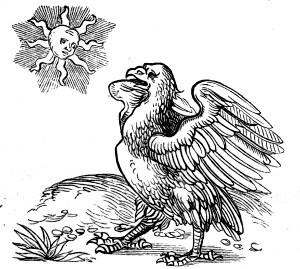
PROVERBS are nearly always suggestive of a
little narrative, or of a picture, by which the
sentiment might be more fully developed. The
brief moral reflections appended to many fables
partake very much of the nature of proverbs. Inasmuch,
then, as there is this close alliance between them, we might
consider the Proverbial Philosophy of Shakespeare only as a
branch of the Philosophy of Fable; still, as there are in his
dramas many instances of the use of the pure proverb, and
instances too of the same kind in the Emblem writers, we
prefer making a separate Section for the proverbs or wise
sayings.
Occasionally, like the Sancho Panza of his renowned contemporary,
Michael de Cervantes Saavedra, 1549–1616,[146] Shakespeare
launches “a leash of proverbial philosophies at once;”
but with this difference, that the dramatist’s application of them
is usually suggestive either of an Emblem-book origin, or of an
Emblem-book destination. The example immediately in view
is from the scene (3 Henry VI., act i. sc. 4, l. 39, vol. v. p. 245)
in which Clifford and Northumberland lay hands of violence on
Richard Plantagenet, duke of York; the dialogue proceeds in
the following way, York exclaiming,—
“Why come you not? what! multitudes, and fear?
Clif. So cowards fight, when they can fly no further.
So doves do peck the falcon’s piercing talons.”
The queen entreats Clifford, “for a thousand causes,” to withhold
his arm, and Northumberland joins in the entreaty,—
“North. Hold, Clifford! do not honour him so much,
To prick thy finger, though to wound his heart:
What valour were it, when a cur doth grin,
For one to thrust his hand between his teeth,
When he might spurn him with his foot away?”
Clifford and Northumberland seize York, who struggles against
them (l. 61),—
“
Clif. Ay, ay, so strives the woodcock with the gin.
[147]North. So doth the cony struggle in the net.”
York is taken prisoner, as he says (l. 63),—
“So triumph thieves upon their conquer’d booty;
So true men yield, with robbers so o’ermatch’d.”
The four or five notions or sayings here enunciated a
designer or engraver could easily translate into as many Emblematical
devices, and the mind which uses them, as naturally
as if he had invented them, must surely have had some familiarity
with the kind of writing of which proverbs are the main
source and foundation.
In this connection we will quote the proverb which “Clifford
of Cumberland” (2 Henry VI., act v. sc. 2, l. 28, vol. vi. p. 217)
utters in French at the very moment of death, and which agrees
very closely with similar sayings in Emblem-books by French
authors,—Perriere and Corrozet,—and still more in suitableness
to the occasion on which it was spoken, the end of life.
York and Clifford,—it is the elder of that name,—engage in
mortal combat (l. 26),—
“Clif. My soul and body on the action both!
York. A dreadful lay! address thee instantly.”
[They fight, and Clifford falls.
At the point of death Clifford uses the words (l. 28), La fin
couronne les œuvres.[148]—“The end crowns the work.” It was, no
doubt, a common proverb; but it is one which would suggest to the
Emblem writer his artistic illustration, and, with a little change,
from some such illustration it appears to have been borrowed.
Whitney (p. 130) records a resemblance to it among the sayings
of the Seven Sages, dedicated “to Sir Hvghe Cholmeley
Knight,”—
“And Solon said, Remember still thy ende.”
The two French Emblems
alluded to above are illustrative
of the proverb, “The
end makes us all equal,”
and both use a very appropriate
and curious device
from the game of chess.
Take, first, Emb. 27 from
Perriere’s Theatre des Bons
Engins: Paris, 1539,—
Le Roy d’eſchez, pendant que le ieu dure,
Sur ses ſubiectz ha grande preference,
Sy l’on le matté̩[e/]̩, il conuiẽt qu’il endure
Que l’on le metté̩[e/]̩ au ſac ſans difference.
Cecy nous faict notable demonſtrance,
Qu’ apres le ieu de vie tranſitoire,
Quãd mort nous a mis en ſõ repertoire,
Les roys ne ſõt pluſgrãs que les vaſſaulx;
Car dans le ſac (cõmé̩[e/]̩ à tous eſt notoire),
Roys & pyons en hõneur ſont eſgaulx.
The other, from Corrozet, is in his “Hecatomgraphie:”
Paris, 1540,—
Svr l’eſchiquier ſont les eſchez aſſis,
Tous en leur rẽg par ordre biẽ raſſis,
Les roys en hault pour duyre les combatz,
Les roynes pres, les cheualiers plus bas,
Les folz deſſoubz, puis apres les pions,
Les rocz auſſy de ce ieu champions.
Et quand le tout eſt aſſis en ſon lieu
Subtilement ou commence le ieu.
* Or vault le roy au ieu de l’eſchiquier,
Mieulx que la royné̩[e/]̩ & moins le cheualier.
Chaſcun pion de tous ceulx la moins vault,
Mais quand c’eſt faict & que le ieu deffault
Il n’ya roy, ne royne, ne le roc,
Qu’ enſemblement tout né̩[e/]̩ ſoit à vng bloc,
Mis dans vng ſac, ſans ordre ne degré,
Et ſans auoir l’ung plus que l’aultre à gré.
Ainſi eſt il de nous pauures humains,
Aulcuns ſont grands Empereurs des Romains,
Les aultres roys, les aultres ducz & comtes,
Aultres petis dont on ne faict grandz comptes.
Nous iouons tons aux eſchez en ce monde,
Entre les biens ou l’ung plusqu’ aultré̩[e/]̩ abonde,
Mais quand le iour de la vié eſt paſſe,
Tout corps humain eſt en terre muſſé,
Autant les grands que petis terre cœurre,
Tant ſeulement nous reſte la bonné̩[e/]̩ œuure.
Corrozet’s descriptive verses conclude with thoughts to which
old Clifford’s dying words might well be appended: “When
the game of life is over,[149] every human body is hidden in
the earth; as well great as little the earth covers; what alone
remains to us is the good deed.” “La fin couronne les
œuvres.”
But Shakespeare uses the expression, “the end crowns all,”
almost as Whitney (p. 230) does the allied proverb, “Time
terminates all,”—
The longeſt daye, in time reſignes to nighte.
The greateſt oke, in time to duſte doth turne:
The Rauen dies, the Egle failes of flighte.
The Phœnix rare, in time her ſelfe doth burne.
The princelie stagge at lengthe his rave doth ronne.
And all muſt ende, that euer was begonne.
A sentiment this corresponding nearly with Hector’s words,
in the Troilus and Cressida (act iv. sc. 5, l. 223, vol. vi.
p. 230),—
“The fall of every Phrygian stone will cost
A drop of Grecian blood: the end crowns all,
And that old common arbitrator, Time,
Will one day end it.”
Prince Henry (2 Henry IV., act ii. sc. 2, l. 41, vol. iv. p. 392),
in reply to Poins, gives yet another turn to the proverb: “By
this hand, thou thinkest me as far in the devil’s books as thou
and Falstaff for obduracy and persistency; let the end try the
man.”
In Whitney’s address “to the Reader,” he speaks of having
collected “sondrie deuises” against several great faults which
he names, “bycause they are growẽ so mightie that one bloe
will not beate them downe, but newe headdes springe vp like
Hydra, that Hercules weare not able to subdue them.” “But,”
he adds, using an old saying, “manie droppes pierce the stone,
and with manie blowes the oke is ouerthrowen.”
Near Mortimer’s Cross, in Herefordshire, a messenger relates
how “the noble Duke of York was slain” (3 Henry VI., act ii.
sc. 1, l. 50, vol. v. p. 252), and employs a similar, almost an
identical, proverb,—
“Environed he was with many foes,
And stood against them, as the hope of Troy
Against the Greeks that would have enter’d Troy.
But Hercules himself must yield to odds;
And many strokes, though with a little axe,
Hew down and fell the hardest-timber’d oak.”
This is almost the coincidence of the copyist, and but for the
necessities of the metre, Whitney’s words might have been
literally quoted.
“Manie droppes pierce the stone,” has its parallel in the
half-bantering, half-serious, conversation between King Edward
and Lady Grey (3 Henry VI., act iii. sc. 2, l. 48, vol. v. p. 280).
The lady prays the restoration of her children’s lands, and the
king intimates he has a boon to ask in return,—
“King Edw. Ay, but thou canst do what I mean to ask.
Grey. Why then I will do what your grace commands.
Glou. [Aside to Clar.] He plies her hard; and much rain wears the marble.
Clar. [Aside to Glou.] As red as fire! nay, then her wax must melt.”
In Otho Vænius (p. 210), where Cupid is bravely working at
felling a tree, to the motto, “By continuance,” we find the
stanza,—
“Not with one stroke at first the great tree goes to grownd,
But it by manie strokes is made to fall at last,
The drop doth pierce the stone by falling long and fast,
So by enduring long long sought-for loue is found.”
“To clip the anvil of my sword,” is an expression in the
Coriolanus (act iv. sc. 5, lines 100–112, vol. vi. p. 380) very difficult
to be explained, unless we regard it as a proverb, denoting
the breaking of the weapon and the laying aside of enmity.
Aufidius makes use of it in his welcome to the banished Coriolanus,—
“O Marcius, Marcius!
Each word thou hast spoke hath weeded from my heart
A root of ancient envy. If Jupiter
Should from yond cloud speak divine things,
And say ‘’Tis true,’ I’d not believe them more
Than thee, all noble Marcius. Let me twine
Mine arms about that body, where against
My grained ash an hundred times hath broke,
And scarr’d the moon with splinters: here I clip
The anvil of my sword, and do contest
As hotly and as nobly with thy love
As ever in ambitious strength I did
Contend against thy valour.”
To clip, or cut, i.e., strike the anvil with a sword, is exhibited
by more than one of the Emblem writers, whose stanzas are
indeed to the same effect as those of Massinger in his play, The
Duke of Florence (act ii. sc. 3),—
“Allegiance
Tempted too far is like the trial of
A good sword on an anvil; as that often
Flies in pieces without service to the owner;
So trust enforced too far proves treachery,
And is too late repented.”
In his 31st Emblem, Perriere gives the device, and stanzas
which follow,—
En danger eſt de rompre ſon eſpée
Qui ſur l’enclumé̩[e/]̩ en frappe rudement.
Auſſi l’amour eſt bien toſt ſincoppée,
Quand ſon amy on preſſe follement.
Qui le fera, perdra ſubitement
Ce qu’il deburoit bien cheremẽt garder
De tel abus, ſe fault contregarder,
Cõmé̩[e/]̩ en ce lieu auõs doctriné̩[e/]̩ expreſſe.
A tel effort, ne te fault hazarder
De perdré̩[e/]̩ amy, quãd ſouuẽt tu le preſſe.
But the meaning is, the putting of friendship to too severe a
trial: “As he is in danger of breaking his sword who strikes it
upon an anvil, so is love very soon cut in pieces when foolishly
a man presses upon his friend.” So Whitney (p. 192), to the
motto, Importunitas euitanda,—“Want of consideration to be
avoided,”—
“Who that with force, his burnish’d blade doth trie
On anuill harde, to prooue if it be sure:
Doth Hazarde muche, it shoulde in peeces flie,
Aduentring that, which else mighte well indure:
For, there with strengthe he strikes vppon the stithe,
That men maye knowe, his youthfull armes have pithe.
Which warneth those, that louinge frendes inioye,
With care, to keepe, and frendlie them to treate,
And not to trye them still, with euerie toye,
Nor presse them doune, when causes be too greate,
Nor in requests importunate to bee:
For ouermuche, dothe tier the courser free?”
Touchstone, the clown, in As You Like It (act ii. sc. 4, l. 43,
vol. ii. p. 400), names the various tokens of his affections for
Jane Smile, and declares, “I remember, when I was in love I
broke my sword upon a stone and bid him take that for coming
a-night to Jane Smile: and I remember the kissing of her
batlet and the cow’s-dugs that her pretty chopt hands had
milked.”
It may, however, from the general inaccuracy of spelling in
the early editions of Shakespeare, be allowed to suppose a
typographical error, and that the phrase in question should
read, not “anvil of my sword,” but “handle;”—I clip, or
embrace the handle, grasp it firmly in token of affection.
The innocence of broken love-vows is intimated in Romeo
and Juliet (act ii. sc. 2, l. 90, vol. vii. p. 42),—
“Dost thou love me? I know thou wilt say ‘Ay,’
And I will take thy word: yet if thou swear’st,
Thou mayst prove false: at lovers’ perjuries,
They say, Jove laughs.”
And most closely is the sentiment represented in the design by
Otho van Veen (p. 140), of Venus dispensing Cupid from his
oaths, and of Jupiter in the clouds smiling benignantly on the
two. The mottoes are, “Amoris ivsivrandvm pœnam non
habet,”—Love excused from periurie,—and “Giuramento sparso
al vento.”
In Callimachus occurs Juliet’s very expression, “at lovers’
perjuries Jove laughs,”—
“Nulla fides inerit: periuria ridet amantum
Juppiter, & ventis irrita ferre iubet:”
and from Tibullus we learn, that whatever silly love may have
eagerly sworn, Jupiter has forbidden to hold good,—
“Gratia magna Ioui: vetuit pater ipse valere,
Iurasset cupidè quidquid ineptus Amor.”
The English lines in Otho van Veen are,—
“The louer freedome hath to take a louers oth,
Whith if it proue vntrue hee is to be excused,
For venus doth dispence in louers othes abused,
And loue no fault comitts in swearing more than troth.”
The thoughts are, as expressed in Italian,—
“Se ben l’amante assai promette, e giura,
Non si da pena à le sue voci infide,
Anzi Venere, e Giove se ne ride.
l’Amoroso spergiuro non si cura.”
To such unsound morality, however, Shakespeare offers strong
objections in the Friar’s words (Romeo and Juliet, act iii. sc. 3,
l. 126),—
“Thy noble shape is but a form of wax,
Digressing from the valour of a man;
Thy dear love sworn, but hollow perjury,
Killing that love which thou hast vow’d to cherish.”
“Labour in vain,”—pouring water into a sieve, is shown by
Perriere in his 77th Emblem,—
where however it is a blind Cupid that holds the sieve, and
lovers’ gifts are the waters with which the attempt is made to fill
the vessel.
Qvi plus mettra dans le crible d’amours,
Plus y perdra, car choſe n’y profitte:
Le temps ſi pert, biens, bagues & atours,
Sa douleur eſt en tout amer confitte.
Folle ieuneſſé̩[e/]̩ & franc vouloir incite
A tel deſduict deſpendre groſſe ſomme:
Sur ce pẽser doibuent biẽ ieunes hõmes,
Que de ce fait meilleurs n’ẽ peuuẽt eſtre:
Et quãd naurõt le vaillãt de deux põmes,
Ne ſera temps leur erreur recognoiſtre.
We have endeavoured to interpret the old French stanza into
English rhyme,—
“Who in love’s tempting sieve shall place his store,
Since nothing profits there, will lose the more;
Lost are his time, goods, rings and rich array,
Till grief in bitterness complete his day.
Folly of youth and free desire incite
Great sums to lavish on each brief delight.
Surely young men on this ought well to ponder,
That better cannot be, if thus they wander;
And when remains two apples’ worth alone,
’Twill not the time be their mistake to own.”
Shakespeare presents the very same thought and almost the
identical expressions. To the Countess of Rousillon, Bertram’s
mother, Helena confesses love for her son, All’s Well that Ends
Well (act i. sc. 3, l. 182, vol. iii. p. 127),—
“Then, I confess,
Here on my knee, before high heaven and you,
That before you, and next unto high heaven,
I love your son.
My friends were poor, but honest; so’s my love:
Be not offended; for it hurts not him
That he is loved of me: I follow him not
By any token of presumptuous suit;
Nor would I have him till I do deserve him;
Yet never know how that desert should be.
I know I love in vain, strive against hope;
Yet, in this captious and intenible sieve,
I still pour in the waters of my love,
And lack not to lose still: thus, Indian-like,
Religious in my error, I adore
The sun, that looks upon his worshipper,
But knows of him no more.”
How probable do the turns of thought, “captious and
intenible sieve,” “the waters of my love,” render the supposition
that Perriere’s Emblem of Love and the Sieve had
been seen by our dramatist. Cupid appears patient and
passive, but the Lover in very evident surprise sees “the rings
and rich array” flow through “le crible d’amours.” Cupid’s
eyes, in the device, are bound, and the method of binding them
corresponds with the lines, Romeo and Juliet(act i. sc. 4, l. 4,
vol. vii. p. 23),—
“We’ll have no Cupid hoodwink’d with a scarf,
Bearing a Tartar’s painted bow of lath,
Scaring the ladies like a crow-keeper.”
Again, though not in reference to the same subject, there is in
Much Ado About Nothing (act v. sc. 1, l. 1, vol. ii. p. 69), the
comparison of the sieve to labour in vain. Antonio is giving
advice to Leonato when overwhelmed with sorrows,—
“Ant. If you go on thus you will kill yourself;
And ’tis not wisdom thus to second grief
Against yourself.
Leon. I pray thee, cease thy counsel,
Which falls into mine ears as profitless
As water in a sieve: give not me counsel;
Nor let no comforter delight mine ear
But such a one whose wrongs do suit with mine.”
By way of variation we consult Paradin’s treatment of the
same thought (fol. 88v), in which he is followed by Whitney
(p. 12), with the motto Frustrà.
“The Poëttes faine, that Danavs daughters deare,
Inioyned are to fill the fatall tonne:
Where, thowghe they toile, yet are they not the neare,
But as they powre, the water forthe dothe runne:
No paine will serue, to fill it to the toppe,
For, still at holes the same doth runne, and droppe.”
“Every rose has its thorn,” or “No pleasure without pain,”
receives exemplification from several sources. Perriere (Emb.
30) and Whitney (p. 165) present us with a motto implying
No bitter without its sweet, but giving the gathering of a rose
in illustration; thus the former writer,—
“Post amara dulcia.”
“Qvi veult la rosé̩[e/]̩ au vert buysson saisir
Esmerueiller ne se doibt s’il se poinct.
Grãd biẽ na’uõs, sãs quelque desplaisir,
Plaisir ne vient sans douleur, si apoint.
Conclusion sommaire, c’est le point,
Qu’ apres douleur, on ha plaisir: souuẽt
Beau tẽps se voit, tost apres le grãt vẽt,
Grãd biẽ suruiẽt apres quelque maleur.
Parquoy pẽser doibt tout hõme scauãt,
Que volupté n’est iamais sans douleur.”
So Whitney (p. 165),—
“Sharpe prickes preserue the Rose, on euerie parte,
That who in haste to pull the same intendes,
Is like to pricke his fingers, till they smarte?
But being gotte, it makes him straight amendes
It is so freshe, and pleasant to the smell,
Thoughe he was prick’d, he thinkes he ventur’d well.
And he that faine woulde get the gallant rose,
And will not reache, for feare his fingers bleede;
A nettle, is more fitter for his nose?
Or hemblocke meete his appetite to feede?
None merites sweete, who tasted not the sower,
Who feares to climbe, deserues no fruicte, nor flower.”
In the Emblems of Otho Vænius (p. 160), Cupid is plucking
a rose, to the motto from Claudian, “Armat spina
rosas, mella tegunt apes,”—Englished, “No pleasure without
payn.”
“In plucking of the rose is pricking of the thorne,
In the attayning sweet, is tasting of the sowre,
With ioy of loue is mixt the sharp of manie a showre,
But at the last obtayned, no labor is forlorne.”
The pretty song from Love’s Labours Lost (act iv. sc. 3, l. 97,
vol. ii. p. 144), alludes to the thorny rose,—
“On a day—alack the day!
Love, whose month is ever May,
Spied a blossom passing fair
Playing in the wanton air:
Through the velvet leaves the wind.
All unseen, can passage find;
That the lover, sick to death,
Wish himself the heaven’s breath.
Air, quoth he, thy cheeks may blow;
Air, would I might triumph so!
But, alack, my hand is sworn
Ne’er to pluck thee from thy thorn.”
The scene in the Temple-garden; the contest in plucking
roses between Richard Plantagenet and the Earls of Somerset,
Suffolk, and Warwick (1 Henry VI., act ii. sc. 4, lines 30–75,
vol. v. pp. 36, 37), continually alludes to the thorns that may be
found. We may sum the whole “brawl,” as it is termed, into a
brief space (l. 68),—
“Plan. Hath not thy rose a canker, Somerset?
Som. Hath not thy rose a thorn, Plantagenet?
Plan. Ay, sharp and piercing, to maintain his truth;
Whiles thy consuming canker eats his falsehood.”
“True as the needle to the pole,” is a saying which of
course must have originated since the invention of the
mariner’s compass. Sambucus, in his Emblems (edition
1584, p. 84, or 1599, p. 79), makes the property of the
loadstone his emblem for the motto, The mind remains
unmoved.
Dicitvr interna vi Magnes ferra mouere:
Perpetuò nautas dirigere inq́₃que viam.
Semper enim ſtellam firmè aſpicit ille polærem.
Indicat hac horas, nos variéque monet.
Mens vtinam in cælum nobis immota maneret,
Nec ſubitò dubiis fluctuet illa malis.
Pax coëat tandem, Chriſte, vnum claudat ouile,
Liſque tui verbi iam dirimatur ope.
Da, ſitiens anima excelſas ſic appetat arces:
Fontis vt ortiui ceruus anhelus aquas.
In the latter part of his elegiacs Sambucus introduces another
subject, and gives a truly religious turn to the device,—
“Gather’d one fold, O Christ, let peace abound,
Be vanquish’d by thy word, our jarring strife;
Then thirsting souls seek towers on heavenly ground,
As pants the stag for gushing streams of life.”
The magnet’s power alone is kept in view by Whitney (p. 43),—
“By vertue hidde, behoulde, the Iron harde,
The loadestone drawes, to poynte vnto the starre:
Whereby, wee knowe the Seaman keepes his carde,
And rightlie shapes, his course to countries farre:
And on the pole, dothe euer keepe his eie,
And withe the same, his compasse makes agree.
Which shewes to vs, our inward vertues shoulde,
Still drawe our hartes, althoughe the iron weare:
The hauenlie starre, at all times to behoulde,
To shape our course, so right while wee bee heare:
That Scylla, and Charybdis, wee maie misse,
And winne at lengthe, the porte of endlesse blisse.”
The pole of heaven itself, rather than the magnetic needle,
is in Shakespeare’s dramas the emblem of constancy. Thus in
the Julius Cæsar (act iii. sc. 1, l. 58, vol. vii. p. 363), Metellus,
Brutus, and Cassius are entreating pardon for Publius Cimber,
but Cæsar replies, in words almost every one of which is an
enforcement of the saying, “Mens immota manet,”—
“I could be well moved, if I were as you;
If I could pray to move, prayers would move me:
But I am constant as the northern star,
Of whose true-fix’d and resting quality
There is no fellow in the firmament.
The skies are painted with unnumber’d sparks;
They are all fire and every one doth shine;
But there’s but one in all doth hold his place:
So in the world; ’tis furnish’d well with men,
And men are flesh and blood, and apprehensive;
Yet in the number I do know but one
That unassailable holds on his rank.
Unshak’d of motion: and that I am he,
Let me a little show it, even in this;
That I was constant Cimber should be banish’d,
And constant do remain to keep him so.”
The Midsummer Night’s Dream (act i. sc. I, l. 180, vol. ii. p.
205), introduces Hermia greeting her rival Helena,—
“Her. God speed fair Helena! whither away?
Hel. Call you me fair? that fair again unsay.
Demetrius loves you fair: O happy fair!
Your eyes are lode-stars.”
The scene changes, Helena is following Demetrius, but he turns
to her and says (act ii. sc. 1, l. 194, vol. ii. p. 217),—
“Hence, get thee gone, and follow me no more.
Hel. You draw me, you hard-hearted adamant;
But yet you draw not iron, for my heart
Is true as steel: leave but your power to draw,
And I shall have no power to follow you.”
The averment of his fidelity is thus made by Troilus to
Cressida (act iii. sc. 2, l. 169. vol. vi. p. 191),—
“As true as steel, as plantage to the moon,
As sun to day, as turtle to her mate,
As iron to adamant, as earth to the centre.
Yet after all comparisons of truth,
As truth’s authentic author to be cited,
‘As true as Troilus’ shall crown up the verse
And sanctify the numbers.”
So Romeo avers of one of his followers (act ii. sc. 4, l. 187, vol.
vii. p. 58),—
“I warrant thee, my man’s as true as steel.”
“Ex maximo minimvm,”—Out of the greatest the least,—is
a saying adopted by Whitney (p. 229), from the “Picta Poesis”
(p. 55) of Anulus,—
Hae Sunt Relliquiæ Sacrarij, in quo
Fertur viua Dei fuiſse imago.
Hæc eſt illius, & domus ruina,
In qua olim Ratio tenebat arcem.
At nunc horribilis figura Mortis.
Ventoſum caput, haud habens cerebrum.
Both writers make the proverb the groundwork of reflexions
on a human skull. According to Anulus, “the relics of the
charnel house were once the living images of God,”—“that ruin
of a dome was formerly the citadel of reason.” Whitney
thus moralizes,—
“Where liuely once, Gods image was expreste,
Wherin, sometime was sacred reason plac’de,
The head, I meane, that is so ritchly bleste,
With sighte, with smell, with hearinge, and with taste.
Lo, nowe a skull, both rotten, bare, and drye,
A relike meete in charnell house to lye.”
The device and explanatory lines may well have given
suggestion to the half-serious, half-cynical remarks by Hamlet
in the celebrated grave-yard scene (Hamlet, act v. sc. 1, l. 73,
vol. viii. p. 153). A skull is noticed which one of the callous
grave-diggers had just thrown up upon the sod, and Hamlet
says (l. 86),—
“That skull had a tongue in it, and could sing once: how the knave
jowls it to the ground, as if it were Cain’s jaw-bone, that did the first
murder!”
And a little further on,—
“Here’s a fine revolution, an we had the trick to see’t. Did these bones
cost no more the breeding, but to play at loggats with ’em? mine ache to
think on’t.”[150]
And when Yorick’s skull is placed in his hand, how the
Prince moralizes! (l. 177),—
“Here hung those lips, that I have kissed I know not how oft. Where
be your gibes now? your gambols? your songs? your flashes of merriment,
that were wont to set the table on a roar? Not one now, to mock your own
grinning? quite chap-fallen? Now get you to my lady’s chamber, and tell
her, let her paint an inch thick, to this favour she must come; make her
laugh at that.”
And again (lines 191 and 200),—
“To what base uses we may return. Horatio!
. . . . . . .
Imperial Cæsar, dead, and turn’d to clay,
Might stop a hole to keep the wind away.”
Of the skull Anulus says, “Here reason held her citadel;”
and the expression has its parallel in Edward’s lament
(3 Henry VI., act ii. sc. 1, l. 68, vol. v. p. 252),—
“Sweet Duke of York, our prop to lean upon;”
when he adds (l. 74),—
“Now my soul’s palace is become a prison;”
to which the more modern description corresponds,—
“The dome of thought, the palace of the soul.”
A far nobler emblem could be made, and I believe has been
made, though I cannot remember where, from those lines in
Richard II. (act ii. sc. 1, l. 267, vol. iv. p. 145), which allude to
the death’s head and the light of life within. Northumberland,
Ross and Willoughby are discoursing respecting the sad state
of the king’s affairs, when Ross remarks,—
“We see the very wreck that we must suffer:
And unavoided is the danger now,
For suffering so the causes of our wreck.”
And Northumberland replies in words of hope (l. 270),—
“Not so; even through the hollow eyes of death
I spy life peering.”
It is a noble comparison, and most suggestive,—but of a flight
higher than the usual conceptions of the Emblem writers. Supplied
to them they could easily enough work it out into device
and picture, but possess scarcely power enough to give it origin.[151]
“A snake lies hidden in the grass,” is no unfrequent proverb;
and Paradin’s “Devises Heroiqves” (41) set forth both the
fact and the application.
En cueillant les Fleurs, & les Fraizes des champs, ſe faut d’autant garder du
dangereus Serpent, qu’il nous peut enuenimer, & faire mourir nos corps. Et auſsi en
colligeant les belles autoritez, & graues ſentences des liures, faut euiter d’autant les
mauuaiſes opinions, qu’elles nous peuuent peruertir, damner, & perdre nos ames.
From the same motto and device Whitney (p. 24) makes the
application to flatterers,—
“Of flattringe speeche, with sugred wordes beware,
Suspect the harte, whose face doth fawne, and smile,
With trusting theise, the worlde is clog’de with care,
And fewe there bee can scape theise vipers vile:
With pleasinge speeche they promise, and proteste,
When hatefull hartes lie hidd within their brest.”
According to the 2nd part of Henry VI. (act iii. sc. 1, l. 224,
vol. v. p. 158), the king speaks favourably of Humphrey, Duke of
Gloucester, and Margaret the queen declares to the attendant
nobles,—
“Henry my lord is cold in great affairs,
Too full of foolish pity, and Gloucester’s show
Beguiles him as the mournful crocodile
With sorrow snares relenting passengers,
Or as the snake roll’d in a flowering bank,
With shining checker’d slough, doth sting a child,
That for the beauty thinks it excellent.”
In Lady Macbeth’s unscrupulous advice to her husband
(Macbeth, act i. sc. 5, l. 61, vol. vii. p. 438), the expressions
occur,—
“Your face, my thane, is as a book where men
May read strange matters. To beguile the time,
Look like the time; bear welcome in your eye,
Your hand, your tongue: look like the innocent flower,
But be the serpent under’t.”
Romeo slays Tybalt, kinsman to Julia, and the nurse
announces the deed to her (Romeo and Juliet, act iii. sc. 2, l. 69,
vol. vii. p. 75),—
“Nurse. Tybalt is gone, and Romeo banished;
Romeo that kill’d him, he is banished.
Jul. O God! did Romeo’s hand shed Tybalt’s blood?
Nurse. It did, it did; alas the day, it did!
Jul. O serpent heart, hid with a flowering face!
Did ever dragon keep so fair a cave?
Beautiful tyrant! fiend angelical!
Dove-feather’d raven! wolvish-ravening lamb!”
Though not illustrative of a Proverb, we will here conclude
what has to be remarked respecting Serpents. An Emblem in
Paradin’s “Devises Heroiqves” (112) and in Whitney
(p. 166), represents a serpent that has fastened on a man’s
finger, and that is being shaken off into a fire, while the
man remains unharmed; the motto, “Who against us?”—
The scene described in the Acts of the Apostles, chap, xxviii. v.
3–6, Paradin thus narrates,—
“Saint Paul, en l’ iſle de Malte fut mordu d’vn Vipere: ce neantmoins (quoi que
les Barbares du lieu le cuidaſſent autrement) ne valut pis de la morsure, secouant de
sa main la Beste dans le feu: car veretablement à qui Dieu veut aider, il n’y a rien
que puiſse nuire.”
Whitney, along with exactly the same device, gives the full
motto,—
“Si Deus nobiscum, quis contra nos?”
“His seruantes God preserues, thoughe they in danger fall:
Euen as from vipers deadlie bite, he kept th’ Appostle Paule.”
The action figured in this Emblem is spoken of in the Midsummer
Night’s Dream (act iii. sc. 2, l, 254, vol. ii. p. 241).
Puck has laid the “love-juice” on the wrong eyes, and in consequence
Lysander avows his love for Helen instead of for
Hermia; and the dialogue then proceeds,—
Dem. I say I love thee more than he can do.
Lys. If thou say so, withdraw, and prove it too.
Dem. Quick, come!
Her. Lysander, whereto tends all this?
Lys. Away, you Ethiope!
Dem. No, no; he’ll ...
Seem to break loose; take on as you would follow,
But yet come not: you are a tame man, go!
Lys. Hang off, thou cat, thou burr! vile thing, let loose,
Or I will shake thee from me like a serpent!”
Cardinal Pandulph, the Pope’s legate, in King John (act iii.
sc. 1, l. 258, vol. iv. p. 42), urges King Philip to be champion of
the Church, and says to him,—
“France, thou mayst hold a serpent by the tongue,
A chafed lion by the mortal paw,
A fasting tiger safer by the tooth,
Than keep in peace that hand which thou dost hold.”
King Richard’s address to the “gentle earth,” when he landed
in Wales (Richard II., act iii. sc. 2, l. 12, vol. iv. p. 164), calls us
to the Emblem of the snake entwined about the flower,—
“Feed not thy sovereign’s foe, my gentle earth,
Nor with thy sweets comfort his ravenous sense;
But let thy spiders, that suck up thy venom,
And heavy-gaited toads lie in their way,
Doing annoyance to the treacherous feet
Which with usurping steps do trample thee:
Yield stinging nettles to mine enemies;
And when they from thy bosom pluck a flower,
Guard it, I pray thee, with a lurking adder
Whose double tongue may with a mortal touch
Throw death upon thy sovereign’s enemies.”
“The Engineer hoist with his own petar” may justly be
regarded as a proverbial saying. It finds its exact correspondence
in Beza’s 8th Emblem (edition 1580), in which for device is
a cannon bursting, and with one of its fragments killing the
cannonier.
“Cernis ut in cœlum fuerat quæ machina torta,
Fit iaculatori mors properata suo?
In sanctos quicunque Dei ruis impie seruos,
Conatus merces hæc manet vna tuas.”
Thus rendered into French in 1581,—
“Vois tu pas le canon braqué contre les cieux,
En se creuant creuer celui la qui le tire?
Le mesme t’aduiendra, cruel malicieux,
Qui lasches sur les bons les balles de ton ire.”
The sentiment is the same as that of the proverb in the
motto which Lebeus-Batillius prefixes to his 18th Emblem
(edition 1596), “Qvibvs rebvs confidimvs, iis maxime evertimvs,”—To
whatever things we trust, by them chiefly are we
overthrown. The subject is Milo caught in the cleft of the tree
which he had riven by his immense strength; he is held fast,
and devoured by wolves.
The application of Beza’s Emblem is made by Hamlet (act iii.
sc. 4, l. 205, vol. viii. p. 117), during the long interview with his
mother, just after he had said,—
“No, in despite of sense and secrecy,
Unpeg the basket on the house’s top,
[152]Let the birds fly, and like the famous ape,
To try conclusions, in the basket creep,
And break your own neck down.”
Then speaking of his plot and of the necessity which marshals
him to knavery, he adds,—
“Let it work;
For ’tis the sport to have the enginer
Hoist with his own petar: and ’t shall go hard
But I will delve one yard below their mines,
And blow them at the moon: O, ’tis most sweet
When in one line two crafts directly meet.”
EMBLEM writers make the Natural, one
of the divisions of their subject, and understand
by it, in Whitney’s words, the
expressing of the natures of creatures,
for example, “the loue of the yonge
Storkes to the oulde, or of such like.”
We shall extend a little the application
of the term, taking in some facts of nature, as well as the natural
properties and qualities of animals, but reserving in a great
degree the Poetry, with which certain natural things are invested,
for the next general heading, “Emblems for Poetic Ideas.”
There is no need to reproduce the Device of Prometheus
bound, but simply to refer to it, and to note the allusions which
Shakespeare makes to the mountain where the dire penalty was
inflicted, “the frosty Caucasus.” From the Titus Andronicus we
have already (p. 268) spoken of Tamora’s infatuated love,—
“faster bound to Aaron’s charming eyes
Than is Prometheus ty’d on Caucasus.”
John of Gaunt, Duke of Lancaster, endeavours, in Richard II.
(act i. sc. 3, lines 275, 294, vol. iv. pp. 130, 131), to reconcile his
son Henry Bolingbroke to the banishment which was decreed
against him, and urges,—
“All places that the eye of heaven visits
Are to a wise man ports and happy havens.
Teach thy necessity to reason thus;
There is no virtue like necessity.
Think not the king did banish thee,
But thou the king.”
Bolingbroke,however, replies,—
“O, who can hold a fire in his hand
By thinking on the frosty Caucasus?”
The indestructibility of adamant by force or fire had for ages
been a received truth.
QVEM NVLLA PERICVLA, TERRENT.
“Whom no dangers terrify,” is a fitting motto for the
Emblem that pertains to such as fear nor force nor fire.
Speaking of the precious gem that figures forth their character,
it is the remark of Lebeus-Batillius (Emb. 29), “Duritia
ineharrabilis est, simulque ignium victrix naturâ & nunquam
incalescens,”—for which we obtain a good English expression
from Holland’s Pliny (bk. xxxvii. c. 4): “Wonderfull and inenarrable
is the hardnesse of a diamant; besides it hath a nature to
conquer the fury of fire, nay, you shall never make it hote.”
The Latin stanzas in illustration close with the lines,—
“Qualis, non Adamas ullo contunditur ictu,
Vique sua ferri duritium superat.”
i.e.
“As by no blow the Adamant is crushed,
And by its own force overcomes the hardness of iron.”
When the great Talbot was released from imprisonment
(1 Henry VI., act i. sc. 4, l. 49, vol. v. p. 20), his companions-in-arms
on welcoming him back, inquired, “How wert thou entertained?”
(l. 39)—
“With scoffs and scorns and contumelious taunts.
. . . . . . . .
In iron walls they deem’d me not secure;
So great fear of my name ’mongst them was spread
That they supposed I could rend bars of steel
And spurn in pieces posts of adamant.”
The strong natural affection of the bear for its young obtained
record nearly three thousand years ago (2 Samuel xvii. 8),—“mighty
men, chafed in their minds” are spoken of “as a bear
robbed of her whelps in the field.”[153] Emblems delineated by
Boissard and engraved by Theodore De Bry in 1596, at Emb.
43 present the bear licking her whelp, in sign that the inborn
force of nature is to be brought into form and comeliness by
instruction and good learning. At a little later period, the
“Tronvs Cvpidinis,” or “Emblemata Amatoria” (fol. 2),
so beautifully adorned by Crispin de Passe, adopts the sentiment,
Perpolit incultum paulatim tempus amorem,—that “by degrees
time puts the finish, or perfectness to uncultivated love.” The
device by which this is shown introduces a Cupid as well as the
bear and her young one,—
and is accompanied by Latin and French stanzas,—
“Vrsa novum fertur lambendo fingere fœtum
Paulatim & formam, quæ decet, ore dare;
Sic dominam, vt valde sic cruda sit aspera Amator
Blanditiis sensim mollet & obsequio.”
“Ceste masse de chair, que toute ourse faonne
En la leschant se forme à son commencement.
Par seruir: par flatter, par complaire en aymant,
L’amour rude à l’abord, à la fin se façonne.”
The sentiment of these lines finds a parallel in the Midsummer
Night’s Dream (act i. sc. 1. l. 232, vol. ii. p. 206),—
“Things base and vile, holding no quantity,
Love can transpose to form and dignity:
Love looks not with the eyes, but with the mind;
And therefore is wing’d Cupid painted blind.”
Perchance, too, it receives illustration from the praise accorded
to the young Dumain by Katharine, in Love’s Labour’s Lost
(act ii. sc. 1, l. 56, vol. ii. p. 114),—
“A well accomplish’d youth,
Of all that virtue love for virtue loved:
Most power to do most harm, least knowing ill;
For he hath wit to make an ill shape good,
And shape to win grace, though he had no wit.”
To the denial of natural affection towards himself Gloucester
(3 Henry VI., act iii. sc. 2, l. 153, vol. v. p. 284)
deemed it almost a thing impossible for him to “make his
heaven in a lady’s lap,”—
“Why, love forswore me in my mother’s womb:
And, for I should not deal in her soft laws,
She did corrupt frail nature with some bribe,
To shrink mine arm up like a wither’d shrub;
To make an envious mountain on my back,
Where sits deformity to mock my body;
To shape my legs of an unequal size;
To disproportion me in every part.
Like to a chaos, or an unlick’d bear-whelp
That carries no impression like the dam.”
Curious it is to note how slowly the continent which
Columbus discovered became fully recognised as an integral
portion of what had been denominated, ἡ οἰκουμένη,—“the
inhabited world.” The rotundity of the earth and
of the water was acknowledged, but Brucioli’s “Trattato
della Sphera,” published at Venice, D.M.XLIII., maintains
that the earth is immovable and the centre of the universe;
and in dividing the globe into climates, it does not
take a single instance except from what is named the
old world; in fact, the new world of America is never mentioned.
Somewhat later, in 1564, when Sambucus published his
Emblems, and presented Symbols of the parts of the Inhabited
Earth, he gave only three; thus (p. 113),—
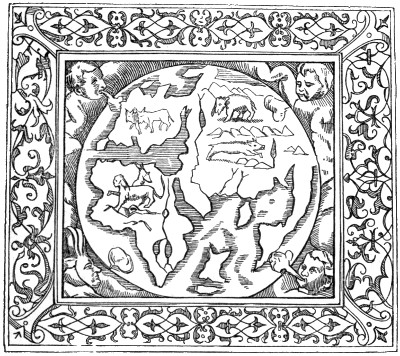
Partium τῆς οικουμένης ſymbola.
Sambucus, 1564.
Est regio quæuis climate certo
Aëre diſtincta, & commoditate.
Quælibet haud quidius terra feretq́ue.
Africa monſtroſa eſt ſemper habendo
Antea quod nemo viderat vſquam.
Fert Aſia immanes frigidiore
Nempe ſolo apros, & nimbigera vrſos:
Sed reliquas vincit viribus omnes
Belua, quam Europæ temperat aër.
Taurus vt eſt fortis, bufalus vnà.
Ergo ſit Europæ taurus alumnus,
Africæ at inſigne ſitq́ue Chimæra.
Sint Aſiæ immites vrſus, aperq́ue.
The Bull is thus set forth as the alumnus, or nursling of
Europe; of Africa the Chimæra is the ensign; and to Asia
belong the untamed Bear and Boar; America and the broad
Pacific, from Peru to China, have neither token nor locality
assigned.
Shakespeare’s geography, however, though at times very
defective, extended further than its “symbols” by Sambucus.
In the humorous mapping out, by Dromio of Syracuse, of the
features of the kitchen-wench, who was determined to be his
wife (Comedy of Errors, act iii. sc. 2, l. 131, vol. i. p. 429), the
question is asked,—
“Ant. S. Where America, the Indies?
Dro. S. Oh, sir, upon her nose, all o’er embellished with rubies, carbuncles,
sapphires, declining their rich aspect to the hot breath of Spain.
In Twelfth Night (act iii. sc. 2, l. 73, vol. iii. p. 271) Maria
thus describes the love-demented steward,—
“He does smile his face into more lines than is in the new map with the
augmentation of the Indies; you have not seen such a thing as ’tis.”
And in the Merry Wives of Windsor (act i. sc. 3, l. 64, vol. i.
p. 177), Sir John Falstaff avers respecting Mistress Page and
Mistress Ford,—
“I will be cheaters to them both, and they shall be exchequers to me;
they shall be my East and West Indies, and I will trade to them both.”
Yet in agreement with the map of Sambucus, with the three
capes prominent upon it, of Gibraltar Rock, the Cape of Good
Hope, and that of Malacca, Shakespeare on other occasions
ignores America and all its western neighbours. At the consultation
by Octavius, Antony, and Lepidus, about the division of
the Roman Empire (Julius Cæsar, act iv. sc. 1, l. 12, vol. vii.
p. 384), Antony, on the exit of Lepidus, remarks,—
“This is a slight unmeritable man,
Meet to be sent on errands: is it fit,
The three-fold world divided, he should stand
One of the three to share it?”
And when the camp of Octavius is near Alexandria (Antony
and Cleopatra, act iv. sc. 6, l. 5, vol. ix. p. 109), and orders are
issued to take Antony alive, Cæsar declares,—
“The time of universal peace is near:
Prove this a prosperous day, the three-nook’d world
Shall bear the olive freely.”
Plate 13
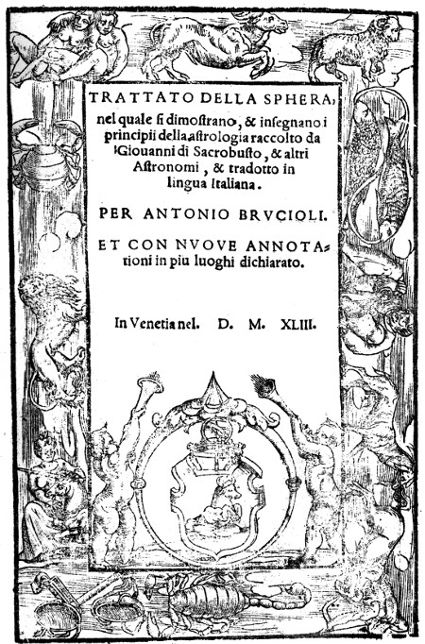
The Zodiac from a Title page - Brucioli 1543
The Signs of the Zodiac, or, rather, the figures of the animals
of which the zodiac is composed, were well known in Shakespeare’s
time from various sources; and though they are
Emblems, and have given name to at least one book of
Emblems that was published in 1618,[154]—almost within the
limits to which our inquiries are confined,—some may doubt
whether they strictly belong to Emblem writers. Frequently,
however, are they referred to in the dramas of which we are
speaking; and, therefore, it is not out of place to exhibit a
representation of them. This we do from the frontispiece or
title page of an old Italian astronomical work by Antonio
Brucioli (see Plate XIII.), who was banished from Florence
for his opposition to the Medici, and whose brothers, in 1532,
were printers in Venice. It is not pretended that Shakespeare
was acquainted with this title page, but it supplies an appropriate
illustration of several astronomical phenomena to which
he alludes.
The zodiac enters into the description of the advancing day
in Titus Andronicus (act ii. sc. 1, l. 5, vol. vi. p. 450),—
“As when the golden sun salutes the morn,
And, having gilt the ocean with his beams,
Gallops the zodiac in his glistering coach,
And overlooks the highest-peering hills;
So Tamora.
Upon her wit doth earthly honour wait,
And virtue stoops and trembles at her frown.”
It also occupies a place in a homely comparison in Measure
for Measure (act i. sc. 2, l. 158, vol. i. p. 303), to point out the
duration of nineteen years, or the moon’s cycle,—
“This new governor
Awakes me all the enrolled penalties
Which have, like unscour’d armour, hung by the wall
So long, that nineteen zodiacs have gone round.
And none of them been worn; and for a name
Now puts the drowsy and neglected act
Freshly on me: ’tis surely for a name.”
The archery scene in Titus Andronicus (act iv. sc. 3, l. 52,
vol. vi. p. 501) mentions several of the constellations and the
figures by which they were known. The dialogue is between
Titus and Marcus,—
“Tit. You are a good archer, Marcus;
[He gives them the arrows.
‘Ad Jovem,’ that’s for you: here, ‘Ad Apollinem:’
‘Ad Martem,’ that’s for myself:
Here, boy, to Pallas: here, to Mercury:
To Saturn, Caius, not to Saturnine;
You were as good to shoot against the wind.
To it, boy! Marcus, loose when I bid.
Of my word, I have written to effect;
There’s not a god left unsolicited.
Marc. Kinsmen, shoot all your shafts into the court:
We will afflict the emperor in his pride.
Tit. Now, masters, draw, [They shoot.] O, well said, Lucius!
Good boy, in Virgo’s lap; give it Pallas.
Marc. My Lord, I aim a mile beyond the moon;
Your letter is with Jupiter by this.
Tit. Ha, ha!
Publius, Publius, what hast thou done?
See, see, thou hast shot off one of Taurus’ horns.
Marc. This was the sport, my lord: when Publius shot,
The Bull, being gall’d, gave Aries such a knock
That down fell both the Ram’s horns in the court.”
In allusion to the old medico-astrological idea that the
different members of the human body were under the influence
of their proper or peculiar constellations, the following
dialogue occurs in the Twelfth Night (act i. sc. 3, l. 127,
vol. iii. p. 231),—
“Sir And. Shall we not set about some revels?
Sir Toby. What shall we do else? were we not born under Taurus?
Sir And. Taurus! That’s sides and heart.
”Toby. No sir; it is legs and thighs. Let me see thee caper: ha!
higher: ha, ha! excellent!”
Falstaff, in the Merry Wives of Windsor (act ii. sc. 2, l. 5,
vol. i. p. 190), vaunts of the good services which he had
rendered to his companions: “I have grated upon my good
friends for three reprieves for you and your coach-fellow Nym:
or else you had looked through the grate, like a geminy of
baboons.”
In telling of the folly of waiting on Achilles (Troilus
and Cressida, act ii. sc. 3, l. 189, vol. vi. p. 175), Ulysses
declares,—
“That were to enlard his fat-already pride,
And add more coals to Cancer when he burns
With entertaining great Hyperion.”
The figure of the ninth of the zodiacal constellations,
Sagittarius, is named in Troilus and Cressida (act v. sc. 5,
l. 11, vol. vi. p. 253),—
“Polixenes is slain,
Amphimachus and Thaos deadly hurt;
Patroclus ta’en or slain; and Palamedes
Sore hurt and bruised: the dreadful sagittary
Appals our number.”
If it be demanded why we do not give a fuller account of
these constellations, we may almost remark as the fool does
in King Lear (act i. sc. 5, l. 33, vol. viii. p. 295)—“The reason
why the seven stars are no more than seven, is a pretty
reason.
Lear. Because they are not eight?
Fool. Yes, indeed: thou wouldst make a good fool.”
How soon the American bird, which we name a Turkey,
was known in England, is in some degree a subject of
conjecture. It has been supposed that its introduction into
this country is to be ascribed to Sebastian Cabot, who died
in 1557, and that the year 1528 is the exact time; but if so,
it is strange that the bird in question should not have been
called by some other name than that which indicates a
European or an Asiatic origin. Coq d’Inde, or Poule d’Inde,
Gallo d’India, or Gallina d’India, the French and Italian
names, point out the direct American origin, as far as France
and Italy are concerned; for we must remember that the
term India, at the early period of Spanish discovery, was
applied to the western world. But most probably the Turkey
fleet brought the bird into England, by way of Cadiz and
Lisbon, and hence the name; and hence also the reasonableness
of supposing that its permanent introduction into this
country was not so early as the time of Cabot. A general
knowledge of the bird was at any rate spread abroad in
Europe soon after the middle of the sixteenth century, for
we find it figured in the Emblem-books; one of which,
Freitag’s Mythologia Ethica, in 1579, p. 237, furnishes a most
lively and exact representation to illustrate “the violated right
of hospitality.”[155]
Ius hoſpitalitatis violatum.
Si habitauerit aduena in terra veſtra, & moratus fuerit inter vos, non exprobretis ei.
Lev. 19. 33.
i.e.
“And if a stranger sojourn with thee in your land, ye shall not vex him.”
Shakespeare, no doubt, was familiarly acquainted with the
figure and habits of the Turkey, and yet may have seized for
description some of the expressive delineations and engravings
which occur in the Emblem writers. Freitag’s turkey he
characterises with much exactness, though the sentiment advanced
is more consistent with the lines from Camerarius. In
the Twelfth Night (act ii. sc. 5, lines 15, 27, vol. iii. p. 257),
Malvolio, as his arch-tormenter Maria narrates the circumstance,
“has been yonder i’ the sun practising behaviour to his own
shadow this half hour;” he enters on the scene, and Sir Toby
says to Fabian, “Here’s an overweening rogue!” to which the
reply is made, “O peace! Contemplation makes a rare
turkey-cock of him; how he jets under his advancing
plumes!”
The same action is well hit off in showing the bearing of the
“pragging knave, Pistol,” as Fluellen terms him (Henry V.,
act v. sc. 1, l. 13, vol. iv. p. 591),—
“Gow. Why here he comes, swelling like a turkey-cock.
Flu. ’Tis no matter for his swellings, nor his turkey-cocks. God pless
you, Aunchient Pistol! you scurvy, lousy knave, God pless you!”
Referring again to the “Prometheus ty’d on Caucasus,” the
Vulture may be accepted as the Emblem of cruel retribution.
So when Falstaff expresses his satisfaction at the death of
Henry IV. (2nd part, act v. sc. 3, l. 134, vol. iv. p. 474), “Blessed
are they that have been my friends; and woe to my lord chief-justice;”
Pistol adds,—
“Let vultures vile seize on his lungs also!”
And Lear, telling of the ingratitude of one of his daughters
(King Lear, act ii. sc. 4, l. 129. vol. viii. p. 320). says,—
“Beloved Regan,
Thy sister’s naught: O Regan, she hath tied
Sharp-tooth’d unkindness, like a vulture, here.”
A remarkable instance of similarity between Whitney and
Shakespeare occurs in the descriptions
which they both give
of the Commonwealth of Bees.
Whitney, it may be, borrowed
his device (p. 200) from the “Hieroglyphica”
of Horus Apollo
(edition 1551, p. 87), where the
question is asked, Πῶς λαὸν πειθήνιον
βασιλεῖ;—
“How to represent a people obedient to their king? They depict a BEE,
for of all animals bees alone have a king, whom the crowd of bees follow,
and to whom as to a king they yield obedience. It is intimated also, as well
from the remarkable usefulness of honey as from the force which the animal
has in its sting, that a king is both useful and powerful for carrying on their
affairs.”
It is worthy of remark that several, if not all, of the Greek
and Roman authors name the head of a hive not a queen but a
king. Plato, in his Politics (Francfort edition, 1602, p. 557A).
writes,—
“Νὺν δὲ γε ὃτε οὐκ ἔστι γιγνόμενος, ὡς δὴ φαμὲν, ἔν ταῖς πόλεσι βασιλεὺς, οἱ~υς ἐν
σμήνεσιν, εμφυέται, τό,τε σῶμα εὐθὺς καὶ τὴν ψυχὴν διαφέρων,” κ. τ. λ.
“There is not born, as we say, in cities a king such as is naturally produced
in hives, decidedly differing both in body and soul.”
Xenophon’s Cyropædia (bk. v. c. 1, § 23) declares of his
hero,—
“Βασιλεὺς μὲν γὰρ ἔμοιγε δοκεῖς σὺ φυσεί πεφυκέναι, οὐδὲν ἤττον η ἐν τῳ σμῆνει
φυόμενος τῶν μελιττῶν ἡγεμών.”
“Thou seemest to me to have been formed a king by nature, no less
than he who in the hive is formed general of the bees.”
In his Georgics Virgil always considers the chief bee to be a
king, as iv. 75,—
“Et circa regem atque ipsa ad prætoria densæ
Miscentur, magnisque vocant clamoribus hostem.”[156]
“And thick around the king, and before the royal tent
They crowd, and with mighty din call forth the foe.”
Alciat’s 148th Emblem (edition 1581, p. 528, or edition
1551, p. 161) sets forth the clemency of a prince; but the
description relates to wasps, not bees,—
Veſparũ quòd nulla vnquam Rex ſpicula figet:
Quodq́₃que aliis duplo corpore maior erit.
Arguet imperium clemens, moderataq́₃que, regna,
Sanctaq́₃que indicibus credita iura bonis.
“That the king of the wasps will never his sting infix;
And that by double the size of body he is larger than others,
This argues a merciful empire and well-ordered rule,
And sacred laws to good judges entrusted.”
Whitney’s stanzas (p. 200), dedicated to “Richard Cotton,
Esquier,” of Combermere, Cheshire, are original writing, not a
translation.
We will take the chief part of them; the motto being, “To
every one his native land is dear.”
Patria cuique chara.
To Richarde Cotton Eſquier.
“The bees at lengthe retourne into their hiue,
When they haue suck’d the sweete of Floras bloomes;
And with one minde their worke they doe contriue,
And laden come with honie to their roomes:
A worke of arte; and yet no arte of man,
Can worke, this worke; these little creatures can.
The maister bee, within the midst dothe liue,
In fairest roome, and most of stature is;
And euerie one to him dothe reuerence giue,
And in the hiue with him doe liue in blisse:
Hee hath no stinge, yet none can doe him harme,
For with their strengthe, the rest about him swarme.
Lo, natures force within these creatures small,
Some, all the daye the honie home doe beare.
And some, farre off on flowers freshe doe fall,
Yet all at nighte vnto their home repaire:
And euerie one, her proper hiue doth knowe
Althoughe there stande a thousande on a rowe.
A Common-wealthe, by this, is right expreste:
Bothe him, that rules, and those, that doe obaye:
Or suche, as are the heads aboue the rest,
Whome here, the Lorde in highe estate dothe staye:
By whose supporte, the meaner sorte doe liue,
And vnto them all reuerence dulie giue.
Which when I waied: I call’d vnto my minde
Your Cvmbermaire, that fame so farre commendes:
A stately seate, whose like is harde to finde,
Where mightie Iove the horne of plentie lendes:
With fishe, and foule, and cattaile sondrie flockes,
Where christall springes doe gushe out of the rockes.
There, fertile fieldes; there, meadowes large extende:
There, store of grayne: with water, and with wood.
And, in this place, your goulden time you spende,
Vnto your praise, and to your countries good:
This is the hiue; your tennaunts, are the bees:
And in the same, haue places by degrees.”
By the side of these stanzas let us place for comparison what
Shakespeare wrote on the same subject,—the Commonwealth of
Bees,—and I am persuaded we shall perceive much similarity of
thought, if not of expression. In Henry V. (act i. sc. 2, l. 178,
vol. iv. p. 502), the Duke of Exeter and the Archbishop of Canterbury
enter upon an argument respecting a well-governed
state,—
“Exe. While that the armed hand doth fight abroad,
The advised head defends itself at home;
For government, though high and low and lower,
Put into parts, doth keep in one consent,
Congreeing in a full and natural close,
Like music.
Cant. Therefore doth heaven divide
The state of man in divers functions,
Setting endeavour in continual motion:
To which is fixed, as an aim or butt,
Obedience: for so work the honey-bees,
Creatures that by a rule in nature teach
The act of order to a peopled kingdom.
They have a king
[157] and officers of sorts;
Where some, like magistrates, correct at home,
Others, like merchants, venture trade abroad,
Others, like soldiers, armed in their stings,
Make boot upon the summer’s velvet buds,
Which pillage they with merry march bring home
To the tent-royal of their emperor;
Who, busied in his majesty, surveys
The singing masons building roofs of gold,
The civil citizens kneading up the honey,
The poor mechanic porters crowding in
Their heavy burdens at his narrow gate,
The sad-eyed justice, with his surly hum.
Delivering o’er to executors pale
The lazy yawning drone.”
Again, in the Troilus and Cressida (act i. sc. 3, l. 75, vol. vi.
p. 144), Ulysses draws from the unsuitableness of a general, as
he terms the ruling bee, over a hive, an explanation of the mischiefs
from an incompetent commander,—
“Troy, yet upon his basis, had been down,
And the great Hector’s sword had lack’d a master,
But for these instances.
The specialty of rule hath been neglected:
And, look, how many Grecian tents do stand
Hollow upon this plain, so many hollow factions.
When that the general is not like the hive
To whom the foragers shall all repair.
What honey is expected?”
The Dramatist’s knowledge of bee-life appears also in the
metaphor used by Warwick (2 Henry VI., act iii. sc. 2, l. 125,
vol. v. p. 168),—
“The commons, like an angry hive of bees,
That want their leader, scatter up and down,
And care not who they sting in his revenge.”
In an earlier play, 2 Henry IV. (act iv. sc. 5, l. 75, vol. iv.
p. 454), the comparison is taken from the bee-hive,—
“When, like the bee, culling from every flower
The virtuous sweets,
Our thighs pack’d with wax, our mouths with honey,
We bring it to the hive; and like the bees,
Are murdered for our pains.”
In the foregoing extracts on the bee-king, the plea is inadmissible
that Shakespeare and Whitney went to the same
fountain; for neither of them follows Alciatus. The two
accounts of the economy and policy of these “creatures small”
are almost equally excellent, and present several points of
resemblance, not to name them imitations by the more recent
writer. Whitney speaks of the “Master bee,” Shakespeare of
the king, or “emperor,”—both regarding the head of the hive
not as a queen, but a “born king,” and holding forth the polity
of the busy community as an admirable example of a well-ordered
kingdom or government.
The conclusion of Whitney’s reflections on those “that
suck the sweete of Flora’s bloomes,” conducts to another
parallelism; and to show it we have only to follow out his idea
of returning home after “absence manie a yeare,” “when happe
some goulden honie bringes.” Here is the whole passage
(p. 201),—
“And as the bees, that farre and neare doe straye,
And yet come home, when honie they haue founde:
So, thoughe some men doe linger longe awaye,
Yet loue they best their natiue countries grounde.
And from the same, the more they absent bee,
With more desire, they wishe the same to see.
Euen so my selfe; throughe absence manie a yeare,
A straunger meere, where I did spend my prime.
Nowe, parentes loue dothe hale mee by the eare,
And sayeth, come home, deferre no longer time:
Wherefore, when happe, some goulden honie bringes?
I will retorne, and rest my wearie winges.
Quid melius Roma? Scythico quid frigore peius?
Huc tamen ex illa barbarus vrbe fugit.”
The parallel is from All’s Well that Ends Well (act i. sc. 2, 1. 58,
vol. iii. p. 119), when the King of France speaks the praise of
Bertram’s father,—
“‘Let me not live,’ quoth he,
‘After my flame lacks oil, to be the snuff
Of younger spirits, whose apprehensive senses
All but new things disdain; whose judgments are
Mere fathers of their garments; whose constancies
Expire before their fashions.’ This he wish’d:
I after him do after him wish too,
Since I nor wax nor honey can bring home,
I quickly were dissolved from my hive,
To give some labourers room.”
The noble art and sport of Falconry were long the
recreation, and, at times, the eager pursuit of men of high
birth or position. Various notices, collected by Dr. Nathan
Drake, in Shakespeare and his Times (vol. i. pp. 255–272), show
that Falconry was—
“During the reigns of Elizabeth and James, the most prevalent and
fashionable of all amusements;... it descended from the nobility to the
gentry and wealthy yeomanry, and no man could then have the smallest
pretension to the character of a gentleman who kept not a cast of hawks.”
From joining in this amusement, or from frequently witnessing
it, Shakespeare gained his knowledge of the sport and of the
technical terms employed in it. We do not even suppose that
our pictorial illustration supplied him with suggestions, and we
offer it merely to show that Emblem writers, as well as others,
found in falconry the source of many a poetical expression.[158]
The Italian we quote from, Giovio’s “Sententiose Imprese”
(Lyons, 1562, p. 41), makes it a mark “of the true nobility;”
but by adding, “So more important things give place,” implies
that it was wrong to let mere amusement occupy the time for
serious affairs.
Lo ſparbier ſol tra piu falcon portato.
Franchi gli fa paſſar per ogni loco,
Et par che dica all’ huom triſto & da poco,
Nobil’ è quel, ch’ è di virtù dotato.
Thus we interpret the motto and the stanza,—
“Many falcons the falconer carries so proud
Through every place he makes them pass free;
And says to men sorrowing and of low degree,
Noble is he, who with virtue’s endowed.”
Falconers form part of the retinue of the drama (2
Henry VI., act ii. sc. 1, l. 1, vol. v. p. 132), and the dialogue at
St. Albans even illustrates the expression, “Nobil’ è quel, ch’ è
di virtù dotato,”—
“Q. Marg. Believe me, lords, for flying at the brook,
I saw not better sport these seven years’ day:
Yet, by your leave, the wind was very high;
And, ten to one, old Joan had not gone out.
K. Henry. But what a point, my lord, your falcon made,
And what a pitch she flew above the rest!
To see how God in all his creatures works!
Yea, man and birds are fain of climbing high.
Suf. No marvel, an it like your majesty,
My lord protector’s hawks do tower so well;
They know their master likes to be aloft,
And bears his thoughts above his falcon’s pitch.
Glo. My lord, ’tis but a base ignoble mind
That mounts no higher than a bird can soar.”
On many other occasions Shakespeare shows his familiarity
with the whole art and mysteries of hawking. Thus Christophero
Sly is asked (Taming of the Shrew, Introduction, sc. 2,
l. 41, vol. iii. p. 10),—
“Dost thou love hawking? Thou hast hawks will soar
Above the morning lark.”
And Petruchio, after the supper scene, when he had thrown
about the meat and beaten the servants, quietly congratulates
himself on having “politicly began his reign” (act iv. sc. 1,
l. 174, vol. iii. p. 67),—
“My falcon now is sharp and passing empty,
And till she stoop she must not be full-gorged;
For then she never looks upon her lure.
Another way I have to man my haggard,
To make her come and know her keeper’s call,
That is, to watch her, as we watch these kites
That bate and beat and will not be obedient.”
Touchstone, too, in As You Like It (act iii. sc. 3, 1. 67, vol. ii.
p. 427), hooking several comparisons together, introduces hawking
among them: “As the ox hath his bow, sir, the horse his
curb, and the falcon her bells, so man hath his desires; and as
pigeons bill, so wedlock will be nibbling.”
Also in Macbeth (act ii. sc. 4, l. 10, vol. vii. p. 459), after
“hours dreadful and things strange,” so “that darkness does the
face of earth entomb, when living light should kiss it,” the Old
Man declares,—
“’Tis unnatural.
Even like the deed that’s done. On Tuesday last
A falcon towering in her pride of place
Was by a mousing owl hawk’d at and kill’d.”
To renew our youth, like the eagle’s, is an old scriptural
expression (Psalms, ciii. 5); and various arc the legends and
interpretations belonging to the phrase.[159] We must not wander
among these,—but may mention one which is given by Joachim
Camerarius, Ex Volatilibus (Emb. 34), for which he quotes
Gesner as authority, how in the solar rays, hawks or falcons,
throwing off their old feathers, are accustomed to set right their
defects, and so to renew their youth.
Exuviis vitii abjectis, decus indue recti,
Ad ſolem ut plumas accipiter renovat.
i.e.
“Sin’s spoils cast off, man righteousness assumes,
As in the sun the hawk renews its plumes.”
The thought of the sun’s influence in renovating what is
decayed is unintentionally advanced by the jealousy of Adriana
in the Comedy of Errors (act ii. sc. 1, l. 97, vol. i. p. 411), when
to her sister Luciana she blames her husband Antipholus of
Ephesus,—
“What ruins are in me that can be found
By him not ruin’d? then is he the ground
Of my defeatures. My decayed fair
A sunny look of his would soon repair.”
In the Cymbeline (act i. sc. 1, l. 130, vol. ix. p. 167), Posthumus
Leonatus, the husband of Imogen, is banished with
great fierceness by her father, Cymbeline, King of Britain. A
passage between daughter and father contains the same notion
as that in the Emblem of Camerarius,—
“Imo. There cannot be a pinch in death
More sharp than this is.
Cym. O disloyal thing,
That shouldst repair my youth, thou heap’st
A year’s age on me!”
The action of the
ostrich in spreading out
its feathers and beating
the wind while it runs,
furnished a device for
Paradin (fol. 23), which,
with the motto, The
feather nothing but the
use, he employs against
hypocrisy.
Whitney (p. 51) adopts
motto, device, and meaning,—
“The Hippocrites, that make so great a showe,
Of Sanctitie, and of Religion sounde,
Are shaddowes meere, and with out substance goe,
And beinge tri’de, are but dissemblers founde.
Theise are compar’de, vnto the Ostriche faire,
Whoe spreades her winges, yet sealdome tries the aire.”
A different application is made in 1 Henry IV. (act iv. sc. 1,
l. 97, vol. iv. p. 317), yet the figure of the bird with outstretching
wings would readily supply the comparison employed by Vernon
while speaking to Hotspur of “the nimbled-footed madcap
Prince of Wales, and his comrades,”—
“All furnish’d, all in arms;
All plumed like estridges that with the wind
Baited like eagles having lately bathed.”
It must, however, be conceded, according to Douce’s clear
annotation (vol. i. p. 435), that “it is by no means certain that
this bird (the ostrich) is meant in the present instance.” A line
probably is lost from the passage, and if supplied would only the
more clearly show that the falcon was intended,—“estrich,” in the
old books of falconry, denoting that bird, or, rather, the goshawk.
In this sense the word is used in Antony and Cleopatra (act iii.
sc. 13, l. 195, vol. ix. p. 100),—
“To be furious
Is to be frighted out of fear; and in that mood
The dove will peck the estridge.”
Though a fabulous animal, the Unicorn has properties and
qualities attributed to it which endear it to writers on Heraldry
and on Emblems. These are well, it may with truth be said,
finely set forth in Reusner’s Emblems (edition 1581, p. 60), where
the creature is made the ensign for the motto, Faith undefiled
victorious.
Caſta pudicitiæ defenſtrix bellua: cornu
Vnum quæ media fronte, nigrumq́₃que gerit:
Theſauros ornans regum, preciumq́₃que rependens:
(Nam cornu præſens hoc leuat omne malum)
Fraude capi nulla, nulla valet arte virorum
Callida: nec gladios, nec fera tela pauet:
Solius in gremio requieſcens ſpontè puellæ:
Fœminea capitur, victa ſopore, manu.
i.e.
“This creature of maiden modesty protectress pure.
In the mid-forehead bears one dark black horn,
Kings’ treasures to ornament, and equalling in worth:
(For where the horn abides, no evil can be born).
Captured nor by guile, nor by crafty art of man,
Trembling nor at swords nor iron arms, firm doth it stand;
Of choice reposing in the lap of a maiden alone,
[160]Should sleep overpower, it is caught by woman’s hand.”
A volume of tales and wonders might be collected respecting
the unicorn; for a sketch of these the article on the subject
in the Penny Cyclopædia (vol. xxvi. p. 2) may be consulted.
There are the particulars given which Reusner mentions, and
the medical virtues of the horn extolled,[161] which, at one time, it
is said, made it so estimated that it was worth ten times its
weight in gold. It is remarkable that Shakespeare, disposed as
he was, occasionally at least, to magnify nature’s marvels, does
not dwell on the properties of the unicorn, but rather discredits
its existence; for when the strange shapes which Prospero
conjures up to serve the banquet for Alonso make their
appearance (Tempest, act iii. sc. 3, l. 21, vol. i. p. 50), Sebastian
avers,—
“Now I will believe
That there are unicorns; that in Arabia
There is one tree, the phœnix’ throne; one phœnix
At this hour reigning there.”
Timon of Athens (act iv. sc. 3, 1. 331, vol. vii. p. 281) just
hints at the animal’s disposition: “Wert thou the unicorn, pride
and wrath would confound thee, and make thine own self the
conquest of thy fury.”
Decius Brutus, in Julius Cæsar (act ii. sc. 1, l. 203, vol. vii.
p. 347), vaunts of his power to influence Cæsar, and among
other things names the unicorn as a wonder to bring him to
the Capitol. The conspirators doubt whether Cæsar will
come forth;—
“Never fear that: if he be so resolved,
I can o’ersway him; for he loves to hear
That unicorns may be betray’d with trees,
And bears with glasses, elephants with holes,
Lions with toils, and men with flatterers.”
The humorous ballad in the Percy Reliques (vol. iv. p. 198),
written it is supposed close upon Shakespeare’s times, declares,—
“Old stories tell, how Hercules
A dragon slew at Lerna,
With seven heads and fourteen eyes
To see and well discern-a:
But he had a club, this dragon to drub,
Or he had ne’er done it. I warrant ye.”
It is curious that the device in Corrozet’s Hecatomgraphie of
the Dragon of Lerna should figure forth, in the multiplication
of processes or forms, what Hamlet terms “the law’s
delay.”
That is the very subject against which even Hercules,—“qu’
aqerre honneur par ses nobles conquestes,”—is called into
requisition to rid men of the nuisance. We need not quote in
full so familiar a narrative, and which Corrozet embellishes with
twenty-four lines of French verses,—but content ourselves with
a free rendering of his quatrain,—
“All clever though a man may be in various tricks of law,
Though he may think unto the end, his suit contains no flaw,
Yet up there spring forms three or four with which he hardly copes,
And lawyers’ talk and lawyers’ fees dash down his fondest hopes.”
It is not, however, with such speciality that Shakespeare
uses this tale respecting Hercules and the Hydra. On the
occasion serving, the questions may be asked, as in Hamlet (act
v. sc. 1, l. 93, vol. viii. p. 154), “Why may not that be the skull
of a lawyer? Where be his quiddities now, his quillets, his
cases, his tenures, and his tricks? why does he suffer this rude
knave now to knock him about the sconce with a dirty shovel,
and will not tell him of his action of battery?”
But simply by way of allusion the Hydra is introduced; as
in the account of the battle of Shrewsbury (1 Henry IV. act v.
sc. 4, l. 25, vol. iv. p. 342), Douglas had been fighting with one
whom he thought the king, and comes upon “another king:”
“they grow,” he declares, “like Hydra’s heads.”
In Othello (act ii. sc. 3, l. 290, vol. vii. p. 498), some time
after the general had said to him (l. 238),—
“Cassio, I love thee;
But never more be officer of mine,”—
Cassio says to Iago,—
“I will ask him for my place again; he shall tell me I am a drunkard!
Had I as many mouths as Hydra, such an answer would stop them all.”
So of the change which suddenly came over the Prince of
Wales (Henry V., act i. sc. 1, l. 35, vol. iv. p. 493), on his father’s
death, it is said,—
“Never Hydra-headed wilfulness
So soon did lose his seat and all at once
As in this king.”
This section of our subject is sufficiently ample, or we might
press into our service a passage from Timon of Athens (act iv.
sc. 3, l. 317, vol. vii. p. 281), in which the question is asked,
“What wouldst thou do with the world, Apemantus, if it lay in
thy power?” and the answer is, “Give it the beasts, to be
rid of the men.”
In the wide range of the pre-Shakespearean Emblematists
and Fabulists we might peradventure find a parallel to each
animal that is named (l. 324),—
“If thou wert the lion, the fox would beguile thee: if thou wert the lamb,
the fox would eat thee: if thou wert the fox, the lion would suspect thee
when peradventure thou wert accused by the ass: if thou wert the ass, thy
dulness would torment thee, and still thou livedst but as a breakfast to the
wolf: if thou wert the wolf, thy greediness would afflict thee, and oft thou
shouldst hazard thy life for thy dinner[162] ... wert thou a bear, thou
wouldst be killed by the horse: wert thou a horse, thou wouldst be seized
by the leopard: wert thou a leopard, thou wert german to the lion, and the
spots of thy kindred were jurors on thy life: all thy safety were remotion,
and thy defence absence.”
And so may we take warning, and make our defence for
writing so much,—it is the absence of far more that might be
gathered,—
“Letting ‘I dare not’ wait upon ‘I would,’
Like the poor cat i’ the adage.”
Macbeth, act i. sc. 7, l. 44.
ALTHOUGH many persons may maintain that the
last two or three examples from the Naturalist’s
division of our subject ought to be reserved as
Emblems to illustrate Poetic Ideas, the animals
themselves may be inventions of the imagination, but the properties
assigned to them appear less poetic than in the instances
which are now to follow. The question, however, is of no great
importance, as this is not a work on Natural History, and a
strictly scientific arrangement is not possible when poets’ fancies
are the guiding powers.
How finely and often how splendidly Shakespeare makes use
of the symbolical imagery of his art, a thousand instances might
be brought to show. Three or four only are required to make
plain our meaning. One, from All’s Well that Ends Well (act
i. sc. 1, l. 76, vol. iii. p. 112), is Helena’s avowal to herself of her
absorbing love for Bertram,—
“My imagination
Carries no favour in’t but Bertram’s.
I am undone: there is no living, none,
If Bertram be away. ’Twere all one
That I should love a bright particular star
And think to wed it, he is so above me:
In his bright radiance and collateral light
Might I be comforted, not in his sphere.
The ambition in my love thus plagues itself:
The hind that would be mated by the lion
Must die of love. ’Twas pretty, though a plague,
To see him every hour; to sit and draw
His arched brows, his hawking eye, his curls,
In our heart’s table; heart too capable
Of every line and trick of his sweet favour:
But now he’s gone, and my idolatrous fancy
Must sanctify his reliques.”
Another instance shall be from Troilus and Cressida (act iii.
sc. 3, l. 145, vol. vi. p. 198). Neglected by his allies, Achilles
demands, “What, are my deeds forgot?” and Ulysses pours
forth upon him the great argument, that to preserve fame and
honour active exertion is continually demanded,—
“Time hath, my lord, a wallet at his back
Wherein he puts alms for oblivion,
A great-sized monster of ingratitudes:
Those scraps are good deeds past, which are devour’d
As fast as they are made, forgot as soon
As done: perseverance, dear my lord,
Keeps honour bright: to have done, is to hang
Quite out of fashion, like a rusty mail
In monumental mockery.”
And so on, with inimitable force and beauty, until the crowning
thoughts come (l. 165),—
“Time is like a fashionable host
That slightly shakes his parting guest by the hand,
And with his arms outstretch’d, as he would fly,
Grasps in the comer: welcome ever smiles,
And farewell goes out sighing. O, let not virtue seek
Remuneration for the thing it was;
For beauty, wit,
High birth, vigour of bone, desert in service,
Love, friendship, charity, are subjects all
To envious and calumniating time.
One touch of nature makes the whole world kin;
That all with one consent praise new-born gawds,
Though they are made and moulded of things past,
And give to dust that is a little gilt
More laud than gilt o’er-dusted.”
As a last instance, from the Winter’s Tale (act iv. sc. 4, l. 135,
vol. iii. p. 383), take Florizel’s commendation of his beloved
Perdita,—
“What you do
Still betters what is done. When you speak, sweet,
I’ld have you do it ever: when you sing,
I’ld have you buy and sell so, so give alms.
Pray so; and, for the ordering your affairs,
To sing them too: when you do dance, I wish you
A wave o’ the sea, that you might ever do
Nothing but that; move still, still so,
And own no other function: each your doing.
So singular in each particular,
Crowns what you are doing in the present deeds,
That all your acts are queens.”
Our Prelude we may take from Le Bey de Batilly’s Emblems
(Francofurti 1596, Emb. 51), in which with no slight zeal he celebrates
“The Glory of Poets.” For subject he takes “The Christian
Muse” of his Jurisconsult friend, Peter Poppæus of Barraux,
near Chambery.
With the sad fate of Icarus, Le Bey contrasts the far different
condition of Poets,—
“Quos Phœbus ad aurea cœli
Limina sublimis Iouis omnipotentis in aula
Sistit, & ætherei monstrat commercia cœtus;
Et sacri vates & Diuûm cura vocantur.
Quos etiam sunt qui numen habere putent.”
i.e.
“Whom at heaven’s golden threshold,
Within the halls of lofty Jove omnipotent
Phœbus doth place, and to them clearly shows
The intercourses of ethereal companies.
Both holy prophets and the care of gods
Are poets named; and those there are who think
That they possess the force of power divine.”
In vigorous prose Le Bey declares “their home of glory is
the world itself, and for them honour without death abides.”
Then personally to his friend Poppæus he says,—
“Onward, and things not to be feared fear not thou, who speakest
nothing little or of humble measure, nothing mortal. While the pure
priest of the Muses and of Phœbus with no weak nor unpractised wing
through the liquid air as prophet stretches to the lofty regions of the clouds.
Onward, and let father Phœbus himself bear thee to heaven.”
Now by the side of Le Bey’s laudatory sentences, may be
placed the Poet’s glory as sung in the Midsummer Night’s
Dream (act v. sc. 1, l. 12, vol. ii. p. 258),—
“The poet’s eye, in a fine frenzy rolling,
Doth glance from heaven to earth, from earth to heaven;
And as imagination bodies forth
The forms of things unknown, the poet’s pen
Turns them to shapes, and gives to airy nothing
A local habitation and a name.”
The Swan of silvery whiteness may have been the heraldic
badge of the Poets, but that “bird of wonder,” the Phœnix,
which,—
“Left sweete Arabie:
And on a Cædar in this coast
Built vp her tombe of spicerie,”
[163]—
is the source of many more Poetic ideas. To the Emblem
writers as well as to the Poets, who preceded and followed the
time of Shakespeare, it really was a constant theme of admiration.
One of the best pictures of what the bird was supposed to be
occurs in Freitag’s “Mythologia Ethica” (Antwerp, 1579).
The drawing and execution of the device are remarkably fine;
and the motto enjoins that “youthful studies should be changed
with advancing age,”—
Iuuenilia ſtudia cum prouectiori
ætate permutata.
“Deponite vos, ſecundum priſtinam conuerſationem, veterem hominem, qui corrumpitur
ſecundum deſideria erroris.”—Epheſ. 4. 22.
After describing the bird, Freitag applies it as a type of the
resurrection from the dead; but its special moral is,—
“That ye put off concerning the former conversation the old man, which
is corrupt according to the deceitful lusts.”
Ancient authors, as well as the comparatively modern, very
gravely testify to the lengthened life, and self-renovating power,
and splendid beauty of the Phœnix. In the “Euterpe” of
Herodotus (bk. ii. 73) we meet with the following narrative,—
“Ἔστι δε καὶ ἄλλος ὄμνις,” κ. τ. λ. “There is another sacred bird, named the
Phœnix, which I myself never saw except in picture; for according to the
people of Heliopolis, it seldom makes its appearance among them, only
once in every 500 years. They state that he comes on the death of his
sire. If at all like the picture, this bird may be thus described both in size
and shape. Some of his feathers are of the colour of gold; others are red.
In outline he is exceedingly similar to the Eagle, and in size also. This bird
is said to display an ingenuity of contrivance which to me does not seem
credible: he is represented as coming out of Arabia and bringing with him
his father, embalmed in myrrh, to the temple of the Sun, and there burying
him. The following is the manner in which this is done. First of all he
sticks together an egg of myrrh, as much as he can carry, and then if he can
bear the burden, this experiment being achieved, he scoops out the egg
sufficiently to deposit his sire within; next he fills with fresh myrrh the
opening in the egg, by which the body was enclosed; thus the whole mass
containing the carcase is still of the same weight. The embalming being
completed, he transports him into Egypt and to the temple of the Sun.”
Pliny’s account is brief (bk. xiii. ch. iv.),—
“The bird Phœnix is supposed to have taken that name from the date
tree, which in Greek is called φοῖνιξ; for the assurance was made me that the
said bird died with the tree, and of itself revived when the tree again
sprouted forth.”
Numerous indeed are the authorities of old to the same or a
similar purport. They are nearly all comprised in the introductory
dissertation of Joachim Camerarius to his device of the
Phœnix, and include about eighteen classic writers, ten of the
Greek and Latin Fathers, and three modern writers of the
sixteenth century.
Appended to the works of Lactantius, an eloquent Christian
Father of the latter part of the third century, there is a Carmen
De Phœnice,—“Song concerning the Phœnix,”—in elegiac verse,
which contains very many of the old tales and legends of “the
Arabian bird,” and describes it as,—
“Ipsa sibi proles, suus est pater, & suus hæres:
Nutrix ipsa sui, semper alumna sibi.”
“She to herself offspring is, and her own father, and her own heir:
Nurse is she of herself, and ever her own foster daughter.”
(See Lactantii Opera, studio Gallæi, Leyden, 8vo. 1660, pp.
904–923.)
Besides Camerarius, there are at least five Emblematists
from whom Shakespeare might have borrowed respecting
the Phœnix. Horapollo, whose Hieroglyphics were edited
in 1551; Claude Paradin and Gabriel Symeoni, whose Heroic
Devises appeared in 1562; Arnold Freitag, in 1579; Nicholas
Reusner, in 1581; Geffrey Whitney, in 1586, and Boissard, in
1588,—these all take the Phœnix for one of their emblems, and
give a drawing of it in the act of self-sacrifice and self-renovation.
They make it typical of many truths and
doctrines,—of long duration for the soul, of devoted love to
God, of special rarity of character, of Christ’s resurrection
from the dead, and of the resurrection of all mankind.
There is a singular application of the Phœnix emblem
which existed before and during Shakespeare’s time, but of
which I find no pictorial representation until 1633. It is in
Henry Hawkins’ rare volume, “Η ΠΑΡΘΕΝΟΣ,”—The Virgin—“Symbolically
set forth and enriched with piovs devises and
emblemes for the entertainement of Devovt Sovles.” This
peculiar emblem bestows upon the bird two hearts, which are
united in closest sympathy and in entire oneness of affection and
purpose; they are the hearts of the Virgin-Mother and her Son.
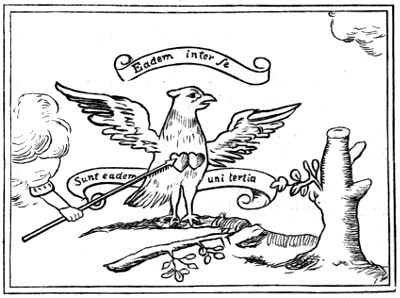
Hawkins’ Parthenos, 1633.
“Behold, how Death aymes with his mortal dart,
And wounds a Phœnix with a twin-like hart.
These are the harts of Jesus and his Mother
So linkt in one, that one without the other
Is not entire. They (sure) each others smart
Must needs sustaine, though two, yet as one hart.
One Virgin-Mother, Phenix of her kind,
And we her Sonne without a father find.
The Sonne’s and Mothers paines in one are mixt,
His side, a Launce, her soule a Sword transfixt.
Two harts in one, one Phenix loue contriues:
[164]One wound in two, and two in one reuiues.”
Whitney’s and Shakespeare’s uses of the device resemble
each other, as we shall see, more closely than the rest do,—and
present a singular coincidence of thought, or else show that the
later writer had consulted the earlier.
“The Bird always alone,” is the motto which Paradin, Reusner,
and Whitney adopt. Paradin (fol. 53), informs us,—
Comme le Phenix eſt à jamais ſeul, & vnique Oiſeau au monde de ſon
eſpece. Auſſi ſont les tresbonnes choſes de merueilleuſe rarité, & bien cler ſemees.
Deuiſe que porte Madame Alienor d’ Auſtriche, Roine Douairiere de France.
i.e. “As the Phœnix is always alone, and the only bird of its kind in the
world, so are very good things of marvellous rarity and very thinly sown. It is
the device which Madam Elinor of Austria bears, Queen Dowager of France.”
The Phœnix is Reusner’s 36th Emblem (bk. ii. p. 98),—
Vnica ſemper auis
Emblema xxxvi.
Quæ thuris lacrymis, & ſucco viuit amomi:[165]
Fert cunas Phœnix, buſta paterna, ſuas.
Sixteen elegiac lines of Latin are devoted to its praise
and typical signification, mixed with some curious theological
conjectures,—
“On tears of frankincense, and on the juice of balsam lives
The Phœnix, and bears its cradle, the coffin of its sire.
Always alone is this bird;—itself its own father and son,
By death alone does it give to itself a new life.
For oft as on earth it has lived the ten ages through,
Dying at last, in the fire it is born of its own funeral pile.
So to himself and to his, Christ gives life by his death,
Life to his servants, whom in equal love he joins to himself.
True Man is he, the one true God, arbiter of ages,
Who illumines with light, with his spirit cherishes all.
Happy, who by holy baptisms in Christ is reborn,
In the sacred stream he takes hold of life,—in the stream he obtains it.”
And again, in reference to the birth unto life eternal,—
“If men report true, death over again forms the Phœnix,
To this bird both life and death the same funeral pile may prove.
Onward, executioners! of the saints burn ye the sainted bodies;
For whom ye desire perdition, to them brings the flame new birth.”
Whitney, borrowing his woodcut and motto from Plantin’s
edition of “Les Devises Heroiqves,” 1562, to a very
considerable degree makes the explanatory stanzas his own
both in the conception and in the expression. The chief
town near to his birth-place had on December 10, 1583,
been almost totally destroyed by fire, but through the
munificence of the Queen and many friends, by 1586, “the
whole site and frame of the town, so suddenly ruined, was
with great speed re-edified in that beautifull manner,” says
the chronicler, “that now it is.” The Phœnix (p. 177) is
standing in the midst of the flames, and with outspreading
wings is prepared for another flight in renewed youth and
vigour.
Vnica semper auis.
To my countrimen of the Namptwiche in Cheshire.
“The Phœnix rare, with fethers freshe of hewe,
Arabias righte, and sacred to the Sonne:
Whome, other birdes with wonder seeme to vewe,
Dothe liue vntill a thousande yeares bee ronne:
Then makes a pile: which, when with Sonne it burnes,
Shee flies therein, and so to ashes turnes.
Whereof, behoulde, an other Phœnix rare,
With speede dothe rise most beautifull and faire:
And thoughe for truthe, this manie doe declare,
Yet thereunto, I meane not for to sweare:
Althoughe I knowe that Aucthors witnes true,
What here I write, bothe of the oulde, and newe.
Which when I wayed, the newe, and eke the oulde,
I thought vppon your towne destroyed with fire:
And did in minde, the newe Nampwiche behoulde,
A spectacle for anie mans desire:
Whose buildinges braue, where cinders weare but late,
Did represente (me thought) the Phœnix fate.
And as the oulde, was manie hundreth yeares,
A towne of fame, before it felt that crosse:
Euen so, (I hope) this Wiche, that nowe appeares,
A Phœnix age shall laste, and knowe no losse:
Which God vouchsafe, who make you thankfull, all:
That see this rise, and sawe the other fall.”
The Concordance to Shakespeare, by Mrs. Cowden Clarke, for
thoroughness hitherto unmatched,[166] notes down eleven instances
in which the Phœnix is named, and in most of them, with
some epithet expressive of its nature. It is spoken of as the
Arabian bird, the bird of wonder; its nest of spicery is mentioned;
it is made an emblem of death, and employed in
metaphor to flatter both Elizabeth and James.
Besides the instances already given (p. 236), we here select
others of a general nature; as:—When on the renowned Talbot’s
death in battle, Sir William Lucy, in presence of Charles, the
Dauphin, exclaims over the slain (1 Hen. VI., act iv. sc. 7, l. 92),—
“O that I could but call these dead to life!
It were enough to fright the realm of France:”
his request for leave to give their bodies burial is thus met,—
“Pucelle. I think this upstart is old Talbot’s ghost,
He speaks with such a proud commanding spirit.
For God’s sake, let him have ’em....
Charles. Go, take their bodies hence.
Lucy. I’ll bear them hence; but from their ashes shall be rear’d
A phœnix, that shall make all France afeard.”
And York, on the haughty summons of Northumberland and
Clifford, declares (3 Hen. VI., act i. sc. 4, l. 35),—
“My ashes, as the Phœnix, may bring forth
A bird that will revenge upon you all.”
In the Phœnix and the Turtle (lines 21 and 49, vol. ix. p. 671),
are the lines,—
“Here the anthem doth commence:
Love and constancy is dead;
Phœnix and the turtle fled
In a mutual flame from hence.
. . . . . .
Whereupon it made this threne
To the phœnix and the dove,
Co-supremes and stars of love,
As chorus to their tragic scene.”
The “threne,” or Lamentation (l. 53, vol. ix. p. 672), then
follows,—
“Beauty, truth and rarity
Grace in all simplicity,
Here enclosed in cinders lie.
Death is now the phœnix’ nest;
And the turtle’s loyal breast
To eternity doth rest.”
The Maiden in The Lover’s Complaint (l. 92, vol. ix. p. 638)
thus speaks of her early love,—
“Small show of man was yet upon his chin;
His phœnix down began but to appear,
Like unshorn velvet, on that termless skin,
Whose bare out-bragg’d the web it seem’d to wear.”
Some of the characteristics of the Phœnix are adduced in
the dialogue, Richard III. (act iv. sc. 4, l. 418, vol. v. p. 606),
between Richard III. and the queen or widow of Edward IV.
The king is proposing to marry her daughter,—
“Q. Eliz. Shall I be tempted of the devil thus?
K. Rich. Ay, if the devil tempt thee to do good.
Queen. Shall I forget myself, to be myself?
K. Rich. Ay, if yourself’s remembrance wrong yourself.
Queen. But thou didst kill my children.
K. Rich. But in your daughter’s womb I bury them:
Where in that nest of spicery, they shall breed
Selves of themselves, to your recomforture.”
Another instance is from Antony and Cleopatra (act iii. sc. 2,
l. 7, vol. ix. p. 64). Agrippa and Enobarbus meet in Cæsar’s
ante-chamber, and of Lepidus Enobarbus declares,—
“O how he loves Cæsar!
Agrip. Nay, but how dearly he adores Marc Antony!
Enob. Cæsar? Why, he’s the Jupiter of men.
Agrip. What’s Antony? The god of Jupiter.
Enob. Speak you of Cæsar? How? the nonpareil!
Agrip. O Antony! O thou Arabian bird!”
And in Cymbeline (act i. sc. 6, l. 15, vol. ix. p. 183), on being
welcomed by Imogen, Iachimo says, aside,—
“All of her that is out of door most rich!
If she be furnish’d with a mind so rare.
She is alone th’ Arabian Bird, and I
Have lost the wager.”
But the fullest and most remarkable example is from Henry
VIII. (act v. sc. 5, l. 28, vol. vi. p. 114). Cranmer assumes the
gift of inspiration, and prophesies of the new-born child of the
king and of Anne Bullen an increase of blessings and of all
princely graces,—
“Truth shall nurse her,
Holy and heavenly thoughts still counsel her:
She shall be loved and fear’d: her own shall bless her;
Her foes shake like a field of beaten corn,
And hang their heads with sorrow. Good grows with her:
In her days every man shall eat in safety,
Under his own vine, what he plants, and sing
The merry songs of peace to all his neighbours:
God shall be truly known; and those about her
From her shall read the perfect ways of honour,
And by these claim their greatness, not by blood.
Nor shall this peace sleep with her; but, as when
The bird of wonder dies, the maiden phœnix,
Her ashes new create another heir,
As great in admiration as herself,
So shall she leave her blessedness to one—
When heaven shall call her from this cloud of darkness—
Who from the sacred ashes of her honour
Shall star-like rise, as great in fame as she was,
And so stand fix’d.”
There is another bird, the emblem of tranquillity and of
peaceful and happy days; it is the King-fisher, which the
poets have described with the utmost embellishment of the
fancy. Aristotle and Pliny tell even more marvellous tales
about it than Herodotus and Horapollo do about the Phœnix.
The fable, on which the poetic idea rests, is two-fold; one
that Alcyone, a daughter of the wind-god Æolus, had been
married to Ceyx; and so happily did they live that they gave
one another the appellations of the gods, and by Jupiter in
anger were changed into birds; the other narrates, that Ceyx
perished from shipwreck, and that in a passion of grief Alcyone
threw herself into the sea. Out of pity the gods bestowed on
the two the shape and habit of birds. Ovid has greatly enlarged
the fable, and has devoted to it, in his Metamorphoses (xi. 10),
between three and four hundred lines. We have only to do
with the conclusion,—
“The gods at length taking compassion
The pair are transformed into birds; tried by one destiny
Their love remained firm; nor is the conjugal bond
Loosened although they are birds; parents they become,
And through a seven days’ quietness in midwinter
In nests upborne by the sea the King-fishers breed.
Safe then is the sea-road; the winds Æolus guards,
Debarring from egress; and ocean’s plain favours his children.”
According to Aristotle’s description (Hist. Anim. ix. 14),—
“The nest of the Alcyon is globular, with a very narrow entrance, so that
if it should be upset the water would not enter. A blow from iron has no
effect upon it, but the human hand soon crushes it and reduces it to powder.
The eggs are five.”
“The halcyones,” Pliny avers, “are of great name and much marked.
The very seas, and they that saile thereupon, know well when they sit and
breed. This bird, so notable, is little bigger than a sparrow; for the more
part of her pennage, blew, intermingled yet among with white and purple
feathers; having a thin small neck and long withal they lay and sit about
mid-winter, when daies be shortest; and the times while they are broodie, is
called the halcyon daies; for during that season the sea is calm and
navigable, especially on the coast of Sicilie.”—Philemon Holland’s Plinie, x. 32.
We are thus prepared for the device which Paolo Giovio sets
before his readers, with an Italian four-lined stanza to a French
motto, We know well the weather. The drawing suggests that
the two Alcyons in one nest are sailing “on the coast of Sicilie,”
in the straits of Messina, with Scylla and Charybdis on each
hand—but in perfect calmness and security,—
San gl’ Alcionij augei il tempo eletto,
Ch’ al nido; e all’ oua lor non nuoca il mare.
Infelice quell’ huom, ch’el dí aſpettare
Non ſa, per dare al ſuo diſegno effetto.
Nous ſauons
bien le temps.
“Happy the Alcyons, whom choice times defend.
Nor in the nest nor egg the sea can harm;
But luckless man knows not to meet alarm,
Nor to his purpose gives the wished for end.”
The festival of Saint Martin, or Martlemas, is held November
11th, at the approach of winter, and was a season of merriment
and good cheer. It is in connection with this festival that Shakespeare
first introduces a mention of the Alcyon (1 Henry VI.,
act i. sc. 2, l. 129, vol. v. p. 14). The Maid of Orleans is propounding
her mission for the deliverance of France to Reignier, Duke
of Anjou,—
“Assign’d I am to be the English scourge.
This night the siege assuredly I’ll raise:
Expect Saint Martin’s summer, halcyon days,
Since I have enter’d into these wars.”
It was, and I believe still is, an opinion prevalent in some
parts of England, that a King-fisher, suspended by the tail or
beak, will turn round as the wind changes. To this fancy, allusion
is made in King Lear (act ii. sc. 2, l. 73, vol. viii. p. 307),—
“Renege, affirm and turn their halcyon beaks
With every gale and vary of their masters,
Knowing nought, like dogs, but following.”
The Poet delights to tell of self-sacrificing love; and hence the
celebrity which the Pelican has acquired for the strong natural
affection which impels it, so the tale runs, to pour forth the very
fountain of its life in nourishment to its young. From Epiphanius,
bishop of Constantia in the island of Cyprus, whose Physiologvs
was printed by Plantin in 1588, we have the supposed natural
history of the Pelicans and their young, which he symbolizes in
the Saviour. His account is accompanied by a pictorial representation,
“ΠΕΡΙ ΤΗΣ ΠΕΛΕΚΑΝΟΣ,”—Concerning the Pelican
(p. 30).
The good bishop narrates as physiological history the following,—
“Beyond all birds the Pelican is fond of her young. The female sits on
the nest, guarding her offspring, and cherishes and caresses them and wounds
them with loving; and pierces their sides and they die. After three days
the male pelican comes and finds them dead, and very much his heart is
pained. Driven by grief he smites his own side, and as he stands over the
wounds of the dead young ones, the blood trickles down, and thus are they
made alive again.”
Reusner and Camerarius both adopt the Pelican as the
emblem of a good king who devotes himself to the people’s
welfare. For Law and for Flock, is the very appropriate motto
they prefix; Camerarius simply saying (ed. 1596, p. 87),—
“Sanguine vivificat Pelicanus pignora, sic rex
Pro populi vitæ est prodigus ipse suæ.”
“By blood the Pelican his young revives; and so a king
For his people’s sake himself of life is prodigal.”
Reusner (bk. ii. p. 73) gives the following device,—
Pro lege, & grege.
Emblema xiv.
And tells how,—
“Alphonsus the wise and good king of Naples, with his own honoured
hand painted a Pelican which with its sharp beak was laying open its breast
so as with its own blood to save the lives of its young. Thus for people, for
law, it is right that a king should die and by his own death restore life to the
nations. As by his own death Christ did restore life to the just, and with
life peace and righteousness.”
He adds this personification of the Pelican,—
“For people and for sanctioned law heart’s life a king will pour;
So from this blood of mine do I life to my young restore.”
The other motto, which Hadrian Junius and Geffrey Whitney
select, opens out another idea, Quod in te est, prome,—“Bring
forth what is in thee.” It suggests that of the soul’s wealth we
should impart to others.
Junius (Emb. 7) thus addresses the bird he has chosen,—
“By often striking, O Pelican, thou layest open the deep recesses of thy
breast and givest life to thy offspring. Search into thine own mind (my
friend), seek what is hidden within, and bring forth into the light the seeds
of thine inner powers.”
And very admirably does Whitney (p. 87) apply the sentiment
to one of the most eminent of divines in the reign of
Queen Elizabeth,—namely, to Dr. Alexander Nowell, the
celebrated Dean of St. Paul’s, illustrious both for his learning
and his example,—
“The Pellican, for to reuiue her younge,
Doth peirce her brest, and geue them of her blood:
Then searche your breste, and as yow haue with tonge,
With penne proceede to doe our countrie good:
Your zeale is great, your learning is profounde,
Then helpe our wantes, with that you doe abounde.”
The full poetry of the thoughts thus connected with the
Pelican is taken in, though but briefly expressed by Shakespeare.
In Hamlet (act iv. sc. 5, l. 135, vol. viii. p. 135), on
Laertes determining to seek revenge for his father’s death, the
king adds fuel to the flame,—
“King. Good Laertes,
If you desire to know the certainty
Of your dear father’s death, is’t writ in your revenge,
That, swoopstake, you will draw both friend and foe,
Winner and loser?
Laer. None but his enemies.
King. Will you know them then?
Laer. To his good friends thus wide I’ll ope my arms;
And like the kind life-rendering pelican,
Repast them with my blood.”
[167]
From Richard II. (act ii. sc. 1, l. 120, vol. iv. p. 140) we learn
how in zeal and true loyalty John of Gaunt counsels his headstrong
nephew, and how rudely the young king replies,—
“Now, by my seat’s right royal majesty,
Wert thou not brother to great Edward’s son,
This tongue that runs so roundly in thy head
Should run thy head from thy unreverent shoulders.
Gaunt. O, spare me not, my brother Edward’s son,
For that I was his father Edward’s son;
That blood already, like the pelican,
Hast thou tapp’d out and drunkenly caroused.”
The idea, indeed, almost supposes that the young pelicans
strike at the breasts of the old ones, and forcibly or thoughtlessly
drain their life out. So it is in King Lear (act iii. sc. 4,
l. 68, vol. viii. p. 342), when the old king exclaims,—
“Death, traitor! nothing could have subdued nature
To such a lowness but his unkind daughters.
Is it the fashion that discarded fathers
Should have thus little mercy on their flesh?
Judicious punishment! ’twas this flesh begot
Those pelican daughters.”
And again (2 Henry VI., act iv. sc. 1, l. 83, vol. v. p. 182), in
the words addressed to Suffolk,—
“By devilish policy art thou grown great,
And, like ambitious Sylla, over-gorged
With gobbets of thy mother’s bleeding heart.”
The description of the wounded stag, rehearsed to the
banished duke by one of his attendants, is as touching a narrative,
as full of tenderness, as any which show the Poet’s
wonderful power over our feelings; it is from As You Like It
(act ii. sc. 1, l. 29, vol. ii. p. 394),—
“To-day my Lord of Amiens and myself
Did steal behind him [Jaques] as he lay along
Under an oak whose antique root peeps out
Upon the brook that brawls along this wood:
To the which place a poor sequester’d stag,
That from the hunter’s aim had ta’en a hurt,
Did come to languish, and indeed, my lord,
The wretched animal heaved forth such groans,
That their discharge did stretch his leathern coat
Almost to bursting, and the big round tears
Coursed one another down his innocent nose
In piteous chase; and thus the hairy fool,
Much marked of the melancholy Jacques,
Stood on the extremest verge of the swift brook,
Augmenting it with tears.”
Graphic and highly ornamented though this description may
be, it is really the counterpart of Gabriel Symeoni’s Emblem of
love incurable. The poor stag lies wounded and helpless,—the
mortal dart in his flank, and the life-stream gushing out. The
scroll above bears a Spanish motto, This holds their Remedy and
not I; and it serves to introduce the usual quatrain.
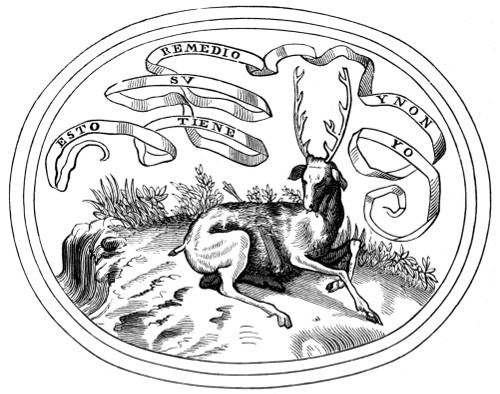
Giovio and Symeoni, 1562.
Troua il ceruio ferito al ſuo gran male
Nel dittamo Creteo fido ricorſo,
Ma laſſo (io’lsò) rimedio ne ſoccorſo
All’ amoroſo colpo alcun non vale.
Eſto tiene
ſu remedio,
y non
yo.
“The smitten stag hath found sad pains to feel,
No trusted Cretan dittany
[168] is near,
Wearied, for succour there is only fear,—
The wounds of love no remedy can heal.”
To the same motto and the same device Paradin (fol. 168)
furnishes an explanation,—
“The device of love incurable,” he says, “may be a stag wounded by an
arrow, having a branch of Dittany in its mouth, which is a herb that grows
abundantly in the island of Crete. By eating this the wounded stag heals all
its injuries. The motto, ‘Esto tienne su remedio, y no yo,’ follows those
verses of Ovid in the Metamorphoses, where Phœbus, complaining of the love
for Daphne, says, ‘Hei mihi, quòd nullis amor est medicabilis herbis.’”
The connected lines in Ovid’s Metamorphoses (bk. i. fab. 9), show
that even Apollo, the god of healing, whose skill does good to all
others, does no good to himself. The Emblems of Otho Vænius
(p. 154) gives a very similar account to that of Symeoni,—
“Cerua venenato venantûm saucia ferro
Dyctamno quærit vulneris auxilium.
Hei mihi, quod nullis sit Amor medicabilis herbis,
Et nequeat medicâ pellier arte malum.”
The following is the English version of that date,—
“The hert that wounded is, knowes how to fynd relief,
And makes by dictamon the arrow out to fall,
And with the self-same herb hee cures his wound withall,
But love no herb can fynd to cure his inward grief.”
In the presence of those who had slain Cæsar, and over his
dead body at the foot of Pompey’s statue, “which all the while ran
blood,” Marc Antony poured forth his fine avowal of continued
fidelity to his friend (Julius Cæsar, act iii. sc. 1, l. 205, vol. vii. p.
368),—
“Pardon me, Julius! Here wast thou bay’d, brave hart;
Here didst thou fall, and here thy hunters stand,
Sign’d in thy spoil and crimson’d in thy lethe.
O world! thou wast the forest to this hart;
And this, indeed, O world, the heart of thee.
How like a deer strucken by many princes
Dost thou here lie!”
The same metaphor from the wounded deer is introduced in
Hamlet (act iii. sc. 2, l. 259, vol. viii. p. 97). The acting of the
play has had on the king’s mind the influence which Hamlet
hoped for; and as in haste and confusion the royal party disperse,
he recites the stanza,—
“Why, let the stricken deer go weep,
The hart ungalled play;
For some must watch, whilst some must sleep:
Thus runs the world away.”
The very briefest allusion to the subject of our Emblem is
also contained in the Winter’s Tale (act i. sc. 2, l. 115, vol. iii.
p. 323). Leontes is discoursing with his queen Hermione,—
“But to be paddling palms and pinching fingers,
As now they are, and making practised smiles,
As in a looking glass, and then to sigh, as ’twere
The mort o’ the deer; O, that is entertainment
My bosom likes not, nor my brows!”
The poetical epithet “golden,” so frequently expressive of
excellence and perfection, and applied even to qualities of the
mind, is declared by Douce (vol. i. p. 84) to have been derived
by Shakespeare either from Sidney’s Arcadia (bk. ii.), or from
Arthur Golding’s translation of Ovid’s Metamorphoses (4to,
fol. 8), where speaking of Cupid’s arrows, he says,—
“That causeth love is all of golde with point full sharp and bright.
That chaseth love, is blunt, whose steele with leaden head is dight.”
This borrowing and using of the epithet “golden” might
equally well, and with as much probability, have taken place
through the influence of Alciat, or by adoption from Whitney’s
very beautiful translation and paraphrase of Joachim Bellay’s
Fable of Cupid and Death. The two were lodging together at
an inn,[169] and unintentionally exchanged quivers: death’s darts
were made of bone, Cupid’s were “dartes of goulde.”
The conception of the tale is admirable, and the narrative
itself full of taste and beauty. Premising that the same device
is employed by Whitney as by Alciat, we will first give almost
a literal version from the 154th and 155th Emblems of the
latter author (edition 1581),—
“Wandering about was Death along with Cupid as companion,
With himself Death was bearing quivers; little Love his weapons;
Together at an inn they lodged; one night together one bed they shared;
Love was blind, and on this occasion Death also was blind.
Unforeseeing the evil, one took the darts of the other,
Death the golden weapons,—those of bone the boy rashly seizes.
Hence an old man who ought now to be near upon Acheron.
Behold him loving,—and for his brow flower-fillets preparing.
But I, since Love smote me with the dart that was changed,
I am fainting, and their hand the fates upon me are laying.
Spare, O boy; spare, O Death, holding the ensigns victorious,—
Make me the lover, the old man make him sink beneath Acheron.”
And carrying on the idea into the next Emblem (155),—
“Why, O Death, with thy wiles darest thou deceive Love the boy,
That thy weapons he should hurl, while he thinks them his own?”
Whitney’s “sportive tale, concerning death and love,”
possesses sufficient merit to be given in full (p. 132),—
De morte, & amore: Iocoſum.
To Edward Dyer, Eſquier.
“While furious Mors, from place, to place did flie,
And here, and there, her fatall dartes did throwe:
At lengthe shee mette, with Cupid passing by,
Who likewise had, bene busie with his bowe:
Within one Inne, they bothe togeather stay’d,
And for one nighte, awaie theire shooting lay’d.
The morrowe next, they bothe awaie doe haste,
And eache by chaunce, the others quiuer takes:
The frozen dartes, on Cupiddes backe weare plac’d.
The fierie dartes, the leane virago shakes:
Whereby ensued, suche alteration straunge,
As all the worlde, did wonder at the chaunge.
For gallant youthes, whome Cupid thoughte to wounde,
Of loue, and life, did make an ende at once.
And aged men, whome deathe woulde bringe to grounde:
Beganne againe to loue, with sighes, and grones;
Thus natures lawes, this chaunce infringed soe:
That age did loue, and youthe to graue did goe.
Till at the laste, as Cupid drewe his bowe,
Before he shotte: a younglinge thus did crye,
Oh Venus sonne, thy dartes thou doste not knowe,
They pierce too deepe: for all thou hittes, doe die:
Oh spare our age, who honored thee of oulde,
Theise dartes are bone, take thou the dartes of goulde.
Which beinge saide, a while did Cupid staye,
And sawe, how youthe was almoste cleane extinct:
And age did doate, with garlandes freshe, and gaye,
And heades all balde, weare newe in wedlocke linckt:
Wherefore he shewed, this error vnto Mors,
Who miscontent, did chaunge againe perforce.
Yet so, as bothe some dartes awaie conuay’d,
Which weare not theirs: yet vnto neither knowne,
Some bonie dartes, in Cupiddes quiver stay’d,
Some goulden dartes, had Mors amongst her owne.
Then, when wee see, vntimelie deathe appeare:
Or wanton age: it was this chaunce you heare.”
For an interlude to our remarks on the “golden,” we must
mention that the pretty tale Concerning Death and Cupid was
attributed to Whitney by one of Shakespeare’s contemporaries;
and, if known to other literary men of the age, very reasonably
may be supposed not unknown to the dramatist. Henry
Peacham, in 1612, p. 172 of his Emblems, acknowledges that it
was from Whitney that he derived his own tale,—
“Death meeting once, with Cvpid in an Inne,
Where roome was scant, togeither both they lay.
Both weariè, (for they roving both had beene,)
Now on the morrow when they should away,
Cvpid Death’s quiver at his back had throwne,
And Death tooke Cvpids, thinking it his owne.
By this o’re-sight, it shortly came to passe,
That young men died, who readie were to wed:
And age did revell with his bonny-lasse,
Composing girlonds for his hoarie head:
Invert not Nature, oh ye Powers twaine,
Giue Cvpid’s dartes, and Death take thine againe.”
Whitney luxuriates in this epithet “golden;”—golden fleece,
golden hour, golden pen, golden sentence, golden book, golden
palm are found recorded in his pages. At p. 214 we have the
lines,—
“A Leaden sworde, within a goulden sheathe,
Is like a foole of natures finest moulde,
To whome, shee did her rarest giftes bequethe,
Or like a sheepe, within a fleece of goulde.”
We may indeed regard Whitney as the prototype of Hood’s
world-famous “Miss Kilmansegg, with her golden leg,”—
“And a pair of Golden Crutches.” (vol. i. p. 189.)
Shakespeare is scarcely more sparing in this respect than the
Cheshire Emblematist; he mentions for us “golden tresses of
the dead,” “golden oars and a silver stream,” “the glory, that in
gold clasps locks in the golden story,” “a golden casket,” “a
golden bed,” and “a golden mind.” Merchant of Venice (act ii.
sc. 7, lines 20 and 58, vol. ii. p. 312),—
“A golden mind stoops not to shows of dross.
. . . . . .
But here an angel in a golden bed
Lies all within.”
And applied direct to Cupid’s artillery in Midsummer Night’s
Dream (act i. sc. 1, l. 168, vol. ii. p. 204), Hermia makes fine use
of the epithet golden,—
“My good Lysander!
I swear to thee by Cupid’s strongest bow,
By his best arrow with the golden head.”
So in Twelfth Night (act i. sc. 1, l. 33, vol. iii. p. 224), Orsino,
Duke of Milan, speaks of Olivia,—
“O, she that hath a heart of that fine frame
To pay the debt of love but to a brother,
How will she love, when the rich golden shaft
Hath kill’d the flock of all affections else
That live in her; when liver, brain and heart
These sovereign thrones, are all supplied, and fill’d
Her sweet perfections with one self king!”
And when Helen praised the complexion or comeliness of
Troilus above that of Paris, Cressida avers (Troilus and Cressida,
act i. sc. 2, l. 100, vol. vi. p. 134),—
“I had as lief Helen’s golden tongue had commended Troilus for a copper
nose.”
Plate 14
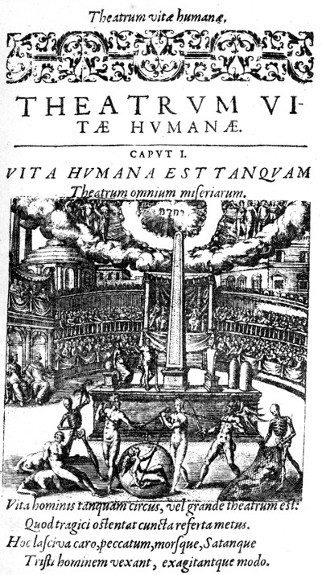
Life as a Theatre, from Boissards Theatrum 1596.
As Whitney’s pictorial illustration represents them, Death and
Cupid are flying in mid-air, and discharging their arrows from the
clouds. Confining the description to Cupid, this is exactly the
action in one of the scenes of the Midsummer Night’s Dream
(act ii. sc. 1, l. 155, vol. ii. p. 216). The passage was intended
to flatter Queen Elizabeth; it is Oberon who speaks,—
“That very time I saw, but thou couldst not,
Flying between the cold moon and the earth,
Cupid all arm’d: a certain aim he took
At a fair vestal throned by the west,
And loosed his love-shaft smartly from his bow,
As it should pierce a hundred thousand hearts:
But I might see young Cupid’s fiery shaft
Quench’d in the chaste beams of the watery moon,
And the imperial votaress passed on,
In maiden meditation, fancy free.
Yet mark’d I where the bolt of Cupid fell:
It fell upon a little western flower,
Before milk-white, now purple with love’s wound,
And maidens call it love-in-idleness.”
Scarcely by possibility could a dramatist, who was also an
actor, avoid the imagery of poetic ideas with which his own
profession made him familiar. I am not sure if Sheridan
Knowles did not escape the temptation; but if Shakespeare had
done so, it would have deprived the world of some of the most
forcible passages in our language. The theatre for which he
wrote, and the stage on which he acted, supplied materials for
his imagination to work into lines of surpassing beauty.
Boissard’s “Theatrvm Vitæ Humanæ” (edition Metz, 4to,
1596) presents its first Emblem with the title,—Human life
is as a Theatre of all Miseries. (See Plate XIV.)
“The life of man a circus is, or theatre so grand:
Which every thing shows forth filled full of tragic fear;
Here wanton sense, and sin, and death, and Satan’s hand
Molest mankind and persecute with penalties severe.”
The picture of human life which Boissard draws in his
“Address to the Reader” is gloomy and dispiriting; there are in
it, he declares, the various miseries and calamities to which man is
subject while he lives,—and the conflicts to which he is exposed
from the sharpest and cruellest enemies, the devil, the flesh, and
the world; and from their violence and oppression there is no possibility
of escape, except by the favour and help of God’s mercy.
Very similar ideas prevail in some of Shakespeare’s lines; as
“the thousand natural shocks that flesh is heir to” (Hamlet,
act iii. sc. 1, l. 62, vol. viii. p. 79); “my heart all mad with misery
beats in this hollow prison of my flesh” (Titus Andronicus,
act iii. sc. 2, l. 9, vol. vi. p. 483); and, “shake the yoke of inauspicious
stars from this world-wearied flesh” (Romeo and
Juliet, act v. sc. 3, l. 111, vol. vii. p. 126).
But more particularly in As You Like It (act ii. sc. 7, l. 136,
vol. ii. p. 409),—
“Thou seest we are not all alone unhappy:
This wide and universal theatre
Presents more woeful pageants than the scene
Wherein we play in.”
Also in Macbeth (act v. sc. 5, l. 22, vol. vii. p. 512),—
“And all our yesterdays have lighted fools
The way to dusty death. Out, out, brief candle!
Life’s but a walking shadow, a poor player
That struts and frets his hour upon the stage
And then is heard no more: it is a tale
Told by an idiot, full of sound and fury
Signifying nothing.”
And when the citizens of Angiers haughtily closed their gates
against both King Philip and King John, the taunt is raised
(King John, act ii. sc. 1, l. 373, vol. iv. p. 26),—
“By heaven, these scroyles of Angiers flout you, kings,
And stand securely on their battlements,
As in a theatre, whence they gape and point
At your industrious scenes and acts of death.”
Plate 15
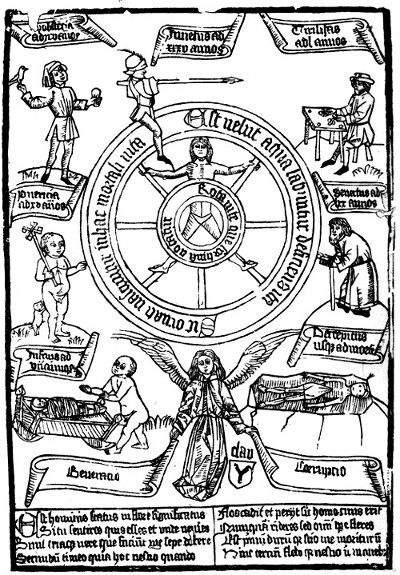
Seven Ages of Life from an early Block Print in the British Museum
The stages or ages of man have been variously divided. In
the Arundel MS., and in a Dutch work printed at Antwerp in
1820, there are ten of these divisions of Man’s Life.[170] The
celebrated physician Hippocrates (B.C. 460–357), and Proclus,
the Platonist (A.D. 412–485), are said to have divided human
life, as Shakespeare has done, into seven ages. And a mosaic on
the pavement of the cathedral at Siena gives exactly the same
division. This mosaic is very curious, and is supposed to have
been executed by Antonio Federighi in the year 1476. Martin’s
“Shakspere’s Seven Ages,” published in 1848, contains a
little narrative about it, furnished by Lady Calcott, who shortly
before that time had been travelling in Italy,—
“We found,” she says, “in the cathedral of Sienna a curious proof that
the division of human life into seven periods, from infancy to extreme old age
with a view to draw a moral inference, was common before Shakspeare’s
time: the person who was showing us that fine church directed our
attention to the large and bold designs of Beccafumi, which are inlaid in
black and white in the pavement, entirely neglecting some works of a much
older date which appeared to us to be still more interesting on account of the
simplicity and elegance with which they are designed. Several of these
represent Sibyls and other figures of a mixed moral and religious character;
but in one of the side chapels we were both suprised and pleased to find
seven figures, each in a separate compartment, inlaid in the pavement,
representing the Seven Ages of Man.”
Lord Lindsay notices the same work, and in his “Christian
Art,” vol. iii. p. 112, speaking of the Pavement of the Duomo at
Siena, says,—“Seven ages of life in the Southern Nave, near
the Capella del Voto.”
Of as old a date, even if not more ancient, is the Representation
of the Seven Ages from a Block-Print belonging to the
British Museum, and of which we present a diminished facsimile
(Plate XV.), the original measuring 15½ in. by 10½ in.
The inscription on the centre of the wheel, Rota vite que
septima notatur,—“The wheel of life which seven times is noted:”
on the outer rim,—Est velut aqua labuntur deficiens ita. Sic
ornati nascuntur in hac mortali vita,—“It is as water so failing,
they pass away. So furished are they born in this mortal
life.” The figures for the seven ages are inscribed, Infans ad vii.
annos,—“An infant for vii. years.” Pueritia[171] ad xv. años,—“Childhood
up to xv. years.” Adolescẽtia ad xxv. años,—“Youthhood
to xxv. years.” Iuvẽtus ad xxxv. annos,—“Young manhood
to xxxv. years.” Virilitas ad l. annos,—“Mature manhood
to 50 years.” Senatus ad lxx. annos,—“Age to 70 years.”
Decrepitus usque ad mortem,—“Decrepitude up to death.” The
angel with the scrolls holds in her right hand that on which is
written Beuerano, in her left, Corruptio,—“Corruption;” below
her left, clav, for clavis, “a key.”
Some parts of the Latin stanzas are difficult to decipher;
they appear, however, to be the following, read downward,—
“Est hominis status in flore significatus
Situ sentires quis esses et unde venisses
Sunt triaque vere quæ faciunt me sæpe dicere,
Secundum timeo quia hoc nescio quando
Flos cadit et periit sic homo cinis erit
Nunquam rideres sed olim sæpe fleres
Est primo durum quare scio me moriturum
Hinc ternum flebo quare nescio ut manebo.”
The lines, however, are to be read across the page,—
“Est hominis status in flore significatus, Flos cadit et periit sic homo cinis erit.
Situ sentires quis esses et unde venisses, Nunquam rideres sed olim sæpe fleres.
Sunt triaque vere quæ faciunt me sæpe dicere, Est primo durum quare scio me moriturum.
Secundum timeo quia hoc nescio quando, Hinc ternum flebo quare nescio ut manebo.”
They are only doggerel Latin, and in doggerel English may be
expressed,—
“Lo here is man’s state—in flowers significate:
The flower fades and perishes,—so man but ashes is;
Who mayst be thou feelest,—whence com’st thou revealest;
Laugh shouldst thou never,—but be weeping for ever;
Three things there are truly,—which make me say duly,
The first hard thing ’tis to know,—that to death I must go;
The second I fear then,—since I know not the when;—
The third again will I weep,—for I know not in life to keep.”
The celebrated speech of Jaques to his dethroned master,
“All the world’s a stage,” from As You Like It (act ii. sc. 7, lines
139–165, vol. ii. p. 409), is closely constructed on the model of
the Emblematical Devices in the foregoing Block-print. The
simple quoting of the passage will be sufficient to show the
parallelism and correspondence of the thoughts, if not of the
expressions,—
“Jaques.All the world’s a stage,
And all the men and women merely players:
They have their exits and their entrances;
And one man in his time plays many parts,
His acts being seven ages. At first the infant,
Mewling and puking in the nurse’s arms.
Then the whining school-boy, with his satchel
And shining morning face, creeping like snail
Unwillingly to school. And then the lover,
Sighing like furnace, with a woeful ballad
Made to his mistress’ eyebrow. Then a soldier,
Full of strange oaths, and bearded like the pard,
Jealous in honour, sudden and quick in quarrel,
Seeking the bubble reputation
Even in the cannon’s mouth. And then the justice,
In fair round belly with good capon lined,
With eyes severe and beard of formal cut,
Full of wise saws and modern instances;
And so he plays his part. The sixth age shifts
Into the lean and slipper’d pantaloon,
With spectacles on nose and pouch on side,
His youthful hose, well saved, a world too wide
For his shrunk shank; and his big manly voice,
Turning again toward childish treble, pipes
And whistles in his sound. Last scene of all,
That ends this strange eventful history,
Is second childishness and mere oblivion,
Sans teeth, sans eyes, sans taste, sans every thing.”
In far briefer phrase, but with a similar comparison, in reply
to the charge of having “too much respect upon the world,”
Antonia (Merchant of Venice, act i. sc. 1, l. 77, vol. ii. p. 281)
remarked,—
“I hold the world but as the world, Gratiano;
A stage, where every man must play a part,
And mine a sad one.”
The pencil and the skill alone are wanting to multiply the
Emblems for the Poetic Ideas which abound in Shakespeare’s
dramas. His thoughts and their combinations are in general
so clothed with life and with other elements of beauty, that
materials for pictures exist in all parts of his writings. Our
office, however, is not to exercise the inventive faculty, nor, even
when the invention has been perfected for us by the poet’s fancy,
to give it a visible form and to portray its outward graces. We
have simply to gather up the scattered records of the past, and
to show what correspondencies there really are between Shakespeare
and the elder Emblem artists, and, when we can, to point
out where to him they have been models, imitated and thus
approved. Though, therefore, we might draw many a sketch, and
finish many a picture from ideas to be supplied from this unexhausted
fountain, we are mindful of the humbler task belonging
to him who collects, and on his shelf of literary antiquities
places, only what has the stamp of nearly three centuries upon
them.
REJOICING much if the end should crown the
earlier portions of our work, we enter now on the
last and most welcome section of this chapter,—on
the Emblems which depict moral qualities and
æsthetical properties,—the Emblems which concern the judgments
and perceptions of the mind, and the conduct of the heart,
the conscience, and the life.
We will initiate this division
by the motto and
device which Whitney (p.
64) adopts from Sambucus
(edition 1564, p. 30),—“Things
lying at our
feet,”—that is, of immediate
importance and
urgency. The Emblems
are warnings from the
hen which is eating her
own eggs, and from the cow which is drinking her own milk.
The Hungarian poet thus sets forth his theme,—
“The hen which had seen the eggs to her care entrusted,
Is here sucking them, and hope she holds forth by no pledge.
It is herself she serves and not others,—of future days heedless,
No sense of feeling has she for the good of posterity.
This a fault is in many,—things gained without labour
Thoughtless they waste, unmindful of times that are coming.
So cows suck their own udders,—the milk proper for milk pails
They pilfer away,—and why bear to them the rich fodder?
Not alone for ourselves do we live,—we live from the birth hour
For our friends and our country, and whom the ages shall bring.”
The sentiment is admirable, and well placed by Whitney in the
foremost ground,—
“Not for our selues, alone wee are create,
But for our frendes, and for our countries good:
And those, that are vnto theire frendes ingrate,
And not regarde theire ofspringe, and theire blood,
Or hee, that wastes his substance till he begges,
Or selles his landes, which seru’de his parentes well:
Is like the henne, when shee hathe lay’de her egges,
That suckes them vp and leaues the emptie shell,
Euen so theire spoile, to theire reproche, and shame,
Vndoeth theire heire, and quite decayeth theire name.”
These two, Sambucus and Whitney, are the types, affirming
that our powers and gifts and opportunities were all bestowed,
not for mere selfish enjoyments, but to be improved for the
general welfare; Shakespeare is the antitype: he amplifies, and
exalts, and finishes; he carries out the thought to its completion,
and thus attains absolute perfection; for in Measure for
Measure (act i. sc. 1, l. 28, vol. i. p. 296), Vincentio, the duke,
addresses Angelo,—
“There is a kind of character in thy life,
That to th’ observer doth thy history
Fully unfold. Thyself and thy belongings
Are not thine own so proper, as to waste
Thyself upon thy virtues, they on thee.
Heaven doth with us as we with torches do,
Not light them for ourselves; for if our virtues
Did not go forth of us, ’twere all alike
As if we had them not. Spirits are not finely touch’d
But to fine issues; nor Nature never lends
The smallest scruple of her excellence,
But, like a thrifty goddess, she determines
Herself the glory of a creditor,
Both thanks and use.”
Now, there is beauty in the types, brief though they be, and
on a very lowly subject: but how admirable is the antitype!
It entirely redeems the thought from any associated meanness,
carries it out to its full excellence, and clothes it with vestments
of inspiration. Such, in truth, is Shakespeare’s great praise;—he
can lift another man’s thought out of the dust, and make it
a fitting ornament even for an archangel’s diadem.
One of Whitney’s finest Emblems, in point of conception
and treatment, and, I believe, peculiar to himself, one of
those “newly devised,” is founded on the sentiment, “By
help of God” (p. 203).
Auxilio diuino.
To Richarde drake, Eſquier, in praiſe of
Sir Francis Drake Knight.
The representation is
that of the hand of Divine
Providence issuing from a
cloud and holding the girdle
which encompasses the
earth. With that girdle
Sir Francis Drake’s ship,
“the Golden Hind,” was
drawn and guided round
the globe.
The whole Emblem
possesses considerable interest,—for
it relates to
the great national event of
Shakespeare’s youth,—the first accomplishment by Englishmen
of the earth’s circumnavigation. With no more than 164 able-bodied
men, in five small ships, little superior to boats with a
deck, the adventurous commander set sail 13th December, 1577;
he went by the Straits of Magellan, and on his return doubled
the Cape of Good Hope, the 15th of March, 1580, having then
only fifty-seven men and three casks of water. The perilous
voyage was ended at Plymouth, September the 26th, 1580, after
an absence of two years and ten months.
These few particulars give more meaning to the Poet’s description,—
“Throvghe scorchinge heate, throughe coulde, in stormes, and tempests force,
By ragged rocks, by shelfes, & sandes: this Knighte did keepe his course.
By gapinge gulfes hee pass’d, by monsters of the flood,
By pirattes, theeues, and cruell foes, that long’d to spill his blood.
That wonder greate to scape: but, God was on his side,
And throughe them all, in spite of all, his shaken shippe did guide.
And, to requite his paines: By helpe of Power deuine.
His happe, at lengthe did aunswere hope, to finde the goulden mine.
Let Græcia then forbeare, to praise her Iason boulde?
Who throughe the watchfull dragons pass’d, to win the fleece of goulde.
Since by Medeas helpe, they weare inchaunted all,
And Iason without perrilles, pass’de: the conqueste therefore small?
But, hee, of whome I write, this noble minded Drake,
Did bringe away his goulden fleece, when thousand eies did wake.
Wherefore, yee woorthie wightes, that seeke for forreine landes:
Yf that you can, come alwaise home, by Ganges goulden sandes.
And you, that liue at home, and can not brooke the flood,
Geue praise to them, that passe the waues, to doe their countrie good.
Before which sorte, as chiefe: in tempeste, and in calme,
Sir Francis Drake, by due deserte, may weare the goulden palme.”
How similar, in part at least, is the sentiment in Hamlet
(act v. sc. 2, l. 8, vol. viii. p. 164),—
“Our indiscretion sometimes serves us well
When our deep plots do pall; and that should learn us
There’s a divinity that shapes our ends,
Rough-hew them how we will.”
In the Emblem we may note the girdle by which Drake’s
ship is guided; may it not have been the origin of Puck’s fancy
in the Midsummer Night’s Dream (act ii. sc. 1, l. 173, vol. ii.
p. 216), when he answers Oberon’s strict command,—
“And be thou here again
Ere the Leviathan can swim a league.
Puck. I’ll put a girdle round about the earth
In forty minutes.”
Besides, may it not have been from this voyage of Sir
Francis Drake, and the accounts which were published respecting
it, that the correct knowledge of physical geography was
derived which Richard II. displays (act iii. sc. 2, l. 37, &c.
vol. iv. p. 165)? as in the lines,—
“when the searching eye of heaven is hid,
Behind the globe, that lights the lower world.
. . . . . .
when from under this terrestrial ball
He fires the proud tops of the eastern pines
And darts his light through every guilty hole.
. . . . . .
revell’d in the night
Whilst we were wandering with the antipodes.”
A mere passing allusion to the same sentiment, a hint respecting
it, a single line expressing it, or only a word or two
relating to it, may sometimes very decidedly indicate an
acquaintance with the author by whom the sentiment has been
enunciated in all its fulness. Thus, Shakespeare, in speaking of
Benedick, in Much Ado about Nothing (act v. sc. 1, l. 170, vol. ii.
p. 75), makes Don Pedro say,—
“An if she did not hate him deadly, she would love him dearly: the old
man’s daughter told us all.”
To which Claudius replies,—
“All, all; and, moreover, God saw him when he was hid in the garden.”
Now, Whitney (p. 229) has an Emblem on this very
subject; the motto, “God lives and sees.” It depicts Adam
concealing himself, and a divine light circling the words, “Vbi
es?”—Where art thou?
“Behinde a figtree great, him selfe did Adam hide:
And thought from God hee there might lurke, and should not bee espide.
Oh foole, no corners seeke, thoughe thou a sinner bee;
For none but
God can thee forgiue, who all thy
waies doth see.”
[172]
With the same motto, “Vbi es?” and a similar device,
Georgette de Montenay (editions 1584 and 1620) carries out the
same thought,—
“Adam pensoit estre fort bien caché,
Quand il se meit ainsi souz le figuier.
Mais il n’y a cachetté̩[e/]̩ où le peché
Aux yeux de Dieu se puisse desnier.
Se vante donc, qui voudra s’oublier,
Que Dieu ne void des hommes la meschance,
Je croy qu’ à rien ne sert tout ce mestier
Qu’ à se donner à tout peché licence.”
The similarity is too great to be named on Shakespeare’s
part an accidental coincidence; it may surely be set down as
a direct allusion, not indeed of the mere copyist, but of the
writer, who, having in his mind another’s thought, does not
quote it literally, but gives no uncertain indication that he
gathered it up he cannot tell where, yet has incorporated it
among his own treasures, and makes use of it as entirely
his own.
From Corrozet, Georgette de Montenay, Le Bey de Batilly,
and others their contemporaries, we might adduce various
Moral and Æsthetical Emblems to which there are similarities
of thought or of expression in Shakespeare’s Dramas, but too
slight to deserve special notice. For instance, there are ingratitude,
the instability of the world, faith and charity and hope,
calumny, adversity, friendship, fearlessness,—but to dwell upon
them would lengthen our statements and remarks more than
is necessary.
We will, however, make one more extract from Corrozet’s
“Hecatomgraphie” (Emb. 83); to the motto, Beauty the
companion of goodness; which might have been in Duke Vincentio’s
mind (Measure for Measure, act iii. sc. 1, l. 175, vol. i.
p. 340) when he addressed Isabel,—
“The hand that hath made you fair hath made you good; the goodness
that is cheap in beauty makes beauty brief in goodness; but grace, being
the soul of your complexion, shall keep the body of it ever fair.”
La pierre bonne
A l’homme donne
Ioyeuseté,
Quand la personne
A voir ſ’adonne
Sa grand clarté,
Mais ſa beaulté
Et dignité
Augmente quand l’or l’enuironne
Que ie comparé̩[e/]̩ à la bonté
Pour ſa treſgrande vtilité
Qui à telle vertu conſonne.
* Formé̩[e/]̩ elegante
Beaulté patente
De personnage
Du tout augmente
Se rend luyſante
Quand il est ſage
Non au viſage,
Mais au courage
Reluyct la bonté excellente
Et alors c’eſt vng chef d’ouurage
Quand on eſt tresbeau de corſage
Et qu’au cueur eſt vertu latente.
The French verse which immediately follows the Emblem well
describes it,—
“As, for the precious stone
The ring of gold is coin’d;
So, beauty in its grace
Should be to goodness join’d.”
The dramas we have liberty to select from furnish several
instances of the same thought. First, from the Two Gentlemen
of Verona (act iv. sc. 2, l. 38, vol. i. p. 135), in that exquisitely
beautiful little song which answers the question, “Who is
Silvia?”—
“Who is Silvia? what is she,
That all our swains commend her?
Holy, fair, and wise is she;
The heaven such grace did lend her,
That she might admired be.
Is she kind as she is fair?
For beauty lives with kindness.
Love doth to her eyes repair,
To help him of his blindness,
And, being help’d, inhabits there.
Then to Silvia let us sing,
That Silvia is excelling;
She excels each mortal thing
Upon the dull earth dwelling:
To her let us garlands bring.”
But a closer parallelism to Corrozet’s Emblem of beauty
joined to goodness occurs in Henry VIII. (act ii. sc. 3, lines 60
and 75, vol. vi. pp. 45, 46); it is in the soliloquy or aside speech
of the Lord Chamberlain, who had been saying to Anne
Bullen,—
“The king’s majesty
Commends his good opinion of you, and
Does purpose honour to you no less flowing
Than Marchioness of Pembroke.”
With perfect tact Anne meets the flowing honours, and says,—
“Vouchsafe to speak my thanks and my obedience,
As from a blushing handmaid to his highness,
Whose health and royalty I pray for.”
In an aside the Chamberlain owns,—
“I have perused her well;
Beauty and honour in her are so mingled
That they have caught the king: and who knows yet
But from this lady may proceed a gem
To lighten all this isle?”
So on Romeo’s first sight of Juliet (Romeo and Juliet, act i.
sc. 5, l. 41, vol. vii. p. 30), her beauty and inner worth called
forth the confession,—
“O, she doth teach the torches to burn bright!
It seems she hangs upon the cheek of night
Like a rich jewel in an Ethiope’s ear;
Beauty too rich for use, for earth too dear.”
And the Sonnet (CV. vol. ix. p. 603, l. 4) that represents love,—
“Still constant in a wondrous excellence;”
also tells us of the abiding beauty of the soul,—
“‘Fair, kind, and true,’ is all my argument,
‘Fair, kind, and true,’ varying to other words;
And in this change is my invention spent,
Three themes in one, which wondrous scope affords.
‘Fair, kind, and true,’ have often lived alone,
Which three till now never kept seat in one.”
The power of Conscience, as the soul’s bulwark against
adversities, has been sung from the time when Horace wrote
(Epist. i. 1. 60),—
“Hic murus aëneus esto,
Nil conscire sibi, nulla pallescere culpa,”—
“This be thy wall of brass, to be conscious to thyself of no shame, to
become pale at no crime.”
Or, in the still more popular ode (Carm. i. 22), which being of
old recited in the palaces of Mæcenas and Augustus at Rome,
has, after the flow of nearly nineteen centuries, been revived in
the drawing rooms of Paris and London, and of the whole
civilized world;—
“Integer vitæ, scelerisque purus,
Non eget Mauris jaculis, neque arcu,
Non venenatis gravida sagittis,
Fusce, pharetra,”—
“He, sound in his life, from all transgression free,
Doth need no Moorish javelins, nor bended bow,
Nor of arrows winged with poisons a quiver-tree,
Fuscus, to strike his foe.”
[173]
Both these sentiments of the lyric poet have been imitated or
adapted by the dramatic; as in 2 Henry VI. (act iii. sc. 2, l. 232,
vol. v. p. 171), where the good king exclaims,—
“What stronger breast-plate than a heart untainted!
Thrice is he arm’d, that hath his quarrel just,
And he but naked, though lock’d up in steel,
Whose conscience with injustice is corrupted.”
And again, in Titus Andronicus (act iv. sc. 2, l. 18, vol. vi. p.
492), in the words of the original, on the scroll which Demetrius
picks up,—
“Dem. What’s here? A scroll, and written round about!
Let’s see:
[Reads.] ‘Integer vitæ, scelerisque purus,
Non eget Mauri jaculis, nec arcu.’
Chi. O, ’tis a verse in Horace; I know it well:
I read it in the grammar long ago.
Aar. Ay, just; a verse in Horace; right, you have it.
[Aside.] Now, what a thing it is to be an ass!
Here’s no sound jest: the old man hath found their guilt,
And sends them weapons wrapp’d about with lines,
That wound, beyond their feeling, to the quick.”
Several of the Emblem writers, however, propound a sentiment
not so generally known, in which Apollo’s favourite tree,
the Laurel, is the token of a soul unalarmed by threatening evils.
Sambucus and Whitney so consider it, and illustrate it with the
motto,—The pure conscience is man’s laurel tree.
Conſcientia integra, laurus.
The saying rests on the ancient persuasion that the laurel is
the sign of joy, victory and safety, and that it is never struck
even by the bolts of Jove. Sambucus, personifying the laurel,
celebrates its praise in sixteen elegiac lines beginning,—
“Prona virens cælum ſpecto, nec fulmina terrent,
Ob ſcelus excelſa quæ iacit arce pater,” &c.
“Spread out flourishing heaven I survey, nor do lightnings terrify,
Though for crime’s sake the father hurls them from citadels on high,
Yea even with my leaves I crackle, and although burnt
Daphne I name, whom the master’s love so importuned.
So conscious virtue strengthens, and placed far from destruction
Pleasing my state is to powers above, and long time is flourishing.
Men’s voices he never fears, nor the weapons of fire,
Who hath girded his mind round with snow-bright love.
This mind the raging Eumenides will not distress, nor the home
For the sad and the guiltless overturn’d without cause.
Even the hoary swan worn out in inactive old age
Gives forth admonitions, as it sings from a stifling throat;
Pure of heart with its mate conversing, it washes in water,
And morals of clearest hue in due form rehearses.
Who repents of unlawful life, and whom conscious errors
Do not oppress,—that man sings forth hymns everlasting.”
These thoughts in briefer and more nervous style Whitney
rehearses to the old theme, A brazen wall, a sound conscience
(p. 67),—
Murus æneus, ſana conſcientia.
To Miles Hobart Eſquier.
“Bothe freshe, and greene, the Laurell standeth sounde,
Thoughe lightninges flasshe, and thunderboltes do flie:
Where, other trees are blasted to the grounde,
Yet, not one leafe of it, is withered drie:
Euen so, the man that hathe a conscience cleare.
When wicked men, doe quake at euerie blaste,
Doth constant stande, and dothe no perrilles feare,
When tempestes rage, doe make the worlde agaste:
Suche men are like vnto the Laurell tree,
The others, like the blasted boughes that die.”
But a much fuller agreement with the above motto does Whitney
express in the last stanza of Emblem 32,—
“A conscience cleare, is like a wall of brasse,
That dothe not shake, with euerie shotte that hittes;
Eauen soe there by, our liues wee quiet passe,
When guiltie mindes, are rack’de with fearful fittes:
Then keepe thee pure, and soile thee not with sinne,
For after guilte, thine inwarde greifes beginne.”
The same property is assigned to the Laurel by Joachim
Camerarius (“Ex Re Herbaria,” p. 35, edition 1590). He
quotes several authorities, or opinions for supposing that the
laurel was not injured by lightning. Pliny, he says, supported
the notion; the Emperor Tiberius in thunder storms
betook himself to the shelter of the laurel; and Augustus
before him did the same thing, adding as a further protection
a girdle made from the skin of a sea-calf. Our
modern authorities give no countenance to either of these
fancies.
Now, combining the thoughts on Conscience presented by
the Emblems on the subject which have been quoted, can we
fail to perceive in Shakespeare, when he speaks of Conscience
and its qualities, a general agreement with Sambucus, and more
especially with Whitney?
How finely, in Henry VIII. (act iii. sc. 2, l. 372, vol. vi. p.
76), do the old Cardinal and his faithful Cromwell converse,—
“Enter Cromwell, and stands amazed.
Wol. Why, how now, Cromwell!
Crom. I have no power to speak, sir.
Wol. What, amazed
At my misfortunes? can thy spirit wonder
A great man should decline? Nay, an you weep,
I am fall’n indeed.
Crom. How does your grace?
Wol. Why, well:
Never so truly happy, my good Cromwell.
I know myself now; and I feel within me
A peace above all earthly dignities,
A still and quiet conscience.
. . . . . . . .
I am able now, methinks,
Out of a fortitude of soul I feel,
To endure more miseries and greater far
Than my weak-hearted enemies dare offer.”
And, on the other hand, the stings of Conscience, the deep
remorse for iniquities, the self-condemnation which lights upon
the sinful, never had expounder so forcible and true to nature.
When Alonso, as portrayed in the Tempest (act iii. sc. 3, l. 95,
vol. i. p. 53), thought of his cruel treachery to his brother
Prospero, he says,—
“O, it is monstrous, monstrous!
Methought the billows spoke, and told me of it:
The winds did sing it to me; and the thunder.
That deep and dreadful organ-pipe, pronounced
The name of Prosper: it did bass my trespass.”
And the King’s dream, on the eve of Bosworth battle
(Richard III., act v. sc. 3, lines 179, 193, and 200, vol. v. p. 625),
what a picture it gives of the tumult of his soul!—
“O coward conscience, how dost thou affright me!
. . . . . . . .
My conscience hath a thousand several tongues,
And every tongue brings in a several tale,
And every tale condemns me for a villain.
. . . . . . . .
There is no creature loves me;
And, if I die, no soul shall pity me:—
Nay, wherefore should they? since that I myself,
Find in myself no pity to myself.
Methought, the souls of all that I had murder’d
Came to my tent; and everyone did threat
To-morrow’s vengeance on the head of Richard.”
Various expressions of the dramatist may end this notice of
the Judge within us,—
“The worm of conscience still begnaw thy soul.”
“Every man’s conscience is a thousand swords
To fight against that bloody homicide.”
“I’ll haunt thee, like a wicked conscience still,
That mouldeth goblins swift as frenzy thought.”
“Thus conscience doth make cowards of us all.”
In some degree allied to the power of conscience is the
retribution for sin ordained by the Divine Wisdom. We have
not an Emblem to present in illustration, but the lines from
King Lear (act v. sc. 3. l. 171, vol. viii. p. 416),—
“The gods are just, and of our pleasant vices
Make instruments to plague us,”—
are so co-incident with a sentiment in the Confessions (bk. i. c.
12, § 19) of the great Augustine that they deserve at least to
be set in juxta-position. The Bishop is addressing the Supreme
in prayer, and naming the sins and follies of his youth, says,—
“De peccanti meipso justè retribuebas mihi. Jusisti enim, & sic est, ut
pœna sua sibi sit omnis inordinatus animis.”
i.e. “By my own sin Thou didst justly punish me. For thou hast commanded,
and so it is, that every inordinate affection should bear its own punishment.”[174]
“Timon of Athens,” we are informed by Dr. Drake (vol. ii. p.
447), “is an admirable satire on the folly and ingratitude of
mankind; the former exemplified in the thoughtless profusion
of Timon, the latter in the conduct of his pretended friends; it
is, as Dr. Johnson observes,—
“‘A very powerful warning against that ostentatious liberality, which
scatters bounty, but confers no benefits, and buys flattery but not
friendship.’”
There is some doubt whether Shakespeare derived his idea
of this play from the notices of Timon which appear in Lucian,
or from those given by Plutarch. The fact, however, that the
very excellent work by Sir Thomas North, Knight, The Lives
of the Noble Grecians and Romaines, &c., was published in 1579,—and
that Shakespeare copies it very closely in the account of
Timon’s sepulchre and epitaph, show, I think, Plutarch to have
been the source of his knowledge of Timon’s character and
life.
One of the Emblem writers, Sambucus, treated of the same
subject in eighteen Latin elegiacs, and expressly named it,
Timon the Misanthrope. The scene, too, which the device
represents, is in a garden, and we can very readily fancy that
the figure on the left is the old steward Flavius come to
reason with his master,—
Μισάνθρωπ
Τίμων.
Ad Hieron. Cardanum.
Oderat hic cunctos, nec ſe, nec amabat amicos,
Μισῶν ἀνθρώπους nomina digna gerens.
Hoc vitium, & morbus de bili naſcitur atra,
Anxiat hæc, curas ſuppeditatq́₃que graues.
Quapropter cecidiſſe piro, fregiſſeq́₃que crura
Fertur, & auxilium non petiiſſe malo.
Suauibus à sociis, & conſuetudine dulci
Qui se ſubducunt, vulnera ſæua ferunt.
Conditio hæc miſera eſt, triſtes ſuſpiria ducunt,
Cumq́₃que nihil cauſæ eſt, occubuiſſe velint.
At tu dum poteris, noto ſociere ſodali,
Subleuet vt preſſum, corq́₃que dolore vacet.
Quos nulla attingunt prorſus commercia grato
Atque ſodalitio, ſubſidiisq́₃que carent:
Aut Dij ſunt proprij, aut falſus peruertit inanes
Senſus, vt hos ſtolidos, vanaq́₃que corda putes.
Tu verò tandem nobis dialectica ſponte
Donata, in lucem mittito, ſi memor es.
In this case we have given the Latin of Sambucus in full,
and append a nearly literal translation,—
“All men did he hate, nor loved himself, nor his kindred,—
One hating mankind was the name, worthy of him, he bore.
This faultiness and disease from the black bile arise,
When freely it flows heavy cares it increases.
Wherefore from a pear tree he is said to have fallen,
To have broken his legs, nor help to have sought for the evil.
From pleasant companions, and sweet conversation
They who withdraw themselves, cruel wounds have to bear.
Wretched this state of theirs, sorrowful what sighs they draw,
And though never a cause arise, ’tis their wish to have died.
But thou, while the power remains, join thy well-known companion,
Thee overwhelmed he strengthens, and free sets the heart from its grief.
Whom, with a friend that is pleasing, never intercourse touches,
Without companionship, long without assistance they remain.
Either the gods are our own, or false feeling perverteth the soul,
And you fancy men stupid, and their hearts all are vain.
To us at length reasoning power freely being granted,
Into light do thou send them, if of light thou art mindful.”
The character here sketched is deficient in the thorough
heartiness of hatred for which Shakespeare’s Timon is distinguished,
yet may it have served him for the primal material
out of which to create the drama. In Sambucus there is a
mistiness of thought and language which might be said almost
to prefigure the doubtful utterances of some of our modern
philosophers, but in Shakespeare the master himself takes in
hand the pencil of true genius, and by the contrasts and
harmonies, the unmistakeable delineations and portraitures, lays
on the canvas a picture as rich in its colouring as it is constant
in its fidelity to nature, and as perfect in its finish as it is bold
in its conceptions.
The extravagance of Timon’s hatred may be gathered from
only a few of his expressions,—
“Burn, house! sink, Athens! henceforth hated be
Of Timon man and all humanity.”
Timon of Athens, act iii. sc. 6, l. 103
“Timon will to the woods, where he shall find
The unkindest beast more kinder than mankind
The gods confound—hear me, you good gods all!—
The Athenians both within and out that wall!
And grant, as Timon grows, his hate may grow
To the whole race of mankind, high and low!
Amen.”
Act iv. sc. 1, l. 35.
“All is oblique;
There’s nothing level in our cursed natures
But direct villany. Therefore be abhorr’d
All feasts, societies and throngs of men.”
Act iv. sc. 3, l. 18
“I am misanthropos, and hate mankind.
For thy part, I do wish thou wert a dog,
That I might love thee something.”
Act iv. sc. 3, l. 51
“I never had honest man about me, I; all
I kept were knaves, to serve in meat to villains.”
Act iv. sc. 3, l. 475
And so his ungoverned passion of hatred goes on until it
culminates in the epitaph placed on his tomb, which he names
his “everlasting mansion,”—
“Upon the beached verge of the salt flood.”
That epitaph as given by Shakespeare, from North’s Plutarch
(edition 1579, p. 1003), is almost a literal rendering from
the real epitaph recorded in the Greek Anthology (Jacobs,
vol. i. p. 86),—
“Ἐνθάδ’ ἀποῤῥηξας ψυχὴν βαρυδαίμονα κεῖμαι,
Τοὔνομα δ’ οὐ πεύσεσθε, κακοὶ δὲ κακῶς ἀπόλοισθε.”
Of which a very close translation will be,—
“Here, having rent asunder a dæmon oppressed soul, I lie;
The name ye shall not inquire, but ye bad ones badly shall perish.”
The epitaph of the drama (Timon of Athens, act v. sc. 4, l. 69,
vol. vii. p. 305) is thus read by Alcibiades from the wax impression
taken at the tomb,—
“Here lies a wretched corse, of wretched soul bereft:
Seek not my name: a plague consume you wicked caitiffs left!
Here lie I, Timon; who, alive, all living men did hate:
Pass by and curse thy fill: but pass and stay not here thy gait.”
Plutarch[175] introduces a mention of Timon into the life of
Marc Antony, whom he compares in some respects to the
misanthrope of Athens. He gives the same epitaph as that of
the Anthology above quoted, except a letter or two,—
“Ἐνθαδ’ ἀποῤῥήξας ψυχὴν βαρυδαίμονα κεῖμαι,
Τοὔνομα δ’ οὐ πευσοισθε, κακοὶ δὲ κακῶς ἀπόλοισθε.”
Plutarch avers, “καὶ τοὺτο μὲν αὐτὸν ἔτιζῶντα πεποιηκέναι λέγουσι,”—“And
people say that during his life he himself made this
epitaph.” The narrator then adds, “τοὺτο δε περιφερόμενον,
Καλλιμάχου εστι,”—“But this round the margin is by Callimachus,”—
“Τίμων μισάνθρωπος ἐσοικέω· ἀλλα πάρελθε
Οἰμώζειν εἴπας πολλὰ, πάρελθε μόνον.”
“I, Timon the manhater dwell within: but pass by,
To bewail me thou hast spoken many things;—only pass by.“
The two epitaphs Shakespeare has combined into one,
showing indeed his acquaintance with the above passage
through North’s Plutarch, but not discriminating the authorship
of the two parts. North’s translation of the epitaphs is simple
and expressive, but the Langhornes, in 1770, vulgarise the lines
into,—
“At last I’ve bid the knaves farewell
Ask not my name, but go to hell.”
“My name is Timon: knaves begone,
Curse me, but come not near my stone.”
How Wrangham, in his edition of the Langhornes, 1826, could
without notice let this pass for a translation, is altogether unaccountable!
Shakespeare’s, adapted as it is by Sir Thomas North in 1612,
may certainly be regarded as a direct version from the Greek,
and might reasonably be adduced to prove that he possessed
some knowledge of that language. Probably, however, he
collected, as he could, the general particulars respecting the
veritable and historical Timon, and obtained the help of some
man of learning so as to give the very epitaph which in the
time of the Peloponnesian war had been placed on the thorn-surrounded
sepulchre of the Athenian misanthrope.
To conclude this notice we may observe that the breaking of
the legs, which Sambucus mentions, is said to have been the
actual cause of the real Timon’s death; for that in his hatred of
mankind he even hated himself, and would not allow a surgeon
to attempt his cure.
Envy and Hatred may be considered as nearly allied, the
latter too often springing from the former. Alciat, in his 71st
Emblem, gives a brief description of Envy,—
“Sqvallida vipereas manducans femina carnes,
Cuiq. dolent oculi, quæq. suum cor edit,
Quam macies & pallor habent, spinosaq. gestat
Tela manu: talis pingitur Inuidia.”
Thus amplified with considerable force of expression by
Whitney (p. 94),[176]—
“What hideous hagge with visage sterne appeares?
Whose feeble limmes, can scarce the bodie staie:
This, Enuie is: leane, pale, and full of yeares,
Who with the blisse of other pines awaie.
And what declares, her eating vipers broode?
That poysoned thoughtes, bee euermore her foode.
What meanes her eies? so bleared, sore, and redd:
Her mourninge still, to see an others gaine.
And what is mente by snakes vpon her head?
The fruite that springes, of such a venomed braine.
But whie, her harte shee rentes within her brest?
It shewes her selfe, doth worke her owne vnrest.
Whie lookes shee wronge? bicause shee woulde not see,
An happie wight, which is to her a hell:
What other partes within this furie bee?
Her harte, with gall: her tonge, with stinges doth swell.
And laste of all, her staffe with prickes aboundes:
Which showes her wordes, wherewith the good shee woundes.”
The dramatist speaks of the horrid creature with equal
power. Among his phrases are,—
“Thou makest thy knife keen; but no metal can,
No, not the hangman’s axe, bear half the keenness
Of thy sharp envy.”
Merchant of Venice, act iv. sc. 1, l. 124
“And for we think the eagle-winged pride
Of sky-aspiring and ambitious thoughts,
With rival-hating envy, set on you
To wake our peace.”
Richard II., act i. sc. 3, l. 129
“Would curses kill, as doth the mandrake’s groan,
I would invent as bitter-searching terms,
As curst, as harsh and horrible to hear,
Deliver’d strongly through my fixed teeth,
With full as many signs of deadly hate,
As lean-faced Envy in her loathsome cave.”
2 Hen. VI., act iii. sc. 2, l. 310
“’tis greater skill
In a true hate, to pray they have their will:
The very devils cannot plague them better.”
Cymbeline, act ii. sc. 5, l. 33
“Men that make
Envy and crooked malice nourishment
Dare bite the best.”
Hen. VIII., act v. sc. 3, l. 43
“That monster envy.”
Pericles, act iv. Introd., l. 12
The ill-famed Thersites, that railer of the Grecian camp,
may close the array against “the hideous hagge with visage
sterne” (Troilus and Cressida, act ii. sc. 3, l. 18, vol. vi.
p. 169),—
“I have said my prayers; and devil Envy say Amen.”
The wrong done to the soul, through denying it at the
last hour the consolations of religion, or through negligence
in not informing it of its danger when severe illness arises,
is set forth with true Shakespearean power in Holbein’s
Simulachres & Historiees faces de la Mort (Lyons, 1538), on
sign. Nij,—
“O si ceulx, qui font telles choses, scauoient le mal qu’ilz font, ilz ne
cõmettroient iamais vne si grande faulte. Car de me oster mes biens,
persecuter ma personne, denigrer ma renommée, ruyner ma maison,
destruire mõ parẽtaige, scãdalizer ma famille, criminer ma vie, ces ouures sõt
dũg cruel ennemy. Mais d’estre occasion, q̃ ie perde mõ ame, pour nõ la
cõseiller au besoing, c’est vne oeuure dũg diable d’Enfer. Car pire est q̃ vng
diable l’hõme, qui trompe le malade.”
It is in a similar strain that Shakespeare in Othello (act iii.
sc. 3, lines 145 and 159, vol. viii. pp. 512, 513) speaks of the
wrong done by keeping back confidence, and by countenancing
calumny,—
“Oth. Thou dost conspire against thy friend, Iago,
If thou but think’st him wrong’d and mak’st his ear
A stranger to thy thoughts.
. . . . . . . .
Iago. It were not for your quiet nor your good,
Nor for my manhood, honesty, or wisdom,
To let you know my thoughts.
Oth. What dost thou mean?
Iago. Good name in man and woman, dear my lord,
Is the immediate jewel of their souls:
Who steals my purse steals trash; ’tis something, nothing;
’Twas mine, ’tis his, and has been slave to thousands;
But he that filches from me my good name
Robs me of that which not enriches him
And makes me poor indeed.”
The gallant ship, courageously handled and with high soul of
perseverance and fearlessness guided through adverse waves, has
for long ages been the type of brave men and brave women
struggling against difficulties, or of states and nations amid
opposing influences battling for deliverance and victory. Even
if that gallant ship fails in her voyage she becomes a fitting
type, how “human affairs may decline at their highest.” So
Sambucus, and Whitney after him (p. 11), adapt their device
and stanzas to the motto,—
Res humanæ in ſummo declinant.
In medio librat Phœbus dum lumina cælo,
Diſſoluit radiis, quæ cecidere, niues.
Cùm res humanæ in ſummo ſtant, ſæpe liqueſcunt:
Et nihil æternum, quod rapit atra dies.
Nil iuuat ingentes habitare palatia Reges,
Conditio miſeros hæc eadémque manet.
Mors æquat cunctos, opibus nec parcit in horam,
Verbáque dum Volitant, ocyus illa venit.
Heu, leuiter ventus pellit nos omnis inermes,
Concidimus citiùs quàm leuat aura roſas.
“The gallante Shipp, that cutts the azure surge,
And hathe both tide, and wisshed windes, at will:
Her tackle sure, with shotte her foes to vrge,
With Captaines boulde, and marriners of skill,
With streamers, flagges, topgallantes, pendantes braue,
When Seas do rage, is swallowed in the waue.
The snowe, that falles vppon the mountaines greate,
Though on the Alpes, which seeme the clowdes to reache,
Can not indure the force of Phœbus heate,
But wastes awaie, Experience doth vs teache:
Which warneth all, on Fortunes wheele that clime
To beare in minde how they haue but a time.”
But with brighter auguries, though from a similar device,
Alciat (Emb. 43) shadows forth hope for a commonwealth
when dangers are threatening. A noble vessel with its sails set
is tossing upon the billows, the winds, however, wafting it
forward; then it is he gives utterance to the thought, Constancy
the Companion of Victory; and thus illustrates his meaning,[177]—
“By storms that are numberless our Commonwealth is shaken,
And hope for safety in the future, hope alone is present:
So a ship with the ocean about her, when the winds seize her,
Gapes with wide fissures ’mid the treacherous waters.
What of help, the shining stars, brothers of Helen, can bring:
To spirits cast down good hope soon doth restore.”
Whitney (p. 37), from the same motto and device, almost
with a clarion’s sound, re-echoes the thought,—
Constantia comes victoriæ.
To Miles Corbet Esſquier.
“The shippe, that longe vppon the sea dothe saile,
And here, and there, with varrijng windes is toste:
On rockes, and sandes, in daunger ofte to quaile.
Yet at the lengthe, obtaines the wished coaste:
Which beinge wonne, the trompetts ratlinge blaste,
Dothe teare the skie, for ioye of perills paste.
Thoughe master reste, thoughe Pilotte take his ease,
Yet nighte, and day, the ship her course dothe keepe:
So, whilst that man dothe saile theise worldlie seas,
His voyage shortes: althoughe he wake, or sleepe.
And if he keepe his course directe, he winnes
That wished porte, where lastinge ioye beginnes.”
To a similar purport is the “Finis coronat opvs,” The
end crowns the work,—of Otho Vænius (p. 108), if perchance
Shakespeare may have seen it. Cupid is watching a sea-tossed
ship, and appears to say,—
“Ni ratis optatum varijs iactata procellis
Obtineat portum, tum perijsse puta.
Futilis est diuturnus amor, ni in fine triumphet,
Nam benè cœpit opus, qui benè finit opus.”
i.e.
“Unless the raft though tossed by various storms
The port desired obtains, think that it perishes;
Vain is the daily love if it no triumph forms,
For well he work begins, who well work finishes.”
Thus, however, rendered at the time into English and
Italian,—
“Where the end is good all is good.”
“The ship toste by the waues doth to no purpose saile,
Vnlesse the porte shee gayn whereto her cours doth tend.
Right so th’ euent of loue appeereth in the end,
For losse it is to loue and neuer to preuaile.”
“Il fine corona l’opere.”
“Inutile è la naue, che in mar vaga
Senza prender giamai l’amato porto:
Impiagato d’Amor quel cor’ è à torto,
Che con vano sperar mai non s’appaga.”
Messin in his translation of Boissard’s Emblems (edition 1588,
p. 24), takes the motto, “Av Navire agité semble le jour de
l’homme,” and dilates into four stanzas the neatly expressed
single stanza of the original.
“Vita hæc est tanquam pelago commissa carina,
Instanti semper proxima naufragio.
Optima res homini est non nasci: proxima, si te
Nasci fata velent, quàm citò posse mori.”
i.e.
“This life is as a keel entrusted to the sea,
Ever to threatening shipwreck nearest.
Not to be born for man is best; next, if to thee
The fates give birth, quick death is dearest.”
Shakespeare takes up these various ideas of which the
ship in storm and in calm is typical, and to some of them
undoubtedly gives utterance from the lips of the dauntless
Margaret of Anjou (3 Henry VI., act v. sc. 4, l. 1, vol. v.
p. 325),—
“Great lords, wise men ne’er sit and wail their loss,
But cheerly seek how to redress their harms.
What though the mast be now blown overboard,
The cable broke, our holding-anchor lost,
And half our sailors swallow’d in the flood?
Yet lives our pilot still: Is’t meet that he
Should leave the helm and like a fearful lad
With tearful eyes add water to the sea
And give more strength to that which hath too much;
Whiles, in his moan, the ship splits on the rock,
Which industry and courage might have saved?
Ah, what a shame! ah, what a fault were this!
Say, Warwick was our anchor; what of that?
And Montague our top-mast; what of him?
Our slaughter’d friends the tackles; what of these?
Why, is not Oxford here another anchor?
And Somerset another goodly mast?
The friends of France our shrouds and tacklings?
And, though unskilful, why not Ned and I
For once allow’d the skilful pilot’s charge?
We will not from the helm to sit and weep,
But keep our course, though the rough wind say,—no,
From shelves and rocks that threaten us with wreck.
As good to chide the waves as speak them fair.
And what is Edward but a ruthless sea?
What Clarence but a quicksand of deceit?
And Richard but a rugged fatal rock?
All these the enemies to our poor bark.
Say, you can swim; alas, ’tis but a while:
Tread on the sand; why, there you quickly sink:
Bestride the rock; the tide will wash you off,
Or else you famish; that’s a threefold death.
This speak I, lords, to let you understand,
If case some one of you would fly from us,
That there’s no hoped-for mercy with the brothers
More than with ruthless waves, with sands and rocks.
Why, courage then! what cannot be avoided
’Twere childish weakness to lament or fear.”
Well did the bold queen merit the outspoken praises of her
son,—
“Methinks, a woman of this valiant spirit
Should, if a coward heard her speak these words,
Infuse his breast with magnanimity,
And make him, naked, foil a man at arms.”
And in a like strain, when Agamemnon would show that
the difficulties of the ten years’ siege of Troy were (l. 20),—
“But the protractive trials of great Jove
To find persistive constancy in men;”
the venerable Nestor, in Troilus and Cressida (act i. sc. 3, l. 33,
vol. vi. p. 142), enforces the thought by adding,—
“In the reproof of chance
Lies the true proof of men: the sea being smooth,
How many shallow bauble boats dare sail
Upon her patient breast, making their way
With those of nobler bulk!
But let the ruffian Boreas once enrage
The gentle Thetis, and anon behold
The strong-ribb’d bark through liquid mountains cut,
Bounding between the two moist elements
Like Perseus’ horse.
. . . . . . . .
Even so
Doth valour’s show and valour’s worth divide
In storms of fortune: for in her ray and brightness
The herd hath more annoyance by the breese
Than by the tiger; but when the splitting wind
Makes flexible the knees of knotted oaks,
And flies fled under shade, why then the thing of courage
As roused with rage with rage doth sympathize,
And with an accent tuned in selfsame key
Retorts to chiding fortune.”
To the same great sentiments Georgette Montenay’s
“Emblemes Chrestiennes” (Rochelle edition, p. 11) supplies
a very suitable illustration; it is to the motto, Quem timebo?—“Whom
shall I fear?”—
“Du grand peril des vens & de la mer,
C’est homme a bien cognoissance très claire,
Et ne craind point de se voir abismer
Rusque son Dieu l’adresse et luy esclaire.”
The device itself is excellent,—a single mariner on a tempestuous
sea, undaunted in his little skiff; and the hand of
Providence, issuing from a cloud, holds out to him a beacon
light.
“On a student entangled in love,” is the subject of Alciat’s
108th Emblem. The lover appears to have been a jurisconsult,
whom Alciat, himself a jurisconsult, represents,—
“Immersed in studies, in oratory and right well skilled,
And great especially in all the processes of law,
Haliarina he loves; as much as ever loved
The Thracian prince his sister’s beauteous maid.
Why in Cyprus dost thou overcome Pallas by another judge?
Sufficient is it not to conquer at Mount Ida?”
The unfinished thoughts of Alciat are brought out more
completely by Whitney, who thus illustrates his subject
(p. 135),—
Jn ſtudioſum captum amore.
“A Reuerend sage, of wisedome most profounde,
Beganne to doate, and laye awaye his bookes:
For Cvpid then, his tender harte did wounde,
That onlie nowe, he lik’de his ladies lookes?
Oh Venvs staie? since once the price was thine,
Thou ought’st not still, at Pallas thus repine.”
Note, now, how the thoughts of the Emblematists, though
greatly excelled in the language which clothes them, are matched
by the avowals which the severe and grave Angelo made to
himself in Measure for Measure (act ii. sc. 4, l. 1, vol. i. p. 327).
He had been disposed to carry out against another the full
severity of the law, which he now felt himself inclined to infringe,
but confesses,—
“When I would pray and think, I think and pray
To several subjects. Heaven hath my empty words:
Whilst my invention, hearing not my tongue,
Anchors on Isabel: Heaven in my mouth,
As if I did but only chew his name;
And in my heart the strong and swelling evil
Of my conception. The state, whereon I studied,
Is like a good thing, being often read,
Grown fear’d and tedious; yea, my gravity,
Wherein—let no man hear me—I take pride,
Could I with boot change for an idle plume,
Which the air beats for vain. O place, O form,
How often dost thou with thy case, thy habit,
Wrench awe from fools, and tie the wiser souls
To thy false seeming! Blood, thou art blood:
Let’s write good angel on the devil’s horn;
’Tis not the devil’s crest.”
But the entire force of this parallelism in thought is scarcely
to be apprehended, unless we mark Angelo’s previous conflict of
desire and judgment. Isabel utters the wish, “Heaven keep
your honour safe!” And after a hearty “Amen,” the old man
confesses to himself (p. 324),—
“For I am that way going to temptation,
Where prayers cross.”
Act ii. sc. 2, l. 158.
“What’s this, what’s this? Is this her fault or mine?
The tempter or the tempted, who sins most?
Ha!
Not she; nor doth she tempt: but it is I
That, lying by the violet in the sun,
Do as the carrion does, not as the flower,
Corrupt with virtuous season. Can it be
That modesty may more betray our sense
Than woman’s lightness.”
Act ii. sc. 2, l. 162.
“What, do I love her,
That I desire to hear her speak again,
And feast upon her eyes? What is’t I dream on?
O cunning enemy, that, to catch a saint,
With saints dost bait thy hook! Most dangerous
Is that temptation that doth goad us on
To sin in loving virtue.”
Act ii. sc. 2, l. 177
There is an Emblem by Whitney (p. 131), which, though in
some respects similar to one at p. 178 of the “Pegma” by Costalius,
1555, entitled “Iron,” “on the misery of the human lot,” is
to a very great degree his own, and which makes it appear in a
stronger light than usual, that a close resemblance exists
between his ideas and even expressions and those of Shakespeare.
The subject is “Writings remain,” and the device the
overthrow of stately buildings, while books continue unharmed.
To Sir Arthvre Manwaringe Knight.
“If mightie Troie, with gates of steele, and brasse,
Bee worne awaie, with tracte of stealinge time:
If Carthage, raste: if Thebes be growne with grasse.
If Babel stoope: that to the cloudes did clime:
If Athens, and Nvmantia suffered spoile:
If Ægypt spires, be euened with the soile.
Then, what maye laste, which time dothe not impeache,
Since that wee see, theise monumentes are gone:
Nothinge at all, but time doth ouer reache,
It eates the steele, and weares the marble stone:
But writinges laste, thoughe yt doe what it can,
And are preseru’d, euen since the worlde began.
And so they shall, while that they same dothe laste,
Which haue declar’d, and shall to future age:
What thinges before three thousande yeares haue paste,
What martiall knightes, haue march’d vppon this stage:
Whose actes, in bookes if writers did not saue,
Their fame had ceaste, and gone with them to graue.
Of Samsons strengthe, of worthie Iosvas might.
Of Davids actes, of Alexanders force.
Of Cæesar greate; and Scipio noble knight,
Howe shoulde we speake, but bookes thereof discourse:
Then fauour them, that learne within their youthe:
But loue them beste, that learne, and write the truthe.”
La vie de Memoire, and Vine ut viuas,—“Live that you
may live,”—emblematically set forth by pen, and book, and
obelisk, and ruined towers, in Boissard’s Emblems by Messin
(1588, pp. 40, 41), give the same sentiment, and in the Latin
by a few brief lines,—
“Non omnis vivit, vitâ qui spirat in istâ:
Sed qui post fati funera vivit adhuc:
Et cui posteritas famæ præconia servat
Æternum is, calamo vindice, nomen habet.”
Thus having the main idea taken up in the last of the four
French stanzas,—
“Mais qui de ses vertus la plume a pour garand:
Celuy centre le temps invincible se rend:
Car elle vainc du temps & l’effort, & l’injure.”
In various instances, only with greater strength and beauty,
Shakespeare gives utterance to the same sequences of thought.
When, in Love’s Labour’s Lost (act i. sc. 1, l. 1, vol. ii. p. 97),
fashioning his court to be,—
“A little Academe,
Still and contemplative in living art,”
Ferdinand, king of Navarre, proclaims,—
“Let Fame, that all hunt after in their lives,
Live register’d upon our brazen tombs,
And then grace us in the disgrace of death;
When, spite of cormorant devouring Time,
The endeavour of this present breath may buy
That honour which shall bate his scythe’s keen edge,
And make us heirs of all eternity.”
In his Sonnets, more especially, Shakespeare celebrates the
enduring glory of the mind’s treasures. Thus, the 55th Sonnet
(Works, vol. ix. p. 578) is written almost as Whitney wrote,—
“Not marble, nor the gilded monuments
Of princes, shall outlive this powerful rhyme;
But you shall shine more bright in these contents,
Than unswept stone, besmear’d with sluttish lime.
When wasteful war shall statues overturn,
And broils root out the work of masonry.
Nor Mars his sword, nor war’s quick fire shall burn
The living record of your memory.
’Gainst death and all-oblivious enmity,
Shall you pace forth; your praise shall still find room,
Even in the eyes of all posterity
That wear this world out to the ending doom.
So, till the judgment that yourself arise,
You live in this, and dwell in lovers’ eyes.”
But the 65th Sonnet (p. 583) is still more in accordance with
Whitney’s ideas,—not a transcript of them, but an appropriation,—
“Since brass, nor stone, nor earth, nor boundless sea,
But sad mortality o’ersways their power,
How with this rage shall beauty hold a plea,
Whose action is no stronger than a flower?
O how shall summer’s honey breath hold out
Against the wreckful siege of battering days,
When rocks impregnable are not so stout,
Nor gates of steel so strong, but Time decays?
O fearful meditation! where, alack!
Shall Time’s best jewel from Time’s chest lie hid?
Or what strong hand can hold his swift foot back?
Or who his spoil of beauty can forbid?
No one, unless this miracle have might,
That in black ink my love may still shine bright.”
How closely, too, are these thoughts allied to some in that
Emblem (p. 197) in which Whitney, following Hadrian Junius,
so well celebrates “the eternal glory of the pen.”
He has been telling of Sidney’s praise, and in a well-turned
compliment to him and to his other friend, “Edwarde Dier,”
makes the award,—
“This Embleme lo, I did present, vnto this woorthie Knight.
Who, did the same refuse, as not his proper due:
And at the first, his sentence was, it did belonge to you.
Wherefore, lo, fame with trompe, that mountes vnto the skye:
And, farre aboue the highest spire, from pole, to pole dothe flye,
Heere houereth at your will, with pen adorn’d with baies:
Which for you bothe, shee hath prepar’d, vnto your endlesse praise.
The laurell leafe for you, for him, the goulden pen;
The honours that the Muses giue, vnto the rarest men.
Wherefore, proceede I praye, vnto your lasting fame;
For writinges last when wee bee gonne, and doe preserue our name.
And whilst wee tarrye heere, no treasure can procure,
The palme that waites vpon the pen, which euer doth indure.
Two thousand yeares, and more, Homervs wrat his books;
And yet, the same doth still remayne, and keepes his former looke.
Wheare Ægypte spires bee gonne, and Rome doth ruine feele,
Yet, both begonne since he was borne, thus time doth turne the wheele.
Yea, thoughe some Monarche greate some worke should take in hand,
Of marble, or of Adamant, that manie worldes shoulde stande,
Yet, should one only man, with labour of the braine,
Bequeathe the world a monument, that longer shoulde remaine,
And when that marble waules, with force of time should waste;
It should indure from age, to age, and yet no age should taste.”
“Ex malo bonum,”—Good out of evil,— contains a sentiment
which Shakespeare not unfrequently expresses. An instance
occurs in the Midsummer Nights Dream (act i. sc. 1,
l. 232, vol. ii. p. 206),—
“Things base and vile, holding no quantity,
Love can transpose to form and dignity.”
Also more plainly in Henry V. (act iv. sc. 1, l. 3, vol. iv.
p. 555),—
“God Almighty!
There is some soul of goodness in things evil,
Would men observingly distil it out.
For our bad neighbour makes us early stirrers,
Which is both healthful and good husbandry:
Besides they are our outward consciences,
And preachers to us all, admonishing
That we should dress us fairly for our end.
Thus we may gather honey from the weed,
And make a moral of the devil himself!”
So in Georgette Montenay’s Christian Emblems we find the
stanzas,—
“On tire bien des epines poignantes
Rose tres bonné̩[e/]̩ & pleine de beauté.
Des reprouuer & leurs œuures meschantes
Dieu tiré̩[e/]̩ aussi du bien par sa bonté,
Faisant seruir leur fausse volonté
A sa grand’ gloiré̩[e/]̩ & salut des esleuz,
Et par iusticé̩[e/]̩, ainsi qu’ a decreté,
Dieu fait tout bien; que nul n’en doute plus.”
As we have mentioned before (pp. 242, 3), Ovid’s Metamorphoses
are the chief source to which, from his time downwards,
poets in general have applied for their most imaginative and
popular mythic illustrations; and to him especially have Emblem
writers been indebted. For a fact so well known a single
instance will suffice; it is the description of Chaos and of the
Creation of the World (bk. i. fab. 1),—
“Ante mare et terras, et quod tegit omnia, cœlum,
Unus erat toto naturæ vultus in orbe,
Quem dixêre Chaos: rudis indigestaque moles.”
An early Italian Emblematist, Gabriel Symeoni, in 1559,
presents on this subject the following very simple device in his
Vita et Metamorfoseo d’Ovidio (p. 12), accompanied on the next
page by “The creation and confusion of the world,”—
“Prima fuit rerum confusa sine ordine moles,
Vnaq. erat facies sydera, terra, fretum.”
i.e.
“First was there a confused mass of things without order,
And one appearance was stars, earth, sea.”
But Ovid’s lines are applied in a highly figurative sense, to
show the many evils and disorders of injustice. A wild state
where wrong triumphs and right is unknown,—that is the Chaos
which Anulus sets forth in his “Picta Poesis” (p. 49);
Without justice, confusion.
Si terrae Cœlum ſemiſceat: & mare cœlo.
Sol Erebo. Tenebris lumina, Terra Polo.
Quattuor & Mundi mixtim primordia pugnent.
Arida cum ſiccis, algida cum calidis.
In Chaos antiquum omnia denique confundantur:
Vt cùm ignotus adhuc mens Deus orbis erat.
Eſt Mundanarum talis confuſio rerum.
Quo Regina latet Tempore Iuſtitia.
i.e.
“If with earth heaven should mingle and the sea with heaven,
The sun with Erebus, light with darkness, the earth with the pole,
Should the four elements of the world in commixture fight,
Dry things with the moist and cold things with the hot,
Into ancient chaos at last all things would be confounded
As when God as yet unknown was the soul of the globe.
Such is the confusion of all mundane affairs,
At what time soever Justice the queen lies concealed.”
Whitney (p. 122), borrowing this idea and extending it,
works it out with more than his usual force and skill, and
dedicates his stanzas to Windham and Flowerdewe, two eminent
judges of Elizabeth’s reign,—but his amplification of the
thought is to a great degree peculiar to himself. Ovid, indeed,
is his authority for representing the elements in wild disorder,
and the peace and the beauty which ensued,—
“When they weare dispos’d, eache one into his roome.”
The motto, dedication, and device, are these,—
Sine iuſtitia, confuſio.
Ad eoſdem Iudices.
“When Fire, and Aire, and Earthe, and Water, all weare one:
Before that worke deuine was wroughte, which nowe wee looke vppon.
There was no forme of thinges, but a confused masse:
A lumpe, which Chaos men did call: wherein no order was.
The Coulde, and Heate, did striue: the Heauie thinges, and Lighte.
The Harde, and Softe, the Wette, and Drye, for none had shape arighte.
But when they weare dispos’d, eache one into his roome:
The Fire, had Heate: the Aire, had Lighte: the Earthe, with fruites did bloome.
The Sea, had his increase: which thinges, to passe thus broughte:
Behoulde, of this vnperfecte masse, the goodly worlde was wroughte.”
Whitney then celebrates “The goulden worlde that Poëttes
praised moste;” next, “the siluer age;” and afterwards, “the
age of brasse.”
“The Iron age was laste, a fearefull cursed tyme:
Then, armies came of mischiefes in: and fil’d the worlde with cryme.
Then rigor, and reuenge, did springe in euell hower:
And men of mighte, did manadge all, and poore opprest with power.
And hee, that mightie was, his worde, did stand for lawe:
And what the poore did ploughe, and sowe: the ritch away did drawe.
None mighte their wiues inioye, their daughters, or their goodes,
No, not their liues: such tyraunts broode, did seeke to spill their bloodes.
Then vertues weare defac’d, and dim’d with vices vile,
Then wronge, did maske in cloke of righte: then bad, did good exile.
Then falshood, shadowed truthe: and hate, laugh’d loue to skorne:
Then pitie, and compassion died: and bloodshed fowle was borne.
So that no vertues then, their proper shapes did beare:
Nor coulde from vices bee decern’d, so straunge they mixed weare.
That nowe, into the worlde, an other Chaos came:
But God, that of the former heape: the heauen and earthe did frame.
And all thinges plac’d therein, his glorye to declare:
Sente Ivstice downe vnto the earthe: such loue to man hee bare.
Who, so suruay’d the world, with such an heauenly vewe:
That quickley vertues shee aduanc’d: and vices did subdue.
And, of that worlde did make, a paradice, of blisse:
By which wee doo inferre: That where this sacred Goddes is.
That land doth florishe still, and gladnes, their doth growe:
Bicause that all, to God, and Prince, by her their dewties knowe.
And where her presence wantes, there ruine raignes, and wracke:
And kingdomes can not longe indure, that doe this ladie lacke.
Then happie England most, where Ivstice is embrac’d:
And eeke so many famous men, within her chaire are plac’d.”
With the description thus given we may with utmost
appropriateness compare Shakespeare’s noble commendation
of order and good government, into which, by way of contrast,
he introduces the evils and miseries of lawless power.
The argument is assigned to Ulysses, in the Troilus and
Cressida (act i. sc. 3, l. 75, vol. vi. p. 144), when the great
chieftains, Agamemnon, Nestor, Menelaus, and others are
discussing the state and prospects of their Grecian confederacy
against Troy. With great force of reasoning, as
of eloquence, he contends,—
“Troy, yet upon his basis, had been down,
And the great Hector’s sword had lack’d a master.
But for these instances.
bloodes.
The specialty of rule hath been neglected:
And, look, how many Grecian tents do stand
Hollow upon this plain, so many hollow factions.
When that the general is not like the hive,
To whom the foragers shall all repair,
What honey is expected? Degree being vizarded,
The unworthiest shows as fairly in the mask.
The heavens themselves, the planets and this centre,
Observe degree, priority and place,
Insisture, course, proportion, season, form,
Office and custom, in all line of order:
And therefore is the glorious planet Sol
In noble eminence enthroned and sphered
Amidst the other;
. . . . . .
but when the planets
In evil mixture to disorder wander,
What plagues and what portents, what mutiny,
What raging of the sea, shaking of earth,
Commotion in the winds, frights, changes, horrors,
Divert and crack, rend and deracinate
The unity and married calm of states
Quite from their fixure! O, when degree is shaked,
Which is the ladder to all high designs,
Then enterprise is sick! How could communities,
Degrees in schools and brotherhoods in cities,
Peaceful commerce from dividable shores,
The primogenitive and due of birth,
Prerogative of age, crowns, sceptres, laurels.
But by degree, stand in authentic place?
Take but degree away, untune that string,
And, hark, what discord follows! each thing meets
In mere oppugnancy: The bounded waters
Should lift their bosoms higher than the shores,
And make a sop of all this solid globe:
Strength should be lord of imbecility,
And the rude son should strike his father dead:
Force should be right; or rather, right and wrong,
Between whose endless jar justice resides,
Should lose their names, and so should justice too.
Then everything includes itself in power,
Power into will, will into appetite;
And appetite, an universal wolf.
So doubly seconded with will and power,
Must make perforce an universal prey,
And last eat up himself. Great Agamemnon,
This chaos, when degree is suffocate,
Follows the choking.
And this neglection of degree it is
That by a pace goes backward, with a purpose
It hath to climb. The general’s disdain’d
By him one step below; he, by the next;
That next by him beneath: so every step,
Exampled by the first pace that is sick
Of his superior, grows to an envious fever
Of pale and bloodless emulation:
And ’tis this fever that keeps Troy on foot,
Not her own sinews. To end a tale of length,
Troy in our weakness stands, not in her strength.”
At a hasty glance the two passages may appear to have
little more connection than that of similarity of subject,
leading to several coincidences of expression; but the Emblem
of Chaos, given by Whitney, represents the winds,
the waters, the stars of heaven, all in confusion mingling,
and certainly is very suggestive of the exact words which
the dramatic poet uses,—
“What raging of the sea? shaking of earth?
Commotion in the winds?
. . . . . .
The bounded waters
Should lift their bosoms higher than the shores,
And make a sop of all this solid globe.”
Discord as one of the great causes of confusion is also
spoken of with much force (1 Henry VI., act iv. sc. 1,
l. 188, vol. v. p. 68),—
“No simple man that sees
This jarring discord of nobility,
This should’ring of each other in the court,
This factious bandying of their favourites,
But that he doth presage some ill event.
’Tis much, when sceptres are in children’s hands;
But more when envy breeds unkind division;
There comes the ruin, there begins confusion.”
The Paris edition of Horapollo’s Hieroglyphics, 1551, subjoins
several to which there is no Greek text (pp. 217–223).
Among them (at p. 219) is one that figures, The thread of
life, a common poetic idea.
Quo pacto mortem ſeu hominis
exitum.
Hominis exitum innuentes, fuſum pingebant, & fili extremum reſectum, quaſi
à colo diuulſum, finguntur ſiquidem à poetis Parcæ hominis vitam nere: Clotho
quidem colum geſtans: Lacheſis quæ Sors exponitur, nens: Atropos verò
inconuertibilis ſeu inexorabilis Latinè redditur, filum abrumpens.
The question is asked, “How do they represent the death or
end of man?” Thus answered,—“To intimate the end of man
they paint a spindle, and the end of the thread cut off, as if
broken from the distaff: so indeed by the poets the Fates
are feigned to spin the life of man: Clotho indeed bearing
the distaff; Lachesis spinning whatever lot is declared; but
Atropos, breaking the thread, is rendered unchangeable and
inexorable.”
This thread of life Prospero names when he speaks to
Ferdinand (Tempest, act iv. sc. 1, l. 1, vol. i. p. 54) about
his daughter,—
“If I have too austerely punish’d you,
Your compensation makes amends; for I
Have given you here a thread
[179] of mine own life
Or that for which I live.”
“Their thread of life is spun,” occurs in 2 Henry VI. (act iv.
sc. 2, l. 27).
So the “aunchient Pistol,” entreating Fluellen to ask a
pardon for Bardolph (Henry V., act iii. sc. 6, l. 44, vol. iv.
p. 544). says,—
“The duke will hear thy voice;
And let not Bardolph’s vital thread be cut
With edge of penny cord and vile reproach.
Speak, captain, for his life, and I will thee requite.”
The full application of the term, however, is given by
Helena in the Pericles (act i. sc. 2, l. 102, vol. ix. p. 325),
when she says to the Prince of Tyre,—
“Antiochus you fear,
And justly too, I think, you fear the tyrant,
Who either by public war or private treason
Will take away your life.
Therefore, my lord, go travel for a while,
Till that his rage and anger be forgot,
Or till the Destinies do cut his thread of life.”
The same appendix to Horapollo’s Hieroglyphics (p. 220)
assigns a burning lamp as the emblem of life; thus,—
Vitam innuentes ardentem lampada pingebant: quòd tantiſper dum accenſa
lampas eſt, luceat, extincta verò tenebras offundat, ita & anima corpore ſoluta, &
aſpectu & luce caremus.
“To intimate life they paint a burning lamp; because so long as the
lamp is kindled it gives forth light, but being extinguished spreads darkness;
so also the soul being freed from the body we are without seeing and light.”
This Egyptian symbol Cleopatra names just after Antony’s
death (Antony and Cleopatra, act iv. sc. 15, l. 84, vol. ix. p. 132),—
“Ah, women, women, look
Our lamp is spent, it’s out.”
Similar the meaning when Antony said (act iv. sc. 14, l. 46,
vol. ix. p. 123),—
“Since the torch is out,
Lie down and stray no farther.”
Of the Emblems which depict moral qualities and æsthetical
principles, scarcely any are more expressive than that which
denotes an abiding sense of injury. This we can trace through
Whitney (p. 183) to the French of Claude Paradin (fol. 160), and
to the Italian of Gabriel Symeoni (p. 24). It is a sculptor, with
mallet and chisel, cutting a memorial of his wrongs into a block
of marble; the title, Of offended Poverty, and the motto, “Being
wronged he writes on marble.”
Giovio and Symeoni, 1562.
Scribit in marmore læſus.
Tempri l’ ira veloce ogniun, che viue,
Et per eſſer potente non ha cura,
Di far’ altrui talhor danno o paura,
Che l’offeſo l’ingiuria in marmo ſeriue.
Like the other “Imprese” of the “Tetrastichi Morali,”
the woodcut is surrounded by a curiously ornamented border,
and manifests much artistic skill. The stanza is,—
“Each one that lives may be swift passion’s slave,
And through a powerful will at times delight
In causing others harm and terror’s fright:
The injured doth those wrongs on marble grave.”
The “Devises Heroiqves” adds to the device a simple
prose description of the meaning of the Emblem,—
Scribit in marmore leſus.
Certains fols éuentés s’ aſſeurans trop ſus leur credit & richeſſes, ne font point cas
d’iniurier ou gourmander de faict & de paroles une pauure perſonne, eſtimans que à
faute de biens, de faueur, de parens, ou d’amis elle n’aura jamais le moyen de ſe
venger, ou leur rẽdre la pareille, ains qu’elle doiue lien toſt oublier le mal qu’elle
a receu. Or combien ces Tirans (c’eſt leur propre nom) ſoyent abuſez de leur grande
folie & ignorance, l’occaſion & le temps le leur fera à la fin connoiſtre, apres les
auoir admoneſtez par ceſte Deuiſe d’un homme aſſis, qui graue en un tableau de
marbre ce qu’il a en memmoire auec ces parolles: Scribit in marmore læsus. (f.160.)
The word here propounded is of very high antiquity. The
prophet Jeremiah (xvii. 1 and 13) set forth most forcibly what
Shakespeare names “men’s evil manners living in brass;” and
Whitney, “harms graven in marble hard.” “The sin of Judah
is written with a pen of iron, and with the point of a diamond:
it is graven upon the table of their heart, and upon the horns of
your altars.” And the writing in water, or in the dust, is in the
very spirit of the declaration, “They that depart from me shall
be written in the earth,”—i.e., the first wind that blows over them
shall efface their names,—“because they have forsaken the
Lord, the fountain of living waters.”
Some of Shakespeare’s expressions,—some of the turns of
thought, when he is speaking of injuries,—are so similar to those
used by the Emblem writers in treating of the same subject, that
we reasonably conclude “the famous Scenicke Poet, Master W.
Shakespeare,” was intimate with their works, or with the work of
some one out of their number; and, as will appear in a page
or two, very probably those expressions and turns of thought
had their origin in the reading of Whitney’s Choice of Emblemes
rather than in the study of the French and Italian authors.
Of the same cast of idea with the lines illustrative of Scribit
in marmore læsus, are the words of Marc Antony’s oration over
Cæsar (Julius Cæsar, act iii. sc. 2, l. 73, vol. vii. p. 375),—
“I come to bury Cæsar, not to praise him.
The evil that men do lives after them;
The good is oft interred with their bones;
So let it be with Cæsar.”
A sentiment, almost the converse of this, and of higher moral
excellence, crops out where certainly we should not expect to
find it—in the Timon of Athens (act iii. sc. 5, l. 31, vol. vii. p. 254),—
“He’s truly valiant that can wisely suffer
The worst that man can breathe, and make his wrongs
His outsides, to wear them like his raiment, carelessly,
And ne’er prefer his injuries to his heart,
To bring it into danger.
If wrongs be evils and enforce us kill,
What folly ’tis to hazard life for ill!”
In that scene of unparalleled beauty, tenderness, and simplicity,
in which there is related to Queen Katharine the death of
“the great child of honour,” as she terms him, Cardinal Wolsey
(Henry VIII., act iv. sc. 2, l. 27, vol. vi. p. 87), Griffith describes
him as,—
“Full of repentance,
Continual meditations, tears and sorrows,
He gave his honours to the world again,
His blessed part to heaven, and slept in peace.”
And just afterwards (l. 44), when the Queen had been speaking
with some asperity of the Cardinal’s greater faults, Griffith remonstrates,—
“Noble Madam,
Men’s evil manners live in brass; their virtues
We write in water. May it please your highness
To hear me speak his good now?”
How very like to the sentiment here enunciated is that of
Whitney (p. 183),—
“In marble harde our harmes wee alwayes graue,
Bicause, wee still will beare the same in minde:
In duste wee write the benifittes wee haue,
Where they are soone defaced with the winde.
So, wronges wee houlde, and neuer will forgiue,
And soone forget, that still with vs shoulde liue.”
Lavinia’s deep wrongs (Titus Andronicus, act iv. sc. 1, l. 85,
vol. vi. p. 490) were written by her on the sand, to inform
Marcus and Titus what they were and who had inflicted them;
and Marcus declares,—
“There is enough written upon this earth
To stir a mutiny in the mildest thoughts
And arm the minds of infants to exclaims.”
Marcus is for instant revenge, but Titus knows the power and
cruel nature of their enemies, and counsels (l. 102),—
“You are a young huntsman, Marcus; let alone;
And, come, I will go get a leaf of brass.
And with a gad of steel will write these words,
And lay it by: the angry northern wind
Will blow these sands, like Sibyl’s leaves, abroad.
And where’s your lesson then?”
The Italian and French Emblems as pictures to be looked at
would readily supply Shakespeare with thoughts respecting the
record of “men’s evil manners,” and of “their virtues,” but
there is a closer correspondence between him and Whitney;
and allowing for the easy substitution of “brass” and of “water”
for “marble” and “dust,” the parallelism of the ideas and words
is so exact as to be only just short of being complete.
We must not, however, conceal what may have been a
common origin of the sentiment for all the four writers,—for
the three Emblematists and for the dramatist, namely, a sentence
written by Sir Thomas More, about the year 1516, before
even Alciatus had published his book of Emblems. Dr. Percy,
as quoted by Ayscough (p. 695), remarks that, “This reflection
bears a great resemblance to a passage in Sir Thomas More’s
History of Richard III., where, speaking of the ungrateful turns
which Jane Shore experienced from those whom she had served
in her prosperity, More adds, ‘Men use, if they have an evil
turne, to write it in marble, and whoso doth us a good turne, we
write it in duste.’”
But the thought is recorded as passing through the mind of
Columbus, when, during mutiny, sickness, and cruel tidings from
home, he had, on the coast of Panama, the vision which Irving
describes and records. A voice had been reproving him, but
ended by saying, “Fear not, Columbus, all these tribulations
are written in marble, and are not without cause.”
“To write in dust,” however, has sometimes a simple literal
meaning in Shakespeare; as when King Edward (3 Henry VI.,
act v. sc. 1, l. 54, vol. v. p. 319), uses the threat,—
“This hand, fast wound about thy coal-black hair,
Shall, while thy head is warm and new cut off,
Write in the dust this sentence with thy blood,—
Wind-changing Warwick now can change no more.”
But in the Titus Andronicus (act iii. sc. 1, l. 12, vol. vi. p. 472),
the phrase is of doubtful meaning: it may denote the oblivion
of injuries or the deepest of sorrows,—
“In the dust I write
My heart’s deep languor, and my soul’s sad tears.”
Whitney also has the lines to the praise of Stephen Limbert,
Master of Norwich School (p. 173),—
“Our writing in the duste, can not indure a blaste;
But that which is in marble wroughte, from age to age, doth laste.”
It is but justice to Shakespeare to testify that at times his
judgment respecting injuries rises to the full height of Christian
morals. The spirit Ariel avows, that, were he human, his “affections
would become tender” towards the shipwrecked captives
on whom his charms had been working (Tempest, act v. sc. 1,
l. 21, vol. i. p. 64); and Prospero enters into his thought with
strong conviction,—
“Hast thou, which art but air, a touch, a feeling
Of their afflictions, and shall not myself,
One of their kind, that relish all as sharply,
Passion as they, be kindlier moved than thou art?
Though with their high wrongs I am struck to the quick,
Yet with my nobler reason ’gainst my fury
Do I take part: the rarer action is
In virtue than in vengeance: they being penitent,
The sole drift of my purpose doth extend
Not a frown further.”
The subject in this connection finds a fitting conclusion
from the words of a later writer, communicated to me by the
Rev. T. Walker, M.A., formerly of Nether Tabley, in which a
free forgiveness of injuries is ascribed to the world’s great and
blessed Saviour,—
“Some write their wrongs on marble, He more just
Stoop’d down serene, and wrote them in the dust,
Trod under foot, the sport of every wind,
Swept from the earth, quite banished from his mind,
There secret in the grave He bade them lie,
And grieved, they could not ’scape the Almighty’s eye.”
Whitney. Reprint, 1866, p. 431.
CHAPTER VII. MISCELLANEOUS EMBLEMS; RECAPITULATION, AND CONCLUSION.
Emblems Miscellaneous will include
some which have been omitted, or which
remain unclassified from not belonging
to any of the foregoing divisions. They
are placed here without any attempt to
bring them into any special order.
Several words and forms of thought
employed by the Emblem writers, and especially by Whitney,
have counterparts, if not direct imitations, in Shakespeare’s
dramas; he often treats of the same heroes in the same way.
Thus, in reference to Paris and Helen, Whitney utters his
opinion respecting them (p. 79),—
“Thoughe Paris, had his Helen at his will,
Thinke howe his faite, was Ilions foule deface.”
And Shakespeare sets forth Troilus (Troilus and Cressida, act ii.
sc. 2, l. 81, vol. vi. p. 164) as saying of Helen,—
“Why, she is a pearl,
Whose price hath launch’d above a thousand ships,
And turn’d crown’d kings to merchants.”
And then, as adding (l. 92),—
“O, theft most base,
That we have stol’n what we do fear to keep!
But thieves unworthy of a thing so stol’n.
That in their country did them that disgrace,
We fear to warrant in our native place!”
Whitney inscribes a frontispiece or dedication of his work
with the letters, D. O. M.,—i.e., Deo, Optimo, Maximo,—“To God,
best, greatest,”—and writes,—
Since man is fraile, and all his thoughtes are sinne,
And of him ſelfe he can no good inuent,
Then euerie one, before they oughte beginne,
Should call on God, from whome all grace is ſent:
So, I beſeeche, that he the ſame will ſende,
That, to his praiſe I maie beginne, and ende.
Very similar sentiments are enunciated in several of the
dramas; as in Twelfth Night (act iii. sc. 4, l. 340, vol. iii. p. 285),—
“Taint of vice, whose strong corruption
Inhabits our frail blood.”
In Henry VIII. (act v. sc. 3, l. 10, vol. vi. p. 103), the Lord
Chancellor says to Cranmer,—
“But we all are men,
In our own nature frail and capable
Of our flesh; few are angels.”
Even Banquo (Macbeth, act ii. sc. 1, l. 7, vol. vii. P. 444) can utter
the prayer,—
“Merciful powers,
Restrain in me the cursed thoughts that nature
Gives way to in repose!”
And very graphically does Richard III. (act iv. sc. 2, l. 65,
vol. v. p. 583) describe our sinfulness as prompting sin,—
“But I am in
So far in blood that sin will pluck on sin.”
Or as Romeo puts the case (Romeo and Juliet, act v. sc. 3, l. 61,
vol. vii. p. 124),—
“I beseech thee, youth,
Put not another sin upon my head,
By urging me to fury.”
Coriolanus thus speaks of man’s “unstable lightness” (Coriolanus,
act iii. sc. 1, l. 160, vol. vi. p. 344),—
“Not having the power to do the good it would,
For the ill which doth control ’t.”
Human dependence upon God’s blessing is well expressed by
the conqueror at Agincourt (Henry V., act iv. sc. 7, l. 82,
vol. iv. p. 582),—“Praised be God, and not our strength, for it;”
and (act iv. sc. 8, l. 100),—
“O God, thy arm was here!
And not to us, but to thy arm alone
Ascribe we all.”
And simply yet truly does the Bishop of Carlisle point out that
dependence to Richard II. (act iii. sc. 2, l. 29, vol. iv. p. 164),—
“The means that heaven yields must be embraced,
And not neglected; else, if heaven would,
And we will not, heaven’s offer we refuse,
The proffer’d means of succour and redress.”
The closing thought of Whitney’s whole passage is embodied
in Wolsey’s earnest charge to Cromwell (Henry VIII., act iii.
sc. 2, l. 446, vol. vi. p. 79),—
“Be just, and fear not:
Let all the ends thou aim’st at be thy country’s,
Thy God’s, and truth’s; then if thou fall’st, O Cromwell,
Thou fall’st a blessed martyr!”
The various methods of treating the very same subject by
the professed Emblem writers will prove that, even with a full
knowledge of their works, a later author may yet allow scarcely
a hint to escape him, that he was acquainted, in some particular
instance, with the sentiments and expressions of his predecessors;
indeed, that knowledge itself may give birth to thoughts widely
different in their general character. To establish this position
we offer a certain proverb which both Sambucus and Whitney
adopt, the almost paradoxical saying, We flee the things which
we follow, and they flee us,—
Quæ ſequimur fugimus, nosq́ue fugiunt.
Ad Philip. Apianum.
Qvid ſemper querimur deeſſe nobis?
Cur nunquam ſatiat fames perennis?
Haud res nos fugiunt, loco ſolemus
Ipſi cedere ſed fugaciore.
Mors nos arripit antè quàm lucremur
Tantum quod cupimus, Deum & precamur,
Vel ſi rem fateare confitendam,
Res, & nos fugimus ſimul fugaces.
Ne ſint diuitiæ tibi dolori:
Ac veram ſtatuas beatitatem
Firmis rebus, in aſperaq́ue vita.
In both instances there is exactly the same pictorial illustration,
indeed the wood-block which was engraved for the
Emblems of Sambucus, in 1564, with simply a change of border,
did service for Whitney’s Emblems in 1586. The device
contains Time, winged and flying and holding forward a scythe;
a man and woman walking before him, the scythe being held
over their heads threateningly,—the man as he advances turning
half round and pointing to a treasure-box left behind. Sambucus
thus moralizes,—
“What do we querulous always deem our want?
Why never to hunger sense of fulness grant?
Wealth flees us not,—but we accustomed are
By our own haste its benefits to mar.
Death takes us off before we reach the gain
Great as our wish; and vows to God we feign
For wealth which fleeing at the time we flee,
Even when wealth around we own to be.
O let not riches prove thy spirit’s bane!
Nor shall thou seek for happiness in vain,—
Though rough thy paths of life on every hand,
Firm on its base thy truest bliss shall stand.”
Now Whitney adopts, in part at least, a much more literal
interpretation; he follows out what the figure of Time and the
accessory figures suggest, and so improves his proverb-text as to
found upon it what appears pretty plainly to have been the
groundwork of the ancient song,—“The old English gentleman,
one of the olden time.” The type of that truly venerable character
was “Thomas Wilbraham Esquier,” an early patron
of Lord Chancellor Egerton. Whitney’s lines are (p. 199),—
“Wee flee, from that wee seeke; & followe, that wee leaue:
And, whilst wee thinke our webbe to skante, & larger still would weaue,
Lo, Time dothe cut vs of, amid our carke: and care.
Which warneth all, that haue enoughe, and not contented are.
For to inioye their goodes, their howses, and their landes:
Bicause the Lorde vnto that end, commits them to their handes.
Yet, those whose greedie mindes: enoughe, doe thinke too small:
Whilst that with care they seeke for more, oft times are reu’d of all,
Wherefore all such (I wishe) that spare, where is no neede:
To vse their goodes whilst that they may, for time apace doth speede.
And since, by proofe I knowe, you hourde not vp your store;
Whose gate, is open to your frende: and purce, vnto the pore:
And spend vnto your praise, what God dothe largely lende:
I chiefly made my choice of this, which I to you commende.
In hope, all those that see your name, aboue the head:
Will at your lampe, their owne come light, within your steppes to tread.
Whose daily studie is, your countrie to adorne:
And for to keepe a worthie house, in place where you weare borne.”
In the spirit of one part of these stanzas is a question in
Philemon Holland’s Plutarch (p. 5). “What meane you, my
masters, and whither run you headlong, carking and caring all
that ever you can to gather goods and rake riches together?”
Similar in its meaning to the two Emblems just considered
is another by Whitney (p. 218), Mulier vmbra viri,—“Woman
the shadow of man,”—
“Ovr shadowe flies, if wee the same pursue:
But if wee flie, it followeth at the heele.
So, he throughe loue that moste dothe serue, and sue,
Is furthest off his mistresse harte is steele.
But if hee flie, and turne awaie his face,
Shee followeth straight, and grones to him for grace.”
This Emblem is very closely followed in the Merry Wives of
Windsor (act ii. sc. 2, l. 187, vol. i. p. 196), when Ford, in
disguise as “Master Brook,” protests to Falstaff that he had
followed Mrs. Ford “with a doting observance;” “briefly,” he
says, “I have pursued her as love hath pursued me; which hath
been on the wing of all occasions,”—
“Love like a shadow flies when substance love pursues;
Pursuing that that flies, and flying what pursues.”
Death in most of its aspects is described and spoken of by
the great Dramatist, and possibly we might hunt out some
expressions of his which coincide with those of the Emblem
writers on the same subject, but generally his mention of death
is peculiarly his own,—as when Mortimer says (1 Henry VI.,
act ii. sc. 5, l. 28, vol. v. p. 40),—
“The arbitrator of despairs,
Just death, kind umpire of men’s miseries,
With sweet enlargement doth dismiss me hence.”
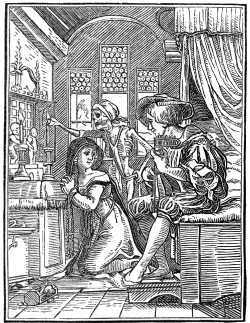
Holbein’s Simulachres, 1538.
In his beautiful edition of Holbein’s Dance of Death, Noel
Humphreys (p. 81), in describing the Canoness, thus conjectures,—“May
not Shakespeare
have had this device
in his mind when penning
the passage in which
Othello” (act v. sc. 2, l. 7,
vol. viii. p. 574), “determining
to kill Desdemona,
exclaims, ‘Put out the
light—and then—put out
the light?’”
The way, however, in
which Shakespeare sometimes
speaks of Death and
Sleep induces the supposition
that he was acquainted
with those passages in
Holbein’s Simulachres de la Mort (Lyons, 1538) which treat of
the same subjects by the same method. Thus,—
“Cicero disoit bien: Tu as le sommeil pour imaige de la Mort, & tous
les iours tu ten reuestz. Et si doubtes, sil y à nul sentiment a la Mort,
combien que tu voyes qu’ en son simulachre il n’y à nul sentimẽt.” Sign. Liij
verso. And again, sign. Liiij verso, “La Mort est le veritable reffuge, la
santé parfaicte, le port asseure, la victoire entiere, la chair sans os, le poisson
sans espine, le grain sans paille.... La Mort est vng eternel sommeil, vne
dissolution du Corps, vng espouuẽtement des riches, vng desir des pouures,
vng cas ineuitable, vng pelerinaige incertain, vng larron des hõmes, vne
Mere du dormir, vne vmbre de vie, vng separement des viuans, vne compaignie
des Mortz.”
Thus the Prince Henry by his father’s couch, thinking him dead,
says (2 Hen. IV., act iv. sc. 5, l. 35, vol. iv. p. 453),—
“This sleep is sound indeed; this is a sleep,
That from this golden rigol hath divorced
So many English kings.”
And still more pertinently speaks the Duke (Measure for
Measure, act iii. sc. 1, l. 17, vol. i. p. 334),—
“Thy best of rest is sleep,
And that thou oft provokest; yet grossly fear’st
Thy death, which is no more.”
Again, before Hermione, as a statue (Winter’s Tale, act v. sc. 3,
l. 18, vol. iii. p. 423),—
“prepare
To see the life as lively mock’d as ever
Still sleep mock’d death.”
Or in Macbeth (act ii. sc. 3, l. 71, vol. vii. p. 454), when Macduff
raises the alarm,—
“Malcolm! awake!
Shake off this downy sleep, death’s counterfeit,
And look on death itself! up, up, and see
The great doom’s image.”
[180]
Finally, in that noble soliloquy of Hamlet (act iii. sc. 1, lines 60–69,
vol. viii. p. 79),—
“To die: to sleep;
No more; and by a sleep to say we end
The heart-ache, and the thousand natural shocks
That flesh is heir to; ’tis a consummation
Devoutly to be wished. To die, to sleep:
To sleep: perchance to dream: ay, there’s the rub;
For in that sleep of death what dreams may come,
When we have shuffled off this mortal coil,
Must give us pause: there’s the respect
That makes calamity of so long life.”
So the Evils of Human Life and the Eulogy on Death, ascribed
in Holbein’s Simulachres de la Mort to Alcidamus, sign. Liij
verso[181] may have been suggestive of the lines in continuation of
the above soliloquy in Hamlet, namely (lines 70–76),—
“For who would bear the whips and scorns of time,
The oppressor’s wrong, the proud man’s contumely,
The pangs of despised love, the law’s delay,
The insolence of office, and the spurns
That patient merit of the unworthy takes,
When he himself might his quietus make
With a bare bodkin?”
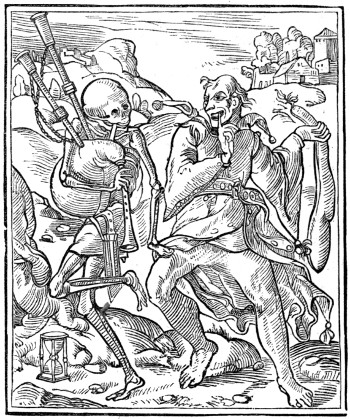
Holbein’s Imagines, Cologne, 1566.
To another of the devices of the Images of Death (Lyons,
1547), attributed to Holbein, we may also refer as the source
of one of the Dramatist’s descriptions, in Douce’s Dance of Death,
(London, 1833, and Bonn’s, 1858); the device in question is
numbered XLIII. and bears the title of the Idiot Fool. Woltmann’s
Holbein and his Time (Leipzig, 1868, vol. ii. p. 121),
names the figure “Narr des Todes,”—Death’s Fool,—and thus
discourses respecting it. “Among the supplemental Figures,”—that
is to say, in the edition of 1545, supplemental to the forty-one
Figures in the edition of 1538,—“is found that of the Fool, which
formerly in the Spectacle-plays of the Dance of Death represented
by living persons played an important part. Also as
these were no longer wont to be exhibited, the Episode of the
contest of Death with the Fool was kept separate, and for the
diversion of the people became a pantomimic representation.
From England expressly have we information that this usage
maintained itself down to the former century. The Fool’s efforts
and evasions in order to escape from Death, who in the end
became his master, form the subject of the particular figures.
On such representations Shakespeare thought in his verses in
Measure for Measure” (act iii. sc. 1, lines 6–13, vol. i. p. 334).
Though Woltmann gives only three lines, we add the whole
passage better to bring out the sense,—
“Reason thus with life:
If I do lose thee, I do lose a thing
That none but fools would keep: a breath thou art,
Servile to all the skyey influences,
That dost this habitation, where thou keep’st,
Hourly afflict: merely, thou art death’s fool;
For him thou labour’st by thy flight to shun,
And yet runn’st toward him still.”
The action described by Shakespeare is so conformable to
Holbein’s Figures of Death and the Idiot Fool that, without
doing violence to the probability, we may conclude that the two
portraits had been in the Poet’s eye as well as in his mind.
Woltmann’s remarks in continuation uphold this idea. He
says (vol. ii. p. 122),—
“Also in the Holbein picture the Fool is foolish enough to think that he
can slip away from Death. He springs aside, seeks through his movements
to delude him, and brandishes the leather-club, in order unseen to plant a
blow on his adversary; and this adversary seems in sport to give in, skips
near him, playing on the bag-pipe, but unobserved has him fast by the
garment, in order not again to let him loose.”
Old Time is a character introduced by way of Chorus into
the Winter’s Tale (act iv. sc. 1, l. 7, vol. III. p. 371), and he takes
upon himself “to use his wings,” as he says,—
“It is in my power
To o’erthrow law and in one self-born hour
To plant and o’erwhelm custom. Let me pass
The same I am, ere ancient’st order was
Or what is now received: I witness to
The times that brought them in; so shall I do
To the freshest things now reigning, and make stale
The glistering of this present.”
Something of the same paradox which appears in the Emblematist’s
motto, “What we follow we flee,” also distinguishes the
quibbling dialogue about time between Dromio of Syracuse and
Adriana (Comedy of Errors, act iv. sc. 2, l. 53, vol. i. p. 437),—
“Dro. S. ’Tis time that I were gone:
It was two ere I left him, and now the clock strikes one.
Adr. The hours come back! that did I never hear.
Dro. S. O, yes; if any hour meet a sergeant, a’turns back for very fear.
Adr. As if Time were in debt! how fondly dost thou reason!
Dro. S. Time is a very bankrupt, and owes more than he’s worth to season.
Nay, he’s a thief too: have you not heard men say,
That Time comes stealing on by night and day?
If Time be in debt and theft, and a sergeant in the way,
Hath he not reason to turn back an hour in a day?”
Almost of the same complexion are some of the other strong
contrasts of epithets which Shakespeare applies. Iachimo, in
Cymbeline (act i. sc. 6, l. 46, vol. ix. p. 185), uses the expressions,—
“The cloyed will,
That satiate yet unsatisfied desire, that tub
Both fill’d and running, ravening first the lamb,
Longs after for the garbage.”
But “old fond paradoxes, to make fools laugh i’ the ale-house,”
are also given forth from the storehouse of his conceits.
Desdemona and Emilia and Iago play at these follies (Othello,
act ii. sc. 1, l. 129, vol. viii. p. 477), and thus some of them are
uttered,—
“Iago. If she be fair and wise, fairness and wit,
The one’s for use, the other useth it.
Des. Well praised! How if she be black and witty?
Iago. If she be black, and thereto have a wit,
She’ll find a white that shall her blackness fit.
. . . . . .
Des. But what praise couldst thou bestow on a deserving woman indeed?
one that, on the authority of her merit, did justly put on the vouch of very
malice itself?
Iago. She that was ever fair, and never proud,
Had tongue at will, and yet was never loud.
Never lack’d gold, and yet went never gay,
Fled from her wish, and yet said, now I may;
. . . . . .
She was a wight, if ever such wight were,—
Des. To do what?
Iago. To suckle fools, and chronicle small beer.”
We thus return, by a wandering path indeed, to the paradoxical
saying with which we set out,—concerning “fleeing
what we follow;” for Iago’s paragon of a woman,—
“Fled from her wish, and yet said, now I may.”
Taken by itself, the coincidence of a few words in the dedications
of works by different authors is of trifling importance;
but when we notice how brief are the lines in which Shakespeare
commends his “Venus and Adonis” to the patronage of the
Earl of Southampton, it is remarkable that he has adopted an
expression almost singular, which Whitney had beforehand
employed in the long dedication of his Emblems to the Earl of
Leycester. “Being abashed,” says Whitney, “that my habillitie
can not affoorde them such, as are fit to be offred vp to so honorable
a suruaighe” (p. xi); and Shakespeare, “I leave it to your
honourable survey, and your Honour to your heart’s content.”
Whitney then declares, “yet if it shall like your honour to
allowe of anie of them, I shall thinke my pen set to the booke
in happie hour; and it shall incourage mee, to assay some
matter of more momente, as soon as leasure will further my
desire in that behalfe;” and Shakespeare, adopting the same
idea, also affirms, “only if your Honour seem but pleased, I
account myself highly praised and vow to take advantage of all
idle hours, till I have honoured you with some graver labour.”
Comparing these passages together, the inference appears not
unwarranted, that Whitney’s dedication had been read by Shakespeare,
and that the tenor of it abided in his memory, and so
was made use of by him.
From the well-known lines of Horace (Ode ii. 10),—
“Sæpius ventis agitatur ingens
Pinus; et celsæ graviore casu
Decidunt turres; feriuntque summos
Fulgura montes,”—
several of the Emblem writers, and Shakespeare after them, tell
of the huge pine and of its contests with the tempests; and how
lofty towers fall with a heavier crash, and how the lightnings
smite the highest mountains. Sambucus (edition 1569, p. 279)
and Whitney (p. 59) do this, as a comment for the injunction,
Nimium rebus ne fide secundis,—“Be not too confident in
prosperity.” In this instance the stanzas of Whitney serve
well to express the verses of Sambucus,—
Nimium rebus ne fide secundis.
“The loftie Pine, that on the mountaine growes,
And spreades her armes, with braunches freshe, & greene,
The raginge windes, on sodaine ouerthrowes,
And makes her stoope, that longe a farre was seene:
So they, that truste to muche in fortunes smiles,
Thoughe worlde do laughe, and wealthe doe moste abounde,
When leste they thinke, are often snar’de with wyles,
And from alofte, doo hedlonge fall to grounde:
Then put no truste, in anie worldlie thinges,
For frowninge fate, throwes downe the mightie kinges.”
Antonio, in the Merchant of Venice (act iv. sc. 1, l. 75, vol. ii.
p. 345), applies the thought to the fruitlessness of Bassanio’s
endeavour to soften Shylock’s stern purpose of revenge,—
“You may as well forbid the mountain pines
To wag their high tops, and to make no noise
When they are fretten with the gusts of heaven.”
And when “dame Eleanor Cobham, Gloster’s wife,” is
banished, and her noble husband called on to give up the Lord
Protector’s staff of office (2 Henry VI., act ii. sc. 3, l. 45, vol. v.
p. 145), Suffolk makes the comparison,—
“Thus droops this lofty pine, and hangs his sprays;
Thus Eleanor’s pride dies in her youngest days.”
So, following almost literally the words of Horace, the
exiled Belarius, in Cymbeline (act iv. sc. 2, l. 172, vol. ix.
p. 253), declares of the “two princely boys,” that passed
for his sons,—
“They are as gentle
As zephyrs blowing below the violet,
Not wagging his sweet head; and yet as rough,
Their royal blood enchafed, as the rudest wind
That by the top doth take the mountain pine
And make him stoop to the vale.”
Words, which, though now obsolete, were in current use in
the days of Surrey, Sidney, Spenser, and Shakespeare, cannot
of themselves be adduced in evidence of any interchange of
ideas; but when the form of the sentence and the application
of some peculiar term agree, we may reasonably presume that
it has been more than the simple use of the same common
tongue which has caused the agreement. When, indeed, one
author writes in English, and the others in Latin, or Italian,
or French, we cannot expect much more than similarity of
idea in treating of the same subject, and a mutual intercommunion
of thought; but, in the case of authors employing
the same mother tongue, there are certain correspondencies
in the use of the same terms and turns of expression which
betoken imitation.
Such correspondencies exist between Whitney and Shakespeare,
as may be seen from the following among many other
instances. I adopt the old spelling of the folio edition of Shakespeare,
1632,—
| Abroach |
Whitney, p. 7 |
And bluddie broiles at home are set abroache. |
|
Rom. and J. i. 1. l. 102 |
Who set this ancient quarrell new abroach? |
|
2 Hen. IV. iv. 2, 14 |
Alacke, what Mischeifes might be set abroach. |
| |
| a-worke |
Whitney, p. vi. |
They set them selues a worke. |
|
2 Hen. IV. iv. 3, 107 |
Skill in the Weapon is nothing, without Sacke (for that sets it a-worke). |
|
K. Lear, iii. 5, 5 |
— a provoking merit set a-worke by a reprovable badnesse in himselfe. |
| |
| Banne |
Whitney, p. 189 |
The maide her pacience quite forgot |
|
|
And in a rage, the brutishe beaste did banne. |
|
Hamlet, iii. 2, 246 |
With Hecats ban, thrice blasted, thrice infected. |
|
1 Hen. IV. v. 3, 42 |
Fell banning Hagge, Inchantresse hold thy tongue. |
|
2 Hen IV. ii. 4, 25 |
And banne thine Enemies, both mine and thine. |
| |
| Cates |
Whitney, p. 18 |
Whose backe is fraughte with cates and daintie cheere. |
|
C. Errors, iii. 1, 28 |
But though my cates be meane, take them in good part. |
|
1 Hen. IV. iii. 1, 163 |
I had rather live |
|
|
With Cheese and Garlike in a Windmill far |
|
|
Then feed on Cates, and have him talke to me |
|
|
In any Summer House in Christendome. |
| |
| create |
Whitney, p. 64 |
Not for our selues alone wee are create. |
|
M. N. Dr. v. 1, 394 |
And the issue there create |
|
|
Ever shall be fortunate. |
|
K. John, iv. 1, 106 |
The fire is dead with griefe |
|
|
Being create for comfort. |
|
Hen. V. ii. 2, 31 |
With hearts create of duty and of zeal. |
| |
| Erksome |
Whitney, p. 118 |
With erksome noise and eke with poison fell. |
|
T. of Shrew, i. 2, 182 |
I know she is an irkesome brawling scold. |
|
2 Hen. VI. ii. 1, 56 |
How irkesome is this Musicke to my heart! |
| |
| Ingrate |
Whitney, p. 64 |
And those that are vnto theire frendes ingrate. |
|
T. of Shrew, i. 2, 266 |
Will not so gracelesse be, to be ingrate. |
|
Coriol. v. 2, 80 |
Ingrate forgetfulness shall poison rather. |
| |
| Prejudicate |
Whitney, xiii. |
The enuious who are alwaies readie with a prejudicate opinion to condempe. |
|
All’s Well, i. 2, 7 |
wherein our deerest friend |
|
|
Prejudicates the businesse. |
| |
| Ripes |
Whitney, p. 23 |
When autumne ripes the frutefull fields of grane. |
|
K. John, ii. 1, 472 |
— yon greene Boy shall haue no Sunne to ripe |
|
|
The bloome that promiseth a mighty fruit. |
| |
| Vnrest |
Whitney, p. 94 |
It shewes her selfe doth worke her own vnrest. |
|
Rich. II. ii. 4, 22 |
Witnessing Stormes to come, Woe and Vnrest. |
|
T. An. ii. 3, 8 |
And so repose sweet Gold for their unrest. |
| |
| vnsure |
Whitney, p. 191 |
So, manie men do stoope to sightes vnsure. |
|
Hamlet, iv. 4, 51 |
Exposing what is mortal and unsure. |
|
Macbeth, v. 4, 19 |
Thoughts speculative their unsure hopes relate. |
| |
| vnthrifte |
Whitney, p. 17 |
And wisdome still, against such vnthriftes cries. |
|
Rich. II. ii. 3, 120 |
my Rights and Royalties |
|
|
Pluckt from my armes perforce, and giuen away |
|
|
To upstart Vnthriftes. |
|
Timon, iv. 3, 307 |
What man didd’st thou euer knowe unthrifte that was beloved after his meanes? |
|
M. Venice, v. 1, 16 |
And with an unthrift love did run from Venice |
|
|
As far as Belmont.[182] |
So close are some of these correspondencies that they can
scarcely be accounted for except on the theory that Shakespeare
had been an observant reader of Whitney’s Emblems.
There are also various expressions, or epithets, which the
Emblem-books may be employed to illustrate, and which
receive their most natural explanation from this same theory
that Shakespeare was one of the very numerous host of
Emblem students or readers. Perriere’s account of a man
attempting to swim with a load of iron on his back
(Emb. 70), is applied by Whitney with direct reference
to the lines in Horace, “O cursed lust of gold, to what
dost thou not compel mortal bosoms?” He sets off the
thought by the device of a man swimming with “a fardle,” or
heavy burden (p. 179),—
Auri ſacra fames quid non?
“Desire to haue, dothe make vs muche indure.
In trauaile, toile, and labour voide of reste:
The marchant man is caried with this lure,
Throughe scorching heate, to regions of the Easte:
Oh thirste of goulde, what not? but thou canst do:
And make mens hartes for to consent thereto.
The trauailer poore, when shippe doth suffer wracke,
Who hopes to swimme vnto the wished lande,
Dothe venture life, with fardle on his backe,
That if he scape, the same in steede maye stande.
Thus, hope of life, and loue vnto his goods,
Houldes vp his chinne, with burthen in the floods.”
In the Winter’s Tale, the word “fardel” occurs several
times; we will, however, take a familiar quotation from Hamlet
(act iii. sc. 1, l. 76, vol. viii. p. 80),—
“Who would fardels bear,
To grunt and sweat under a weary life,
But that the dread of something after death,
The undiscover’d country from whose bourn
No traveller returns, puzzles the will,
And makes us rather bear those ills we have
Than fly to others that we know not of?”
The Bandogs, which Sir Thomas More and Spenser describe,
appear to have been different from those of Sambucus
and Whitney, or, rather, they were employed for a different
purpose. “We must,” writes the worthy Chancellor (p. 586),
“haue bande dogges to dryue them (the swine) out of the corne
with byting, and leade them out by the ears;” and Spenser, in
Virgil’s Gnat (l. 539), speaks of—
“greedie Scilla, under whom there lay
Manie great bandogs, which her gird about.”
These dogs were mastiffs, and their banning was barking or
braying; but the dogs entitled bandogs in Whitney, though
also mastiffs, were fastened by a band to a small cart, and
trained to draw it. A large species of dog may be seen at this
day in the towns of Belgium performing the very same service
to which their ancestors had been accustomed above three
centuries ago. Sambucus heads his description of the bandog’s
strength and labours with the sentence,—“ The dog complains
that he is greatly wronged.”
Canis queritur nimium nocere.
Non ego furaces nec apros inſector & vrſos,
Applaudit nec hero blandula cauda dolo:
Sub iuga ſed mittor validus, traho & eſſeda collo,
Quæq́₃que leuant alios viribus vſque premor.
Per vicos ductum me alij latratibus vrgent,
Miratur caſus libera turba meos.
Quàm fueram charus dominæ, ſi paruulus eſſem,
Non menſsa, lecto nec caruiſſe velim.
Sic multis vires, & opes nocuere ſuperbæ:
Contentum modico & profuit eſſe ſtatu.
Seated near the toiling mastiff is a lady with two or three pet
curs, and the large dog complains,—
“Were I a little whelp, to my lady how dear I should be;
Of board and of bed I never the want should see.”[183]
Whitney, using the woodcut which adorns the editions of
Sambucus both in 1564 and 1599, prefixes a loftier motto
(p. 140),—Feriunt summos fulmina montes,—“Thunderbolts
strike highest mountains;” and thus expatiates he,—
“The bandogge, fitte to matche the bull, or beare,
With burthens greate, is loden euery daye:
Or drawes the carte, and forc’d the yoke to weare:
Where littell dogges doe passe their time in playe:
And ofte, are bould to barke, and eeke to bite,
When as before, they trembled at his sighte.
Yet, when in bondes they see his thrauled state,
Eache bragginge curre, beginnes to square, and brall:
The freër sorte, doe wonder at his fate,
And thinke them beste, that are of stature small:
For they maie sleepe vppon their mistris bedde,
And on their lappes, with daynties still bee fedde.
The loftie pine, with axe is ouerthrowne,
And is prepar’d, to serue the shipmans turne:
When bushes stande, till stormes bee ouerblowne,
And lightninges flashe, the mountaine toppes doth burne.
All which doe shewe that pompe, and worldlie power,
Makes monarches, markes: when varrijnge fate doth lower.”
The mastiff is almost the only dog to which Shakespeare
assigns any epithet of praise. In Henry V. (act iii. sc. 7, l. 130,
vol. iv. p. 552), one of the French lords, Rambures, acknowleges
“that island of England breeds very valiant creatures; their
mastiffs are of unmatchable courage.” It is the same quality in
Achilles and Ajax on which Ulysses and Nestor count when
“the old man eloquent,” in Troilus and Cressida (act i. sc. 3,
l. 391, vol. vi. p. 155), says of the two warriors,—
“Two curs shall tame each other: pride alone
Must tarre
[184] the mastiffs on, as ’twere their bone.”
It is, however, only in a passing allusion that Shakespeare
introduces any mention of the bandog. He is describing the
night “when Troy was set on fire” (2 Henry VI., act i. sc. 4,
l. 16, vol. v. p. 129), and thus speaks of it,—
“The time when scritch-owls cry, and ban-dogs howl,
When spirits walk, and ghosts break up their graves.”
We are all familiar with the expression “motley’s the only
wear,” and probably we are disposed simply to refer it to the
way in which that important personage was arrayed who
exercised his fun and nonsense and shrewd wit in the courts of
the kings and in the mansions of the nobles of the middle ages.
The pictorial type exists in the Emblems both of Sambucus and
of his copyist Whitney (p. 81), by whom the sage advice is
imparted,—“Give trifles in charge to fools.”
“The little childe, is pleas’de with cockhorse gaie,
Althoughe he aske a courser of the beste:
The ideot likes, with bables for to plaie,
And is disgrac’de, when he is brauelie dreste:
A motley coate, a cockescombe, or a bell,
Hee better likes, then Iewelles that excell.
So fondelinges vaine, that doe for honor sue,
And seeke for roomes, that worthie men deserue:
The prudent Prince, dothe give hem ofte their due,
Whiche is faire wordes, that right their humors serue:
For infantes hande, the rasor is vnfitte,
And fooles vnmeete, in wisedomes seate to sitte.”
The word “motley” is often made use of in Shakespeare’s
plays. Jaques, in As You Like It (act ii. sc. 7, lines 12 and 42,
vol. ii. pp. 405, 406), describes the “motley fool” “in a motley
coat,”—
“I met a fool i’ the forest,
A motley fool; a miserable world!
As I do live by food, I met a fool;
Who laid him down and bask’d him in the sun,
And rail’d on Lady Fortune in good terms,
In good set terms, and yet a motley fool.
. . . . . .
O that I were a fool!
I am ambitious for a motley coat.”
The Prologue to Henry VIII. (l. 15) alludes to the dress of
the buffoons that were often introduced into the plays of the
time,—
“a fellow
In a long motley coat, guarded with yellow.”
The fool in King Lear (act i. sc. 4, 1. 93, vol. viii. p. 280)
seems to have been dressed according to Whitney’s pattern, for,
on giving his cap to Kent, he says,—
“Sirrah, you were best take my coxcomb.
Kent. Why, fool?
Fool. Why, for taking one’s part that’s out of favour: nay, an thou canst
not smile as the wind sits, thou’lt catch cold shortly: there, take my coxcomb:
why, this fellow hath banished two on’s daughters, and done the
third a blessing against his will; if thou follow him, thou must needs wear
my coxcomb.”
Drant’s translations[185] from Horace, published in 1567, convey
to us a pretty accurate idea of the fool’s attire,—
“Well geue him cloth and let the fool
Goe like a cockescome still.”
Perchance we know the lines in the “Faerie Queene” (vi.
c. 7, 49, 1. 6),—
“And other whiles with bitter mockes and mowes
He would him scorne, that to his gentle mynd
Was much more grievous then the others blowes:
Words sharpely wound, but greatest griefe of scorning growes.”
But probably we are not prepared to trace some of the expressions
in these lines to an Emblem-book origin. The graphic
“mockes and mowes,” indeed, no Latin nor French can express;
but our old friend Paradin, in the “Devises Heroiqves”
(leaf 174), names an occasion on which very amusing “mockes
and mowes” were exhibited; it was, moreover, an example
that,—
“Things badly obtained are badly scattered.” As he narrates the tale,—
“One day it happened that a huge ape, nourished in the house of a miser
who found pleasure only in his crowns, after seeing through a hole his
master playing with his crowns upon a table, obtained means of entering
within by an open window, while the miser was at dinner. The ape took a
stool, as his master did, but soon began to throw the silver out of the
window into the street. How much the passers by kept laughing and the
miser was vexed, I shall not attempt to say. I will not mock him among
his neighbours who were picking up his bright crowns either for a nestegg,
or for a son or a brother,—for a gamester, a driveller or a drunkard,—for I
cannot but remember that fine and true saying which affirms, ‘Things badly
gained are badly scattered.’”
This tale, derived by Paradin from Gabriel Symeoni’s
Imprese Heroiche et Morali, is assumed by Whitney as the
groundwork of his very lively narrative (p. 169), Against
Userers, of which we venture to give the whole.
Malè parta malè dilabuntur.
In fæneratores.
“An vserer, whose Idol was his goulde,
Within his house, a peeuishe ape retain’d:
A seruaunt fitte, for suche a miser oulde,
Of whome both mockes, and apishe mowes, he gain’d.
Thus, euerie daie he made his master sporte,
And to his clogge, was chained in the courte.
At lengthe it hap’d? while greedie graundsir din’de?
The ape got loose, and founde a windowe ope:
Where in he leap’de, and all about did finde,
The God, wherein the Miser put his hope?
Which soone he broch’d, and forthe with speede did flinge,
And did delighte on stones to heare it ringe?
The sighte, righte well the passers by did please,
Who did reioyce to finde these goulden crommes:
That all their life, their pouertie did ease.
Of goodes ill got, loe heere the fruicte that commes.
Looke herevppon, you that have Midas minte,
And bee posseste with hartes as harde as flinte.
Shut windowes close, leste apes doe enter in,
And doe disperse your goulde, you doe adore.
But woulde you learne to keepe, that you do winne?
Then get it well, and hourde it not in store.
If not: no boultes, nor brasen barres will serve,
For God will waste your stocke, and make you sterue.”
Poor Caliban, in the Tempest (act ii. sc. 2, l. 7, vol. i. p. 36),
complains of Prospero’s spirits that,—
“For every trifle are they set upon me;
Sometimes like apes, that mow and chatter at me,
And after bite me.”
And Helena, to her rival Hermia (Midsummer Night’s
Dream, act iii. sc. 2, l. 237, vol. ii. p. 240), urges a very similar
charge,—
“Ay, do, persever, counterfeit sad looks,
Make mouths upon me when I turn my back;
Wink each at other; hold the sweet jest up.”
There is not, indeed, any imitation of the jocose tale about
the ape[186] and the miser’s gold, and it is simply in “the mockes
and apishe mowes” that any similarity exists. These, however,
enter into the dialogue between Imogen and Iachimo (Cymbeline,
act i. sc. 6, l. 30, vol. ix. p. 184); she bids him welcome, and he
replies,—
“Iach. Thanks, fairest lady.
What, are men mad? Hath nature given them eyes
To see this vaulted arch and the rich crop
Of sea and land, which can distinguish ’twixt
The fiery orbs above and the twinn’d stones
Upon the number’d beach, and can we not
Partition make with spectacles so precious
’Twixt fair and foul?
Imo. What makes your admiration?
Iach. It cannot be i’ the eye; for apes and monkeys,
’Twixt two such shes, would chatter this way and
Contemn with mows the other.”
There is a fine thought in Furmer’s Use and Abuse of Wealth,
first published in Latin in 1575, and afterwards, in 1585, translated
into Dutch by Coornhert; it is respecting the distribution
of poverty and riches by the Supreme wisdom. The subject (at
p. 6) is Undeserved Poverty,—“The Lord maketh poor, and
enriches.” (See Plate XVI.)
“The riches which Job had as God bestows,
So giver of poverty doth God appear.
Who thinks each good because from God each flows,
Shall always each with bravest spirit bear.”
Plate 16
Dominus pauperem facit & ditat.
Vt Deus auctor opum quas olim Iobus habebat,
Sic paupertatis tum Deus auctor erat.
Qui bonum vtrumq́₃que putat, Dominus quia donat vtrumque,
In animo forti ſemper vtrumque feret.
Providence making Rich and making Poor Coörnhert, 1585.
In the device, the clouds are opened to bestow fulness upon
the poor man, and emptiness upon the rich. By brief allusion
chiefly does Shakespeare express either of these acts; but in the
Tempest (act iii. sc. 2, l. 135, vol. i. p. 48), Caliban, after informing
Stephano that “the isle is full of noises,” and that “sometimes
a thousand twangling instruments will hum about mine ears,”
adds,—
“And then, in dreaming,
The clouds methought would open, and show riches
Ready to drop upon me; that when I waked,
I cried to dream again.”
A very similar picture and sentiment to those in Coornhert
are presented by Gloucester’s words in King Lear (act iv. sc. 1,
l. 64, vol. viii. p. 366),—
“Here, take this purse, thou whom the heavens’ plagues
Have humbled to all strokes: that I am wretched
Makes thee the happier. Heavens, deal so still!
Let the superfluous and lust-dieted man,
That slaves your ordinance, that will not see
Because he doth not feel, feel your power quickly;
So distribution should undo excess,
And each man have enough.”
Coornhert’s title, “Recht Ghebruyck ende Misbruyck vantydlycke
have,”—The right use and misuse of worldly wealth,—and,
indeed, his work, have their purport well carried out by the
king in 2 Henry IV. (act iv. sc. 4, l. 103, vol iv. p. 450),—
“Will Fortune never come with both hands full,
But write her fair words still in foulest letters?
She either gives a stomach and no food;
Such are the poor, in health; or else a feast
And takes away the stomach; such are the rich.
That have abundance and enjoy it not.”
The fine thoughts of Ulysses, too, in Troilus and Cressida
(act iii. sc. 3, l. 196, vol. vi. p. 201), have right and propriety
here to be quoted,—
“The providence that’s in a watchful state
Knows almost every grain of Plutus’ gold,
Finds bottom in the uncomprehensive deeps,
Keeps place with thought and almost like the gods
Does thoughts unveil in their dumb cradles.
There is a mystery, with whom relation
Durst never meddle, in the soul of state;
Which hath an operation more divine
Than breath or pen can give expressure to.”
Petruchio’s thought, perchance, may be mentioned in this
connection (Taming of the Shrew, act iv. sc. 3, l. 165, vol. iii.
p. 78), when he declares his will to go to Kate’s father,—
“Even in these honest mean habiliments:
Our purses shall be proud, our garments poor;
For ’tis the mind that makes the body rich:
And as the sun breaks through the darkest clouds,
So honour peereth in the meanest habit.”
Plate 17.
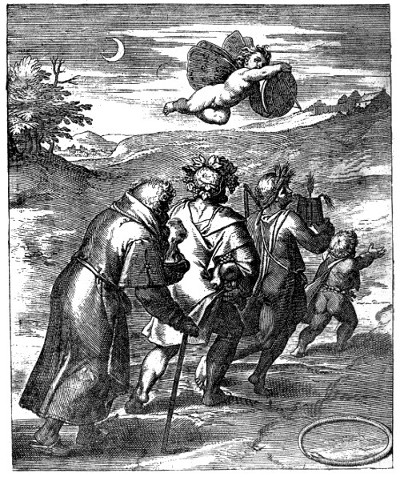
Time Flying from “Emblemata” by Otho Vænius p 206 ed 1612
The Horatian thought, “Time flies irrevocable.” so well depicted
by Otho Vænius in his Emblemata (edition 1612, p. 206),
has only general parallels in Shakespeare; and yet it is a thought
with which our various dissertations on Shakespeare and the
Emblematists may find no unfitting end. The Christian artist far
excels the Heathen poet. Horace, in his Odes (bk. iv. carmen 7),
declares,—
“Immortalia ne speres, monet annus & almum
Quæ rapit hora diem:
Frigora mitescunt Zephyris: Ver proterit Æstas
Interitura, simul
Pomifer Autumnus fruges effuderit: & mox
Bruma recurrit iners.”
i.e. “Not to hope immortal things, the year admonishes, and the hour
which steals the genial day. By western winds the frosts grow mild; the
summer soon to perish supplants the spring, then fruitful autumn pours forth
his stores, and soon sluggish winter comes again.”
These, however, the artist makes (Henry V., act iv. sc. 1, l. 9,
vol. v. p. 555),—
“Preachers to us all, admonishing
That we should dress us fairly for our end.”
Youthful Time (see Plate XVII.) is leading on the seasons,—a
childlike spring, a matured summer wreathed with corn, an
autumn crowned with vines, and a decrepid winter,—and yet the
emblem of immortality lies at their feet; and the lesson is
taught, as our Dramatist expresses it (Hamlet, act i. sc. 2, l. 71,
vol. viii. p. 14),—
“All that lives must die
Passing through nature to eternity.”
The irrevocable time flies on, and surely it has its comment in
Macbeth (act v. sc. 5, l. 19, vol. vii. p. 512),—
“To-morrow, and to-morrow, and to-morrow,
Creeps in this petty pace from day to day
To the last syllable of recorded time;
And all our yesterdays have lighted fools
The way to dusty death.”
Or, in Hotspur’s words (1 Henry IV., act v. sc. 2, l. 82, vol. iv.
p. 337),—
“O gentlemen, the time of life is short!
To spend that shortness basely were too long,
If life did ride upon a dial’s point,
Still ending at the arrival of an hour.”
And for eternity’s Emblem,[187] the Egyptians, we are told
(Horapollo, i. 1), made golden figures of the Basilisk, with its
tail covered by the rest of its body; so Otho Vænius presents
the device to us. But Shakespeare, without symbol, names the
desire, the feeling, the fact itself; he makes Cleopatra exclaim
(Antony and Cleopatra, act v. sc. 2, l. 277, vol. ix. p. 150), “I
have immortal longings in me,” “I am fire and air; my other
elements I give to baser life.”
When Romeo asks (Romeo and Juliet, act v. sc. 1, l. 15,
vol. vii. p. 117),—
“How fares my Juliet? that I ask again;
For nothing can be ill, if she be well;”
with the force of entire faith the answer is conceived which
Balthasar returns,—
“Then she is well, and nothing can be ill:
Her body sleeps in Capel’s monument,
And her immortal part with angels lives.”
We thus know in what sense to understand the words from
Macbeth (act iii. sc. 2, l. 22, vol. vii. p. 467),—
“Duncan is in his grave;
After life’s fitful fever he sleeps well;
Treason has done his worst: nor steel, nor poison,
Malice domestic, foreign levy, nothing,
Can touch him further.”
Therefore, in spite of quickly fading years, in spite of age
irrevocable, and (Love’s Labours Lost, act i. sc. 1, l. 4, vol. ii.
p. 97),—
“In spite of cormorant devouring Time,
The endeavour of this present breath may buy
That honour which shall bate his scythe’s keen edge,
And make us heirs of all eternity.”
A brief resumé, or recapitulation, will now place the nature of
our argument more clearly in review.
When writing and its kindred arts of designing and colouring
were the only means in use for the making and illustrating of
books, drawings of an emblematical character were frequently
executed both for the ornamenting and for the fuller explanation
of various works.
From the origin of printing, books of an emblematical
character, as the Bibles of the Poor and other block-books, were
generally known in the civilised portions of Europe; they constituted,
to a considerable degree, the illustrated literature of
their age, and enjoyed wide fame and popularity.
Not many years after printing with moveable types had been
invented, Emblem works as a distinct species of literature
appeared; and of these some of the earliest were soon translated
into English.
It is on undoubted record that the use of Emblems, derived
from German, Latin, French, and Italian sources, prevailed in
England for purposes of ornamentation of various kinds; that
the works of Brandt, Giovio, Symeoni, and Paradin were translated
into English; and that there were several English writers
or collectors of Emblems within Shakespeare’s lifetime,—as
Daniell, Whitney, Willet, Combe, and Peacham.
Shakespeare possessed great artistic powers, so as to appreciate
and graphically describe the beauties and qualities of
excellence in painting, sculpture, and music. His attainments,
too, in the languages enabled him to make use of the Emblem-books
that had been published in Latin, Italian, and French, and
possibly in Spanish.
In everything, except in the actual pictorial device, Shakespeare
exhibited himself as a skilled designer,—indeed, a writer
of Emblems; he followed the very methods on which this
species of literary composition was conducted, and needed only
the engraver’s aid to make perfect designs.
Freest among mortals were the Emblem writers in borrowing
one from the other, and from any source which might serve
the construction of their ingenious devices; and they generally
did this without acknowledgment. An Emblem once launched
into the world of letters was treated as a fable or a proverb,—it
became for the time and the occasion the property of whoever
chose to take it. In using Emblems, therefore, Shakespeare is
no more to be regarded as a copyist than his contemporaries are,
but simply as one who exercised a recognised right to appropriate
what he needed of the general stock of Emblem notions.
There are several direct References in Shakespeare, at
least six, in which, by the closest description and by express
quotation, he identifies himself with the Emblem writers who
preceded him.
But besides these direct References, there are several collateral
ones, in which ideas and expressions are employed similar
to those of Emblematists, and which indicate a knowledge of
Emblem art.
And, finally, the parallelisms and correspondencies are very
numerous between devices and turns of thought, and even between
the words of the Emblem writers and passages in Shakespeare’s
Sonnets and Dramas; and these receive their most
appropriate rationale on the supposition that they were suggested
to his mind through reading the Emblem-books, or
through familiarity with the Emblem literature.
Now, such References and Coincidences are not to be regarded
as purely accidental, neither can all of them be urged
with entire confidence. Some persons even may be disposed to
class them among the similarities which of necessity arise when
writers of genius and learning take up the same themes, and
call to their aid all the resources of their memory and research.
I presume not, however, to say that my arguments and
statements are absolute proofs, except in a few instances. What
I maintain is this: that the Emblem writers, and our own Whitney
especially, do supply many curious and highly interesting
illustrations of the Shakespearean dramas, and that several of
them, probably, were in the mind of the Dramatist as he wrote.
To show that the theory carried out in these pages is neither
singular nor unsupported by high authorities, it should not be
forgotten that the very celebrated critic, Francis Douce, in his
Illustrations of Shakespeare (pp. 302, 392), maintains that Paradin
was the source of the torch-emblem in the Pericles (act ii. sc. 2,
l. 32): the “wreath of victory,” and “gold on the touchstone,”
have also the same source. To Holbein’s Simulachres Noel
Humphreys assigns the origin of the expression in Othello, “Put
out the light—and then, put out the light;” and in the same
work, Dr. Alfred Woltmann, in Holbein and his Times (vol. ii.
p. 121), finds the origin of Death’s fool in Measure for Measure:
and Shakespeare’s comparisons of “Death and Sleep” may be
traced to Jean de Vauzelle, who wrote the Dissertations for Les
Simulachres. Charles Knight, also, in his Pictorial Shakspere
(vol. i. p. 154), to illustrate the lines in Hamlet (act iv. sc. 5, l. 142)
respecting “the kind life-rendering pelican,” quotes Whitney’s
stanza, and copies his woodcut, as stated ante, p. 396, note.
Though not a learned man, as Erasmus or Beza was, Shakespeare,
as every page of his wonderful writings shows, must have
been a reading man, and well acquainted with the current
literature of his age and country. Whitney’s Emblemes were
well known in 1612 to the author of “Minerva Britanna,”
and boasted of in 1598 by Thomas Meres, in his Wit’s Commonwealth,
as fit to be compared with any of the most eminent
Latin writers of Emblems, and dedicated to many of the distinguished
men of Elizabeth’s reign; and they could scarcely
have been unknown to Shakespeare even had there been no
similarities of thought and expression established between the
two writers.
Nor after the testimonies which have been adduced, and
comparing the picture-emblems submitted for consideration with
the passages from Shakespeare which are their parallels, as far
as words can be to drawings, are we required to treat it as
nothing but a conjecture that Shakespeare, like others of his
countrymen, possessed at least a general acquaintance with the
popular Emblem-books of his own generation and of that which
went before.
The study of the old Emblem-books certainly possesses little
of the charm which the unsurpassed natural power of Shakespeare
has infused into his dramas, and which time does not
diminish; yet that study is no barren pursuit for such as will
seek for “virtue’s fair form and graces excellent,” or who desire
to note how the learning of the age disported itself at its hours
of recreation, and how, with few exceptions, it held firm its
allegiance to purity of thought, and reverenced the spirit of
religion. Should there be any whom these pages incite to gain
a fuller knowledge of the Emblem literature, I would say in the
words of Arthur Bourchier, Whitney’s steady friend,—
“Goe forwarde then in happie time, and thou shalt surely finde,
With coste, and labour well set out, a banquet for thy minde,
A storehouse for thy wise conceiptes, a whetstone for thy witte:
Where, eache man maye with daintie choice his fancies finely fitte.”
So much for the early cultivators of Emblematical mottoes,
devices, and poesies, and for him whom Hugh Holland, and
Ben Jonson, and “The friendly Admirer of his Endowments,”
salute as “The Famous Scenicke Poet,” “The Sweet Swan of
Avon,” “The Starre of Poets,”—
“Soule of the Age!
The applause! delight! the wonder of our stage!”
“To the memory of my beloved, the Author,
Mr. William Shakespeare: and what he has left us;”—such
the dedication when Jonson declared,—
“Thou art a Moniment without a tombe.
. . . . . .
And art aliue still, while thy Booke doth liue
And we haue wits to read, and praise to giue.”
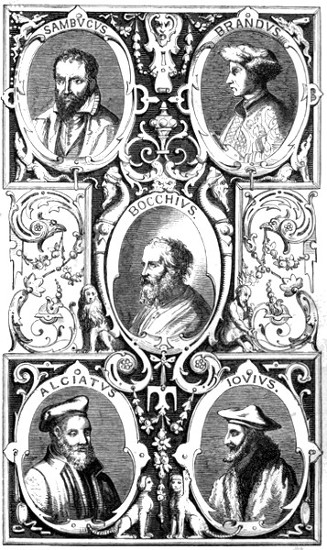
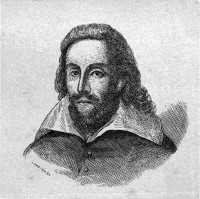

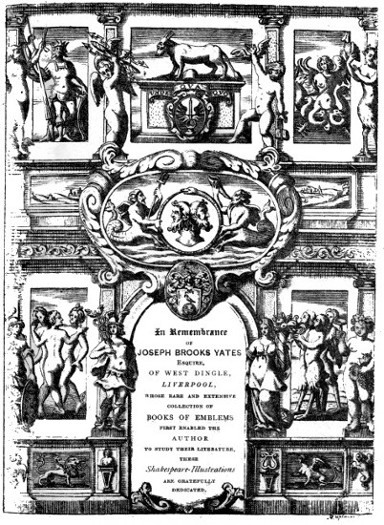

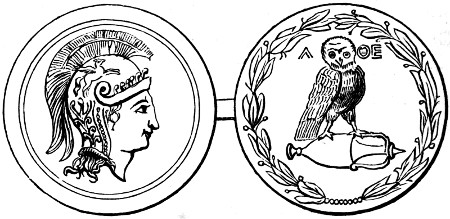
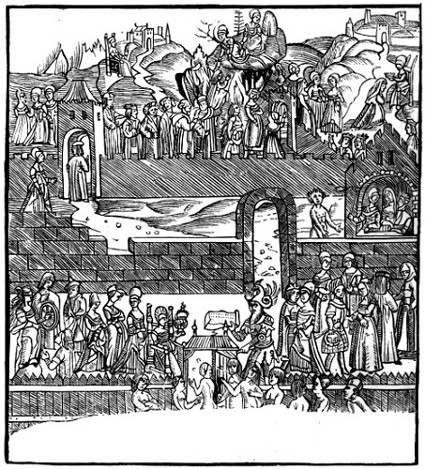
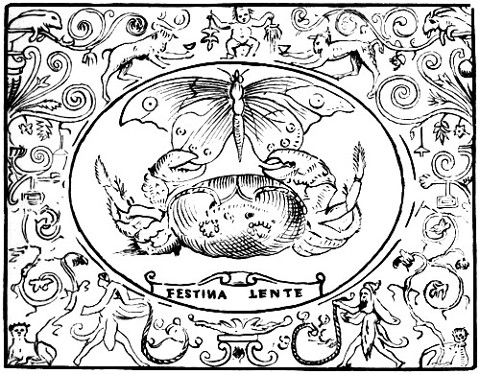
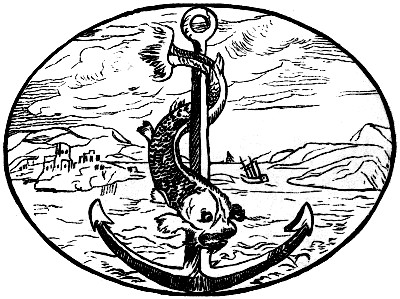
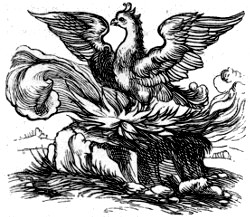
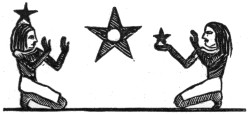
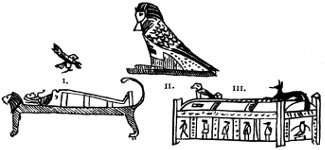
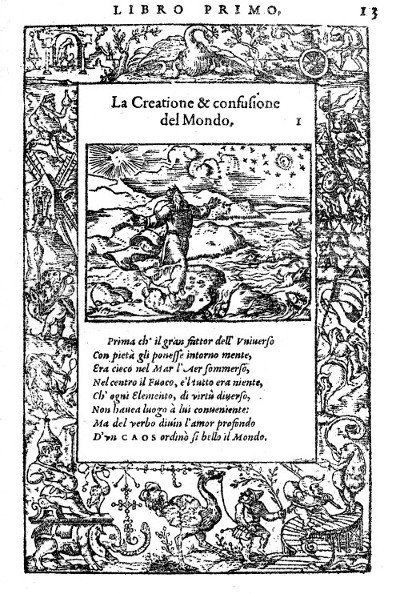
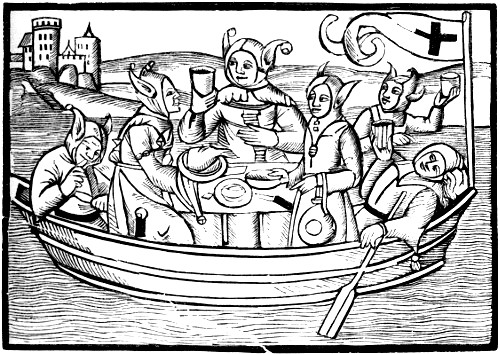
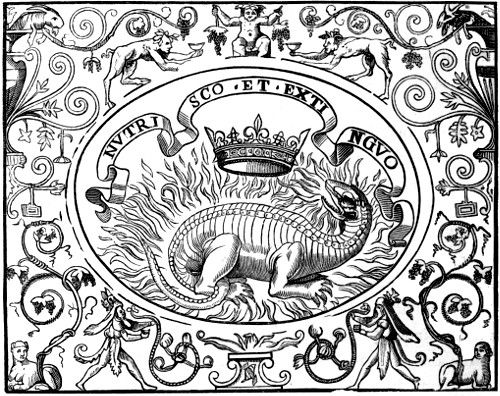
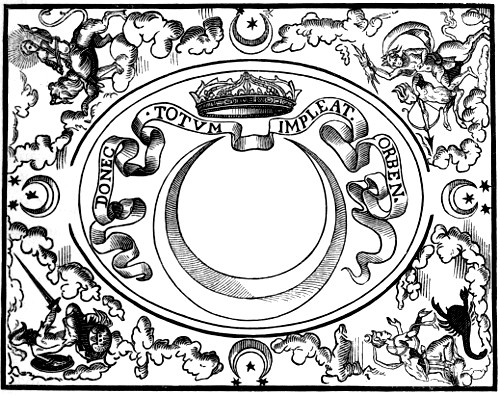
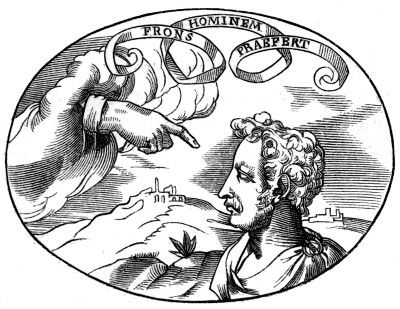
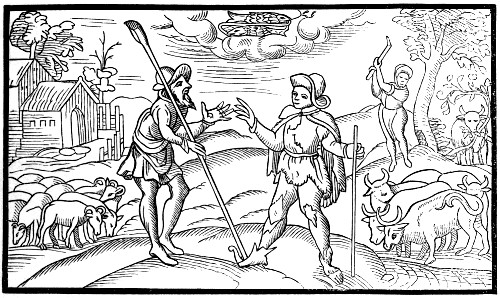
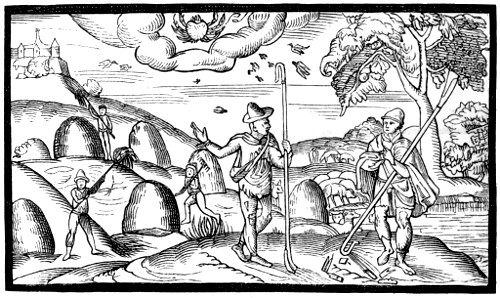
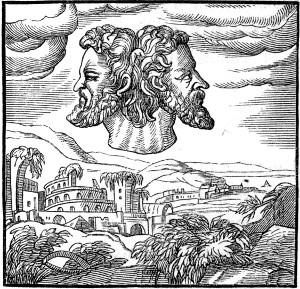
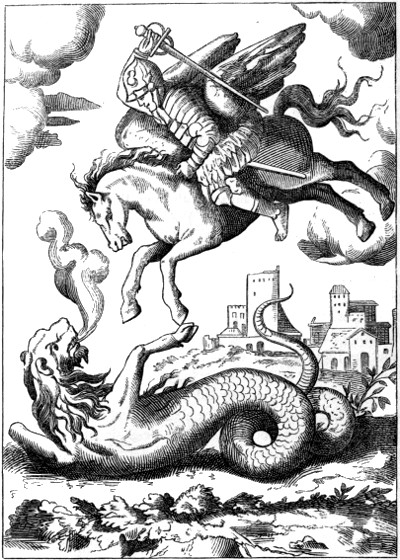
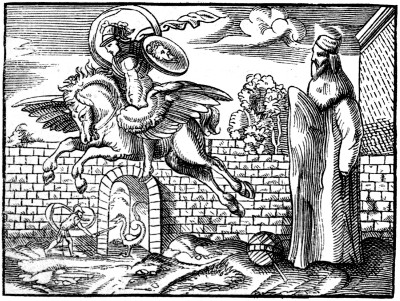
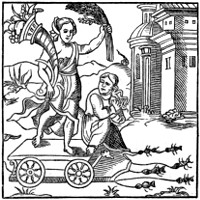
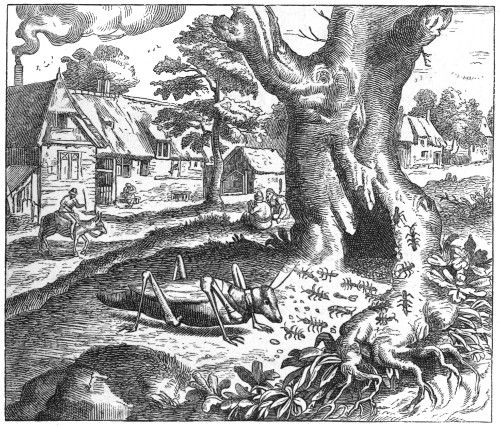
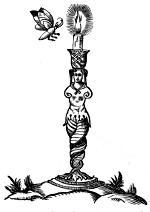
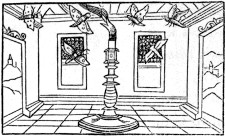
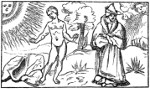
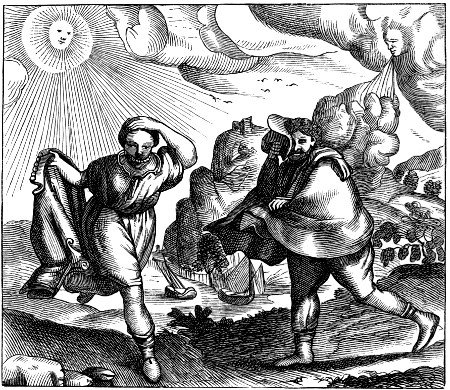
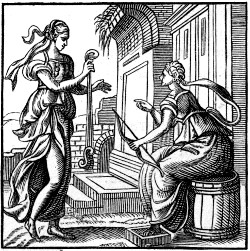
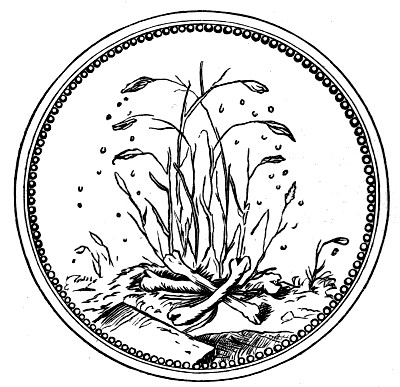
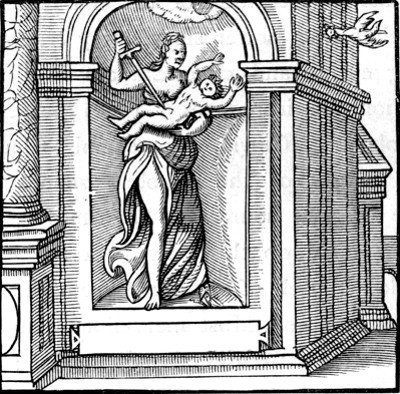
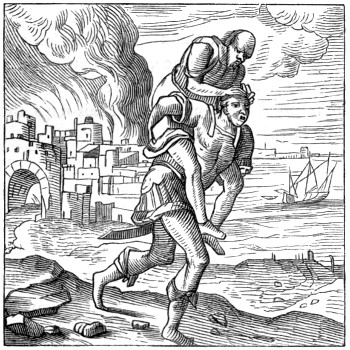
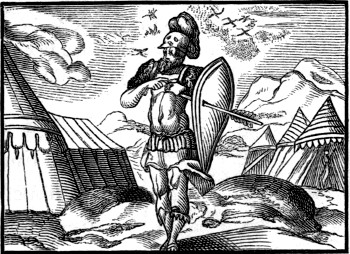
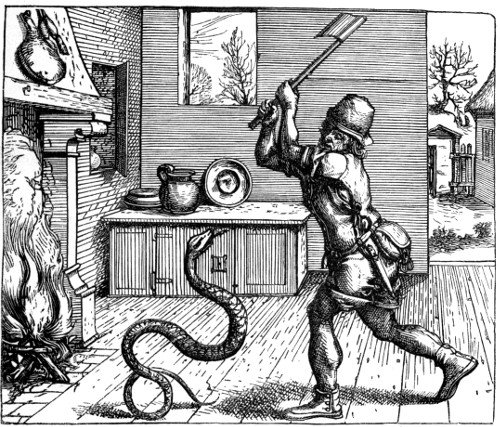
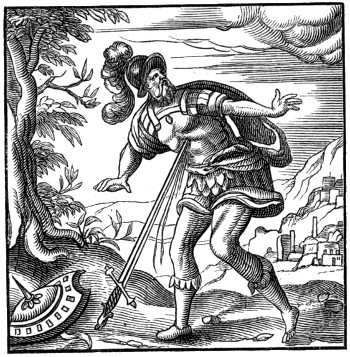

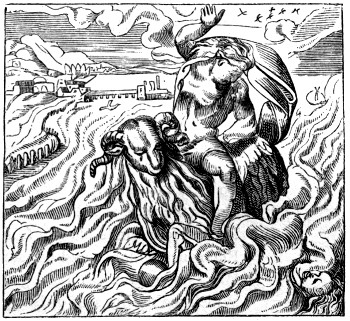
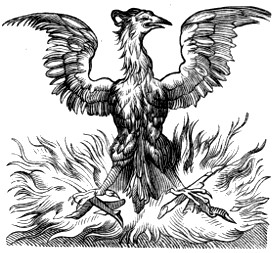
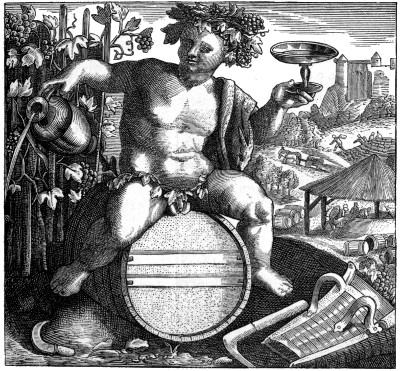
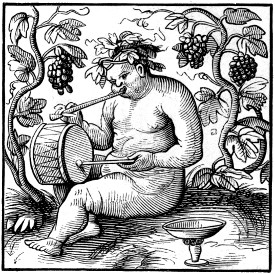
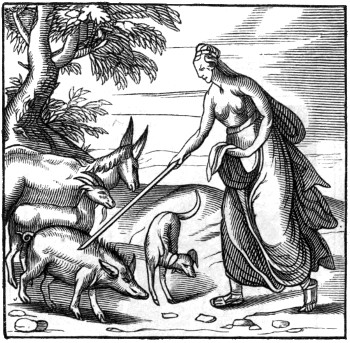
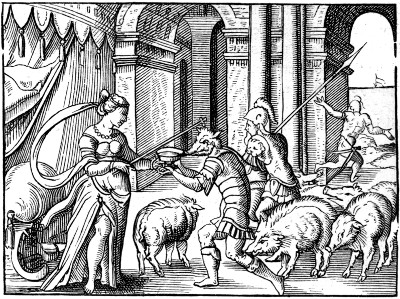
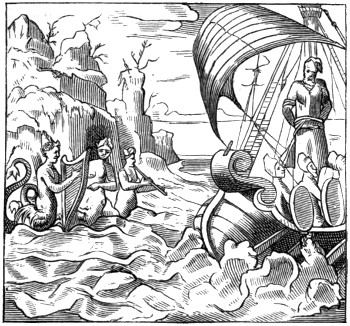
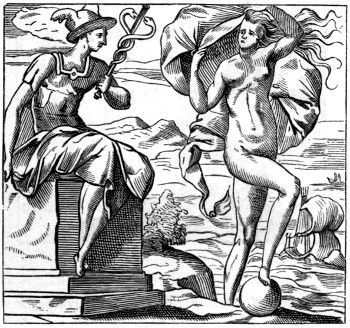
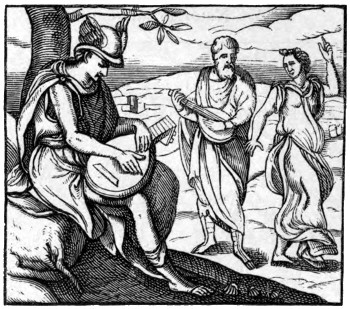
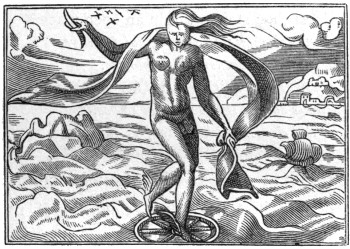
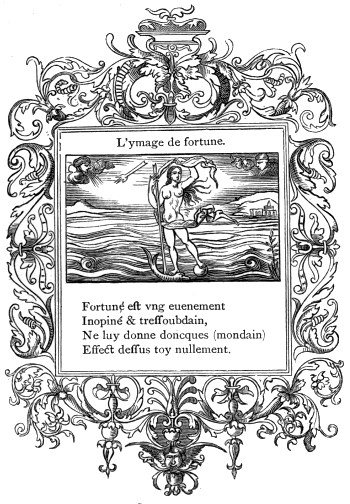
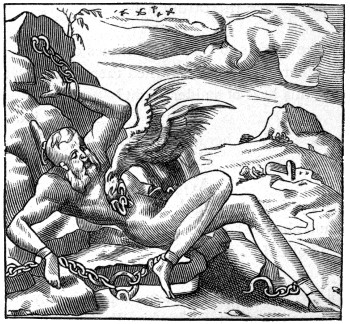
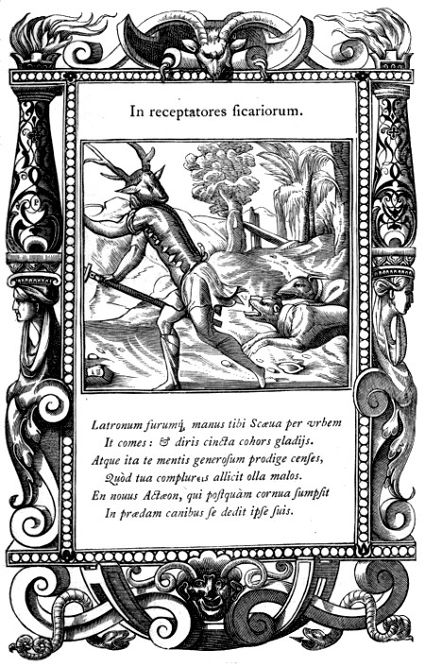
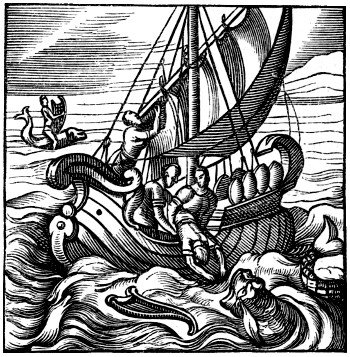
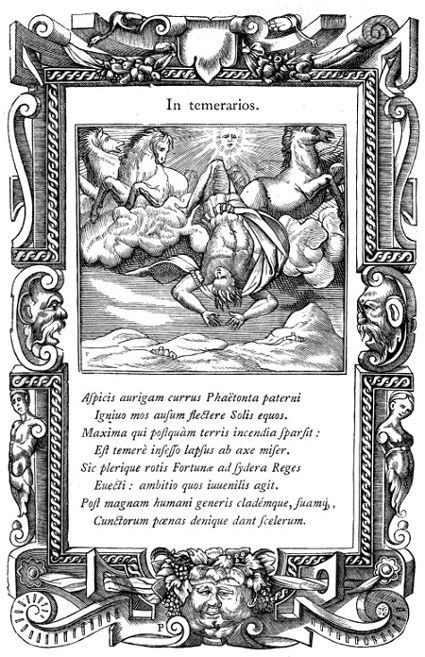
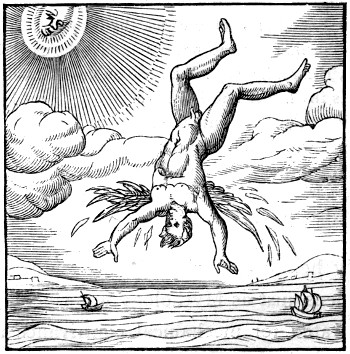
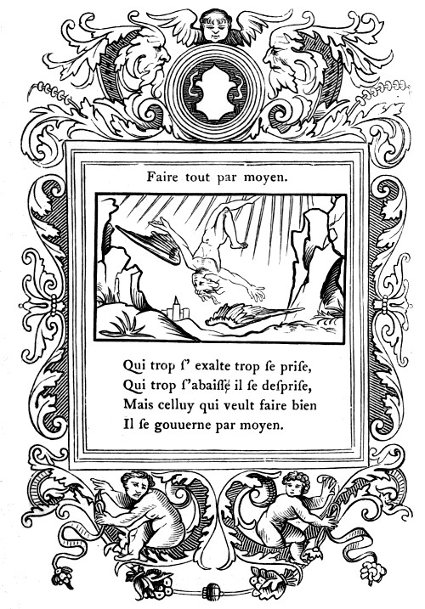
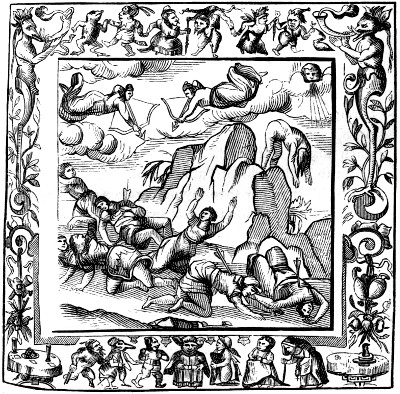
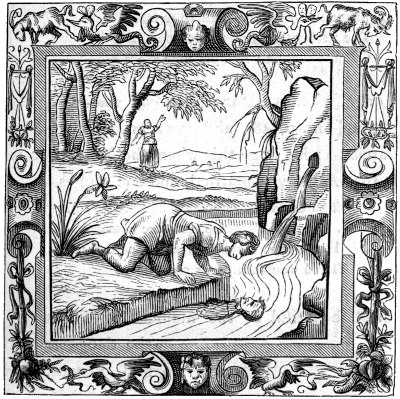
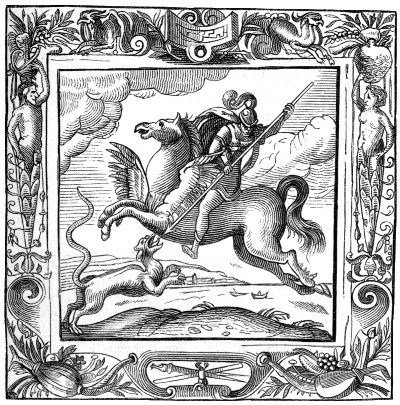
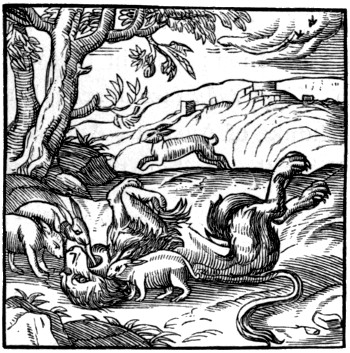
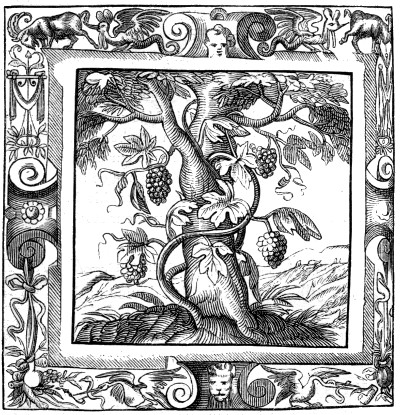
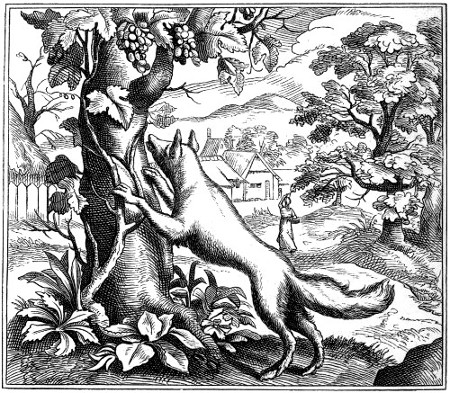
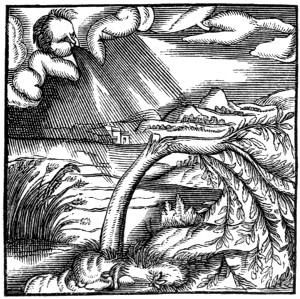
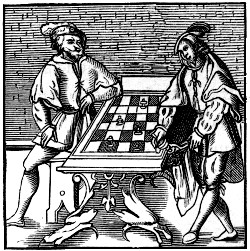
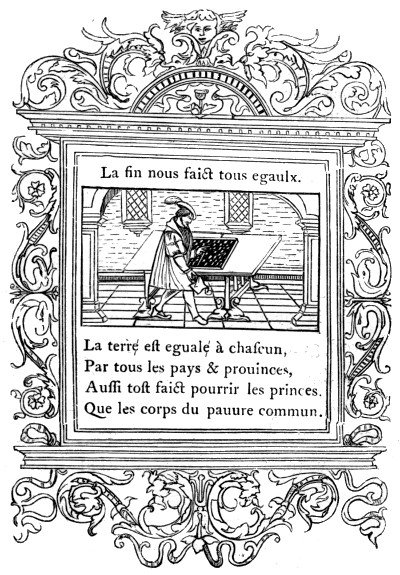
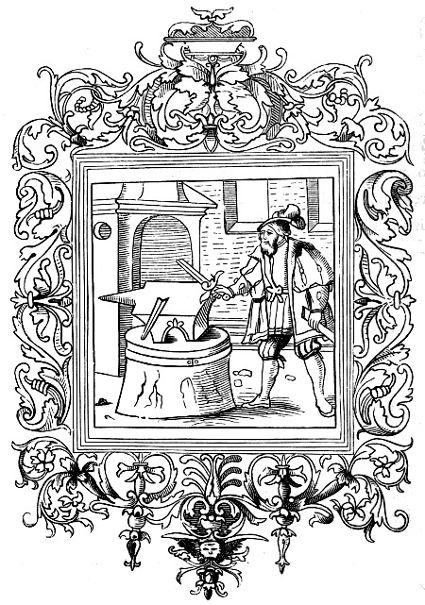
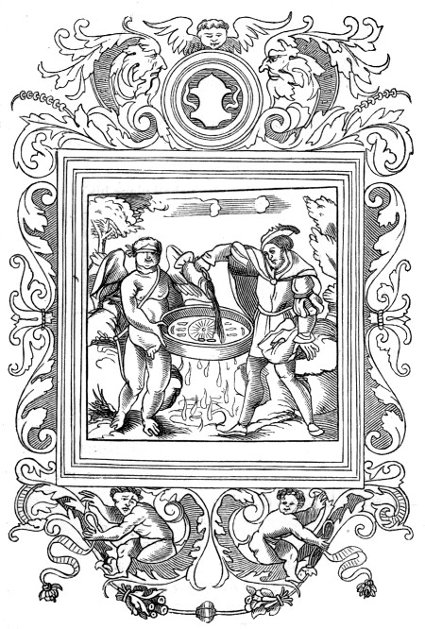
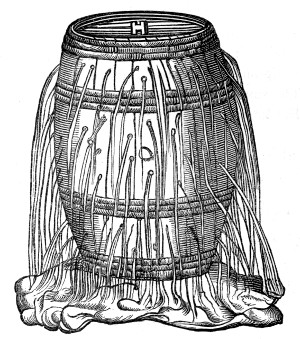
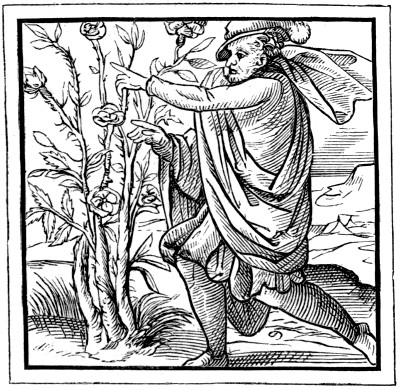
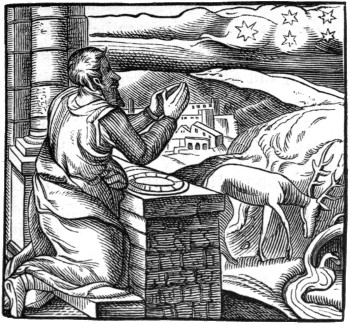
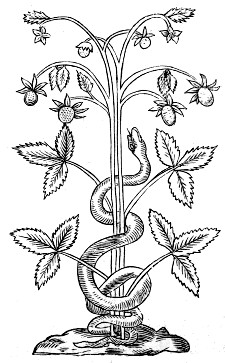
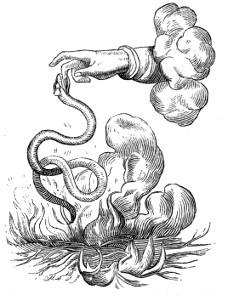
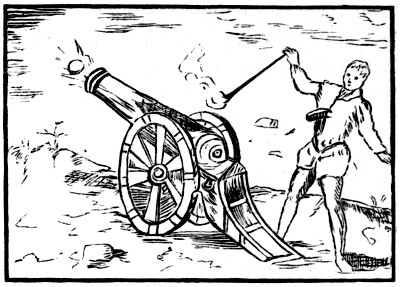
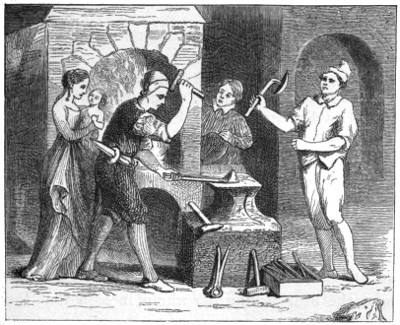
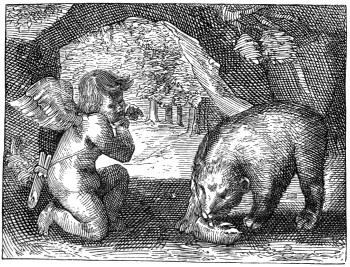
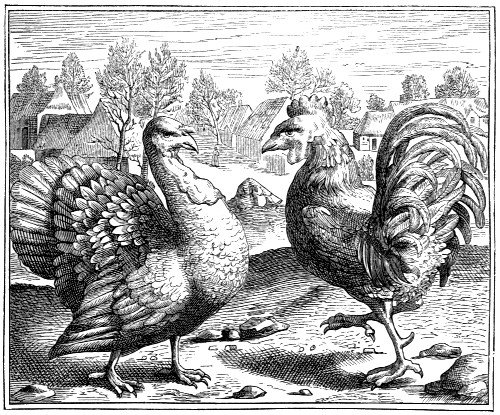
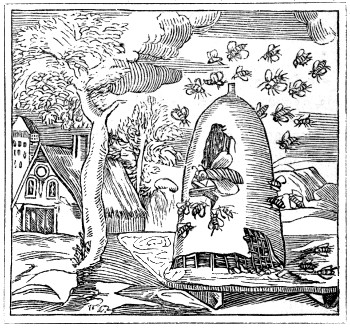
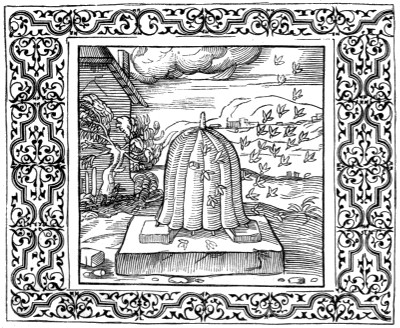
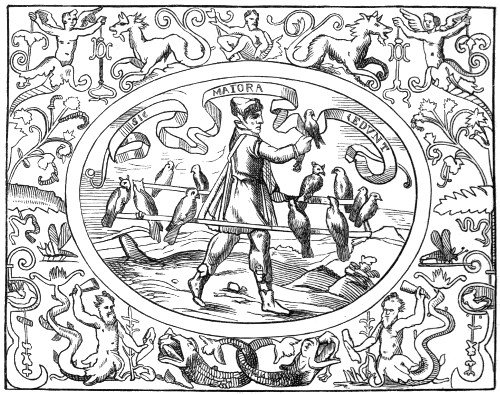
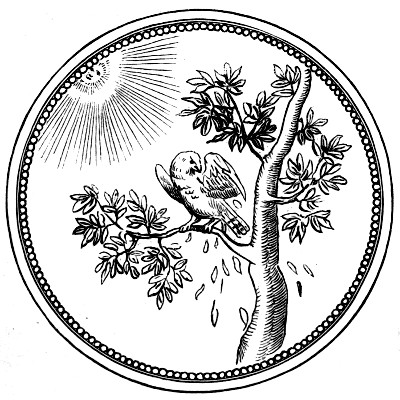
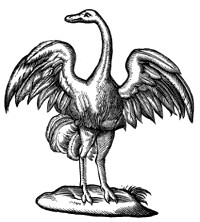
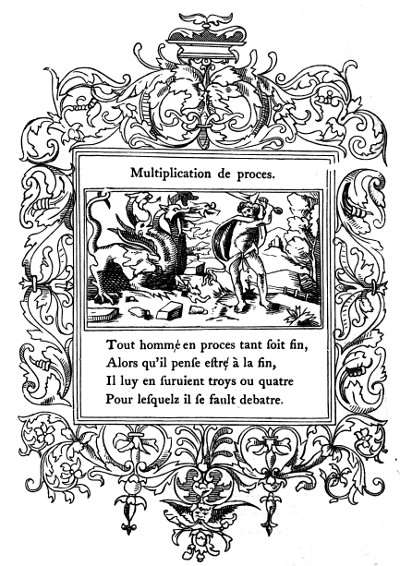
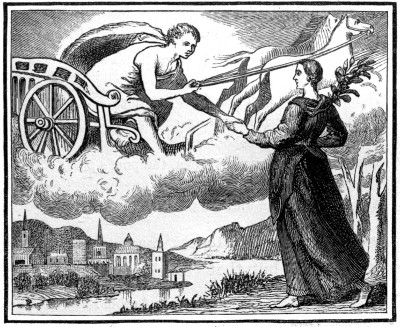
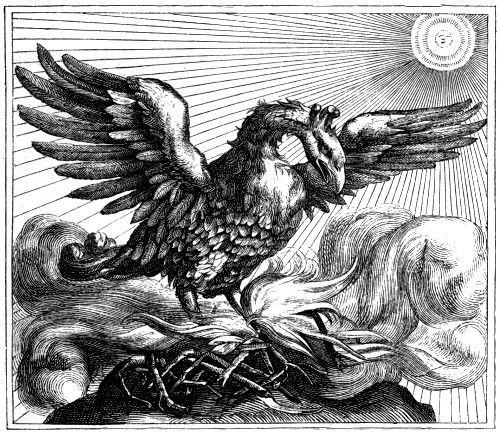
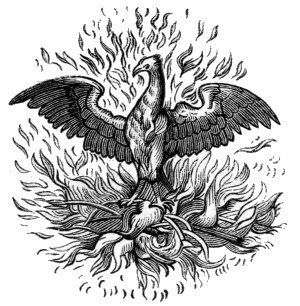
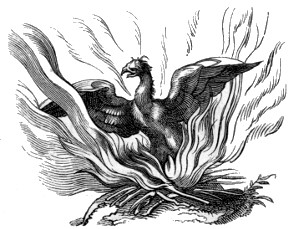
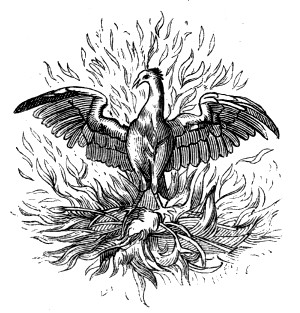
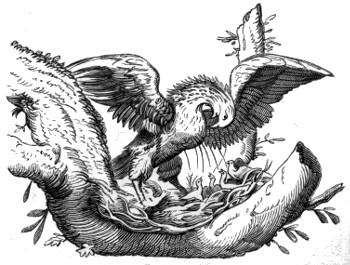
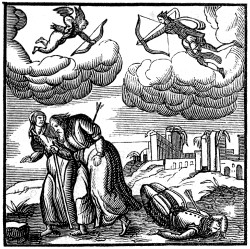
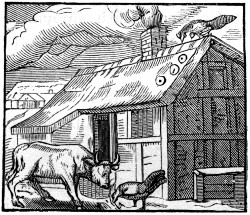
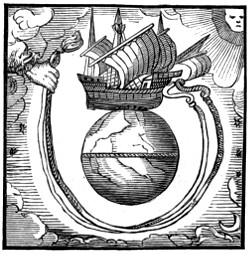
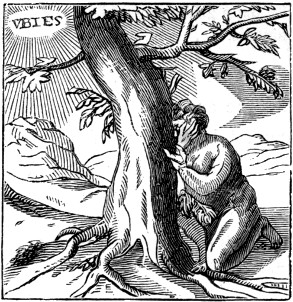
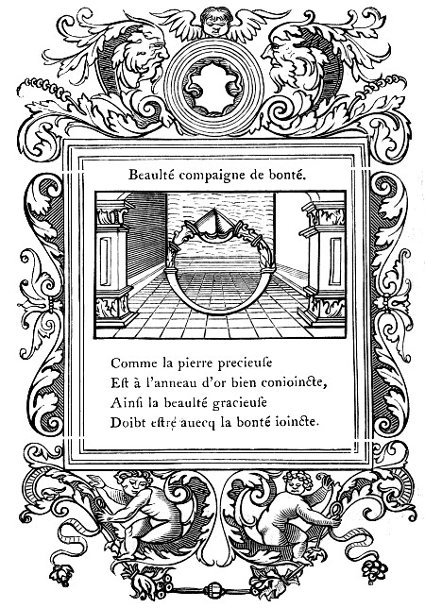
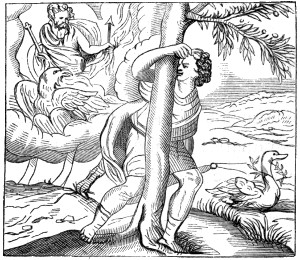
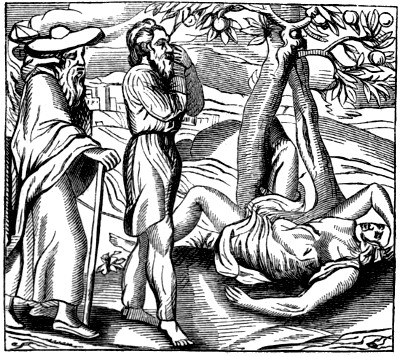
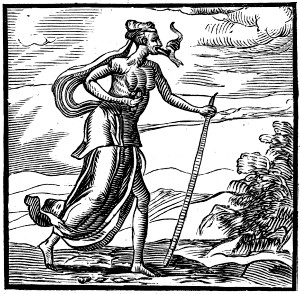
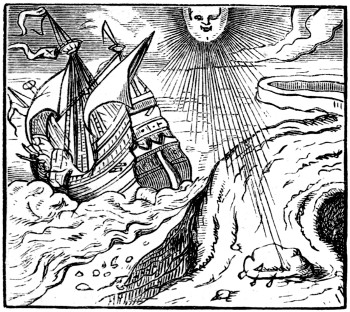
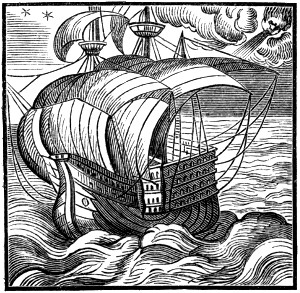
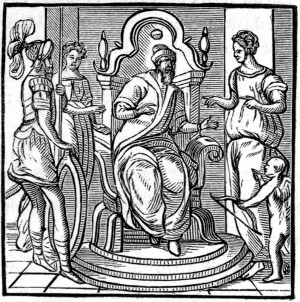
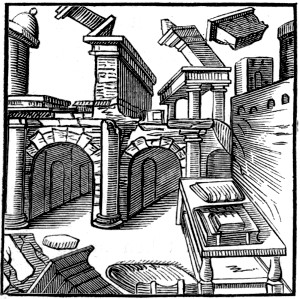
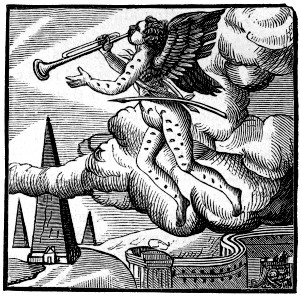
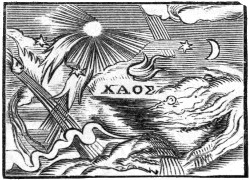
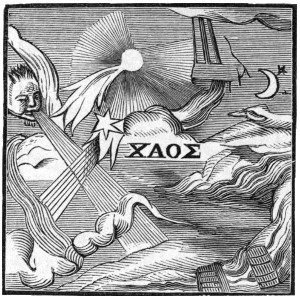
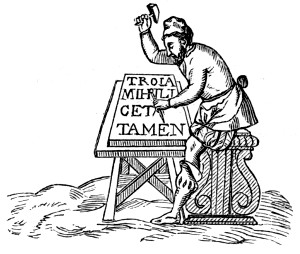
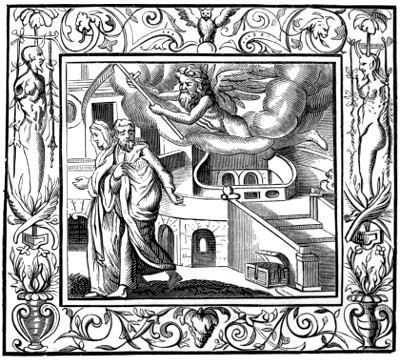
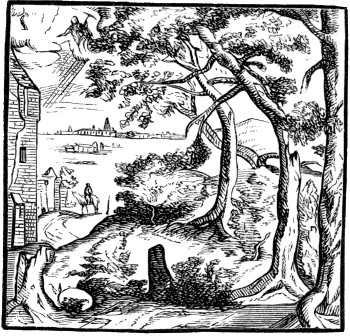
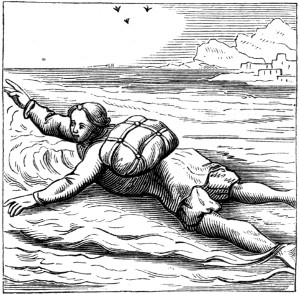
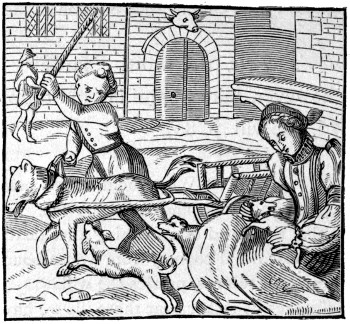
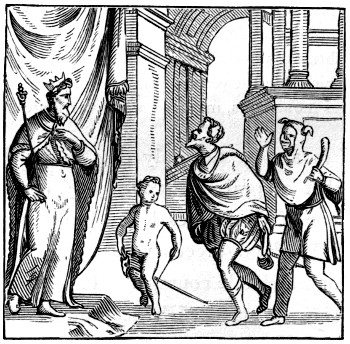
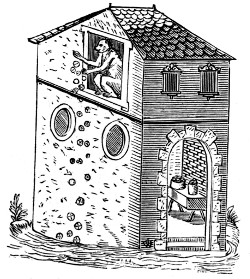
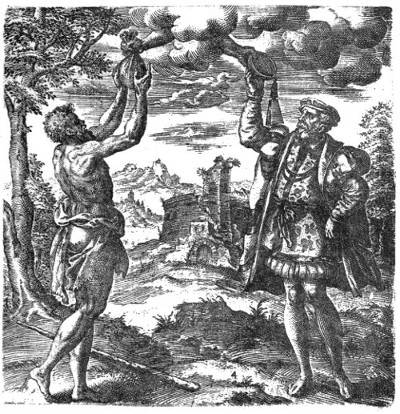
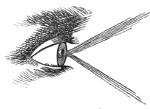
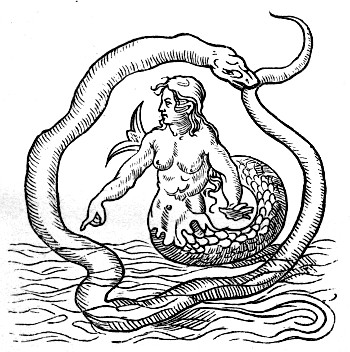
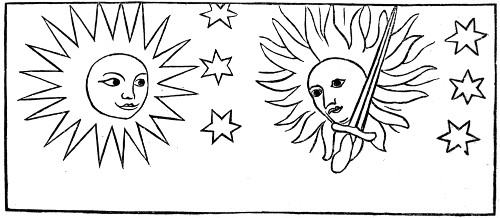


 . This is rendered as ‘