Larger versions of the illustrations may be seen by right-clicking them
and selecting an option to view them separately, or by double-tapping and/or
stretching them.
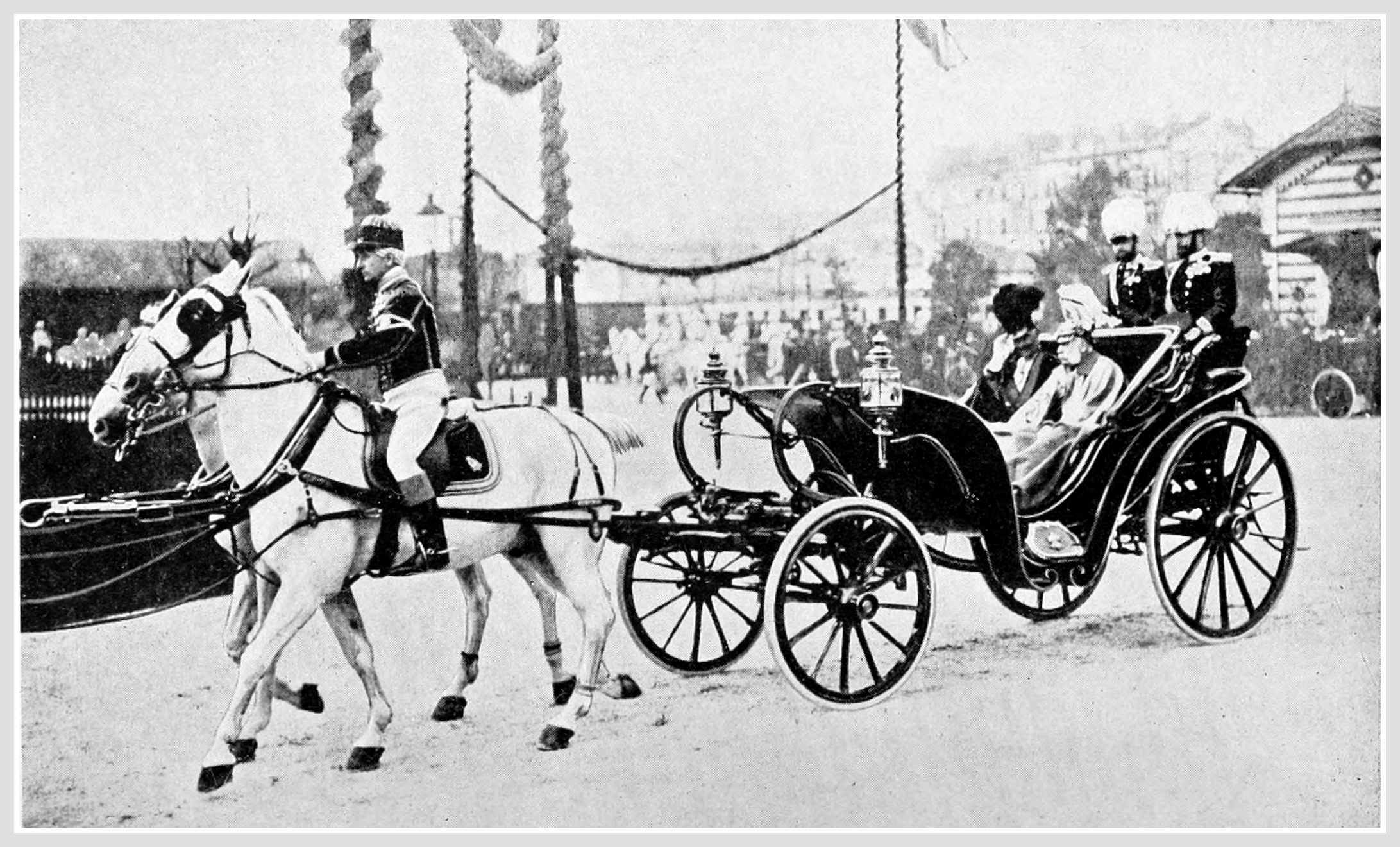
The German Emperor and the Emperor of Austria, driving in Vienna, in 1908.
SEVEN YEARS IN VIENNA — CHAPTER I KING EDWARD AT ISCHL—THE PARTING OF THE WAYS
It was mid-August in 1907. King Edward of
England, who had been undergoing a “cure”
at Marienbad, was expected at Ischl, where the
Austrian Court was in residence. The whole
place was hung with flags that were put up at
the last moment, as the “Gem of the Salzkammergut,”
as Ischl is often called, is one of the
wettest spots in the country. The local trains
brought large numbers of peasants, in their
picturesque costume, who wanted to take advantage
of the opportunity of seeing the King of
England. Other “peasants,” in badly-fitting
costumes, also came down in the Vienna night
express. Their white knees, left bare beneath
the short leather breeches, plainly showed that
they were not accustomed to wearing the
Styrian costume. The peasant girls eyed them
dubiously; one suggested that a little walnut-juice
would improve matters, while their little
brothers whispered “police.” The real peasants
crowded around the station, and watched the
red carpet being laid, ready for royalty. They
then turned to see Emperor Francis Joseph
drive up to the gates. He arrived twenty
minutes before the train was expected, as
usual, for being a great stickler for etiquette he
always feared that some accident or contretemps
might delay him, and the visitor reach the
station before the host. He dreaded nothing so
much as a breach of etiquette or good manners,
and was willing to take any trouble to avoid
even the possibility of such a thing. The train
from Marienbad steamed into the station, the
monarchs embraced; their intercourse had
always been most cordial. The King respected
the simple old man, who had until then guided
the destinies of his country with great astuteness;
while the Emperor of Austria esteemed
the statesman, for in Austria-Hungary and the
Balkans King Edward was reckoned as the
most skilful diplomatist of his time. As the
Imperial carriage, with the gilt wheels, drove
through the streets, the people cheered heartily.
King Edward was the most popular of foreign
monarchs in Austria, and the minimum of precautions
were taken for his safety. In spite of
this the Austrian police, ever watchful, took
stock of every fresh arrival in the place for days
before the King appeared. On the morning of
the visit they ascertained what persons would
be seated in windows commanding the line of
route, and carefully watched the houses that
might harbour anarchist or other assassins. The
uninitiated suspected nothing of all this. The
long line of firemen that lined the streets looked
like members of the local brigade. It was not
suspected that they were specially trained men,
who knew how to act and to co-operate at the
right moment with the “peasants,” also members
of the same highly-organised force. They
all stood apparently careless and inattentive.
Presently a carriage, in which a spare, tall,
pock-marked man was seated, drove through
the street. He was the Emperor’s private detective.
His appearance always heralded that of
the monarchs, and the firemen braced themselves
for a combined movement, either to the
right or left, forwards or backwards, as previously
arranged. The police behind helped
with the work, and just as the Imperial carriage
flashed by, everyone in the crowd pushed forward,
sideways, or backwards, as though by
accident. Any intending assassin would have
lost his place at the front, and have missed
the golden opportunity, through this clever
manœuvre of the police. These precautions
were always taken for every Royal visitor, for
although Emperor Francis Joseph himself was
accustomed to stroll about the Ischl woods,
and went hunting in the forests quite
unattended, he took care that his guests were
exposed to no risks.
Everything went off as arranged, although
there was a strained feeling in the air, partly
due to the thundery weather. It was known,
too, that King Edward was on a diplomatic
tour throughout Europe, and the people knew
that meetings of monarchs in summer are often
of great importance, even when they are unaccompanied
by their Ministers. Emperor Francis
Joseph is practically a despotic monarch, for
the Austro-Hungarian Constitution exists
merely on paper. He alone decides the foreign
policy of the country, and determines whether
there shall be peace or war. Thus he is in a
position to make decisions for his country, without
consulting his Ministers. Austria-Hungary
had long been quiet, almost to the point of stagnation.
Her statesmen had been fully occupied
in paying off the burdens incurred during the
last war, and were now delighted that, after a
succession of deficits, they could at length turn
out Budgets with surpluses at the end of the
financial year.
There was trouble with Servia, it is true,
Austrian machinations had deprived Servia of
an outlet to the sea. Servia, being a pastoral
and agricultural country, wished to sell her products,
and Austria, the natural market, was
closed to her.
The Austrians, who were very short of meat,
promised to take over Servian meat, but the
Hungarian agrarians, or large land-owners, who
wanted to keep up the prices of their own
products, managed to prevent this. They
appointed veterinary surgeons to examine imported
meat; and by unjustly condemning the
Servian meat at the frontier, they succeeded in
preventing its import. This line of conduct
caused much greater discontent among the
Servs than a downright refusal to admit their
products would have done. They naturally
objected to being cheated by their powerful and
unscrupulous neighbours, and the friction
caused by the “Servian Pig” question was continual.
Otherwise the Balkans were strangely,
almost uncannily, quiet. There were no massacres
to report, no bands who roamed the
country and committed depredations. It seemed
that the two monarchs could have nothing to
discuss. As the Emperor brought the King
back to the Hotel Elisabeth in the afternoon,
the faces of both monarchs could be seen very
plainly in the blaze of the sun that was pouring
down with great fierceness. Emperor Francis
Joseph looked much older than he had done
that morning. His face was drawn, the fine
lines on the parchment-like skin were deepened.
It did not need any unusual acuteness to see
that something had gone wrong. King Edward
walked up to his suite of rooms with something
weary in his step. The Emperor, freed from
the restraint of the King’s presence, returned to
the Imperial villa, his slight frame shrunken to
half its usual size, his soldierly bearing gone.
All Ischl went home to dress for the gala performance
at the tiny Court theatre. It was
always difficult to get tickets at the bijou theatre
when members of the Imperial family were expected;
on the night of King Edward’s visit it
was impossible to obtain them. The police
excluded all foreigners by careful manipulation.
By evening it was already known in Ischl that
the Emperor and the King had quarrelled violently.
Attendants, posted behind doors, ready
to spring to attention, overhear many things.
They could give no details of what the subject
under discussion had been, but they said that
Emperor Francis Joseph had lost his temper in
the presence of a foreign King, and although
outbursts of this kind were common enough
within the family, it was an unprecedented thing
in the presence of a stranger. They knew that
the occasion had been no ordinary one, and that
the future policy of the country had been under
consideration.
Just as the curtain went up for the performance
of some light musical comedy, the sort of
play that is at its very best in Vienna, the
thunderstorm that had been threatening all day
long, broke outside. The rain rattled down on
the roof of the theatre. The real heroine of the
piece, who had been brought down from the
capital on purpose, was a dazzlingly beautiful
woman; she laughed, danced, and pirouetted all
over the stage. She was the very embodiment
of Vienna “cheek.” Just at the end of the first
act—royalty never sees a piece through when
on State visits—she abruptly turned her back
towards the Imperial box. She was lightly clad,
even for the Austrian stage, as she tripped
laughingly to the front, and carried out her
instructions. A thrill went through the audience.
Would the King understand? His British
phlegm stood him in good stead. He remained
in his seat, although he was sufficiently
acquainted with Austrian manners and customs
to comprehend the somewhat heavy witticism.
Only when the curtain fell did he rise and leave
the theatre. “What was the meaning of the
insult?” asked all Ischl. “What did it
portend?” They learnt the answer just
seven years later to the very day.
The people about the palace discussed the
incident at the theatre. They understood that
it was meant as a hint to the King that his
presence in Austria was not desired, if he came
to discuss politics. As a private friend and a
brother monarch he was always welcome. He
had attempted to show the Emperor that the
close alliance with Germany was not for the good
of Europe. Not merely that, but Austria-Hungary
herself would imperil her existence as a
great Power if she allowed herself to become
merged in Germany. The aged Emperor, who
had long been accustomed to depend upon
Germany for assistance against the Slavs, would
not listen to the King. He was perhaps aware
that his policy was wrong, but being obstinate,
like all the Habsburgs, he would not acknowledge
it. He did not intend to alter his policy
at the eleventh hour, in any case. If there must
be a change let his successor see to it. King
Edward made due allowance for the Emperor’s
age, but it is doubtful whether he ever
again made any direct effort to turn Austria
from her fatal path. She stood at the
parting of the ways. Her Emperor
chose her destiny that summer day in Ischl.
Diplomatists and Ambassadors took up the
King’s task; they repeatedly pointed out the
disastrous consequences of the close alliance
with Germany. Instead of discussing the
situation with Italy, Austria-Hungary informed
Germany of what was happening. Instead
of keeping the balance equal between
Italy and Germany, Austria-Hungary really
concluded a partnership with Germany; the
Triple Alliance degenerated into a Dual
Alliance that kept up an understanding with
the third partner. Italy was quick to realise
this. So long as Russia and France were allied,
and occupied a position that was a set-off to that
held by Germany and an Austria that had not
given up her liberty of action, European peace
was assured. Great Britain and Italy were not
bound to their Allies to any great extent.
The result of the meeting at Ischl soon made
itself felt. Italian diplomatists began to back
out of their obligations towards Germany and
Austria-Hungary. Their policy of “cooling
down,” at first barely perceptible, took form
somewhat later, at the renewal of the Triple
Alliance, when Italy promised very little in
return for the many “benefits” heaped upon her
by Germany. Great Britain, aware of the
danger of the centre of the European chessboard
being occupied by one vast State, stretching
from the North Sea and Baltic to the
Adriatic, was more inclined to listen to
advances from France and Russia, and to
deliberate upon the advantages of a closer contact
with Germany’s enemies. The suggestion
made by France, that Great Britain should
introduce conscription, prevented the understanding
becoming anything more. France
pointed out the necessity of preparing for an
aggressive move on the part of Germany, but
Great Britain would not even consider a proposition
so far from her theories of government as
was conscription.
CHAPTER II THE EMPEROR’S ILLNESS
The Austrian Court returned to Vienna as
soon as the first snows on the mountains
round Ischl gave warning that the summer
season was at an end. Emperor Francis
Joseph, who is a strenuous worker, and carries
on the business of State daily, whether in
residence in Vienna or in the country, began
his life as usual. On certain days of the week
he held general audiences, and received anyone,
high or low, aristocrat or peasant, who
wished to present a petition. He was always
up at 4 a.m., and had got through most of his
State duties by 8 a.m., when he began to receive
Ministers and others. In the month of October
it was suddenly announced that the Emperor
was ill. The news caused great consternation,
as the monarch had never been ill in his life.
He had been confined to his room for some
time as a young man after an attempt made on
his life, when he was stabbed in the neck,
but he had never had the slightest ailment
since. His life was carefully regulated by the
Court physician, Doctor Kerzl, a military
surgeon, a rough doctor of the old school,
who had grown old with the Emperor.
Members of the Imperial family frequently tried
to have a younger and more up-to-date man
appointed as Court physician. They considered
that the Emperor’s health was so
precious that its care ought not to be confided
to a man who had gained his experience with
the Army. The Emperor, however, stood firm,
and the results of the somewhat draconic
treatment have certainly justified his decision.
The Emperor sleeps on a camp-bed, eats the
heavy Vienna food with relish, and is always
accustomed to drive in an open carriage without
his military cloak. It is probable that he
took the chill during the drive.
Specialists were summoned to the Emperor’s
bedside, and they found that the Royal patient
was suffering from inflammation of the lungs.
He, however, refused to go to bed. Crowds
of people went out to the summer palace of
Schönbrunn, where he was staying, and waited
under his window until he appeared to reassure
them, when cheers rang out and echoed along
the arched corridors beneath the palace. The
anxiety felt by the common people was shared
by everyone in Austria-Hungary, and the one
hope of high and low was that the Emperor
might live. This was not so much on account
of his personal popularity, although this was
great, as because of the dread of the future.
The heir to the throne, Archduke Francis
Ferdinand, was the most hated man in Austria-Hungary.
The Emperor’s death meant that
he would succeed to the throne. The Emperor
himself felt a profound hatred for his heir, and
it was a matter of common knowledge that he
was filled with a firm determination not only
to recover from his illness, but to outlive his
heir. Day after day the struggle went on within
the white walls of Schönbrunn Palace; the
daily papers spoke of the Emperor’s illness as
a slight cold, for the monarch was not satisfied
with reading extracts from the official organs,
as was his ordinary custom, but insisted upon
having all the papers, opposition organs as well
as bounty-fed periodicals, brought to his room.
He wished to find out whether the doctors were
telling the truth about his illness. The three
specialists came to the conclusion that he could
not recover; Doctor Kerzl alone stood firm and
said that he would get well again. The
Emperor refused to take to his bed, having a
superstitious horror of lying down in the daytime.
Kerzl supported him in this, and it is
probable that he owed his recovery to it. The
disputes among the doctors were unseemly, and
the specialists insisted on calling the family to
Vienna. Archduchess Gisela, the Emperor’s
elder daughter, arrived in great haste, and his
younger daughter, Valerie, also appeared on
the scene. Both women are very pious, and
they immediately wished the Emperor to receive
Extreme Unction. The Archbishop of
Vienna, with a retinue of priests, actually came
out to Schönbrunn to administer it, but they
were met downstairs by Frau Catherina Schraatt,
who told them that it would frighten him to
death, and induced them to return without
carrying out their mission. Archduke Francis
Ferdinand arrived at the capital. He and his
morganatic wife, Duchess Hohenberg, established
themselves at the Belvedere Palace for
the season. The Archduke, a man who lacked
refinement and who was utterly devoid of tact,
immediately began to act as if he had already
succeeded to the throne. Statesmen, fearing
that the Emperor would never recover, were
afraid to oppose him, and he got an insight
into affairs of State during the Emperor’s illness
that enabled him to assume a position that
he never gave up afterwards. The Habsburgs
were obliged to look on while Duchess Hohenberg,
then merely Countess Chotek, took a
position that would never have been conceded
to her had the Emperor been in his usual health.
Kaiser Wilhelm, ever watchful, began to count
on the possibility of the Emperor’s death, and
the friendship between him and the Archduke
dates from this epoch. Kaiser Wilhelm did
not like the heir to the throne of Austria-Hungary;
he recognised the fact that he would
have to deal with a determined man, who knew
exactly what he wanted and would refuse to
believe the flattering assurances that satisfied
Emperor Francis Joseph, who, although still
in full command of his mental faculties, was
beginning to feel the weight of years. The
Emperor was never so acute a man as his heir;
the Archduke, too, had a wife whose intelligence
was remarkable. Countess Chotek was
ambitious, and her husband was accustomed to
following her advice in State affairs. Kaiser
Wilhelm therefore shared the wish of the
Austrian people, that the aged Emperor might
long be spared to them. Week after week
went by. People from all parts of the
monarchy sent the Emperor quaint remedies,
charms, and specifics of all kinds to cure his
illness; several officials were engaged all day
in writing to thank the senders, who were not
even aware of what ailed the Emperor. When
it was finally announced that he was out of
danger there was great jubilation throughout
the realm; the people poured scorn upon the
specialists, and acclaimed Dr. Kerzl as the
saviour of the country whenever they could
catch sight of his rough, honest face, bronzed
by exposure upon many a battlefield. The
Emperor had given his attendants great trouble
during his illness and convalescence, as he had
refused to allow anyone to enter his rooms except
Dr. Kerzl, his soldier-valet, who slept upon
a rug in the antechamber of his bedroom, and
the sentry, who always paced to and fro outside
the Emperor’s bedchamber, and watched
through a spyhole, cunningly made in the door,
for any change. No woman was allowed to
enter the suite of rooms during the night hours,
the patient saying he preferred an orderly to
nurse him.
Gradually the Emperor recovered his powers.
He was never the same man again; his vigour
was gone, and, although he was little changed
in appearance, his grasp upon affairs had
weakened. The Archduke, who disliked Vienna
cordially, remained in town, a thorn in the
Emperor’s side. The latter, however, could find
no pretext for dismissing him to the country.
Councillors, already anticipating the probable
demise of the reigning monarch at no distant
date, advised the Emperor to consult with his
heir and to try to inculcate the inexperienced
man with some of his statecraft. The Emperor
was induced to bestow some powers upon the
Archduke, although much against his will, and
a new era in the history of the country began.
CHAPTER III ARCHDUKE FRANCIS FERDINAND
All Europe was asking one and the same
question at this epoch: “What kind of a man
is the heir to the throne?”
They got the answer that he was “a little-known
man,” and this was true to a certain
extent. The Emperor, an old autocrat, never
allowed any member of the Imperial family to
take a leading part in public affairs. They
were expected to do their duty in opening
charitable institutions, presiding at fêtes in
provincial cities, but in both Vienna and Budapesth
they found it advisable to keep well in
the background. Whenever a young Archduke
became too popular, even in the ballrooms of
Vienna, he was promptly banished to some out-of-the-way
place, ostensibly on a mission, but
really as a punishment for presuming to court
popularity.
This was well understood among the Habsburgs,
who, as a rule, did not care for Court
life. Most of the Archdukes lived on their
country estates, where they enjoyed almost
regal power for nine months of the year, merely
coming to Court to pay their respects to the
monarch at the New Year.
Archduke Francis Ferdinand was very fond
of power and very ambitious, but he did not care
for playing the rôle of heir to the throne when
he had reached middle age and was at the
height of his powers. He therefore remained
in the country for the greater part of the year.
This did not increase his popularity. People
grumbled at the sadness that hung like a pall
over the Court. They said that it was merely
a resort for military men and officials, and
wished that young life could be introduced to
restore Vienna and Budapesth to their former
gaiety. Archduke Francis Ferdinand had
laboured under great disadvantages since
sudden and unexpected events had made him
heir to the throne. His attendants and the
Court officials summed up the position in one
sentence: “He has never been trained for a
throne.” He was entirely lacking in tact—a
quality which, if not a natural gift, must be
acquired by painful experience by personages
who will one day occupy a throne. He spoke
no languages except his own. He had, of
course, some knowledge of French and Italian,
and was learning Hungarian; but he was
not in a position to carry on delicate
negotiations in French. He had a bad
record even for an Austrian Archduke. His
youthful career had been full of incident, and
his doctors had been compelled to put a sudden
stop to a course of youthful dissipation by
sending him on a voyage round the world.
He was reported to be suffering from consumption
in its preliminary stages, and it was said his
only chance of life was a complete change of
climate. The Archduke, who was an artist and
well acquainted with ancient and modern culture,
started off on the Imperial yacht for the
East with nothing but pleasurable feelings. His
favourite study was ethnology, and he made a
collection of objects of great interest during
this voyage. They were to be seen in one of the
galleries of the Hofburg, which had recently
been added to the main block of the town palace.
The Archduke converted the new part into a
museum, as the Emperor had forbidden the
architect to fit the new building with lifts or
other modern appliances. Lifts he hated, and
firmly refused to enter one even when he was
having his portrait painted by an artist whose
studio was on the sixth floor of a Vienna house.
The Archduke, who was intensely modern,
decided that a palace without lifts and proper
heating appliances was not fit to live in, and
promptly converted the new gallery into a picture
gallery and museum without waiting for
the Emperor’s advice or permission.
The aged Emperor and his heir clashed in
every direction; they were diametrically opposed
in all their tastes and convictions. Both
were pious to an exaggerated degree. The
Emperor disliked the Jesuits; his heir consorted
with them constantly, and listened to
their advice in matters of State. This alone
would have been sufficient to prevent the Emperor
from ever wishing him to succeed to the
throne. The Archduke, too, although so pious,
had contrived to estrange both the Church and
the Emperor by one act of boyish folly. As a
young officer he was stationed at a depôt in
the depths of the country to learn his profession,
far from critical crowds. One day he was
riding across the fields, when some peasants,
carrying the mortal remains of one of their
fellows, crossed by the footpath. The Archduke,
in a fit of youthful exuberance, set his
horse at the bier and cleared it at a jump. The
priest protested at the act of sacrilege. The
story reached the ears of the Emperor, who
never forgave him. Although the Archduke
was not careful of the feelings of the Roman
Catholics, the non-Catholics in the country
believed that he would be capable of persecuting
them with a rigour such as had been unknown
since the Middle Ages. At the time of
the Emperor’s illness the Liberal papers prophesied
in their leading articles that he would
build up martyr fires around the Cathedral of
St. Stefan, in the centre of Vienna. They said
he would show the utmost relentlessness in
burning or hanging his Jewish, Protestant, and
Mahommedan subjects, all of whom were accustomed
to a wide tolerance, based on indifference
to them and their doings. The Archduke was
bitterly hated in Hungary; it was commonly
reported that his life was not safe in that part
of his future kingdom. He gave colour to these
reports by his strange conduct. When he went
down to Budapesth he did not put up at an
hotel, as was customary. He remained all night
in the royal train, which was run up the line to a
siding, no one being aware of the exact spot
at which it had drawn up. This confession of
fear and lack of confidence in the loyalty of his
subjects did the Archduke great harm. The
alternative explanation, sometimes advanced,
that the Archduke, who was known as the
meanest man in the kingdom, merely wished to
save an hotel bill, did not improve matters.
The hotel-keepers looked upon members of the
Imperial House as most desirable guests; they
never overcharged them, for the advertisement
was worth a great deal to them. Archdukes who
neither commanded a palace to be prepared for
their coming nor put up at an hotel were
naturally not popular with anyone. Archduke
Francis Ferdinand crowned all his other
delinquencies by his marriage. Instead of contracting
an alliance with some powerful reigning
house, he made a morganatic marriage with
a lady-in-waiting. Countess Chotek was a
Bohemian aristocrat, it is true, but she was not
a peer of any member of the House of Habsburg.
The Emperor allowed the marriage to
take place, and when all the circumstances are
taken into account, especially the ease with
which persons whose existence was disagreeable
to the Vienna Court were removed, it can
only be concluded that the Emperor approved
of the marriage. He evidently did not wish the
children of the Archduke to come to the throne
on account of their father’s tendency to tuberculosis,
which was reported to have gone to the
brain. It was common knowledge that the
Archduke was accustomed to fly into fearful
rages. Whether this habit, which is common
to all the Habsburgs, was owing to epilepsy, or
some obscure brain disease, it is difficult to say;
but the Emperor evidently shared the common
feeling that it was some obscure affection of the
brain, and shared the doctors’ opinion that the
Archduke’s descendants ought not to come to
the throne of Austria-Hungary.
Archduke Francis Ferdinand, who was
always short of money, tried to engage in business,
and, as usually happens with men of his
position, made a sad failure of it. Instead of
leaving the management of his estates to
stewards, who would only take their customary
perquisites, he engaged in business transactions
himself. He was badly swindled, and gained a
reputation for meanness which was richly
deserved. His varied excursions into the
realms of speculative business were attended
by no better luck. He dared not associate himself
with eminent business men, so he summoned
a number of companions to his side who
were difficult to shake off. With them he embarked
upon business of an illegitimate kind.
His only excuse was his complete lack of understanding
of all matters relating to business.
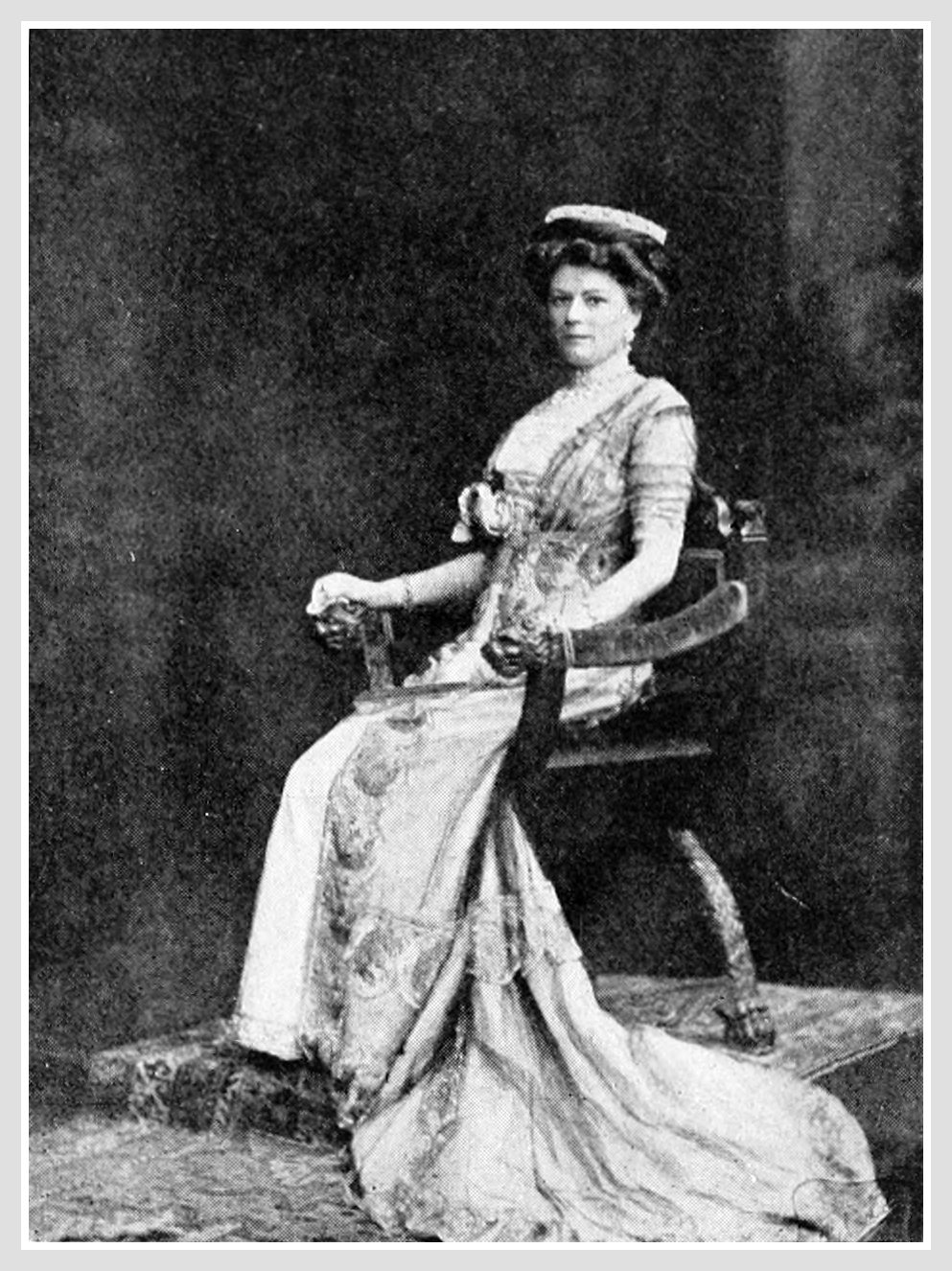
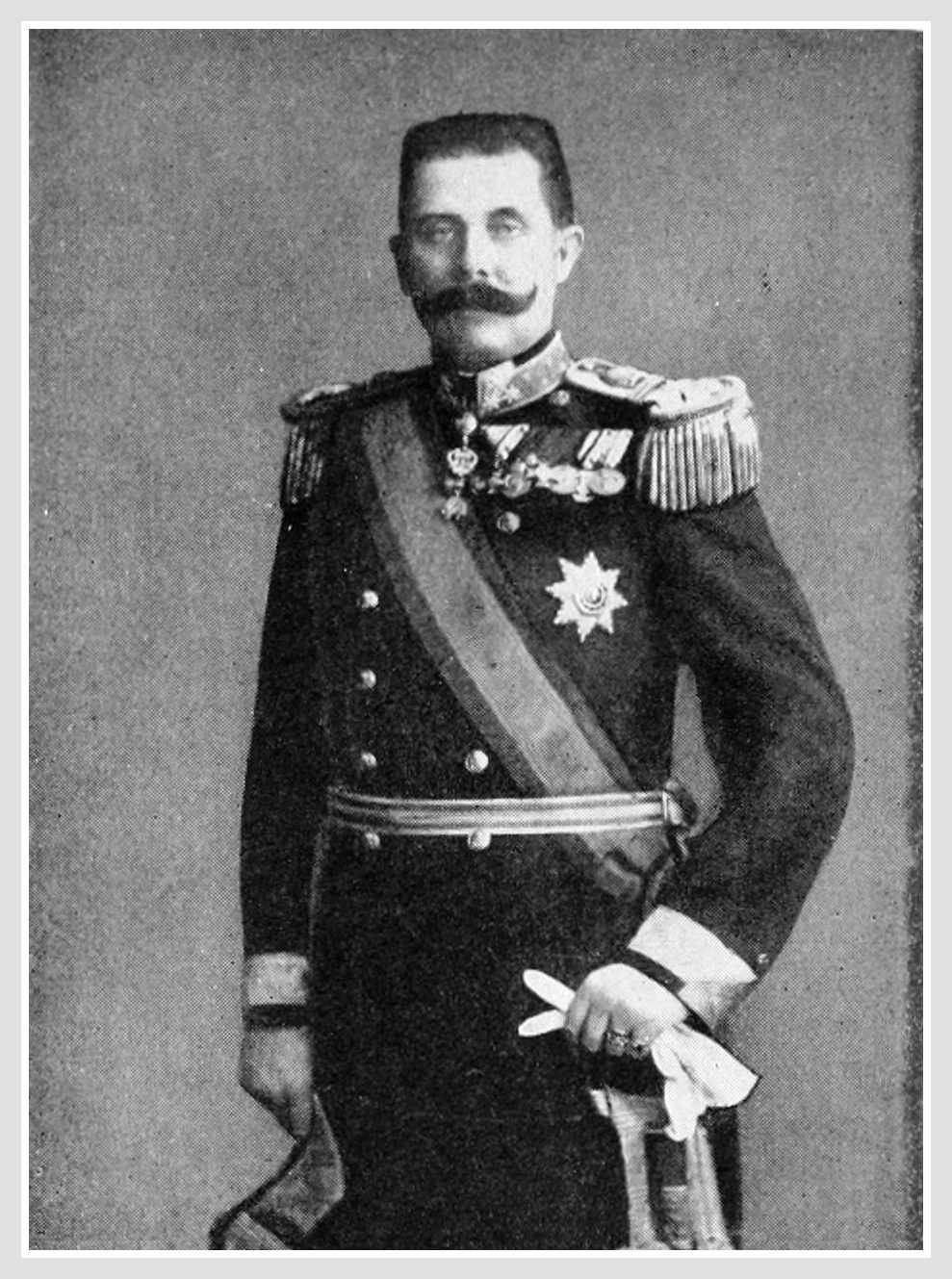
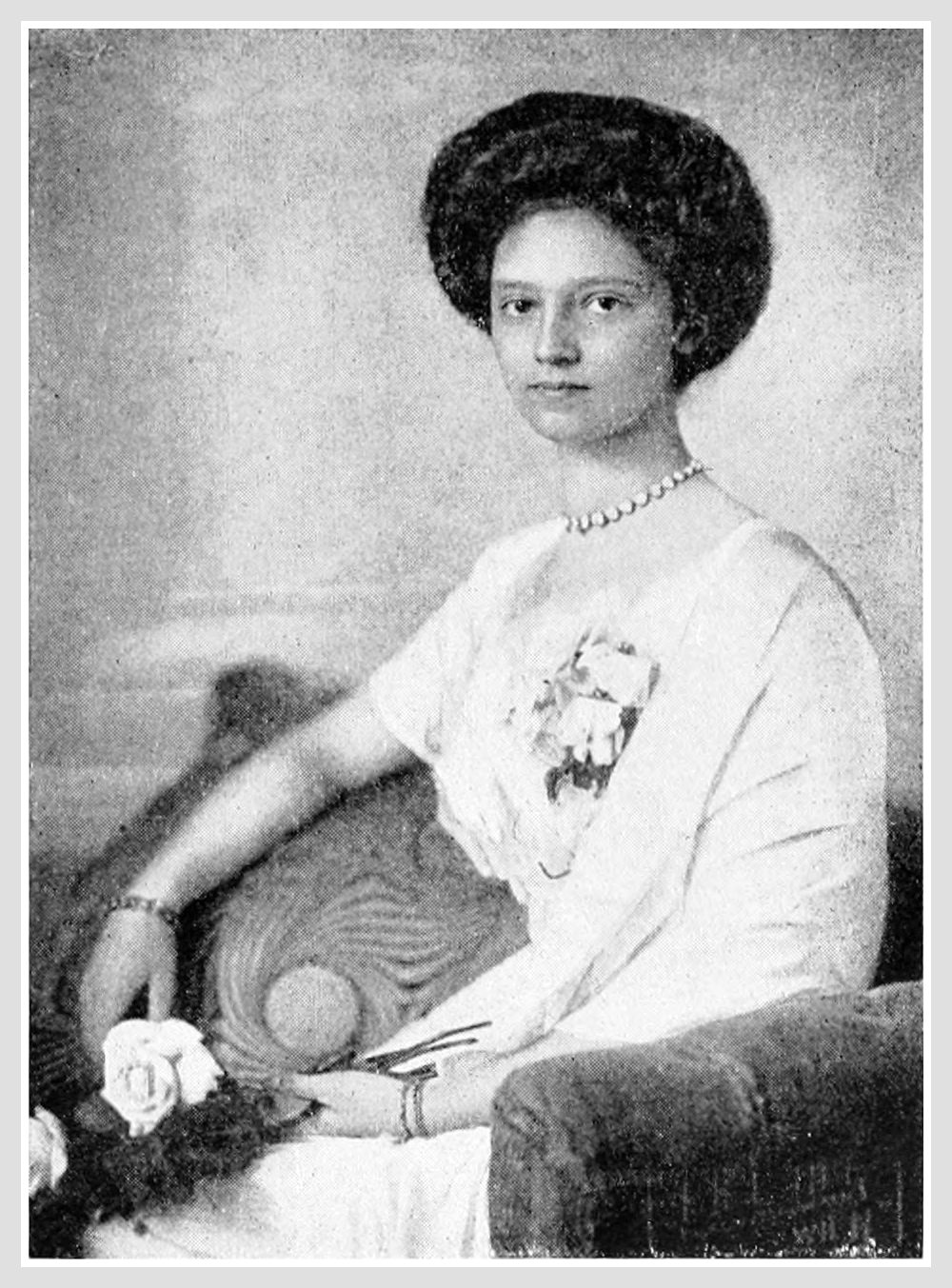
The Duchess Hohenberg.
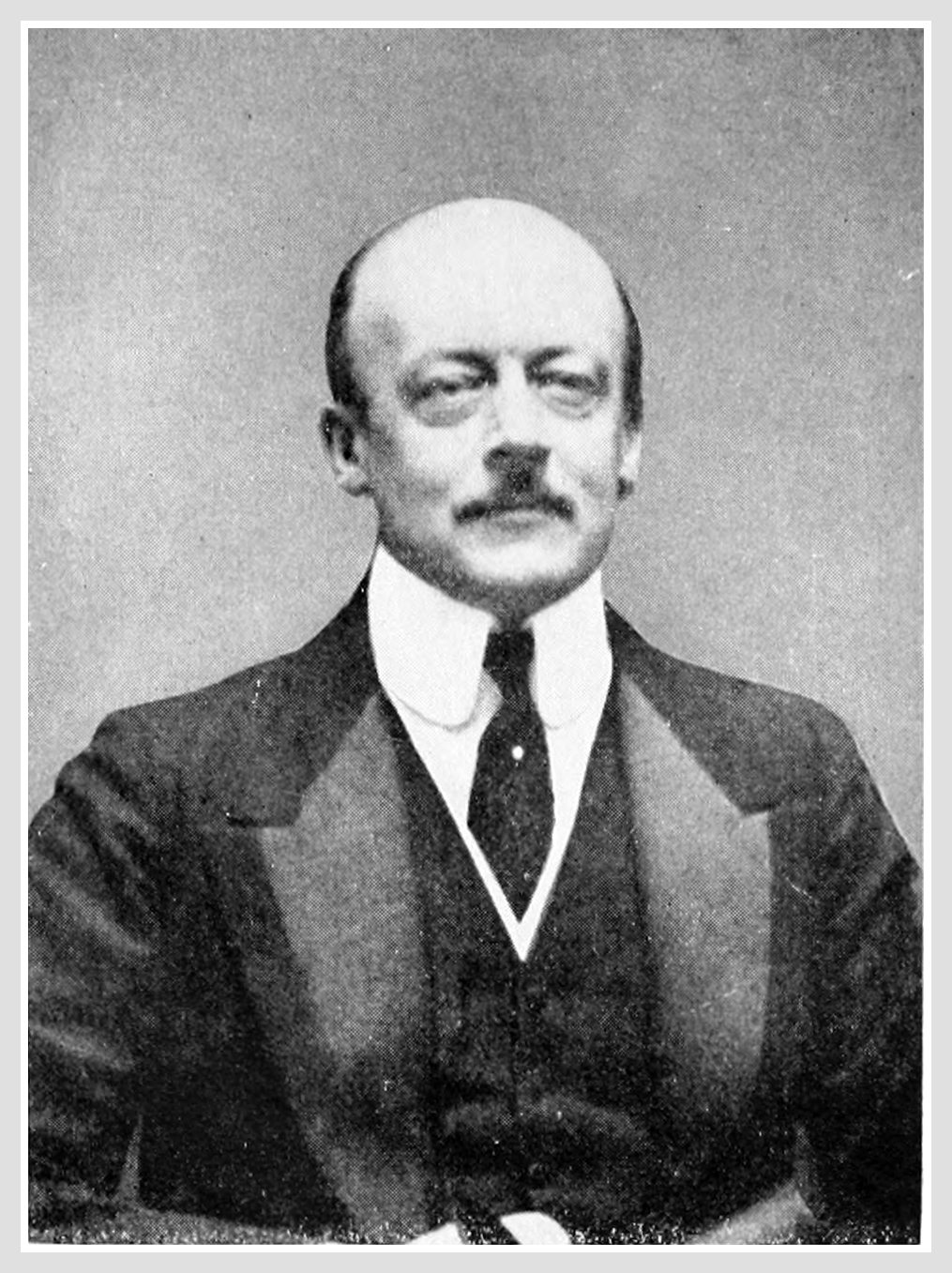
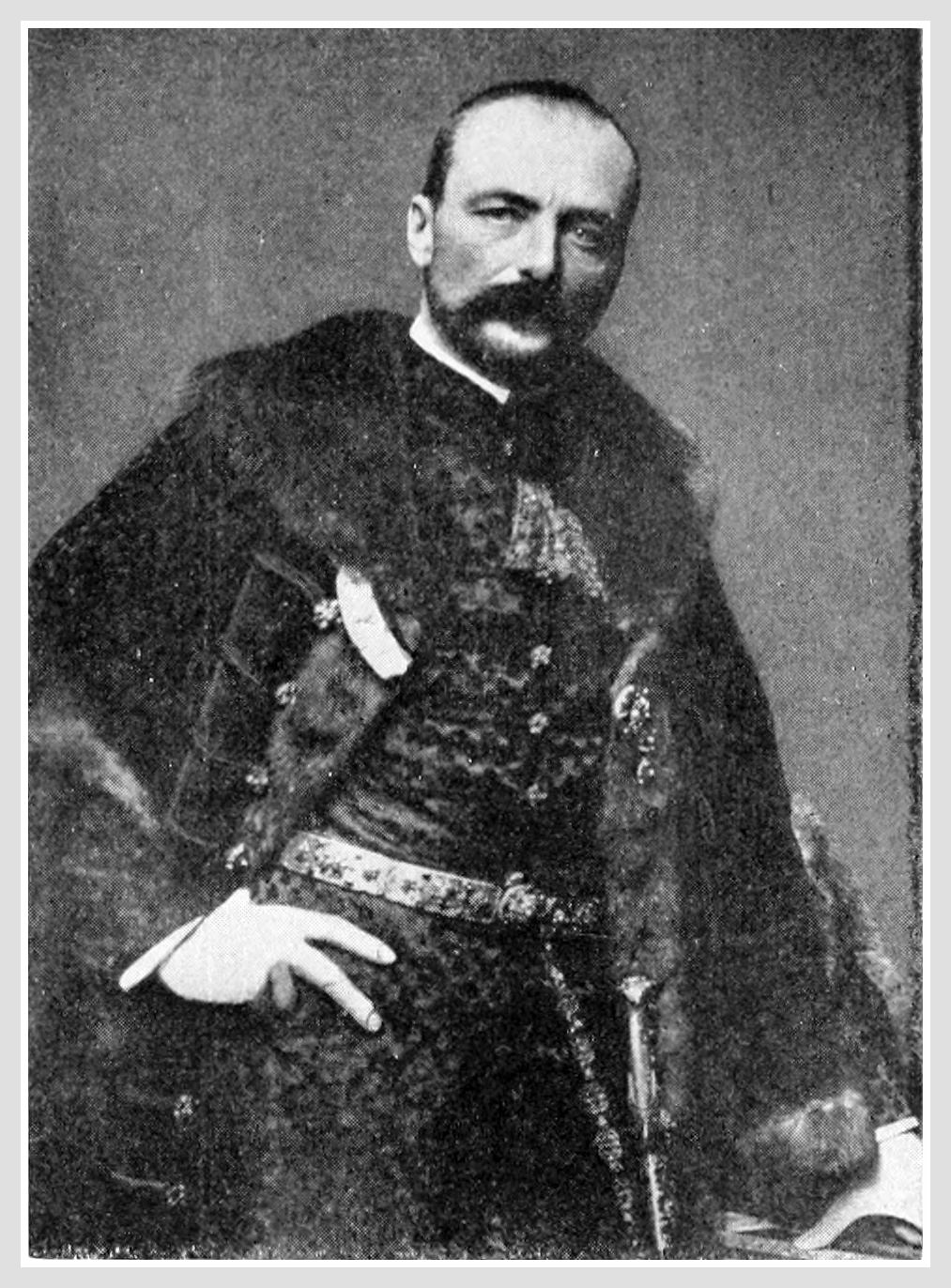
wife of the Archduke.The Archduke Francis Ferdinand.
Neither Archduke Francis Ferdinand nor
his morganatic wife had the tact or sense to hide
the impatience with which they awaited the aged
Emperor’s death. The “parrot” story, as it
was called, went the round of the Vienna cafés
at this period. A bird of very rare plumage,
evidently the property of some aristocratic personage,
was found straying in the public gardens
of Vienna. A gardener promptly caught it and
took it round to the police, where lost property
of all kinds was deposited, until its owner could
be found. The sergeant in charge put the bird
in a cage and forgot all about it. Shortly afterwards
he was startled to hear the parrot begin
to discourse with great fluency when it had
become used to its surroundings. It referred to
various members of the Imperial family in
terms of the very scantiest respect. “That
old cat Valerie” was its delicate way of referring
to the Emperor’s younger and favourite
daughter. “Peacocks, sluts” were terms of
abuse applied to Archduchesses who either
overdressed or neglected their toilettes. The
sergeant became pale with fright. It was lése-majesté
to listen to such words, and the penalty
might be death. When the parrot broke into
a steady stream of talk, with a kind of refrain,
“He’ll live to be a hundred, Sofie,” in an exact
imitation of the gruff tones of the heir to the
throne, who was evidently referring to the Emperor,
the sergeant felt that any further eavesdropping
would be dangerous. He picked up a
cloth, threw it over this utterer of high treason,
and carried the loquacious bird to the chief of
the police. The cloth was removed, and the
indignant parrot, unused to such treatment,
began worse than before. The sergeant was
dispatched in all haste to find a very thick black
cloth that might be calculated to damp even the
ardour of an Imperial parrot, and, carefully
wrapped up, the bird was sent to the Belvedere,
where the Archduke and his wife were in
residence.
CHAPTER IV COUNTESS CHOTEK
Countess Chotek, afterwards Duchess
Hohenberg, the morganatic wife of the late
Francis Ferdinand, the heir to the throne of
Austria-Hungary, was a most remarkable
woman, and her history is perhaps the most
romantic that was ever written. She belonged
to an impoverished Bohemian family, which
ranked high among the ancient aristocracy of
that nation. She was brought up very quietly
and was accustomed, as a girl, to ride in the
tramway in Dresden, where her father held a
post in the Diplomatic Service. Her dresses
were very plain, even for an aristocrat. The
peculiar charm that she possessed, however,
made her an object of much attention. She was
a big blonde, as stately as an empress, and at
the same time a woman who knew how to make
herself agreeable in conversation, as her life
had given her an intimate knowledge of men
and things that was unusual in a woman belonging
to a noble family, in Austria-Hungary,
where the little aristocrats are convent-bred, and
never encouraged to form opinions of their own
upon the current topics of the hour. She was
very ambitious, and intelligent to an extraordinary
degree. She was a woman who knew
just what she wanted, and who would not have
hesitated to use any means that were necessary
for the attainment of her object. She made her
entrance into the Austrian Imperial family in a
very subordinate position. She became lady-in-waiting
to the beautiful daughters of Archduke
Frederick, the richest of all the Archdukes. Her
life in his family was probably not disagreeable,
but decidedly monotonous, as the family spent
most of the time on lonely country estates in
Hungary. Archduke Francis Ferdinand frequented
the Vienna palace, on the Albrecht
Platz, where Archduke Frederick lived when in
residence at Court. Everyone believed that he
was about to marry one of the Archduke’s
daughters, and the match was regarded as a
good one. The girls had large dowries, and
relationship between the heir to the throne and
the branch of the family to which they belonged
was very distant. It is probable that the Archduke
had some such arrangement in his mind
when he visited the house. He, however, fell
violently and irretrievably in love with the lady-in-waiting,
a woman in the early thirties, and
regarded as long past marriageable age in Court
circles. The romantic story of the marriage is
well known, but the fact that the Archduke, in
marrying the lady-in-waiting, made an inveterate
enemy of Archduke Frederick was
never appreciated at its proper value abroad.
In Vienna itself the gravity of the position was
well understood. No better-class tradesman in
Austria would allow such an insult to his
daughters to go unrevenged, for the Austrian
father is very jealous of his daughters’
reputation. No young man is permitted
to visit at a house regularly without
having the clearest “intentions.” At the Court
this unwritten law is much stricter than among
the people. The Archduke, in selecting the
lady-in-waiting, was casting a slur upon the
Archduchesses she attended. Fortunately,
there were several girls, and as he had never
singled out any one of them for particular
attention, there was no open rupture. It is certain,
however, that the Archduke behaved in a
very ungentlemanly way, and that his conduct
was totally lacking in delicacy. Archduke
Frederick never forgave the insult, and the
other members of the House of Habsburg sympathised
with him in his wrath at the incident.
Indeed, the outraged father had plenty of occasion
to remember it. His daughter, Archduchess
Isabella, who had hoped to become the future
Empress of Austria, made an unfortunate marriage
later on. Her parents, by way of settling
the incident of the heir to the throne, and laying
the ghosts of rumours that still hung round the
girl’s name, arranged a match with Prince
George of Bavaria. The Archduchess, who
hated the young man, actually set fire to her
wedding-dress on the eve of the marriage,
hoping that it would be put off, as she had
nothing suitable to wear.
Incidentally, she set fire to the palace, and a
valuable collection of pictures in the adjacent
museum was threatened. The marriage took
place on the morrow, a dress having been hurriedly
contrived for the occasion. The girl fled
from her husband on the wedding journey, and
afterwards became a Red Cross nurse. For
these misfortunes the Archduke was regarded
as primarily responsible and they served to
make Countess Chotek still more detestable to
the Imperial family.
On his marriage Archduke Francis Ferdinand
renounced all rights to the throne and to any
dignities or privileges belonging to members of
the House of Habsburg for his heirs. He and
his wife withdrew into obscurity, where a family
of beautiful children was born to them. This
led Countess Chotek to dream of altering the
laws of succession and securing the throne for
her eldest son. With this ulterior object in view
she came to Vienna at the time of the Emperor’s
illness, and tried to force her way into Court
society. Her rank entitled her to be received at
Court, but not to be admitted into the magic
circle of the Austrian Imperial family as one of
themselves. The etiquette of the Vienna Court
is the strictest in Europe, and is based upon
that ruling at the Spanish Court. The members
of the Habsburg family are all extremely
simple, but they permit no liberties to be taken
either with themselves or the family. Countess
Chotek, as she was then, appeared at the Court
ball unannounced. She intended to surprise the
Master of the Ceremonies, and force him to
allow her to enter with the Archduchesses. The
old man did not lose his presence of mind. He
met the difficulty in a very clever way. The
married Archduchesses walked in first, each
with her cavalier, selected especially for the
honour. After the long procession of handsome,
stately dames with flowing trains had passed
into the brilliantly-lighted room, the young
Archduchesses who were presented at Court for
the first time were led into the hall, each on the
arm of a handsome young officer. Eight girls,
dressed in simple muslin gowns that barely
reached to their ankles, and looking very
childish, as none was more than eighteen years
of age, came next in the long procession. The
Master of the Ceremonies, who had detained
Countess Chotek, found her a place, on the left
arm of the last cavalier, the youngest of the
Archduchesses occupying the post of honour on
the right. Countess Chotek entered the ball-room
inwardly raging. Everyone noticed the
insult, as the other ladies all had a cavalier to
themselves. The next morning the Vienna newspapers
alluded to the slight which had been put
upon the wife of the heir to the throne, and said
that the Master of the Ceremonies should have
remembered that the Countess was a woman,
and have refrained from so pointed an insult.
Archduke Francis Ferdinand and his wife left
Vienna the next day as a protest, and this was
the last occasion upon which he tried to force
his wife upon the Court.
Kaiser Wilhelm, whose emissaries always
kept him well informed of every event, big or
little, in Vienna, heard of the incident. Now
was the time for him to interfere. The Archduke,
who had always turned a deaf ear to
blandishments from Berlin, would now be
accessible. The man who was too strong to care
to hear flattery of himself would lend a willing
ear to any defence of his beautiful wife, who had
been grossly insulted. The Archduke became
more deeply attached to his wife every year;
the inconveniences to which he was subjected
for her sake only strengthened his affection.
When, therefore, an invitation for the Archduke
and his wife came from Berlin it was gratefully
accepted. Kaiser Wilhelm, whose wife, the
Empress, has never been allowed to have much
voice in things, placed Countess Chotek in the
place of honour, and, what is vastly more
important, caused the fact to be chronicled in
the German and Austrian papers. The Archduchesses
in Vienna raged inwardly, for Countess
Chotek, the “scullery-maid,” as they were
in the habit of calling her, was being received
with Royal honours, and the rank accorded to
her in Berlin was such as would be given to a
future Empress. Kaiser Wilhelm won a warm
friend by this clever manœuvre, which incidentally
cost him nothing.
The Archduke did not come to Vienna on
representative occasions after this episode, but
he kept in close touch with the Foreign Minister,
Count Aehrenthal, who looked to him for guidance
instead of to the Emperor. The War
Minister went to the Archduke’s Bohemian
palace when he wanted large estimates passed,
and induced the Archduke to exert his influence
in this direction. Meanwhile the favourite occupation
of the Archduke continued to be gardening,
and this taste took him all over Europe.
The Court Chronicle never spoke of the Archduke.
An accidental paragraph in some foreign
paper would reveal the fact that he and the
Countess were in Holland, attending sales of
bulbs. He even went to England incognito on
several occasions to visit far-famed gardens.
It is doubtful, in the light of later events,
whether all these journeys were connected
solely with gardening, although the Archduke
was a passionate horticulturist. Countess
Chotek always accompanied her husband, and
when, in the early spring, he went to Miramare,
near Trieste, or to the fairy-like island of
Brioni, she and the children went too. The
Archduke spent his time in superintending the
building of small swift cruisers, in inspecting
wireless telegraphic installations on the coast,
and in keeping the naval experts employed at
high pressure. He was the first Archduke who
was interested in the sea, the aged Emperor
caring so little for marine affairs that he did not
even possess a naval uniform among the large
and miscellaneous collection in his wardrobe.
Countess Chotek, like many not born to the
purple, made mistakes of a kind that did not
add to her popularity. Her husband had great
possessions, and owned art treasures of inestimable
worth, but they were far from being a
source of revenue. In fact his income was not
sufficient to keep them up properly. His wife
had brought him no dowry. His growing family
was a source of expense. Thus ready money
was a scarcity in the family. Countess Chotek
tried to economise on her personal expenses,
instead of leaving it to her stewards, who understood
where a woman of that rank can be mean
and where she must be munificent. She became
involved in many discreditable affaires through
her stinginess. One of these was a dispute with
a cabby at Salzburg. The Countess committed
an unheard-of indiscretion—she took a one-horsed
cab. No lady, en toilette, can ride in a
one-horsed cab in Austria. If really poor she
can ride in the electric tramway, but for some
occult reason the cab is taboo. She must either
take a fiacre with a pair of dashing steeds, or a
motor-car. Countess Chotek not only hailed a
one-horsed cab, when a row of handsome and
well-fitted fiacres stood by, but refused to pay
the fare the cabby demanded. He had recognised
the lady, and naturally thought that she
would stand imposition, as ladies of the Imperial
family never go about unattended, and the only
explanation to his unsophisticated mind was
that the Countess was on clandestine business
of some kind, and should be blackmailed for it.
To his astonishment she marched him off to the
police-station herself. The police condemned
the unfortunate cabby to a fine, but the Countess
Sofia was felt to be in the wrong. What had
possessed her to ride in an “Einspanner”? An
elopement with the groom or automobile
chauffeur was quite an ordinary incident among
the aristocracy and speedily forgotten, but such
a mistake as going in the wrong kind of cab was
more than a misdemeanour, it was a lack of
savoir vivre that the country could never forgive.
CHAPTER V VIENNA
If you ask an educated, reflecting Austrian
under what form of Government he lives, he will
reply, “The Emperor of Austria and King of
Hungary is an absolute monarch; we live under
a despotism tempered by carelessness.” And he
will laugh flippantly. “So long as one man, the
Emperor, has the right to decide whether there
will be peace or war, without appealing to his
Ministers, the Constitution is a mere mockery.
We owe the only liberties we enjoy to the slackness
in the administration of the laws of the
realm; we have no rights.” “How is it that the
country has never demanded its rights?”
“Those who ask awkward questions in this
country are hanged or exiled.... Those who
wish to remain here keep a still tongue in their
heads.... We are talking treason now, and
there are spies everywhere.” Other Austrians
belonging to the intellectual class explain that
the men in power encourage frivolity systematically,
and provide amusement for the
people to prevent their thinking or reflecting.
Certain it is that Vienna before the war was the
chief centre of gaiety in Europe.
In spite of the sombre shadow cast over the
Court, the city lived for amusement. It was the
only thing that the Viennese really understood.
In Advent things are relatively quiet; there is
the same round of gaiety as later in the year,
but the toilettes are sombre, and everything is
on a less magnificent scale than in Fasching,
the time between the Court Ball—when the
Emperor opens the real season—and the beginning
of Lent. The winter of 1908 was particularly
gay. There was skating all day and
dancing all night. Light sleds carried the girls
to balls when the snow had frozen hard and
horses, in their spiked shoes, could not get any
grip on the slippery paving-stones. Others
went in the electric tramway, which ran even
when the temperature was far below freezing-point,
and the drivers were provided with
astrachan masks and goggles, to prevent their
eyelids freezing to their cheeks. There were
balls every night given by different societies
and corporations of all grades and degrees,
from the artists’ ball to the chimney-sweeps’
dance. No one ever dreamt of staying at home
during Fasching. Such details as lack of dress,
money or chaperones made no difference. If
you had no dress you borrowed a domino and
went to a masked ball. The balls often lasted
far into the next day, sometimes only closing
at four in the afternoon. Everyone can dance,
and did dance through the festive season, except
small children, who were learning their steps
at the dancing-school. Many began to dance
and skate before they were firm on their feet,
their parents so dreaded their not being skilled
in the things that “really mattered.” Old men
did not stay at home; they sat in a favourite
café, where a table was reserved for them, ever
since they had been saluted as “Herr Doctor”
for the first time by the waiter who judged that
they had reached manhood. The rule universally
accepted, and put into practice by rich and poor
alike, was: “Enjoy yourself while you can, you
never know what the morrow may bring.” In
the case of the Viennese it only brought new
varieties of enjoyment. No considerate
employer expected his staff to turn up in full
numbers after a redoute. Sleep was rare in the
season. Many young men never went to bed at
all night after night; they left the ball-room at
dawn, took an ice-cold dip, and repaired to the
next café, where they drank cup after cup of
strong black coffee, to enable them to keep
awake during office hours. The employer said
nothing so long as the work was done.
After the ball it was the rule to visit the
music-halls and night cafés, and this continual
gaiety left no time or inclination to discuss politics
or criticise rulers. Everyone was contented
and satisfied with things as they were. They
made no excuse for their frivolity. In fact a
man who showed no disposition to join in the
round of gaiety immediately became “suspect.”
An officer had more chances of making a career
for himself if he were a good dancer and could
pirouette his way into the good graces of the
commander’s aged wife than if he spent hours
over maps and plans. His brother officers
wondered why he wished to investigate
things.... Was he selling information to
Russia?
At this epoch winter sports were beginning
to become a factor in the life of the Austrians.
Some girls asked their fathers to give them
the money ear-marked for balls to spend on
ski and a winter outfit. In the middle classes
the innovation was not regarded as an advantage.
Winter sports cost more than balls. The
girls were inclined to become too emancipated,
and their mothers spent anxious hours wondering
whether they had not taken cold or met with
accidents. In the upper classes winter sports
and dancing were combined. The Austro-Hungarian
aristocrat is accustomed to an outdoor
life, and the lower classes, too, went ski-ing in
the mountains just outside Vienna. The
Government, quick to see that it would be an
advantage to have soldiers trained to use skis for
the army, encouraged winter sports, put on cheap
trains and extra trams to enable the people to
go in for it thoroughly.
The army of dressmakers, shoemakers,
florists, and others who live by manufacturing
articles for the ball season naturally
disapproved of winter sports; but it is doubtful
whether the new fashion really made much
difference to them, for the ball-rooms seemed
as full as ever.
There were large numbers of strangers in
both Vienna and Budapesth; curiously enough
they were almost without exception people from
within the Empire or from the Balkans. Vienna
was always the capital of the Balkans. The
women came to shop there, girls were sent to
finishing schools in the capital, and it was a kind
of Mecca to which men from far-off places in
Rumania dreamed of coming once in their lives.
The Balkan kings visited Vienna, and reaped
credit with their peoples from having sat side
by side with the Emperor, the great stickler for
etiquette, the arbiter of rank for the East.
Such was Vienna, and such were to a lesser
degree the provincial cities of Austria-Hungary,
which all modelled themselves on the capital,
when Kaiser Wilhelm of Germany and the heir
to the throne, Archduke Francis Ferdinand,
decided to embark upon an aggressive policy.
The Archduke fondly believed that the idea
originated with himself, and that he was right
in taking advantage of the temporary disablement
of the aged Emperor to strike a blow for
his country’s aggrandisement. He did not see
that he was doing an unwise thing in listening
to the counsels of a neighbouring monarch,
whose interests were by no means identical with
those of his own country, and acting on these
promptings, without consulting the Emperor.
Count Aehrenthal, the Foreign Minister, was a
creature of the new régime, and he took his
instructions from the coming man. Changes of
policy for the Dual Monarchy are usually
announced at the meeting of the Delegations,
an assembly of members of the Austrian and of
the Hungarian Parliaments, who are delegated
by their fellows to represent them at the meeting.
The Delegations, which sit in Vienna and
in Budapesth alternatively, vote supplies for all
objects common to the two countries, such as the
army and navy. The small check that the
Austrian and Hungarian Parliaments can put
on their rulers lies here. The members of the
Delegations, however, were men who had axes
to grind and seldom interfered with the programme
announced by the Foreign Minister.
It was at a meeting of the Delegations in
Vienna, in the winter of 1908, that Baron
Aehrenthal announced the fact that Austria-Hungary
had embarked upon an aggressive
policy. The days of quiet and tranquillity were
over; the country intended to join in the march
forward. It only sought commercial expansion,
it is true, but it was prepared to face all and any
consequences.
CHAPTER VI SALONICA
Aehrenthal sketched a programme of commercial
extension in the Near East. The first
step to be taken was the building of the Sanjak
railway. The Sanjak is a narrow strip of barren
land which was at that period occupied by Austrian
troops. Aehrenthal now proposed to build
a railway through the Sanjak, with the terminus
at Salonica. This railway would give Austria-Hungary
the control of the Balkans as far as
trade questions were concerned. Salonica would
virtually become Austrian property, not by the
force of conquest, but by the natural sequence
of events. It had long been plain that the
Turkish Empire was crumbling. None knew
better than the Austrians that the hour for the
final dissolution of the Turkish Empire had
come. It therefore behoved Austria-Hungary
to anticipate her rivals and to secure the most
important port—Salonica. The building of the
Sanjak railway would have shortened the route
to the East by many hours. Many statesmen in
Austria-Hungary did not approve of the Sanjak
project. There was an alternative and much
quicker route over Albania. If a railway could
be built from Durazzo or Vallona across to
Salonica, two days could be saved on the route
to the East. Many statesmen favoured this
plan. The Sanjak was a death-trap, they said;
the line would run through gullies among
mountains where enemies could command it.
Besides the danger of enemy forces in case of
war, the wild bands of half-civilised folk in the
Balkans must be considered too. They might
plunder the train at any time; it would be very
easy to hold it up between the steep defiles.
In Albania there was flat, fertile country that
would be vastly more suited for railway building;
it could, besides, be opened up with advantage.
The only trouble with regard to
Albania was that there was a treaty between
Austria and Italy regarding any occupation of
that country. If Austria took northern Albania,
as she hoped to do, Italy was to have the
southern part. Vallona, the best harbour on
the Adriatic, lay in the part claimed by Italy.
Thus Austria-Hungary hesitated between
two alternative schemes. The German element
in Austria was for pushing towards Salonica
over the Sanjak. The idea had come from
Berlin, and had been carefully suggested to
Austrian diplomatists by the Emperor’s advisers.
Aehrenthal announced it publicly at
the Delegations, and waited to see what effect
his audacious move would have upon Europe.
The Greeks sitting in the café in the Fleischmarkt
in Vienna were the first on that memorable
night of the Delegations’ meeting to catch
up the words, “To Salonica.” “Salonica is
Greek,” they said. “If it is wrested from the
Turks, it must fall to Greece.” Twenty-four
hours later Europe said what it thought of Austria’s
plans of expansion. The old Emperor,
Francis Joseph, who had probably listened in a
semi-comatose condition, as he frequently did,
to the report made by his Foreign Minister on
the Sanjak railway, summoned him to Schönbrunn
in haste. There, in his characteristic
way, in language so plain that there was no
mistaking it, and that would have done credit to
a Vienna cabby, the Emperor forbade any
thoughts of a forward policy. He had had misfortunes
enough in his long reign, he said. If
any innovation was to be made it could be
undertaken by his successor; for the rest of his
life there would be quiet. He understood that
Russia was aghast at Austria’s plans of aggression,
England was furious, and France asking
what it all meant. The announcement made at
the Delegations might be regarded as unspoken.
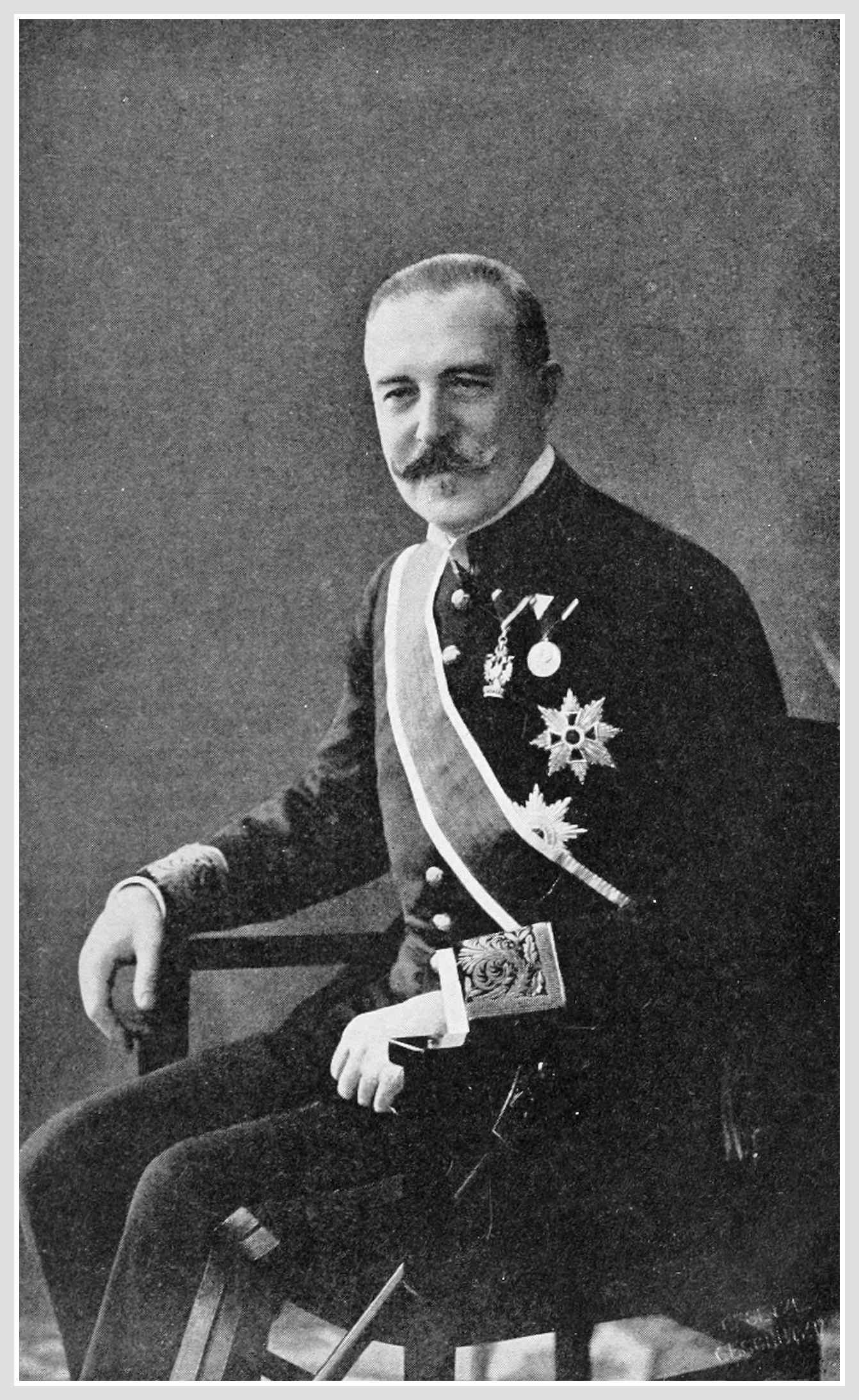
Baron Aehrenthal.
Strange to say, Archduke Francis Ferdinand,
the heir to the throne, agreed with the Emperor.
He considered that the forward movement in
the Balkans planned by Aehrenthal was ill-judged.
He was aware that Kaiser Wilhelm
and the “German” party in Austria desired to
open the road to the East. The Archduke,
however, took a much clearer view of the
political situation than the Kaiser and his advisers.
He grasped the very obvious fact that
Italy was not a willing member of the Triple
Alliance. She was only waiting for an excuse
that would sound at all plausible to break loose
from her bonds. Why the Archduke should be
keenly aware of a fact that was never even suspected
by Kaiser Wilhelm is not easy to say.
Perhaps the intensity of his hatred enabled him
to read the national character aright, for the
Archduke hated Italy with a bitter hatred. He
possessed estates in Italy, and considered that
the Italian Courts of Justice had treated him
unfairly in a series of law suits he had had about
his property there. Moreover, there were differences
of temperament between the Austrians
and Italians. Francis Ferdinand was essentially
a “German” Austrian—that is to say, an Austrian
with leanings towards Prussian methods,
who wished to have the Austrian army reorganised
on Prussian methods. There was
something in the Italian character that roused the
Archduke’s anger; both he and Kaiser Wilhelm
felt the rage, often manifested by the savage
for things he cannot understand, at Italy and
Italy’s methods. This common dislike for Italy
which possessed both men was doubtless due to
a remarkable and startling change in the Italian
character. During the last twenty years the
Italians have organised themselves on German
lines; the Italian of to-day has all the efficiency
of the Prussian without his cumbersome
methods. When Kaiser Wilhelm went to Italy
unexpectedly to visit his friends there, he found
hydroplanes that excelled those at home moving
about in the limpid waters of the Adriatic. He
went to Miramare, swelling with anger. Both
he and Francis Ferdinand were sufficiently
intelligent to take in the position at a glance.
Italy was like a child that had stolen a march
upon the world in a night by attaining to her
full stature while the others slept. Both raged
at the unexpected turn things had taken. While
Kaiser Wilhelm was anxious to keep Italy as
an ally, because Germany and Austria-Hungary
had so small a coast-line, Francis Ferdinand,
with much truer insight into the interests of his
country, said, “Fall upon Italy unexpectedly
and crush her.” Kaiser Wilhelm realised that
the Austro-Hungarian fleet would only be of
use if it could emerge from the Adriatic.
Bottled up in the inland sea by the Italian fleet
it was a negligible quantity. He did not comprehend
the bitter hatred felt by every Italian
for the ancient oppressor, the Austrian. He probably
knew little of the ways in which Italians
in Austria were persecuted, in spite of the existence
of the Triple Alliance. The Government
went about its work in a very wary manner, and
incidents which would have opened his eyes
were carefully hushed up. It is probable, too,
that the Austrians deceived the Kaiser as to
the attitude of the Italians. Every Austrian
knew in his heart that there could never be anything
but war between the two countries. The
manner in which they habitually alluded to the
Italians was sufficient to prove their intense
hate. The Italian subjects living in Austria
reciprocated this sentiment in full. Whenever
they found an opportunity of paying back some
of the Austrian hate for them, they availed
themselves of the chance. Archduke Francis
Ferdinand always used his influence to prevent
Austro-Italians rising to power. He had officials
in Trieste removed from their posts merely
because they were “Italians.” Their places
were taken by Slavs, who regarded the Archduke
as their protector. As a matter of fact,
the Slavs were the only people in Austria-Hungary
who respected and liked the heir to
the throne. The Germans despised him. The
Hungarians frankly detested him, and the
Italians execrated him. The Bohemians, the
Croats, and the Serbs, all Slav races, regarded
him as their representative. In the racial contests
for place and power in Dalmatia, in
Istria, the Slavs who wished to oust the Italians
from their places appealed to the Archduke,
and immediately got what they wanted, while
the Czechs, who were in deadly antagonism with
the Germans in Bohemia, had a powerful advocate
in Countess Chotek. When the German
officials tried to introduce the teaching in German
instead of the Czech language into elementary
schools in Bohemia in Czech districts, the
Archduke stood by them and prevented any
encroachment by the German element.
Thus Emperor Francis Joseph and his heir
agreed, although from different motives, in preventing
the plan of the building of the Sanjak
railway being pursued. Kaiser Wilhelm, who
had taken no part in the disputes that were
raging in Vienna, was glad that the idea of
Austria-Hungary’s embarking on an aggressive
policy should be ventilated, but did not wish
her to take any course that might lead to war
either in the Balkans or with Italy. Neither
country was prepared to embark on an aggressive
world-war. Kaiser Wilhelm encouraged
Austro-Hungarian statesmen to contemplate a
series of wars with poor and helpless neighbours,
such as Italy, Montenegro, and Servia, but he
was really thinking of executing his projects, of
placing Germany “über alles!” He knew that
this idea of aggressive warfare would render it
easier for the German party to obtain the armaments
required for the coming struggle, while
public opinion in the country would become
accustomed to the idea of a policy of expansion.
He cared little that the Archduke was preparing
for a coup upon Italy when he was contemplating
a blow in the opposite direction. The
necessity for realising his plans made Kaiser
Wilhelm regard all means justifiable, even the
deception of his allies.
The storm raised by the Sanjak railway project
gradually calmed down, and Count Aehrenthal,
baulked in his plans, retired to the background
to work out fresh plans for Austro-Hungarian
aggrandisement; while Archduke
Francis Ferdinand, still sore at the Court Ball
incident, sulked upon his magnificent estate at
Konospischt, in Bohemia, where he superintended
his wonderful collection of exotic plants
and tried to forget Vienna the dusty, that was
so bad for his lungs.
Kaiser Wilhelm became increasingly aware
that the immediate necessities of the situation
rendered it important to gain Archduke Francis
Ferdinand to his side. The Kaiser was painfully
conscious that neither the aged Emperor
nor his heir had any real regard for him. They
were inclined to look upon him as an upstart in
many ways. The Kaiser’s sudden excursions
into realms that they regarded as distinctly not
regal annoyed them. What need had the Emperor
of Germany to seek distinction as a writer
of plays? By such tricks he brought down the
whole level of royalty. All the Habsburgs are
eminently dignified, and Kaiser Wilhelm always
seemed something of a royal mountebank to
them, with his strange longings after artistic fame,
his childish wish for popularity—a matter of the
most complete indifference to his brother
monarch in Vienna.
CHAPTER VII KAISER WILHELM IN VIENNA
Vienna, startled for an instant by the events
connected with the meeting of the Austro-Hungarian
Delegations, soon sank back again into
complete apathy as regards foreign politics.
The Sanjak railway was forgotten and everyone
was thinking of how the short time between
Easter and the “Derby,” the final event of the
Vienna summer season, was to be spent, when
news came that Kaiser Wilhelm was about to
visit Vienna. He proposed to come to celebrate
the aged Emperor’s jubilee and to bring
his whole family with him. The Viennese considered
this most tactless. Emperor Francis
Joseph had lost his only son in a drunken brawl,
and now his professed friend wished to remind
him of the fact by bringing a family of handsome
young men to accentuate the contrast
between the lonely old man and the Kaiser in
the prime of life, surrounded by his six sons.
The Kaiser secretly planned another “honour”
for the Emperor. All the Federal Princes were
to arrive in Vienna before the Kaiser and to
await him on the platform. The Kaiser arranged
for them and their retinue to reach
Vienna separately and almost in secrecy. No
receptions were to be given them on arrival. He
only broke the news to the Emperor privately
when all the arrangements were complete and
some of the Princes already on their way
to Vienna. The Emperor thereupon lost his
temper, which had already been sorely tried by
the proposal to bring so many Imperial Princes.
He sent a message to say that his health would
not allow of him receiving anyone excepting the
Kaiser. The Kaiser had to abandon his plan,
which was to have the Emperor of Austria and
the German Federal Princes grouped together
on the little platform at Penzing, awaiting his
arrival “like the rising sun,” as the Vienna
papers put it, and allow the Emperor to do
homage to him among his vassals, thus recognising
him as overlord of all the German-speaking
peoples.
The Press said what it thought of the Kaiser’s
overweening ambition, and he was very surprised.
The Austrians were not so stupid as
he had thought. They had grasped his plan
to make himself the man of the hour instead
of leaving the first place to the monarch whose
jubilee was being celebrated.
Wilhelm’s fertile, restless brain had hardly
abandoned one project before it conceived
another. He left his bevy of handsome sons
at home, but took his only daughter with him
to Vienna. The heir to the Austrian throne,
Archduke Francis Ferdinand, had made a morganatic
marriage; his children could not succeed.
Archduke Carl Francis Joseph, the son
of Archduke Otto, who had lately died a
horrible death, would be the next heir. Why
should Princess Louise not become Empress of
Austria and Queen of Hungary? There
was the little difficulty about religion, but that
could be managed. Louise and her mother, the
Empress, were informed that they would be
allowed to accompany the Kaiser. It is likely
that the ladies had but small notice, for Princess
Louise wore skirts that were perfectly appropriate
to the palace at Potsdam, where she
ranked as the greatest tomboy of the family,
but they were decidedly too short and too tight
for the Austrian Court, where ample petticoats
are de rigueur. A tall, thin girl, looking
absolutely irrepressive, stalked up the platform
by her mother’s side. Distracted ladies-in-waiting
had attempted to teach her the Austrian
Court curtsey—a most complicated manœuvre
that takes years to learn. They also tried to
instil some ideas of the strictness of the Austrian
Court etiquette into her mind. She was
the terror of the palace at home; the ladies-in-waiting
stood in great awe of the spoilt child.
They trembled when their turn to attend upon
Her Royal Highness came round. They feared
what would happen when she got to Vienna.
The change from the free and easy manners of
the Berlin Court to the unchangeable rules and
regulations of Vienna was enough to upset a
more placid girl. All the bowing and smiling
upset Princess Louise, whose education had
been very “Protestant.” She put out her
tongue at one of the stately Archduchesses—behind
her back, it is true, but the incident did
not go unnoticed. She dropped a bouquet that
had been presented to her because the weight
annoyed her. The Empress of Germany looked
dismayed at the dismal failure. She had some
idea of the Kaiser’s plans, and was aware five
minutes after the special train had pulled up on
the platform that the project had fallen through.
Wilhelm, who is not by any means sensitive,
had not marked the by-play. The look on the
horrified face of the Empress should have
warned him from committing a further error;
but he was always quite oblivious to atmospheres.
He turned round and, with a rough
shoulder movement that was visible to everyone
on the platform, he actually “shoved”—no
other word can describe the movement—the
Princess towards the young Archduke. The
Princess, well used to her father’s abrupt
manners, smiled at the young Archduke, who
rose to the occasion in a manner worthy of the
traditions of his family, which is celebrated for
its fine manners. But Kaiser Wilhelm’s matrimonial
plans had failed before they were really
made. All the women were against it. The
Habsburgs objected to the presence of a Protestant
in their midst even though she might forsake
her religion. They knew that anything so
foreign to themselves could never preside at the
Court of Vienna. Their opinion was shared by
their guest, who hated the gloomy Hofburg, and
cared but little for Schönbrunn, where the strict
etiquette rendered the mother of the future heir
to the throne a mere puppet in the hands of
attendants, who would not even allow her to
educate or control the destinies of her children.
Princess Louise put a final seal upon any possibility
of negotiations being renewed by her
very decided conduct during the subsequent
proceedings. Vienna was full of stories of the
strong-mindedness of the Kaiser’s only daughter.
It had had experience of strong-minded
Princesses in the past. It wished for nothing
more of the same kind. Kaiser Wilhelm had
lost.
Baulked in his matrimonial schemes, he now
turned to the political situation. Emperor
Francis Joseph was irritable. The visit,
although on a much smaller scale than had been
originally planned, cost him much money, and,
though he had been extremely generous in his
youth, the Emperor had become strangely parsimonious
in his old age. He grudged the
great expense that was invariably entailed by
the Kaiser’s State visits. The programme
usually included some expensive outing.
Sometimes five miles of road had to be improved
up to the royal automobile standard.
At another time Wilhelm would take a fancy
to go shooting after his stay in Vienna, and
could not be induced to accept the simple life
that was the joy of the Emperor of Austria
when among the peasants. The hunting-box,
the whole forest, had to be brought up to the
standard of an American millionaire. The
Habsburgs, whose claim to rank was too ancient
and too secure to need any artificial pomp to
keep it up, rode through the deep forests on
small, hardy ponies. The Emperor of Germany
required a road, and insisted upon its
being cut right through the forest. He was
never secure of his position. Beyond all these
minor inconveniences he expected to be treated
with the utmost ceremony, and considered that
it was incumbent upon the frail old monarch
in Schönbrunn to fetch him at the railway
station, to take him to his rooms along the
chilly corridors of Schönbrunn Palace, and to
expose himself, in season and out of season, in
order to magnify the importance of his guest.
It was further reported in Vienna that Kaiser
Wilhelm, ever penurious, had come to borrow
money from the aged Emperor—one of the
richest sovereigns in Europe, if, indeed, not
the richest of all. All these things did not
endear Emperor Wilhelm to the Viennese.
They showed their feelings by refusing to get
out the best bunting and by cheering their Emperor
frantically when alone, and pointedly
refraining from any exhibition of enthusiasm
when the visitors passed. The people, too,
perhaps, had a true perception of what Kaiser
Wilhelm sought, and recognised that he was
really patronising the old Emperor, suggesting
that it was time he took a back seat in a dozen
insidious ways. Kaiser Wilhelm hoped Archduke
Francis Ferdinand would be easy to
manage, but was not convinced of this. Emperor
Francis Joseph watched the growing
intimacy between his heir and the Kaiser with
great misgivings. He knew that toils were
being wound round the Archduke, who believed
that he could accept obligations and not be
called upon to pay for them. The aged
diplomatist at his side knew better. The experience
of three-quarters of a century had
taught him the true inwardness of things. It
was vain, however, to utter warnings. He was
not even discreet. When in a fit of rage—such
as attacks all the Habsburgs who are epileptic—nothing
was sacred. A man who was not able
to control himself could not be trusted with
secrets that might imperil Austria’s relations
with Germany. Thus things drifted. Germany
obtained increasing power in Austrian
councils; the only man who could lay a restraining
hand upon his heir was old and weary and
unwilling for anything that spelt change or
unrest.
CHAPTER VIII AFFAIRS IN TURKEY
It was clear to everyone who followed the
course of events in the Near East that the dissolution
of the Turkish Empire was at hand.
The race towards ruin, that had gone on slowly
before the introduction of the telegraph and
telephone, now began to suit its pace to the
times. Corruption of every kind was the order
of the day in Turkey. Nothing could be obtained
without bribery. Every kind of enterprise
was stopped by the extortions of the tax-gatherer.
Any man who was known to possess
ready money was plundered by corrupt officials.
The system of land-tenure prevented the
peasants from putting any money into improvements.
The great mineral wealth in Turkey
and the subject lands could not be touched, for
the law said that only the surface of the land
belonged to the proprietor; all mining rights
remained the property of the State. Mining
engineers who came to search for hidden
wealth were murdered by the peasants, who
feared that the Government would confiscate
their land. Men who went down to Turkey
to do business always spoke of the necessity
of adopting quite other methods than elsewhere.
Money, even in the case of respectable firms,
was not kept in the bank, where it would fetch
interest, but distributed among a number of
more or less distant relatives. Thus the
stranger had no means of discovering whether
his customer could pay or could not pay. The
latter always had a clear case for the Courts,
and could prove absolute penury whether the
necessity arose in connection with taxation or
with a tiresome customer. At the same time
all business there was done on the credit system.
The European agent, therefore, never dealt
direct, but depended upon the local agent, who
had a profound and up-to-date knowledge of
his customer’s financial standing. The fact
that no man could be forced to pay made tradesmen
very honest, and the Turk, even before
the revolution, had an excellent reputation for
uprightness throughout South-Eastern Europe.
“The Turk is a gentleman; he always pays,”
they said in Austria and in Hungary. Just as
large transactions were carried out in the latter
countries without the interposition of any legal
man, and sums running into thousands passed
from hand to hand in small notes to avoid
the heavy stamp duty, so the Turk transacted
business without documents, always
keeping to his word. The Austrian and
German agent who overran Turkey and
dumped his least marketable goods upon the
people, felt he was dealing with a kindred
soul, but, to avoid all risks, he fixed his prices
to allow for long waiting, and also to cover any
unavoidable bad debts. He had a serious competitor
in business in the Balkans, and was
gradually being routed from his long-established
haunts by the Italian “drummer.” The
Bohemian textile manufacturers had been
accustomed to regard Turkey and the Balkans
as a kind of dumping-ground for bales of goods
that had not “taken” colour properly and for
wares that showed some deficiency. The arrival
of cases of excellent wares from Milan at about
two-thirds of the price of the Austrian article
naturally damaged their market very considerably.
It is certain that much of the friction
between Austria-Hungary and Italy was due to
the growing keenness of competition in trade
upon the Balkans, and just at this period it was
getting very active.
Turkey hung thus, like an over-ripe pear, the
wasps swarming around her, her Sultan Abdul
Hamid committing crimes that cried to heaven,
when the news reached Vienna that the Third
Army Corps at Salonica was marching upon
Constantinople. The revolution and the deposition
of Abdul Hamid were accomplished with
a celerity that gave rise to the suspicion that
Austria knew more of the whole affair than she
chose to admit. The Austrian Government
made desperate efforts to keep the news from
getting out until everything was accomplished,
and it is more than probable that the Young
Turks were financed by the Austrian Government.
It is equally certain, however, that the
Young Turks chose a moment that suited themselves,
and had not consulted Austria as to
details such as dates. Austria had set a vast
machine in motion, and could only stand aghast
at the completeness of the success of the rebels.
It was not what she intended. With the opening
of a Turkish Parliament many questions
that might have drifted indefinitely became
pressing. The chief of these was the future of
Bosnia and Herzegowina. Austria-Hungary
had occupied these lands. For many years she
had carried on a rule that was not pleasing to
the population, formed almost exclusively of
Serbo-Croats, who wished to join their Servian
neighbours across the frontier. With what the
Austro-Hungarian administrators regarded as
singular blindness, they felt that they would
prefer the very progressive rule of King Peter
to the retrogressive government of subject-nations
by the Central Power. The few
Mohammedan Albanians in Bosnia were content
with the existing state of affairs, which
differed little from that under Turkish rule. As
they were merely 3 per cent. of the population,
however, they were of minor importance,
although men of prominent position in most
cases.
The establishment of the Turkish Constitution
changed the whole aspect of affairs as
regards Bosnia and Herzegowina. The countries,
although occupied by Austria-Hungary,
were still under the suzerainty of Turkey.
They would have the right to send deputies to
represent them at the new Turkish National
Assembly. If this were permitted, Austria felt
that it would be only a question of time before
she was called upon to evacuate the annexed
lands. Turkey might become regenerate. She
would, then exercise the leading rôle in the
Balkans that Austria had reserved for herself.
Austria-Hungary decided that it was the
moment for action. Only one course was open
to her. She must proclaim the annexation of
Bosnia-Herzegowina. Kaiser Wilhelm was
consulted upon the advisability of this step.
He said that the step must be taken without
warning. It must come upon Europe as a surprise.
Other countries had proclaimed annexations—why
not Austria-Hungary?
Archduke Francis Ferdinand bitterly disapproved
of Austria’s attention being turned to
the East instead of to Italy. His influence was
at a very low ebb at this particular time. Emperor
Francis Joseph had regained his health.
It was even thought that the robust old man
might outlive the heir to the throne.
CHAPTER IX THE ANNEXATION
The proclamation of the Annexation of
Bosnia and Herzegowina in 1908, with the
evacuation of the Sanjak as a compensation to
Turkey, took Europe by surprise. The general
feeling was one of utter astonishment, that
Austria-Hungary, herself far along the road to
bankruptcy, should presume to annex anything.
It is doubtful whether any one realised that Germany
stood firm behind her in her high-handed
action. Even if this were known vaguely, no
one was aware that Germany had been consulted,
had fathered the plan, and perhaps even
conceived it in all its naked unscrupulousness.
When the spasm of astonishment was over there
was a loud outcry. Austria-Hungary had
“torn up” the Treaty of Berlin in violating
Article 29. An army, that was ready for the
eventualities that the country shrewdly suspected
might ensue, was hastily thrown upon
the Bosnian frontier, another was pushed up
towards Russia. Germany also despatched a
large force to the Russian front. The country
resounded with the noise and confusion of a
mobilisation, for, strange to say, Austria-Hungary,
although aware her troops would be required,
had made no definite preparations.
Stories of Bohemian regiments, driven into
troop trains covered by their officers’ revolvers,
ran like wildfire through the country. Further
reports soon proved that the mobilisation was
simply organised confusion. Germany heard
and marked. There could be no war under
such conditions. Meanwhile, the Austro-Hungarian
mobilisation was followed by rapid
action on the other frontiers. Russia put troops
on her frontiers. Servia, feeling concerned for
her safety, increased her frontier forces. Count
Aehrenthal, besides promising to evacuate the
Sanjak, undertook to compensate Turkey financially
for the loss of her provinces. In all these
arrangements it must be noted that Turkey was
never consulted. She had to look on while her
territory was taken away, powerless to defend
her interests. This was a matter of quite
secondary interest to the Great Powers, who
simply demanded to know what were the intentions
of Austria-Hungary. The winter of
1908–09 was spent in negotiation. The soldiers,
carefully provided with winter clothing, spent
the months on the chilly frontiers, and
pitiful letters of complaint of the severity
of the Galician and Servian climates
reached Vienna. These were from the
common soldiers, whose lot has always
been a hard one. They were subjected to the
severe discipline that prevails in the Prussian
army, but whereas the Prussian gets his full
allowance of food-stuff and has the proper
clothing for the climate at the end of October,
the Austrian trooper is, as often as not, supplied
with ice-making machines in December and
woollen sleeping-sacks in July. New needs that
cropped up at the front were only met long after
the cold that made them indispensable had
changed to spring-like warmth and the armies
felt the inconveniences of an inefficient officialdom
very severely.
The young officers at the front, who were well
provided with money, spent a healthy winter.
Ski-ing was one of the chief amusements; they
brought the sport back to Vienna, where it had
previously been something of a novelty. Otherwise
the social life of the people was but little
affected by the diplomatic trouble that was
causing such perturbation at the Ballplatz.
There was some complaining at the scarcity of
men. Vienna hostesses had always counted on
providing each girl with a choice of partners;
this year the available men were either getting
on in life or unduly young, as the mobilisation
had swept up the rest. Those who remained at
home, too, were overworked, and could not
spend their days in semi-somnolence in the
office and their nights in the whirling activity of
the ball-room. It was only a year later, on
returning from the annual holiday, that people
began to notice that prices had gone up. The
explanation was simple enough. The army,
after the unsuccessful mobilisation which had
revealed all kinds of deficiencies, began to make
numerous demands. The guns they had tested
during the very frequent frontier skirmishes
whose history has never been written were useless.
Much of the ammunition was counterfeit.
Stories of corruption touching even the
highest officials were current. Some great personages
were dismissed without the customary
decoration, the Emperor plainly saying that he
would show no mercy to those who had
betrayed their country. The excuse that they
had no idea that a war was perhaps pending did
not palliate their crime in the eyes of the aged
Emperor, who is a soldier par excellence in all
that concerns discipline and order.
The discovery of many lacunae and “discrepancies”
in the service made Austria-Hungary
herself chary of going to war. When the
chance of a compromise came she was ready to
take it. This was the easier for her, as Germany,
who was prepared for a world-war in the
month of October, absolutely refused to back
Austria-Hungary in an adventurous policy in
December. The reason was plain. Germany
and her Emperor had believed all the reports
they had received of Austria’s readiness; it was
only when they saw how the mobilisation hung
fire, and realised how unwilling her men—especially
those belonging to the subject races—were
to fight, that they saw they had been
deceived, not intentionally, but by the difference
between what the Austrians believed and
the actual state of affairs. Kaiser Wilhelm
began to see for the first time that he could not
take the Emperor’s word for things; not that the
aged man had the faintest intent to deceive him,
but simply that he lived in a world created by his
courtiers, and existed in the atmosphere prevalent
at Courts a century ago. His councillors,
old men like himself, never told the Emperor
anything unpleasant. If they believed that he
did not wish to hear it, the truth was carefully
concealed. It is doubtful whether the Emperor
ever knew of the discontent in the ranks of the
army.
Kaiser Wilhelm had but small difficulty in
holding back the politicians who sat in Vienna
and appreciated his arguments. Modern wars,
said the Kaiser, cannot be waged without munitions
and money. Austria-Hungary had
numbers of men, but her munitions were of
ancient pattern; her guns were not fit for active
service. Wealth she possessed in plenty, as
Austria-Hungary is a rich country, but it was
not realised. It was all invested in lands,
machinery, and other plant. Her subjects were
not accustomed to direct taxation to any extent.
The military party could not grasp these arguments.
A great nation ought not to stoop to negotiate,
it said. Why should they hesitate when
their army was over two millions strong?
It is a curious fact that during the negotiations
no one mentioned the really salient point
in so many words, nor asked, “By what right
had Germany, through Austria, arrogated to
herself the power to disturb the peace of Europe
and to steal a march upon her neighbours in the
night?” Neither country has ever advanced a
reason to excuse this action. The first cause was
doubtless Kaiser Wilhelm. In the plenitude of
his arrogance, which made him consider himself
beyond all human laws, he regarded the rights
and wishes of others as entirely negligible quantities
where the greatness of the German
Empire, which meant his greatness, was concerned.
Every German child was taught that
Germany should be supreme over all. In the
schools they learnt that nothing, not even truth
or justice, could be allowed to interfere with
Germany’s commercial progress. The young
men who stole into Italy or Bohemia as clerks
and took copies of the names of customers for
the use of their countrymen, were not considered
thieves in the usual sense. They were simply
German patriots; men who had been reared from
childhood to consider that the old standards had
fallen, and a new German philosophy had taken
its place. This teaching had one object, and
one only, the aggrandisement of Germany.
Kaiser Wilhelm was at the head of this movement.
He regarded the other nations as effete
and degenerate. They had no right to block the
way of the Prussians, who were a reincarnation
of the Goths of old, and who would sweep everything
before them. Prussians of high standing
were not backward in expounding this theory.
The other German races murmured at the
“unscrupulousness” of the Prussian. They felt
that men of this character were dangerous, and
that they ought not to be entrusted with the
supreme command in the Empire. Austria-Hungary,
meanwhile, chafed at the bit that she
was beginning to feel. After all the delicate
questions had been settled and the terms of the
agreement arranged, her statesmen sighed and
said: “This has been a mistake, we ought to
have gone to war.”
Statesmen saw that they had placed themselves
too unreservedly in Germany’s hands.
Peace, too, had been preserved by unusual
means. When things had reached a very critical
stage, the aged Emperor Francis Joseph
stemmed the current that was carrying the
country towards war. He let it be known that
he objected to the peace being broken. He
wished to end his days in tranquillity. Such
respect was felt for the Emperor that this was
sufficient to turn the scale in favour of peace.
Austrian statesmen, however, were encouraged
in an irresponsible feeling that they might go to
great lengths in threatening war without being
called upon to back up their threats by action.
The Austro-Hungarian supreme War Lord
could save the situation by a word. Germany
could prevent things reaching a climax if the
Emperor’s petition for peace were not sufficient.
These ideas were radically wrong. The
Emperor tacitly undertook not to break the
peace again when he made his appeal. It is
certain that he never intended to do so. But this
should have hampered his statesmen. It did
not. Instead of feeling that the Emperor’s
pledge to Europe laid a responsibility upon
them, they, on the contrary, felt that their acts
were always liable to be disavowed by the
monarch, and that they were not forced to show
the same caution as they would if their decisions
were final. In the same way, they failed to
realise that Germany would inevitably demand
compensation for her protection. The noblemen
who held the helm in Vienna were not a match
for the calculating business men who were pursuing
a “real” policy at Berlin, and who had
little to do with ideals.
CHAPTER X PRINCE EGON FÜRSTENBERG AND COUNT TCHIRSKY. HOW THE KAISER “WORKED” VIENNA
Kaiser Wilhelm had the good sense to keep
away from Vienna during the time of the
annexation crisis. Very few knew the extent of
his influence in the Austrian capital, nor had
they any idea how it was exercised. The
Kaiser was always well informed of everything
that was happening in Austria, and obtained his
knowledge by attaching personages like Max
Egon Fürstenberg to his person. The Kaiser
never selected a friend except for the advancement
of his own ends. Prince Max, who had the
position of a reigning sovereign, without the work
or responsibilities that were formerly attached
to the title and possessions, had the entrée to all
the most exclusive houses in Germany and
Austria-Hungary. Here he shared State secrets
that it was given only to very few to know.
Kaiser Wilhelm was quick to see the advantage
of attaching such a man to his side. The Prince
was flattered by the monarch’s notice, and never
thought that casual remarks that he let fall were
treasured up by his Royal host. The German
Kaiser and the Prince even speculated in stocks
and shares together, financed companies, and
indulged in business that was quite legitimate
for the wealthy Prince, who could afford to lose
heavily, but very dangerous for a monarch
whose purse was always exhausted.
Prince Max, who is easy-going and good-humoured,
cared little for his failures, but
Kaiser Wilhelm lost prestige with his people
through his financial transactions. Prince Max
was very irresponsible in many ways. Like many
other Austrians, he failed to see that his country
was on the edge of a volcano. Things had
always settled themselves before, and they
would again, he thought. It is doubtful whether
he realised that he was a mere tool in the hands
of the Kaiser, and even if he did so, his sardonic
contempt of life made him indifferent to the unpatriotic
rôle that he was playing in giving away
his country’s secrets to her worst enemy. Intelligent
and well-versed in the traditions of his
family that has produced so many famous men,
it is probable that Prince Max could have saved
Austria from falling into the hands of the Germans
had he realised what was happening.
Unfortunately, he was too much occupied in
pursuing the latest craze of the moment to think
of serious matters. Under his charming manners
he possessed a certain acumen, but was inclined
to think the Germans were guided by the same
motives as he was himself. The over-civilised,
over-polished man of the world fell an easy
prey to the cold, calculating monarch on the
other side of the frontier.
Prince Max Egon Fürstenberg.
Prince Max Egon Fürstenberg was one type
of the Kaiser’s familiars. Count Tchirsky,
the German Ambassador at Vienna, was the prototype
of the others. The German Ambassador
in Vienna was the doyen of the Diplomatic
Corps. Cold-blooded, calculating, deep, he was
the very embodiment of the Kaiser’s ideal politician.
Tchirsky did not know what scruples
meant, and his many years’ experience of the
Court of Vienna enabled him to put his fingers
upon every weakness there. He saw only the
defects and missed much that was fine in the
character of the men with whom he had to deal.
They spoke of him as the “Old Spider” of the
Metternichgasse, where he had his palace. He
did not play a leading rôle in society; visitors to
Vienna knew but little about him, if indeed they
realised his existence at all. He carried on a
bitter warfare against the members of the diplomatic
body who tried to oppose the Triple
Alliance. His machinations were less openly,
but none the less fiercely, directed against Italy,
the nominal, but unwilling, ally of the Central
Empires. Tchirsky, a man of dark plots,
contrived to acquire interest in one of the leading
Vienna papers. This interest developed
into the effective control of the organ. He was
able, thus, under the guise of a newspaper
attack, to render Vienna almost intolerable for
any diplomatist whose presence he considered
detrimental to the welfare of Germany. When
the Emperor “conspicuously turned his back
upon the Russian military attaché” at a Court
ball, the fact was recorded with great gusto in
Tchirsky’s paper. The attaché, who was
compromised in a spy case, would have left
Vienna by the first train on the morrow in any
case. Emperor Francis Joseph was a soldier
and no courtier, and when he turned his back
upon a foreigner there was no mistaking the
action. It was done squarely and openly. The
record of the German-owned Press did not improve
the strained relations between Russia and
Austria-Hungary, for the fact that Germany
directed the paper’s policy was an open secret.
A pro-English American Ambassador was subjected
to attacks of a kind that could only be
conceived by the fertile brain of Count
Tchirsky. The Ambassador was accused of
being parsimonious, and his personal habits were
described with an acrimony that showed he had
a powerful enemy. The coarseness of the language
used, too, exposed the source; only a Prussian
could employ such machinations against
an enemy. How the Austrians, who prided themselves
on their hospitality and their courtesy to
strangers, could allow such an attack to appear
can only be explained by the growing helplessness
of their statesmen when confronted by the
powerful German. Tchirsky further distinguished
himself by making an attack through
the Press upon the wife of the British Ambassador.
How far he was responsible for the
famous Cartwright interview it is difficult to say.
The blow, it was known at the time, came from
Germany. Austrians might have listened to a
private conversation at a table in Marienbad,
and put the words uttered by various members
of the British Colony into shape as their views
upon the Morocco question, but it needed the
unscrupulousness of a German to conceive the
plan of putting the pronouncements into the
mouth of the British Ambassador. The latter
was too astonished by the impertinence of the
act to realise what it meant. Indeed, it is possible
that the Ambassador’s indignant denials of
ever having entered into any discussion with the
man who claimed to have obtained the interview
were suppressed like many other items of news
and facts. The only denial that did appear was
late and inadequate. The British, bound by
traditions, never even suspected that German
diplomacy could resort to such means for gaining
an advantage. No one realised their absolute
deadness to all sense of morality. When
Count Tchirsky did sally forth from his
chilly palace in Vienna, it was to compass the
undoing of the frivolous Austrians. He would
exact the payment of a pledge, given
over wine. Bargains, made in the ball-room,
were reduced next morning to
writing, then stored away among the archives
at Berlin, and the carrying out of the conditions—conditions
favourable to Germany and disastrous
to Austria—would be exacted with the
cruelty and callousness of a Prussian politician.
Had Tchirsky himself hung back, there were
others to egg him on. The ideal condition of a
Europe in which Germany was supreme must
be realised. Any remnants of conscience that
Tchirsky might have possessed had long
been stifled by intercourse with his Imperial
master, who regarded himself as far above all
moral law. He was the supreme War Lord.
His word had established a new morality quite
different from that generally accepted. The
military training enjoyed by almost all Germans
made them the more ready to accept this
point of view. Discipline, enforced until the
power of independent reflection has been
lost through want of use, relieved them
of the necessity of considering the morality
of their acts. The hymns of praise of
Germany’s successful policy, sung by
philosophers and by the pastors of religion,
who were foremost, as usual, in advocating the
policy of expediency that Germany might be
exalted, lulled any scruples felt by
Tchirsky’s subordinates. He, himself a survival
of a former age, was incapable of imagining
anything of the kind. Truth was what the
supreme lord decreed to be truth. Honesty was
merely another word for expediency. The Ambassador
was surrounded by a number of men,
with no reputation to lose, who brought him
news of every fresh turn of events in Austria-Hungary.
They cared little that they were
betraying their country to a hard taskmaster.
The present benefits of a flourishing banking
account were ample compensation for their
treachery. These causes all combined to render
Tchirsky the least popular man in Vienna.
When his name was mentioned, every tongue
was suddenly frozen into silence. Was the
inquirer a spy? Did he wish to sound the secret
feelings of someone present? The Viennese
felt a distrust that was rather instinctive than
realised. It was the premonition of the closing
of the brutal hand of German power upon the
crowd of gay butterflies on the banks of the
Danube.
CHAPTER XI THE “GREAT SERVIA” IDEA—SERVIAN ORGANISATION
While Austria-Hungary, with Germany behind
her, was discussing the tearing up of the
Treaty of Berlin with the rest of Europe, both
Powers failed to observe developments that
were taking place under their very eyes. The
Austro-Hungarian official sent off to Bosnia or
Croatia cared very little about the people entrusted
to him. His one and only idea was to
scheme and plan until he obtained his move to
Vienna. He took no means to detect and watch
the conspiracies against the Government that
were being constantly hatched in the cafés of the
town where he lived. In a fit of sudden and
uncalled-for energy, he would make a search for
cups and saucers decorated with the Serb
colours or vindictively punish the parents of a
small child for permitting her to wear a Serb
sash round her waist, instead of a simple piece
of ribbon. This unexpected activity naturally
raised the wrath of the Serbo-Croats, the more
so because really seditious acts frequently
escaped notice, or, if the administrators knew
about them, they avoided taking cognisance of
them, as it meant the opening up of large questions
and much trouble with the central authorities
in Vienna. Thus the Serbs, who lived
under Austrian or Hungarian rule, were often
permitted to go to great lengths without any
interference. The sudden swoops of an enraged
magistrate, who took action rather because the
plotters had interfered with his personal convenience
than because it was really incumbent
upon him to do so, produced a feeling of insecurity
among the subject races. They regarded
the local governor somewhat in the light of a
dangerous but slumbering beast, and they
prayed that his slumber might continue undisturbed.
Some, however, went the length of trying
to twist his tail, when they knew that he had
been sent to the provinces in disgrace, as was
generally the case. If a man had been exiled for
more serious offences than uncouthness of
manner, or a failure to respond to the friendly
advances of the chief’s elderly wife, and her
invitation to shine at her somewhat monotonous
afternoon teas, the Serbs, who were always well-posted
in the reasons that led to an official being
sent to the provinces, felt that he was not in a
position to injure them without damaging himself,
and behaved accordingly. The eight million
Young Slavs, as they call themselves, under the
dominion of Austria or of Hungary have always
been well organised. When one of their number
arrives at either Vienna or Budapesth he calls
round at his Union. Although he may not know
a single word of German or Hungarian,
the society find him a job. Accustomed to heavy
labour, the Serb or Croat is much sought after,
especially in the lower ranks of service. Time
goes by, the man-servant or maid-servant has
learnt the language and is firmly established in
the household. There is trouble in the home
because of the failure of a German tailor to keep
his word. The Slav servant has a relative who
is willing to undertake the job, although it is
nearly midnight. He is hastily fetched, and by
the advice of his friend within the camp fixes his
charges a trifle below those asked by the German.
He remains master of the situation, the
German being ousted. Gradually the household
needs are supplied by Slavs, who carry out
orders promptly and carefully, and have none
of the supercilious “take it or leave it” manner
of the German purveyor. The Austrians always
say “Let one Slav into the house, and they rule
the ingoings and outgoings for the future.”
The Slav is always an enigma, which years of
close intercourse cannot solve. His aspirations,
his outlook on life are a sealed book to the West
European. The all-pervading and very distinct
impression which remains is that the Slavs have
very distinct national aims, which they are prepared
to pursue with an utter persistence and
ruthlessness, of which no other peoples are
capable.
Just at this period the Young Slavs within the
Austro-Hungarian realm were making a determined
effort for liberation. They felt, and felt
justly, that they were oppressed. They thirsted
for education and paid large taxes to secure that
same education in order to enable their children
to take their places as equals with the dominant
races. Austria and Hungary both dreaded the
rise of the Slavs, and restricted their education
as much as possible, devoting the funds voted
for the purpose to other objects.
Things were so bad in this respect that a commission
was sent over from the States to ascertain
how it could be possible at this date in the
civilisation of the world that such a large proportion
of emigrants to America should be
illiterate. In some provinces it appeared from
the Government statistics that 69 per cent. of the
annual recruits could neither write nor read. The
lack of education was most felt among the Serbs,
Croats, Poles and Little Russians. The Slavs,
who possess an uncommon amount of commonsense,
felt that this withholding of education was
immoral, and that it served some deep ulterior
purpose. The Bohemians, who inhabited a rich
manufacturing district, by force of much agitation,
were able to enforce their demands for
education. The Poles were miserably neglected,
their representatives who attended the Vienna
Parliament were fêted and made much of, and,
aristocrats themselves for the most part, they
were easily persuaded to forget the wrongs of
their people at home. In the Bukowina the
people were on a low level, and hardly realised
their position. In Croatia, Dalmatia, and
especially in Bosnia, things were different. Italy
was close by, and the Slavs learnt how things
were managed in that very progressive and
modern State. Servia and Montenegro were
governed on lines that contented the peoples
there, and the Serbs across the frontier felt that
they would be better under the rule of King
Peter than subject to a governor who was so far
from the centre that he could practically deal
with them as he pleased. It was seldom that
the governor really understood the vernacular.
Being entirely German in his sympathies, he
naturally felt no interest in the Slav aspirations,
except a desire to crush them. While Vienna
was using up her strength in arguing with
Europe, the Slavs considered that their opportunity
had come for the establishment of a vast
Slav Empire, consisting of all the countries inhabited
by Slavs in Southern Austria and
Hungary, which was to be placed under the rule
of the King of Servia.
Negotiations for a union between Montenegro
and Servia, for the establishment of a
common customs tariff, a common army, and for
the pursuance of a common foreign policy, were
being carried on. Servia hoped to extend her
territory to the sea. Whether she thought to
incorporate the Slavs of Austria and Hungary
among her people is difficult to say, but she, like
the rest of South-Eastern Europe, was aware
that Austria-Hungary was rotten to the core. It
must in the near future follow Turkey and
share its fate. As events move much more
quickly to-day in the epoch of telegrams and
railways than they did in the period of coaches
and couriers, a much more rapid dissolution of
the Empire was to be expected than in the case
of Turkey that had been tottering for centuries.
While the Austrian and Hungarian Slavs were
looking to King Peter to deliver them
from Austrian and Hungarian tyranny, Austria
was intriguing, and encouraging the Serbs in
Servia to rebel. She had as little success with
the Serbs as with the Italians across the Italian
frontier, as both peoples are ardently patriotic,
and even the poorest scorned Austrian gold.
The determination of the Young Slavs to live
under the rule of a monarch of their own race
became strengthened at every fresh proof of the
effeteness of Austro-Hungarian rule. Themselves
strong and virile, they felt that they required
administrators who could deal with the
problems that came to them for settlement in the
rough-and-ready manner peculiar to the other
side of the border; they had always completely
misunderstood the shelving of petitions, the
cumbersome multiplication of documents, peculiar
to Austro-Hungarian officialdom. Rapid
justice, even if less correct in the matter of form,
was preferable, they felt, to the long and unprofitable
dilatoriness of the proceedings under
an administration more especially careless in
dealings with things that concerned people
living far from the capital.
Austria-Hungary heard but little of the growing
discontent in her outlying provinces. Assassinations
and attempts on the lives of administrators
multiplied, but the rulers in Vienna, busy
with things nearer home, simply suggested
“that a heavier weight should be placed upon
the safety-valve.” After an outrage some few
ringleaders were hanged, half a dozen newspapers
suppressed, and then the incident was
put away with other events of grave portent,
signs of the times which, however, were not
allowed to disturb the gaiety of the capital.
CHAPTER XII ALBANIA AND MACEDONIA
It is difficult to understand the complete indifference
with which the growth of the Great
Servian idea was regarded in Vienna. Eight
million Serbo-Croats under Austro-Hungarian
rule were eager to join forces with their brothers
across the frontier, five million Serbs and Montenegrins.
Whether the indifference manifested
at Vienna was owing to the attitude of supercilious
contempt of what was going on around
them which was generally adopted by Austro-German
officials, or whether they were really
ignorant of the extent of the movement, it is
difficult to say. It is possible that politicians,
who did reflect upon the very evident increase
of disaffection in the South, merely regarded it
as an indication that the small Germano-Austrian
and Magyar minorities must throw in
their lot with Germany. Certainly the relative
numbers of Germans and Czechs, of Maygars
and Serbs were most alarming. Officials in high
places naturally judged the position more accurately
than could the man in the street, because
the published statistics giving their relative numbers
of Germano-Austrians and Czechs, of
Serbo-Croats and Magyars, were always manipulated
to such an extent that they were quite
useless for scientific purposes. Another set of
correct figures was kept for the purposes of administration.
With an insolent disregard of her
complete lack of success in ruling the Serbo-Croats,
Austria-Hungary not only added more
millions to her realm by annexing Bosnia and
Herzegowina, but she now embarked on new
schemes of annexation and colonisation.
New Turkey had less vitality than the old
ruin that had just crumbled to pieces. The
Young Turks, when asked why they had not
seized their opportunity of securing the benefits
they so much desired, which had been within
their grasp, said sadly that appearances were
deceptive. There had never been a chance of
regeneration for the country. The same power
which had promoted the revolution had corrupted
the new Parliament—German money.
Austrian interference had rendered them mere
puppets in the hands of unscrupulous Germans.
They had not realised this until too late. They
had merely delivered their country over to a
worse foe than Abdul Hamid, who, whatever his
vices and faults might have been, acted in his
own interests and in the interests of Turkey.
Germany had encouraged the revolution merely
to precipitate the final ruin of Turkey. She now
thought that the moment for dissolution could
not be postponed. Austria, acting for her, proclaimed
the fact of Turkey’s disintegration upon
the housetops, and suggested that Albania and
Macedonia should be made autonomous. The
proposal sounded fair and just. Everyone knew
that the Macedonians had been fighting for
liberty for centuries. The claims of Albania
were not so clear. Those who lived close to the
Balkans understood what the news of outrages
and massacres was worth. Outrages and massacres
were certainly common enough in both
Macedonia and Albania, but news from the
Balkans never penetrates to Mid-Europe, unless
it is to the advantage of some Great Power that
it should do so. Indeed, events of great importance
happened in the outlying provinces of
Austria-Hungary without the rest of Europe
knowing anything about them. Rebellious
Poles were shot down in hundreds by dragoons
in broad daylight. Even in Vienna and Budapesth
the soldiers dealt with the crowd in the
most brutal manner, killing and wounding
unarmed citizens. Official telegrams would
report riots, mentioning a small number of
injured and one killed. Thus it may be understood
that news from the Balkans, especially
when it dealt with outrages, was always political
in its aim, and always biassed. Just at this time
Albanian massacres began to be very frequent.
Now persons acquainted with Albanians will
always be very sceptical as to these same massacres.
The Mohammedan Albanian, a member
of the predominant race in the country, is
very frequently a highly polished gentleman.
He speaks French very fluently of the variety
spoken at Constantinople and throughout the
Balkans. Few Europeans can beat him in accuracy;
none come anywhere near him in fluency,
the result of much practice. He can neither
read nor write, but having been partially
educated at Constantinople, he possesses great
culture. Underneath is the wild man of the
highlands, who carries on blood feuds with the
neighbouring tribes, and never hesitates to slay
a Turkish tax-gatherer at sight. “Turkey,” say
the Serbs, “tried to tax the Albanians for
thousands of years; she has never succeeded in
obtaining a single para; she commuted the taxation
for soldiers, and all the finest Turkish
soldiers are really Albanians.” This was literally
true. Practically all the handsome Turkish
guards are Albanians, and they have won
Turkey her reputation for producing splendid
soldiers. The Albanian, too, is an excellent
merchant; he can only be compared with the
Italian for financial capacity. He naturally filled
many of the important posts under Abdul
Hamid. Albanians seldom marry into alien
races. After twenty years spent in Constantinople,
the Albanian returns home to settle
upon his small farm, if he cannot establish himself
upon the ancestral property. It is often a
mere slip of barren land upon the hillside, where
ploughing must be done by hand, because no
horse or mule could keep a foothold on the steep
slant. He purchases the property and founds a
family. It is clear that a man of this disposition,
with influence at Constantinople, would
not allow his people to be massacred unavenged.
If the cunning tax-gatherer dare not approach
the mountains, even when guarded by a troop of
Turkish soldiers, it is unlikely that the somewhat
effete men who compose the real Turkish
army would venture up country merely for the
sake of massacring odd Albanians. The latter
seldom congregate in cities, but are scattered far
and wide throughout a roadless country. The
Turks sometimes sent large and well-equipped
expeditions to Albania, to avenge the killing of a
governor or some other important functionary
who was misguided enough to venture into their
midst. These expeditions burnt out villages and
killed every inhabitant they could lay hands on
in the approved Turkish fashion. But the result
of such expeditions was not great. The Albanians,
who have an excellent system of couriers,
spread the news of any attempt against their
liberties. The inhabitants took to the mountains
and slaughtered a large proportion of the
invading force from behind rocks, and from
almost inaccessible fastnesses among the mountains.
But such expeditions, owing to their cost
in men and arms, were very rare. Owing to the
jealousies of Turkey, Austria, and Italy, the
Albanian never lacked weapons. One nation
or the other was always ready to supply him
with munitions to carry on his nefarious plans
against the others.
The Christian Albanian is perhaps a trifle
fiercer than his Mohammedan brother. He has
not enjoyed the advantages of a long stay in
Constantinople. He knows the Serb language,
having learnt it from the wild mountain Serbs
on the other side of the frontier. He is quite
savage, like his neighbours. There is little to
choose between the Miridites and Malissores on
the Albanian side of the border, and the Montenegrins
and Serbs across the mountains. The
Albanian, in some cases, however, has had a
chance of improving his general education. He
is an inveterate emigrant. There is a large
standing colony of Albanians in the United
States. In Boston alone there are many
thousands. They are young men, almost exclusively,
for the Albanian does not take his
womenfolk with him, nor does he settle beyond
the ocean. He simply goes abroad to make his
fortune. He works without ceasing in the
great factories of the States, he denies himself
every kind of pleasure, and eats the commonest
food, prepared in a large eating-house for
members of his race, and saves continually.
Existence, supported upon a handful of maize
or macaroni, cannot be interesting, but he is
willing to undergo the time of stress for the purpose
of developing into a landed peasant-proprietor
in his own land. He is then permitted
to marry, and becomes the head of the family.
His brothers who have tilled the land at home
are denied the privilege of marriage until much
later on in life, or maybe never reach a state of
affluence that permits them to enter wedlock
at all.
It gives a foreigner something of a shock to
hear a handsome brigand fresh from his
mountains speaking perfect Boston English,
and using with the utmost assurance words that
have been buried in oblivion since the time of
Shakespeare.
Such is the Albanian of to-day. Reports of
massacres carefully spread from the Central
News Bureau, under German influence, at
Salonica, were not accepted as facts in the
south-eastern part of Europe. Italians,
acquainted with the scene of action, reckoned
up that if the reports issued in the Austrian
papers were true, every Albanian must have
been massacred on ten different occasions,
besides being tortured and wounded times without
number.
The interest shown by Austria-Hungary and
Germany in the welfare of Albania was much
deeper than that shown in Macedonia, because
Albania commanded the Adriatic. Italy took
an equally great interest in Albania, and to prevent
any mistake about the final fate of the
country, began colonising it, planting her
traders all along the coast. There was a treaty
between Austria and Italy, to the effect that
neither country should make any move in
regard to Albania without consulting the other.
Neither considered that the spirit of the agreement
prevented the carrying on of intrigue. The
Albanian, skilled in the diplomacy of the East,
pitted one set of agents against another, and
stored up rifles of the newest pattern for the
carrying out of his private vendettas and the
repulsing of any attempt to civilise him.
This was the condition of Albania when
Austria-Hungary thought good to duplicate her
annexation trick. She proclaimed the autonomy
of Albania and Macedonia overnight, without
consulting the other Powers. Her idea of autonomy
was rule under a German prince, who
would use his influence for his Fatherland.
Austria meant to make another Bulgaria of
Macedonia, and another Rumania of Albania.
Italy protested against this arrangement. She
objected to the ever-handy German princes
being placed on thrones near the sea-coast.
Servia and Montenegro, too, were afraid of
German influence being extended in Albania,
and did their best to foment trouble there.
Servia had long regarded the route over
Albania as her one chance of an outlet to the
sea, and saw herself deprived of “her little
window into the Adriatic” by the plan that
would make Albania a sphere of Austro-German
influence.
CHAPTER XIII THE BALKAN WAR
Germany and Austria were considering how
the Turkish Empire could be liquidated in a
manner to secure the greatest advantage to
themselves, and in their egoistical view somewhat
neglected the other factors in the situation.
Russia had great interests in the Balkans. Italy
was looking towards the time when her surplus
population could be sent there to colonise the
rich lands that had been so neglected under the
rule of the Turks. The third factor—which
Germany and Austria did not think
worth considering at all—was the Balkan
peoples themselves. Under Russian protection,
they had conceived a grand scheme.
A Balkan League was formed. Bulgaria,
Servia, Greece and Montenegro forgot all their
disputes and became allies. Their Ministers
drew a map of the Balkans, apportioning out
among themselves the provinces that then
belonged to Turkey, the distribution being made
according to the nationality of the peoples who
inhabited each district. Each country, they considered,
was to be ruled over by a king of its
own nationality, if possible. All the Bulgars in
Macedonia were to be united under the sceptre
of King Ferdinand. The Kingdom of Servia
was to stretch to the Adriatic, Albania was to
be divided between Montenegro and Servia.
Both countries would then have fine ports in the
Adriatic. Greece was to extend her coastline
considerably. She was to have those parts of
Macedonia and of Albania that were inhabited
by Greeks.
The Bulgarian people were the soul of this
movement for liberation. King Ferdinand, who
was always a German at heart, and who ruthlessly
betrayed his adopted country to serve
German interests, was probably dragged into
the scheme by his enthusiastic people very much
against his will. The Bulgars who lived in
Austria and in Hungary boldly said that they
had been preparing for the war against Turkey
for forty years. “Every effort has been made
by great and small for nearly half a century to
throw off the Turkish yoke, and at last we shall
do it,” they said. And this in spite of the Germanophile
King. Bulgarian gardeners, who are
employed all over Eastern Europe because of
their extraordinary skill, came to Hungary,
toiled through a lifetime, saving every possible
penny of their earnings to return home with
money for the war fund. Their hate of the Turks
was intense. They wished to free their fellow
Bulgars, who were oppressed by the Turkish tax-gatherers,
and who had very little benefit in
return for years of toil spent in cultivating
tobacco-fields. While the Bulgars themselves
were working for an ideal, Ferdinand and his
Ministers wished to take possession of the rich
tobacco-lands in Macedonia, which brought
large revenues to the Turkish State. The
Bulgars’ great enthusiasm was only damped by
a profound mistrust of their Prince. They knew
that Ferdinand ranked as one of the best diplomatists
in Europe, and were proud to have so
rich a man upon their throne. But they felt that
in the difficult enterprise they were about to
undertake a monarch with more honesty of purpose
would have been fitter to deal with the
situation.
Although the Balkan League was formed
with the ostensible purpose of freeing Balkan
lands from Turkish rule, the discontent in the
Balkans was due to other causes. Montenegro
had no outlet to the sea that was suitable or big
enough for her needs. If she had possessed Cattaro,
one of the many excellent ports on the
Hungarian coast, Servian goods could have been
exported as well as Montenegrin products. It
was Austria-Hungary who always opposed this.
If she had allowed the Serbs to send their
agricultural products to other parts of Europe
beyond the Austro-Hungarian frontier all would
have been well. There was a shortage of meat
in Germany and Italy, as well as in Austria
itself. But Austria, to please the Hungarian
agrarians, interfered with all export trade into
Austria or Germany, and thus made the Slavs
on the Balkans determined to find an outlet to
the sea.
The Balkan war was really the curtain-raiser
to the Great War. The King of Montenegro
was the first to begin. His troops were mobilised
in twenty-four hours. The Balkan League had
advised him that the war was about to begin, but
it is more than possible that his very precipitate
action hastened a war that was not perhaps
inevitable. The news that Montenegro had
mobilised was not taken seriously in Vienna. A
story went the round of the cafés that it was all
a put-up affair. Nikita, they said, had been
engaged by Pathé Frères, he was to receive a
large sum of money for the films of a real
mobilisation, and perhaps a miniature battle
with the Turks thrown in. Very soon, however,
it was seen that the Balkans were in deadly
earnest. The Austrians, who knew something
of the fighting qualities of the Turks, never
doubted that they would have a complete walkover.
The Turks had money, they had arms.
The Balkan peoples had none. Austria was
perhaps not aware that Germany had supplied
Bulgaria with large stores of guns and ammunition.
The poor Balkan people had paid very
dearly for the antique patterns, and been
swindled most atrociously over the whole deal.
The sights of the guns were wrong, and the Bulgarian
gunners had had no instruction in their
work.
Servia was supplied with French guns, and
French gunners accompanied the consignments
to their destination, and taught the Serbs how
to manage the complicated weapons. Montenegro
was well supplied with ammunition.
Where did it come from? The wild mountain
tribes, both in Montenegro and in Albania, were
always supplied with the latest thing in rifles
and full supplies of ammunition. They had
been disarmed time and time again, but they
merely surrendered ancient heirlooms, rifles
that served their grandfathers or great grandfathers.
The good weapons were hidden in
caves in the mountains, or buried until better
times came, and they could carry them again.
The first Balkan war began, and the unexpected
happened. Turkish troops were routed
by the Bulgars, who fought with a courage and
a determination that won them the respect of
Europe. The Bulgars pushed on to Adrianople,
but could not take it because the German guns
were useless. The Bulgars raged against the
Germans. Did the Germans simply look upon
them as savages who could be supplied with inferior
goods, or had they supplied the
guns knowing that they would be used against
the Turks? Neither Germany nor Austria
wished the Turks to be defeated. They were
pleased that the Balkan peoples should be
weakened by fighting among themselves, but
were very surprised and disappointed at the
course taken by the war and the total defeat of
Turkey.
After the war was over, the Balkan peoples
began dividing up the spoils. Austria, with
Germany behind her, interfered in the settlement.
She would not allow Servia to have the
territory she had conquered in Albania, or any
outlet to the sea. Servia thereupon demanded
part of Macedonia, instead of the territory
assigned her by the preliminary agreement.
Ferdinand of Bulgaria was inclined to yield
this, but Austria encouraged him to stand firm,
promising to help him if he could not defeat
that handful of savages, the Serbs. Russia,
who had encouraged the formation of the
Balkan League, saw that if the States began
fighting among themselves, they would lose all
their gains, and publicly advised the Balkan
kings to refrain from fighting and to be satisfied
with the land they had conquered. The States
had enlarged their borders considerably; it
would take years to consolidate them. Russia
counselled them to attend to that business first,
and then think of further conquests. This
counsel did not please Bulgaria. King Ferdinand
wired to Vienna for advice. Austria-Hungary
and Germany saw their chance. The
Balkan peoples were disunited. They must be
encouraged to fight among themselves. Austria,
acting without Germany, despatched a two-thousand
word telegram to Ferdinand of Bulgaria.
It promised an attack upon Servia from
behind, while she was engaged with Bulgaria
in front. The preparations made just before
an army is mobilised were hastily put through.
Men were warned for active service, and every
preparation made for starting a Balkan campaign.
When everything was ready Austria-Hungary
notified her allies. It was soon
apparent that they refused to join in the campaign,
or even to stand by their ally.
Italy—as was discovered long after—said
that the Triple Alliance was defensive, and not
offensive. She not only refused to aid Austria,
but would not promise to remain neutral during
the expedition. Germany, seeing that an
Austrian expedition to the Balkans meant
trouble with Italy, persuaded Austria to back
out of her promise. Germany was not sorry that
Austrian prestige should suffer. She did everything
she could to discredit her ally in the
Balkans.
When Bulgaria had been completely beaten
by her despised neighbour, Serbia, Rumania fell
upon her from behind and annexed a large
piece of territory. Ferdinand’s treachery to his
allies had met with the deserved reward. The
Kaiser had no pity for him, and was not slow
to point out that whoever relied upon Austria
was deceived. Had Ferdinand applied to
Berlin, instead of to Vienna, things would have
gone differently.
Ferdinand, broken, aged, a politician who
has lost his game, a King bereft of territory,
a soldier who had been defeated, fled from Sofia
to Vienna. At last he was forced to leave even
that refuge. If Austria-Hungary had meant to
leave him to unravel the tangled skein she had
encouraged him to weave, she should have told
him so before, and not abandoned him in the
darkest hour of his life. The Emperor felt the
justice of the reproaches that Ferdinand made
him. He wished to be rid of the troublesome
monarch. The Vienna Press was let loose upon
Ferdinand. Stories to his discredit were circulated
everywhere. While his wife comforted
the wounded, said the leading papers, he stayed
in the capital because he was afraid to return.
He spent his time in frivolity, joking with ballet
girls behind the scenes, while his consort was
purchasing artificial limbs for the maimed from
the money that should have been devoted to her
own personal uses. Ferdinand soon discovered
that in Vienna, as elsewhere, nothing succeeds
like success, and that failures are not wanted,
either there or in other foreign countries. He
crept back to his summer palace, had the guards
doubled, and lived in fear and trembling. His
throne was so shaken that it seemed very doubtful
whether it would regain its equilibrium.
In disavowing Ferdinand Austria-Hungary
lost her influence in the Balkans.
At this period Russia and Italy, the new
Balkan Powers, were in the ascendant. Austria
advised Ferdinand to wait his time, when Bulgaria
would be able to take vengeance upon her
neighbours, and reap the reward of her
treachery. Ferdinand, thoroughly tired of
promises, and bitterly regretting his treachery to
his allies, which had brought him the reward
he so richly deserved, thanked fate that his wife
and sons were popular in the country, and that
he could leave for his Hungarian estates. He
was sure that they could look after the interests
of the dynasty much better during his absence
than when he was there, only able to make
lame explanations of his conduct in the past
and his inexplicable quarrel with the other
Balkan States.
CHAPTER XIV KING FERDINAND OF BULGARIA, THE VAINEST MAN IN EUROPE
King Ferdinand was an interesting study
as he crept away from Vienna, all his hopes
bankrupt, his people’s future compromised.
The people there considered him almost one of
themselves, for the Coburgs had always lived in
Vienna. Prince Philip had a palace that commanded
a fine view right across the Ringstrasse.
His brother Ferdinand lived there
when he came to Vienna, and was thus able
to come to and fro, incognito, whenever he
pleased. The rest of Europe had no idea of
the frequency of his visits to the capital. Perhaps
it was only the theatre-managers who
really were aware how often he was present in
a capital where everyone was at liberty to come
and go, unmolested by the crowd, unless he
came as a monarch in state, when the Viennese
were the first to acclaim one of their children
“who had gone so far in the world,” as they
expressed it. The general feeling in the city was
that Ferdinand was a great artist in diplomacy,
perhaps the greatest in Europe. In the capital
of Austria he met many statesmen who came
there—to the “very edge of civilisation,” as
they put it—to confer upon the problems that
then troubled Europe. Kaiser Wilhelm frequently
rushed through to Vienna in his automobile,
without warning, and took part in a
short discussion of the situation, at which
Ferdinand assisted on many occasions. Kaiser
Wilhelm, with his usual astuteness, understood
how to manage Ferdinand. He did not need
money; that was a great relief to the Kaiser,
who was invariably short of it himself. The
Coburg family fortune was sufficient to provide
for all his private wants on a liberal scale.
There is not the slightest doubt that Ferdinand
would have lost his throne long before had he
been forced to ask his subjects for money to
supply his personal needs. His independence
in this respect placed him on a footing with the
proudest monarchs in Europe. Kaiser Wilhelm,
prodigal of things that cost him nothing,
was able to lavish his gifts of wondering admiration
upon the King of Bulgaria. He tactfully
praised qualities that his friends imagined
they possessed, and his delicate flattery of his
best “democratic” manner, that seemed to say
there was no difference in rank at all between
the king of a Balkan State and the Emperor
of Germany, made Ferdinand a puppet in his
hands. Wilhelm flattered him into seeing things
with his eyes, and mesmerised the dazzled
monarch, who had been a poor lieutenant,
into thinking that he was really being taken
into the confidence of German statesmen and
allowed to read the secret thoughts of the great
War Lord himself. The other Balkan sovereigns,
who had a clearer idea of the reality of
things, could not have been gulled so easily.
They would have realised that there was a
reason for this preference, shown only of recent
years, for a man who commanded the route to
Constantinople. Ferdinand, student of political
history, a consummate diplomatist, was, nevertheless,
blinded by the Kaiser, who appeared so
simple—indeed, almost childlike—in his aims,
and so far removed from the world of diplomatists
to which Ferdinand belonged. This
apparent simplicity of character, which has
puzzled so many, is due to a warped mind.
Kaiser Wilhelm has long considered that
nothing mattered compared with the glorification
of Germany. The Almighty he considered
had entrusted him with the task of
elevating the German nation. It was the
supreme people of the earth. It ought to be
raised to a position which would make all other
people subservient to it, and the humble instrument
for this work was himself. He thus considered
himself at liberty to break any law that
stood in his way, and, being a firm believer in
the creed that the end justifies the means, he
was able to impress even people of great and
unusual acumen with a sense of his probity.
King Ferdinand would not trust the King of
Montenegro, although Nikita was an open-handed,
open-hearted old mountaineer. He
was, however, quite willing to accept Kaiser
Wilhelm’s estimate of himself as a man with a
single aim that must be accomplished at any
cost. The King of Bulgaria prided himself
upon being the “Little Czar” of the Balkans,
and aped the great Russian Czar in many ways.
He was naturally encouraged in this by Germany.
His insatiate vanity prevented him from
seeing that the delicate flattery poured into his
ears by German diplomatists was merely dictated
by self-interest. They wished to detach
him from Austria and secure the allegiance of
Bulgaria for Germany, to the detriment of
Emperor Francis Joseph and his prestige
among the Balkan peoples. Ferdinand would
swallow any bait, walk into any trap, if an
appeal to his vanity were made. Order after
order was bestowed upon him; he received so
many decorations that his uniform shone like a
coat of mail with the small medals that are worn
instead of the large originals. When he made
his triumphal progress to Vienna for the first
time in his new capacity as king, his tunic was
one mass of sparkling Orders. The Viennese,
who are accustomed to decorations on a wholesale
scale, as they are conferred for very slight
services in Austria-Hungary, and worn with
great ostentation by all and sundry at the Court,
said he glittered and sparkled like a dancing
girl at a fair. They were quick to mark the
point where the grandiose becomes ridiculous.
They saw that a king so overloaded with
Orders was absurd, not regal. “But, after all,
for the Balkans—perhaps it impresses those
savages down there at Sofia,” and with a shrug
of their shoulders they turned to look at his
handsome sons, Slavonic in type, and without
decorations; for Ferdinand never allowed his
sons to play a leading rôle in any way. They
were simple soldiers, who might mingle with the
people and play the democrat while he acted the
sovereign lord.
King Ferdinand of Bulgaria.King Nikita of Montenegro.
The sons made a much better impression
upon the populace than the father. They
seemed to fit the frame into which they were
born much better than the king who had been
transported from living among the gayest and
most cynical people in Europe to deal with the
crude realities of the Balkans. Ferdinand had
left his country repeatedly when the fear of
assassination was too much for him. He has
always been a coward. Even his soldierly
training did not give him a grasp of what is
expected of a man and a monarch. Like Kaiser
Wilhelm, he always wore a mailed shirt or
some other form of armour. Like Kaiser Wilhelm,
he felt peculiarly safe in Vienna, as the
police system is so perfect that any attempt
upon the life of a monarch is almost impossible.
They manage to keep a record of the business
of every person who comes to the city. No
suspects dare venture into the zone controlled
by the Vienna police. The Austrian Emperor,
as long as his health allowed, strolled about the
city quite unconcerned for any danger. Kaiser
Wilhelm found, too, that he could promenade
unguarded, simply because the police had
eliminated all chance of trouble. After the
perils of Sofia Ferdinand enjoyed this feeling
of complete security among the light-hearted
Viennese. He would never have definitely
broken with the Emperor of Austria, because
his favourite retreat would have been closed to
him for ever. He had the feeling deep in his
heart that he might be forced to abdicate at any
moment. Then Austria would afford him
shelter. There he could keep up his state,
receive the respect and homage due to one who
had been king and retain his amour propre.
It is probable that Ferdinand had but a low
estimate of the intellectual attainments and the
mental grasp of the Emperor of Austria himself.
Like all the members of a younger
generation who listened to the wisdom of Kaiser
Wilhelm, he regarded him as “played out” and
a “back number.” This made him an easier
tool in the hands of Kaiser Wilhelm, and also
led to his getting a reputation for treachery
which perhaps he did not wholly deserve.
There was a very general feeling in Austria-Hungary
which was sedulously fostered by
Kaiser Wilhelm and his agents that promises
made to the aged Emperor were not binding.
They were only given to humour the old man,
who was already in his dotage. Ferdinand of
Bulgaria on several occasions failed to keep his
engagements to the Emperor, although they had
been solemnly made. Kaiser Wilhelm contrived
to make Ferdinand and others besides
see that the aged Emperor was not a factor to
be reckoned with seriously, and that the Empire
was crumbling visibly. He and Germany were
all that mattered in Europe. These influences
go far to explain Ferdinand’s policy during the
Balkan war and afterwards. A man who can
be led by his vanity is unfit for any position of
importance, and still less to rule with an absolute
sway such as he exercised in Bulgaria.
His Parliament, which should have exercised a
restraining influence, was rendered useless, as
the leading members could be “bought” at any
time. Ready money is rare in the Balkans, and
the Austrian diplomatist knew full well the price
of every politician at Sofia. It was amazingly
small. Sometimes they stood out for an Order
as well as money as the price of their dishonour,
but as a rule money was sufficient to buy them
to betray their country. It is surprising that
men who had risen straight from the soil should
have shown themselves so venial, but they had
the example of their king before them, and this
explains much. The atmosphere at Sofia was
one of intrigue and crime. No one could stand
against it. The common people, sturdy
peasants, dimly comprehended that their king
was not doing the best for them. They wished
to join in any plot for his undoing that might
be suggested to them. They looked towards
the Czar of All the Russias to deliver them
from a distasteful alliance with Germany and
Austria-Hungary. This made Ferdinand
anxious to conciliate Russia if he wished to
retain the sympathies of his people. The Austrians
failed to understand these “extra tours,”
as they called Ferdinand’s sudden volte-face
in favour of Russia and the Slavs. The
Viennese, although they liked him, mistrusted
him profoundly. Just as some strange instinct
led them to suspect the bluff friendliness of
Kaiser Wilhelm, they regarded Ferdinand as
an unknown book—a book of possibilities that
might be to their advantage or might betray
them to Russia, for both Germany and Austria-Hungary
regarded the growing Russian menace
with fear—a fear perhaps shared by Ferdinand,
who had seen that Servia and Montenegro, who
trusted implicitly to Russia, had accomplished
much of their aims. They had fulfilled many
of their aspirations, and were in a fair way to
realise the rest. Ferdinand, instead of obtaining
advantages for his country, was now bribed
to quiescence and silence by a new honour. The
Golden Fleece was conferred upon him. This
gratification of his vanity bound him closer to
Austria-Hungary, for he owed the decoration to
the good offices of Emperor Francis Joseph.
CHAPTER XV THE PRINCE OF WIED
The Powers of Europe decided that Albania
should be constituted an independent kingdom,
and a king chosen from among the European
princes. The new ruler was to belong to some
family that had possessed sovereign rights in the
past, and this limited the choice very much. He
was to come to his new home with all the lustre
lent by the acknowledgment of his fellow rulers
to one of equal birth. Many candidates, more
or less suitable, were ready to accept the throne.
Europe discussed their relative merits. The
only people who had no voice at all in the
matter were the Albanians themselves. They
naturally did not want a sovereign chosen by
the Powers, but one selected by themselves.
They frankly said a complete stranger should
be chosen, as the Roman Catholic tribes would
not acknowledge the domination of a Mohammedan;
the Mohammedans would object to the
chief of one of the Christian tribes; and the
Greeks would submit to neither. Europe knew
full well that the task of civilising the nation
would be no easy one, and it was generally
thought that the life of the new king would not
be worth a month’s purchase. Some of the malcontents
were certain to attempt his life, almost
as certain to succeed in killing him. Other
people said that the task of ruling over Albania
need not be more difficult than that of civilising
Rumania or Bulgaria, and that it was only a
question of finding the right man. Unfortunately,
the Powers did not act loyally towards
the new country. They made no attempt to
study the interests of the population, but sought
a ruler whose selection should provoke the
minimum of objection from the other Powers.
Germany wanted to place a German prince
on the throne. Italy naturally objected to any
man who would be a mere puppet in the hands
of Austria or Germany. Austria objected to any
Italian candidates. Finally the Powers agreed
to accept a prince of irreproachable reputation
and sprung from a very old family, but utterly
devoid of brains. The Prince von Wied
was selected for his lack of any prominent
characteristics. The new prince had the outward
appearance of a monarch, being extremely
tall and handsome, while his reputation as a
military man left nothing to be desired. Nothing
had ever been heard of him outside or indeed
inside Germany, and the news was soon circulated
in the inner circles of diplomacy that he
had simply been selected as a figure-head. It
was never expected that he would accomplish
anything in any way. He had spent his life in
German military circles and was the “ideal
officer.” Like most of his brethren in arms, he
was empty-headed, possessed of an intelligence
below the average, and spent his time in looking
after his estates. This negative information
was not unsatisfactory. The most important
fact about the prince was carefully concealed,
however. He was deep in debt. This was common
among the young German officers, but whereas
their debts were limited by the fact that purveyors
refused to trust them, the Prince of
Wied was heavily involved. The Albanians,
who had agents all over Europe, discovered his
predicament. They considered that a Balkan
king must possess a fortune of his own, as they
did not wish to pay a large civil list. All the
Balkan princes who had come as strangers into
the land brought riches and not debts with
them. This gave them weight, not only among
their peers, but also among their subjects. A
prince or king cannot be a pauper. Quite apart
from minor considerations, his monetary difficulties
would make him venial. The Albanians,
accustomed to bribery and to rulers of very
questionable morality, openly voiced this objection.
They had no opinion of German or any
other probity when exposed to temptation. The
Italians in Albania, who had hoped for an
Italian duke to forward their interests, did
their best to exaggerate the financial straits of
the Prince von Wied. While many stories about
his poverty were heard, nothing was said about
the family estates, which had been sufficient
guarantee for the moneylenders. The moneylenders,
who were ready to trust the Prince of
Wied indefinitely, refused however to leave their
money with a Balkan prince; that was a
different matter. Jokes were heard in the
cafés about the “pauper king” and Europe’s
appointment of a “beggar sovereign.” The
Servians, whose kings were poor but honest,
openly derided the new importation. All these
reports spread throughout Albania like wildfire.
It is remarkable that news is circulated
much more quickly in Albania than in civilised
countries. It is always the salient facts that
are seized upon, unimportant details being
neglected in a manner peculiar to people who
can neither read nor write, and whose heads are
therefore phenomenally clear. Descriptions of
the Prince, allusions to his martial figure, were
good enough for the German papers.
Albania did not heed them. She knew that she
was to be governed by a man who knew no word
of the language, who brought no troops with
him, and who not only had no money but was
deep in debt. It was not thus that Albania
pictured her king. She would even prefer to live
under the domination of one of the native
princes, who would have been as successful as
the King of Montenegro in keeping his subjects
in due order. There were several of these men
who could have mounted the throne, and who
would have known how to wield the sceptre. It
did not suit Europe to create an independent
Albania, however. Neither Italy nor Austria
really wished the new venture to be a success,
as they desired to share Albania, dividing it into
two spheres of influence.
Prince von Wied had one saving virtue—he
was modest and had no delusions on the subject
of his capabilities. He hesitated greatly before
accepting the charge. Alone, he would never
have assumed the office thrust upon him. Unfortunately,
he had a wife who was both ambitious
and lacking in intelligence. The Princess
of Wied imagined that the Albanians could be
ruled by the introduction of the same methods
that impressed the intellectual circles in a German
town. She was accustomed to preside over
a number of ladies, “seekers of culture,” and
thought that she could exercise a similar influence
over the Albanians. Neither she nor her
husband realised that, when they left Germany
for Albania, they were stepping right out of the
twentieth century into the tenth. They both
imagined that the Albanians would be impressed
by the antique furniture which they sent
on in advance to furnish the villa at Durazzo,
not realising that the Albanians, accustomed to
all the pomp of the Turkish pasha, simply regarded
their “antiques” as a collection of
quaint-looking lumber. The Albanians were
correct in their estimate, for the objects which
Princess von Wied considered so valuable were
seen to be mere rubbish by the connoisseur.
The Vienna furnishers who came down to
arrange for the arrival of the new Prince, were
horrified at the condition in which they found
the palace. It was built, like all Albanian
houses, as a kind of fortress. There were no
windows at all on the lower floors. Loopholes,
from which the muzzles of guns projected,
served instead of windows. Large apertures
were too dangerous in a country inhabited by
natives who were in the habit of potting-at the
occupants of rooms on the ground floor. Inside
the immense barn-like house the Vienna furnishers
found vermin of all sorts. This is
common in Albania, but the state of the palace
was such that it should have warned
them that the coming Prince was not
popular, for they might have known that the
rats had been introduced into the apartments
as a protest. The rat-holes were hastily
stopped up with cement, the mildewed walls
were draped with costly hangings, but the workmen
who were taken down for the job felt that
it was no place either for a lady or children,
and said so freely. Although they could not
speak the Albanian language, they felt the antipathy
of the natives. They were aware of the
opposition that showed itself in a hundred
different ways, too small to particularise, but all
of which revealed dangers and difficulties for
the new monarch.
The Prince of Wied.
The Prince made a round of the chief Courts
of Europe, before reaching his new country.
His fellow sovereigns were willing to do all
they could to give him a good “send-off,” and
he was fêted everywhere. Diplomatists, accustomed
to judging men, thought very
poorly of his chances of success. He
had numberless opportunities of finding
out something about his future subjects.
Men fresh from the Balkans were invited to
meet him, but he did not care to avail himself
of their information. Neither did he consult
any statesmen of experience as to how he should
act in any given circumstances; he appeared to
think that he would know all this by instinct
when once he had assumed the crown. Thus
those accustomed to the cares of State watched
the new man depart with strong misgivings.
The manner of his arrival was the initial
mistake. He slipped into his new kingdom
almost unannounced. He sneaked into the
country like a political refugee who wishes to
avoid the notice of the police. A handful of
Albanians, gathered together at the last moment,
shouted “Hurrah!” when he appeared, but
even their enthusiasm was purchased, and not
having been paid for on the usual scale, was correspondingly
feeble and ineffectual. After
making this unfortunate entry, the Prince
settled down to do—nothing. The Albanians
had learnt that the money given by the Powers
for the administration of Albania had been applied
to pay the Prince’s private debts, as the
creditors had refused to allow him to leave Germany
with his obligations unsettled; and they
refused to welcome him. The Princess decorated
her house, and attended to the furnishing
of rooms for her children. She, at least, was
delighted at the chance of being able to play at
being a real Princess. The Prince himself was
less contented. He was doubtful of the intentions
of Essad Pasha, and confused by the
different instructions he had received. Kaiser
Wilhelm had promised to stand by him in
his usual “shining armour” fashion, if he did
exactly as the German envoy suggested. The
Prince, however, was shrewd enough to see that
German influence was of little value in the
Balkans. Italy was evidently the dominant
Power in Albania. Her agents had spent money
freely. The Prince had reason to believe that
Austria and Germany had also made large expenditures
on the glorious work of colonisation,
but he failed to observe the fruits. The younger
generation of Albanians spoke Italian, which
was taught in the schools. Proficiency in Italian
was necessary for all who engaged in commerce
and trade, as all the coasting business was with
Italy. Although attempts had been made to
establish schools where instruction was imparted
in German, they refused to attend them and were
very averse to adopting German habits or customs.
While the Prince spent his time in avoiding
complications, by remaining within the
palace, the Princess conferred with Viennese
decorators about the furnishing. This naturally
prejudiced the local workmen, and showed that
she had not any grasp of the first duties of a
ruling princess. Shortly after the arrival of the
new Royal family, news was received that
Albanian insurgents were advancing upon the
capital. No one knew what they wanted. It is
doubtful whether they knew themselves. They
were aware that there was loot to be had in the
palace. Perhaps that was the secret of then
coming. The Prince, who had insisted upon two
warships being stationed off Durazzo, now telegraphed
for aid. More ships were sent. The
Powers regarded this as unnecessary—Durazzo
is situated at the farther end of a peninsula.
The only path between Durazzo and the mainland
is over a bottomless morass. The insurgents
could only approach the place in single
file and the approach to the palace could be
swept by the cannon on the warships.
The Albanian insurgents might attempt a
surprise attack, but all through the night searchlights
swept the narrow neck of land that led to
Durazzo.
The Prince was afraid of the unknown.
Away from drill books and civilisation, he was
quite helpless. It was at this critical moment
that one of the cleverest diplomatists in Europe—the
Italian Minister, Alliotto—who had been
sent to Albania with a watching brief, played
his trump card. When the danger seemed
worst, he persuaded the Prince to flee. The
“modern knight,” the representative of up-to-date
chivalry as practised in the Guards in
Berlin, actually fled from his new country and
took refuge on the battleship. After several
hours’ stay on the ship nothing happened, and he
realised that he had been fooled by the astute
diplomatist. The palace was not looted, could
never have been looted, with the guns from the
warships turned upon the twisting path across
the marshes. No single Albanian insurgent
could reach the spot. He left his wife and
children in safety, and returned to the capital
he had left, to resume a crown as one resumes an
umbrella laid down at the club. He was received
with derision. All Europe had got news
of his flight. The Italian diplomatist had taken
care of that. Photographs were taken on the
spot. They showed the Prince leaving the palace
in a panic and getting into the ship’s boat, and
afterwards climbing up the side of the ship.
They were circulated through the European
Press. Pictures of the palace, and of the small
groups of tatterdemalions who had forced a
German Prince and military expert to abdicate,
were sown broadcast. Europe did not know
that a swift little Italian boat had been waiting
for weeks to carry away the news. The Italians
knew that Germany and Austria would contradict
the news of the Prince’s flight. So they
said: “Photographs cannot be contradicted.
Let us have plenty.”
The Prince was the laughing-stock of
Europe. He was forced to abdicate. Even
the Kaiser felt he could not advise him to remain
on the throne after the painful incident.
He did not even dare to return to Germany, but
spent months in Italy, travelling, before he
cared to face the music at Berlin. Germany and
Austria had played against Italy for diplomatic
supremacy in Albania. Italy had won all along
the line. Not only had she succeeded in disgracing
the German princelet, she had attained
her own object, too—lowering Austrian prestige
in the Balkans and raising her own.
CHAPTER XVI THE KING OF THE BLACK MOUNTAINS
The most interesting figure in South-Eastern
Europe was King Nikita. He ruled over the
smallest patch of country that can call itself a
kingdom, but he is, perhaps, a more consummate
diplomatist than any of his fellow Balkan
monarchs who have been swayed by the King
of Montenegro without suspecting it. He has
great influence in a number of countries. This
is due to his extraordinary foresight. He had
a family of girls, who came of untainted stock,
with a family reputation for sound health, both
physical and mental. Surrounded by his handsome
family, he realised that Europe was tired
of German princesses—that their presence in
every Court of Europe was unpleasing to many
monarchs, who did not wish German women to
know State secrets and to be in a position to
pass them on to powerful relatives at home.
He appears to have made a complete study of
the subject of royal marriages. His girls, unlike
the ordinary Balkan princesses, were
brought up very simply. It is even reported
that they were able to milk the cows and goats
that strayed near the country home where they
were educated. They had a training in practical
housework, which took the place of the
frivolities that usually go to make up princesses’
lives. When they became of marriageable
age, Nikita secluded them more carefully
than before. No breath of scandal ever touched
them. But their good qualities were reported
far and wide, and did not escape those monarchs
who were in search of a wife for the heir to the
throne. Nikita managed to secure the throne of
Italy for one daughter. The Italians are always
grateful to the King for bestowing his daughter
upon their ruler. The children that have been
born to him are healthy beyond those of any of
the aristocrats that surround the throne, for they
inherit the sound constitution of their grandfather,
the heartiest and halest man in Europe.
The Grand Duke who took a daughter of the
King of Montenegro to preside over his vast
estates in Russia has never regretted his choice.
Although both men have a needy father-in-law,
and perhaps grudge the money that frequently
flows to Cettinje, they have secured wives with
virtues that are worth much gold. The King
of Montenegro enjoyed immunity from attack
because of his highly placed sons-in-law, and
was able to play a part in the politics of Europe
that would not have been possible under other
circumstances. After having taken the title of
King instead of Prince, he came to Vienna to
pay his first visit in the new capacity. Emperor
Francis Joseph, ever ready to support all dignitaries,
received him in a worthy manner, putting
a suite of rooms reserved for kings at his disposal.
King Nikita, who was seldom seen in
Vienna, was decidedly popular, and the crowd
showed great enthusiasm in welcoming him.
He managed to enhance the importance of his
visit by a circumstance that caused much speculation
at the time. It was arranged that Nikita
should go to the races and watch the Austrian
“Derby,” the closing event of the early summer
season. He was accompanied by Archduke
Francis Ferdinand and Duchess Hohenberg
and a number of other members of the Imperial
family, who always crowded into the Imperial box
at the races, as they are all intensely interested
in all that concerns horses. The King of
Montenegro is also interested in everything
connected with outdoor sports, and looked forward
to the event. Early on that Sunday
morning the rumour was circulated in Vienna
that an attempt was to be made upon the life of
the visitor. Why anyone should wish to assassinate
the King of Montenegro was a mystery—whether
the King had the report circulated
himself to increase his importance, or what it
meant, was not clear. All Vienna hurried
down, in spite of the blazing heat; no one
wished to be absent at such a time. The police
had taken precautions, which showed that they
at least anticipated something. Every visitor
to the Imperial enclosure had to walk through
a long line of detectives and diplomatic agents.
If none of them recognised him, he was followed
and carefully hustled, as if by accident,
into a corner far off the Imperial box. Other
detectives crowded him and ascertained whether
he had a bomb about his person by bumping
against him. Persons in official capacities were,
on the contrary, propelled as if by some unseen
force to the front of the box, where they were
forced to remain by pure physical pressure of
the cordon of police in plain clothes, in spite
of the blazing sun that beat down on the racecourse.
The old King came into the box.
Duchess Hohenberg sat at his right, and entertained
him in her best and most vivacious
manner. He greatly appreciated the trouble
that she was taking with him in pointing out the
different horses and telling him which colours
belonged to this great aristocrat or that great
politician. Archduchess Maria Annunziata, the
abbess of a Bohemian convent, who had been
charged with the task of conversing with the
King, was only too willing to relinquish her
seat of honour and to retire to the back to
watch the racing with one of the juvenile Archdukes.
The King watched the pretty woman
by his side with admiration; her animation
pleased him. Nikita felt in his element, the
most important man in the place. He did not
cut a bad figure even among the Austrian and
Hungarian Archdukes, who are finely-built
men, many of them being extraordinarily handsome.
After the event of the afternoon was
run and the cheering had ceased, the King,
Archduke and Duchess departed, as is the
custom of royalty. The members of the Imperial
family stayed to watch the rest of the
events, and only left five minutes before the
end.
Upon the departure of the King and the
Archduke the police cordon immediately relaxed.
Persons who had been sandwiched in
to form part of the buffer that protected the
Imperial box had free passage. The feeling of
oppression, of expectation, relaxed. But still
there was no explanation of the mysterious
threats against the life of so unimportant a
sovereign as the King of Montenegro. In the
light of after events it occurred to many who
assisted at that running of the Derby that it
was the life of the Archduke Francis Ferdinand
which was sought on that day. It was the first
time for many months that he had appeared in
public, and the dislike felt for him both by the
people and by his near relatives had reached
a dangerous pitch. No such tragedy as happened
later at Sarajevo took place simply
because the Austrian police was so efficiently
organised and so powerful that it could prevent
anything of the sort by a process of elimination.
The same process might be witnessed
every summer in Ischl, where no one was
allowed to take up his residence unless he could
give a satisfactory account of himself to the
police. This was easy in Austria-Hungary, as
there was no shifting population to be dealt
with. An exact record of the past life of every
person resident within the empire is kept. All
suspects are watched. Thus Austria was the
safest place in Europe for monarchs.
King Nikita departed as he had arrived, amid
the acclamations of the population. He had
been gratified by the invitation, and King Peter
of Servia had been correspondingly humiliated.
He had never been invited to come to the
Austro-Hungarian Court. This was a standing
source of annoyance to the Serbs, who considered
that it would have given him the prestige
that he somehow lacked. They considered
that the tragedy that had preceded his accession
to the throne should be forgotten after the lapse
of years. Emperor Francis Joseph, one of
whose chief aims in life is the maintenance of
the dignity of rulers and the magnifying of the
vocation of kings, did not take this view. He
said that as long as he lived King Peter should
never come to Vienna. It would, perhaps, have
been better had less been done to honour the
King of Montenegro under these circumstances.
In this and many other trifling affairs the
wounds already inflicted upon Servian amour
propre were kept open instead of being allowed
to heal.
CHAPTER XVII EMIGRATION PROMOTED BY GERMANY—SOCIAL QUESTIONS IN THE DUAL MONARCHY
The numbers of emigrants to Canada, the
States, and South America had been increasing
in an alarming manner for many years. The
large band of men who left their country
might be divided into two classes. The larger
class was composed of men who, weary of living
under Austro-Hungarian administration, left the
country for good, worked for money to build up
a new home beyond the seas, and subsequently
sent money to pay the fares of their wives and
children, or other relatives to the new country.
The second class of emigrant that swelled
the returns was the “season emigrant.” He left
for one, two, or three years, supported his family
at home while working abroad, and returned
with his savings at the end of the time to enrich
the country of his birth. This class of man
increased the prosperity of the country. The
American Government encouraged the permanent
emigrant and objected to the “season”
emigrant, who refused to become naturalised,
and formed part of a large foreign element that
it always regarded as potentially dangerous.
The Austro-Hungarian Government, on the
contrary, naturally encouraged the “season”
emigrant, and did everything possible to deter
men from agricultural countries from emigrating
permanently.
During the Balkan wars the subject-races,
always oppressed by the Central Government,
were subjected to much harsh treatment because
disorders were feared. Repressive measures
were carried out very cruelly; no allowance was
made for race and natural sympathy with their
relatives across the border. The governors
cared nothing if they could cow the population
into obedience. The more independent spirits
naturally escaped beyond the seas to avoid persecution.
The mobilisation and the long time
that the army remained on the frontiers made
the Slavs fear that a war was coming. They
did not desire to fight against the Serbs nor the
Russians. The Austro-Italians who inhabit the
southern coast-line and man the Austro-Hungarian
fleet did not wish to be called upon to
fight against Italy. Thus almost all the inhabitants
near the coast considered it better to
get away while they could, and emigration on
a vast scale began. Whole regions were depopulated.
It was impossible to move off the
main route of travel in Austria-Hungary at this
period without being literally besieged by
would-be emigrants. How could they learn
English? Could it be done by correspondence?
What other qualifications were necessary
for emigrants to the States? It seemed as if the
whole agricultural population was packing up
to leave.
The Emperor once wished to send some rare
game to New Zealand, and asked for a couple
of men to accompany them. The entire country-side
offered to travel with them to the far-off
land, intending never to return. Istria, Hungary,
Galicia, and the Bukowina swarmed with
emigration agents. These agents were quite
unscrupulous in their methods. They simply
desired to make money quickly. They got the
usual bonus from the companies on each emigrant
induced to travel by their line, and besides
were subsidised by big companies who wished
to populate large tracts of land abroad. These
companies promised the emigrants free holdings.
The peasant, who was greedy for freehold
land, naturally jumped at the offer, and
left his village without much persuasion. The
agents, knowing full well that the Austro-Hungarian
Government must not get information as
to the way in which the country was being
literally bled of its best military material,
shipped the young men of military age viâ
Bremen or Hamburg. The wives and children
went viâ Trieste or Fiume. Thus the figures
sent in to the Austro-Hungarian Government
gave no indication of what was going on. This
business went on undetected for about ten
years.
Suddenly the explosion came. Archduke
Francis Ferdinand, the heir to the throne, discovered
that a hundred thousand recruits fit
for service had got away in a single year. An
inquiry was held into the matter. A ramification
of frauds, such as could only exist where
the officials were in sympathy with the population,
was discovered. In many cases boys were
registered as girls with female names. When
they grew up they left the country or remained
in some remote village where no one had any
interest to reveal their presence. Their employers
did not want to spare them for the army.
Others whose mothers had not been sufficiently
far-seeing to arrange matters early in life
emigrated, with documents borrowed from a
friend for the occasion. The documents were
then sent back by messenger over the frontier
to the rightful owner. When either of these
methods was impracticable, medical certificates
testifying unfitness were procured. Certificates
of this kind were cheap. The demand was so
great that there was a keen competition, and
military doctors were not able to stand out for
large bribes, especially in out-of-the-way places.
The feeling of the whole country was with the
man who refused to fight for the German and
Magyar overlords.
A number of emigration agents were hastily
clapped into prison, travelling offices were
closed, and a minute investigation was
begun.
Archduke Francis Ferdinand, who undertook
the task himself, soon discovered that Austria-Hungary
had been drained of its best fighting
material by Germany. Cheap passages had
been offered to emigrants by the Hamburg and
Bremen lines. They were no doubt anxious to
make substantial profits. He went into the
figures and was startled to find that the heavy
Government subsidies enabled them to carry
emigrants at a loss. He immediately detected
the hand of Kaiser Wilhelm behind this. Germany
had robbed her Poles of their land in
order to colonise German Poland with Teutons.
The Kaiser was now trying to drain Austria-Hungary
of its Slav population and to replace
them by German emigrants. That was the
meaning of the great emigrant traffic and of the
secrecy with which it had been carried on.
Francis Ferdinand was furious when he discovered
the truth. Men of military age were
not allowed to cross the frontier without explaining
where they were going.
The emigrants, however, got away in
hundreds every week, in spite of all restrictions.
The trouble that had been made about
recruits leaving the country convinced people
on the frontiers and at the sea coast that a great
war was coming. The Slavs and the Italians,
who were determined not to be involved, took
train to the nearest frontier station and simply
walked across without passports. It was soon
discovered that as the German emigration
figures fell, the numbers of young men of military
age leaving Russia and Italy for the States
increased. Emigration had not been stopped;
it had only been diverted to other channels.
This discovery enraged the Austrian Government.
Sentinels were posted on the frontiers to
watch for young men, but as the sentinels belonged
to the disaffected races the men got past
all the same.
The restriction upon emigration pressed
particularly hardly upon the Bosnian Slavs.
The seething discontent that had increased
every year since the annexation would never
have become dangerous had the restless spirits
been allowed to leave for the States. Families
would have felt that their sons were safe from
the bad treatment in the army and would have
waited patiently until they had enough money
to join them in the States. The sudden checking
of all these hopes, the shutting of the only
door of escape, brought the discontent to a
head. There were rumours of disaffection
among the subject-races everywhere. Sure of a
warm welcome from their fellow-countrymen
on the other side should trouble force them to
leave, the people along the frontiers became
very restless. There was every indication that
the Austro-Hungarian conglomeration of
nationalities and States could not be kept
together much longer. Archduke Francis
Ferdinand was pleased at these indications.
He, in common with the remainder of the military
party, was looking for an excuse for a war.
Thus he and the army put more pressure upon
the Serbs in Hungary instead of relieving them
from some of the grosser forms of oppression.
Kaiser Wilhelm encouraged the Archduke in
this policy. He wished Austria-Hungary to
realise that it had reached a crisis in its history
that could only be solved by a war.
CHAPTER XVIII THE AGRARIANS AND THE SHORTAGE OF FOOD
The Agrarians, or great landowners, both in
Austria and Hungary were largely responsible
for the Great War. If commercial relations
between Austria and the Balkans had been
satisfactory there would have been no discontent.
The Balkans are agricultural lands; large
crops of corn, vegetable products, and meat
were produced. Hungary is also a rich agricultural
country, and supplies its own needs entirely,
with a surplus for Austria. Austria and
Germany cannot exist on the produce of their
land. Both countries have densely populated
manufacturing districts that must be supplied
with food. Hungary wished to obtain the best
prices for her commodities. She therefore
objected to Balkan products being imported.
The goods had to enter over her railways. She
prevented their coming in by imposing vexatious
restrictions and refusing cargoes on all kinds of
grounds. Austria would not forbid the import
of meat and other products directly. This
would have prejudiced her political relations
with the Balkans. Nor did she wish to
discourage the Balkan peoples from breeding
cattle. The shortage of meat in Austria might
force the Government to import it at any time.
So she took a most unworthy course. She
allowed the Agrarians to carry on their nefarious
methods and thus earned the bitter hatred
of the Balkan peoples, especially of Servia and
Montenegro. For some years cattle-breeders
in the Balkan countries did not realise why
their products were returned so frequently.
Finally, discovering that they were simply the
playthings of the Agrarians, they ceased to
breed cattle and turned their vast pastures into
corn land. The Agrarians, men who travelled
but little and had no grasp of the speed with
which innovations are introduced and new plans
adopted in this century, were sadly surprised
and not a little dismayed when they discovered
that the Serbs and other Balkan countries had
no more meat for sale. Every summer there
was a considerable shortage of meat in Austria
and the cities of Hungary. This was due to a
number of causes insignificant in themselves,
but far-reaching as regards the history of
Europe. The butchers said the regular annual
shortage was largely owing to supplies being
sent to Germany, to Bohemia, and the Tyrol
in the tourist season, when large quantities of
meat were required for the foreigners who came
into the country. The real reason was that
the country was being drained of its best
blood by emigration. Farmers were forced
to kill off their cattle because there were
no shepherds to care for it. The day
of the small peasant-proprietor was over.
He had left for the States. It was found
more profitable to grow corn than to keep cattle
for the market on the immense farms on the
great Hungarian plains. No one had realised
that the Balkan States had rendered themselves
independent of Austria-Hungary, and that no
supply would be forthcoming even when the
frontiers were thrown open. The Agrarians,
when they heard of the shortage, suggested that
the people should do without meat. Riots
ensued, and violent scenes occurred in Vienna.
The military was brought out to disperse the
crowd. Hungarian hussars were brought from
Budapesth to shoot on a crowd chiefly made up
of Germans and Slavs. As the soldiers
rode forward to charge the people in front
of the Vienna Rathhaus, women climbed into
their saddles, and, rendered desperate by
fear for their husbands and children, wound
themselves round the waists of the hussars, thus
effectually preventing them from using their
swords. Some men had four women hanging
from their waists as they charged upon the
crowd. The horses, trained for show and
parade, were very careful not to dislodge the
extra riders and advanced at an amble. The
Hungarian officers who led the men tried to
incite them to show a different spirit, but although
they charged the crowd not more than a
hundred civilians were seriously injured. The
men cut the air above their heads with their
long sabres, and although they were Hungarians
and Magyars, and were faced by a
crowd they disliked and despised, humanitarian
feelings were stronger than the commands of
their officers. Many people in Vienna that day
doubted whether conscripts would ever fight
against the populace. Before night, however,
the spirit of the troops changed. The people,
desperate with hunger, put up barricades in
some of the chief streets; they tore down the
gas lamps and set fire to the stream of coal-gas
thus released. They plundered the shops of
unpopular tradesmen and distributed eatables
among the crowd. When the troops appeared
they were received by a shower of stones, while
even the pavements were torn up to provide
missiles. The soldiers, thoroughly enraged,
turned a murderous fire upon the people. The
city was put under martial law, and everyone
who ventured through the streets was searched
for weapons. Walking the streets was a dangerous
pastime for strangers, as sentries only
challenged once and shot if the command to
halt were not complied with. Similar riots on
a larger scale took place in Budapesth. They
were suppressed in a more brutal manner than
those in Vienna, while in Prague the situation
became so alarming that a revolution was
feared. It was then that the Agrarian party
became alarmed, and agreed to a suggestion
for the importation of frozen meat from Argentina.
A committee of officials and experts was
sent to Argentina to arrange for the sending of
frozen meat to Trieste. The Argentine Government
was ready to comply with all the very
intricate demands and requirements of the Austrian
Government, and, being unversed in the
history of the Balkans, believed that Austria
was capable of a perfectly straightforward deal.
One party of the Government, seeing the
gravity of the disturbances, really wished to
alleviate the sufferings of the people by the
importation of frozen meat. The Agrarians,
on whose head the blood-guilt of the
European war really rests, played the
same unstatesmanlike trick upon Argentina
as they had successfully carried out in
the case of the Balkans. The first load of
meat duly arrived. It was sold immediately.
This did not suit the short-sighted Agrarians,
who immediately began a plan for the defeat
of the innovation. With the consent of the
Government they began an agitation against
frozen meat. Butchers circulated stories that it
was unsound, and as it was sold at prices that
corresponded very nearly with those of fresh
meat, it naturally remained on their hands.
This was seized upon as an excuse by the
Government to stop the import of any more
meat. Even then the Government could not
act with common straightforwardness. The
cargo was allowed to come, and turned back at
Trieste. The boat ran over to an Italian port,
where the meat was sold without difficulty. But
Austrian credit had suffered largely. The
political relations with Argentina were strained,
and the country lost many a good customer
through her dishonesty. This mattered little
to the Agrarians, who got good prices for their
meat.
Another attempt was made to introduce sea-fish
for popular consumption. The Government
put a quick goods train service on from
the Adriatic, and with cars especially constructed
for keeping fresh fish in ice through
the hot nights. This did not suit the Agrarians,
who had immense breeding-places for carp and
who reared trout in their streams. As was to be
expected, the trains were delayed, and the fish
reached Vienna and Budapesth in a state unfit
for food. No statesman in Austria-Hungary
raised his voice against this trickery. No one
cared whether the people starved or not, provided
the Agrarians were satisfied. Archdukes,
who might have raised their voices and have
made them heard, were themselves engaged in
trade. They had immense dairies and other
establishments, where the produce of their
lands was sold. Their interests were contrary
to those of the people and to those of the
country at large. They sided with the
Agrarians in what was a crisis in their own
history and that of their country. Meat riots
were succeeded by disturbances about house
accommodation. In order to keep up rents,
regulations preventing the building of new
blocks of flats were made in both Vienna and
Budapesth. Similar enactments existed in
many other large cities in Austria-Hungary,
but they pressed hardest of all in the capitals.
The landlords, freed from healthy competition,
not only demanded high rents, but they refused
to accept tenants with children. Men well able
to pay high rents were forced to go from house
to house begging the porter to show them flats,
and were turned away time and time again
simply because they had the misfortune to have
a family consisting not of six healthy children,
but of one quiet child of ten. At one period
things were so bad that a workman with six
children, who had been unable to get accommodation
anywhere, camped out with his family
on the Graben, the chief promenade in the very
centre of the city. Others knocked up wooden
shanties on Crown land near the mountains. At
last the city decided to put up a number of sheds
for the accommodation of persons who had been
expelled from the flats because they had children.
In Budapesth things were much worse.
There were riots, and the effigies of unpopular
landlords were burned. Troops were called out
and rioters shot, but this brutal suppression of
the working class only increased the irritation
felt against the Government. It was clear even
to the uninitiated that affairs were reaching a
climax. The discontent that had begun in the
working classes was quickly spreading to the
small employé and even to the professional
classes and officers in the army. This was due
not only to lack of food or accommodation, but
to the enormous increase in the cost of living,
which had its root in the alarming rise in taxation.
This taxation was due to the two
mobilisations during the Annexation crisis and
the Balkan wars, which had cost Austria-Hungary
many millions. The discovery that many
things essential to an army were lacking had
led to reckless expenditure. Not only had
money been spent on legitimate needs, but immense
swindles had been perpetrated in connection
with army supplies. Highly-placed
personages had been connected with these incidents
which consequently were never properly
sifted, those most deeply implicated having the
power to prevent investigation. Further, mistakes
on a vast scale were made. The type of
cannon recommended for the army, and supplied
to all the regiments, proved to be quite
useless when employed in frontier skirmishes.
It was replaced by new weapons at enormous
cost. Other occurrences of the same kind led
to the Budget being far above the yearly income
of the State. It became apparent to all
responsible for the conduct of the State
that something must happen. The strain
was too great—a breakdown somewhere was
inevitable.
CHAPTER XIX COUNT LEOPOLD BERCHTOLD AND COUNT STEPAN TISZA, THE MEN WHO DECIDED ON WAR
Count Berchtold, the Austro-Hungarian
Minister who was responsible for the policy that
led to the Great War, is the prototype of the
Austro-Hungarian aristocrat, and essentially a
gentleman. He was for this reason totally unfit
to cope with the crowd of unscrupulous pro-German
politicians around him. He was
brought up in the old school, and no one who
knows him personally would hesitate to describe
him as a gentleman par excellence. The fine,
delicate features, the slim, slender hands, and
a bearing that has something almost apologetic,
are characteristic of the man. He is the ideal
landowner and feudal lord, able to manage
large estates, a merciful landlord who would
remit rent in bad years, a kindly neighbour, and
valued friend.
Count Berchtold’s greatest interest was horse-racing,
and his large fortune enabled him to
keep a splendid stud. He invariably attended
all the big race-meetings, but he was there
merely to watch the horses, not to meet the
representatives of the diplomatic and political
world like his fellow-officials. His eye never
wandered from the course during the whole
meeting. Other politicians never so much as
glanced at the horses; they were concentrating
their attention on more important matters. A
secretary posted them in the events to enable
them to discuss them when necessary, to keep
up the farce that they were there to watch the
horses. They watched their opportunity to slip
up to some great man and discuss some point
at issue between them in a friendly and casual
way. The Foreign Minister knew nothing of
such manœuvres. If he wished to discuss a
delicate matter with the Ambassador of some
unfriendly Power, he sought him in his Embassy
and at once raised the question to an affair
of State instead of ascertaining in a non-committal
way how matters stood before formulating
a demand. Count Berchtold was essentially
an honest and straightforward man when
he took over the onerous duties of Foreign
Minister, and had no slur upon his character.
He was very loth to assume the responsibilities
of office, and only accepted at the Emperor’s
direct request. He felt that he was not fit to
take the helm of State at such a critical moment.
There is not the slightest doubt that the Count
was correct in the estimate of his own powers.
It would have required a much less simple-minded
man to guide the country through the
troubled waters which seethed all around. The
Hungarian aristocrat, perhaps more than the
Austrian noble, lives a somewhat secluded life
far from railroad and market town. He is
brought up in the same way as the old feudal
barons in the Middle Ages. He is surrounded
by a swarm of servants, whom he regards more
in the light of serfs than free men. He fills
the obligations as well as enjoys the privileges
of a feudal overlord. The young aristocrat
enjoys life. It is made up of hunting, often in
the primæval forest; he is constantly invited
to shooting-parties, and spends his time in that
and other manly and outdoor occupations. He
is always an expert climber, can stalk a chamois,
and would never fear for his footing on the
most precipitous rocks. He can fence, box, and
is, of course, an expert swordsman. He never
knows when he may be called upon to fight a
duel, with any weapons. He learns to speak
four or five languages from native tutors. He
must be proficient in German, French, and, if
possible, English and Italian, before he leaves
the schoolroom. He acquires these languages
without trouble, often from his nurses, and
learns to ride while still little more than a baby.
All these accomplishments fit him to cut a figure
in the fashionable world, but form a poor equipment
for battling with foreign diplomatists, who
have had the advantage of a training in a much
severer school. Even if the education, which he
receives at the hands of a tutor, chosen rather
for his sporting proclivities than for his erudition,
is completed by a university course, no
professor in Austria-Hungary would venture to
deal with a young aristocrat in the same fashion
as with a student belonging to the middle
classes. Thus, although the aristocrat is peculiarly
suited to occupy important positions on
account of his birth and manners, he is frequently
unfit to deal with very intricate
problems or to match his wits against those of
other politicians. Count Berchtold was a great
favourite in Vienna because of his hospitality.
The Hungarians are known far and wide for
their hearty hospitality, and he even excelled
the traditions of his race. He gave entertainments
at the Ballplatz, the Austro-Hungarian
Foreign Ministry, close to the Hofburg, that
were unique of their kind. He had a kindly
word for everyone who entered the vast salles
that opened one into the other at the top of the
great marble staircase. Beneath the historic
portraits he entertained Archduchess and
peasant deputy with unvarying affability.
When he was seen in other social centres it
was always conceded that he was the most distinguished-looking
man in the room. The tall,
dark figure flitted restlessly to and fro, always
anxious to contribute his part to making the
entertainment a success. But close observers
noted something in the formation of the skull
and the glance of the eye that denoted lack of
firmness. He was a man who could be persuaded
against his better judgment. Had he
been called upon, like most of his predecessors
in office, to be a mere figurehead, all would have
been well, but under the actual circumstances it
was fatal to the peace of Europe. It is more
than probable that Berchtold was chosen to fill
the important post at the suggestion of Count
Tchirsky, or some other emissary of Kaiser
Wilhelm, who desired to have a weak man in
power in Vienna.
Once he had taken office, Count Berchtold
discovered that all quiet was at an end. There
were constant attacks upon him in the German
subsidised Press of Vienna. During the long
diplomatic struggles that took place while he
held office he was accused of hesitation and of
vacillation. He was, however, merely trying
to steer a middle course between the two
policies dictated by the two parties within the
Empire. The Emperor was firm in his desire
to die in peace. His reign had begun with the
loss of territory following upon defeat on the
battlefield. It was well known that he absolutely
refused to contemplate any policy that
might lead the Empire into further hostilities.
It was the Emperor who sent the autograph
letter to the Czar in the Annexation year,
begging him to allow him to go down to the
grave in peace, and to desist from a war which
seemed inevitable. On the other hand, Archduke
Francis Ferdinand was anxious for a war. He
was at the head of the military party, composed
of the younger aristocrats, who were more or
less tools in the hands of Kaiser Wilhelm.
They comprehended nothing of what war meant
at this period in the world’s history. They suspected
nothing of the plans of Kaiser Wilhelm,
who pushed the Emperor of Austria into the
foreground when he wished the scales to be
turned in favour of peace, and skilfully brought
forward the military party when he wished
Austria-Hungary to threaten war. Count
Berchtold was very sensitive to public opinion;
the attacks made upon him by the Press, hinting
that he was lacking in courage, annoyed
him. They also prepared public opinion for
war. Austria-Hungary was depicted as the
sufferer from a hundred slights—as the down-trodden
country that was forced to bear all
kinds of insults. Insults from Servia, insults
from Montenegro, had been accepted lying
down. All news of what the small Balkan
States had to endure before they made the protests
was, of course, suppressed. Their point
of view was never considered. Caricatures of
Count Berchtold, showing him on his way to
Salonica but frightened to go on by the claws of
the Russian bear, were published in the comic
papers. The lengths to which these papers
went in turning the Foreign Minister to ridicule—a
deadly crime in Austria-Hungary—was
indicative of the strength of the Imperial Germans
in Austria. They were even able to protect
their minions against the Austrian censor.
When any politician showed indications of
strong-mindedness and of a disposition to resist
German influence, the terrors of the German
subsidised Press were turned upon him. He
invariably had to go. The Press in Count
Berchtold’s case, however, was merely used to
bring him to a sense of his own impotence and
to deceive him as to the state of public opinion.
The Germans did not desire his dismissal,
although they frequently had rumours of his
impending resignation published. His being
in office suited their purpose much too well for
them to wish to see him leave his place. Count
Tchirsky and other pro-Prussians filled the
air with rumours of the Emperor’s inability to
rule. They said that the old man was in his
dotage. This sounded reasonable, although
it was by no means the case. Count Berchtold
was naturally inclined to believe these reports,
as, although he was very loyal to his sovereign,
he, like many other men of the modern school,
could not comprehend the monarch’s peculiar
idiosyncrasies, and was apt to mistake his
religious fervour for an expression of feeble-mindedness.
This rendered Berchtold ready
to believe the insinuations that were cunningly
suggested to him that the Emperor could not
be trusted with secrets of State. He might tell
all to his father-confessor, who would report it
to Rome, where the hated Italians might learn
it, said the German diplomatists. Berchtold
thus entered on a course that led to the undoing
of his country. He acted without consulting
the Emperor, and concealed important facts
from him at times of crisis. His tempters no
doubt showed him good and sufficient reason
why he should do this. The course was, however,
a lapse from honesty—an honesty that had
been Berchtold’s chief virtue. So long as the
supreme power was vested in one man, that
man, whatever his age, should have been in possession
of the full facts of the case. The Emperor
of Austria alone had to decide whether
there should be peace or war, and his Foreign
Minister had no right to deceive him on any
point. Count Berchtold and the German
Ambassador had guilty secrets between them.
It was thus that the Ambassador got his hold
over the Foreign Minister and used it mercilessly.
The country gentleman could not believe
that the German aristocrats around him
were liars and were capable of acts unthought-of
by persons of his simple creed.
History will pronounce judgment on Berchtold.
Contemporaries see him as a weak man,
who lost his country’s cause through a complete
inability to cope with the scoundrels who surrounded
him. He was unable to comprehend
the peculiar art of lying that German diplomacy
had brought to a fine art, the sphinx-like promises
that could be made and interpreted according
to need. A man of less honourable
instincts would have been more capable of dealing
with the situation; a man of character might
have saved his country.
Count Tisza, the Hungarian Premier, was a
man of iron will. He was frequently called
the Hungarian “Cromwell,” “the man with the
mailed fist.” He had fought more duels than
any other Hungarian aristocrat, and his courage
was well proven. Not only had he physical
courage, but moral courage as well. Like
Count Berchtold, he had received the education
and training of a Hungarian aristocrat.
He is an autocrat of the old school, whose strong
will has never been broken by opposition.
Possessed of great strength of character, but
educated in an atmosphere of unreality, he had
no grasp of what was really happening in Europe.
Tisza always prided himself on his loyalty to
the Emperor. When the sovereign told him to
reduce the rebellious Hungarian Parliament to
order, he did not hesitate to order the soldiers
to drag out offending members. On another
occasion he had armed men placed at the
entrance to the House to prevent the entrance
of all refractory members. The Emperor and
Tisza both looked upon the Parliament as a
necessary evil that must be dealt with in the
best way circumstances allowed. Neither of
them considered that the people had any
rights. They were not of the same flesh and
blood as Emperors and Counts.
This autocratic idea, born of circumstances
and surroundings, led both men to act in a
most tyrannous way towards the people. Tisza
especially had a profound contempt for the
mob. He looked upon the subject-peoples as
beneath contempt. Neither he nor his Imperial
master could brook Notes send by the Serbs. It
seemed to them the acme of impertinence that
a nation of so little importance should dare to
address the Emperor of Austria as an equal.
Count Tisza has always been most anxious
to make Hungary equal to Austria. He considered
that the two nations should enjoy equal
rights. He resented the fact that the Court
was established at Vienna, and that Budapesth
always took a second place. Tisza and every
Hungarian statesmen knew that the common
funds were spent for the benefit of Austria
rather than for that of Hungary. At the same
time Hungary, who claimed equal rights with
Austria, always refused to take a half of the
common expenses on her shoulders; the Hungarian
share was always a third, Austria paying
two-thirds. Hungary is very wealthy, but has
very little ready money. Her nobles regulate
taxation and take great care that the burden
falls on the people in the way of indirect taxation
of necessities. Before the war there was
no income tax in Hungary, although the
revenues enjoyed by the great landowners are
immense. Kaiser Wilhelm was very exactly
informed of the relations between Austria and
Hungary. He took pains to attach Tisza to
his person. Tisza was invited to Berlin frequently;
he was summoned to confer with the
Kaiser constantly, while Count Berchtold was
seldom consulted. The Kaiser dazzled Tisza
and the Hungarians with promises of assistance
in their fight against Austria. The Kaiser
seemed to be the only man who comprehended
their position. An ambitious and warlike
people, the Magyar minority could not be
swamped by the Slavs within the kingdom, or
overwhelmed by the Germans in Austria.
Count Tisza, although a very strong man, is
not capable of comprehending a character like
that of Kaiser Wilhelm. Single of purpose
himself, he cannot comprehend duplicity in
another. Like the Emperor Francis Joseph
and Count Berchtold, he was duped. He
desired to go to war with Servia because, like
Count Berchtold, his personal vanity had been
hurt. He could not take an international view
of the situation. The great Slav peril within
the Empire seemed more important to him than
the fear of All-German domination.
Count Berchtold.Count Tisza.
Count Tisza might have done much to save
his country from ruin; instead, he preferred to
see the subject-races oppressed. He considered
that a war that would enable the Government
to thin out the Slavs, by letting them fight one
against the other, the soldiers from within the
Empire against those without, would secure the
supremacy of the Magyars. He failed to comprehend
that the Magyars were to be thinned
out in their turn to make way for Germans who
wished to exploit the rich treasures of Hungary
and exhaust her mineral wealth.
Count Tisza was a gambler accustomed to
play with gentlemen; when he played at statesmanship
with the German Emperor he did not
count upon his adversary using loaded dice.
The very uprightness of his character prevented
his suspecting others. The man in the
street suspected Kaiser Wilhelm; the Premier
did not.
The Hungarian aristocrat had never been
“up against life”; he had no instinct to guide
him. He fondly believed that he was twisting
the Kaiser round his finger and using him for
his own ends. These ends were the glorification
of Hungary, for Tisza is a patriot to his
finger-tips. Unfortunately, he was deeply
imbued with the sentiment that a king cannot
commit meannesses. He placed the Kaiser on
the same level as a Hungarian noble.
CHAPTER XX AUSTRIA-HUNGARY AS A MILITARY AND NAVAL POWER
In 1907 Austria-Hungary, where conscription
is in force, had an army of about three million
men when fully mobilised. These men were
of excellent physique, since they were selected
as the most promising material among a number
of men fit for service. Every year when the
annual contingent of recruits came up for service,
a larger number were passed as “fit” than
could be put into training. About a third of the
“fit” were sent home; they were selected by lot,
and although they were not called upon to serve
immediately, they were under the obligation to
do so when required. Thus there was a large
second line of untrained men fit for service and
ready to be called up when necessary. The high
standard of efficiency resulted in only the very
best material being selected; there were many
among the rejected who could be called to the
colours in time of necessity.
Besides this, the military authorities pursued
a definite policy. They were willing to grant
exemption to the city man who could be usefully
employed in clerical work in war time, and
devoted their energies to training the peasant
for actual fighting.
All this resulted in the official figures of the
available men giving no real estimate of the
numbers that were actually available.
Much money and attention were devoted to
the minor branches of the service. Armament
factories were increased and flying fields established
in connection with all the army corps
headquarters. The preparations for a possible
war, while being carried on with great energy
and at great expense, were somewhat delayed
by an incurable habit, peculiar to the Austrians,
of giving great attention to branches of the service
that were anything but essential. Experiments
were made in ski-running on the Alps in
winter. Small companies of men were frequently
lost in the Tyrol while trying to cross difficult
ground. It was felt in the country generally
that the attempts to get over the glaciers and
snowfields might just as well have been made in
summer, when there was not the same danger
from avalanches, and even if war with Italy
were inevitable, ski-running practised within
view of the Italian frontier was not likely to
calm Italian susceptibilities. Aviation, which
had long been recognised as the war weapon of
the future, was quite neglected. The Government
refused to purchase the necessary airships.
The Austrians, with all their mechanical genius,
were not able to make the motors for aeroplanes.
Austrian inventors had to obtain motors from
France before their airships could fly. The
conservatism of thought and methods which
made the Austro-Hungarian Government
neglect the air service, led them to misread the
signs of the times, and to allow the fleet to sink
to a mere nothing. Although they were building
up the fortifications along the Austro-Hungarian
frontier, a queer optimism made them
count upon Italy’s help in the Mediterranean.
Meanwhile they worked up their land fortifications.
The Austro-Hungarian naval ports are
models of what Nature can do in the way of
natural defences. Cattaro is practically impregnable
from the sea side. The gulf winds in and
out, and the approach to the city can be defended
at every turn. The military and naval
authorities felt quite secure of Cattaro, and it
was only in the Annexation year, when there was
trouble with Montenegro, that it was discovered
that the cannon on the summit of Mount
Lovcen could be fired right into Cattaro. The
boundary line between Austria-Hungary and
Montenegro runs close to the summit of the
mountain. The Austrians considered that it
would be very easy to capture the top of the
precipitous mountain should war break out between
the small country and themselves, but it
was a very serious offset to the value of Cattaro.
There was a large choice of suitable naval
ports along the coast besides Cattaro. The only
consideration that made a selection difficult was
the question of railway communications with the
interior.
Sebenico was also built out as a naval base,
but, like Cattaro, there was no railway to connect
it with the interior, as the narrow gauge Bosnian
railways were of little practical use for military
purposes. They were either light mountain
railways or narrow gauge. This meant
that all transports must be unloaded at the
Hungarian frontier. Neither Cattaro nor
Sebenico could thus be utilised as first-class
naval bases until the Bosno-Herzegowinan railway
system had been changed. Plans for this
project were made and the money was voted, but
the work had not been begun at the outbreak
of the Great War. The naval authorities established
excellent wireless stations and repairing
shops at these ports. The Government was disinclined
to spend money on these ports, because
the population was either Italian or Serb, and
not easy to cow into subjection, like inland
peoples. A seafaring people were always able
to make good their escape should danger
threaten. If the sea coast were watched too
carefully for them to get away by boat, there
was a wild mountainous district behind, where
a man could hide among the rocky crags undisturbed
until the hue and cry after him had died
down. Just as the Bohemians near the German
frontier were always inclined to be restive, and
the Government more or less obliged to take a
lenient view of their offences, so the Dalmatians
were seldom subjected to persecution. Austria-Hungary
never let off her wrath on those able
to defend themselves.
Political considerations hampered the Austro-Hungarian
Government in her choice of ports
and in her shipbuilding. Austria wished to get
all the shipbuilding orders, and was willing to
make concessions to Hungary in agricultural
affairs in order to secure them. Hungary, however,
was not disposed to accept these.
Austria-Hungary only settled upon a definite
naval policy after the Annexation crisis. It was
decided then that the new boats should be built
in Trieste, and then tugged round to Pola for
fitting. The Hungarians complained bitterly,
and insisted upon some orders being placed at
Fiume also. Slips for Dreadnoughts were
prepared in Hungarian dockyards. The first
Dreadnoughts, however, were built at the
Stablimento Tecnico, in Trieste. This caused
a storm of indignation all along the Adriatic.
Austria had fostered Trieste at the expense of
all other ports—both Hungarian and Italian—on
the sea coast. Two railways carried goods
from Trieste to Vienna. Preference tariffs were
given to goods shipped over the Austrian ports.
Italian firms found it cheaper to get their goods
via Trieste than via Venice. Every form of ruse
and trickery for magnifying the importance of
Trieste and decreasing that of Venice was used.
In some cases, Austrian firms received large
State subventions to enable them to undersell
Italian firms. Thus Trieste absorbed much of
the trade that formerly went via Genoa to
Switzerland and Germany. In bolstering up
Trieste and its trade the Government was not
actuated by commercial considerations only.
The mercantile fleet proved an excellent training-school
for sailors; the population was composed
mostly of Italians and Slavs, seafaring
people who had been accustomed to earn their
living on the water for generations and generations.
Austria-Hungary, when contemplating
her failures in many parts of the country, could
always point to Trieste as a complete success.
Unfortunately, Kaiser Wilhelm also regarded
the seaport as an entire success. The splendid
docks, stretching miles inland, where light boats
could be built, the yards at Montfalcone, all
stirred a feeling of covetousness in the monarch,
who was never satisfied. He actually commenced
negotiations to get possession of
Trieste. He needed a port in the Mediterranean
or in the Adriatic for the re-fitting, re-fuelling,
and provisioning of German ships in times of
peace. Austria-Hungary refused on one occasion
to cede her best port to Kaiser Wilhelm,
but an agreement that Germany could use it as
a coaling-station was entered into.
The first Dreadnoughts built for the Austro-Hungarian
Navy just after the Annexation
crisis were laid down secretly. Although permission
to build Dreadnoughts had been given
at the Delegations, many Members of Parliament
opposed the granting of the money, on the
ground that Austria-Hungary could not afford
to embark on a policy that might embroil her
with other nations. Her army was sufficiently
large to protect her and assure her that respect
among the Great Powers that she had a right
to demand. The Government, to save argument,
thus laid down the Dreadnoughts without announcing
the fact. When the news that the first
ship was partially ready and the second had
already been laid down was made public, the
other nations of Europe naturally felt that
Austria-Hungary had stolen a march upon
them. She specialised in building submarines
and torpedoes at this time. The necessary
expense was provided for by a special species
of book-keeping. Money voted for education
and similar purposes was devoted to the construction
of submarines, and the public and
Europe were kept in ignorance of the true uses
to which it was put.
Archduke Francis Ferdinand, the late heir to
the throne of Austria-Hungary, was especially
interested in shipbuilding. He had a valid excuse
for remaining far from the capital. The fine
dust from the limestone with which Vienna is
built injured his lungs, which were already delicate.
He therefore stayed for the greater part
of the year at Miramare, a beautiful castle close
to Trieste, or at Brioni, farther along the coast.
The Duchess and the children enjoyed the stay
near the sea. He ran to and fro in a swift yacht,
visited Pola and Fiume, and assisted at the
experiments which were being carried on there.
Kaiser Wilhelm frequently came to visit Corfu,
and stayed at Miramare en route. The two men
who were plotting for world-empire spent many
hours together. The Kaiser was frequently
accompanied by experts, who travelled incognito
at the command of the Emperor.
Archduke Francis Ferdinand, brought up, like
all the Austro-Hungarian Imperial family, in an
atmosphere of unreality, suspected nothing of
the Kaiser’s ulterior motives in coming to
Trieste. He even followed his suggestions for
the gradual removal of all Italians employed in
Government service.
CHAPTER XXI ARCHDUKE CARL FRANCIS JOSEPH
Archduke Carl Francis Joseph resembles
the present Emperor of Austria and King of
Hungary very closely, though the resemblance
is apparent rather in a certain peculiar charm
of manner than in a similarity of features.
Their colouring is identical, and when on the
outbreak of war the aged Emperor made a
triumphal entry into Vienna amid enthusiastic
crowds such as the capital had never seen, with
the heir to the throne by his side in an open
carriage, everyone remarked on a resemblance
that had escaped them before. “He might be
the Emperor’s grandson,” was heard on every
side, as the two men who held the destinies of
the land in their hands went by. They sat
stiffly upright, for both have the carriage that
marks a thorough military training; both
acknowledged the frenzied acclamations of the
crowd with a truly royal reserve, in contrast
with the eagerness of Ferdinand of Bulgaria
or Wilhelm of Prussia, who could not conceal
their extreme delight at the shouts of the populace.
Both Emperor and Archduke have
always been popular.
Archduke Carl Francis Joseph.Princess Zita of Parma.
The Archduke had received the careful training
that is given to one who is expected to fill
a high place in life. He learned English at
the same time as he learned German from an
English governess, who succeeded in implanting
a love for her native land in the heart of
the young Archduke. The Austrians considered
that he was too British in his tastes in
many ways, and much too inclined to go in for
games of every kind instead of attending to the
more serious studies that took up so large a
part of his time already. While the young
Archduke showed great enthusiasm for tennis,
for dancing and skating, he cared but little for
abstruse studies. None of the Habsburgs ever
gave evidence of great mental powers, and
the Archduke was true to the family traditions
in this respect. Educated in Vienna, where
dancing and music are regarded as the chief
end of life, it was natural that he should enjoy
both. It is also a debatable point whether
accomplishments of this kind are not more
desirable for the young man who wishes to get
into touch with his subjects and with foreign
diplomatists than a taste for discussion. Unfortunately,
the Archduke was encouraged to
pursue a very frivolous life. The wicked uncle
of the fairy tale is frequently seen in real life.
In this case he enjoyed unusual powers. When
Archduke Otto died he left his brother, Archduke
Francis Ferdinand, guardian to his two
boys. The heir to the throne and his ambitious
morganatic wife thus had the care of educating
the boy who was to succeed to the throne instead
of their own boys. It is doubtful whether they
could have felt kindly towards him in any case.
Being what they were, both ambitious and unscrupulous,
they did everything they could to
ruin the boy. He was surrounded by persons
who turned his thoughts towards subjects unfit
for him, and who led him astray at an age when
he should have been attending to his schoolbooks.
The sudden change from a life of convent-like
severity to one of the greatest dissipation
and licence was sufficient to turn the head
of any young man, and much more so that of
the heir-presumptive to a brilliant throne.
When he appeared in a ballroom the women
flattered him, not for position perhaps so much
as for his youthful grace and manners. The
Archduke and his wife threw in the way of the
Archduke people of vicious life, who did their
best to ruin him in every way. The frivolity
of his disposition, mingled with a certain lightheartedness
that led him to take nothing
seriously, saved him from these snares. The
Archduke had him removed from the Vienna
Court, where he was far too popular, on the
pretext that he was “going the pace” too fast.
The Emperor made inquiries, and discovered
that the Archduke was leading a comparatively
simple life compared with that of many of his
elders. He was banished to his regiment garrisoned
on the Elbe; however, he got frequent
leave to come to Vienna incognito, when he
could not interfere with his uncle, who was so
unpopular that he never ventured to walk about
the streets like the rest of the Imperial family.
It is probable that, instead of lessening his
popularity, these long periods of enforced
absence endeared the young Archduke to the
hearts of his future subjects. He, too, knew
how to speak a number of languages and dialects.
Italian he spoke like his native tongue,
and he knew French, the diplomatic language
of the Balkans, thoroughly. He knew Czech
really well, and also spoke Hungarian, having
learnt both languages as a child. The heir to
the throne knew neither, not having learnt them
when young, as there were several lives between
him and the throne. All these facts made him
less inclined to love his nephew, who seemed
to possess all the graces that he lacked. All
the machinations against him, although actuated
by the deepest hate, had no result because of
his simplicity of character. When he returned
to Vienna after a long, enforced absence, he
went at once to the Belvedere and thanked his
uncle and aunt for the kind care that held him
far from the capital. He did not say that he
had all the amusement that he needed. He
had been present at every première of importance,
assisted at many balls that did not figure
in the columns of the papers devoted to Court
news, and generally had an amusing time without
being trammelled by the strict etiquette that
would have regulated his movements had he
been in the capital on an official visit. Always
smiling and good-humoured, he never even
noticed the machinations that were directed
against him. He was high in favour with the
Emperor, who often expressed the wish that the
younger man were coming to the throne instead
of the next heir, for Archduke Carl had never
caused him a moment’s uneasiness. This was
saying much at a Court where most of the youthful
members had committed some breach of
etiquette at least, many of them having caused
the Emperor much trouble by their love affairs.
Archduke Carl, instead of a variety of affaires,
had offered all the warmth of his youthful devotion
on the shrine of one of the most amusing
and accomplished Vienna actresses. He carried
flowers and flung them on the stage at her feet
very often, and showed his preference in many
ways. As the lady was already a woman far on
in years, she accepted his boyish devotion without
allowing him to do anything compromising
for his future. She acted the rôle of the good
fairy who saved the prince from all the snares
spread for his undoing. When the Archduke
fell in love with an old playmate at a Court
ball, he made his actress friend his first confidante.
The Archduke, like most of his relations,
married solely for love, and was able to
accomplish his desire, although there was much
opposition in some quarters. Princess Zita, of
Parma, the daughter of an old and decaying
race, was a child of the Vienna Court. She had
been convent-bred, and, like her husband, she
was educated partly on English lines. She had
spent some years at the convent at the Isle of
Wight, where several of her near relatives
occupy important positions among the Sisters.
She lives part of the year in Italy, and is
essentially Italian in type and character. Her
great charm of manner fitted her to become an
Empress; the only objection that could be made
to the match was that she came of a family of
worn-out stock already related to the Habsburgs,
and not likely to improve that degenerate
line. This objection would have been
considered fatal at some Courts. At Vienna
the fact that Princess Zita was distinguished
for her piety and was completely in the hands
of the Church over-rode all other considerations,
and the match was allowed to proceed.
It has turned out most happily. The Viennese
were pleased to have a Princess that they knew.
They made no secret of the fact that it was a
grave mistake to import princesses. They said
that such young women did not know enough
to hold their own against the intrigues of the
family, who were invariably jealous of the
“first lady at the Court.” The women did their
best to poison the young lives of imported
princesses with tales of scandal and by other
less reputable means. Princess Zita had a
crowd of powerful relations to stand by her
and protect her from the harm that befell the
late Empress Elizabeth. She was well
acquainted with the atmosphere of the Court,
and, like a child at home, knew how to avoid
all the pitfalls spread for her undoing.
Princess Zita accompanied her husband everywhere
when it was possible. Before the war she
travelled over the whole of the Galician frontier
in his company. With deep understanding
of the character of the peasants, she purchased
their livestock at the exorbitant prices they
demanded for her poultry farm. Unlike
Duchess Hohenberg, who complained that she
was overcharged when the peasants asked too
much, she threw away sums of money, small
intrinsically, but large in the eyes of the poor
inhabitants of the land. The progress made
by the newly-married pair was a great success.
The birth of a son, while putting a seal upon
the popularity of both, undid the hopes and
plans nourished at the Belvedere. Duchess
Hohenberg despaired of seeing either of her
fine boys upon the throne. The remainder of
the Court held a brief for Archduke Carl and
Princess Zita, and protected them against
Duchess Hohenberg. Little Zita had grown
up among them, and no one grudged her the
high place she occupied. She did not even
displace the “first lady of the Court.” Archduchess
Annunziata, the niece of the Emperor,
immediately resigned her place to the younger
woman who was to be the future Empress, but
the little Princess was too much taken up by
her duties as mother to learn the whole of the
strict etiquette that the “first lady” is called
upon to observe. Her aunt arranged, therefore,
to preside at the more formal functions,
where the Princess, who was nothing but a
child, might make some dreadful mistake, and
to instruct her gradually. This simplified
matters greatly for the Princess, who thus made
no enemies. Archduchess Annunziata had presided
at the Court ever since the tragic death
of Empress Elizabeth. She was tired of the
burden, and wished to retire to her convent
at Prague for the remainder of her life. She
took no pleasure in standing erect and gracious
on a platform at the top of the ballroom and
saying the appropriate thing to each of the
dignitaries presented to her notice. The rôle
that would have rejoiced Duchess Hohenberg
beyond everything annoyed her.
Archduke Francis Ferdinand and Duchess
Hohenberg, sitting sullen and gloomy at
Konopischt, still tried to keep the heir-presumptive
far from the capital. He and Princess
Zita were only allowed to show themselves
publicly in Vienna on rare occasions. This led
to their being cheered frantically whenever
they did show themselves. Exaggerated stories
of the jealousy shown by the Archduke went
all round the city. The Emperor frequently
called the younger man to his side, and was
struck by his modesty and mild demeanour.
Archduke Carl was naturally most unassuming.
His personal attendants were much attached to
him because of his great generosity, but always
said that he was impulsive to a degree that
made him difficult to arrange for; he made
plans absolutely upon the spur of the moment
without stopping to consider.
Such was the young Archduke as he was
known in Vienna when the murder of Sarajevo
altered the entire course of his life. The
weight of responsibility suddenly thrown upon
his shoulders made him show character—strength
of character that must have been there
all the time, carefully concealed beneath the
pleasant manners of a young courtier. This
was seen at the funeral of the victims of Sarajevo.
He insisted upon walking behind the
funeral coach that bore his uncle and aunt to
their last rest. The Master of the Ceremonies
at the Vienna Court had arranged that no
member of the House of Habsburg should demean
himself by paying this respect to the
dead, and he represented this to the Archduke
on the steps of the railway station. The Archduke
became quite red in the face with excitement
as he pointed out to the amazed official
that he was now heir to the throne, and that he
would decide upon what was the correct thing
at Court. All Vienna saw and applauded. He
walked alone behind the coffins as first mourner
with the air of sadness and solemnity which
the occasion demanded. At the same time he
freed himself from the domination of the much-dreaded
Master of the Ceremonies once and
for all.
The Archduke and his wife were naturally
pro-Italian. Even before his marriage the
Archduke had always shown more sympathy
for the Italians than was felt by other Habsburgs.
The happiest days of his life had been
spent on Italian ground at Viareggio, where he
was able to live on the water far away from the
Court and its exigencies. He was inclined to
trust the Italians, and, unlike his uncle, disliked
the Slavs. He was, too, decidedly pro-British
before the war. When he was selected to go
to England to represent the Emperor, he made
his preparations with the greatest alacrity,
pleased to think that he had been chosen for
the mission.
Kaiser Wilhelm regarded the heir-presumptive
to the throne as a young man of no importance
in his schemes. He believed that a youth
who was so thoroughly under the influence of
his mother had neither the character nor the
intelligence to oppose his plans. Kaiser Wilhelm,
perhaps, neglected that obstinacy which
is a leading characteristic of the Habsburgs,
and which has enabled them to resist many an
attack upon their prerogative in the past, and
may have an important and unexpected influence
on the future. While the late heir to
the throne of Austria-Hungary was entirely in
the hands of the Jesuits, neither Emperor
Francis Joseph nor his present heir ever
allowed them to dictate in affairs of State.
They held that religion and statecraft were
different matters that must be kept scrupulously
apart.
CHAPTER XXII AUSTRIA-HUNGARY FACED BY REVOLUTION OR WAR—THE FINANCIAL FACTOR
Austria and Hungary strike the casual
visitor as very like any other European country,
and so long as he remains on the beaten path
he finds no reason to revise his judgment.
Vienna, Budapesth, Prague, are very like Milan
or Berlin. There is plenty of ready money, and
every indication of a somewhat too advanced
civilisation. In fact, decadence is suggested
rather than under-cultivation. The ease with
which the city people have adopted every new
invention, and the facility with which they adapt
themselves to modern appliances and conveniences,
quite deceives the stranger. He naturally
supposes that people who made constant
and excellent use of the telephone at a time
when it was just being introduced into the
western countries of Europe are necessarily advanced
in other matters. Everything looks very
up to date. The fashionable watering-places,
like Karlsbad and Marienbad, are the essence of
modernity. Everything is carefully arranged
for the comfort of the traveller, and for the
man who can afford the utmost refinement of
comfort it is perfection. If he takes a long
walk out from his splendidly appointed hotel,
and spends a day or two up country in Bohemia,
he will soon discover a different state of things.
The first shock is the knowledge that the
forest is not safe for anyone who rashly wanders
away from carefully tended paths and marked
trees that show the direction. These immense
woods are not merely unsafe, but any stranger
to the district who strays among the denser parts
will probably not return, for the peasants are
inclined to be savage. If a German falls into
the hands of Czechs in a small Bohemian town
he usually gets badly mauled before the police,
who are really in sympathy with the towns-people
and do not hurry unduly, can interfere.
This kind of outrage, which may be found
chronicled without any excuse or explanation in
the small local papers, goes on within a few
miles of the ultra-civilised Marienbad, where
urbane and polished politicians conferred with
King Edward, and spoke of their land as one
of the civilised countries of Europe. No one
ever thought of pushing inquiries as to what the
native peasant was like. Horrible crimes are
frequently reported from Bohemia, but they
attract little attention. The foreigners do not
read the kind of paper that delights in horrible
detail, while the Viennese know too well how
very backward much of the country population
is, and naturally wish to keep the knowledge
from the world. The various races that live
within the confines of Austria proper are of mild
and somewhat timid disposition, but the Hungarians
are fierce and cruel.
Many peasants, who own considerable wealth
in the shape of land, that has come down to
them from their fathers, have never seen a gold
coin, nor even possessed a 15s. banknote in their
lives. Very little gold circulates in Austria or
Hungary at any time, the people preferring
notes. Apart from this, however, many
peasants never handle money. Their whole
business is carried on by barter. A peculiar
method of trading is known as “pauschal.” It
is extremely simple in its operation. A dairy-farmer
undertakes to supply one of his neighbours
with butter, milk and eggs all the year
round. The neighbour supplies him with pork,
vegetables, or some other commodity that he
has at his disposal. The same method of barter
is applied to the shoemaker and to the weaver of
linen. If one party suffers a slight disadvantage
through the arrangement it is considered that it
will be made up another season, when his requirements
will be larger. This system obviates
any keeping of accounts, and is of great convenience,
as it enables the parties concerned to
forecast their expenses for the coming year with
certainty. In some districts, where there is less
mutual dependence, and therefore less mutual
trust and confidence, the accounts are chalked
up behind the door, and one supply of goods
rendered against another. But no money passes
from hand to hand. The peasant has a lively
distrust of banks, born of experience; and he
considers that the natural end of a bank is
failure. He therefore invests his money in
stock, in enriching the land, if he is the absolute
proprietor, and always locks up a certain
sum for emergencies, turning it into jewellery,
which is worn by the women. In times of terror
the peasant girl conceals her necklace—usually
made of coins which are out of circulation—and
always has the wherewithal to procure herself
temporary shelter. The peasant women, too,
wear belts of solid silver, which can be converted
into cash at a moment’s notice, should
necessity arise. The peasant never interferes
with his wife’s jewellery, whatever may be his
need; it is her dowry for herself and her
children in times of dire distress.
These circumstances and habits account for
the curious phenomenon of a population rich in
property, but having no ready money. This
explains, too, the remarkable fact that only
about 4 per cent. of the population of Austria
pay income-tax. The tax is imposed upon
everyone earning over £50 per annum. Moving
about among the peasant proprietors, among the
large population engaged in cottage industries,
it is impossible to believe that these people are
living on incomes below £50 per annum. It is
true that they have no money, or only rare coins,
but they are living at a high standard of comfort,
and many who earn £20 per annum in
actual coins, consume products got upon the
exchange and barter system worth several hundreds
of pounds.
The small fraction of the population which is
taxed for income for carrying on a trade or profession,
and in a dozen other vexatious ways,
is heavily hampered. A man must even pay
a heavy tax for the upkeep of his religion if
he is a non-Catholic. Indeed, it is difficult to
see how any business can be made to pay with
the heavy taxation that hampers trade on every
hand, and practically prevents Austrian traders
from being able to compete with German firms,
which instead of being hampered are assisted
by their Government.
In the days of quiet and calm before Austria-Hungary
was led to think of world-empire by
her ambitious ally, the Minister of Finance
actually turned out budgets without a deficit;
some years there was even a surplus. It was, of
course, impossible to ascertain how far these
figures corresponded with actual facts, for
“double book-keeping” was not peculiar to
private persons in Austria-Hungary. It was a
matter of common knowledge that Government
statistics were manipulated to suit the requirements
of the political situation.
When the country embarked upon her new
military and naval policy, large sums of money
were needed. There were meetings between
leading financiers to consider how best it could
be collected from a country that possessed no
liquid wealth. Taxes were clapped on imports.
This brought but little revenue, as the country
people fed on the products of their own growing.
The various State monopolies, such as
tobacco, brought in large revenues. The
attempt to get money from the agricultural
population, however, failed. This meant that
the capitals and large manufacturing districts
must find the necessary funds for reckless expenditure
on armaments. Great hardships
resulted. The working-classes were forced to
pay heavy taxes upon all goods entering the
city. They already bore heavy import duties,
and the cost of many articles of necessity was
almost prohibitive. Sugar, which was made
from beetroot in the country, and sold to
England at less than cost price, in order to gain
a foreign market, cost 5d. a pound in Austria-Hungary.
The taxation became heavier every
year, and the authorities failed to see that the
burden was falling exclusively upon the
middle-classes and the working-classes dwelling
in the large cities. Austria-Hungary tried to
float loans in France. The political situation
was so strained that, although France was
willing to lend money to Russia, she refused,
point-blank, to lend to Austria or to Hungary on
any terms. The loans had to be taken up in
Germany. Germany needed money herself;
she had been spending all her available capital
upon raw material for the forging of cannon. At
every meeting of the Austrian Parliament members
protested against the laying down of
Dreadnoughts when the financial situation of
the country was so precarious. There were constant
riots in the towns, the Austro-Hungarian
system of reckless suppression of disorders
applied to quell the disorders only increased the
mass of discontent and disaffection. There came
a time when politicians began to see that only
a successful war could save the position. The
Hungarians were threatening to break loose
from Austria. They considered that the finances
were mismanaged. Too much of the money
voted for the Dual Monarchy, and administered
by the Common Minister of Finance, was
devoted to Austrian needs, to the disadvantage
and detriment of her less powerful neighbour,
Hungary. Such suspicions were very well
founded, especially as regards the sums secretly
devoted to war material. If education were
defective in Austria, it was still more neglected
in Hungary.
Vienna had become the real capital, Budapesth
being neglected through the ill-health and
advancing age of the Emperor. It was clear
that the Emperor could not travel to Budapesth
without risk to his health, since the climate did
not suit him.
Hungary said that she would prefer to
administer her own finances. She could very
well provide for her own military and naval
requirements. She wished to take a part of the
executive power into her own hands. This
would have weakened Austria considerably.
Instead of ranking as a first-class Power she
would fall to the rank of a secondary one.
Bohemia, too, wished for separation. She felt
that her prosperous factories, her ironworks,
were contributing a very large share of wealth to
the country, and that while the Bohemians were
heavily taxed, they got no compensation for the
extra money that they poured into the State
chest.
The leading statesmen realised towards the
year 1912 that they were faced by the choice of
war or revolution in Austria-Hungary. The
huge sums needed to pay off the debts already
incurred by the costs connected with two mobilisations,
and the ever-increasing military and
naval needs were landing the country in an
impasse from which there were only two roads
of escape. If the House of Habsburg wished
to maintain its proud position some action must
be taken. The politicians round the throne
thought that a successful war with Italy would
be the most desirable event. They dared not
moot this question in the presence of the aged
Emperor. He was firm for peace. This conviction,
that was deeply rooted in his mind, was
strengthened by his growing parsimoniousness.
Very generous as a young man, he had grown
almost miserly as old age crept upon him.
When he was ill he regretted that there should
be speculation upon the Stock Exchange, and
that the “poor people should lose their money,”
to use his own words. This economy, which
he wished to see exercised, not only in his own
private affairs, but throughout the State, would
alone have made him abhor the thought of war,
which he knew meant expenditure. The military
party hoped that he might either die, or be
brought to see that his remaining at the head of
affairs any longer was a mistake from every
point of view. They realised that something
must be done. If the Emperor would only
abdicate, they could act.
Prices of ordinary necessities rose 30 per
cent. during the three years preceding the war.
The small clerk, the officer, and everyone with a
limited income and a certain position to keep
up, was reduced to going without many articles
of prime necessity, or to getting into debt. Many
chose this last alternative; especially was this
the case with the officers, who were thus the more
anxious for war, as they had nothing to lose and
much to gain by being on active service.
If the middle classes in Austria-Hungary had
possessed large sums invested in stocks and
shares, like the French or the Swiss, the large
class representing this interest would have
objected to war. This was not the case, as all
speculation and almost all liquid capital was in
the hands of the Jews. They were firm for
peace. They completely failed to see where
the policy of the country was leading. Their
lack of influence, and the barrier that kept
them from being able to exchange views and
opinions freely and as man to man with the aristocrats,
prevented them from seeing what was
about to happen. They believed that the
country might go on in its peaceful way, even
after the death of the Emperor, which was the
date commonly fixed in the country for the disruption
of the Empire. Perhaps the Jews and
the financial section would have been right in
their estimate had it not been for the ambitions
of the German Kaiser. They did not appreciate
the mentality of the Austrian Imperial
family, in whom the power of decision was
really vested, and could not understand that it
would prefer to allow itself to become the cats-paw
of Germany, rather than see its power
diminished by the loss of part of its lands.
CHAPTER XXIII THE AUSTRO-HUNGARIAN CONSTITUTION
The Austro-Hungarian Constitution exists
on paper, but that is all. The Austrian Parliament
met at Vienna, the Hungarian Parliament
still meets at Budapesth, but the National Assemblies
never exercised any actual power.
This was partly due to the clever management
of those in authority, but chiefly to the policy
of the Emperor, an old autocrat, who considered
that all means were justifiable if all
real power could be kept in his hands. Much
of the blame, however, was due to the people
themselves, who held aloof from politics. Some
of the most highly educated men in the country
said that the Constitution was a farce, and that
they refused to have anything to do with it.
Others refused to vote to mark their disapprobation.
The Government thereupon made
voting obligatory. Anyone who refused to
record his vote without due cause was liable to
fine and imprisonment. Thus the Government
kept up the farce of a constitutional system.
Reflecting people of all nationalities within
the Dual Monarchy realised that the people
had no power. All decisions in the realm of
the foreign policy of the country were made by
the reigning monarch. No Minister was held
responsible. The power of voting money for
the army and navy and all objects common to
Austria and Hungary was not invested in the
Parliaments, but held by the Delegations. The
Delegates were elected by the Parliaments, but
the nominations were made by Government,
and men noted for their pliability were selected.
Delegates sometimes protested against expenditure.
An instance of this kind occurred when
Austria-Hungary embarked upon her big fleet
policy. Money was asked for to build Dreadnoughts.
The Delegations refused.
The Government did not give up its project.
It gave orders to the Stablimento Tecnico in
Trieste to lay down the first ship “on spec.,”
with a very broad hint as to who would purchase
the vessel when complete. This dishonesty,
first towards the taxpayers, then towards
Europe, is a particularly striking sample of the
policy carried on by the country.
Members of Parliament in both Austria and
Hungary received payment for each day’s
attendance. When Parliament was dissolved
this payment ceased. The members were, for
the most part, men who required the money to
live. They had given up their profession to
come to Vienna to represent their constituencies,
and the closing of Parliament meant the cutting
off of their incomes. It was therefore to their
interest to do nothing to anger the Government.
The laws of the Constitution provided for the
election of another Parliament, but in actual
practice it remained shut until it pleased the
Emperor to permit another election to take
place. Persons of importance did not seek
election to the “Punch and Judy” show or
madhouse on the Ringstrasse, as the Austrian
Parliament was usually called.
A stormy sitting at the Vienna Parliament
was an interesting sight. A cordon of police
usually guarded the stately block of buildings
when a row was going on within. From time to
time a side door would open and angry attendants
would throw out a dozen men, panting
from the struggle. They would fall on the soft
carpet of snow, and then be sent about their
business by the police beyond. They were the
public who had been sitting in the gallery and
who had joined too loudly in the demonstrations
going on below. Inside the atmosphere
was thick. The Parliament had been sitting
for two days and nights unceasingly. The
Czechs, who wished to obstruct the passing of
a Bill, had been behaving like buffoons. They
rattled their desks and banged the lids to
drown the speaker’s voice. They brought all
kinds of noisy instruments to disturb the deliberations.
Rain-machines, used in theatres to
imitate the sound of rain on the roofs, were
rattled; other members blew upon trumpets and
penny whistles. Czechs of huge build spoke
for ten hours at a time. Friends supplied them
with water and chocolate while they carried on
their obstruction. At night the Opposition slept
in the passages upon mattresses. Rolled in
top-coats, they were ready to swarm in whenever
their services were required at a moment’s
notice. The attendants smiled at the heaps of
bodies lying prone, but ready to fight. The
floor of the Parliament was untidy. Balls of
paper soaked in ink that had been flung at an
opponent or at the President were seen on the
floor. All kinds of missiles lay thick, for the
attendants, careful of their personal safety, had
not ventured to pick them up. It was difficult
to realise that the Austrian Parliament was not
a third-rate tavern.
Year after year the Parliament spent the
precious hours that should have been given to
making its voice heard in the country to this
kind of foolishness. The Opposition, instead
of securing a majority, always hoped to delay
business and thus secure concessions that the
majority was unwilling to grant. They did not
see that they were playing the game of the
Central Administration, which rejoiced to see
them making themselves ridiculous and losing
such influence as they possessed by virtue of
their office.
In Hungary things were worse than in Austria.
The elections were nothing more than a
farce. There was no secret ballot. Votes were
openly bought and sold. When the Government
could not secure a majority for its candidate,
soldiers were used to keep the Opposition
voters from the booths. The Hungarians
clamoured for general suffrage and the removal
of the property qualification, which kept the
election in the hands of a few men, but they
asked in vain. Their country districts were
represented by Government candidates, and
even in the towns it was seldom that an independent
candidate of any standing got in.
The disorders were even worse than in the
Vienna Parliament. The President, Count
Tisza, thought nothing of clearing the House
with soldiers, and had the members chased into
the street at the point of the bayonet. The
members were constantly sending challenges
and fighting duels among themselves instead of
attending to business.
The Government delegated large powers to
the local Diets, which decided questions of expenditure,
and, upon the whole, acquitted themselves
of their tasks in a very satisfactory
manner. Unfortunately, much of the money
that was granted for local purposes remained
unspent, as the permission required for liquidating
the sums did not come from the Central
Government. If a road were required for military
purposes or a railway needed for the transport
of troops, the Central Government made a
handsome contribution to the cost; if it were
simply required for the development of the
country generally, the project was not encouraged.
When the Diets ventured into
the realms of politics they were promptly
informed that they must keep within the limits
of their own jurisdiction.
The central authorities in Vienna and Budapesth
had for years followed a policy of blinding
the people; they had encouraged frivolity
in every form. Everything was done to turn
people’s minds from serious subjects to pleasure
and enjoyment. The reputation enjoyed by
both Vienna and Budapesth as the gayest
capitals in Europe was fully deserved. The
intellectual Classes were completely hoodwinked,
and had no idea of what was really
going on, either at home or abroad. The same
results were accomplished in the country by
keeping the people in ignorance and withholding
education from them. While much
money was spent on the education of Germans
and Magyars, the ruling races, great economy
was practised towards the Slavs. The powerful
Bohemians managed to secure education for
their children, and the Government statistics
show that 100 per cent. of the children of school
age in Bohemia actually were in attendance at
school in 1906. In Galicia only 85 per cent. are
reported as in attendance; while in Croatia
68 per cent. went to school, and in Bosnia and
Herzegowina only 14 per cent. In every case
the local authorities were forced to provide
education for the children, unless they lived on
isolated farms where it was really impossible.
The Government, however, refused its grants
wherever it could, as the money was needed for
purposes which did not appear in the Budget.
The Slavs and Croats protested bitterly against
a system which inflicted upon them heavy taxes,
mostly indirect, and kept the benefits for the
ruling races. This maladministration was one
of the chief causes of the continual unrest
among the subject-peoples.
The Emperor, and indeed all the members
of the Imperial family, lived in an atmosphere
apart. They never considered whither their
policy was leading, nor that the system of suppression
could not be carried on indefinitely at
this period of history. Most of the men in
power would have shone in the Middle Ages;
they were useless and impracticable now that
commercial travellers have taken the places of
knights-errant and trade is more important than
armaments. They did not realise that in suppressing
progress they were handicapping the
country in its race for commercial supremacy
and preventing its being able to compete with
Germany at home and abroad. In their fear
of the “people” getting to the fore, they neglected
the foe beyond the frontier.
CHAPTER XXIV WHO MURDERED THE ARCHDUKE?
The constant friction between Emperor
Francis Joseph and his heir was always increased
when the autumn manœuvres came
round. The Emperor, who was over eighty,
wished to attend them, and on two occasions
they had to be put off, as the doctors said that
the monarch could not spend his nights sleeping
in a tent. Archduke Francis Ferdinand was
always too ready to take up the duties which
would have been performed by the Emperor
had he been younger. Thus the hatred between
the reigning monarch and his heir increased
every year. The Emperor was prepared
to allow his heir a large sum of money
if he would consent to resign his right to the
throne. This was not because of his personal
antipathy. The doctors who attended the Archduke
said that he was not entirely responsible
for his actions. They suspected that he had
an abscess on the brain. He had committed
hasty, ill-considered actions that could be pardoned
in an Archduke, but that were not possible
for an Emperor, who must always keep
his temper. The Imperial family dreaded the
time of his coming to the throne. They had
notified the Emperor that they would withdraw
from the Court if Duchess Hohenberg were
made Empress. At that epoch no one doubted
that the Archduke would create her Empress
of Austria and Queen of Hungary on his accession.
The manœuvres in Bosnia—arranged to take
place there because the peoples of the newly-annexed
provinces had been somewhat restless—were
about to take place. Archduke
Francis Ferdinand decided to assist. His wife
said that she would accompany him. The Emperor
was very angry. He did not wish the
Archduke to go to Bosnia. He was much too
unpopular to take such a risk. When Emperor
Francis Joseph heard that Duchess Hohenberg
was to accompany her husband, his wrath knew
no bounds. The ladies of the Imperial family
never accompanied their husbands on such
occasions. If the Archduke and his wife went
to Bosnia she would be received as the future
Empress of Austria. The Emperor forbade
him to take her. The Archduke insisted. If
there was any danger, his wife, who was really
courageous, would wish to be at his side. The
Emperor, who was very jealous about his
authority, was extremely angry. It is very
probable that he did not hide his feelings from
his near relations.
The next news that reached Vienna was that
the Archduke and his wife had been assassinated
at Sarajevo. The crime was committed
on a Sunday. It was midsummer in Vienna,
and, strange to say, every important personage
was on the spot. As a rule, the official personages
left Vienna on the Saturday, when
there were two consecutive holidays, as in this
case, the Monday being a fête-day, and spent
the week-end at the Semmering. On this particular
occasion everyone was in Vienna. The
Emperor was at Ischl. The telegram with the
news was sent there first. He exclaimed, “What
impertinence of those Bosnians!” but was not
otherwise moved.
The official account of the assassination,
which was full of discrepancies, was then sent
to Vienna. According to this account, a bomb
had been thrown at the Archduke and his wife
on their way to the Sarajevo town-hall. It had
failed to kill them. The Archduke, little
moved by the occurrence, merely taunted the
Mayor of Sarajevo with the lack of courtesy
that the people had shown. “Instead of presenting
us with bouquets, you receive us with
bombs.” The Archduke could afford to make
merry over his escape. He naturally expected
that the streets had been cleared of people
during his long visit to the town-hall. It was a
matter of elementary precaution. The Bosnian
police, however, had received instructions from
Vienna that the Archduke’s safety was to be
left in the hands of the military. The Archduke
and his wife entered the car. The driver
started off. He was in the plot. He drove
them right across the road to where the murderer
was waiting. This meant running the
car on the wrong side of the road. Everyone
noticed this, but no one protested.
No one seized the assassin after he had fired
at the Archduke’s head. He had ample time
to kill the wife too. The boy, too, knew a
secret that was carefully kept in the Imperial
family. Archduke Francis Ferdinand was
wearing armour. For this reason the assassins
tried to kill him with a bomb. This attempt
having failed, the assassin fired at his head
instead of at his breast. Both Kaiser Wilhelm
and Archduke Francis Ferdinand spent much
time and thought in trying to find bullet-proof
armour. At the time of the assassination the
Archduke was wearing a silken vest an inch
thick. It was woven obliquely—made on the
same principle as the jackets used for automobile
tyres. It was warranted to turn the
point of a knife or bullet. The vest was cumbersome
and somewhat warm. It gave the
Archduke an appearance of extreme stoutness.
He, however, knowing how intensely he was
hated in Austria and Hungary, never cared to
appear in public without some protective
armour. Steel corselets were excellent in bygone
days, but are no use against a modern
rifle. The Archduke feared he might be shot
from a window. The secret that the Archduke
was wearing armour was known to half-a-dozen
people at most. The assassin must
have learnt it from a member of the Imperial
family.
A number of reporters started for Sarajevo
that night to find out what had really happened
there on that dark Sunday. They were
turned back by the police. All letters from
individuals in Sarajevo were censored. The
telegraphic service was suspended. The police
were never even reprimanded for allowing the
heir to the throne to be assassinated. On the
contrary, the heads of the force were promoted
shortly afterwards.
In Vienna the news was received with ill-concealed
satisfaction. Everyone, from Archduke
to crossing-sweeper, feared the day of his
coming to power. The story went out to the
world that the Archduke Francis Ferdinand
had been killed by Serbs. This was not true.
The young men concerned in the conspiracy
were Bosnians, and Austrian subjects. The
Government, however, saw that there was a
chance of forcing a war upon Servia. If
Austria could only prove that Servia had been
responsible for the crime, she could undertake
her long-planned “vengeance promenade”
to Belgrade with the assurance that
Europe would not interfere. Statesmen anticipated
no difficulty in fastening the guilt on
Servia, as the murders of King Alexander and
Queen Draga were not forgotten. Austria,
however, forgot her own black record. Emperor
Maximilian of Mexico had been shot. It
was always felt that more might have been done
by his own family for his safety. Empress
Elizabeth had been assassinated at Geneva.
Her decease was most convenient. The
country was wearied of hearing of the pilgrimage
of the heartbroken woman through Europe.
Crown Prince Rudolf, who was much too
popular, had also been murdered mysteriously.
The persons concerned in his death had all been
exiled. They had been sent to South America,
but pensions sufficient to keep them in luxury
for the rest of their lives had been bestowed
upon them. These riches were only held on
condition that the fearful night at the lonely
hunting-box near Vienna was never mentioned.
Emperor Francis Joseph had thus lost his three
nearest relatives by assassination.
The news of the Archduke’s assassination
was only discussed in whispers in Vienna.
Everyone was afraid of arrest. Nevertheless,
no one thought of accusing Servia. Archduke
Francis Ferdinand was the one man in all the
country who favoured the Slavs. His wife’s
influence would secure advancement at Court
for every man with Slavonic blood in his veins.
The Germans feared that they would be overrun
with them. While Austrians and Hungarians
generally detested the Archduke, the
Slavs loved him devotedly. It was clear that
neither the Austrian Slavs nor Servia had any
interest in the Archduke’s death. They had
everything to lose.
The Imperial family was most anxious for
his death. Archduke Frederick had never forgotten
the slight put upon his daughter.
The assassin had definite instructions to
murder the Duchess Hohenberg. Such orders
could only come from persons actuated by
motives of personal hatred. No one else in the
world desired her death. Women, especially
aristocrats and the mothers of families, are held
in great veneration in Slav countries. It is
certain that had the Bosnians arranged the plot,
the Archduke would have been shot, but the
morganatic wife spared. She was not even a
member of the Imperial family. Why should
she be sacrificed?
The remains of the Archduke and his wife
were brought to Vienna. The Austrians, a
Catholic people, and accustomed to exaggerated
respect being paid to the dead, were
deeply shocked at the funeral arrangements.
The Imperial family wished that every possible
insult should be shown to the remains of the
defunct lady-in-waiting.
Italians living in Trieste describe with horror
the landing of the coffins, which were brought
from Bosnia by sea. They had no cause to
love the Archduke, but were outraged by the
disrespect to the dead. The sailors who carried
them from the ship let one coffin drop upon the
quay through carelessness. It lay there until
they had taken breath and felt inclined to
resume their burden. The funeral arrangements
in Vienna were of a very third-class
order. The Austrians said: “The Imperial
family has no respect—not even for death.
Their hate pursues its victims beyond the
tomb.” The city was filled with reports of unseemly
disputes about the funeral arrangements.
The Imperial family wished to separate
the pair of lovers, who had been so loyal to
each other in life, and bury them separately. It
was an outrage, they said, that any Habsburg
should walk behind the coffin of a morganatic
wife. Finally, it was arranged that the coffins
should lie in state side by side in the Hofburg
Chapel. The Chapelle Ardente was poorly
fitted; trappings for a third-class funeral were
used. The military party in Austria-Hungary
was indignant that such an insult should be put
on a soldier. Old men, dressed in their uniforms
ablaze with Orders and military decorations,
entered the sombre chapel, which was not
even properly supplied with candles. Bursting
with indignation and rage, they knelt and said
a short prayer for the dead. The deep-toned
mutterings sounded more like cries for vengeance
than prayers for the souls of the departed.
Bohemian nobles came into the chapel. They
glared at the unseemly sight. Everything was
poverty-stricken.
Early in the morning a huge crowd had
gathered to take part in the procession in front
of the coffins. Every Austro-Hungarian subject
has the right to see the face of the deceased
monarch or of the heir to the throne after death.
The Archduke’s coffin was sealed down. His
face could not be exposed; his head had been
so disfigured. But, nevertheless, the Ringstrasse
was filled with people. They were permitted to
enter the chapel in single file. The police on
the great Ringstrasse sent many home, assuring
them that their turn to enter the Hofburg would
never be reached. This show of popular sympathy
had enraged the Court. When the
funeral procession was on its way to the station
in Vienna after the lying-in-state, an unrehearsed
incident took place. A large number
of Bohemian aristocrats, with Prince Max Egon
Fürstenburg at their head, assembled in one of
the squares. They were either in costume or
uniform, and were wearing the arms that belonged
to their rank—short daggers, for the
most part. They walked bareheaded behind
the funeral as chief mourners to show their
respect to Duchess Hohenberg, a member of
the Bohemian aristocracy, and their resentment
at the insults that had been heaped upon her
head. Who were the proud Habsburgs to treat
a Bohemian and a woman in such a way? Their
whole attitude was not one of mourning, but of
protest.
The final scenes took place at Arstatten,
beyond the Danube. They were disgraceful
beyond anything that had happened before. A
violent storm forced the funeral cortège to take
refuge in an inn. The mutes became offensively
drunk. Ghastly stories of the coffins
being knocked off the chairs that were supporting
them were circulated in Vienna. These
may have been exaggerated. There was, however,
some truth in the tales of impiety.
There was no one responsible in charge of
the funeral. This was extraordinary, as the
most unimportant Court ceremonies are always
managed by experts long trained to do the right
thing. Nothing is left to chance or accident.
But the Archduke, the heir to the throne, was
buried with less respect than would have been
shown to an employé in the Court service had
he died that week.
CHAPTER XXV WHY GERMANY DECIDED UPON WAR
Austria-Hungary had long been anxious to
go to war. She had been straining at the leash
for years. The peaceful issue to the Annexation
crisis had not pleased Austrian statesmen.
They were still less satisfied at the check put
upon their aggressive plans at the time of the
signing of the Treaty of Bucharest. In the
first instance, the credit of preserving peace was
entirely due to Germany. She was not ready.
On the second occasion, Italy’s refusal to fight
against the Serbs or to stand by Austria in an
aggressive war was probably the decisive factor,
for then Germany was ready, and only waiting
for a good pretext to break the peace of Europe.
When Kaiser Wilhelm heard of the assassination
at Sarajevo he immediately saw that
the chance so long sought had come. Such an
opportunity would never occur again. But he
knew that he must play his cards with skill.
The Emperor of Austria would be delighted at
a chance of punishing Servia, for her statesmen,
who felt secure under the protection of
Russia, had used expressions in parleying with
Austria that irritated the aged Emperor. He
could not brook that small Balkan States of
very recent growth should place themselves on
a level with the Austro-Hungarian Empire.
His councillors succeeded in making him believe
that the Serbs were responsible for the
crime of Sarajevo. The aged Emperor, perhaps,
had some suspicion of the truth. He
did not want to know it, however. Providence
had intervened and removed an obnoxious personage,
and had at the same time given Austria
a chance of thrashing Servia. The Emperor
considered that the thrashing was long overdue.
Why should he, the faithful son of the
Church, inquire too closely into events that had
fallen out so propitiously? The Emperor,
however, only wished to send a punitive expedition
to Belgrade. Gunboats could bombard
the capital from the Danube, and Austria’s
honour would be satisfied. The Emperor in
no wise wished for a war with Russia. Apart
from other considerations, he was bound in
honour not to seek a quarrel with the “peace”
Czar. When the Annexation crisis was at its
height, Emperor Francis Joseph sent Prince
Hohenlohe to St. Petersburg with an autograph
letter, begging the Czar to allow him to end his
days in peace. The terms in which this document
was couched made it almost impossible
for Austria to seek war with Russia so long as
Emperor Francis Joseph was at the head of
affairs. It was a breach of the honour that reigns
among monarchs, for the appeal had been made
as from a brother-sovereign. Kaiser Wilhelm
was aware of this. But he was ready to stoop to
any crime to accomplish his object. He and his
councillors decided that the aged man at
Schönbrunn could be deceived. He must think
that the war would be merely a local affair.
The Austrians, too, were longing to show their
prowess against Servia, but a war with Russia
would not be popular either in Austria or Hungary.
It is doubtful whether any Austro-Hungarian
statesman who understood the situation
would have consented to acts that must inevitably
lead to a European war. The idea of
a series of small wars, first against Italy and
then against the mutinous Balkan States, was
favoured in Vienna. Kaiser Wilhelm had a
singular talent for discovering unscrupulous
men. The German Ambassador in Vienna,
Count Tchirsky, was a complete tool in the
hands of the Kaiser. He did not hesitate to lie
to Count Tisza when occasion occurred. Count
Tisza is a man of peculiar loyalty, and he could
not understand utter unscrupulousness in another.
Moreover, like all aristocrats, he was at
a disadvantage in dealing with Germans, as he
was a gentleman and his opponents were not.
He was always at Budapesth, and therefore
had no chance of watching the machinations
employed by the Germans in Vienna. With
Count Berchtold the German Ambassador had
an easy task. The Count did not take things
seriously, and fell into the toils spread for him
by German statesmen. He really believed that
the Emperor was an old man in his dotage, and
neglected the other side of his character. In
spite of his age and weakness, the Emperor
Francis Joseph had enjoyed a unique experience
as the oldest reigning monarch in Europe,
and was able through this to judge of any
question with an acumen exhibited by few
politicians.
Germany decided that the moment for letting
a European war break loose had come, and her
reasons for this decision were weighty. The
most important of all was the “Slav danger,”
as it was generally called in Germany and Austria-Hungary.
Twenty years ago the German
family averaged sixteen to eighteen children.
In Austria, too, large families had been the rule.
The Magyars in Hungary still boasted big
families, but the cancer that had bitten into
German social life was beginning to be seen
there, too. The one-child family had become
the fashion in Germany. The mode was
adopted by the Germans in Austria. Statesmen
scolded, and proposed to tax bachelors and
childless couples. But they were unable to
stop the terrifying decrease in the population.
Meanwhile, the Slavonic races in both Germany
and Austria and Hungary multiplied very
rapidly. Military men complained that regiments,
officers and men, were composed entirely
of Slavs, because there were not sufficient
Austro-Germans or Magyars. It was impossible
to enter a room where men of purely German
extraction had assembled without hearing
of this “Slav danger,” which hung like a nightmare
over the ruling races in Germany. Austria
and Hungary saw their preponderance
threatened. They doctored statistics to hide
the truth. This was of little use. The Slav type
was unmistakable. Slavs did not care to intermarry
with Germans, and the race remained
purely Slavonic, although Serbs and Czechs
often intermarried. A war would afford an opportunity
of reducing the Slav population. The
military authorities had arranged to place the
regiments composed of subject-races in the
front of the battle so that they might be killed
off. In 1914 leading men in both Germany and
Austria-Hungary considered that war was inevitable
within the next five years if they were
to retain their supremacy.
The financial factor, too, was largely responsible
for hastening the date of the war.
Large sums had been spent on armaments in
both Germany and Austria-Hungary far beyond
the capacity of either country. Taxation had
risen imperceptibly, and with it the cost of
living. This had affected the middle classes.
It is doubtful whether the families of officials
in State employ and army officers ever got a
really satisfactory meal in the last years of preparation.
Men dressed in gorgeous uniforms,
and with Orders and decorations that showed
their rank, walked about the streets gaunt and
hungry-looking.
People said, “This cannot go on.” Statesmen
saw that it would be revolution or war.
Austria was faced with bankruptcy unless she
could fight a successful war which would open
fresh regions for exploitation and relieve her
of her surplus Slavs.
Undue importance was attached to news of
unrest in Great Britain, both in Germany and
Austria-Hungary. Spies, men who were only
too ready to believe that Britain was at her last
gasp, brought back reports that a revolution
was about to break out. The Irish question
was misunderstood. The greed and hate that
had been nurtured in every German heart prevented
the spy from exercising any judgment,
while the statesmen who should have controlled
their reports had also lost their usual faculty of
calm judgment in the bitterness of their hate.
The woman question, which was seen in its
ugliest aspects abroad, made the Germans
realise that there was something wrong. Why
were they so discontented? What had been
done to render them so bitter? The question
was asked in the Press and in public, and no
explanation was forthcoming.
Jews who travelled throughout Europe on
business brought back evil reports of conditions
in England. They said that they had searched
the length and breadth of the land for a capable
business man to push their interests. They had
returned from their quest unsatisfied. Germans
and Austrians who had resided in England explained
this by saying that all the better elements
in the country had emigrated long ago.
Men could find no work unless they had
influence. These facts were confirmed by
observation, and undue importance was attached
to them, single examples being too
hastily accepted as indicative of the general
state of things.
The preference shown by English business
men for German clerks was regarded as another
proof that the English were “a back
number.”
If Britain were degenerating, Russia was on
the up-grade. She was arming. She was reforming
her public offices. Large loans had
been contracted, and she was about to build
railways to the frontier. The Austro-Russian
front in Galicia bristled with fortresses. Every
week brought news of some new fortifications,
made either on the Austrian or the Russian side.
The Slav peoples in the Balkans were also on
the up-grade. Everywhere the Germans saw
themselves surrounded by Slavs, who were
educating and improving themselves.
Meanwhile, not only the German people, but
the German army, was deteriorating. Nasty
stories, like The Small Garrison, were being
written, describing life in small garrison towns.
The Austrian and Hungarian officers were also
suffering from the corrupt life which they led.
It was very uncertain whether they would have
the necessary nerve to take the initiative at a
crisis. Kaiser Wilhelm saw that the time was
not far distant when his officers would be as
bad as the Austrians. It was bad policy to
wait until the growing evil that had corrupted
the Austro-Hungarian army had infected his
own.
CHAPTER XXVI DIPLOMATIC METHODS: A COMPARISON
Diplomacy had succeeded in keeping the
peace on two former occasions. In Western
Europe it was believed that it would be successful
again. Austria’s intention of going to
war was not regarded as serious. The European
financier especially could not bring himself
to believe in war. Some of the ablest men
in Europe sat in the open-air café on the Ringstrasse,
unable to close an eye in sleep for fear
that they should miss news of supreme importance
and not be there to “cover” at the critical
moment. At two in the morning the great
houses on either side of the street shook as the
motors carrying the big guns rumbled past the
café. They were taken off at dead of night
and deposited on the low-lying ground near
the Danube. Next morning the great gun was
taken to pieces. One half of the immense
engine of destruction was slung on big hooks on
a frame made for the purpose. It looked like
a great hollow cradle that would have provided
sleeping accommodation for a couple of men
as it swirled and rocked when the train took a
steep gradient. “Why have they brought out
their big guns, which are so difficult to transport
on the steep gradients in this mountainous
country, if they do not mean business?”
“Merely to frighten Servia and cow her into
submission.” “Then why is everything being
done so secretly?” “Merely to heighten the
effect,” was the reply. Foreign diplomacy was
not so blind, but it sat tight, and refused to give
any opinion.
The State controls the railways in Austro-Hungary,
excepting for one or two lines. The
great termini in Vienna lie at different ends of
the city. Ordinary passengers had to cross the
town in cabs. The Orient express, however,
was allowed to make use of the military communication
railway to save time. This circular
railway joined up all the big junctions. It had
been constructed for purely military purposes
to pass troops and munitions from one station
to the other quickly and secretly. In solitary
places, sidings, with an iron pontoon for heavy
guns, and perhaps an immense crane, stood
moss-grown and idle. They were ready against
the great day when Austria would go to war.
The chief preparations were made in the Prater,
an Imperial park that had been thrown open to
the public many years before. In the waste
swamp-land behind the park, which stretched
down to the main stream of the Danube, there
were cranes used for unloading barges that
came up the river from the Balkans, and that
also served for the mobilisation. Just beyond
this ground there was a café much frequented
by the diplomatists of Vienna. Close by was
the British Golf Club. The café had, no doubt,
come into fashion because the chiefs of the
Diplomatic Service in Austria congregated there
to meet military men, who took their morning
ride, where they could supervise the training of
recruits, in the waste land beyond. But the
position of the golf ground needed explanation.
Who had chosen to plump the course right in
the midst of the probable scene of any military
preparation?
No answer will ever be made to this question.
The British diplomatist, when he has a streak
of Celtic blood in his make-up, is undoubtedly
the finest in the world. He has the great gift
of silence. Other men of great repute and long
training always envy the Englishman his imperturbable
face, which serves him as a complete
mask. Nothing provokes him into a display
of emotion; his habitual calm prevents the
enemy ever surprising him into a betrayal of
his country’s secrets by a smile or a grimace.
This is a unique gift. The secret police in every
city of Europe will tell you that there is no
catching an Englishman off his guard. His
news is always sound. He does not care for
information from doubtful sources; he misdoubts
the foreigner and all his ways. He
takes endless trouble in following up clues, but
will not venture to draw conclusions. He is
careful never to compromise himself by employing
unworthy tools, and is never in
“trouble” with the authorities or under suspicion
like other diplomatists.
Unfortunately, there are always too few of
him. He is hampered by having no residents
in the British colony that he can consult. The
first years of a diplomatist’s life in a foreign
country are occupied in learning the lie of the
land. Until he is acquainted with the rudiments
of the language and the significance of
the utterances of the different papers, he can
do no useful work.
The German diplomatist, a man without a
vestige of imagination, ignorant of the very
first rules of diplomacy, unaware of the meaning
of delicacy in his conduct as the guest of a
foreign monarch, nevertheless frequently contrives
to defeat his opponents. Why is this?
How is it done? The German would be incapable
of producing the results that he has
been able to show were it not for the powerful
“hand behind the throne.” Diplomatists at a
Court like Vienna must be noblemen, and it
is a matter of general knowledge that German
aristocrats are not astute as a general rule.
They have no conception of anything beyond the
obvious. Hints and allusions are quite thrown
away upon them. Now a diplomatist must be
a man of very delicate perceptions. It may be
safely said that such a thing does not exist in
Germany. The Prussian especially is very
obtuse. The Germans possess one great virtue.
They are aware of their deficiencies. The
diplomatist, who feels he is lacking in all the
essential qualities of a politician, takes a
partner—a very active partner, who is never
seen or heard, but, none the less, is responsible
for much of the work. He is a Jew,
who manages the whole organisation of the
work. He finances the diplomatist. German
diplomatists are not paid much in proportion
to the show that they are expected to make.
Everything is “solid,” but nothing more.
The Government, however, authorises an
almost unlimited expenses account. This
money is not squandered. Much is spent in the
form of tips to persons who may be of use.
No other diplomatist could venture to pay
small sums of money to all sorts of doubtful
persons in the first years of his residence at a
foreign Court. Such persons might be, and
probably are, spies of the Government, or
members of the secret police. The German
diplomatist is not troubled with these doubts.
On entering his embassy he finds a record of
all the work, clean and unclean, done by his
predecessors, and the financial man, who has
been in the post for years, in charge. Every
successful means of getting information is suggested
to him. He thus gets the benefit of the
experience of his predecessors, avoids their
mistakes, and improves on their methods, as
every new man can. No German nobleman
could carry on this business unaided. The Jew
is a man of business, par excellence. His principle
is, “Never take anything without paying
for it.” He not only pays for any little service
rendered, delicately considering the feelings of
the recipient, and where gold would give
offence he sees that an order, or, perhaps, a
much-coveted title is bestowed, but he always
makes sure that the recipient is satisfied. A
Jew, concerned in statecraft, will never allow a
tool, however humble, to go away discontented,
for if he did he would have made him a dangerous
enemy, instead of a grateful servant.
A young diplomatist starting for the Balkans
will carry a set of instructions which regulate
his every act in everyday life. “Put up at
the —— Hotel.” “Give the waiter at the
—— restaurant a big tip ... not sufficient to
excite suspicion, but enough to render him
communicative.” “Find means of getting to
know the big German manufacturer at ——
without being seen with him too much.” “Cultivate
the men connected with travel bureaux as
much as possible without compromising your
position.” Imagine a young Englishman told
off to cultivate men behind a counter! But the
proud German will make any sacrifice, willingly,
and, indeed, counts it no loss, for he is
never a snob. Snobbism is unknown in either
Germany or Austria-Hungary. Diplomatists
are always born within the magic circle. They
are always men belonging to families admitted
to Court functions. This means an ancient
family. Persons outside this circle are not regarded
as equals. Far from it. They are so
far removed from the nobility that they are
looked upon as people of different flesh and
blood. The German aristocrat thinks of the
commoner somewhat as the Spaniard of the
Southern States regards a nigger. But just
because he condescends, he is very polite. The
poor commoner must not guess his feelings.
He can treat him as a friend and a brother
without any risk of suffering loss of caste in
the eyes of his peers. Where comparison is
impossible there is no fear of his losing rank by
associating with men of a different mould.
The young Englishman might speak in the
street to a prominent fellow-countryman engaged
in trade. Never, however, would he condescend
to sit down at one table with his vulgar
wife, and thus make a willing slave of him for
ever. The Jew, watching the steps of the new
diplomatists, is very careful to ascertain that
any favour conferred will be accepted with
gratitude, otherwise it is never offered.
The German diplomatist always speaks a
number of languages, sometimes with a slight
accent, sometimes like a native. He learnt them
in the nursery. The British diplomatist usually
speaks the language of the country to which he
is accredited more or less fluently, but he
seldom knows a second language. French is
the language of the Balkans. But the variety
spoken is very unlike pure Parisian. It is only
possible to converse with Albanian princes,
Turkish pashas, Rumanians, and other people
from the south if one’s knowledge of French is
very exact. Fluency in French makes intercourse
with Italians and Russians easy, as they
all speak it. A man who has business in the
South or in the Tyrol should also speak Italian.
The people there know German as well as
Italian, but dislike speaking it. They feel mistrust
towards anyone who uses the tongue of
the oppressor. Besides they do not care to
discuss politics or give information of any kind
in a language that every spy or would-be spy
within hearing can understand. No commercial
traveller would start off without a thorough
knowledge of the languages prevalent in the
country in which he was to do business, but
there is a great laxity of views in regard to the
standard of linguistic talent required in the
diplomatist.
The members of Embassies and Legations of
the British Empire are, for the most part, purely
British. Any strain of foreign blood impairs
their usefulness to such an extent that this is
well. The foreign politicians who deal with
members of the Diplomatic Corps naturally
mistrust any half-breeds, as they call them.
They prefer to have to deal with a prospective
enemy who declares his feelings openly, rather
than to be obliged to negotiate with the son of
a German mother, who may be secretly inclined
to favour his mother’s race and make concessions
that will not be ratified by the home
Government.
If the British Diplomatic Service is unique
in its special line because it is homogeneous,
the men being all of the same type as their
confrères in the Home Office or War Office at
home, the same cannot be said for the Consular
Service, which, especially in remote parts of
Europe, is of but small or no benefit to Britain,
while it has been of immense advantage to her
rivals in trade. In cases where there is a
genuine Briton at the head of affairs, he
naturally takes a British view of all disputes
that come along and form his daily work. But
he is a startling exception. Most of the men
in the Consular Service were Germans or
natives; they gave their services for nothing,
saying that the title lent them importance. It
did. It enabled them to interfere in the thousand
and one difficulties that are always arising
between shippers and the Government—their
own Government—and to place the British case
in a bad light. The shipper, not knowing the
language, was quite helpless, and went back
home the poorer in cash and disheartened. His
owners were annoyed, and decided that they
would cease to carry on dealings with the
country in question. A German firm was quite
ready to rush in to benefit by the facts which
the consul had carefully ascertained during the
negotiations, and snap up the trade. The German
consul usually gave away large sums of
money among the indigent in the British colony,
and thus placed himself in a position that was
very difficult to assail. If any powerful resident
felt that the consul was not acting altogether
in British interests, the latest subscription,
probably a princely donation to some
British charity, caused him to revise his hasty
judgment. A man so truly charitable could not
be guilty of meannesses such as he had suspected.
He did not realise that the consul put
the thumping big subscription down in his
expenses account, entered as “Money to blind
British residents.” The British merchant
prince, perhaps, did not care to assist some
poor countryman; he left it to the consul, who
took the money ostensibly from his own pocket,
and the Englishman, ashamed at his niggardliness,
felt that his mouth was effectually shut,
even when he was more than doubtful about
some action taken with regard to his country’s
interests. These things happened in many
places, and led British subjects living abroad
to regard justice and law as non-existent so far as
they were concerned. They were forced to have
resort to all kinds of subterfuges to obtain the
most elementary rights. They avoided litigation
at any cost, for they knew that with a German
consul it could only go against them. Old
residents who knew the language and customs
of the country were able to carry on business
even in the German strongholds, for, after all,
the Englishman is the best business man in the
world. But they had to work at a disadvantage.
Germans stood ready to take up the trade should
the creator of the connection be ill or die. And
the resident consul was always ready to replace
the Englishman by his own man.
In places where there was a British consul
all this was different. The authorities, feeling
that a strong hand would protect British
subjects, hesitated to attack any one of them
without due cause. In these cities the British
subject enjoyed the same immunity from unwarranted
interference as the Italian. The
Italian consul, at the cost of much inconvenience
and annoyance to himself, would stand by
a fellow-citizen until he obtained his rights. The
authorities, knowing this, were frightened to
interfere with any man who was carrying on a
legitimate business. The Italian consul knew
that he had his Government behind him in
protecting Italian trade, and that his mission
was to carry on warfare with the German;
nor did he scruple to use the same
weapons as his adversary. He was even
capable of going one better. Perhaps of all
the peoples of Europe the Italian alone understands
the peculiar character of the German—an
experience that has been bought at the price
of much suffering. He knows that it is fatal
to wait until the German takes the offensive.
The blow must come from the other side.
Then the German’s indolence will make him
careful of provoking an adversary of this calibre
a second time. The Prussian is essentially a
bully; he can only be brought to reason by a
frontal attack, and those who know him will
not hesitate to make it with or without excuse,
provided they get in the first blow, for the
struggle must come sooner or later.
CHAPTER XXVII PUNITIVE EXPEDITION OR WORLD-WAR?
Germany and Austria-Hungary hastened on
their preparations. Transports of munitions
were hurried to the front. The building of the
new War Ministry in Vienna, which had long
been proceeding, was hurried on. The Government
did not care to go to war with all the
mobilisation plans lying in the old building. It
was situated in a crowded part of the city close
to the flower market. It would have been very
easy to blow up the entire structure. Many of
the Slavs within the Empire would not have
hesitated to use their opportunity of throwing
everything into confusion. The new War
Office on the Ringstrasse, built in the newest
and worst style of architecture, was easily
guarded.
The German preparations were on a much
vaster scale than those made in Austria-Hungary.
Germany was preparing for a world-war,
Austria-Hungary for a punitive expedition
against Servia. Austria has always been
solicitous of the good opinion of other countries.
She now sent out batches of official
despatches intended to incriminate Servia in
the eyes of Europe. Germany, who cared little
upon what pretext she began the Great War,
and knew that she must earn hatred for herself
throughout the civilised world, did nothing to
prepare the world. She knew that it was a
general war. Why waste time and efforts in
justifying Germany’s right to be “über alles”?
Conquerors of the world do not stop to explain
their methods.
As the weeks went by Austria-Hungary
began to weaken in her resolve. German
diplomatists noticed the hesitation. They suggested
that a stiff Note should be sent to
Servia. When the text of the famous Note
appeared, it was noticed that the phraseology
was not Austrian. It was not couched in the
soft language—a sort of modified German—spoken
on the banks of the Danube, but in the
rude terms heard farther north. Everyone said
that the text of the Note had been written in
Berlin. It is just possible that Count Tisza
had been a party to it. He kept up constant
intercourse with Berlin, and may have visited
the Emperor or been consulted over the telephone.
The intention of the Note was clear.
No State with any claim to sovereign rights
could accept it. Austria-Hungary demanded
the right to send her own police to Servia to
investigate the crime of Sarajevo, although it
had been committed on Austrian ground by
Austrian subjects. No Serb was implicated.
The Austrian Government was unable to bring
any proofs of Servian complicity beyond vague
assertions that the assassin had received instruction
in military exercises in the ranks of a
volunteer corps in Belgrade. Austria relied
upon the strength of unproven assertions to
establish an absolutely untenable case. The
Note was not only couched in the most insulting
terms; it demanded an answer within forty-eight
hours. During those forty-eight hours
strong diplomatic pressure was brought to bear
upon Servia. She finally consented to eat
humble pie. She was willing to do this in
spite of her recent conquests. She had vanquished
Bulgaria and had added considerably
to the extent of her territory. Russia fully
appreciated her position. It was difficult for
any Government to accept the terms of such a
Note, for the people could not be expected to
understand the political necessity. Nevertheless,
at four o’clock on the fatal Saturday, news
was received from Belgrade that Servia had
resolved to submit. Her diplomatists said that
she had no choice. Her army was exhausted.
Her stock of munitions was low. She needed
all her available funds to carry on the work of
reconstruction of the devastated country. The
Albanians, in the newly acquired regions, were
giving continual trouble. They descended
from their mountains and stole cattle from the
Serbs. Expeditions had been sent against
them, but, as the Serbs said, the Albanians had
been accustomed from time immemorial to
make an annual descent into the plains for the
purpose of re-victualling, and the fact that the
land where their depredations were made belonged
to Servia instead of being a part of the
decrepit Turkish Empire made no difference.
Many of the Albanians hardly knew of the
change of government. They needed cattle
and corn, and naturally made raids to get it.
Servia, however, was forced to keep an army on
the frontier because of them.
These considerations, and the pressure
brought to bear by the Russian Ambassador,
rendered Servia willing to consent to any terms.
Russia stood by her small ally, and sent out
an official warning that she could “not remain
indifferent to Servia’s fate.” This softened the
natural chagrin felt by the small State in yielding
to Austria. Servia’s answer was a soft reply
to a rough question. She accepted most of the
cruel conditions imposed upon her, but desired
to refer one point to a Hague Convention.
Everyone in Austria considered the answer
sufficient. The news circulated in Vienna that
the crisis was over. An emissary from the
Vatican, who had been working hard for peace,
spread the joyful news through the city. His
face shone with satisfaction as he passed from
group to group in the waiting crowd. “It was a
near thing,” he said, “but the Serbs are well
advised to give in.”
Big financiers breathed again, and some of
the newspapers began printing extra editions.
The editions were mere sheets of paper, distributed
gratis, as newspapers may not be
hawked in the streets in Austria. They quoted
an article in the Servian official paper, saying
that Servia was willing to give in to the
demands.
Time went on; such information as could be
obtained from persons connected with foreign
diplomatic circles confirmed the news of peace.
As evening set in the news was received that
the official answer from Servia had come. It
was quite satisfactory. The Austrian Government
had never thought of Servia’s making
such complete surrender. Many people started
off for week-ends in the country, sure that the
communiqué that would be issued by the
Vienna Foreign Office that night would be
merely an elaboration of the news already
spread throughout the city.
The Vienna Bourse, which had been falling
slowly and steadily ever since the assassination
of the Archduke, had reached its lowest
point that morning. Servia’s answer had
reached Vienna in time to effect a lightning
improvement, and prices were better than they
had been since the beginning of the crisis.
Thus there resulted the remarkable phenomenon
that prices were steady and firm on the
very day that a world-war was decided. The
Bourse was closed for many months after
the fatal Saturday, the official closing prices
remaining a remarkable testimony to the narrowness
of the margin between war and peace.
While the great financiers played on a peace
basis, others waited. Why was the communiqué
not issued? Was there a hitch? It was known
that Count Berchtold, the Austro-Hungarian
Minister, had telephoned to Berlin. He wished
to consult with the Kaiser before accepting the
reply as sufficient. The German Government
said it was too late to retreat; Servia’s answer
must not be accepted, and counselled Berchtold
to recall the Austro-Hungarian Minister at Belgrade.
Count Berchtold followed Germany’s
advice; the news became known in Vienna very
quickly. Extra editions were distributed, saying
that the Minister had left Belgrade and
that diplomatic relations with Servia were
broken off. Austrian officials let it be known
that no declaration of war would be made, and
that a Great Power would not parley with
Servia. Gunboats had already started down
the Danube to bombard Belgrade. Austria
considered that a small force would be sufficient
to subjugate Servia, and in the city people
spoke of the promenade into Belgrade. This
news was circulated to make any subsequent
retreat or withdrawal impossible.
No one thought of a great war that night, for
the news that Russia intended to stand by
Servia had been carefully kept back.
Count Berchtold, having committed the
Government to war, had a difficult task before
him. It was very doubtful whether Emperor
Francis Joseph could be prevailed upon to sign
the order for a general mobilisation. Large
bodies of troops had already left for both the
Servian and Russian fronts, but no general
mobilisation could take place without an order
signed by the Emperor. The aged monarch
was anxious that Servia should be chastised.
But he did not wish to risk a world-war. He
was afraid of Russia, with her immense resources
both in men and material. It was now
that the long years of work accomplished by
German diplomacy in Vienna bore fruit.
Tchirsky, the German Ambassador, visited
Count Berchtold. He showed him that Austria
must go to war or lose her position as a Great
Power in Europe. There would be a world-war,
but it must come. Germany intended to go
to Paris and St. Petersburg. This was an opportunity
such as might never come again. It
was only the question of dealing with the old
Emperor. If he knew the truth, he would never
sign the mobilisation order. Why should he
be consulted? He did not know of the Russian
Note. Why not keep it back until the irrevocable
decision had been taken?
Berchtold listened to the voice of the tempter
and fell. He informed the Emperor that
Europe would look on with folded hands while
Servia was chastised for the assassination of the
Archduke. This seemed very natural to the
old autocrat. He was in residence at Ischl, as
usual in summer-time, and had no opportunity
of conversing with anyone who could have told
him the truth about Russia.
It is doubtful whether Berchtold was fully
aware of the magnitude of the decision he had
taken upon himself. He was fully aware that
he was deceiving the Emperor, and excused his
conduct by his conviction that the ruler was no
longer capable of judging what was best for
the country. He had been attacked by the
Vienna Press for years. He was accused of
feebleness and weakness by Count Tchirsky’s
organs; now he would show strength and resolution.
As often happens with weak men, he
showed it at the wrong time.
When the news of war was announced in
Vienna, the crowd immediately started for the
Servian Legation. The Serbs, with great
astuteness, had always chosen a legation that
could not be looted or even damaged without
the rest of the house being pulled down. They
always took the quiet apartments at the back
of one of the immense barrack-like houses that
line the great streets in Vienna. Demonstrations
had been made frequently in front of the
Legation during the last few weeks, and the
crowd reached the street to find it blocked by
troops. It then turned towards the Embassy
quarter. The Vienna police were well prepared.
Several regiments of soldiers had been
called out to assist them, and the Embassies
being for the most part close together, it was
easy to guard them. None the less, it was a
stirring night. The procession divided into two
streams. One went to the French Embassy,
the other turned its steps towards the Russian
and British Embassies. Neither Germany nor
Austria-Hungary imagined for an instant that
England would take part in the fight. They
were convinced that she would consider it to
her interest to remain neutral. The crowd,
however, with a correct instinct, regarded England
as an enemy. Three times the roughs
broke through the cordon of guards and rushed
upon the Embassy buildings, but were turned
back by the military. Those in command had
received very definite orders. The Embassies
were to be protected at all costs. Later on the
crowd wreaked its fury upon shops owned by
Serbs. They were gutted in a few minutes, and
no one interfered. The police even stood by
and admired the good work. Serbs and Russians
were maltreated in the streets. Terrible
incidents occurred. The police were to blame,
for it would have been easy to interfere. Just
as they had allowed the Mohammedans to
plunder the Serbs and appropriate their belongings
at Sarajevo after the assassination, so they
permitted the same thing to be done in Vienna.
A spirit was roused that will not be easy to
quell. The bloodthirstiness of the mob is easily
excited, but calming it is another matter, as the
old despots in France learned to their cost.
The latent quality of cruelty, which is hidden
beneath the more obvious characteristics of the
Viennese, was seen at its worst. Good-tempered
toleration gave way to bestiality. That spirit
of fair-play which habitually animates an Austrian
crowd was replaced by a desire for other
people’s belongings. The truce between the
members of the various races, kept for half a
century, was over. German and Slav were at
war. Racial hate flamed up. Passions that will
take long to cool were excited. The great and
tremendous struggle between the two great predominating
races in Eastern Europe, the Germans
and the Slavs, had begun.
CHAPTER XXVIII WHAT WOULD ENGLAND SAY?
Next morning the jubilant feeling that had
pervaded Vienna the night before was totally
gone. A reaction had set in. Everyone realised
that the war was not to be a punitive expedition.
It was a world-war. The telegram sent
by Russia was published to the world, and Austria
waited with ill-concealed anxiety to know
what England intended to do. Germany was
convinced of England’s neutrality; she was
certain that Italy meant to go in with the two
mighty Powers that were to sweep the European
chessboard with their mighty armies.
Austria-Hungary was not so confident as Germany.
She knew that Italy was a most uncertain
factor. With diplomatic cunning she had
concealed what she knew of Italy’s intentions
from her ally. She had feared that Germany
might not back her if she knew that the two
Central Empires would be forced to stand
alone. The Kaiser had always said that he
must have a fleet in the Mediterranean at call
before he began a world-war. If Italy stood
by him, everything was easy. Italy now declared
her neutrality. The Austrians expected
this, and worse; they said quite freely, “Now
that Italy has the chance, she will turn upon
us.” Guilty consciences helped them to realise
the truth. They had oppressed Italy for so
long that they never even expected her to do
anything but take advantage of the chance.
Her statesmen were pessimists. They could
never share Kaiser Wilhelm’s optimism. They
were aware that Austria had played the part of
tyrant, and did not expect gratitude. Unaccustomed
to keep treaties themselves, they did not
expect other people to consider them as binding
when a chance of doing better presented itself.
Austria, with her cynicism, came much nearer
the truth than Germany, who oppressed her
Slav subjects and then expected them to join
in the song of “Deutschland über Alles” and
to love the Fatherland.
The Austrian politician, with a fineness of
perception to which his German confrère is a
stranger, understood that England would go
in with her allies. Germany argued, “It is
Britain’s interest to remain neutral, to capture
the whole carrying-trade of Europe.” The
Austrian people hoped and believed that they
might be right, but her politicians had a conviction
that Britain would not fall into Germany’s
carefully-spread toils. The Austrians
also suspected that Britain knew more of Germany’s
aims than she acknowledged. They
always complained that Britain was an unknown
factor. No statesman laid his cards on the
table as the Germans or as they themselves did.
Yet, having no cause to detest Britain, they
naturally understood her better than the Germans,
who were blinded by the bitterest hate.
Meanwhile, European diplomacy was loth to
believe that the last chance of peace was gone.
Efforts were made to come to some agreement.
These attempts to keep a peace that was already
so seriously compromised were only forlorn
hopes. It is just possible that, in spite of everything,
they might have succeeded had it not
been for various pieces of trickery. Germany,
whose reputation for honesty still stood high,
did not hesitate to stop important telegrams
which were on their way to Austria. She had
made such costly preparations for war that she
considered that it would be inadvisable to withdraw
now. Austria was allowed no chance of
reconsidering her decision, although Germany
knew that it had been made upon false premises.
The Viennese, now thoroughly frightened at
the future, wished ardently for peace. The war
for which they had clamoured turned out something
very different from what they had expected.
They would have to meet enemies on
all sides; only the frontier towards Germany
was safe. The city of Vienna was hastily
fortified. It was no use taking chances. Huge
mounds were thrown up on the immense March
plain beyond the Danube, where many battles
had been fought in the past. Meanwhile, the
public took enormous interest in the negotiations
which were still being carried on. Sir
Edward Grey was the most popular man in
the capital for several days. He had always
succeeded in keeping peace before. Would he
be able to do so again? The reply soon came.
Under similar circumstances he had been successful
twice before because Germany was not
ready. Now she had finished the last of her
preparations, and did not wish for compromise.
When the news came that Britain was to
stand by Russia and France, there was a burst
of rage throughout the country. So much had
been hoped from her neutrality. “The English
were shopkeepers. Why had they not taken
the opportunity that fate afforded them and
become rich by supplying the belligerents with
arms and provisions?” asked the Austrians, who
now said that Germany had deceived them with
promises of Italian help and British indifference.
The British living in populous centres felt
the sudden change of temperature. Instead of
being the most popular among the foreigners,
they were suddenly classed with the Italians,
who were the most detested. This change
affected people in various ways. Some stood
firm and were merely amused at the sudden
change; other Englishmen, middle-class gentlemen
of pure race who had lived for half a lifetime
in Austria and Hungary, were hastily
naturalised. This was hardly a matter for surprise.
They knew that the goods of British
subjects might be confiscated and their money
forfeited. Having worked all their lives for a
competency which they wished to enjoy in their
old age, they were naturally loth to see it disappear
before their eyes. In their newly-acquired
zeal for Austria, however, they could
not let the matter rest here. They wrote to the
local papers saying that they renounced their
country. They had always regretted their
nationality and had never been happy under
the rule of their rightful King. The Austrians
read these ebullitions with surprise. They said
that they were sorry that these men had chosen
to join their nation instead of another; they did
not want such skunks. The Government then
decided to ask all renegades of means to contribute
handsomely to the Red Cross funds.
Those who wished to remain in the country of
their adoption must give a third of their capital
to this object. The newly-made Austrians
hurried off to the British consul, only to discover
that, by becoming naturalised, they had
forfeited all right to the assistance usually
given to British subjects.
In seaports in Austria and Hungary other
Englishmen denounced their friends and acted
as spies in the service of the Austrian Government.
They were men of means. Conduct
that might be condoned, if not excused, in
members of the poverty-stricken international
colony, which knows no country and floats from
capital to capital in search of a bare subsistence,
was regarded as detestable in men of pure
Anglo-Saxon nationality without the slightest
admixture of foreign blood.
The women, curiously enough, trusted to the
Austrians and Hungarians to do them no ill.
British diplomatists, fearing for the younger
women, gave their last ready money to get them
out before the declaration of war; but the English
girls were not impressed with the necessity
of leaving. They were convinced that Austria
did not intend to imperil her chance of future
negotiation by ill-treating women and children.
At the same time there was no show of love
for the enemy. They preferred to lose all they
possessed rather than to attempt to become
naturalised. In the same way the British sportsmen
went almost to a man to concentration
camps rather than toady to the enemy. These
men were born in Austria-Hungary for the most
part. Many came of families that were virtually
Austrian, as they had lived generation after
generation in the country. Some sporting instinct
had prevented their grandfathers from
taking out naturalisation papers. The same
feeling stopped the grandsons from any truckling
to the enemy.
The most remarkable result of the war was
perhaps the stripping off of all pretences.
People who had always posed as being excessively
rich suddenly confessed themselves to
be paupers or to have lived beyond their means.
Brave men became cowards; and people whose
courage had often been doubted were revealed
as creatures of the old bulldog type. The
diplomatist had a difficult time. The consuls
dealt out passports by the hundred. Sometimes,
with a dozen girls all clamouring for
their papers at once and literally hanging on
to their coat-tails, they looked more like stage-managers
surrounded by chorus girls than anything
else. “My dear ladies, we are at war,”
a plaintive voice was heard. “You really must
put down the age you look.”... “No, I
don’t doubt your word; I know you are only
twenty-four, but at the frontier they will say the
passport is stolen.... Forty-five now ...
yes, that is more like it.” “No, it really can’t
be done.... As I told the lady over there,
you will have trouble when you want to cross....
We know you have had a wearing life, and
are really much younger than you look ... six
children does take it out of one ... yes, yes
... fifty-five will do.”
CHAPTER XXIX AUSTRIA’S AWAKENING
“Entrance to these barracks is forbidden.”
Sentries stood there to enforce the new
regulation. What did it mean? The steady
tramping of troops had been heard all night.
It was not the irregular tread of Austrians or
Hungarians, who walk rather than march. The
new troops kept step; they moved with the
precision of machinery. In a wineshop round
the corner from the barracks old Viennese
burghers were sitting, and although it was only
9 a.m. they were taking their mid-morning
lunch. They ate their rye bread and salami,
washed down by white wine from the vineyards
on the mountains round the city, which rivalled
champagne in taste. Slowly and deliberately
they discussed recent events. Prussian troops
had come on in the night. Vienna was under
German rule.
The Austrian troops were being hurried to
the front. Some were going to Galicia, others
towards Servia, and a third lot towards the
Italian front. “No one knows what the Italians
may do.... If only we had kept on good
terms with them, we could face the Germans to-day.”
“We must not grumble. It was a
choice—either fall into the hands of the Germans
or be overwhelmed with Slavs.” “I
prefer the Germans,” said a fair-haired burgher.
“They are kinsmen at least.” “Not the Prussians.
You don’t know the Prussians. They
are the last word in unscrupulousness.” “Clever
they are, but without any of the finer feelings.
Save us from the Prussians,” said another.
“The Slavs will prosper in spite of the war.”
“They are to be put into the front of the
battle.” “What will be the use of that? It is
only one generation, and there are large families
of children at home.” “The Slav mothers
will bring up their children to hate us for this.
We shall have more enemies within our borders.”
“The German children will die from
want and neglect. Their mothers are accustomed
to comfort, even to luxury; they cannot
till the fields and bring in the crops. But the
Slavs, who are used to poverty and hardship, will
weather the storm.” “Yes, you are right; that
is all we shall gain from this war—a Slavonic
Austria-Hungary overrun by Serbs and Croats,
who will trade with our Czechs.” “God save
us from the Prussians!” That was heard time
and time again as the Austrians realised that
the days of happy-go-lucky drifting were over
for ever, and that all their affairs were handed
over to the care of Prussians. The Austrian
always shows great delicacy of feeling. He
is not far behind the Frenchman in this. The
German does not know the significance of the
word. His dealings with Austrian officials, who
were suddenly superseded by Germans, were
on the mailed-fist principle. “The Prussian
could not behave decently, even if he tried!”
“Trample upon the weak; fling the incapable
into the street!” These were the bitter remarks
heard on all sides.
The most imposing but saddest sight of all
during the mobilisation was the arrival of the
aged Emperor and his heir in Vienna. The
old man, seated in an open carriage, although
the heat was intense, stared at the vacancy in
front of him. His lips were tightly closed.
His heir, a stripling who looks much younger
than his years, looked right and left. The
crowd cheered and outdid itself in its expressions
of loyalty. There was no joy in the voices
of the people, but a lingering tone of regret.
“Was this the last time that the Emperor would
ride by in state?” “Was his place to be taken
by another?”
The Vienna crowd, which had always been
sullen and refused to cheer when Kaiser Wilhelm
passed through the streets, had gauged
events with perfect justice. The old man and
the stripling—as they called the Archduke Carl
Francis Joseph—were totally unfit to cope with
the Kaiser. The Habsburgs would sink into
a subordinate position and be nothing more
than other German princes, once independent,
who had sunk into subserviency to the Prussians.
The people, with dim eyes, cheered
again. The Emperor had always been popular.
His general audiences, where he received all
and sundry who had a good case to lay before
him, his personal courage, which needed no
proof, and other kingly qualities, always endeared
him to the crowd. After ordering the
execution of large numbers of political criminals
in the days of his youth and middle age, he
sought to compensate for this in his old age by
pardoning many criminals. He could not be
induced to sign a death sentence. This mercy
shown towards men who richly deserved death
for their many crimes made him popular. The
crowd saw no discrepancy in the acts of a sovereign
who would slay a hundred men who attempted
to gain freedom for the country without
scruple in his youth, and in fear of punishment
after death, refused to permit wrongdoers
to be executed as the time of his passing away
grew nearer. They failed to understand the
Emperor’s motive. He hoped that Heaven
would overlook his former crimes towards the
subject-peoples if he could show a contra-account
of deeds of mercy.
Archduke Carl Francis Joseph wore an imperturbable
expression. No one could fathom
the state of his mind. Was he merely thinking
of his own private affairs, or was he concerned
for the fate which hung over Austria-Hungary?
Who shall say? Did he prefer to live as a
ruler without responsibilities, like the King of
Saxony, to the toil of the life of a reigning
monarch? So many of the Habsburgs have
abdicated when the responsibilities of a throne
have descended upon them, so many members
of the Imperial family have left the pomp and
splendour of the Court for a quiet life in retirement,
that it is difficult to surmise what feelings
filled the heart of the young man as he looked
forwards to Armageddon.
The Emperor’s feelings were plain. He had
always said, “Après moi le déluge,” but he
realised that the deluge would not wait for his
death. His reign, which had begun to the
sound of battle and dire defeat, was to end to
the death-song of the Empire. The sceptre
that his ancestors had confided to him was
slipping from his grasp. His adversaries had
been too much for him. Kaiser Wilhelm had
used methods which were not permitted even
to politicians. He had broken faith with his
ally. The Emperor, the keener man of the
two, was too old, and had not suspected the
depths of falsity under the mask of frank
bonhomie. Kaiser Wilhelm had even deceived
the Church, always the adviser and comforter
of the old Emperor.
PRINTED IN GREAT BRITAIN BY R. CLAY AND SONS, LTD.,
BRUNSWICK STREET, STAMFORD STREET, S.E., AND BUNGAY, SUFFOLK.
Transcriber’s Notes
Punctuation, hyphenation, and spelling were made
consistent when a predominant preference was found
in the original book; otherwise they were not changed.
Simple typographical errors were corrected; unbalanced
quotation marks were remedied when the change was
obvious, and otherwise left unbalanced.
Illustrations in this eBook have been positioned
between paragraphs and outside quotations. In versions
of this eBook that support hyperlinks, the page
references in the List of Illustrations lead to the
corresponding illustrations.