The poem Paracelsus is divided into five parts, each of which
describes an important period in the experience of Paracelsus, the
celebrated German-Swiss physician, alchemist, and philosopher of the
sixteenth century. Book I tells of the eagerness and pride with which he
set out in his youth to compass all knowledge; he believed himself
commissioned of God to learn Truth and to give it to mankind. Books II
and III show him followed and idolized by multitudes to whom he imparts
the fragments of knowledge he has gained. But though these fragments
seem to his disciples the sum and substance of wisdom, his own mind is
preoccupied with a desolating certainty that he has hardly touched on
the outer confines of truth. In Book IV, after experiencing the
ingratitude of his fickle adherents, he is represented as abjuring the
dreams of his youth. At this point comes the first of the three songs
given in the text. He builds an imaginary altar on which he offers up
the aspirations, the hopes, the plans, with which he had begun his
career.
1-3. Cassia is an unidentified fragrant plant; the wood of the
sandal tree is also fragrant; labdanum or ladanum, is a resinous
gum of dark color and pungent odor, exuding from various species of the
cistus, a plant found around the Mediterranean; aloe-balls are made
from a bitter resinous juice extracted from the leaves of aloe-plants;
nard is an ointment made from an aromatic plant and used in the East
Indies. These substances have long been traditionally associated in
literature. In Psalms xlv, 8 we read: "All thy garments smell of
myrrh, and aloes, and cassia, out of the ivory palaces, whereby they
have made thee glad." Milton in Paradise Lost, v, 293, speaks of
"flowering odors, cassia, nard, and balms."
4. Such balsam. The meaning of II. 4-8 is obscure. "Sea-side mountain
pedestals" are presumably cliffs. In the tops of the trees on these
cliffs the wind, weary of its rough work on the ocean, has gently
dropped the fragrant things it has swept up from the island.
9-16. In this stanza the faint sweetness from the spices used in
embalming, and the perfume still clinging to the tapestry in an ancient
royal room carry suggestions of vanished power and beauty that add an
appropriate pathos to the richly piled altar on which Paracelsus is to
offer up the "lovely fancies" of his youth. "Shredded" is a transferred
epithet, referring really to "arras," but transferred to the perfume of
the arras.
When Paracelsus confesses the failure of his pursuit of absolute
knowledge, his friend Festus urges him to redeem the past by making new
use of what he has gained; but Paracelsus has no courage to attempt a
reorganization of his life in accordance with a new ideal. His answer to
Festus is the second of the three songs. He afterwards calls it,
"The sad rhyme of the men who proudly clung
To their first fault and withered in their pride."
The song is a beautiful and clear allegory, vivid in its pictures, rapid
and musical.
In Book V Paracelsus is described as lying ill in the Hospital of St.
Sebastian. Festus is endeavoring to divert the current of his dying
friend's fierce, delirious thoughts into a gentler channel. He brings up
one picture after another of the early happy life of Paracelsus, and
dwells on the grandeur of his mind and achievements, and on the fame
that shall be his. But the desired peace comes only when Festus sings
the song of the river Mayne beside which their youth had been spent. At
the end of the song Paracelsus exclaims,
"My heart! they loose my heart, those simple words;
Its darkness passes which naught else could touch."
The Mayne, or Main, is the most important of the right-hand tributaries
of the Rhine. Wurzburg, where Festus and Paracelsus had been as
students, is on its banks. Its University was especially noted for its
medical department. Mr. Stopford Brooke (The Poetry of Robert
Browning, p. 99) says of this lovely lyric: "I have driven through that
gracious country of low hill and dale and wide water-meadows, where
under flowered banks only a foot high the slow river winds in
gentleness; and this poem is steeped in the sentiment of the scenery.
But, as before, Browning quickly slides away from the beauty of
inanimate nature into a record of the animals that haunt the streams. He
could not get on long with mountains and rivers alone. He must people
them with breathing, feeling things; anything for life!"
These three, stirring songs represent the gay, reckless loyalty of the
Cavaliers to the cause of King Charles I and their contempt for his
Puritan opposers. The Puritans wore closely cropped hair; hence the
Parliament which came together in 1640 and was controlled by the
opponents of the King, is dubbed "crop-headed." John Pym and John
Hampden were leaders in the struggle against the tyranny of the King.
Hazelrig, Fiennes, and young Sir Henry Vane were also adherents of
Oliver Cromwell. Rupert, Prince of the Palatinate, was a nephew of
Charles I and was a noted cavalry leader on the royal side during the
Civil War. The followers of the King unfurled the royal standard at
Nottingham in August, 1642; Kentish Sir Byng raised a troop and hurried
on to join the main royal army. In September occurred the battle of
Edgehill. The "Noll" (l. 16 of "Give a Rouse") is Oliver Cromwell. The
third song was entitled originally "My Wife Gertrude." It was she who
held the castle of Brancepeth against the Roundheads.
This poem indignantly records a poet's defection from the cause of
progress and liberty. Who this poet might be was for some time a matter
of conjecture. Wordsworth, Southey, and Charles Kingsley, all of whom
had gone from radicalism in their youth to conservatism in their old
age, were severally proposed as the original of Browning's portrait. The
poem was published in 1845, two years after Wordsworth was made poet
laureate. Early in 1845 Wordsworth was presented at court, a proceeding
which aroused comment—sometimes amused, sometimes indignant—from those
who recalled the poet's early scorn of rank and titles. Browning and
Miss Barrett exchanged several gay letters on this subject in May, 1845.
In commenting on a letter from Miss Martineau describing Wordsworth in
his home in 1846, Browning wrote, "Did not Shelley say long ago, 'He had
no more imagination than a pint-pot'—though in those days he used to
walk about France and Flanders like a man. Now, he is 'most
comfortable in his worldly affairs' and just this comes of it! He lives
the best twenty years of his life after the way of his own heart—and
when one presses in to see the result of his rare experiment—what the
one alchemist whom fortune has allowed to get all his coveted
materials and set to work at last with fire and melting pot—what he
produces after all the talk of him and the like of him; why, you get
pulvis et cinis—a man at the mercy of the tongs and shovel." In later
life, however, Browning spoke of Wordsworth in a different tone. In a
letter to Mr. Grosart, written Feb. 24, 1875, he said, "I have been
asked the question you now address me with, and as duly answered, I
can't remember how many times. There is no sort of objection to one more
assurance, or rather confession, on my part, that I did in my hasty
youth presume to use the great and venerated personality of Wordsworth
as a sort of painter's model; one from which this or the other
particular feature may be selected and turned to account. Had I intended
more—above all such a boldness as portraying the entire man—I should
not have talked about 'handfuls of silver and bits of ribbon.' These
never influenced the change of politics in the great poet—whose
defection, nevertheless, accompanied as it was by a regular face-about
of his special party, was, to my private apprehension, and even mature
consideration, an event to deplore. But, just as in the tapestry on my
wall I can recognize figures which have struck out a fancy, on
occasion, that though truly enough thus derived, yet would be
preposterous as a copy; so, though I dare not deny the original of my
little poem, I altogether refuse to have it considered as the 'very
effigies' of such a moral and intellectual superiority." For an
interesting parallelism in theme, see Whittier's "Ichabod."
20. Whom. The reference is to the lower classes, whom the Liberals
were endeavoring to rouse to aspiration and action. The Conservatives
opposed such
beginnings of independence.
29. Best fight on well. It is the deserting leader who is exhorted to
fight well. Though it is pain to have him desert their party, they have
gloried in his power and it would be an even greater pain to see him
weak. They wish him to fight well even though their cause is thereby
menaced.
This poem was written during Mr. Browning's first journey to Italy, in
1838. He sailed from London in a merchant vessel bound for Trieste, on
which he found himself the only passenger. The weather was stormy and
for the first fortnight Browning was extremely ill. As they passed
through the straights of Gibraltar the captain supported him upon deck
that he might not lose the sight. Of the Composition of the poem he
says, "I wrote it under the bulwark of a vessel off the African coast,
after I had been at sea long enough to appreciate even the fancy of a
gallop on the back of a certain good horse 'York' there in my stable at
home." The poem was written in pencil on the flyleaf of Bartoli's
Simboli, a favorite book of his. Browning says that there was no sort
of historical foundation for the story, but the Pacification of Ghent in
1576 has been suggested as an appropriate background. The incident
narrated could naturally belong to the efforts of the united cities of
Holland, Zealand, and the Southern Netherlands to combat the tyranny of
Philip II.
6. Of this line Miss Barrett wrote: "It drew us out into the night as
witnesses."
13. 'Twas moonset. The distance from Ghent to Aix is something over a
hundred miles. The first horse gave out at Hasselt, about eighty miles
from Ghent; the second horse failed at Dalhem in sight of Aix. Roland
made the whole distance between midnight of one day and sunset of the
next. The minute notes of time are for dramatic and picturesque effect
rather than as exact indications of progress. Even the towns are not
used with the exactness of a guide-book, for Looz and Tongres are off
the direct route.
17. Mecheln. Flemish for Mechlin. The chimes they heard were probably
from the cathedral tower.
41. Dome-spire. Over the polygonal monument founded by Charlemagne in
Aix-la-Chapelle is a dome 104 feet high and 48 feet in diameter. The
reference is probably to this dome.
This poem and "Sibrandus Schafnaburgensis," a companion poem, appeared
in Hood's Magazine, July, 1844, under the title of "Garden Fancies."
"The Flower's Name" is a description of a garden by a lover whose
conception of its beauty is heightened and made vital by the memories it
enshrines. Of this poem Miss Barrett wrote to Browning, "Then the
'Garden Fancies'—some of the stanzas about the name of the flower, with
such exquisite music in them, and grace of every kind—and with that
beautiful and musical use of the word 'meandering,' which I never
remember having seen used in relation to sound before. It does to mate
with your 'simmering quiet' in Sordello, which brings the summer air
into the room as sure as you read it." (Letters of R. B. and E. B. B.,
I, 134.)
10. Box. An evergreen shrub, dwarf varieties of which are used for low
hedges or the borders of flower-beds.
These poems were published originally simply as "Night" and "Morning."
The second of these love lyrics is somewhat difficult to interpret. If
the man is speaking, the "him" in l. 3 must refer to the sun. In any
case, after the isolation with the woman he loved as described in the
first poem, there comes with the morning a sense of the world of action
to which the man must return. The two poems are fully discussed in
Poet-Lore, Volume VII, April, May, June-July. The poems are noteworthy
for the fusion of human emotion and natural scenery and for the
startlingly specific phrasing of the first quatrain.
In this lyric are embodied Browning's faith in personal immortality, his
belief in the permanence of true love and in the value of love though
unrequited in this world.
34. What meant. From this point on through line 52 the lover repeats
what he shall say to Evelyn Hope when in the life to come he claims
her.
A man is on his way across the fields to a turret where he is to meet
the girl he loves. As he walks through the solitary pastures he mentally
recreates the powerful life and varied interests of the city which,
tradition has it, once occupied this site, and he seems to be absorbed
in a melancholy recognition of the evanescence of human glory. The girl
is not mentioned till stanza 5. Does the emphasis on the scenery and its
historic associations unduly minimize the love element of the poem? Or
is the whole picture of vanished joy and woe, pride and defeat, but a
background against which stands out more clearly the rapture of the
meeting in the ruined turret?
80. Earth's returns. This phrase refers to the ruins which are all
that now remains of the centuries of folly, noise, and sin. "Them" in l.
81 refers apparently to the "fighters" and the others of the first part
of the stanza.
"It is an admirable piece of work crowded with keen descriptions of
Nature in the Casentino, and of life in the streets of Florence. And
every piece of description is so filled with the character of the
'Italian person of quality' who describes them—a petulant, humorous,
easily angered, happy, observant, ignorant, poor gentleman—that
Browning entirely disappears. The poem retains for us in its verse, and
indeed in its light rhythm, the childlikeness, the naïveté, the simple
pleasures, the ignorance and the honest boredom with the solitudes of
Nature—of a whole class of Italians, not only of the time when it was
written, but of the present day. It is a delightful, inventive piece of
gay and pictorial humor." (Stopford Brooke, The Poetry of Browning, p.
322.)
33. Corn. In Great Britain the word is generally applied to wheat,
rye, oats, and barley, not to maize as in America.
34. Stinking hemp. In Chapter I of James Lane Allen's The Reign of
Law is the following passage on the odor of the hemp-field: "And now
borne far through the steaming air floats an odor, balsamic, startling:
the odor of those plumes and stalks and blossoms from which is exuding
freely the narcotic resin of the great nettle." When the long swaths of
cut hemp lies across the field, the smell is represented as strongest,
"impregnating the clothing of the men, spreading far throughout the
air." To many this odor is essentially unpleasant.
42. Pulcinello-trumpet. Pulcinello was originally the clown in the
Neapolitan comedy. Later he became the Punch in Punch and Judy shows.
The trumpet announces that one of these puppet plays is to be given in
the public square.
43. Scene-picture. A picture advertising the new play.
44. Liberal thieves. Members
of the liberal party, the party striving
for Italian independence. The Person of Quality is, of course, of the
aristocratic party.
47. A sonnet. Laudatory poetical tributes with ornamental borders were
posted in public places as a method of doing homage. In this case the
unknown "Reverend Don So-and-so" is ranked by his admirer with Dante,
Boccaccio, and Petrarch, the greatest Italian poets; with St. Jerome,
one of the most celebrated Fathers of the Latin Church; with Cicero, one
of the greatest of Roman orators; and with St. Paul, the greatest of
Christian preachers.
51. Our Lady. The seven swords represent symbolically the seven
sorrows of the Virgin Mary, but this Person of Quality regards the gilt
swords and the smart pink gowns merely as gay decorations. Religious
processions of the sort described here and in lines 60-64 are frequent
in European countries.
55. It's dear. According to the system of taxation in Italy, town dues
must be paid on all provisions brought into the city.
60. Yellow candles. Used at funerals and in penitential processions in
the Roman Church.
Mrs. Ireland says of this poem: "The Toccata as a form of composition is
not the measured, deliberate working-out of some central musical theme
as is the Sonata or sound-piece. The Toccata, in its early and pure
form, possessed no decided subject, made such by repetition, but bore
rather the form of a capricious Improvisation, or 'Impromptu.'" ("A
Toccata of Galuppi's" by Mrs. Alexander Ireland, published in London
Browning Society Papers.)
1. Galuppi.
Baldassare
Galuppi (1706-1784) was an Italian composer
born near Venice. He spent many years in England and Russia. In 1768 he
became organist at St. Mark's, Venice.
4. Your old music. At the sound of the music Browning imaginatively
re-creates the Venetian social life of the eighteenth century.
6. St. Mark's. The great cathedral. The Doge of Venice used to throw a
ring into the sea from the ship Bucentaur to "denote that the Adriatic
was subject to the republic of Venice as a wife is subject to her
husband."
8. Shylock's bridge. The Rialto, a bridge over the Grand Canal. It has
two rows of shops under arcades.
18. Clavichord. An instrument with keys and strings, something like a
piano.
19-30. The musical terms in these lines show Browning's knowledge of the
technicalities of the art. To one without such expert knowledge the
exact musical connotation is doubtless obscure. But the epithets and
phrases are in themselves sufficient to suggest the varying moods of
the Venetian merrymakers. The plaintiveness, the sighs, the sense of
death, the trembling hope that life may last, the renewed love-making,
the new round of futile pleasures or evil deeds, the end of it all in
the grave, are clearly brought forth. An elaborate explanation of the
musical terms is given in the notes to the Camberwell edition of
Browning's poems.
31. But when I sit down to reason. The first thirty lines of the poem
have recorded the effect of the music in re-creating in the poet's
imagination the gay, careless life of eighteenth century Venice, and its
close in death. Now when the poet endeavors to turn from that picture of
death lurking under smiles, he finds that the cold music has filled his
mind with an inescapable sense of the futility of life, and even his own
chosen mental activities seem to him, along with the rest, hardly more
than dust and ashes. Ambition and enthusiasm fade before the spell of
the music.
3. Aloed arch. The genus aloe includes trees, shrubs, and herbs. The
American variety is the century-plant. Browning's hill-side villa
evidently had aloes trained to grow in an arch.
15. The startling bell-tower Giotto raised. Giotto began the Campanile
in 1334, and after his death in 1337 the work was continued by Andrea
Pisano. Its striking beauty impresses the poet as he looks out over the
city. But it does more than that, for it rouses in him reflections on
the progress and meaning of art.
17-24. The address to Giotto, thrown in here as it is with
conversational freedom, is partially explained in lines 184-248. See
note on l. 236.
30. By a gift God grants me. The power to re-create vividly and
minutely the past. The artists of bygone centuries are called back by
his imagination to their old haunts in Florence.
44. Stands One. The "one" (l. 44), "a lion" (l. 47), "the wronged
great soul" (l. 48), and "the wronged great souls" (l. 58), all refer to
the unappreciated early artists.
50. They. That is, the famous great artists such as Michael Angelo and
Raphael. Critics "hum and buzz" around them with praise to which they
are indifferent.
59. Where their work is all to do. Their place in the development of
art is not yet understood. It must be made clear, Browning thinks, that
painters like Leonardo da Vinci (1452-1519) come in natural succession
from earlier obscure artists like Dello, that art is a real and
continuous record of the human mind and heart.
67. The mastiff girns. When some influential critic snarls, all the
imitative inferior critics take the same tone. Cf. Shelley's "Adonais,"
stanzas 28, 37, 38.
69. Stefano. A pupil of Giotto and called "Nature's ape" because his
accurate representations of the human body.
72. Vasari. Author of Lives of the Most Eminent Painters and
Sculptors. (Published 1550. Translated by Mrs. Foster in Bohn's
Library.) In his studies of art Browning made constant use of this
book.
76. Sic transit. Sic transit gloria mundi. "So passes away the glory
of the world."
84. In fructu. "As fruit." The fruit of Greek art at its best was that
it presented in marble ideally perfect human bodies.
98. Theseus. The kingly statue of the reclining Theseus in the frieze
of the Parthenon.
99. Son of Priam. In the sculptures of Æsina, Paris, the son of Priam,
kneeling and drawing his bow, has a grace beyond that of any man who
might think to pose as a model.
101. Apollo. At Delphi Apollo slew an enormous python.
102. Niobe. Through the vengeance of Apollo and Diana, Niobe's seven
sons and seven daughters were all slain. In the Imperial Gallery of
Florence there is a statue of Niobe clasping her last child.
103. The Racer's frieze. In the Parthenon.
104. The dying Alexander. A piece of ancient Greek sculpture at
Florence.
108. To submit is a mortal's duty. The supreme beauty of the statues
led men to content themselves with admiration and imitation.
113. Growth came. New life came to art when men ceased to rest in the
perfect achievement of the past, and found a new realm opened up to them
in representing the subtler activities of the soul. Lines 145-152 state
the ideals that actuated the new art. The reference is to the religious
art of the Italian Renaissance.
115-144. These lines sum up the reasons for the importance of the art
that strives "to bring the invisible full into play" (l. 150). It may be
rough-hewn and faulty; but it is greater and grander than Greek art
because of its greater range, variety, and complexity, and because it
reaches beyond any possible present perfection into eternity.
134. Thy one work ... done at a stroke. Giotto when asked for a proof
of his skill to send to the Pope, drew with one stroke of his brush a
perfect circle, whence the proverb, "Rounder than the O of Giotto."
156. Quiddit. Quibble. The humorous rhyme "did it—quiddit" is but one
of the many whimsical rhyming effects in the poem. The use of a light,
semi-jocose form to give the greater emphasis to serious subject-matter
is characteristic of Browning. Lowell in "A Fable for Critics" employs
the same device.
161-176. Not Browning's usual attitude. Even this poem is a deification
of progress through effort, not through repose.
178. Art's spring-birth. Nicolo the Pisan and Cimabue lived in the
second half of the thirteenth century. From them to Ghiberti
(1381-1455), who made the famous bronze doors of the Baptistry at
Florence, and Ghirlandajo (1449-1494), a Florentine fresco painter, was
a period in which Browning was especially interested. Mrs. Orr says that
he owned pictures by all the artists mentioned here.
192. Italian quicklime. Many of the fine old Italian fresco paintings
have been whitewashed over.
198. Dree. The pictures "endure" the doom of captivity. But they might
be ferreted out if the ghosts of the old painters would only indicate
where the lost works are.
201-224. He does not hope to get pictures of the famous Florentine
painters, Bigordi (probably another name for Ghirlandajo), Sandro,
Botticelli, Lippino (son of Fra Lippo Lippi), or Fra Angelico. But he
might hope for better success in finding pieces by the obscure painters
mentioned in lines 205-224. These painters are so described that we know
concerning each one, some characteristic quality or work.
206. Intonaco. The plaster that forms the ground for fresco work.
214. Tempera. A pigment mixed with some vehicle soluble in water
instead of with oil as in oil paintings.
218. Barret. A kind of cap.
230. Zeno. The founder of the sect of Stoics, and hence supposedly not
stirred by "naked High Art."
232. Some clay-cold vile Carlino. Commercial dealers in art are
unmoved by true beauty, but they go into ecstasies over uninspired work
like that of Carlino. (Carlo Dólci, 1616-1686.)
236. A certain precious little tablet. Mr. Browning wrote to Professor
Corson that this was a lost "Last Supper" praised by Vasari. The stanza
in which this line occurs explains ll. 17-24.
237. Buonarroti. Michael Angelo.
241. San Spirito, etc. "Holy Spirit" and "All Saints," old churches in
Florence.
244. Detur amanti. "Let it be given to the one who loves it."
245. Koh-i-noor. A famous Indian diamond presented to Queen Victoria
in 1850.
246. Jewel of Giamschid. The splendid fabulous ruby of Sultan
Giamschid, sometimes called "The Cup of the Sun" and "The Torch of
Night." Byron ("The Giaour") says that the dark eyes of Leila were
"bright as the jewel of Giamschid." The carbuncle of Giamschid is one of
the treasures sought by the Caliph in Beckford's Caliph Vathek.
246. The Persian Sofi. The Sufi or Sofi is a title or surname of the
Shah of Persia.
249. A certain dotard, etc. Radetsky (1766-1858) was in 1849-1857
governor of the Austrian possessions in Upper Italy. "The worse side of
the Mont St. Gothard" is the Swiss side. "Morello" is a mountain near
Florence. There had been frequent insurrections against Austria, but
they had been fruitless. Browning prophesies the time when there shall
be a great national council (a Witanagemot) by which, when Freedom has
been restored to Florence, a new and vigorous Art shall be brought in.
It will then be perceived that a monarchy nourishes the false and
monstrous in art, and that "Pure Art" must come from the people.
258. The stone of Dante. The stone where Dante used to draw his chair
out to sit. For this and other references in stanza XXXIV see Mrs.
Browning's "Casa Guidi Windows," Part I. In this poem she suggests "a
parliament of the lovers of Italy."
260. Quod videas ante—"Which you may have seen before."
263. Hated house. The poet hates the rule of the House of Lorraine,
and prefers the days of the painter Orgagna, in the fourteenth century,
when Italy was free.
273. Tuscan. The literary language of Italy and not given to
superlatives such as are indicated by "issimo."
275. Cambuscan: a reference to "The Squire's Tale," left unfinished by
Chaucer.
276. Alt to altissimo. "High to highest."
277. Beccaccia. A woodcock.
281. Shall I be alive. According to Giotto's plan the tower was to
have had a spire fifty braccia or cubits (about 95 feet) high. This
spire has never been built.
The whole phrase is De gustibus non disputandum—"there is no
disputing about tastes." Browning is writing to a friend who prefers an
English landscape while the poet himself declares in favor of Italy.
2. If our loves remain. If we have a life after death.
4. A cornfield. The picture is a field of wheat with red poppies
scattered through the wheat.
23. Cypress. It is interesting to note how many of the trees, shrubs,
flowers, and fruits in Browning's poems are those of southern Europe.
His poetry of nature is almost as distinctively Italian as Tennyson's is
English. "The Englishman in Italy" is especially rich in vivid,
picturesque details of southern scenes.
36. Liver-wing. The right wing. The shot hit the king in the right
arm.
37. Bourbon. Mr. and Mrs. Browning were rejoicing at any indications
that the people of Italy were awake to revolt against the Bourbons. See
Mrs. Browning's "Casa Guidi Windows" and "First News from Villa Franca"
and Mr. Browning's "The Italian in England."
40. Queen Mary's saying. For two hundred years Calais had been one of
England's most important possessions. It was taken by the French in
1588, the last year of the reign of Queen Mary. What Queen Mary said of
Calais, Browning says of Italy.
Compare the sentiment of this poem with that of "De Gustibus—" written
ten years later. In "Home Thoughts from Abroad" we have one of
Browning's rare uses of the scenery of his own country.
14. That's the wise thrush. The power of these lines in presenting
both the musical and the emotional quality of the bird's song is rivaled
only by Wilson Flagg's "The Bobolink" (quoted in John Burroughs's Birds
and Poets) and Wordsworth's "To the Cuckoo."
This poem and the preceding one express two phases of the poet's love of
country; his affection for the physical beauty of England, and his pride
in her political freedom. In the first poem, he turns, in thought, from
the glowing color of Italy, to the more delicate loveliness of England
in April; in the second poem, he longs to repay the service his country
has rendered him in defeating foreign foes.
"Home-Thoughts from the Sea" was written at the same time and under the
same circumstances as "How they brought the Good News from Ghent to
Aix." The poet, aboard a vessel coasting along the shore of Africa,
could see to the northwest the Portuguese Cape Vincent, near which, in
1797, England won a naval victory over Spain; southeast of Cape Vincent,
on the Spanish coast, Cadiz Bay, where, in 1796, England defeated the
second Spanish Armada; and southeast of Cadiz Bay, Cape Trafalgar,
where, in 1805, Nelson won a famous victory over the allied fleets of
France and Spain. To the northeast, the poet could see Gibraltar, the
great fortress which England acquired from Spain by the Peace of
Utrecht, 1713.
1. Abner. The cousin of Saul and the commander of his army. I Samuel
xiv, 50.
9. Saul and the Spirit. For the conflict between Saul and the evil
spirit, and the refreshment that came to him when David played, see I
Samuel xvi, 14-23.
12. Gracious gold hair. For the personal appearance of David, see I
Samuel xvi, 12, 18; xvii, 42.
12. Those lilies ... blue. Mrs. Coleridge wrote to Mr. Kenyon to know
whether Mr. Browning had any authority for "blue lilies." Mr. Browning
answered, "Lilies are of all colors in Palestine—one sort is
particularized as white with a dark blue spot and streak—the water
lily, lotus, which I think I meant, is blue altogether." (Letters of
R. B. and E. B. B., i, 523, 556.)
31. The king-serpent. Probably the boa-constrictor. In poetry the
characteristic most often attributed to a snake is malignancy. But in
this picture of the serpent lying dormant and waiting for the sloughing
of its old skin in the springtime, when it will come forth with new
beauty and power, the idea presented is that of tremendous force
temporarily in abeyance.
42. Then the tune. The boy, alone in the field, tries all sorts of
experiments in musical attraction on the animals about him. Professor
Albert S. Cook suggests that Browning is here indebted to the Greek
pastoral romance of Daphnis and Chloe. See Smith's translation in the
Bohn edition. The passages read in part as follows: "He ran through all
variations of pastoral melody; he played the tune which the oxen obey,
and which attracts the goats—that in which the sheep delight.
"He took his pipe from his scrip, and breathed into it very gently. The
goats stood still, merely lifting up their heads. Next he played the
pasture tune, upon which they all put down their heads and began to
graze. Now he produced some notes soft and sweet in tone; at once his
herd lay down. After this he piped in a sharp key, and they ran off to
the woods as if a wolf were in sight." These quotations serve at least
to show how old is the fancy that animals are affected by music.
60. The service enjoined on the men of the House of Levi is described in
I Chronicles xxiii, 24-32.
65. Male-sapphires. The male sapphire exhibits, through some
peculiarity of crystalline structure, a star of bright rays. It is also
known as "the star sapphire" and "the asteriated sapphire." The ruby
shows a clear red light at the center.
76. Locust-flesh. In Leviticus, Chapter xi, are given the laws
concerning "what beasts may and what may not be eaten." See verse 22 for
the rule about locusts. Cf. Matthew iii, 4 for the food of John the
Baptist.
102. The cherubim chariot. The first chapter of Ezekiel seems to be
the source of this picture.
105. Have ye seen, etc. The simile in lines 104-115 could have been
written only by one familiar with mountain regions. Browning knew the
Alps and Apennines. Did David at any time live in a mountainous country?
124. Slow pallid sunsets. Note the character of the similitudes so far
used in describing Saul. In his agony he is like the king-serpent. His
rage is like the earthquake that may tear open the rock but at the same
time sets the gold free. His final release from the evil spirit is
described by the sudden fall of the avalanche from the mountain summit.
The look in his eyes as he comes back to life, yet seeing nothing in
life to desire, is compared to pale autumn sunsets seen over the ocean,
or to slow sunsets seen over a desolate hill country. All the figures
contribute to our impression of Saul's power and majesty.
141. Since my days, etc. Compare this passage with Pippa Passes,
Prologue, 104-113.
172. Carouse in the past. This line marks a change in the direction of
David's thought. Up to stanza X it was the glorious past that he had
been urging upon Saul's attention. But now he realizes that true
inspiration comes not so much from a re-living of one's achievements, as
from the thought of the permanence of one's fame and one's deeds.
192. And behold while I sang. At this point David is overcome by the
memory of the sudden spiritual illumination that came to him in his
interview with Saul. He had reached the summit of his endeavor (l. 191)
and yet knew himself powerless to give the King new life. Then there
flashed upon him the truth expressed in stanzas XVII-XIX. He breaks off
in lines 192-205, going, in his strong feeling, ahead of his story and
commenting on what is described in stanza XIX. In stanza XV he resumes
his narrative.
204. Hebron. David watches the slow coming of the dawn over the hill
on which is situated the town of Hebron.
205. Kidron. A brook near Jerusalem. It is fed by springs, and the
amount of water in it is sensibly decreased by the extreme heat of the
day.
214. Ere error had bent. In I Samuel, Chapter xv, is an account of
Saul's disobedience and punishment. The choosing of Saul to be king is
described in I Samuel, Chapters ix and x.
292. Sabaoth. The word means "hosts" and is ordinarily used in the
phrase "The Lord of hosts." It represents the omnipotence of God.
303. Nor leave up nor down, etc. At the end of stanza xv, the thought
that had come to David was that God had proved supreme in all the ways
in which a human being could test knowledge and power, but that in the
one way of love the creature might surpass the Creator. At line 302 he
has come to believe in the infinitude of God's love as well as in the
infinitude of His power. It is interesting to note that George Eliot in
Silas Marner gives to ignorant Dolly Winthrop an experience and a
philosophy of life almost identical with those of Browning's David.
307-312. A prophecy of the revelation of the divine in the human, the
coming of God in the person of Christ. It is the human in the divine
that men seek and love. In the Old Testament days such an idea, though
foretold and longed for, could be but vaguely conceived except in
moments of especial insight in the minds of poet-prophets like David.
Mr. Herford (Robert Browning, p. 120) says of this passage:
"David is occupied with no speculative question, but with the practical
problem of saving a ruined soul; and neither logical ingenuity nor
divine suggestion, but the inherent spiritual significance of the
situation, urges his thought along the lonely path of prophecy. The love
for the old King, which prompted him to try all the hidden paths of his
soul in quest of healing, becomes a lighted torch by which he tracks out
the meaning of the world and the still unrevealed purposes of God; until
the energy of thought culminates in vision and the Christ stands full
before his eyes."
313-335. In this stanza David represents all existences, good and evil
spirits, all animals, all forms of nature, as stirred by the great news
of the future manifestation of the love of God as shown in Christ.
A love lyric generally supposed to refer to Mrs. Browning.
4. The angled spar. A prism. In looking at a prism the colors one sees
are determined by the point of view. The idea of the poem is amplified
in "One Word More," stanzas xvi-xviii.
The Campagna, a plain around the city of Rome, was in ancient times the
seat of many cities; it is now dotted with ruins. "There is a solemnity
and beauty about the Campagna entirely its own. To the reflective mind,
this ghost of old Rome is full of suggestion; its vast, almost limitless
extent as it seems to the traveler; its abundant herbage and floral
wealth in early spring; its desolation, its crumbling monuments, and its
evidences of a vanished civilization, fill the mind with a sweet
sadness, which readily awakens the longing for the infinite spoken of in
the poem." (Berdoe, Browning Cyclopædia, p. 553.)
6. I touched a thought. The elusive thought which he fancifully
pursues from point to point in the surrounding landscape finds statement
in lines 34-60. Of these lines Sharp (Life of Browning, p. 159) says,
"There is a gulf which not the profoundest search can fathom, which not
the strongest-winged love can overreach: the gulf of individuality. It
is those who have loved most deeply who recognize most acutely this
always pathetic and often terrifying isolation of the soul. None save
the weak can believe in the absolute union of two spirits ... No man, no
poet assuredly, could love as Browning loved, and fail to be aware,
often with vague anger and bitterness, no doubt, of this insuperable
isolation even when spirit seemed to leap to spirit, in the touch of a
kiss, in the evanishing sigh of some one or other exquisite moment."
"Another poem of waiting love is 'In Three Days.' And this has the
spirit of a true love lyric in it. It reads like a personal thing; it
breathes exaltation; it is quick, hurried, and thrilled. The delicate
fears of chance and changes in the three days, or in the years to come,
belong of right and nature to the waiting, and are subtly varied and
condensed. It is, however, the thoughtful love of a man who can be
metaphysical in love." (Stopford Brooke, The Poetry of Robert
Browning, p. 253.)
Fano. This poem was written in the summer of 1848 after a visit of
three days at Fano. It is addressed to Alfred Domett, one of Browning's
warm friends, who was at that time in New Zealand on the Wairoa River.
For a vivid description of him see Browning's "Waring." The picture at
Fano, the details of which are fully brought out in the poem, has been
reproduced in Illustrations to Browning's Poems, Part I, published by
the Browning Society. Mrs. Browning (Letters i, 380) speaks of it as
"a divine picture of Guercino's worth going all that way to see."
6. Another child for tending. With a longing for guidance and
protection Browning imagines himself as a child under the guardianship
of the angel.
16. Like that child. The child in the picture looks into the heavens.
Browning would look only at the gracious face of the angel.
46. My angel. Cf. "My love," l. 54. Both refer to Mrs. Browning.
Pauline (1832) has many references to Shelley; note especially lines
151-229; 1020-1031. Browning's "Essay on Shelley" appeared in 1852.
"Memorabilia" was composed in 1853-4.
18-28. That later in life Browning "came to think unfavorably of Shelley
as a man and to esteem him less highly as a poet" is shown by a letter
written to Dr. Furnivall: "For myself I painfully contrast my notions of
Shelley the man and Shelley, well, even the poet, with what they
were sixty years ago." (Quoted by Mr. Dowden: Robert Browning, p. 10.)
Mr. Browning declined an invitation to be president of the Shelley
Society. For a discussion of Shelley's influence on Browning see
Poet-Lore, Volume VII, January, 1895.
Ratisbon, a city of Bavaria, was stormed by Napoleon in 1809. The story
told in the poem is a true one, but its hero was a man, not a boy.
The original title in Dramatic Lyrics, 1842, was "Italy." It is a poem
of the Italian Renaissance. Frà Pandolf and Claus of Innsbruck are,
however, imaginary artists.
There is no known original for the story of Theocrite, but it is in
accord with the Roman Catholic belief that angels watch over human
beings and are interested in their affairs. In the last line is the
fundamental lesson of the poem. Compare the thought of Pippa in the song
"All service ranks the same with God." See Leigh Hunt's "King Robert of
Sicily" (in A Jar of Honey, ch. vi.) and Longfellow's "King Robert of
Sicily" (in Tales of a Wayside Inn) for an analogous legend.
This poem was written to amuse little Willie Macready who was ill and
wished a poem for which he could make illustrations. There are many
legends that deal with the refusal of a reward promised to a magician
for some stipulated service. Mr. Berdoe (Browning Cyclopædia, p. 339)
says that the story given here is based on an account by Verstegan in
his Restitution of Decayed Intelligence (1634). Verstegan gives
"Bunting" as the name of the piper; the town, as Hamelin in Brunswick on
the Weser; and the mountain into which the children were led as the
Köppenberg.
When Mr. Browning was little more than a child he heard a woman one Guy
Fawkes's Day sing, in the street a strange song whose burden was
"Following the Queen of the Gypsies, O!" The singular refrain haunted
his memory for many years, and out of it was ultimately born this poem.
6-31. The Duke's medieval castle was apparently in Northern Germany,
near the sea.
78. Rough-foot merlin. A species of hawk formerly trained to pursue
other birds and game. A "falcon-lanner" is a long-tailed hawk. The word,
when used in falconry, is restricted to the female hawk, which is larger
than the male.
101. Struck at himself. Amazed at his own importance.
130. Urochs. The aurochs, the European bison, a species nearly extinct
but preserved in the forests of Lithuania and the Caucasus. The "buffle"
is the buffalo.
135-153. Compare this lady with the one in "My Last Duchess."
216. Well, early in autumn. In writing "The Flight of the Duchess"
Browning was interrupted by a friend on some important business which
temporarily drove the story out of the poet's mind. Some months after
the publication of the first part in Hood's Magazine, April, 1845, he
was staying at Bettisfield Park in Shropshire when someone in commenting
on the early approach of winter said that already the deer had to break
the ice in the pond. This chance phrase roused the poet's fancy, and
when he returned home he completed his poem.
238. St. Hubert. Before his conversion St. Hubert had been
passionately fond of hunting; hence he became the patron saint of
hunters.
240-247. "The jerkin" or short coat; the "trunk-hose," or full breeches
extending from the waist to the middle of the thigh; the big rimless
hats with broad projections back and front and highly ornamented, were
medieval articles of attire revived by the Duke for his "Middle Age"
hunting party.
249. Venerers, Prickers, and Verderers are ancient names for huntsmen,
horsemen, and preservers of venison.
263. Horns wind a mort. Horns announce the death of the stag; "at
siege" probably means "brought to the appointed station." Possibly it
means "at bay," in which case "wind a mort" must mean "announce that the
death of the stag is imminent."
264. Prick forth. Spur her horse forth. She was to ride a jennet, a
small Spanish horse known in the Middle Ages.
315. Quince-tinct. Tincture of quince was used as a cosmetic.
322. Fifty-part canon. "Mr. Browning explained that a 'canon, in
music, is a piece wherein the subject is repeated in various keys, and
being strictly obeyed in the repetition, becomes the canon, the
imperative law to what follows.' Fifty of such parts would be indeed a
notable peal; to manage three is enough of an achievement for a good
musician." Berdoe, Browning Cyclopædia: page 180.
480. The band-roll. Her head was ornamented with a band on which were
strung Persian coins.
533. Gor-crow's flappers. Wings of carrion crow.
581. Like the spots. Effects of phosphorescence.
845. I have seen my little lady. It is not clear where or when he saw
her. Possibly he refers only to his revived memory of her.
852. And ... floats me. This construction is what is known as the
"ethical dative." The old servant merely says in jocose fashion that
telling his story has made his blood course more rapidly and freely.
The Revival of Learning. The Revival of Learning, or the Renaissance,
began as early as the tenth century. Its period of most rapid progress
was from the twelfth century to the fifteenth. One phase of the interest
in the revival of learning was the effort to restore Latin to its
ancient purity. The word "grammarian" was more widely inclusive than
now, meaning one who devoted himself to general learning. Of this poem
Dr. Burton in "Renaissance Pictures in Browning" (Poet-Lore, Vol. x,
pp. 60-76, No. 1, 1898) says: "I know of no lyric of the poet's more
representative of his peculiar and virile strength than this, in that it
makes vibrant and thoroughly emotional an apparently unemotional theme.
In relation to the Renaissance, the revival of learning, the moral is
the higher inspiration derived from the new wine of the classics, so
that what in later times has cooled down too often to a dry-as-dust
study of the husks of knowledge is shown to be, at the start, a
veritable reveling in the delights of the fruit."
Mr. Stopford Brooke in The Poetry of Browning, p. 155, says, "This is
the artist at work, and I doubt whether all the laborious prose written,
in history and criticism, on the revival of learning, will ever express
better than this short poem the inexhaustible thirst of the Renaissance
in its pursuit of knowledge, or the enthusiasm of the pupils of a New
Scholar for his desperate strife to know in a short life the very center
of the universe."
3. Leave we the common crofts. As the procession starts up the hill
they leave behind them the small farms and little villages of the plain.
8. Rock-row. Day is just breaking over the rocky summits of the
mountains.
9. There, man's thought. The smoking crater of a volcano, described as
a censer from which rise the fumes of incense, portends an outbreak of
subterranean fire. The speaker fancifully considers this an appropriate
spot in which to bury the scholar whose passionate eagerness of thought
chafed continually against the bounds of custom and ignorance and human
weakness.
14. Sepulture. Pronounced here, sepúlture. A burial place or tomb.
25. Step to a tune. Here and in various other places, as lines 41, 73,
76, etc., are directions to the pallbearers.
34. Lyric Apollo. The god Apollo was the ideal of manly beauty. The
Grammarian was, it seems, endowed with rare charm of face and form.
35. Long he lived nameless. Youth had passed before the Grammarian
really entered upon his quest for knowledge. But he did not despair. His
vanishing of youth was but a signal to "leave play for work."
45. Grappled with the world. The world of knowledge, especially
ancient learning, which was recovered slowly and with difficulty.
49. Theirs. He wishes to study the "shaping" or writings of poets and
sages.
50. Gowned. Put on the scholastic gown.
64. Queasy. Sick at the stomach. He could not get knowledge enough to
make him feel a distaste for it.
65-68. "It" in l. 66 refers to l. 67. The "it" in l. 68 refers to "such
a life," l. 65.
70. Fancy the fabric. Under the figure of making a complete plan
before beginning to build a house, he describes the Grammarian's purpose
to know the whole scheme of life before he lived out any part of it.
86. Calculus and tussis (l. 88) are diseases, the stone and
bronchitis, that attacked him.
95. Soul-hydroptic. "Hydroptic" is a rare word for "thirsty."
103. God's task, etc. He neglected the body, magnified the mind, and
believed that the full realization of his aspirations would come in "the
heavenly period."
113. That low man. This comparison between the "low man" and the "high
man" could be effectively illustrated from "Andrea del Sarto." Andrea is
the "low man" who with his skillful hand "goes on adding one to one"
till he attains his "hundred," or excellence of technique. But the other
painters, the ones with the "truer light of God" in them, reach the
heaven above and take their place there although what they see
transcends the power of their art to tell. They miss the "unit" of an
adequate technique, but they gain the "million" of spiritual insight.
129. Hoti ... Oun ... De. Points in Greek grammar concerning which
there was much learned discussion.
Mrs. Orr (Handbook of Browning's Works, p. 274) says of this poem: "We
can connect no idea of definite pursuit or attainment with a series of
facts so dream-like and so disjointed: still less extract from it a
definite moral; and we are reduced to taking the poem as a simple work
of fancy, built up of picturesque impressions which have, separately or
collectively, produced themselves in the author's mind." And she adds in
a note: "I may venture to state that these picturesque materials
included a tower which Mr. Browning once saw in the Carrara Mountains, a
painting which caught his eye years later in Paris; and the figure of a
horse in the tapestry in his own drawing-room—welded together in the
remembrance of the line from 'King Lear,' which forms the heading of
the poem." The possible allegorical signification of the poem has been
the subject of much, and often of singularly futile discussion. Dr.
Furnivall said he had asked Browning if it was an allegory, and in
answer had on three separate occasions received an emphatic statement
that it was simply a dramatic creation called forth by a line of
Shakspere's. (Porter-Clarke, Study Programmes, p. 406.) Yet
allegorical interpretations continue to be made. According to one line
of interpretation the pilgrim is a "truth-seeker, misdirected by the
lying spirit" (the hoary cripple), and when he blows the slug-horn it is
as a warning to others that he has failed in his quest, and that the way
to the dark tower is the way of destruction and death. (Berdoe,
Browning Cyclopædia, p. 105) According to other readings of the tale
the blast which the pilgrim blows at the end of his quest is one of
"spiritual victory and incitement to others." When the Rev. John S.
Chadwick visited the poet and asked him if constancy to an ideal—"He
that endureth to the end shall be saved"—was not a sufficient
understanding of the central purpose of the poem, Browning said: "Yes,
just about that." With constancy to an ideal as the central purpose, the
details of this poem, without being minutely interpreted, may yet serve
as a representation of the depression, the hopelessness, the dullness
and deadness of soul, the doubt and terror even of the man who travels
the last stages of a difficult journey to a long-sought but unknown
goal. His victory consists in the unfaltering persistence of his search.
The "squat tower," when he reaches it, is prosaic and ugly, but finding
it is after all not the essential point. The essential element of his
success is that, encircled by the last temptations to despair, he holds
heart and brain steady, and carries out his quest to its last detail.
(See an article in The Critic, May 3, 1886, by Mr. Arlo Bates, in
opposition to any definite allegory. Mr. Nettleship in Robert Browning
[p. 89] devotes a chapter to a paraphrase and an allegorical
explanation.)
Mr. Herford (Life of Browning, p. 94) calls the poem "a great romantic
legend" and emphasizes its intensity and boldness of invention. He
compares its "horror-world" with that of Coleridge in "The Ancient
Mariner." "What 'The Ancient Mariner' is in the poetry of the mysterious
terrors and splendors of the sea, that 'Childe Roland' is in the poetry
of bodeful horror, of haunted desolation, of waste and plague, ragged
distortion, and rotting ugliness in landscape. The Childe, like the
Mariner, advances through an atmosphere and scenery of steadily
gathering menace."
Mr. Chesterton says of the scenery: "It is ... the poetry of the shabby
and hungry aspect of the earth itself. Daring poets who wished to escape
from the conventional gardens and orchards had long been in the habit of
celebrating the poetry of rugged and gloomy landscapes, but Browning is
not content with this. He insists on celebrating the poetry of mean
landscapes. That sense of scrubbiness in nature, as of a man unshaved,
had never been conveyed with this enthusiasm and primeval gusto before."
(Robert Browning, p. 159.)
This poem is the story of an obscure poet in the Spanish city of
Valladolid. It brings out his actual life and the townfolk's
misinterpretations of it. Reports multiply upon themselves and take new
meanings till the harmless poet is generally accounted the King's spy
and the real agent of all royal edicts, the town's master, in fact. The
interest which, as a poet, he takes in all manifestations of life is
popularly supposed to be the alertness of a secret agent of the
government. The reams of poetry he writes are transformed into letters
of information to the King. Rumor translates the poet's perfectly
decent, regular, meager life into secret sybaritic extravagances.
7. Though none did. His suit had once been fashionable, but, though
still serviceable, was of a sort no longer worn by his fellow townsmen.
25. The coffee-roaster's brazier. The coffee is roasted in a dish that
is made to revolve over the coals in an open pan or basin.
74. Beyond the Jewry. Beyond the Jew's quarter, a squalid portion of
the city.
90. The Corregidor. The Spanish title for a magistrate.
104. Here had been. The poet, misconceived by his generation, poor,
and lonely, has yet a great spiritual personality. Men see the old coat.
God, the King for whom he works, sees his real nature; hence heavenly
guards attend when this man comes to die.
115. The Prado. The chief fashionable promenade of Madrid.
Fra Lippo Lippi was born in Florence in 1406. See Vasari's Lives of the
Painters for the account of his life on which Browning based his poem.
(Vasari's account is quoted in Cooke's Browning Guide Book.)
2. You need not clap your torches. Throughout this lively dramatic
monologue it is important to mark every indication of the words or
gestures of the auditors; for instance, in lines 13, 18, 26, etc.
7. The Carmine. Fra Lippo Lippi's entrance into the monastery of the
friars del Carmine and his education there are described later in the
poem. He lived there till he was twenty-six. He had no vocation for the
life of a monk and wished to devote himself to painting. He apparently
left the monastery on good terms with the friars.
17. Master—a Cosimo of the Medici. Cosimo de Medici (1389-1464) was a
rich Florentine banker and statesman. He was a magnificent patron of art
and literature. The old Medici palace (l. 17), now known as Palazzo
Riccardi, is on the corner of the Via Cavour and the Via Gori. The
church of San Lorenzo (the "Saint Laurence" of l. 67) is a short
distance farther west on the Via Gori.
22. Pick up a manner. The painter protests against the rough usage to
which he has been subjected.
23. Zooks. An interjection formerly written "gadzooks." Pilchards
are a common cheap fish of the Mediterranean and are taken in seines.
28. Quarter-florin. The florin was a gold coin of Florence. It was
first struck off in the twelfth century and was called a florin because
it had a flower stamped on one side.
31. I'd like his face. The painter cannot look upon the crowd of men
about him without seeing faces he would like to draw. One man would do
as a model for Judas. Another would do well in a picture Fra Lippo's
imagination quickly conjures up of a slave holding the head of John the
Baptist by the hair. In Fra Lippo's real picture of the beheading of
John the Baptist the head is brought in by Salome, the daughter of
Herodias, on a great platter.
46. Carnival. The days preceding Lent. A period marked by much gaiety,
street revelry, masking, etc.
53. Flower o' the broom. These flower songs, called stornelli, are
improvised by the peasants at their work. "The stornelli consists of
three lines. The first line usually contains the name of a flower which
sets the rhyme and is five syllables long. Then the love theme is told
in two lines of eleven syllables each, agreeing by rhyme, assonance, or
repetition with the first." (Porter and Clarke note in Camberwell
Edition.) Browning does not follow the model strictly.
73. Jerome. St. Jerome was one of the Fathers of the Christian Church.
During a part of his early life he was given up to worldly pleasures,
and for this he did penance by living for a number of years in a cave in
a desert region. The penitent St. Jerome was a popular devotional
subject in early Christian art. "The scene is generally a wild rocky
solitude; St. Jerome, half-naked, emaciated, with matted hair and beard,
is seen on his knees before a crucifix, beating his breast with a
stone." (Mrs. Jameson, Sacred and Legendary Art, i, 308.)
80. What am I a beast for? If you had happened, says Fra Lippo, to
catch Cosimo in a frolic like this, of course you would have said
nothing; but you think a monk is a beast if he indulges in these
nocturnal pleasures. Yet why should the fact that I break monastic rules
make you consider me a beast? Just let me tell you how I happened to
become a monk.
83. I starved there. Note the vivid picture of the life of a street
gamin here and in lines 112-126.
88. Aunt Lapaccia. Vasari says, "The child was for some time under the
care of a certain Mona Lapaccia, his aunt, who brought him up with very
great difficulty till he had attained his eighth year, when, being no
longer able to support the burden of his maintenance, she placed him in
the above-named convent of the Carmelites." "Trussed," means "firmly
seized."
117. Which gentlemen, etc. Gentlemen clad in fine ecclesiastical robes
walk in the religious procession and carry tall wax candles or torches;
the drippings from these candles the street-urchin wishes to catch in
order to sell them again, but it is against the law, and the fine
gentlemen if not kindly disposed may call in the magistrates ("The
Eight") and have the boy whipped.
130. The antiphonary's marge. He scrawled his sketches on the margins
of the book used by the choir, and he made faces out of the notes, which
were then square with long stems.
139. We Carmelites. The three orders of monks, the Carmelites, the
Camaldolese, and the Dominicans (called "Preaching Brothers" by Pope
Innocent III) owned various monasteries and churches, and were each
ambitious to possess the greatest sacred paintings.
145-163. These lines describe the different figures painted on the wall
by Fra Lippo when the prior bade him "daub away." The monks dressed in
black or white according to the garb of their orders; the old women
waiting to confess small thefts; the row of admiring little children
gazing at a bearded fellow, a murderer who, still breathing hard with
the run that has brought him in safety to the altar steps, defies the
"white anger" of his victim's son, who has followed him into the church;
the girl who loves the brute of a murderer, and brings him flowers,
food, and her earrings to aid him when he shall escape—all these are
painted on the wall. Then the young artist took down the ladder by means
of which he had reached the bit of cloister-wall where he had been
recording his observations of life, and called the monks to see.
156. Whose sad face. The purpose of Christ's suffering ("passion") on
the cross was to bring love into the world, but after a thousand years
of his teaching his image looks down upon theft, anger, murder.
172. My triumph's straw-fire. Lippo's triumph was as short-lived as a
fire of straw. The monks were delighted with the realism of the
painting, but when the Prior and the critics came they declared that
such "homage to the perishable clay" was a mere "devil's game." The
business of the painter, they said, was to ignore the body and paint the
soul.
184. Man's soul. Note the difficulty the Prior experiences when he
tries to describe the "soul" he wishes the artist to paint. Lines
185-186 represent an old superstition.
189-198. In contrast to the homely realism of Fra Lippo's picture of
ordinary people are the idealism, the religious symbolism, of the
pictures of Giotto, a painter a century and a half earlier than Fra
Lippo, and the greatest master of the early school of Italian art.
198-214. An exposition of Fra Lippo's idea of painting. He says that it
is nonsense to ignore the body in order to make the soul preëminent,
that the painter should go a "double step" and paint both body and soul.
He may make the face of a girl as lovely and life-like as possible, and
at the same time show her soul in her face.
215-220. A defense of the value of beauty for its own sake. Cf. Keats,
"Ode to a Grecian Urn," and the beginning of his "Endymion." Fra Lippo
Lippi has been long out of convent limitations, but he cannot forget how
certain the monks were that he had chosen the wrong path, and that he
could never equal the great painter, Fra Angelico (1389-1455), who,
kneeling in adoration, painted lovely saints and angels, nor even
Lorenzo Monaca, a Florentine painter with the same tendencies as
Angelico.
257. Out at grass. Grass in this passage stands for enjoyment of
life as opposed to asceticism.
276. Guidi. Tommaso Guidi, ordinarily known as Masaccio, or
Tomassacio, Slovenly or Hulking Tom. Browning followed good authority in
making Masaccio a pupil of Fra Lippo Lippi, but in point of fact he was
probably the master whose works Fra Lippo studied. Lübke (History of
Art ii, 207) says of Guidi: "In his exceedingly short life he rapidly
traversed the various stages of development of earlier art, and pressed
on with a bold confidence to a greatness and power of vision which have
rendered his works the characteristic ones of an epoch, and his example
a decisive influence in all the art of the fifteenth century.... Almost
every master in the fifteenth century ... studied these great works and
learned from them. One of the first of these masters was Fra Lippo
Lippi." The important point is that Fra Lippo and Masaccio were both
pioneers in the new art which took infinite pains in the representation
of the body. Masaccio is said to have been the first Italian artist to
paint a nude figure.
323. A Saint Laurence ... at Prato. Prato a town near Florence,
attracted many artists in the fifteenth century, so that one finds there
many specimens of Early Renaissance painting. Some of the most important
of Fra Lippo Lippi's large works are in the Cathedral at Prato.
326-334. The people have been so enraged at the slaves who are pictured
as assisting in the martyrdom of St. Laurence that the faces of these
slaves have been scratched from the wall. The monks think the picture a
huge success because it has thus roused religious zeal.
339. Chianti wine. A famous wine named from Chianti, a mountain group
near Siena, Italy.
346. Sant Ambrogio's. The picture described here is the "Coronation of
the Virgin" now in the Accademia delle Belle Arti of Florence. Sant'
Ambrogio is a Florentine church named after St. Ambrose, a Bishop of
Milan.
354. St. John. The Baptist. Note the reference to camel's hair raiment
in l. 375. The Battistero, the original cathedral of Florence, was
dedicated to John the Baptist. Some say the reliefs on one of its famous
bronze doors represent scenes from his life. To this church all children
born in Florence are brought to be baptized.
357. Job. See Job i, 1.
360. Up shall come. Artists not infrequently painted their own
portraits in their pictures. In the "Coronation of the Virgin" Fra
Lippo's round tonsured head is seen in the lower right hand corner.
377. Iste perfecit opus. "This one did the work."
381. Hot cockles. An old English game in which a blind-folded player
tries to guess the names of those who touch or strike him.
Andrea del Sarto's father was a tailor (Sarto) and so the son was
nicknamed "The Tailor's Andrew." He was born in 1486. His first
paintings were seven frescoes in the Church of the Annunziata in
Florence. They were "marvelous productions for a youth who was little
over twenty, and remain Andrea's most charming and attractive works."
(Julia Cartwright, The Painters of Florence.) Algernon Charles
Swinburne in Essays and Studies ("Notes and Designs on the Old Masters
at Florence") says of Andrea's early paintings in comparison with his
later work: "These are the first fruits of his flowering manhood, when
the bright and buoyant genius in him had free play and large delight in
its handiwork; when the fresh interest of invention was still his, and
the dramatic sense, the pleasure in the play of life, the power of
motion and variety; before the old strength of sight and of flight had
passed from weary wing and clouding eye, the old pride and energy of
enjoyment had gone out of hand and heart.
"How the change fell upon him, and how it wrought, anyone may see who
compares his later with his earlier work.... The time came when another
than Salome [referring to Andrea del Sarto's picture of Salome dancing
before Herod] was to dance before the eyes of the painter; and she
required of him the head of no man, but his own soul; and he paid the
forfeit into her hands.... In Mr. Browning's noblest poem—his noblest,
it seems to me—the whole tragedy is distilled into the right words, the
whole man raised up and reclothed with flesh. One point only is but
lightly touched upon—missed it could not be by an eye so sharp and
skillful—the effect upon his art of the poisonous solvent of love. How
his life was corroded by it, and his soul burnt into dead ashes we are
shown in full, but we are not shown in full what as a painter he was
before, what as a painter he might have been without it."
The bare facts of this poem are taken from Vasari's Lives of the
Painters. Vasari, once a pupil of Andrea del Sarto, hated Lucrezia and
in his account spared no details of her evil influence. Later chronicles
give a somewhat more favorable view of her, but the main facts of the
story remain undisputed. Of the origin of the poem, Mrs. Andrew Crosse
(see "John Kenyon and His Friends" in Temple Bar Magazine, April,
1900) writes; "When the Brownings were living in Florence, Kenyon had
begged them to procure him a copy of the portrait in the Pitti of Andrea
del Sarto and his wife. Mr. Browning was unable to get the copy made
with any promise of satisfaction, and so wrote the exquisite poem of
Andrea del Sarto—and sent it to Kenyon!" For another literary
presentation of Andrea del Sarto see Andre del Sarto, a play by Alfred
de Musset.
15. Fiesole. A town on a hill above the Arno about three miles
northwest of Florence. See Pippa Passes.
40. We are in God's hand. Andrea's fatalistic view of life aids him in
escaping the poignancy of remorse.
65. The Legate's talk. The representative of the Pope praised Andrea's
work. For the high esteem accorded Andrea when he was in Paris at the
court of Francis I, see lines 149-161.
82. This low-pulsed forthright craftsman's hand. Eugene Muntz (quoted
in Masters of Art series, in the number entitled "Andrea del Sarto")
says of Andrea's skill: "No painter has excelled him in the rendering of
flesh.... No painter, moreover, has surpassed him in his grasp of the
infinite resources of the palette. All the secrets of richness,
softness, and morbidenza, all the mysteries of pastoso and sfumato
were his. It is not then as a technician that we must deny Andrea del
Sarto the right to rank with the very greatest. It is as an artist
(using the word in its highest sense) that he falls below them, for he
was lacking in the loftier qualities of imagination, sentiment, and,
worst of all, conviction." Histoire de l'Art pendent la Renaissance.
93. Morello. A mountain of the Apennines and visible from Florence.
98. Or what's a heaven for. According to Browning's theory, perfection
gained and rested in means stagnation. Aspiration toward the
unattainable is the condition of growth. The artist who can satisfy
himself with such themes as can be completely expressed by his art, is
on a low level of experience and attainment.
105. The Urbinate. Raphael Sanzio of Urbino, one of the greatest of
Italian painters. He died in 1520; hence the date of this poem is
supposed to be 1525.
136. Agnolo. Michael Agnolo (less correctly, Angelo), 1475-1566, great
both as sculptor and painter.
149. Francis. Francis I of France was a patron of the arts. When
Andrea was thirty-two and had been married five years, King Francis sent
for him to come to Fontainebleau, the most sumptuous of the French royal
palaces. Andrea greatly enjoyed the splendor and hospitality of the
French court, and he was happy in his successful work, when Lucrezia
called him home. He obtained a vacation of two months and took with him
money with which to make purchases for the French king. This money he
used to buy a house for Lucrezia.
241. Scudi. Italian coins worth about ninety-six cents each.
261. Four great walls. Revelation, xxi, 15-17.
263. Leonardo. Leonardo da Vinci (1452-1519), one of the greatest of
Italian painters.
There is an old church in Rome named in honor of St. Praxed or Praxedes.
The Bishop's Tomb, however, "is entirely fictitious, although something
which is made to stand for it is now shown to credulous sightseers."
(Mrs. Orr, Handbook to Robert Browning's Works, p. 247.)
Ruskin says of this poem: "Robert Browning is unerring in every sentence
he writes of the Middle Ages—always vital, right, and profound, so
that in the matter of art, with which we are specially concerned, there
is hardly a principle connected with the medieval temper that he has not
struck upon in these seemingly careless and too rugged lines of his....
I know no other piece of modern English prose or poetry in which there
is so much told, as in these lines, of the Renaissance spirit—its
worldliness, inconsistency, pride, hypocrisy, ignorance of itself, love
of art, of luxury, and of good Latin. It is nearly all that I have said
of the central Renaissance, in thirty pages of 'The Stones of Venice,'
put into as many lines, Browning's also being the antecedent work."
(Modern Painters, Vol. iv, pp. 337-9.) "It was inevitable that the
great period of the Renaissance should produce men of the type of the
Bishop of St. Praxed; it would be grossly unfair to set him down as the
type of the churchmen of his time." Berdoe, Browning Cyclopædia, p.
81.
1. Vanity, saith the preacher, vanity. Cf. ll. 8-9, 51-52, as
illustrative of the religious professionalism of the Bishop's talk. He
drops into the ecclesiastical conception of life and death, and into the
phraseology of his order.
21. Epistle-side. The right-hand side facing the altar, where the
epistle is read by the priest acting as celebrant, the gospel being read
from the other side by the priest acting as assistant.
29. Peach-blossom marble. This rosy marble delights the Bishop as much
as the pale cheap onion-stone offends him. The lapis-lazuli, a rich blue
stone (l. 42), the antique-black (Nero-antico), a rare black marble (l.
34), the beautiful green jasper (l. 68), the elaborate carving planned
for the bronze frieze (l. 56-62, 106-111), show not only that the Bishop
covets what is costly, but that his highly cultivated taste knows real
beauty.
34. That conflagration. The eagerness of the Bishop for the lump of
the lapis-lazuli has made him steal even from his own church.
41. Olive-frail. A basket made of rushes, used for packing olives.
57. Those Pans and Nymphs. The underlying paganism of the Bishop
produces a strangely incongruous mixture on his tomb—the Savior, St.
Praxed, Moses, Pan, and the Nymphs.
58. Thyrsus. The ivy-coiled staff or spear stuck in a pine-cone,
symbol of the Bacchic orgy.
68. Travertine. A white limestone, the name being a corruption of
Tiburninus, from Tibur, now Tivoli, near Rome, whence this stone comes.
77. Choice Latin. The Bishop's scholarship was as good as his taste in
marbles. The Elucescebat ("he was illustrious") of l. 99 Browning
called "dog-latin" and he called "Ulpian, the golden jurist, a copper
latinist." (See letter to D. G. Rossetti. Quoted by A. J. George,
Select Poems of Browning, p. 366.) Tully's Latin was Cicero's (Marcus
Tullius Cicero), the purest classic style. The Grammarian in "The
Grammarian's Funeral" was equally intense on a point of elegance or
correctness in the ancient languages.
80-84. The Bishop rejoices in all that has to do with the forms and
ceremonies of the church. Note in ll. 119-121 his insistence on form and
order.
91. Strange thoughts. From this point on the Bishop's mind seems to
wander.
108. A visor and a Term. The visor is a mask. A term is any bust or
half-statue not placed upon but incorporated with, and as it were
immediately springing out of, the square pillar which serves as its
pedestal.
The quotation preceding this poem is from Acts xvii, 28, and is, in
full, "As certain also of your own poets have said, 'For we are also his
offspring.'" The poet thus referred to by Paul was Aratus, a Greek poet
from Tarsus, Paul's own city. The Cleon and Protus of Browning's poem
are not historical characters, but they are representative of the tone
of thought and inquiry on the part of the Greek philosophers at the time
of Paul. Lines 1-158 give an account of the achievements of Cleon, a man
who has attained eminence in the various realms of poetry, philosophy,
painting, and sculpture. He is not in any one accomplishment equal to
the great poets, musicians, or artists of the past, and yet he
represents progress because he is able to enter into sympathy with the
great achievements in all these realms.
1. Sprinkled isles. Presumably the Sporades, the "scattered isles."
4. Profits in his Tyranny. Free government [in Greece] having
superseded the old hereditary sovereignties, all who obtained absolute
power in a state were called tyrants, or rather despots; for the term
indicates the irregular way in which the power was given rather than the
way in which it was exercised. Tyrants might be mild in exercise of
authority, and, like Protus, liberal in their patronage of the arts.
8. Gift after gift. Protus, a patron of the arts, shows his
appreciation of the work of Cleon by many royal gifts. Chief among the
slaves, black and white, sent by Protus, is one white woman in a bright
yellow wool robe, who is especially commissioned to present a beautiful
cup. Lines 136-8 are also descriptive of this girl.
41. Zeus. The chief of the Grecian gods.
47. That epos. An epic poem by Cleon engraved on golden plates.
51. The image of the sun-god on the phare. Cleon has made a statue of
Apollo for a lighthouse. Phare is from the island of Pharos where
there was a famous lighthouse.
53. The Pœcile. The Portico of Athens painted with battle pictures
by Polygnotus.
69. For music. "In Greek music the scales were called moods or modes
and were subject to great variation in the arrangement of tones and
semitones." (Porter-Clarke, note in Camberwell edition.)
82. The checkered pavement. This pavement of black and white marble in
an elaborate pattern of various sorts of four-sided figures was a gift
to Cleon from his own nation.
100-112. The similitude is involved but fairly clear. The water that
touches the sphere here and there, one point at a time, as the sphere is
revolved, represents the power of great geniuses who, each at one point,
have reached great heights. The air that fills the sphere represents the
composite modern mind that synthesizes the parts into a great whole.
132. Drupe. Any stone-fruit. The contrast is between the wild plum and
the cultivated plum.
139. Homer. The poet to whom very ancient tradition assigns the
authorship of the Iliad and the Odyssey. Terpander, the father of
Greek music, flourished about 700-650 B.C. Phidias, a famous Athenian
sculptor, lived 500-432 B.C. His friend was Pericles, the ruler of
Athens.
304. Sappho. A Greek poetess. She wrote about 600 B.C.
305. Æschylus, a Greek tragic poet, 525-456 B.C.
340. Paulus. Paul died about 64 A.D. The date of this poem is
therefore about the last quarter of the first century A.D. Cleon had
heard so vaguely about the Christian religion that he did not know the
difference between Christ and Paul. The "doctrine" spoken of in the last
line was the Christian teaching concerning immortality. The Greek,
Cleon, had felt a longing to believe in another existence in which man
would have unlimited capability for joy, but Zeus had revealed no such
doctrine, and the cultivated Greek was not ready to receive it at the
hands of a man like Paul.
A poem directly addressed to Mrs. Browning. It was originally appended
to the collection of Poems called Men and Women. For other tributes by
great poets to their wives see Wordsworth's "She was a phantom of
delight," and "O dearer far than life and light are dear;" and
Tennyson's "Dear, near and true." Mrs. Browning's love for her husband
had found passionate expression in Sonnets from the Portuguese.
2. Naming me. Giving a name
to the volume for me.
5-31. Raphael's "lady of the sonnets" was Margharita (La Fornarina), the
baker's daughter, whose likeness appears in several of his most
celebrated pictures. The Madonnas enumerated in ll. 22-25 are the
Sistine Madonna, now in the Dresden Gallery; the Madonna di Foligno, so
called because it had been painted as a votive offering for Sigismund
Corti of Foligno; the Madonna del Granduca (Petti Palace, Florence) in
which the Madonna is represented as appearing to a votary in a vision;
and probably the Madonna called La Belle Jardiniere in the Louvre. There
is no evidence that Raphael wrote more than one sonnet, or three at
most. The "century of sonnets" attributed to him by Browning "is
probably an example of poetical license." The volume Guido Reni
treasured and left to his heir was a volume with a hundred designs by
Raphael. (Berdoe, Browning Cyclopædia, p. 297)
32-57. Dante's chief work was his great poem, the Inferno, in which
were caustic sketches of evil men of various sorts. The sketch in the
lines 35-41 is made up from two descriptions (Inferno, Cantos 32, 33)
of traitors, the one to his country, the other to a familiar friend. The
second of these was still alive when Dante wrote (W. M. Rossetti,
Academy, Jan. 10, 1891). Beatrice, or Bice, was the woman Dante loved.
It was on the first anniversary of her death that he began to draw the
angel. Dante tells of this in the Vita Nuovo, xxxv, and there
describes the interruption of the "people of importance."
63-4. To Raphael painting is an art that has become his nature; to
Dante, poetry is an art that has become his nature. But this one time,
for the woman of his love, each chooses the art in which he may have
some natural skill but for which he has had no technical training.
73-108. The "artist's sorrow" as contrasted with the "man's joy" is
illustrated from the experiences of Moses in conducting the children of
Israel out of Egypt (Exodus xvii). His achievement savors of disrelish
because of the grumbling unbelief of the people, and because of the
ungracious irritation into which he has been betrayed even when taxing
his God-given power to the utmost in their behalf. He must hold steadily
to his majesty as a prophet or he cannot control and so serve the crowd,
but he covets the man's joy of doing supreme service to the woman whom
he loves.
97. Sinai-forehead's cloven brilliance. Exodus xix, 9, 16; xxxiv,
30.
101. Jethro's daughter. Zipporah, the wife of Moses. Exodus ii, 16,
21.
121. He who works in fresco. The fresco painter uses large free
strokes of the brush. But in order to give something distinctive to the
lady of his love he will try painting tiny illuminations on the margins
of her missal.
143. Be how I speak. That is, he usually writes dramatically, giving
the experience and uttering the words of the characters he has created,
such as the Arab physician, Karshish; the Greek Cleon; Norbert, the man
whom the Queen loved in "In a Balcony"; the painter, Fra Lippo Lippi;
the heroic pilgrim, Childe Roland; the painter, Andrea del Sarto. But
now, for once, he speaks in his own person, directly to the woman he
loves.
144-156. In Florence they had seen the new moon, a mere crescent over
the hill Fiesole, and had watched its growth till it hung, round and
full, over the church of San Miniato. Now, in London, the moon is in its
last quarter.
163. Zoroaster. Founder of the Irano-Persian religion, the chief god
of which, Varuna, was the god of light and of the illuminated
night-heaven.
164. Galileo. A celebrated Italian astronomer (1564-1642).
165. Dumb to Homer. Homer celebrated the moon in the "Hymn to Diana."
Keats wrote much about the moon and the hero of his poem "Endymion" was
represented as in love with the moon.
172-179. See Exodus xxiv.
Abbé (or Abt) Vogler (1749-1814) was a Catholic priest well known a
century ago as an organist and a composer. He founded three schools of
music, one at Mannheim, one at Stockholm, and one at Darmstadt. He was
especially noted for his organ recitals, as many as 7000 tickets having
been sold for a single recital in Amsterdam. In 1798 it was said that he
had then given over a thousand organ concerts. His knowledge of
acoustics and his consequent skill in combining the stops enabled him to
bring much power and variety from organs with fewer pipes than were
generally considered necessary. The remodeling and simplification of
organs was one of his most eagerly pursued activities. He not only
rearranged the pipes, but he introduced free reeds. Through some
skillful Swedish organ-builders he was at last enabled to have an organ
small enough to be portable and constructed according to his ideas. This
he called an "orchestrion." Of Vogler's power as an organist Rinck says,
"His organ playing was grand, effective in the utmost degree." It was,
however, when he was improvising that his power was most astonishing.
Once at a musical soirée Vogler and Beethoven extemporized alternately,
each giving the other a theme, and Gansbacher records the pitch of
enthusiasm to which he was roused by
Vogler's
masterly playing. Three of
Voglers most famous pupils at Darmstadt were Meyerbeer, Gansbacher, and
Carl Maria von Weber. The last of these gives an attractive picture of
the musician extemporizing in the old church at Darmstadt. "Never," says
Weber, "did Vogler in his extemporization drink more deeply at the
source of all beauty, than when before his three dear boys, as he liked
to call us, he drew from the organ angelic voices and word of thunder."
Browning's poem records the experiences of the musician in one of these
moods of rapturous creation.
The argument of the poem is thus given by Mr. Stopford Brooke in The
Poetry of Robert Browning, page 149:
"When Solomon pronounced the Name of God, all the spirits, good and bad,
assembled to do His will and build His palace. And when I, Abt Vogler,
touched the keys, I called the Spirits of Sound to me, and they have
built my palace of music; and to inhabit it all the Great Dead came back
till in the vision I made a perfect music. Nay, for a moment, I touched
in it the infinite perfection; but now it is gone; I cannot bring it
back. Had I painted it, had I written it, I might have explained it. But
in music out of the sounds something emerges which is above the sounds,
and that ineffable thing I touched and lost. I took the well-known
sounds of earth, and out of them came a fourth sound, nay not a
sound—but a star. This was a flash of God's will which opened the
Eternal to me for a moment; and I shall find it again in the eternal
life. Therefore, from the achievement of earth and the failure of it, I
turn to God, and in Him I see that every image, thought, impulse, and
dream of knowledge or beauty—which, coming whence we know not, flit
before us in human life, breathe for a moment, and then depart; which,
like my music, build
a sudden palace in imagination; which abide for an
instant and dissolve, but which memory and hope retain as a ground of
aspiration—are not lost to us though they seem to die in their
immediate passage. Their music has its home in the Will of God and we
shall find them completed there."
3. Solomon. In Jewish legend it is said that Solomon had power over
angels and demons through a seal on which "the most great name of God
was engraved."
13. And one would bury his brow. This description of the foundations
of the palace is not unlike Milton's account of the work of the fallen
angels in building the palace in hell. (Paradise Lost, I, 170.) That
"fabric huge" was as magical in its construction as the palace of Abt
Vogler, for, though it was not built by music, it
"Rose like an exhalation with the sound
Of Dulcet Symphonies and voices sweet."
16. Nether Springs. Remotest origins.
23. Rome's dome. The illumination of St. Peter's was formerly one of
the customary spectacles on the evening of Easter Sunday. "At Ave-Maria
we drove to Piazza of St. Peter's. The lighting of the lanternoni, or
large paper lanterns, each of which looks like a globe of ethereal fire,
had been going on for an hour, and by the time we arrived there was
nearly completed.... The whole of this immense church—its columns,
capitals, cornices, and pediments—the beautiful swell of the lofty dome
... all were designed in lines of fire, and the vast sweep of the
circling colonnades ... was resplendent with the same beautiful light."
(C. A. Eaton, Rome in the Nineteenth Century, II, 208.)
23. Space to spire. From the wide opening between the colonnades to
the cross on the top of the lantern surmounting the dome.
34. Protoplast. Used apparently for protoplasm, a substance
constituting the physical basis of life in all plants and animals.
39. Into his musical palace came the wonderful Dead in a glorified form,
and also Presences fresh from the Protoplast, while, for the moment, he
himself in the ardor of musical creation felt himself raised to the
level of these exalted ones.
53. Consider it well. On the mystery of musical creation and on its
permanence see Cardinal Newman's sermon on "The Theory of Development in
Christian Doctrine." (Quoted in part, in Berdoe's Browning
Cyclopædia.)
57. Palace of music. Cf. the description of the glowing banquet-room
in Keats's "Lamia":
"A haunting music, sole perhaps and lone
Supportress of the faery-roof, made moan
Throughout, as fearful the whole charm might perish."
The damsel with the dulcimer in Coleridge's "Kubla Khan" sings of Mount
Abora, and the poet says:
"Could I revive within me
Her sympathy and song
To such a deep delight 'twould win me
That with music loud and long
I would build that dome in air,
That sunny dome, those caves of ice!
And all who heard should see them there."
In Tennyson's "Gareth and Lynette" (l. 270), Merlin says to Gareth in
describing Camelot,
"For and ye heard a music, like enow
They are building still, seeing the city is built
To music, therefore never built at all,
And therefore built forever."
There are also more ancient accounts of this union of music and
architecture. Amphion, King of Thebes, played on his lyre till the
stones moved of their own accord into the wall he was building. When
King Laomedan built the walls of Troy, Apollo's lyre did similar service
to that of Amphion in Thebes. For an interesting account of "Voice
Figures" see The Century Magazine, May 1891.
64. What was, shall be. For this faith in the actual permanence of
what seemed so evanescent, compare Adelaide Procter's "Lost Chord."
69. There shall never be one lost good. Whatever of good has existed
must always exist. Evil, being self-destructive, finally "is null, is
naught." This is the Hegelian doctrine. Walt Whitman said on reading
Hegel, "Roaming in thought over the Universe I saw the little that is
Good steadily hastening towards immortality. And the vast all that is
called Evil I saw hastening to merge itself and become lost and dead."
(Berdoe, Browning Cyclopædia, page 40.)
81. A triumph's evidence. Failure in high heroic attempts seems to
point forward to some more favorable future where noble effort is
crowned with due success. Cf. "Cleon," lines 186-7:
"Imperfection means perfection hid,
Reserved in part to grace the after time."
96. The C Major of this life. The musical terms in this passage are
fully explained by Mrs. Turnbull and Miss Omerod in Browning Society
Papers. Symbolically this line describes the musician as he comes back
to everyday life, proud because of the vision that has been granted him,
but with a consciousness that experiences so exalted are not for "human
nature's daily food," and that their true function is to send one back
to ordinary pains and pleasures with a new acquiescence.
(In The Browning Society Papers are Mrs. Turnbull's "Abt Vogler," and
three papers by Miss Helen Omerod: (1) "Abt Vogler the Man." (2) "Some
Notes on Browning's Poems relating to Music." (3) "Andrea del Sarto and
Abt Vogler.")
Ben Ezra was an eminent Jewish Rabbi of the Middle Ages. His
Commentaries on the books of the Old Testament are of great value. Mr.
A. J. Campbell, who has studied Browning's poem in connection with the
writings of the real Rabbi Ben Ezra, thinks that the distinctive
features of the Rabbi of the poem, and the philosophy ascribed to him,
were drawn from the works of the historical Rabbi, the keynote of whose
teaching was that the essential life of man is the life of the soul, and
that age is more important than youth. (Berdoe, Browning Cyclopædia.
Cf. also Berdoe, Browning's Message to His Times, pp. 157-172.)
1. Grow old along with me. Cf. Saul, lines 161-162. See Matthew
Arnold's "'Tis time to grow old" for a beautiful statement of the
pessimistic attitude toward old age.
7-15. It would be folly, says the Rabbi, to object to the unreasoning
ambitions, the fluctuations of desire, the hopes and fears of youth. In
fact (ll. 16-30), he counts these very aspirations toward the
impossible, this very state of mental and spiritual unrest and doubt, a
proof of the spark of divinity which separates men from beasts and
allies them to God. It is a characteristic Browning doctrine that
conflict, struggle, the pangs and throes of learning, are the stimuli
through which character develops.
40-42. Cf. Saul, l. 295.
49-72. In lines 43-48 the Rabbi had urged the subservience of the body
to the soul, but in these lines he shows that the life of the flesh is
not to be underestimated, that ideal progress comes from a just alliance
Of the soul and the body. See Tennyson's "St. Simeon Stylites" for an
account of the ascetic ideal in its lowest form.
81. Adventure brave and new. In "Prospice" death is reckoned an
adversary to be courageously met and overcome. Here the Rabbi is
represented as fearless and unperplexed as he contemplates the new life
he will lead after death. In both poems we find unquestioning belief in
an active and progressive and happy life after death.
85. Youth ended, I shall try, etc. Compare Tennyson's "By an
Evolutionist."
87. Leave the fire ashes. In this figure the "fire" stands for the
conflicts of life, the "gold" for whatever has proved of permanent
worth, and the "ashes" for whatever has failed to stand the test of time
and experience.
92. A certain moment. The moment between the fading of the sunset
glory and the shutting down of evening darkness is here selected as the
moment in which to appraise the work of the day. In the application of
the simile to the life of man (lines 97-102) the "moment" apparently
refers to old age when man has leisure and wisdom to appraise the Past.
102. The Future. The life of his "adventure brave and new" after
death.
109-111. In "Old Pictures in Florence" Browning applies this idea to the
development
of art. As soon as men were content to repose in the
perfection of Greek art (the thing "found made") stagnation ensued; the
new life of art came when men strove for something new and original,
even though their first attempts were crude ("acts uncouth").
120. Nor let thee feel alone. The solitude of age gives a chance for
unhampered thought.
133-150. One of the things he has learned is that any judgment to be
fair must take into account instincts, efforts, desires, as well as
accomplishment.
151-186. This metaphor of the wheel is found in Isaiah lxiv, 8;
Jeremiah xviii, 2-6; Romans ix, 21. Throughout this metaphor as
Browning uses it, man seems to be "passive clay" in the hands of the
potter, and under the power of the "machinery" the potter uses to give
the soul its bent. The tone of the whole poem is, however, one of
strenuous endeavor. Ardor, effort, progress, are the keynotes of life
from youth to age. But life is finally counted a divine training for the
service of God, and in this training the pious Rabbi sees joined the
will of man and the care and guidance of God.
157. All that is, etc. Cf. "Abt Vogler," ll. 69-80.
The idea of this poem was evolved from Shakspere's Caliban, a strange,
misshapen, fish-like being, one of the servants of Prospero in The
Tempest. He was the son of a foul witch who had potent ministers and
could control moon and tides, but could not undo her own hateful
sorceries, and who worshiped a god called Setebos. Morally, Shakspere's
Caliban was insensible to kindness, had bestial passions, was cowardly,
vengeful, superstitious. He had keen animal instincts and knew the
island well. He understood Prospero in some measure; learned to talk, to
know the stars, to compose poetry, and took pleasure in music.
Thou thoughtest, etc. A quotation from Psalms 1, 21. This sentence
is the keynote of Caliban's theological speculations.
1. Will. For "he will" instead of "I will." Through most of the poem
Caliban speaks of himself in the third person as a child does. But note
lines 68-97, where Caliban rises to unusual mental heights under the
stimulus of the gourd-fruit-mash and uses the first person. How is it in
ll. 100-108, 135-136, 160?
1-23. This portion of Caliban's soliloquy and the portion in lines
284-295 give the setting for his speculations. The hot, still summer day
creates a mood in which Caliban's ideas flow out easily into speech. The
thunderstorm at the end abruptly calls him back from his speculations to
his normal state of subservience and superstitious fear.
24. Setebos. The god of the Patagonians. When the natives were taken
prisoners by Magellan, they "cryed upon their devil Setebos to help
them." Eden, History of Travaile.
25. He. The pronoun of the third person when referring to Setebos is
capitalized.
31. It came of being ill at ease. Each step in Caliban's reasoning
proceeds from some personal experience or observation. In this case he
reasons from the fish to Setebos. Caliban attributes to Setebos
unlimited power to create and control in whatever is comparatively near
at hand and changeable. But Caliban had been affected by the mystery of
the starry heavens. The remoteness and fixedness of the stars had
suggested a quiet, unalterable, passionless force beyond Setebos, who
must, therefore, have limitations. He did not make the stars (l. 27), he
cannot create a mate like himself (ll. 57-8), he cannot change his
nature so as to be like the Quiet above him (ll. 144-5). Hence, like the
fish, Setebos had a dissatisfied consciousness of a bliss he was not
born for. Discontent with himself, spite, envy, restlessness, love of
power as a means of distraction, are the motives that, according to
Caliban's reasoning, actuated Setebos in his creation of the world.
45. The fowls here, beast and creeping thing. Browning's remarkably
minute and accurate knowledge of small animals is well illustrated by
this poem. For further illustration see Saul, the last soliloquy in
Pippa Passes, and the lyric "Thus the Mayne glideth."
75. Put case, etc. In determining the natural attitude of Setebos
toward his creations, the formula Caliban uses is, Caliban plus power
equals Setebos. The illustration from the bird (ll. 75-97) shows
cruelty, and unreasoning, capricious exercise of power. The caprice of
Setebos is further emphasized in ll. 100-108.
117. Hath cut a pipe. In his attitude toward his creatures Setebos is
envious of all human worth or happiness if it is for a moment
unconscious of absolute dependence on him.
150. Himself peeped late, etc. As Caliban gets some poor solace out of
imitating Prospero, so one reason for Setebos's creation of the world
was a half-scornful attempt to delude himself into apparent content. His
imitations, his "make believes," are the unwilling homage his weakness
pays to the power of the Quiet.
170-184. The weaknesses of all living beings were special devices
whereby Setebos could, through need and fear, torture and rule.
185-199. Setebos worked also out of pure ennui. He liked the exercise of
power, he liked to use his "wit," and he needed distraction.
200-210. Setebos hates and favors human beings without discoverable
reason.
211-285. It is impossible to discover a way to please Setebos. His favor
goes by caprice as does Caliban's with the daring squirrel and the
terrified urchin, who please one day, and, doing the same things the
next, would bring down vengeance. The only philosophy at which Caliban
can arrive is that it is best not to be too happy. Simulated misery is
more likely to escape than any show of happiness.
In memory of Browning's cousin, James Silverthorne, the "Charles" of the
poem. The "one plant" of the last two stanzas is supposed to be the
Spotted Persicaria, "a common weed with purple stains upon its rather
large leaves." According to popular tradition this plant grew beneath
the Cross, and the stains were made by drops of blood from the Savior's
wounds. (Berdoe, Browning Cyclopædia, page 268, quoting from Rev. H.
Friend, Flowers and Flower Lore.)
"Prospice" ("Look forward") was written in the autumn following Mrs.
Browning's death. "It ends with the expression of his triumphant
certainty of meeting her, and breaks forth at last into so great a cry
of pure passion that ear and heart alike rejoice. Browning at his best,
Browning in the central fire of his character, is in it." (Brooke, The
Poetry of Browning, page 251.)
"No poem in the volume of Dramatis Personæ is connected with pictorial
art, unless it be the few lines entitled 'A Face,' lines of which Emily
Patmore, the poet's wife, was the subject, and written, as Browning
seldom wrote, for the mere record of beauty. That 'little head of hers'
is transferred to Browning's panel in the manner of an early Tuscan
piece of ideal loveliness." (Dowden, Life of Browning.)
14. Correggio. A famous Italian painter of the Lombard school. These
lines well describe his style.
These are the closing lines of the first book of The Ring and the
Book. The passage is generally and probably rightly interpreted as an
invocation to the spirit of his wife.
This poem was written and printed as the Prologue to
Pacchiarotto and
How he Worked in Distemper, published in 1876. It was, however, given
the title "A Wall" when published in 1880 in Selections from Robert
Browning's Poems, Second Series. The last two stanzas express one of
the fundamental ideas of Browning's poetry. Under the figure of the wall
with its pulsating robe of vines and the eagerness of the lover to
penetrate to the life within the house, he sets forth his thought of the
barrier between himself and a longed-for future life in heaven. The
"forth to thee" is to be interpreted as referring to his wife.
Three of Browning's poems, "At the Mermaid," "House," and "Shop," refer
with more or less explicitness to Shakspere. The last stanza in "House"
contains a quotation from Wordsworth's "Scorn not the Sonnet" to the
effect that in his sonnets Shakspere revealed the most intimate facts of
his life. "At the Mermaid" and "House" both combat this idea. In "At the
Mermaid" Browning in the person of Shakspere says:
"Which of you did I enable
Once to slip within my breast,
There to catalogue and label
What I like least, what love best,
Hope and fear, believe and doubt of,
Seek and shun, respect—deride?
Who has right to make a rout of
Rarities he found inside?"
As applied to Browning the poems represent the indignation with which he
regarded such personal revelations, such utterance of sighs and groans,
as characterized Byron (the "Last King" of "At the Mermaid"); but they
overstate the impersonal nature of Browning's own work which is
frequently a very direct statement of his own emotions and views, while
even from his dramatic work it is not difficult to find his "hopes and
fears, beliefs and doubts." In stanzas 10-12 of "At the Mermaid," for
example, just after he has protested against "leaving bosom's gate
ajar," he fully sets forth the joy, the optimism, of his own outlook on
life. "Shop" is an indirect protest against the assumption that
Shakspere wrote mainly for money, caring merely for the material success
of his work. (See Poet-Lore, Vol. III, pp. 216-221, April, 1889, for
Browning's tribute to Shakspere.) More directly the poem represents the
starved life of the man whom "shop," the business necessary to earn a
living, occupies "each day and all day long" with no spirit-life behind.
This poem was written during Browning's second visit to Le Croisic in
Brittany, in September, 1867. It was published in The Cornhill
Magazine, March, 1871, the proceeds of one hundred guineas being sent
by Browning to the Paris Relief Fund, to provide food for the people
after the siege of Paris. The story is historic. Mrs. Lemoyne, in 1884,
read "Hervé Riel" to Browning and he then told her that it was his
custom to learn all about the heroes and legends of any town that he
stopped in and that he had thus, in going over the records of the town
of St. Malo, come upon the story of Hervé Riel, which he narrated just
as it happened in 1692, except that in reality the hero had a life
holiday. "The facts of the story had been forgotten, and were denied at
St. Malo; but the reports of the French Admiralty were looked up, and
the facts established." (Dr. Furnivall quoted in Berdoe, Browning
Cyclopædia.)
This little poem was written and printed as the Prologue to La Saisiaz
in 1878, but in the Selections it appeared as No. 3 of
"Pisgah-Sights."
Prefatory stanzas to The Two Poets of Croisic.
This fate of the musician and the cricket has the same fundamental idea
as the prefatory stanzas, the power of love to soften what is gruff and
brighten what is somber in life.
64. Music's son. Goethe. The "Lotte" of the next line, the heroine of
Goethe's Sorrows of Werther, was modeled in part on Charlotte Buff,
with whom Goethe was at one time in love.
Χαιρετε, νικωμεν.
Rejoice we conquer!
2. Dæmons. In Greek mythology a superior order of beings between men
and the gods.
4. Her of the ægis and spear. Athena, whose ægis was a scaly cloak or
mantle bordered with serpents and bearing Medusa's head.
5. Ye of the bow and the buskin. Artemis or Diana, the huntress.
Ancient statues represent her as wearing shoes laced to the ankle.
8. Pan. The god of nature, half goat and half man. To him was ascribed
the power of causing sudden fright by his voice and appearance. He came
suddenly into the midst of the Persians on the field of Marathon—so the
legend runs—and threw them into such a "panic" that, for this reason,
they lost the battle.
9. Archons of Athens, topped by the tettix. Archon. One of the nine
rulers of Athens. Tettix. A grasshopper. "The Athenians sometimes wore
golden grasshoppers in their hair as badges of honor, because these
insects are supposed to spring from the ground, and thus they showed
they were sprung from the original inhabitants of the country." (Berdoe,
Browning Cyclopædia, p. 336.)
12. Reach Sparta for aid. The distance between Athens and Sparta is
about 135 miles.
18. Persia bids Athens proffer slaves'-tribute, water and earth. The
Persians sent to those states which they wished to subject, messengers
who were to ask earth and water as symbols of submission.
19. Eretria. An important city on the island of Eubœa.
20. Hellas. Greece.
38. The moon, half-orbed. Spartan troops finally came to Athens after
the full moon.
47. Filleted victim. A victim whose head was decked with ribbons.
52. Parnes. Herodotus refers in this connection to the Parthenian
mountain.
62. Erebos. Hades, the abode of shades or departed spirits.
83. Fennel. The Greek word Marathon means fennel.
89. Miltiades. One of the ten Athenian generals.
105. Unforeseeing one. The poet finishes the story, which he has
hitherto allowed Pheidippides to tell for himself.
105. Marathon day. In the month of September, B. C. 490.
106. Akropolis. The stronghold of Athens.
The love of the Arab for his horse is traditional. "The story is a
common one and seems adapted from a Bedouin's anecdote told in Rollo
Springfield's The Horse and His Rider." (Berdoe, Browning
Cyclopædia, p. 280.)
This poem is in the nature of a prelude to the group of poems published
under the title Jocoseria, 1883. Each poem in this volume shows the
lack of some element that would have brought the human action or
experience to perfection.
8. Comer. The invocation probably refers to the spirit of love with
its inspiring, transforming power.
This poem was published in Jocoseria in 1883. It is doubtless to be
grouped with the poems that refer directly to Mrs. Browning.
Browning says that this poem has no direct historical reference. He
calls it "An Old Story," because in all ages men have experienced this
unjust reversal of public approval. The poem is merely an imaginative,
dramatic representation of the fickleness of popular favor.
The title of this poem means "Threatening Tyrant." It comes from
Horace's "Ode on the Just Man," in Odes, III, 3, i. The just man is
not frightened by the frown of the threatening tyrant—non vullus
instantis tyranni. Archdeacon Farrar refers the incidents to
persecution of the early Christians. The poem certainly deals with some
period when the ruler of a great realm had unlimited power to follow out
his most insignificant animosities, and when just men and just causes
had no human recourse.
The general idea of the poem is clear and forcible, but there are many
minor difficulties of interpretation.
6. What was his force? An ironic question. The man groveled because he
was powerless to resist, and (line 10) because resistance might bring
even worse punishment.
11. Were the object, etc. If the man could be made rich, if his life
could be crowded with pleasures, if there could be found relatives or
friends whom he loved, then there would be obvious ways of hurting him,
he would stand forth in sufficient importance to make the swing of the
tyrant's hand effective. But as it is, the man's poverty and
friendlessness and meagerness of life render it difficult to find out
vulnerable points of attack. He remains hidden (perdue) and, like the
midge of the egg of an insect (nit), is safe through his very
insignificance.
21. spilth. That which is poured out profusely. The flagon is a
vessel with one handle and a long narrow neck or spout.
35. Then a humor, etc. The tyrant goes through various changes of mood
in his attitude toward his enemy. In lines 35-43 he feels a moment of
contemptuous compunction at the man's suffering, and recognizes the
absurdity of a contest between a great king and a person as
insignificant as a tricksy elf, a toad, or a rat. But in line 44 his
mood turns. He perceives that the burden (gravamen) of the whole
matter lies in the incredibly petty nature of this unconquerable,
baffling opposition to his will. He sees how the situation would awaken
the wonder of the great lords who abjectly obey his lightest word, but
he concludes that, after all, the small becomes great if it vexes you.
53. I soberly, etc. Even the tyrant sees a kind of grotesque humor as
he narrates first the elaborate plans to entrap and crush so seemingly
powerless a foe, and then the striking reversal of position when the man
proves to have God on his side, and the tyrant becomes the one to cower
in fear.
At the Congress of Vienna, in 1815, Lombardy and Venetia were assigned
to Austria. Most of the inhabitants submitted to the foreign rule, but
there were always small bands of patriots who stirred up revolutions
against Austria. The chief revolution was that led by Mazzini in 1848,
and when he was in exile he read this poem with much appreciation. In
Pippa Passes (1840), in the story of Luigi and the Austrian police,
Browning had already given a picture based on Italy's struggle for
freedom. In 1844 he visited Italy and then wrote "The Italian in
England," which appeared in 1845. This poem does not represent a
definite historic incident, but such a one as might have occurred in the
life of some Italian patriot. For a similar feeling towards Italian
independence see Mrs. Browning's Casa Guidi Windows (written
1848-1851). For earlier poems see Byron's "Ode" beginning "O Venice,
Venice, when thy marble walls," Shelley's "Lines Written Among the
Euganean Hills," and the following sonnet by Wordsworth:
"Once did She hold the gorgeous east in fee;
And was the safeguard of the west: the worth
Of Venice did not fall below her birth,
Venice, the eldest Child of Liberty.
She was a maiden City, bright and free;
No guile seduced, no force could violate;
And, when she took unto herself a Mate,
She must espouse the everlasting Sea.
And what if she had seen those glories fade,
Those titles vanish, and that strength decay;
Yet shall some tribute of regret be paid
When her long life hath reached its final day:
Men are we, and must grieve when even the Shade
Of that which once was great, is passed away."
8. Charles. Carlo Alberto, King of Sardinia. He had used severe
measures against "Young Italy," the party founded by Mazzini.
19. Metternich. A noted Austrian diplomat and one of the most powerful
enemies of Italian freedom.
75. Duomo. The most famous church in Padua.
78. Tenebræ. Darkness. A religious service commemorative of the
crucifixion. Fifteen lighted candles are put out one at a time,
symbolizing the growing darkness of the world up to the time of the
crucifixion.
The first interlude in Ferishtah's Fancies. These interludes are love
lyrics which follow the separate Fables and Fancies of the Persian
Dervish Ferishtah, and state in terms of the affections the truth
embodied in didactic or philosophical fashion in the fables. In the
first fable, "The Eagle," the Dervish observes an eagle feeding some
deserted ravens. His first inference is that men will be cared for as
the ravens, without effort of their own; later he sees that men should
be as eagles and provide for the weak. The Dervish at once seeks the
largest sphere of human usefulness with the words
"And since men congregate
In towns, not woods—to Ispahan forthwith!"
The lyric protests against the temptation to self-centered seclusion on
the part of those who are entirely satisfied in each other's love.
The volume of poems entitled Asolando was, by a strange chance,
published on the day of Browning's death. Most of these poems were
written in 1888-1889. The book was dedicated to Mrs. Arthur Bronson. The
"Prologue" should be compared with Wordsworth's "Ode on Intimations of
Immortality."
13. Chrysopras. The ruby and the emerald of this passage stand for
rich red and green. The chrysopras is also green (an apple green variety
of Chalcedony), but the first part of the word is from the Greek
χρνσος, "gold," and that may be the color intended
here.
The title means, The Chief Good. The poem came out in Asolando in
1889.
In the Pall Mall Gazette, Feb. 1, 1890 the following incident is given
concerning the third stanza of this poem:
"One evening just before his death illness, the poet was reading this
from a proof to his daughter-in-law and sister. He said: 'It almost
looks like bragging to say this, and as if I ought to cancel it; but
it's the simple truth; and as it's true, it shall stand.'"
Compare this poem and Tennyson's "Crossing the Bar."
Mrs. Sutherland Orr writes that while Browning was one day strolling
through Dulwich Wood "the image flashed upon him of someone walking ...
alone through life; one apparently too obscure to leave a trace of his
or her passage, yet exercising a lasting though unconscious influence at
every step of it; and the image shaped itself into the little
silk-winder of Asolo, Felippa, or Pippa."
Asolo in the Trevisan. Asolo, a fortified medieval town at the foot of
a hill surmounted by the ruins of a castle, and situated in the center
of the silk-growing and silk-spinning industries, is in the province of
Treviso about thirty-three miles northwest of Venice.
62. Monsignor. A title conferred upon prelates in the Roman Catholic
church. This Monsignor is the chief personage in Part III, or Night.
88. Martagon. A kind of lily with light purplish flowers. The common
name is Turk's Cap. Perhaps that suggested to Browning his comparison to
the round bunch of flesh on the head of a Turk bird, or turkey.
131. Possagno church. Designed by Canova, who was born at Possagno, an
obscure village near Asolo.
181. The Dome. The Duomo, or Cathedral, in the center of the town. The
palace of the Bishop's brother is close by.
28. St. Mark's. There is an extensive view from Asolo. Venice, with
its cupolas and steeples, is seen to the east. Ottima detects the belfry
of the Church of St. Mark. The towns of Vicenza and Padua are also
discernible.
59. The Capuchin. A branch of the Franciscan order of monks. Their
habit is brown.
170. Campanula chalice. The flower of any one of a large genus of
flowers with bell-shaped corollas.
27. El canibus nostris. Virgil, Eclogues iii, 67. "Notior ut jam
sit canibus non Delia nostris"—"So that now not Delia's self is more
familiar to our dogs." The boy Giovacchino of whose poetry they are
making fun evidently had ideals not in harmony with the ways of these
Venetian art students. These "dissolute, brutalized, heartless
bunglers," as Jules calls them, attack with quick, clever, merciless
tongues whatever savors of idealism, aspiration, purity. Their revenge
for the scornful superiority manifested towards them by Jules is to
secure, by a well-managed trick, a marriage between him and a paid
model.
86. Canova's gallery. Possagno was the birthplace of the sculptor
Canova, and the circular church there was designed by him. In the
gallery at Possagno is his Psyche (Psiche-fanciulla, or Psyche the
young girl); his Pietà (the mother with the dead Christ in her arms) is
in the church.
111. Malamocco. A little town on an island near Venice.
111. Alciphron. A Greek writer (about 200 A. D.) of fictitious letters
famous for the purity of their style and for the knowledge they give of
Greek social customs.
115. Lire. Plural of lira, an Italian coin equal to 18.6 cents in our
money.
117. A scented letter. Forged letters have represented this fourteen
year old, ignorant model as delicate, shy, reserved, intellectually
alert, with lofty poetic and artistic ideals.
117. Tydeus. One of the Seven Allies in the enterprise against Thebes.
Jules is supposed to have modeled a statue of him for the Venetian
Academy of Fine Arts. From Scene II, 14, we see that it is still in
clay.
120. Paolina. Some actress at the Phenix, the leading theater of
Venice.
140. Hannibal Scratchy. In jest they burlesque the name of Annibale
Caracci, a famous Italian artist, and apply it to one of their number.
39. This minion. This favorite. Bessarion (1395-1472), a learned Greek
cardinal, discovered a poem, "The Rape of Helen," written by a Greek
epic poet, Coluthus, in the sixth century, and Bessarion's scribe copied
it out on parchment with blue, red, and dark-brown lettering.
43. Odyssey. Homer's account of the adventures of Ulysses. The quoted
passage is in the Odyssey, Bk. XXII, 10. When Ulysses reached home he
wreaked vengeance on the suitors of his wife. Antinous was the first to
fall. The story of the "bitter shaft" blotted out by a flower is
symbolic of the story of the hatred of Lutwyche, which was robbed of its
bitterness by Phene's love.
50. Almaign Kaiser. The German Emperor. Swart-green is really
"black-green"; here it means the "dark-green" of bronze. The Emperor's
truncheon is a short staff, the emblem of his office.
54. Hippolyta. The Queen of the Amazons on a fine horse from Numidia.
59. Bay-filleted. The bay or laurel with which victors were crowned
was supposed to be an antidote against thunder because it was the tree
of Apollo. Pliny says that Tiberius and some other Roman emperors wore a
wreath of bay leaves as an amulet, especially in thunder-storms. (See
Brewer, Dictionary of Phrase and Fable; also Byron, Childe Harold,
IV, 41.)
61. Hipparchus. In B. C. 514 Harmodius and Aristogeiton conspired
against the tyrants Hippias and Hipparchus, and carrying swords hid in
myrtle, they slew Hipparchus. Cf. Byron, Childe Harold, III, 20.
"All that most endears
Glory, is when the myrtle wreathes a sword
Such as Harmodius drew on Athens' tyrant lord."
75. Parsley. An aromatic herb used in ancient time in crowns worn at
feasts.
86. Archetype. The original pattern or model. Beautiful colors and
shapes in flowers, in flames, trees, and fruit suggested to the poet the
beauty of perfect human forms. The rosy bloom of the peach bending close
over the bough and nestled among the leaves is sufficient to suggest
rosy limbs, and from that suggestion comes the whole imaginative picture
of the dryad, the nymph of the woods.
95. Facile chalk. Jules exults in the facility with which the artist,
in any realm of art, manipulates his implements and his materials. His
especial enthusiasm is for marble, which he has come to regard as an
original, primitive substance, containing in itself all other
substances. It may be made to seem as light and clear as air, as
brilliant as diamonds. Sometimes as his chisel strikes, it seems to be
metal. Again it seems to be actual flesh and blood. At moments when the
sculptor works with swift intensity it seems to flush and glow like
flame.
181. I am a painter, etc. The poem by Lutwyche is professedly "slow,
involved, and mystical." But Jules gradually perceives the purport of
the words. Lutwyche's hate is to have its most hideous possible aspect
because it is to appear suddenly through Love's rose-braided mask.
272. The Cornaro. Catharine Cornaro was the wife of James, King of
Cyprus. After his death she was induced to abdicate in favor of the
Republic of Venice, which took possession of Cyprus in 1487. She was
assigned a palace and court at Asolo. She was generous, kind, just, and
deeply beloved. Her life seemed to hold all possible external conditions
of happiness. The song is further explained in lines 275-279.
306. Ancona. A lovely city in eastern Italy.
1. Bluphocks. Browning's note on this character reads, "He maketh his
sun to rise on the evil and on the good, and sendeth rain on the just
and on the unjust." (Matthew v, 45.)
2. Your Bishop's Intendant. The Bishop's Superintendent (whose real
name is Maffeo) has charge of the estate the Bishop has just inherited
from his brother. The money Bluphocks has is the bribe given him by
Maffeo to destroy Pippa, who is really the heir to the estate. Maffeo
expects the Bishop to reward him well for this service.
11. Prussia Improper. "The arm of land bounded on the north by the
Baltic and on the south by Poland was long called 'Prussia Proper' to
distinguish it from the other provinces of the kingdom. Königsberg is
just over the boundary of Brandenberg." (Rolfe, Select Poems of
Browning.)
14. Chaldee. A Semitic dialect.
21. Celarent, Darii, Ferio. Coined words used in logic to
designate certain valid forms of syllogism.
24. Posy. A brief inscription or motto originally in verse, and
suitable for a ring or some trinket.
25. How Moses, etc. For the story of Moses and the plagues of Egypt
see Exodus viii and x. For the story of Jonah (who was commanded,
however, not to go to Tarshish) see Jonah i. For Balaam and his ass
see Numbers xxii, 22.
33. Bishop Beveridge. There was a Bishop of that name, but of course
Bluphocks is making a pun.
35. Charon's wherry. Charon was a god of hell. It was his business to
carry the dead across the river Styx. People thus carried over the
Stygian ferry paid Charon by a small coin put between their lips.
36. Lupine-seed. "In plant-lore 'lupine' means wolfish, and is
suggestive of the Evil One." (Berdoe, Browning Cyclopædia.)
36. Hecate's supper. Hecate was a goddess of hell to whom offerings of
food were made. An obolus is a silver coin worth about fifteen cents.
39. Zwanziger. A twenty-kreuzer piece of money.
47. Prince Metternich. A celebrated Austrian statesman. (1773-1859.)
54. Panurge. A prominent character in Gargantua and Pantagruel by
Rabelais. Hertrippa is a magician who gives Panurge advice on the
subject of marriage. Bluphocks is simply racking his brain for words to
rhyme with "Pippa," so that he may write doggerel poetry to or about
her. For "King Agrippa" see Acts xxvi, 27.
77. Carbonari. All persons leaving a city had to have a passport
officially signed giving the destination and the date of departure.
Luigi had obtained such a passport for Vienna for that night. It was,
however, suspected that this was a mere trick to give a wrong notion of
his whereabouts. If the passport should prove to be a pretense, other
suspicions against Luigi would be confirmed; it would be taken for
granted that he belonged to the Carbonari, a secret society of Italian
patriots; he would be arrested and sent to the prison at Spielberg. But
if he should go to Vienna he is to be let alone. The officers are, of
course, on the wrong track. If Luigi goes to Vienna it is to carry out
his purpose of killing the tyrant. If he stays in Asolo it means that he
has abandoned that purpose.
6. Lucius Junius. This name comes easily to Luigi's lips because
Lucius Junius Brutus inspired the Romans against Tarquin.
14. Old Franz. The Austrian Emperor, Francis, I. Luigi's fancy is
caught by the echoes and the flowers, but they play into his dominant
idea of the freedom of Italy.
19. Pellicos. Silvio Pellico was an Italian patriot who had suffered a
long imprisonment in Spielberg Castle.
122. Andrea, etc. Three former Italian patriots who had conspired
against Austria.
135-143. Note in these lines how little Luigi really understands of the
point at issue. His emotional temperament has been stirred to the point
of desperate action, but the "ground for killing the King" he hardly
knows.
152. Jupiter. The largest of the planets. When a planet rises after
midnight it becomes a morning star.
163. Titian at Treviso. Treviso is seventeen miles from Venice. Its
cathedral contains a fine Annunciation by Titian which Luigi and his
betrothed
Chiara
had planned to see together.
164. A king lived long ago. This song was published in 1835 and later
adapted for this poem. The song has a great effect on Luigi because
beside his mental picture of the hated Austrian ruler he now places his
old folk-king who judged his people wisely, whose dignity and grace awed
even a python, and whom the gods loved. The possibility of having good
kings stirs his waning determination to rid the earth of evil ones.
6. The same treat. The feast of the girl is made up of fig-peckers
(birds that feed on figs), lampreys (eel-like fish esteemed a delicacy),
and red wine from
Breganze,
a town noted for its wines.
17. Spring's come, etc. These girls are well differentiated. The
"first girl" is set apart from the others by her superior refinement, by
her longing for her country home, and by her unhappiness with Cecco. The
"third girl" seems to be the leader in the plan against Pippa.
22. Deuzans, etc. Varieties of apples.
64. Ortolans. Birds about the size of larks, and an expensive
delicacy.
66. Polenta. A coarse corn-meal pudding.
89. Great rich handsome Englishman. Bluphocks, who has been hired by
the Intendant to lure Pippa into evil courses.
1. Monsignor. The Bishop has come from Messina in Sicily to take
possession of his dead brother's estate. The "Ugo" to whom he speaks is
the Intendant mentioned at the beginning of Interlude II.
4. Benedicto benedicatur. A form of blessing for the repast. "Let it
be consecrated with a good saying."
9. Assumption Day. The festival of the Assumption of the Virgin into
Heaven comes August 25.
36. Jules. This is the Jules of Noon. His history is thus carried on
beyond the point where we left him at the close of his interview with
Phene.
51. Correggio. An Italian artist (1494-1534).
72. Podere. (Plural, poderi.) A small farm or manor.
83. Cesena. An Episcopal city about twelve miles from Forli.
108. Millet-cake. A cake made of an Italian grain and eaten only by
the poorest classes.
135. Letter No. 3. The information from Rome is based on a wrong
assumption. The elder brother had an infant heir whom the second brother
endeavored to put out of the way in order that he might himself inherit
the estate. He hired Maffeo to destroy the child, and, according to the
information from Rome, Maffeo did so. On this assumption Maffeo is to be
arrested and the money and land given him by the second brother to keep
the deed a secret are now to revert to the church.
154. So old a story. In reality Maffeo has been more astute than they
thought. He did not kill the child but kept it ready to produce as the
heir to the estates if the second brother at any time proved delinquent
in the required payments.
174. Let us understand one another. He believes that when the Bishop
sees himself about to lose the estate, he too will show himself ready
for a bargain. The Bishop is simply to keep still and Maffeo will see
that the heir—who is Pippa—shall be finally brought to shame and
death. The Bishop is to have the estates, and Maffeo is to keep his
ill-gotten gains and be given a chance to escape. The Bishop is
apparently listening to the tempter when he hears Pippa's song. Its
fresh lilting sweetness, and especially, perhaps, the wording of the
last line, touch his heart and his conscience, and he suddenly orders
Maffeo's arrest, at the same time uttering the prayer, "Have mercy upon
me, O God."
7. My Zanze. Zanze was evidently the "third girl" who took Pippa in
charge at the end of Interlude III.
30. Monsignor's people. Zanze was apparently talking to Pippa under
the Monsignor's window. Pippa broke off the unwelcome talk by her song,
and Zanze had hardly time to begin again when there came the noise of
the arrest of Maffeo.
The following changes have been made to the text:
Page 44: "Rabbi Ben Erza" changed to "Rabbi Ben
Ezra".
Page 89: Numbered line
25.
Page 199: Numbered line
90.
Page 323: Numbered line
5.
Page 392: "opposed such beginings" changed to "opposed such
beginnings".
Page 395: "Baldasarre Galuppi" changed to
"Baldassare Galuppi".
Page 417: "name to to the volume" changed to "name
to the volume".
Page 419: "Voglers masterly playing" changed to
"Vogler's masterly
playing".
Page 423: "deveolpment of art" changed to
"development of art".
Page 425: "Pacchiarotte" changed to
"Pacchiarotto".
Page 436: "Chiari" changed to
"Chiara".
Page 436: "Breganza" changed to
"Breganze".
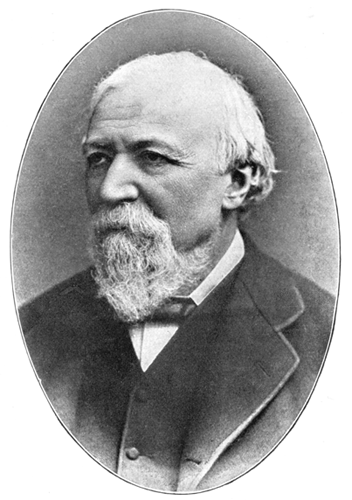 ROBERT BROWNING