Little did the comparatively small but orderly group of enthusiastic
spectators who met around the ropes at Hamilton Crescent Ground,
Partick, eighteen years ago, to witness the first International Association
match, imagine the ultimate development of the Association style of play
in Scotland, and in after years the triumphs which awaited her sons in
contests with England. I was present, and shall never forget the manner
in which the teams—both Scotch and English—acquitted themselves, and
made a drawn game of it.
The ranks of the past crack players are beginning to get thinned by the
common enemy of mankind. When I think of the busy feet, blithe and
happy faces, and merry voices that joined in the game twenty years ago, a
sense of sadness comes over me which it is difficult to dispel. "The first
International, sir;" yes. Five of the gallant eleven who fought Scotland's
battle are dead. Poor Gardner, Smith, Weir, Leckie, and Taylor, football
players, have cause to remember thee! It was a hard struggle to keep up
football in those days, and as there were no club funds all the items of
expenditure had to be brought forth from the capacious pockets of the
members. They loved the game, however, those primitive players, and
engaged in it for its own sake, without ever thinking of reward. In the
words of a great poetess, "We shall sing their praise ere long;" and while
it may be thousands of dribblers of the present never heard their names,
it is but right that the young ones should not forget what they owe to the
Association football pioneers. Yes, the boys of the old brigade are falling
out of the ranks in which they served so well, never to muster again on this
side the grave; while others, still toiling on, are "scattered far and wide,
by mountain, stream, and sea."
The admitted chief of the five who have gone to their rest was Joseph
Taylor. Of a quiet and unassuming disposition, blended with remarkable
firmness, no man who captained the Queen's Park was so much respected
both on the field and in private life. None hated unfair or rough play
more. He could not endure it in a club companion, and this was particularly
so if his team were playing a comparatively junior combination. Taught in
the early school of Association football, when the rules were much more
exacting than they are now, he had, along with his colleagues in the
Queen's Park, to fight their preliminary battles, and overcome the prejudices
consequent on introducing the "reformation," so to speak, in
football. Taylor developed into a first-class back when comparatively
young, and was chosen to play for his club against England in 1872, when
the Queen's Park met that country single-handed, and played a drawn contest.
Considering his light weight, he was a fine tackler, returned very
smartly to his forwards, and, possessing remarkable speed, completely
astonished an opponent by clearing the ball away before the forwards of
the opposing club were able to obtain any advantage. He had always a
kind and encouraging word to young players, and in 1875 and 1876 was
chosen captain of the Scotchmen, and played, in all, five times against
England. He died in Govanhill about three years ago.
As the first captain of the Queen's Park in the International of 1872, and
also chosen to that post next season in London, Gardner, who has also
joined the great majority, was the most extraordinary player of his day.
He was so versatile that I have seen him at work in all the different positions
of the field—goalkeeper, back, half-back, and even forward—but it was as
a goalkeeper that he excelled. A very indifferent kicker out in front, when
the ball came up, he sometimes made mistakes with the feet; but when I
remember the brilliant men who have since stood between the posts in
Internationals and final cup ties, each in their line famous, I must confess
that none ever used their hands and weight to greater advantage than
Gardner. Possessing a peculiarity of temper which had much of the
Scotchmen's sturdy independence, he had a difference with some of his
friends, and left the Queen's Park to join the Clydesdale, and did much to
assist that club to attain at the time the second position in Scottish Association
football. Members of both clubs will not easily forget the manner in which
Gardner kept goal for his new combination against the Queen's Park in a
cup tie, when three matches had to be completed before the senior club
won. He retired from the game some time before his death, which took
place at South Queensferry a year and a half ago.
Who could dribble and keep possession of the ball like Weir? In a
football sense he was in everybody's mouth sixteen years ago, when crack
forwards were few, and neat dribblers fewer. In all the contests the
Queen's Park engaged in for ten years, none was more popular among
the spectators, and emulated by the then young generation of players, than
Weir. He always worked on the right side, and with William M'Kinnon,
Angus Mackinnon, H. M'Neil, T. Lawrie, and T. C. Highet for companions,
the exhibition of dribbling and passing, with the six forwards,
was finer than is the case now with the five. The ball had then to touch
the ground after being thrown in straight from the line before being played.
Under those circumstances, heading by the forwards was never seen in the
field, unless after a corner-flag kick. Well can I remember the match at
Hampden Park against the London Wanderers, whom the Queen's Park
defeated by six goals to none, when Weir, being tackled by the Hon. A.
F. Kinnaird and C. W. Alcock, put his foot on the ball, shook off the two
powerful Englishmen, and made a goal. The sad news only arrived lately
from Australia, whither Weir had gone some years ago, of his demise.
Deceased played in two Internationals, including that of 1872, and no finer
dribbler ever toed a ball. He was, in fact, at the time designated the
"Prince of Dribblers."
In every condition of life, no matter the sphere in which one is placed,
he has his own peculiarities, and, in a football sense, Leckie, above all
the gallant throng who have disappeared for ever from the field, had his.
Comparatively short of stature and powerfully knit together, with splendidly
moulded limbs, Leckie was one of the most tenacious forwards.
While dribbling past an opponent with the ball at his toe, his peculiarity
asserted itself in such a way that, once seen, could never be forgotten.
Weir, Smith, W. M'Kinnon, H. M'Neil, and, later on, Fraser, Highet,
and Richmond, among the army of forwards brought out by the Queen's
Park; to say nothing of M'Lintock, M'Intyre, and Baird (Vale of Leven),
J. R. Wilson and Anderson (Clydesdale), T. Vallance and P. Campbell
(Rangers), and A. Kennedy and J. Hunter (3rd L.R.V.), of whom I will say
something later on, had all their imitators in the younger clubs, but Leckie
had none. He was, in fine, a player by himself. When he obtained possession
of ball, he guarded his body with extended arms drooping from his
side, with the back of his hands in front of the thighs, and thus formed
a barrier to an opponent who attempted to tackle or take the ball from
him. He took part in the first International. He died about three years
ago in South Africa.
The least known, perhaps, of the original International men, but one
whose name will ever be honoured by many of the older school of players,
and locally Queen's Park members, is Mr. James Smith, who died some
years ago in London. Mr. Smith was, in conjunction with his brother
Robert, early associated with the game in Scotland, and was an original
member of the Queen's Park. Mr. Archibald Rae, the first secretary of
the Scottish Football Association, and at one time an active member of the
Queen's Park (and a beautiful dribbler in his day), tells an amusing anecdote
of Smith, while playing against the Hamilton Club, leaping on the
top of a hedge to win a touch-down, which in those days counted a point
in the game. This entirely coincided with poor Smith's play, as he was
sometimes very impetuous. He played in the International of 1872 as a
forward.
Dealing now with the past players who are with us in the body, for a
long series of years, and, indeed, till within a short period of retiring from
the field, no centre forward of his day, and very few since, have equalled
M'Kinnon in that trying position. When the 3rd Lanark Rifle Volunteers
started the dribbling game on the old drill ground at Govanhill, or rather
when that small burgh was "No Man's Land," M'Kinnon was one of its
most active players. It is in connection with his membership of the
Queen's Park that I wish to recall incidents in his career. In 1874 I made
my way over to the South-Side Park to witness a match between the
Queen's and the Vale of Leven. Association football was then a very
insignificant affair—the Rugby code, with such fine clubs as the Glasgow
Academicals and West of Scotland as exponents—engaging all the public
attention. The game was free to all. "Ladies and gentlemen, no
charge for admission. Come and see our game. Kick-off, 3.30." Well,
M'Kinnon, along with the rest of the team, emerged from the old toll-house,
close by, to meet their gallant opponents, and Mr. Parlane, of the
Vale of Leven (who kept goal so well for that club in many of her best
matches), "chaffed" the Q.P. man in amusing manner about his boots
(See "The Conqueror's Football Boots"), which were new, and differed
considerably from the style then worn by players. All through the contest,
which, by the way, was drawn, with no goals on either side, M'Kinnon
was a little stiff, and scarcely played so well as was his wont. He never
discarded his old companions, however, and those very boots in after years
kicked many a goal both in Internationals and final cup ties. As an indication,
in fact, of his genuine ability, he was chosen to play against
England oftener than any man in Scotland, with the single exception of
Mr. Charles Campbell, who was selected no fewer than ten times as a
half-back. Mr. M'Kinnon was engaged in eight, including the first, and
in these his country was victorious four times, and two were drawn matches.
As a centre forward has to bear the brunt of an attack from the opposing
side first, M'Kinnon was the very man to lead on the advance guard. His
pluck was immense; and while he rather delighted to dodge an opponent
and leave the charging to his backer up, he was a close and beautiful
dribbler; could play a hard match without any outward signs of fatigue,
and no man before or since could take a corner-flag kick like him. He
used to practice this kick, and could place the ball within a few inches of
the spot aimed at. Mr. M'Kinnon is still in our midst hale and hearty, and
when a good thing in football is announced he generally turns out to see
his favourite game, and is not afraid to criticise the form shown by his
successors.
Mr. Wotherspoon was early associated with the Queen's Park; indeed,
one of the original members, and did much in his day for football. When
the senior club found it a matter of difficulty to get up an eleven to play in
the country, some times at East Kilbride (for you must know that important
agricultural centre had a club nearly twenty years ago), Alexandria,
and Hamilton, Wotherspoon and Gardner were generally the first volunteers.
There were no fares paid in those primitive days out of club
funds, and each individual had to square up his own account, like the
Scottish cricketer of the present. Although retired now for a number of
years, and out of the run of the game, Wotherspoon, who is in business
in the city, is always delighted to hear of its development, and proud
of what he did in his youth for it. If ever a man had neatness of
style, combined with gentlemanly conduct to an opponent on the field, it
was Wotherspoon. Considering the fact that he was a light-weight, under
10st., he many a time astonished both opponents and spectators by his
magnificent returns at half-back, and I may mention, in passing, that in a
match at Hampden Park I actually saw him kick a ball from the centre of
the field right through the goal—a feat that very few of our younger half-backs
could accomplish now. As I saw him in two Internationals (1872-73),
however, it was not as a half-back, but as an accomplished forward,
dribbling with great judgment, and passing in a most unselfish way. Mr.
Wotherspoon left the Queen's Park to join the Clydesdale a short time after his
old companion Gardner, and the two were associated with that club when
it numbered among its members such fine players as Messrs. F. Anderson,
G. M. Wilson, J. R. Wilson, W. Wilson, J. P. Tennent, J. M'Pherson,
W. Gibb, J. T. Richmond, and David's brother, J. Wotherspoon. In the
first of the long string of matches which have been played between Sheffield
and Glasgow, dating back to 1874, Mr. Wotherspoon was one of the
players; and it may be mentioned that, in the same contest, the Glasgow
representatives were made up entirely of Queen's Park and Clydesdale
men, and that each city scored a couple of goals.
No player among the half-backs of the old school was so much thought of
in Association football as Thomson. Once seen and met by an opponent,
he could never be forgotten. Tall and stern in appearance, he carried
every pound of his heavy weight with the greatest ease, and, what was of
more consequence to his club in a hard battle, used it well. He tackled
with consummate skill, and had remarkable confidence in himself. For the
first three years of his membership no player ever turned out more
regularly to practice, and, for a stout man, none could show an opponent a
cleaner pair of heels. All the time he was available in the Queen's Park,
an International without Thomson as one of the half-backs was out of the
question, and for three seasons (1872-73-74), he was selected for that post
against England. In the last event, when Scotland won at Partick by two
goals to one, the brilliant manner in which Thomson played will not easily
be forgotten by those who witnessed the contest. While F. Anderson
(Clydesdale), and A. Mackinnon (Queen's Park), scored the goals for
Scotland, Thomson never worked harder in his life, and when the English
forwards got near his side, he rarely, if ever, failed to take the ball away
from them. Just before leaving for Manchester, Mr. Thomson was chosen
captain of the Glasgow Eleven against Sheffield. Some years ago he went
to Liverpool, and is now secretary of the extensive butcher business
of Eastmans Company (Limited). In addition to his ability as a football
player, Mr. Thomson was a splendid sprinter, and carried off a large
number of prizes both in Glasgow and Edinburgh.
Mr. William Ker was captain of the Queen's Park when they leased
their first private ground, and did much by his tact and ability to bring on
our senior club to seek new conquests in England. Mr. Ker—of whose
brother George I shall have occasion to refer by and by—was a most
gentlemanly young fellow, and made himself respected by club companions
and opponents alike. In the early history of the game a half-back, and
even back, did not consider it infra dig. to dribble a bit and bring up the
ball to goal, provided the match was against a much weaker club, and
while Ker was a grand back and beautiful kicker with his left foot, he was
also an accomplished dribbler. In a match he never lost sight of the ball
for a moment, and when any of his team made a mistake in following up,
Ker frequently stepped into the breach himself, and did his best to get the
player out of a difficulty. He was too gentlemanly to upbraid a member of
the team on the ground, like some captains now-a-days, but awaited an
opportunity, and the advice imparted generally did the careless player a
world of good. In the famous match at Partick in 1872, Ker showed some
very fine play, both in clever tackling and returning the ball; and, if I
mistake not, he was opposed on the opposite side by the English captain
(Mr. C. J. Ottaway, since dead), and the manœuvring between the pair
was something to be remembered. Mr. Ker did not play very long after
this game, as he left Glasgow for Canada.
Unlike his brother in the manner of his style, Mr. Robert Smith was not
by any means an impulsive player, but took in the situation quietly; and
while no man ever worked harder in the field, or did more for a club, he
was not what could be called a brilliant forward. The brothers, however,
did well in the International I have referred to, and considerably helped the
eleven to make a drawn battle of it. It may be mentioned that both were
then also members of the South Norwood Club (one of the best in England
at that time), as they had previously left Scotland for London. Mr. Robert
Smith, so far as I am aware, is now in the United States.
A rare but light dribbler was Mr Rhind. One of the old members of
the Queen's Park, and associated with men whose names I have already
mentioned in its early struggles, he knew, if I may be allowed to use a
simile which is likely to force a smile, what football poverty was, for is it
not a fact that he was a member of the Q.P. Finance Committee when the
annual subscription was sixpence, the yearly income £3 9s. 8d., and as
the expenditure amounted up to £4 2s. 4d., the deficit of 12s. 8d. had
to be made up by a levy? I never remember Mr. Rhind playing in a
match after the International. He is now in Aberdeen.
The First Final Association Cup Tie, on Hampden Park, I remember
well. The clubs fated to meet each other were the Queen's Park and
Clydesdale, and the match, considering the fact that the players were
comparatively young in the practice of the dribbling game, proved a very
fine one indeed. It was on a Saturday afternoon in the middle of March,
1874, and a crowd of fully 2000 spectators attended. The Hampden
Park of to-day, with its splendid pavilion and accessories, and beautifully
laid-off turf, was not then conceived in the minds of the Match Committee.
It was the Hampden Park of yore, now cut up to form a railway
embankment. Mr. Hon. Secy. Rae and his companions in office never
for a moment imagined that in sixteen years afterwards the new ground,
which is crowded nearly every Saturday afternoon with excited spectators,
would be made to satisfy the cravings of a football public, and the
exigencies of athletic life. There was no such thing as a pavilion then, only
a kind of "wee house" at the gate end of the field, for all the world like
an overgrown sentry-box, did duty instead. The grass on the field was
not even cut in some places, and at the top corner-flag was long and turfy.
The spectators, however, of whom a large number were ladies, enjoyed it
very much, and the enthusiasm imparted among the youths who were
present had a wonderful effect on the spread of the game. It was thought
that a draw was inevitable, so well did both sides play till within twenty
minutes of the finish, when Mr. Wm. M'Kinnon scored a goal for the
senior club, and this was followed by a second from the foot of Mr. Leckie,
not long before no-side was announced, leaving the Q.P. the winners by
two goals to none. I must, however, go back a little way and say something
about the
which has caused a new order of things to arise in Scottish football. Well,
during the previous year, and, in fact, not long after the first International
at Partick, new clubs were formed in many quarters, but more particularly
Glasgow and Dumbartonshire, and it was on March 13, 1873, that the
Queen's Park convened a meeting of representatives of clubs, and what is
now known as the Scottish Football Association was formed. Eight clubs
responded, and created the great Association. The eight, who deserve
much honour at the hands of players, were:—Queen's Park, Clydesdale,
Vale of Leven, Dumbreck, Eastern, Rovers, 3rd L.R.V., and Granville,
and those clubs were represented on the committee by Mr. Arch. Campbell
(Clydesdale), president; Mr. W. Ker (Queen's Park), hon. treasurer;
Mr. Archibald Rae (Queen's Park), hon. secretary; with the following
committee:—Messrs. Ebenezer Hendry and Wm. Gibb (Clydesdale), J.
Turnbull (Dumbreck), D. Macfarlane (Vale of Leven), W. E. Dick (3rd
L.R.V.), T. Mackay (Granville), J. M'Intyre (Eastern), and R. Gardner
(Queen's Park). Next in order came the Challenge Cup, and the competition
for that trophy was in full swing. The necessary funds were soon
forthcoming, and a very neat, but plain, specimen of the silversmith's art
was brought forth. The subject for ornamentation was taken from a cut
in the Graphic, representing a player in the act of dribbling at the first
International, and made by Messrs. George Edward & Sons. There you
have it now, gentlemen, rather dry reading and technical, though, but
nevertheless the infant life of a great competition. By a strange coincidence
in the respective matches, and one which the players of a former era
will look upon with a sense of sadness, consists in the fact that of the
twenty-two who took part in that game seven are dead. Of these the senior
club has the misfortune to claim five—Messrs. J. J. Taylor, J. B. Weir, J.
Leckie, J. Dickson, and A. Mackinnon; while the Clydesdale, so far as I
am aware, has only two, Mr. J. R. Wilson and Mr. Robert Gardner.
As I have already given short sketches of Messrs. Taylor, Weir, Leckie,
and Gardner, under the head of "Dead Internationalists," and J. J.
Thomson and W. M'Kinnon under another, I have only to deal with
R. W. Neil, J. Dickson, T. Lawrie, C. Campbell, Angus Mackinnon, and
H. M'Neil (Queen's Park), and the whole of the Clydesdale, with the sole
exception of R. Gardner.
Mr. Campbell seems to have had no real starting point in his football
career. The love of the game and its early associations came to him as if
by nature. I am told that when he was quite a boy he used to appear on
the ground at Queen's Park to see his brother Edward playing with old
club companions. He soon began to dribble about, and afterwards show
splendid ability in long-kicking and tackling, and in 1873-74 played for the
Queen's Park in her best matches. The final cup tie, however, was his
first big event, and no doubt the lessons and confidence he obtained in that
match served him well in after years, when he was destined to be the
greatest favourite both among players and spectators that ever took part in
any cup tie or International. Mr. Campbell has now retired from active
duty on the field, but his love for the game, and the welfare of the players
engaged in it, induced him to accept the presidentship of the Association
for 1889-90, and one and all are alive to the fact that he discharges his
duties with the greatest fidelity. As a brilliant tackler and neat kicker at
half-back, it might honestly be said of him that he had no equal. Men
who played against him on great occasions (for Mr. Campbell always rose
to his best form in these) have good cause to remember how he could
"head" the ball away from goal at a critical moment, and get it through
quite a forest of legs. As he was not one of the cracks in the final cup tie
of 1874, I must honestly confess I can't remember how he played, but as
his club scored a victory, and he was one of the half-backs, he must have
done well. Mr. Campbell rarely, if ever, spends a Saturday afternoon
away from Hampden Park in the winter time; takes a lively interest in his
mother club, and, what is of more account, can still play in his favourite
position with great dash and precision. He has the unique distinction
of playing in ten Internationals with England, and been an office-bearer of
his club since 1873.
Mr. Lawrie has done much for football in connection with his club and
the Association, both by example and precept. In the early days of the
Queen's Park he was one of their most brilliant forwards, and in several of
the cup ties, notably that between the Queen's Park and Renton, proved
the best man on the field. He never shirked his work, or left hard
tackling to the half-backs, but sprang on the ball and opponent at once,
and generally had the best of it. Of all the fine forwards who received
their football education under Mr. J. J. Thomson's, and later on Mr.
C. Campbell's and Mr. Joseph Taylor's captaincy, none could keep his
feet better on the field; and it was quite a rare thing to see Lawrie grassed
by an opponent. Although not much above the middle height, he was a
perfect football Hercules, and not long before retiring from the field
opponents in some of the matches would frequently make earnest inquiries
about whether he were to be included in the Q.P. team on that day. But
for an accident to the knee which made him retire, after being chosen to
play in the International against England in 1874, Mr. Lawrie would have
then represented his club. After giving up active duty in the field, he has
rendered noble service by being president of the Scottish Football Association,
and loves the game as dearly as ever.
The first final cup tie brought into prominence one of the neatest little
dribblers and passers that ever played on the left wing of any club. Methinks
I see him now, with his quick action, short step, and unselfish play,
gliding down the side of the field, dodging an opponent close on the touch-line,
and causing the spectators to laugh immoderately. Spectators are
prone to make favourites, and while Mr. Campbell was assuredly one
at half-back, Mr. M'Neil was none the less loved among the forwards.
While playing in the leading games he was always ready with his joke, and
I'll back him to be the best man in the world to explain away a defeat and
magnify a victory for the club he loved so well. Mr. M'Neil was chosen
seven times to play against England and Wales, and I remember his
efforts and their results with pleasure. The only time he was sorely beset
was in the International of 1876, when Mr. Jarrett (Cambridge University,
I think), one of the English half-backs—a powerful young fellow—tackled
him severely. The gallant little Queen's Park man, however, withstood
the charges well, and came up from mother earth smiling. That match,
however, ended in favour of Scotland by three goals to none. Mr.
M'Neil was a member of the 3rd L.R.V. at the start of his career, and
also of the Rangers, but joined the Queen's Park in 1872.
Mr. Neill kept the late Mr. J. J. Taylor company at back in many of the
most trying and critical Q.P. matches of 1876, '77, '78, and '80, and in all
those years was a familiar figure in the Internationals against England and
Wales. As we have previously said about the deceased Mr. Leckie,
players have their peculiarities, and Neill had his. He was a really
brilliant back and pretty sure tackler, but relied too much on his feet while
defending goal, instead of using the breast and head. His individuality
consisted in meeting the charge of an opponent with bended knees, and he
had the knack of taking the ball away and making a brilliant return in a
style that roused the cheers of the spectators. He was a very hard worker
to the last, and only retired from football to go abroad some years ago. He
has, however, returned to Glasgow, and may frequently be seen at some of
the best matches of the season. His play during 1877 and 1878 was exceptionally
good, and in those years was in the best form of any back in
Scotland.
Poor fellow! Mr. Dickson had but a short career, not only in football,
but in everyday life. He caught a severe cold one bleak evening coming
from Hampden Park after a practice match, and succumbed to the malady
of inflammation of the lungs at the age of 28. He started his football
life as a back; but when the Queen's Park lost Mr. Gardner he was tried
as goalkeeper, and did very well. Tall and gentlemanly in appearance,
with neatly trimmed sandy whiskers and moustache, Dickson kicked out
in front of his goal very neatly, and was not afraid to meet the charge of an
opposing forward. An incident in his career caused a great deal of amusement
at the time, however, and is worth recording, just to show the immense
faith he had in the infallibility of his old club. It was in a cup tie with
the Vale of Leven, when that club beat the Queen's Park by two goals to
one. Dickson appeared at goal with an umbrella, as the rain was falling
fast, but when the Vale scored their first goal he was obliged to throw away
his companion, and work harder than ever he had done before.
A powerfully-made young fellow, above the medium height, Mr.
Mackinnon was a very fair forward, and always played in the centre with
Mr. William M'Kinnon, his namesake, and the pair were a "caution" to
meet in a hot tussle. The six forwards took part in the play then, with
two on each wing and a couple in the centre, and it was a treat to see how
well the Mackinnons worked in their places. Mr. Angus, however, was
rather short in the temper, and often had a "few words" with both
companions and opponents during a game. He played a very indifferent
game in the final tie and some of the matches previously, but was really in
excellent form at that same year's International against England, and
scored one of the goals. Mr. Mackinnon died about four years ago in
Canada.
If there is one player more than another that deserves to be remembered
by his old club, the Clydesdale, for the manner in which he brought it
before the public by scoring one of the goals in the third International at
Partick in 1874, it is Anderson. He was a very fine dribbler, and about
the most difficult man in the Clydesdale forwards to get the ball away from
after he had obtained possession. Although not one of the original
members, he was early associated with the Clydesdale, and played in the
best games of seasons 1874, '75, and '76. He was a bit of a sprinter, and
very fast on the ball, with very fine staying power. Many of the backs
who played against him during his best days were afraid of Anderson when
he got near the sticks. He is now in Manchester.
Mr. John M'Pherson, of the Clydesdale, is a much older player than
his namesake of the Vale of Leven. When the Clydesdale went into the
game with a dash that astonished even the Q.P., he was one of their finest
forwards, and, possessing great speed, was not easily tackled by the best
backs of the day. He always played on the right wing, and was a
dangerous man at goal. Mr. M'Pherson did much both for football and
cricket in Inveraray, and even now takes an interest in his favourite pastime
in Rothesay, where he assists his father in the management of the Queen's
Hotel. It may be mentioned that, in addition to his other qualifications, for
"he was so versatile," M'Pherson has acted on more than one occasion as
outrider to Her Majesty when she visited the Highlands. In 1875 he
played against England.
I am sorry to say Mr. Gibb is dead, and that the sad event severs the
link that bound the whole of the Clydesdale eleven together, with the
exception of the blank left by the loss of their accomplished goalkeeper.
Mr. Gibb was a tall and powerful young fellow, and I have frequently seen
a few of his opponents feeling rather shy before attempting to oppose his
progress towards goal. During the winters of 1873, 1874, and 1875, the
Clydesdale forward play was good. So brilliant was his form in 1873 that
he was taken to Landon to play against England, and scored one of the
goals got by Scotland, who were defeated by four goals to two. Mr.
Gibb's only fault on the field was a disposition to over-run the ball. He
died about two years ago in India.
In the first final cup tie Mr. Raeburn was one of the half-backs, and
played up with great dash and pluck. If my memory serves me right, he
was one of the original members of the Granville Cricket and Football
Club when the ground was at Myrtle Park, about a couple of stone-throws
from Hampden Park. He was very fond of the game, and no man in the
Clydesdale had more enthusiasm. Mr. Raeburn was a fine tackler, and
not easily flurried when meeting an opponent, and with such men as the
Mackinnons to face in the centre and Weir on the right that day of the
final, he had his own ado. He did not play very much after this game.
Mr. Hendry was more of a cricketer than a football player, and made
many fine scores for his side during the early years of his career. With the
exception of Mr. Gardner and Mr. Anderson, all the members of the
Clydesdale could play cricket, and it was more for the purpose of keeping
members together during the winter months that the dribbling game was
started on Kinning Park (the old home of the senior cricket club of
Glasgow). Mr. Hendry was a slow tackler, and took too long to get on the
ball, but when he got a fair chance, was a very neat kicker, and showed
good judgment.
During the past season, Mr. Wilson, who had been abroad for a number
of years, made a visit to his native city, and was welcomed back by his old
friends of the field with remarkable pleasure. No man in the club was
more highly beloved and respected, and, in after years, when his brother
Walter joined the club and played in several of the leading matches, the
pair rarely if ever missed a practice evening. Mr. Wilson was very fast on
the ball, and went right ahead when he got possession. In 1874 he was
chosen to play for Glasgow against Sheffield. In the cup tie which is
now under notice he made some very fine runs, and did much to make a
name for the old Clydesdale. It is with much regret I have to announce
that Mr. Wilson died in Glasgow only a month ago.
A hard worker and plucky tackler was Mr. M'Arly. For a long series
of years he was one of the finest batsmen in cricket that Glasgow
produced. Contemporary with Mr. Thos. Chalmers (Caledonian), the
pair often met on the field for their respective clubs; but so far as football
is concerned Chalmers played the Rugby game for the Glasgow
Academicals, while his contemporary was half-back in the Association
Clydesdale. About a dozen years ago he went to Manchester, where he
is engaged as partner in a large calico printing business; and the other day
I had a chat with him about old times, and he enjoyed it immensely.
Pressed into the service of his club on very short notice, Mr. Kennedy
played in the tie as a substitute. He had only been a few weeks at the
game when the match took place, but the young and rising generation of
players must remember the substitutes were few in those days, and it is not
the first time I have seen a match played with one of the clubs a man
short. Kennedy played as a forward, but afterwards developed into a
very fair back, and showed capital judgment in that position.
Originally a member of the 3rd L.R.V., Lang left that club and joined
the Clydesdale in 1874. He played in the final, I think, as centre forward,
and backed up Mr. J. R. Wilson. Possessing splendid dribbling powers,
he was a very "showy" player, but his short steps did not make anything
like the progress with the ball one imagined at the time. He was a somewhat
heavy charger when he got the chance, and frequently preferred to
take his man before the ball.
Bringing my reminiscences down to 1879, the year above all others when
Association football was, so to speak, in a kind of transition stage, the
clubs that earned the greatest fame, and justly so, were the Queen's Park,
Rangers, and Vale of Leven. Who, among all the gallant throng that
played in those clubs—and, for that part of it, the spectators—can forget
the exciting tussles engaged in by the trio? In this year the Rangers met
the Vale of Leven in the final tie for the Association Challenge Cup, and
also in the final for the Charity. Party, or shall I say club, feeling ran as
high, if not higher, than now, the excitement was great, and intensified by
the fact that the Leven men had been eventually awarded the Association
Cup without playing off the drawn match, in consequence of the Rangers
not turning up. Later on, too, the crack Dumbartonshire eleven overthrew
the Queen's Park in the semi-final of the charities, on Glasgow
Green, by four goals to none. Well, it was on Tuesday evening, 20th
May, that the battle came off on Old Hampden Park, and both the Rangers
and Vale of Leven mustered in strong force. Lovely weather helped to
swell the crowd, and some 12,000 people were inside the ground. The
Vale of Leven scored almost at once by Mr. M'Dougall, and this looked
like the prelude to victory. The Rangers, however, set their teeth, and
before the contest closed vanquished their powerful opponents by scoring
a couple of goals—one by Mr. Struthers, and another out of a scrimmage.
Since then eleven years have come and gone, and with them a new generation
of football players. Seeing that the Rangers were the victors, I shall
proceed to give sketches of their eleven who played on the occasion, and
deal with the Vale of Leven afterwards.
In connection with the dribbling game in Glasgow, it should be generally
known that Mr. Gillespie supplies the link which binds the players of the
dead past to those of the living present. He is still to the fore, and does
duty as well as ever. Early in his football career Mr. Gillespie was not a
goalkeeper, for I am certain I saw him play at back in some of the early
matches of the "Light Blues." Nature, metaphorically speaking, never
intended him to be anything in the game but a goalkeeper, and a brilliant
one, too. How he kept goal in this great match, and dozens of others, is
still fresh in the memory both of old players and spectators. He is the
only man on the active list who played ten years ago, and had the distinction
of appearing against England twice and Wales three times. From the
Rangers he joined the Q.P. about six years ago.
The early history of the Rangers—their triumphs, misfortunes, joys, and
sorrows—have all been shared in by Mr. Thomas Vallance, and he still
sticks to them like the veritable leech. Who could captain a young team
like he? When Vallance led the Rangers to victory in this final Charity
tie, I am sure he was barely out of his teens, and I don't think would even
yet hesitate to don the blue jersey of the club were it hard up for a back.
Vallance was a back, indeed, and for several seasons, but more particularly
that of 1879-80, none in Scotland showed better form. His returns near
goal were neat and clean, and without being in any way rough with an
opponent. Vallance's length of limb and good judgment often saved his
club from losing goals. The whole of the Rangers "lo'ed him like a vera
brither," and at practice his word was law. He played four times against
England.
With quite as much pluck, but awanting in finish and style, the younger
of the brothers, Mr. Alexander, was nevertheless a fine back. Lighter
made and more easily tackled than Thomas, he had a way of his own in
running out the ball before making the final shy, and when this was done
well, as it frequently happened in a first-class match, young Vallance received
a perfect ovation from the crowd. Alexander was in fine form in this
tie, and some of his returns were splendidly made. Instead of going at an
opponent with the air of an infuriated bull, as some backs are prone to do
now-a-days, he kept close to his man, and waited for an opportunity, which
was at once taken advantage of. Like his brother, he is still in the city,
and takes a kindly interest in his mother club.
Mr. Hugh M'Intyre and Mr. J. Drinnan were the half-backs in this
contest. No such new-fangled device as three half-backs was ever thought
of in Scotland at that time, and you may be sure the pair had hard work.
Of all the players sent out by the Rangers, M'Intyre was in many respects
the most powerful. He was, however, to be outspoken, the coarsest. Woe
betide the light and gentle forward who tried to pass Mr. Hugh! He
pounced on his man at once, and with raised back—for he was somewhat
round-shouldered—gave the excited spectator the idea that he meant to
have the ball at any cost. His weight gave him an immense advantage in
tackling, and I think old players will be at one with me when I say that he
was the best at that kind of work in Scotland. He was about the first to
leave Glasgow and accept an engagement in England. He played against
Wales in 1880.
In the list of the Rangers' eleven who took part in the match under review,
the name of Mr. Drinnan does not occur, and I am obliged to proffer an
explanation. In the report of the contest one "R. Jackson" is credited
with keeping H. M'Intyre company on the occasion. As the incident is
past, and Mr. Drinnan no longer amenable to the laws of engineer
apprenticeship, he did in this match what a great many men have done
before him—viz., played under an assumed name. He was a very fair
back, but not sufficiently brilliant to obtain notoriety, and never had the
distinction of playing in an International. He was, nevertheless, a very
useful all-round player, and could take his place as a centre forward at a
moment's notice.
The Rangers a dozen years ago without Mr. Peter Campbell would have
been like the Queen's Park now with Mr. William Sellar left out. He
was the life and soul of the forward division, and it is not too much to say
of him that a finer dribbler and harder worker never kicked leather. Poor
Campbell, like so many more of the old lot, is gone to his account! In a
terrible storm in the Bay of Biscay, which left many a home desolate,
seven years ago, the steamer in which he was chief engineer foundered, and
not a soul was left to tell the tale. Quiet and unassuming in manner, Mr.
Campbell was beloved by all, and his untimely death is still mourned by the
Rangers, for whom he did so much. In 1878-79 he was in such good form
that he was chosen to play against Wales, and in 1876 and 1878 did duty
for Glasgow against Sheffield.
The M'Neils are quite a football family, and, what is of more account,
have gained distinction in the game. Is it not a fact that Mr. Peter was
one of the founders of the famous club nineteen years ago, and that Messrs.
Harry, William, and Moses kept the ball rolling on Kinning Park with
credit for many a day? Moses is the youngest of the lot, and consequently
what may be termed the most modern. He was quite a boy when this cup
tie came off, and played with a dash and finish on the left wing that completely
astonished all who were present on Old Hampden Park that May
evening. Mr. Moses, too, was more than a mere local player, and through
sheer force of ability was chosen to play against England in 1880, and
acted in the same capacity for Scotland against Wales in 1876. He is still
young and active, and resides in the city.
An original member of the Partick, when that club could boast of having as
good a team as now, Struthers was associated with the old pioneers in
Messrs. Boag, James S. Campbell, Love, Sutar, Bell, and Smith, and
joined the Rangers the previous year before the tie. He was a beautiful
dribbler, after the style of Mr. T. C. Highet; went right ahead with the
ball close at his toe, and was the most difficult man to tackle in the
Rangers. He left Scotland some years ago for England, where he played
for the Bolton Wanderers. In brilliant form in the match, he made some
fine runs in company with Mr. Campbell and Mr. Hill, and was successful
in scoring the first goal got for the Rangers. Mr. Struthers is now in
England, where he has settled down.
A most unselfish player was Mr. Hill. He was slow, but sure, and if
ever a man showed an example in the field by at once passing on the ball
when necessary, and never opening his mouth from kick-of to time call, it
was he. One of the prominent figures all through quite a decade of
seasons for his old club, Mr. Hill rendered the Rangers valuable service,
and never failed to turn up when he was wanted. In the final Association
Challenge Cup match with the Vale of Leven, played shortly before the
one I am touching upon, and which ended in a tie, some splendid passing
was witnessed between him and Mr. Wm. Dunlop, who, by the way,
could not play in the Charity event in consequence of an injury sustained a
week before.
Like the other members of the Rangers, Mr. Steel was very young when
he joined that club. His enthusiasm for the game, however, was
unbounded, and I have been told by an old Rangers' man that he was one
of the original "moonlighters" of the club. This phrase gentlemen,
requires some explanation. It does not refer to Ireland and its agrarian
grievances. No, no. It was only a few choice spirits of the Rangers
who, determined to win all matches, used to practice at full moon, and
frequently frightened some of the belated lieges in the vicinity of Kinning
Park, who swore the place was haunted.
Although retired from active duty on the field, Mr. M'Quarrie is even
now in football harness as the treasurer of the Partick Thistle. He did
not play in many of the first eleven matches of the club, but being a
promising lad was always available as first reserve forward. He was
rather a neat dribbler and good backer-up, but a little slow in tackling.
He was always a steady player, and did very well in this game. He did not
play very much after this tie, but gave up football altogether, till his old
love for the game returned some years ago, when he joined the Thistle,
and is one of their most earnest committee workers.
I now proceed to the Vale of Leven men who played in this tie, and
goalkeepers, beware! and, let me tell you, don't think too much of yourselves
nowadays! We had a great man who stood between the posts a
dozen years ago, quite equal at all points to you, and his name was
Parlane. Who did not know Mr. Robert Parlane a decade ago? In the
early history of Association football some of the best players ever Scotland
produced were also good cricketers, and Parlane was one of these, and a
grand wicketkeeper. Without saying too much of the men who have over
and over again distinguished themselves, I cannot help saying that a better
goalkeeper never chucked out a ball. Mr. Parlane did very well in this
match, his only fault being a disposition to go away too far from his charge.
He kept goal for Scotland against England in 1879, and is now in Belfast.
For six years no man ever did better work for his club than Mr. M'Lintock.
In fact, the Vale of Leven would as soon have scratched altogether in a
cup tie as entered into a doubtful contest without him and their other great
back, Mr. Andrew M'Intyre. M'Lintock did more than any of the old
school now living to popularise a style of back play which ten years ago
was emulated to a large extent all over the country. He had a most
graceful way of turning the ball when it came dangerously near the goal,
and running it out by dodging an opponent. He used both feet with equal
freedom, and was decidedly the cleanest kicker that ever played in the
Vale of Leven. It is a curious fact, and one worth noting, that Mr.
Forbes adopted much the same style. M'Lintock played against England
in 1875 and 1876.
Mr. Andrew M'Intyre was a terrible fellow to meet in a hot scrimmage,
and no matter the forwards who opposed—and I have seen three at him in
a close tussle in front—M'Intyre generally had the best of it and got the
ball clear. His powerfully-knit frame served him in good stead in all the
great matches in which he took a prominent part. In the one under
review M'Intyre was sorely beset by the pick of the Rangers' forwards,
but was always in the right place. No player of his day could work as
well in so little space, and get the leather away safely. His only fault was
to be a little demonstrative in the field with opponents, and tell them a bit
of his mind during the game. In 1878 he was chosen to play against
England.
The play of the two namesakes was as different as the poles asunder. Of
a fair height and good appearance, Mr. J. Macintyre was one of the most
excitable men that ever stood in front of a goal. He generally warmed up
at bit, however, and even showed more daring when his old club were
playing an uphill game, and I know for certain that in the great drawn
matches for the Association Challenge Cup, between the Vale of Leven
and Rangers, no man ever did harder work. He was slow to get on the
ball, and at times very erratic, but rarely if ever lost an opportunity. Very
rough in tackling, he, above all others in the club, was severe on the
opposing forwards.
Among the Vale of Leven back division, which was so powerful long ago,
none was more devoted to the game than Mr. M'Pherson, who held his place
for several years as one of the backs of whom Caledonia felt proud. Without
the least show or fussiness, M'Pherson did his work quietly, and had
the credit (and a good one, too) of being next to Mr. John Ferguson, the
best-natured footballer in Dumbartonshire. He could play a magnificent
game when he liked, and one season particularly—that of 1883—when he
was one of the Scottish Eleven against England at Sheffield, ably assisted
his team to win a hard match by three goals to two.
The Vale of Leven at the time this tie was played had a rare forward
combination, and in some of their best matches the dribbling and passing
among them were something to be remembered. Macfarlane, however,
was certainly not the best of the lot, but a very safe man, and could play
equally well on the left wing or the centre, and, if I mistake not, work
excellently as a backer-up to J. M'Gregor. Now, when I think of it, he
was severely tackled in this match by H. M'Intyre, and was not in such
good form as some of the other forwards.
There are few, if any, old players in Dumbartonshire, and, I should say,
spectators as well, who cannot remember the familiar figure of Mr. Robert
Paton. A nicely-featured little fellow, with a joke for every acquaintance,
he was full of vivacity, and an intense love for his old club, the Vale.
Yes, "The Vale." Nobody ever called it anything else. Paton, above
all the other forwards who did so much to make the Leven men beloved at
home and feared "abroad," even to the next parishes and the big city of
Glasgow, was a fine player, and never kept the ball longer than was
necessary if he saw a chance. He played against England in 1879.
Mr. James Baird was a fair average player, without anything very
remarkable about him. The combination, as I have already said, was so
good among the Vale of Leven at the time when this great contest took
place that an inferior or selfish player would soon have found his level.
The forwards, in fact, were all pretty much alike, but with clearly defined
degrees of brilliancy, and Mr. James Baird was one of the lesser lights. He
was a good runner and smart at following up, but his dribbling was sometimes
too wide for the others when following up on the enemy's lines.
When hard pressed he often lost the ball, but in a scrimmage in front of
the posts he was a rare shot at goal, and scored a good many for his club.
Of all the forwards who learned the game at Alexandria, on the old
ground belonging to the Vale, perhaps, in many respects, Mr. J. C. Baird
was the most distinguished, and, at the same time, the most gentlemanly.
When the Vale of Leven beat the Queen's Park for the first time in one of
the ties for the Association Challenge Cup, on Hampden Park, Mr. J. C.
Baird played a perfect "demon." On the slippery ground he kept his
feet against all comers, dribbled and passed on splendidly, and fairly took
the breath away from John Dickson when scoring the goal which gave his
club the victory. Mr. Baird was chosen to face England in 1876, and
again in 1880.
If one had met Mr. M'Gregor off the football stage, so to speak, they
would never for a moment have taken him for a brilliant and accomplished
player at all points. He was all nerve and sinew, and always in grand
form. His disadvantages in appearance and weight, however, were kind
of blessings in disguise to his club, for the opposing backs sometimes
treated him with indifference, and even contempt. This was M'Gregor's
opportunity, and never man used it better. If ever he made his way
past the backs, and was alone with the goalkeeper, ten to one but his team
was a goal to the good in a few minutes. He played against England
in 1877, 1878, and 1880.
Two years previous to this final tie, Mr. M'Dougall was the most brilliant
forward in Scotland, and he and Mr. J. T. Richmond (Queen's Park) were
the first two forwards selected to play against England. A fine figure on
the field, and a capital dribbler, without being showy, M'Dougall was
always near the ball when wanted, and it sometimes took a couple of
opponents to get the leather away from him. For three years in succession
he was selected to appear against England. In the tie with the Rangers,
Mr. M'Dougall was captain of the team, and scored the only goal made
for the defeated club.
The eleven who were chosen to do battle for Scotland in this contest, close
upon nine years ago, were considered in many respects the best that had
ever donned International caps in any tussle before or since, and a better
illustration of the wisdom of the Association Committee in their selection
could not have been given than the result itself—viz., Scotland, five goals;
England, one. Hampden Park was the meeting-place, and as one of the
football giants of the day (E. Fraser) is, like some of my dear old friends,
now lying in the grave, and others who took part in the memorable event
divided by thousands of miles from those with whom they fought and won
for Scotland, I should like to pay a tribute of respect to their football
ability, and let the young and rising generation of players know that such
men appeared in the arena, and played the game as well as it is done now.
The match took place on the 11th March, 1882, and as England mustered
a very powerful eleven, the issue was doubtful. About a quarter of an hour,
however, after the start, Mr. Ker and Mr. Harrower had a fine run, and
Harrower made the first point for Scotland but at half-time the score
stood—Scotland, two goals; England, one—Ker having added the second,
and Vaughton the one for England. In the last round, the Scotchmen,
although playing against a good breeze, had it all to themselves, and
scored other three points by Messrs. M'Pherson, Ker, and Kaye. In giving
short sketches of the International eleven, I have only to deal with eight
of the players, as Messrs. Charles Campbell, A. M'Intyre, and G.
Gillespie have already been noticed in previous articles while engaged in
other matches. I shall accordingly begin with
Mr. Watson did a great deal for football in the Glasgow district a dozen
years ago, both with his ready purse and personal ability in the game. It
was in a great measure owing to his interest and energy that the young Parkgrove
Club obtained proper ground, and was fairly put on its way rejoicing.
The Parkgrove had a lot of very fine young fellows in its ranks, and for
several years made a capital record in numerous matches under the
captaincy of Mr. Watson. In this International he played as right-side
back in company with Mr. Andrew M'Intyre, and, as an indication of
how he and his companion behaved, it is necessary to say that only one
goal was got against them. Mr. Watson was a rare "header-out," and
was famed for his fine tackling and neat kicking. He had one fault,
however, and this consisted in kicking over his own lines occasionally when
hard pressed by a dashing forward. In the previous year he was the
Scottish captain against England, in London, and led his team to victory
by 6 goals to 1.
When Mr. Miller played in this match, the Dumbarton Club was a power
in the land, and not easily beaten. He was left half-back, and had as his
companion Mr. Charles Campbell, who captained the victorious eleven.
Mr. Miller was remarkable for his magnificent tackling at close quarters,
and possessed weight, which told against England in the contest. Again
and again I saw him shake off both Mr. Cursham and Mr. Parry, two of
the Southrons' ablest forwards, and once Mr. Mosforth and he had an
amusing bit of play near the Scotch goal, in which the Sheffielder came off
best. Mr. Miller was, altogether, a very fine back, and when he retired a
few years ago the Dumbarton Club had considerable difficulty in getting a
good man properly trained to supply his place. Next season (1883) he was
also chosen to play against England and Wales.
Lost to his club and the thousands of delighted spectators who witnessed
his brilliant ability as a right-wing forward, but not forgotten by the
members of the old Q.P., Fraser, "though dead, yet speaketh." I
question very much if any forward of that time among the mediæval class
of players, so to speak, exercised such a potent influence over the spectators,
and no style of play was more followed by the younger dribblers than
that of Fraser. A son of the manse, he was a highly cultured young
fellow, and loved football so devotedly that no amount of hard training was
ever shirked by him when under probation for the first eleven. Dribbling
beautifully up the side of the field, he had the knack of "middling" the
ball at the proper time, and for six years no man ever assisted at the scoring
of more goals. He was also included in the following season's eleven
against England, and in 1880 did duty for Scotland in the Welsh match.
Poor Fraser died in Australia, a few years ago, shortly after arriving there.
In the International of 1882 Mr. Anderson and Mr. Fraser played on the
same side, and made a very good pair. The former, although not above
the medium height, was powerfully built, and few, if any, of his formidable
opponents were able to bring him down to mother earth. When he did fall,
however, he was never in a hurry to rise, and took matters easy. If one
could imagine such a thing as an easy-going football player, it was Anderson,
but his failing sometimes came in handy, for he would occasionally make
a gallant spurt, and pilot his way through the opposing backs in a way
that completely astonished his team and their friends. He showed very
well in this match, and the manner in which he and his companion dodged
the Englishmen, not even excepting Mr. Bailey, the crack Clapham Rover
half-back, will be easily remembered by those who were present. Mr.
Anderson is now abroad, and it is something to his credit to say that he
played four times against England.
Like a good many fine players of the glorious past, Mr. Kaye received
the best of his football training in the ranks of the 3rd L.R.V., and a
couple of years, I think, before this big event, joined the forward division
of the black and white stripes. Of a good-natured disposition, and a
genial fellow to meet both on the field and at the social board, Mr. Kaye
was a great favourite all round, and much sought after outside the pale of
his own club. He was a very fine forward; a good dribbler, but was
much more easily tackled than Anderson, and occasionally felt shy at
meeting an opponent who had frightened him in a previous match. He
must have done well in this contest, as he is highly spoken about in the
newspaper reports, and scored the fifth and last goal got for Scotland. He
was also an old and tried hand at Internationals, as he faced the English
division three times, and Wales also in the same number of matches.
What might be honestly termed the illustration of a fair field and no
favour, Mr. M'Pherson's name was added to the International players of
that season through sheer force of ability. I saw him play in several
matches that year, and his style and smart passing up from the left wing
was justly admired. He was Mr. Kaye's companion in this contest, and
ably assisted that player to bring up the ball in several splendid runs.
Since M'Pherson's retiral from active duty, and also the fact of Mr.
Turner, their famous goalkeeper, giving up the game, the Arthurlie have
gone back a bit in football ability, but during two seasons they were able
to have two nominations for International honours, as Mr. Turner kept
goal against Wales in 1882. Possessing great speed and judgment,
M'Pherson was a very neat and steady player, and for two seasons at anyrate,
a star among all the Renfrewshire forwards.
A sketch of an International, cup tie, or, in fact, a first-class contest of
any kind ten years ago, would be altogether incomplete without some
reference to Mr. George Ker, now abroad. From 1880 to 1883 he was
Scotland's best centre forward, and the originator of what is now known
in football parlance as the "cannon shot" at goal. Many players have
since tried it, and made fairly good attempts, but Ker alone could do it to
perfection. In this International he gave the Englishmen a taste of his
ability in this line. He passed Mr. Greenwood, the English extreme back,
and when fairly in front watched how the goalkeeper (Mr. Swepstone)
would take in the situation. Ker spun the ball hard from his toe at the
proper moment, and sent in a "flyer," which took effect. I am all but
certain that if a vote were taken among players and spectators about the
place to be assigned to centre forwards, Ker would come out the admitted
chief. International honours were his thrice against England.
The Queen's Park had no fewer than five forwards in this season's International,
and Mr. Harrower was one. He played in the company of Mr.
Ker, and the central division of the Scottish team was unusually strong.
In fact, I distinctly remember some remarks made at the meeting of the
Association, at which I was present, about the combination at that point
being the most powerful ever sent out by Scotland. Mr. Harrower was
really a beautiful dribbler, not easily knocked off his pins, and the most
unselfish player I ever saw. He has the credit of earning the first goal
got for Scotland in the match under notice, and was in the best of form
the whole of that season. He took a leading part in the hard work of the
Queen's Park for five years.
There are yet other two Internationals, which introduce new faces into
the field of play, and the first is that of 1885 at Kennington Oval, London,
and ended in a tie, each side scoring one goal. Kennington Oval—in the
winter time, at anyrate—is to football in London what Hampden Park is
to Scotland in general and Glasgow in particular. The weather was
delightful on that afternoon (Saturday, 21st March), and the spectators
mustered in considerable force. Not, of course, so largely as we can show
in Glasgow, for it takes an enormous amount of attraction to gather a big
crowd in London. There was little or no wind to interfere with the play,
and as both teams were in the pink of condition, it was an illustration of
Greek meeting Greek in the open. The Scotchmen, however, were the
first to make matters exciting by scoring a smart goal from the foot of Mr.
Lindsay, and this was all the effective work done in the first round. The
second forty-five minutes of the play was also of a very give-and-take
order, and once Mr. Allan hit the English goal bar with a hard shot, but
the ball rebounded into play, and was eventually sent behind. Towards
the close, however, the Englishmen, led by Messrs. Bambridge, Cobbald,
and Brown made a fine run, and the former put the game square for England.
The contest, therefore, as I have already indicated, ended in a tie.
As in all the other events that I have already touched upon, many of the
players are now scattered far and wide. Some have given the game up
altogether, while others are still playing on, and doing football duty as
well, if not better, than ever they did before. Taking the eleven in the
order of positions, I shall begin with
Among the brilliant array of goalkeepers who have sprung up to distinguish
themselves during the past ten years, none deserves a more kindly
notice in any football reminiscences than Mr. Macaulay. The present
match was the third he stood sentinel before Scotland's stronghold, and he
also played in '86 and '87. His first was at Sheffield in 1883, when I saw
him save several splendid shies from the feet of the English forwards, and
it is something to add of him that he was included in the Scotch teams
who never lost a match with England. In the 1885 contest he kept goal
in his best form, and was frequently cheered for the manner in which he
got out the ball and dodged the English forwards. Mr. Macaulay was
very quiet and unostentatious in his manner, and did his work brilliantly.
He returned to Scotland the other day from abroad, and may yet play for
some of our leading clubs.
Second in the order of teams, but premier in all that pertains to back
play, comes the name of Mr. Arnott. Out of all the fine players who
acted as extreme backs, none has done better work for his club and, let me
say, International matches. It is all very well to say that there were giants
in those days, but you all know what befell Goliath, and I cannot help
saying that if you were to ask me candidly (taking the question in an all-round
way) who was the best back you ever saw, I should have no
hesitation in answering that it was Walter Arnott. In the words of the old
English ballad, "he feared no foe," and never in the history of football of
the present time has such a brilliant man arisen. He has so many remarkable
points that I cannot tell them in a brief notice, but as he is still playing
well, spectators are at one in admitting his grand ability.
The match under review was Mr. Paton's second appearance against
England, and he acquitted himself very well. Somehow or other the
committee of selection in International matches, while they honestly do
their duty, sometimes move in a mysterious way, and the selection of Mr.
Paton to stand alongside Mr. Arnott in this contest was, at the time, considered
somewhat risky. Not by any means because Mr. Paton was not a
good back, but in consequence of the diversity of play shown by the pair.
Mr. Paton was nothing if he was not allowed a little latitude, and in some
of the matches he came off with flying colours. Arnott and he, however,
acted well together. To give Mr. Paton his due, he was a most gentlemanly
young fellow, and did his very best for the game.
It has just occurred to me, and I can't see how the illustration might not
with equal force be applied to football as in the honest range of every-day
life, that if a "round-robin" were sent about the clubs that tackled the
Q.P. in their best matches in the past decade, I am certain that the verdict
about the man who was most feared in all the elevens, the name of Mr. J.
J. Gow would come out first. He was, in fine, a half-back that the Q.P.
had reason to feel proud. Half-backs might come and go—as they
undoubtedly did—but Gow seemed in his football career to go on for
ever. The most mysterious thing about him was that he was always in the
same form, and never had any practice. Football at half-back seemed to
come to him by nature, and cost him no effort. He could return splendidly,
but at close tackling, and in clearing the ball away, he was sometimes a
little slack, and had to make it up by sheer force of hard work.
Not long ago, while "doing" a match at Hampden Park (I think it was
Q.P. v. Battlefield, in the Glasgow Cup), I met my old friend in the
pavilion looking on and enjoying the sport. Like the M'Neils, the
Hamiltons are a football family, and while Mr. James, who is now an
active member of the present Q.P., will come under my pen later on, I
have only at present to deal with Mr. Alexander. Well, he was something
in his day, and by no means to be despised as a forward. He was not a
fast dribbler, but when hard work was required, and wasn't it just in the
great match against the professional Preston North End, when the Q.P.
were able to hold their own, Mr. Hamilton never played better in his life.
I have for the most part been dealing with the past, and it is no force of
imagination to come straight to the living present, and add that a better
left-wing player never appeared in any club or combination of players than
Mr. William Sellar. He has a style of his own which is, to give the
Battlefield its due, peculiar to that club's ability in the dribbling game.
Mr. Sellar did not learn all his football in the Queen's Park, but really
perfected his style on Hampden Park, and he is undoubtedly, at the
present time, the most brilliant forward in Scotland. Gentlemanly in
every sense of the word, Sellar is the fairest player that ever faced an
opponent, and no man is more respected on the field. In addition to this
contest, he played against England in 1886, 1887, and 1888. It may be
mentioned that in 1890, in playing against the 3rd L.R.V., he played
from the left in a style never excelled by any forward.
Before this date, Mr. Joseph Lindsay was what might be called an old
hand at Internationals, as he had appeared before England in 1881 and
1884, and Wales in 1880, 1881, 1884, and 1885. It is not too much to
say of him that he was the most dangerous forward (to an opponent, I
mean) of his day, and if the backs were in any way slack, Lindsay "spread
dismay around," as he was a dead shot at goal, and rarely, if ever, missed
a chance if he got within a dozen yards of the sticks. Lindsay was the
best forward in many respects that ever toed a ball for Dumbarton. He
was, however, sorely tried in the finishing year of his football life, and in
many of the leading matches so closely watched by the opposing backs
that he was sometimes fairly done for, and could not get the ball away.
Like Sir Roger de Coverley's definition of a great ethical question to one
of his numerous friends, "that much might be said of one point," the
illustration holds good when applied to Mr. David Allan. Popularity has
its duties as well as its privileges, and there is not a single forward in
broad Scotland who is so popular and so much beloved by club companions
and opponents alike as Mr. Allan. He is, in fine, the most useful
man in the Queen's Park, and while all of us seem to grow older as each
season comes round, Allan has always that juvenile look which undoubtedly
betokens an easy and contented mind. He is not what might be called a
brilliant and showy forward, but I'll back him to do the best hour and a
half of heavy work in the world without any outward sign of fatigue. I
verily believe if Allan were forced to do it, he could play in any part of
the field with a few minutes' notice.
In consequence of Mr. R. M. Christie, who had played in the International,
of the previous year, meeting with an accident in one of the trial matches,
Mr. Calderwood did duty as left-wing forward in this match, and played
very creditably. He was by far the best man in the young Cartvale, and
a finer country player never came under the eye of an International referee.
He was a veritable dodger among the opposing backs, and in this contest
gave the Englishmen, but more particularly the Walters and Amos, a lot
of trouble. He played a fine game in combination with the rest of the
Scottish forwards. In the same season Mr. Calderwood played against
Wales in the Principality.
The clubs left in the final tie for possession of the Blue Ribbon of Association
football glory in this season were the Queen's Park and Renton.
Queen's Park led off by scoring from the foot of Mr. Lambie, and this was
all the effective work till ends were changed, when the Renton team made
a brilliant charge on the Queen's Park goal, and forced the ball through in
a scrimmage. The play immediately after this was so even that a draw
looked certain, but the Queen's Park eventually assumed command, and
scored other two goals (one by Mr. Hamilton and another by Mr. Allan),
and won a hard contest by three goals to one. As most of the Renton
players who took part in the match were considered famous in their day,
and have not been already introduced to you, I shall give short sketches of
their style of play. So far as the Queen's Park team are concerned, however,
I have only to deal with new faces in Messrs. R. M. Christie, G.
Somerville, and J. A. Lambie, as all the other eight (Messrs. Campbell,
Watson, Gow, Harrower, Hamilton, Arnott, Allan, and Gillespie) have
already been disposed of in the present volume.
Somehow or other the Renton Club were never very strong in goalkeeping
when the perfect form of their forward division was taken into account, but
Mr. J. A. Lindsay was decidedly their best. He had what might be called
his good and bad days, however, and while he was always clever with his
feet, he sometimes misjudged the ball and allowed a "soft thing" to take
effect. In the present contest he had hot work in keeping the Q.P.
forwards clear. Mr. Lindsay showed such brilliant form in the trial
matches of 1888 that he was chosen to represent Scotland on Hampden
Park. He was somewhat unfortunate there, however, as England
revenged Bannockburn to the extent of five goals to none.
Who does not remember Mr. Hannah's fine fly-kick and powerful tackling?
In meeting and judging the ball in the air he rivalled the great Q.P. back
himself, but wanted the ability to follow up an advantage. In nearly all
the matches in which he took part that season, Hannah worked hard and
earnest. He had a peculiar way of turning round to an opponent and
taking the ball away from him with the side of the foot, and no man in the
Renton team was more feared by an opponent than Hannah. He never
played against England, but in 1888 was picked out to represent Scotland
against Wales.
In this tie Mr. Hannah had as his companion at extreme back Mr. A.
M'Call. In some of the earlier matches in which the latter appeared he
was a wild tackler and erratic in charging—rather going for the man, and
never minding the ball—but by and by he mellowed down, and returned
the leather beautifully from a besieged goal. I remember seeing him in
several of the leading games that same year, and he showed a neatness of
style which won for him golden opinions. He played against Ireland in
1888.
Mr. Kelso was a tower of strength to the Renton team at half-back, and
did his duty in this contest. Rather a shade rough on an opponent at times,
Mr. Kelso could also be generous to the foe when he liked, and sometimes
made a brilliant hit at half-back by clearing away the ball from the feet of
an opponent, just when the latter was poising for a shot at goal. Like Mr.
Leitch Keir, of Dumbarton, he was, and is, a magnificent half-back, and
had International honours against England in 1887 and 1888.
In connection with Mr. M'Kechnie's name in juxtaposition with Renton's
crack half-back, I must honestly confess I am like Cuddie Headrigg—"Between
the deil and the deep sea." I can only remember seeing him
twice. I come to the conclusion, then, that he must have been a substitute,
and if I am wrong in my supposition I shall be glad to stand corrected.
He was at any rate not sufficiently brilliant to get his name handed down
to posterity, although it must be said of him that he was a fair average
player, and did very well in this game.
Although he had a disposition to "poach" a little now and again, as
some forwards are apt to do, for you all know it is human to err, Thomson
was a grand player, and made the most of his speed. He never kept the
ball longer than was necessary, and if he thought his club would benefit by
it, shied quickly in from the touch-line no matter where his companions
or opponents alike were stationed on the field. He was really a fine shier,
and his dribbling powers beyond dispute.
The Renton team had now risen to the acme of their fame, and no player
helped them more to attain that position than Mr. J. M'Call. Some clubs
carry their position through sheer force of medium ability all round; some
have rare luck with their goalkeeping and backs; but, there is no doubt
about it, Renton was strong in front, and I question if any man during
that season played a better game than the younger M'Call. He represented
Scotland in the contests with England in 1887 and 1888 as left-wing
forward, and played a fine game.
When the Renton men carried off the Glasgow Charity Cup that same
season, the forwards showed great ability. Mr. Grant was a very neat
player. If my memory serves me right, he backed up Mr. Barbour in this
game, and did it very well. He was, however, rather slow on the ball,
and was often sent to the right-about by Messrs. Gow and Watson. Like
Mr. M'Kechnie, he does not seem to have played in many of the Renton's
first-class matches, and his name is not found among Internationalists.
Mr. M'Intyre was one of the best forwards in the county which has
produced so many fine Association football exponents, and acted as centre
forward. Like Mr. D. Gow, of the Rangers, when he got fairly on the
ball there was no getting it from him and he excelled in hard tackling.
Possessing considerable speed, M'Intyre used it to the best advantage, and
he had such a liking for dodging round the backs that he sometimes fairly
carried away the spectators, and was loudly cheered for his manœuvring.
In this event Mr. Barbour was the best man on the Renton side, and kept
his feet on the slippery ground in a manner that completely astonished all
who saw the contest. He was sometimes fairly puzzled by the clever
heading of Mr. Campbell and the terrible tackling of Mr. Arnott, but fought
gamely to the last. In close dribbling he was the nearest approach to Mr.
William M'Kinnon (Q.P.) I have ever seen, and while he was quite as
tricky, wanted the tact to lead an opponent astray. He played against
Ireland in 1885.
What Mr. Marshall is to the 3rd L.R.V., Mr. Berry to the Queen's Park,
and Mr. Groves to the Celtic, Mr. Kelly was to his old club, the Renton—viz.,
a grand man. Kelly, I think, first came out as a forward, and played
as such for his county against Renfrewshire in 1885, and also in this tussle
on Cathkin Park, but he eventually developed into a very fine half-back,
and played against England as such twice—in 1888 for his mother club,
and last season for his new love, the Celtic. His proper place, however,
is undoubtedly at half-back.
Slowly but surely Mr. Christie passed all the probationary stages in the
Queen's Park on the way to develop a brilliant player, and in 1884
appeared in the International with England. He was in the best of form,
and caused the strangers a deal of trouble. He was very strong on his legs,
and about the most powerful opponent of his day to meet in a close match.
The passing between Christie and Harrower that day was splendid, and
fairly astonished the Renton backs and goalkeeper.
Mr. Somerville was a very fine all round forward, with a good deal of
ability in backing up and middling the ball in front of goal. Mr. Hamilton
and he used to make the spectators laugh at the way in which they
annoyed the opposing backs by passing the leather to one another in a tantalising
way, right in front of the uprights. He was a sturdy player,
something of the same make as Mr. David Davidson, of 3rd L.R.V. and
latterly Queen's Park fame, with a nerve of iron and, shall I say, a frame
of steel. He played against England in 1886.
A comparatively short career had Mr. Lambie on Hampden Park, but
it was fraught with much distinction. He was a grand forward among a
fine division, and scored a lot of goals for the Queen's Park. He was,
indeed, at it again in this match, and, as I have already said in the introduction,
took one more for the black and white stripes. When nearing the
keeper, if he were fortunate enough to pass the backs, he generally looked
about for one of his companions to follow up, and was quite an adept at
the "screw-kick." Lambie appeared against England in 1888, and is now
an active member of the Corinthians.
As the International of 1887 is, so to speak, a thing of yesterday, I have
only introduced it here for two reasons. The first of these is to give me
an opportunity of bringing new faces into my reminiscences, and shortly
criticising their styles of play, and the second to show you how the
admittedly best eleven sent out by England in all her matches with
Scotland were vanquished on their own soil by three goals to two. The
event came off at Blackburn in presence of some 10,000 spectators—a
much larger crowd than ever appeared in London to see the International.
The weather was dry overhead during the early stages of the tussle, but a
heavy shower of hail fell later on, and this, added to a mud-covered
ground, made matters anything but pleasant. The Scotchmen were the first
to score, which they did through Mr. M'Call against the wind, half-an-hour
from the start; but the Englishmen soon bore down on the Scottish lines,
and Mr. Lindley equalised, so that at half-time both nationalities were on
terms of equality. Not long after ends were changed, the Scotchmen
made one of those determined charges for which they have been famed in
many of the International games, and shoved both goalkeeper and ball
through between the posts. No sooner, however, had the leather again
been started than Mr. Dewhurst, the crack English forward, sent in a
shooter, and once more squared the game. It was now "night or
Blucher" for Scotland, and after a grand run between Messrs. Marshall and
Allan, which was loudly cheered, even though an enemy did it, the young
Queen's Park forward made Scotland one goal up. Till the close the
Englishmen had several brilliant sallies on the strangers' goal, but the
backs—Messrs. Arnott and Forbes—held their own, and Scotland won by
three goals to two. Mr. Macaulay kept goal in fine style, and was the
captain of the victorious team. The Englishmen chosen to meet the
Scotchmen on the occasion were—Messrs. Roberts, A. M. Walters, P. M.
Walters, N. C. Bailey, G. Howarth, J. Forrest, E. C. Bambridge, W. N.
Cobbald, J. Lofthouse, F. Dewhurst, and T. Lindley. Besides the six
who are mentioned below, Messrs. Arnott, Macaulay, Kelso, J. M'Call,
and W. Sellar (who have already been noticed) also appeared against
England in the same contest.
Like certain cricketers who can only cut, and are weak on the leg-side,
there are several backs playing for fair medium clubs just now who can
only return the ball properly if they have plenty of room to work, but Mr.
Forbes, who played in this match along with Mr. Arnott, was none of
these. You were, in fact, not five minutes in his company as a spectator
at a match before you were captivated with the style and finish of his play.
In the excitement of the game you imagined it was "all up with the Vale,"
when a crowd of opposing forwards were observed getting the ball nearer
goal. All the time, however, Forbes was maturing his mode of attack,
and like the unsuspecting animal that darts upon its prey, the crack Vale
of Leven back dashed in, and you were sure to see the ball flying away
down the field, with a magnificent return. While kicking he always got
his toes well under the ball, and it was quite a rare thing to see Forbes
kicking high into the air. A great favourite with his club and opponents
as well, Mr. Forbes first appeared against England in 1884, when Scotland
won by one to none, so that in both Internationals in which he took
part his team were on the winning side. He is now in business in England.
When in the spring of 1887 Mr. Leitch Keir was chosen as companion to
Mr. Kelso (Renton), and Mr. Auld (3rd L.R.V.), in this great event at
Blackburn, almost everybody had confidence in them as half-backs, and I
am happy to say that this confidence was not misplaced, for no better trio
ever did duty in an International at that important position in the field.
For good, even-down tackling, and hard work, both in heading and clean
kicking, Keir was one of the very best men who ever played football. So
proficient was he at a "free kick," that when a "hand" was given against
the opposing team, in most of the Dumbarton matches, Keir was
invariably intrusted with the ball; and when the infringement took place
near the goal, the opposing team always dreaded his shot. He was also a
very fine dribbler for a half-back, and could run out the ball in fine style from
a hotly-pressed goal, and send it spinning down the field. In the succeeding
year he was chosen to appear against England on Hampden Park,
but, like the rest of the Scottish representatives in that fatal contest, he did
not show to the best advantage.
During the past four or five years, Mr. Auld has been one of the best
half-backs in Scotland, and was a decided success in this contest. No club
in Britain has produced a string of better backs and half-backs than the 3rd
Lanark Rifle Volunteer Athletic and Football Club. Long ago, many of
their most brilliant victories were won by back play alone, and this means
preventing their opponents from scoring, and keeping what they had got in
the earlier stages of a contest. Among these old and tried hands I must
remember poor John Hunter (who is dead), Mr. Alexander Kennedy, who
still goes out to see his old club, and delights to give the young ones an
advice; Mr. William Somers, the gigantic high-kicker, now in America,
and many more, whose names shall long be remembered in football history:
but to Mr. Auld. He is yet a brilliant half-back, and while by no means a
heavy kicker, one of the most judicious men in front of a hard-pressed goal
I have ever seen. He is a terrible tackler, and sometimes hugs an
opponent so tenaciously that he forces the ball away and saves his side.
The 1887 match was the only one in which he played for Scotland against
England, but he appeared that same season against Wales.
For two seasons, at any rate, and, I think, I might almost say three, Mr.
Marshall has maintained the honoured position of being about the best
right wing forward on any field. Gifted with an amount of speed, which he
uses to the best advantage, combined with rare dribbling powers, he is the
pride of the 3rd L.R.V. forward division, and no man is more missed from
a match. In connection with the last observation, the Volunteers had to
play the Rangers in the third round of the Glasgow Cup without Mr.
Marshall, and at the committee meeting before the contest, when this became
known, it was like a funeral lodge of Freemasons—nobody cared to
speak except the R.W.M. and M.C. Mr. Marshall and Mr. Robertson
(Dumbarton) were the right wing forwards on the occasion, and several
brilliant runs were made from their side. At the present time he is about
the best at middling the ball in front of goal of any player going, and is
one of those forwards who never seem to get into a fagged state near the
close of a match.
Some players are fortunate in easily securing their positions among crack
teams, while others have to struggle on before their genuine ability is
properly recognised. Long ago, ability in selecting a team went for very
little, and positions, like kissing, by favour. Mr. Robertson, however,
received no favour from any combination, and was selected on his merits.
In that same season, I am almost positive, I saw him play in brilliant form
in the Final cup tie, when the Hibernian overcame the Dumbarton on
Hampden Park by two goals to one, and several of the other matches about
the same time. He was a very fine backer up, possessing first-rate
dribbling powers, and although a little shy in meeting his opponent when
he saw a charge inevitable, rather preferring to use stratagem, was by no
means afraid to go into the heart of a scrimmage and face up to much
heavier men than himself. This was Mr. Robertson's first game against
England, and he has no reason to be ashamed of the way in which he
helped Scotland to obtain victory. On the Monday following this match
he played against Wales at Wrexham.
When Mr. Allan made his appearance in the first match of any consequence
for the Queen's Park, he did so well that both club companions,
opponents, and spectators were completely astonished at his beautiful
dribbling and speed. In Ayrshire, when he played for the Monkcastle
Club, he was looked upon as a very fair young forward, but a few practice
games on Hampden Park seems to have had a remarkable effect on him,
and in one short season he was such a good man that International honours
were given him at once. In this tussle, which was one of the most trying
of the meetings between Scotland and England, Allan played a grand game,
and scored the third and winning goal for his country. The run that
resulted in the score was started by Mr. Marshall, and was one of the finest
ever seen in any contest. In a football sense, however, to use a simile,
Mr. Allan was like Octavian's prosperous star, but with this difference, he
vanished from the scene as quickly as he came, so far as first-class matches
were concerned, and only re-appeared on Ibrox Park recently against the
3rd L.R.V. and his old club, Queen's Park.
The Renton Eleven are to-day in the proud position of winning the
Glasgow Charity Cup four times in succession—from 1886 down to season
1888-89, and even now the holders of that handsome trophy. In these
finals they polished off the Vale of Leven in 1886 by three to one; next
season the same club by one to none; in 1888 (the year which I have
singled out for review) vanquished the Cambuslang by four to none: and
last spring overcame the Queen's Park by three goals to one. In 1888 the
Renton men held both cups, and what was of more account, won them by
long odds against precisely the same opponents, viz., Cambuslang. In
the final for the Association Challenge Cup the victory was one of six
goals to one, and in the Glasgow Charity Cup four to none. This was,
indeed, the largest score made in the former, and was equal in the latter
to that made in 1877 (the first year of the competition) by the Queen's
Park, when they defeated the Rangers. Cambuslang, however, were at
this time a power in the land, and had previously carried off the Glasgow
Challenge trophy in its first season. In addition to this, they are also
credited with the record of fast scoring—having taken four goals from the
Queen's Park in the last ten minutes of the fifth round of the Scottish
Challenge Cup in 1886, but as the Queen's Park had five points on
previously, they saved the game by one goal. The event of which I have
presently to deal came off on Hampden Park on the 12th May, 1888, and
ended in favour of the Renton, as has already been indicated, by four to
none. The Cambuslang men played well at the start, and a close match
was expected. Through some cause or other, however, they fell away
considerably as the game advanced, and J. Campbell scored the first goal
for Renton, and this was soon followed by a second from the foot of J.
M'Call, the record at half-time being two goals to none in favour of the
crack Dumbartonshire club. The second round, strange to say, was also
well contested at the outset, but the grand forward combination of the
Renton told the tale of defeat to the Cambuslang men, and other two goals
were added. As none of the Cambuslang team have previously come
under my pen, I give them first, and will include three of Renton who have
not been noticed.
More genuine progress has been made in goalkeeping among the Scottish
Association clubs during the last decade than the average spectator cares
to admit, but it is nevertheless a fact. Mr. Dunn played in most of the
best matches of that year, and while he did very creditably in some of the
ties, had the misfortune to lose four goals in this contest. The Renton
forwards, however, were too smart for the bulk of the Cambuslang backs,
and woe betide a goalkeeper when he is not properly supported there!
Mr. Dunn had a lively time of it in the contest, and saved some splendid
shies from taking effect.
The Cambuslang team were never famed for the brilliancy of their back
play. It was what the forward division had done for that club in some of
the most severe and uncertain of their matches that forced them to be
looked upon in Scotland as one of the crack elevens. Mr. Smith was
rather of the quiet and unassuming order of players, who thought much but
said little, and did his work well. He was a fine kicker with either foot,
and his tackling was severe, but honest and clean. With a good wind in
his favour, few backs could equal him in a long kick, but he sometimes
made mistakes near goal when he was hard pressed.
The best back in the Cambuslang eleven that season was undoubtedly
Mr. M'Farlane. He reminded me very much of the style of Mr. A. H.
Holm (Queen's Park), who captained the Scottish team against England at
Sheffield in 1883. He had rare ability in close tackling; used to get
the ball away by clever heading, and was the most plucky young fellow to
go to the assistance of a half-back one could see anywhere. His only
defect—and it was a very bad one—consisted in getting up to an opponent
and trying to take the ball away from him in the rear. Sometimes it came
off well, but at others his club had to pay the penalty with a free kick.
In the present contest Mr. Russell was one of the three half-backs, and in
no match during that season had a trio such terrible opponents to encounter
as the two Campbells, M'Call, and M'Callum, who were perfect demons
among the Renton forwards. Russell held out bravely for a time, but was
eventually cornered, and, in the second half particularly, "lost his head,"
and allowed the Renton men to get up to Dunn too often. In some of the
smaller matches of the club he played brilliantly, but did not really rise to
the occasion in this memorable cup tie, and in most of the tackling came off
second best.
It has often been said about Cambuslang that it was a club of three
names! Those names, however, both individually and collectively, were
fearless opponents to meet in any tussle, let alone a cup tie, and to the
credit of Cambuslang be it said, no combination of players ever served a
club so well, and had such pleasure in their hard work, as the Buchanans,
Gourlays, and Smiths. They were more feared than admired by the
members of the clubs twenty miles around, than the Elliots, and Armstrongs,
or, shall I say, the Græmes, of the "debatable land" long ago.
Both Mr. James and Mr. John Buchanan were famous players in their
way, but the back was decidedly the best man, and was selected to play
against Wales the same season.
Cambuslang's style of play, with their fast following up and jerky kicking,
suited, or, I might say, favoured the old style of six forwards and only two
half-backs, but they insisted on being in the fashion. The three half-backs,
however, were only names to conjure with, but nothing in real practice, for
Mr. Jackson was always made the kind of "flying man" of the team, and
was nothing more or less than a forward. He always joined the latter
division when they were attacking an opponent's goal, and retired well up
among the backs when his club were pressed at the lines. In 1886 Mr.
Jackson played against Wales, and was also included in the team against
Ireland in 1888.
Although Mr. John Buchanan developed into a very fair half-back, and
was selected to appear against Ireland last spring, he was included in the
present match under notice as a forward, and I think he then played on
the right. He was the fastest dribbler in the team, and a capital tackler.
The combination among the Cambuslang forward division, however, on
the occasion was completely spoiled by the superior tactics of the Renton
eleven, and that fine passing for which the village team were so justly
famed was awanting that afternoon on Hampden Park.
Although similar in name, the play of the other Buchanan was quite
different from that of Mr. John. He was always cool and collected, and
had a fine style of dribbling and passing which sometimes rose to perfection
itself, but in his runs he was fond of showing off, and was easily tackled in
consequence. But for this fault he would have been chosen to play in one
of the Internationals the previous year. No player, however, loved the
game and his old club so much, and practised more self-denial to attend
the field on the eve of a big match, and do his best for victory.
Every club undoubtedly has its own ideal type of player, and I am almost
sure that Plenderleith was the favourite among the Cambuslang forwards.
He had speed—and rare speed, too—and with a kind of long kick that he
followed up in a style of his own, made great progress down the field. He
kept too close on the touch-line, however, and his great fault was kicking
out—a dangerous thing when too near goal in this age of smart throwing
in—for I notice a great improvement in this art during the past few years.
We are, however, still behind the Englishmen in this respect, as most of
them play cricket in the summer, and are consequently good shiers.
Mr. George Smith was what I might honestly term a fair forward, not
brilliant, but steady, and a good backer up. He was, however, always
getting too near the line, and often had to submit to the indignity of being
pressed into touch, and thereby losing the leather. The fact was he took
too much room to work in, and was slow in following up an advantage.
To give him his due, however, he was a very earnest worker, could stand
a deal of tear and wear during a season, and was always available when
wanted in a hurry by his club.
There is not a more steady player going at the present day than Mr.
Gourlay. He showed remarkable ability in passing and middling, and his
fast shies at goal were really splendid. In this event he was at his very
best. Once or twice he started well with the ball at his toe, and made
tracks for the Renton goal, but was badly supported in the following up,
and often got collared by the opposing half-backs. He possessed great
speed, like most of the other Cambuslang forwards, and scored a lot of the
goals for his club that season in their best matches.
The two Campbells were young players in the Renton team three years
ago, and in this match were considered sufficiently good to be included in
the forward division that did so well against Cambuslang. Mr H.
Campbell was a very fine dribbler and passer, and good at close tackling.
The passing in this tie between Mr. J. M'Call and he was splendid, and
went a long way in winning the match. He was also a veritable dodger
when he got up to the opposing half-backs, and the partisans of the clubs
who played Renton in 1888 used to hold their breath when they saw
Campbell in front.
Unknown to fame as a regular player in the Renton eleven until the
season when this event took place, or it may be the preceding one, Mr.
Harvey was one of the victorious forwards. He showed fair judgment,
and middled the ball very neatly to the Campbells and M'Call. His
dribbling, however, was a shade too wide, and as he had excellent speed,
sometimes he over-ran the ball at a time when the other forwards were
following close up, and lost chances to score.
Of all the young forwards who graduated in the dribbling game at the
village of Renton, there never was a better shot at goal than Mr. J.
Campbell. Smart on his legs, with a good appearance, he dribbled splendidly,
and half-backs caught a perfect Tartar when they came close up and
attempted to take the leather away from him. His style near goal reminded
me very much of Dr. John Smith, who scored so many goals in the half-a-dozen
Internationals in which he took part against England. Campbell
never waited a second before making his parting shot, and sometimes the
goalkeeper failed to get the ball before it went spinning through.
This tie was decided at Hampden Park on the 9th February, 1889,
between the 3rd L.R.V. and Celtic, and ended in favour of the 3rd L.R.V.
by two goals to one. The same clubs, however, had previously met to decide
the contest, but both played under protest in consequence of the weather.
This naturally caused that additional excitement, which culminated at the final
meeting on Hampden Park that Saturday afternoon. The 3rd L.R.V. had
long worked for possession of the coveted prize, and twice it was within
their grasp, for they played and were defeated in the final ties on two
previous occasions—viz., in 1876 by the Queen's Park, who scored two
goals to none, and again in 1878 by the Vale of Leven, who overcame the
warriors by one to none. If ever a team deserved victory in this event it
was the 3rd Lanark Rifle Volunteers. The Celtic were more than foemen
worthy of their steel, and considering the fact that the 3rd L.R.V. had
come through the ties so creditably, and had that season vanquished the
crack English professional combination, the victory was a most popular one
all round. As for the Celtic, they are a young and powerful club, and can
afford to wait a season or so for victory, for you know "everything comes
to those who wait." The crowd was large, the weather fair, and the
enthusiasm great. The Volunteers played with the wind, and made their
first point out of a scrimmage about twenty minutes from the start, and
this was all the scoring in the first round. The play after this was very
even, and the Celts were showing off some grand combined efforts, but
were unfortunate at goal. At length, however, the Irishmen made a
brilliant sally on the Volunteers' stronghold, and Mr. M'Callum put the ball
between the posts. After this the play was so even that a draw seemed
inevitable, and it was only by the determined play of the Cathkin Park team
that at length the Celtic goal was taken for the second time by Mr. Oswald,
junior, who was ably assisted in the successful run by Messrs. Marshall and
Hannah. The Cup—that trophy which had cost some kind hearts (now
silent for ever), an unsatisfied longing, and a constant anguish of patience—was
safe to the old club at last! I accordingly give the players who took
part in the tie, and start with the 3rd L.R.V.
Mr. Downie deserves credit for the manner in which he has kept goal for
the "warriors" during the past two seasons, when his club played and
defeated some of the best in Scotland and England. In this event he had
terrible work to perform, and got through it with much credit. So far as I
can remember—and it is, indeed, no stretch of imagination—the goal got
by Mr. M'Callum could not have been saved by any keeper, as it came out
of a scrimmage from the Celtic man's foot like a rocket. Mr. Downie is a
very neat kicker-out in front, and shows fine judgment with his hands in
clearing the ball away from a crowd of opposing forwards.
Mr. Thompson is one of the best backs that last season produced, and had
it not been that the two Queen's Park men—Messrs. Arnott and Smellie—had
played together so well, and pleased the Committee of Selection in most
of the best matches, Mr. Thompson would have been in the great International.
As it was, he got the next best position, being chosen to play
against Wales. He is a rare tackler, sometimes a little rough, but the
finest kicker in front of a besieged goal I have ever seen. Sometimes in
the heat of a scrimmage he loses the ball, but has the knack of recovering
himself in an instant.
The Volunteers were remarkably well served with their backs in this tie,
and Mr. Rae made a capital companion to Mr. Thompson. He is scarcely
such an accomplished tackler, but for neat kicking and feeding the
forwards when they are playing an open game, I know none better. He
is a splendid man for judging distances, and if he is certain the ball is
nearer one of his companions than himself, gets close behind and backs up
at once. To see Mr. Rae placing the leather in front of his forwards in a
good match is a treat of no ordinary kind, and it may be mentioned that
he played against Wales last season.
The three half-backs in the present tie with which I have to deal were
Messrs, Auld, Lochhead, and M'Farlane. Mr. Lochhead has been long
one of the "shining lights" of the 3rd L.R.V., and while in some respects
inferior to Mr. Auld, has one grand virtue to recommend in a football
player—viz., patience. His perception is keen and decisive, and if he
imagines a daring forward on the other side can be successfully met without
close tackling, he never fails to out-manœuvre him, and let the
spectators see some rare half-back play. Mr. Lochhead took part in the
Welsh International in the spring.
The 3rd L.R.V. were in perfect training condition in the tie, and well can
I remember both Auld and M'Farlane coming in for a large share of
hugging by excited partisans as they made their way up the steps towards
the pavilion of the Queen's Park Club that memorable Saturday afternoon.
Mr. M'Farlane is really a fine all-round player, and this season is keeping
up his form in a way that both astonishes and delights his old friends. His
"heading" in front of goal is very fine, and has saved many a shot from
taking effect.
No better pair of dribblers ever served a club than the two Oswalds—senior
and junior—last season, and had more genuine success in the games
in which they played. The forward combination, with these two men at
their best, was decidedly the most powerful in Scotland, and undoubtedly
won the match for the Volunteers against the Celtic. Mr. Oswald, junior,
however, was the better of the two, and the manner in which he scored
the second goal, which gave the Third the victory, was quite a treat to all
who saw the tie that day on Hampden Park.
The senior Oswald, as he was called, to distinguish him from his companion
of the same name, played against England in the spring, and was
as good a dribbler, but not so fine a judge of a goalkeeper's ability to get
at the ball when the forwards were crowding round, and sending in shots
thick and fast. The passing among the forwards of the 3rd L.R.V. that
day was so good as to defy criticism, if that were possible, and Oswald,
senior, was no exception to the others. The pair, however, loved the
loaves and fishes of England better than the 3rd L.R.V., and are now
"o'er the Border and awa'."
In some of the best games of the 3rd L.R.V. last season the passing and
following up between Mr. Hannah and Mr. Johnstone were not to be
beaten anywhere for splendid judgment and properly matured forward
play. There are what is known to the player as certain degrees of pluck
and endurance, and while I have in my mind's eye some forwards in other
clubs, including Mr. William Berry, the Queen's Park light-weight, who
must of necessity come under the first, I am inclined to rank Mr. Hannah
among the second. He is, however, a first-rate man.
Last in order of forwards, but by no means lacking in genuine ability,
with rare dribbling powers, comes the name of Mr. W. Johnstone. He
played a very steady game all through this tie, and was as fresh as paint
after the whistle sounded the finish. Although not such a determined
tackler as some of the other forwards not only in his own team, but in the
Celtic as well, he is the most earnest worker in the whole club, and in his
probationary days would practice unceasingly to attain perfection in certain
points of the game in which he was deficient. He played against Wales
in 1889, and in 1887 against Ireland.
Although Mr. Kelly is, so to speak, unknown to the game as a
goalkeeper, he promises to become a good man below the bar. The
ability of the Celtic goalkeeper, however, is certainly not equal to the back
and half-back play; and, while Kelly did very well in this match, his
duties were rendered less difficult by the splendid defence shown at back
by Mr. M'Keown, and the grand half-back efforts of Mr. M'Laren. He
has several good points, including the clever fisting-out of the ball, but is
not a strong kicker, and sometimes goes too far away from his charge.
When the Celtic were hard pressed on several occasions, Mr. Gallacher
always fell back on his goal, like the prudent general who covers his
retreat, and no man did more heading and breasting in running the ball out
that day. He wants the judgment of his companion in the same position,
but makes up for it by fearless and unceasing work. He was hard pressed
several times by Marshall and Oswald, sen., and had the worst of the
tackling, but he generally came up smiling, and renewed hostilities with
Spartan bravery.
Mr. M'Keown was decidedly the best back on the losing side that day,
and his defence near goal splendid. He is not, however, particularly careful
in his returns, and sometimes kicks over his own lines when hard
pressed, but there can be only one opinion as to his genuine ability in close
tackling—he can do it to perfection. During the game, even Marshall,
who is not afraid of anybody, sometimes steered clear of M'Keown by passing
up the ball to Johnstone instead of keeping possession to the last. He
played against Ireland the same year.
The Celtic had as their three half-backs in the contest under review
Messrs. W. Maley, J. M'Laren, and J. Kelly (the latter of whom has
already been mentioned in a previous article). Mr. W. Maley, if I am not
mistaken, is a young member of a very young club that has made a name
for itself in a couple of seasons. He has, however, a deal to learn before
he can be classed alongside Kelly and M'Laren. He is kind of slipshod in
his mode of tackling, wanting finish, but nevertheless a dangerous man to
meet in a charge.
The finest half-back of the Irish combination is undoubtedly Mr. J.
M'Laren, and in this tie his play was really magnificent. When the
Volunteers' forwards again and again got near the Celtic goal, he was the
first to checkmate them, and, not contented to work his own place
successfully, frequently went to the assistance of some of the forwards when
he thought they had more than enough to do. He played for his old club,
the Hibernian, against Wales in 1888, and in 1889 against England for
the Celtic.
Mr. Dunbar was one of the most active men in the Celtic forward
division in this match, and showed very good dribbling, but was easily
tackled when getting near goal, and more than once "removed" off the
ball by Auld and Lochhead. He is, however, a steady worker, and most
reliable when backing up. Mr. Dunbar, if I am not mistaken, was at one
time a member of the Cartvale, and played for Scotland against Ireland
for that club in 1886.
In his general style of play Mr. M'Callum was not unlike Mr. William
M'Kinnon (Dumbarton), who flourished from 1881 to 1885, and was one
of the best forwards in that county. He was not such a tricky and
cunning tackler, however, but faced up to his man with a confidence that
betokened superiority. He was, like the rest of the Celtic forwards,
a good dribbler, and possessed considerable speed. For a young player he
was also very judicious in passing the ball, and during this contest he
helped to start some of the best runs of the day. He played against
Ireland, at Belfast, in 1888, and is now located in Blackburn, where he
partners Harry Campbell on the right wing of the Rovers.
It was in the final tie for the Scottish Challenge Cup between the
Hibernian and Dumbarton in 1887, which the crack Edinburgh team won
by two goals to one, that brought Mr. Groves into special notice, and it may
be, for aught I know, caused him to be carried off by the Celtic later on.
Like a good many other players, he varies a bit in his style. Some days he
is easily tackled; while at others not a single back or half-back on the
field has a chance with him, and it must be said of him that he is one of the
neatest dribblers of the day. He played against Wales in 1888.
Among the forward division of the Celtic, Mr. Coleman was a decided
acquisition, and during that same season scored a lot of goals for the new
Irish combination, which came to the front with something like the rapidity
of "Jonah's gourd." A beautiful dribbler and runner, he made several grand
spurts towards the 3rd L.R.V. goal, but had a weakness for keeping the
ball too long, and was often tackled by the sure feet of Rae and Thomson.
In speed and general play he reminded me very much of Mr. William
Miller (3rd L.R.V.), an International against England as far back as 1876.
When the whole of the Celts were at their best, and this happened pretty
often last season in their Challenge Cup ties, Mr. T. Maley generally rose
to the occasion, and led his team brilliantly. His steady-going style is
much liked, not only by his colleagues, but spectators, and it is quite a rare
thing to see him grassed by an opponent. When approaching the goal
with the ball, he is like the priest who had a "wonderful way wid him"—slipping
through the backs in a manner that is sure to make the goalkeeper
gnash his teeth, and wish Maley was far enough away.
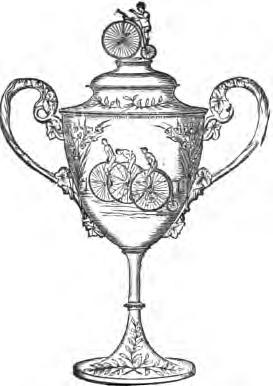

![Forsyth's "Acm[=e] Shirt"](https://openoldbooks.sgp1.digitaloceanspaces.com/books/scottish-football-reminiscences-and-sketches/images/illus099.jpg)