ADULTERATION OF FOOD
National Loss from Adulteration—“Adulterated” Electricity—The Beer
Conner—Conflict of Evidence—The Notice
Dodge—Preservatives—Standards for Food—Court of
Reference—Administration of the Law.
To label the adulterator of food as a criminal would, in the majority of
cases, be too harsh a sentence, but in the worst forms of
adulteration—those in which food that is positively bad is made to appear
good—he more than deserves the title. Although in the larger proportion
of instances the actual pecuniary loss inflicted upon the consumer by the
sale of adulterated food may be but trifling, the loss suffered by the
community collectively through various forms of petty frauds of this
nature reaches an enormous total in a year.
Some idea of the extent to which the public is thus defrauded may be
gathered from the instructive figures published some years ago by
Professor Long in the Nineteenth Century.
In his article it was estimated that 1,400,000,000 gallons of milk were
produced annually in the United Kingdom, of which over a third was sold in
the form of milk, the remainder being converted into butter and cheese.
Assuming that a tenth part of the milk were adulterated by the middleman,
the loss to the farmer would represent over £600,000 per annum. There is
little doubt but that this calculation underestimates the amount of milk
adulterated by the addition of water or by the separation of the cream.
The evidence given before a Select Committee of the House of Commons
appointed to deal with the Food and Drugs Acts suggests that probably
one-fifth of the butter imported into this country is adulterated, while
it is almost impossible to form any estimate of the loss to the consumer
from adulterated groceries and from the sale of foreign meat as “best
English.”
With few exceptions, nearly everything we eat or drink—in fact, nearly
everything we buy—is liable to be substituted for what we want, or to be
mixed with something else that we do not want—at all events, at the price
we have to pay for it.
There is thus considerable excuse for the amusing blunder made by a
counsel who was cross-examining Mr. Siemens, the electrical expert, in a
case in which there was a dispute about the working of some electrical
plant.
“I think, Mr. Siemens, that you have had a long experience in connection
with electricity?”
“That is so.”
“Well, now, I want you to tell me whether in the course of all your
experience you have ever known electricity to be adulterated?”
“In only one instance,” replied the witness.
“And when was that?”
“In the phrase ‘greased lightning,’” was the instant witty reply of the
electrical expert.
But there are few commodities which can be bought or sold that have the
clean record of electricity. In every direction, competition is daily
becoming keener, and rival firms “cut” the prices, each forcing the other
to sell either with the minimum of profit or to stop selling altogether.
Under these conditions there is a strong temptation for a small firm in
danger of being crushed out of existence by its competitors to avail
itself of the additional profit afforded by adulteration, and thus be able
to sell its goods at a lower price than its more scrupulous rivals.
In many cases the adulterated articles are sold unknowingly, the shopman
being tempted by the offer of an alleged genuine product at a very low
price, while the foreign manufacturer who supplies him with the goods
cheerfully accepts the risk of prosecution, well knowing that he cannot be
brought to book.
Frequently the adulteration is most skilfully effected, and every fresh
advance in the chemical methods of detecting foreign ingredients is
scientifically met by the adulterator. The old gross forms of adulteration
are, for the most part, things of the past, save, of course, in the case
of foods like milk, which contain much water, and where the temptation to
increase the amount is frequently too strong to be resisted.
The old story of the grocer who called his apprentice to prayers after
telling him to “water the treacle and sand the sugar,” has lost its point,
at all events as regards sanding the sugar. The fraud is too palpable. And
the same may be said of other unskilful forms of adulteration, such as the
addition of gypsum to flour, chalk to milk, starch to butter, and so on.
In short, adulteration of to-day has become a fine art, and the public
analyst has strong suspicions about many a sample, which he dare not
condemn, since it might possibly be genuine, though of poor quality.
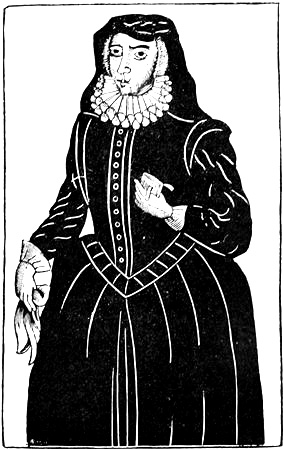
Long before the days of the public analyst there was an official who was,
in a sense, his forerunner, and his methods were simplicity itself. As
might be guessed, our ancestors three or four hundred years ago, were
mainly concerned about the strength of the national beverage—beer, and
they appointed officers who were known as “beer conners,” to visit the
different ale-houses, and to taste and examine the liquor that was being
sold. According to Mr. Sidney Lee, John Shakespeare, the father of
William, was appointed an ale-taster in 1557.
The test to be applied needed no complicated apparatus or chemical
reagents—nothing beyond a pair of leather breeches, which were called the
“conning breeches.”
The beer conner would put these on, and having poured a little of the ale
on to a wooden bench would sit down in it and patiently await the result.
If after a given time he found that he was glued to the bench, the ale
contained sugar, and was condemned as adulterated, but if he could rise
without an effort the beer was passed as pure.
The oath to be taken by these beer tasters or conners ran as follows:—
“You are the chosen ale-tasters of this town. You shall well and truly
serve his Majesty and this town in the same office. You shall at all
times try, taste, and assize the beer and ale to be put to sale in
this liberty, whether the same be wholesome for man’s body, and
present those that offend, or refuse to suffer you to assay it. You
shall give your attendance at all courts, and present from time to
time the offenders, and all things else belonging to your office you
shall do and execute. So help you God.”
A public analyst of to-day might well envy the easy lot of the beer
conner, who had no difficult problems to solve, and who, if he condemned
ale that had sufficient “body” to hold him to his seat, was sure of the
support of the government officials.
To the layman it may seem strange that a conflict of opinion should ever
occur between analysts with regard to the genuineness of a sample of food,
and that it should ever be possible for an accused salesman to bring
rebutting scientific evidence. A consideration of the following points,
however, will make this clear, and show how such different opinions may be
honestly held. (1) Food products may consist of entirely dissimilar
substances, which may readily be distinguished by suitable tests, as, for
instance, pepper and salt; or (2) the food may contain a special
constituent which is either entirely wanting or only present in a smaller
proportion in other allied products. It is mainly with foods of this
latter description that the difficulties of the public analyst arise.
For instance, butter fat contains a large proportion of certain volatile
compounds, which are either absent or are present in much smaller quantity
in the fats used to adulterate butter; and thus an estimation of these
volatile compounds affords a means of judging of the purity of the butter.
Thus, if only half the normal quantity of volatile compounds is present,
the conclusion is drawn that the butter is adulterated with an equal
quantity of foreign fat, and so on.
The task would not be difficult if butter fat were always constant in
composition; but, unfortunately, there are often wide variations in the
proportion of ingredients, and it frequently happens that the public
analyst has to give his judgment upon a sample, which might either be a
butter very rich in the characteristic volatile substances and adulterated
with 10 per cent. of foreign fat; or it might be a genuine butter that was
very deficient in these volatile compounds.
This, then, is the dilemma. If the analyst condemn such a sample on the
strength of this and other tests, he may be confronted by the evidence of
other analysts who will give their opinion that the butter is genuine; and
if, then, the matter be referred to the Government analysts, their report
may or may not corroborate his, and in the latter alternative the
authority instituting the prosecution may have to pay heavy costs.
It is well known that butters are scientifically blended with foreign fats
so as to fall just on the border line between abnormal and adulterated
samples, and the analyst is frequently compelled to pass such a butter as
genuine, lest he should unwittingly do an injustice.
A large proportion of Dutch butter is abnormal in this respect, and has
been so frequently condemned as adulterated by English chemists, that
protests have been made by the leading Dutch analysts.
The reason for the abnormal character of Dutch butter appears to be that
the cows are left too long in the fields, for as soon as they are stalled
for the winter, the character of the butter gradually becomes normal
again.
These details have been given at some length, for they are typical of the
problem which the public analyst has to solve in the case of many natural
products, i.e., to decide whether a food is adulterated or only
naturally of poor quality.
There is no special difficulty in the analyses; it is a question of
interpretation of the results.
The chief culprit in the matter of the adulteration of butter is the small
dealer, who buys margarine from the margarine manufacturer and skilfully
blends it with butter in a proportion that is small in a single instance,
but is sufficient to bring him in a handsome profit in the course of a
year.
Owing to the difficulty of detecting such small additions of margarine to
butter (which, as was explained above, is due to the variations in the
natural product) a most ingenious device has been adopted in some
countries.
This is the addition of a small quantity of a “latent colour” to the
margarine, so that, although it appears yellow, like butter, its colour
can be changed by the application of a single reagent to pink or blue, and
its presence thus revealed in a mixture of butter and margarine.
Several years ago an attempt was made in some of the United States to
compel manufacturers of margarine to colour it pink, so that it could not
possibly be palmed off as butter, but as this law was found to have the
effect of stopping the sale of margarine altogether, it is no longer
enforced.
Various substances have been suggested as suitable for the latent
colouring matter, such as starch, which turns blue on contact with iodine,
and certain colourless coal-tar derivatives which change to pink upon the
addition of an alkali or acid.
There are numerous objections to the use of some of these compounds. Thus,
starch may be washed out of the margarine by a simple treatment with
water, while a coal tar derivative that turns pink on contact with an
alkali is too sensitive an ingredient for everyday use.
A far more satisfactory substance than any of these was found in the oil
derived from sesame seed. This is a wholesome oil with a fragrant odour
and pleasant taste, which is largely used as a salad oil in certain parts
of Europe. It is one of the few vegetable oils that can be detected by
means of a special colour reaction; for on treating the oil with a
particular reagent it gives a bright rose colour, and the test is so
sensitive that it will detect the presence of even a small percentage of
sesame oil in other fats.
A compulsory addition of a small amount of sesame oil to all margarine,
therefore, affords an absolutely certain means of recognising the
margarine subsequently. The first country to adopt this plan was Germany,
where a few years ago a regulation was made that all makers of margarine
must use 10 per cent. of sesame oil with the other ingredients. Belgium
has also adopted the same plan of earmarking the margarine produced in the
country, and has thus simplified in one direction the problem of detecting
petty adulteration.
A similar problem has to be solved in dealing with milk, the proportion of
cream in which varies naturally to such an extent that it is possible to
add a considerable amount of water to a rich milk without bringing it
below the level of a poor but genuine milk. When such a sample of milk has
been condemned, the analyst has often been confronted by an appeal to the
cow herself.
But even the specious notice which was for years to be seen over a dairy:
“Our customers may come and see the cows milked into their own jugs,” is
no proof that the fluid they yield is necessarily “milk.”
For the up-to-date dairyman has discovered how to adulterate the milk at
the other end of the cow. He has found that by giving her certain food in
excess he can make her produce an abnormally large quantity of milk which
lacks the right proportion of cream and other constituents of genuine
milk. It has more than once been ruled by a bench of magistrates, and more
recently in the High Court, that all is not milk that comes from the cow,
and that a customer who asks for “milk” is entitled to get something with
certain definite characteristics.
Even in cases where there would be no such escape from the results of the
analyst’s certificate, the ingenious adulterator is by no means at the end
of his tether, but has numerous dodges upon which to fall back.
One of the best known of these is the “notice dodge,” examples of which
must frequently have been seen by everyone.
A notice, often in very small type, is put up to the effect that the
seller will not guarantee that the goods he sells are genuine. Then when
he is summoned for selling, say, adulterated milk, he produces his notice
and claims that that indemnifies him.
A very amusing instance of this notice dodge being carried to its logical
conclusion was witnessed in Merionethshire a few years ago, when the Chief
Constable of the district reported that all the shopkeepers had put up
notices stating that “All goods sold here are adulterated.”
A similar deadlock occurred, in 1903, in Buckinghamshire, and there the
County Council forbade such notices being exhibited, though it is doubtful
whether it was within its legal rights in so doing.
The plausible excuses put forward by the perverted ingenuity of the
adulterator to escape conviction are innumerable. Mistake on the part of
the seller, warranty with goods obtained from abroad, and the shop-boy as
scapegoat are among the most common forms of defence.
The extent to which a legal quibble may be carried reached its limit
perhaps in a prosecution that occurred a few years ago. In a certain
village there was only one shop, and that was a co-operative store, of
which the whole of the villagers were members. A county inspector bought
“pure” coffee at this shop, and on analysis the coffee was found to
contain 90 per cent. of chicory, and eventually the manager of the store
was fined.
For the defence, it was urged that the villagers were themselves both
shopkeepers and purchasers, and, therefore, could not be prejudiced by the
sale of adulterated goods. The inspector, however, was not a member of the
co-operative store, and on this ground the prosecution was successful.
But if one of the villagers had bought the coffee, it is doubtful whether
any fine could have legally been inflicted, for it would have been a case
of co-operative adulteration.
A very common method of avoiding the attention of the inspector is a
refusal to supply him with the goods. In a small town the dishonest
tradesman will be on his guard against suspicious looking individuals, and
should he consider them to be agents of the inspector will refuse to serve
them.
A fine is imposed for refusal to sell, but this usually involves the
shopkeeper in considerably less expense than a fine for selling
adulterated goods, while he retains his character as an upright citizen.
The question of preservatives in food is typical of the present chaotic
state of the law with regard to the adulteration of food.
A Parliamentary Commission sat for a long period, and finally issued a
report, the recommendations of which were allowed to remain
recommendations, and every analyst and public authority must still put its
own interpretation upon what is and what is not permissible.
Preservatives are undoubtedly used in an absolutely haphazard way. Milk is
preserved with all kinds of substances, chiefly boric acid, and at one
time, formalin; butter and hams with boric acid; and jams with salicylic
acid and similar compounds. Thus, at the end of the day, an unsuspecting
individual may have consumed a considerable quantity of various antiseptic
agents.
Everyone will agree that preservatives of every kind ought to be
prohibited in milk, the more so since it is the staple food of young
children and invalids, and in the case of butter the presence of a
preservative should be notified, as recommended by the Commission.
A little boric acid in ham probably interferes much less with the
digestion than an excess of salt, but it is right that the consumer should
be given his choice of spoiling his own digestion in the way that pleases
him best.
An objection brought against such notifications of preservatives in food
is that they would convey no meaning to the public, but the commercial
travellers of rival firms would certainly not lose the chance of making
capital out of the notices of their opponents.
Nearly all the non-alcoholic wines and lime juice cordials in the market
are heavily preserved. But the fact that the public demands an article
that shall not ferment after the bottle has been opened, and that
prosecutions for the use of preservatives are spasmodic, makes it
impossible for the manufacturer to discard them. If he did so under the
present conditions, he would no longer be able to compete with other
firms who continued to take the risk of prosecution.
Moreover, it is no uncommon thing for the defendants in these cases to
call as witnesses on their behalf gentlemen holding positions as medical
officers, and cases that are well defended are almost invariably
dismissed.
The manufacturer of non-alcoholic wines stands in a very difficult
position. If he employs preservatives in sufficient quantity effectively
to stop fermentation he is liable to be prosecuted under the Food and
Drugs Act. If, on the other hand, no preservative is used, the liquid is
liable to ferment, and the manufacturer may then be prosecuted for selling
a fermented liquid without a licence.
Hence it follows that if the use of preservatives in lime juice cordial
and the like is to be prohibited, the law ought to be rigidly enforced and
not applied in the present haphazard fashion, which allows one
manufacturer to sell his goods unchallenged for years, and drags his
competitor into one police court after another.
It is hardly fair that matters which are so much questions of opinion
should be left to be fought out in the police courts before magistrates
who have no technical knowledge to deal with them.
The position, however, was well put by a magistrate a year or two ago in
giving his decision in a prosecution for the sale of lime juice cordial
preserved with salicylic acid. Evidence was given by chemists and medical
men for the prosecution that such an addition was injurious, while a
number of scientific witnesses of equal eminence were present to support
the view of the defendants.
The magistrate, without calling upon the defence, dismissed the case. He
held that there was an irreconcilable conflict of opinion between the
purists who would allow no preservatives whatever in such products and the
manufacturer who had to meet the popular demand for such an article that
would keep after it had been opened, and he considered that it had not
been proved that the amount of salicylic acid was in excess of that needed
for that purpose. Incidentally he remarked that if notification of the
addition of such preservatives on the label were made compulsory, “then
the fun would begin.” You would see notices of So-and-so’s lime juice
preserved with sulphide, “harmless, but with a smell of bad eggs.” Or of
So-and-so’s lemon squash, “preserved with salicylic acid, refreshing, but
ruinous to the digestion.”
One of the recommendations of the Departmental Committee of 1899 was that
means should be provided for the establishment of a separate Court of
Reference, which should deal with the question of preservatives in food
and decide which should be permissible and in what quantities they should
be allowed.
Such a Court of Reference, in which there should be representatives not
only of the medical and chemical professions, but also of the large
manufacturers and dealers in food, would tend to remove the present state
of uncertainty on this point.
Looking at the matter from a practical point of view, it seems to be an
impossibility to eliminate the use of preservatives from all articles of
food, and it would be a far more satisfactory course if a via media
could be found between prohibiting their use absolutely and leaving it to
the manufacturer to dose his products with any quantity of any antiseptic.
Evidence could be heard by such a body of official referees, who, after
taking into consideration the views of all concerned, could from time to
time issue authoritative regulations, which would be binding upon
everyone.
It should also be part of the duties of such a Court to see that the
regulations were rigidly enforced, so that a manufacturer who carried them
out should not suffer by the competition of another manufacturer who (as
at the present time) ran only a trifling risk of prosecution in ignoring
them.
Another advantage of such a proposed Court of Reference would be that the
manufacturer would no longer be liable to a criminal prosecution on points
on which there is no agreement between the highest scientific authorities
in the country.
Under the present conditions, a town or borough council, using the
ratepayers’ money, may attempt to get a decision on the subject of
preservatives in an ordinary police court. The manufacturer, if he is rich
enough to pay for the necessary expert evidence, will probably succeed in
getting the case dismissed, as, in fact, has frequently been done.
But the magistrates’ decision carries no finality, and is not binding upon
anyone else, so that the borough council may raise the question again,
and prosecute the same firm for the same alleged offence in the same
court. If, instead of selecting the same firm of manufacturers, which
would have the appearance of vindictiveness, they bring an action against
another firm which cannot afford the £200 to £300 required to win an
action of the kind, and the case is tried before another magistrate, they
may succeed in getting their victim heavily fined, and justice would thus
be reduced to the absurdity that, while one magistrate held that there was
no offence, his brother magistrate decided that a criminal offence had
been committed. It may, perhaps, be mentioned that this is no imaginary
picture, but is based on actual occurrences.
Another question which has been the subject of almost as many conflicts as
the addition of preservatives is the colouring of preserved peas with a
small trace of copper.
Many of the prosecutions have been successful, but quite as many have been
dismissed. The public demands a green colour in the preserved peas it
purchases, and it is apparently impossible to have this without the
addition of copper.
Formerly a vigorous campaign was carried on in France to prevent any
addition of copper whatsoever, but it was found to be impossible to
enforce its absence, and the attempts to do so there have long been
abandoned.
A better course than spasmodic prosecutions, frequently abortive, would be
to fix a limit to the amount that might be used, and to render it
obligatory upon the manufacturer to state prominently upon the label that
the peas were coloured with copper.
It may be mentioned in this connection that Professor Tunnicliffe issued a
minority report to the main report of the Departmental Committee, in which
he recommended that the amount of metallic copper to be allowed in
preserved vegetables should not exceed half a grain per lb., and that its
presence should always be declared.
The colouring of sugar by means of tin salts stands upon a very different
footing, for in that case the colouring is done with the definite object
of deceiving the purchaser.
At one time, pure Demerara cane sugar, which was brown from the presence
of certain vegetable impurities, had a great reputation for its fine
flavour, and still fetches a higher price in the market than purified beet
sugar.
This reputation has been traded upon by certain unscrupulous sugar
dealers, who have discovered how to treat white beet sugar with a tin salt
or with aniline dye-stuffs so as to give it the appearance of the old
genuine Demerara cane sugar.
At present it is practically impossible to distinguish, except by the
flavour, between absolutely pure beet and cane sugars, but the dyed
product is a very different substance from the brown Demerara sugar, and
there have been numerous convictions for the fraudulent substitution of
the one for the other.
The presence of traces of arsenic in food products is a very much more
serious matter than the presence of a small amount of copper.
Arsenic is undoubtedly a cumulative poison, and the effects produced by
the long-continued repetition of small doses were shown by the numerous
fatal cases of poisoning caused by drinking arsenical beer, in the
poisoning epidemic a few years ago.
It may be safely asserted that for twenty years before that outbreak it
had never occurred to anyone to test beer for arsenic. The possibility of
its being present ought to have suggested itself, but apparently it never
did.
The origin of the arsenic in the beer is obvious, when it is remembered
that glucose is one of the substances commonly used in the brewing of
beer, and that glucose is prepared by treating starch with sulphuric acid,
which, is in turn, frequently made from iron pyrites containing arsenic.
After the source of the arsenic in the Manchester beer had been
discovered, an arsenic “scare” set in. Every possible description of food
was examined, and traces of arsenic were found in many hitherto
unsuspected places.
Malt, dried in kilns and allowed to come in contact with the fumes from
coal, invariably contains an appreciable amount of arsenic derived from
the coal, and even malts prepared with the greatest care usually contain
about one part per million of arsenic. For all practical purposes,
however, so small a trace is negligible.
The members of the Royal Commission which was appointed to examine and
report on arsenic in food were strongly divided with regard to whether any
trace of arsenic should be permitted in food. Some were in favour of
absolute prohibition, while others recognised that, even if this were
done, the rule could never be rigidly enforced. Hence their report bears
evidence of a compromise, for it states that although the Commission had
been unable to discover that such minute traces of arsenic were injurious,
yet they were unwilling to admit that any quantity, however small, was
permissible in food.
Subsequently they recommended that a particular test should be used which
would ensure that arsenic in food and drugs should not exceed an
infinitesimal trace, and that frequent tests of raw and finished materials
should be made.
These recommendations are now widely adopted, and it is highly improbable
that another epidemic of arsenic poisoning will ever occur again in this
country.
No better illustration of the vicious circles in which adulteration may
move can be found than in the practice of certain manufacturers of jam of
the cheaper kind. Apple pulp is a common constituent of jams which conceal
their identity under another name. Now, in the case of raspberry jam, for
example, it is necessary to have the seeds as well as fruit pulp, and
these seeds may be bought very cheaply from the makers of fruit essences.
The best quality of these essences is prepared by mixing the fruit with
alcohol and distilling the mixture, the spirit carrying over with it the
ethereal oils to which the fruit owes its characteristic odour and
flavour. Cheaper fruit essences are imitated chemically by making the most
important of the compounds in the genuine ethereal oils, and dissolving
them in spirit; but they are usually coarse in flavour, and do not bear
comparison with the real product. Where intermediate grades are wanted,
mixtures of the real and synthetical essences are often blended, and these
frequently imitate the natural product so closely as to be only
distinguishable by a trained sense of smell and taste.
In the preparation of the genuine fruit essences a residual pulp,
containing the seeds and woody fibre of the fruit, but devoid of all
flavour or aroma, is left behind, and it is this which the unscrupulous
jam manufacturer makes use of in preparing a cheap jam, in which the
seeds, at all events, are genuine. Then, in order to give more flavour to
his product, he buys from the essence maker a flavouring essence, a small
part of which may have originally been derived from the fruit that has
given him the pulp and seeds for his jam.
The question of adopting a fixed standard for all natural products is one
that has been widely discussed. It would have the advantage of simplifying
the issue to be decided by the analyst and of preventing possible errors
of judgment in the case of samples upon the border line between
undoubtedly genuine and undoubtedly adulterated products. On the other
hand, the legal fixing of a standard gives security to a skilful
adulterator, who is able to make his goods fall within the limit of the
figures given by genuine products of low quality.
Although most of the milk in large towns consists of the mixed products of
many herds of cows, and thus tends to have a percentage of fat only
slightly higher than that required by the law, there is but little doubt
that a considerable proportion is scientifically watered and thus brought
down to a limit of richness, which is only a little above that which will
enable it to pose as milk straight from the cow.
Another instance of this effect of standardisation was seen in Bavaria,
where a few years ago a minimum analytical figure was fixed for lard, with
the result that the American lard merchants sent to Germany large
quantities of lard which answered the requirements of this test, but were
heavily adulterated with beef fat.
However much an analyst may deprecate the fixing of standards for such
products as milk and butter, he is forced in practice to fix a standard
for himself. The Society of Public Analysts, recognising this, passed a
resolution that milk to be regarded as genuine must contain not less than
11½ per cent. of solid matter, and of this not less than 3 per cent.
must be fat.
This fixes the standard for milk at a very low limit, and undoubtedly
leaves a margin for the watering of rich milks.
On the other hand, Dr. Vieth, whose experience in the examination of milks
was probably unequalled, wrote in reference to this standard: “I think it
is very judiciously fixed, but in upholding the standard of purity, it
should never be forgotten that the cows have never been asked for nor have
given their assent to it, and that they will at times produce milk below
standard. A bad season for haymaking is, in my experience, almost
invariably followed by a particularly low depression in the quality of the
milk towards the end of the winter. Should the winter be of unusual
severity and length, the depression will be still more marked. Long spells
of cold and wet, as well as of heat and drought, during the time when cows
are kept on pasture, also unfavourably influence the quality and, I may
add, the quantity of milk.”
Mr. H. D. Richmond, who had also had the opportunity of examining an
immense number of samples of milk, considered that the standard of 3 per
cent. of fat was a reasonable one for the mixed milk of a whole herd, but
considered that milk ought not to be pronounced as watered unless the
solids other than fat were well below 8·0 per cent., except upon evidence
derived from other tests.
In the Sale of Food and Drugs Act of 1899 powers were conferred upon the
Board of Agriculture to make regulations determining what deficiency in
the proportion of constituents of milk, cream, butter, or cheese should
raise a presumption that the product was not genuine until the contrary
was proved. Acting under this section of the Act, the Board adopted the
minimum limit of the Society of Public Analysts, so that now any milk
containing less than 3 per cent. of fat and 8·5 per cent. of cream is
regarded as adulterated unless it can be proved by the vendor that it is
genuine, and it thus has the effect of transferring the burden of proof
from the prosecution to the defence.
As was mentioned above, the whole tendency of recent legal decisions is
towards enforcing this standard. For instance, in a case in which there
had been “an appeal to the cow,” it was held by the present Lord Chief
Justice that: “If, however, the article produced, although it is produced
by the cow, is the result of an abnormal condition of things arising
either from disease, or, as here, from unsound treatment of the cow, I
think that does amount to evidence upon which the magistrates can find the
article is not of the nature, substance, and quality of the article
demanded.”
A want of system characterises the whole administration of the Food and
Drugs Act, and many of the local authorities are unwilling to see that an
adequate number of samples are taken.
For instance, only a few years ago, Lancashire, with a population of over
a million and a half, was content with 1,755 samples, or one to each
10,000 people, while in Essex, with a population of over half a million,
the samples taken were 686.
In Bury St. Edmunds no samples at all were taken during the four years
ending 1899, and a similar lax administration of the law in many other
places might be cited.
Some places pride themselves upon their freedom from adulteration, because
out of the paltry number of samples taken by the inspectors, a quarter of
the number or less may have been adulterated.
Even when the limited number of samples is properly taken, there is often
a scandalous inadequacy and frequent inequalities in the amount of fine
inflicted.
For instance, a milkman was fined one shilling at Margate for the sale of
watered milk—a fine grossly inadequate to take away temptation; while in
other courts we find fines of a pound or more imposed for exactly the same
offence.
The remedy for this would be to have a fixed scale of fines for each
offence. Another direction in which legislation is needed is the
protection of the middle-class buyer. At the present time a shopman runs
little or no risk in selling adulterated food to private houses. And the
greater the vigilance of the local authority in protecting the buyer over
the counter, the greater is the temptation to the shopkeeper to make an
illicit profit out of ordered goods. Some means might well be provided for
the examination of purchases in transit.
As a rule, the public is apathetic in the matter of adulteration, and
errors of judgment, frequently inevitable under the present system, on the
part of the analyst have led to his being regarded as the natural enemy of
the tradesman.
If some system of standardisation for food products were generally
adopted, leaving the burden of proof of the genuineness of abnormal
samples upon the seller, and if the element of chance in the
administration of the law were reduced, this prejudice on the part of
tradesmen in general would disappear, although with the dishonest dealer
the public analyst would become more unpopular than in the past.