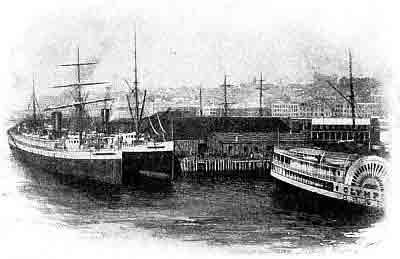
Seattle, the metropolis of Washington, and the busiest
city on the Pacific coast, has a romantic history, as well as
a history of thrift and progress. Thirty-five years ago
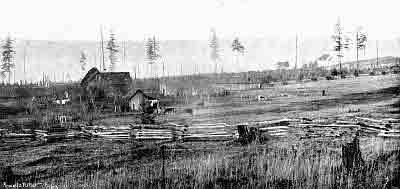
only a few log cabins set on the shore of Elliott Bay,
inhabited by a handful of pioneers. Bears and cougars
danced around their huts, and Indians skulked in lazy
hordes at their threshold. How changed! today the Queen
city is spread over about fifty square miles of land, overlooking
the melodious Puget Sound, and dots the green
borders of three fresh-water lakes with snug cottages.
She has a population of about 85,000, of which a large per
cent are Scandinavians.
The first Scandinavian that visited Elliott Bay, of which
we have any authentic account, was Peter Friberg, formerly
mentioned. Shortly after came C. E. Norager and others
referred to in the previous chapter. Charles John Chilberg
made a survey of the bay in 1865, when only a saw mill and
a sprinkling of shanties marked the presence of white men.
In 1869, Edward Gunderson, a native of Norway, crossed the
Rocky to make Seattle his future habitation, which was then
in its early embryo. The same year, Amund Amunds, born
in Racine county, Wis., of Norwegian parents, removed to
the city from Cowlitz county where he had disembarked two
years prior. Amunds grew opulent and invited the love of
all his associates. He was director and first vice-president of
the Scandinavian American Bank of Seattle, and heavily
interested in real estate. He was an energetic worker in the
Ancient Order of United Workmen, and received the highest
honor—Grand Receiver of the jurisdiction of Washington.
He died four years ago and his funeral was a solemn event.
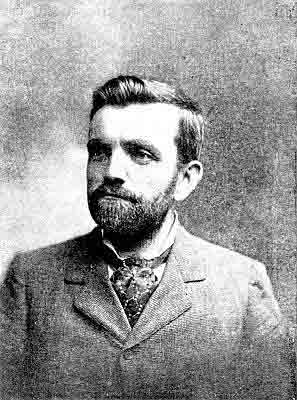
In 1872, Nelson Chilberg, son of Charles John Chilberg,
made an appearance, and three years later his brother Andrew
was attracted to the coast, as referred to in the previous
chapter, and started the first Scandinavian store in Seattle,
in company with J. P. Chilberg. The prospect was glittering
and ere a year had died Nelson joined them in grocery
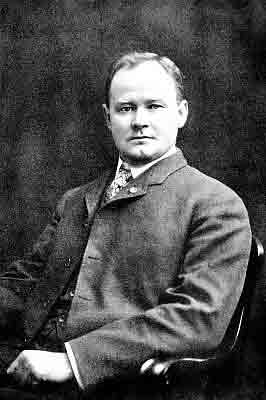
business, the firm being Chilberg Brothers. Andrew Chilberg
soon rose to popularity, became one of Seattle's most
prominent citizens, and an honor to the Scandinavians.
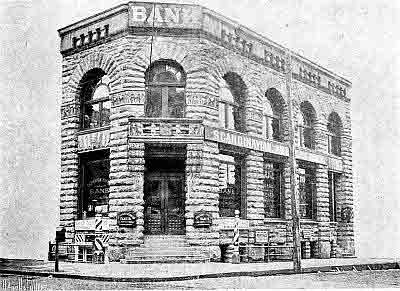
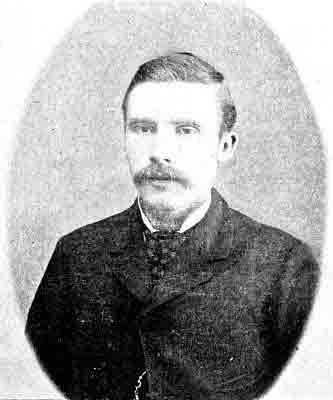
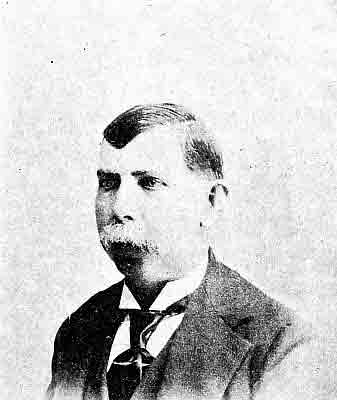
He was born in Laholm, Sweden, March 29, 1845. When
a lad of one year he crossed the Atlantic with his parents,
settling near Ottumwa, Iowa, where he received his early
education in the common schools. In 1860 he left Ottumwa
with his father and older brother, Nelson, for Pike's Peak,
Colorado, remaining two years, then returned to Iowa. In
1863 he crossed the Rocky with a wagon train, arriving in
Sacramento after a journey of five months, September 24th.
His health was harassed by exposure and hardship in crossing
the plains, and as an alternative of recovery worked on
a farm two years. Mr. Chilberg was anxious to complete his
education, and in 1866 returned to Iowa via Nicaragua and
New York. After taking a course in college he obtained a
teacher's certificate and engaged in teaching, but abandoned
the profession after three years of successful experience to
enter a more lucrative position in Ottumwa. In 1857 he journeyed
to Seattle, where he still resides, embarking in grocery
business in company with his brother, the firm being Chilberg
Brothers. Three years subsequent to his arrival in the
city, he was elected to the city council, in 1879 appointed
vice-consul for Sweden and Norway, in 1882 chosen county
assessor, and in 1885 intrusted with the responsibility of city
treasurer. In 1886 he was named city passenger and ticket
agent for the Northern Pacific Railroad, but resigned, 1892,
to accept the presidency of the Scandinavian American Bank
of Seattle. In 1896 he was elected to the board of education,
and the following year assumed the presidential chair. He was
married to an estimable lady, Miss Mary Nelson, in Iowa,
November 5, 1874. They have one son, Eugene, who is a
young man of fine training, being educated in the Seattle
High School, Washington Agricultural College and School of
Science, and Washington State University.
Peter Wickstrom.—With the first brigade of Scandinavians,
Peter Wickstrom marched in the front rank. He
was born in Sweden, 1837, arrived in St. Paul, Minnesota,
1868, and four years later beheld the city of Portland, Oregon,
and the same year located in Seattle.
Louis and Henry Peterson.—The Peterson brothers were
among the early Scandinavians and the first to engage in the
art of photography in the city of Seattle. They were born
in Norway but sailed for America while young boys, arriving
in Chicago, 1857, where they resided nineteen years,
leaving for Seattle, 1876.
Martin C. Mortensen.—Mortensen was a native of Denmark,
and arrived in Seattle the same year as the Peterson
brothers. He came to America, 1868, and two years later
landed in San Francisco, spending six years in that city,
then journeyed northward.
Christian C. Plough.—Vice-Consul Christian C. Plough
is one of Seattle's most highly respected citizens. He was
born in Denmark, 1825, and came to America, 1868, selecting
Chicago for his first stopping place, but after two months of
abode in the Windy City he removed to Nebraska, where he
stayed one year. The Pacific was his aim and thither he
went, disembarked in Olympia, via San Francisco by boat,
1872, where he remained three weeks. Portland, Oregon, had
attracted considerable attention as a city of business prospect,
and Plough again picked together his effects to resume another
journey. He stayed in Portland three years then removed
to Seattle. In 1883 he was appointed vice-consul for
Denmark, served with honor until 1895 when he was compelled
to resign on account of ill health. Christian Geerstsen,
a man of honor and intelligence, came to America in company
with Plough, and also arrived in Seattle together. He was
born in Denmark, 1839.
Ben Jensen, now a resident of San Juan county, arrived
in Seattle when a dense forest clothed the principal streets.
He was born in Norway, came to America while a youth,
and has proved a worthy factor to his adopted country. Ole
Egge, also a native of Norway, has shared the hardships of
the early Pacific. He is a man of intelligence, and enjoys the
respect of his countrymen. His son Peter is a bright man of
mechanical ingenuity, and landed in Seattle with his parents.
In the more recent years, Scandinavians in Seattle have
made great progress in professional and business circles. In
politics, too, they have commanded notice, and in science and
letters attention. E. H. Evenson is the incumbent county
auditor, and H. P. Rude councilman-at-large.
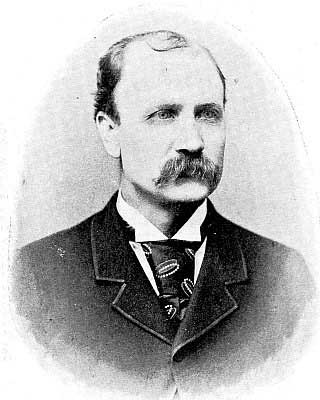
E. H. Evenson was born at Whitewater, Wisconsin, in
the year 1852. His early life was spent on a farm in Waupaca
county, Wisconsin. At the age of 18 he began to teach
in the common schools in his neighborhood, and with the
money thus earned he started on a six years' course at Decorah
College, Iowa, from which he graduated in the spring of
'79. During all this time he taught common schools at intervals,
and during vacations worked in the harvest fields of
Minnesota and earned the money with which to pay his college
expenses. Having finished his course at Decorah College
he entered the State University of Wisconsin, from which he
graduated with the class of '81.
In the fall of the same year, Mr. Evenson secured a position
as teacher in Milton College, Milton, Wisconsin, where
he remained for three years; at the end of that period he removed
to Madison, South Dakota, to fill a place as teacher in
the State Normal School at that city, which position he occupied
for two years; he was then elected county superintendent
of schools for Lake county, in which capacity he served two
terms. At the close of the last term he made another move
west, to Puget Sound, and settled on 40 acres of land near the
town of Kent, where he now resides with his family. He
is at present serving his second term as auditor of King
county.
Mr. Evenson is a firm believer in the "single tax" theories
of Henry George; that is, in placing all taxes on ground
rents. The justice of that method, he claims, is based on the
following self-evident truths:
"1st: That whatever the individual produces, belongs to
the individual, and whatever the community produces, belongs
to the community.
"2d: That the general rise in land value, commonly
called ground rents, is caused by the growth of the community
and its competition for work, and therefore, by right,
belongs to the community.
"3d: That, as taxes are needed for the welfare of the
community, it is only in accordance with natural and divine law
that the community makes use of this common fund before it
resorts to the confiscation of what properly belongs to the individual.
"4th: That it is not only unjust in principle, but injurious
to the last degree in practice, that one man is taxed more
for making land useful and employing labor on it, than another
is taxed for holding land idle and keeping labor off it.
"5th: That to tax labor or its products, is to discourage
industry.
"6th: That to tax land values to their full amount will
compel every individual controlling natural opportunities to
either utilize them by the employment of labor, or abandon
them to others; that it will thus provide opportunities of work
for all men, and secure to each the full reward of his labor."
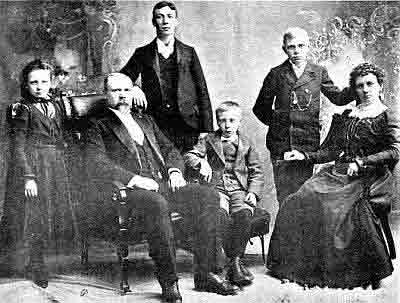
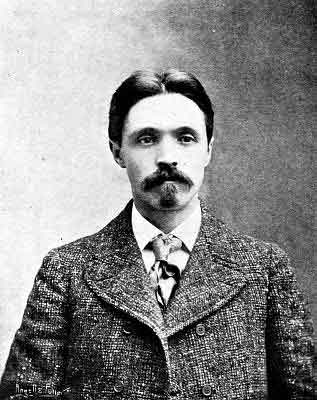
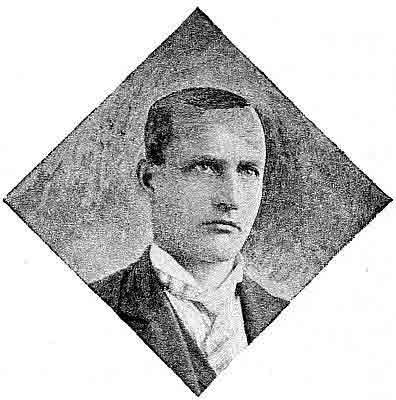
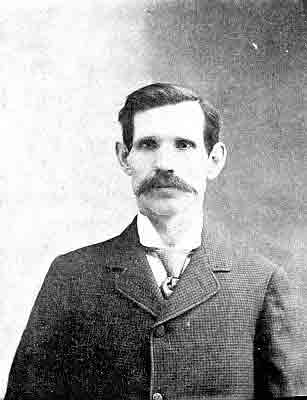
H. P. Rude, the fearless councilman-at-large, of Seattle,
was born in Toten, Norway, March 4, 1861. He graduated
from the public school at the age of fifteen, later took a course
in higher education at a private institution. From boyhood
he manifested native pluck which his career plainly reveals.
Unlike most boys, he spent his leisure studying and learning
the tailoring trade. Seeing that the seat of his birth
being too narrow for cosmopolitan development, he planned
for the national capital against the will of his father. In a
confidential manner he obtained two crowns from his grandfather,
and under veil of night walked forty-two miles, arriving
at Dahl Station, Eidsvold, at ope of dawn, from whence he took
the train to Christiania. Though only a youth of fifteen, he
found employment in a leading tailoring establishment, and
attended school during evenings. In 1881 he emigrated to
America, after making a short stop in Chicago, he proceeded
to Redwing, Minnesota, to visit relatives who lived fifteen
miles out in the country, in the state of Wisconsin. Unable
to articulate an English sentence, "but where there is a will
there is a way," crossed the river with an Indian, found the
road by means of a guide-post, and stalked the unknown distance.
After a pleasant reunion with friends and relatives, he
returned to Redwing, worked for some time at his trade, then
embarked in business for himself. His next move was to
Minneapolis, where he found employment in a fashionable
store. He joined the Tailors' Union, having a membership of
200, and within a year became its president, and subsequently
was chosen a delegate to the Trade and Labor Assembly. He
resigned from the Union to engage in business of his own
which he followed for some time. After disposing of his interests
in Minneapolis, he traveled in the surrounding cities, then
crossed the Rocky, arriving in Seattle, 1890, during the
transient boom of Anacortes, which attracted him to that place,
but returned to Seattle ere long. He worked for awhile as
cutter, then started a tailoring establishment of his own.
For years he had been alert to public affairs, and in 1896
was elected councilman from the Sixth Ward, the fusion
stronghold, with a large majority. He was renominated by
the Republican party, but councilman-at-large, and elected
with an increased vote. On resignation of Mayor Wood, he
was instrumental in placing Judge Thomas J. Humes into the
mayor's chair. To the credit of Mr. Rude it must be said
that he has ascended to his political honors unsought, and
that his record is emblematic of honesty and ability. He has
been opposing the perpetuity of the gambling hells in the
lower strata of the city in such a manner that even his political
enemies had to commend his course. His famous resolution
made the tenderloin district shiver with fear, while
honest men and women bowed with gratitude. The following
is taken from a leading daily of Seattle:
"H. P. Rude, councilman-at-large, is entitled to great
credit for his endeavor to put a quietus to certain classes of
crime so often indulged in the various places of resort in the
lower part of the city."
Mr. Rude's influence among the members of the city
council is made conspicuous by his representation on the
several committees. He is chairman of the police license
and revenue committee, and a valuable member on the committees
of finance, corporation, labor, public buildings and
grounds, and harbor and wharf.
He was married, 1881, in Minnesota, to Miss Lina Sophia
Larsen, a lady of lofty character, to whom he was betrothed
in Norway. She was born in Eidswold, November 24, 1863,
of highly respected parents, and emigrated to America a few
months subsequent to the arrival of her husband. They have
four children, Henry M. Rude, born in Wisconsin, March 14,
1883. The other three are natives of Minnesota, George A.
Rude, born May 3, 1885, Lillie Palma Rude, February 24,
1887, and Morris O. Rude, April 10, 1889.
J. H. Ekstrand, a true son of Sweden, and an ex-minister
of the M. E. Church, is a Seattle pioneer. He came to the
United States more than two scores of years ago, and has been
influential in both church and political circles.
E. A. Seaburg, a native of Sweden, has likewise given
keen vigilance to public affairs, always a stalwart republican.
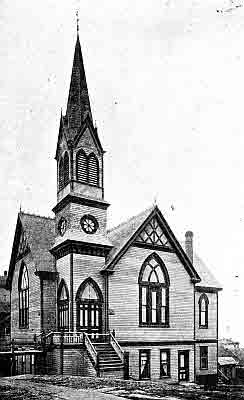
As regards men of scholarly attainment, Rev. M. A. Christensen
ranks among the most polished on Puget Sound. He
is an accomplished linguist and an eloquent pastor of the
Emmanuel Lutheran Church. H. M. Korstad, a graduate of
the University of Washington, is also master of several languages
and a deep student of ethics and psychology. He
was born in the United States, but his parents hail from Valders,
Norway. His sister, Bertha Korstad, is a prominent
teacher in the public schools of Kitsap county.
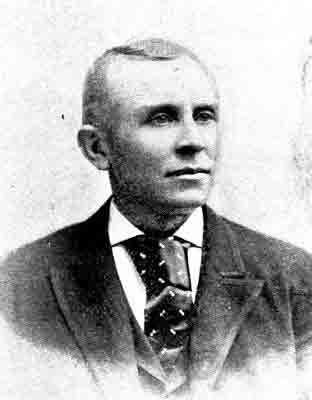
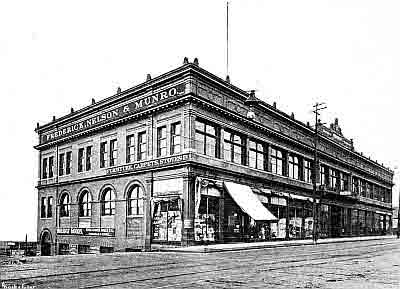
N. B. Nelson.—Very few have been more successful in
business than the personage in question—N. B. Nelson—of
the firm, Frederick, Nelson and Munro. He is a man of a
lucky mixture—business, integrity, and sociability. Mr.
Nelson was born in Kristianstad, Sweden, July 31, 1857, and
like most boys in that country received a thorough schooling.
From boyhood he had nursed a liking to see America, and in
1875 landed in Colorado, minus means, a stranger in a new
world, and worst of all unable to converse with the general
public, but picked up the language with marked rapidity.
He bent his energy to farming, following the pursuit for
several years in Garfield county, but at the same time gave
keen eye to public affairs, and served the people as county
commissioner for three years. His attention was engrossed
with the progress of the Pacific, and thither he journeyed,
1891, and shortly after embarked in furniture business on
Pike street in a store less than twenty by sixty. At present
the firm of Frederick, Nelson and Munro occupies the Rialto
Block, in the very heart of the city, covering 105,400 square
feet, more than two and a half acres of household goods.
The traffic of the firm is immense, exceeding every establishment
of its nature north of San Francisco. Mr. Nelson was
married, 1895, to an accomplished young lady, Miss Teckla
Johnson, born in Ronneby, Blekinge, Sweden. They have
two boys, Frederick Creigh Nelson and Chester Munro Nelson.
Axel H. Soelberg, bank cashier and a respected citizen of
Seattle, was born at Ness Hedemarken, Norway, on March 2,
1869. He received a common school education, graduating at
the age of fourteen. In 1884 he secured a position in the
store of Jevanord Brothers in Brumundalen, with whom he
remained until in the spring of 1888, when he emigrated for
America. He arrived in Minneapolis on the morning of May
17th. A short time previous, a number of Norwegian-American
citizens of Minneapolis had organized the State Sash
and Door Manufacturing Company, and Mr. Soelberg was
offered the position as book-keeper a few days after his arrival
in the city. He served in this capacity for about two years,
then was elected secretary of the firm, and two years later vice-president.
In the spring of 1892, when the Scandinavian American
Bank of Seattle was organized, he was tendered the
position as book-keeper in the bank, and accepting, Mr. Soelberg
found himself in Seattle on one of the first days in April
of that year. At the annual meeting in 1894, he was elected
cashier of the bank, which position he now holds. Mr. Soelberg
is a man of literary aptitude as well as of business
capacity, has contributed largely to the Seattle Daily Times
and other leading papers. He could have won laurels on the
field of letters as well as business notice in the world of traffic.
In January, 1898, he was married to Miss Olga Wickstrom,
an accomplished young lady of Seattle. They have a beautiful
home in one of the finest parts of the city.
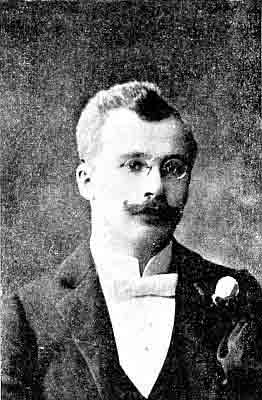
Drs. Ivar and Eiliv Janson.—Every Scandinavian is
familiar with the name, Kristofer Janson, the eminent Norwegian
poet and novelist.
No less a halo of the minstrel car,
Light brave Janson sows afar,
At thy torch superstition weeps,
Dogmas wilt in deftly labored heaps.
The God of nature, love and truth,
Flash on thy wing to Age and Youth,
With gilded rod and silver tongue,
Thou riftst the creeds of ages long.
From "An Ode to the Land of the Vikings."
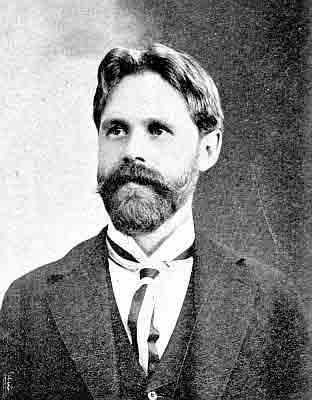
The two doctors in question are sons of this noble
author, Ivar being born in Bergen, Norway, March 1, 1865,
and Eiliv in Sel, Gudbrandsdalen, May 25, 1870. Both received
their early education by private tuition, and in 1882
emigrated with their parents to America, settling in Minneapolis.
They took advantage of the splendid school facilities
offered by that city as preparation for the state university of
Minnesota, where they graduated, 1892, with the degree of
Doctor of Medicine, M. D. Their collegiate records bespeak
scholarly distinction which have been made more emphatic
by subsequent years. Immediately after graduation, Dr. Ivar
Janson was appointed assistant professor in the medical
department at his alma mater, but resigned the chair to take
a move westward, arriving in Seattle, 1895, where he enjoys
an enviable practice, being recognized as a leading surgeon
on the Pacific. His brother, Dr. Eiliv Janson, steered his
fortune to Astoria, Oregon, in the fall following his graduation,
and soon rose to be one of the most beloved physicians
in the city. His ability invited the attention of the public,
and his practice grew immensely, being the largest in that
part of the state. The last year he has spent studying
at the universities of Europe, in Berlin, Dresden, Munich,
Copenhagen and Paris, and will join his brother in Seattle
next June. The two doctors have evinced the genius of their
father, but in a different direction, the sire a poet, the sons
surgeons and physicians. The former has climbed the ladder
of fame, the latter are climbing it. They are both married
to ladies of rare abilities and accomplishments. Mrs. Ivar
Janson is one of Seattle's most gifted vocalists. "Think for
yourself" is a soul-inspiring motto, and is applicable to the
Janson family. In spite of angry opposition and glittering
pelf the rich mind of Kristofer Janson has scattered sunbeams
of truth and thought. He has sought to lift his
countrymen upon the plane of reason and brotherly love. The
sons have imbred their father's soul of thought and sympathy,
which the public echo in more eloquent words than
my pen.
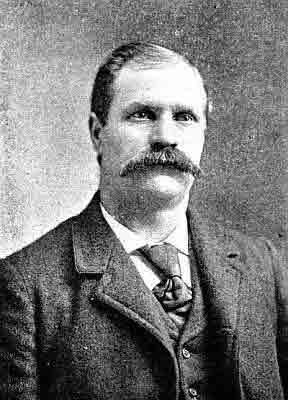
C. N. Sandahl.—Washington is dependent on the science
of horticulture, fruit is her future. Any man willing to bend
his heart to the soil is a valuable exponent in the upbuilding
of the country. Few men have done more in this line than
the well-known floriculturist and nurseryman, C. N. Sandahl,
of 1123, Second Avenue, Seattle. He was born in Horsens,
Denmark, 1857; acquired his education in the public
schools of his fatherland, and in the smiling book of nature,
where real knowledge teems to an intelligent eye. In 1880
he emigrated to America, spent ten years in Ohio and Minnesota,
pursuing his chosen vocation, then journeyed to Washington
and located in Seattle. After a careful scrutiny of the
country he engaged in floriculture and nursery, which occupation
he is following with notable ability. Mr. Sandahl is a
man of business capacity as well as of scientific propensity,
and honest and honorable.
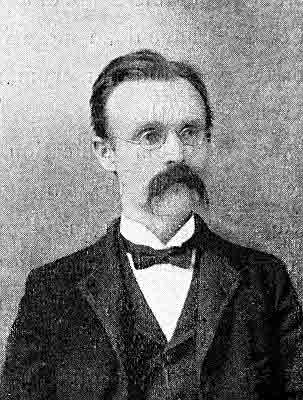
Samuel S. Langland.—Quiet of disposition but deep in
thought, modest in demeanor but aggressive in argument.
The above words unfold Mr. Langland's characteristic, an able
lawyer of Seattle. He was born near Stavanger, Norway,
August 13, 1856, and emigrated with his parents to Minnesota
in the spring of 1867. His early boyhood experienced
the various hardships and vicissitudes incident to pioneer life.
At the age of fifteen he launched out for himself, choosing as
a means of support the apprenticeship of a tailor in Mancato,
in which capacity he labored a year and a half. From whence
he went to St. Paul, a stranger in an unwont sphere. English
defied his tongue, but soon melted to his grasping intellect.
He worked at his trade about two years, but to ascend to a
higher stage of culture, he converted his energy to loftier
aims, worked for his board and attended private school,
paying for his tuition by doing janitor work, sweeping and
keeping the schoolhouse in order. After two years of assiduous
study in this institution, he entered the classical course
of four years in the St. Paul High School which he completed
in three. In the fall of 1881 he was matriculated in the same
course at the state university, graduating with honor in June,
1885. At the commencement exercises he distinguished himself
by delivering the most thoughtful and eloquent oration
of the class, his subject being "Is Man Advancing?" for
which he received compliments from the faculty and leading
men of the state present on that occasion. His struggles at
the university with poverty symbolize an indomitable will.
He toiled evenings and Saturdays sawing wood and doing
other manual labor, his vacations were spent canvassing, or
in the harvest field. After darkness comes sunshine, and the
year following his graduation he was appointed professor of
English Literature in the Augsburg Seminary. In 1887 he
studied law in St. Paul, was admitted to bar, and practiced
for some time at Moorhead, Minnesota, where he made rapid
progress, being nominated prosecuting attorney on the democratic
ticket, but as that party was in the minority he went
to defeat with the rest of the candidates. At Moorhead he
was married to an estimable lady, Miss Esther Annette
Hutchison, and in December of 1890 moved to Puget Sound
as an alternative to regain health and vigor. Since 1891 he
has been practicing law in Seattle with growing promise, his
specialty being real estate litigation.
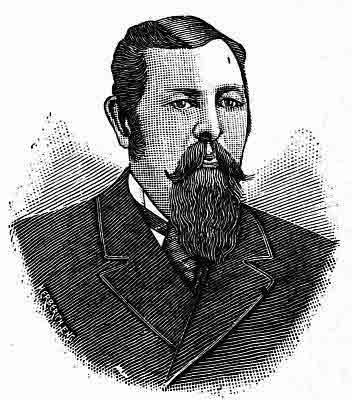
A. Lundberg.—The person of this sketch, the educated
artificial limb manufacturer, A. Lundberg, was born in Kalstad,
Sweden, 1847, where he received a good schooling and
learned his benefactory profession. At the age of twenty-one
he set sail for America, locating in Minneapolis, where he
stayed until 1888, working at his trade. From whence he
moved to Spokane, Washington, residing in that city eight
years. Seattle had attracted notice as an appropriate seat for
a man of science and mechanical ingenuity, and thither he
migrated in 1896, establishing his headquarters in Sullivan
Building, First Avenue. Mr. Lundberg is the only artificial
limb manufacturer in the state of Washington; he was educated
for this work in early youth and has followed it
uninterruptedly. In many instances he has wrought out
wondrous results, cured cases that defied medical science. He
was married in Minneapolis, January 24, 1877, to a pleasant
lady, Miss Anna Dahlgren. They have three children,
Evalin, Denalda and Marie.
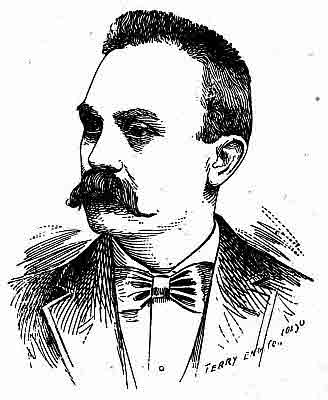
C. G. W. Anderson.—Men are destined for divers avenues,
but a thoughtful man will follow the course of his
inclination in the climax upward, and success will smile as
he proceeds. Mr. C. G. W. Anderson seems to have incorporated
this maxim. He was born in Sweden, September 24,
1856, where he enjoyed the benefit of a good schooling and a
healthy course in the curriculum of experience. At the age
of twenty-six he left his native soil for the New World, arriving
in the United States, April 24, 1880. After ten years of
various employment in the eastern states he came to Seattle,
engaging in hotel business on the corner of Terrace and Fifth
Avenue, where the Anderson looms in emphasis of the proprietor's
energy. Mr. Anderson is a man of a genial disposition,
social and affable and in all respects an honored citizen.
Oscar Anderson.—A man of honor and integrity is a
worthy adjunct to any community. Oscar Anderson belongs
to this type which his career bespeaks. He was born in
Karlskrona, Sweden, January 13, 1859, where he received a
thorough education in the public schools. From boyhood he
showed talents attributive only to the soul of the genius. In
1872 he entered the hardware business, but abandoned it after
two years of experience to pursue the vocation of his forte—jewelry
and mechanism. In 1879 he engaged in business for
himself which he continued successfully until 1893. During
all these years he was employed by the Swedish navy mending
and adjusting the chronometers of the men-of-war. In
1891 the Russian government engaged his ingenuity, and on
one occasion he worked three days and three nights repairing
the chronometers of the navy for which he received a remuneration
of 297 crowns. In 1892 he spent considerable time
traveling in Denmark, partly for pleasure and partly for
studying the conditions of the country, Copenhagen being
the center of interest where he enjoyed himself for a few
months. The following year he sold out his business in
Sweden and emigrated for America, locating in Seattle, a
stranger in a strange country, but ere long his native "pluck"
was manifested, and a fine establishment at 406 Pike street
emphasizes his ingenuity and business ability.
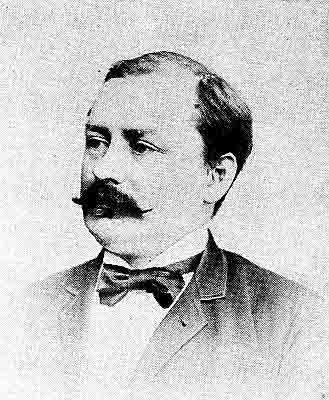
P. A. Hallberg.—Experience is the best teacher, a college
course of mere theories gives little knowledge of the world.
A course in fighting the billows of the deep, or wrestling with
the stumps of the forest, is of more practical worth than a head
crammed with deceased tongues, or theoretical airships. P.
A. Hallberg corroborates my view with his personal experience.
He was born in Skone, Sweden, 1867, and in his early
teens sought the waves. He visited China and other oriental
climes, faced the angry surges of Cape Horn, and dashed
ashore at San Pedro, California, from whence he sailed northward,
navigated for some time as mate on Puget Sound, also
served in the government marine. After years of sea-faring
life he turned his attention to terra firma, located in Seattle
and commenced new pursuits. He worked for three years in
the Union Bakery, then spent some time in a meat market,
and in 1894 bought the Union Bakery, and four years later
removed to Second Avenue, between Pike and Union, where
he is doing a large business. Mr. Hallberg is a man who has
won the respect of the people of Seattle by his integrity of
character and straight business method.
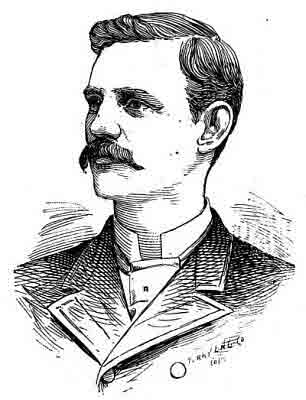
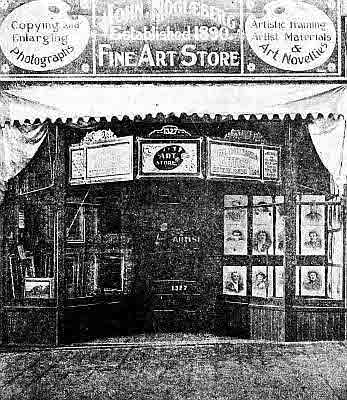
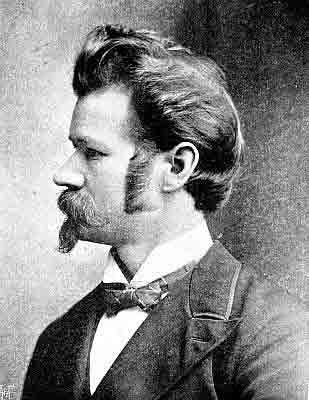
John Nogleberg, a gifted artist, portrait, figure and landscape
painter, of Seattle, was born in Kongsberg, Norway,
February 21, 1861. He received a splendid education in his
native country in music, science and art, and in 1881 emigrated
to America, locating in Chicago, where he studied at
the Academy of Fine Art and at the Art Institute. After
nine years of close application to his chosen profession, he
moved to Seattle, where he has the largest establishment of
its kind west of Chicago, engaging constantly a number of
employees in the different departments.
At the beginning of 1899 he moved into his elegant
building on Second Avenue, near Union Street, but from the
present indication of business his beautiful apartments will
soon prove too small. He is an athlete and an intense lover
of nature. The soul of grandeur and sublimity seems to be a
part of his being, which his masterpieces plainly reflect. He
is fond of outdoor sport, fishing and hunting give him pleasant
hours of recreation. He is an active member of the
Y. M. C. A., and a promoter of the Norwegian-Danish M. E.
church. In a word, Mr. Nogleberg is a true gentleman as
well as an artistic genius, being strictly temperance and of
noble aims and integrity.
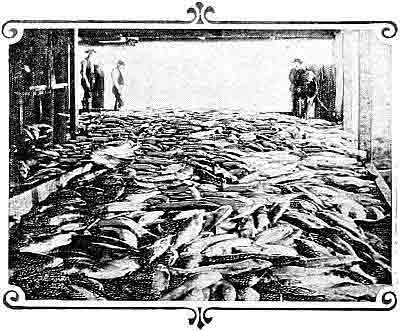
Hans Hansen, manager of the Union Fish Company, and
a man of indomitable will power, was born in Norway, July
20, 1859, where he laid his foundation for an active career.
In 1881 he arrived in Minneapolis and six years later beheld
the city of Seattle. He settled on a homestead in the Quillayute
valley, but returned to the Queen City after a few years
of experience at farming. In 1896 he was elected to the
legislature, and became noted for his opposition to fish traps,
and his earnest support of Hon. George Turner for United States
senator. He has been a frequent contributor to the different
papers on political and reform topics. In religion he is a
Methodist.