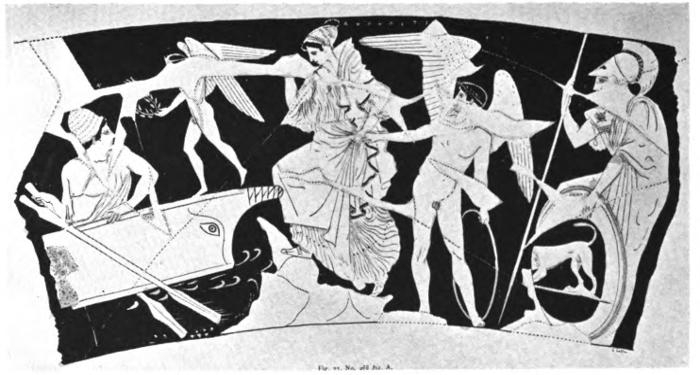
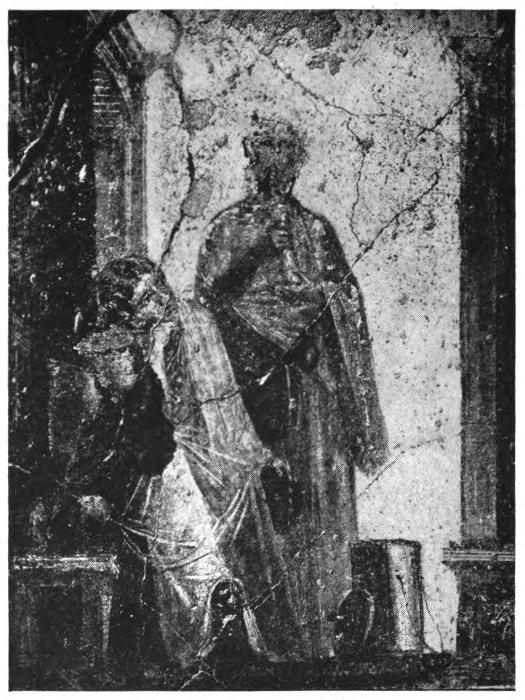
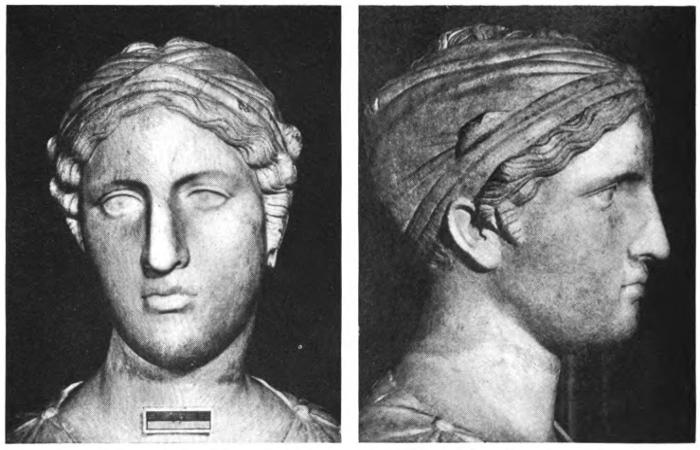
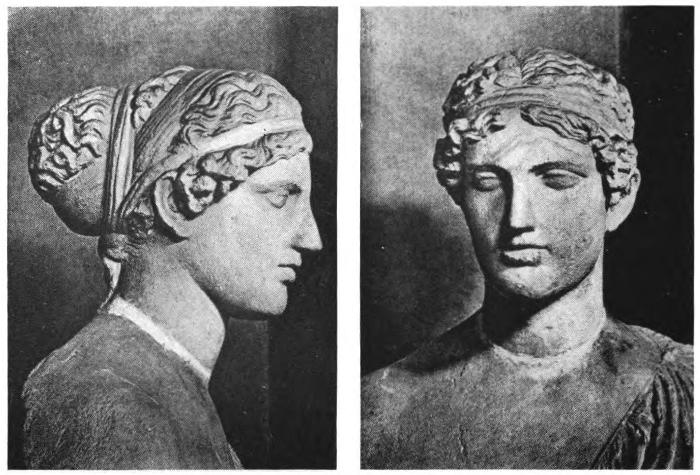
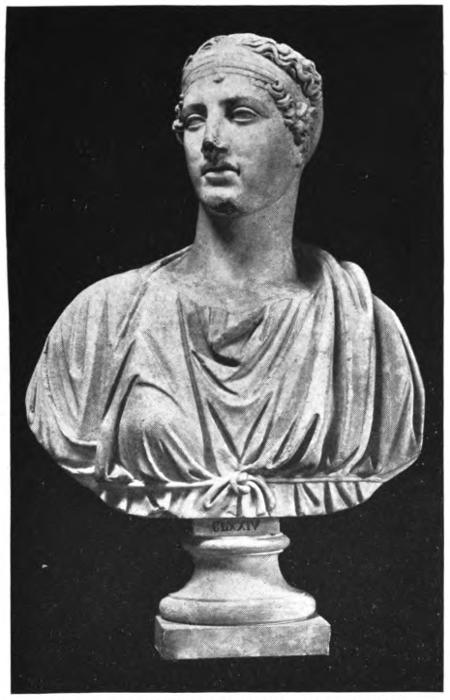
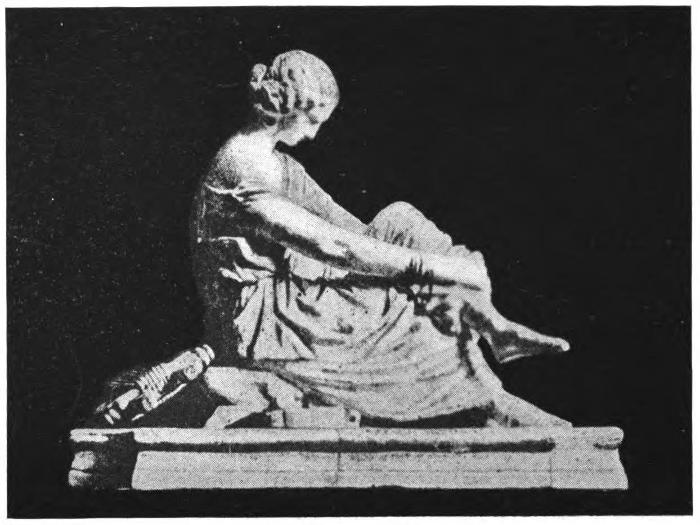
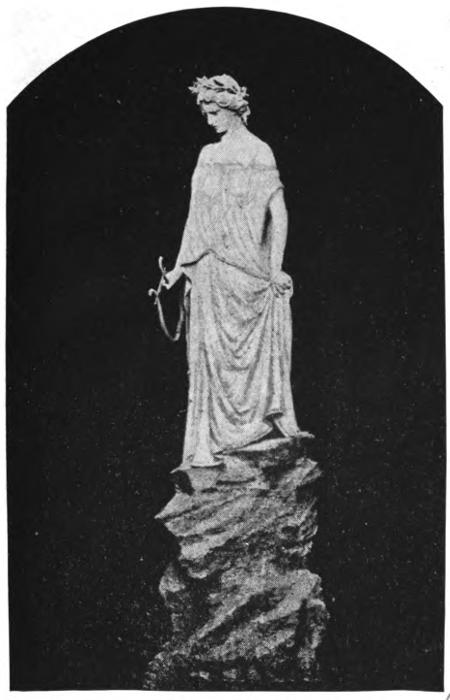
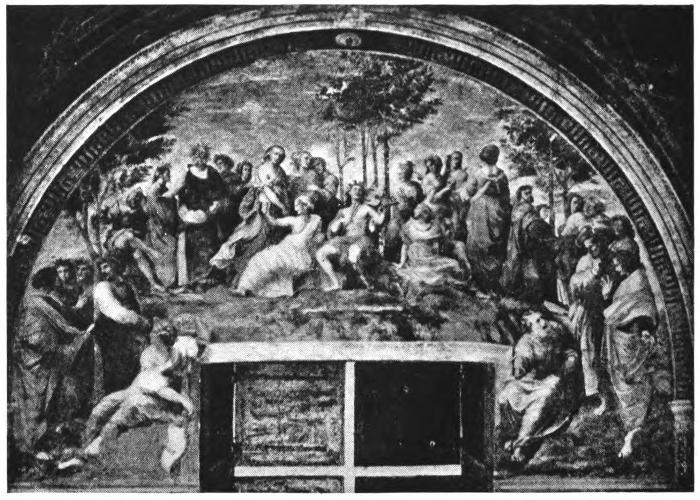
(The dates given in the text with authors are generally
those of floruit, i.e. about the fortieth year.)
1. Somewhere recently in a newspaper I saw these lines
entitled, They Lived Too Soon:
I fear Cleopatra was wasted
Way back in her misty old realm.
As matters befell, she did fairly well
But she’d have been great in a film.
If Dido and Sappho were with us—
They’re advertised widely, you see—
And Helen of Troy—good gracious
My boy, what movie successes they’d be.
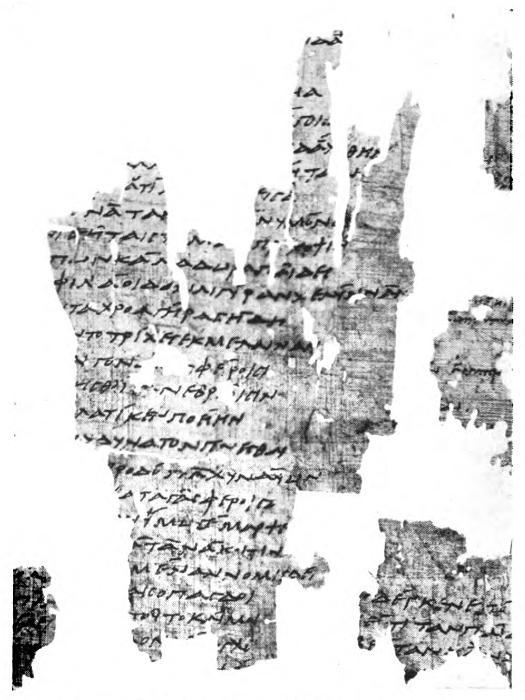
2. Oxyrhynchus Papyri, XV. 1787, frag. 4.
3. Galen, Protrep., 2.
4. Classical Philology, XVIII. 35 ff. (1923).
5. Sir Edward Cook, More Literary Recreations, 1919,
p. 205, quotes Wharton with approval to the effect that
Tennyson called Sappho “the poet, implying her supremacy
by the absence of any added epithet.”
6. Anth. Pal., VII. 16.
7. Athenaeus, Deipnosophistae (Doctors at dinner), 596 b.
8. Odes, IV. 9. 11.
9. Amatorius, 18.
10. Athenaeus, 598 b.
11. Loves, 30.
12. Lord Neaves, The Greek Anthology, p. 113.
13. Anth. Pal., VII. 15.
14. Fraenkel, Inschriften von Pergamon, I, p. 118, no.
198; C. I. G. 3555.
15. Sappho und Simonides, p. 41, 1.
16. Anth. Pal., IX. 66.
17. Anth. Pal., VII. 14.
18. Anth. Pal., VII. 407.
19. Anth. Pal., IX. 189. Cf. A. J. Butler, Amaranth and
Asphodel, Oxford, 1922, p. 195. The ending is “you shall
fain Deem that Calliope doth hymn the strain.”
20. Anth. Pal., IX. 571.
21. XXXV. 16.
22. Cf. also Epigr. LXX, Jacobs, II, p. 25; Plut., Amat.,
XII, p. 42.
23. P. 186 (1921).
24. 280, pp. 817-818. Cf. also Posthumous Essays in Sat.
Rev., Feb. 21, 1914.
25. Professor Scribner in The Classical Weekly XV, 1921,
p. 78, says “there still is room for a work giving a complete
critical treatment of Sappho’s influence on ancient and modern
literature down to our own time.”
26. Athenaeus, 599 c; Oxyr. Pap., XV. 1800.
27. Strabo, 618; Athenaeus, 85 c.
28. Cf. Herodotus, II. 135; Schol. Plato, Phaedrus, 235 c;
Ox. Pap., XV. 1800. The papyrus gives Scamandrus, which
is otherwise known as a good Lesbian name, as well as Scamandronymus.
Scamandrus like Suidas’ Scamon is an
abbreviation or Kosenamen.
29. Her., XV. 61.
30. Confirmed by the new papyrus. The more correct
form would be Clévis (Κλεῦις or Κλεῖϊς) after the founder
of Lesbus, who was named Κλεύας, Strabo, 582.
31. Cf. Edmonds, pp. 144-147.
32. Hiller von Gaertringen, Inschriften von Priene, 18;
for Erygyius cf. also Diodorus, XVII. 81, 83; Arrian, III. 6, 5.
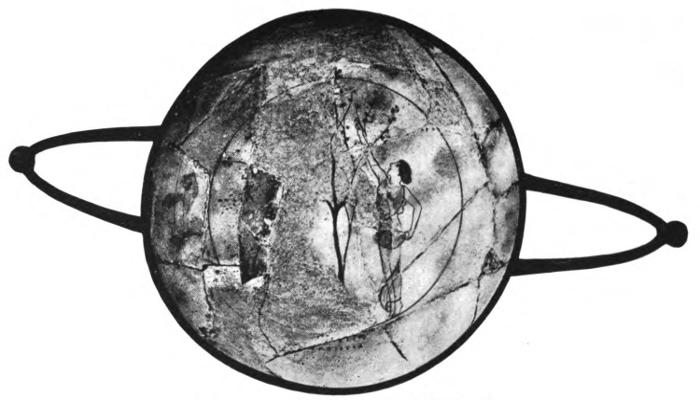
33. The name occurs as a love-name on the interior of
an Attic cylix in the Metropolitan Museum of New York,
signed by Hieron (480 B.C.), published in American Journal
of Archaeology, XXVII. 274 (1923). Near a female figure
dancing to the accompaniment of the double flute played by
a satyr is the inscription, “Beautiful Rhodopis.” Cf. also
Lucian, De Saltatione, 2.
34. Cf. Poulsen, Delphi, London, 1920, pp. 31, 72, 205,
294.
35. Edmonds’ first poetical translation is given in his
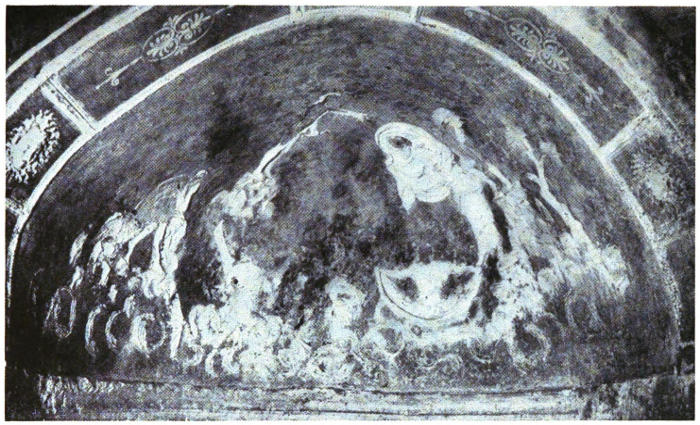
Sappho in the Added Light of the New Fragments, p. 8; but he
gives a revised prose version in the Classical Review, XXXIV.
5-6 (1920) and in Lyra Graeca, I, p. 207.
36. Solmsen in Rhein. Mus., LVI. 502, 1 (1901) gives
arguments for the spelling with double p.
37. 599 c.
38. γέγονε often means flourished, not “was born.”
Those who put Sappho’s birth as late as 610 forget this.
39. Strabo, 617, also makes Sappho contemporary with
Pittacus and Alcaeus. Eusebius puts the floruit of Sappho
in the first year of the forty-fifth Olympiad (599 B.C.). Edmonds,
Lyra Graeca, I, p. 142, adopts the reading Ol. 45, 2
(598 B.C.), but this would be rather the date of her exile.
40. The abbreviation E, is used throughout for Edmonds,
Lyra Graeca, vol. I.
41. Cf. Prinz, Funde aus Naukratis, 1906, pp. 57 ff.
42. II. 134.
43. In another fragment (E. 35) Edmonds calls Sappho
“an old bird,” but this is a very dubious restoration based
on only three preserved letters.
44. Flor., XXIX. 58.
45. Dioscorides in Anth. Pal., VII. 407 has Eresus; and
coins and Suidas give both towns. Cf. Wilamowitz, Sappho
und Simonides, 23; Her. II. 135 and references in Jacoby,
Das Marmor Parium, 1904, p. 101. Many sources call Sappho
a Mytilenaean, Schol. to Pindar (E. p. 144); Schol. Plato,
Phaedrus, 235 c; Arist., Rhet., 1398 b; Anth. Pal., VII. 17. Some
scholars assume that there were two Sapphos, but the two
traditions can easily be reconciled by supposing that Sappho
belonged to both cities, born at Eresus but later living at
Mytilene. Edmonds thinks that Strabo would have mentioned
Sappho when he is speaking of Eresus (618), had he
believed her to have been born there, but Strabo omits many
famous writers. The tradition of two Sapphos is found also
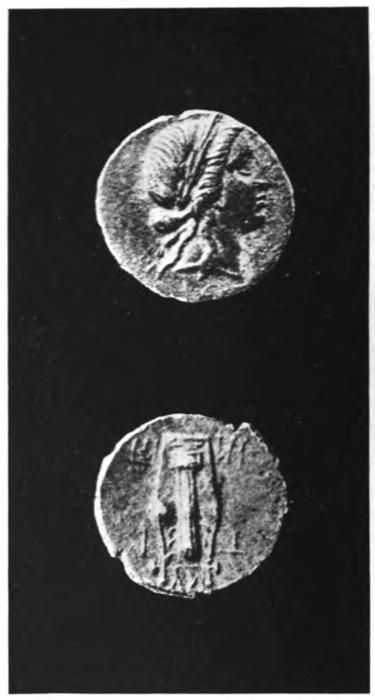
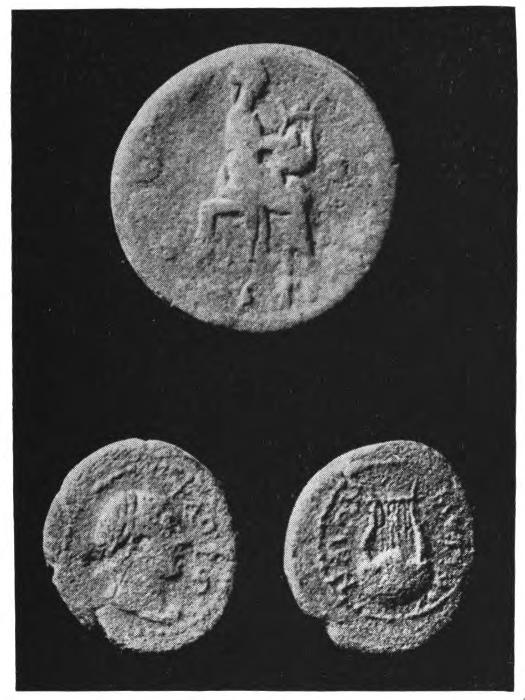
in Aelian, Historical Miscellanies, XII. 19 and in Suidas.
Cf. the novel Beulah by Augusta Evans, pp. 216-218: “Do
you think that Sappho’s frenzy was established by the
Leucadian leap? You confound the poetess with a Sappho,
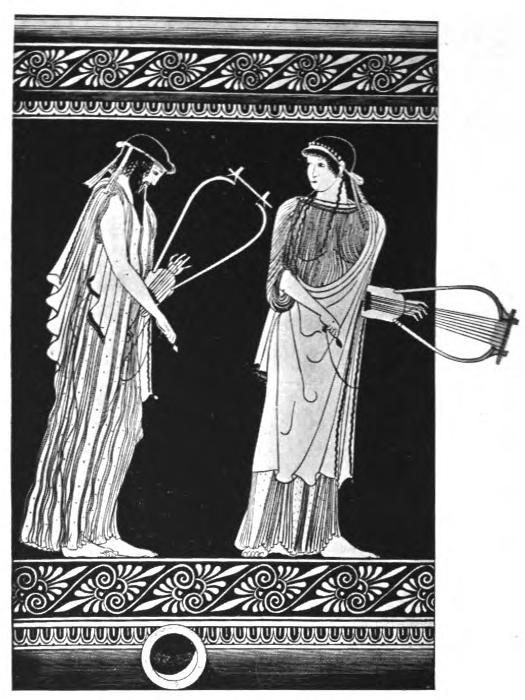
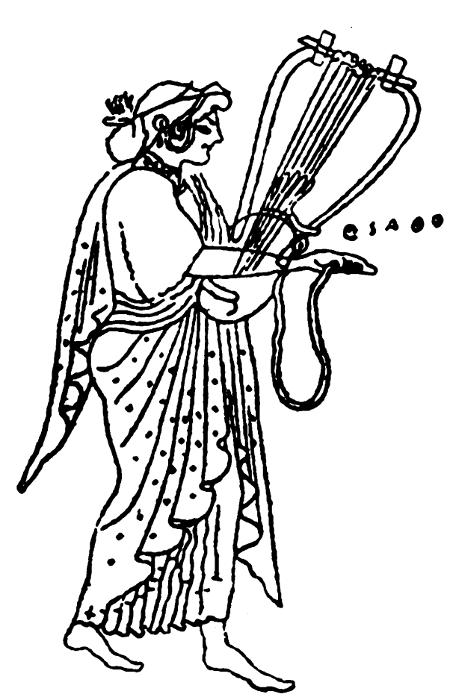
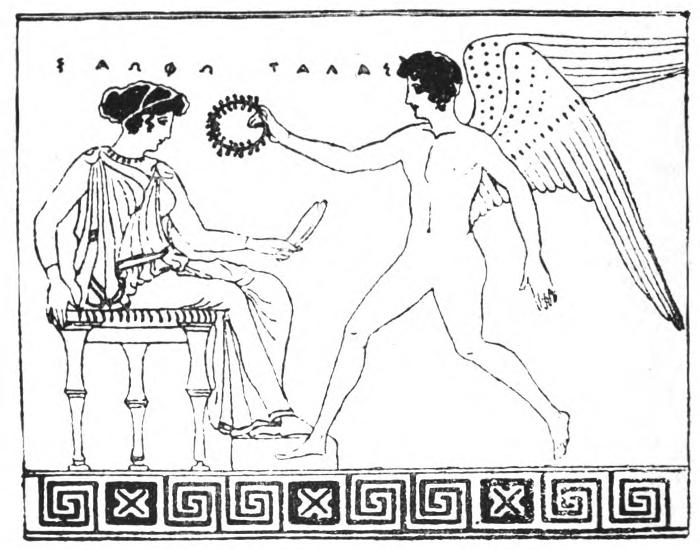
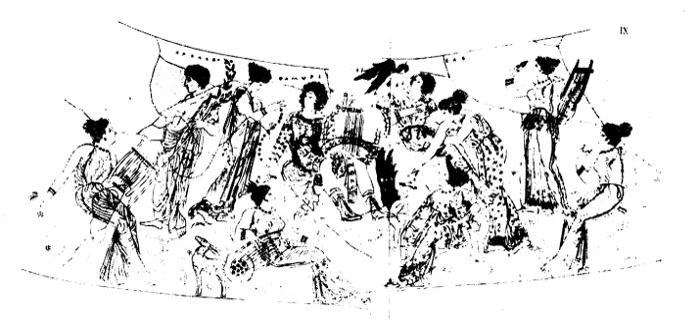
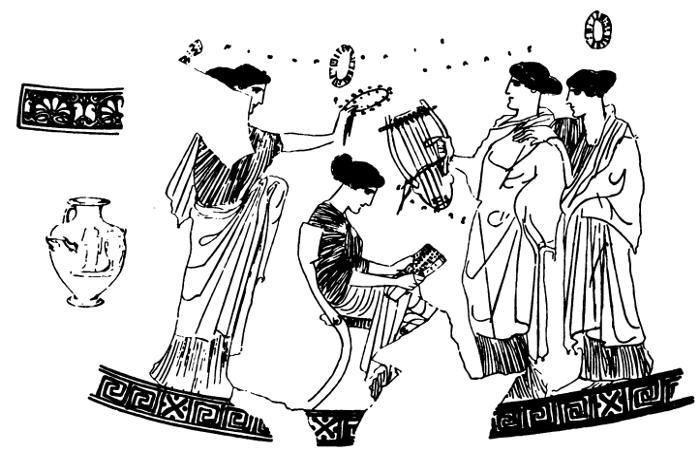
who lived later, and threw herself into the sea from the
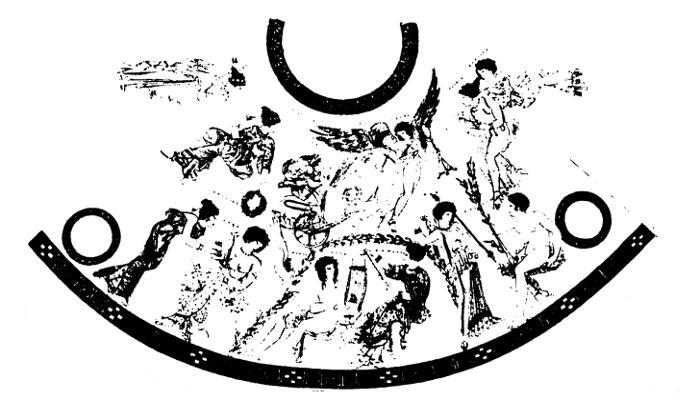
promontory of Leucate. Doubtless she too had ‘poetic idiosyncrasies,’
but her spotless life, and I believe natural death,
afford no indication of an unsound intellect.”
46. Studies of the Greek Poets, vol. I., pp. 307 ff. (American
ed.)
47. I. 9.
48. Cf. The Poet Loves of Sappho from the third book of
A Catalogue of Things Relating to Love, an elegiac poem by
Hermesianax, translated by J. Bailey.
49. Athenaeus, 450 e.
50. Class. Phil., XIII. 348 (1918).
51. XVIII. 9.
52. Edmonds, 82, p. 240.
53. Oxyrhynchus Papyri, XV, 1922, 1800. Also now published
in Miller-Robinson, The Songs of Sappho.
54. Lunák, Quaestiones Sapphicae, Kazan, 1888.
55. Lucy Milburn, p. 21, makes Sappho say, “When Cleïs,
I called her for my mother, was two years old, I found myself
a widow.” But we have no such evidence, how old Cleïs
was when her father died. Miss Milburn (Letter XIX) is
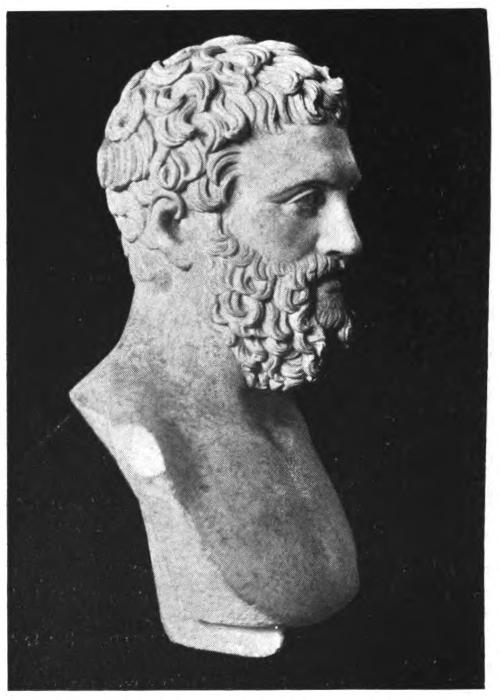
also quite wrong in translating “I would rather have my
little daughter know her own worth than to bequeath to her
all the treasures of Lydia, were they mine.”
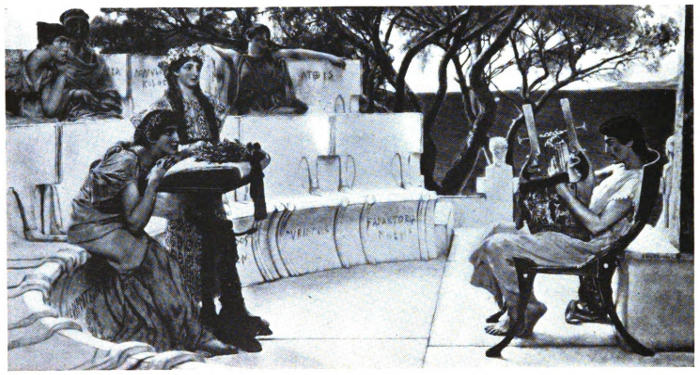
56. I. 30.
57. Edmonds, 116 reads Εἴρηνα (peace) for Ἔραννα so
that it is doubtful if Erinna, the poetess who wrote poems
worthy of Homer before her early death at the age of nineteen,
is really meant by Sappho. Most scholars now date her long
after Sappho’s time, some even as late as 350 B.C.
58. Cf. Jahrbuch, XXV. 150 (1910).
59. A. J. P., XXXIV. 106 (1913).
60. Anth. Pal., XVI. 310.
61. XVIII.
62. Odes, I. 1. 36.
63. Cf. Anth. Pal., VII. 14 and 17 for epigrams about
Sappho’s grave. Cf. Edmonds, 42 and 99. Tucker
translates:
As friends we’ll part:
Win thee a younger bride:
Too old, I lack the heart
To keep thee at my side.
64. My late colleague and dear friend, Kirby Flower Smith,
made a brilliant reconstruction of the story which he read
several times in public. It is to be deeply regretted that the
manuscript has never been printed. Cf. for the Menander
fragment, F. G. Allinson’s Menander, in The Loeb Classical
Library, pp. 400-401. For fragments of Plato’s Phaon, cf.
Kock, C. A. F., I, p. 645. Cf. Servius on Virgil, Aeneid,
III. 274.
65. Lucian for example, Dialogues of the Dead, 9, has
Phaon carry Aphrodite over in his boat from Chios.
66. Incred., 49 in Apostolius, Paroem., II. 707.
67. 596 b; “according to Nymphis in his Voyage around
Asia, the courtesan of Eresus who was a namesake of the
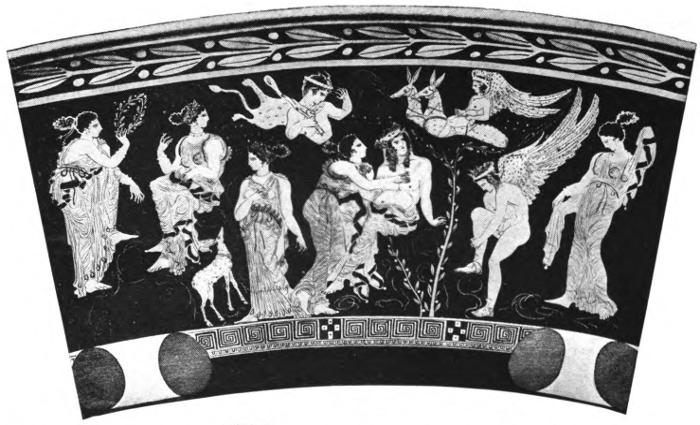
other Sappho and lover of the fair Phaon won great notoriety.”
Cf. also Suidas, s. v. Phaon.
68. Cf. Furtwängler-Reichhold, Gr. Vas., pl. 59; Milani,
Monumenti scelti del R. Museo Arch. di Firenze, pl. 3;
Nicole, Meidias, pl. VI, I. Cf. also on Phaon, Wilamowitz,
Sappho und Simonides, pp. 33 ff.
69. 69 d.
70. Strabo, 452.
71. Cf. Curtis, A. J. A., XXIV. 146 ff. (1920); Paribeni,
Boll. d’Arte, I. 104 (1921); F. Cumont, Rassegna d’Arte, VIII.
44 ff. (1921); Leopold, Mélanges d’Archéologie et d’Histoire,
XXXIX. pl. II. 181 ff. (1921); Le Musée Belge, XXVII. 15 ff.
(1923), there connected by Hubaux with the cult of the Thracian
Cotyto. Cf. Memoirs Am. Ac. in Rome, IV. 85 f., pl. XLV.
72. For another version cf. G. Showerman’s Ovid in The
Loeb Classical Library. A new translation by Marion Mills
Miller, where the narrative portions are in recitative and the
frequent outbursts of emotion in lyrical form, appears in
Miller-Robinson, The Songs of Sappho.
73. Countless translations have been made. Among a
few, I mention Philips (1711), Herbert (1713), Akenside’s
paraphrase (1745), Fawkes (1760), Merivale (1833), Elton
(1814), Egerton (1815), Edinburgh Review (1832), Palgrave
(1854), Arnold (1869), Higginson (1871), Walhouse (1877),
Symonds (at least two versions), Swinburne, Thomas Davidson,
Marion Mills Miller (in The Classics and also in his
play The Return of Odysseus, p. 82), Appleton, Fairclough (The
Raven, V, 1904, p. 120), Easby Smith, Stobart (The Glory
that was Greece, p. 119), Lawton, Tucker, Petersen, Lawrence
(Classical Review, XXXVI, 1922, p. 2), Edmonds, William A.
Drake (Sewanee Review, April 1923).
74. στροῦθοι in l. 10 are birds of Venus, swans, or better
doves, rather than the dirty chatterers of our city streets,
who never appear in Greek art. Cf. Throop, Wash. Univ.
Studies, IX 282 (1922); Aristophanes, Lysistrata, 723 f.;
Statius, Silvae, I. 2. Edmonds p. 183 reads the dual and
translates “thy two swans.” For swans drawing Aphrodite’s
or Cupid’s car, cf. Reinach, Répertoire des Vases Peints, I, pp.
57, 271.
75. Dem., 38.
76. Iliad, X. 90-95. Cf. also Od., XVII. 518-521. For
Homer’s influence on Sappho cf. Smyth, p. 230; H. L. Ebeling,
in The Classical Weekly, XVI. 195 ff. (1923).
77. III. 152-158.
78. Edmonds, pp. 186-7, makes the ingenious but very
uncertain suggestion that in line 7 a proper noun, Brocheo
or Brochea, corresponding to Catullus’ Lesbia, should be read
and now translates: “When I look on you, Brocheo, my
speech comes short or fails me quite.” Formerly he thought
that the poem was sent by the banished Sappho at the age
of eighteen to some beloved girl friend soon after her arrival
in Sicily in 596 B.C., but Sappho was older than eighteen in
596, and Edmonds now makes an entirely different emendation
of the last line, “but now that I am poor, I must fain
be content ...” meaning “beggars can’t be choosers.”
But the reading is uncertain and I do not believe that Sappho
was poor, nor do I agree with Miss Patrick that the words
do not describe love at all.
79. For such head-cloths cf. the Latin word struppus and
the festival at Falerii, called struppearia, Dion. Hal., XI. 39
and Poulsen, Etruscan Tomb Paintings, p. 23. Edmonds’
new reading is very uncertain; for his previous reading and
poetical version cf. Sappho in the Added Light of the New
Fragments, p. 28.
80. I keep Bergk’s reading, “Foolish woman, pride not
thyself on a ring.” Edmonds changes the text and translates,
“But come, be not so proud of a ring.”
81. Cf. Poulsen, in Jahrbuch, XXI. 209 ff. (1906); Die
Bronzen von Olympia, IV., pl. VII. 74.
82. There are many other poetical versions by Merivale,
Symonds, F. Tennyson, Tucker, Cox, Edmonds, etc. For
an absurd interpretation Sappho in the Rain, cf. Wiener
Studien, XXXVIII. 176 ff. (1916).
83. Poetical translations by Merivale, Arnold, Appleton,
F. Tennyson, Symonds, Edmonds, Miller, Percy Mackaye, etc.
84. Sappho in the Added Light of the New Fragments, p. 25,
but in Lyra Graeca, I, p. 253, he changes his previous emendation
and reads a text which I consider very uncertain, “and
pours down a sweet shrill song from beneath his wings, when
the Sun-god illumines the earth with his downshed flame
outspread.”
85. Praec. Con., 48; Qu. Conv., III. 1. 2.
86. Flor., IV. 12.
87. For Swinburne’s expansion cf. p. 210; cf. also Percy
Mackaye in Sappho and Phaon. Bliss Carman has evolved
the following from Sappho’s one line:
I loved thee, Atthis, in the long ago
When the great oleanders were in flower
In the broad herded meadows full of sun.
And we would often at the fall of dusk
Wander together by the silver stream,
When the soft grass-heads were all wet with dew
And purple misted in the fading light,
And joy I knew and sorrow at thy voice,
And the superb magnificence of love—
The loneliness that saddens solitude,
And the sweet speech that makes it durable,
The bitter longing and the keen desire,
The sweet companionship through quiet days
In the slow ample beauty of the world
And the unutterable glad release
Within the temple of the holy night;
O Atthis, how I loved thee long ago
In that fair perished summer by the sea.
88. Cf. Miss Shields, “Lesbos in the Trojan War,” in
The Classical Jour., XIII. 670 ff. (1918); The Cults of Lesbos
(Johns Hopkins University Diss.) 1917.
89. Cf. Transactions and Proceedings of the American
Philological Association, LIII. xvi (1922).
90. For Mnesidice Edmonds would now read Anactoria.
There is a good metrical translation by G. M. Whicher in
Manatt, Aegean Days, London, 1913, p. 286.
91. Odes, I. 3. 22.
92. O’Hara renders as follows:
Gold is the son of Zeus,
Immortal, bright;
Nor moth nor worm may eat it,
Nor rust tarnish.
So are the Muse’s gifts
The offspring fair,
That merit from high heaven
Youth eternal.
93. These may be vases in the form of an astragalus or
knuckle-bone, two or three of which in clay are to be seen
in museums, or they may be bowls or cups with the bottom
rounded like one end of a knuckle-bone. They might be
bowls with a mid-boss in the form of a knuckle-bone. For
such gold-bossed golden bowls as Pollux (VI, 98) mentions
in the context of this quotation see the recently acquired
beautiful gold bowl with a Corinthian inscription of about
Sappho’s time in the Boston Museum, which, however, is
probably a modern forgery. Cf. Bulletin, Boston Museum of
Fine Arts, XX. 65 ff. (1922).
94. German and Austrian scholars have failed to see the
lovely lyrical literature in this delightful ballad. Aly considers
it only the beginning of a longer ode; and I cannot
agree with him that it does not fit in with what we know of
Sappho who often expresses her loneliness in the absence of
her companions. Even if the thought is of love, we must not
expect consistency in a high-strung Aeolian woman. Fragments
such as E. 152, 159, 167 may have been in a totally
different context. But I do not mean to say that the ballad
certainly refers to Sappho herself. The context is gone and
it is not even definitely assigned to Sappho. Some of the
editions seem to have contained it, but much anonymous
literature has been included in the Sapphic corpus as in that
of Plato or Hippocrates. However, as it is one of the prettiest
and most perfect pieces and quite in Sappho’s style and metre
and thought, I consider it genuine. Ovid (Sappho to Phaon,
155 ff.) seems to know the lines. Ruthlessly to insert a
negative in the text (“Alone I do not sleep”) as does Lunák
(Wiener Studien, XL, 1918, p. 98) spoils the literary quality
and makes it insipid. How much suggestive concision in
those seventeen words in four verses (four of them small
particles), but what vast and profound humanity; silence,
solitude, obscurity, waiting, anxiety, sympathy of nature.
How the strong and rapid description catches our deepest
thoughts. Such things disprove the arguments against its
genuineness by Wilamowitz, Textgeschichte, p. 33; and Sappho
und Simonides, p. 75. Cf. Münscher, Hermes, LIV. 29, 4
(1919).
95. Scribner’s Magazine, September 1905, p. 304.
96. On the whole tradition of the wedding song cf. Mangelsdorff,
Das lyrische Hochzeitsgedicht bei den Griechen und Römern,
1913; Reitzenstein, Hermes, XXXV. 95 ff. (1900); Croiset,
Journal des Savants, July 1914; Girard, Le Mariage de Hector,
Comptes-rendus Ac. des Sc. et Belles-lettres, 1914, pp. 658-9.
97. I. 4.
98. Cf. Robinson, The Classical Weekly, V. 68 (1911).
99. In this account of Sappho’s wedding-songs I am much
indebted to Koechly, Akademische Vorträge und Reden, Zürich,
1859, pp. 153-217.
100. For Usener’s interesting conjecture about Lesbian
marriage customs based on this fragment cf. Kleine Schriften,
IV, pp. 308 ff.
101. An excellent modern musical version will be found in
A. A. Stanley, Greek Themes in Modern Musical Settings.
102. For the history of dialogue in Greek epigrams and
examples of stones speaking with the passer-by and for
sepulchral symbolism as in the Pelagon epigram cf., D. M.
Robinson, “Two Epitaphs from Sardis,” in Anatolian Studies
presented to Sir William Mitchell Ramsay, Manchester, 1923,
pp. 341-353.
103. For a bronze in the British Museum supposed to
represent the reclining Sappho cf. Walters, Cat. of Bronzes,
London, 1899, 203.
104. Pollux, IX. 84.
105. Cf. Bernoulli, Griechische Ikonographie, pp. 59-72;
Cat. of Coins in the Brit. Mus., Lesbos, pl. XXXIX; Miss
Patrick, pp. 73, 81; Jacoby, Marmor Parium, p. 101; Forrer,
Les Portraits de Sappho sur les monnaies, in Revue Belge de
numismatique, 1901, pp. 413 ff.; Zeitschrift für Numismatik,
IX. 114, pl. IV.
106. Meisterwerke, p. 103.
107. Greek Hero Cults and Ideas of Immortality, Oxford,
1921, p. 367.
108. Walters, Cat. of Terra-cottas in the British Museum,
London, 1903, pl. 19.
109. The ancient representations of Sappho on vases have
been well studied by Jahn, Darstellungen griechischer Dichter
auf Vasenbildern, Abh. d. Sächs. Ges. d. Wiss., VIII. 699
ff. (1861); Comparetti, Museo Italiano di Antichita classica,
II, 41-80, pls. III-VI (1888); Cipollini, pp. 319-344;
Wilamowitz, Sappho und Simonides, pp. 40 ff. Little new
material has come to light, but the individual vases have been
better interpreted in the later publications which we cite in
other notes. Aly omits the busts, though he mentions the
vases, but he calls the Steinhauser fragment a clay relief and
fails to recognize that it is part of a vase.
110. Cf. Jahn, pl. III; Comparetti, op. cit., pl. IV; Furtwängler-Reichhold,
Gr. Vas., II, pp. 21 ff., 308 ff., pl. 64;
Steiner, Sappho, pp. 54-5; Perrot et Chipiez, Histoire de l’art,
X, p. 624, pl. 15; Beazley, J. H. S., XLII, 1922, p. 91; Pfuhl,
Malerei und Zeichnung der Griechen, Munich, 1923, p. 399;
Hoppin, Handbook of Attic Red-figured Vases, I, p. 461.
Hoppin wrongly rejects Furtwängler’s attribution to the
factory of Brygus; and wrongly identifies Hauser’s “Frau
Meisterin” with Beazley’s Niobid Painter. Perrot (p. 626)
says that the Munich vase belongs to a contemporary of Duris
but that we shall never know the painter; but on p. 634 he
says: “we would be tempted to add the vase to the Berlin
amphora painter.”
111. Comparetti, op. cit., pl. III, 1; De Witte, Antiq.
de l’hôtel Lambert, no. 32, pl. III; Reinach, Répertoire des Vases,
I, p. 524. Formerly in the Dzialinsky collection at Paris.
112. Comparetti, op. cit., pl. III, 2; Steiner, pp. 44 ff.;
Cipollini, p. 328; De Courten, p. III; Reinach op. cit., I,
p. 525.
113. Comparetti, op. cit., pl. V; Cipollini, p. 331; De
Courten, p. 95; Röm. Mitt. III, 1888, pl. IX; Jahreshefte,
VIII. 35-40 (1905); Nicole, Meidias, pl. VII; Reinach, op. cit.,
I, p. 526.
114. B. C. H., IV. 373 (1880); Cipollini, pp. 337-8.
115. Cf. Comparetti, pl. VI; Steiner, pp. 16 ff.; Edmonds,
Class. Quart., XVI. 1 ff. (1922), where he fails to cite Jahreshefte,
VIII. 40 (1905).
116. J. C. Hoppin, Handbook of Attic Red-figured Vases,
Harvard University Press, 1919, p. 410.
117. Murray, White Athenian Vases in the British Museum,
London, 1896, pl. XVII; Pfuhl, op. cit., II, p. 546, fig. 527.
118. Ann. d. Inst., XXX, 1858, p. 42, pl. B; Cipollini,
pp. 339-341.
119. Cf. Cipollini, pp. 343-4.
120. Cf. Nicole, Meidias, Geneva, 1908, pls. III and VI.
I cannot agree with Nicole in dating Meidias as late as 375-350
B.C. He belongs to the time of the Peloponnesian War,
431-404 B.C. This fatal war did not stop the Athenians from
producing during war times such great works of art as the Erechtheum,
beautiful vases and statues. Cf. also note 68 above.
121. Cf. Pfuhl, op. cit., p. 566, III, Fig. 557; Pellegrini,
Museo Civico di Bologna, Catalogo dei Vasi Greci, pp. 133-135,
Fig. 77.
122. N. H., XXXV. 141. Brunn, Kunstgeschichte, p. 299,
identifies him with a bronze-sculptor, Leon, but we are equally
ignorant about him.
123. Anth. Plan., 310 (Edmonds, p. 173); Tatian, Adv. Gr.,
130.
124. Cf. Hermann, Denkmäler der Malerei des Altertums,
pl. 28; Pfuhl, op. cit., p. 734; Lippold, Röm. Mitt., XXXIII.
71 ff. (1918).
125. For replicas of the Sappho cf. Rizzo, Rev. Arch., 1901,
pp. 301 ff. The latest and best discussion is by Percy Gardner,
J. H. S. XXXVIII. 10 ff. (1918). For a copy of Silanion’s
Corinna at Compiègne cf. Rev. Arch. XXXII. 161 (1894);
XXXVI 169 (1898); Furtwängler, Meisterwerke, pp. 99 ff.
would class many of the so-called Sapphos as Aphrodite and
thinks that those which are copies of fifth century art may
represent the Aphrodite of Phidias which was to be seen in
later days in the portico of Octavia at Rome (Pliny, N. H.
XXXVI, 15).
126. II. 4. 57.
127. Anth. Pal., VII. 15.
128. Cf. Fraenkel, Inschriften von Pergamon, 198. According
to C. I. G. 3555 Jucundus and Cyriac of Ancona still
saw the inscription at Pergamum.
129. Ecphr., 69-71.
130. On the Albani bust cf. Jahrbuch, V. 152 ff. (1890),
pl. III; Morcelli, Fea, Visconti, Descr. della Villa Albani,
1033; Schneider, Jb. d. Ak. Kunstsammlungen, XII, 72 ff.
(1891); Arndt, Brunn-Bruckmann, Griechische und Römische
Porträts, pl. 147-148; for the bust in the Pitti cf.
Arndt, pls. 149-150; for that in the Uffizi, pls. 145-146; cf.
also Cipollini, pp. 345-356. On the Biscari and Naples busts cf.
Rizzo, Rev. Arch. XXXIX, 1901, pp. 301-307, pls. XXI, XXII.
On the Constantinople head cf. Mendel’s Cat. no. 626.
131. Art and Archaeology, VI. 277 ff. (1917), Robinson,
ibid., pp. 285 ff. I have omitted mention of many other
ancient works of art wrongly supposed to represent Sappho,
such as Stackelberg, Die Gräber der Hellenen, Berlin, 1837,
pl. LXX, called Sappho with a female friend sitting in her
lap, merely because of the book-roll.
132. Arch. Anzeiger, XXVII. 124 (1912).
133. Cipollini, p. 405, pictures Magni’s Saffo; p. 409 Confalonieri’s
Saffo; p. 413 Pradier’s Sapho; p. 417 Pradier’s standing
Sapho; p. 421 Barrias’ painting; p. 425 Gleyre’s couch of
Sappho. There is a bust of Sappho by Canova in Turin.
134. Cf. Reinach, in Revue Archéologique, XX, 2. 433-434
(1912), X, 2. 392 (1919).
135. Cf. for influence of Pamphos, a mythical poet earlier
than Homer, Pausanias, IX. 29, 8; of Homer, Neue Jahrbücher,
XXXIII 227 (1914); De Courten, pp. 74-76.
136. E. 114 influenced by Theogony, 3 ff.; E. 122 by
Works and Days, 568; E. 81 by Theogony, 121.
137. Theognis, 1017.
138. Schol. Hesiod, Works and Days, 428.
139. Athenaeus, 554 b, 639 a.
140. Porphyrio on Horace, Satires, II. 1. 30, “ostendit
Sapphonem et Alcaeum volumina sua loco sodalium
habuisse.”
141. Wilamowitz, Textgeschichte der Bukoliker, p. 88.
142. III. 153 f.; VI. 1181.
143. Wilamowitz, Sappho und Simonides, p. 58, 2. There
is an enormous literature on Catullus’ relation to Sappho and
much discussion of textual matters. Cf. for the most recent
Bursian Jahresbericht, CLXXVIII, 1919, p. 46. Compare
E. 32, 147 and 149 with Catullus LXII, 26, 35; E. 151 with
LXII, 61; E. 148 with LXII. In XXXV, 17-18 we have
“Ignosco tibi, Sapphica puella Musa doctior.”
144. The Classical Quarterly, XVI. 1-14 (1922).
145. IV. 9. 10.
146. II. 13. 24.
147. Cf. Ogle, A. J. P., XLIII. 55 ff. (1922). For Sappho’s
influence on Horace cf. Pasquali, Orazio lirico, 1920. Most
of the literature on the subject is not fit to read. Cf. Richard
F. Burton’s The Book of the Thousand Nights and a
Night, Terminal Essay, X, p. 208, for a filthy, wrong interpretation
of the word ‘mascula’. It is surprising to find as
great a modern scholar as Bloch, Die Prostitution, Berlin,
1912, I, p. 383, saying in his discussion of Homosexuality,
ἀσέλγεια τριβακή, “Schon in früher Zeit galten Sparta und
die Insel Lesbos als Orte, wo die weibliche Liebe besonders
verbreitet war und an letzterem Ort in der Dichterin
Sappho eine weltberühmte Vertreterin fand.” Cf.
also on tribadie in Lesbos Bloch, Der Ursprung der Syphilis,
II, pp. 586-588, where he thinks that he gives definite proof
that Sappho was “eine echte Tribade.” It is lamentable
that as great a literary critic as J. A. Symonds should say
that “Sappho gave this female passion an eminent place in
Greek Literature;” see J. A. Symonds, A Problem in Greek
Ethics, An Inquiry into the Phenomenon of Sexual Inversion,
London, 1901, pp. 70-72. Fortunately the monograph was
issued only in a very limited edition.
148. Silvae, V. 3. 154.
149. VII. 69.
150. Symp., VII. 8. 2.
151. XIX. 9. 4.
152. Loves, 30.
153. On Paid Companions, 36; Pictures, 18.
154. On the influence of Sappho on Himerius cf. Rizzo,
Saggio su Imerio il sofista, in Riv. Fil. Cl., XXVI 513-16
(1898). In Orations, I. 4 the words τὸ λέχος Ὁμήρου were incomprehensible
and Edmonds still omits Ὁμήρου, but the reading
is undoubtedly correct and the significance is now apparent
from the new epithalamium of Hector and Andromache.
155. XV. 35, 36, 37.
156. I. 16, 19, 20.
157. Cf. Anth. Pal., V. 246; VII. 14, 15, 16, 17, 407, 718;
IX. 26, 66, 184, 189, 190, 506, 521, 571; XVI. 310.
158. V. 246. I give a literal translation and Greek texts
of all epigrams which mention Sappho in Miller-Robinson,
Songs of Sappho.
159. Cf. A. J. P., XXXVIII. 66 (1917).
160. Photius only cites the selections made by Sopater
the Sophist, among which in his second book he included
some quotations from Sappho’s eighth book.
161. Vita dell’ Imperatore Alessio o Alesseide, XV.
162. IV. 25.
163. His comment on Martial, VII. 67 is “Tribadem autem
fuisse carmen indicat quod extat.”
164. There is an interesting item in Natales Comes,
Mythologiae sive explicationes fabularum, Venice, 1551, Book
V, c. XVI, p. 286, “Scriptum reliquit Sappho, Adonim mortuum
fuisse a Venere inter lactucas depositum.” According
to Athenaeus 69 d, Cratinus had Aphrodite conceal Phaon
among the “fair wild-lettuces.”
165. In my library I have a copy dated 1696 of Anne
Le Fèvre, Les Poësies d’Anacréon et de Sapho. This, however,
is a second edition and the first was in 1681.
166. Welcker, Kleine Schriften: II, pp. 80 ff., Sappho von
einem herrschenden Vorurteil befreit. Goethe occupied himself
much with this article. For references in Goethe to
Sappho cf. W. J. Keller, Goethe’s Estimate of the Greek and
Latin Writers, Madison, Wis., 1916, p. 51.
167. Sauer, Grillparzer’s sämtliche Werke, Stuttgart, 1892,
XIX, pp. 71 ff. For source of Sappho cf. J. Engl. Germ. Phil.,
XXII, 503 ff. (1923).
168. Cf. Jean Giraud, D’Après Sapho. Variations sur un
thème éternel, in Revue d’Histoire littéraire de la France, XXVII,
1920, pp. 194-203. I have added considerable material not
there, since this article deals only with the second ode. I
am indebted in this chapter to my learned colleagues, Professor
Henry Carrington Lancaster and Professor Gilbert
Chinard, for helpful suggestions.
169. Traduction de quelques autres epigrammes Grecs,
Œuvres de Ronsard, Tome 2, Paris, 1889, p. 56.
170. The date is often wrongly given as 1682. In my
copy, which is a second edition (Lyon 1696), it is stated that
permission to publish the book was granted to Damoiselle
Anne Le Fèvre on June 10, 1681, all rights to continue for
six years. “Le dit livre a esté achevé d’imprimer pour la
première fois le 1, Decembre 1681.” My copy gives only
the first two odes and the epigrams on Pelagon and Timas
and quotes an inaccurate Latin prose translation of the first
ode by her father. He has made several emendations, as in
ode II, l. 7, ὡς βρόγχον, “nihil vocis pervenit ad fauces meas,”
as good a suggestion as Edmonds’ creation of an unknown
proper name Brocheo.
171. Cf. Œuvres de Fontenelle (Paris 1818), II, pp. 187, 188.
172. My copy is the thirteenth edition published by
Bertrand, Paris, 1818. The idea of a manuscript of Sappho
found at Herculaneum is repeated by Lucy Milburn and
Percy Mackaye.
173. My copy is dated London 1810 and is anonymous,
Poésies de Sapho suivies de différentes Poésies dans le même
genre. It contains also Les Tourterelles de Zelmis and the
Poésies Erotiques of M. de Parny, who was such an admirer
of Sappho. The adaptations are the same as those of Sauvigny.
Why this edition is anonymous, I do not know.
174. XII, p. 181 ed. Furne, Jouvet et Cie., Paris.
175. My edition is Giguet et Michaud, Paris, 1805. This
book with its long notes and citations, though little known,
is important for the student of Sappho’s influence.
176. Cf. Wilamowitz, Sappho und Simonides, pp. 63-69
on Chansons de Bilitis, pp. 71-78 on Lesbian Love.
177. Cf. Edwin M. Cox, p. 5, where he quotes Barnabe
Barnes’ Parthenophil and Parthenophe, 1593:
O, that I could make her, whom I love best,
Find in a face, with misery wrinkled,
Find in a heart, with sighs over ill-pined,
Her cruel hatred.
In Davison’s Poetical Rhapsody, 1602, are some Sapphics by
the mysterious “A. W.” Here is a sample:
Hatred eternal, furious revenging,
Merciless raging, bloody persecuting;
Slanderous speeches, odious revilings;
Causeless abhorring.
In 1601 Campion and Roseter, Lyrics, Elegies, etc., give a
clumsy example of Sapphic verse. In 1614 a tract called
The Martyrdom of Saint George of Cappadocia contains at the
end some “Sapphicks” which resemble the real Sappho only
in having the same number of syllables to the verse. Cox and
all others, so far as I know, fail to mention Sir Philip Sidney’s
translation of the second ode.
178. Cf. W. C. Lawton, Sappho with some new translations,
Lippincott Magazine, 77, 583; W. A. R. Kerr, “Sappho’s
Soliloquy,” in Canadian Magazine, 12, 426; E. Saltus,
“Sappho” in Lippincott’s Magazine, 51, 503; M. Thompson,
“The Secret of Sappho,” in The Atlantic Monthly, 73, 365;
M. Gray, “Sappho,” in Argosy, 51, 203; Athenaeum, 1889,
2, 56; F. B. Harte, “Sappho of Green Springs,” in Lippincott’s
Magazine, 45, 627; Democratic Review, 7, 18; Higginson, in
The Atlantic Monthly, 28, 83; G. Hill, in Appleton’s Journal,
6, 158, 179; Mrs. Hamilton in Harper’s, 56, 177 (has nothing
to do with the real Sappho); M. Thompson, “Sappho’s
Apple,” in The Independent, 53, 416; A. Chisholm, in Canadian
Magazine, 15, 453; Reinach, Révue Archéologique, XXIV,
1914, 2, pp. 336-337; IX, 1919, p. 204; X, 1919, p. 225;
H. I. R., Fragment of a Poem by Sappho done into English
verse, in The Literary Digest, 48, 1493; “Real Personal Character
of the Poetess Sappho,” in The Review of Reviews, 46,
107-8; Swinburne, “Sappho,” in The Living Age, 280, 817-8;
W. L. Courtney, “Sappho and Aspasia,” in The Fortnightly
Review, N. S. 91 (1912), 479-88; “Sappho from the Dust,”
in The Literary Digest, 48, 1362-3; M. M. Miller, “Sappho’s
Songs of Exile,” in The Independent, 87, 344; New York
Nation, 1914, 1, p. 602; Aldington, “Letters to Unknown
Women,” in The Dial, 64, 430-1; W. A. Percy, Sappho in
Leukas and Other Poems, New Haven, 1915; Horton, “New
Sappho Fragment in English Verse,” in The Dial, 61, 179;
Michael Monahan, “Sappho,” in All’s Well or the Mirror Repolished,
II, 1922, pp. 87 ff.; Robinson, in The Baltimore
Sun, Jan. 22, 1922.
178a. In Charmides he says: “Or from the Lesbian
waters plucked drowned Sappho’s golden quill.”
179. See Pericles and Aspasia, Letters 47, 48, 82, 95, 149,
150, 152, 153.
180. Idyls of the King, Lancelot and Elaine, 1003-1004. Not
in Mustard, Classical Echoes in Tennyson, New York,
1904.
181. Lyrics and Sonnets (Edinburgh, 1903), p. 66.
182. Miller-Robinson, Songs of Sappho.
183. Litz, Father Tabb, Johns Hopkins Press, 1923, p.
168.
184. Collected Poems, New York, 1922, pp. 227-228.
185. Art and Archaeology, XII. 217 (1921).
186. Sappho in Leukas and other Poems, Yale University
Press, 1915.
187. Art and Archaeology, XV. 13 (1923).
188. J. U. Nicolson, King of the Black Isles, p. 3, Chicago,
1924.
Aly, see Pauly-Wissowa.
Bascoul, J. M. F., La chaste Sappho de Lesbos et le mouvement
féministe à Athènes au IVe siècle av. J. C. Paris.
1911.
Bascoul, J. M. F., La chaste Sappho de Lesbos et Stésichore.
Les prétendues amies de Sappho. Paris, 1913.
Bergk, Th., Poetae Lyrici Graeci. Vol. III, Leipzig, 1914.
Bethe, E., Griechische Lyrik. Berlin, 1920.
Brandt, Lida R., Social Aspects of Greek Life in the Sixth
Century B.C. Philadelphia, 1921.
Brandt, P., Sappho, ein Lebensbild aus den Frühlingstagen
altgriechischer Dichtung. Leipzig, 1905.
Bunner, Anne, see Wharton.
Carman, Bliss, Sappho, One Hundred Lyrics. Boston, 1904.
Carroll, M., Greek Women. Philadelphia, 1907.
Christ, W. von—Schmid, W., Geschichte der griechischen Litteratur.
Munich, 1912.
Cox, E. M., Sappho and the Sapphic Metre in English. London,
1916. Poems of Sappho. London, New York, 1924.
Cipollini, A., Saffo. Milan, 1890.
Croiset, A., Histoire de la Litterature Grecque (vol. II, pp.
226-244). Paris, 1898.
De Courten, Maria L. G., Saffo (Supplementi ad
“Aegyptus”). Milan, 1921.
Diehl, E., Supplementum lyricum[3] (Kleine Texte, 33-34).
Bonn, 1917.
Edmonds, J. M., The New Fragments of Alcaeus, Sappho and
Corinna. Cambridge, 1909.
Edmonds, J. M., Sappho in the Added Light of the New
Fragments. Cambridge, 1912. (Has some poetical
translations.)
Edmonds, J. M., Lyra Graeca, I, in The Loeb Classical Library.
New York, 1922. [Abbreviated as E.]
Edmonds, J. M., Various articles in Classical Review, Classical
Quarterly and Cambridge Philological Society’s Proceedings,
from 1909 to 1922.
Farnell, G. S., Greek Lyric Poetry. London, 1891.
Glaser, R., Sappho, die zehnte Muse (Südwest-deutsche
Monatsblätter). 1916.
Grenfell, B. P., and Hunt, A. S., The Oxyrhynchus Papyri.
Vols. I-XV, especially I, X, and XV. London, 1898.
1922.
Higginson, T. W., Atlantic Essays. Boston, 1871.
Latini, Giov., Saffo, Mimnermo e Catullo. Viterbo, 1914.
Lavagnini, B., I Lirici Greci. Turin, 1923.
Lobel, E., Sappho. Oxford, 1925.
Mackail, J. W., Lectures on Greek Poetry (pp. 83-112).
London and New York, 1911.
Meabe, T., Saffo (Spanish translation). Paris, 1913.
Merino, A. Fernandez, Estudios de Literatura Griega. Safo
ante la crítica moderna.[3] Madrid, 1884.
Meunier, M., Sappho, Traduction nouvelle de tous les fragments.
(Has not recent fragments.) Paris, 1911.
Milburn, Lucy McD., Lost Letters from Lesbos. Chicago,
1902.
Miller, Marion Mills, and Robinson, D. M. The Songs
of Sappho (Greek text of all Sappho, of all the epigrams
about her, of Erinna, of the new papyrus
biography of Sappho, etc., prepared and annotated
and literally translated by D. M. Robinson.) Introduction
on The Recovery and Restoration of the Egyptian
Relics of Sappho and a critical Memoir of the Real Sappho
by D. M. Robinson. Introduction by M. M. Miller on
the Sapphic Metre, and Poetical Adaptations of Sappho.
New York, 1924.
Mustard, W. P., Classical Echoes in Tennyson. New
York, 1904.
O’Hara, J. M., The Poems of Sappho. Portland, 1910.
Osborn, Percy, Poems of Sappho. London, 1909.
Pasella, Pietro, I Frammenti di Alceo e di Saffo tradotti.
Rome, 1922.
Patrick, Mary Mills, Sappho and the Island of Lesbos.
Boston, 1914. Reprinted, 1924.
Pauly-Wissowa,—Kroll-Witte, Real-Encyclopädie. Exhaustive
article on Sappho by Aly. Stuttgart, 1920.
Petersen, W., The Lyric Songs of the Greeks. Translated
into English Verse. Boston, 1918.
Reinach, Th., Pour mieux connaître Sappho (Académie des
Inscriptions et Belles-Lettres). Paris, 1911.
Robinson, D. M. See Miller-Robinson.
Scollard, C. L.,—Jones, T. S., Sapphics. Clinton, N. Y., 1910.
Sitzler, J., Bibliography on Sappho in Bursian (Kroll)
Jahresbericht über die Fortschritte der klassischen Altertumswissenschaft.
CXXXIII, 1907, pp. 104 ff., pp. 176
ff., CLXXVIII, 1919, pp. 46 ff.
Smith, J. S. Easby, Songs of Sappho. Washington, D. C., 1891.
Smyth, H. W., Greek Melic Poets. London, 1900.
Stacpoole, H. D. V., Sappho, a new rendering. London 1920.
Stanley, Albert A., Greek Themes in Modern Musical
Settings. (Includes, pp. 1-68, Music to Percy Mackaye’s
Sappho and Phaon). University of Michigan Humanistic
Studies, XV, 1923.
Stebbing, W., Greek and Latin Anthology thought into English
Verse. Part III, Greek Epigrams and Sappho. Adaptations
and Expansions of Sappho. None of the new
fragments included. London, 1923.
Steiner, B., Sappho. Jena, 1907.
Storer, Edward, Sappho (Poets Translation Series). London,
1916.
Tucker, T. G., Sappho. Melbourne, Australia, 1914.
Tutin, J. R., Sappho, The Queen of Song. London and Boston,
1914.
Vivien, Renée [pseudonym of an American lady, Pauline
Tam, 1877-1909, who lived in Paris], Sappho, traduction
nouvelle avec le texte grec. Paris, 1903. Reprinted in
the anonymous Sappho et huit poetesses grecques. Texte
et reduction. Paris, 1909.
Wagner, R., Übersetzung der grösseren Bruchstücke Sapphos
im Versmass des Originals nebst erläuternden Bemerkungen.
1916.
Walther, W., Sappho aus dem Griechischen übersetzt. Leipzig,
1914.
Way, A. S., Sappho and The Vigil of Venus. London, 1920.
Way, A. S., Sappho. London, 1923.
Wharton, H. T., Sappho, memoir, text, selected renderings and
a literal translation (with a collection also of poetic translations
and paraphrases by various authors). First
edition, London, 1885. Second edition, London and
Chicago, 1887. Third edition, London, 1895. Fourth
edition, 1898, and fifth edition, London, 1907. First
edition without the revisions of later editions reprinted
by Brentano, New York, in 1920, with metrical paraphrases
of Sappho by Anne Bunner.
Wilamowitz-Möllendorff, Ulrich von, Textgeschichte der
griechischen Lyriker. Berlin, 1901.
Wilamowitz-Möllendorff und Schubart, Berliner Klassikertexte,
Heft V. Berlin, 1907.
Wilamowitz-Möllendorff, Ulrich von, Sappho und
Simonides (with translations). Berlin, 1913.
Wilamowitz-Möllendorff, Ulrich von, Griechische Verskunst.
Berlin, 1921.
Wright, F. A., Feminism in Greek Literature from Homer to
Aristotle. New York, 1923.