SANCTUARY A Bird Masque
Transcriber’s Note:
The cover image was created by the transcriber and is placed in the public domain.
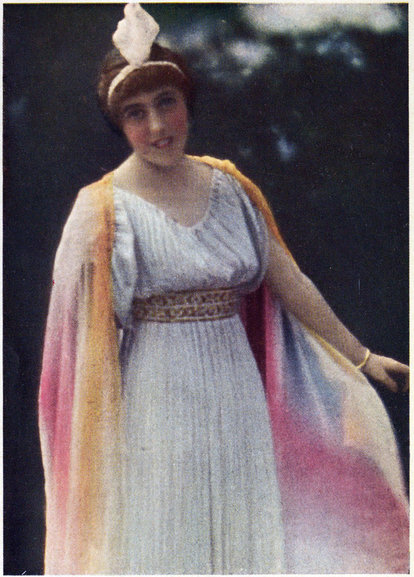
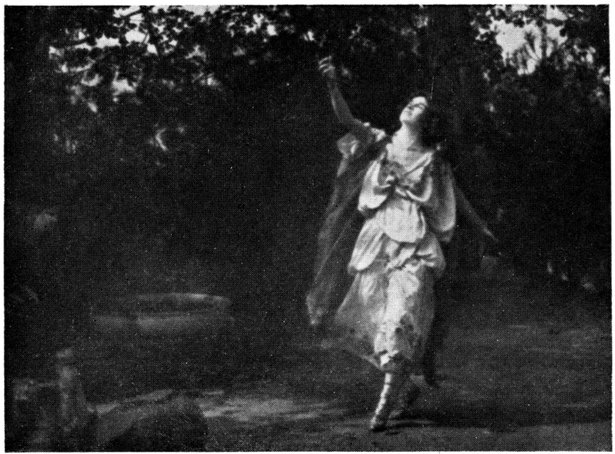
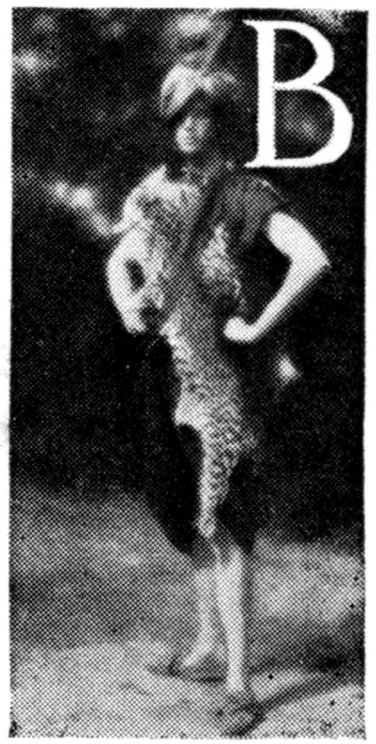
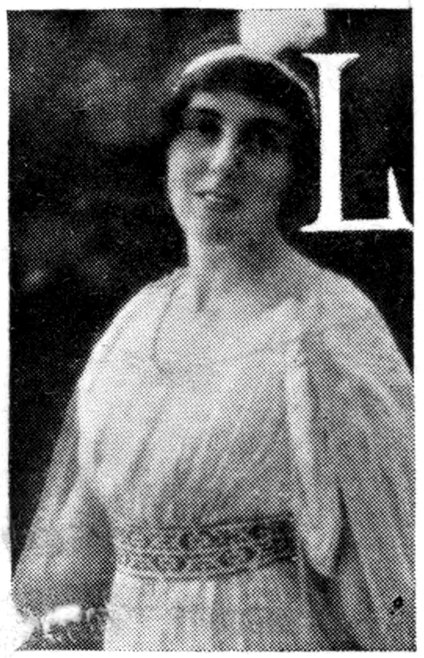
ORNIS
(Miss Eleanor Wilson)
NOTE REGARDING PERFORMANCE AND PUBLIC READING
Requests for permission to perform or read publicly this Bird Masque having been received from a great many quarters, the following information is here given for those desiring such permission:
The Masque is copyrighted in the United States and countries of the Copyright Union, and all rights are reserved.
The purpose of the Masque is to be of public use, so that all adequate presentations of it are welcome. To this end the special conditions of performance or public reading should in each case be communicated direct to the author, in care of the publisher.
No performances may be given without such direct communication, and permission thus first obtained.
As the publication of this text is designed to serve the definite cause for which it was written, performances Imust be, in some degree at least, for the benefit of Wild Bird Conservation.
Music for the lyrics “The Hermit Thrush” and the three songs of Quercus has been composed by Frederick S. Converse, and is published by the H. W. Gray Company, 2 West 45th Street, New York.
A bird bath, specially designed for use in bird sanctuaries and gardens, with plastic groupings of characters in the original cast of this Masque, has been executed by Mrs. Louis Saint-Gaudens, Cornish, New Hampshire, post office Windsor, Vermont.
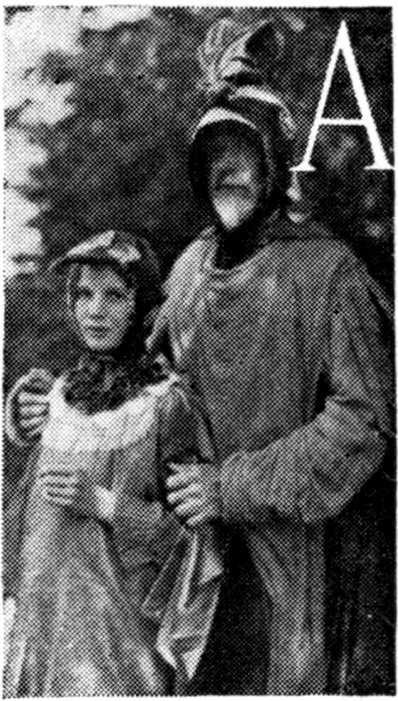
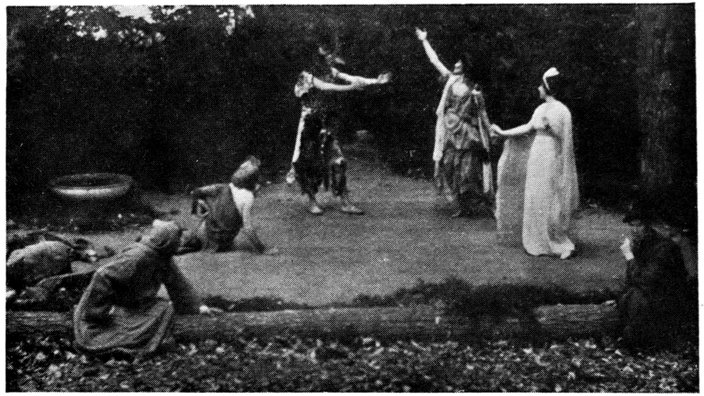
The four photographs in color, as well as those in black and white, which illustrate this volume were taken by Dr. Arnold Genthe of enactors in the Masque, as first performed by members of the Cornish Colony and the Meriden Bird Club at Meriden, New Hampshire, September 12, 1913.
FOREWORD
This Masque was written for the dedication of the bird sanctuary of the Meriden Bird Club of Meriden, New Hampshire, where it was first performed on the night of September twelfth, 1913. The text was composed, the lyrics set to music, the masque rehearsed, costumed and acted, within the brief space of a month. Its production came about by a spontaneous and glad cooperation of artists, neighbors, lovers of nature, imbued with a deep feeling in common—concern for the welfare of wild birds. In this important concern its enactors were happily encouraged by the sympathetic presence of the President of the United States and the participation of his family.
Swift and spontaneous as its production was, however, the masque in its reasons for being was not unpremeditated. It took its origin from two important sources, rarely, if ever, associated—nature study, and the art of the theatre.
The union of these was its raison d’etre.
However tentative its realization, it stands none the less as a pioneering suggestion of real moment xto those two potent influences upon our national life. As such it has seemed worth while to present to the public, and to make clear the suggestion which it illustrates, however sketchily.
From a recent volume by the writer on “The Civic Theatre, in Relation to the Redemption of Leisure,” I quote the following paragraphs upon “Nature Symbols,” as they apply directly to this subject:
“The relation of the theatre’s art to the naturalist’s vocation is probably not obvious to the man on the street. That is because the commercial theatre relates itself to so few of the pursuits of science outside of Broadway interests. The civic theatre would do otherwise.
“Aristophanes symbolized the birds for the purposes of Greek satire. The costuming of his play in Athens probably expressed no direct attribution to the science of ornithology. Yet its attribution to the Greek race’s intimate love of Nature was as spontaneous as the symbolizing of flowers in the capitals of their temple columns. The movement to-day for the conservation of our birds and their more intimate study might well take on significant, lovely forms of symbolic expression in pageants, festivals and the drama of the civic theatre.
“By the same art, the fascinating designs, embossings, xicolorings, of insect forms could be symbolized in spectacles of astonishing beauty, motivated dramatically to the real and tremendous human relation which that ignored but pestiferous race bears to human society and the state; as witness the movement, involving millions in taxes, for exterminating the gypsy moth and the boll weevil.
“Such implications for art may seem, at first, a far cry from actual possibilities of the theatre; yet thus may the civic theatre directly relate its activities not only to the enthusiasms of naturalists in the fields and woods, but to the inspiring studies of scholars in their laboratories: a cooperation which may soon stultify the popular notion that art and science are divorced in their special aims. The same relation of the theatre’s symbolic art to all the sciences—the discoveries of chemistry, the splendid imaginings of engineering—is implied in their common aim: the bringing of greater joy, beauty, understanding, to our fellow men and women, the people.
“Science represents idea, art its expression; theatrical art its expression in forms best adapted to convened numbers of the people. The forms of popular art, therefore, are limited only by the ideas of man.”
It is thus as an illustration of one of the multiform xiigenres of the civic theatre’s potential art that this little masque has its main significance.
Before the actual establishment of the Civic Theatre among us, the opportunities of the working dramatist to make tangible contributions by his art to its repertory are, of course, very scant and at best groping and experimental. One such as the present may serve, however, to suggest certain immediate, practical possibilities.
If, for instance, every bird sanctuary were to possess its stage and auditorium for bird masques—if every Natural History Museum had its outdoor theatre, equipped to set forth the multitudinous human meanings of its nature exhibits to the crowds that frequent its doors in their hours of leisure—if the directors of every Zoölogical Park were to provide for it a scenic arena, and seek the civic cooperation of the dramatic poet and theatrical expert, to vivify by their art the tremendous life stories of wild nature to the receptive minds of the human thousands convened to listen and behold—by such means, would not the disciples of nature study not simply adopt for their own ends a means of education and publicity a thousandfold more dynamic, imaginative and popular than any of the static means of exhibits, lectures and published volumes on which they xiiinow rely: would they not also thereby splendidly assist in enlarging the civic scope of the theatre’s art, still cramped, as for generations, within the walls of speculation and commercialism?
These suggestions speak for themselves.
If this Bird Masque shall help, in the slightest degree, to illustrate them, it will do its ephemeral service in the only permanent sanctuary of men as of birds—imagination.
PERSONS OF THE MASQUE [1] in the order of their appearance — PARTICIPANTS IN PANTOMIME — SCENE
1. The complete programme of the original production of the masque, as first enacted at Meriden, New Hampshire, by members of the Cornish Colony and the Meriden Bird Club, is printed in the Afterword of this volume.
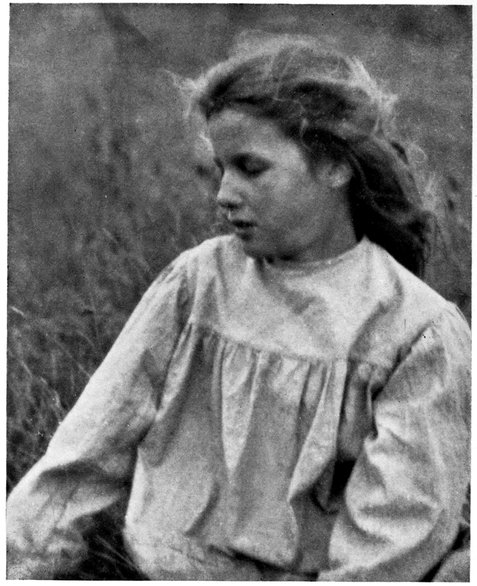
THE LITTLE GIRL FALLS INTO REVERIE
THE PRELUDE
THE MASQUE — I — II — III — IV — V — VI — VII — VIII — IX — X
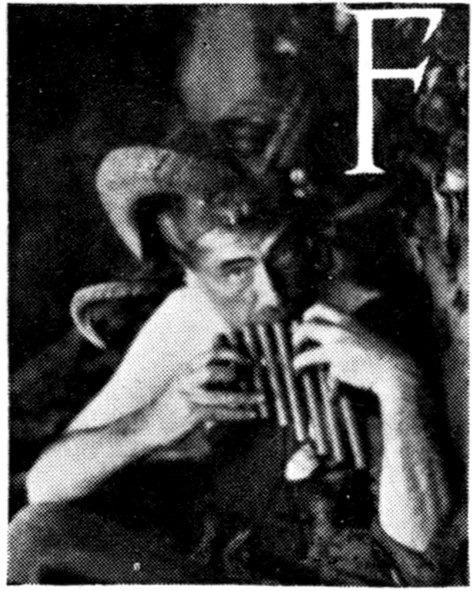 From hence even now a piping filled mine ear
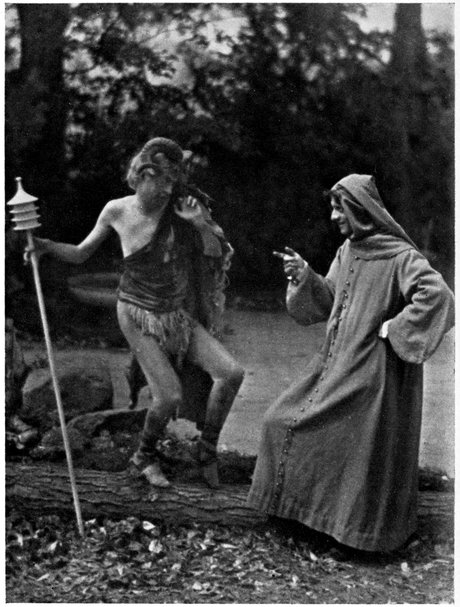
“IS THIS IN SOOTH MINE OLD SICILIAN FAUN?”
 A hermit thrush is pleasanter to hear.
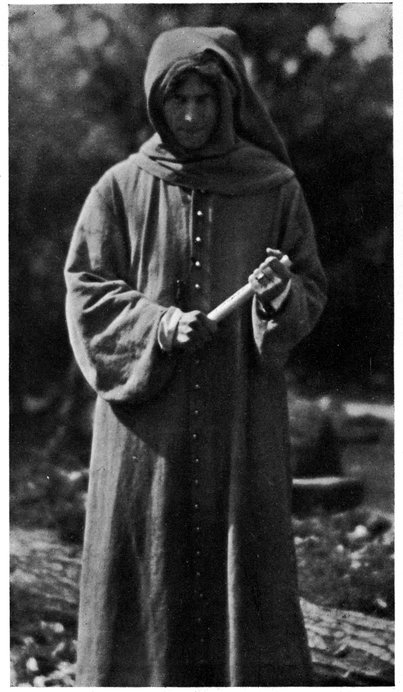
ALWYN
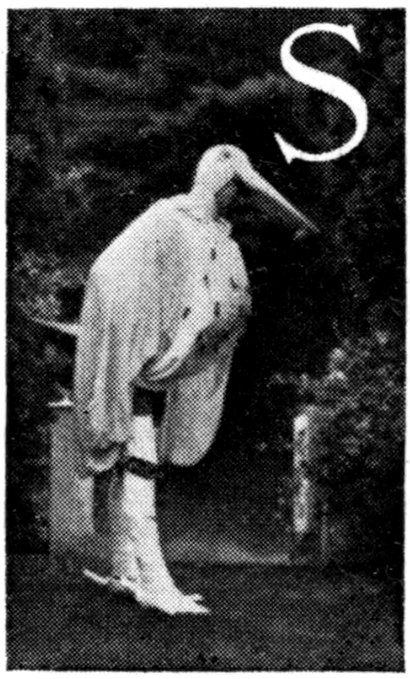 Shy—honest friend, your hand once more!
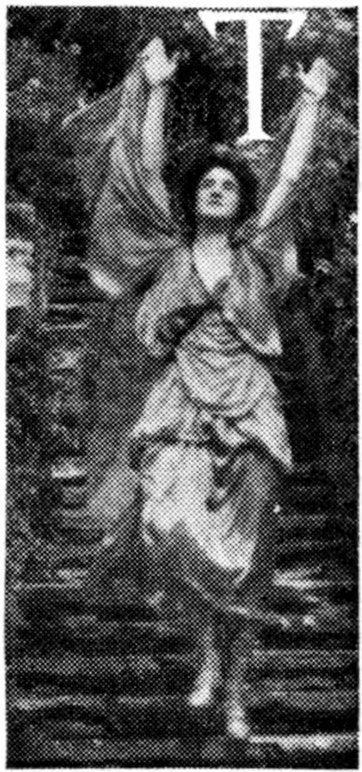 Tacita! It is she!
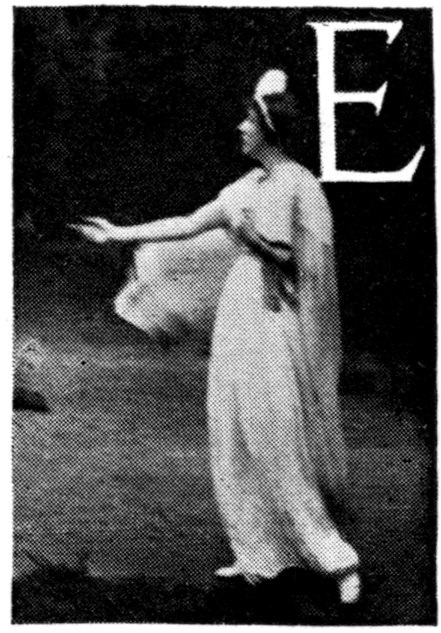 Ee-ó-lee! O-rée-o! Sanctuary!
Stark. Ornis. Alwyn. Shy.
 Bagged!—Hold off the dogs!
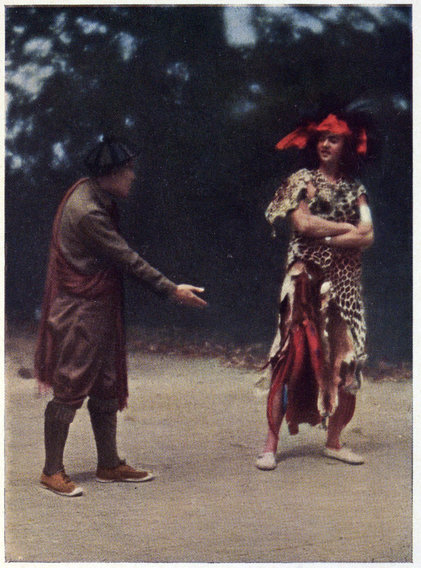
“Sir—Here is No Hunting”
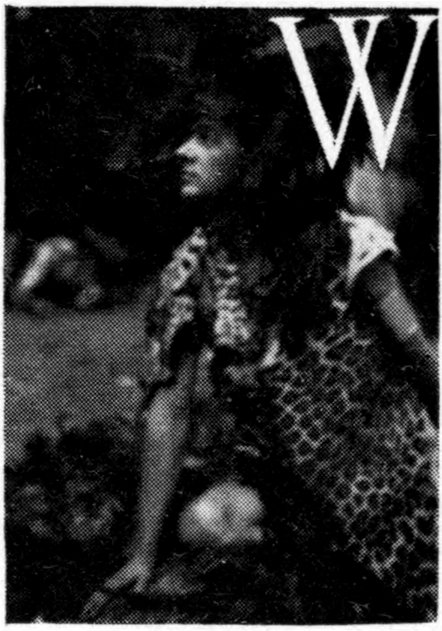 What are you?
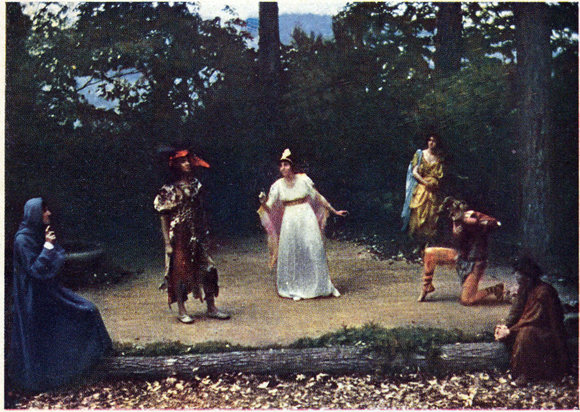
“Lo, I am Ornis, and I love you still!”
 Look, sister: friends are coming.
AFTERWORD — EPILOGUE
In the original production of this masque, referred to in the Foreword, the sanctuary stage was devised by Mr. Joseph Lindon Smith in two planes—the natural and the supernatural, harmoniously blended.
The natural plane, in the foreground, was a leaf-strewn plot of earth; the supernatural, in the background, was a constructed stage some eighteen inches higher, sloping slightly upward toward the back, covered with smooth canvas, practical for dancing, so painted as to suggest a weathered outcropping of rock, overgrown in places by moss and greensward.
This constructed stage was divided from the foreground earth by the trunk of a felled maple tree, straight in line and inconspicuous in color.
In front of this dividing line, SHY and Alwyn remained always in the natural plane; behind it, Ornis and Tacita remained always in the supernatural. Their scenes 70together were enacted near or beside the fallen tree trunk.
In the scene of his conversion, Stark was lured into the higher plane by Tacita; while Quercus alone among the characters skipped back and forth from one plane to the other.
As audience, the non-participating spectators sat in dominoes of brown, flanked on either side by the bird-participants in their pied bird costumes. These latter watched the performance until, at the finale, they were summoned by Quercus upon the constructed stage.
There, when all had been marshalled, entered the Cardinal Bird [enacted by Mr. Herbert Adams, the sculptor], accompanied by two small scarlet-tanager acolytes [boys], bearing great candles, to light a crimson cushion held by the Cardinal. On the cushion lay an open scroll.
This scroll, itself a sheet of parchment-like paper from the original press of Benjamin Franklin, had been inscribed by Mr. Stephen Parrish with a Sonnet-Epilogue,
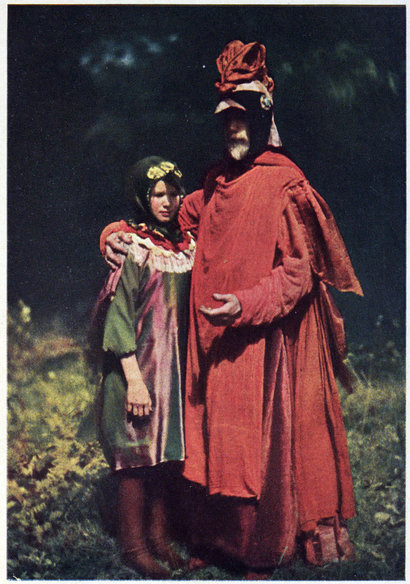
Cardinal Bird and Hummingbird
73composed by the author of the masque and signed by all of its participants, with their real names opposite the species of birds they severally impersonated.
Moving slowly forward to music till he stood before President and Mrs. Wilson, where they sat near the centre of the first row of the audience, the Cardinal Bird, with simple dignity, read from the scroll this
And sign ourselves
Having thus presented the scroll, the Cardinal Bird with his Acolytes retired to the stage, where the final dance and procession of the bird-participants then took place.
The Programme of the performance [omitting that part of the Prelude already printed on pages xix and xx] was as follows:
MEMBERS OF THE MERIDEN BIRD CLUB JOIN WITH RESIDENTS OF CORNISH, NEW HAMPSHIRE, AND THEIR FRIENDS, TO PRESENT A MASQUE IN THE INTEREST OF AMERICAN WILD BIRD PROTECTION
| QUERCUS | FAUN | JOSEPH LINDON SMITH |
| ALWYN | POET | PERCY MACKAYE |
| SHY | NATURALIST | ERNEST HAROLD BAYNES |
| TACITA | DRYAD | JULIET BARRETT RUBLEE |
| ORNIS | BIRD SPIRIT | ELEANOR WILSON |
| STARK | PLUME HUNTER | WITTER BYNNER |
| ATTENDANT | LEONARD COX |
| THE CARDINAL BIRD | HERBERT ADAMS |
| FIRST ACOLYTE | ROBIN MACKAYE |
| SECOND ACOLYTE | PAUL SAINT-GAUDENS |
| BLUEBIRD | MRS. HERBERT ADAMS |
| CARDINAL GROSBEAK | MR. HERBERT ADAMS |
| OWL | MISS CHARLOTTE ARNOLD |
| BALTIMORE ORIOLE | MISS FRANCES ARNOLD |
| OWL | MISS GRACE ARNOLD |
| RED-WINGED BLACKBIRD | MR. LEROY BARNETT |
| GOLDFINCH | MISS BIGELOW |
| DOWNY WOODPECKER | MRS. ERNEST HAROLD BAYNES |
| DOWNY WOODPECKER | MRS. EDSON BEMIS |
| DOWNY WOODPECKER | MR. EDSON BEMIS |
| GOLDFINCH | MR. JOHN FARNUM CANN |
| BLUE JAY | MISS LOUISE CONVERSE |
| BLUE JAY | MISS VIRGINIA CONVERSE |
| KINGBIRD | MRS. KENYON COX |
| CROW | MR. KENYON COX |
| FLICKER | MISS CAROLINE COX |
| SCARLET TANAGER | MR. ALLYN COX |
| BLUEBIRD | MISS ANNIE H. DUNCAN |
| HOUSE WREN | MISS ELIZABETH EVARTS |
| RUBY-CROWNED KINGLET | MR. PRESCOTT EVARTS |
| OWL | MR. ELWIN FEY |
| SCARLET TANAGER | MR. CHARLES FULLER |
| GOLDFINCH | MRS. CONGER GOODYEAR |
| RUBY-CROWNED KINGLET | MISS LENA HARDY |
| WOOD THRUSH | MISS RUTH HALL |
| EVENING GROSBEAK | MR. WILLIAM HOWARD HART |
| HAWK | MR. GRISWOLD HAYWOOD |
| KINGBIRD | MISS KING |
| KINGBIRD | MISS CLARA KING |
| BLUEBIRD | MRS. HERBERT LAKIN |
| YELLOW WARBLER | MISS ELEANOR LAKIN |
| YELLOW WARBLER | MISS HETTY LAKIN |
| BLUEBIRD | MISS BELLE LAVERACK |
| SNOW BUNTING | MRS. PERCY MACKAYE |
| SWALLOW | MISS HAZEL MACKAYE |
| HUMMINGBIRD | MISS ARVIA MACKAYE |
| 77SCARLET TANAGER | MASTER ROBIN MACKAYE |
| GOLDFINCH | MISS ALICE MCCLARY |
| BLUEBIRD | MISS ANNE PARRISH |
| CARDINAL BIRD | MR. STEPHEN PARRISH |
| RED-WINGED BLACKBIRD | MISS MARIE PARKER |
| HERMIT THRUSH | MRS. MAXWELL PERKINS |
| GOLDFINCH | MR. ROGER PLATT |
| SCARLET TANAGER | MR. WILLIAM PLATT |
| RED-WINGED BLACKBIRD | MISS EDNA RAPALLO |
| GOLDFINCH | MISS HADLEY RICHARDSON |
| BLUE HERON | MR. GEORGE RUBLEE |
| LOVE BIRD | MRS. LOUIS SAINT-GAUDENS |
| SCARLET TANAGER | MR. PAUL SAINT-GAUDENS |
| WOOD THRUSH | MISS SCUDDER |
| BLUEBIRD | MISS ELLEN SHIPMAN |
| INDIGO BUNTING | MASTER EVAN SHIPMAN |
| WOODPECKER | MISS FRANCES SMITH |
| WOODPECKER | MISS REBECCA SMITH |
| BALTIMORE ORIOLE | MISS CORDELIA TOWNSEND |