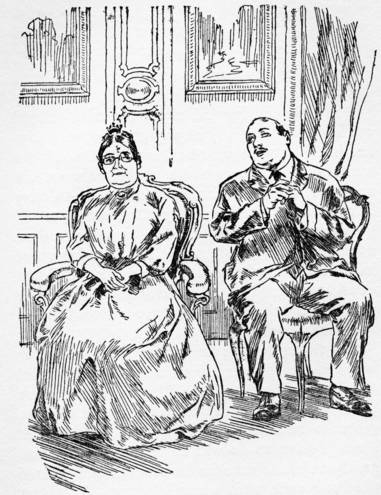
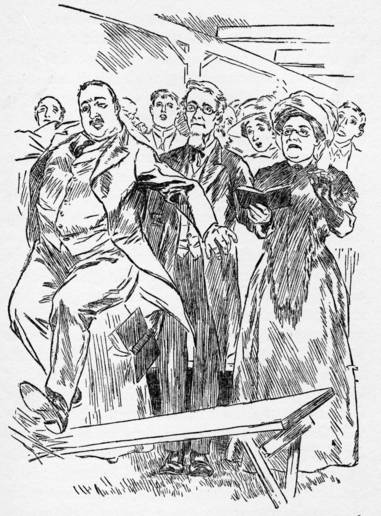
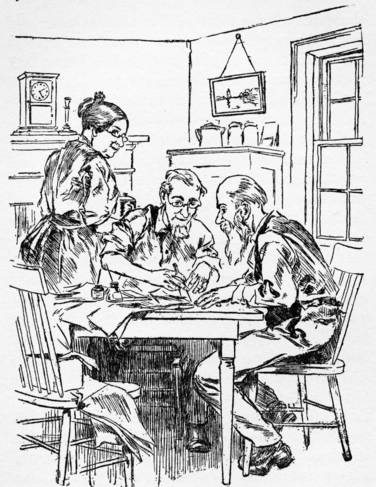
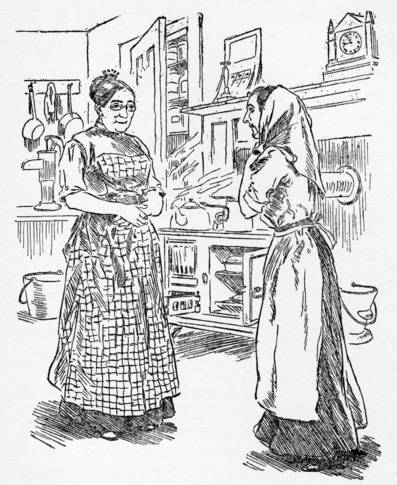
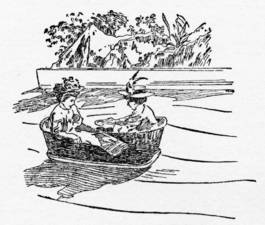
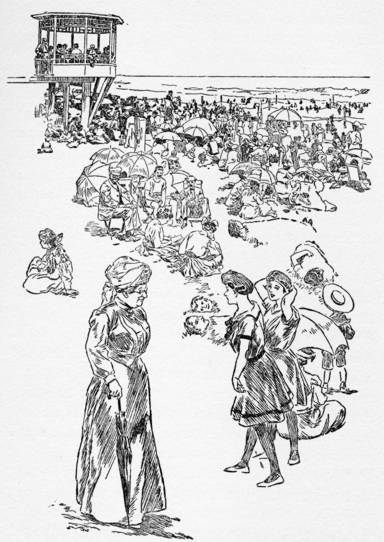
“‘I won’t wear a veil,’ sez he stoutly. But the next time a gale come from the sou’west I laid the brim back and tied the veil in a big bow knot under his chin.”
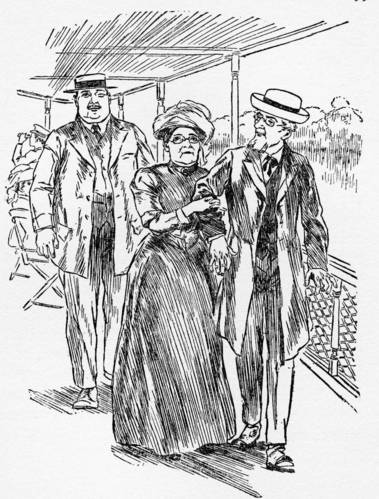
“‘What does ail you, Samantha, lockin’ arms with me all the time—it will make talk! he whispered in a mad, impatient whisper, but I would hang on as long as Mr. Pomper wuz around.”
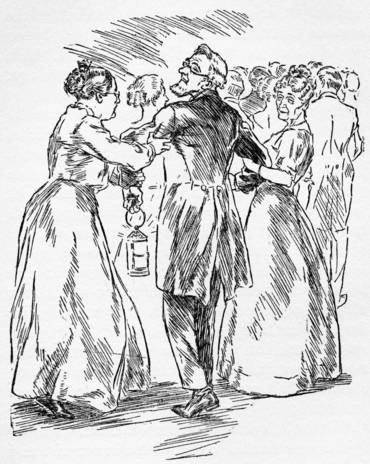
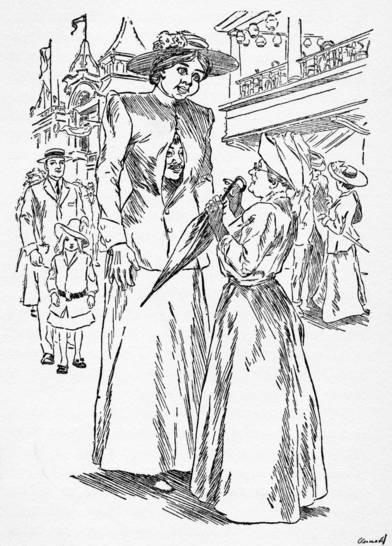
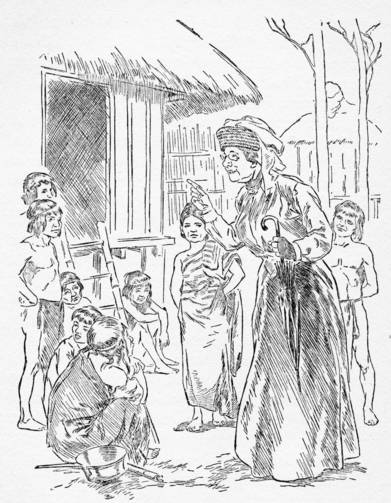
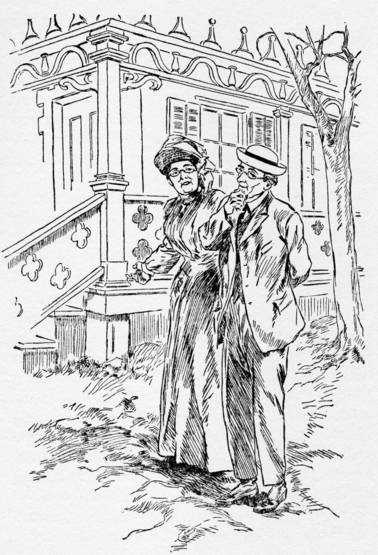
“As they come nigh me I riz up almost wildly and ketched holt of my pardner and sez I: ‘Desist! Josiah Allen, stop to once!’ The aged female looked at me in surprise.”
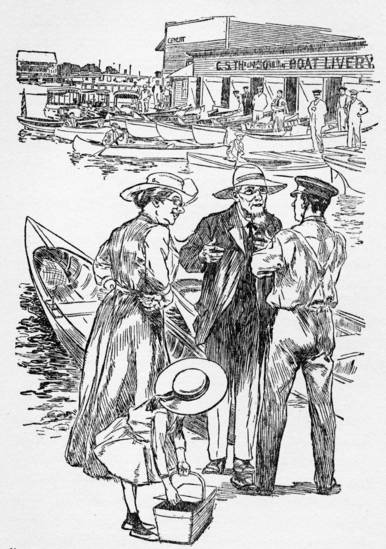
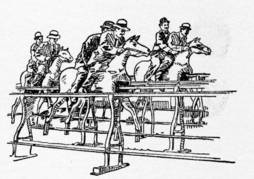
“‘No,’ sez Mr. Pomper, ‘I want it done as speedily as possible, fer my late lamented left me thirteen children, two pairs of triplets, two ditto of twins, and three singles.’”
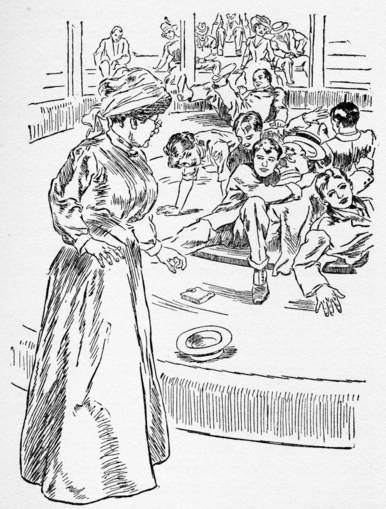
“And then he would call in Uncle Nate Peedick and they would bend their two gray bald heads and talk about specifications and elevations till my brain seemed most as soft as theirn.”
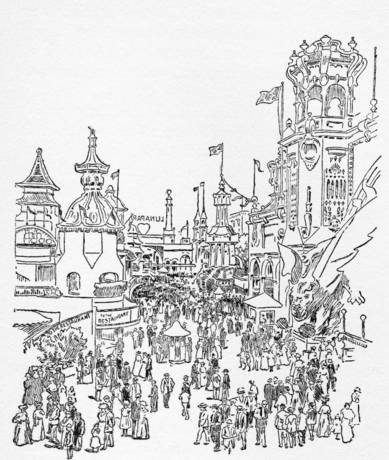
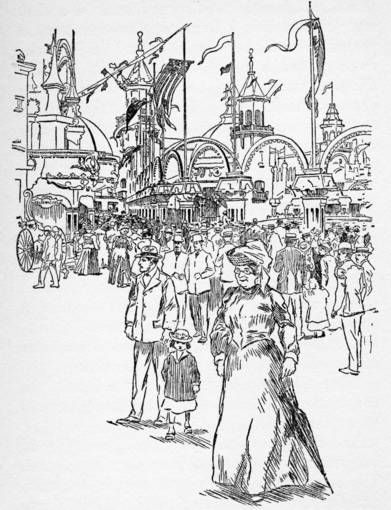
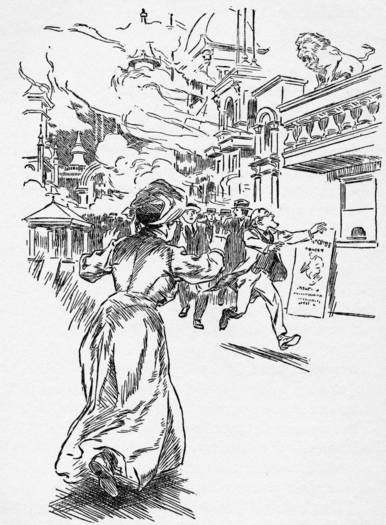
“‘Serenus and Josiah are havin’ a gay time at Coney Island. I’ve jest had a card from Serenus,’ sez Miss Gowdey. You could have knocked me down with a pin feather.”
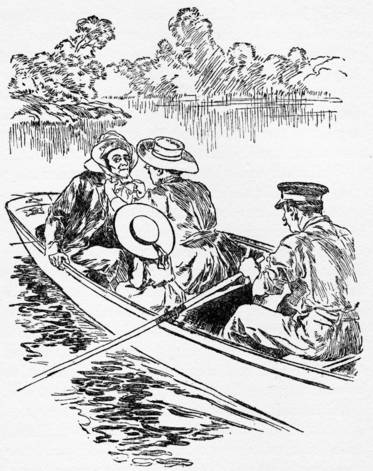
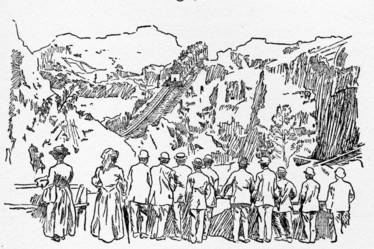
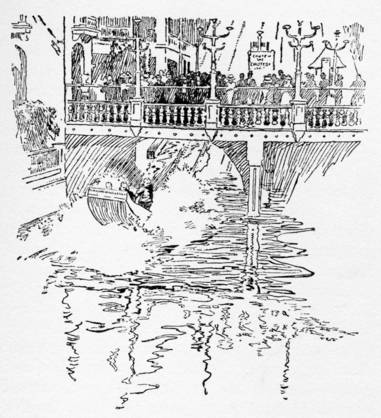
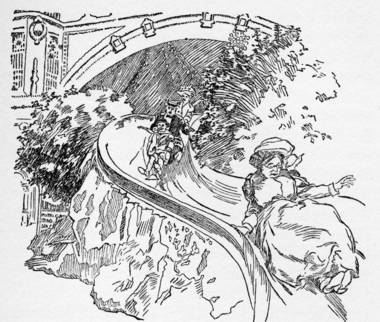
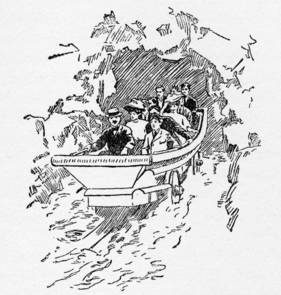
“A boat full of men and women set out from the highest peak, shot down the declivity like lightnin’ and dashed ’way out on the other side of the bridge.”
CHAPTER ONE — IN WHICH THE CONEY ISLAND MICROBE ENTERS OUR QUIET HOME
3
Samantha at Coney Island and a Thousand Other Islands
CHAPTER ONE
IN WHICH THE CONEY ISLAND MICROBE ENTERS OUR QUIET HOME
When Serenus Gowdey got back last
fall from Brooklyn, where his twin
brother, Sylvester, lives, he couldn’t
talk about anything but Coney Island. He
slighted religion, stopped runnin’ down relations,
politics wuz left in the lurch, and cows,
hens, and crops, wuz to him as if they wuzn’t.
He acted crazy as a loon about that Island.
Why, Sylvester’ses wife told Miss Dagget
and she told the Editor of the Augur’s wife, and
she told Ben Lowry’s widder, and she told the
Editor of the Gimlet’s mother-in-law, and she
told me. It come straight, that Serenus only
stayed there nights and to a early breakfast,
but spent his hull durin’ time to Coney Island,
and he a twin too. She said Sylvester felt so
4
hurt she wuz afraid it would make a lastin’
hardness. And it made me enough trouble too,
yes indeed! for he would come and pour out his
praises of that frisky, frivolous spot into Josiah’s
too willin’ ears, till he got him as wild as he wuz
about it.
Why, evenin’s after he’d been there recountin’
its attractions till bed-time, Josiah would be so
wrought up he’d ride night mairs most all
night. He’d spring up in bed cryin’ out, “All
aboard for Coney Island!” or, “There is the
Immoral Railway! See the divin’ girls, and
the Awful Tower. Get a hot dog; look at the
alligators, etc., etc.” I gin him catnip to soothe
his nerve, but that didn’t git the pizen out of
his system; no, acres of catnip couldn’t.
Oh, how dead sick I’d git of their talk, Coney
Island! Luna Park! Well named, I’d say to
myself, it is enough to make anybody luny to
hear so much about it. Steeple Chase! chasin’
steeples, folly and madness. Dreamland! night
mairs, most probable. Why, from Serenus’
talk that I hearn onwillingly about toboggan
slides, merry-go-rounds, swings, immoral railways,
skatin’ rinks, diving girls, loops de loops,
and bumps de bumps, trips to the moon and
trashy shows of all kinds I got the idee there
5
wuzn’t nothin’ there God had made, only the
Ocean and the little incubator babies, though
them two shows wuzn’t what you might call
similar and the same size. Why, I myself, with
my powerful mind, would git so cumfuddled
hearin’ his wild and glarin’ descriptions, that my
brain would seem to turn over under my foretop,
and I didn’t wonder at Josiah’s bein’ led away
by it, much as I lamented it, for he soon declared
that go there he would.
In vain I reminded him that he wuz a deacon
and a grand-father. He said he didn’t care how
many deacons he wuz, or how many grand-fathers;
he wuz goin’ to see that beautiful and
entrancin’ place with his own eyes. I tried to
quell him down, but couldn’t quell him worth a
cent, with Serenus firin’ him up on the other
side.
One Sunday, Elder Minkley preached an
eloquent sermon describing the glories of the
New Jerusalem, and Josiah said goin’ home
that from Serenus’ tell, the elder had gin a
crackin’ good description of Coney Island.
I groaned aloud. And he sez, “You may
groan and sithe all you’re a minter; I shall see
that magnificent place before I die.”
“Well,” sez I coldly, “I don’t want to talk
6
about it Sunday. If you’ve got to talk about
shows and Pleasure Huntin’, do it week days,
and don’t pollute this sacred day with it.”
“Pollute nothing!” sez he, and we didn’t speak
for over two milds. But another weariness wuz
ahead on me, and another strain on my overworked
ear pans. Jest about this time, Whitfield
Minkley, our Tirzah Ann’s husband, got
jest as much carried away and enthused over
some other Islands, though he had more to show
for his het up state of mind. One thousand and
seventy wuz the number of islands he fell voylently
in love with and tried to make us the
same. He had been to Canada on bizness and
went through them islands, and wuz overcome
by their extreme beauty. I’d heard that Whitfield’s
islands wuz as beautiful as anything this
side of the Heavenly gardens. Still, with
Serenus on one side praisin’ up Coney, and
Whitfield on the other praisin’ up his islands, I
got so dead tired of ’em that I wished there
wuzn’t a single island on the hull face of the
earth. Yes, extreme weariness had got me so
low down as that.
One evenin’, Serenus had been there and
talked three hours stiddy, describin’ the charms
and attractions of his island. The rush and roar
7
of the mechanical amusements, so wonderful
they made scientific men wonder. The educated
animals that showed how fur animals could
be made to reason and understand. The constant
hustle and bustle of the immense crowds,
ever comin’, ever goin’, ever movin’, never stoppin’.
He stood up some of the time describin’
the wonders and splendors there, and tramped
up and down our kitchen floor, swingin’ his
arms and actin’, till, when he left at late bed-time,
Josiah wuz pale with longin’, and when
I got up to lock the door and let out the cat,
my head seemed to go round and round, and
I had to hang onto the door nob to stiddy
myself.
And the very next forenoon Whitfield and
Tirzah Ann and little Delight come to spend
the day. Her name is Anna Tirzah, but I called
her Heart’s Delight, she wuz so sweet and
pretty, and we’ve shortened it into Delight. I
wuz glad to see ’em and done well by ’em in
cookin’. I had a excelent dinner started—roast
fowl and vegetables and orange puddin’,
etc.—but Whitfield, jest as soon as he sot
down, begun to descant on the beauty of his
islands. I groaned and sithed out in the
buttery. “Islands agin! I had one island last
night till bed-time, and now I’ve got one thousand
and seventy ahead on me.”
8
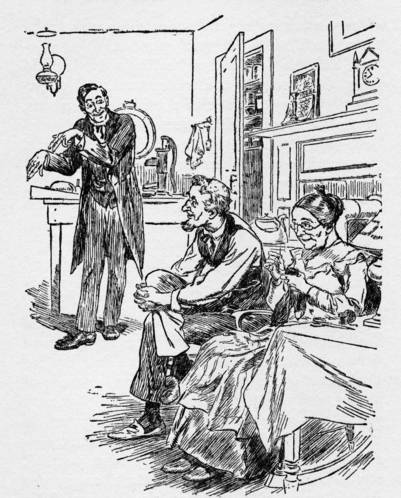
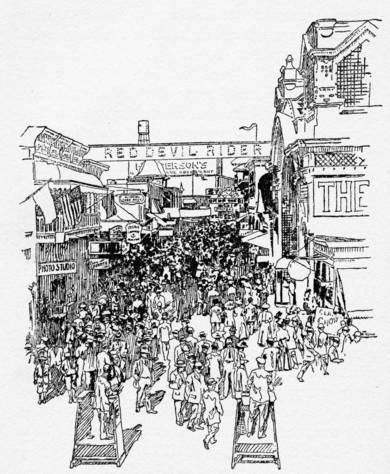
“Serenus Gowdey tramped up and down our kitchen floor swingin’ his arms and describin’ the wonders of Coney Island.” (See page 7)
9
He begun jest as I put my potatoes on to bile,
I wuz goin’ to smash ’em with plenty of cream
and butter; I hearn him till dinner wuz on the
table, and I wuz turnin’ out the rich, fragrant
coffee and addin’ the cream to it, and his praise
on ’em wuz still flowin’ in a stiddy stream, and
then I asked him, in one of his short pauses
for breath, how Grout Nickelson’s rumatiz
wuz.
He answered polite but brief, and resoomed
the subject nearest and dearest. I then, with
dizzy foretop and achin’ ear pans, tried to
turn his mind onto politics and religion, no
avail. I tried cotton cloth, carbide, lamb’s
wool blankets, Panama Canal, literatoor, X rays,
hens’ eggs, Standard Oil, the school mom,
reciprocity, and the tariff; not a mite of change,
all his idees swoshin’ up against them islands,
and tryin’ to float off our minds there with
hisen. I thought of what I’d hearn Thomas J.
read about Tennyson’s character, who “didn’t
want to die a listener,” and I sez in a firm voice,
“I’ve had a letter from Cousin Faithful Smith.
She’s comin’ here next spring to make a visit.”
Whitfield said he should love to see Cousin
10
Faith, but whilst she wuz here, we all ort to go
to the Thousand Islands.
Sez Josiah firmly, “We ort to take her to
Coney Island,” and he went on rehearsin’
Serenuses praises, and the education and the
bliss one could git there. He rid his hobby
nobly, but Whitfield, bein’ young and spry,
could ride his hobby faster and furder, till
finally Josiah got discouraged, and sot still a
spell, and then scratched his head, and went
out to the barn. And Whitfield seated himself
with ease on his hobby, which pranced about
us till, well as I love the children, I felt relieved
to see ’em go, for my head felt as if the river
wuz rushin’ through it. And after they left
and we driv over to the post office, it seemed as
if the democrat wuz a boat and the dusty road
a broad, liquid stream, down which we wuz
glidin’ and the neighin’ of the old mair (we had
to leave her colt to home) wuz the snort of a
steamer. My dreams that night wuz about
the Saint Lawrence, kinder swoshy and floatin’
round.
Well, the cold winter passed away, as winters
will, if you have patience to wait (or if you
don’t either, to be exact and truthful). The
shiverin’ earth begun to git a little warmer,
11
kinder shook herself and partly throwed off the
white fur robe she’d wore all huddled round
herself so long, and as the sun looked down
closter and more smilin’ it throwed it clear off
and begun to put on its new green spring suit.
Them same smiles, only more warm and persuadin’
like, coaxed the sweet sap up into the
bare maple tops in Josiah’s sugar bush and the
surroundin’ world, till them same sunny smiles
wuz packed away in depths of sugar loaves and
golden syrup in our store room. Wild-flowers
peeped out in sheltered places; pussy willows
bent down and bowed low as they see their
pretty faces in the onchained brook; birds
sung amongst the pale green shadders of openin’
leaves; the west wind jined in the happy chorus.
And lo! on lookin’ out of our winder before we
knowed it, as it were, we see Spring had come!
And with the spring come my expected visitor,
Faithful Smith. She is my own cousin on my
own side, called by some a old maid. But she
hain’t so very old, and she’s real good-lookin’—better
than when she wuz a girl, I think, for
life has been cuttin’ pure and sweet meanin’s
into her face, some as they carve beauty into a
cameo. She’s kinder pale and her sweet soul
seems to look right out at you from her soft gray
12
eyes, and the lay of her hull face is such that
you would think, if the fire of happiness could
be built up under it (in her soul), it would light
up into loveliness.
She wuz disappinted some years ago (or
I d’no what you would call it) when she sent the
man away herself. But she had a Bo when
she wuz a girl by the name of Richard West.
Dick West wuz the fullest of fun you ever see,
though generous and good hearted; but he
boasted on not believin’ anything, and Faithful’s
father, bein’ a church member of the closest
kind, and she brung up as you may say, right
inside the tabernacle, with her Pa’s phylakracy
hangin’ on the very horns of the altar, you may
know what opposition Richard got from her Pa
and her own conscience. Her conscience, as so
many good girl’s consciences are, wuz a perfect
tyrant, and drove her round—that, and her Pa.
He wanted to be a good man, but wuz bigoted
and couldn’t see no higher than the top of the
steeple, and didn’t want to. And take these
facts, with her deep true love for Richard, you
may know she got tossted about more’n considerable.
Richard would make fun right in meetin’—make
fun of their religious observances—and
13
finally, though he wuz good natured, and did all
his pranks through light-hearted mischief and
not malice, yet at last he did git mad at the old
deacon, who wuz comin’ it dretful strong on
him with his doctrines and exhortin’ him,
tellin’ him he wuz a lost soul and had been from
before his birth. Then Richard sassed him
right back and told him he didn’t believe in
his idee of the Deity.
The old deacon couldn’t stand such talk.
He turned him outdoors, slammed the door in
his face, and forbid Faith to speak to him again.
She obeyed her Pa and her own conscience;
but it seemed to take all the nip out of her life.
You see, she loved this young man; and when
anyone like Faith loves it hain’t for a week or a
summer, but for life.
He writ to her burnin’ words of love and passion,
for he loved her too in the old-fashioned
way Adam did Eve—no other woman round,
you know. And the words he writ wuz, I spoze,
enough to melt a slate stun, let alone a heart,
tender and true. She never writ a word back,
and at last she wouldn’t read his letters and
sent ’em back onopened. That madded him
and he went on from bad to worse, swung right
out into wickedness. He seemed to git harder
and harder, and finally seein’ he could make no
more impression on Faith than he could on
white clear crystal, he went off west, as fur as
Michigan at first, so I hearn, and so on, I don’t
know where to.
14
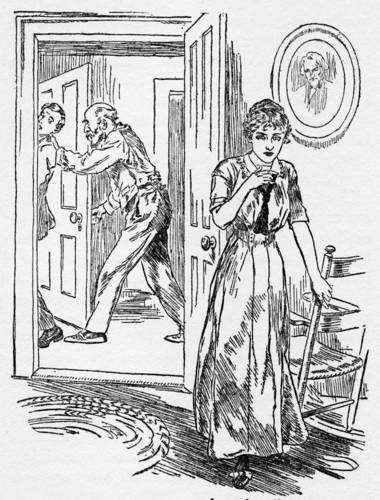
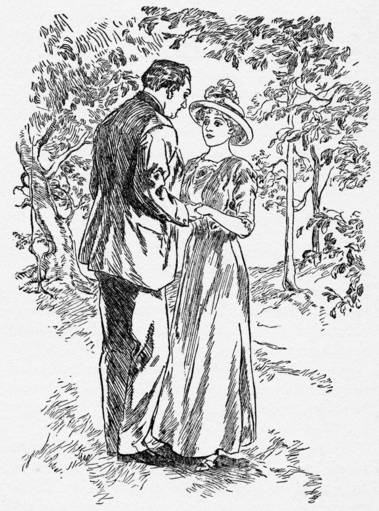
“The old deacon couldn’t stand such talk. He turned him outdoors, slammed the door in his face, and forbid Faith to speak to him again.” (See page 13)
15
Well, Faith lived on in the old home, very
calm and sweet actin’, with a shadder on her
pretty face, worryin’ dretful about her lover,
so it wuz spozed. But at last it seemed to wear
off and a clear white light took its place on her
gentle forward, as if her trouble had bleached
off the earthly in her nature so her white soul
could show through plain. Mebby she’d got
willin’ to trust even his future with the Lord.
Dretful good to children and sick folks and
them that wuz in trouble, Faith wuz. Good to
her Pa, who wuz very disagreable in his last
days, findin’ fault with his porridge and with
sinners, and most of them round him. But she
took care on him patient, rubbed his back and
soaked his feet, and read the Sams to him,
and reconciled him all she could, and finally he
went out into the Great Onknown to find out
his own mistakes if he had made any, and left
Faith alone.
The house wuz a big square one with a large
front yard with some Pollard willers standin’
16
in a row in front on’t, through which the wind
come in melancholy sithes into the great front
chamber at night where Faith slept, or ruther
lay. And the moon fallin’ through the willers
made mournful reflections on the clean-painted
floor, and I spoze Faith looked at ’em and read
her past in the white cold rays and her future
too.
She hired a man and his wife to live in part
of the house, and she herself lived on there, a
life as cold and colorless as a nun’s. But there
wuz them that said that she loved that young
West to-day jest as well as she did the day they
parted, bein’ one of the constant naters that
can’t forgit; that she kep’ his birthdays every
year, but sarahuptishously, and on the anniversary
of the day she parted with him, nobody
ever see her from mornin’ till night.
The tall Pollard willers wuz the only ones
that could look down into her chamber, and see
how she looked, or what she wuz doin’. And
they never told, only jest murmured and sithed,
and kinder took on about it in their own way.
But the next day, Faith always looked paler
and sweeter than ever, they said.
Well, I wuz glad enough to see Faith. I
think a sight on her and she of me, and we had
17
a real good time. Josiah sez to me the day after
she come, “She is the flower of your family!”
And I told him I didn’t know as I should put
it in jest that way, and he might jest as well
be mejum, sez I, “You’re quite apt to demean
the relation on my side, and if you take it into
your head to praise one of the females, you no
need to go too high.”
“Well,” he repeated, “she is the flower of the
Smith race. Of course,” sez he, glancin’ at my
liniment and then off towards the buttery full
of good vittles, “I always except you, Samantha,
who I consider the fairest flower that ever
blowed out on the family tree of Smith.”
Josiah is a man of excelent judgment. But
to resoom backward, I had a dretful good visit
with Faith and enjoyed her bein’ with us the
best that ever wuz. Instead of makin’ work
she helped, though I told her not to. She
would wipe and I would wash, and we would
git through the dishes in no time. She hunted
round in my work basket and found some nightcaps
I’d begun and would finish ’em, put more
work on ’em than I should, for I slight my every
day sheep’s-head nightcaps. But she trimmed
’em and cat-stitched ’em, till they wuz beautiful
to look upon. She wuz always very sweet and
18
gentle in her ways. As wuz said of her once,
she entered a room so quietly and gracefully,
she made all the other wimmen there feel as
if they’d come in on horse-back. Now that
I hadn’t seen her for some time, it seemed as if
I hadn’t remembered how lovely and interestin’
she wuz.
We had a good visit talkin’ about the world’s
work, and reciprocity, and Woman’s suffrage—which
we both believed in—and hens, both
settin’ and layin’. And we talked about the
relation on our two sides. Of course, some of
the wimmen hadn’t done as we thought they
ort to; but we didn’t run ’em, only wuz sorry
they wuz so different.
There wuz Aunt Nancy John and Aunt Nancy
Jim, widders of the two old Smith twins. I
told Faith I wuz sorry they wuzn’t more like
her mother and mine, our mothers wuz so much
better dispositioned, and fur better lookin’,
and didn’t try to color their hair and act younger
than they wuz; and Uncle Preserved’s boy, a
lawyer, I told Faith it wuz a pity he wuzn’t
more like our Thomas Jefferson, though it
wuzn’t to be expected that there could be two
boys amongst the relations so nearly perfect
as Thomas Jefferson wuz; but I didn’t act
19
hauty, only wuz sorry he hadn’t turned out so
well.
And Uncle Lemuel’s two girls, I said I
wouldn’t want it told out of the family, but they
wuz extravagant and slack, and their houses
didn’t look much like Tirzah Ann’s and Maggie’s
house. But we hadn’t ort to expect many such
housekeepers as our children wuz. And we
talked about the Thousand Islands and she
promised to go out with Josiah and me the next
summer if nothin’ happened. And Josiah then
and there, tried to make us promise to go to
Coney Island on our way there. “On our
way,” sez I, “it would be five hundred milds
out of our way!”
“And well worth it!” sez he, “to see what
Serenus see, and hear what Serenus hearn.
Why I git so carried away jest hearin’ about
that magnificent spot that I have to fairly
hang onto myself to keep from startin’ there
to once bareheaded.”
“I know it, Josiah; you’ve acted luny about
it. And if jest hearin’ about it harrers your
nerve so, what would seein’ it do?”
“My nerve ain’t harrered,” he sez.
Sez I, “Can you deny I have had to give you
quarts of catnip after you have had a seancy
20
with Serenus about that frivolous spot, full of
hilarity and temptation?”
“Because you have drownded out my insides
with catnip, it hain’t no sign I needed it. And
I tell you, Samantha Allen, you may demean that
grand glorious place all you’re a minter; I shall
see it ere long. It is the shinin’ gole I have rared
up in front of me and I’m bound to set on it.”
Sez I, “If you hain’t got any nobler gole than
that ahead on you I pity you from the bottom
of my heart.” And to kinder skair him I sez
agin, “Do you, a Christian deacon, want to act
frisky and go pleasure-huntin’ at your age?”
“Why,” sez he, “Serenus sez it is the most
entrancin’ly beautiful and fascinatin’ spot on
earth. He sez, and can prove, it is the biggest
playground in the hull world, to say nothin’ of
what you can learn there, and folks come from
foreign countries jest to see it. Their first
question when they land is, ‘Where is Coney
Island? Lead me to it!’”
“Oh shaw!” sez I.
“Well, it is so, and why should such droves
of folks go there if it hain’t worth it? Serenus
sez and can prove, that a million folks go there
in one day sometimes, and hundreds of thousands
most every day.”
21
Sez I solemnly, “Do you remember the him,
‘Broad is the road that leads,’ you know where.
‘And thousands walk together there.’ Do you
want to walk with ’em, Josiah?”
“Yes, I do, and lay out to.”
Oh how deep the pizen had gone into his solar
system! I see scarin’ didn’t do no good, so I
tried tender talk to wean him from the idee.
I told him I thought too much on him to resk
him there in such crowds. He wuz too small
boneded and his head too weak to grapple with
the lures and temptations that would surround
him, and I’d never give my consent to his goin,’
much less lead him into temptation.
“Lead your granny!” sez he in a rough axent.
And that wuz all the good my lovin’ talk did.
Faith said she didn’t care about goin’. But
we took her to visit the children, though the
day I took her to Whitfield’s he had of course,
jest like Josiah, to ride that hobby of hisen
which raced and cavorted round us, till before
night he got us both most as wild as he wuz
about the Islands. But she had to go from our
house to Uncle Ornaldo Smithses, and had
promised to visit friends out to Ohio durin’ the
summer. I hated to have her go.
CHAPTER TWO — We set sail for Thousand Island Park and have a real good time, but Josiah murmurs about Coney.
25
CHAPTER TWO
WE SET SAIL FOR THOUSAND ISLAND PARK AND HAVE A REAL GOOD TIME, BUT JOSIAH MURMURS ABOUT CONEY.
Soon after, Whitfield wuz obleeged to go
to Canada agin on that bizness and go
through them Thousand Islands, and
said he felt like jumpin’ off the boat, swimmin’
ashore and buyin’ the hull on ’em, they wuz so
entrancin’ly lovely. But by holdin’ onto his
principles and patience (of course he’d got quite
a lot of patience, he’d been married a number
of years) he managed to git through without
jumpin’ off the boat and tacklin’ the job of
buyin’ ’em, but said to himself, “If my life is
spared to finish up that bizness I’ll come back
and buy ten or a dozen.”
So sure enough on his way back he stopped off
at Alexandria Bay and tackled a real estate
agent to see what he would ask for a few islands
close to the beautiful Bay. He had a idee, I
spoze, of locatin’ the relation on his side and
hern round on the different Islands, mebby an
26
island apiece. But to his surprise and horrow
he found that the price for the smallest one wuz
appallin’. But he vowed that if it took every
cent of money he had (and he’s quite well off)
he would own a piece of one big enough for a
house.
So, after searchin’ both by water and by
land, he found a buildin’ spot he felt able to
buy. It wuz on one end of an island that wuz
called Shadow Island, mebby because the shadder
of the tall trees upon it wuz mirrored so
plain in the water, makin’ it look as if there wuz
another and fairer isle below.
There wuz a big empty house standin’ on one
end of the Island, the owner bein’ in Europe
and not wantin’ to rent it. There wuz a portion
of it smooth and grassy, though the grass
wuz kinder thin in places, the rocks come up so
clost to the surface. But as I told Whitfield,
stun is cleaner than dirt, and more healthy,
unless you have ’em both throwed at you, in
that case dirt is more healthy. He said the
spot wuz dry and there wuz some hemlock and
pine trees standin’ on one end on’t, and under
’em wuz a carpet of the rich brown leaves and
pine needles that Whitfield thought would be
beautiful for little Delight to play in.
27
And on the spot he’d picked out for a house
the soil wuz deep enough for a good suller.
Tirzah Ann always did love sullers; she kinder
took to ’em. She has to go down suller most
the first thing when she comes home visitin’.
She never seems to want anything, only to sort
o’ look round. Some say her ma wuz so; but
there is worse things to take to than sullers,
and I wuz glad enough there wuz a place there
where Tirzah Ann could have one.
Well, I declare I fell in love with the place
myself. And he beset us to go out and see it,
and early in the summer we sot sail, the hull
on us, for the Thousand Island Park, a good
noble campin’ ground, though middlin’ hot in
some spots. I’ve been asked what made it so
much hotter there round the Tabernacle than
it was up to Summer Land, where the Universalists
wuz encamped. And I don’t spoze it is
because they believe in hotter places, but it
kinder sets folks to thinkin’. Both places are
pleasant and cool enough in moderate weather.
I hadn’t no idee that so beautiful a spot wuz
so nigh us. For as near as we’ve lived to ’em,
Josiah and I never laid eyes on them islands
before. But I’ve hearn of folks that lived
within’ hearin’ of Niagara Falls that never see
28
that grand and stupendous wonder of the world;
they didn’t see it just because they could.
Queer, hain’t it? But it is a law of nater, and
can’t be changed.
So one warm lovely mornin’ we sot out. We
went by way of Cape Vincent which we found
afterwards wuzn’t the nearest way, but we
didn’t care, for it gin us a bigger and longer view
of the noble St. Lawrence. Cape Vincent is a
good-lookin’ place, though like Josiah and myself,
it looks as if it had been more lively and
frisky in its younger days. Pretty soon the
big boat hove in sight. We embarked and got
good seats, Whitfield full of bliss to think he wuz
started for his islands.
And sure enough, tongue can never tell the
beauty and grandeur we floated by that afternoon;
nor pen can’t, no, a quill pen made out
of a eagle’s wing couldn’t soar high enough.
And my emotions, as I took in that seen, would
been a perfect sight if anybody could got holt
of ’em, as I rode along on that mighty river that
is more like a ocean than a river, holdin’ the
water that flows from the five great inland seas
of North America, the only absolutely tide-less
river in the world. It is so immense in size
that the spring freshets that disturbs other big
29
rivers has no effect on its mighty depths, though
once in a while, every three years, I think it is,
the river draws in her old breath in an enormous
sithe two or three feet deep, and stays so for
some time. I d’no what makes it nor nobody
duz. But truly there is enough in this old
world to sithe about, as deep sithes as a mortal
or a river can heave.
But to resoom forwards. The beautiful river
bore us onwards, the green shores receedin’
on each side till pretty soon it got to be not
much shore but seemin’ly all river, all freshness
and freedom and blue sparklin’ water, and blue
sky above. Nater wuz foldin’ us in her faithful
arms and sweepin’ us away from the too civilized
world into the freshness and onstudied beauty
of her own hants.
I sot there perfectly entranced, and nothin’
occurred to break my rapt musin’s save my
pardner’s request for a nut cake and a biled egg,
and a longin’ murmer about Coney Island and a
wish that he wuz started for there. But that
didn’t seem to quell my emotions down. I
handed the food to him with a hand that seemed
some distance off from my real self.
The first big island we went by wuz called
Carleton. Standin’ on it, loomin’ up tall and
30
solemn and mysterious, wuz some high stun
towers. They stood up there as if tellin’ us
how little we knew. They looked like great
exclamation points set there to express the
futility of our boasted knowledge.
Who built them chimblys? Who started the
fires under ’em? Who drinked the tea that wuz
steeped there? What kind of tea wuz it? Did
the water bile? How did them tea drinkers
feel and look and act while them chimblys
carried off the smoke of their fire? What wuz
their highest aspirations and idees? What wuz
their deepest joy and keenest pain? What
goles did they see ahead on ’em, and did they
ever set down on them goles? I can’t tell nor
Josiah can’t. A hundred years ago one moulderin’
old head-stun leaned over the grave of
one of that company. Wuz it a glad or a sad
heart that rested there in that ancient grave?
Well, the sadness or the joy is jest as much lost
and forgot as the smoke that wafted up towards
the sky on the June and December mornin’s of
1600 odd.
As I thought of all these things, them lofty
towers riz up like gigantick skeleton fingers outstretched
mockin’ly. They seemed to be sayin’
to me and Josiah and the world at large, “You
31
may boast of your inventions, your marvels of
this age, your civilization, your glory, your
pryin’ into dark continents and unexplored
regions of land and science. But what do you
know anyway? Of what consequence are you?
How soon your life and your memory will be
utterly wiped out and forgotten. How soon the
careless sun will forget the shadow you cast on
the earth’s bosom. How soon the green grass of
the forgettin’ earth will grow fresh and untrodden
and cover up the traces of your eager footsteps,
no matter how deep you thought you had made
the track you walked in. How soon it is all
wiped away as if it had never been. And Mom
Nater, instead of weepin’ over your loss, goes
on wreathin’ new flowers for new hands to
gather, and mebby forgits to drop even a bud
on the dusty mound where you lay sleepin’—the
sleep of long forgetfulness.
“Of what account are you anyway? Poor
blind voyagers, floatin’ by me jest as so many
generations have gone past—canoe and white
sails floatin’ along, floatin’ along, comin’ in view
of me in the fur blue hazy distance, comin’ into
the broad light before me and glidin’ off and
disappearin’ in the shadows. Forever and ever,
new ones comin,’ comin’, goin’, goin’, year after
32
year, generation after generation. And here
we have stood calm, settled down, pintin’ up
into the heavens where our history is gathered
up, where the ones that made our history are
gathered like the drops of spray from the river
that has washed on the shores at our feet, and
then evaporated up agin into the blue sky.”
And as I lost sight of them stun towers in the
distance, they seemed to say, “Float on, poor
voyagers; float along with your pitiful little
crumbs of knowledge and wisdom carried so
proudly. How soon the shadows will drift
apart to take you into ’em and then close up
and hold you there forever. And out of the
shinin’ west new faces will come growin’ plainer
and plainer as the boat draws near; they will
shine out full and clear in front of me and then
glide away into the mist—I shall lose sight of ’em
jest as I do of you to-day. Comin’! comin’!
goin’! goin’! They will look at me and wonder
jest as you do to-day, and I will say to ’em jest
as I do to you, ‘Hail and farewell!’”
Oh what emotions I did have! And I hadn’t
more’n got to this pint in my meditatin’, when
I hearn a voice on the off side on me (Josiah wuz
on the nigh side).
The voice said, “Oh how I wish I could be
33
put back there jest a minute and see what them
tall towers see when they wuz built!”
I felt that here wuz a congenial soul and I felt
friendly to him as one would hail a familiar sail
when they wuz floatin’ on foreign waters. The
voice went on:
“Oh how I wish I could be a fly, and fly back
there for a hour.”
Instinctively I looked round. The speaker
weighed three hundred pounds if he did an
ounce, and the idee of his bein’ turned into a fly
seemed to bring down my soarin’ emotions more
than considerable. Truly, we ort to be careful
how we handle metafors. If he’d said he
wanted to be changed into a elephant or a camel,
or even a horse, it wouldn’t have seemed so
curious, but a fly!!! Dear me!
Clayton is a good-lookin’ drowsy sort of a
place, and kinder mixed up lookin’ from the aft
forecastle, where I stood; but at last the little
foot bridge that connected us with the shore
wuz took up, the old boat gin a loud yell to
skair the children and young folks back from the
water’s edge, and the boat riders from fallin’
off the boat, and we sot out agin and floated
along.
And now pretty soon the islands grew closter
34
and closter together, and we wouldn’t no more
than go by one lovely one, than another more
perfect lookin’ hove in sight, and then another
and another, each one seemin’ly more beautiful
than the last.
Some times we would go clost up to the shore,
by islands whose green forests swep’ clear down
to the water’s edge, makin’ the water look green
and cool and shady, and the water would narrow
itself down between two houses seemin’ly jest
to be accomodatin’, and run along between ’em
like a little rivulet with water lilies and buttercups
dippin’ down into it on each side and boys
wadin’ acrost. Jest think on’t, that big noble-sized
river, dwindlin’ itself down jest to obleege
somebody.
And sometimes big houses would loom up
jest above the water’s edge, their daintily shaded
winders lookin’ down into the green waves and
reflected there, anon a stately mansion would
set back a little with towers and pinnacles risin’
above the green trees, and cool shady walks
windin’ by summer houses and bright posy beds,
and gayly dressed folks walkin’ along the
beautiful paths, and mebby a pretty girl settin’
in a boat, and a hull fleet of boats filled with gay
pleasure seekers would glide along like gayly
35
plumed sea birds, and fur in the distance and on
every side white sails would sail on like bigger
birds of white plumage, all set out for the Isle
of Happiness.
I pinted out the metafor to Josiah.
“Isle of Happiness?” he sez, sort o’ dreamy
like. “That’s right. Serenus sez its everywhere,
all over the place.”
“What place?” sez I, suspicion darkenin’
my foretop.
“Why, Coney Island,” sez he, “that’s the
only Isle of Happiness I ever hearn tell on.”
I gin him a look. “Would you compare
Coney Island with the beautiful Isle of Happiness
that the poets sing on?” I sez, severe like.
“Where is it?” sez he.
“Why,” sez I, “It ain’t ennywheres. Its a
metafor of the brain.”
“Is it ketchin’?” sez he. “Seems to me I’ve
hearn tell of that disease before!” And then
before I could gin him an indignant response,
he stuck his fingers in his ears and sot there
grinnin’ like a jimpanzee all the time I wuz
speakin’ out my mind. But to resoom.
Anon a bridge would rise up its fairy arch
and connect two islands together, each one
holdin’ a mansion that looked like a palace,
36
and the bright awnin’s of the winders, the
pillars and pinnacles, and gay colors, reflected
in the water makin’ fairy palaces below as
well as above, and made the hull seen as we
journeyed on one of enchantment, that would
made the grand Vizier of Bagdad turn green
with envy. And every palace, mansion, and
cottage had its pretty boat-house, with the
water layin’ there smooth and invitin’ waitin’
for the boats to be lanched on its bosom, actin’
for all the world like a first class family stream,
warranted to carry safe and not kick and act
in the harness. And then mebby the very next
minute it would swell itself out agin, and be
twenty or thirty milds acrost, rushin’, hurryin’,
and dashin’ itself along, hastenin’ to the sea.
Actin’ as if it had sunthin’ dretful pressin’
and important to tell it, and mebby it had.
Who knows the language of the liquid waves
as they whisper to each other on sunny beaches
and at the meetin’ of placid waters, makin’
love to each other like as not—one tellin’ the
other of the sweet cow-slip and ferny medders
it had to leave at the loud call of its love, the
River. The River murmuring back deep words
of worship and gratitude at the feet of its newly
arrived love.
37
And then mebby the comin’ rivulet complains,
moanin’ kinder low and sorrowful, as it swashes
up on sharp stuny beaches, for what it left
behind. Meadows and orchards full of May’s
rosy blossoms, low grassy shores fringed with
flowers and fresh, shinin’ grasses. And white,
dimpled baby feet mebby that waded out in its
cool shallows. Pretty faces that bent over its
sheltered pools, as in a lookin’ glass, wavin’
locks that scattered gold light down into the
water, bright eyes that shone like stars above it.
I shouldn’t wonder a mite if it missed ’em and
tried to say so in its gentle, pensive swish,
swash, swish.
And then mebby the River resented it and
kinder roared at it; mebby that is what it is
sayin’ in its louder and more voylent tones,
upbraidin’ it for lookin’ back to its more single
and lonesome career, when it now has Him!Him! Rush! Roar! Crush! Roar! Roar!
We can’t tell what the river is talkin’ about,
in its calm gentle moods or its voylent ones.
Who knows what the loud angry scream and
screech of the deep waves say as the tempest
and storm presses down on ’em and the Deep
answers back in a voice of thunder, with its
great heart beatin’ and heavin’ up and throbbin’
38
in its mad pain and frenzy? Who knows what it
is roarin’ out, as it meets opposin’ forces, wave
and rock, and dashes aginst ’em—fightin’ and
dashin’ and tryin’ to vanquish ’em like as not?
Who can translate the voice of the waters? I
can’t, nor Josiah, nor nobody.
CHAPTER THREE — We seek Quiet and Happiness in their beautiful hants and mingle with the pleasure seekers of Alexandria Bay.
41
CHAPTER THREE
WE SEEK QUIET AND HAPPINESS IN THEIR BEAUTIFUL HANTS AND MINGLE WITH THE PLEASURE SEEKERS OF ALEXANDRIA BAY.
Sometimes we would sail through the
green water, so clost to the shore we
could almost pick off some of the cedar
and pine boughs as we went past, and we could
look off into the green and sunny aisles of the
trees into beautiful solitude and quiet. And
we’d want to foller Quiet and Happiness back
into them beautiful hants. And then agin,
we’d float by an island where there would be
lots of white tents, with wimmen and children
and men and boys standin’ out wavin’ their
handkerchiefs and shoutin’ to us, good natered
and sociable.
And agin we’d go by a kinder high island with
a tall, noble mansion standin’ up on it with
towers and balconies, and winders all ornamented
off, and flags a-flyin’. And every house
and every tentin’ ground had their own little
42
wharfs runnin’ down into the water and boats
hitched to ’em, jest as we’d hitch the old mair
and colt to a hitchin’ post. And most of ’em
had picturesque boat-houses painted up like
the houses.
And all of these pretty houses and towers and
flags and boats and everything wuz reflected
down into the water, so there wuz handsome
pictures above, and still more extremely beautiful
ones below. For the sunlight shadow
pictures wuz more beautiful fur than the reality,
as is often the case. Every little sail-boat and
canoe had its white shadder floatin’ along by it,
shinin’ out from the blue and sea-green surface
of the water.
Josiah wuz turrible interested in tryin’ to
see if the reflections wuz exactly like the real
seen up above, and he kept leanin’ over the
edge of the boat tryin’ to turn his head upside
down so’s to git a better look, and at last he
nearly fell overboard into the water only I
grabbed him quick.
Sometimes,—I don’t know what made it,—there
would be long lines of light in different
colors layin’ on the water; long waveless
furrows of palest amethyst, lilock, pale rose-color,
and pearl, soft green and blue, way off
43
and near to, wide and long and changin’ all the
time. Why, some of the time it would seem
as if the surface of the river wuz a shinin’ pavement
made of them glowin’ and lustrous colors,
that you might walk out on. And then agin,
cold Reality would say to you that if you tried
it, you’d most probable git drownded.
Anon we went by a island with a house
standin’ on it, the hull thing seemin’ly nothin’
but house right in the strongest current of the
river, and on the end of the island wuz a wheel
fixed that run all the machinery of the house,
lightin’ it, and pumpin’ water, and runnin’ the
coffee mill and sewin’ machine, and rockin’ the
cradle, for all I know.
The river waitin’ on ’em, and doin’ it cheerful.
A soarin’ soul of power and might, so
strong that a wink from its old eye-lids could
swallow up a fleet of ships, and a flirt of its
fingers overthrow a army of strongest men and
toss ’em about like leaves on an autumn gale.
To see such a powerful, noble body, that wuz
used to doin’ the biggest kind of jobs, quietly
bucklin’ down pumpin’ water to supply a tea-kettle,
and churn a little butter, mebby!
Why, thinks I, what a lesson to hired girls
that is, they’re always so fraid of doin’ a little
44
more than it is their place to do. They’re so
fraid of settin’ back a chair, if it is their place to
cook, and so afraid of bilin’ a egg if it is their
place to slick up the house. Why, it wuz a
lesson in morals to see that big grand river
crumplin’ down to do housework for a spell.
Frontenac Island used to be called Round
Island, I guess because it wuz kinder square in
shape. It is a handsome place with a immense
hotel[A] settin’ back most a quarter of a mild, and
jined by a long railed balcony with another,
makin’ room enough, it seemed to me, for an
army. The broad, handsome path leadin’ up
to it wuz bordered with beautiful flowers and
shrubs, lookin’ lovely against the vivid green
of the lawn.
I liked the name Frontenac first rate, and
Point Vivian, and the name of the hotel on St.
Lawrence Park, Lotus, seemed highly appropriate
for the idle hours of rest and pleasure in
the balmy summer-time.
And that park, while it could pass itself off
for an island, wuz really the main land. And
if you wanted a doctor on a dark, stormy night,
you could get one without going on the wild
45
waves; and if you got skairt in the night and
sot off to run, you could run as fur as you wanted
to without gittin’ drownded.
I spoke to Josiah about this and he agreed
with me, though he took the occasion to bring
in Coney Island, much to my shagrin.
“I wish,” sez he, “I wish we could stop off
somewheres and git a hot dog.”
“A hot dog?” sez I, consternation showin’ in
my foretop. “Don’t you know that dogs
roamin’ round loose and overhet in this sultry
weather is apt to git mad and bite you?”
“’Tain’t that kind of animile I mean. I
mean the kind they eat—in Coney Island.”
“Do they eat dogs in Coney Island?” I asks
in a faint voice.
“Yes,” sez he.
“And would you eat enny on’t?”
“Why not?” sez he.
“Why not?” I cries regainin’ my voice
to once. “Josiah Allen, have you became
a canibal like them as lives in heathen
lands and welcomes civilized folks with open
mouths?”
“Oh,” sez he, “’tain’t nothin’ like that.
These dogs hain’t made o’ people. No, they
air made from sassiges and cooked in front of
46
a open grate fire. They call ’em hot dogs and
Serenus sez—”
I didn’t gin him no chance to tell what
Serenus sez. I sez many things to him there
and then that wuz calculated to make him forgit
Coney Island for awhile.
But to resoom forwards. We went by a big
castle that wuz built up on a hill on a island
of considerable size with quite a grove of trees
on it. It wuz a noble, gray stun castle, with
high towers and pinnacles shinin’ up toward
the blue sky—Castle Rest, its name wuz, and
I thought most probable anybody could rest
there first rate. The one that built it and the
one it wuz built for, had gone up into another
castle to rest, the great Castle of Rest, whose
walls can’t be moved by any earthly shock. A
good little mother it wuz built for, a hard-workin’,
patient, tired-out little mother, who
wuz left with a house full of boys, and not much
in the house, only boys. How she worked and
toiled to keep ’em comfortable and git ’em
headed right, washin’, cookin’, makin’, and
mendin’; learnin’ ’em truthfulness, honesty,
and industry with their letters; teachin’ ’em
the multiplication table and the commandments;
trimmin’ off their childish faults, same
47
as she did their hair; clippin’ ’em off with her
own anxious lovin’ hands. Mebby puttin’ a
bowl on their heads and cuttin’ round it, or else
shinglin’ ’em. But ’tennyrate doin’ her best
for them, soul and body, till she got ’em headed
right. Some on ’em givin’ their hull lives to
help men’s souls, lovin’ this old world mebby
for their ma’s sake, because it held so many other
good wimmen; for they jest about worshipped
her all on ’em. And one of her boys, while the
rest of ’em wuz helpin’ men and wimmen to
build up better lives, he wuz buildin’ up his
creed of helpfulness and improvement in bricks
and mortar, tryin’ to do good, there hain’t a
doubt on’t.
Mebby them walls didn’t stand so firm as the
others did, and tottled more now and then.
Strange, hain’t it, that solid bricks and stuns,
that you feel and see, are less endurin’ and firm
than the things you can’t see—changed lives,
faith, hope, charity, love to God, good-will to
man, and that whiter ideals and loftier aims
and desires may tower up higher than any
chimbly that ever belched out smoke.
Curious it is so, but so it is. But ’tennyrate
this one son rode on his sleepin’ cars right into
millions, and his first thought wuz how he could
48
please best the little Mother. So he built a
castle for her. Tired little feet, walkin’ the
round of humble duties, waitin’ on her small
boys, did they ever expect to tread the walls of
a castle? Her own too. I’ll bet it seemed
dretful big to her, or would anyway if it hadn’t
been so full, so runnin’ over full of the love and
thoughtfulness of all of her boys—and Love
will fill and glorify cottage or castle.
But here she come yearly and gathered her
strong, stalwart sons about her, welcomin’ them
with the same old tender smile, and constant
love, and she, wropt completely round in the
warm atmosphere of their love and devotion.
Year after year went happily by till the last
time came, and she went away out of her high
castle into a still higher one. But I liked
Castle Rest, for it seemed a monument riz up
to faithful, patient mothers fur and near, rich and
poor, by the hand of filial gratitude and love.
Comfort Island is real comfortable lookin’,
and Friendly Island looked friendly and neighborly.
And Nobby Island looked grand and
stately instead of nobby, the great house settin’
up there on a high rock with big green lawns
and windin’ paths under the shade trees, and
the bright faced posies on its tall banks peekin’
over to see their faces in the deep water below,
and mebby lookin’ for the kind master who had
gone away to stay.
49
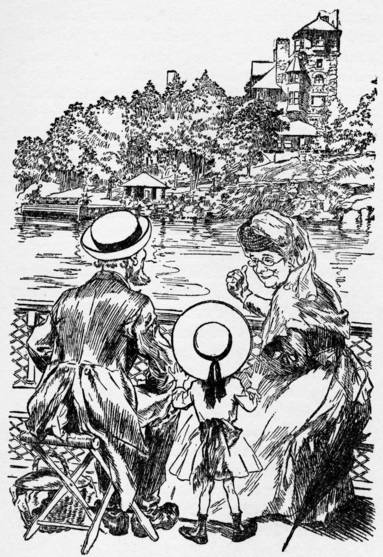
“I liked Castle Rest. It seemed a monument riz up to faithful, patient mothers by the hand of filial gratitude and love.” (See page 48)
50
And pretty soon our boat sorter turned
round and backed up graceful into Alexandria
Bay, and we hitched it there and lay off agin the
harbor real neighborly. There wuz two hotels
there in plain sight, each one on ’em as long
as from our house to Miss Derias Bobbettses,
all fixed off with piazzas and porticos and pillows
and awnin’s and handsome colors from the
basement clear up—up—up to the ruff, and
the grounds laid out perfectly beautiful. Grass
plats and terraces and long flights of stairs, and
glowin’ flower beds and summer houses and long
smooth walks and short ones, and everything.
And folks all the time santerin’ up and down the
terraces and walks, and up and down the piazzas
and balconies.
It beat all what a lot of steam yots and sailboats
there wuz all round us. It seemed as if
every island had a boat of its own and had sent
’em all to Alexandria Bay that mornin’. I
thought mebby they’d hearn we wuz comin’,
and they wuz there to git a glimpse of us. But
Whitfield said the boats come to git the mail,
and mebby it wuz so.
51
Every yot wuz tootin’ on its own separate
engine; it made the seen lively but not melogious.
One of the boats had a whistle that
sounded as if you’d begin to holler down real
low and then let your voice rise gradual till
you yelled out jest as loud as you could, and
then died down your yell agin real low.
It sounded curous. I hearn it wuz tryin’ to
raise and fall the eight notes, and it riz and fell
’em I should judge.
Some of the yots had a loud shrill whistle,
some a little, fine clear one; then one would
belch out low and deep some like thunder. And
anon our steamer thundered forth its own deep
belchin’ whistle, and turned round graceful and
backed off, and puffed, puffed back agin down
the bay.
As we turned round, a bystander, standin’
by, spoke of Bonnie Castle. It stood up sort
o’ by itself on a rock one side of Alexandria Bay.
And I wondered if Holland’s earnest soul that
had thought so much on’t once, ever looked
down on it now. For instance when the full
moon wuz high in the cloudless sky, and Bonnie
Castle riz up fair as a dream, with blue clear
sky above, and silence, and deep blue shinin’
water below—and silence. And mebby some
52
night bird singin’ out of the pretty green garden
to its mate in the cool shadows. I wondered
if the lovin’ soul who created it ever looked
down from the blessed life, with love and longin’
to the old earth-nest—home of his heart. I
spozed that he did, but couldn’t tell for certain.
For the connection has never been made fast
and plain on the Star Route to Heaven. Love
rears its stations here and tries to take the
bearin’s, but we hain’t quite got the wires to
jine. Sometimes we feel a faint jarrin’ and
thrill as if there wuz hands workin’ on the other
end of the line. We feel the thrill, we see the
glow of the signal lights they hold up, but we
can’t quite ketch the words. We strain our
ears through the darkness—listening! listening!
Right acrost from Alexandria Bay is Heart
Island; you’d know it at night if you couldn’t
see the island, for a big heart of flashin’ electric
lights is lifted up on a high pole, that can be
seen fur and near. As well as the big shinin’
cross of light that is lifted up every night on
another island nigh by in memory of a sweet
soul that used to live there, and is lookin’ down
on it now, more’n as likely as not.
Heart Island is owned by a rich New York
man. It is almost covered with buildin’s of
53
different sizes and ruined castles (the ruins all
new, you know; ruined a-purpose), the buildin’s
made of the gray stun the island is composed of.
And there are gorgeous flower beds and lawns
green as emerald, and windin’ walks lined with
statuary, and rare vases runnin’ over with
blossoms and foliage, and a long, cool harbor,
fenced in with posies where white swans sail,
archin’ up their proud necks as if lookin’ down
on common ducks and geese. There wuz ancient
stun architecture, and modern wood rustic
work, and I sez to Josiah, “They believe in not
slightin’ any of the centuries; they’ve got some
of most every kind of architecture from Queen
Mary down to Taft.”
And he sez, “It is a crackin’ good plan too;
amongst all on ’em they’re sure to git some of
the best.”
“Yes,” sez I, “and it shows a good-hearted
sperit too, not wantin’ to slight anybody.”
Jest then I heard a bystander say, “Amongst
all the places to the Islands, this place and
Browney’s take the cake.”
Brownings is another beautiful place just
round the corner where the flower-garlanded
rocks looks down into the deep clear waters
anxious to see their own beauty. And a handsome
54
residence a little back and a big farm full
of everything desirable.
Only a little way acrost from Alexandria Bay
is Westminster Park, a handsome little village,
with a big hotel set back under its green trees
and lots of cottages round it. A nice meetin’
house too, and everything else for its comfort.
And all the way to the Methodist place we wuz
bound for, fair islands riz up out of the water,
crowned with trees and houses and tents and
everything. No sooner would you go by one,
than another would hove in sight. Anon we
come in sight of a little village of houses fringin’
the shore, called Fair View, and our next stoppin’
place wuz the Camp ground. I’d hearn, time
and agin, they wuz so strict there you’d have to
pay for every step you took from the ship to
your boarding place. And if you said anything,
you would have to pay so much a
word; or if you sithed, you’d have to pay so
much a sithe, or breathe deep you would have to
pay accordin’ to the deepness of your breath.
But it wuzn’t no such thing; we never paid
a cent, and I sithed deep and frequent on the
way up from the wharf, for weariness lay holt
of me and also little Delight. She preferred
hangin’ onto me ruther than her parents. And
55
I’d hearn that you’d be fined for laughin’, and
for a snicker or giggle; but I heard several
snickers (Whitfield is full of fun, and young
folks will be young folks, and talk and laugh)
and not one cent did we see asked for ’em.
Why, I’d hearn that they wouldn’t let a good
smart whiff of wind land there on Sunday.
The trustees kep’ ’em off and preached at ’em,
and made ’em blow off Clayton way.
And I wuz told that the Sea Serpent (you
know he always duz like summer resorts), took
it into his head to go to the Islands one summer
and happened to git to the Thousand Island
Park on Sunday, and wuz swoshin’ round in
the water in front of the dock, kinder switchin’
his tail and actin’. And the trustees got wind
on’t and went down with rails and tracts and
they railed at him, and exhorted him and made
him fairly ashamed of bein’ round on Sunday.
And wantin’ to do a clean job with him, bein’
dretful mad at his bein’ out on the Sabbath day,
they got a copy of their laws and restrictions
governin’ the Park, and they said when the
serpent hearn that long document read over,
he jest switched his tail, kinder disgusted like,
and turned right round in the water and headed
off for Kingston.
56
But I don’t believe a word on it. I don’t
believe much in the sea serpent anyway, and I
don’t believe it ever come nigh the Thousand
Island Park grounds—only the usual old serpent
of Evil, that the good Christians there
fight agin all they can.
The great hotel which Samantha here describes was destroyed by fire in August last.
CHAPTER FOUR — We enjoy the hospitalities of Whitfield’s aunt’s boardin’-house at the Park, and my pardner goes a-fishin’
59
CHAPTER FOUR
WE ENJOY THE HOSPITALITIES OF WHITFIELD’S AUNT’S BOARDIN’-HOUSE AT THE PARK, AND MY PARDNER GOES A-FISHIN’
Whitfield’s aunt kep’ a small
boardin’-house at the Park. Of
course we knew it would be fur more
genteel to go to the hotel, which loomed up
stately, settin’ back on its green lawn right in
front of us, as the ship swep’ into the harbor.
But Josiah sez, “The tender ties of relationship
hadn’t ort to, in fact musn’t be broke by us,
and Miss Dagget would probable feel dretful
hurt if she knowed we wuz to the Park and had
passed her coldly by.” (She didn’t ask half so
much for our boards as the hotel did; that wuz
where the boot pinched on my pardner’s old
feet.)
Whitfield said we had better go to Aunt
Dagget’s that night anyway, so we went. We
found she lived in a good-lookin’ cottage, and
we had everything we needed for comfort.
She wuz a tall, scrawny woman, with good
60
principles and a black alpacky dress, too tight
acrost the chest, but she seemed glad to see us
and got a good supper, broiled steak, creamed
potatoes, and cake, and such, and we all did
justice to it—yes indeed.
After supper we walked out to the post office,
and round in front of the houses—very sociable
and nigh together they are. It must be dretful
easy to neighbor there, most too easy. Why, I
don’t see how a woman can talk to her husband
on duty, if he goes in his stockin’ feet, or stays
out late nights, or acts; I don’t see how she can
do the subject justice and not have everybody
in the encampment know it. Too neighborly
by fur!
But off some little distance, good-lookin’
houses stood with Seclusion and Solitude
guardin’ their front doors—likely guards them
be, and beloved by Samantha. And back of the
Island, glancin’ through the trees, wuz the same
clear blue sparklin’ waters of the St. Lawrence.
They said they wuz Canada waters, but I didn’t
see no difference, the water wuz jest as blue
and sparklin’ and clear.
We retired early and our beds wuz quite
comfortable, though as I told Josiah, I had seen
bigger pillers, and I wuz more settled in my
61
mind, as to whether the feathers in ’em wuz geese
or hen.
He said he wuz glad to lay his head down
on anything that would hold it up.
And after I remembered that Miss Dagget’s
bed wuz jest the other side of the thin board
partition. I sez, “Yes, Josiah, with weariness
and a easy conscience, any bed will seem soft
as downy pillows are.”
The next day I felt pretty mauger and stayed
in my room most of the time, though Josiah and
the children sallied round considerable. But
after supper I felt better and went out and set
down on the piazza that run along the front
of the house, and looked round and enjoyed
myself first rate.
Way off, between the trees and between the
houses, I could see the dear old Saint meanderin’
along, blue and gold colored where the sun
struck the shining surface. And, dearer sight
to me, I could catch a glimpse through the
interstices of the trees, of my beloved pardner
and little Delight in her white dress and flutterin’
blue ribbons walkin’ along by his side.
Whitfield and Tirzah Ann had gone santerin’
off some time before.
The hour and the seen wuz both beautiful
62
and soothin’. The little streets between the
houses stretched out on every side, some on ’em
bordered with trees. Gay awnings wuz over
the doors and winders, flowering shrubs and
posies set off the yards, and the piazzas ornamented
by the good-lookin’ folks settin’ out on
chairs and benches, the wimmen in light,
pretty summer gowns, and there wuz babies in
their perambulators perambulatin’ along and
pretty children runnin’ and playin’ about.
Anon or oftener a group of good-lookin’
cottagers would sally out of their houses and
santer along, or a pedestrian in a hurry would
walk by. It seemed like the land where it is
always afternoon, that I’d hearn Thomas J.
read about,
The island valley of Avilion,
Where falls not rain or hail or any snow,
Nor ever wind blows loudly—
Deep meadowed, happy, fair with orchard lawns
And bowery hollows, crowned by summer sea.
It wuz a fair seen! a fair seen! and my soul
seemed attuned to its perfect harmony and
peace. When all of a sudden I hearn these
strange and skairful words comin’ like a sharp
shower of hail from a clear June sky:—
“Malviny is goin’ to freeze to-night!”
63
There wuz a skairful axent on the word
“freeze” that seemed to bring all of Malviny’s
sufferin’s right in front of me. But so strong is
my common sense that even in that agitatin’
time I thought to myself, as I wiped the perspiration
from my foretop, “Good land! what is
Malviny made of to be even comfortable cool
to say nothin’ of freezin’.” And my next
thought wuz, “What sort of a place have I
got into?” Truly, I had read much of the
hardenin’ effects of fashion and style, but I little
thought they would harden so fearful hard.
None of these men and wimmen settin’ on them
piazzas had gin any more attention to the blood-curdlin’
news that a feller creeter so nigh ’em
wuz perishin’, no more than if they’d seen a
summer leaf flutterin’ down from the boughs
overhead.
I thought of the rich man and Lazarus, only
kinder turned round and freezin’ instead of
burnin’. I felt bad and queer. But anon he
drew nigh the porch I wuz settin’ on and looked
up into my face with the same harrowin’ statement,
“Malviny is a-goin’ to freeze to-night!”
And I said, with goose pimples runnin’ down
my back most as bad as I mistrusted as Malviny
had, “Who is Malviny?”
64
He stopped and sez, “She is my wife.”
His indifferent mean madded me and I sez,
“Well, you good-for-nothin’ snipe you, instead
of traipsin’ all over the neighborhood tellin’
of your wife’s state, why hain’t you to home
buildin’ a fire and heatin’ soap stuns and bricks,
and steepin’ pepper tea?”
“What for?” sez he, amazed like.
“Why, to keep Malviny from freezin’.”
“I don’t want to stop it,” sez he.
Sez I, “Do you want your wife to freeze?”
“Yes,” sez he.
Sez I, lookin’ up and apostophrizin’ the clear
sky that looked down like a big calm blue eye
overhead, “Are such things goin’ on here in a
place so good that folks can’t git a letter Sundays
to save their lives, or embark to see their
friends if they’re dyin’ or dead; is such a place,”
I groaned, “to condone such wickedness!”
Sez the man, “What harm is there in Malviny’s
freezin’?”
Sez I, “You heartless wretch, you! if I wuz
a man I’d shake some of the wickedness out
of you, if I had to be shot up the minute
afterwards!”
“What harm is there in freezin’ ice-cream?”
sez he.
65
Sez I, astounded, “Is that what Malviny’s
freezin’?”
“Yes,” sez he.
I sunk back weak as a cat.
Sez he, “I bring it round to the cottages
every time Malviny freezes; they give me their
orders if they want any.”
“Well,” sez I in a faint voice, “I don’t want
any.” Truly I felt that I had had enough chill
and shock for one day.
Well, Whitfield and Tirzah Ann come in pretty
soon and she wuz all enthused with the place.
They’d been up the steep windin’ way to Sunrise
Mountain, and gazed on the incomparable
view from there. Looked right down into the
wind-kissed tops of the lofty trees and all over
’em onto the broad panaroma of the river, with
its innumerable islands stretched out like a
grand picture painted by the one Great Artist.
They had seen the little artist’s studio, perched
like a eagle’s nest on top of the mountain.
Some dretful pretty pictures there, both on the
inside of the studio and outside.
And they had stopped at the Indian camp,
and Tirzah bought some baskets which they
see the Indians make right before their eyes out
of the long bright strips of willow. And I spoze,
66
seein’ the brown deft fingers weavin’ their gay
patterns, Tirzah Ann wuz carried back some
distance into the land of romance and Cooper’s
novels, and “Lo the Poor Indian” Stories.
She’s very romantick.
And she’d gone into the place where they
blow glass right before your eyes and then cut
your name on it. I couldn’t do it to save
my life. I might jest as well give right up if
I wuz told that I had got to blow jest a plain
bottle out of some sand and stuff. And they
blow out the loveliest, queerest things you ever
see: ships in full sail with the ropes and riggin’
of the most delicate and twisted strands of
brilliancy; tall exquisite vases with flowers
twisted all about ’em. Posies of all kinds,
butterflies, cups, tumblers, etc. They had been
into all the little art and bookstores, full of pictures
and needle work, shells, painted stuns,
books, and the thousand and one souvenirs of
all kinds of the Thousand Islands. When
Josiah come in he said he had interviewed ten or
a dozen men about Coney Island—all on ’em
had been there—I wuz discouraged, I thought
I might jest as well let him loose with Serenus.
Well, Whitfield of course couldn’t wait another
minute, without seein’ Shadow Island,
67
so the next day we went over there right after
dinner. Josiah proposed enthusiastickly to fish
on the way there. Sez he, “Samantha, how I do
wish we could git a periouger to go in.”
“A what?” sez I.
“A periouger,” sez he, “that we could go
fishin’ in, a very uneek boat.”
“Uneek!” sez I, “I should think as much.
Where did you ever ever hear on’t?”
“In Gasses Journal, Gass used to go round
in ’em.”
Sez I, “That book wuz published before
George Washington wuz born, or Bunker Hill
thought on.”
“What of it?” sez he; “that wouldn’t hender
a periouger from bein’ a crackin’ good convenience
to go round on the water in, and I’m
goin’ to try to git one to-day. I bet my hat
they have ’em to Coney Island.”
I tried to stop him. I didn’t want him to
demean himself before the oarsmen and onlookers
by tryin’ to find boats that hadn’t been
hearn on in hundreds of years. But I couldn’t
git the idea out of his head till after dinner.
Then he wuz more meller and inclined to listen
to reason. It wuz a oncommon good meal, and
he felt quite softened down in his mean by the
time he finished. And Whitfield’s boatman
he’d engaged come with a good sizeable boat
and we sot sail for Shadow Island.
68
“I tried to stop him. I didn’t want him to demean himself before the oarsmen tryin’ to find boats that hadn’t been hearn on in hundreds of years.” (See page 67)
69
When we got there the sun wuz tingin’ the
tops of the trees with its bright light, but the
water on the nigh side, where we landed, wuz
cool and green and shadowy. Dretful fresh
and restful and comfortable that hot muggy day.
We disembarked on the clean little wharf
and walked up to the lot Whitfield had bought.
It wuz a pretty place in a kind of a holler
between high rocks, but with a full and fair
view of the river on the nigh side, on the off
side and on the back the tall trees riz up. The
site of the house mebby bein’ so low down wuz
the reason that there wuz good deep earth
there. Tirzah Ann spoke of that most the
first thing:—
“I can have a good suller, can’t I?”
Whitfield spoke first of the view from the
river, and little Delight sez, “Oh what soft
pretty grass.”
Josiah looked round for a minute on the
entrancin’ beauty of the water and the islands
and up into the green shadders of the trees
overhead, and then off into the soft blue haze
that wrapped the beautiful shores in the distance.
70
After gazin’ silently for a minute he
turned to me and sez, “Didn’t you bring any
nut cakes with you? I’d like one to eat whilst
I think of another Island far more beautiful
than this, where I yearn to be.”
I groaned in spirit but handed him the desired
refreshment, and then we talked over the subject
of the cottage. Whitfield thought it would
be splendid for the health of Tirzah Ann and
the children, to say nothin’ of their happiness.
She and Delight both looked kinder pimpin’,
and he sez, “Mother, I’ve got the lot, and now
I am going to lay up money just as fast as I can
for our house; I hope we can live here in a year
or two anyway.”
Well, we stayed here for quite a spell, Whitfield
and Tirzah Ann buildin’ castles higher
than Castle Rest, on the foundations of their
rosy future, underlaid with youth and glowin’
hope—the best-lookin’ underpinnin’ you can
find anywhere. And little Delight rolled on
the green moss and built her rosy castles in the
illumined present, as children do. And I looked
off onto the fur blue waters some as if I wuz
lookin’ into the past. And furder off than I
could see the water, the meller blue haze lay
that seemed to unite earth and heaven, and I
71
looked on it, and way off, way off, and thought
of a good many things.
Josiah wuz tryin’ to ketch a fish for supper;
the boatman had a pole and fish hook, but he
couldn’t ketch any, he hadn’t any nack; it takes
nack to ketch fish as well as worms.
CHAPTER FIVE — Josiah’s imagination about his fishin’ exploits carries him to a pint where I have to rebuke him, which makes him dretful huffy
75
CHAPTER FIVE
JOSIAH’S IMAGINATION ABOUT HIS FISHIN’ EXPLOITS CARRIES HIM TO A PINT WHERE I HAVE TO REBUKE HIM, WHICH MAKES HIM DRETFUL HUFFY
The next morning we went over to
Alexandria Bay on a tower. We
walked up to the immense hotels past
the gay flower beds that seemed to be growing
right out of the massive gray boulders, and great
willer trees wuz droppin’ their delicate green
branches where gayly dressed ladies and good-lookin’
men wuz settin’. And in front wuz
fleets of little boats surroundin’ the big white
steamboats, jest as contented as big white
geese surrounded by a drove of little goslins.
I’d hearn that the great hotel that wuz
nighest to us looked by night jest like one of
the fairy palaces we read about in Arabian
Nights, and one night we see it. From the
ground clear up to the high ruff it wuz all
ablaze with lines of flashin’ light, and I sez
instinctively to myself, “Jerusalem the golden!”
76
and “Pan American Electric Tower!” And
I d’no which metafor satisfied me best. ’Tennyrate
this had the deep broad river flowin’
on in front, reflectin’ every glowin’ light and
buildin’ another gleamin’ castle down there
more beautiful than the one on land. Josiah’s
only remark wuz “Coney Island!” Everything
seems to make him think on’t, from a tooth
pick to a tower. Ten thousand electric lights
wuz the number that lit up that one house,
so I hearn.
The big engine and chimney they use to
turn the water into glorious light, towers up
behind the hotel, and made such a noise and
shook the buildin’ so that folks couldn’t stand
it, and they jest collared that noise as Josiah
would take a dog he couldn’t stop barkin’ by
the scruff of the neck and lock it up in the
stable, jest so they took that noise and rumblin’
and snaked it way offen into the river in a pipe
or sunthin’, so it keeps jest as still now up there
as if it wuzn’t doin’ a mite of work. Queer,
hain’t it? But to resoom.
It wuz indeed a fair seen to turn round when
you wuz about half way up the flower strewn
declivity and look afar off over the wharf with
its gay crowd, over the boats gaily ridin’ at
77
anchor, and behold the fairy islands risin’
from the blue waves crested with castles,
and mansions and cottage ruffs, chimblys and
towers all set in the green of the surroundin’
trees.
And, off fur as the eye could see, way through
between and around, wuz other beautiful
islands and trees covered with spires and ruffs
peepin’ out of the green. And way off, way
off like white specks growin’ bigger every minute,
wuz great ships floatin’ in, and nearer still
would be anon or oftener majestic ships and
steamers ploughin’ along through the blue
waves, sailin’ on and goin’ right by and mindin’
their own bizness.
Well, when at last we did tear ourselves
away from the environin’ seen and walk acrost
the broad piazzas and into the two immense
hotels, as we looked around on the beauty of
our surroundin’s, nothin’ but the inward sense
of religious duty seemed strong enough to draw
us back to Thousand Island Park, though that
is good-lookin’ too.
But the old meetin’ house with its resistless
cords, and the cast-iron devotion of a pardner
wound their strong links round me and I wuz
more than willin’ to go back at night. Josiah
78
didn’t come with us, he’d gone fishin’ with
another deacon he’d discovered at the Park.
Well, we santered through the bizness and
residence streets and went into the free library,
a quaint pretty building full of good books
with a memorial to Holland meetin’ you the
first thing, put up there by the hands of Gratitude.
And we went into the old stun church,
which the dead master of Bonnie Castle thought
so much on and did so much for, and is full of
memories of him. Whitfield thinks a sight of
his writings; he sez “they dignify the commonplace,
and make common things seem oncommon.”
Katrina, Arthur Bonniecastle, Miss
Gilbert, Timothy Titcomb the philosopher, all
seemed to walk up and down with Whitfield
there.
And while there we took a short trip to the
Lake of the Isles, a lovely place, where instead
of boats full of gigglin’ girls with parasols, and
college boys with yells and oars, the water
lilies float their white perfumed sails, and
Serenity and Loneliness seem to kinder drift
the boat onwards, and the fashion-tired beholder
loves to hasten there, away from the
crowd, and rest.
Every mind can be suited at the Islands, the
79
devotee of fashion can swirl around in its vortex,
and for them who don’t care for it there
are beautiful quiet places where that vortex
don’t foam and geyser round, and all crowned
with the ineffable beauty of the St. Lawrence.
And we sailed by the Island of Summer Land
(a good name), where a beloved pastor and his
children in the meetin’ house settled down so
long ago that Fashion hadn’t found out how
beautiful the Thousand Islands wuz. They
come here for rest and recreation, and built
their cottages along the undulatin’ shore in
the shape of a great letter S. It wuz a pretty
spot.
When the boat wuz ready to go back at
night I wuz, and wuz conveyed in safety at
about six p.m. to the bosom of my family. I
say this poetically, for the bosom wuzn’t there
when I got back; it hadn’t come in from fishin’
yet, and when it did come it wuz cross and
fraxious, for the other deacon had caught two
fish and he hadn’t any. He said he felt sick,
and believed he wuz threatened with numony,
but he wuzn’t; it wuz only madness and crossness,
that kinder stuffs anybody up some like
tizik.
Well, Whitfield found a letter that made it
80
necessary for him to return to Jonesville to once,
and of course Tirzah Ann, like the fond wife and
mother she wuz, would take little Delight and
go with him. But after talkin’ to Josiah, Whitfield
concluded they would stay over one day
more to go fishin’. So the very next mornin’
he got a big roomy boat, and we sot out to troll
for fish. The way they do this is to hitch a
line on behind the boat and let it drag through
the water and catch what comes to it. And
as our boat swep’ on over the glassy surface
of the water that lay shinin’ so smooth and
level, not hintin’ of the rocks and depths below,
I methought, “Here we be all on us, men and
wimmen, fishin’ on the broad sea of life, and
who knows what will tackle the lines we drop
down into the mysterious depths? We sail
along careless and onthinkin’ over rush and rapid,
depth and shallow, the line draggin’ along.
Who knows what we may feel all of a sudden
on the end of the line? Who knows what we
may be ketchin’ ontirely onbeknown to us?
We may be ketchin’ happiness, and we may be
layin’ holt of sorrow. A bliss may be jerked
up by us out of the depth; agin a wretchedness
and a heart-ache may grip holt the end of the
line. Poor fishers that we be! settin’ in our
81
frail little shallop on deep waters over onknown
depths, draggin’ a onceasin’ line along after
us night and day, year in and year out. The
line is sot sometimes by ourselves, but a great
hand seems to be holdin’ ours as we fasten on
the hook, a great protectin’ Power seems to be
behind us, tellin’ us where to drop the line, for
we feel sometimes that we can’t help ourselves.”
I wuz engaged in these deep thoughts as we
glided onwards. Josiah wuz wrestlin’ with his
hat brim, he would have acted pert and happy
if it hadn’t been for that. At my request he
had bought a straw hat to cover his eyes from
the sun and preserve his complexion, and so
fur is that man from megumness that he had
got one with a brim so broad that it stood out
around his face like a immense white wing,
floppin’ up and down with every gust of wind.
He had seen some fashionable young feller
wear one like it and he thought it would be
very becomin’ and stylish to get one for a
fishin’ excursion, little thinkin’ of the discomfort
it would give him.
“Plague it all!” sez he, as it would flop up
and down in front of his eyes and blind him,
“what made me hear to you, goin’ a-fishin’
blind as a bat!”
82
Sez I, “Why didn’t you buy a megum-sized
one? Why do you always go to extremes?”
“To please you!” he hollered out from under
his blinders. “Jest to please you, mom!”
Sez I, “Josiah Allen, you know you did it
for fashion, so why lay it off onto me? But,”
sez I, “if you’ll keep still I’ll fix it all right.”
“Keep still!” sez he, “I don’t see any prospect
of my doin’ anything else when I can’t
see an inch from my nose.”
“Well,” sez I, “push the brim back and I’ll
tie it down with my braize veil.”
“I won’t wear a veil!” sez he stoutly. “No,
Samantha, no money will make me rig up like
a female woman right here in a fashionable
summer resort, before everybody. How would
a man look with a veil droopin’ down and
drapin’ his face?”
“Well,” sez I, “then go your own way.”
But the next time a gale come from the sou’west
he wuz glad to submit to my drapin’ him;
so I laid the brim back and tied the veil in a big
bow knot under his chin. Then agin he reviled
the bow, and said it would make talk. But I
held firm and told him I wuzn’t goin’ to tear
my veil tiein’ it in a hard knot. And he soon
forgot his discomposure in wearin’ braize veils,
in his happiness at the idee of ketchin’ fish,
so’s to tell the different deacons on’t when he
got home.
83
“‘I won’t wear a veil,’ sez he stoutly. But the next time a gale come from the sou’west I laid the brim back and tied the veil in a big bow knot under his chin.” (See page 82)
84
Men do love to tell fish stories. Men who
are truthful on every other pint of the law,
will, when they measure off with their hands
how long the fish is that they ketched, stretch
out that measure more’n considerable.
Well, as I say, as our boat glided on between
the green islands, anon in shadder and then
agin out in sunny stretches of glassy seas, I
looked off on the glorified distance and thought
of things even furder away than that. Tirzah
Ann wuz engaged in tryin’ to keep the sun out
of her face; she said anxiously she wuz afraid
she would git a few frecks on her nose in spite
of all she could do. Whitfield wuz amusin’
Delight, and Josiah ever and anon speakin’ of
Coney Island and askin’ if it wuzn’t time to
eat our lunch. So the play of life goes on.
We didn’t ketch much of anything, only I
ketched considerable of a headache. Tirzah
Ann ketched quite a number of frecks; she
complained that she had burnt her nose.
Delight did, I guess, ketch quite an amount
of happiness, for the experience wuz new to
her, and children can’t bag any better or more
85
agreeable game than Novelty. And Whitfield
did seem to ketch considerable enjoyment; he
loves to be out on the water.
My pardner drew up one tiny, tiny fish out
of the depths; it looked lonesome and exceedingly
fragile, but oh how that man brooded
over that triumph! And by the time we reached
Jonesville and he related that experience to
the awe-struck neighbors it wuz a thrillin’ and
excitin’ seen he depictered, and that tiny fishlet
had growed, in the fertile sile of his warm
imagination, to such a length, that I told him
in confidence out to one side, that if I ever
hearn him go on so agin about it, and if that
fish kep’ a growin’ to that alarmin’ extent, I
should have to tell its exact length; it wuz jest
as long as my middle finger, for I measured it
on the boat, foreseein’ trouble with him in this
direction.
It made him dretful huffy, and he sez, “I
can’t help it if you do have a hand like a
gorilla’s.”
It hain’t so; I never wore higher than number
7. But I have never seen him since pull
out his hands so recklessly measurin’ off the
dimensions of that fish, or gin hints that it
took two men to carry it up from the boat to
86
the hotel, and insinuate on how many wuz
nourished on it, and for how long a time.
No, I broke it up. But Josiah Allen hain’t
the only man that stretches out the fish they
have ketched, as if they wuz made of the best
kind of Injy rubber. It seems nateral to men’s
nater to tell fibs about fish. Curious, hain’t
it? That is one of the curious things that lay
holt of our lines. And wimmen have to see
squirmin’ at their feet anon or oftener, game
that flops and wriggles and won’t lay still and
grows all the time.
CHAPTER SIX — In which I draw the matrimonial line round my pardner and also keep my eye on Mr. Pomper
89
CHAPTER SIX
IN WHICH I DRAW THE MATRIMONIAL LINE ROUND MY PARDNER AND ALSO KEEP MY EYE ON MR. POMPER
The next mornin’ Whitfield and Tirzah
went home, Josiah and I thinkin’ we
would stay a few days longer. And
what should I git but a letter from Cousin
Faithful Smith sayin’ that her Aunt Petrie
beyond Kingston wuz enjoyin’ poor health, and
felt that she must have Faith come and visit
her before she went West. So she wuz goin’
to cut short her visit to the Smithses and go to
her Aunt Petrie’s on her way to the West, and
as she had heard Josiah and I wuz to the
Islands, she would stop and stay a few days
with us there. And as the letter had been
delayed, she wuz to be there that very day
on the afternoon boat. So of course Josiah
and I met her at Clayton. And I went to the
boardin’-house keeper to see if I could git her
a room.
90
But she wuz full, Miss Dagget wuz; and when
anybody is full there is no more to be said; so
with many groanin’s from my pardner, on
account of the higher price, we concluded we
would git rooms at the hotel, that big roomy
place, with broad piazzas runnin’ round it
and high ruffs. And as Josiah said bitterly,
the ruffs wuzn’t any higher than the prices.
And I told him the prices wuzn’t none too high
for what we got, and I sez, “We are gittin’ along
in years and don’t often rush into such high
expenses, so we’ll make the venter.”
And he groaned out, “Good reason why we
don’t make the venter often, unless we want
to go on the Town!”
And then he kinder brightened up and wondered
if he couldn’t make a dicker with the
hotel-keeper to take a yearlin’ steer to pay
for our two boards.
And I sez, “What duz he want of a yearlin’
steer here in the midst of a genteel fashion
resort?”
And he snapped me up and said he didn’t
know as there wuz anything onfashionable or
ongenteel about a likely yearlin’. Sez he, “I’ll
bet they’d take it at Coney Island.”
“Well, what would he do with it here?” sez I.
91
“Why, do as I do with it; let it grow up and
make clear gain on its growth.”
“Oh shaw!” sez I, “he couldn’t have it bellerin’
round amongst the gay and fashionable
throng.”
“It wouldn’t beller,” sez he, “if he fed it
enough.”
I broke it up after a long talk, for I wouldn’t
let him demean himself by askin’ the question
and bein’ refused, and then he said he wuz goin’
to ask him if he would take white beans for his
pay, or part of it, or mebby, sez he, “he would
like to take a few geese.”
“Geese!” sez I, “what would they want with
geese squawkin’ round here?”
“Why,” sez he, “you know they would look
handsome swimmin’ round in the water in front
of the hotel. And he might gin out, if he wuz
a mind to, that they wuz a new kind of swans;
they do such things at Coney Island.”
Sez I, “Are you a deacon or are you not?
Are you a pillow in the meetin’ house or hain’t
you a pillow?”
“I didn’t say he had got to do thus and so,
I said he might if he wanted to.”
Sez I, “You keep your geese and pray to not
be led into temptation.” And then the truth
92
come out, he hated the geese and wanted to
git rid of ’em. Men always hate to keep geese,
it is one of their ways, though they love soft
pillows and cushions as well as wimmen do, or
better, it is one of their curious ways to love
the effects of geese dearly and hate the cause
and demean it.
Well, by givin’ up the best part of the forenoon
to the job I ground him down onto not
tryin’ to dicker with any barter, but to walk
up like a man and pay for our two boards.
Faith is real well off and kinder independent
sperited, and I knew she wouldn’t let us pay
for hern, and at last we got a good comfortable
room for ourselves and one for Faith, not fur
from ourn. Both on ’em looked out onto the
beautiful river, and I had lots of emotions as
I looked out on it, although they didn’t rise
up so fur as they would, if I hadn’t had such a
tussel with my pardner, so true it is that chains
of cumberin’ cares and Josiahs drag down the
aspirin’ soul-wings for the time bein’. But I
laid out to take sights of comfort in more tranquil
and less dickerin’ times, in lookin’ out on
the beauty and glory of the waters, and fur off,
into the beautiful distance lit with the mornin’s
rosy light, and “sunset and evenin’ star.”
93
We sot off on the afternoon boat for Clayton.
Faith seemed real glad to see us and we visey
versey. And it wuz a joy to me to see her
admiration of the Islands as we swep’ by ’em
and round ’em on our way to the Park.
We got back in time to git ready for supper
in pretty good sperits; the dinin’ room wuz
large and clean and pleasant, the waiters doin’
all they could for us, and we had a good supper
and enough on’t. And speakin’ of the waiters,
most of ’em wuz nice boys and girls, tryin’ to
git an education; some on ’em had been to
college and wanted to earn a little more money
to finish their education, and some wuz learnin’
music and wanted more money to go on with
their lessons—good plan, I think—they will
be as likely agin to succeed as if they wuz sot
down and waited on. It is a good thing, as the
Bible sez, “to bear the yoke in your youth,”
and though I spoze the yoke weighed down considerable
heavy on ’em, specially on excursion
days, and when there wuz folks hard to please,
yet I thought they will come out all right in
the end.
Some on ’em wuz studyin’ for the ministry,
and I thought they would git a real lot of patience
and other Christian virtues laid up agin
94
the time of need. Though here, as in every
other walk of life, there wuz some that wuz
careless and slack.
But to resoom forwards. I see at the table
there wuz the usual summer tourists round
me, care-worn fathers and weary dyspeptic
mothers with two or three flighty, over-dressed
daughters, and a bashful, pale son or two, and
anon a lady with a waist drawed in to that
extent that you wondered where her vital
organs wuz. And how could any live creeter
brook the agony them long steel cossets wuz
dealin’ the wearer? You could see this agony
in the dull eyes, pale face and wan holler cheeks
wearin’ the hectic flush of red paint. And the
little pinted shues, with heels sot in the very
center of the nerves, ready to bring on prostration,
and blindness.
Right by that agonized female would be a
real lady. English, mebby, with a waist the size
the Lord give and Fashion had not taken away.
With good, sensible shues on, dealin’ out comfort
to the amiable feelin’ feet; rosy cheeks,
bright eyes, all bearin’ witness to the joys of
sensible dressin’ and sensible livin’.
And then there wuz bright pert-lookin’ young
wimmen, travelin’ alone in pairs, and havin’
95
a good time to all human appearance. Anon
good-lookin’, manly men, with sweet pretty
wives and a roguish, rosy little child or so.
Sad lookin’ widder wimmen, some in their
weeds, but evidently lookin’ through ’em. Anon
a few single men with good-lookin’ tanned
faces, enjoyin’ themselves round a table of
their own, and talkin’ and laughin’ more’n
considerable. Respectable, middle-aged couples,
takin’ their comfort with kinder pensive faces,
and once in awhile a young girl as adorably
sweet and pretty as only American girls can be
at their best.
But on my nigh side, only a little ways acrost
from us sot the ponderous man I remembered
on my journey thither who wanted to be a fly.
Furder and furder it seemed from amongst the
possibles as he towered up sideways and seemed
to dwarf all the men round him, though they
wuz sizeable. And gittin’ a better look at him,
I could see that he had a broad red face, gray
side whiskers and one eye. That one eye
seemed to be bright blue, and he seemed to keep
it on our table from the time we come in as
long as we sat there.
That evenin’ in the parlor he got introduced
to us. Mr. Pomper, his name wuz, and we all
96
used him well, though I didn’t like “the cut of
his jib,” to use a nautical term which I consider
appropriate at a watering-place.
But go where we would, that ponderous
figger seemed to be near. At the table he sot,
where that one eye shone on us as constant as
the sun to the green earth. In our walks he
would always set on the balcony to watch us
go and welcome us back. And in the parlor
we had to set under the rakin’ fire of that blue
luminary. And if we went on the boats he
wuz there, and if we stayed to home there
wuz he.
And at last a dretful conviction rousted up
in me. It come the day we went the trip round
the Islands. We enjoyed ourselves real well,
until I discerned that huge figger settin’ in a
corner with that one eye watchin’ our party as
clost as a cat would watch a mouse. Can it be,
sez I to myself, that that man has formed a
attachment for me?
No, no, it cannot be, sez I to myself. And
yet I knowed such things did occur in fashionable
circles. Men with Mormon hearts hidden
under Gentile exteriors wuz abroad in the land,
and such things as I mistrusted blackened and
mormonized the bosom of Mr. Pomper, did
97
happen anon and oftener. And I methought
if so, what must I do? Must I tell my beloved
companion? Or must I, as the poet sez, “Let
concealment, like a worm in the rug, feed on
my damaged cheek?”
But thoughts of the quick, ardent temper
of my beloved companion bade me relinquish
the thought of confidin’ in him. No, I dassent,
for I knew that his weight wuz but small by the
steelyards, and Mr. Pomper’s size wuz elephantine,
with probably muscles accordin’. No, I
felt I must rely on myself. But the feelin’s I
felt nobody can tell. Thinks I, “It has come
onto me jest what I have always read and
scorfed at”; for I had always thought and said
that no self-respectin’ female need be inviggled
unless she had encouraged the inviggler, or had
a hand in the invigglin’. But alas! with no
fault of my own, onless it wuz my oncommon
good looks,—and of course them I couldn’t
help,—here I wuz the heroine of a one-eyed
tragedy, for I felt that the smoulderin’ fire
burnin’ in that solitary orb might bust forth at
any time and engulf me and my pardner in a
common doom.
But two things I felt I could do; I could put
on a real lot of dignity, and could keep a eagle
98
watch onto my beloved pardner, and if I see
any sign of Mr. Pompers attacktin’ him, or
throwin’ him overboard, I felt the strength of
three wimmen would be gin to me, and I could
save him or perish myself in the attempt. In
accordance with them plans, when Mr. Pomper
approached us bringin’ us some easier chairs,
I confronted him with a look that must have
appauled his guilty mind, and when he sez to
me:
“It is a pleasant day, mom.”
I looked several daggers at him and some
simiters, and never said a word. And when a
short time afterwards he asked me what time
of day it wuz, pretendin’ his watch had stopped,
I looked full and cold in his face for several
minutes before I sez in icy axents, “I don’t
know!” Every word fallin’ from my lips like
ice-suckles from a ruff in a January thaw, and
then I turned my back and went away from him.
Vain attempt! What wicked arts men do
possess! He pretended to believe I wuz deef,
and with that pretext he dasted to approach
still nearer to me and kinder hollered out:
“What time of day is it?”
I see I must answer him, or make a still more
sentimental and romantick seen, and I sez,
with extreme frigidity and icy chill, “I don’t
know anything about it.”
99
“‘What does ail you, Samantha, lockin’ arms with me all the time—it will make talk!’ he whispered in a mad, impatient whisper, but I would hang on as long as Mr. Pomper wuz around.” (See page 100)
100
And then I turned on my heel and walked
off. In such noble and prompt ways did I
discourage all his overtoors, and every time I
see him approach my pardner, if they wuz
anywhere near the outer taff-rail of the boat,
I would approach and lock arms with Josiah
Allen, killin’ two birds with one stun, for that
act both ensured safety to my heart’s idol,
and also struck a blow onto Mr. Pomperses
nefarious designs. He see plain that I idolized
my pardner. Once or twice, so hardly is
oncommon virtue rewarded in this world, Josiah
spoke out snappishly:
“What duz ail you to-day, Samantha, lockin’
arms with me all the time—it will make talk!”
he whispered in a mad, impatient whisper, and
he would kinder wiggle his arm to make me
leggo’; but secure in my own cast-iron principles,
I would hang on as long as Mr. Pomper
wuz round.
CHAPTER SEVEN — In which Josiah proposes to dance and Mr. Pomper makes an advance
103
CHAPTER SEVEN
IN WHICH JOSIAH PROPOSES TO DANCE AND MR. POMPER MAKES AN ADVANCE
The day wuz a tegus one to me, borne
down as I wuz by the constrainin’
atmosphere of a onwelcome and onlawful
attachment. And it took all the principle
I had by me to git up even a emotion of
pity for the one-eyed watcher, whose only
recreation seemin’ly durin’ that long, long day
wuz to watch our party as clost as any cat ever
watched a rat hole, and to kinder hang round
us. Faith kep’ pretty clost to me all day and
seemed to take a good deal of comfort watchin’
the entrancin’ scenery round us.
Oh what beautiful sights! What enchantin’
views of the water; or, if the light struck it jest
right, the long, blue, undilating plain, dotted
with gold points of light. Islands with the virgin
forest stretchin’ down to the edge of the
water, and cool green shadders layin’ on the
velvet and mossy sward as you could see as
104
you looked into the green aisles. And all sorts
of trees with different foliage, some loose and
feathery, some with shinin’ leaves, glitterin’
where the rain had washed ’em the night before;
some towerin’ up towards the heavens, shakin’
their heads at the sun; some droopin’ down as
if weighted with their wealth of branches and
green leaves; anon a tree covered with flowers,
and then some evergreens, and anon one that
had ketched in its brilliant leaves the red hectic
of autumn fever and blazed out in crimson and
yeller. And then a hull lot of evergreens
standin’ up straight and tall by the water’s
edge, and as fur back as you could see, but sort
o’ reachin’ out their green arms towards the
river. And them on the edge, lookin’ down into
the clear depths and seein’ there another island,
a shadow island layin’ beautiful and serene
with nothin’ disturbin’ its beauty but the
shinin’ ripples wavin’ the fairy branches below,
like the soft wind rustlin’ the tree tops overhead.
So we sailed on by hamlet and town, rounded
tree-crowned promontores, swep’ out into
broader vistas stretchin’ out like a lake, anon
goin’ by a big island lookin’ like the shore of
the mainland, goin’ right up aginst it seemin’ly,
as if the boat must strike it and git onto wheels
105
and travel as a wagon if it calculated to proceed
onwards at all. But jest as we would
think in a nautical way: “Land ahoy! land
ahoy! oh, heave out and walk afoot,” jest
as these nautical terms would be passin’ through
our alarmed foretops, the boat would turn its
prow slowly but graceful, round to a port-the-helm,
or starboard ditto, and we would glide
out through a narrow way onbeknown to us,
onto a long, glassy road layin’ fair and serene
ahead.
Then more islands, then more narrer channels,
then more broad ones. By Fiddler’s Elbow,
named Heaven knows for what purpose, for
no fiddle nor no elbow wuz in sight, nothin’
but island and water and rock all crowned with
green verdure. Mebby it dates back to the
time we read of when the stars sung together,
and if stars sing, why shouldn’t islands dance,
and if islands dance it stands to reason they
must have a fiddle and one on ’em must fiddle.
I do not say this is so, but throw out this scientific
theory as one of singular interest to the
antiquarian and historian of the Thousand
Islands.
Anon we entered the Lost Channel, agin the
antiquarian sperit is rousted up as we inquire,
106
“When wuz it lost? and how long? And when
wuz it found agin, and who found it?” Way
back in the dawn of creation, did the dimplin’
channel git kinder restive and try to run off by
itself, and flow round and act? Or did the
big leap down Niagara skair it so that it run
away and never stopped runnin’ until it got all
confused and light-headed among these countless
islands, and wandered away and got lost
and by the side of itself?
Deep antiquarian conundrums; stern geological
interests! In grapplin’ with ’em I leaned
over the taff-rail of the boat and looked way
down into the blue green depths, seekin’ a
answer. But the shinin’ waves on top seemed
to glitter mockin’ly and fur down, down in the
green waves, there seemed to look back a sort
of a pityin’ gleam that said to me:
“Poor creeter! pass on with your little vague
theories and conjectures; you don’t know any
more about me than the rest on ’em do, who
have tried to write about me.” I felt kinder
took back and queer. So vain are we that we
don’t like to have our carefully constructed
theories overthrown. But even as I mused, a
voice said to the right of me—a woman talkin’
to her little boy:
107
“The Lost Channel was named from the fact
that durin’ a war a large body of troops got lost
here in the channel in the late autumn and could
not find their way out, and was overtaken by
the bitter cold and perished here.”
Well, mebby if is so, I d’no. But I wuzn’t
knowin’ to it myself, nor Josiah wuzn’t. Well,
onheedin’ our facts or fancies, the river bore us
onwards on its breast. Past high green boulders
risin’ up from the water with nothin’ on ’em,
not even a tree; jest gray rock lookin’ some like
a geni’s castle frownin’ down onto the intruders
into their realm. Then anon a pile of high gray
rocks crowned as the Sammist sez “with livin’
green.” Then in a minute more a little landlocked
bay with placid water sweepin’ back into
a pretty harbor, tree shaded, and mebby a boat
anchored there like a soul at rest, or mebby a
sail-boat with two young hearts in it driftin’
down the sea of their content, as the tiny waves
rippled round their oars. Then a grand big
mansion lookin’ down onto us kinder superciliously.
Then a small, pretty farm house with
snug outbuildings, a man lookin’ at us from the
open barn door, and some children playin’
round the doorstep. Then a big island with
grassy shores or wooded depths; then a tiny
108
island, not too big for a child’s playhouse, and
some that wuz only a bit of rock peekin’ out of
the water.
And fur off all the time when we could see it
wuz the blue hazy distance full of beauty; ever-changin’
glimpses of loveliness, givin’ place to
new beauties. Fur off, fur off sometimes we
could see distant pinnacles and towers, all bathed
in the blue shinin’ mist. And as the rapt eyes
of our Fancy gazed on ’em, they might have been
the towers of the New Jerusalem, the Golden city,
so dreamlike, so inexpressibly lovely did they
seem faintly photographed aginst the soft blue
distant heavens.
But cold Reality said in her chillin’ practical
whisper, “It’s nothin’ but Gananoque or Clayton,”
and she went on, “They hain’t anything
like the New Jerusalem, either of them.”
Alas for us poor mortals! who drive or are
driv by the two contendin’ coharts of Imagination,
Idealized Fancy and practical Reality.
And she always will have the last word, Reality
will, and her voice is loud and shrill, and it
penetrates into the warm, sweet Indian summer
air, where Fancy dwells and where we sometimes
visit her for brief intervals. Too brief!
too brief! for cold Reality is always hangin’
109
round; she is always up and dressed ready to
put in her note.
I mentioned the metafor to Josiah and he sez,
“Yes, it minds me of the man who was brought
up before the judge by his wife. She complained
he hadn’t spoke to her for five years. The judge
ast him if that were so, and he said, ‘Yes, that’s
so.’ ‘But why,’ sez the judge, ‘why hain’t
you spoke to your wife for five years?’ And the
man sez, ‘Because I didn’t want to interrupt
her.’” Josiah declares it is true, but I believe
it is jest a slur on wimmen.
But to resoom. Swiftly, silently we sped on
with the islands about us, the blue sky overhead
and the shadow islands below. And
innumerable boats appeared far and near, some
with white sails lifted, and followed below by
a white shadow sail, and anon a big steamer
would glide along, loaded down to its gunwale
with crowds of gay pleasure seekers, who would
wave their snowy handkerchiefs and salute us,
the steamer backin’ ’em with its deep grum
voice. Or anon we could see a big dark barge
sailin’ along, and Fancy would whisper to us as
we gazed on its mysterious dark sides without
a soul in sight:
“It may be the phantom of some old Pirate
110
ship, condemned for its sins to cruise along
forever in strange waters, homesick for its
native seas.” But Reality spoke right up
jest as she always will and said it wuz probable
some big lake steamer heavy loaded
with grain or some great Canadian boat. And
then a new seen of beauty would drift into
our vision and take our minds off and carry
’em away some distance. Oh, it is no wonder
that Faith’s soft eyes grew more tender and
luminous.
Josiah felt the beauty of the seen, he felt
it deeply, but everybody knows that beauty
affects folks differently, it always seems to
sharpen up my dear companion’s appetite, and
three cookies in as many minutes wuz offered
up on the shrine of his vivid appreciation, and
two nut cakes.
We got back to our hotel, the sun about an
hour high. Jest before our bark swep’ into the
haven, and while Josiah and Faith had crossed
over to the opposite side of our bark, I hearn a
voice on the off quarter windward, and I turned
round and see to my dismay that it wuz Mr.
Pomper. He sez to me in a low voice, while
his looks spoke volumes of yellow colored
literatoor: “I wish to speak a few words to
111
you alone, mum. Can you give me the
opportunity?”
I looked him full in that eye of hisen, a hauty
cold look, a look as much as 40 degrees below
freeze, and said nothin’ else but jest that look.
“I have somethin’ very important to say to
you. Can you hear me?”
Words wuz risin’ to my tongue that would
wither him forever, and end the vile persecutions
I wuz undergoin’, when before I could
speak the gang plank wuz charged back agin
Mr. Pomper’s foot in a way that made him
leap back like a sportive elephant, and for the
moment I wuz free. But as I wended my pensive
way up to the hotel, I made up my mind
that if he ever approached me agin I would
plainly tell him what wuz what, and so end my
purturbations of mind; for I felt if it wuz to
go on much longer I should lose a pound of
flesh, and mebby a pound and a half, in the
stiddy wearin’ persecution I wuz undergoin’.
And that night at dinner as I ketched the light
smoulderin’ in that lonely orb, as it wuz bent
on our table, and the corner in parlor and
piazza where we wuz ensconced, I wondered
anew what wuz the attractions that kep’ Mr.
Pomper so stiddy at my shrine, And I got so
112
that I almost hated the good looks that wuz
ondoin’ him and me too. And I looked into the
glass dreamily as I wadded up my back hair
and did up the front, and pinned my cameo pin
onto my rich cotton and wool parmetty, and
wondered if it wuzn’t my duty to leave off that
pin, and change that parmetty for calico, and
sort o’ frowzle up my hair onbecomingly in
order to wean him from me. But alas! my
principles did not seem able to git up onto that
bite, so weak are we poor mortals after all our
aspirin’ efforts.
One curious thing I have ever noticed among
men (and wimmen too) and that is the ease and
facility with which they will slip out of statements
and idees they have promulgated, and
turn around in their tracts as easy and graceful
as a dummy before a show case. Now there
wuz a party to be gin to the hotel for a charitable
purpose, each man and woman present
givin’ 25 cents, and then havin’ a social time
afterwards, and as the object wuz good I sez
to my pardner, “I would like to attend to it.”
And he acted fairly skairt and horrow struck
at the idee and went on eloquent about old folks
at our ages, and with our professions, and our
rumatiz, follerin’ up gayety and show. Sez he,
113
“The place for us evenin’s is in our own room
readin’ our Bibles and Tracks.”
And I sez as I calmly wadded up my back
hair and smoothed my foretop, “Well, I spoze
I can go alone if you feel so.”
Then another thought seemed to roust him
up; Jealousy seemed to strike her sharp prongs
into his slender side, and he sez bitterly, “Yes,
goin’ down alone into a perfect mawlstrom of
men flirtin’ and actin’!”
“The mawlstrom won’t hurt me,” sez I, “I
hain’t goin’ nigh it.” But even as I spoke I
thought of Mr. Pomper, and sez to myself, Can
I help him from comin’ nigh me? And as if in
answer to my onspoken thoughts my pardner
sez:
“Mawlstroms will draw anybody in onbeknown
to them; they’re deadly dangerous!”
And I see him gin a kin’ of a shiver. I wuz
touched to the heart by the thought of his devotion,
and as I fastened my cameo pin more
firmly into the rich folds of parmetty at my
neck, I sez:
“Dear Josiah, I don’t know but you’re right.
I feel as though I want you near me to protect
me.” That melted his heart, but alas, did not
affect his pocket book, and he sez, “I would go
114
down with you in a minute, Samantha, but jest
consider on the 50 cents we would spend there,
how much comfort that would bring to some
lonely widder, mebby a blind woman, who is
a-hunger and ye fed her not.”
I looked stiddy at him and sez I, “Josiah
Allen, will that poor widder git that fifty
cents?”
He answered evasive, and I went on, “It is
easy to make the excuse that the money you
are asked for in charity will do so much more
good somewhere else, but,” sez I sternly, “the
money don’t git there, and you know it.” He
still kep’ his hand in his pocket round that
pocket book I believe, whilst he took a new
tact: “The air, Samantha, in that room will be
stiflin’, and if I should take you into that place
and you should stifle, I should die away myself,
I couldn’t live a minute without you, dear
Samantha,” sez he.
Well, my tizik wuz pretty bad in crowded
places and suffice it to say, that though his
arguments didn’t convince me, they sort o’
overpowered me for the time bein’, and we
stayed in our own room.
Now to show the facility with which folks
will turn right round and revolve, I will tell
115
how Josiah seemin’ly forgot mawlstroms, bad
air, rumatiz, ages, meetin’ housen, principles,
etc., and turned right round on the pivot of his
inclination. A day or two after he heard down
in the office about the dancin’ parties they had
in the parlor anon or oftener, and he come
up into our room enthused with the idee and
wanted to branch out and go that night, and
I sez:
“What about mawlstroms and gayety, Josiah
Allen?”
“Oh,” he sez, “I shall be there to protect
you, Samantha, no mawlstrom can draw you in
and destroy you, whilst I have a drop of blood
left in my veins! I’ll protect you here, and I’d
protect you at Coney Island,” sez he—(that
idee never left his mind I believe).
“What about the bad air?” sez I.
“Oh the winder will probable be open, and
you can take your turkey feather fan with you.”
And then I dropped my half jocular tone and
sez in deadly earnest:
“Be I leanin’ on a Methodist pillow or be I
not? Have I a deacon by my side or haven’t I?”
But Josiah seemed calm and even gay sperited
under my two reproachful orbs that poured
their search lights into his very soul, and he sez:
116
“From all I hear it hain’t a wicked dance
at all, but jest a pretty dancin’ party down in
the parlor, jined in by men and wimmen and
their children and mebby their grand-children,
and it is always so sweet,” sez he, “to see a man
and his grand-children dancin’ together. Oh, if
Delight wuz only here!” sez he.
I riz up and sez in almost heart breakin’
axents:
“Josiah Allen, be you a thinkin’ of dancin’
yourself?”
“No,” sez he, “no, Samantha, I jest want to
look on a spell, that’s all.”
But there wuz a look in his eyes that I hated
to see, for I had seen it many times in the past,
and it had always foreboded trials to me and
humiliation to my pardner. How queer human
critters be! what strange and mysterious tacts
they will git on and how they will foller up them
tacts and fads of theirn. But I d’no as human
critters are any worse about follerin’ up their
tacts and fads and follerin’ ’em blind, than old
Mom Nater is. Now who hain’t noticed her
queer moods and how prolonged they be, and
how sudden and onexpected they will come
onto her? When she takes it into her head to
have a pleasant spell of weather, how she’ll
117
foller it up, clear skies, pleasant days and
nights for weeks and weeks. And if she takes
it into her head to have it rain, how she will
keep the skies drippin’ right along for most
all summer. And then when she has a dry
spell, how dry she is! no matter how much the
dwindlin’ creeks and empty wells and springs
complain, she has got to carry out her own idees
till she gits ready to change.
Josiah Allen, since I had been his pardner
had took many a fad into his old head, which
he had carried out as only Nater or a man can
carry ’em, onreasonable, mysterious, out of
season, but bound to let ’em run. Sometimes
in the past it had been a desire for singin’ base
that had laid holt on him, base in every sense
the word can be used. Then agin he had painful
and prolonged spells of wantin’ to be genteel
and fashionable, then anon political ambition
had rousted up his rusty old faculties and for
months and months Coney Island had been his
theme, and wuz now, and so on through a long
roll of characters he had desired to play in the
drama of life.
But dancin’! never did I expect to see that
man with his age and his profession and his
achin’ old bones, wantin’ to dance. But so it
118
wuz, as will be seen in the follerin’ pages.
Queer as a dog folks are on this planet, and I
d’no but the Marites and Jupiters and Saturnses
are jest as queer. But to quit eppisodin’ and
resoom forwards agin.
I have always found that it hain’t best to
draw the matrimonial rope too tight round your
pardner’s jungular veins. I see he wuz sot on
goin’ and I felt I would ruther he would go with
me who could have some savin’ control over
him, than to have him git reckless and sally off
alone. So it wuz settled that we should go
that night at early candle light. And Faith
wuz to go with us. Yes, I, Josiah Allen’s wife,
had gin my consent to go to a dance. But jest
so the environin’ cord of circumstances gits us
all wound up in its tangles time and agin.
And as the way of poor weak mortals is, havin’
made up my mind to go I tried to bring to mind
all the mitigatin’ circumstances I could. I
thought of how the lambs capered on the hillside,
how the leaves on the trees danced to the
music of the south wind, and how even the
motes swung round with each other in the sunlight.
And then I thought of how David
danced before the ark, and how Jeptha’s
daughter danced out to meet her father (to be
119
sure she had her head took off for it, but I tried
to not dwell on that side of the subject). And
then I remembered how I did love music, and
in spite of myself I felt kinder chirked up thinkin’
I should enjoy quite a long spell on’t. And
thinkses I, if dancin’ is a little mite off from the
hite Methodists ort to stand on, music is the
most heavenly thing we can lay holt of below,
so I sort o’ tried to even up them two peaks in
my mind and lay a level onto ’em and try
to make myself believe they struck about a
fair plane of megumness, and shet my eyes
to the idee that it slanted off some and wuz
slippery.
Oh what weak creeters we be anyhow! Well,
that night there wuz goin’ to be a extra big
party, and I wuz for startin’ at once after
supper, for truly I felt that I wuz performin’
a hard and arjous job, and as my way is I wuz
for tacklin’ it to once and gittin’ over it. Yes,
I felt it wuz goin’ to be a wearin’ job to git
Josiah Allen to that parlor durin’ them festivities
and back agin with no damage or
scandal arisin’ from the enterprise.
But Faith sez, “It will be too early, they
won’t begin to dance till eight. We eat at
six.” And I sez, “For the land’s sake! if I’d
120
got to dance I should begin early and stop early,
so’s to git a little rest.” And she sez:
“Young folks don’t think about that.”
Well, we compromised on half past seven
(most bed-time). And when Faith knocked at
our door at that epoch of time we wuz all ready.
Josiah had carefully combed his few locks
of gray hair upwards over his bald head, had
donned a sweet smilin’ look, and a cravat, gayer
fur than I approved of (he’d bought it durin’
the day onbeknown to me). And I had arrayed
my noble figger in my usual cotton and wool
brown dress, brightened up at the neck and
sleeves with snowy collar and cuffs, and further
enriched by the large cameo pin. I also carried
a turkey feather fan that harmonized in color
with my dress. I looked exceedingly well and
felt well.
And Faith, I sez proudly to myself, a sweeter
face and prettier dress won’t be seen there
to-night. She did look lovely. Her soft eyes
shone, her cheeks looked pinky, her hair, a sort
of a golden brown with some gray in it, crinkled
back from her white forward and wuz gathered
in a loose knot on the top of her head with a
high silver comb. Her dress wuz thin and white
and gauzy, and though it wuz considerable
121
plain it wuz made beautiful by the big bunch
of pale pink roses at her belt and bosom, jest
matchin’ her cheeks in color.
I wuz proud of her. And I felt quite well
about my other companion, for as I glanced at
the small kerseymear figger and pert bald head,
I sez to myself, “He makes a much better escort
than none at all.”
CHAPTER EIGHT — In which Mr. Pomper declares his intenshuns an’ gives his views on matrimony
125
CHAPTER EIGHT
IN WHICH MR. POMPER DECLARES HIS INTENSHUNS AN’ GIVES HIS VIEWS ON MATRIMONY
As our party sort o’ swep’ gracefully down
into the hall, we thought we would
step outdoors for a minute for a breath
of fresh air. It looked gay and almost fairy-like
out there. The two broad piazzas wuz
all lit up with colored lights and baskets of
posies hung down between ’em full of bloom,
and the broad piazzas and wide flight of steps
leadin’ up to ’em wuz full of folks in bright
array, walkin’ and talkin’ and laughin’ makin’
the seen more fair and picture-like. And in
front wuz the long grassy lawn with its gay
flower beds, and the long walk down to the
wharf all sparklin’ with lights, and beyend, in
front of it all, lay the deep river, with its
sighin’ voice borne in on the stillness, jest as in
the hearts of every one of that throng, way back
beyend the gayety and sparklin’ mirth lay the
deep sea of their own inner life, with its melancholy
126
hantin’ memories, its sighin’ complainin’
voices, its deeps that nobody else could fathom.
And while we stood there, I wrapped in reverie
and a gray zephyr shawl, a broad beam of light
wuz cast from somewhere fur off, shinin’ full
and square first one side then the other side of
the river. Nearer and nearer it seemed to be
comin’ towards us, and wherever that light fell
a picture wuz brung quick as a flash of lightnin’
out of the darkness.
It seemed some like the day of Judgment
shinin’ through the darkness of men’s lives and
bringin’ out the hidden things. Way out in the
distance where nothin’ could be seen but blackness
and shadows, the beam would fall and a
island would stand out plain before us, houses
with men and wimmen on the piazzas, a boat
house, a boat with men and wimmen and
children in it. You could see for one dazzlin’
minute the color of their garments, and the
motion of their hands and arms, then the sea
of darkness would engulf ’em agin, and on the
nigh side out of the darkness would shine out a
vision of the shore with trees standin’ up green
and stately, and you could see the color of leaf
and bough and almost the flutter of their leaves.
A green lawn, rosy flower beds, a pretty cottage,
127
faces at the windows, agin darkness swallowed
it up, and broad and brilliant the great shaft of
light lay on the blackness, and on the shinin’
water fur ahead a boat stood out vivid. Its
white sail shone, the young man at the helm
with uplifted head wuz wavin’ a greetin’, the
girl in the other end of the boat looked like a
picture in her broad hat and white wrap, and
beyend ’em and all round ’em, wuz little boats,
and fur ahead a big steamer.
Anon it wuz turned sideways, and a dark
mysterious craft wuz seen sailin’ by mysteriously,
one of the big lake vessels goin’ I know
not where. Anon a dazzlin’ flash swep’ right
across us, bringin’ Faith and me and my pardner
out into almost blindin’ relief, his bald head
shinin’ in the foreground, his cravat gleamin’
almost blindin’ly, and with music and bright
light shinin’ from the cabin winders, and decks
loaded with gay passengers, the Search Light
Steamer swep’ up to the wharf.
The ball had not yet arrove at its hite when
we entered the festivious hall, so we readily
found seats in a commogious corner. On one
side on me wuz my pardner, on the off side sot
Faith in her serene beauty. In front of me
and on each side the gay crowd of dancers.
128
Pretty young girls arrayed in every color
of the rain-bow. Handsome young men, ditto
homely ones, little children as pretty as posies
with their white dresses and white silk stockin’s
and slippers dancin’ as gayly as any of the rest,
all on ’em big and little, graceful and awkward,
swingin’, turnin’, glidin’ along, swingin’, turnin’,
all keepin’ time to the sweet swayin’ tones of
the music, music that seemed sometimes to bear
my soul off some distance away and swing it
round and dance with it a spell, and then whirl it
back agin to the Present and Josiah. It wuz
a queer time, but very riz up and enjoyable
in spite of some little sharp twinges that
come anon or oftener, which might have been
conscience, but which I tried to lay off onto
rumatiz.
Two wimmen wuz talkin’ near us, sez one of
’em, “There he goes agin, see him prancin’
round.” And she motioned to a young chap
I’d noticed who seemed to be the most indefatigable
dancer in the hull lot, and his face
wuz determined lookin’, as if his hull life depended
on gallopin’ round the room, and as if
he never wuz goin’ to stop.
“See him,” sez the woman, “that young
man’s father and grand-father would have
129
swooned away if they’d thought that any of
their kin would dance.”
“Wuz they so good?” sez the other woman.
“No,” wuz the reply, “they had all sorts
of narrowness, sins and coniptions, but they
thought dancin’ wuz the wickedest thing ever
done. This boy wuz brought up as strict as a
he nun, and now see him prancin’ round!”
And I spoke up and sez, “I hope he will prance
off some of them hereditary sins, if he’s got to
prance.” They looked round at me considerable
cool and I said no more. But everybody
wuzn’t so clost mouthed, for pretty soon a old
lady come and sot down in a chair by the side
of me—Faith had moved a little back—and
she sez:
“I want to dance; I love it dearly.”
I looked up at her in amaze. Her cheeks
wuz fell in. Her brow wuz yellered and furrowed
with years, and though her dress wuz
gay she couldn’t conceal Time’s ravages.
“Dance,” sez I kinder dreamily and brow
beat, “well, why don’t you dance?”
Sez she, “I don’t know any of the gentlemen
here.”
I felt a movement on my nigh side and see
that Josiah wuz leanin’ forward in deep interest,
130
and thinkses I, he is sorry for her folly, he has
a noble heart. Well, ere long she riz up and
went out into the hall, and I mused on what I
had so often mused on—how necessary it wuz
for everybody to keep on their own forts—sixty
years had fled since dancin’ wuz her
becomin’ fort, now a rockin’ chair and knittin’
work wuz her nateral fort, but she didn’t
realize it.
Well, the dancin’ kep’ on, the music pealed
out sweet peals, heavenly sweet, heavenly sad,
and I wuz carried some distance away from myself
and heeded not what wuz passin’ by my
side. Anon a dance come on that wuz called a
German. In some of the figgers they seemed
to be givin’ presents to each other, and had
these presents kinder strung onto ’em, same as
savages ornament themselves with beads and
things, though these wuz quite pretty lookin’
and seemed made up of posies and ribbins and
pretty little trinkets. And then the lights wuz
lowered and I see a long line of figgers come
glidin’ in, keepin’ step to the music, each one
bearin’ a pretty little colored lantern. And as
I looked on my eyes wuz almost stunted and
blinded by a sight I see. Who wuz the couple
bringin’ up the rear? Wuz it—it could not be—but
131
yet it wuz my pardner, leadin’ in the
ancient dame, who wuz footin’ it merrily on
her old toes, or as merrily as she could, liable
to fall down every step with rumatiz and old age.
And what did my pardner bear in his hand!
That very day in goin’ about the place he
found in a store an old tin lantern, a relic of
the past someone had left there to be sold.
It wuz a lantern that used to be in vogue before
Josiah Allen wuz born, a anteek tin lantern with
holes in the sides, and one candle power. He
had bought it greedily, sayin’ it wuz jest like
one his grandpa had when he wuz a child.
He had left it in the office, and had lit that
lantern and wuz now hangin’ along in the rear
of that gay procession, with that mummy-like
figger, a jest, a byword and a sneer, for laughter
riz up round ’em and sneers follered ’em as they
swep’ onwards. As they come nigh me I riz up
almost wildly and ketched holt of my pardner
and sez I:
“Desist! Josiah Allen, stop to once!”
The aged female looked at me in surprise and
feeble remonstrance, and sez she:
“Can it be that you’re jealous?”
132
“As they come nigh me I riz up almost wildly and ketched holt of my pardner and sez I: ‘Desist! Josiah Allen, stop to once!’ The aged female looked at me in surprise.” (See page 131)
133
Even in that awful moment my powers of
deep reasonin’ didn’t desert me and I said:
“If I wuz goin’ to be jealous I wouldn’t be
of a animated mummy, or livin’ skeleton!”
And to my companion I sez, “Josiah Allen, if
you don’t set down here by me, I will part
with you to once before the first Square or
Justice I can ketch!”
He see determination on my eye-brow, and
as they wuz in the extreme rear of the line, and
it didn’t break up nothin’, I ketched the lantern
out of his hand and blowed it out, and put
it under his chair as he sot down in it. And then
to her I sez with a almost frozen politeness:
“I’d advise you, mom, to soak your feet and
go to bed.”
She vanished. But to my pardner my voice
lost that icy coldness and become het up
with indignation, and I sez, “What tempted
you, Josiah Allen, to make a perfect fool of
yourself—a show for hollow worldlings to
sneer at!”
“Fool!” sez he in bitter axents, “you call me
that when I wuz strictly actin’ out what you’ve
always ordered me to do. You’ve always told
me to be good to females, to put myself out and
make a martyr of myself if necessary for their
good. But it is the last time!” sez he bitterly,
“the very last time I will ever have anything
134
to do with your sect in any way, shape or
manner. I get no thanks from you for anything
I do, and the worm may jest as well turn first
as last.”
“Do you pretend to say, Josiah, that you did
this to please me?”
“Yes mom, I do! I did it to please you, and
to take that woman’s part. You hearn her
say she wanted to dance, but no man wuz
forthcomin’.”
“Dance!” sez I, “dance at ninety years old!”
“She hain’t much more’n eighty,” sez he,
“I don’t believe. But anyway, you won’t git
me into such a scrape agin. Your sect may be
trod on for all that I care. They may set round
till they grow to their chairs and be trompled
down into the ground—and I jest as soon
tromple on a few myself,” sez he recklessly.
Oh dear me! what a mysterious curous trial
pardners be more’n half the time! but still I
feel that they pay after all.
Let him talk as he would I knew he wuz only
carryin’ out that fad to try to be genteel and
fashionable, and oh how much trouble I’ve seen,
from first to last, with that sperit in my pardner!
Well, we didn’t stay down much longer.
Faith had stepped out of the long winder
135
behind us and wuz lookin’ off onto the glorified
river durin’ this contrary temps, and as I glanced
out of the winder to look for her I see the huge
form of Mr. Pomper hoverin’ in the foreground,
and I sez to Josiah, “I think it is time to retire
and go to bed.”
And Faith bein’ ready to go, we ascended to
our rooms. As we passed one of the landin’
places on the staircase where some chairs wuz
placed, I see the ancient dame settin’ and
sarahuptishously rubbin’ her ankle jints. She
straightened up and looked kinder coquetishly
at my pardner, but he swep’ by her as if she
wuz so much dirt under his feet. Truly he
seemed to be carryin’ out his plan of ignorin’
my sect and passin’ ’em by scornfully. I may
see trouble with that sperit in him yet.
The next mornin’ Josiah wanted Faith and I
to go out with him fishin’ and have a fish dinner,
a sort of a picnic, on some island on the fishin’
grounds. That’s quite a fashionable entertainment.
They fish till they git real hungry I
spoze, and then the boatman puts into some
sheltered cove, and the party goes on shore,
builds a fire and cooks some of the fish they
have got, and make coffee, and with the nice
lunch they took from the hotel, they have a
136
splendid dinner I spoze, and take sights of
comfort.
Why lots of folks there would go out day after
day early in the morning, and stay until night,
and then would walk proudly in with a long
string of fish, and would lay ’em on the desk
in the office, and a admirin’ crowd would gather
round to look at ’em and wonder how much
they weighed. Why wimmen and children
would catch fish so big that it is a wonder they
could draw ’em into the boat, and I spoze they
did have help from the stronger sect (stronger
arms I mean). And besides the fish I spoze
they ketch happiness and health.
Well, Josiah wuz rampant to go. He said
he wanted to surprise the crowd in the hotel
and the hull of Well’s Island with the fish he
would git, and then I spoze the idee of the
dinner wuz drawin’ him onward. I brung up
several arguments, such as the danger, fatigue,
etc., but he stood firm. But I had one weepon
left that seldom failed, and as a last resort I
drawed that weepon, and he fell woonded to
once. Sez I, “Do you have any idee, Josiah
Allen, how much it is goin’ to cost you?”
His linement fell. He hadn’t thought on’t.
I see him silently draw a boatman into a corner
137
and interview him, and I hearn no more about a
fishin’ picnic.
The very evenin’ after this, Fate and Mr.
Pomper gin me a chance to carry out the plan
I’d laid out heretofore. Josiah had stepped
over to the post office, and Faith had walked
over with him at my request, for she had a headache,
and I told him to walk down to the wharf
with her and see if the cool air wouldn’t do her
good. So she had put a black lace scarf over
her pretty golden hair and went off with him.
Well, there wuz big doin’s at the Tabernacle
that night, and it wuz a off night for music,
and I found the parlor nearly deserted when I
walked in and sot down in my accustomed easy
chair. And no sooner had I sot down seemin’ly
than Mr. Pomper’s massive form emerged
onto the seen, and he drawed up a chair and
sot down by my side.
Agreably to the plans I had laid down in
my mind, I did not object to the move. But
though a picture of calmness on the outside,
inwardly I wuz callin’ almost wildly on my
powers of memory, tryin’ to think jest what
Malviny had done, one of the immortal Children
of the Abbey, when Lord Mortimer approached
her with his onlawful suit, and I tried also to
138
recall what the Mountain Mourner had done
in like circumstances, but before I had half
done interviewin’ them heroines in sperit my
mind wuz recalled into the onwelcome present
by Mr. Pomper’s voice in my left ear:
“I asked you, Josiah Allen’s wife,” sez he, “to
listen to me, for I felt that you wuz the most
proper person for me to state my feelings to.
Since you and your party have entered this
house,” sez he, “I have had a great conflict
goin’ on between my mind and my heart.”
“Ah indeed! have you?” sez I, liftin’ my
nose at a angle of from forty to fifty degrees.
“Yes,” sez he, “I have had a great struggle
between my heart and my common sense, and
in the battle that ensued, Common Sense and
Reason has had to retire into the background,
and Heart has triumphed.”
“It is a great pity!” sez I, “Common Sense
and Reason had much better come out ahead,”
and agin I lifted my nose to its extremest
limit, and looked swords and prunin’ knives at
him.
“That is just what most folks would say, I
am aware, but listen to my story before you
judge. I must reveal to you the state of my
heart and affections!”
139
How sure it is that when a kag is tapped the
contents will run out no matter whether it is
wine or water. At them bold words accompanied
by the ardent rollin’ of that lone orb,
my well-laid plans all left my mind, nothin’ wuz
left but pure principle and devotion and loyalty
to my pardner. The full kag emptied its contents
over his nefarious purposes, and I bust
out almost onbeknown to me and sez:
“It is no use; it is vain, it is worse than
vain! it is wicked!”
“What,” sez he, “is she engaged to another?”
“Who?” sez I, turnin’ like lightnin’ and facin’
him.
“Why, Miss Smith, your niece or grand-child
who is with you. That beauchious creature!”
sez he.
“Faithful Smith!” sez I faintly, “is she the
one you are talkin’ about?”
“Yes,” sez he, “your grand-daughter, is she
not?”
“My grand-daughter!” sez I in deep contempt,
“she is my own cousin on my own side.”
“I thought,” sez he, “from her looks and yours
that she might be your grand-child, but that
is of no moment,” sez he.
“It is of moment!” sez I, “she is uncle
140
Leander Smith’s own child, and though she is
a few years younger than I be, it has always
been said and thought all over Jonesville and
Loontown that I hold my age to a remarkable
extent. And though I think my eyes of Faith
I won’t thank you or anyone else for callin’ her
my grand-child!”
“But yet,” sez he, “that’s a tender, sweet
relationship. What I want to say to you is
in relation to Miss Smith, she looks sad but
beauchious. I like her looks. You may have
noticed that I have occasionally glanced in the
direction of your party.”
“Yes,” sez I, “Heaven knows I have noticed
it!”
“Yes,” sez he, “as I have looked upon her
face from day to day a conflict has been wagin’
in my heart, and though you may be surprised
at the result (for I am very wealthy) I have
decided to make her glad and joyous once more.”
He paused, as if for a reply, and I sez, “How
did you mean to tackle the job?”
“By makin’ her my wife,” sez he.
The mystery wuz all explained, my dignity
and my beloved pardner’s safety all assured.
I felt a feeling of infinite relief, and yet I felt
like a fool, and I blamed him severely for this
141
ridiculous contrary temps that had occurred in
my mind.
“Of course,” sez he, “it is a great rise for
her, I have hearn that she hain’t worth much,
as I count wealth, and as we are speakin’ in
confidence, I will say that there is a rich widder
here who has hopes of me, and mebby I’ve
gin her some encouragement, kinder accidental,
as you may say, but I ort to know better.
Widdowers can’t be too careful; they do great
harm, let ’em be as careful as possible. They
tromple right and left over wimmen’s hearts
do the best they can. But since I have seen
Miss Smith and witnessed her sad face I have
done a sight of thinkin’. Here the case lays,
the widder is strong, she can stand trouble
better. The widder is happy, for she has got
that which will make any woman happy—health,
wealth, and property. And I’ve been
turnin’ it over in my mind that mebby Duty is
drawin’ me away from the widder and towards
the maid. It hain’t because the widder is
homely as the old Harry that influences me,
no not at all. But the thought of lightenin’ the
burden of the sad and down hearted, makin’
the mournful eyes dance with ecstasy, and the
skrinkin’ form bound with joy like—like—the
142
boundin’ row on the hill tops. Now as the
case stands marry I will and must. My wife
has already been lost for a period of three
months lackin’ three weeks. She sweetly passed
away murmurin’, ‘I am glad to go.’”
“No wonder at that!” I sez, “no wonder!”
“Yes, she wuz a Christian and she passed
sweetly up into the Hevings, thank the Lord!”
sez he lookin’ acrost onto Faith’s sweet face,
for she had come back and set down acrost the
room.
“She is better off, I hain’t a doubt on’t!” sez
I fervently.
“I don’t know about that. I did well by
her, and she felt as well as myself, that to be
my wife wuz a fate not often gin to mortal
wimmen.”
“That is so!” sez I fervently, “that is so!”
“Yes she wuz proud and happy durin’ her
life. I did everything for her. I killed a
chicken durin’ her last sickness onasked, jest
to surprise her with soup. She lived proud and
happy and died happy.”
“I hain’t a doubt that she died happy.”
“No,” sez he, “and now I must make a
choice of her successor. It is a hard job to do,”
sez he.
143
“No doubt on’t,” sez I, “no doubt on’t!”
“Yes, whatever woman I choose, some must
be left, pinin’ on their stems, to speak poetically.
I can’t marry every woman, that’s
plain to be seen.”
“Yes, thank Heaven! that’s a settled thing,”
sez I lookin’ longin’ly at my pardner, who wuz
leanin’ aginst the door and conversin’ with the
man of the house on his chosen theme, for
anon or oftener I hearn the words—Coney
Island! Dreamland—Luny Park, etc., etc.
“No, and my choice made, I want it done
as speedily as possible, for my late lamented
left as a slight token of her love thirteen children
of all ages, rangin’ from six months up to twelve
years, two pairs of triplets, two ditto of twins,
and three singles.
“My wealth lays in land mostly. I never
believed in idle luxuries, only comfort, solid
comfort, and my wife will have a luxurious
home of a story and a half upright, and a linter,
groceries and necessaries all provided, and all
she will have to do will be the housework and
gently train and care for the minds and bodies of
the little ones, with some help from the oldest
set of triplets, and make my home agin an oasis
of joy, a Eden below. Oh! how happy she
will be!” sez he, “Nestlin’ down like a wanderin’
dove in the safety and peace and pride of married
life. When can I see Miss Smith?” sez he.
“Or will you tell her in advance of her good
fortune?”
144
“‘No,’ sez Mr. Pomper, ‘I want it done as speedily as possible, fer my late lamented left me thirteen children, two pairs of triplets, two ditto of twins, and three singles.’” (See page 143)
145
“No indeed!” sez I, “I make no matches nor
break none. You will have to do your own
errents.”
CHAPTER NINE — In which Mr. Pomper makes a offer of marriage and Faith has a wonderful experience
149
CHAPTER NINE
IN WHICH MR. POMPER MAKES A OFFER OF MARRIAGE AND FAITH HAS A WONDERFUL EXPERIENCE
Faith had got up and gone out onto the
piazza, and he riz up ponderously and
proudly and follered her. And onless I
put cotton in my ears, I couldn’t help hearin’
what wuz said. I could hear his proud axent
and her low gentle voice in reply.
Sez he, “Miss Smith, of course you hain’t
known me long, but I feel that we are well
acquainted. I have watched you when you
hain’t known it.”
I could imagine just how wonderingly the
soft gentle eyes wuz raised to his as he went on:
“Yes, I have kep’ my eye on you, and I will
say right out that I like your looks and your
ways, and I feel that you are worthy of being
promoted to the high honor I am about to heap
onto you, by askin’ you to be my wife.”
I heard a little low, skairt ejaculation and a
chair pushed back.
150
“Your wife! oh no, no, you are mistaken!”
Then his voice in soothin’ axents, “There, set
down agin, set down. I knew you’d take it so.
I knew it would overcome you, but I say you
are worthy on’t, and you needn’t never be
afraid I’ll throw it in your face that I am rich
and you—and you––”
Then I hearn a swish of a dress float along,
quick steps acrost the piazza, a door shet, and
anon Mr. Pomper come back to me.
“Jest as I told you, mom, stunted,” sez he,
“fairly stunted and broke down by the suddenness
of the good news. I’ll give her time to
git used to the idee. I won’t say no more at
present.”
“No,” sez I dryly, “I wouldn’t if I wuz in
your place, I’d go and rub some ile into my head
or sweat it, or sunthin’.”
“What for?” sez he in surprise, “why should
I bathe my head, or annoint it?”
“Oh nothin’,” sez I, “if you don’t think it
needs softenin’ up and illuminatin’.”
Well, I went up to my room and in a few
minutes Faith come in, and she went right by
me and looked in the glass. She wuz pale and
seemed to be kinder tremblin’. She studied
her face intently in the lookin’ glass, then sez
151
she, “What is there in my face, what have I
done?” sez she, “How have I looked, that that
awful man dare insult me? Oh, I must have
looked weak or acted weak, or he wouldn’t have
dared to!” and she busted out cryin’.
And I sez soothin’ly, “It hain’t the worst
thing that could happen to you. A offer of
marriage hain’t like a attack of yeller fever, or
cholera, or even the janders, nor,” sez I, “it
hain’t like losin’ friends, or a plague of grasshoppers,
or––”
And I spoze there hain’t no tellin’ onto what
hites of eloquence I might have riz to cheer her
up. But all of a sudden she bust out a-laughin’
with the tears standin’ in her big eyes and
runnin’ down her cheeks.
“There,” sez I, “you see I’m right, don’t
you?”
“Oh you dear, delicious Samantha!” sez she,
and she throwed her arms round me and kissed
me. I kissed her back and then I went on
brushin’ my hair for the night. I hadn’t
nothin’ on but my skirts and dressin’ sack, but
I didn’t mind her. And she went and sot down
by the winder and looked off into the west. Fur
off the blue hazy distance lay like another
country. The moonlight lay on the waters,
152
a white sail fur off seemed to float into
dreamy mist. She sot there still, and a queer
look seemed to come into her face. I felt that
she wuz thinkin’ of him, the lost lover of her
youth. I felt that she wuz with him and not
with me. I thought from the looks of her face
she might think he had been insulted by the
rude feet that had assayed to walk into the
kingdom where he had rained, and rained still,
I believe. Sez I to myself, mebby she is walkin’
with him in the past, and mebby in the futer,
how could I tell, I felt queer and wadded up
my hair with emotions that never before went
into them hair pins.
After I had finished I sot down, as my habit
is, to read a few verses of Skripter, to sort o’
carry with me in my journey through the
unknown realms of Sleep. And as I make a
practice of openin’ wherever I happen to—or
I don’t really like that word happen—I let
the book open where it will, and I wuz jest
readin’ these words:
“Ye have seen all that the Lord did before
your eyes, the signs and the great miracles.”
When I hearn through my readin’, as one will,
the whistle of the night boat comin’ in, and the
noise of many steps goin’ along the walk below.
153
Then I opened the book agin and went on with
my readin’:
“The secret things belong unto the Lord our
God, but these things that are revealed belong
to us.”
When sunthin’ made me look up, Faith wuz
bendin’ forward lookin’ out of the winder,
though she couldn’t see anyone that wuz
passin’ on account of the ruff, and I see a look
that I never see before on any face, it wuz all
rousted up, illuminated, glad, triumphant, sad,
glowin’, blessed, and everything else.
And I said, “What is it, Faith, what do you
see?”
Sez she, “I don’t know.”
And I said then, “What do you think it is?”
And she sez, “Cousin Samantha, do you think
that those who are far away ever return to the
hearts that are mourning for them? Is there
any way that souls can meet while the bodies
are far apart?”
“Why yes,” sez I, “I have always thought so,
I have always thought they had some way of
tellin’ us they wuz nigh without usin’ language
we know anything about. Many is the time
I’ve expected visitors that I hadn’t seen or
hearn from in some time, and sure enough
154
they’d come jest as I seemed to think they would.
And letters! how many a time all of a sudden
I would most know I wuz goin’ to git a letter
from somebody, and sure enough when Josiah
would go to the post office he’d bring it back
with him. How them folks hundreds of milds
away managed to let me know they wuz thinkin’
of me on paper, or how I knew these friends wuz
approachin’ onbeknown to me, I don’t know
nor Josiah don’t.
“There wuzn’t no U. S. stamp on these messages,
nor earthly hands didn’t bring the tidin’s
of these visitors. No the post-masters and
messengers on that mysterious Route keep perfect
silence as to where they be, or who they be.
But they are at work all the same, though who
they work for, or how they work, how can we
tell? The strange rays of light that flash
through the darkness of dense bodies makin’
visible what has been onseen since the creation,
hasn’t discovered these highways yet, mebby
they will. The strange new air route messages
that travel acrost the stormy Atlantic may run
right acrost these mysterious highways,” and
for a minute my mind follered off on them
strange, strange tracks, Marconi roads lighted
by X-rays and leadin’ who knows where.
155
When my mind kinder come back agin to
what we wuz talkin’ about I resoomed, “And
if this happens to us as it duz time and agin in
regard to friends and well wishers, how much
more it is likely to be true of those we love and
who love us. This strange knowledge and fore-warnin’
is not material, it is independent of the
body or any workin’s of the mind that we
understand, and how do we know how fur
reachin’ and universal that law is if our eyes
wuz not held so we could discern it? If these
fine senses wuz not so unused, and as you may
say bed-rid by disuse, how do we know how
truly near to us may be those who in our blindness
we say are fur away, how do we know but
their spiritual self, their real self, may be nearer
to us than our neighbors in the flesh, and those
who sit by our firesides, though our mortal eyes
may not see them, and oceans and seas may
divide us and mebby the Deepest River. What
do we know about the onseen roads that lay
all about us, leadin’ from Loontown and Jonesville
and from one continent to the other, and
mebby up through the clear fields of Light?
What do we know about them still mysterious
streets windin’ mebby from our home and
hearts to Thomas Jefferson’s, and so on, mebby
156
from star to star? And what do we know of
the travelers that go up and down on ’em and
outward and homeward? These roads don’t
need any surveyor to lay ’em out, or path-master
to clear ’em of snow and dirt, no weeds
grow up by the wayside, nor dirt lays in the
track.
“No, clear and broad and unobstructed the
luminous pathways may lay all round us onknown
to us. Noiseless chariots, swifter than
our imaginations can grasp now, may cleave
these star routes, connecting one land to another,
and mebby jinin’ immense distances to
our planet, as easy as we can hitch up and go
to Jonesville.
“We don’t see these noiseless conveyances,
lighter and swifter than thought, nor the forms
they waft to us from afar. We can’t hear their
voices, but our soul listens! We feel their nearness!
For a blessed moment we are thrilled
with the bliss of their presence, their full comprehension
of pity and love.
“‘Dear ones!’ our heart cries, ‘where are
you? Come nearer! Let our eyes behold you!’
Our soul peers longin’ly through the mist of
earthly blindness, looking! listening!’”
I wuz carried some distance away from myself
157
by my deep eppisodin’ when a sigh from
Faith brung me down and landed me on terry
firmy agin and I sez,
“Why do you ask this question to-night,
dear?”
“Because,” sez she in a tremblin’ voice, “I
feel that someone long gone and lost is near me
to-night, I feel the presence nearer than you are
now,” sez she, puttin’ her little white tremblin’
hand on my own.
“I am not mistaken,” sez she with streaming
eyes, “I know that in whatever world or distant
way that soul may be dwellin’, it is with
me to-night. It frightens me!” sez she, white
as a cloth, “And it fills me with the blessedness
of Heaven!” And she smiled with her big
luminous eyes. She wuz tremblin’ like a popple
leaf.
“Well, well,” sez I, “shet up the winder, and
take a little catnip tea. I’ll steep it on my
alcohol lamp, and go to bed. You’ve been
excited too much to-night.” I knew, though
she didn’t say so, that the very idee of catnip
wuz repugnant and oncongenial to her at that
time, but I felt that I had reason and common
sense on my side. Faithful hain’t over strong,
and had been through considerable excitement,
158
besides I hearn the distant step of my pardner,
and his voice parleyin’ with the hall boy for
sunthin’.
And though the subject broached by Faith,
and believed in by me, wuz as interestin’ to
me as a subject could be, yet I felt then, and
feel now, that though transcendentalism may
be more agreable talkin’ matter, and may be
indulged in at times, yet such commonplace
subjects as herb drink has to be brung forwards
and sort o’ hung onto by our minds, in order
to anchor ’em as it were to the land of Megumness,
where I would fain tarry myself and have
my near and dearest dwell. But Faith said she
didn’t want any catnip, and jest before Josiah
come in she kissed me good night, and I said,
“Good night, dear, and ‘God be with you till
we meet again.’”
I knew she thought everything of that him,
and thought mebby it would sort o’ quiet her
some since she rejected the paneky I spoke of.
But her face at the very last looked white and
riz up and luminous, and her eyes shone. I
felt queer.
The next day wuz Sunday and Josiah and I
went to the Tabernacle to meetin’. Faith havin’
a headache didn’t go. But before I go any
159
furder I will back up the boat and moor it to
the shore, while I tell you what the result wuz
so fur as Mr. Pomper wuz concerned. At the
breakfast table next mornin’ he cast languishin’
glances at Faith, and then looked round the
room proudly as much as to say:
“Gentlemen and ladies, behold my choice,
and I hain’t sorry I chose her out of the throng
of waitin’ wimmen.”
But some time durin’ that day he found out
his mistake. I don’t know exactly how Faith
managed to pierce the rhinocerous hide of his
self-conceit with the truth, but she did somehow
let him know that his attentions wuz futile,
futiler than he ever mistrusted his attentions
could be.
But he wuzn’t danted and down-casted more’n
several minutes, I guess, for anon I see him
walkin’ with a woman almost as ponderous as
he wuz, and as she wuz all janglin’ with black
jet and as humbly as humbly could be, I mistrusted
that he had gone back to his allegiance
to the widder, and I think he looked happier
than I had ever seen him. He looked as if he
wuz rejoiced that his temporary thraldom to
sentiment wuz over, and common sense and
practical gain wuz in the ascendancy agin.
160
And though it hain’t much matter, I will say I
read his marriage in the paper the next week:
“Amaziah Pomper to Euphrasia, relict of
Elnathan Fatt.”
But I d’no as Faith knew anything about it,
for she didn’t stay with us only a few days
longer, she went on to visit her aunt Petrie and
so on to the Ohio, makin’ a solemn promise to
me to stop and visit us on her way home the
last of September. Well, I will now onhitch
the boat and row back, and then let it sail on
down the stream of history. As I said, the
next day after that singular experience of
Faith’s wuz Sunday, and my pardner and I
went to the Tabernacle. We wuz told that
there wuz to be oncommon exercises that day
owin’ to the visit of a great Evangelist from the
West. Lots of folks had come on the night
boats so as to be there to hear him. For if the
angel Gabriel wanted to preach there to lost
sinners, he couldn’t land there on Sunday unless
he swum or come cross lots (that is, unless he
flowed down). The folks on that island are
too good to let anyone come there to meetin’
unless they come sarahuptishously. I asked
a trustee once why it wuz wicked for folks to
ride there to meetin’.
161
And he said, “A merciful man is merciful to
his beast.”
Sez I, “A steamer hain’t a beast, and if it
wuz, it wouldn’t tucker it out much to come over
from the bay or Clayton.” And he said the
sailors would have to toil to git ’em there.
“So the driver and the horses have to toil to
git sinners to meetin’ on the main land,” sez I.
And he said, “The steamers would make noise
and confusion, and disturb the sweet Sabbath
calm.” I felt there wuz some truth in this,
though it wouldn’t make nigh so much noise
as the thousands of church bells clangin’ out
church time in cities and villages.
Sez he, “If we allowed boats to land here we
should be overrun with excursionists who don’t
care for Sunday as a day of holy quiet and rest,
and our peaceful Sabbath would be turned into
a carnival of pleasure seekers, flirtations, giggles,
brown paper parcels, egg shells, cigar smoke
and sandwiches.”
And I sez, “Like as not that is so.” And I
felt that mebby he wuz in the right on’t. But
some don’t like it and feel that they’d ort to
take the resk.
CHAPTER TEN — We Hear a Great Temperance Sermon, but Josiah Still Hankers for Coney Island
165
CHAPTER TEN
WE HEAR A GREAT TEMPERANCE SERMON, BUT JOSIAH STILL HANKERS FOR CONEY ISLAND
Ever since I had been to the Thousand
Island Park, my mind had roamed onto
that idee of the Tabernacle with a sort
of or. It is a big impressive word and one
calculated to impress a stranger and sojourner.
And so when we made up our minds to attend
to it I almost instinctively put on my best
alpacky dress (London brown) and I also run
a new ribbin into my braize veil and tied it
round my bunnet so it would hang in graceful
folds adown the left side of my frame, I
also put on my black mitts and my mantilly
with tabs; of course I carried my faithful
umbrell.
I looked well. Faith had a bad headache,
I guess the job of gittin’ that information into
Mr. Pomper’s head had tuckered her out, so
I and my pardner sot off alone. All the way
there my mind wuz real riz up thinkin’ I wuz
166
goin’ to see sunthin’ very grand lookin’ and
scriptural, and I said over and over to myself
a number of times with deep respect and or,
“Tabernacle! Tabernacle!”
Yes, I felt some as if I wuz the Queen of
Sheba and Josiah wuz Solomon, though I might
have knowed, my pardner lacked the first
ingregient in Solomon’s nater, wisdom. And
I probable wuzn’t so dressy as Miss Sheba,
’tennyrate I hadn’t no crown or septer, a brown
straw bunnet and umbrell meetin’ my wants
better, but not nigh so dashy lookin’. But
my feelin’s all come from the name of the place
we wuz bound for, and the patriarchical, Biblical
past my mind wuz rovin’ round in. Yes,
my mind wuz rousted up and runnin’ on the
trimmin’s of the Ark and Temple. I thought
like as not I should see purple curtains hung
on shinin’ poles, jest so many cubits long and
high, and gorgeous carpets to walk on and
ornaments and fringes and tossels.
I would not ask questions, but I wuz prepared
for splendid lookin’ things and lots of ’em.
Well, if you’ll believe me there wuzn’t a thing
there that I expected to see, not a ornament or
curtain or tossel, and nothin’ but jest common
ground to walk on like our suller bottom or
167
dooryard. And long benches all through it as
fur as the eye could reach almost.
The platform wuz big as most meetin’ housen,
but bare and plain, and there wuz what seemed
to be sheets hung up round the hull concern,
though rolled up so we could see out all round
us. There wuz only one way it come up to my
idees, and that wuz the cubits. I should think
it wuz jest about as many cubits long and
broad as anything ever wuz or ever will be.
They say it will hold five thousand folks, and
I should judge they wuz all there that mornin’,
and had brung their children and relations on
both sides.
They wuz havin’ a song service when we went
in, and to hear five thousand voices or so fillin’
that Tabernacle full of high and inspirin’ melody,
wuz indeed a treat. It filled it so full that it
oozed out of the sheets on all sides and soared up
through the encirclin’ green trees, up, up towards
the blue sky, and no knowin’ how much furder it
did go upwards, clear up to Heaven like as not,
for that place we have always been told is the
home of music. It wuz sunthin’ to remember
as long as you lived to hear that great flood of
melody flow out and swash and sway round us,
bearin’ us some distance away from ourselves.
168
My Josiah tuned up and sung jest as loud as
any of ’em, but his singin’ would have sounded
better if he had sung the tune the rest did.
He sung the tune he had always been used to
singin’ hims in, he is dretful sot on it, and don’t
like to change. But as he seemed to enjoy it
so much, and the great rush of melody wuz so
powerful his voice wuz onnoticed. The him
wuz, “How firm a foundation ye saints of the
Lord.”
Mr. Pomper wuz jest ahead on us, and
thinkin’ he would see better, I spoze had got
up on the bench, and jest as he shouted out
with the rest, “How firm a foundation,” the
bench broke and down he come, but in the big
volume of sound, his yell of fright wuzn’t heard
no more than the note of a mosquito in a
cyclone.
In the intervals of silence Josiah sot and made
comments to me on the surroundin’ seen, that
alas made me know his mind wuzn’t riz up
on such hites as mine wuz. He commented
on the looks of the men around him, and cast
the idee in my face that there wuzn’t any on
’em so good lookin’ as he wuz, or nigh so distinguished
in their means. I felt sorry to
think he wuz so blinded, though of course he
looks good to me. And he talked about the
wimmen and advanced the idee that they well
might take pattern by his pardner in their
looks and deportment. Josiah after all is a
man of good sense.
169
“Mr. Pomper, thinkin’ he would see better, got up on the bench, and jest as he shouted out ‘How firm a foundation,’ the bench broke and down he come.” (See page 168)
170
As I looked round me, I liked the place more
and more. What need wuz there of upholstery
and carpets? Brussels never turned out such
a carpet as old Mom Nater had spread all round
that Temple of hern. Old Gobelin never wove
such tapestry. No Empress of the wonder-laden
East ever had hung in her boodore such a
marvelous green texture as drooped down in
emerald canopies above us. No golden lamp
ever gin such a light as sifted down over the
matchless green overhead, to light that solemn
sanctuary. No organ ever gin out such sweet
sound as the birds warbled anon or oftener.
No jeweled ornaments ever sparkled on a altar
like the emerald and gold winged butterflies
flutterin’ round that sacred hant, amongst the
wild flowers that blossomed even up to the door.
And it seemed as if the soul could soar up
easier somehow when you could look right into
the blue mystery of the sky, the trackless path
that souls mount up on in prayer and praise.
Somehow plaster and mortar seem more confinin’.
171
Though I d’no as it really makes any
difference. Heaven is over all, and the soul’s
wings can pierce the heaviest material, bein’
made in jest that strong and delicate way, but
yet it seemed more free and soarin’ somehow,
and as if the path heavenward wuz clearer.
The breezes kind of hung off and didn’t come
in. Josiah said they wuz afraid to land on
Thousand Island Park for fear of bein’ fined
for travelin’ on Sunday, but it wuzn’t so, they
didn’t come because it wuz so sultry and kinder
muggy.
I’d hearn that the man who wuz goin’ to
preach wuz a dretful smart man, a Evangelist
and Temperance Lecturer. A man so gifted
and good that folks would go milds and milds
to hear him, he seemed to hold the secret of
inspirin’ men and wimmen, and rousin’ ’em
out of their cold icy states, and drawin’ ’em
right along towards the mounts he habitually
stood on. He’d done sights of good, sights
on it.
And anon I see a stir round the preacher’s
stand that made me know the speaker of the
day, the great Revivalist and Temperance
worker had come. And most immegiately a
tall figger passed through the crowd that made
172
way for him reverentially. There wuz a smile
and a good look on his face for all the bretheren
round him, some like a benediction, only less
formal. As he come out on the stand and
stood before us I could see that there wuz a
light shinin’ on his face as if ketched from some
heavenly and divine power. His eyes wuz
soft and deep lookin’, as if he knew jest how
mean and weak humanity wuz, and wuz sorry
for folks, and would like to tell ’em the secret
he had found out, how to overcome the world,
the flesh, and the devil, specially the devil.
His smile wuz sad and sweet, jest about
half-and-half. His features wuz good, and his
hair, which wuz light brown to start with, wuz
considerable gray round his forward. His voice
wuz like the sound of deep waters that penetrates
through all lighter voices and that you
hear through ’em all, jest as you hear the voice
of the great River through all the murmurin’s
of the trees and bird song on the shore. He
gin out a him in that sweet melogious voice that
wuz as good as singin’ or better. The him told
how, though we could not climb up into Heaven
to bring the Lord Christ down, yet how love had
still its Olivet and Faith its Galilee. And one
verse wuz:
173
The healing of that seamless dress Is by our beds of pain;
We touch it in life’s care and stress And we are strong again.
And oh the truth of them verses! As that
man read and prayed and spoke, that seamless
dress seemed to float along by us, worn by the
pityin’ Christ, we laid holt on it with our
yearnin’ longin’s and outreachin’ sperits, and
felt that strength had gone out of it into our
souls.
His prayer seemed to bring Heaven so near to
us that we could almost look in. He asked the
Lord to draw nigh to us, and He did. He asked
Him to help us bear our daily trials and temptations,
and the weary wearin’ cares of life,
and we felt that He would help us. We felt
that that sweet strong appeal for the Comforter
to come into our lives to bless and strengthen
us for good work, wuz answered then and
there.
The Word he read wuz that incomparable
chapter in Hebrews, in which Paul tells of the
mighty works wrought by faith, of them who
through faith subdued kingdoms, wrought righteousness,
stopped the mouths of lions, out of
weakness were made strong, waxed valiant in
174
fight, turned to flight the armies of the aliens.
Women received their dead raised to life agin.
And on to the end of that matchless chapter.
And the text wuz, “Wherefore seeing we are
encompassed about by so great a cloud of witnesses
let us lay aside every weight and the
sin that doth so easily beset us, and let us run
with patience the race that is set before us.”
And then follered a sermon that wuz better
than any I ever hearn in my life, and I have sot
under splendid preachers in my day. But this,
though delivered in simple language wuz so
helpful, lifting us, holding us up, so we could
ketch a glimpse of the right way and inspire us
with the strength to foller it.
He pinted out to us the sins that so easily
beset us, easily indeed. Not the old sins of
Adam and Noah and the rest—patriarchal sins
that made us feel reproachful towards the old
sinful patriarchs and comfortable toward ourselves.
No, he pinted out the besettin’ sins that
are rampant and liable to ruin us in the nineteen
hundreds. After speakin’ of the other deadly
sins that are liable to lay holt on us, such as
oncharitableness, envy, jealousy, bigotry, intolerance,
injustice, over-weaning ambition, and
other personal and national sins, he spoke at
175
length of that monster sin, that national disgrace,
Intemperance.
I spoze it wuz some as if when you tapped a
barrel filled with pure water, why pure water
would flow out of it. And I spoze he wuz so
full of his great life work aginst that gigantick
evil Intemperance, that them ideas had to
flow out when the plug of silence wuz removed.
And readin’ what he had about them who
through faith had stopped the mouth of lions,
escaped the edge of the sword, I spoze he wanted
to make his hearers feel that they too could so
arm themselves with faith and the power of
His might, as to stop the mouths of these
nineteenth century lions, overthrow the laws
entrenched in lion-like strength in the stronghold
of National protection, and escape the
edge of the sword of personal greed and selfishness,
and put to flight the army of the aliens
from God and the good of humanity.
And I spoze when he thought of them wimmen
who had received their dead raised to life agin,
he thought of the yearly sacrifice to Intemperance,
the thousands and thousands of husbands,
sons, brothers who are struck by the death
blight now, makin’ ready to fall into those
oncounted graves. And he wanted to roust
176
’em up and save their souls and bodies alive
and give them back to these wimmen agin,
raised from the dead.
Yes, his warnin’s and appeals wuz all directed
to this present time and preached to us. He
never mentioned them old Egyptians who wuz
all dead and drownded out years ago, both by the
Red sea, and the long swosh of the sea of Time,
or the old Jews and Hebrews, nor he didn’t
dwell on science or philosophy, but he pressed
the truth home to the hearts of his hearers, how
the Lord Jesus had once dwelt upon earth, how
He had passed through all the cares and sufferings
that we wuz passing through, how He wuz
tempted by the sins, pained by the griefs of the
world, and how He pitied us and would help us.
As I say, instead of Bible crimes that had
been committed centuries ago, he dwelt strong
and as if his hull heart wuz in his words on that
terrible national crime back of most all the
other sins and crimes of to-day. That stands
a huge black shape blocking up the world’s
progress, that we ort to try our best to fight
aginst, and how we had a Helper. And his
idee wuz that good men, clergymen and such,
who are wont to stand off and look down on the
battlefield, ort to buckle on their armor and
177
join in the warfare. And he said that if sometimes
the battle smoke hid the form of our
great High Priest and Helper we mustn’t forgit
that He wuz there, lookin’ on, seeing how the
battle went between the Right and the Wrong,
and giving His help towards the right side in
His own good time, and he gin us to understand
that:
All the blood that falls in righteous cause,
Each crimson drop shall nourish snowy flowers,
And quicken golden grain bright sheaves of good,
That under happier skies shall yet be reaped.
“For,” sez he:
When Right opposes Wrong, shall Evil win?
Nay, never; but the years of God are long.
And he counseled his hearers to keep on and
work—work and follow the leadin’ of Him who
shall conquer all sin and evil.
It wuz a grand and powerful effort. It
wuzn’t so flowery as I’ve hearn, but the strength,
the pathos of it wuz wonderful. I didn’t wonder
as I hearn him talk of what I’d been told that
day by different ones of how people flocked to
hear him, how he might have the choice of big
city churches with big salaries accordin’, but
he had chosen to stay by the common people.
178
Had elected that he would not have wealth and
station, that he would go about tellin’ of the
love of God, urgin’ men to accept Him, goin’
about doin’ good.
As we listened to him, everything seemed
possible, the right seemed possible to do, it
almost seemed as if we felt the crown restin’
on our tired foretops. And he ended the sermon
as he had begun it with a few words from
the Book, “Now bretheren quit ye like men, be
steadfast, strong in the Lord and in the power
of His might.” And then agin he breathed out
his very soul in prayer, and we wuz lifted up
some distance towards the Better Country. As
he ended his words we all heaved some long
sithes and seemed to fall down some distance,
and found ourselves to our great surprise still
on the old earth.
A enthusiastick little woman, who’d shouted
out, “Amen!” with the best of ’em sez to me,
“Wasn’t that sermon a grand one?”
“Yes,” sez I, “it come right from his heart,
and went to mine. It lifted me up some distance
above the earth,” sez I.
“Yes,” sez she, “the Elder is one of the
saints on earth, but we are afraid he hain’t long
for this world.”
179
“Why?” sez I.
“He don’t take any care of himself. He lives
alone with an old housekeeper who is dretful
slack and don’t have any faculty, and he don’t
have things for his comfort, though he don’t
complain. He gits no end of money, but gives
it all away, or it is wasted to home. I went to
his house once on business,—I am from the
West,” sez she,—“and it wuz so bare and
desolate lookin’ that I almost cried. He ort to
marry,” sez she, “I have five daughters myself,
and three onmarried nieces and they all say the
same thing, that he ought to be married to some
woman who would jest worship him, for no woman
could help it, and take care on him. For,” sez
she with a shrewd look, “the smartest men and
the most spiritual ones are the most helpless,
come to things of this world.”
“Yes,” sez I, “our minister to Jonesville
could no more make a mess of cream biscuit
than he could fly. He is great on the Evidences,
and a great Bible expounder, but he couldn’t
sew on a button so it wouldn’t pucker the cloth,
if he should cry like a babe.”
“No,” sez she, “I presume not, my girls are
splendid with the needle, and good cooks, and
so religious—it’s a sight! and so are my sister’s
180
three girls, though they don’t quite come up to
my five.”
Well, there wuz a stir in the crowd. The
Elder had come down and wuz shakin’ hands
right and left with them that crowded up to
him. The little woman pressed towards him
and I wuz drawed along in her wake by the
crowd, some as a stately ship is swep’ on by a
small tug and the flowin’ waves. And anon,
after shakin’ hands with her, he took my hand
in hisen. A emotion swep’ through me, a sort
of electric current that connects New Jerusalem
to Jonesville and Zoar. He bent his full sweet
penetratin’ look onto me, it seemed to go through
my head clear to my back comb, and he sez,
“Have I met you before?”
“Yes,” sez I, “in sperit, we have met, I
want to thank you for the words you have said
this day. It seems to me I shall be good for
some time, it seems that I must after hearin’
your discourse, and I want to thank you for it,
thank you earnest and sincere.”
He smiled sort o’ sad and yet riz up, and sez,
“We are all wayfarers here on a hard journey,
and if I can help anyone along the way, it is I
who should be thankful, and,” sez he, “may
God bless you, sister!”
181
And he passed on.
But he seemed to leave a wake of glory
behind him as he went, some like the glow on
the water when the sun walks over it, a warmin’
life givin’ influence that comes from a big soul
filled with light and goodness. I seemed to
be riz up above the earth all the way back to
the hotel, though in body I wuz walkin’ afoot by
the side of my pardner. He too wuz enthused
by the sermon—I had reconized his little
treble voice shoutin’ out “Amen!” and he
said now that it wuz grand, powerful!
“Yes,” sez I, “and good and holy and
tender!”
“Yes indeed!” sez he. And he added,
“Speakin’ of tenderness, I do hope the beef
will be tenderer than it wuz yesterday. I don’t
believe they have such beef to Coney Island.”
CHAPTER ELEVEN — In Which We Return Home, and I Perswaide Josiah to Build a Cottage for Tirzah Ann
185
CHAPTER ELEVEN
IN WHICH WE RETURN HOME, AND I PERSWAIDE JOSIAH TO BUILD A COTTAGE FOR TIRZAH ANN
The next afternoon Faith started on her
visit to her aunt beyend Kingston.
And immegiately after her departure,
Josiah said he’d got to go home right away.
Sez he, “It hain’t right to leave Ury to bear all
the brunt of the work alone.”
Sez I, “Ury has got over the hardest of the
work, and writ so.”
“Well,” sez he, “I’m a deacon and I can’t bear
the thought of religious interests languishin’
for my help.”
Sez I, “Seven folks wuz baptized last Sunday:
the meetin’ house wuz never so prosperous.”
And then he went on and said political ties
wuz drawin’ him, and he brung up fatherly
feelin’s for the children, and cuttin’ up burdocks,
and buildin’ stun walls, and etcetery. But
bein’ met with plain Common Sense in front
of all these things, he bust out at last with
186
the true reason: “I hain’t no more money to
spend here, and I tell you so, Samantha, and I
mean it!”
And I sez, “Why didn’t you say so in the first
place, it would have been more noble.”
And he said a man didn’t care much about
bein’ noble when they’d got down to their last
cent (he’s got plenty of money, though I
wouldn’t want it told on, for rich folks are
always imposed upon, and charged higher).
Well, suffice it to say, we concluded to go
home the next day and did so. And though I
felt bad to leave the horsepitable ruff where
I’d enjoyed so much kind and friendly horspitality
yet to the true home lover there are always
strong onseen ties that bind the heart to the
old hearth stun, and they always seem to be
drawin’ and tuggin’ till they draw one clear
back to the aforesaid stun and chimbly. Josiah
paid for our two boards like a man, and we
embarked for Clayton and from thence traveled
by cars and mair to our beloved home.
And right here let me dispute another wicked
wrong story, we never had to pay a cent for
gittin’ offen the Thousand Island Park. It is
a base fabrication to say folks have to pay to
git out. They let us out jest as free and easy as
187
anything, and I thought they acted kinder
smilin’ and good feelin’. What a world of fibs
and falsehoods we are livin’ in!
We got home in time for supper and at my
companion’s request I took off the parfenalia
of travel, my gray alpacky, and havin’ enrobed
myself in a domestic gingham of chocklate color
and a bib apron, I proceeded to help Philury git
a good supper. The neighbors all flocked in to
see us and congratulate us on our safe return
from the perils and temptations of worldly
society. And Josiah wuz indeed in his glory
as he told the various deacons and church
pillows that gathered round him from time to
time, of all his fashionable experiences and
dangerous exploits while absent.
Of course my time wuz more took up by my
female friends, but anon or oftener I would
ketch the sound of figgers in connection with
fish that wuz astoundin’ in the extreme. But
when I would draw nigh the subject would be
turned and the attention of the pillows would
be drawed off onto yots, summer hotels, Tabernacles,
etc., etc. Well such is life. But anon
the waves of excitement floatin’ out insensibly
from the vortex in which we had so lately
revolved round in, gradually abated and went
188
down, and the calm placid surface of life in
Jonesville wuz all we could see as we looked out
of our turret winders—(metafor).
Gradually the daily excitement of seein’ the
milk cans pass morning and night, and the
school children go whoopin’ schoolward and
homeward, wuz the most highlarious excitement
participated in. A few calm errents of borryin’
tea and spice, now and then a tin peddler and a
agent, or a neighborhood tea drinkin’, wuz all
that interrupted our days serene.
And old Miss Time, that gray headed old
weaver, who is never still, but sets up there in
that ancient loom of hern a weavin’, while her
pardner is away mowin’ with that sharp scythe
of hisen from mornin’ till night, and from night
till mornin’, jest so stiddy did she keep on
weavin’. Noiseless and calm would the quiet
days pass into her old shuttle (which is jest
as good to-day as it wuz at the creation). Silent
days, quiet days, in a broad stripe, not glistenin’
or shiny, but considerable good-lookin’ after all.
Then anon variegated with moon lit starry
nights, blue skies, golden sunsets, deep dark,
moonless midnights, all shaded off into soft
shadders.
And then givin’ way to a stripe of hit or miss,
189
restless hours, days when the “Fire won’t burn
the stick and the kid refuses to go,” small
excitements, frustrated ambitions, etc.
Anon a broad gray stripe, monotony, deadly
monotony, and lonesomeness, gray as a rat both
on ’em, all loosely twisted together makin’ a
wide melancholy stripe. Then a more flowery
piece, golden moments, mounts of soul transfiguration,
full understandin’, divine hopes and
raptures, heart talks, illuminations, all striped
in with images of golden rod, evergreen trees
pintin’ up into the friendly blue heavens, that
leaned down so clost you could almost see into
the Sweet Beyond. Singin’ rivulets, soarin’
birds, green fields, rosy clouds. Anon a plain
piece, some slazy, as the shuttle seemed to go
slower and kinder lazy, and then agin quick
strong beats that made the web firm as
iron.
Mebby that wuz the time that old Mr. Time
hung up that old scythe of hisen for a few
minutes on the top bars of the loom, and got in
and footed it out for his pardner for a spell,
while she rested her old feet or wound her bobbins
for another stripe. But such idees are
futile, futiler than I often mean to be. ’Tennyrate
and anyway all the time, all the time the
190
shuttles moved back and forth to and fro, and
old Miss Time’s tapestry widened out.
That summer my pardner had a oncommon
good streak of luck, he sold two colts and a
yearlin’ heifer for a price that fairly stunted us
both, it wuz so big. And his crops turned out
dretful well, and he jest laid up money by the
handfuls as you may say. And one day we wuz
talkin’ about what extreme good luck we’d had
for the past year, and we also talked considerable
about Tirzah Ann and little Delight, and how
they wuz both pimpin’ and puny. The older
children away to school wuz doin’ first rate
both in health and studies, but Tirzah Ann’s
health wuz such that Whitfield had to keep a
girl and pay doctor’s bills, and I sez to Josiah:
“I am sorry for ’em as I can be, and if this
goes on much longer there don’t seem much
chance of Whitfield’s buildin’ his house on
Shadow Island this summer.”
And Josiah sez, “No indeed! if he can pay the
doctor’s bills and help, he will do well. But,”
sez he, “he is goin’ to have quite a good job up
to his folkses.”
His uncle, Jotham Minkley, who is forehanded
and a ship builder up in Maine, had invited
Whitfield to come and take charge of some
191
bizness for him, and he said he must bring
Tirzah Ann and Delight. So it wuz arranged
that they wuz goin’ to stay for some time. We
all thought the change would do Tirzah Ann
good, and then Whitfield had been promised
good pay for his work. And then wuz the time
I tackled my pardner on the subject I had
thought over so long. He looked so sort o’
mournful over the hard times Whitfield wuz
havin’, and Tirzah Ann’s and Delight’s enjoyment
of poor health, that I thought now wuz the
appinted time for me to onfold this subject to
him. This idee wuz that while Whitfield and
Tirzah Ann wuz away up to Maine we should
build a pretty little house for ’em on Shadow
Island. “For,” sez I, “the health and life of
Tirzah Ann and Delight may hang in the balances,
and if anything will help ’em I believe that
dear old Saint Lawrence will.” But Josiah
demurred strongly on account of the expense.
In fact I had to use some of my strongest arguments
to convince him of the feasibility of my
plans.
One of my arguments wuz that in all probability
all our property would before long descend
onto the children, and so why not use some
now for ’em, while they wuz sufferin’ for the use
192
on’t. That wuz one of my arguments, and my
other one wuz, that he couldn’t take any of his
property with him. But he had got kinder mad
and when I told him in a solemn tone, “Josiah
Allen, you know you can’t take any of your
property with you when you die,” he snapped
out, “I don’t know whether I can or not; it
won’t be as you say about it.”
“Well,” sez I, in lofty axents and quotin’
Skripter, “there is only one way you can take
your property with you, and that is to send it
on before you. Make friends with the Mammon
of your wealth so that when you fail here it may
receive you into a everlastin’ habitation. Turn
it into angels of Gratitude and Love that may
be waitin’ to welcome you. Do good with your
money. Lend to the Lord,” sez I.
And Josiah wuz so pudgicky, he snapped out,
“I didn’t know as the Lord wanted to borry
any money.”
But I gin him such a talkin’ to that I brung
him to a sense of his sinful talk, and right then
while he wuz conscience smut for as much as
seven minutes, I brung him round to the idee
of buildin’ the house. But it wuz a gradual
bringin’.
Of course he begged and beseeched to build it
193
on Coney Island. Sez he, “I wouldn’t begrech
the money but spend it lavish, if the
house sot there. I could go there and spend
months and months of perfect bliss, and learn
more there in one day than I could in years in
Jonesville.”
“Where would you build it?” sez I in frosty
axents.
“Well, the top of one of them tall mountains
in Luna Park Serenus tells on would be a good
spot, near the beautiful waterfall where the
boats full of happy Hilariors dash down the
steep declivity and bound way off onto the
water and sail away. The view would be so
lively and inspirin’, it would be equal to havin’
a brass band in your bedroom.”
“Yes, jest about like that,” sez I. “Do you
know what them mountains are made of?
They’re jest about as solid as your idees.”
“Well, I might build it on the other side of
Surf Avenue, nigh that long line of dashin’
horses Serenus depicters, that go racin’ and
cavortin’ round and round, bearin’ the gay and
happy Hilariors on their backs.”
“How much do you spoze a lot would cost
there, Josiah, if you wuz ravin’ crazy enough
to want it? All the property in Jonesville
194
wouldn’t buy a spot big as a table cloth, and
I d’no as it would a towel.”
“Well,” sez he real sulky, “I can let my mind
dwell on it, can’t I? That is some comfort.”
“I wouldn’t think on’t too much, you don’t
want to tire your mind, it hain’t over strong,
you know.”
It beats all how sometimes when you are doin’
your very best for your pardners, they don’t like
it. He acted huffy.
But at last it wuz settled, Tirzah Ann’s cottage
wuz to be begun the minute they left, it wuz
to be kep secret from ’em, and we wuz to have
a surprize party there, to welcome ’em home.
Well, from the very day it wuz settled begun my
trials with Josiah Allen about the plan. My
idee wuz to employ a first rate architect, but
he sez:
“I can tell you, Mom, if that plan is made I
shall make it. There hain’t an architect in the
country that could begin with me in drawin’ up
this plan.” Oh how I sithed and groaned when
I see his sotness, and knowed he wuz no more fit
for the job than our old steer to give music
lessons on the banjo.
He went to the village that afternoon and
obtained two long blank books (oh that they
195
could have stayed blank) and three quires of
fool’s cap paper (well named) and a bottle of
red ink and one of blue ink, besides black, and
a dozen pencils of different colors, and after
these elaborate preparations he begun drawin’
up his plans.
He would roll up his sleeves, moisten his
hands, and go to work early in the mornin’, and
set and pour over ’em all day, every stormy day,
and every night he sot up so late goin’ over ’em
that he most underminded his health, to say
nothin’ of the waste of my temper and kerseen.
And then he would call in uncle Nate Peedick
and they would bend their two gray bald heads
together and talk about “specifications” and
“elevations” and “ground plans” and “suller
plans” till my head seemed to turn and my
brain seemed most as soft as theirn.
196
“And then he would call in Uncle Nate Peedick and they would bend their two gray bald heads and talk about specifications and elevations till my brain seemed most as soft as theirn.” (See page 195)
197
And sometimes Serenus Gowdey would be
called in to aid in their deliberations, though
their talk always led off onto Coney Island and
rested there, he didn’t git no other idees out
of him. Josiah never called on a woman for
advice and counsel, not once, though a woman
stood nigh him who wuz eminently qualified
to pass a first class judgment on the plan. But
no, it wuz males only who gin him their deepest
thoughts and counsels. Once in awhile I would
ask how many stories he wuz layin’ out to have
it, and how big it wuz goin’ to be, and every
time I asked him he said:
“Wimmen’s minds wuz too weak to comprehend
his views. It took a man’s mind to tackle
such a subject and throw it.”
And that would mad me so that it would
be some time before I would ask him agin, and
then curosity would git the better of me and
I would ask him agin sunthin’ about it, but his
reply wuz always the same:
“Wimmen’s minds wuz too weak and tottlin’
to tackle the subject.” So all the light I could
git wuz to hear him talk it over with some man.
I see that there wuz a great difference of opinion
between ’em. Josiah, true father of Tirzah
Ann, seemed anxious mainly to unite display
and cheapness. Uncle Nate seemed more for
solidity and comfort. Sez Josiah to him:
“It is my idee to have the house riz up jest
as high as the timbers will stand, the main
expense anyway is the foundation and floorin’
and I would rise up story after story all ornamented
off beautiful and cheap, basswood
sawed off in pints makes beautiful ornaments,
and what a show it would make round the
198
country, and what air you could git up in the
seventh or eight story.”
So he would go on and argy, regardless of
common sense or Tirzah Ann’s legs. And then
Uncle Nate would reply:
“Josiah, safety lays on the ground, and in
this climate more liable each year to tornadoes
and cyclones, the only safety lays in spreadin’
out on the ground. Build only one story,”
sez he, “and a low one at that, and let it spread
out every way as much as it wants to.”
“But,” sez Josiah, “to have every room on
the bottom would take up all the lot and lap over
into the river.”
“Better do that,” sez Uncle Nate, “than to
have your children and grand-children blowed
away. Safety is better than sile,” sez he
solemnly. And then I hearn ’em talkin’ about
a travelin’ woodhouse. Josiah advoctated the
idee of havin’ the woodhouse made in the form
of a boat, only boarded up like a house, and have
big oars fixed onto the sides on’t so’s it could be
used as a boat, and a house. Sez he:
“How handy it would be to jest onmoor the
woodhouse and row over to the main land and
git the year’s stock of wood, and then row back
agin, cast anchor and hitch it onto the house
199
agin.” But Uncle Nate demurred. He thought
the expense would be more than the worth of
usin’ it once a year.
“Once a year!” sez Josiah. “You forgit how
much kindlin’ wood a woman uses.” Sez he,
“When she that wuz Arvilly Nash worked here
I believe we used a woodhouse full a day. If we
had a floatin’ woodhouse here, we should had
to embark on it once a day at least and load it
up with shavin’s and kindlin’ wood. Samantha
is more eqinomical,” sez he.
“But,” sez Uncle Nate, “I hearn that Whitfield’s
folks wuz layin’ out to use a coal oil
stove durin’ the summer.”
Josiah’s face fell. “So they be,” sez he.
But he wuz loath to give up this floatin’
woodhouse and went on:
“How handy it would be for a picnic, jest fill
the woodhouse full of Highlariers and set off,
baskets, bundles and all. It would do away with
parasols; no jabbin’ ’em into a man’s eyes, or
proddin’ his ears with the pints of umbrells.
Or on funeral occasions,” sez he, “jest load the
mourners right in, onhitch the room and sail off.
Why it would be invaluable.”
But Uncle Nate wuz more conservative and
cautious. He sez, “What if it should break
200
loose in the night and start off by itself? It
would be a danger to the hull river. How would
boats feel to meet a woodhouse? It would
jam right into ’em and sink ’em—sunk by a
woodhouse! It wouldn’t sound well. And row
boats would always be afraid of it, they’d be
thinkin’ it would be liable to come onto ’em at
any time onbeknown to ’em, ’twouldn’t have no
whistle or anything.”
“Yes it would,” sez Josiah hautily; “I laid
out to fix it somehow with a whistle.”
“But it couldn’t whistle itself if it sot off
alone.”
“Well,” sez Josiah, scratchin’ his head, “I
hain’t got that idee quite perfected, but I
might have a self actin’ whistle, a stationary
self movin’ gong, or sunthin’ of that kind.”
But I didn’t wait to hear any more; I left the
room, and I shouldn’t wonder if I shet the door
pretty hard.
CHAPTER TWELVE — In Which Josiah Still Works at His Plan for Tirzah Ann’s Cottage, and Decides to Send His Lumber C. O. W.
203
CHAPTER TWELVE
IN WHICH JOSIAH STILL WORKS AT HIS PLAN FOR TIRZAH ANN’S COTTAGE, AND DECIDES TO SEND HIS LUMBER C. O. W.
Wall the next evenin’, Josiah would
make the plan all over, would rub
out red marks and put in blue ones,
and then rub ’em out with his thumb and fore
finger, and then anon, forgittin’ himself, he’d
rub his forward with the same fingers, till he
looked like a wild Injun started for war. And
he would sithe heart breakin’ sithes, and moisten
his hands in his mouth, and roll up his shirt
sleeves, and toil and toil till he seemed to git
a new plan made after Uncle Nate’s idees, as
squatty and curous lookin’ as I ever see as I
glanced at it in a cursory way. And he would
work at that till some new man come round
with some new idee and then he would (goin’
through with all the motions and acts I have
depictered) make a new one. And so it went on
till finally in the fullness of time Josiah produced
204
a dockument which he said wuz the finest plan
ever drawed up in America.
Sez he, “I have at last reached perfection.”
“I spoze you’ll let me see it now it is finished,”
I sez.
“Yes,” sez he, “I’ve always been willin’ to
give you all the chances I could of improvin’ and
enlargin’ your mind, all that a woman’s mind is
strong enough to bear. I am willin’, Samantha,
that you should look at it and admire it, now it
is too late for you to advocate any changes.”
Sez I coldly, “If I am goin’ to see the plan,
bring it on.”
He laid it before me with a hauty linement
and stood off a few steps to admire it. It wuz
drawed up handsome, with little ornaments in
blue and yeller ink runnin’ all round the porticos
and piazzas, which wuz in red ink. But on a
closer perusal I sez to him:
“What room is this where the walls and ceilin’
are all ornamented off so?”
“The settin’ room,” sez he.
Sez I, “Where are the winders?”
“The winders?” sez he, lookin’ closter at it.
“Yes,” sez I, “as the ornaments are all
fastened on now there hain’t no winders and
no room for any.”
205
“By thunder!” sez he, the second time in
my life that I ever hearn him use that wicked
swear word.
And I sez, “I should think you would be
afraid to be so profane, you a deacon and a
grand-father!”
But he paid no attention to my remarks,
but sez agin out loud and strong, “By thunder!
I forgot the winders.”
“You profane man you!” sez I, pintin’ to
another room, “what room is this?”
Sez he in a lower and more mortified tone,
“It is the parlor.”
Sez I, “How be you goin’ to git out of this
room if you wuz built into it? There hain’t
no door nor no place for one. You couldn’t
git out of the room unless you climbed up
through the chimbly and emerged onto the ruff,
and,” sez I, “there hain’t a sign of a stairway
to git up into the chambers, nor no chamber
doors.”
But all the answer my pardner made wuz to
snatch up the paper and tear it right through
the middle, and sez he, “There, I hope you’re
satisfied now! it is all your doin’s!”
Sez I, “How, Josiah?” I spoke with calmness,
for a long life passed by the side of a man had
206
taught me this great truth, that every man
from Adam to Josiah will blame a woman for
every mistake and blunder they make, no matter
of what name or nater, from bringin’ sin into
the world, to bustin’ off a shirt button.
So I sez with composure, “How did I do it,
Josiah?”
“Well,” sez he, “the day I finished that plan
you had company, and you and Miss Gowdey
and she that wuz Submit Tewksbury kep’ up
such a confounded clackin’ that a man couldn’t
hear himself think!”
Sez I, “Josiah, you finished the plan the next
day.”
“Well,” sez he, “I kep’ thinkin’ of the clack.
Now,” sez he, “I’m goin’ to build a house by
rote and not by note. I will git me away
from wimmen, and when I’m on the lot with
the timber before me, my mind will work clear.”
Sez I, “Do hear to me now; do git a good
builder to lay out the plan, one that knows
how.”
“Well, I shan’t do no such thing!”
Sez I, “Then do git a first rate carpenter!”
“No, Samantha, I shan’t git any man to be
bossin’ me round. I shall git some humble man
that knows enough to drive a nail, to carry out my
207
views and be guided by me. There is so much
jealousy in every walk of life now, that when a
man that shows originality and genius comes
forth from the masses, there is immegiately a
desire to keep him back and hide his talents.”
Sez he, “I’m afraid of this sperit so I am goin’
to git a man that can do what I tell him and
ask no questions; in these conditions,” sez he,
“I can swing right out and do justice to myself.”
“Then you do have some few fears about
your plans yourself?”
Sez he, “Let me once git into a place where
my mind can work, I’ll show what I can do, let
me once git away from meddlin’ and clack.”
But that night of his own accord (I’d had a
uncommon good supper) he acted real affectionate
and more confidentialer than he had for
weeks, an’ he sez, “There is one thing, Samantha,
I’m bound to have, and that is a mullin’
winder.”
“A what?” sez I. “A mullin winder; what is
that?”
“Why a winder made out of mullins,” sez he
hautily.
Sez I, “How do you make it? Mullin leaves
are thick and the stalks tougher than fury, how
do you make winders out of ’em?”
208
“That,” sez he proudly, “is the work of a
architect to take stalks of the humble mullin
and transfer it into a tall and stately winder.”
Sez I, “I don’t believe it can be done. How
would you go to work to do it?”
Sez he, “It would be fur from me, Samantha,
to muddle up a woman’s brains any more than
they be muddled naturally, tryin’ to inform
her how this is done. I only say there will be
a mullin’ winder in the house.”
Sez I, “Hain’t you goin’ to have a bay
winder?”
“That depends on whether there will be room
for the bay. But as to the ventilation, on that
pint my plans are made. I believe a house
should be ventilated to the bottom instead of
the top. Air goes up instead of down, a house
should be ventilated from the mop boards, I
think some of havin’ em open like a trap door
to let the air through. Sime Bentley sez have a
row of holes bored right through the sides of
the house to let in the air, and when you didn’t
want to use ’em plug ’em up, when you want a
little air take out one stopple, when you want
a good deal take out a hull row of plugs. That’s
a good idee,” sez Josiah, “but I convinced him
that it lacked one important thing, the air
209
didn’t come up from the bottom as I consider
it necessary for health and perfect ventilation.”
Sez I dryly, “You might have the holes bored
through into the suller!” My tone wuz as irony
as a iron tea-kettle, but he didn’t perceive it.
“That is a woman’s idee,” sez he, “rip up a
breadth of carpet every time you want a little
air, keep a man down on his knee jints the hull
of the time tackin’ down carpets and ontackin’
’em. Nothin’ ever made a woman so happy as
to see a man down on his marrer bones tackin’
down a carpet, unless it is seein’ him takin’ it
up and luggin’ it outdoors, histin’ it up on a line
and beatin’ it. No, my idee is the only right
one, ventilate from the mop boards.”
Well, true to his hauty resolution to not share
his grand success and triumph with anybody
he went the next day and hired a man by the
name of Penstock. He had been a good carpenter
in his day, but his brain had kinder
softened, yet he could work quite fast, and sez
Josiah:
“He’s jest the man for me. He won’t be
jealous, he will carry out my views and not
steal my plans or my credit. There is a lumber
dealer out to the Cape owin’ me for a horse,
and I propose to buy of him and have the things
210
landed at Shadow Island.” Sez he, “I am a
solid influential man, and they will send the
boards and charge ’em to me, or send ’em
C. O. W.”
“C. O. W.?” sez I. “What do you mean by
that?”
“Oh,” sez he, “that’s a bizness phrase wimmen
don’t understand, we men use it often.”
“But what duz it mean? Most things mean
sunthin’, at least they do in wimmen’s bizness.”
“Well, I don’t want to muddle up your head
with such things, Samantha, but if you must
know, it means Collect All Winter, meanin’ that
I can have till spring to pay it up.”
“How do you spell all?” sez I.
“Why o-w-l of course.”
And I sez, “With wimmen that spells owl, a
bird that pertends to great wisdom but don’t
know anything. Send your things C. O. W. by
all means!” sez I wore out. “Send ’em along and
spell your all, o-w-l. I think it is a highly figurative
and appropriate expression.”
“Well, that is what I thought you would say
as fur as you could see into it,” sez he hautily,
and in the same axent he asked me if I had
packed up a extra pair of socks for him.
CHAPTER THIRTEEN — In Which Josiah and Serenus Depart Sarahuptishusly for Coney Island and I Start in Pursuit
213
CHAPTER THIRTEEN
IN WHICH JOSIAH AND SERENUS DEPART SARAHUPTISHUSLY FOR CONEY ISLAND AND I START IN PURSUIT
That afternoon I see Josiah and Serenus
leanin’ on the barnyard fence talkin’
dretful earnest, I spozed about the
Plan. But when I went to put my milk pans in
the sun I hearn the same old story Coney Island!
Dreamland! Luny! Bowery! etc., and I hurried
into the house. When Josiah come in he sez,
“I guess I’ll invite Serenus to go with me.”
Sez I, “Why should you invite him to go to
Shadow Island?”
“Oh he’s got such good judgment,” sez he.
I felt dubersome, but bein’ so mellered in
sperit by his consentin’ to build the cottage I
didn’t stand out. And they started the next
mornin’ at sunrise for Shadow Island as I spozed.
Till the next day but one Miss Gowdey come
over to borry a drawin’ of tea and she sez,
“Serenus and Josiah are havin’ a gay time at
214
Coney Island. I’ve jest had a card from
Serenus.”
You could have knocked me down with a
pin feather. But so powerful is my mind, though
it seemed to roll to and fro under my foretop
and my knees wobbled under me, I did up the
tea with marble composure and a piece of paper,
and she sot off with it, and then I fell into a
rockin’ chair with almost frenzied forebodin’s.
What! what wuz Josiah Allen doin’ in that place
of folly and fashion? Could he keep his innocence
amidst the awful temptations? I’d hearn
there wuz places there where folks stood on
their heads; wuz his brain strong enough to
stand the jolt?
Spozein’ them iron horses should kick him
over? Spozein’ he got wrecked on the Immoral
railway? Or went up on the Awful Tower and
fell off? Spozein’ the elephants should tread
on him? Or the boyconstructors or tigers git
after him? Or he should go to the moon and
git lost there and be obleeged to stay? Oh the
wild fears that raced through my foretop;
mebby they wuzn’t reasonable but they gored
me jest the same. What must I, what could
I do? I couldn’t tell.
215
“‘Serenus and Josiah are havin’ a gay time at Coney Island. I’ve jest had a card from Serenus,’ sez Miss Gowdey. You could have knocked me down with a pin feather.” (See page 214)
216
But all of a sudden I thought of what Serenus
said about a woman twice my size dressed in
gaudy red, forever takin’ after folks—What
would Josiah do if she took after him? And no
doubt she would, for looked at through the
magnifying lens of Absence and Anxiety he
looked passingly beautiful. As I thought of
her I knowed what I would do. Sez I, “I will
go and tear him away and bring him back to
duty and his mournin’ pardner.”
But how could I go, wuz my next thought?
How dast I venter there alone? I lacked both
courage and a summer suit. But when did
Samantha ever fail to lay holt of Duty’s apron
strings when they dangled in front of her?
Better go clothed in a righteous purpose and a
old parmetty than in the richest new alpacky
and a craven sperit.
I knowed that if I had wanted a hobble
skirt or a hayrem, or a hip cosset there wuz no
time to git ’em. But Heaven knows I didn’t
want ’em, treasurin’ as I did the power to walk
and breathe. Suffice it to say the next mornin’
the risin’ sun gilded my brown straw bunnet
and umbrell as I descended from the car at the
Grand Central.
Havin’ walked round and round, and through
and through that immense depo, huffin’ it from
217
as fur as from our house to Jonesville, gittin’
lost time and agin, and bein’ found and sot
right by onlookers and bystanders, in the fullness
of time I emerged out on’t with a deep sithe of
relief.
Believin’ as I do that the great beneficent
Power that fills the ether about us, will bring us
the help our sperit desires if we ask for it, it
didn’t surprise me that almost the first man I
met after I left the press and turmoil of the
throng, wuz Deacon Gansy, who moved from
Jonesville and is now runnin’ a provision store
in New York.
I inquired for my cousin Bildad Smith of
Coney Island and told him I wuz goin’ there.
Sez I, “You know Bildad’s wife is runnin’
down.” Which wuzn’t a lie, but on the very
edge on’t, for what did I care for her enjoyment
of poor health? And he said he wuz goin’
down there in his delivery auto to carry ’em
some fresh butter and eggs and he would take
me. I thought it wuzn’t a chance to refuse.
Bildad runs a eatin’ house on Coney Island.
So I sot off with Deacon Gansy, and after
goin’ through Chaos and Destruction on lower
New York streets, and Williamsburg bridge,
and acrost it, for all the folks in New York and
218
Brooklyn wuz there that day—and after passin’
through crowded, hustlin’, bustlin’ streets,
we found ourselves anon on the broad beautiful
Ocean Avenue smooth as glass and as broad
as from our house to hern that was Submit
Tewksbury’s and I guess wider. Bordered on
each side with four rows of noble trees with
paths between ’em. The deacon said there wuz
over ’leven thousand trees along that avenue,
and I didn’t dispute him.
He got real talkative and kinder bragged on
how much money he wuz makin’, said he’d
bought a place up in Harlem, and sez he, “I’ve
got another auto for pleasure drivin’.”
Sez I, “Is it pleasure to drive a car through such
crowded places as we’ve been through to-day?”
And he said it wuz, if folks wouldn’t act
mean. Sez he, “Last Sunday I took my wife
out in the country and a old man in a buggy
kep’ right in front of me and wouldn’t turn out,
and I had to squeeze through between him and
the ditch.”
“Did you git through safe?” sez I.
“Yes, I did, but I had to bend my mud
guard right up agin his hoss’s side and scraped
the skin raw, and raked its collar off.”
“What did the old man say?” sez I.
219
“I never heard such language out of the
mouth of man, and of course as a deacon I
couldn’t listen to such profanity, so I hurried
right away.”
“Hadn’t you ort to return the hoss collar,
Deacon?”
“Oh no, I couldn’t stop to listen to such
wicked talk.”
That wuz jest like deacon Gansy; he thought
he wuz awful religious but I always felt dubersome
about it.
But on we went through the matchless beauty
of the drive. And anon we ketched a view of
the blue tostin’ waves of the Atlantic, the air
jest as fresh and invigoratin’ as when it blowed
unto Columbuses weary foretop when he discovered
us. And like his dantless cry to his
fearful pilot, so my soul echoed the same cry
to my deprestin’ fears:
“Sail on, and on, and on,” to the goal of our
own desires. Our two quests wuz some different,
he wuz seekin’ a new continent and I an
old Josiah. But I knowed the Atlantic breezes
never blowed on two more determined and
noble linements than hisen and mine. And I felt
that we would have been real congenial if he
hadn’t died too soon, or I been born too late.
CHAPTER FOURTEEN — The Curious Sights I Seen An’ the Hair-Raisin’ Episodes I Underwent in My Agonizin’ Search for My Pardner
223
CHAPTER FOURTEEN
THE CURIOUS SIGHTS I SEEN AN’ THE HAIR-RAISIN’ EPISODES I UNDERWENT IN MY AGONIZIN’ SEARCH FOR MY PARDNER
Bildad’s folks wuz glad to see me. They
visited us jest before they moved there,
so I felt free. But not one word did I
say about my quest for Josiah. No, such is
woman’s deathless devotion to the man she
loves, I’d ruther face the imputation of frivolity
and friskiness, and I spoze they think to this day
I went to Coney Island out of curosity and
Pleasure Huntin’, instead of the lofty motives
that actuated me. I knowed Bildad’s wife wuz
most bed-rid so I would be free to conduct my
search with no gossip or slurs onto Josiah.
And another reason for goin’ there: I knowed
the savin’ sperit of my pardner, and I thought
he would ruther git a free meal than to keep
his incognito incog. And sure enough Bildad’s
first words wuz, “Why didn’t you come with
Josiah yesterday? He wuz here to dinner.”
“Where is he now?” sez I.
224
Sez Bildad, “The last time I see him he wuz
startin’ to take a trip to the Moon.”
Oh what a shock that wuz, Josiah goin’ to
the moon; and yet even as he spoke I felt a
relief, knowin’ man’s fickle nater, that the only
inhabitant I ever hearn on in the moon wuz an
old man instead of a woman. For few indeed
are the men that will stand without hitchin,’
and as for girl blinders, they won’t wear ’em,
much as they need ’em from the cradle to the
grave.
“When wuz he layin’ out to return?” sez I
in a tremblin’ voice.
“Oh they take trips there every half hour.”
Thinks I, to-day I go there myself, and Josiah
Allen will come down to earth agin’ if I know
myself. But not one word did I say to demean
my pardner. Breakfast wuz ready and I sot
down. But my emotions filled me up. I
couldn’t seem to have any place for meat vittles,
I couldn’t eat anything but some bread and
butter and a glass of milk. A female settin’ by
me sez, “You’re not goin’ to eat loose milk,
are you?”
“Loose!” sez I, “Why should milk be tied
up? I never wuz afraid on’t.”
“I mean milk that hain’t bottled,” sez she.
225
“I wouldn’t eat loose milk for the world.”
And she being enthusiastick gin a long eulogy
of the good men who wuz tryin’ to save poor
babies by givin’ ’em pure milk, and she talked
bitter about the men who opposed the idee for
fear it would pauperize the babies.
And I told her it wouldn’t make much difference
with the babies pizened by microby milk
whether they died pauperized or onpauperized.
Well, I didn’t know whether the milk wuz
loose or tight, but I eat it rapidly, so’s to begin
my hunt. I’d slep’ some on the cars, and when
I had changed my parmetty waist for a brown
gingham shirt waist, and washed my face, and
brushed back my hair, I wuz ready to start.
The room they gin me wuz so small I thought I
would have to go out in the hall to change my
mind. But I did manage to change my waist.
Bildad’s old colored woman wuz singin’ as she
made the bed in the next room that old him
“Pull for the Shore.” She sung:
“Pull for the shore, brother, Pull for the shore,
Heed not the rollin’ pins, Bend to the oar—
Leave the poor old straddled wreck And pull for the shore.”
226
She didn’t git the words right, but her voice
wuz melogious, and as I listened my soul parodied
the words to suit my needs. Yes, I felt
that I must “bend to the oar” of my purpose,
I must not “heed the rollin’ waves” of weariness
and anxiety, must leave “the poor old
stranded wreck” of my domestic happiness and
security and pull for Josiah.
Luny Park wuz only a few steps from Bildad’s
and anon I stood before what seemed to be a
great city, gorgeous below and way up above the
thronged streets and mountains and flower-decked
declivities, endless white towers riz up
as if callin’ attention to ’em. And I didn’t
know but the place had been lied about, and I
asked a bystander if any of ’em wuz meetin’
house steeples.
He laughed in derision at me, and I passed on
and come to a lot of girls dressed up in red, and
settin’ in chariots like them old Roman females
used to go to war in. I asked one on ’em if
she wuz layin’ out to go to Mexico, and she
replied “Ten cents,” and shoved out a piece of
paper to me.
227
“I stood before what seemed to be a great city. Endless white towers riz up as if callin’ attention to ’em.” (See page 226)
228
I see she wuz luny as the park, but didn’t
argy, and passed on furder when a man out of
a row of great tall men dressed in red, took the
piece of paper from me. He took it right out
of my hand, and if there is anything wrong
goin’ on between him and the girl that gin it to
me I hain’t to blame, and want it understood
that I hain’t.
Anon I see a dancin’ pavilion big enough for
all the folks in Jonesville and Zoar to dance in
at one time. But I never thought of dancin’
or two-steppin’ myself, though the music wuz
enticin’ to them easy enticed. But knowin’
the infinite variety of fads my pardner had
indulged in, I cast some searchin’ glances at the
dancers and two-steppers as I went past, but to
my relief I see that he wuz not among ’em.
On the left side, as I strolled along, I see a big
butcher shop, with hull sides of beef, mutton,
pork, hams, chickens, etc., hangin’ up. And a
long counter, piled full of invitin’ lookin’ pieces
ready to roast or brile. The butcher in a clean
white apron stood behind the counter. Everything
looked good and clean, but I’d hearn of
city meat givin’ toe main pizen, and knowin’
Josiah’s fondness for meat vittles—I asked
anxiously, “Are you sure the critters this
meat come from hadn’t got cow consumption,
or hog cholera?”
A friendly female standin’ by said, “Every
229
mite of that is candy.” And she offered me a
piece of sassidge, and asked which I preferred,
wintergreen or peppermint.
I answered mekanically that I seasoned my
sassidge with sage and pepper. Agin she
affirmed that everything in the butcher shop
wuz candy.
I didn’t argy, but merely said, “It is enough
to deceive the very electioneers.”
Sez she, “I spoze you mean politicians, and
that’s so, if they’re deceived anyone can be.”
I wuz talkin’ Bible but didn’t explain, and
walked onwards. The F. F. (friendly female)
come too, and pretty soon we come to what
they called a new-matic tube and the F. F.
explained it to me, sez she, “You are shet into
a car made of iron and it runs with a deafenin’
roar into a dark tunnel, and all to once the car
slides down twenty feet and dashes through
another dark tunnel and then comes out where
you went in. If it wuzn’t for the dretful noise,”
sez she, “it would seem like a grave. Don’t
you want to try it?”
“No, mom,” sez I, “I shan’t git into any
coffin’ and grave till my time comes.”
“Well,” sez she, “I’m goin’ into the Scenic
Railway, won’t you come too?” And not
230
wantin’ to act hauty and high-headed I bought a
ticket and went in with her. It looked some
like a great high rock with a cavern hollered out,
and a huge devil’s head with a waterfall flowin’
out of its mouth. I knowed the devil couldn’t
hurt us as long as he kep’ his mouth full of water.
So we got on a car with about ten other folks
and they locked us in and we went right up I
calculated about half a mild, though I didn’t
measure, and then we sailed off and first I knew
there wuz Havana Harbor, war ships, forts,
etc., and the city. But we didn’t stop for
refreshments, for all of a sudden down we went
probably half a mild right straight down. I
ketched holt of the F. F. and she ketched holt
of me. When all to once we wuz to the North
Pole, ice, snow drifts, white bears, etc., surrounded
us and a sign with Dr. Cook on it.
The F. F. riz up and yelled to the conductor
to stop. Sez she, “I want to get out to the Pole,
I want to discover it! I want to git my name in
the papers! I want to be talked about!” sez
she.
We wuz goin’ up a tremengous mountain,
and he sez, “Set down or you will git your name
in the death notices.”
Whether he laid out to kill her I don’t know,
231
for she set down. And jest then somebody
yells, “Here we go down to the bottomless pit.”
I sez to the F. F., “I can’t believe it! ’Tain’t
so! It must be Pugatory!”
But there wuz the sign, “Hell.”
“On we went under the waterfall, up, up, down, down, and finally shot out jest where we got in.” (See page 232)
“Oh!” I groaned out in agony, “what have I
ever done to merit this! Have I ever been
mean enough to Josiah?” But there they wuz,
fiery pits, big devils and little ones with pitchforks
and darts, etc. Only one thought assuaged
my torment, my Josiah wuzn’t there. But in a
232
minute up we went, up—up—and come out
to an open place, where I see what I thought
wuz Heaven, but it wuz only Coney Island,
but after what I’d been through even that
worldly frivolous spot looked heavenly to me.
On we went under the waterfall, up, up, down,
down, through hot countries and cold, and
finally shot out jest where we got in.
CHAPTER FIFTEEN — I Visit the Moon, the Witchin’ Waves, Open Air Circus, Advise the Monkeys, Make the Male Statute Laugh, but Do Not Find Josiah
235
CHAPTER FIFTEEN
I VISIT THE MOON, THE WITCHIN’ WAVES, OPEN AIR CIRCUS, ADVISE THE MONKEYS, MAKE THE MALE STATUTE LAUGH, BUT DO NOT FIND JOSIAH
The Witching Waves is a track that
moves up and down in waves. Scientific
folks say that it is a mechanical
wonder. I couldn’t see how it wuz done. I
couldn’t make one to save my life. Folks git
into little automobiles and steer ’em themselves
and first they know some unseen power under
’em lifts the track right up, and of course their
car goes too with it. Then anon the track will
go way down, and they with it, mebby meetin’
another car down there, and they will be all
mixed up, but first they know the track will
hist up agin under ’em and they have to foller
it up agin. Dretful curious spot, well called
Witching Waves. But every owner of an auto
sees curious times, and feels witchin’ waves,
yes indeed!
Why, I hearn about a little girl who happened
236
to hear a man swearin’ dretfully at sunthin
and he apoligized.
“Oh,” sez she, “I’m used to it, my papa owns
a car.” But ’tain’t necessary to swear at ’em,
it don’t do no good, besides the wickedness
on’t.
The Witching Waves “Folks get into little automobiles and steer ’em themselves.” (See page 235)
But jest as I wuz moralizin’ on this, I hearn a
bystander talkin’ about the Trip to the Moon.
And rememberin’ what Bildad said I sot out for
the air-ship that took folks there. To tell the
truth, I’d always hankered to see what wuz on
the moon. Not to see that old man of the moon
237
(no, Josiah wuz my choice); but I always did
want to know what wuz on the other planets,
and though I’m most ashamed to say it, after
all my talk agin Coney Island, yet if it hadn’t
been for the kankerin’ worm of anxiety knawin’
at my vitals, I should have enjoyed myself
first rate as the air-ship sailed off, with a stately
motion, for the moon.
I had watched the passengers with a eagle
vision but no Josiah embarked, but the air-ship
sailed off, the earth receeded, we wuz in
the clouds, anon we passed through a big thunder
storm, I wuz almost lost in thought watchin’
sea and ocean when the captain called out:
“The Moon! the Moon!”
And we alighted and got off, I a-thinkin’ what
and who wuz I to see in thet place I’d always
hankered for. Strange shapes indeed, foreign to
our earth, birds, dragons, animals of most weird
shape. Anon I see a little figger, queer-lookin’
as you might spoze. I accosted the little Moony,
my first words bein’ not a question of deep
historical research, you would expect a woman
with my noble brain would ask, about that
onexplored country. No, my head didn’t speak,
it wuz my heart, that gushed forth in a agonized
inquiry.
238
“Have you seen Josiah? Have you seen my
beloved pardner? Is he in the moon?”
His words in reply wuz in moon language,
nothin’ I ever hearn in Jonesville or Zoar, and
anon he begun to sing in that moony language,
and I see I wuz wastin’ time, I must conduct my
quest myself.
But oh, the seens I passed through! And oh,
the queer moon landscapes! the queer moony
animals and moon creeters I passed! But all
in vain, no Josiah blessed my longin’ vision.
And with my brain turnin’ over and my heart
achin’, I agin entered the air-ship and returned
to terry cotta; or mebby I hain’t got it right
in my agitation, mebby I’d ort to say visey
versey. ’Tennyrate I found myself out in Luny
Park agin.
Well, what wuz to be my next move? Fur
up a steep hite I see water pourin’ down a deep
abyss and a boat full of men and wimmen set
out from the highest peak, shot down the declivity
like lightnin’ and dashed ’way out in the
water on the other side of the bridge where I
wuz standin’; but my idol wuz not among ’em.
I see a great checker-board raised up, so big
it wuz played with human creeters instead of
beans or kernels of corn. But no Josiah wuz
there movin’ and jumpin’, or bein’ jumped as
the case might be.
239
“A boat full of men and women set out from the highest peak, shot down the declivity like lightnin’ and dashed ’way out on the other side of the bridge.” (See page 238)
240
On one side riz up a high mountain full of
green shrubs and flowers, and windin’ round
and round from the bottom clear to the top,
went cars filled with men and wimmen, boys
and girls, up, up, down, down, as fur as from
our house to Betsy Bobbet Slimpsey’s; but no
Josiah wuz among the winders up or the winders
down.
Even as I looked, a elephant passed me with
stately tread, bearin’ on his richly ornamented
back a small-sized man with a bald head; but
it wuzn’t Josiah’s baldness or his small, meachin’
figger.
Two high tiers of balconies stretched along
on one side, ornamented off with white pillows
and posies where folks could set and eat their
good meals, and enjoy the music and the never
ceasing gayety. Beneath ’em, above ’em and
beyond ’em, as fur as they could, see, towers,
pinnacles, battlements, steeples, palms, flowers,
color, light, music, and the endless, endless procession
of pleasure hunters passin’ below. Rich
men, poor men, wimmen in satin and serge,
shiffon and calico, babies, boys and girls.
I made the calculation that about a million
241
folks could be accommodated on them balconies.
I may have got one or two too many; I didn’t
stop to count.
Lower down run a low, ornamented ruff,
coverin’ hundreds of little tables where folks
could set and git soft drinks and hard. The
hard drink’s true to its name everyway. For
when did the Whiskey Demon ever turn out
anything but hard, from the time it exhilerates
the consumer till it drives him away from love,
home, friends, happiness, and at last gives him
a final hard push, sendin’ him into a onlamented
grave!
But truly no one has time to moralize or
eppisode to any extent amidst the music,
laughter and gay voices, the endless procession
passin’ by. To most a seen of happiness, but
to me they seemed like shadders; the Reality
of life, my beloved pardner, wuz lost, lost to me.
A pleasant lookin’ female standin’ by, seein’
the emotion in my face, and wantin’ to cheer
me up, I spoze, sez:
“Have you tried the Loop de Loop?”
I answered with a sad dignity, “Yes, I’ve
done considerable tattin’ in my day.”
“Mebby you’d like to try the Bump de
Bump.”
242
I sez, “No, I’ve enjoyed enough of that
since comin’ in here.”
Sez she, “Have you seen the monkeys keepin’
house?”
“No,” sez I, “but I will.” And sure enough,
there wuz a big family of monkeys housekeeping.
Some eatin’ dinner in the dining room, some
doin’ different kinds of housework, sweepin’,
operatin’ the dumb waiter, payin’ bills, etc.
Some in the settin’ room readin’ the newspaper.
And there is a band of sixty monkey musicians.
And I hearn they’re learnin’ bridge whist; I
wuz sorry to hear that, and I sez to the oldest
and wisest lookin’ monkey:
“You’ll sup sorrow if you go into bridge
whist, gamblin’ and wastin’ good daylight in
civilized sports, when you might be hangin’
from tree tops, and chasin’ each other ’round
stumps, in a honest, oncivilized way. If you
don’t look out your ladies will foller the example
of the Four Hundred and be thinkin’ of a
divorce and big alimony next.”
He looked impressed by my noble anxiety on
their behaff, but didn’t say nothin’. But mebby
he’ll hear to me. A little boy standin’ by sez,
“Ma, Jimmy Bates sez that he and I and everybody
descended from monkeys—did I, ma?”
243
“I don’t know,” sez she, “I never knew much
about your father’s family.”
I didn’t stay long at the Open Air Circus,
though it wuz a big place and sights goin’ on
there; bare-backed riders, Japanese jugglers
and acrobats, tight-rope walkers, elephants and
camels with folks on their backs, with Arabians
and East Indians in their native costumes takin’
care of ’em.
Not fur off I see a male statute; lots of folks
wuz congregated in front of it, and I went up
too, and I sez to a female bystander, “I always
did love to see statutes. But this one’s linement
is humblier than most on ’em.”
When if you’ll believe it it turned round and
sez, “Thank you, mom, for the compliment.”
It acted mad.
Another man stood like a statute, and the
woman I had spoke to sez, “You can git a
dollar if you can make that man laugh.”
And I sez, “I can.”
Sez she, “I don’t believe it; I’ve read to him
lots of the humorous stories in the late magazines,
and he looked fairly gloomy when I got
done.”
And I sez, “I don’t wonder at that, I do myself.
They’re awful deprestin’.”
244
And she sez, “I’ve held up in front of him
the funny colored supplements to the Sunday
papers, and I thought he’d cry.”
“Well,” sez I, “I’ve pretty nigh shed tears
over ’em myself, they made me so onhappy.”
“How be you goin’ to make him laugh?”
sez she.
“You watch me and see,” sez I. So I went
up to him and got his eye and told him over a
lot of laws our male statesmen have made, and
are makin’. License laws of different kinds,
but all black as a coal. How a little girl of
twelve or fourteen, pronounced legally incapable
of buyin’ or sellin’ a sheep or a hen, can legally
sell her virtue and ruin her life. How pizen is
licensed by law to make men break the law, and
then they are punished and hung by the law for
doin’ what the law expected they would do.
How a woman can protect her dog by payin’
a dollar, but can’t protect her boy with her hull
property and her heart’s blood. How mothers
are importuned by male statesmen to bring big
families into a world full of temptation and ruin,
but have no legal rights to protect them from
the black dangers licensed by these law-makers.
His face looked so queer, I worried some
thinkin’ I should git him to cryin’ instead of
245
laughin’; but I hurried and told him how our
statesmen would flare up now and then and
turribly threaten the Mormon who keeps on
marryin’ some new wives every little while, and
then elect him to Congress, and sculp his head
on our warship to show foreign nations that
America approves of such doin’s. And I told
him how girls and boys, hardly out of pantalettes
and knee breeches, could git married in five
minutes, but have to spend months and money
to break the ties so easily made and prove they
are morally fit to care for the children born of
that careless five minute ceremony.
His linement looked scornful at the idee. And
I told him how they tax wimmen without representation,
and then spend millions rasin’ statutes
to our forefathers for fightin’ agin the same
thing. And how statesmen trust wimmen with
their happiness, their lives and their honor,
but deny ’em the rights they give to wicked men,
degenerates, and men whose heads are so soft a
fly will slump in if it lights on ’em. To such
men (as well as better ones) they give the
right to govern the wimmen they love, their
good inteligent wives and mothers, rule ’em
through life, and award punishment and death
to ’em.
246
“And such men,” sez I, “say wimmen don’t
know enough to vote.”
The very idee wuz so weak and inconsistent
that it made the man statute hysterical, and he
bust out into a peal of derisive laughter, and I
took my dollar and walked off, though I knowed
enough could be said on this subject to make
a stun statute hystericky. I lay out to send the
dollar to the W. C. T. U.
Jest after this I met Bildad, and he sez, “I
jest see Josiah; he wuz in Steeple Chase Park,
talkin’ with some girls there.”
I didn’t wait to ask what they wuz talkin’
about, I hoped it wuz religion, but felt dubersome,
and hurried there fast as I could. I
crossed the automobile track where crowded
cars wuz runnin’ all the while round and round,
past the rows of big high headed mettlesome
hosses (this is a pun; they wuz made of metal).
But I passed ’em all as if they wuzn’t there;
for my mind wuz all took up with the thought,
should I find my pardner there talkin’ with them
girls, and if so, what would be the subject of
their conversation? Josiah is sound; but the
best of men have weak spots in their armor
which the glance of a bright eye will oft-times
pierce through and do damage. So, to protect
247
my dear pardner from danger, I pressed forward
and wuz let in by a good-lookin’ man for twenty-five
cents. He gin me a paper locket and told
me to be sure and not lose it. It had a man’s
face on it, and I d’no but he thought I would
treasure it on account of that.
I didn’t argy with him, but jest looked him
coldly in the face and sez, “I am no such a
woman, I have got a pardner of my own,
though I can’t put my hand on him this minute.”
And I passed on.
“Rows of high-headed mettlesome hosses.”
CHAPTER SIXTEEN — The Wonderful and Mysterious Sights I Saw in Steeple Chase Park, and My Search There for My Pardner
251
CHAPTER SIXTEEN
THE WONDERFUL AND MYSTERIOUS SIGHTS I SAW IN STEEPLE CHASE PARK, AND MY SEARCH THERE FOR MY PARDNER
Steeple Chase Park is most as big
as Luny Park, but is mostly one huge
buildin’ covered with glass, and every
thing on earth or above, or under the earth, is
goin’ on there, acres and acres of amusements
(so-called) in one glass house.
As I went in, I see a immense mirror turnin’
round and round seemin’ly invitin’ folks to look.
But as I glanced in, I tell the truth when I say,
I wuzn’t much bigger round than a match, and
the thinness made me look as tall as three
on me.
“Oh,” sez I, “has grief wore my flesh away
like this? If it keeps on I shan’t dast to take
lemonade, for fear I shall fall into the straw
and be drowned.”
A bystander sez, “Look agin, mom!”
I did and I wuzn’t more’n two fingers high,
and wide as our barn door.
252
I most shrieked and sez to myself, “It has
come onto me at last, grief and such doin’s as
I’ve seen here, has made me crazy as a loon.”
And I started away almost on a run.
All of a sudden the floor under me which
looked solid as my kitchen floor begun to
move back and forth with me and sideways
and back, to and fro, fro and to, and I goin’ with
it, one foot goin’ one way, and the other foot
goin’ somewhere else; but by a hurculaneum
effort I kep’ my equilebrium upright, and made
out to git on solid floorin’. But a high-headed
female in a hobble skirt, the hobbles hamperin
her, fell prostrate. I felt so shook up and wobblin’
myself, I thought a little Scripter would
stiddy me, and I sez, “Sinners stand on slippery
places.”
“I see they do!” she snapped out, lookin’ at
me; “but I can’t!”
I sez to myself as I turned away, “I’ll bet she
meant me.” But bein’ tuckered out, I sot
down on a reliable-lookin’ stool, the high-headed
woman takin’ another one by my side—there
wuz a hull row of folks settin’ on ’em—when,
all of a sudden, I d’no how it wuz done or why,
but them stools all sunk right down to the floor
bearin’ us with ’em onwillin’ly.
253
I scrambled to my feet quick as I could, and
as I riz up I see right in front on me the gigantick,
shameless female Bildad had as good as
told me Josiah had been flirtin’ with. I knowed
her to once, the gaudy, flashin’ lookin’ creeter,
bigger than three wimmen ort to be; she wuz
ten feet high if she wuz a inch. As she come up
to me with mincin’ steps, I sez to her in skathin’
axents:
“What have you done with my innocent
pardner? Where is Josiah Allen? Open your
guilty breast and confess.” And now I’m tellin’
the livin’ truth, as she towered up in front
on me, her breast did open and a man’s face
looked out on me. My brain tottled, but
righted itself with relief, for it wuz not Josiah;
it wuz probable some other woman’s husband.
But I sez to myself, let every woman take care
of her own husband if she can; it hain’t my
funeral.
And I hurried off till I come out into a kinder
open place with some good stiddy chairs to set
down on, and some green willers hangin’ down
their verdant boughs over some posy beds.
Nothin’ made up about ’em. Oh how good it
looked to me to see sunthin’ that God had made,
and man hadn’t dickered with and
manufactured to seem different from what it wuz.
Thinks I, if I should take hold of one of these
feathery green willer sprays it wouldn’t turn
into a serpent or try to trip me up, or wobble
me down. They looked beautiful to me, and
beyond ’em I could see the Ocean, another and
fur greater reality, real as life, or death, or taxes,
or anything else we can’t escape from.
254
“I’m tellin’ the livin’ truth, as she towered up in front on me, her breast opened and a man’s face looked out on me.” (See page 253)
255
Settin’ there lookin’ off on them mighty
everlastin’ waves, forever flowin’ back and
forth, forth and back, the world of the flimsy
and the false seemed to pass away and the Real
more nigh to me than it did in the painted land
of shams and onreality I had been passin’
through. And as I meditated on the disgraceful
sight I had seen—that gaudy, guilty creeter
with a man concealed in her breast. For if it
wuzn’t a guilty secret, why wuz the door shet
and fastened tight, till the searchlight of a
woman’s indignant eyes brought him to light?
Thinkin’ it over calmly and bein’ reasonable
and just, my feelin’s over that female kinder
softened down, and I sez to myself, what if
there wuz a open winder or door into all our
hearts, for outsiders to look in, what would
they see? Curious sights, homely ones and
beautiful, happy ones and sorrowful, and some
256
kinder betwixt and between. Sacred spots that
the nearest ones never got a glimpse on. Eyes
that look acrost the coffee pot at you every
mornin’ never ketched sight on ’em, nor the
ones that walk up and down in them hidden
gardens. Some with veiled faces mebby, some
with reproachful orbs, some white and still,
some pert and sassy.
Nothin’ wicked, most likely; nothin’ the law
could touch you for; but most probable it
might make trouble if them affectionate eyes
opposite could behold ’em, for where love is
there is jealousy, and a lovin’ woman will be
jealous of a shadder or a scare-crow. It is
nateral nater and can’t be helped. But if she
stopped to think on’t, she herself has her hid-away
nooks in her heart, dark or pleasant landscapes,
full of them, you never ketch a glimpse
on do the best you can. And jealous curosity
goes deep. What would Josiah see through
my heart’s open door? What would I see in
hisen? It most skairs me to think on’t. No,
it hain’t best to have open doors into hearts.
Lots of times it would be resky; not wrong,
you know, but jest resky.
Thus I sot and eppisoded, lookin’ off onto the
melancholy ocean, listenin’ to her deep sithes,
257
when onbid come the agonizin’ thought, “Had
Josiah Allen backslid so fur and been so full of
remorse and despair, that his small delicate
brain had turned over with him, and he had
throwed himself into the arms of the melancholy
Ocean? Wuz her deep, mournful sithes preparin’
me for the heart-breakin’ sorrow?” I
couldn’t abear the thought, and I riz up and
walked away. As I did so a bystander sez,
“Have you been up on the Awful Tower?”
“No,” sez I, “I’ve been through awful things,
enough, accidental like, without layin’ plans
and climbin’ up on ’em.” But Hope will always
hunch Anxiety out of her high chair in your head
and stand up on it. I thought I would go upstairs
into another part of the buildin’ and
mebby I might ketch a glimpse of my pardner
in the dense crowd below.
And if you’ll believe it, as I wuz walkin’ upstairs
as peaceful as our old brindle cow goin’
up the south hill paster, my skirts begun to
billow out till they got as big as a hogsit. I
didn’t care about its bein’ fashion to not bulge
out round the bottom of your skirts but hobble
in; but I see the folks below wuz laughin’ at me,
and it madded me some when I hadn’t done a
thing, only jest walk upstairs peaceable. And
258
I don’t know to this day what made my clothes
billow out so.
But I went on and acrost to a balcony, and
after I went in, a gate snapped shet behind me
and I couldn’t git back. And when I got to
the other side there wuzn’t any steps, and if I
got down at all I had to slide down. I didn’t
like to make the venter, but had to, so I tried
to forgit my specs and gray hair and fancy I
wuz ten years old, in a pig-tail braid, and pantalettes
tied on with my stockin’s, and sot off.
As I went down with lightnin’ speed I hadn’t
time to think much, but I ricollect this thought
come into my harassed brain:
Be pardners worth all the trouble I’m havin’
and the dretful experiences I’m goin’ through?
Wouldn’t it been better to let him go his length,
than to suffer what I’m sufferin’? I reached
the floor with such a jolt that my mind didn’t
answer the question; it didn’t have time.
All to once, another wind sprung up from
nowhere seemin’ly, and tried its best to blow off
my bunnet. But thank Heaven, my good
green braize veil tied round it with strong lutestring
ribbon, held it on, and I see I still had
holt of my trusty cotton umbrell, though the
wind had blowed it open, but I shet it and
259
grasped it firmly, thinkin’ it wuz my only protector
and safeguard now Josiah wuz lost, and
I hastened away from that crazy spot.
“As I went down with lightnin’ speed I had’nt time to think much.” (See page 258)
As I passed on I see a hull lot of long ropes
danglin’ down. On top of ’em wuz a trolley,
and folks would hang onto the handle and slide
hundreds of feet through the air. But I didn’t
venter. Disinclination and rumatiz both made
me waive off overtures to try it.
260
Pretty soon I come to a huge turn-table, big
as our barn floor. It wuz still and harmless
lookin’ when I first see it, and a lot of folks got
onto it, thinkin’ I spoze it looked so shiny and
good they’d like to patronize it. But pretty
soon it begun to move, and then to turn faster and
faster till the folks couldn’t keep their seats and
one by one they wuz throwed off, and went down
through a hole in the floor I know not where.
As I see ’em disappear one by one in the
depths below, thinks I, is that where Josiah
Allen has disappeared to? Who knows but he
is moulderin’ in some underground dungeon,
mournin’ and pinin’ for me and his native land.
Of course Reason told me that he couldn’t
moulder much in two days, but I wuz too much
wrought up to listen to Reason, and as I see
’em slide down and disappear, onbeknown to
myself I spoke out loud and sez:
“Can it be that Josiah is incarcerated in
some dungeon below? If he is, I will find and
release him or perish with him.”
A woman who looked as if she belonged there,
hearn me and sez, “Who is Josiah?” “My
pardner,” sez I, and I continued, “You have a
kind face, mom; have you seen him? Have you
seen Josiah Allen?”
261
“Pretty soon it begun to move and one by one they wuz throwed off and went down I know not where.” (See page 260)
262
“Describe him,” sez she, “there wuz a man
here just now hunting for some woman.”
“Oh, he is very beautiful!”
“Young?” sez she.
“Well, no; about my age or a little older.”
“Light complexion? Dark hair and eyes?
Stylish dressed?”
“No, wrinkled complexion, bald, and what
few hairs he’s got, gray.”
She smiled; she couldn’t see the beauty Love
had gilded his image with.
Sez I, “If he’s incarcerated in some dungeon
below, I too will mount the turn-table of torture,
and share his fate or perish on the turn
table.”
Sez she, “There is no dungeons below; the
folks come out into a vast place as big as this.
There is just as much to see down there as there
is here, just as many people and just as much
amusement.”
“Amusement!” sez I in a holler voice.
After I left her, I see a whisk broom hangin’
up in a handy place, and it had a printed liebill
on it, “This whisk broom free.” And as my
parmetty dress had got kinder dusty a slidin’
and wobblin’ as I had slode and wobbled, I
went to brush off my skirt with it, when all
263
of a sudden somebody or sunthin’ gin me a
stunnin’ blow right in my arm that held the
brush. I dropped it without waitin’ to argy
the matter, and I don’t know to this day who
or what struck me and what it wuz for. But
my conscience wuz clear; I hadn’t done
nothin’.
I santered on and entered an enclosure
seemin’ly made of innocent lookin’ fence rails.
I wuz kinder attracted to it, for it looked some
like the rail fence round our gooseberry bushes.
But for the lands sake! it wuzn’t like any fence
in Jonesville or Zoar, for though it looked
innocent, it shet me in tight and I couldn’t git
out.
I wandered round and round, and out and in,
and it wuz a good half hour before I got out,
and I d’no but I’d have been there to this day,
if a man hadn’t come and opened a gate and
let me out. Only one thought kep’ up my
courage in my fruitless wanderings. It wuz
all done in plain sight of everybody, and I could
see for myself that Josiah wuzn’t kep’ there in
captivity.
There wuz a tall pole in the middle of the
Amaze, as they call it (well named, for it is
truly amazin’), and the liebill on that pole read,
264
“Climb the pole and ring the bell on it, and we
will give you a prize.”
I didn’t try to climb that pole, and wouldn’t
if I had been a athleet. How did I know but it
would turn into a writhin’ serpent, and writhe
with me? No, I thought I wouldn’t take
another resk in that dredful spot. And I wuz
glad I thought so, for jest a little ways off, some
honest, easy lookin’ benches stood invitin’ the
weary passer-by to set down and rest and
recooperate. And right there before my eyes
some good lookin’ folks sot down on ’em trustin’ly,
and the hull bench fell over back with ’em
and then riz up agin, they fallin’ and risin’
with it.
I hastened away and thought I would go up
into the second story agin and mebby ketch
sight of my pardner, for the crowd had increased.
And as I stood there skannin’ the immense
crowd below to try to ketch a glimpse of my
lawful pardner, all to once I see the folks below
wuz laughin’ at me. I felt to see if my braize
veil hung down straight and graceful, and my
front hair wuz all right, and my cameo pin fastened.
But nothin’ wuz amiss, and I wondered
what could it be. The balcony wuz divided off
into little spaces, five or six feet square, and I
265
stood in one, innocent as a lamb (or mebby it
would be more appropriate to say a sheep), and
leanin’ on the railin’, and one sassy boy called
out:
“Where wuz you ketched? Are you tame?
Wuz you ketched on the Desert of Sara? Did
Teddy ketch you for the Government?” and I
never knowed till I got down what they wuz
laughin’ at.
The little boxes in the balcony wuz painted
on the outside to represent animal cages. On
the one where I had been wuz painted the
sign Drumedary. Josiah Allen’s wife took for
a drumedary—The idee!
But the view I got of the crowd below wuz
impressive, and though it seemed to me that
everybody in New York and Brooklyn and the
adjacent villages and country, wuz all there a
Steeple Chasin’, yet I knowed there wuz jest
as many dreamin’ in Dreamland and bein’ luny
in Luny Park. And Surf Avenue wuz full,
and what they called the Bowery of Coney
Island, and all the amusement places along the
shore. And all on ’em on the move, jostlin’
and bein’ jostled, foolin’ and bein’ fooled, laughin’
and bein’ laughed at.
Why, I wuz told and believe, that sometimes
266
a million folks go to Coney Island on a holiday.
And I wuz knowin’ myself to over three
thousand orphan children goin’ there at one
time to spend a happy day, the treat bein’
gin ’em by some big-hearted men. Plenty to
eat and drink, and a hull day of enjoyment,
candy, pop corn, circus, etc., bright day, happy
hearts, how that day will stand out aginst the
dull gray background of their lives! And them
men ort to hug themselves thinkin’ the thought,
over three thousand happinesses wuz set down
to their credit in the books of the Recordin’
Angel. And I sez to myself, “Samantha, you
ort to speak well of anything that so brightens
the lives of the children of the great city.”
As I went into Dreamland Park, it seemed
agin as if all the folks in the city wuz there in
the immense inner court, surrounded by amusements
on every side. They wuz comin’ and
goin’, talkin’, laughin’, hurryin’, santerin’, to
and fro, fro and to. Lots on ’em talkin’ language
I never hearn before, but I thought, poor
things, you never had the advantage of livin’ in
Jonesville, so I overlooked it in ’em.
267
“As I went into Dreamland it seemed as if all the folks in the city was there.” (See page 266)
268
I see most the first thing as I entered, a place
called Creation, and feelin’ dubersome that any
thing more could be created than what I’d seen
that day, I bought a ticket and went in, and to
my glad surprise, I found it wuz some like a
prayer meetin’. For a man with a loud preachin’
voice quoted a lot of Scripter most the first
thing. After we all got seated it turned dark as
pitch all in a minute. But you could dimly see
a vast waste of water, kinder movin’ and
swashin’ to and fro, as if some great force wuz
workin’ down below. And out of the darkness
we hearn that Voice:
“In the beginning God created the Heavens
and the Earth, and the Earth wuz without
form and void, and darkness wuz on the face of
the deep.”
Anon the fiery energy that wuz makin’ a
planet, wuz hearn in deafenin’ peals of thunder,
and blazed through the sky in sheets of lightnin’
and dartin’ balls of flame, quietin’ down some
after awhile. And the Voice continued:
“The spirit of God moved on the face of the
deep. And God said, Let there be light; and
there wuz light.”
And slowly a faint light dawned and growed
brighter and brighter and fleecy clouds appeared.
The sky growed golden and rosy in the east,
and the sun come up in splendor. Livin’ forms
appeared in the water, monsters of all kinds
269
and sizes, queerer than any dog I ever see, and
the Voice went on:
“And God separated the water from the land.”
Little peaks of land emerged from the water
or it seemed as if the water receeded from them,
and gradually the dry land appeared, and soon
queer livin’ forms appeared on it. And gradually,
with green grass and verdure, it become
fit for the home of man, and then Adam and
Eve appeared. They wuzn’t clothed in much
besides innocence, but somehow they didn’t
look so immodest as some of the fashonably
dressed females of to-day, with dekolitay and
peek-a-boo waists, and skin-tight drapery.
There wuz good Bible talk and sacred music
all through the show. And I felt as if I had
looked on and seen a world made right before
my eyes, and that I would dearly love to make a
few myself if I had time, and Josiah wuz willin’.
I wuz highly delighted with it and said as much
to the female who sot next to me. She had a
discontented, onhappy face, and I guess she had
enough to make her so, for her husband who sot
by her kep’ findin’ fault with her all the time, till
at last she turned—for you know a angle worm
will turn if it is trod on enough—and she sez
to me, but meant it for her pardner I knowed:
270
“The lecturer ort to gone on and told how
sneakin’ mean Adam treated his wife, eatin’ the
apple, I’ll bet down to the very core, and then
misusin’ her for givin’ it to him, and puttin’ all
the blame on her for bringin’ sin into the world,
when he wuz jest as much to blame as she wuz.”
Sez her husband, “You have to slur men all
the time, don’t you? You can’t see or hear
anything without findin’ sunthin’ to complain of
about men. I despise such a sperit; men don’t
have it.”
Now, I love justice, and I hate to see my sect
imposed upon, and then whenever or wherever
I travel, I always bear with me the honorary
title I won honorably. Jest as men take with
’em on sea or land their titles of B. A. or D. D.,
just so I ever carry the title, won by high minded
and strenous effort, Josiah Allen’s wife, P. A. and
P. I.—Public Adviser and Private Investigator.
Here, I thought, is need for a P. A. So
I sez to her, yet in a voice her pardner couldn’t
help hearin’:
“I hearn once of a husbands’ meetin’ in a
revival, when the minister asked every man to
git up who had complaints to make about his
wife. Every man sprung to his feet to once,
except one lone man by the door. And the
271
minister sez, ‘My friend, you are one man in a
million who have no complaints to make about
your wife.’ The man sez, ‘That hain’t it; I’m
paralyzed, I can’t git up.’”
I d’no as the husband I aimed this at took it
kind or not, but he didn’t nag his wife any more
in my hearin’.
CHAPTER SEVENTEEN — In Which I Continue My Search for Josiah Through Dreamland, Huntin’ for Him in Vain, and Return to Bildad’s at Night, Weary and Despairin’
275
CHAPTER SEVENTEEN
IN WHICH I CONTINUE MY SEARCH FOR JOSIAH THROUGH DREAMLAND, HUNTIN’ FOR HIM IN VAIN, AND RETURN TO BILDAD’S AT NIGHT, WEARY AND DESPAIRIN’
Creation wuz such a good show I felt
considerable rested and refreshed when
it wuz over. And I thought the woman
looked quite a little perter; it duz down-trod
folks lots of good to have somebody take their
part. I felt kinder good to think I had lightened
a sister female’s sperit a little, and wuz walkin’
along quite comfortable in mind when like an
arrow out of a bo, the old pain and anxiety
stabbed me afresh. Another hour gone and
Josiah Allen not found! What shall I do?
Where shall I turn the eyes of my spectacles?
Jest as I wuz askin’ this question to my troubled
soul I hearn a boy speak to another one about
a futur’ state of punishment in sich a vulgar
and familiar way that I turned round to once,
carryin’ out my roll of Promisicous Adviser, and I
276
sez, “You wicked boys you, to talk so light of
your future states, I wonder you dast! If I wuz
your mother and had had your bringin’ up, you
wouldn’t dast!”
They looked real impudent at me, and one on
’em sez, “You hain’t the money to go with,
that’s what ails you.”
I sez solemnly, “Riches is a snare. I know
how hard it is for the eye of a needle to have a
camel git through it; I know how the rich man
longed for a drop of water. And you’d better
meditate on these things and try to git used to
heat, instead of talkin’ light about ’em!” I
don’t know how much longer I should have gone
on as a P. A. and P. I. but the woman I had
befriended stepped up and sez, “He means the
show there.” And lookin’ up, if you’ll believe
it, I see the words “Hell Gate,” and sez she,
“I have got two tickets and my husband don’t
care about goin’, won’t you go with me?”
I thought to myself, he probably thinks he’ll
have chances to sample it in the futur, but
mebby he wuz jest sulky. But I only sez to
her, “It is the last place I ever laid out to go
unless I wuz obleeged to. But lead on,” sez I
recklessly, “I’ll foller.” For the thought had
come to me onbid, How did I know how fur
277
Josiah Allen had back-slided? How did I know
but I’d find him there?
“We got in a small boat and wuz carried round and round till we dived into a dark tunnel.”
But to my great surprise—and I wish Elder
Minkley could see it, I thought mebby it would
modify his sermons some—the first thing we
see wuz a great trough of water, and I said to
the woman in surprise, “I never expected that
folks would go to this hot place by water!”
278
But we got into a small boat and wuz carried
round and round like a whirlpool, till the boat
got in the very center, when it dived down into
a dark tunnel.
At the further end we climbed out onto a
platform, and found ourselves in a long, low-vaulted
place, some like a immense tunnel.
We could jest ketch a glimpse of a light way off
at the end, and we sot off for it, I lookin’ clost
and sharp on every side for my pardner, hopin’
and dreadin’ to find him there. When all of a
sudden, the most terrific yells and shrieks
sounded on every side and we see cages of wild
animals on both sides of us movin’ up and down
howlin’ and snarlin’.
Sez the woman, “They’re men dressed up as
wild beasts.”
Sez I, “Have they got to stay here always?
Do you spoze it is wrong doin’ that has changed
’em into wild animals?” Sez I, “Judgin’
from the papers some on ’em wouldn’t need much
of a turn.” But oh, I groaned to myself, “Is
Josiah Allen turned into a bear or a cammy
leapord! Is he here? I don’t believe,” sez I
to myself, “he has ever been bad enough to be
turned into anything worse than a sheep or a
rooster.” And as I didn’t hear any blattin’
279
or crowin’, and knowed that if he had seen
me he would have tried to communicate with
his beloved pardner, I felt hopeful he wuzn’t
there.
We went on and as soon as we got out she
asked me if I didn’t want to see the Incubator
babies, and bein’ agreeable to the idee, we went
and see ’em. There they lay in glass cases,
pretty little creeters lookin’ like wee bits of dolls,
I felt sad as I looked down on ’em, and thought
on the hard journey them tiny feet must set
out on from them glass boxes. What rough
crosses the little fingers had got to grasp holt of,
and onbeknown to me my mind fell onto the
follerin’ poetry—
“Our crosses are made from different trees,
But we all of us have our Calvaries;
We may climb the mount from a different side,
But we all go up to be crucified.”
Of course, I knowed there would be some
bright posies wreathed round the crosses; but
there would be thorns in them. And though
the road might be soft and agreeable in spots,
yet I knowed well what hard rocks there wuz
in the highway of life to stub toes on, even
common-sized toes, and it did seem a pity such
280
little mites of feet had got to git stun bruises
on ’em.
Poor little creeters! I thought, little do you
know what sadness and ecstacy, what grief and
joy, gloom and glory lays ahead on you. I wuz
sorry for ’em, sorry as a dog.
And then I didn’t like the idee of the little
helpless creeters bein’ laid out on exhibition,
like shirt buttons, or hooks and eyes, to be
stared on by saint and sinner, by eyes tender or
cruel—and voices lovin’ and hateful to comment
on. I felt that the place for little babies
wuz to home in the bedroom. And I thought
nothin’ would tempt me, if Josiah wuz a infant
babe, to place him on exhibition like Hamburg
edgin’, or bobbinet lace. The very idee wuz
repugnant to me. And I wuz more than willin’
when the female asked me if I didn’t want to
go and see the midgets, and we went.
And you don’t know what interestin’ little
creeters they wuz, mindin’ their own bizness
and midgetin’ away. Actin’ out a little play
jest as if a company of dolls had come to life,
talkin’ and actin’. They seemed to be jest as
happy and contented as if they wuz eight or
ten feet high and heavy accordin’.
As we left this place the female ketched sight
281
of her husband. He bagoned hautily to her with
one finger, and she hastened to jine him. Such
is females. And so true it is that love in either
sect will rise up above naggin’, or any other
kind of pardner meanness.
I went forward alone to see the Head Hunters.
And I looked on the brown little folks with a
feelin’ of pity. How did I know they had ever
had good advice? I felt here wuz a noble chance
for a P. A.
So I sez to ’em, “I’ve hearn of your doin’s,
and I want to advise you for your good.” They
looked at me real stiddy and I went on, “You
may think you hain’t so guilty because you
only take folkses heads. But for the lands
sakes! did you ever stop to think on’t? What
can they do without their heads? Of course,”
sez I reasonably, “there is a difference in heads.
Some folkses heads hain’t got so much sense
in ’em as others. I’ve seen ’em myself that
I’ve thought a good wooden head would be jest
as useful. But they are the best they’ve got,
and they’re attached to ’em, and they can’t
git along without ’em. And I always thought
you might jest as well take their hull bodies
whilst you wuz about it. Don’t you see that is
so? When it is pinted out to you by a P. A.?”
282
“I went forward to see the Head Hunters. I sez to ’em ‘I’ve hearn of your doin’s and I want to advise you for your good.’” (See page 281)
283
They kinder jabbered over sunthin’ to themselves,
and I sez as I turned away, “Now, don’t
let me hear of any more such doin’s! Be contented
with the heads you’ve got, and don’t
try to git somebody elses that don’t belong to
you.” Sez I, “Sunthin’ like that, namely
stealin’ the interior of folkses heads, has
been done time and agin among more civilized
folks, and it don’t work; they git found
out.”
I left ’em getisculatin’ and jabberin’ in that
strange lingo and am in hopes they wuz promisin’
to quit their Head Huntin’, but can’t tell
for certain.
As I santered along a female asked me if I
had seen the Divin’ Girls, sez she, “There is a
immense pond of water, and they are the best
divers and swimmers in the world.”
But I sez, “Nobody can dive into deeper
depths than I have doven to-day.”
“The ocean?” sez she.
“Oceans of anxiety,” sez I, “rivers of grief.”
I spoze my dretful emotions showed on my
linement, and to git my mind off she sez, “You
ort to see the aligators.”
I’d hearn they had immense tanks of water
as long as from our house to Philander Dagget’s,
284
holdin’ thousands and thousands and thousands
of aligators, from them jest born, to them a
hundred years old, from them the size of your
little finger weighin’ a few ounces, to them big
as elephants, weighin’ two tons.
But I told her I could worry along for years
without aligators, I never seemed to hanker for
’em, I wouldn’t take ’em as a gift if I had to let
’em have the run of the house. Humbly things!
though I spoze they hain’t to blame for their
looks, or their temperses, which are fierce. And
I didn’t go into the big animal house, thinkin’
I wuz so dog tired that I would go back to Bildad’s
and come back the next day and see all
the animals and birds and the hundreds of other
shows I’d had to slight that day, enough to
devour days of stiddy sight seein’. The Siege
of Richmond, The Great Divide, Switzerland,
Congress of Nations, Indian Village, The Orient,
Bathin’ Pavilions, Japanese Tea Gardens, and
etc.
I did want to see the Shimpanzee who duz
everything but talk. And I thought mebby
the reason he wuz so close-mouthed wuz because
he hearn so much talkin’ he wuz sick on’t, as I
wuz, and made a sample of himself. But if
he did nobody follered it, no indeed! Why,
285
you jest spozen a hundred swarms of bees big
as giants, with buzzes big accordin’, all a swarmin’
and a buzzin’, and you’ll git a little idee of the
noise and tumult of Coney Island. But you
won’t spozen’ fur enough, I don’t believe. Yes,
I laid out to spend considerable time in Dreamland
next day. But little did I think of what a
day might bring forth, and have got it to think
on like them that lose friends, “Oh why didn’t
I do thus and so? And now it is too late to wait
on ’em, and pay attention to ’em?” But I’m
leadin’ a melancholy horse up to a mournin’
wagon, before the thills are on, so I’ll stop
eppisodin’ and resoom forwards. Jest outside
the gate of Dreamland I met Bildad, and he
sez, “Have you found Josiah yet?”
“No,” I sez in despairin’ axents, “I hain’t
seen hide nor hair on him.”
And he sez, “Mebby he’s gone in bathin’.”
“No,” I sez, “He took a bath in the wash-tub
the night before he come here, and he hain’t
a man that will wash oftener than he has to.”
Sez he, “Hundreds of folks take sand baths,
lay in the sand and throw it at each other, cover
themselves up in it.”
“What for?” I sez.
“Oh, jest for fun. They’ll go into the water
286
mebby, and then come ashore and roll and tumble
in the sand, men, wimmen, and children,
mostly foreigners,” sez he.
I sez, “It don’t seem as if Josiah would go
into that bizness; he always despised sand.”
“Well,” sez he, “as I come by there jest now,
I see somebody that looked like Josiah, goin’
towards the beach with a girl by him.”
I turned onto my heel to once and asked
sternly, “Where is that beach? And where is
that sand?” He told me and I made for it to
once. I hain’t got a jealous hair in my head,
but I thought I’d go. Well, it wuz a sight to
see, acres and acres of sand dotted with men,
wimmen, and children. And beyond, the melancholy
ocean, also dotted with swimming
heads, with bodies attached, so I spozed. Well
might Atlantic be melancholy to see such sights,
hundreds of folks comin’ out of the water,
hundreds goin’ in, and other hundreds walkin’
or rollin’ in the sand or throwin’ it at each other
or half covered up with it.
And as for the clothes they had on, I thought
no wonder the Ocean and I sithed to see it, no
money would tempt me to wear ’em to mill or
meetin’, or to let Josiah wear ’em. They didn’t
look decent. Either they wuz scrimped for
cloth, or they wanted to look so; whichever
way it wuz, I pitied ’em.
287
“It wuz a sight to see, acres and acres of sand dotted with men, wimmen, and children.” (See page 286)
288
But where wuz Josiah? On every side wuz
folks settin’ and walkin’, and mounds of sand
with sometimes a head stickin’ out, or a foot,
or a arm, or a nose. I had hard work to keep
from treadin’ on ’em. There would be little
hillocks of sand with mebby a child’s head or
foot stickin’ out.
Anon a mound over a fat man or a woman
big as a hay stack. I walked along for some
time keepin’ a clost watch on every side, but
no Josiah did I see nor no mound I felt wuz
hisen, till jest as I wuz ready to drop down with
fatigue with my arjous work to keep from
treadin’ on folks, I ketched sight of a nose
stickin’ out of a small mound that I thought
sure I reconized. My heart bounded at the
sight. My first look wuz to see if any girl
mound wuz nigh him. But there wuzn’t nothin’
but some children’s heads and feet stickin’ about,
and I hastened to that nose and poked the sand
from it with my umbrell cryin’:
“Dear Josiah! Is this indeed your nose?
Have I found you at last?”
When to my horrow a fierce red whiskered
face rared itself up from the sand, and jabbored
289
at me in a onknown tongue; onknown the words,
but the language of anger can be read in any
tongue. Hisen betokened the most intense madness,
and I spoze that in my agitation I might
have jabbed him some with my umbrell, and I
hastened away, tromplin’ as I did so in my
haste on various heads and arms, and follered by
loud busts of what I most know wuz blood curdlin’
profanity, though not Jonesville swearin’.
Well, I wuz tired out and discouraged. No
Josiah, no pardner! I felt some like a grass
widder, or I guess it wuz more like a real
widder. ’Tennyrate my feelin’s wuz too awful
to describe, so lonesome, so cast-down and
deprested. And no knowin’ as I would ever
feel any better, no knowin’ if that dear man
would ever be found. And what would life
be without him? Nothin’ but a holler mockery
filled with movin’ shadders, the Reality of life
gone and lost.
Night wuz comin’ on apace and I thought I
might as well abandon my quest for the time,
so I returned to Bildad’s feelin’ some as if I
wuz a sickly serial readin’—“To be continued
in our next.” For I knowed that I would resoom
the search bright and early, and find that man or
perish in my tracks.
290
Friday—onlucky day, as it has always been
called—had gone to jine the days of the past.
I sot on the piazza at Bildad’s lookin’ out on
the seen that, bewilderin’ as it wuz by daylight,
wuz ten times more bewilderin’ly beautiful by
night. Like stars in the tropics, the electric
lights flashed out over the hull place, the greatest
number of electric lights in the same space in
the world, I wuz told and believe.
Every pinnacle, battlement, tower, balcony,
winder, ruff, wuz edged with the blazin’ fire
embroidery. And the tall mountains, palaces,
graceful bridges, piers, pleasure places of all
kinds, looked fairy like, under the friendly hand
of Night. And ’way up to the very heavens
Dreamland tower lifted itself, a gigantic shaft
of dazzling brilliancy, dominatin’ the hull island.
Passingly beautiful tower by night or day, the
first thing the homesick mariner sees as he
approaches his Homeland.
Thousands and thousands and thousands of
gay pleasure seekers trod the walks to and fro.
Thousands and thousands more, rich and poor
dined in the gay restaurants and balconies,
surrounded with flowers and light and music.
And still other thousands enjoyed the myriad
amusements afforded them. Bildad’s sister,
291
who wuz on a visit there from Hoboken, thinks
it aristocratick, and herself more refined and
rare to run the place down. Lots of folks do
that; they go there and stay from mornin’ till
night, go up in the Awful Tower, take in every
Bump-de-Bump and Wobble-de-Wobble, and
then turn up their noses talkin’ to outsiders
about it, as fur as their different noses will turn.
She was lame at the time from tromplin’ all over
the place for the past week. But she sez to me
(with her nose turned up as fur as it could,
bein’ a pug to start with):
“It is Common people who come here mostly.”
And she kinder glared at me as if mistrustin’ I
wuz one of ’em.
And I sez, “Well, you know, Lucindy, who it
wuz the common people received gladly, and who
dwelt among them? And you know Lincoln
said, ‘It must be the Lord liked the common
people, He made so many on ’em.’”
She didn’t reply, only with her nose, which
looked disdainful. And I sez to myself in
astonishment, “Can this be Samantha, praisin’
up what she has always run down?” But I
had to own up to myself that though I had seen
many places more congenial to me, yet I wuz
glad that so many people, some of ’em cut off
292
from the beauty of life, could come here quickly
and easily, and forgit their cares and toil for
awhile, and go home refreshed and ready to
take up their burdens agin. And the children,
God bless them! I knowed it wuz indeed to
them, the big Wonder Place, and beauty spot
of the world and their life.
CHAPTER EIGHTEEN — Josiah Found at Last! the Awful Fire at Dreamland and the Terrible Sights I Saw There
295
CHAPTER EIGHTEEN
JOSIAH FOUND AT LAST! THE AWFUL FIRE AT DREAMLAND AND THE TERRIBLE SIGHTS I SAW THERE
I didn’t go out that evenin’, weariness and
rumatiz both kep me to home a settin’ on
that piazza. And in vain for me did the
countless lights burn and blaze. The great
tower that lighted up the deep breast of the
Atlantic, for milds and milds, couldn’t light up
my gloomy sperit.
Where wuz my Josiah? Where wuz the pardner
of my youth? In vain did the melogious
music blare out its loudest blares, it brought no
bam to my sperit. I sot and looked on the
countless hosts passin’ by as if they wuzn’t
there, the man I loved wuz not among ’em.
I sot there lost in mournful thought till the
endless crowd gradually dispersed. The music
ceased, the lights went out. The hand of Midnight
let down her dark mantilly of repose,
spangled with stars, Silence sot on the throne
Noise had vacated.
296
The great City of Mirth wuz asleep. Only
the Atlantic and Samantha seemed awake, the
Ocean’s deep voice sounded out in the same
ontranslated language it has from the creation,
and will I spoze till there is no more sea. Ontranslated
to most, but to me it thundered out,
Swish!—Swosh!—Roar! Where is Josiah?
Where is Josiah? Where? Where? Swish!—Swosh!—Roar!
I didn’t want to go to bed, but knowed I
needed rest for another arjous day of Husband
huntin’. I retired to bed but not to sleep.
Anxiety and Grief lay on both sides on me and
crowded me, and prodded me with their sharp
elbows.
But I spoze I must have droze off, for all to
once I wuz passin’ through a great silent city.
Hours and hours I trod up and down broad stun
highways, through endless parks and Pleasure
Places, climbin’ interminable flights of marble
stairs, walkin’ through immense picture galleries.
Days and days went by, whilst I wuz conductin’
this quest through a deserted city, searchin’ for
sunthin’ I couldn’t name. Till at last I lay
wore out, on a couch, and Josiah wuz bendin’
over me. He had a small green hat sot rakishly
on one side, a red neck-tie flashed out, a immense
297
cigar wuz in his mouth, out of which streamed
a flame of fire. As he bent over me, and I see
his dissolute linement and mean, I groaned out,
“Oh Josiah, is it thus we meet?”
“We meet as Highlariers!” sez he gayly,
and bent still closter, I spozed he wuz goin’
to kiss me. And so philosophical is my mind
asleep or awake, I thought even then, the law
couldn’t touch him for it if he did. But before
his face met mine, that immense flaming cigar sot
fire to the piller case. The flames riz up round
me, the smoke entered my nostrils and nose.
I sprung up. Josiah had disappeared, but
the smell of fire remained. I hurried to the winder.
As I had last seen it all the great pleasure
ground seemed fast asleep. Gone wuz the
tread of the innumerable multitude. The music
of the bands wuz hushed, the cries of the different
venders and showmen, automobiles, wagons,
the stiddy sound of machinery running the
mechanical amusements, and the constant sound
of footsteps and voices, that filled the day full,
wuz all hushed. Even to the long onshapely
animal house Night had brought silence. The
hull place looked like a City of Dreams, only
the eternal waves washin’ up on the beach,
seemed to emphasize the silence.
298
But what wuz that I see over the dim ruffs?
A slender spiral of flame shootin’ up through
the shadows, and on Dreamland tower a rosy
blush seemed to grow on its whiteness. As I
watched the flame, it grew larger and larger,
and my heart most stopped beatin’, for I
knowed what a fire would mean in them unsubstantial
buildin’s. And somewhere there
under them flimsy ruffs was my Josiah!
The flame increased! Coney Island wuz
afire! Made sensitive by anxiety, I had reconized
the smoke borne to me on some vagrant
breeze.
The long elaborate dream of mine hadn’t
lasted a second. It wuz staged in the real
Dream Land, for the awful drayma so soon to
be enacted there, by the terrible actor, Fire!
The most fearful and tragic actor on the hull
stage of life.
Fire! Fire! Fire!
Thus did I scream as I throwed on my clothes,
I thought at the top of my voice, but I don’t
spoze it wuz much above a whisper, for Bildad’s
folks didn’t hear me in the next room, through
the thin wall, till I rushed to their door and
knocked, cryin’ out:
“Bildad, git up! Josiah is afire!”
299
“What you say?” he called back.
“Dreamland is afire! Josiah is in danger!
But I will save him or perish!” And I ketched
up a two quart pail of water, and rushed out
doors. You can’t recall your exact thoughts
at such a time, yet I have a ricellection of thinkin’—Josiah
is small boneded, and two quarts
of water might put him out if he had jest got
afire. But where wuz the idol of my soul? I
spoze every woman on Coney Island thought
them thoughts whether she remembers it or not.
Where is he? Will he escape? And men wuz
thinkin’, Where is she? Is she safe? Love
puts the question, and Fear and Horrer answers
it.
As I rushed along cryin’ Fire! winders wuz
throwed up, doors opened, and in less time than
I can tell on’t, Surf Avenue wuz full of people.
Frenzied cries and shouts rung through the air.
And as the flames riz higher and higher, so did
the shrieks and yells of the crowd, which had
swelled to a mob; bells clanged, fire wagons
raced and jangled.
Quicker than any seen wuz ever changed at
a theatre the Quiet Night wuz turned into
Pandemonium. Men, wimmen and children
rushin’ every which way—police—firemen—fire bells
300
clangin’—men shoutin’—wimmen
shriekin’—and every minute the flames increased!
The firemen did what they could, they worked
like giants, but the element they wuz workin’
aginst wuz more powerful than man. Anon
burnin’ timbers fell with a crash, clouds of
smoke wropped us round and choked us, the
firemen sent up streams of water that turned to
mountains of steam.
I wuz carried by the screechin’ mob hither
and yon with no will of my own. Another
element wuz added to the dretful seen. Someone
cried out:
“The wild animals are loose!”
Wimmen fainted, and men, wimmen and children
screamed louder than ever, expectin’ any
minute a tiger or lion or leapord to rush at ’em,
or a maddened elephant to tromple ’em down.
They said the sight at that time in the animal
house wuz enough to turn the soundest brain,
for to save the animals they had to let ’em loose.
And as they couldn’t be driven out, at last it
wuz a great writhin’, strugglin’ mass of animal
forms appallin’ to see, while the ears wuz deafened
by the maddened cries of leapords and
hyenas—the wild jabberin’ of monkeys, snarlin’
301
and growlin’ of panthers, tigers and bears, roarin’
of lions—hybrids—hissin’ of serpents—pitiful
frightened neighing of ponies, trumpetin’ of
elephants. A great screamin’, roarin, hissin’,
writhin’, fightin’ mass!
But as they refused to be driven to safety,
the keepers after heroic efforts to save ’em, give
’em a more merciful death. It took fur greater
heroism to do this, for some of ’em wuz dear
pets, and it wuz like slayin’ their own children,
and they aimed their revolvers at ’em through
tearful eyes.
A bareheaded bystander sez, “The fire started
in Hell Gate.”
Sez I, “Jest what you could expect of that
place, I never hearn no good of it yet.”
But the wild crowd surged to and fro. Earth
and Heaven seemed filled with the dretful roar
and confusion—
It wuz a riot of deafenin’ noise and clamor
below, and fur fur above, Dreamland Tower
flamed up a immense pillar of fire, blazin’ out for
the last time over sea and land, and with a dyin’
effort at decoration, crashed down, sendin’ up
a shower of golden sparks a hundred feet high.
Jest then a woman sez, “The little Incubator
Babies have been forgotten.”
302
“Not by me!” I sez, and I strove to push my
way towards ’em, the woman toilin’ along by
my side through the inferno of clamor, steam,
smoke, and shriekin’ rushin’ humanity. But
jest before we got there we met the good doctors
and nurses who wuz bearin’ ’em to safety, and
I sez to the woman, “It will be a shame if them
helpless mites are ever brought back to this
place of danger.”
“Danger!” the words rousted up afresh my
agonized fears. Where wuz Josiah? Where
wuz my idol? The woman tried to comfort me,
for I wuz now cryin’ aloud, and callin’ on his
name.
She sez, “He will escape; men can git round
so much easier than wimmen.”
“Have you a husband in this dretful place?”
sez I.
“No,” sez she, “only their dust, I have got
three in a vase on my mantle piece in Surf Avenue.”
Instinctively I thought “she’d had husbands
to burn, but some wimmen can’t get one
to save their lives, and them that get one can’t
keep track on him.”
But I d’no whether she saved her vase or not,
for we wuz parted by the hustlin’, tearin’,
scramblin’ mob, and I wuz carried in another
303
direction, choked and blinded, and tossted and
torn.
I hearn someone say, “Black Prince is loose,
the biggest lion of all!” And sure enough, wild
and crazy with the fiery heat and noise, the great
beast rushed up and down, the crowd givin’ him
the Right of Way. And at last he clim’ up onto
a battlement and looked down on the mad seen
below, the shoutin’ yellin’ mob bore me onwards,
so I stood only a stun’s throw from the spot.
Never agin will there be such a seen presented
to the eye of man, as that kingly form, standin’
up above the crowd aginst the background of
lurid flame.
But who wuz that standin’ directly beneath,
in the very middle of danger? My heart bounded
so it most broke through my bodist waist.
Did I not know that small boneded figger?
That bald head lit up by the glare of flames?
It wuz! it wuz Josiah! My pardner-huntin’
wuz ended, but wuz it to be death at the gole?
That agonizin’ thought made me by the side
of myself, and entirely onbeknown to me I
rushed forwards and cried to the lordly beast
above, jest ready to spring:
“Don’t harm Josiah! Devour me instead!”
304
“I rushed forwards and cried to the lordly beast above, jest ready to spring: ‘Don’t harm Josiah! Devour me instead.’” (See page 303)
305
I knowed I would make a better meal for it;
Josiah is lean and boney. But I won’t try to
make myself out better than I am; I didn’t
think of the lion’s digestion, and how Josiah
would set on his stomach. My only thought
wuz to save my pardner. And with a herculaneum
effort I reached his side, and snatched
him away jest as a shot rung out and the noble
beast fell, his great, shaggy head restin’ on the
balustrade, lookin’ down on the crowd below as
if in questionin’ agony and contempt, as though
his last thoughts wuz:
“Did you tear me away from my own free,
beautiful, tropical forest for such a fate as this?
Where is man’s boasted wisdom and power?
I could have cared for myself, lived and died
in happiness and safety, but civilized man has
ruined and destroyed the wild beast.”
The rest of that seen is like a dream to me. I
guess when the heavy dread and fear I had
carried so long, wuz lifted from my brain, it
made me light-headed. ’Tennyrate, it don’t
seem as if I come fully to myself, till Josiah and
I wuz takin’ leave at Bildad’s with tickets for
Jonesville in our pockets.
The agony I had went through there, and my
joy in his recovery wuz such, that I didn’t throw
306
Josiah’s waywardness in his face (not much of
any). But if you’ll believe it—and I don’t
spoze you will—he turned the tables ’round,
and blamed me. That is often done by pardners
of both sects, when they feel real guilty, to try
to draw attention off their own misdoin’s, by
findin’ fault with their pardners. It has been
done time and agin, and I spoze will be, as long
as man is man, and woman is woman.
When I told him that I rid down there with
Deacon Gansey, that man acted jealous and
mad as a hen. He never liked him, they fell
out years ago about a rail fence, and wuz hurt.
But now he acted furious, and his last words to
Bildad wuz:
“I want you to have a funeral for Deacon
Gansey before I see you agin, and I’ll pick out
the him I want you to sing at his funeral:
“Believein’, we rejoice,
To see the cuss removed.”
But I spoke right up and sez, “Don’t you
bury him till he is dead, Bildad, no matter who
tells you to.”
And Josiah didn’t like that, or acted as if he
didn’t; mebby he wuz subterfugin’ to draw off
attention. Truly, pardners is a mysterious
307
problem, and it takes sights of wisdom and
patience to solve’ em, and sometimes you can’t
git the right answer to ’em then, male or female.
As we left Surf Avenue I looked back on the
blackened ruins of what had been the fair City
of Dreamland, the broken totterin’ remains of
that glorious tower, the black tangled masses
of iron and steel, the ruins of the great animal
house mixed with the ashes of a hundred and
twenty animals, and I see with my mind’s eye
that great flat plain of blackened ruins, all cleared
away, and green velvety grass, and trees, and
fountains sprayin’ over shrubs, and flowers,
and white smooth paths windin’ through the
bloom and verdure clear down to the clean sand
of the water’s verge. And the high fence of
Exclusion that shets them from other fair parks
along the shore removed, thousands and thousands
and thousands of happy children playin’
there in the pure air, takin’ in in one summer
day enough strength to last ’em through a
crowded, suffocatin’, weary week. And grown
folks, rich and poor, tired of city sights and
sounds, strollin’ about or settin’ on comfortable
seats lookin’ off on the water, or watchin’ the
play of their children, the fresh air blowin’
some of their cares and troubles away.
CHAPTER NINETEEN — We Return to Jonesville and Josiah Builds Tirzah Ann’s Cottage With Strange Inventions and Additions
311
CHAPTER NINETEEN
WE RETURN TO JONESVILLE AND JOSIAH BUILDS TIRZAH ANN’S COTTAGE WITH STRANGE INVENTIONS AND ADDITIONS
I told Josiah I hoped my vision would
come true, and they would make an
open park of Dreamland, so the millions
who visit Coney Island could git a good
look at Mom Nater and old Ocean. “And
heaven knows,” sez I, “there would be amusements
enough left in Luny, and Steeple Chase
Park, and other resorts all along the shore.”
And he said he didn’t care a dum what they did
with it. Sez he, “They needn’t build it up on my
account, for I won’t patronize ’em any more!”
And I told him, “I guessed he wouldn’t be missed,
specially Sundays and holidays.” And he said,
“Miss me or not, they needn’t try to git me there
agin, and they may jest as well give up hopin’
to, first as last.”
Sez I, “Can’t you be megum, Josiah? You
wuz all carried away with it, and now you’re
312
turned agin it; what makes you turn so fur?
Can’t you see the good side to it?”
“No, I can’t, and won’t!”
So we went home some like the Baptist and
the Methodist who had a public meetin’ to
argy their two beliefs, on which they wuz dretful
sot, and they converted each other, so the Baptist
went home a Methodist, and the Methodist
a Baptist.
I’d been considerable sot agin it, but I went
home with the eye of my spectacles able to look
on both sides. The side I didn’t like, that it
shares with other Pleasure Resorts. And its
good side, as a care lightener, and diversion to
toil. And a golden Pleasure House to the
millions of children who go there every year,
many of ’em poor children who get there their
only glimpse of rest and light hearted enjoyment.
But my dear pardner can’t be megum; that
quality wuz left out when he wuz manufactured.
And now if anyone sez Coney Island, he starts
for the barn.
Serenus come home a few days after we did.
He’d been on the Bowery of Coney Island that
night, Josiah havin’ refused to go to such a lowdown
place with him. So as it often is in this
strange world, the wrong-doer comes out ahead,
313
for the present. He made a night of it with
Jim Cobb, a rural cousin, and not a hair of his
head wuz scorched, nor the smell of fire on his
garments.
But I wuz proud that Josiah withstood temptation,
and told him that I would ruther he had
got afire, and burned considerable, than had him
yield to the tempter.
I myself never sot foot on the Bowery; I
wuzn’t goin’ to nasty up my mind with it, though
I hearn there wuz some good things to be seen
there. Folks told me I’d ort to gone to Brighton,
and Atlantic City, and see the milds of
beautiful Pleasure places along the ocean, but
I sez, “I thank you, but I’ve seen enough,”
though there wuz sights there that I would
loved to see.
Among ’em wuz that Mother’s Camp, where
thousands and thousands of poor children and
their mas go to spend a day in the bracin’
atmosphere. And the children have pure milk,
and their mas good tea, and they can go there
day after day all they want to. How the children
look forward to it, and their mas too.
314
“I myself never sot foot on the Bowery; I wuzn’t goin’ to nasty up my mind with it, though I hearn there wuz some good things to be seen there.” (See page 313)
315
The goodness and helpfulness of such places
along the beach, wrops their bright mantillys
over some of the other places not so good and
makes folks more lenitent to ’em, as they endure
a poor husband for the sake of his good wife,
and visey versey.
A few days after we got home, Josiah
took Penstock and they sot off for a two
weeks’ stay at Shadow Island. And a few
days after they got there he writ me that they
had broke ground for the cottage. And that
very day I got my feet wet down to the creek
paster huntin’ for a turkey’s nest, and come
down with inflamatory rumatiz, and couldn’t
walk a step for upwards of four weeks, and Ury’s
wife come and took care on me. My head felt
bad too, Coney Island had been too much for
me—
Well, Josiah would come home Sundays all
wrought up and enthusiastick boastin’ what a
model house it wuz, jest perfect, and what new
and magnificent discoveries he had made to
lighten labor, which he wuz goin’ to git patented
and probable make our everlastin’ fortune, as
well as make Tirzah Ann perfectly happy. And
I’d set with my foot on a piller, and hear him go
on and forebode and forebode, and I groaned
more about the house than I did with the pain
in my lim, though that wuz fearful.
Well, after it had been goin’ on for about four
316
weeks, one Saturday when he come home over
Sunday, he said the house wuz all up and nearin’
completion, and he carried the idee if he didn’t
come right out and say it, that there wuzn’t a
mansion in the New Jerusalem that went ahead
on’t. My rumatiz and head wuz quite a little
better, and he proposed that I should go back
with him Monday mornin’ on a short tower and
see the house, and be a humble witness and
admirer of his glorious triumph (he didn’t say
these words right out but carried the idee plain
in his linement, and hauty demeanor). Well,
I concluded to go, and Philury bandaged up my
lim in soft flannel moistened with anarky, and
packed various bottles of linement, etc., in my
portmanty and Ury took us to the train.
Well I will pass over our voyage to Shadow
Island, but in the fullness of time we arrove
there, and stood in front of the cottage. The
seen all round it wuz fair indeed, but the structure
looked queer, queer as a dog. There wuz
piazzas and porticos, and ornament piled on
ornament cropped out on every side. It wuz
weighted down with cheap little sawed out
peaks and pints, and triangles perforated with
holes for ornaments, but the hull thing looked
shiftless, tippin’ and lop sided. I stood lookin’
317
at it in silence for a long time, it looked so queer
that it sort o’ stunted and brow beat me, and my
first words wuz spoke as much to my own soul
as to my companion, “It looks strange, passin’
strange!”
“Yes,” sez Josiah, “hain’t it a uneek plan?”
“Yes,” sez I, “a uneeker one wuz never seen
on this planet.” And agin I seemed to lose
myself in strange emotions, it looked so awful,
a kind of or mingled with my indignation and
regret.
“Nobody will steal them idees!” sez he
proudly.
“No,” sez I sadly, “you’re safe from that.”
And I sez, as I looked up at the queer, lop sided,
flighty, vain thing, “It leans over considerable,
Josiah Allen, it is very tippin’.”
He looked worried, but sez in a sort of apology
way, “I had it lean over one side on account
of havin’ rain water dripp offen the eaves, and
have the snow slide off in drifty times. Ruffs
have been known to fall in, and I wanted to
ensure Tirzah Ann’s havin’ a ruff over her head
anyway.”
Agin I looked on in solemn or, and sez wonderin’ly,
“What will Tirzah Ann say when she
sees it?”
318
“I don’t care,” sez he, “what she sez! if she
don’t like it she can lump it!”
But I could see that the tippin’ sides wuz done
through a mistake, and he wuz tryin’ to cover
it up with a mantilly of bravado and boastfulness.
I agin kep’ silence for quite a spell, and
my next words, so fur as I remember ’em, wuz,
“Where is the suller?”
He stood agast and repeated, “The suller!”
He looked perfectly dumb-foundered but wuzn’t
goin’ to give in he made a mistake, it wuz too
mortifyin’ to his pride, so sez he in faint axents:
“I laid out to build it after the house wuz
done.” Sez I, “What wuz you goin’ to do with
the dirt?”
“Why, I laid out,” sez he lookin’ helplessly
round for a excuse, “I laid out to bring it up in
baskets,” and he went on brightenin’ up as a
idee struck him—“I’ve observed, Samantha,
that dirt is handy for house plants, or to plant
seeds in the spring of the year.”
Sez I dryly, “I guess three or four hundred
wagon loads won’t be needed for house plants,
and after Tirzah Ann sees all that dirt lugged
up her suller stairs and through her kitchen she
won’t have much time or ambition for posies.”
319
“‘The suller!’ He stood agast, perfectly dumb-foundered but wuzn’t goin’ to give in he had made a mistake. It wuz too mortifying to his pride.” (See page 318)
320
“Well,” sez he, a bright idee occurrin’ to him,
“it will be a first rate job for the men to do rainy
days. In buildin’ a house there hain’t much a
man can do durin’ a hard thunder storm, or hail
storm, but they can go right on with the suller
jest as well as though it wuz a sunshiny day.
That is one great thing that architects have
heretofore overlooked, work that men can do
durin’ cyclones—I have met that want,” sez
he proudly.
“I should think as much,” sez I mekanically,
for my thoughts wuzn’t there, they wuz afar
with Tirzah with her poor health, and the blow
that had got to come onto her, when she see this
thing that wuz rared up in front of me.
Well, I went round to the kitchen door, the
winders all seemed sot in tottlin’ and shaky,
and my pen fails me to tell the looks of them
back door steps, they wuz very high here, for
the land sloped off sudden, but suffice it to say
that I wouldn’t trust even one foot on ’em for
a dollar bill. There wuz a great long concern
that looked like a huge wooden arm that come
out of the settin’ room winder on that side and
seemed to reach down to the water, and sez I,
“What, for the land’s sake! is that?”
“That,” sez he proudly, “is the crownin’
work of my life! that will make me famous and
321
enormously rich when it becomes known to the
world. That is a attachment to hitch onto the
sewin’ machine, the churn, the coffee mill or any
domestic article where foot or hand power is
used, and is to be used in pumpin’ water.”
“Pumpin’ water!” sez I coldly, “what for?”
“Oh, for drinkin’, for irrigatin’, or for any
use that water is used for, puttin’ out fires, or
anything.”
Sez I coldly, “Do you spoze that Tirzah Ann
with her health, is goin’ to set at her sewin’
machine and do fine sewin’, and at the same time
pump water from hour to hour?”
“Yes,” sez he, “and hain’t it a beautiful
thought, how it will add to her sweet content
and happiness as she sets sewin’ on Whitfield’s
shirts, and thinkin’ at the same time she is
benefittin’ the world at large, quietly and unostentatiously
sewin’ on gussets, and makin’
the desert blossom like a rosy all round her;
how happy she will be,” sez he.
Sez I, “It is a crazy idee! crazy as a loon!
What under the sun would she want to pump
hundreds and hundreds of barrels of water
for? Half a barrel would last ’em a day for all
their work.”
He murmured sunthin’ about a fountain,
322
that might be sprayin’ up in the front yard, and
how beautiful it would be, and enjoyable.
And I sez, “Could you set and enjoy yourself
lookin’ on a fountain risin’ up and dashin’
jewels of spray all round you, and thinkin’ that
every drop wuz bein’ pumped up by the weary
feet of your own girl by your first wife? That
poor delicate little creeter’s tired feet, toilin’
on hour by hour and day by day.”
He looked real bad, he hadn’t thought so fur,
and I went on, “Don’t you know it would make
the sewin’ machine go so hard that no woman
could run it a minute, let alone for days and
weeks?” His linement fell two or three inches.
I see he gin up it needed more strength to
run it. “And it looks like furiation too,”
sez I.
“Look!” He snapped out, “What do you
spoze I care for looks!”
But I see his idees wuz all broke up, as well
they might be, Tirzah Ann pumpin’ water all
day with her feet! the idee!
Well, out on one side of the house I see a
great pile of bricks, they seemed to be divided
in two piles, one wuz good sound bricks, and one
wuz broken some, and I sez, “What are these
bricks divided off so fur?”
323
“That,” sez he, “is a sample of how men see
into things.”
“How?” sez I.
“Well, I’ll tell you.” And he went on proudly,
as if glad to git a chance to show off how fur
seem’ and eqinomical he wuz, and to recover
from the machinness that had settled down on
him like a dark mantilly, while we discussed
the suller and pump attachment.
“I got them bricks at a bargain. I hain’t
got enough good bricks for the hull chimbly,
and so I’m goin’ to have ’em begin the chimbly
on top instead of the usual way of beginin’ at
the bottom, and then I can see jest how fur my
good bricks will go.”
“How be you goin’ to make the top bricks
stay up?” sez I, “a layin’ up on nothin’?”
“That is a man’s work,” sez he, “a woman
couldn’t understand it if I should explain it.”
“No,” sez I, “Heaven knows no woman on
earth would ever understand that idee!”
Well, all I could do he would go that very
afternoon and engage a mason to do the work,
build the chimbly after his views, beginin’ on
top instead of the bottom. But though deeply
mortified at it, that wuz jest the move that sot
me free from my anxieties about the house, for
324
the mason, who wuz a great case for a joke,
made so much fun of the idee, and of the hull
structure, that my companion threw up the hull
job and told me that the house might go to––for
anything he cared. I will never tell the place
he said the house might go to, it is too wicked
to even think on calmly, it begun with an H
and that is all that I will ever tell to anybody.
Well, when Whitfield and Tirzah Ann come
back from Maine and went to Shadow Island
to see that strange queer lookin’ buildin, I spoze
Whitfield laughed till his sides ached. Tirzah
cried, they say; cried partly out of sentiment
to think her Pa had showed such affection for
her as to build the cottage, and partly because
it looked so awful, it made her hystericky.
But Whitfield sobered down, and when he
come back to Jonesville acted good to Josiah,
he seemed to be real thankful to Josiah and me
for buildin’ it, and his grateful, affectionate ways
kinder took the edge offen Josiah’s humiliation,
but then he would probable have sprunted up
anyway—mortification never prayed on him
for more’n a short time.
Well, the end on’t wuz, Whitfield hired a good
carpenter to oversee the work, and some strong
325
workmen who wuz able to lift and lug, there wuz
plenty of lumber, and in four weeks the house
wuz transmogrified into a good lookin’ cottage.
They built on a L, I believe they called it, which
they’re to use as a store room, and under that
Tirzah Ann is to have her suller, Whitfield wuzn’t
the man to deprive her of that comfort. And
in some way they straightened up the house,
and put in a winder here and there, tore off lots
of the ornaments, but left on some of the piazzas,
and balconies, and things, and it wuz a pretty
and commogious lookin’ cottage. They painted
the hull concern a soft buff color, with red ruffs
that looked real picturesque settin’ back aginst
the dark green of the trees.
And sure enough the first week in September
we had our party there. It wuzn’t a surprise—no,
Heaven knows the surprise wuz when we
first laid eyes on the house as Josiah left it—but
it wuz a very agreable party. Tirzah Ann
did well by us in cookin’ (of course we helped
her) and we all stayed three days and two
nights; Thomas J. and Maggie and the children,
and Josiah and me. Tirzah Ann and Whitfield
stayed longer, so’s to leave everything in first
rate order for another year. They sot out some
pretty shrubs and made some posy beds under
326
the winders, and planted bulbs in ’em, that they
spozed would rise up and break out in sunny
smiles when they met ’em another summer.
They lay out to take sights of comfort in that
house—yes indeed!
And I shouldn’t be at all surprised if it ended
by our all havin’ cottages there for summer
comfort. It looks like it now. Though I told
’em I’d ruther have our cottage on the main
land pretty nigh to ’em; there’s places where
the land juts out into the river havin’ all the
looks of a island on the fore side, and on the
hindside more solidity somehow.
And with the society of the Saint on the front
side, and Safety on the hind side, it seems as if
anybody could take considerable comfort there.
CHAPTER TWENTY — Faith Comes to Visit Us. We Attend the Camp Meetin’ at Piller Pint, and Faith Meets the Lover of Her Youth
329
CHAPTER TWENTY
FAITH COMES TO VISIT US. WE ATTEND THE CAMP MEETIN’ AT PILLER PINT, AND FAITH MEETS THE LOVER OF HER YOUTH
Accordin’ to her promise Faithful
Smith come to Jonesville in the fall
and we wuz glad enough to see her.
We had laid our plans to attend the Camp
Meetin’ at Piller Pint, and at last the time
arriv. The day before the great meetin’, the
sky wuz rosy in the mornin’, the distant lake
looked blue, and everything bid fair for a good
spell of weather.
Josiah iled up the old double harness and
washed the democrat off and rubbed it down
with shammy skin till it shone like glass. And
I prepared a glass can of baked beans brown and
crispy, but sweet and rich tastin’ as beans know
how to be when well cooked, then I briled two
young chickens a light yeller brown, and basted
’em well with melted butter, and had a new
quart basin of as good dressin’ as Jonesville ever
turned out, and I’ve seen good dressers in my
330
day. And a quart can of beautiful creamed
potatoes all ready to warm up, two dozen light
white biscuit, a canned strawberry pie, and a
dozen sugar cookies reposed side by side in a
clean market basket, and by ’em lay peacefully
a little can of rich yeller butter and one of brittle
cowcumber pickles, and one dozen deviled eggs.
A better lunch wuz never prepared in the
precincts of Jonesville.
Oh! and I had some jell too, and cream
cheese, and the next mornin’ I made two quarts
of coffee all ready to warm up in Sister Meechum’s
tent (she had gin permission), and a can
of sweet cream to add richness to it, and lump
sugar accordin’.
I felt that these wuz extraordinary preparations,
but didn’t begrech ’em, part on ’em wuz
on Faith’s account. Well, as I say, the preparations
wuz all completed the day before exceptin’
the coffee and creamed potatoes, and them wuz
accomplised early in the mornin’ while I wuz
gittin’ breakfast, and we all sot off triumphant
at nine A.M.
It wuz a clear cool mornin’ in lovely autumn.
Old Nater hadn’t as you may say finished up
her fall job of colorin’ and paintin’, but she
wuz all rousted up tendin’ to it.
331
All along the smooth highway leadin’ to the
lake, trees and bushes bent over the roadside
tinged with crimson and yeller and russet brown,
and red, and shaded gold colors mingled with
the rich green of the faithful cedars and hemlocks
and pines. Sometimes up a high pine tree or
ellum a wild ivy had clum and wuz hangin’
on with one hand and wavin’ out to us its banner
of gold and crimson as we passed. And fur off
the maple forest looked like a vast mass of rose
and amber and golden brown, mingled with the
deep green of spruces and cedars, and furder off
still a blue haze lay over all like a soft veil partly
hidin’ and partly revealin’ the glory of the seen.
And ever and anon the blue flashin’ waters of
the lake could be seen like the soul in a woman’s
face, givin’ life and meanin’ to the picture.
Well, anon as we clumb a hill, the hull lake
bust out on our vision, it lay spread out broad
and beautiful and calm, with the breezes ripplin’
its blue surface into waves, and the sunshine
sparkling on its bosom, and down under the hill
on a pint of land that stretched out into the water
stood the noble grove of trees where the camp
meetin’ wuz held. That wuz Piller Pint.
We descended a hill, driv along half a mild or
so till we come to a fence and a open pair of bars,
332
in front of which stood two muscular attendants
and one on ’em sez, “We take a small fee from
them that enter.”
“It is free,” sez the man, “but this is only to
smooth its way, put up seats and such.”
Sez Josiah, “I didn’t know that Religion had
to set down.”
“Sinners have to set,” sez the man.
Sez Josiah, “We hain’t sinners.” But I
hunched him and sez, “Pay your fee and go on.”
So after a deep sithe he produced his old leather
wallet and fished up ten cents out of its depths,
and we proceeded on.
The grove wuz a large one, acres and acres
of big trees on every side, and vehicles of
every description from smart canopy top buggies,
and Sarah’s, and automobiles, down to
one horse sulkies and rickety buck-boards, and
horses of every size and color wuz hitched to
’em. And on the fallen tree trunks sot wimmen
and girls, young boys, children, and pairs of
lovers wuz walkin’ afoot amidst the deep green
aisles. Way in the green depths of the woods
you could see the glimpse of a woman’s dress, or
see the head of a horse lookin’ out peaceful.
333
But we advanced a little furder as the road
led out amongst the trees and pretty soon we
come in sight of a large round tent where the
meetin’ wuz held, and from which we could
hear the voice of hims and oratory, along on
both sides of the immense tent, so’s to leave a
road between, wuz rows of small tents where
the campers dwelt. They stretched on like
two rows of white dwellings way off into the
green of the woods. Josiah and I are well
thought on in Jonesville, and as fur out as Loontown
and Piller Pint, and a man soon advanced
and gin us an advantageous position, and
Josiah hitched the mair and we advanced into
the amphitheatre.
The tent riz up like a big white umbrell, or
like great broodin’ wings overhead, leavin’ the
sides free for the soft air to enter. There wuz
rows of seats, boards laid on wooden supports
and on one side a high wooden structure, open
towards the seats, in which the preachers sot
or stood. A wooden railin’ run along in front of
that rough pulpit. Under foot wuz the green
moss and rich mold of the onbroken forest. And
way up over the white tent the tall tree tops
arched, and you could look way up into the green
aisles of light with glimpses of sunshine between,
334
castin’ shady shadows and golden ones on the
grass and moss below.
Folks wuz settin’ round of all sorts, some handsome,
some humbly, some dressed up slick,
some in rough common attire, but most on ’em
looked like good sturdy farmers and their
families. The old grand-ma of ninety with
bent form and earnest face, side by side with
her great grand-child.
I myself with Josiah sot down by a large
boneded woman with a big, calm, good-lookin’
face. She had on a dress and mantilly of faded
black cashmere; the mantilly wuz wadded, a
pink knit woolen scarf wuz wound loose round
her neck, she had a small hat of black straw
trimmed with red poppies, and she wore a pair
of large hoop ear-rings. Her face had the calm
and sunshine of perfect peace on it. Her husband,
a small pepper-and-salt iron gray man,
with sandy hair and a multitude of wrinkles,
sot by her, and they had a young child elaborately
dressed in red calico between ’em.
Beyond her sot a little slender woman in a
stylish dark blue dress and turban, her face
alert and eager, lit with deep gray eyes, had the
passion and zeal of a Luther or Wesley. On
the nigh side of me sot two young girls in pink
335
and white muslin; a father and mother and
three children wuz behind us, and on the seat
in front wuz some young men and two old ones.
I hearn the big calm woman say, “I shall be
dretful disappinted if he don’t come to-day.”
“So shall I,” sez the pepper-and-salt man,
“I shall feel like turnin’ right round and goin’
back home, but I think he is sure to be here.”
Bein’ temporary neighbors I asked who it wuz
that wuz expected.
“Why, the great revivalist and preacher who
is expected here to-day.”
Sez I, “Who is it?” The woman said she
couldn’t remember the name, but he wuz the
greatest preacher sence Wesley. He jest went
about doin’ good, folks would go milds and milds
to hear him, and he drawed their souls and
sperits right along with his fervor and eloquence.
He is to a big meetin’ at Burr’s Mills to-day,
but is expected here for sure. Two hundred
had been converted under him at Burr’s Mills.
He had been there a week.
I sez, “Whyee! is that so?”
“Yes,” sez the calm woman, and she went
on to say, “I hear that he used to be a wicked
man, but had some trouble that made him
desperate, and finally driv him right into the
336
Kingdom, and sence that he can’t seem to work
hard enough for the Master.”
“Well,” sez I, “Saul the scoffer got turned
into Paul the apostle, and that same power is
here to-day.”
“Speakin’ of the power,” sez the woman,
“two wimmen and a man had the power last
night, one girl lay speechless for hours, and
when she come to said she had been ketched
right up into Heaven. She talked beautiful,”
sez she.
Sez I calmly, “That’s jest what Paul said, he
said he wuz caught up to the Third Heaven.”
Sez Josiah, “That power don’t come to earth
to-day, Samantha.”
Sez I, “Who told you it didn’t? I hain’t
hearn on’t. Earth hain’t no furder from Heaven
now than it wuz then, and the same God reigns.”
“Amen,” sez the pepper-and-salt man, I see
he had zeal and religion, but I felt kinder flustrated
to be “amened” to in public, and I looked
kinder meachin’ I spoze, and the calm woman
see I did. And she sez:
“Sister Calvin Martin lays there now in her
tent with the Power. She lay there all day
yesterday and all night.”
Some of the boys before me begun to titter
337
and snicker at anybody’s havin’ the power, and
I sez, eyein’ ’em sternly, “Do you know what
you’re laughin’ at, young men? You talk
about it real glib, but have you any idee of the
greatness and overwhelmin’ might of the Force
you’re speakin’ of? That Power wuz at Pentecost
in cloven tongues of flame, and strange
voices and words that no man could utter. Saul
laughed at the Power but it struck him blind
in the street, and ketched him up into the
Seventh Heaven. When that Power comes
down on earth, let sinners quail, and saints
look on with or and tremblin’.”
They looked real meachin’. But jest then the
Experience meetin’ begun, and a old man with
thin white hair and white whiskers framin’ his
meek wrinkled face, come forward, and layin’
his hand on the railin’ sez in a kinder tremblin’
voice, “Bless the Lord who has made His
servant able to come to this temple in the wilderness,
to witness the glory He has poured down
on his people. Every camp-meetin’ for years I
have thought would be my last, but bless Him
who has preserved me to this day.”
“Yes, bless the Lord! Amen! amen!” wuz
shouted on every side, and as he stopped after
a few minutes’ exhortation, the other ministers
338
and some of the old bretheren crowded round
the white headed old saint to shake his hand.
Then a sweet faced little girl in a pink hat got
up and said “the Lord wuz precious to her.”
“Amen! amen! Bless His name! He carries
the lambs in His bosom!” said the white
headed preacher. Then a pleasant lookin’ middle-aged
minister related this incident, “A young
boy had been converted, and said he had a
view of Heaven. A onbeliever tried to frighten
him and asked him if he didn’t tremble at the
thought. Sez the boy, ‘My feet are on the
rock.’
“‘But don’t you tremble?’ sez the infidel.
“‘Yes,’ sez the boy, ‘I do, but the rock under
my feet don’t tremble.’”
“Oh, Jesus is a rock in a weary land, A weary land, a weary land—
Oh, Jesus is a rock in a weary land— A shelter in the time of storm.”
High and clear this believin’ song floated
through our souls—and up to Heaven.
Then a good lookin’ young man arose and
sez, “Did you ever hear of the drunken horse
jockey and thief down to Loontown? Well,
I’m that man clothed and in my right mind.
339
The Lord stopped me in my evil course, and I
am His and He is mine.”
A bystander sez, “That is so, he is a changed
man.” Then they all sung:
“There is a fountain filled with blood, Drawn from Emmanuel’s veins;
And sinners plunged beneath its flood Lose all their guilty stains.
Lose all their guilty sta-ains;
Lose all their guilty sta-ains; And sinners plunged beneath that flood
Lose all their guilty stains.”
That is a melogious chorus, but so kinder
floatin’ on, and back and forth, that I don’t
see how they can ever stop it when they begin.
Of course as wuz natural there wuz some there
who wuz bashful and made mistakes. A tall
slim young man got up, he wuz studying for the
ministry, sez he, “My friends, I am a stranger
to you all, I am a stranger to myself, and I
trust,” sez he, “I am a stranger to my God.”
He left out a “wuzn’t,” he meant that he
wuzn’t a stranger to his God. Bashfulness wuz
the cause. Madder red wuz pale compared to
his face when he sot down, and his tongue wuz
thick and husky. I wuz sorry for him. Then a
woman riz up with a black bunnet and veil on
340
and white collar and cuffs; she looked like a
Quakeress, and I believe that if Emperors and
Zars had stood before her she would have been
onmoved, she wuz as calm and earnest as Ruth
or Esther, or any of our good old four-mothers.
Sez she:
“My friends, I see your faces to-day and
watch the different expressions upon them.
How will these faces look when we meet at the
Bar of God? Will peace be on them? Or dismay
and everlastin’ regret?”
“Oh yes! The Lord help! Let us hear
from some one else!” A slight pause ensued
and then there riz up this melogious appealin’
old him:
“Shall Jesus bear the cross alone, And all the world go free?
No, there’s a cross for every one, And there’s a cross for me.”
A colored boy got up; he wuz tall and gant
with big soft eyes full of the pathetic wisdom
and ignorance of his race. He spoke kinder slow
and sez, “I wuz sick once and I felt alone. I
wuz afraid to die. Now if I wuz sick I shouldn’t
be alone, nor afraid, I’ve got somebody with
me. Jesus Christ is with me all the time. I
hain’t lonesome no more, nor ’fraid.”
341
“Tell your experience, Joe, tell it here!”
shouted an old man. Joe stepped forward,
took the Bible offen the rustic stand, turned over
the leaves to the first page, and slowly and
laboriously read, “Darkness was on the face of
the earth—and God said, let there be light—and
there wuz light.”
He closed the book and looked round with
rapt luminous eyes. “That is me,” sez he, “that
is my experience.”
“Amen! amen!” shouted the brethren. The
little refined lookin’ woman in the blue dress
started this verse and sung it through almost
alone, in a clear sweet voice:
“I am but a traveller here, Heaven is my home.
Earth’s but a desert drear, Heaven is my home.
Time’s cold and chilling blast, soon will be over past,
I shall reach home at last, Heaven is my home.”
“Amen! amen! Now let us hear from
another.” And one after another rose and
told of the goodness of God and what He had
done for them. The sweet earnest hims floated
out ever and anon and over the place seemed
to brood a Presence that boyed our sperits up
as on wings, and I felt that we wuz there with
one accord, and my soul seemed lifted up fur
342
above Jonesville and Josiah, and all earthly
troubles.
All to once a woman rose with a light on her
face as if she wuz lookin’ on sunthin’ fur above
this earth. She delivered a eloquent exhortation
in words of praise and ecstasy. More and more
earnest and eloquent she grew and lifted up from
earthly influences. At last she lifted her hands
and stepped out with a swayin’ motion of her
body, as if keepin’ step to some onhearn melody
that ears stuffed with the cotton of worldliness
and onbelief wuzn’t fine enough to ketch, and
finally her feet begun to keep step with that
mysterious music, that for all I know might
have been soundin’ down from the ramparts
of the New Jerusalem. Round and round she
slowly swayed and stepped. Wuz it to the rythm
of that invisible music?
There wuz a look on her pure face as if she
wuz hearin’ sunthin’ we didn’t. I wuz riz up
and carried away some distance from myself.
When still lookin’ up with that rapt luminous
face she fell to the ground as prostrate as Saul
did on the road to Jerusalem, and lay in that
state, so I hearn afterwards, for a day and a night.
Jest as she fell that iron gray man yelled out,
“Bless the Lord!”
343
And I sez, bein’ all wrought up, “Don’t you
know when to say that, and when not to? She
might have broke her nose.” He looked queer.
In a few minutes I see a stir round the speakers’
stand, and knew the speaker of the day, the
great revivalist from the West, had come.
And anon I see a tall noble figger passin’ through
the crowd that made way for it reverentially.
And lo and behold! I see as I ketched a glimpse
of his profile that it wuz the minister I had hearn
at Thousand Island Park. The same sweet
smile rested on his face as he looked round on
his brethren and the crowd before him, some
like a benediction, only more tender like, and
a light seemed to be shinin’ through his countenance,
ketched from some Divine power.
It wuz the same face I had framed that summer
day in the Tabernacle at T. I. Park, and
hung up in my mind right by the side of Isaiah
and St. Paul. Yes, I see agin the broad white
forward with the brown hair mixed with gray
thrown back from it kinder careless, his eyes
had the same sweet sad expression, soft, yet
deep lookin’, and pitiful, as if he wuz sorry for
us and would love to teach us the secret he had
found of how to overcome the world and its
sins and sorrows.
344
His prayer had the same power of lifting us
up fur above the world and settin’ down our
naked souls in the presence of Him who searcheth
the heart, searchin’ and probin’ to our consciences,
and yet consolin’, puttin’ us in mind
of that text, “As a father pitieth his children”
and yet wants ’em to mind. It wuz a prayer
for help and as if we would git it.
He read in that same sweet, melogious voice
I remembered so well, Paul’s wonderful words
about how he wuz led from the blackness of
unbelief up into the Great Light, and how he
wuz caught up into the Third Heaven and saw
things so great and glorious that it would not
be lawful for man to speak of them, and where
he goes on to tell of his belief, his hope and his
faith. The text wuz Paul’s words when he
recalls those divine hours up on the heights
alone with God:
“Wherefore not being disobedient to the
heavenly vision.”
And as he went on, as uplifted as I wuz, I
felt fearful ashamed to think how many times
I had been disobedient to the Heavenly vision,
the white ideals that shone out in my mind so
high and clear in the mornin’ light, and I wuz
so sure I could reach. But havin’ set down to
345
rest in the heat of the day, and bein’ drawn off
into the shadders and thickets of environin’ cares
and perplexities, I didn’t git nigh enough to grasp
holt of, and I whispered as much to my pardner.
And he said he felt different, he had always
ever sence he sot out marched right straight
towards the Kingdom.
Sez I, “Josiah Allen, hain’t you ever meandered
at all from that straight and narrer way?”
“No mom, not a inch, not a hair’s breadth.”
I wuz dumb-foundered by his conceit as many
times as I had witnessed it.
The sermon that follered wuz white and glowin’
with the light of Heaven. You could see that
he had not been disobedient to that Divine vision
that had been revealed to him. The deep sweet
look of his eyes told of them supreme heights his
own soul had reached. Upliftin’, sympathizin’,
soul searchin’, callin’ on the best in every heart
there to rise up and try to fly Heavenward.
His looks and words rousted up my soul and
carried me off so fur from the world and Piller
Pint, that I lost sight entirely of the crowd
around me. But anon I hearn a voice at my
side and I see Faith had come back onbeknown
to me (she had been in Sister Meechum’s tent
mendin’ a rent in her dress). But when I
346
looked at her I realized how the face of St.
Stephen looked. It sez, “His face shone like
the face of an angel.” Faith’s looked jest so,
only tears wuz slowly droppin’ from her eyes
and runnin’ down her white cheeks. Sez I,
whisperin’ to her with or in my axents,
“What is it, Faith? What is it, dear? Is it
the Power?”
I most knew it wuz, and I wuz mekanically
turnin’ it over in my mind what I should do with
her if she fell over prostrate, and where I should
lay her out. When she turned, her glowin’
awe-struck eyes held a world of joy and glory
in each one on ’em.
“Yes, it is the Power, the power and goodness
of God.” And she whispered in blissful axents,
“It is Richard, Richard redeemed and working
for my Master.”
I see it all, it wuz the lost lover of her youth,
I read it in her face. You could have knocked
me down with a clothes-pin aimed by a infant.
“How come he here?” sez I in a onbelievin’
way.
“God sent him!” She whispered. “He sent
this blessedness to me, to know his soul is saved,
that he is working for Him.”
I felt queer.
347
That afternoon they met under a ellum tree.
He’d found out she wuz there, and asked for
a interview, which I see that she granted him. It
wuz a pretty spot, clost to the water, with trees
of droopin’ ellums and some maples, and popples
touched with fire and gold. The autumn leaves
made a sort of canopy over their heads, and all
round ’em wuz the soft melancholy quiet of the
fall of the year. He stood there waitin’ for her.
“Faith!”
“Richard!”
I don’t know how long they stood there, her
little cold hands held in his big warm palms,
his eyes searchin’ the dear face and findin’ a
sacred meanin’ in it, and she in hisen. He wuz
pale, his voice trembled like the popple leaves
overhead, and visey versey hern.
The settin’ sun glowed warm on the face of
the water some as his eyes did, readin’ her sweet
face, and some of that fire seemed to glow in
his deep blue eyes.
“I had been so wicked, Faith, I had done so
much harm, I said I would never seek my own
happiness, I would work only for my fellow
creatures, striving if I might undo some of my
evil work, but I see to-day that I have been an
egotist. God would not be offended at my happiness
if I could win the dear woman I have loved
all these years. You have forgiven me, Faith,
I see it in your sweet eyes.”
348
“I don’t know how long they stood there, his eyes searchin’ the dear face and findin’ a sacred meanin’ in it.” (See page 347)
349
Agin he paused, and nothin’ broke the silence
but the murmur of the blue waters swashin’
up on the beach, and furder off through the
trees some belated campers jest drivin’ onto
the ground sung out with clear voices,
“God moves in a mysterious way,
His wonders to perform.”
“He led me here to-day. I had not seen your
face for twenty years, but this morning, at day
dawn, I stood at my open window striving to decide
to which place I should go to-day. Through
a mistake I was expected in two places. And
as I stood thinking, your face dawned on my
inner vision as plainly as I see it now, and I had
to come here, something told me I must come.
He led me here and you also. He has a meaning
in this––shall we read it together, Faith?”
And through the arched vista of autumn
leaves they could see that the sky beyend the
Pint gleamed out like a city of golden palaces.
They seemed to be goin’ through its gates––into
the glory beyend.