It has splendid resources, conservatively
managed.
It is forward-looking in its ideas.
It provides unsurpassed service in the
administration of claims and the
prevention of accidents.
It is a multiple line company affording those
who require several kinds of insurance an
opportunity to obtain them all in the same
company—and thus obtain the highest possible
quality of service, Entirely Free.
The Travelers has spent more than $6,500,000
for the prevention of accidents by inspection
The Travelers Insurance Company
The Travelers Indemnity Company
HARTFORD, CONNECTICUT
Lines written by The TRAVELERS
include LIFE, ACCIDENT and HEALTH, GROUP, WORKMEN’S
COMPENSATION, EMPLOYERS’ LIABILITY, PUBLIC LIABILITY,
AUTOMOBILE, AIRCRAFT, STEAM BOILER, ENGINE,
ELEVATOR, BURGLARY and PLATE GLASS
SAFE FOUNDRY
PRACTICE
THE TRAVELERS INSURANCE COMPANY
HARTFORD, CONNECTICUT
21381. 12-29-’19.
Copyright, 1920, by
The Travelers Insurance Company,
Hartford, Connecticut
PREFACE
The foundry, viewing it from all angles, presents
one of the greatest problems in the industrial world.
The fact that the production of castings depends not
only on a mechanical process, but also on a chemical
process, makes it specially difficult to fasten upon any
individual the responsibility for imperfect work. And
yet there is a definite (even though unassignable)
reason for the loss of every defective casting produced,—some
one member of the department failed in properly
performing his part of the work. Every man must
therefore be taught to appreciate the importance of
his own particular task, and must be impressed with
the necessity of performing that task conscientiously,
and as correctly and efficiently as he can. There should
be a spirit of cooperation as earnest and sincere as
that which prevails in a beehive, where every worker
performs the task of the moment with singleness of purpose,
and with no thought or motive other than the
production of the best final result, from the united
labors of all. The development of a point of view of
this nature among the men will also have a profound
effect in the way of reducing accidents,—a greater
effect, in fact, than could be realized by any other
single means.
One of the problems that must receive special
consideration in connection with accident-prevention
work in foundries relates to the class of persons employed.
It is not necessary to employ skilled labor for
all the operations in the foundry, and for that reason
a certain portion of the work is intrusted to unskilled
help,—to men, namely, who do not understand the
necessity for safety methods. The most practical and
effective way of dealing with a situation of this kind
is to adopt the team-work idea—that is, to teach cooperation—and
to introduce a well-organized safety
department that will educate the men to the extent
of developing in them sound and correct accident-prevention
ideals. Useful practical suggestions for
accomplishing this, and for making the accident-prevention
work effective, are given in a booklet entitled
“Organization in Safety Work”, which is published by
the Engineering and Inspection Division of The
Travelers Insurance Company.
Even the best-equipped, most orderly, and most
effectively organized foundry is not free from accidents,
and it is too much to expect that complete immunity
will ever be possible. The experience of many concerns
that have adopted safety methods in their foundries
shows, however, that it is possible to eliminate a
large proportion of the commoner causes of accidents,
without much expense and without any serious disturbance
of existing conditions. The Engineering and
Inspection Division of The Travelers Insurance
Company, in the course of its extensive experience with
foundries, has given a great deal of study to this subject,
and the recommendations and suggestions that it has
made in the course of its practical inspection work
have been well received by foundry managers, and have
been particularly effective in bringing about better and
safer conditions. The present booklet, based upon this
study and experience, contains some of the suggestions
that have been found to be most serviceable and
important in dealing with the accident-prevention
problem in its broader phases. Every foundry has important
special safety problems of its own, which must
be dealt with effectively if the best results are to be obtained;
but to include all features of this kind would
swell this booklet to such dimensions that its effectiveness
and usefulness would be impaired. We have
therefore confined our attention to danger-points of
wide and almost universal occurrence.
There are few machines in foundries in comparison
with the number in industrial plants of many other
kinds. The machines that are used, however, must be
provided with guards at all points where accidents
might occur, and the necessary special guards have
been described in more or less detail in the following
pages. The construction and arrangement of the various
forms of guards for belts and pulleys are not fully
explained, but it should be understood that these are
to comply with the standards approved by the Industrial
Compensation Rating Bureau. The Engineering
and Inspection Division of The Travelers Insurance
Company will furnish upon request, copies of an
illustrated pamphlet entitled “Industrial Standards,”
which clearly explains the requirements of the Bureau.
In the main, the present booklet deals with iron
foundries; but we have also included certain special
hazards that are encountered chiefly in foundries where
other metals are cast.
SAFE FOUNDRY PRACTICE — Introductory. — Clothing. — Shoes and Leggings. — Eye-protectors. — Gloves. — Aprons and Rubber Boots. — Ladles. — Flasks and Molds. — Crucibles. — Cupolas. — Traveling Cranes. — Chains and Hooks. — Wire-Rope Slings. — Slings in General. — Hoisting Apparatus in General. — Tumbling Barrels. — Sand Mixers and Sifters. — Automatic Molding Machines. — Chipping Department. — Grinding Wheels. — Compressed Air. — Sand-blasting. — Illumination. — The Foundry Yard.
According to the best statistics
available, it appears that about eighty per cent. of the
injuries received in foundries are in the nature of burns
of greater or lesser severity; the remaining twenty per
cent. being caused by defective hooks, chains, slings,
flasks, mold-boards, bottom-boards, and other equipment,
and by unguarded machinery, by falls and falling
objects, and, indirectly, by inadequate illumination,
poor ventilation, and other similar general conditions.
Suitable clothing and shoes will materially reduce the
severity of foundry burns, and will entirely eliminate
many of them. Approved protection of this kind is
described in the following pages, together with safeguards
for various machines, and advice is also given
with regard to precautions to be taken for the prevention
of accidents in handling the various tools and
appliances that are used in foundries.
Suitable clothing is an important factor
in protecting foundry workers from burns. Ordinary
cotton shirts and overalls afford but little protection,
because molten metal burns through them almost instantly;
and although the legs and feet are the parts
of the body most often burned in the foundry, it is
advisable for the men to wear shirts (as well as trousers)
made of a thick, stout, hard-finished material, such
as khaki (twilled cotton), which will shed the molten
metal to some extent. The bottoms of the trouser-legs
should never be rolled or folded up, and there should
be no other folds, nor any creases or pockets in the
clothing, in which molten metal or highly-heated
particles of any kind may lodge. Torn garments and
those having holes in them are unsafe, and should
not be worn. Woolen undershirts furnish the best
protection against “shot” or molten metal, but on
account of the intense heat to which foundrymen
are exposed it is hard to get the men to wear them,
particularly during the summer months.
The number of burns received
by foundry workers on the feet and legs may be
greatly reduced or almost entirely eliminated by the
use of proper shoes and leggings. These should be
worn by every foundry worker who has to handle
molten metal, or who is exposed to it, and no one should
be permitted to work without them, where the danger
of such burns exists. Strong, substantial, well-made
shoes of the “congress” type are the most suitable for
general wear in foundries, because when they are in
good condition they contain no holes through which
molten metal may enter, while in laced and buttoned
shoes there are many such openings. Moreover, congress
shoes may be quickly and easily removed when
hot metal is spilled upon them. Low-cut or Oxford
shoes should never be worn by foundry workers.
Suitable leggings are almost as necessary as good,
serviceable shoes. Under some conditions safety requires
that the leggings be of asbestos or leather, but
for general foundry work canvas or twilled cotton of
good quality may be used. These materials will meet
with all but the most severe requirements. The leggings,
like the shoes previously described, should be
fastened in such a way that they may be quickly and
easily removed, and ordinary buckles are therefore unsuitable.
Laces and buttons are likewise unsatisfactory,
and any type of fastening that forms projections
upon which molten metal may lodge does not afford
the best sort of protection. Flat spring clasps, properly
inclosed, at the top and bottom of the leggings, are the
most satisfactory type of fastening devised up to the
present time. The leggings should completely incase
the legs from the knees down, and should fit snugly,
especially at the top, to prevent the entrance of molten
metal at this point.
It is extremely important to protect
the eyes of foundrymen against the intense light
and heat from molten metal and from welding flames,
and also against dust and grit, flying chips, and molten
metal that may be splashed about. Eye-protectors
(also called “safety glasses” and “goggles”) of various
types are now available for all the different hazardous
operations in foundries. To insure comfort, eye-protectors
should fit well, and should be light in weight
and easily adjustable for size. They should be provided
with side protectors composed of metal screens or
of perforated leather, to stop flying particles and small
objects that might otherwise enter the eyes from the
sides. The lenses should not be made of ordinary
window glass, but in order to prevent serious eye strains
they should be made of clear glass without flaws, and
polished on both sides. They should also be strongly
framed, so that pieces will not enter the eyes in case the
lenses are broken. The lenses of eye-protectors that are
to be used by furnacemen, welders, and others whose
eyes are exposed to unusually brilliant light-sources
should be suitably colored, to temper the intensity
of the rays and to exclude those that are specially
harmful to the eyes.
Experience has shown that where eye-protectors
have been provided and worn faithfully, there has been
a marked decrease in the number of eye injuries.
Cupola men and others working where
the heat is intense must provide protection for their
hands and arms. Gloves and sleeves of calfskin, buckskin,
canvas, and asbestos are used,—the choice of
material depending upon conditions. When gloves
with gauntlets are used, the sleeves of the shirt, coat, or
jumper (whichever is worn) should be pulled down over
the gauntlets. The sleeves should then be arranged
with as few folds or creases as possible, and be secured
about the wrists by means of buttons or clasps or in
some other suitable manner. (By leaving the gauntlets
outside of the sleeves lodging places for molten
metal are provided, and serious burns are likely to
result.) There should be no slits or openings in the
lower ends of the sleeves (at the wrists) as in ordinary
shirts, because molten metal would be likely to find
entrance through them.
Hand-leathers and gloves of various kinds must be
worn by men handling scrap, pig iron, and hot castings;
and rubber gloves are important to afford protection
against acids employed in pickling processes. Thick,
clumsy gloves, which interfere with the safe handling of
tools and implements, should not be used. Care should
be taken to see that no workman wears ragged gloves,
or gloves with frayed fingers, which are specially likely
to be caught by moving parts of machines or on the
sharp edges of objects being handled.
In connection with
pickling processes, rubber boots and rubber aprons are
often necessary to prevent acid burns and damage to
clothing. Aprons are of value in other departments of
foundries also, particularly when flasks and rough, hot
castings and other objects are being carried about, and
when it is necessary for grinders to support castings in
position at the grinding wheels. For work of this kind,
and for foundrymen engaged in pouring metals, leather
aprons are recommended. In view of the high cost of
good leather, however, aprons of other suitable material
may be used where the leather is not absolutely
required.
Several types of ladles are used in foundries,
including reservoir, crane, sulky or buggy, trolley,
bull, and single-hand ladles. Many burns are caused
by defects in ladles, and by lack of care in handling and
transporting them. All ladles should be frequently,
regularly, and critically examined, and when defects are
observed the ladles in which they are found should be
immediately set aside for repairs, or should be discarded
if the defects are of a serious nature.
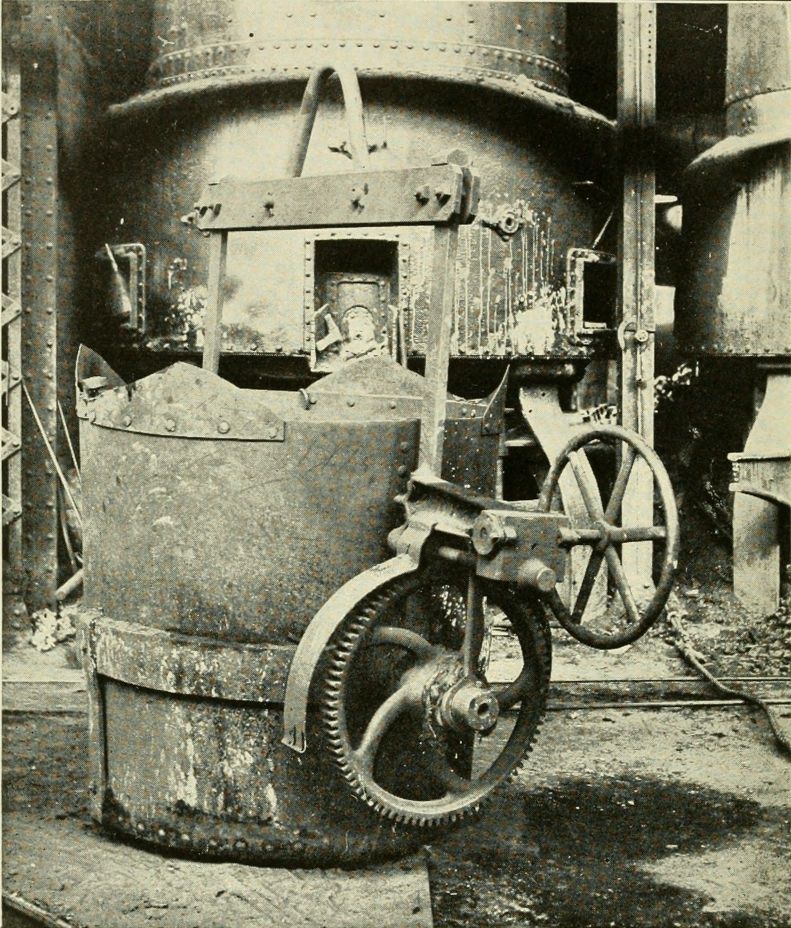
Reservoir ladles and all other ladles operated by
gearing should receive special attention. The motors
of motor-operated ladles should be completely inclosed,
not only to protect the workmen against electric shocks
and burns, but also to prevent accidents which might be
caused by metal being spilled upon the motors, resulting
in short circuits or other kinds of trouble. All
the gears on geared ladles should be completely inclosed,
the covers or guards being constructed in such a
way that they may be readily removed for oiling, cleaning,
and inspecting the various parts. If guards are
not provided the gears will soon become clogged with
dirt and with metal that has hardened or set after having
been spilled upon them while in a molten state;
and clogged gears are likely to be broken or stripped,
and to cause serious accidents.
Fig. 1. A Crane Ladle.
(The gears should be completely inclosed, to prevent them from becoming clogged with dirt and
spattered metal.)
Many ladles are equipped with direct-acting spur
gears. This arrangement permits rapid operation of
the ladles, but it often imposes severe strains upon the
operators, making it difficult for them to hold the ladles
steady while pouring. This often results in spilling the
metal and causing it to be spattered about when it
strikes the sand on the tops of the flasks. A tilting arrangement
composed of a train of spur gears, or a combination
of worm gearing and spur or bevel gears, is
to be preferred. The gears should be so designed and
arranged that at least two teeth of each wheel will be
in mesh at all times. Unless this point receives due
attention a serious accident is likely to occur if the
teeth become badly worn, or if one of them should
break, thus permitting the ladle to tilt suddenly when
pouring. The small pinions and worms of geared
ladles often deteriorate quite rapidly, and they should
therefore be inspected frequently and with special care,
so that they may be renewed before they become a
source of danger. Every geared ladle should be provided
with a safety locking device to hold it in an upright
position while it is being carried.
The bail of each crane ladle should be examined
frequently, and particularly at the point where the
crane hook engages it, because that is where the wear
is greatest. The lower parts of these ladles should
also be watched carefully for evidences of injury
caused by carelessness on the part of cranemen when
transporting or depositing them.
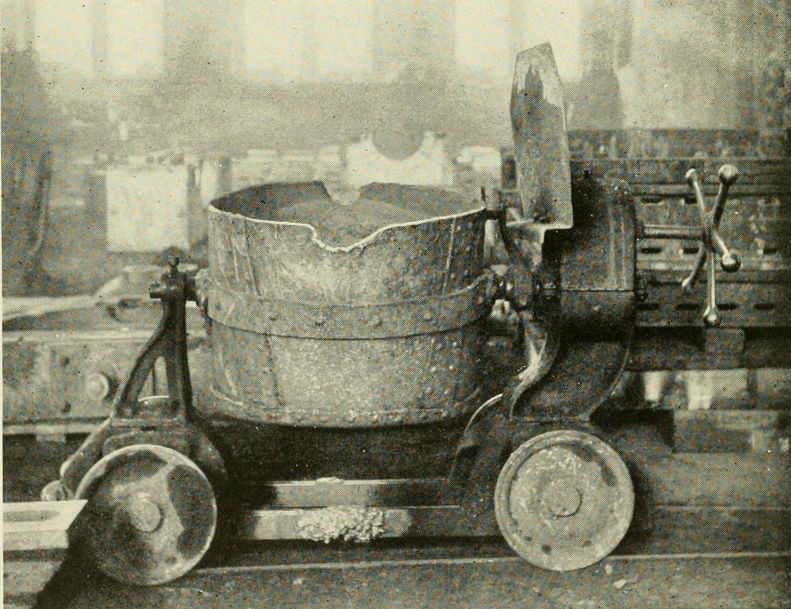
Sulky and buggy ladles are used only to a limited
extent, but they cause many accidents. In some
foundries steel plates are laid to serve as runways for
buggy ladles, and plates are often placed between the
rails of narrow-gage industrial railway tracks also.
Molten metal is sure to splash when spilled on clean,
smooth plates of this kind, and it also forms into “shot”
which roll under the feet and cause the men to fall or
to spill more metal. The danger from splashing might
be minimized by sprinkling sand on the floor, but the
sand would hinder the free movement of the wheels,
and greater effort would be required to move the
buggies. This would tend to make spills more frequent,
even though in any individual case the sand might
reduce the likelihood of injury from splashing, after the
metal had been spilled. Floors of concrete and brick
have been tried in other foundries, with the result that
the number of burns from spills has been materially
reduced. An excellent floor may also be constructed
of metal plates with checkered surfaces,—the elevations
on these plates providing a surface that is sufficiently
smooth for the wheels, while the depressions (which
are filled with sand) tend to check the splashing.
Overhead trolley systems are used in some foundries
for transporting ladles, and in this way the spills and
splashes that are due to poor floor conditions are
eliminated.
Fig. 2. A Buggy or Sulky Ladle.
(Observe the inclosure for the gears, and the shield to prevent the molten metal from splashing
on the operator when pouring and when pushing the ladle along the track.)
It is necessary to maintain a clear path for buggies
that are being moved about, because metal is likely to
be spilled from them if even a very small obstruction is
encountered. Moreover, the buggies or trucks should
be inspected frequently, paying particular attention to
the wheels and bearings to make sure that they are in
good condition so that the buggies will run easily and
smoothly. Each buggy should be equipped with prong
guards to hold it rigidly while pouring, and the ladle
should be properly counterbalanced so that it will automatically
return to an upright position when empty.
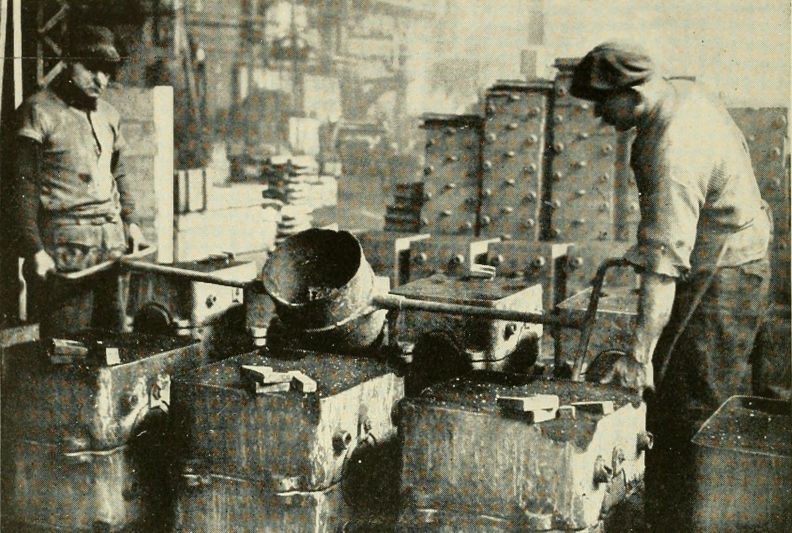
Bull ladles are much safer to handle than ordinary
single-hand ladles, and should be used whenever possible.
Several styles of shank-handles are used with
bull ladles, one of them consisting of a rigid fork handle
on one side and a rigid single handle on the other side.
In another style (which is preferable) both handles are
forked; and in still another form a swivel is provided
at one end, which permits the ladle to be tilted more
easily and emptied with less danger of spilling. The
bowls of bull ladles should be held securely in position
in their shanks by means of clamps made of round or
flat iron. The shanks must be amply strong for the
weight to be carried, and the joints should be carefully
inspected for poor welding, flaws, and other weaknesses.
Defective ladle shanks should be removed
from the pouring floor as soon as discovered, so that
there will be no possibility of using them again, either
intentionally or otherwise. Ladle shanks should not
be left exposed to the weather, because such exposure
causes them to corrode and become weakened.
Fig. 3. A Bull Ladle in Use.
(The handle is provided with a swivel, and one man tilts the ladle while the other man simply
sustains a part of the weight.)
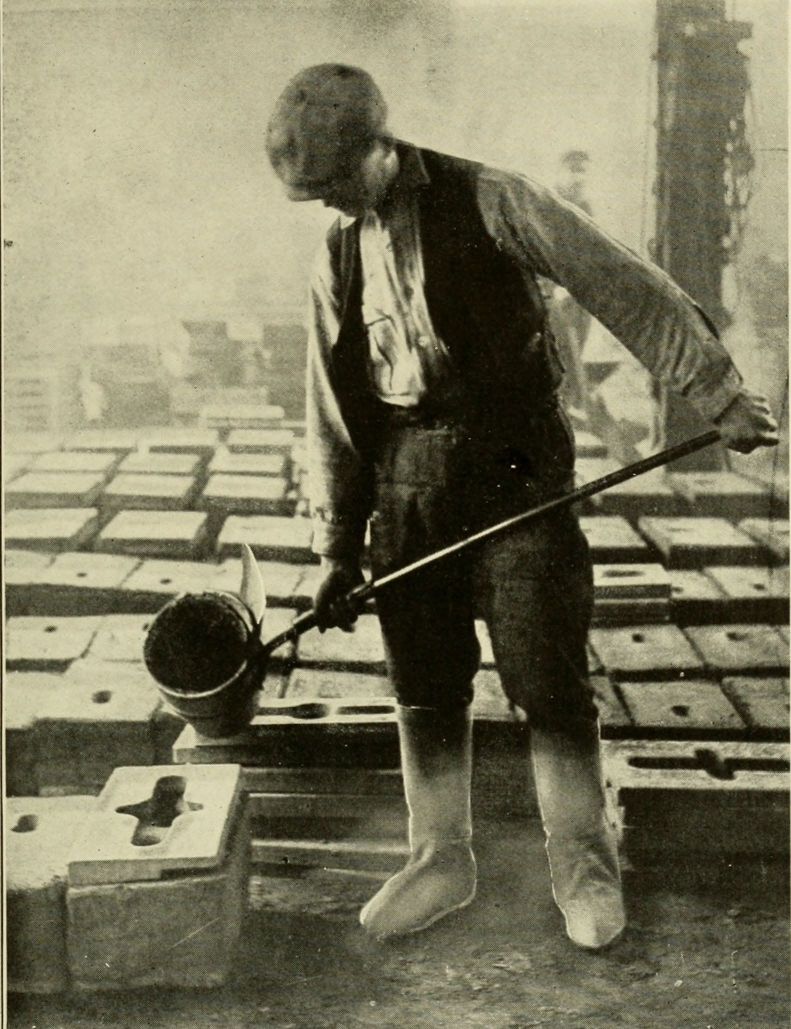
When single-hand ladles are used the shanks should
be securely attached to the bowls, because otherwise
the bowls are likely to slip out when pouring, and to
cause accidents. A sheet-metal guard or shield, 6 or 8
inches high, should be firmly secured to the top of the
bowl of every hand ladle on the side next to the shank,
to protect the workman’s hand while carrying the ladle.
Fig. 4. Pouring from a Hand Ladle.
(This illustration shows the correct attitude for a man to assume when pouring. Observe also
the shield on the ladle, to protect the hand from burns caused by spattering metal. The leggings
are of a good type but, unfortunately, are not clearly shown. On general principles we disapprove
of the unbuttoned vest, although the upper part of the body is unlikely to be burned
so long as the man is engaged solely in work of the kind here shown.)
When several workmen are carrying ladles from
the cupola to the molds it is better for them to pass on
the side on which the bowls are carried. This not only
tends to avoid confusion and disorder, but it is also
safer, because there is less danger of burns when two
bowls are struck together by passing workmen, than
there is when two shank-handles collide.
“Horse play” and purposeless activities of other
kinds should not be permitted among the men who are
waiting their turns at the cupola, because the work is
hard and dangerous, and the men must take it seriously
at all times and give their undivided attention to it,
if burns are to be avoided. The ladles should never be
completely filled, because if they are, the hot metal will
surely spill while being carried. “Cutting in” from
the back of a continuous stream of molten metal at the
cupola spout causes unnecessary spattering; always cut
in from the front.
New employees in foundries, and particularly the
unskilled help, should be carefully instructed with
regard to the proper method of carrying the ladles and
the correct position to assume when pouring into the
molds, and they should be watched and supervised for
a considerable time after being assigned to such work,
in order to make sure that they understand how to do
it properly. The men should stand at a safe distance
from the molds, so that their feet will not be burned if
the metal spills or runs out between the cope and the
drag or nowel.
Ladles of all kinds, except hand ladles, are likely
to cause accidents by tilting unexpectedly, unless the
bowls are properly balanced on their shanks or trunnions,
or are arranged to be locked in an upright
position. It is specially important to see that the bowls
are not top-heavy, even when full of metal. On the
other hand, if the bowls are weighted too heavily at the
bottom it is difficult to tilt them, and an unnecessary
strain is imposed upon the operator and also upon the
gearing and other mechanism; furthermore, it is not
easy to pour a smooth, continuous stream from a ladle
which requires considerable exertion to hold it in the
pouring position. In particular, all ladles that are provided
with bails for hoisting and transporting by cranes
should be so constructed that, when full of metal,
the center of gravity will be well below the bail, unless
they are arranged with geared devices for tilting. In
addition, they should be provided with clips or clamps
to prevent unexpected or accidental overturning.
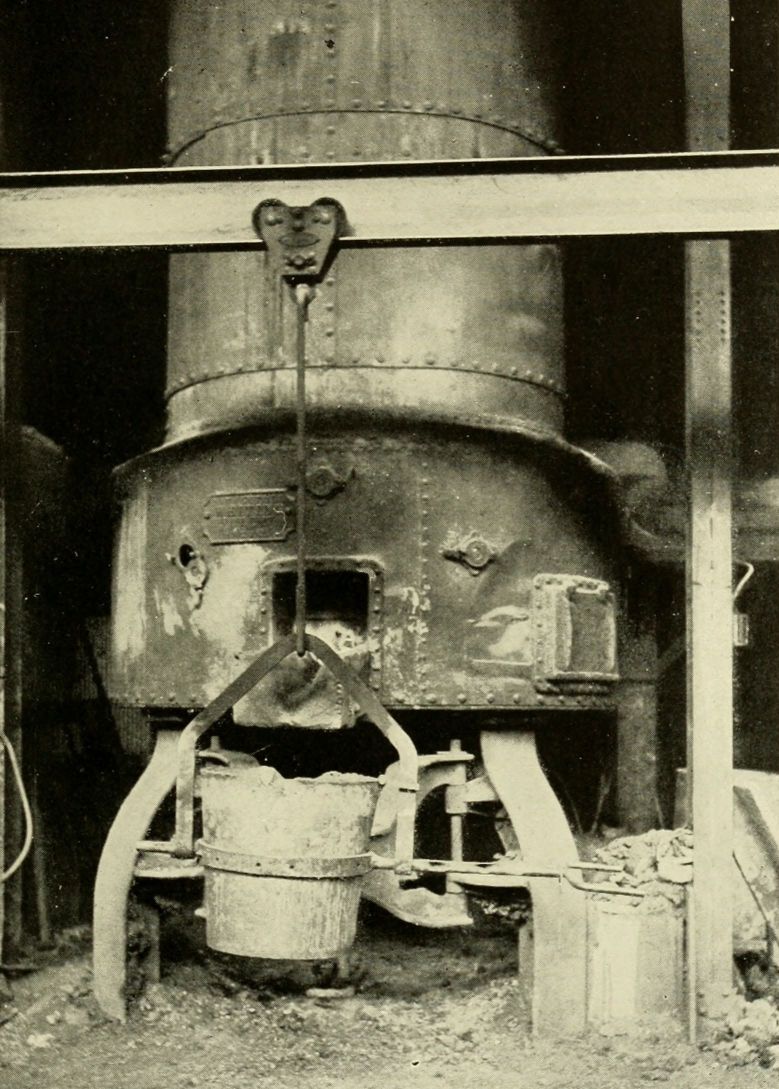
Fig. 5. A Trolley Ladle in Position at the Cupola.
When buying new ladles it is important to see that
the lips are of the correct shape to insure a smooth,
narrow, undivided stream at pouring, and to prevent
the molten metal from backing up and running over the
sides at other points. Both safety and efficiency are
promoted by the use of ladles with proper lips.
“Leave-overs” (excess metal left in ladles after the
molds have been poured) are sometimes poured on the
foundry floor. In this way puddles of molten metal are
left, which soon become covered over with a thin coating
of sand or dust so that they are not readily observed.
The consequence is that men are often severely burned
by stepping into or upon these puddles while the metal
is still hot. Pouring leave-overs on the floor should be
prohibited, and suitable receptacles should be provided
at convenient points to receive the excess metal.
Many serious accidents have been caused by pouring
molten metal into damp ladles, the result usually
being an explosion, and the scattering of the metal in
all directions. In every foundry, therefore, special
care should be taken in drying the ladles. In some
plants the core ovens or crucible furnaces may be
utilized for the purpose, while in other cases it may be
necessary to provide special ovens or heaters. Ladles
should not be dried in the molding rooms by means
of wood fires, unless adequate exhaust ventilation is
provided.
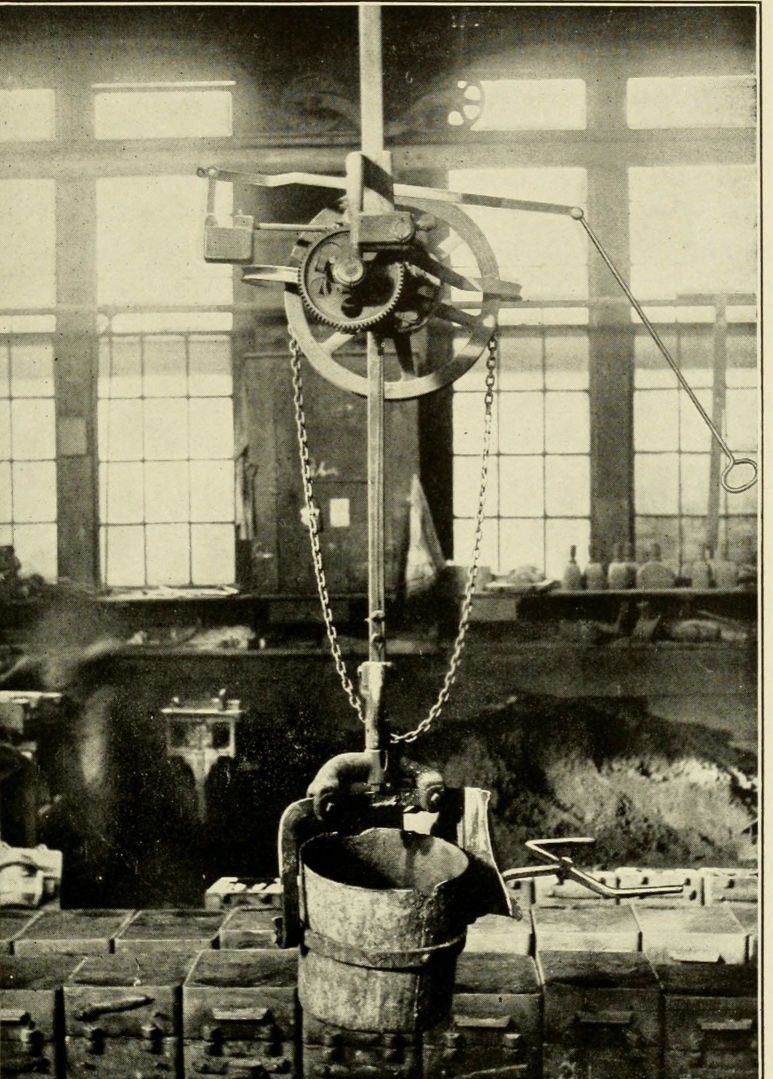
Fig. 6. A Convenient Labor-saving Pouring Device.
(By installing a monorail system a device of this kind can be used for main-aisle and side-floor
work. It can be operated by one man, with safety. The ladle can be hoisted and lowered,
thus making it possible to pour molds at various heights. The metal shield protects
the eyes of the operator against heat and glare, and also prevents
burns from spattering metal.)
All ladles that are not in use should be stored in a
dry place, and preferably on elevated racks, or on supports
of some other kind that will permit the air to
circulate freely about the ladles.
Foundry ladles must be relined from time to time
(bull and hand ladles are relined each day), and it is
advisable to have all of this work done by men selected
for reliability and experience, who are interested in
making the ladles safe and willing to give them the
necessary time and attention.
All of the ladles that are in use should be examined
carefully every day, preferably by an experienced and
conscientious man who has been specially selected for
this work. The bowls should be inspected for cracks
and thin, weak spots, and the shanks should be
examined to discover defective welds and erosion.
Inspectors should also look out for loose rivets and
bolts, and should see that all necessary guards are
in good condition and properly secured in place, and
that all ladles are properly balanced.
Wooden, steel, and iron
flasks are used in foundries, but those of iron and
steel are so much superior that preference should be
given to them under all possible circumstances. Iron
flasks may be cast in the foundry, and the subsequent
maintenance and depreciation charges are quite small
as compared with what must be expended upon wooden
flasks. Moreover, after a wooden flask has been used
for some time the faces of the cope and the nowel become
burned or broken off, with the result that instead
of fitting closely together they may be separated by
a space of an inch or more. Although this space is
filled with sand, the hot metal is likely to break through
and run down the sides of the flask. “Run-outs”,
as leakages of this kind are called, often cause severe
burns on the feet and legs of the workmen. If iron
or steel flasks are used, and the cope and nowel faces
are planed to insure a close fit, there will be little
likelihood of the occurrence of run-outs.
Iron and steel flasks, as well as wooden ones, require
frequent and careful inspection to see that none
of the lugs, handles, or other parts are broken. If a
flask is found with a broken or cracked lug or handle
it should be immediately removed from the shop for
repairs; otherwise, it might be used again by some
person unaware of its dangerous condition, and a
serious accident might result when it was picked up
by the crane.
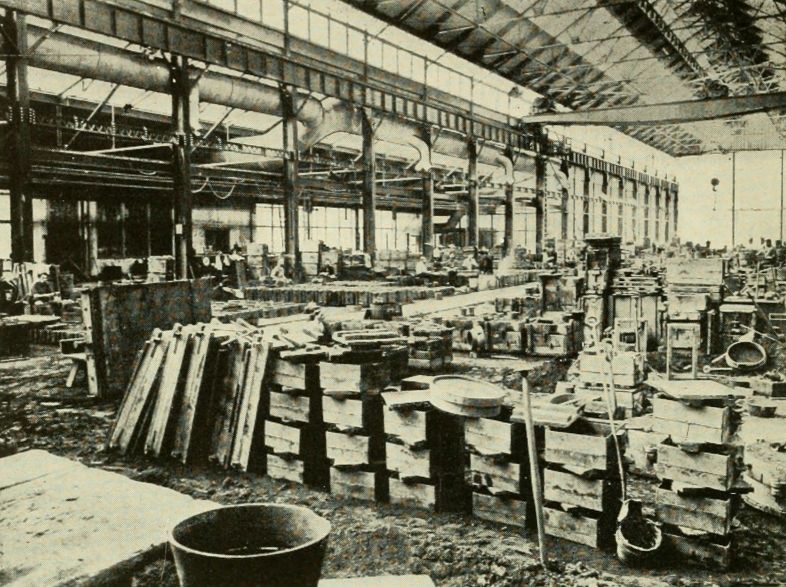
Congestion on the molding floor is noticeable in
many foundries, particularly in those where the work
is greatly diversified; and numerous burns are the
direct result of such a condition. Sufficient space
should be left between flasks so that the molders and
their helpers will not be crowded while pouring, and
so that they will be able to get out of danger quickly
and easily in case of a “run-out”. There should always
be a clear space of at least 18 inches between the
rows of flasks when pouring “side floor” by hand, and
for crane work in general; and passages 24 inches or
wider are much to be preferred. Portable horses
may sometimes be used to advantage for supporting
bull ladles when pouring work of certain kinds.
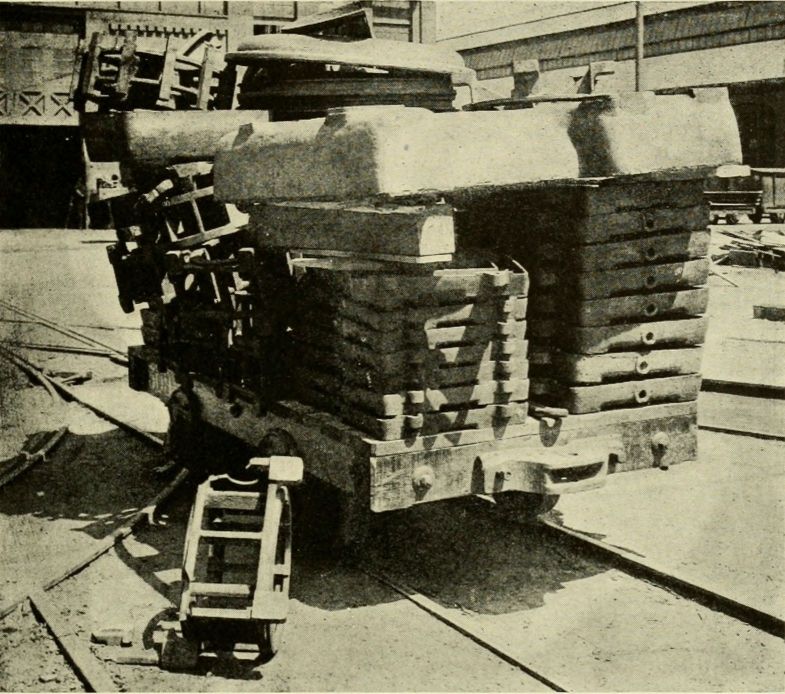
Flasks, when in storage, should be piled in an
orderly and systematic manner, and the maximum
height for stacking them should be such that the
workmen can handle them easily and conveniently
while standing with both feet on the floor. Unevenly
piled flasks sometimes fall over and cause serious injuries;
and even though they are piled well enough
to be stable if undisturbed, they may fall in consequence
of jarring due to the motion of neighboring
cranes, and sometimes they are pulled over by chains
dangling from the cranes.
Workmen often collide one with another, and are
severely burned or otherwise injured, in consequence
of their view being obstructed by foundry equipment.
Obstructions likely to cause accidents of this kind
should be moved to the sides of the room. It is
highly essential, also, to keep all the aisles clear of
flasks, tools, implements, and other obstructions, particularly
in plants where the illumination is not of
the best, and where, on account of insufficient ventilation,
large quantities of smoke obscure the vision.
Orderliness and adequate light and ventilation not
only increase efficiency, but also materially reduce the
number of accidents; and any reasonable expense that is
involved in securing good conditions in these respects
will pay for itself by lessening the time that is lost in
consequence of the temporary demoralization to which
the working force is subject whenever an accident occurs.
Crucibles are extensively employed
in founding, especially in connection with non-ferrous
metals; and the importance of exercising special
care in handling them, not only to avoid accidents
but also to insure greater length of service from
the crucibles themselves, has been greatly underestimated
in the past. In our larger plants, however,
foundrymen are now giving considerable attention to
the systematic instruction of their furnacemen, melters,
and helpers, with a view to keeping the number of accidents
as low as possible, and obtaining as great a
number of heats as practicable from each crucible.
The clay crucibles of former days have been extensively
supplanted by better ones made largely of
graphite, which is capable of resisting exceedingly
high temperatures. In fact, crucibles composed wholly
of clay have practically gone out of use for the melting
of steel and brass, because they can often be employed
for only one or two heats, and they are far more likely
to break or crack unexpectedly, thereby causing
workmen to be seriously burned. Moreover, the
temperatures that occur in metal-working plants at
the present time are higher than those that prevailed
when the all-clay crucible was the standard type.
The crucible that is now in general use consists
mainly of the substance that is variously known as
graphite, plumbago, or black lead, and which is a
practically incombustible form of carbon. This is
combined with a small amount of a special variety
of clay as a binding material, and perhaps a little
fire sand to give the mixture an open grain, so that it
can better withstand sudden changes of temperature.
Some makers use, in addition, a certain quantity
of material obtained by grinding up old, worn-out
crucibles; but this practice cannot be recommended.
The graphite crucible is doubtless the most efficient
yet devised, when cost and all other elements
are considered, but it is nevertheless somewhat fragile,
in view of the fact that it is expected to withstand
a heat sufficient to melt the refractory metals, and to
support, at the same time, very considerable pressures
due to the weight of its heavy fluid contents. It is
exceedingly important, therefore, to see that all employees
fully understand how to handle crucibles in
order to reduce the danger of breakage to a minimum;
and a great deal can be accomplished in this
direction, because graphite crucibles, when properly
made and carefully used, can be kept in a fairly safe
condition.
The number of accidents from breakage is greater
in small plants than in large ones, in proportion to the
number of crucibles in use. This is due partly to
the greater care that the crucibles receive in the large
plants, and partly to the fact that large foundries
buy supplies of crucibles considerably in excess of their
immediate requirements, storing the surplus ones and
allowing them to age or “season”. It is an old saying
that crucibles improve as they grow older, and as
experience shows that this belief has some actual
basis in fact, the date of manufacture should be stamped
upon every crucible, to assist the annealing men in
selecting the oldest and best seasoned of them, when
additional ones are required for use.
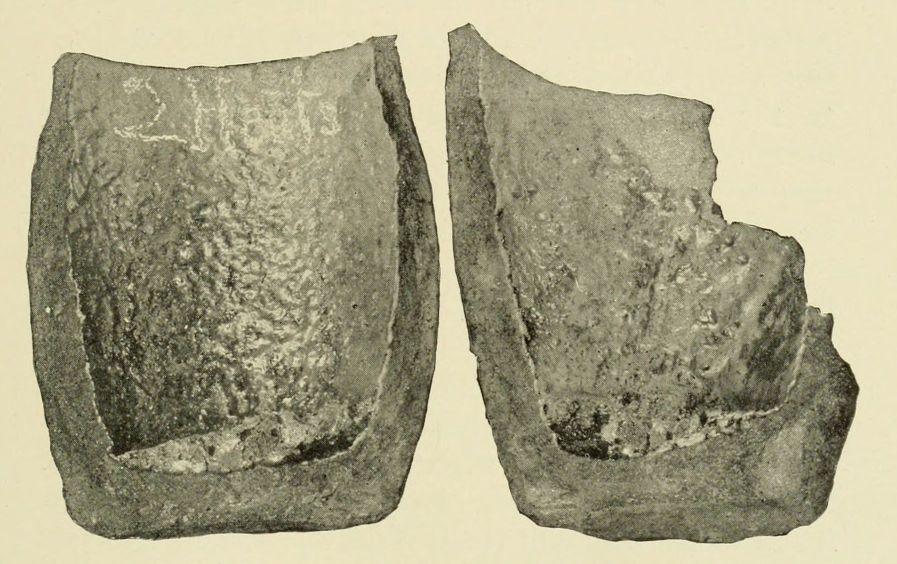
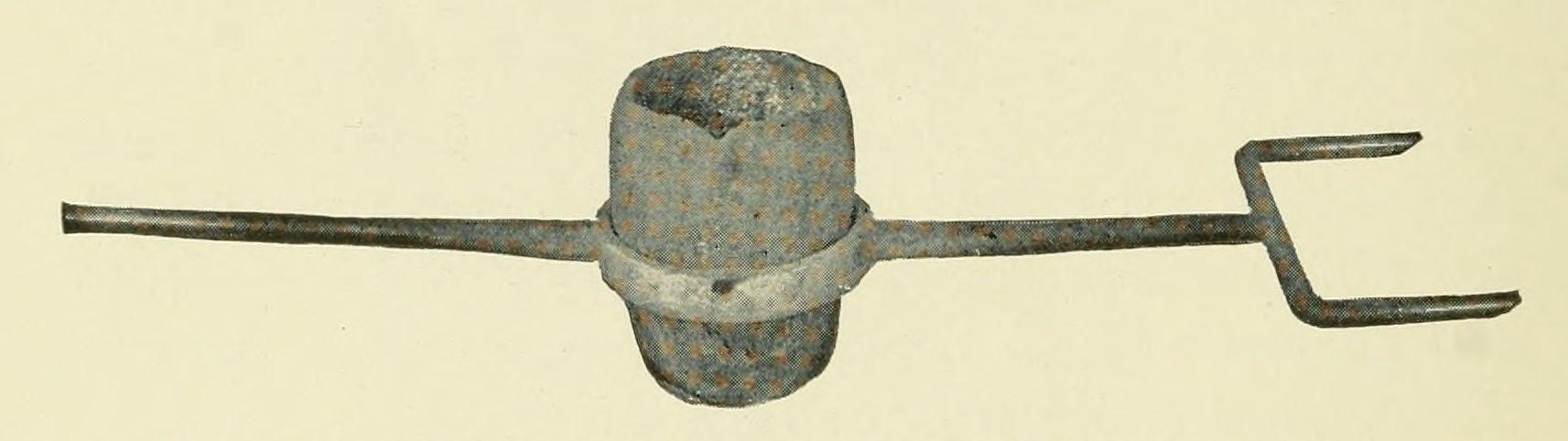
Fig. 7. A Crucible which Broke after being Run
Only Two Heats.
Good crucibles are expensive, and every foundryman
therefore desires to obtain the maximum service
from them. The foundryman who attempts to
increase the useful life of his crucibles by careful
handling, and by the adoption of approved methods of
every other kind, is at the same time promoting safety
by preventing accidents from premature breakage.
Foundrymen, melters, pourers, and helpers, usually
expect a crucible to run a certain definite number of
heats, and they are likely to be somewhat careless
when a new crucible is put in service. For this reason
it is wise to assign a number to each crucible, for recording
the number of heats taken. The record may
conveniently be kept upon a black-board, opposite
the appropriate crucible number and in plain view.
Everybody then knows just how many heats each crucible
has run, and this knowledge often arouses a
spirit of competition, which tends to make the men
more careful in handling the crucibles, and to increase
the service that can safely be had from them. (The
dating and numbering here recommended are now
being done, quite generally.)
When crucibles are first received, it is important
that they be critically examined for cracks and flaws,
not only by the eye but also by tapping them with a
light hammer; and all imperfect ones should be rejected.
If there is evidence that any of the crucibles
in a given shipment have become wet while in transit
to the foundry, they should be stored for at least
four or five weeks, before being used, in a place where
they will dry out thoroughly—even though they may
be apparently dry at the time they are received.
When a new supply of crucibles has been carefully
inspected and found to be free from defects, the
entire lot should be stored for a considerable time in
a warm, dry place, and provision should be made to
protect them as thoroughly as possible from contact
with moisture or with moist air. The roof of a continuously-operating
core oven is an excellent place
for the storage chamber.
The proper annealing of crucibles is of far more
importance than is generally realized. It is said that
crucibles, when they come from the manufacturer’s
kilns, contain less than one-quarter of one per cent.
of moisture; but after they have cooled off they
absorb moisture again from the air. To anneal a
crucible properly, it should first be slowly heated to
a temperature somewhat above 250° Fahr., and it
should be maintained (or “soaked”) at this temperature
for a sufficient time to entirely remove the moisture.
It may then be put into service, if it has been
thoroughly annealed by the makers. If there is any
doubt on this point, however, the crucible should next
be heated for some hours to a dull red heat, after
which it should be allowed to cool again, very slowly,
to about 250°. In any case the crucible should still
be at a temperature of 250° or over, when it goes into
the furnace, or the drying-out process will not be
wholly successful.
Large crucibles, with thick shells, require a higher
temperature than small-sized ones in the preliminary
heat-treatment, and a correspondingly longer “soaking”
period, in order to reduce the absorbed moisture
to the allowable limit. In drying out a No. 200 crucible,
for example, ten hours or more should be allowed
for bringing it up to a temperature of 250° Fahr., and
fully ten hours more should be allowed for “soaking”,—that
is, for reducing the percentage of moisture
which may have been absorbed. If a crucible that
has a considerable amount of moisture in its walls
is quickly subjected to a high temperature, the moisture
will be changed into steam, and this, because it is
confined within the walls of the crucible, may expand
so as to cause a rupture or crack. The same result
may also follow from the natural contraction of the
drying crucible, if the moisture is driven out rapidly
or unevenly. The small “pinholes” and “skelping”
that may often be seen on crucibles are caused in
this way. These pinholes and fissures form one of
the chief sources of trouble against which users of
crucibles have to guard; for although a crucible having
defects of this nature may endure for a considerable
number of heats, it is nevertheless likely to fail
at a critical time (for example, during pouring or
while being pulled from the furnace), spilling the
molten metal and causing severe hand and foot burns.
After receiving heat-treatment for the removal
of moisture, crucibles are often placed on a layer of
damp sand, or on the comparatively cold furnace
floor, and left there for an indefinite length of time
before charging. This should not be permitted, because
when the temperature of the crucible falls to a
point materially below 250°, it will again absorb
moisture.
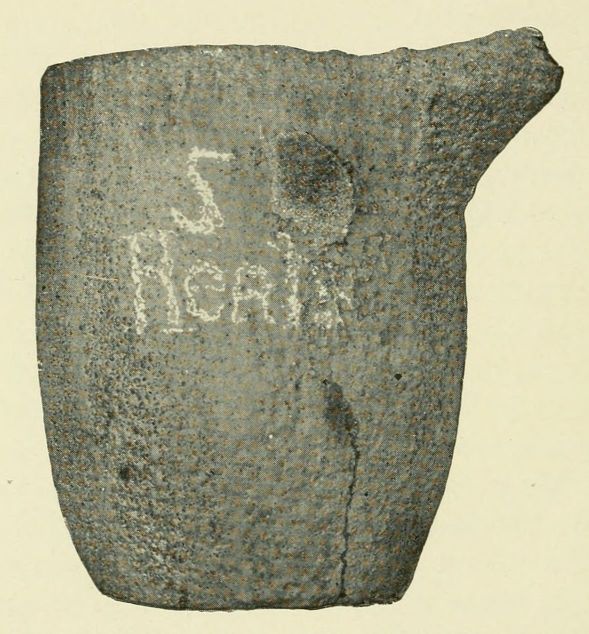
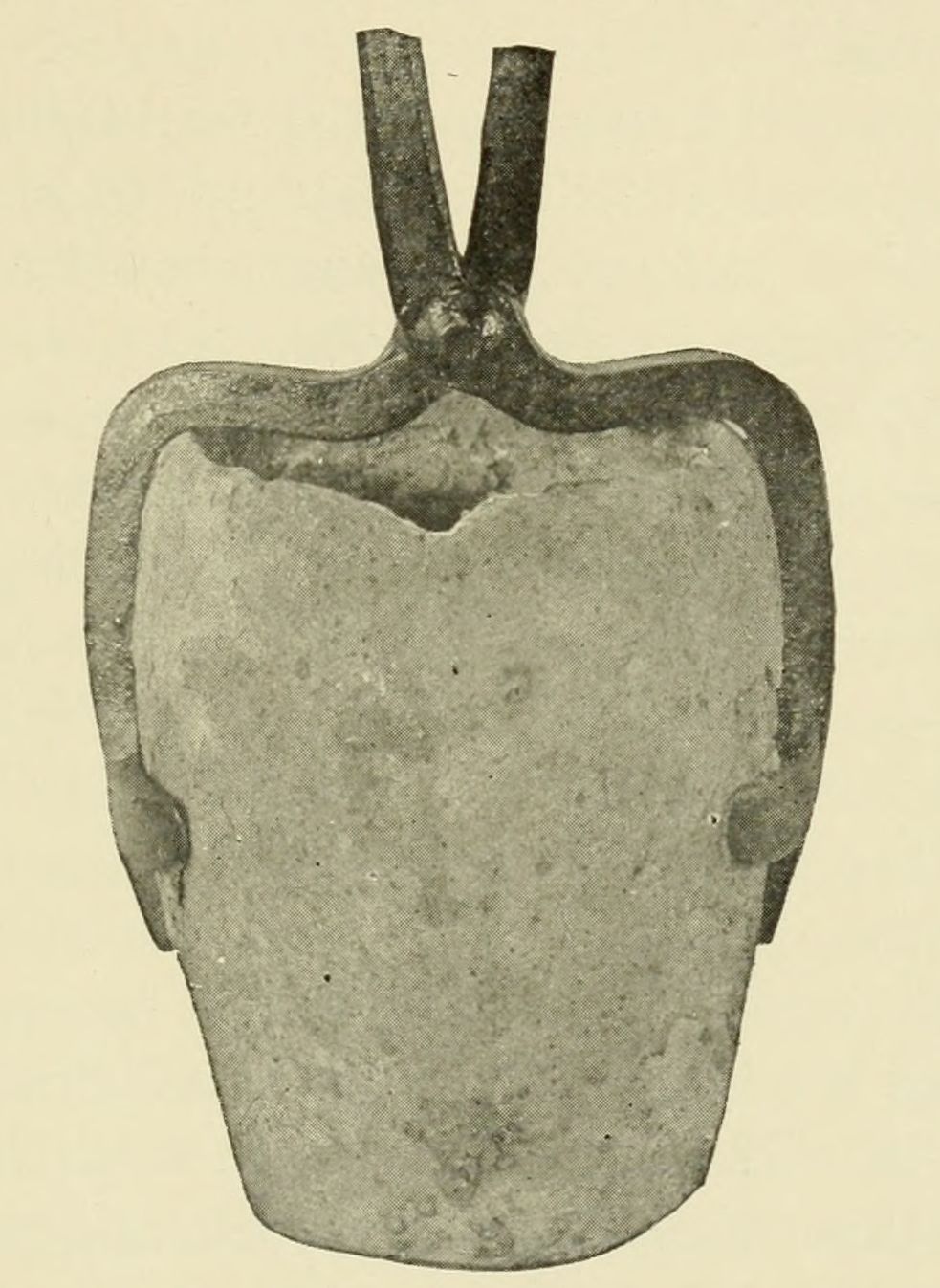
Fig. 8. The Crack in this Crucible Developed
After Five Heats.
Fine cracks (called “alligator cracks”) often cover
the entire surface of a crucible. These may be caused
in a number of ways. Sometimes they are due to
heating the crucible with fuel containing too high a
percentage of sulphur; or, in oil furnaces, they may
be caused by using too little oil or too much steam.
It is specially important for the operators to thoroughly
understand their work when using an oil
furnace, because an excess of air or steam, or an
insufficient supply of oil, may give rise to an oxidizing
action, whereby a portion of the carbon (or graphite)
is burned out of the crucible wall, leaving the binding
clay in a somewhat porous condition; and this action,
when it occurs, greatly facilitates the formation of
cracks.
When crucibles are stored on the top of a furnace,
the melters or furnacemen should make sure that the
covers over the furnace openings fit properly. If the
furnaceman is careless in this respect the moist gases
that are given off when fresh fuel is placed on the
fire will escape through the openings to some extent,
and they are likely to come in contact with the crucibles,
causing alligator cracks to form.
Cracks and fissures are also likely to form if the
metal to be melted is not carefully placed in the crucibles.
The men usually work rapidly when introducing
the ingots, so that the furnaces will not be left open any
longer than necessary; and the ingots are often thrown
in with a force sufficient to indent the bottoms of the
crucibles, or otherwise damage them. An indentation
in a crucible, whether caused in this way or in any other
way, is quite likely to develop, shortly, into a crack or
fracture. The ingots should be introduced carefully
and loosely, sufficient time being taken to insure that
this is properly done. When a crucible is first filled it
is desirable to place as many ingots in it, for the first
melting, as practicable; but it is exceedingly important
to see that they are not wedged or jammed, because
when they are heated they will expand more than the
crucible itself, and the walls of the crucible are likely
to be cracked in consequence.
When a new crucible is put in service for melting,
it should be heated quite slowly for a few runs, and this
is specially important the first time it is used. After
one or two runs it will become vitrified, and the danger
from too sudden a heating is then materially reduced.
It is a good plan to keep on hand a few extra crucibles
that have been used before, to avoid loss of time in
case an extra crucible is needed on short notice.
Fig. 9. A Carrying Pot, with Shank.
A great deal of harm is done by carelessness in
handling the tongs and shanks, and the life of a crucible
may be seriously shortened in this way. When a
tilting furnace is used, as many as fifty heats can often
be obtained from a crucible; but if the heating is in
furnaces from which the crucibles must be removed by
means of tongs, they can be used for only about fifteen
heats, on an average.
A crucible is soft and plastic at a white heat, and
may easily be squeezed out of shape by the pressure
exerted upon it when the handles of the tongs are
forced together. The walls of the crucible gradually
become weakened by treatment of this kind, and
eventually, if the crucible is not discarded, a complete
rupture will probably occur, with its attendant toll of
injuries and burns.
Fig. 10. Tongs Properly Applied to a Crucible, for
Removing it from a Stationary Furnace.
Three styles of tongs are in general use in foundries—one-pronged,
two-pronged, and spade tongs. The
different styles are designed for various special purposes
and operations, but they are sometimes improperly
used interchangeably. It is essential to see that the
tongs that are used are of the proper shape, and that
they fit perfectly from the widest part of the crucible
(usually called the “bilge” or “belly”), down to within
a few inches of the bottom. They should not
extend to the extreme bottom, however, because this
would make it hard to place the crucible in the shank.
On the other hand, if they do not extend down far
enough the crucible will be badly squeezed. The
proper use of the tongs consists in taking hold of the
crucible below the bilge and lifting it in such a way
that the least possible pressure is exerted against the
crucible walls.
One-pronged tongs should be used only for lifting
the smaller-sized crucibles,—say up to size No. 40.
For larger sizes two-pronged tongs should be used. It
is not uncommon to see large crucibles, ranging from
No. 200 to No. 300, lifted by one-pronged tongs. This
practice should be condemned, because when one-pronged
tongs are used for lifting a crucible, pressure is
exerted against only a single point of contact,—namely,
at the bottom,—and the crucible, when hot and soft,
is likely to be cut or ruptured, if it is large and heavy,
because the pressure at the point of support is severe.
Serious burns, from the spilling of the molten metal,
often result when the lower prong of a two-pronged
pair of tongs is cut off, on account of a lack of space between
the crucible and the furnace wall; because the
crucible is then lifted from above the bilge, and tilted.
Melters should be cautioned against the practice of
driving down the ring of the tongs with a skimmer or
other implement, because this is almost sure to cause
cracks and fissures in the crucibles.
Molten metal is often spilled from crucibles in consequence
of using tongs that have become bent or otherwise
misshapen. It is important to see that the tongs
fit the crucibles properly, and that they are also in
good condition in every other way. For restoring
bent tongs to their proper shape, it is advisable to
procure a set of cast-iron forms similar in size and
general shape to the crucibles that are used in the
plant, but slightly larger from the bilge upward. To
restore the tongs to their original form it is only necessary
to put them in the furnace, raise them to a red
heat, clamp them to the proper iron form, and bring
them back into shape by means of a heavy hammer.
Tongs may be fitted easily and cheaply in this way, and
a great saving of time results. If cast-iron forms are
not provided, the blacksmith cannot be expected to
restore the tongs to their correct shape with accuracy;
but if iron crucible-forms of the proper sizes and shapes
are used, and the tongs are fitted to them as here recommended,
the likelihood of squeezing and distorting
the crucibles will be reduced to a minimum.
Two pairs of tongs, at least, should be provided for
each size of crucible, so that if one pair becomes badly
bent or worn, the other pair may be placed in service
without loss of time.
Furnacemen should make sure that no clinkers or
pieces of unburned coal or coke are stuck to the walls
of the crucibles when about to grasp them with the
tongs, because if the tongs are applied over a clinker
the clinker will probably be forced into the crucible
and a rupture may then occur at any moment. It is
also important to see that the bottom of the crucible
(on the outer surface) is free from clinkers or other adherent
substances, so that when the crucible is in the
furnace its weight will be evenly distributed, and not
concentrated at a few projecting spots or regions. It
is best to support the crucible by means of a foundation
or pedestal, of graphite, fire-brick, or other infusible
substance, though the fire-bed may be made to give a
fairly satisfactory support if it is carefully prepared
and smoothed.
When a heat has been poured it is important to
see that no metal is left in the bottom of the crucible,
because when a residual mass (or “button”) of such
metal cools, it contracts at a different rate from the
crucible, and serious strains and cracks are likely to
result.
Ramming the fuel bed is bad practice, in general,
because it is likely to damage the crucibles seriously.
If ramming appears to be necessary at special times,
the utmost care should be exercised in doing it.
(We are indebted to the General Electric Company
for the photographs that are used in this section.)
Tapping-out is the most hazardous
part of cupola work. This is specially true if the
melter is inexperienced or careless, for it is almost
entirely within his power to prevent excessive spattering
of the hot metal if he properly controls the flow
from the cupola. If dangerous spattering of the
molten metal, with its attendant burns, is to be eliminated,
it is important that the melter be taught the
correct and only safe method of stopping up the tap
hole. Under no circumstances should the stopping
bot be thrust directly into the stream of flowing
metal in order to “bot-up” the hole. Instead of this,
it should be brought immediately over the stream,
and, when near the hole, should be carried down
obliquely so that it will make a sharp angle with the
stream, and thus effectively and instantly close up
the hole without any undue spattering. In drawing
molten metal from the cupola into buggy or trolley
ladles, it is necessary to stop the flow of metal when a
ladle has been filled and while another is being moved
into position. This is done by the melter, who inserts
the stopping bot into the hole and holds it there
temporarily. After doing this several times the fire
clay on the end of the stopping bot becomes burned
off, and consequently the hole may not be closed properly.
One or more extra stopping bots, already prepared
with fire clay, should be conveniently at hand, which
may be substituted for the burned-off one when
necessary. The melter and all other workmen engaged
about the cupola should wear well-designed goggles
having side shields, because statistics show that a high
percentage of eye injuries occur about the cupola.
Accidents occur about cupolas not only when
drawing off the metal, but also during charging time,
and when repair work is being done. As a general
thing workmen engaged in charging a cupola must
bring the coke and the iron (both scrap and pig) from
the storage bins or yard, up to the charging platform.
These workmen should be instructed to pile the iron
evenly on the barrows, and to exercise great care in
taking the scrap from the pile, in case the latter is
in such a condition that it is likely to collapse or slide.
Many workmen have been severely injured, while
filling their barrows, by the sudden collapse of piles
of scrap iron.
In many foundries elevators are used for conveying
the charges to the charging floors. In every such
case it is essential that a gong or other signal be
sounded before the elevator is taken from the charging
floor by a workman below; and the elevator
should not be moved, after the signal has been given,
until sufficient time has elapsed for any person who
may be in danger to respond and to move into a place
of safety. Many serious accidents have been caused
by elevators suddenly descending while the workmen
were loading or unloading them. To further guard
against such accidents there should be a door or gate
at each entrance to the hoistway, provided with an
interlocking device so arranged that the elevator cannot
be started until the door or gate has been closed.
The unused sides of the car platform should be completely
inclosed to a height of 6½ feet (or to the top
of the crosshead), and a substantial iron grating
should be placed on the top of the car, to stop falling
tools and other objects.
[1]
[1] Further information with regard to the care and operation of elevators in general
is given in a booklet published by the Engineering and Inspection Division of The Travelers
Insurance Company. Copies of this booklet may be procured by applying to the Home
Office at Hartford, Connecticut.
The charging opening in a cupola should be fitted
with a door or gate, which should always be closed
except when charging is going on, and workmen engaged
in charging should be specially careful to avoid
tripping or losing their balance when in the vicinity
of the opening, and especially when throwing heavy
pieces of scrap or pig metal into the cupola.
When the interior of a cupola is being relined it is
recommended that a watchman be stationed near the
opening, or that a conspicuous warning sign be posted
beside it, stating that men are working inside. We
have known of cases where metal thrown into the
cupola has struck and seriously injured workmen who
were engaged in making repairs to the shell or lining.
An effective guard against accidents of this kind consists
in a circular screen of a diameter slightly smaller
than the inside of the cupola, and made of heavy wire
netting or of stout expanded metal, substantially
framed. The screen should be divided in the center,
and the two sections hinged together. In using this
device it is suspended above the point where the men
are at work, from a piece of scantling laid diametrically
across the cupola so that it rests upon the walls where
they are offset for the single brick lining, or upon the
ledge formed by the charging doors,—the screen being
supported by chains at several points around its circumference,
and having its hinges on the under sides.
When arranged in this way it tends to remain open
and flat, although it can easily be folded by raising it
at the middle. A screen of this kind will intercept
falling pieces of slag and brick, and other objects,
and will thus protect the workmen below.
When furnaces are to be entirely relined, only
trustworthy and experienced men should be allowed to
perform the work. Moreover, the fire-bricks that are
used should be of the best quality obtainable, in order
to insure long life of the cupola. Between the bricks
and the shell a space of about ¾ of an inch should be
left, which should be filled with dry sand to act as a
cushion, so that severe stresses will not be thrown
on the shell when the bricks expand. The rivets
and the shells of all cupolas should be inspected periodically,
to see if any of the rivets have sheared off or
worked loose, or if the shell has become weakened in
any way. After making repairs of any kind, care
should be taken to see that the cupola is thoroughly
dried out, and that all tools, and all materials used
for scaffolding or other purposes, are removed.
Explosions occur in cupolas from time to time, and
if the shell of a cupola is weak, a serious catastrophe
is likely to result. Carbon monoxide, when combined
with air in certain proportions, forms a highly inflammable
and explosive mixture, and the explosions are
mainly due to this gas, which collects in the wind box
and blast pipe during interruptions in operation. In
an incredibly short time enough carbon monoxide gas
may collect in this way to cause a violent explosion
when the blast is turned on again. If the iron comes
too fast a temporary shut-down may be unavoidable;
but interruptions from other causes,—such, for example,
as the slipping of the blower belt,—should be prevented,
so far as possible, by frequent inspections of the equipment
and by making all necessary adjustments and
repairs when the cupola is not in operation.
A gate or damper should be placed in the blast
pipe, close to the cupola, to prevent the explosive gas
from entering the pipe. This gate should be closed
immediately, whenever the blast is shut off, and it
should be opened cautiously and slowly when starting
up again. At the time that the blower is shut down
one of the tuyeres should be opened also, to maintain
a slight draft of air.
Explosion doors provide another means for preventing
damage from gas explosions. Some authorities
recommend that these doors be placed in front of the
tuyeres, so that when the blast is turned off the doors
may be opened to admit the outside air. When this
arrangement is adopted the doors should not be closed
until the blast has entered the wind box, so that any
gas remaining therein may escape through the doors.
With a positive-pressure blower, which is probably
the best type for cupola work, a safety-valve should be
provided for the protection of the blast pipe or blower.
This will prevent the bursting of the blast pipe in case
the blast gate is closed suddenly, or if the cupola becomes
clogged with slag in such a manner as to obstruct
the passage of the air to a dangerous extent. The
weights on the safety-valve should be sufficient to prevent
blowing-off unless the obstruction is quite serious,
because a constant blast-volume is required in modern
cupola operation, and if the volume is decreased an undesirable
lowering of the temperature occurs.
Charging and lighting-up should be done carefully
and by experienced workmen, and the charges should be
laid as nearly level as possible. When the charging has
been completed, and after lighting-up, sufficient time
should be allowed for the cupola to become thoroughly
warmed up before starting the blower.
Cranes of various types are
used in the foundry, but most of the heavy work is
done by electrically-operated traveling cranes. The
suggestions that follow therefore relate mainly to that
type, although many of them are applicable to all
cranes, and to hoisting devices of other kinds.
A substantial stairway or ladder should be installed
at one end of the crane runway, to provide access
to the crane cab or cage; and when two cranes are
operated on the same runway, stairways or ladders
should be installed at both ends of the runway. Cranemen
should always use this means of entering and
leaving the cages. Every crane cab should be inclosed
to a height of at least 42 inches on all sides, except where
entrance is actually effected. The inclosure should preferably
be of sheet metal or expanded metal, or of
heavy, woven-wire mesh. If railings are used there
should be an intermediate rail midway between the top
rail and the floor of the cab, and a six-inch toe-board
should also be installed. A stairway or a ladder should
always be provided for passing from the cab to the top
of the crane bridge. This should be substantially built,
and properly protected so that the crane operator or repairman
will be in no danger of falling when he uses it.
A foot-walk should be constructed along the bridge
of the crane, or on both sides where the width of the
bridge demands. This will give easy and safe access to
the trolley in any position, and to any part of the
bridge. The construction should be substantial, and
the width must be sufficient to provide ample room for
passage. Double railguards 42 inches high should be
erected along each foot-walk, and six-inch toe-boards
should also be provided.
Whenever possible, a substantial walk should be
installed beside the crane runway, and this should
be protected by strong railings and toe-boards along its
entire length. All traveling cranes should be equipped
with spring bumpers or oil bumpers, and suitable stops
should be installed at each end of each rail of the
runway.
All gears on the trolley and other parts of the crane
should be completely incased, and no one should be
allowed on top of the crane while it is in motion. A
stout sheet-metal pan, or a substantial floor, should be
provided under the trolley, to catch any parts that may
work loose, and to prevent them from falling upon
employees below. This pan or floor should be solid
except for the cable openings. Guards, fenders, or
brushes should be attached in front of the bridge and
trolley wheels, to remove any obstructions that may
be upon the tracks, and to prevent injury to persons
who may be working in such positions that their hands
or feet might be crushed by the wheels.
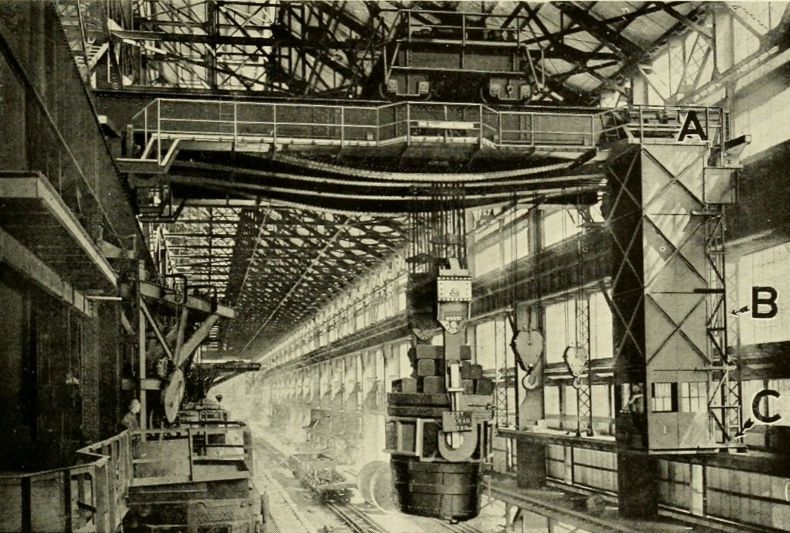
Courtesy of The Alliance Machine Company.
Fig. 11. Safeguards on a Large Ladle Crane.
(This crane is larger than is used in the average foundry but it has some safety features that
should be universally adopted. At A is the landing platform leading to the foot-walk on
the crane bridge; B is a stairway which extends from the safety platform, C, just
outside the operator’s cage, to the landing platform. The railing and
toe-board on the crane bridge and on the trolley are also essential
for safety.)
All electrical wiring should be installed in conduits;
and it is particularly important that hoist-limit stops
be provided, in all cases, both for the main and for the
auxiliary hoists. In the best crane practice the hoist-limit
stops employ dynamic braking to check overtravel
and to assist in lowering loads. To prevent the
crane from being operated by unauthorized persons, or
while repairs are being made, there should be a safety
switch in the main line, mounted above the cab where
it can be conveniently reached from the foot-walk.
This switch should be fitted with a lock so that it can
be secured in the open position, and the key should be
only in the possession of the crane operator or the head
repairman.
Woodwork should not be used about a crane, because
it is likely to become oil-soaked, and it is then
exceedingly combustible. If it should take fire and the
craneman, in order to make his escape, should run the
crane to a stairway, the time required for this purpose
might increase his danger quite materially, and the
motion of the crane would also tend to increase the fire.
If, on the other hand, he tries to leave the crane in
any other way than by the regular stairway, he will
be exposed to hazards of other kinds, and these will be
accentuated by his haste.
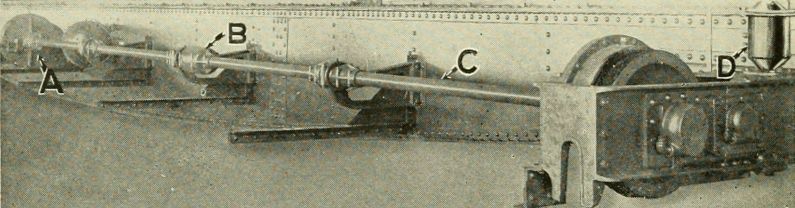
Courtesy of the Shepard Electric Crane & Hoist Company.
Fig. 12. Some Safety Features of a Traveling Crane.
(This illustration shows a part of a crane on the erecting floor of the manufacturer. There are no
exposed revolving parts throughout the entire length of the crane bridge. Some of the
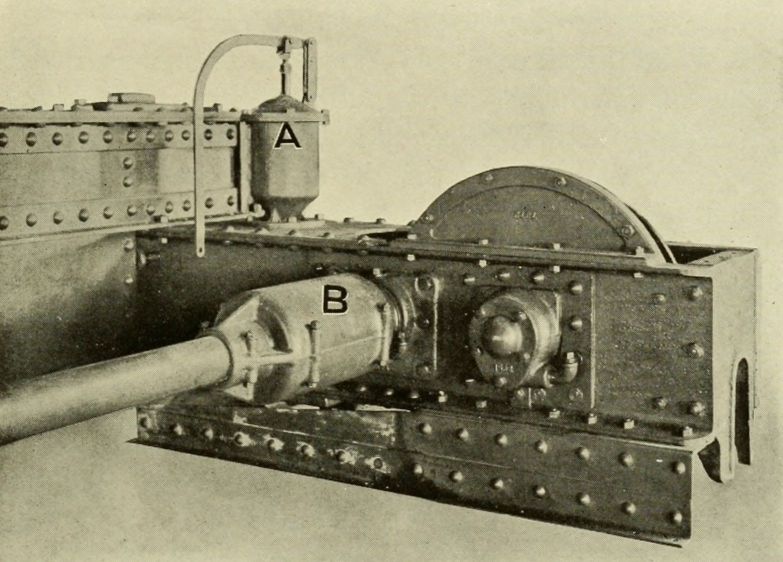
safety features are as follows: A—inclosed gearing; B—inclosed drive-shaft coupling;
C—pipe inclosure for drive shaft; D—device for sanding rails when
crane is used out-of-doors. See also Fig. 13.)
Keep all tools, oil-cans, and waste in a closed metal
box securely fastened to the crane or to the runway at
some convenient point.
Careful, watchful, intelligent, and trustworthy
crane operators, floormen, and repairmen, can do a
great deal toward preventing accidents, and only such
men should be employed about cranes. The following
suggestions relate to the work of these men, and if
faithfully followed will be the means of promoting
safety in a marked degree.
Courtesy of the Shepard Electric Crane & Hoist Company.
Fig. 13. Some Safety Features of a Traveling Crane.
(This is a nearer view of some of the safeguards shown in Fig. 12. A is the track sander which
is operated by a rope or cable attached to the lever and extended to the craneman’s cage;
B shows more clearly the drive-shaft coupling. The shaft inclosure also appears
more plainly.)
During the ordinary operation of an electric crane
the craneman should never leave his cage without
making sure that all the controllers are in the off
position, and that the main switch is open. Before he
leaves the crane the safety switch should also be locked
open. If the electric current should be shut off at any
time, the same precautions should be observed; and
before closing the main switch, when about to resume
work after an interruption due to any cause whatsoever,
the craneman should again make certain that all
the controllers are in the off position.
When about to lift a load, the motor should be run
at low speed until the slack in the chain or cable has
been taken up, after which the controller handle may
be advanced slowly from point to point to increase the
speed. Before a motor is reversed it should be brought
to a full stop, except when an accident can be averted
only by disregarding this advice.
When handling a heavy load the craneman should
hoist it a few inches above the floor, and then, before
proceeding further, he should assure himself that it is
properly balanced and that the slings are secure, and
should also test the brakes to make sure that they will
hold the load safely. If there is any doubt whatsoever
about the safety of the operation, the load should be
lowered and the slings or brakes adjusted, or other
necessary measures taken to avoid danger. It is also
desirable, at the beginning of each shift, to test the
foot brakes and limit switches thoroughly.
It is extremely important, at all times, and particularly
when handling molten metal, to “spot” the
trolley directly above the load to be hoisted. Failure
to do this will cause the load to swing sidewise as
soon as it is clear of the floor, and usually the metal
will be spilled, or men or objects near by may be
struck by the load.
Loads should be raised high enough to give proper
clearance above men and objects on the floor, but they
should not be carried for any considerable distance at an
unnecessary elevation. So far as possible, the craneman
should avoid transporting loads directly over workmen.
Special care should be exercised to keep loads under
control when lowering them, and the speed should
always be restricted to a reasonable and safe limit.
Some definite person must be held responsible
for the selection of the chains and slings that are
used for hoisting, and for making suitable hitches
about the loads. If the foundry is large enough to
employ a special floorman, these matters may well be
left to him, because he is necessarily familiar with the
constantly-changing conditions, and he should therefore
be able to select the proper sling quickly and
intelligently. Moreover, experience will have taught
him the best method for attaching the sling, or for
hooking on to the load. If no special floorman is
employed, this part of the work should be supervised
by a specially assigned foreman, or by a skilled hooker-on.
When applying the hook to the load, and when
holding the hook in place while the slack is being
taken up, the hooker-on should be careful to avoid
having his hands caught and crushed between the
sling and the load. Hooks with safety handles may
be had, and these add greatly to the safety of the
men when hooking up. If safety handles are not
provided, pieces of wood notched at the end may be
used with advantage for holding the hooks in place,—the
notch being pressed against the hook to prevent
it from moving before the tension comes on it.
When the hooks or slings are in place and the
slack has been taken up, the workmen should immediately
move back several feet from the load. When
a load is being deposited, all persons should keep at a
safe distance while the slings are being withdrawn from
under it, because the slings may snap out suddenly,
or may catch on the load and tip it over. When
slackening-off the hoisting cables the hooker-on should
avoid pulling down on the inrunning side of the block,
because his fingers may be caught between the sheave
and the cable and be cut off or badly crushed. It is
far safer to grasp the outrunning side, and pull up and
away from the sheave. Greater safety in this work
is insured by inclosing the block to which the hook is
secured. Blocks guarded in this manner are available
and should be generally adopted.
The crane operator should never allow chains,
slings, cables, or hooks to drag along the floor, and
he should never start the crane carriage or trolley
until all such appendages are entirely clear. Even in
the short distance that the crane might travel before
they leave the floor, the slings or hooks might become
caught on some obstruction and cause an accident.
No one should be permitted to ride on a load or
on the crane hook; and if the craneman observes a
violation of this rule he should stop the crane and
refuse to move it until the person who is riding is in
a safe place on the floor.
In a busy foundry the craneman must be specially
alert, and his attention must be given, unremittingly,
to following the various operations on the floor, taking
the signals from the floorman, and controlling the
movements of the crane.
Before an inexperienced man is permitted to take
charge of a crane, he should be thoroughly trained in
the work by a careful, well-qualified craneman, who
should see that he becomes familiar with the operating
mechanism, and skilled in the manipulation of the
various levers and controls.
A signal gong, operated by hand or foot, or
electrically, should be part of the equipment of every
crane, and should be rung when the crane is started,
and as frequently thereafter as may be necessary. Occasionally
the gong is actuated by the mechanism that
moves the crane, so that the warning signal is sounded
automatically and continuously so long as the crane is
moving. The objection to this method is that the
sound of the gong is likely to become so familiar
that its value as a warning of danger will be lost
and the men will give little heed to it. Furthermore,
the gong should always be treated as an extra safeguard,
and no other safety precaution should be omitted or allowed
to fall into disuse merely because the gong is
used, nor should vigilance and caution be relaxed in
any respect whatever.
Some person should be specially designated to
transmit to the craneman the signals for moving the
loads, and the craneman should disregard signals given
by other men. The signalman should stand in plain
view of the craneman and should take care to give all
his signals clearly. A definite and unmistakable code
of signals, consisting of motions of the hands and
arms, should be arranged. Signals given orally are
unsatisfactory and unsafe, not only because it is
often difficult to distinguish them with certainty unless
the foundry is quiet, but also because the sound
of loud voices will always distract the attention of
other men from their work. When a load is being
transported some person designated for this purpose
should always walk in front of it to warn workmen
who are in danger of being struck, and he should
also see that the load is carried high enough to clear
all obstacles in its path, because the craneman, on
account of his location, sometimes finds it hard to
judge the height of the load correctly.
A crane that is to be repaired should be moved to
one end of the runway or to some other point where it
will cause the least interference with the movements of
other cranes. The controllers and the main and emergency
switches should be placed in the off position before
starting any repair work on cranes, and the safety
switches should be locked, or the fuses removed, to
prevent any movement of the crane, and to avoid
accidental short circuits that might result in injury to
the repairmen.
Suitable warning signs should be placed on cranes
that are undergoing repairs, and buffers or rail stops
should be clamped to the crane rails a few yards in
front of the disabled crane when others are operated on
the same runway. If practicable, a suitable floor area
directly underneath the disabled crane should be roped
off or inclosed in some other way, to prevent accidents
that might be caused by tools or other objects falling
from the crane. Similar precautions should be taken
when men are at work on the runways, and red flags
or other warning devices should be placed at both ends
of the section undergoing repairs.
Chains and hooks should be
carefully inspected at regular intervals, and they should
also be annealed from time to time by competent
workmen who thoroughly understand the art of annealing,
and who know how to secure the results that
are desired. Particular care should be taken with
hooks in this respect, because a hook, when properly
annealed, should gradually yield or straighten if subjected
to a serious overload, and thus give warning of
danger; whereas if it is not properly annealed, and
therefore hard, it is likely to snap off suddenly, without
warning. Chains and hooks should be inspected with
care immediately after annealing, because they are
then cleaner than at other times, and hence any existing
defects or flaws in them may be detected with greater
certainty. All chains and hooks should be numbered,
and a careful record should be kept of the inspections
and annealings. Hoisting chains are particularly liable
to failure through fatigue or over-strain, on account
of the severe treatment to which they are frequently
subjected; and they should therefore be examined
minutely, and link by link, to detect insecure welds
and slight cracks or other defects. Chain slings
should never be crossed or twisted when placed around
loads, and every chain that is to be used as a sling
should be made of the highest quality of wrought
iron. All chains should be oiled frequently, to prevent
rusting.
Forged hooks, or laminated hooks made of steel
plates securely riveted together, should be used in
preference to those made of cast steel. Hooks are
sometimes subjected to severe abuse by workmen
who try to force them into position by striking them
with heavy iron bars or other implements. This is a
dangerous practice, and should be strictly prohibited.
Well-made wire-rope slings
give better service than chain slings, because they are
stronger, weight for weight, and also because deterioration
is usually indicated by broken strands that are
readily discoverable by an experienced and qualified
inspector. Wire-rope slings are pliable, and may be
adapted to almost every use. They should be kept
in good condition, and to prevent rusting and unnecessary
wear from friction they should be treated with
oil or with a good cable lubricant prepared specially
for the purpose. Wire-rope for slings used in handling
molten metal or hot castings should have a soft
iron-wire core, because a hemp core is quite likely to
be destroyed by the heat.
A sling should never be allowed
to rest directly against the sharp corners of a heavy
flask, casting, or other similar object, but should be
protected by wooden corner-pieces, or by pads of burlap
or other soft material.
Every sling, whether composed of a chain or a
rope, should be long enough not only to surround the
load it has to support, but also to leave a considerable
space between the sling and the upper surface of the
load. The oblique parts of the sling, which lie above
the load and join it to the hook (or to the point where
the suspension first becomes vertical) should never be
so flat as to make an angle of less than 45 degrees
with the ground. This precaution is highly important,
but it is often overlooked or neglected, because
the men do not realize that the stress on the ends of
a sling is greater, the flatter (or more nearly horizontal)
they lie. When the ends are inclined at an angle
of 45 degrees, the stress upon each of them is about
41 per cent. greater than it would be if the ends were
vertical; and if the sling is so short that it barely
goes around the load and has but little slack, the
stress upon it may be very great indeed.
We strongly advise that all slings, when not in
actual use, be kept under lock and key and placed
in charge of some responsible person who knows their
condition and is competent to select safe and appropriate
slings for every occasion. They may be stored
in the tool room or supply room, for example, and be
in charge of a qualified foreman.
Hoisting apparatus
of every kind should be inspected frequently and
thoroughly, and all parts that are defective in any way
should be promptly repaired or replaced. The man
charged with the operation of the apparatus should
not attempt to make repairs or adjustments, however,
unless the foundry is a small one, where this constitutes
a part of his recognized duty. Under all other circumstances
he should immediately report to the foreman
or repairman, in order that the job may receive attention
in the proper way. If the defect is serious enough
to constitute a possible source of danger, the apparatus
should not be operated until the necessary repairs or
adjustments have been made.
Tumbling barrels (or “rattlers”)
for cleaning rough castings are of two general
types, respectively known as wet and dry. There are
numerous mechanical hazards in connection with both
types, and with dry tumbling barrels considerable
danger to health may be caused by the dust created by
them unless suitable preventive measures are adopted.
There are two methods that are commonly employed
for removing the dust from dry tumbling
barrels. One of these consists in attaching an exhaust
system directly to the machine, and the other consists
in inclosing the barrel in a dust-proof compartment
from which the dust may be exhausted. The first
method, as a rule, is practicable only in connection with
tumbling barrels that are of special design, and are
provided with the necessary attachments for connecting
with exhaust fans. In nearly all other cases
dust-proof inclosures must be built, and it is practicable
to secure satisfactory results in this way when the system
is properly arranged. The compartments should be
made as tight as possible, and should be constructed of
sheet metal or well-seasoned lumber. The doors may
be arranged to fold, or to slide upward or sidewise; or
they may be hinged to open in any way that is most convenient.
In some cases rolling steel shutters are used.
Doors that rise vertically should be suitably counterweighted
so that they will not drop upon the workmen,
and the counterweights should be inclosed. In addition
to the counterweights we recommend the use of
catches or fastenings for holding up the doors.
When tumbling barrels (either wet or dry) are not
located in compartments, substantial double railings,
at least 42 inches high, should be placed about them,
with a clearance of not less than 15 inches nor more than
20 inches. (When railings are placed more than 20
inches away, workmen are likely to crawl inside of
them to do any necessary work, and they are then in
greater danger than they would be in if no railings were
present; whereas if railings are omitted altogether, the
workmen are likely to be struck or to have their clothing
caught by small objects that may work through
perforated or loosely-fitting covers, or by the projecting
cover-fastenings.) The railings should be provided
with gates so arranged that opening the gates will
automatically throw the driving belts or clutches into
the off position, and will prevent the machines from
being started until the gates are closed. Driving belts
should be guarded to a height of at least 6 feet above the
floor, and all exposed gears should be completely inclosed.
Chain hoists should be provided for lifting
heavy covers, and suitable brakes or locking devices
should be installed to prevent any movement of the
machines while they are being loaded or unloaded. Securing
the barrels in position by means of bars or props
is a mere makeshift method, and is manifestly unsafe.
Sand mixers are of two
general types, one of which simply mixes the materials,
while the other not only mixes but also grinds them.
The mixer consists of a horizontal semi-cylindrical
vessel in which the sand is placed and the mixing is
done by revolving blades. The top of the cylinder
should be covered by a substantial grating composed
of ⅜-inch round stock suitably reinforced to insure
rigidity, and provided with free-swinging discharging
doors. All gears should be inclosed by substantial
guards, and the driving belt should be protected to a
height of at least 6 feet above the floor. A well-designed
belt-shifter should be provided, and should be
so arranged that it may be locked to prevent creeping
of the belt.
The combination mixer and grinder is similar to
the revolving dry-pan used in the manufacture of
bricks, and it may be driven either from underneath or
from overhead. In either case the driving gears and
all other exposed gears should be suitably inclosed, and
the driving belt should be protected and be fitted with
a belt-shifter, as described above in connection with
the sand mixer. The revolving pan should be completely
surrounded by a substantial guard of heavy,
reinforced wire netting extending to a height well above
the hubs of the grinding wheels. An opening should be
left in one side of the guard, and at this point a sheet-metal
feeding hopper should be securely riveted on.
A drag or other suitable mechanical device should be
provided to force the sand out through the discharging
door, and the use of hand shovels for removing the sand
from the pan while it is in motion should be prohibited.
Pipe or angle-iron railings 42 inches high should be
installed at the sides of rotating sand sifters, at a distance
of at least 15 inches, and not more than 20 inches,
from them. Belt-shifters should be provided, and the
belts should be guarded to a height of at least 6 feet
above the floor.
When sand mixers and sifters are driven by electric
motors every precaution should be taken to prevent
electric shocks and burns. See that all live wires and
other parts are thoroughly insulated, and guard all
dangerous rotating parts. Inclosed switches should be
used, and they should be located in convenient and
easily accessible positions; fuses of the inclosed type
should also be used.
The gears on
both sides of these machines should be entirely inclosed
by substantial guards of sheet metal, expanded
metal, or close-mesh woven wire. The connecting
rods should be similarly guarded, the inclosures in the
latter case to extend as high as possible without interfering
with the adjustment. Whether the machines
are driven by belts or by electric motors, such precautions
should be taken with regard to belt-shifters,
belt-guards, and electrical safeguards as have been recommended
above in connection with sand mixers.
Many serious eye injuries
occur in the chipping department, and practically all
of these may be prevented by requiring the general
use of suitably-designed eye-protectors or goggles.
Eye-protectors for cupola men and others engaged in
handling molten metal have been described in a previous
paragraph, and those to be used by chippers
should be similar. Cheap, flimsy eye-protectors should
not be used. It is economy to buy substantial goggles
at a higher price, not only because they afford better
protection, but also because they are more durable.
Fig. 14. Molding Machine Operated by Compressed Air.
In addition to the eye-protectors, shields of
canvas or other suitable material, mounted on substantial
frames, should be provided, wherever needed,
to protect near-by workmen from flying chips.
Chippers should not be permitted to work with
battered or otherwise defective tools. Broken hammers
and sledges should be discarded, and cold-chisels
and other implements should be dressed when they
become burred or mushroomed.
Emery wheels and wheels of
other abrasive materials are used in grinding castings,
and these sometimes burst and cause serious injuries
to the operators. All grinding wheels should be fitted
with safety collars or flanges, and, where practicable,
should be inclosed by substantial metal hoods connected
to exhaust fans for removing the dust. Stationary
grinding machines should be mounted on solid
foundations to prevent vibration, and their bearings
should be ample in size and be kept well lubricated
and properly adjusted. It is important that grinders
wear goggles, to protect their eyes from flying dust
and sparks.
Further details with regard to the design, care,
and operation of grinding wheels will be found in a
booklet, entitled “Grinding Wheels”, published by
the Engineering and Inspection Division of The
Travelers Insurance Company.
Compressed air is commonly
used in foundries for operating air hoists, blow guns,
spraying devices, pneumatic hammers and chisels,
sand-blasts, molding machines, and sand-blast tumbling
barrels. Serious accidents are often the result
of the improper use of compressed air, and workmen
should never be allowed to play pranks with it, but
should use it only for the purposes for which it is
provided. In particular, a sand-blast should never
be turned upon a person, because it might easily
destroy his eyesight or cause other serious injuries.
The introduction of compressed air into the human
body causes great distention of the intestines,
accompanied by agonizing pain; and the victim usually
dies after a short period of intense suffering. Every
man about the foundry should therefore make it his
special business to see that no attempt is made to use
the air lines for perpetrating so-called “practical jokes”.
Fig. 15. A Special Chamber for Sand-blasting.
(Strong air suction, through the exhaust hoods shown in the upper part of the picture, will
remove a large quantity of the dust that is created, but it would be better if the ducts
were placed in the floor, with gratings over them, or in the side walls. The helmet
which the operator is wearing is of a type commonly used in work of this kind. As
explained in the text, no entirely satisfactory helmet has yet been devised.)
Sand-blasting may be done in
the open air if eye-protectors and respirators are worn
and other suitable precautions are taken, but it is far
better to provide a dust-proof chamber for this work.
The operator of the sand-blast should then wear an
appropriate helmet, to effectively protect his lungs and
eyes from the dust. The form of apparatus used
should be adapted to the work to be done, and to the
conditions that must be met. Considered from the
point of view of the dust hazard alone, the ideal arrangement
appears to consist in a helmet well ventilated
by means of a hose supplying an adequate flow of dust-free
air. The hose may be run from the compressed-air
tank to the upper part of the helmet, and it should be
provided with a regulating valve located where it may
be easily controlled by the man who is to be supplied.
The air current should be so adjusted that it
will not only afford sufficient oxygen to serve for respiration,
but also prevent dust from rising into the
helmet through openings in the lower part of it. In
practice, however, it is frequently found that the plan
here outlined is highly objectionable to the men, and
in fact they often refuse to wear apparatus of this
type, claiming that the cool air passing down the neck
soon causes them to catch cold. Baffles and various
other distributing devices to regulate the flow of the
air within the helmet have been tried, but no ideal
and wholly satisfactory solution of the difficulty has
yet been worked out, so far as we are aware. In the
opinion of certain foundry experts, an ordinary helmet
with a respirator attached, or used in conjunction with
a separate respirator, constitutes the best device for
the protection of the sand-blaster, when all phases of
the problem are considered.
Each compartment used for sand-blasting should
be provided with an exhaust system capable of removing
the dust in a satisfactory manner.
Courtesy of the Western Electric News.
Fig. 16. Cabinets for Sand-blasting Small Castings.
(The castings are placed in the cabinets and are held and turned about by the operators, who
watch the progress of the work through glass panels. The dust is carried off through
the exhaust ducts.)
The average foundry is poorly
lighted, and many accidents may be attributed directly
to this condition. There are many problems to be
considered in providing proper and adequate light
for foundries, and as the conditions that have to be
met vary a great deal, it is impossible to make any
general recommendations that will be applicable in
all cases.
The floors, walls, supporting columns, ceilings,
and materials in foundries are usually covered with
grime and dust which absorb from 95 to 98 per cent.
of the light that strikes them, and which give them
all the same general tone or color. With no contrasting
background it becomes exceedingly difficult, at
times, to distinguish objects lying upon the floor, and
care should therefore be taken to see that the floor is
kept free from tools, materials, and obstacles of every
other kind, over which the workmen might stumble.
Moreover, if the ventilating system is inadequate to
keep the air reasonably clear, the dust, smoke, and gases
will not only reduce the intensity of the illumination
and thereby invite accidents, but may also affect the
health of the working force.
During certain stages of the work,—notably at
pouring time,—the men are exposed to a dazzling,
blinding radiation from the white-hot, molten metal.
Very often, too, lighting units of intense intrinsic
brilliance and high candle-power are placed where
they shine directly into the eyes of the men. Conditions
such as these impair the vision of the worker,
thereby reducing his efficiency as a producer, and
multiplying the opportunities for accidents.
One of the best artificial lighting sources for
foundry work is the Mazda C lamp (500 to 1,000 watt
sizes). To determine the proper location of the lamps,
and their spacing, suspension heights, and other features
(such as the types of reflectors that should be
used) it is necessary to understand, as fully as possible,
the exact conditions that must be met. Where
incandescent lighting units are to be used, wall brackets,
fitted with angle reflectors, provide the best means
of securing satisfactory illumination at the floor level.
Good results may be obtained by installing the brackets
on the supporting columns, under the crane runway
and below the smoky zone.
Although we have spoken only of artificial light
for foundries, it is important to admit the greatest
possible amount of natural light. As a usual thing,
skylights are of little value on account of the clouds
of smoke that often fill the upper part of the building,
and therefore practically all the natural light that
can be really serviceable must pass through windows
in the side walls. For the same reason the effective
window area must be considered as only that below
a height of approximately twelve feet. It is essential
that the windows occupy as much of the wall
space as possible, and, where the width of the room
is great, prism glass should be used. Prism glass,
when properly set, will reflect the light into the room
in a nearly horizontal direction. Satisfactory natural
illumination can hardly be had without keeping the
windows clean; and we also strongly advise whitewashing
the walls, ceilings, and supporting columns, applying
fresh coats whenever they are needed.
Courtesy of American Blower Company.
Fig. 17. Good Daylight Conditions in a Foundry.
(Observe also the ventilating duct, near the roof, and the downwardly-projecting Y-shaped
nozzles connected to it through which the smoke and dust are drawn out of the building.)
The fact that orderliness
and system promote safety is probably nowhere better
exemplified than in a large foundry yard. The
maintenance and cost of a foundry yard is small as
compared with that of the foundry itself, and it is
good economy, therefore, to use the yard as much
as practicable for the storing of scrap, sand, flasks,
finished product, raw materials, and miscellaneous
supplies; but the maximum efficiency and economy
cannot be realized unless the yard is kept in a neat
and orderly condition. If a yard is just large enough
to meet the needs of a foundry, and is not used to its
full capacity, it usually follows that the foundry floor
space is littered with material that could be stored in
the yard more advantageously; and the crowding of
the foundry floor increases the number of accidents,
many of which might be eliminated if the yard were
utilized to better advantage. This is specially true
of a foundry where every available foot of floor space
is required for production. In this class belongs the
“jobbing foundry,” in which work of a miscellaneous
nature is done, as distinguished from the “repetition
foundry,” in which the work consists mainly in
the continuous reproduction of certain standard stock
patterns.
The jobbing foundry owes its existence to the
fact that many manufacturers who use castings have
no room for a foundry, or have too limited a need for
castings to warrant the expense of maintaining a
foundry of their own. A foundryman who depends
largely or wholly upon job contracts to keep his plant
in operation usually has to turn out an exceedingly
varied assortment of castings, and speed is often an
essential factor in the contract. This means that
as soon as one job is finished, the flasks and patterns
must be removed and a different set substituted. If
the yard is not well kept there is little likelihood that
there will be ample space in it for the flasks and sand,
and if there is not, it may be necessary to use the
foundry floor for storage until the new flasks are
brought in. The floor is then in a disorderly, crowded
state, just when clear space is needed. It is evident
that the probability of accident is greatly increased
when such conditions prevail.
It is important for the foundry yard to be level
and fairly smooth, and it will pay the owner well to
put forth every reasonable effort to secure a yard of
this kind. Material can be handled and stored with
much greater safety and facility, in a level yard, than
in one that is sloping or uneven. Foot paths, and
passageways for wheelbarrows and trucks, can also
be kept in good condition more easily.
A considerable part of the space in a yard, particularly
when it belongs to a jobbing foundry, is
devoted to the storage of flasks. The flasks should be
carefully piled, so that they will not fall over, and
they should also be arranged in an orderly manner,
according to size, type, or combinations. Attention
to these details will no doubt consume more time
than would be required to store the flasks promiscuously;
but the extra time is well worth taking, on
account of the ease with which the flasks can be located,
and the safety with which they can be withdrawn
when they are again needed in the foundry,—to
say nothing of the greater safety that proper storing
insures, during the intervening period. If the flasks
are heaped up in disorderly piles, or stored in other
indiscriminate ways, accidents are likely to happen
when the workmen are endeavoring to extricate one
that is more or less buried or hidden. If the particular
flask required cannot be located readily, a less
desirable one is used, or a makeshift is hastily constructed.
In the foundry these misfit flasks often cause
burns, many of which could be avoided if more system
were used in storing the flasks in the yard, so that
the right one could be found without delay.
Courtesy of the General Electric Company.
Fig. 18. Dangerous Loading of a Car Used for
Transporting Foundry Material.
When materials or equipment are stored or piled
by the side of car tracks, a clear space of not less than
six feet should be maintained between the tracks and
the piles. Workmen engaged in the movement of
cars, or other employees who are obliged to use the
car tracks in the performance of their work, are likely
to be caught and killed, or severely injured, unless
ample clearance is provided.
At all places where railroad tracks cross roadways,
runways, or footways, planks should be nailed down between
the rails and at both sides of them, or other
equivalent measures should be taken, to provide a
smooth passageway over the rails for wagons, trucks,
or barrows, as well as for foot passers. This greatly
facilitates the crossing of the tracks, and it also
reduces, in large measure, the shocks to which loads
would otherwise be subjected, and the consequent
danger of material falling off and injuring the men.
The planks (or their equivalent) should be flush with
the rails, however, and they should come snugly up
to the rails on the outside, and as close to them,
on the inside, as the flanges of the car wheels will
permit. Warning signs should be posted at all crossings,
and the men engaged in car movements should
always blow a whistle or sound a gong or bell as the
cars approach a crossing.
Whenever tracks or roadways are depressed, they
should be guarded by substantial railings. Furnace
pits and excavations of all kinds should also have effective
protection of the same nature.
All manholes should be kept covered with wooden
tops, or with covers made safe by the use of non-slip
material or by being checkered with a raised pattern;
and the covers should be set as nearly flush with the
surrounding surfaces as possible. Many serious injuries
have resulted from workmen slipping on smooth, wet
manhole covers of iron or steel, and from tripping over
covers projecting above the level of the floor or the
ground. When it is necessary to remove a cover, a
guard rail should be placed about the hole immediately,
and a danger signal secured to the guard rail.
Sand bins and coke bins, particularly those constructed
of wood, often get badly out of repair. The
boards become warped and bulge out under the weight
of their contents, and they often split or crack in such a
way as to present dagger-like points, or slivers, that are
likely to catch the unwary workman, especially at night
or during late afternoons in winter months, when the
light is poor.
Good, serviceable walks should be provided
throughout the yard. If the walks are conveniently
located and are kept in good order, the workmen will
use them; but if these conditions are not fulfilled, the
men will climb over scrap piles or under cars, in order
to “make a short cut.” Cinder paths are no doubt the
most serviceable for foundry yards. Loosely-laid
boards are continually getting out of place, and they
are also likely to become warped so that they will not
lie flat. Boards often warp enough to split, even
when they are nailed down; and in such cases they
may constitute a more or less dangerous tripping hazard
to the workmen.
The safest way to store pig iron is to stow it in
bins, or pile it up in neat stacks. This is more costly,
however, than throwing it down promiscuously in
piles, and hence the safer methods are often neglected.
Electromagnetic cranes are coming into wide use for
handling pig iron, and although they are very convenient,
they have serious drawbacks when regarded
from the safety standpoint, and their hazards should be
clearly understood and carefully avoided. When the
electromagnet is used no one should be permitted
to stand, walk, or work near the path followed by
the magnet, because any interruption of the electric
service, from the opening of a switch, the blowing of a
fuse, the short-circuiting of the magnet coil, or any other
cause, will instantly let the whole load drop. Sometimes,
too, a pig is barely held by the magnet, so that
the least jar will break its contact and allow it to fall.
Safety, neatness, and convenience may be secured
by constructing stout bins and dividing them into compartments,
preferably of one-car capacity each, in
which the pig iron can be deposited by the magnet
crane,—always provided the dangers incident to the
use of the magnet are borne in mind and avoided.
When the iron is piled high in loose, irregular heaps,
there is danger of one or more of the pigs becoming
free and tumbling down upon workmen. This hazard
is avoided when substantial bins are employed.
In many foundry yards boxes and barrels are used
to store worn-out tools, small scrap material, discarded
lumber, and other rubbish. It will materially assist in
keeping the yard in a neat, safe condition, if the barrels
or boxes used for this purpose are kept in convenient
places, because the men are then more likely to make
use of them. It is important, too, to keep all such
receptacles in good order. It is not uncommon to see
the ragged edge of a worn-out shovel blade, or some
other discarded tool, sticking out menacingly over the
edge of a box or barrel. Heaping up the scrap so that
it stands high above the receptacles, or allowing it to
project over the edges of them as just described, should
be prohibited, because careless habits of this kind increase
the dangers about the yard and invite injury,
especially at night.
Barrel hoops are frequently left lying about, and
when a workman steps on such a hoop it is likely to
swing up and strike him smartly, often causing acute
pain, or perhaps producing an actual abrasion or lesion,
if it contains a sharp nail. This particular hazard may
be taken as representative of a large class of others that
are seemingly trivial in nature, but which are well
worthy of attention in the aggregate. These minor
accidents are often attended by grave consequences,
not only because they may be followed by septic poisoning,
but also because they frequently occur when the
workman is engaged at some important task involving
the safety of himself or others. Coming at such a
time they take him by surprise, and they are likely to
make his attention lapse momentarily from the work
in hand,—perhaps with disastrous results. A book
might be written about the big consequences of little
things.
When old castings and other metal objects are broken
up the work should preferably be done in the yard.
A “skull-cracker” or “yard-drop” is usually employed
for breaking these objects, and this consists of a derrick
or hoist which lifts a heavy metal ball and drops it
on the castings. Pieces of the objects are likely to fly
in all directions when the weight falls on and breaks
them, and all persons in the immediate vicinity are endangered
by these pieces. Every skull-cracker should
therefore be entirely surrounded by a substantially constructed
fence, barricade, or inclosure, of sufficient
height to protect persons working in the vicinity, and
all passers-by, from injury from flying fragments of
metal. In addition, a suitable shelter-house should be
provided for the operator of the skull-cracker and his
helpers, and all these persons should go into the shelter-house
before the ball is raised. A safety drop-hook
should be used to prevent premature or accidental
dropping of the ball, if the weight is held by mechanical
means; and if an electromagnet is employed to
raise and hold the weight, the utmost care should be
taken to keep the electrical circuits and devices in perfect
condition. All gears, sprockets, and other dangerous
moving parts of the skull-cracker should be covered or
otherwise rendered harmless by the installation of standard
guards.
A wonderful discovery of recent years adopted by great concerns
throughout the United States
For a small sum, you can provide
your shop family with comforting
wage-payments through all their
accidents and illnesses; and, if they
die, give the distracted wife and
children funds for the first hard pull.
It dovetails with Workmen’s Compensation,
making the protection
complete.
There is a fine feeling of satisfaction,
as of something well done, in giving
Group insurance to the workers who
make your business what it is.
Nine names taken at random from the long list of famous concerns
carrying Group insurance in THE TRAVELERS
THE AMERICAN WOOLEN COMPANY
THE VICTOR TALKING MACHINE COMPANY
THE WASHBURN-CROSBY COMPANY
THE WESTINGHOUSE ELECTRIC & MFG. CO.
THE BURROUGHS ADDING MACHINE COMPANY
NATIONAL LAMP WORKS, AND
EDISON LAMP WORKS OF THE
GENERAL ELECTRIC COMPANY
JOHN WANAMAKER, PHILADELPHIA
CRANE COMPANY
Write for further information
GROUP DEPARTMENT
THE TRAVELERS
HARTFORD, CONNECTICUT
The TRAVELERS — TRANSCRIBER’S NOTES
unexcelled as a life companythe greatest casualty company
writes
Life
Health
Accident
Business
and
Group Insurance
as well as
Compensation
Employers’ Liability
Public Liability
Automobile
Elevator
Steam Boiler
Plate Glass
Burglary
Pay Roll Hold-up
and Other Forms
MORAL: Insure in The TRAVELERS
The only footnote has been renumbered and moved to the end of its paragraph.
Itemized changes from the original text:
On page 43, changed “and and” to “and”, in “danger will be lost and the men”
On page 59, changed “floor-space” to “floor space”, in “foundry floor space is littered with material”
On page 68, changed “charging-opening” to “charging, opening”, in “Cupola, gate for charging, opening”
On page 77, changed “electro-magnet” to “electromagnet”, in “if an electromagnet is employed”