"TWO, AND TWO, AND TWO"
It took but a little while for the Burnham
household to settle down quietly to routine
living; so easily, after all, does human nature
adjust itself to tremendous strains and changes.
Maybelle fitted into her place as though she had
always been an acknowledged daughter of the
house, come home after long absence. And the
neighbors, even those morbidly curious ones, of
which there are always a few in every community,
took kindly to the new order of things
and to the bright-faced stranger who rode and
drove and walked and appeared in church with
Erskine and his mother, and was introduced with
punctilious care as "My wife's daughter, Miss
Somerville."
They could not help, even from the first,
saying kind and complimentary things about
the beautiful young face, and after a few days
of wonderment and conjecture they arranged
their own story—with a very meagre array of
facts to build upon—quite to their satisfaction.
"Oh, yes, I knew she was a widow when he
married her; but I never heard of a child."
"Well, he married abroad, don't you know,
and I suppose the girl just stayed on, with her
relatives. Her mother must have been a mere
child when she was first married; though this
girl is very young, and Mrs. Burnham was probably
older than she looked; for that matter,
don't you know, I always said that she looked
older than her husband? I suppose the girl
has lived abroad all her life; that's what makes
her look different, some way, from American
girls, though her mother was born in this country,
she told me so. Still, the girl would have
English ways, of course, always living there.
Did you hear her say the other day that the
Somerville brothers, great English bankers that
Ned Lake was asking her about, were her uncles?"
"It seems hard that the poor girl couldn't
have been with her mother before she died,"
said one whose interests ran naturally in other
channels than those of ages and pedigrees.
"Yes, it does," chimed in another home-keeping
and home-loving matron, "but then her
death was awfully sudden. Erskine's mother
told me that they had no idea of her dying up
to the very day; and I guess the girl has been
separated from her a good deal. I have heard
somewhere, and I am sure I don't remember
where, that there was a fuss of some sort in the
family. Probably her first husband's people
didn't like the idea of her going into society and
marrying again, especially marrying an American;
English people are queer about some things,
I have heard; I suppose they held on to the
girl as long as they could."
Thus, with supposition and surmise, and a
stray fact now and then, and vague remembrances,
the story was worked over and shaped
and pieced until it suited them. Meantime, the
Burnham family went quietly on its way, having
no confidants, and, while they spoke only
truth when they spoke at all, judging it not
necessary to tell the whole truth to any.
So quiet and peace settled once more upon
Ruth Burnham's home, and it was proved again,
as it often is, that a new grave in the family
burial ground is more productive of peace than
a life has been.
Erskine was habitually grave, and his mother
told herself sorrowfully that sin, not death, had
permanently shadowed his life. But by degrees
his gravity took on a cheerful tone, and Baby
Erskine, whom at first he had almost shunned,
became a never failing source of comfort to him.
As for Maybelle, no grown-up daughter was
ever more devoted to a father's interests than she
became. She hovered about his home life with
an air of sweet, grave deference, ministering to
his tastes with unlimited thoughtfulness and
tact, until from being to him an infliction for
whose comfort he must be thoughtful from a
sense of duty, she became first an interest, and
then almost a necessity. The neighbors said
how lovely it was in her to take her mother's
place so beautifully.
Then, of course, there were some to say that
they shouldn't wonder if she should succeed at
last in comforting him entirely for his loss.
Wouldn't it be romantic if he should marry her!
Of course she was really not related to him at
all, and great difference in age was much more
common than it used to be. For that matter,
Erskine Burnham was still a young man. For
their part, they agreed almost to a woman,
that it would be a nice idea—
But all that was before they made the acquaintance
of Erskine Roberts. That young
man was true to his word, and in the course
of time came across the continent. That he
came after Maybelle, as he had said he would,
was perfectly obvious, but he did not take her
back with him, as at one time he had tried to
plan to do.
He had two more years to spend at the theological
seminary, and during those two years it
had been agreed by all concerned that Maybelle
was to continue to bless her new home
with her presence.
Erskine Roberts was one of the very few to
whom the whole situation had been fully and
carefully explained. Not only Maybelle, but
Ruth herself had written the story, both to
Erskine, and his mother; and then, when his
namesake came out to them, the other Erskine
had him into his private room one evening,
and as he believed was his duty toward the man
who was to make Maybelle his wife, went down
with him into the lowest depths of his life tragedy.
And Erskine Roberts, who had been half angry
with the man ever since he had heard the strange
story—though he admitted all the time to his
secret soul that Erskine Burnham had been in
no wise to blame, went over loyally and royally
to his side, and said to Ruth while his honest
eyes filmed with something like tears and his
voice was husky:—
"Aunt Ruth, it must be a grand thing for a
mother to have a son like that man across the
hall. If I can be half like him in true nobility,
my mother will have reason to be proud."
And he even admitted to Maybelle that,
since he could not have her to himself yet
awhile, he was glad that that man who was
worthy that she should call him father was to
have the comfort of her.
It was noticeable to themselves that they said
very little about the mother. Poor mother!
she had forfeited her right to be talked of in the
tender and reverent way that Maybelle would
have talked, or with the passion of longing for
something had, and lost, that used to mark her
words to Ruth. She said that word "mamma"
no more; the tone in which she used to speak
it had been peculiar, and had marked it as set
apart for a special and sacred use. Evidently it
meant more to her than the word "mother,"
or at least meant something different. Now,
in speaking to Ruth, she said always: "My
mother," and said it in a hesitating, half-deprecating
tone, almost as if she must apologize
for her.
It was not that the girl was bitter; on the
contrary she was markedly tender of her
mother's memory and pitiful toward her.
Ruth, with the reflex influence of this upon
her, found herself searching for all the lovable
qualities in Irene that she could by any possibility
recall, and by degrees it appeared that
death was having its inevitable and gracious
influence over hearts, softening the past and
casting a halo of excusing pity over that which
had at the time seemed unpardonable. But
her daughter never again said in a passion of
exquisite tenderness: "My mamma!"
She had learned to say "father," and used
the word with a shy grace that was fascinating;
she had learned also what was of far more
consequence: to have the utmost respect for
and faith in the man to whom she gave the title.
Respect deepened steadily into love, and he became
indeed "father" to her, in her very thought.
Yet she never put into the word the throbbing
love that had shone in the words "My papa!"
They were a peaceful household, with a fair
and steadily increasing measure of happiness.
"Baby Erskine," as they still called him and
probably would, his father said, until he was
ready for college, lived his beautiful, carefully
ordered life, blossoming into all the graces and
sweetnesses of judiciously trained and sheltered
childhood, and being familiarized with all the
sweet interests and excitements that belong to a
baby beloved. His first tooth, his first step,
his first definite word were as eagerly watched
for and as joyously heralded as though a fond
mother had been there to lead. Never had child
a more devoted sister and admirer and willing
slave than Maybelle; and no words ever expressed
more exultant pride and joy than those
in which she introduced him to transient
guests: "My little brother."
She labored patiently by the hour to teach the
boy to shout "Papa!" as soon as he caught a
glimpse from the window of the man who would
presently ride him upstairs on his proud shoulder;
but they never tried to train the baby lips to
say "mamma."
"I am glad," said Maybelle one day, breaking
suddenly into speech in a way she had, over
a train of thought, the steps by which she had
reached it being kept to herself: "I am glad
that he will always have the dearest and wisest
of grandmothers close at hand."
Ruth smiled indulgently.
"By inference," she said, "I am led to believe
that you are speaking of Baby Erskine and his
grandmother, and am duly grateful for the compliment,
but the last remark you made was
about the climbing roses on the south porch.
Am I to be told or simply be left to imagine the
steps by which you reached from rosebuds to
Baby Erskine?"
Maybelle laughed softly. "The transition
was not so very great, dear doting grandmother!
Confess that you think so." Then, the color
deepening a little in her face, she added:—
"I was thinking, dear, of our home here, and
of the coming changes, and of other—possibilities.
To be entirely frank, I thought of a possible
second mother for Baby Erskine. Father
is still so young that one cannot help thinking
sometimes of possibilities. And then, even
though I want you so much, I could not help
being glad that in any such event you would be
close to Baby Erskine."
Ruth held from outward notice any hint
of the sudden stricture at her heart over these
quiet words, and said cheerfully:—
"The near at hand probabilities are crowding
us so hard just now, darling, that I don't think
we have room for remote possibilities; let us
leave the unknown future, dear child, to One
who knows."
It was true that the coming changes were
almost beginning to crowd upon them. The
climbing rose bushes over the south porch were
even thus early thinking of budding; which
meant that June and Flossy Roberts and her
family would be with them in two months
more.
Time had flown on swift wing after all. It
hardly seemed possible that the young man,
who had seemed to begin his theological studies
but yesterday, was already receiving letters
addressed to "The Reverend Erskine Shipley
Roberts!"
One shadow Maybelle had, and Ruth understood
it well, although it was rarely mentioned
between them. Erskine Burnham, the very
soul of unselfish thoughtfulness for others, had
yet held with unaccountable tenacity to one
strange feeling. He shrank with evident pain
from the thought of Mamie Parker's presence in
the house. She had returned from China
early in the previous year, and Maybelle's first
eager hope that "Aunt Mamie would come to
them at once" for a stay of indefinite length
had been wonderingly put aside upon the discovery
that "father" apparently shrank from
even the mention of her name.
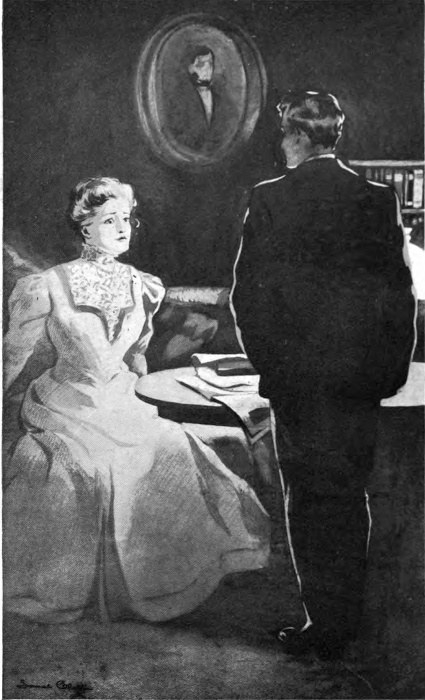
He made a painful effort to explain to his
mother.
"Of course, mamma, I do not mean for one
moment to stand in the way of anything that
you and Maybelle really want, and I do not
know that I can explain to you why I feel as
I do; but—she is associated, painfully associated,
as you know, with that which is like the bitterness
of death to me. And I cannot—We will
not talk about it, mamma."
Ruth understood and was sorry for the
morbid strain which it revealed. She made
earnest effort to combat it, not vigorously but with
suggestive sentences as occasion offered. It
hurt her that Erskine should allow so comparatively
small a matter to retard his progress.
He had not only gone bravely through his peculiar
trial, but had made a distinct advance in
his spiritual life. Maybelle's constant prayer
for him had assuredly been answered. The
Lord Christ had, manifestly, a stronger grip on
his personality than ever before. All the details
of business and literary life were learning
from day to day that they were not to be masters
but servants to this man, and that One was his
Master.
But this sore spot which could not be touched
without pain, his mother felt sure would continue
to burn as long as he hid it away. If he
could know Mamie Parker as she now was, it
was almost certain that the sting of pain and
shame which her name suggested would lose its
power.
But Maybelle felt sure that Aunt Mamie
would never come unless invited by the host.
"And I can't want her to, grandmother,
much as I long to see her, so long as her presence
is not quite comfortable to father."
So the grandmother bided her time, and spoke
her occasional earnest words.
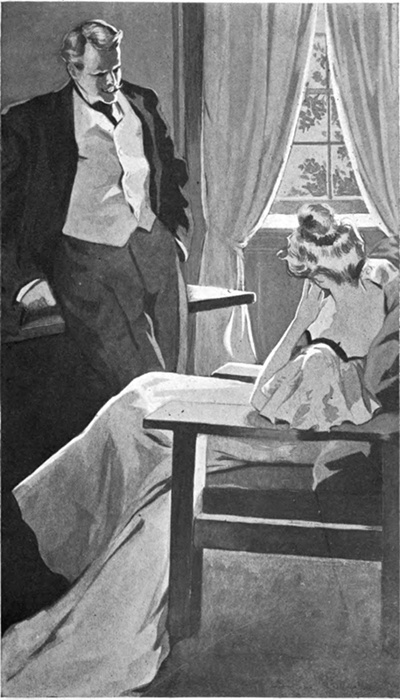
"In short, mamma," Erskine said one morning,
turning from the window where he had been
standing a silent listener to what she had to
say, "In short, mamma, you are ashamed of
your son, are you not? And I don't wonder;
he is rather ashamed of himself. You have been
very patient, you and Maybelle, but this whole
thing must cease. Of course the child must
have her friend with her. Invite her, mamma,
in my name, to come at once and remain through
the season. I want it to be so. I do, indeed,
now that I have settled it; make Maybelle
understand that I do."
After he had left the room he turned back
to say pointedly:—
"Of course, mamma, it will not be necessary
for me to see very much of her; but I shall try
to do my duty as host."
She saw how hard it was for him, but she rejoiced
with all her heart at this triumph over the
morbid strain.
And Mamie Parker came; and was met in
due form by her host and treated in every respect
as became an honored guest.
There came an evening when Ruth sat alone
by the open window of her room. She had
turned out the lights, for the room was flooded
with moonlight. It outlined distinctly the
little white bed in an alcove opening from her
room, where her darling lay sleeping. She had
just been in to look at him, and had resisted the
temptation to kiss once more the fair cheeks
flushed with healthy sleep. Downstairs in the
little reception room she knew that Maybelle
and Erskine Roberts were saying a few last
words together; the girl and the boy who,
to-morrow, would begin together the mystery
of manhood and womanhood, "until death did
them part." From time to time she could hear
Maybelle's soft laughter float out on the quiet
air; they were very happy together, those two.
From one of the guest chambers near at hand
the murmur of voices came to her occasionally.
It was growing late, and most of the guests had
retired early to make ready by rest for the excitements
of the morrow; but sleep had evidently
not come yet to Flossy and her husband.
They were talking softly. They were happy
together, those two. Downstairs on the long
vine-covered south porch two people were walking;
the murmur of their voices as they walked
and talked came up to her, Mamie Parker's
voice, and Erskine's. And the mother knew,
almost as well as though she could hear the
words, some of the things they were saying to
each other.
"Mommie," her son had said but a little
while before as he bent over and kissed his boy,
and then turned and put both arms about her
and kissed her, using the old name that of late
had almost dropped away from him:—
"Mommie, can you give me your blessing
and wish me Godspeed?"
She had not pretended to misunderstand him.
She had known for days, it almost seemed to her
that she had known before he did, the trend that
his life was taking. There had been no word
between them, but Erskine had told her once,
that he believed she knew his thoughts almost
as soon as they were born, and he seemed to
take her knowledge for granted.
She was glad that she had controlled her
voice, and that her answer had been quick and
free:—
"Yes, indeed, my son; God bless and prosper
you."
She knew he would be prospered. At least
a woman knows a woman's heart. They would
be happy together, they two.
Two, and two, and two, everywhere! the
youth and maiden, the mature man and woman,
the father and mother who were smiling together
over their son's espousals, always "they two."
It had been "they two" once with her. And
again, and for many years, mother and son;
but now—It seemed for a moment to the
lonely woman as though the whole world beside
was paired and wedded and only herself left
desolate. She pressed her hands firmly against
the balls of her closed eyes. Should she let one
tear mar this night of her son's new joy?
And then, tenderly, like drops of balm upon
an aching wound, came the echo in her soul of
an old, old pledge: "With everlasting loving-kindness
will I have mercy on thee, said the
Lord, thy Redeemer... I will betroth thee
unto me in faithfulness."
"I am a happy woman," she said aloud, in a
quiet voice; "I am blessed in my home, and in
my—children, and in the abiding presence of
my Lord."
THE PANSY BOOKS.
NOTE.—The Books in each of the series marked with a brace are connected stories.
Ester Ried Series
{Ester Ried Asleep and Awake
{Julia Ried Listening and Led
{The King's Daughter
{Wise and Otherwise
{Ester Ried Yet Speaking
$1.50 each
Chautauqua Series
{Four Girls at Chautauqua
{Chautauqua Girls at Home
{Ruth Erskine's Crosses
{Judge Burnham's Daughters
The Hall in the Grove
Eighty-Seven
$1.50 each
General Series
{Chrissy's Endeavor
{Her Associate Members
{Household Puzzles
{The Randolphs
An Endless Chain
Three People
Interrupted
A New Graft on the Family Tree
Mrs. Solomon Smith Looking On
Spun from Fact
One Commonplace Day
The Pocket Measure
Links in Rebeeca's Life
Stephen Mitchell's Journey
"Wanted"
$1.50 each
Cunning Workmen
Miss Priscilla Hunter
What She Said and What She Meant
$1.25 each
Mrs. Harry Harper's Awakening
$1.00
By Pansy and Mrs. Livingston
Divers Women
Profiles
{Aunt Hannah and Martha and John
{John Remington, Martyr
$1.50 each
By Pansy and Faye Huntington
From Different Standpoints
Modern Prophets
$1.50 each
By Pansy and Her Friends
$1.50
Juvenile Books
Tip Lewis and His Lamp
Little Fishers and their Nets
The Man of the House
Christie's Christmas
Miss Dee Dunmore Bryant
Sidney Martin's Christmas
Twenty Minutes Late
Only Ten Cents
$1.50 each
$1.25
Next Things
At Home and Abroad
In the Woods and Out
$1.00 each
Bernie's White Chicken
Helen Lester
Docia's Journal
Jessie Wells
Monteagle
Couldn't be Bought
Mary Burton Abroad
Six Little Girls
75 cents each
Golden Text Stories
Her Mother's Bible
We Twelve Girls
Browning Boys
Dozen of Them (A)
Gertrude's Diary
Hedge Fence (A)
Side by Side
Six O'clock in the Evening
Exact Truth
Helen the Historian
Little Card
50 cents each
The Pansy Primary Libraries
Pansy Primary Library No. 1. 30 vols., $7.50 net.
Pansy Primary Library No. 2. 20 vols., $5.00 net.
Pansy Primary Library No. 3. 12 vols., $3.00 net.
Pansy Primary Library No. 4. 12 vols., $3.00 net.
LOTHROP, LEE & SHEPARD CO., Boston
BOOKS BY ANNIE H. RYDER.
Hold up Your Heads, Girls!
12mo, cloth, $1.00.
"The author of 'Hold up your Heads, Girls!' has, in the treatment of a
very important subject, invested it with an interest and brightness which will
make it pleasant and even fascinating reading for the class of young people
to whom it is addressed. In the eleven chapters of which the contents consist
there is more sound practical advice, sensibly put, on points of every-day
interest to girls, than we have ever before seen put into the same number of
pages. It is a book for study, for companionship, and the girl who reads it
thoughtfully and with an intent to profit by it will get more real help and
good from it than from a term at the best boarding-school in the country."—Boston
Transcript.
Margaret Regis and some other Girls.
12mo, illustrated, $1.25.
"The college life of young women is described in this book in a very entertaining
way, and in a spirit the most wholesome and cheerful. Margaret
Regis is a splendid creation of the author's fancy, just such a young woman as
all of us like to read about. In her schooldays she is not different from
others. There is a shade of profound thought in her description of this
period of life: 'She is like the many, many girls, increasing in numbers
every year, who, unfixed and restless, go into college or the office, with a
vague determination to do something that shall make them independent or
superior to the greatest number of girls, but with no definite idea of how
they are to use the knowledge and experience they gain.' Margaret Regis
does not remain long in this unsettled state. She is emphatically a woman
with a purpose. How its current was turned from the intended course makes
an interesting narrative which the reader will find full of profit."—Cleveland
Leader.
New Every Morning.
A Year Book for Girls. Edited by Annie H. Ryder. Square 16mo, cloth, $1.00; gilt, $1.25; limp, seal, $2.50.
A book of choice reading for girls for every day in the year.
"There is a happy blending of practical common sense, pure sentiment and
simple religious fervor."—Education, Boston.
BOSTON:
LOTHROP, LEE & SHEPARD CO.
WHEN GRANDMAMMA
WAS FOURTEEN
By MARION HARLAND
WITH FOUR FULL-PAGE ILLUSTRATIONS AND NUMEROUS PICTURES
IN THE TEXT PRICE $1.25
Later adventures of the heroine of
"WHEN GRANDMAMMA WAS NEW."
THOSE who recall this noted author's delightful story, "When
Grandmamma was New," will be glad to hear that in this
book are the adventures of the heroine at a later period.
Through the eyes of fourteen-year-old Molly Burwell, the reader
sees much that is quaint, amusing and pathetic in ante-bellum Richmond,
and the story has all the charm of manner and rich humanity
which are characteristic of Marion Harland. All healthy-hearted
children will delight in the story, and so will their parents.
WHEN GRANDMAMMA WAS NEW
The Story of a Virginia Girlhood in the Forties
By Marion Harland 12mo Illustrated Price $1.25
The BOSTON JOURNAL says:
"If only one might read it first with the trained enjoyment of the
'grown-up' mind that is 'at leisure from itself,' and then if one might withdraw
into ten-year-old-dom once more and seek the shadow of the friendly
apple-tree, and revel in it all over again, taste it all just as the child tastes,
and find it luscious! For this book has charm and piquancy. And it is in
just this vivid remembrance of a child's mental workings, in just the avoidance
of all 'writing down' to the supposed level of a child's mind, that
this story has its rare attractiveness. It is bright, winsome, and magnetic."
The INTERIOR, Chicago, says:
"'Grandmamma' may have charmed other folks,—has charmed them all,
incontrovertibly,—but she has never tried harder to be vivid and dramatic
and entertaining, and to leave a sweet kernel of application, withal, than in
these memory-tales of a sunny childhood on a big Virginia plantation. It is
a book which will delight, not children alone, but all such as have the child
heart and a tender memory of when they were 'new.'"
AT ALL BOOKSELLERS, OR SENT POSTPAID ON RECEIPT OF PRICE BY THE PUBLISHERS
LOTHROP, LEE & SHEPARD CO., BOSTON
A Little Maid of Concord
Town
A Romance of the American Revolution
By MARGARET SIDNEY. One volume, 12mo,
illustrated by F. T. Merrill, $1.50
A DELIGHTFUL Revolutionary romance of life,
love and adventure in old Concord. The author
lived for fifteen years in the home of Hawthorne, in
Concord, and knows the interesting town thoroughly.
Debby Parlin, the heroine, lived in a little house
on the Lexington Road, still standing, and was surrounded
by all the stir and excitement of the months
of preparation and the days of action at the beginning
of our struggle for freedom.
By Way of the Wilderness
By "PANSY" (Mrs. G. R. Alden) and MRS.
C. M. LIVINGSTON. 12mo, cloth, illustrated by
Charlotte Harding, $1.50
THIS story of Wayne Pierson and how he evaded
or met the tests of misunderstanding, environment,
false position, opportunity and self-pride; how
he lost his father and found him again, almost lost
his home and found it again, almost lost himself and
found alike his manhood, his conscience and his
heart is told us in Pansy's best vein, ably supplemented
by Mrs. Livingston's collaboration.
the
FAMOUS PEPPER BOOKS
By Margaret Sidney
IN ORDER OF PUBLICATION
Five Little Peppers and How they Grew. Cloth,
12 mo, illustrated, $1.50, postpaid.
This was an instantaneous success; it has become a genuine
child classic.
Five Little Peppers Midway. Cloth, 12mo, illustrated,
$1.50, postpaid.
"A perfect Cheeryble of a book."—Boston Herald.
Five Little Peppers Grown Up. Cloth, 12mo, illustrated,
$1.50, postpaid.
This shows the Five Little Peppers as "grown up," with all
the struggles and successes of young manhood and womanhood.
Phronsie Pepper. Cloth, 12mo, illustrated, $1.50,
postpaid.
It is the story of Phronsie, the youngest and dearest of all the
Peppers.
The Stories Polly Pepper Told. Cloth, 12mo.
Illustrated by Jessie McDermott and Etheldred B.
Barry. $1.50, postpaid.
Wherever there exists a child or a "grown-up," there will be a
welcome for these charming and delightful "Stories Polly
Pepper Told."
The Adventures of Joel Pepper. Cloth, 12mo.
Illustrated by Sears Gallagher. $1.50, postpaid.
As bright and just as certain to be a child's favorite as the
others in the famous series. Harum-scarum "Joey" is lovable.
Five Little Peppers Abroad. Cloth, 12mo. Illustrated
by Fanny Y. Cory. $1.50, postpaid.
The "Peppers Abroad" adds another most delightful book to
this famous series.
Five Little Peppers at School. Cloth, 12mo. Illustrated
by Hermann Heyer. Price, $1.50; postpaid.
Of all the fascinating adventures and experiences of the
"Peppers," none will surpass those contained in this volume.
Five Little Peppers and Their Friends. Illustrated
by Eugenie M. Wireman. Cloth, 12mo, $1.50; postpaid.
The friends of the Peppers are legion, and the number will
be further increased by this book.
Ben Pepper. Illustrated by Eugenie M. Wireman.
Cloth, 12mo, $1.50.
This story centres about Ben, "the quiet, steady-as-a-rock
boy," while the rest of the Peppers help to make it as bright
and pleasing as its predecessors.
LOTHROP, LEE AND SHEPARD COMPANY
THE GIRL WHO KEPT UP
By MARY McCRAE CUTLER
Illustrated by C. Louise Williams. 12mo. Cloth. $1.25
This is a strong, wholesome story of
achievement. The end of a high school
course divides the paths of a boy and girl
who have been close friends and keen
rivals. The youth is to go to college,
while the girl, whose family is in humbler
circumstances, must remain at home and
help. She sees that her comrade will
feel that he is out-growing her, and she
determines to and does keep up with him
in obtaining an education.
"The story is human to the least phase of it, and it is told with such
simple force and vivacity that its effect is strong and positive. The
pictures of college and home life are true bits of realism. It is an
excellent piece of work."—Bookseller, Newsdealer and Stationer,
New York.
"The story is well told, and is thoroughly helpful in every respect."—Epworth
Herald, Chicago.
"The telling of the story is attractive, and will be found helpful to
all readers."—The Baptist Union, Chicago.
"Let us recommend this book for young people for the excellent
lesson of honest striving and noble doing that it clearly conveys."—Boston
Courier.
"It is a healthy and inspiring story."—Brooklyn Eagle.
"The tale is full of good lesson for all young people."—Boston Beacon.
"The story will be both pleasant and profitable to the youth of both
sexes."—Louisville Courier-Journal.
For sale by all booksellers, or sent postpaid on receipt of price by
LOTHROP, LEE & SHEPARD CO., Boston
The Laurel Token
A Story of the Yamassee Uprising
By ANNIE M. BARNES
Author of "Little Betty Blew" and "A Lass of Dorchester"
Illustrated by G. W. Picknell 12mo Cloth $1.25
This is a book for young people of either sex,
for, although the leading character is a girl of
eighteen, her cousins, two boys of sixteen and
fourteen respectively, are prominent throughout
the story, which centres about a beautiful girl,
left an orphan, as is supposed, in Barbados, who
goes to live with her uncle, a leading man in the
flourishing "Goose Creek" colony, in the year
of the Indian uprising, 1714. The very real danger
from the red men, who have been regarded
as friendly, but have been the victims of selfishness,
and thus made ready tools for the crafty
Spanish having their headquarters at St. Augustine,
forms the background to the story, and
gives opportunity for the surprising developments
which occur respecting the heroine and others. The illustrations
by Mr. Picknell are very accurate in their composition, besides being
finely executed.
An Honor Girl
By EVELYN RAYMOND Illustrated by
Bertha G. Davidson 12mo Cloth $1.25
A bright, helpful story of a girl who, as the
valedictorian and "honor girl" of her class at
high school, wins a scholarship which would
take her through Wellesley College. Family
reverses bring it home to her that duty demands
that she devote herself to helping her parents
and wayward brother to face the future better
than they seem likely to. She heroically surrenders
her prize, with its glowing prospects, to
a jealous rival, and with a brave humor says
that she has matriculated in the College of Life,
the hard features of which she happily styles the
"faculty," with "Professor Poverty" prominent
among them. These prove excellent teachers,
aided by "Professor Cheerfulness." Kind friends
are won by her courage, her brother achieves manly character, and the
family are finally re-established on the road to prosperity: all better,
happier, and more to each other than had selfishness not been so well
met and overcome by "An Honor Girl."
For sale by all booksellers, or sent postpaid on receipt of price by the publishers.
LOTHROP, LEE & SHEPARD CO., Boston
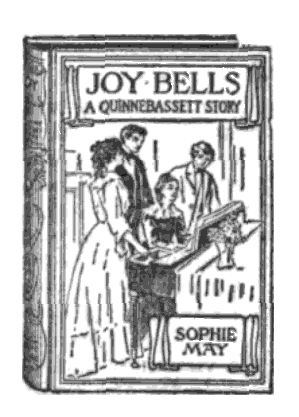
JOY BELLS A Story of Quinnebasset
By Sophie May Illustrated by Frank T. Merrill 12mo Cloth $1.25
THE thousands of admirers of the "Quinnebasset"
books have had to wait a long
time for another, but this new story is well
worth waiting for. All the delightful wit of
the author is here and at its best, and "Persis,"
the heroine, is very near to being the most
charming of all her gifted creations. The
scene is laid in the fifties. There are thrilling
incidents, and also mysteries and suspicions,
but all these are finally unravelled and allayed
by the persistent efforts of the heroine.
PAULINE WYMAN
By Sophie May Cloth Illustrated $1.25
IN "Pauline Wyman" the author has drawn a typical New England
girl whose strong and beautiful character is developed by her environment.
How she overcomes unfavorable surroundings, her experience in
teaching school, the interesting circumstances in a young girl's life are
all told with the same originality and freshness which have drawn a multitude
of young people to the author's previous work.
MADGE A GIRL IN EARNEST
By S. Jennie Smith 12mo Cloth Illustrated by James E. McBurney
$1.25
MADGE is indeed "a girl in earnest." She scorns the patronage of
an aristocratic relative and takes upon her strong young shoulders
the problem of carrying along the family in an independent manner.
Her bravely won success, in spite of the lions in her path, not the least
of which was the fear of social disfavor felt by some of her family, forms
an inspiring tale. An unusual amount of practical information is presented
in a thoroughly entertaining manner, and the character-drawing
is remarkably true and strong.
For sale by all booksellers or sent postpaid on receipt of price
by the publishers
LOTHROP, LEE & SHEPARD CO., BOSTON
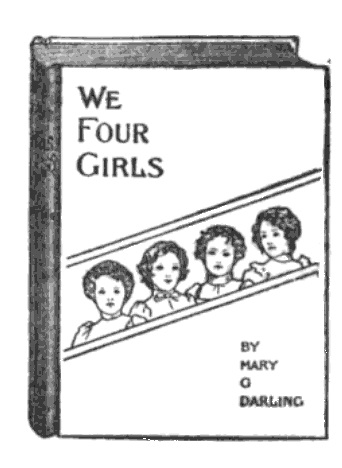
We Four Girls
By Mary G. Darling 12mo Cloth Illustrated
by Bertha G. Davidson
$1.25
"WE FOUR GIRLS" is a bright story
of a summer vacation in the country,
where these girls were sent for study
and recreation. The story has plenty of
natural incidents; and a mild romance, in
which they are all interested, and of which
their teacher is the principal person, gives
interest to the tale. They thought it the
most delightful summer they ever passed.
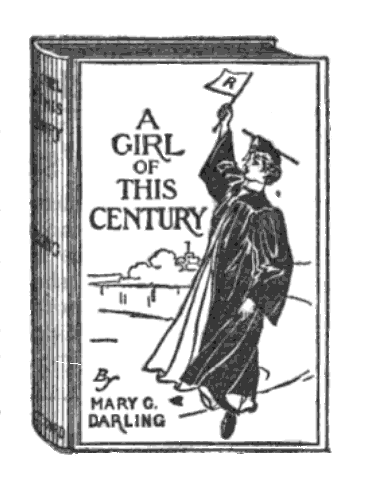
A Girl of this Century
By Mary G. Darling Cloth Illustrated
by Lilian Crawford True $1.25
THE same characters that appear in
"We Four Girls" are retained in
this story, the interest centering around
"Marjorie," the natural leader of the four.
She has a brilliant course at Radcliffe, and
then comes the world. A romance, long
resisted, but worthy in nature and of happy
termination, crowns this singularly well-drawn
life of the noblest of all princesses—a
true American girl.
Beck's Fortune A Story of School and Seminary Life
By Adele E. Thompson Cloth Illustrated $1.25
THE characters in this book seem to live, their remarks are bright and
natural, and the incidental humor delightful. The account of Beck's
narrow and cheerless early life, her sprightly independence, and unexpected
competency that aids her to progress through the medium of seminary life
to noble womanhood, is one that mothers can commend to their daughters
unreservedly.
For sale by all booksellers or sent postpaid on receipt of price
by the publishers
LOTHROP, LEE & SHEPARD CO., BOSTON
BRAVE HEART SERIES
By Adele E. Thompson
Betty Seldon, Patriot
Illustrated 12mo Cloth $1.25
A BOOK that is at the same time fascinating and noble. Historical
events are accurately traced leading up to the surrender of Cornwallis
at Yorktown, with reunion and happiness for all who deserve it.
Brave Heart Elizabeth
Illustrated 12mo Cloth $1.25
IT is a story of the making of the Ohio frontier, much of it taken from
life, and the heroine one of the famous Zane family after which Zanesville,
O., takes its name. An accurate, pleasing, and yet at times intensely
thrilling picture of the stirring period of border settlement.
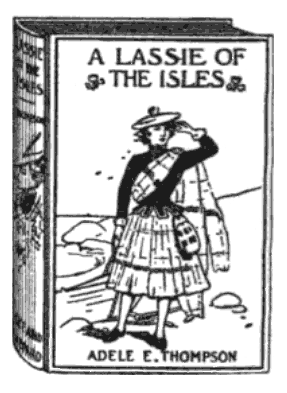
A Lassie of the Isles
Illustrated by J. W. Kennedy
12mo Cloth $1.25
THIS is the romantic story of Flora Macdonald,
the lassie of Skye, who aided in the escape of
Charles Stuart, otherwise known as the "Young
Pretender," for which she suffered arrest, but
which led to signal honor through her sincerity
and attractive personality.
Polly of the Pines
Illustrated by
Henry Roth Cloth 12mo $1.25
"POLLY OF THE PINES" was Mary
Dunning, a brave girl of the Carolinas,
and the events of the story occur in
the years 1775-82. Polly was an orphan
living with her mother's family, who were
Scotch Highlanders, and for the most part
intensely loyal to the Crown. Polly finds
the glamor of royal adherence hard to resist,
but her heart turns towards the patriots and
she does much to aid and encourage them.
For sale by all booksellers, or sent postpaid on receipt
of price by the publishers
LOTHROP, LEE & SHEPARD CO., BOSTON