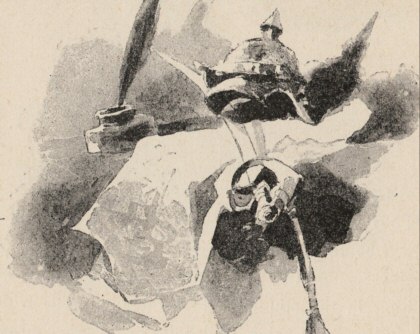
While spending a day in the country on one of those pretty
green islets that are dotted about in clusters on the Seine
between Champrosay and Soisy, and wrestling with a friend, my
foot slipped on the damp grass, and I broke my leg. My
unfortunate love for athletic and violent exercise has already
played me so many ugly tricks, that I should probably have
forgotten this accident, as I have others, but for its precise
and memorable date: the 14th of July 1870! . . . I still
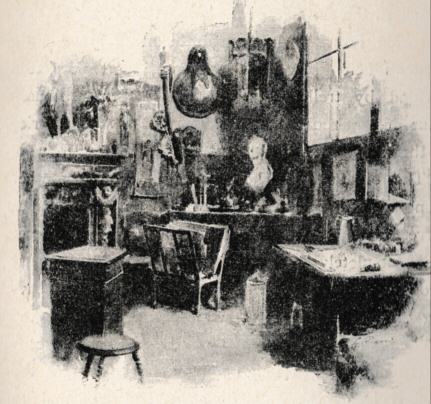
see myself at the close of that sad day, lying on the sofa in the former
studio of Eugène Delacroix, whose small house on the
borders of the forest of Sénart we were then
occupying. When my leg was stretched out, I hardly
suffered, for already I felt the vague restlessness of increasing
fever, exaggerating the sensation and heat of the stormy
atmosphere, and enveloping all around me in a misty cloud, as it
were, of shimmering gauze. To the accompaniment of the
piano they were singing the choruses of Orphée, and
no one, not even I, suspected how serious was my condition.
Through the wide-open bay window in the studio came the sweet
breath of the jasmine and roses, the beat of the night-moths, and
the quick flashes of lightning showing up, above the low garden
walls, the sloping vineyards, the Seine, and the rising ground
opposite. Suddenly the stillness was broken by the sound of
a bell; the evening papers are brought in and opened, and voices
broken by emotion, anger, or enthusiasm exclaim: “War is
declared!”
From this moment nothing remains to me but the feverish
recollection of a state of languor lasting six weeks; of six
weeks of bed, of splints, of cradle and plaster case, in which my
leg seemed imprisoned in company with thousands of tormenting
insects. During that hot summer, so exceptionally stormy and
scorching, this inaction full of agitation was dreadful, and my
anxiety, increased by the accounts of the public disasters which
filled the papers that covered my bed, added to my restlessness
and sleeplessness. At night the rumble of the distant
trains disturbed me like the tread of endless battalions, and by
day, pale and sad faces, scraps of conversations overheard in the
road or at the neighbour’s, through my open window:
“The Prussians are at Châlons, mother Jean,”
and the vans at every moment raising clouds of dust in the quiet
little village, lent a mundane and sinister echo to my perusal of
“the news of the war.” Soon we were the only
Parisians left at Champrosay, left alone with the peasants,
obstinately attached to the land, and still refusing to admit the
idea of an invasion. Directly I could leave my couch and be
moved, our departure was decided.
Never shall I forget my first outing in the little
old-fashioned garden, filled with the perfume of ripe peaches and
fading roses. Around me, poor invalid that I was, seated on
the steps of a ladder laid against the fruited wall, they were
hurrying on the departure, loading the vans, gathering the fruit
and flowers in the unconscious preoccupation of leaving nothing for the
enemy; even the child, with its arms full of toys, picking up a
little spade forgotten in the grass.
As for me, I inhaled the fresh air with delight; and with an
emotion caused by my weak state and my returning health, I gazed
at the grey house, and at the red flowers covering the Virginian
jessamine interwoven round the bay window of the studio. I
thought of the happy hours, so soft and tranquil, spent there the
last three years, the hearty laughter, the æsthetic
discussions so thoroughly in harmony with the little home, full
of the memories of a great artist. Should we ever behold
again the sunny path so often slowly paced with short and chatty
steps, the verandah where we sat in the fine June evenings, in
the brightness of a flowery Spanish broom which, ball-shaped,
seemed like an enormous lustre lighted up in the fading twilight,
the richness of its golden colour deepening as the light
decreased!
The family omnibus was filled up and loaded, all our cherished
ones tightly pressed against each other, the child’s toys
side by side with the parrokeet’s cage, the bird scared by
the sharp-pointed ears of a favourite greyhound: we started,
passing first through the little village with its closed and
silent villas. The peasants still held out, although disturbed at the
departures, watching them from their doorways with tears rising
in their eyes, and a certain uneasiness depicted in the stolid
cupidity of their countenances. What a return to
Paris! The highway crowded with men and beasts, the sheep
running loose between the wheels, the green of the
market-gardeners’ carts mingling with the piled-up
furniture in the vans. On the railway embankment, which lay
on one side of our road, trucks upon trucks extending in
interminable rows, halting and whistling calls, which were
answered and re-echoed on the distant line. And then at
last the octroi, where the belated droves of cattle and
people and vehicles are accumulated before the too narrow
gateway, and—for me a novel sight—men of the National
Guard mixed with the customs officers—a Parisian militia,
full of zeal and good nature, whose bayonets shine amidst the
crowd and in the sunshine on the slopes of the fortifications,
now heightened by gabions and bristling with guns.
A few days later I again journeyed to Champrosay, but the road
no longer presented the same aspect. The approach of the
enemy, so long threatened and now imminent, could be felt by the
deserted state of the suburbs, and the care displayed by our main-guards. Endless formalities were required in
order to pass through. Amongst the loitering peasants might
be seen the prowling figures of suspicious-looking spies,
recalling the sinister plunderers of the battlefields; and the
solitude, the agonised expectation of the districts I passed
through—Villeneuve-Saint-Georges, Draveil—abandoned
and silent, imparted a mystery to the very windings of the road,
where one almost expected to see the shadow of an Uhlan vidette
on the watch. Champrosay, with its solitary street bordered
on each side by villas, seemed to grow larger in the death-like
stillness: “Vasta silentio,” as Tacitus says.
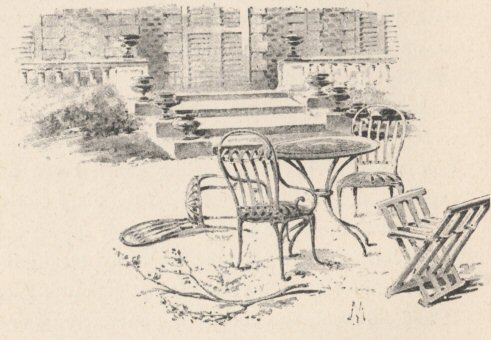
Glimpses of parks, caught sight of through the iron gates, a
background of dark shrubberies in the distance, flower-beds
glowing in the brightness of a September day, here and there a
circle of garden chairs on a terrace, forgotten like the idle
talk that has melted into thin air, garden tools leaning against
the palings, all spoke of a rural existence hastily interrupted,
a precipitate flight, the sudden surprise, in the midst of its
life, of a small Pompeï, whose last hour has struck.
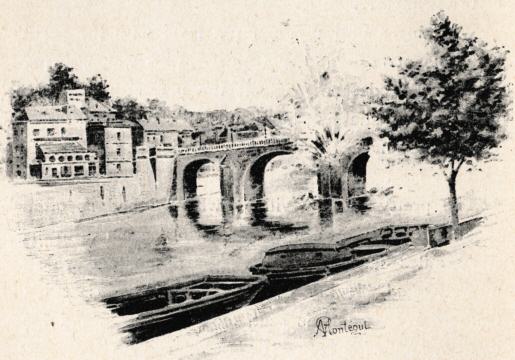
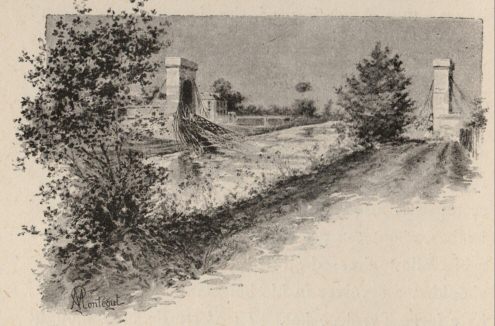
But Nature, ever the same, was nevertheless undergoing a change;
the broken bridge at Ris, that had been blown up, and whose
loosened chains dipped into the water, transformed the landscape, isolating
on each side of the river the two little districts hitherto
united by the traffic to and fro over the toll-bridge. From
all these scenes uprose the agonising sensation of a great
catastrophe, rendered more striking by the magnificent sun of an
exceptionally fine season.
At the same moment, as I closed behind me the door of our now
deserted dwelling, an aged peasant, old Casaquet, came out of a
neighbouring house. When all the others had taken flight
and run away, he alone obstinately refused to take refuge in
Paris, where his family had settled themselves as best they
could. “I’m much too old!” he said; and
he had some potatoes, a little wine, a few hens, not to speak of
the grunting porker he kept under his roof. I proposed
bringing him away to rejoin his people. But he stubbornly
stuck to his words: “I’m much too old!”
The recollection of this old Robinson Crusoe, the last living
being I had seen at Champrosay, often crossed my mind during the
terrible cold and famine of the siege. What had become of
him, and of the whole village, which I pictured to myself burning
and blazing; our house, our books, the piano, everything
tarnished, broken, and laid waste by the invasion, like the
suburban regions of Nogent, Champigny, Petit-Bry, and Courneuve,
among whose sad ruins, villas with broken stairways and
half-hanging shutters, I wandered every day? . . .
But no! When the war was over, and when, towards the end
of the Commune, Paris becoming untenable, we came and took refuge
at Champrosay, I had the pleasant surprise of finding almost
everything in its habitually peaceful condition, with the
exception of a few country-houses that the marauders had
searched, and where they had, from pure love of destruction,
destroyed the wainscoting and broken all the windows. The
German army had passed through, but never made any lengthened
stay. Hidden behind a clump of acacias, Delacroix’s
house had been even more protected than others, and in the garden
awakening in beauty to the smile of spring, I could breathe
freely for the twofold deliverance from the siege and from the
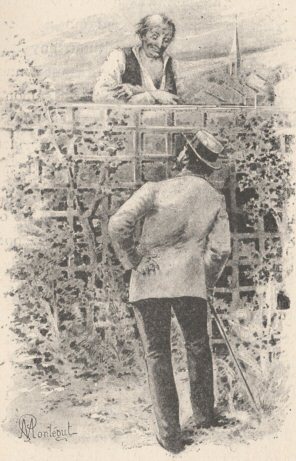
winter. I was walking along the flower borders, when old
Casaquet’s face peered over the garden wall, and he beamed
upon me with his old wrinkled visage. Over him, too, the
invasion had passed without leaving a trace. “I
didn’t suffer too much . . . ” he said, twinkling his
eyes, and standing on a ladder with his elbows resting on the
trellis; and
then he related how he had borne this period of exile and
solitude. It had been a real time of feasting. There
were no keepers in the forest, he cut as much wood as he liked (a
treasure much coveted by the peasant); with a few poachers who had
taken refuge at the Hermitage he snared roedeer and pheasants;
and whenever an isolated Prussian, an orderly or straggler, was
found in the vicinity of the quarries, he was quietly and quickly
despatched. During four months he lived without any other
news from Paris but the sound of the distant cannonading, and the
occasional sight of an inflated balloon floating beneath the dark
sky.
 This quiet, ant-like existence on the surface of the earth
amidst the overthrow of a world was most extraordinary. I
too could have lived there like the old peasant, reduced to the
same expedients of primitive life; and this different view of war
appeared to me an appropriate setting for a melancholy picture of
the invasion. That very evening I began in the large studio
taking notes for “Robert Helmont’s Diary of a
Recluse;” while the passing to and fro under my windows of
the German cavalry patrols, still encamped on the edge of the
country, the clashing of swords and jingling of curb-chains, the
rough Saxon voices harshly raised in command, mingled with the
thunder of the cannons. All this indeed formed part of
“my diary.” My feelings were still more excited
on the following day by all the sad details of the military
occupation—the roads dark with troops, the halting and the
bivouacking by the side of the ditches. To escape from the
humiliating sensations of the vanquished, I wandered into the
woods, lovely in this month of April: a tender green clothed the
branches of the trees, the grass was gemmed with the bloom of
wild hyacinths, and the warbling of the birds and the song of the
nightingale were interrupted by the distant tearing sound of the
mitrailleuse. Sometimes, at the turn of a quiet path, I saw
coming toward me under the arching boughs, a sentimental Saxon
colonel, slowly pacing on his charger the lanes and
trysting-places cherished by Louis XV. and Madame de
Pompadour. Then I plunged into the recesses of the deepest
thickets, for these encounters gave me a revulsion of feeling
which I can hardly explain. It was thus that I lived the
diary of Robert Helmont at the same time that I wrote it.
This little book was published by Dentu in the Musée
Universal of 1873; but it met with little success. It
told no story, and contained no interesting or continued
narrative; it was merely a succession of landscapes, portraying
the melancholy of our invaded summer haunts. In the new
edition of my complete works published by Dentu-Charpentier,
“Robert Helmont” is placed at the end of the second
volume of “Jack,” and it finds there its proper
place, describing as it does the same forest of Sénart,
the Hermitage, and the Pacôme Gate, where I knew the hero
of my novel “Jack,” and recalling to life a few of
the same characters.
The
Hermitage, September 3rd.
It is six weeks yesterday since I broke my leg. It
happened on the very day war was declared. While M. de
Grammont was exciting so much tumult and enthusiasm in the
Senate, I myself, on returning from net-fishing in the Seine,
stumbled over a stake hidden in the grass at the edge of the
river, and was brought home to my Hermitage in the forest of
Snart in a woodcutter’s cart . . .
I went out this morning for the first time after fifty days of
fever and suffering, increased by the news of the
war. I had nightmares of distant battles, and the sinister
despatches from Forbach and Reischhoffen remain mixed up in my
mind with the pain of my wound, the heat of the plaster casing,
and that restless inactivity which is the most cruel of all
tortures. At last it is over! After having seen
nothing for so long but the tops of the trees, and those great
stretches of blue sky of which the monotony is only broken by
passing wings, I felt quite happy at putting my feet to the
ground and getting down my stairs with faltering steps. But
how weak I was! My head swam round. From having
remained so long in the same position, my leg had forgotten its
proper balance and functions. It seemed no longer part of
myself, as if I were no longer master of it. However, with
slow steps, and the extreme nervousness which augments
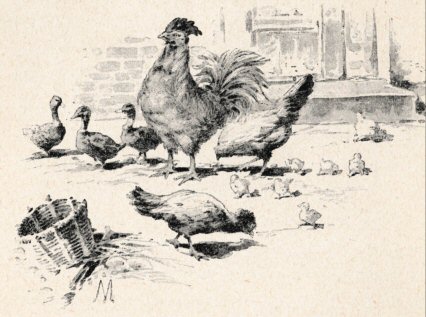
one’s weakness, I was able to get to the poultry-yard and
push open its little latticed door, half buried in the tall
grass. Even this gave me a thrill of pleasure! During
my absence, my neighbour, the keeper’s wife, has taken good
care of all this little family, who watch me with an astonished,
bright, and familiar gaze. The rabbits come tumbling over
each other to the edge of their hutches, with their ears pricked
up and
quivering. The hens go on with their ceaseless pecking in
the grass, making sharp sounds like those of little
pickaxes. The cock, more demonstrative, flaps his large
wings with a resounding “cock-a-doodle-do.”
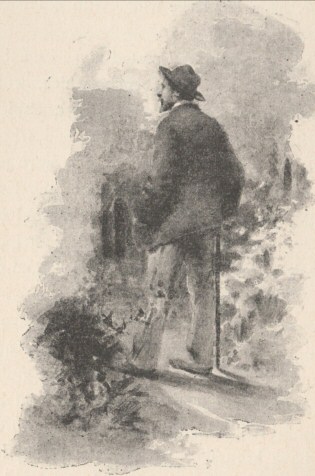 Presently I returned and seated myself on the old, worn,
green-coloured stone bench, which, with the wall full of gaps and
two or three apple-trees covered with moss, date from the time
when my house and the orchards surrounding it were part of an old
monastery built in the middle of the forest . . . Never had
my garden appeared so beautiful to me. The fruit-trees
against the wall, rather stripped of their leaves, were laden
with ripe peaches and golden bunches. The currant-bushes,
spread out in thin clumps, were dotted here and there with sparks
of red; and under the autumn sun, that ripens each berry, bursts
each pod, and sheds each grain, the sparrows pursued one another
with unequal flights, while youthful twitterings among them show
how their numbers have been increased by the young broods.
From time to time the heavy flight of a pheasant passed over the
ruined wall, alighting in a field of buckwheat. At the top
of a tall tree a squirrel was playing and cracking nuts.
The gentle heat which pervaded the whole scene threw a
wonderful feeling of repose over this little rustic corner.
I had forgotten the Prussians and the invasion . . .
Suddenly the keeper and his wife came in. It was
astonishing to see old Guillard at the Hermitage in the
daytime—he, the constant rover of the forest! I
understood that there must be fresh news.
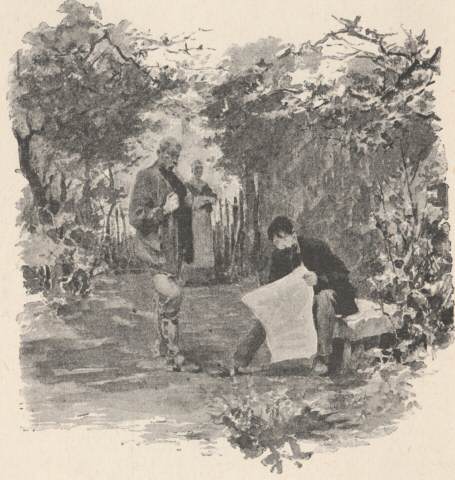
—Read that, Mr. Robert . . . said the good
man.
And drawing from beneath his thick velveteen waistcoat a copy
of the National, crumpled and awkwardly folded by hands
little accustomed to deal with papers, he held it out to me with
an air of dismay. On the first sheet, bordered in black,
were the sinister words: “The French army has
capitulated.” I could not read any farther . .
.
. . . Dazed, with closed eyes, for the space of five minutes I
seemed to see nothing but those few words, surrounded by flashes
of light and colour, as if I had read them on a white wall in the
full glare of the sun. Alas! there was therefore no
hope. The last barrier had broken down. It was the
invasion, the mighty one . . . The keeper thinks that in
eight days the Prussians will be here.
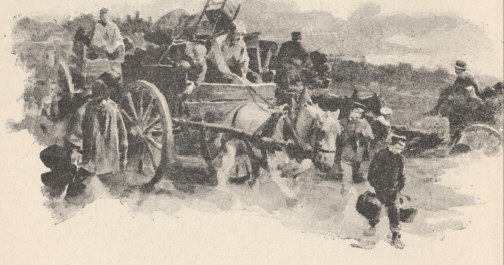
—Ah, my dear sir, you should see the block on the
roads. Between this and Paris there is a mob of cattle and
vehicles. Every one is packing up and flying.
Champrosay is empty; Farmer Goudeloup is the only person who will
not hear of leaving. He has sent away his wife and
children, loaded his two guns, and is ready.
—And you, Guillard, what do you intend doing?
—I, sir? I shall do the same as Goudeloup.
Our chiefs have forgotten to leave us any orders. I shall
take advantage of that to remain at my post, and watch my woods
up to the last moment. When the Prussians come, we will
barricade ourselves in the Hermitage; for I suppose, with your
bad leg, you will not think of leaving. And then, if we are
attacked—well, we will defend ourselves. You will fire through
the windows; I shall guard the Pacôme Gate, and Mother
Guillard will load the guns . . . Won’t you, mother?
. . .
Good fellow! It warmed my heart to hear him. In
spite of his sixty years, the Indian, as they call him about
here, with his high stature, wide shoulders, and bright
eyes full of mischief and life, is still a fine-looking
soldier. I thought, as I looked at him, that with such a
companion there might indeed be something to do. By lying
in ambush on the outskirts of the forest he knows so thoroughly,
we could demolish a few passing Prussians. But then the
sensation of my weakness, of my useless condition, suddenly came
back to me and overwhelmed me.
After the keeper and his wife had taken leave of me, I
remained all alone, seated on my bench, buried in thought.
What a state of misery is mine! To feel that craving for
action and vital energy that comes on at the approach of danger,
and not to be able to take ten steps in my garden. How much
longer will this last? The doctor says I must expect at
least two months of it. Two months! Ah! how dreadful
. . . The air was getting chilly, my leg was hurting
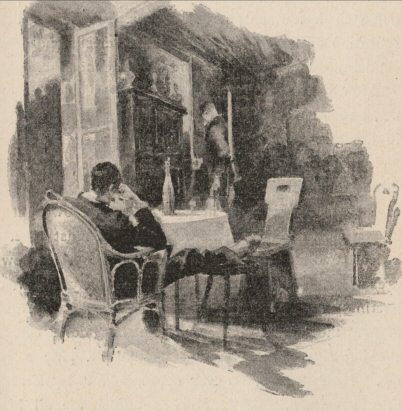
me. I went in and dined sadly. After dinner the
keeper came—as he has done every evening since my
accident—to smoke a pipe with me. He is more than
ever determined to remain at the Hermitage. While he was
telling me all his plans and schemes of defence, I heard in the
distance, through the open window, the usual sounds of twilight;
the wheels creaking in the ruts, the rumbling of the train,
the rustling of the leaves in the thickets; and at moments
another sound, as of all these blended together and increasing in
volume, seemed to rise from the ground, following the course of
the river and little hills on the horizon, to grow gradually
louder and louder. It was like the tramp of an army on the
march, hurrying on in the fading light to find their
halting-place, while the first rays of moonlight fall on the
barrels of the guns and the gilded spikes of the helmets . .
.
Suddenly a dull report on a level with the earth made us
start. Mother Guillard, who was clearing away my modest
repast, felt the pile of plates she was carrying shake in her
hands.
—They have blown up the bridge at Corbeil! . . . said
the keeper.
The pretty country village, where I had so often breakfasted
before a day’s shooting, seemed to be sixty miles farther
away . . . For a moment we all three looked blankly at each
other. At last old Guillard rose from his seat, took up his
gun and his lantern, muttering between his teeth:
—I am going to close the Pacôme gate, he said,
with an heroic gesture.
Close the Pacôme gate! It seemed easy to say; and
yet I
fancy the good fellow will find some difficulty in doing
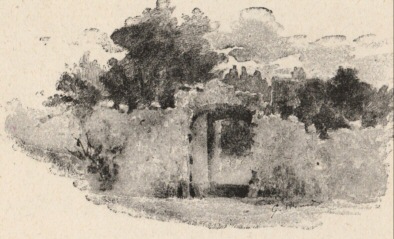
it. For the last century the old door of the cloister has
been ajar; the forest has taken advantage of the aperture to slip
through, and the indiscreet brambles have climbed in by all the
cracks of its disjointed planks. If we have to undergo a
siege, I do not rely much on that gate.

September 5th.
. . . Long had I sought a solitary corner, not too far away
from Paris, and yet not much frequented by Parisians. One
day, while crossing the forest of Sénart, I discovered the
Hermitage, and for the last ten years I have spent all my summers
there. It was a monastery of “Cordeliers,”
burnt down in ‘93. The four principal walls remain
standing, but mouldering and crumbling at intervals, making on the
turf, heaps of red stone quickly re-clothed by a rich and
luxuriant vegetation: poppies, barley, stiff-growing plants with
regular and pointed leaves, are divided by the stones like inlaid
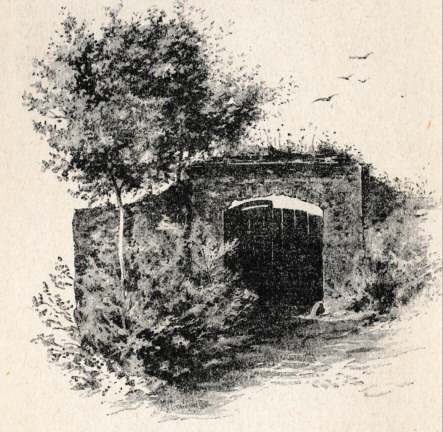
metal-work. One gateway looks on the road; the other, that
famous Pacôme gate, opens on to the wooded thickets and the
little hidden paths, full of balsam and wild mint, where, on a
misty morning, I have often fancied I saw disappear, the hood
of some old monk gathering wild herbs. Here and there along
the wall, low postern gates, disused for many a century, send
through the darkness of the forest long rays of light, as if the
cloister contained all the sunlight of the woods.
Inside is waste land, with burnt-up grass, little gardens
belonging to the peasants, some orchards divided by trellis-work,
and two or three houses built of that red stone that is found in
the quarries of the wood.
The forester lives in one of these houses, the other is never
let. Mine, a kind of irregular and curious turret, is
chiefly remarkable for the Virginian creeper that completely
covers it. I have cut away just enough of it to be able to
open my windows. Leaving untouched the great worm-eaten
beams in the kitchen and the worn step on the threshold, I
contented myself with heightening a hayloft under the roof,
replacing the walls by glass, and thus making a beautiful studio,
where my only neighbours are the nests of the wood-pigeon and
magpie swaying to and fro on the top of the trees.
When I am there, the forest surrounds me like an ocean, with
the swell of the foliage, the ebb and flow of the breezes, the
murmuring softness of a calm. On a summer’s
afternoon, at the hour of silent and slumbering heat, a
bumble-bee comes by regularly, dashes against my half-open
window-pane, whose brightness attracts him, then like a
rebounding ball goes off, shaking the golden dust from his big
wings, and disappears amongst the honey-scented bushes of
privet. This bee is my clock. When he passes by I
say: “Ah, it is two o’clock.” And I am
right . . .
It is, in fact, a wonderful nook for work, and where my best
pictures have been painted. And how I love it, this old
Hermitage! For the last ten years I have been adorning it
to the best of my ability. I have brought there what I call
my treasures—my books, my sketches, my etchings, and some
old armour . . . And now I should have to leave all this,
abandon my home, to these robbers. And what for? To
go and shut myself up in Paris . . . But as I cannot walk,
of what use should I be to them there? They have too many
useless mouths to feed already . . .
Well, no! Decidedly the fellow is right. We must not go
away from here, . . . Pro aris et focis! . . .
Not being able to defend my country, the least I can do is to
defend my hearth.
September 6th.
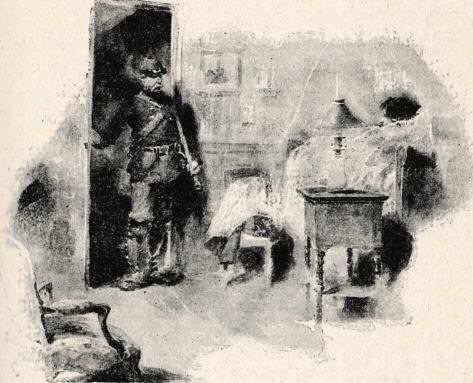
This morning the keeper came into my room. He wore his
full-dress uniform, as on the 15th of August: green tunic, peaked
cap, cross-belt, hunting-knife, and he had an air of importance
befitting the solemnity of his appearance.
—There is bad news, he said, taking up a position by the
side of my bed . . . All the wood-rangers are recalled to
Paris in order to be enrolled with the customs officers. We
are starting almost immediately.
Honest
old Guillard! He appeared somewhat agitated while talking
to me, and I was myself rather disturbed by the sudden
announcement of this departure. I hurriedly dressed, and we
went downstairs. On the road below was the head-keeper,
with about twenty foresters and keepers—the whole of the
staff on duty in the forest. Then came the women, children,
and pointers, and two large carts laden with furniture,
rabbit-hutches, and chickens tied up by the legs. The door
of the house was wide open, and Mother Guillard moved to and fro
inside, seeking what she must leave or take, as the conveyances
were full, and the first-comers had taken up all the available
space. The perplexity of the poor housewife was a sight to
see, as she ran from one piece of furniture to another, dragging
a heavy cupboard to the door, then leaving it there, forgetting
the most useful things, but lading herself with those of no
value, except that they were souvenirs: the old clock with its
glass shade, some marvellous portraits, a hunting-horn, a
distaff, all of them covered with dust—that excellent dust
that clings to family relics, and of which each particle speaks
of youth and the happy days gone by.
—I trust you are not going to remain here, Mr. Robert, the
good woman called out as she crossed the orchard . . . You
shall be put on a cart.
And in order to convince me more thoroughly:
—In the first place, if you remain here, who will cook
for you?
In reality the good creatures were rather ashamed of leaving
me behind. Their departure, although involuntary, seemed to
them somewhat of a betrayal on their part. I tried to
reassure them on my account, and to reassure myself at the same
time. After all, who knows? The Prussians may not
come so far. Moreover, the Hermitage is in the heart of the
forest, and out of the line of march. There was therefore
not the slightest danger to be apprehended. At most a few
days of solitude, and that did not alarm me.
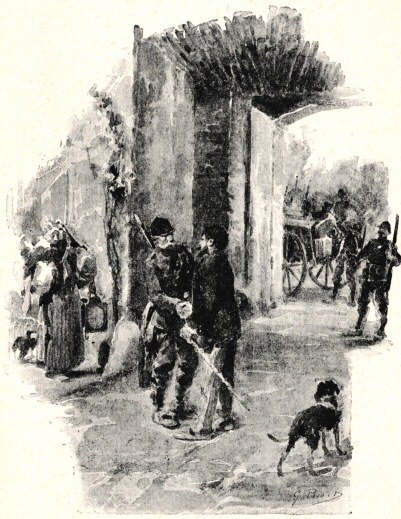
Seeing me so thoroughly determined, the keeper pressed my
hand.
—Good luck, Mr. Robert . . . My wife will leave
you our keys. You will find wine and potatoes in the
cellar. Take what you choose. We will settle on our
return home . . . And now, good mother, let us start; and
above all, you know what I said to you; try not to cry.
She, however, nearly broke down. On turning the key for the
last time in the lock, her hand shook. She compressed her
lips . . . At that moment a formidable hee-haw!
echoed through the Hermitage. The keeper and his wife
looked at each other in consternation.
—It is Colaquet! . . . What is to become of
him?
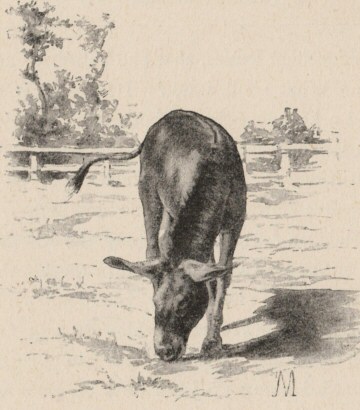
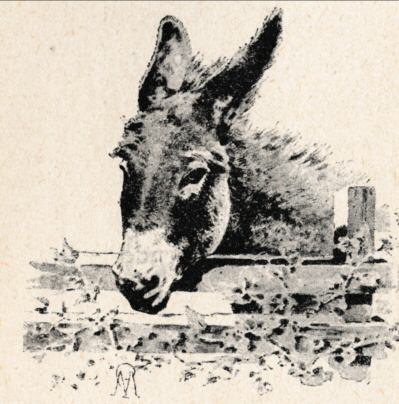 The unfortunate Colaquet, whom they had forgotten in the
hurry of departure, was their donkey, a pretty little grey
donkey, with a bright and artless look. A few days before,
it had been bitten on the muzzle by a viper, and it had been
turned out to graze in a little field of after-grass; and there
he was, looking at his masters going away, leaning his swollen
head, which gave him the appearance of one of the beasts of the
Apocalypse, over the hedge.
How could they take him? He would die on the road, and
yet the veterinary surgeon had promised to cure him. The
fate of the poor animal, rather resembling my own, touched my
heart.
I
promised to take care of Colaquet, and to put him into the stable
every night. The good people thanked me, and we parted.
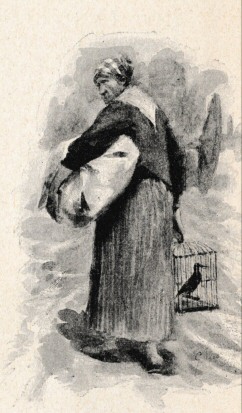 A sad parting! The carts, heavy and overloaded, slowly
followed the wide forest road, grinding on the pebbles as they
went along. The children were running on each side, excited
by the unexpected journey. The men, in single file, skirted
the edge of the wood, their guns on their shoulders, all of them
old soldiers, well trained and disciplined. Behind them the
dogs followed, hanging their heads uneasily, hardly straying even
to listen to the flight of a hen-pheasant, or to sniff the trace
of a rabbit. Domestic animals do not like changing their
quarters, and these were following in the track of the carts, now
become their wandering homes. Mother Guillard came last,
holding in her hand her magpie’s large cage, and from time
to time looking back.
Seated on the curbstone near the principal entrance, I watched
them till the whole party disappeared from my sight in the
narrowing perspective of the road. I saw the last glance on
the gun-barrels, I heard the grinding of the last wheel, and the
dust of the highway swallowed them up in a cloud . . .
It was all over. I was alone. This thought has
given me an unaccountable sensation of uneasiness.
September 7th,
8th and 9th.
This new kind of life would not be without its charm, were it
not disturbed by a sensation of anxiety, of uneasiness, of
constant expectation, suspending all thought, and rendering all
artistic work an impossibility. I can only undertake those
trivial occupations, those necessary details of everyday life,
of which I have always had such a horror, and to which I must
resign myself now that I am my own servant. Shall I confess
it? These trifles do not really weary me very much, and I
understand recluses amusing themselves by carving roots or
weaving baskets. Manual labour is a good means of
regulating life for those who have too much leisure and
liberty. Therefore every morning I begin by paying a visit
to the poultry-yard, and when I feel the warmth of an egg in the
straw, I am happy. Then, walking slowly, and leaning on a
stick, I go round the garden, picking the ripe fruit; and from
the long, dry, sunburnt stalks I gather the beans, whose pods
burst open and shed their contents through my fingers. It
is laughable to see me seated in front of my door, cutting up the
bread for my soup, or washing my salad in a bucket. All
these things give me rather a childish comfort; but is not
convalescence itself like childhood?—a fresh beginning of
life.
In order to avoid going up and down the broken and irregular
steps of the staircase, I have placed my bed in the large room on
the ground floor, which therefore answers the purpose of
drawing-room, bed-room, and kitchen. In this very mild weather,
the door leading into the garden remains wide open all day.
I hear the noise of the hens, always busy and cackling, their
little claws pattering on the sand and scratching up the
straw. Next door, in the keeper’s small field, I see
poor Colaquet stretched out, shaking off the flies, and, with the
idleness of an invalid, lolling out his tongue in front of him on
the meadow, all purple with the thousand clusters of
lucern. When evening comes on, with some difficulty he
approaches the fence that divides us. I also drag myself
there. I bathe his wound, renew the water, throw a rug over
his back for the night, and he thanks me by shaking his long
ears.
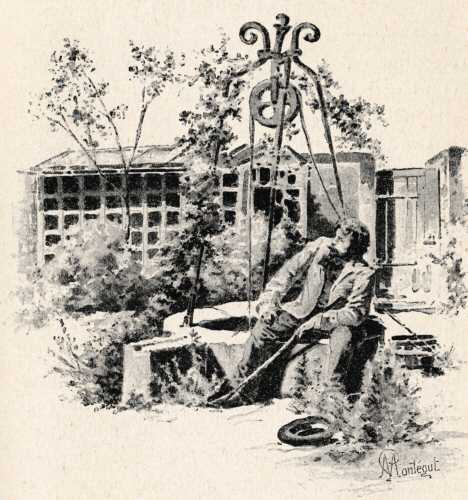
What really distresses me in my present state of suffering is
having to fetch water from the old convent well, just at the end
of the enclosure.
When I reach it, I am obliged to sit down for a moment on the
edge of the cracked stonework, overgrown by rank weeds. The
ornamental wrought ironwork, of an elegant and ancient style,
appears, under the rust that tarnishes it, like climbing tendrils
laid bare by the autumn. This melancholy is in complete
harmony with the deep silence of the Hermitage, and the
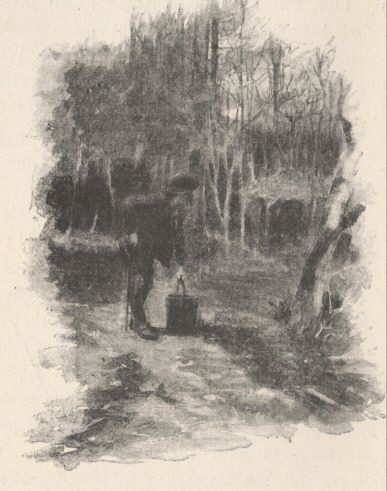
atmosphere of loneliness that surrounds me . . . The bucket
is heavy. On returning I stop two or three times.
Over there, at the far end, there is an old door that the wind
keeps slamming. The noise of my footsteps echoes, and
troubles me . . .
Oh, solitude! . . .
September 10th.
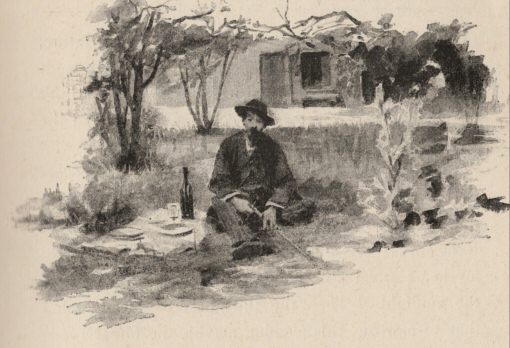
. . . I had just finished breakfasting on the lawn—on my
word, an excellent breakfast too!—fresh eggs, and grapes
gathered from my beautiful purple vine. I was sitting
there, idly dreaming, basking in the light, warmth, and silence,
very busy looking at the smoke of my pipe and at my painted
plates, on which a stray wasp was furiously attacking the emptied
stalks. Around me on that clear autumn day, under a deep
and pure blue sky, even more beautiful than the summer skies so
often veiled and dimmed by hot mists, I felt the same hush of Nature, the
same all-pervading sense of peace . . . When suddenly a
formidable explosion in my immediate vicinity shook the house,
rattled the windows, and stirred the leaves, sending forth on all
sides the sound of wild flutterings, screams, alarms, and
galloping . . . This time it was not the bridge at Corbeil
that was blown up, but our own, our little bridge at
Champrosay. It meant: “The Prussians are
here!” Immediately my heart stood still, and a veil
seemed to pass over the sunlight. Then the thought crossed
my mind that to-morrow, this evening maybe, the forest roads
would be invaded, darkened by these wretches; that I should be
compelled to bury myself alive, and never stir out again.
And I longed to see once more my beloved forest, of which I had
been deprived for the last two months.
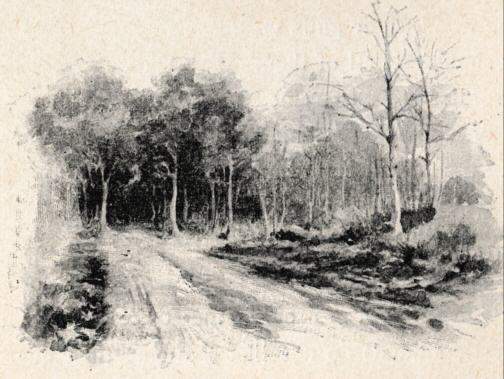
The lanes in the woods were lovely, widened by freedom from
the long summer weeds, and showing at the top, through the young
branches, a long ray of light. At the cross-roads, bathed
in sunlight, the faded pink heather was flowering in tufts; and
in the thickets, among the black stems, like a small forest
beneath a large one, the ferns displayed their microscopic trees
with their peculiar foliage. What a silence! Generally a thousand vague sounds greeted
me from afar: the trains passing by and marking the distant
horizon, the digging of the quarrymen, the cart-wheels slowly
turning in the ruts, the strident call-whistle of the gang.
And to-day, not a sound—not even that perpetual murmur
which seems like the breathing of a slumbering forest—that
stir of the leaves, that humming of the insects, that pretty
“frrrt!” like the unfolding of a fan, made by
birds among the foliage. It seemed as if the loud report
just now had stupefied all Nature.
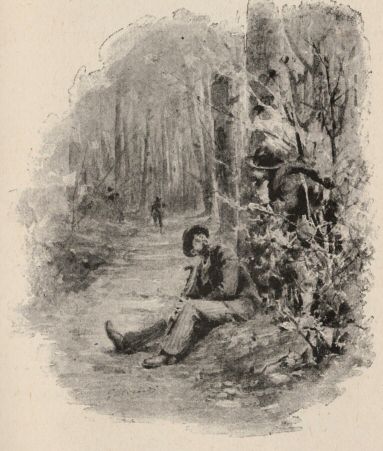
Slightly weary, I had seated myself under a thick oak-tree,
when I heard a rustling in the branches. At last! . .
. I expected to see a hare or a roedeer scamper across the
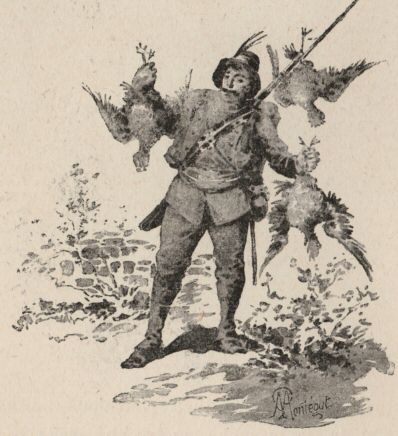
path; but through the parted bushes, about ten paces from me on
the road, jumped a big fellow, dressed all in black, with his gun
on his shoulder, a revolver in his belt, and his head covered by
a large Tyrolese hat. I was startled. I thought it
was some Bavarian or Saxon rifleman. It was, however, a
Parisian franc-tireur. At that time there were some
twenty of them in the forest, retreating day by day before the
Prussians, lying in ambush to watch their line of march, and to
knock over from time to time an Uhlan of the advance-guard.
While the
man was talking to me, his comrades, coming out of the coppice,
joined us. They were nearly all old soldiers, working-men
from the faubourgs of Paris. I took them back to the
Hermitage, and made them drink a few bottles of wine.
They told me the Prince of Saxony’s division had reached
Montereau, one stage distant from here. I learnt also from
them about the defensive operations begun round Paris—the
organisation of the troops; and to hear them speak with such
calm, such confidence, and especially hearing their Parisian accent, warmed
my heart. Ah, brave fellows! if I could only have gone off
with them, stuck on my head their ridiculous headgear, and fought
in their ranks, under the walls of the good city! . . .
But, alas! to have walked merely twenty steps in the woods had swollen
my leg, and I was in pain. Ah, well! I was grieved
when they left me. They are probably the last Frenchmen
that I shall see for some time . . .
They left at dusk, cheered by my sour wine. I gave them
a hen, . . . they carried off four . . .
September 11th.
No news.
September 12th.
Still no news. What can be going on? Are they
forced to retire? Really, this suspense is unbearable.
September 13th.
I have only bread enough for two days. I found this out
in the morning, on opening the chest where Mother Guillard placed
my week’s provisions—six large floury and
golden loaves, that she baked for me every Sunday. What
shall I do? I have, it is true, an oven and a
kneading-trough, but not an atom of flour. Perhaps I should
find some at the farm at Champrosay, if Goudeloup has remained
there as he intended. But how can I get so far in my
present weak condition? Seated on my garden bench in front
of my door, I was absorbed in these melancholy thoughts, when I
heard the sound of an animal galloping in the keeper’s
field. It was Colaquet. Colaquet, generally so lazy,
was gambolling round the orchard, kicking up little tufts of
grass with his hoofs and rolling over on his back, with a feeling
of satisfaction and pleasure in living. In two bounds he
came at my call, and leant his head, no longer swollen, but now
of normal size, on the wooden trellis; the rapid motion of his
long ears, whose language I am beginning to understand, telling
me of his happiness at being free and delivered from his pain and
infirmity. Lucky Colaquet! he is cured before I am; and
while I looked at him with an envious eye, I remembered that
there—over there, under the shed—was an old
conveyance that Guillard formerly used on fête-days to
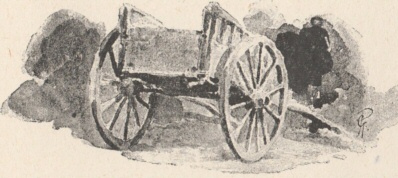
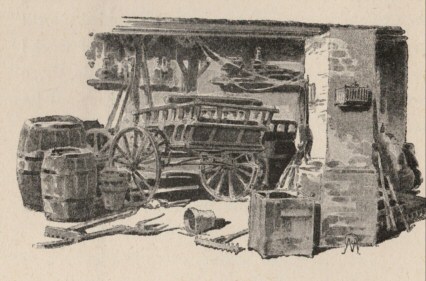
drive parties of Parisians through the forest. If I
harnessed Colaquet, we might go and fetch some flour . . . So I set to
work rummaging under the shed. Amongst the rusty pickaxes,
hay-rakes, and dilapidated harrows I finally discovered a
worm-eaten spring-cart, forgotten and unused, its two shafts
lying on the ground. By means of some pieces of rope and a
few nails I put it into a tolerable state of repair. It
occupied me till the evening; but what an interesting piece of
work! I was amused in turning over those old nails, those
worn-out pegs. Once or twice I surprised myself by
whistling over my work. Pretty cool, considering I was
expecting the Prussians . . . Now everything is ready, the
cart and the team. To-morrow morning, if in the meanwhile
nothing happens, we shall start for Champrosay!
September 14th.
I have made a compact with myself to keep a very exact diary
of the strange and terrible life I have been drawn into; if I
have many days as exciting and tragic as this, I shall never be
able to live through them. My hand shakes, my brain is on
fire. However, I must make the attempt . . .
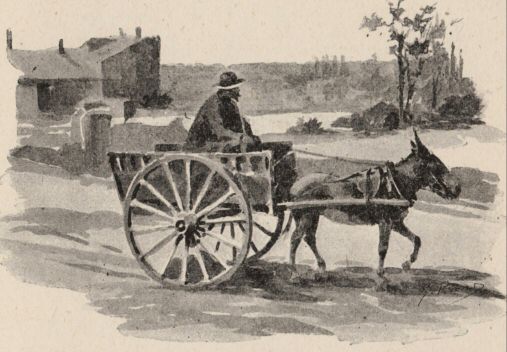
At first starting all went well. The weather was
beautiful. I had placed a bundle of hay in the cart, and although
Colaquet’s eyelids were still swollen from the bite, he
managed to take us tolerably straight—he had so often made
this journey, carrying bundles of linen to the riverside.
In spite of the slight jolting, I found the drive
delightful. Not the point of a helmet nor the glitter of a
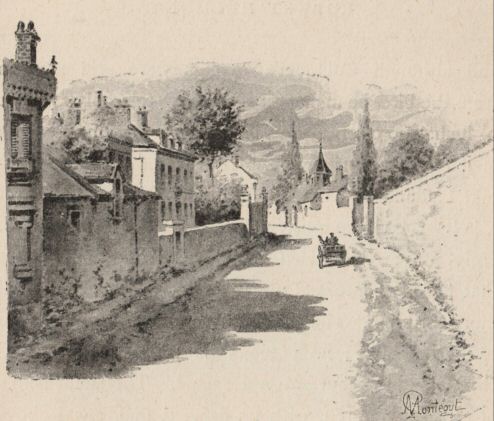
gun-barrel to be seen. Only, on arriving at Champrosay, the
deep silence that had so impressed me in the woods appeared still
more striking. The peasants’ cottages hardly seemed
to me the same: no pigeons on the roofs, the doors closed, and
the courtyards deserted. The silent belfry of the little
church, with its defaced dial, stood above like a faithful
guardian. Farther on, all the villas along the road, their
grounds extending to the forest, were also carefully shut
up. Their summer wealth of flowers continued to bloom, and,
under the shade of the clipped trees, the yellow sandy paths were
but lightly strewn with a few dead leaves. Nothing could
give a more vivid idea of sudden departure and flight than the
sight of these deserted houses, decked out as usual behind their
high iron gates. There seemed still a kind of quiver and
warmth of life; and at times, at the turn of the path, visions
rose up in my mind of straw hats, upraised parasols, and of goats
tethered on the grass-plots in their accustomed place.
What, however, really seemed deathlike was the road, the
highroad to Corbeil, that I had left so full of life, with a
continual flow of vans, mail-coaches, market-gardeners’
carts, perambulating poultry-yards full of cackle and prattle;
carriages borne along through the whirlwind of their own speed,
on which float, even in the calmest weather, the veils and
ribbons of the occupants; and the tall waggons laden with fresh
hay and scythes and pitchforks, casting long shadows across the
road. And now nothing and no one. In the filled-up
ruts the dust has the still look of fallen snow, and the two
wheels of my spring-cart glide on noiselessly. At the end
of the village the farm appears in the distance, closed, and
silent from the foot of its walls to the highest tile of its tall
dark roof. Has Goudeloup also taken flight? . . .
Here I am before the gateway. I knock—I call. A
window above the dairy opens cautiously, and I see the cunning,
somewhat unkempt head of the farmer appear, with his untrimmed
beard, and his small round, suspicious eyes hidden under bushy
eyebrows.
—Ah! it is you, Mr. Robert . . . Wait a
moment. I am coming down.

Together we enter the little, low room where the carters,
harvesters, and threshers usually come in the evening to
receive their day’s pay. In a corner I perceive two
loaded guns.
—You see, says Goudeloup, I am ready for them . .
. If they leave me alone, I shall not stir . . . But
if they are imprudent enough to meddle with the farm . . .
Let them beware!
We were talking in low tones, as if in an enemy’s
country. He let me have a few loaves and a sack of flour;
then having loaded my cart, we parted, promising each other soon
to meet again, . . . Poor man!
Before
returning home, no traces of Prussians being visible, I was
tempted to go down the lane which passes under the walls of the
farm and leads to the Seine. It was the whim of an
artist. A river is the soul of a landscape. Animating
the scene with its ceaseless movement, it gives life to all the
changes of the day, and imparts grandeur to Nature by the
reflection of its mirrored banks, and of glowing sunsets sinking
into tranquil depths of liquid fire. Now its water
faithfully reflects the surrounding melancholy. The
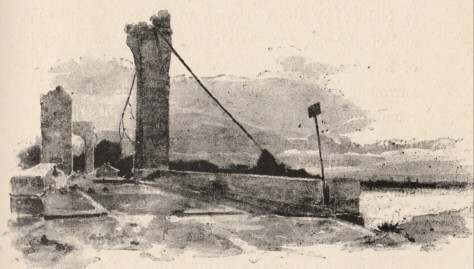
shattered bridge, the crumbling piers piled up on either side in
white heaps of stone, the iron chains dangling in the river, all
this seems like a great rent in the landscape, the cruel work of
the invader. No boats, no rafts—the river has
returned to its wild, natural state, its surface furrowed by
unfettered currents and swirling pools eddying round the ruins of
the broken bridge, and bearing on its way nothing but drifting
tufts of grass and roots, on which the water-wagtail, wearied out
with its long flight, abandons itself to the course of the
stream. On the slopes of each bank the corn and vines still
stand, and the newly-mown fields are yet overshadowed by the high
haycocks; a whole harvest lost and left to its fate . . .
I had stood there for a moment looking at this scene of
disaster, when I heard two shots, followed by shrieks and groans,
which seemed to come from the direction of the farm. I
hastened to see what was the matter, and as I approached the
cries of “Help—Help” were redoubled. I
recognised the voice of the farmer amongst others raised in
anger, a hideous jargon of sound. I whip up Colaquet, but
the hill is steep and Colaquet moves not. One would almost
say he was afraid. He lays back his ears and runs up
against the wall; besides this, the road takes a turn, and I
cannot see what is taking place on the highroad above.
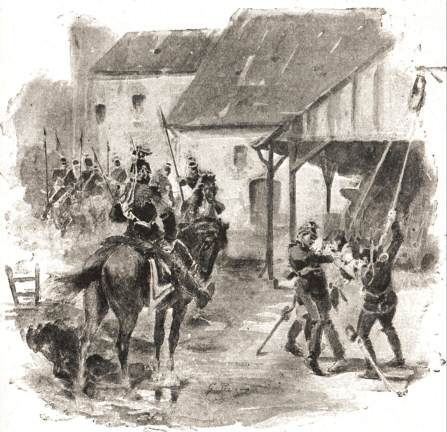
Suddenly, through a breach in the wall that the fall of the
neighbouring bridge has made, as if expressly for me, the whole
interior of the farm comes into view: the yard, the sheds, men,
horses, helmets, long lances, flour sacks burst open, an unhorsed
cavalry soldier lying before the well at full length in a pool of
blood, and the unfortunate Goudeloup, pale, scared, a hideous
object, howling and struggling between two gigantic Uhlans, who
have tied a rope round his neck, and are about to swing him up
by the pulley outside his hayloft. It is impossible to
describe my sensations. I am filled with feelings of
indignation, pity, horror, and anger . . . I forget that I
am wounded and unarmed. I prepare to spring over the breach
and throw myself on these wretches . . . But my foot slips
. . . I hear something like the snap of a stick in my leg,
followed by horrible pain. Everything goes round with me,
the yard, the sheds, the pulley . . .
When I recovered consciousness, I was lying stretched on the
hay in my cart before the gate of the Hermitage. The sun
was setting and the wood was still. Colaquet was quietly
nibbling the grass from out of the cracks in the wall. How
had I got home? How had I been able to avoid the Uhlans,
who swarmed on the highway. Perhaps Colaquet had the idea
of coming across country and reaching the forest by the quarry
road? . . . And, in truth, the good creature proudly tossed
his head and moved his ears, as if to say, “I have saved
you from a dangerous pass!” . . . I was in great
pain, and it really required some courage to step out of the
cart, unharness the donkey, and go into the house. I
thought I had for the second time broken my leg. However,
after an
hour’s rest, I was able to rise, take a little food, and
write these few pages. The pain is already less sharp, and
nothing remains but a great weariness . . . Nevertheless, I
do not think I shall sleep much to-night. I know they are
prowling around me, that they are still there, and I have seen
them at work . . . Oh! that unfortunate peasant, murdered
in his farmyard, dragging himself, clutching at the walls! . .
.
September 20th.
From the four corners of the horizon, in the murmur of the
distant road, which the passing wind quickly snatches up and
bears to my ears, there is a ceaseless and confused rumbling, a
noise as of the heavy and monotonous sound of waves, which,
enveloping the whole forest, slowly flows on towards Paris, to
die away at the point where the wide roads are lost in the
immense encompassing zone. Till now the inundating masses
have spared me, and here I remain cowering in the Hermitage,
listening to the advancing tide, like a shipwrecked man on a rock
surrounded by the sea.
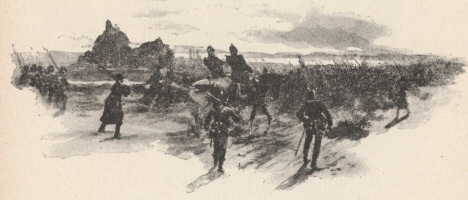
Luckily for me, if the country is invaded, it is not yet
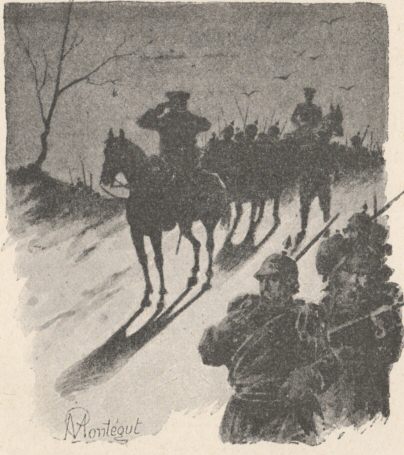
regularly occupied by the troops. They pass through and do
not make any stay. Nevertheless, two or three times I have
heard at night the cavalry patrols skirt the walls of the
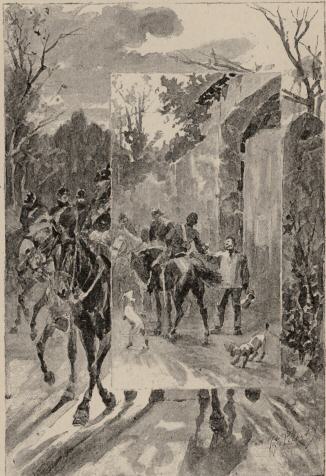
Hermitage. Often, when the shooting season was near, the
forest rangers would thus pass by, pausing for an instant under
the gateway to call out a loud “Good-night” to the
keeper’s little home. The dogs would bark and sniff
at the
kennel railings, then a door opened, and old Guillard brought out
a large jug of sparkling wine, in which a ray of moonlight
danced, and without dismounting they drank it down. How
different from these ghostly patrols, whose very approach makes
my heart beat! They pass by in silence. Only from
time to time the clink of a sword, the neigh of a horse, a few
low-spoken words in a harsh and barbarous language, jar on the
stillness of the air. This effectually drives away sleep
for the rest of the night.
 In the daytime the clear, shrill notes of the bugles come in
gusts to the little garden, with the beating of dull and
discordant drums, marking the tune in a jerky, singular rhythm,
which seems to accompany a cannibal’s war-dance. It
is to the sound of these barbarous drums that all the northern
races, the Goths, Visigoths, Ostrogoths, are advancing over our
magnificent roads of the Ile-de-France, the glorious
autumn weather dazzling them by the unaccustomed brilliancy of
its sun and sky. During this time I live as unobtrusively
as possible. I no longer light my fire, in order to avoid
the smoke which gives light and life to the roof. I do not
even go out into the orchard. I am sure that already the
grass is growing across my threshold, and that the invading
forest is hemming me closely in. Lastly, by way of precaution, I
have killed my cock. That was a cruel sacrifice. I
like that abrupt awakening at dawn, that call to life and work,
which the cock gives forth to the surrounding country, drawing
himself up for the battle with a great flapping of wings.
But the Prussians might have heard him . . . Now I have
only three or four quiet and silent hens in my poultry-yard, and
a few rabbits, who are not likely to betray me.
September 21st,
22d, and 23d.
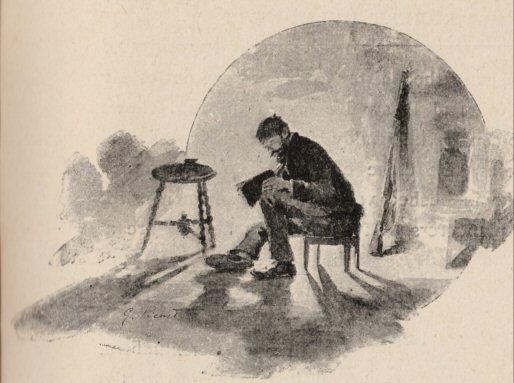
I am writing this at night, by the glimmer of a small
turf-fire—a sort of brazier burning on the flags in a
corner of the room. I have neither oil nor candles.
It is raining. On all sides of the Hermitage I hear the
water streaming over miles of foliage. The wind
blows. My revolver and a gun loaded with buckshot are ready
by my side, and I await the return of the ruffians, for they have
already been here.
Their first visit took place three days ago, in the afternoon
of the 21st. The sound of heavy steps on the pavement
of the cloister made me peep out of my attic window, and I saw
five or six hulking fellows in forage-caps, with ruddy faces and
low, brutal countenances, like those of Goudeloup’s
murderers. They spoke in hushed voices, timidly advancing, like
cowardly plunderers. If I had been able to fire at them, I
should have put them to flight, but once the alarm given, they
would return in greater numbers. I waited. Owing to
the neglected look of the house, and thanks to the vines and ivy,
that gave it the aspect of a ruin, the ruffians have passed by
without stopping. And yet the last of them bent down for a
moment to the keyhole. Standing behind my door, revolver in
hand, I heard his breathing while I held my own breath.
Perhaps he had caught sight of the glimmer of the dying cinders
of my fire. However that may be, the wretch did not go
away, and began to rummage in my keyhole with his bayonet.
Fortunately his comrades called out to him:—Hartmann . . .
Hartman . . .
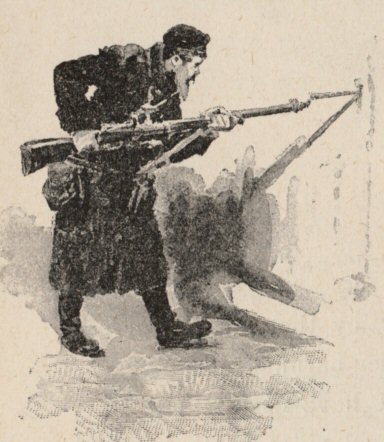
He went
off to rejoin them, and I was able to look into the enclosure
through the attic window.
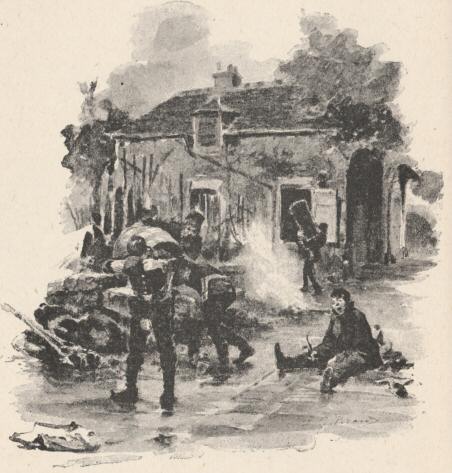
They had just broken open the door of the keeper’s
house. Poor mother Guillard! it was indeed lost trouble to
have given me her key. Soon after, shouts of joy told me
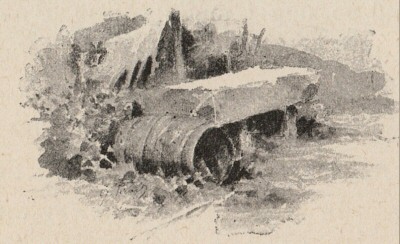
that they had discovered the cellar. They brought out a
barrel of wine into the orchard, so as to drink it more at their
ease, and hoisted it on to a wide stone bench. Having
staved in the barrel, they began drinking out of their caps and
hands, shouting and jostling each other. The bent heads
disappeared in the cask, and came out smeared with dregs, while
others greedily took their place. The thin new wine, made
of small, sour black grapes, soon intoxicated all these
beer-drinkers. Some of them sang and danced round the
barrel, while the others re-entered the keeper’s house, and
as they found nothing tempting there to satisfy their craving for
pillage, they threw the furniture out of the window, and set fire
to a walnut cupboard, whose dry and time-worn shelves blazed up
like a bundle of straw. At last they went off, reeling
through the driving rain. In front of the gateway there was
a quarrel. I saw the flash of bayonets, a man fall heavily into
the mud and rise up again covered with blood, his uniform all
stained with the yellow-coloured soil of the quarries. And
to think that France is at the mercy of these brutes! . . .
The next day the same party returned. I understood by
that, they had not mentioned their windfall, and I was a little
reassured. However, I am a complete prisoner. I dare
not stir from the principal room. Near at hand, in a little
wood-shed, I have fastened up Colaquet, whose galloping might
have betrayed me. The poor animal patiently bears his
captivity, sleeps part of the day, and at times gives himself a
good shake, surprised at the loss of his freedom . . . At
dusk the Prussians depart, more intoxicated than on the evening
before.
To-day I have seen no one. But the cask is not yet
empty, and I expect them again.
September 24th.
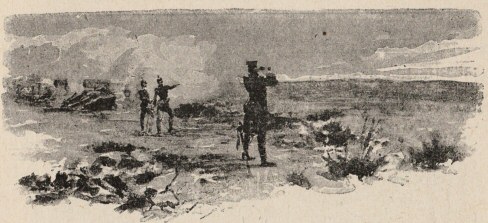
. . . This morning a furious cannonading is taking
place. They are fighting before Paris. The siege is
begun. It has given me a feeling of pain and anger
impossible to describe. They are firing on Paris, the
wretches! It is the intellect of the whole world that they
attack. Oh, why am I not there with the others? . . .
Instantaneously all yesterday’s apprehensions have
vanished. I became ashamed of my mole-like existence.
For the last week I have drunk nothing but the water from the
cistern, but now, I hardly know wherefore, I went out on purpose
to fill my jug at the cloister well, and it seemed to do me good
to run some kind of risk. I looked into the
Guillards’ house as I passed by, and my anger
increased at the sight of this humble home ruthlessly pillaged,
the furniture destroyed and burnt, the window-panes broken.
I could not help thinking of the fate of Paris if they enter it .
. .
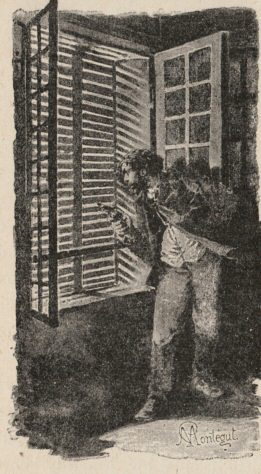 I had just closed my door when I heard footsteps in the
enclosure. It was one of those rascals who came the other
day, the identical one who had so long rummaged at my lock.
He looked if there was any wine left in the cask, and then,
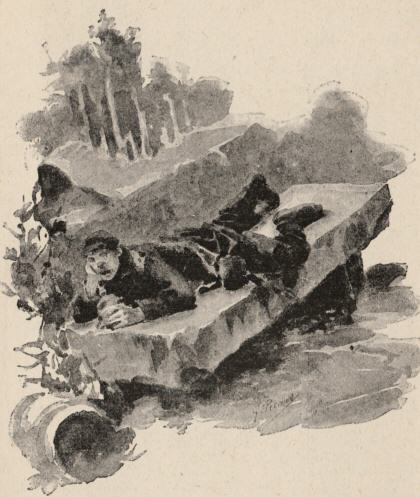
having filled his flask, began drinking, sprawling at full length
on the stone bench, his head resting on his hands. He sang
while drinking; his young fresh voice rang through the cloister with a
song about the month of May, in which the words—Mein
lieb, lieb Mai—were constantly repeated.
He was just opposite my attic window, within easy reach of my
revolver. I looked at him for a long time, asking myself if
I should kill him. In the direction of Paris the cannon
still thundered, filling my heart with terrible anguish . .
. After all, perhaps by killing this fellow I should be
saving some of my own people now fighting on the ramparts . .
.
I do not know whether my unseen glance and the intense hatred
I was feeling towards him, did not at last disturb him and put
him on his guard; but all of a sudden he raised his head, a head
covered with thick bristling hair, the eyes of an albino, and red
moustaches, showing a grinning set of cruel-looking teeth.
For one moment he threw a suspicious glance around him, and
having rebuckled his belt and refilled his flask, he went
off. As he passed in front of my window, I had my finger on
the trigger. Well, no; I could not do it. To kill for
the sake of killing, with such certainty, and so little personal
danger, was beyond me. It is not such an easy thing as one
fancies, to take a fellow-creature’s life in cold
blood.
Once
outside the precincts of the Hermitage, and having shaken off his
undefined sensation of fear, the rascal again took up his song,
and I heard him getting farther and farther away, giving forth to
the forest his “Mein lieb, lieb Mai . .
.”
Sing away, sing away, my lad! you have had a narrow escape of
never seeing again your sweet month of May . . .
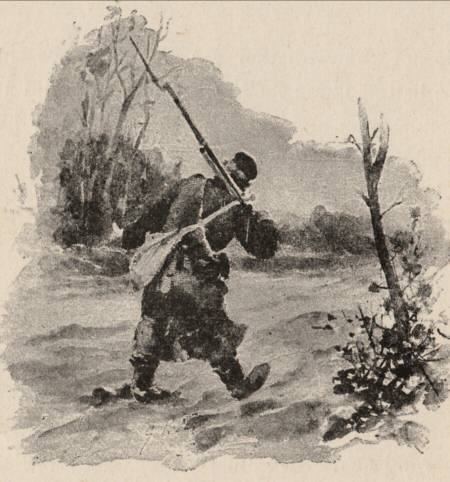
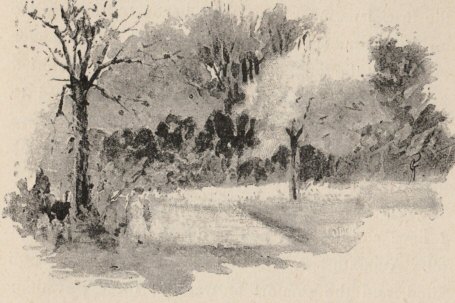
October . . .
What day, what date can it be? I have completely lost
count. My brain is all confused. Yet it seems to me
that it must be October. The monotonous days get shorter
and shorter, the wind colder, and the foliage of the large trees
around me becomes thinner at each gust of wind. The sound
of incessant cannonading in the direction of Paris, makes a
lugubrious accompaniment to my everyday life, a deep, low bass,
always mingling in my thoughts. I think the Prussians
must have their hands full over there, for my marauders have not
reappeared. I no longer even hear the long, slow rumbling
of the ammunition waggons, nor the rolling of drums, which used
to resound on the roads outside the forest. So I have again
lighted the fire in the large room, and I walk openly about in
the orchard.
From day to day the difficulties of life increase. I
have nothing left, neither bread, wine, nor lamp-oil. A
month ago, with the sunshine, the house well aired, and the
comfort of warmth, these privations were bearable, but now they
seem very hard. In the poultry-yard there are only two hens
left; always hiding under the rafters to escape the continual
driving rain. I make faggots with the branches of the
fruit-trees, which, brittle and no longer protected by their
leaves, snap off and fall to the ground. The apple-trees
have golden moss, the plum-trees long streaks of light-coloured
gum under their resinous bark, and they make large, bright fires,
throwing a sunshine into their warmth. I have also gathered
the last apples, all reddened by the breath of the first frost,
and I have made a poor kind of cider, which I drink instead of
wine. With my bread I have been less successful. I tried, with
the unfortunate Goudeloup’s flour, to knead some dough in
the bottom of a cupboard drawer which I used as a trough; and
then, under the ashes on the bricks, I made as well as I could,
thick cakes, of which the outsides were burnt, and the insides
hardly done enough. They reminded me of those little round
bits of dough that, as a child, I held in the tongs, and made
into rolls about the size of a lozenge.
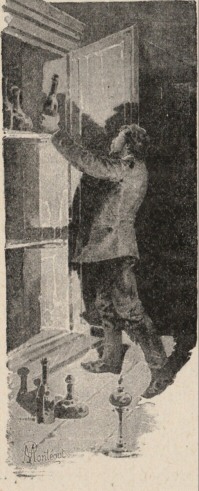
From time to time I get a windfall. For instance, the
other day, as I was rummaging in the keeper’s house, I
found on a damp and mouldy cupboard shelf a few bottles of
walnut-spirit that had been overlooked by the plunderers; and
another time I found a large sack, which I opened with a beating
heart, thinking it contained potatoes. I was quite startled
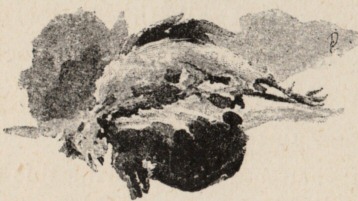
on pulling out from it magpies’ beaks, vipers’ heads,
dry and dust-coloured, squirrels’ tails, with their bushy
red fur, and field-mice’s tails, as delicate as silken
twist. These are the keeper’s perquisites, as they
are given so much for the head and tail of destructive
animals. They therefore keep these trophies of the chase
very carefully, as they are paid for them by Government once a
month.
—It always buys tobacco, as good old Guillard used
to say.
 I must confess that at this moment I would willingly have
given up all these old bones in exchange for a few rolls of
tobacco. I have only enough to last me two or three days,
and that is really the only privation I dread. To me the
forest is an inexhaustible larder. When my poultry-yard is
empty, I shall be able to snare some of those fine cock-pheasants
that come round the Hermitage to pick up the grains of buckwheat
hidden in the wet soil. But tobacco! tobacco! . . .
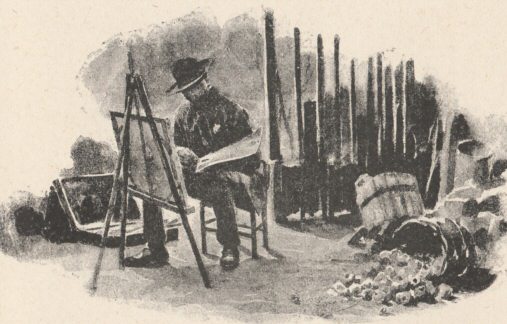
I read a little, and have even tried to paint. It was a few
mornings ago, in the light of a beautiful red sun, shining
through the air thick with mist; under the shed was a heap of
apples, tempting me by their lovely colouring of all shades, from
the tender green of young leaves to the ardent glow of autumnal
foliage. But I was not able to work for long. In a
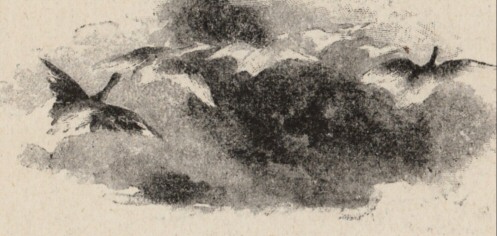
few minutes the sky became overcast. It was raining in
torrents. And large flocks of wild geese, with outstretched
necks and beating against the wind, passed over the house, announcing a
hard winter and the approach of snow by the white down shaken
from their wings.
The same month . . .
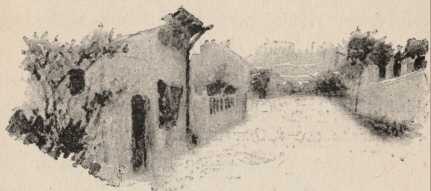
To-day I made a long expedition to Champrosay. Reassured
by the stillness around me, I harnessed Colaquet in good time,
and we started. Failing the sight of a human face, I longed
to gaze on roads and houses.
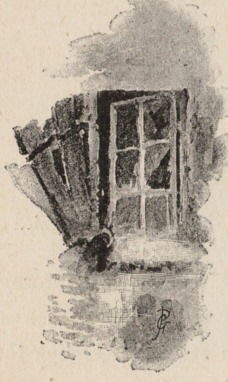 I found the country as deserted and silent, and far more
dreary than before. The Prussians have only passed through,
but they have left their mark everywhere. It seemed the
very picture of an Algerian village after a swarm of locusts, a
bare, devastated, devoured, and riddled scene; the houses with doors and
windows all wide open, even to the little iron gates of the
kennels and the latticed shutters of the rabbit-hutches. I
went into some of the houses . . . Our peasants are rather
like the Arabs. They are seen in the fields, in the
courtyards, on their thresholds, but they do not often admit a
Parisian inside their doors. Now I could thoroughly search
into these unknown lives, these forsaken homes. Their
habits still clung to them, and could be traced in the
mantelpieces dark with soot, the hanging ropes in the courtyards
where the washing is dried, the now empty nails driven into the
walls, and on the walnut table, by the marks idly cut with a
knife, and the notches made between each mouthful. All
those village households were alike—I came upon one,
however, that possessed one luxury more than the others—a
parlour,
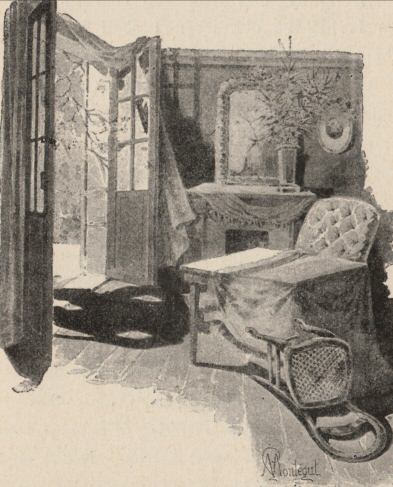
or at least what was intended for a parlour. In a small
brick-floored room behind the kitchen, a green paper had been put
up, coloured glass had been let into the window, and a pair of
gilt fire-dogs, a round tea-table, and a large arm-chair
covered with worn chintz, had been placed in it. The
ambition of a peasant’s lifetime could be felt there.
Certainly that man had said to himself, “When I shall be
old, when I shall have slaved and laboured hard, I will become a
bourgeois. I will have a parlour like the mayor, and
a comfortable arm-chair to sit in.” Poor devil!
They have made a fine mess of his parlour!
I left Champrosay sad at heart. The desolation of those
abandoned houses had struck and chilled me like the cold damp
falling from the walls of a cellar. Instead of going
straight hack to the Hermitage, I went a long way round by the
woods. I felt a craving for air and Nature.
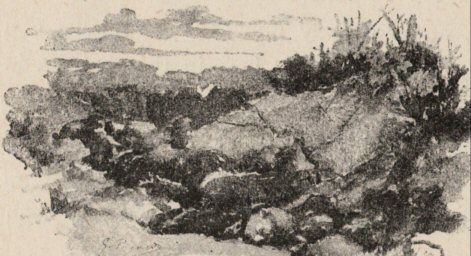
Unluckily all this side of the forest bears an aspect of
wildness and neglect, which is not very inspiriting. Old
and now unused quarries have left there piles of rocks, and a
scattering of pebbles, which make the soil both dry and
barren. Not a single blade of grass is to be seen on the
paths. Wild stocks, brambles, and ivy alone spring up from
out of these large gaping holes, clinging by all their roots to
the uneven edges of the stones, and through the bare and
interwoven branches, the quarries appear still deeper. For
a short time we had been winding our way among the rocks.
Suddenly Colaquet stopped short, and his ears began to tremble
with fear. What is the matter with him? I lean
forward and look . . . It is the body of a Prussian soldier
that has been pitched down head-foremost into the quarry. I
must confess it gave me a shudder. Had it been on the
highway or in the plain, this corpse would not have horrified me
so much. Where there are so many soldiers and so many guns,
the probability of death seems ever present; but here in this
hollow, in this out-of-the-way part of the wood, it bore an
appearance of murder and mystery . . . Looking more
attentively, I thought I recognised my robber of the other day,
he who was singing so lustily about the month of May. Has
he been killed by a peasant? But where could the peasant
have come from? There is nobody left at Champrosay,
Minville, or the Meillottes. More probably it is the result
of some drunken quarrel between comrades, like the one I saw from
the windows of the Hermitage . . .
I went home very quickly; and all through the evening I was
haunted by the idea that my only guest, my only companion in the whole
of the dreary forest, was that dead body stretched out on the red
sand of the quarries . . .
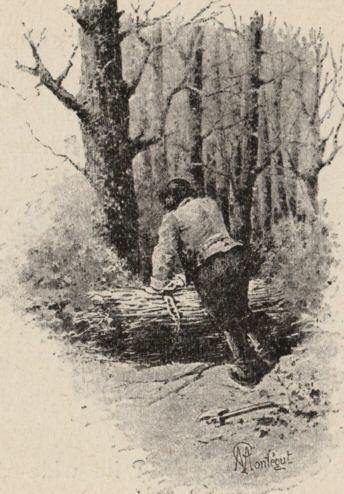
Unknown date . . .
It is raining—it is cold. The sky is dark. I
go to and fro in the Hermitage, tying up faggots and making
bread, while the cannon thunders incessantly, and by a strange
phenomenon disturbs the earth even more than the air. With
my prison labour, my selfish and silent life in the midst of such
a terrible drama, I compare myself to an ant, busily groping
about on the surface of the soil, deaf to the sounds of humanity
around it, all too great for its insignificance, and which surround
without troubling it. From time to time, to divert my
thoughts, I take a journey to Champrosay without any fear of
meeting the Prussians, who have decidedly abandoned the Corbeil
road, and are making their descent on Paris by way of Melun and
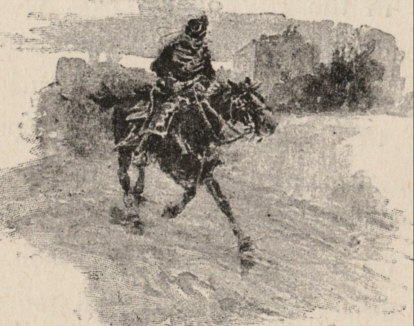
Villeneuve-Saint-Georges. Once or twice, however, a
horse’s gallop obliged me to take refuge in some shed, and
I saw a rapid and hurried bearer of despatches riding across the
country as if merely to unite it to headquarters, to take
possession of the road, and mark it with the hoofs of the
Prussian horses.
This deserted village, with its wide-open houses, interests
and charms me like a sort of Pompeii. I wander through and
examine it. I amuse myself by reconstructing the lives of
these absent ones . . .
Another day . . .
. . . Something strange is going on around me. I am not
alone in the forest. There is evidently some one hiding
near here, and some one who kills. To-day, in the
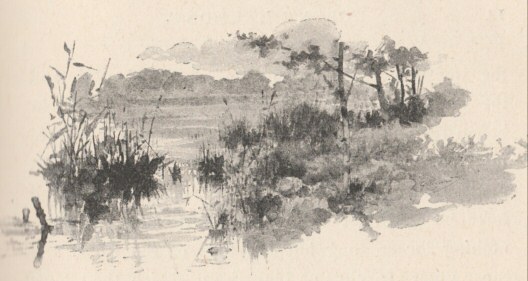
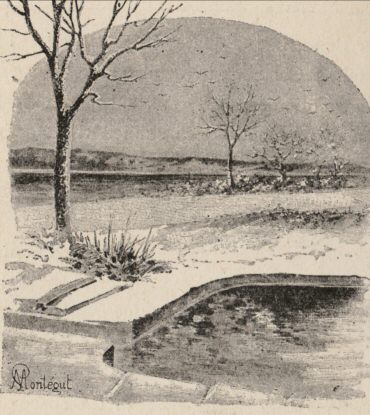
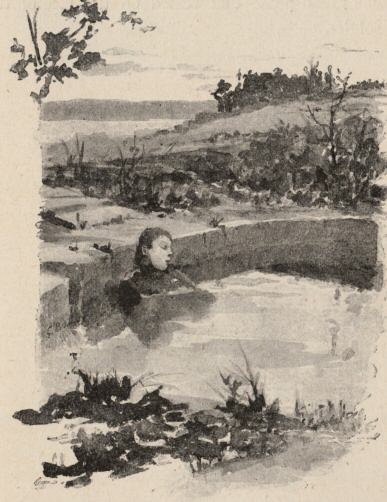
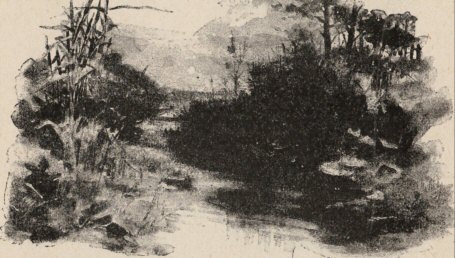
washing-pond of Champrosay, I found a second corpse. A
Saxon was stretched out there, only his fair head visible above
the water, lying on the damp stone ledge. Moreover, he was
well hidden away, thrust into oblivion in this small pond
surrounded by brushwood, as securely as that other one over
there, in the quarry in the wood. I had by chance taken
Colaquet to drink there. The sight of that long, motionless
body startled me. Were it not for the pool of blood which
stained the stones round his head, and mingled with the
reflection of the purple sunset in the water, it might have been
supposed that he was asleep, so quiet and peaceful were his
features. I have often noticed that expression on the face
of the dead. For the space of a brief moment there is
something about them more beautiful than life: a solemn peace, a
breathless slumber, a renewal of youth in the whole being, which
seems like a pause between the agitations of life and the
surprises of the unknown world opening before them.
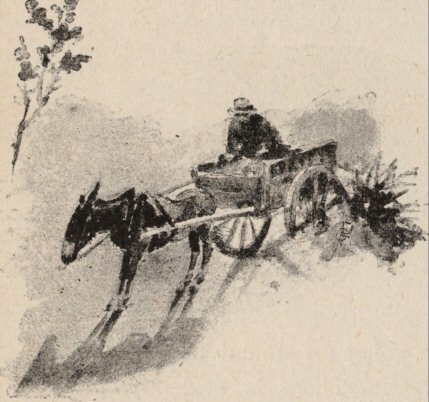 While I was contemplating the unfortunate creature, night
began to close in. In the clear and mellow twilight a great
softness reigned over everything. The roads,
already lighter than the sky, stretched out straight and
regular. The forest spread out in dark masses, and beneath
me a small vineyard path was faintly lighted up by a ray of
moonlight. Over all Nature, reposing after the
day’s labour—on the silent fields, the hushed river,
the peaceful landscape gently fading into night—there was
the same calm, the same grand peace that rested on the face of
the dead soldier.
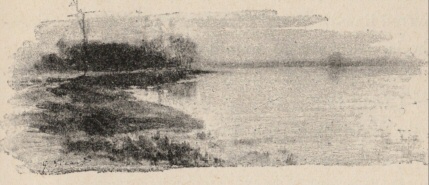
Another day.
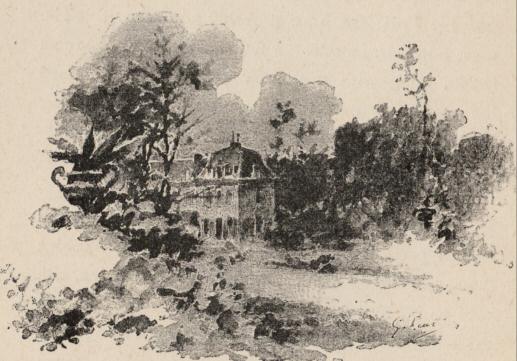
. . . Between Champrosay and the Meillottes, in the middle of
a park which skirts the Seine, there stands a mansion built in
the style of Louis XV. of the period of the Marquis
d’Etiolles and Madame de Pompadour. Two thick
straight rows of trees slope down to the river, showing, in
summer-time, at the end of the arch of green foliage, a mirror of
blue water blended with a blue sky. All the darkness of the
old avenues seems to escape through these two vistas of
light. At the entrance near the gates, a wide moat
surrounding the lawns, a circle of moss-covered lime-trees and
curbstones grazed by carriage-wheels, all combine to show the
antiquity of this quiet old place. A fancy took me, and the
other day I went in there.
By a winding path I reached the front of the steps. The
doors were open, the shutters broken. On the ground-floor,
in the large drawing-rooms, where the walls were all covered with
white carved panels, not a single piece of furniture was
left. Nothing but straw, and on the façade, between
the stone carving of the balconies, were fresh marks and
scratches, showing how the furniture had been thrown out through
the windows. The billiard-room only was untouched.
The Prussian officers are like our own, they are very fond of
playing billiards. Only these gentlemen had amused
themselves by making a target of a large mirror, and with its
scratches, its chipped fragments, its small round holes looking
black in the light, the mirror seemed like a frozen lake cut and
furrowed by sharp skates. Inside, the wind rushed through
the large windows battered down by bayonets and butt-ends of
rifles, scattering and sweeping in the dead leaves on to the
floors. Outside, it dashed under the green-leafed aisle,
rocking a forgotten boat on the pond, full of broken twigs and
golden-coloured willow-leaves.
I walked to the end of the avenues. There, at the end of
the terrace, is a summer-house of red bricks overlooking the
river; it is buried in the trees, and the Prussians have probably
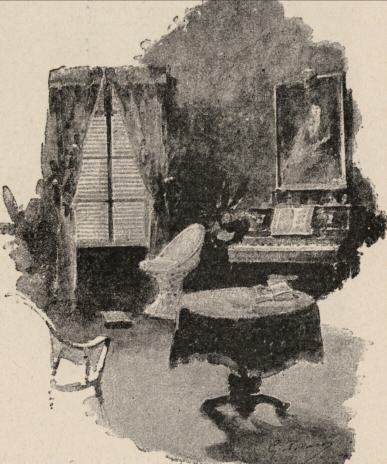
not seen it. The door, however, is ajar. I found a
little sitting-room inside, hung with a flowery chintz, which
seemed the continuation of the Virginian jasmine climbing through
the latticed shutters; a piano, some scattered music, a book
forgotten on a bamboo stool in front of the view over the Seine,
and in the mysterious light of the closed shutters, the elegant
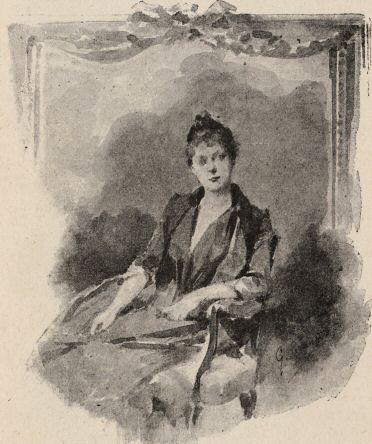
and refined portrait of a woman looked out of a golden
frame. Wife or maiden, who can tell? Dark, tall, with
an ingenuous look, an enigmatic smile, and eyes the colour of
thought—those Parisian eyes that change with each passing
emotion. It is the first face I have seen for two months,
and is so living, so proud, so youthful in its seriousness!
The impression this picture has caused me is singular . . .
I dreamt of the summer afternoons that she had spent there,
seeking the solitude and freshness of this corner of the
park. The book, the music, spoke of a refined nature; and
there
lingered in the twilight of this little nook a perfume of the
past summer, of the vanished woman, and of a tender grace left
only in the smile of the portrait.
 Who is she? Where is she? I have never seen
her. I shall in all probability never meet her. And
yet, without knowing wherefore, I feel less lonely as I gaze at
her. I read the book which she was reading, made happy by
its being marked. And since then, not a day passes
without my thinking of her. It seems to me that if I had
this portrait here, the Hermitage would be less desolate, but to
complete the charm of the face, one ought also to have the
climbing jasmine of the summer-house, the rushes at the
water’s edge, and the little wild plants of the moat, whose
bitter aroma comes back to me as I write these lines.
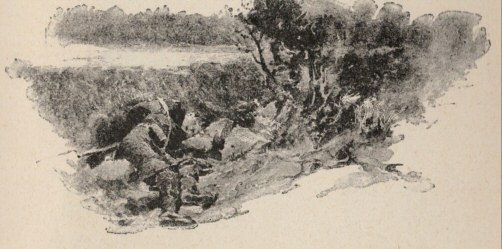
One evening, on returning
home.
. . . Found another dead Prussian. This one was lying in
a ditch by the side of the road. That makes the third . .
. And always the same wound, a horrible gash at the nape of
the neck . . . It is almost like a signature of the same
hand.
But who can it be? . . .
November 15th.
. . . This is the first time for many a day that I can put
down a date in my diary, and make out a little order in this
bewilderment of monotonous days. My whole existence is
changed. The Hermitage no longer seems so silent and sad;
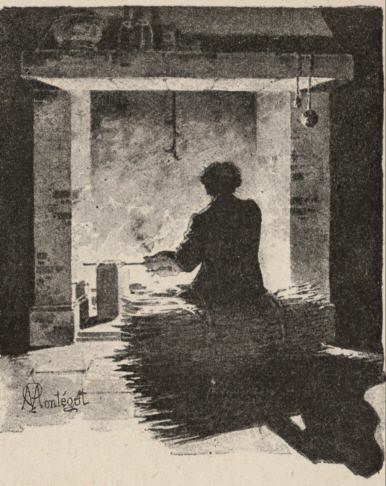
there are now long, low conversations by the ash-covered fire
with which we fill the chimney at night. The Robinson
Crusoe of the forest of Sénart has found his man Friday,
and under the following circumstances.
One
evening last week, between eight and nine o’clock, while I
was roasting a fine hen-pheasant on a turnspit of my own
invention, I heard the report of a gun in the direction of
Champrosay. This was so unusual that I listened very
attentively, ready to extinguish my fire and put out the little
glimmer which might betray me. Almost immediately, hurried
footsteps sounding heavy on the gravelled road, approached the
Hermitage, followed by barking of dogs and furious
galloping. It gave me the idea of a hunted man pursued by
horsemen and chased by furious dogs. Shivering, and seized
by the living terror I felt drawing near, I half opened my
window. At that instant a man rushed across the moonlit
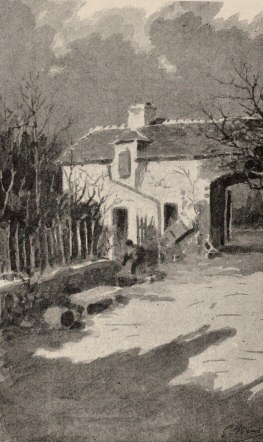
orchard, and ran towards the keeper’s house with an
unerring certainty that struck me. Apparently he was well
acquainted with the place. He had passed so rapidly that I
could not distinguish his features; I only saw a peasant’s
blue smock all gathered up in the agitation of a wild
flight. He jumped through a shattered window into the
Guillards’ house, and disappeared in the darkness of the
empty dwelling. Immediately behind him a large white dog
appeared at the entrance of the cloister. Thrown out
for a minute, he remained there, slowly wagging his tail and
sniffing, and then stretched himself out at full length in front
of the old gateway, baying in order to call the attention of the
pursuers. I knew the Prussians often had dogs with them,
and I expected to see a patrol of Uhlans . . . Odious
animal! with what pleasure would I have strangled it, if it had
been within reach of my grasp. I already saw the Hermitage
invaded, searched, my retreat discovered; and I felt angry with
that unfortunate peasant for having sought refuge so near me, as
if all the forest were not large enough. How selfish fear
makes us! . . .
Fortunately for me, the Prussians were probably not very
numerous, and the darkness and the unknown forest frightened
them. I heard them call in their dog, who kept up in front
of the gate, the continual howl and whimpering of an animal on
the track. However, he at last went off, and the sound of
him bounding through the brushwood and over the dead leaves died
out in the distance. The silence that followed appalled
me. A man was there, opposite to me. Through the
round opening of my attic window, I tried to peer into the
darkness. The keeper’s little house was
still silent and gloomy, with the black apertures of its dreary
windows in the white wall. I imagined the unhappy man
hiding in a corner, benumbed with cold and perhaps wounded.
Should I leave him without help? . . . I did not hesitate
long . . . But just at the moment when I was gently opening
my door, it was violently pushed from the outside, and some one
burst into the room.
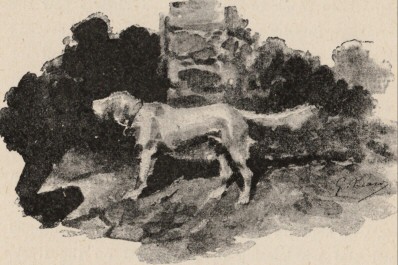 —Don’t be afraid, Mr. Robert. It is I . .
. It is Goudeloup . . .
It was the farmer of Champrosay, he whom I had seen with
the rope round his neck, ready to be swung up in his
farmyard. I recognised him at once in the firelight; and
yet there was something different about him. Pale and
emaciated, his face hidden by an unkempt beard, his sharp glance
and tightened lips made a very different being of the well-to-do,
cheerful farmer of former days. With the end of his smock,
he wiped the blood off his hands.
—You are wounded, Goudeloup?
He laughed significantly.
—No—no . . . I have just been bleeding one
of them on the road. Only this time I had not a fair
chance. While I was at work, some others came up.
Never mind! He will never get up again.
And he added, with a short, fierce laugh which showed his
wolfish-looking teeth:
—That makes the fifteenth that I have laid low in two
months . . . I think that is pretty well for one man alone,
and with no other weapon but this.
He drew forth from under his smock a pair of
pruning-shears—those large kind of scissors that gardeners
use to cut rose-trees and shrubs. I had a shudder of horror
at the sight of the assassin’s tool, held by that bloody
hand; but I had been so long silent, and deprived of all
intercourse with human beings, that, the first feeling of
repulsion overcome, I made the unfortunate creature welcome to a
place at my table. There, in the comfortable atmosphere of the
room, by the heat of the faggots, at the smell of the pheasant,
which was becoming brown before the flame, his wild-beast
expression seemed to soften. Accustomed to the darkness of
the long nights, he blinked his eyes a little while he related
his history to me in a quiet tone.
 —You thought I was hanged, Mr. Robert; well, I thought
so myself. You must know that when the Uhlans arrived at
the farm, I first tried to defend myself, but they did not even
give me time to fire my second gun. No sooner was the first
shot fired than the gates were forced open, and thirty of these
robbers threw themselves on to me. They put the granary
rope round my neck and up I went . . . For the space
of a moment, giddy at no longer feeling the ground under my feet,
I saw everything reeling around me: the farm, the sheds, the
kennels, those big red faces which laughed at the sight of me; and you
also, whom I caught sight of through the gap in the wall, looking
as white as a ghost. It seemed like a nightmare! . .
. Suddenly, while I was struggling, the idea flashed across
my mind, I know not why, to make the Freemason’s signal of
distress. I learned that in my youth, when I belonged to
the lodge of the Grand Orient. Immediately the
wretches loosened the rope, and I found myself on the ground once
more. It was their officer—a stout man with black
whiskers—who had me taken down only on account of my
sign.
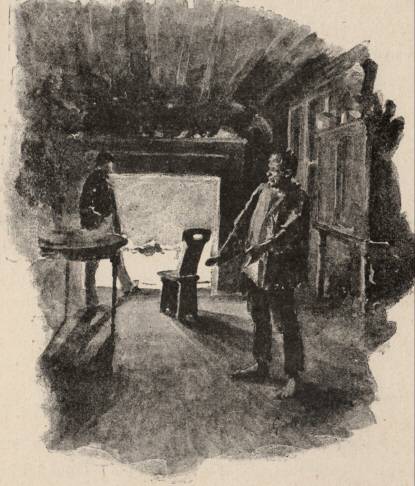
“—You are a Freemason,” said he, in a low
tone, and in excellent French. “I am also one . . .
and I would not refuse to help a brother who appealed to me . .
. Be off, and let me see you no more! . . .”
I left my own home hanging my head like a beggar. Only I
did not go far, you may believe. Hidden among the ruins of
the bridge, living on raw turnips and sloes, I was present at the
pillage of my goods; the emptied granaries, the pulley creaking
all day long to lower the sacks, the wood burning in the open
yard in large fires, round which they drank my wine, and my
furniture and my flocks going of by degrees in every direction!
And when at last nothing remained, after setting fire to the
house, they went off, driving and whipping my last cow before
them. That evening, when I had been round my ruins, when,
thinking of my children, I realised that in my whole life long I
should never make enough to restore my property, even if I killed
myself with work, I became mad with rage. The very first
Prussian I met on the road I sprang upon like a wild beast and
cut his throat with this . . .
From that moment I had but one idea—to hunt down the
Prussians. I remained in ambush night and day, attacking
the stragglers, the marauders, the despatch-bearers, the
sentinels. All those I kill I carry to the quarries or
throw into the water. That is the tedious part.
Otherwise they are as gentle as lambs. You can do what you
will with them . . . However, the one this evening was more
tough than the others, and then that fiendish dog gave the
alarm. And now I must remain quiet for a time, and with
your permission, Mr. Robert, I will remain a few days with you .
. .
While he was speaking, his countenance resumed the
sinister expression and peculiar intensity that these fearful
night-watches had imparted to it. What a terrible companion
I am going to have! . . .
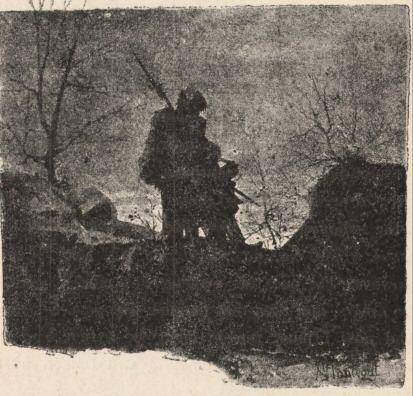
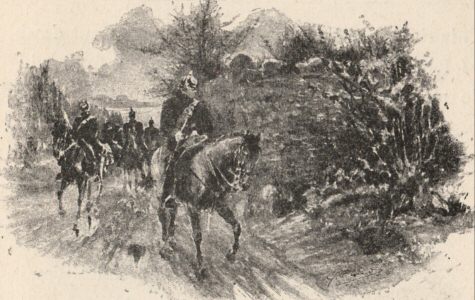
November 20th.
We have just spent a most dreadful week. During eight
days, the Prussian patrols have unceasingly passed backwards and
forwards through the forest. They skirted the walls of the
Hermitage, and even entered the enclosure, but the state of the
keeper’s little house, left wide open and abandoned; the
ivy and brambles giving such a dilapidated appearance to my own,
protected us. My companion and myself carefully remained
inside the whole time, deadening our steps across the room,
lowering our voices by the hearth, and only making a small fire
at night.
 This time, had we been discovered, it meant death, and I felt
rather annoyed with Goudeloup for having made me his accomplice
by coming to take refuge here. He understood my feelings,
and offered several times to go and seek another shelter; but I
would not consent to this. To show his gratitude for my
hospitality, he renders me a lot of little services. Very
obliging, very clever in all the practical details of life, about
which I am so ignorant, he has taught me to make bread that is
eatable, real cider, and candles. It is a pleasure to see
him busy all day long, restricting his faculty for work and
order, which he formerly exercised on a wider scale in the
management of his large farmstead and seventy-five acres of land,
and adapting himself to the confined space of our only
room. Gloomy and silent, moreover, and sitting motionless
for hours in the evening, his head buried in his hands, like all
inveterate workers with whom overwrought physical life absorbs
the moral being, I could not help sometimes smiling when I noticed that,
notwithstanding the tragical circumstances surrounding us, he
kept up his habit of prolonged meals and pauses between each
mouthful. Such as he is, the fellow interests me. He
is the true peasant in all his native brutality. His
land, his goods, are far more precious to him than his country or
his family. He unconsciously utters the most monstrous
sentiments. If he is so bent on revenge, it is only because
the Prussians have burnt down his farm, and the horrors of the
invasion only rouse him when he thinks of his lost harvest, and
his fields left untilled and unsown.
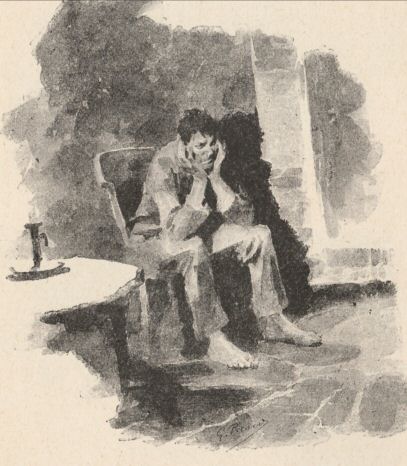
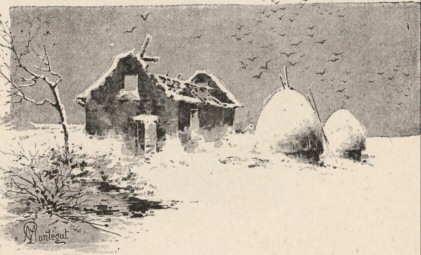
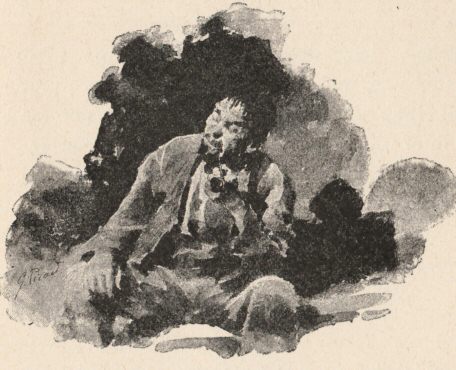
November 22nd . .
.
We had a long conversation to-day. We were in the shed
seated across a ladder, and, in spite of the coldness of the damp
air which came to us from the forest all laden with the smell of
moist wood and damp earth, we felt as much pleasure in breathing
it as two dormice coming forth from their holes. Goudeloup
was smoking a curiously-shaped pipe he has made out of a
snail’s shell, and he did so with an exaggerated appearance
of satisfaction and content not devoid of mischief. In
spite of my longing to smoke, I have already several times
refused to use his tobacco, well knowing how it has been
procured, and always expecting to see some shreds of the blue
cloth of which the Prussian uniforms are made. As he caught
me sniffing the delightful fragrance of tobacco, which tantalised
me, he said, with that cunning smile of the peasant which puckers
up their eyes, leaving their lips thin and crafty:
—Well! come! you won’t smoke? . . .
Myself.
No, thank you. I have already told you I do not wish for
any of your tobacco.
Goudeloup.
Because I have taken it out of their pockets? Yet I had
every right to do so. They have robbed me enough, for me to
be able to rob them also, and a few handfuls of bad tobacco
won’t pay for all my corn and oats . . .
Myself.
With this difference, that these people have given you your
life, whereas you . . .
Goudeloup.
Yes, it is true they have given me my life, but they have
burnt down my farm—my poor farm! I built it myself .
. . and my beasts and my harvest, fifteen acres of crops!
It was all insured against hail, fire, and lightning; but who
would have thought that, so near Paris, with all the taxes we pay
to have good soldiers, I ought to have insured myself against the
Prussians? Now I have nothing left. Are not such
catastrophes worse than death? . . . Ah yes, the wretches;
they gave me my life! They gave it me to beg from door to
door with my wife and children. Don’t you see that
when I think of all this, a furious passion seizes me, and a
thirst for blood, for . . .
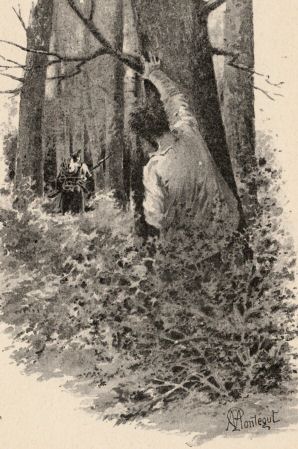
Myself.
What, you have not killed enough? . . .
Goudeloup.
No, not enough yet . . . I must even make a confession,
Mr. Robert. You are an easy-going man; you have received me
kindly, and a chimney-corner like yours is not to be despised in
this weather. And yet, all the same, there are moments when
I am weary of being here. I want to escape, to begin lying
in wait by the roadside again. It is such fun waiting for
one of those thieves to pass; to watch for him, dog
his footsteps, and say to oneself, “Not yet . . .”
and then, quick, you jump on him and finish him . . .
Another one who will not eat up my corn!
Myself.
You, whom I have known so quiet and gentle, how can you talk
like that without showing the least feeling?
Goudeloup.
One would think there was an evil spirit within me that the
war has called forth . . . But I must say that the first
time it happened, I was startled myself. It was that
transport soldier I met the evening of my misfortune. I
struck with all my might at the uniform, hardly realising there
was a man inside it; then, when I felt that huge form give way
and the warm stream of blood inundate me, then I was
afraid. But remembering directly the torn and ripped-up
sacks of flour lying in my yard, I again became desperate.
Myself.
As you bear them such a grudge, why do you not try to get back
into Paris, or to rejoin the armies in the provinces? You
could then fight openly, and kill the Prussians without treachery
in the battles.
Goudeloup.
Join the army, Mr. Robert? . . . But I am not a
soldier! My parents paid dearly enough to prevent my being
one . . . I am a peasant, an unhappy peasant, who revenges
himself, and requires no one to help him.
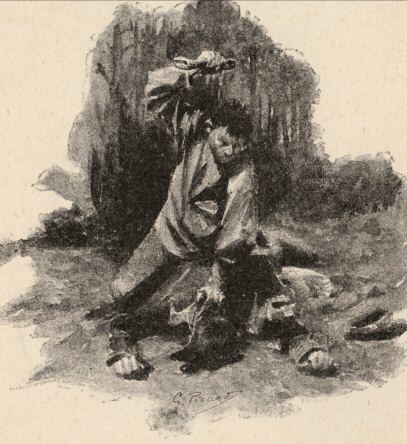
While
he spoke I saw reappear in him the wild beast I had admitted the
other evening. The mad glare seemed to return to his
eyes. His lips were compressed. His fingers
convulsively sought a weapon . . .
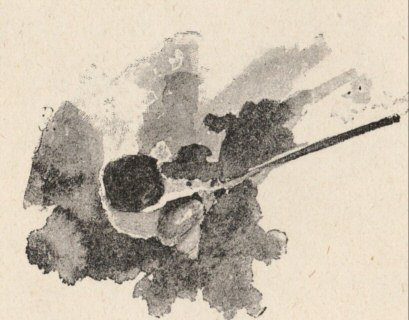
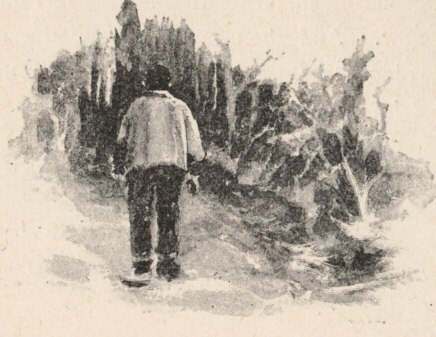
November 28th.
He is gone. I ought not to be astonished. The
wretch was tired of having nothing to kill. After promising
to come sometimes at night and knock at my door, he plunged into
the shadows, less black than himself. Well, brutal as he
was, I regret him. Solitude brings with it, after a time, a
feeling of torpor, a numbness of the whole being, which is really
unwholesome. Words seem to start fresh thoughts. By
dint of talking to this peasant of patriotism and self-sacrifice,
I have re-awakened in myself all that I was
desirous of inspiring in him. I feel quite differently
now. And then my recovery, the sensation of returning
strength, which increases from day to day . . . I long for
action and battle . . .
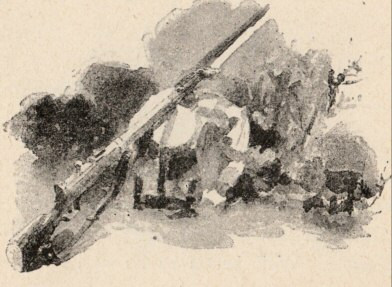
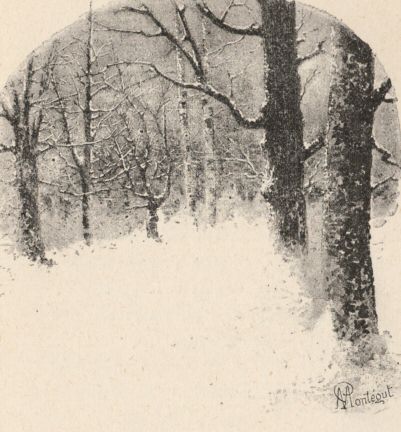
November 30th.
December 1st and 2nd.
It is bitterly cold. Through the dryness of the earth
and atmosphere the cannonading round Paris re-echoes still
louder. I have never heard anything to equal it. It
must be a real battle. At moments I fancy the sounds draw
nearer, for I can make out the platoon-firing and the horrible
rending noise of the mitrailleuse. All around here there
seems a general commotion, as it were the rebounding sound of the
battle. On the road to Melun troops are continually
moving. On the road to Corbeil scared despatch-bearers
gallop by furiously . . . What can be taking place? . .
. In spite of the cold, I go and wander about, seeking the
forest paths, where the cannonading is more distinctly heard . .
.
At times I have a dream of Paris leaving its imprisoning
ramparts, of the French troops arriving here, of the forest of
Sénart full of French uniforms, and of I myself joining
their ranks to drive out the Prussians and reconquer France . .
.
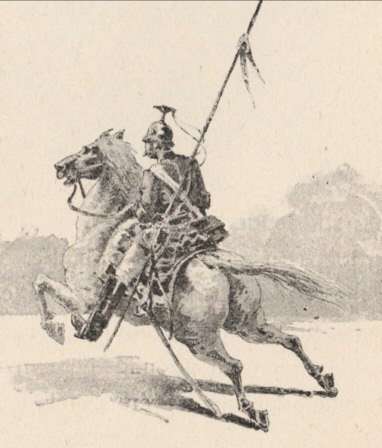
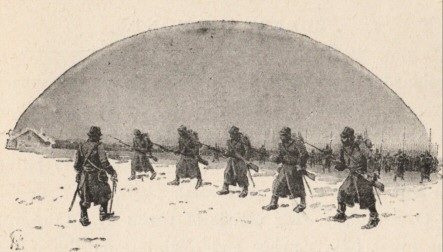
December 5th.
The incessant cannonading of the last few days has been
succeeded by a deathlike stillness. What is going on?
I am fearfully anxious. If Paris had sallied forth from her
walls and were now marching on the roads, the disbanded and
repulsed Prussians would fill the country and constantly change
their bivouacs. But no. Ever since yesterday I have
scoured the twelve miles of forest which hem me in like a wall on
all sides; in vain I scrutinise the lanes around, they are as
silent and lonely as usual. Through the trees, in the
distance, I saw near Montgeron a company of Bavarians drilling in
the open part of a wide plain. Mournfully drawn up in line
under the lowering and lurid sky, they trod with resigned
melancholy through the mud of this uncultivated and barren land .
. . Evidently Paris has not yet made a successful sortie,
but it has not capitulated either, for these soldiers presented
too pitiful an appearance to be conquerors.
Overhead, circling clouds of rooks fly by towards the great
city, cawing and alighting on the rising ground. Never had
I seen so many, even in the peaceful winter, when all France is
sown with wheat. This year it is another kind of seed which
attracts them.
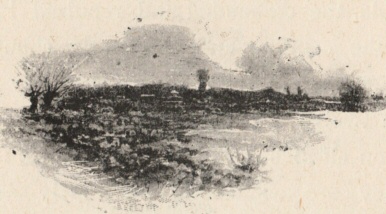
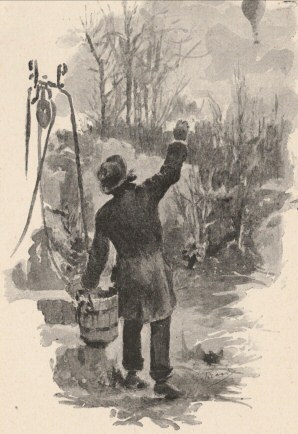
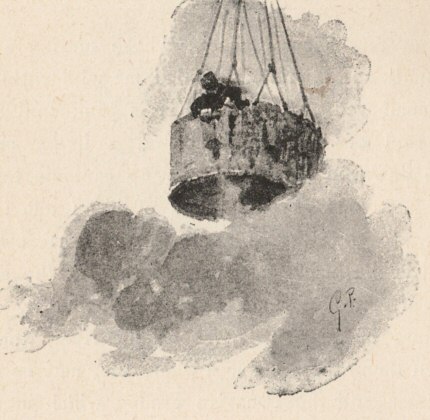
December 6th.
Thank Heaven! Paris still holds out, and is likely to do
so. I had a delightful proof of this. This morning I
was by the cloister well when I heard quick firing in the
direction of Draveil. Almost immediately a peculiar sound,
like the flapping of a sail at sea and the straining of the
stretched rigging, passed through the air above me. It was
a balloon, a fine yellow balloon, very apparent against the
darkness of the clouds. From where I stood it seemed to
float over the tree-tops, although in reality it was far
above. I cannot describe how the slender texture of
this silken balloon, whose netting I could distinctly see,
stirred and filled me with enthusiasm. I remembered that
above all this conquered France, the soul of Paris still soared,
a living strength more powerful than all the Krupp cannons
together, and I, a Parisian, felt proud of it. I felt
inclined to cry, to shout, to call out. I threw my arms out
towards the black, motionless specks at the edge of the car, two
human lives, tossed about by all the currents of heaven, far
above the rivers that may drown them, the precipices where they
may be dashed to pieces, and the Prussian armies, which must look
from that height like immense overrunning ant-heaps on the
surface of the earth . . . A light powdery line became
visible under the balloon. I heard the sound of scattered
sand among the branches, and the vision was lost among the
clouds.
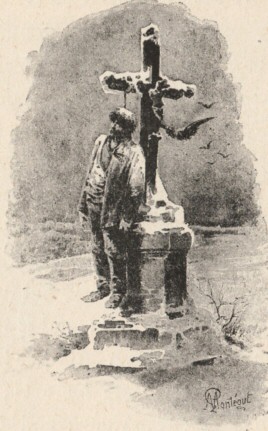
December 9th.
What am I doing here? I am really becoming ashamed of my
useless life . . . I had to bake some bread to-day, and
could not summon up courage to do it. All the little
details in which I used to take pleasure, like those egotists in
disguise—recluses and hermits—I now find
despicable. I am completely cured, only an occasional pain
on very cold days. My duty is on the ramparts with the
others . . . But how can I manage to rejoin them? It
appears that the investment is very close, and the sentinels are
placed within rifle-shot of each other. If I had only a
companion, some countryman who knows the roads well. My
thoughts fly to Goudeloup. I ought not to have allowed him
to leave me. Who knows where he may be now? Perhaps
strung up to some roadside cross, or dead from cold at the bottom
of a quarry. However, the other evening, towards the
Meillottes, I heard a cry—nothing but a cry, but a terrible
cry, long and despairing, like a wail; and it flashed across me,
“Goudeloup is there!” . . . Ah, yes! that man
is a murderer; but at any rate he acts; he satisfies brutally the
thirst for vengeance and justice which is in him. As for
me, I warm myself and sleep. Which of us two is the most
contemptible?
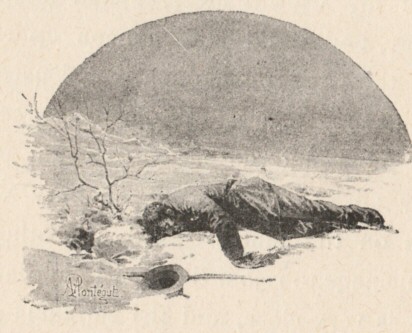
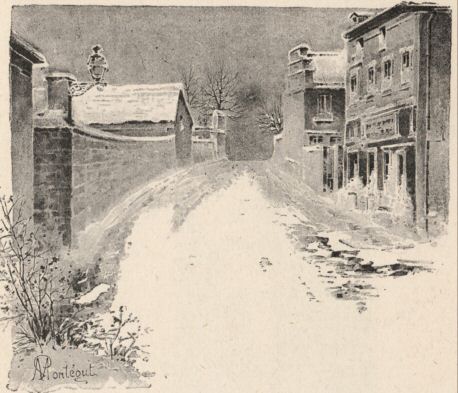
December 10th.
Returned to Champrosay in bitter cold weather. The
houses along the roadside, with all their dark, empty windows,
looked like sad and blind beggars. I visited again the
park, the summer-house at the waterside, and the smiling portrait
which inhabits it. The cold air had not dimmed the peaceful
face, nor the soft shades of the summer dress. Only the
glance seemed to me more stern and severe, as if it contained a
reproach. On the very threshold I understood I was no
longer welcome. Cautiously I closed the door again, and went down
the frozen, moss-covered steps . . . And all through the
night the clear gaze of that fair Parisian remorselessly haunted
me.
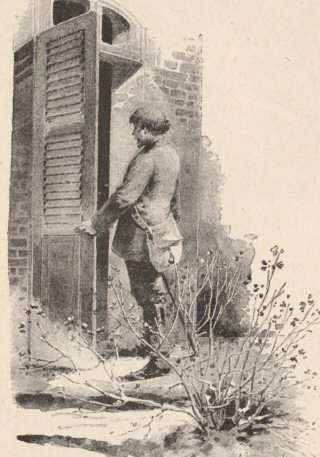
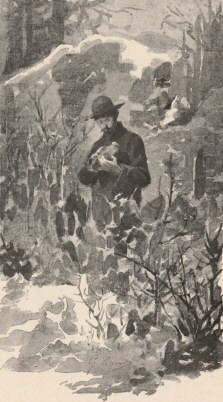
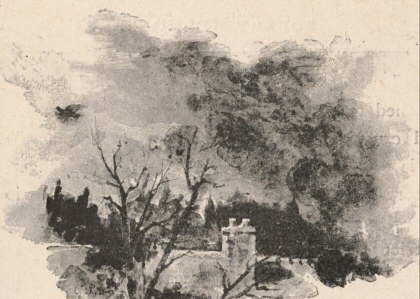
December 11th.
This morning, on going to take up the snares at the end of my
garden, I found a pigeon. It astonished me. Tame
pigeons do not remain on deserted roofs, and till now I had only
caught wood-pigeons. This one was really a tame pigeon,
plump, with pink claws and back, and brown and white wings.
The wire had not maimed it; it was merely numbed with cold.
I brought it in to the fire, and there, as I held it in both
hands—for, like a tame creature, it made not the slightest
struggle—I discovered some printed numbers on one of its
wings, 523, and lower down, Société de
l’Espérance. Then under the feathers I
found a
quill rather thicker than the others, and rolled up, fastened to
it, a tiny sheet of very thin paper. I had caught a
carrier-pigeon! Did it come from Paris or the
provinces? Was it the messenger of victory or defeat, good
or bad news? . . . For a long time I gazed at it with
almost superstitious awe. Let loose in the room, he quietly
went about pecking between the tiles. By degrees his
feathers puffed out in the warmth and his strength
returned. Then I opened the window wide, and placed him on
the sill. He remained there a moment looking up at the sky,
stretching out his neck, trying to find his bearings. At
last he rose straight into the air, and having reached a certain
height, white against the surrounding gloom, he sharply turned
towards Paris. Ah! if I could only take the same road . .
.
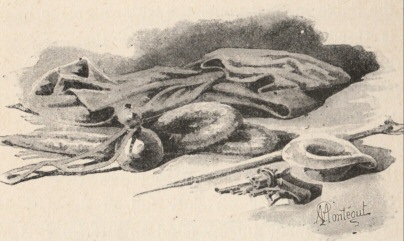
December 15th.
It is all settled. We leave to-morrow. I say
“we,” because Goudeloup has returned. He came
back yesterday in the dusk, more emaciated, more terrible than
before. The wretched man is now at his twenty-first! . .
. Nevertheless the thirst for blood is beginning to be
satiated; moreover, he is closely pursued, and the nightly ambush
has become most difficult. I therefore had little trouble
in deciding him to attempt an expedition to Paris with me.
We shall start to-morrow in my boat, which is lying out on the
Seine, moored under the willows on the banks. It is
Goudeloup’s idea. He thinks that on a very dark night
we shall be able to get by to the
Port-à-l’Anglais, and then, by creeping along
the towing-path, reach the first French barricade. We shall
see . . . I have prepared my revolver, some rugs, two or
three loaves, and a large flask of brandy.
The enterprise is certainly full of danger; but since I have
made up my mind to attempt it, I feel calmer. Instead of
making me anxious, the sound of the cannon round Paris
electrifies me. I feel as if it were calling me; and each
time it thunders, I am inclined to answer, “We are
coming.” I fancy the portrait in the summer-house
smiles at me from its gilt frame, and wears again its calm and
placid aspect . . . I have but one regret in quitting the
Hermitage: what will become of my poor Colaquet? I leave
the stable-door open for him to seek his subsistence in the
forest. I pile up near him my last bundles of straw, and
while I make these preparations I avoid meeting his astonished,
kind eyes, which seem to say reproachfully, “Where are you
going?”
. . . And now, on my table, opened at this unfinished
page, I abandon my diary with these last words, which will
probably end it: We are off to Paris!
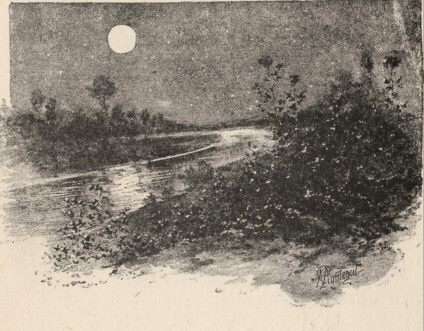
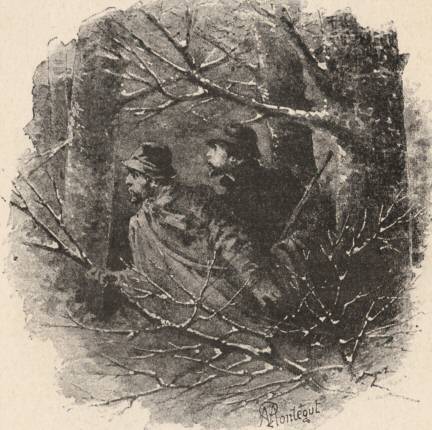
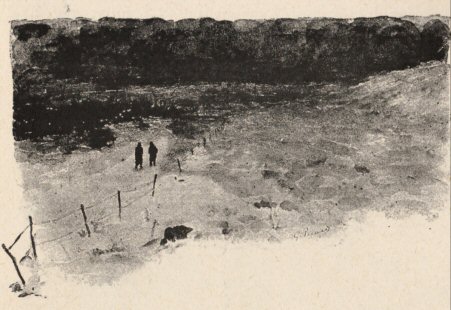
Written groping in the
dark.
I have returned . . . Goudeloup is dead . . . Our
journey has failed.
December 26th.
Ten days! I have only been absent ten days. It
seems to me that the multitude of scenes and shadows, the
confused and terrible sensations I have brought back from my
short journey, are enough to fill several existences. Now
that I have returned to the confined space of my Hermitage, all
these memories haunt and torment me,—I must try and
write them down merely to rid myself of them.
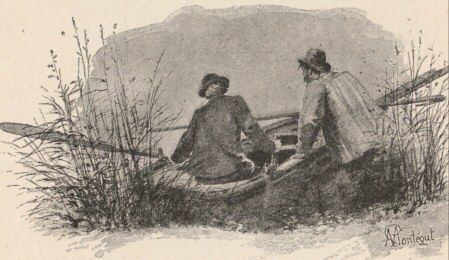
We started on the night of the sixteenth. A very cold
night, without stars, lighted up only by a white sprinkling of
hoar-frost. The frosted trees looked like hawthorn bushes
flowering before their leaves break forth. We passed
through Champrosay, as dismal and silent as the hoar-frost which
was falling and lying on its cold roofs, instead of gently
melting round the water-spouts by the warmth of the lighted
fires. Not a Prussian was to be seen on the horizon, and
this was fortunate, as our two outlines stood out distinctly in
the great bare plain. I found my boat in a little creek
hidden between the banks. It was a very lightly-built
Norwegian boat. Having wrapped some rags round the oars, we
pushed off noiselessly on the lonely river, knocking now and then
against the icicles which float on the surface of the water like blocks
of crystal. Many a time, in preceding years, I had embarked
on nights as dark and cold to set or visit my night-lines.
But what life there was on the river around me! A somewhat
mysterious, dreamy sort of life, full of the silence of universal
slumber. Long wood rafts, with their fires lighted fore and
aft, and shadows standing near the helm, slowly go down towards
Paris, gliding by through all the forest shade, and entering
Bercy at break of day, in the full glare of a noisy and crowded
thoroughfare. On the banks, waggons passed along, the night
express train gliding along through the windings of the railway
track, like a serpent with eyes of fire. And I pondered
over all the sad or joyful motives that set all these people in
motion . . . At intervals, by the side of the river, which
nearly bathed their walls, the lock-keeper’s house, the
ferrymen’s hut, the boatmen’s public-houses, threw
the glimmer from their dimmed windows over the still water.
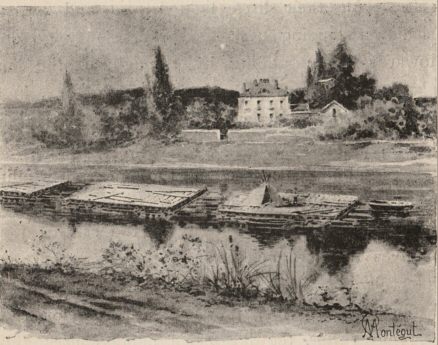
To-day there is nothing of all this. We have a new river
before us, black and solitary, disturbed by all those broken
bridges, which change the currents. However, by a few
strokes of the oar I was able to direct our little bark, and keep it near
enough to the middle of the stream to avoid the submerged islands
marked out by the dipping willows . . .
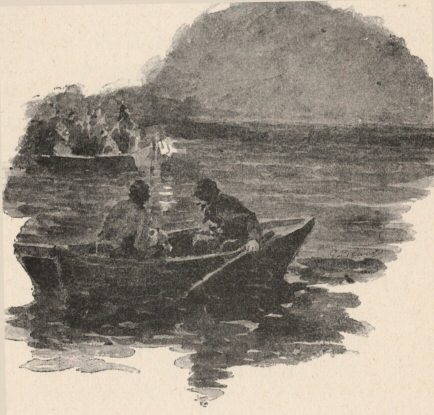
—All goes well . . . said Goudeloup in a low voice.
At that moment the noise of an oar thrown into a boat, came
from the bank, and a powerful southern voice called through the
night:
—Come, ferryman, make haste! . . .
—It is the Draveil doctor, whispered my companion.
I too had recognised the kindly voice, that is heard day and
night on highroads and byeways, always encouraging and always
hurried. How did he come there? Had he therefore
stayed at Draveil? . . . I should have liked to have called
out to him: “Good-night, Doctor!” But a
moment’s reflection stopped me. A lucky thought, in
truth; for directly after we crossed a heavy punt, with a lantern
in the bow, passing over from one side of the river to the other;
and I saw by the side of dear Doctor R— in his old felt
hat, weather-beaten by all the storms of Seine and Oise, some
shining helmets.
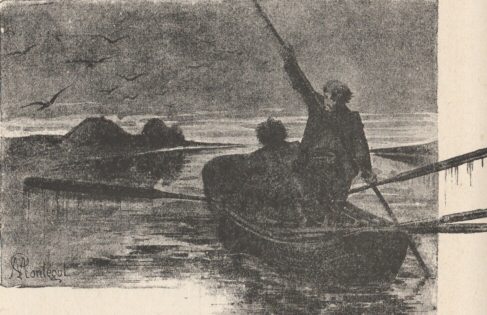
By rare good fortune we were beyond the rays of their lantern,
which deepened the shadow through which our boat was gliding, and
we passed by unseen. No less danger awaited us a little
farther on—the railway bridge, of which three arches were
blown up, blocking the river with its gigantic remains. I
really hardly know how we were able to get through this fearful barrier
in the dark, without being swamped or dashed to pieces. At
Port-Courcelles we had the same fear. The enormous gnarled
willows of the two islets became in the night so many shoals,
that we narrowly escaped. At last we reach Ablon and its
lock. Here the cannon round Paris resounds clear and
terrible, sending forth at each instant the red flash of its
thunder . . . We ought to have expected it: the lock is
closed. Fortunately our boat is light, and together we
shall be able, as I have so often done, to hoist it on to the
bank, and carry it over to the other side of the barrier.
We land at the little steps where the innkeeper of Ablon skins
his eels on summer days, and where the fishermen sit patiently
with their rods, bathed in sunshine from the top of their
boating-hats down to their shoes of untanned leather. It is
astonishing how a feeling of danger changes the whole aspect of
things! . . . When nearly at the top of the steps, I
perceived against the darkness, ten paces from me, a sentry on
his beat, pacing up and down the quay. Lower down, the
lock-keeper’s house, turned into a Prussian outpost, has
all its windows lighted up. I wish to go down quickly,
re-embark, and gain the other bank; but Goudeloup will not listen to
me. His eyes remain obstinately fixed on that shadow which
looms through the fog, and whistles while trampling above
us. I try to drag him away. He escapes, makes one
bound . . . I hear a dull sound, a smothered cry, the
rattle of arms, and the heavy fall of a man.
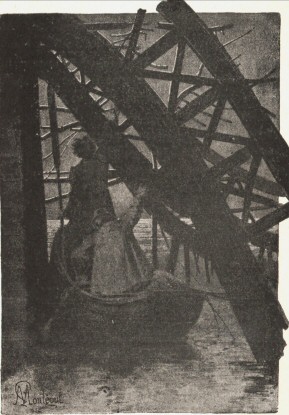 —Twenty-two! . . . says Goudeloup, slipping, quite out
of breath, down the slope.
But the unfortunate soldier, that he has left stretched out by
the river-side, has found strength before dying to fire his
gun. The sharp report rouses both banks of the river.
Impossible to land. We quickly push out into the middle of
the stream, and row hard up the river. It is all like a bad
dream. The wind and current, everything is against
us. A boat pushes off from the lock, coming straight at us,
lighted by a torch which dips up and down as it watches for us,
while another boat approaches us in a contrary direction.
—To the dredger . . . whispers Goudeloup in my ear.
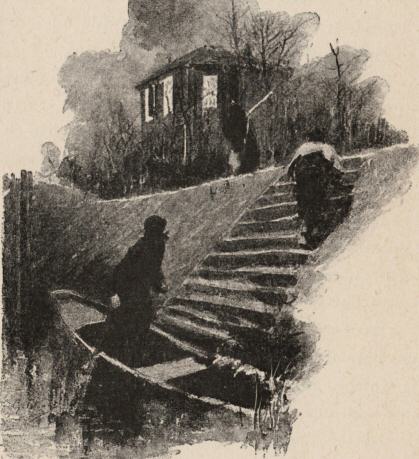
Near us, moored some fifty or sixty feet from the shore, a
dredging-boat reared its black mass above the water, with its
barrels and bucket-chain to clear away the sand. The Seine was
very high, and the water half covered it, dashing against its
bows with vehemence.
We board her, but in our haste to take refuge on this wreck we
forget to fasten our boat, which floats off with the rugs
and provision it contains. This saves us. Five
minutes later a formidable “hurrah” tells us the
Prussians have just found our boat. Seeing it empty, they
must have thought we were drowned, engulfed; for a few moments
after, the torches returned to the shore, and the whole river
resumed its silence and darkness . . .
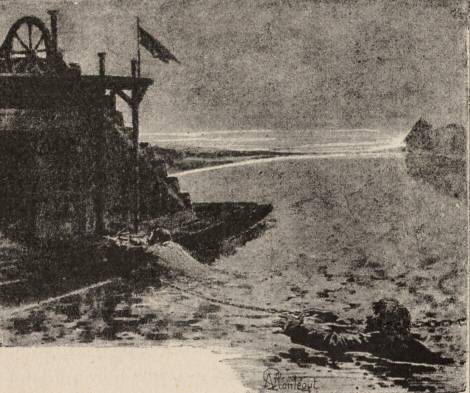
The dredger on which we found ourselves was a complete
wreck—a curious shelter, crackling and creaking all over,
and furiously lashed by the waters. On the deck, covered
with splinters of wood and pieces of cast iron, the cold was
intolerable. We were obliged to take refuge in the
engine-room, to which the water happily had not yet
penetrated. It would soon, however, reach it, for in
several places the sides of the room were cracked almost down to
the level of the waves, and we found ourselves lighted by the
leaden reflection of the darkness on the water. What gloomy
hours we spent there! Hunger, fear, and the terrible cold
numbing our limbs with a feeling of drowsiness against which we
were obliged to struggle . . . All around, the water
seethed, the wood groaned, the bucket-chain creaked in its
rustiness, and aloft, above our heads, something like the rag of
a drenched flag flapped in the wind. We impatiently waited
for daybreak, not knowing exactly what distance separated us from
the land, nor how we should be able to reach it. In our
fitful slumbers, broken as they were by anxious thoughts of
escape, the shaking of the dredging-boat and the sound of the
water surrounding us, gave me at times the impression of a long
voyage and a stormy night at sea . . .
When through the holes in the room, which were blackened
and torn as if by a bombardment, we saw the river catch the first
light of a sullen winter’s morning, we tried to make out
our position. The slopes of Juvisy commanded the farther
bank, rising above the fog, which its tall trees pierced with
their bare tops. On the opposite shore, eighty or a hundred
feet beyond the dredger, lay the flat, bare plains of Draveil,
stretching away into the far distance, without trace of a soldier
on them. Evidently that was the side we could escape
by. The anticipation of a cold bath, in the month of
December, in that deep, foaming, and swift-running water, was
rather terrifying. However, the iron chain that moored the
dredger to the bank was happily still fastened to its ring, and
we had the resource left of clinging to it and being guided by
it. While we were discussing this, a cannon was fired off
rather close at hand, from the heights of Juvisy, followed up
immediately by the whistle of a shell and its splash in the water
near us. A few seconds later, before we had recovered from
our astonishment, a second shell fell near the dredger.
Then I understood the flag, the splinters of wood, the pieces of
cast iron, and the smell of burnt powder we had noticed in the
cabin. The Prussians were using the old dredger as a target
for their cannons. It was absolutely necessary to
quit at once. The cold and the dangers of the river sank
into insignificance. Forward we must go. I seized
hold of the chain with both hands and lowered myself rapidly into
the river, Goudeloup following me. Our fingers were skinned
by the chafing iron: we advanced but slowly, numbed by the
current and the icy water. A fresh cannon-shot redoubles
our energy. Look out! Here comes the shell.
This time it falls full on the iron-plated front of the dredger,
bursts, and covers us with the wreckage. I hear behind me a
deep sigh . . . No, never shall I forget the last agonising
motion of that chain, which I felt move, struggle for a second,
and then rise up quickly in the water, loose, free, and light in
my hands . . .
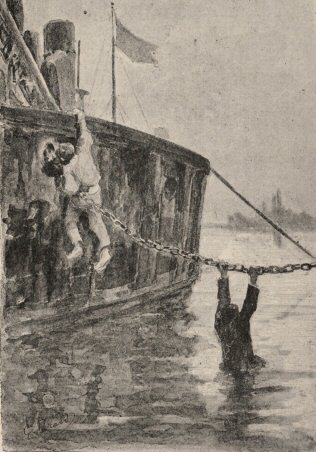 I turned round; no one to be seen. Nothing but a mass
of blood floating away on the stream. The unfortunate
fellow must have been struck on the head and killed on the spot .
. . A feeling of intense despair overcame me. My
companion slaughtered beside me, and I helpless to succour him .
. . A little more and I too must have let go the chain; but
the instinct of life won the day, and a few minutes later I
landed on the bank, but to get no farther. After a dozen
steps, overcome by the anxiety, fatigue, and terrible cold which
penetrated through all my wet clothes, I dropped down by the
roadside on the dry grass of a ditch. The well-known trot
of a horse, the roll of an old cabriolet, and the kind voice of
Doctor R— drew me from my lethargy.
—What! it is you? . . . What are you doing
there?
Quick as lightning, he wrapped me up in his cloak, hid me in
the straw under the apron of the carriage, and set off in the
direction of Draveil, where the excellent man has turned his
house into a hospital. From the cabriolet I passed into the
coach-house. There, dry clothes and a few glasses of hot
grog soon revived me. I remained there till nightfall,
without daring to move, understanding very well, although the
Doctor had never told me, the risk he was incurring by receiving
me. The house was full of soldiers and hospital
attendants. Military boots resounded on the pavement of the
small courtyard. And all around, the loud laughter, the
swords clashing, and the harsh German speech, still more
accentuated by its insolent tone. I heard all this with my
eyes shut, stupefied by the sensation of comfort, with a vague
recollection of past danger and of the cold river, and poor
Goudeloup’s heart-rending groan ringing in my ears.
At night the Doctor came to set me free, and took me to the
room generally occupied by his grandchildren, whom he had sent
away on the approach of the Prussians. It was there that I
awoke the next morning. After the horrible scenes of the
previous day, those three little cribs, with white muslin
curtains round them, the children’s toys lying scattered on
the floor with their lesson-books, even the faint medicinal smell
that came from a cupboard in which the Doctor kept some drugs,
everything calmed and soothed my over-excited nerves. In a
neighbouring yard a cock crowed and a donkey began braying.
The village seemed to awaken. Suddenly a bugle-call, rudely
jarring on these peaceful sounds, recalled the sad reality.
Then there was coming and going to and fro; doors banged . .
. I drew near the window. The Doctor’s house
looked into the street, over the flower-beds of a narrow strip of
garden in front of it. Every one knew his house, with its
round brass bell-knob standing out brightly on the freshly
white-washed wall; and the furniture in the little parlour, which
could be seen on the ground-floor, gave it an appearance of
homely comfort. Hidden behind the closed blinds, I saw
the street full of men in forage-caps falling into line, calling,
numbering each other, ready to start. Among the caps,
several Bavarian helmets appeared. These were
quartermasters running from house to house, chalking down the
numbers on the doors, preparing quarters for the advancing
forces. Soon the departing regiment moved off to the sound
of their drums, while opposite, at the entrance to the village,
the Bavarian buglers noisily entered. During the last three
months the unhappy village had been in this condition. The straw of the encampments had not
time to grow cold between the departure of one regiment and the
arrival of another . . .
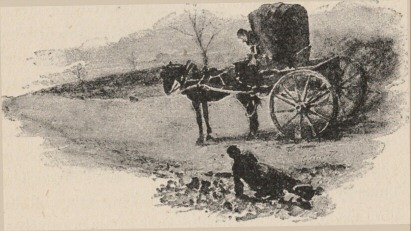
The Doctor, who just then came into the room, made me leave
the window.
—Take care, Mr. Robert; do not show yourself.
There is at the Commandatur a list of the inhabitants who
have remained in the country, and we are all closely
watched. After eight o’clock in the evening, nobody
except myself is allowed to go outside their house . . . So
many Prussians have been murdered in the neighbourhood!
Draveil pays the penalty. Their requisitions are three
times heavier here than elsewhere. The least word, and they
imprison; the slightest show of rebellion, and they shoot.
Our unhappy peasants are terrified. They spy and inform
about each other; and if one of them perceived that I was hiding
some one in my house, he would be capable—to spare himself
a requisition—of warning the Commandatur. What
would be the fate of both of us, I can easily imagine . . .
He was so afraid of any imprudence on my part, poor dear
Doctor, that all the time I stayed in his house he kept the key
of my room in his pocket. The latticed shutters and closed
windows threw a prison gloom over my room, that only gave me light
enough to read by. I had medical works, a few odd volumes
translated from the Panckoucke series, and from time to time a
copy of a French paper published by the Prussians at
Versailles. That also was written in a foreign kind of
French, and our real or imaginary defeats were sneeringly
described with coarse and stupid jokes.
When I could no longer read, I looked out through the blinds
into the street—the real old-fashioned street of a country
town. Straight rows of houses with little gardens and a
pavement in front, the spaces between them filled with a
trellis-work of branches, or the trunk of a great elm, and a
background of plain and vineyard scarcely hidden by the low
roofs. Then sheds and stables, a fountain spouting out of
an old wall, the large gateway of a farm, side by side with the
notary’s white and clean little house, ornamented with
escutcheons. And over all the cruel blight of the
invasion. Knitted jerseys drying on the iron gates and on
the shutters. Large pipes protruding from every window, and
military boots. Never had I heard the sound of so many
boots . . . Opposite my window was the
Commandatur. Every day peasants were brought in, urged
along by butt-ends of rifles or the scabbards of swords.
The women and children followed weeping, and while the man was
dragged inside, they remained at the door explaining their case
to the soldiers, who, with closed lips, listened disdainfully or
else laughed with a stupid brutal laughter. No hope of pity
or justice. All depended on the caprice of the
conqueror. They were so well aware of it, these unfortunate
peasants, that they hardly dared stir out or show themselves, and
when they did venture into the street, it was heart-rending to
see them creeping under the walls, glancing out of the corner of
their eyes, bowed down, obsequious and servile, like Eastern
Jews.
It was a cruel sight to see the ambulances stop at our door in
the wind, cold, rain, and snow; to hear the groans of the sick
and wounded being removed from the carts and borne in
helpless. When evening came, to end the long melancholy
days, the Prussian bugles sounded the retreat under the leafless
elm trees, with its slowly marked time, and its last three notes
thrown out like the weird screech of a night-bird at the approach
of night. This was the moment when the Doctor, muddy and
tired, entered my room. He himself brought my food, and,
with his usual good nature, told me all he had done—about
his visits, the hearsays from Paris and from the provinces, about
the sick people brought to him, and his disputes with the
Prussian major, who was his colleague in command of the
hospital, and whose German pedantry annoyed and exasperated
him. We talked in sad low tones, and then the kind man bade
me good-night. Once more alone, I softly opened my window
to breathe the fresh air for a few minutes. In spite of the
bitter cold, it did me good. In its peaceful slumbers the
country seemed to return to its former condition and resumed the
aspect of its happier days. But soon the step of a patrol,
the groan of a wounded man, the sound of the cannon thundering on
the horizon, brought me back to the reality, and I retired into
my prison, full of hatred and anger. At the end of a short
time this cellular kind of existence in the midst of the army of
occupation became intolerable. Having lost all hope of
entering Paris, I regretted my Hermitage. There, at least,
I had solitude and Nature. I was not tempted there, as I
was here, to interfere in the injustices, brutalities, and
constant vexations going on in the street, thereby running the
risk of compromising my kind host. Therefore I resolved
upon leaving.
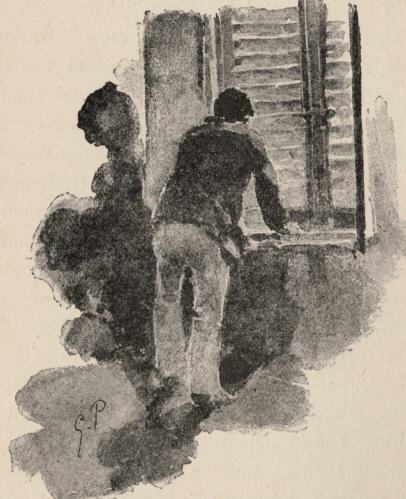
To my great surprise, the Doctor did not even try to dissuade
me from my project.
—You are quite right, he said quietly; you will
be safer over there.
Since, on reflection, I have always fancied that some
neighbour may have seen me behind the lattice, and that my host,
although he would not admit it, feared they would betray
me. We therefore decided that I should leave Draveil the
next day, in the same manner in which I arrived. When it
was quite dark, I went down into the stable. I hid myself
in the straw of the cabriolet, the Doctor’s cloak was
thrown over me, and we started off. The journey was
accomplished without accident. Every hundred and fifty or
two hundred yards was a sentry-box erected by the roadside at the
expense of the district.
—Wer da? challenged the sentry, cocking his
rifle.
The Doctor answered:
—Lazareth!
And the little gig continued its jingling rattle over the
stones. At the edge of the forest he stopped. The
road was clear. I hastily jumped out.
—Take this, said the kind man, holding out a basket full
of food and bottles . . . Shut yourself up, and do not
stir out . . . I will come and see you soon.
Thereupon he whipped up his horse, and I threw myself into the
thicket. A quarter of an hour later, I was at the
Hermitage.
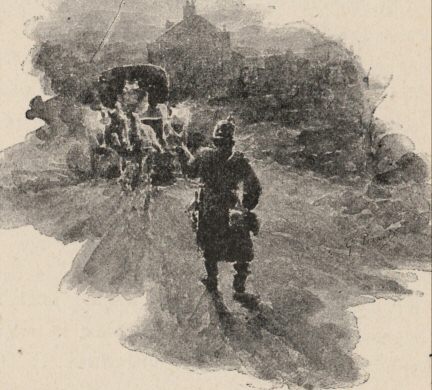
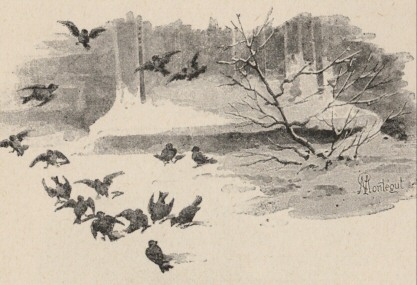
January 3rd.
. . . A fine drifting snow has been falling for the last few
days. The forest is completely covered. Around me the
silence was so deep that I could even hear the fall of the
thickening flakes. It is impossible to go out. I
watch the snow falling from the murky sky and whitening all
things. The famished birds come to my very doorstep.
The roedeer have taken refuge in the stable in place of my poor
Colaquet, of whom I have heard nothing…
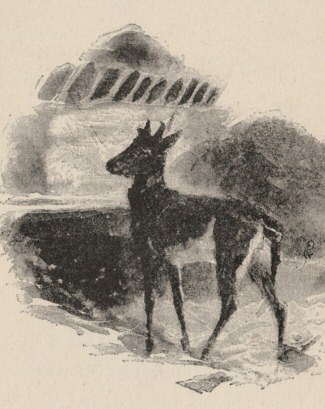
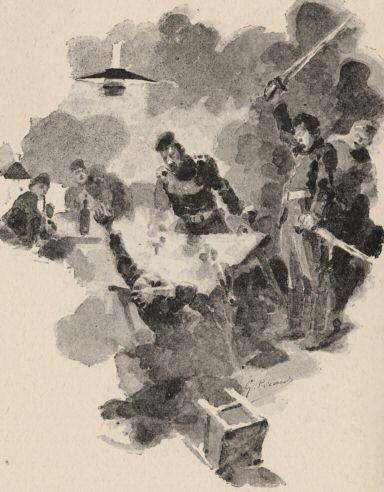
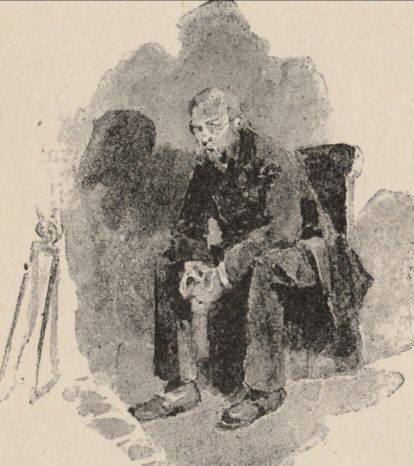
January 10th.
. . . The Doctor came to see me. Bad news: Paris still
shut up, disasters in the provinces! The conquerors, worn
out by such a tardy victory, redouble the humiliations and
brutalities . . . At Draveil, on Christmas night, five or
six Bavarians, after sitting up late drinking with old Rabot, the
forester, in a public-house, blew out his brains with a
revolver. The unhappy man’s brother, who lived
opposite, ran in on hearing the report of the shot, and in his
turn fell mortally wounded. Another man of the same family was
seriously wounded. The wretches would have massacred all
comers! The affair created a great sensation: a fictitious
inquiry was made, and concluded by the district of Draveil being
condemned to pay an indemnity of sixteen hundred pounds to
the Bavarians! . . .
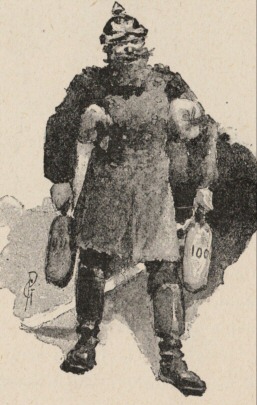
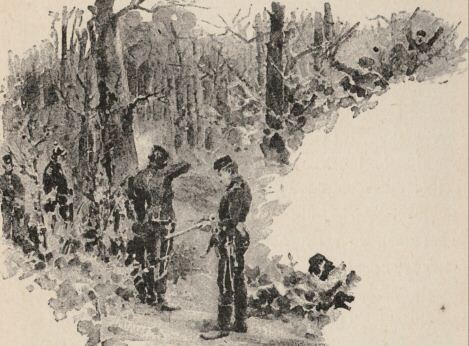
January 15th.
. . . This morning the Prince of Saxony’s staff had a
large shooting-party in the forest. On hearing the firing
so near me, I was seized with a terrible anxiety. I thought
it was the arrival of some French advanced-guard; but from the
windows of the studio overlooking the woods, I saw between the
leafless branches, crowds of beaters wearing the Saxon
forage-caps running and shouting through the thickets, while plumed and
gilded sportsmen watched at every turn of the drives. In
the circle round the Great Oak an enormous bivouac-fire
blazed in front of a tent. Here, called by a flourish of
trumpets, the shooters came to breakfast. I heard the
clinking of glasses, the uncorking of bottles, and the cheering
of the revellers. Then the slaughter of deer and pheasants
recommenced. Ah! if old Guillard had been there! he who
kept such an account of his game, watched over his coveys and his
rabbit-holes, knew the favourite haunts of the deer. How he
would have grieved to see this sacrilege! The bewildered
birds knew not where to seek safety from the cruel guns.
The startled hares and rabbits ran under the legs of the
sportsmen, and in the midst of all the confusion a wounded deer
took refuge in the courtyard of the Hermitage. The eyes of
hunted animals have a look of piteous astonishment which is truly
heart-rending. This one excited my compassion, pressing
against the low wall round the well, sniffing the air, and pawing
the ground with its little bleeding feet. My indignation
redoubled against the plundering race that swarmed over
vanquished France with the voracity of locusts, destroying its
vineyards, its houses, its cornfields, its forests, and, when the
country was laid bare, exterminating even the game, leaving
nothing alive.
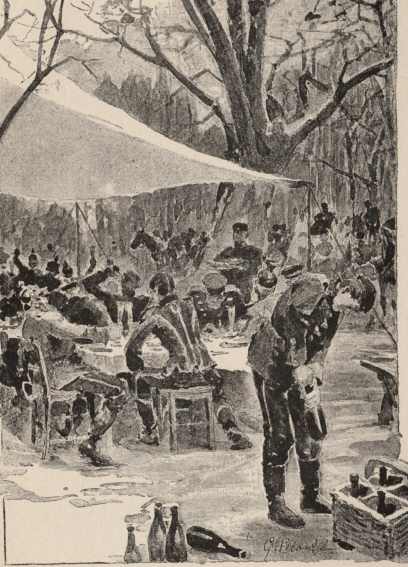
I shall never forget that day’s sport in the midst of
the war, under that dark, lowering sky, with the landscape
whitened with hoar-frost, and the glitter of the gold on the
helmets and the hunting-horns passing beneath the branches; while
the galloping of the horses, the who-hoops of the men, reminded
me of the Black Huntsman in the German ballads. At dusk,
lines of carts came to gather up from the edge of the roads all
the wounded and dying game. It was like the evening after a
battle.
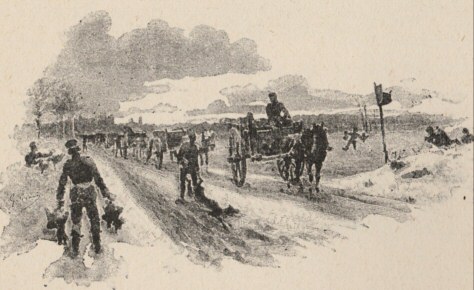
January 19th.
…They have fought all day under the walls of
Paris. But the noise of the mitrailleuses was not so
distinct as on the 2nd of December. There was something in
the sound of that distant battle which gave me the impression of
lassitude and discouragement.
January 30th.
…All is over. Paris has capitulated. The
armistice is signed.