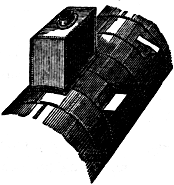
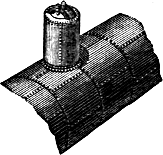
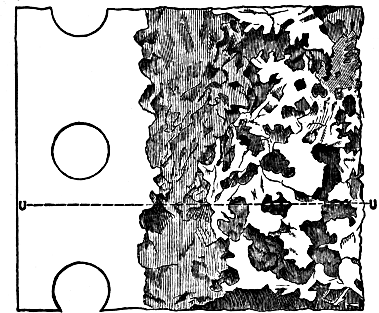
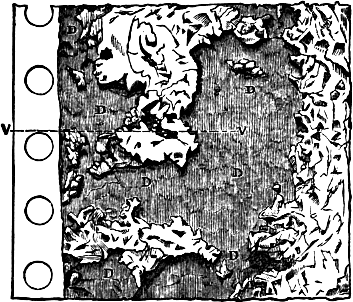
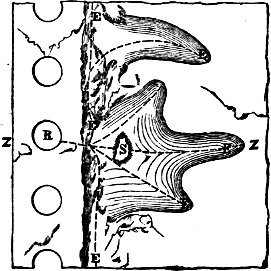
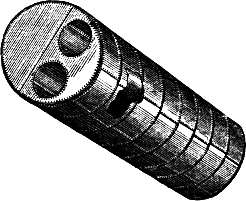
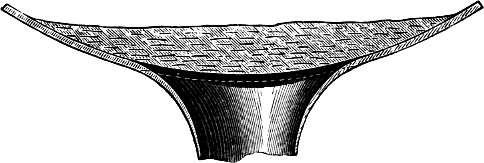
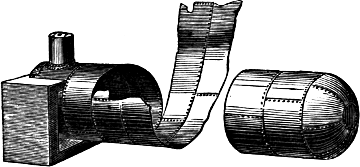
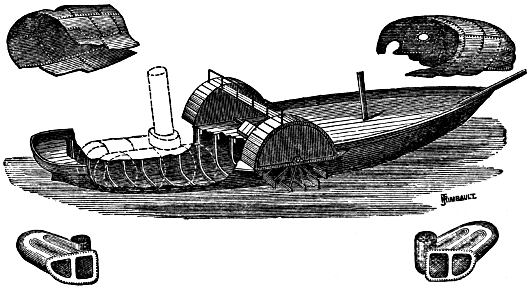
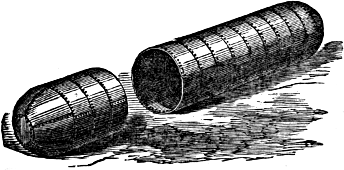
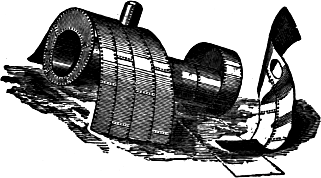
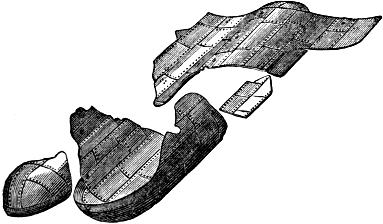
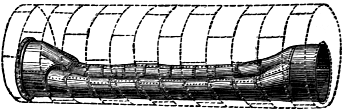
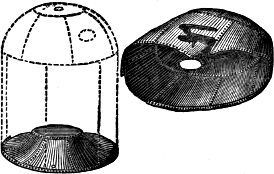
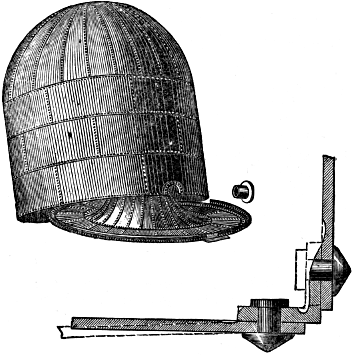
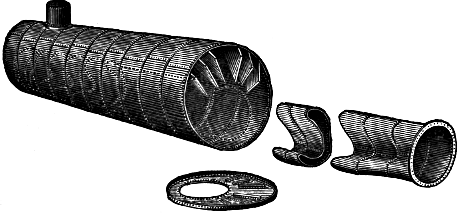
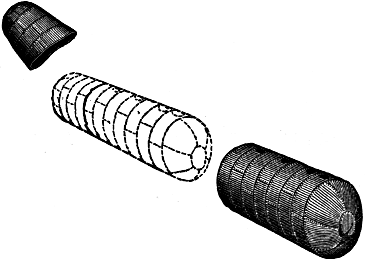
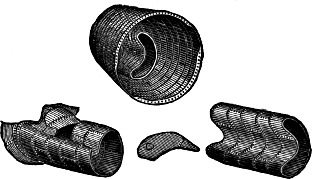
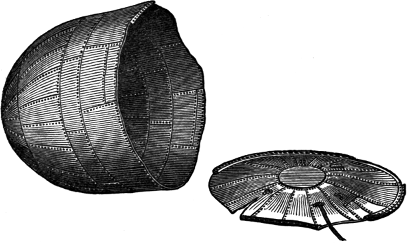
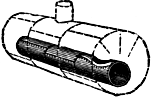
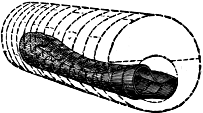
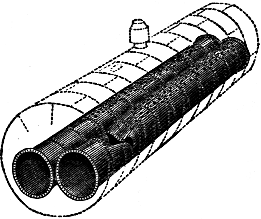
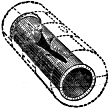
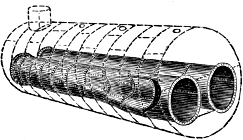
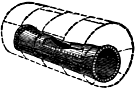
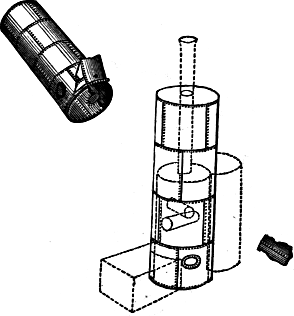
No. 1. Nottingham.
January 1st.
none injured.
Locomotive, 110 lbs., standing with steam up near a platform.
All but the fire box was blown away, the main portion being thrown
a distance of 400 yards. The first rent took place at a longitudinal
seam of the barrel where grooving had gone on very rapidly, which
was not discovered when examined and tested a short time before.
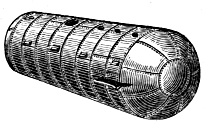
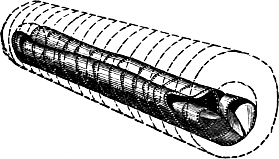
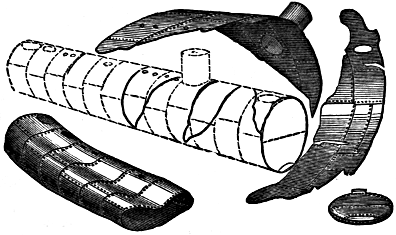
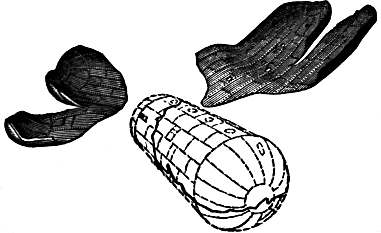
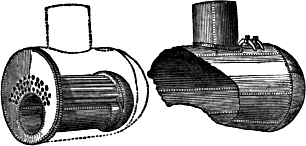
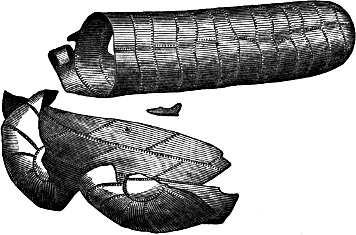
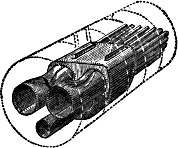
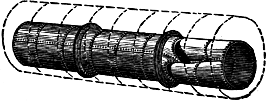
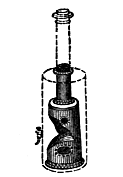
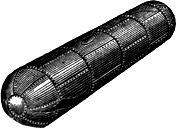
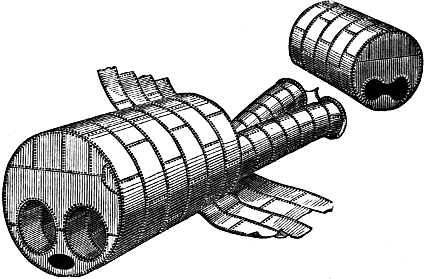
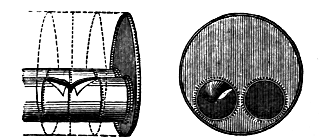
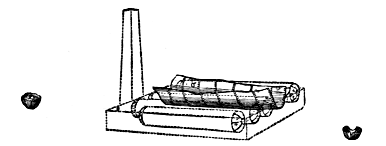
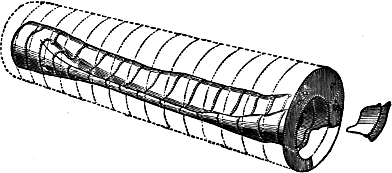
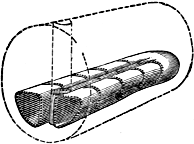
No. 2. Walsall. (Fig. 1.)
January 2nd.
2 injured.
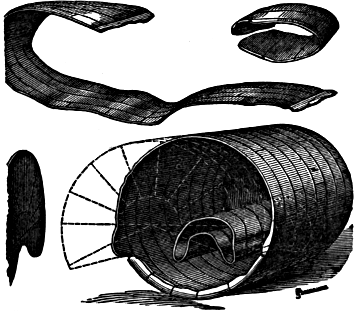
Fig. 1.
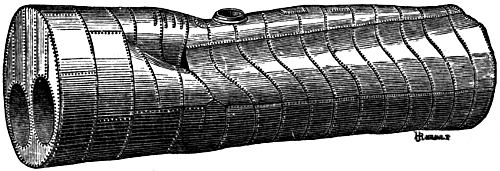
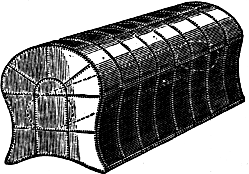
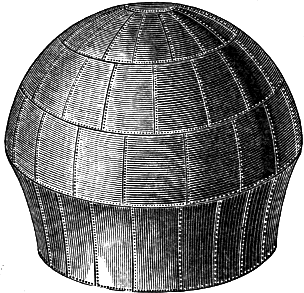
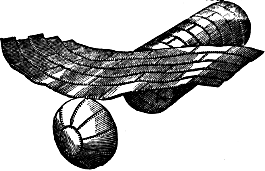
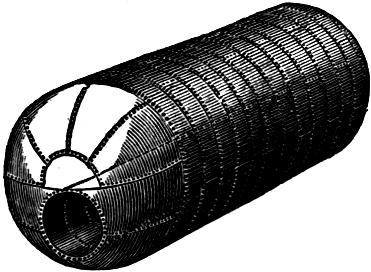
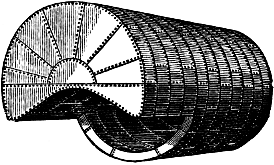
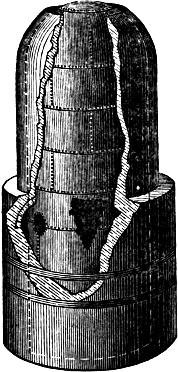
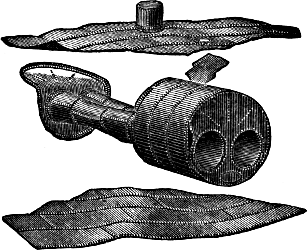
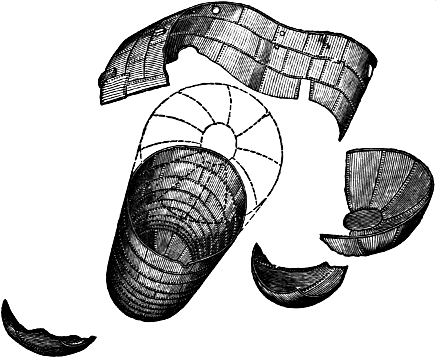
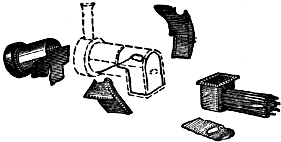
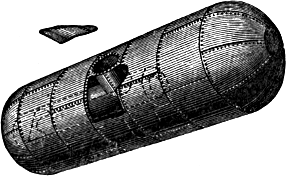
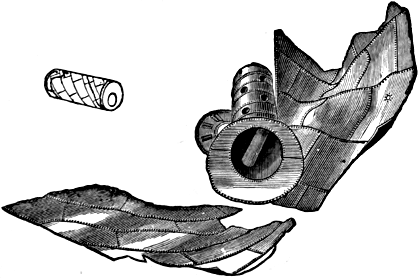
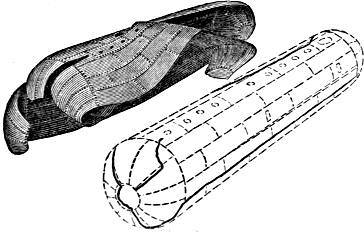
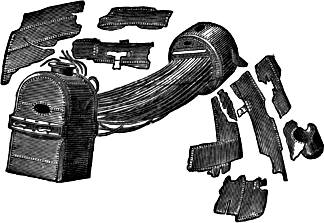
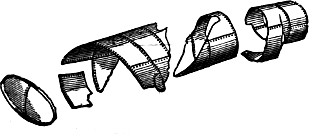
Butterley, 26ft. 6in. long, and 9ft. diameter. The wagon-shaped
top to the fire place was 8ft. 6in. long, and was attached to the
bell-mouth of the internal tube, which then continued circular to the
back of the boiler. The tube was 3ft. 6in. diameter. All the plates
were about 7-16ths inch thick, and although the boiler was an old one,
they were nowhere reduced in thickness by wear. The usual pressure of
steam was 18 lbs., and a self-registering gauge showed that at the time
of explosion it did not exceed 20 lbs.
The top of the fire grate on the right side rent longitudinally,
and the upper part of the shell consisting of four rings of plates,
and also the top of the fire place opened out and blew away to a
considerable distance.
The front end also blew away. The bell-mouth of the tube was blown
to the front, and the tube which remained in the back part of the shell
collapsed upwards.
The cause of the explosion was most likely the intrinsic weakness
of boilers of this shape, especially over the fire, where the top is
only retained in its shape by numerous stays. The boiler had been very
frequently repaired, at this the weakest place, and its strength had
been thus so reduced as to make it unable to bear even a few pounds
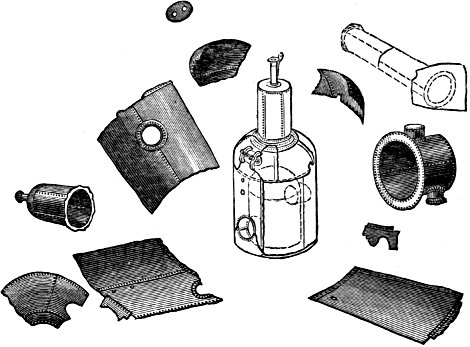
more than the ordinary working pressure.
The whistle was found to have been gagged by hemp, carefully
inserted, so that there is ground for supposing there had been
intentional unfair usage.
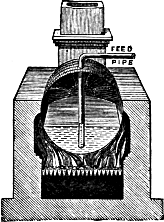
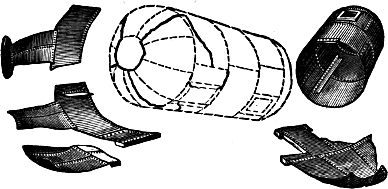
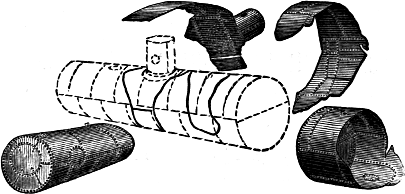
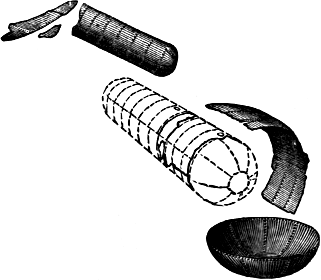
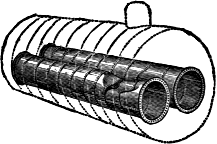
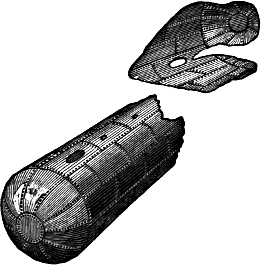
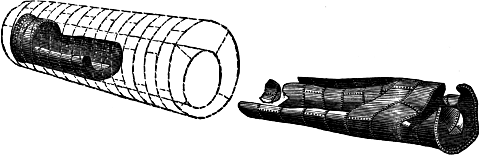
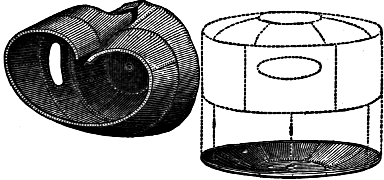
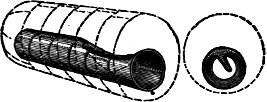
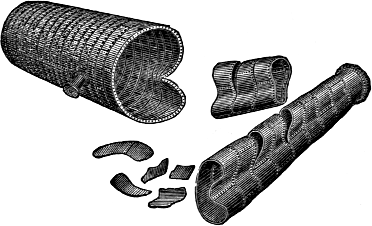
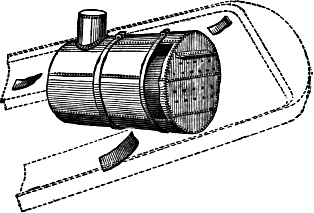
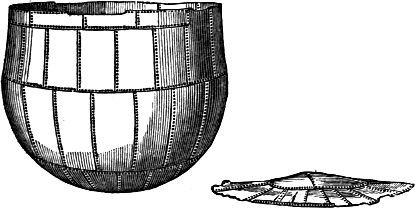
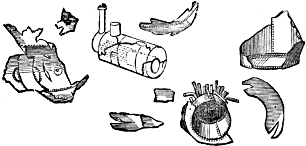
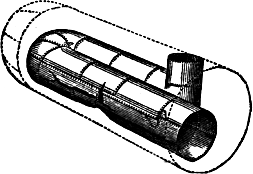
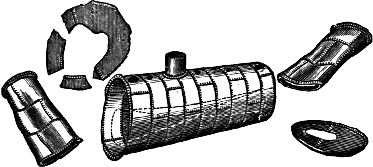
No.3. Blyth. (Fig. 2.)
January 8th.
1 killed 1 injured.
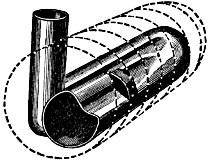
Fig. 2.
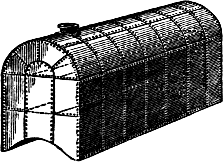
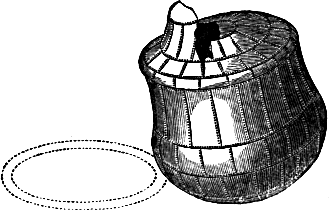
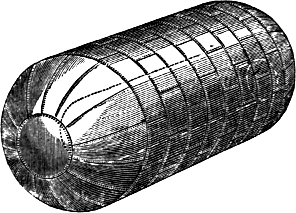
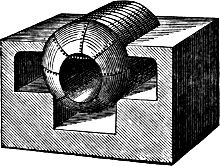
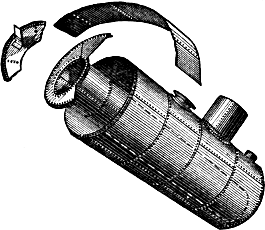
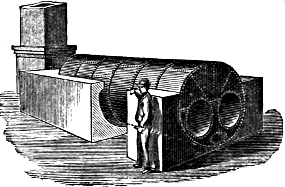
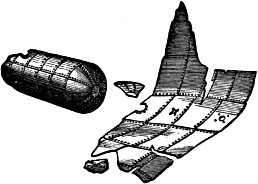
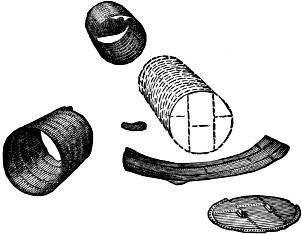
Marine, 20ft. long, and 5ft. diameter, with internal fire place and
return flue, 14 lbs. There were altogether three rents in the tube
over the fire, as a small band was held in its place by a stay from
the tube to the shell. The escaping contents scalded those near, but
no damage was done to anything but the boiler.
The cause was stated to be shortness of water. There was
no water gauge.
No.4. London.
January 9th.
1 killed.
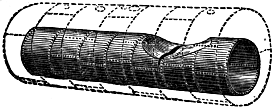
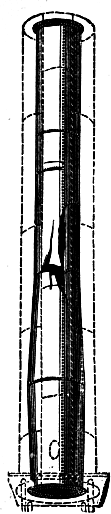
One tube Cornish, 28ft. long, 6ft. 6in. diameter, with one tube
3-6 diameter, 3/8 inch plates, 45 lbs.
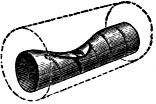
The tube collapsed in an incline direction from weakness without
strengthening rings.
The appearance after explosion was nearly the same as that shown
in sketch given at No. 12 explosion.
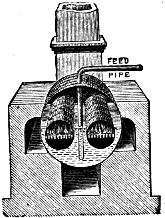
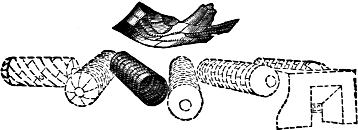
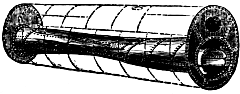
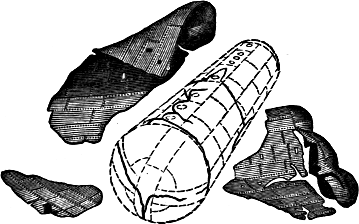
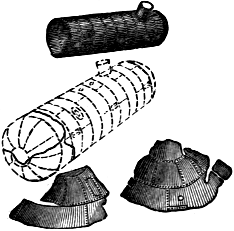
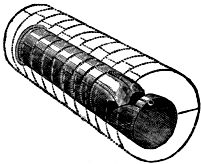
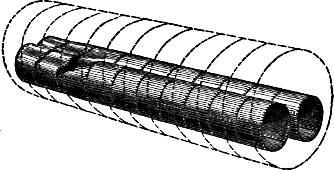
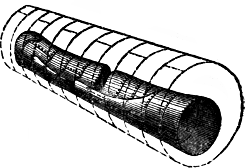
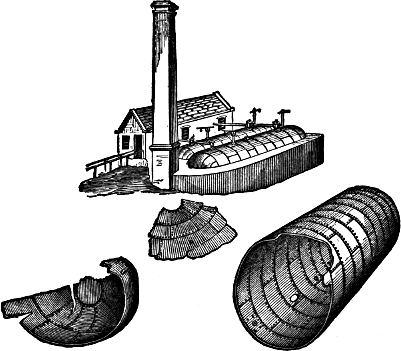
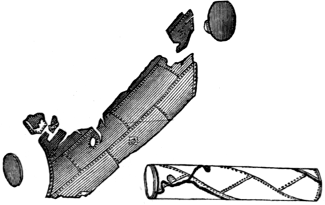
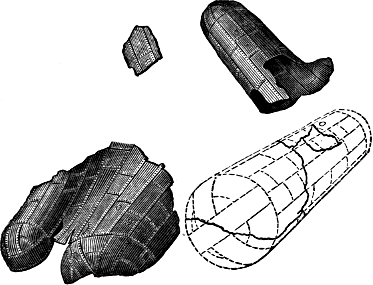
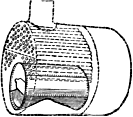
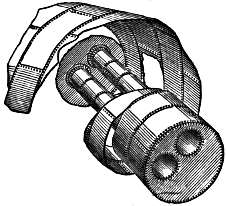
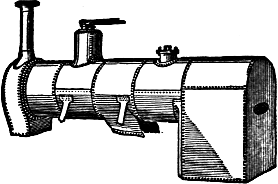
No.5. Glasgow. (Fig. 3.)
January 13th.
4 killed, 4 injured.

Fig. 3.
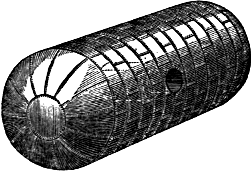
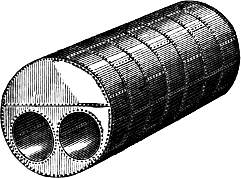
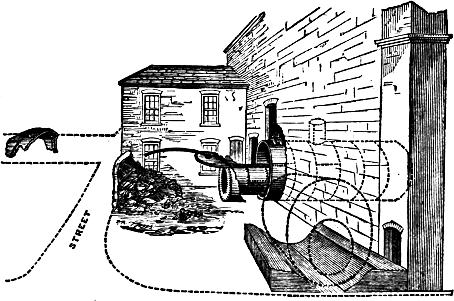
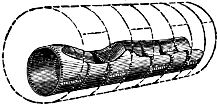
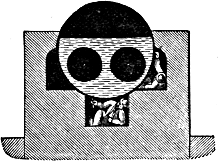
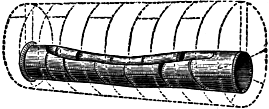
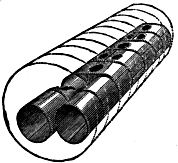
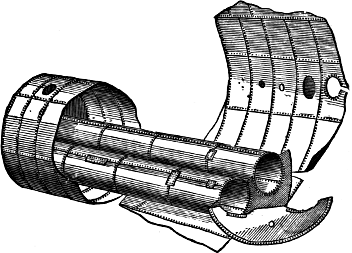
Two tube Cornish, 22ft. 3in. long, and 7ft. 7in. diameter, 3/8 inch
plates, tubes 2ft. 7in. diameter, 40 lbs.
About 8ft of the back portion of the shell was torn off, leaving
the tubes and ends intact.
The cause of the explosion was considered to be excessive pressure,
but how accumulated did not transpire.
It is most natural to expect that there must have been corrosion
under the bottom to cause the first rent.
No.6. Coatbridge.
January 17th.
1 injured.
Cornish. No details have been obtained.
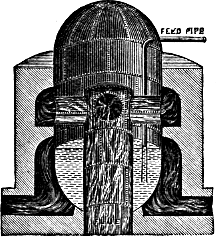
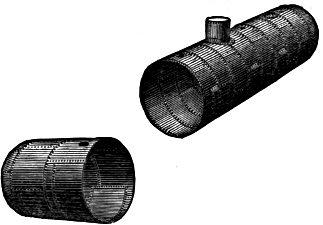
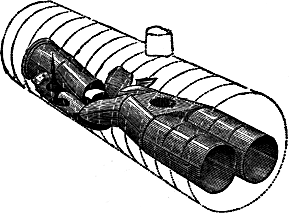
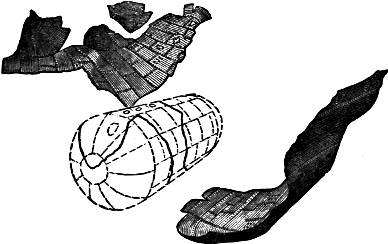
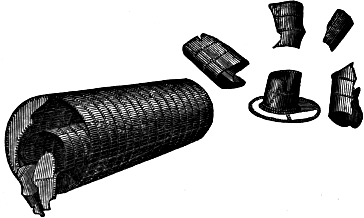
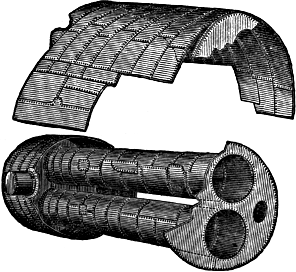
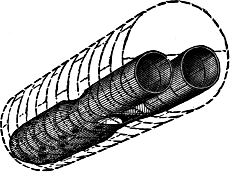
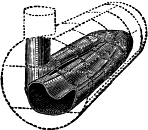
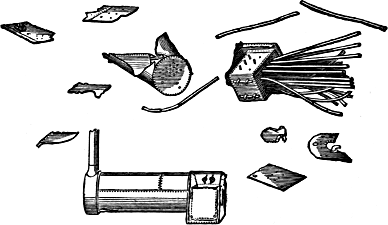
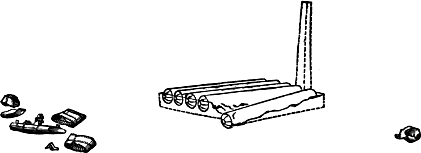
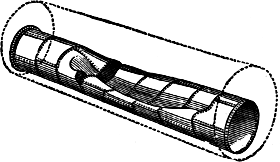
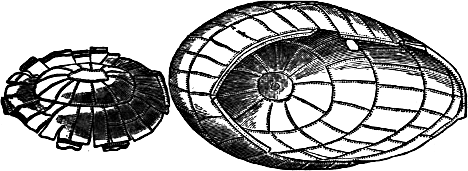
No.7. York. (Fig. 4.)
January 18th.
1 killed, 2 injured.
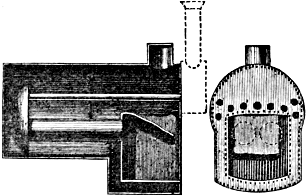
Fig. 4.
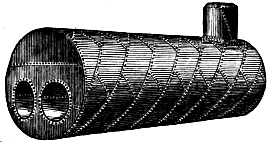
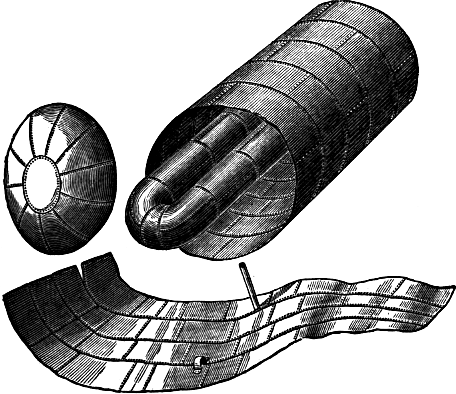
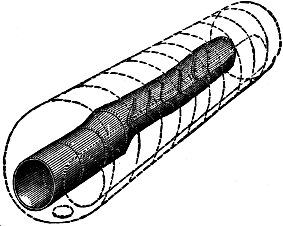
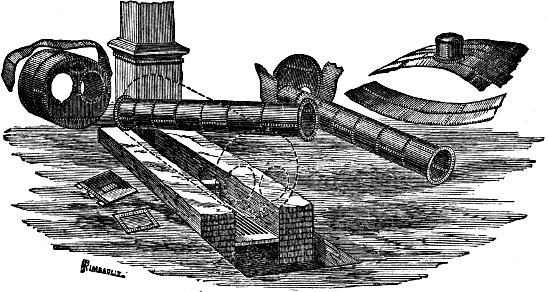
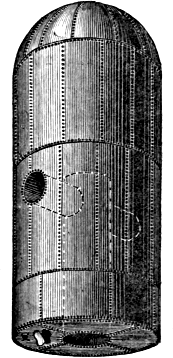
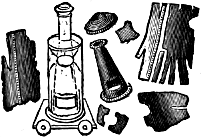
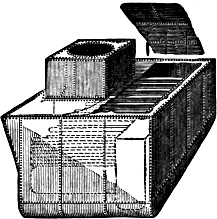
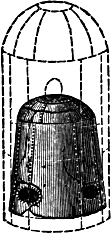
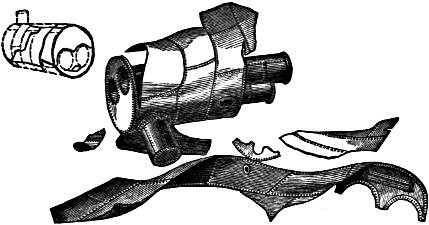
Agricultural, 8ft. 2in. long, 3ft. 6in. diameter in the barrel,
5-16ths inch plates, internal fire box, 2ft. 4in. wide, 2ft. 4in. high,
and 2ft. 10in. deep. From the back of this fire box, two 12-inch tubes
passed to an internal chamber at the back of the barrel. From this
again passed nine 3¾ inch tubes to an exterior smoke-box fixed
over the fire door. The boiler was fitted with one spring safety valve,
which was screwed down tight, but there was no pressure gauge. The
front plate was intended to be bolted on so that the fire-box and tubes
could be taken out for cleaning, but it had been rivetted, leaving no
means of cleaning, and it was nearly full of scurf.
The crown plate of fire-box which was too flat and unstrengthened,
rent at the front and along both top edges, and was driven into the
fire. The boiler was thrown backwards and reared against a wall,
resting on the front right hand corner.
The cause of the explosion was that the very dirty state, caused
overheating where the water was not in proper contact with the plates,
and the defective construction did not admit of proper cleaning. The
mountings were insufficient for the proper protection of the boiler.
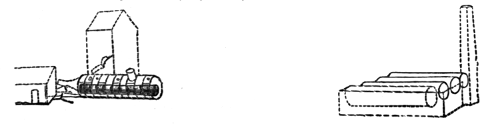
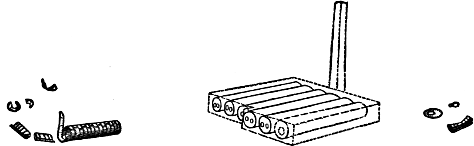
No.8. Durham. (Fig. 5.)
January 29th.
1 killed, 3 injured.

Fig. 5.
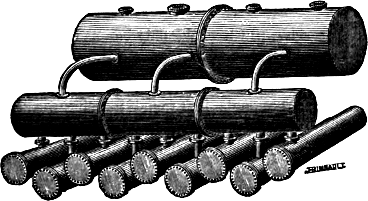
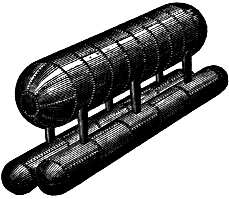
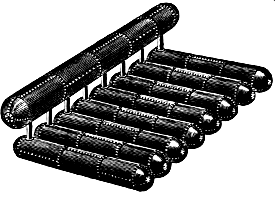
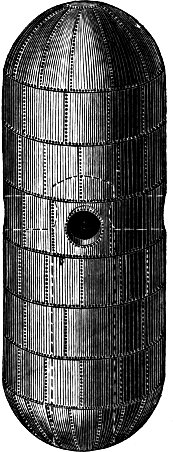
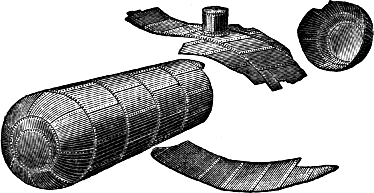
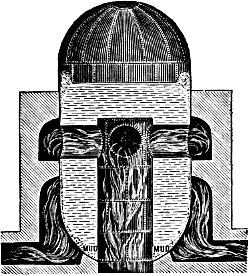
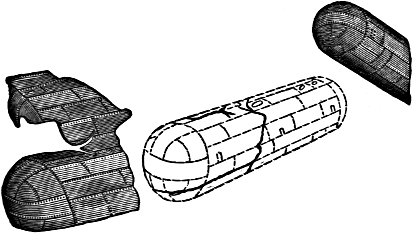
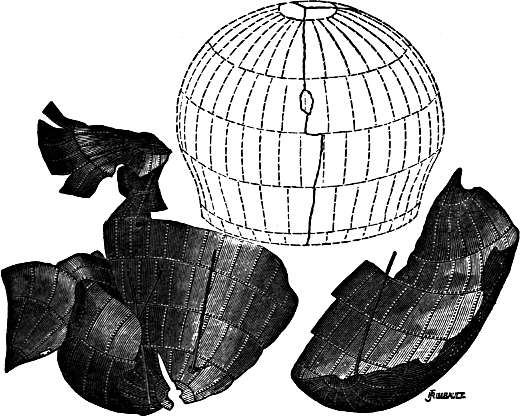
Plain Cylinder Boiler with hemispherical ends, 30ft. long and 6ft.
diameter, 3/8 inch plates, 30 lbs. It was the second from the engine
in a bed of five, and had been at work three years, then remained
idle for eight years, working again fourteen years. The boiler was
mounted with two safety valves 3-7/8 and 4 inches diameter, a float
and alarm whistle. The boiler had been more than once repaired
over the fire with several new plates. One seam over the fire had
been observed to leak about a week before the explosion, but not
seriously, and had been caulked. The boiler had just been started
after cleaning. Six months before explosion, the boiler had been
tested to 69 lbs.
About 5 feet of the front end of the boiler opened out flat, and
was thrown to the rear about 60 yards; the front hemispherical end
was liberated and thrown 20 yards also to the rear and right hand.
The back part of the boiler was thrown in a mass, and after
bounding twice, lodged at a distance of 230 yards.
The cause of the explosion appeared to be from the failure of a
seam over the fire place in a plate deteriorated by age, and overheated
through a deposit of scurf and mud.
No.9. Birmingham. (Fig. 6.)
February 7th.
1 killed, 4 injured.

Fig. 6.
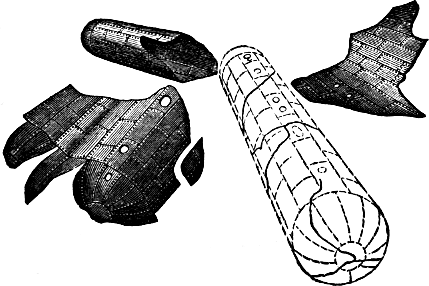
Plain Cylindrical Boiler, with hemispherical ends, 23ft. long, and
5ft. diameter, 3/8 inch plates, 50 lbs. It was set so as to be fired
under the bottom if required, but the grate was seldom used. The
principal heat was supplied from a mill furnace, the neck of which
was at the left hand of the back, and the flame was carried by a
wheel flue round the front of the boiler to the stack on the right
hand side of the back. The boiler was fitted with a 4¾-inch safety
valve, and also a float, but it was suspected that the latter had
broken from the rod.
A horizontal seam about the middle of the left hand side had
given way, and the upper portion of the 3rd and 4th rings of plates
had spread out like a lid without being detached from the boiler.
The front end became detached and was thrown some distance to
the front.
The cause of explosion was, that the left side of the boiler became
overheated, and so much softened, that it first bulged outwards with
the ordinary working pressure, and then rent open. The overheating
was most likely the result of shortness of water, but it might possibly
have been in consequence of the intense heat of a mill furnace
impinging on a small area so near the water line, leading to such
rapid ebullition as to prevent sufficient contact of the water to keep
the plates cool.
No.10. Dunse.
February 14th.
1 injured.
Locomotive. It exploded while standing in a shed, but no
particulars have been obtained.
No.11. Middlesbro'.
February 26th.
1 injured.
Marine, in a small tug boat, but no details have been obtained.
No.12. Gainsbro' (Fig. 7)
February 26th.
1 injured.

Fig. 7.
One Tube Cornish, 21ft. long, 5ft. diameter, with one tube
2ft. 11in. diameter, plates 3/8 inch, 64 lbs. There were no strengthening
rings on the tube. The boiler was second-hand, and had only
worked a part of a day at its new position when it exploded.
The tube collapsed from weakness without strengthening rings.
No.13. Redruth. (Fig. 8.)
March 3rd.
1 killed.

Fig. 8.
One Tube Cornish, 31ft. 9in. long, and 5ft. 9in. diameter, tube
3ft. 8in. diameter, 3/8 inch plates, 40 lbs.
The tube had been repaired with a bolted patch on the left side
the day before the explosion, and it is presumed it was slightly out
of the circular shape, as it collapsed sideways, the top being thrown
up above its proper height. There was no evidence of shortness
of water.
The tube without strengthening rings was too weak to sustain
the ordinary working pressure.
No.14. London.
March 5th.
7 injured.
Cornish, at 27 lbs., but as the boiler was not injured, it is only
noticed as an explosion, because of the imprudence of placing
fittings in such dangerous positions. The boiler was beneath a work
room, and the lever of the safety valve became displaced, allowing
the valve to blow out, and the escaping steam rushed into the room
above and scalded seven men very badly.
No.15. Manchester.
March 6th.
1 killed.
This was a Boiler with two internal fireplaces, connected into one
flue at the back.
The crowns of both furnaces were collapsed, and slightly rent,
and the escaping steam and water scalded the attendant.
The water was 8 or 9 inches below its proper level, allowing the
furnace crowns to become overheated and unable to bear the
working pressure.
Each furnace had been fitted with a fusible plug, but they
proved inefficient.
No.16. Norwich. (Fig. 9.)
March 13th.
1 killed, 1 injured.

Fig. 9.
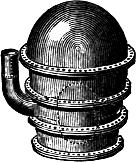
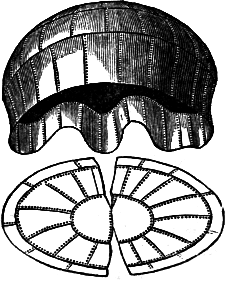
This was a very small boiler, 8ft. long, and 3ft. 2½in. diameter,
with two small tubes. It was fired externally.
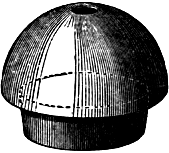
The dome was blown off and the rents continuing, the top opened
out on each side, and the upper portion of both back and front
was bent back.
The dome cut away the whole of the top plate, and so much
reduced the strength that it would not bear the ordinary working
pressure.
No.17. Dudley. (Fig. 10.)
March 19th.
none injured.

Fig. 10.
Plain Cylinder Boiler, 36ft. long, 5ft. 6in. diameter, 60 lbs.
It had frequently been repaired over the fire, so that the longitudinal
seams ran for several plates without break of joint. A patch
had been put on a few days before explosion, and as the rivet holes
had badly fitted, there had been much strain caused by drifting,
and the rivets were much distorted.
A longitudinal seam gave way over the fire, when two rings of
plates opened out, rending the transverse seams at each side until
completely separated, and fell in two parts at a distance of about
100 yards in front of the boiler. The front end was liberated and
fell in one piece about 100 yards beyond the two pieces of the shell.
The main body of the boiler was driven back a few yards and
rolled over so as to be upside down, but was little injured.
The frequent and badly executed repair over the fireplace, had
so weakened the structure as to make it unable to bear the very
high ordinary pressure. This frequent repair over the fireplace
had been made necessary by very hard firing and deposits of scurf
from muddy water, preventing the proper contact of the water with
the plates.
No.18. Liverpool.
March 22nd.
1 killed.
This was a small Boiler to supply steam for some steam winches
on board a steam boat, and exploded from the overheating of the
upper tubes through shortness of water, or from over pressure in
consequence of having only one safety valve.
No.19. Leeds. (Fig. 11.)
March 27th.
2 killed, 18 injured.
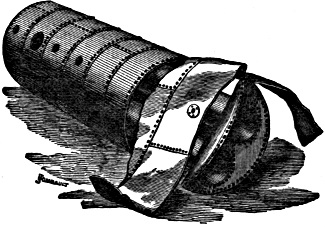
Fig. 11.
Two Tube Cornish, 24ft. 6in. long, 6ft. 6in. diameter, tubes
2ft. 6in. diameter, 3/8 inch plates, 54 lbs., fitted with steam gauge,
blow-off cock, 1½ inch dead weight safety valve, loaded to 54 lbs.,
and 4-3/8 inch lever safety valve, loaded to 62 lbs., and had been at
work about five years.
Nearly the whole of the two back rings of the shell were torn off
and opened out, and the boiler was turned partly round, and moved
upon its seat sideways and forwards.
There was extensive corrosion at the under side of the back of
shell, where the first rent took place, caused by the leaking of the
joints and seams.
No.20. Swansea. (Fig. 12.)
April 4th.
5 killed, 4 injured.

Fig. 12.
One Tube Cornish Boiler, 30ft. long, and 7ft. diameter, tube
slightly oval about 4ft. diameter, 7/16 inch plates, 43 lbs., fitted
with 3½ inch safety valve, which is much too small for such a
boiler, glass water gauge, two gauge cocks, and pressure gauge.
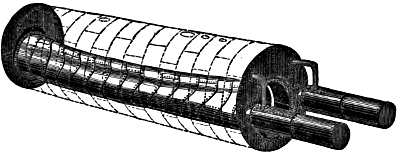
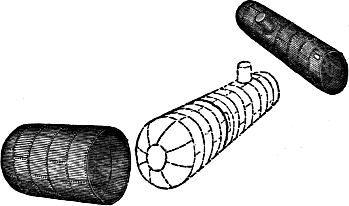
The tube collapsed from end to end. The front end was blown out
with a short length of the tube attached, and was driven against a
wall about 30 yards to the front. The main body of the shell, and the
back end, with the collapsed tube within it, were driven back against
another wall, about the same distance away. Very great damage was done
to the surrounding property.
The cause of the explosion was the weakness of the tube of so large
a diameter, without strengthening rings, which made it unable to bear
the ordinary working pressure. It is very probable, however, that at
the time of the explosion, the pressure was considerably more than
usual during the stoppage of the engine, and the confusion caused by a
man becoming entangled in the machinery.
No.21. Morpeth.
April 10th.
1 killed.
Plain Cylinder Boiler, 34ft. long, and 5ft. diameter, 3/8 inch
plates placed lengthways, 33 lbs.
The explosion took place at a seam in the front part of the bottom
of the boiler just over the fire. This rupture allowed the sides to to
expand, until the boiler was completely destroyed and torn into seven
pieces.
The cause of the explosion was supposed to be the defective state of
the seams over the fire, which, being placed longitudinally, were in
the weakest position.
No.22. Shiffnal. (Fig. 13.)
April 21st.
none injured.

Fig. 13.
Two Tube Cornish, 15ft. long, 6ft. diameter, tubes 1ft. 8in.
diameter, 3/8 inch plates, 40 lbs. The heat was supplied by two
furnaces, one of which played into each tube.
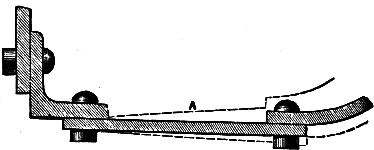
The left hand tube collapsed from shortness of water, and tore
away from the angle iron in the front plate, and allowed the contents
to issue violently and scatter the brickwork, but the boiler was not
disturbed.
No.23. Burnley.
April 26th.
2 killed, 2 injured.
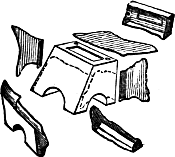
Small internally fired Boiler, 5ft. high, 2ft. 4in. diameter, and
was intended to work at 70 lbs. The fittings were defective, the spiral
spring of the safety valve being most easily altered, so as to cause
over pressure. The manhole was not strengthened by any ring, and the
first rents commenced at that point.
The cause of the explosion was over pressure and defective
construction.
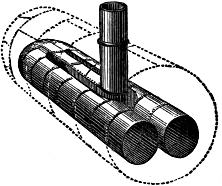
The sketch at No. 57 explosion in this year,
is of a similar boiler which exploded from nearly similar causes.
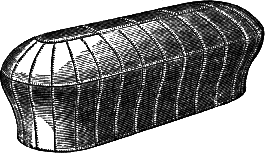
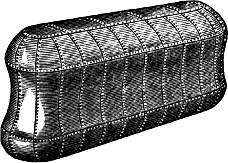
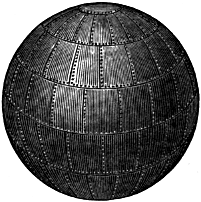
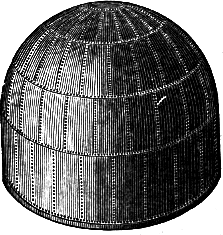
No.24. Bilston. (Fig. 14.)
May 13th.
none injured.
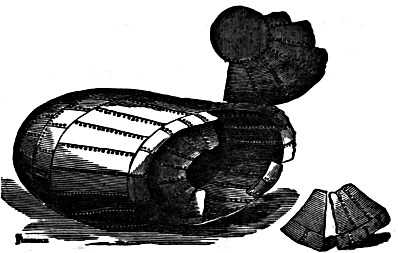
Fig. 14.
Balloon or Haystack Boiler, about 16ft. diameter, 5/16 inch plates,
and worked at very little above atmospheric pressure.
The boiler was chiefly used to store water during the time another
boiler by the side of it was emptied. When the water was required
to refill the other boiler, a fire was lighted under the balloon, and
sufficient steam generated to drive the water from it into the other
boiler. The safety valve never being used, it had become fast, and
as a little more steam than usual had accumulated, the bottom gave
way, and the reaction of the issuing contents made the boiler rise
from its seat, and it fell on its side at some distance away flattened
by the fall.
No.25. Westbromwich. (Fig. 15.)
May 25th.
none injured.

Fig. 15.
One Tube Cornish Boiler, 15ft. long, and 4ft. 6in. diameter, taper
tube, 2ft. 9in. diameter in front, and 2ft. diameter at back, 3/8 inch
plates, 40 lbs. The boiler rested on two walls forming the bottom flue.
There was a safety valve, a glass water gauge, a pressure gauge, and
two fusible plugs upon the tube.
Two longitudinal rents took place on the under side of the shell,
allowing two strips, forming the central part, to open out by the
continuation of the fracture, until they were blown to a considerable
distance. The tube with the front end, and one ring of the shell were
thrown to the front, while the back end was thrown to the rear, the
smallest end of the tube having torn away from the back.
The shell was deeply corroded where it rested on the side walls of
the bottom flue, and the strength of the boiler was thereby so much
reduced, that it was unable to bear the ordinary working pressure.
No.26. Halifax. (Fig. 16.)
May 26th.
1 killed.

Fig. 16.
One Tube Cornish, 24ft. 6in. long, and 5ft. diameter, taper tube,
slightly oval in the front, 2ft. 8in. diameter, and 2ft. diameter at
the back, 3/8 inch plates. The boiler was fitted with glass water
gauge, float, self-acting feed apparatus, and safety valve loaded to
52 lbs., and also a mercury gauge.
The tube collapsed over the fire, a rent taking place in the second
ring of plates. The issuing steam and water caused the death of a
man in front, but the shell of the boiler was not injured or moved.
The cause of the explosion was shortness of water, and as the
glass gauge was set unusually low, the man in charge may have
been deceived. The oval shape of the fireplace, and the laminated
iron, as shown in the fracture, rendered the tube peculiarly liable
to collapse.
No.27. Durham.
May 26th.
1 killed.
Plain Cylinder Boiler, 34ft. long, 5ft. diameter, 3/8 inch plates,
45 lbs., fitted with two 5-inch safety valves, and 2 floats.
The boiler was torn in two pieces, that were thrown to a considerable
distance. The first rent had taken place immediately
over the fire.
The cause of the explosion was the weakening of the shell by
frequent repair over the fire, rendered necessary by the deposit from
the muddy water preventing proper contact of the water with
the plates.
No.28. Durham.
May 27th.
1 killed.
Plain Cylinder Boiler, 32ft. long, 6ft. diameter, 3/8 inch plates,
35 lbs., fitted with two safety valves, two floats, and two alarm
whistles.
The boiler was lifted from its seat, and one end was separated
and thrown to a considerable distance.
The cause of the explosion was weakening of the shell from
repair a few days before, and perhaps over pressure, as the gauge
was found some time after, and indicated that the pressure had at
some time exceeded 80 lbs.
No.29. Redruth.
May 28th.
1 killed, 4 injured.
One Tube Cornish, 30ft. 8in. long, 6ft. 8in. diameter, tube, 4ft.
diameter, 7/16 inch plates, 40 lbs.
The tube collapsed, and rent, and the issuing steam and water
scalded those near, as it was too weak to bear the ordinary
working pressure.
No.30. Leicester. (Fig. 17.)
May 31st.
1 killed, 1 injured.

Fig. 17.
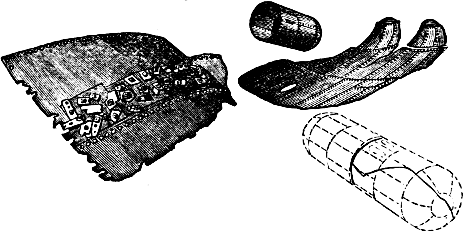
Plain Cylinder Boiler, with dished ends, and only 4ft. 2in. long,
and 2ft. 6in. diameter, ¼ inch plates. It was most inefficiently
mounted, the safety valve was only 1-5/8-inch diameter, and of such
faulty construction, that it would not open under a pressure of 162
lbs. There was no steam gauge or float, and the gauge cocks were
defective. There was no means of putting water in the boiler when there
was a pressure of steam. The manhole was very large for so small a
boiler.
Four rents started from the manhole and continued along the top of
the boiler and round the end seams. A tongue-shaped strip of the top
plate was attached to the back end plate; two strips about a foot wide
on either side were blown away. The boiler had been turned nearly round
in its flight, and fell with the back about 12 feet from the original
position of the front.
The boiler was worked until it was nearly dry, and, during a
temporary stoppage of the engine, an accumulation of steam caused a
greater pressure than the boiler could bear.
No.31. Newcastle.
June 7th.
none injured.
Marine Boiler in a Tug Boat.
The boiler was blown completely out of the vessel, and the greater
part of it fell into the water, and a large piece alighted on a crowded
quay, but without doing any damage.
The cause of the explosion was supposed to be over-pressure during a
temporary stoppage of the engine.
No.32. Barnard Castle. (Fig. 18.)
June 11th.
2 injured.
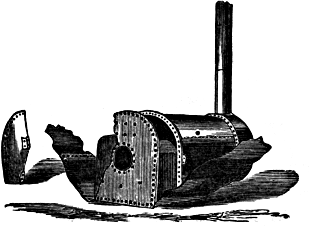
Fig. 18.
Agricultural, of about 7 horse power. The barrel of the boiler
was 6ft. 1in. long, 2ft. 5in. diameter; the fire-box end was 3ft. wide,
and 2ft. 4in. deep; the fire-box was 2ft. 5½in. wide, and 2ft. 7in.
high, and 1ft. 9½in. deep, with 23 tubes passing from it through the
barrel to the smoke box and chimney. The boiler was fitted with a 2in.
safety valve, which was intended to blow at 45 lbs., but as there was
no ferrule, it is supposed to have been screwed down to a much greater
pressure.
The upper portion of the shell over the fire-box rent through the
manhole, and allowed the shell to open out and fall on each side. A
large portion of the front plate was also torn off.
The cause of the explosion was the weakness of the manhole, which
was not strengthened by any ring, and also excessive pressure from want
of proper safety valve.
No.33. Breage.
June 11th.
1 killed.
Cornish Boiler, 36ft. 6in. long, and 6ft. diameter, 3/8 inch plates,
45 lbs.
The tube collapsed and rent, and the issuing contents caused the
death of the attendant.
The weak tube of such large diameter, was unable to bear the
ordinary working pressure, having no strengthening rings.
No.34. Nottingham.
June 19th.
2 killed, 4 injured.
Locomotive, ½ inch plates, 140 lbs.
The explosion occurred at the left hand side of the ring of plates
in the barrel next the fire-box, and below the foot-plate. The rent
tore along the edge of the lap and into the next ring of plates. The
reaction of the issuing contents threw the engine off the rails.
The cause of the explosion was partial corrosion at the point of
rupture and strain of the plates, as the boiler itself formed part of
the frame of the engine.
No.35. Richmond.
June 26th.
2 injured.
Locomotive, being tried for the first time. The funnel came in
contact with a bridge, and the dome was also torn off.
No.36. Gainsbro'.
June 29th.
none injured.
No details have been obtained.
No.37. Durham.
July 2nd.
4 killed.
Plain Cylindrical Boiler, 30ft. long, and 6ft. diameter, 3/8 inch
plates, 28 lbs. It had been repaired a short time before the explosion,
with 5 new plates.
The boiler was torn up into several pieces, but the main portion
remained flattened out on the seating, while some smaller pieces were
sent 250 yards away.
The cause of the explosion was the deterioration of the boiler, and
its frequent repair over the fireplace.
No.38. Liverpool.
June 12th.
4 injured.
Elephant Boiler, 20ft. long, and 4ft. diameter, 3/8 inch plates, and
worked at low pressure. The bottom shell had a tube through its whole
length.
A rent took place in the lower part of the fireplace, and extended
along the bottom, and the reaction of the issuing contents caused the
top to rear up.
The cause of the explosion was supposed to be that the bottom plates
were worn too thin to bear the ordinary pressure.
No.39. Sheffield.
July 4th.
none injured.
Two Tube Cornish Boiler, externally fired, 30ft. long, and 6ft.
diameter, 3/8 inch plates, 40 lbs.
The second seam over the fire gave way, and the plate sank down upon
the fire.
The cause of the explosion was the deterioration of the seams over
the fire, in consequence of the deposit of scurf which could not be
properly cleared off owing to the internal tubes.
No.40. Oldham.
July 14th.
none injured.
Boiler, with two internal furnaces, 9ft. 6in. long, and 2ft. 11in.
diameter, 3/8 inch plates, uniting into one tube beyond.
The furnace crown collapsed near the front of the boiler.
There was an extra weight upon the safety valve, and the steam valve
was left closed, so that more pressure accumulated than the boiler
could bear.
No.41. Oxford.
July 23rd.
3 injured.
Rag Boiler, not used for the generation of steam. It was a plain
cylinder, with hemispherical ends, about 16ft. long, and 7ft. diameter.
There was a neck at each end upon which the boiler revolved, and
through one of these the steam was admitted to a pressure of 30 lbs.,
in order to assist in cleaning the rags. There was a large manhole for
filling and emptying.
The boiler rent in the middle, and each half was blown to some
distance.
The manhole was so large, that the strength of the boiler was too
much reduced, and the constant strain of revolving caused a central
seam to give way at the ordinary pressure.
The sketch to No.63 is of a similar boiler.
No.42. Tunstall. (Fig. 19.)
July 28th.
2 killed, 7 injured.

Fig. 19.
Boiler, 36ft. 6in. long, and 8ft. 9in. diameter, 7/16 inch plates, with
flat back and hemispherical front end, 36 lbs. A tube 3ft. 3in.
diameter, passed from the back end nearly to the front, and returned
to the back end, but of 6 inches less diameter and then passed to an
iron chimney. The fire grate was beneath the hemispherical end.
The angle iron of the flat back end gave way, and separated from
the shell and with the tubes attached was blown to a good distance,
and the reaction drove the shell far in the opposite direction.
The cause of the explosion was the bad construction of the boiler,
as the back end was quite unsupported, as there were no stays, and
the bend of the tubes was not attached to the shell.
An adjoining boiler which was being cleaned inside by two men,
was rolled off its seat by the force of the explosion.
No.43. Widnes.
August 2nd.
2 killed, 6 injured.
Plain Cylindrical Boiler, with flat ends, 23ft. long, 5ft. 3in.
diameter, 3/8 inch plates, 40 lbs.
Both the flat ends were blown out, and the first ring of plates at
the front end torn off.
The cause of the explosion was the weakness of the flat ends without
stays.
No.44. Sunderland.
August 7th.
1 killed, 3 injured.
Locomotive, 13ft. 4in. long, 3ft. 11in. diameter, with 140 2-in.
tubes. The fire-box was 4ft. 5in. long, 3ft. 6in. broad, and 5ft. deep,
and made of copper, ½ inch thick, 100 lbs. It was fitted with
two 4-in. safety valves, and a steam gauge.
The fire-box gave way about the middle of the left side, 2ft. 6in.
below the water line, where corroded to 1/8 inch, and the issuing water
and steam scalded those near.
No.45. Runcorn. (Fig. 20.)
August 22nd.
3 killed, 5 injured.

Fig. 20.
Marine Multitubular, 5ft. 8in. long, and 6ft. 6in. diameter, with
two internal tubular furnaces, which joined to an internal chamber
of large size, and small tubes passed to a smoke box and chimney in
the front over the fire doors. Both ends were flat.
The flat back end was insufficiently stayed, and was blown
completely out and torn into two pieces, the lower portion remaining
in the vessel, and the upper part falling in the water, and the
reaction of the issuing contents caused the boiler to be thrown on to
the side of the quay.
No.46. Hull. (Fig. 21.)
August 25th.
1 injured.

Fig. 21.
One Tube Cornish, 24ft. 3in. long, and 6ft. diameter, taper tube
3ft. 5in. diameter, for about 7ft. 6in. in length, and 2ft. 6in.
diameter for the rest of the length, 33 lbs.
The tube was much corroded, and the fireplace gave way on left side,
and was so much torn, that the plates were forced out of the front.
No.47. Morecombe.
August 27th.
3 killed, 1 injured.
Marine, of the usual construction, and had been tested to 60 lbs.
It gave way at the lower portion of the back, and the issuing steam
and water scalded those near.
A seam rent, 6ft. 6in. long, had not been detected by testing.
No.48. Tuddenham.
August 29th.
2 killed, 2 injured.
Agricultural. It burst during a temporary stoppage from accumulation
of steam, causing undue pressure.
No.49. Glasgow.
August 31st.
3 killed, 6 injured.
Upright Boiler, 36ft. high, 5ft. 6in. diameter, 7/16 inch plates, 45
lbs.
The bottom gave way from shortness of water, and the main bulk of
the boiler was thrown straight up into the air to a great height, but
descended again on its seating.
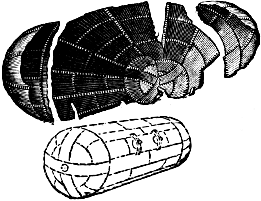
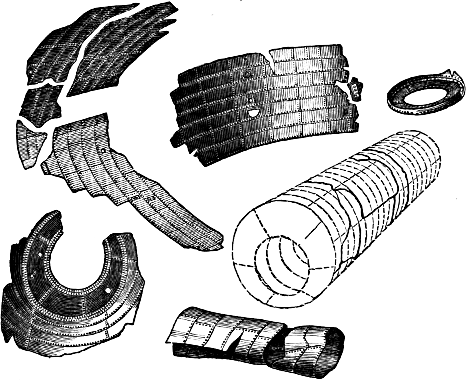
No.50. Chatham. (Fig. 22.)
September 7th.
2 killed, 30 injured.
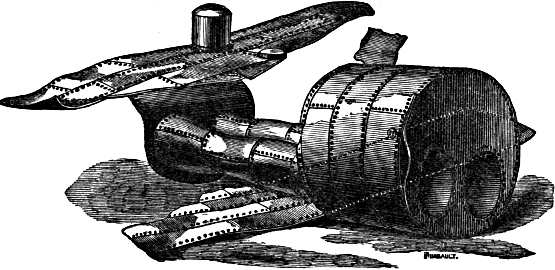
Fig. 22.
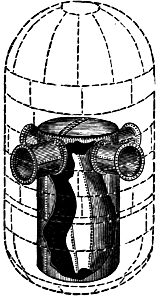
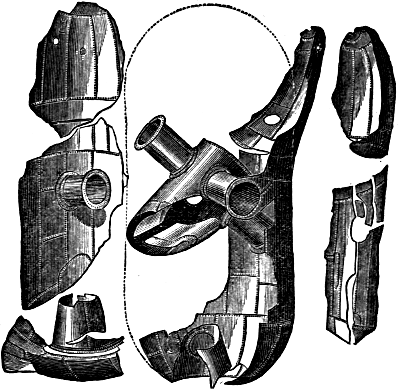
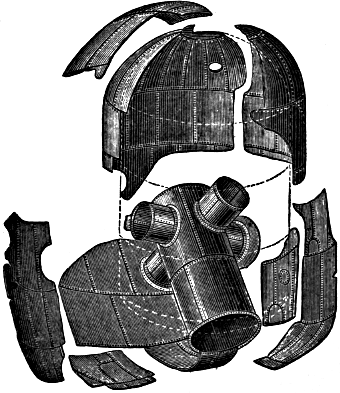
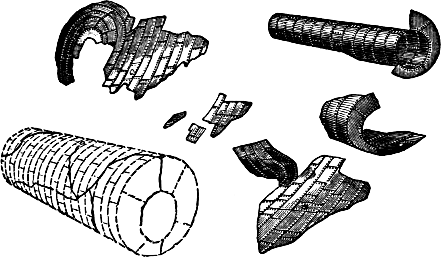
Two Tube Cornish, 22ft. long, 7ft. 6in. diameter, with tubes, 3ft.
diameter, 7/16 inch plate, 60 lbs.
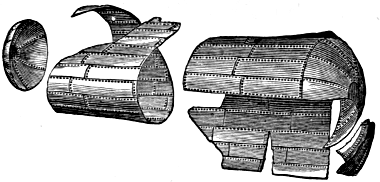
Some rents took place at the under side of the shell, allowing the
central portion to open out and blow away. The portion containing the
dome was thrown to the left, and the other to the right. The front
end, with 3 rings of the shell, with the tubes and back end, were but
little moved from their original position. The tubes were dented in on
the top and bottom, by the fall of some large coping stones upon them,
but the crowns of the furnaces were uninjured, and there was no sign of
shortness of water or overheating.
Extensive corrosion on the under side of the shell, where it rested
on the brickwork, had so reduced the strength, that it was unable to
bear the working pressure.
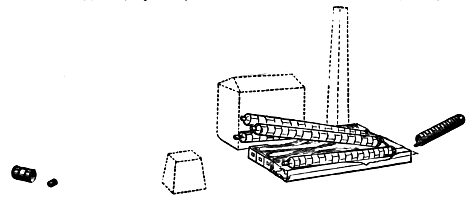
In the sketch the fragments are drawn so as to show their position
when in the boiler.
No.51. Newark.
September 21st.
none injured.
One tube Cornish. The tube collapsed from shortness of water, and
the escape of the steam and water blew off the door frame.
No.52. Ashton.
September 23rd.
1 injured.
Plain Cylindrical Boiler, 7ft. long, and 2ft. diameter, 3/8 inch
plates, 30 lbs.
The upper part of the boiler at the first ring of plates was torn
off, and the front end was blown out.
Extensive external corrosion, where the plates rested against
the brickwork, rendered the boiler too weak to bear the ordinary
pressure.
No.53. Norwich. (Fig. 23.)
September 25th.
7 killed.

Fig. 23.
One Tube Cornish, 20ft. long, 4ft. 6in. diameter, tube 2ft. 6in.
diameter, 3/8 inch plates, 100 lbs. It was double-rivetted, and the
crown of tube was strengthened with angle iron. The shell was formed
of six rings, each of two plates alternately jointed top and sides.
The third ring from the front had stripped off, and was thrown to the
right and forwards against a wall. The line of rent was confined to the
plates forming the ring, which was an outer one, and covered the two
adjoining rings in the laps, the rent being from the edge of the inner
lap to the nearest rivets. The first rent had taken place in the solid
iron, about 1 inch from the rivets of a seam on one side, and from this
the rent had extended along the seams on either side, and of course
the whole ring soon tore off when the equilibrium was destroyed by the
first rent.
The fittings of the boiler were sufficient, except that there was
only one safety valve, and that was so constructed that it could only
open a very little way.
The cause was a defect in the iron at the point of the first rent,
and accumulated pressure during the time of standing.
No.54. Macclesfield.
September 25th.
none injured.
Multitubular Boiler, with large internal fireplace, 60 lbs.
The furnace crown became overheated from shortness of water, and was
crushed down and torn across two seams. The boiler was lifted from its
seat and thrown back against a stone wall.
No.55. Chelmsford.
October 5th.
1 killed, 7 injured.
Agricultural, 45 lbs., and had only just been set to work.
The crown plate to the fire-box was so deeply corroded from long
wear that it gave way, and the issuing contents scalded those near.
No.56. Greenwich. (Fig. 24.)
October 8th.
2 killed, 2 injured.
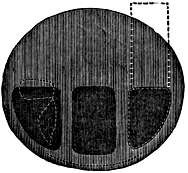
Fig. 24.
Marine, 16ft. long, slightly oval, front end flat, 8ft. 6in. wide,
7ft. 10in. high, and the dimensions of the back hemispherical end
were 2ft. less each way, 3/8 inch plates, 26 lbs. There were two
internal fireplaces, of irregular shape, uniting at the back into one
flue of similar shape, which did not come to the front, but passed
through the steam space, and out at the top of the boiler.
While the vessel was waiting to start, with steam up, the wing
furnace of the starboard boiler collapsed on the wing side, as shown
by the dotted lines, and allowed the steam and water to escape into
the stoke hole.
The side of the furnace next the shell was rent along the edge of
a longitudinal seam in a line, which was slightly nicked in the
caulking. This rent extended about 5ft. 6in. from the front, and
then at a cross seam it went along the line of rivets from the crown
to the bottom of the furnace. Beyond this cross seam the furnace
was collapsed, until it nearly touched the other side of the furnace,
and the bulge died away towards the back end. There was also a
rent in the lower part of the front of the shell, as shown in
dotted line.
The cause of the explosion was the weakness of the shape of the
flue, which was not stayed to the shell. It had evidently gradually
been giving way some time before the explosion, and eventually
collapsed at nearly the ordinary pressure. Symptoms of the same
alteration of shape were noticed in the corresponding flue of the
other boiler.
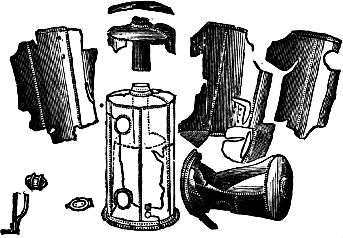
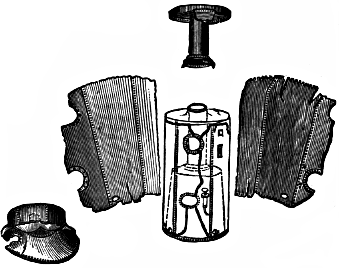
No.57. Liverpool. (Fig. 25.)
October 9th.
7 killed, 1 injured.

Fig. 25.
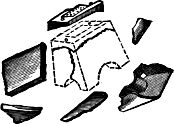
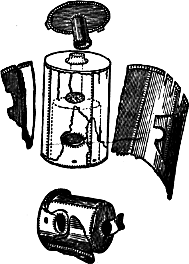
Crane Boiler, 5ft. 6in. high, and 2ft. 6in. diameter, with internal
conical fire-box, with two cross tubes and a chimney at the top,
¼ inch plates, 75 lbs.
The outer shell of the boiler was rent into many pieces, leaving
the central conical fireplace intact. The nature of the rents showed
that the plate round the manhole, which was unstrengthened by a
ring, had first given way, and all the other fractures had led away
from that point. This is confirmed by the fact, that the manlid
was thrown a good distance, with force enough to make its way
through the timber walls of a cabin. The front plate divided into
many pieces, and scattered right and left, while the back plate was
thrown through a cabin in the opposite direction to the manhole.
The central flue showed a slight indication of overheating, but
the construction was such that the upper portion passed through the
steam space, and was always exposed to the action of the fire,
without the protection of the contact of water. The manhole
without a ring on its edge to strengthen the plate, and held in by
two clamps, which caused additional strain when carelessly screwed
up, was by far the weakest place. The engine was standing after
a short time of working, and as the safety valve was very defective,
and could be screwed down until tight, against almost any pressure,
it is most probable that the pressure mounted much higher than
usual, when the weakest part gave way, and led to the sudden
tearing up and scattering of the whole fabric.
Faulty construction of both boiler and fittings, rendered it unable
to bear that accumulated pressure, which the safety valve ought to
have made impossible.
No.58. Durham.
October 13th.
1 killed.
One Tube Cornish, 14ft. long, 6ft. diameter, internal flue 3ft. 3in.,
by 2ft. 10in., 3/8 inch plates, 27 lbs., standing on three saddles, with
a bearing surface of 3ft. by 4 inches.
A portion of plate 20in. by 18in., at the bottom of the boiler, was
so corroded that it was blown out, and the issuing contents scalded a
man to death.
No.59. Bristol. (Fig. 26.)
November 1st.
7 killed.
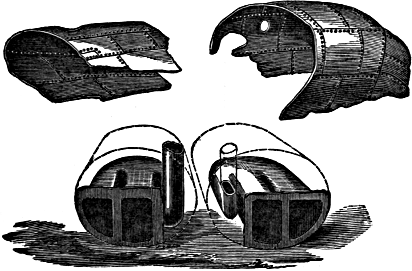
Fig. 26.
Two Marine Boilers exploded simultaneously. They were 16ft. long,
6ft. 6in. diameter at the flat front ends, and somewhat less at the
hemispherical back ends. Each had two internal fireplaces, united in
one flue, which returned nearly to the front and passed up through the
steam space, and out at the top of shell into the funnel. The central
fireplaces were not circular, and the outside fireplaces and the return
flues were still more distorted, but the weakness of the shape was
somewhat compensated for by stays between the tubes, and from the tubes
to the shell. The mountings to the boiler were of the ordinary kind and
efficient.
The under sides of the shells were so deeply corroded that they
were rent longitudinally for their whole length, allowing the sides
to open out and tear away from the front ends. Each shell fell at a
considerable distance. The furnaces, with parts of the front ends
attached, fell into the water, but except one of the side flues that
was a little collapsed, they were uninjured. Small pieces of the front
ends were thrown to a great distance. The sides of the vessel were so
completely blown out that she sank.
The corrosion was no doubt caused by the leakage of the vessel,
keeping the shells of the boilers constantly wet.
No.60. London. (Fig. 27.)
November 3rd.
none injured.

Fig. 27.
Agricultural, barrel was 3ft. 9in. long, and 2ft. 6in. diameter, 70
lbs. From the internal fire-box the heat passed through a number of
1-inch tubes to the front smoke box and chimney.
During a stoppage for breakfast, the fire-box end was torn from the
barrel, and from the position of those fragments that could be found,
the boiler appeared to have turned over. Part of the fire-box was sent
through the stage upon which the boiler was travelling, and the barrel
with the tubes remaining in it, first struck a rail which caused it to
be dented in, and then rebounded to a point about 100 yards from its
original position.
Enough of the fragments were not recovered from the river to trace
the cause of the explosion, but it is presumed that, although when the
boiler was left, only 20 lbs. pressure was shown by the gauge; the fire
door being left closed, the pressure must have risen to a point much
above the working pressure, and to more than the boiler could bear.
No.61. Bilston. (Fig. 28.)
October 1st.
none injured.
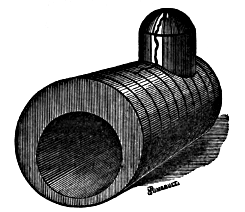
Fig. 28.
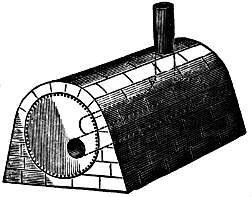
One Tube Cornish, 22ft. long, 6ft. diameter, tube 4ft. 6in.
diameter, 3/8 inch plates, 12 lbs. There was an unusually large dome
at the back end, 5ft. diameter, and the whole of the shell was cut out
from under it, so that the construction was peculiarly weak.
The boiler had been off for cleaning, and steam was being got up in
the night, and it was said that an extra pressure was caused by the
stop valve being left closed, but it could not have been very great, or
the large tube would have collapsed.
The dome was split in two, in the line marked in the sketch, owing
to the extreme weakness of the shell at the juncture of the dome, and
the shell was a little ruptured on each side of it, and so large a rent
was suddenly made, that the contents of the boiler passed harmlessly
into the air, without moving the boiler on its seat.
No.62. Preston. (Fig. 29.)
November 11th.
1 killed, 1 injured.

FRONT VIEW Fig. 29.

BACK VIEW Fig. 29.
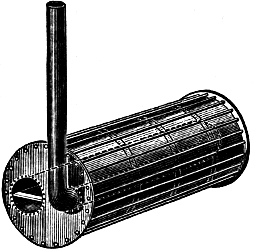
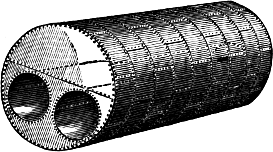
One Tube Cornish, 16ft. 3in. long, and 5ft. 8in. diameter, tube 3ft.
1in. diameter, 7/16 inch plates, 60 lbs.
The tube collapsed from end to end, from over-pressure, as the
man in charge had fastened 3 bricks to the lever of the safety valve
causing 27 lbs. extra pressure, under the impression that he could thus
accumulate a quantity of steam during the night, to be available on
commencing work on the morrow.
No.63. Tamworth. (Fig. 30.)
November 20th.
none injured.

Fig. 30.
Revolving Steam Chamber, 12ft. 6in. long, and 5ft. diameter, 12
lbs.
The manhole was large, to facilitate filling and emptying, and was
rectangular and unstrengthened on the edges, and measured 3ft. 6in. in
length, and 1ft. 6in. in width, and the lid fitted on the inside and
was held by clamps.
The boiler was much out of repair, and a crack shown in sketch, from
one corner of the manhole to the commencement of the hemispherical end
was only temporarily prevented from leaking by a screw-patch, which did
not restore the strength.
The explosion happened when in revolving, the manlid was downwards,
and the lid was driven nearly through the floor, and the shell was rent
from opposite corners of the manhole, and blown through the roof.
The large manhole cut away nearly all the strength on one side, and
the fastenings of the lid were not contrived to compensate at all for
the loss of strength. The constant strain when revolving, also tended
to weaken it. These two causes together were sufficient to account for
the explosion, at the usual working pressure of 12 lbs., although it is
possible that it might have been increased to 35 lbs., as that was the
pressure in the boiler supplying the steam, although the pressure was
regulated by a check valve.
This explosion (and also No. 41 in this
year) clearly show that a mere vessel of steam not exposed to the
fire, or any chance of overheating of the plates, can burst and cause
very great destruction, although there could be no sudden increase of
pressure which is so often supposed necessary to account for the havoc
caused by explosions.
No.64. Manchester.
November 26th.
none injured.
This Boiler was 28ft. long, 7ft. diameter, made of 7/16 inch plates,
and worked at 50 lbs. pressure, with two internal fireplaces united
into one tube beyond.
The sides of the oval chamber forming the junction of furnaces and
tube, crushed inwards, being of such a weak shape as to be unable to
resist the ordinary working pressure.
No.65. Hull. (Fig. 31.)
December 1st.
3 killed, 2 injured.
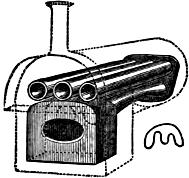
Fig. 31.
Agricultural, 7ft. 6in. long, and 3ft. 8in. diameter, ¼
inch plates, 35 lbs., fire-box 2ft. long, and 2ft. 10in. broad. Two
11½-inch tubes led to an internal chamber at the other end
of the boiler, and three 8¼-inch tubes led back again to an
external smoke box and chimney fixed over the fire door.
The bottom of the right hand side lower tube was forced upwards, and
rent along to within 12 inches of the fire-box.
The tubes were so corroded from leakage of patches, that they
were unable to bear the slight increase of pressure during a short
stoppage.
No.66. Glasgow.
December 4th.
2 killed, 6 injured.
Two Tube Cornish, 22ft. long, and 7ft. 6in. diameter, tubes 3ft.
diameter, and strengthened with rings in the approved manner.
The second from the back of the seven rings, was ruptured at the
bottom and torn off by a rent through the line of rivets on each
side, and the boiler was thrown from its seat, and turned completely
over, so as to lie in a contrary direction to what it was before.
Extensive corrosion, from leaking of the seams beneath the
brickwork, where hidden from view, was the cause of explosion.
No.67. Willenhall.
December 7th.
none injured.
Plain Cylinder, with hemispherical ends, 9ft. long, 3ft. 3in.
diameter, 20 lbs.
The boiler was rent all along one side, and the reaction of the
issuing contents caused it to be thrown some yards away, and one
of the ends became altogether detached, and flew to a considerable
distance.
The plates were so thinned by corrosion, that they gave way on a
very slight increase of pressure during a temporary stoppage of the
engine.
No.68. Glasgow.
December 12th.
1 killed, 1 injured.
This Boiler was 14ft. long, with hemispherical ends, and 7ft.
diameter, 30 lbs.
The cause of the explosion was over-pressure and thinness of plates,
wasted by corrosion.
No.69. Manchester. (Fig. 32.)
December 15th.
5 injured.

Fig. 32.
Two Tube Cornish, 24ft. long, 6ft. 6in. diameter, tubes 2ft. 8in.
diameter, 7/16 inch plates, 50 lbs. The boiler was fired in each of the
tubes in the ordinary way, and also the heat from two furnaces passed
from the back, one on each side of the outside shell.
Both the internal furnaces collapsed, until the crowns almost
touched the fire bars, as shown in dotted lines, but without fracture.
The back of the shell, on the right side, had evidently been
overheated, and had rent along the centre of a bulge, and this rent
had extended along the line of rivets of the transverse seam on each
side, allowing two rings of the plates of the shell to open out flat
as shown. There was a bulge on the plate, on the right side of shell,
corresponding with the one which parted on the opposite side.
The cause of the explosion was overheating of the plates from
shortness of water.
No.70. Aberdeen.
December 24th.
1 injured.
No particulars have been obtained.