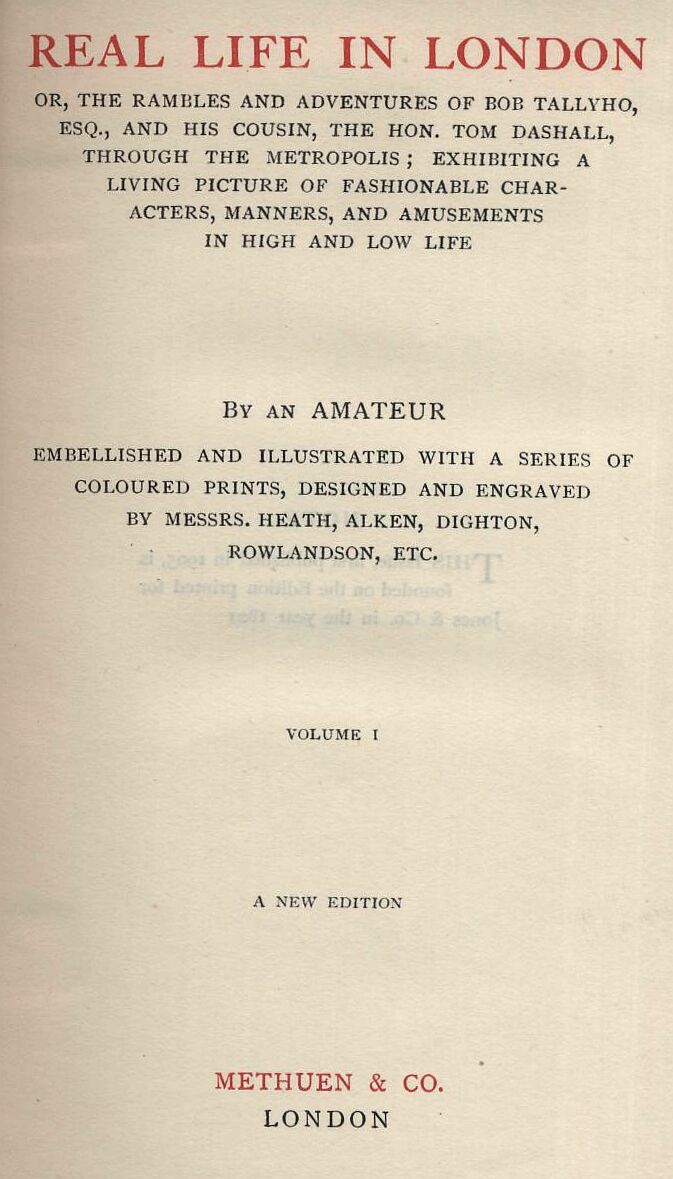
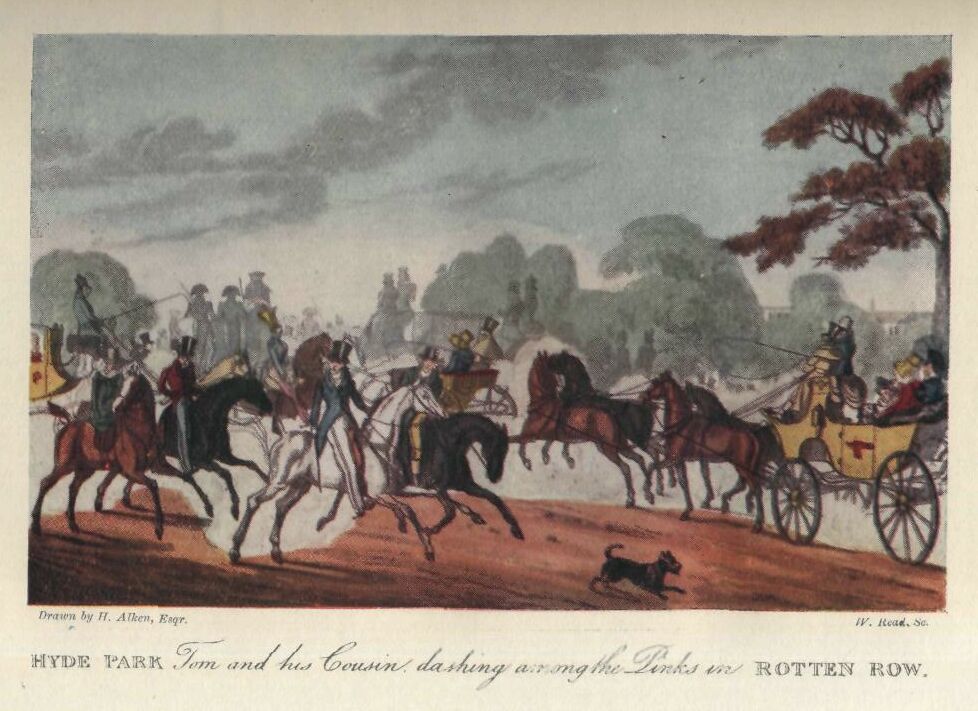
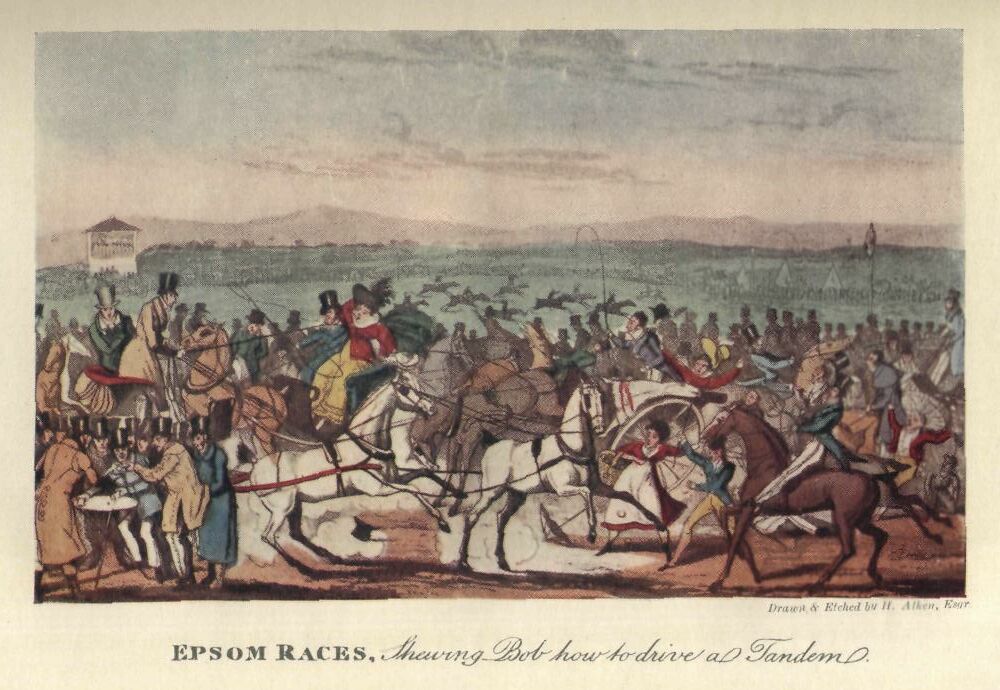
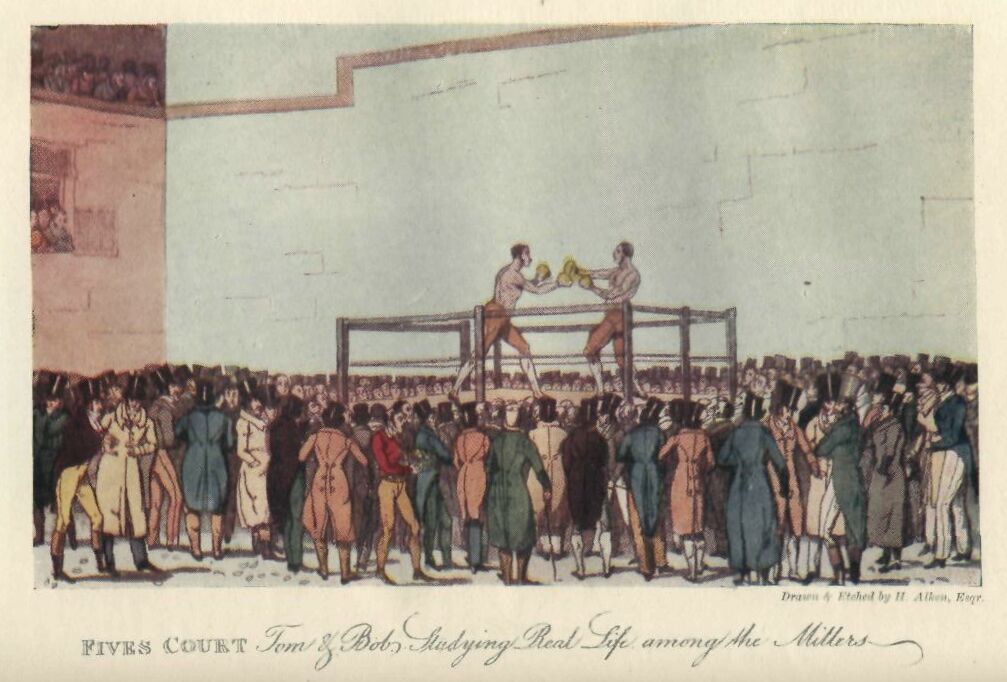
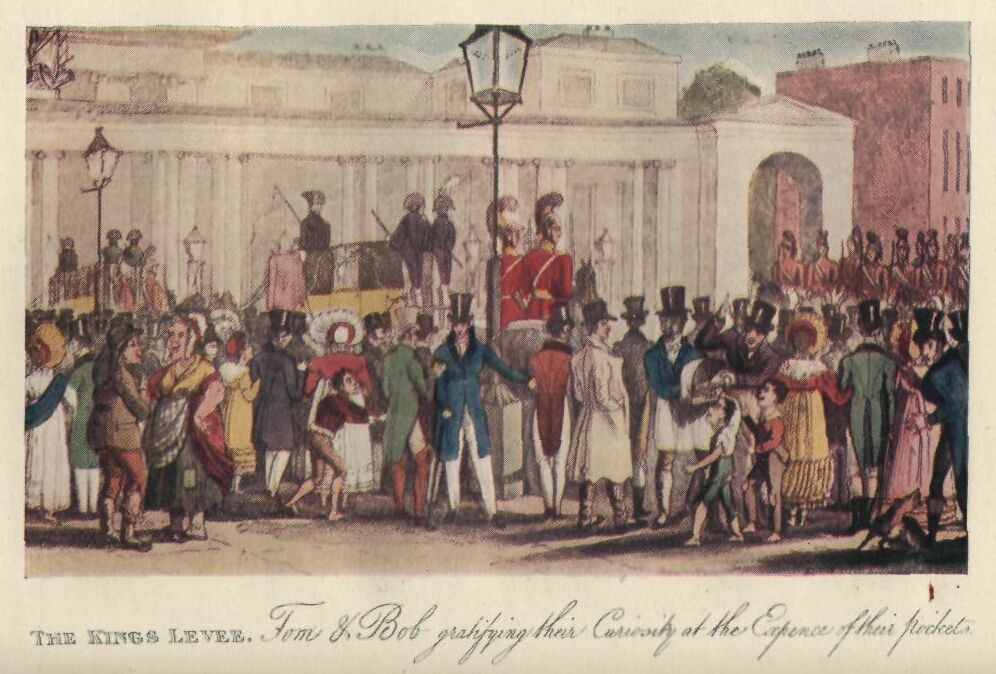
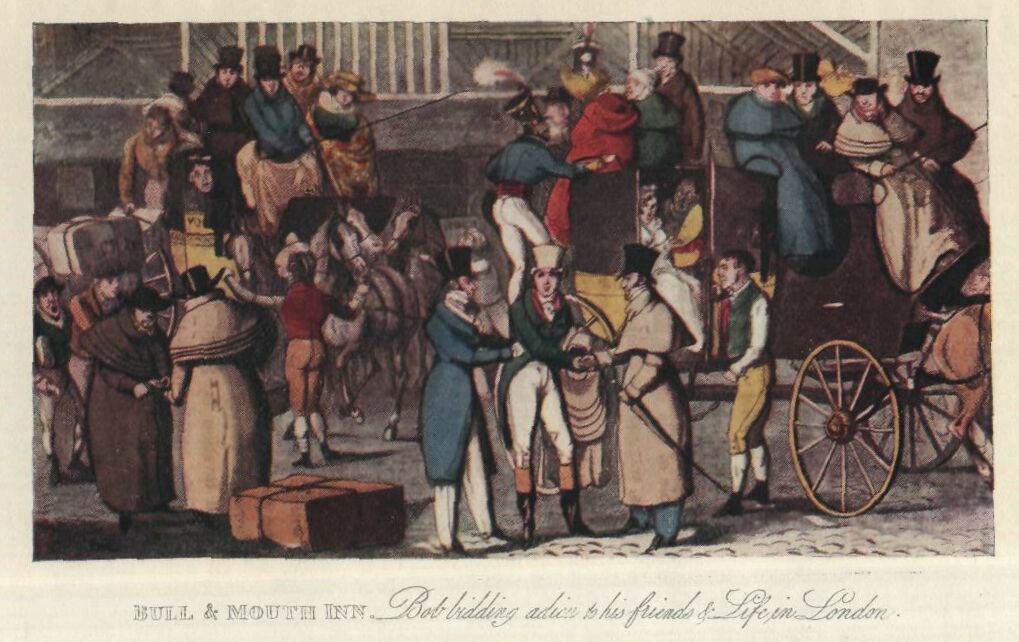
OR, THE RAMBLES AND ADVENTURES OF BOB TALLYHO, ESQ., AND HIS
COUSIN, THE HON. TOM DASHALL, THROUGH THE METROPOLIS;
EXHIBITING A LIVING PICTURE OF FASHIONABLE CHARACTERS, MANNERS,
AND AMUSEMENTS IN HIGH AND LOW LIFE By an AMATEUR [Pierce
Egan] “'Tis pleasant through the loop-holes of retreat To peep
at such a world; to see the stir Of the great Babel, and not feel
the crowd." —Cowper
EMBELLISHED AND ILLUSTRATED WITH A SERIES OF COLOURED PRINTS, DESIGNED
AND ENGRAVED BY MESSRS. HEATH, AIKEN, DIGHTON, ROWLANDSON, ETC. VOLUME
I. Part 1 A NEW EDITION METHUEN & CO. LONDON NOTE This
Issue, first published in 1905, is founded on the Edition printed
for Jones & Co. in the year 1821
CONTENTS:
Chapter I.
Seduction from rural simplicity, page 2. Pleasures of the
table, 3. Overpowering oratory, 4. A warm dispute, 5.
Amicable arrangement, 6.
Chapter II.
Philosophical reflections, 7. A great master, 8. Modern
jehuism, 9. A coach race, 10. A wood-nymph, 11. Improvements
of the age, 12. An amateur of fashion, 13. Theatrical
criticism, 14. Reflections, 15.
Chapter III.
Hyde Park, and its various characters, 16. Sir F——s B——
tt, 22, Delightful reverie, 23.
Chapter IV.
Fresh game sprung, 24. Lord C——e, alias Coal-hole George,
25. Rot at Carlton Palace, 28. Once-a-week man, 29. Sunday
promenader, 30. How to raise the wind, 31. Lord Cripplegate
and his Cupid, 32. Live fish, 33. Delicacy, 34. A breathless
visitor, 35.
Chapter V.
A fashionable introduction, 36. A sparkling subject, 37. The
true spur to genius, 38. An agreeable surprise, 39. A
serious subject, 40. A pleasant fellow, 41. Lively gossip,
42. Living in style, 43. Modern good breeding, 45. Going to
see “you know who,” 46.
Chapter VI.
Early morning amusements, 47. Frightening to death, 48.
Improvements of the age, 49. Preparing for a swell, 50. The
acmé of barberism, 51. A fine specimen of the art, 52. Duels
by Cupid and Apollo, 53. Fashionable news continued, 54. Low
niggardly notions, 55. Scenes from Barber-Ross-a, 56. A snip
of the superfine, 59. The enraged Managers, 60. Cutting out,
and cutting up, 61. The whipstitch mercury, 62. All in the
wrong again, 63. A Venus de Medicis, 64. Delicacy alarmed,
65.
Chapter VII.
Preparing for a ramble, 66. A man of the town, 67. Bond
Street, 68. A hanger on, 70. A man of science, 71. Dandyism,
72. Dandy heroism, 74. Inebriety reproved, 75. My uncle's
card, 76. St. James's Palace, 77. Pall Mall-Waterloo Place,
etc., 79. An Irish Paddy, 80. Incorrigible prigs, 81. A hue
and cry, 82. A capture, 83. A wake, with an Irish howl, 84.
Vocabulary of the new school, 85. Additional company, 87.
Chapter VIII.
Public Office, Bow Street, 88. Irish generosity, 89. A bit
of gig, 90. “I loves fun,” 91. A row with the Charleys, 92.
Judicial sagacity, 93. Watch-house scenes, 94. A rummish
piece of business, 95. The Brown Bear well baited, 96.
Somerset House, 97. An importunate customer, 99.
Peregrinations proposed, 100.
Chapter IX.
The Bonassus, 101. A Knight of the New Order, 102. Medical
quacks, 103. Medical (not Tailors') Boards, 105. Superlative
modesty, 106. Hard pulling and blowing, 107. Knightly
medicals, 108. Buffers and Duffers, 109. Extremes of
fortune, 110. Signs of the Times, 111. Expensive spree, 112.
The young Cit, 113. All in confusion, 115. Losses and
crosses, 116. Rum customers, 117. A genteel hop, 118. Max
and music, 119. Amateurs and actors, 120. A well-known
character, 121. Championship, 122. A grand spectacle, 123.
Adulterations, 124. More important discoveries, 125. Wonders
of cast-iron and steam, 126. Shops of the new school, 127.
Irish paper-hanging, 128.
Chapter X.
Heterogeneous mass, 129. Attractions of the theatre, 130.
Tragedy talk, 131. Authors and actors, 132. Chancery
injunctions, 133. Olympic music, 134. Dandy larks and
sprees, 135. The Theatre, 136. Its splendid establishment,
137. Nymphs of the saloon, 138. Torments of love and gout,
139. Prostitution, 140. A shameful business, 141. Be gone,
dull care, 142. Convenient refreshment, 143. A lushy cove,
144. The sleeper awake, 145. All on lire, 146. A short
parley, 147.
Chapter XI.
Fire, confusion and alarm, 148. Snuffy tabbies and boosy
kids, 149. A cooler for hot disputes, 150. An overturned
Charley, 151. Resurrection rigs, 152. Studies from life,
154. An agreeable situation, 155. A nocturnal visit to a
lady, 156. Sharp's the word, 157. Frolicsome fellows, 158.
Retirement, 159.
Chapter XII.
Tattersall's, 160. Friendly dealings, 161. Laudable company,
162. The Sportsman's exchange, 163. An unlimited order, 164.
How to ease heavy pockets, 165. Body-snatchers and Bum-
traps, 166. The Sharps and the Flats, 167. A secret
expedition, 168. A pleasant rencontre, 169. Accommodating
friends, 170. The female banker, 171. A buck of the first
cut, 172. A highly finished youth, 173. An addition to the
party, 174.
Chapter XIII.
A promenade, 175. Something the matter, 176. Quizzical hits,
177. London friendship, 178. Fashion versus Reason, 179.
Dinners of the Ton, 180. Brilliant mob of a ball-room, 181.
What can the matter be? 182. Something-A-Miss, 183.
Chapter XIV.
The centre of attraction, 185. The circulating library, 186.
Library wit, 187. Fitting on the cap, 188. Breaking up, 189.
Gaming, 190. Hells-Greeks-Black-legs, 191. How to become a
Greek, 192. Valuable instructions, 193. Gambling-house à la
Française, 194. Visitors' cards, 195. Opening scene, 196.
List of Nocturnal Hells, 197. Rouge et Noir Tables, 198.
Noon-day Hells, 199. Hell broke up, and the devil to pay,
200. A story, 202. Swindling Jews, 205. Ups and downs, 206.
High fellows, 207. Mingled company, 208. Severe studies,
209.
Chapter XV.
Newspaper recreations, 210. Value of Newspapers, 211. Power
of imagination, 212. Rich bill of fare, 213. Proposed Review
of the Arts, 214. Demireps and Cyprians, 215. Dashing
characters, 216. Female accommodations, 217. Rump and dozen,
218. Maggot race for a hundred, 219. Prime gig, larks and
sprees, 220. Female jockeyship, 221. Delicate amusements for
the fair sex, 222. Female life in London, 224. Ciphers in
society, 225. Ciphers of all sorts, 226. Hydraulics, 227.
Watery humours, 228. General street engagement, 229. Harmony
restored, 230.
Chapter XVI.
The double disappointment, 231. Heading made easy, 232.
Exhibition of Engravings, 233. How to cut a dash, 235.
Dashing attitude, costume, etc., 236. A Dasher-Street-
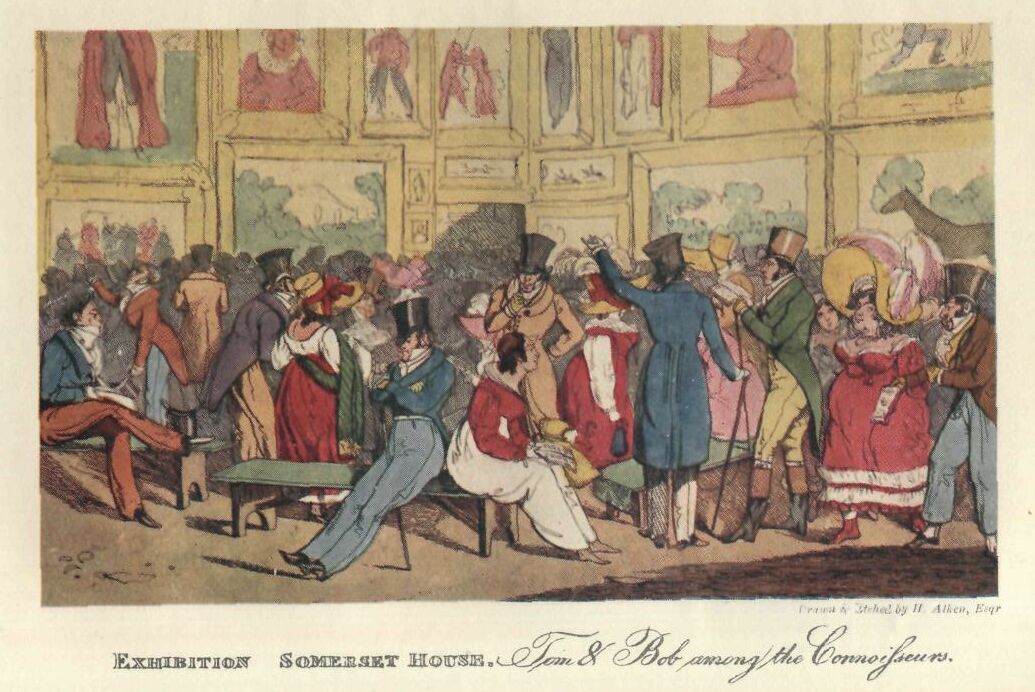
walking, etc., 237. Dancing—“all the go,” 238. Exhibition,
Somerset House, 239. Royal Academy, Somerset House, 240. The
Sister Arts, 241. Character-Caricature, etc., 242. Moral
tendency of the Arts, 243. Fresh game sprung, 244. Law and
Lawyers, 245. Law qualifications, 247. Benchers, 248. Temple
Libraries-Church, 249. St. Dunstan's Bell-thumpers, 250.
Political Cobbler, 251. Coffee-houses, 252. Metropolitan
accommodations, 253. Chop-house delights and recreations,
254. Daffy's Elixir, Blue Ruin, etc., 256. The Queen's gin-
shop, 257.
Chapter XVII.
Globe Coffee-house, 258. A humorous sort of fellow, 259. A
Punster, 260. Signals and Signs, 261. Disconcerted
Professors, 262. A learned Butcher, 263. A successful
stratagem, 264. A misconception, 265. A picture of London,
266. All in high glee, 268.
Chapter XVIII.
A Slap at Slop, 269. A Nondescript, 270. Romanis, 271. Bow
steeple-Sir Chris. Wren, 272. The Temple of Apollo, 273.
Caricatures, 274. Rich stores of literature, 275. Pulpit
oratory, 276. Seven reasons, 277. Street impostors and
impositions, 278. Impudent beggars, 280. Wise men of the
East, 281. A Royal Visitor and Courtier reproved, 282.
Confusion of tongues, 284. Smoking and drinking, 285.
Knights of the Round Table, 286. The joys of milling, 287.
Noses and nosegays, 288. A Bumpkin in town, 289. Piggish
propensities, 2907 Joys of the bowl, 291.
Chapter XIX.
Jolly boys, 292. Dark-house Lane, 293. A breeze sprung up,
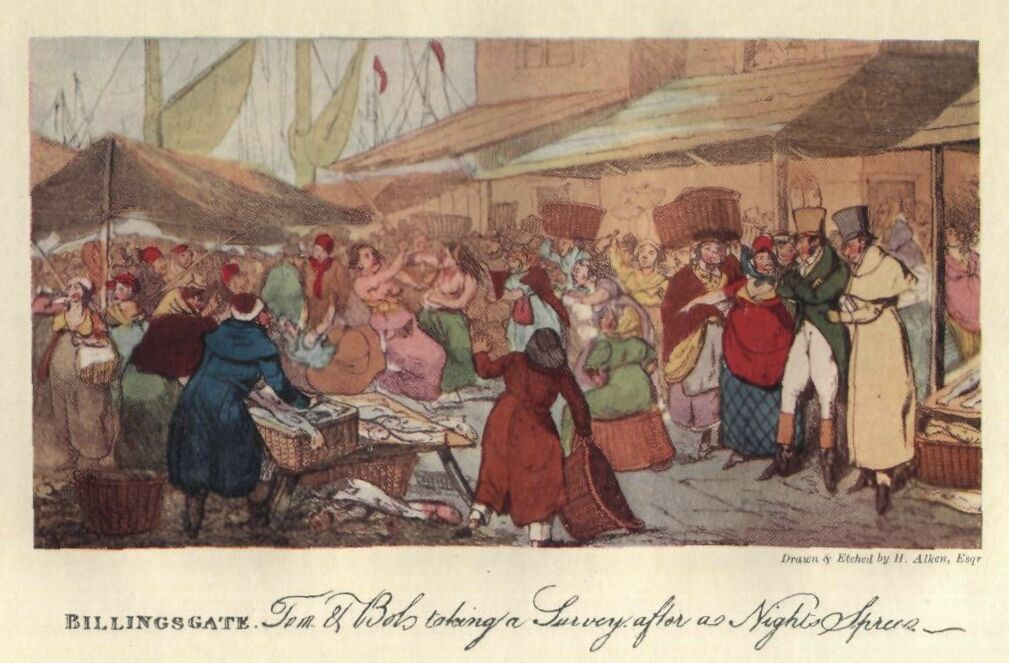
294. Business done in a crack, 295. Billingsgate, 296.
Refinements in language, 297. Real Life at Billingsgate,
298. The Female Fancy, 299. The Custom House, Long Room,
etc., 300. Greeting mine host, 302. A valuable customer,
303. A public character, 304.
Chapter xx.
The Tower of London, 305. Confusion of titles, 306. Interior
of the Trinity House, 307. Rag Fair commerce, 308. Itinerant
Jews and Depredators, 309. Lamentable state of the Jews,
310. Duke's Place and Synagogue, 311. Portuguese Jews, 312.
Bank of England, 313. An eccentric character, 314.
Lamentable effects of forgery, 315. Singular alteration of
mind, 316. Imaginary wealth, 317. Joint Stock Companies,
318. Auction Mart-Courtois, 319. Irresistible arguments,
320. Wealth without pride, 321. Royal Exchange, 322. A
prophecy fulfilled, 323. Lloyd's-Gresham Lecture, etc., 324.
The essential requisite, 325. Egress by storm, 326.
Chapter XXI.
Incident “ad infinitum,” 327. A distressed Poet, 328.
Interesting calculations, 329. Ingenuity in puffing, 330.
Blacking maker's Lauréat, 331. Miseries of literary
pursuits, 332. Suttling house, Horse Guards, 333. Merits of
two heroes, 334. Hibernian eloquence, 335. A pertinacious
Disputant, 336. Peace restored-Horse Guards, 337. Old
habits-The Miller's horse, 338. Covent Garden-Modern Drury,
339 A more than Herculean labour, 340. Police Office scene,
341. Bartholomew Fair, 342. A Knight of the Needle, 343.
Variance of opinion, 344. A visit to the Poet, 345. Produce
of literary pursuits, 346. Quantum versus Quality, 347.
Publishing by subscription, 348. Wealth and ignorance, 349.
Mutual gratification, 350.
Chapter XXII.
Symptoms of alarm, 351. Parties missing, 352. A strange
world, 353. Wanted, and must come, 354. Expectation alive,
355. A cure for melancholy, 356. Real Life a game, 357. The
game over, 358. Money-dropping arts, 359. Dividing a prize,
360. The Holy Alliance broke up, 361. New method of Hat
catching, 362. Dispatching a customer, 363. Laconic
colloquy, 364. Barkers, 365. A mistake corrected, 366.
Pawnbrokers, 367. The biter bit, 368. Miseries of
prostitution, 369. Wardrobe accommodations, 370. New species
of depredation, 371.
Chapter XXIII.
The Lock-up House, 372. Real Life with John Doe, etc., 373.
Every thing done by proxy, 374. Lottery of marriage, 375.
Sharp-shooting and skirmishing, 376. A fancy sketch, 377.
The universal talisman, 378. Living within bounds, 379. How
to live for ten years, 380. An accommodating host, 381. Life
in a lock-up house, 382.
Chapter XXIV.
A successful election, 383. Patriotic intentions, 384.
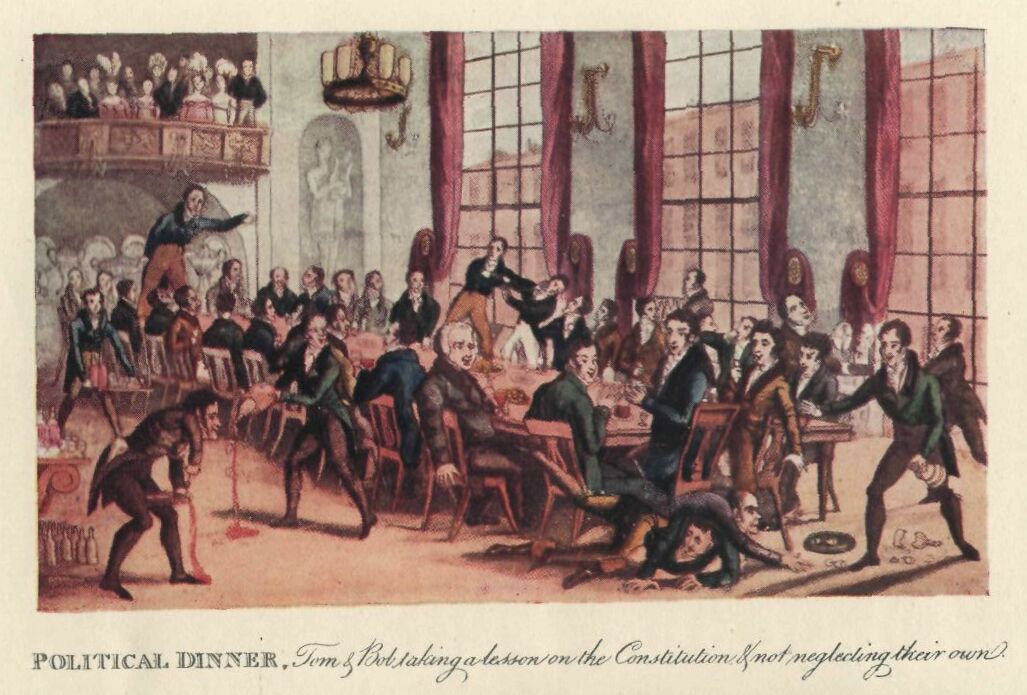
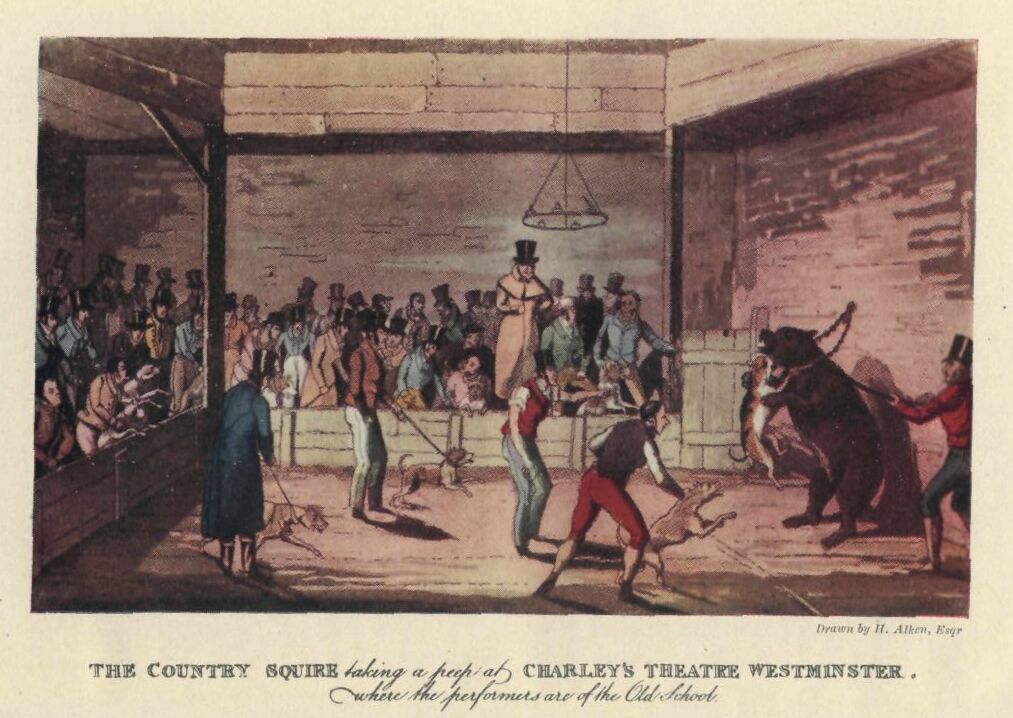
Political dinner, 385. Another bear-garden, 386. Charley's
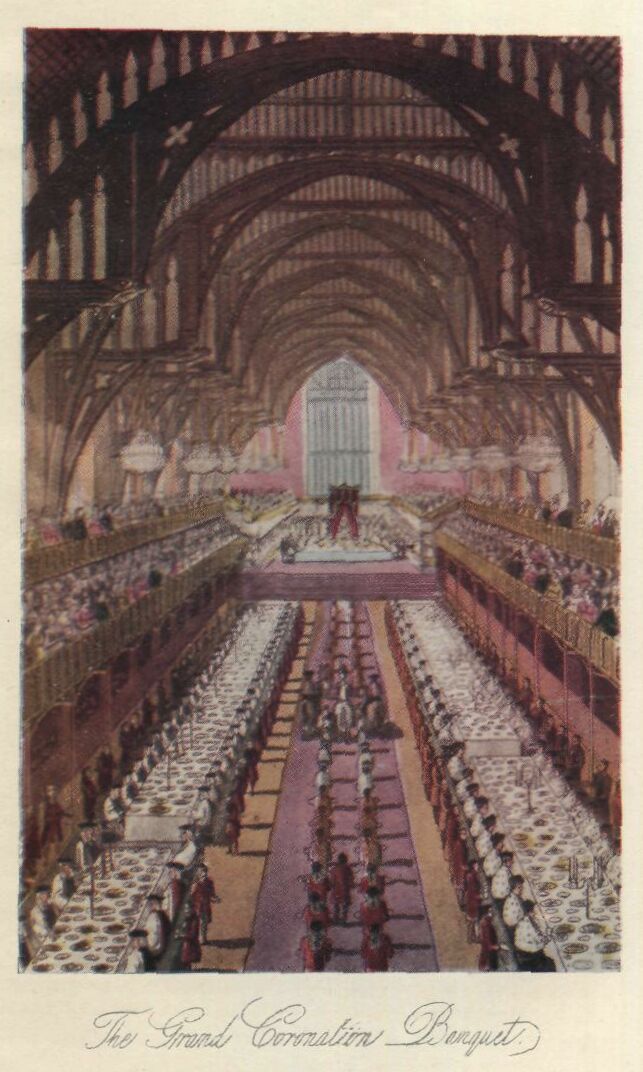
theatre, 387. Bear-baiting sports, 388. The coronation, 389.
Coronation splendour, 390.
Chapter XXV.
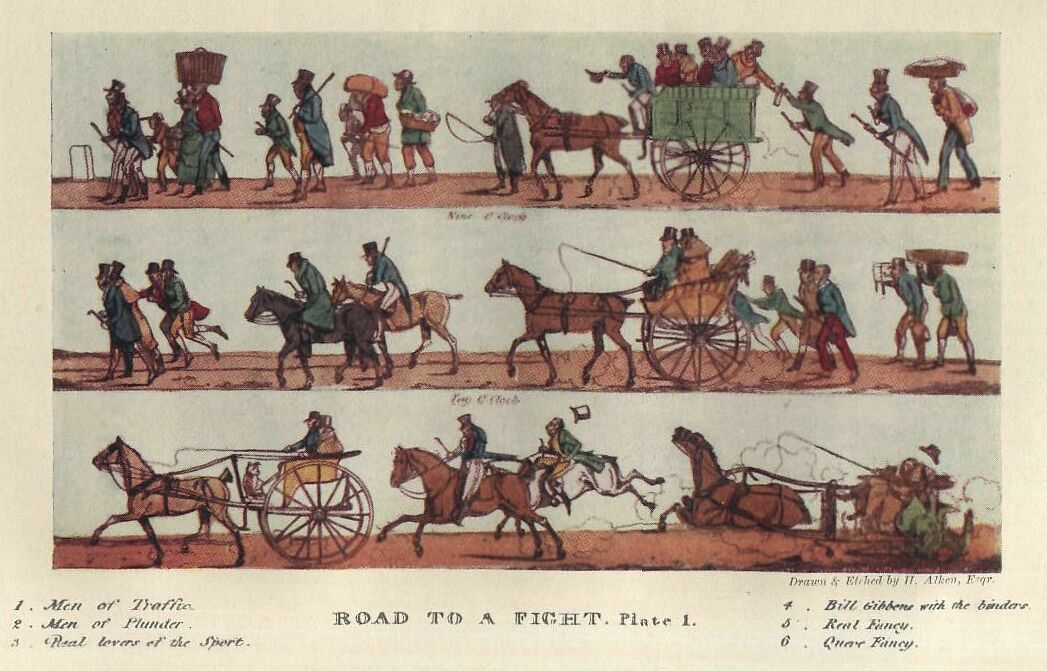
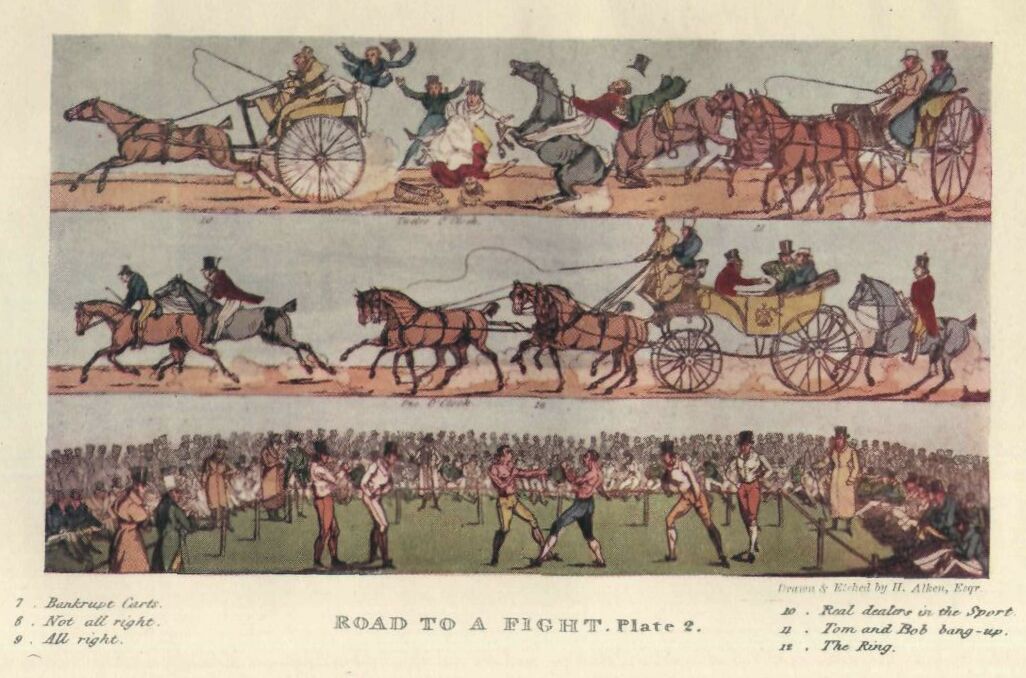
Fancy sports, 392. Road to a fight, 393. New sentimental
journey, 394. Travelling chaff, 395. Humours of the road,
396. Lads of the fancy, 397. Centre of attraction, 398. A
force march, 399. Getting to work, 400. True game, 401. The
sublime and beautiful, 402. All's well-good night, 403.
Chapter XXVI.
Promenading reflections, 404. Anticipation, 405. Preliminary
observations, 406. Characters in masquerade, 407. Irish
sympathy, 408. Whimsicalities of character, 409. Masquerade
characters, 410. The watchman, 411. New characters, 412. The
sport alive, 413. Multifarious amusements, 414. Doctors
disagree, 415. Israelitish honesty, 416.
Chapter XXVII.
Ideal enjoyments, 417. A glance at new objects, 418. Street-
walking nuisances, 419. Cries of London-Mud-larks, etc.,
420. The Monument, 421. London Stone, 422. General Post-
Office, 423. Preparations for returning, 424. So endeth the
volume, 425.
CHAPTER I
Triumphant returning at night with the spoil,
Like Bachanals, shouting and gay:
How sweet with a bottle and song to refresh,
And lose the fatigues of the day.
With sport, wit, and wine, fickle fortune defy,
Dull 'wisdom all happiness sours;
Since Life is no more than a passage at best,
Let's strew the way over with flowers.
"THEY order these things better in
London,” replied the Hon. Tom Dashall, to an old weather-beaten sportsman,
who would fain have made a convert of our London Sprig of Fashion
to the sports and delights of rural life. The party were regaling
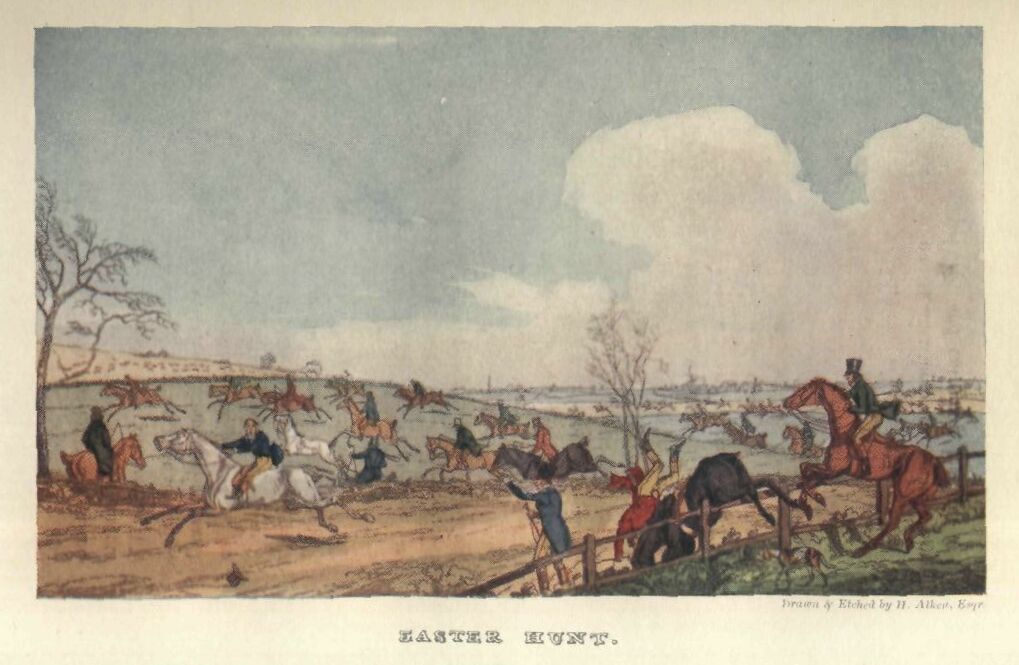
themselves after the dangers and fatigues of a very hard day's fox-chace;
and, while the sparkling glass circulated, each, anxious to impress on the
minds of the company the value of the exploits and amusements in which he
felt most delight, became more animated and boisterous in his oratory—forgetting
that excellent regulation which forms an article in some of the rules and
orders of our “Free and Easies” in London, “that no more than three
gentlemen shall be allowed to speak at the same time.” The whole party,
consisting of fourteen, like a pack in full cry, had, with the kind
assistance of the “rosy god,” become at the same moment most animated, not
to say vociferous, orators. The young squire, Bob Tally ho, (as he was
called) of Belville Hall, who had recently come into possession of this
fine and extensive domain, was far from feeling indifferent to the
pleasures of a sporting life, and, in the chace, had even acquired the
reputation of being a “keen sportsman:” but the regular intercourse which
took place between him and his cousin, the Hon. Tom Dashall, of Bond
Street notoriety, had in some measure led
to an indecision of character, and often when perusing the lively and
fascinating descriptions which the latter drew of the passing scenes in
the gay metropolis, Bob would break out into an involuntary exclamation of—“Curse
me, but after all, this only is Real Life; “—while, for the moment,
horses, dogs, and gun, with the whole paraphernalia of sporting, were
annihilated. Indeed, to do justice to his elegant and highly-finished
friend, these pictures were the production of a master-hand, and might
have made a dangerous impression on minds more stoical and determined than
that of Bob's. The opera, theatres, fashionable pursuits, characters,
objects, &c. all became in succession the subjects of his pen; and if
lively description, blended with irresistible humour and sarcastic wit,
possessed any power of seduction, these certainly belonged to Bob's
honourable friend and relative, as an epistolary correspondent. The
following Stanzas were often recited by him with great feeling and
animation:—
Parent of Pleasure and of many a groan,
I should be loath to part with thee, I own,
Dear Life!
To tell the truth, I'd rather lose a wife,
Should Heav'n e'er deem me worthy of possessing
That best, that most invaluable blessing.
I thank thee, that thou brought'st me into being;
The things of this our world are well worth seeing;
And let me add, moreover, well worth feeling;
Then what the Devil would people have?
These gloomy hunters of the grave,
For ever sighing, groaning, canting, kneeling.
Some wish they never had been born, how odd!
To see the handy works of God,
In sun and moon, and starry sky;
Though last, not least, to see sweet Woman's charms,—
Nay, more, to clasp them in our arms,
And pour the soul in love's delicious sigh,
Is well worth coming for, I'm sure,
Supposing that thou gav'st us nothing more.
Yet, thus surrounded, Life, dear Life, I'm thine,
And, could I always call thee mine,
I would not quickly bid this world farewell;
But whether here, or long or short my stay,
I'll keep in mind for ev'ry day
An old French motto, “Vive la bagatelle!”
Misfortunes are this lottery-world's sad blanks;
Presents, in my opinion, not worth thanks.
The pleasures are the twenty thousand prizes,
Which nothing but a downright ass despises.
It was not, however, the mere representations of Bob's friend, with which,
(in consequence of the important result,) we commenced our chapter, that
produced the powerful effect of fixing the wavering mind of Bob—No,
it was the air—the manner—the je ne sais quoi, by which
these representations were accompanied: the curled lip of contempt, and
the eye, measuring as he spoke, from top to toe, his companions, with the
cool elegant sang froid and self-possession displayed in his own person
and manner, which became a fiat with Bob, and which effected the
object so long courted by his cousin.
After the manner of Yorick (though, by the bye, no sentimentalist) Bob
thus reasoned with himself:—“If an acquaintance with London is to
give a man these airs of superiority—this ascendancy—elegance
of manners, and command of enjoyments—why, London for me; and if
pleasure is the game in view, there will I instantly pursue the sport.”
The song and toast, in unison with the
sparkling glass, followed each other in rapid succession. During which,
our elegant London visitor favoured the company with the following
effusion, sung in a style equal to (though unaccompanied with the affected
airs and self-importance of) a first-rate professor:—
SONG.
If to form and distinction, in town you would bow,
Let appearance of wealth be your care:
If your friends see you live, not a creature cares how,
The question will only be, Where?
A circus, a polygon, crescent, or place,
With ideas of magnificence tally;
Squares are common, streets queer, but a lane's a disgrace;
And we've no such thing as an alley.
A first floor's pretty well, and a parlour so so;
But, pray, who can give themselves airs,
Or mix with high folks, if so vulgarly low
To live up in a two pair of stairs?
The garret, excuse me, I mean attic floor,
(That's the name, and it's right you should know it,)
Would he tenantless often; but genius will soar,
And it does very well for a poet.
These amusements of the table were succeeded by a most stormy and
lengthened debate, (to use a parliamentary phrase) during which, Bob's
London friend had with daring heroism opposed the whole of the party, in
supporting the superiority of Life in London over every pleasure the
country could afford. After copious libations to Bacchus, whose influence
at length effected what oratory had in vain essayed, and silenced these
contending and jarring elements, “grey-eyed Morn” peeped intrusively amid
the jovial crew, and Somnus, (with the cart before the horse) stepping
softly on tip-toe after his companion, led, if not by, at least
accompanied with, the music of the nose, each to his snoring pillow.
——“Glorious resolve!” exclaimed Tom, as soon as his friend had
next morning intimated his intention,—“nobly resolved indeed!—“What!
shall he whom Nature has formed to shine in the dance and sparkle in the
ring—to fascinate the fair—lead and control the fashions—attract
the gaze and admiration of the surrounding crowd!—shall he pass a
life, or rather a torpid existence, amid country bumpkins and Johnny-raws?
Forbid it all ye powers that rule with despotic sway where Life alone is
to be found,—forbid it cards—dice—balls—fashion,
and ye gay et coteras,—forbid”——“Pon my soul,”
interrupted Bob, “you have frightened me to death! I thought you were
beginning an Epic,—a thing I abominate of all others. I had rather
at any time follow the pack on a foundered horse than read ten lines of
Homer; so, my dear fellow, descend for God's sake from the Heroics.”
Calmly let me, at least, begin Life's chapter,
Not panting for a hurricane of rapture;
Calm let me step—not riotous and jumping:
With due decorum, let my heart
Try to perform a sober part,
Not at the ribs be ever bumping—bumping.
Rapture's a charger—often breaks his girt,
Runs oft”, and flings his rider in the dirt.
"However, it shall be so: adieu, my dear
little roan filly,—Snow-ball, good by,—my new patent
double-barrelled percussion—ah, I give you all up!—Order the
tandem, my dear Tom, whenever you please; whisk me up to the fairy scenes
you have so often and admirably described; and, above all things, take me
as an humble and docile pupil under your august auspices and tuition.”
Says Tom, “thou reasonest well.”
The rapidity with which great characters execute their determinations has
been often remarked by authors. The dashing tandem, with its beautiful
high-bred bits of blood, accompanied by two grooms on horsebaek in
splendid liveries, stood at the lodge-gate, and our heroes had only to bid
adieu to relatives and friends, and commence their rapid career.
Before we start on this long journey of one hundred and eighty miles, with
the celerity which is unavoidable in modern travelling, it may be prudent
to ascertain that our readers are still in company, and that we all start
fairly together; otherwise, there is but little probability of our ever
meeting again on the journey;—so now to satisfy queries, remarks,
and animadversions.
“Why, Sir, I must say it is a new way of introducing a story, and appears
to me very irregular.—What! tumble your hero neck and heels into the
midst of a drunken fox-hunting party, and then carry him off from his
paternal estate, without even noticing his ancestors, relatives, friends,
connexions, or prospects—without any description of romantic scenery
on the estate—without so much as an allusion to the female who first
kindled in his breast the tender passion, or a detail of those incidents
with which it is usually connected!—a strange, very strange way
indeed this of commencing.”
“My dear Sir, I agree with you as to the deviation from customary rules:
but allow me to ask,—is not one common object—amusement, all
we have in view? Suppose then, by way of illustration, you were desirous
of arriving at a given place or object, to which there were several roads,
and having traversed one of these till the monotony of the scene had
rendered every object upon it dull and wearisome, would you quarrel with
the traveller who pointed out another road, merely because it was a new
one? Considering the impatience of our young friends, the one to return to
scenes in which alone he can live, and the
other to realize ideal dreams of happiness, painted in all the glowing
tints that a warm imagination and youthful fancy can pourtray, it will be
impossible longer to continue the argument. Let me, therefore, entreat you
to cut it short—accompany us in our rapid pursuit after Life in
London; nor risk for the sake of a little peevish criticism, the cruel
reflection, that by a refusal, you would, probably, be in at the death
of the Author—by Starvation.”
CHAPTER II
“The panting steed the hero's empire feel,
Who sits triumphant o'er the flying wheel,
And as he guides it through th' admiring throng,
With what an air he holds the reins, and smacks the silken thong!”
ORDINARY minds, in viewing distant objects, first see the obstacles that
intervene, magnify the difficulty of surmounting them, and sit down in
despair. The man of genius with his mind's-eye pointed steadfastly, like
the needle towards the pole, on the object of his ambition, meets and
conquers every difficulty in detail, and the mass dissolves before him as
the mountain snow yields, drop by drop, to the progressive but invincible
operation of the solar beam. Our honourable friend was well aware that a
perfect knowledge of the art of driving, and the character of a “first-rate
whip,” were objects worthy his ambition; and that, to hold
four-in-hand—turn a corner in style—handle the reins in form—take
a fly off the tip of his leader's ear—square the elbows, and keep
the wrists pliant, were matters as essential to the formation of a man of
fashion as dice or milling: it was a principle he had long laid
down and strictly adhered to, that whatever tended to the completion of
that character, should be acquired to the very acmé of perfection, without
regard to ulterior consequences, or minor pursuits.
In an early stage, therefore, of his fashionable course of studies, the
whip became an object of careful solicitude; and after some private
tuition, he first exhibited his prowess about twice a week, on the box of
a Windsor stage, tipping coachy a crown for the indulgence and improvement
it afforded. Few could boast of being more fortunate during a noviciate:
two overturns only occurred in the whole course of practice, and except
the trifling accident of an old lady being killed, a shoulder or two
dislocated, and about half a dozen legs and arms broken,
belonging to people who were not at all known in high life, nothing worthy
of notice may be said to have happened on these occasions. 'Tis true, some
ill-natured remarks appeared in one of the public papers, on the “conduct
of coachmen entrusting the reins to young practitioners, and thus
endangering the lives of his majesty's subjects;” but these passed off
like other philanthropic suggestions of the day, unheeded and forgotten.
The next advance of our hero was an important step. The mail-coach is
considered the school; its driver, the great master of the art—the
Phidias of the statuary—the Claude of the
landscape-painter. To approach him without preparatory instruction and
study, would be like an attempt to copy the former without a knowledge of
anatomy, or the latter, while ignorant of perspective. The standard of
excellence—the model of perfection, all that the highest ambition
can attain, is to approach as near as possible the original; to attempt a
deviation, would be to bolt out of the course, snap the curb, and run
riot. Sensible of the importance of his character, accustomed to hold
the reins of arbitrary power; and seated where will is law, the mail-whip
carries in his appearance all that may be expected from his elevated
situation. Stern and sedate in his manner, and given to taciturnity, he
speaks sententiously, or in monosyllables. If he passes on the road even
an humble follower of the profession, with four tidy ones in hand, he
views him with ineffable contempt, and would consider it an irreparable
disgrace to appear conscious of the proximity. Should it be a country
gentleman of large property and influence, and he held the reins, and
handled the whip with a knowledge of the art, so to “get over the ground,”
coachy might, perhaps, notice him “en passant,” by a slight and
familiar nod; but it is only the peer, or man of first-rate sporting
celebrity, that is honoured with any thing like a familiar mark of
approbation and acquaintance; and these, justly appreciating the proud
distinction, feel higher gratification by it than any thing the monarch
could bestow: it is an inclination of the head, not forward, in the manner
of a nod, but towards the off shoulder, accompanied with a certain jerk
and elevation from the opposite side. But here neither pen nor pencil can
depict; it belongs to him alone whose individual powers can nightly keep
the house in a roar, to catch the living
manner and present it to the eye.
“——A merrier man
Within the limit of becoming mirth,
I never spent an hour's talk withall:
His eye begets occasion for his wit;
For every object that the one doth catch
The other turns to a mirth-moving jest.”
And now, gentle reader, if the epithet means any thing, you cannot but
feel disposed to good humour and indulgence: Instead of rattling you off,
as was proposed at our last interview, and whirling you at the rate of
twelve miles an hour, exhausted with fatigue, and half dead in
pursuit of Life, we have proceeded gently along the road, amusing
ourselves by the way, rather with drawing than driving. 'Tis high time,
however, we made some little progress in our journey: “Come Bob, take the
reins—push on—keep moving—touch up the leader into a
hand-gallop—give Snarler his head—that's it my tight one, keep
out of the ruts—mind your quartering—not a gig, buggy, tandem,
or tilbury, have we yet seen on the road—what an infernal place for
a human being to inhabit!—curse me if I had not as lief emigrate to
the back settlements of America: one might find some novelty and amusement
there—I'd have the woods cleared—cut out some turnpike-roads,
and, like Palmer, start the first mail”——“Stop, Tom, don't set
off yet to the Illinois—here's something ahead, but what the devil
it is I cant guess—why it's a barge on wheels, and drove
four-in-hand.”—“Ha, ha—barge indeed, Bob, you seem to know as
much about coaches as Snarler does of Back-gammon: I suppose you never see
any thing in this quarter but the old heavy Bridgewater—why we have
half a dozen new launches every week, and as great a variety of names,
shape, size, and colour, as there are ships in the navy—we have the
heavy coach, light coach, Caterpillar, and Mail—the Balloon, Comet,
Fly, Dart, Regulator, Telegraph, Courier, Times, High-flyer, Hope, with as
many others as would fill a list as long as my tandem-whip. What you now
see is one of the new patent safety-coaches—you can't have an
overturn if you're ever so disposed for a spree. The old city cormorants,
after a gorge of mock-turtle, turn into them for a journey, and drop off
in a nap, with as much confidence of
security to their neck and limbs as if they had mounted a rocking-horse,
or drop't into an arm-chair.”—“Ah! come, the scene improves, and
becomes a little like Life—here's a dasher making up to the Safety—why
its—no, impossible—can't be—gad it is tho'—the
Dart, by all that's good! and drove by Hell-fire Dick!—there's a
fellow would do honour to any box—drove the Cambridge Fly three
months—pass'd every thing on the road, and because he overturned in
three or four hard matches, the stupid rascals of proprietors moved him
off the ground. Joe Spinum, who's at Corpus Christi, matched Dick once for
50, when he carried five inside and thirteen at top, besides heavy
luggage, against the other Cambridge—never was a prettier race seen
at Newmarket—Dick must have beat hollow, but a d——d fat
alderman who was inside, and felt alarmed at the velocity of the vehicle,
moved to the other end of the seat: this destroyed the equilibrium—over
they went, into a four-feet ditch, and Joe lost his match. However, he had
the satisfaction of hearing afterwards, that the old cormorant who
occasioned his loss, had nearly burst himself by the concussion.”
“See, see!—Dick's got up to, and wants to give the Safety the go by—gad,
its a race—go it Dick—now Safety—d——d good
cattle both—lay it in to 'em Dick—leaders neck and neck—pretty
race by G——! Ah, its of no use Safety—Dick wont stand it—a
dead beat—there she goes—all up—over by Jove “——“I
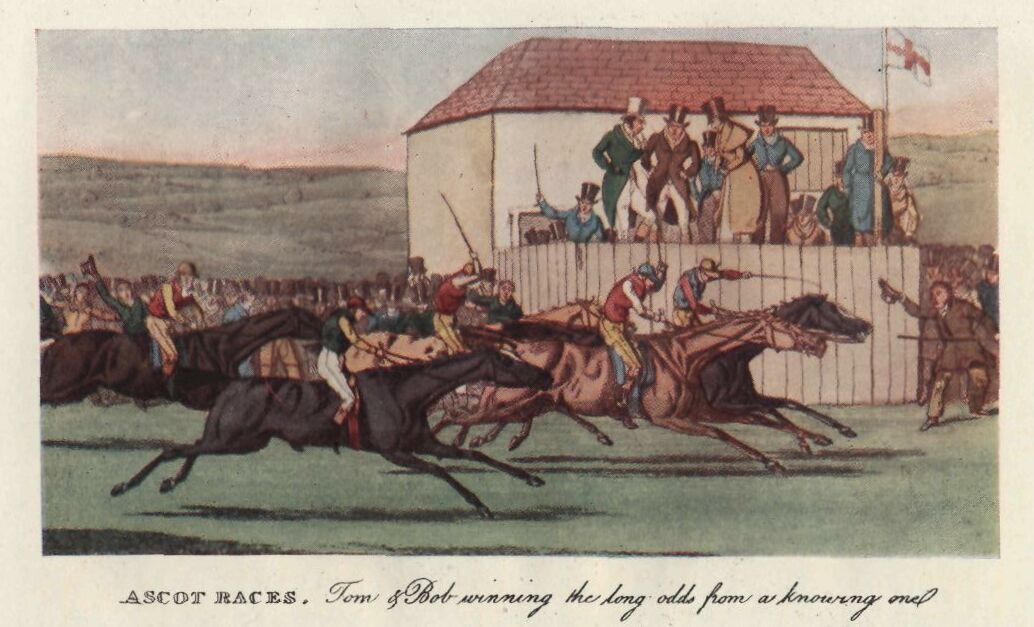
can't see for that tree—what do you say Tom, is the race over?”—“Race,
ah! and the coach too—knew Dick would beat him—would have
betted the long odds the moment I saw it was him.”
The tandem had by this time reached the race-course, and the disaster
which Tom had hardly thought worth noticing in his lively description of
the sport, sure enough had befallen the new 'patent Safety, which
was about mid way between an upright and a side position, supported by the
high and very strong quicksett-hedge against which it hath fallen. Our
heroes dismounted, left Flip at the leader's head, and with Ned, the other
groom, proceeded to offer their services. Whilst engaged in extricating
the horses, which had become entangled in their harness, and were kicking
and plunging, their attention was arrested by the screams and outrageous
vociferations of a very fat, middle-aged woman, who had been jerked from her seat on the box to one not
quite so smooth—the top of the hedge, which, with the assistance of
an old alder tree, supported the coach. Tom found it impossible to resist
the violent impulse to risibility which the ludicrous appearance of the
old lady excited, and as no serious injury was sustained, determined to
enjoy the fun.
“If e'er a pleasant mischief sprang to view,
At once o'er hedge and ditch away he flew,
Nor left the game till he had run it down.”
Approaching her with all the gravity of countenance he was master of—“Madam,”
says he, “are we to consider you as one of the Sylvan Deities who preside
over these scenes, or connected in any way with the vehicle?”—“Wehicle,
indeed, you hunhuman-brutes, instead of assisting a poor distressed
female who has been chuck'd from top of that there safety-thing, as
they calls it, into such a dangerous pisition, you must be
chuckling and grinning, must you? I only wish my husband, Mr. Giblet, was
here, he should soon wring your necks, and pluck some of your fine
feathers for you, and make you look as foolish as a peacock without his
tail.” Mrs. Giblet's ire at length having subsided, she was handed down in
safety on terra firma, and our heroes transferred their assistance
to the other passengers. The violence of the concussion had burst open the
coach-door on one side, and a London Dandy, of the exquisite genus,
lay in danger of being pressed to a jelly beneath the weight of an infirm
and very stout old farmer, whom they had pick'd up on the road; and it was
impossible to get at, so as to afford relief to the sufferers, till the
coach was raised in a perpendicular position. The farmer was no sooner on
his legs, than clapping his hand with anxious concern into an immense
large pocket, he discovered that a bottle of brandy it contained was
crack'd, and the contents beginning to escape: “I ax pardon, young
gentleman,” says he, seizing a hat that the latter held with great care in
his hand, and applying it to catch the liquor—“I ax pardon for
making so free, but I see the hat is a little out of order, and can't be
much hurt; and its a pity to waste the liquor, such a price as it is
now-a-days.”—“Sir, what do you mean, shouldn't have thought of your
taking such liberties indeed, but makes good the old saying—impudence
and ignorance go together: my hat out of
order, hey! I'd have you to know, Sir, that that there hat was
bought of Lloyd, in Newgate-street,{1} only last Thursday,-and cost
eighteen shillings; and if you look at the book in his vindow on
hats, dedicated to the head, you'll find that this here hat is a real
exquisite; so much for what you know about hats, my old fellow—I
burst my stays all to pieces in saving it from being squeezed out of
shape, and now this old brute has made a brandy-bottle of it.”—“Oh!
oh! my young Miss in disguise,” replied the farmer, “I thought I smelt a
rat when the Captain left the coach, under pretence of walking up the hill—what,
I suppose vou are bound for Gretna, both of vou, hev young Lady?”
Every thing appertaining to the coach being now righted, our young friends
left the company to adjust their quarrels and pursue their journey at
discretion, anxious to reach the next town as expeditiously as possible,
where they purposed sleeping for the night. They mounted the tandem, smack
went the whip, and in a few minutes the stage-coach and its motley group
had disappeared.
Having reached their destination, and passed the night comfortably, they
next morning determined to kill an hour or two in the town; and were
taking a stroll arm in arm, when perceiving by a playbill, that an amateur
of fashion from the theatres royal, Drury Lane and Haymarket, was just come
in, and would shortly come out,
1 It would be injustice to great talents, not to notice,
among other important discoveries and improvements of the
age, the labours of Lloyd, who has classified and arranged
whatever relates to that necessary article of personal
elegance, the Hat. He has given the world a volume on the
subject of Hats, dedicated to their great patron, the Head,
in which all the endless varieties of shape, dependent
before on mere whim and caprice, are reduced to fixed
principles, and designated after the great characters by
which each particular fashion was first introduced. The
advantages to gentlemen residing in the country must be
incalculable: they have only to refer to the engravings in
Mr. Lloyd's work, where every possible variety is clearly
defined, and to order such as may suit the rank or character
in life they either possess, or wish to assume. The
following enumeration comprises a few of the latest fashions:
—The Wellington—The Regent—The Caroline—The
Bashful—The Dandy—The Shallow—The Exquisite—The Marquis
—The New Dash—The Clerieus—The Tally-ho—The Noble Lord—
The Taedum—The Bang-up—The Irresistible—The Bon Ton—The
Paris Beau—The Baronet—The Eccentric—The Bit of Blood,
&c.
in a favourite character, they
immediately directed their steps towards a barn, with the hope of
witnessing a rehearsal. Chance introduced them to the country manager, and
Tom having asked several questions about this candidate, was assured by
Mr. Mist:
“Oh! he is a gentleman-performer, and very useful to us managers, for he
not only finds his own dresses and properties, but 'struts and frets his
hour on the stage without any emoluments. His aversion to salary
recommended him to the lessee of Drury-lane theatre, though his services
had been previously rejected by the sub-committee.”
“Can it be that game-cock, the gay Lothario,” said Tom, “who sports an
immensity of diamonds?”—
Of Coates's frolics he of course well knew, Rare pastime for the
ragamuffin crew! Who welcome with the crowing of a cock, This hero of the
buskin and sock.
“Oh! no,” rejoined Mr. Mist, “that cock don't crow now: this gentleman, I
assure you, has been at a theatrical school; he was instructed by the
person who made Master Bettv a young Roscius.”
Tom shook his head, as if he doubted the abilities of this instructed
actor. To be a performer, he thought as arduous as to be a poet; and if poeta
nascitur, non fit—consequently an actor must have natural
abilities.
“And pray what character did this gentleman enact at Drury-lane Theatre?”
“Hamlet, Prince of Denmark,” answered Mr. Mist—“Shakespeare is his
favourite author.”
“And what said the critics—'to be, or not to be'—I suppose he
repeated the character?”
“Oh! Sir, it was stated in the play-bill, that he met with great applause,
and he was announced for the character again; but, as the Free List was
not suspended, and our amateur dreaded some hostility from that quarter,
he performed the character by proxy, and repeated it at the Little Theatre
in the Haymarket.”
“Then the gentlemen of the Free List,” remarked Bob, “are free and easy?”
“Yes—yes—they laugh and cough whenever they please: indeed,
they are generally excluded whenever a full
house is expected, as ready money is an object to the poor manager
of Drury-lane Theatre. The British Press, however, is always excepted.”
“The British press!—Oh! you mean the newspapers,” exclaimed Tom—“then
I dare say they were very favourable to this Amateur of Fashion?”
“No—not very—indeed; they don't join the manager in his puffs,
notwithstanding his marked civility to them: one said he was a methodist
preacher, and sermonized the character—another assimilated him to a
school-boy saying his lesson—in short, they were very ill-natured—but
hush—here he is—walk in, gentlemen, and you shall hear him
rehearse some of King Richard”—
“King Richard!” What ambition! thought Bob to himself—“late a
Prince, and now—a king!”
“I assure you,” continued Mr. Mist, “that all his readings are new; but
according to my humble observation, his action does not always suit the
word—for when he exclaims—' may Hell make crook'd my mind,' he
looks up to Heaven”—
“Looks up to Heaven!” exclaimed Tom; “then this London star makes a
solecism with his eyes.”
Our heroes now went into the barn, and took a private corner, when they
remained invisible. Their patience was soon exhausted, and Bob and his
honourable cousin were both on the fidgits, when the representative of
King Richard exclaimed—
“Give me a horse——”
“—Whip!” added Tom with stunning vociferation, before King Richard
could bind up his wounds. The amateur started, and betrayed consummate
embarrassment, as if the horsewhip had actually made its entrance. Tom and
his companion stole away, and left the astounded monarch with the words—“twas
all a dream.”
While returning to the inn, our heroes mutually commented on the
ambition and folly of those amateurs of fashion, who not only sacrifice
time and property, but absolutely take abundant pains to render
themselves ridiculous. “Certainly,” says Tom, “this cacoethes ludendi
has made fools of several: this infatuated youth though not possessed
of a single requisite for the stage, no doubt flatters himself he is
a second Kean; and, regardless of his birth and family, he will
continue his strolling life
Till the broad shame comes staring in his face,
And critics hoot the blockhead as he struts.”
Having now reached the inn, and finding every thing adjusted for their
procedure, our heroes mounted their vehicle, and went in full gallop for
Real Life in London.
CHAPTER III
“Round, round, and round-about, they whiz, they fly,
With eager worrying, whirling here and there,
They know, nor whence, nor whither, where, nor why.
In utter hurry-scurry, going, coming,
Maddening the summer air with ceaseless humming.”
OUR travellers now approached at a rapid
rate, the desideratim of their eager hopes and wishes: to one all was
novel, wonderful, and fascinating; to the other, it was the welcome return
to an old and beloved friend, the separation from whom had but increased
the ardour of attachment.—“We, now,” says Dashall, “are approaching
Hyde-Park, and being Sunday, a scene will at once burst upon you, far
surpassing in reality any thing I have been able to pourtray,
notwithstanding the flattering compliments you have so often paid to my
talents for description.”
They had scarcely entered the Park-gate, when Lady Jane Townley's carriage
crossed them, and Tom immediately approached it, to pay his respects to an
old acquaintance. Her lady-ship congratulated him on his return to town,
lamented the serious loss the beau-monde had sustained by his
absence, and smiling archly at his young friend, was happy to find he had
not returned empty-handed, but with a recruit, whose appearance promised a
valuable accession to their select circle. “You would not have seen me
here,” continued her ladyship, “but I vow and protest it is utterly
impossible to make a prisoner of one's self, such a day as this, merely
because it is Sunday—for my own part, I wish there was no such thing
as a Sunday in the whole year—there's no knowing what to do with
one's self. When fine, it draws out as many insects as a hot sun and a
shower of rain can produce in the middle of June. The vulgar plebeians
flock so, that you can scarcely get into your barouche without being
hustled by the men-milliners, linen-drapers, and shop-boys, who have been serving you all the previous part of
the week; and wet, or dry, there's no bearing it. For my part, I am ennuyée,
beyond measure, on that day, and find no little difficulty in getting
through it without a fit of the horrors.
“What a legion of counter-coxcombs!” exclaimed she, as we passed
Grosvenor-gate. “Upon the plunder of the till, or by overcharging some
particular article sold on the previous day, it is easy for these once-a-week
beaux to hire a tilbury, and an awkward groom in a pepper and salt, or
drab coat, like the incog. of the royal family, to mix with their
betters and sport their persons in the drive of fashion: some of the
monsters, too, have the impudence of bowing to ladies whom they do not
know, merely to give them an air, or pass off their customers for their
acquaintance: its very distressing. There!” continued she, “there goes my
plumassier, with gilt spurs like a field-officer, and riding as
importantly as if he were one of the Lords of the Treasury; or—ah!
there, again, is my banker's clerk, so stiff and so laced up, that he
might pass for an Egyptian mummy—the self-importance of these
puppies is insufferable! What impudence! he has picked up some groom out
of place, with a cockade in his hat, by way of imposing on the world for a
beau militaire. What will the world come to! I really have not
common patience with these creatures. I have long since left off going to
the play on a Saturday night, because, independently of my preference for
the Opera, these insects from Cornhill or Whitechapel, shut up their
shops, cheat their masters, and commence their airs of importance about
nine o'clock. Then again you have the same party crowding the Park on a
Sunday; but on the following day, return, like school boys, to their work,
and you see them with their pen behind their ear, calculating how to make
up for their late extravagances, pestering you with lies, and urging you
to buy twice as much as you want, then officiously offering their arm at
your carriage-door.”
Capt. Bergamotte at this moment came up to the carriage, perfumed like a
milliner, his colour much heightened by some vegetable dye, and resolved
neither to “blush unseen,” nor “waste his sweetness on the desert air.”
Two false teeth in front, shamed the others a little in their ivory
polish, and his breath savoured of myrrh like a heathen sacrifice, or the
incense burned in one of their temples.
He thrust his horse's head into the carriage, rather abruptly and
indecorously, (as one not accustomed to the haut-ton might suppose) but it
gave no offence. He smiled affectedly, adjusted his hat, pulled a lock of
hair across his forehead, with a view of shewing the whiteness of the
latter, and next, that the glossiness of the former must have owed its
lustre to at least two hours brushing, arranging, and perfuming; used his
quizzing-glass, and took snuff with a flourish. Lady Townley condescended
to caress the horse, and to display her lovely white arm ungloved, with
which she patted the horse's neck, and drew a hundred admiring eyes.
The exquisite all this time brushed the animal gently with a
highly-scented silk handkerchief, after which he displayed a cambric one,
and went through a thousand little playful airs and affectations, which
Bob thought would have suited a fine lady better than a lieutenant in his
Majesty's brigade of guards. Applying the lines of an inimitable satire,
(The Age of Frivolity) to the figure before him, he concluded:
“That gaudy dress and decorations gay,
The tinsel-trappings of a vain array.
The spruce trimm'd jacket, and the waving plume,
The powder'd head emitting soft perfume;
These may make fops, but never can impart
The soldier's hardy frame, or daring heart;
May in Hyde-Park present a splendid train,
But are not weapons for a dread campaign;
May please the fair, who like a tawdry beau,
But are not fit to check an active foe;
Such heroes may acquire sufficient skill
To march erect, and labour through a drill;
In some sham-fight may manfully hold out,
But must not hope an enemy to rout.”
Although he talked a great deal, the whole amount of his discourse was to
inform her Ladyship that (Stilletto) meaning his horse, (who in
truth appeared to possess more fire and spirit than his rider could either
boast of or command,) had cost him only 700 guineas, and was prime
blood; that the horse his groom rode, was nothing but a good
one, and had run at the Craven—that he had been prodigiously
fortunate that season on the turf—that he was a bold rider, and
could not bear himself without a fine high spirited animal—and, that
being engaged to dine at three places
that day, he was desperately at a loss to know how he should act; but that
if her Ladyship dined at any one of the three, he would certainly join
that party, and cut the other two.
At this moment, a mad-brained ruffian of quality, with a splendid
equipage, came driving by with four in hand, and exclaimed as he flew
past, in an affected tone,—“All! Tom, my dear fellow,—why
where the devil have you hid yourself of late?” The speed of his cattle
prevented the possibility of reply. “Although you see him in such
excellent trim,” observed Tom to Lady Jane, “though his cattle and
equipage are so well appointed, would you suppose, it, he has but just
made his appearance from the Bench after white-washing? But he is a
noble spirited fellow,” remarked the exquisite, “drives the best horses,
and is one of the first whips in town; always gallant and gay, full of
life and good humour; and, I am happy to say, he has now a dozen of as
fine horses as any in Christendom, bien entendu, kept in my name.”
After this explanation of the characters of his friend and his horses, he
kissed his hand to her Ladyship, and was out of sight in an instant,
“Adieu, adieu, thou dear, delightful sprig of fashion!” said Lady Jane, as
he left the side of the carriage.—“Fashion and folly,” said Tom,
half whispering, and recalling to his mind the following lines:—
“Oh! Fashion, to thy wiles, thy votaries owe
Unnumber'd pangs of sharp domestic woe.
What broken tradesmen and abandon'd wives
Curse thy delusion through their wretched lives;
What pale-faced spinsters vent on thee their rage,
And youths decrepid e're they come of age.”
His moralizing reverie was however interrupted by her Ladyship, who
perceiving a group of females decked in the extreme of Parisian fashions,
“there,” said she, “there is all that taffeta, feathers, flowers, and lace
can do; and yet you see by their loud talking, their being unattended by a
servant, and by the bit of straw adhering to the pettycoat of one of them,
that they come all the way from Fish Street Hill, or the Borough, in a
hackney-coach, and are now trying to play off the airs of women of
fashion.”
Mrs. Marvellous now drew up close to the party. “My dear Lady Jane,” said
she, “1 am positively suffocated with dust, and sickened with vulgarity;
but to be sure we have every thing in
London here, from the House of Peers to Waterloo House. I must tell you
about the trial, and Lady Barbara's mortification, and about poor Mr. R.'s
being arrested, and the midnight flight to the Continent of our poor
friend W——.”
With this brief, but at the same time comprehensive introduction, she
lacerated the reputation of almost all her acquaintance, and excited great
attention from the party, which had been joined by several during her
truly interesting intelligence. Every other topic in a moment gave way to
this delightful amusement, and each with volubility contributed his or her
share to the general stock of slander.
Scandal is at all times the sauce piquante that currys
incident in every situation; and where is the fashionable circle that can
sit down to table without made dishes?—Character is the good
old-fashioned roast beef of the table, which no one touches but to mangle
and destroy.
“Lord! who'd have thought our cousin D
Could think of marrying Mrs. E.
True I don't like such things to tell;
But, faith, I pity Mrs. L,
And was I her, the bride to vex,
I would engage with Mrs. X.
But they do say that Charlotte U,
With Fanny M, and we know who,
Occasioned all, for you must know
They set their caps at Mr. O.
And as he courted Mrs. E,
They thought, if she'd have cousin D,
That things might be by Colonel A
Just brought about in their own way.”
Our heroes now took leave, and proceeded through the Park. “Who is that
fat, fair, and forty-looking dame, in the landau?” says Bob.—“Your
description shews,” rejoined his friend, “you are but a novice in the
world of fashion—you are deceived, that lady is as much made up as a
wax-doll. She has been such as she now appears to be for these last five
and twenty years; her figure as you see, rather en-bon point, is friendly
to the ravages of time, and every lineament of age is artfully filled up
by an expert fille de chambre, whose time has been employed at the
toilette of a celebrated devotee in Paris. She drives through the Park as
a matter of course, merely to furnish an opportunity for saying that she
has been there: but the more important business of the morning will be
transacted at her boudoir, in the King's
Road, where every luxury is provided to influence the senses; and where,
by daily appointment, she is expected to meet a sturdy gallant. She is a
perfect Messalina in her enjoyments; but her rank in society protects her
from sustaining any injury by her sentimental wanderings.
“Do you see that tall handsome man on horseback, who has just taken off
his hat to her, he is a knight of the ... ribbon; and a well-known
flutterer among the ladies, as well as a vast composer of pretty little
nothings.”—“Indeed! and pray, cousin, do you see that lady of
quality, just driving in at the gate in a superb yellow vis-à-vis,—as
you seem to know every body, who is she?”
“Ha! ha! ha!” replied Tom, almost bursting with laughter, yet endeavouring
to conceal it, “that Lady of Quality, as you are inclined to think her, a
very few years since, was nothing more than a pot-girl to a publican in
Marj'-le-bone; but an old debauchee (upon the look out for defenceless
beauty) admiring the fineness of her form, the brilliancy of her eye, and
the symmetry of her features, became the possessor of her person, and took
her into keeping, as one of the indispensable appendages of fashionable
life, after a month's ablution at Margate, where he gave her masters of
every description. Her understanding was ready, and at his death, which
happened, luckily for her, before satiety had extinguished appetite, she
was left with an annuity of twelve hundred pounds—improved beauty—superficial
accomplishments—and an immoderate share of caprice, insolence, and
vanity. As a proof of this, I must tell you that at an elegant
entertainment lately given by this dashing cyprian, she demolished a
desert service of glass and china that cost five hundred guineas, in a fit
of passionate ill-humour; and when her paramour intreated her to be more
composed, she became indignant—called for her writing-desk in a rage—committed
a settlement of four hundred a year, which he had made but a short time
previously, to the flames, and asked him, with, a self-important air,
whether he dared to suppose that paltry parchment gave him an
authority to direct her actions?”
“And what said the lover to this severe remonstrance?”
“Say,—why he very sensibly made her a low bow, thanked her for her
kindness, in releasing him from his bond, and took his leave of her,
determined to return no more.”
"Turn to the right,” says Tom, “and
yonder you will see on horseback, that staunch patriot, and friend of the
people, Sir——, of whom you must have heard so much.”
“He has just come out of the K——B——, having
completed last week the term of imprisonment, to which he was sentenced
for a libel on Government, contained in his address to his constituents on
the subject of the memorable Manchester Meeting.”
“Ah! indeed, and is that the red-hot patriot?—well, I must say I
have often regretted he should have gone to such extremes in one or two
instances, although I ever admired his general character for firmness,
manly intrepidity, and disinterested conduct.”
“You are right, Bob, perfectly right; but you know, 'to err is human, to
forgive divine,' and however he may err, he does so from principle. In his
private character, as father, husband, friend, and polished gentleman, he
has very few equals—no superior.
“He is a branch of one of the most ancient families in the kingdom, and
can trace his ancestors without interruption, from the days of William the
Conqueror. His political career has been eventful, and perhaps has cost
him more, both in pocket and person, than any Member of Parliament now
existing. He took his seat in the House of Commons at an early age, and
first rendered himself popular by his strenuous opposition to a bill
purporting to regulate the publication of newspapers.
“The next object of his determined reprehension, was the Cold-Bath-Fields
Prison, and the treatment of the unfortunates therein confined. The
uniformly bold and energetic language made use of by the honourable
Baronet upon that occasion, breathed the true spirit of British liberty.
He reprobated the unconstitutional measure of erecting what he termed a Bastile
in the very heart of a free country, as one that could neither have its
foundation in national policy, nor eventually be productive of private
good. He remarked that prisons, at which private punishments, cruel as
they were illegal, were exercised, at the mercy of an unprincipled gaoler—cells
in which human beings were exposed to the horrors of heart-sickening
solitude, and depressed in spirit by their restriction to a scanty and
exclusive allowance of bread and water, were not only incompatible with
the spirit of the constitution, but were likely to prove injurious to the
spirit of the people of this happy
country; for as Goldsmith admirably remarks,
“Princes and Lords may nourish or may fade,
A breath can make them as a breath hath made,
But a bold peasantry their country's pride,
When once destroyed can never be supplied.”
“And if this be not tyranny” continued the philanthropic orator, “it
is impossible to define the term. I promise you here that I will
persevere to the last in unmasking this wanton abuse of justice and
humanity.” His invincible fortitude in favour of the people, has rendered
him a distinguished favourite among them: and though by some he is termed
a visionary, an enthusiast, and a tool of party, his adherence to the
rights of the subject, and his perseverance to uphold the principles of
the constitution, are deserving the admiration of every Englishman; and
although his fortune is princely, and has been at his command ever since
an early age, he has never had his name registered among the fashionable
gamesters at the clubs in St. James's-street, Newmarket, or elsewhere. He
labours in the vineyard of utility rather than in the more luxuriant
garden of folly; and, according to general conception, may emphatically be
called an honest man. “But come,” said Tom, “it is time for us to move
homeward—the company are drawing off I see, we must shape our course
towards Piccadilly.”
They dashed through the Park, not however without being saluted by many of
his fashionable friends, who rejoiced to see that the Honourable Tom
Dashall was again to be numbered among the votaries of Real Life in
London; while the young squire, whose visionary orbs appeared to be in
perpetual motion, dazzled with the splendid equipages of the moving
panorama, was absorbed in reflections somewhat similar to the following:
“No spot on earth to me is half so fair
As Hyde-Park Corner, or St. James's Square;
And Happiness has surely fix'd her seat
In Palace Yard, Pall Mall, or Downing Street:
Are hills, and dales, and valleys half so gay
As bright St. James's on a levee day?
What fierce ecstatic transports fire my soul,
To hear the drivers swear, the coaches roll;
The Courtier's compliment, the Ladies' clack,
The satins rustle, and the whalebone crack!”
CHAPTER IV
“Together let us beat this ample field
Try what the open, what the covert yield:
The latent tracts, the giddy heights explore
Of all who blindly creep, or sightless soar;
Eye nature's walks, shoot folly as it flies,
And catch the manners living as they rise.”
IT was half past five when the Hon. Tom
Dashall, and his enraptured cousin, reached the habitation of the former,
who had taken care to dispatch a groom, apprizing Mrs. Watson, the
house-keeper, of his intention to be at home by half past six to dinner;
consequently all was prepared for their reception. The style of elegance
in which Tom appeared to move, struck Tallyho at once with delight and
astonishment, as they entered the drawing-room; which was superbly and
tastefully fitted up, and commanded a cheerful view of Piccadilly.
“Welcome, my dear Bob!” said Tom to his cousin, “to all the delights of
Town—come, tell me what you think of its first appearance, only
remember you commence your studies of Life in London on a dull day;
to-morrow you will have more enlivening prospects before you.” “'Why in
truth,” replied Bob, “the rapidity of attraction is such, as at present to
leave no distinct impressions on my mind; all appears like enchantment,
and I am completely bewildered in a labyrinth of wonders, to which there
appears to be no end; but under your kind guidance and tuition I may prove
myself an apt scholar, in unravelling its intricacies.” By this time they
had approached the window.
“Aye, aye,” says Dashall, “we shall not be long, I see, without some
object to exercise your mind upon, and dispel the horrors.
“Oh for that Muse of fire, whose burning pen
Records the God-like deeds of valiant men!
Then might our humble, yet aspiring verse,
Our matchless hero's matchless deeds rehearse.”
Bob was surprised at this sudden
exclamation of his cousin, and from the introduction naturally expected
something extraordinary, though he looked around him without discovering
his object.
“That,” continued Tom, “is a Peer”—pointing to a gig just turning the
corner, “of whom it may be said:
To many a jovial club that Peer was known,
With whom his active wit unrivall'd shone,
Choice spirit, grave freemason, buck and blood,
Would crowd his stories and bon mots to hear,
And none a disappointment e'er need fear
His humour flow'd in such a copious flood.”
“It is Lord C——, who was formerly well known as the celebrated
Major H——, the companion of the now most distinguished
personage in the British dominions! and who not long since became
possessed of his lordly honours. Some particulars of him are worth
knowing. He was early introduced into life, and often kept both good and
bad company, associating with men and women of every description and of
every rank, from the highest to the lowest—from St. James's to St.
Giles's, in palaces and night-cellars—from the drawing-room to the
dust-cart. He can drink, swear, tell stories, cudgel, box, and smoke with
any one; having by his intercourse with society fitted himself for all
companies. His education has been more practical than theoretical, though
he was brought up at Eton, where, notwithstanding he made considerable
progress in his studies, he took such an aversion to Greek that he never
would learn it. Previous to his arrival at his present title, he used to
be called Honest George, and so unalterable is his nature, that to this
hour he likes it, and it fits him better than his title. But he has often
been sadly put to his shifts under various circumstances: he was a
courtier, but was too honest for that; he tried gaming, but he was too
honest for that; he got into prison, and might have wiped off, but he was
too honest for that; he got into the coal trade, but he found it a black
business, and he was too honest for that. At drawing the long bow, so much
perhaps cannot be said—but that you know is habit, not principle;
his courage is undoubted, having fought three duels before he was twenty
years of age.
Being disappointed in his hope of promotion in the army, he resolved, in
spite of the remonstrances of his friends,
to quit the guards, and solicited an appointment in one of the Hessian
corps, at that time raising for the British service in America, where the
war of the revolution was then commencing, and obtained from the Landgrave
of Hesse a captain's commission in his corps of Jagers.
Previous to his departure for America, finding he had involved himself in
difficulties by a profuse expenditure, too extensive for his income, and
an indulgence in the pleasures of the turf to a very great extent, he felt
himself under the necessity of mortgaging an estate of about 11,000L. per
annum, left him by his aunt, and which proved unequal to the liquidation
of his debts. He remained in America till the end of the war, where he
distinguished himself for bravery, and suffered much with the yellow
fever. On his return, he obtained an introduction to the Prince of Wales,
who by that time had lanched into public life, and became one of the
jovial characters whom he selected for his associates; and many are the
amusing anecdotes related of him. The Prince conferred on him the
appointment of equerry, with a salary of 300L. a year; this, however, he
lost on the retrenchments that were afterwards made in the household of
His Royal Highness. He continued, however, to be one of his constant
companions, and while in his favour they were accustomed to practice
strange vagaries. The Major was always a wag, ripe and ready for a spree
or a lark.
“To him a frolic was a high delight,
A frolic he would hunt for, day and night,
Careless how prudence on the sport might frown.”
At one time, when the favourite's finances were rather low, and the mopusses
ran taper, it was remarked among the 60 vivants of the party, that the
Major had not for some time given them an invitation. This, however, he
promised to do, and fixed the day—the Prince having engaged to make
one. Upon this occasion he took lodgings in Tottenham-court Road—went
to a wine-merchant—promised to introduce him to the royal presence,
upon his engaging to find wine for the party, which was readily acceded
to; and a dinner of three courses was served up. Three such courses,
perhaps, were never before seen; when the company were seated, two large
dishes appeared; one was placed at the top of the table, and one at the
bottom; all was anxious expectation: the
covers being removed, exhibited to view, a baked shoulder of mutton at
top, and baked potatoes at the bottom. They all looked around with
astonishment, but, knowing the general eccentricity of their host, they
readily fell into his humour, and partook of his fare; not doubting but
the second course would make ample amends for the first. The wine was
good, and the Major apologized for his accommodations, being, as he said,
a family sort of man, and the dinner, though somewhat uncommon, was not
such an one as is described by Goldsmith:
“At the top, a fried liver and bacon were seen;
At the bottom was tripe, in a swinging tureen;
At the sides there were spinach and pudding made hot;
In the middle a place where the pasty—was not.”
At length the second course appeared; when lo and behold, another baked
shoulder of mutton and baked potatoes! Surprise followed surprise—but
“Another and another still succeeds.”
The third course consisted of the same fare, clearly proving that he had
in his catering studied quantity more than variety; however, they enjoyed
the joke, eat as much as they pleased, laughed heartily at the dinner, and
after bumpering till a late hour, took their departure: it is said,
however, that he introduced the wine-merchant to his Highness, who
afterwards profited by his orders.{1}
1 This remarkable dinner reminds us of a laughable
caricature which made its appearance some time ago upon the
marriage of a Jew attorney, in Jewry-street, Aldgate, to the
daughter of a well-known fishmonger, of St. Peter's-alley,
Cornhill, when a certain Baronet, Alderman, Colonel, and
then Lord Mayor, opened the ball at the London Tavern, as
the partner of the bride; a circum-stance which excited
considerable curiosity and surprise at the time. We know the
worthy Baronet had been a hunter for a seat in Parliament,
but what he could be hunting among the children of Israel
is, perhaps, not so easily ascertained. We, however, are not
speaking of the character, but the caricature, which
represented the bride, not resting on Abraham's bosom, but
seated on his knee, surrounded by their guests at the
marriage-feast; while to a panel just behind them, appears
to be affixed a bill of fare, which runs thus:
First course, Fish!
Second course, Fish!!
Third course, Fish!!!
Perhaps the idea of the artist originated in the anecdote
above recorded.
It is reported that the Prince gave him a
commission, under an express promise that when he could not shew it, he
was no longer to enjoy his royal favour. This commission was afterwards
lost by the improvident possessor, and going to call on the donor one
morning, who espying him on his way, he threw up the sash and called out,
“Well, George, commission or no commission?” “No commission, by G——,
your Highness?” was the reply.
“Then you cannot enter here,” rejoined the prince, closing the window and
the connection at the same time.
“His Lordship now resides in the Regent's Park, and may almost nightly be
seen at a public-house in the neighbourhood, where he takes his grog and
smokes his pipe, amusing the company around him with anecdotes of his
former days; we may, perhaps, fall in with him some night in our travels,
and you will find him a very amusing and sometimes very sensible sort of
fellow, till he gets his grog on board, when he can be as boisterous and
blustering as a coal-heaver or a bully. His present fortune is impaired by
his former imprudence, but he still mingles with the sporting world, and a
short time back had his pocket picked, at a milling match, of a
valuable gold repeater. He has favoured the world with several literary
productions, among which are Memoirs of his own Life, embellished with a
view of the author, suspended from (to use the phrase of a late celebrated
auctioneer) a hanging wood; and a very elaborate treatise on the
Art of Rat-catching. In the advertisement of the latter work, the author
engages it will enable the reader to “clear any house of these noxious
vermin, however much infested, excepting only a certain great House in the
neighbourhood of St. Stephen's, Westminster."{1}
1 It appears by the newspapers, that the foundation of a
certain great house in Pall Mall is rotten, and giving-way.
The cause is not stated; but as it cannot arise from being
top-heavy, we may presume that the rats have been at work
there. Query, would not an early application of the Major's
recipe have remedied the evil, and prevented the necessity
of a removal of a very heavy body, which of course, must be
attended with a very heavy expense? 'Tis a pity an old
friend should have been overlooked on such an occasion.
"Do you,” said Tom, pointing to a person
on the other side of the way, “see that young man, walking with a
half-smothered air of indifference, affecting to whistle as he walks, and
twirling his stick? He is a once-a-week man, or, in other words, a
Sunday promenader—Harry Hairbrain was born of a good family,
and, at the decease of his father, became possessed of ten thousand
pounds, which he sported with more zeal than discretion, so much so, that
having been introduced to the gaming table by a pretended friend, and
fluctuated between poverty and affluence for four years, he found himself
considerably in debt, and was compelled to seek refuge in an obscure
lodging, somewhere in the neighbourhood of Kilburn, in order to avoid the
traps; for, as he observes, he has been among the Greeks and
pigeons, who have completely rook'd him, and now want to crow
over him: he has been at hide and seek for the last two months, and,
depending on the death of a rich old maiden aunt who has no other heir, he
eventually hopes to 'diddle 'em.'”
This narrative of Hairbrain was like Hebrew ta Tallyho, who requested his
interesting cousin, as he found himself at falt, to try back, and
put him on the right scent.
“Ha! ha! ha!” said Tom, “we must find a new London vocabulary, I see,
before we shall be able to converse intelligibly; but as you are now
solely under my tuition, I will endeavour to throw a little light upon the
subject.
“Your once-a-week man, or Sunday promenader, is one who confines
himself, to avoid confinement, lodging in remote quarters in the vicinity
of the Metropolis, within a mile or two of the Bridges, Oxford Street, or
Hyde-Park Corner, and is constrained to waste six uncomfortable and
useless days in the week, in order to secure the enjoyment of the seventh,
when he fearlessly ventures forth, to recruit his ideas—to give a
little variety to the sombre picture of life, unmolested, to transact his
business, or to call on some old friend, and keep up those relations with
the world which would otherwise be completely neglected or broken.
“Among characters of this description, may frequently be recognised the
remnant of fashion, and, perhaps, the impression of nobility not wholly
destroyed by adversity and seclusion—the air and manners of a man
who has outlived his century, with an
assumption of sans souci pourtrayed in his agreeable smile,
murmur'd through a low whistle of 'Begone dull care,' or 'No more by
sorrow chased, my heart,' or played off by the flourishing of a whip, or
the rapping of a boot that has a spur attached to it, which perhaps has
not crossed a horse for many months; and occasionally by a judicious
glance at another man's carriage, horses, or appointments, which indicates
taste, and the former possession of such valuable things. These form a
part of the votaries of Real Life in London. This however,” said he
(observing his cousin in mute attention) “is but a gloomy part of the
scene; vet, perhaps, not altogether uninteresting or unprofitable.”
“I can assure you,” replied Tallyho, “I am delighted with the accurate
knowledge you appear to have of society in general, while I regret the
situation of the actors in scenes so glowingly described, and am only
astonished at the appearance of such persons.”
“You must not be astonished at appearances,” rejoined Dashall, “for
appearance is every thing in London; and I must particularly warn you not
to found your judgment upon it. There is an old adage, which says 'To be
poor, and seem poor, is the Devil all over.' Why, if you meet one
of these Sunday-men, he will accost you with urbanity and affected
cheerfulness, endeavouring to inspire you with an idea that he is one of
the happiest of mortals; while, perhaps, the worm of sorrow is secretly
gnawing his heart, and preying upon his constitution. Honourable
sentiment, struggling with untoward circumstances, is destroying his
vitals; not having the courage to pollute his character by a
jail-delivery, or to condescend to white-washing, or some low
bankrupt trick, to extricate himself from difficulty, in order to stand
upright again.
“A once-a-week man, or Sunday promenader, frequently takes his way
through bye streets and short cuts, through courts and alleys, as it were
between retirement and a desire to see what is going on in the scenes of
his former splendour, to take a sly peep at that world from which he seems
to be excluded.”
“And for all such men,” replied Bob, “expelled from high and from good
society, (even though I were compelled to allow by their own imprudence
and folly) I should always like to have a
spare hundred, to send them in an anonymous cover.”
“You are right,” rejoined Tom, catching him ardently by the hand, “the
sentiment does honour to your head and heart; for to such men, in general,
is attached a heart-broken wife, withering by their side in the shade, as
the leaves and the blossom cling together at all seasons, in sickness or
in health, in affluence or in poverty, until the storm beats too roughly
on them, and prematurely destroys the weakest. But I must warn you not to
let your liberality get the better of your discretion, for there are
active and artful spirits abroad, and even these necessities and miseries
are made a handle for deception, to entrap the unwary; and you yet have
much to learn—Puff lived two years on sickness and misfortune, by
advertisements in the newspapers.”
“How?” enquired Bob.
“You shall have it in his own words,” said Dashall.
“I suppose never man went through such a series of
“calamities in the same space of time! Sir, I was five
“times made a bankrupt and reduced from a state of
“affluence, by a train of unavoidable misfortunes! then
“Sir, though a very industrious tradesman, I was twice
“burnt out, and lost my little all both times! I lived
“upon those fires a month. I soon after was confined by a
“most excruciating disorder, and lost the use of my limbs!
“That told very well; for I had the case strongly attested,
“and went about col—called on you, a close prisoner
“in the Marshalsea, for a debt benevolently contracted
“to serve a friend. I was afterwards twice tapped
“for a dropsy, which declined into a very profitable
“consumption! I was then reduced to—0—no—then,
“I became a widow with six helpless children—after
“having had eleven husbands pressed, and being left
“every time eight months gone with child, and without
“money to get me into an hospital!”
“Astonishing!” cried Bob, “and are such things possible?”
“A month's residence in the metropolis,” said Dashall, “will satisfy your
enquiries. One ingenious villain, a short time back, had artifice enough
to defraud the public, at different periods of his life, of upwards of one
hundred thousand pounds, and actually carried on his fraudulent schemes to
the last moment of his existence, for he defrauded
Jack Ketch of his fee by hanging himself in his cell after
condemnation."{1}
Just as a tilbury was passing, “Observe,” said Tom, “the driver of that
tilbury is the celebrated Lord Cripplegate with his usual equipage—his
blue cloak with a scarlet lining, hanging loosely over the vehicle, gives
an air of importance to his appearance, and he is always attended by that
boy, who has been denominated his cupid; he is a nobleman by birth, a
gentleman by courtesy, and a gamester by profession. He exhausted a large
estate upon odd and even, sevens the main, &c. till having lost
sight of the main chance, he found it necessary to curtail his
establishment and enliven his prospects, by exchanging a first floor for a
second, without an opportunity of ascertaining whether or not these
alterations were best suited to his high notions or exalted taste; from
which in a short time he was induced, either by inclination or necessity,
to take a small lodging in an obscure street, and to sport a gig and one
horse, instead of a curricle and pair; though in former times he used to
drive four in hand, and was acknowledged to be an excellent whip. He
still, however, possessed money enough to collect together a large
quantity of halfpence, which in his hours of relaxation he managed to turn
to good account, by the following stratagem:—He distributed his
halfpence on the floor of his little parlour in straight lines, and
ascertained how many it would require to cover it; having thus prepared
himself, he invited some wealthy spendthrifts (with whom he still had the
power of associating) to sup with him, and he welcomed them to his
habitation with much cordiality. The glass circulated freely, and each
recounted his gaming or amorous adventures till a late hour, when the
effects of the bottle becoming visible, he proposed, as a momentary
suggestion, to name how many halfpence laid side by side would carpet the
floor; and offered to lay a large
1 Charles Price, the well-known impostor, whose extensive
forgeries on the Bank of England rendered him notorious, may
serve as a practical illustration of Puff, for he, at
several periods of his life, carried on his system of fraud
by advertisements, and by personating the character of a
clergyman collecting subscriptions under various pretences.
His whole life is marked with determined and systematic
depravity. He hanged himself in Tothil-fields Bridewell,
where he was confined, at the age of fifty-five.
wager, that he would guess the nearest.
Done! done! was echoed round the room. Every one made a deposit of 100L.
and every one made a guess equally certain of success; and his lordship
declaring he had a large lot of halfpence by him, though, perhaps, not
enough, the experiment was to be tried immediately—'twas an
excellent hit! The room was cleared, to it they went, the halfpence were
arranged rank and file in military order, when it appeared that his
lordship had certainly guessed (as well he might) nearest to the number:
the consequence was, an immediate alteration of his lordship's residence
and appearance: he got one step in the world by it, he gave up his
second-hand gig for one warranted new; and a change in his vehicle may
pretty generally be considered as the barometer of his pocket.
“Do you mark, he is learing at that pretty girl on the other side of the
way? he is fond of the wenches, and has been a true votary of fashion.
Perhaps there is not a more perfect model of Real Life in London than
might be furnished from the memoirs of his lordship! He is rather a good
looking man, as he sits, and prides himself on being a striking likeness
of his present majesty; but, unfortunately, has a lameness which impedes
him in the ardour of his pursuit of game, although it must be acknowledged
he has been a game one in his time. The boy you see with him is reported
to be his own son, who is now employed by him as an assistant in all his
amorous adventures.”
“His own son!” exclaimed Bob.
“Aye, and (if so) a merrily begotten one, I'll be bound for it,” continued
Tom; “such things will happen, and his lordship has kept a very pretty
assortment of servant girls. But the introduction of this youth to public
notice was somewhat curious. It is said, that having a large party of bon
vivants to dine with him, on sitting down to table, and taking the
cover off one of the dishes, a plump and smiling infant appeared. A sweet
little Cupid by
——! (exclaimed his lordship) I'll be his father!—I'll
take care of him!—call Rose, and tell her to look out for a nurse
for him. Thus taking upon himself the character of parent and protector as
well as parson. Young Cupid was christened in libations of claret,
and furnished a fund of amusement for the evening. How young Cupid came there, I believe has not yet been
satisfactorily ascertained:
Who seeks a friend, should come disposed
T' exhibit, in full bloom disclosed,
The graces and the beauties
That form the character he seeks;
For 'tis an union that bespeaks
Reciprocated duties.
And thus it has proved with Cupid, himself the offspring of an
illicit amour, is now constantly engaged in promoting others.
“His lordship had three brothers, Billingsgate! Hellgate! and Newgate!
whose names are adorned with a similarity of perfections in the Temple of
Fame; but they are consigned to the tomb of the Capulets, and we will not
rake up the ashes of the dead."{1}
At this moment a loud knocking was heard at the door, and Mr. Sparkle was
ushered into the drawing-room, which he entered, as it were, with a hop,
step, and jump, and had Tom Dashall by the hand almost before they could
turn round to see who it was.
“My dear fellow!” exclaimed Sparkle, almost out of breath, “where have you
been to? Time has been standing still since your departure!—there
has been a complete void in nature—how do you do?—I beg
pardon, (turning to Bob) you will excuse my rapture at meeting my old
friend, whom I have lost so long, that I have almost lost myself—egad,
I have run myself out of breath—cursed unlucky I was not in the Park
this morning to see you first, but I have just heard all about you from
Lady Jane, and lost no time in paying my respects—what are you going
to do with yourself?”
1 There was a delicate propriety in this conduct of the Hon.
Tom Dashall which cannot but be admired; for although they
were alone, and speaking to each other in perfect
confidence, it was always his desire to avoid as much as
possible making bad worse; he had a heart to feel, as well
as a head to think; and would rather lend a hand to raise a
fellow-creature from the mud than walk deliberately over
him; besides, he foresaw other opportunities would arise in
which, from circumstances, he would almost be compelled to
draw his Cousin's attention again to the persons in
question, and he was always unwilling to ex-haust a subject
of an interesting nature without sonic leading occurrence to
warrant it.
At this moment dinner was announced.
“Come,” said Tom, “let us refresh a bit, and after dinner I will tell you
all about it. We are travellers, you know, and feel a little fatigued. Allons,
allons.” And so saying, he led the way to the dinner-room.
“Nothing could be more apropos,” said Sparkle, “for although I have
two engagements beforehand, and have promised a visit to you know who in
the evening, they appear like icicles that must melt before the sun of
your re-appearance: so I am your's.” And to it they went. Tom always kept
a liberal table, and gave his friends a hearty welcome. But here it will
be necessary, while they are regaling themselves, to make our readers a
little acquainted with Charles Sparkle, Esq.; for which purpose we must
request his patience till the next chapter.
CHAPTER V
“Place me, thou great Supreme, in that blest state,
Unknown to those the silly world call Great,
Where all my wants may be with ease supply'd,
Yet nought superfluous to pamper pride.”
IT will be seen in the previous chapter,
that the formal ceremony of a fashionable introduction, such as—“Mr.
Sparkle, my friend Mr. Robert Tallyho, of Belville Hall; Mr. Tallyho, Mr.
Charles Sparkle,” was altogether omitted; indeed, the abrupt entrance of
the latter rendered it utterly impossible, for although Sparkle was really
a well-bred man, he had heard from Lady Jane of Tom's arrival with his
young friend from the country. Etiquette between themselves, was at
all times completely unnecessary, an air of gaiety and freedom, as the
friend of Dashall, was introduction enough to Bob, and consequently this
point of good breeding was wholly unnoticed by all the party; but we are
not yet sufficiently acquainted with our readers to expect a similar mode
of proceeding will be overlooked; we shall therefore lose no time in
giving our promised account of Mr. Sparkle, and beg to introduce him
accordingly.
Mr. Reader, Mr. Sparkle; Mr. Sparkle, Mr. Reader.
Hold, Sir, what are you about? You have bewildered yourself with
etiquette, and seem to know as little about Life in London as the
novice you have already introduced—By the way, that introduction was
one of the most extraordinary I ever met with; this may be equally so for
ought I know; and I really begin to suspect you are an extraordinary
fellow yourself. How can you introduce me, of whom you know nothing?
Egad, I believe you have me there—“a palpable hit, my Lord,” (or my
Lady, for I certainly cannot say which;) I was getting myself into an
awkward dilemma, but I hate suspicion—
“Suspicion ever haunts the guilty mind.”
Methinks I see a frown, but I meant no
offence, and if you throw down my book in a rage, you will perhaps not
only remain ignorant of Mr. Sparkle, but, what is more important, of those
other numerous fashionable characters in high and low life—of those
manners—incidents—amusements—follies—vices, &c.
which, combined together, form the true picture of Real Life in the
Metropolis.
“He who hath trod th' intricate maze,
Exploring every devious way,
Can best direct th' enquiring gaze,
And all the varied scenes display.”
Mr. Author, you are a strange rambler.
Admitted, Sir, or Ma'am, I am a rambler, who, with your permission, would
willingly not be impeded in my progress, and under such expectations I
shall proceed.
Charles Sparkle was the son and only child of a Right Hon. Member of
Parliament, now no more, whose mother dying soon after his birth, was left
destitute of that maternal kindness and solicitude which frequently has so
much influence in forming the character of the future man.
His father, a man of eccentric turn of mind, being appointed soon
afterwards to a diplomatic situation abroad, left the care of his son's
education to an elderly friend of his, who held a situation of some
importance under the then existing government, with an injunction to
conceal from the boy the knowledge of his real parent, and to bring him up
as his own child.
This important trust was executed with tenderness and fidelity; the boy
grew in strength, and ripened in intelligence, and being accustomed to
consider his protector as his parent, the father, upon returning to
England, determined not to undeceive him, until he should arrive at years
of discretion; and with this view Mr. Orford was instructed at a proper
age to send him to Oxford.
Charles, however had contracted before this period, habits and
acquaintances in London, that were completely in opposition to the
dictates and inclinations of his supposed father. He became passionately
fond of literary amusements, music, and drawing, which served to occupy
his morning hours: but his evenings were devoted to the company of
vitiated associates, who did not fail to
exercise their influence over his youthful passions, and he frequently
engaged himself in unlucky and improvident adventures, which involved him
in pecuniary difficulties far beyond his stipulated income. These
circumstances were no sooner made known to the supposed parent, than they
excited his displeasure, and being carried to an unpardonable extent, he
was, at the age of eighteen, literally banished the house of his
protector, and compelled to take an obscure lodging in the vicinity of
London; the rent of which was paid for him, and a scanty allowance of one
guinea sent to him regularly every Saturday night. Thus secluded from his
old associates, it will not be wondered at that he contrived to form new
ones, and having purchased an old harpsicord, turned the musical
instruction he had received to occasional account; he also wrote some
political pamphlets which were well received. But this solitary and
dependent life was wholly unsuited to the gaiety in which he had hitherto
moved. It had, however, the effect of drawing forth talent, which perhaps
would never, but for this circumstance, have been discovered; for
“Many a gem, of purest ray serene,
The dark unfathom'd caves of ocean bear;
Full many a flower is born to blush unseen,
And waste its sweetness on the desert air.”
His writings, &c. under the name of Oribrd, were recognised by the
real father, as the productions of a promising son: at his instigation,
and upon a promise of reform, he was again restored to his former home,
and shortly after entered as a gentleman commoner of St. Mary's, Oxford;
but not till he had, by some means or other, made the discovery that
Orford was not his real name. Congenial spirits are naturally fond of
associating, and it was here that he first became acquainted with the Hon.
Tom Dashall: they were constant companions and mutual assistants to each
other, in all their exercises as well as all their vagaries; so as to
cement a friendship and interest in each other's fate, up to the moment of
which we are now speaking.
Orford, however, was at that time more impetuous and less discreet in the
pursuit of his pleasures than his honourable friend, and after obtaining
the distinction of Bachelor of Arts, was in consequence of his imprudence
and irregularities, after frequently
hair-breadth escapes, expelled the college. This circumstance, however,
appeared of little consequence to him. He hired a gig at Oxford, promising
to return in a few days, and came up to London, but had not effrontery
enough to venture into the presence of his reputed father. On arrival in
town, he put up at an inn in the Borough, where he resided till all the
money he had was exhausted, and till, as he emphatically observes, he had
actually eaten his horse and chaise.
In the mean time, the people at Oxford found he was expelled; and as he
had not returned according to appointment, he was pursued, and eventually
found: they had no doubt of obtaining their demand from his friends, and
he was arrested at the suit of the lender; which was immediately followed
by a retainer from the inn-keeper where he had resided in town.
Application was made to Mr. Orford for his liberation, without effect; in
consequence of which he became a resident in the rules of the King's
Bench, as his friends conceived by this means his habits would be
corrected and his future conduct be amended, his real father still keeping
in the back ground.
While in this confinement, he again resorted to the produce of his pen and
his talent for musical composition, and his friend Tom, at the first
vacation, did not fail to visit him. During this time, in the shape of
donation, from Mr. Orford he received occasional supplies more than equal
to his necessities, though not to his wishes. While here, he fished out
some further clue to the real parent, who visited him in disguise during
his confinement as a friend of Mr. Orford: still, however, he had no
chance of liberation, till, being one day called on by Mr. Orford, he was
informed he was at perfect liberty to leave his present abode, and was
directed to go with him immediately; a coach was called, and he heard the
direction given to drive to Bedford Square, where they arrived just time
enough to learn that the Right Hon. S. S. had breathed his last, after a
lingering illness.
Upon alighting from the coach, and receiving this information, they were
ushered into the drawing-room, and presently joined by a clergyman who had
been the chaplain of the deceased, who acquainted our adventurer of the
death of his parent—that by will he was entitled to 10,000L. per annum, and a handsome estate in
Wiltshire. This sudden reverse of fortune to Sparkle—the change from
confinement to liberty, from indigence to affluence—awakened
sensations more easily to be conceived than described. He wept, (perhaps
the first tears of sincerity in his life; ) his heart was subdued by an
overwhelming flood of affection for that unknown being, whom he now found
had been his constant guardian angel, alternately taking Orford and the
reverend Divine by the hand, and hiding his head in the bosom of his
reputed father. At length they led him to the room in which were the
remains of his lamented parent.
There are perhaps few circumstances better calculated to impress awe on
the youthful mind than the contemplation of those features in death which
have been respected and revered while living. Such respect had ever been
entertained by Charles Sparkle for the supposed friend of Mr. Orford, from
whom he had several times received the most kind and affectionate advice;
and his sensations upon discovering that friend to be no other than his
own father, may be more easily conceived than described—he was at
once exalted and humbled, delighted and afflicted. He threw himself in an
agony of feeling by the bed-side, fell on his knees, in which he was
joined by the clergyman and Orford, where he remained some time.
After the first paroxysms of grief had subsided, young Sparkle, who had
already felt the strongest impression that could possibly be made on a
naturally good heart, gave orders for the funeral of his deceased father,
and then proceeded to make other arrangements suitable to the character he
was hereafter to sustain through life, went down to Wiltshire, and took
possession of his estate, where for a time he secluded himself, and
devoted his attention to the perusal of the best authors in the English,
French, and Italian language, under the superintendence of the reverend
Divine, who had been a resident for many years with his father.
But a life in the country could not long have superior charms for a young
man who had already seen much to admire, as well as much to avoid, in the
metropolis. The combination however of theoretical information he had
derived from books, as well as the practical observations he had made
during his residence in London, fitted him at once for the gayest and most
distinguished circles of metropolitan
society. He therefore arranged with Mr. Orford, who had formerly acted as
his parent, to continue with him in the capacity of steward, and for the
last two years of his life had been almost a constant resident at “Long's
Hotel”, in Bond Street, not choosing to have the charge of an
establishment in town; and the early friendship and attachment which had
been cultivated at Oxford being again renewed, appeared to grow with their
growth, and strengthen with their strength.
Sparkle had still a large portion of that vivacity for which he was so
remarkable in his younger days. His motives and intentions were at all
times good, and if he indulged himself in the pursuits of frolic and fun,
it was never at the expence of creating an unpleasant feeling to an honest
or honourable mind. His fortune was ample. He had a hand to give, and a
heart to forgive; no “malice or hatred were there to be found:” but of
these qualifications, and the exercise of them, sufficient traits will be
given in the ensuing pages. No man was better up to the rigs of the
town; no one better down to the manoeuvres of the flats, and
sharps. He had mingled with life in all companies; he was at once
an elegant and interesting companion; his views were extensive upon all
subjects; his conversation lively, and his manners polished.
Such, gentle reader, is the brief sketch of Charles Sparkle, the esteemed
friend of the Hon. Tom Dashall, and with such recommendations it will not
be wondered at if he should become also the friend of Tally-ho; for,
although living in the height of fashionable splendour, his mind was at
all times in consonance with the lines which precede this chapter; yet
none could be more ready to lend a hand in any pleasant party in pursuit
of a bit of gig. A mill at Moulsey Hurst—a badger-bait, or
bear-bait—a main at the Cock-pit—a smock-race—or a
scamper to the Tipping hunt, ultimately claimed his attention; while upon
all occasions he was an acute observer of life and character.
“His years but young, but his experience old,
His heart unmellow'd, though his judgment ripe,
And in a word, (for far behind his worth
Come all the praises that we now bestow)
He is complete in conduct and in mind,
With all good grace, to grace a gentleman.”
But dinner is over, and we must now
accompany our triumvirate to the drawing-room, where we find them seated
with bottles, glasses, &c. determined to make a quiet evening after
the fatigues of the journey, and with a view to prepare themselves for the
more arduous, and to Tally-ho more interesting, pursuits in the new world,
for such he almost considered London.
“Yes,” said Sparkle, addressing himself to Bob, with whom a little
previous conversation had almost rendered him familiar, “London is a world
within itself; it is, indeed, the only place to see life—it is the “multum
in parvo,” as the old song says,
“Would you see the world in little,
Ye curious here repair;”
it is the acmé of perfection, the “summum bonum” of style—-indeed,
there is a certain affectation of style from the highest to the lowest
individual.”
“You are a merry and stylish fellow,” said Tom; we should have been hipp'd
without you, there is a fund of amusement in you at all times.”
“You are a bit of a wag,” replied Sparkle, “but I am up to your gossip,
and can serve you out in your own style.”
“Every body,” says Tallyho, “appears to live in style.”
“Yes,” continued Sparkle, “living in style is one of the most
essential requisites for a residence in London; but I'll give you my idea
of living in style, which, by many, is literally nothing more than keeping
up appearances at other people's expence: for instance, a Duchess
conceives it to consist in taking her breakfast at three o'clock in the
afternoon—dining at eight—playing at Faro till four the next
morning—supping at five, and going to bed at six—and to eat
green peas and peaches in January—in making a half-curtsey at the
creed, and a whole one to a scoundrel—in giving fifty guineas to an
exotic capon for a pit-ticket—and treating the deserved claims of a
parental actor with contempt—to lisp for the mere purpose of
appearing singular, and to seem completely ignorant of the Mosaic law—to
be in the reverse of extremes—to laugh when she could weep, and weep
when she could .dance and be merry—to leave her compliment cards
with her acquaintance, whom at the same moment she wishes she may never
see again—to speak of the community with
marked disrespect, and to consider the sacrament a bore!”
“Admirable!” said Tom.
“Wonderful, indeed!” exclaimed Tallyho.
“Aye, aye, London is full of wonders—there is a general and
insatiate appetite for the marvellous; but let us proceed: Now we'll take
the reverse of the picture. The Duke thinks he does things in style, by
paying his debts of honour contracted at the gaming-table, and but very
few honourable debts—by being harsh and severe to a private
supplicant, while he is publicly a liberal subscriber to a person he never
saw—by leaving his vis-a-vis at the door of a well-known courtesan,
in order to have the credit of an intrigue—in making use of an
optical glass for personal inspection, though he can ascertain the horizon
without any—by being or seeming to be, every thing that is in
opposition to nature and virtue—in counting the lines in the Red
Book, and carefully watching the importation of figurantes from the
Continent—in roundly declaring that a man of fashion is a being of a
superior order, and ought to be amenable only to himself—in jumbling
ethics and physics together, so as to make them destroy each other—in
walking arm in arm with a sneering jockey—talking loudly any thing
but sense—and in burning long letters without once looking at their
contents;... and so much for my Lord Duke.”
“Go along Bob!” exclaimed Tom.
Tallyho conceiving himself addressed by this, looked up with an air of
surprise and enquiry, which excited the risibility of Dashall and Sparkle,
till it was explained to him as a common phrase in London, with which he
would soon become more familiar. Sparkle continued.
“The gay young Peerling, who is scarcely entitled to the honours and
immunities of manhood, is satisfied he is doing things in style, by
raising large sums of money on post-obit bonds, at the very
moderate premium of 40 per cent.—in queering the clergyman at
his father's table, and leaving the marks of his finger and thumb on the
article of matrimony in his aunt's prayer-book—in kicking up a row
at the theatre, when he knows he has some roaring bullies at his elbow,
though humble and dastardly when alone—in keeping a dashing impure,
who publicly squanders away his money, and privately laughs at his follies—in
buying a phaeton as high as a two pair of stairs window,
and a dozen of spanking bays at Tattersall's, and in dashing through St.
James's Street, Pall Mall, Piccadilly, and Hyde Park, thus accompanied and
accoutred, amidst the contumelies of the coxcombs and the sighs of the
worthy. And these are pictures of high life, of which the originals are to
be seen daily.
“The haberdasher of Cheapside, whose father, by adherence to the most
rigid economy, had amassed a competence, and who transmitted his property,
without his prudence, to his darling son, is determined to shew his
spirit, by buying a bit of blood, keeping his gig, his girl, and a
thatched cottage on the skirts of Epping Forest, or Sydenham Common; but
as keeping a girl and a gig would be a nothing unless all the world were
up to it, he regularly drives her to all the boxing-matches, the
Epping hunt, and all the races at Barnet, Epsom, Egham, and Ascot Heath,
where he places himself in one of the most conspicuous situations; and as
he knows his racing, &c. must eventually distinguish his name in the
Gazette with a whereas! he rejoices in the progress and acceleration of
his own ruin, and, placing his arms akimbo, he laughs, sings, swears,
swaggers, and vociferates—'What d'ye think o' that now,—is'nt
this doing it in stile, eh?'
“Prime of life to go it, where's a place like London? Four in hand to-day,
the next you may be undone.”
“Well, Sir, the mercer's wife, from Watling Street, thinks living in style
is evinced by going once a year to a masquerade at the new Museodeum, or
Argyle Rooms; having her daughters taught French, dancing, and music—dancing
a minuet at Prewterers' Hall, or Mr. Wilson's{1} annual benefit—in
getting a good situation in the green boxes—going to Hampstead or
Copenhagen House in a glass coach on a Sunday—having card-parties at
home
1 Mr. Wilson's flaming bills of “Dancing at the Old Bailey,”
which are so profusely stuck up about the city, are said to
have occasioned several awkward jokes and blunders; among
others related, is that of a great unintellectual Yorkshire
booby, who, after staring at the bills with his mouth open,
and his saucer eyes nearly starting out of his head with
astonishment, exclaimed, “Dang the buttons on't, I zee'd urn
dangling all of a row last Wednesday at t' Ould Bailey, but
didn't know as how they call'd that danzing,—by gum there
be no understanding these here Lunnun folk!”
during Lent, declaring she never drinks
any thing else but the most bestest gunpowder tea, that she has a
most screwciating cold, and that the country air is always salubrus,
and sure to do her good.
“So much for living in style, and good breeding.”
“That's your true breeding—that's your sort my boys—
Fun, fire, and pathos—metre, mirth, and noise;
To make you die with laughter, or the hiccups,
Tickle your favourites, or smash your tea-cups.”
“By the way, in former times the term good-breeding meant a
combination of all that was amiable and excellent; and a well-bred person
would shrink from an action or expression that could possibly wound the
feelings of another; its foundation was laid in truth, and its supporting
pillars were justice and integrity, sensibility and philanthropy; but
“In this gay age—in Taste's enlighten'd times,
When Fashion sanctifies the basest crimes;
E'en not to swear and game were impolite,
Since he who sins in style must sure be right.”
A well-bred person must learn to smile when he is angry, and to laugh even
when he is vexed to the very soul.
“It would be the height of mauvaise honte for a wellbred person to
blush upon any occasions whatever; no young lady blushes after eleven
years of age; to study the expression of the countenance of others, in
order to govern your own, is indispensably necessary.
“In former times, no well-bred person would have uttered a falsehood; but
now such ideas are completely exploded, and such conduct would now be
termed a bore. My Lord Portly remarks, 'It is a cold day.' 'Yes, my
Lord, it is a very cold day,' replies Major Punt. In two minutes after,
meeting Lord Lounge, who observes he thinks the weather very warm—'Yes,
very warm, my Lord,' is the reply—thus contradicting himself almost
in the same breath. It would be perfectly inconsistent in a well-bred man
to think, for fear of being absent. When he enters or leaves a
drawing-room, he should round his shoulders, drop his head, and imitate a
clown or a coachman. This has the effect of the best ruse de guerre—for
it serves to astonish the ladies, when they afterwards discover, by the familiarity of his address,
and his unrestrained manners, what a well-bred man he is; for he will
address every fair one in the room in the most enchanting terms, except
her to whom in the same party he had previously paid the most particular
attention; and on her he will contrive to turn his back for the whole
evening, and if he is a man of fashion, he will thus cause triumph to the
other ladies, and save the neglected fair one from envious and slanderous
whisperings.”
“An admirable picture of living in style, and good breeding, indeed!”
cried Tom. “The game is in view and well worth pursuit; so hark forward!
hark forward! my boys.”
Sparkle, now recollecting his engagement—with “you know who” as he
significantly observed in the last Chapter, withdrew, after promising to
take a stroll by way of killing an hour or two with them in the morning;
and Tom and his Cousin soon after retired to rest—
“Perchance to sleep, perchance to dream.”
CHAPTER VI
“The alarm was so strong.
So loud and so long,
?Twas surely some robber, or sprite,
Who without any doubt
Was prowling about
To fill ev'ry heart with affright.”
THE smiles of a May morning, bedecked
with the splendid rays of a rising sun, awakened Tallyho about five
o'clock, and being accustomed to rise early in the country, he left the
downy couch of soft repose, and sought his way down stairs. Not a sound of
any kind was to be heard in the house, but the rattling of the carts and
the coaches in the streets, with the deep-toned accompaniment of a
dustman's bell, and an occasional ab libitum of “Clothes—clothes
sale,” gave Bob an idea that all the world was moving. However he could
find nobody up; he walked into the drawing-room, amused himself for some
time by looking out of the window, indulging his observations and remarks,
without knowing what to make of the moving mass of incongruities which met
his eye, and wondering what time the servants of the house would wake: he
tried the street-door, but found it locked, bolted, and chained; and if he
had known where to have found his friend Tom, he would have aroused him
with the View halloo.
“It is strange,” thought he to himself, “all the world seems abroad, and
yet not a soul stirring here!” Then checking the current of his
reflections, “But this,” said he, “is Life in London. Egad! I must not
make a noise, because it will not be good breeding.” In this wray
he sauntered about the house for near two hours, till at last espying his
portmanteau, which had been left in the passage by the servants the
previous evening—“I'll carry this up stairs,” said he, “by way of
amusement;” and carelessly shouldering the portmanteau, he was walking
deliberately up stairs, when his ears
were suddenly attracted by a loud cry of “Murder, murder, thieves,
murder!” and the violent ringing of a bell. Alarmed at these extraordinary
sounds, which appeared to be near him at a moment when he conceived no
soul was stirring, he dropped his portmanteau over the banisters, which
fell, (demolishing in its way an elegant Grecian patent lamp with glass
shades, drops, &c.) into the passage below with a hideous crash, while
the cry of Murder, thieves, murder, was repeated by many voices, and
rendered him almost immoveable. In the next moment, the butler, the cook,
the groom, and indeed every person in the house, appeared on the
stair-case, some almost in a state of nudity, and shrinking from each
other's gaze, and all armed with such weapons as chance had thrown in
their way, to attack the supposed depredator.
Among the rest, fortunately for Tallyho, (who stood balancing himself
against the banisters in a state of indecision whether he should ascend or
descend) Tom Dashall in his night-gown burst out of his room in alarm at
the noise, with a brace of pistols, one in his hand in the very act of
cocking it, and the other placed in convenient readiness under his left
arm. “Why, what the devil is the matter?” vociferated he, and at that
moment his eye caught the agitated figure of his Cousin Bob, on the
half-landing place below him. At the sound of his well-known voice, the
innocent and unsuspecting cause of this confusion and alarm looked up at
his friend, as if half afraid and half ashamed of the occurrence, and
stammered out, “Where is the thief?—Who is murdered?—I'll
swear there is something broke somewhere—tell me which way to go!”
Tom looked around him at the group of half-clad nymphs and swains, (who
were now huddling together, conceiving their security lay in combination,
and finding all eyes were placed with astonishment and wonder on Bob)
began to see through what had happened, and burst into an immoderate fit
of laughter; which relieved the frightened damsels, but so confounded poor
Tallyho, that he scarcely knew whether he was standing on his head or his
heels. “Why,” said Tom, addressing himself to his Cousin, “you will get
yourself murdered if you go wandering about people's houses at the dead of
the night in this manner—are you asleep or awake?—who have you
made an assignation with—or where
are you going to—what are you up to, Master Bobby, eh?—These
tricks won't do here!”
“Is't Love's unhallow'd flame invites to roam,
And bids you from your pillow creep?
Or say, why thus disturb my peaceful home,
Like Macbeth, who doth murder sleep.”
Tallyho was unable to reply: he looked down over the banister—he
looked up at the risible features of Tom Dashall, who was almost bursting
at the ludicrous situation in which he found his friend and his servants.
“Come,” said Tom, “there are no thieves—all's right”—to the
servants, “you may quiet your minds and go to business. Bob, I'll be down
with you presently.” Upon this, the stair-case was cleared in an instant
of all but the unfortunate Tallyho; and peace appeared to be restored in
the family, but not to Bob's mind, conceiving he had committed a gross
violation of good breeding, and shewn but a bad specimen of his aptitude
to become a learner of London manners. It must be confessed, it was rather
an awkward commencement; however, in a few minutes, recovering himself
from the fright, he crawled gently down the stairs, and took a survey of
the devastation he had made—cursed the lamp, d——d the
portmanteau—then snatching it from the ruin before him, and again
placing his luggage on his shoulder, he quietly walked up stairs to his
bed-room.
It is much to be lamented in this wonderful age of discovery and continual
improvement, that our philosophers have not yet found out a mode of
supplying the place of glass (as almost every thing else) with cast-iron.
The substitution of gas for oil has long been talked of, as one of
national importance, even so much so, that one man, whose ideas were as
brilliant as his own experiments, has endeavoured to shew that its produce
would in a short time pay off the national debt!{1}
“A consummation devoutly to be wished;” and experience has taught the
world at large there is nothing impossible, nor is there any one in
existence more credulous than honest John Bull. But we are
1 Mr. Winsor, the original lecturer on the powers of gas, in
Pall Mall.
digressing from the adventure of the
lamp, however it was occasioned, by clearly proving it was not a patent
safety-lamp: and that among the luxuries of the Hon. Tom Dashall's
habitation, gas had not yet been introduced, will speedily be discovered.
Upon arriving in his bed-room, wondering within himself how he should
repair the blundering mistake, of which he had so unluckily been the
unwilling and unconscious author, he found himself in a new dilemma, as
the receptacle of the oil had fallen with the lamp, and plentifully
bedewed the portmanteau with its contents, so that he had now transferred
the savoury fluid to his coat, waistcoat, cravat, and shirt. What was to
be done in such a case? He could not make his appearance in that state;
but his mortifications were not yet at an end—
“Hills over hills, and Alps on Alps arise.”
The key of his portmanteau was missing; he rummaged all his pockets in
vain—he turned them inside out—it was not here—it was
not there; enraged at the multiplicity of disappointments to which he was
subjected, he cut open the leathern carriage of his wardrobe with a
penknife; undressed, and re-dressed himself; by which time it was
half-past eight o'clock. His Cousin Tom, who had hurried down according to
promise, had in the mean time been making enquiry after him, and now
entered the room, singing,
“And all with attention would eagerly mark:
When he cheer'd up the pack—Hark! to Rockwood hark! hark!”
At the sight of Dashall, he recovered himself from his embarrassment, and
descended with him to the breakfast-parlour.
“Did you send to Robinson's?” enquired Tom of one of the servants, as they
entered the room. “Yes, Sir,” was the reply; “and Weston's too?” continued
he; being answered in the affirmative, “then let us have breakfast
directly.” Then turning to Bob, “Sparkle,” said he, “promised to be with
us about eleven, for the purpose of taking a stroll; in the mean time we
must dress and make ready.”—“Dress,” said Bob, “Egad! I have dressed
and made ready twice already this morning.” He then recounted
the adventures above recorded; at which Dashall repeatedly burst into fits
of immoderate laughter. Breakfast being over, a person from Mr. Robinson's
was announced, and ushered into the room.
A more prepossessing appearance had scarcely met Bob's eye—a tall,
elegant young man, dressed in black, cut in the extreme of fashion, whose
features bespoke intelligence, and whose air and manner were indicative of
a something which to him was quite new. He arose upon his entrance, and
made a formal bow; which was returned by the youth. “Good morning,
gentlemen.”—“Good morning, Mr. R——,” said Tom,
mentioning a name celebrated by
Pope in the following lines:
“But all my praises, why should lords engross?
Bise, honest Muse, and sing the man of Boss.”
“I am happy to have the honour of seeing you in town again, Sir! The
fashionables are mustering very strong, and the prospect of the
approaching coronation appears to be very attractive.” During this time he
was occupied in opening a leathern case, which contained combs, brushes,
&c.; then taking off his coat, he appeared in a jacket with an apron,
which, like a fashionable pinafore of the present day, nearly
concealed his person, from his chin to his toes. “Yes,” replied Dashall,
“the coronation is a subject of deep importance just now in the circles of
fashion,” seating himself in his chair, in readiness for the operator,{1}
who, Bob now discovered, was no other than the Peruquier.
1 The progress of taste and refinement is visible in all
situations, and the language of putting has become so well
understood by all ranks of society, that it is made use of
by the most humble and obscure tradesmen of the metropolis.
One remarkable instance ought not to be omitted here. In a
narrow dirty street, leading from the Temple towards
Blackfriars, over a small triangular-fronted shop, scarcely
big enough to hold three persons at a time, the eye of the
passing traveller is greeted with the following welcome
information, painted in large and legible characters, the
letters being each nearly a foot in size:—
HAIR CUT AND MODERNIZED!!!
This is the true “Multum in parvo “—a combination of
the “Utile et dulce,” the very acme of perfection.
Surely, after this, to Robinson, Vickery, Boss, and Cryer, we
may say—“Ye lesser stars, hide your diminished heads.”
The art of puffing may be further illustrated by the
following specimen of the Sublime, which is inserted here
for the information of such persons as, residing in the
country, have had no opportunity of seeing the original.
“R—— makes gentlemen's and ladies' perukes on an entire
new system; which for lightness, taste, and ease, are
superior to any other in Europe. He has exerted the genius
and abilities of the first artists to complete his
exhibition of ornamental hair, in all its luxuriant
varieties, where the elegance of nature and convenience of
art are so blended, as at once to rival and ameliorate each
other. Here his fair patrons may uninterruptedly examine the
effects of artificial tresses, or toupees of all
complexions, and, in a trial on themselves, blend the
different tints with their own!”
The strife for pre-eminence in this art is not however
confined to this country; for we find an instance recorded
in an American newspaper, which may perhaps be equally
amusing and acceptable:—
“A. C. D. La vigne, having heard of the envious expressions
uttered by certain common barbers, miserable chin-scrapers,
and frizulary quacks, tending to depreciate that superiority
which genius is entitled to, and talents will invariably
command, hereby puts them and their vulgar arts at defiance;
and, scorning to hold parley with such sneaking imps,
proposes to any gentleman to defend and maintain, at his
shop, the head quarters of fashion, No. 6, South Gay Street,
against all persons whomsoever, his title to supremacy in
curlery, wiggery, and razory, to the amount of one hundred
dollars and upwards. As hostile as he is to that low style
of puffery adopted by a certain adventurer, 'yclept Higgins,
Lavigne cannot avoid declaring, in the face of the world,
that his education has been scientifical; that after having
finished his studies at Paris, he took the tour of the
universe, having had the rare fortune of regulating the
heads of Catherine the Second, and the Grand Turk; the King
of Prussia, and the Emperor of China; the Mamelukes of
Egypt, and the Dey of Algiers; together with all the ladies
of their respective Courts. He has visited the Cape of Good
Hope, India, Java, Madagascar, Tartary, and Kamschatka,
whence he reached the United States by the way of Cape Horn.
In England he had previously tarried, where he delivered
Lectures on Heads in great style. He has at last settled in
Baltimore, determined to devote the remainder of his days to
the high profession to which his des-tiny has called him;
inviting all the literati, the lovers of the arts and
sciences, to visit him at his laboratory of beauty, where he
has separate rooms for accommodating ladies and gentlemen,
who desire to adorn their heads with hairudition. “Can
France, England—nay, the world itself, produce such
another specimen of puffing and barberism?
"And pray,” continued Tom, “what is there
new in the haut ton? Has there been any thing of importance to attract
attention since my absence? “Nothing very particular,” was the reply—“all
very dull and flat. Rumour however, as usual, has not been inactive; two
or three trifling faux pas, and—oh!—yes—two duels—one
in the literary world: two authors, who, after attacking each other with
the quill, chose to decide their quarrel with the pistol, and poor Scot
lost his life! But how should authors understand such things? The other
has made a great noise in the world—You like the Corinthian cut, I
believe, Sir?”
“I believe so too,” said Tom—“but don't you cut the duel so short—who
were the parties?”
“Oh! aye, why one, Sir, was a celebrated leader of ton, no other than Lord
Shampêtre, and the other Mr. Webb, a gentleman well known: it was a sort
of family affair. His lordship's gallantry and courage, however, were put
to the test, and the result bids fair to increase his popularity. The
cause was nothing very extraordinary, but the effect had nearly proved
fatal to his Lordship.”
“What, was he wounded?” enquired Tom.
“It was thought so at first,” replied the Peruquier, “but it was
afterwards discovered that his Lordship had only fainted at the report of
his opponent's pistol.”
“Ha! ha! ha!” said Tom, “then it was a bloodless battle—but I should
like to know more of the particulars.”
“Hold your head a little more this way, Sir, if you please—that will
do, I thank you, Sir;—why, it appears, that in attempting to fulfil
an assignation with Mr. Webb's wife, the husband, who had got scent of the
appointment, as to place and time, lustily cudgelled the dandy Lord
Whiskerphiz, and rescued his own brows from certain other fashionable
appendages, for which he had no relish. His Lordship's whiskers were
injured, by which circumstance some people might conceive his features and
appearance must have been improved, however that was not his opinion; his
bones were sore, and his mind (that is to say, as the public supposed)
hurt. The subject became a general theme of conversation, a Commoner had
thrashed a Lord!—flesh and blood could not bear it—but then
such flesh and blood could as little bear the thought of a duel—Lord
Polly was made the bearer of a challenge—a meeting took place, and
at the first fire his Lordship fell. A fine subject for the caricaturists,
and they have not failed to make a good use of it. The fire of his
Lordship's features was so completely
obscured by his whiskers and mustachios, that it was immediately concluded
the shot had proved mortal, till Lord Polly (who had taken refuge for
safety behind a neighbouring tree) advancing, drew a bottle from his
pocket, which, upon application to his nose, had the desired effect of
restoring the half-dead duellist to life and light. The Seconds
interfered, and succeeded in bringing the matter to a conclusion, and
preventing the expected dissolution of Shampetre, who, report says, has
determined not to place himself in such a perilous situation again. The
fright caused him a severe illness, from which he has scarcely yet
recovered sufficiently to appear in public—I believe that will do,
Sir; will you look in the glass—can I make any alteration?”
“Perhaps not in your story,” replied Tom; “and as to my head, so as you do
not make it like the one you have been speaking of, I rely solely on your
taste and judgment.”
The Peruquier made his bow—“Sir, your politeness is well known!”
then turning to Tallyho, “Will you allow me the honour of officiating for
you, Sir?”
“Certainly,” replied Bob, who by this time had seen the alteration made in
his Cousin's appearance, as well as been delighted with the account of the
duel, at which they all laughed during the narration—and immediately
prepared for action, while Dashall continued his enquiries as to the
fashionable occurrences during his absence.
“There have been some other circumstances, of minor importance,” continued
the Peruquier—“it is said that a certain Lord, of high military
character, has lost considerable sums of money, and seriously impaired his
fortune—Lord —— and a friend are completely ruined at
hazard—there was a most excellent mill at Moulsey Hurst on Thursday
last, between the Gas-light man, who appears to be a game chicken, and a
prime hammerer—he can give and take with any man—and Oliver—Gas
beat him hollow, it was all Lombard-street to a china orange. The Masked
Festival on the 18th is a subject of considerable attraction, and wigs of
every nature, style, and fashion, are in high request for the occasion—The
Bob, the Tye, the Natural Scratch, the Full Bottom, the Queue, the Curl,
the Clerical, the Narcissus, the Auricula, the Capital, the Corinthian,
the Roman, the Spanish, the French, the Dutch—oh! we are full of
business just now. Speaking of the art, by the by, reminds me of a
circumstance which occurred a very short
time back, and which shows such a striking contrast between the low-bred
citizens, and the True Blues of the West!—have the kindness to hold
your head a little on one side, Sir, if you please—a little more
towards the light, if you please—that will do excellently—why
you'll look quite another thing!—From the country, I presume?” “You
are right,” said Bob, “but I don't want a wig just yet.”
“Shall be happy to fit you upon all occasions—masquerade, ball, or
supper, Sir: you may perhaps wish to go out, as we say in the West, in
coy.—happy to receive your commands at any time, prompt attention
and dispatch.”
“Zounds! you are clipping the wig too close,” said Tom, impatient to hear
the story, “and if you go on at this rate, you won't leave us even the tail
(tale).”
“Right, Sir, I take—'and thereby hangs a tale.' The observation is
in point, verbum sat, as the latinist would say. Well, Sir, as I
was saying, a citizen, with a design to outdo his neighbours, called at
one of the first shops in London a very short time since, and gave
particular orders to have his pericranium fitted with a wig of the
true royal cut. The dimensions of his upper story were taken—the
order executed to the very letter of the instructions—it fitted like
wax—it was nature—nay it soared beyond nature—it was the
perfection of art—the very acmé of science! Conception was outdone,
and there is no power in language to describe it. He was delighted; his
wife was charmed with the idea of a new husband, and he with his new wig;
but
“Now comes the pleasant joke of all,
?Tis when too close attack'd we fall.”
The account was produced—-would you believe it, he refused to have
it—he objected to the price.”
“The devil take it!” said Tom, “object to pay for the acme of perfection;
this unnaturally natural wig would have fetched any money among the
collectors of curiosities.”
“What was the price?” enquired Bob.
“Trifling, Sir, very trifling, to an artist 'of the first water,' as a
jeweller would say by his diamonds—only thirty guineas!!!”
“Thirty guineas!” exclaimed Bob, starting from his seat, and almost
overturning the modernizer of his head.
Then, recollecting Sparkle's account of
Living in Style, and Good Breeding, falling gently into his seat again.
“Did I hurt you, Sir?” exclaimed the Peruquier.
Dashall bit his lip, and smiled at the surprise of his Cousin, which was
now so visibly depicted in his countenance.
“Not at all,” replied Tallyho.
“In two minutes more, Sir, your head will be a grace to; Bond Street or
St. James's; it cuts well, and looks well; and if you will allow me to
attend you once a month, it will continue so.”
Tom hummed a tune, and looked out of the window; the other two were silent
till Bob was released. Tom tip'd the blunt, and the interesting
young man made his congé, and departed.
“A very interesting and amusing sort of person,” said Bob.
“Yes,” replied Tom, “he is a walking volume of information: he knows
something of every thing, and almost of every body. He has been in better
circumstances, and seen a great deal of life; his history is somewhat
remarkable, and some particulars, not generally known, have excited a
considerable portion of interest in his fate among those who are
acquainted with them. He is the son, before marriage, of a respectable and
worthy tradesman, a celebrated vender of bear's grease,{1} lately
deceased, who
1 The infallibility of this specimen cannot possibly be
doubted, after reading the following
Advertisement:
“Bear's grease has virtues, many, great and rare;
To hair decay'd, life, health, and vigour giving;
?Tis sold by——, fam'd for cutting hair,
At ——-.—————————————————- living.
Who then would lose a head of hair for trying?
A thousand tongues are heard 'I won't,' replying;
T——r no doubt with bear's grease can supply
A thousand more, when they're dispos'd to buy.
No deception!—Seven Bears publicly exhibited in seven
months, and not an agent on the globe's surface.—Sold upon
oath, from 1L. to 10s. 6d. The smallest child will direct
to ——, near the church—a real Bear over the door,
where a good peruke is charged 1L.. 10s. equal to those
produced by Mr. T., at B——ss's, for 2L. 12s. 6d.—Scalp
10s. 6d. and 6d. only for hair-cutting—never refusing one
shilling.
N. B. Bear's-grease effects wonders for the knees &c. of
horses.”
resided in the vicinity of Cornhill, and
was for many years brought up under his roof as his nephew; in which
situation, the elegance of his person, the vivacity of his disposition,
and the general information he acquired, became subjects of attraction.
His education was respectable for his situation, and his allowance
liberal. His father however marrying a young lady of some property, and
he, 'gay, light, and airy,' falling into bad hands, found his finances not
sufficient to support the company he kept, and by these means involved
himself in pecuniary difficulties, which, however, (if report say true)
were more than once or twice averted by the indulgent parent. In the
course of time, the family was increased by two sons, but he continued the
flower of the flock. At length it was intended by his father to retire, in
part, from business, and leave its management to this young man, and
another who had been many years in his service, and whose successful
endeavours in promoting his interest were well deserving his
consideration; and the writings for this purpose were actually drawn up.
Previous however to their execution, he was dispatched to Edinburgh, to
superintend an extensive concern of his father's in that city, where,
meeting with an amiable young lady with some expectations, he married
without the consent of his parent, a circumstance which drew down upon him
the good man's displeasure.
“Not at all dismayed at this, he almost immediately left his father's
shop, and set up business for himself in the same neighbourhood, where he
continued for two or three years, living, as it was supposed, upon the
produce of his matrimonial connexion. At length, however, it was
discovered that he was insolvent, and bankruptcy became the consequence.
Here he remained till affairs were arranged, and then returned to London
with his wife and two children.
“In the mean time, the legitimate family of his father had become useful
in the business, and acquainted with his former indiscretions, which,
consequently, were not likely to be obliterated from the old gentleman's
recollection. Without money and without prospect, he arrived in London,
where, for some unliquidated debt, he was arrested and became a resident
in the King's Bench, from which he was liberated by the Insolvent Debtor's
Act. Emancipated from this, he took small shops, or rather rooms, in
various parts of the city, vainly endeavouring to support
the character he had formerly maintained. These however proved abortive.
Appeals to his father were found fruitless, and he has consequently, after
a series of vicissitudes, been compelled to act as a journeyman.
In the career of his youth, he distinguished himself as a dashing,
high-spirited fellow. He was selected as fuegel man to a regiment of
Volunteers, and made himself conspicuous at the celebrated O. P. row, at
the opening of Covent Garden Theatre, on which occasion he attracted the
notice of the Caricaturists,{1} and was generally known in the circles of
High Life, by his attendance on the first families on behalf of his
father.
But perhaps the most remarkable circumstance took place at his deceased
parent's funeral. Being so reduced at that time as to have no power even
of providing the necessary apparel to manifest the respect, gratitude, and
affection, he had ever entertained for the author of his being; and as a
natural son has no legal claims upon his father, so naturally nothing was
left for him; he applied by letter to the legitimates for a suit of
mourning, and permission to attend the remains of their common father to
the last receptacle of mortality, which being peremptorily refused, he
raised a subscription, obtained clothing, with a gown and hatband, and, as
the melancholy procession was moving to the parish church, which was but a
few yards distance, he rushed from his hiding-place, stationed himself
immediately in the front of the other attendants upon the occasion, and
actually accompanied the corpse as chief mourner, having previously
concerted with his own mother to be upon the spot. When the body was
deposited in the vault, he took her by the hand, led her down the steps,
and gave some directions to the bearers as to the situation of the coffin,
while the other mourners, panic-struck at the extraordinary circumstances
in which they found themselves, turned about and walked in mournful
silence back, ruminating on the past with amazement, and full of
conjecture for the future.
1 A caricature of a similar nature to the one alluded to by
Dashall in this description, was certainly exhibited at the
time of the memorable 0. P. row, which exhibited a young man
of genteel appearance in the pit of Covent Garden Theatre,
addressing the audience. It had inscribed at the bottom
of it,
Is this Barber-Ross-a?
in allusion (no doubt) to the tragedy of Barbarossa.
"It was an extraordinary situation for
all parties,” said Bob; “but hold, who have we here?—Egad! there is
an elegant carriage drawn up to the door; some Lord, or Nobleman, I'll be
bound for it—We can't be seen in this deshabille, I shall make my
escape.” And saying this, he was hastening out of the room.
“Ha! ha! ha!” exclaimed Tom, “you need not be so speedy in your flight.
This is one of the fashionable requisites of London, with whom you must
also become acquainted; there is no such thing as doing without them—dress
and address are indispensables. This is no other than one of the
decorators.”
“Decorators!” continued Bob, not exactly comprehending him.
“Monsieur le Tailleur—'Tin Mr. W——, from Cork Street,
come to exhibit his Spring patterns, and turn us out with the new cut—so
pray remain where you are.”
“Tailor—decorator,” said Bob—“Egad! the idea is almost as
ridiculous as the representation of the taylor riding to Brentford.”
By this time the door was opened, and Mr. W. entered, making his bow with
the precision of a dancing-master, and was followed by a servant with
pattern-books, the other apparatus of his trade. The first salutations
over, large pattern-books were displayed upon the table, exhibiting to
view a variety of fancy-coloured cloths, and measures taken accordingly.
During which time, Tom, as on the former occasion, continued his enquiries
relative to the occurrences in the fashionable world.
“Rather tame, Sir, at present: the Queen's unexpected visit to the two
theatres was for a time a matter of surprise—the backwardness of
Drury Lane managers to produce 'God Save the King,' has been construed
into disloyalty to the Sovereign—and a laughable circumstance took
place on his going to the same house a few nights back, which has already
been made the subject of much merriment, both in conversation and
caricature. It appears that Mr. Gloss'em, who is a shining character
in the theatrical world, at least among the minors of the metropolis; and
whose father was for many years a wax-chandler in the neighbourhood of
Soho, holds a situation as clerk of the cheque to the Gentlemen Pensioners
of his Majesty's household, as well as that of Major Domo, manager and
proprietor of a certain theatre, not half a mile from Waterloo Bridge.
A part of his duty in the former capacity
is to attend occasionally upon the person of the King, as one of the
appendages of Royalty; in which character he appeared on the night
in question. The servants of the attendants who were in waiting for their
masters, had a room appropriated to their use. One of these latter gentry,
no other than Gloss'em's servant, being anxious to have as near a view of
the sacred person of his Majesty as his employer, had placed himself in a
good situation at the door, in order to witness his departure, when a Mr.
Winpebble, of mismanaging notoriety, and also a ponderous puff, assuming
managerial authority, espying him, desired the police-officers and guards
in attendance to turn out the lamp-lighter's boy, pointing to Gloss'em's
servant. This, it seems, was no sooner said than done, at the point of the
bayonet. Some little scuffle ensued—His Majesty and suite departed—Hold
up your arm, Sir.”
“But did the matter end there?” enquired Dashall.
“O dear, no—not exactly.”
“Because if it did,” continued Tom, “in my opinion, it began with a wax
taper, and ended in the smoke of a farthing rushlight. You have made it
appear to be a gas-receiver without supplies.”
“I beg pardon,” said Mr. W.; “the pipes are full, but the gas is not yet
turned on.”
This created a laugh, and Mr. W. proceeded:—
“The next day, the servant having informed his Master of the treatment he
had received, a gentleman was dispatched from Gloss'em to Winpebble, to
demand an apology: which being refused, the former, with a large horsewhip
under his arm, accosted the latter, and handsomely belaboured his
shoulders with lusty stripes. That, you see, Sir, sets the gas all in a
blaze.—That will do, Sir.—Now, Sir, at your service,”
addressing himself to Tallyho.
“Yes,” said Tom, “the taper's alight again now; and pray what was the
consequence?”
“Winpebble called for assistance, which was soon obtained, and away they
went to Bow-street. Manager Taper, and Manager Vapour—the one
blazing with fire, and the other exhausted with thrashing;—'twas a
laughing scene. Manager Strutt, and Manager Butt, were strutting and
butting each other. The magistrate heard the case, and recommended peace
and quietness between them, by an
amicable adjustment. The irritated minds of the now two enraged managers
could not be brought to consent to this. Gloss'em declared the piece
should be repeated, having been received with the most rapturous applause.
Winpebble roundly swore that the piece was ill got up, badly represented,
and damn'd to all intents and purposes—that the author had more
strength than wit—and though not a friend to injunctions himself, he
moved for an injunction against Gloss'em; who was at length something like
the renowned John Astley with his imitator Rees:
“This great John Astley, and this little Tommy Rees, Were both bound over
to keep the King's Peas.”
Gloss'em was bound to keep the peace, and compelled to find security in
the sum of twenty pounds. Thus ended the farce of The Enraged Managers—Drury
Lane in a Blaze, or Bow Street bewildered.”
“Ha! ha! ha! an animated sort of vehicle for public amusement truly,” said
Tom, “and of course produced with new scenery, music, dresses, and
decorations; forming a combination of attractions superior to any ever
exhibited at any theatre—egad! it would make a most excellent scene
in a new pantomime.”
“Ha! ha! ha!” said Mr. W. “true, Sir, true; and the duel of Lord Shampetre
would have also its due portion of effect; but as his Lordship is a good
customer of mine, you must excuse any remarks on that circumstance.”
“We have already heard of his Lordship's undaunted courage and firmness,
as well as the correctness of his aim.”
“He! he! he!” chuckled W.; “then I fancy your information is not very
correct, for it appears his lordship displayed a want of every one of
those qualities that you impute to him; however, I venture to hope no
unpleasant measures will result from the occurrence, as I made the very
pantaloons he wore upon the occasion. It seems he is considerably cut
up; but you must know that, previous to the duel, I was consulted upon
the best mode of securing his sacred person from the effects of a bullet:
I recommended a very high waistband lined with whale-bone, and well padded
with horse-hair, to serve as a breast-plate, and calculated at once to
produce warmth, and resist penetration.
The pantaloons were accordingly made, thickly overlaid with extremely rich
and expensive gold lace, and considered to be stiff enough for any thing—aye,
even to keep his Lordship erect. But what do you suppose was the effect of
all my care? I should not like to make a common talk of it, but so it
certainly was: his Lordship had no objection to the whalebone, buckram,
&c. outside of him, but was fearful that if his antagonist's fire
should be well-directed, his tender body might be additionally hurt by the
splinters of the whalebone being carried along with it, and actually
proposed to take them off before the dreadful hour of appointment came on.
In this however he was fortunately overruled by his Second, who, by the
by, was but a goose in the affair, and managed it altogether very badly,
except in the instance of being prompt with the smelling-bottle, which
certainly was well-timed; and it would have been a hissing hot business,
but for the judicious interference of the other Second.”
A loud laugh succeeded this additional piece of information relative to
the affair of honour; and Snip having finished his measurement,
colours were fixed upon, and he departed, promising to be punctual in the
delivery of the new habiliments on the next day.
“I am now convinced,” said Bob, “of the great importance and utility of a
London tradesman, and the speed of their execution is wonderful!”
“Yes,” replied Tom, “it is only to be equalled by the avidity with which
they obtain information, and the rapidity with which they circulate it—why,
in another half hour your personal appearance, the cut of your country
coat, your complexion and character, as far as so short an interview would
allow for obtaining it, will be known to all his customers—they are
generally quick and acute discerners. But come, we must be making ready
for our walk, it is now half-past ten o'clock—Sparkle will be here
presently. It is time to be dressing, as I mean to have a complete ramble
during the day, take a chop somewhere on the road, and in the evening, my
boy, we'll take a peep into the theatre. Lord Byron's tragedy of Marino
Faliero is to be performed to-night, and I can, I think, promise you a
treat of the highest kind.”
Tallyho, who had no idea of dressing again, having already been obliged to
dress twice, seemed a little surprised at the proposition, but supposing
it to be the custom of London, nodded
assent, and proceeded to the dressing-room. As he walked up stairs he
could not help casting his visual orbs over the banisters, just to take a
bird's eye view of the scene of his morning disasters, of which, to his
great astonishment and surprise, not a vestige remained—a new lamp
had been procured, which seemed to have arisen like a phoenix from its
ashes, and the stone passage and stairs appeared as he termed it, “as
white as a cauliflower.” At the sight of all this, he was gratified and
delighted, for he expected to find a heap of ruins to reproach him. He
skipped, or rather vaulted up the stairs, three or four at a stride, with
all the gaiety of a race-horse when first brought to the starting-post.
The rapid movements of a Life in London at once astonished and enraptured
him; nor did he delay his steps, or his delight, until he had reached the
topmost story, when bursting open the door, lie marched boldly into the
room. Here again he was at fault; a female shriek assailed his ear, which
stopped his course, and looking around him, he could not find from whence
the voice proceeded. “Good God!” continued the same voice, “what can be
the meaning of this intrusion?—Begone, rash man.” In the mean time,
Tom, who was in a room just under the one into which he had unfortunately
made so sudden an entrance, appeared at the door.
“What the devil is the matter now?” said Tom; when spying his cousin in
the centre of the room, without seeming to know whether to return or
remain, he could not restrain his laughter. Tallyho looked up, like one in
a dream—then down—then casting his eyes around him, he
perceived in the corner, peeping out from the bed-curtains in which she
had endeavoured to hide her almost naked person, the head of the old
Housekeeper. The picture was moving, and at the same time laughable. The
confusion of Bob—the fright of the Housekeeper, and the laughter of
Tom, were subjects for the pencil of a Hogarth!
“So,” said Tom, “you are for springing game in all parts of the house, and
at all times too. How came you here?”—“Not by my appointment, Sir,”
replied the old lady, who still remained rolled up in the curtain. “I
never did such a thing in all my born days: I'm an honest woman, and mean
to remain so. I never was so ashamed in all my life.”
"I believe the house is enchanted,” cried
Bob; “d—— me, I never seem to step without being on a barrel
of gunpowder, ready to ignite with the touch of my foot. I have made some
cursed blunder again, and don't seem to know where I am.”
“Come, come,” said Dashall, “that won't do—I'm sure you had some
design upon my Housekeeper, who you hear by her own account is a good
woman, and won't listen to your advances.”
By this time the servants had arrived at the door, and were alternately
peeping in, wondering to see the two gentlemen in such a situation, and
secretly giggling and enjoying the embarrassment of the old woman, whose
wig lay on the table, and who was displaying her bald pate and shrivelled
features from the bed-curtains, enveloped in fringe and tassels, which
only served to render them still more ludicrous.
Bob affected to laugh; said it was very odd—he could not account for
it at all—stammered out something like an apology—begg'd
pardon—it was—a mistake—he really took it for his own
room—he never was so bewildered in his life—was very sorry he
should cause so much alarm—but really had no sort of intention
whatever.
“Well,” said Dashall, “the best reparation you can now make for your
intrusion is a speedy retreat. Time is escaping, so come along;” and
taking him by the arm, they walked down the stairs together, and then
proceeded to re-fit without further obstruction, in order to be ready for
Sparkle, who was expected every minute.
The first day of Bob's residence in London had already been productive of
some curious adventures, in which he, unfortunately as he considered, had
sustained the principal character—a character not altogether
suitable to is inclinations or wishes, though productive of much merriment
to his ever gay and sprightly Cousin, who had witnessed the embarrassment
of his pupil upon his first entrance into Life with ungovernable laughter.
It was to him excellent sport, while it furnished a good subject of
speculation and conversation among the servants below, but was not so well
relished by the affrighted old house-keeper. Indeed, the abrupt entrance
of a man into her bed-chamber had so deranged her ideas, that she was
longer than usual in decking her person previous to her re-appearance. The tender frame of the old lady
had been subjected to serious agitations at the bare idea of such a visit,
and the probable imputations that might in consequence be thrown upon her
sacred and unspotted character; nor could she for some time recover her
usual serenity.
Such was the situation of the parties at the moment we are now describing;
but as our Heroes are preparing for an extensive, actual survey of men,
manners, and tilings, we shall for the present leave them in peace and
quietness, while we proceed to the next chapter.
CHAPTER VII
What shows! and what sights! what a round of delights
You'll meet in the gay scene of London;
How charming to view” amusements still new,
Twenty others you'll find soon as one's done.
At the gay scene at Court—Peers and gentry resort,
In pleasure you'll never miss one day:
There's the Opera treat, the parade in Bond Street,
And the crowd in Hyde Park on a Sunday.
TOM, whose wardrobe was extensive, found
no difficulty, and lost no time in preparing for the promenade; while, on
the other hand, Tallyho was perplexed to know how to tog himself out in a
way suitable to make his appearance in the gay world of fashion. Dashall
had therefore rapidly equipped himself, when, perceiving it was half-past
eleven, he was the more perplexed to account for the absence of Sparkle;
for although it was an early hour, yet, upon such an occasion as that of
initiating a new recruit, it was very extraordinary that he should not
have been prompt. However, he entered Tallyho's room, and found him
looking out of the window in a posture of rumination, probably revolving
in his mind the events of the morning.
“Come,” said Tom, as he entered, “'tis time to be on the move, and if
Sparkle don't show in a few minutes, we'll set sail and call in upon him
at Long's, in Bond Street. Perhaps he is not well, or something prevents
his appearance—we'll make it in our way, and we have a fine day
before us.”
“I am at your service,” replied Bob, who could not help viewing the
elegance of his Cousin's appearance: the style of his dress, and the
neatness with which his garments fitted him, were all subjects of
admiration, and formed so strong a contrast with his own as almost to
excite envy. He had however attired himself in a way that befits a
fashionable country gentleman: a green coat, white waistcoat, buckskin
breeches, and boots, over which a pair of
leggings appeared, which extended below the calf of the leg and half up
the thigh, surmounted with a Lily Shallow. Such was the costume in
which he was destined to show off; and thus equipped, after a few minutes
they emerged from the house in Piccadilly on the proposed ramble, and
proceeded towards Bond Street.
The first object that took their particular attention was the Burlington
Arcade. “Come,” said Tom, “we may as well go this way,” and immediately
they passed the man in the gold-laced hat, who guards the entrance to
prevent the admission of boys and improper persons. The display of the
shops, with the sun shining through the windows above, afforded much for
observation, and attracted Bob from side to side—to look, to wonder
and admire. But Tom, who was intent upon finding his friend Sparkle, urged
the necessity of moving onward with more celerity, lest he should be gone
out, and consequently kept drawing his Cousin forward. “Another and a
better opportunity will be afforded for explanation than the present, and
as speed is the order of the day, I hope you will not prove disorderly; we
shall soon reach Long's, and when we have Sparkle with us, we have one of
the most intelligent and entertaining fellows in the world. He is a sort
of index to every thing, and every body; his knowledge of life and
character, together with a facetiousness of whim and manner, which he has
in delineating them, are what we call in London—Prime and bang up
to the mark. There is scarcely a Lane, Court, Alley, or Street, in the
Metropolis, but what he knows, from the remotest corners of Rag-Fair, to
the open and elegant Squares of the West, even to Hyde Park Corner.
Memory, mirth, and magic, seem at all times to animate his tongue, and, as
the Song says,
“He is the hoy for bewitching 'em,
Whether good-humour'd or coy.”
Indeed, he is the admiration of all who know him; wit, whim, frolic, and
fun, are constant companions with him, and I really believe, in a dungeon
or a palace, he would always appear the same.”
By this time they had reached Bond Street, in their way to which, each
step they had taken, the streets and avenues of every description appeared
to Bob to be crowded to an excess; the mingling cries which were vociferated around them produced in his mind
uncommon sensations. The rattling of the carriages, the brilliance of the
shops, and the continual hum of the passengers, contributed to heighten
the scene.
“Bond Street,” said Dashall, “is not one of the most elegant streets in
the vicinity of London, but is the resort of the most fashionable people,
and from about two o'clock till five, it is all bustle—all life—every
species of fashionable vehicle is to be seen dashing along in gay and
gallant pride. From two to five are the fashionable shopping-hours, for
which purpose the first families resort to this well-known street—others,
to shew their equipage, make an assignation, or kill a little time; which
is as much a business with some, as is the more careful endeavours of
others to seize him in his flight, and make the most of his presence. The
throng is already increasing; the variety, richness, and gaiety of the
shops in this street, will always be attractive, and make it a popular
rendezvous of both sexes. It will shortly be as crowded as Rag Fair, or
the Royal Exchange; and the magic splendour has very peculiar properties.
“It makes the tradesman forget—while he is cheating a lovely and
smiling Duchess—that in all probability her ladyship is endeavouring
to cheat him. It makes the gay and airy, the furbelowed and painted lady
of the town, forget that she must pay a visit to her uncle,{1} in order to
raise the wind before she can make her appearance at the theatre at
half-price. It makes the dashing prisoner forget, that while “he is
sporting his figure in the bang-up style of appearance, he is only taking
his ride on a day-rule from the King's Bench. It makes the Lord who drives
four-in-hand forget his losses of the night before at some of the
fashionable gaming-houses. It makes one adventurer forget that the clothes
in which he expects to obtain respect and attention, are more than likely
to be paid for in Newgate; another for a time forgets that John Doe
and Richard Roe have expelled him from his
1 My Uncle is a very convenient and accommodating sort of
friend, who lives at the sign of the Three Balls, indicative
of his willingness to lend money upon good security, for the
payment of enormous interest. The original meaning of the
sign has puzzled the curious and antiquarians, and the only
probable meaning they can discover is, that it implies the
chances are two to one against any property being redeemed
after being once committed to the keeping of this tender
hearted and affectionate relative.
lodgings; and a third that all his
worldly possessions are not equal to the purchase of a dinner. It is an ignis
fatuus—a sort of magic lantern replete with delusive appearances—of
momentary duration—an escape to the regions of noise, tumult,
vanity, and frivolity, where the realities of Life, the circumstances and
the situation of the observer, are not suffered to intrude.
“But to be seen in this street at a certain hour, is one of the essentials
to the existence of haut-ton—it is the point of attraction
for greetings in splendid equipages, from the haughty bend or familiar nod
of arrogance, to the humble bow of servility. Here mimicry without money
assumes the consequential air of independence: while modest merit creeps
along unheeded through the glittering crowd. Here all the senses are
tantalized with profusion, and the eye is dazzled with temptation, for no
other reason than because it is the constant business of a fashionable
life—not to live in, but out of self, to imitate the luxuries of the
affluent without a tithe of their income, and to sacrifice morality at the
altar of notoriety.”
“Your description of this celebrated street, of which I have heard so
much,” said Tallyho, “is truly lively.”
“But it is strictly true,” continued Tom.
They had now arrived at Long's, and found a barouche and four waiting at
the door. Upon entering, the first person they met was Lord Cripplegate,
whom they passed, and proceeded to the coffee-room; in one of the boxes of
which Tom immediately directed his Cousin's attention to a well-dressed
young man, who was reading the newspaper, and sipping his coffee—“Take
notice of him,” said Tom.
Bob looked at him for a moment, marked his features, and his dress, which
was in the extreme of fashion; while Tom, turning to one of the Waiters,
enquired for his friend Sparkle.
“He has not been here since yesterday morning!” said the Waiter.
“I have been waiting for him these two hours!” exclaimed the young Sprig
of Fashion, laying down the newspaper almost at the same moment, “and must
wait till he comes—Ah! Mr. Dashall, how d'ye do?—-very glad to
see you—left all well in the country, I hope!—Mr. Sparkle was
to have met me this morning at eleven precisely, I should judge he is gone
into the country.”
“It must have been late last night, then,” said Dashall, "for he left us about half-past ten, and
promised also to meet us again this morning at eleven; I can't think what
can have become of him—but come,” said he, taking Bob by the arm,
“we must keep moving—Good morning—good morning.” And thus
saying, walked directly out of the house, turning to the right again
towards Piccadilly.
“There is a remark made, I think by Goldsmith,” said Tom, “that one half
of the world don't know how the other half lives; and the man I spoke to
in the coffee-room, whose name I am unacquainted with, though his person
is recognized by almost every body, while his true character, residence,
and means of subsistence, remain completely in obscurity, from what I have
seen of him, I judge is what may be termed a hanger on.”
“A hanger on,” said Bob—“what can that mean? I took him for a man of
property and high birth—but I saw you take so little notice of him.”
“Ah! my good fellow, I have already cautioned you not to be duped by
appearances. A hanger on is a sort of sycophant, or toad-eater,
and, in the coffee-houses and hotels of London, many such are to be found—men
who can spin out a long yarn, tell a tough story, and tip you a
rum chant—who invite themselves by a freedom of address
bordering on impudence to the tables and the parties of persons they know,
by pretending to call in by mere accident, just at the appointed time: by
assuming great confidence, great haste, little appetite, and much
business; but, at the same time, requiring but little pressure to forego
them all for the pleasure of the company present. What he can have to do
with Sparkle I am at a loss to conceive; but he is an insinuating and an
intriguing sort of fellow, whom I by no means like, so I cut him.”
Bob did not exactly understand the meaning of the word cut, and therefore
begged his Cousin to explain.
“The cut,” said Tom, “is a fashionable word for getting rid, by rude or
any means, of any person whose company is not agreeable. The art of cutting
is reduced to a system in London; and an explanatory treatise has been
written on the subject for the edification of the natives.{1} But I am so
bewildered to think what can have detained Sparkle, and deprived us of his
company, that I scarcely know how to think for a moment on any other
subject at present.”
1 Vide a small volume entitled “The Cutter.”
"It is somewhat strange!” cried Bob,
“that he was not with you this morning.”
“There is some mystery in it,” said Tom, “which time alone can unravel;
but however, we will not be deprived of our intended ramble.” At this
moment they entered Piccadilly, and were crossing the road in their way to
St. James's Street, when Dashall nodded to a gentleman passing by on the
opposite side, and received a sort of half bow in return. “That,” said
Tom, “is a curious fellow, and a devilish clever fellow too—for
although he has but one arm, he is a man of science.”
“In what way?” enquired Bob.
“He is a pugilist,” said Tom—“one of those courageous gentlemen who
can queer the daylights, tap the claret, prevent telling fibs, and pop the
noddle into chancery; and a devilish good hand he is, I can assure you,
among those who
——“can combat with ferocious strife,
And beat an eye out, or thump out a life;
Can bang the ribs in, or bruise out the brains,
And die, like noble blockheads, for their pains.”
“Having but one arm, of course he is unable to figure in the ring—though
he attends the mills, and is a constant visitor at the Fives Court
exhibitions, and generally appears a la Belcher. He prides himself
upon flooring a novice, and hits devilish hard with the glove. I have had
some lessons from this amateur of the old English science, and felt the
force of his fist; but it is a very customary thing to commence in a
friendly way, till the knowing one finds an opportunity which he cannot
resist, of shewing the superiority he possesses. So it was with Harry and
me, when he put on his glove. I use the singular number, because he has
but one hand whereon to place a glove withal. Come, said he, it shall only
be a little innocent spar. I also put on a glove, for it would not be fair
to attack a one-armed man with two, and no one ought to take the odds in
combat. To it we went, and I shewed first blood, for he tapped the
claret in no time.
“Neat milling we had, what with clouts on the nob, Home hits
in the bread-basket, clicks in the gob, And plumps in the
daylights, a prettier treat Between two Johnny Raws 'tis not easy
to meet.”
"I profited however by Harry's lessons,
and after a short time was enabled to return the compliment with interest,
by sewing up one of his glimmers.
“This is St. James's Street,” continued he, as they turned the corner
rather short; in doing which, somewhat animated by the description he had
just been giving, Tom's foot caught the toe of a gentleman, who was
mincing along the pathway with all the care and precision of a
dancing-master, which had the effect of bringing him to the ground in an
instant as effectually as a blow from one of the fancy. Tom, who had no
intention of giving offence wantonly, apologized for the misfortune, by—“I
beg pardon, Sir,” while Bob, who perceived the poor creature was unable to
rise again, and apprehending some broken bones, assisted him to regain his
erect position. The poor animal, or nondescript, yclept Dandy, however had
only been prevented the exercise of its limbs by the stiffness of certain
appendages, without which its person could not be complete—the stays,
lined with whalebone, were the obstacles to its rising. Being however
placed in its natural position, he began in an affected blustering tone of
voice to complain that it was d——d odd a gentleman could not
walk along the streets without being incommoded by puppies—pulled
out his quizzing glass, and surveyed our heroes from head to foot—then
taking from his pocket a smelling bottle, which, by application to the
nose, appeared to revive him, Tom declared he was sorry for the accident,
had no intention, and hoped he was not hurt. This, however, did not appear
to satisfy the offended Dandy, who turned upon his heel muttering to
himself the necessity there was of preventing drunken fellows from
rambling the streets to the annoyance of sober and genteel people in the
day-time.
Dashall, who overheard the substance of his ejaculation, broke from the
arm of Bob, and stepping after him without ceremony, by a sudden wheel
placed himself in the front of him, so as to impede his progress a second
time; a circumstance which filled Mr. Fribble with additional alarm, and
his agitation became visibly' depicted on his countenance.
“What do you mean?” cried Dashall, with indignation, taking the imputation
of drunkenness at that early hour in dudgeon. “Who, and what are you,
Sir?{1} Explain instantly, or by the
honour of a gentleman, I'll chastise this insolence.”
1 “What are you?” is a formidable question to a dandy of the
present day, for
“Dandy's a gender of the doubtful kind;
A something, nothing, not to be defined;
?Twould puzzle worlds its sex to ascertain,
So very empty, and so very vain.”
It is a fact that the following examination of three of
these non-descripts took place at Bow Street a very short
time back, in consequence of a nocturnal fracas. The report
was thus given:
“Three young sprigs of fashion, in full dress, somewhat
damaged and discoloured by a night's lodging in the cell of
a watch-house, were yesterday brought before Mr. Birnie,
charged with disorderly conduct in the streets, and with
beating a watchman named Lloyd.
“Lloyd stated that his beat was near the Piazza, and at a
very late hour on Thursday night, the three defendants came
through Covent Garden, singing, and conducting themselves in
the most riotous manner possible. They were running, and
were followed by three others, all in a most uproarious
state of intoxication, and he thought proper to stop them;
upon which he was floored san-ceremonie, and when he
recovered his legs, he was again struck, and called 'a b——y
Charley,' and other ungenteel names. He called for
the assistance of some of his brethren, and the defendants
were with some trouble taken to the watch-house. They were
very jolly on the way, and when lodged in durance, amused
themselves with abusing the Constable of the night, and took
especial care that no one within hearing of the watch-house
should get a wink of sleep for the remainder of the night.
Mr. Birnie.—“Well young gentleman, what have you to say to
this?” The one who undertook to be spokesman, threw himself
in the most familiar manner possible across the table, and
having fixed himself perfectly at his ease, he said, “The
fact was, they had been dining at a tavern, and were rather
drunk, and on their way through the Piazza, they endeavoured
by running away to give the slip to their three companions,
who were still worse than themselves. The others, however
called out Stop thief! and the watchman stopped them;
whereat they naturally felt irritated, and certainly gave
the watchman a bit of a thrashing.”
Mr. Birnie.—“How was he to know you were not the thieves?
He did quite right to stop you, and I am very glad he has
brought you here—Pray, Sir, what are you?” Defendant.—“I
am nothing, Sir.” Mr. Birnie (to another).—“And what are
you?” Defendant.—“Why, Sir, I am—I am, Sir, nothing.” Mr.
Birnie.—“Well, this is very fine. Pray, Sir, (turning to
the third, who stood twirling his hat) will you do me the
favour to tell what you are?”
This gentleman answered in the same way. “I am, as my
friends observed, nothing.”
Mr. Birnie.—“Well, gentlemen, I must endeavour to make
something of you. Here, gaoler, let them he locked up, and I
shall not part with them until I have some better account of
their occupations.”
We have heard it asserted, that Nine tailors make a man. How
many Dandies, professing to be Nothing, may be required to
accomplish the proposed intention of making Something, may
(perhaps by this time) be discovered by the worthy
Magistrate. We however suspect he has had severe work of it.
"Leave me alone,” exclaimed the almost
petrified Dandy.
“Not till you have given me the satisfaction I have a right to demand,”
cried Tom. “I insist upon an explanation and apology—or demand your
card—who are you, Sir? That's my address,” instantly handing him a
card. “I am not to be played with, nor will I suffer your escape, after
the insulting manner in which you have spoken, with impunity.”
Though not prepared for such a rencontre, the Dandy, who now perceived the
inflexible temper of Tom's mind—and a crowd of people gathering
round him—determined at least to put on as much of the character of
a man as possible, and fumbled in his pocket for a card; at length finding
one, he slipped it into Tom's hand. “Oh, Sir,” said he, “if that's the
case, I'm your man, demmee,—how, when, or where you please,
?pon honor.” Then beckoning to a hackney coach, he hobbled to the door,
and was pushed in by coachee, who, immediately mounted the box and
flourishing his whip, soon rescued him from his perilous situation, and
the jeers of the surrounding multitude.
Tom, who in the bustle of the crowd had slipped the card of his antagonist
into his pocket, now took Bob's arm, and they pursued their way down St.
James's Street, and could not help laughing at the affair: but Tallyho,
who had a great aversion to duelling, and was thinking of the
consequences, bit his lips, and expressed his sorrow at what had occurred;
he ascribed the hasty imputation of drunkenness to the irritating effects
of the poor creature's accident, and expressed his hope that his cousin
would take no further notice of it. Tom, however, on the other hand, ridiculed Bob's fears—told him it
was a point of honour not to suffer an insult in the street from any man—nor
would he—besides, the charge of drunkenness from such a thing as
that, is not to be borne. “D——n it, man, drunkenness in the
early part of the day is a thing I abhor, it is at all times what I would
avoid if possible, but at night there may be many apologies for it; nay in
some cases even to avoid it is impossible. The pleasures of society are
enhanced by it—the joys of love are increased by the circulation of
the glass—harmony, conviviality and friendship are produced by it—though
I am no advocate for inebriety, and detest the idea of the beast—
“Who clouds his reason by the light of day,
And falls to drink, an early and an easy prey.”
“Well,” said Bob, “I cannot help thinking this poor fellow, who has
already betrayed his fears, will be inclined to make any apology for his
rudeness to-morrow.”
“If he does not,” said Tom, “I'll wing him, to a certainty—a
jackanapes—a puppy—a man-milliner; perhaps a thing of shreds
and patches—he shall not go unpunished, I promise you; so come
along, we will just step in here, and I'll dispatch this business at once:
I'll write a challenge, and then it will be off my hands.” And so saying,
they entered a Coffee-house, where, calling for pen, ink and paper, Tom
immediately began his epistle, shrewdly hinting to his Cousin, that he
expected he would act as his Second. “It will be a fine opportunity for
introducing your name to the gay world—the newspapers will record
your name as a man of ton. Let us see now how it will appear:—On
—— last, the Honourable Tom Dashall, attended by his Cousin,
Robert Tallyho, Esq. of Belleville Hall, met—ah, by the bye, let us
see who he is,” here he felt in his pocket for the card.
Bob, however, declared his wish to decline obtaining popularity by being
present upon such an occasion, and suggested the idea of his calling upon
the offender, and endeavouring to effect an amicable arrangement between
them.
“Hallo!” exclaimed Tom with surprise, as he drew the card from his pocket,
and threw it on the table—“Ha, ha, ha,—look at that.”
Tallyho looked at the card without understanding it. “What does it mean?”
said he.
"Mean,” replied Tom, “why it is a
Pawnbroker's duplicate for a Hunting Watch, deposited with his uncle this
morning in St. Martin's Lane, for two pounds—laughable enough—well,
you may dismiss your fears for the present; but I'll try if I can't find
my man by this means—if he is worth finding—at all events we
have found a watch.”
Bob now joined in the laugh, and, having satisfied the Waiter, they
sallied forth again.
Just as they left the Coffee-house, “Do you see that Gentleman in the blue
great coat, arm in arm with another? that is no other than the ——.
You would scarcely conceive, by his present appearance, that he has
commanded armies, and led them on to victory; and that having retired
under the shade of his laurels, he is withering them away, leaf by leaf,
by attendance at the hells{1} of the metropolis; his unconquerable
spirit still actuating him in his hours of relaxation. It is said that the
immense sum awarded to him for his prowess in war, has been so materially
reduced by his inordinate passion for play, that although he appears at
Court, and is a favourite, the demon Poverty stares him in the face. But
this is a vile world, and half one hears is not to be believed. He is
certainly extravagant, fond of women, and fond of wine; but all these
foibles are overshadowed with so much glory as scarcely to remain
perceptible. Here is the Palace,” said Tom, directing his Cousin's
attention to the bottom of the street.
Bob was evidently struck at this piece of information, as he could
discover no mark of grandeur in its appearance to entitle it to the
dignity of a royal residence.
“It is true,” said Tom, “the outside appearance is not much in its favour;
but it is venerable for its antiquity, and for its being till lately the
place at which the Kings of this happy Island have held their Courts. On
the site of that palace originally stood an hospital, founded before the
conquest, for fourteen leprous females, to whom eight brethren were
afterwards added, to assist in the performance of divine service.”
“Very necessary,” said Bob, “and yet scarcely sufficient.”
1 Hells—The abode or resort of black-legs or gamblers,
where they assemble to commit their depredations on the
unwary. But of these we shall have occasion to enlarge
elsewhere.
"You seem to quiz this Palace, and are
inclined to indulge your wit upon old age. In 1532, it was surrendered to
Henry viii. and he erected the present Palace, and enclosed St. James's
Park, to serve as a place of amusement and exercise, both to this Palace
and Whitehall. But it does not appear to have been the Court of the
English Sovereigns, during their residence in town, till the reign of
Queen Ann, from which time it has been uniformly used as such.
“It is built of brick; and that part which contains the state apartments,
being only one story high, gives it a regular appearance outside. The
State-rooms are commodious and handsome, although there is nothing very
superb or grand in the decorations or furniture.
“The entrance to these rooms is by a stair-case which opens into the
principal court, which you now see. At the top of the stair-case are two
rooms; one on the left, called the Queen's, and the other the King's
Guard-room, leading to the State-apartments. Immediately beyond the King's
Guard-room is the Presence-chamber, which contains a canopy, and is hung
with tapestry; and which is now used as a passage to the principal rooms.
“There is a suite of five rooms opening into each other successively,
fronting the Park. The Presence-chamber opens into the centre room, which
is denominated the Privy-chamber, in which is a canopy of flowered-crimson
velvet, generally made use of for the King to receive the Quakers.
“On the right are two drawing-rooms, one within the other. At the upper
end of the further one, is a throne with a splendid canopy, on which the
Kings have been accustomed to receive certain addresses. This is called
the Grand Drawing-room, and is used by the King and Queen on certain state
occasions, the nearer room being appropriated as a kind of ante-chamber,
in which the nobility, &c. are permitted to remain while their
Majesties are present in the further room, and is furnished with stools,
sofas, &c. for the purpose. There are two levee-rooms on the left of
the privy-chamber, on entering from the King's guard-room and
presence-chamber, the nearer one serving as an ante-chamber to the other.
They were all of them, formerly, meanly furnished, but at the time of the
marriage of our present King, they were elegantly fitted up. The walls are
now covered with tapestry, very beautiful, and of rich colours—tapestry
which, although it was made for Charles
II. had never been used, having by some accident lain unnoticed in a
chest, till it was discovered a short time before the marriage of the
Prince.
“The canopy of the throne was made for the late-Queen's birth-day, the
first which happened after the union of Great Britain and Ireland. It is
made of crimson velvet, with very broad gold lace, embroidered with crowns
set with fine and rich pearls. The shamrock, emblematical of the Irish
nation, forms a part of the decorations of the British crown, and is
executed with great taste and accuracy.
“The grand drawing-room contains a large, magnificent chandelier of
silver, gilt, but I believe it has not been lighted for some years; and in
the grand levee-room is a very noble bed, the furniture of which is of
Spitalfields manufacture, in crimson velvet. It was first put up with the
tapestry, on the marriage of the present King, then Prince of Wales.
“It is upon the whole an irregular building, chiefly consisting of several
courts and alleys, which lead into the Park. This, however, is the age of
improvement, and it is said that the Palace will shortly be pulled down,
and in the front of St. James's Street a magnificent triumphal arch is to
be erected, to commemorate the glorious victories of the late war, and to
form a grand entrance to the Park.
“The Duke of York, the Duke of Clarence, the King's servants, and many
other dignified persons, live in the Stable-yard.”
“In the Stable-yard!” said Bob, “dignified persons reside in a
Stable-yard, you astonish me!”
“It is quite true,” said Tom, “and remember it is the Stable-yard of a
King.”
“I forgot that circumstance,” said Bob, “and that circumstances alter
cases. But whose carriage is this driving with so much rapidity?”
“That is His Highness the Duke of York, most likely going to pay a visit
to his royal brother, the King, who resides in a Palace a little further
on: which will be in our way, for it is yet too early to see much in the
Park: so let us proceed, I am anxious to make some inquiry about my
antagonist, and therefore mean to take St. Martin's Lane as we go along.”
With this they pursued their way along Pall Mall. The rapidity of Tom's
movements however afforded little opportunity for observation or remark,
till they arrived opposite Carlton House,
when he called his Cousin's attention to the elegance of the new streets
opposite to it.
“That,” said he, “is Waterloo Place, which, as well as the memorable
battle after which it is named, has already cost the nation an immense sum
of money, and must cost much more before the proposed improvements are
completed: it is however, the most elegant street in London. The want of
uniformity of the buildings has a striking effect, and gives it the
appearance of a number of palaces. In the time of Queen Elizabeth there
were no such places as Pall Mall, St. James's-street, Piccadilly, nor any
of the streets or fine squares in this part of the town. That building at
the farther end is now the British Fire-office, and has a pleasing effect
at this distance. The cupola on the left belongs to a chapel, the interior
of which for elegant simplicity is unrivalled. To the left of the centre
building is a Circus, and a serpentine street, not yet finished, which
runs to Swallow Street, and thence directly to Oxford Road, where another
circus is forming, and is intended to communicate with Portland Place; by
which means a line of street, composed of all new buildings, will be
completed. Of this dull looking place (turning to Carlton House) although
it is the town-residence of our King, I shall say nothing at present, as I
intend devoting a morning, along with you, to its inspection. The exterior
has not the most lively appearance, but the interior is magnificent.”—During
this conversation they had kept moving gently on.
Bob was charmed with the view down Waterloo Place.
“That,” said his Cousin, pointing to the Arcade at the opposite corner of
Pall Mall, “is the Italian Opera-house, which has recently assumed its
present superb appearance, and may be ranked among the finest buildings in
London. It is devoted to the performance of Italian operas and French
ballets, is generally open from December to July, and is attended by the
most distinguished and fashionable persons. The improvements in this part
are great. That church, which you see in the distance over the tops of the
houses, is St. Martin's in the fields.”
“In the fields,” inquired Bob; “what then, are we come to the end of the
town?”
"Ha! ha! ha!” cried Tom—“the end—no,
no,—I was going to say there is no end to it—no, we have not
reached any thing like the centre.”
“Blood an owns, boderation and blarney,” (said an Irishman, at that
moment passing them with a hod of mortar on his shoulder, towards the new
buildings, and leaving an ornamental patch as he went along on Bob's
shoulder) “but I'll be a'ter tipping turnups{l} to any b——dy
rogue that's tip to saying—Black's the white of the blue part of
Pat Murphy's eye; and for that there matter,” dropping the hod of
mortar almost on their toes at the same time, and turning round to Bob—“By
the powers! I ax the Jontleman's pardon—tho' he's not the first
Jontleman that has carried mortar—where is that big, bully-faced
blackguard that I'm looking after?” During this he brushed the mortar
off Tallyho's coat with a snap of his fingers, regardless of where or on
whom he distributed it.
The offender, it seemed, had taken flight while Pat was apologizing, and
was no where to be found.
“Why what's the matter?” inquired Tom; “you seem in a passion.”
“Och! not in the least bit, your honour! I'm only in a d——d
rage. By the mug of my mother—arn't it a great shame that a
Jontleman of Ireland can't walk the streets of London without having poratees
and butter-milk throw'd in his gums?”—Hitching up the waistband
of his breeches—“It won't do at all at all for Pat: its a reflection
on my own native land, where—
“Is hospitality,
All reality,
No formality
There you ever see;
The free and easy
Would so amaze ye,
You'd think us all crazy,
For dull we never be.”
These lines sung with an Irish accent, to the tune of “Morgan Rattler,”
accompanied with a snapping of his fingers, and concluded with a something
in imitation of
1 Tipping Turnups—This is a phrase made use of among the
prigging fraternity, to signify a turn-up—which is to
knock down.
an Irish jilt, were altogether so truly
characteristic of the nation to which he belonged, as to afford our Heroes
considerable amusement. Tom threw him a half-crown, which he picked up
with more haste than he had thrown down the mortar in his rage.
“Long life and good luck to the Jontleman!” said Pat. “Sure enough, I
won't be after drinking health and success to your Honour's pretty
picture, and the devil pitch into his own cabin the fellow that would be
after picking a hole or clapping a dirty patch on the coat of St. Patrick—whiskey
for ever, your Honour, huzza—
“A drop of good whiskey
Would make a man frisky.”
By this time a crowd was gathering round them, and Tom cautioned Bob in a
whisper to beware of his pockets. This piece of advice however came too
late, for his blue bird's eye wipe{l} had taken flight.
“What,” said Bob, “is this done in open day?” “Are you all right and tight
elsewhere?” said Tom—“if you are, toddle on and say nothing about
it.—Open day!” continued he, “aye, the system of frigging{2}
1 Blue bird's eye wipe—A blue pocket handkerchief with
white spots.
2 A cant term for all sorts of thieving. The Life of the
celebrated George Barrington, of Old Bailey notoriety, is
admirably illustrative of this art; which by a more recent
development of Hardy Vaux, appears to be almost reduced to
a system, notwithstanding the wholesomeness of our laws and
the vigilance of our police in their administration. However
incredible it may appear, such is the force of habit and
association, the latter, notwithstanding he was detected and
transported, contrived to continue his depredations during
his captivity, returned, at the expiration of his term, to
his native land and his old pursuits, was transported a
second time, suffered floggings and imprison-ments, without
correcting what cannot but be termed the vicious
propensities of his nature. He generally spent his mornings
in visiting the shops of jewellers, watch-makers,
pawnbrokers, &c. depending upon his address and appearance,
and determining to make the whole circuit of the metropolis
and not to omit a single shop in either of those branches.
This scheme he actually executed so fully, that he believes
he did not leave ten untried in London; for he made a point
of commencing early every day, and went regularly through
it, taking both sides of the way. His practice on entering a
shop was to request to look at gold seals, chains,
brooches, rings, or any other small articles of value,
and while examining them, and looking the shopkeeper in the
face, he contrived by sleight of hand to conceal two or
three, sometimes more, as opportunities offered, in the
sleeve of his coat, which was purposely made wide. In this
practice he succeeded to a very great extent, and in the
course of his career was never once detected in the fact,
though on two or three occa-sions so much suspicion arose
that he was obliged to exert all his effrontery, and to use
very high language, in order, as the cant phrase is, to
bounce the tradesman out of it; his fashionable appearance,
and affected anger at his insinuations, always had the
effect of inducing an apology; and in many such cases he has
actually carried away the spoil, notwithstanding what passed
between them, and even gone so far as to visit the same shop
again a second and a third time with as good success as at
first. This, with his nightly attendance at the Theatres and
places of public resort, where he picked pockets of watches,
snuff-boxes, &c. was for a length of time the sole business
of his life. He was however secured, after secreting himself
for a time, convicted, and is now transported for life—as
he conceives, sold by another cele-brated Prig, whose real
name was Bill White, but better known by the title of Conky
Beau.
will be acted on sometimes by the very
party you are speaking to—the expertness with which it is done is
almost beyond belief.”
Bob having ascertained that his handkerchief was the extent of his loss,
they pursued their way towards Charing Cross.
“A line of street is intended,” continued Tom, “to be made from the Opera
House to terminate with that church; and here is the King's Mews, which is
now turned into barracks.”
“Stop thief! Stop thief!” was at this moment vociferated in their ears by
a variety of voices, and turning round, they perceived a well-dressed man
at full speed, followed pretty closely by a concourse of people. In a
moment the whole neighbourhood appeared to be in alarm. The up-stairs
windows were crowded with females—the tradesmen were at their
shop-doors—the passengers were huddled together in groups, inquiring
of each other—“What is the matter?—who is it?—which is
him?—what has he done?” while the pursuers were increasing in
numbers as they went. The bustle of the scene was new to Bob—Charing
Cross and its vicinity was all in motion.
“Come,” said Tom, “let us see the end of this—they are sure to nab{l}
my gentleman before he gets much
1 Nabbed or nibbled—Secured or taken.
farther, so let us brush{1} on.”
Then pulling his Cousin by the arm, they moved forward to the scene of
action.
As they approached St. Martin's Lane, the gathering of the crowd, which
was now immense, indicated to Tom a capture.
“Button up,” said he, “and let us see what's the matter.”
“Arrah be easy” cried a voice which they instantly recognized to be
no other than Pat Murphy's. “I'll hold you, my dear, till the night after
Doomsday, though I can't tell what day of the year that is. Where's the
man wid the gould-laced skull-cap? Sure enough I tought I'd be up
wi' you, and so now you see I'm down upon you.”
At this moment a Street-keeper made way through the crowd, and Tom and Bob
keeping close in his rear, came directly up to the principal performers in
this interesting scene, and found honest Pat Murphy holding the man by his
collar, while he was twisting and writhing to get released from the strong
and determined grasp of the athletic Hibernian.
Pat no sooner saw our Heroes, than he burst out with a lusty “Arroo!
arroo! there's the sweet-looking jontleman that's been robbed by a dirty
spalpeen that's not worth the tail of a rotten red-herring. I'll
give charge of dis here pick'd bladebone of a dead donkey that walks about
in God's own daylight, dirting his fingers wid what don't belong to him at
all at all. So sure as the devil's in his own house, and that's London,
you've had your pocket pick'd, my darling, and that's news well worth
hearing”—addressing himself to Dashall.
By this harangue it was pretty clearly understood that Murphy had been in
pursuit of the pickpocket, and Tom immediately gave charge.
The man, however, continued to declare he was not the right person—“That,
so help him G——d, the Irishman had got the wrong bull by the
tail—that he was a b——dy snitch{2} and that he
would sarve him out{3}—that he wished
1 Brush—Be off.
2 Snitch—A term made use of by the light-fingered tribe,
to signify an informer, by whom they have been impeached or
betrayed—So a person who turns king's evidence against his
accomplices is called a Snitch.
3 Serve him out—To punish, or be revenged upon any person
for any real or supposed injury.
he might meet him out of St. Giles's, and
he would wake{ 1} him with an Irish howl.”
1 Wake with an Irish howl—An Irish Wake, which is no
unfrequent occurrence in the neighbourhood of St. Giles's
and Saffron Hill, is one of the most comically serious
ceremonies which can well be conceived, and certainly
baffles all powers of description. It is, however,
considered indispensable to wake the body of a de-ceased
native of the sister kingdom, which is, by a sort of mock
lying in state, to which all the friends, relatives, and
fellow countrymen and women, of the dead person, are
indiscriminately admitted; and among the low Irish this duty
is frequently performed in a cellar, upon which occasions
the motley group of assembled Hibernians would form a
subject for the pencil of the most able satirist.
Upon one of these occasions, when Murtoch Mulrooney, who had
suffered the sentence of the law by the common hangman, for
a footpad robbery, an Englishman was induced by a friend of
the deceased to accompany him, and has left on record the
following account of his entertainment:—
“When we had descended (says he) about a dozen steps, we
found ourselves in a subterraneous region, but fortunately
not uninhabited. On the right sat three old bawds, drinking
whiskey and smoking tobacco out of pipes about two inches
long, (by which means, I conceive, their noses had become
red,) and swearing and blasting between each puff. I was
immediately saluted by one of the most sober of the ladies,
and invited to take a glass of the enlivening nectar, and
led to the bed exactly opposite the door, where Murtoch was
laid out, and begged to pray for the repose of his precious
shoul. This, however, I declined, alleging that as the
parsons were paid for praying, it was their proper business.
At this moment a coarse female voice exclaimed, in a sort of
yell or Irish howl, 'Arrah! by Jasus, and why did you die,
honey?—Sure enough it was not for the want of milk, meal,
or tatoes.'
“In a remote corner of the room, or rather cellar, sat three
draymen, five of his majesty's body guards, four sailors,
six haymakers, eight chairmen, and six evidence makers,
together with three bailiffs' followers, who came by turns
to view the body, and take a drop of the cratur to drink
repose to the shoul of their countryman; and to complete the
group, they were at-tended by the journeyman Jack Ketch. The
noise and confusion were almost stupefying—there were
praying—swearing—crying-howling—smoking—and drinking.
“At the head of the bed where the remains of Murtoch were
laid, was the picture of the Virgin Mary on one side, and
that of St. Patrick on the other; and at the feet was
depicted the devil and some of his angels, with the blood
running down their backs, from the flagellations which they
had received from the disciples of Ketigern. Whether the
blue devils were flying around or not, I could not exactly
discover, but the whiskey and blue ruin were evidently
powerful in their effects.
“One was swearing—a second counting his beads—a
third descanting on the good qualities of his departed
friend, and about to try those of the whiskey—a fourth
evacuating that load with which he had already overloaded
himself—a fifth, declaring he could carry a fare, hear
mass, knock down a member of parliament, murder a peace
officer, and after all receive a pension: and while the
priest was making an assignation with a sprightly female
sprig of Shelalah, another was jonteelly picking his pocket.
I had seen enough, and having no desire to continue in such
company, made my escape with as much speed as I could from
this animated group of persons, assembled as they were upon
so solemn an occasion.”
With conversation of this kind, the party
were amused up St. Martin's lane, and on the remainder of the road to
Bow-street, followed by many persons, some of whom pretended to have seen
a part of the proceedings, and promised to give their evidence before the
magistrate, who was then sitting.
On arriving in Bow Street, they entered the Brown Bear,{1} a public-house,
much frequented by the officers, and in which is a strong-room for the
safe custody of prisoners, where they were shewn into a dark back-parlour,
as they termed it, and the officer proceeded to search the man in custody,
when lo and behold! the handkerchief was not to be found about him.
Pat d——d the devil and all his works—swore “by the fiery
furnace of Beelzebub, and that's the devil's own bed-chamber, that was the
man that nibbled the Jontleman's dive,{2} and must have ding'd
away the wipe,{3} or else what should he bolt{4} for?—that
he was up to the rum slum,{5}
1 A former landlord of the house facetiously christened it
the Russian Hotel, and had the words painted under the sign
of Bruin.
2 Nibbled the Jontleman's dive—Picked the gentleman's
pocket.
3 Ding'd away the wipe—Passed away the handkerchief to
another, to escape detection. This is a very common practice
in London: two or three in a party will be near, without
appearing to have the least knowledge of, or connexion with
each other, and the moment a depredation is committed by
one, he transfers the property to one of his pals, by whom
it is conveyed perhaps to the third, who decamps with it to
some receiver, who will immediately advance money upon it;
while, if any suspicion should fall upon the first, the
second will perhaps busy himself in his endeavours to secure
the offender, well knowing no proof of possession can be
brought against him.
4 Bolt—Run away; try to make an escape.
5 Rum slum—Gammon—queer talk or action, in which some
fraudulent intentions are discoverable or suspected.
and down upon the kiddies{1}—and
sure enough you're boned,{2} my dear boy.”
Some of the officers came in, and appeared to know the prisoner well, as
if they had been acquainted with each other upon former official business;
but as the lost property was not found upon him, it was the general
opinion that nothing could be done, and the accused began to exercise his
wit upon Murphy, which roused Pat's blood:
“For the least thing, you know, makes an Irishman roar.”
At length, upon charging him with having been caught blue-pigeon
flying,{3} Pat gave him the lie in his teeth—swore he'd fight
him for all the blunt{4} he had about him, “which to be sure,” said
he, “is but a sweet pretty half-a-crown, and be d——d to you—good
luck to it! Here goes,” throwing the half-crown upon the floor, which the
prisoner attempted to pick up, but was prevented by Pat's stamping his
foot upon it, while he was doffing his jacket,{5} exclaiming—
“Arrah, be after putting your dirty fingers in your pocket, and don't
spoil the King's picture by touching it—devil burn me, but I'll mill
your mug to muffin dust{6} before I'll give up that beautiful looking
bit; so tip us your mauley,{7} and no more blarney.”
1 Down upon the Kiddies—To understand the arts and
manouvres of thieves and sharpers.
2 Boned—Taken or secured.
s Blue pigeon flying—The practice of stealing lead from
houses, churches, or other buildings. A species of
depredation very prevalent in London and its vicinity, and
which is but too much encouraged by the readiness with which
it can be disposed of to the plumbers in general.
4 Blunt—A flash term for money.
5 Doffing his Jacket—Taking off his jacket.
6 Mill your mug to muffin dust—The peculiarity of the Irish
character for overstrained metaphor, may perhaps, in some
degree, account for the Hibernian's idea of beating his head
to flour, though he was afterwards inclined to commence his
operations in the true style and character of the prize
ring, where
“Men shake hands before they box, Then give each other
plaguy knocks, With all the love and kindness of a brother.”
7 Tip us your mauley—Give me your hand. Honour is so sacred
a thing with the Irish, that the rapid transition from a
violent expression to the point of honour, is no uncommon
thing amongst them; and in this instance it is quite clear
that although he meant to mill the mug of his opponent to
muffin dust, he had a notion of the thing, and intended to
do it in an honourable way.
During this conversation, the spectators,
who were numerous, were employed in endeavouring to pacify the indignant
Hibernian, who by this time had buffid it, or, in other words, peeled
in prime twig,{1} for a regular turn to.{2} All was noise and
confusion, when a new group of persons entered the room—another
capture had been made, and another charge given. It was however with some
difficulty that honest Pat Murphy was prevailed upon to remain a little
quiet, while one of the officers beckoned Dashall out of the room, and
gave him to understand that the man in custody, just brought in, was a
well-known pal{3} of the one first suspected, though they took not
the least notice of each other upon meeting. In the mean time, another
officer in the room had been searching the person of the last captured,
from whose bosom he drew the identical handkerchief of Bob; and the
Irishman recollected seeing him in the crowd opposite the Opera House.
This cleared up the mystery in some degree, though the two culprits
affected a total ignorance of each other. The property of the person who
had given the last charge was also discovered, and it was deemed
absolutely necessary to take them before the Magistrate. But as some new
incidents will arise on their introduction to the office, we shall reserve
them for the next Chapter.
1 Buff'd it, or peeled in prime twig—Stripped to the skin
in good order. The expressions are well known, and
frequently in use, among the sporting characters and lovers
of the fancy.
2 Turn to, or set to—The commencement of a battle.
3 Pal—A partner or confederate.
CHAPTER VIII
Houses, churches, mixt together,
Streets unpleasant in all weather;
Prisons, palaces contiguous,
Gates, a bridge—the Thames irriguous;
Gaudy things, enough to tempt ye,
Showy outsides, insides empty;
Bubbles, trades, mechanic arts,
Coaches, wheelbarrows, and carts;
Warrants, bailiffs, bills unpaid,
Lords of laundresses afraid;
Rogues, that nightly rob and shoot men,
Hangmen, aldermen, and footmen;
Lawyers, poets, priests, physicians,
Noble, simple, all conditions;
Worth beneath a thread-bare cover,
Villainy bedaubed all over;
Women, black, red, fair, and grey,
Prudes, and such as never pray;
Handsome, ugly, noisy still,
Some that will not, some that will;
Many a beau without a shilling,
Many a widow not unwilling;
Many a bargain, if you strike it:—
This is London—How d'ye like it?
ON entering the Public Office,
Bow-street, we must leave our readers to guess at the surprise and
astonishment with which the Hon. Tom Dashall and his Cousin beheld their
lost friend, Charles Sparkle, who it appeared had been kindly accommodated
with a lodging gratis in a neighbouring watch-house, not, as it may
readily be supposed, exactly suitable to his taste or inclination. Nor was
wonder less excited in the mind of Sparkle at this unexpected meeting, as
unlooked for as it was fortunate to all parties. There was however no
opportunity at the present moment for an explanation, as the worthy
Magistrate immediately proceeded to an investigation of the case just
brought before him, upon which there was no difficulty in deciding. The
charge was made, the handkerchief sworn to, and the men, who were well known as old hands upon the town,
committed for trial. The most remarkable feature in the examination being
the evidence of Pat Murphy, who by this time had recollected that the man
who was taken with the property about his person, was the very identical
aggressor who had offended him while the hod of mortar was on his
shoulder, before the conversation commenced between himself and Tom
opposite the Opera-house.
“Sure enough, your Honour,” said he, “its a true bill. I'm an Irishman,
and I don't care who knows it—I don't fight under false colours, but
love the land of potatoes, and honour St. Patrick. That there man with the
blue toggery{1} tipp'd me a bit of blarney, what did not suit my
stomach. I dropp'd my load, which he took for an order to quit, and so mizzled{2}
out of my way, or by the big bull of Ballynafad, I'd have powdered his wig
with brick-dust, and bothered his bread-basket with a little human
kindness in the shape of an Irishman's fist; and then that there other
dirty end of a shelalah, while the Jontleman—long life to your
Honour, (bowing to Tom Dashall)—was houlding a bit of conversation
with Pat Murphy, grabb'd{3} his pocket-handkerchief, and was after
shewing a leg,{4} when a little boy that kept his oglers upon 'em, let me
into the secret, and let the cat out of the bag by bawling—Stop
thief! He darted off like a cow at the sound of the bagpipes, and I
boulted a'ter him like a good'un; so when I came up to him, Down you go,
says I, and down he was; and that's all I know about the matter.”
As the prisoners were being taken out of court, the Hibernian followed
them. “Arrah,” said he, “my lads, as I have procured you a lodging for
nothing, here's the half-a-crown, what the good-looking Jontleman gave me;
it may sarve you in time of need, so take it along with you, perhaps you
may want it more than I do; and if you know the pleasure of spending money
that is honestly come by, it may teach you a lesson that may keep you out
of the clutches of Jock Ketch, and save
1 Blue toggery—Toggery is a flash term for clothing in
general, but is made use of to describe a blue coat.
2 Mizzled—Ran away.
3 Grabb'd—Took, or stole.
4 Shewing a leg—or, as it is sometimes called, giving leg-
bail—making the best use of legs to escape detection.
you from dying in a horse's night-cap{1}—there,
be off wid you.”
The Hon. Tom Dashall, who had carefully watched the proceedings of Pat,
could not help moralizing upon this last act of the Irishman, and the
advice which accompanied it. “Here,” said he to himself, “is a genuine
display of national character. Here is the heat, the fire, the
effervescence, blended with the generosity and open-heartedness, so much
boasted of by the sons of Erin, and so much eulogized by travellers who
have visited the Emerald Isle.” And slipping a sovereign into his hand,
after the execution of a bond to prosecute the offenders, each of them
taking an arm of Sparkle, they passed down Bow-street, conversing on the
occurrences in which they had been engaged, of which the extraordinary
appearance of Sparkle was the most prominent and interesting.
“How in the name of wonder came you in such a scrape?” said Tom.
“Innocently enough, I can assure you,” replied Sparkle—“with my
usual luck—a bit of gig, a lark, and a turn up.{2}
“... 'Twas waxing rather late,
And reeling bucks the street began to scour,
While guardian watchmen, with a tottering gait,
Cried every thing quite clear, except the hour.”
1 Horse's night-cap—A halter.
2 A bit of gig—a lark—a turn up—are terms made use of to
signify a bit of fun of any kind, though the latter more
generally means a fight. Among the bucks and bloods of the
Metropolis, a bit of fun or a lark, as they term it, ending
in a milling match, a night's lodging in the watch-house,
and a composition with the Charleys in the morning, to avoid
exposure before the Magistrate, is a proof of high spirit—a
prime delight, and serves in many cases to stamp a man's
character. Some, however, who have not courage enough to
brave a street-row and its consequences, are fond of fun of
other kinds, heedless of the consequences to others. “Go it,
my boys,” says one of the latter description, “keep it up,
huzza! I loves fun—for I made such a fool of my father last
April day:—but what do you think I did now, eh?—Ha! ha!
ha!—I will tell you what makes me laugh so: we were
keeping it up in prime twig, faith, so about four o'clock in
the morning 1 went down into the kitchen, and there was Dick
the waiter snoring like a pig before a blazing fire—done
up, for the fellow can't keep it up as we jolly boys do: So
thinks 1, I'll have you, my boy—and what does I do, but I
goes softly and takes the tongs, and gets a red hot coal as
big as my head, and plumpt it upon the fellow's foot and run
away, because I loves fun, you know: So it has lamed him,
and that makes me laugh so—Ha! ha! ha!—it was what I call
better than your rappartees and your bobinâtes. I'll
tell you more too: you must know I was in high tip-top
spirits, faith, so I stole a dog from a blind man—for I do
loves fun: so then the blind man cried for his dog, and that
made me laugh heartily: So says I to the blind man—Hallo,
Master, what a you a'ter, what is you up to? does you want
your dog?—Yes, Sir, says he. Now only you mark what I said
to the blind man—Then go and look for him, old chap, says
I—Ha! ha! ha!—that's your sort, my boy, keep it up, keep
it up, d—— me. That's the worst of it, I always turn
sick when I think of a Parson—I always do; and my brother
he is a parson too, and he hates to hear any body swear: so
you know I always swear like a trooper when I am near him,
on purpose to roast him. I went to dine with him one day
last week, and there was my sisters, and two or three more
of what you call your modest women; but I sent 'em all from
the table, and then laugh'd at 'em, for I loves fun, and
that was fun alive 0. And so there was nobody in the room
but my brother and me, and I begun to swear most sweetly: I
never swore so well in all my life—I swore all my new
oaths; it would have done you good to have heard me swear;
till at last my brother looked frightened, and d—— me that
was good fun. At last, he lifted up his hands and eyes to
Heaven, and calls out O tempora, O mores! But I was not to
be done so. Oh! oh! Brother, says I, what you think to
frighten me by calling all your family about you; but I
don't care for you, nor your family neither—so stow it—
I'll mill the whole troop—Only bring your Tempora and Mores
here, that's all—let us have fair play, I'll tip 'em the
Gas in a flash of lightning—I'll box 'em for five pounds,
d—— me: here, where's Tempora and Mores, where are they?
My eyes, how he did stare when he see me ready for a set to—
I never laugh'd so in my life—he made but two steps out of
the room, and left me master of the field. What d'ye
think of that for a lark, eh?—Keep it up—keep it up, d——
me, says I—so I sets down to the table, drank as much as I
could—then I mix'd the heel-taps all in one bottle, and
broke all the empty ones—then bid adieu to Tempora and
Mores, and rolled home in a hackney-coach in prime and
plummy order, d—— me.”
“Coming along Piccadilly last night after leaving you, I was overtaken at
the corner of Rupert-street by our old college-companion Harry Hartwell,
pursuing his way to the Hummums, where it seems he has taken up his abode.
Harry, you remember, never was exactly one of us; he studies too much, and
pores everlastingly over musty old volumes of Law Cases, Blackstone's
Commentaries, and other black books, to qualify himself for the black art,
and as fit and proper person to appear at the Bar. The length of time that
had elapsed since our last meeting was sufficient inducement for us to
crack a bottle together; so taking his
arm, we proceeded to the place of destination, where we sat talking over
past times, and indulging our humour till half-past one o'clock, when I
sallied forth on my return to Long's, having altogether abandoned my
original intention of calling in Golden-square. At the corner of
Leicester-square, my ears were assailed with a little of the night music—the
rattles were in full chorus, and the Charleys, in prime twig,{1} were
mustering from all quarters.
“The street was all alive, and I made my way through the crowd to the
immediate scene of action, which was rendered peculiarly interesting by
the discovery of a dainty bit of female beauty shewing fight with half a
dozen watchmen, in order to extricate herself from the grasp of these
guardians of our peace. She was evidently under the influence of the
Bacchanalian god, which invigorated her arm, without imparting discretion
to her head, and she laid about her with such dexterity, that the old
files{2} were fearful of losing their prey; but the odds were fearfully
against her, and never did I feel my indignation more aroused, than when I
beheld a sturdy ruffian aim a desperate blow at her head with his rattle,
which in all probability, had it taken the intended effect, would have
sent her in search of that peace in the other world, of which she was
experiencing so little in this. It was not possible for me to stand by, an
idle spectator of the destruction of a female who appeared to have no
defender, whatever might be the nature of the offence alleged or
committed. I therefore warded off the blow with my left arm, and with my
right gave him a well-planted blow on the conk,{3} which sent him piping
into the kennel. In a moment I was surrounded and charged with a violent
assault upon the charley,{4} and interfering with the guardians of the
night in the execution of their duty. A complete diversion took place from
the original object of their fury, and in the bustle to secure me, the
unfortunate girl made her escape, where to, or how, heaven
1 Prime twig—Any thing accomplished in good order, or with
dexterity: a person well dressed, or in high spirits, is
considered to be in prime twig.
2 Old Jiles—A person who has had a long course of
experience in the arts of fraud, so as to become an adept in
the manouvres of the town, is termed a deep file—a rum
file, or an old file.
3 Conk—The nose.
4 Charley—A watchman.
only knows. Upon finding this, I made no
resistance, but marched boldly along with the scouts{1} to St. Martin's
watch-house, where we arrived just as a hackney coach drew up to the door.
“Take her in, d——n her eyes, she shall stump up the rubbish{2}
before I leave her, or give me the address of her flash covey,{3}
and so here goes.” By this time we had entered the watch-house, where I
perceived the awful representative of justice seated in an arm chair, with
a good blazing fire, smoking his pipe in consequential ease. A crowd of
Charleys, with broken lanterns, broken heads, and other symptoms of a row,
together with several casual spectators, had gained admittance, when
Jarvis entered, declaring—By G——he wouldn't be choused
by any wh——re or cull in Christendom, and he would make 'em
come down pretty handsomely, or he'd know the reason why: “And so please
your Worship, Sir”—then turning round, “hallo,” said he, “Sam,
what's becom'd of that there voman—eh—vhat, you've been
playing booty eh, and let her escape.” The man to whom this was intended
to be addressed did not appear to be present, as no reply was made.
However, the case was briefly explained.
“But, by G——, I von't put any thing in Sam's vay again,” cried
Jarvey.{4} For my own part, as I knew nothing of the occurrences adverted
to, I was as much in the dark as if I had gone home without interruption.
The representations of the Charleys proved decisive against me—in
vain I urged the cause of humanity, and the necessity I felt of protecting
a defenceless female from the violence of accumulating numbers, and that I
had done no more than every man ought to have done upon such an occasion.
Old puff and swill, the lord of the night, declared that I must
have acted with malice afore-thought—that I was a pal in the
concern, and that I had been instrumental in the design of effecting a
rescue; and, after a very short deliberation, he concluded that I must be
a notorious rascal, and desired me to make up my mind to remain with him
for the remainder of the night. Not relishing this, I proposed to send for
bail, assuring him of my
1 Scouts—Watchmen.
3 Stump up the rubbish—Meaning she (or he) shall pay, or
find money.
3 Flash covey—A fancy man, partner or protector
4 Jarvey—A coachman.
attendance in the morning; but was
informed it could not be accepted of, as it was clearly made out against
me that I had committed a violent breach of the peace, and nothing at that
time could be produced that would prove satisfactory. Under these
circumstances, and partly induced by a desire to avoid being troublesome
in other quarters, I submitted to a restraint which it appeared I could
not very well avoid, and, taking my seat in an arm-chair by the fire-side,
I soon fell fast asleep, from which I was only aroused by the occasional
entrances and exits of the guardians, until between four and five o'clock,
when a sort of general muster of the Charleys took place, and each one
depositing his nightly paraphernalia, proceeded to his own habitation.
Finding the liberation of others from their duties would not have the
effect of emancipating me from my confinement, which was likely to be
prolonged to eleven, or perhaps twelve o'clock, I began to feel my
situation as a truly uncomfortable one, when I was informed by the
watch-house keeper, who resides upon the spot, that he was going to turn
in,{1} that there was fire enough to last till his wife turn'd out,
which would be about six o'clock, and, as I had the appearance of a
gentleman, if there was any thing I wanted, she would endeavour to make
herself useful in obtaining it. “But Lord,” said he, “there is no such
thing as believing any body now-a-days—there was such sets out, and
such manouvering, that nobody knew nothing of nobody.”
“I am obliged to you, my friend,” said I, “for this piece of information,
and in order that you may understand something of the person you are
speaking to beyond the mere exterior view, here is half-a-crown for your
communication.”
“Why, Sir,” said he, laying on at the same moment a shovel of coals, “this
here makes out what I said—Don't you see, said I, that 'are
Gentleman is a gentleman every inch of him, says I—as don't want
nothing at all no more nor what is right, and if so be as how he's got
himself in a bit of a hobble, I knows very well as how he's got the tip{2}
in his pocket, and does'nt want for spirit to pull it out—Perhaps
you might like some breakfast, sir?”
1 Turn in—Going to bed. This is a term most in use among
seafaring men.
2 Tip is synonymous with blunt, and means money.
"Why yes,” said I—for I began to
feel a little inclined that way.
“O my wife, Sir,” said he, “will do all you want, when she rouses
herself.”
“I suppose,” continued I, “you frequently have occasion to accommodate
persons in similar situations?”
“Lord bless you! yes, sir, and a strange set of rum customers we have too
sometimes—why it was but a few nights ago we had 'em stowed here as
thick as three in a bed. We had 'em all upon the hop{1}—you
never see'd such fun in all your life, and this here place was as full of
curiosities as Pidcock's at Exeter Change, or Bartlemy-fair—Show 'em
up here, all alive alive O!”
“Indeed!” said I, feeling a little inquisitive on the subject; “and how
did this happen?”
“Why it was a rummish piece of business altogether. There was a
large party of dancing fashionables all met together for a little jig in
St. Martin's lane, and a very pretty medley there was of them. The
fiddlers wagg'd their elbows, and the lads and lasses their trotters, till
about one o'clock, when, just as they were in the midst of a quadrille, in
burst the officers, and quickly changed the tune. The appearance of these
gentlemen had an instantaneous effect upon all parties present: the cause
of their visit was explained, and the whole squad taken into custody, to
give an account of themselves, and was brought here in hackney-coaches.
The delicate Miss and her assiduous partner, who, a short time before had
been all spirits and animation, were now sunk in gloomy reflections upon
the awkwardness of their situation; and many of our inhabitants would have
fainted when they were informed they would have to appear before the
Magistrate in the morning, but for the well-timed introduction of a little
drap of the cratur, which an Irish lady ax'd me to fetch for her.
But the best of the fun was, that in the group we had a Lord and a Parson!
For the dignity of the one, and the honour of the other, they were
admitted to bail—Lord have mercy upon us! said the Parson—Amen,
said the Lord; and this had the desired effect upon the Constable of the
night, for he let them off on the sly, you understand: But my eyes what
work there was in the morning! sixteen Jarveys, full of live lumber,
1 Hop—A dance.
were taken to Bow-street, in a nice
pickle you may be sure, dancing-pumps and silk-stockings, after setting in
the watch-house all night, and surrounded by lots of people that hooted
and howled, as the procession passed along, in good style. They were
safely landed at the Brown Bear, from which they were handed over in
groups to be examined by the Magistrate, when the men were discharged upon
giving satisfactory accounts, and the women after some questions being put
to them. You see all this took place because they were dancing in an
unlicensed room. It was altogether a laughable set-out as ever you see'd—the
Dandys and the Dandyzettes—the Exquisites—the Shopmen—the
Ladies' maid and the Prentice Boys—my Lord and his Reverence—mingled
up higgledy-piggledy, pigs in the straw, with Bow-street Officers, Runners
and Watchmen—Ladies squalling and fainting, Men swearing and almost
fighting. It would have been a pleasure to have kick'd up a row that
night, a purpose to get admission—you would have been highly amused,
I'll assure you—good morning, Sir.” And thus saying, he turned the
lock upon me, and left me to my meditations. In about a couple of hours
the old woman made her appearance, and prepared me some coffee; and at
eleven o'clock came the Constable of the night, to accompany me before the
Magistrate.
“Aware that the circumstances were rather against me, and that I had no
right to interfere in other persons' business or quarrels, I consulted him
upon the best mode of making up the matter; for although I had really done
no more than becomes a man in protecting a female, I had certainly
infringed upon the law, in effecting the escape of a person in custody,
and consequently was liable to the penalty or penalties in such cases made
and provided. On our arrival at the Brown Bear, I was met by a
genteel-looking man, who delivered me a letter, and immediately
disappeared. Upon breaking the seal, I found its contents as follows:
Dear Sir, Although unknown to me, I have learned enough of your character
to pronounce you a trump, a prime cock, and nothing but a good one. I am
detained by John Doe and Richard Roe with their d——d fieri
facias, or I should be with you. However, I trust you will excuse the
liberty I take in requesting you will make use of the enclosed for the
purpose of shaking yourself out of the hands
of the scouts and their pals. We shall have some opportunities of meeting,
when I will explain: in the mean time, believe me I am
Your's truly,
Tom.
“With this advice, so consonant with my own opinion, I immediately
complied; and having satisfied the broken-headed Charley, and paid all
expences incurred, I was induced to walk into the office merely to give a
look around me, when by a lucky chance I saw you enter. And thus you have
a full, true, and particular account of the peregrinations of your humble
servant.”
Listening with close attention to this narrative of Sparkle's, all other
subjects had escaped observation, till they found themselves in the
Strand.
“Whither are we bound?” inquired Sparkle.
“On a voyage of discoveries,” replied Dashall, “and we just wanted you to
act as pilot.”
“What place is this?” inquired Bob.
“That,” continued Sparkle, “is Somerset-house. It is a fine old building;
it stands on the banks of the Thames, raised on piers and arches, and is
now appropriated to various public offices, and houses belonging to the
various offices of the Government.”
“The terrace, which lies on the river, is very fine, and may be well
viewed from Waterloo Bridge. The front in the Strand, you perceive, has a
noble aspect, being composed of a rustic basement, supporting a Corinthian
order of columns crowned with an attic in the centre, and at the
extremities with a balustrade. The south front, which looks into the
court, is very elegant in its composition.
“The basement consists of nine large arches; and three in the centre open,
forming the principal entrance; and three at each end, filled with windows
of the Doric order, are adorned with pilasters, entablatures, and
pediments. On the key-stones of the nine arches are carved, in alto
relievo, nine colossal masks, representing the Ocean, and the eight main
Rivers of England, viz. Thames, Humber, Mersey, Dee, Medway, Tweed,
Tyne, and Severn, with appropriate emblems to denote their various
characters.
“Over the basement the Corinthian order consists of ten columns upon
pedestals, having their regular entablature. It comprehends two floors,
and the attic in the centre of the front extends over three
intercolomniations, and is divided into three parts by four colossal
statues placed on the columns of the
order. It terminates with a group consisting of the arms of the British
empire, supported on one side by the Genius of England, and by Fame,
sounding the trumpet, on the other. These three open arches in the front
form the principal entrance to the whole of the structure, and lead to an
elegant vestibule decorated with Doric columns.
“The terrace, which fronts the Thames, is spacious, and commands a
beautiful view of part of the river, including Blackfriars, Waterloo, and
Westminster Bridges. It is reared on a grand rustic basement, having
thirty-two spacious arches. The arcade thus formed is judiciously relieved
by projections ornamented with rusticated columns, and the effect of the
whole of the terrace from the water is truly grand and noble. There is
however, at present, no admission for the public to it; but, in all
probability, it will be open to all when the edifice is completed, which
would form one of the finest promenades in the world, and prove to be one
of the first luxuries of the metropolis.
“That statue in the centre is a representation of our late King, George
the Third, with the Thames at his feet, pouring wealth and plenty from a
large Cornucopia. It is executed by Bacon, and has his characteristic cast
of expression. It is in a most ludicrous situation, being placed behind,
and on the brink of a deep area.
“In the vestibule are the rooms of the Royal Society, the Society of
Antiquarians, and the Royal Academy of Arts, all in a very grand and
beautiful style. Over the door of the Royal Academy is a bust of Michael
Angelo; and over the door leading to the Royal Society and Society of
Antiquarians, you will find the bust of Sir Isaac Newton.
“The Government-offices, to which this building is devoted, are objects of
great astonishment to strangers, being at once commodious and elegant, and
worthy the wealth of the nation to which they belong. The hall of the Navy
office is a fine room with two fronts, one facing the terrace and river,
and the other facing the court. On the right is the Stamp-office: it
consists of a multitude of apartments: the room in which the stamping is
executed is very interesting to the curious. On the left you see the
Pay-office of the Navy.
“The principal thing to attract notice in this edifice is the solidity and completeness of the
workmanship in the masonry, and indeed in every other part.”
After taking a rather prolonged view of this elegant edifice, they again
sallied forth into the Strand, mingling with all the noise and bustle of a
crowded street, where by turns were to be discovered, justling each other,
parsons, lawyers, apothecaries, projectors, excisemen, organists,
picture-sellers, bear and monkey-leaders, fiddlers and bailiffs. The
barber and the chimney-sweeper were however always observed to be careful
in avoiding the touch of each other, as if contamination must be the
inevitable consequence.
“My dear fellow!” exclaimed a tall and well-dressed person, who dragged
the Honourable Tom Dashall on one side—“you are the very person I
wanted—I'm very glad to see you in town again—but I have not a
moment to spare—the blood-hounds are in pursuit—this term will
be ended in two days, then comes the long vacation—liberty without
hiring a horse—you understand—was devilishly afraid of being
nabb'd just now—should have been dished if I had—lend me five
shillings—come, make haste.”
“Five shillings, Diddler, when am I to be paid? you remember—' When
I grow rich' was the reply.”
“Know—yes, I know all about it—but no matter, I'm not going to
settle accounts just now, so don't detain me, I hate Debtor and Creditor.
Fine sport to-morrow, eh—shall be at the Ring—in cog.—take
no notice—disguised as a Quaker—Obadiah Lankloaks—d——d
large beaver hat, and hide my physog.—Lend me what silver you have,
and be quick about it, for I can't stay—thank you, you're a d——a
good fellow, Tom, a trump—shall now pop into a hack, and drive into
another county—thank ye—good day—by by.”
During this harangue, while Tost was counting his silver, the ingenious
Mr. Diddler seized all he had, and whipping it speedily into his pocket,
in a few minutes was out of his sight.
Sparkle observing Dashall looking earnestly after Diddler, approached, and
giving him a lusty slap on the shoulder—“Ha! ha! ha!” exclaimed he,
“what are you done again?”
“I suppose so,” said Dashall; “confound the fellow, he is always
borrowing: I never met him in my life but he
had some immediate necessity or other to require a loan of a little
temporary supply, as he calls it.”
“I wonder,” said Sparkle, “that you are so ready to lend, after such
frequent experience—how much does he owe you?”
“Heaven only knows,” continued Tom, “for I do not keep account against
him, I must even trust to his honour—so it is useless to stand here
losing our time—Come, let us forward.”
“With all my heart,”, said Sparkle, “and with permission I propose a visit
to the Bonassus, a peep at St. Paul's, and a chop at Dolly's.”
This proposition being highly approved of, they continued their walk along
the Strand, towards Temple Bar, and in a few minutes were attracted by the
appearance of men dressed in the garb of the Yeomen of the Guards, who
appeared active in the distribution of hand-bills, and surrounded a house
on the front of which appeared a long string of high and distinguished
names, as patrons and patronesses of the celebrated animal called the
Bonassus. Crossing the road in their approach to the door, Tallyho could
not help admiring the simple elegance of a shop-front belonging to a
grocer, whose name is Peck.
“Very handsome and tasty, indeed,” replied Sparkle; “that combination of
marble and brass has a light and elegant effect: it has no appearance of
being laboured at. The inhabitant of the house I believe is a foreigner, I
think an Italian; but London boasts of some of the most elegant shops in
the world.” And by this time they entered the opposite house.
CHAPTER IX
“In London my life is a ring of delight,
In frolics I keep up the day and the night;
I snooze at the Hummums till twelve, perhaps later,
I rattle the bell, and I roar up the Waiter;
?Your Honour,' says he, and he makes me a leg;
He brings me my tea, but I swallow an egg;
For tea in a morning's a slop I renounce,
So I down with a glass of good right cherry-bounce.
With—swearing, tearing—ranting, jaunting—slashing,
smashing—smacking, cracking—rumbling, tumbling
—laughing, quaffing—smoking, joking—swaggering,
Staggering:
So thoughtless, so knowing, so green and so mellow,
This, this is the life of a frolicsome fellow.”
UPON entering the house, and depositing
their shilling each to view this newly discovered animal from the
Apalachian mountains of America, and being supplied with immense long
bills descriptive of his form and powers—“Come along (said Sparkle,)
let us have a look at the most wonderful production of nature—only
seventeen months old, five feet ten inches high, and one of the most
fashionable fellows in the metropolis.”
“It should seem so,” said Tallyho, “by the long list of friends and
visitors that are detailed in the commencement of the bill of fare.”
“Perhaps,” said Tom, “there are more Bon asses than one.”
“Very likely (continued Sparkle;) but let me tell you the allusion in this
case does not apply, for this animal has nothing of the donkey about him,
and makes no noise, as you will infer from the following lines in the
Bill:
“As the Bonassus does not roar,
His fame is widely known,
For no dumb animal before
Has made such noise in town.”
At this moment the barking of a dog
assailed their ears, and suspended the conversation. Passing onward to the
den of the Bonassus, they found a dark-featured gentleman of middling
stature, with his hair, whiskers, and ears, so bewhitened with powder as
to form a complete contrast with his complexion and a black silk
handkerchief which he wore round his neck, holding a large brown-coloured
dog by the collar, in order to prevent annoyance to the visitors.
“D——n the dog, (exclaimed he) although he is the best tempered
creature in the world, he don't seem to like the appearance of the
Bonassus “—and espying Sparkle, “Ha, my dear fellow! how are you?—I
have not seen you for a long while.”
“Why, Sir D—n—ll, I am happy to say I never was better in my
life—allow me to introduce you to my two friends, the Hon. Mr.
Dashall, and Robert Tallyho—Sir D—n—ll Harlequin.”
The mutual accompaniments of such an introduction having passed among
them, the Knight, who was upon the moment of departure as they entered,
expressed his approbation of the animal he had been viewing, and, lugging
his puppy by one hand, and his cudgel in the other, wished them a good
morning.
“There is an eccentric man of Title,” continued Sparkle.
“I should judge,” said Bob, “there was a considerable portion of
eccentricity about him, by his appearance. Is he a Baronet?”
“A Baronet,” (replied Sparkle) “no, no, he is no other than a Quack
Doctor."{1}
1 Of all the subjects that afford opportunities for the
satiric pen in the Metropolis, perhaps there is none more
abundant or prolific than that of Quackery. Dr. Johnson
observes, that “cheats can seldom stand long against
laughter.” But if a judgment is really to be formed from
existing facts, it may be supposed that times are so
materially changed since the residence of that able writer
in this sublunary sphere, that the reverse of the position
may with greater propriety be asserted. For such is the
prevailing practice of the present day, that, according to
the opinion of thousands, there is nothing to be done
without a vast deal more of profession and pretence than
actual power, and he who is the best able to bear laughing
at, is the most likely to realize the hopes he entertains of
obtaining celebrity, and of having his labours crowned with
success. Nothing can be more evident than this in the
Medical profession, though there are successful Quacks of
all kinds, and in all situations, to be found in London.
This may truly be called the age of Quackery, from the
abundance of impostors of every kind that prey upon society;
and such as cannot or will not think for themselves, ought
to be guarded in a publication of this nature, against the
fraudulent acts of those persons who make it their business
and profit to deteriorate the health, morals, and amusements
of the public. But, in the present instance, we are speaking
of the Medical Quack only, than which perhaps there is none
more remarkable.
The race of Bossys, Brodrums, Solomons, Perkins, Chamants,
&c. is filled by others of equal notoriety, and no doubt of
equal utility. The Cerfs, the Curries, the Lamerts, the
Ruspinis, the Coopers, and Munroes, are all equally entitled
to public approbation, particularly if we may credit the
letters from the various persons who authenticate the
miraculous cures they have performed in the most inveterate,
we hail almost said, the most impossible, cases. If those
persons are really in existence (and who can doubt it?) they
certainly have occasion to be thankful for their escapes,
and we congratulate them; for in our estimation Quack
Doctors seem to consider the human frame merely as a subject
for experiments, which if successful will secure the
reputation of the practitioner. The acquisition of fame and
fortune is, in the estimation of these philosophers, cheaply
purchased by sacrificing the lives of a few of the vulgar,
to whom they prescribe gratis; and the slavish obedience of
some patients to the Doctor, is really astonishing. It is
said that a convalescent at Bath wrote to his Physician in
London, to know whether he might eat sauce with his pork;
but we have not been able to discover whether he expected an
answer gratis; that would perhaps have been an experiment
not altogether grateful to the Doctor's feelings.
The practice of advertising and billing the town has become
so common, that a man scarcely opens a coal-shed, or a
potatoe-stall, without giving due notice of it in the
newspapers, and distributing hand-bills: and frequently with
great success. But our Doctors, who make no show of their
commodities, have no mode of making themselves known without
it. Hence the quantity of bills thrust into the hand of the
passenger through the streets of London, which divulge the
almost incredible performances of their publishers. A high-
sounding name, such as The Chevalier de diamant, the
Chevalier de Ruspini, or The Medical Board, well bored behind
and before, are perhaps more necessary, with a few paper
puffs—as “palpable hits, my Lord,” than either skill or
practice, to obtain notice and secure fame.
The Chevalier de Chamant, who was originally a box-maker,
and a man of genius, considering box-making a plebeian
occupation, was for deducing a logical position, not exactly
perhaps by fair argument, but at all events through the
teeth, and was determined, although he could not, like Dr.
Pangloss, mend the cacology of his friends, at least to give
them an opportunity for plenty of jaw-work. With this
laudable object in view, he obtained a patent for making
artificial teeth of mineral paste; and in his advertisements
condescended not to prove their utility as substitutes for
the real teeth, when decayed or wanting, (this was beneath
his notice, and would have been a piece of mere plebeian
Quackery unworthy of his great genius,) but absolutely
assured the world that his mineral teeth were infinitely
superior to any production of nature, both for mastication
and beauty! How this was relished we know not; but he
declared (and he certainly ought to know) that none but
silly and timid persons would hesitate for one moment to
have their teeth drawn, and substitute his minerals: and it
is wonderful to relate, that although his charges were
enormous, and the operation (as may be supposed) not the
most pleasant, yet people could not resist the ingenious
Chevalier's fascinating and drawing puffs; in consequence of
which he soon became possessed of a large surplus of
capital, with which he determined to speculate in the Funds.
For this purpose he employed old Tom Bish, the Stockbroker,
to purchase stock for the amount; but owing to a sudden
fluctuation in the market, a considerable depreciation took
place between the time of purchase and that of payment; a
circumstance which made the Chevalier grin and show his
teeth: Determining however, not to become a victim to the
fangs of Bulls and Bears, but rather to dive like a duck, he
declared the bargain was not legal, and that he would not be
bound by it. Bish upon this occasion proved a hard-mouthed
customer to the man of teeth, and was not a quiet subject to
be drawn, but brought an action against the mineral monger,
and recovered the debt. Tom's counsel, in stating the case,
observed, that the Defendant would find the law could bite
sharper aud hold tighter than any teeth he could make; and
so it turned out.
The Chevalier de R—sp—ni is another character who has cut
no small figure in this line, but has recently made his
appearance in the Gazette, not exactly on so happy an
occasion as such a circumstance would be to his brother
chip, Dr. D—n—ll, now (we suppose) Sir Francis—though
perhaps equally entitled to the honour of knighthood. The
Chevalier has for some years looked Royalty in the face by
residing opposite Carlton House, and taken every precaution
to let the public know that such an important public
character was there to be found, by displaying his name as
conspicuously as possible on brass plates, &c. so that the
visitors to Carlton House could hardly fail to notice him as
the second greatest Character of that great neighbourhood.
But what could induce so great a man to sport his figure in
the Gazette, is as unaccountable as the means by which he
obtained such happy celebrity. Had it occurred immediately
after the war, it might have been concluded without much
stretch of imagination, that the Chevalier, who prides
himself on his intimacy with all the great men of the day,
had, through the friendship of the Duke of Wellington, made
a contract for the teeth and jaw-bones of all who fell at
the battle of Waterloo, and that by bringing to market so
great a stock at one time, the article had fallen in value,
and left the speculating Chevalier so great a loser as to
cause his bankruptcy. Whether such is the real cause or not,
it is difficult to ascertain what could induce the Chevalier
to descend from his dealings with the head to dabble with
lower commodities.
Among other modes of obtaining notoriety, usually resorted
to by Empirics, the Chevalier used to job a very genteel
carriage and pair, but his management was so excellent, that
the expenses of his equipage were very trifling; for as it
was not intended to run, but merely to stand at the door
like a barker at a broker's shop, or a direction-post, he
had the loan on very moderate terms, the job-master taking
into account that the wind of the cattle was not likely to
be injured, or the wheels rattled to pieces by velocity, or
smashed by any violent concussion.
The Chevalier had a Son, who unfortunately was not endowed
by nature with so much ambition or information as his
father; for, frequently when the carriage has been standing
at the door, he has been seen drinking gin most cordially
with Coachee, without once thinking of the evils of example,
or recollecting that he was one of the family. Papa used to
be very angry on these occasions, because, as he said, it
was letting people know that Coachee was only hired as &job,
and not as a family domestic.
For the great benefit and advantage of the community,
Medical Boards have recently been announced in various parts
of the Metropolis, where, according to the assertions of the
Principals, in their advertisements, every disease incident
to human nature is treated by men of skilful practice; and
among these truly useful establishments, those of Drs.
Cooper, Munro, and Co. of Charlotte house, Blackfriars, and
Woodstock-house, Oxford-road, are not the least conspicuous.
Who these worthies are, it is perhaps difficult to
ascertain. One thing however is certain, that Sir
F——s C——e D—n—ll, M.D. is announced as Treasurer,
therefore there can be no doubt but that all is fair above
board, for
“Brutus is an honourable man,
So are they all—all honourable men.”
And where so much skill derived from experience is
exercised, it cannot be doubted but great and important
benefits may result to a liberal and enlightened people. Of
the establishment itself we are informed by a friend, that
having occasion to call on the Treasurer, upon some
business, the door was opened by a copper-coloured servant,
a good-looking young Indian—not a fuscus Hydaspes, but a
serving man of good appearance, who ushered him up stairs,
and introduced him to the front room on the first floor,
where all was quackery, bronze and brass, an electrical
machine, images, pictures and diplomas framed and glazed,
and a table covered with books and papers. In a short time,
a person of very imposing appearance entered the room, with
his hair profusely powdered, and his person, from his chin
to his toes, enveloped in a sort of plaid roquelaure, who,
apologizing for the absence of the Doctor, began to assure
him of his being in the entire confidence of the Board, and
in all probability would have proceeded to the operation of
feeling the pulse in a very short time, had not the visitor
discovered in the features of this disciple of Esculapius a
person he had known in former times. 'Why, good God!'
cried he, 'is that you?—What have you done with the Magic-
lantern, and the Lecture on Heads?—am I right, or am I in
fairy-land?' calling him by his name. It was in vain to
hesitate, it was impossible to escape, the discovery was
complete. It was plain however that the dealer in magical
delusions had not altogether given up the art of
legerdemain, which, perhaps, he finds the most profitable of
the two.
Of the worthy Knight himself, (and perhaps the Coopers and
Munros have been consumed by the electrical fluid of their
own Board) much might be said. He is the inventor of a life-
preserver, with which it may be fairly presumed he has
effected valuable services to his country by the
preservation of Royalty, as a proof of deserving the honour
he has obtained. He is patriotic and independent, masonic
and benevolent, a great admirer of fancy horses and fancy
ladies, a curer of incurables, and has recently published
one of the most extraordinary Memoirs that has ever been
laid before the public, embellished with two portraits:
which of the two is most interesting must be left to the
discrimination of those who view them. It must however be
acknowledged, that after reading the following extract,
ingratitude is not yet eradicated from our nature, since,
notwithstanding he has obtained the dignified appellation of
Sir Francis, the Gazette says, that “in future no improper
person shall be admitted to the honour of knighthood, in
consequence of two surreptitious presentations lately”—the
one an M.D. the other F.R.C. Surgeons, particularly if it
were possible that this Gentleman may be one of the persons
alluded to. For, what says the Memoir?
“The utility of Sir Francis's invention being thus fully
established, and its ingenuity universally admired, it
excited the interest of the first characters among the
nobility, and an introduction to Court was repeatedly
offered to Sir Francis on this account. After a previous
communication with one of the Royal Family, and also with
the Secretary of State, on the 14th June last, he had the
honour of being presented to His Majesty, who, justly
appreciating the merit of the discovery, was pleased to
confer upon him the honour of knighthood.
“Thus it is pleasing, in the distribution of honours by the
hand of the Sovereign, to mark where they are conferred on
real merit. This is the true intention of their origin; but
it has been too often departed from, and they have been
given where no other title existed than being the friend of
those who had influence to gain the Royal ear. From the
above statement, it will be seen this honour was conferred
on Sir Francis by his Majesty for an invention, which has
saved since its discovery the lives of many hundreds, and
which may be considered as having given the original idea to
the similar inventions that have been attempted since that
time. Its utility and importance we have also seen
acknowledged and rewarded by the two leading Societies in
this country, and perhaps in Europe, viz. the Royal Humane,
and the Society of Arts. The Sovereign therefore was only
recognizing merit which had been previously established; and
the honour of knighthood, to the credit of the individual,
was conferred by his Majesty in the most liberal and
handsome manner, without any other influence being used by
Sir Francis than simply preferring the claim.”
Thus the subject of Knighthood is to be nursed; and as the
Doctor and the Nurse are generally to be recognized
together, no one can read this part of the Memoir without
exclaiming—Well done, Nussey. But why not Gazetted, after
this liberal and hand-some manner of being rewarded? or why
an allusion to two surreptitious presentations, the names of
which two persons, so pointedly omitted, cannot well be
misunderstood? This is but doing things by halves, though no
such an observation can be applied to the proceedings of
Charlotte-house, where Cooper, Munro, and Co. (being well
explained) means two or three persons, viz. a black, a white
man, and a mahogany-coloured Knight—a barber by trade, and
a skinner by company—a dealer in mercurials—a puff by
practice and an advertiser well versed in all the arts of
his prototype—a practitioner in panygyric—the puff direct—
the puff preliminary—the puff collateral—the puff
collusive—and the puff oblique, or puff by implication.
Whether this will apply to Sir Charles Althis or not, is
perhaps not so easy to ascertain; but as birds of a feather
like to flock together, so these medical Knights in
misfortune deserve to be noticed in the same column,
although the one is said to be a Shaver, and the other a
Quaker. It seems they have both been moved by the same
spirit, and both follow (a good way off) the profession of
medicine.
Among the various improvements of these improving times, for
we are still improving, notwithstanding complaint, a learned
little Devil, inflated with gas, has suggested a plan for
the establishment of a Medical Assurance-office, where
person and property might be insured at so much per annum,
and the advantages to be derived from such an Institution
would be, that instead of the insurance increasing with
years, it would grow less and less. How many thousand
grateful patients would it relieve annually! but we fear it
would be a daily source of sorrow to these knightly
medicals, and would by them be considered a devilish hard
case.
But hush, here is other company, and I will give you an account of him as
we go along.”
They now attended the Keeper, who explained the age, height, weight,
species, size, power, and propensities of the animal, and then departed on
their road towards Temple Bar,—on passing through which, they were
overtaken again by Sir Francis, in a gig drawn by a dun-coloured horse,
with his puppy between his legs, and a servant by his side, and
immediately renewed the previous conversation.
“There he goes again,” said Sparkle, “and a rare fellow he is too.”
“I should think so,” said Bob; “he must have quacked to some good purpose,
to obtain the honour of knighthood.”
"Not positively that,” continued
Sparkle; “for to obtain and to deserve are not synonymous, and, if report
say true, there is not much honour attached to his obtaining it.
“——In the modesty of fearful duty,
I read as much as from the rattling tongue
Of saucy and audacious eloquence:
Love, therefore, and tongue-tied simplicity,
At least speak most to my capacity.”
And, according to my humble conception, he who talks much about himself,
or pays others to talk or write about him, is generally most likely to be
least deserving of public patronage; for if a man possesses real and
evident abilities in any line of profession, the public will not be long
in making a discovery of its existence, and the bounty, as is most usually
the case, would quickly follow upon the heels of approbation. But many a
meritorious man in the Metropolis is pining away his miserable existence,
too proud to beg, and too honest to steal, while others, with scarcely
more brains than a sparrow, by persevering in a determination to leave no
stone unturned to make themselves appear ridiculous, as a first step to
popularity; and having once excited attention, even though it is merely to
be laughed at by the thinking part of mankind, he finds it no great
difficulty to draw the money out of their pockets while their eyes are
riveted on a contemplation of his person or conduct. And there are not
wanting instances of effrontery that have elevated men of little or no
capacity to dignified situations. If report say true, the present
Secretary of the Admiralty, who is admirable for his poetry also, was
originally a hair-dresser, residing somewhere in Blackfriar's or
Westminster-road; but then you must recollect he was a man who knew it was
useless to lose a single opportunity; and probably such has been the case
with Sir Daniel Harlequin, who, from keeping a small shop in Wapping,
making a blaze upon the water about his Life-preserver, marrying a wife
with a red face and a full pocket, retired to a small cottage at Mile End,
and afterwards establishing a Medical Board, has got himself dubbed a
Knight. To be sure he has had a deal of puffing and blowing work to get
through in his progress, which probably accounts for his black looks, not
a little increased by the quantity of powder he wears. But what have we
here?” finding the bustle of the streets considerably increased after
passing Temple Bar.
“Some political Bookseller or other, in all probability,” said Tom—“I'll
step forward and see.” And in passing through the numerous body of persons
that crowded on every side, the whole party was separated. Bob, who had
hung a little back while his two friends rushed forward, was lingering
near the corner of the Temple: he was beckoned by a man across the way, to
whom he immediately went.
“Do you happen to want a piece of fine India silk handkerchiefs, Sir? I
have some in my pocket that I can recommend and sell cheap—for money
must be had; but only keep it to yourself, because they are smuggled
goods, of the best quality and richest pattern.” During this opening
speech, he was endeavouring to draw Tallyho under the archway of
Bell-yard, when Sparkle espying him, ran across to him, and taking him by
the arm—“Come along (said he;) and if you don't take yourself off
instantly, I'll put you in custody,” shaking his stick at the other.
All this was like Hebrew to Bob, who, for his part, really conceived the
poor fellow, as he termed him, might be in want of money, and compelled to
dispose of his article for subsistence.
“Ha, ha, ha,” cried Sparkle, “I see you know nothing about them: these are
the locusts of the town.” At this moment they were joined by the Hon. Tom
Dashall.
“Egad!” continued Sparkle, “I just saved your Cousin from being trepanned,
and sent for a soldier.”
Tallyho appeared all amazement.
“What,” cried Tom, “in the wars of Venus then, I suppose I know he has a
fancy for astronomy, and probably he was desirous of taking a peep into
Shire-lane, where he might easily find the Sun, Moon, and Seven Stars.”
“Ha! ha! ha!” replied Sparkle, “not exactly so; but I rescued him from the
hands of a Buffer,{1} who would
1 Buffers miscalled Duffers—Persons who adopt a species of
swindling which is rather difficult of detection, though it
is daily practised in London. The term Buffer takes its
derivation from a custom which at one time prevailed of
carrying Bandanas, sarsnets, French stockings, and silk of
various kinds, next the shirts of the sellers; so that upon
making a sale, they were obliged to undress in order to come
at the goods, or in other words, to strip to the skin, or
buff it; by which means they obtained the title of Buffers.
This trade (if it may be so termed) is carried on in a
genteel manner. The parties go about from house to house,
and attend public-houses, inns, and fairs, pretending to
sell smuggled goods, such as those already mentioned; and by
offering their goods for sale, they are enabled by practice
to discover the proper objects for their arts.
Buffers, or Duffers, who are not rogues in the strict sense
of the word, only offer to sell their goods to the best
advantage, and by this means evade the detection of the
police, but are equally subversive or destructive of common
honesty under a cloak or disguise; for if they can persuade
any person that the article offered is actually better or
cheaper than any other person's, they are doing no more than
every tradesman does; but then as they pay no rent or taxes
to the State, the principal objection to them lies in the
mode of operation, and an overstrained recommendation of
their goods, which are always, according to their account,
of the most superior quality; and they have a peculiar
facility of discovering the novice or the silly, to whom
walking up with a serious countenance and interesting air,
they broach the pleasing intelligence, that they have on
sale an excellent article well worth their attention, giving
a caution at the same time, that honour and secrecy must be
implicitly observed, or it may lead to unpleasantness to
both parties. By these means persons from the country are
frequently enticed into public-houses to look at their
goods; and if they do not succeed in one way, they are
almost sure in another, by having an accomplice, who will
not fail to praise the articles for sale, and propose some
gambling scheme, by which the party is plundered of his
money by passing forged Bank-notes, base silver or copper,
in the course of their dealings.
doubtless have fleeced him in good
style, if he could only have induced him to attend to his story.”
“The mob you see collected there,” said the Hon. Tom Dashalll, “is
attracted by two circumstances—Money's new Coronation Crop, just
lanched—and a broken image of a Highlander, at the door of a
snuff-shop; each of them truly important and interesting of course, the
elevation of one man, and the destruction of another. The poor Scotchman
seems dreadfully bruised, and I suppose is now under the Doctor's hands,
for he has two or three plasters on his face.”
“Yes,” continued Sparkle, “he has been out on a spree,{1} had a bit of a
turn-up, and been knock'd down.”
Upon hearing this conversation, Tallyho could not help inquiring into the
particulars.
“Why the facts are simply as follows,” continued
1 Spree—A bit of fun, or a frolicsome lark.
Sparkle—“in London, as you
perceive, tradesmen are in the habit of exhibiting signs of the business
or profession in which they are engaged. The Pawnbroker decorates his door
with three gold balls—the Barber, in some places, (though it is a
practice almost out of date) hangs out a long pole—the Gold-beater,
an arm with a hammer in the act of striking—the Chemist, a head of
Glauber, or Esculapius—the Tobacconist, a roll of tobacco, and of
late it has become customary for these venders of pulverised atoms called
snuff, to station a wooden figure of a Highlander, in the act of taking a
pinch of Hardham's, or High-dried, as a sort of inviting introduction to
their counters; and a few nights back, a Scotchman, returning from his
enjoyments at a neighbouring tavern, stopped to have a little friendly
chat with this gentleman's Highlander, and by some means or other, I
suppose, a quarrel ensued, upon which the animated young Scotchman took
advantage of his countryman—floored him, broke both his arms, and
otherwise did him considerable bodily injury, the effects of which are
still visible; and Johnny Bull, who is fond of a little gape-seed, is
endeavouring to console him under his sufferings.”
“Very kind of him, indeed,” replied Bob.
“At any rate,” said Tom, “the Tobacconist will have occasion to be
grateful to the Highlander{1} for some portion of his popularity.”
1 It is matter of astonishment to some, but not less true,
that many tradesmen in the Metropolis have to ascribe both
fame and fortune to adventitious circumstances. It is said
that Hardham, of Fleet Street, had to thank the celebrated
Comedian, Foote, who, in one of his popular characters,
introducing his snuffbox, offered a pinch to the person he
was in conversation with on the stage, who spoke well of it,
and inquired where he obtained it?—“Why, at Hardham's, to
be sure.” And to this apparently trifling circumstance,
Hardham was indebted for his fortune.
The importance of a Highlander to a snuff-shop will appear
by a perusal of the following fact:—
A very respectable young man, a Clerk in the office of an
eminent Solicitor, was recently brought before Mr. Alderman
Atkins, upon the charge of being disorderly. The prisoner,
it seemed, on his return home from a social party, where he
had been sacrificing rather too freely to the jolly god, was
struck with the appearance of a showy wooden figure of a
Highlander, at the door of Mr. Micklan's snuff-shop, No. 12,
Fleet Street. The young Attorney, who is himself a
Scotchman, must needs claim acquaintance with his
countryman. He chucked him familiarly under the chin, called
him a very pretty fellow, and, in the vehemence of his
affection, embraced him with so much violence, as to force
him from his station. Mr. Micklan ran to the assistance of
his servant, and in the scuffle the unfortunate Highlander
had both his arms dislocated, the frill that adorned his
neck damaged, besides other personal injuries, which his
living countryman not being in the humour to atone for, Mr.
Micklau gave him in charge to the watchman. Before the
Magistrate in the morning, the young man appeared heartily
sick of his folly, and perfectly willing to make every
reparation, but complained of the excessive demand, which he
stated to be no less than thirteen guineas. Mr. Micklan
produced the remains of the unfortunate Highlander, who
excited a compound fracture of both arms, with a mutilation
of three or four fingers, and such other bodily wounds, as
to render his perfect recovery, so as to resume his
functions at Mr. Micklan's door, altogether hopeless. The
Highlander, the complainant stated, cost him thirteen
guineas, and was entirely new. The sum might seem large for
the young gentleman to pay for such a frolic, but it would
not compensate him for the injury he should sustain by the
absence of the figure; for, however strange it might appear,
he did not hesitate to say, that without it he should not
have more than half his business. Since he had stationed it
at his door, he had taken on an average thirty shillings a
day more than he had done previous to exhibiting his
attractions.
There being no proof of a breach of the peace, Mr. Alderman
Atkins advised the gentleman to settle the matter upon the
best terms he could. They withdrew together, and on their
return the complainant reported that the gentleman had
agreed to take the figure, and furnish him with a new one.
Mr. Alderman Atkins, in discharging the prisoner,
recommended to him to get the figure repaired, and make a
niche for him in his office, where, by using it as a proper
memorial, it would probably save him more than it cost him.
The broken figure has since been exhibited in his old
station, and excited considerable notice; but we apprehend
he is not yet able to afford all the attractions of his
occupation, for he has formerly been seen inviting his
friends to a pinch of snuff gratis, by holding a box
actually containing that recreating powder in his hand, in
the most obliging and condescending manner—a mark of
politeness and good breeding well worthy of respectful
attention.
“Come,” said Sparkle, “we are now in one of the principal thoroughfares of
the Metropolis, Fleet Street, of which you have already heard much, and is
at all times thronged with multitudes of active and industrious persons,
in pursuit of their various avocations, like a hive of bees, and keeping
up, like them, a ceaseless hum. Nor is it less a scene of Real Life worth
viewing, than the more refined haunts of the noble, the rich, and the
great, many of whom leave their splendid habitations in the West in the
morning, to attend the money-getting, commercial
men of the City, and transact their business.—The dashing young
spendthrift, to borrow at any interest; and the more prudent, to buy or to
sell. The plodding tradesman, the ingenious mechanic, are exhausting their
time in endeavours to realize property, perhaps to be left for the benefit
of a Son, who as ardently sets about, after his Father's decease, to get
rid of it—nay, perhaps, pants for an opportunity of doing this
before he can take possession; for the young Citizen, having lived just
long enough to conceive himself superior to his father, in violation of
filial duty and natural authority, affects an aversion to every thing that
is not novel, expensive, and singular. He is a lad of high spirit; he
calls the city a poor dull prison, in which he cannot bear to be confined;
and though he may not intend to mount his nag, stiffens his cravat,
whistles a sonata, to which his whip applied to the boot forms an
accompaniment; while his spurs wage war with the flounces of a
fashionably-dressed belle, or come occasionally in painful contact with
the full-stretched stockings of a gouty old gentleman; by all which he
fancies he is keeping” up the dignity and importance of his character. He
does not slip the white kid glove from his hand without convincing the
spectator that; his hand is the whiter skin; nor twist his fingers for the
introduction of a pinch of Maccaba, without displaying to the best
advantage his beautifully chased ring and elegantly painted snuff-box lid;
nor can the hour of the day be ascertained without discovering his
engine-turned repeater, and hearing its fascinating music: then the
fanciful chain, the precious stones in golden robes, and last of all, the
family pride described in true heraldic taste and naïveté. Of Peter
Pindar's opinion, that
“Care to our coffin adds a nail,
But every grin so merry draws one out,”
he thinks it an admirable piece of politeness and true breeding to give
correct specimens of the turkey or the goose in the serious scenes of a
dramatic representation, or while witnessing her Ladyship's confusion in a
crowd of carriages combating for precedence in order to obtain an early
appearance at Court. Reading he considers quite a bore, but attends the
reading-room, which he enters, not to know what is worth reading and add a
little knowledge to his slender stock from the labours and experience of
men of letters—no, but to quiz the
cognoscenti, and throw the incense over its learned atmosphere from his
strongly perfumed cambric handkerchief, which also implies what is most in
use for the indulgence of one of the five senses. When he enters a
coffee-room, it is not for the purpose of meeting an old friend, and to
enjoy with him a little rational conversation over his viands, but to ask
for every newspaper, and throw them aside without looking at them—to
call the Waiter loudly by his name, and shew his authority—to
contradict an unknown speaker who is in debate with others, and declare,
upon the honour of a gentleman and the veracity of a scholar, that Pope
never understood Greek, nor translated Homer with tolerable justice. He
considers it a high privilege to meet a celebrated pugilist at an
appointed place, to floor him for a quid,{1} a fall, and a high delight to
talk of it afterwards for the edification of his friends—to pick up
a Cyprian at mid-day—to stare modest women out of countenance—to
bluster at a hackney-coachman—or to upset a waterman in the river,
in order to gain the fame of a Leander, and prove himself a Hero.
“He rejects all his father's proposed arrangements for his domestic
comforts and matrimonial alliance. He wanders in his own capricious fancy,
like a fly in summer, over the fields of feminine beauty and loveliness;
yet he declares there is so much versatility and instability about the
fair sex, that they are unworthy his professions of regard; and, perhaps,
in his whole composition, there is nothing deserving of serious notice but
his good-nature. Thus you have a short sketch of a young Citizen.”
“Upon my word, friend Sparkle, you are an admirable delineator of
Society,” said Dashall.
“My drawings are made from nature,” continued Sparkle.
“Aye, and very naturally executed too,” replied Tom. Having kept walking
on towards St. Paul's, they were by this time near the end of Shoe Lane,
at the corner of which sat an elderly woman with a basket of mackerel for
sale; and as they approached they saw several persons rush from thence
into the main street in evident alarm.
“Come up, d——n your eyes,” said an ill-favoured fellow with an
immense cudgel in his fist, driving an ass laden
1 Quid—A. Guinea.
with brick-dust, with which he was
belabouring him most unmercifully. The poor beast, with an endeavour to
escape if possible the cudgelling which awaited him, made a sudden turn
round the post, rubbing his side against it as he went along, and thereby
relieving himself of his load, which he safely deposited, with a cloud of
brick-dust that almost blinded the old woman and those who were near her,
in the basket of fish. Neddy then made the best of his way towards
Fleet-market, and an over-drove bullock, which had terrified many persons,
issued almost at the same moment from Shoe Lane, and took the direction
for Temple-bar. The whistling, the hooting, the hallooing, and the running
of the drovers in pursuit—men, women, and children, scampering to
get out of the way of the infuriated beast—the noise and rattling of
carriages, the lamentations of the poor fish-fag, and the vociferations of
the donkey-driver to recover his neddy—together with a combination
of undistinguishable sounds from a variety of voices, crying their
articles for sale, or announcing their several occupations—formed a
contrast of characters, situations, and circumstances, not easily to be
described. Here, a poor half-starved and almost frightened-to-death brat
of a Chimney-sweeper, in haste to escape, had run against a lady whose
garments were as white as snow—there, a Barber had run against a
Parson, and falling along with him, had dropped a pot of pomatum from his
apron-pocket on the reverend gentleman's eye, and left a mark in perfect
unison with the colour of his garments before the disaster, but which were
now of a piebald nature, neither black nor white. A barrow of nuts,
overturned in one place, afforded fine amusement for the scrambling boys
and girls—a Jew old clothes-man swore upon his conscience he had
losht the pest pargain vhat he ever had offered to him in all his
lifetime, by dem tam'd bears of bull-drivers—a Sailor called him a
gallows half-hung ould crimp,{1} d——d his
1 Crimp—Kidnappers, Trappers, or Procurers of men for the
Merchant Service; and the East-India company contract with
them for a supply of sailors to navigate their ships out and
home. These are for the most part Jews, who have made
advances to the sailors of money, clothes, victuals, and
lodgings, generally to a very small amount, taking care to
charge an enormous price for every article. The poor
fellows, by these means, are placed under a sort of
espionage, if not close confinement, till the ship is ready
to receive them; and then they are conducted on board at
Gravesend by the Crimp and his assistants, and a receipt
taken for them.
In this process there is nothing very reprehensible—the men
want births, and have no money—the Crimp keeps a lodging-
house, and wishes to be certain of his man: he therefore
takes him into the house, and after a very small supply of
cash, the grand do, is to persuade him to buy watches,
buckles, hats, and jackets, to be paid for on his receiving
his advance previous to sailing. By this means and the
introduction of grog, the most barefaced and unblushing
robberies have been committed.
With the same view of fleecing the unwary poor fellows, who
“... at sea earn their money like horses,
To squander it idly like asses on shore,”
they watch their arrival after the voyage, and advance small
sums of money upon their tickets, or perhaps buy them out
and out, getting rid at the same time of watches, jewellery,
and such stuff, at more than treble their real value. Not
only is this the case in London, but at all the out-ports it
is practised to a very great extent, particularly in war
time.
Happy would it be for poor Jack were this all; he is some-
times brought in indebted to the Crimp to a large nominal
amount, by what is called a long-shore attorney, or more
appropriately, a black shark, and thrown into jail!!! There
he lies until his body is wanted, and then the incarcerator
négociâtes with him for his liberty, to be permitted to
enter on board again.
eyes if he was not glad of it, and, with
a sling of his arm, deposited an enormous quid he had in his mouth
directly in the chaps of the Israelite, then joined the throng in pursuit;
while the Jew, endeavouring to call Stop thief, took more of the
second-hand quid than agreed with the delicacy of his stomach, and
commenced a vomit, ejaculating with woful lamentations, that he had lost
his bag mit all his propertish.
The old mackarel-woman, seeing her fish covered with brick-dust, set off
in pursuit of the limping donkey-driver, and catching him by the neck,
swore he should pay her for the fish, and brought him back to the scene of
action; but, in the mean time, the Street-keeper had seized and carried
off the basket with all its contents—misfortune upon misfortune!
“D——n your ass, and you too,” said the Fish-woman, “if you
doesn't pay me for my fish, I'll quod{1} you—that there's all
vat I ar got to say.”
“Here's a bit of b——dy gammon—don't you see as how I am
lost both my ass and his cargo, and if you von't leave
1 Quod—A Jail—to quod a person is to send him to jail.
me alone, and give me my bags again,
I'll sarve you out—there now, that's all—bl——st
me! fair play's a jewel—let go my hair, and don't kick up no rows
about it—see vhat a mob you're a making here—can't you sell
your mackarel ready sauced, and let me go ater Neddy?”
“Vhat, you thinks you are a flat-catching,{1} do you, Limping Billy—but
eh, who has run away with my basket offish?”
“Ha, ha, ha,” cried Limping Billy, bursting into a horse-laugh at the
additional distress of the old woman, in which he was joined by many of
the surrounding spectators; and which so enraged her, that she let go her
hold, and bursting through the crowd with an irresistible strength,
increased almost to the fury of madness by her additional loss, she ran
some paces distance in search of, not only her stock in trade, but her
shop, shop-board, and working-tools; while the donkey-driver boisterously
vociferated after her—“Here they are six a shilling, live mackarel
O.”
This taunt of the brick-dust merchant was too much to be borne, and
brought her back again with a determination to chastise him, which she did
in a summary way, by knocking him backwards into the kennel. Billy was not
pleased at this unexpected salute, called her a drunken ——,
and endeavoured to get out of her way—“for,” said he, “I know she is
a b——dy rum customer when she gets lushy."{2} At this moment,
a sturdy youth, about sixteen or seventeen years of age, was seen at a
short distance riding the runaway-ass back again. Billy perceiving this,
became a little more reconciled to his rough usage—swore he never
would strike a voman, so help him G——d, for that he was a man
every inch of him; and as for Mother Mapps, he'd be d——nd-if
he vouldn't treat her with all the pleasure of life; and now he had got
his own ass, he vould go along with her for to find her mackarel. Then
shaking a cloud of brick-dust from the dry parts of his apparel, with
sundry portions of mud from those parts which had most easily reached the
kennel, he took the bridle of his donkey, and bidding her come along, they
toddled{3} together to a gin-shop in Shoe Lane.
1 Flat-catching—Is an expression of very common use, and
seems almost to explain itself, being the act of taking
advantage of any person who appears ignorant and
unsuspicious.
2 Lushy—Drunk.
3 Toddle—To toddle is to walk slowly, either from
infirmity or choice—“Come, let us toddle,” is a very
familiar phrase, signifying let us be going.
Desirous of seeing an end to this bit of
gig—“Come along,” said Sparkle, “they'll all be in prime twig
presently, and we shall have some fun.
“I'm the boy for a bit of a bobbery,
Nabbing a lantern, or milling a pane;
A jolly good lark is not murder or robbery,
Let us be ready and nimble.”
Hark, (said he) there's a fiddle-scraper in the house—here goes;”
and immediately they entered.
They had no occasion to repent of their movements; for in one corner of
the tap-room sat Billy Waters, a well-known character about town, a Black
Man with a wooden leg was fiddling to a Slaughterman from Fleet-market, in
wooden shoes, who, deck'd with all the paraphernalia of his occupation, a
greasy jacket and night-cap, an apron besmeared with mud, blood, and
grease, nearly an inch thick, and a leathern girdle, from which was
suspended a case to hold his knives, and his sleeves tuck'd up as if he
had but just left the slaughter-house, was dancing in the centre to the
infinite amusement of the company, which consisted of an old woman with
periwinkles and crabs for sale in a basket—a porter with his knot
upon the table—a dustman with his broad-flapped hat, and his bell by
his side—an Irish hodman—and two poor girls, who appeared to
be greatly taken with the black fiddler, whose head was decorated with an
oil-skinned cock'd hat, and a profusion of many coloured feathers: on the
other side of the room sat a young man of shabby-genteel appearance,
reading the newspaper with close attention, and purring forth volumes of
smoke. Limping Billy and Mother Mapps were immediately known, and room was
made for their accommodation, while the fiddler's elbow and the
slaughterman's wooden shoes were kept in motion.
Max{l} was the order of the day, and the sluicery{2} in good
request. Mother Mapps was made easy by being informed the Street-keeper
had her valuables in charge, which Limping Billy promised he would redeem.
“Bring us a
1 Max—A very common term for gin.
2 Sluicery—A gin-shop or public-house: so denominated from
the lower orders of society sluicing their throats as it
were with gin, and probably derived from the old song
entitled “The Christening of Little Joey,” formerly sung
by Jemmy Dodd, of facetious memory.
“And when they had sluiced their gobs
With striving to excel wit,
The lads began to hang their nobs,*
* Nobs—Heads.
** Frows—Originally a Dutch word, meaning wives, or girls.
*** Velvet—The tongue.
noggin of white tape,{1} and fill
me a pipe,” said he—“d——n my eyes, I knowed as how it
vou'd be all right enough, I never gets in no rows whatever without
getting myself out again—come, ould chap,{2} vet your vistle, and
tip it us rum—go it my kiddy, that are's just vat I likes.”
“Vat's the reason I an't to have a pipe?” said Mother Mapps.
“Lord bless your heart,” said the Donkey-driver, “if I did'nt forget you,
never trust me—here, Landlord, a pipe for this here Lady.”
“Which way did the bull run?” said the Irishman.
“Bl——st me if I know,” replied Limping Billy, “for I was a
looking out for my own ass—let's have the Sprig of Shelalah, ould
Blackymoor—come, tune up.”
The old woman being supplied with a pipe, and the fiddler having rosined
his nerves with a glass of blue ruin{3} to it they went, some
singing, some whistling, and others drumming with their hands upon the
table; while Tom, Bob, and Sparkle, taking a seat at the other side of the
room, ordered a glass of brandy and water each, and enjoyed the merriment
of the scene before them, perhaps more than those actually engaged in it.
Bob was alive to every movement and every character, for it was new, and
truly interesting: and kept growing more so, for in a few minutes Limping
Billy and Mother Mapps joined the Slaughterman in the dance, when nothing
could be more grotesque and amusing. Their pipes in their mouths—clapping
of hands and snapping of fingers, formed a curious accompaniment to the
squeaking of the fiddle—the broad grin of the Dustman, and the
preposterous laugh of the
1 White Tape—Also a common term for gin, particularly among
the Ladies.
2 Ould Chap, or Ould Boy—Familiar terms of address among
flash lads, being a sort of contraction of old acquaintance,
or old friend.
3 Blue Ruin—Gin.
Irishman at the reelers in the centre,
heightened the picture—more gin—more music, and more tobacco,
soon ad a visible effect upon the party, and reeling became unavoidable.
The young man reading the paper, found it impossible to understand what he
was perusing, and having finished his pipe and his pint, made his exit,
appearing to have no relish for the entertainment, and perhaps heartily
cursing both the cause and the effect. Still, however, the party was not
reduced in number, for as one went out another came in.
This new customer was a young-looking man, bearing a large board on a high
pole, announcing the residence of a Bug-destroyer in the Strand. His
appearance was grotesque in the extreme, and could only be equalled by the
eccentricities of his manners and conversation. He was dressed in a brown
coat, close buttoned, over which he had a red camlet or stuff surtout,
apparently the off-cast of some theatrical performer, but with a
determination to appear fashionable; for
“Folks might as well be dead—nay buried too,
As not to dress and act as others do.”
He wore mustachios, a pair of green spectacles, and his whole figure was
surmounted with a fur-cap. Taking a seat directly opposite our party at
the same table—“Bring me a pint,” said he; and then deliberately
searching his pockets, he produced a short pipe and some tobacco, with
which he filled it—“You see,” said he, “I am obliged to smoke
according to the Doctor's orders, for an asthma—so I always smokes
three pipes a day, that's my allowance; but I can eat more than any man in
the room, and can dance, sing, and act—nothing conies amiss to me,
all the players takes their characters from me.”
After this introduction—“You are a clever fellow, I'll be bound for
it,” said Dashall.
“O yes, I acts Richard the Third sometimes—sometimes Macbeth and Tom
Thumb. I have played before Mr. Kean: then I acted Richard the Third—'Give
me a horse! '—(starting into the middle of the room)—'no,
stop, not so—let me see, let me see, how is it?—ah, this is
the way—Give me a horse—Oh! Oh! Oh!—then you know I
dies.”—And down he fell on the floor, which created a general roar
of laughter; while Billy Waters struck
up, “See the conquering Hero conies!” to the inexpressible delight of all
around him—their feet and hands all going at the same time.
Mother Mapps dropp'd her pipe, and d——d the weed, it made her
sick, she said.
Limping Billy was also evidently in queer-street.
“Come,” said Sparkle, “won't you have a drop more?”
“Thank ye, Sir,” was the reply; and Sparkle, intent upon having his gig
out, ordered a fresh supply, which soon revived the fallen hero of
Bosworth-field, and Richard was himself again.
“Now,” said he, “I'll sing you a song,” and immediately commenced as
follows:—
“My name's Hookey Walker, I'm known very well,
In acting and eating I others excel;
The player-folks all take their patterns from me,
And a nice pattern too!—Don't you see? don't you see?
Oh! [glancing at his fingers] It will do—it will do.
At Chippenham born, I was left quite forlorn,
When my father was dead and my mother was gone;
So I came up to London, a nice little he,
And a nice pattern too!—Don't you see? don't you see?
Oh! it will do—it will do.
A courting I went to a girl in our court,
She laugh'd at my figure, and made me her sport;
I was cut to the soul,—so said I on my knee,
I'm a victim of love!—Don't you see? don't you see?
Oh! it won't do—it won't do.
Now all day I march to and fro in the street,
And a candle sometimes on my journey I eat;
So I'll set you a pattern, if you'll but agree,
And a nice pattern too! you shall see—you shall see.
Oh! it will do—it will do.”
This Song, which he declared was all made out of his own head, was
sung with grotesque action and ridiculous grimace, intended no doubt in
imitation of Mr. Wilkinson in his inimitable performance of this strange
piece of whimsicality. The dancing party was knock'd up and were lobbing
their lollys,{1} half asleep and half awake, on the table, bowing
as it were to the magnanimous influence
1 Lobbing their lollys—Laying their heads.
of Old Tom.{1} The Dustman and
the Irishman laugh'd heartily; and Das hall, Tallyho, and Sparkle, could
not resist the impulse to risibility when they contemplated the group
before them. The Bug-destroyer munched{2} a candle and sluiced{3}
his greasy chops{4} with Jacky{5} almost as fast as they
could supply him with it, when Sparkle perceiving the boy was still at the
door with the runaway ass,
“Come,” said he, “we'll start 'em off home in high style—here, you
Mr. Bugman, can you ride?”
“Ride, aye to be sure I can, any of Mr. Astley's horses as well as the
Champion of England,"{6} was the reply.
1 Old Tom—It is customary in public-houses and gin-shops
in London and its vicinity to exhibit a cask inscribed with
large letters—OLD TOM, intended to indicate the best gin in
the house.
2 Munched—Eat.
3 Sluiced—Washed. See Sluicery.
4 Chops—The mouth.
5 Jacky—A vulgar term for gin.
6 Any person would almost suspect that Hookey had been
reading the newspapers by this allusion; but that certainly
could not be the case, for, spurning all education in early
life, this representative of the immortal bard—this
character of characters from Shakespeare, could neither read
nor write, but made all he acted, as he said, from his own
head: however, it may fairly be presumed, that in the course
of his travels during the day he had heard something of the
Champion intended to appear at the approaching Coronation,
of whom the following account has recently been circulated
through the daily press, and, with his usual consistency,
conceived his own innate abilities equal to those which
might be acquired by Mr. Dymocke, though his claims were not
equally honourable or advantageous.
Mr. Dymocke, the nephew of the gentleman (who is a
Clergyman) entitled by hereditary right to do the service of
the Champion to his Majesty, is still in hopes he may be
permitted to act under his Uncle's nomination, although he
wants a few months of being of age. A petition is before the
King on the subject; and Mr. Dymocke, by constant practice
at Astley's Hiding-school, is endeavouring to qualify
himself for the due fulfilment of the office. On Thursday
lie went through his exercise in a heavy suit of armour with
great celerity. The horse which will be rode by the Champion
has been selected from Mr. Astley's troop. It is a fine
animal, pieballed black and white, and is regularly
exercised in the part he will have to perform.
“Walk in—walk in, Ladies and Gentlemen, just going to begin—come,
Mr. Merryman, all ready—Ladies and Gentlemen, please to observe,
this here horse is not that there horse.”
“So we laugh at John Bull a little.”
"Come, then,” continued Sparkle,
“another glass—half-a-crown to ride to the bottom of the lane and up
Holboru-hill on that donkey at the door, and you shall be our Champion.”
“A bargain—a bargain,” said the assumed Hookey Walker, rubbing the
tallow from his gills.{1}
“Here goes then,” said Sparkle; then slipping half-a-crown into the boy's
hand, desiring him to run as far as the Traveller-office, in Fleet-street,
and get him a newspaper, promising to take care of his ass till his
return. The lad nibbled the bait, and was off in a pig's whisper{2}
Sparkle called to Tom and Bob, and putting them up to his scheme, Hookey
was quickly mounted, while Dashall and his Cousin, assisted by the
Hibernian and Dust-ho, succeeded in getting Mother Mapps out, who was
placed in the front of the Champion, astride, with her face towards him
and Limping Billy, who though beat to a stand still,{3} was after
some difficulty lifted up behind. Hookey was then supplied with his board,
the pole of which he placed on his foot, in the manner of a spear or
lance. Then giving the Irishman and the Dustman some silver, to act as
Supporters or Esquires, one on each side, they proceeded along Shoe-lane,
preceded by Billy Waters flourishing his wooden-leg and feathers, and
fiddling as he went—the Irishman roaring out with Stentorian lungs,
“Sure won't you hear
What roaring cheer
Was spread at Paddy's wedding O,
And how so gay
They spent the day,
From the churching to the bedding O.
First book in hand came Father Quipes,
With the Bride's dadda, the Bailey O,
While all the way to church the pipes
Struck up a jilt so gaily O.
“Kim ap—be after sitting fast in the front there, old Mapps,
or you'll make a mud-lark of yourself.” The Dustman rang his bell; and
thus accompanied with an immense assemblage of boys, girls, men, women,
and
1 Gills—The mouth.
2 Pig's Whisper—A very common term for speed.
3 Beat to a dead stand still—Means completely unable to
assist himself.
children, collected from all the courts
and alleys in the neighbourhood, joining in a chorus of shouts that rent
the air, poor Balaam continued to bear his load; while our party, after
watching them till nearly out of sight, passed down Harp-alley into
Fleet-market,” and turning to the right, very soon regained Fleet-Street,
laughing heartily at the bull's cookery of mackarel buttered with
brick-dust, and very well satisfied with their spree.
Engaged in conversation upon this adventure, they found nothing of
interest' or amusement to attract their notice till they arrived at the
warehouse of the London Genuine Tea Company, except merely remarking the
grand appearance of St. Paul's, from that situation.
“Genuine tea” said Bob; “what can that mean—Is tea any thing but
tea?”
“To be sure it is,” said Sparkle, “or has been—anything but
tea,"{l} strongly marking the latter part of the
1 Tea and Coffee—The adulteration of articles of human food
is a practice of the most nefarious description, and cannot
be too strongly deprecated, although it has been carried to
an alarming extent. There is scarcely an article of ordinary
consumption but has been unlawfully adulterated, and in many
cases rendered injurious by the infamous and fraudulent
practice of interested persons. Bread, which is considered
to be the staff of life, and beer and ale the universal
beverage of the people of this country, are known to be
frequently mixed with drugs of the most pernicious quality.
Gin, that favourite and heart-inspiring cordial of the lower
orders of society, that it may have the grip, or the
appearance of being particularly strong, is frequently
adulterated with the decoction of long pepper, or a small
quantity of aqua-fortis, a deadly poison. Sugar has been
known to be mixed with sand; and tobacco, for the public-
houses, undergoes a process for making it strong and
intoxicating; but the recent discovery of the nefarious
practice of adulterating tea and coffee, articles of the
most universal and extensive consumption, deserves
particular reprehension.
Tea has been adulterated by the introduction of dried sloe
leaves; the practice is not very new, but its extensive
adoption, and the deleterious properties ascribed to them by
physicians, have been, at length, successfully exposed by
the conviction of many of the venders, so, it is hoped, as
to prevent a repetition of the crime. The sloe leaf, though
a spurious commodity when sold as tea, might afford a
harmless vegetable infusion, and be recommended to the poor
and frugal as a cheap succedaneum for the Chinese vegetable.
The establishment of the Genuine Tea Company on Ludgate-hill
originated in the recent discoveries, promising to sell
nothing but the Unadulterated Tea, and it is sincerely to be
hoped has done some good.
sentence as he spoke it: “horse-beans
have been converted to coffee, and sloe-leaves have been transformed into
tea; hog's lard has been manufactured for butter; an ingenious gentleman
wishes to persuade us Periwinkles{1} are young Lobsters; and
another has proposed to extract sugar, and some say brandy, out of
pea-shells! London is the mart for inventions and discoveries of all
kinds, and every one of its inhabitants appears to have studied something
of the art of Legerdemain, to catch the eye and deceive the senses.”
“Wonderful!” exclaimed Bob.
“Not more wonderful than true,” continued Sparkle; “invention is always on
the stretch in London. Here we have cast-iron Bridges{2}—a cast-iron
Sugar-house—
1 Sparkle appears to have been rather sceptical on the
subject of Periwinkles being young Lobsters, though the
opinion is not very new. A gentleman, whose indefatigable
research appears to be deserving of encouragement and
support, has recently issued the following advertisement,
inviting the curious and the learned to inspect the result
of his discoveries, which seems, at least, to warrant
something more than conjecture.
“J. Cleghorne having in his possession some specimens which
prove, in his opinion, a circumstance before suggested, but
treated by the scientific as a vulgar error, any known
naturalist willing to view them, by noticing by letter,
within a week, may have J. C. attend with his specimens. The
subject is a curious change in the formation of Lobsters
from various species of the Winkle, the Winkle being
considered the larva;.
The only advantage J. C. desires from the communication is,
the credit of advancing his proofs, and the stimulating
further enquiry.—A line addressed to J. Cleghorne,
Architectural Engraver, No. 19, Chapman-street, Black-road,
Islington, will have immediate attention.”
It is sincerely to be hoped that proper notice will be taken
of this advertisement, for in times of general scarcity like
the present, such a discovery might be turned to great
national advantage, by the establishment of proper depots
for the cultivation of lobsters, as we have preserves for
game, &c.
2 Cast-iron has become an object of general utility. The
Southwark or New London Bridge consists of three arches, the
centre of which is a span of 240 feet, and the other two 210
feet each; the Vauxhall Bridge consists of nine arches, over
a width of 809 feet; and it is a fact, that a Sugar-house is
building with cast-iron floors, window-frames, and rafters,
to prevent fire. Cast-iron holds fire and resists fire; but
it is probable that all its properties and powers are not
yet discovered, and that we may some day or other witness
the ascension of a cast-iron balloon inflated with steam!
coaches running, and barges, packets,
and sailing-boats navigated, by Steam{1}—St. Paul's, as you
perceive, without its ball—smoke burning itself, and money burning
men's consciences.”
“Well done, Sparkle!” cried Tom; “your ideas seem to flow like gas, touch
but the valve and off you go; and you are equally diffusive, for you throw
a light upon all subjects.”
Bob was now suddenly attracted by a full view of himself and his friends
at the further end of Everington's{2}
1 Steam—Here is a subject that evaporates as we approach;
it soars beyond finite comprehension, and appears to be
inexhaustible—every thing is done by it—machinery of every
kind is set in motion by it—a newspaper of the most
extensive circulation in the kingdom is printed by it, and
the paper supplied sheet by sheet to receive the impression.
Tobacco is manufactured, and sausage-meat cut, by steam—
nay, a celebrated Vender of the latter article had asserted,
that his machinery was in such a state of progressive
improvement, that he had little doubt before long of making
it supply the demands of his customers, and thereby save the
expense of a Shopman; but, it is much to be regretted, his
apparatus made sausage-meat of him before the accomplishment
of his project.
Considering the increasing, and by some Philosophers almost
overwhelming population of the country at the present
moment, it is certainly an alarming circumstance, that when
employment is so much required, mechanical science should so
completely supersede it to the injury of thousands,
independent of the many who have lost their lives by the
blowing up of steam-engines. It is a malady however which
must be left to our political economists, who will
doubtless at the same time determine which would prove the
most effectual remedy—the recommendation of Mr. Malthus to
condemn the lower orders to celibacy—the Jack Tars to a
good war—or the Ministers to emigration.
2 If an estimate of the wealth or poverty of the nation
were to lie formed from the appearance of the houses in the
Metropolis, no one could be induced to believe that the
latter had any existence among us. The splendour and taste
of our streets is indescribable, and the vast improvements
in the West are equally indicative of the former.
The enormous increase of rents for Shops, particularly in
the leading thoroughfares of London, may in a great measure
be attributed to the Linen-drapers. The usual method
practised by some of these gentry, is to take a shop in the
first-rate situation, pull down the old front, and erect a
new one, regardless of expense, a good outside being
considered the first and indispensable requisite. This is
often effected, either upon credit with a builder, or, if
they have a capital of a few hundreds, it is all exhausted
in external decorations. Goods are obtained upon credit, and
customers procured by puffing advertisements, and exciting
astonishment at the splendid appearance of the front. Thus
the concern is generally carried on till the credit obtained
has expired, and the wonder and novelty of the concern has
evaporated; when the stock is sold off at 30 per cent,
under prime cost for the benefit of the creditors! This is
so common an occurrence, that it is scarcely possible to
walk through London any day in the year, without being
attracted by numerous Linen-drapers' shops, whose windows
are decorated with bills, indicating that they are actually
selling off under prime cost, as the premises must be
cleared in a few days.
The most elegant Shop of this description in the Metropolis
is supposed to be one not a hundred miles from Ludgate-hill,
the front and fitting up of which alone is said to have cost
several thousand pounds. The interior is nearly all of
looking-glass, with gilt mouldings; even the ceiling is
looking-glass, from which is appended splendid cut-glass
chandeliers, which when lighted give to the whole the
brilliance of enchantment; however it is not very easy to
form an idea of what is sold, for, with the exception of a
shawl or two carelessly thrown into the window, there is
nothing to be seen, (the stock being all concealed in
drawers, cupboards, &c. ) except the decorations and the
Dandy Shopmen, who parade up and down in a state of ecstasy
at the reflection of their own pretty persons from every
part of the premises!
This concealment of the stock has occasioned some laughable
occurrences. It is said that a gentleman from the country
accidentally passing, took it for a looking-glass
manufactory, and went in to inquire the price of a glass.
The Shopmen gathered round him with evident surprise,
assured him of his mistake, and directed him to go to
Blades,{1} lower down the Hill. The Countryman was not
disconcerted, but, after surveying them somewhat minutely,
informed them it was glass he wanted, not cutlery; but as
for blades, he thought there were enow there for one street,
at least.
Another is said to have been so pleased with a row of
grotesque Indian-China jars, which embellish one side of the
entrance, and which he mistook for pots de chambre, that
after returning home and consulting his rib, he sent an
order per post for one of the most elegant pattern to be
forwarded to him!
There is a similar Shop to this, though on a smaller scale,
to be seen in a great leading thoroughfare at the West end
of the Town; the owner of which, from his swarthy complexion
and extravagant mode of dress, has been denominated The
Black Prince, a name by which he is well known in his own
neighbourhood, and among the gentlemen of the cloth. This
dandy gentleman, who affects the dress and air of a military
officer, has the egregious vanity to boast that the numerous
families of rank and fashion who frequent his shop, are
principally attracted to view his elegant person, and seems
to consider that upon this principally depends the success
of his trade.
1 A large Glass-manufacturer.
128—shop, and without observing the other persons about him, saw
himself surrounded with spectators, unconscious of being in their company.
He look'd up—he look'd down—he gazed around him, and all was
inconceivable light. Tom's allusion to the gas flashed upon him in a
moment—“What—what is this?” said he—“where, in the name
of wonder, am I?” A flash of lightning could not have operated more
suddenly upon him. “Why,” said Sparkle, “don't you see?
“You are not here, for you are there,”
pointing to his reflection, in the looking-glass.
“Egad,” said Bob, under evident surprise, and perhaps not without some
apprehension they were playing tricks with him—“I wish you would
explain—is this a Drawing-room, or is it the Phantasmagoria
we have heard so much of in the country?”
“No, no, it is not the Phantasmagoria, but it forms a part of metropolitan
magic, which you shall be better acquainted with before we part. That is
no other than a Linen-draper's shop, 'papered,' as an Irishman one
day remarked, 'vvid nothing at all at all but looking-glass, my dear '—one
of the most superb things of the kind that perhaps ever was seen—But
come, I perceive it is getting late, let us proceed directly to Dolly's,
take our chop, then a rattler,{1} and hey for the Spell."{2}
Bob appeared almost to be spell-bound at the moment, and, as they moved
onward, could not help casting
“One longing, lingering look behind.”
1 Rattler—A coach.
2 Spell—The Play-house; so denominated from its variety of
attractions, both before and behind the curtain.
CHAPTER X
“What various swains our motley walls contain!
Fashion from Moorfields, honour from Chick-lane;
Bankers from Paper-buildings here resort,
Bankrupts from Golden-square and Riches-court;
From the Haymarket canting rogues in grain,
Gulls from the Poultry, sots from Water-lane;
The lottery cormorant, the auction shark,
The full-price master, and the half-price clerk;
Boys, who long linger at the gallery-door,
With pence twice live, they want but twopence more,
Till some Samaritan the twopence spares,
And sends them jumping up the gallery-stairs.
Critics we boast, who ne'er their malice baulk,
But talk their minds—we wish they'd mind their talk;
Big-worded bullies, who by quarrels live,
Who give the lie, and tell the lie they give;
Jews from St. Mary-Axe, for jobs so wary,
That for old clothes they'd even axe St. Mary;
And Bucks with pockets empty as their pate,
Lax in their gaiters, laxer in their gait.
Say, why these Babel strains from Babel tongues?
Who's that calls “Silence” with such leathern lungs?
He, who, in quest of quiet, “Silence” hoots,
Is apt to make the hubbub he imputes.”
IN a few minutes they entered Dolly's, from whence, after partaking of a
cheerful repast and an exhilarating glass of wine, a coach conveyed them
to Drury-lane. ',
“Now,” said the Hon. Tom Dashall, “I shall introduce you to a new scene in
Real Life, well worth your close observation. We have already taken a
promiscuous ramble from the West towards the East, and it has afforded
some amusement; but our stock is abundant, and many objects of curiosity
are still in view.”
“Yes, yes,” continued Sparkle, “every day produces novelty; for although
London itself is always the same, the inhabitants assume various forms, as
inclination or necessity may induce or compel. The Charioteer of to-day, dashing along with four in hand, may
be an inhabitant of the King's-bench to-morrow, and—but here we are,
and Marino Faliero is the order of the night. The character of its author
is so well known, as to require no observation; but you will be introduced
to a great variety of other characters, both in High and Low Life, of an
interesting nature.”
By this time they had alighted, and were entering the House. The rapid
succession of carriages arriving with the company, the splendour of the
equipages, the general elegance of the dresses, and the blazing of the
lamps, alternately became objects of attraction to Bob, whose eyes were
kept in constant motion—while “A Bill of the Play for Covent Garden
or Drury Lane,” still resounded in their ears.
On arriving at the Box-lobby, Tom, who was well known, was immediately
shewn into the centre box with great politeness by the Box-keeper,{1} the
second scene of the Tragedy being just over. The appearance of the House
was a delicious treat to Bob, whose visual orbs wandered more among the
delighted and delightful faces which surrounded him, than to the plot or
the progress of the performances before him. It was a scene of splendour
of which lie had not the least conception; and Sparkle perceiving the
principal objects of attraction, could not resist the impulse to deliver,
in a sort of half-whisper, the following lines:—
“When Woman's soft smile all our senses bewilders,
And gilds while it carves her dear form on the heart,
What need has new Drury of carvers and gilders?
With nature so bounteous, why call upon art?
1 The Box-keeper to a public Theatre has many duties to
perform to the public, his employer, and himself; but,
perhaps, in order to be strictly correct, we ought to have
reversed the order in which we have noticed them, since of
the three, the latter appears to be the most important, (at
least) in his consideration; for he takes care before the
commencement of the performance to place one of his
automaton figures on the second row of every box, which
commands a good view of the House, who are merely intended
to sit with their hats off, and to signify that the two
first seats are taken, till the conclusion of the second
act; and so in point of fact they are taken by himself, for
the accommodation of such friends as he is quite aware are
willing to accommodate him with a quid pro quo.
How well would our Actors attend to their duties,
Our House save in oil, and our Authors in wit,
In lieu of yon lamps, if a row of young Beauties
Glanc'd light from their eyes between us and the Pit.
The apples that grew on the fruit-tree of knowledge
By Woman were pluck'd, and she still wears the prize,
To tempt us in Theatre, Senate, or College—
I mean the Love-apples that bloom in the eyes.
There too is the lash which, all statutes controlling,
Still governs the slaves that are made by the Fair,
For Man is the pupil who, while her eye's rolling,
Is lifted to rapture, or sunk in despair.”
Tallyho eagerly listened to his friend's
recitation of lines so consonant with his own enraptured feelings; while
his Cousin Dashall was holding a conversation in dumb-show with some
person at a distance, who was presently recognized by Sparkle to be Mrs. G——den,{1}
a well-known frequenter of the House.
“Come,” said he, “I see how it is with Tom—you may rely upon it he
will not stop long where he is, there is other game in view—he has
but little taste for Tragedy fiction, the Realities of Life are the
objects of his regard.
“Tis a fine Tragedy,” continued he, addressing himself to Tom.
“Yes—yes,” replied the other, “I dare say it is, but, upon my soul,
I know nothing about it—that is—I have seen it before, and I
mean to read it.”
“Bless my heart!” said a fat lady in a back seat, “what a noise them 'are
gentlemen does make—they talk so loud there 'ant no such thing as
seeing what is said—I wonder they don't make these here boxes more
bigger, for I declare I'm so scrouged I'm all in a—Fanny, did you
bring the rumperella for fear it should rain as we goes home?”
“Hush, Mother,” said a plump-faced little girl, who sat along side of her—“don't
talk so loud, or otherwise every body will hear you instead of the
Performers, and that would be quite preposterous.”
“Don't call me posterous Miss; because you have been to school, and
learnt some edification, you thinks you are to do as you please
with me.”
1 Mrs. G——den, a dashing Cyprian of the first order, well
known in the House, a fine, well-made woman, always ready
for a lark, and generally well togged.
This interesting conversation was
interrupted by loud vociferations of Bravo, Bravo, from all parts of the
House, as the drop-scene fell upon the conclusion of the second act. The
clapping of hands, the whistling and noise that ensued for a few minutes,
appeared to astonish Tallyho. “I don't much like my seat,” said Dashall.
“No,” said Sparkle, “I did not much expect you would remain long—you
are a mighty ambitious sort of fellow, and I perceive you have a desire to
be exalted.”
“I confess the situation, is too confined,” replied Tom—“come, it is
excessively warm here, let us take a turn and catch a little air.”
The House was crowded in every part; for the announcement of a new Tragedy
from the pen of Lord Byron, particularly under the circumstances of its
introduction to the Stage, against the expressed inclination of its
Author, the
1 At an early hour on the evening this Tragedy was first
pro-duced at Drury Lane, Hand-bills were plentifully
distributed through the Theatre, of which the following is a
copy:
“The public are respectfully informed, that the
representation of Lord Byron's Tragedy, The Doge of Venice,
this evening, takes place in defiance of the injunction from
the Lord Chancellor, which was not applied for until the
remonstrance of the Publisher, at the earnest desire of the
noble Author, had failed in protecting that Drama from its
intrusion on the Stage, for which it was never intended.”
This announcement had the effect of exciting public
expectation beyond its usual pitch upon such occasions. The
circumstances were somewhat new in the history of the Drama:
the question being, whether a published Flay could be
legally brought on the Stage without the consent, or rather
we should say, in defiance of the Author. “We are not aware
whether this question has been absolutely decided, but this
we do know, that the Piece was performed several nights, and
underwent all the puffing of the adventurous Manager, as
well as all the severity of the Critics. The newspapers of
the day were filled with histories and observations upon it.
No subject engrossed the conversation of the polite and
play-going part of the community but Lord Byron, The Doge of
Venice, and Mr. Elliston. They were all bepraised and
beplastered—exalted and debased—acquitted and condemned;
but it was generally allowed on all hands, that the printed
Tragedy contained many striking beauties, notwithstanding
its alleged resemblance to Venice Preserved. We are,
however, speaking of the acted Tragedy, and the magnanimous
Manager, who with such promptitude produced it in an altered
shape; and having already alluded to the theatrical puffing
so constantly resorted to upon all occasions, we shall drop
the curtain upon the subject, after merely remarking, that
the Times of the same day has been known to contain the
Manager's puff, declaring the piece to have been
received with rapturous applause, in direct opposition
to the Editor's critique, which as unequivocally pronounced
its complete failure!
will of its publisher, and the
injunction{1} of the Lord Chancellor, were attractions of no ordinary
nature; and
1 Injunction—The word injunction implies a great deal, and
has in its sound so much of the terrific, as in many
instances to paralyze exertion on the part of the supposed
offending person or persons. It has been made the instrument
of artful, designing, and malicious persons, aided by
pettifogging or pretended attorneys, to obtain money for
themselves and clients by way of compromise; and in numerous
instances it is well known that fear has been construed into
actual guilt. Injunctions are become so common, that even
penny printsellers have lately issued threats, and promised
actual proceedings, against the venders of articles said to
be copies from their original drawings, and even carried it
so far as to withhold (kind souls!) the execution of their
promises, upon the payment of a 5L. from those who were
easily to be duped, having no inclination to encounter the
glorious uncertainty of the law, or no time to spare for
litigation. We have recently been furnished with a curious
case which occurred in Utopia, where it appears by our
informant, that the laws hold great similarity with our own.
A certain house of considerable respectability had imported
a large quantity of Welsh cheese, which were packed in
wooden boxes, and offered them for sale (a great rarity in
Eutopia) as double Gloucester.
It is said that two of a trade seldom agree; how far the
adage may apply to Eutopia, will be seen in the sequel. A
tradesman, residing in the next street, a short time after,
received an importation from Gloucester, of the favourite
double production of that place, packed in a similar way,
and (as was very natural for a tradesman to do, at least we
know it is so here,) the latter immediately began to vend
his cheese as the real Double Gloucester. This was an
offence beyond bearing. The High Court of Equity was moved,
similar we suppose to our High Court of Chancery, to
suppress the sale of the latter; but as no proof of
deception could be produced, it was not granted. This only
increased the flame already excited in the breasts of the
first importers; every effort was made use of to find a good
and sufficient excuse to petition the Court again, and at
length they found out one of the craft to swear, that as the
real Gloucester had been imported in boxes of a similar
shape, make, and wood, it was quite evident that the
possessor must have bought similar cheeses, and was imposing
on the public to their great disadvantage, notwithstanding
they could not find a similarity either of taste, smell, or
appearance. In the mean time the real Gloucester cheese
became a general favourite with the inhabit-ants of Utopia,
and upon this, though slender ground, the innocent tradesman
was served with a process, enjoining him not to do that,
which, poor man, he never intended to do; and besides if he
had, the people of that country were not such ignoramuses as
to be so deceived; it was merely to restrain him from
selling his own real double Gloucester as their Welsh
cheeses, purporting, as they did, to be double Gloucester,
or of mixing them together (than which nothing could be
further from his thoughts,) and charging him at the same
time with having sold his cheeses under their name. But the
most curious part of the business was, the real cheeseman
brought the investigation before the Court, cheeses in boxes
were produced, and evidence was brought forward, when, as
the charges alleged could not be substantiated, the
restraint was removed, and the three importers of Welsh
cheese hung their heads, and retired in dudgeon.
the Hon. Tom availed himself of the
circumstance to leave the Box, though the truth was, there were other
attractions of a more enlivening cast in his view.
“Come,” said he, “we shall have a better opportunity of seeing the House,
and its decorations, by getting nearer to the curtain; besides, Ave shall
have a bird's-eye view of the company in all quarters, from the seat of
the Gods to the Pit.”
The influx of company, (it being the time of half-price), and the rush and
confusion which took place in all parts at this moment, were
indescribable. Jumping over boxes and obtaining seats by any means,
regardless of politeness or even of decorum—Bucks and Bloods warm
from the pleasures of the bottle—dashing Belles and flaming Beaux,
squabbling and almost fighting—rendered the amusements before the
curtain of a momentary interest, which appeared to obliterate the
recollection of what they had previously witnessed. In the mean time, the
Gods in the Gallery issued forth an abundant variety of discordant sounds,
from their elevated situation. Growling of bears, grunting of hogs,
braying of donkeys, gobbling of turkeys, hissing of geese, the catcall,
and the loud shrill whistle, were heard in one mingling concatenation of
excellent imitation and undistinguished variety: During which, Tom led the
way to the upper Boxes, where upon arriving, he was evidently disappointed
at not meeting the party who had been seen occupying a seat on the left
side of the House, besides having sacrificed a front seat, to be now
compelled to take one at the very back part of a side Box, an exchange by
no means advantageous for a view of the performance. However, this was
compensated in some degree by a more extensive prospect round the House;
and his eyes were seen moving in all directions, without seeming to know
where to fix, while Sparkle and Bob were attracted by a fight in the
Gallery, between a Soldier and a Gentleman's Servant in livery, for some
supposed insult offered to the companion
of the latter, and which promised serious results from the repeated
vociferations of those around them, of “Throw 'em over—throw 'em
over;” while the gifts of the Gods were plentifully showered down upon the
inhabitants of the lower regions in the shape of orange-peelings, apples,
&c. The drawing up of the curtain however seemed to have some little
effect upon the audience, and in a moment the Babel of tongues was changed
into a pretty general cry of “Down—down in the front—hats off—silence,
&c. which at length subsided in every quarter but the Gallery, where
still some mutterings and murmurings were at intervals to be heard.
“——one fiddle will
Produce a tiny flourish still.”
Sparkle could neither see nor hear the performance—Tom was wholly
engaged in observing the company, and Bob alternately straining his neck
to get a view of the Stage, and then towards the noisy inhabitants of the
upper regions. “We dined at the Hummums,” said a finicking little
Gentleman just below him—“Bill, and I, and Harry—drank claret
like fishes—Harry was half-sprung—fell out with a Parson about
chopping logic; you know Harry's father was a butcher, and used to
chopping, so it was all prime—the Parson would'n't be convinced,
though Harry knock'd down his argument with his knuckles on the table,
almost hard enough to split it—it was a bang-up lark—Harry got
in a passion, doff'd his toggery, and was going to show fight—so
then the Parson sneak'd off—Such a bit of gig.'”
“Silence there, behind.”
“So then,” continued the Dandy, “we went to the Billiard-rooms, in Fleet
Street, played three games, diddled the Flats, bilk'd the Marker, and
bolted—I say, when did you see Dolly?"{1}
1 To the frequenters of Drury-lane Theatre, who occasionally
lounge away a little of their time between the acts in
sipping soda-water, negus, &c. the party here alluded to
cannot but be well known—we mean particularly the laffing-
boys and the lads of the village. We are aware that
fictitious names are assumed or given to the Ladies of
Saloon notoriety, originating in particular circum-stances,
and we have reason to believe that Dolly K——lly has been
so denominated from the propensity she almost invariably
manifests of painting, as remarked particularly by one of
the parties in conversation.
"Last night,” replied the other—“she'll
be here presently—d——nd fine girl, arn't she?”
“Very well,” said the first; “a nice plump face, but then she paints so d—n—bly,
I hate your painted Dollys, give me natural flesh and blood—Polly H—ward
for me.”
“Gallows Tom{1} will speak to you in plain terms if you trespass there, my
boy; you know he has out-general'd the Captain in that quarter, and came
off victorious, so——”
“Come,” said Sparkle, “let us adjourn into the Saloon, for, Heaven knows,
it is useless staying here.” And taking their arms, they immediately left
the Box.
“The theatre,” continued he, “is a sort of enchanted island, where nothing
appears as it really is, nor what it should be. In London, it is a sort of
time-killer, or exchange of looks and smiles. It is frequented by persons
of all degrees and qualities whatsoever. Here Lords come to laugh and be
laughed at—Knights to learn the amorous smirk and a-la-mode grin,
the newest fashion in the cut of his garments, the twist of his body, and
the adjustment of his phiz.
“This House{2} was built upon a grand and extensive scale, designed and
executed under the inspection of Mr. Benj. Wyatt, the architect, whose
skill was powerfully and liberally aided by an intelligent and public
spirited Committee, of which the late Mr. Whitbread was the Chairman. It
is altogether a master-piece of art, and an ornament to the Metropolis.
You perceive the interior is truly delightful, and the exterior presents
the idea of solidity and security: it affords sitting room for 2810
persons, that is, 1200 in the Boxes, 850 in the Pit, 480
1 It appears that the adoption of fictitious names is not
wholly confined to the female visitors of these regions of
fashion and folly. Gallows Tom is a character well known,
and is a sort of general friend, at all times full of fun,
fire, and spirit. We have not been able to discover whether
he holds any official situation under government, though it
is generally believed he is safely anchored under the croum,
a stanch friend to the British constitution—probably more
so than to his own. And we should judge from what is to be
inferred from the conversation overheard, that he is the
acknowledged friend of Miss H——d. Capt. T——pe is
supposed to hold a Commission in the Navy, a gay and gallant
frequenter of the Saloon, and, till a short time back, the
chere ami of Miss H——d.
2 The building of this Theatre was completed for 112,000L.
Including lamps, furniture, &c. 125,000L.; and including
scent ry, wardrobe, properties, &c. 150,000L.
in the Lower Gallery, and 280 in the
Upper Gallery. The talents of the celebrated Mr. Kean (who has recently
left us for the shores of the Atlantic) first blazed forth to astonish the
world beneath this roof. Old Drury immortalized the name of Garrick, and
has also established the fame of Mr. Kean; and the House at the present
moment has to boast of a combination of histrionic{1} talent, rich and
excellent.”
“Come along, come along,” said Tom, interrupting him, “leave these
explanations for another opportunity—here is the Saloon. Now for a
peep at old particulars. There is no seeing nor hearing the Play—I
have no inclination for histories, I am just alive for a bit of gig.”
On entering the Saloon, Bob was additionally gratified at viewing the
splendour of its decorations. The arched ceiling, the two massy Corinthian
columns of vera antique, and the ten corresponding pilasters on
each side, struck him as particularly beautiful, and he was for some
moments lost in contemplation, while his friends Sparkle and Tom were in
immediate request to receive the congratulations of their acquaintance.
“Where the d——l have you been to?” was the first question
addressed to Dashall—“rusticating, I suppose, to the serious loss of
all polished society.”
“You are right in the first part of your reply,” said Tom; “but, as I
conceive, not exactly so in the inference you draw from it.”
“Modesty, by Jove! well done Dashall, this travelling appears to improve
your manners wonderfully; and I dare say if you had staid away another
month, your old friends would not have known you.”
This created a laugh among the party, which roused Bob from his reverie,
who, turning round rather hastily, trod with considerable force upon the
gouty toe of an old debauchee in spectacles, who, in the height of
ecstasy, was at that moment entering into a treaty of amity with a pretty
rosy-faced little girl, and chucking her under the
1 The names of Elliston, Pope, Johnston, Powell, Dowton,
Munden, Holland, Wallack, Knight, T. Cooke, Oxberry, Smith,
Bromley, &c. are to be found on the male list of Performers,
and it is sincerely to be hoped that of Mr. Kean will not
long be absent. The females are, Mrs. Davison, Mrs. Glover,
Miss Kelly, Mrs. Bland, Mrs. Orger, Mrs. Sparks, Miss
Wilson, Miss Byrne, Miss Cubitt, &c.
chin, as a sort of preliminary, to be
succeeded by a ratification; for in all probability gratification was out
of the question. However this might be, the pain occasioned by the sudden
movement of Tallyho, who had not yet learned to trip it lightly along the
mutton walk,{1} induced the sufferer to roar out most lustily, a
circumstance which immediately attracted the attention of every one in the
room, and in a moment they were surrounded by a group of lads and lasses.
“Upon my soul, Sir,” stammer'd out Bob, “I beg your pardon, I—I—did
not mean—”
“Oh! oh! oh!” continued the gouty Amoroso. Mother K——p{2} came
running like lightning with a glass of water; the frail sisterhood were
laughing, nodding, whispering, and winking at each other; while St——ns,{3}
who pick'd up the spectacles the unfortunate victim of the gout had
dropp'd, swore that fellow in the green coat and white hat ought to be
sent to some dancing-school, to learn to step without kicking people's
shins.
Another declared he was a Johnny-raw,{4} just catched, and what could be
expected.
Tom, who, however, kept himself alive to the passing occurrences, stepping
up to Bob, was immediately recognized by all around him, and passing a
significant wink, declared it was an accident, and begged to assist the
Old Buck to a seat, which being accomplished, he declared he had not had
his shoe on for a week, but as he found himself able to walk, he could not
resist the temptation of taking a look around him.
Over a bottle of wine the unpleasant impressions made by this unfortunate
occurrence appeared to be removed. In the mean time, Tom received a
hundred congratulations and salutations; while Sparkle, after a glass or
two, was missing.
Dashall informed the friends around him, that his Cousin was a pupil of
his, and begged to introduce him
1 Mutton Walk—A flash term recently adopted to denominate
the Saloon.
2 A well known fruit-woman, who is in constant attendance,
well acquainted with the girls and their protectors, and
ready upon all occasions to give or convey information for
the benefit of both parties.
3 St——ns—A very pretty round-faced young lady-bird, of
rather small figure, inclining to be lusty.
4 Johnny Raw—A country bumpkin.
as a future visitor to this gay scene.
This had an instantaneous effect upon the trading fair ones, who began
immediately to throw out their lures. One declared he had a sweet pretty
brooch; another, that she knew he was a trump by the cut of his jib; a
third, that he look'd like a gentleman, for she liked the make of his mug;
a fourth, that his hat was a very pretty shaped one, although it was of a
radical colour; and while Tom and the ladybird{l} were soothing the pains
of the grey-headed wanton, Bob was as busily employed in handing about the
contents of the bottle. A second and a third succeeded, and it was not a
little astonishing to him that every bottle improved his appearance; for,
though not one of his admirers remained long with him, yet the absence of
one only brought another, equally attracted by his look and manner: every
one declared he was really a gentleman in every respect, and in the course
of their short parley, did not fail to slip a card into his hand. By this
time he began to grow chatty, and was enabled to rally in turn the
observations they made. He swore he lov'd them all round, and once or
twice hummed over,
“Dear creatures, we can't do without them,
They're all that is sweet and seducing to man,
Looking, sighing about, and about them,
We doat on them—do for them, all that we can.”
The play being over, brought a considerable influx of company into the
Saloon. The regular covies paired off with their covesses, and the moving
panorama of elegance and fashion presented a scene that was truly
delightful to Bob.
The Ladybird, who had been so attentive to the gouty customer, now wished
him a good night, for, said she, “There is my friend,{2} and so I am off.”
This seemed only to increase the agony of his already agonized toe,
notwithstanding which he presently toddled off, and was seen no more for
the evening.
“What's become of Sparkle,” enquired Tom. “Stole away,” was the reply.
“Tipp'd us the double, has he,” said Dashall. “Well, what think you of
Drury-lane?”
1 Lady-bird—A dashing Cyprian.
2 The term friend is in constant use among accessible
ladies, and signifies their protector or keeper.
“'Tis a very delightful tragedy indeed,
but performed in the most comical manner I ever witnessed in my life.”
“Pshaw!” said Bob, “very few indeed, except the critics and the plebs,
come here to look at the play; they come to see and be seen.”
“Egad then,” said Bob, “a great many have been gratified to-night, and
perhaps I have been highly honoured, for every person that has passed me
has complimented me with a stare.”
“Which of course you did not fail to return?”
“Certainly not; and upon my soul you have a choice show of fruit here.”
“Yes,” continued Tom, “London is a sort of hot-house, where fruit is
forced into ripeness by the fostering and liberal sun of Folly, sooner
than it would be, if left to its natural growth. Here however, you observe
nothing but joyful and animated features, while perhaps the vulture of
misery is gnawing at the heart. I could give you histories of several of
these unfortunates,{1}
1 A life of prostitution is a life fraught with too many
miseries to be collected in any moderate compass. The mode
in which they are treated, by parties who live upon the
produce of their infamy, the rude and boisterous, nay, often
brutal manner in which they are used by those with whom they
occasionally associate, and the horrible reflections of
their own minds, are too frequently and too fatally
attempted to be obliterated by recourse to the Bacchanalian
fount. Reason becomes obscured, and all decency and
propriety abandoned. Passion rules predominantly until it
extinguishes itself, and leaves the wretched victim of early
delusion, vitiated both in body and mind, to drag on a
miserable existence, without character, without friends, and
almost without hope. There is unfortunately, however, no
occasion for the exercise of imagination on this subject.
The annals of our police occurrences, furnish too many
examples of actual circumstances, deeply to be deplored; and
we have selected one of a most atrocious kind which recently
took place, and is recorded as follows:—
Prostitution.
“An unfortunate girl, apparently about eighteen years of
age, and of the most interesting and handsome person, but
whose attire indicated extreme poverty and distress, applied
to the sitting magistrate, Richard Bimie, Esq. under the
following circum-stances:—It appeared from the statement,
that she had for the last three weeks been living at a house
of ill fame in Exeter-street, Strand, kept by a man named
James Locke: this wretch had exacted the enormous sum of
three guineas per week for her board and lodging, and in
consequence of her not being able to pay the sum due for the
last week, he threatened to strip her of her cloaths, and
turn her naked into the street. This threat he deferred
executing until yesterday morning (having in the mean time
kept her locked up in a dark room, without any covering
whatever,) when in lieu of her cloaths, he gave her the
tattered and loathsome garments she then appeared in, which
were barely sufficient to preserve common decency, and then
brutally turned her into the street. Being thus plunged into
the most abject wretchedness, without money or friends, to
whom she could apply in her present situation, her bodily
strength exhausted by the dissipated life she had led, and
rendered more so by a long abstinence from food; her spirits
broken and overcome by the bitter and humiliating
reflection, that her own guilty conduct debarred her from
flying to the fostering arms of affectionate parents, whom
she had loaded with disgrace and misery; and the now
inevitable exposure of her infamy, it was some time ere her
wandering senses were sufficiently composed to determine
what course she should pursue in the present emergency, when
she thought she could not do better than have recourse to
the justice of her country against the villain Lock, who had
so basely treated her; and after extreme pain and
difficulty, she succeeded in dragging her enfeebled limbs to
the Office. During the detail of the foregoing particulars,
she seemed overwhelmed with shame and remorse, and at times
sobbed so violently as to render her voice inarticulate. Her
piteous case excited the attention and sympathy of all
present; and it was much to the general satisfaction that
Mr. Bimie ordered Humphries, one of the conductors of the
Patrol, to fetch Lock to the Office. On being brought there,
the necessary proceedings were gone into for the purpose of
indicting the house as a common brothel.
“It was afterwards discovered that this unhappy girl was of
the most respectable parents, and for the last six years had
been residing with her Aunt. About three months ago, some
difference having arisen between them, she absconded, taking
with her only a few shillings, and the clothes she then
wore. The first night of her remaining from home she went to
Drury-lane Theatre, and was there pick'd up by a genteel
woman dressed in black, who having learned her situation,
enticed her to a house in Hart-street, Covent-garden, where
the ruin of the poor girl was finally effected. It was not
until she had immersed herself in vice and folly that she
reflected on her situation, and it was then too late to
retract; and after suffering unheard of miseries, was, in
the short space of three months, reduced to her present
state of wretchedness.
“The worthy Magistrate ordered that proper care should be
taken of the girl, which was readily undertaken on the part
of the parish.
“The Prisoner set up a defence, in which he said, a friend
of the girl's owed him 14L. and that he detained her clothes
for it—but was stopped by Mr. Bimie.
“He at first treated the matter very lightly; but on
perceiving the determination on the part of the parish to
proceed, he offered to give up the things. This however he
was not allowed to do.”
(who are exercising all their arts to entrap customers) apparently full of
life and vivacity, who perhaps dare not approach their
homes without the produce of their successful blandishments. But this is
not a place for moralizing—a truce to Old Care and the Blue Devils—Come
on, my boy, let us take a turn in the Lobby—
“Banish sorrow, griefs a folly;
Saturn, bend thy wrinkled brow;
Get thee hence, dull Melancholy,
Mirth and wine invite us now.
Love displays his mine of treasure,
Comus brings us mirth and song!;
Follow, follow, follow pleasure,
Let us join the jovial throng.”
Upon this they adjourned to the Lobby, where a repetition of similar
circumstances took place, with only this difference, that Tally ho having
already been seen in the Saloon, and now introduced, leaning upon the arm
of his Cousin, the enticing goddesses of pleasure hung around them at
every step, every one anxious to be foremost in their assiduities to catch
the new-comer's smile; and the odds were almost a cornucopia to a
cabbage-net that Bob would be hook'd.
Tom was still evidently disappointed, and after pacing the Lobby once or
twice, and whispering Bob to make his observations the subject of future
inquiry, they returned to the Saloon, where Sparkle met them almost out of
breath, declaring he had been hunting them in all parts of the House for
the last half hour.
Tom laugh'd heartily at this, and complimented Sparkle on the ingenuity
with which he managed his affairs. “But I see how it is,” said he, “and I
naturally suppose you are engaged.”
“'Suspicion ever haunts the guilty mind,' and I perceive clearly that you
are only disappointed that you are not engaged—where are all your golden{1}
dreams now?”
“Pshaw! there is no such thing as speaking to you,” said Tom, rather
peevishly, “without feeling a lash like a cart-whip.”
1 This was a touch of the satirical which it appears did not
exactly suit the taste of Dashall, as it applied to the
Ladybird who had attracted his attention on entering the
house.
"Merely in return,” continued Sparkle,
“for the genteel, not to say gentle manner, in which you handle the
horse-whip.”
“There is something very mulish in all this,” said Bob, interrupting the
conversation, “I don't understand it.”
“Nor I neither,” said Tom, leaving the arm of his Cousin, and stepping
forward.
This hasty dismissal of the subject under debate had been occasioned by
the appearance of a Lady, whose arm Tom immediately took upon leaving that
of his cousin, a circumstance which seemed to restore harmony to all
parties. Tallyho and Sparkle soon joined them, and after a few turns for
the purpose of seeing, and being seen, it was proposed to adjourn to the
Oyster-shop directly opposite the front of the Theatre; and with that view
they in a short time departed, but not without an addition of two other
ladies, selected from the numerous frequenters of the Saloon, most of whom
appeared to be well known both to Tom and Sparkle.
The appearance of the outside was very pleasing—the brilliance of
the lights—the neat and cleanly style in which its contents were
displayed seemed inviting to appetite, and in a very short time a cheerful
repast was served up; while the room was progressively filling with
company, and Mother P——was kept in constant activity.
Bob was highly gratified with the company, and the manner in which they
were entertained.
A vast crowd of dashing young Beaux and elegantly dressed Belles, calling
about them for oysters, lobsters, salmon, shrimps, bread and butter,
soda-water, ginger-beer, &c. kept up a sort of running accompaniment
to the general conversation in which they were engaged; when the mirth and
hilarity of the room was for a moment delayed upon the appearance of a
dashing Blade, who seemed as he entered to say to himself,
“Plebeians, avaunt! I have altered my plan, Metamorphosed completely,
behold a Fine Man! That is, throughout town I am grown quite the rage, The
meteor of fashion, the Buck of the age.”
He was dressed in the extreme of fashion, and seemed desirous of imparting
the idea of his great importance to all around him: he had a
light-coloured great-coat with immense mother o' pearl buttons and double
capes, Buff or Petersham breeches, and
coat of sky-blue,{1} his hat cocked on one side, and stout
ground-ashen stick in his hand. It was plain to be seen that the juice of
the grape had been operative upon the upper story, as he reeled to the
further end of the room, and, calling the attendant, desired her to bring
him a bottle of soda-water, for he was lushy,{2} by G——d;
then throwing himself into a box, which he alone occupied, he stretched
himself at length on the seat, and seemed as if he would go to sleep.
“That (said Sparkle) is a distinguished Member of the Tilbury Club, and is
denominated a Ruffian, a kind of character that gains ground, as to
numbers, over the Exquisite, but he is very different in polish.
1 A partiality to these coloured habits is undoubtedly
intended to impress upon the minds of plebeian beholders an
exalted idea of their own consequence, or to prove, perhaps,
that their conceptions are as superior to common ones as the
sky is to the earth.
2 The variety of denominations that have at different times
been given to drunkenness forms an admirable specimen of
ingenuity well worthy of remark. The derivation of Lushy, we
believe, is from a very common expression, that a drunken
man votes for Lushington; but perhaps it would be rather
difficult to discover the origin of many terms made use of
to express a jolly good fellow, and no flincher under the
effects of good fellowship. It is said—that he is drunk,
intoxicated, fuddled, muddled, flustered, rocky, reely,
tipsy, merry, half-boosy, top-heavy, chuck-full, cup-sprung,
pot-valiant, maudlin, a little how came you so, groggy,
jolly, rather mightitity, in drink, in his cups, high, in
uubibus, under the table, slew'd, cut, merry, queer, quisby,
sew'd up, over-taken, elevated, cast away, concerned, half-
coek'd, exhilarated, on a merry pin, a little in the suds,
in a quandary, wing'd as wise as Solomon.
It is also said, that he has business on both sides of the way, got his
little hat on, bung'd his eye, been in the sun, got a spur in his head,
(this is frequently used by brother Jockeys to each other) got a crumb in
his beard, had a little, had enough, got more than he can carry, been
among the Philistines, lost his legs, been in a storm, got his night-cap
on, got his skin full, had a cup too much, had his cold tea, a red eye,
got his dose, a pinch of snuff in his wig, overdone it, taken draps,
taking a lunar, sugar in his eye, had his wig oil'd, that he is diddled,
dish'd and done up.
He clips the King's English, sees double, reels, heels a little, heels and
sets, shews his hob-nails, looks as if he couldn't help it, takes an
observation, chases geese, loves a drap, and cannot sport a right line,
can't walk a chalk.
He is as drunk as a piper, drunk as an owl, drunk as David's sow, drunk as
a lord, fuddled as an ape, merry as a grig, happy as a king.
"In the higher circles, a Ruffian is one
of the many mushroom-productions which the sun of prosperity brings to
life. Stout in general is his appearance, but Dame Nature has done little
for him, and Fortune has spoilt even that little. To resemble his groom
and his coachman is his highest ambition. He is a perfect horseman, a
perfect whip, but takes care never to be a perfect gentleman. His
principal accomplishments are sporting, swaggering, milling, drawing, and
greeking.{1} He takes the ribands in his hands, mounts his box, with
Missus by his side—“All right, ya hip, my hearties”—drives his
empty mail with four prime tits—cuts out a Johnny-raw—shakes
his head, and lolls out his tongue at him; and if he don't break his own
neck, gets safe home after his morning's drive.
“He is always accompanied by a brace at least of dogs in his morning
visits; and it is not easy to determine on these occasions which is the
most troublesome animal of the two, the biped or the quadruped.”
This description caused a laugh among the Ladybirds, who thought it vastly
amusing, while it was also listened to with great attention by Tallyho.
The Hon. Tom Dashall in the mean time was in close conversation with his
mott{2} in the corner of the Box, and was getting, as Sparkle observed,
“rather nutty{3} in that quarter of the globe.”
The laugh which concluded Sparkle's account of the Tilbury-club man roused
him from his sleep, and also attracted the attention of Tom and his
inamorata.
“D——n my eyes,” said the fancy cove, as he rubbed open his
peepers,{4}” am I awake or asleep?—what a h——ll of a
light there is!”
1 Greeking—An epithet generally applied to gambling and
gamblers, among the polished hells of society, principally
to be found in and near St. James's: but of this more
hereafter.
2 Mott—A blowen, or woman of the town. We know not from
whom or whence the word originated, but we recollect some
lines of an old song in which the term is made use of, viz.
“When first I saw this flaming Mutt,
?Twas at the sign of the Pewter Pot;
We call'd for some Purl, and we had it hot,
With Gin and Bitters too.”
3 Nutty—Amorous.
4 An elegant and expressive term for the eyes.
This was followed immediately by the
rattling of an engine with two torches, accompanied by an immense
concourse of people following it at full speed past the window.
“It is well lit, by Jove,” said the sleeper awake, “where ever it is;” and
with that he tipp'd the slavey{1}1 a tanner,{2} and mizzled.
The noise and confusion outside of the House completely put a stop to all
harmony and comfort within.
“It must be near us,” said Tom.
“It is Covent Garden Theatre, in my opinion,” said Sparkle.
Bob said nothing, but kept looking about him in a sort
of wild surprise.
“However,” said Tom, “wherever it is, we must go and have a peep.”
“You are a very gallant fellow, truly,” said one of the bewitchers—“I
thought—”
“And so did I,” said Tom—“but 'rest the babe—the time it shall
come'—never mind, we won't be disappointed; but here, (said he) as I
belong to the Tip and Toddle Club, I don't mean to disgrace my calling, by
forgetting my duty.” And slipping a something into her hand, her note was
immediately changed into,
“Well, I always thought you was a trump, and I likes a man that behaves
like a gentleman.”
Something of the same kind was going on between the other two, which
proved completely satisfactory.
“So then, Mr. Author, it seems you have raised a fire to stew the oysters,
and leave your Readers to feast upon the blaze.”
“Hold for a moment, and be not so testy, and for your satisfaction I can
solemnly promise, that if the oysters are stewed, you shall have good and
sufficient notice of the moment they are to be on table—But, bless
my heart, how the fire rages!—I can neither spare time nor wind to
parley a moment longer—Tom and Bob have already started off with the
velocity of a race-horse, and if I lose them, I should cut but a poor
figure with my Readers afterward.
“Pray, Sir, can you tell me where the fire is?” 'Really, Sir, I don't
know, but I am told it is somewhere by Whitechapel.'
1 Slaveys—Servants of either sex.
2 Tanner—A flash term for a sixpence.
"Could you inform me Madam, whereabouts
the fire is?”
?Westminster Road, Sir, as I am informed.' “Westminster, and Whitechapel—some
little difference of opinion I find as usual—however, I have just
caught sight of Tom, and he's sure to be on the right scent; so adieu, Mr.
Reader, for the present, and have no doubt but I shall soon be able to
throw further light on the subject.”
CHAPTER XI
“Some folks in the streets, by the Lord, made me stare,
So comical, droll, is the dress that they wear,
For the Gentlemen's waists are atop of their backs,
And their large cassock trowsers they tit just like sacks.
Then the Ladies—their dresses are equally queer,
They wear such large bonnets, no face can appear:
It puts me in mind, now don't think I'm a joker,
Of a coal-scuttle stuck on the head of a poker.
In their bonnets they wear of green leaves such a power,
It puts me in mind of a great cauliflower;
And their legs, 1 am sure, must be ready to freeze,
For they wear all their petticoats up to their knees.
They carry large bags full of trinkets and lockets,
?Cause the fashion is now not to wear any pockets;
“While to keep off the flies, and to hide from beholders,
A large cabbage-net is thrown over their shoulders.”
IN a moment all was consternation,
confusion, and alarm. The brilliant light that illuminated the surrounding
buildings presented a scene of dazzling splendour, mingled with sensations
of horror not easily to be described. The rattling of engines, the
flashing of torches, and the shouting of thousands, by whom they were
followed and surrounded, all combined to give lively interest to the
circumstance.
It was quickly ascertained that the dreadful conflagration had taken place
at an extensive Timber-yard, within a very short distance of the Theatres,
situated as it were nearly in the centre, between Covent Garden and Drury
Lane. Men, women, and children, were seen running in all directions; and
report, with his ten thousand tongues, here found an opportunity for the
exercise of them all; assertion and denial followed each other in rapid
succession, while the flames continued to increase. Our party being thus
abruptly disturbed in their anticipated enjoyments, bade adieu to their
Doxies,{1}
1 Doxies—A flash term frequently made use of to denominate
ladies of easy virtue.
and rushed forward to the spot, where
they witnessed the devouring ravages of the yet unquenched element,
consuming with resistless force all that came in its way.
“Button up,” said Tom, “and let us keep together, for upon these
occasions,
“The Scamps,{1} the Pads,{2} the Divers,{3} are all upon the lay."{4}
The Flash Molishers,{5} in the vicinity of Drury Lane, were out in
parties, and it was reasonable to suppose, that where there was so much
heat, considerable thirst must also prevail; consequently the Sluiceries
were all in high request, every one of those in the neighbourhood being
able to boast of overflowing Houses, without any imputation upon their
veracity. We say nothing of elegant genteel, or enlightened audiences, so
frequently introduced in the Bills from other houses in the neighbourhood;
even the door-ways were block'd up with the collectors and imparters of
information. Prognostications as to how and where it began, how it would
end, and the property that would be consumed, were to be met at every
corner—Snuffy Tabbies, and Boosy Kids, some giving way to
jocularity, and others indulging in lamentations.
“Hot, hot, hot, all hot,” said a Black man, as he pushed in and out among
the crowd; with “Hoot awa', the de'il tak your soul, mon, don't you think
we are all hot eneugh?—gin ye bring more hot here I'll crack your
croon—I've been roasting alive for the last half hoor, an' want to
be ganging, but I can't get out.”
“Hot, hot, hot, all hot, Ladies and Gentlemen,” said the dingy dealer in
delicacies, and almost as soon disappeared among the crowd, where he found
better opportunities for vending his rarities.
“Lumps of pudding,” said Tom, jerking Tallyho by the arm, “what do you
think of a slice? here's accommodation for you—all hot, ready
dress'd, and well done.”
“Egad!” said Bob, “I think we shall be well done ourselves presently.”
“Keep your hands out of my pockets, you lousy beggar,”
1 Scamps—Highwaymen.
2 Pads—Foot-pads.
3 Divers—Pickpockets.
4 The Lay—Upon the look-out for opportunities for the
exercise of their profession.
5 Flash Molishers—a term given to low Prostitutes.
said a tall man standing near them, “or
b—— me if I don't mill you.”
“You mill me, vhy you don't know how to go about it, Mr. Bully Brag, and I
doesn't care half a farden for you—you go for to say as how I—”
“Take that, then,” said the other, and gave him a floorer; but he was
prevented from falling by those around him.
The salute was returned in good earnest, and a random sort of fight
ensued. The accompaniments of this exhibition were the shrieks of the
women, and the shouts of the partisans of each of the Bruisers—the
cries of “Go it, little one—stick to it—tip it him—sarve
him out—ring, ring—give 'em room—foul, foul—fair,
fair,” &c.” At this moment the Firemen, who had been actively engaged
in endeavours to subdue the devouring flames, obtained a supply of water:
the engines were set to work, and the Foreman directed the pipe so as to
throw the water completely into the mob which had collected round them.
This had the desired effect of putting an end to the squabble, and
dispersing a large portion of the multitude, at least to some distance, so
as to leave good and sufficient room for their operations.
“The Devil take it,” cried Sparkle, “I am drench'd.”
“Ditto repeated,” said Tom.
“Curse the fellow,” cried Bob, “I am sopp'd.”
“Never mind,” continued Tom,
. . . “By fellowship in woe,
Scarce half our pain we know.”
“Since we are all in it, there is no laughing allowed.”
In a short time, the water flowed through the street in torrents; the
pumping of the engines, and the calls of the Firemen, were all the noises
that could be heard, except now and then the arrival of additional
assistance.
Bob watched minutely the skill and activity of those robust and hardy men,
who were seen in all directions upon the tops of houses, &c. near the
calamitous scene, giving information to those below; and he was astonished
to see the rapidity with which they effected their object.
Having ascertained as far as they could the extent of the damage, and that
no lives were lost, Tom proposed a move, and Sparkle gladly seconded the
motion—“for,” said he, “I am so wet, though I cannot complain of
being cold, that I think I resemble the
fat man who seemed something like two single gentlemen roll'd into one,'
and 'who after half a year's baking declared he had been so cursed hot, he
was sure he'd caught cold;' so come along.”
“Past twelve o'clock,” said a Charley, about three parts sprung, and who
appeared to have more light in his head than he could shew from his
lantern.
“Stop thief, stop thief,” was vociferated behind them; and the night
music, the rattles, were in immediate use in several quarters—a rush
of the crowd almost knock'd Bob off his pins, and he would certainly have
fell to the ground, but his nob{l} came with so much force against the
bread-basket{2} of the groggy guardian of the night, that he was turn'd
keel upwards,{3} and rolled with his lantern, staff, and rattle, into the
overflowing kennel; a circumstance which perhaps had really no bad effect,
for in all probability it brought the sober senses of the Charley a little
more into action than the juice of the juniper had previously allowed. He
was dragged from his birth, and his coat, which was of the blanket kind,
brought with it a plentiful supply of the moistening fluid, being
literally sous'd from head to foot.
Bob fished for the darkey{4}—the musical instrument{5}—and
the post of honour, alias the supporter of peace;{6} but he was not
yet complete, for he had dropped his canister-cap,{7} which was at
length found by a flash molisher, and drawn from the pool, full of water,
who appeared to know him, and swore he was one of the best fellows on any
of the beats round about; and that they had got hold of a Fire-prigger,{8}
and bundled{9} him off to St. Giles's watch-house, because he was bolting
with a bag of togs.
1 Nob—The head.
2 Bread-basket—The stomach.
3 Keel upwards—Originally a sea phrase, and most in use
among sailors, &c.
4 Darkey—Generally made use of to signify a dark lantern.
5 Musical instrument—a rattle.
6 Post of honour, or supporter of his peace—Stick, or
cudgel.
7 “Canister-cap—& hat.
8 Fire-prigger—No beast of prey can be more noxious to
society or destitute of feeling than those who plunder the
unfortunate sufferers under that dreadful and destructive
calamity, fire. The tiger who leaps on the unguarded
passenger will fly from the fire, and the traveller shall be
protected by it; while these wretches, who attend on fires,
and rob the unfortunate sufferers under pretence of
coming to give assistance, and assuming the style and manner
of neighbours, take advantage of distress and confusion.
Such wretches have a more eminent claim to the detestation
of society, than almost any other of those who prey upon it.
9 Bundled—Took, or conveyed.
The feeble old scout shook his dripping
wardrobe, d——d the water and the boosy kid that wallof'd him
into it, but without appearing to know which was him; till Bob stepped up,
and passing some silver into his mawley, told him he hoped he was not
hurt. And our party then, moved on in the direction for Russel-street,
Covent-garden, when Sparkle again mentioned his wet condition, and
particularly recommended a glass of Cogniac by way of preventive from
taking cold. “A good motion well made (said Tom;) and here we are just by
the Harp, where we can be fitted to a shaving; so come along.”
Having taken this, as Sparkle observed, very necessary precaution, they
pursued their way towards Piccadilly, taking their route under the Piazzas
of Covent-garden, and thence up James-street into Long-acre, where they
were amused by a circumstance of no very uncommon kind in London, but
perfectly new to Tallyho. Two Charleys had in close custody a sturdy young
man (who was surrounded by several others,) and was taking him to the
neighbouring watch-house “What is the matter?” said Tom.
“Oh, 'tis only a little bit of a dead body-snatcher,” said one of the
guardians. “He has been up to the resurrection rig.{1} Here,” continued
he, “I've got the bone-basket,”
1 Resurrection rig—This subject, though a grave one, has
been treated by many with a degree of comicality calculated
to excite considerable risibility. A late well known
humorist has related the following anecdote:
Some young men, who had been out upon the spree, returning
home pretty well primed after drinking plentifully, found
themselves so dry as they passed a public house where they
were well known, they could not resist the desire they had
of calling on their old friend, and taking a glass of brandy
with him by way of finish, as they termed it; and finding
the door open, though it was late, were tempted to walk in.
But their old friend was out of temper. “What is the
matter?”—“Matter enough,” replied Boniface; “here have I
got an old fool of a fellow occupying my parlour dead drunk,
and what the devil to do with him I don't know. He can
neither walk nor speak.”
“Oh,” said one of the party, who knew that a resurrection
Doctor resided in the next street, “I'll remove that
nuisance, if that's all you have to complain of; only lend
me a sack, and I'll sell him.”
A sack was produced, and the Bacchanalian, who
almost appeared void of animation, was without much
difficulty thrust into it. “Give me a lift,” said the
frolicsome blade, and away he went with the load. On
arriving at the doctor's door, he pulled the night bell,
when the Assistant made his appearance, not un-accustomed to
this sort of nocturnal visitant.
holding up a bag, “and it was taken off
his shoulder as he went along Mercer-street, so he can't say nothing at
all.
“I have brought you a subject—all right.”
“Come in. What is it, a man or a woman?”
“A man.”
“Down with him—that corner. D——n it, I was fast asleep.
“Call for the sack in the morning, will you, for I want to get to bed.”
“With all my heart.”
Then going to a drawer, and bringing the customary fee, “Here, (said he)
be quick and be off.” This was exactly what the other wanted; and having
secured the rubbish,{1} the door was shut upon him. This, however, was no
sooner done, than the Boosy Kid in the sack, feeling a sudden internal
turn of the contents of his stomach, which brought with it a heaving,
fell, from the upright situation in which he had been placed, on the
floor. This so alarmed the young Doctor, that he ran with all speed after
the vender, and just coming up to him at the corner of the street.
“Why, (said he) you have left me a living man!”
“Never mind, (replied the other;) kill him when you want him.” And making
good use of his heels he quickly disappeared.
A Comedian of some celebrity, but who is now too old for theatrical
service, relates a circumstance which occurred to him upon his first
arrival in town:—
Having entered into an engagement to appear upon the boards of one of the
London Theatres, he sought the metropolis some short time before the
opening of the House; and conceiving it necessary to his profession to
study life—real life as it is,—he was accustomed to mingle
promiscuously in almost all society. With this view he frequently entered
the tap rooms of the lowest public houses, to enjoy his pipe and his pint,
keeping the main object always in view—
“To catch the manners living as they rise.”
Calling one evening at one of these houses, not far from Drury Lane, he
found some strapping fellows engaged in conversation, interlarded with
much flash and low slang; but decently dressed, he mingled in a sort of
general dialogue with them on the state of the weather, politics, &c.
After sitting some time in their company, and particularly noticing their
persons and apparent character—
“Come, Bill, it is time to be off, it is getting rather
darkish.” “Ah, very well (replied the other,) let us have
another quart, and then I am your man for a bit of a lark.”
By this time they had learned that the Comedian was but
newly arrived in town; and he on the other hand was desirous
of seeing what they meant to be up to. After another quart
they were about to move, when, said one to the other, “As we
are only going to have a stroll and a bit of fun, perhaps
that there young man would like to join us.”
“Ah, what say you, Sir? have you any objection? but perhaps
you have business on hand and are engaged—”
“No, I have nothing particular to do,” was the reply. “Very
well, then if you like to go with us, we shall be glad of
your company.”
“Well (said he,) I don't care if I do spend an hour with
you.” And with that they sallied forth.
After rambling about for some time in the vicinity of
Tottenham Court Road, shewing him some of the Squares, &c.
describing the names of streets, squares, and buildings,
they approached St. Giles's, and leading him under a
gateway, “Stop, (said one) we must call upon Jack, you know,
for old acquaintance sake,” and gave a loud knock at the
door; which being opened without a word, they all walked in,
and the door was instantly lock'd. He was now introduced to
a man of squalid appearance, with whom they all shook hands:
the mode of introduction was not however of so satis-factory
a description as had been expected, being very laconic, and
conveyed in the following language:—“We have got him.”
“Yes, yes, it is all right—come, Jack, serve us out some
grog, and then to business.”
The poor Comedian in the mean time was left in the utmost
anxiety and surprise to form an opinion of his situation;
for as he had heard something about trepanning, pressing,
&c. he could not help entertaining serious suspicion that he
should either be com-pelled to serve as a soldier or a
sailor; and as he had no intention “to gain a name in arms,”
they were neither of them suitable to his inclinations.
“Come,” (said one) walk up stairs and sit down—Jack, bring
the lush “—and up stairs they went.
Upon entering a gloomy room, somewhat large, with only a
small candle, he had not much opportunity of discovering
what sort of a place it was, though it looked wretched
enough. The grog was brought—“Here's all round the grave-
stone, (said one)—come, drink away, my hearty—don't be
alarm'd, we are rum fellows, and we'll put you up to a rig
or two—we are got a rum covey in the corner there, and you
must lend us a hand to get rid of him:” then, holding up the
light, what was the surprise of the poor Comedian to espy a
dead body of a man—“You can help us to get him away, and
by G——you shall, too, it's of no use to flinch now.”
A circumstance of this kind was new to him, so that his
perplexity was only increased by the discovery; but he
plainly perceived by the last declaration, that having
engaged in the business, it would be of no use to leave it
half done: he therefore remained silent upon the subject,
drank his grog, when Jack came up stairs to say the cart was
ready.
“Lend a hand, (said one of them) let us get our load down
stairs—come, my Master, turn to with a good heart, all's
right.”
With this the body was conveyed down stairs.
At the back of the house was a small yard separated from a
neighbouring street by a wall—a signal was given by some
one on the other side which was understood by those within—
it was approaching nine o'clock, and a dark night—“Come,
(said one of them,) mount you to the top of the wall, and
ding the covey over to the carcass-carter.” This being
complied with, the dead body was handed up to him, which was
no sooner done than the Carman outside, perceiving the
Watchman approach—“It von't do,” said he, and giving a
whistle, drove his cart with an assumed air of carelessness
away; while the poor Comedian, who had a new character to
support, in which he did not conceive himself well up,{1}
was holding the dead man on his lap with the legs projecting
over the wall; it was a situation of the utmost delicacy and
there was no time to recast the part, he was therefore,
obliged to blunder through it as well as he could; the
perspiration of the living man fell plentifully on the
features of the dead as the Charley approached in a position
to pass directly under him. Those inside had sought the
shelter of the house, telling him to remain quiet till the
old Scout was gone by. Now although he was not fully
acquainted with the consequences of discovery, he was
willing and anxious to avoid them: he therefore took the
advice, and scarcely moved or breathed—“Past nine o'clock,”
said the Watchman, as he passed under the legs of the dead
body without looking up, though he was within an inch of
having his castor brushed off by them. Being thus relieved,
he was happy to see the cart return; he handed over the
unpleasant burthen, and as quick as possible afterwards
descended from his elevated situation into the street,
determining at all hazards to see the result of this to him
extraordinary adventure; with this view he followed the cart
at a short distance, keeping his eye upon it as he went
along; and in one of the streets leading to Long Acre, he
perceived a man endeavouring to look into the back part of
the cart, but was diverted from his object by one of the men
who had introduced him to the house, while another of the
confederates snatched the body from the cart, and ran with
all speed down another street in an opposite direction. This
movement had attracted the notice of the Watchman, who,
being prompt in his movements, had sprung his rattle. Upon
this, and feeling himself too heavily laden to secure his
retreat, the fellow with the dead man perceiving the gate of
an area open, dropped his burden down the steps, slam'd the
gate after him, and continued to fly, but was stopped at the
end of the street; in the mean time the Charley in pursuit
had knock'd at the door of the house where the stolen goods
(as he supposed) were deposited.
1 A cant phrase for money.
It was kept by an old maiden lady, who, upon discovering the
dead body of a man upon her premises, had fainted in the
Watchman's arms. The detection of the running
Resurrectionist was followed by a walk to the watch-house,
where his companions endeavoured to make it appear that they
had all been dining at Wandsworth together, that he was not
the person against whom the hue and cry had been raised. But
old Snoosey{l} said it wouldn't do, and he was therefore
detained to appear before the Magistrate in the morning. The
Comedian, who had minutely watched their proceedings, took
care to be at Bow-street in good time; where he found upon
the affidavits of two of his comrades, who swore they had
dined together at Wandsworth, their pal was liberated.
1 The Constable of the night.
Bob could not very well understand what
was the meaning of this lingo; he was perfectly at a loss to comprehend
the terms of deadbody snatching and the resurrection rig. The crowd
increased as they went along; and as they did not exactly relish their
company, Sparkle led. them across the way, and then proceeded to explain.
“Why,” said Sparkle, “the custom of dead-body snatching has become very
common in London, and in many cases appears to be winked at by the
Magistrates; for although it is considered a felony in law, it is also
acknowledged in some degree to be necessary for the Surgeons, in order to
have an opportunity of obtaining practical information. It is however, at
the same time, a source of no slight distress to the parents and friends
of the parties who are dragg'd from the peaceful security of the tomb. The
Resurrection-men are generally well rewarded for their labours by
the Surgeons who employ them to procure subjects; they are for the most
part fellows who never stick at trifles, but make a decent livelihood by
moving off, if they can, not only the bodies, but coffins, shrouds, &c.
and are always upon the look-out wherever there is a funeral—nay,
there have been instances in which the bodies have been dug from their
graves within a few hours after being deposited there.”
“It is a shameful practice,” said Bob, “and ought not to be tolerated,
however; nor can I conceive how, with the apparent vigilance of the
Police, it can be carried on.”
“Nothing more easy,” said Sparkle, “where the plan is well laid. These
fellows, when they hear a passing-bell toll, skulk about the parish from
ale-house to ale-house, till they can
learn a proper account of what the deceased died of, what condition the
body is in, &c. with which account they go to a Resurrection Doctor,
who agrees for a price, which is mostly five guineas, for the body of a
man, and then bargain with an Undertaker for the shroud, coffin, &c.
which, perhaps with a little alteration, may serve to run through the
whole family.”
“And is it possible,” said Bob, “that there are persons who will enter
into such bargains?”
“No doubt of it; nay, there was an instance of a man really selling his
own body to a Surgeon, to be appropriated to his own purposes when dead,
for a certain weekly sum secured to him while living; but in robbing the
church-yards there are always many engaged in the rig—for notice is
generally given that the body will be removed in the night, to which the
Sexton is made privy, and receives the information with as much ease as he
did to have it brought—his price being a guinea for the use of the
grubbing irons, adjusting the grave, &c. This system is
generally carried on in little country church-yards within a few miles of
London. A hackney-coach or a cart is ready to receive the stolen property,
and there cannot be a doubt but many of these depredations are attended
with success, the parties escaping with their prey undetected—nay, I
know of an instance that occurred a short time back, of a young man who
was buried at Wesley's Chapel, on which occasion one of the mourners, a
little more wary than the rest, could not help observing two or three
rough fellows in the ground during the ceremony, which aroused his
suspicion that they intended after interment to have the body of his
departed friend; this idea became so strongly rooted in his mind, that he
imparted his suspicions to the remainder of those who had followed him:
himself and another therefore determined if possible to satisfy themselves
upon the point, by returning in the dusk of the evening to reconnoitre.
They accordingly proceeded to the spot, but the gates being shut, one of
them climbed to the top of the wall, where he discovered the very parties,
he had before noticed, in the act of wrenching open the coffin. Here they
are, said he, hard at it, as I expected. But before he and his friend
could get over the wall, the villains effected their escape, leaving
behind them a capacious sack and all the implements of their infernal
trade. They secured the body, had it
conveyed home again, and in a few days re-buried it in a place of greater
security.{1}
Bob was surprised at this description of the Resurrection-rig, but
was quickly drawn from his contemplation of the depravity of human nature,
and what he could not help thinking the dirty employments of life, by a
shouting apparently from several voices as they passed the end of St.
Martin's Lane: it came from about eight persons, who appeared to be
journeymen mechanics, with pipes in their mouths, some of them rather rorytorious,{2}
who, as they approached, broke altogether into the following
SONG.{3}
“I'm a frolicsome young fellow, I live at my ease,
I work when I like, and I play when I please;
I'm frolicsome, good-natured—I'm happy and free,
And I care not a jot what the world thinks of me.
With my bottle and glass some hours I pass,
Sometimes with my friend, and sometimes with my lass:
I'm frolicsome, good-natur'd—I'm happy and free,
And I don't care one jot what the world thinks of me.
By the cares of the nation I'll ne'er be perplex'd,
I'm always good-natur'd, e'en though I am vex'd;
I'm frolicsome, good-humour'd—I'm happy and free,
And I don't care one d——n what the world thinks of me.
1 A circumstance very similar to the one here narrated by
Sparkle actually occurred, and can be well authenticated.
2 Rorytorious—Noisy.
3 This song is not introduced for the elegance of its
composition, but as the Author has actually heard it in the
streets at the flight of night or the peep of day, sung in
full chorus, as plain as the fumes of the pipes and the
hiccups would allow the choristers at those hours to
articulate; and as it is probably the effusion of some
Shopmate in unison with the sentiments of many, it forms
part of Real Life deserving of being recorded in this Work.
Particular trades have particular songs suitable to the
employment in which they are engaged, which while at work
the whole of the parties will join in. In Spitalfields,
Bethnal-green, &c. principally inhabited by weavers, it is
no uncommon thing to hear twenty or thirty girls singing,
with their shuttles going—The Death of Barbary Allen—There
was an old Astrologer—Mary's Dream, or Death and the Lady;
and we remember a Watch-maker who never objected to hear his
boys sing; but although he was himself a loyal subject, he
declared he could not bear God Save the King; and upon being
ask'd his reason—Why, said he, it is too slow—for as the
time goes, so the fingers move—Give us Drops of Brandy,
or Go to the Devil and Shake Yourself—then I shall have
some work done.
This Song, which was repeated three or
four times, was continued till their arrival at Newport-market, where the
Songsters divided: our party pursued their way through Coventry-street,
and arrived without further adventure or interruption safely at home.
Sparkle bade them adieu, and proceeded to Bond-street; and Tom and Bob
sought the repose of the pillow.
It is said that “Music hath charms to sooth the savage breast,” and it
cannot but be allowed that the Yo heave ho, of our Sailors, or the
sound of a fiddle, contribute much to the speed of weighing anchor.
It is an indisputable fact that there are few causes which more decidedly
form, or at least there are few evidences which more clearly indicate, the
true character of a nation, than its Songs and Ballads. It has been
observed by the learned Selden, that you may see which way the wind sets
by throwing a straw up into the air, when you cannot make the same
discovery by tossing up a stone or other weighty substance. Thus it is
with Songs and Ballads, respecting the state of public feeling, when
productions of a more elaborate nature fail in their elucidations: so much
so that it is related of a great Statesman, who was fully convinced of the
truth of the observation, that he said, “Give me the making of the
national Ballads, and I care not who frames your Laws.” Every day's
experience tends to prove the power which the sphere-born Sisters
of harmony, voice, and verse, have over the human mind. “I would rather,”
says Mr. Sheridan, “have written Glover's song of 'Hosier's Ghost' than
the Annals of Tacitus."
CHAPTER XII
O what a town, what a wonderful Metropolis!
Sure such a town as this was never seen;
Mayor, common councilmen, citizens and populace,
Wand'ring from Poplar to Turnham Green.
Chapels, churches, synagogues, distilleries and county banks—
Poets, Jews and gentlemen, apothecaries, mountebanks—
There's Bethlem Hospital, and there the Picture Gallery;
And there's Sadler's Wells, and there the Court of Chancery.
O such a town, such a wonderful Metropolis,
Sure such a town as this was never seen!
O such a town, and such a heap of carriages,
Sure such a motley group was never seen;
Such a swarm of young and old, of buryings and marriages,
All the world seems occupied in ceaseless din.
There's the Bench, and there's the Bank—now only take a peep at her—
And there's Rag Fair, and there the East-London Theatre—
There's St. James's all so fine, St. Giles's all in tattery,
Where fun and frolic dance the rig from Saturday to Saturday.
O what a town, what a wonderful Metropolis,
Sure such a town as this was never seen!
A SHORT time after this day's ramble, the Hon. Tom Dash all and his friend
Tallyho paid a visit to the celebrated Tattersall's.
“This,” said Tom, “is a great scene of action at times, and you will upon
some occasions find as much business done here as there is on 'Change; the
dealings however are not so fair, though the profits are larger; and if
you observe the characters and the visages of the visitants, it will be
found it is most frequently attended by Turf-Jews and Greeks.{1} Any man
indeed who dabbles in horse-dealing, must, like a gamester, be either a
rook or a pigeon; {2} for horse-dealing is a species of gambling, in which
as many
1 Turf-Jews and Greeks—Gamblers at races, trotting-
matches, &c.
2 Rooks and Pigeons are frequenters of gaming-houses: the
former signifying the successful adventurer, and the latter
the unfortunate dupe.
depredations are committed upon the
property of the unwary as in any other, and every one engaged in it thinks
it a meritorious act to dupe his chapman. Even noblemen and gentlemen, who
in other transactions of life are honest, will make no scruple of cheating
you in horse-dealing: nor is this to be wondered at when we consider that
the Lord and the Baronet take lessons from their grooms, jockeys, or
coachmen, and the nearer approach they can make to the appearance and
manners of their tutors, the fitter the pupils for turf-men, or gentlemen
dealers; for the school in which they learn is of such a description that
dereliction of principle is by no means surprising—fleecing each
other is an every-day practice—every one looks upon his fellow as a
bite, and young men of fashion learn how to buy and sell, from old whips,
jockeys, or rum ostlers, whose practices have put them up to every thing,
and by such ruffian preceptors are frequently taught to make three
quarters or seventy-five per cent, profit, which is called turning an
honest penny. This, though frequently practised at country fairs, &c.
by horse-jobbers, &c. is here executed with all the dexterity and art
imaginable: for instance, you have a distressed friend whom you know must
sell; you commiserate his situation, and very kindly find all manner of
faults with his horse, and buy it for half its value—you also know a
Green-horn and an extravagant fellow, to whom you sell it for twice its
value, and that is the neat thing. Again, if you have a horse you wish to
dispose of, the same school will afford you instruction how to make the
most of him, that is to say, to conceal his vices and defects, and by
proper attention to put him into condition, to alter his whole appearance
by hogging, cropping, and docking—by patching up his broken knees—blowing
gun-powder in his dim eyes—bishoping, blistering, &c. so as to
turn him out in good twig, scarcely to be known by those who have
frequently seen and noticed him: besides which, at the time of sale one of
these gentry will aid and assist your views by pointing out his
recommendations in some such observations as the following:
?There's a horse truly good and well made.
?There's the appearance of a fine woman! broad breast, round hips, and
long neck.
?There's the countenance, intrepidity, and fire of a lion.
?There's the eye, joint, and nostril of an ox.
'There's the nose, gentleness, and
patience of a lamb.
?There's the strength, constancy, and foot of a mule.
?There's the hair, head, and leg of a deer.
?There's the throat, neck, and hearing of a wolf.
?There's the ear, brush, and trot of a fox.
?There's the memory, sight, and turning of a serpent.
?There's the running, suppleness, and innocence of the hare.
“And if a horse sold for sound wind, limb, and eyesight, with all the
gentleness of a lamb, that a child might ride him with safety, should
afterwards break the purchaser's neck, the seller has nothing to do with
it, provided he has received the bit,{1} but laughs at the do.{2}
Nay, they will sometimes sell a horse, warranted to go as steady as ever a
horse went in harness, to a friend, assuring him at the same time that he
has not a fault of any kind—that he is good as ever shoved a head
through a horse-collar; and if he should afterwards rear up in the gig,
and overturn the driver into a ditch, shatter the concern to pieces, spill
Ma'am, and kill both her and the child of promise, the conscientious
Horse-dealer has nothing to do with all this: How could he help it? he
sold the horse for a good horse, and a good horse he was. This is all in
the way of fair dealing. Again, if a horse is sold as sound, and he prove
broken-winded, lame, or otherwise, not worth one fortieth part of the
purchase-money, still it is only a piece of jockeyship—a fair
manouvre, affording opportunities of merriment.”
“A very laudable sort of company,” said Bob.
“It is rather a mixed one,” replied Tom—“it is indeed a complete
mixture of all conditions, ranks, and orders of society. But let us take a
peep at some of them. Do you observe that stout fellow yonder, with a
stick in his hand? he has been a Daisy-kicker, and, by his arts and
contrivances having saved a little money, is now a regular dealer, and may
generally be seen here on selling days.”
“Daisy-kicker,” said Bob, “I don't comprehend the term.”
“Then I will explain,” was the reply. “Daisy-kickers are Ostlers belonging
to large inns, who are known to each other by that title, and you may
frequently hear them
1 Bit—A cant term for money.
2 Do—Any successful endeavour to over-reach another is by
these gentlemen call'd a do, meaning—so and so has been
done.
ask—When did you sell your
Daisy-kicker or Grogham?—for these terms are made use of among
themselves as cant for a horse. Do you also observe, he is now in close
conversation with a person who he expects will become a purchaser.”
“And who is he?”
“He is no other than a common informer, though in high life; keeps his
carriage, horses, and servants—lives in the first style—he is
shortly to be made a Consul of, and perhaps an Ambassador afterwards. The
first is to all intents and purposes a Lord of Trade, and his Excellency
nothing more than a titled spy, in the same way as a Bailiff is a follower
of the law, and a man out of livery a Knight's companion or a Nobleman's
gentleman.”
Their attention was at this moment attracted by the appearance of two
persons dressed in the extreme of fashion, who, upon meeting just by them,
caught eagerly hold of each other's hand, and they overheard the following—'Why,
Bill, how am you, my hearty?—where have you been trotting your
galloper?—what is you arter?—how's Harry and Ben?—haven't
seen you this blue moon.'{1}
?All tidy,' was the reply; 'Ben is getting better, and is going to sport a
new curricle, which is now building for him in Long Acre, as soon as he is
recovered.'
?Why what the devil's the matter with him, eh?'
?Nothing of any consequence, only he got mill'd a night or two ago about
his blowen—he had one of his ribs broke, sprained his right wrist,
and sports a painted peeper{2} upon the occasion, that's all.'
?Why you know he's no bad cock at the Fancy, and won't put up with
any gammon.'
?No, but he was lushy, and so he got queer'd—But I say, have you
sold your bay?'
?No, d——n me, I can't get my price.'
?Why, what is it you axes?'{3}
?Only a hundred and thirty—got by Agamemnon. Lord, it's no price at
all—cheap as dirt—But I say, Bill,
1 Blue moon—This is usually intended to imply a long time.
2 Painted peeper—A black eye.
3 Axes—Among the swell lads, and those who affect the
characters of knowing coveys, there is a common practice of
endeavouring to coin new words and new modes of expression,
evidently intended to be thought wit; and this affectation
frequently has the effect of creating a laugh.
how do you come on with your grey, and
the pie-bald poney?'
?All right and regular, my boy; matched the poney for a light curricle,
and I swapped{1} the grey for an entire horse—such a rum one—when
will you come and take a peep at him?—all bone, fine shape and
action, figure beyond compare—I made a rare good chop of it.'
?I'm glad to hear it; I'll make a survey, and take a ride with you the
first leisure day; but I'm full of business, no time to spare—I say,
are, you a dealer?'
?No, no, it won't do, I lost too much at the Derby—besides, I must
go and drive my Girl out—Avait, that's the time of day,{2} my
boys—so good by—But if you should be able to pick up a brace
of clever pointers, a prime spaniel, or a greyhound to match Smut, I'm
your man—buy for me, and all's right—price, you know, is out
of the question, I must have them if they are to be got, so look out—bid
and buy; but mind, nothing but prime will do for me—that's the time
of day, you know, d——n me—so good by—I'm off.' And
away he went.
“Some great sporting character, I suppose,” said Bob—“plenty of
money.”
“No such thing,” said Tom, drawing him on one side—“you will hardly
believe that Bill is nothing more than a Shopman to a Linen-draper,
recently discharged for malpractices; and the other has been a Waiter at a
Tavern, but is now out of place; and they are both upon the sharp look-out
to gammon the flats. The former obtains his present livelihood by
gambling—spends the most of his time in playing cards with greenhorns,
always to be picked up at low flash houses, at fairs, races,
milling-matches, &c. and is also in the holy keeping of the cast-off
mistress of a nobleman whose family he was formerly in as a valet-de-chambre.
The other pretends to teach sparring in the City, and occasionally has a
benefit in the Minories, Duke's Place, and the Fives Court.”
“They talk it well, however,” said Bob.
1 Swapp'd—Exchanged.
2 That's the time of day—That's your sort—that's the
barber—keep moving—what am you arter—what am you up to—
there never was such times—that's the Dandy—Go along Bob,
&c. are ex-pressions that are frequently made use of by the
people of the Metropolis; and indeed fashion seems almost to
have as much to do with our language as with our dress or
manners.
"Words are but wind, many a proud word
comes off a weak stomach,” was the reply; “and you may almost expect not
to hear a word of truth in this place, which may be termed The Sporting
Repository—it is the grand mart for horses and for other fashionable
animals—for expensive asses, and all sorts of sporting-dogs,
town-puppies, and second-hand vehicles. Here bets are made for races and
fights—matches are made up here—bargains are struck, and
engagements entered into, with as much form, regularity, and importance,
as the progress of parliamentary proceedings—points of doubt upon
all occasions of jockeyship are decided here; and no man of fashion can be
received into what is termed polished society, without a knowledge of this
place and some of the visitors. The proceedings however are generally so
managed, that the ostlers, the jockeys, the grooms, and the dealers, come
best off, from a superiority of knowledge and presumed judgment—they
have a method of patching up deep matches to diddle the dupes, and
to introduce throws over, doubles, double doubles, to ease the
heavy pockets of their burdens. The system of puffing is also as much in
use here as among the Lottery-office Keepers, the Quack Doctors, or the
Auctioneers; and the __Knowing ones, by an understanding amongst each
other, sell their cattle almost for what they please, if it so happens
they are not immediately in want of the ready,{1} which, by the
way, is an article too frequently in request—and here honest poverty
is often obliged to sell at any rate, while the rich black-leg takes care
only to sell to a good advantage, making a point at the same time not only
to make the most of his cattle, but also of his friend or acquaintance.”
“Liberal and patriotic-minded men!” said Bob; “it is a noble Society, and
well worthy of cultivation.”
“It is fashionable Society, at least,” continued Tom, “and deserving of
observation, for it is fraught with instruction.”
“I think so, indeed,” was the reply; “but I really begin to suspect that I
shall scarcely have confidence to venture out alone, for there does not
appear to be any part of your wonderful Metropolis but what is infested
with some kind of shark or other.”
“It is but too true, and it is therefore the more necessary to make
yourself acquainted with them; it is rather a long lesson, but really
deserving of being learnt. You
1 The ready—Money.
perceive what sort of company you are
now in, as far as may be judged from their appearances; but they are not
to be trusted, for I doubt not but you would form erroneous conclusions
from such premises. The company that assembles here is generally composed
of a great variety of characters—the Idler, the Swindler, the Dandy,
the Exquisite, the full-pursed young Peer, the needy Sharper, the gaudy
Pauper, and the aspiring School-boy, anxious to be thought a dealer and a
judge of the article before him—looking at a horse with an air of
importance and assumed intelligence, bidding with a trembling voice and
palpitating heart, lest it should be knock'd down to him. Do you see that
dashing fellow nearly opposite to us, in the green frock-coat, top-boots,
and spurs?—do you mark how he nourishes his whip, and how familiar
he seems to be with the knowing old covey in brown?”
“Yes; I suppose he is a dealer.”
“You are right, he is a dealer, but it is in man's flesh, not horse flesh:
he is a Bum trap{1} in search of some friend
1 Bum trap—A term pretty generally in use to denominate a
Bailiff or his follower—they are also called Body-
snatchers. The ways and means made use of by these gentry to
make their captions are innumerable: they visit all places,
assume all characters, and try all stratagems, to secure
their friends, in order that they may have an opportunity of
obliging them, which they have a happy facility in doing,
provided the party can bleed free.* Among others, the
following are curious facts:
A Gentleman, who laboured under some peculiar difficulties,
found it desirable for the sake of his health to retire into
the country, where he secluded himself pretty closely from
the vigilant anxieties of his friends, who were in search of
him and had made several fruitless attempts to obtain an
interview. The Traps having ascertained the place of his
retreat, from which it appeared that nothing but stratagem
could draw him, a knowing old snatch determined to effect
his purpose, and succeeded in the following manner:
One day as the Gentleman came to his window, he discovered a
man, seemingly in great agitation, passing and re-passing;
at length, however, he stopped suddenly, and with a great
deal of attention fixed his eyes upon a tree which stood
nearly opposite to the window. In a few minutes he returned
to it, pulled out a book, in which he read for a few
minutes, and then drew forth a rope from his pocket, with
which he suspended himself from the tree. The Gentleman,
eager to save the life of a fellow-creature, ran out and cut
him down. This was scarcely accomplished, before he found
the man whom he had rescued (as he thought) from death,
slapp'd him on the shoulder, informed him that he was his
prisoner, and in return robbed him of his liberty!
Another of these gentry assumed the character of a poor
cripple, and stationed himself as a beggar, sweeping the
crossing near the habitation of his shy cock, who,
conceiving himself safe after three days voluntary
imprisonment, was seized by the supposed Beggar, who threw
away his broom to secure his man.
Yet, notwithstanding the many artifices to which this
profession is obliged to conform itself, it must be
acknowledged there are many of them who have hearts that
would do honour to more exalted situations; especially when
we reflect, that in general, whatever illiberality or
invective may be cast upon them, they rarely if at all
oppress those who are in their custody, and that they
frequently endeavour to compromise for the Debtor, or at
least recommend the Creditor to accept of those terms which
can be complied with.
* Bleed free—
or other, with a writ in his pocket.
These fellows have some protean qualities about them, and, as occasion
requires, assume all shapes for the purpose of taking care of their
customers; they are however a sort of necessary evil. The old one in brown
is a well-known dealer, a deep old file, and knows every one around him—he
is up to the sharps, down upon the flats, and not to be done. But in
looking round you may perceive men booted and spurred, who perhaps never
crossed a horse, and some with whips in their hands who deserve it on
their backs—they hum lively airs, whistle and strut about with their
quizzing-glasses in their hands, playing a tattoo upon their boots, and
shewing themselves off with as many airs as if they were real actors
engaged in the farce, that is to say, the buyers and sellers; when in
truth they are nothing but loungers in search of employment, who may
perhaps have to count the trees in the Park for a dinner without
satisfying the cravings of nature, dining as it is termed with Duke
Humphrey—others, perhaps, who have arrived in safety, are almost
afraid to venture into the streets again, lest they should encounter those
foes to liberty, John Doe and Richard Roe.”
?If I do, may I be——' The remainder of the sentence was lost,
by the speaker removing in conversation with another, when Tom turn'd
round.
“O,” said Tom, “I thought I knew who it was—that is one of the
greatest reprobates in conversation that I ever met with.”
“And who is he?”
“Why, I'll give you a brief sketch of him,” continued Dashall: “It is
said, and I fancy pretty well known, that
he has retired upon a small property, how acquired or accumulated I cannot
say; but he has married a Bar-maid of very beautiful features and elegant
form: having been brought up to the bar, she is not unaccustomed to
confinement; but he has made her an absolute prisoner, for he shuts her up
as closely as if she were in a monastery—he never dines at home, and
she is left in complete solitude. He thinks his game all safe, but she has
sometimes escaped the vigilance of her gaoler, and has been seen at places
distant from home.{1}
1 It is related of this gentleman, whose severity and
vigilance were so harshly spoken of, that one day at table,
a dashing young Military Officer, who, while he was
circulating the bottle, was boasting among his dissipated
friends of his dexterity in conducting the wars of Venus,
that he had a short time back met one of the most lovely
creatures he ever saw, in the King's Road; but he had
learned that her husband so strictly confined and watched
her, that there was no possibility of his being admitted to
her at any hour.
“Behave handsome, and I'll put you in possession of a gun
that shall bring the game down in spite of locks, bolts and
bars, or even the vigilance of the eyes of Argus himself.”
“How? d——me if I don't stand a ten pound note.”
“How! why easy enough; I've a plan that cannot but succeed—
down with the cash, and I'll put you up to the scheme.”
No sooner said than done, and he pocketed the ten pound
note.
“Now,” said the hoary old sinner, little suspecting that he
was to be the dupe of his own artifice: “You get the husband
invited out to dinner, have him well ply'd with wine by your
friends: You assume the dress of a Postman—give a
thundering rap at her door, which always denotes either the
arrival of some important visitor or official communication;
and when you can see her, flatter, lie, and swear that her
company is necessary to your existence—that life is a
burden without her—tell her, you know her husband is
engaged, and can't come—that he is dining out with some
jolly lads, and can't possibly be home for some hours—fall
at her feet, and say that, having obtained the interview,
you will not leave her. Your friends in the mean time must
be engaged in making him as drunk as a piper. That's the way
to do it, and if you execute it as well as it is plann'd,
the day's your own.”
“Bravo, bravo!” echoed from every one present.
It was a high thing—the breach thus made, the horn-work was
soon to be carried, and there could be no doubt of a safe
lodgement in the covert-way.
The gay Militaire met his inamorata shortly afterwards in
Chelsea-fields, and after obtaining from her sundry
particulars of inquiry, as to the name of her husband, &c.
he acquainted her with his plan. The preliminaries were
agreed upon, and it was deter-mined that the maid-servant,
who was stationed as a spy upon her at all times, should be
dispatched to some house in the neighbour-hood to procure
change, while the man of letters was to be let in and
concealed; and upon her return it was to be stated that the
Postman was in a hurry, could not wait, and was to call
again. This done, he was to make his escape by a rope-ladder
from the window as soon as the old one should be heard upon
the stairs, which it of course was presumed would be at a
late hour, when he was drunk.
The train having been thus laid, Old Vigilance dined out,
and expected to meet the Colonel; but being disappointed,
and suspicious at all times, for
“Suspicion ever haunts the guilty mind,”
The utmost endeavours of the party to make him drunk proved
ineffectual; he was restless and uncomfortable, and he could
not help fancying by the visible efforts to do him up, that
some mischief was brewing, or some hoax was about to be
played off. He had his master-key in his pocket, and retired
early.
His Lady, whose plan had succeeded admirably at home, was
fearful of having the door bolted till after twelve, lest
the servant's suspicions should be aroused. In the mean
time, the son of Mars considered all safe, and entertained
no expectation of the old Gentleman's return till a very
late hour. When lo and behold, to the great surprise and
annoyance of the lovers, he gently opened the street door,
and fearful of awaking his faithful charmer out of her first
slumber, he ascended the stairs unshod. His phosphoric
matches shortly threw a light upon the subject, and he
entered the apartment; when, what was the surprise and
astonishment of the whole party at the discovery of their
situation!
The old Gentleman swore, stormed, and bullied, declaring he
would have satisfaction! that he would commence a civil
suit! The Military Hero told him it would be too civil by
half, and was in fact more than he expected;—reminded him
of the ten pounds he had received as agency for promoting
his amours;—informed him he had performed the character
recommended by him most admirably. The old man was almost
choked with rage; but perceiving he had spread a snare for
himself, was compelled to hear and forbear, while the lover
bolted, wishing him a good night, and singing, “Locks,
bolts, and bars, I defy you,” as an admirable lesson in
return for the blustering manner in which he had received
information of the success of his own scheme.
“Mr. C—— on the opposite side is a Money-procurer or lender, a
very accommodating sort of person, who négociâtes meetings and engagements
between young borrowers, who care not what they pay for money, and old
lenders, who care not who suffers, so they can obtain enormous interest
for their loans. He is a venerable looking man, and is known to most of
the young Bloods who visit here. His father was a German Cook in a certain
kitchen. He set up for a Gentleman at his father's death, and was taken
particular notice of by Lord G——, and
indeed by all the turf. He lived a gay and fashionable life, soon run out
his fortune, and is now pensioned by a female whom he formerly supported.
He is an excellent judge of a horse and horse-racing, upon which subjects
his advice is frequently given. He is a very useful person among the
generality of gentry who frequent this place of public resort. At the same
time it ought to be observed, that among the various characters which
infest and injure society, perhaps there are few more practised in guilt,
fraud, and deceit, than the Money-lenders.
“They advertise to procure large sums of money to assist those under
pecuniary embarrassment. They generally reside in obscure situations, and
are to be found by anonymous signatures, such as A. B. I. R. D. V. &c.
They chiefly prey upon young men of property, who have lost their money at
play, horse-racing, betting, &c. or other expensive amusements, and
are obliged to raise more upon any terms until their rents or incomes
become payable: or such as have fortunes in prospect, as being heirs
apparent to estates, but who require assistance in the mean time.
“These men avail themselves of the credit, or the ultimate responsibility
of the giddy and thoughtless young spendthrift in his eager pursuit of
criminal pleasures, and under the influence of those allurements, which
the various places of fashionable resort hold out; and seldom fail to
obtain from them securities and obligations for large sums; upon the
credit of which they are enabled, perhaps at usurious interest, to borrow
money or discount bills, and thus supply their unfortunate customers upon
the most extravagant terms.
“There are others, who having some capital, advance money upon bonds,
title-deeds, and other specialties, or tipon the bond of the parties
having property in reversion. By these and other devices, large sums of
money are most unwarrantably and illegally wrested from the dissipated and
the thoughtless; and misery and distress are perhaps entailed upon them as
long as they live, or they are driven by the prospect of utter ruin to
acts of desperation or the commission of crimes.
“It generally happens upon application to the advertising party, that he,
like Moses in The School for Scandal, is not really in possession
of any money himself, but then he knows where and how to procure it from a
very unconscionable dog, who may,
perhaps, not be satisfied with the security ottered; yet, if you have
Bills at any reasonable date, he could get them discounted. If you should
suffer yourself to be trick'd out of any Bills, he will contrive, in some
way or other, to negotiate them—not, as he professes, for you, but
for himself and his colleagues; and, very likely, after you have been at
the additional expense of commencing a suit at law against them, they have
disappeared, and are in the King's Bench or the Fleet, waiting there to
defraud you of every hope and expectation, by obtaining their liberty
through the White-washing Act.
“These gentry are for the most part Attorneys or Pettifoggers, or closely
connected with such; and notwithstanding all legal provisions to preclude
them from exacting large sums, either for their agency and introduction,
or for the bonds which they draw, yet they contrive to bring themselves
home, and escape detection, by some such means as the following:
“They pretend that it is necessary to have a deed drawn up to explain the
uses of the Annuity-bond, which the grantor of the money, who is some
usurious villain, immediately acknowledges and accedes to; for
“The bond that signs the mortgage pays the shot; so that an Act which is
fraught with the best purposes for the protection of the honest, but
unfortunate, is in this manner subjected to the grossest chicanery of
pettifoggers and pretenders, and the vilest evasions of quirking low
villains of the law.
“There is also another species of money-lender, not inaptly termed the
Female Banker. These accommodate Barrow-women and others, who sell fruit,
vegetables, &c. in the public streets, with five shillings a day (the
usual diurnal stock in such cases;) for the use of which for twelve hours
they obtain the moderate premium of sixpence when the money is returned in
the evening, receiving at this rate about seven pounds ten shillings per
year for every five pounds they can so employ. It is however very
difficult to convince the borrowers of the correctness of this
calculation, and of the serious loss to which they subject themselves by a
continuation of the system, since it is evident that this improvident and
dissolute class of people have no other idea than that of making the day
and the way alike long. Their profits (often
considerably augmented by dealing in base money as well as the articles
which they sell) seldom last over the day; for they never fail to have a
luxurious dinner and a hot supper, with a plentiful supply of gin and
porter: looking in general no farther than to keep the whole original
stock with the sixpence interest, which is paid over to the female Banker
in the evening, and a new loan obtained on the following morning to go to
market, and to be disposed of in the same way.
“In contemplating this curious system of banking, or money lending
(trifling as it may appear,) it is almost impossible not to be forcibly
struck with the immense profits that are derived from it. It is only
necessary for one of these sharpers to possess a capital of seventy
shillings, or three pounds ten shillings, with fourteen steady and regular
customers, in order to realize an income of one hundred guineas per year!
So true it is, that one half of the world do not know how the other half
live; for there are thousands who cannot have the least conception of the
existence of such facts.
“Here comes a Buck of the first cut, one who pretends to know every
thing and every body, but thinks of nobody but himself, and of that self
in reality knows nothing.
Captain P——is acknowledged by all his acquaintance to be one
of the best fellows in the world, and to beat every one at slang, but U——y
and A——se. He is the terror of the Charleys, and of the poor
unfortunate roofless nightly wanderers in the streets. You perceive his
long white hair, and by no means engaging features. Yet he has vanity
enough to think himself handsome, and that he is taken notice of on that
account; when the attractions he presents are really such as excite wonder
and surprise, mingled with disgust; yet he contemplates his figure in the
looking-glass with self satisfaction, and asks the frail ones, with a
tremulous voice, if, so help them——he is not a good-looking
fellow 1 and they, knowing their customer, of course do not fail to reply
in the affirmative.
“He is a well known leg, and is no doubt present on this occasion to bet
upon the ensuing Epsom races; by the bye his losses have been very
considerable in that way. He has also at all times been a dupe to the sex.
It is said that Susan B——, a dashing Cyprian, eased his purse
of a £500 bill, and whilst he was dancing in pursuit of her, she was
dancing to the tune of a Fife; a clear proof she had
an ear for music as well as an eye to business. But I believe it was
played in a different Key to what he expected; whether it was a minor Key
or not I cannot exactly say.
“At a ball or assembly he conceives himself quite at home, satisfied that
he is the admiration of the whole of the company present; and were he to
give an account of himself, it would most likely be in substance nearly as
follows:
“When I enter the room, what a whisp'ring is heard; My rivals, astonish'd,
scarce utter a word; “How charming! (cry all; ) how enchanting a fellow!
How neat are those small-clothes, how killingly yellow. Not for worlds
would I honour these plebs with a smile, Tho' bursting with pride and
delight all the while; So I turn to my cronies (a much honour'd few,);
Crying, “S—z—m, how goes it?—Ah, Duchess, how do? Ton my
life, yonder's B—uf, and Br—ke, and A—g—le, S-ff—d,
W—tm—1—d, L—n, and old codger C—ri—le.”
Now tho', from this style of address, it appears That these folks I have
known for at least fifty years, The fact is, my friends, that I scarcely
know one, A mere “façon de parler,” the way of the ton. What tho' they
dislike it, I answer my ends, Country gentlemen stare, and suppose them my
friends.
But my beautiful taste (as indeed you will guess) Is manifest most in my
toilet and dress; My neckcloth of course forms my principal care, For by
that we criterions of elegance swear, And costs me each morning some hours
of flurry, To make it appear to be tied in a hurry. My boot-tops, those
unerring marks of a blade, With Champagne are polish'd, and peach
marmalade; And a violet coat, closely copied from B—ng, With a
cluster of seals, and a large diamond ring; And troisièmes of buckskin,
bewitchingly large, Give the finishing stroke to the “parfait ouvrage.”
During this animated description of the gay personage alluded to, Bob had
listened with the most undeviating attention, keeping his eye all the time
on this extravagant piece of elegance and fashion, but could not help
bursting into an immoderate fit of laughter at its conclusion. In the mean
time the crowd of visitors had continued to increase; all appeared to be
bustle and confusion; small parties were seen in groups communicating
together in different places, and every face appeared to be animated by
hopes or fears. Dashall was exchanging familiar nods
and winks with those whom lie knew; but as their object was not to buy,
they paid but little attention to the sales of the day, rather contenting
themselves with a view of the human cattle by which they were surrounded,
when they were pleasingly surprised to observe their friend Sparkle enter,
booted and spurred.
“Just the thing! (said Sparkle,) I had some suspicion of finding you here.
Are you buyers? Does your Cousin want a horse, an ass, or a filly?”
Tom smiled; “Always upon the ramble, eh, Sparkle. Why ask such questions?
You know we are well horsed; but I suppose if the truth was known, you are
prad sellers; if so, shew your article, and name your price.”
“Apropos,” said Sparkle; “Here is a friend of mine, to whom I must
introduce you, so say no more about articles and prices—I have an
article in view above all price—excuse me.” And with this he made
his way among the tribe of Jockeys, Sharpers, and Blacklegs, and in a
minute returned, bringing with him a well-dressed young man, whose manners
and appearance indicated the Gentleman, and whose company was considered
by Tom and his Cousin as a valuable acquisition.
“Mr. Richard Mortimer,” said Sparkle, as he introduced his friend—“the
Hon. Mr. Dashall, and Mr. Robert Tallyho.”
After the mutual interchanges of politeness which naturally succeeded this
introduction—“Come,” said Sparkle, “we are horsed, and our nags
waiting—we are for a ride, which way do you bend your course?”
“A lucky meeting,” replied Tom; “for we are upon the same scent; I expect
my curricle at Hyde-Park Corner in ten minutes, and have no particular
line of destination.”
“Good,” said Sparkle; “then we may hope to have your company; and how
disposed for the evening?”
“Even as chance may direct.”
“Good, again—all right—then as you are neither buyers nor
sellers, let us employ the remaining ten minutes in looking around us—there
is nothing to attract here—Epsom Races are all the talk, and all of
business that is doing—come along, let us walk through the Park—let
the horses meet us at Kensington Gate, and then for a twist among the
briers and brambles.”
This was readily agreed to: orders were given to the servants, and the
party proceeded towards the Park.
CHAPTER XIII
What is Bon Ton? Oh d—— me (cries a Buck,
Half drunk, ) ask me, my dear, and you're in luck:
Bon Ton's to swear, break windows, beat the Watch,
Pick up a wench, drink healths, and roar a catch.
Keep it up, keep it up! d—— me, take your swing—
Bon Ton is Life, my boy! Bon Ton's the thing!
“Ah, I loves Life and all the joys it yields—
(Says Madam Fussock. warm from Spitalfields; )
Bon Ton's the space 'twixt Saturday and Monday,
And riding out in one-horse shay o' Sunday;
?Tis drinking tea on summer afternoons
At Bagnigge Wells, with china and gilt spoons;
?Tis laying by our stuffs, red cloaks and pattens,
To dance cowtillions all in silks and satins.”
“Vulgar! (cries Miss) observe in higher Life
The feather'd spinster and three feather'd wife;
The Club's Bon Ton—Bon Ton's a constant trade
Of rout, festino, ball and masquerade;
?Tis plays and puppet shows—'tis something new—
?Tis losing thousands every night at loo;
Nature it thwarts, and contradicts all reason;
?Tis stiff French stays, and fruit when out of season,
A rose, when half a guinea is the price;
A set of bays scarce bigger than six mice;
To visit friends you never wish to see—
Marriage 'twixt those who never can agree;
Old dowagers, dress'd, painted, patch'd and curl'd—
This is Bon Ton, and this we call the World!
AS they passed through the gate, Tom observed it was rather too early to
expect much company. “Never mind,” said Sparkle, “we are company enough
among ourselves; the morning is fine, the curricle not arrived, and we
shall find plenty of conversation, if we do not discover interesting
character, to diversify our promenade. Travelling spoils conversation,
unless you are squeezed like an Egyptian mummy into a stage or a
mail-coach; and perhaps in that case you may meet with animals who have
voices, without possessing the power of intellect to direct them to any
useful or agreeable purpose.”
Tallyho, who was at all times delighted
with Sparkle's descriptions of society and manners, appeared pleased with
the proposition.
“Your absence from town,” continued Sparkle, addressing himself to
Dashall, “has prevented my introduction of Mr. Mortimer before, though you
have heard me mention his Sister. They are now inhabitants of our own
sphere of action, and I trust we shall all become better known to each
other.”
This piece of information appeared to be truly acceptable to all parties.
Young Mortimer was a good-looking and well made young man; his features
were animated and intelligent; his manners polished, though not quite so
unrestrained as those which are to be acquired by an acquaintance with
metropolitan associations.
“I am happy,” said he, “to be introduced to any friends of your's, and
shall be proud to number them among mine.”
“You may,” replied Sparkle, “with great safety place them on your list;
though you know I have already made it appear to you that friendship is a
term more generally made use of than understood in London—
“For what is Friendship but a name,
A charm which lulls to sleep,
A shade that follows wealth and fame,
And leaves the wretch to weep?
And Love is still an emptier sound,
The modern fair one's jest;
On earth unseen, or only found
To warm the turtle's nest.”
“These sentiments are excellently expressed,” said Tom, pinching him by
the arm—“and I suppose in perfect consonance with your own?”
Sparkle felt 'the rebuke, look'd down, and seem'd confused; but in a
moment recovering himself,
“Not exactly so,” replied he; “but then you know, and I don't mind
confessing it among friends, though you are aware it is very unfashionable
to acknowledge the existence of any thing of the kind, I am a pupil of
nature.”
“You seem to be in a serious humour all at once,” said young Mortimer.
"Can't help it,” continued Sparkle—“for,
“Let them all say what they will,
Nature will be nature still.”
“And that usurper, or I should rather say, would be usurper, Fashion, is
in no way in alliance with our natures. I remember the old Duchess of
Marlborough used to say 'That to love some persons very much, and to see
often those we love, is the greatest happiness I can enjoy;' but it
appears almost impossible for any person in London to secure such an
enjoyment, and I can't help feeling it.”
By the look and manner with which this last sentiment was uttered, Tom
plainly discovered there was a something labouring at his heart which
prompted it. “Moralizing!” said he. “Ah, Charley, you are a happy fellow.
I never yet knew one who could so rapidly change 'from grave to gay,
from lively to severe; and for the benefit of our friends, I can't
help thinking you could further elucidate the very subject you have so
feelingly introduced.”
“You are a quiz” said Sparkle; “but there is one thing to be said, I know
you, and have no great objection to your hits now and then, provided they
are not knock down blows.”
“But,” said Mortimer, “what has this to do with friendship and love? I
thought you were going to give something like a London definition of the
terms.”
“Why,” said Sparkle, “in London it is equally difficult to get to love any
body very much, or often to meet those that we love. There are such
numbers of acquaintances, such a constant succession of engagements of one
sort or other, such a round of delights, that the town resembles Vauxhall,
where the nearest and dearest friends may walk round and round all night
without once meeting: for instance, at dinner you should see a person
whose manners and conversation are agreeable and pleasing to you; you may
wish in vain to become more intimate, for the chance is, that you will not
meet so as to converse a second time for many months; for no one can tell
when the dice-box of society may turn up the same numbers again. I do not
mean to infer that you may not barely see the same features again; it is
possible that you may catch a glimpse of them on the opposite side of Pall
Mall or Bond-street, or see them near to
you at a crowded rout, without a possibility of approaching.
“It is from this cause, that those who live in London are so totally
indifferent to each other; the waves follow so quick, that every vacancy
is immediately filled up, and the want is not perceived. The well-bred
civility of modern times, and the example of some 'very popular people,'
it is true, have introduced a shaking of hands, a pretended warmth, a
dissembled cordiality, into the manners of the cold and warm, alike the
dear friend and the acquaintance of yesterday. Consequently we continually
hear such conversation as the following:—' Ah, how d'ye do? I'm
delighted to see you! How is Mrs. M——?'
?She's very well, thank you.' 'Has she any increase in family?' 'Any
increase! why I've only been married three months. I see you are talking
of my former wife: bless you, she has been dead these three years.'—Or,
?Ah, my dear friend, how d'ye do? You have been out of town some time;
where have you been? In Norfolk?' 'No, I have been two years in India.'”
This description of a friendly salutation appeared to interest and amuse
both Talltho and Mortimer. Tom laughed, shrugg'd up his shoulders,
acknowledged the picture was too true, and Sparkle continued.
“And thus it is, that, ignorant of one another's interests and
occupations, the generality of friendships of London contain nothing more
tender than a visiting card: nor are they much better, indeed they are
much worse, if you renounce the world, and determine to live only with
your relations and nearest connexions; for if you go to see them at one
o'clock, they are not stirring; at two, the room is full of different
acquaintances, who talk over the occurrences of the last night's ball,
and, of course, are paid more attention to than yourself; at three, they
are out shopping; at four, they are in this place dashing among the Pinks,
from which they do not return till seven, then they are dressing; at
eight, they are dining with two dozen friends; at nine and ten the same;
at eleven, they are dressing for the ball; and at twelve, when you are
retiring to rest, they are gone into society for the evening: so that you
are left in solitude; you soon begin again to try the world—and we
will endeavour to discover what it produces.
“The first inconvenience of a London Life is the late hour
of a fashionable dinner. To pass the day in fasting, and then sit down to
a great dinner at eight o'clock, is entirely against the first dictates of
common sense and common stomachs. But what is to be done? he who rails
against the fashion of the times will be considered a most unfashionable
dog, and perhaps I have already said more than sufficient to entitle me to
that appellation.”
“Don't turn King's Evidence against yourself,” said Tom; “for, if
you plead guilty in this happy country, you must be tried by your Peers.”
“Nay,” said Mortimer, “while fashion and reason appear to be in such
direct opposition to each other, I must confess their merits deserve to be
impartially tried; though I cannot, for one moment, doubt but the latter
must ultimately prevail with the generality, however her dictates may be
disregarded by the votaries of the former.”
“You are a good one at a ramble” said Tom, “and not a bad one in a spree,
but I cannot help thinking you are rambling out of your road; you seem to
have lost the thread of your subject, and, having been disappointed with
love and friendship, you are just going to sit down to dinner.”
“Pardon me,” replied Sparkle, “I was proceeding naturally, and not
fashionably, to my subject; but I know you are so great an admirer of the
latter, that you care but little about the former.”
“Hit for hit,” said Tom; “but go on—you are certainly growing old,
Sparkle; at all events, you appear very grave this morning, and if you
continue in this humour long, I shall expect you are about taking Orders.”
“There is a time for all things, but the time for that has not yet
arrived.”
“Well, then, proceed without sermonizing.”
“I don't like to be interrupted,” replied Sparkle; “and there is yet much
to be said on the subject. I find there are many difficulties to encounter
in contending with the fashionable customs. Some learned persons have
endeavoured to support the practice of late dinners by precedent, and
quoted the Roman supper; but it ought to be recollected that those suppers
were at three o'clock in the afternoon, and should be a subject of
contempt, instead of imitation, in Grosvenor Square. Women, however, are not quite so irrational as men,
in London, for they generally sit down to a substantial lunch about three
or four; if men would do the same, the meal at eight might be relieved of
many of its weighty dishes, and conversation would be a gainer by it; for
it must be allowed on all hands, that conversation suffers great
interruption from the manner in which fashionable dinners are managed.
First, the host and hostess (or her unfortunate coadjutor) are employed
during three parts of the dinner in doing the work of servants, helping
fish, or carving venison to twenty hungry guests, to the total loss of the
host's powers of amusement, and the entire disfigurement of the fair
hostess's face. Again, much time is lost by the attention every one is
obliged to pay, in order to find out (which, by the way, he cannot do if
he is short-sighted) what dishes are at the extreme end of the table; and
if a guest is desirous of a glass of wine, he must peep through the
Apollos and Cupids of the plateau, in order to find some one to take it
with; otherwise he is compelled to wait till some one asks him, which will
probably happen in succession; so that after having had no wine for half
an hour, he will have to swallow five glasses in five minutes. Convenience
teaches, that the best manner of enjoying society at dinner, is to leave
every thing to the servants that servants can do; so that no farther
trouble may be experienced than to accept the dishes that are presented,
and to drink at your own time the wines which are handed round. A
fashionable dinner, on the contrary, seems to presume beforehand on the
silence, dulness, and insipidity of the guests, and to have provided
little interruptions, like the jerks which the Chaplain gives to the
Archbishop to prevent his going to sleep during a sermon.”
“Accurate descriptions, as usual,” said Tom, “and highly amusing.”
Tallyho and Mortimer were intent upon hearing the remainder of Sparkle's
account, though they occasionally joined in the laugh, and observed that
Sparkle seemed to be in a very sentimental mood. As they continued to walk
on, he resumed—
“Well then, some time after dinner comes the hour for the ball, or rout;
but this is sooner said than done: it often requires as much time to go
from St. James's Square to Cleveland Row, as to go from London to
Hounslow.
It would require volumes to describe the
disappointment which occurs on arriving in the brilliant mob of a
ball-room. Sometimes, as it has been before said, a friend is seen
squeezed like yourself, at the other end of the room, without a
possibility of your communicating, except by signs; and as the whole
arrangement of the society is regulated by mechanical pressure, you may
happen to be pushed against those to whom you do not wish to speak,
whether bores, slight acquaintances, or determined enemies. Confined by
the crowd, stifled by the heat, dazzled by the light, all powers of
intellect are obscured; wit loses its point, and sagacity its observation;
indeed, the limbs are so crushed, and the tongue so parched, that, except
particularly undressed ladies, all are in the case of the traveller, Mr.
Clarke, when he says, that in the plains of Syria some might blame him for
not making moral reflections on the state of the country; but that he must
own that the heat quite deprived him of all power of thought. Hence it is,
that the conversation you hear around you is generally nothing more than—“Have
you been here long?—Have you been at Mrs. H——'s?—Are
you going to Lady D——'s?”—Hence too,
Madam de Staël said very justly to an Englishman, “Dans vos routes le
corps fait plus de frai que l'esprit.” But even if there are persons of a
constitution robust enough to talk, they dare not do so, when twenty heads
are forced into the compass of one square foot; nay, even if, to your
great delight, you see a person to whom you have much to say, and by fair
means or foul, elbows and toes, knees and shoulders, have got near him, he
often dismisses you with shaking you by the hand, and saying—My dear
Mr.—— how do you do? and then continues a conversation with a
person whose ear is three inches nearer. At one o'clock, however, the
crowd diminishes; and if you are not tired by the five or six hours of
playing at company, which you have already had, you may be very
comfortable for the rest of the evening. This however is the round of
fashionable company. But I begin to be tired even of the description.”
“A very luminous and comprehensive view of fashionable society however,”
said Tom, “sketched by a natural hand in glowing colours, though not
exactly in the usual style. I shall not venture to assert whether the
subjects are well chosen, but the figures are well grouped, and display considerable ability and lively
imagination in the painter, though a little confused.”
“It appears to be a study from nature,” said Mortimer.
“At least,” continued Sparkle, “it is a study from Real Life, and
delineates the London manners; for although I have been a mingler in the
gaieties and varieties of a London Life, I have always held the same
opinions with respect to the propriety of the manners and customs adopted,
and have endeavoured to read as I ran; and it cannot be denied, that, in
the eye of fashion, nothing can be more amiable than to deviate, or at
least to affect a deviation, from nature, for to speak or act according to
her dictates, would be considered vulgar and common-place in the last
degree; to hear a story and not express an emotion you do not feel,
perfectly rude and unmannerly, and among the ladies particularly. To move
and think as the heart feels inclined, are offences against politeness
that no person can ever in honour or delicacy forgive.”
“Come, come,” said Tom, “don't you be so hard on the blessings of Life—
“For who, that knows the thrilling touch
Which Woman's love can give,
Would wish to live for aught so much,
As bid those beauties live?
For what is life, which all so prize,
And all who live approve,
Without the fire of Woman's eyes,
To bid man live and love?”
Sparkle affected to laugh, appeared confused, and look'd down for a few
moments, and they walk'd on in silence.
“I perceive,” said Tom, “how the matter stands—well, I shall not be
a tormentor—but remember I expect an introduction to the fair
enslaver. I thought you 'defy'd the mighty conqueror of hearts,' and
resolved to be free.”
“Resolutions, as well as promises, are easily made,” said Sparkle, “but
not always so easily accomplished or performed—nor are you always
accurate in your conceptions of circumstances; but no matter, your voyages
are always made in search of discoveries, and, in spite of your
resolutions, you may perchance be
entrapp'd. But no more of this; I perceive your raillery is directed to
me, and I hope you enjoy it.”
“Faith,” replied Tom, “you know I always enjoy your company, but I don't
recollect to have found you in so prosing a humour before—Pray,
which way are you directing your coursel?”
During the latter part of this conversation, Bob and young Mortimer were
employed in admiring the fine piece of water which presented itself to
their notice in the Serpentine River.
“Merely for a ride,” was the reply; “any way you please, to pass away the
time.”
“Mighty cavalier, truly,” said Tom; “but come, here we are at Kensington,
let us mount, and away.”
“Remember, I expect you and Mr. Tallyho to accompany me in the evening to
a family-party. I have already stated my intention, and you are both
expected.”
“Upon these terms then, I am your man, and I think I may answer for my
Cousin.”
By this time they were at the gate, where, finding the curricle and the
nags all in readiness, Sparkle and Mortimer were soon horsed, and Tom and
Bob seated in the curricle. They proceeded to Richmond, taking surveys of
the scenery on the road, and discoursing on the usual topics of such a
journey, which being foreign to the professed intention of this work, are
omitted. Suffice it to say they returned refreshed from the excursion, and
parted with a promise to meet again at nine o'clock, in Grosvenor Square.
“Egad!” said Dashall, as they entered the diningroom, “there is something
very mysterious in all this. Sparkle has hitherto been the life and soul
of society: he seems to be deeply smitten with this young Lady, Miss
Mortimer, and promises fairly, by his manner, to prove a deserter from our
standard, and to inlist under the banners of Hymen.”
“Not unlikely,” replied Tallyho, “if what we are told be true—that
it is what we must all come to.”
“Be that as it may, it ought not to interfere with our pursuits, Real Life
in London, though, to be sure, the Ladies, dear creatures, ought not to be
forgotten: they are so nearly and dearly interwoven with our existence,
that, without them, Life would be insupportable.”
After dinner, they prepared for the
evening party, and made their appearance in Grosvenor Squire at the
appointed hour. But as this will introduce new characters to the Reader,
we shall defer our account of them till the next Chapter.
CHAPTER XIV
Ye are stars of the night, ye are gems of the morn,
Ye are dew-drops whose lustre illumines the thorn;
And rayless that night is, that morning unblest,
When no beam in your eye, lights up peace in the breast;
And the sharp thorn of sorrow sinks deep in the heart,
Till the sweet lip of Woman assuages the smart;
?Tis her's o'er the couch of misfortune to bend,
In fondness a lover, in firmness a friend;
And prosperity's hour, be it ever confest,
From Woman receives both refinement and zest;
And adorn'd by the bays, or enwreath'd with the willow,
Her smile is our meed, and her bosom our pillow.
ARRIVED at Grosvenor Square, they found the party consisted of Colonel B——,
his son and daughter, Miss Mortimer, and her brother, Mr. Sparkle, Mr.
Merrywell, and Lady Lovelace. The first salutations of introduction being
over, there was time to observe the company, among whom, Miss Mortimer
appeared to be the principal magnet of attraction. The old Colonel was
proud to see the friends of Mr. Sparkle, and had previously given a hearty
welcome to Mr. Merrywell, as the friend of his nephew, the young Mortimer.
Sparkle now appeared the gayest of the gay, and had been amusing the
company with some of his liveliest descriptions of character and manners,
that are to be witnessed in the metropolis. While Merrywell, who did not
seem to be pleased with the particular attentions he paid to Miss
Mortimer, was in close conversation with her brother.
Tom could not but acknowledge that it was scarcely possible to see Miss
Mortimer, without feelings of a nature which he had scarcely experienced
before. The elegant neatness of her dress was calculated to display the
beauty of her form, and the vivid flashes of a dark eye were so many
irresistible attacks upon the heart; a sweet voice, and smiling
countenance, appeared to throw a radiance around the room, and illuminate
the visages of the whole party, while
Lady Lovelace and Maria B—— served as a contrast to heighten
that effect which they envied and reproved. While tea was preparing, after
which it was proposed to take a rubber at cards, a sort of general
conversation took place: the preparations for the Coronation, the new
novels of the day, and the amusements of the theatre, were canvassed in
turn; and speaking of the writings of Sir Walter Scott, as the presumed
author of the celebrated Scotch novels, Lady Lovelace declared she found
it impossible to procure the last published from the library,
notwithstanding her name has been long on the list, so much was it in
request.
Sparkle replied, “That he had purchased the Novel, and would willingly
lend it to the Ladies. As for the Libraries,” continued he, “they are good
places of accommodation, but it is impossible to please every one, either
there or any where else; they are however very amusing at times, and as a
proof of it, I strolled the other morning to a Circulating Library, for
the express purpose of lounging away an hour in digesting the politics and
news of the day; but the curious scenes to which I was witness during this
short period, so distracted my attention, that, despite of the grave
subjects on which I was meditating, I could not resist lending an
attentive ear to all that passed around me. There was something of
originality in the countenance of the Master of the Library which struck
me forcibly; and the whimsical answers which he made to his numerous
subscribers, and the yet more whimsical tone in which they were
pronounced, more than once provoked a smile. The first person who
attracted my notice was a fine showy looking woman, dressed in the extreme
of fashion, with a bloom upon her cheek, which might have emulated that of
the rose, with this exception, that it wanted the charm of nature. Putting
a list into the hands of the Bookseller, she inquired if he had any of the
productions the names of which were there transcribed. Glancing his eye
over the paper, he replied (with an archness which not a little
disconcerted her, and which probably occasioned her abrupt disappearance,
“The Fine Lady, Madam, is seldom or ever at home; but Family
Secrets we are always ready to let out.” 'Characters of Eminent Men'
growled out a little vulgar consequential Citizen, whose countenance bore
the stamp of that insufferable dulness that might almost tempt one to imagine him incapable of comprehending
the meaning of the words which he pronounced with an air of so much
self-importance; 'Characters of Eminent Men, 195,' repeated the
Snarler, in the same tone, 'I much fear if we can boast a quarter of that
number, eh! Mr. Margin?' “I fear not, Sir,” replied Margin; “but such as
we have are very much at your service.” 'Better be in the service of the
nation than in mine, by far,' said the little purse-proud gentleman,
shrugging his shoulders very significantly. “Shall I send it for you,
Sir?” said Margin, without noticing the last remark. 'By no means, by no
means; the volume is not so large, it won't encumber me much; I believe I
shall find it small enough to put in my pocket,' pursued the little great
man, grinning at the shrewdness of his own observations, and stalking out
with as much self-complacency as he had stalked in. I knew the man well,
and could not help laughing at the lofty airs he assumed, at the manner in
which he affected to decry all his countrymen without mercy, at his
unwillingness to acknowledge any talent amongst them, though he himself
was a man of that plodding description who neither ever had done, nor ever
could do any thing to entitle him to claim distinction of any sort. The
young Coxcomb who next entered, was a direct contrast to the last
applicant, both in person and manner. Approaching with a fashionable
contortion, he stretched out his lady-like hand, and in the most languid
and affected tone imaginable, inquired for The Idler. “That, Sir,” said
Margin, “is amongst the works we have unhappily lost, but you will be sure
to meet with it at any of the fashionable libraries in the neighbourhood
of Bond Street or St. James's.” The young Fop had just sense enough to
perceive that the shaft was aimed at him, but not enough to relish the
joke, or correct the follies which provoked it, and turned abruptly on his
heel. He was met at the door by a sentimental boarding-school Miss, who
came flying into the shop in defiance of her governess, and inquired, in a
very pathetic tone, for The Constant Lover. “That, I am afraid,”
said Margin, “is not amongst our collection.” 'Dear me,' lisped the young
Lady, with an air of chagrin, 'that's very provoking, I thought that was
what every one had.' “Give me leave to assure you, Ma'am, that you are
quite mistaken. I fancy you will find that it is not to be met with all
over London.”
An old Gentleman of the old school,
whose clothes were decidedly the cut of the last century, and whose stiff
and formal manners were precisely of the same date with his habiliments,
next came hobbling in. Poring through his spectacles over the catalogue
which lay upon the counter, the first thing which caught his eye, was An
Essay upon Old Maids. “Tom, Tom,” said the complaisant Librarian,
calling to a lad at the other end of the shop, “reach down the Old Maids
for the gentleman. They won't appear to advantage, I'm afraid, a little
dusty or damaged, with having laid so long upon the shelf,” he added, with
a simper, which was not lost upon any one present. A melancholy looking
man, in whose countenance meekness and insipidity were alike plainly
depicted, now came forward, inquiring, in an under, and what might almost
be designated an alarmed tone of voice, for The Impertinent Wife; a
female, who hung upon his arm, interrupted him by entreating, or rather
insisting in no very gentle tone, 'that he would ask for something better
worth having.' Margin, affecting only to hear the former speaker,
immediately produced the book in question, and observed, with much
naivete, “that the Impertinent Wife was sure to be in the way at all
hours,” at the same time not omitting to recommend Discipline as “a better
work.” A young man, whom I knew to be one of the greatest fortune hunters
about town, with an air of consummate assurance, put out his hand for Disinterested
Marriage. “That's a thing quite out of date—never thought of
now, Sir,” said Margin, who knew him as well as myself; “Allow me to
recommend something of more recent date, something more sought after in
the fashionable world, Splendid Misery, Sir, or—“The young man heard
no more: spite of his impudence, he was so abashed by the reply, that he
made a hasty retreat. The last person whom I thought it worth my while to
notice, was a tall, meagre looking man, whom I recollected to have seen
pointed out to me as a wit, and a genius of the first order. His wit was,
however, of that dangerous sort which caused his company to be rather
shunned than courted; and it was very evident, from his appearance, that
he had not had the wit to work himself into the good graces of those who
might have had it in their power to befriend him. Though he spoke in a
very low tone, I soon found that he was inquiring for Plain Sense.
On Margin's replying, with much
nonchalance, that Plain Sense had of late become very rare, finding
himself disappointed in his first application, his next aim was Patronage.
“That, Sir, (said the wary bookseller) is so much sought after, that I
really cannot promise it to you at present; but if, as I conclude, you
merely want something to beguile a leisure hour or two, probably The
Discontented Man will answer the purpose very well.”
To this description of Sparkle, the whole company listened with attention
and delight, frequently interrupting him with bursts of laughter. Tea was
handed round, and then cards introduced. Young Mortimer and Merrywell
seemed to take but little interest in the play, and evidently discovered
their anxiety to be liberated, having some other object in view. Mortimer
felt no great portion of pleasure in passing his time with his uncle, the
Colonel, nor with his sister, Lady Lovelace, who was a perfect model of
London affectation; besides, his friend Mr. Merrywell, who was to him what
Tom Dashall and Sparkle had been to Tallyho, had made an engagement to
introduce him to some of his dashing acquaintances in the West. Nods and
winks were interchanged between them, and could not but be noticed by Tom
and Bob, though Sparkle was so intent upon the amusements of the moment,
and the company of the lovely Caroline, as to appear immoveable.
Mr. Merrywell at length stated that he must be compelled to quit the
party. Young Mortimer also apologized; for as he and his friend were
engaged for an early excursion in the morning, he should take a bed at his
habitation, in order to be fully prepared. This was the first step to
breaking up the party.
Merrywell called Sparkle on one side, saying he had something of
importance to communicate. It was twelve o'clock, and the gentlemen, after
taking a formal leave of the ladies and the Colonel, and a promise on the
part of Sparkle to meet them again the next morning at twelve, to escort
them to the Exhibition, left the house.
“I am really happy,” said Merrywell to Sparkle as they passed the door,
“to have had the honour of this introduction, and shall have much pleasure
in becoming better acquainted with Mr. Sparkle, who, though personally
unknown to me, his name and fame are familiar.
Mr. Mortimer and myself are going to
take a review of the neighbourhood of St. James's, probably to shake an
elbow.”
“Excellent,” said Tom; “here is a fine opportunity for Mr. Tallyho to take
a like survey, and, if agreeable, we will join the party. Though I am by
no means a friend to gaming, I conceive it necessary that every person
should see the haunts of its votaries, and the arts they make use of, in
order to avoid them.”
“You are right, and therefore let us have a peep at them.” With this they
?walk'd on, listening with attention to the following lines, which were
recited by Sparkle:
“Behold yon group, fast fix'd at break of day,
Whose haggard looks a sleepless night betray,
With stern attention, silent and profound,
The mystic table closely they surround;
Their eager eyes with eager motions join,
As men who meditate some vast design:
Sure, these are Statesmen, met for public good,
For some among them boast of noble blood:
Or are they traitors, holding close debate
On desp'rate means to overthrow the State?
For there are men among them whose domains
And goods and chattels lie within their brains.
No, these are students of the blackest art
That can corrupt the morals or the heart;
Yet are they oft in fashion's ranks preferred,
And men of honour, if you take their word.
But they can plunder, pillage, and devour,
More than poor robbers, at the midnight hour;
Lay deeper schemes to manage lucky hits,
Than artful swindlers, living by their wits.
Like cunning fowlers, spread th' alluring snare,
And glory when they pluck a pigeon bare.
These are our gamesters, who have basely made
The cards and dice their study and their trade."{1}
1 Gaming is generally understood to have been invented by
the Lydians, when they were under the pressure of a great
famine. To divert themselves from dwelling on their
sufferings, they contrived the balls, tables, &c. and, in
order to bear their calamity the better, were accustomed to
play for the whole day together, without interruption, that
they might not be rack'd with the thought of food, which
they could not obtain. It is not a little extraordinary that
this invention, which was originally intended as a remedy
for hunger, is now a very common cause of that very evil.
"True,” said Merry well, as Sparkle
concluded, though he did not like the satire upon his own favourite
pursuit; “those delineations are correct, and the versification good, as
far as it applies to the worst species of the gaminghouse.”
“O,” said Tom, “then pray, Sir, which is the worst?”
“Nonsense,” said Sparkle, “there is neither worse nor best; these Hells
are all alike. Sharks, Greeks, Gamblers, Knowing Ones, Black-legs, and
Levanters, are to be met with at them all, and they meet to bite
one another's heads off.”
“An admirable description, truly, of the company you are about to
introduce us to, Gentlemen,” said Tallyho.
“I don't understand Greeks, Hells, and Black-legs,” said Mortimer, “and
should like an explanation.”
“With all my heart,” replied Sparkle—“Hell is the general
title now given to any well-known gaming-house, and really appears to be
well chosen; for all the miseries that can fall to the lot of human
nature, are to be found in those receptacles of idleness, duplicity, and
villany. Gaming is an estate to which all the world has a pretence, though
few espouse it who are willing to secure either their estates or
reputations: and these Hells may fairly be considered as so many half-way
houses to the Fleet or King's Bench Prisons, or some more desperate end.
The love of play is the most incurable of insanities: robbery, suicide,
and the extensive ruin of whole families, have been known to proceed from
this unfortunate and fatal propensity.
“Greeks, Gamblers, Knowing Ones, and Black-legs, are synonimous
terms, applied to the frequenters of the modern Hells, or Gaming-houses,
and may be distinguished from the rest of society by the following
peculiarities in pursuits and manners.
“The Greeks of the present day, though they may not lay claim to,
or boast of all the attributes of the Greeks of antiquity, must
certainly be allowed to possess that quality for which the latter were
ever so celebrated, namely, cunning and wariness: for although no
modern Greek can be said to have any resemblance to Achilles, Ajax,
Patroclus, or Nestor, in point of courage, strength, fidelity, or wisdom,
he may nevertheless boast of being a close copier of the equally renowned
chief of Ithaca. You will find him in most societies, habited like a
gentleman; his clothes are of the newest
fashion, and his manners of the highest polish, with every appearance of
candour and honour; while he subsists by unfair play at dice, cards, and
billiards, deceiving and defrauding all those with whom he may engage;
disregarding the professions of friendship and intimacy, which are
continually falling from his lips.
“To become a good Greek (which, by the way, is a contradiction) it
will be found necessary to follow these instructions:
“In the first place, lie should be able to command his temper; he should
speak but little, and when he does mingle in conversation, he should most
decidedly deprecate play, as a source of the greatest evil that can prey
upon society, and elucidate its tendencies by striking examples which are
well known to himself, and which are so forcibly impressed upon his
recollection, that he is determined never to play deep again, but has no
objection to a sociable and friendly game now and then, just to pass the
time away a little agreeably. By this means he may readily mark down his
man, and the game once in view, he should not appear too eager in the
pursuit of it, but take good care, as the proverb says, to give a sprat,
in order to catch a herring. This should be done by allowing some
temporary success, before he make a final hit.
“There is perhaps no art which requires so much of continual practice as
that of Greekery. It is therefore necessary, that the professor
should frequently exercise himself in private with cards and dice, in
order that his digits may be trained to a proper degree of agility, upon
which the success of his art principally depends. He should also be
accustomed to work with some younger man than himself, who, having once
been a pigeon, is become a naute, that is enlightened and will not peach—consequently,
he serves as an excellent decoy to others.
“To ascertain the property of the pigeon he intends to pluck, is another
essential requisite; and when this important information is obtained,
(which should be before he commences operations) he should affect the
utmost liberality as to time, &c. and make a show of extending every
honourable facility to his opponent, even by offers of pecuniary
assistance; by which means, (if he should be fortunate enough to have it
accepted) he may probably, by good management, obtain a legal security from him, and thus be enabled to
fasten on his prey whenever he pleases.
“The title of a military man, such as Captain, is very useful to the
Greek, as it introduces him well to society, and if he has once held a
commission in the army, so much the better. If not, it can be assumed, so
that if any unpleasant regimental peculation should be introduced, he may
place his hand on the left side of his breast, declare he is astonished
and alarmed at the calumnious spirit of the times, shake his head, and
interlard his conversation with common-place ejaculations; such as the
following—Indeed—No—Why I know Harry very well—he's
a bit of a blood—can it be possible—I should not have thought
it—bless my heart—exactly so—good God—a devilish
good joke tho'—that's very true, says I—so says he, &c.
&c.
“A Greek should be a man of some personal courage, never shrink from a
row, nor be afraid to' fight a duel. He should be able to bully, bluster,
swagger and swear, as occasion may require; nay, in desperate cases, such
us peaching, &c. he should not object even to assassination. He should
invite large parties to dine with him frequently, and have a particular
sort of wine for particular companies. He should likewise be able to
swallow a tolerable quantity of the juice of the grape himself, as well as
know how to appear as if he were drinking, when he is merely passing the
bottle, and so manage it passing, as to seem drunk at proper times. When
good opportunities present themselves for the exercise of his art, and
when a hit is really to be made, he should positively refuse to suffer
play of any kind in his house, alleging that he has seen enough of it, and
cut the concern. This serves to increase the desire for it in others. On
any decisive occasion, when a train is known to be well laid, he should
appear to be drunk before any one of the party; in which case he should
take care beforehand to instruct his decoy to pluck the pigeon, while he,
as a supposed observer, is betting with some one in the company, (of
course an accomplice) and is also a loser.
“Greeks, who know each other, are enabled to convey information by means
of private signals, without uttering a word, and consequently without
detection. At whist, or other games on the cards, fingers are admirable
conveyancers of intelligence, and by dexterous performers are so managed, as to defy the closest
scrutiny, so as to have the natural appearance of pliancy, while, among
the knowing ones, their movements are actually deciding the fate of
a rubber.”
“Egad!” said Mortimer, “you seem to understand the business so well, I
wonder you don't open shop.”
“My knowledge,” continued Sparkle, “is but theoretical. I cannot boast of
much practical information, for it is long since I shook the lucky
castor.”
“O, then, you are discontented because you have no luck.”
“Not so,” said Sparkle, “for I never play very deep, so that, win or lose,
I can never suffer much; but I am willing to give information to others,
and with that view I have detailed the nature of the houses and the
general character of their frequenters, according to my own conception of
them. The Levanter is a Black-leg, who lives by the broads{l}
and the turf,{2} and is accustomed to work as it were by telegraph{3}
with his pal; and if you take the broads in hand in their company, you are
sure to be work'd, either by glazing, that is, putting you in the front of
a looking-glass, by which means your hand is discovered by your
antagonist, or by private signals from the pal. On the turf he will pick
up some nobleman or gentleman, who he knows is not up to the rig—bet
him fifty or a hundred on a horse—pull out his pocket-book—set
down the name, and promise to be at the stand when the race is over; but
takes care to be seen no more, unless he is the winner, which he easily
ascertains by the direction his pal takes immediately on the arrival of
the horses. But hold, we must dismiss the present subject of
contemplation, for here we are at the very scene of action, and now for
ocular demonstration.”
No. 40, now 32, Pall Mall, was the place of destination, a house well
known, said, in Koubel's time, to be more à la Française, and of
course more of a gambling-house, than any other of the same description in
London. The former were good judges of their business, and did things in
prime order; but, if report say true, the new Establishment
1 Broads—A cant term for cards.
2 Turf—A cant term for horse-racing.
3 Telegraph—To work the telegraph, is to impart information
by secret signs and motions, previously concerted between
the parties.
has completely eclipsed their
precursors: it is now conducted wholly by aliens—by Frenchmen!!! who
are said to have realized 80,000L. within a very short space of time; and
that a certain nobleman, whose name is not Dormouse, has serious reason to
remember that he has been a visitor.
These concerns are considered of so much importance, and are found to be
so very productive, that regular co-partnerships are entered into,
the business is conducted almost with the precision of a mercantile
establishment; all kinds of characters embark in these speculations, and
rapid fortunes are to be made by them; this alone ought to deter young
men from play, since it sufficiently indicates how much the chances are
in favour of the tables. But many high and noble names resort to them.
“There's N—g—nts proud Lord, who, to angle for pelf,
Will soon find the secret of diddling himself;
There's Herbert, who lately, as knowing one's tell,
Won a tight seven hundred at a House in Pall Mall.
Captain D—v—s, who now is a chick of the game,
For altho' in high feather, the odds will soon tame;
And the Marquis of Bl—ndf—rd, who touch'd 'em up rare
For a thousand in Bennet Street (all on the square);
There's Li—d and C—m—ck, who'd a marine to be,
For none drills a guinea more ably than he;
There's a certain rum Baronet, every one knows,
Who on Saturday nights to the Two Sevens{1} goes,
With J—— and Cl——, Billy W—— and two more,
So drunk, that they keep merry hell in a roar.
Long D—ll—n, their C—rt—r, a son of a gun;
Bill B——, the Doctor, that figure of fun;
Bankers, Dealers and Demireps, Cuckolds in droves,
A T—l—r, a T—nf—Id, a Cr—kf—Id, and CI—ves;
A H—rtf—rd, a Y—rm—th, of frail ones ten score;
X—ft—e, S—br—gt and E—ll—s, and still many more.”
“Come along,” said Merrywell, “let us see what they are made of; are
either of you known? for Cerberus, who keeps the door, is d——d
particular, in consequence of some rows they have recently had, and the
devil is careful to pick his customers.”
“To pluck them, you mean,” said Tom; “but perhaps you are in possession of
the pass-word—if so, lead on.”
1 The Two Sevens—A nick-name for the well-known house,
No. 77, Jermyn Street.
Tallyho had already heard so much about
Hells, Gambling-houses, and Subscription-houses, that he was all anxiety
for an interior view, and the same feeling animated Mortimer. As they were
about to enter, they were not a little surprised to find that houses which
are spoken of so publicly, have in general the appearance of private
dwellings, with the exception that the hall-door is left ajar during the
hours usually devoted to play, like those of trap-cages, to catch the
passing pigeons, and to obviate the delay which might be occasioned by the
necessity of knocking—a delay which might expose the customers to
the glances of an unsuspecting creditor—a confiding father, or a
starving wife; and, as Merrywell observed, “It was to be understood that
the entrance was well guarded, and that no gentleman could be permitted to
risk or lose his money, without an introduction.” A very necessary
precaution to obviate the danger of being surprised by the officers of the
law; but that rule is too easily to be broken, for any gentleman whom the
door-keeper has sufficient reason to think is not an Officer of Justice,
finds the avenues to these labyrinths too ready for his admission.
On passing the outer-door, they found themselves impeded by a second, and
a third, and each door constructed with a small spy-hole, exhibiting the
ball of a ruffian's eye, intently gazing on and examining their figures.
It is necessary to observe, that if the visitor is known to be a fair
pigeon, or an old crow, he is at once admitted by these gentlemen, and
politely bowed up stairs; and as Merrywell appeared to be well known, no
obstruction was offered, and they proceeded through the last, which was an
iron door, and were shewn directly into the room, which presented a scene
of dazzling astonishment.
On entering, they discovered the votaries of gaming around an oblong
table, covered with green cloth, and the priests of the ceremony in the
centre, one to deal cards and decide events, and another to assist him in
collecting the plunder which should follow such decisions. Being engaged
in the play, but little notice was taken of the arrival of the party,
except by two or three eagle-eyed gentlemen, who, perceiving there were
some New-comes{1}
1. Newcomes—The name given to any new faces discovered among
the usual visitants.
and always keeping business in view,
made up to Merrywell, began to be very talkative—was happy to see
him—hoped he had been well—and congratulated him on the
introduction of his friends—took snuff, and handed the box round
with all the appearance of unaffected friendship.
“These,” said Tom Dashall to his Cousin, drawing him on one side, “are the
Proprietors{1} of this concern;
1 In order that the class of men by whom houses of this
description are generally kept, and to shew the certainty
they have of accumulating riches, as well as to guard the
young and inexperienced against being decoyed, it may not be
amiss to animadvert upon a few of the most prominent and
well known.
No. 7, Pall Mall, is kept by B——l, who has been a public
and noted gambler for these forty years, and is generally
termed the Father of the Houses. He was at one time a poor
man, but now, by his honest earnings, is in possession of
some tens of thousands. It is said that he was originally a
stable-boy, and, in process of time, arose to be a jobber in
horse-flesh, but has at length feathered his nest with
pigeons down.
No. 77, St. James's Street, nick-named the Two Sevens, kept
by Messrs. T. C. C. T. is a well-known House, where things
are conducted with great civility and attention, and the
best possible treatment may generally be relied upon, though
they are rather sparing of refreshments, and apt to grumble
if a customer has a run of good luck. A Prussian Officer,
however, not long ago, kick'd up a devil of a row about
losing a very large sum of money; but it is scarcely
necessary to add it was all in vain, for there was no
redress.
The produce of this Bank, (which Paddy B—— calls the
Devil's Exchequer, whence you can draw neither principal nor
interest,) furnishes elegant houses and equipages, both in
town and country, and, it is possible, may one day or other
send a Member to Parliament, or a General to the field.
No. 10, King Street, St. James's, is conducted by old and
young D——s L——r; the father is too old in iniquity
to remember his progress from poverty to affluence.
No. 5, King-street, is kept by Mr. A——l; the former
residing at No. 3, Leicester-place, the latter No. 3,——
Street; and both live in prime style. The former, in his
youth, was an errand boy, and he became so willing in doing
little jobs, that his employers have paid him most
handsomely. The latter gentleman, who may be seen frequently
driving a dennet, and looking both sides of the road at
once, is a chip of the old block: but as it is not our
intention to visit the sins of the sou upon the father, we
shall not enter into a minute examination of him.
No. 6, in Bury-street, is only about a year's standing.
This table was set up by a broken adventurer, Capt. B——,
with Mr. ——, a jeweller, and a man whose agents keep a
house of ill fame, no way inferior in attribute to his
house in Bury-street. They commenced with narrow funds,
and now, thank the gulls, are independent.
The next door, No. 7, is held by M——g, a map-seller,
living at Charing Cross; Carl—s, formerly an under-
strapper at Ben—t's, living at King's Road, Chelsea; H——ll,
a tallow-chandler, living at No. 8, Bury-street; and
his brother, a brick-layer, residing somewhere off Grosvenor
Place. These fellows have carried on their depredations for
some time, but now have closed for awhile, being one of the
houses against whom a Jew, named Portugal John, and another
named the Young Black Diamond, have commenced proceedings,
for sums had and received, and by indictment.
No. 28, in the same street, is the property of one O——
d, formerly a menial servant, and not long ago a porter to
B——l.
These examples shew by incontestible inference, that the
keepers of those tables have an advantage, which renders
their success certain, while it fleeces the men who attend
them. We always have seen these Proprietors in the same
unchangeable affluence, driving their equipages, keeping
their country houses, &c. &c. while those who play
invariably sink into poverty. It has been often—very often
remarked, that young men who commence this career of folly
and vice, by degrees lose that freshness and fashionable
appearance which they at first possessed, and at last are
seen wandering about St. James's Park counting the trees,
and dining on a gravel hash, for want of more genial fare,
in a threadbare coat, half-polished boots, a greasy hat, and
a dirty cravat; while the plunderers of their happiness and
property are driving by them in luxury, enjoying their
pleasure by contrast with their victim, and sneering at his
miseries.
Of all the vices which deform this Metropolis (and there are
not a few) the most ruinous is that of Rouge et Noir
gambling, for that is practised in the day time, and it is a
matter of astonishment to think that it has remained
undisturbed by the law, and hitherto unnoticed by the Press.
At this moment no less than twelve of these Hells are open
to the public in the noon-day; and no less than five or six
profane the Sabbath by their sinful practices. Although
London has been, time out of mind, infested with the imps of
play, yet it was not until within these last ten or fifteen
years that they dared open their dens to the honest light of
day. About that period, or a very short time before, Rouge
et Noir was imported, amongst other fashionable things, from
France; and to this game we are indebted for the practice of
gambling in the day-light.
It is impossible to put down the vice of Gaming wholly, and
not all the various enactments of the legislature against it
have succeeded; but that the ruinous and infamous practice
of indulging that vice in the midst of crowded day should be
suffered, for upwards of sixteen years, in the centre of
British society, when it can easily be suppressed, calls
forth our wonder, and gives a stronger proof to us that our
Societies for the Suppression of Vice, &c. &c. are shadows
with a name. When the Hazard tables open, it is at an hour
when the respectable and controlled youths of London are
within the walls of their homes; few are abroad except the
modern man of ton, the rake, the sot, the robber, and the
vagabond; and the dangers of gaming on these orders of
society is little indeed, when compared with the baneful
effects of that vice upon the mercantile youth of London. It
is to this class, and to the youth of the middling orders of
society, that gaming is destructive, and it is upon these
that the Rouge et Noir tables cast the most fatal influence.
Young men of this order cannot in general be absent from
their families after midnight, the hour when the nocturnal
Hells formerly yawned upon their victims; but now the
introduction of Rouge et Noir has rendered the abominable
track of play a morning and evening's lounge, set forth in
all the false glare which the artful proprietors can invent
to deceive the thoughtless; and thus it affords
opportunities and temptations to such youth almost
irresistible.
When the glittering of London pleasures first meets the eye
of a young man placed upon the road of a mercantile life, or
when he enters any of the multifarious departments in the
machine of society which always lead the industrious and
prudent to honourable emolument, he too frequently
misconceives the fashionable gamester's character, and
confounds his crimes with elegant accomplishments. The road
to pleasure is broad, and the gates of these Hells are open
to him at hours when he can be absent, and can indulge his
whim without suspicion—for at first he looks upon his new
enjoyment but a mere whim, which he can abandon at any
moment. But how different is the proof! He goes on—his new
made wings carry him through a region of delight, and he
believes himself to possess the powers of the eagle—still
lighter he ascends, and the solid earth on which he formerly
trod in safety, recedes immeasurably from his giddy eye—at
length his wings prove wax, they melt before the sun, and
the victim of his own folly tumbles into the abyss of
destruction.
It is no uncommon thing, nay, we will positively declare it
to be a very frequent practice of these misled young men,
when they have been initiated, and have the temporary
command of money belonging to their employers, to go to the
Rouge et Noir tables, armed (as they think) with
impenetrable armour—a large sum; and, in the hope of
profiting to a certain amount, risk that property, the loss
of which would be the loss of every thing dear to them in
society. They believe, from the greatness of the amount they
possess, that they can command a small gain, and not for a
moment doubt they will be able to replace or return the
money entrusted to their care; but little do they know the
fickleness of luck, and less do they suspect the odds and
imposing roguery arrayed against them. Their first loss is
trifling, but they have to win that back iu addition to
their expected profits; for this purpose they stake a larger
sum, which, if they lose, increases their task, and so on,
until the half-frantic victims see no hope but desperation,
and their remaining stock is placed upon the chance of a
single card. The event closes, and the man who yesterday
enjoyed the good opinion of the world, and the esteem and
confidence of his friends, to-day becomes the veriest
outcast of society! These are common cases, one of which,
for example, we will describe as the facts occurred:—In the
year 1816, a Clerk, possessing the highest reputation,
became a frequenter of a Rouge et Noir table. From the
nature of his employment, he had daily the command of large
sums, which, for a short time, he risked at play
successfully. One day, however, he brought with him his
employer's money, to the amount of 1700L. the whole of
which, in two days, he lost. We may judge of the unhappy
young man's feelings by his subsequent conduct. He wrote a
confession of the affair to the man he wronged, retired to a
tavern, and blew his brains out!
These gaming-tables open at half-past twelve o'clock,
continue their orgies until five, and recommence at seven in
the evening. How many young men are passing their doors at
these hours with the property of others in their pockets!—
and what a temptation to risk it! It would seem as if these
places were set up as shops designed chiefly for the
accommodation of mid-day dealers in ill-fortune, as if
levelled directly at those men who cannot or will not spend
their nights in gambling; and how the proprietors contrive
to escape detection and punishment is surprising,
considering that the law affords ample means to put them
down.
they know their customers, and place
themselves here to watch the progress of their gains. Their attentions are
always directed to the new-comers. Remorseless, avaricious, and happy—unmarked
with the lines of care, which contract and deform the faces of their
victims, “They smile and smile, and murder while they smile.” They will
explain the fairness of the game, and tell you of the great losses they
have sustained; but as this is no place for explanation, we must look on
and say nothing.”
By this time, Merrywell and Mortimer were mingled in the throng at the
table. Sparkle was engaged in conversation with an old acquaintance, a
profusion of money was flying about, and a large heap or bank was placed
in the centre. All was anxiety, and, for a few moments, no sound was
heard, but the awful numbers of the eventful dealer; every countenance was
hushed in expectation, and every eye was fixed upon the coming card, which
should decide the fate of hundreds. It was an awful moment to every one
engaged in the play; but the pause was succeeded with a sort of
harlequinade movement, to a scene of confusion and uproar scarcely to be
conceived.
The appearance at the door of half a dozen persons armed with pistols,
rushing past the guardians, and bearing away
all before them, had such an instantaneous effect upon the company, that
they all arose, as it were, to receive them, and the leader of the party
threw himself suddenly upon the pile of Bank-notes in the centre of the
table, with intent to seize the whole bank.
Confusion and dismay were now visibly depicted on every countenance, for
some, actuated by desperation at the prospect of ruin, and others by the
urgings of avarice, determined to have a scramble for the notes, which
they commenced most furiously, each one securing as much as he could to
himself. There was tumbling and tossing, and pulling and shoving, mouths
stuffed with hundreds, hundreds of mouths that were supperless, and likely
to continue so, unless they could now make sure of something. Bank paper
was literally going for nothing. However, the pistols being the most
powerful, the armed forces succeeded in seizing the greatest share of the
stock, and a negative sort of silence was at length restored. The party
was materially decreased; for, seeing they were betrayed, every one, after
an endeavour to secure a share of the spoil, deemed it necessary to make
good his retreat; and among the rest, our party, who had not interfered
with the play, or assisted in the entertainment, soon found themselves in
the street.
“Egad,” said Sparkle, “I think we are in luck to escape so easily; we
might have been compelled to make our appearance at Bow Street to-morrow,
an occurrence I would studiously avoid.”
“Well done, old steady,” said Tom; “it is not long, you know, since you
was there, after a night's lodging in the neighbourhood.”
“That was under very different circumstances,” continued Sparkle; “in
defence of a woman I would risk my life at any time, but I would by no
means incur the imputation of being a gambler—it is a character I
abhor. I have before said I would never venture into those dens again, to
herd with swindlers of all descriptions.”
“They all seem gay fellows, too,” said Bob.
“Yes,” replied Sparkle; “but the character and conduct of a young man has
ere now been altered in one night: the evil effects produced by initiation
to those Hells are incalculable.”
“Moralizing at midnight,” said Tom; “an excellent title for a volume sparkling
contemplations.”
"To be written by the Hon. Tom Dashall,
or the Merry Devil of Piccadilly,” was the reply.
“Huzza!” said Merrywell, “if this is the case, our time will not be lost
in this excursion. Did you hear that Lord —— has been
compelled to put down his establishment in consequence of his losses at
play? pray don't forget to mention that in the work.”
“Tis no new thing,” continued Sparkle, “for Lords of the present day,
since I believe there are few of the nobility who are not either Greeks or
Pigeons; indeed, the list of visitors to these places contains names of
many persons who should set better examples to the humbler classes of the
community; for the unfortunate results of this too fatal propensity to
parents and society have been severely felt. Among many instances on
record, a very interesting one is related of a young Subaltern in a
regiment of cavalry, who, by successive losses, was reduced to such a
state of distress, as to form the desperate resolution of trying the road.
In a moment of agony, he accidentally met with an opportunity which seemed
to favour his design, having learned that a certain Baronet, recently
returned from India with abundance of wealth, had laid it out on landed
estates in England, and that he would on a certain day cross the country
with a large sum of money, after collecting his rents.
“He laid his plan for a meeting on a retired spot, and succeeded in
stopping the carriage—' Your money or your life,' said he,
presenting his pistol with a trembling hand. The Baronet, perceiving there
was a sort of gentlemanly air about him which indicated something more
than might be calculated on in the character of a highwayman, presented
him with his purse, a watch, and a valuable diamond ring, remarking, he
could not help conceiving that he was unaccustomed to the trade, and that
it was most desirable he should abandon it for ever. The young Officer,
though considerably confused and embarrassed by this observation, was not
to be disappointed of his booty, returned this property, and demanded the
larger sum, which for safety had been concealed in the bottom of the
carriage. The manner however in which this was done, only served to
confirm the suspicions of the Baronet, which he could not help expressing,
as he acknowledged the accuracy of the Highwayman's information, and
produced the property, observing, he was sure that circumstances
of no common kind could have impelled him to this flagrant breach of the
laws. He asked as a favour, that he would grant him an interview at some
future period, pledging his honour that he should have no occasion to
repent such a singular mark of confidence.
“The Officer replied that he had, and he felt he could with safety trust
both his life and his honour in the veracity of Sir ——, and
appointed a meeting at the London Coffee House, Ludgate Hill, only
stipulating, that at such meeting both parties were to be unattended. As
the day of meeting approached, the Baronet thought seriously of the
solicited rencontre, and after enjoining perfect secresy on the part of
his friend, Col. ——, entreated him to be his companion. The
Colonel laughed at the idea, that any man who had robbed another should so
indiscreetly place his life in his hands, had no conception of his keeping
his appointment, and solemnly assured the Baronet that he would in no case
divulge who or what he was, that he might become acquainted with.
“The Colonel ridiculed his friend's credulity as they entered the house,
and were shewn to a private room. The appointed hour was eight in the
evening, and, as the clock of St. Paul's struck, a Gentleman inquiring for
Sir —— was shewn into the room—wine was ordered, and for
an hour a general conversation on the popular topics of the day ensued,
when the Gentleman, evidently under deeply impressed feelings of
embarrassment and disappointment, in which the Colonel seemed to partake,
arose, and politely took his leave.
“' Well,' said the Baronet, 'what think you of my Highwayman now 1—am
I not right?—is he not a gentleman?'
“' And this is the robber, is it, Sir?' said the Colonel—'Be assured
he shall swing for it—why, Sir, I know him well, he is a ——
in my own regiment.'
“'Hold,' said the Baronet, 'don't be rash, remember the solemn promise you
have given, and do not deceive me—I hold you bound to me, and will
not permit you to break your engagement—I have better objects in
view than the death of a fellow-creature.'
“He then requested to be informed of the general tenor of the young man's
conduct, which he found to be excellent, and that he was an indefatigable
officer—'Indeed,' said the Colonel, 'it would give me the greatest
pain to lose him—an incomparably
affectionate husband and father. He has but one vice, to which may be
attributed his destruction, viz. his inordinate passion for gaming; but I
cannot feel justified in screening so flagrant an offender—the law
must take its course.'
“'Moderate your indignation,' said the worthy Baronet, assuming a more
serious tone, 'and remember you must be personalty answerable to me for
any disclosure you may think proper to make; and that inasmuch as you
injure him, you must injure me. You have already given him so high a
character in every respect but one, that I must interest you further in
his behalf, and beg you to assist me in my endeavours to reclaim, instead
of punishing him.'
“The Colonel was surprised; but the Baronet was inflexible. In vain he
urged that the magnitude of the crime utterly precluded such a proceeding.
“' It must be done,' said the Baronet, 'it shall be done. Leave all the
consequences to me; he has now left us in extreme, though suppressed
agitation—There is no time to lose—fly to save him.'
“The Colonel expressed his readiness to try the experiment.
“' Then,' said the Baronet, 'follow him immediately, assure him of my
forgiveness, and that if he will pledge his word to forsake this dangerous
vice, what he has already obtained he may hold as a gift, and I will add
whatever may be necessary to extricate him from any temporary
embarrassment.'
“It was an important embassy—life or death was to be decided by it.
The Colonel took his departure, certain of finding him at home taking
leave of his family, and, reaching his habitation a short time after his
arrival, witnessed a scene of misery which, although he had partly
anticipated, he could not have conceived. He found him, surrounded by his
wife and children, in an agony of desperation and despair.
“When he entered the apartment, the poor culprit, convinced by the
presence of his Colonel that all was lost, fell on his knees, and
supplicated if possible that his fame, not his life, might be spared for
the sake of his afflicted but innocent and injured family. Language has no
power to describe the surprise and consternation with which, after a
severe lecture, he received the joyful intelligence of which his Colonel was the bearer. He returned
with his Commanding Officer to —— Square, where he was
received by the Baronet as a repentant friend; and has lived to repair his
error, and become deservedly distinguished as an ornament to society,
civil and religious as well as military.”
“That must be truly gratifying to the worthy Baronet,{1}' said Tom.
“No doubt of it,” continued Sparkle, “it must be a source of continued
pleasure to find his labours have had so beneficial a result, having in
all probability saved a whole family from destruction. Surely it may be
said, that
“Among the idiot pranks of Wealth's abuse,
None seem so monstrous, none have less excuse,
Than those which throw an heritage away
Upon the lawless chance of desperate play;
Nor is there among knaves a wretch more base
Than he who steals it with a smiling face,
Who makes diversion to destruction tend,
And thrives upon the ruin of a friend.”
—“Yet the Greek, like the swindler{l} and the horse jockey,
1 Swindler—Is a term originally derived from the German,
Schwindel, which signifies merely to cheat. It was first
introduced as a cant term, and used to signify obtaining of
goods, credit, or money, under false pretences. It has since
had a legislative adoption, being parliamentary recognised
by an Act for the prevention of it. The artifices, schemes,
and crimes, resorted to by these gentry, are so numerous,
that it would be impossible to describe them all. One mode
of practice, however, is not uncommon in London.
Three or four swell Jews contrive to hire a large house with
some spare rooms, in the City, that are turned into
warehouses, in which are a number of casks, boxes, &e.
filled with sand; and also a quantity of large sugar-loaves
in appearance, which are only clay done up in blue paper,
but corded and made up with great nicety.
An elegant Counting-house is likewise furnished with books
and other apparatus, to deceive the eye and give the
appearance of extensive business, great regularity, and
large property. The Clerks in attendance are a set of Jews,
who are privy to the scheme, and equally ready at fraud as
those who profess to be the Principals.
A Dining-room elegantly furnished upon the mace,* receives
you
* The Mace—Is a person who carries all the appearance of a
great and rich man, with servants, carriages, &c. for the
purpose of defrauding tradesmen and others, by all manner of
plans most calculated to entrap the parties they intend to
dupe.
whenever it is necessary to admit of your visits; a Black
Servant opens the street-door, and the foot of the stair-
case presents surtouts, boots, livery-cloths, a large blue
coat with a yellow cape, and habiliments in which the
opulent! array their servants. With these and similar
merchant-like appearances Trade is commenced, and persons
dispatched to provincial manufacturing towns, to buy various
articles; for the amount of the first purchases, bills are
drawn upon the Firm, and even before the goods are pack'd
up, and sent according to order, the acceptances are paid,
and, by this means, credit is partly established, which,
once accomplished, they are in want of large assortments for
exportation upon credit, at one, two, and three months. The
goods are accordingly chosen and forwarded to their
associates in London, where they are immediately disposed
of at 20 or 30 per cent, cheaper than the prime cost, and
the money realised. The first bills become due, are noted,
and protested. The second are presented, but the House has
stopped payment, and the Owners are bankrupts. By the time
the third month's bills become due, the docket is struck,
the Assignees chosen, and there is not sixpence in the pound
left for the Creditors. Petitions are ineffectually
presented to the Chancellor, for a number of fictitious
Creditors, of the same profession and persuasion, over-swear
the just ones, and by exceeding them in number and value,
the House obtains its certificate, and has again the power
of committing similar depredations.
Perhaps the most daring and systematic proceeding of this
kind was that lately detected in the conspiracy of Mosely
Wolfe and his confederates, for which he is now suffering
the sentence of the law.
prides himself on his success, boasts of
his being down as a nail, and—”
“Down as a nail!” said Bob, “I don't remember hearing that
expression before.”
“Down as a hammer, or Down as a nail” continued Sparkle, “are cant
or slang terms made use of among gamblers, and are synonimous with being
up; and it must be confessed that there are many ups and downs amongst
them. These flash words are well understood by many a young Greek, who
perhaps knows nothing of the Greek Testament, although the use of them has
proved in some cases beyond the comprehension of a Judge. Hence the
necessity of knowing Life; for if a man gets familiarized with low life,
he will necessarily be up, and consequently stand a great chance of being
a rising genius. How proper it must be to know how to get a rise upon a
fellow, or, in other words, to get him in a line!
“A learned Judge once, examining a queer covy, a flash customer, or a rum
fellow, asked him his reason for suspecting the prisoner at the bar of
stealing a watch, (which among the lads is scientifically termed nimming a
toiler, or nabbing a clicker,) replied
as follows:—'Why, your honour, only because you see as how I was up
to him.'—'How do you mean, what is being up to him? '—' Why,
bless your heart, I was down upon him, and had him bang.' But still
perceiving the learned Gentleman's want of nous, he endeavoured to explain
by saying, That he was up to his gossip,—that he stagged him,
for he was not to be done—that he knew the trick, and was up the
moment the chap came into the Cock and Hen Club, where he was tucking in
his grub and bub.—Had the learned Judge been up himself, much time
and trouble might have been saved; and indeed the importance of being down
as a nail, to a man of fashion, is almost incalculable; for this reason it
is, that men of high spirit think it no derogation from their dignity or
rank, to be well acquainted with all the slang of the coachman and
stable-boy, all the glossary of the Fancy, and all the mysterious language
of the scamps, the pads, the divers, and all upon the lay, which, by an
attentive and apt scholar, may easily be procured at a Gaming-house.
“Of Hells in general, it may fairly be asserted, that they are infernally
productive; no other line of business can be compared to these money
mills, since they are all thriving concerns, the proprietors of which keep
their country houses, extensive establishments, dashing equipages; and
“While they have money they ride it in chaises.
And look very big upon those that have none.”
“It certainly is a pity that men do not keep constantly in their
recollection, that no calculation of chances can avail them, and that
between the après, the limitation of stakes, and other manouvres, the
table must eventually be an immense winner.
“For Greeks stick at nothing to gain their own ends, And they sacrifice
all their acquaintance and friends;
And thus luckless P'——n, to gain what he'd lost,
Put his faith in a Greek, which he knows to his cost; Join'd a bank, as he
thought, when the sly Greeking elf Of a friend soon contriv'd for to break
it himself. You credulous pigeons! I would have you beware, Of falling
yourselves in a similar snare.”
“We ought to consider ourselves greatly obliged,” said Merry well, “for
the accurate description of characters you
have given. But have you heard the report that is now in circulation, that
a certain Marquis of high military celebrity, and whose property is, or
was, very considerable, has lost almost his last shilling?”
“I,” said Sparkle, “am seldom surprised at such rumours, particularly of
persons who are known to be players, for they are rich and poor in rapid
succession; but if there be any truth in the report, there is a fine
example of perseverance before him—for Lord ——, after a
long run of ill-luck, being refused the loan of an additional rouleau,{1}
on account of his score being rather long, left the company in dudgeon,
and determining on revenge, actually opened another Hell in opposition to
the one he had left, and by that means recovered all his money.”
“That was well done,” rejoined Tallyho.
“It was rather too much of a trading concern for a Lord,” said Tom.
“Not for a gambling Lord,” replied Merry well; “for there is in fact
nothing beneath a Greek, in the way of play: besides, it was a trying
situation, and required some desperate attempt—they care not who
they associate with, so they do but bring grist to the mill.”
“The confusion of persons and characters at a Gaming-house,” said Sparkle,
“are almost incredible, all ranks and descriptions are mingled together.
“What confusion of titles and persons we see Amongst Gamesters, who spring
out of every degree, From the prince to the pauper; all panting for play,
Their fortune, their time, and their life pass away; Just as mingled are
Pigeons, for 'tis no rebuke For a Greek to pluck all, from a Groom to a
Duke.”
“It is too true,” said Dashall, “and equally as certain, that there are
continually new comers ready and willing to be duped, or at least ready to
risk their property, notwithstanding the warnings they have from their
more experienced friends.”
“And is there no possibility of obtaining fair play?” inquired Bob, “or
redress for being pigeon'd, as you term it?”
1 A Rouleau—Is a packet containing one hundred guineas; but
as guineas are not quite so fashionable in the present day
as they formerly were, some of these Houses, for the
accommodation of their customers, circulate guinea-notes
upon their bankers.
"None,” said Sparkle; “for if men will
play at bowls, they must expect rubbers; and the system of confederacy is
carried on every where, though perhaps with most success in those
professed Gambling-houses, which young men of property ought carefully to
avoid.”
By this time they had reached the end of St. James's Street; it was
therefore proposed by Sparkle that they should separate, particularly as
it was growing late, or rather early in the morning; and, as they had been
in some degree baffled in their attempt to take a minute survey of the
proceedings in Pall Mall, they had no decided object in view. Accordingly
they parted, Tom and Bob pursuing their way along Piccadilly, while
Sparkle, Merrywell, and Mortimer, proceeded down Bond Street.
“I am by no means satisfied,” said Tom, “with this evening's ramble, nor
exactly pleased to find our friend Sparkle is getting so sentimental.”
“He is, at least,” said Tallyho, “very communicative and instructive—I
should feel less embarrassment at a future visit to one of those places,
though, I can assure you, I should carefully avoid the chance of becoming
a pigeon; but to know these things is certainly useful.”
“We must lay our plans better for the future,” said Tom—“example is
better than precept; and, as for Sparkle, I strongly suspect he is
studying a part in All for Love, or the World well lost. That kind of
study is too laborious for me, I can't bear to be fettered; or if it be
true that it is what we must all come to, my time is not yet arrived.
Though I confess Miss Mortimer has many attractions not to be overlooked
by an attentive observer; at the same time I perceive this Mr. Merrywell
is equally assiduous to obtain the young lady's favours.”
By this time they had arrived at home, where, after partaking of
refreshment, they retired to rest.
CHAPTER XV
“Cataracts of declamation thunder here,
There, forests of no meaning spread the page,
In which all comprehension wanders, lost,
While fields of pleasantry amuse us there
With many descants on a nation's woes.
The rest appears a wilderness of strange,
But gay confusion—roses for the cheeks,
And lilies for the brows of faded age;
Teeth for the toothless, ringlets for the bald,
Heav'n, earth, and ocean, plunder'd of their sweets;
Nectareous essences, Olympian dews,
Sermons and City feasts, and fav'rite airs,
Ethereal journeys, submarine exploits,
And Katerfelto with his hair on end,
At his own wonders wond'ring for his bread.”
“WELL,” said Tom, “it must be confessed that a Newspaper is a most
convenient and agreeable companion to the breakfast-table,” laying down
the Times as he spoke: “it is a sort of literary hotch-potch,
calculated to afford amusement suited to all tastes, rank-, and degrees;
it contains
“Tales of love and maids mistaken,
Of battles fought, and captives taken.”
“Then, I presume,” said Bob, “you have been gratified and interested in
the perusal?”
“It is impossible to look down the columns of a newspaper,” replied Tom,
“without finding subjects to impart light; and of all the journals of the
present day, the Times appears to me the best in point of
information and conduct; but I spoke of newspapers generally, there is
such a mixture of the utile et dulce, that the Merchant and the
Mechanic, the Peer, the Poet, the Prelate, and the Peasant, are all deeply
concerned in its contents. In truth, a newspaper is so true a mark of the
caprice of Englishmen, that it may justly be styled their coat of arms. The Turkish Koran is not near so sacred
to a rigid Mahometan—a parish-dinner to an Overseer—a
turtle-feast to an Alderman, or an election to a Freeholder, as a Gazette
or Newspaper to an Englishman: by it the motions of the world are watched,
and in some degree governed—the arts and sciences protected and
promoted—the virtuous supported and stimulated—the vicious
reproved and corrected—and all informed.”
“Consequently,” said Bob, “a good Newspaper is really a valuable article.”
“Doubtless,” continued Tom; “and John Bull—mistake me not, I don't
mean the paper which bears that title—I mean the population of
England, enjoy a Newspaper, and there are some who could not relish their
breakfasts without one; it is a sort of general sauce to every thing, and
to the quid nunc is indispensable—for if one informs him of a
naval armament, he will not fail to toast the Admirals all round in pint
bumpers to each, wishes them success, gets drunk with excessive loyalty,
and goes with his head full of seventy-fours, sixty-fours, frigates,
transports, fire-ships, &c. In its diversified pages, persons of every
rank, denomination, and pursuit, may be informed—the Philosopher,
the Politician, the Citizen, the Handicraftsman, and the Gossip, are
regaled by the novelty of its contents, the minuteness of its details, and
the refreshing arrivals of transactions which occupy the attention of
human beings at the greatest or nearest distances from us—
“——a messenger of grief
Perhaps to thousands, and of joy to some:
What is it but a map of life,
Its fluctuations and its vast concerns?”
It may with propriety be compared to the planetary system: the light which
it diffuses round the mental hemisphere, operates according as it is seen,
felt, understood, or enjoyed: for instance, the Miser is gladdened by an
account of the rise of the stocks—the Mariner is rejoiced, at the
safety of his vessel after a thunder-storm—the Manufacturer, to hear
of the revival of foreign markets—the Merchant, that his cargo is
safely arrived—the Member, that his election is secured—the
Father, that his son is walling to return home—the Poet, that his production has been favourably received by
the public—the Physician, that a difficult cure is transmitting his
fame to posterity—the Actor, that his talents are duly appreciated—the
Agriculturist, that grain fetches a good price—the upright man, that
his character is defended—the poor man, that beer, meat, bread, and
vegetables, are so within his reach that he can assure himself of being
able to obtain a good Sunday's dinner.
“Tho' they differ in narrie, all alike, just the same, Morning Chronicle,
Times, Advertiser, British Press, Morning Post, of News—what a host
We read every day, and grow wiser; The Examiner, Whig—all alive to
the gig, While each one his favourite chooses; Star, Traveller, and Sun,
to keep up the fun, And tell all the world what the news is.”
“Well done,” said Bob, “you seem to have them all at your tongue's end,
and their general contents in your head; but, for my part, I am struck
with surprise to know how it is they find interesting matter enough at all
times to fill their columns.”
“Nothing more easy,” continued Dashall, “especially for a newspaper whose
contents are not sanctioned by authority; in which case they are so much
the more the receptacle of invention—thence—We hear—it
is said—a correspondent remarks—whereas, &c—all
which serve to please, surprise, and inform. We hear, can alter a man's
face as the weather would a barometer—It is said, can distort
another like a fit of the spasm—If, can make some cry—while
Suppose, can make others laugh—but a Whereas operates like an
electric shock; and though it often runs the extremity of the kingdom in
unison with the rest, they altogether form a very agreeable mixture,
occasionally interspersed, as opportunity offers, with long extracts from
the last published novel, and an account of the prevailing fashions. But
domestic occurrences form a very essential part of this folio: thus, a
marriage hurts an old maid and mortifies a young one, while it consoles
many a poor dejected husband, who is secretly pleased to find another
fallen into his case—a death, if of a wife, makes husbands envy the
widower, while, perhaps, some one of the women who censure his alleged
want of decent sorrow, marry him within
a month after—in fact, every person is put in motion by a Newspaper.
“Here various news is found, of love and strife;
Of peace and war, health, sickness, death, and life;
Of loss and gain, of famine and of store;
Of storms at sea, and travels on the shore;
Of prodigies and portents seen in air;
Of fires and plagues, and stars with blazing hair;
Of turns of fortune, changes in the state,
The falls of favourites, projects of the great.”
“It is a bill of fare, containing all the luxuries as well as necessaries,
of life. Politics, for instance, are the roast beef of the times; essays,
the plum pudding; and poetry the fritters, confections, custards, and all
the et cotera of the table, usually denominated trifles. Yet the
four winds are not liable to more mutability than the vehicles of these
entertainments; for instance, on Monday, it is whispered—on Tuesday,
it is rumoured—on Wednesday, it is conjectured—on Thursday, it
is probable—on Friday, it is positively asserted—and, on
Saturday, it is premature. But notwithstanding this, some how or other,
all are eventually pleased; for, as the affections of all are divided
among wit, anecdote, poetry, prices of stocks, the arrival of ships, &c.
a Newspaper is a repository where every one has his hobby-horse; without
it, coffee-houses, &c. would be depopulated, and the country squire,
the curate, the exciseman, and the barber, and many others, would lose
those golden opportunities of appearing so very wise as they do.
A Newspaper may also be compared to the Seasons. Its information varies on
the roll of Time, and much of it passes away as a Winter, giving many a
bitter pang of the death of a relative or hopeful lover; it is as a
Spring, for, in the time of war and civil commotion, its luminary, the
editor, like the morning sun, leads Hope forward to milder days and
happier prospects—the smiles of peace; it is the heart's Summer
calendar, giving news of marriages and births for heirs and patrons; it is
the Autumn of joy, giving accounts of plenty, and guarding the avaricious
against the snares of self-love, and offering arguments in favour of
humanity. It is more; a Newspaper is one of the most faithful lessons that
can be represented to our reflections, for, while it is the interpreter
of the general economy of nature, it is
a most kind and able instructress to improve ourselves.
What are our lives but as the ephemeral appearance of an advertisement?
Our actions but as the actions of a popular contest? Our hopes, fears,
exultations, but as the cross readings of diurnal events? And although
grief is felt at the perusal of accidents, offences, and crimes, which are
necessarily and judiciously given, there is in every good Newspaper an
impartial record, an abstract of the times, a vast fund of useful
knowledge; and, finally, no person has reason, after perusing it, to rise
without being thankful that so useful a medium is offered to his
understanding; at least, this is my opinion.”
“And now you have favoured me with this opinion,” rejoined Tallyho, “will
you be kind enough to inform me to what fortunate circumstance I am
indebted for it?”
“The question comes very apropos,” continued Tom—“for I had nearly
forgotten that circumstance, so that you may perhaps be inclined to
compare my head to a newspaper, constantly varying from subject to
subject; but no matter, a novelty has just struck my eye, which I think
will afford us much gratification: it is the announcement of an exhibition
of engravings by living artists, under the immediate patronage of his
Majesty, recently opened in Soho Square, through the public spirited
exertions of Mr. Cooke, a celebrated engraver—And now I think of it,
Mortimer and his Sister intend visiting Somerset House—egad! we will
make a morning of it in reviewing the Arts—what say you?”
“With all my heart,” returned Bob.
“Be it so, then,” said Tom—“So-ho, my boy—perhaps we may meet
the love-sick youth, poor Sparkle; he has certainly received the wound of
the blind urchin—I believe we must pity him—but come, let us
prepare, we will lounge away an hour in walking down Bond Street—peep
at the wags and the wag-tails, and take Soho Square in our way to Somerset
House. I feel myself just in the humour for a bit of gig, and 1 promise
you we will make a night of it.”
The preliminaries of their route being thus arranged, in half an hour they
were on their road down Bond Street, marking and remarking upon
circumstances and subjects as they arose.
“Who is that Lady?” said Bob, seeing Tom bow as a dashing carriage passed
them.
“That is a Lady Townley, according to the generally
received term.”
“A lady of title, as I suspected,” said Bob.
“Yes, yes,” replied Tom Dashall, “a distinguished personage, I can assure
you—one of the most dashing demireps of the present day, basking at
this moment in the plenitude of her good fortune. She is however deserving
of a better fate: well educated and brought up, she was early initiated
into the mysteries and miseries of high life. You seem to wonder at the
title I have given her.”
“I am astonished again, I confess,” replied Bob; “but it appears there is
no end to wonders in London—nor can I guess how you so accurately
know them.”
“Along residence in London affords opportunities for
discovery.
“As the French very justly say, that Il n'y a que le premier pas qui
coûte, and just as, with all the sapience of medicine, there is but a
degree betwixt the Doctor and the Student, so, after the first step, there
is but a degree betwixt the Demirep and the gazetted Cyprian, who is known
by head-mark to every insipid Amateur and Fancier in the town.
“The number of these frail ones is so great, that, if I were to attempt to
go through the shades and gradations, the distinctions and titles, from
the promiscuous Duchess to the interested Marchande de mode, and from her
down to the Wood Nymphs of the English Opera, there would be such a longo
ordine génies, that although it is a very interesting subject, well worthy
of investigation, it would occupy a considerable portion of time; however,
I will give you a slight sketch of some well known and very topping
articles. Mrs. B——m, commonly called B——g, Mrs. P——n,
and Mrs. H——d, of various life. “The modern Pyrrha, B——g,
has a train as long as an eastern monarch, but it is a train of lovers.
The Honourable B—— C——n, that famous gentleman
miller, had the honour at one time (like Cromwell,) of being the Protector
of the Republic. The infamous Greek, bully, informer and reprobate W——ce,
was her accomplice and paramour at another. Lord V——l boasted
her favours at a third period; and she wished to look upon him in a
fatherly light; but it would not do. Mr.
C. T. S. the nephew of a great naval character, is supposed to have a
greater or prior claim there; but the piebald harlequin is owned not by
“Light horse, but by heavy.”
“Mr. P——y, however, was so struck with the increased
attractions of this Cyprian, that he offered to be her protector during a
confinement which may be alarming to many, but interesting to a few. This
was being doubly diligent, and accordingly as it was two to one in his
favour, no wonder he succeeded in his suit. The difficulties which Madame
laboured under were sufficient to decide her in this youth's favour; and
the preference, upon such an occasion, must have been highly flattering to
him. On the score of difficulties, Cyprians are quite in fashion; for
executions and arrests are very usual in their mansions, and the last
comer has the exquisite felicity of relieving them.
“Although this dashing Lady was the daughter of a bathing woman at
Brighton, she was not enabled to keep her head above water.
“I must not forget Poll P——n, whose select friends have such
cause to be proud of lier election. This Diana is not descended from a
member of the Rump Parliament, nor from a bum bailiff; but was the
daughter of a bumboat woman at Plymouth. She has, however, since that
period, commenced business for herself; and that in such a respectable and
extensive line, that she counts exactly seven thousand customers! all
regularly booked. What a delectable amusement to keep such a register! Neanmoins,
or nean plus, if you like. It is reported that the noble Y——
was so delighted with her at the Venetian fête given by Messrs. W—ll—ms
and D—h—r—ty, that he gave the Virgin Unmasked several
very valuable presents, item, a shawl value one hundred guineas, &c.
and was honoured by being put on this Prime Minister of the Court of
Love's list—number Seven thousand and one! What a fortunate man!
“Mrs. H——d is lineally descended, not from William the
Conqueror, but from W——s the coachman. She lived, for a
considerable time, in a mews, and it was thought that it was his love for
the Muses which attached C—— L—— so closely
to her. She was seduced at a most indelicately juvenile age by a Major M——l,
who protected her but a short time, and then deserted her. Then she became what the Cyprians term Lady Townly,
till Mr. H——d, a youth with considerable West India property
in expectation, married her.
“On this happy occasion, her hymeneal flame burned with so much warmth and
purity, that she shared it with a linen-draper, and the circumstance
became almost immediately known to the husband! This was a happy presage
of future connubial felicity! The very day before this domestic exposure,
and the happy vigil of Mr. H——d's happier “jour des noces,”
the darling of the Muses or Mewses, Mr. L—— procured Lady H——d's
private box for her at one of the theatres, whither she and Mrs. CI——y,
the mistress of an officer of that name, repaired in the carriage of the
Mews lover, which has become completely “the Demirep or Cyprian's
Diligence,” and these patterns for the fair sex had poured out such
plentiful libations to Bacchus, that her ladyship's box exhibited the
effects of their devotions! What a regale for the Princess of Madagascar!
“The guardians, or trustees, of Mr. H——d now withheld his
property, and Madame assisted him into the King's Bench, during which time
she kept terms with Mr. L—— at Oxford. On her return, she got
acquainted with a Capt. Cr——ks, whom she contrived soon
afterwards to lodge, in the next room to her husband, in the Bench; but to
whom she kindly gave the preference in her visits.
“Whether C—— L——, W—lk—s the
linen-draper, or Capt. C——k, be the most favoured swain, or
swine, I venture not to say; but the former has devoted his time, his
chariot, and his female acquaintances' boxes in public to her. As a pledge
of his love, she helped herself to a loose picture of great value
belonging to him, which very nearly fell into the hands of John Doe or
Richard Roe, on her husband's account, afterwards. The palm should,
however, certainly be given to Mr. L——, as he courted her
classically, moralized to her sentimentally, sung psalms and prayed with
her fervently, and, on all occasions, treated her like a lady.”
“Ha,” said a fashionably dressed young man, who approached towards
Dashall, “Ha, my dear fellow, how goes it with you? Haven't seen you this
month; d——d unlucky circumstance—wanted you very much
indeed—glorious sport—all jolly and bang up.” "Glad to hear it,” said Tom,—“sorry you
should have experienced any wants on my account.”
“Which way are you going? Come along, I'll tell you of such a spree—regular,
and nothing but—You must know, a few days ago, sauntering down
Bond-street, I overtook Sir G. W. 'Ha! my gay fellow,' said he, 'I thought
you were at Bibury; you're the very man I want. My brother Jack has lost a
rump and dozen to a young one, and we want to make up a select party, a
set of real hardheaded fellows, to share the feast. I have already
recruited Sir M. M., the buck Parson, Lord Lavender, and Tom Shuffleton.
Then there's yourself, I hope, my brother and I, the young one, and A——'s
deputy, the reprobate Curate, whom we will have to make fun of. We dine at
half-past seven, at Long's, and there will be some sport, I assure you.'
“I accepted the invitation, and met the company before mentioned. A rump
and dozen is always a nominal thing. There was no rump, except Lavender's,
which projects like a female's from the bottom of a tight-laced pair of
stays; and as for the dozen, I believe we drank nearer three dozen of
different expensive wines, which were tasted one after the other with a
quickness of succession, which at last left no taste, but a taste for more
drink, and for all sorts of wickedness.
“This tasting plan is a very successful trick of tavern keepers, which
enables them to carry off half bottles of wine, to swell the reckoning
most amazingly, and so to bewilder people as to the qualities of the wine,
that any thing, provided it be strong and not acid, will go down at the
heel of the evening. It is also a grand manouvre; to intoxicate a Johnny
Raw, and to astonish his weak mind with admiration for the founder of the
feast. Therefore, the old trick of 'I have got some particularly
high-flavoured Burgundy, which Lord Lavender very much approved t'other
day;' and, 'Might I, Sir, ask your opinion of a new importation of
Sillery?' or, 'My Lord, 1 have bought all the Nabob's East India Madeira,'
&c. was successfully practised.
“Through the first course we were stag-hunting, to a man, and killed the
stag just as the second course came on the table. This course was occupied
by a great number of long shots of Sir M. M., and by Lavender offering to
back himself and the buck Parson against any other two men in England, as to the number of head of
game which they would bag from sun-rise to sun-set upon the moors. A foot
race, and a dispute as to the odds betted on the second October Meeting,
occupied the third course. The desert was enlivened by a list of ladies of
all descriptions, whose characters were cut up full as ably as the haunch
of venison was carved; and here boasting of success in love was as general
as the custom is base. One man of fashion goes by the name of Kiss and
tell.
“After an hour of hard drinking, as though it had been for a wager, a
number of very manly, nice little innocent and instructive amusements were
resorted to. We had a most excellent maggot race for a hundred; and then a
handycap for a future poney race. We had pitching a guinea into a
decanter, at which the young one lost considerably. We had a raffle for a
gold snuff box, a challenge of fifty against Lord Lavender's Dusseldorf
Pipe, and five hundred betted upon the number of shot to be put into a Joe
Manton Rifle. We played at te-to-tum; and the young one leaped over
a handkerchief six feet high for a wager: he performed extremely well at
first, but at last Lavender, who betted against him, kept plying him so
with wine, and daring him to an inch higher and higher, until at last the
young one broke his nose, and lost five hundred guineas by his boyish
diversion.
Now we had a fulminating letter introduced as a hoax upon Shuffleton;
next, devils and broiled bones; then some blasphemous songs from the
Curate, who afterwards fell asleep, and thus furnished an opportunity for
having his face blacked. We then got in a band of itinerant musicians; put
crackers in their pockets; cut off one fellow's tail; and had a milling
match betwixt the baronet in the chair and the stoutest of them, who,
having had spirits of wine poured over his head, refused to let the candle
be put to it!
Peace being restored, a regular supper appeared; and then a regular set-to
at play, where I perceived divers signals thrown out, such as rubbing of
foreheads and chins, taking two pinches of snuff and other private
telegraphic communications, the result of which was, the young one, just
of age, being greeked to a very great amount.
We now sallied forth, like a pack in full cry, with all the loud
expression of mirth and riot, and proceeded to old
77, which, being shut up, we swore like troopers, and broke the parlour
windows in a rage. We next cut the traces of a hackney coach, and led the
horses into a mews, ?where we tied them up; coachee being asleep inside
the whole time. We then proceeded to old Ham-a-dry-ed, the bacon
man's, called out Fire, and got the old man down to the door in his shirt,
when Lavender ran away with his night-cap, and threw it into the water in
St. James's Square, whilst the Baronet put it in right and left at his
sconce, and told him to hide his d——d ugly masard. This
induced him to come out and call the Watch, during which time the buck
Parson got into his house, and was very snug with the cook wench until the
next evening, when old fusty mug went out upon business.
After giving a view holloa! we ran off, with the Charleys in full cry
after us, when Sir G. W., who had purposely provided himself with a long
cord, gave me one end, and ran to the opposite side of Jermyn Street with
the other in his hand, holding it about two feet from the pavement. The
old Scouts came up in droves, and we had 'em down in a moment, for every
mother's son of the guardians were caught in the trap, and rolled over
each other slap into the kennel. Never was such a prime bit of gig! They
lay stunn'd with the fall—broken lanterns, staves, rattles, Welsh
wigs, night-caps and old hats, were scattered about in abundance, while
grunting, growling, and swearing was heard in all directions. One old buck
got his jaw-bone broken; another staved in two of his crazy timbers, that
is to say, broke a couple of ribs; a third bled from the nose like a pig;
a fourth squinted admirably from a pair of painted peepers; their numbers
however increasing, we divided our forces and marched in opposite
directions; one party sallied along Bond Street, nailed up a snoosy
Charley in his box, and bolted with his lantern: the others were not so
fortunate, for A——'s deputy cushion thumper, the young one,
and the Baronet's brother, got safely lodged in St. James's Watch-house.
“Broad daylight now glar'd upon us—Lavender retired comfortably upon
Madame la Comtesse in the Bench; Sir M. M. was found chanting Cannons with
some Wood nymphs not an hundred and fifty miles off from Leicester Square;
I had the President to carry home on my shoulders, bundled to bed, and
there I lay sick for four and twenty hours, when a little inspiring Coniac
brought me to my senses again, and now I
am ready and ripe for another spree. Stap my vitals if there isn't
Lavender—my dear fellow, adieu—remember me to Charley Sparkle
when you see him—by, by.” And with this he sprung across the road,
leaving Bob and his Cousin to comment at leisure upon his folly.
They were however soon aroused from their reflections by perceiving a
Groom in livery advancing rapidly towards them, followed by a curricle,
moving at the rate of full nine miles per hour.
“Who have we here?” said Bob.
“A character well known,” said Tom; “that is Lady L——, a
dashing female whip of the first order—mark how she manages her tits—take
a peep at her costume and learn while you look.”
“More than one steed must Delia's empire feel Who sits triumphant o'er the
flying wheel; And as she guides it through th' admiring throng, With what
an air she smacks the silken thong!”
The Lady had a small round riding-hat, of black beaver, and sat in the
true attitude of a coachman—wrists pliant, elbows square, she
handled her whip in a scientific manner; and had not Tom declared her sex,
Bob would hardly have discovered it from her outward appearance. She was
approaching them at a brisk trot, greeting her numerous acquaintance as
she passed with familiar nods, at each giving her horses an additional
touch, and pursing up her lips to accelerate their speed; indeed, she was
so intent upon the management of her reins, and her eyes so fixed upon her
cattle, that there was no time for more than a sort of sidelong glance of
recognition; and every additional smack of the whip seem'd to say, “Here
I come—that's your sort.” Her whole manner indeed was very
similar to what may be witnessed in Stage-coachmen, Hackneymen, and
fashionable Ruffians, who appear to think that all merit consists in
copying them when they tip a brother whip the go-by, or almost graze the
wheel of a Johnny-raw, and turn round with a grin of self-approbation, as
much as to say—“What d'ye think of that now, eh f—there's a
touch for you—lord, what a flat you must be!”
Bob gazed with wonder and astonishment as she passed.
“How?” said he, “do the ladies of London frequently take the whip?—”
”—Hand of their husbands as well
as their horses,” replied Tom—“often enough, be assured.”
“But how, in the name of wonder, do they learn to drive in this style?”
“Easily enough; inclination and determination will accomplish their
objects. Why, among the softer sex, we have female Anatomists—female
Students in Natural History—Sculptors, and Mechanics of all
descriptions—Shoe-makers and Match-makers—and why not
Charioteers?”
“Nay, I am not asking why; but as it appears rather out of the common way,
I confess my ignorance has excited my curiosity on a subject which seems
somewhat out of nature.”
“I have before told you, Nature has nothing to do with Real Life in
London.”
“And yet,” continued Bob, “we are told, and I cannot help confessing the
truth of the assertion, with respect to the ladies, that
“——Loveliness
Needs not the foreign aid of ornament,
But is, when unadorned, adorn'd the most,”
This certainly implies a natural or native grace.”
“Pshaw,” said Dashall, “that was according to the Old school; such
doctrines are completely exploded now-a-days, for Fashion is at variance
with Nature in all her walks; hence, driving is considered one of the
accomplishments necessary to be acquired by the female sex in high life,
by which an estimate of character may be formed: for instance—if a
lady take the reins of her husband, her brother, or a lover, it is
strongly indicative of assuming the mastery; but should she have no
courage or muscular strength, and pays no attention to the art of
governing and guiding her cattle, it is plain that she will become no
driver, no whip, and may daily run the risk of breaking the necks of
herself and friends. If however she should excel in this study, she
immediately becomes masculine and severe, and she punishes, when occasion
requires, every animal within the reach of her lash—acquires an
ungraceful attitude and manner—heats her complexion by over exertion—sacrifices
her softness to accomplish her intentions—runs a risk of having hard
hands, and perhaps a hard heart: at all events she gains unfeminine
habits, and such as are found very
difficult to get rid of, and prides herself on being the go, the gaze, the
gape, the stare of all who see her.”
“A very admirable, and no doubt equally happy state,” quoth Bob, half
interrupting him.
“If she learn the art of driving from the family coachman, it cannot be
doubted but such tuition is more than likely to give her additional grace,
and to teach her all that is polite; and then the pleasure of such company
whilst superintending her studies, must tend to improve her mind; the
freedom of these teachers of coachmanship, and the language peculiar to
themselves, at first perhaps not altogether agreeable, is gradually worn
away by the pride of becoming an accomplished whip—to know how to turn
a corner in style—tickle Snarler in the ear—cut up the yelper—take
out a fly's eye in bang-up twig.”
“Excellent! indeed,” cried Bob, charmed with Dashall's irony, and willing
to provoke it farther; “and pray, when this art of driving is thoroughly
learned, what does it tend to but a waste of time, a masculine enjoyment,
and a loss of feminine character—of that sweet, soft and
overpowering submission to and reliance on the other sex, which, whilst it
demands our protection and assistance, arouses our dearest sympathies—our
best interests—attaches, enraptures, and subdues us?”
“Nonsense,” continued Tom, “you might ask such questions for a month—who
cares about these submissions and reliances—protections and
sympathies—they are not known, at least it is very unfashionable to
acknowledge their existence. Why I have known ladies so infatuated and
affected by an inordinate love of charioteering, that it has completely
altered them, not only as to dress, but manners and feeling, till at
length they have become more at home in the stable than the drawing-room;
and some, that are so different when dressed for dinner, that the driving
habiliments appear like complete masquerade disguises. Indeed, any thing
that is natural is considered quite out of nature; and this affectation is
not wholly confined to the higher circles, for in the City even the men
and the women seem to have changed places.
“Man-milliners and mantua-makers swarm
With clumsy hands to deck the female form—
With brawny limbs to fit fine ladies' shapes,
Or measure out their ribbons, lace and tapes;
Or their rude eye the bosom's swell surveys,
To cut out corsets or to stitch their stays;
Or making essences and soft perfume,
Or paint, to give the pallid cheek fresh bloom;
Or with hot irons, combs, and frizzling skill,
On ladies' heads their daily task fulfil;
Or, deeply versed in culinary arts,
Are kneading pasty, making pies and tarts;
Or, clad in motley coat, the footman neat
Is dangling after Miss with shuffling feet,
Bearing in state to church her book of pray'r,
Or the light pocket she disdains to wear;{1}
Or in a parlour snug, 'the powdered lout
The tea and bread and butter hands about.
Where are the women, whose less nervous hands
Might fit these lighter tasks, which pride demands?
Some feel the scorn that poverty attends,
Or pine in meek dépendance on their friends;
Some patient ply the needle day by day,
Poor half-paid seamsters, wasting life away;
Some drudge in menial, dirty, ceaseless toil,
Bear market loads, or grovelling weed the soil;
Some walk abroad, a nuisance where they go,
And snatch from infamy the bread of woe.”
“It is a strange sort of infatuation, this fashion,” said Bob, “and it is
much to be regretted it should operate so much to the injury of the fair—”
“Do you see that young man on the opposite side of the way,"inquired
Dashall,(stopping him short) “in nankin breeches and jockey-boots?”
“I do,” replied Tallyho; “and pray who is he?”
“The son of a wealthy Baronet who, with an eye to the main chance in early
life, engaged in some mercantile speculations, which proving productive
concerns, have elevated him to his present dignity, beyond which it is
said he cannot go on account of his having once kept a shop. This son is
one of what may be termed the Ciphers of society, a sort of useful
article, like an 0 in arithmetic, to denominate numbers; one of those
characters, if character it may be termed, of which this Metropolis and
its vicinity would furnish us with regiments. Indeed, the
1 It is related that a young lady of haut ton in Paris was observed
to have a tall fellow always following her wherever she went. Her
grandmother one day asked her what occasion there was for that man to be
always following her; to which she replied—“I must blow my nose,
must not I, when I want?” This great genius was actually employed to carry
her pocket-handkerchief. general run of
Fashionables are little better than Ciphers,—very necessary at times
in the House of Commons, to suit the purposes and forward the intentions
of the Ministers, by which they obtain titles to which they are not
entitled, and transmit to posterity a race of ennobled boobies.
What company, what society does not abound with Ciphers, and oftentimes in
such plenty that they are even serviceable to make the society
considerable? What could we do to express on paper five hundred without
the two ciphers, or being compelled to write eleven letters to explain
what is equally well done in three figures? These Ciphers are useful at
general meetings upon public questions, though, if they were all collected
together in point of intellectual value, they would amount to nought. They
are equally important as counters at a card-table, they tell for more than
they are worth. Among the City Companies there are many of them to be
found: and the Army is not deficient, though great care is generally taken
to send the most conspicuous Ciphers on foreign service. Public offices
under Government swarm with them; and how many round O's or ciphers may be
found among the gentlemen of the long robe, who, as Hudibras observes,
“——never ope
Their mouths, but out there flies a trope.”
In the twelve Judges it must be allowed there is no cipher, because they
have two figures to support them; but take these two figures away, and the
whole wit of mankind may be defied to patch up or recruit the number
without having recourse to the race of Ciphers.
“I have known a Cipher make a profound Statesman and a Secretary—nay,
an Ambassador; but then it must be confess'd it has been by the timely and
prudent application of proper supporters; and it is certain, that Ciphers
have more than once shewn themselves significant in high posts and
stations, and in more reigns than one. Bounteous nature indulges mankind
in a boundless variety of characters as well as features, and has given
Ciphers to make up numbers, and very often by such additions renders the
few much more significant and conspicuous. The Church has its Ciphers—for
a mitre looks as well on a round 0 as on any letter in the alphabet, and the expense to the nation is equally the
same; consequently, John Bull has no right to complain.
“See in Pomposo a polite divine,
More gay than grave, not half so sound as fine;
The ladies' parson, proudly skill'd is he,
To 'tend their toilet and pour out their tea;
Foremost to lead the dance, or patient sit
To deal the cards out, or deal out small wit;
Then oh! in public, what a perfect beau,
So powder'd and so trimm'd for pulpit show;
So well equipp'd to tickle ears polite
With pretty little subjects, short and trite.
Well cull'd and garbled from the good old store
Of polish'd sermons often preached before;
With precious scraps from moral Shakespeare brought.
To fill up awkward vacancies of thought,
Or shew how he the orator can play
Whene'er he meets with some good thing to say,
Or prove his taste correct, his memory strong,
Nor let his fifteen minutes seem too long:
His slumbering mind no knotty point pursues,
Save when contending for his tithes or dues.”
Thus far, although it must be allowed that ciphers are of use, it is not
every cipher that is truly useful. There are Ciphers of indolence, to
which some mistaken men give the title of men of fine parts—there
are Ciphers of Self-interest, to which others more wrongfully give the
name of Patriots—there are Bacchanalian Ciphers, who will not leave
the bottle to save the nation, but will continue to guzzle till no one
figure in Arithmetic is sufficient to support them—then there are
Ciphers of Venus, who will abandon all state affairs to follow a Cyprian,
even at the risk of injuring a deserving wife—Military Ciphers, who
forsake the pursuit of glory, and distrustful of their own merit or
courage, affirm their distrust by a sedulous attendance at the levees of
men of power. In short, every man, in my humble opinion, is no other than
a Cipher who does not apply his talents to the care of his morals and the
benefit of his country.”
“You have been ciphering for some time,” said Boh, “and I suppose you have
now finished your sum.”
“I confess,” continued Tom, “it has been a puzzling one—for, to make
something out of nothing is impossible.”
“Not in all cases,” said Bob.
“How so?—why you have proved it by your own shewing, that these
nothings are to be made something of.”
"I perceive,” replied Tom, “that your
acquaintance with Sparkle is not thrown away upon you; and it argues well,
for if you are so ready a pupil at imbibing his lessons, you will soon
become a proficient in London manners and conversation; but a Cipher is
like a round robin,{1} it has neither beginning nor end: its centre
is vacancy, its circle ambiguity, and it stands for nothing, unless in
certain connections.”
They were now proceeding gently along Oxford Street, in pursuit of their
way to Soho Square, and met with little worthy of note or remark until
they arrived near the end of Newman Street, where a number of workmen were
digging up the earth for the purpose of making new-drains. The pathway was
railed from the road by scaffolding poles strongly driven into the ground,
and securely tied together to prevent interruption from the passengers.—Tom
was remarking upon the hardihood and utility of the labourers at the
moment when a fountain of water was issuing from a broken pipe, which
arose as high as a two pair of stairs window, a circumstance which quickly
drew a number of spectators around, and, among the rest, Tom and his
Cousin could not resist an inclination to spend a few minutes in viewing
the proceedings.
The Irish jontlemen, who made two or three ineffectual attempts to
stop the breach, alternately got soused by the increased violence of the
water, and at every attempt were saluted by the loud laughter of the
surrounding multitude.
To feelings naturally warm and irritable, these vociferations of amusement
and delight at their defeat, served but to exasperate and enrage; and the
Irishmen in strong terms expressed their indignation at the merriment
which their abortive attempts appeared to excite: at length, one of the Paddies
having cut a piece of wood, as he conceived, sufficient to stop the
effusion of water, with some degree of adroitness thrust his arm into the
foaming fluid, and for a moment appeared to have arrested its progress.
“Blood-an-owns! Murphy,” cried he, “scoop away the water, and be
after handing over the mallet this way.” In a moment the spades of his
comrades were seen in
1 Round Rubin—A Letter or Billet, so composed as to have
the signatures of many persons in a circle, in order that
the reader may not be able to discover which of the party
signed first or last.
action to accomplish his instructions,
while one, who was not in a humour to hear the taunts of the crowd, very
politely scoop'd the water with his hands among the spectators, which
created a general desire to avoid his liberal and plentiful besprinklings,
and at the same time considerable confusion among men, women, and
children, who, in effecting their escape, were seen tumbling and rolling
over each other in all directions.
“Be off wid you all, and be d——d to you,” said the Hibernian;
while those who were fortunate enough to escape the cooling fluid he was
so indifferently dispensing, laughed heartily at their less favoured
companions.
Bob was for moving onward.
“Hold,” said Dash all, “it is two to one but you will see some fun here.”
He had scarcely said the word, when a brawny Porter in a fustian jacket,
with his knot slung across his shoulder, manifested dislike to the manner
in which the Irish jontleman was pursuing his amusement.
“D——n your Irish eyes,” said he, “don't throw your water here,
or I'll lend you my bunch of fives.” {l}
“Be after being off, there,” replied Pat; and, without hesitation,
continued his employment.
The Porter was resolute, and upon receiving an additional salute, jumped
over the railings, and re-saluted poor Pat with a muzzier,{2} which
drew his claret in a moment. The Irishman endeavoured to rally, while the
crowd cheered the Porter and hooted the Labourer. This was the signal for
hostilities. The man who had plugg'd up the broken pipe let go his hold,
and the fountain was playing away as briskly as ever—all was
confusion, and the neighbourhood in alarm. The workmen, with spades and
pick-axes, gathered round their comrade, and there was reason to apprehend
serious mischief would occur; one of them hit the Porter with his spade,
and several others were prepared to follow his example; while a second,
who seem'd a little more blood-thirsty than the rest, raised his pickaxe
in a menacing attitude; upon perceiving which, Dashall jump'd over the
rail and
1 Bunch of fives—A flash term for the fist, frequently made
use of among the lads of the Fancy, who address each other
some-times in a friendly way, with—Ha, Bill, how goes it?—
tip us your bunch of fives, my boy.
2 Muzzier—A blow on the mouth.
arrested his arm, or, if the blow had
been struck, murder must have ensued. In the mean time, several other
persons, following Tom's example, had disarmed the remainder. A
fellow-labourer, who had been engaged at a short distance, from the
immediate scene of action, attacked the man who had raised the pickaxe,
between whom a pugilistic encounter took place, the former swearing, 'By
Jasus, they were a set of cowardly rascals, and deserved quilting.'{1}
The water was flowing copiously—shovels, pickaxes, barrows, lanterns
and other implements were strewed around them—the crowd increased—Tom
left the combatants (when he conceived no real danger of unfair advantage
being taken was to be apprehended) to enjoy their rolling in the mud;
while the Porter, who had escaped the vengeance of his opponents, was
explaining to those around him, and expostulating with the first
aggressor, upon the impropriety of his conduct. The shouts of the
multitude at the courageous proceedings of the Porter, and the hootings at
the shameful and cowardly manner of defence pursued by the Labourers,
roused the blood of the Irishmen, and one again seized a spade to attack a
Coal-heaver who espoused the cause of the Porter—a disposition was
again manifested to cut down any one who dared to entertain opinions
opposite to their own—immediately a shower of mud and stones was
directed towards him—the spade was taken away, and the Irishmen
armed themselves in a similar way with the largest stones they could find
suitable for throwing. In this state of things, the houses and the windows
in the neighbourhood were threatened with serious damage. The crowd
retreated hallooing, shouting, hissing, and groaning; and in this part of
the affray Bob got himself well bespattered with mud. Tom again
interfered, and after a few minutes, persuaded the multitude to desist,
and the Irishmen to drop their weapons. The Porter made his escape, and
the men resumed their work; but, upon Dashall's return to the
1 Quilting—To quilt a person among the knowing Covies, is
to give another a good thrashing; probably, this originated
in the idea of warming—as a quilt is a warm companion, so a
set-to is equally productive of heat; whether the allusion
holds good with respect to comfort, must be left to the
decision of those who try it on, (which is to make any
attempt or essay where success is doubtful.)
spot where he had left Tallyho, the
latter was not to be found; he was however quickly relieved from suspense.
“Sir,” said a stout man, “the neighbourhood is greatly indebted to your
exertions in suppressing a riot from which much mischief was to be
apprehended—your friend is close at hand, if you will step this way,
you will find him—he is getting his coat brushed at my house, and
has sustained no injury.”
“It is a lucky circumstance for him,” said Tom: “and I think myself
fortunate upon the same account, for I assure you I was very apprehensive
of some serious mischief resulting from the disturbance."
CHAPTER XVI
“Blest be the pencil which from death can save
The semblance of the virtuous, wise and brave,
That youth and emulation still may gaze
On those inspiring forms of ancient days,
And, from the force of bright example bold,
Rival their worth, and be what they behold.”
“.....I admire,
None more admires the painter's magic skill,
Who shews me that which I shall never see,
Conveys a distant country into mine,
And throws Italian light on British walls.”
AS they entered the house, a few doors up Newman Street, Tallyho met them,
having divested himself of the mud which had been thrown upon his garments
by the indiscriminating hand of an enraged multitude; and after politely
thanking the gentleman for his friendly accommodation, they were about to
proceed to the place of their original destination; when Dashall,
perceiving an elegantly dressed lady on the opposite side of the way,
felt, instinctively as it were, for the usual appendage of a modern
fashionable, the quizzing-glass; in the performance of this he was
subjected to a double disappointment, for his rencontre with the
Hibernians had shivered the fragile ornament to atoms in his pocket, and
before he could draw forth the useless fragments, the more important
object of his attention was beyond the power of his visual orbs.
“It might have been worse,” said he, as he survey'd the broken bauble: “it
is a loss which can easily be repaired, and if in losing that, I have
prevented more serious mischief, there is at least some consolation.
Apropos, here is the very place for supplying the defect without loss of
time. Dixon,” {1} continued he, looking at
1 This gentleman, whose persevering endeavours in his
profession entitle him to the patronage of the public,
without pretending to second sight, or the powers that are
so frequently attributed to the seventh son of a seventh
son, has thrown some new lights upon the world. Although he
does not pretend to make “Helps to Read,” his establishment
at No. 93, Newman Street, Oxford Road, of upwards of thirty
years' standing, is deservedly celebrated for glasses suited
to all sights, manufactured upon principles derived from
long study and practical experience. Indeed, if we are to-
place any reliance on his Advertisements, he has brought
them to a state of perfection never before attained, and not
to be surpassed.
the name over the door—“aye, I
remember to have seen his advertisements in the papers, and have no doubt
I may be suited here to a shaving”
Upon saying this, they entered the house, and found the improver of
spectacles and eye-glasses surrounded with the articles of his trade, who,
in a moment, recognized Tom as the chief instrument in quelling the
tumult, and added his acknowledgments to what had already been offered for
his successful exertions, assuring him at the same time, that as he
considered sight to be one of the most invaluable blessings “bestowed on
mankind, he had for many years devoted the whole of his time and attention
to the improvement of glasses—put into his hand a short treatise on
the subject, and on the important assistance which may be afforded by a
judicious selection of spectacles to naturally imperfect or overstrained
eyes. Bob, in the mean time, was amusing himself with reading bills,
pamphlets, and newspapers, which lay upon the counter.
Dashall listened with attention to his dissertation on sight, spectacles,
focusses, lens, reflection, refraction, &c.; but, as he was not
defective in the particular organs alluded to, felt but little interested
on the subject; selected what he really wanted, or rather what etiquette
required, when, to their great gratification, in came Sparkle. After the
first salutations were over, the latter purchased an opera-glass; then, in
company with Tom and Bob, proceeded to Oxford Street, and upon learning
their destination, determined also to take a peep at the Exhibition.
“Come along,” said Tom, catching hold of his arm, and directing him
towards Soho Square. But Sparkle recollecting that he had appointed to
meet Miss Mortimer, her Brother, and Merry well, to accompany them to
Somerset House, and finding time had escaped with more rapidity than he expected, wished them a good
morning, hoped they should meet again in the course of the day, and
departed.
“You see,” said Tom, “Sparkle is fully engaged in the business of love;
Miss Mortimer claims all his attention for the present.”
“You appear to be very envious of his enjoyments,” replied Bob.
“Not so, indeed,” continued Tom; “I am only regretting that other pursuits
have estranged him from our company.”
On entering the Exhibition at Soho, Tom, whose well-known taste for
science and art, and particularly for the productions of the pencil and
graver, had already rendered him conspicuous among those who knew him,
made the following remarks: “I am really glad,” said he, “to find that the
eminent engravers of our country have at length adopted a method of
bringing at one view before the public, a delineation of the progress made
by our artists in a branch so essentially connected with the performance
and durability of the Fine Arts. An Exhibition of this kind is well
calculated to dispel the vulgar error, that engraving is a servile art in
the scale of works of the mind, and mostly consigned to the copyist. An
Establishment of this kind has long been wanted, and is deserving of
extensive patronage.”
Having secured Catalogues, they proceeded immediately to the gratifying
scene.{1} The disposition and arrangement
1 The major part of the 405 subjects and sets of subjects,
consisting of about 800 prints, are of moderate size, or
small engravings for descriptive or literary publications,
&e. They are the lesser diamonds in a valuable collection of
jewellery, where there are but few that are not of lucid
excellence, and worthy of glistening in the diadem of
Apollo, or the cestus of Venus. So indeed they have, for
here are many subjects from ancient and modern poetry, and
other literature, and from portraits of beautiful women.
Among the first class, the exquisitely finishing graver of
Mr. Warren gives us many after the designs of Messrs.
Westall, Wilkie, Smirke, Cooke, Uwins, and Corbould; as do
the lucid gravers of Messrs. Englehart and Rhodes, the
nicely executing hands of Messrs. Mitan, Romney, Finden,
Robinson, &c. Among the latter class, are Anna Boleyn, &c.
by Mr. Scriven, who marks so accurately the character of the
objects, and of the Painter he works from, in his well
blended dot and stroke; Mrs. Hope, by Dawe; many lovely
women, by Mr. Reynolds; a Courtship, by Mr. Warren, from
Terburg, in the Marquis of Stafford's Collection; two Mary
Queen of Scots, by Messrs. Warren and Cooper.——From
pictures of the old and modern Masters, are capital
Portraits of celebrated characters of former and present
times; of Mrs. Siddons, of Cicero, M. Angelo, Parmigiano,
Fenelon, Raleigh, A. Durer, Erasmus, Cromwell, Ben Jonson,
Selden, Swift, Gay, Sterne, Garrick, &c. of Byron,
Bonaparte, West, Kenible, young Napoleon, of nearly all the
English Royal Family, and many of the Nobility.
——Of all the charmingly engraved Landscapes of foreign
and home Views, and of the Animal pieces, are many from
Messrs. W. B. and G. Cooke's recent publications of The
Coast of England, &c. of Mr. Hakewell's Italy, Mr. Nash's
Paris, Captain Batty's France, &c. Mr. Neale's Vieios, many
of Mr. Scott's and Mr. Milton's fine Animal Prints;
exquisitely engraved Architecture by Mr. Le Keaux, Mr.
Lowry, Mr. G. Cooke, &c. Among the large Prints are the two
last of Mr. Holloway's noble set from Raffaelle's Cartoons;
the Battle of Leipzig, finely executed by Mr. Scott, and
containing Portraits of those monstrous assailers of Italy
and of the common rights of mankind, the Emperors of Austria
and Russia; Jaques from Shakspeare, by Mr. Middiman,
Reynolds' Infant Hercules by Mr. Ward, The Bard, by J.
Bromley, jun. possessing the energy of the original by the
late President Mr. West, and The Poacher detected, by Mr.
Lupton, from Mr. Kidd's beautiful picture.
of the plates, and the company dispersed
in various parts of the rooms, were the first objects of attention, and
the whole appearance was truly pleasing. At one end was to be seen an old
Connoisseur examining a most beautiful engraving from an excellent drawing
by Clennell{1}—-another contemplating the brilliance of Goodall in
his beautiful print of the Fountains of Neptune in the Gardens of
Versailles. Dash all, who generally took care to see all before him,
animate and inanimate, was occasionally
1 Luke Clennell—This unfortunate artist, a native of
Morpeth, in Northumberland, and known to the world as an
eminent engraver on wood, as well as a painter of no
ordinary talent, has furnished one of those cases of human
distress and misery which calls for the sympathy and aid of
every friend to forlorn genius. In the midst of a
prosperous career, with fortune “both hands full,” smiling
on every side, munificently treated by the British
Institution, employed on an important work by the Earl of
Bridgewater (a picture of the Fête given by the City of
London to the Allied Sovereigns,) and with no prospect but
that delightful one of fame and independence, earned by his
own exertions, the most dreadful affliction of life befel
him, and insanity rooted where taste and judgment so
conspicuously shone. The wretched artist was of necessity
separated from his family; his young wife, the mother of his
three infants, descended to the grave a broken-hearted
victim, leaving the poor orphans destitute. The Print
alluded to in this case, representing the Charge of the Life
Guards at Waterloo in 1816, was published by subscription
for their benefit.
casting glimpses at the pictures and the
sprightly females by which they were surrounded, and drawing his Cousin to
such subjects as appeared to be most deserving of attention; among which,
the fine effect produced by Mr. W. B. Cooke stood high in his estimation,
particularly in his View of Edinburgh from Calton Hill, and Brightling
Observatory in Rose Hill—Le Keux, in his Monument, also partook of
his encomiums—T. Woolroth's Portraits, particularly that of the
Duchess of Kent, claimed attention, and was deservedly admired, as well as
a smaller one of Mr. Shalis by the same artist; indeed, the whole appeared
to be selected, combined and arranged under the direction of a master, and
calculated at once to surprise and delight. After enjoying an hour's
lounge in this agreeable company,
“Come,” said Dashall, “we will repair to Somerset House, and amuse
ourselves with colours.
“Halloo!” said a smart looking young man behind them—“what am you
arter?—where is you going to?”
Upon turning round, Dashall discovered it to be the exquisite Mr.
Mincingait, who, having just caught a glimpse of him, and not knowing what
to do with himself, hung as it were upon the company of Tom and his
friend, by way of killing a little time; and was displaying his person and
apparel to the greatest advantage as he pick'd his way along the pavement,
alternately picking his teeth and twirling his watch-chain. Passing the
end of Greek Street, some conversation having taken place upon the dashing
Society in which he had spent the previous evening, Tom indulged himself
in the following description of How to Cut a Dash.
“Dashing society,” said he, “is almost every where to be found in London:
it is indeed of so much importance among the generality of town residents,
that a sacrifice of every thing that is dear and valuable is frequently
made to appearance.”
“You are a quiz,” said Mincingait; “but I don't mind you, so go your
length.”
“Very well,” continued Tom; “then by way of instruction to my friend, I
will give my ideas upon the subject, and if perchance you should find any
resemblance to yourself in the picture I am about to draw, don't let all
the world know it. If you have an inclination to cut a dash, situation and
circumstances in life have nothing to do
with it; a good bold face and a stock of assurance, are the most essential
requisites. With these, you must in the first place fall upon some method
to trick a tailor (provided you have not certain qualms that will prevent
you) by getting into his debt, for much depends upon exteriors. There is
no crime in this, for you pay him if you are able—and good clothes
are very necessary for a dash; having them cut after the newest fashion,
is also very essential. Sally forth, if on a sunday morning in quest of a
companion with whom you have the night previous (at a tavern or
confectioner's) engaged to meet at the corner. After having passed the
usual compliments of the morning with him, place yourself in a fashionable
attitude, your thumbs thrust in your pantaloon's pockets—the right
foot thrown carelessly across the left, resting on the toe, exhibits your
line turned ancle, or new boot, and is certainly a very modest attitude—your
cravat finically adjusted, and tied sufficiently tight to produce a fine
full-blooming countenance: corsets and bag pantaloons are indispensably
necessary to accoutre you for the stand. When in this trim, dilate upon
the events of the times—know but very little of domestic affairs—expatiate
and criticise upon the imperfections or charms of the passing multitude—tell
a fine story to some acquaintance who knows but little about you, and, by
this means, borrow as much money as will furnish you with a very small
bamboo, or very large cudgel; extremes are very indispensable for a good
dash.
“It is extremely unbecoming for a gentleman of fashion to pay any regard
to that old superstitious ceremony of what is commonly called 'going to
church'—or, at most, of attending more than half a day in the
week. To attend public worship more than one hour in seven days must be
very fatiguing to a person of genteel habits—besides it would be
countenancing an old established custom. In former times, a serious and
devout attention to divine service was not thought improper; but should a
gentleman of modern manners attend public worship, to discover, according
to the law of the polite, what new face of fashion appears, I need not
mention the absurdity of decent behaviour.
?What go to meeting, say?—why this the vulgar do, Yes, and it is a
custom old as Homer too! Sure, then, we folks of fashion must with this
dispense, Or differ in some way from folks of common sense.'
"Melodious, indeed, are the voices of
ladies and gentlemen whispering across the pews, politely inquiring after
each other's health—the hour at which they got home from their
Saturday evening's party—what gallants attended them; and what
lasses they saw safe home. How engaging the polite posture of looking on
the person next you, or in sound sleep, instead of sacred music, playing
loud bass through the nose! But to have proceeded methodically in
enumerating the improvements in manners, I ought, first, to have mentioned
some of the important advantages of staying from church until the service
is half finished. Should you attend at the usual hour of commencing
service, you might be supposed guilty of rising in the morning as early as
nine or ten o'clock, and by that means be thought shockingly ungenteel—and
if seated quietly in the pew, you might possibly remain unnoticed; but, by
thundering along the aisle in the midst of prayer or sermon, you are
pretty sure to command the attention of the audience, and obtain the
honour of being thought by some, to have been engaged in some genteel
affair the night before! Besides, it is well known that it is only the
vulgar that attend church in proper time.
“When you parade the streets, take off your hat to every gentleman's
carriage that passes; you may do the same to any pretty woman—for if
she is well bred, (you being smartly dressed) she will return the
compliment before she be able to recollect whether your's be a face she
has seen somewhere or not; those who see it, will call you a dashing
fellow. When a beggar stops you, put your hand in your pocket, and tell
him you are very sorry you have no change; this, you know, will be
strictly true, and speaking truth is always a commendable quality;—or,
if it suits you better, bid him go to the churchwarden—this you may
easily do in a dashing way. Never think of following any business or
profession,—such conduct is unworthy of a dasher. In the evening,
never walk straight along the foot-way, but go in a zigzag direction—this
will make some people believe you have been dashing down your bottle of
wine after dinner. No dasher goes home sober.
“On making your appearance in the ball-room, put your hat under your arm:
you will find an advantage in this, as it will make a stir in the room to
make way for you and your hat, and apprize them of your entrance.
After one or two turns around the room,
if the sets are all made up, make a stand before one of the mirrors, to
adjust your cravat, hair, &c. Be sure to have your hair brushed all
over the forehead, which will give you a very ferocious appearance. If you
catch a strange damsel's eyes fixed upon you, take it for granted that you
are a fascinating fellow, and cut a prodigious dash. As soon as the first
set have finished.dancing, fix your thumbs as before-mentioned, and make a
dash through the gaping crowd in pursuit of a partner; if you are likely
to be disappointed in obtaining one with whom you are acquainted, select
the smallest child in the room; by that means, you will attract the
attention of the ladies, and secure to you the hand of a charming Miss for
the next dance. When on the floor with one of those dashing belles,
commence a tête-a-tête with her, and pay no attention whatever to
the figure or steps, but walk as deliberately as the music will admit (not
dropping your little chit chat) through the dance, which is considered,
undoubtedly, very graceful, and less like a mechanic or dancing-master.
The dance finished, march into the bar, and call for a glass of blue-ruin,
white-tape, or stark-naked, which is a very fashionable liquor among the
?ton,' and if called on to pay for it, tell the landlord you have left
your purse in one of your blues at home; and that you will recollect it at
the next ball—this, you know, can be done in a genteel way, and you
will be 'all the go.' Return into the room, and either tread upon some
gentleman's toes, or give him a slight touch with your elbow: which, if he
be inclined to resent, tell him, 'pon lionour,' you did not observe him,
or, if inclined to suffer it with impunity—' Get out of the way,
fellow, d——n you.'
On your way home, after escorting your fair inamorata to her peaceful
abode, make a few calls for the purpose of taking a little more stimulus
with some particular friends, and then return home for the night to 'steep
your senses in forgetfulness.'”
“A very amusing and useful account, truly,” said Bob, as his Cousin closed
his chapter of instructions How to Cut a Dash.
“It is, at least, a just and true delineation of living character.”
“Not without a good portion of caricature,” said Mincingait. “You are
downright scurrilous, and ought not to be tolerated in civilized society.
Sink me, if you are not quite a bore,
and not fit company for a Gentleman. so I shall wish you a good morning.”
Tom and Bob laughed heartily at this declaration of the Dashing Blade,
and, wishing him a pleasant walk and a safe return, they separated.
By this time they had arrived at Somerset House: it was near three
o'clock, and the Rooms exhibited a brilliant crowd of rank and fashion,
which considerably enhanced the value of its other decorations.
“I have already,” said Dashall, “given you a general description of this
building, and shall therefore confine my present observations wholly to
the establishment of the Royal Academy for the encouragement of the Fine
Arts, for the cultivation of which London is now much and deservedly
distinguished; and to the progressive improvement in which we are indebted
to that Exhibition we have already witnessed. This Academy was opened by
Royal Charter in 1768; and it consists of forty members, called Royal
Academicians, twenty Associates, and six Associate Engravers. The first
President was the justly celebrated Sir Joshua Reynolds; the second, the
highly respected Benjamin West; and the present, is Sir Thomas Lawrence.
“The Academy possesses a fine collection of casts and models, from antique
statues, &c. a School of colouring, from pictures of the best masters.
Lectures are delivered by the stated Professors in their various branches,
to the Students during the winter season; prize medals are given annually
for the best academy figures and drawings of buildings; and gold medals
for historical composition in painting, sculpture, and designs in
Architecture, once in two years; which latter are presented to the
successful Artists in full assembly, accompanied with a discourse from the
President, calculated to stimulate perseverance and exertion. Students
have at all times, (except during the regular vacations,) an opportunity
of studying nature from well chosen models, and of drawing from the
antique casts.
“This Exhibition is generally opened on the first of May. The number of
works of art, consisting of paintings, sculptures, models, proof
engravings and drawings, generally exhibited, are upwards of one thousand;
and are usually visited by all the gaiety and fashion of the Metropolis,
between the hours of two and five o'clock in the
day. The rooms are elegant and spacious; and I consider it at all times a
place where a shilling may be well spent, and an hour or two well enjoyed.
“Some spend a life in classing grubs, and try,
New methods to impale a butterfly;
Or, bottled up in spirits, keep with care
A crowd of reptiles—hideously rare;
While others search the mouldering wrecks of time,
And drag their stores from dust and rust and slime;
Coins eat with canker, medals half defac'd,
And broken tablets, never to be trac'd;
Worm-eaten trinkets worn away of old,
And broken pipkins form'd in antique mould;
Huge limbless statues, busts of heads forgot,
And paintings representing none knows what;
Strange legends that to monstrous fables lead,
And manuscripts that nobody can read;
The shapeless forms from savage hands that sprung,
And fragments of rude art, when Art was young.
This precious lumber, labell'd, shelv'd, and cas'd,
And with a title of Museum grac'd,
Shews how a man may time and fortune waste,
And die a mummy'd connoisseur of taste.”
On entering the rooms, Bob was bewildered with delight; the elegance of
the company, the number and excellence of the paintings, were attractions
so numerous and splendid, as to leave him no opportunity of decidedly
fixing his attention. He was surrounded by all that could enchant the eye
and enrapture the imagination. Moving groups of interesting females were
parading the rooms with dashing partners at their elbows, pointing out the
most beautiful paintings from the catalogues, giving the names of the
artists, or describing the subjects. Seated on one of the benches was to
be seen the tired Dandy, whose principal inducement to be present at this
display of the Arts, was to exhibit his own pretty person, and attract a
little of the public gaze by his preposterous habiliments and unmeaning
countenance; to fasten upon the first person who came within the sound of
his scarcely articulate voice with observing, “It is d——d hot,
?pon honour—can't stand it—very fatiguing—I wonder so
many persons are let in at once—there's no such thing as seeing, I
declare, where there is such a crowd: I must come again, that's the end of
it.” On another, was the full-dressed Elegante, with her bonnet in one
hand, and her catalogue in the other, apparently intent upon examining the
pictures before her, while, in fact, her
grand aim was to discover whether she herself was observed. The lounging
Blood, who had left his horses at the door, was bustling among the company
with his quizzing-glass in his hand, determined, if possible, to have a
peep at every female he met, caring as much for the Exhibition itself, as
the generality of the visitors cared for him. The Connoisseur was placing
his eye occasionally close to the paintings, or removing to short
distances, right and left, to catch them in the most judicious lights, and
making remarks on his catalogue with a pencil; and Mrs. Roundabout, from
Leadenhall, who had brought her son Dicky to see the show, as she called
it, declared it was the 'most finest sight she ever seed, lifting
up her hand and eyes at the same time as Dicky read over the list, and
charmed her by reciting the various scraps of poetry inserted in the
catalogue to elucidate the subjects. It was altogether a source of
inexpressible delight and amusement. Tom, whose taste for the arts
qualified him well for the office of guide upon such an occasion, directed
the eye of his Cousin to the best and most masterly productions in the
collection, and whose attention was more particularly drawn to the
pictures (though occasionally devoted to the inspection of a set of
well-formed features, or a delicately turned ancle,) was much pleased to
find Bob so busy in enquiry and observation.
“We have here,” said Tom, “a combination of the finest specimens in the
art of painting laid open annually for public inspection. Music, Poetry,
and Painting, have always been held in high estimation by those who make
any pretensions to an improved mind and a refined taste. In this
Exhibition the talents of the Artists in their various lines may be fairly
estimated, and the two former may almost be said to give life to the
latter, in which the three are combined. The Historian, the Poet, and the
Philosopher, have their thoughts embodied by the Painter; and the tale so
glowingly described in language by the one, is brought full before the eye
by the other; while the Portrait-painter hands down, by the vivid touches
of his pencil, the features and character of those who by their talents
have deservedly signalized themselves in society. The face of nature is
displayed in the landscape, and the force of imagination by the judicious
selector of scenes from actual life. Hence painting is the fascinating
region of enchantment. The pencil is a magic wand; it calls up to view the most extensive and variegated
scenery calculated to wake the slumbering mind to thought.
“——To mark the mighty hand
That, ever busy, wheels the silent spheres,
Works in the secret deep; shoots steaming thence
The fair profusion that o'erspreads the Spring;
Flings from the sun direct the naming day;
Feeds every creature; hurls the tempest forth;
And as on earth this grateful change revolves.
With transport touches all the springs of life.”
“Upon my life!” cried Bob, “we seem to have no need of Sparkle now, for
you are endeavouring to imitate him.”
“Your observations maybe just, in part,” replied Tom; “but I can assure
you I have no inclination to continue in the same strain. At the same
time, grave subjects, or subjects of the pencil and graver, are deserving
of serious consideration, except where the latter are engaged in
caricature.”
“And that has its utility,” said Bob.
“To be sure it has,” continued Tom—“over the human mind, wit, humour
and ridicule maintain authoritative influence. The ludicrous images which
flit before the fancy, aided by eccentric combinations, awaken the risible
powers, and throw the soul into irresistible tumults of laughter. Who can
refrain from experiencing risible emotions when he beholds a lively
representation of Don Quixote and Sancho Pança—Hudibras and his
Ralpho—merry old Falstaff shaking his fat sides, gabbling with Mrs.
Quickly, and other grotesque figures to be found in the vast variety of
human character? To lash the vices and expose the follies of mankind, is
the professed end of this species of painting.
“Satire has always shone among the rest;
And is the boldest way, if not the best,
To tell men freely of their foulest faults.”
Objects well worthy of attention—like comedy—may degenerate,
and become subservient to licentiousness and profligacy; yet the shafts of
ridicule judiciously aimed, like a well-directed artillery, do much
execution. With what becoming severity does the bold Caricature lay open
to public censure the intrigues of subtle Politicians, the chicanery of corrupted Courts, and the
flattery of cringing Parasites! Hence satirical books and prints, under
temperate regulations, check the dissoluteness of the great. Hogarth's
Harlot's and Rake's Progress have contributed to reform the different
classes of society—nay, it has even been doubted by some, whether
the Sermons of a Tillotson ever dissuaded so efficaciously from lust,
cruelty, and intemperance, as the Prints of an Hogarth. Indeed it may with
truth be observed, that the art of Painting is one of those innocent and
delightful means of pleasure which Providence has kindly offered to
brighten the prospects of life: under due restriction, and with proper
direction, it may be rendered something more than an elegant mode of
pleasing the eye and the imagination; it may become a very powerful
auxiliary to virtue.”
“I like your remarks very well,” said Bob; “but there is no such thing as
paying proper attention to them at present; besides, you are moralizing
again.”
“True,” said Tom, “the subjects involuntarily lead me to moral conclusions—there
is a fine picture—Nature blowing Bubbles for her Children, from the
pencil of Hilton; in which is united the simplicity of art with allegory,
the seriousness of moral instruction and satire with the charms of female
and infantine beauty; the graces of form, action, colour and beauty of
parts, with those of collective groups; and the propriety and beauty of——”
He was proceeding in this strain, when, turning suddenly as he supposed to
Tallyho, he was not a little surprised and confused to find, instead of
his Cousin, the beautiful and interesting Miss Mortimer, at his elbow,
listening with close attention to his description.
“Miss Mortimer,” continued he—which following immediately in
connection with his last sentence, created a buz of laughter from Sparkle,
Merrywell, and Mortimer, who were in conversation at a short distance, and
considerably increased his confusion.
“Very gallant, indeed,” said Miss Mortimer, “and truly edifying. These
studies from nature appear to have peculiar charms for you, but I
apprehend your observations were not meant for my ear.”
“I was certainly not aware,” continued he, “how much I was honoured; but
perceiving the company you are in, I am not much astonished at the trick,
and undoubtedly have a right to feel
proud of the attentions that have been paid to my observations.”
By this time the party was increased by the arrival of Col. B——,
his daughter Maria, and Lady Lovelace, who, with Sparkle's opera glass in
her hand, was alternately looking at the paintings, and gazing at the
company. Sparkle, in the mean time, was assiduous in his attentions to
Miss Mortimer, whose lively remarks and elegant person excited general
admiration.
The first greetings of such an unexpected meeting were followed by an
invitation on the part of the Colonel to Tom and Bob to dine with them at
half past six.
Tallyho excused himself upon the score of a previous engagement; and a
wink conveyed to Tom was instantly understood; he politely declined the
honour upon the same ground, evidently perceiving there was more meant
than said; and after a few more turns among the company, and a survey of
the Pictures, during which they lost the company of young Mortimer and his
friend Merry well, (at which the Ladies expressed themselves disappointed)
they, with Sparkle, assisted the females into the Colonel's carriage,
wished them a good morning, and took their way towards Temple Bar.
“I am at a loss,” said Dashall, “to guess what you meant by a prior
engagement; for my part, I confess I had engaged myself with you, and
never felt a greater inclination for a ramble in my life.”
“Then,” said Bob, “I'll tell you—Merry well and Mortimer had
determined to give the old Colonel and his company the slip; and I have
engaged, provided you have no objection, to dine with them at the Globe in
Fleet Street, at half past four. They are in high glee, ready and ripe for
fun, determined to beat up the eastern quarters of the town.”
“An excellent intention,” continued Tom, “and exactly agreeable to my own
inclinations—we'll meet them, and my life on't we shall have a merry
evening. It is now four—we will take a walk through the temple, and
then to dinner with what appetite we may—so come along. You have
heard of the Temple, situated close to the Bar, which takes its name. It
is principally occupied by Lawyers, and Law-officers, a useful and
important body of men, whose lives are devoted to the study and practice
of the law of the land, to keep peace and harmony among the individuals of society, though there are,
unfortunately, too many pretenders to legal knowledge, who prey upon the
ignorant and live by litigation{1}—such as persons who have
1 In a recent meeting at the Egyptian Hall, a celebrated
Irish Barrister is reported to have said, that 'blasphemy
was the only trade that prospered.' The assertion, like many
others in the same speech, was certainly a bold one, and one
which the gentleman would have found some difficulty in
establishing. If, however, the learned gentleman had
substituted the word law for blasphemy, he would have been
much nearer the truth.
Of all the evils with which this country is afflicted, that
of an excessive passion for law is the greatest. The sum
paid annually in taxes is nothing to that which is spent in
litigation. Go into our courts of justice, and you will
often see sixty or seventy lawyers at a time; follow them
home, and you will find that they are residing in the
fashionable parts of the town, and living in the most
expensive manner. Look at the lists of the two houses of
parliament, and you will find lawyers predominate in the
House of Commons; and, in the upper house, more peers who
owe their origin to the law, than have sprung from the army
and navy united. There is scarcely a street of any
respectability without an attorney, not to mention the
numbers that are congregated in the inns of court. In London
alone, we are told, there are nearly three thousand
certificated attornies, and in the country they are numerous
in proportion.
While on the subject of lawyers, we shall add a few
unconnected anecdotes, which will exhibit the difference
between times past and present.
In the Rolls of Parliament for the year 1445, there is a
petition from two counties in England, stating that the
number of attornies had lately increased from sixteen to
twenty-four, whereby the peace of those counties had been
greatly interrupted by suits. And it was prayed that it
might be ordained, that there should only be six attornies
for the county of Norfolk, the same number for Suffolk, and
two for the city of Norwich.
The profits of the law have also increased in proportion. We
now frequently hear of gentlemen at the bar making ten or
fifteen thousand pounds a year by their practice; and a
solicitor in one single suit, (the trial of Warren Hastings)
is said to have gained no less than thirty-five thousand
pounds! How different three centuries ago, when Roper, in
his life of Sir Thomas More, informs us, that though he was
an advocate of the greatest eminence, and in full business,
yet he did not by his profession make above four hundred
pounds per annum. There is, however, a common tradition on
the other hand, that Sir Edward Coke's gains, at the latter
end of this century, equalled those of a modern attorney
general; and, by Lord Bacon's works, it appears that he made
6000L. per annum whilst in this office. Brownlow's profits,
likewise, one of the prothonotaries during the reign of
Queen Elizabeth, were 6000L. per annum; and he used to close
the profits of the year with a laus deo; and when they
happened to be extraordinary,—maxima laus deo.
There is no person, we believe, who is acquainted with the
important duties of the Judges, or the laborious nature of
their office, will think that they are too amply
remunerated; and it is not a little remarkable, that when
law and lawyers have increased so prodigiously, the number
of the Judges is still the same. Fortescue, in the
dedication of his work, De Laudibus Legum Anglise, to Prince
Edward, says that the Judges were not accustomed to sit more
than three hours in a day; that is, from eight o'clock in
the morning until eleven; they passed the remainder of the
day in studying the laws, and reading the Holy Scriptures.
Carte supposes, that the great reason for the lawyers
pushing in shoals to become members of Parliament, arose
from their desire to receive the wages then paid them by
their constituents. By an act of the 5th of Henry IV.
lawyers were excluded from Parliament, not from a contempt
of the common law itself, but the professors of it, who, at
this time, being auditors to men of property, received an
annual stipend, pro connlio impenso et impendendo, and
were treated as retainers. In Madox's Form. Anglican, there
is a form of a retainer during his life, of John de Thorp,
as counsel to the Earl of Westmoreland; and it appears by
the Household Book of Algernon, fifth Earl of
Northumberland, that, in the beginning of the reign of Henry
the Eighth, there was, in that family, a regular
establishment for two counsellors and their servants.
A proclamation was issued on the 6th of November, in the
twentieth year of the reign of James I. in which the voters
for members of Parliament are directed, “not to choose
curious and wrangling lawyers, who may seek reputation by
stirring needless questions.”
A strong prejudice was at this time excited against lawyers.
In Aleyn's Henry VIII. (London, 1638,) we have the following
philippic against them:—
“A prating lawyer, (one of those which cloud
That honour'd science,) did their conduct take;
He talk'd all law, and the tumultuous crowd
Thought it had been all gospel that he spake.
At length, these fools their common error saw,
A lawyer on their side, but not the law.”
Pride the drayman used to say, that it would never be well
till the lawyers' gowns, like the Scottish colours, were
hung up in Westminster Hall.
From Chaucer's character of the Temple Manciple, it would
appear that the great preferment which advocates in this
time chiefly aspired to, was to become steward to some great
man: he says,—”
“Of masters he had mo than thryis ten,
That were of law expert and curious,
Of which there were a dozen in that house,
Worthy to ben stuards of house and londe,
Of any lord that is in Englonde.”
been employed as clerks to Pettifoggers,
who obtain permission to sue in their names; and persons who know no more
of law than what they have learned in Abbot's Park,{1} or on board the
Fleet,{2} who assume the title of Law Agents or Accountants, and are
admirably fitted for Agents in the Insolvent Debtor's Court under the
Insolvent Act, to make out Schedules, &c. Being up to all the arts and
manouvres practised with success for the liberation of themselves, they
are well calculated to become tutors of others, though they generally take
care to be well paid for it.”
By this time they were entering the Temple. “This,” continued Tom, “is an
immense range of buildings, stretching from Fleet-street to the river,
north and south; and from Lombard-street, Whitefriars, to Essex-street in
the Strand, east and west.
“It takes its name from its being founded by the Knights Templars in
England. The Templars were crusaders, who, about the year 1118, formed
themselves into a military body at Jerusalem, and guarded the roads for
the safety of pilgrims. In time the order became very powerful. The
Templars in Fleet-street, in the thirteenth century, frequently
entertained the King, the Pope's nuncio, foreign ambassadors, and other
great personages.
“It is now divided into two societies of students, called the Inner and
Middle Temple, and having the name of Inns of Court.
“These societies consist of Benchers, Barristers, Students, and Members.
The government is vested in the Benchers. In term time they dine in the
hall of the society, which is called keeping commons. To dine a fortnight
in each term, is deemed keeping the term; and twelve of these terms
qualify a student to be called to year of Henry the Sixth, when Sir Walter
Beauchamp, as counsel, supported the claim of precedence of the Earl of
Warwick, against the then Earl Marshal, at the bar of the House of Lords.
Mr. Roger Hunt appeared in the same capacity for the Earl Marshal, and
both advocates, in their exordium, made most humble protestations,
entreating the lord against whom they were retained, not to take amiss
what they should advance on the part of their own client.
Another point on which the lawyers of the present age differ from their
ancestors, is in their prolixity. It was reserved for modern invention to
make a trial for high treason last eight days, or to extend a speech to
nine hours duration.
1 Abbot's Park—The King's Bench.
2 On board the Fleet—The Fleet Prison.
"These societies have the following
officers and servants: a treasurer, sub-treasurer, steward, chief butler,
three under-butlers, upper and under cook, a pannierman, a gardener, two
porters, two wash-pots, and watchmen.
“The Benchers assume and exercise a power that can scarcely be reconciled
to the reason of the thing. They examine students as to their proficiency
in the knowledge of the law, and call candidates to the bar, or reject
them at pleasure, and without appeal. It is pretty well known that
students in some cases eat their way to the bar; in which there can be no
great harm, because their clients will take the liberty afterwards of
judging how far they have otherwise qualified themselves. But every man
that eats in those societies should be called, or the rejection should be
founded solely on his ignorance of the law, and should be subject to an
appeal to a higher jurisdiction; otherwise the power of the Benchers may
be exercised on private or party motives.
“The expence of going through the course of these Societies is not great.
In the Inner Temple, a student pays on admission, for the fees of the
society, 3L. 6s. 8d. which, with other customary charges, amounts to 4L
2s. A duty is also paid to the King, which is high. Terms may be kept for
about 10s. per week, and, in fact, students may dine at a cheaper rate
here than any where beside. The expences in the principal societies of
like nature are something more.
“Their kitchens, and dinner-rooms, merit the inspection of strangers, and
may be seen on applying to the porter, or cooks, without fee or
introduction. Our time is short now, or we would take a peep; you must
therefore content yourself with my description.
“The Temple is an irregular building. In Fleet-street are two entrances,
one to the Inner, and the other to the Middle Temple. The latter has a
front in the manner of Inigo Jones, of brick, ornamented with four large
stone pilastres, of the Ionic order, with a pediment. It is too narrow,
and being lofty, wants proportion. The passage to which it leads, although
designed for carriages, is narrow, inconvenient, and mean.
“The garden of the Inner Temple is not only a most happy situation, but is
laid out with great taste, and kept in
perfect order. It is chiefly covered with green sward,, which is pleasing
to the eye, especially in a city, and is most agreeable to walk on. It
lies, as you perceive, along the river, is of great extent, and has a
spacious gravel walk, or terrace, on the bank of the Thames. It forms a
crowded promenade in summer, and at such times is an interesting spot.
“The Middle Temple has a garden, but much smaller,, and not so
advantageously situated.
“The hall of the Middle Temple is a spacious and elegant room in its
style. Many great feasts have been given in it in old times. It is well
worth a visit.
“The Inner Temple hall is comparatively small, but is a fine room. It is
ornamented with the portraits of several of the Judges. Before this hall
is a broad paved terrace, forming an excellent promenade, when the gardens
are not sufficiently dry.
“There are two good libraries belonging to these societies, open to
students, and to others on application to the librarian, from ten in the
morning till one, and in the afternoon from two till six.
“The Temple church belongs in common to the two societies. The Knights
Templars built their church on this site, which was destroyed, and the
present edifice was erected by the Knights Hospitallers. It is in the
Norman style of architecture, and has three aisles, running east and west,
and two cross aisles. At the western end is a spacious round tower, the
inside of which forms an elegant and singular entrance into the church,
from which it is not separated by close walls, but merely by arches. The
whole edifice within has an uncommon and noble aspect. The roof of the
church is supported by slight pillars of Sussex marble, and there are
three windows at each side, adorned with small pillars of the same marble.
The entire floor is of flags of black and white marble; the roof of the
tower is supported with six pillars, having an upper and lower range of
small arches, except on the eastern side, opening into the church: The
length of the church is eighty-three feet; the breadth sixty; and the
height thirty-four; the height of the inside of the tower is forty-eight
feet, and its diameter on the floor fifty-one.
“In the porch or tower are the tombs of eleven Knights Templars; eight of
them have the figures of armed knights
on them, three of them being the tombs of so many Earls of Pembroke. The
organ of this church is one of the finest in the world.
“The Temple church is open for divine service every day, at eleven o'clock
in the morning, and at four in the afternoon. There are four entrances
into the Temple, besides those in Fleet-street; and it is a thoroughfare
during the day, but the gates are shut at night. The gardens are open to
the public in summer. It is a place of much business and constant traffic,
I assure you.”
“I perceive it,” said Bob, “by the number of persons passing and
repassing, every one apparently animated and impelled by some business of
importance.”
“Yes, it is something like a steam-boiler, by which a considerable portion
of the engines of the Law are kept in motion. They can alarm and allay
according to the pockets of their customers, or the sagacity which they
are able to discover in their heads. There are perhaps as many Quacks in
this profession as in any other,” continued Tom, as they regained
Fleet-street; when, perceiving it was half past four o'clock by St.
Dunstan's—“But we must now make the best of our way, or we may be
cut out of the good things of this Globe.”
“What are so many persons collected together here for?” enquired Bob.
“Merely to witness a little of ingenious machinery. Keep your eye on the
two figures in the front of the church with clubs in their hands.”
“I do,” said Bob; “but there does not appear to me to be any thing very
remarkable about them.”
He scarcely uttered the words, when he observed that these figures struck
their clubs upon the bells which hung between them to denote the time of
day.
“These figures,” said Tom, “and the circumstance of giving them motion
every fifteen minutes by the movements of the clock, have attracted a
great deal of notice, particularly among persons from the country, and at
almost every quarter of an hour throughout the day they are honoured with
spectators. The church itself is very ancient, and has been recently
beautified. The Bell thumpers, whose abilities you have just had a
specimen of, have been standing there ever since the year 1671.”
“It is hard service,” said Bob, “and they must certainly deserve a pension
from Government more than many of the
automatons who are now in the enjoyment of the national bounties.”
“You are right enough,” said a Translator of Soles,{1} who had overheard
Bob's last remark, with a pair of old shoes under his arm; “and d——n
me if I would give a pair of crazy crabshells{2} without vamp or
whelt for the whole boiling of 'em{3}-there is not one on 'em worth a
bloody jemmy."{4}
Upon hearing this from the political Cobbler, a disturbed sort of shout
was uttered by the surrounding spectators, who had rather increased than
diminished in number, to hear the observations of the leathern-lung'd
Orator; when Tom, giving his Cousin a significant pinch of the arm,
impelled him forward, and left them to the enjoyment of their humour.
“Political observations are always bad in the street,” said Tom; “it is a
subject upon which scarcely any two persons agree distinctly-Old Wax
and Bristles is about three sheets in the wind,{5} and no doubt
there are enough to take advantage of any persons stopping at this time of
the day."{6}
“What have we here?” said Bob, who observed a concourse of people
surrounding the end of Fetter Lane.
“Only a couple more of striking figures,” replied Tom, “almost as
intelligent as those we have just seen.”
1 Translator of Soles—A disciple of St. Crispin, alias a
cobbler, who can botch up old shoes, so as to have the
appearance of being almost new, and who is principally
engaged in his laudable occupation by the second-hand shoe-
sellers of Field Lane, Turn Stile, &c. for the purpose of
turning an honest penny, i.e. to deceive poor purchasers.
2 Crab-shells—A cant term for shoes.
3 Whole boding of 'em—The whole kit of 'em, &c. means the
whole party.
4 Bloody Jemmy—A cant term for a sheep's head.
5 Three sheets in the wind—A cant phrase intending to
explain that a person is more than half drunk.
6 This was a hint well given by Dashall; for, in the present
times, it is scarcely possible to be aware of the numerous
depredations that are committed in the streets of the
Metropolis in open day-light; and it is a well-known fact,
that Fleet Street, being one of the leading thoroughfares,
is at almost all times infested with loose characters of
every description, from the well-dressed Sharpers, who hover
round the entrances to billiard-tables to mark new comers,
and give information to the pals in waiting, somewhere
within call, and who are called Macers-to the wily Duffers
or Buffers, willing to sell extraordinary bargains, and the
Cly-faker, or Pickpocket.
Bob bustled forward, and looking down
the lane, perceived two Watchmen, one on each side the street, bearing
poles with black boards inscribed in white letters, “Beware of bad
houses,” and a lantern hanging to each.
“These,” said Tom, “are not decoy ducks, but scare crows, at least they
are intended for such; whether their appearance does not operate as much
one way as it does the other, is, I believe, a matter of doubt.”
“Beware of bad houses,” said Bob—“I don't exactlY see the object.”
“No, perhaps not,” continued his Cousin; “but I will tell you: this is a
method which the Churchwardens of parishes sometimes take of shaming the
pa-pa or fie fie ladies from their residences, or at least
of discovering their visitors; but I am half inclined to think, that nine
times out of ten the contrary effect is produced; for these men who are
stationed as warnings to avoid, are easily to be blinded by the gay and
gallant youths, who have” an inclination to obtain an admission to the
fair cyprians; besides which, if the first inhabitants are really induced
to quit, the house is quickly occupied by similar game, and the
circumstance of the burning out, as it is termed, serves as a
direction-post to new visitors; so that no real good is eventually
effected-Come, we had better move on—there is nothing more
extraordinary here.”
“This is Peele's Coffee House,” continued he—“a house celebrated for
its general good accommodations. Here, as well as at the Chapter Coffee
House, in Paternoster Row, all the newspapers are kept filed annually, and
may be referred to by application to the Waiters, at the very trifling
expense of a cup of coffee or a glass of wine. The Monthly and Quarterly
Reviews, and the provincial papers, are also kept for the accommodation of
the customers, and constitute an extensive and valuable library; it is the
frequent resort of Authors and Critics, who meet to pore over the news of
the day, or search the records of past times.”
“An excellent way of passing an hour,” said Bob, “and a proof of the
studied attention which is paid not only to the comforts and convenience
of their customers, but also to their instruction.”
“You are right,” replied Tom; “in London every man has an opportunity of
living according to his wishes and the
powers of his pocket; he may dive, like Roderick Random, into a cellar,
and fill his belly for four pence, or regale himself with the more
exquisite delicacies of the London Tavern at a guinea; while the moderate
tradesman can be supplied at a chop-house for a couple of shillings; and
the mechanic by a call at the shop over the way at the corner of Water
Lane,{1} may purchase his half pound of ham or beef, and retire to a
public-house to eat it; where he obtains his pint of porter, and in turn
has an opportunity of reading the Morning Advertiser, the Times,
or the Chronicle. Up this court is a well-known house, the sign of
the Old Cheshire Cheese; it has long been established as a chop-house, and
provides daily for a considerable number of persons; but similar
accommodations are to be found in almost every street in London. Then
again, there are cook-shops of a still humbler description where a dinner
may be procured at a still more moderate price; so that in this great
Metropolis there is accommodation for all ranks and descriptions of
persons, who may be served according to the delicacy of their appetites
and the state of their finances.
“A Chop-house is productive of all the pleasures in life; it is a
combination of the most agreeable and satisfactory amusements: indeed,
those who have never had an opportunity of experiencing the true happiness
therein to be found, have a large portion of delight and gratification to
discover: the heart, the mind and the constitution are to be mended upon
crossing its threshold; and description must fall short in its efforts to
pourtray its enlivening and invigorating influence; it is, in a word, a
little world within itself, absolutely a universe in miniature, possessing
a system peculiar to itself, of planets and satellites,
1 This allusion was made by the Hon. Tom Dashall to the Shop
of Mr. Cantis, who was formerly in the employ of Mr. Epps,
and whose appearance in opposition to him at Temple Bar a
few years back excited a great deal of public attention, and
had the effect of reducing the prices of their ham and beef.
Mr. Epps generally has from fourteen to twenty Shops, and
sometimes more, situated in different parts of the
Metropolis, and there is scarcely a street in London where
there is not some similar place of accommodation; but Mr.
Epps is the most extensive purveyor for the public appetite.
At these shops, families may be supplied with any quantity,
from an ounce to a pound, of hot boiled beef and ham at
moderate prices; while the poor are regaled with a plate of
cuttings at a penny or twopence each.
and fixed stars and revolutions, and its motions are annual, rotatory and
diurnal, in all its extensive diversity of waiters, cooks, saucepans,
fryingpans, gridirons, salamanders, stoves and smoke-jacks; so that if you
wish to know true and uncloying delight, you are now acquainted with where
it is to be found. Not all the sages of the ancient or the modern world
ever dreamed of a theory half so exquisite, or calculated to afford man a
treat so truly delicious.
“Within the doors of a Chop-house are to be found food for both body and
soul-mortal and mental appetites-feasting for corporeal cravings and
cravings intellectual-nourishment at once for the faculties both of mind
and body: there, in fact, the brain may be invigorated, and the mind fed
with good things; while the palate is satisfied by devouring a mutton
chop, a veal cutlet, or a beef steak; and huge draughts of wisdom may be
imbibed while drinking a bottle of soda or a pint of humble porter.
“In this delightful place of amusement and convenience, there is provender
for philosophers or fools, stoics or epicureans; contemplation for genius
of all denominations; and it embraces every species of science and of art,
(having an especial eye to the important art of Cookery;) it encompasses
all that is worthy of the sublimest faculties and capacities of the soul;
it is the resort of all that is truly good and glorious on earth, the
needy and the noble, the wealthy and the wise. Its high estimation is
universally acknowledged; it has the suffrage of the whole world, so much
so, that at all times and in all seasons its supremacy is admitted and its
influence recognized. The name, the very name alone, is sufficient to
excite all that is pleasant to our senses (five or seven, how many soever
there may be.) A Chop-house! at that word what delightful prospects are
presented to the mind's eye-what a clashing of knives and forks and plates
and pewter pots, and rushing of footsteps and murmurings of expectant
hosts enter into our delighted ears—what gay scenes of varied
beauty, and many natured viands and viscous soups, tarts, puddings and
pies, rise before our visual nerves-what fragrant perfumes, sweet scented
odours, and grateful gales of delicate dainties stream into our olfactory
perceptions,
“. . . Like the sweet south
Upon a bank-a hank of violets, giving
And taking odour.”
Its powers are as vast as wonderful and
goodly, and extend over all animal and animated nature, biped and
quadruped, the earth, the air, and all that therein is. By its high
decree, the beast may no longer bask in the noon tide of its nature, the
birds must forsake their pure ether, and the piscatory dwellers in the
vasty deep may spread no more their finny sails towards their caves of
coral. The fruits, the herbs, and the other upgrowings of the habitable
world, and all created things, by one wave of the mighty wand are brought
together into this their common tomb. It is creative also of the lordliest
independence of spirit. It excites the best passions of the heart—it
calls into action every kind and generous feeling of our nature—it
begets fraternal affection and unanimity and cordiality of soul, and
excellent neighbourhood among men-it will correct antipodes, for its
ministerial effects will produce a Radical advantage-its component parts
go down with the world, and are well digested.”
“Your description,” said Bob, “has already had the effect of awakening
appetite, and I feel almost as hungry as if I were just returning from a
fox-chace.”
“Then,” continued the Hon. Tom Dashall, “it is not only admirable as a
whole, its constituent and individual beauties are as provocative of
respect as the mass is of our veneration. From among its innumerable
excellencies—I will mention one which deserves to be held in
recollection and kept in our contemplation-what is more delightful than a
fine beef-steak?-spite of Lexicographers, there is something of harmony
even in its name, it seems to be the key-note of our best constructed
organs, (organs differing from all others, only because they have no
stops,) it circles all that is full, rich and sonorous—I do not mean
in its articulated enunciation, but in its internal acceptation—there—there
we feel all its strength and diapas, or force and quantity.”
“Admirable arrangements, indeed,” said Bob. “True,” continued Tom; “and
all of them comparatively comfortable, according to their gradations ana
the rank or circumstances of their customers. The Tavern furnishes wines,
&c.; the Pot-house, porter, ale, and liquors suitable to the high or
low. The sturdy Porter, sweating beneath his load, may here refresh
himself with heavy wet;{l} the Dustman, or the Chimney-sweep, may sluice
1 Heavy wet-A well-known appellation for beer, porter, or
ale.
Am ivory{1} with the Elixir of Life, now
fashionably termed Daffy's.”
“Daffy's,” said Tallyho-“that is somewhat new to me, I don't recollect
hearing it before?”
“Daffy's Elixir,” replied Dashall, “was a celebrated quack medicine,
formerly sold by a celebrated Doctor of that name, and recommended by him
as a cure for all diseases incident to the human frame. This Gin, Old Tom,
and Blue Ruin, are equally recommended in the present day; in consequence
of which, some of the learned gentlemen of the sporting' world have given
it the title of Daffy's, though this excellent beverage is known by many
other names.
“For instance, the Lady of refined sentiments and delicate nerves, feels
the necessity of a little cordial refreshment, to brighten the one and
enliven the other, and therefore takes it on the sly, under the polite
appellation of white wine. The knowing Kids and dashing Swells are for a
drap of blue ruin, to keep all things in good twig. The Laundress, who
disdains to be termed a dry washer,—dearly loves a dollop {2} of Old
Tom, because, while she is up to her elbows in suds, and surrounded with
steam, she thinks a drap of the old gemman (having no pretensions to a
young one) would comfort and strengthen her inside, and consequently
swallows the inspiring dram. The travelling Gat-gut Scraper, and the
Hurdy-Grinder, think there is music in the sound of max, and can toss off
their kevartern to any tune in good time. The Painter considers it
desirable to produce effect by mingling his dead white with a little sky
blue. The Donkey driver and the Fish-fag are bang-up for a flash of
lightning, to illumine their ideas. The Cyprian, whose marchings and
counter marchings in search of custom are productive of extreme fatigue,
may, in some degree, be said to owe her existence to Jockey; at least she
considers him a dear boy, and deserving her best attentions, so long as
she has any power. The Link-boys, the Mud-larks, and the Watermen, who
hang round public-house doors to feed horses, &c. club up their brads
for a kevartern of Stark-naked in three outs. The Sempstress and Straw
Bonnet-maker are for a yard of White Tape; and
1 Sluice the ivory—Is originally derived from sluicery, and
means washing, or passing over the teeth.
2 Dollop—Is a large or good quantity of any thing: the whole
dollop means the whole quantity.
the Swell Covies and Out and Outers,
find nothing so refreshing after a night's spree, when the
victualling-office is out of order, as a little Fuller's-earth, or a dose
of Daffy's; so that it may fairly be presumed it is a universal beverage—nay,
so much so, that a certain gentleman of City notoriety, though he has not
yet obtained a seat in St. Stephen's Chapel, with an ingenuity equal to
that of the Bug-destroyer to the King,{1} has latterly decorated
his house, not a hundred miles from Cripplegate, with the words Wine and
Brandy Merchant to her Majesty, in large letters, from which circumstance
his depository of the refreshing and invigorating articles of life has
obtained the appellation of the Queen's Gin Shop.”
Bob laughed heartily at his Cousin's interpretation of Daffy's.
While Tom humm'd, in an under tone, the fag end of a song, by way of
conclusion—
“Why, there's old Mother Jones, of St. Thomas's Street,
If a jovial companion she chances to meet,
Away to the gin-shop they fly for some max,
And for it they'd pawn the last smock from their backs;
For the juniper berry,
It makes their hearts merry,
With a hey down, down deny,
Geneva's the liquor of life.”
By this time they were at the Globe; upon entering which, they were
greeted by Mortimer and Merry well, who had arrived before them; and
dinner being served almost immediately, they were as quickly seated at the
table, to partake of an excellent repast.
1 It is a well-known fact, that a person of the name of
Tiffin announced himself to the world under this very
seductive title, which, doubtless, had the effect of
bringing him considerable custom from the loyal subjects of
his great patron.
CHAPTER XVII
“Here fashion and folly still go hand in hand,
With the Blades of the East, and the Bucks of the Strand;
The Bloods of the Park, and paraders so gay,
Who are lounging in Bond Street the most of the day—
Who are foremost in all that is formed for delight,
At greeking, or wenching, or drinking all night;
For London is circled with unceasing joys:
Then, East, West, North and South, let us hunt them, my boys.”
THE entrance to the house had attracted
Tallyho's admiration as they proceeded; but the taste and elegance of the
Coffee-room, fitted up with brilliant chandeliers, and presenting amidst a
blaze of splendour every comfort and accommodation for its visitors,
struck him with surprise; in which however he was not suffered to remain
long, for Merrywell and Mortimer had laid their plans with some degree of
depth and determination to carry into execution the proposed ramble of the
evening, and had ordered a private room for the party; besides which, they
had invited a friend to join them, who was introduced to Tom and Bob,
under the title of Frank Harry. Frank Harry was a humorous sort of fellow,
who could tell a tough story, sing a merry song, and was up to snuff,
though he frequently got snuffy, singing,
“The bottle's the Sun of our table,
His beams are rosy wine:
We, planets never are able
Without his beams to shine.
Let mirth and glee abound,
You'll soon grow bright
With borrow'd light,
And shine as he goes round.”
He was also a bit of a dabbler at Poetry, a writer of Songs, Epigrams,
Epitaphs, &c.; and having been a long resident in the East, was
thought to be a very useful guide on such an excursion, and proved himself
a very pleasant sort of companion: he
had a dawning pleasantry in his countenance, eradiated by an eye of
vivacity, which seemed to indicate there was nothing which gave him so
much gratification as a mirth-moving jest.
“What spirits were his, what wit and what whim, Now cracking a joke, and
now breaking a limb.”
Give him but food for laughter, and he would almost consider himself
furnished with food and raiment. There was however a pedantic manner with
him at times; an affectation of the clerical in his dress, which, upon the
whole, did not appear to be of the newest fashion, or improved by wearing;
yet he would not barter one wakeful jest for a hundred sleepy sermons, or
one laugh for a thousand sighs. If he ever sigh'd at all, it was because
he had been serious where he might have laugh'd; if he had ever wept, it
was because mankind had not laugh'd more and mourn'd less. He appeared
almost to be made up of contrarieties, turning at times the most serious
subjects into ridicule, and moralizing upon the most ludicrous occurrences
of life, never failing to conclude his observations with some quaint or
witty sentiment to excite risibility; seeming at the same time to say,
“How I love to laugh;
Never was a weeper;
Care's a silly calf,
Joy's my casket keeper.”
During dinner time he kept the table in a roar of laughter, by declaring
it was his opinion there was a kind of puppyism in pigs that they should
wear tails—calling a great coat, a spencer folio edition with
tail-pieces—Hercules, a man-midwife in a small way of business,
because he had but twelve labours—assured them he had seen a woman
that morning who had swallowed an almanac, which he explained by adding,
that her features were so carbuncled, that the red lettered days were
visible on her face—that Horace ran away from the battle of
Philippi, merely to prove that he was no lame poet—he described
Critics as the door-porters to the Temple of Fame, whose business was to
see that no persons slipped in with holes in their stockings, or paste
buckles for diamond ones, but was much in doubt whether they always
performed their duty honestly—he called the Sun the Yellow-hair'd
Laddie —and the Prince of
Darkness, the Black Prince—ask'd what was the difference
between a sigh-heaver and a coal-heaver; but obtaining no answer, I will
tell you, said he—The coal-heaver has a load at his back, which he
can carry—but a sigh-heaver has one at his heart, which he can not
carry. He had a whimsical knack of quoting old proverbs, and instead of
saying, the Cobbler should stick to his last, he conceived it ought to be,
the Cobbler should stick to his wax, because he thought that the more
practicable—What is bred in the bone, said he, will not come out
with the skewer; and justified his alteration by asserting it must be
plain enough to the fat-headed comprehensions of those epicurean persons
who have the magpie-propensity of prying into marrow-bones.
Dashall having remarked, in the course of conversation, that necessity
has no law.
He declared he was sorry for it—it was surely a pity, considering
the number of learned Clerks she might give employ to if she had—her
Chancellor (continued he) would have no sinecure of it, I judge: hearing
the petitions of her poor, broken-fortuned and bankrupt, subjects would
take up all his terms, though every term were a year, and every year a
term. Thus he united humour with seriousness, and seriousness with humour,
to the infinite amusement of those around him.
Merrywell, who was well acquainted with, and knew his humour, took every
opportunity of what is called drawing him out, and encouraging his
propensity to punning, a species of wit at which he was particularly
happy, for puns fell as thick from him as leaves from autumn bowers; and
he further entertained them with an account of the intention he had some
short time back of petitioning for the office of pun-purveyor to his late
Majesty; but that before he could write the last line—“And your
petitioner will ever pun” it was bestowed upon a Yeoman of the Guard.
Still, however, said he, I have an idea of opening business as a
pun-wright in general to his Majesty's subjects, for the sale and
diffusion of all that is valuable in that small ware of wit, and intend to
advertise—Puns upon all subjects, wholesale, retail, and for
exportation. N B. 1. An allowance will be made to Captains and Gentlemen
going to the East and West Indies—Hooks, Peakes, Pococks,{1}
supplied on
1 Well-known dramatic authors.
moderate terms—worn out
sentiments and clap-traps will be taken in exchange. N B. 2. May be
had in a large quantity, in a great deal box, price five acts of sterling
comedy per packet, or in small quantities, in court-plaster sized boxes,
price one melodrama and an interlude per box. N B. 3. The genuine puns are
sealed with a true Munden grin—all others are counterfeits—Long
live Apollo, &c. &c.
The cloth being removed, the wine was introduced, and
“As wine whets the wit, improves its native force,
And gives a pleasant flavour to discourse,”
Frank Harry became more lively at each glass—“Egad!” said he, “my
intention of petitioning to be the king's punster, puts me in mind of a
story.”
“Can't you sing it?” enquired Merrywell.
“The pipes want clearing out first,” was the reply, “and that is a sign I
can't sing at present; but signal as it may appear, and I see some
telegraphic motions are exchanging, my intention is to shew to you all the
doubtful interpretation of signs in general.”
“Let's have it then,” said Tom; “but, Mr. Chairman, I remember an old Song
which concludes with this sentiment—
“Tis hell upon earth to be wanting of wine.”
“The bottle is out, we must replenish.”
The hint was no sooner given, than the defect was remedied; and after
another glass,
“King James VI. on his arrival in London, (said he) was waited on by a
Spanish Ambassador, a man of some erudition, but who had strangely
incorporated with his learning, a whimsical notion, that every country
ought to have a school, in which a certain order of men should be taught
to interpret signs; and that the most expert in this department ought to
be dignified with the title of Professor of Signs. If this plan were
adopted, he contended, that most of the difficulties arising from the
ambiguity of language, and the imperfect acquaintance which people of one
nation had with the tongue of another, would be done away. Signs, he
argued, arose from the dictates of nature; and, as they were the same in
every country, there could be no danger of their being misunderstood. Full
of this project, the Ambassador was
lamenting one day before the King, that the nations of Europe were wholly
destitute of this grand desideratum; and he strongly recommended the
establishment of a college founded upon the simple principles he had
suggested. The king, either to humour this Quixotic foible, or to gratify
his own ambition at the expense of truth, observed, in reply, 'Why, Sir, I
have a Professor of Signs in one of the northernmost colleges in my
dominions; but the distance is, perhaps, six hundred miles, so that it
will be impracticable for you to have an interview with him.' Pleased with
this unexpected information, the Ambassador exclaimed—'If it had
been six hundred leagues, I would go to see him; and I am determined to
set out in the course of three or four days.' The King, who now perceived
that he had committed himself, endeavoured to divert him from his purpose;
but, finding this impossible, he immediately caused letters to be written
to the college, stating the case as it really stood, and desired the
Professors to get rid of the Ambassador in the best manner they were able,
without exposing their Sovereign. Disconcerted at this strange and
unexpected message, the Professors scarcely knew how to proceed. They,
however, at length, thought to put off their august visitant, by saying,
that the Professor of Signs was not at home, and that his return would be
very uncertain. Having thus fabricated the story, they made preparations
to receive the illustrious stranger, who, keeping his word, in due time
reached their abode. On his arrival, being introduced with becoming
solemnity, he began to enquire, who among them had the honour of being
Professor of Signs? He was told in reply, that neither of them had that
exalted honour; but the learned gentleman, after whom he enquired, was
gone into the Highlands, that they conceived his stay would be
considerable; but that no one among them could even conjecture the period
of his return. 'I will wait his coming,' replied the Ambassador, 'if it be
twelve months.'
“Finding him thus determined, and fearing, from the journey he had already
undertaken that he might be as good as his word, the learned Professors
had recourse to another stratagem. To this they found themselves driven,
by the apprehension that they must entertain him as long as he chose to
tarry; and in case he should unfortunately weary out their patience, the
whole affair must terminate in a
discovery of the fraud. They knew a Butcher, who had been in the habit of
serving the colleges occasionally with meat. This man, they thought, with
a little instruction might serve their purpose; he was, however, blind
with one eye, but he had much drollery and impudence about him, and very
well knew how to conduct any farce to which his abilities were competent.
“On sending for Geordy, (for that was the butcher's name) they
communicated to him the tale, and instructing him in the part he was to
act, he readily undertook to become Professor of Signs, especially as he
was not to speak one word in the Ambassador's presence, on any pretence
whatever. Having made these arrangements, it was formally announced to the
Ambassador, that the Professor would be in town in the course of a few
days, when he might expect a silent interview. Pleased with this
information, the learned foreigner thought that he would put his abilities
at once to the test, by introducing into his dumb language some subject
that should be at once difficult, interesting, and important. When the day
of interview arrived, Geordy was cleaned up, decorated with a large bushy
wig, and covered over with a singular gown, in every respect becoming his
station. He was then seated in a chair of state, in one of their large
rooms, while the Ambassador and the trembling Professors waited in an
adjoining apartment.
“It was at length announced, that the learned Professor of Signs was ready
to receive his Excellency, who, on entering the room, was struck with
astonishment at his venerable and dignified appearance. As none of the
Professors would presume to enter, to witness the interview, under a
pretence of delicacy, (but, in reality, for fear that their presence might
have some effect upon the risible muscles of Geordy's countenance) they
waited with inconceivable anxiety, the result of this strange adventure,
upon which depended their own credit, that of the King, and, in some
degree, the honour of the nation.
“As this was an interview of signs, the Ambassador began with Geordy, by
holding up one of his fingers; Geordy replied, by holding up two. The
Ambassador then held up three; Geordy answered, by clenching his fist, and
looking sternly. The Ambassador then took an orange from his pocket, and
held it up; Geordy returned the compliment, by taking from his pocket a
piece of a barley cake, which he
exhibited in a similar manner. The ambassador, satisfied with the vast
attainments of the learned Professor, then bowed before him with profound
reverence, and retired. On rejoining the agitated Professors, they
fearfully began to enquire what his Excellency thought of their learned
brother? 'He is a perfect miracle,' replied the Ambassador, 'his worth is
not to be purchased by the wealth of half the Indies.' 'May we presume to
descend to particulars?' returned the Professors, who now began to think
themselves somewhat out of danger. 'Gentlemen,' said the Ambassador, 'when
I first entered into his presence, I held up one finger, to denote that
there is one God. He then held up two, signifying that the Father should
not be divided from the Son. I then held up three, intimating, that I
believed in Father, Son, and Holy Ghost. He then clenched his fist, and,
looking sternly at me, signified, that these three are one; and that he
would defy me, either to separate them, or to make additions. I then took
out an orange from my pocket, and held it up, to show the goodness of God,
and to signify that he gives to his creatures not only the necessaries,
but even the luxuries of life. Then, to my utter astonishment, this
wonderful man took from his pocket a piece of bread, thus assuring me,
that this was the staff of life, and was to be preferred to all the
luxuries in the world. Being thus satisfied with his proficiency and great
attainments in this science, I silently withdrew, to reflect upon what I
had witnessed.' “Diverted with the success of their stratagem, the
Professors continued to entertain their visitor, until he thought prudent
to withdraw. No sooner had he retired, than the opportunity was seized to
learn from Geordy, in what manner he had proceeded to give the Ambassador
such wonderful satisfaction; they being at a loss to conceive how he could
have caught his ideas with so much promptitude, and have replied to them
with proportionable readiness. But, that one story might not borrow any
features from the other, they concealed from Geordy all they had learned
from the Ambassador; and desiring him to begin with his relation, he
proceeded in the following manner:—'When the rascal came into the
room, after gazing at me a little, what do you think, gentlemen, that he
did? He held up one finger, as much as to say, you have only one eye. I
then held up two, to let him know that
my one eye was as good as both of his. He then held up three, as much as
to say, we have only three eyes between us. This was so provoking, that I
bent my fist at the scoundrel, and had it not been for your sakes, I
should certainly have risen from the chair, pulled off my wig and gown,
and taught him how to insult a man, because he had the misfortune to lose
one eye. The impudence of the fellow, however, did not stop here; for he
then pulled out an orange from his pocket, and held it up, as much as to
say, Your poor beggarly country cannot produce this. I then pulled out a
piece of good cake, and held it up, giving him to understand, that I did
not care a farthing for his trash. Neither do I; and I only regret, that I
did not thrash the scoundrel's hide, that he might remember how he
insulted me, and abused my country.' We may learn from hence, that if
there are not two ways of telling a story, there are at least two ways of
understanding Signs, and also of interpreting them.”
This story, which was told with considerable effect by their merry
companion, alternately called forth loud bursts of laughter, induced
profound silence, and particularly interested and delighted young Mortimer
and Tallyho; while Merrywell kept the glass in circulation, insisting on
no day-light{1} nor heel-taps,{2} and the lads began to feel
themselves all in high feather. Time was passing in fearless enjoyment,
and Frank Harry being called on by Merrywell for a song, declared he had
no objection to tip 'em a rum chant, provided it was agreed that it should
go round.
This proposal was instantly acceded to, a promise made that he should not
be at a loss for a good coal-box;{3} and after a little more rosin,
without which, he said, he could not pitch the key-note, he sung the
following
SONG.
Oh, London! dear London! magnanimous City,
Say where is thy likeness again to be found?
Here pleasures abundant, delightful and pretty,
All whisk us and frisk us in magical round;
1 No day-light—That is to leave no space in the glass; or,
in other words, to take a bumper.
2 Heel-taps—To leave no wine at the bottom.
3 Coal-box—A very common corruption of chorus.
Here we have all that in life can merry be,
Looking and laughing with friends Hob and Nob,
More frolic and fun than there's bloom on the cherry-tree,
While we can muster a Sovereign Bob.
(Spoken)—Yes, yes, London is the large world in a small compass: it
contains all the comforts and pleasures of human life—“Aye aye,
(says a Bumpkin to his more accomplished Kinsman) Ye mun brag o' yer
Lunnun fare; if smoak, smother, mud, and makeshift be the comforts and
pleasures, gie me free air, health and a cottage.”—Ha, ha, ha, Hark
at the just-catch'd Johnny Rata, (says a bang-up Lad in a lily-shallow and
upper toggery) where the devil did you come from? who let you loose upon
society? d———e, you ought to be coop'd up at Exeter
?Change among the wild beasts, the Kangaroos and Catabaws, and shewn as
the eighth wonder of the world! Shew 'em in! Shew 'em in! stir him up with
a long pole; the like never seen before; here's the head of an owl with
the tail of an ass—all alive, alive O! D———me how
the fellow stares; what a marvellous piece of a mop-stick without thrums.—“By
gum (says the Bumpkin) you looks more like an ape, and Ise a great mind to
gie thee a douse o' the chops.”—You'd soon find yourself chop-fallen
there, my nabs, (replies his antagonist)—you are not up to the
gammon—you must go to College and learn to sing
Oh, London! dear London! &c.
Here the streets are so gay, and the features so smiling,
With uproar and noise, bustle, bother, and gig;
The lasses (dear creatures! ) each sorrow beguiling,
The Duke and the Dustman, the Peer and the Prig;
Here is his Lordship from gay Piccadilly,
There an ould Clothesman from Rosemary Lane;
Here is a Dandy in search of a filly,
And there is a Blood, ripe for milling a pane.
(Spoken)—All higgledy-piggledy, pigs in the straw—Lawyers,
Lapidaries, Lamplighters, and Lap-dogs—Men-milliners, Money-lenders,
and Fancy Millers, Mouse-trap Mongers, and Matchmen, in one eternal round
of variety! Paradise is a pail of cold water in comparison with its
unparalleled pleasures—and the wishing cap of Fortunatus could not
produce a greater abundance of delight—Cat's Meat—Dog's Meat—Here
they are all four a penny, hot hot hot, smoking hot, piping hot hot
Chelsea Buns—Clothes sale, clothes—Sweep, sweep—while a
poor bare-footed Ballad Singer with a hoarse discordant voice at intervals
chimes in with
“They led me like a pilgrim thro' the labyrinth of care,
You may know me by my sign and the robe that I wear;”
so that the concatenation of sounds
mingling all at once into one undistinguished concert of harmony, induces
me to add mine to the number, by singing—
Oh, London! dear London! &c.
The Butcher, whose tray meets the dough of the Baker,
And bundles his bread-basket out of his hand;
The Exquisite Lad, and the dingy Flue Faker,{1}
And coaches to go that are all on the stand:
Here you may see the lean sons of Parnassus,
The puffing Perfumer, so spruce and so neat;
While Ladies, who flock to the fam'd Bonassus,
Are boning our hearts as we walk thro' the street.
(Spoken)—“In gude truth,” says a brawney Scotchman, “I'se ne'er
see'd sic bonny work in a' my liefe—there's nae walking up the
streets without being knock'd doon, and nae walking doon the streets
without being tripp'd up.”—“Blood-an-oons, (says an Irishman) don't
be after blowing away your breath in blarney, my dear, when you'll want it
presently to cool your barley broth.”—“By a leaf,” cries a Porter
with a chest of drawers on his knot, and, passing between them, capsizes
both at once, then makes the best of his way on a jog-trot, humming to
himself, Ally Croaker, or Hey diddle Ho diddle de; and leaving the fallen
heroes to console themselves with broken heads, while some officious
friends are carefully placing them on their legs, and genteelly easing
their pockets of the possibles; after which they toddle off at leisure, to
sing
Oh, London! dear London! &c.
Then for buildings so various, ah, who would conceive it,
Unless up to London they'd certainly been?
?Tis a truth, I aver, tho' you'd scarcely believe it,
That at the Court end not a Court's to be seen;
Then for grandeur or style, pray where is the nation
For fashion or folly can equal our own?
Or fit out a fête like the grand Coronation?
I defy the whole world, there is certainly none.
(Spoken)—Talk of sights and sounds—is not there the Parliament
House, the King's Palace, and the Regent's Bomb—The Horse-guards,
the Body-guards, and the Black-guards—The Black-legs, and the
Bluestockings—The Horn-blower, and the Flying Pie-man—The
Indian Juggler—Punch and Judy—(imitating the well-known
Show-man)—The young and the old, the grave and the gay—The
modest Maid and the willing Cyprian—The Theatres—The Fives
Court and the Court of Chancery—
1 Flue Faker—A cant term for Chimney-sweep.
The Giants in Guildhall, to be seen by great and small, and,
what's more than all, the Coronation Ball—
Mirth, fun, frolic, and frivolity,
To please the folks of quality:
For all that can please the eye, the ear, the taste, the touch,
the smell,
Whether bang-up in life, unfriended or undone,
No place has such charms as the gay town of London.
Oh, Loudon! dear London! &c.
The quaint peculiarities of the Singer gave indescribable interest to this
song, as he altered his voice to give effect to the various cries of the
inhabitants, and it was knock'd down with three times three rounds of
applause; when Merrywell, being named for the next, sung, accompanied with
Dashall and Frank Harry, the following
GLEE.
“Wine, bring me wine—come fill the sparkling glass,
Brisk let the bottle circulate;
Name, quickly name each one his fav'rite lass,
Drive from your brows the clouds of fate:
Fill the sparkling bumper high,
Let us drain the bottom dry.
Come, thou grape-encircled Boy!
From thy blissful seats above,
Crown the present hours with joy,
Bring me wine and bring me love:
Fill the sparkling bumper high,
Let us drain the bottom dry.
Bacchus, o'er my yielding lip
Spread the produce of thy vine;
Love, thy arrows gently dip,
Temp'ring them with generous wine:
Fill the sparkling bumper high,
Let us drain the bottom dry.”
In the mean time, the enemy of life was making rapid strides upon them
unheeded, till Dashall reminded Merrywell of their intended visit to the
East; and that as he expected a large portion of amusement in that
quarter, he proposed a move.
They were by this time all well primed—ripe for a rumpus—bang-up
for a lark or spree, any where, any how, or with any body; they therefore
took leave of their present scene of gaiety.
CHAPTER XVIII
“Wand'ring with listless gait and spirits gay,
They Eastward next pursued their jocund way;
With story, joke, smart repartee and pun,
Their business pleasure, and their object fun.”
IT was a fine moonlight evening, and upon leaving the Globe, they again
found themselves in the hurry, bustle, and noise of the world. The glare
of the gas-lights, and the rattling of coaches, carts and vehicles of
various-descriptions, mingled with
“The busy hum of men,”
attracted the attention of their eyes and ears, while the exhilarating
juice of the bottle had given a circulation to the blood which enlivened
imagination and invigorated fancy. Bob conceived himself in Elysium, and
Frank Harry was as frisky as a kitten. The first object that arrested
their progress was the house of Mr. Hone, whose political Parodies, and
whose trials on their account, have given him so much celebrity. His
window at the moment exhibited his recent satirical publication entitled a
Slap at Slop and the Bridge Street Gang.{1}
1 The great wit and humour displayed in this publication
have deservedly entitled it to rank high among the jeu
desprit productions of this lively age—to describe it were
impossible—to enjoy it must be to possess it; but for the
information of such of our readers as are remote from the
Metropolis, it may perhaps be necessary to give something
like a key of explanation to its title. A certain learned
Gentleman, formerly the Editor of the Times, said now to be
the Conductor of the New Times, who has by his writings
rendered himself obnoxious to a numerous class of readers,
has been long known by the title of Dr. Slop; in his
publication, denominated the mock Times, and the Slop Pail,
he has been strenuous in his endeavours to support and
uphold a Society said to mis-call themselves The
Constitutional Society, but now denominated The Bridge
Street Gang; and the publication alluded to, contains
humorous and satirical parodies, and sketches of the usual
contents of his Slop Pail; with a Life of the learned
Doctor, and an account of the origin of the Gang.
“Here,” said Tom, “we are introduced at
once into a fine field of observation. The inhabitant of this house
defended himself in three different trials for the publication of alleged
impious, profane, and scandalous libels on the Catechism, the Litany, and
the Creed of St. Athanasius, with a boldness, intrepidity, and
perseverance, almost unparalleled, as they followed in immediate
succession, without even an allowance of time for bodily rest or mental
refreshment.”
“Yes,” continued Frank Harry, “and gained a verdict on each occasion,
notwithstanding the combined efforts of men in power, and those whose
constant practice in our Courts of Law, with learning and information at
their fingers ends, rendered his enemies fearful antagonists.”
“It was a noble struggle,” said Tallyho; “I remember we had accounts of it
in the country, and we did not fail to express our opinions by
subscriptions to remunerate the dauntless defender of the rights and
privileges of the British subject.”
“Tip us your flipper”{1} said Harry—-“then I see you are a
true bit of the bull breed—one of us, as I may say. Well, now you
see the spot of earth he inhabits—zounds, man, in his shop you will
find amusement for a month—see here is The House that Jack Built—there
is the Queen's Matrimonial Ladder, do you mark?—What think you of
these qualifications for a Gentleman?
“In love, and in liquor, and o'ertoppled with debt, With women, with wine,
and with duns on the fret.”
There you have the Nondescript—
“A something, a nothing—what none understand,
Be-mitred, be-crowned, but without heart or hand;
There's Jack in the Green too, and Noodles, alas!
“Who doodle John Bull of gold, silver, and brass.
“Come,” said Dashall, “you must cut your story short; I know if you begin
to preach, we shall have a sermon as long as from here to South America,
so allons;” and with this impelling his Cousin forward, they
1 Tip us your Flipper—your mawley—your daddle, or your
thieving hook; are terms made use of as occasions may suit
the company in which they are introduced, to signify a desire
to shake hands.
approached towards Saint Paul's,
chiefly occupied in conversation on the great merit displayed in the
excellent designs of Mr. Cruikshank, which embellish the work they had
just been viewing; nor did they discover any thing further worthy of
notice, till Bob's ears were suddenly attracted by a noise somewhat like
that of a rattle, and turning sharply round to discover from whence it
came, was amused with the sight of several small busts of great men,
apparently dancing to the music of a weaver's shuttle.{1}
“What the devil do you call this?” said he—“is it an exhibition of
wax-work, or a model academy?”
“Neither,” replied Dashall; “this is no other than the shop of a
well-known dealer in stockings and nightcaps, who takes this ingenious
mode of making himself popular, and informing the passengers that
“Here you may be served with all patterns and sizes,
From the foot to the head, at moderate prices;”
with woolens for winter, and cottons for summer—Let us move on, for
there generally is a crowd at the door, and there is little doubt but he
profits by those who are induced to gaze, as most people do in London, if
they can but entrap attention. Romanis is one of those gentlemen who has
contrived to make some noise in the world by puffing advertisements, and
the circulation of poetical handbills. He formerly kept a very small shop
for the sale of hosiery nearly opposite the East-India House, where he
supplied the Sailors after receiving their pay for a long voyage, as well
as their Doxies, with the articles in which he deals, by obtaining
permission to style himself “Hosier to the Rt. Hon. East India Company.”
Since which, finding his trade increase and his purse extended, he has
extended his patriotic views of clothing the whole population of London by
opening shops in various parts, and has at almost all times two or three
depositories for
1 Romanis, the eccentric Hosier, generally places a loom near the door of
his shops decorated with small busts; some of which being attached to the
upper movements of the machinery, and grotesquely attired in patchwork and
feathers, bend backwards and forwards with the motion of the works,
apparently to salute the spectators, and present to the idea persons
dancing; while every passing of the shuttle produces a noise which may be
assimilated to that of the Rattlesnake, accompanied with sounds something
like those of a dancing-master beating time to his scholars. his stock. At this moment, besides what we
have just seen, there is one in Gracechurch Street, and another in
Shoreditch, where the passengers are constantly assailed by a little boy,
who stands at the door with some bills in his hand, vociferating—Cheap,
cheap.”
“Then,” said Bob, “wherever he resides I suppose may really be called
Cheapside?”
“With quite as much propriety,” continued Ton, “as the place we are now
in; for, as the Irishman says in his song,
“At a place called Cheapside they sell every thing dear.”
During this conversation, Mortimer, Merrywell, and Harry were amusing
themselves by occasionally addressing the numerous Ladies who were
passing, and taking a peep at the shops—giggling with girls, or
admiring the taste and elegance displayed in the sale of fashionable and
useful articles—justled and impeded every now and then by the
throng. Approaching Bow Church, they made a dead stop for a moment.
“What a beautiful steeple!” exclaimed Bob; “I should, though no architect,
prefer this to any I have yet seen in London.”
“Your remark,” replied Dashall, “does credit to your taste; it is
considered the finest in the Metropolis. St. Paul's displays the grand
effort of Sir Christopher Wren; but there are many other fine specimens of
his genius to be seen in the City. His Latin Epitaph in St. Paul's may be
translated thus: 'If you seek his monument, look around you;' and we may
say of this steeple, 'If you wish a pillar to his fame, look up.' The
interior of the little church, Walbrook,{1} (St. Stephen's) is likewise
considered a
1 This church is perhaps unrivalled, for the beauty of the
architecture of its interior. For harmony of proportion,
grace, airiness, variety, and elegance, it is not to be
surpassed. It is a small church, built in the form of a
cross. The roof is supported by Corinthian columns, so
disposed as to raise an idea of grandeur, which the
dimensions of the structure do not seem to promise. Over the
centre, at which the principal aisles cross, is a dome
divided into compartments, the roof being partitioned in a
similar manner, and the whole finely decorated. The effect
of this build-ing is inexpressibly delightful; the eye at
one glance embracing a plan full and distinct, and
afterwards are seen a greater number of parts than the
spectator was prepared to expect. It is known and admired on
the Continent, as a master-piece of art. Over the altar is a
fine painting of the martyrdom of St. Stephen, by West.
chef d'ouvre of the same artist,
and serves to display the versatility of his genius.”
Instead however of looking up, Bob was looking over the way, where a
number of people, collected round a bookseller's window, had attracted his
attention.
“Apropos,” cried Dashall,—“The Temple of Apollo—we should have
overlook'd a fine subject, but for your remark—yonder is Tegg's
Evening Book Auction, let us cross and see what's going on. He is a fellow
of 'infinite mirth and good humour,' and many an evening have I passed at
his Auction, better amused than by a farce at the Theatre.”
They now attempted to cross, but the intervening crowd of carriages, three
or four deep, and in a line as far as the eye could reach, for the present
opposed an obstacle.
“If I could think of it,” said Sparkle, “I'd give you the Ode on his
Birth-day, which I once saw in MS.—it is the jeu d'esprit of
a very clever young Poet, and who perhaps one of these days may be better
known; but poets, like anatomical subjects, are worth but little till
dead.”
“And for this reason, I suppose,” says Tom, “their friends and patrons are
anxious they should rather be starved than die a natural death.”
“Oh! now I have it—let us remain in the Church-yard a few minutes,
while the carriages pass, and you shall hear it."
“Ye hackney-coaches, and ye carts,
That oft so well perform your parts
For those who choose to ride,
Now louder let your music grow—
Your heated axles fiery glow—
Whether you travel quick or slow-
In Cheapside.
For know, “ye ragged rascals all,”
(As H——- would in his pulpit bawl
With cheeks extended wide)
Know, as you pass the crowded way,
This is the happy natal day
Of Him whose books demand your stay
In Cheapside.
?Twas on the bright propitious morn
When the facetious Tegcy was born,
Of mirth and fun the pride,
That Nature said “good Fortune follow,
Bear him thro' life o'er hill and hollow,
Give him the Temple of Apollo
In Cheapside.”
Then, O ye sons of Literature!
Shew your regard for Mother Nature,
Nor let her be denied:
Hail! hail the man whose happy birth
May tell the world of mental worth;
They'll find the best books on the earth
In Cheapside.
“Good!” exclaimed Bob; “but we will now endeavour to make our way across,
and take a peep at the subject of the Ode.”
Finding the auction had not yet commenced, Sparkle proposed adjourning to
the Burton Coffee House in the adjacent passage, taking a nip of ale by
way of refreshment and exhilaration, and returning in half an hour. This
proposition was cordially agreed to by all, except Tallyho, whose
attention was engrossed by a large collection of Caricatures which lay
exposed in a portfolio on the table beneath the rostrum. The irresistible
broad humour of the subjects had taken fast hold of his risible muscles,
and in turning them over one after the other, he found it difficult to
part with such a rich fund of humour, and still more so to stifle the
violent emotion it excited. At length, clapping his hands to his sides, he
gave full vent to the impulse in a horse-laugh from a pair of truly
Stentorian lungs, and was by main force dragged out by his companions.
While seated in the comfortable enjoyment of their nips of ale, Sparkle,
with his usual vivacity, began an elucidation of the subjects they had
just left. “The collection of Caricatures,” said he, “which is considered
the largest in London, are mostly from the pencil of that self-taught
artist, the late George Woodward, and display not only a genuine and
original style of humour in the design, but a corresponding and
appropriate character in the dialogue, or speeches connected with the
figures. Like his contemporary in another branch of the art, George
Morland, he possessed all the eccentricity and thoughtless improvidence so
common and frequently so fatal to genius; and had not his good fortune led
him towards Bow Church, he must have suffered severe privations, and
perhaps eventually have perished of want. Here, he always found a ready
market, and a liberal price for his productions, however rude or hasty the
sketch, or whatever might be the subject of them.”
“As to books,” continued he, “all ages,
classes, and appetites, may be here suited. The superficial dabbler in,
and pretender to every thing, will find collections, selections, beauties,
flowers, gems, &c. The man of real knowledge may here purchase the
elements, theory, and practice of every art and science, in all the
various forms and dimensions, from a single volume, to the Encyclopedia at
large. The dandy may meet with plenty of pretty little foolscap volumes,
delightfully hot-pressed, and exquisitely embellished; the contents of
which will neither fatigue by the quantity, nor require the laborious
effort of thought to comprehend. The jolly bon-vivant and Bacchanal
will find abundance of the latest songs, toasts, and sentiments; and the
Would-be-Wit will meet with Joe Miller in such an endless variety of new
dresses, shapes, and sizes, that he may fancy he possesses all the
collected wit of ages brought down to the present moment. The young
Clerical will find sermons adapted to every local circumstance, every rank
and situation in society, and may furnish himself with a complete stock in
trade of sound orthodox divinity; while the City Epicure may store himself
with a complete library on the arts of confectionary, cookery, &c,
from Apicius, to the “Glutton's Almanack.” The Demagogue may furnish
himself with flaming patriotic speeches, ready cut and dried, which he has
only to learn by heart against the next Political Dinner, and if he should
not 'let the cat out,' by omitting to substitute the name of Londonderry
for Cæsar, he may pass off for a second Brutus, and establish an equal
claim to oratory with Burke, Pitt, and Fox. The——”
“Auction will be over,” interrupted Bob, “before you get half through your
descriptive Catalogue of the Books, so finish your nip, and let us be
off.”
They entered, and found the Orator hard at it, knocking down with all the
energy of a Crib, and the sprightly wit of a Sheridan. Puns, bon mots, and
repartees, flew about like crackers.
“The next lot, Gentlemen, is the Picture of London,—impossible to
possess a more useful book—impossible to say what trouble and
expence may be avoided by the possession of this little volume. When your
Country Cousins pay you a visit, what a bore, what an expence, to be day
after day leading them about—taking them up the Monument—down
the Adelphi—round St. Paul's—across the
Parks, through the new Streets—along the Strand, or over the Docks,
the whole of which may be avoided at the expence of a few shillings. You
have only to clap into their pocket in the morning this invaluable little
article, turn them out for the day, and, if by good luck they should not
fall into the hands of sharpers and swindlers, your dear Coz will return
safe home at night, with his head full of wonders, and his pockets empty
of cash!”
“The d——l,” whispered Bob, “he seems to know me, and what
scent we are upon.”
“Aye,” replied his Cousin, “he not only knows you, but he knows that some
of your cash will soon be in his pockets, and has therefore made a dead
set at you.”
“Next lot, Gentlemen, is a work to which my last observation bore some
allusion; should your friends, as I then observed, fortunately escape the
snares and dangers laid by sharpers and swindlers to entrap the unwary,
you may, perchance, see them safe after their day's ramble; but should—aye,
Gentlemen, there's the rub—should they be caught by the numerous
traps and snares laid for the Johnny Raw and Greenhorn in this great and
wicked metropolis, God knows what may become of them. Now, Gentlemen, we
have a remedy for every disease—here is the London Spy or Stranger's
Guide through the Metropolis; here all the arts, frauds, delusions, &c.
are exposed, and—Tom, give that Gentleman change for his half crown,
and deliver Lot 3.—As I was before observing, Gentlemen—Turn
out that young rascal who is making such a noise, cracking nuts, that I
can't hear the bidding.—Gentlemen, as I before observed, if you will
do me the favour of bidding me—”
“Good night, Sir,” cried a younker, who had just exploded a detonating
cracker, and was making his escape through the crowd.
“The next lot, gentlemen, is the Young Man's best Companion, and as your
humble Servant is the author, he begs to decline any panegyric—modesty
forbids it—but leaves it entirely with you to appreciate its merits—two
shillings—two and six—three shillings—three and six—four,
going for four—for you, Sir, at four.”
“Me, Sir! Lord bless you, I never opened my mouth!”
“Perfectly aware of that, Sir, it was quite unnecessary—I could read
your intention in your eye—and observed the muscle of the mouth,
call'd by anatomists the
zygomaticus major, in the act of
moving. I should have been dull not to have noticed it—and rude not
to have saved you the trouble of speaking: Tom, deliver the Gentleman the
lot, and take four shillings.”
“Well, Sir, I certainly feel flattered with your acute and polite
attention, and can do no less than profit by it—so hand up the lot—cheap
enough, God knows.”
“And pray,” said Dashall to his Cousin as they quitted, “what do you
intend doing with all your purchases? why it will require a waggon to
remove them.”
“O, I shall send the whole down to Belville Hall: our friends there will
be furnished with a rare stock of entertainment during the long winter
evenings, and no present I could offer would be half so acceptable.”
“Well,” remarked Mortimer, “you bid away bravely, and frequently in your
eagerness advanced on yourself: at some sales you would have paid dearly
for this; but here no advantage was taken, the mistake was explained, and
the bidding declined in the most fair and honourable manner. I have often
made considerable purchases, and never yet had reason to repent, which is
saying much; for if I inadvertently bid for, and had a lot knocked down to
me, which I afterwards disliked, I always found an acquaintance glad to
take it off my hands at the cost, and in several instances have sold or
exchanged to considerable advantage. One thing I am sorry we overlooked: a
paper entitled, “Seven Reasons,” is generally distributed during the Sale,
and more cogent reasons I assure you could not be assigned, both for
purchasing and reading in general, had the seven wise men of Greece drawn
them up. You may at any time procure a copy, and it will furnish you with
an apology for the manner in which you have spent your time and money, for
at least one hour, during your abode in London.”
Please, Sir, to buy a ha'porth of matches, said a poor, squalid little
child without a shoe to her foot, who was running by the side of Bob—it's
the last ha'porth, Sir, and I must sell them before I go home.
This address was uttered in so piteous a tone, that it could not well be
passed unheeded.
“Why,” said Tallyho, “as well as Bibles and Schools for all, London seems
to have a match for every body.”
“Forty a penny, Spring-radishes,” said a lusty bawling fellow as he passed, in a voice so loud and
strong, as to form a complete contrast to the little ragged Petitioner,
?who held out her handful of matches continuing her solicitations. Bob put
his hand in his pocket, and gave her sixpence.
“We shall never get on at this rate,” said Tom; “and I find I must again
advise you not to believe all you hear and see. These little ragged
run-abouts are taught by their Parents a species of imposition or
deception of which you are not aware, and while perhaps you congratulate
yourself with 'the thought of having done a good act, you are only
contributing to the idleness and dissipation of a set of hardened beings,
who are laughing at your credulity; and I suspect this is a case in point—do
you see that woman on the opposite side of the way, and the child giving
her the money?”
“I do,” said Tallyho; “that, I suppose, is her mother?”
“Probably,” continued Dashall—“now mark what will follow.”
They stopped a short time, and observed that the Child very soon disposed
of her last bunch of matches, as she had termed them, gave the money to
the woman, who supplied her in return with another last bunch, to be
disposed of in a similar way.
“Is it possible?” said Bob.
“Not only possible, but you see it is actual; it is not however the only
species of deceit practised with success in London in a similar way;
indeed the trade of match-making has latterly been a good one among those
who have been willing to engage in it. Many persons of decent appearance,
representing themselves to be tradesmen and mechanics out of employ, have
placed themselves at the corners of our streets, and canvassed the
outskirts of the town, with green bags, carrying matches, which, by
telling a pityful tale, they induce housekeepers and others, who
commiserate their situation, to purchase; and, in the evening, are able to
figure away in silk stockings with the produce of their labours. There is
one man, well known in town, who makes a very good livelihood by bawling
in a stentorian voice,
“Whow whow, will you buy my good matches,
Whow whow, will you buy my good matches,
Buy my good matches, come buy'em of me.”
He is usually dressed in something like
an old military great coat, wears spectacles, and walks with a stick.”
“And is a match for any body, match him who can,”, cried Frank Harry;
“But, bless your heart, that's nothing to another set of gentry, who have
infested our streets in clean apparel, with a broom in their hands,
holding at the same time a hat to receive the contributions of the
passengers, whose benevolent donations are drawn forth without inquiry by
the appearance of the applicant.”
“It must,” said Tallyho, “arise from the distresses of the times.”
“There may be something in that,” said Tom; “but in many instances it has
arisen from the depravity of the times—to work upon the well-known
benevolent feelings of John Bull; for those who ambulate the public
streets of this overgrown and still increasing Metropolis and its
principal avenues, are continually pestered with impudent impostors, of
both sexes, soliciting charity—men and women, young and old, who get
more by their pretended distresses in one day than many industrious and
painstaking tradesmen or mechanics do in a week. All the miseries, all the
pains of life, with tears that ought to be their honest and invariable
signals, can be and are counterfeited—limbs, which enjoy the fair
proportion of nature, are distorted, to work upon humanity—fits are
feigned and wounds manufactured—rags, and other appearances of the
most squalid and abject poverty, are assumed, as the best engines of
deceit, to procure riches to the idle and debaucheries to the infamous.
Ideal objects of commiseration are undoubtedly to be met with, though
rarely to be found. It requires a being hackneyed in the ways of men, or
having at least some knowledge of the town, to be able to discriminate the
party deserving of benevolence; but
“A begging they will go will go,
And a begging they will go.”
The chief cause assigned by some for the innumerable classes of mendicants
that infest our streets, is a sort of innate principle of independence and
love of liberty. However, it must be apparent that they do not like to
work, and to beg they are not ashamed; they are, with very few exceptions,
lazy and impudent. And then what is
collected from the humane but deluded passengers is of course expended at
their festivals in Broad Street, St. Giles's, or some other equally
elegant and appropriate part of the town, to which we shall at an early
period pay a visit. Their impudence is intolerable; for, if refused a
contribution, they frequently follow up the denial with the vilest
execrations.
“To make the wretched blest,
Private charity is best.”
“The common beggar spurns at your laws; indeed many of their arts are so
difficult of detection, that they are enabled to escape the vigilance of
the police, and with impunity insult those who do not comply with their
wishes, seeming almost to say,
“While I am a beggar I will rail,
And say there is no sin but to be rich;
And being rich, my virtue then shall be,
To say there is no vice but beggary.”
“Begging has become so much a sort of trade, that parents have been known
to give their daughters or sons the begging of certain streets in the
metropolis as marriage portions; and some years ago some scoundrels were
in the practice of visiting the outskirts of the town in sailors' dresses,
pretending to be dumb, and producing written papers stating that their
tongues had been cut out by the Algerines, by which means they excited
compassion, and were enabled to live well.”
“No doubt it is a good trade,” said Merry well, “and I expected we should
have been made better acquainted with its real advantages by Capt.
Barclay, of walking and sporting celebrity, who, it was said, had laid a
wager of 1000L. that he would walk from London to Edinburgh in the assumed
character of a beggar, pay all his expences of living well on the road,
and save out of his gains fifty pounds.”
“True,” said Tom, “but according to the best account that can be obtained,
that report is without foundation. The establishment, however, of the
Mendicity Society{1}
1 The frauds and impositions practised upon the public are
so numerous, that volumes might be filled by detailing the
arts that have been and are resorted to by mendicants; and
the records of the Society alluded to would furnish
instances that might almost stagger the belief of the most
credulous. The life of the infamous Vaux exhibits numerous
instances in which he obtained money under genteel
professions, by going about with a petition soliciting the
aid and assistance of the charitable and humane; and
therefore are continually cheats who go from door to door
collecting money for distressed families, or for charitable
purposes. It is, however, a subject so abundant, and
increasing by every day's observation, that we shall for the
present dismiss it, as there will be other opportunities in
the course of the work for going more copiously into it.
is calculated to discover much on this
subject, and has already brought to light many instances of depravity and
deception, well deserving the serious consideration of the public.”
As they approached the end of the Poultry,—“This,” said Dashall, “is
the heart of the first commercial city in the known world. On the right is
the Mansion House, the residence of the Lord Mayor for the time being.”
The moon had by this time almost withdrawn her cheering beams, and there
was every appearance, from the gathering clouds, of a shower of rain.
“It is rather a heavy looking building, from what I can see at present,”
replied Tallyho.
“Egad!” said Tom, “the appearance of every thing at this moment is gloomy,
let us cross.”
With this, they crossed the road to Debatt's the Pastry Cook's Shop.
“Zounds!” said Tom, casting his eye upon the clock, “it is after ten; I
begin to suspect we must alter our course, and defer a view of the east to
a more favourable opportunity, and particularly as we are likely to have
an accompaniment of water.”
“Never mind,” said Merrywell, “we can very soon be in very comfortable
quarters; besides, a rattler is always to be had or a comfortable lodging
to be procured with an obliging bed-fellow—don't you begin to croak
before there is any occasion for it—what has time to do with us?”
“Aye aye,” said Frank Harry, “don't be after damping us before we get wet;
this is the land of plenty, and there is no fear of being lost—come
along.”
“On the opposite side,” said Tom, addressing his Cousin, “is the Bank of
England; it is a building of large extent and immense business; you can
now only discern its exterior by the light of the lamps; it is however a
place to which we must pay a visit, and
take a complete survey upon some future occasion. In the front is the
Royal Exchange, the daily resort of the Merchants and Traders of the
Metropolis, to transact their various business.”
“Come,” said Merry well, “I find we are all upon the right scent—Frank
Harry has promised to introduce us to a house of well known resort in this
neighbourhood—we will shelter ourselves under the staple commodity
of the country—for the Woolsack and the Woolpack, I apprehend, are
synonimous.”
“Well thought of, indeed,” said Dashall; “it is a house where you may at
all times be certain of good accommodation and respectable society—besides,
I have some acquaintance there of long standing, and may probably meet
with them; so have with you, my boys. The Woolpack in Cornhill,” continued
he, addressing himself more particularly to Tallyho, “is a house that has
been long established, and deservedly celebrated for its general
accommodations, partaking as it does of the triple qualifications of
tavern, chop-house, and public-house. Below stairs is a commodious room
for smoking parties, and is the constant resort of foreigners,{1}
1 There is an anecdote related, which strongly induces a
belief that Christian VII. while in London, visited this
house in company with his dissipated companion, Count
Holcke, which, as it led to the dismissal of Holcke, and the
promotion of the afterwards unfortunate Struensée, and is
perhaps not very generally known, we shall give here.
One day while in London, Count Holcke and Christian vir.
went to a well-known public-house not far from the Bank,
which was much frequented by Dutch and Swedish Captains:
Here they listened to the conversation of the company,
which, as might be expected, was full of expressions of
admiration and astonishment at the splendid festivities
daily given in honour of Christian VII. Count Holcke, who
spoke German in its purity, asked an old Captain what he
thought of his King, and if he were not proud of the honours
paid to him by the English?—“I think (said the old man
dryly) that with such counsellors as Count Holcke, if he
escapes destruction it will be a miracle.”—' Do you know
Count Holcke, my friend, (said the disguised courtier) as
you speak of him thus familiarly?'—“Only by report (replied
the Dane); but every person in Copenhagen pities the young
Queen, attributing the coolness which the King shewed
towards her, ere he set out on his voyage, to the malicious
advice of Holcke.” The confusion of this minion may be
easier conceived than described; whilst the King, giving the
Skipper a handful of ducats, bade him speak the truth and
shame the devil. As soon, however, as the King spoke in
Danish, the Skipper knew him, and looking at him with love
and reverence, said in a low, subdued tone of voice—”
Forgive me, Sire, but I cannot forbear my tears to see you
exposed to the temptations of this extensive and wicked
Metropolis, under the pilotage of the most dissolute
nobleman of Denmark.” Upon which he retired, bowing
profoundly to his Sovereign, and casting at Count Holcke a
look full of defiance and reproach. Holcke's embarrassment
was considerably increased by this, and he was visibly hurt,
seeing the King in a manner countenanced the rudeness of the
Skipper.
This King, who it should seem determined to see Real Life
in London, mingled in all societies, participating in their
gaieties and follies, and by practices alike injurious to
body and soul, abandoned himself to destructive habits,
whose rapid progress within a couple of years left nothing
but a shattered and debilitated hulk afflicted in the
morning of life with all the imbecility of body and mind
incidental to extreme old age.
who are particularly partial to the
brown stout, which they can obtain there in higher perfection than in any
other house in London. Brokers and others, whose business calls them to
the Royal Exchange, are also pretty constant visitors, to meet captains
and traders—dispose of different articles of merchandise—engage
shipping and bind bargains—it is a sort of under Exchange, where
business and refreshment go hand in hand with the news of the day, and the
clamour of the moment; beside which, the respectable tradesmen of the
neighbourhood meet in an evening to drive dull care away, and converse on
promiscuous subjects; it is generally a mixed company, but, being
intimately connected with our object of seeing Real Life in London,
deserves a visit. On the first floor is a good room for dining, where
sometimes eighty persons in a day are provided with that necessary meal in
a genteel style, and at a moderate price—besides other rooms for
private parties. Above these is perhaps one of the handsomest rooms in
London, of its size, capable of dining from eighty to a hundred persons.
But you will now partake of its accommodations, and mingle with some of
its company.”
By this time they had passed the Royal Exchange, and Tom was enlarging
upon the new erections lately completed; when all at once,
“Hallo,” said Bob, “what is become of our party?” “All right,” replied his
Cousin; “they have given us the slip without slipping from us—I know
their movements to a moment, we shall very soon be with them—this
way—this way,” said he, drawing Bob into the narrow passage which
leads to the back of St. Peter's Church, Cornhill—“this is the track
we must follow.”
Tallyho followed in silence till they entered the house, and were greeted
by the Landlord at the bar with a bow of welcome; passing quickly to the
right, they were saluted with immoderate volumes of smoke, conveying to
their olfactory nerves the refreshing fumes of tobacco, and almost taking
from them the power of sight, except to observe a bright flame burning in
the middle of the room. Tom darted forward, and knowing his way well, was
quickly seated by the side of Merrywell, Mortimer, and Harry; while
Tallyho was seen by those who were invisible to him', groping his way in
the same direction, amidst the laughter of the company, occasionally
interlarded with scraps which caught his ear from a gentleman who was at
the moment reading some of the comments from the columns of the Courier,
in which he made frequent pauses and observations.
“Why, you can't see yourself for
smoke,” said one; “D———n it how hard you tread,” said
another. And then a line from the Reader came as follows—“The worthy
Alderman fought his battles o'er again—Ha, ha, ha—Who comes
here 1 upon my word, Sir, I thought you had lost your way, and tumbled
into the Woolpack instead of the Skin-market.—' It is a friend of
mine, Sir.'—That's a good joke, upon my soul; not arrived yet, why
St. Martin's bells have been ringing all day; perhaps he is only half-seas
over—Don't tell me, I know better than that—D———n
that paper, it ought to be burnt by—The fish are all poison'd by the
Gas-light Company—Six weeks imprisonment for stealing two dogs!—Hides
and bark—How's sugars to-day?—Stocks down indeed—Yes,
Sir, and bread up—Presto, be gone—What d'ye think of that now,
eh?—Gammon, nothing but gammon—On table at four o'clock ready
dressed and—Well done, my boy, that's prime.”
These sentences were uttered from different parts of the room in almost as
great a variety of voices as there must have been subjects of
conversation; but as they fell upon the ear of Tallyho without connection,
he almost fancied himself transported to the tower of Babel amidst the
confusion of tongues.
“Beg pardon,” said Tallyho, who by this time had gained a seat by his
Cousin, and was gasping like a turtle for air—“I am not used to this
travelling in the dark; but I shall be able to see presently.”
“See,” said Frank Harry, “who the devil wants to see more than their
friends around them? and here we are at home to a peg.”
“I shall have finished in two minutes,
Gentlemen,” said the Reader,{1} cocking up a red nose, that shone with
resplendent lustre between his spectacles, and then continuing to read on,
only listened to by a few of those around him, while a sort of general buz
of conversation was indistinctly heard from all quarters.
They were quickly supplied with grog and segars, and Bob, finding himself
a little better able to make use of his eyes, was throwing his glances to
every part of the room, in order to take a view of the company: and while
Tom was congratulated by those who knew him at the Round Table—Merrywell
and Harry were in close conversation with Mortimer.
At a distant part of the room, one could perceive boxes containing small
parties of convivials, smoking and drinking, every one seeming to have
some business of importance to claim occasional attention, or engaged in,
“The loud laugh that speaks the vacant mind.” In one corner was a stout
swarthy-looking man, with large whiskers and of ferocious appearance,
amusing those around him with conjuring tricks, to their great
satisfaction and delight; nearly opposite the Reader of the Courier, sat
an elderly Gentleman{2} with grey hair, who heard
1 To those who are in the habit of visiting this room in an
evening, the character alluded to here will immediately be
familiar. He is a gentleman well known in the neighbourhood
as an Auctioneer, and he has a peculiar manner of reading
with strong emphasis certain passages, at the end of which
he makes long pauses, laughs with inward satisfaction, and
not infrequently infuses a degree of pleasantry in others.
The Courier is his favourite paper, and if drawn into an
argument, he is not to be easily subdued.
“At arguing too each person own'd his skill,
For e'en tho' vanquish'd, he can argue still.”
2 This gentleman, who is also well known in the room, where
he generally smokes his pipe of an evening, is plain and
blunt, but affable and communicative in his manners—bold in
his assertions, and has proved himself courageous in
defending them—asthmatic, and by some termed phlegmatic;
but an intelligent and agreeable companion, unless thwarted
in his argument—a stanch friend to the late Queen and the
constitution of his country, with a desire to have the
Constitution, the whole Constitution, and nothing but the
Constitution.
what was passing, but said nothing; he
however puffed away large quantities of smoke at every pause of the
Reader, and occasionally grinn'd at the contents of the paper, from which.
Tallyho readily concluded that he was in direct political opposition to
its sentiments.
The acquisition of new company was not lost upon to those who were seated
at the round table, and it was not long before the Hon. Tom Dashall was
informed that they hoped to have the honour of his Cousin's name as a
member; nor were they backward in conveying a similar hint to Frank Harry,
who immediately proposed his two friends, Mortimer and Merry well; an
example which was followed by Tom's proposing his Cousin.
Such respectable introductions could not fail to meet the approbation of
the Gentlemen present,—consequently they were unanimously elected
Knights of the Round Table, which was almost as quickly supplied by the
Waiter with a capacious bowl of punch, and the healths of the newmade
Members drank with three times three; when their attention was suddenly
drawn to a distant part of the room, where a sprightly Stripling, who was
seated by the swarthy Conjuror before mentioned, was singing the following
Song:
THE JOYS OF A MILL,
OR
A TODDLE TO A FIGHT.
“Now's the time for milling, boys, since all the world's agog
for it,
Away to Copthorne, Moulsey Hurst, or Slipperton they go;
Or grave or gay, they post away, nay pawn their very togs
for it,
And determined to be up to all, go down to see the show:
Giddy pated, hearts elated, cash and courage all to view it,
Ev'ry one to learn a bit, and tell his neighbours how to do it;
E'en little Sprites in lily whites, are fibbing it and rushing it,
Your dashing Swells from Bagnigge Wells, are flooring it and
flushing it:
Oh! 'tis a sight so gay and so uproarious,
That all the world is up in arms, and ready for a fight.
The roads are so clogg'd, that they beggar all description now,
With lads and lasses, prim'd and grogg'd for bang-up fun and
glee;
Here's carts and gigs, and knowing prigs all ready to kick up a row,
And ev'ry one is anxious to obtain a place to see;
Here's a noted sprig of life, who sports his tits and clumner too,
And there is Cribb and Gully, Belcher, Oliver, and H armer too,
With Shelton, Bitton, Turner, Hales, and all the lads to go it well,
Who now and then, to please the Fancy, make opponents know it
well:
Oh! 'tis a sight, &c.
But now the fight's begun, and the Combatants are setting to,
Silence is aloud proclaim'd by voices base and shrill;
Facing, stopping—-fibbing, dropping—claret tapping—betting too—
Reeling, rapping—physic napping, all to grace the mill;
Losing, winning—horse-laugh, grinning—mind you do not glance
away,
Or somebody may mill your mug, and of your nob in Chancery;
For nobs and bobs, and empty fobs, the like no tongue could ever
tell—
See, here's the heavy-handed Gas, and there's the mighty Non-
pareil:
Oh! 'tis a sight, &c.
Thus milling is the fashion grown, and ev'ry one a closer is;
With lessons from the lads of fist to turn out quite the thing;
True science may be learn'd where'er the fam'd Mendoza is,
And gallantry and bottom too from Scroggins, Martin, Spring;
For sparring now is all the rage in town, and country places
too,
And collar-bones and claret-mugs are often seen at races too;
While counter-hits, and give and take, as long as strength can
hold her seat,
Afford the best amusement in a bit of pugilistic treat:
Oh! 'tis a sight, &c.
While this song was singing, universal silence prevailed, but an uproar of
approbation followed, which lasted for some minutes, with a general call
of encore, which however soon subsided, and the company was again restored
to their former state of conversation; each party appearing distinct,
indulged in such observations and remarks as were most suitable or
agreeable to themselves.
Bob was highly pleased with this description of a milling match; and as
the Singer was sitting near the person who had excited a considerable
portion of his attention at intervals in watching his tricks, in some of
which great ingenuity was displayed, he asked his Cousin if he knew him.
“Know him,” replied Tom, “to be sure I do; that is no other than Bitton, a
well-known pugilist, who frequently exhibits at the Fives-Court; he is a
Jew, and employs his time in giving lessons.”
“Zounds!” said Mortimer, “he seems to have studied the art of Legerdemain
as well as the science of Milling.”
“He is an old customer here,” said a little Gentleman at the opposite side
of the table, drawing from his pocket a box of segars{1}—“Now, Sir,”
continued he, “if you wish for a treat,” addressing himself to Tallyho,
“allow me to select you one—there, Sir, is asgar like a nosegay—I
had it from a friend of mine who only arrived yesterday—you don't
often meet with such, I assure you.”
Bob accepted the offer, and was in the act of lighting it, when Bitton
approached toward their end of the room with some cards in his hand, from
which Bob began to anticipate he would shew some tricks upon them.
As soon as he came near the table, he had his eye upon the Hon. Tom
Dashall, to whom he introduced 'himself by the presentation of a card,
which announced his benefit for the next week at the Fives-Court, when all
the prime lads of the ring had promised to exhibit.
“Egad!” said Dashall, “it will be an excellent opportunity—what,
will you take a trip that way and see the mighty men of fist?”
“With all my heart,” said Tallyho.
“And mine too,” exclaimed Mortimer.
It was therefore quickly determined, and each of the party being supplied
with a ticket, Bitton canvassed the room for other customers, after which
he again retired to his seat.
“Come,” said a smartly dressed Gentleman in a white hat, “we have heard a
song from the other end of the room, I hope we shall be able to muster one
here.”
1 This gentleman, whose dress and appearance indicate
something of the Dandy, is a resident in Mark Lane, and
usually spends his evening at the Round Table, where he
appears to pride himself upon producing the finest segars
that can be procured, and generally affords some of his
friends an opportunity of proving them deserving the
recommendations with which he never fails to present them.
This proposition was received with applause, and, upon Tom's giving a
hint, Frank Harry was called upon—the glasses were filled, a toast
was given, and the bowl was dispatched for a replenish; he then sung the
following Song, accompanied with voice, manner, and action, well
calculated to rivet attention and obtain applause:
PIGGISH PROPENSITIES,
THE BUMPKIN IN TOWN.
“A Bumpkin to London one morning in Spring,
Hey derry, ho derry, fal de rai la,
Took a fat pig to market, his leg in a string,
Hey derry, ho derry, fal de rai la;
The clown drove him forward, while piggy, good lack!
Lik'd his old home so well, he still tried to run back—
(Spoken)—Coome, coome (said the Bumpkin to himself,) Lunnun is the
grand mart for every thing; there they have their Auction Marts, their
Coffee Marts, and their Linen Marts: and as they are fond of a tid-bit of
country pork, I see no reason why they should not have” a Pork and Bacon
Mart—so get on (pig grunts,) I am glad to hear you have a voice on
the subject, though it seems not quite in tune with my
Hey derry, ho derry, fal de ral la.
It chanc'd on the road they'd a dreadful disaster,
Hey derry, ho derry, fal de rai la;
The grunter ran back 'twixt the legs of his master,
Hey derry, ho derry, fal de rai la;
The Bumpkin he came to the ground in a crack,
And the pig, getting loose, he ran all the way back!
(Spoken)—Hallo, (said the clown, scrambling up again, and scratching
his broken head,) to be sure I have heard of sleight-of-hand, hocus-pocus
and sich like; but by gum this here be a new manouvre called sleight of
legs; however as no boanes be broken between us, I'll endeavour to make
use on 'em once more in following the game in view: so here goes, with a
Hey derry, ho derry, &c.
He set off again with his pig in a rope,
Hey derry, ho derry, fal de rai la,
Reach'd London, and now for good sale 'gan to hope
Hey derry, ho derry, fal de rai la;
But the pig, being beat 'till his bones were quite sore.
Turning restive, rush'd in at a brandy-shop door.
(Spoken)—The genteeler and politer part of the world might feel a
little inclined to call this piggish behaviour; but certainly after a long
and fatiguing journey, nothing can be more refreshing than a drap of
the cratur; and deeming this the regular mart for the good stuff, in
he bolts, leaving his master to sing as long as he pleased—Hey
derry, he deny, &c.
Here three snuffy Tabbies he put to the rout,
Hey derry, ho derry, fal de rai lft,
With three drams to the quartern, that moment serv'd
out,
Hey derry, ho derry, fal de rai la;
The pig gave a grunt, and the clown gave a roar,
When the whole of the party lay flat on the floor!
(Spoken)—Yes, there they lay all of a lump; and a precious group
there was of them: The old women, well prun'd with snuff and twopenny, and
bang-up with gin and bitters—the fair ones squalled; the clown
growled like a bear with a broken head; the landlord, seeing all that
could be seen as they roll'd over each other, stared, like a stuck pig!
while this grand chorus of soft and sweet voices from the swinish
multitude was accompanied by the pig with his usual grunt, and a
Hey derry, ho derry, &o.
The pig soon arose, and the door open flew,
Hey derry, ho derry, fal de ral la,
When this scrambling group was expos'd to my view,
Hey deny, ho derry, fal de ral la;
He set off again, without waiting for Jack,
And not liking London, ran all the way back!
(Spoken)—The devil take the pig! (said the Bumpkin) he is more
trouble than enough. “The devil take you (said Miss Sukey Snuffle) for you
are the greatest hog of the two; I dare say, if the truth was known, you
are brothers.”—“I declare I never was so exposed in all my life
(said Miss Delia Doldrum.) There's my beautiful bloom petticoat, that
never was rumpled before in all my life—I'm quite shock'd!”—“Never
mind, (said the landlord) nobody cares about it; tho' I confess it was a
shocking affair.”—'I wish he and his pigs were in the horse-pond
(continued she, endeavouring to hide her blushes with her hand)—Oh
my—oh my!'—“What?” (said Boniface)—'Oh, my elbow!
(squall'd out Miss Emilia Mumble) I am sure I shall never get over it.'—“Oh
yes you will (continued he) rise again, cheer your spirits with another
drop of old Tom, and you'll soon be able to sing
Hey derry, ho derry, &c.
By mutual consent the old women all swore,
Hey derry, ho derry, fal de rai la,
That the clown was a brute, and his pig was a boar,
Hey derry, ho derry, fal de rai la;
He paid for their liquor, but grumbled, good lack,
Without money or pig to gang all the way back.
(Spoken)—By gum (said he to himself, as he turn'd from the door) if
the Lunneners likes country pork, country pork doant seem to like they;
and if this be the success I'm to expect in this mighty great town in
search of the Grand Mart, I'll come no more, for I thinks as how its all a
flax; therefore I'll make myself contented to set at home in my own
chimney corner in the country, and sing
Hey derry, ho derry, &c.
This song had attracted the attention of almost every one in the room;
there was a spirit and vivacity in the singer, combined with a power of
abruptly changing his voice, to give effect to the different passages, and
a knowledge of music as well as of character, which gave it an
irresistible charm; and the company, who had assembled round him, at the
close signified their approbation by a universal shout of applause.
All went on well—songs, toasts and sentiments—punch, puns and
witticisms, were handed about in abundance; in the mean time, the room
began to wear an appearance of thinness, many of the boxes were completely
deserted, and the Knights of the Bound Table were no longer surrounded by
their Esquires—still the joys of the bowl were exhilarating, and the
conversation agreeable, though at times a little more in a strain of
vociferation than had been manifested at the entrance of our party. It was
no time to ask questions as to the names and occupations of the persons by
whom he was surrounded; and Bob, plainly perceiving Frank Harry was
getting into Queer Street, very prudently declined all interrogatories for
the present, making, however, a determination within himself to know more
of the house and the company.
Mortimer also discovered symptoms of lush-logic, for though he had an
inclination to keep up the chaff, his dictionary appeared to be new
modelled, and his lingo abridged by repeated clips at his mother tongue,
by which he afforded considerable food for laughter.
Perceiving this, Tallyho thought it prudent to give his Cousin a hint,
which was immediately taken, and the party broke up.
CHAPTER XIX
“O there are swilling wights in London town
Term'd jolly dogs—choice spirits—alias swine,
Who pour, in midnight revel, bumpers down,
Making their throats a thoroughfare for wine.
These spendthrifts, who life's pleasures thus outrun,
Dosing with head-aches till the afternoon,
Lose half men's regular estate of Sun,
By borrowing too largely of the Moon:
And being Bacchi plenus—full of wine—
Although they have a tolerable notion
Of aiming at progressive motion,
Tis not direct, 'tis rather serpentine.”
UPON leaving the house, it was quickly discovered that Mortimer was at sea
without a rudder or compass, but was still enabled to preserve the true
line of beauty, which is said to be in a flowing curve; Merry well was
magnanimous, Frank Harry moppy, and all of them rather muggy. Harry was
going Eastward, and the remainder of the party Westward; it was half-past
one in the morning—the weather had cleared up as their brains had
been getting foggy.
Tom proposed a rattler.
Frank Harry swore by the Bacchanalian divinity they might ride in the
rumble-tumble if they liked, but none of it for him, and began to stammer
out
How sweet in—the—wood-lands
Wi—ith ii—eet hound—and horn—
To awaken—shrill—[hiccup)—echo,
And taste the—(hiccup)—fresh morn.
During this time, having turned to the right on leaving the Woolpack,
instead of the left, they were pursuing their way down Gracechurch Street,
in a line with London Bridge, without discovering their mistake; nor were
they aware of the situation they were
in till they reached the Monument.
“Zounds!” said Tom, “we are all wrong here.”
“All right,” said Merrywell—“all right, my boys—go it, my
kidwhys.”
Bob hearing his Cousin's exclamation, began to make enquiries.
“Never mind,” said Tom, “we shall get housed presently—I have it—I
know the shop—it is but seldom I get out of the way, so come along—I
dare say we shall see some more fun yet.”
Saying this, he led the way down Thames street and in a short time
introduced them to the celebrated house in Dark-House Lane, kept open at
all hours of the night for the accommodation of persons coming to market,
and going off by the Gravesend boats and packets early in the morning.
On entering this house of nocturnal convenience, a wide field for
observation was immediately opened to the mind of Dashall: he was no
novice to the varieties of character generally to be found within its
walls; and he anticipated an opportunity of imparting considerable
information to his Cousin, though somewhat clogg'd by his companions;
being known however at the bar, he found no difficulty in providing them
with beds: which being accomplished,
“Now,” said Tom, “for a new scene in Real Life. Here we are situated at
Billingsgate, on the banks of the Thames; in another hour it will be all
alive—we will refresh ourselves with coffee, and then look around
us; but while it is preparing, we will take a survey of the interior—button
up—tie a silk handkerchief round your neck, and we may perhaps
escape suspicion of being mere lookers on; by which means we shall be
enabled to mingle with the customers in the tap-room, and no doubt you
will see some rum ones.”
They now entered the tap or general room, which exhibited an appearance
beyond the powers of description.
In one corner lay a Sailor fast asleep, having taken so much ballast on
board as to prevent the possibility of any longer attending to the log,
but with due precaution resting his head on a bundle which he intended to
take on board his ship with him in the morning, and apparently well
guarded by a female on each side; in another was a weather-beaten
Fisherman in a Guernsey frock and a thick
woollen night-cap, who, having just arrived with a cargo of fish, was
toiling away time till the commencement of the market with a pipe and a
pint, by whose side was seated a large Newfoundland dog, whose gravity of
countenance formed an excellent contrast with that of a man who was
entertaining the Fisherman with a history of his adventures through the
day, and who in return was allowed to participate in the repeatedly filled
pint—a Waterman in his coat and badge ready for a customer—and
two women, each having a shallow basket for the purpose of supplying
themselves with fish at the first market for the next day's sale.
?Going to Gravesend, Gentlemen?' enquired the Waterman, as Tom and Bob
took their seats near him.
“No,” was the reply.
“Beg pardon, Sir; thought as how you was going down, and mought want a
boat, that's all; hope no offence.”
“I vas down at the Frying Pan in Brick Lane yesterday, (said the
communicative adventurer;) Snivelling Bill and Carrotty Poll was there in
rum order—you know Carrotty? Poll? so Poll, (Good health to you) you
knows how gallows lushy she gets—veil, as I vas saying, she had had
a good day vith her fish, and bang she comes back to Bill—you knows
she's rather nutty upon Bill, and according to my thinking they manages
things pretty veil together, only you see as how she is too many for him:
so, vhen she comes back, b———tme if Bill vasn't a
playing at skittles, and hadn't sold a dab all day; howsomdever he was a
vinning the lush, so you know Bill didn't care—but, my eyes! how she
did blow him up vhen she com'd in and see'd him just a going to bowl and
tip, she tipp'd him a vollopper right across the snout vhat made the
skittles dance again, and bang goes the bowl at her sconce instead of the
skittles: it vas lucky for her it did not hit her, for if it had, I'll be
d———d if ever she'd a cried Buy my live flounders any
more—he vas at play vith Sam Stripe the tailor; so the flea-catcher
he jumps in between 'em, and being a piece-botcher, he thought he could be
peace-maker, but it voudn't do, tho' he jump'd about like a parch'd pea in
a frying-pan—Poll called him Stitch louse, bid him pick up his
needles and be off—Bill vanted to get at Poll, Poll vanted to get at
Bill—and between them the poor Tailor got more stripes upon his
jacket than there is colours in a harlequin's breeches at Bartlemy Fair—Here's
good health to you—it was a
bodkin to a but of brandy poor Snip didn't skip out of this here vorld
into that 'are?”
“And how did they settle it?” enquired the Fisherman.
?I'll tell you all about it: I never see'd such a b———dy
lark in all my life; poor Sam is at all times as thin as a thread-paper,
and being but the ninth part of a man, he stood no chance between a man
and a voman—Bill vas bleeding at the konk like a half-killed hog,
and Carrotty Moll, full of fire and fury, vas defending herself vith her
fish-basket—Billy vas a snivelling, Poll a stoearing, and the poor
Tailor in a funk—thinks I to myself, this here vont never do—so
up I goes to Poll—Poll, says I———' To the devil I
pitch you,' says she—only you know I knows Poll veil enough—she
tried to sneak it over me, but she found as how I know'd better—Poll,
says I, hold your luff—give us no more patter about this here rum
rig—I'll give cost price for the fish, and you shall have the money;
and while I was bargaining with her, d———n me if Bill
and the Tailor vasn't a milling avay in good style, till Stripe's wife
comes in, gives Snivelling Billy a cross-buttock and bolted off vith her
fancy, like as the song says, The devil took the tailor
“Vith the broad cloth under his arm.”
I never laugh'd so in all my life; I thought I should———'
At this moment a nod from the Landlord informed Tom his coffee was ready,
when they were ushered into the parlour.
Bob, who had during the conversation in the other room, (which had
occasionally been interrupted by the snores of the sleepy Sailor, the
giggling of the Girls who appeared to have him in charge, and a growl from
the dog,) been particularly attentive to the narration of this adventure,
remarked that there was a peculiarity of dialect introduced, which, to a
person coming out of the country, would have been wholly unintelligible.
“Yes,” replied Tom, “almost every trade and every calling of which the
numerous inhabitants of this overgrown town is composed, has a language of
its own, differing as widely from each other as those of provincials. Nor
is this less observable in high life, where every one seems at times to
aim at rendering himself conspicuous for some extraordinary mode of
expression. But come, I perceive the
morning is shedding its rays upon us, and we shall be able to take a
survey of the more general visitors to this place of extensive utility and
resort—already you may hear the rumbling of carts in Thames Street,
and the shrill voice of the Fishwives, who are preparing for a day's work,
which they will nearly finish before two-thirds of the population leave
their pillows. This market, which is principally supplied by fishing
smacks and boats coming from the sea up the river Thames, and partly by
land carriage from every distance within the limits of England, and part
of Wales, is open every morning at day-light, and supplies the retailers
for some miles round the Metropolis. The regular shop-keepers come here in
carts, to purchase of what is called the Fish Salesman, who stands as it
were between the Fisherman who brings his cargo to market and the
Retailer; but there are innumerable hawkers of fish through the streets,
who come and purchase for themselves at first hand, particularly of
mackarel, herrings, sprats, lobsters, shrimps, flounders, soles, &c.
and also of cod and salmon when in season, and at a moderate rate,
composing an heterogeneous group of persons and characters, not easily to
be met with elsewhere.” “Then,” said Bob, “there is a certainty of high
and exalted entertainment;—I should suppose the supply of fish is
very considerable.”
“The quantity of fish consumed,” replied Tom, “in London is comparatively
small, fish being excessively dear in general: and this is perhaps the
most culpable defect in the supply of the capital, considering that the
rivers of Great Britain and the seas round her coast teem with that food.—There
are on an average about 2500 cargoes of fish, of 40 tons each, brought to
Billingsgate, and about 20,000 tons by land carriage, making a total of
about 120,000 tons; and the street venders form a sample of low life in
all its situations.
“————In such indexes, although small
To their subsequent volumes, there is seen
The baby figure of the giant mass
Of things to come at large.”
And the language you have already heard forms a part of what may be termed
Cockneyism.”
“Cockneyism,” said Bob, with an inquisitiveness in his countenance.
“Yes,” continued Tom, “Cockney is
universally known to be the contemptuous appellation given to an
uneducated native of London, brought into life within the sound of Bow
bell—pert and conceited, yet truly ignorant, they generally discover
themselves by their mode of speech, notwithstanding they have frequent
opportunities of hearing the best language; the cause, I apprehend, is a
carelessness of every thing but the accumulation of money, which is
considered so important with them—that they seem at all times to be
in eager pursuit of it.
“O Plutus, god of gold! thine aid impart,
Teach me to catch the money-catching art;
Or, sly Mercurius! pilfering god of old,
Thy lesser mysteries at least unfold.”
You will hear these gentry frequently deliver themselves in something like
the following manner:
“My eyes, Jim, vat slippy valking 'tis this here morning—I should
ave fell'd right down if so be as how I adn't cotch'd ould of a postis—vere
does you thinks I ave been? vy all the vay to Vapping Vail, an a top o
Tower Hill—I seed a voman pillar'd—such scrouging and
squeeging, and peltin vith heggs—ow funny!
“A female Fruit-seller will say to a Lady Oyster-dealer—Law, my dear
Mrs. Melton, how ar you this cowld morning, Mem.?—the streets vil be
nice and dirty—vel, for my part, I always likes dry vether—do
your usband vork at Foxall still?—I likes to warm my cowld nose vith
a pinch of your snuff—ow wery obliging—But come, I hear the
bustle of Billingsgate, and you shall have a peep at the people. By this
time they are all alive.”
Bob laughed at his Cousin's specimens of cockney language, and they
sallied forth, to make further observations.
It was now a fine morning, the Sun shone with resplendent lustre upon all
around them, and danced in playful dimples on the sportive Thames; there
was however but little opportunity at the moment for them to contemplate
subjects of this sort, their eyes and ears being wholly attracted by the
passing and repassing of the persons desirous to sell or supply themselves
with fish; Thames Street was almost blocked up with carts, and the
hallooing and bawling of the different drivers, loading or unloading,
formed an occasional symphony to the
continual hum of those who were moving in all directions to and from the
market.
“By yer leaf” said a sturdy built fellow, sweating under a load of fish
which appeared to press him almost down—“what the devil do you stand
in the way for?”
Bob, in stepping on one side to make room for this man to pass,
unfortunately trod upon the toe of an Hibernian lady, who was bearing away
a large basket of shrimps alive, and at the same time gave her arm so
forcible a jerk with his elbow, as disengaged her hand from the load; by
which means the whole cargo was overturned smack into the bosom of a
smartly dressed youth in white ducks, who was conducting some Ladies on
board one of the Gravesend boats. The confusion that followed is scarcely
to be conceived—the agitation of Talt who at hearing the vociferated
lamentations of the Irish woman—the spluttering of the disconcerted
Dandy—the declaration of the owner of the shrimps, “that so help her
God he should pay for her property”—the loud laughter of those
around them, who appeared to enjoy the embarrassment of the whole party—and
the shrimps hopping and jumping about amid the dirt and slush of the
pavement, while the Ladies were hunting those which had fallen into the
bosom of their conductor—formed a scene altogether, which, in spite
of the confusion of his Cousin, almost convulsed the Hon. Tom Dashall with
laughter, and which served but to increase the rancour of the owner of the
shrimps, and the poor toe-suffering Irishwoman, the execrations of the
Dandy Gentleman and his Ladies, and the miseries of poor Bob; to escape
from which, he gave the Hibernian and her employer enough to purchase
plaster for the one, and a fresh cargo for the other, and seizing Tom by
the arm, dragged him away from the scene of his misfortunes in fishery.
Their progress however was presently impeded by a sudden scream, which
appeared to come from a female, and .drew together almost all the people
on the spot, it seemed as if it had been a preconcerted signal for a
general muster, and it was quickly ascertained that fisty-cuffs were the
order of the day, by the vociferations of the spectators, and the loud
acclamations of “Go it, Poll—pitch it into her—mill her
snitcher—veil done, Sail—all pluck—game to the back-bone—peppermint
her upper-story, and grapple her knowledge-box—D———n
my eyes, but that vas a good one, it
has altered her weather-cock and shifted her wind—There's your
dairies—stand out of the way—Upon my sole you have overturned
all my flounders—D———n you and your dabbs too.”
Tom and Bob took up a favourable position for observation at the corner of
a fish-stall, where they could quietly witness the combatants, and take a
general survey of the proceedings.
“Now,” said Tom, “here is a lark for you, a female fight.”
“Fine salmon, or cod, Gentlemen,” said an elderly woman—“I wish I
could tempt you to be customers.”
“Well,” said Bob, “they are at it in good earnest.”
“O yes,” said the woman, “we always have it in real earnest, no sham—I
wish Poll may sarve her out, for Sall is a d———d saucy b———h
at all times.”
“And what have they quarrelled about?” inquired Dashall.
“Jealousy, Sir, nothing else; that there man in the night-cap, with the
red ruff round his neck, is Sail's fancy man, and he sometimes lets her
have a cargo of fish for services done and performed, you understand—and
so Sail she comes down this morning, and she finds Poll having a phililoo
with him, that's all; but I wish they would go and have it out somewhere
else, for it spoils all business—Nance, go and get us a quartern of
Jacky, that I may ax these Gentlemen to drink, for its a cold morning, and
perhaps they are not used to be up so early.”
Tom saw the drift of this in a moment, and taking the hint, supplied the
needful to Nance, who was dispatched for the heart-cheering beverage,
which they could perceive was in high reputation by those around them. The
effluvia of the fish, the fumes of tobacco, and the reviving scent of the
gin-bottle, rendered their olfactory salutations truly delightful. Nor
could they escape the Fish-wife without becoming participators in the half
pint of blue ruin.
“Come,” said Tom, “we will now stroll a little further, and take a survey
of the street; but first we will give a look here.
“This,” said he, “is the Custom House, a splendid building recently
erected, in consequence of the old one being demolished by fire in 1814.”
“It is, indeed,” replied Bob, admiring
the south front, which is executed in Portland stone.
“Do you observe,” continued Tom, “the central compartment, which comprises
what is called the Long Room, and which we will visit presently, is quite
plain, except the attic, which is elegantly ornamented?—that
alto-relievo contains allegorical representations of the arts and
sciences, as connected with and promoting the commerce and industry of the
nation—that to the west, a representation of the costume and
character of the various nations with whom we hold intercourse in our
commercial relations—in the centre, under the large massive
dial-plate, are inscribed in large bronze letters the names of the
founders and the date of its erection—the figures which support the
dial in a recumbent position are emblematical of industry and plenty—that
bold projection in the centre, gives a suitable character to the King's
warehouse, and forms an appropriate support to the imperial arms upheld by
the attributes of Ocean and Commerce.”
Bob gazed with admiration and delight on this truly admirable and
extensive pile of national architecture; the gentle breeze from the river,
the occasional dash of the oar, and the activity which appeared on board
the different vessels; together with the view of London Bridge on one
side, over which he could perceive pedestrians and vehicles of various
kinds passing and repassing, and the Tower on the other, conspired to
heighten and give a most imposing effect to the scene.
“The designs,” said Tallyho, “are truly creditable to the taste and
science of the architect.”
“And this Quay in front, is intended to be enlarged by filling up a part
of the river; besides which, a new wall and quay are to be formed from the
Tower to Billingsgate, and numerous other improvements are projected in
the contiguous streets and lanes.” “Not before it is necessary,” was the
reply. “It would be impossible,” continued Dashall, “to visit all the
apartments this building contains; we will however have a look at the Long
Room, and as we proceed I will endeavour to give you some further
information. We are now entering the East wing, which is a counterpart of
that on the West, having like this a grand stair-case with a double flight
of steps, which conduct to a lobby at each end of the long room, lighted
by these vertical lantern-lights, the
ceilings being perforated in square compartments, and glazed. These
lobbies serve to check the great draughts of air which would otherwise
flow through the room if it opened directly from the stair-case.”
They now entered the Long Room, the imposing appearance of which had its
due effect upon Tallyho.
“Bless me!” cried he in a state of ecstasy, “this is a room to boast of
indeed.”
“Yes,” replied his Cousin, “there is not such another room in Europe; it
is 190 feet long by 66 wide, and proportionably high, divided into three
compartments by these eight massive pillars, from which, as you perceive,
spring the three domes, which are so richly ornamented, and ventilated
through the centre of each.”
“And all of stone?” inquired Bob.
“Not exactly so,” was the reply; “the floor (excepting the situation of
the officers and clerks) is of stone, but the walls and ceilings are drawn
out and tinted in imitation.”
“And what are these antique pedestals for, merely ornaments?”
Tom was pleased at this inquiry, and with a smile of satisfaction replied—“No,
these pedestals do double duty, and are something like what the rural
poet, Goldsmith, describes in his Deserted Village—
“The chest contriv'd a double debt to pay,
A bed by night, a chest of drawers by day.”
These are ornamental during the summer, but useful in the winter; they
contain fire-places completely hid from view.”
“Fire-places,” re-echoed Bob.
“Yes,” continued his Cousin; “the smoke, descending, passes through the
piers on each side, and by their means a sufficient warmth is at all times
kept up in the room.”
“That is a capital contrivance,” said Tallyho.
“Then, to prevent the possibility of sustaining any serious injury from
fire, on the ground, one and two pair stories, the communication is cut
off by means of iron doors, which run on wheels in chase in the centre of
the walls, and are moved backward and forward by a windlass; which doors
are closed every evening, and would effectually prevent a communication
beyond their boundaries. Fire-proof rooms also, as repositories for
valuable books and papers, are provided
on each floor, where the important documents of the establishment are
deposited every evening, and removed in trunks to the respective offices.
There are in all 121 rooms devoted to various offices. This however is the
principal: here the general business is transacted, particularly for all
foreign concerns, both inwards and outwards. The Ship Master first makes
the report of the cargo here; the entries of which, either for payment of
duties, warehousing, or subsequent exportation, are all passed with the
respective officers in this room. The business of the customs is managed
by nine Commissioners, whose jurisdiction extends over all parts of
England. We will now pass out at the west wing, adjourn to yon Tavern,
refresh and refit, and after which a further walk.”
“With all my heart,” said Tallyho.
“What ho, Master B———,” said Dashall, saluting the
Landlord as he entered the Tavern—“How does the world wag with you?—send
us some soda water—the newspaper—let somebody clean our boots—give
us pen, ink and paper, and prepare us some breakfast with all speed, but
no fish, mind that.”
The Landlord bowed assent to his honourable customer; and by the time they
were ready, their orders were complied with.
“Pray,” inquired Dashall of the obliging Landlord, who came in to ask if
they were supplied with all they wished for, “did you ever recover any
thing from that dashing Blade that so obligingly ordered his dinner here?”
“Never got a halfpenny—no no, he was not one of those sort of gentry—nor
do I ever wish to see such again in my house.”
This was uttered in a tone of discontent, which evidently shewed he had no
relish for the conversation.
Dashall could not refrain from laughter; upon perceiving which, the
Landlord withdrew with a loud slam of the door, and left his customers to
enjoy their mirth.
“What are you laughing at?” cried Bob.
“Why,” continued his Cousin,
“There was, as fame reports, in days of yore,
At least some fifty years ago, or more,
A pleasant wight on town——”
And there are many pleasant fellows now
to be met with; but you shall have the tale as I had it: This house has
been celebrated for furnishing excellent dinners, and the cookery of fish
in particular; consequently it has been the resort of the Bucks, the
Bloods, and the dashing Swells of the town, and I myself have been well
entertained here. It will therefore not be wondered at that its
accommodations should attract the notice of a Sharper whose name and
character were well known, but who was in person a total stranger to the
unsuspecting Landlord, whom however he did not fail to visit.
Calling one afternoon for the purpose of seeing how the land lay, in high
twig, and fashionably dressed, he was supplied with a bottle of sherry,
and requested the landlord to take a part with him—praised the wine,
talked of the celebrity of his house for fish, and gave an order for a
dinner for sixteen friends during the following week. The bait was
swallowed,
“For a little flattery is sometimes well.”
?But are your wines of the first quality? (inquired the visitor;) for good
eating, you know, deserves good drinking, and without that we shall be
like fishes out of water.'—' Oh, Sir, no man in London can supply
you better than myself (was the reply;) but, if you please, you shall
select which you may like best, my stock is extensive and good.' He was
consequently invited into the cellar, and tasted from several binns,
particularly marking what he chose to conceive the best. Upon returning to
the parlour again—' Bless me, (cried he) I have had my pocket pick'd
this morning, and lost my handkerchief—can you oblige me with the
loan of one for present use? and I will send it back by one of my
servants.'
?Certainly, Sir,' was the reply; and the best pocket-handkerchief was
quickly produced, with another bottle of wine, the flavour of which he had
approved while below. He then wrote a letter, which he said must be
dispatched immediately by a Ticket-porter to Albemarle Street, where he
must wait for an answer. This being done, lie desired a coach to be called—asked
the Landlord if he had any silver he could accommodate him with, as he had
occasion to go a little further, but would soon return. This being
complied with, by the Landlord giving him twenty shillings with the
expectation of receiving a pound note
in return, he threw himself into the coach, wished his accommodating Host
good afternoon, promised to return in less than an hour, but has never
shewn his face here since. Poor B———don't like to hear
the circumstance mentioned.”
“Zounds!” said Tallyho, “somebody was green upon the occasion; I thought
people in London were more guarded, and not so easily to be done. And who
did he prove to be after all?”
“No other than the well-known Major Semple, whose depredations of this
sort upon the public rendered him so notorious.”
Having finished their repast, Tom was for a move; and they took their way
along Thames Street in the direction for Tower Hill.
CHAPTER XX
“This life is all chequer'd with pleasures and woes
That chase one another like waves of the deep,
Each billow, as brightly or darkly it flows,
Reflecting our eyes as they sparkle or weep;
So closely our whims on our miseries tread,
That the laugh is awak'd ere the tear can be dried;
And as fast as the rain-drop of pity is shed,
The goose-plumage of folly can turn it aside;
But, pledge me the cup! if existence can cloy
With hearts ever light and heads ever wise,
Be ours the light grief that is sister to joy,
And the short brilliant folly that flashes and dies.”
“THE building before us,” said Tom, “is the Tower of London, which was
formerly a palace inhabited by the various Sovereigns of this country till
the reign of Queen Elizabeth. Fitzstephens says, it was originally built
by Julius Cæsar; but I believe there is no proof of the truth of this
assertion, except that one of the towers is to this day called Cæsar's
Tower.”
“It seems a place of great security,” said Bob.
“Yes—William the Conqueror erected a fortress on part of its present
site, to overawe the inhabitants of London on his gaining possession of
the City, and about twelve years afterwards, in 1078, he erected a larger
building than the first, either on the site of the former or near it. This
building, repaired or rebuilt by succeeding Princes, is that which is now
called the White Tower.”
“It appears altogether to be a very extensive building,” said Tallyho;
“and what have we here? (turning his eyes to the left)—the modern
style of those form a curious contrast to that we are now viewing.”
“That is called Trinity Square, and the beautiful edifice in the centre is
the Trinity House; it is a new building, of stone, having the advantage of
rising ground for its site, and of a fine area in the front.” “The Trinity House,” reiterated Bob, “some
ecclesiastical establishment, I presume, from its title?”
“There you are wrong,” continued Dashall; “it is a Corporation, which was
founded in the year 1515 by Henry VIII. and consists of a Master, four
Wardens, eighteen Elder Brothers, in whom is vested the direction of the
Company, and an indefinite number of younger Brothers; for any sea-faring
man may be admitted into the Society by that name, but without any part of
the controul of its concerns. The elder Brethren are usually selected from
the most experienced commanders in the navy and the merchants' service,
with a few principal persons of his Majesty's Government.”
“But what, in the name of wonder,” inquired Bob, “have Sailors to do with
the Trinity?”
“As much as other persons,” was the reply; “if it is the anchor of hope,
as we are taught, they have as great a right to rely upon it as any body
else—besides, the names given to houses and places in London have
nothing to do with their occupations or situations, any more than the
common language of life has to do with nature; else why have we a Waterloo
House in the vicinity of St. Giles's for the sale of threads, laces, and
tapes—a Fleet for the confinement of prisoners, or the King's Bench
devoted to the same purposes, unless it is,
“That when we have no chairs at home,
The King (God bless him) grants us then a bench.”
Though London contains a round of delights and conveniences scarcely to be
equalled, it is at the same time a combination of incongruities as
difficult to be conceived. The denomination of this House has therefore
nothing to do with the business to which it is devoted. The body which
transacts its concerns is called The Master, Wardens and Assistants, of
the Guild, or Fraternity of the most glorious and undivided Trinity, and
of St. Clement, in the parish of Deptford, Stroud, in the county of Kent.”
“An admirable illustration of your assertion,” replied Bob; “and pray may
I be allowed, without appearing romantic or unnecessarily inquisitive, to
ask what are the objects of the Institution?”
“Certainly. The use of this Corporation is to superintend the general
interests of the British shipping, military and commercial. To this end,
the powers of the Corporation are very
extensive; the principal of which are, to examine the children educated in
mathematics in Christ's Hospital—examine the masters of the King's
ships—appoint pilots for the Thames—erect light-houses and
sea-marks—grant licenses to poor seamen, not free of the City, to
row on the Thames—and superintend the deepening and cleansing of the
river; they have power to receive donations for charitable purposes, and
annually relieve great numbers of poor seamen and seamen's widows and
orphans; and as they alone supply outward-bound ships with ballast, on
notice of any shoal or obstruction arising in the river Thames, they
immediately direct their men and lighters to work on it till it is
removed. The profits arising to the Corporation by this useful regulation
is very considerable.”
During this conversation they had continued to walk towards the Trinity
House, and were now close to it.
“Come,” continued Dashall, “the interior is worth seeing: there are some
fine paintings in it, and the fitting up is altogether of an elegant
description.”
Upon making application at the door, and the customary payment of a
shilling each, they were admitted. The appearance of the Hall, which is
grand, though light and elegant, particularly attracted the attention of
Tallyho. The double stair-case, which leads to the court-room, was an
object of peculiar delight. The beautiful model of the Royal William in
the Secretary's Office was much admired; but the Court-room was abundant
in gratification. Here they were ushered into a spacious
apartment,*particularly elegant, being unincumbered; the ceiling finished
in a superior style, and decorated with paintings of the late King and
Queen—James the Second—Lord Sandwich—Lord Howe, and Mr.
Pitt. Here Bob wandered from portrait to portrait, examining the features
and character of each, and admiring the skill and ability of the artists.
At the upper end of the room he was additionally pleased to find a large
painting containing a group of about twenty-four of the elder Brethren,
representing them at full length, attended by their Secretary, the late
Mr. Court. Many of the persons being well remembered by Dashall, were
pointed out by him to his Cousin, and brought to his recollection names
deservedly celebrated, though now no more. This picture was the gift of
the Merchant Brethren in 1794.
Tallyho was much delighted with his survey of this truly elegant building,
and the luminous account given by his
Cousin of the various persons whose portraits met his eye, or whose names
and characters, connected with the establishment, had become celebrated
for scientific research or indefatigable industry.
“It will occupy too much time this morning,” said Dashall, “to visit the
interior of the Tower, as I have dispatched a Ticket-porter to Piccadilly,
ordering my curricle to be at Tom's Coffee-house at one; we will therefore
defer that pleasure to the next opportunity of being this way. We will
however take a look at the Bank and the Exchange, then a trundle into the
fresh air for an hour, and return home to dinner; so come along, but we
will vary our walk by taking another road back.”
With this intention, they now crossed Tower Hill, and turned to the left,
along the Minories.
“Here is a place,” said Dashall, “well known, and no doubt you have often
heard of—Sparrow Corner and Rosemary Lane are better known by the
appellation of Rag Fair. It is a general mart for the sale of second-hand
clothes, and many a well-looking man in London is indebted to his
occasional rambles in this quarter for his appearance. The business of
this place is conducted with great regularity, and the dealers and
collectors of old clothes meet at a certain hour of the afternoon to make
sales and exchanges, so that it is managed almost upon the same plan as
the Royal Exchange, only that the dealers here come loaded with their
goods, which must undergo inspection before sales can be effected: while
the Merchant carries with him merely a sample, or directs his Purchaser to
the warehouse where his cargo is deposited. The principal inhabitants of
this place are Jews, and they obtain supplies from the numerous itinerant
collectors from all quarters of London and its suburbs, whom you must have
observed parading the streets from the earliest hour of the morning,
crying Ould clothes—Clothes sale.”
“It surely can hardly be a trade worth following,” said Talltho.
“There are many hundreds daily wandering the streets, however,” replied
Tom, “in pursuit of cast-off apparel, rags, and metals of different sorts,
or at least pretend so. The Jews are altogether a set of traders. I do not
mean to confine my observations to them only, because there are persons of
other sects employed in the same kind of business; and perhaps a more
dangerous set of cheats could scarcely
be pointed at, as their chief business really is to prowl about the houses
and stables of people of rank and fortune, in order to hold out
temptations to their servants, to pilfer and steal small articles not
likely to be missed, which these fellows are willing to purchase at about
one-third of their real value. It is supposed that upwards of 15,000 of
these depraved itinerants among the Jews are daily employed in journeys of
this kind; by which means, through the medium of base money and other
fraudulent dealings, many of them acquire property with which they open
shops, and then become receivers of stolen property; the losses thus
sustained by the public being almost incalculable—
“For wid coot gould rings of copper gilt—'tis so he gets his
bread,
Wit his sealing-vax of brick-dust, and his pencils without lead.”
It is estimated that there are from fifteen to twenty thousand Jews in the
Metropolis, and about five or six thousand more stationed in the great
provincial and seaport towns. In London they have six Synagogues, and in
the country places there are at least twenty more. Most of the lower
classes of those distinguished by name of German or Dutch Jews, live
principally by their wits, and establish a system of mischievous
intercourse all over the country, the better to enable them to carry on
then-fraudulent designs in every way. The pliability of their consciences
is truly wonderful—
“For they never stick at trifles, if there's monies in the way.”
Nay, I remember the time when they used to perambulate our streets openly,
professing to purchase base coin, by bawling—“Any bad shilling, any
bad shilling.” The interference of the Police however has prevented the
calling, though perhaps it is impossible to prevent a continuance of the
practice any more than they can that of utterance. These men hesitate not
to purchase stolen property, or metals of various kinds, as well as other
articles pilfered from the Dock-yards, and stolen in the provincial towns,
which are brought to the Metropolis to elude detection, and vice versa; in
some cases there are contrivances that the buyer and seller shall not even
see each other, in order that no advantage may be taken by giving
information as to the parties.” “Upon
my life, the contrivances of London are almost incomprehensible,” said
Bob, “and might deter many from venturing into it; but this surprises me
beyond any thing.”
“It is however too lamentably true,” continued Tom; “for these people,
educated in idleness from the earliest infancy, acquire every debauched
and vicious principle which can fit them for the most complicated arts of
fraud and deception, to which they seldom fail to add the crime of
perjury, whenever it can be useful to shield themselves or their friends
from the punishment of the law. Totally without moral education, and very
seldom trained to any trade or occupation by which they can earn an honest
livelihood by manual labour—their youths excluded from becoming
apprentices, and their females from engaging themselves generally as
servants, on account of the superstitious adherence to the mere ceremonial
of their persuasion, as it respects meat not killed by Jews—nothing
can exceed their melancholy condition, both as it regards themselves and
society. Thus excluded from the resources which other classes of the
community possess, they seem to have no alternative but to resort to those
tricks and devices which ingenuity suggests, to enable persons without an
honest means of subsistence to live in idleness.
“The richer Jews are in the practice of lending small sums to the poorer
classes of their community, in order that they may support themselves by a
species of petty traffic; but even this system contributes in no small
degree to the commission of crimes, since, in order to render it
productive to an extent equal to the wants of families who do not acquire
any material aid by manual labour, they are induced to resort to unlawful
means of increasing it, by which they become public nuisances. From the
orange-boy and the retailer of seals, razors, glass and other wares, in
the public streets, or the collector of
“Old rags, old jags, old bonnets, old bags,”
to the shop-keeper, dealer in wearing apparel, or in silver and gold, the
same principles of conduct too generally prevail.
“The itinerants utter base money, to enable them by selling cheap, to
dispose of their goods; while those who are stationary, with very few
exceptions, receive and purchase at an under price whatever is brought
them, without asking questions; and yet
most of their concerns are managed with so much art, that we seldom hear
of a Jew being hanged; and it is also a fact, that during the holidays (of
which they have many in the course of a year,) or at one of their
weddings, you may see the barrow-woman of yesterday decked out in gay and
gaudy attire of an expensive nature.”
By this time they had reached the top of the minories, and were turning
down Houndsditch. “We are now,” said Dashall, “close to another place
chiefly inhabited by Jews, called Duke's Place, where they have a very
elegant Synagogue, which has been visited by Royalty, the present King
having, during his Regency, honoured them with a visit, through the
introduction of the late Mr. Goldsmid. If it should be a holiday, we will
be present at the religious ceremonies of the morning.” With this they
entered Duke's Place, and were soon within the walls of this Temple of
Judaism. In taking a view of it, Bob was much gratified with its splendid
decorations, and without being acquainted with their forms, had doffd
his castor,{1} but was presently informed by his Cousin that he must
keep his hat on. The readers appeared to him to be singers; but the whole
of the service being Hebrew, it was of little consequence to him, whether
read or sung. He perceived, during the performances of these prayers,
which were every now and then joined in by almost every one present, that
many of the congregation appeared to be in close conversation, which,
however, was taken no notice of by the persons officiating. He was well
pleased with the singing of a youth and the accompaniment of a gentleman
in a cock'd hat; for although he could not discover that he actually
produced words, he produced sounds in many instances bearing a strong
similarity to those of a bassoon. The venerable appearance and devotion of
the High Priest, who was habited in a robe of white, also attracted his
attention; while the frequent bursts of the congregation, joining in the
exercises of the morning, in some instances almost provoked his
risibility.
“The religious ceremonies of these people,” said Tom, as they left the
synagogue, “though somewhat imposing as to form and appearance, do not
seem to be strongly interesting, for many of them are engaged during the
whole of the service in some species of traffic; buying and
1 Doff'd his castor—Taken off his hat.
selling, or estimating the value of
goods for sale. They are such determined merchants and dealers, that they
cannot forget business even in the house of prayer. We have two sets of
them. This is the Dutch Synagogue; but the most ancient is that of the
Portuguese, having been established in England ever since the Usurpation.
The members of it being mostly wealthy, are extremely attentive to their
poor, among whom there is said not to be a single beggar or itinerant;
while the Dutch or German. Jews get no education at all: even the most
affluent of them are said to be generally unable either to read or write
the language of the country that gave them birth. They confine themselves
to a bastard or vulgar Hebrew, which has little analogy to the original.
They observe the particular ritual of the German Synagogue, and also
include the Polish, Russian, and Turkish Jews established in London. With
the exception of a few wealthy individuals, and as many families who are
in trade on the Royal Exchange, they are in general a very indigent class
of people. Their community being too poor to afford them adequate relief,
they have resorted to the expedient of lending them small sums of money at
interest, to trade upon, which is required to be repaid monthly or weekly,
as the case may be, otherwise they forfeit all claim to this aid.
“The Portuguese Jews are generally opulent and respectable, and hold no
community with the others. They use a different liturgy, and their
language is even different. They never intermarry with the Jews of the
Dutch Synagogue. They pride themselves on their ancestry, and give their
children the best education which can be obtained where they reside. The
Brokers upon the Exchange, of the Jewish persuasion, are all or chiefly of
the Portuguese Synagogue. Their number is limited to twelve by Act of
Parliament, and they pay 1000 guineas each for this privilege.”
They had now reached the end of Houndsditch, when, passing through
Bishopsgate Church Yard and Broad Street, they were soon at the Bank.
“This building,” said Dashall, “covers an extent of several acres of
ground, and is completely isolated.”
“Its exterior,” replied Bob, “is not unsuited to the nature of the
establishment, as it certainly conveys an idea of strength and security.”
“That's true,” continued Tom; “but you
may observe a want of uniformity of design and proportion, arising from
its having been erected piece-meal, at different periods, and according to
different plans, by several architects. This is the principal entrance;
and opposite to it is the shortest street in the Metropolis, called Bank
Street; it contains but one house. Now we will take a survey of the
interior.”
They entered the Hall, where Tallyho was much pleased to be instructed as
to the methodical way they have of examining notes for a re-issuing or
exchanging into coin.
“Here,” said Dashall, “are the Drawing-offices for public and private
accounts. This room is seventy-nine feet long by forty; and, at the
further end, you observe a very fine piece of sculpture: that is a marble
Statue of King William III. the founder of the Bank. Thi national
establishment was first incorporated by act of Parliament in 1694. The
projector of the scheme was a Mr. James Paterson, a native of Scotland;
and the direction of its concerns is vested in a Governor,
Deputy-Governor, and twenty-four Directors, elected annually at a general
Court of the Proprietors. Thirteen of the Directors, with the Governor,
form a Court for the transaction of business. The Bank is open every day
from nine in the morning till five in the afternoon, holidays excepted. It
is like a little town. The Clerks at present are about 1000 in number, but
a reduction is intended. The Rotunda is the most interesting apartment—we
will go and have a look at the Money-dealers.
“Here,” continued he, as they entered the Rotunda, and mingled among the
various persons and sounds that are so well known in that seat of traffic,
“from the hours of eleven to three a crowd of eager Money-dealers
assemble, and avidity of gain displays itself in ever-varying shapes, at
times truly ludicrous to the disinterested observer. You will presently
perceive that the justling and crowding of the Jobbers to catch a bargain,
frequently exceed in disorder the scrambling at the doors of our theatres
for an early admission: and sa loud and clamorous at times are the mingled
noises of the buyers and sellers, that all distinction of sound is lost in
a general uproar.”
Of this description, Tallyho had an absolute proof in
a few minutes, for the mingling variety of voices appeared to leave no
space in time for distinguishing either the sense or the sound of the
individual speakers; though it was evident that, notwithstanding the
continual hubbub, there was a perfect understanding effected between
parties for the sale and transfer of Stock, according to the stipulations
bargained for.
“Ha, Mr. M———,” said the Hon. Tom Dashall, “how do you
do?”
“Happy to say well, Sir, thank you,” was the reply. “Any commands?—markets
are pretty brisk this morning, and we are all alive.”
“Pray,” said Tallyho, “who is that extraordinary looking Lady with such
red lips and cheeks, beneath the garb of sadness?”
“A constant visitor here,” replied Mr. M. “I may say a day scarcely passes
without her being present.”
“She has a curious appearance,” said Bob; “her dress is all black from
head to foot, and yet her cheeks disclose the ruddy glow of uninterrupted
health. Is it that her looks belie her garb, or that her garb belies her
looks?”
“Hush,” said Mr. M. “let her pass, and I will give you some information
relative to her, which, if it does not gratify you, will at least satisfy
some of your inquiries. I am half inclined to believe that all is not
right in the seat of government with her, (pointing his finger to his
head;) and she is therefore rather deserving of pity than an object of
censure or ridicule; though I have reason to believe she frequently meets
with attacks of the latter, when in search of the sympathy and benefit to
be derived from a proper exercise of the former. Her name is Miss W———.
Her father was formerly a two-penny postman, who resided at Rockingham
Row, Walworth, and was himself somewhat eccentric in his dress and
manners, and it was not at all unusual to meet him in the morning in the
garb of his office, though decidedly against his inclination, and to see
him on 'Change during 'Change hours, in silk stockings, and in every other
way dressed as a Merchant, attending there according to custom and
practice; and he managed, by some means or other, to keep up a character
of respectability, and to give an accomplished education to the younger
branches of this family; so that this lady, though unfortunate in her
present circumstances, has been well brought up, and
mingled in polished society; and, if you were to enter into conversation
with her now, you would find her intelligent in the selection of her words
and the combination of sentences, to explain to you the most improbable
events, and the most unheard of claims that she has upon all the
Governments in the known world. This, however, would be done with good
temper, unless any thing like an insulting observation should be
conceived, or intended to be conveyed.”
“And, pray, what is supposed to be the cause of her present manners and
appearance?” inquired Bob.
“It is principally attributed,” replied Mr M. “to the circumstance of
losing a beloved brother, who she now continually declares is only kept
from her by the persons who daily visit the Rotunda, with a view to
prevent the recovery of the property she lays claim to, and the
particulars of which she generally carries in her pocket. That brother
however suffered the penalty of the law for a forgery;{1} but this she
cannot be induced to believe.
1 The lamentable effusion of blood which has taken place
within the last twenty years, in consequence of forgeries on
the Bank of England, has already excited a very considerable
portion of public interest and indignation; and it is much
to be feared that notwithstanding the very serious expence
the Corporation have incurred, with a view to remedy the
evil, by rendering the imitation more difficult, the
anticipated result is not likely to be obtained. It will
hardly be conceived that the Governors have expended as much
as one hundred thousand pounds in this laudable undertaking,
and, upon producing an impression, we are told it can be
imitated by one, who, within three weeks produced a fac-
simile, and puzzled the makers of the original note to
discover which was the work-manship of their own hands. Nay,
even an engraver on wood is said to have produced an
excellent imitation in a few hours. It is however sincerely
to be hoped that an effectual stop will be eventually put to
the possibility of committing this crime, which, we
apprehend, nine times out of ten brings the poor, needy,
half-starved retailer of paper to the gallows, while the
more un-principled wholesale dealer escapes detection.
While on the subject of forged notes, we cannot help
deprecating the circulation of what are termed flash
notes, which, if not originally intended to deceive and
defraud, are calculated to accomplish these objects, when in
the hands of the artful and designing. We think there is a
tradesman in the vicinity of the Bank who presents such of
his customers as visits his repository to have their hair
cut, &c. with a Hash note, purporting to be for 501.; and we
have also reason to believe that more than one attempt has
been detected, where the parties have really endeavoured to
pass them as valid Bank of England paper. The danger
therefore must be evident.
We have reason to think she is
frequently much straitened for want of the necessary supplies for
sustenance, and she has temporary relief occasionally from those who knew
her family and her former circumstances in life, while she boldly
perseveres in the pursuit of fancied property, and the restoration of her
brother.
“I have heard her make heavy complaints of the difficulties she has had to
encounter, and the privations she has been subjected to; but her own
language will best speak the impressions on her mind. Here is a printed
letter which was circulated by her some time ago:—
To the worthy Inhabitants of the Parish of St. Mary, Newington, Surrey.
It is with feelings of deep regret I have to deplore the necessity that
compels me to adopt a public measure, for the purpose of obtaining my
property from those gentlemen that hold it in trust. For a period of ten
years I have endured the most cruel and unjustifiable persecution, which
has occasioned the premature death of my mother; a considerable loss of
property; all my personal effects of apparel and valuables; has exposed me
to the most wanton and barbarous attacks, the greatest insults, and the
severe and continual deprivation of every common necessary. Having made
every appeal for my right, or even a maintenance, without effect, I now
take the liberty of adopting the advice of some opulent friends in the
parish, and solicit general favour in a loan by subscription for a given
time, not doubting the liberal commiseration of many ladies and gentlemen,
towards so great a sufferer. As it is not possible to describe the wrongs
I have endured, the misery that has been heaped upon me, in so limited a
space, I shall be happy to give every explanation upon calling for the
result of this entreaty and to those ladies and gentlemen that condescend
to favour
S. WHITEHEAD
With their presence, at
The White Hart Inn, Borough.
Besides Bills to an immense amount, accepted by the Dey of Algiers, and
payable by his Grand Plenipotentiary.
Various sums in the English and Irish Funds, in the names of various
Trustees: in the 3 per cent. Consols—3 per cent. 1726—3 per
cent. South Sea Annuities—3 per cent. Old South Sea Annuities—4
per cent. 3 per cent. 5 per cent. Long Annuities.
Besides various Freehold, Copyhold, and Leasehold Estates, Reversions and
Annuities, of incalculable value.
One of the Freehold Estates is that known by the name of Ireland's Row,
and the Brewhouse adjacent, Mile End; the Muswell Hill Estate; a large
House in Russell Square, tenanted at present by Mr. B——-dd!!!
“For the truth of this statement, or the real existence of any property
belonging to her, I am not able to vouch. She is well known in all the
offices of this great Establishment, is generally peaceable in her
conduct, and communicative in her conversation, which at times
distinguishes her as a person of good education.”
“Hard is the fortune which your Sex attends, Women, like princes, find few
real friends; All who approach them their own ends pursue, Lovers and
ministers are seldom true. Hence oft from reason heedless beauty strays,
And the most trusted guide the most betrays.”
The conversation was here interrupted by the arrival of a Gentleman, who,
taking Mr. M. on one side, Tom and Bob wished him a good morning. They
proceeded to view the various offices
which branch out from the Rotunda, and which are appropriated to the
management of each particular stock, in each of which Bob could not help
admiring the happy disposition of every department to facilitate business.
The arrangement of the books, and the clerks, under the several letters of
the alphabet, he conceived was truly excellent.
“The Corporation of the Bank,” said Dashall, “are prohibited from trading
in any sort of goods or merchandize whatsoever; but are to confine the use
of their capital to discounting Bills of Exchange, and to the buying and
selling of gold and silver bullion; with a permission however to sell such
goods as are mortgaged or pawned to them and not redeemed within three
months after the expiration of the time for their redemption. Their
profits arise from their traffic in bullion; the discounting of Bills of
Exchange for Bankers, Merchants, Factors, and Speculators; and the
remuneration they receive from Government, for managing the public funds,
and for receiving the subscriptions on loans and lotteries. But we may
ramble about in these places for a month, and still have novelty in store;
and there is a little world underneath the greater part of this extensive
building devoted to printing-offices, ware-rooms, &c.”
They had now reached the door which leads into Bartholomew Lane, and, upon
descending the steps, and turning to the left, Bob's eyes soon discovered
the Auction Mart, “What have we here?” inquired he.
“That,” replied his Cousin, “is a building which may deservedly be rank'd
as one of the ornaments of the City; and its arrangements and economy, as
well as the beauty of its interior, are well deserving the notice of every
stranger. This fine establishment, which serves as a focus for the sale of
estates and other property by public auction, is both useful and
ornamental; it was built about the time when the spirit of combination was
so strong in London. You must know, some years back, every kind of
business and trade appeared likely to be carried on by Joint Stock
Companies, and the profits divided upon small shares. Many Fire-offices
have to date their origin from this source—the Hope, the Eagle, the
Atlas, and others. The Golden Lane Brewery was opened upon this principle;
some Water Companies were established; till neighbourhood and partnership almost became synonimous;
and, I believe, among many other institutions of that kind, the Building
before us is one. It contains many handsome rooms and commodious offices;
but, as for offices, every street and every alley abounds with them, and,
now-a-days, if you want to hire a Cook or a Scullion, you have nothing to
do but to send a letter to a Register-office, and you are suited in a
twinkling. It was an excellent idea, and I remember the old Buck who used
to call himself the founder of establishments of that nature, or rather
the first introducer of them to the notice of Englishmen, poor old
Courtois.”
John Courtois is said to have been a native of Picardy, where he was born
about the year 1737 or 1738. He repaired to this country while yet young,
in the character of valet de chambre to a gentleman who had picked
him up in his travels; and, as he came from one of the poorest of the
French provinces, he “took root,” and throve wonderfully on his
transplantation to a richer soil.
On the death of his master, he removed to the neighbourhood of the Strand;
and St. Martin's Street,. Leicester Square, became the scene of his
industry and success. At a time when wigs were worn by boys, and a
Frenchman was supposed the only person capable of making one fit “for the
grande monarque,” he commenced business as a perruquier, and soon acquired
both wealth and celebrity. To this he joined another employment, which
proved equally lucrative and appropriate, as it subjected both masters and
servants to his influence. This was the keeping of a register-office, one
of the first known in the Metropolis, whence he drew incalculable
advantages. He is also said to have been a dealer in hair, which he
imported largely from the continent. And yet,, after all, it is difficult
to conceive how he could have realized a fortune exceeding 200,000L.! But
what may not be achieved by a man who despised no gains, however small,
and in his own expressive language, considered farthings as “the seeds of
guineas!”
The following appears to be a true description of this very extraordinary
man, whom we ourselves have seen more than once:—“Old Courtois was
well known for more than half a century in the purlieus of St. Martin's
and the Haymarket. His appearance was meagre and squalid, and his clothes,
such as they were, were pertinaciously
got up in exactly the same cut and fashion, and the colour always either
fawn or marone. For the last thirty years, the venerable chapeau was
uniformly of the same cock. The principal feat, however, in which this
fervent votary of Plutus appeared before the public, was his nearly fatal
affair with Mary Benson, otherwise Mrs. Maria Theresa Phepoe. In April
1795, this ill-fated-woman projected a rather bungling scheme, in order to
frighten her old acquaintance and visitor, Courtois, out of a considerable
sum of money. One evening, when she was certain of his calling, she had
her apartment prepared for his reception in a species of funereal style—a
bier, a black velvet pall, black wax candles lighted, &c. No sooner
had the friend entered the room, than the lady, assisted by her maid,
pounced on him, forced him into an arm chair, in which he was forcibly
held down by the woman, while the hostess, brandishing a case-knife or
razor, swore with some violent imprecations, that instant should be his
last, if he did not give her an order on his “banker for a large sum of
money. The venerable visitor, alarmed at the gloomy preparations and dire
threats of the desperate female, asked for pen, ink, and paper; which
being immediately produced, he wrote a check on his banker for two
thousand pounds. He immediately retired with precipitation, happy to
escape without personal injury. The next morning, before its opening, he
attended at the Banker's, with some Police-officers; and on Mrs. Phepoe's
making her appearance with the check, she was arrested, and subsequently
tried at the Old Bailey, on a capital charge, grounded on the above
proceedings. However, through the able defence made by her counsel (the
late Mr. Fielding) who took a legal objection to the case as proved, and
contended that she never had or obtained any property of Mr. Courtois, on
the principle that possession constituted the first badge of ownership,
she was only sentenced to twelve months' imprisonment.”
“Some years since, the late Lord Gage met Courtois, at the court-room of
the East India House, on an election business. “Ah, Courtois!” said his
Lordship, “what brings you here?”—'To give my votes, my Lord,' was
the answer.—“What! are you a proprietor?—'Most certainly.'—“And
of more votes than one?”—'Yes, my
Lord, I have four!'—“Aye, indeed! why then, before you take the
book, pray be kind enough to pin up my curls!” With which modest request
the proprietor of four votes, equal to ten thousand pounds, immediately
complied!
“M. Courtois married a few years since, and has left several children. On
reflecting that his widow's thirds would amount to an immense sum, with
his usual prudence he made a handsome settlement on her during his
lifetime. As his sons were not of very economical habits, he has
bequeathed them small annuities only; and vested the bulk of his fortune
in trustees on behalf of his daughters, who are infants.
“Until his death, he invariably adhered to the costume of the age in which
he was born. A three-cocked hat, and a plum-coloured coat, both rather the
worse for wear, in which we have seen him frequently, invariably
designated his person and habits; while a penurious economy, that bid
defiance to all vulgar imitation, accompanied him to his grave. His death
occurred in 1819, in the 80th or 81st year of his age.”
“Such characters,” observed Tallyho, “notwithstanding their eccentricity,
afford useful lessons to those who, in this giddy and dissipated age,
devote a part of their time to thinking.”
“No doubt of it,” replied Dashall; “they furnish examples of what may be
done by perseverance and determination, and almost seem to verify the
assertion, that every one may become rich if he pleases. But come, we must
move towards Tom's Coffee House, in our way to which we will pass through
the Royal Exchange, which lies directly before us. It was originally a
brick building, erected by Sir Thomas Gresham in the year 1567, but being
destroyed by the fire of London in 1666, the present building of Portland
stone was raised in its place, the first stone of which was laid by
Charles II. in 1667; in consequence of which his statue has been placed in
the centre of its quadrangle, around which the Merchants assemble daily to
transact their commercial business.{1}
1 The merry Monarch was fond of the Citizens, and frequently
honoured the Lord Mayor's table with his presence. It is
said of him, that, on retiring to his carriage one day after
dining with the civic Sovereign, he was followed by the
latter, who, with a freedom inspired by the roseate Deity,
laid hold of His Majesty by the arm, and insisted that he
should not go until he had drunk t'other bottle. The Monarch
turned round, and good-humouredly repeating a line from an
old song—“The man that is drunk is as great as a king,”
went back to the company, and doubtless complied with the
Lord Mayor's request.
“It has two principal fronts, one in
Cornhill, and the other, which you now see, is at the end of Threadneedle
Street; each of which has a piazza, affording a convenient shelter from
the sun and rain. It is open as a thoroughfare from eight in the morning
till six in the evening; but the hours in which business is chiefly
transacted, are from two to five. Its extent is 203 feet by 171.”
By this time they had passed the gate, and Bob found himself in a handsome
area with a fine piazza carried entirely round, and furnished with seats
along the four walks, for Merchants of different nations, who meet, each
at their different stations, and was immediately attracted by the
appearance of the numerous specimens of art with which it was adorned.
“Do you observe,” said his Cousin, “within these piazzas are twenty-eight
niches; all vacant but that in which is placed a statue of Sir Thomas
Gresham, in the north-west angle; and that in the south-west, which
presents a statue of Sir John Barnard, Magistrate of the City, and one of
its Representatives in Parliament. Those smaller statues in the niches of
the wall of the Quadrangle, in the upper story, are the Kings and Queens
of England, beginning with Edward I. on the North side, and ending with
his late Majesty on the East. As far as Charles I. they were executed by
Gabriel Cibber. The various frames which are placed around under the
piazza, contain the names, residences and occupations of Tradesmen,
Mechanics and others. The grand front in Cornhill has been under repair
lately, and in its appearance, no doubt, is greatly improved. The steeple
which is just raised, is a handsome dome, surmounted by the original
grasshopper, rendered somewhat celebrated by a prophecy, that certain
alterations would take place in men, manners, and times, when the
grasshopper on the top of the Exchange should meet the dragon at the top
of Bow Church; and strange and extraordinary as it may appear, this very
circumstance is said to have taken place, as they have both been seen in
the warehouse of some manufacturer, to whom
they were consigned for repair; in addition to which, if Crockery's{1}
relation of the transmogrifications of England is to be believed, the
prophecy is in a considerable degree a whimsical and laughable Burletta,
in one act, has recently been produced at the Royal Coburg Theatre, in
which Mr. Sloman sings, with admirable comicality, the following Song,
alluded to by the Hon. Tom Dashall, to the tune of O, The Roast Beef of
Old England.
“From Hingy I came with my Master, O dear,
But Lunnun is not like the same place, that's clear;
It has nigh broke my heart since I have been here!
O, the old times of Old England,
O dear, the good English old times.
The town is so changed, that I don't know a spot;
The times are so hard, there's no vork to be got;
And for porter they charges you tip-pence a pot!
O, the old times, &c.
Then the sides of the houses are stuck full of bills
About Blacking, Mock-Auctions, and vonderful Fills;
But for von vot they cures, a hundred they kills!
O, the old times, &c.
There's the names are all halter'd verewer I goes,
And the people all laughs at the cut of my close;
The men are turn'd vomen, the belles are turn'd beaux!
O, the old times, &c.
Ven I vent out to Hingy, if any von died,
A good vooden coffin they used to prowide,
But hiron vons now keeps the poor vorms houtside!
O, the old times, &c.
There's the Lancaster schools now all over the land,
Vot teaches the children to scribble on sand—
And a hugly Bonassus vot lives in the Strand!
O, the new times, &c.
There's a new Life-preserver, vith vich you cant drown;
And a new kind of Sov'reigns just com'd into town,
Von is vorth a pound note, and the other a crown!
O, the new times, &c.
The Play-bills have hard vords, vot I cannot speak;
And the horgans plays nothing but Latin and Greek;
And it's rain'd every day now for more than a veek!
O, the new times, &c.
There's a man valks on vater and don't vet his feet;
And a patent steam-kitchen, vot cooks all your meat;
And Epp's ham and beef shop in every street!
O, the new times, &c.
I valks up and down vith the tears in my hye;
Vot they vonce call'd a vaggon is now call'd a fly;
And the boys points their fingers, and calls I—a"Guy!
O, the old times of Old England,
O dear, the good English old times.”
There is a stair-case in each front, and
one on each side, which lead to a gallery above, running round the whole
building, containing the offices of various establishments; but I believe,
in the original plan, shops were intended to fill the building to the top.
At present, the upper rooms are occupied by Lloyd's celebrated
Subscription Coffee-house, for the use of Under-writers and Merchants—by
the Royal Exchange Insurance Company, and various offices of individuals.
There are also the Gresham Lecture—Rooms, where lectures are read
pursuant to the will of the late Sir Thomas Gresham, who bequeathed to the
City of London and the Mercers' Company, all the profits arising from
these and other premises in Cornhill, in trust to pay salaries to four
lecturers in divinity, astronomy, music, and geometry; and three readers
in civil law, physic, and rhetoric, who read lectures daily in term time.
“This we may consider the grand mart of the universe! where congregate
those sons of Commerce the British Merchants, who, in dauntless extent of
enterprise, hold such distinguished pre-eminence!”
Tallyho viewed the scene before him with an inquisitive eye, and was
evidently wrapped in surprise at the “busy hum of men,” all actuated by
one universal object, the acquisition of wealth. The spacious area
exhibited a mass of mercantile speculators, numerously grouped, in
conversation; under the piazzas appeared a moving multitude in like manner
engaged, while the surrounding seats were in similar occupation; Dashall
and Bob, of the many hundreds of individuals present, were perhaps the
only two led to the place by curiosity alone.
Tallyho, who, on every occasion of “doubtful dilemma,” looked to his
cousin Dashall for extrication, expressed his surprise at the appearance
of a squalid figure, whose lank form, patched habiliments, and unshorn
beard, indicated extreme penury; in
familiar converse with a gentleman fashionably attired, and of demeanour
to infer unquestionable respectability.
“Interest,” said Tallyho, “supersedes every other consideration, else
these two opposites would not meet.”
“Your observation is just,” replied his cousin; “the tatterdemallion to
whom you allude, is probably less impoverished than penurious; perhaps of
miserly habits, and in other respects disqualified for polite society.
What then, he is doubtless in ample possession of the essential requisite;
and here a monied man only is a good man, and without money no man can be
respectable."{1}
Here the continued and deafening noise of a hand-bell, rung by one of the
Exchange-keepers underlings, perched on the balcony over the southern
gate, interrupted Mr. Dashall's remarks; it was the signal for locking up
the gates, and inferring at the same time obedience to the summons with
due promptitude and submission, on pain of being detained two hours “in
duresse vile.”
Sufficient alacrity of egression not having been shown, the Keepers closed
the two gates, and at the same time locked the east and western avenues;
thus interdicting from egress above three hundred contumacious
individuals, including the Hon. Tom Dashall and his Cousin.
A considerable time having now elapsed without any prospect of
enlargement, dissatisfaction gained ground apace, and shortly ripened into
actual mutiny. The disaffected now proceeded to hold a council of war, and
after a few moments deliberation, it was resolved unanimously to storm the
avenues! Dashall and
1 Some years ago, a gentleman of extensive property, residing in the
country, was desirous of raising, by way of loan on the security of landed
estates, the sum of 30,000L. His Solicitor in London, with whom he had
corresponded on the subject, summoned him at last to town; a lender was
found, who was to meet the Solicitor at a certain time and place
appointed, in the neighbourhood of the Exchange. The borrower, on the day
and near the hour fixed upon, was in the area of the Royal Exchange, when
there crossed over a wretched looking being, the very personification of
misery. The gentleman, unsolicited, gave the poor object a shilling. On
going to the appointed rendezvous, how great was his astonishment to find
in the person of the wealthy monied man the identical receiver of his
bounty!—“Ha, ha,” cried he, “you shall not fare the worse for your
generosity!” and actually advanced the money on terms much easier than
expected. This personage was the celebrated Daniel Dancer.
Tallyho declined taking any part in the
enterprise; they took a right view of the affair; they were mere casual
visitants, not likely ever again to suffer a similar restraint, while the
others were in the daily practice of transacting business on the spot: to
them therefore the frequent recurrence of the present disaster might
happen—theirs then was the cause, as being most particularly
interested.
An attack was made by the prisoners upon the portals opening into Bank
Buildings and Sweeting's Kents; but the former having been shattered
sometime since on a similar occasion, and subsequently very strongly
repaired, it was found impregnable, at least to any immediate exertion of
force, and being neither furnished with a park of artillery, nor with the
battering ram of the ancients, the little army faced to the right about,
enfiladed the area, and took up a new position, in due order of assault,
against the door of the avenue leading into Sweeting's Rents. The affair
was decided, and without bloodshed; the bars soon bent before the vigour
of the assailants; one of these was taken into custody by a Beadle, but
rescued, and the attack recommenced with success; when the opposite door
was also opened by the Shop-keeper living in that avenue, and the Exchange
was finally cleared at four minutes past five o'clock, after above an
hour's detention, including the time occupied in storming the avenues.
The triumph of liberty was now complete; the intrepid phalanx disbanded
itself; and our Heroes having made the farewell conge to their victorious
compeers, proceeded into Cornhill, where, Dashall espying his curricle at
the door of Tom's Coffee House, they, after refreshing themselves, took a
cheerful country drive over London Bridge, Clapham Common, Wandsworth,
&c. from which they returned at six o'clock to dinner, determined to
have a night's rest before they proceeded in search of further adventures.
CHAPTER XXI
“Happy the man, who void of cares and strife,
In silken or in leathern purse retains
A SPLENDID shilling! he nor hears with pain
New oysters cried, nor sighs for cheerful ale;
But I, whom griping penury surrounds,
And hunger, sure attendant upon want,
With scanty offal and small acid tiff,
Wretched repast, my meagre corse sustain!
Or solitary walk, or dose at home
In garret vile!”
TALKING over, at the breakfast-table, the occurrences of the preceding day—“On
my conscience!” exclaimed Tallyho, “were the antediluvian age restored,
and we daily perambulated the streets of this immense Metropolis during a
hundred years to come, I firmly believe that every hour would bring a
fresh accession of incident.”
“Ad infinitum,” answered Dashall; “where happiness is the goal in view,
and fifteen hundred thousand competitors start for the prize, the
manouvres of all in pursuit of the grand ultimatum must ever exhibit an
interesting and boundless variety. London,
“. . . the needy villain's general home,
The common sewer of Paris and of Rome!”
where ingenious vice too frequently triumphs over talented worth—where
folly riots in the glare of luxury, and merit pines in indigent obscurity.—Allons
donc!—another ramble, and chance may probably illustrate my
observation.”
“Take notice,” said the discriminating Dashall to his friend, as they
reached the Mall in St. James's Park, “of that solitary knight of the
woeful countenance; his thread-bare raiment and dejected aspect, denote
disappointment and privation;—ten imperial sovereigns to a plebeian
shilling, he is either a retired
veteran or a distressed poet.”
The object of curiosity, who had now seated himself, appeared to have
attained the age of fifty, or more—a bat that had once been black—a
scant-skirted blue coat, much the worse for wear—a striped waistcoat—his
lank legs and thighs wrapt in a pair of something resembling trowsers, but
“a world too wide for his shrunk shanks”—short gaiters—shoes
in the last stage of consumption—whiskers of full dimensions—his
head encumbered with an unadjusted redundancy-of grey hair: such were the
habiliments and figure of this son of adversity!
The two friends now seated themselves on the same bench with the stranger,
who, absorbed in reflection, observed not their approach.
The silence of the triumvirate was broken in upon by Tom, who, with his
usual suavity of manners, politely addressed himself to the unknown, on
the common topic of weather, et cetera, without eliciting in reply
more than an assenting or dissenting monosyllable, “You have seen some
service, Sir?”
“Yes.”
“In the army, I presume?”
“No.”
“Under Government?”
“Yes.”
“In the navy, probably?”
“No.”
“I beg your pardon,” continued Dashall—“my motives originate not in
idle inquisitiveness; if I can be of any service———”
The stranger turned towards him an eye of inquiry. “I ask not from
impertinent curiosity,” resumed Dashall, “neither would I wish
indelicately to obtrude an offer of assistance, perhaps equally
unnecessary as unacceptable; yet there are certain mutabilities of life
wherein sympathy may be allowed to participate.”
“Sir,” said the other, with an immediate grateful expansion of mind, and
freedom of communication—“I am inexpressibly indebted for the honour
of your solicitude, and feel no hesitation in acknowledging that I am a
literary writer; but so seldom employed, and, when employed, so
inadequately requited, that to me the necessaries of life are frequently
inaccessible.”
Here Tallyho interrupted the narrator
by asking—whence it was that he had adopted a profession so irksome,
precarious, and unproductive?
“Necessity,” was the reply. “During a period of eight years, I performed
the duties as senior Clerk of an office under Government; four years
ago the establishment was broken up, without any provision made for its
subordinate dependents; and thus I became one of the twenty thousand
distressed beings in London, who rise from bed in the morning, unknowing
where to repose at night, and are indebted to chance for a lodging or a
dinner!”{1} 1 The following calculation, which is curious in all its
parts, cannot fail to interest the reader:—
The aggregate Population on the surface of the known
habitable Globe is estimated at 1000,000,000 souls. If
therefore we reckon with the Ancients, that a generation
lasts 30 years, then in that space 1000,000,000 human beings
will be born and die; consequently, 91,314 must be dropping
into eternity every day, 3800 every hour, or about 63 every
minute, and more than one every second. Of these
1000,000,000 souls, 656,000,000 are supposed to be Pagans,
160,000,000 Mahomedans, 9,000,000 Jews, only 175,000,000 are
called Christians, and of these only 50,000,000 are
Protestants.
There are in London 502 places of Worship—one Cathedral,
one Abbey, 114 Churches, 132 Chapels and Chapels of Ease,
220 Meet-ings and Chapels for Dissenters, 43 Chapels for
Foreigners, and 6 Synagogues for Jews. About 4050 public and
private Schools, including Inns of Courts, Colleges, &c.
About 8 Societies for Morals; 10 Societies for Learning and
Arts; 112 Asylums for Sick and Lame; 13 Dispensaries, and
704 Friendly Societies. Charity distributed £800,000 per
annum.
There are about 2500 persons committed for trial in one
year: The annual depredations amount to about £2,100,000.
There are 19 Prisons, and 5204 Alehouses within the bills of
Mortality. The amount of Coin counterfeited is £200,000 per
annum. Forgeries on the Bank of England in the year
£150,000. About 3000 Receivers of Stolen Goods. About 10,000
Servants at all times out of place. Above 20,000 miserable
individuals rise every morning without knowing how or by
what means they are to be supported during the passing day,
or where, in many instances, they are to lodge on the
succeeding night.
London consumes annually 112,000 bullocks; 800,000 sheep and
lambs; 212,000 calves; 210,000 hogs; 60,000 sucking pigs;
7,000,000 gallons of milk, the produce of 9000 cows; 10,000
acres of ground cultivated for vegetables; 4000 acres for
fruit; 75,000 quarters of wheat; 700,000 chaldrons of coals;
1,200,500 barrels of ale and porter; 12,146,782 gallons of
spirituous liquors and compounds; 35,500 tons of wine;
17,000,000 pounds of butter, 22,100,000 pounds of cheese;
14,500 boat loads of cod.
“May I ask,” said Mr. Dashall, “from
what species of literary composition you chiefly derive your subsistence?”
“From puffing—writing rhyming advertisements for certain speculative
and successful candidates for public favour, in various avocations; for
instance, eulogizing the resplendent brilliancy of Jet or Japan Blacking—the
wonderful effects of Tyrian-Dye and Macassar Oil in producing a luxuriant
growth and changing the colour of the hair, transforming the thinly
scattered and hoary fragments of age to the redundant and auburn tresses
of youth—shewing forth that the “Riding Master to his late Majesty
upwards of thirty years, and Professor of the Royal Menage of Hanover,
sets competition at defiance, and that all who dare presume to rival the
late Professor of the Royal Menage of Hanover, are vile unskilful
pretenders, ci-devant stable-boys, and totally undeserving the notice of
an enlightened and discerning public! In fact, Sir, I am reduced to this
occasional humiliating employment, derogatory certainly to the dignity of
literature, as averting the approach of famine. I write, for various
adventurers, poetical panegyric, and illustrate each subject by
incontrovertible facts, with appropriate incident and interesting
anecdote.”
“And these facts,” observed Bob Tallyho, “respectably authenticated?”
“By no means,” answered the Poet; “nor is it necessary, nobody takes the
trouble of inquiry, and all is left to the discretion of the writer and
the fertility of his invention.”
“On the same theme, does not there exist,” asked Dashall, “a difficulty in
giving it the appearance of variety?”
“Certainly; and that difficulty would seem quite insurmountable when I
assure you, that I have written for a certain Blacking Manufacturer above
two hundred different productions on the subject of his unparalleled Jet,
each containing fresh incident, and very probably fresh incident must yet
be found for two hundred productions more! But the misfortune is, that
every thing is left to my invention, and the remuneration is of a very
trifling nature for such mental labour: besides, it has frequently
happened that the toil has proved unavailing—the production is
rejected—the anticipated half-crown remains in the accumulating
coffers of the Blacking-manufacturer, and the Author returns, pennyless
and despondingly, to his attic, where, if fortune at last befriends him,
he probably may breakfast dine and sup, tria juncta in uno, at a late hour
in the evening!” “And,” exclaimed the
feeling Dashall, “this is real Life in London!”
“With me actually so,” answered the Poet.
The Blacking-maker's Laureat now offered to the perusal of his
sympathising friends the following specimen of his ability in this mode of
composition:—
PUG IN ARMOUR;
OR,
THE GARRISON ALARMED.
“Whoe'er on the rock of Gibraltar has been,
A frequent assemblage of monkeys has seen
Assailing each stranger with volleys of stones,
As if pre-determin'd to fracture his bones!
A Monkey one day took his turn as a scout,
And gazing his secret position about,
A boot caught his eye, near the spot that was plac'd,
By w * * * *n's jet; Blacking transcendently grac'd;
And, viewing his shade in its brilliant reflection,
He cautiously ventured on closer inspection.
The gloss on its surface return'd grin for grin,
Thence seeking his new-found acquaintance within,
He pok'd in the boot his inquisitive snout,
Head and shoulders so far, that he could not get out;
And thus he seem'd cas'd—from his head to his tail,
In suit of high-burnish'd impregnable mail!
Erect on two legs then, with retrograde motion,
It stalk'd; on the Sentry impressing a notion
That this hostile figure, of non-descript form,
The fortress might take by manoeuvre or storm!
Now fixing his piece, in wild terror he bawls—
“A legion of devils are scaling the walls!”
The guards sallied forth 'mid portentous alarms,
Signal-guns were discharged, and the drums beat to arms;
And Governor then, and whole garrison, ran
To meet the dread foe in this minikin man!
“A man—'tis a monkey!” Mirth loudly exclaim'd,
And peace o'er the garrison then was proclaim'd;
And Pug was released, the strange incident backing
The merits, so various, of W* * * *n's Jet Blacking.”
This trifle, well enough for the
purpose, was honoured with approbation.
The two friends, unwilling to offend the delicacy of the Poet by a
premature pecuniary compliment at this early stage of acquaintance, took
his address and departed, professing an intention of calling upon him at
his lodgings in the evening.
“I would not, were I a bricklayer's labourer,” exclaimed Bob, “exchange
situations with this unfortunate literary hack—this poor devil of
mental toil and precarious result, who depends for scanty subsistence on
the caprice of his more fortunate inferiors, whose minds, unexpanded by
liberal feeling, and absorbed in the love of self, and the sordid
consideration of interest, are callous to the impression of benevolence!—But
let us hope that few such cases of genius in adversity occur, even in this
widely extended and varied scene of human vicissitude.”
“That hope,” replied his Cousin, “is founded on
“The baseless fabric of a vision!”
There are, at this moment, thousands in London of literary merit, of whom
we may truly say,
“Chill penury repress their noble rage,
And freeze the genial current of the soul!”
Men unsustained by the hand of friendship, who pine in unheeded obscurity,
suffering the daily privations of life's indispensable requisites, or
obtaining a scanty pittance at the will of opulent ignorance, and under
the humiliating contumely, as we have just been informed, even of Blacking
Manufacturers!
“But here is a man, who, during a period of eight years, held a public
situation, the duties of which he performed satisfactorily to the last;
and yet, on the abolition of the establishment, while the Principal
retires in the full enjoyment of his ample salary, this senior Clerk and
his fellows in calamity are cast adrift upon the world, to live or starve,
and in the dearth of employment suitable to their habits and education,
the unfortunate outcasts are left to perish, perhaps by the hand of famine
in the streets, or that of despondency in a garret; or, what is worse than
either, consigned to linger out their remaining wretched days under the “cold reluctant charity” of a
parish workhouse.{1}
“When the principal of a Public-office has battened for many years on his
liberal salary, and the sole duties required of him have been those of
occasionally signing a few official papers, why not discontinue his salary
on the abolition of the establishment, and partition it out in pensions to
those disbanded Clerks by whose indefatigable exertions the business of
the public has been satisfactorily conducted? These allowances, however
inadequate to the purpose of substantiating all the comforts, might yet
realise the necessaries of life, and, at least, would avert the dread of
absolute destitution.”
A pause ensued—Dashall continued in silent rumination—a few
moments brought our Heroes to the Horse Guards; and as the acquirement
“devoutly to be wished” was a general knowledge of metropolitan manners,
they proceeded to the observance of Real Life in a Suttling House.
Child's Suttling House at the Horse Guards is the almost exclusive resort
of military men, who, availing themselves of the intervals between duty,
drop in to enjoy a pipe and pint.
“To fight their battles o'er again,
Thrice to conquer all their foes,
And thrice to slay the slain.”
In the entrance on the left is a small apartment, bearing the dignified
inscription, in legible characters on the door, of “The Non-Commissioned
Officers' Room.” In front of the bar is a larger space, boxed off, and
appropriated to the use of the more humble heroical aspirants, the private
men; and passing through the bar, looking into Whitehall, is the Sanctum
Sanctorum, for the reception of the more exalted rank, the
golden-laced, three-striped, subordinate commandants, Serjeant-Majors and
Serjeants, with the colour-clothed regimental appendants of Paymasters and
Adjutants' Clerks, et cetera. Into this latter apartment our
accomplished friends were ushered with becoming
1 “Swells then thy feeling heart, and streams thine eye
O'er the deserted being, poor and old,
Whom cold reluctant parish-charity
Consigns to mingle with his kindred mold.”
—Charlotte Smith.
respect to their superior appearance,
at the moment when a warm debate was carrying on as to the respective
merits of the deceased Napoleon and the hero of Waterloo.
The advocate of the former seemed unconnected with the army: the adherent
to the latter appeared in the gaudy array of a Colour-Serjeant of the Foot
Guards, and was decorated with a Waterloo medal, conspicuously suspended
by a blue ribbon to the upper button of his jacket; and of this honourable
badge the possessor seemed not less vain than if he had been adorned with
the insignia of the most noble order of the Garter.
“I contend, and I defy the universe to prove the contrary,” exclaimed the
pertinacious Serjeant in a tone of authoritative assertion, “that the Duke
of Wellington is a greater man than ever did, does, or hereafter may
exist!”
“By no means,” answered the Civilian. “I admit, so far as a thorough
knowledge of military tactics, and a brilliant career of victory
constitutes greatness, his grace of Wellington to be a great hero, but
certainly not the greatest 'inan that ever did, does, or hereafter may
exist!” “Is there a greater man? Did there ever exist a greater?—when
and where?” the Serjeant impatiently demanded.
“Buonaparte was a greater,” answered the opposing disputant; “because to
military renown unparalleled in the annals of ancient or modern history,
he added the most consummate knowledge of government; and although his
actions might frequently partake of arbitrary sway, (and who is the human
being exempted from human frailty) yet he certainly created and sustained,
in her most elevated zenith, the splendour of France, till crushed by the
union of nations in arms; and if power is the criterion of greatness, who
was, is, or ever can be greater than the man, who, emerging from
obscurity, raised himself solely by his mental energies to the highest
elevation of human glory; and who, this Island excepted, commanded the
destinies of all Europe! The most determined of his enemies will not deny,
calmly and duly appreciating his merits, that he possessed unrivalled
talent; and this fact the hero, whose cause you so vehemently espouse,
would, I have no doubt, be the foremost in acknowledging.”
In deficiency of argument, the Serjeant resorted to invective; the
vociferous disputation reached the next
room, and was taken up by the rank and file in a manner not less
tumultuous; when an honest native of the “Emerald Isle” good-humouredly
terminated the war of words, calling for half a quartern of gin, with
which to qualify a pint of Whitbread's entire.
“To the immortal memory of St. Patrick, and long life to him!” exclaimed
Patrick O'Shaughnessy. “If there did not exist but them two selves, bad
luck to the spalpeen who will say that the Duke and my Lord Londondery
would not be the greatest men in the universe!”
This sally led to a cessation of hostilities, which might have been
followed by a definitive treaty of peace, but the dæmon of discord again
made its appearance in the tangible shape of a diminutive personage, who,
hitherto silently occupying a snug out-of-the-way corner by the fireplace,
had escaped observation.
Dashall and his Cousin emerging from the Sanctum Sanctorum, where their
presence seemed to have operated as a check on the freedom of discussion,
had just seated themselves in the room allotted to the private soldiers,
when, in a broad northern accent, the aforesaid taciturn gentleman,
selecting the two strangers, who, of all the company, seemed alone worthy
the honour of his notice, thus addressed them:
“I crave your pardon, Sirs—but I guess frae your manner that ye are
no unacquainted wi' the movements o' high life—do you ken how lang
the King means to prolong his abode amang our neebors owre the water, his
hair-brain'd Irish subjects, whase notions o' loyalty hae excited sae mony
preposterously antic exhibitions by that volatile race O' people?”
“I am not in possession,” answered Dashall, “of any information on the
subject.”
“By the manes of the Priest,” exclaimed Mr. O'Shaughnessy, “but the King
(God bless him) has visited the land of green Erin, accompanied by the
spirit of harmony, and praties without the sauce of butter-milk be his
portion, who does not give them both a hearty welcome!—Arrah, what
mane you by a preposterous exhibition? By hecky, the warm hearts of the
sons and daughters of St. Patrick have exhibited an unsophisticated
feeling of loyalty, very opposite indeed to the chilling indifference, not
to say worse of it, of those his subjects at home; and as Sir William, the
big Baronet of the City, said in the House
that gives laws to the land, Why should not his Majesty be cheered up a
little?”
This effusion of loyalty was well received, and Dashall and his Cousin
cordially united in the general expression of approbation.
“This is a' vera weel,” said the Northern; “but an overstrained civility
wears ay the semblance o' suspicion, and fulsome adulation canna be vera
acceptable to the mind o' delicate feeling: for instance, there is my ain
country, and a mair ancient or a mair loyal to its legitimate Sovereign
there disna exist on the face o' the whole earth; wad the King condescend
to honor wi' his presence the palace o' Holyrod House, he wad experience
as ardent a manifestation o' fidelity to his person and government in Auld
Reekie as that shown him in Dublin, though aiblins no quite sae
tumultuous; forbye, it wadna hae been amiss to hae gaen the preference to
a nation whare his ancestors held sway during sae mony centuries, and
whare, in the castle of Edinburgh, is still preserved the sacred regalia,
with which it migh no hae been unapropos to hae graced his royal head and
hand amidst the gratifying pageantry o' a Scotch coronation. Sure I am
that North Britain has never been honored publicly wi' a royal visit.—Whether
ony branch o' the present reigning family hae been there incognita they
best ken themselves.”
“You seem to have forgot,” observed Tallyho, “the visit of the Duke of
Cumberland to Scotland in the year 1745.”
“Begging your pardon for setting you right in that particular,” answered
the cynic, with a most significant expression of countenance, “that, Sir,
was not a visit, but a visitation!”
“Appropriate enough,” whispered Dashall to Tallyho.
“Augh, boderation to nice distinctions!” exclaimed O'Shaughnessy; “here,
Mister Suttler be after tipping over anoder half quartern of the cratur,
wid which to drink success to the royal visitant.”
“And that the company may participate in the gratifying expression of
attachment to their Sovereign, Landlord,” said Dashall, “let the glass go
round.”
“Testifying our regard for the Sovereign,” resumed the Northern, “it canna
be understood that we include a' the underlings o' Government. We ought,
as in duty bound, to venerate and obey the maister o' the house; bat it is
by no means necessary that we should
pay a similar respect to his ox and his ass, his man-servant and his
maid-servant. May be, had he been at hame on a late occasion o' melancholy
solemnity, blood wadna hae been spilt, and mickle dool and sorrow wad hae
been avoided.”
“We perfectly understand your allusion,” said one from the group of
Life-guardsmen: “Of us now present there were none implicated in the
unfortunate occurrences either of that day or a subsequent one: yet we
must not silently hear our comrades traduced—perhaps then it may be
as well to drop the subject.”
“I canna think o' relinquishing a topic 0' discourse,” answered the
Northern, “replete wi' mickle interest, merely at your suggestion; it may
be ye did your duty in obeying the commands, on that lamentable occasion,
O' your superior officers, and it is to be hoped that the duty O' the
country, towards those with whom originated the mischief, will not be
forgotten; there is already on record against the honour 0' your corps a
vera serious verdick.”
Here the Life-guardsmen spontaneously started up; but the immediate
interposition of Dashall averted me impending storm; while Tallyho,
imitating the generosity of his Cousin, ordered the circulation once more
of the bottle, to Unanimity betwixt the military and the people. Harmony
thus restored, the two friends took their leave, amidst the grateful
acknowledgments of the company, O'Shaughnessy swearing on their departure,
that doubtless the two strangers were begot in Ireland, although they
might have come over to England to be born! While the pertinacious
Northern observed, that appearances were aften deceitful, although, to be
sure, the twa friends had vera mickle the manners 0' perfectly well-bred
gentlemen, and seem'd, forbye, to hae a proper sense o' national honor.
Proceeding into Whitehall, Tallyho much admired the statue-like figures of
the mounted sentries in the recesses by the gate of the Horse-guards; the
relief had just approached; the precision of retirement of the one party,
and advance to its post of the other: the interesting appearance of the
appropriately caparisoned and steady demeanour of the horses, and their
instinctive knowledge of military duty, excited deservedly prolonged
attention,
“One would think,” said Tallyho, “that
these noble animals are really actuated by reasoning faculties.”
“Hereafter,” replied Dashall, “you will still more incline to this
opinion, when we have an opportunity of being present on a cavalry
field-day in Hyde Park, where manoeuvre will appear to have attained its
acme of perfection, as much from the wonderful docility of the horse as
the discipline of the rider."{l}
“But hold, who have we here?—Our friend Sparkle, gazing about him
with an eye of inquisitive incertitude, as if in search of lost property.”
As his two friends approached, he seemed bewildered in the labyrinth of
conjecture.—“I have lost my horse!” he exclaimed, in answer to the
inquiry of Dashall. “Having occasion to stop half an hour at Drummond's, I
gave the animal in charge of an Israelite urchin, and now neither are to
be seen.”
Casting a look down the street, they at last discerned the Jew lad,
quickly, yet carefully leading the horse along, with two boys mounted on
its back. Thoroughly instructed in the maxim—Get money, honestly if
you can, but get it by any means! young Moses had made the most of the
present opportunity, by letting out the horse, at a penny a ride, from
Charing Cross to the Horse Guards; this, by his own confession, was the
fifteenth trip! Sparkle, highly exasperated, was about to apply the
discipline of the whip to the shoulders of the thrifty speculator, when
Tallyho, interceding in his behalf, he was released, with a suitable
admonition.
1 Not long since some cavalry horses, deemed “unfit for
further service,” were sold at Tattersal's. Of one of these
a Miller happened to be the purchaser. Subservient now to
the ignoble purposes of burthen, the horse one day was
led, 'with a sack of flour on his back, to the next market-
town; there while the Miller entered a house for a few
moments, and the animal quietly waited at the door, a
squadron of dragoons drew up in an adjacent street, forming
by sound of trumpet; the instant that the Miller's horse
heard the well-known signal, it started off with as much
celerity as its burthen admitted, and, to the great
amusement of the troop, and astonishment of the spectators,
took its station in the ranks, dressing in line, with the
accustomed precision of an experienced veteran in the
service; and it was with considerable difficulty that the
Miller, who had now hastened to the spot, could induce the
animal to relinquish its military ardour, to which it still
appeared to cling with renewed and fond pertinacity!
Sparkle, mounting his recovered charger, left his
pedestrian friends for the present, to continue their excursion; who,
proceeding up St. Martin's Lane, and admiring that noble edifice, the
Church, reached, without other remarkable occurrence, the quietude of
Leicester Square.
Close by is Barker's Panorama, an object of attraction too prominent to be
passed without inspection. They now entered, and Tallyho stood mute with
delight at the astonishing effect of the perspective; while, as if by the
powers of enchantment, he seemed to have been transported into other
regions. Amidst scenes of rich sublimity, in the centre of a vast
amphitheatre, bounded only by the distant horizon, far remote from the
noisy bustle of the Metropolis, he gave full scope to his imagination; and
after an hour of pleasing reverie, left the fascinating delusion with
evident reluctance.
Emerging once more into the gay world, the two associates, in search of
Real Life in London, proceeded through Covent Garden Market, where fruit,
flowers, and exotics in profusion, invite alike the eye and the appetite.
Onwards they reached the classic ground of Drury, “Where Catherine Street
descends into the Strand.”
“I never,” said the Hon. Tom Dashall, “pass this spot without a feeling of
veneration—the scenes of “olden times” rise on my view, and the
shades of Garrick, and our late loss, and not less illustrious Sheridan,
flit before me! This was then, as now, the seat of Cyprian indulgence—the
magnet of sensual attraction, where feminine youth and beauty in their
most fascinating and voluptuous forms were let out by the unprincipled
procuress, and the shrines of Venus and Apollo invited the votaries of
each to nocturnal sacrifice.{1}
1 The avenue to the boxes of Drury Lane Theatre was, in the
time of Garrick, through Vinegar Yard. In this passage an
old spider, better known, perhaps, by the name of a
Procuress, had spread her web, alias, opened a Bagnio, and
obtained a plentiful living by preying on those who
unfortunately or imprudently fell into her clutches. Those
who are not unacquainted with haddocks, will understand the
loose fish alluded to, who beset her doors, and accosted
with smiles or insults every one that passed. It happened
that a noble Lord, in his way to the theatre, with his two
daughters under his arm, was most grossly attacked by this
band of “flaming ministers.” He immediately went behind the
scenes, and insisted on seeing Mr. Garrick, to whom he
represented his case, and so roused the vengeance of the
little Manager, that he instantly, full of wrath, betook
himself to this unholy Sybil:—
“Twin-child of Cacus; Vulcan was their sire, Full offspring
both of healthless fume and fire!”
Finding her at the mouth of her cavern, he quickly gave veut
to his rage in the most buskin'd strain, and concluded by
swearing that he would have her ousted. To this assault she
was not backward in reply, but soon convinced him that she
was much more powerful in abusive language than our Roscius,
though he had recourse in his speech to Milton's “hell-born
bitch,” and other phrases of similar celebrity, whilst she
entirely depended on her own natural resources. Those to
whom this oratory is not new, have no need of our reporting
any of it; and those to whom it is a perfect mystery, boast
a “state the more gracious,” and are the more happy in their
ignorance. None of this rhapsody, however, although teeming
with blasphemy and abuse, had any effect on Garrick, and he
would have remained unmoved had she not terminated in the
following manner, which so excited the laughter of the
collected mob, and disconcerted “the soul of Richard,”
that, without another word to say, he hastily took shelter
in the theatre. Putting her arms akimbo, and letting down
each side of her mouth with wonderful expression of
contempt, she exclaimed—“You whipper snapper! you oust me!
You be d——-d! My house is as good as your's—aye, and
better too. I can come into your's whenever I like, and
see the best that you can do for a shilling; but d——-me if
you, or any body else, shall come into mine for less than a
fifteen-penny negus.”
“This street and neighbourhood was wont
to exhibit, nightly, a melancholy proof of early infamy. Here might be
seen a prolonged succession of juvenile voluptuaries, females, many of
them under fourteen years of age, offering themselves to indiscriminate
prostitution, in a state verging on absolute nudity, alluring the
passengers, by every seductive wile, to the haunts of depravity, from
which retreat was seldom effected without pecuniary exaction, and
frequently accompanied by personal violence. The nuisance has been partly
abated, but entirely to remove it would be a task of more difficult
accomplishment than that of cleansing the Augean stable, and would baffle
all the labours of Hercules!”
“This fact,” observed Tallyho, “throws an indelible stain on metropolitan
police.”
“Not so,” answered his companion, “scarce a day passes without groups of
these unfortunates being held before a magistrate, and humanely disposed
of in various ways, with the view of preventing a recurrence to vicious
habits,—but in vain;—the stain is more attributed to the
depraved nature of man, who first seduces, and then casts off to infamy and indigence the unhappy victim of
credulity. Many of these wretched girls would, in all probability, gladly
have abstained from the career of vice, if, on their first fall, they had
experienced the consoling protection of parents or friends;—but,
shut out from home,—exiled from humanity,—divested of
character, and without resources,—no choice is left, other than
mendicity or prostitution!”{1}
The sombre reflections occasioned by these remarks gradually gave way to
those of a more enlivening hue, as the two friends proceeded along the
Strand. The various display, at the tradesmen's shop windows, of useful
and ornamental articles,—the continued bustle of the street,—the
throng of passengers of every description, hurrying on in the activity of
business, or more leisurely lounging their way under the impulse of
curiosity,—the endless succession of new faces, and frequent
occurrence of interesting incident;—these united in forming an
inexhaustible fund of amusement and admiration.
1 “Hatton Garden.—On Saturday, no less than fifteen
unfortunate girls, all elegantly attired, were placed at the
bar, charged by Cadby, the street-keeper on the Foundling
Estate, with loitering about the neighbourhood for their
nocturnal purposes. The constable stated, that repeated
complaints had been made to him by many of the inhabitants,
of the disgraceful practice of vast numbers of frail ones,
who resort every night to Brunswick Square. He had been
therefore instructed to endeavour to suppress the nuisance.
About twelve o'clock on Friday night, while perambulating
the district, he found the fifteen prisoners at the bar in
Brunswick Square, at their usual pursuits, and all of them
were in the act of picking up gentlemen. He procured
assistance, and they were taken into custody, and conveyed
to the watch-house.
None of the prisoners could deny the charge, but expressed
great contrition at being under the painful necessity of
procuring their subsistence in so disgraceful a manner. They
were examined individually, by the magistrates, as to the
origin that brought them to disgrace. Some, from their
admission, were farmers' daughters, and had been decoyed
from their relatives, and brought to London, and
subsequently deserted by their seducers. Some were nursery-
maids—others, girls seduced from boarding schools. Their
tales were truly distressing—some had only been six months
in such infamy, others twelve months, and some two years and
upwards.
The worthy magistrate, with much feeling, admonished them on
the evil course they were following, and pointed out the
means still left for them to return to the paths of virtue;
and on their severally promising never to appear again in
that quarter, they were discharged.”
Passing through Temple Bar, “Once more,” said
Dashall, “we enter the dominions of another Sovereign,—the Monarch
of the City,—than whom there is none more tenacious of the rights
and immunities of his subjects. Professing a strictly civil government,
and consequent hostility to military interference, it does not always
happen that the regal sway of the East harmonizes with that of the West,
and the limited reign of the former is generally most popular when most in
opposition to that of the latter. Several important events have occurred
wherein a late patriotic Right Honourable Chief Magistrate has had the
opportunity of manifesting a zealous, firm, and determined attachment to
the privileges of the community: the good wishes of his fellow-citizens
have accompanied his retirement, and his private and public worth will be
long held in deserved estimation.”
Turning up the Old Bailey, and passing, with no pleasing sensations, that
structure in front of which so many human beings expiate their offences
with their lives, without, in any degree, the frequency of the dreadful
example lessening the perpetration of crime,—“The crowd thickens,”
exclaimed the 'Squire; and advancing into Smithfield, a new scene opened
on the view of the astonished Tallyho. An immense and motley crowd was
wedged together in the open space of the market, which was surrounded by
booths and shows of every description, while the pavement was rendered
nearly impassable by a congregated multitude, attracted by the long line
of stalls, exhibiting, in ample redundancy, the gorgeously gilt array of
ginger-bread monarchs, savory spice-nuts, toys for children and those of
elder growth, and the numerous other et cetera of Bartholomew Fair,
which at that moment the Lord Mayor of London, with accustomed state and
formality, was in the act of proclaiming.
A more dissonant uproar now astounded the ears of Bob than ever issued
from the hounds at falt in the field or at variance in the kennel! The
prolonged stunning and vociferous acclamation of the mob, accompanied by
the deeply sonorous clangor of the gong—the shrill blast of the
trumpet—the hoarse-resounding voices of the mountebanks, straining
their lungs to the pitch of extremity, through speaking tubes—the
screams of women and children, and the universal combination of discord,
announced the termination of the Civic Sovereign's performance in the
drama; “the revelry now had began,” and
all was obstreperous uproar, and “confusion worse confounded.”
In the vortex of the vast assemblage, the Hon. Tom Dashall and his Cousin
were more closely hemmed in than they probably would have been at the rout
of female distinction, where inconvenience is the order of the night, and
pressure, to the dread of suffocation, the criterion of rank and fashion.
Borne on the confluent tide, retreat was impracticable; alternately then,
stationary and advancing with the multitude, as it urged its slow and
undulating progress; or paused at the attractions of Wombwell and
Gillman's rival menageries—the equestrian shows of Clark and Astley—the
theatres of Richardson and Gyngell, graced by the promenade of the dramatis
personæ and lure of female nudity—the young giantess—the
dwarfs—and the accomplished lady, who, born without arms, cuts out
watch-papers with her toes, and takes your likeness with her teeth!—Amidst
these and numerous other seductive impediments to their progress, our
pedestrians, resisting alike temptation and invitation, penetrated the
mass of spectators, and gained an egress at Long Lane, uninjured in
person, and undamaged in property, “save and except” the loss, by Bob, of
a shoe, and the rent frock of his honourable Cousin. To repair the one and
replace the other was now the predominant consideration. By fortunate
proximity to a descendant of St. Crispin, the latter object was speedily
effected; but the difficulty of finding, in that neighbourhood, a knight
of the thimble, appearing insurmountable, the two friends pursued their
course, Dashall drawing under his arm the shattered skirts of his garment,
until they reached Playhouse Yard, in Upper Whitecross Street, St. Luke's,
to which they had been previously directed, the epitome of Monmouth
Street, chiefly inhabited by tailors and old clothes retailers, where
purchase and repair are equally available.
Entering a shop occupied by an intelligent Scotch tailor, who, with his
son, was busily employed in making up black cloth and kerseymere
waistcoats, his spouse, a native of Edinburgh, with a smile of complacency
and avidity of utterance that strongly indicated a view to the main
chance, put her usual inquiry:
“What is your wull, Gentlemen—what wad you please to want?”
“My good lady,” answered Dashall, “we would be
glad to accept the services of your husband,” exhibiting at same time the
rent skirts of his frock. “This accident was sustained in passing, or
rather in being squeezed through the Fair; my friend too, experienced a
trifling loss; but, as it has been replaced, I believe that he does not
require present amendment.”
The materials destined to form the black waistcoats were then put aside,
while the northern adept in the exercise of the needle proceeded to
operate on the fractured garment; and a coat being supplied, ad interim,
Tom and his friend accepted the “hospitable invitation of the guid wife,
and seated themselves with unhesitating sociability.
“And sae ye hae been to the Fair, gentlemen?” “We have, madam,” said
Dashall, “and unintentionally so; we were not, until on the spot, aware of
any such exhibition, and got within its vortex just as the Lord Mayor had
licensed, by proclamation, the commencement of this annual scene of
idleness, riot and dissipation!”
“Hoot awa, Sir, ye wadna wish to deprive us o' our amusements; poor folks
dinna often enjoy pleasure, and why should na they hae a wee bit o' it now
and then, as weel as the rich?”
“I know not, my good lady,” exclaimed Bon, “that I can altogether
assimilate with your's my ideas of pleasure; if it consists in being
pressed nearly to death by a promiscuous rabble, in attempts on your
pocket, shoes trod off your feet by the formidable iron-cased soles of a
drayman's ponderous sandals, to say nothing of the pleasing effect thus
produced upon your toes, and in having the coat torn off from your back, I
would freely resign to the admirers of such pleasure the full benefit of
its enjoyment.”
“Accidents wull happen ony where and in ony situation,” replied the
garrulous wife; “ye may be thankfu', gentlemen, that its nae waur,—and,
for the matter o' the rent frock, my guid man wull repair it in sic a way
that the disaster wull no be seen, and the coat wull look as weel as
ever.”
The promise was verified; the reparation was made with equal neatness and
celerity; something beyond the required remuneration was given; and
Dashall inquiring if the worthy dame of Auld Reekie would take a
drop of cordial, the friendly offer was accepted, and the glass of good fellowship having been drank, and
civilities interchanged, the strangers departed.
They were now in Whitecross Street, where sojourned their acquaintance of
the morning, the distressed Poet; and, from the accuracy of description,
had no difficulty in ascertaining his place of residence.
It was in a public-house; a convenient lodging for the forlorn being, who,
exiled from friendship, and unconnected by any ties of consanguinity, can
dress his scanty meal by a gratuitous fire, and where casual generosity
may sometimes supply him with a draught of Hanbury's exhilarating
beverage.
At the bar, directly facing the street door, the strangers, on inquiring
for the Poet by name, were directed by the landlord, with a sarcastical
expression of countenance, to “the first floor down the chimney!”
while the Hostess, whose demeanour perfectly accorded with that of the
well-manner'd gentlewoman, politely interfered, and, shewing the parlour,
sent a domestic to acquaint her lodger that he was wanted below stairs.
The summons was instantaneously obeyed; but as the parlour precluded the
opportunity of private conversation, being partly occupied by clamorous
butchers, with whom this street abounds to redundancy, the Poet had no
other alternative than that of inviting the respectable visitants to his
attic, or, as the Landlord facetiously named the lofty domicile, his first
floor down the chimney!
Real Life in London must be seen, to be believed. The Hon. Tom Dashall and
his friend Tallyho were reared in the lap of luxury, and never until now
formed an adequate conception of the distressing privations attendant on
suffering humanity.
With a dejection of spirits evidently occasioned by the humiliating
necessity of ushering his polished friends into the wretched asylum of
penury, the Poet led the way with tardy reluctancy, while his visitors
regretted every step of ascent, under the appalling circumstance of giving
pain to adversity; yet they felt that to recede would be more indelicate
than to advance.
The apartment which they now entered seemed a lumber room, for the
reception of superfluous or unserviceable furniture, containing not fewer
than eleven decayed and mutilated chairs of varied description; and the
limited space, to make the most of it in a pecuniary point of view, was encroached upon by three uncurtained
beds, of most impoverished appearance,—while, exhibiting the ravages
of time in divers fractures, the dingy walls and ceiling, retouched by the
trowel in many places with a lighter shade of repairing material, bore no
unapt resemblance to the Pye-bald Horse in Chiswell-street! Calculating on
its utility and probable future use, the builder of the mansion had given
to this room the appendage of a chimney, but evidently it had for many
years been unconscious of its usual accompaniment, fire. Two windows had
originally admitted the light of heaven, but to reduce the duty, one was
internally blocked up, while externally uniformity was preserved. A
demolished pane of glass in the remaining window, close to which stood a
small dilapidated table, gave ingress to a current of air; the convenient
household article denominated a clothes-horse, stood against the wall; and
several parallel lines of cord were stretched across the room, on which to
hang wet linen, a garret being considered of free access to all the house,
and the comfort or health of its occupant held in utter derision and
contempt!
Here then,—
“In the worst Inn's worst room, with cobwebs hung,
The walls of plaster and the floors of dung,”
entered Dashall and his Cousin Tallyho. The latter familiarly seating
himself on the ricketty remains of what had once been an arm-chair, but
now a cripple, having lost one of its legs, the precarious equilibrium
gave way under the unaccustomed shock of the contact, and the 'Squire came
to the ground, to his no small surprise, the confusion of the poet, and
amusement of Dashall!
With many apologies for the awkwardness of their very humble
accommodation, and grateful expression of thanks for the honour conferred
upon him, the Poet replaced Tallyho in a firmer seat, and a silence of
some few moments ensued, the two friends being at a loss in what manner to
explain, and the Poet unwilling to inquire the object of their visit.
Dashall began at last, by observing that in pursuit of the knowledge of
Real Life in London, he and his accompanying friend had met with many
incidents both ludicrous and interesting; but that in the present instance
their visit was rather influenced by sympathy than
curiosity, and that where they could be serviceable to the interest of
merit in obscurity, they always should be happy in the exercise of a duty
so perfectly congenial with their feelings.
Many years had elapsed since the person, to whom these remarks were
addressed, had heard the voice of consolation, and its effect was
instantaneous; his usual sombre cast of countenance became brightened by
the glow of cheerful animation, and he even dwelt on the subject of his
unfortunate circumstances with jocularity:
“The elevated proximity of a garret,” he observed, “to the sublimer
regions, has often been resorted to as the roost of genius; and why
should I, of the most slender, if any, literary pretensions, complain? And
yet my writings, scattered amongst the various fugitive periodical
publications of this and our sister island, if collected together, would
form a very voluminous compilation.”
“I have always understood,” said Bob, “that the quality, not the quantum,
constituted the fame of an author's productions.”
“True, Sir,” answered the Poet; “and I meant not the vanity of arrogating
to myself any merit from my writings, with reference either to quantum or
quality. I alluded to the former, as merely proving the inefficacy of
mental labour in realizing the necessaries of life to an author whom
celebrity declines acknowledging. Similarly situated, it would appear was
the Dutchman mentioned by the late Doctor Walcot,
“My Broder is te poet, look,
As all te world must please,
For he heb wrote, py Got, a book
So big as all this cheese!”
“On the other hand, Collins, Hammond, and Gray, wrote each of them but
little, yet their names will descend to posterity!—And had Gray, of
his poems the Bard, and the Elegy in a Country Church Yard,
written only one, and written nothing else, he had required no other or
better passport to immortality!”{1}
1 Of that great and multitudinous writer, Doctor Samuel
Johnson, the following anecdote is told: “Being one morning
in the library at Buckingham House honoured with the
presence of Royalty, the King, his late Majesty, inquired
why he, (Mr. Johnson) did not continue to write. “May it
please your Majesty,” answered the Doctor, “I think I have
written enough.”—“I should have thought so too,” his
Majesty replied, “if, Doctor Johnson, you had not written so
well.”
In this opinion the visitants, who were
both well conversant with our native literature, readily acquiesced.
“Have you never,” asked Dashall, “thought of publishing a volume by
subscription?”
“I meditated such intention,” answered the Poet, “not long ago; drew up
the necessary Prospectus, with a specimen of the Poetry, and perambulated
the Metropolis in search of patronage. In some few instances I was
successful, and, though limited the number, yet the high respectability of
my few Subscribers gave me inexpressible satisfaction; several of our
nobility honoured me with their names, and others, my patrons, were of the
very first class of literature. Nevertheless, I encountered much
contumelious reception; and after an irksome and unavailing perseverance
of a month's continuance, I was at last compelled to relinquish all hope
of success.
“Having then on my list the name of a very worthy Alderman who lately
filled the Civic Chair with honour to himself and advantage to his
fellow-citizens, I submitted my prospectus in an evil hour to another
Alderman, a baronet, of this here and that there notoriety!
“Waiting in his Banking-house the result of my application, he
condescended to stalk forth from the holy of holies, his inner room, with
the lofty demeanour of conscious importance, when, in the presence of his
Clerks and others, doubtless to their great edification and amusement, the
following colloquy ensued, bearing in his hand my unlucky Prospectus, with
a respectful epistle which had accompanied it:—
“Are you the writer,” he asked in a majesterial tone, “of this here
letter?”
“I am, Sir W*****m, unfortunately!”
“Then,” he continued, “you may take them there papers back again, I have
no time to read Prospectuses, and so Mister Poet my compliments, and good
morning to you!!!”
“These literally were his words; and such was the astounding effect they
produced on my mind, that, although I had meant to have passed through the
Royal Exchange, I yet, in the depth of my reverie, wandered I knew not
where, and, before recovering my recollection, found myself in the centre
of London Bridge!”
The detail of this fact, so
characteristic of rude, ungentlemanly manners, and the barbarian ignorance
of this great man of little soul, excited against him, with Dashall and
his friend, a mingled feeling of ridicule, contempt and reprobation!
“Real Life in London still!” exclaimed Talltho; “intellect and indigence
in a garret, and wealth and ignorance in a banking-house!—I would at
least have given him, in deficiency of other means, the wholesome
castigation of reproof.”
“I did,” said the Poet, “stung to the quick by such unmerited contumely, I
retired to my attic, and produced a philippic named the Recantation: I
cannot accommodate you at present with a copy of the Poem, but the
concluding stanzas I can repeat from memory:—
“C****s, thy house in Lombard Street
Affords thee still employment meet,
Thy consequence retaining;
For there thy Partners and thy Clerks
Must listen to thy sage remarks,
Subservient, uncomplaining.
And rob'd in Aldermanic gown,
With look and language all thy own,
Thou mak'st thy hearers stare,
When this here cause, so wisely tried,
Thou put'st with self-applause aside,
To wisely try that there.
Nor can thy brother Cits forget
When thou at civic banquet sate,
And ask'd of Heaven a boon,
A toast is call'd, on thee all eyes
Intent, when peals of laughter rise—
A speedy peace and soon!
Nor yet orthography nor grammar,
Vain effort on thy pate to hammer,
Impregnable that fort is!
Witness thy toast again,—Three Cs;
For who would think that thou by these
Meant Cox, and King, and Curtis
C****s, though scant thy sense, yet Heaven
To thee the better boon hast given
Or wealth—then sense despise,
And deem not Fate's decrees amiss,
For still “where ignorance is bliss
?Tis folly to be wise!”
“Bravo!” exclaimed Dashall; “re-issue
your Prospectus, my friend, and we will accelerate, with our best interest
and influence, the publication of your volume. Let it be dedicated to the
Hon. Tom Dashall and his Cousin Bob Tallyho. In the meanwhile, accept this
trifle, as a complimentary douceur uniformly given on such
occasions; and, amidst the varied scenes of Real Life in London, I shall
frequently recur to the present as the most gratifying to my feelings.”
“By this the sun was out of sight,
And darker gloamin brought the night.”
The benevolent associates now departed, pleased with the occurrences of
the day, and, more than all, with the last, wherein the opportunity was
afforded them of extending consolation and relief to genius in adversity!
CHAPTER XXII
........"Mark!
He who would cut the knot that does entwine
And link two loving hearts in unison,
May have man's form; but at his birth, be sure on't,
Some devil thrust sweet nature's hand aside
Ere she had pour'd her balm within his breast,
To warm his gross and earthly mould with pity.
.......I know what 'tis
When worldly knaves step in with silver beards,
To poison bliss, and pluck young souls asunder.”
TOM and his Cousin were surprised the next morning by a visit from Mr.
Mortimer and his friend Merrywell, whose dismal features and long visages
plainly indicated some unpleasant disaster, and Tom began to fear blame
would be attached to them for leaving his party at Darkhouse Lane.
“Pray,” said Merrywell, “can you tell me where to find your friend
Sparkle?”
“Indeed,” replied Dashall, a little relieved by this question, “I am not
Sparkle's keeper; but pray be seated—what is the matter, is it a
duel, do you want a second?—I know he is a good shot.”
“This levity, Sir,” said Mortimer, “is not to be borne. The honour of a
respectable family is at stake, and must be satisfied. No doubt you, as
his very oldest friend, know where he is; and I desire you will
immediately inform me, or———”
“Sir,” said Dashall, who was as averse as unused to be desired by any
person—“do you know whom you address, and that I am in my own house?
if you do, you have certainly discarded all propriety of conduct and
language before you cross'd the threshold.”
“Gentlemen,” said Merrywell, “perhaps some explanation is really necessary
here. My friend Mortimer speaks under agonized feelings, for which, I am
sure, your good sense will make every allowance. Miss Mortimer———”
“Miss Mortimer,” exclaimed Dashall, rising from his
seat, “you interest me strongly, say, what of Miss Mortimer?”
“Alas,” said Mortimer, evidently endeavouring to suppress emotions which
appeared to agitate his whole frame, and absorb every mental faculty, “we
are unable to account for her absence, and strongly suspect she is in
company with your friend Sparkle—can you give us any information
relative to either of them?”
Dashall assured them he knew nothing of the fugitives, but that he would
certainly make every inquiry in his power, if possible to find out
Sparkle. Upon which they departed, though not without hinting they
expected Tom had the power of making a search more effectually than either
Mortimer or Merrywell.
“Egad!” said Tom to Tallyho, “this absence of Sparkle means something more
than I can at present conceive; and it appears that we must now venture
forth in search of our guide. I hope he has taken a good direction
himself.”
“Mortimer appears hurt,” continued Bob, “and I can scarcely wonder at it.”
“It is a trifle in high life now-a-days,” replied Dashall, “and my life
for it we shall obtain some clue to his mode of operation before the day
is out. Love is a species of madness, and oftentimes induces extraordinary
movements. I have discovered its existence in his breast for some time
past, and if he is really with the lady, I wonder myself that he has not
given some sort of intimation; though I know he is very cautious in laying
his plans, and very tenacious of admitting too many persons to know his
intentions, for fear of some indiscreet friend unintentionally frustrating
his designs.”
“I apprehend we shall have a wild-goose chase of it,” rejoined Bob.
“It serves however,” continued Tom, “to diversify our peregrinations; and
if it is his pleasure to be in love, we will endeavour to chase pleasure
in pursuit of the Lover, and if guided by honourable motives, which I
cannot doubt, we will wish him all the success he can wish himself, only
regretting that we are deprived of his agreeable company.
“Still free as air the active mind will rove,
And search out proper objects for its love;
But that once fix'd, 'tis past the pow'r of art
To chase the dear idea from the heart.
?Tis liberty of choice that sweetens life,
Makes the glad husband and the happy wife.”
“But come, let us forth and see how the
land lies; many persons obtain all their notoriety from an elopement; it
makes a noise in the world, and even though frequently announced in our
newspapers under fictitious titles, the parties soon become known and are
recollected ever after; and some even acquire fame by the insertion of a
paragraph announcing an elopement, in which they insinuate that themselves
are parties; so that an elopement in high life may be considered as one of
the sure roads to popularity.”
“But not always a safe one,” replied Bob.
“Life is full of casualties,” rejoined Dashall, “and you are by this time
fully aware that it requires something almost beyond human foresight to
continue in the line of safety, while you are in pursuit of Real Life in
London. Though it may fairly be said, 'That all the world's a stage, and
all the men and women merely passengers,' still they have their inside and
their outside places, and each man in his time meets with strange
adventures. It may also very properly be termed a Camera Obscura,
reflecting not merely trees, sign-posts, houses, &c. but the human
heart in all its folds, its feelings, its passions, and its motives. In it
you may perceive conceit flirting its fan—arrogance adjusting its
cravat—pedantry perverting its dictionary—vacuity humming a
tune—vanity humming his neighbour—cunning shutting his eyes
while listening to a pedagogue—and credulity opening his eyes and
ears, willing and anxious to be deceived and duped.”
“It is a strange world, indeed,” said Tallyho; “and of all that I have
ever heard or seen, this London of your's is the most extraordinary part.”
“Yes,—
“This world is a well-cover'd table,
Where guests are promiscuously set;
We all eat as long as we're able,
And scramble for what we can get—”
answered his Cousin; “in fact, it is like every thing, and at the same
time like nothing—
“The world is all nonsense and noise,
Fantoccini, or Ombres Chinoises,
Mere pantomime mummery
Puppet-show flummery;
A magical lantern, confounding the sight;
Like players or puppets, we move
On the wires of ambition and love;
Poets write wittily,
Maidens look prettily,
?Till death drops the curtain
—all's over—good night!”
By this time they were at Long's, where, upon inquiry, all trace of
Sparkle had been lost for two days. All was mystery and surprise, not so
much that he should be absent, as that his servant could give no account
of him, which was rather extraordinary. Tom ascertained, however, that no
suspicion appeared to have been excited as to Miss Mortimer, and, with
commendable discretion, avoided expressing a word which could create such
an idea, merely observing, that most likely he had taken an unexpected
trip into the country, and would be heard of before the day was out.
On leaving Long's however they were met again by Mortimer in breathless
anxiety, evidently labouring under some new calamity.
“I am glad I have found you,” said he, addressing himself to Dashall; “for
I am left in this d———d wilderness of a place without a
friend to speak to.”
“How,” inquired Ton, “what the d———l is the matter with
you?”
“Why, you must know that Merry well is gone—”
“Gone—where to?”
“To—to—zounds, I've forgot the name of the people; but two
genteel looking fellows just now very genteely told him he was wanted, and
must come.”
“Indeed!”
“Yes, and he told me to find you out, and let you know that he must become
a bencher; and, without more todo, walked away with his new friends,
leaving me forlorn enough. My Sister run away, my Uncle run after her—Sparkle
absent, and Merrywell—”
“In the hands of the Nab-men—I see it all clear enough; and you have
given a very concise, but comprehensive picture of your own situation; but
don't despair, man, you will yet find all right, be assured; put yourself
under my guidance, let the world wag as it will; it is useless to torment
yourself with things you cannot prevent or cure.
“The right end of life is to live and be jolly.”
Mortimer scarcely knew how to relish
this advice, and seemed to doubt within himself whether it was meant
satirically or feelingly, till Dashall whispered in his ear a caution not
to betray the circumstances that had transpired, for his Sister's sake.
“But,” continued he, “I never suffer these things, which are by no means
uncommon in London, to interfere with my pursuits, though we are all
somewhat at a loss. However, as the post is in by this time, some news may
be expected, and we will call at home before we proceed any further.—Where
do you think the Colonel is gone to?”
“Heaven only knows,” replied Mortimer; “the whole family is in an uproar
of surmise and alarm,—what may be the end of it I know not.”
“A pretty breeze Master Sparkle has kick'd up, indeed,” continued Tom;
“but I have for some time noticed an alteration in him. He always was a
gay trump, and whenever I find him seriously inclined, I suspect some
mischief brewing; for rapid transitions always wear portentous
appearances, and your serious files are generally sly dogs. My life for it
they have stolen a march upon your Uncle, queered some country Parson, and
are by this time snugly stowed away in the harbour of matrimony. As for
Merrywell, I dare be sworn his friends will take care of him.”
Expectation was on tiptoe as Dashall broke the seal of a letter that was
handed to him on arrival at home. Mortimer was on the fidget, and Tallyho
straining his neck upon the full stretch of anxiety to hear the news, when
Dashall burst into a laugh, but in which neither of the others could join
in consequence of not knowing the cause of it. In a few minutes however
the mystery was in some degree explained.
“Here,” said Tom, “is news—extraordinary news—an official
dispatch from head-quarters, but without any information as to where the
tents are pitched. It is but a short epistle.” He then read aloud,
“Dear Dashall,
“Please inform the Mortimer family and friends that all's well.
Your's truly,
C. Sparkle.”
Then handing the laconic epistle to Mortimer—“I trust,” said he,
“you will now be a little more at ease.”
Mortimer eagerly examined the letter
for the postmark, but was not able to make out from whence it came.
“I confess,” said he, “I am better satisfied than I was, but am yet at a
loss to judge of the motives which have induced them to pursue so strange
a course.”
“The motive,” cried Tom, “that may be easily explained; and I doubt not
but you will find, although it may at present appear a little mysterious,
Sparkle will be fully able to shew cause and produce effect. He is however
a man of honour and of property, and most likely we may by this time
congratulate you upon the change of your Sister's name. What a blaze it
will make, and she will now most certainly become a sparkling subject.
Hang it, man, don't look so dull upon a bright occasion.
“To prove pleasure but pain, some have hit on a project,
We're duller the merrier we grow,
Exactly the same unaccountable logic
That talks of cold fire and warm snow.
For me, born by nature
For humour and satire,
I sing and I roar and I quaff;
Each muscle I twist it,
I cannot resist it,
A finger held up makes me laugh.
For since pleasure's joy's parent, and joy begets mirth,
Should the subtlest casuist or sophist on earth
Contradict me, I'd call him an ass and a calf,
And boldly insist once for all,
That the only criterion of pleasure's to laugh,
And sing tol de rol, loi de rol lol.”
This mirth of Dash all's did not seem to be in consonance with the
feelings of Mortimer, who hastily took his departure.
“Come,” said Tom to his Cousin, “having gained some information respecting
one friend, we will now take a stroll through Temple Bar, and have a peep
at Merrywell; he may perhaps want assistance in his present situation,
though I will answer for it he is in a place of perfect security.”
“How,” said Bob—“what do you mean?”
“Mean, why the traps have nibbled him. He is arrested, and gone to a
lock-up shop, a place of mere accommodation for gentlemen to take up their
abode, for the purpose of arranging
their affairs, and where they can uninterruptedly make up their minds
whether to give bail, put in appearance and defend the suit, or take a
trip to Abbott's Priory; become a three months' student in the college of
art, and undergo the fashionable ceremony of white-washing.”
“I begin to understand you now,” said Bob, “and the only difference
between our two friends is, that one has willingly put on a chain for life—”
“And the other may in all probability (continued Tom,) have to chaff his
time away with a chum—perhaps not quite so agreeable, though it
really is possible to be very comfortable, if a man can reconcile himself
to the loss of liberty, even in “durance vile.”
By this time they were walking leisurely along Piccadilly,
“And marching without any cumbersome load,
They mark'd every singular sight on the road.”
“Who is that meagre looking man and waddling woman, who just passed us?”
inquired Tallyho.
“An old Bencher,” was the reply; “there you see all that is left of a man
of haut ton, one who has moved in the highest circles; but alas!
bad company and bad play have reduced him to what he now is. He has cut up
and turn'd down very well among the usurers and attornies; but it is
impossible to say of him, as of his sirloin of a wife (for she cannot be
called a rib, or at all events a spare rib) that there is any thing like
cut and come again. The poor worn-out Exquisite tack'd himself to his
Lady, to enable him to wipe out a long score, and she determined on taking
him for better for worse, after a little rural felicity in a walk to have
her fortune told by a gipsy at Norwood. He is now crippled in pocket and
person, and wholly dependent upon bounty for the chance of prolonging a
miserable existence. His game is up. But what is life but a game, at which
every one is willing to play? one wins and another loses: why there have
been as many moves among titled persons, Kings, Queens, Bishops, Lords and
Knights, within the last century, as there are in a game at chess. Pawns
have been taken and restored in all classes, from the Sovereign, who pawns
or loses his crown, to the Lady whose reputation is in pawn, and becomes
at last not worth half a crown. Shuffling, cutting, dealing out and dealing in, double dealing and double faces,
have long been the order of the day. Some men's cards are all trumps,
whilst others have carte blanche; some honours count, whilst others
stand for nothing. For instance, did not the little man who cast up his
final accounts a short time back at St. Helena, like a Corsican conjurer,
shuffle and cut about among kings and queens, knaves and asses, (aces I
mean) dealing out honours when he liked, and taking trumps as he thought
fit?—did he not deal and take up again almost as he pleased, having
generally an honour in his sleeve to be played at command, or un roi
dans le marche; by which cheating, it was scarcely possible for any
one to get fair play with him, till, flushed by success, and not knowing
how to bear his prosperity, he played too desperately and too long? The
tables were turned upon him, and his enemies cheated him, first of his
liberty, and ultimately of his life.”
At this moment Tallyho, who was listening in close attention to his
Cousin, struck his foot against a brown paper parcel which rolled before
him.—“Hallo!” exclaimed he, “what have we here?—somebody has
dropped a prize.”
“It is mine, Sir,” said an old woman, dropping them a curtsey with a smile
which shone through her features, though thickly begrimed with snuff.
“A bite,” said Tom.
“I dropp'd it from my pocket, Sir, just now.”
“And pray,” inquired Tom, “what does it contain?” picking it up.
“Snuff, Sir,” was the reply; “a kind, good-hearted Gentleman gave it to me—God
bless him, and bless your Honour too!” with an additional smile, and a
still lower curtsey.
Upon examining the paper, which had been broken by the kick, Tom
perceived, that by some magic or other, the old woman's snuff had become
sugar.
“Zounds!” said he, “they have played some trick upon you, and given you
brimstone instead of snuff, or else you are throwing dust in our eyes.”
The parcel, which contained a sample of sugar, was carefully rolled up
again and tied, then dropped to be found by any body else who chose to
stoop for it.
“This,” said Dashall, “does not turn out to be what I first expected; for
the practices of ring and money
dropping{1} have, at various times, been carried on with great success,
and to the serious injury of the unsuspecting. The persons who generally
apply themselves to this species of cheating are no other than gamblers
who ingeniously contrive, by dropping a purse or a ring, to draw in some
customer with a view to induce him to play; and notwithstanding their arts
have frequently been exposed, we every now and then hear of some flat
being done by these sharps, and indeed there are constantly customers in
London to be had one way or another.”
“Then you had an idea that that parcel was a bait of this kind,” rejoined
Bob.
“I did,” replied his Cousin; “but it appears to be a legitimate letter
from some industrious mechanic to his friend, and is a curious specimen of
epistolary correspondence; and you perceive there was a person ready to
claim it, which conspired rather to confirm my suspicions, being a little
in the style of the gentry I have alluded to. They vary their mode of
proceeding according to situation and circumstance. Your money-dropper
contrives to find his own property, as if by chance. He picks up the purse
with an exclamation of 'Hallo! what have we here?—Zounds! if here is
not a prize—I'm in rare luck to-day—Ha, ha, ha, let's have a
peep at it—it feels heavy, and no doubt is worth having.' While he
is examining its contents, up comes his confederate, who claims a share on
account of having been present at the finding. 'Nay, nay,' replies the
finder, 'you are not in it. This Gentleman is the only person that was
near me—was not you, Sir? 'By this means the novice is induced to
assent, or perhaps assert his prior claim. The finder declares,
1 The practice of ring-dropping is not wholly confined to
London, as the following paragraph from the Glasgow Courier,
a very short time ago, will sufficiently prove:—'On Monday
afternoon, when three Highland women, who had been employed
at a distance from home in the harvest, were returning to
their habitations, they were accosted by a fellow who had
walked out a short way with them, 'till he picked up a pair
of ear-rings and a key for a watch. The fellow politely
informed the females that they should have half the value of
the articles, as they were in his company when they were
found. While they were examining them, another fellow came
up, who declared at once they were gold, and worth at least
thirty shillings. After some conversation, the women were
induced to give fifteen shillings for the articles, and came
and offered them to a watch-maker for sale, when they
learned to their mortification that they were not worth
eighteen pence!'
that sooner than have any dispute about
it, he will divide the contents in three parts; recommends an adjournment
to a public-house in the neighbourhood, to wet the business and drink over
their good luck. This being consented to, the leading points are
accomplished. The purse of course is found to contain counterfeit money—Flash-screens
or Fleet-notes,{1} and the division cannot well be made without change can
be procured. Now comes the touch-stone. The Countryman, for such they
generally contrive to inveigle, is perhaps in cash, having sold his hay,
or his cattle, tells them he can give change; which being understood, the
draught-board, cards, or la bagatelle, are introduced, and as the job is a
good one, they can afford to sport some of their newly-acquired wealth in
this way. They drink and play, and fill their grog again. The Countryman
bets; if he loses, he is called upon to pay; if he wins, 'tis added to
what is coming to him out of the purse.
“If, after an experiment or two, they find he has but little money, or
fight shy, they bolt, that is, brush off in quick time, leaving him to
answer for the reckoning. But if he is what they term well-breeched, and
full of cash, they stick to him until he is cleaned out,{2} make him
drunk, and, if he turns restive, they mill him. If he should be an easy
cove,{3} he perhaps give them change for their flash notes, or counterfeit
coin, and they leave him as soon as possible, highly pleased with his
fancied success, while they laugh in their sleeves at the dupe of their
artifice.”
“And is it possible?” inquired Tallyho—
“Can such things be, and overcome us
Like a summer's cloud?”
“Not without our special wonder,” continued Dashall; “but such things have
been practised. Then again, your ring-droppers, or practisers of the
fawney rig, are more cunning in their manoeuvres to turn their wares into
the ready blunt.{4} The pretending to find a ring being one of the meanest
and least profitable exercises of their ingenuity, it forms a part of
their art to find articles of much more
1 Flash-screens or Fleet-notes—Forged notes.
2 Cleaned out—Having lost all your money.
3 Easy cove—One whom there is no difficulty in gulling.
4 Ready blunt—Cash in hand.
value, such as rich jewelry, broaches,
ear-rings, necklaces set with diamonds, pearls, &c. sometimes made
into a paper parcel, at others in a small neat red morocco case, in which
is stuck a bill of parcels, giving a high-flown description of the
articles, and with an extravagant price. Proceeding nearly in the same way
as the money-droppers with the dupe, the finder proposes, as he is rather
short of steeven,{1} to swap{2}his share for a comparatively
small part of the value stated in the bill of parcels: and if he succeeds
in obtaining one-tenth of that amount in hard cash, his triumph is
complete; for, upon examination, the diamonds turn out to be nothing but
paste—the pearls, fishes' eyes—and the gold is merely polished
brass gilt, and altogether of no value. But this cannot be discovered
beforehand, because the bilk{3} is in a hurry, can't spare time to
go to a shop to have the articles valued, but assures his intended victim,
that, as they found together, he should like to smack the bit,{4
}without blowing the gap,{5} and so help him G—d, the thing
wants no buttering up,{6} because he is willing to give his share
for such a trifle.”
1 Steeven—A flash term for money.
2 Swap—To make an exchange, to barter one article for
another.
3 A swindler or cheat.
4 Smack the bit—To share the booty.
5 Blowing the gap—Making any thing known.
6 Buttering up—Praising or flattering.
This conversation was suddenly interrupted by a violent crash just behind
them, as they passed Drury Lane Theatre in their way through Bussel Court;
and Bob, upon turning to ascertain from whence such portentous sounds
proceeded, discovered that he had brought all the Potentates of the Holy
Alliance to his feet. The Alexanders, the Caesars, the Buonapartes,
Shakespeares, Addisons and Popes, lay strewed upon the pavement, in one
undistinguished heap, while a poor Italian lad with tears in his eyes
gazed with indescribable anxiety on the shapeless ruin—' Vat shall
me do?—dat man knock him down—all brokt—you pay—Oh!
mine Godt, vat shall do! ' This appeal was made to Dashall and Tallyho,
the latter of whom the poor Italian seemed to fix upon as the author of
his misfortune in upsetting his board of plaster images; and although he
was perfectly unconscious of the accident, the appeal of the vender of
great personages had its desired effect upon them both; and finding themselves quickly surrounded by
spectators, they gave him some silver, and then pursued their way.
“These men,” said Dashall, “are generally an industrious and hard-living
people; they walk many miles in the course of a day to find sale for their
images, which they will rather sell at any price than carry back with them
at night; and it is really wonderful how they can make a living by their
traffic.”
“Ha, ha, ha,” said a coarse spoken fellow following—“how the Jarman
Duck diddled the Dandies just now—did you twig how he queered the
coves out of seven bob for what was not worth thrums.{1} The Yelper{2}
did his duty well, and finger'd the white wool{3} in good style.
I'm d———d if he was not up to slum, and he whiddied
their wattles with the velvet, and floored the town toddlers easy enough.”
“How do you mean?” said his companion.
“Why you know that foreign blade is an ould tyke about this quarter, and
makes a good deal of money—many a twelver{4} does he get by
buying up broken images of persons who sell them by wholesale, and he of
course gets them for little or nothing: then what does he do but dresses
out his board, to give them the best appearance he can, and toddles into
the streets, touting{5} for a good customer. The first genteel bit
of flash he meets that he thinks will dub up the possibles,{6} he dashes
down the board, breaks all the broken heads, and appeals in a pitiful way
for remuneration for his loss; so that nine times out of ten he gets some
Johnny-raw or other to stump up the rubbish.”
“Zounds!” said Dashall, “these fellows are smoking us; and, in the midst
of my instructions to guard you against the abuses of the Metropolis, we
have ourselves become the dupes of an impostor.”
1 Thrums—A flash term for threepence.
2 The Yelper—A common term given to a poor fellow subject,
who makes very pitiful lamentations on the most trifling
accidents.
3 White wool—Silver.
4 Twelver—A shilling.
5 Touting—Is to be upon the sharp look out.
6 To dub up the possibles—To stand the nonsense—are nearly
synonimous, and mean—will pay up any demand rather than be
detained.
“Well,” said Tallyho, “it is no more
than a practical illustration of your own observation, that it is scarcely
possible for any person to be at all times secure from the arts and
contrivances of your ingenious friends the Londoners; though I confess I
was little in expectation of finding you, as an old practitioner, so
easily let in.”
“It is not much to be wondered at,” continued Tom, “for here we are in the
midst of the very persons whose occupations, if such they may be termed,
ought most to be avoided; for Covent Garden, and Drury Lane, with their
neighbourhoods, are at all times infested with swindlers, sharpers,
whores, thieves, and depredators of all descriptions, for ever on the look
out. It is not long since a man was thrown from a two-pair of stairs
window in Charles Street,{1} which is just by, having been decoyed into a
house of ill fame by a Cyprian, and this in a situation within sight of
the very Police Office itself in Bow Street!”
“Huzza! ha, ha, ha, there he goes,” vociferated by a variety of voices,
now called their attention, and put an end to their conversation; and the
appearance of a large concourse of people running up Drury Lane, engrossed
their notice as they approached the other end of Russel Court.
On coming up with the crowd, they found the cause of the vast assemblage
of persons to be no other than a Quaker{2} decorated with a tri-coloured
cockade, who was
1 A circumstance of a truly alarming and distressing nature,
to which Dashall alluded in this place, was recently made
known to the public in the daily journals, and which should
serve as a lesson to similar adventurers.
It appeared that a young man had been induced to enter a
house of ill fame in Charles Street, Covent Garden, by one
of its cyprian inmates, to whom he gave some money in order
for her to provide them with supper; that, upon her return,
he desired to have the difference between what he had given
and what she had expended returned to him, which being
peremptorily refused, he determined to leave the house. On
descending the stair-case for which purpose, he was met by
some men, with whom he had a violent struggle to escape;
they beat and bruised him most unmercifully, and afterwards
threw him from a two-pair of stairs window into the street,
where he was found by the Watchman with his skull fractured,
and in a state of insensibility. We believe all attempts
have hitherto proved fruitless to bring the actual
perpetrator or perpetrators of this diabolical deed to
punishment.
2 Bow-street.—Thursday morning an eccentric personage, who
has for some time been seen about the streets of the
Metropolis in the habit of a Quaker, and wearing the tri-
coloured cockade in his broad white hat, made his appearance
at the door of this office, and presenting a large packet to
one of the officers, desired him, in a tone of authority, to
lay it instantly before the Magistrate. The Magistrate (G.
R. Minshull, Esq.) having perused this singular paper,
inquired for the person who brought it; and in the next
moment a young man, in the garb of a Quaker, with a broad-
brimmed, peaceful-looking, drab-coloured beaver on his
head, surmounted by a furious tri-coloured cockade, was
brought before him. This strange anomalous ' personage
having placed himself very carefully directly in front of
the bench, smiled complacently upon his Worship, and the
following laconic colloquy ensued forthwith:—
Magistrate—Did you bring this letter?
Quaker—Thou hast said it.
Magistrate—-What is your object in bringing it?
Quaker—Merely to let thee know what is going on in the
world—and, moreover, being informed that if I came to thy
office, I should be taken into custody, I was desiroiis to
ascertain whether that information was true.
Magistrate—Then I certainly shall not gratify you by
ordering you into custody.
Quaker—Thou wilt do as seemeth right in thy eyes. I assure
thee I have no inclination to occupy thy time longer than is
profitable to us, and therefore I will retire whenever thou
shalt signify that my stay is unpleasant to thee.
Magistrate—Why do you wear your hat?—are you a Quaker?
Quaker—Thou sayest it—but that is not my sole motive for
wearing it. To be plain with thee, I wear it because I chose
to do so. Canst thee tell me of any law which compels me
to take it off?
Magistrate—I'll tell you what, friend, I would seriously
recommend you to retire from this place as speedily as
possible.
Quaker—I take thy advice—farewell.
Thus ended this comical conversation, and the eccentric
friend immediately departed in peace.
The brother of the above person attended at the office on
Saturday, and stated that the Quaker is insane, that he was
proprietor of an extensive farm near Ryegate, in Surrey, for
some years; but that in May last his bodily health being
impaired, he was confined for some time, and on his recovery
it was found that his intellects were affected, and he was
put under restraint, but recovered. Some time since he
absconded from Ryegate, and his friends were unable to
discover him, until they saw the account of his eccen-
tricities in the newspapers. Mr. Squire was desirous, if he
made his appearance again at the office, he should be
detained. The Magistrate, as a cause for the detention of
the Quaker, swore the brother to these facts. About three
o'clock the Quaker walked up Bow-street, when an officer
conducted him to the presence of the Magistrate, who
detained him, and at seven o'clock delivered him into the
care of his brother.
very quietly walking with a Police
Officer, and exhibiting a caricature of himself mounted on a velocipede,
and riding over corruption, &c. It was soon ascertained that he had
accepted an invitation from one of the Magistrates of Bow Street to pay
him a visit, as he had done the day before, and was at that moment going
before him.
“I apprehend he is a little cracked,” said Tom; “but however that may be,
he is a very harmless sort of person. But come, we have other game in
view, and our way lies in a different direction to his.”
“Clothes, Sir, any clothes to-day?” said an importunate young fellow at
the corner of one of the courts, who at the same time almost obstructed
their passage.
Making their way as quickly as they could from this very pressing
personage, who invited them to walk in.
“This,” said Tom, “is what we generally call a Barker. I believe
the title originated with the Brokers in Moor-fields, where men of this
description parade in the fronts of their employers' houses, incessantly
pressing the passengers to walk in and buy household furniture, as they do
clothes in Rosemary Lane, Seven Dials, Field Lane, Houndsditch, and
several other parts of the town. Ladies' dresses also used to be barked in
Cranbourn Alley and the neighbourhood of Leicester Fields; however, the
nuisance has latterly in some measure abated. The Shop-women in that part
content themselves now-a-days by merely inviting strangers to look at
their goods; but Barkers are still to be found, stationed at the doors of
Mock Auctions, who induce company to assemble, by bawling “Walk in, the
auction is now on,” or “Just going to begin.” Of these mock auctions,
there have been many opened of an evening, under the imposing glare of
brilliant gas lights, which throws an unusual degree of lustre upon the
articles put up for sale. It is not however very difficult to distinguish
them from the real ones, notwithstanding they assume all the exterior
appearances of genuineness, even up to advertisements in the newspapers,
purporting to be held in the house of a person lately gone away under
embarrassed circumstances, or deceased. They are denominated Mock
Auctions, because no real intention exists on the part of the sellers to
dispose of their articles under a certain price previously fixed upon,
which, although it may not be high, is invariably more than they are
actually worth: besides which, they may be easily discovered by the
anxiety they evince to show the goods to strangers at
the moment they enter, never failing to
bestow over-strained panegyrics upon every lot they put up, and asking
repeatedly—“What shall we say for this article? a better cannot be
produced;” and promising, if not approved of when purchased, to change it.
The Auctioneer has a language suited to all companies, and, according to
his view of a customer, can occasionally jest, bully, or perplex him into
a purchase.—“The goods must be sold at what they will fetch;” and he
declares (notwithstanding among his confederates, who stand by as bidders,
they are run up beyond the real value, in order to catch a flat,) that
“the present bidding can never have paid the manufacturer for his labour.”
In such places, various articles of silver, plate, glass and household
furniture are exposed to sale, but generally made up of damaged materials,
and slight workmanship of little intrinsic value, for the self-same
purpose as the Razor-seller states—
“Friend, (cried the Razor-man) I'm no knave;
As for the razors you have bought,
Upon my soul! I never thought
That they would shave.”
“Not shave!” quoth Hodge, with wond'ring eyes,
And voice not much unlike an Indian yell;
“What were they made for then, you dog?” he cries.
“Made! (quoth the fellow with a smile) to sell.”
Passing the end of White Horse Yard—“Here,” continued Tom, “in this
yard and the various courts and alleys which lead into it, reside numerous
Girls in the very lowest state of prostitution; and it is dangerous even
in the day time to pass their habitations, at all events very dangerous to
enter any one of them. Do you see the crowd of squalid, half-clad and
half-starved creatures that surround the old woman at the corner?—Observe,
that young thing without a stocking is stealing along with a bottle in one
hand and a gown in the other; she is going to put the latter up the
spout{1} with her
1 Up the spout, or up the five—Are synonimous in their
import, and mean the act of pledging property with a
Pawnbroker for the loan of money—most probably derived from
the practice of having a long spout, which reaches from the
top of the house of the Pawn-broker (where the goods are
deposited for safety till redeemed or sold) to the shop,
where they are first received; through which a small bag is
dropped upon the ringing of a bell, which conveys the
tickets or duplicates to a person above stairs, who, upon
finding them, (unless too bulky) saves himself the trouble
and loss of time of coming down stairs, by more readily
conveying them down the spout.
accommodating Uncle,{1} in order
to obtain a little of the enlivening juice of the juniper to fill the
former.”
1 Uncle, sometimes called the Ferrit, or the Flint—Cant
terms for Pawnbroker, though many of these gentlemen now
assume the more reputable appellation of Silversmiths. They
are willing to lend money upon all sorts of articles of
household furniture, linen, plate, wearing apparel,
jewellery, &c. with a certainty of making a very handsome
profit upon the money so circulated.
There are in this Metropolis upwards of two hundred and
thirty Pawnbrokers, and in some cases they are a useful and
serviceable class of people; and although doubtless many of
them are honest and reputable persons, there are still among
them a class of sharpers and swindlers, who obtain licences
to carry on the business, and bring disgrace upon the
respectable part of the profession. Every species of fraud
which can add to the distresses of those who are compelled
to raise temporary supplies of money is resorted to, and for
which purpose there are abundance of opportunities. In many
instances however the utility of these persons, in
preventing a serious sacrifice of property, cannot be
denied; for, by advancing to tradesmen and mechanics
temporary loans upon articles of value at a period of
necessity, an opportunity of redeeming them is afforded,
when by their industrious exertions their circumstances are
improved. Many of them however are receivers of stolen
good.s, and, under cover of their licence, do much harm to
the public. Indeed, the very easy mode of raising money by
means of the Pawnbrokers, operates as an inducement, or at
least an encouragement, to every species of vice. The
fraudulent tradesman by their means is enabled to raise
money on the goods of his creditors, the servant to pledge
the property of his employer, and the idle or profligate
mechanic to deposit his working tools, or his work in an
unfinished state. Many persons in London are in the habit of
pawning their apparel from Monday morning till Saturday
night, when they are redeemed, in order to make a decent
appearance on the next day. In low neighbourhoods, and among
loose girls, much business is done by Pawnbrokers to good
advantage; and considerable emolument is derived from women
of the town. The articles they offer to pledge are generally
of the most costly nature, and the pilferings of the night
are usually placed in the hands of an Uncle the next
morning; and the wary money-lenders, fully acquainted with
their necessities, just lend what they please; by which
means they derive a wonderful profit, from the almost
certainty of these articles never being redeemed.
The secresy with which a Pawnbroker's business is conducted,
though very proper for the protection of the honest and
well-meaning part of the population, to shield them from an
exposure which might perhaps prove fatal to their business or
credit, admits of great room for fraud on the part of the
Money-lender; more particularly as it respects the interest
allowed upon the pawns. Many persons are willing to pay any
charge made, rather than expose their necessities by
appearing before a Magistrate, and acknowledging they have
been concerned in such transactions.
Persons who are in the constant habit of pawning are
generally known by the Pawnbrokers, in most instances
governed by their will, and compelled to take and pay just
what they please. Again, much injury arises from the want of
care in the Pawnbroker to require a proper account, from the
Pledgers, of the manner in which the goods offered have been
obtained, as duplicates are commonly given upon fictitious
names and residences.
Notwithstanding the care and attention usually paid to the
examination of the articles received as pledges, these
gentlemen are sometimes to be duped by their customers. We
remember an instance of an elderly man, who was in the habit
of bringing a Dutch clock frequently to a Pawnbroker to
raise the wind, and for safety, generally left it in a large
canvass bag, till he became so regular a customer, that his
clock and bag were often left without inspection; and as it
was seldom deposited for long together, it was placed in
some handy nook of the shop in order to lie ready for
redemption. This system having been carried on for some
time, no suspicion was entertained of the old man. Upon one
occasion however the Pawnbroker's olfactory nerves were
saluted with a smell of a most unsavoury nature, for which
he could by no means account—day after day passed, and no
discovery was made, till at length he determined to overhaul
every article in his shop, and if possible discover the
source of a nuisance which appeared rather to increase than
abate: in doing which, to his utter astonishment, he found
the old man's Dutch clock trans-formed into a sheep's head,
enclosed in a small box similar in shape and size to that of
the clock. It will scarcely be necessary to add, that, being
in the heat of summer, the sheep's head when turned out was
in a putrid state, and as green as grass. The Pawn-broker
declared the old gentleman's works were out of repair, that
he himself was out of tune, and eventually pledged himself
never to be so taken in again. After all, however, it must
be acknowledged that my Uncle is a very accommodating man.
“My Uncle's the man, I've oft said it before,
Who is ready and willing to open his door;
Tho' some on the question may harbour a doubt,
He's a mill to grind money, which I call a spout.
Derry down.
He has three golden balls which hang over his door,
Which clearly denote that my Uncle's not poor;
He has money to lend, and he's always so kind,
He will lend it to such as leave something behind.
Derry down.
If to music inclin'd, there's no man can so soon
Set the hooks of your gamut to excellent tune;
All his tickets are prizes most carefully book'd,
And your notes must be good, or you're presently hook'd.
Derry down.
Shirts, shoes, and flat-irons, hats, towels, and ruffs,
To him are the same as rich satins or stuffs;
From the pillows you lay on, chairs, tables, or sacks,
He'll take all you have, to the togs on your backs.
Derry down.
Then ye who are needy, repair to your friend,
Who is ready and willing your fortunes to mend;
He's a purse full of rhino, and that's quite enough,
Tho' short in his speech, he can shell out short stuff.
Derry down.
What a blessing it is, in this place of renown
To know that we have such an Uncle in town;
In all cases, degrees, in all places and stations,
?Tis a good thing to know we've such friendly relations.
Derry down.
“Surely,” said Tallyho, “no person could possibly be inveigled by her
charms?”
“They are not very blooming just now,”
answered his Cousin—“you do not see her in a right light. It is
impossible to contemplate the cases of these poor creatures without
dropping a tear of pity. Originally seduced from a state of innocence, and
eventually abandoned by their seducers, as well as their well-disposed
parents or friends, they are left at an early age at large upon the world;
loathed and avoided by those who formerly held them in estimation, what
are they to do?—It is said by Shakespeare, that
“Sin will pluck on sin.”
They seem to have no alternative, but that of continuing in the practice
which they once too fatally begun, in which the major part of them end a
short life of debauchery and wretchedness.
“Exposed to the rude insults of the inebriated and the vulgar—the
impositions of brutal officers and watchmen—to the chilling blasts
of the night during the most inclement weather, in thin apparel, partly in
compliance with the fashion of the day, but more frequently from the
Pawnbroker's shop rendering their
necessary garments inaccessible, diseases (where their unhappy vocation
does not produce them) are thus generated.
“Many are the gradations from the highest degree of prostitution down to
the trulls that parade the streets by day, and one or two more steps still
include those who keep out all night. Some of the miserable inhabitants of
this quarter are night-birds, who seldom leave their beds during the day,
except to refresh themselves with a drop of Old Tom; but as the evening
approaches, their business commences, when you will see them decked out
like fine ladies, for there are coves of cases,{1} and others in
the vicinity of the Theatres, who live by letting out dresses for the
evening, where they may be accommodated from a camesa{2} to a richly
embroidered full-dress court suit, under the care of spies, who are upon
the look-out that they don't brush off with the stock. Others, again, are
boarded and lodged by the owners of houses of ill-fame, kept as dirty and
as ragged as beggars all day, but who,
“Dress'd out at night, cut a figure.”
It however not unfrequently happens to those unhappy Girls who have not
been successful in their pursuits, and do not bring home with them the
wages of their prostitution, that they are sent to bed without supper, and
sometimes get a good beating into the bargain; besides which, the Mistress
of the house takes care to search them immediately after they are left by
their gallants, by which means they are deprived of every shilling.”
Approaching the City, they espied a crowd of persons assembled together
round the door of Money the perfumer. Upon inquiring, a species of
depreciation was exposed, which had not yet come under their view.
It appeared that a note, purporting to come from a gentleman at the
Tavistock Hotel, desiring Mr. Money to wait on him to take measure of his
cranium for a fashionable peruke, had drawn him from home, and that during
his absence, a lad, in breathless haste, as if dispatched by the
principal, entered the shop, stating that Sir. Money wanted a wig which
was in the window, with some combs and hair-brushes, for the Gentleman's
inspection, and also a pot of his Circassian cream. The bait took, the
articles
1 Coves of cases—Keepers of houses of ill fame.
2 Camesa—A shirt or shift.
were packed up, and the wily cheat had
made good his retreat before the return of the coiffeur, who was not
pleased with being seduced from his home by a hoaxing letter, and less
satisfied to find that his property was diminished in his absence by the
successful artifices of a designing villain. This tale having got wind in
the neighbourhood, persons were flocking round him to advise as to the
mode of pursuit, and many were entertaining each other by relations of a
similar nature; but our heroes having their friend Merrywell in view (or
rather his interest) made the best of their way to the Lock-up-house.
CHAPTER XXIII
“The world its trite opinion holds of those
That in a world apart these bars enclose;
And thus methinks some sage, whose wisdom frames
Old saws anew, complacently exclaims,
Debt is like death—it levels all degrees;
Their prey with death's fell grasp the bailiffs seize.”
ON entering the Lock-up House, Bob felt a few uneasy sensations at hearing
the key turned. The leary Bum-trap ushered the Gemmen up stairs, while
Tallyho was endeavouring to compose his agitated spirits, and reconcile
himself to the prospect before him, which, at the moment, was not of the
most cheering nature.
“What, my gay fellow,” said Merry well, “glad to see you—was just
going to scribble a line to inform you of my disaster. Zounds! you look as
melancholy as the first line of an humble petition, or the author of a new
piece the day after its damnation.”
“In truth,” replied Bob, “this is no place to inspire a man with high
spirits.”
“That's as it may be,” rejoined Merry well; “a man with money in his
pocket may see as much Real Life in London within these walls as those who
ramble at large through the mazes of what is termed liberty.”
“But,” continued Tom, “it must be admitted that the views are more
limited.”
“By no means,” was the reply. “Here a man is at perfect liberty to
contemplate and cogitate without fear of being agitated. Here he may trace
over past recollections, and enjoy future anticipations free from the
noise and bustle of crowded streets, or the fatigue of attending
fashionable routs, balls, and assemblies. Besides which, it forms so
important a part of Life in London, that few without a residence in a
place of this kind can imagine its utility. It invigorates genius,
concentrates ingenuity, and stimulates invention.”
“Hey dey!” said Tallyho, looking out of
the window, and perceiving a dashing tandem draw up to the door—“who
have we here? some high company, no doubt.”
“Yes, you are right; that man in the great coat, who manages his cattle
with such dexterity, is no other than the king of the castle. He is the
major domo, or, in other words, the Bailiff himself. That short,
stout-looking man in boots and buckskins, is his assistant, vulgarly
called his Bum.{1} The other is a Gentleman desirous of lodging in a
genteel neighbourhood, and is recommended by them to take up his residence
here.”
“What,” inquired Bob, “do Bailiffs drive gigs and tandems?”
“To be sure they do,” was the reply; “formerly they were low-bred fellows,
who would undertake any dirty business for a maintenance, as you will see
them represented in the old prints and caricatures, muffled up in Îreat
coats, and carrying bludgeons; but, in present Real life, you will find
them quite the reverse, unless they find it necessary to assume a disguise
in order to nibble a queer cove who proves shy of their company'; but
among Gentlemen, none are so stylish, and at the same time so
accommodating—you are served with the process in a private and
elegant way, and if not convenient to come to an immediate arrangement, a
gig is ready in the highest taste, to convey you from your habitation to
your place of retirement, and you may pass through the most crowded
streets of the city, and recognise your friends, without fear of
suspicion. Upon some occasions, they will also carry their politeness so
far as to inform an individual he will be wanted on such a day, and must
come—a circumstance which has the effect of preventing any person
from knowing the period of departure, or the place of destination;
consequently, the arrested party is gone out of town for a few days, and
the matter all blows over without any injury sustained. This is the third
time since I have been in the house that the tandem has started from the
door, and returned with a new importation.”
By this time, the gig having been discharged of its cargo, was reascended
by the Master and his man, and bowl'd off again in gay style for the
further accommodation of fashionable friends, whose society was in such
high
1 See Bum-trap), page 166.
estimation, that no excuse or denial
could avail, and who being so urgently wanted, must come.
“'Tis a happy age we live in,” said Merry well; “the improvements are
evident enough; every thing is done with so much facility and gentility,
that even the race of bailiffs are transformed from frightful and
ferocious-looking persons to the most dashing, polite and accommodating
characters in the world. He however, like others, must have his assistant,
and occasional substitute.
“A man in this happy era is really of no use whatever to himself. It is a
principle on which every body, that is any body, acts, that no one should
do any thing for himself, if he can procure another to do it for him.
Accordingly, there is hardly the most simple performance in nature for the
more easy execution of which an operator or machine of some kind' or other
is not employed or invented; and a man who has had the misfortune to lose,
or chuses not to use any of his limbs or senses, may meet with people
ready to perform all their functions for him, from paring his nails and
cutting his corns, to forming an opinion. No man cleans his own teeth who
can afford to pay a dentist; and hundreds get their livelihood by shaving
the chins and combing the hair of their neighbours, though many, it must
be admitted, comb their neighbour's locks for nothing. The powers of man
and the elements of nature even are set aside, the use of limbs and air
being both superseded by steam; in short, every thing is done by proxy—death
not excepted, for we are told that our soldiers and sailors die for us.
Marriage in certain ranks is on this footing. A prince marries by proxy,
and sometimes lives for ever after as if he thought all the obligations of
wedlock were to be performed in a similar manner. A nobleman, it is true,
will here take the trouble to officiate in the first instance in person;
but there are plenty of cases to shew that nothing is further from his
noble mind than the idea of continuing his slavery, while others can be
found to take the labour off his hands. So numerous are the royal roads to
every desideratum, and so averse is every true gentleman from doing any
thing for himself, that it is to be dreaded lest it should grow impolite
to chew one's own victuals; and we are aware that there are great numbers
who, not getting their share of Heaven's provision, may be said to submit
to have their food eat for them.”
Tallyho laugh'd, and Dashall signified
his assent to the whimsical observations of Merrywell, by a shrug of the
shoulders and an approving smile.
“Apropos,” said Merrywell—“what is the news of our friend Sparkle?”
“O, (replied Tom) he is for trying a chance in the Lottery of Life, and
has perhaps by this time gained the prize of Matrimony:{1} but what part
of the globe he inhabits it is impossible for me to say—however, he
is with Miss Mortimer probably on the road to Gretna.”
“Success to his enterprise,” continued Merrywell; “and if they are
destined to travel through life together, may they have thumping luck and
pretty children. Marriage to some is a bitter cup of continued misery—may
the reverse be his lot.”
“Amen,” responded Dashall.
“By the way,” said Merrywell, “I hope you will favour me with your company
for the afternoon, and I doubt not we shall start some game within these
walls well worthy of pursuit; and as I intend to remove to more commodious
apartments within a day or two, I shall certainly expect to have a visit
from you during my abode in the county of Surrey.”
“Going to College?” inquired Tom.
“Yes; I am off upon a sporting excursion for a month or two, and I have an
idea of making it yield both pleasure and profit. An occasional residence
in Abbot's Park is one of the necessary measures for the completion of a
Real Life in London education. It is a fashionable retreat absolutely
necessary, and therefore I have voluntarily determined upon it. What rare
advice a young man may pick up in the precincts of the Fleet and
1 It has often been said figuratively, that marriage is a lottery; but we
do not recollect to have met with a practical illustration of the truth of
the simile before the following, which is a free translation of an
Advertisement in the Louisiana Gazette:—
“A young man of good figure and disposition, unable though
“desirous to procure a Wife without the preliminary trouble of
“amassing a fortune, proposes the following expedient to obtain the
“object of his wishes:—He offers himself as the prize of a Lottery
“to all Widows and Virgins under 32: the number of tickets to be
“600 at 50 dollars each; but one number to be drawn from the
“wheel, the fortunate proprietor of which is to be entitled to
“himself and the 30,000 dollars.”—New York, America.
the King's Bench! He may soon learn the
art of sharp-shooting and skirmishing.”
“And pray,” says Tallyho, “what do you term skirmishing?”
“I will tell you,” was the reply. “When you have got as deeply in debt
every where as you can, you may still remain on the town as a Sunday-man
for a brace of years, and with good management perhaps longer. Next you
may toddle off to Scotland for another twelvemonth, and live in the
sanctuary of Holyrood House, after seeing the North, where writs will not
arrive in time to touch you. When tired of this, and in debt even in the
sanctuary, and when you have worn out all your friends by borrowing of
them to support you in style there, you can brush off on a Sunday to the
Isle of Man, where you are sure to meet a parcel of blades who will be
glad of your company if you are but a pleasant fellow. Here you may live
awhile upon them, and get in debt (if you can, for the Manx-men have very
little faith,) in the Island. From this, you must lastly effect your
escape in an open boat, and make your appearance in London as a new face.
Here you will find some flats of your acquaintance very glad to see you,
even if you are indebted to them, from the pleasures of recollection
accruing from past scenes of jollity and merriment. You must be sure to
amuse them with a good tale of a law-suit, or the declining health of a
rich old Uncle, from either of which you are certain of deriving a second
fortune. Now manage to get arrested, and you will find some, who believe
your story, ready to bail you. You can then put off these actions for two
years more, and afterwards make a virtue of surrendering yourself in order
to relieve your friends, who of course will begin to be alarmed, and feel
so grateful for this supposed mark of propriety, that they will support
you for a while in prison, until you get white-washed. In all this
experience, and with such a long list of acquaintances, it will be hard if
some will not give you a lift at getting over your difficulties. Then you
start again as a nominal Land-surveyor, Money-scrivener, Horse-dealer, or
as a Sleeping-partner in some mercantile concern—such, for instance,
as coals, wine, &c. Your popularity and extensive acquaintance will
get your Partner a number of customers, and then if you don't succeed, you
have only to become a Bankrupt, secure your certificate, and start free
again in some other line. Then there
are other good chances, for a man may marry once or twice. Old or sickly
women are best suited for the purpose, and their fortunes will help you
for a year or two at least, if only a thousand or two pounds. Lastly, make
up a purse» laugh at the flats, and finish on the Continent.”
“And yet rather too frequently acted on, it is to be feared.”
“Probably so—”
“But mark me, this is fancy's sketch,” and may perhaps appear a little too
highly coloured; but if you remain with me, we will clip deeper into the
reality of the subject by a little information from the official personage
himself, who holds dominion over these premises; and we may perhaps also
find some agreeable and intelligent company in his house.”
This proposition being agreed to, and directions given accordingly by
Merrywell to prepare dinner, our party gave loose to opinions of life,
observations on men and mariners, exactly as they presented themselves to
the imagination of each speaker, and Merrywell evidently proved himself a
close observer of character.
“Places like this,” said he, “are generally inhabited by the profligate of
fashion, the ingenious artist, or the plodding mechanic. The first is one
who cares not who suffers, so he obtains a discharge from his
incumberances: having figured away for some time in the labyrinths of
folly and extravagance, till finding the needful run taper, he yields to
John Doe and Richard Roe as a matter of course, passes through his degrees
in the study of the laws by retiring to the Fleet or King's Bench, and
returns to the world with a clean face, and an increased stock of
information to continue his career. The second are men who have heads to
contrive and hands to execute improvements in scientific pursuits,
probably exhausting their time, their health, and their property, in the
completion of their projects, but who are impeded in their progress, and
compelled to finish their intentions in durance vile, by the rapacity of
their creditors. And the last are persons subjected to all the casualties
of trade and the arts of the former, and unable to meet the peremptory
demands of those they are indebted to;
but they seldom inhabit these places long, unless they can pay well for
their accommodations. Money is therefore as useful in a lock-up-house or a
prison as in any other situation of life.
“Money, with the generality of people, is every thing; it is the universal
Talisman; there is magic in its very name. It ameliorates all the
miserable circumstances of life, and the sound of it may almost be termed
life itself. It is the balm, the comfort, and the restorative. It must
indeed be truly mortifying to the opulent, to observe that the attachment
of their dependents, and even the apparent esteem of their friends, arises
from the respect paid to riches. The vulgar herd bow with reverence and
respect before the wealthy; but it is in fact the money, and not the
individual, which they worship. Doubtless, a philosophic Tallow-chandler
would hasten from the contemplation of the starry heavens to vend a
farthing rushlight; and it therefore cannot be wondered at that the
Sheriffs-officer, who serves you with a writ because you have not money
enough to discharge the just demands against you, should determine at
least to get as much as he can out of you, and, when he finds your
resources exhausted, that he should remove you to the common receptacle of
debtors; which however cannot be done to your own satisfaction without
some money; for if you wish a particular place of residence, or the most
trifling accommodation, there are fees to pay, even on entering a prison.”
“In that case then,” said Tallyho, “a man is actually obliged to pay for
going to a prison.”
“Precisely so, unless he is willing to mingle with the very lowest order
of society. But come, we will walk into the Coffee-room, and take a view
of the inmates.”
Upon entering this, which was a small dark room, they heard a great number
of voices, and in one corner found several of the prisoners surrounding a
Bagatelle-board, and playing for porter, ale, &c; in another corner
was a young man in close conversation with an Attorney; and a little
further distant, was a hard-featured man taking instructions from the
Turnkey how to act. Here was a poor Player, who declared he would take the
benefit of the Act, and afterwards take a benefit at the Theatre to
reestablish himself. There a Poet racking his imagination, and roving
amidst the flowers of fancy, giving a few touches by way of finish to an
Ode to Liberty, with the produce of
which he indulged himself in a hope of obtaining the subject of his Muse.
The conversation was of a mingled nature. The vociferations of the
Bagatelle-players—the whispers of the Attorney and his Client—and
the declarations of the prisoner to the Turnkey, “That he would be d———d
if he did not sarve 'em out, and floor the whole boiling of them,” were
now and then interrupted by the notes of a violin playing the most lively
airs in an animated and tasteful style. The Performer however was not
visible, but appeared to be so near, that Merrywell, who was a great lover
of music, beckoned his friends to follow him. They now entered a small
yard at the back of the house, the usual promenade of those who resided in
it, and found the Musician seated on one of the benches, which were
continued nearly round the yard, and which of itself formed a panorama of
rural scenery. Here was the bubbling cascade and the lofty fountain—there
the shady grove of majestic poplars, and the meandering stream glittering
in the resplendent lustre of a rising sun. The waving foliage however and
the bubbling fountain were not to be seen or heard, (as these beauties
were only to be contemplated in the labours of the painter;) but to make
up for the absence of these with the harmony of the birds and the
ripplings of the stream, the Musician was endeavouring, like an Arcadian
shepherd with his pipe, to make the woods resound with the notes of his
fiddle, surrounded by some of his fellow-prisoners, who did not fail to
applaud his skill and reward his kindness, by supplying him with rosin, as
they termed it, which was by handing him the heavy-wet as often as they
found his elbow at rest. In one place was to be seen a Butcher, who upon
his capture was visited by his wife with a child in her arms, upon whom
the melody seemed to have no effect. She was an interesting and
delicate-looking woman, whose agitation of spirits upon so melancholy an
occasion were evidenced by streaming tears from a pair of lovely dark
eyes; and the Butcher, as evidently forgetful of his usual calling, was
sympathising with, and endeavouring to soothe her into composure, and
fondling the child. In another, a person who had the appearance of an
Half-pay Officer, with Hessian boots, blue pantaloons, and a black silk
handkerchief, sat with his arms folded almost without taking notice of
what was passing around him, though a rough Sailor with a pipe in his
mouth occasionally enlivened the scene
by accompanying the notes of the Musician with a characteristic dance,
which he termed a Horn-spike.
It was a fine scene of Real Life, and after taking a few turns in the
gardens of the Lock-up or Sponging-house, they returned to Merrywell's
apartments, which they had scarcely entered, when the tandem drew up to
the door.
“More company,” said Merry well.
“And perhaps the more the merrier,” replied Tom.
“That is as it may prove,” was the reply; “for the company of this house
ace as various at times as can be met with in any other situation.
However, this appears to wear the form of one of our fashionable,
high-life Gentlemen; but appearances are often deceitful, we shall perhaps
hear more of him presently—he may turn out to be one of the
prodigals who calculate the duration of life at about ten years, that is,
to have a short life and a merry one.”
“That seems to me to be rather a short career, too,” exclaimed Bob.
“Nay, nay, that is a long calculation, for it frequently cannot be made to
last half the number. In the first place, the Pupil learns every kind of
extravagance, which he practises en maitre the two next years. These make
an end of his fortune. He lives two more on credit, established while his
property lasted. The next two years he has a letter of licence, and
contrives to live by ways and means (for he has grown comparatively
knowing.) Then he marries, and the wife has the honour of discharging his
debts, her fortune proving just sufficient for the purpose. Then he
manages to live a couple of years more on credit, and retires to one of
his Majesty's prisons.”
By this time Mr. Safebind made his appearance, and with great politeness
inquired if the Gentlemen were accommodated in the way they wished? Upon
being assured of this, and requested to take a seat, after some
introductory conversation, he gave them the following account of himself
and his business:—
“We have brought nine Gemmen into the house this morning; and, though I
say it, no Gemman goes out that would have any objection to come into it
again.”
Tallyho shrugg'd up his shoulders in a way that seemed to imply a doubt.
“For,” continued he, “a Gemman that is
a Gemman shall always find genteel treatment here. I always acts upon
honour and secrecy; and if as how a Gemman can't bring his affairs into a
comfortable shape here, why then he is convey'd away without exposure,
that is, if he understands things.”
With assurances of this kind, the veracity of which no one present could
doubt, they were entertained for some time by their loquacious Host, who,
having the gift of the gab,{1} would probably have continued long in the
same strain of important information; when dinner was placed on the table,
and they fell to with good appetites, seeming almost to have made use of
the customary grace among theatricals.{2}
“The table cleared, the frequent glass goes round, And joke and song and
merriment abound.”
“Your house,” said Dashall, “might well be termed the Temple of the Arts,
since their real votaries are so frequently its inhabitants.”
“Very true, Sir,” said Safebind, “and as the Poet observes, it is as often
graced by the presence of the devotees to the Sciences: in point of
company he says we may almost call it multum in parvo, or the Camera
Obscura of Life. There are at this time within these walls, a learned
Alchymist, two Students in Anatomy, and a Physician—a Poet, a
Player, and a Musician. The Player is an adept at mimicry, the Musician a
good player, and the Poet no bad stick at a rhyme; all anxious to turn
their talents to good account, and, when mingled together, productive of
harmony, though the situation they are in at present is rather discordant
to their feelings; but then you know 'tis said, that discord is the soul
of harmony, and they knocked up a duet among themselves yesterday, which I
thought highly amusing.”
“I am fond of music,” said Merry well—“do you think they would take
a glass of wine with us?”
1 Gift of the gab—Fluency of speech.
2 It is a very common thing among the minor theatricals,
when detained at rehearsals, &c. to adjourn to some
convenient room in the neighbourhood for refreshment, and
equally common for them to commence operations in a truly
dramatic way, by ex-claiming to each other in the language
of Shakespeare,
“Come on, Macbeth—come on, Macduff,
And d——-d be he who first cries—hold, enough.”
“Most readily, no doubt,” was the
reply. “I will introduce them in a minute.” Thus saying, he left the room,
and in a very few minutes returned with the three votaries of Apollo, who
soon joined in the conversation upon general subjects. The Player now
discovered his loquacity; the Poet his sagacity; and the Musician his
pertinacity, for he thought no tones so good as those produced by himself,
nor no notes—we beg pardon, none but bank notes—equal to his
own.
It will be sufficient for our present purpose to add, that the bottle
circulated 'quickly, and what with the songs of the Poet, the recitations
of the Player, and the notes of the Fiddler, time, which perfects all
intellectual ability, and also destroys the most stupendous monuments of
art, brought the sons of Apollo under the table, and admonished Dashall
and his Cousin to depart; which they accordingly did, after a promise to
see their friend Merry well in his intended new quarters.
CHAPTER XXIV
“All nations boast some men of nobler mind,
Their scholars, heroes, benefactors kind:
And Britain has her share among the rest,
Of men the wisest, boldest and the best:
Yet we of knaves and fools have ample share,
And eccentricities beyond compare.
Full many a life is spent, and many a purse,
In mighty nothings, or in something worse.”
THE next scene which Tom was anxious to introduce to his Cousin's notice
was that of a Political Dinner; but while they were preparing for
departure, a letter arrived which completely satisfied the mind of the
Hon. Tom Dashall as to the motives and views of their friend Sparkle, and
ran as follows:
“Dear Dashall,
“Having rivetted the chains of matrimony on the religious anvil of Gretna
Green, I am now one of the happiest fellows in existence. My election is
crowned with success, and I venture to presume all after-petitions will be
rejected as frivolous and vexatious. The once lovely Miss Mortimer is now
the ever to be loved Mrs. Sparkle. I shall not now detain your attention
by an account of our proceedings or adventures on the road: we shall have
many more convenient opportunities of indulging in such details when we
meet, replete as I can assure you they are with interest.
“I have written instructions to my agent in town for the immediate
disposal of my paternal estate in Wiltshire, and mean hereafter to take up
my abode on one I have recently purchased in the neighbourhood of Belville
Hall, where I anticipate many pleasurable opportunities of seeing you and
our friend Tallyho surrounding my hospitable and (hereafter) family board.
We shall be there within a month, as we mean to reach our place of
destination by easy stages, and look about us.
“Please remember me to all old friends in Town, and believe as ever,
Your's truly,
“Charles Sparkle.”
“Carlisle.”
The receipt of this letter and its
contents were immediately communicated to young Mortimer, who had already
received some intelligence of a similar nature, which had the effect of
allaying apprehension and dismissing fear for his Sister's safety. The
mysterious circumstances were at once explained, and harmony was restored
to the previously agitated family.
“I am truly glad of this information,” said Tom, “and as we are at present
likely to be politically engaged, we cannot do less than take a bumper or
two after dinner, to the health and happiness of the Candidate who so
emphatically observes, he has gained his election, and, in the true
language of every Patriot, declares he is the happiest man alive,
notwithstanding the rivets by which he is bound.”
“You are inclined to be severe,” said Tallyho.
“By no means,” replied Dashall; “the language of the letter certainly
seems a little in consonance with my observation, but I am sincere in my
good wishes towards the writer and his amiable wife. Come, we must now
take a view of other scenes, hear long speeches, drink repeated bumpers,
and shout with lungs of leather till the air resounds with peals of
approbation.
“We shall there see and hear the great men of the nation, Or at least who
are such in their own estimation.”
“Great in the name a patriot father bore,
Behold a youth of promise boldly soar,
Outstrip his fellows, clamb'ring height extreme,
And reach to eminence almost supreme.
With well-worn mask, and virtue's fair pretence,
And all the art of smooth-tongued eloquence,
He talks of wise reform, of rights most dear,
Till half the nation thinks the man sincere.”
“Hey day,” said Tallyho, “who do you apply this to?”
“Those who find the cap fit may wear it,” was the reply—”
I leave it wholly to the discriminating few who can discover what belongs
to themselves, without further comment.”
By this time they had arrived at the
Crown and Anchor Tavern, in the Strand, where they found a great number of
persons assembled, Sir F. B——— having been announced as
President. In a few minutes he was ushered into the room with all due pomp
and ceremony, preceded by the Stewards for the occasion, and accompanied
by a numerous body of friends, consisting of Mr. H———,
Major C———, and others, though not equally prominent,
equally zealous. During dinner time all went on smoothly, except in some
instances, where the voracity of some of the visitors almost occasioned a
chopping off the fingers of their neighbours; but the cloth once removed,
and 'Non nobis Domine' sung by professional Gentlemen, had the effect of
calling the attention of the company to harmony. The Band in the orchestra
played, 'O give me Death or Liberty'—'Erin go brach'—'Britons
strike home'—and 'Whilst happy in my native Land.' The Singers
introduced 'Scots wha hae wi' Wallace bled'—'Peruvians wake to
Glory'—and the 'Tyrolese Hymn.' But the spirit of oratory, enlivened
by the fire of the bottle, exhibited its illuminating sparks in a blaze of
lustre which eclipsed even the gas lights by which they were surrounded;
so much so, that the Waiters themselves became confused, and remained
stationary, or, when they moved, were so dazzled by the patriotic
effusions of the various Speakers, that they fell over each other, spilt
the wine in the pockets of the company, and, by making afterwards a hasty
retreat, left them to fight or argue between each other for supposed
liberties taken even by their immediate friends.
Unbridled feelings of patriotic ardour appeared to pervade every one
present; and what with the splendid oratory of the speakers, and the
deafening vociferations of the hearers, at the conclusion of what was
generally considered a good point, a sufficient indication of the feelings
by which they were all animated was evinced.
At the lower end of the table sat a facetious clerical Gentleman, who,
unmindful of his ministerial duties, was loud in his condemnation of
ministers, and as loud in his approbation of those who gave them what he
repeatedly called a good hit. But here a subject of great laughter
occurred; for Mr. Marrowfat, the Pea-merchant of Covent-Garden, and Mr.
Barrowbed, the Feathermonger of Drury Lane, in their zeal for the good
cause, arising at the same moment, big with ardour and sentiment, to
address the Chair on a subject of the
most momentous importance in their consideration, and desirous to
signalize themselves individually, so completely defeated their objects by
over anxiety to gain precedence, that they rolled over each other on the
floor, to the inexpressible amusement of the company, and the total
obliteration of their intended observations; so much so, that the harangue
meant to enlighten their friends, ended in a fine colloquy of abuse upon
each other.
The bottles, the glasses, and the other paraphernalia of the table
suffered considerable diminution in the descent of these modern Ciceros,
and a variety of speakers arising upon their downfall, created so much
confusion, that our Heroes, fearing it would be some time before harmony
could be restored, took up their hats and walked.
“Now,” said Dashall, as they left the house, “you have had a full view of
the pleasantries of a Political Dinner; and having seen the characters by
which such an entertainment is generally attended, any further account of
them is almost rendered useless.”
“At least,” replied Tallyho, “I have been gratified by the view of some of
the leading men who contribute to fill up the columns of your London
Newspapers.”
“Egad!” said his Cousin, “now I think of it, there is a tine opportunity
of amusing ourselves for the remainder of the evening by a peep at another
certain house in Westminster: whether it may be assimilated, in point of
character or contents, to what we have just witnessed, I shall leave you,
after taking a review, to determine.”
“What do you mean?” inquired Tallyho.
“Charley's, my boy, that's the place for sport, something in the old
style. The Professors there are all of the ancient school, and we shall
just be in time for the first Lecture. It is a school of science, and
though established upon the ancient construction, is highly suitable to
the taste of the moderns.”
“Zounds!” replied Bob, “our heads are hardly in cue for philosophy after
so much wine and noise; we had better defer it to another opportunity.”
“Nay, nay, now's the very time for it—it will revive the
recollection of some of your former sports;
For, midst our luxuries be it understood,
Some traits remain of rugged hardihood.”
Charley is a good caterer for the
public appetite, and, to diversify the amusements of a Life in London, we
will have a little chaff among the Bear-baiters.”
Tally-ho stared for a moment; then burst into laughter at the curious
introduction his Cousin had given to this subject. “I have long perceived
your talent for embellishment, but certainly was not prepared for the
conclusion; but you ought rather to have denominated them Students in
Natural History.”
“And what is that but a branch of Philosophy?” inquired Dashall. “However,
we are discussing points of opinion rather than hastening to the scene of
action to become judges of facts—Allons.”
Upon saying this, they moved forward with increased celerity towards
Tothill-fields, and soon reached their proposed place of destination.
On entering, Tallyho was reminded by his Cousin to button up his toggery,
keep his ogles in action, and be awake. “For,” said he, “you will here
have to mingle with some of the queer Gills and rum Covies of all ranks.”
This advice being taken, they soon found themselves in this temple of
torment, where Bob surveyed a motly group assembled, and at that moment
engaged in the sports of the evening. The generality of the company bore
the appearance of Butchers, Dog-fanciers and Ruffians, intermingled here
and there with a few Sprigs of Fashion, a few Corinthian Sicells,
Coster-mongers, Coal-heavers, Watermen, Soldiers, and Livery-servants.
The bear was just then pinn'd by a dog belonging to a real lover of the
game, who, with his shirt-sleeves tuck'd up, declared he was a d———d
good one, and nothing but a good one, so help him G———d.
This dog, at the hazard of his life, had seized poor Bruin by the under
lip, who sent forth a tremendous howl indicative of his sufferings, and
was endeavouring to give him a fraternal hug; many other dogs were barking
aloud with anxiety to take an active share in the amusement, while the
bear, who was chained by the neck to a staple in the wall, and compelled
to keep an almost erect posture, shook his antagonist with all the fury of
madness produced by excessive torture. In the mean time bets were made and
watches pull'd forth, to decide how long the bow-wow would bother the
ragged Russian. The Dog-breeders were chaffing each other upon the value
of their canine property, each holding his
brother-puppy between his legs, till a fair opportunity for a let-loose
offered, and many wagers were won and lost in a short space of time. Bob
remained a silent spectator; while his Cousin, who was better up to the
gossip, mixt with the hard-featured sportsmen, inquired the names of their
dogs, what prices were fix'd upon, when they had fought last, and other
questions equally important to amateurs.
Bruin got rid of his customers in succession as they came up to him, and
when they had once made a seizure, it was generally by a hug which almost
deprived them of life, at least it took from them the power of continuing
their hold; but his release from one was only the signal for attack from
another.
While this exhibition continued, Tom could not help calling his Cousin's
attention to an almost bald-headed man, who occupied a front seat, and sat
with his dog, which was something of the bull breed, between his legs,
while the paws of the animal rested on the top rail, and which forcibly
brought to his recollection the well-known anecdote of Garrick and the
Butcher's dog with his master's wig on, while the greasy carcass-dealer
was wiping the perspiration from his uncovered pericranium.
Bob, who had seen a badger-bait, and occasionally at fairs in the country
a dancing bear, had never before seen a bear-bait, stood up most of the
time, observing those around him, and paying attention to their
proceedings while entertaining sentiments somewhat similar to the
following lines:—
“What boisterous shouts, what blasphemies obscene,
What eager movements urge each threatening mien!
Present the spectacle of human kind,
Devoid of feeling—destitute of mind;
With ev'ry dreadful passion rous'd to flame,
All sense of justice lost and sense of shame.”
When Charley the proprietor thought his bear was sufficiently exercised
for the night, he was led to his den, lacerated and almost lamed, to
recover of his wounds, with an intention that he should “fight his battles
o'er again.” Meanwhile Tom and Bob walk'd homeward.
The next day having been appointed for the coronation of our most gracious
Sovereign, our friends were off at an early hour in the morning, to secure
their seats in Westminster Hall; and on
their way they met the carriage of our disappointed and now much lamented
Queen, her endeavours to obtain admission to the Abbey having proved
fruitless.
“Oh that the Monarch had as firmly stood
In all his acts to serve the public good,
As in that moment of heartfelt joy
That firmness acted only to destroy
A nation's hope—to every heart allied,
Who lived in sorrow, and lamented died!”
It was a painful circumstance to Dashall, who was seldom severe in his
judgments, or harsh in his censures. He regretted its occurrence, and it
operated in some degree to rob a splendid ceremony of its magnificence,
and to sever from royalty half its dignity.
The preparations however were arranged upon a scale of grandeur suited to
the occasion. The exterior of Westminster Hall and Abbey presented a most
interesting appearance. Commodious seats were erected for the
accommodation of spectators to view the procession in its moving order,
and were thronged with thousands of anxious subjects to greet their
Sovereign with demonstrations of loyalty and love.
It was certainly a proud day of national festivity. The firing of guns and
the ringing of bells announced the progress of the Coronation in its
various stages to completion; and in the evening Hyde Park was brilliantly
and tastefully illuminated, and an extensive range of excellent fireworks
were discharged under the direction of Sir William Congreve. We must
however confine ourselves to that which came under the view of the Hon.
Tom Dashall and his Cousin, who, being seated in the Hall, had a fine
opportunity of witnessing the banquet, and the challenge of the Champion.
A flooring of wood had been laid down in the Hall at an elevation of
fourteen inches above the flags. Three tiers of galleries were erected on
each side, covered with a rich and profuse scarlet drapery falling from a
cornice formed of a double row of gold-twisted rope, and ornamented with a
succession of magnificent gold pelmets and rosettes. The front of the door
which entered from the passage without, was covered with a curtain of
scarlet, trimmed with deep gold fringe, and looped up on each side with
silken ropes. The floor, and to the
extremity of the first three steps of the Throne, was covered with a
splendid Persian-pattern Wilton carpet, and the remainder of the steps
with scarlet baize.
The canopy of the throne, which was square, was surrounded by a beautiful
carved and gilt cornice, prepared by Mr. Evans. Beneath the cornice hung a
succession of crimson-velvet pelmet drapery, each pelmet having
embroidered upon it a rose, a thistle, a crown, or a harp. Surmounting the
cornice in front was a gilt crown upon a velvet cushion, over the letters
“Geo. IV.” supported on each side by an antique gilt ornament. The entire
back of the throne, as well as the interior of the canopy, were covered
with crimson Genoa velvet, which was relieved by a treble row of broad and
narrow gold lace which surrounded the whole. In the centre of the back
were the royal arms, the lion and the unicorn rampant, embroidered in the
most costly style. Under this stood the chair of state, and near the
throne were six splendid chairs placed for the other members of the royal
family. These decorations, and the Hall being splendidly illuminated,
presented to the eye a spectacle of the most imposing nature, heightened
by the brilliant assemblage of elegantly dressed personages. The Ladies
universally wore ostrich feathers, and the Gentlemen were attired in the
most sumptuous dresses.
About four o'clock, his Majesty having gone through the other fatiguing
ceremonies of the day, entered the Hall with the crown upon his head, and
was greeted with shouts of “Long live the King!” from all quarters;
shortly after which, the banquet was served by the necessary officers. But
that part of the ceremony which most attracted the attention of Tallyho,
was the challenge of the Champion, whose entrance was announced by the
sound of the trumpets thrice; and who having proceeded on a beautiful
horse in a full suit of armour, under the porch of a triumphal arch,
attended by the Duke of Wellington on his right, and the Deputy Earl
Marshal on his left, to the place assigned him, the challenge was read
aloud by the Herald: he then threw down his gauntlet, which having lain a
short time, was returned to him. This ceremony was repeated three times;
when he drank to his Majesty, and received the gold cup and cover as his
fee.
The whole of this magnificent national
pageant was conducted throughout with the most scrupulous attention to the
customary etiquette of such occasions; and Tallyho, who had never
witnessed any thing of the kind before, and consequently could have no
conception of its splendour, was at various parts of the ceremony
enraptured; he fancied himself in Fairy-land, and that every thing he saw
and heard was the effect of enchantment. Our friends returned home highly
gratified with their day's amusement.
CHAPTER XXV
“Behold the Ring! how strange the group appears
Of dirty blackguards, commoners and peers;
Jews, who regard not Moses nor his laws,
All ranks of Christians eager in the cause.
What eager bets—what oaths at every breath,
Who first shall shrink, or first be beat to death.
Thick fall the blows, and oft the boxers fall,
While deaf'ning shouts for fresh exertions call;
Till, bruised and blinded, batter'd sore and maim'd,
One gives up vanquish'd, and the other lam'd.
Say, men of wealth! say what applause is due
For scenes like these, when patronised by you?
These are your scholars, who in humbler way,
But with less malice, at destruction play.
You, like game cocks, strike death with polish'd steel;
They, dung-hill-bred, use only nature's heel;
They fight for something—you for nothing fight;
They box for love, but you destroy in spite.”
THE following Tuesday having been
appointed by the knowing ones for a pugilistic encounter between Jack
Randall, commonly called the Nonpareil, and Martin, as well known by the
appellation of The Master of the Rolls, from his profession being that of
a baker; an excellent day's sport was anticipated, and the lads of the
fancy were all upon the “qui vive.”
Our friends had consequently arranged, on the previous night, to breakfast
at an early hour, and take a gentle ride along the road, with a
determination to see as much as possible of the attractive amusements of a
milling-match, and to take a view as they went along of the company they
were afterwards to mingle with.
“We shall now,” said Dashall (as they sat down to breakfast) “have a peep
at the lads of the ring, and see a little of the real science of Boxing.”
“We have been boxing the compass through the difficult straits of a London
life for some time,” replied Bob, “and I begin to think that, with all its
variety, its gaiety, and
its pride, the most legitimate joys of
life may fairly be said to exist in the country.”
“I confess,” said Dashall, “that most of the pleasures of life are
comparative, and arise from contrast. Thus the bustle of London heightens
the serenity of the country, while again the monotony of the country gives
additional zest to the ever-varying scenes of London. But why this
observation at a moment when we are in pursuit of fresh game?”
“Nay,” said Tallyho, “I know not why; but I spoke as I thought, feeling as
I do a desire to have a pop at the partridges as the season is now fast
approaching, and having serious thoughts of shifting my quarters.”
“We will talk of that hereafter,” was the reply. “You have an excellent
day's sport in view, let us not throw a cloud upon the prospect before us—you
seem rather in the doldrums. The amusements of this day will perhaps
inspire more lively ideas; and then we shall be present at the masquerade,
which will doubtless be well attended; all the fashion of the Metropolis
will be present, and there you will find a new world, such as surpasses
the powers of imagination—a sort of Elysium unexplored before, full
of mirth, frolic, whim, wit and variety, to charm every sense in nature.
But come, we must not delay participating in immediate gratifications by
the anticipations of those intended for the future. Besides, I have
engaged to give the Champion a cast to the scene of action in my
barouche.”
By this time Piccadilly was all in motion—coaches, carts, gigs,
tilburies, whiskies, buggies, dog-carts, sociables, dennets, curricles,
and sulkies, were passing in rapid succession, intermingled with tax-carts
and waggons decorated with laurel, conveying company of the most varied
description. In a few minutes, the barouche being at the door, crack went
the whip, and off they bowled. Bob's eyes were attracted on all sides.
Here, was to be seen the dashing Corinthian tickling up his tits, and his
bang-up set-out of blood and bone, giving the go-by to a heavy drag laden
with eight brawney bull-faced blades, smoking their way down behind a
skeleton of a horse, to whom in all probability a good feed of corn would
have been a luxury; pattering among themselves, occasionally chaffing the
more elevated drivers by whom they were surrounded, and pushing forward
their nags with all the ardour of a British
merchant intent upon disposing of a valuable cargo of foreign goods on
?Change. There, was a waggon, full of all sorts upon the lark, succeeded
by a donkey-cart with four insides; but Neddy, not liking his burthen,
stopt short on the way of a Dandy, whose horse's head coming plump up to
the back of the crazy vehicle at the moment of its stoppage, threw the
rider into the arms of a Dustman, who, hugging his customer with the
determined grasp of a bear, swore d———n his eyes he had
saved his life, and he expected he would stand something handsome for the
Gemmen all round, for if he had not pitched into their cart, he would
certainly have broke his neck; which being complied with, though
reluctantly, he regained his saddle, and proceeded a little more
cautiously along the remainder of the road, while groups of pedestrians of
all ranks and appearances lined each side.
At Hyde-Park Corner, Tom having appointed to take up the prime hammer-man,
drew up, and was instantly greeted by a welcome from the expected party,
who being as quickly seated, they proceeded on their journey.
“This match appears to occupy general attention,” said Tom.
“I should think so,” was the reply—“why it will be a prime thing as
ever was seen. Betting is all alive—the Daffy Club in tip-top
spirits—lots of money sported on both sides—somebody must make
a mull{1}—but Randall's the man—he is the favourite of the
day, all the world to a penny-roll.”
The simile of the penny roll being quite in point with the known title of
one of the combatants, caused a smile on Dashall's countenance, which was
caught by the eye of Tallyho, and created some mirth, as it was a proof of
what has frequently been witnessed, that the lovers of the fancy are as
apt in their imaginations at times, as they are ready for the
accommodating one, two, or the friendly flush hit which floors their
opponents.
The morning was fine, and the numerous persons who appeared travelling on
the road called forth many inquiries from Bob.
“Now,” said he, “I think I recollect that the admirable author of the Sentimental
Journey used to read as he went along—is it possible to read as
we journey forward?” “Doubtless,” replied Tom, “it is, and will produce
1 Mull—Defeat, loss, or disappointment.
a fund of amusing speculation as we jog
on. Lavater founded his judgment of men upon the formation of their
features; Gall and Spurzheim by the lumps, bumps and cavities of their
pericraniums; but I doubt not we shall be right in our views of the
society we are likely to meet, without the help of either—do you see
that group?”
Bob nodded assent.
“These,” continued Tom, “are profitable characters, or rather men of
profit, who, kindly considering the constitution of their friends, provide
themselves with refreshments of various kinds, to supply the hungry
visitors round the ring—oranges, nuts, apples, gingerbread, biscuits
and peppermint drops.”
“Not forgetting blue ruin and French lace,"{1} said the man of
fist; “but you have only half done it—don't you see the Cash-cove{2}
behind, with his stick across his shoulder, padding the hoof{3} in
breathless speed? he has shell'd out the lour{4} for the occasion,
and is travelling down to keep a wakeful winker{5} on his
retailers, and to take care that however they may chuse to lush away the
profit, they shall at least take care of the principal. The little Dandy
just before him also acts as Whipper-in; between them they mark out the
ground,{6} watch the progress, and pocket the proceeds. They lend the
money for the others to traffic.”
“I confess,” said Tom, “I was not exactly up to this.”
“Aye, aye, but I know the Blunt-monger,{7} and am up to his ways
and means,” was the reply.—“Hallo, my eyes, here he comes!”
continued he, rising from his seat, and bowing obsequiously to a Gentleman
who passed them in a tandem—“all right, I am glad of it—always
good sport when he is present—no want of sauce or seasoning—he
always comes it strong."{8}
“I perceive,” replied Tom, “you allude to the noble Marquis of W———.”
1 French lace—A flash or cant term for brandy.
2 Cash-cove—A monied man.
3 Padding the hoof—Travelling on Shanks's mare, or taking
a turn by the marrow-bone stage, i.e. walking.
4 Shell'd out the lour—Supplied the cash.
5 Wakeful winker—A sharp eye.
6 Mark out the ground—Is to place his retailers in various
parts of the Ring for the accommodation of the company, any
where he may expect to find them himself.
7 Blunt-monger—Money-dealer, or money-lender.
8 Comes it strong—No flincher, a real good one.
Travelling gently along the road, they
were presently impeded by a crowd of persons who surrounded a long cart or
waggon, which had just been overturned, and had shot out a motley group of
personages, who were being lifted on their legs, growling and howling at
this unforeseen disaster. A hard-featured sailor, whose leg had been
broken by the fall, brandished a splinter of the fractured limb, and swore—“That
although his timbers were shivered, and he had lost a leg in the service,
he would not be the last in the Ring, but he'd be d———d
if he mount the rubbish-cart any more.” It is needless to observe his leg
was a wooden one.
Upon examining the inscription on the cart, it was found to contain the
following words:—“Household Furniture, Building Materials, and
Lumber carefully removed.” As it was ascertained that no real injury had
been sustained, our party speedily passed the overturned vehicle and
proceeded.
The next object of attraction was a small cart drawn by one poor animal,
sweating and snorting under the weight of six Swells, led by an old man,
who seemed almost as incapable as his horse seemed unwilling to perform
the journey. A label on the outside of the cart intimated that its
contents was soap, which created some laughter between Tom and Bob. The
man in the front, whose Jew-looking appearance attracted attention, was
endeavouring to increase the speed of the conveyance by belabouring the
boney rump of the prad{1} with his hat, while some of their
pedestrian palls{2} were following close in the rear, and taking
occasionally a drap of the cratur, which was handed out behind and
returned after refreshment.
“These,” said Tom to his Cousin, “are also men of profit, but not exactly
in the way of those we passed—second-rate Swells and broken-down
Gamesters, determined, as the saying is, to have a shy, even if they lose
their sticks, and more properly may be termed men of plunder; desperate in
their pursuits, they turn out with intent to make the best of the day, and
will not fail to nibble all they can come easily at.”
“They are not worth the blood from a broken nose,” said the Pugilist, with
a feeling for the honour of his profession which did him credit.—“They
are all prigs, their company
1 Prad—A cant term for a horse.
2 Palls—Partners, accomplices, colleagues.
spoils all genteel society, and
frequently brings disgrace upon others with whom they are unworthy to
associate, or even to be seen—there's no getting rid of such gentry.
Is it not d———d hard a man can't have a pleasant bit of
a turn-up, without having his friends filched?—But here comes the
gay fellows, here they come upon the trot, all eager and anxious to mark
the first blow, start the odds, and curry the coal.{1} These are the lads
of life—true lovers of the sport—up to the manouvre—clear
and quick-sighted, nothing but good ones—aye aye, and here comes
Bill Gibbons, furnished with the fashionables.”
“What do you call the fashionables?” inquired Bob.
“Why, the Binders.”
Here he was as much at a loss as ever, which the other perceiving, he
continued—“The Binders are the stakes and ropes, to fence in the
Ring.”
Bill Gibbons, who was well known on the road, and was speeding down pretty
sharp, was followed by crowds of vehicles of all descriptions; as many to
whom the place of meeting was but conjectured, upon seeing him felt
assured of being in the right track. Here were to be seen the Swells in
their tandems—the Nib Sprigs in their gigs, buggies, and dog-carts—and
the Tidy Ones on their trotters, all alive and leaping. Mirth and
merriment appeared spread over every countenance, though expectation and
anxiety were intermingled here and there in the features of the real lads
of the fancy; many of whom, upon this very interesting occasion, had bets
to a considerable amount depending upon the result of the day. The bang-up
blades were pushing their prads along in gay style, accompanied by two
friends, that is to say, a biped and a quadruped. The queer fancy lads,
who had hired hacks from the livery-stable keepers, were kicking up a
dust, and here and there rolling from their prancers in their native soil;
while the neck or nothing boys, with no prospect but a whereas before
their eyes, were as heedless of their personal safety as they were of
their Creditor's property. Jaded hacks and crazy vehicles were to be seen
on all sides—here lay a bankrupt-cart with the panels knock'din, and
its driver with an eye knock'd out, the horse lamed, and the concern
completely knock'd up, just before the period when the hammer of the
Auctioneer was to be called in, and his effects knock'd down. There was
another
1 Curry the coal—Make sure of the money.
of the same description, with a
harum-scarum devil of a half-bred, making his way at all risks, at a full
gallop, as unmanageable in his career as his driver had been in his
speculations; dust flying, women sprawling, men bawling, dogs barking, and
the multitude continually increasing. Scouts, Scamps, Lords, Loungers and
Lacqueys—Coster-mongers from—To the Hill Fields—and The
Bloods from Bermondsey, completely lined the road as far as the eye could
reach, both before and behind; it was a day of the utmost importance to
the pugilistic school, as the contest had excited a most unparalleled
degree of interest!
It would be scarcely possible to give a full and accurate description of
the appearances as they went along; imagination would labour in vain, and
words are altogether incapable of conveying a picture of the road to this
memorable fight; the various instances in which they could discover that
things were not all right were admirably contrasted by others, where care
and good coachmanship, with a perfect management of the bloods, proved the
reverse—while the single horsemen, whose hearts were really engaged
in the sport, were picking their way with celerity, and posting to the
point of attraction.—The public-houses were thronged to excess, and
the Turnpike-keepers made a market of the mirth-moving throng.
Our party arrived in the neighbourhood of Copthorne about half-past
twelve, where all was bustle and confusion. The commissary in chief, Mr.
Jackson, being out of town, some of the subalterns, who had taken the
command pro tempore, had, for divers weighty reasons,principally
founded on a view to the profits of certain of the Surrey Trusts, and to
accommodate the sporting circles at Brighton, fixed the combat to take
place in a meadow belonging to a farmer named Jarvis, near this place.
On this spot accordingly the ring was formed, and an immense mass of all
descriptions of vehicles was admitted, not much, it may naturally be
supposed, to the prejudice of the owner of the premises, whose agents were
praise-worthily active in levying proper contributions. Some Gentlemen
however in the neighbourhood, observing that the strictest delicacy was
not maintained towards the sacredness of their fences, insisted that the
place was too confined, and intimated that a move must be made, or they
should make application to the Magistrates; and at the same time suggested
Crawley Downs, the site of so many
former skirmishes, as the most convenient spot for their accommodation.
In this state of things, a move immediately took place, and a fresh ring
was established on the spot alluded to; but, in effecting this new
lodgment, much mortification was experienced, not alone by those, who,
after a dreadful drag up one of the worst by-roads in England, had
obtained a comfortable situation, but by those, who, speculating on the
formation of the ring, had expended considerable sums in the hire of
waggons for their purpose from the surrounding farmers. The waggons it was
found impossible to move in due time, and thus the new area was composed
of such vehicles as were first to reach the appointed ground.
The general confusion now was inconceivable, for, notwithstanding the
departure of connoisseurs from Jarvis's Farm, Martin still maintained his
post, alleging, that he was on the ground originally fixed, and that he
should expect Randall to meet him there; in which demand he was supported
by his backers. This tended to increase the embarrassment of the amateurs;
however, about one, Randall arrived at Crawley Downs, in a post-chaise,
and took up his quarters at a cottage near the ground, waiting for his
man; and at two, General Barton, who had just mounted his charger,
intending to consult the head-quarters of the Magistrates, to ascertain
their intention in case of proceeding to action at Jarvis's Farm, was
suddenly arrested in his progress by an express from the Martinites,
announcing that their champion had yielded his claim to the choice of
ground, and was so anxious for the mill, that he would meet Randall even
in a saw-pit. Bill Gibbons arriving soon after, the Ring, with the
assistance of many hands, was quickly formed; by which time, Tom and Bob
had secured themselves excellent situations to view the combat.
About twenty minutes before three, Randall entered the outer Ring,
attended by General Barton and Mr. Griffiths. He was attired in a
Whitehall upper Benjamin, and threw his hat into the Ring amidst
loud applause. In a few minutes after, Martin approached from an opposite
direction, accompanied by Mr. Sant and Mr. Elliott; he was also warmly
greeted.
The men now passed the ropes, and were assisted by their immediate friends
in peeling for action. Martin was
attended by Spring and Thurton; Randall, by Harry Holt and Paddington
Jones.
The men stript well, and both appeared to be in excellent health, good
spirits, and high condition; but the symmetry of Randall's bust excited
general admiration; and the muscular strength of his arms, neck, and
shoulders, bore testimony to his Herculean qualities; the whole force of
his body, in fact, seem'd to be concentrated above his waistband. Martin
stood considerably above him, his arms were much longer, but they wanted
that bold and imposing weight which characterized those of Randall. They
walked up to the scratch, and shook hands in perfect good
fellowship. Every man now took his station, and the heroes threw
themselves into their guard.
It was rumoured that Martin intended to lose no time in manoeuvring, but
to go to work instanter. This however he found was not so easily to be
effected as suggested, for Randall had no favour to grant, and was
therefore perfectly on his guard. He was all wary caution, and had clearly
no intention of throwing away a chance, but was evidently waiting for
Martin to commence. Martin once or twice made play, but Randall was not
skittishly inclined, all was “war hawk.” Randall made a left-handed hit to
draw his adversary, but found it would not do. Martin then hit right and
left, but was stopped. Randall was feeling for Martin's wind, but hit
above his mark, though not without leaving one of a red colour, which told
“a flattering tale.” Randall returned with his left, and the men got to a
smart rally, when Randall got a konker, which tapped the claret. An almost
instantaneous close followed, in which Randall, grasping Martin round the
neck with his right arm, and bringing his head to a convenient posture,
sarved out punishment with his left. This was indeed a terrific position.
Randall was always famous for the dreadful force of his short left-handed
hits, and on this occasion they lost none of their former character.
Martin's nob was completely in a vice; and while in that hopeless
condition, Randall fibbed away with the solid weight of the hammer of a
tuck-mill. His aim was principally at the neck, where every blow told with
horrible violence. Eight or ten times did he repeat the dose, and then,
with a violent swing, threw Martin to the ground, falling on him as he;
went with all his weight. The Ring resounded with applause, and Jack
coolly took his seat on the knee of his
Second. Martin's friends began to look blue, but still expected, the fight
being young, there was yet much to be done.
All eyes were now turned to Martin, who being lifted on Spring's knee, in
a second discovered that he was done. His head fell back lifeless, and all
the efforts of Spring to keep it straight were in vain. Water was thrown
on him in abundance, but without effect: he was, in fact, completely
senseless; and the half-minute having transpired, the Nonpareil was hailed
the victor.
Randall appeared almost without a scratch, while poor Martin lay like a
lump of unleavened dough; he was removed and bled, but it was some time
before he was conscious of his defeat.
Nothing could exceed the astonishment which so sudden and complete a
finish to the business produced. The round lasted but seven minutes and a
half, of which four minutes and a half had elapsed before a blow was
attempted. Thus ended one of the most extraordinary battles between two
known game men on the pugilistic records. Very heavy bets had been made
upon it in all parts of the kingdom. One gentleman is said to have had
five thousand pounds, and another one thousand eight hundred guineas. The
gains of the conqueror were supposed to be about a thousand pounds.
The amusements of the day were concluded by a second fight between Parish
and Lashbroke, which proved a manly and determined contest for upwards of
an hour, and in which the combatants evinced considerable skill and
bravery, and was finally decided in favour of Parish. All amusement which
might have been derived from this spectacle, however, was completely
destroyed by the daring outrages of an immense gang of pickpockets, who
broke in the Ring, and closed completely up to the ropes, carrying with
them every person, of decent appearance, and openly robbing them of their
watches, pocket-books and purses. And the lateness of the hour, it being
five o'clock, and almost dark, favoured the depredators.
In the midst of this struggle, Tom Dashall had nearly lost his fancy
topper,{1} and Tallyho was secretly eased of his clicker.{2} From the
scene of tumult and confusion they were glad to escape; and being again
safely seated in the
1 Topper—A flash term given to a hat.
2 Clicker—A flash term given to a watch,
barouche, they made the best of their
way home; in doing which, they found the roads almost as much clogg'd as
they were in the morning. The Randallites were meritorious, and, flushed
with good fortune, lined the public-houses on the road to wet their
whistles, singing and shouting his name in strains to them equally
inspiring as
“See the conquering hero comes!
Sound your trumpets, beat your drums;”
while the Martinites rolled along the road in sullen silence; and, by the
time they reached town, an account of the Battle was hawking about the
streets, and songs singing to the praise of the successful combatant in
all the melodious cadences of a last dying speech and confession: such is
the promptitude of London Printers, Poets, and News-venders.
“Well,” said Dashall, as they re-entered the house, “the events of this
day have completely disappointed some of the knowing ones.”
“That may be,” replied Bob, “but they have been too knowing for me,
notwithstanding your previous instructions. However, I don't regret seeing
the humours of a Prize Ring; and the next time you catch me there, I must
take a lesson from the man of profit, and keep a wakeful winker on the
possibles. Really, I could not help feeling astonished at the immense
number of persons assembled on such an occasion.”
“Zounds!” said Tom, “'tis the real centre of attraction, the thing, the
tippy, and the twig, among the Lads of the Fancy. Why, it is pretty
generally known, through the medium of the newspapers, that a certain
Nobleman paid the debts of one of these Pugilists, amounting to 300L. that
he might be released from Newgate in order to fight a prize battle; and it
is not long since that the Marquis of T—ed—e, whilst
entertaining a large party, after dinner introduced the subject with so
much effect, that a purse of 100 guineas was subscribed among them for a
turn up between two of the prime hammermen; who, being introduced,
actually set-to in his drawing-room for the amusement of his friends. Nor
is it less true, that this sporting Nobleman gloriously took up the
conqueror, (as the saying is) and evinced his patronage and his power at
once, by actually subduing his antagonist, proving to certitude, that if
his Lordship would but practise this sublime art, he
could hardly fail of adding to his present title that of the Champion of
England! It is the theme of constant conversation, and in many cases there
is more anxiety about contests of this sort than there is about the
arrival of a Monarch on the Irish coast among the lads of praties,
whiskey, and buttermilk—thoughts are busy, energies are active—and
money in galore is circulated upon it.”
Bob laughed heartily at these observations of his Cousin upon what he
termed the sublime art.
“You don't appear to enter into the spirit of it,” continued Tom; “but I
can assure you, it is a very animating subject, and has occupied the
attention of all classes, from the peer to the prelate, the peasant and
the pot-boy; it is said that one of the lower order of ranting Preachers,
not many miles from Bolton-on-the-Moors, lately addressed his auditory in
the following metaphorical language, accompanied with striking and
appropriate attitudes:—'I dare say, now, you'd pay to see a
boxing-match between Randall and Turner, or Martin—yet you don't
like to pay for seeing a pitched-battle between me and the Black Champion
Beelzebub. Oh! my friends, many a hard knock, and many a cross-buttock
have I given the arch bruiser of mankind—aye, and all for your dear
sakes—pull—do pull off those gay garments of Mammon, strike
the devil a straight-forward blow in the mouth, darken his spiritual
daylights. At him manfully, give it him right and left, and I'll be your
bottle-holder—I ask nothing but the money, which you'll not forget
before you go.' ”
“The true spirit moved him,” said Bob, “and a very laudable one too; but
he very emphatically deprecated the votaries of Mammon.”
“Certainly, he being called, would have been unworthy of his calling if he
had not.”
This conversation was carried on over a glass of generous wine, and,
dwindling into indifferent subjects, is not necessary to be detailed;
suffice it to say, that, fatigued with the day's exertions, they sought
repose in the arms of Morpheus at an early hour, determined on the pursuit
of fresh game with the dawn of the morning.
CHAPTER XXVI
“See yonder beaux, so delicately gay;
And yonder belles, so'deck'd in thin array—
Ah! rather see not what a decent pride
Would teach a maiden modestly to hide;
The dress so flimsy, the exposure such,
“twould almost make a very wanton blush.
E'en married dames, forgetting what is due
To sacred ties, give half clad charms to view.
What calls them forth to brave the daring glance,
The public ball, the midnight wanton dance?
There many a blooming nymph, by fashion led,
Has felt her health, her peace, her honour fled;
Truss'd her fine form to strange fantastic shapes,
To be admir'd, and twirl'd about by apes;
Or, mingling in the motley masquerade,
Found innocence by visor'd vice betrayed.”
AN agreeable lounge through the Parks in the morning afforded them an
opportunity of recalling in idea the pleasures of the past Real Life in
London, of which Tallyho had been enabled to partake, and during which he
again signified a desire to change the scene, by a departure at an early
period for his native vales, to breathe, as he observed, the
uncontaminated air of the country—to watch the wary pointer, and
mark the rising covey—to pursue the timid hare, or chase the cunning
fox; and Dashall finding him inflexible, notwithstanding his glowing
descriptions of scenes yet unexplored, at length consented to accompany
him to Belville Hall, upon condition that they should return again in a
month. This mode of arrangement seemed perfectly satisfactory to Bob; and
a view of the Panorama and a peep at the Tennis Court would have finished
their rambles for the day, but at the latter place of amusement and
healthful exercise, meeting with young Mortimer, a further developement of
facts relative to Sparkle and his Bride transpired; in which it appeared
that they had arrived at their place of destination, and had forwarded an
invitation to his brother-in-law to pay
them an early visit, and who proposed starting in a few days.
“Well,” said Dashall, “we will all go together, and no doubt with our old
friend Sparkle we shall be able to endure the unchanging prospects of a
country life.”
“In the Country how blest, when it rains in the fields,
To feast upon transports that shuttle-cock yields;
Or go crawling from window to window, to see
An ass on a common, a crow on a tree.
In the Country you're nail'd, like some pale in your park,
To some stick of a neighbour, crammed into the ark;
And if you are sick, or in fits tumble down,
You reach death ere the Doctor can reach you from town.”
“Never mind,” cried Tallyho, “a change of scene will no doubt be useful,
and, at all events, by enduring the one, we may learn more judiciously to
appreciate the other.”
“True,” said Tom, “and I shall like myself all the better for being in
good company. But pray, Mr. Mortimer, what do you mean to do at the
approaching masquerade?”
“Not quite decided yet,” was the reply.
“You go, of course?”
“Certainly—as Orpheus, or Apollo. But pray what character do you
intend to sustain?”
“That's a secret—”
“Worth knowing, I suppose—well, well, I shall find you out, never
fear.”
“Time's a tell-tale,” said Dashall, “and will most likely unfold all
mysteries; but I always think the life and spirit of a masquerade is much
injured by a knowledge of the characters assumed by friends, unless it be
where two or more have an intention of playing, as it were, to, and with
each other; for where there is mystery, there is always interest. I shall
therefore propose that we keep to ourselves the characters in which we
mean to appear; for I am determined, if possible, to have a merry night of
it.”
“On the lightly sportive wing,
At pleasure's call we fly;
Hark! they dance, they play, they sing,
In merry merry revelry;
Hark! the tabors lively beat,
And the flute in numbers sweet,
Fill the night with delight
At the Masquerade.
Let the grave ones warn us as they may,
Of every harmless joy afraid;
Whilst we're young and gay,
We'll frolic and play
At the Masquerade.”
Tom's observations upon this subject
were in perfect accordance with those of. Mortimer and Tallyho; though he
had intended to consult his Cousin as to the character he should appear
in, he now determined to take his own direction, or to have advice from
Fentum in the Strand, whose advertisements to supply dresses, &c. he
had observed in the newspapers.
These preliminaries being decided upon, as far as appeared needful at the
moment, Mortimer departed towards home, where he expected to meet his
Uncle upon his return from the chase after the fugitives, Sparkle and Miss
Mortimer, now Mrs. Sparkle; and Tom and Bob to Piccadilly, where a select
party of Dashall's friends were invited to dinner, and where they enjoyed
a pleasant evening, drank rather freely, and had but little to regret
after it, except certain qualmish feelings of the head and stomach the
next morning.
The anticipated Masquerade had been the principal subject of conversation,
so long as reason held her sway; but the hard exercise of the arm, and the
generosity of the wine, had an early and visible effect upon some of the
party, who did not separate till a late hour, leaving Bob just strength
and intelligence enough to find the way to his dormitory.
By the arrival of the appointed evening for the grand Masquerade at
Vauxhall Gardens, Tom Dashall, who had a particular view in keeping his
intended proceedings a secret, had arranged all to his wishes, and
anticipated considerable amusement from the interest he should take in the
safety of his Cousin, whom he entertained no doubt of quickly discovering,
and with whom he determined to promote as much mirth as possible.
Tallyho, in the mean time, had also made occasional calls upon Merrywell
in his confinement, and, under his direction, been preparing for the
occasion, equally determined, if possible, to turn the laugh on his
Cousin; and it must be acknowledged, he
could scarcely have found a more able tutor, though he was doomed rather
to suffer by his confidence in his instructor, as will hereafter be seen;
for, in escaping the intended torment of one, he was unexpectedly
subjected to the continual harassing of another.
It was about half after eleven o'clock, when Tallyho, duly equipped in his
country costume, as a Huntsman, entered this splendid and spacious scene
of brilliancy. The blaze of light which burst upon him, and the variety of
characters in constant motion, appeared almost to render him motionless;
and several of the would-be characters passed him with a vacant stare,
declaring he was no character at all! nor was he roused from his lethargic
position till he heard a view halloo, which seemed to come from a distant
part of the Garden, and was so delivered, as actually to give him an idea
of the party being in pursuit of game, by growing fainter towards the
close, as if receding from him. The sound immediately animated him, and
answering it in a truly sportsman-like style, he burst from his situation,
and cracking his whip, at full speed followed in the direction from which
it came, under the impression that he knew the voice of Dashall, and
should discover him. In his speed, however, he was rather rudely attacked
by a small dandy personage, whose outward appearance indicated some
pretensions to manhood, with a “Demmee, Sir, how dare you be rude to my
voman! for egad I shall have you clapped in the Round-house—here,
Vatchman, take this here man in charge—Vatch! Vatch!” The voice
however soon told him he had a lady to deal with, and he entered into a
long harangue by way of apology. This not being acceptable to the offended
party, he was surrounded by a host of Charleys springing their rattles all
at once, and, notwithstanding the dexterous use of his whip, he was
obliged to yield. At this moment, Tallyho was again sounded in his ears,
issuing from another quarter; but his struggles to pursue the party from
whom it came were ineffectual. A rough-hewn Sailor with a pipe in his
mouth, and an immense cudgel in his hand, however, arrived to his
assistance, accompanied by an Irish Chairman in a large blue coat, and a
cock'd hat bound with gold lace, armed with a chair-pole, who effected his
liberty; and he again scoured off in pursuit
of his friend, but without success. He now began to think his situation
not altogether so pleasant as he could wish. He listened to every voice,
examined every form that passed him in rapid succession; yet he felt
himself alone, and determined not to be led away by sounds such as had
already occupied his attention, but rather to look about him, and notice
the eccentricities with which he was surrounded. Sauntering along in this
mood, he was presently assailed by a voice behind him, exclaiming, “Bob—
“Bob, if you wish to go safely on,
Tarn round about, and look out for the Don.”
Upon hearing this, he turned hastily around, and encountered a group of
Chimney-sweepers, who immediately set up such a clatter with their brushes
and shovels, dancing at the same time in the true May-day style round him
and a strapping Irish fish-woman, that he was completely prevented from
pursuit, and almost from observation, while a universal laugh from those
near him bespoke the mirth his situation excited; and the Hibernian
damsel, with true Irish sympathy, attempted to allay his chagrin by
clasping him in her brawny arms, and imprinting on his ruddy cheek a kiss.
This only served to heighten their merriment and increase his
embarrassment, particularly as his Cher ami swore she had not had a
buss like it since the death of her own dear dead and departed Phelim, the
last of her four husbands, who died of a whiskey fever, bawling for
pratees and buttermilk, and was waked in a coal-shed.
This mark of the Lady's favour was not so favourably received by Tallyho,
and, determined to make his escape, he gave Moll a violent fling from him,
overturned her and her basket, knock'd down two of the Chimney-sweepers,
and then with a leap as if he had been springing at a five-barred gate,
jumped over his late companion, who lay sprawling among the flue-fakers,
and effected his purpose, to the inexpressible amusement of those, who,
after enjoying a hearty laugh at him, now transferred their risibility to
those he left behind. Finding himself once more unshackled, he smack'd his
whip with enthusiasm, and repeated his Tallyho with increased effect; for
it was immediately answered, and, without waiting for its final close, he
found the person from whom it was
proceeding to be no other than a Turk, who was precipitately entering one
of the rooms, and was as quickly recognized by him to be the Hon. Tom
Dashall. The alteration which a Turkish turban and pelisse had effected in
his person, would however have operated as an effectual bar to this
discovery, had he not seized him in the very moment of vociferation; and
although his Cousin had been the chief cause of the adventures he had
already met with, he had at the same time kept an eye upon Bob, and been
equally instrumental in effecting his release from embarrassment.
“Come,” said Tom, “I am for a little gig in the Room—how long have
you been here?—I thought I should find you out, very few can
disguise themselves from me; we will now be spectators for half an hour,
and enjoy the mirth excited by others.”
“With all my heart,” rejoined Bob, “for I am almost as tired already as if
I had spent a whole day in a fox-chase, and have run as many risks of my
neck; so that a cool half hour's observation will be very acceptable.”
They had scarcely entered the Room, as a Priscilla Tomboy passed them at
full speed with a skipping-rope, for whose accommodation every one made
way; and who, having skipped round the room to shew her fine formed ancle
and flexibility of limbs, left it for a moment, and returned with a large
doll, which she appeared as pleased with as a child of eight or ten years
of age. A Jemmy Jumps assured Tom, that his garments were altogether
unsuitable to the nation in which he was residing, and recommended that he
should not exist another day without that now very fashionable appendage
of a Gentleman's dress called stays—An excellent Caleb Quotem, by
his smartness of repartee and unceasing volubility of speech in recounting
his labours of a day—“a summer's day,” as the poet says, afforded
much amusement by his powers of out-talking the fribble of a Staymaker,
who, finding himself confused by his eternal clack, fled in search of
another customer. A Don Quixote was conferring the honour of knighthood on
a clumsy representative of the God of Love, and invoking his aid in
return, to accomplish the object of finding his lost Dulcinea. An
outlandish fancy-dressed character was making an assignation with a Lady,
who, having taken the veil and renounced the sex, kindly consented to
forego her vows and meet him again;
while a Devil behind her was hooking the cock'd-hat of the gay deceiver to
the veil of the Nun, which created considerable laughter, for as they
attempted to separate, they were both completely unmasked, and discovered,
to the amazement of Tallyho, two well-known faces, little expected there
by him—no other than Merrywell as the Dandy Officer, and his friend
Mr. Safebind as the Nun. The exposure rather confused them, while Tom and
Bob joined the merry Devil in a loud burst of laughter—they however
bustled through the room and were quickly lost.
A French Frisseur, without any knowledge of the language of the
nation from which he appeared to come, could only answer a question a
la Françoise from the accomplished Tom Dashall, by a volume of scented
powder from his puff, which being observed by a Chimney-sweeper, was
returned by dust of another colour from his soot-bag, till the
intermixture of white and black left it difficult to decide which was the
Barber and which the Sweep. They were now suddenly attracted by a
grotesque dance between a Clown of the Grimaldi school and a fancy Old
Woman in a garment of patch-work made in an ancient fashion. A red nose,
long rows of beads for ear-rings, and a pair of spectacles surmounted by a
high cauled-cap, decorated with ribbons of various hues, rendered her the
most conspicuous character in the room: and notwithstanding her
high-heeled shoes, she proved herself an excellent partner for the Clown.
By this time, Bob, who was anxious to carry his plan into execution, began
to be fidgetty, and proposed a walk into the open air again. As they left
the room, his ears were attracted by the following song by a Watchman,
which he could not help stopping to catch, and which afforded his Cousin
an excellent opportunity of giving him the slip:
“Fly, ye prigs,{1} for now's the hour,
(Tho' boosey kids{2} have lost their power,)
When watchful Charleys,{3} like the Sun,
Their nightly course of duty run
Beneath the pale-faced moon;
1 Prigs—Pickpockets.
2 Boosey kids—Drunken men.
3 Charleys—A cant term for watchmen.
But take this warning while ye fly,
That if you nibble, click,{1} or clye,{2}
My sight's so dim, I cannot see,
Unless while you the blunt{3} tip me:
Then stay, then stay;
For I shall make this music speak,{4}
And bring you up before the Beak,{5}
Unless the chink's in tune.
Now, ye rambling sons of night,
Or peep-o'-day boys{6} on your flight,
Well prim'd with Jack or Child Tom's juice,
While you the silver key{7} produce,
Your safety then is clear.
But snuffy,{8} and not up to snuff,{9}
You'll And your case is queer enough;
Shell out the nonsense;{10} half a quid{11}
Will speak more truth than all your whid:{12}
Then go, then go;
For, if you linger on your way,
You'll for my music dearly pay,
I'll quod you, never fear.”
Turning round with laughter from this character, who had attracted many
hearers, he look'd in vain for Dashall, and was not displeased to find he
had fled. He therefore hastily withdrew from the scene of merriment, and
according to the instructions previously received, and for which he had
prepared, quickly changed his dress, and appeared again in the character
of a Judge, under the impression hinted by his counsellor, that the
gravity of his wig and gown, with a steady countenance,
1 Click—A contraction of the word clicker, for a watch.
2 Clye—A pocket-handkerchief.
3 Blunt—Money.
4 Music—Alluding to the rattle.
5 Beak—A magistrate.
6 Peep-o'-day boys—Staunch good ones—reeling home after
the frolics of the night.
7 Silver key—Money which is thus termed, as it is supposed
to open all places, and all hearts.
“If you are sick and like to die,
And for the Doctor send,
Or have the cholic in your eye,
Still money is your friend—is it not?”
8 Snuffy—Drunk.
9 Up to Snuff—-Elevation of ideas.
10 Shell out the nonsense—To pay money.
11 Half a quid—Half a guinea.
12 Whid—Words or talk.
would be a quiet and peaceable part to
get through, and shield him from the torment of those whom Bob suspected
willing to play tricks with him should he be discovered. Here however he
again found himself at fait, for he had scarcely entered the Gardens,
before a host of depredators were brought before him for trial. The
Charleys brought in succession, drunken Fiddlers, Tinkers and Barbers; and
appeals were made to his patience in so many voices, and under so many
varying circumstances, that Justice was nearly running mad, and poor
Tallyho could find no chance of making a reply. An uproar from the
approaching crowd, announced some more than ordinary culprit; and, in a
moment, who should appear before him but a Don Giovanni, and the hooking
Devil, Here was a fine case for decision; the Devil claimed the Don as his
property, and addressed the Representative of Justice as follows:—
“Most learned and puissant Judge!
“Protect my rights as you would the rights of man; I claim my property,
and will have my claim allowed.”
“Hold,” replied Bob, “if that is the case, you have no occasion to appeal
to me—begone, black wretch, and in thy native shades yell forth thy
discordant screams.”
“Most righteous Judge!—a second Daniel!” cried a bearded Shylock,
with his knife and scales, “he shan't escape me—I'll have my bond—so
bare his bosom 'next the heart'—let me come near him.”
“This is playing the Devil, indeed,” said the Don.
“By the Powers!” cried a 'Looney Mackwolteb,' “he's jump'd out of the fire
into the frying-pan; and, when the Smouchee has done wid him, he may be
grill'd in his own fat.”
At this moment, a Leporello, who caught the last words of the Irishman,
burst into the presence of the Judge, singing—
“Zounds, Sir, they'll grill you now, lean or fat, I know what games you
were always at, And told you before what harm you would hatch: Now the old
Gentleman's found you out, He'll clap us all in the round-about; Let us be
off, ere they call for the Watch.”
The word Watch was re-echoed in a thousand voices; the vociferations of
the callers, the noise of the rattles,
and the laughter of those immediately surrounding the judgment-seat,
offered so good an opportunity for escape, that Giovanni, determining to
have another chance, burst from the grasp of the arch enemy of mankind, to
pursue his wonted vagaries, to the no small gratification of Bob, who,
without actually acquitting the prisoner, rejoiced at his own escape.
He had however scarcely time to congratulate himself, before he was
annoyed by a Postman, in the usual costume, whom he had already seen
delivering letters to the company; the contents of which appeared to
afford considerable amusement; and who, presenting a letter addressed to
The Lord Chief Justice Bunglecause, in a moment disappeared. Breaking open
the envelope, he read with astonishment the following lines:—
“Tho' justice prevails
Under big wigs and tails,
You've not much of law in your nob;
So this warning pray take,
Your big wig forsake,
And try a more modern scratch, Bob.”
“Go along Bob—Lord Chief Justice Bob in a scratch,” cried a Waterman
at his elbow, (who had heard him reading) in a voice loud enough to be
heard at some distance.
“There he'll be at home to a hair,” squeaked a little finicking
personification of a modern Peruquier, sidling up to him, picking his
teeth with a tortoise-shell comb.
Bob, in bursting hastily away, under the reiterated cries of “Go along Bob—Lord
Chief Justice Bob,” with the idea of overtaking the Postman, found himself
in a moment lock'd in the close embraces of a Meg Merrilies; while a
little bandy-legg'd representative of the late Sir Jeffery Dunstan,
bawling out, Ould wigs, Ould wigs, made a snatch at the grave appendage of
Justice, and completely dismantled the head of its august representative.
This delayed him in his progress, but it was merely to witness the wig
flying in the air, with as much mirth to the surrounding company as when
the greasy night-cap of the Rev. George Harvest was toss'd about the pit
at the theatre, each one giving it a swing who could get within reach of
it. Thus mutilated in his apparel, and
probably conceiving, according to the song,
“The wig's the thing, the wig, the wig,
The wisdom's in the wig,”
Bob Tallyho took flight into a dressing-room, declaring justice was abroad
and propriety not at home. He was however rather at a loss, as in his last
character he had not been able to meet with the Turk, but determined to
resume the search in a 'Domino. Having therefore equipped himself as a
spectator, he again sallied forth with intention to explore the room, and
for a time remained comparatively unmolested; but as he could no where
find his Cousin, he strolled indiscriminately among the characters,
viewing whatever appeared amusing or interesting in his way. The fineness
of the weather greatly animated the scene, and gave increased brilliancy
and effect to the illuminations, which were disposed in a numerous variety
of splendid devices, representing national trophies, stars, wreaths, and
crowns of laurel. It was the first moment he had found an opportunity of
viewing the place in which he had been acting.
The amusements of the evening were judiciously varied, and protracted by a
constant succession of entertainments of various descriptions. Mr. Chalons
exhibited many of his most surprising deceptions in the rotunda; where
also young Gyngell displayed some capital performances on the slack-wire.
In the long room the celebrated fantoccini exhibition, with groupes of
quadrille dancers, enlivened the scene. In one walk of the garden, Mr.
Gyngell's theatre of arts was erected, where were exhibited balancing, the
Ombres Chinoises, gymnastic exercises, and other feats, and Mr.
Gyngell performed several airs on the musical glasses; in another,
Punchinello delighted the beholders with his antics; in a third a very
expert Juggler played a variety of clever tricks and sleight-of-hand
deceptions, and a couple of itinerant Italians exhibited their musical and
mechanical show-boxes; in another part of the gardens the celebrated
Diavolo Antonio went through his truly astonishing evolutions on the corde
volante. The Duke of Gloucester's fine military band occupied the
grand orchestra; an excellent quadrille band played throughout the night
in the long room, while a Scottish reel band in the rotunda, and a Pandean band in the gardens, played
alternately reels, waltzes, and country dances.
This interval of peace was truly acceptable to Bob, and he did not fail to
make the most of it, roving like the bee from one delight to another,
sipping pleasure as he went, almost regretting he had not taken the last
dress first, though he was every now and then importuned by Mendicants and
Servant girls, very desirous to obtain places of all work. The
introduction of a Dancing Bear, who appeared to possess more Christian
qualities than his Leader, attracted his attention; but, in pressing to
the scene of action, he received a floorer from a Bruiser in gloves, who
mill'd indiscriminately all who came in his way, till the Bear took the
shine out of him by a fraternal embrace; and his Leader very politely
asked those around which they thought the greater bear of the two. Upon
rising, Bob found himself in the hands of two itinerant Quack Doctors,
each holding an arm, and each feeling for his pulse. One declared the case
was mortal, a dislocation of the neck had taken place, and there was no
chance of preserving life except by amputation of the head. The other
shook his head, look'd grave, pull'd out his lancet, and prescribed
phlebotomy and warm water.
Bob, who had received no injury, except a little contusion occasioned by
the blow, seized the ignorant practitioners by the throat, and knocking
their heads together, exclaimed with a stentorian voice,
“Throw physic to the clogs, I'll none on't.” “Go along Bob,” was repeated
again, as loud and as long as before; he however burst from those around
him in pursuit of fresh game; nor was he disappointed, for he presently
found a dapper young Clergyman in gown and surplice, and who, with book in
hand, was fervently engaged in exhortations and endeavours to turn from
the evil of their ways a drunken Sailor and a hardened thief, (the Orson
of the Iron Chest,) when the group were surrounded by a detachment of the
Imps and Devils of Giovanni in London, a truly horrid and diabolical crew,
who, by their hideous yells, frantic capers, violent gestures, and the
flaring of their torches, scared the affrighted Parson from his task, made
his intended penitents their own, and became an almost intolerable nuisance to the rest of the company for the
remainder of the evening.
While he was thus engaged, the supper-boxes were thrown open, and the
company appeared to be all on the move towards the more substantial
entertainments of the evening. He was next suddenly detained by a Jew
Pedlar, who was anxious to shew him his wares.
“Get out, Smouchee,” said Bob.
“Ant is dat all vat you can say to a poor honesht Jew, what vants to live
by his 'trade, for vye you trow my religionsh in my teeth? I'm so honesht
vat I never cheats nobody—vill you puy a gould———l
Vat you take for your gown? I shall puy or sell, it's all the same to me.
“Now whatsoever country by chance I travel through, 'Tis all the same to
I, so the monies but comes in; Some people call me tief, just because I am
a Jew; So to make them tell the truth, vy I tinks there is no sin. So I
shows them all mine coots vid a sober, winning grace, And I sometimes
picks dere pockets whilst they're smiling in my face.”
Bob laugh'd, but declared he'd have nothing to do with him.
“Then,” said the Hon. Tom Dashall, “you may go along Bob.”
“What! is it possible? I have been looking for you these two hours.”
“I can't eat pork,” said Dashall, resuming his character.
“Come along,” said Bob, happy to find his relation; and catching him by
the arm, they proceeded to refreshment, and partook of an excellent supper
of cold viands plentifully supplied, and accompanied with a profusion of
ices and jellies, served up in a style highly creditable to the managers.
Here they were joined by Mortimer, who had been as frolicsome as any imp
in the Gardens, in the character of the Devil, but who had lost sight of
the Dandy Officer and the Nun, whom he had so ingeniously hooked together.
The wine was good, and after enjoying their repast, Tom and Mortimer
enshrined themselves in dominos for the remainder of the evening. The
usual masquerade frolics and dancing were afterwards continued, and about
five in the morning they left this region of fun, mirth and good humour.
CHAPTER XXVII — REAL LIFE IN LONDON, VOLUME II.
That Life is a picture of strange things and ways,
A grand exhibition, each hour displays;
And for London there's no place can with it compare,
?Tis a jumble of every thing curious and rare.
Cheap-side Bustlers—Fleet Street Hustlers,
Jockeys, Doctors—Agents, Proctors,
Bow Street Slangups—Bond Street Bangups,
Hide and Seekers—Opera Squeakers,
Lawyers, Tailors—Bailiffs, Jailors,
Shopmen, Butlers—Alderman Gutters,
Patriot Talkers—Sunday Walkers,
Dancers, Actors—Jews, Contractors,
Placemen, Croakers—Boxers, Brokers,
Swindlers, Coroners—Spies, and Foreigners,
And all, all to keep up the bubble of strife,
And prove ways and means—is the picture of Life.
THE bustle and merriment of the Masquerade were long remembered in the
mind of Bob Tallyho, and furnished frequent conversations between him and
his Cousin; and the laughable occurrences of the evening, in which they
had been engaged, were re-enjoyed in recollection, notwithstanding the
preparations they were making for an excursion of another kind in the
country, which though not exactly to the taste of Dashall, was inflexibly
persevered in by Tallyho.
Tom tried every effort in his power to prolong the appointed period of
departure in A'ain. The heart and mind of his Cousin appeared to be
occupied with anticipated delights, which he described in the most glowing
colours of imagination. The healthful fields, the enlivening fox chase,
and the sportive exercises of a country life, were detailed with ecstacy;
and though last, not least, the additional zest for the more attractive
scenes (in Tom's idea) that would present themselves for inspection upon a
return to the Metropolis. At length it was finally arranged that their
country excursion should not exceed one
month in duration, and that they would leave London time enough to reach
Belville Hall on or before the first day of September.
Dashall, after consenting to this arrangement, finding there was not much
time to spare, was anxious to improve it in the pursuit of such lively and
interesting amusements as chance and accident might throw in their way.
“Come,” said he, a few mornings after the masquerade, “it must not be said
that you have been so long in London without viewing as many of its
important curiosities as the time would admit; though I am sure we shall
not have an opportunity of glancing at all those I could point out, and I
am pretty sure that persons from the country frequently see more in a few
days residence in the Metropolis, than those who have inhabited it for
their whole lives. We will therefore take a stroll out, without any
determined line of pursuit, and survey what chance may bring in our way;
for the places deserving of particular inspection are so numerous, and lay
in so many directions, that it is scarcely possible for us to turn round
without finding some objects and subjects yet in store.
Thus saying, and taking the arm of his Cousin, they walked along
Piccadilly in a direction for the City; for as it was a clear morning,
Tom, although he had not mentioned the road he meant to take, still had an
object in view.
“It is certainly much to be deplored,” said he, as they were just entering
Leicester Square by Sydney's Alley, “that the abominable nuisance of
barrows being driven on the pavement cannot be removed; it is a great
shame that lusty and able fellows should be wheeling foul linen, hogwash,
and other filthy articles along the street, to the annoyance and
inconvenience of pedestrians.”
“I am of your opinion,” replied his Cousin; “but during the short time I
have been here, I have discovered many other equally objectionable
annoyances. There is, for instance, the carrying of milk pails, which,
unless great care is taken, are so likely to break people's shins; and in
dirty weather the trundling of boys' hoops, to the discomfiture of many a
well-dressed Lady.”
At this moment a butcher was passing with a tray heavily loaded, and Bob
narrowly escaped a blow from the projecting corner, which immediately
induced him to add that to the number of what he termed street grievances, and almost to overturn both the
carrier and his load.
“A lucky escape,” said Dashall, “for you might have lost an eye by coming
in contact with that tray, and I wonder a stop is not put to the
probability of such fatal accidents. It is related that a certain City
Alderman, whose constitution, it may be presumed, is rather of a
combustible nature, by the alarms he spread during his mayoralty, of the
intention to burn the City of London, and destroy all its peaceable
inhabitants, thrashed a butcher who ran against him in the public street.
This it must be admitted was a summary mode of punishment, although it was
not likely to remove the nuisance; but there are still many that are not
enumerated in your list. Both by day and night in the most frequented
streets of the Metropolis and its environs, the unoffending passengers of
either sex are frequently obstructed on, or absolutely pushed off the
pavement by a trio of arm-in-arm puppies; nay they will sometimes sweep
the whole of the space from the wall to the curb stone, by walking four
abreast, a practice brutally infringing the laws of civil society in
pedestrian excursions through a crowded Metropolis.
“I have however with pleasure, upon some occasions, seen these vile
trespassers meet with a just resentment in the unexpected pugilistic
exertions of the insulted party; and have almost rejoiced to see them
packed into a coach and sent home with bruises, black eyes, and bloody
noses, serving, it is to be hoped, as wholesome lessons for their future
conduct. In some cases duels have arisen from this violation of decorum in
the King's highway, and by this means, scoundrels have been admitted to
the undeserved honour of being met on a level by gentlemen.
“These,” continued he, “are the polite encroachers on the pavé.. There
are, however, many others, but of a less censurable, though certainly of a
finable description; such as journeymen bakers wheeling barrows conveying
the staff of life—publicans' boys collecting pewter pots—lady
drivers of similar vehicles, containing oysters, inferior or damaged
fruit, delicate prog for pug dogs, cats, &c.
“After all, the most prominent offenders, or at least obstructors of the
public way, in my opinion, are those sturdy John Bulls, brewers' servants,
by means of ropes and pulleys affixed
to their drays, lowering down beer into, or drawing up empty casks from
the cellars of public-houses. Now although this may be unavoidable, ask
one of these bluff bipeds to let you pass, the consequence frequently will
be, instead of rough civility, an insolent reply accompanied with vulgar
oaths; in short, a torrent of abuse, if not a shove into the kennel;
perhaps a grimy rope thrown against your white stockings. Private,
emolument and convenience certainly ought to give way to public
accommodation.”
“Confound that dustman's bell,” said Bob, as they passed down Wych-street;
“it is as bad as any thing we nave mentioned yet; it absolutely deafens
one.”
“Oh, if you call noises nuisances, we may go on with a list from this time
to this day month, and scarcely comprehend them. The cries of London are
many of them very laughable, and many very lamentable, and by way of
contrast to the deafening dustman, take care of the bespatterings from the
mud cart. The garlick-eating rogues, the drivers of these inconvenient
conveniences, grinning horribly their ghastly smiles, enjoy a most
malicious pleasure in the opportunities which chance affords them, of
lending a little additional decoration from the contents of their carts,
by way of embellishment to a cleanly dressed passenger. Therefore keep, if
possible, at such a respectful distance as to avoid the effects of this
low envy, and steer clear of the mudlarks.”
By this time they had passed through the line of leading thoroughfares,
and had St. Paul's in their view, when Tom took occasion to remark, “He
was sorry the scaffolding was not removed, or,” continued he, “we would
soon have mounted above these petty considerations, and looked down upon
the world. However, we can take a tolerable survey of the metropolis from
the Monument, and as it is not much farther, we may as well extend our
walk to that celebrated pillar, said to be one of the finest in the world,
and erected by Sir Christopher Wren in memory of the great fire which in
1666 broke out at a house on the spot, and destroyed the metropolis from
Tower Hill to Temple Bar. From this pillar you will have a fine panoramic
view of London, Westminster, and Southwark; and as we are about to leave
its noise, its bustle, and its inconveniences in a day or two, we may as
well take a general survey.”
Bob having signified his consent to
this proposal, they made the best of their way to the Monument, where
having deposited the customary entrance money with the door-keeper, they
were allowed to ascend by the winding staircase to the top, when a
prospect was presented to the eye of Tallyho, of which he could not have
formed any previous conception. The view of the river as far as the eye
could reach, each way, the moving of the boats, the bustle and activity of
the streets, and the continued hum which arose to their ears, formed
altogether a subject of delightful contemplation; while the appearance of
being as it were suspended in the air, rendered it awful and terrific. Bob
had almost grown giddy in his ascension, and for some time took care to
keep a fast hold of the iron railings at top, in order to secure himself
from falling; till Dashall drew from his pocket a telescope, and directed
his attention to Greenwich Hospital, Shooter's Hill, and the public
buildings at a distance, where they were scarcely discernible by the naked
eye. Bob was delighted with the view of Greenwich Hospital, and the
account which his Cousin gave him of the establishment; and upon
descending they took a complete walk round this celebrated pillar, marking
its decorations and reading the inscription.
“It is,” said Tom, “a fluted column of the Doric order; the total height
is 202 feet, the diameter at the base 15 feet, and the height of the
column 120 feet; the cone at the top, with its urn, are 42 feet; the
height of the massy pedestal is 40 feet; there are 345 steps inside; but,”
continued he, 'it is really a great pity that this beautiful Monument
should be in such a confined situation, for in a proper place it would
form one of the most striking objects of the kind that architecture is
capable of producing.'
“The inscription, it is true,” continued Dashall, “had better be erased,
it contains a libel, or more properly a lie, which almost contradicts
itself, for no rational being can entertain the notion that the Catholics,
or indeed any religious sect, could wilfully have perpetrated so horrible
a deed as this pillar was intended to impute to them; nor can so much
credit be given to human foresight as for it to be concluded that a fire,
which broke out in a single house, could upon this, rather than upon other
occasions, have extended its ravages in so extraordinary a manner.—
While we arc on the spot we will take a
peep at a curious piece of antiquity; not that I am so great a lover of
such curiosities, but it would appear almost unpardonable for you to have
been in London without seeing London Stone.”
“I have heard of it,” said Tallyho, “and if we are near, let us have a
view.”
“Come on then,” said Dashall; “This same London Stone is at present fixed
close under the south wall of St. Swithin's Church, Cannon Street. It has
by some been supposed of British origin, a kind of solemn boundary, or
some other object probably of a religious nature, which through every
change and convulsion of the State has been preserved with reverential
care. But this is the very place,” said he.
Bob stared about him with surprise, to discover this curious and
apparently valuable relic, without finding it, till at length his Cousin
directed his attention to the spot, which at present is under a
pitching-block, or resting-place for persons carrying heavy loads, and
almost burst into laughter, for he had raised his Cousin's expectation by
the previous description.
“How!” said Tallyho, “and is this your curiosity?”
“Even so,” replied Tom, “that is the celebrated London Stone; it formerly
stood nearer the middle of the street, was placed deep in the ground, and
strongly fixed with iron bars. According to account, the first mention of
it was in the reign of Ethelstan, king of the West Saxons, and it has been
usually viewed by our antiquaries as a military stone, from which the
Romans began the computation of their miles, a conjecture which certainly
appears very reasonable, not only from the discovery of the Roman road
after the year 1666, running directly to this stone from Watling Street,
but from the exact coincidence which its distance bears with the
neighbouring station, mentioned in Antonine's Itinerary, the principal of
whose Journeys either begin or end with London.”
The sound of a horn interrupted this conversation.
“Apropos,” said Tom, “we can take the Post Office in our way, a place of
considerable importance; so allons.”
They now pursued their way to Lombard Street.
“This collection of buildings,” said Dashall, as they entered, “important
as its concerns are to the nation, claims no praise as a building. It
stands behind Lombard Street, from
which, on the south side of the street, there is a passage leading to it,
under an arched gateway.
“A plan has, however, been adopted for erecting a building worthy of this
great establishment, on the site now called St. Martin's-le-grand, and to
improve the access to it by pulling down the east ends of Newgate Street
and Paternoster-Row. It is now proceeding rapidly.
“The Post-office system is, however, one of the most perfect regulations
of finance and convenience existing under any government. It has gradually
been brought to its present perfection, being at first in the hands of
individuals, and replete with abuses. In its present form it not only
supplies the government with a great revenue, but accomplishes that by
means highly beneficial to the persons contributing.
“The Post-office is the most important spot on the surface of the globe.
It receives information from all countries; it distributes instructions to
the antipodes; it connects together more numerous and distant interests of
men than any similar establishment. It is in the highest degree hitherto
realized, the seat of terrestrial perception and volition—the brain
of the whole earth; and hitherto it has been in a narrow valley, misshapen
even to deformity, and scarcely accessible to the few mail coaches which
collect there for their nightly freights.
“The present Post-office was erected in 1660; but great additions have
been made to it from time to time, though the whole is disjointed and
inconvenient.
“The mode of carrying letters by the General Post was greatly improved a
few years since, by a most admirable plan, invented by Mr. Palmer.
Previously to its adoption, letters were conveyed by carts, without
protection from robbery, and subject to delays. At present they are
carried, according to Mr. Palmer's plan, by coaches, distinguished by the
name of mail-coaches, provided with a well-armed guard, and forwarded at
the rate of eight miles an hour, including stoppages. Government contracts
with coach-keepers merely for carrying the mail, the coach-owner making a
profitable business besides, of carrying passengers and parcels. It is not
easy to imagine a combination of different interests to one purpose, more
complete than this. The wretched situation, however, of the horses, on
account of the length of the stages which they are frequently driven, is a
disgrace to the character of the
British nation, and requires the interference of the legislature. No stage
should exceed twelve miles in length.
“The rapidity of this mode of conveyance is unequalled in any country, and
the present rate of charge for each passenger is little more than sixpence
per mile.
“Houses having boxes, for receiving letters before five o'clock, are open
in every part of the Metropolis; and after that hour bell-men collect the,
letters during another hour, receiving a fee of one 'penny for each
letter. But, at the General Post-office, in Lombard Street, letters are
received till seven o'clock: after which time, till half an hour after
seven, a fee of sixpence must be paid; and from half after seven till a
quarter before eight, the postage must also be paid, as well as the fee of
sixpence.”
“Well,” said Tallyho, “for a place of such public utility and constant
resort, I must confess I expected to see a building of the most
magnificent kind; but I am also puzzled to conceive how such extensive
business can be carried on with so much regularity as it is.”
“Your observation,” replied his Cousin, “exactly coincides with that of
many others; but you will some day or other be as much surprised on other
subjects, for there are places in London where mercantile and legal
business is conducted in situations of obscurity, of which you can have no
conception; but as a national establishment, though its internal
regulations are good, its external appearance is no recommendation to it.
But come, let us proceed towards home, I have a call or two to make on the
road, for as we depart quickly for the open fields, and are to bid adieu
to London smoke as well as London Stone, we have but little time to spare,
so let us post away.”
Bob, alive to this subject, did not require a second hint, but taking the
arm of Dashall, they proceeded along Cheapside, made a call at Mortimer's,
the Gun-smith's on Ludgate hill, provided themselves with all necessary
shooting apparatus; and Tom, ever mindful of the variety which he
conceived would be needful to render rusticity agreeable on their way,
purchased a pair of boxing gloves, a backgammon board, and other amusing
articles, to provide, as he said, against a rainy day.
On arrival at home, they were presented with a letter from Sparkle,
announcing his arrival at his new mansion, and expressing a hope that he
should have the pleasure of meeting his
friends within a day or two; expatiating with great apparent delight upon
the happiness of his own situation, and promising lots of amusement, in
detailing to them the events of his peregrinations. This operated as an
additional spur to the speed of their departure, and it was agreed that
they should start the next morning.
“I don't know,” said Bob, “whether I should really like a continued Life
in London; I have seen many of its comforts and many of its
inconveniences.” “Then,” replied Tom, “you may certainly, by the exercise
of your reason, and the decision of your judgment, upon mature reflection,
strike the balance; and if you do not give it in favour of the former, I
shall entertain doubts upon your sagacity.”
“Well,” continued Bob, “I shall now have a fine opportunity for drawing
out a distinct account, and when done, I will submit the result to your
inspection.”
Every thing being prepared, they were on the road to Belville Hall at an
early hour the next morning.
As the occurrences of a Country excursion, or the delineation of a Country
Life, form no part of the intended plan of this Work, we shall not enter
into any detailed account; but leaving our Heroes in the pursuit of fresh
game, under new circumstances, and in somewhat new situations, bear in our
minds their intended return, to engage, contemplate, and enjoy a future
review of the complicated, yet ever new and ever varying scenes of a Real
Life in London, with a determination to meet them on arrival, and not lose
sight of them in their future rambles.
END OF VOL. I.
Detailed Contents
Chapter I.
A return to the metropolis, 2. Instance of exorbitant
charges, 3. Field-marshal Count Bertrand, 4. Lines on the
late Napoleon, 5. A mysterious vehicle, 6. The devil in Long
Acre, 7. The child in the hay, 8. A family triumvirate, 9.
Egyptian monuments, 10. Relations of Gog and Magog
discovered, 11. The Theban ram, 12. Egyptian antiquities,
13. Egyptian mummies, &c. 14. Curiosities of the museum, 15.
Statues of Bedford and Fox, 16. The knowing one deceived,
17. Covent Garden Market, 18. Miss Linwood's exhibition, 19.
Chapter II.
Tothill-fields Bridewell, 20. Perversion of justice, 21. A
laudable resolution, 22. Success and disappointment, 23. A
story out of the face, 24. A critical situation, 25. A hair-
breadth escape, 26. Kidnappers, or crimps, 27. Summary
justice averted, 28. Swindling manoeuvres, 29. Estates, &c.
in nubibus, 30. Fetters and apathy, 31. Urchin thief
picking-pockets, 32. Juvenile depravity, 33.
Chapter III.
Life in St. George's Fields, 34. Chums—Day rules, &c. 35.
Hiring a horse—A bolter, 36. Characters of Abbot's priory,
37. Introductory sketch, 38. The flying pieman, 39.
Commercial activity, 40. A cutting joke, 41. Magdalen
Hospital, 42. Curious anecdote, 43. Surrey Theatre, &c, 44.
Admixture of characters, &c. 45.
Chapter IV.
Entry to Abbott's park, 46. A world within walls, 47.
Finding a friend at home, 48. Exterior of the chapel, 49. A
finish to education, 50. The walking automaton, 51. The
parliamentary don, 52. The tape merchant, &c. 53. A morning
in the Bench, 54. Prison metamorphoses, 55. Friendly
congratulations, 56. Preparations for a turn to, 57. The
college cries, 58. Another real character, 59. A mutual
take-in, 60. A college dinner, 61. Free from college rules,
62. A heavy-wet party, 63. Keeping the game alive, 64. An
agreeable surprise, 65. Harmony disturbed, 66.
Chapter V.
London munificence, 67. Vauxhall Bridge, 68. Millbank
Penitentiary, 69. Metamorphoses of time, 70. Cobourg
Theatre, 71. Retrospection, 72. Intellectual progress, 73.
Wonders of the moderns, 74. Bridge-Street association, 75.
Infidel pertinacity, 76. City coffee house, 77. St. Paul's
Cathedral, 78. Clockwork and great bell, 79. Serious
cogitations disturbed, 80. A return homeward, 81.
Chapter VI.
Westminster Abbey, 82. Monuments—Poets' corner, 83. Henry
Seventh's chapel, 84. Interesting prospect, 85. Fees exacted
for admission, 86. Westminster Hall—Whitehall, 87. Sir
Robert Wilson, 88. Temptations to depredation, 89. Sympathy
excited, 90. A sad story strangely told, 91. Fleet Street—
Doctor Johnson, 92. Fleet Market, 93. The market in an
uproar, 94. The rabbit pole-girl, 95. Princess of
Cumberland, 96. Doubts of royal legitimacy, 97. Mud-larks,
picking up a living, 98. The boil'd beef house, 99. A
spunger, 100. Gaol of Newgate, 101. Jonathan Wild's
residence, 102. Entering the Holy Land, 103. The Holy Land,
104. Salt herrings and dumplings, 105. Deluge of beer, 106.
Mrs. C*r*y, 107. Andrew Whiston, 108.
Chapter VII.
A dinner party, 109. Complimentary song, 110. Irish posting,
111. Extraordinary robbery, 112. Follies of fashion—ennui,
113. A set-to in a gambling house, 114. A nunnery—the Lady
abbess, 115. Life in a cellar, 116. Advantageous offer
rejected, 117. “Bilge water not whiskey,” 118. Aqua fortis
and aqua fifties, 119. A quarrel—appeal to justice, 120.
Finale of a long story, 121.
Chapter VIII.
An unexpected visitor, 122. Private accommodations, 123. The
hero of Waterloo, 124. “The lungs of the metropolis,” 125.
How to cut up a human carcass. 126. Resurrectionists, 127. A
perambulation of discovery, 128. Irish recognition, 129. A
discovery—Mother Cummings, 130. Wife hunting, 131.
Elopement, 132. Female instability, 133. Manouvres Return to
town, 134. Making the most of a good thing, 135. Ingenious
female shop-lifter, 136.
Chapter IX.
Thieves of habit and necessity, 137. A felicitous meeting,
138. Shopping—Ludicrous anecdote, 139. A tribute of
respect, 140. Royal waxworks, Fleet Street, 141. Sir Felix
as Macbeth, 142. Irish love, 143. Apathy in the midst of
danger, 144. “No wassel in the lob,” 145. The bear at
Kensington Palace, 146.
Chapter X.
A change of pursuits, 147. Almack's Rooms, 148. A fancy-
dress ball, 149. Selection of partners, 150. Family
portraits, 151. A rout and routed, 152. Pleasures of
matrimony, 153. The discomfited Virtuoso, 154.
Chapter XI.
Frolics of Greenwich fair, 155. Dr. Eady—Wall chalking,
156. Packwood and puffing, 157. Greenwich Hospital, 158.
Greenwich pensioners, 159. Veterans at ease, 160. The old
commodore, 161. “Fought his battles o'er again,” 162. The
Chapel—Hall, &e. 163.
Chapter XII.
An early hour in Piccadilly, 164. Cleopatra's needle, 165. A
modest waterman, 166. Interesting scenery, 167. Philosophy
in humble life, 168. Southwark Bridge, 169. London Bridge-
The Shades, 170. Itinerant musicians, 171. “Do not leave
your goods,” 172. Riches of Lombard Street, 173. Mansion
House, 174. Curious case in justice room, 175. A reasonable
proposition, 176.
Chapter XIII.
An hour in the Sessions House, 177. A piteous tale of
distress, 178. Low life, 179. Serious business, 180. A
capture, 181. Johnny-raws and green-horns, 182. Decker the
prophet, 183. A devotee in danger, 184.
Chapter XIV.
A morning at home, 185. High life, 186. Converting felony
into debt, 187. Scene in a madhouse, 188. Apathy of
undertakers, 189. A provident undertaker, 190. A bribe
rejected, 191. Antiquated virginity, 192. Arrangements for
Easter, 193. A Sunday morning lounge, 194. Setting out for
Epping hunt, 195. Involuntary flight, 196. Motley groups on
the road, 197. Disasters of cockney sportsmen, 198. A
beautiful crature of sixty, 199. Tothill-fields fair, 200.
Whimsical introduction, 201. Ball at the Mansion-House, 202.
Chapter XV.
Guildhall, 203. Palace Yard—Relieving Guard, 204. The
regions below, 205. An old friend in the dark, 206. Seeing
clear again, 207. A rattler, 208.
Chapter XVI.
Civic festivity, 209. Guildhall, 210. Council chamber—
Paintings, 211. City public characters, 212. A modern
Polyphemus, 213. A classic poet, 214. Rhyming contagious,
215. Smithfield prad-sellers, 216. Jockeyship in the east,
217. A peep at the Theatre, 218. The Finish, Covent Garden,
219. Wags of the Finish, 220. Smoking and joking, 222.
Chapter XVII.
A morning visit, 223. The fine arts, 224. Public
exhibitions, 225. Living artists, 226. Horse Guards—
Admiralty, 227. Westminster Bridge, 228. Promenade Rooms,
229. Improvements in the Park, 230. Ludicrous anecdote, 231.
A crazy fabric, 232. Regal splendour, 233. Marlborough
House, 234. Limmer's Hotel, 235. Laconic prescription, 236.
How to take it all, 237. How to get a suit of clothes, 238.
Ingenious swindling, 239. Talent perverted, 240.
Chapter XVIII.
The Harp, Drury Lane, 241. Wards of city of Lushington, 242.
The social compact, 243. A popular election, 244. Close of
the poll, 245. Oratorical effusions, 246. Harmony and
conviviality, 247. Sprees of the Market, 248. A lecture on
heads, 249. A stroll down Drury Lane, 250. A picture of real
characters, 251. “The burning shame,” 253. Ludicrous
procession, 254.
Chapter XIX.
An old friend returned, 255. A good object in view, 256. An
alarming situation, 257. Choice of professions, 258. Pursuit
of fortune, 259. Advantages of law, 260. A curious law case,
261. Further arrangements, 262.
Chapter XX.
St. George's day, 263. Royalty on the wing, 264. Progress to
the levee, 265. An unfortunate apothegm, 266. How to adjust
a quarrel, 267. Wisdom in wigs, 268. A classical
acquaintance, 269. Royal modesty, 270. Ludicrous anecdote,
271. A squeeze in the drawing-room, 272. Pollution of the
sanctorum, 273. Procession of mail coaches, &c. 274. A
parody, 275. Two negatives make a positive, 276. Remarkable
anecdote, 277. Marrow-bones and cleavers, 278. The king and
the laureat, 279. A remonstrance, 280. Hint at retrenchment,
281.
Chapter XXI.
Diversity of opinions, 282. A fresh start, 283. A critique
on names, 284. The Cafe Royale, Regent Street, 285. A
singular character, 286. Quite inexplicable, 287.
Development, 288. Aquatic excursion, 289. A narrow escape,
290. Tower of London, 291. The lost pilot found, 295. River
gaiety, 296. Rowing match, 297.
Chapter XXII.
The tame hare, 298. Ingenuity of man, 299. London sights and
shows, 300. Automaton chess player, 301. South sea bubble,
302. New City of London tavern, 303. Moorfields, 304.
Epitaph collector, 305. Monumental gleanings, 307.
Voluminous collectors, 309. A horned cock, 310.
Extraordinary performance, 311. Female salamander, 312.
Regent's Canal, 313. Anecdote of a gormandizer, 314. Eating
a general officer alive, 315. A field orator, 316.
Chapter XXIII.
Munster simplicity, 317. A visit to an astrologer, 318. A
peep into futurity, 319. Treading-mill, 320. An unexpected
occurrence, 321. The sage taken in, 322. Statue of ill luck,
323. A concatenation of exquisites, 324. How to walk the
streets, 325. How to make a thoroughfare, 326. Dog stealers,
327. Canine knavery, 328. A vexatious affair, 329. How to
recruit your finances, 330. A domestic civic dinner, 331.
The very respectable man, 332.
Chapter XXIV.
Vauxhall Gardens, 334, Various amusements, 335. Sober
advice, 336. Fashionable education, 337. University
education, 338. Useful law proceedings, 339. How to punish a
creditor, 340. Exalted characters, 341. Profligacy of a
peer, 342. Mr. Spankalong, 343. Other characters of ton,
344. Sprig of fashion, 345. An everlasting prater, 346. And
incorrigible fribble, 347. Kensington Gardens and Park, 348.
Statue of Achilles, 349.
Chapter XXV.
A medley of characters, 353. Fashionables, 354. More
fashionables, 355. More life in St. Giles's, 356.
Reconnoitring—a discovery, 357. Tragedy prevented, 358.
Fat, fair, and forty, 359. Philosophic coxcombs, 360 Blanks
in society, 361.
Chapter XXVI.
A ride, 362. Exceptions to trade rivalship, 363. Effects of
superior education, 364. Affectation in names, 365.
Portraits of governesses, 366. Road to matrimony, 367.
Villainy of private madhouses, 369. Appearances may deceive,
370.
Chapter XXVII.
Pleasing intelligence, 371. Moralizing a little, 373. Cries
of London, 374. The Blacking Poet, 375. Literary squabble
376. Curious Merchandise, 377.
Chapter XXVIII.
A new object of pursuit, 378. Royal visit to Scotland, 379.
Embarkation, 381. Royal recollections, 38 2.
Chapter XXIX.
Port of London, 383. Descriptive entertainment, 384. A rea
swell party, 385. An Irish dancing master, 386. Female
disaster, 387. Blackwall—East India Docks, 388. Sir Robert
Wigram, 389. Domestic happiness, 390. West India Docks, 391.
Loudon Docks, 393. News from home, 394.
Chapter XXX.
Travelling preparations, 395. Whimsical associations, 396.
Antiquity and origin of signs, 397. Signs of altered times,
398. Ludicrous corruptions, 399. A curious metamorphosis,
400. A sudden breeze, 401. A smell of powder, 402.
Chapter XXXI.
An unexpected visitor, 403. Sketches of fashionable life,
404. A Corinthian rout, 405. A Corinthian dinner party, 406.
A new picture of real life, 409. More wise men of the East,
411.
Chapter XXXII.
Anticipation of danger, 415. Smoke without fire, 416.
Fonthill Abbey, 417. Instability of fortune, 419. Wealth
without ostentation, 420. Eccentricity of character, 421.
Extremes meeting, 422.
Chapter XXXIII.
Sketches of new scenes, 423. A critical essay on taste, 424.
The pleasures of the table, 425. A whimsical exhibition,
426. Canine sobriety, 427.
Chapter XXXIV.
Anticipation, 428. Obligation, 429. Change of subjects, 430
Magasin de Mode, 431. Bell, Warwick Lane, 432. Bull and
Mouth Street, 433. Bull and Mouth Inn, 434. Jehu chaff, 435.
Adieu to London, 436.
REAL LIFE IN LONDON
CHAPTER I
With what unequal tempers are we form'd!
One day the soul, elate and satisfied,
Revels secure, and fondly tells herself
The hour of evil can return no more:
The next, the spirit, pall'd and sick of riot,
Turns all to discord, and we hate our being,
Curse our past joys, and think them folly all.
MATTER and motion, say Philosophers, are
inseparable, and the doctrine appears equally applicable to the human
mind. Our country Squire, anxious to testify a grateful sense of the
attentions paid him during his London visit, had assiduously exerted
himself since his return, in contributing to the pleasures and amusements
of his visitors; and Belville Hall presented a scene of festive
hospitality, at once creditable to its liberal owner, and gratifying to
the numerous gentry of the surrounding neighbourhood.
But however varied and numerous the sports and recreations of rural life,
however refined and select the circle of its society, they possessed not
the endless round of metropolitan amusement, nor those ever-varying
delights produced amid “the busy hum of men,” where every street is
replete with incident and character, and every hour fraught with
adventure.
Satiety had now evidently obtruded itself amid the party, and its
attendants, lassitude and restlessness, were not long in bringing up the
rear. The impression already made upon the mind of Bob by the cursory view
he had taken of Life in London was indelible, and it required little
persuasion on the part of his cousin, the Hon. Tom Dashall, to induce him
again to return to scenes of so much delight, and which afforded such
inexhaustible stores of amusement to an ardent and youthful curiosity.
A return to the Metropolis having
therefore been mutually agreed upon, and every previous arrangement being
completed, the Squire once more abdicated for a season his paternal
domains, and accompanied by his cousin Dashall, and the whole ci-devant
party of Belville Hall, arrived safe at the elegant mansion of the latter,
where they planned a new system of perambulation, having for its object a
further investigation of manners, characters, objects, and incidents,
connected with Real Life in London.
“Come,” cried Dashall, one fine morning, starting up immediately after
breakfast—
“——rouse for fresh game, and away let us haste,
The regions to roam of wit, fashion, and taste;
Like Quixote in quest of adventures set out,
And learn what the crowds in the streets are about;
And laugh when we must, and approve when we can,
Where London displays ev'ry feature of man.”
“The numerous hotels, bagnios, taverns, inns, coffee-houses,
eating-houses, lodging-houses, &c. in endless variety, which meet the
eye in all parts of the metropolis, afford an immediate choice of
accommodation, as well to the temporary sojourner as the permanent
resident; where may be obtained the necessaries and luxuries of life,
commensurate with your means of payment, from one shilling to a guinea for
a dinner, and from sixpence to thirty shillings a night for a lodging!
“The stranger recommended to one of these hotels, who regales himself
after the fatigues of a journey with moderate refreshment, and retires to
rest, and preparing to depart in the morning, is frequently surprised at
the longitudinal appearance and sum total of his bill, wherein every item
is individually stated, and at a rate enormously extravagant. Remonstrance
is unavailable; the charges are those common to the house, and in failure
of payment your luggage is under detention, without the means of redress;
ultimately the bill must be paid, and the only consolation left is, that
you have acquired a useful, though expensive lesson, how to guard in
future against similar exaction and inconvenience."{1}
1 Marlborough Street.—Yesterday, Mrs. Hickinbottom, the
wife of Mr. Hickinbottom, the keeper of the St. Petersburgh
Hotel in Dover Street, Piccadilly, appeared to a summons to
answer the complaint of a gentleman for unlawfully detaining
his luggage under the following circumstances: The
complainant stated, that on Thursday evening last, on his
arrival in town from Aberdeen, he went to the White Horse
Cellar, Piccadilly; but the house being full, he was
recommended to the St. Petersburgh Hotel in Dover Street;
where, having taken some refreshment and wrote a letter, he
went to bed, and on the following morning after break-fast,
he desired the waiter to bring him his bill, which he did,
and the first item that presented itself was the moderate
charge of one pound ten shillings for his bed; and then
followed, amongst many others, sixpence for a pen, a
shilling for wax, a shilling for the light, and two and
sixpence for other lights; so that the bill amounted in the
whole to the sum of two pounds one shilling for his night's
lodging! To this very exorbitant charge he had refused to
submit; in consequence of which he had been put to great
inconvenience by the detention of his luggage. The
magistrate animadverted with much severity on such
extravagant charges on the part of the tavern-keeper, and
advised that upon the gentleman paying fifteen shillings,
the things might be immediately delivered up. To these
terms, however, Mrs. Hickinbottom refused to accede, adding
at the same time, that the gentleman had only been charged
the regular prices of the house, and that she should insist
upon the whole amount of the bill being paid, for that the
persons who were in the habit of coming to their house never
objected to such, the regular price of their lodgings being
ten guineas per week! The magistrate lamented that he had
no power to enforce the things being given up, but he
recommended the complainant to bring an action against the
tavern-keeper for the detention.
These were the observations directed by
Dashall to his friend, as they passed, one morning, the Hotel de la
Sabloniere in Leicester Square.
“Doubtless,” he continued, “in those places of affluent resort, the
accommodations are in the first style of excellence; yet with reference to
comfort and sociability, were I a country gentleman in the habit of
occasionally visiting London, my temporary domicile should be the snug
domesticated Coffee-house, economical in its charges and pleasurable in
the variety of its visitors, where I might, at will, extend or abridge my
evening intercourse, and in the retirement of my own apartment feel myself
more at home than in the vacuum of an hotel.”
The attention of our perambulators, in passing through the Square, was
attracted by a fine boy, apparently about eight years of age, dressed in
mourning, who, at the door of Brunet's Hotel, was endeavouring with all
his little strength and influence to oppose the egress of a large
Newfoundland dog, that, indignant of restraint, seemed desirous in a
strange land of introducing himself to
canine good fellowship. The boy, whose large dark eyes were full of
animation, and his countenance, though bronzed, interestingly expressive,
remonstrated with the dog in the French language. “The animal does not
understand you,” exclaimed Tallyho, in the vernacular idiom of the youth,
“Speak to him in English.” “He must be a clever dog,” answered the boy,
“to know English so soon, for neither him nor I have been in England above
a week, and for the first time in our lives.”—“And how is it,” asked
Tallyho, “that you speak the English language so fluently?” “O,” said the
little fellow, “my mother taught it me; she is an English woman, and for
that reason I love the English, and am much fonder of talking their
language than my own.” There was something extremely captivating in the
boy. The dog now struggling for freedom was nearly effecting his release,
when the two friends interposed their assistance, and secured the
pre-meditating fugitive at the moment when, to inquire the cause of the
bustle, the father of the child made his appearance in the person of Field
Marshal Count Bertrand. The Count, possessing all the characteristics of a
gentleman, acknowledged politely the kind attention of the strangers to
his son, while, on the other hand, they returned his obeisance with the
due respect excited by his uniform friendship and undeviating attachment
to greatness in adversity. The discerning eye of Field Marshal Bertrand
justly appreciated the superior rank of the strangers, to whom he
observed, that during the short period he had then been in England, he had
experienced much courtesy, of which he should always retain a grateful
recollection. This accidental interview was creative of reciprocal
satisfaction, and the parties separated, not without an invitation on the
part of the boy, that his newly found acquaintances would again visit the
“friends of the Emperor."{1}
1 LINES SUPPOSED TO HAVE BEEN WRITTEN BY
THE EX-EMPEROR NAPOLEON IN HIS LAST ILLNESS.
Too slowly the tide of existence recedes
For him in captivity destined to languish,
The Exile, abandon'd of fortune, who needs
The friendship of Death to obliviate his anguish.
Yet, even his last moments unmet by a sigh,
Napoleon the Great uncomplaining shall die!
Though doom'd on thy rock, St. Helena, to close
My life, that once presag'd ineffable glory,
Unvisited here though my ashes repose,
No tablet to tell the lone Exile's sad story,—
Napoleon Buonaparte—still shall the name
Exist on the records immortal of Fame!
Posterity, tracing the annals of France,
The merits will own of her potent defender;
Her greatness pre-eminent skill'd to advance,
Creating, sustaining, her zenith of splendour;
Who patroniz'd arts, and averted alarms,
Till crush'd by the union of nations in arms!
I yield to my fate! nor should memory bring
One moment of fruitless and painful reflection
Of what I was lately—an Emperor and King,
Unless for the bitter, yet fond recollection
Of those, who my heart's best endearments have won,
Remote from my death-bed—my Consort and SON!
Denied in their arms even to breathe my last sigh,
No relatives' solace my exit attending;
With strangers sojourning, 'midst strangers I die,
No tear of regret with the last duties blending.
To him, the lorn Exile, no obsequies paid,
Whose fiat a Universe lately obey'd!
Make there then my tomb, where the willow trees wave,
And, far in the Island, the streamlet meanders;
If ever, by stealth, to my green grassy grave
Some kind musing spirit of sympathy wanders—
“Here rests,” he will say, “from Adversity's pains,
Napoleon Buonaparte's mortal remains!”
We have no disposition to enter into the character of the
deceased Ex-Emperor; history will not fail to do justice
alike to the merits and the crimes of one, who is inevitably
destined to fill so portentous a page on its records. At the
present time, to speak of the good of which he may have been
either the intentional or the involuntary instrument,
without some bias of party feeling would be impossible.
“Hard is his fate, on whom the public gaze
Is fix'd for ever, to condemn or praise;
Repose denies her requiem to his name,
And folly loves the martyrdom of fame.”
At all events, he is now no more; and “An English spirit
wars not with the dead.”
“The Count,” said Dashall to his Cousin, as they pursued their walk,
“remains in England until he obtain
permission from the King of France to return to his native country: that
such leave will be given, there is little doubt; the meritorious fidelity
which the Count has uniformly exemplified to his late unfortunate and
exiled Master, has obtained for him universal esteem, and the King of
France is too generous to withhold, amidst the general feeling, his
approbation.”
Passing through Long Acre in their progress towards the British Museum, to
which national establishment they had cards of admission, the two friends
were intercepted in their way by a concourse at a coach-maker's shop,
fronting which stood a chariot carefully matted round the body, firmly
sewed together, and the wheels enveloped in hay-bands, preparatory to its
being sent into the country. Scarcely had these precautionary measures of
safety been completed, when a shrill cry, as if by a child inside the
vehicle, was heard, loud and continuative, which, after the lapse of some
minutes, broke out into the urgent and reiterated exclamation of—“Let
me out!—I shall be suffocated!—pray let me out!”
The workmen, who had packed up the carriage, stared at each other in mute
and appalling astonishment; they felt conscious that no child was within
the vehicle; and when at last they recovered from the stupor of amazement,
they resisted the importunity of the multitude to strip the chariot, and
manfully swore, that if any one was inside, it must be the Devil himself,
or one of his imps, and no human or visible being whatsoever.
Some, of the multitude were inclined to a similar opinion. The crowd
increased, and the most intense interest was depicted in every
countenance, when the cry of “Let me out!—I shall die!—For
heaven's sake let me out!” was audibly and vehemently again and again
repeated.
The impatient multitude now began to cut away the matting; when the
workmen, apprehensive that the carriage might sustain some damage from the
impetuosity of their proceedings, took upon themselves the act of
dismantling the mysterious machine; during which operation, the cry of
“Let me out!” became more and more clamorously importunate. At last the
vehicle was laid bare, and its door thrown open; when, to the utter
amazement of the crowd, no child was there—no trace was to be seen
of aught, human or super-human! The
assemblage gazed on the vacant space from whence the sounds had emanated,
in confusion and dismay. During this momentary suspense, in which the
country 'Squire participated, a voice from some invisible agent, as if
descending the steps of the carriage, exclaimed—“Thank you, my good
friends, I am very much obliged to you—I shall now go home, and
where my home is you will all know by-and-by!”
With the exception of Dashall and Tallyho, the minds of the spectators,
previously impressed with the legends of superstition and diablerie, gave
way under the dread of the actual presence of his satanic majesty; and the
congregated auditors of his ominous denunciation instantaneously dispersed
themselves from the scene of witchery, and, re-assembling in groupes on
distant parts of the street, cogitated and surmised on the Devil's
visit to the Coachmakers of Long Acre!
Tallyho now turned an inquisitive eye on his Cousin, who answered the
silent and anxious enquiry with an immoderate fit of laughter, declaring
that this was the best and most ingenious hoax of any he had ever
witnessed, and that he would not have missed, on any consideration
whatsoever, the pleasure of enjoying it. “The Devil in Long Acre!—I
shall never forget it,” exclaimed the animated Cousin of the staring and
discomfited 'Squire.
“Explain, explain,” reiterated the 'Squire, impatiently.
“You shall have it in one word,"answered Dashall—“Ventriloquism!”{1}
1 This hoax was actually practised by a Ventriloquist in the
manner described. It certainly is of a less offensive nature
than that of many others which have been successfully
brought for-ward in the Metropolis, the offspring of folly
and idleness.—“A fellow,” some years ago, certainly not “of
infinite humour,” considering an elderly maiden lady of
Berner Street a “fit and proper subject” on whom to
exercise his wit, was at the trouble of writing a vast
number of letters to tradesmen and others, magistrates and
professional men, ordering from the former various goods,
and requiring the advice, in a case of emergency, of the
latter, appointing the same hour, to all, of attendance; so
that, in fact, at the time mentioned, the street, to the
annoy-ance and astonishment of its inhabitants, was crowded
with a motley group of visitants, equestrian and pedestrian,
all eagerly pressing forward to their destination, the old
lady's place of residence. In the heterogeneous assemblage
there were seen Tradesmen of all denominations, accompanied
by their Porters, bearing various articles of household
furniture; Counsellors anticipating fees; Lawyers engaged
to execute the last will and testament of the heroine of the
drama, and, not the least conspicuous, an Undertaker
preceded by his man with a coffin; and to crown the whole,
“though last not least in our esteem,” the then Lord Mayor of
London, who, at the eager desire of the old Lady, had, with
a commendable feeling of humanity, left his civic dominions,
in order to administer, in a case of danger and difficulty,
his consolation and assistance. When, behold! the clue was
unravelled, the whole turn'd out an hoax, and the Author
still remains in nubibus!!!
“And who could have been the artist?”
enquired Tallyho.
“Nay,” answered his friend, “that is impossible to say; some one in the
crowd, but the secret must remain with himself; neither do I think it
would have been altogether prudent his revealing it to his alarmed and
credulous auditory.”
“A Ventriloquist,” observed the 'Squire, “is so little known in the
country, that I had lost all reminiscence of his surprising powers;
however, I shall in future, from the occurrence of to-day, resist the
obtrusion of superstition, and in all cases of 'doubtful dilemma' remember
the Devil in Long Acre!”{l}
“Well resolved,” answered Dashall; and in a few minutes they gained Great
Russel Street, Bloomsbury, without further incident or interruption.
1 The child in the hat.—Not long since, a Waggoner coming
to town with a load of hay, was overtaken by a stranger, who
entered into familiar conversation with him. They had not
pro-ceeded far, when, to the great terror of Giles Jolt, a
plaintive cry, apparently that of a child, issued from the
waggon. “Didst hear that, mon?” exclaimed Giles. The cry was
renewed—“Luord! Luord! an there be na a babe aneath the
hay, I'se be hanged; lend us a hand, mon, to get un out, for
God's sake!” The stranger very promptly assisted in
unloading the waggon, but no child was found. The hay now
lay in a heap on the road, from whence the cry was once more
long and loudly reiterated! In eager research, Giles next
proceeded to scatter the hay over the road, the cry still
continuing; but when, at last, he ascertained that the
assumed infantine plaint was all a delusion, his hair stood
erect with horror, and, running rapidly from his companion,
announced that he had been associated on the road by the
Devil, for that none else could play him such a trick! It
was not without great difficulty that the people to whom he
told this strange story prevailed on him to return, at last,
to his waggon and horses; he did so with manifest
reluctance. To his indescribable relief, his infernal
companion hail vanished in the person of the Ventriloquist,
and Jolt still believes in the supernatural visitation!
Amongst the literary and scientific
institutions of the Metropolis, the British Museum, situated in Great
Russel Street, Bloomsbury, stands pre-eminent.
Entering the spacious court, our two friends found a party in waiting for
the Conductor. Of the individuals composing this party, the reconnoitering
eye of Dashall observed a trio, from whence he anticipated considerable
amusement. It was a family triumvirate, formed of an old Bachelor, whose
cent per cent ideas predominated over every other, wheresoever situated or
howsoever employed; his maiden Sister, prim, starch and antiquated; and
their hopeful Nephew, a complete coxcomb, that is, in full possession of
the requisite concomitants—ignorance and impudence, and arrayed in
the first style of the most exquisite dandyism. This delectable triumviri
had emerged from their chaotic recess in Bearbinder-lane; the Exquisite,
to exhibit his sweet person along with the other curiosities of the
Museum; his maiden Aunt, to see, as she expressed it, the “He-gipsyian
munhuments, kivered with kerry-glee-fix;” and her Brother, to
ascertain whether, independent of outlandish baubles, gimcracks and
gewgaws, there was any thing of substantiality with which to enhance the
per contra side in the Account Current between the British Museum and the
Public!
Attaching themselves to this respectable trio, Dashall and Tallyho
followed, with the other visitants, the Guide, whose duty it that day was
to point out the various curiosities of this great national institution.
The British Museum was established by act of parliament, in 1753, in
pursuance of the will of Sir Hans Sloane, who left his museum to the
nation, on condition that Parliament should pay 20,000L. to his Executors,
and purchase a house sufficiently commodious for it. The parliament acted
with great liberality on the occasion; several other valuable collections
were united to that of Sir Hans Sloane, and the whole establishment was
completed for the sum of 85,000L. raised by lottery. At the institution of
this grand treasury of learning, it was proposed that a competent part of
1800L. the annual sum granted by parliament for the support of the house,
should be appropriated for the purchase of new books; but the salaries
necessary for the officers, together with the contingent expenses, have
always exceeded the allowance; so that the Trustees have been repeatedly
obliged to make application to defray
the necessary charges.
Mr. Timothy Surety, the before mentioned Bearbinder-lane resident, of cent
per cent rumination; his accomplished sister, Tabitha; his exquisite
nephew, Jasper; and the redoubtable heroes of our eventful history, were
now associated in one party, and the remaining visitants were sociably
amalgamated in another; and each having its separate Conductor, both
proceeded to the inspection of the first and most valuable collection in
the universe.
On entering the gate, the first objects which attracted attention were two
large sheds, defending from the inclemency of the seasons a collection of
Egyptian monuments, the whole of which were taken from the French at
Alexandria, in the last war. The most curious of these, perhaps, is the
large Sarcophagus beneath the shed to the left, which has been considered
as the exterior coffin of Alexander the Great, used at his final
interment. It is formed of variegated marble, and, as Mrs. Tabitha Surety
observed, was “kivered with Kerry-glee-fix.”
“Nephew Jasper,” said his Uncle, “you are better acquainted with the
nomenclature, I think you call it, of them there thing-um-bobs than
I am—what is the name of this here?”
“My dear Sir,” rejoined the Exquisite, “this here is called a Sark o'
Fegus, implying the domicile, or rather, the winding-sheet of the
dead, as the sark or chemise wound itself round the fair forms of the
daughters of O'Fegus, a highland Chieftain, from whom descended Philip of
Macedon, father of Alexander the Great; and thence originated the name
subsequently given by the highland laird's successors, to the dormitory of
the dead, the Sark o' Fegus, or in the corruption of modern orthography,
Sarcophagus.”
Timothy Surety cast an approving glance towards his Nephew, and whispering
Dashall, “My Nephew, Sir, apparently a puppy, Sir, but well informed,
nevertheless—what think you of his definition of that hard word? Is
he not, I mean my Nephew Jaz, a most extraordinary young man?”
“Superlatively so,” answered Dashall, “and I think you are happy in
bearing affinity to a young man of such transcendent acquirements.”
"D—n his acquirements!” exclaimed
Timothy; “would you think it, they are of no use in the way of trade, and
though I have given him many an opportunity of doing well, he knows no
more of keeping a set of books by double-entry, than Timothy Surety does
of keeping a pack of hounds, who was never twenty miles beyond the hearing
of Bow bells in all his lifetime!”
This important communication, having been made apart from the recognition
of the Aunt and Nephew, passed on their approach, unanswered; and Dashall
and his friend remained in doubt whether or not the Nephew, in his late
definition of the word Sarcophagus, was in jest or earnest: Tallyho
inclined to think that he was hoaxing the old gentleman; on the other
hand, his Cousin bethought himself, that the apparent ingenuity of Jaz's
definition was attributable entirely to his ignorance.
Here also were two statues of Roman workmanship, supposed to be those of
Marcus Aurelius and Severus, ancient, but evidently of provincial
sculpture.
Mrs. Tabitha, shading her eyes with her fan, and casting a glance askew at
the two naked figures, which exhibited the perfection of symmetry,
enquired of her Nephew who they were meant to represent.
His answer was equally eccentric with that accorded to his Uncle on the
subject of the Sarcophagus.
“My dear Madam!” said Jaz, “these two figures are consanguineous to those
of Gog and Magog in Guildhall, being the lineal descendants of these
mighty associates of the Livery of London!”
“But, Jaz” rejoined the antique dame, “I always understood that Messieurs
Gog and Magog derived their origin from quite a different family.”
“Aunt of mine,” responded Jaz, “the lofty rubicunded Civic Baronet shall
not be 'shorn of his beams;' he claims the same honour with his brainless
brothers before us-he is a scion of the same tree; Sir W*ll**m, the twin
brothers of Guildhall, and these two sedate Gentlemen of stone, all boast
the honour of the same extraction!”
Behind them, on the right, was a ram's head of very curious workmanship,
from Thebes.
“Perhaps, Sir,” said Mrs. Tabitha, graciously addressing herself to
?Squire Tallyho, “you can inform us what may be the import of this
singular exhibition?”
“On my honour, Madam,” answered the 'Squire, “I cannot satisfactorily
resolve the enquiry; I am a country
gentleman, and though conversant with rains and rams' horns in my own
neighbourhood, have no knowledge of them with reference to the connexion
of the latter with the Citizens of London or Westminster!”
Jaz again assumed the office of expositor.—“My very reverend Aunt,”
said Jaz, “I must prolegomenize the required explanation with a simple
anecdote:—
“When Charles the Second returned from one of his northern tours,
accompanied by the Earl of Rochester, he passed through Shoreditch. On
each side the road was a huge pile of rams' horns, for what purpose
tradition saith not. 'What is the meaning of all this?' asked the King,
pointing towards the symbolics. 'I know not,' rejoined Rochester, 'unless
it implies that the Citizens of London have laid their heads together, to
welcome your Majesty's return!' In commemoration of this witticism, the
ram's head is to the Citizens of London a prominent feature of exhibition
in the British Museum.”
This interpretation raised a laugh at the expense of Timothy Surety, who,
nevertheless, bore it with great good humour, being a bachelor, and
consequently not within the scope of that ridicule on the basis of which
was founded the present sarcastic fabric.
It was now obvious to Dash all and his friend, that this young man, Jasper
Surety, was not altogether the ignoramus at first presumed. They had
already been entertained by his remarks, and his annotations were of a
description to warrant the expectancy of further amusement in the progress
of their inspection.
From the hall the visitors were led through an iron gateway to the great
staircase, opposite the bottom of which is preserved a model in mahogany,
exhibiting the method used by Mr. Milne in constructing the works of
Blackfriars' Bridge; and beneath it are some curious fragments from the
Giant's Causeway in Ireland.
These fragments, however highly estimated by the naturalist and the
antiquary, were held in derision by the worldly-minded Tim. Surety, who
exclaimed against the folly of expending money in the purchase of articles
of no intrinsic value, calculated only to gratify the curiosity of those
inquisitive idlers who affect their admiration of every uninteresting
production of Nature, and neglect the pursuit of the main chance, so
necessary in realizing the comforts of life.
These sordid ideas were opposed by
Dashall and the 'Squire, to whom they seemed particularly directed. Mrs.
Tabitha smiled a gracious acquiescence in the sentiments of the two
strangers, and Jasper expressed his regret that Nuncle was not gifted and
fated as Midas of ancient times, who transformed every thing that he
touched into gold!
The Egyptian and Etruscan antiquities next attracted the attention of the
visitors. Over a doorway in this room is a fine portrait of Sir William
Hamilton, painted by Sir Joshua Reynolds. Dashall and Tallyho remarked
with enthusiasm on these beautiful relics of the sculpture of former ages,
several of which were mutilated and disfigured by the dilapidations of
time and accident. Of the company present, there stood on the left a
diminutive elderly gentleman in the act of contemplating the fragment of a
statue in a posterior position, and which certainly exhibited somewhat of
a ludicrous appearance; on the right, the exquisite Jasper pointed out,
with the self-sufficiency of an amateur, the masculine symmetry of a
Colossian statue to his Aunt of antiquated virginity, whose maiden purity
recoiling from the view of nudation, seemed to say, “Jaz, wrap an apron
round him!” while in the foreground stood the rotunditive form of Timothy
Surety, who declared, after a cursory and contemptuous glance at the
venerable representatives of mythology, “That with the exception of the
portrait of Sir William Hamilton, there was not in the room an object
worth looking at; and as for them there ancient statutes,” (such was his
vernacular idiom and Bearbinder barbarism) “I would not give twopence for
the whole of this here collection, if it was never for nothing else than
to set them up as scare-crows in the garden of my country house at
Edmonton!”
Jasper whispered his aunt, that nuncks was a vile bore; and the
sacrilegious declaration gave great offence to the diminutive gentleman
aforesaid, who hesitated not in pronouncing Timothy Surety destitute of
taste and vertu; to which accusation Timothy, rearing his squat form to
its utmost altitude, indignantly replied, “that there was not an alderman
in the City of London of better taste than himself in the qualities of
callipash and callipee, and that if the little gemmen presumed again to
asperse his vartue, he would bring an action against him tor slander and
defamation of character.” The minikin man gave Timothy a glance of
ineffable disdain, and left the room. Mrs.
Tabitha, in the full consciousness of her superior acquirements, now
directed a lecture of edification to her brother, who, however, manfully
resisted her interference, and swore, that “where his taste and vartue
were called in question he would not submit to any she in the
universe.”
Mrs. Tabitha, finding that on the present occasion her usual success would
not predominate, suspended, like a skilful manoeuvreist, unavailable
attack, and, turning to her nephew, required to know what personage the
tall figure before them was meant to represent. Jasper felt not qualified
correctly to answer this enquiry, yet unwilling to acknowledge his
ignorance, unhesitatingly replied, “One of the ancient race of architects
who built the Giant's Causeway in the north of Ireland.” This sapient
remark excited a smile from the two friends, who shortly afterwards took
an opportunity of withdrawing from further intercourse with the Bearbinder
triumviri, and enjoyed with a more congenial party the remaining
gratification which this splendid national institution is so well
calculated to inspire.
Extending their observations to the various interesting objects of this
magnificent establishment, the two prominent heroes of our eventful
history derived a pleasure only known to minds of superior intelligence,
to whom the wonders of art and nature impart the acmé of intellectual
enjoyment.
Having been conducted through all the different apartments, the two
friends, preparing to depart, the 'Squire tendered a pecuniary compliment
to the Guide, in return for his politeness, but which, to the surprise of
the donor, was refused; the regulations of the institution strictly
prohibiting the acceptance by any of its servants of fee or reward from a
visitor, under the penalty of dismissal.{1}
1 Although the limits of this work admit not a minute detail
of the rarities of the British Museum, yet a succinct
enumeration of a few particulars may not prove unacceptable
to our Readers.
In the first room, which we have already noticed, besides
the Egyptian and Etruscan antiquities, is a stand filled
with reliques of ancient Egypt, amongst which are numerous
small representatives of mummies that were used as patterns
for those who chose and could afford to be embalmed at their
decease.
The second apartment is principally devoted to works of art,
be-ginning with Mexican curiosities. The corners opposite
the light are occupied by two Egyptian mummies, richly
painted, which were both brought from the catacombs of
Sakkara, near Grand Cairo.
The third room exhibits a rich collection of curiosities
from the South Pacific Ocean, brought by Capt. Cook. In the
left corner is the mourning dress of an Otaheitean lady, in
which taste and barbarity are curiously blended. Opposite
are the rich cloaks and helmets of feathers from the
Sandwich Islands.
The visitor next enters the manuscript department, the first
room of which is small, and appropriated chiefly to the
collections of Sir Hans Sloane. The next room is completely
filled with Sir Robert Harley's manuscripts, afterwards Earl
of Oxford, one of the most curious of which is a volume of
royal letters, from 1437 to the time of Charles I.. The next
and last room of the manuscript department is appropriated
to the ancient royal library of manuscripts, and Sir Robert
Cotton's, with a few-later donations. On the table, in the
middle of the room, is the famous Magna Charta of King John;
it is written on a large roll of parchment, and was much
damaged in the year 1738, when the Cotton library took fire
at Westminster, but a part of the broad seal is yet annexed.
We next reach the great saloon, which is finely ornamented
with fresco paintings by Baptiste. Here are a variety of
Roman remains, such as dice, tickets for the Roman theatres,
mirrors, seals for the wine casks, lamps, &c. and a
beautiful bronze head of Homer, which was found near
Constantinople.
The mineral room is the next object of attention. Here are
fossils of a thousand kinds, and precious stones, of various
colours and splendours, composing a collection of
astonishing beauty and magnificence.
Next follows the bird room; and the last apartment contains
animals in spirits, in endless variety. And here the usual
exhibition of the house closes.
Issuing from the portals of the Museum,
“Apropos,” said Dashall, “we are in the vicinity of Russell-square, the
residence of my stock-broker; I have business of a few moments continuance
to transact with him—let us proceed to his residence.”
A lackey, whose habiliment, neat but not gaudy, indicated the
unostentatious disposition of his master,, answered the summons of the
knocker: “Mr. C. was gone to his office at the Royal Exchange.”
“The gentleman who occupies this mansion,” observed Dashall to his friend,
as they retired from the door, “illustrates by his success in life, the
truth of the maxim so frequently impressed on the mind of the school-boy,
that perseverance conquers all difficulties. Mr. C, unaided by any other
recommendation than that of his own unassuming modest merit, entered the
very respectable office of which he is
now the distinguished principal, in the situation of a young man who has
no other prospect of advancement than such as may accrue from rectitude of
conduct, and the consequent approbation and patronage of his employer. By
a long exemplary series of diligence and fidelity, he acquired the
confidence of, and ultimately became a partner in the firm. His strictly
conscientious integrity and uniform gentlemanly urbanity have thus gained
him a preference in his profession, and an ample competency is now the
well-merited meed of his industry.”
“Combining with its enjoyment,” responded the 'Squire, “the exercise of
benevolent propensities.”
“Exactly so much so, that his name appears as an annual subscriber to
nearly all the philanthropic institutions of the metropolis, and his
private charities besides are numerous and reiterated.”
“This, then, is one of the few instances (said the 'Squire) of Real Life
in London, where private fortune is so liberally applied in relief of
suffering humanity—it is worthy of indelible record.”
Circumambulating the square, the two observers paused opposite the fine
statue of the late Francis Duke of Bedford.
The graceful proportion, imposing elevation, and commanding attitude of
the figure, together with the happy combination of skill and judgment by
the artist, in the display on the pedestal of various agricultural
implements, indicating the favourite and useful pursuits of this estimable
nobleman, give to the whole an interesting appearance, and strongly excite
those feelings of regret which attend the recollection of departed worth
and genius. Proceeding down the spacious new street directly facing the
statue, our perambulators were presently in Bedford-square, in which is
the effigy of the late eminent statesman Charles James Fox: the figure is
in à sitting posture, unfavourable to our reminiscences of the first
orator of any age or country, and is arrayed in the Roman toga: the face
is a striking likeness, but the effect on the whole is not remarkable. The
two statues face each other, as if still in friendly recognition; but the
sombre reflections of Dashall and his friend were broke in upon by a
countryman with, “Beant that Measter Fox, zur?” “His effigy, my friend.” “Aye, aye, but what the dickens ha've
they wrapt a blanket round un vor?”
Proceeding along Charlotte Street, Bloomsbury, the associates in search of
Real Life were accosted by a decent looking countryman in a smock-frock,
who, approaching them in true clod-hopping style, with a strong provincial
accent, detailed an unaffectedly simple, yet deep tale of distress:
“——Oppression fore'd from his cot,
His cattle died, and blighted was his corn!”
The story which he told was most pathetic, the tears the while coursing
each other down his cheeks; and Dashall and his friend were about to
administer liberally to his relief, the former observing, “There can be no
deception here,” when the applicant was suddenly pounced upon by an
officer, as one of the greatest impostors in the Metropolis, who, with the
eyes of Argus, could transform themselves into a greater variety of shapes
than Proteus, and that he had been only fifty times, if not more, confined
in different houses of correction as an incorrigible rogue and vagabond,
from one of which he had recently contrived to effect his escape. The
officer now bore off his prize in triumph, while Dashall, hitherto “the
most observant of all observers,” sustained the laugh of his Cousin at the
knowing one deceived, with great good humour, and Dashall, adverting to
his opinion so confidently expressed, “There can be no deception here,”
declared that in London it was impossible to guard in every instance
against fraud, where it is frequently practised with so little appearance
of imposition.
The two friends now bent their course towards Covent Garden, which,
reaching without additional incident, they wiled away an hour at Robins's
much to their satisfaction. That gentleman, in his professional capacity,
generally attracts in an eminent degree the attention of his visitors by
his professional politeness, so that he seldom fails to put off an article
to advantage; and yet he rarely resorts to the puff direct, and never
indulges in the puff figurative, so much practised by his renowned
predecessor, the late knight of the hammer, Christie, the elder, who by
the superabundancy of his rhetorical flurishes,
was accustomed from his elevated rostrum to edify and amuse his admiring
auditory.{1}
Of the immense revenues accruing to his Grace the Duke of Bedford, not the
least important is that derived from Covent Garden market. As proprietor
of the ground, from every possessor of a shed or stall, and from all who
take their station as venders in the market, a rent is payable to his
Grace, and collected weekly; considering, therefore, the vast number of
occupants, the aggregate rental must be of the first magnitude. His Grace
is a humane landlord, and his numerous tenantry of Covent Garden are
always ready to join in general eulogium on his private worth, as is the
nation at large on the patriotism of his public character.
Dashall conducted his friend through every part of the Market, amidst a
redundancy of fruit, flowers, roots and vegetables, native and exotic, in
variety and profusion, exciting the merited admiration of the Squire, who
observed, and perhaps justly, that this celebrated emporium unquestionably
is not excelled by any other of a similar description in the universe.
1 The late Mr. Christie having at one time a small tract of
land under the hammer, expatiated at great length on its
highly improved state, the exuberant beauties with which
Nature had adorned this terrestrial Paradise, and more
particularly specified a delightful hanging wood.
A gentleman, unacquainted with Mr. Christie's happy talent
at exaggerated description, became the highest bidder, paid
his deposit, and posted down into Essex to examine his new
purchase, when, to his great surprise and disappointment, he
found no part of the description realized, the promised
Paradise having faded into an airy vision, “and left not a
wreck behind!” The irritated purchaser immediately returned
to town, and warmly expostulated with the auctioneer on the
injury he had sustained by unfounded representation; “and as
to a hanging wood, Sir, there is not the shadow of a tree on
the spot!” “I beg your pardon, Sir,” said the pertinacious
eulogist, “you must certainly have overlooked the gibbet on
the common, and if that is not a hanging wood, I know not
what it is!”
Another of Mr. Christie's flights of fancy may not unaptly
be termed the puff poetical. At an auction of pictures,
dwelling in his usual strain of eulogium on the unparalleled
excellence of a full-length portrait, without his producing
the desired effect, “Gentlemen,” said he, “1 cannot, in
justice to this sublime art, permit this most invaluable
painting to pass from under the hammer, without again
soliciting the honour of your attention to its manifold
beauties. Gentlemen, it only wants the touch of Prometheus
to start from the canvass and fall abidding!”
Proceeding into Leicester Square, the
very extraordinary production of female genius, Miss Linwood's Gallery of
Needlework promised a gratification to the Squire exceeding in novelty any
thing which he had hitherto witnessed in the Metropolis. The two friends
accordingly entered, and the anticipations of Tallyho were superabundantly
realized.
This exhibition consists of seventy-five exquisite copies in needlework,
of the finest pictures of the English and foreign schools, possessing all
the correct drawing, just colouring, light and shade of the original
pictures from whence they are taken, and to which in point of effect they
are in no degree inferior.
From the door in Leicester Square the visitants entered the principal
room, a fine gallery of excellent proportions, hung with scarlet
broad-cloth, gold bullion tassels, and Greek borders. The appearance thus
given to the room is pleasing, and indicated to the Squire a still more
superior attraction. His Cousin Dashall had frequently inspected this
celebrated exhibition, but' to Tallyho it was entirely new.
On one side of this room the pictures are hung, and have a guard in front
to keep the company at the requisite distance, and for preserving them.
Turning to the left, a long and obscure passage prepares the mind, and
leads to the cell of a prison, on looking into which is seen the beautiful
Lady Jane Gray, visited by the Abbot and keeper of the Tower the night
before her execution.
This scene particularly elicited the Squire's admiration; the deception of
the whole, he observed, was most beautiful, and not exceeded by any work
from the pencil of the painter, that he had ever witnessed. A little
farther on is a cottage, the casement of which opens, and the hatch at the
door is closed; and, on looking in at either, our visitants perceived a
fine and exquisitely finished copy of Gainsborough's Cottage Children
standing by the fire, with chimney-piece and cottage furniture compleat.
Near to this is Gainsborough's Woodman, exhibited in the same scenic
manner.
Having enjoyed an intellectual treat, which perhaps in originality as an
exhibition of needlework is no where else to be met with, our
perambulators retired, and reached home without the occurrence of any
other remarkable incident.
CHAPTER II
“Look round thee, young Astolpho; here's the place
Which men (for being poor) are sent to starve in;—
Rude remedy, I trow, for sore disease.
Within these walls, stifled by damp and stench,
Doth Hope's fair torch expire, and at the snuff,
Ere yet 'tis quite extinct, rude, wild, and wayward,
The desperate revelries of fell Despair,
Kindling their hell-born cressets, light to deeds
That the poor Captive would have died ere practised,
Till bondage sunk his soul to his condition.”
The Prison.—Act I. Scene III.
TRAVERSING the streets, without having in view any particular object,
other than the observance of Real Life in London, such as might occur from
fortuitous incident; our two perambulators skirted the Metropolis one fine
morning, till finding themselves in the vicinity of Tothill-fields
Bridewell, a place of confinement to which the Magistrates of Westminster
provisionally commit those who are supposed to be guilty of crimes.
Ingress was without much difficulty obtained, and the two friends
proceeded to a survey of human nature in its most degraded state, where,
amidst the consciousness of infamy and the miseries of privation, apathy
seemed the predominant feeling with these outcasts of society, and
reflection on the past, or anticipation of the future, was absorbed in the
vacuum of insensibility. Reckless of his destiny, here the manacled felon
wore, with his gyves, the semblance of the most perfect indifference; and
the seriousness of useful retrospection was lost in the levity of
frivolous amusement. Apart from the other prisoners was seated a recluse,
whose appearance excited the attention of the two visitants; a deep cloud
of dejection overshadowed his features, and he seemed studiously to keep
aloof from the obstreperous revelry of his fellow-captives. There was in
his manner a something inducing a feeling of commiseration which could not
be extended to his callous companions in
adversity. His decayed habiliment indicated, from its formation and
texture, that he had seen better days, and his voluntary seclusion
confirmed the idea that he had not been accustomed to his present
humiliating intercourse. His intenseness of thought precluded the
knowledge of approximation on his privacy, until our two friends stood
before him; he immediately rose, made his obeisance, and was about to
retire, when Mr. Dashall, with his characteristic benevolence, begged the
favour of a few moments conversation.
“I am gratified,” he observed, “in perceiving one exception to the general
torpitude of feeling which seems to pervade this place; and I trust that
your case of distress is not of a nature to preclude the influence of hope
in sustaining your mind against the pressure of despondency.”
“The cause of my confinement,” answered the prisoner, “is originally that
of debt, although perverted into crime by an unprincipled, relentless
creditor. Destined to the misery of losing a beloved wife and child, and
subsequently assailed by the minor calamity of pecuniary embarrassment, I
inevitably contracted a few weeks arrears of rent to the rigid occupant of
the house wherein I held my humble apartment, when, returned one night to
my cheerless domicil, my irascible landlord, in the plenitude of ignorance
and malevolence, gave me in charge of a sapient guardian of the night,
who, without any enquiry into the nature of my offence, conducted me to
the watch-house, where I was presently confronted with my creditor, who
accused me of the heinous crime of getting into his debt. The constable
very properly refused to take cognizance of a charge so ridiculous; but
unluckily observing, that had I been brought there on complaint of an
assault, he would in that case have felt warranted in my detention, my
persecutor seized on the idea with avidity, and made a declaration to that
effect, although evidently no such thought had in the first instance
occurred to him, well knowing the accusation to be grossly unfounded. This
happened on a Saturday night, and I remained in duresse and without
sustenance until the following Monday, when I was held before a
Magistrate; the alleged assault was positively sworn to, and, maugre my
statement of the suspicious, inconsistent conduct of my prosecutor, I was
immured in the lock-up house for the remainder of the day, on the
affidavit of perjury, and in the evening
placed under the friendly care of the Governor of Tothill-fields
Bridewell, to abide the issue at the next Westminster sessions.”
“This is a most extraordinary affair,” said the Squire; “and what do you
conjecture may be the result?”
“The pertinacity of my respectable prosecutor,” said the Captive, “might
probably induce him to procure the aid of some of his conscientious
Israelitish brethren, whom 1 never saw, towards substantiating the
aforesaid assault, by manfully swearing to the fact; but as I have no
desire of exhibiting myself through the streets, linked to a chain of
felons on our way to the Sessions House, I believe I shall contrive to pay
the debt due to the perjured scoundrel, which will ensure my enlargement,
and let the devil in due season take his own!”
“May we enquire,” said Dashall, “without the imputation of impertinent
inquisitiveness, what has been the nature of your pursuits in life?”
“Multitudinous,” replied the other; “my life has been so replete with
adventure and adversity in all its varieties, and in its future prospects
so unpropitious of happiness, that existence has long ceased to be
desirable; and had I not possessed a more than common portion of
philosophic resignation, I must have yielded to despair; but,
“When all the blandishments of life are gone, The coward sneaks to death,—the
brave live on!”
“Thirty years ago I came to London, buoyant of youth and hope, to realize
a competency, although I knew not by what means the grand object was to be
attained; yet it occurred to me that I might be equally successful with
others of my country, who, unaided by recommendation and ungifted with the
means of speculation, had accumulated fortunes in this fruitful
Metropolis, and of whom, fifteen years ago, one eminently fortunate
adventurer from the north filled the civic chair with commensurate
political zeal and ability.
“Some are born great; others achieve greatness, And some have greatness
thrust upon them!”
“Well, Sir, what can be said of it? I was without the pale of fortune,
although several of my school-mates, who had established themselves in
London, acquired, by dint of perseverance, parsimony and servility,
affluent circumstances; convinced,
however, that I was not destined to acquire wealth and honour, and being
unsolaced even with the necessaries of life, I abandoned in London all
hope of success, and emigrated to Ireland, where I held for several years
the situation of clerk to a respectable Justice of the Quorum. In this
situation I lived well, and the perquisites of office, which were
regularly productive on the return of every fair and market day, for
taking examinations of the peace, and filling up warrants of apprehension
against the perpetrators of broken heads and bloody noses, consoled me in
my voluntary exile from Real Life in London. I was in all respects
regarded as one of the family; had a horse at my command, visited in
friendly intimacy the neighbouring gentry; and, above all, enjoyed the
eccentricities of the lower Irish; most particularly so when before his
honour, detailing, to his great annoyance, a story of an hour long about a
tester (sixpence), and if he grew impatient, attributing it to some secret
prejudice which he entertained against them.{1}
1 Their method is to get a story completely by heart, and to
tell it, as they call it, out of the face, that is, from the
beginning to the end without interruption.
“Well, my good friend, I have seen you lounging about these
three hours in the yard, what is your business?”
“Plase your honour, it is what I want to speak one word to
your honour.”
“Speak then, but be quick. What is the matter?”
“The matter, plase your honour, is nothing at all at all,
only just about the grazing of a horse, plase your honour,
that this man here sold me at the fair of Gurtishannon last
Shrove fair, which lay down three times with myself, plase
your honour, and kilt me; not to be telling your honour of
how, no later back than yesterday night, he lay down in the
house there within, and all the children standing round, and
it was God's mercy he did not fall a-top of them, or into
the fire to burn himself. So, plase your honour, to-day I
took him back to this man, which owned him, and after a
great deal to do I got the mare again I swopped (exchanged)
him for; but he won't pay the grazing of the horse for the
time I had him, though he promised to pay the grazing in
case the horse didn't answer; and he never did a day's work,
good or bad, plase your honour, all the time he was with me,
and I had the doctor to him five times, any how. And so,
plase your honour, it is what I expect your honour will
stand my friend, for I'd sooner come to your honour for
justice than to any other in all Ireland. And so I brought
him here before your honour, and expect your honour will
make him pay me the grazing, or tell me, can I process him
for it at the next assizes, plase your honour?”
The defendant now, turning a quid of tobacco with his
tongue into some secret cavern in his mouth, begins his
defence with
“Plase your honour, under favour, and saving your honour's
presence, there's not a word of truth in all this man has
been saying from beginning to end, upon my conscience, and I
would not for the value of the horse itself, grazing and
all, be after telling your honour a lie. For, plase your
honour, I have a dependance upon your honour that you'll do
me justice, and not be listening to him or the like of him.
Plase your honour, it is what he has brought me before your
honour, because he had a spite against me about some oats I
sold your honour, which he was jealous of, and a shawl his
wife got at my shister's shop there without, and never paid
for, so I offered to set the shawl against the grazing, and
give him a receipt in full of all demands, but he wouldn't,
out of spite, plase your honour; so he brought me before
your honour, expecting your honour was mad with me for
cutting down the tree in the horse park, which was none of
my doing, plase your honour;—ill luck to them that went
and belied me to your honour behind my back. So if your
honour is plasing, I'll tell you the whole truth about the
horse that he swopped against my mare, out of the face:—
Last Shrove fair I met this man, Jemmy Duffy, plase your
honour, just at the corner of the road where the bridge is
broke down, that your honour is to have the present for this
year—long life to you for it! And he was at that time
coming from the fair of Gurtishannon, and 1 the same way:
?How are you, Jemmy?' says I. 'Very well, I thank you,
Bryan,' says he: 'shall we turn back to Paddy Salmon's, and
take a naggin of whiskey to our better acquaintance?' 'I
don't care if I did, Jemmy,' says I, 'only it is what I
can't take the whiskey, because I'm under an oath against it
for a month.' Ever since, plase your honour, the day your
honour met me on the road, and observed to me I could hardly
stand, I had taken so much—though upon my conscience your
honour wronged me greatly that same time—ill luck to them
that belied me behind my back to your honour! Well, plase
your honour, as I was telling you, as he was taking the
whiskey, and we talking of one thing or t'other, he makes me
an offer to swop his mare that he couldn't sell at the fair
of Gurtishannou, because nobody would be troubled with the
beast, plase your honour, against my horse; and to oblige
him I took the mare—sorrow take her, and him along with
her! She kicked me a new car, that was worth three pounds
ten, to tatters, the first time I ever put her into it, and
I expect your honour will make him pay me the price of the
car, any how, before I pay the grazing, which I have no
right to pay at all at all, only to oblige him. But I leave
it all to your honour; and the whole grazing he ought to be
charging for the beast is but two and eight pence halfpenny,
any how, plase your honour. So I'll abide by what your
honour says, good or bad; I'll leave it all to your honour.”
I'll leave it all to your honour, literally means, I'll
leave all the trouble to your honour.
But this pleasant life was not decreed
much longer to endure, the insurrection broke out, during which an
incident occurred that had nearly terminated all my then cares in this
life, past, present, and to come.
“In my capacity as clerk or secretary, I had written one morning for the
worthy magistrate, two letters, both containing remittances, the one 150L.
and the other 100L. in bank of Ireland bills. We were situated at the
distance of fifteen miles from the nearest market town, and as the times
were perilous and my employer unwilling to entrust property to the
precarious conveyance of subordinate agency, he requested that I would
take a morning ride, and with my own hands deliver these letters at the
post-office. Accordingly I set out, and had arrived to within three miles
of my destination, when my further progress was opposed by two men in
green uniform, who, with supported arms and fixed bayonets, were pacing
the road to and fro as sentinels, in a very steady and soldier-like
manner. On the challenge of one of these fellows, with arms at port
demanding the countersign, I answered that I had none to give, that I was
travelling on lawful business to the next town, and required to know by
what authority he stopt me on the King's highway, “By the powers,” he
exclaimed, “this is my authority then,” and immediately brought his musket
to the charge against the chest of my horse. I now learnt that the town
had been taken possession of that morning by a division of the army of the
people, for so the insurgents had styled themselves. “You may turn your
nag homewards if you choose,” said the sentry; “but if you persist in
going into the town, I must pass you, by the different out-posts, to the
officer on duty.” The business in which I was engaged not admitting of
delay, I preferred advancing, and was ushered, ultimately, to the notice
of the captain of the guard, who very kindly informed me, that his general
would certainly order me to be hanged as a spy, unless I could exhibit
good proof of the contrary. With this comfortable assurance, I was
forthwith introduced into the presence of the rebel general. He was a
portly good-looking man, apparently about the age of forty, not more; wore
a green uniform, with gold embroidery, and was engaged in signing
dispatches, which his secretary successively sealed and superscribed; his
staff were in attendance, and a provost-marshal in waiting to perform the
office of summary execution on those to whom the general might attach
suspicion. The insurgent leader now
enquiring, with much austerity, my name, profession, from whence I came,
the object of my coming, and lastly, whether or not I was previously aware
of the town being in possession of the army of the people, I answered
these interrogatories by propounding the question, who the gentleman was
to whom I had the honour of addressing myself, and under what authority I
was considered amenable to his inquisition. “Answer my enquiries, Sir,” he
replied, “without the impertinency of idle circumlocution, otherwise I
shall consider you as a spy, and my provost-marshal shall instantly
perform on your person the duties of his office!” I now resorted to my
letters; I had no other alternative between existence and annihilation.
Explaining, therefore, who I was, and by whom employed, “These letters,” I
added, “are each in my hand-writing, and both contain remittances; I came
to this town for the sole purpose of putting them into the post-office,
and I was not aware, until informed by your scouts, that the place was in
the occupation of an enemy.” He deigned not a reply farther than pointing
to one of the letters, and demanding to know the amount of the bill which
it enveloped; I answered, “One hundred and fifty pounds.” He immediately
broke the seal, examined the bill, and found that it was correct. “Now,
Sir,” he continued, “sit down, and write from my dictation.” He dictated
from the letter which he had opened, and when I had finished the copy,
compared it next with the original characters, expressed his satisfaction
at their identity, and returning the letters, licensed my departure, when
and to where I list, observing, that I was fortunate in having had with me
those testimonials of business, “Otherwise,” said he, “your appearance,
under circumstances of suspicion, might have led to a fatal result.”—“You
may be assured, gentlemen,” continued the narrator, “that I did not
prolong my stay in the town beyond the shortest requisite period; two
mounted dragoons, by order of their general, escorted me past the
outposts, and I reached home in safety. These occurrences took place on a
Saturday. The triumph of the insurgent troops was of short duration; they
were attacked that same night by the King's forces, discomfited, and their
daring chieftain taken prisoner. On the Monday following his head, stuck
upon a pike, surmounted the market-house of Belfast. The scenes of anarchy
and desperation in which that
unfortunate country became now involved, rendered it no very desirable
residence. I therefore procured a passport, bid adieu to the Emerald Isle,
Erin ma vorneen slan leet go bragh! and once more returned to London, to
experience a renewal of that misfortune by which I have, with little
interval, been hitherto accompanied, during the whole period of my
eventful life.”
The two strangers had listened to the narrative with mingled sensations of
compassion and surprise, the one feeling excited by the peculiarity, the
other by the pertinacity of his misfortunes, when their cogitations were
interrupted by a dissonant clamour amongst the prisoners, who, it
appeared, had united in enmity against an unlucky individual, whom they
were dragging towards the discipline of the pump with all the eagerness of
inflexible vengeance.
On enquiry into the origin of this uproar, it was ascertained that one of
the prisoners under a charge of slight assault, had been visited by this
fellow, who, affecting to commiserate his situation, proposed to arrange
matters with his prosecutor for his immediate release, with other offers
of gratuitous assistance. This pretended friend was recognised by one of
the prisoners as a kidnapper.
A kidnapper, or crimp, is one of those fellows of abandoned principles,
who enter into the pay of the East India Company in order to recruit their
army, and when a guinea or two is advertised to be given to any person
that brings a proper man of five feet eight or nine inches high, lie in
wait to entrap men for the money. Some of these gentry assume the
character of officers, others of Serjeants, drummers, and recruits,
without the least shadow of commission among them. They have many ways of
inveigling the artless and unthinking. One or two of these kidnappers,
dressed as countrymen, go five or six miles out of town to meet the
waggons and stages, and enquire if John Such-a-one is come up, which is
answered in the negative, no such person being known; they then enter into
discourse with the countrymen, and being perfectly complaisant, engage
attention, and by the time they get to London, learn their occupations and
business to town; whether they are in search of places, trades, or intend
to return home again, which intelligence they in general profit by. Coming
to the place of rendezvous, the
kidnappers propose a pint of porter, which being agreed on, they enter the
house where their companions are in waiting, enjoy themselves over flowing
bowls, and exhilirating their spirits with loyal toasts and songs, begin
their business by enquiring who is willing to serve His Majesty. The
countryman, if inclined thereto, is generally deceived; if his desire is
for the guards, or any other particular regiment, there are at hand mock
Serjeants and privates, who will swear they belong to the corps, and the
dupe is trepanned for the East Indies, hurried on board a ship, or kept in
some dismal place of security till a sufficient number is collected, and
an opportunity serves to send them away.
On the other hand, should the countryman be averse to enlisting, and talk
of going away, these crimps will swear that he has received a shilling or
more of the bounty-money, insisting that they saw him put the money into
such and such a pocket; it is in vain that the countryman denies having
received it, search is made, money found, and he is compelled to submit or
pay the smart.
Others again, of these prowlers, frequent the places of confinement, and
learning the particular case of some prisoner for small debt or slight
assault, kindly otter to mediate with the prosecutor or creditor in
effecting liberation. The pretended friend assumes the most disinterested
feeling of sympathy, ingratiates himself into confidence, and generally
terminates his machinations with success; accomplishes the prisoner's
release, and sends him ultimately from temporary duresse to perpetual
exile.
Such was the character of the fellow now placed in the ominous guidance of
an exasperated multitude; they urged him forward to the place of
punishment; but the tumultuary assemblage were disappointed in their
anticipated vengeance, by the interposition of the turnkeys, and the
pretended friend escaped the meditated castigation.
“Observe, again,” said the narrator, “that dashing young fellow, arrayed
in the first style of dandyism.”
“My good fellow,” interrupted Bob, “he is not, I should think, one of the
community; he has, apparently, the manners of the well bred and
accomplished gentleman.” “And for that very reason, Sir, is the better
qualified to carry on his profession
with impunity; he whom you dignify with the appellation of a well bred and
accomplished gentleman, is all that you have expressed of him, with the
exception of one word, that is, substitute for gentleman, swindler, and
the character is justly delineated. This fellow, of desperate enterprize,
is one of the numerous practitioners of knavery, who set themselves up for
men of property and integrity, the more easily to defraud the unwary and
ignorant out of their substance and effects. This Spark, connecting
himself with several others of similar pursuit, they took a genteel house
in a respectable part of the town, and dividing themselves into classes of
masters, clerks, out-riders, shopmen, porters, and servants, and thus
making a show of opulence, they easily obtained credit, and laid in goods
of every kind, which they sent into the country and sold, or bartered for
other commodities; these commodities they brought up to London, and sold
for ready money, generally taking in exchange double the quantity, and
paying for the same with notes of their own drawing, indorsing, and
fabricating, for the purpose of cheating the poor deluded farmer,
shopkeeper, and tradesman in the interior of the country. With respect to
tradesmen in town, the goods they took of them on trust they disposed of
to Jews, and other receivers of stolen goods, at about thirty per cent
under value, for ready money, nay, forty per cent rather than not have the
cash; and as their stay in one place could not safely exceed five months,
on account of their creditors calling in their debts, and their country
notes becoming due, they used to make all possible dispatch to dispose of
the various articles, and evacuate the premises before detection. This
done, they played the same game elsewhere, when, Proteus like, they
changed shapes, and disguised themselves so as not to be known, and
carried on business in another house, but in a different name; the master
became the rider, the rider the master, the clerks descended to footmen
and porters, the footmen to porters and clerks, and so on throughout,
until they had drained many parts of the town and country, to the ruin of
several worthy and honest families. However, the co-partnership is now
dissolved, the establishment is broke up, and the different individuals of
this nefarious gang of depredators, of whom the well bred and accomplished
gentleman, the subject of our remarks, is one of the principals, are
consigned to different gaols for further
examination and final commitment.”
Dashall expressed thanks for the interesting communication, and the Squire
his astonishment that the credulity of man could warrant the hope of
success to such a combination, however systematically arranged; and where
so many were concerned (and the distribution of plunder perhaps by no
means equalized,) that some dissatisfied individual did not renounce the
dangerous connection in the hope of impunity and reward.
“We know not that there is any subordinate division of spoil,” said the
other; “but if such there be, it may in this union of interests be the
maxim as with other co-partnership concerns, that he, by whatsoever means,
who contributes the most to the general stock, shall participate the most
in the general benefit.
“Swindlers have other means of cheating and tricking the public, such as
answering the advertisements of tradesmen who are in want of a sum to make
good a payment, and offering, in consideration of a small premium, to get
them the money required, on their note of hand, which they premise must be
first given, and the money will be immediately advanced; the necessitated
person agrees to the terms, and unthinkingly gives his note, which one of
the Swindlers carries away, with a promise of a speedy return with the
money wanted, but neither Swindler nor note is forthcoming until it
becomes due, after having passed through many different hands, some of
whom can ascertain giving a valuable consideration for the same, and fix
the drawer to the payment, whose consolation for his credulity is, paying
the money or going to prison.
“In case of a stagnation of trade, the Swindlers advertise themselves to
borrow or lend upon good security. If they borrow, they have sham deeds,
and make false conveyance of estates in nubibus, nobody knows
where; if they lend, they artfully inveigle the borrower out of his
security, which they take up money upon and convert to their own use,
without the deluded person's knowledge; and by absconding, leave him to
the mortification of descanting on their roguery, and his own want of
foresight.”
The triumvirate were once more
interrupted; a newcomer had arrived, and the prisoners hailed his
initiation with the first stanza of an old song:—
“Welcome, welcome, brother debtor,
To this poor, but merry place,
Where no Bailiff, Dun, nor Setter,{1}
Dares to shew his frightful face:
But, kind Sir, as you're a stranger,
Down your garnish you must lay,
Else your coat will be in danger,—
You must either strip or pay!”
1 Setters—This appellation is applicable to others than
those-alluded to in the above stanza, as connected with Duns
and Bailiffs. They are a dangerous set of wretches, who are
capable of committing any villany, as well by trepanning a
rich heir into matrimony with a cast-off mistress or common
prostitute, as by coupling a young heiress with a notorious
sharper, down to the lowest scene of setting debtors for the
bailiff and his followers. Smitten with the first glance of
the lady, you resign your heart, the conjugal knot is tied,
and, like the Copper Captain, you find the promised land,
houses, and furniture, the property of another, and not of
yourself.
The novitiate, neither surprised at his reception, nor adverse to the
custom of the place, seemed quite at home, paid his garnish without
hesitation, and entered at once into the vacuum of indifference with his
new associates.
The attention of Dashall and Tallyho was attracted by the clank of
fetters, as one of the prisoners squatted himself on the pavement of the
yard. Leaning his back against the wall, he commenced darning an old
stocking, chanting at same time an old song from the Beggar's Opera, as if
predicting his own fate, yet with a manner indicating the most callous
indifference—
“Since laws were made for every degree,
To curb vice in others as well as in me,
I wonder we ha'n't better company
Upon Tyburn tree.——
But gold from law can take out the sting,
And if rich men like us were to swing,
?Twould thin the land, such numbers would string
Upon Tyburn tree.——
The irreclaimable depravity of this man could not excite any urgent
feeling of sympathy in his behalf, and our two friends took no further
notice of him.
Their Intelligencer, who in the
meanwhile had gone forth for information, now advancing,—“I
thought,” said he, “that I had seen elsewhere this Johnny Newcome; he is a
sharper, another precious addition to our respectable community."{1}
“Respectable, indeed,” exclaimed Tallyho, as he detected an urchin thief
in the act of picking his pocket of his handkerchief. This hopeful imp,
though young in years, was experienced in iniquity, had served an active
apprenticeship to the art of picking pockets with impunity,
1 The Sharper, who has generally had a genteel education, is
a person of good address and conversation, has more the
power of delusion at will than the unlettered cheat, devoid
of address and other requisites to complete the pretended
gentleman, and therefore should be more carefully avoided.
These villains, having run through their fortunes at an
early period of life by associating with professed gamblers
and sharpers, (who having eased them of their money, in
return complete them for the profession by which they have
been ruined) set up for themselves, throw aside honour and
conscience, and quote the lex talionis for deceiving others,
as they themselves have been deceived. These gentry are to
be met with at horse-races, cock-fights, the billiard and
hazard tables, and at all public places of diversion. On
your entering the coffee-house, tavern, or gaming-house, the
Sharper views you with attention, and is not long before he
becomes acquainted and very intimate with you; if you agree
to his proposal to play, if he cannot beat you by fair, he
will by foul means. Rather than lose, he will elude your
attention, and raise your passion sufficiently to put you
off your guard, while he plays his underhand game, and
cheats you before your face; and though you are sensible of
being cheated, yet you shall not be able to discover by what
means it is effected. The various methods sharpers have to
cheat and deceive are so many and unaccountable, that it
would exceed the limits of our publication to detail even
the tenth-part of them; their study is to supply their
exigencies by means within their power, however wicked or
villanous. If you associate with sharpers, you must not only
expect, but deserve to be cheated by them for your
credulity; for who would go with his eyes open into a den of
thieves, but in expectation of being robbed? Or, who would
herd with sharpers, and not expect to be cheated? We would
therefore advise the stranger in London to shun these
reptiles of the creation, fraught with guile, and artful as
the serpent to delude. Beware of their conversation, avoid
their company, take no notice of their tricks, nor be caught
by their wheedling professions of friendship; listen not to
any of their enticements, if you would preserve your peace
and property; be not fond of making new acquaintance with
persons you do not know, however genteel in appearance and
behaviour, for many a villain lurks under the disguise of a
modern fine gentle-man; and if any stranger asks you to play
with him for money, set him down in your mind as a Sharper,”
and leave the room immediately.
and at last became so great an adept in
the profession, that at the early age of thirteen years he was unanimously
elected captain of an organized band of juvenile depredators, some much
younger, none older than himself, who for a considerable length of time
set at defiance the vigilance of the police. These young fry carried on a
long protracted successful war of extermination against ladies' reticules.
One urchin, watching her approach, would lay himself across the path she
must pass, and it frequently happened that she tumbled over him; a grab
was then made at the reticule, the watch, and the shawl, with which the
young villains generally got clear off. Others, in detachments of two or
three, would hover about the door or window of a tradesman's shop, cut out
a pane of glass, and abstract some valuable trinket; or watch the
retirement of the shopkeeper into his back-room, when one of the most
enterprizing would enter on hands and knees, crawl round the counter with
the stillness of death, draw out the till with its contents, and bear off
the spoil with impunity. One night, however, luckily for the public, the
whole gang was made prisoners of, and dispersed to various gaols, each
delinquent being ordered a severe flogging and solitary confinement.
Availing himself of this indulgence, the Captain had watched the
opportunity of approximating towards Tallyho, and was detected, as we said
before, in the exercise of his former propensities; so difficult it is to
eradicate vice from the human mind, even though in this instance so early
implanted. Lenity in this case would have been equally misplaced as
unjust, although the Squire humanely pressed his intercession; the
incorrigible pilferer was therefore handed over to the custody of one of
the turnkeys, until the Governor might award a punishment suitable to the
heinousness of the offence.
The two friends had been here above an hour—it was an hour they
thought not idly spent. And now leaving a small donation for distribution
amongst such as appeared deserving objects, they returned home gratified
by the additional knowledge acquired of Real Life in London.
CHAPTER III
“......Would you see
The Debtors' world, confide yourself to me.
Come; safely shall you pass the fatal door,
Nor fear it shuts you in, to ope no more.
See, frowning grimly o'er the Borough Road,
The crossing spikes that crown the dark abode!
O! how that iron seems to pierce the soul
Of him, whom hurrying wheels to prison roll,
What time from Serjeants' Inn some Debtor pale
The Tipstaff renders in default of bail.
Black shows that grisly ridge against the sky,
As near he draws and lifts an anxious eye:
Then on his bosom each peculiar spike,
Arm'd with its proper ill, appears to strike.”
THE recollection of past enjoyments in the vivacious company of Merry
well, could not fail to be revived in the minds of Dashall and his Cousin;
and as some persons, with due attention to his safety, had manifested
their interest and regard for him by obtaining his admission to the
Priory, where he was at this moment pursuing his studies, and could not
quite so conveniently call on them, an early visit was determined on.
“We shall,” said Tom, “by a call on Merrywell after six weeks residence
among the gay blades that inhabit the walls of the King's Bench, have all
the benefit of his previous observation. He will be able to delineate the
characters, consciences, and conduct of his neighbours. He will describe
all the comforts and advantages of a college life, introduce us to the
Bloods and the Blacks, and, in short, there are few persons I know, except
Sparkle himself, more able to conduct us through the intricacies of the
Building, to point out the beauty and excellence of the establishment, its
uses and abuses, than Merrywell.”
“Do they charge any thing on admittance?"enquired Bob.
“O yes,” was the reply, “they charge you, by a public
notice in the lobby, not to convey into the interior any spirituous
liquors, on pain of being yourself discharged from thence, and confined
elsewhere. Bless your soul, why the King's Bench is a little world within
itself, a sort of epitome of London; it is in a healthy situation, and the
space which it occupies is extensive. There are in all 224 rooms, and they
measure each about 14 or 16 feet by 12 or 13; of these, eight are called
State-rooms, are much larger than the rest, and more commodious; and a
well-breech'd customer may have almost any accommodation. It is the prison
most immediately belonging to the Court of King's Bench, and, exclusive of
debtors there sued, all persons standing in contempt of that Court, and
most of those committed under its sentence, are confined.”
“And pretty generally all inhabited?” interrogated Tallyho.
“Yes, and frequently it is difficult to obtain a place to sleep in even as
a chum.”
Bob found himself at fault, and required an explanation of the word chum.
“The chum,” replied Dashall, “is a partner or bed-fellow, a person who has
an equal right to all the comforts and conveniences of a room, previously
wholly in the possession of one.”
“I understand,” said Bob; “then when every room has already one occupant,
they accommodate him with a companion.”
“Exactly so, and he may prove friend or foe. This, however, may be
avoided, if the student is in possession of the rubbish, by an escape into
the Rules, which extend for three miles round the priory. These Rules are
purchaseable after the following rate, viz. Ten guineas for the first
hundred pounds, and about half that sum for every hundred pounds
afterwards; day-rules, of which three may be obtained in every term, may
be purchased for 4s. 2d. for the first day, and 3s. 10d. for the rest.
Each also must give good security to the Marshal.
“——The fiction of the law supposes,
That every prisoner, with means to pay,
(For he that has not this advantage loses,)
Either has business in the courts, or may;
Bond, fee, and sureties fresh prepare the way
And Mister Broothoft's manual sign declares
?That Mister such-a-one, on such a day,
?Hath got a rule of Court, and so repairs
?To town, or elsewhere, call'd by his affairs.'
This little Talisman of strange effect,
(Four shillings just and sixpence is the price)
From Bailiff's power the wearer will protect,
And nullify a Capias in a trice:
It bears a royal head in quaint device,
At least as true as that which Wellesley Pole,
With taste for English artists much too nice,
Stamp'd by Pistrucci's aid (Heaven rest his soul!
And shield henceforth the Mint from his controul.)
In various ways the various purchasers
That sally forth with this protecting spell,
Employ the privilege this grant confers:
Some, like myself, their lawyer's citadel
Besiege, his speed long striving to impel;
To take a dinner with a friend some go;
In fashion's haunts some for an hour to swell;
Some strive, what creditors intend, to know;
And some the moments on their love bestow.”
“Thus you have a full, true, and particular, as well as amusing account,
of a Day Rule, or what in the cant language of the day is termed hiring a
horse, which sometimes proves a bolter.”
“And what is meant by a bolter?”
“He is one,” replied Dashall, “who, having obtained the privilege of a Day
Rule, brushes off, and leaves his bondsmen, or the Marshal, to pay his
debt; or one who transgresses the bounds; but such a one when retaken,
usually undergoes some discipline from the inhabitants of the College, who
being all honourable men, set their faces against such ungentleman-like
proceedings.”
“Then they do sometimes make an escape?”
“Yes, notwithstanding their restrictive arrangements, such things have
occurred, and you must recollect that of Lord Cochrane, confined for the
memorable Stock Exchange hoax. The means by which it was effected, I
believe, have never been discovered; but certain it is, that he was in the
House of Commons, while a prisoner in the King's Bench, and on the first
night of his subsequent liberation, gave the casting vote against a
proposed grant to a certain Duke.”
“I remember it very well, and also remember that the generality of
thinking persons considered his Lordship harshly treated.”
“However, he is now bravely fighting the
battles of independence, increasing both his fame and fortune, while some
of the Ministerial hirelings are subjected to a similar privation. We
shall have a view of some of the residents in this renowned place of
fashionable resort; the interior of which perhaps exhibits a spectacle far
more diversified, and if possible more immoral and vicious, than the
exterior. There are quondam gentlemen of fortune, reduced either so low as
not to be able to pay for the Rules, or so unprincipled and degraded as to
have no friend at command who could with safety become their surety.
Shop-keepers, whose knavery having distanced even their extravagance,
dread the appearance of ease exhibited in the Rules and the detection of
fraud, by producing the reverse of their independence, and who even grudge
the expenditure of money, to obtain limited liberty. Uncertificated
bankrupts, and unconvicted felons; Jews—gamblers by trade—horse-dealers—money
scriveners—bill discounters—annuity procurers—disinterested
profligates—unemployed and branded attorneys—scandal mongers
and libel writers—Gazetted publicans, and the perhaps less culpable
sinners of broken officers—reduced mechanics—starving authors,
and cast-off Cyprians.”
“A very comprehensive and animated account truly,” said Tallyho.
“And you will find it accurate,” continued Dashall, “for the turn-out of
this dwelling of crime and misery, resembles the Piazza de Sant Marco at
Venice, in the Carnival time. There are all descriptions and classes in
society, all casts and sects, all tribes and associations, all colours,
complexions and appearances, not only of human and inhuman beings, but
also all shades, features, and conformations of vice. The Spendthrift, or
degraded man of fortune, lives by shifts, by schemes, by loans, by
sponging on the novice, by subscription, or on commiseration's uncertain
aid. He has however in perspective some visionary scheme of emolument and
dishonour blended, to put into execution as soon as he obtains his
discharge. The uncertificated Bankrupt has many opportunities left yet; he
has other dupes, other tricks of trade, other resources in reserve. The
Swindler mellows, refines, and sublimates his plan of future operations,
and associates in it, perchance, a fallen fair one, or an incipient Greek,
put up in the Bench. Horse-dealers,
money scriveners, bill doers, attorneys, &c. have either the means of
setting up again, or some new system of roguery to be put in practice, in
fresh time and place, which may conduct them to the harbour of Fortune, or
waft them over the herring pond at the expence of the public purse. The
disinterested Profligate here either consumes, corrupts, and festers,
under the brandy fever and despair, or is put up by a gambler, who sells
his art to his brother debtors, and thus lives in hope of yet turning the
honest penny in imitation of those who have gone before him. The Cyprian,
still exercising her allurements, lingers and decays until persecution
loses the point of its arrow, and drops from the persecutor's hand,
grasping more hardly after money, and opening from the clenched attitude
of revenge. Then, to conclude the picture, there are youths living upon
the open infamy of easy-hearted women, who disgrace and ruin themselves
without the walls, in order to pamper the appetite and humour the whims of
a favourite within, thus sacrificing one victim to another. Partners
carrying on trade in the world, communing with their incarcerated partners
in durance vile. Misery and extravagance, rude joy and frantic fear, with
more passions than the celebrated Collins ever drew, and with more scenes,
adventures, and vicissitudes, than ever Jonathan Wild or any other
Jonathan exhibited.”
“Excellent description,” exclaimed Bob.
“And you shall have ocular demonstration of its absolute existence; nay,
this sketch might serve for many other places of confinement, the Fleet,
&c. They are like the streets of the Metropolis, constantly varying in
their company, according to entrances and exits of their visitors.”
“This, however,” continued the Hon. Tom Dashall, “is rather a mental
picture of what we shall presently witness in reality, a sort of
introductory sketch by way of passport through the doors of this Panorama
of Beal Life, to which you will shortly be introduced; a sort of ideal, or
dramatic sketch of its inhabitants en masse, before the drawing up
of the curtain.”
The eagerness of Bob to listen to his Cousin's sketches of London society,
on the one hand, and the earnestness with which Dashall had been
exercising his imaginary powers, on the other, had led our perambulators
to the foot of Blackfriar's Bridge, on
their road to the King's Bench, without any particular circumstance
exciting their attention; when Bob, suddenly twitching his Cousin by the
arm, and directing his eye at the same time to a thin spare figure of a
man, without hat or coat, who was rapidly passing towards Fleet market,
enquired who it was, and what was his occupation or calling.
“Don't you hear his calling?” was the reply.
“Hot, hot, hot, pudding hot!” was in a moment vociferated in his ears,
while the active and industrious mercantile pedestrian, with a swing of
his head, which was in continual motion from right to left, gave Bob a
wipe in the eye with his tail, which by the velocity of the wearer was
kept in full play like the pendulum of a clock, or the tail of Matthews in
his admirable delineation of Sir Fretful Plagiary.
“Zounds,” cries Bob, “it is true I may hear, but I can't pretend to say I
can see; who the devil is he? there is no looking at him, he seems to
leave time and space behind him; where is he?”
Tom laughed heartily, while Bob rubbed his eyes in vain to obtain another
view.
“That,” said Dashall, “is a sort of Commissary, a dealer in stores for the
stomach—red hot pudding, all hot, and commonly called the Flying
Pieman."{1}
1 James Sharpe Eglaud, more commonly known in the streets of
the Metropolis by the appellation of the Flying Pieman, may
fairly be held forth as an example of what may be effected
by persevering industry and activity, especially in a large
and populous city. Those qualities, joined with a moderate
share of prudence, cannot fail to ensure to every man at
least comfort and respectability, it” not competence and
wealth, however humble his sphere, and however unpromising
his beginnings. He was bred to the sedentary trade of a
tailor, and worked for some years with his relation, Mr.
Austerbury, of Friday Street, Cheapside; but love, which
works so many changes, and which has ere now transformed
blacksmiths into painters, and which induced Hercules to
exchange his club for the distaff, caused this Knight of the
Steel Bar to relinquish the shop-board and patch up his
fortune by the patty-pan. He married his landlady, a widow,
who resided in Turnmill Street, Clerkenwell. He had a soul
above buttons, and abandoned the making of garments to cover
the outside, in order to mould cakes, pies, and other small
pastry, to comfort the internals. His active genius,
however, could not brook the tedious task of serving his
customers behind the counter; he therefore took up his
eatables and went abroad in quest of them, and we doubt not
he has found this practice, which he has continued ever
since, very profitable. The neatness and cleanliness of his
appearance at all times are truly pleasing. Hail, rain, or
shine, he may be seen abroad without coat or hat; his hair
powdered, his shirt sleeves turned up to his elbows, and a
steel hanging on his apron-string. Originally he carried a
tin case, something like a Dutch oven, in which he
constantly kept a lire, but is now generally seen with a
small tray. In serving a customer, he never touches his
pudding with his hands, but has a knife for the purpose of
presenting it to the purchasers, and his sale is so
extensive, that he is obliged to replenish several times in
a day; and in order to secure a regular and ready supply,
his female partner and himself convey a quantity of pudding
to a certain distance, and deposit their load at some
public-house, where she takes care to keep it “all hot,”
while Egland scours the neighbourhood in search of
customers. The first cargo being disposed of he returns for
more, and by this method he has it always fresh, and is
never in want of goods.
Many laughable anecdotes are told of this flying pieman, and
perhaps a day's excursion in following him during his
peregrinations would furnish much of curious and interesting
amusement. We shall however select one, authenticated by his
appearance at Marlborough Street Police Office on Monday,
July 8, 1821, as most intimately connected with Real Life in
London; when he preferred a serious charge against a Beggar,
no other than the president of a smoking club in the Holy
Land, and others, for stealing his mutton pies, cutting off
his tail, and otherwise disfiguring his person. By the
evidence of Egland, it appeared that he was introduced, with
his goods for sale, to a company chiefly consisting of
street beggars in St. Giles's, the chair at that moment
being filled by a beggar without hands, well known in the
vicinity of the Admiralty as a chalker of the pavement. The
dignity of the chair was well sustained by this ingenious
colourer, who was smoking a pipe as great as an alderman
over a bason of turtle soup; but no sooner did Egland make
his appearance, than the company seized upon his goods and
crammed them down their throats, in spite of the repeated
vociferations of “honour, honour, Gentlemen,” from the
assailed. Resistance was vain, and Egland in this dilemma
began to consider that his only safety lay in flight. This,
however, he found equally impracticable; he was detained,
and by way of consolation for his loss, was called upon for
a song. His lungs were good, and although his spirits were
not much exhilarated by the introductory part of the
entertainment, he began to “tip 'em a stave;” but whilst he
was chanting “The stormy winds do blow,” a fellow cut off
his tail. This was worse than all the rest; it was, as it
were, a part of his working tools, and the loss of it was
likely to injure his business by an alteration of his
appearance, and could not be tacitly submitted to.
The magistrates gravely considering this a most serious
charge of unprovoked attack upon an industrious individual,
ordered the parties to find bail, in default of fully
satisfying the inoffensive dealer in pastry, which was
accordingly done.
In the year 1804, scorning to be behindhand in loyalty as
well as activity, he became a member of the Clerkenwell
Volunteers, and was placed in the light company, in which
capacity he obtained the character not only of being the
cleanest man, but the best soldier in the regiment.
It is said, that for amusement, or the gratification of a
whim, he will sometimes walk a distance of fifty or a
hundred miles from the Metropolis, and return the same way.
On such occasions he always manages to take some companion
or friend out with him, but was never known to come back in
the same company; for so irresistibly are they allured
forward by his inexhaustible fund of humour and
sprightliness of conversation, that they seldom think of the
distance till they find themselves too far from home to
return on foot.
"Then,” said Bob, “he is not like some of
the London dealers, who invite their customers to taste and try before
they buy, for he scarcely seems to afford a chance of seeing what he
sells.”
“You did not try him,” replied Tom, “nor would he have expected you to be
a customer. He is a remarkable character, well known all over the
Metropolis. Particularly noted for his activity in disposing of his goods;
never standing still for a moment, but accosting with extraordinary ease
and fluency every person who appears likely to be a purchaser; always
ready with an answer to any question, but delivering it with so much
volubility, that it is impossible to propose a second enquiry, suiting at
the same time his answer to the apparent quality of the querist, though
frequently leaving it unfinished in search of a customer, and moving on
with so much rapidity, that you may almost find him at the same moment at
Tower Hill, Billingsgate, and Spa Fields; at Smithfield, Temple Bar, and
Piccadilly; indeed he may be said to be in all quarters of the town in a
space of time incredibly short for a man who obtains a livelihood by
seeking customers as he moves along.”
“Zounds,” cried Bob, “this walking genius, this credible incredible, and
visible invisible pedestrian dealer in portable eatables, has almost
blinded me.
“For, by this flying pieman,
I've nearly lost an eye, man.”
“Come,” said Tom, “I've no fear of your eye while you can muster a
couplet; so let us proceed.”
Crossing Black friars Bridge, and approaching the road, Bob, who had
assuaged the pain of which he had previously
been complaining, could not help admiring the extensive range of nouses on
each side of the way, terminated by a handsome building in the distance.
“That Building,” said Dashall, “will be the extent of our journey, for
very near to it is the habitation of Merrywell, where I entertain no doubt
you will find enough for observation of a useful as well as a humorous
nature: for an epitome of men and manners is there to be obtained.”
“Here are abundance of subjects worthy of inspection in this quarter,”
replied Tom, “and we therefore ought not to exhaust too much time on one,
so let us proceed: do you see that high wall to the right? That is the
Magdalen Hospital,{1} established for the relief and
1 The Magdalen Hospital in Blackfriars Road, enclosed from
public view, occupies an extensive space of ground, and is
from the nature of its inhabitants very properly so
enclosed. It was opened in the year 1758, and it must be a
delightful reflection to its governors, that during the
period it has subsisted, more than two-thirds of the women
who have been admitted have been reconciled to their
friends, or placed in honest employments or reputable
services: besides which, a very considerable portion have
since been married, and are at this moment respectable
members of society: circumstances which prove the great and
important utility of this admirable institution.
There is no prescribed time for the objects of this charity
to remain in the house, it being varied according to
circumstances. Every effort is made use of to find out their
relations and friends, if possible, to bring about a
reconciliation with them, and if they prove to be persons of
character, to put them under their protection. If, however,
the young women are destitute of such friends, they are kept
in the house till an opportunity offers of placing them in
reputable services, or otherwise procuring them the means of
obtaining an honest livelihood, and they never discharge any
one without providing for her. There have been but few
discharged beyond the age of twenty years.
The general business of the establishment is conducted by a
Committee consisting of 32 Governors, who meet at the
Hospital every Thursday at twelve o'clock precisely, except
on the first Thursday of every mouth, when they meet at
eleven. Two of them attend at the Chapel in rotation every
Sunday at morning and evening service, when a collection is
made at the door on entrance. The hours of divine service
are a quarter after eleven in the forenoon, and a quarter
after six in the evening; and on account of the fascination
of the singing, no place of worship in the Metropolis is
more worthy of the notice of strangers.
An opportunity is afforded to companies who wish to visit
this charity, by addressing a request by letter to the
Committee any Thursday, or to A. Bonnet, Esq. the Treasurer,
any day in the week, and no fees are allowed to be taken.
reformation of wretched outcasts from society. The principle on which it
is founded, entitles it to the countenance and support of the public, and
particularly of the female sex, the object being to reclaim and restore to
virtue such wanderers in the labyrinths of vice as are not totally
depraved."
“Admirable intentions indeed,” cried Tallyho, “if they are but as well
carried into effect.”
“The records of the establishment have proved its advantages to society,
or rather, I should say, to its conductors, for they are of a nature which
cannot be publicly exposed, without much private injury to the individuals
who partake of them. It is, however, not a little remarkable, that till
lately, on the very opposite side of the road, the neighbourhood has
exhibited scenes of vice, immorality, and indecency, which it is the great
object of this Charity if possible to prevent, by an endeavour to reclaim
the miserable and deluded wretches from their evil ways. I remember the
late John Home Tooke related in the House of Commons a curious anecdote,
in allusion to himself and his situation at the time, in which this
institution was mentioned, and which excited considerable interest.
“It is well known that the late John Home Tooke, of political memory as
the reputed tutor of a certain patriotic Baronet of the present day, as
well as the author of the Diversions of Purley, and a correspondent of the
yet undiscovered Junius, was a reverend divine of the Church of England;
and when he became a Member of Parliament, it was objected against him
that no person in Holy Orders could hold a seat in the honourable House of
Commons. In his reply, he very ingeniously observed, that this objection
reminded him of an applicant for admission to the Magdalen, who, upon
being exhorted by the Chaplain to forsake her evil ways, replied that she
was not aware of his meaning, and upon explanation she was excluded from
the Charity, because she was not bad enough to require reforming. 'This,'
said Mr. Home Tooke, 'is exactly my case; because I am in Holy Orders I
must leave the House, and after committing some act of impropriety to lose
my gown, I may yet be eligible for a Member of this Assembly.'”
“Pointed enough,” said Bob Tallyho.
“Yes,” replied Tom; “and having mentioned the name of the man, you may
perhaps recollect the order of the day,
as well as the curious definition (before the Commissioners of the Income
Tax) as to how a man lives who has no income at all. Being interrogated by
the Commissioners, as to how he obtained his living, Mr. Home Tooke
replied as follows:—'Why, it appears to me, Gentlemen, that there
are three modes by which a person may obtain a living; the first is by
begging—now this I am too proud to submit to;—the second, by
stealing—this I don't choose to resort to;—and the third is by
the exercise of the wits—and this, Gentlemen, I presume, you know
nothing about.'
“Here,” said Dashall, “is the Surrey Theatre, formerly denominated the
Royal Circus. I shall, however, dispatch my description of it in a very
few words, as we will ere long pay a visit to its interior. It is a neat
building, and shews a good front to the road; is fitted up with a
considerable degree of elegance, and is a very convenient theatre. It was
originally conducted by Hughes and Jones, and its exhibitions were both
scenic and equestrian, something in the style of what Astley's
Amphitheatre is now; but you must see the one in order to form an idea of
the other. Horses are now banished at this place, where, under an annual
license from the magistrates of the county, burlettas, melodramas,
dancing, and pantomimes are got up, and performed in a style which would
not disgrace even the patent theatres. It is at present under the
management of Mr. Dibdin, a son of the celebrated writer of so many of our
national, patriotic, and characteristic ballads.—Just through the
turnpike, the building which gives a sort of finish to the road, is the
School for the Indigent Blind; at the back of which is the Philanthropic
Institution, calculated to unite the purposes of charity with those of
industry and police, to rescue from destruction the offspring of the
vicious and criminal; and Bethlem Hospital, for the care and cure of
insane persons, well deserving of minute inspection; and to the right, at
the corner of a road which leads from Westminster Bridge towards Vauxhall,
is an Asylum for Female Orphans, which, as the Magdalen was intended to
reclaim prostitutes, was originally intended to prevent prostitution. To
the left again is the King's Bench; and as that is our present place of
destination, we will forego any further description, till another
opportunity.
“I cannot, however, refrain a few remarks on the situation
we are now in, for from this place may be seen the children of penance
(the Magdalen); the children of darkness (the School for the Indigent
Blind); the insane (New Bethlem); the infatuated and fanatic (the
congregations of the Zoar Chapel, and the faithful of mewses, garrets, and
wooden tabernacles); the children of Thespis and Terpsichore (the Surrey
Theatre), mingled together as it were with the debtor and the captive (the
King's Bench): at least, placing ourselves at this obelisk in the centre
of the road, the mind's eye can comprehend them within a short distance of
each other.”
“And a curious admixture of the useful and the sweet it certainly is,”
exclaimed Tallyho, anxious to give his Cousin a little respite, while they
turned to the left on their way to the Bench.
“You will find,” continued Tom, “all the before-mentioned infirmities,
blindness, infatuation, madness, and profligacy, within the walls that we
shall shortly enter, without the repentant spirit of the Sisters within
the walls we have just passed. You will also find there is a plenty of
self-interest and hypocrisy combined with them; nay, an hospital of
incurables is only wanting to complete the scene. It is not till lately
that a little reform has been effected in this quarter, for Dover Street
and its vicinity, as I before observed, so near to these benevolent
charities and to the walls of a prison, have been the sink of female
profligacy, of the lowest, most dangerous, and most disgusting kind; and
suffered too long to pollute the streams of charity and impede the road to
reform. However, at length the nuisance is removed, at least the public
appearance of it, though the neighbourhood is not altogether bereft of its
private negociations and stolen accommodations. But come, now for an
interior view of the. Abbott's Park, its interesting scenery, and its
multi-farious characters. There you shall see what you shall see, and
Merrywell will tell you more in ten minutes than you might wish to know in
your whole life, I mean practically, though it is well to know in theory
what ought never to be reduced to experiment."
CHAPTER IV
“——Give me leave to ask a question;
Pray, in the King's Bench have you ever been?
The Bench! Good Heaven! how shocking a suggestion!
Was e'er so saucy a companion seen?
Well, you ne'er saw the place; or if you did,
?Twere better not too closely to surmise;
Enough, enough, those frowns the thought forbid,
Who sees too much is rarely counted wise;
I rather boast that mine are prudent eyes;
Persons and things so quietly they read,
Nor by a glance confess they scrutinize,
That thoughtless lookers think me blind indeed,
When of themselves I take the strictest heed.
But since you wish me to believe that College
Ne'er gave its finish to your education,
I, of its laws and customs having knowledge,
Ere I take up the thread of my narration,
Must say a little for your information.”
THEY had now passed the outer gates of the prison, and entered a court
yard surrounded by a wall, which enclosed some good looking houses.
“These houses,” said Dashall, “are occupied by the principal officers of
the place, and devoted to purposes of business, or let out by them for the
accommodation of those who' have purchased the privilege of the Rules.
This door directly opposite the gate, is the only entrance to the Park.”
They next passed up the steps, and entered a gloomy apartment, where after
a few minutes a Turnkey, surveying their persons rather minutely, opened
the ponderous door, which admitted them to an inner court of confined
dimensions. Bob looked around him with surprise after the description of
his Cousin, and began to think he had been vamping up imaginary pictures
of what was not to be realized; however, hearing a variety of voices, and
perceiving another gate, he quelled his conjectures and followed Dashall, who, upon knocking at the
door, was surveyed from a sort of loop-hole by the keeper within, who
quickly gave them entrance; and the spacious appearance of the parade,
racquet ground, and habitations, and a moving panorama of personages of
both sexes, attracted his immediate attention.
Gazing with enquiring eyes upon this world-within-walls,{1} they scarcely
heeded the variety of salutations with which they were greeted on
entering, such as nods, winks, and touches on the shoulder from one who
appeared as unconscious of such familiarity as if he had for some time
been wholly absorbed in the solution of a mathematical problem, or the
horse-laugh of the ignorant and vulgar, by whom they found themselves
surrounded. Struggling through the throng, Dashall impelled his Cousin
forward, repeating as he proceeded,
“How many o'er this threshold pass that mouru,
Wanting our power at pleasure to return;
A moment let us pause ere we ascend
The gallery that leads us to our friend;
Survey the place, where all that meets your view,
Is full of interest, and strangely new.
Could we but hide those grinning spikes awhile,
Borne spacious barrack we might think the pile.”
“However,” continued he, “I perceive we are quizzed, we will just take a
turn round, and probably we may meet Merrywell, if not, we will soon find
him out by enquiry. You perceive, they have the accommodation of a
butcher's shop, and a baker's, besides green stalls, fish stalls, and
chandlers' shops, which give the place the appearance of a public market,
while the racquet players and others amusing themselves in various ways,
resemble that of a fair.”
“Indeed,” said Tallyho, “your description is just, for I have as yet seen
but few sorrowful faces, every one seems to have some object in view,
either of business or pleasure, almost as attractive as those without the
walls.”
“And in many instances,” continued
Dashall, “of as much, nay, more interest. However, you perceive the
1 The walls of the King's Bench are about thirty feet high,
sur-mounted by a chevaux de frieze, and as a place of
confinement, it is of great though uncertain antiquity.
accommodation of the inmates has been studied by the founders of the
College. Water is well supplied from four pumps, and were it not that the
walls intercept the views, a man here might almost consider himself in his
own habitation, with only one drawback.”
“And what is that?” enquired Tallyho.
“Merely, that like the starling, he can't get out.”
“How now,” said Merry well, who had espied the entrance of his friends
from the window of his apartment, and immediately descended to greet them—touching
the Honourable Tom Dashall on the shoulder, while he seized Bob by the
opposite arm.
“What are you a'ter, exploring the secrets of the prison-house?”
Mutual congratulations having passed, Merrywell welcomed them to his
habitation, significantly informing them at the same time, that
notwithstanding his powers of entertainment were just then not what he
could wish, all was right, the trick was done, that he was arranging for a
house in the Rules, pro tempore, and that it would not be long
before he should have the honour of meeting them in a way that would be
more agreeable to all parties. “However,” continued he, “if you can bear a
confined apartment, I promise you shall have nothing else to complain of.
Can you put up with pot-luck in a prison?”
“Certainly,” was the reply, “our object was to spend a convivial hour with
you, to wile away a little of the time, to see and learn, to take a peep
at things as they are, and to form our judgments upon their existence.”
“Then,” replied Merrywell, “you have arrived en bon heure, for in
this place a volume of information may be obtained, which, if judiciously
applied, must prove beneficial; and while dinner is preparing, I can
afford you abundance of amusement; so come along, we must move round this
way to the gate again, in order to take any thing like an accurate survey,
and I can furnish some anecdotes of the paraders, the players, the
officers of the Court, and the visitors, which cannot fail to prove
interesting. This, however, must be done with caution, for suspicion is
ever active, and jealousy constantly awake within these walls; and as I
mean to give you sketches of individual characters, rather than a general
view of the society with which I am now
in association, a little discretion may be well made use of.”
“Now let us analyse, but not too loud,
If wise, the composition of this crowd;
Made up from native soil and foreign clime,
Of waste and folly, accident and crime.
Here join the Speculator and the Fool,
Greybeards, and youngsters rather tit for school,
(At least for any school but this alone,
Where College vices in the shade are thrown.)
Of pugilists, of haberdashers, jugglers,
Horse jockeys, swindlers, Bond Street beaux, and smugglers,
By hollow friendship some in prison thrown,
By others' follies some—more by their own.”
By this time they had traversed round the open walk of the prison, and on
arriving at the place of entrance—
“Do you observe that small building on the right? it is called the State
House, and contains the largest and most convenient rooms; it is usually
devoted to the accommodation of such as are best enabled to pay; and there
are persons residing here, who live as well, and in as dashing a style as
those without the walls, or at least pay as much for their living. On the
left hand you may also perceive the chapel, for the spiritual wants of
those confined are not to be forgotten.”
“There, in the centre, is the chapel door,
With ever changing notices spread o'er:
Whatever doctrines may within be taught,
With words of peace that door is rarely fraught:
For there, mid notices of beds for hire,
Of concerts in the state-house by desire,
Some ill-spelt scrawl demands the mighty debt
Of half a crown, with a ferocious threat;
Some traitorous agent is denounced; some spy,
That blabb'd of gin, is hung in effigy;
Here angry fools proclaim the petty jar,
And clumsy pasquinades provoke to war.”
By this time they had reached the door of the Chapel, which, by the
various placards pasted against it, fully confirmed the description of
Merrywell.
Bob, casting his eyes around him, discovered much for enquiry. “Who are
those in the corner in close conversation together?”
“The farthest from us,” replied Merrywell, “is a Jew attorney, well
acquainted with all the shuffling arts of the
place; one who can explain the whole game, from raising the wind, down to
the White-washing Act, for the knowledge and experience of gentlemen in
these days are astonishing. You would scarcely believe it, but such is the
fact, there are rakes of quality and of fashion, who are their own
farriers, horse dealers, who know every trick upon the cards and dice—cutting,
shuffling, slipping, cogging, securing; who have cards and dice always at
hand, and ready made to their hand; who, although they are awake to a good
thing, know the odds to a nicety, and can give or take according as it may
best suit their purpose, yet are not properly initiated in all requisite
mysteries, till a sort of finish is given to their education, by a
temporary retirement here; where they learn a sufficiency of the law to
give information on all the quirks and quibbles of the arrest laws, of
bailing, demurring, justifying bail, putting in bail above, of writs of
error, county and Marshalsea writs, of letters of licence, the laws
against usury, the bankrupt laws, and finally of acts of grace; perhaps
the last and only one in their lives bearing that name: but we must walk
on, or we may be overheard.”
“Then,” said Dashall, “you are by this time pretty well acquainted with
the characters of your companions, and expect to leave the College with
more information than you previously possessed.”
“No doubt of it,” was the reply; “but as my case was not desperate, I have
not sought desperate remedies. I am at this moment supposed by certain
friends of mine to be in the gay city of Paris, enjoying all the luxuries
of the Thuilleries, the Louvre, the Palais Royal, and the Elysian Fields;
and I doubt not I shall be able to convince an old rich uncle of mine of
the fact. And as my expectations chiefly rest on him, and he cannot last
long, I shall upon liberation make my approaches to him with a little of
the French polish I am preparing while here. This, however, is selfish
conversation.”
“Yet perfectly in point,” continued Dashall.
“And equally interesting too,” said Bob.
“Do you see,” said Merrywell, “that young man buttoned up to the chin, in
what has been a blue great coat? He is one of the lecturers.”
“Lecturers?” enquired Tallyho; “what, have you lectures in the College?”
“Undoubtedly we have, on subjects of the
utmost importance too. That young man, who began the world with slender
property, but who contrived by a strict adherence to ways and means to cut
a dashing figure, and live as if he had a large fortune, is in possession
of volumes of information, which he is willing to retail to such as
require it. What are termed lecturers here, are needy debtors, who put up
young men less knowing than themselves, for money or for a dinner; and his
experience is great, for when he had worn out all quarters of the town in
the way of trick, when the fashionable watering places were teeming with
clamorous creditors, when he was expelled from all the clubs in
consequence of not paying his subscriptions, nay, when he owed almost all
the waiters money, he came to this place nearly pennyless, and now, by
singing a good song, telling a tough story, and occasionally giving
lectures to his brothers in confinement, he manages to get a good dinner
daily, and seldom goes to bed sober.”
“Then his ways and means are not yet exhausted; he must be a good
financier, and might be made very useful to the Minister,” replied Tom;
“and it is really a pity such talents are not duly appreciated.”
“Who is that little stout man who passed you just now with a nod of the
head?” enquired Tallyho.
“That,” answered Merrywell, “is Capt. W——, a sort of walking
automaton, a kind of medley of incomprehensibles, something like pedants'
periods, very inanimate, and as you perceive, very round. He was formerly
a button maker, but having a desire to sink the shank, he enlisted under
the banners of Cupid, paid his addresses to one of the Queen's maids,
carried the fortress by a coup de main, and gained a safe lodgement
in the covert way, by taking the oath of allegiance at the altar of Hymen.
Spurning buttons, he aspired to the epaulette, and was appointed paymaster
to the 7th Hussars. Then he set up a coach to run to and from Maidenhead.
This being one iron too many in the fire, soon became too hot for him. He
defaulted for a considerable sum, and has been in quod for four years.
Here comes a beau of the first order, a Colonel, and a most determined
Dandy, even in confinement. Colonel R—— adheres as much to the
nicety of dress in this place, as he would for a military appearance on
parade. He is Colonel of the New Grenada
Horse. I have not yet learned much of his former pursuits or his origin.
There is, however, an anecdote of him circulated, which prove the
admirable fitness of such a person for such a command. It is said that
when he obtained his appointment, he very significantly asked the General,
what stocks he should have for his guns, meaning the gun carriages.”
“That's a little too severe,” cried Dashall, laughing at the same time,
“it was but a lapsus linguæ, such as might happen to any man.”
“I claim no merit in the relation,” was the reply; “however, it has raised
many a laugh at his expence, and as I had it so you now have it. But we
have other game in view, and must not be exhausting our time in
criticising immaterial points of propriety.
“Here ruin'd Lawyers, ruin'd Clients meet;
Here Doctors their consumptive Patients greet,
Sick of one malady that mocks all skill,
Without the true specific golden pill
Here finished Tailors, never to be paid,
Turn eyes on many a coat themselves have made;
And Bailiffs, caught by their own arts at last,
Meet those their capias yesterday made fast.
There stalks a youth whose father, for reform,
Has shut him up where countless vices swarm.
But little is that parent skill'd to trace
The springs of action,—little knows the place,
Who sends an ailing mind to where disease
Its inmost citadel of health may seize.”
“You entertain us with a diversity of mental dishes,” said Tom; “Manacles,
Mammon, and Morality, dance through the mazes of your imagination in rapid
and admirable succession—I wonder you don't commence Lecturer.”
“I do not conceive myself qualified, and as I have no real occasion to be
a pretender, I leave it to those who have.—O! there goes a curiosity—
“If you look sharp you'll see the short knee'd breeches, Brown hat and
powdered head of stalking P—tch—s.”
“He is known here by the title of Don; he has been a long resident within
these walls, has seen much of Life, and is still a gay fellow. He was
formerly a Member of Parliament, but not being able to overrule the
Speaker, he out-run the Constable, and was seized by
the Bailiffs. He is, however, a jolly companion, and lives well; but to
show his contempt for riches, he has actually seated his inexpressibles
with the parchment title deeds of his own estate, with impressions similar
to the old song—
“Why should we quarrel for riches,
Or any such glittering toys?
A tight heart and a thin pair of breeches
Will go through the world, my brave boye.”
“Who is that with the rackets under his arm?” enquired Bob.
“That is Baker, a sort of privileged man, who is allowed the advantages of
supplying the inmates with rackets, balls, &c. He lends rackets, sells
balls, keeps scores, and occasionally carries on the haberdashery trade.”
“Then he is a shop-keeper, I suppose.”
“He is a measurer of tape” replied Merry well, “by way of refreshment, or
in other words, under safe circumstances, can spin out Old Tom or
Blue-ruin.”
“I understand,” said Bob, “a little of the Cratur.”
“Here,” continued Merry well, “is the coach-maker to the late Christophe,
King of Hayti, Mr. H—— of Long Acre notoriety. This gentleman
bought a considerable estate, which, with true parental regard, he settled
on his daughter, and paying for his purchase by his residence here,
whether his intentions will be fulfilled or not, so as to obtain
liberation by the Whitewashing Act, no one at present can tell—and
Colville is taking his walks—he is one of the Janitors, and Crier of
the place. He has a Stentorian voice, which is a part of his business to
exercise in calling the prisoners. I know but little of him, and even that
is not worth knowing. He, however, has the character of being an informer,
and I am not aware that he is in possession of any good qualities. I
shall, therefore, rather give a slight sketch of the office he holds, than
of the person.
“Whoe'er one night has slept within these walls,
Has heard the din that each new comer calls,
To where the keen-eyed Turnkeys wait to trace
The lineaments of every novel face.
Each morning thro' the Bench goes forth a cry,
By Colville sent thro' every gallery high.
To number “One,” peals round the shout from “Ten,”
Far rolling heard, “Pull up! now Gentlemen!”
“This is the custom with every new comer, and is productive sometimes of
much mirth to some, but of infinite mortification to others, according to
the circumstances of the case. As it would occupy some time to describe
them, I shall give you a poetical sketch of a morning in the Bench; and by
the introduction of a fictitious name, make you acquainted with a general
practice. Imagine for a moment,
“Rous'd by the force of that Stentorian sound,
Rose Belcour, dressed, and soon the lobby found.
About the door a throng of varlets stood,
A grinning and ill-favoured brotherhood,
That scoff and gibe at every wight that wears
Linen less black, or better coat than theirs.
For these, young Belcour was too fair a mark;
?Make way,' cries one, 'he's going to the Park:
His horses wait; he's going for a ride.'
?Fool, 'tis his tilbury,' another cried;
?D'ye think his lordship rides without his spurs?'
?A curse upon such base unmanner'd curs,'
Between his teeth impatient Belcour mutter'd,
As each his wit so truly attic utter'd;
Then, 'mid the laughter of the brutal throng,
Dark frowning through the door he moved along.
Within the upper lobby Morris sate,
And touch'd with easy complaisance his hat;
And cried, not deigning from his seat to stir,
?We hope you're pretty comfortable, Sir.
?These chaps about the door are rather rum;
?But, love you! So they do to all that come.'
Short was the conference; the Turnkey's look
Quick cognizance of Belcour's features took;
And never, from that hour might he pass by
Unnoted by that well-observing eye.”
“Well,” said Tallyho, “I must confess such scrutiny on the one part, and
such observations on the other, would be more than likely to ruffle my
temper, and I should be apt to signify my disapprobation, at least of all
that was unnecessary.”
“In that case,” replied Merry well, “you would only subject yourself to
additional torment: you would have songs, epigrams, lampoons, and epitaphs
in abundance, which would prove still more irritating; for this is the
seat of learning and of wit, of poets, painters, and musicians, who, being
enraptured with their own arts, neglect that of book-keeping, till a
residence here gives them a leisure opportunity to close their ledgers.
Speaking on that subject, by the by, we
have among us, at this moment, the publishers of the John Bull, whose
combined efforts in the way of scurrility have rendered them notorious
among the periodicals of present times. There is, however, little of
public attraction about them; and although they profess to have a
subscription opened, to enable them to pay the fine imposed upon them, it
is doubted whether any such is really in existence. Here, however, is a
character of another description:
Captain K—— is still a gay fellow, though I apprehend rather
what we call hard up just now. He has had the opportunity of expending a
very considerable property in seeing Life, but if report say true, it has
been chiefly exhausted among the fair sex, and coffee-house keepers.
Seldom much depressed in spirits, let the world wag as it will, he
sometimes gives good dinners and enjoys himself with a friend, though I
suspect that can, under present circumstances, only be done when he can
pitch the gammon to the wine merchant, and induce him to stand the
nonsense.”
“And do wine merchants give credit to persons in confinement?” enquired
Bob.
“Certainly,” was the reply, “for services done or promised to be done, or
upon the security of some friend, who perhaps intends soon after to pay
his engagements by a similar mode to that of the person whose debt he
pretends to secure. No place can be found where the study of ways and
means is more closely attended to than this. Of our prisons in general,
much the same may be said as of our gaming houses; very few get out of
them as they went in. A dupe is the general character of those who first
enter; but they seldom fail to acquire that of knave before their
departure. The air is infectious, the society fatal to morality and to
honesty; few pass through the ordeal with purity, and return
uncontaminated to the world; and yet, after all the frauds, tricks, and
speculations practised, it is well to be acquainted with them, in order to
guard against the recurrence, if a man can but have fortitude enough to
avoid practising them himself.
“Think not that the action of the place
Is all revealed upon this open space;
The darkest portion of the picture lies
Obscur'd and cover'd up from public eyes;
Here much you see, that bids you all mistrust,
Much that provokes aversion and disgust;
New friends, who coolly ask a one pound note,
Or borrow for an hour, then pawn, your coat.
Such stuff as this upon the surface swims;
He little sees who but the surface skims.
How much of fraud and finished wickedness,
How much of deep despair and keen distress,
Thought of by few, and seen by none, the while,
Is chamber'd in the niches of this pile!”
“Zounds,” cried Dashall, “your pictures have so much light and shade, so
much to admire, and so much to condemn, that there is scarcely any
possibility of arriving at any conclusion.—Bless me, there is Dick
Rakewell!”
“Do you know him?” said Merry well.
“What the devil are you doing here?” cried a young man advancing, and at
the same time catching the Honourable Tom Dashall by the hand; “Are you
initiated, or merely come to take a peep at the curiosities of this
menagerie? Have you tipp'd and shewn yourself in due form; or do you still
sport a game leg among the gallants of Bond Street?”
“Fortunately,” said Dashall, “I can still boast of the latter, and have no
very strong inclination to aspire to all the honour and happiness of the
former.”
“Grown serious and sedate; I suppose married, and ca'nt come—pretty
wife—lots of children—love and fireside comfort at home—pleasure
abroad—cash in hand, and care for nobody. That's the sort—give
you joy with all my heart—never were such times.”
“I am glad you find them so,” continued Tom; “but your anticipations are a
little too rapid, and your imagination rather too vivid for my proceeding;
however, there is no knowing what we may come to; life is a labyrinth full
of turnings and windings. But what brought you here?”
“Driven in by the Philistines,” was the reply; “caught like a harmless
dove by the Greeks—clean'd out.—By the cog, I was obliged to
fly to this pigeon house, in order to avoid being cut up by my creditors;
and, up to a little of the Newmarket logic, I am now crossing and justling
though it is doubtful at present who will win the race.”
“You have not far to run, however,” replied Dashall, “and it is therefore
fair to presume the heat will soon be over.”
“As usual,” cried Rakewell, “always
something short, but pungent, like a pinch of merry-go-up{1}—satire
and sentiment—mirth, morality, and good humour—unmarried and
still the same man. These are better subjects of congratulation than the
former.”
“We shall dine at half past three,” said Merry well, “and if you are
inclined to make one along with us, you will find me at home.”
“I should have no objection to meet you abroad,” exclaimed Rakewell; “but,
however, I'm your man. Half past three, d——nd unfashionable;
but never mind,
I'll pick a bone with you; and spite of dull care and high walls, 'locks,
bolts, and bars, we'll defy you;' and my life for it we have a jolly
afternoon. Is the cellar well stored, and the kitchen in good repair?”
“All right, my boy!” exclaimed Merrywell, “bring your bellows{2} in good
order, and don't be afraid of your bread basket.{3} The dibs are in
tune.{4} A ball of fire,{s} a dose of daffy, or a blow out of black strap,
will set the blue devils at defiance, give a spur to harmony, and set the
spirits a jogging.”
“Then at half past three I'll have a turn to with you,” continued
Rakewell; “so no more at present from your loving Cousin. I am going now
to call on Fred. Fearnought; that fellow has deceived me; I thought him a
trump, but he's eaten up with hopes and fears, tormented in mind, body,
and estate, no more pluck than a dunghill chick. I must stir him up with a
long pole, give him a lesson or two, touch him to the quick, and then
quickly adjourn to you; so adieu for the present.”
Thus saying, he made his escape from his friends, and, passing through one
of the entrances to the interior, was quickly out of sight.
“That,” said Dashall, addressing his Cousin, “was one of the gayest of the
gay in all the leading circles of haut ton.”
“And I assure you,” said Merrywell, “he has not lost one atom of his
vivacity, notwithstanding the alteration in his circumstances; he is
always full of humour, ready for a bit of fun even in confinement; he
plays, laughs, sings, drinks, and is about one of the most cheerful
companions I know."
1 Merry-go-up—Snuff.
2 Bellows—A cant term for the lungs.
3 Bread-basket—The stomach.
4 The dibs are in tune—There is plenty of money.
5 A ball of fire—A glass of brandy.
“Then,” rejoined Bob, “he is a philosopher, for he has learned to bear.”
“Yes,” continued Dashall, “but the other, and by far the most important,
part of philosophy is to forbear.”
“That,” said Merry well, “he yet has to learn, and I have my doubts
whether he will accomplish that desirable object while here. He has, with
a moderate allowance from his father, contrived to drive his four-in-hand
at times, to keep seven or more horses on his hunting and Town
establishments; has kept some of the most dashing and expensive ladies,
expensive male company; indulged in extravagant habits of all sorts, and
has twinkled for a while in the highest gambling circles. A run of ill
luck has at last sent him here, but not before he had honoured almost all
the horse-dealers, coach-makers, and saddlers, gunsmiths and
tavern-keepers in Town, with his custom, or rather with his name on their
books. His father is a man of considerable property, which must eventually
come to him, and he may yet form a conspicuous figure in High Life.”
“What have we here?” said Tallyho, stopping to read a paper displayed in
the window of a barber's shop.
“The old and only established shop at the prison
“price: shave well for one penny, hair fashionably cut
“for twopence, at 17 in 16, first staircase round the corner.”
“Seventeen in sixteen—I don't understand this.”
“Each of the doors,” said Merry well, “which lead to the apartments is
numbered, as is likewise every room in each passage, by which means much
facility is afforded to visitors who come to make a call upon their
friends. The operator himself is a prisoner, and so are most of those who
carry on trades; but opportunities are afforded for any person to come in
and supply articles to the inhabitants; and at an early hour in the
morning you may hear almost all the cries of London."
“Milk, matches, eggs, and Epping sausages,
Greens, water-cresses, chips, geranium trees;
A brush or broom, deal wood, cow-heel, and tripe,
Fresh butter, oranges all round and ripe;
Rabbits, a kettle, jug, or coffee pot,
Eels, poultry, home-bak'd bread, and rolls all hot;
Shirt buttons, nosegays, coals, and God knows what
Such are the goods that pass the lobby door,
Cried in all tones that vary, squeak, and roar.”
“A little further on,” said Merry well, “is the public kitchen, where, for
a trifling fee, cooking is performed for the prisoners, and hot water
supplied at a penny per kettle. Then there is a coffee-room and a tap-room
for general accommodation, according to the circumstances of the inmates;
so that in point of fact there is little to be regretted here, but the
loss of liberty, and the want of money.”
“Zounds,” said Bob, “those two articles constitute all that is valuable in
life, and in their absence it dwindles into mere existence.
“And bare existence man to live ordained,
“Wrings and oppresses with enormous weight.”
“I admit the justice of the remark, for to become an article of
vegetation, were it sure of continuance, would be one of the most irksome,
as well as degrading situations to which a man could be reduced. But you
should recollect, that the generality of persons who study in this College
expect an early termination of their privations, by which hope is kept
alive; and when the cherished hope is realized, of escaping from these
walls, all recollection of the past is banished; and it is doubtful
whether the temporary absence from the possibility of indulging in folly
does not increase the possibility as well as the power, when at liberty.”
“Who do you call that man with his hands in his pockets?” pointing to a
person at a short distance from them at the moment, in slovenly attire,
and with a vacant countenance.
“Hush,” replied Merry well, “for we have modest men here as well as
elsewhere; men who, though they have rendered themselves famous (a more
delicate term than notorious) are not emulous of having their deeds
recorded in history, and are indeed very tenacious of satisfying
enquiries: his name is F—rr—ter, not quite so vacant as he
looks; for it is, generally speaking, not your empty-headed fellows who
can arrive at the honour of a residence here, it is rather those of
brilliant imagination, of aspiring talent, who have been determined to
have money for a time, without heeding the source from which it was
derived—who have been up to snuff, till they have reduced themselves
to the necessity of resting contented with the marrow-bone stage instead
of a phaeton or a curricle, and twopenny
in lieu of claret The person you allude to, however, is brother to Cecil F—rr—ter
of Court notoriety, and has really been in possession of considerable
property. It is said that his principal failing has been too strong an
inclination to resort to the law, and that upon the law and lawyers he has
expended the bulk of his fortune.”
“He cuts a curious figure now, however,” said Tallyho, “and every view at
first sight would take him for a. fortunate youth.”
“Do you observe that man in mustachios, now talking with P——s?
That is Captain R——n, who bears a more striking resemblance in
character to the celebrated youth you mention; he had at one time inspired
a belief among those who knew him, that he was a man of property—married
with a view to realize it; and upon comparing notes after the nuptial knot
was tied, both parties discovered they were taken in; but it is not
ascertained whether this mutual disappointment ended with smiles.”
“Why, it was no laughing matter,” said Tom; “the lucky hit was all a
miss.”
“Yes, there was a Miss taken, and a Biter bit. Love is a lottery as well
as life, and the chances two to one against the adventurer,” replied
Dashall.
“It may be so,” said Merrywell; “I am not fly{1} to the subject at
present; perhaps Sparkle could by this time unravel some of its mysteries,
and give beneficial lessons to us all: however, time is flying, we will
just make one more turn, and then to dinner with what appetite we may. Do
you observe the pericranium topp'd with a Prussian cap, and the wearer
with a pipe in his mouth?”
1 Fit—To be up to any thing, to understand, to know, or be
awake.
“I was on the point of enquiry,” said Bob; “Pray who is he?”
“That is another Captain.”
“Who! One would almost think you have the whole army of Martyrs confined
here,” said Tallyho; “at all events, your ranks are not deficient of
officers.”
“But then,” said Dashall, “they are out of commission and out of
practice.”
“For want of command,” continued Merrywell; “though Capt. S——,
although never made a Commander in Chief, has been an exalted character,
having once been made inspector of the
pavement,{1} or in other words knapp'd the stoop; and, if report says
true, he has also figured away in other situations equally honourable—a
flash turf man—a naval character, and a smuggler. But come, I have
given you a sort of index by which you may read, mark, and learn more,
when we are more at leisure. It is now half past three o'clock, and
punctuality is always my motto.”
1 Inspector of the pavement, or knapp'd the stoop—Cant term
for the pillory.
“Humph,” ejaculated Tom; “Cash down, and no grumbling.”
“D——n severity,” was the reply; “no more of that, or we cut:
touch my honour, and you touch my life.”
“Dot and go one,” cried Dashall. “Come along, Bob!” and catching his
Cousin by the arm, they followed Merrywell in silence to his apartment in
the State House.
On arrival, they found the dinner on table; and Hakewell, true to his
appointment, arrived before them. The keen air of Surrey, though rather
confined, had furnished them with good appetites. Apologies were banished,
and to it they went without “let, hinderance, or molestation”—the
viands were good, the wines exquisite and plentiful. The cloth being
removed, mirth and conviviality were the order of the day.
Confusion to soft heads and hard hearts!—Parks and pleasure ground s
without priories! were drank in bumpers with enthusiastic applause. The
merriment and hilarity of Merrywell and his fellow student crowned the
afternoon with as much pleasure and delight, as Bob conceived he could
have found under unlimited circumstances. The good humour and hospitality
of the host was manifested in the perfect satisfaction of those he
entertained; and about eight o'clock, when Rakewell began to mangle his
mother tongue, our friends, after dropping their mites into the canisters
held out for their bounty, repassed the gates, well pleased and highly
diverted with the information they had obtained, and the occurrences of
the day; and not a little exhilarated by the Bacchanalian juice.
“Well,” said Tallyho, “this is a scene of Real Life, which I should
judge could scarcely be equalled, and would almost induce one to wish for
an opportunity of a residence along with the Collegians.”
“Provided always nevertheless with an
equal opportunity of leaving it when we please,” said Dashall; “and
probably we have only seen one of the best pictures it contains, for
although we have been as jolly as Sandboys, there is a large store of
misery unseen. But let us proceed. We shall soon be free from College
Rules, and a thought strikes me, that we can make a call on our road that
will afford another view of society equally amusing and refreshing. I have
often observed to you, that in order to see Life, there is no necessity to
buz about with court flies, to waste time and money in getting introduced
to the tip tops of the West, to join what are termed the fashionable
circles, and to end a fashionable career by a whereas or a whitewashing.
The true student of Real Life should occasionally mingle with all
descriptions of persons, mark the characters and their conduct; and,
believe me, there are those in the humblest situations, who enjoy
themselves in their own way with as much of heartfelt satisfaction as
those in the highest, of which, I think, I shall be able to give you a
decided proof before we reach home.”
They now pursued their way along the London Road and over Westminster
Bridge, till Tom called a halt at the door of a friend.
“Come, Bob,” said he, “here we must uncase—doff the present toggery,
and turn out in new trim for the evening.”
“What!” enquired Bob, “another masquerade?”
“No, no,” was the reply, “a temporary suspension of the dress and
character of a gentleman, in order to avoid being tormented and suspected
by the company to which I intend to introduce you.”
Finding his friend at home, they were quickly supplied with tatter'd
garments and slouch'd hats, in which they again sallied forth, and about
nine o'clock they entered a low public-house in Scotland-yard.
“Fear nothing,” said Tom, as they passed the threshold; “don't be flurried
by any thing said to you, 'tis only a heavy-wet party among the
coal-heaving coves.”
As Bob entered the room, his very first action betrayed him, for, being
accustomed to genteel behaviour, he took off his hat, which was in a
moment knocked out of his hand by a hard featured fellow near him, whose
face indicated the want of water, although so near the river.
“Order, order,” was vociferated in an
instant by a jolly good-natured looking man exalted above the rest, who,
at the same moment, rapped the table with his knuckles—“This here
vay, gentlemen—Bill Muggins, mind you I arn't had your penny in the
plate for Backy.”
“Vy, that's a lie!” roar'd out a Stentorian voice, “I never takes my seat
before I sees my vay clear upon the board. I put a crooked ha' penny.”
“Yes, and two bad fardens vhat an't vorth nothing,” said another. “Make
him tip” cried a third, “or else stick him in the nitch."{1}
1 Stick him in the nitch—Send him to Coventry.
Bob having regained his castor, followed his Cousin to the other end of
the room, and after each depositing a penny in the plate, they took their
seats at the table, where, being supplied with a flowing quart, they began
to look around them.
The first thing which struck Tallyho's eye, was “No trust,” printed in
large letters at one end of the room; a sort of indication, that a man
without money would not be likely to meet with agreeable entertainment:
then turning his head the other way, he discovered they were in a house of
call for Coal Porters. Before the president (who, by way of distinction,
had turned the broad flap of his coal-heaving hat forward in the fashion
of a huntsman's cap) was placed a small round table, on which stood a
gallon measure of heavy wet. On his right sat a worn-out workman fast
asleep, and occasionally affording his friends around him a snoring
accompaniment to a roar of laughter.
“Silence, silence! vy don't you all be more quieter when I am going to
begin?”
“Order, order, chair, chair!” now resounded from every one.
“Vell, you know its no use at all for to make me take this here chair,
because vy—I an't got no woice.”
“I knows better nor that,” said Bill Muggins, “for, by ——ven
you fell overboard the other day you roared like a rum un, and ven I
pulled you out you squeaked like a pig, so that are proves vhat you have
got two woices, and that's one more than you ought to have. Lord, Lord, if
you had but seen him and I get drunk a'ter it, you would ha' laughed—Dick
bolted blue ruin till his eyes sparkled just for all the vorld like a
vooden spoon against a soot bag.”
A general laugh succeeded this sally,
which was accompanied by the speaker with a violent blow upon the table,
which threatened confusion to the candles, glasses, and porter-pots, with
which it was loaded.
“Veil,” continued the chairman, “you know its all my eye, I an't got no
sing in me, so if you're a mind to be friendly, vill you heave out.”
“Vy, you know Dick, for the matter o' that are, I never refuses you
nothing; nor, vhat's more, I never vont, so here goes.
“Vhat a hearty blade am I,
Care ca'nt never touch my heart,
Every trouble I defy,
Vhile I views the foaming quawt.
A very good song, and very well sung;
Jolly kimpanions, every one,
Clap your hats on, keep your heads vann,
A little more liquor will do us no harm.
Blankets and pins, blankets and pins,
When a man's married his sorrow begins.”
The six last lines were repeated as a chorus, till every one appeared to
be exhausted, and was succeeded by thunders of approbation, and reiterated
cries of “Well done, Bill—go it, Bill—Bill Muggins for ever!”
and the still unabated snoring of their companion in the corner.
“Bill Muggins a'nt nothing but a good'un, Gemmen,"said the President;
“here's his health. Landlord, bring him a bolus of blue ruin. I say, Bill,
vhat shall ve say a'ter that are good song?”
“Here's bad luck and no blue ruin to bad masters, and leg o' mutton and
turnups for trumps—that's all I got to say, so here goes.”
The toast being drank,
“Who is ve to call on now, Bill?”
“Vy, Bob Martlet's the boy to come it strong.”
Bob Martlet was accordingly called upon, but requested a few minutes to
prepare himself, as he was rather hoarse.
During this interregnum, Dashall slipped out of the room, and gave the
landlord an order to place two bowls of punch on the tables, cautioning
him at the same time to say nothing of the party who paid for it, but to
say that a Gentleman, passing by the door and hearing them all merry, had
given an order for it at the bar.
Upon re-entering the room, Bob Martlet,
with one eye bound up and his hat in his hand, was bawling with lungs of
leather,
Lovely nymph! assuage my anguish,
At thy feet a tender swain,
Prays you will not let him languish,
One kind look would ease his pain.
Did you know the lad who courts you,
He not long need sue in vain—
Prince of song and dance—you
Scarce will meet his like again!
As this was a song to be sung in character, Bob Martlet determined to
profit by the instructions of Shakspeare, “to suit the action to the word,
and the word to the action,” and consequently at the word “dance,” he
introduced some steps to the great entertainment of the company; but
unfortunately jigging to another tune, in which all the broad brims
joined, he forgot the connexion of the words, and was compelled to sing it
over again, and to give his hornpipe by way of conclusion, which was
accompanied by the barking of a dog.
Tallyho laughed heartily at this; the grotesque appearance of the “tender
swain,” and the dance in wooden shoes, were admirable, and highly relished
by his companions. The room resounded with applauses, and it was some
moments before silence could be obtained, when, lo and behold, the
landlord entered the room as a peace-breaker with two bowls of punch.
Consternation and surprise were visible in every countenance. The
confusion of tongues could scarcely equal the enquiries made in a moment;
but the landlord, having his cue, made no reply. But there it is, will you
drink it? It is all your own—and, to set you a good example, here
goes—Success to trade!—and took a hearty swig from the bowl he
placed before the President; then, taking the other bowl to the lower end
of the room, he evaporated, but soon returned with glasses. Where he came
from or how it was obtained, was banished from consideration, and to make
more, the remnant of a pot of heavy wet was thrown into the bowl to mellow
it, as the President observed, because vy he liked things mellow. The
punch was handed about, the song and the toast passed merrily in
succession till near twelve, when an unlucky disturber of harmony, with a
candle set fire to the whisker of Phill the flue faker so called from his
having in his younger days been a
chimney-sweeper. Phill, who had slept during the noise of the evening,
was, notwithstanding his former trade, not fire-proof, awoke in a flame,
and not knowing the real depredator, upset the President, and nearly
knock'd him through a window just behind him—mill'd away in all
directions, growling with as much melody as he had before snored. During
the confusion of this affray, Tom and Bob took their departure from
Charley's Crib, which they understood was a nickname given to the place,
and, throwing themselves into a rattler, soon arrived in Piccadilly, where
we shall for the present leave them to their repose.
CHAPTER V
“Since Life's but a jest, let us follow the rule,
There's nothing so pleasant as playing the fool,
In town we may practise, as well as at school.
The world turns about the same things o'er and o'er;
We fool it—our forefathers fool'd it before;
They did what we do, which our sons will encore.
Life's but a half holiday, lent us to stare;
We wander and wonder in vanity's fair,
All, baby-like, bawling for each bawble there:
We, children like, covet the glitter of gay things,
Make racket for ribbands, and such sort of play-things,
Which we cannot have tho'—without we can say things.
We take, or are in all our turns, taken in;
The world to be sure—'tis a shame and a sin,—
Might soon be much better—but who will begin?”
“LONDON,” said the Hon. Tom Dashall to
his Cousin, “abounds with so much of munificence, that notwithstanding all
its intricacies and inconveniences, he who travels through life without
visiting it, may justly be said to know nothing; for it is all Life, its
remotest corners are full of animation, and although it is difficult to
fancy how all live, there are few but could give some satisfactory
information if they chose, though I am willing to believe many would
rather wish to avoid interrogation. We have already explored some parts of
it, but be assured there is still much to admire, much to applaud, and
much to deprecate. Our researches, after all, have been rather confined
than extensive. It is such an ever varying and never ceasing mine of
observation, that it is almost like the wishing cap of Fortunatus, with
this exception, that although every wish may be supplied, it requires
something more than putting on the cap to obtain the object desired.”
“From what I have already seen,” replied
Tallyho, “I perfectly coincide with you in the latter part of your
observation, for I have no doubt but perseverance and integrity, with some
portion of ability, is sure to meet reward.”
“You are right,” continued Tom; “many instances could be pointed out in
proof of the justice of that remark: some of the greatest men of the
present day have rose from the lowest origin. Shop-boys and porters have
become tradesmen and merchants; shoe-blacks have become statesmen, and
servants councillors. But on the other hand, many who have been born, as
the old saying is, 'with a silver spoon in their mouths,' have 'fallen
from their high estates,' and lingered out the latter parts of their lives
in prisons or work-houses, laying the blame on fate, rather than
attributing failure to their own want of ability, prudence, or active
exertion. But come, I perceive the curricle is ready; let us take a spank
through the City, and look a little more minutely at the mercantile
world.”
This call was instantly obeyed by Tallyho, who never doubted but his
Cousin had some object in view, though he frequently started from
Piccadilly without being previously acquainted with it.
Passing out at Hyde Park Corner, Bon remarked that he thought the City lay
the other way.
“Never mind,” replied Dashall, “we shall come to the point without doubt.
Why, man, there are more ways than one, and I am not particularly partial
to being blocked up in the public streets, amidst knowing jarveys and
cramp carmen, sugar hogsheads, molasses, and slush carts, which is so
frequently the case, when by a slight deviation from the direct way, we
can give the tits a rattler on a good road without obstruction, and pocket
a handful of time into the bargain.”
He now turned into the road which leads directly to Vauxhall Bridge; on
arriving at which, Tallyho was much delighted with an extensive view of
the Thames.
“This,” said Dashall, “will bring us to a favourite place of amusement,
where you have already cut a conspicuous figure.”
“What do you mean?” enquired his Cousin.
“A masquerade,” replied he significantly. “Go along Bob.”
Passing gently over the Bridge, “Do you
observe,” continued he, “that extensive building? That is called the
Penitentiary. It is a building designed for the punishment, employment,
and reformation of offenders of secondary turpitude, usually punished by
transportation for a term of years. It has been conceived since the
commencement of the disputes which terminated in the separation of the
American States. The plan of it is known to be partly that of Mr. Jeremy
Bentham. The culprits are confined in circular buildings, the windows of
which are so constructed, that the overseer from his room in the centre
may be able to view every one of their rooms. The external wall encloses
no less than eighteen acres of ground, within which are six of these
circular buildings, each capable of lodging and employing from 150 to 200
prisoners, with a chapel, infirmary, and other conveniences. Its situation
is called Millbank.”
“It looks,” said Bob, “like a castle, or tower, of impregnable strength.”
“It is, however,” continued Tom, “a useful institution, since it
supersedes that indiscriminate transportation so long practised, and
which, as applied to definite periods, was cruel and unjust, since the
wretched objects were precluded from the power of ever returning to their
native land, however short the intended period of their banishment. This
part of the world is much improved of late years. The Bridge we are now
passing, is an admirable light and elegant structure, but recently
erected, according to the plan of Mr. J. Walker, and connects, as you
perceive, by a straight line of road with Hyde Park Corner. The road
before us leads to Newington Cross, and thence by various ways to the
City. The Bridge consists of nine arches, of equal span, in squares of
cast iron, on piers of rusticated stone formed of fragments, united by
means of Parker's cement. Its width is 809 feet, the span of the arches 78
feet, the height 29 feet, and the clear breadth of the road way is 36
feet. It cost above 300,000L. But we shall shortly cross another bridge,
far surpassing it in point of magnificence.”
“It is wonderful indeed,” said Bob, “that in a country complaining of a
starving population, such serious sums of money should be expended in the
erection of splendid mansions and magnificent bridges.”
“Not at all,” was the reply, “for
perhaps it is one of the best ways of expending, as it gives employment to
thousands who would otherwise have become beggars on private charity, or
paupers on public bounty, either of which is revolting to the mind of an
Englishman: besides, if your observation applied at all, it would cut at
every improvement of the day; and you should recollect, that, whether upon
true foundations or not, every generation think the age they live in is
the most enlightened: so it may be with respect to the preceding, and
indeed, so much so, that the succeeding will rather decline than improve
upon it, but it would be difficult to convince them of the fact. It is
certain, however, that scarcely a day passes but some new invention or
improvement is offered to public notice. The perusal of the newspapers is
an evidence of my assertion; and as London is the centre of attraction, so
it is the seat of knowledge, of science and information.”
“I should judge, that if a person who had lived some two hundred years
ago, even in this wild place, were to rise up amongst us, his surprise and
astonishment would be strongly excited,” said Bob, endeavouring to draw
forth more of his observations as they bowled along the road.
“There can be no question on that subject,” said Tom, “for how would the
high ideas he entertained of the ingenuity of the age in which he had
lived, dwindle into nothing! Nay, should he appear in the country first,
what would he think of the various implements of husbandry, for ploughing,
and preparing the land; the different machines for sowing the corn, for
threshing, grinding, and dressing it; and in numerous instances (though
perhaps not quite so much now as it has been, on account of the present
agricultural distresses) he would find something else too which he might
not consider an improvement: instead of meeting the honest homely farmer,
assisting personally in the gathering in his crops, and his daughter
following the cart with a rake, he would find the former mounted on his
Prad following the hounds, and the latter at boarding school. Instead of
the farmer's son bringing home his cows of an evening, and his sister
going out to meet him at the sound of his well known voice, with her
milk-white pail, he would find the one poring over Latin and Greek, and
the other running her fingers over the chords of a harp or piano-forte.”
“These,” said Bob, “are refinements in
manners at least.”
“Then, should he take a peep at London, as we are now doing, he would be
struck dumb with admiration. But here we are on the Waterloo Road. That
building on the right is the Coburg Theatre, so named in compliment to the
Prince of Saxe Coburg, who married the unfortunate Princess Charlotte of
Wales, the much regretted daughter of our present King. Before us is
Waterloo Bridge, which leads to the Strand, and was originally denominated
the Strand Bridge; it is acknowledged to be one of the most majestic
structures of the kind, perhaps, in the known world, and was built under
the direction of the late Mr. Rennie, to whose memory it is said a
monument is intended to be erected. The Bridge consists of nine equal
arches, and like the bridges of the ancients, is perfectly flat, which you
perceive the road we are now travelling is not, for in some instances you
may look over the wall upon another world below, as we are above the tops
of the houses. Its being level is a circumstance highly favourable to the
draught of carriages across it, and without any apparent subtraction from
its beauty. We will alight here and walk leisurely across, taking time for
remark.”
The servants now took charge of the curricle, with orders to wait at the
corner of the Strand, while our heroes, having each deposited his penny at
the toll-house, strolled forward.
Tallyho appeared delighted with the views around him: In the front, a fine
prospect of one of the finest cities in the world, and behind an equally
pleasing sight over the Surrey Hills. The day being fine, and the sun
darting his refulgent beams on the bosom of the Thames, contributed to
form, altogether, one of the most enraptured sights he had ever beheld.
The passing and repassing of boats and barges below; and carriages,
horsemen, and pedestrians, crossing the bridge, alternately attracted his
attention.
“Each arch of this bridge,” said Dashall, “is 120 feet span; the piers 20
feet thick, with Tuscan columns; the width between the parapets 42 feet;
these footpaths are seven feet each, and the road-way is 28 feet. The cost
has been immense, and it is not likely that the original subscribers will
ever realize the capital expended.”
At this moment the sound of music
attracted the ears of Tallyho.
“What have we here?” said he, thrusting his head through the balustrades,
by which he found himself almost suffocated with smoke, which stopped
further enquiry.
“Behold,” said Tom, “another improvement of the age; that is the Richmond
Steam Boat, proceeding with a cargo of live stock to that celebrated place
of public resort, and, in spite of wind and weather, will return in the
evening. They always have a band of music on board, for the amusement of
their passengers.”
“Zounds,” said Bob, “they ought to have a smoke-consumer.”
“They had one just now,” replied Tom; “for I apprehend you assisted them
in some degree, though not voluntarily.”
“You are smoking me,” said Bob.
“Never mind, you have only been puffing a cloud.”
“However, as the mist is dispelled,” said Tallyho, “and we have, a clear
sky before us again, let us make use of our senses.”
“To the right you perceive Blackfriars' Bridge, and beyond that the
Southwark Bridge. By the way, we were speaking of the alterations to be
witnessed in a country life. We will now pursue the subject, and suppose
for a moment our two-thousand-years-ago friend, after his visit among the
Swains, inclined to transfer his observations to the Great Town. The first
question would be, How shall I get there? Oh, there are plenty of night
coaches, and day coaches too, Sir. Well, then “fancy him seated in a night
coach, and having supped on the road, on resuming his corner of the
vehicle, he falls into a sound sleep. Guess what must be his surprise on
waking in the morning, to find himself in the bustle and apparent
confusion of the streets of the Metropolis. But how altered! Wide streets
and upright houses, instead of narrow lanes with houses meeting each other
at the tops. Then what elegant shops!—He would exclaim, rubbing his
eyes, 'Why, this is all a dream
“Proceeding from the heat-oppressed brain!”
'It cannot be reality!'—However,
he swallows a hasty breakfast, and sallies out again to look about him.
From London Bridge he espies the one I have just mentioned, the Southwark
Bridge.—'What have we here?'—'Oh, Sir, that is the cast-iron
bridge, with three arches, over the Thames.' He hastens to it, and when
upon it, what must be his astonishment, at the power of the human mind to
form, and of the human body to bring together, such immense pieces of
iron? To connect Queen Street, Cheapside, with the Kent and Surrey Roads
by three arches, the centre of which is 240 feet span, and the side ones
210 feet each, the arches all composed of cast iron, the piers and
abutments of stone. 'Zounds,' he would exclaim, 'if the race of man
dwindle in stature, they grow daily more stupendous in intellect! 'But we
will suppose, like you, with an anxiety to see all that can be seen, he
perceives a machine sailing down the river with astonishing velocity;
?Why, formerly,' said he, 'wind and tide against a vessel were
insurmountable obstacles in its passage, but now they seem to add to its
swiftness; how is this to be accounted for? '—'Easily enough,'
replies a bye-stander; 'Lord bless you, it's all done by steam. Hot water
and smoke do every thing now-a-days! Why there are a great number of
machines, which formerly required from two to forty or more horses each to
put and keep in motion, entirely worked by the steam arising from boiling
water.'—' Prodigious! Steam do all that! Astonishing!'”
“And truly,” replied Bob, “notwithstanding I have witnessed many
improvements, I confess I am astonished at the various uses to which this
discovery has already been devoted, and the extraordinary powers it
possesses.
“Well, we will pursue the train of thought a little further: Suppose,
perambulating the streets till he is quite tired, and seeing alterations
and changes out of number, he enters a Coffee House, eats a hearty meal,
and taking a glass or two of wine, he falls into a musing train of ideas
of the wonders he has been witnessing, from which he is not disturbed,
till the hoarse voice of a Charley sounds in his ear, 'Past ten o'clock,
and a cloudy night,' at which he hastily starts up, discharges his bill,
and prepares, by buttoning up close and securing his trusty stick, for (as
he would naturally expect) a dull dreary walk. He sallies out thus
equipped, and, to his utter astonishment, finds the streets as busy as in
the middle of the day, and almost as light. He steps up to one of the
lights to examine it—'What can
this be? It is not oil, there is no vessel to contain it; surely this
can't be steam also! But what can it be?'—'Gas, Sir,' says a
passenger, who overhears the question, 'Gas; it is produced from coals set
on fire and confined in a furnace, the subtle vapour from which is
conveyed by means of pipes, and, light applied to it, immediately bursts
into a flame.' His astonishment would now be complete, and if he did sleep
after, it would be difficult to persuade him it was not all a dream.”
“Our wise forefathers knew the worth of land,
And bank'd the Thames out with laborious hand;
From fresh encroachments bound it's restless tide
Within a spacious channel deep and wide.
With equal pains, revers'd, their grandsons make
On the same spot a little inland lake;
Where browsing sheep or grazing cattle fed,
The wondrous waters new dominion spread;
Where rows of houses stood through many a street
Now rows of ships present a little fleet.
Nay, we had made, had Nature not refus'd,
Had Father Thames not begg'd to be excus'd,
A pretty tunnel underneath his bed,
And left him running, grumbling, over head;
Had scratch'd a track out, like a grubbing mole,
Through a long, dark, and damp and dirty hole—
Like rats in sewers, had flounder'd through the mud,
Instead of sailing, duck-like, o'er the flood;
But bubbling springs chok'd up the project deep,
And trickling waters on our folly weep.”
By this time they had crossed the Bridge, and having regained the
curricle, the Hon. Tom Dashall tickled the tits in prime style
along the Strand, in the road to the City. Soon after passing Temple Bar,
they were attracted by a vast concourse of persons surrounding the shop of
Mr. Carlile,{1} from whence upon enquiry they learnt the
1 Perhaps some of the most remarkable occurrences in the
City of London have taken place at the house of Carlile. The
whole family have been tried and convicted of selling
treasonable or seditious works, and are now suffering the
sentence of the law. But, notwithstanding the combined
efforts of a powerful body, the shop is kept open, and it is
more than likely that a greater business is carried on now
than ever. In a recent Number of the Re-publican, published
by him, he makes the following observations:—
“Since my last went to press, we have thought it prudent to
resort to stratagem to defeat the schemes of the Gang, in
taking out every new hand from the shop by a warrant. We
now sell all publications, to suspicious and unsuspicious
customers, through a hole in a part of the shop, where it is
impossible for the purchaser to identify the seller, as
there are always two or three serving in the back ground,
none of whom can be seen or heard, to be identified
individually. These persons are frequently changed, so that
even if the enemy resorted to burglary and house-breaking,
upon the strength of any warrant, the seller of any pamphlet
or pamphlets could not be identified. Where the statue of
Paine stood, we are about to caricature the defeat of Murray
and Sharpe, and make them watch the hole through which the
money and pamphlets pass, without being able to prevent it.
There are fifty stratagems by which I could give full effect
to the sale of my publications, as well as if they were
sold openly, and which would defy prosecution, as the vender
could not be identified. I dislike this mode of doing
business; I like open, fair play; and I now make a
proposition to Stoddart, Clarke, Murray, and Sharp, that I
will do every thing openly, and give them the name of every
individual in my employ from time to time, if they will
confine themselves to the professions they have made through
“Cato,” their scribe, and not arrest until a Grand Jury have
pronounced a true Bill against the individual. If they will
not accept this proposition, they shall arrest no more, and
my business shall go on just the same. I tell them, for
their comfort, that the pamphlets sold daily through the
hole, have doubled the number of those sold openly
heretofore. Public curiosity they have excited, and am
reaping the benefit. They cannot put-me down. I will put
them down. Let the result bear witness. My friend in the
enemy's camp and councils, has my thanks for his valuable
information. He will perceive that all his information and
instructions have been acted upon.”
The previous observations of Mr. Carlile are admirably
elucidated by the following Police Report of one of the
Newspapers:
The Bridge-street Association.—After a cessation of
hostilities for two or three days, Mr. Secretary Murray, and
the forces of the Bridge Street Association under his
command, re-assembled at this Justice-room [Guildhall] on
Saturday.
Mr. Honorary Secretary Sharp was also in attendance, and
remained in the public room with the Yeomen, while the Co-
Secretary was indulged with a private interview with the
Magistrate, Mr. Alderman Birch, in the parlour. Mr. Newman,
the City Solicitor, was also called into council, and
remained iu consultation with Secretary Murray some time;
there was much marching and countermarching in and out of
the office on the part of the Secretary and the Yeomen, but
no public application on the part of the Association was
made to the Alderman, and it was understood that there was
much difficulty in determining the manner of renewing, with
any prospect of success, the attacks upon the inmates of
“The Temple of Reason.”
The difficulty, it seems, arose from the new mode of defence
adopted by the besieged. The little parlour which
adjoins the shop has been converted into a citadel, the
glass partition which separates them is closely blinded, and
the operations carried on in ambush behind it; two of the
squares of glass have been taken out, and in the place of
one of them is erected a box with an aperture for the
receipt of money, over which is an inscription, “Put your
money in here;” and in the other, a contrivance by which the
pamphlet wanted is slid down to the purchaser from the
inside of the citadel. This machinery, however, is used only
for the sale of such works as have already been made the
object of prosecution. The seller is invisible, and the
identification of his person rendered impracticable, unless
the citadel be taken by storm. Little Waddington, heretofore
the Radical standard-bearer, whose own experience has
procured for him an extensive acquaintance with the persons
of officers and informers, has assumed the command, and
conducts the operations in the front shop, where the sale of
such of Carlile's publications as have not as yet come under
the censure of the law, is carried on as usual.
officers of the Police had just taken
one of the shopmen in custody, for vending an alleged seditious or
treasonable publication, upon the information of a Yeoman in the pay of
the Bridge Street Gang. The crowd of persons induced our friends to make a
little further enquiry into the cause, who were soon informed, that in
consequence of the repeated attempts to stop the issue of books and
pamphlets sold, at what is denominated the Temple of Reason, a part of the
shop had been boarded off, so as completely to screen the venders of any
publication from the eye of the purchaser, and by this means to render
abortive all future attempts to identify any supposed offender.
“Why,” said Dashall, “it is an old saying, and I believe a very true one,
If you tread upon a worm it will turn. Such appears to be exemplified in
the case of this man. You have also heard me remark, that in London it
signifies little by what means a man obtains popularity, and here is a
case exactly in point. An extensive body of rich men have combined their
efforts to crush an individual of little importance in the world, and who
perhaps would before this have been forgotten, but for their indiscreet
interference with his pursuits. They are now not only foiled in their
endeavours to obtain fresh exercise for their Yeomen, and more work for
their Lawyers, but, in consequence of their determined opposition, the
world is likely to be deluged with every obnoxious publication, without
any chance of detecting the sellers.”
“It is a curious manouvre,” said Tallyho.
“Yes, and it appears to have the desired effect with the Carliles and
their adherents. They carry on the war in ambuscade, and are selling,
without fear, books and pamphlets, of
which but for the Constitutional Committee, as they call
themselves, perhaps half the world would have known nothing. Such,
however, is frequently the effect of intemperate zeal, and these Gentlemen
have blown into notoriety that which they intended to suppress, whether
upon the substantial grounds of reason or propriety, I leave others to
decide.”
Becoming now entangled in a double row of carriages, with little prospect
of making further progress for some time, our friends resigned the
curricle to the care of the servant, and proceeded on foot to the City
Coffee House, Ludgate Hill, for refreshment.{1}
1 When the City Coffee House was first opened, Dr. Johnson
frequently called there, and one morning observing a large
book upon the table, took it up, and after inspecting the
outside with great attention, he found it to be Minshew's
Dictionary of Twelve Languages; upon which he turned round
to the master of the house and asked him, “What use he could
have for such a book?” “To amuse literary Gentlemen,” was
the reply. “Do you under-stand any of these languages?” “I
find it a very difficult task, Sir, to understand my own,
and I am not possessed of the erudition of a Johnson.” The
Doctor looked at him stedfastly and replied, “Sir, you are a
very impudent fellow.” “Sir, I am sorry you think so,”
replied the proprietor, “and I hope we shall both of us mend
our manners.” On this the Doctor drank his chocolate, and
marched out of the house.
This Coffee House is much resorted to, and, in point of comfortable
accommodation, is perhaps not surpassed by any in London.
Having regaled themselves, and looked over the leading papers of the day,
they proceeded to inspect the interior of that noble edifice, the pride of
the British empire, St. Paul's Cathedral.
“According to vulgar tradition,” said Dashall, “this church occupies the
site of a Roman temple, which was consecrated to Diana; but the son of Sir
Christopher Wren, in his Parentalia, controverts this opinion, and
contends, that the first cathedral of the Episcopal see of London was
built in the area, the seat of the Roman Prætorian camp, the precise spot
on which the present church stands. It is supposed to have been destroyed
in the general persecution under the emperor Dioclesian, to have been
re-edified under Constantine, to have been demolished by the Pagan Saxons,
and to have been restored in the seventh century, when the Saxons embraced
Christianity. From this period it has
been four times rebuilt, and at the great fire of London was totally
destroyed.”
These remarks premised by Dashall for the information of his friend, they
proceeded to view the several statues and funeral monuments, displayed
with uniformity and executed with considerable taste, by which the
interior of the church has been much improved in appearance.{1}
After having examined these stately and expressive mementos of mortality,
the two visitors were asked by their attendant, whether they would pass to
the stone and iron galleries outside of the church; but this, having so
lately enjoyed the extensive prospect from the Monument, they declined,
and proceeded at once to the Library, the first object to be seen in the
ascent.
Our two visitors were very much pleased with this handsome room, which in
its dimensions is about fifty feet by forty, having shelves of books to
the top, with a gallery
1 The statues of Dr. Johnson, and Howard the philanthropist,
both executed by the late Mr. Bacon, were opened for public
inspection in 1796. That of Dr. Johnson represents a moral
philosopher, with the attitude and expression of intense
thought, leaning against a column, indicative of the
firmness of mind and stability of principles of the man whom
it is intended to commemorate.
The statue of Howard, in which the character of active
benevolence is well expressed, stands upon a pedestal of
white marble, on which is a group of bas-relief,
representing a scene in a prison, where the philanthropist,
having broken the chains of the prisoners, is bringing
provision and clothing for their relief.
The statue of Sir William Jones, a man well known for his
extensive and multifarious erudition, whose study it was to
make the British name honoured and revered amongst the
nations of the East, is also the work of Bacon, and was
erected by the East India Company.
Amongst the monuments lately raised in commemoration of de-
parted worth, is that of Nelson, and in design and execution
it is not exceeded by any in the Cathedral.
In the open part of the Cathedral, the stranger will be
struck with the appearance of numerous tattered flags, the
trophies of British valour. Those over the aisle leading
from the western door, were taken in part during the
American War, and the rest by the Duke of York at
Valenciennes. Those on both sides near the north door, were
reprisals made from the French by Lord Howe, on the 1st of
June, 1794; opposite to which, on the right hand, are the
flags taken from the Spaniards by Lord Nelson, in 1797; and
on the left are those taken from the Dutch by Lord Duncan,
at Camperdown, and by Lord Keith at the Cape of Good Hope.
running along the sides. The floor is of
oak, consisting of 2376 small square pieces, and is not only curious for
its being inlaid, without a nail or a peg to fasten the parts, but is very
neat in the workmanship, and beautiful in its appearance. The principal
things pointed out to a stranger, are several carved stone pillars, some
Latin manuscripts, written by Monks 800 years ago, and an English
manuscript illuminated, containing rules for the government of a convent,
written in old English, about 500 years since, all in fine preservation.
The clock-work and the great bell were the next curiosities that attracted
the attention of our visitants. On the latter, weighing 11,470lbs. the
hammer of the clock strikes the hours. It was now noon, and the ponderous
hammer put itself into motion, and slowly, yet with astounding impetus,
struck the bell, and the reverberation tingled on the auricular organs of
the two strangers with painful and stunning effect throughout the long
protracted intimation of the hour; nor was it until a considerable time
had elapsed, that their hearing recovered from the clanging agitation.{1}
1 This bell is never tolled but upon the death of some of
the Royal Family, of the Bishop of London, or of the Dean of
St. Paul's, and then the clapper is moved and not the bell.
In the stillness of night, the indication of the hour by the
deeply sonorous tone of this bell may be heard, not merely
over the immense Metropolis, but in distant parts of the
country. The fact is well known of the sentry at Windsor,
who, when accused of having been asleep one night on his
post, denied the charge, saying, “That he had been listening
to St. Paul's in London, which had just struck thirteen!”
And this assertion was, upon enquiry, satisfactorily
corroborated.
They were now ushered into the Whispering Gallery, which is
constructed on the very simple principle of an unbroken communication. It
is 140 yards in circumference, and a stone seat runs round the gallery
along the foot of the wall. On the side directly opposite to the entrance
door, Dashall and his friend seated themselves, when the person who shewed
the gallery whispered close to the door, at the distance of 140 feet, and
yet they heard his voice seemingly at their ear. The shutting of the door
resembled a clap of thunder. From this gallery, round the inner circle of
which is an iron balustrade, the marble pavement of the church exhibits a
beautiful appearance, and the paintings of the dome, which have greatly suffered by time, are thence seen to
the greatest advantage.
The ascent to the ball is attended by some difficulty, and is not
encountered by many. Our two visitants therefore declined its inspection.
The interior diameter of the ball is six feet two inches, and will contain
twelve persons.{1}
1 A new ball and cross have lately replaced the former, of
similar dimensions. The erection of the scaffolding, and
subsequent proceedings of the workmen, at so fearful a
height from the “haunts of men,” excited a very general
interest, more particularly so on the recent happy
accomplishment of the undertaking, when the in-trepid
aeronauts cheered the admiring multitude far beneath, and,
seated in the clouds like the deities of Mount Olympus,
drank to the prosperity of their friends in the nether
regions.
The best view of the metropolis is obtained, in a clear day, from the
gallery at the foot of the lantern. The diminutive appearance of the
passengers and other objects beneath is extremely amusing, and resembles
the Elfin Panorama of the capital of Lilliput.
The calm serenity of the interior, the awful grandeur of the structure
itself, and the reflections arising from the contemplation of monuments
erected to the memory of departed worth, with the splendid achievements of
heroic minds, formed a strange contrast to the scene which presented
itself to their view on leaving this magnificent pile. The hurry, bustle,
and confusion of the street, the noisy vociferations of coachmen, carmen,
&c. burst upon their senses at a moment when the mind had been soothed
by reflection, and the eye gratified with a sight which led imagination
into futurity, before which the past and the present had appeared to
evaporate. The Hon. Tom Dashall, however, was quickly recalled by
observing his curricle so completely hemmed in between contending parties
to obtain liberation at the corner of Paul's chain, as to afford but
little chance of escape from its intricate situation for some time.
“Zounds,” said Tom, “we had better return and take a seat among the
worthies within, for I have no idea of mounting the curricle, to sit and
be quizzed.”
“Any chance,” said Bob, “is better than that; but at all events your man
is able to take care of the carriage and cattle, and we are competent to
the care of ourselves.”
“Well hinted,” replied Tom, “and it shall be acted upon.”
Thus saying, he made his way through the
throng, and gave orders for the curricle to proceed home as soon as it
could be extricated from its present confinement. Then returning to his
Cousin,
“It is not the first time I have been disappointed; I had made up my mind
to proceed much farther; but the very scenes we have been inspecting are
proofs of the inability of man to perform all his wishes, although
equally' a proof of the splendid talents and determined valour of our
renowned and deservedly remembered countrymen, and are well calculated to
inspire us with patience, fortitude, and forbearance. At the other door we
can escape from the bustle of this side; and perhaps the best thing we can
do under existing circumstances, will be to speed homewards, and after
dinner relax a little from our toils, in order to recruit for further
activity.”
“Have with you,” said Bob; “we have enjoyed the first part of the day on a
variety of interesting subjects, and after a cheerful and refreshing ride,
have at last arrived at the threshold of eternity. We may as well escape
for this time if we can, and cheat the grim tyrant of mankind. Although
our ride has been a long one, our walk back is but short, so let us lose
no time.”
In accordance with this recommendation, he caught hold of Dashall's arm,
proceeded through the Cathedral, and arrived at Piccadilly without any
thing remarkable or particular to record, where we shall for the present
leave them to their enjoyments among the able writers with which Tom's
bookcase was well stored.
CHAPTER VI
Hail! venerable pile! with awe I tread
The sacred mansion of th' illustrious dead!
Where rise, o'er forms now mould'ring into dust,
The “storied urn” and “animated West.”—
Beneath the fretted dome, aspiring high,
Here monarchs, heroes, poets, sages, lie!
“Deaf the prais'd ear, and mute the tuneful tongue,”
Here sleeps the bard with those whom erst he sung;
And all consigned to one impartial doom,
Lo! kings and subjects levelled in the tomb!
IN a perambulation westward, our friends shortly reached the precinct of
Westminster Abbey, or the collegiate Church of Saint Peter; the most
ancient religious structure in the metropolis.
Divested of fabulous narration, its history is briefly as follows. Its
name is obviously derived from its situation, in the west, and from its
original destination as the church of a monastery. It was founded by
Sebert, king of the East Saxons; was destroyed afterwards by the Danes;
was subsequently re-built by king Edgar in 958; the church was again
re-built by Edward the Confessor in 1065; and by Pope Nicholas II. it was
constituted a place of inauguration of the English Monarchs. Henry III.
re-built it from the ground, and Henry VII. added a magnificent chapel at
the east end of it. The monastery was surrendered by the abbot and monks
to Henry VIII. who first converted it into a college of secular canons,
and afterwards into a cathedral, of which the county of Middlesex was the
see. His successor, Edward VI. dissolved the see, and restored the
college, which was again converted by Mary into an abbey. That institution
was dissolved by Elizabeth in 1560; she founded the present establishment,
which is a college consisting of a dean, 12 secular canons, and 30 petty
canons; to which is attached a school of 40 boys, denominated the Queen's
or King's scholars, with a master and usher; and also twelve alms-men, an
organist, and choristers.
Its greatest length is 489 feet; the breadth of the west front 66 feet;
the length of the cross aisle 189 feet; and the height of the roof 92
feet; the west end is adorned with two towers, which were built by Sir
Christopher Wren. The nave and cross aisles are supported by two rows of
arches, of Sussex marble, one above the other, each of the pillars of
which is a union of one massy round pillar, and tour others of a similar
form, but slender. These aisles are lofty, and each of the small pillars
being extended from the base to the roof, they produce an idea at once
sublime and awful. Besides the cross aisle there are two side aisles,
which are lower than the nave; and, being in a just proportion, they unite
with the other parts of the edifice to produce a harmonious effect. The
choir, from which there is an ascent by several steps to a magnificent
altar-piece of white marble, is divided from the western part of the great
aisle by two iron gates, and is perhaps the most beautiful choir in
Europe: its roof was materially injured by fire, occasioned by the
carelessness of the plumbers who were repairing it in 1803, but it has
since been completely restored, at an expence of upwards of £4000. In this
choir is performed the coronation of the Kings and Queens of England.
This succinct account will not prove unacceptable, we hope, to our
readers.
The attractive spot at the southern extremity of the cross aisle was now
entered by the two friends. “This,” said Dashall, “is called Poet's
Corner, and never could a place be named with more propriety.”
Tallyho cast an eye of intense observation on these sacred records of
departed excellence. Here he found the names of Chaucer, Spenser,
Shakespeare, Johnson, Milton, Dryden, Butler, Thomson, Gay, Goldsmith,
&c. There also, as though the spot were dedicated to genius of the
highest rank, are the tombs of Handel and Garrick. The Squire in his
admiration of the British Poets, now gave full scope to the ardency of his
feelings, and surrounded by the sculptured images of the bards of former
days, he seemed as if environed by a re-animated constellation of genius,
and wrapt in the delirium of its inspiritive influence.
Westminster Abbey contains a great
number of monuments of kings, statesmen, heroes, poets, and persons
distinguished by genius, learning, and science; but many of these
monuments can be regarded as little better than so many disfigurements of
the buildings. Some however are to be spoken of with praise, and the best
are the productions of Reubilliac and Bacon.
The curiosities of Westminster Abbey consist chiefly of twelve chapels,
the principal of which were visited by Dashall and his cousin; but to the
chapel of Henry VII. their chief attention was directed. This chapel is
contiguous to the eastern extremity of the church, and opens into it: it
is dedicated to the Virgin Mary, and is one of the finest specimens of
Gothic antiquity in the world. On its site formerly stood a chapel
dedicated to the Virgin Mary, and also a tavern, distinguished by the sign
of the White Rose: Henry resolving to erect a superb mausoleum for himself
and his family, pulled down the old chapel and tavern, and on the 11th of
February in the year 1503, the first stone of the new structure was laid
by Abbot Islip, at the King's command. It cost £14,000, an immense sum for
that period, particularly considering the rapacious temper of the king.
The exterior of the chapel is distinguished by the richness and variety of
its form, occasioned chiefly by 14 towers, elegantly proportioned to the
body of the edifice, and projecting in different angles from the
outer-most wall: the inside is approached by the area at the back of the
chapels of Edward the Confessor and Henry v. The floor of this chapel is
elevated above that of the area, and the ascent is by a flight of marble
steps: the entrance is ornamented with a handsome gothic portico of stone,
within which are three large gates of gilt brass, of curious open
workmanship, every pannel being enriched with a rose and a portcullis
alternately. The chapel consists of the nave and two small aisles: the
centre is 99 feet in length, 66 in breadth, and 54 in height, terminating
at the east in a curve, and having five deep recesses of a similar form:
the entrance to these recesses is by open arches, and they add greatly to
the relief and beauty of the building: it is not improbable that they were
originally so many smaller chapels, destined to various uses. The side
aisles are in a just proportion to the centre, with which they communicate
by four arches, turned on gothic pillars; each of them is relieved by four
recesses, a window, with minute and curious divisions,
running the whole height of each recess. The upper part of the nave has
four windows on each side, and ten in the eastern extremity, five above
and five below. The whole of the roof of the chapel, including the side
aisles and the curve at the end, is of wrought stone, in the gothic style,
and of exquisite beauty. An altar-tomb erected by Henry, at the cost of
£1000, to receive his last remains, stands in the centre of the chapel. It
is of basaltic stone, ornamented and surrounded with a magnificent railing
of gilt brass. This monument was constructed by Peter Torregiano, a
Florentine artist, and possesses extraordinary merit. Six devices in
bas-relief, and four statues, all of gilt brass, adorn the tomb.
In addition to these venerable antiquities, which all deserve to be seen,
a variety of figures in wax, and in cases with glazed doors, are shewn as
curiosities to the stranger; but they ought to be removed, as disgraceful
to the grandeur and solemnity of the other parts of the scene, and as a
satire on the national taste, which can scarcely be excused, when such
things are exhibited in a room for children's amusement.
Every lover of the arts must lament that this beautiful relic of gothic
taste is falling rapidly to decay; notwithstanding, within the last
twenty-four years, the Dean and Chapter of Westminster have expended the
sum of £28,749 in general repairs of the abbey. Parliament, however, has
at last granted the requisite aid, and the sum of £20,000 has been voted
to commence the repairs, which are now going on. It has been estimated
that the necessary repairs of Henry the VIIth's chapel will cost about
£14,800 and the ornamental repairs about £10,400.
The prospect from the western tower of the abbey is more beautiful and
picturesque, though less extensive, than that from St. Paul's. The west
end of the town and its environs, the Banquetting-house at Whitehall, St.
James's park, the gardens of the Queen's palace, the extremity of
Piccadilly and Hyde-park, with the Serpentine River, and the distant
groves of Kensington Gardens, present a varied and magnificent view
towards the west. On the other hand, the bridges of Westminster, Waterloo,
and Blackfriars, with the broad expanse of the Thames, and Somerset-house
on its banks, and St. Paul's towering pile, together with the light Gothic
steeple of St. Dunstan's in the East, present a most noble and interesting prospect. From this tower the
exterior form of St. Paul's, when the sun falls upon it, is distinctly
seen, and here its exquisite beauty will be more fully comprehended than
in any part of the city, for a sufficient area to take in the entire
outline is not to be found there.
This prolixity of description will not, we presume, be considered by our
readers, as a tedious digression from the main subject.—Real Life
in London cannot be better elucidated, than by uniting incident with
appropriate anecdote, and amidst the perambulations of our respectable
associates, which led them to the ancient and interesting edifice of
Westminster Abbey, it necessarily followed that we should illustrate the
subject, by a brief, yet accurate and interesting account of the
antiquity, et cetera, of the object under consideration.
Having gratified their wishes by a cursory inspection of what their guides
were pleased to denominate “Curiosities,” our two heroes were on the eve
of departure from the Abbey, when Bob begged that the guide would repeat
the terms of admission to view these repositories of mortality.
“The tombs,” said the conductor, “at the east end of the church, with the
chapel of Henry VIIth, the price of admission to view these, sir, is
six-pence; the models three-pence; the tombs at the northern part of the
cross aisle three-pence; and the west end and tower of the abbey
six-pence.”
Tallyho expressed his surprise that the house of God and the depository of
the dead, should be so shamefully assigned over to the influence of
Mammon, and a price of admission as into a place of public amusement,
exacted by those to whose mercenary government the ancient structure of
Westminster Abbey had devolved. “Was it thus, always,” asked he, “from the
time of Henry IIId?” To this enquiry, the guide replied merely by a shrug
of his shoulders, rather indicative of contempt than otherways, and to a
further question of “Who is the receiver general of these exactions, and
to what purpose are they applied?” he preserved a sullen taciturnity.
From the south aisle of the abbey there are two entrances into the
cloisters, which are entire, and consist of four arched walks on the sides
of an open quadrangle. There are many monuments in these walks, but four
of them, beneath which are the remains of four of the abbots of Westminster, at the east end of the south
walk, are all which merit particular attention.—
Amongst the ancient records deposited here, the two friends were gratified
with a sight of those of the Court of Star-chamber, and of the original
Domesday-book, which is still as legible as the first hour it was written.
Against the south-west part of the west front of the abbey, is the north
front of the Jerusalem chamber, remarkable for being the place where king
Henry IV. breathed his last.{1}
North from the abbey stood the Sanctuary, the place of refuge allowed in
old times, to criminals of a certain description; and, on the south side,
was the eleemosynary or almonry, where the alms of the abbot were
distributed.—This place is remarkable for being the spot in which
the first printing-press ever used in England was set up; and here, in
1474, Caxton printed the Game and Play of Chesse, the first book ever
printed in England.—A new Court House is now built on the site of
the sanctuary.
Having seen in the Abbey every curiosity of note, its two visitants
directed their course into Westminster Hall, the great national seat of
justice.—This together with the House of Lords, and the House of
Commons, are the remains of the palace of Westminster, built by Edward the
Confessor, the situation of which was close to the river Thames, and the
stairs leading from it still retain the name of palace stairs. The hall
itself is the largest room in Europe, except the theatre at Oxford,
unsupported by columns. It is 275 feet in length, 74 in breadth, and 90 in
height, the roof being of oak, of curious gothic architecture. It was
originally used as a place of festivity, and Richard IId entertained
10,000 guests within its walls. In this hall Charles I.. was tried and
condemned; and at present it is occasionally fitted up for the trial of
peers or of any person impeached by the Commons.
Our heroes now relinquishing the contemplation of the olden times for the
enjoyment of the passing scenes of the modern, turned their steps in the
direction of Whitehall; passing through which, and facing the
Banquetting-House,{2} their observation was attracted to a gentleman on
1 See Shakespeare's Play of Henry IV. Part II.
2 In front of the Banquetting House, on a scaffold, Charles
I. was beheaded on the 30th of January, 1648;—His Majesty
passed from the Banquetting House to the scaffold through
one of the windows.
horseback, followed by a number of
people, by whom he was frequently and warmly cheered; and en passant
was recognized with other popular feeling of regard and respect. Dashall
stept forward to reconnoitre, and ascertained that the favourite was no
other than the worthy representative of the borough of Southwark, Sir
Robert Wilson, Knt. lately deprived of his rank as a General, “for,”
continued Dashall, “nobody knows what, unless the enormous crime of paying
his last tribute of respect to the memory of an “injured Queen;” and
endeavouring, in the temperate language of remonstrance, to prevent the
effusion of human blood! His character however, is too firmly rooted to
sustain injury from the breath of slander; and the malignity of his
enemies has recoiled on themselves: thanks to a brave, just, and generous
people, who are ever prone to save whom persecution aims to destroy.”
Dashall seemed warm in defending the cause of this gallant officer, and
the Squire listened with correspondent satisfaction.
“The allied Sovereigns,” observed Dashall, “in General Sir Robert Wilson,
found all the essential requisites of a good soldier: of skill to plan,
and of valour to execute. They were chiefly indebted to his judgment and
intrepidity for the victory of Leipsic; to which ample testimony was given
by the Emperors of Russia and Austria; the latter of whom, during the
intensity and perils of the engagement, he extricated from the imminent
hazard of captivity. His services have not been of less importance in the
armies of his own country, as acknowledged by the Commander in Chief, who
has now rewarded him by recommending his dismissal, at the instance, no
doubt, of Ministers; anxious by this procedure to annihilate his
independent feelings, and render them more subservient to the doctrine of
non-resistance and of passive obedience to the existing authorities!”{1}
1 This object is already defeated.—Amongst all classes Sir
Robert Wilson's dismissal has excited strong feelings of
reprobation. Certainly, whatsoever other name may be given
to the act, it cannot be called a just one, to degrade an
honourable man from his rank, and deprive him of the half
pay (which in a great measure accrued to him from purchase,)
without accusation, arbitrarily, and on secret and suborned
information of having; merited the inflicted contumely. But
futile has been the effort of malevolence; Sir Robert
Wilson's half pay was £460 per annum, and the subscriptions
in indemnification of his loss already exceed £10,000.
Pursuing their course along the Strand,
and ruminating on the alarming increase of juvenile depravity, Tallyho
could not avoid remarking on the numerous temptations held out to the
vicious and necessitous in this wide-spreading and wealthy metropolis—“For
instance,” making a full halt, with his friend, against the spacious and
unlatticed window of a jeweller's shop, Dashall admitted the truth of his
companion's observation. Here on promiscuous display were seen most
valuable articles of jewelry, stretching multitudinously from one
extremity to the other of the window, consisting of gold and silver
watches, elegant and richly wrought seals, musical snuff-boxes, diamond
rings, diamond pins, &c. embracing, in vast variety, a property of
immense value, divided from the street by “thin and undefended squares of
glass only; and that the lure might prove still more attractive, each
article marked at its price, some 25, some 50, 75, 100, and 200 guineas
each! A dash and a grab might secure to the depredator possession of
wealth; and while such temptations are held out, the surprise is, not that
so many street robberies are, but that a great many more are not
committed. The many thousands in London out of employment, and of these
perhaps the greatest number unhoused and famishing, would it be much to be
wondered at if some of these sons of misery, goaded onwards to crime by
the extremity of human suffering, were to attempt the possession of spoil,
so carelessly exposed, and apparently so easily obtainable?{1}
1 Lord Mansfield once presided as Judge, when an unfortunate
man was tried for stealing an article of jewellery from a
shop-window, exposed by its unguarded state to depredation,
and more encouraging than otherwise, the hope of success.—
It proved differently, and the prosecutor seeming determined
to proceed against the wretched man, even to capital
punishment, Lord Mansfield, indignant at the severity of the
owner of the trinket, and compassionating the state of
misery and destitution, under the influence of which the
poor prisoner at the bar, stimulated too by its careless
exposure, had committed the felony, desired the Jury to
value the trinket in question at ten pence.—The prosecutor
started up in surprise, and exclaimed, “Tenpence, my Lord!
why the very fashion of it cost me ten times the sum!” “That
may be,” returned his Lordship, “but we must not hang a man
for fashion's sake!”
"Here conies silly Tom and staggering
Bob,” exclaimed a fellow, as he approached towards our pedestrians.
Tallyho had grasped more firmly his oaken sprig, with the intention of
trying the crankness of the observer's pericranium, when Dashall perceived
that the obnoxious remark was directed to a simple looking old man,
dejectedly leading a horse “done up,” and apparently destined for the
slaughter-house.
“Where now, Tommy,” continued the querist, “with thy decayed bit of
blood?”
“Aye, aye,” answered Tommy, despondingly, “even to the naggers,{1}—'tis
what we must all come to.”
1 A Naggerman is a wholesale horse-butcher! his business is
frequently so extensive as to enable him to employ a vast
many hands, and so lucrative as to ensure him a fortune in a
very few years; the carcases are sold to the dealers by whom
they are cut up, and sold in quarters to the retailers, and
purchased by the street venders; these latter form one of
the prominent itinerant avocations, and supply with food all
the dogs and cats of the metropolis!
“And so thy master has passed the doom of death against his old servant
Bob, on whose back he has been safely borne, in the chase, “many a time
and oft,” as the song says, “o'er hedges, gaps, ditches and gates; and
fleet of foot as thou wert,” patting the animal with feelings of
commiseration,” and often as thou hast replenished thy master's purse,
thou art now going to the slaughter-house!”
“Even so—the faithful servant, now no longer useful, is discarded.”
“And put to death!—Why man, thy master is a d——d
unfeeling, ungrateful scoundrel, else he would have turned this poor nag
at large on the green sward, to roam as he list in summer, with a warm
stable in winter, and have left him to die the death of nature.”
An assemblage of passengers had now collected round the doom'd horse and
his sympathizing friend, whose vehemence of expression had attracted much
attention. The feelings of his auditory were in full unison with his own,
and as the throng increased, with inquisitive curiosity, the advocate in
the cause of humanity repeated the following lines:
“And hast thou doom'd my death, sweet master, say,
And wilt thou kill thy servant, old and poor?
A little longer let me live, I pray;
A little longer hobble round thy door!”
The spectators were evidently affected.
He next sung the stanza of an old song, extemporaneously produced (with
the exception of the first two lines)
At last having labored, drudg'd early and late,
Bow'd down by degrees he draws on to his fate:
His blood must the Naggerman's sluicing knife spill;
His carcase the Naggerman's slaughter-house fill!
Now led to his doom, while with pity we view
Poor Bob, may mishap still his master pursue;
Who callously spurning humanity's bounds,
Now sells his old servant as food for the hounds.
The Squire having occasion to call at a banker's in Fleet Street, the two
friends entered at the moment when a countryman with a most rueful
expression of countenance, stood transfixed to the floor, like the statue
of Despair, incapable either of speech or motion. After an absorption of
mental faculty of several minutes duration, he burst out into the
incoherent exclamations of
“Murrian take un, zay I!—Icod, I'ze in a voine pickle! I ha brought
my pigs to market wi a vengeance! O luord! O luord! whoa would ha thought
en't?”
He then began exercising his feet by stamping each alternately on the
floor, with a violence that shook the room to its foundation; and this
vehement thunder he accompanied by correspondent energy of gesticulation;
distorting his visage, and casting about his arms with the action of an
infuriated maniac. The place was thrown into alarm, and business was
suspended. Dashall now addressing himself to the presumed lunatic, begged
him to compose himself, and endeavour briefly to state what had happened,
that if he had sustained an injury, redress might be obtained.
After several fruitless attempts at narration, he at length told his
story; and that it may lose nothing of its originality, we shall give it
in the first person.
“I'ze cuom zur, frae Zumersetzshire to Lunnon, first time o' my loife, by
coach, where it putt en at a pleace called the two Gooses necks, and zo
having a cheque on this house for Fifty Pounds, and not knowing the way, I
axed a vera civil gentleman whom I met wi' hovering about Inn-yard; and
telling him my business, Pze go with you, zaid he, vera kindly, and help
thee to take care o! thy money, vor there be a desperate set o' sharp
fellows in Lunnon ready to take every advantage of a stranger; and zoa we came along, and just avore we
gotten into house here, he said to I, zays he, I'ze take thy money and zee
that all's right, vor there be a vast many bad sovereigns about.—Well,
zur, zoa he did; and just as I wur looking about, it seems he had taen
himself off wi'the money, vor when I looked round he wur no where to be
zeen; and zoa zur, I have lost Fifty good Pounds to my sorrow. Who would
ha thought it!—I wish the murrian had ha hold on me avore I had come
to this wicked world o' Lunnon!”
Here the countryman concluded his narrative, exciting the amusement of
some and the sympathy of others of his auditory.—The banker
dispatched one of his clerks with the unlucky wight to one of the Public
Offices, for the purpose of describing the depredator, altho' with very
small chance of recovering the property.{1}
Eliminating on the folly of this credulous countryman, our perambulators
now proceeded down Fleet Street, where casting a look into Bolt Court—“Here,”
said Dashall, “lived and died the colossus of English literature, Doctor
Samuel Johnson,{2} a man whose like the world may
1 In all the Coach and Waggon yards in London there are
fellows loitering about with the view of plunder; they
frequently are taken by the unwary countryman, for domestics
of the Inn, and as such are entrusted with property with
which they immediately decamp, and by many other artful
manouvres secure their spoil.
2 The most trivial circumstance in the life of a great man,
carries with it a certain somewhat of importance, infinitely
more agreeable to the generality of readers than the long
details which history usually presents. Amongst the numerous
anecdotes of Doctor Johnson, perhaps the following is not
the least amusing.—When the Doctor first became acquainted
with David Mallet, they once went, with some other
gentlemen, to laugh away an hour at South-wark-fair. At one
of the booths where wild beasts were exhibited to the
wondering crowd, was a very large bear, which the showman
assured them was “cotched” in the undiscovered deserts of
the remotest Russia. The bear was muzzled, and might
therefore be approached with safety; but to all the company,
except Johnson, was very surly and ill tempered. Of the
philosopher he appeared extremely fond, rubbed against him,
and displayed every mark of awkward partiality, and ursine
kindness. “How is it, (said one of the company,) that; this
savage animal is so attached to Mr. Johnson?” From a very
natural cause, replied Mallet: “the bear is a Russian
philosopher, and he knows that Linnæus would have placed him
in the same class with the English moralist. They are two
barbarous animals of one species.”—Johnson disliked Mallet
for his tendency to infidelity, and this sarcasm turned his
dislike into downright hatred. He never spoke to him
afterwards, but has gibbeted him in his octavo dictionary,
under the article “Alias.”
perhaps never see again; yet with all his
vast erudition he had his prejudices and superstitions; he believed in
apparitions, and he despised all countries save his own.—The Scotch
and Irish he affected particularly to dislike.—In his poem of
“London,” in imitation of Juvenal, he says,—
For who unbrib'd would leave Hibernia's land,
Or change the rocks of Scotland for the Strand?—
There none are swept by sudden death away,
But all whom Hunger spares, with age decay!
But, with all his foibles, (and who is there without human infirmity?)
Doctor Samuel Johnson was the most highly talented writer of any age or
nation.”
Facing the Obelisk, “let us stroll down the market,” said Dashall,
“considered the cheapest in London.—Flesh, fish and fowl, fruits,
roots and vegetables, are here abundantly attainable, and at moderate
prices.”
Amongst the various venders, our two observers passed on, unmolestedly,
excepting the annoyance and importunity of “What d'ye buy? what d'ye buy,
buy, buy?” from” barking butchers, who instinctively reiterated the phrase
as the casual passenger approached, like so many parrots, unconscious of
its import being unproductive in effect; for who would be induced to
purchase by the clamorous invitation universally in use by these
vociferous butchers of the metropolis?—“My fine fellow,” observed
Tallyho to one who annoyed him, “good wine, they say, needs no bush,
neither does good meat require a barker.”
“Bad luck to my mother's own daughter, and that is myself, sure,”
exclaimed a retail venderess of vegetables, to her opponent in trade, “if
I wouldn't for the value of a tester, or for the value of nothing at all
at all, give you freely just what you ask for my jewel.—Arrah now,
is it law that you want of me! Faith and troth then you shall have it, club-law,
when and where you plase, my darling!”
“Dirty end,” rejoined the other lady, “to the girl who fear* you!—Here
am I, Kate, of the Maclusky's of Ballymena, in the county of Antrim, long
life to it! and it would be a hard case, and a shameful one to boot, if a
well educated northern lass should suffer her own self to be disgraced by
a Munster-woman.”
“The devil fly away with Ballymena, and
the Macluskys along with it!” retorted the other; “and is it Munster and
heddication that you are bothering about? Whillaloe graraachree! my sweet
one! and did you begin your larning in Ballymena, and come to finish it in
Fleet-market? By my conscience, Kate Maclusky, if you are not very much
belied, you know more than you ought to do.”
“And what would you 'sinuate by that?” demanded Kate;—“What do you
?sinuate by that, Ma'am?—I acknowledge that I'm both a whore and a
thief—what then? Bating that I defy you to say, black is the white
of my eye!”
Here Mrs. Maclusky with arms a-kimbo, and a visage strongly expressing
exasperation and defiance, advanced towards the Munster-woman.
“Let us step aside,” said Dashall, “hostilities are about to commence.”
He was right; a few more irritable preliminaries, and the heroines came in
contact, in due order of battle.
“Two to one on the Munster-woman.” “Done! Ulster for ever! go it Kate!—handle
your dawdles, my girl;—shiver her ivory;—darken her skylights;—flatten
her sneizer;—foul, foul,—ah you Munster b——ch!”
“Fair, fair;—arrah, now for the honor of Munster;—dig away;—mind
your hits;—rattle her bread basket;—set her claret-spout
a-going;—stand firm on your pegs;—what, down!”
Thus ended round the first; the amazons had, in the fray, reduced each
other from the waist upwards to nearly a state of nudity. On either side
the partisans were numerous, the combatants eager to renew the fight, and
the spectators, the majority of whom were of Irish distraction, anxious
for the result, when the officious interposition of official authority,
terminated the “tug of war,” and the honor of the two provinces remained
undecided.—
“Success to the land that gave Patrick his birth.” Tranquillity thus
restored, a new scene in the drama of Fleet-market attracted the attention
of the two visitants.
A rabbit pole-woman passing through the market, was accosted by a lady,
who enquiring the price of the Rabbits, purchased a couple, in front of
the shop of a similar exhibitant.—This was considered by the
rabbit-dealers of the market, a gross breach of privilege, more
particularly as the obnoxious female had presumed to undersell them, even
with a superior article. Not willing, however, from prudential
reasons, to appear in avowed personal hostility against the object of
their vengeance, and that, too, a woman, who had inadvertently incurred
the displeasure of their high mightinesses, the subordinate agency of boys
was deputed for the purpose of wrecking summary retribution; and the
juvenile deputation quickly overthrew in the apparent wantonness of
mischief, the whole of the poor girl's day-property, and scrambling for
the spoil, disseminated themselves in different directions, leaving not
the vestige of a rabbit behind!
A torrent of tears, feelingly shewed the anguish of her mind. She was
ruined beyond hope of redemption; the rabbits she had every morning on
credit, she plied the streets in selling them, through many a wearisome
hour in the day, happy if next morning, having realized a very moderate
profit by her laborious vocation, she could settle accounts with the
wholesale dealer, and take a fresh cargo with which to commence another
day's adventure.—But now, wringing her hands in an agony of grief,
“It is all over with me!” she exclaimed,—” my means of subsistence
is gone,—my credit is lost,—and God's will be done,—I
must go home and starve!”{1}
1 It is scarcely credible that one salesman in Leadenhall
market, at the present time, sells on an average 14,000
rabbits weekly. He contracts with the coach masters for the
carriage, and pays them eleven pounds per thousand,
amounting, weekly, to £154. The way he disposes of them, is
by employing 150 travelling pole-men and women; in the
morning they are started upon credit, and the next day they
return, bringing back the skins, settle the accounts, and
then take a fresh cargo.
Ever prone to relieve distress, Dashall and Tallyho sympathized most
sincerely with this unfortunate girl; there was an indescribable something
of extreme interest about her, which was well calculated to excite a
feeling of generous commiseration.
Shall we now say the two philanthropists? for such they proved themselves.
Each then, in the same moment, expanded his purse, and together more than
compensated the delighted and astonished girl for her loss, who, blessing
her benefactors, went home rejoicing.
Gaining the extremity of the market, at the bottom of Skinner-street, the
two friends rounded the corner, and verged towards Ludgate-hill by the
Fleet Prison. Here a fresh claim, though of lesser magnitude, obtruded
itself on their benevolence. “Pity the poor debtors, having no allowance!” exclaimed an emaciated being,
gazing with an eye of wistful expectancy, through the thrice-grated window
of a small apartment on a level nearly with the street; “Pity the poor
debtors;” The supplicating tone of deep distress in which these words were
uttered spoke irresistibly to the heart, and the blessing of Heaven was
once more invoked on the donors.
“And this is the prison,” observed the Squire, “where a presumed scion of
the Royal branch, a few days ago surrendered to her bail, as a prisoner
for debt.”—“The same,” rejoined his Cousin, “and the Princess is now
most unroyally domiciled at a private-house within the rules of the Fleet,
on Ludgate-hill.—Sic transit gloria mundi!”
“Certainly,” said the Squire, “this London produces extraordinary sights,
and not less extraordinary occurrences;—but of all the scenes of
Real Life which has hitherto come within the scope of our observation, the
most singular is that of the presumed legitimate cousin of the King of
England, recently in a Spunging-house, and now confined for a debt of a
few hundred pounds to the rules of the Fleet."{1}
1 Ci-divant Princess of Cumberland
To the Right Hon. Lord Sidmouth.
My Lord,'—When I reflect on the injuries I have received by
the refusal of your Lordship to forward my claims in a
proper way to his Majesty, I consider it as a duty that I
owe to my high descent, to enquire of your Lordship, why I
have been suffered to remain so long neglected and deprived
of the rights, which in common with other younger branches
of the Royal Family, I am entitled to? As soon as the demise
of my late Royal Uncle, his late Majesty, occurred, I
addressed your Lordship, for his present Majesty's gracious
knowledge. In my letters, repeatedly sent to your Lord-ship,
I assured you for the King's knowledge, that I had but one
anxious desire, which was to act in conformity to his
Majesty's Royal will and pleasure, after an audience had
been allowed to shew my papers. If, my Lord, I had been an
impostor, it was the duty of Ministers to have enquired into
my claims, and to have exposed them if unjust or illegal.
But, no! my Lord; every application was treated with cold
and apathetic contempt; and although all the writings of my
parent's marriage and my birth have been verified according
to law, at Judge Abbott's chambers, Sergeants' Inn,—at
Master Simeon's Office, Court of Chancery,—before Sir
Robert Baker and Barber Beaumont Esq.—and twelve affidavits
sworn and sent in to your Lordship, yet at this late moment
I find myself neglected and oppressed, and without one
guinea of support from the Government or Royal Family! My
dear late cousin, Prince Edward, Duke of Kent, supported and
protected me several years before his lamented death. His
Royal Highness saw the papers delivered to me by the Earl of
Warwick of my legitimacy, and there are at least a hundred
papers connected with my parent's affairs and my own; and
General Wetherall, Comptroller to his late Royal Highness,
looked over many such papers, at my residence in his Royal
Master's life-time. The excellent heart of the late Duke of
Kent was of a nature to decide, in all events of life
meeting his eye, with religion and moral justice. Thus has
he loved and cherished me, his cousin, and solemnly bound
himself to see me righted the moment that the death of his
late Majesty authorised my papers meeting the eye of the
nation.
My Lord,—You well know why my claims are neglected—a
mighty cause exists! But it is a duty that I owe to myself
and the English nation to give a narrative of facts as they
are, unless immediate justice is done me. I am Olive, the
only child of the late Duke of Cumberland, by Olivia, his
virtuous, injured wife; and very shortly the public shall
know the great and forbearing conduct of Dr. Wilmot. To him
at one period, the English were indebted for tranquillity;
it can be proved, my Lord. And although my health is similar
to the late injured Queen's (my first cousin,) from having
experienced every deprivation and persecution from
interested enemies, yet I religiously trust the time is not
remote, when truth will triumph over calumny and
oppression.—I have the honor to be, my Lord,
Your obedient servant,
Olive.
Ludgate-hill, Nov. 6th. 1821.
"Some Kings are not partial to female
cousins; and the legitimacy (said Dashall,) of this pretended Princess of
Cumberland does not appear sufficiently tangible to admit of recognition,
otherwise, without doubt, she would have been provided for!”
“Her case, however, wears not much the semblance of imposition,” said the
Squire. “The circumstances which she so minutely states, with reference to
living characters, strongly imply that her pretensions are not
ill-founded.”
They had now reached Ludgate-hill; a crowd was collected opposite the
residence of the Princess of Cumberland, when the captive heroine
condescended to shew herself at the window.—She is of matronly
appearance, and was well dressed.—The mobility received her with due
respect; the lady made her obeisance, and the assemblage retired, on terms
apparently of reciprocal satisfaction.—
Strolling onwards until they gained the centre of Blackfriars Bridge, the
two friends paused in admiration of the interesting scene before them.
Amidst the spires and turrets of the metropolis, Saint Paul's, close at
hand, rose in the proud pre-eminence of stupendous grandeur, like a mighty
monarch surrounded by tributary kings,
rendering him the homage of vassalage.
—Emerging from the dense mass of buildings on the line from the
Tower to Westminster Abbey, appeared a continued succession of prominent
public edifices; on the river Thames the scene was diversified by numerous
wherries, gliding pleasurably on the rippling wave; some shooting under
the arches of the elegant Waterloo, and others under the spacious span of
the lofty iron bridge of Southwark,—while on either side the river,
Labour was on the alert, and the busy and ceaseless hum of Industry
resounded far and near.
?Twas low water, and the mud-larks now intent on their several
vocations, engaged the eye of the Squire.—“What are those people
about?” he asked, “What are they in search of?”
“These are mud-larks,” answered his friend, “in search of what
chance may throw in their way; all's fish that comes to net! You have much
to learn yet of Real Life in London, and must prolong your stay
accordingly.—Willing to eat the bread of honesty, these poor people
are in the daily practice of frequenting the shores of the Thames, to
literally pick up a living. Nothing comes amiss; all that is portable,
however insignificant in value, goes into the general repository. The
mud-lark returns home, when his labours are ended, sorts the
indiscriminate heterogeneous “mass of matter,” and disposes of it as well
as he can."{1}
1 How many hundreds and thousands, in a metropolis like that
of the British empire, obtain a subsistence, in a way of
which those of its inhabitants who are not compelled to such
an exercise of their ingenuity can have no idea! In the
midst of a crowded city, man is much more closely cut off
from all assistance on the part of his fellows, and is
obliged to trust entirely for the support of life to the
individual exertions of his strength, his talents, or his
ingenuity. Various and singular are the expedients practised
by numbers in the British capital. Among these the class of
Mud-larks is not the least extraordinary, that is people,
who, on the ebb of the tide re-pair to the river-side, in
quest of any article that the water may have left behind in
the mud. To this description of people belonged Peggy Jones,
the well known Mud-lark at Black Friars. She was a woman,
apparently about forty years of age, with red hair; the
particular object of whose researches was the coals which
accidentally fell from the sides of the lighters. Her
constant resort was the neighbourhood of Blackfriars, where
she was always to be seen, even before the tide was down,
wading into the water, nearly up to the middle, and scraping
together from the bottom, the coals which she felt with her
feet. Numbers of passengers who have passed by that quarter,
particularly over Blackfriars Bridge, have often stopped to
contemplate with astonishment, a female engaged in an
occupation apparently so painful and disagreeable. She
appeared dressed in very short ragged petticoats, without
shoes or stockings, and with a kind of apron made of some
strong substance, that folded like a bag all round her, in
which she collected whatever she was so fortunate as to
find. In these strange habiliments, and her legs encrusted
with mud, she traversed the streets of this metropolis.
Sometimes she was industrious enough to pick up three, and
at others even four loads a day; and as they consisted
entirely of what are termed round coals, she was never at a
loss for customers, whom she charged at the rate of eight-
pence a load. In the collection of her sable treasure, she
was frequently assisted by the coal-heavers, who, when she
happened to approach the lighters, would, as if
undesignedly, kick overboard a large coal, at the same time
bidding her, with apparent surliness, go about her business.
Peggy Jones was not exempt from a failing to which most
individuals of the lower orders are subject, namely,
inebriety. Her propensity to liquor was sometimes indulged
to such a degree, that she would tumble about the streets
with her load, to the no small amusement of mischievous
boys, and others, who, on such occasions, never failed to
collect around her. After concluding the labors of the day,
she retired to a wretched lodging in Chick Lane. This woman
carried on her extraordinary calling for many years, but
about the month of February, 1805, she suddenly disappeared
from her usual places of resort, and nobody can tell what is
become of her. A man who has the appearance of a coal-
heaver, has since stepped into her place, and adopted the
profession which she so long followed.
“Thus it is that the Mud-lark earns a
precarious and scanty subsistence, and in many other instances in this
metropolis, Ingenuity and Perseverance overcome difficulties that in the
country would prove insurmountable.”
Retracing their steps to Ludgate-hill, the associates passed into the Old
Bailey, where the Squire seemed struck with surprise at the simple bill of
fare of an eating-house, not inscribed on paper and exhibited against the
window, but deeply engraven on brass, and conspicuously fixed by the side
of the door, expressed in four syllables only, “The boil'd-beef house.”—“Compendious
enough,” exclaimed his Cousin. “Multum in parvo,” rejoined the Squire; and
immediately walking in, they were ushered into a snug room partly occupied
by guests of apparent respectability, each actively employed in the
demolition of buttock or flank with great seeming satisfaction. The two
strangers intimating a desire to follow so laudable an example, the waiter
submissively put the question, “Which would you please to have, gentlemen,
buttock or flank, or a plate of both?” That the quality of each might be
ascertained, plates of both were ordered, and presently brought in, piping
hot, and in the first style of culinary perfection.{1}
It was amusing to observe the
characteristic features of the different guests.
The young man hurrying over his meal, and frequently casting a look on the
dial, indicated a tradesman's book-keeper, desirous of enjoying his pipe
and pint ere the allotted dinner hour expired, when he must return to his
desk.
Another, of meagre and cadaverous appearance, had his plate replenished,
thrice repeated, and each time dispatched the contents with astonishing
celerity. This man without doubt, was either a poet or a bookseller's
hack, who, probably had not for sometime enjoyed the novelty of a dinner,
and was thus making atonement to appetite accordingly.
One gentleman fashionably attired kept mincing his meat, and at long
intervals supplying masticates that seemed not at all alert in the
performance of their office.—His attention was given rather to the
company than to his plate, and was particularly directed to Dashall and
Tallyho, on whom it alternately settled with fixed and favourite regard.—This
very polite personage was assiduously eager by every possible courtesy to
ingratiate himself into the notice of our two friends; but Dashall was a
knowing fish, so the bait wouldn't take; and the Squire happening to
ejaculate the word Spunger, the stranger prudently took the hint, and
withdrew.{2}
1 Thirty years ago this house was noted for the excellent
quality of its boiled beef;—no other meat is ever drest
here,—Hobson's choice, or none! During that period it has
had several occupants, and each has retired with a very
considerable fortune. In the decided superiority of its
buttock and flank, the house still sustains its pristine
reputation.
2 These gentry are hardly to be distinguished from the
Hanger-on, except by being, if possible, more impudent; they
frequent all places of public resort, in order to pick up a
dinner or a bottle, and otherwise prey upon the credulity of
the unwary. Whenever they meet with a countryman, they
salute him with enquiring the time of day, or describing the
weather, and entertaining him with a story of little
consequence, till they have artfully wheedled you into an
invitation to dine or sup with you. They can tell you where
the best entertainment is to be met with; which is the best
comedian; can get you introduced to see such an actress; to
hear this sing or that spout; will provide you with the best
seat at the play-house, or keep a place for you in the front
row of the first gallery, should you prefer it to the pit;
can procure a ticket for the exhibition rooms for half
price, and explain every thing in the museum as well as the
librarians themselves.—If your inclination is for mischief,
he is the only man in the world to assist you; would you
break the lamps, or Mill the Charleys, he will stand by and
cry Bravo! till you are carried to the Watch-house, but will
not engage in the quarrel himself, acting only as a corps
de reserve. When you are taken, he will negotiate with the
constable of the night about your ransom, for which you must
pay smartly, other-wise be detained till Justice opens her
doors to descry and punish your enormities, according to the
nature of the crime committed; upon which the Spunger says,
that he foresaw and told you the consequences that would
happen if you persevered, but that you would not listen to
his advice.
Having done satisfactory justice to the
buttock and flank, and further refreshed themselves with a draught of
Whitbread's Entire; our pedestrians, leaving the “Boil'd Beef House,”
recommenced their excursion by proceeding up the Old Bailey, when Dashall
remarking on the number of Eating Houses with which that street abounds,
observed, that it seemed a favorite seat of consolidation for the
professors of the culinary art, like Cloth-fair for Woollen-drapers,
Paternoster-Row for Booksellers, and Clerkenwell for Watch-makers, &c.
“This,” said Dashall, “is His Majesty's Gaol of Newgate, and from this
door ascend the numerous victims to the fatal scaffold, in immolation to
the offended laws of their country. Let us enter this temporary abode of
crime and wretchedness. It has been much meliorated by the humane and
indefatigable attentions of an excellent lady, Mrs. Elizabeth Fry, and I
am desirous of seeing the result of her philanthropic exertions.” The
gentlemanly appearance and demeanour of the two strangers facilitated
their admission, and they entered the prison preceded by one of the
turnkeys, who courteously had proffered his services in shewing the place,
and giving every required information.
Newgate, on the eastern side of the Old Bailey, has been rebuilt, its
walls or shell excepted, since it was destroyed by the rioters, in the
year 1780. A broad yard divides Newgate from the Sessions House, a very
handsome stone and brick building. Another edifice, where that lately
stood, commonly called Surgeon's Hall, has been erected; it is arched
underneath, and supported upon pillars, and is used as a place of
accommodation for witnesses and other persons, while waiting for the
trials during session time.
This prison, until within these few
years back, was a place of confinement as well for debtors as felons, but
by late arrangements, and the erection of the new gaol in
Whitecross-street, Newgate has now become the receptacle of felons
only.{1}
1 Newgate has been the scene of two remarkable events, which
frequently serve as eras of reckoning to some of the
inhabitants of Loudon; the first is, that of the memorable
riots in 1780, when this imposing edifice was attacked by a
furious mob in the evening of Monday the 5th of June, who by
breaking the windows, batter-ing the entrances of the cells
with sledge hammers and pickaxes, and climbing the walls
with ladders, found means to enter Mr. Akerman's house,
communicating with the prison, and eventually liberated
three hundred prisoners. The next of these events oc-curred
on the 23rd of February, 1807. This was when Haggarty and
Holloway were to suffer for the murder of Mr. Steele on
Houns-low Heath. The populace began to assemble so early as
five o'clock, and to accumulate until eight. (It is supposed
that the concourse of people was greater than at the
execution of Governor Wall.) At eight o'clock the prisoners
ascended the scaffold. Im-mediately after they were launched
off, a most dreadful scene took place. The approaches to the
place were completely blocked up with carts, filled with
spectators, and when some of the crowd began to move away,
the pressure became dreadful. Some fell, and others falling
over them they were trampled to death. Terror took
possession of the crowd, they became desperate, and their
efforts only contributed to increase their danger. As soon
as this frightful confusion ceased, forty-two sufferers in
the scene were carried to St. Bartholomew's Hospital. Of
these, twenty-seven were dead; and though every effort was
made for their resuscitation, in not one instance was it
crowned with success. Of forty-two, the whole number, five
were women, and three of them were among the dead. Of the
remaining twenty-four bodies, five were men, and the rest
lads, from twelve to seventeen years of age. Among the dead
men was a pye-man, who was said to have fallen first, and
caused the dreadful catastrophe. A great number of the
pupils in attendance happened to be collected in St.
Bartholomew's Hospital at the time, and afforded prompt
assistance; and Dr. Powell, and a Surgeon, who were both
upon the spot, directed their humane exertions.
In the Old Bailey stood Sydney-house, known by the white front, and the
recess in which it is concealed; and here Jonathan Wild is said to have
lived the greatest part of his time. The north side of Newgate consists of
two court-yards, which are far too circumscribed for the numerous
inhabitants, this prison always exhibiting a multitudinous calendar of
human depravity. The men's court is only 49 feet 6 inches, by 31 feet 6,
and the women's of the same length, and about half the width. The whole
square is entirely surrounded by the wards,
which rise three stories above the pavement. The women's yard is separated
from the men's by a wall. In the south and south-east yards, felons for
trial are confined, and four other yards are similarly occupied. The yard
assigned to female felons is a wretched place, containing three wards, in
which are sometimes kept upwards of one hundred women. In the north-east
corner, next Newgate-street, is the condemned yard, in which are kept
persons under sentence of death. The yards and all the wards are
repeatedly lime-washed, and by these and other excellent regulations of
the Sheriffs of London, Newgate is changed from a loathsome prison,
dangerous to the health of the metropolis, to a state which may be quoted
as a model for all similar places. Water is plentiful, ventilators are
introduced into every window, and a general system of cleanliness prevails
throughout the whole prison. The morals of its inmates have been improved,
and their condition greatly meliorated by Mrs. Elizabeth Fry, who like her
predecessor in the exercise of philanthropy, the celebrated Howard,
delights in reducing the sum of human misery. The feelings of the two
visitors having been amply gratified by demonstration of the happy result,
from superior management, accruing to the prisoners, they departed, not
forgetting the poor box, put up for general benefit, inviting the
contributions of charitable strangers.
Continuing their route, our perambulators proceeded down Skinner street
into Holborn, and traversed its extended line without any remarkable
occurrence, until they reached Broad Street, St. Giles's. “We are now,”
said Dashall, “in the Holy Land.”
“Long life to your honors,” exclaimed a ragged professor of mendicity:
“give a poor fellow the price of a shake down, and may you never be
without the comforts of an upright!”
“What mean you,” asked the Squire, “by a shake down and an upright?”
“Not the worse luck that you don't know that self same thing now; but sure
enough a shake-down is a two-penny layer of straw, and saving the tatters
on my back, not a covering at all at all; may the son of my father never
have a worse birth any how.”
“And an upright?”
“Is it an upright your honor's spaking
about?—fait and troth, as to that same, may the devil fly away with
Thady O'Flannagan, and that is myself sure, if he knows much about it at
all at all, seeing as how he has not rested his old bones on such a thing,
arrah, these many long years; but sure enough it is four stumps, with
boards across, a good flock-bed, a blanket below and a sheet above, with a
decent coverlet pieced and patched in a hundred places to boot;—may
you never want the like of it, any how!”
“Thanks for your good wishes, my friend,” said Dashall; “and this for the
information which you have given us.”
“By the powers of good luck!” exclaimed the itinerant philosopher, “a
tirteener!—Now an Irishman's blessing upon you for two good-hearted
gentlemen; may you live all the days of your lives in peace and prosperity
both here and hereafter!”{1}
1 The many impoverished and deserted beings who daily wander
the streets, trusting for the vegetative existence of the
moment to eleemosynary occurrences, are incalculable.
Amongst these sons and daughters of misery, happy is the one
who, after partially satisfying the cravings of hunger,
possesses two-pence, the price of a shake down for the
night, in Rainbridge or Buckeridge-street, St. Giles's!—The
upright is a wretched semblance of a bed, at the rate of
three-pence or four-pence; but the lofty aspirant to genteel
accommodation, must put down a tester. In this way there are
frequently beds to the number of seventy in one house, made
up for nocturnal visitants!
Palestine in London, or the Holy Land, includes that portion of the parish
of St. Giles, Bloomsbury, inhabited by the lower Irish, with whom it seems
a favorite place of residence. The Squire having expressed to his friend a
desire of perambulating these boundaries, they proceeded, by the way of
George street, to explore the sanctified labyrinths, the scenes of diurnal
clamour, and hebdomadary conflict.
“Arrah now,” exclaimed a voice of maternity, in the person of a legitimate
daughter of Erin,—“Arrah now, you brat of the devil's own begetting,
be after bowling along to your fader: bad luck to him, and be sure that
you bring him home wid you, by the token that the murphies are cracking,
the salt-herrings scalding, and the apple-dumplings tumbling about the
pot,—d'ye mind me, you tief of the world, tell him that his dinner
waits upon him.”—“I'll be after doing that same, moder;” and forth
from the ground floor of a mean looking house in Buckeridge-street, sprang
an urchin without hat, shoe or stocking, and the scanty tattered
habiliment he wore, fluttering in various
hues, like pennants in the wind, with such heedless velocity, urged no
doubt by the anticipated delicacies of the dinner-pot, that he came in
furious, unexpected, and irresistible contact with Squire Tallyho, who
borne forward by the shock, was precipitated into a stagnant collection of
mud and water, to the total disfigurement of his Boots, which had that
morning received the “matchlessly brilliant polish of Warren's inestimable
Jet blacking.” Not like many others in London, who will run you down and
leave you to your fate, the heir of his fader's whimsicalities stopped
short in the inauspicious set-out of his rapid career; and “dirty end,” he
exclaimed, “to the scavenger that didn't think of the gentleman's boots!”
And at the same time the mother of this hopeful representative of the Mac
Dermott family, made her appearance with the genuine warmth of Irish
hospitality; and inviting the two strangers to walk in, consoled the
bespattered Squire with the prospect of speedy and effectual reparation,
for “fait and troth, (said she) his dinner is all of a heap in the pot
there, praaties, salt-herrings, and apple-dumplings,{1} and that is my
husband Thady Mac Dermott, who is neither more nor less than a
bricklayer's laborer, is after amusing himself and obliging his
neighbours, at a small outlay, of a Sunday morning, by claning their boots
and shoes; so it is an ill wind that blows nobody good, they say.” The
accommodating hostess then producing a bottle of blacking, with the
requisite brushing implements, applied herself assiduously to the
operation of claning the Squire's boots, and restored them, in a few
minutes, to the splendour of their pristine brilliancy.
Scarcely had this important operation been performed, when entered Thady
Mac Dermott and his son, the origin of the accident. “The devil burn your
trampers, you imp of the Mac Dermotts,” cried the father: “couldn't you
run against the gentleman without dirtying his boots? Never mind it at all
at all; I'll be after giving you a walloping for it, any how.”
1 The fastidious delicacy of English cookery, when
contrasted with that of Irish culinary preparation in the
Holy-land, is surprising. The wife of an Irish laborer who
is desirous of giving her husband a delectable meal, and of
various description, bodders not her brain with a diversity
of utensils; but from the same pot or pan will produce, as
if by enchantment, potatoes, (without which an Irishman
cannot possibly make a dinner,) salt-herrings, and apple-
dumplings; nor, does this extraordinary union of opposites
affect the appetite of those partaking the oglio.
The first instrument of attack that
comes to hand is an Irishman's weapon.—Thady brandished in terrorem
a red hot poker, and his son with the agility of a cat took sanctuary
under the bed, but at the intercession of the Squire was allowed to emerge
with impunity, and admitted to a participation of the salt-herrings and
apple-dumplings. The two friends declining an invitation to taste of these
dainties, now departed, Tallyho not forgetting the “outlay, and the
ill-wind that blows nobody good.”
Winding the mazes of the holy land, which may not unaptly be considered a
colony of Irish emigrants, our perambulators without further occurrence
worthy of notice, threaded their way through streets, lanes, and alleys,
until they emerged at the bottom of Tottenham-court Road, close by the
extensive brewery of Read and Co. Entering the premises, they were
gratified with a view of every thing interesting in the establishment; and
the Squire, to whom the spectacle was entirely new, stood wrapt in wonder
at the vast magnitude of its immense vats and boilers, containing, as he
observed, of the fluid of Sir John Barleycorn, a sufficiency to inundate
the whole neighbourhood! “Such a circumstance,” said the attendant,
“actually occurred a few years ago, when the vat burst, and an ocean of
beer rushed forth, with such impetuous force as to bear down, in its
resistless progress, the side of a house, and fill, to the imminent hazard
of drowning the astonished and alarmed occupants, all the cellars in the
vicinity."{1}
1 Scarcely any thing contributes so much to characterize the
enterprising spirit of the present age, as the vast scale on
which many branches of manufacture are carried on in this
country. Every one has heard of the celebrated tun of
Heidelberg, but that monument of idle vanity is rivalled by
the vessels now employed in the breweries of this
metropolis.
Having seen all that is remarkable in this spacious concern, the two
associates turned into Oxford Street, where their attention was directed
to a gay female in an elegant equipage, pair in hand, dashing along, in
the manner of royal celerity.
“Observe that lady,” said Dashall, “She is the celebrated Mrs. C*r*y, the
favourite sultana of a certain Commander in Chief, and I shall give you
her history in a few words.”
“Sutherland, a bombadier at Woolwich,
obtained a commission, but was less successful in securing the fidelity of
his wife, who eloped with an officer to Gibraltar; the produce of this
intercourse was the amoroso whom we observed en passant; in process
of time she married C*r*y, an officer in a veteran battalion, but shortly
afterwards getting tired of the connection, she adopted the laudable
example set by her respectable mamma, deserted her husband and came to
England, under the protection of a surgeon in the army, whose embraces she
relinquished for those of her present illustrious possessor. How long she
may keep him in captivation, is a surmise of rather equivocal import;
however ardent at present, his attachment, Mrs. C*r*y must be aware of the
versatile propensities of his R*y*l H*ghn*ss of Y**k, and sans doubt like
her predecessor, Mary Ann C***ke, will make the most of a favourable
opportunity.”
“London exhibits Real Life in all its forms and gradations, from the
hireling of royalty in a curricle, to the passive spouse of all the town,
on the pavement; from the splendour of affluence to the miseries of
penury; even Mendicity itself has its shades of variety, its success being
less frequently derived from the acuteness of distress than the caprice of
Nature, in having gifted the mendicant with some peculiar eccentricity of
person or character, to attract attention and sympathy. He who is without
these endowments passes unnoticed; but the diminutive and deformed
creature, seated on a child's cart, who with the help of crutches shoves
himself along the street, and whose whole height, including his machine,
does not exceed two feet; this minikin, ecce homo, is gazed at by
the casual passenger as a prodigy, and seldom fails to benefit by the
excitation of curiosity.”—
Approaching the tiny personage alluded to,—“Well, Mr. Andrew
Whiston,” said Dashall, “what important business brings you so far
westward? I thought that your migrations from Bankside had never extended
beyond the precincts of Temple-bar.”
“I wot weel, your honor, that I have strayed far frae hame, and to little
purpose,—better fortune has not lit on me this wearisome day, than
meeting wi' your honor, for God bless you many a time has the poor
dwarfish body tasted your bounty.”
During this colloquy, Tallyho gazed on the poor dwarfish body with
commiseration, intermixed with no small portion of surprise, at this fresh
display of general knowledge by his intelligent and amusing coz, to whom
all of interest and curiosity in the metropolis, animate and inanimate,
seemed perfectly familiar.
“And whither away now, Master Whiston;
do you mean to look in at the rendezvous to night?"{1}
“Faith no, sir,—I got a fright there some few years since, and I
shall be very cautious of getting into the like disaster a second time.”
The conversation had so far proceeded, to the entertainment of congregated
passengers, when the auditory getting rather inconveniently numerous, the
two friends left each his mite of benevolence with Maister Andrew Whiston,
gaining home without further incident or interruption.{2}
1 Recurring to the holy land, the rendezvous is a noted
house in St. Giles's, where, after the labors of the day,
the mendicant fraternity assemble, enjoy the comfort of a
good supper; amongst other items, not unfrequently an
alderman in chains, alias a roast turkey, garnished with
pork-sausages; elect their chairman, and spend the night as
jolly beggars ought to do, in mirth and revelry.
2 Andrew Whiston was born at Dundee in Scotland, February
10th, 1770, and has, during the last twenty-eight years,
resided in London. The person of this man is well known to
the perambulators of the metropolis. He forms altogether a
disgusting little figure, pushing himself about on a small
cart, which moves upon wheels, and wearing an apron to
conceal the deformity of his legs. His whole height,
including his vehicle, does not exceed two feet. To avoid
the penalties attached to begging and vagrancy, he carries a
few pens stuck between his coat and waistcoat, and declares
that the dealing in those articles is the only trade to
which he has been brought up. It is not improbable, that by
means of this, and other arts and mysteries which he
exercises, Andrew has been enabled to procure something more
than salt to his porridge. It cannot be supposed that his
person is calculated to excite the tender passion; it must
therefore be to the idea of his having accumulated wealth,
that we are to attribute the following circumstance. A short
time since, Andrew began to think seriously of taking unto
himself a wife, and having looked round among his female
acquaint-ance for a desirable partner, he fixed his choice
on a Mrs. Marshall, the widow of a waterman, who follows the
trade of a retail dealer in fish, at the corner of Spiller's
public-house, on that side of the Surrey Road which he
usually frequents. This fair lady, who might perhaps have
been dead as a roach to his addresses, if he had possessed
nothing but his deformed person to offer, proved leaping
alive, ho! at the thought of Andrew's little hoard, of which
she hoped to become mistress. Several presents attested the
seriousness of the lover's proposals, and his charmer was
all compliance to his wishes, till he had actually sent the
money to pay for publishing the banns at Christ Church, when
the ridicule of all her acquaintance urged her to abandon
the design of so preposterous a match.
CHAPTER VII
Gae him strong drink until he wink,
That's sinking in despair;
And liquor gúid to fire his blúid,
That's prest wi' grief and care;—
Then let him boose and deep carouse,
Wi' bumpers flowing o'er;
?Till he forgets his fears and debts,
And minds his ills no more.
DASHALL, during a stroll with his
relation round the neighbourhood of Covent Garden, learning that several
of his friends had formed a select party to dine at the Shakespear that
day, sent in the names of himself and Coz, and they were received by the
social and convivial assemblage with acclamation.
The Dinner-party comprised Sir Felix O'Grady, an Irish baronet just
imported from the province of Munster; the honorable Frederick Fitzroy, a
luminary in the constellation of Fashion; Colonel Mc. Can, a distinguished
Scotch Officer; an amateur Poet; a member of the Corps Dramatique; and our
old friends Sparkle and Mortimer, with the augmentation of Dashall and
Tallyho, as already mentioned.
The viands were excellent, and the wines of the first quality.
Conviviality was the order of the evening, and its whimsicalities were
commenced during the repast, by the player, who, taking up a goblet of
wine, and assuming the attitude of Macbeth in the banquet scene, exclaimed—
“I drink
To the general joy of the whole table;—
May good digestion wait on appetite,
And health on both.”——
The bottle was now put into quick
circulation; harmony and hilarity prevailed; and the poet, availing
himself of the moments of inspiration, gave the following chant, extempore.—
Song.
Air. Here's to the maiden of bashful fifteen.
Here's to the land where fair Freedom is seen,
Old England,—her glory and trade, aye;—
Here's to the island of Erin so green,
And here's to Sir Felix O'Grady;
Let the toast pass,
Flinch not the glass
That warms like the kiss of your favorite lass.
Here's to the beaus and the belles of the day,
The pleasures of life who enjoy, sir;—
Here's to the leaders of fashion, so gay,
And here's to the dashing Fitzroy, sir.
Let the toast pass,
Flinch not the glass
That warms like the kiss of your favorite lass.
Here's to our sailors who plough the salt wave,
And never from battle have ran, sir;—
Here's to our soldiers who nobly behave,
And here's to brave Colonel Mc. Can, sir.
Let the toast pass,
Flinch not the glass
That warms like the kiss of your favorite lass.
Here's to the joys that our reason engage,
Where Truth shines our best benefactress;
Here's to the triumph of Learning,—the Stage,-
And here's to each actor and actress.
Let the toast pass,
Flinch not the glass
That warms like the kiss of your favorite lass.
Here's to the man with a head to discern,
And eke with a heart to bestow, sir,
Tom Dashall, well skill'd Life in London to learn;
And here's to the Squire Tallyho, sir.
Let the toast pass,
Flinch not the glass
That warms like the kiss of your favorite lass.
Here's to the friendship united and true,
That paces variety's round, sir;
To Sparkle and Mortimer fill then, anew,
And let us with pleasure abound, sir.
Let the toast pass,
Flinch not the glass
That warms like the kiss of your favorite lass.
This complimentary bag-a-telle was well received, and Sir Felix, shaking
the amateur cordially by the hand, observed, that amongst other
attainments before he left London, he meant to acquire the art of making
verses, when he should give the poet a Rowland for his Oliver!
The player having but recently returned to Town, after completing his
engagements with some of the Irish provincial theatres, proceeded to amuse
his auditory, the baronet excepted, with accounts of the manner of posting
in the sister kingdom.—
“Travelling,” said he, “in the province of Munster, having got into a
chaise, I was surprised to hear the driver knocking at each side of the
carriage.—“What are you doing?”—“A'n't I nailing your honor?”—“Why
do you nail me up? I don't wish to be nailed up.”—“Augh! would your
honor have the doors fly off the hinges?” When we came to the end of the
stage, I begged the man to unfasten the doors.—“Ogh! what would I be
taking out the nails for, to be racking the doors?”—“How shall I get
out then?”—“Can't your honor get out of the window like any other
jontleman?” I then began the operation; but having forced my head and
shoulders out, could get no farther, and called again to the postillion.—“Augh!
did any one ever see any one get out of a chay head foremost? Can't your
honor put out your feet first, like a Christian?”
Here the baronet manifested considerable impatience, and was about to
interrupt the narrator, when the latter requesting permission, continued:
“Next day four horses were attached to the crazy vehicle;—one,
unfortunately, lost a shoe; and as I refused to go on until the poor
animal was shod, my two postillions commenced, in my hearing, a colloquy.—“Paddy,
where will I get a shoe, and no smith nigh hand?”—“Why don't you see
yon jontleman's horse in the field; can't you go and unshoe him?”—“True
for ye,” said Jem, “but that horse's shoe will never fit him.” “Augh! you
can but try it,” said Paddy. So the gentleman's horse was actually unshod,
and his shoe put upon the posting hack; and fit or not fit, Paddy went off
with it.
“Same day, during a violent storm of
wind and rain, 1 found that two of the windows were broken, and two could
not, by force or art of man, be pulled up. I ventured to complain to Paddy
of the inconvenience I suffered from the storm pelting in my face. His
consolation was, “Augh! God bless your honour, and can't you get out and
set behind the carriage, and you'll not get a drop at all, I'll engage!”
The player having thus closed his narrative, and the laughter of the
company having subsided, the baronet very candidly admitted, that the
sister kingdom in many parts, was miserably deficient in the requisites of
travelling, and other conveniences to which the English were accustomed.
But in process of time (he continued) we shall get more civilized.
Nevertheless, we have still an advantage over you; we have more
hospitality, and more honesty. Nay, by the powers! but it is so, my good
friends. However much we unhappily may quarrel with each other, we respect
the stranger who comes to sojourn amongst us; and long would he reside,
even in the province of Munster, before a dirty spalpeen would rob him of
his great coat and umbrella, and be after doing that same thing when he
was at a friend's house too, from which they were taken, along with nearly
all the great coats, cloaks, shawls, pelisses, hats and umbrellas,
belonging to the company."{1}
1 We are inclined to believe that Sir Felix alludes to the
fol-lowing instance of daring depredation.
Extraordinary Robbery. On Thursday night, whilst a large party of young
folks were assembled at the house of Mr. Gregory, in Hertford Street,
Fitzroy Square, to supper, a young man was let in by a servant, who said
he had brought a cloak for his young mistress, as the night was cold. The
servant left him in the hall, and went up stairs; when shortly after, a
second arrived with a hackney coach, and on his being questioned by the
servant, he said he brought the coach to take his master and mistress
home. The servant was not acquainted with the names of half the company,
and therefore credited what was told her. The two strangers were suffered
to stand at the stairs head, to listen to the music and singing, with
which they appeared highly delighted, and also had their supper and plenty
to drink. But while festive hilarity prevailed above, the villains began
to exercise their calling below, and the supper table in a trice they
unloaded of four silver table spoons, a silver sauce-boat, knives and
forks, &c. and from off the pegs and banisters they stole eight
top-coats, several cloaks, shawls, pelisses and hats, besides a number of
umbrellas, muffs, tippets, and other articles, all of which they carried
off in the coach which was in waiting. To complete the farce, the watchman
shut the coach door, and wished “their honours” good night. The robbery
was not discovered until the company was breaking up. No trace of the
thieves can be found.
There was certainly somewhat of an Irishism
in the baronet's remark.—Of eight great coats stolen, the thieves
could not discriminate who were the respective owners, and if it had been
possible that they could have discriminated, it is not likely that any
regard for the laws of hospitality would have induced them to make an
exception of Sir Felix O'Grady's property amidst the general depredation.
The company, although secretly amused by the baronet's remarks, condoled
with him on the loss he had sustained; and the player protesting that in
stating the facts of Irish posting, he had no intention of giving the
baronet the least offence, unanimity was restored, and the conviviality of
the evening proceeded without further interruption.
Sir Felix made Irish bulls, and gave Irish anecdotes; the amateur
occasionally gave a song or a stanza impromptu; the player spouted,
recited, and took off several of his brother performers, by exhibiting
their defects in close imitations,—
“Till tired at last wi' mony a farce,”
They sat them down—
and united with the remaining company in an attentive hearing to a
conversation which the honorable Frederick Fitzroy had just commenced with
his friend Dashall.—
“You have now,” said the honourable Frederick Fitzroy, addressing himself
to Dashall, “You have now become a retired, steady, contemplative young
man; a peripatetic philosopher; tired with the scenes of ton, and deriving
pleasure only from the investigation of Real Life in London, accompanied
in your wanderings, by your respectable relative of Belville-Hall; and yet
while you were one of us, you shone like a star of the first magnitude,
and participated in all the follies of fashion with a zest of enjoyment
that forbid the presage of satiety or decline.”
“Neither,” answered Dashall, “have I now altogether relinquished those
pleasures, but by frequent repetition they become irksome; the mind is
thus relieved by opposite pursuits, and the line of observation which I
have latterly chosen has certainly afforded me much substantial
information and rational amusement.”
“Some such pursuit I too must think of
adopting,” replied Fitzroy, “else I shall sink into the gulph of ennuit to
the verge of which I am fast approaching. Independent of the frequent
ruinous consequences of the gaming-table, I have taken a dislike to its
associates, and therefore abandoned their society; nor will you be
surprised at my having adopted this resolution, when I inform you, that at
my last sitting in one of these nefarious haunts of dissipation, I was
minus to the extent, in a few hours, of several thousand pounds, the prize
of unprincipled adventurers, of swindlers, black-legs, and
pigeon-fanciers!”{1}
1 A pigeon-fancier is one of those speculators at the
Gambling Houses, whose object it is to lie in wait for
inexperienced noviciates, and under the pretext of fair and
honorable dealing pluck their feathers; that is to say,
strip them bare of their property. Days and nights are
passed at the gaming-table. “I remember,” said the Earl
of G——, “spending three days and three nights in the
hazard room of a well-known house in St James's Street; the
shutters were closed, the curtains down, and we had candles
the whole time; even in the adjoining rooms we had candles,
that when our doors were opened to bring in refreshments, no
obtrusive gleam of day-light might remind us how the hours
had passed. How human nature supported the fatigue, I know
not. We scarcely allowed ourselves a moment's pause to take
the sustenance our bodies required. At last one of the
waiters, who had been in the room with us the whole time,
declared that he could hold out no longer, and that sleep he
must. With difficulty he obtained an hour's truce; the
moment he got out of the room he fell asleep, absolutely at
the very threshold of our door. By the rules of the house he
was entitled to a bonus on every transfer of property at the
hazard-table; and he made in the course of three days, up-
wards of Three hundred pounds! Sleep and avarice had
struggled to the utmost, but, with his vulgar habit, sleep
prevailed. We were wide awake. I never shall forget the
figure of one of my noble associates, who sat holding his
watch, his eager eyes fixed upon the minute-hand, whilst he
exclaimed continually, “This hour will never be over!” Then
he listened to discover whether his watch had stopped, then
cursed the lazy fellow for falling asleep, protesting, that
for his part, he never would again consent to such a waste
of time. The very instant the hour was ended, he ordered
“that dog” to be awakened, and to work we went. At this
sitting Thirty-five Thousand Pounds were lost and won. I was
very fortunate, for I lost a mere trifle—Ten Thousand
Pounds only!”
Dashall congratulated Fitzroy on his resolution, in having cut the
dangerous connexion, and expressed a hope that in due process of time he
would emancipate himself from the trammels of dissipation generally.
“That,” rejoined Fitzroy, “is already
in a considerable degree effected.”
“In the higher and middle classes of society,” says a celebrated writer,
“it is a melancholy and distressing sight to observe, not unfrequently, a
man of a noble and ingenuous disposition, once feelingly alive to a sense
of honor and integrity, gradually sinking under the pressure of his
circumstances, making his excuses at first with a blush of conscious
shame, afraid to see the faces of his friends from whom he may have
borrowed money, reduced to the meanest tricks and subterfuges to delay or
avoid the payment of his just debts, till ultimately grown familiar with
falsehood, and at enmity with the world, he loses all the grace and
dignity of man.”—
“Such,” continued Fitzroy, “was the acmé of degradation to which I was
rapidly advancing, when an incident occurred to arrest the progress of
dissipation, and give a stimulus to more worthy pursuits.
“One morning having visited a certain nunnery in the precincts of
Pall-Mail, the Lady Abbess introduced me to a young noviciate, a beautiful
girl of sixteen.
“When we were left alone, she dropped on her knees, and in attitude and
voice of the most urgent supplication, implored me to save her from
infamy!”
“I am in your power,” she exclaimed, “but I feel confident that you will
not use it to my dishonor.—I am yet innocent;—restore me to my
parents,—pure and unsullied,—and the benediction of Heaven
will reward you!”—
She then told me a most lamentable tale of distress;—that her father
was in prison for a small debt; and that her mother, her brothers and
sisters, were starving at home.—Under these disastrous circumstances
she had sought service, and was inveighd into that of mother W. from
whence she had no hope of extrication, unless through my generous
assistance! She concluded her pathetic appeal, by observing, that if the
honorable Frederick Fitzroy had listened to the call of humanity, and paid
a debt of long standing, her father would not now be breaking his heart in
prison, her family famishing, nor herself subject to destruction.
“And I am the Author of all!” I exclaimed, “I am the dis-honorable
Frederick Fitzroy, who in the vortex of dissipation, forgot the exercise
of common justice, and involved a worthy man and his suffering family in
misery! But I thank heaven, the injury is not irreparable!”
“I immediately explained to Mother W.
the peculiarly distressing situation of this poor girl, rescued her from
meditated perdition,—restored the husband to his family, with
improved circumstances,—and by a continuance of my support, I trust,
in some degree to atone for past transgression.”
This narrative excited much interest, and the approval, by the company, of
Fitzroy's munificence was expressive and unanimous.
The conviviality of the evening was renewed, and sustained until an early
hour, when the party broke up; having enjoyed “the feast of reason, and
the flow of soul,” with temperate hilarity.
Dashall, his Cousin, and Fitzroy, proceeding under the piazzas of Covent
Garden, the latter suggested an hour's amusement in the Cellars underneath
the Hotel, a proposition which was immediately acceded to by his
companions, and the trio descended into the lower regions.
The descent however bore not any resemblance to that of Telemachus into
Hell. A brilliant light irradiated their passage, and the grim shadows of
the infernal abode were, if present, without the ken of ocular
observation. In place of the palace of Pandemonium, our triumvirate beheld
the temple of Bacchus, where were assembled a number of Votaries,
sacrificing to the jolly Deity of the Ancients, in frequent and powerful
libations.
By some unaccountable means the daemon of discord, however, gained
admission and ascendancy.
A scene now took place which baffles every attempt at description.—The
row became general; decanters, glasses, and other fragile missiles, were
resorted to,—their fragments strewed the floor,—and the
terrified attendants hastened to require the interposition of the
guardians of the night, in restoring order and tranquillity.
Amidst the ravage and dissonance of war, our trio preserved a strict
neutrality, and before the arrival of the mediating powers, had regained
their position in the piazzas, where they waited the result of the
conflict.
Negotiations of peace having been unavailingly attempted, the refractory
combatants were taken into custody, after an obstinate resistance, and
conducted to “duress vile,” in the Watch-house.
The tragi-comedy was dacently wound up
by one of the performers, a native of the Emerald Isle, who thinking it
necessary that the neighbourhood should have an intimation of the
proceedings, announced the hour of “past three,” with the accompaniment of
“a bloody MORNING!”{1}
The neutrals now proceeded to their respective homes, and our two
associates reached their domicile, without the occurrence of further
incident.
Next morning the indicative double rit-tat of the postman induced the
Squire from the breakfast-parlor to the hall. The servant had opened the
door, and received the letters; when an itinerant dealer in genuine
articles obtruded himself on the threshold, and doffing his castor after
the manner of a knowing one, enquired whether his honor was pleased to be
spoke with. Tallyho desired him to step in, and required to know his
business. The fellow with a significant wink, and many prelusive apologies
for the liberty he was about to take, stated that he had accidentally come
into possession of some contraband goods, chiefly Hollands, Geneva, and
India silk handkerchiefs, of prime and indisputable excellence; which he
could part with at unparalleled low prices;—that he had already, in
this private way, disposed of the greatest portion, and that if his honor
was inclined to become a purchaser, he now had the opportunity of blending
economy with superlative excellence, in an almost incredible degree, and
unequalled in any part of the three kingdoms.
This flourish the Squire answered with becoming indignity; expressed his
surprise at the consummate assurance of any trickster who would dare to
offer him a contraband article, to the prejudice of His Majesty's revenue;
and ordered the servant to turn the “scoundrel” out of doors.{2}
1 The above mentioned fracas took place a few weeks ago.—
The offenders “against the peace of our Sovereign Lord the
King,” were next day held before one of the Police
Magistrates, when it appearing that the row occurred under
the influence of ebriety, and that the landlord and the
watchmen were the only sufferers, a com-promise was
permitted, and the parties were discharged with a suitable
admonition.
2 “Contraband articles.” The Squire apparently was not
aware that the superlatively excellent Hollands, Geneva, and
India-hand-kerchiefs were, the one the manufacture of
Spital-fields, and the other the sophisticated balderdash
known by the name of Maidstone gin. It is a fact, altho' not
generally known, that at the different watering places every
season, the venders of silk handkerchiefs manufactured in
Spital-flelds, carry on a lucrative trade, by disposing of
them under the affectation of secrecy, as the genuine
produce of the Indian loom; and thus accommodating
themselves to the prejudice of their customers against our
native productions; get off in threefold proportion, the
number sold in London, and at a cent per cent greater
advantage!
With respect to alleged contraband SPIRITS, the deceit is
more successfully manoeuvred in Town than in the country.—
The facility of smuggling on the coast frequently supplies
the maritime visitant with a cheap and genuine beverage. In
Town the same opportunity does not occur, and on the
uninitiated in the cheats of London, the system of this
species of imposition is more frequently practised.
Professing to exhibit Real Life in London, we shall not
trouble our readers with an apology for the introduction of
the following appropriate incident—
Court ok Requests.—Holborn.—A case of rather a curious
nature, and which was characterised rather by the absurd
credulity of the parties than by its novelty, came before
the Commissioners on Thursday last. A man of the name of
O'Regan attended the Court, to show cause against a summons
which had been issued, calling upon him to pay a debt of
eighteen shillings, which was alleged to be due by him to a
person who stated his name to be Higgins. The parties were
both Irishmen, and exhibited a good deal of irritation as
well as confusion, in their stories. With some difficulty
the following facts were collected from their respective
statements;—On Tuesday week, about nine o'clock in the
evening, a man dressed in the costume of a sailor, and
wearing a large rough coat, similar to that commonly worn by
sea-faring men, in bad weather, entered the shop of O'Regan,
who is a dealer in salt fish, and other haberdashery,” as he
called it, in St. Giles's; and beckoning to the back part of
the room, and at the same time looking very significantly,
said, “May be you would not like a drop of the “real thing,”
to keep a merry Christmas with?” “What do you mane?” says
O'Regan. “Whiskey, to be sure,” says the man. “Faith, and
it's I that would, “replied O'Regan, “provided it was good
and chape.” “Och, by the piper of Kilrush,” says the man,
“there has not been a noter, claner, more completer drop of
Putshean (whiskey illicitly distilled,) smuggled across
the Herring-brook (the Irish Channel,) for many a long
day, and as for chapeness, you shall have it for an ould
song.” “You don't mane to say it's after being smuggled!”
says O'Regan. “Be my soul, but I do,” rejoined the man,
“it's I and Jack Corcoran, a friend of mine, brought it safe
and sound into the Thames last Sunday, in the shape of a
cargo of butter-firkins, from Cork.” “Could a body taste
it?"pursued O'Regan. With a couple of “why nots,” says the
man, “I've a blather full of it under my oxther (his arm-
pit,) if you'll lind us hould of a glass.” O'Regan said he
hadn't a glass handy, but he brought a cup, and the bladder
being produced, a fair taste was poured forth, which
O'Regan, having tippled it off, after collecting his breath,
swore was “the darling of a drop, it was the next kin to
aquafortis.”—“Aqua fifties you mane” says the man,
“aquafortis is a fool to it.” The next question was, as to
the price?"Och, by the powers,” says the honest smuggler,
“as you're a countryman and friend, you shall have it for
ten shillings a gallon, and less than that I would'nt give
it to my mother.” O'Regan thought this too much, and
proposed eight shillings a gallon; but, after much
chartering, he agreed to give nine shillings. The quantity
was next discussed. The man could not sell less than an
anker, four gallons. This was too much for O'Regan; but he
finally determined to get a friend to go partners, and
Higgins, who lodged in his house, was called down and also
indulged with a taste, which he likewise pronounced
“beautiful.” It was then arranged, with strong injunctions
of secrecy, that the tub should be brought the next night,
in a half-bushel sack, as if it were coals, and the hour of
nine was appointed. The smuggler then departed, but was true
to his appointment. He came at the hour fixed on the
Wednesday night, and in the disguise proposed. The commodity
was then carried into a little back parlor, with great
mystery, and deposited in a cupboard, and the doors being
all shut, he demanded his cash. “To be sure,” says Higgins;
“but, first and foremost (for he was more cautious than his
friend,) let us see if it is as good as the sample was?”
“Och, the devil burn me,” says the smuggler, “if I'd desave
you.” “Sure I know you would'nt,” replied Higgins, “only
just I'd like to wet my whistle with another drop, as you
may say.” “Touch my honor, touch my life,” says the
smuggler; and seizing the tub with some indignation, he
called for the poker, and then striking the barrel on each
side the bung-hole, out started the bung. He next called for
a table-spoon, and a cup, and ladling out about a noggin,
alias a quartern, handed it to O'Regan, who, having taken a
suck, by the twist of his eye and the smack of his lips,
evinced his satisfaction. Higgins finished it; and
exclaiming, “it's the dandy,” passed his hand in his
pocket, without further hesitation, and produced his
eighteen shillings. O'Regan did the same, and the cask being
safely locked in the cupboard, the smuggler was let out with
as much caution as he had been admitted. O'Regan and Higgins
then held a council upon the division of the spoil; and the
latter went up stairs to fetch down a two gallon jar, while
the former ran to the public-house to borrow a measure. They
soon met again in the parlor, and the tub was brought out.
They endeavoured at first to get the bung out in the same
manner which they had observed the smuggler pursue, but not
being equally acquainted with the subject, they could not
succeed. This difficulty, however, was soon obviated.
O'Regan obtained a large gimblet from a next door neighbour,
and a hole being bored in one of the ends, the liquor began
to flow very freely into the measure which was held to
receive it. Higgins remarked that it looked very muddy, and
on the pint being full, lifted it up to have another sup;
but he had no sooner taken a gulp, than, to the dismay of
O'Regan, he exclaimed, “Oh, Holy Paul, it's bilge!”
mentioning a very unsavoury liquid. “Brother,” says O'Regan,
and snatching the measure from his partner, took a mouthful
himself, which he as quickly spirted about the floor; and
then, in an agitated tone, cried out, “Sure enough Higgins,
it is bilge, and precious bail it is, as ever I drank.” They
now eyed each other for some time with mutual surprise, and
then sympathetically agreed that they must have been “done.”
It was still, however, a matter of surprise to them, how
their friend, the smuggler, could have taken good whiskey
(which that they had tasted from the bung-hole certainly
was,) from such nastiness. In order to solve their doubts,
they procured a pail; and, having emptied the cask, they
proceeded to break it to pieces, when, to their
astonishment, the mystery was unravelled, and their folly,
in being made the dupes of a pretended smuggler, made fully
manifest; for immediately under the bung-hole they found a
small tin box, capable of containing about half a pint,
which, being tightly tacked to one of the staves, kept the
pure liquor, a small quantity of which still remained, from
that which was of a very opposite character. It was no
laughing matter, and they were not, therefore, very merry on
the occasion; and still less so, when Higgins demanded of
O'Regan the repayment of his eighteen shillings; this
O'Regan refused, and a quarrel ensued, which after having
terminated in a regular “set to,” attended with painful
consequences to both; was followed by Higgins applying to
this Court for the summons which led to their appearance
before the Commissioners. The whole of the circum-stances,
with infinite trouble, having been thus unravelled; the
Commissioner declared his inability to afford Mr. Higgins
any re-dress. There was clearly no debt incurred; there was
a mutual compact, entered into for an illegal purpose, for
had the liquid which they had purchased been smuggled
spirits, they were liable to pay a large penalty for having
bought it. But putting aside all these considerations, it
was clear that Higgins had, with a proper degree of caution,
endeavoured to satisfy himself of the quality of the article
before he paid his money; and thereby showed that he was not
acting under a confidence in any guarantee on the part of
O'Regan; and consequently could have no claim on him. In
this view of the case, he should dismiss the summons without
costs. The parties then retired, amidst the laughter of the
by-standers; and Higgins, who was evidently much mortified,
swore he would take the worth of his eighteen shillings
“out of O'Regan's bones!”
This command was obeyed with alacrity, and as promptly acceded to by the
discomfited intruder, who, however, retrieved, without doubt, in the
credulity of others, the disappointment he had sustained by the
pertinacity of the Squire.
The morning was unfavourable to
pedestrian excursion. The library was well stored with literature in
choice variety. To this antidote of ennui the Squire resorted, while
Dashall wrote cards of invitation to a few select friends, whom he knew
would, sans cerémonie honor his table to take bachelor's fare with
him in the evening.
“I pity the man in a rainy day,” says a writer, “who cannot find amusement
in reading.” This was not the case with the two associates;—the
intellectual treat afforded by the library was fully enjoyed; and the
moments glided on, imperceptibly, until verging on the hour of dinner.
The friends to whom Dashall had sent round, one and all accepted his
invitation, and the remainder of the day was devoted to that refined
hilarity, of which his hospitable board was always the chief
characteristic.
CHAPTER VIII
London, thy streets abound with incident.—
Dashing along, here roll the vehicles,
Splendid, and drawn by highly pamper'd steeds,
Of rank and wealth; and intermix'd with these,
The hackney chariot, urg'd to sober pace
Its jaded horses; while the long-drawn train
Of waggons, carts, and drays, pond'rous and slow,
Complete the dissonance, stunning the ear
Like pealing thunder, harsh and continuous,
While on either side the busy multitude
Pass on, various and infinite.—
THE following morning presented the
exhilarating aspect of an unclouded sky, and the two friends were
anticipating, at the breakfast-table, the enjoyment of a fine day,—when
A double rat-tat, quickly doubled again, »
Announced an intruder of Consequence vain,
Decorum inclin'd to defy all;—
Again went the knocker, yet louder and faster,
John ran to the door, and one ask'd for his master,
Resolv'd against taking denial.—
“My good fellow,” said the stranger, “will you be after representing my
obeisance and all that, to the Honorable Mr. Dashall, and I beg to know
whether he is at home?”
“Your name, sir?”
“Augh, what does it signify?—Tell him an old friend with a new face,—arrah,
not so,—tell him, that a new friend with no face at all at all,
would be glad to wait upon him.—Sir Felix O'Grady, the Munster
baronet, d'ye mind me?”
This was an unexpected visit, and the more kindly received by Dashall and
Tallyho, who promised themselves considerable amusement in the acquisition
of the baronet's society, which was readily conceded for the day, to their
request.
“Have you breakfasted?” asked Dashall.
“Whether or not,” answered Sir Felix, “I'll take a cup of taa with you,
any how.”
When the repast was finished, the triumvirate set out on their pedestrian
excursion; interrupted however, in their progress, by a temporary shower,
they took refuge in a Coffee-house, where Sir Felix taking up a Newspaper,
read from amongst the numerous advertisements, the following selected
article of information,—“Convenient accommodations for ladies who
are desirous of privately lying in, and their infants carefully put out to
nurse.” “Well now, after all,” observed the baronet, “this same London is
a very convanient place, where a lady may gratify her pleasurable
propensities, and at same time preserve an unblemished reputation. It is
only going into the country, sure, for the benefit of her health; that is
to say, she retires to one of the villages in the neighbourhood of London,
pays her way without name given or questions asked, and in a few months,
returns to Town improved in health, but more slender in person, all her
acquaintance exclaiming, “La! my dear, how vastly thin you have grown!”—
“There are in London and its neighbourhood,” said Dashall, “numerous such
convenient asylums; but I cannot acquiesce in their utility.—I am
rather of opinion that they have a demoralizing tendency, as accelerating
by concealment, the progress of licentiousness.—Human failings will
still predominate, and the indulgence of illicit intercourse is less
frequently prevented by an innate principle of virtue than the dread of
shame. When facility of concealment is therefore given to the result,
these connexions will still become more prevalent.”
“By the Powers,” exclaimed Sir Felix, “but I think Morality ought to feel
particularly benefited by these convanient asylums; they preserve
reputation, and in some instances have prevented suicide and murder. I
know of two cases wherein both crimes were perpetrated through a sense of
shame and dread of discovery, which probably would not have happened could
the unfortunates have resorted to “convanient accommodations.”—Well,
here's good luck to the fair sex, the dear cratures! and may they, every
one of them, die on a Christmas day, any how!”{1}
This eccentric wish elicited a look of
surprise from the Squire, which Sir Felix observing,—
“My rason is,” said he, “that the gates of heaven being open all that day
long, a body may slip in unknownst, as it is to be hoped that you, Mr.
Dashall, and I may do, some day shortly without any interruption at all,
at all.”
This ludicrous finis excited the laughter of the company—
“But lo! the clouds break off, and sideways run,
Out from his shelter lively looks the sun:”
and the united observers of Real Life hailing the favorable presage,
resumed their perambulation.—
Advancing along Piccadilly towards Hyde Park, they reached the splendid
mansion of the hero of Waterloo; the gates were open, and a travelling
carriage with four horses was in waiting for his Grace, who was then about
setting off to inspect the fortifications of the Netherlands.{2} Neither
Sir Felix nor Tallyho having ever seen the Duke, the triumvirate paused at
the entrance of the Court-yard, until the carriage came forth, when they
saluted the gallant warrior with the tribute of respect due to
distinguished services and exalted genius, which his Grace very
courteously returned.
1 On the subject of “convenient accommodation for ladies
who wish privately to ly in,” if we might hazard an opinion,
it would be in coincidence with that of our friend Dashall.
These establishments' are certainly an encouragement to
licentiousness, and it is well known, that in many of these
receptacles, “where the strictest honor and secrecy may be
relied on,” the allurement of abortion is held out to the
unhappy female, if she declines the anticipation of maternal
solicitude.
2 Thirty-Two Great Personages! Anecdote of the Duke of
Wellington,—His Grace, the Duke of Wellington, when last in
the Netherlands, and travelling without attendants, in a
part of the country where his multitudinous titles were not
well understood, was overtaken on the road by a veteran
officer, whose route lay in the same direction with that of
his Grace. The Duke having occasion to stop; and as the
officer would reach a certain town several hours before him,
he requested that the veteran would take the trouble of
ordering dinner for him, at the principal Inn. The old
officer made his congee, and pro-ceeded on his mission. “I
am desired to order dinner here,” said he, to the landlord;
“but stay, I had better state who for.” Then calling for
pen and ink, he presented the astonished and delighted host
with the following list of his forthcoming illustrious
guests.
The Prince of Waterloo!
The Duke of Wellington.—The Duke of Ciudad Rodrigo,
and The Duke of Vittoria.
The Marquis of Douro, and a Marshal General of France.
Master General of the Ordnance.
Colonel of the Royal Regt. of Horse Guards, Blue.
Colonel of the Rifle Brigade.
The Lord Lieutenant of Hampshire.—And
The Governor of Plymouth.
Field Marshal of Austria,
——————————Russia,
——————————Prussia,
——————————France,
——————————England, and
——————————The Netherlands.
A Grandee of the Highest Class.
A Captain General of Spain.
Knights of the Orders of
The Garter, in England.—St. Andrew, in Russia.—The Black
Eagle, in Russia.—Charles III. in Spain.—St. Ferdinand and
Merit, in Spain.—The Golden Fleece, in Spain.—Maximilian
Joseph, in Bavaria.—St. Maria Theresa, in Austria.—The
Sword, in Spain.—St. Esprit, in France.—St. George, in
Russia.—The Tower and Sword, in Portugal.
And, (to bring up the rear,)
A Doctor of Civil Laws!
“Mon Dieu!” exclaimed the host, in extacy, “what a noble
company!” He then began to tell them over;—“One Prince,”
he continued,—“Three Dukes—One Marquis—A Marshal General
of France—An English Governor—An English Lord Lieutenant—
The Master General of the Ordnance, and Two English
Colonels—Six Field Marshals—One Grandee of the Highest
Class—A Captain General of Spain—Twelve Knights, and a
Doctor of Civil Laws!.'—Mon Dieu! Thirty-two Great
Personages!!”
All the provisions of the town, all the delicacies of the
season and all the celebrated wines, were immediately put in
requisition for the illustrious company in expectancy.
At last the Duke of Wellington arrived, and was ushered into
a spacious dining-room, where a cloth was laid with thirty-
two covers. The person of the Duke was unknown to the
Innkeeper, who, full of important preparations for the
Thirty-two Great Personages, thought not of any thing
else.—“I ordered dinner here,” said his Grace.—“Mon
Dieu!” responded the Innkeeper, “are you one of the Thirty-
two Great Personages?” presenting the list at same time. His
Grace glanced his eye over it,—“they are all here!” said
he, “so send up the dinner immediately.” The Inn-keeper
stood aghast with amazement; at last finding utterance, he
ventured to express a hope that his Grace would be pleased
to take into consideration, that he (the Innkeeper,) had, at
great trouble and expence, provided a most sumptuous
entertainment for Thirty-two Great Personages. “D——n
the Thirty-two Great Personages,” exclaimed the Duke, “Send
up the dinner, and your bill.—Thus I must pay the penalty,”
said he, “for not having invited the old veteran to be of
the party!!”
The Squire observed, that the brilliant
victories of his Grace, although acknowledged and rewarded by all the
Potentates of Europe, had not procured him much popularity at home. The
remark was confessed by Dashall to be correct, but whence the public
indifference originated, he could not presume to explain.
Crossing Hyde Park, which a celebrated physician denominated the lungs
of the Metropolis, our pedestrians made their egress into Oxford-road.
This fine street, with longitudinal reference the first in London, excited
the admiration of the baronet; the long line of perspective indeterminable
to the view, stretching from Hyde Park corner to St. Giles's, the general
uniformity of the buildings, the neatness, and in many instances the
splendor of the tradesmen's shops, together with the comfortable manner of
their perambulation, unjostled and unimpeded by the hurry, throng and
bustle of passengers, with which many
other parts of the Town are annoyed, gave an additional zest of enjoyment
to the trio in their excursion, while the Squire observed, that he felt in
this part of the Town, always as if he had been suddenly removed to some
other region of the world, far remote from the city of London, its
dissonant uproar, and crowded inconveniences.
Turning into Blenheim street, Dashall apprized his companions, that if
they felt inclined to take a peep into the Theatre of Anatomy, he could
procure their admission.
The Squire seemed to recoil from so disgusting an exhibition; while on the
other hand the baronet expressed a great desire to enter the theatre. “I
have been used to murder and mutilation!” said he.
“The devil you have!” ejaculated the Squire, “where, how?”
“Where else should it be but in Ireland?” replied the baronet:—“and
as to the how, was it not, sure, after the manner of my profession, while
I was a member of a Corps of Yeoman Cavalry, during the rebellion, when we
whipped, hanged, beheaded, and mutilated men, every day, by dozens! So you
may guess, my good friend, that cutting
up a human carcase is nothing new to me. Only now, I should like to see if
there is any difference in the mangling of human bodies by the anatomical
artists of London from the ci-devant military professors, “The Loyal Troop
of Doneraile.”
The hesitation manifested by the Squire yielded, ultimately, to the
importunity of the baronet, and they entered the human shambles, where the
cutters up were at work upon a subject, securing to themselves the
advantage of personal experience, in the process of dissection; the
abdomen had been already cleared out, and the corpse was portioned out to
the different students of anatomy for the purpose of illustration; the
arms to one class, the legs to another, the head to a third, &c. so
that in less than a quarter of an hour, decapitation and dismemberment
were completely effected; and the trunk was deserted, as an uninteresting
object, from which there could not be derived any information of
importance, further than that which the students had already obtained!!!
Sir Felix whispered his friends, that these adepts in human mutilation far
exceeded in apathy of feeling and adroitness of execution, even the
ci-devant Loyal Troop of Doneraile!—But when one of the young
artists brought forward in his hands smeared with gore, a human heart for
the operation of the dissecting knife, Tallyho declaring that he could
bear it no longer, rushed out of the theatre, and was followed by his two
companions, all disgusted with this spoliation of the dead, however
conducive it might prove to the interests of the living.{1}
1 The human subjects for these Theatres of Anatomy and
private dissection, are chiefly supplied by
“Resurrectionists;” a class of depraved wretches whose only
employment is that of body-snatching, or robbing the graves
of their dead; from which they derive a ready and lucrative
emolument. The anatomists are ready at all hours to receive,
without questions asked, and with prompt remuneration, the
produce of these unsanctified depredations.—Dreadful must
be the feelings of the fond relatives of a departed friend,
to learn that the sanctuary of the grave has been violated,
and the body of perhaps a beloved wife, sister, or other
revered female, exposed to the gaze, and subjected to the
scalping-knife, of these butchers.
Iron Coffins have been resorted to as a safe-guard, which
once closed cannot be opened. For this improvement the
artist obtained a patent; but he is not likely to derive
much advantage from his invention, as the parish officers
within the bills of mortality have generally refused the
rites of sepulture to bodies cased in iron; alleging, that
the almost imperishable material would shortly compel an
enlargement of burying ground, at a vast expence, which it
is the duty of the parish officers to prevent, by resisting
the interment of bodies in iron coffins; and this resolution
has lately had the sanction of legal authority.
Proceeding along Oxford Street, Sir Felix enquired for the Holy Land,
informing his friends, at same time, that his servant, whom he had
entrusted the preceding day with a cheque on his banker, had not been at
home all night, and the probability was, that he had got amongst his
Munster friends in Palestine. Sir Felix was therefore desirous of
ascertaining, if possible, the sanctuary of the fugitive; and with that
view requested his friends to accompany him in a perambulation of
discovery, through (to him) these hitherto unexplored regions.—This
application was readily assented to, and the triumvirate passed onwards to
the place of destination.
They had now reached the Church of St. Giles in the Fields, situated in
Broad Street, St. Giles's; and their attention was immediately directed to
that fine piece of sculpture over the iron gateway, leading into the
Church-yard, representing the Resurrection and Last Judgment. The figures
are in basso relievo, and although diminutive, are admirably
grouped, and the expression of each gives to the whole a finished and
impressive effect.
Two minutes more, and the three friends were on the boundaries of the Holy
Land, namely, George Street, or, as formerly cognomened, Dyott Street,
Bloomsbury.
At the end of this street, next to St. Giles's, were several of the Lower
Irish, of both gender, who, clustering together, seemed to hold a close
confabulation, casting occasionally, an inquisitive eye on Sir Felix
O'Grady.
“By the soul of the priest!” at last exclaimed one of the Munster
emigrees, “but it is him, and I would take my davy on it;—but sure
enough, I will ax the jontleman himself now, whether he knows who he is,
or if he is any body at all, at all!”
This real representative of the tag-rag and bob-tail of the Emerald Isle,
was arrayed in the appropriate costume of his class and country. A
nameless something that had once been a hat, covered a shock head of hair;
the redundancy of which protuberated sideways and perpendicularly, from the ci-devant castor, in many a knotty
combination, impervious to wind and weather. The fragments of a loose
great coat decorated his tall athletic form, which scarcely reaching his
knees, exposed fully to observation his nether habiliment,—
“His galligaskins, that had long withstood
The winter's fury and encroaching frost
By Time subdued,—what will not Time subdue,
Now horrid rents disclosed, portending agues.”
His brawny legs were partially cased in worsted hose, the dilapidations of
wear and tear ingeniously repaired with cloth, pieced and patched, and
comprising all the prismatic colours of the rainbow; his toes, disdaining
the trammels of duress, peeped through his brogues, as if anxious for
freedom; and to complete the singularity of this strange figure, his
vacant face was incrusted with filth, his bristly beard unshorn,—
And stuck in his mouth of capacious dimensions,
That never to similar shape had pretensions,
A pipe he sustain'd, short and jetty of hue,
Thro' which the dense clouds of tobacco he drew.
This apparition stalking onwards to our admiring triumvirate,—“May
be,” said he, “your honor can be after telling me,—will your honor
be Sir Felix O'Grady of Munster, that is, long life to it?”—“The
same, by the powers of my father who begot me!” exclaimed the baronet:
“sure enough I am Sir Felix O'Grady that is, not that will be!” “Erin ma
vorneen!” rejoined the enquirer,—“the pot of Saint Patrick be upon
you, and may your honor live all the days of your life, and many years
longer, if that's all!—Arrah, but I'm plased to my heart's content
to meet wid your honor in a strange land!”
The congregated expectants now approached, and respectfully united their
congratulations with those of their respectable deputy.—“The pot of
Saint Patrick be upon you, and may your reverence live for ever and a day
afterwards!” It was in vain that Sir Felix offered them money. “No, the
devil a drap would they taste, unless it was wid his honor's own self, by
the holy poker!”
There was no remedy; so Sir Felix, with his friends Dash all and Tallyho,
who were much amused by this unsophisticated
manifestation of Irish recognition, accompanied the motley groupe to the
blue-ruin shop.{1}
Entering then, the neighbouring den, of a licensed retailer of
destruction, the first object on whom the scrutinizing eye of the baronet
cast a glance, was his servant, regaling himself and his blowen with a
glass of the “right sort.” The indignant Sir Felix raised his cane, and
was about to inflict a well-merited chastisement, when the transgressor,
deprecating the wrath of his master, produced the full amount of the
cheque in mitigation of punishment, expressing his obligations to mother
Cummings for the preservation of the property.
“And who, in the devil's name,” asked the baronet, “is mother
Cummings?"{2}
“Och! a good sowl,” said the valet, “for all that, she keeps convanient
lodgings. And so your honor, just having got a drap too much of the cratur
last night, this girl and I took up our lodgings at mother Cummings's:
good luck to her any how! And if your honor will but forgive me this once,
I will, as in duty bound, serve you faithfully by night and by day, in any
or in no way at all at all, and never will be guilty of the like again as
long as I live, gra.”
1 Blue-ruin, alias English Gin.—Not unaptly is this
pernicious beverage so denominated. It is lamentable to
observe the avidity with which the lower orders of society
in London resort to this fiery liquid, destructive alike of
health and morals. The consumption of gin in the metropolis
is three-fold in proportion to what it was a few years ago.
Every public-house is now converted into “Wine Vaults,” as
they are termed, which the venders of poison and their
account in; it is true, that the occupants are compelled to
sell beer also, but in many of these receptacles, there is
not even sitting room, and “something short,” is thus the
resource of men, women, and even children!
2 This discreet matron has realized a very daccnt
competency, by keeping, in the Holy Land, a house of
accommodation for single, men and their wives.—When a
couple of this description require the asylum of her
hospitable roof, she demands possession of all the money
which the male visitor may have about him. This conceded, it
is told over, and carefully sealed up in the presence of its
owner, and left for the night in charge of the prudent
landlady. The party is then shewn into a room, and in the
morning the money is forth-coming to its utmost farthing.
Circumstances considered, and as this
had been his first offence, the servant, at the intercession of Dashall,
was let off with a reprimand only, and ordered home, a mandate which he
instantly and with many expressions of gratitude obeyed.
The baronet having adjusted this business to his satisfaction, directed
his attention to his newly acquired Munster friends, whom he not only
treated with a liberal potation of aqua vitæ, but in the warmth of his
kindly feelings, actually drank with them, a condescension infinitely more
acceptable to the generous nature of these poor-people, than was the more
solid proof which he left them of his munificence; and of which, until
absolutely forced upon them, they long and pertinaciously resisted the
acceptance.
Our party pursuing their route, entered Holborn, and ordered refreshment
at the George and Blue Boar Coffee-House; a place of excellent
accommodation, and convenient for persons coming from the West of England.
Here, while our perambulators amused themselves in conversation on the
occurrences of the morning, a chaise and four drove rapidly into the yard,
the postillions decorated with white ribbons, “denoting,” said Dashall,
“the successful denouement, perhaps, of a trip to Gretna Green.” His
conjecture was correct; the happy pair just arrived, had been rivetted in
the ties of matrimony by the far-famed blacksmith of Gretna.{1}
1 In tracing the pursuits of needy and profligate
adventurers, with whom this vast metropolis abounds beyond
that of any other capital in the world, wife-hunting is not
the least predominant. This remark we cannot better
illustrate than by introducing to the notice of our readers,
the following extraordinary detail, exhibiting in High Life,
atrocious premeditated villainy, and in the mediocrity of
female rank extreme and fatal cupidity.
An anecdote has come to our knowledge within the last few
days which we think calls for publicity, as it may tend to
place on their guard those tender-hearted spinsters whose
sensibility of feeling may induce them for a moment to
forget that prudence which is at all times the best
safeguard of their sex. The circumstances which we shall
describe are considered quite unique among certain orders of
the sporting world; and the Hero of the Tale, from the
dashing completion of his plan, has obtained no small
importance in the eyes of his associates.
To our purpose;—About a fortnight back, a person, we will
not call him a gentleman, the first letter of whose name is
not far re-moved from the last letter of the alphabet, and
who has been particularly distinguished for the dashing,
although not very meritorious affairs in which he has been
engaged, both on the turf and the road, as well as in the
stable, found himself (to use one of his own fashionable
phrases,) “hard up.” In plain terms, his Exchequer was
completely exhausted, and what was worse, his credit was
altogether “out at the elbows.” All ordinary, and, indeed,
almost all extraordinary modes of “raising the wind,” had
long since been worn threadbare. Something, however, must be
done; and to be “well done,” it must be “done quickly.” A
happy thought struck him. He had heard of a lady, some few
years beyond her “teens,” who was possessed of a pretty
round sum; he could not ascertain exactly how much, in her
own right. This was a prize which he thought it would be
most desirable to obtain. It was true, the lady was past
that age when passion is not at all times to be con-trolled;
but then certainly not so far advanced as to have abandoned
all hope of obtaining an agreeable husband, or not to be
perfectly convinced that her attractions entitled her to
entertain such an expectation. The only difficulty which
suggested itself, was the mode of introduction. Two heads
are better than one, and our hero called in a friend, to
whom he unfolded his scheme, and whose advice and assistance
he immediately bespoke. The friend had no scruples on the
subject, and at once became a partner in the plot. Means
were found to overcome the first impediment, and behold our
two gentlemen in the presence of the fair object of their
attack. The principal was immediately introduced as the
son of Sir George ——, a highly respectable Baronet of the
same name, but of a very different character. His manners
were chastened for the occasion, his appearance fashionable,
and his address distinguished by a warmth which the
acknowledged purpose of his visit, that of soliciting the
honor of being permitted to pay his addresses, in some
measure justified. The lady was not displeased: to all
appearance the connexion, which was thus offered to her was
most nattering; the son of a baronet, and one especially who
had expressed himself in a most disinterested manner, was
not to be dismissed without due deliberation; she,
therefore, with becoming frankness, consented to grant
another interview on the ensuing day. The friends were
punctual to the time appointed, and came in the carriage
(pro tempore) of the suitor. They were shown into the
drawing-room, and the conversation was mutually pleasing. At
length our hero proposed to the lady to take a short airing
in his carriage. At first she exhibited the usual coyness at
such an invitation from one, to whom she was almost a
stranger; but was ultimately bantered into a consent, and
accordingly dressed for a ride. Having taken her seat
between the two gentlemen, they engaged her on such topics
as they thought most amusing, and the time passed so
agreeably that she scarce knew where she was going, till she
had arrived at Barnet, on the north road. They stopped at
one of the principal inns, and alighting, a slight cold
repast was ordered. The convenient friend shortly after
quitted the apartment to look to the horses, and the soi-
disant son of the Baronet instantly commenced an
assault upon the lady's heart, which it would seem, was but
too well received. He protested that he had long sighed at a
distance, without having the courage to confess his flame;
and, in short, that he could not exist unless she became
his. The lady, whatever might be the feelings of her heart,
laughed at the warmth of his declarations. This only induced
him to become more impetuous; and at last, as a proof of his
sincerity, he proposed, as they were so far on the north
road, that they should order four horses, and set off at
once to Gretna Green. This produced additional merri-ment on
the part of the lady, which, as there was no specific
refusal, was taken for consent; and on the return of the
friend, he received a wink, which instructed him in the
course he was to pursue, and in a moment, four horses were
clapped to the travelling chariot in which they had arrived.
The lady was shortly afterwards handed to her seat, and,
accompanied as before, was whirled off with the utmost
velocity. She had gone thirty miles of the road, however,
before she believed that her lover was really serious. On
alighting at the end of the third stage, reflection came to
her aid, and she began to repent of having suffered herself
to be prevailed on to consent so far to what she still
pretended to believe was but a joke. On our hero quitting
the coom, she represented to his friend the utter
impossibility of proceeding further, and entreated that he
would take means to have her re-conducted to town. The
friend, however, who was too much interested in the success
of a plot so well commenced, endeavoured to dissuade her, by
every argument of which he was master, to go on; but she
positively refused; when, as the last resource, he
determined to work on her fears, and accordingly told her,
that Mr.—— had long spoken of her, in terms of impatient
rapture; that he was a man, unhappily, of a most passionate
temper, and that he had vowed, sooner than he would go back
to London without making her his wife, he would blow out his
brains, for which purpose he was provided with a brace of
pistols, then in his pocket, and double loaded. To this was
added the still more persuasive observation, that he was a
gentleman of family and fortune and figure, to whom no
rational objection could be taken by any woman whose heart
had not been previously engaged. The result was, that the
unfortunate woman, half consenting, half relenting, agreed
to go forward, and on they drove till they arrived full
speed at Gretna Bridge, in Yorkshire. Here a new difficulty
arose; our hero had exhausted his purse, and had not a
shilling left to enable him to complete his journey; his
good genius, however, had not deserted him, and, with that
effrontery for which he is distinguished, he called the
landlord into a private room, told him he was on his way to
Gretna Green with an heiress, again described himself to be
the son of a baronet, and finally requested him to give cash
for a cheque which he proposed drawing on a respectable
banking-house in town, (where, by the bye, he happened to
have no account.) The cause he assigned for his distress was
the suddenness of his flight from town. His appeal
proved successful, and he was furnished with the means of
completing his journey. Again the trio resumed their course,
and in the end reached the quarters of the celebrated
Blacksmith, who was immediately summoned to their presence.
Here another impediment threw them into fresh alarm; the
Blacksmith seeing the style in which they had arrived, and
judging from that circumstance that they were persons of no
mean consequence, refused to rivet their chains under a
douceur of One hundred pounds. This sum it was impossible,
at so short a notice, they could raise; and their hopes
would have been altogether frustrated, had not the eloquence
of our hero once more proved successful. He explained to the
venerable priest that their finances were but slender; and
having assured him of that fact, he induced him to accept of
Five pounds down, and a note of hand for Fifty pounds more.
The Gordian knot was then tied, and Mr. and Mrs.——
having received the congratulations of their friend, who
witnessed the ceremony, returned to Gretna Bridge; where
they agreed to wait a few days, until a remittance for which
the lady, under some plausible excuse, was induced to draw,
had arrived. The necessary sum at length reached their
hands; the bill was dis-charged; the cheque upon which the
cash had been previously advanced, redeemed; and the party
pursued their journey back to the metropolis.
On reaching London, the marriage ceremony was repeated in a
more formal manner, and thus all question of the validity of
the union was set at rest. Our hero had now to render
available the funds of his Lady; and in a morning tete-a-
tete requested some information as to the state of her
fortune? It was a subject, he said, of no great importance
in his estimation, but still he wished to know what she had?
The Lady candidly told him that all she had under her own
control, was £1,100 in the 5 per Cents, and a bond of her
brother's for £2,500 payable on demand. On the very same
day, the disinterested husband was found soliciting several
brokers in the city, to sell out the stock which his wife
had described, but they all declined, unless the lady were
present. This was an objection easily got over; he returned
to his wife, and having assigned some feasible reason for an
immediate want of ready cash, induced her to accompany him
to the market, where the value of the stock was soon
transferred into his pocket.
The friends of the lady had by this time been apprised of
her marriage, and naturally felt anxious to ascertain the
character of the connexion which she had formed. She, of
course, repeated the story told her by her “Lord and
Master;” but inquiry having been made as to its truth, it
was found to be fictitious in all its main features. Her
husband, although of the same name, was not the son of Sir
George, nor was he at all connected with that family; and in
addition to this, it was ascertained that he was, as we have
already described him to be, a gentleman “much better known
than trusted.” It is needless to say that the feelings of
the lady were greatly agitated at these discoveries, and she
did not hesitate to upbraid her husband with his deceitful
conduct. His sensibility, however, was not to be excited
on such an occasion; he coolly told her he knew all she
could say on that subject without putting her to any further
trouble; and, in fine, confirmed all that she had heard to
his prejudice. She had taken him “for better for worse,”
and she must make the best of a bad bargain. The brother
of the lady now interfered; he had an interview with her
husband, and could not suppress the indignation which he
felt in his presence. Our hero had too long been accustomed
to the reverses of the sporting world to be easily ruffled;
he preserved his temper with admirable presence of mind, and
having heard the enraged brother to a conclusion, at last
very coolly replied, that “all he had said might be very
true, but that did not alter the fact that his sister was
his lawful wife; and further, that, as her husband, he held
a bond of his (the brother's) for £12,500, payable on
demand, and of which he requested immediate payment as he
was short of “the ready.” The cold-blooded gravity with
which this demand was made, incensed the brother still
more, and he gave vent to the feelings which were excited in
his breast. Our hero was in no respect thrown off his
guard, and at last, after having heard that the brother, as
well as the lady, whose eyes were now open to his real
character, would be glad to get rid of him on any terms; he
proposed to “do the thing,” what he called “handsomely,” and
with very little qualification suggested, that in order to
settle the business “amicably,” he had no objection to give
up his wife and her brother's bond for £1,000 in addition to
the £1,000 he had already received. Unprincipled as this
offer was, the brother, upon reflection, felt that he was
“in the jaws of the lion,” and therefore, after consultation
with his sister, who was but too happy in escaping from such
a companion, he agreed to the terms proposed. The £1,000
was paid, the bond returned, and a separation mutually
agreed upon without further delay, to the infinite
satisfaction of our hero, who tells the adventure among his
friends with extra-ordinary glee, taking no small credit to
himself for its happy issue. We have suppressed the names of
the parties, for obvious reasons; there are those by whom
they will be immediately recognised. We wish, however,
not to give unnecessary pain to the individuals really
injured; and have only to hope the facts we have detailed
may operate as a sufficient caution to others who may be
placed in similar situations in future.
Sir Felix O'Grady was all a-gog to
learn from the postillions the names of the party, but nothing
satisfactory could be elicited.
Our trio now directed their progress along Holborn, in which route they
had advanced but a few minutes when their attention was arrested by a
concourse of people assembled at the door of a Linen-draper, who it seems
had detected a thief in the person of a pregnant woman. This information
excited the sympathy of our three friends, and they accordingly entered
the Shop. Tallyho entreated of the Linen-draper, that he would be merciful
to the unfortunate woman, in consideration of her being so far in a family
way.
“And yet, sir,” answered the Shopkeeper, “I fancy we shall be able to
relieve the lady without the assistance of a midwife.” The woman was then
taken into a back room and searched by two of her own sex. The result
of this investigation was soon made
known.—The pregnancy was assumed, the better to evade suspicion; her
under garments were completely lined with hooks, to which were suspended,
in vast variety, articles of stolen property, including not only those of
light weight, viz. handkerchiefs, shawls, stockings, &c. but several
of less portable description, amongst which were two pieces of Irish
linen. These articles she had conveyed through an aperture in her upper
habiliment of sufficient dimensions to admit an easy access to the general
repository. The ingenuity of this invention created much surprise, and as
it greatly facilitated concealment and evaded detection, there is no doubt
of its having frequently produced a rich harvest. This female adept was
now committed to the charge of an officer, the Shopkeeper having
identified upon her person several articles of stolen property.
CHAPTER IX
Ladies,—the chariot waits;—the toilet now
Where erst so many hours were idly spent,
Asks of its wonted due the tythe alone;—
Braid then your tresses of luxuriant now,
And wrap your forms angelic in the dress
Simple, yet rich and elegant, that gives
Your matchless beauties half revealed to view;
The broad capacious bosom's luscious swell,
Still heaving strong, and suing to be prest;—
Grace then the vehicle.—We, observers
Of Real Life, the while, in London go
To “catch the living manners as they rise,
“And give the age its very form and pressure.”
CONTINUING their route down Holborn,
the adventure in the Linen-draper's shop became the theme of conversation.—“It
is not alone,” said Dashall, “to the lower orders and necessitous that
this system of Shop-lifting is confined; many recent instances have
occurred of similar depredation, by women above the mediocrity of rank,
who, however, frequently contrive to compromise prosecution, while the
delinquent of poverty is visited by the utmost rigor of the law!—Of
the two, certainly the thief from habit is more culpable than the thief
from necessity.”
Sir Felix and the Squire entirely agreed with their friend in opinion.—“Shop-lifters,”
continued Dashall, “are as pernicious to the trading part of the community
as any of the cheats of London; there is not, on a moderate calculation,
less than 5000 of these artful thieves in the metropolis, and the
prejudice they do to the industrious tradesman is incalculable.”
“By the powers of safety, then,” exclaimed the baronet “the honest dealer
should consider every stranger a thief until further acquaintance.”
“Not exactly so; however, it is necessary that the London tradesman should
be upon his guard, and keep a sharp
look out upon his customers, not knowing, by their appearance, whether
they are honest or otherwise."{1}
Turning from Holborn into Chancery Lane, our pedestrians were encountered
by a very handsome chariot, in which were two elegantly dressed and
beautiful women, who, ordering the carriage to stop, saluted Dashall and
the Squire in the most fascinating terms of friendly recognition.
“Your Ladyships render me,” said Dashall, “infinite happiness; this is a
most unexpected pleasure!”
“You are a gallant cavalier,” observed one of the lovely inmates, “another
gentleman would probably have used the word honor instead of happiness,
but you are fertile in felicitous expression.”
“Not more felicitous than appropriate; but whither away, my fair
captivators?”
“We are on a shopping expedition,” replied one of the ladies, “you and
your friend of Belville-hall, are observers of Life in London generally;—ours
is a mere circumscribed sphere of action; we go to view Life in a Mercer's
shop.—When the Squire and you are not more pleasantly engaged, give
us a call, and perhaps we may grant you the honor of an interview.—We
would ask the Unknown,” said she, in a whisper, “who is he?”
1 A thief from habit.—Not long since, there existed in
the fashionable world, a female of rank and property, who
was an habitual, expert, and incorrigible thief.—She would
frequently sally forth in her carriage, and alighting at the
doors of perhaps, half a dozen different tradesmen, rummage
over their goods, without mak-ing a purchase, and embrace
the opportunity of purloining any portable article that lay
in her way. Those tradesmen to whom her thieving
propensities were known, used to watch, carefully, her
manoeuvres, let her walk off with the spoil, and then send a
bill of depredation, which she uniformly, and without
hesitation, dis-charged. This unfortunate woman was one
morning detected in the shop of a Mercer to whom she was a
stranger, in the act of pilfering some article of value. He
was about to detain her, when she burst into an agony of
tears, acknowledged, and lamented deeply, the irresistible
infatuation under which she acted, disclosed her rank and
family, and the compassionate mercer suffered her to depart.
At another time, being one of a card-party, a gold snuff-box
vanished from the table. Every person present denied any
knowledge of it;—“Madam, you are mistaken,” said one of the
company, “you have got the snuff-box in your pocket.”—“How
very absent I am!”exclaimed our heroine, producing the
box.—“And I beg that you will continue absent!” said the
lady of the mansion.
“Sir Felix O'Grady, Madam,” answered
Dashall, “an Irish baronet, of recent acquaintance; like every other
gentleman of the Emerald Isle, combining, with characteristic
eccentricity, a sound head and a warm heart.”
“Then, of all things, bring him with you.” “So,” waving gracefully her
hand, “adieu!” the trio responded, by respectfully raising their hats, “Allons
donc,” she exclaimed, and the carriage drove off.
“There go,” exclaimed Dashall, “two of the most lovely and accomplished
women in London, and perhaps the least tinctured with fashionable folly.”
“With the exception,” observed the Squire, “of shopping, that is, I
presume, making the morning tour of tradesmen's shops, tumbling over their
goods, giving them every possible trouble, and ultimately making no
purchase."{1}
Dashall admitted the correctness of the Squire's observation, as generally
applicable, but claimed an exemption for the ladies in question.
On the left, proceeding down Chancery Lane, Dashall pointed to a
respectable house as the occasional residence of a lady in the first class
of literature, whose writings have given universal satisfaction, and will
continue to be read with increased avidity, as conveying the most
admirable lessons of morality, told in a manner alike impressive and
pathetic;—Mrs. Op*e; the widow of the late celebrated artist. This
excellent woman is endeared to the circle of her numerous acquaintance by
a pre-eminent
1 Tallyho had improved in his knowledge of Real Life in
London.—His definition of Shopping was perfectly correct.
One of those fashionable female idlers, who delight in
occupying the time, and exercising the patience of the
industrious, alighted, a short time since, at the shop of a
tradesman in Ludgate-street, and after a couple of hours
spent in examining and re-examining a variety of rich silks,
made her election at last, and desired the mercer to cut her
off a shilling's worth, throwing, at the same time, the
money on the counter. The tradesman, with perfect coolness,
took up the piece of coin, laid it on a corner of the silk,
circum-scribed it with his scissors, and presented the part
so cut out to the lady, as the shilling's worth required. We
feel pleasure in recording the result. The lady admired the
mercer's equanimity of temper, laughed heartily at his
manner of illustrating it, and in atonement for trouble
given and patience exemplified, became, and still continues,
one of his most valued customers.
suavity of disposition, blended with
superior mental endowments; to the unfortunate by her benevolent heart, to
which the appeal of distress is never made in vain; and to the public
generally, by her invaluable works, the uniform tendency of which is the
advancement of virtue and the inculcation of the benign feelings of
humanity.{1}
1 To the admirers of Mrs. Op*e, the following lines, never
before published, will not prove unacceptable.
TRIBUTE OF RESPECT.
O Thou of matchless power to raise
And bend the Passions to thy sway I—
Whose pen with magic force portrays,
Whose spell the shadowy forms obey.
Of Joy and Grief, of Hope and Fear,
And wiles from Apathy a tear,—
Enchantress! take the duteous lays
To Worth that Admiration pays.
To thee, as to thy Op*e, given
On Immortality a claim;
His virtues pass'd from Earth to Heaven,
Yet still exist in deathless fame;—
His pencil to thy pen assign'd
To charm, instruct, and grace mankind!—
And Oh! could but my humble strains
To thy impressive skill aspire,
The Muse that faintly now sustains
Thy worth, would make poetic fire,
And glowing high, with fervid name,
Would graft her honors on thy name.—
But ah! bereft of every stay,
From Hope exil'd, with Woe I keep
My vigils, each sad sorrowing day,
And wake, each dreary night, to weep!—
By Penury chill'd poetic powers,
No voice to soothe, no hand to save,
And snatch a victim from the grave,—
Around me Desolation lours,
And glaring, midst the deep'ning gloom,
Despair and Famine urge me to the tomb!
If, all unmeet, my humble strain
Is destin'd still to flow in vain;—
Shouldst thou the tribute now refuse
Essayed by Misery and the Muse;
Reject not yet the lay with scorn,
To thee by kindred feelings borne;—
For still thy tales of plaintive tone
Breathe pain and sufferings, like mine own.
Facing the entrance to the Royal Wax
Works, Sir Felix made a full stop;—“That fellow,” said he, alluding
to the whole length figure of the Centinel, “stands as motionless as a
statue; by the powers, but half-a-dozen peep-o-day boys in his rear would
be after putting life and mettle in his heels!—Shoulder and carry
your arms, you spalpeen; and is this the way that you show the position of
a soldier?” at same time enforcing his admonition with a smart stroke of
his cane over the arm of the inanimated military representative. The
attendant, a young man in the costume of the Yeomen of the Guards,
remonstrated; Dashall and Tallyho laughed most immoderately; and the
baronet, equally enjoying the joke, persisted in affecting to believe,
that he was addressing himself to a living object, greatly to the
amusement of the now congregating street passengers.
“Begging your pardon, ray jewel,” continued Sir Felix, “long life and good
luck to you, in your stationary quarters, and may His Majesty never find a
more active enemy than yourself!—By the soul of my grandmother, it
would be well for poor Ireland, who has taken leave of her senses, if her
bog-trotting marauders were as peaceably inclined as you are.—Fait
and troth, but you're a fine looking lad after all, and with the
assistance of your master, and a touch of Prometheus, we might raise a
regiment of braver fellows than the King's Guards, without bounty or beat
of drum, in the twinkling of an eye, honey; but with your leave, and
saving yourself unnecessary trouble, we'll be after paying a visit to the
company above stairs; “and the party proceeded to the exhibition room.—
Here were representatives of the living and mementos of the dead! Kings
and Queens, Princes and Princesses,
Ah! cease the sad resemblance here!—
Thee, then, to every feeling dear
Of tender sympathy,—thy way
Illumin'd to life's remotest day.
In bliss, in worth, in talent shine,
Though pain, and want unsuccour'd, mine!
Adorning this terrestrial sphere,
Be long an Op*e's talents given;
And Virtue consecrate the tear
When call'd to join her native Heaven!
A. K.
warriors, statesmen, poets, and
philosophers, in social communion: not forgetting the lady who had three
hundred and sixty-five children at a birth!!{1}
The baronet made many congees to the great and inferior personages by whom
he was surrounded, admired the heterogeneity of the group, and regretted
that their imperfect creation precluded the possibility of converse.
One of the figures, by an unobserved excitement of the attendant, now
inclined its head to Sir Felix, who, nothing daunted, immediately assumed
the attitude of Macbeth in the banquet scene, and exclaimed,
“Nay, if thou canst nod, speak too! if our graves And charnel houses give
those we bury back, Our monuments shall be the maws of kites.”
The company present pronounced the baronet a player, and a lady, to whom
the manly and athletic form of the supposed tragedian had given apparent
pleasure, assured him she had never heard the passage more impressively
delivered, and that certainly, in the character of the Scottish Usurper,
there was no doubt of his becoming to Mr. Kran a very formidable rival!
Sir Felix sustained his part admirably, expressing his high acknowledgment
of the lady's favorable opinion; but the enquiry when and in which
theatre, he meant to make his first appearance, had so nearly deranged his
gravity and that of his two friends, as to induce them to hasten their
retreat.
Dashall and Tallyho congratulated the baronet on his promising dramatic
talent, and advised him still further to court the favors of the tragic
Muse.
“May the devil burn the tragic Muse!” he exclaimed;
1 Thus runs the legend.—
A lady in former times, who, it seems, like some of our
modern visionaries, was an enemy to superabundant
population, and would have restricted the procreation of
children to those only who could maintain them; was applied
to for alms by a poor woman, with no less than five little
famishing urchins in her train. The haughty dame not only
refused to relieve the unfortunate mendicant, but poured
upon her a torrent of abuse, adding that she had no right to
put herself in the way of having children whom she could not
support.—The woman dropped on her knees, and prayed “that
the lady might have as many children at one birth as there
were days in the year!” and so, (as the legend runs,) it
actually happened!
“Arrah, give me the favors of that
sweet pretty crature, the comical Muse at the Wax-works, who took me for a
player,—Och! the fascination of her smile and the witchery of her
eye before all the Muses that ever fuddled the brain of a garreteer!”
“Why baronet,” said the Squire, “you are love-struck,—deeply
lurched,—taken in by the knowing one!”
“Taken in, that is as it may hereafter happen, but an Irishman, my jewel,
is never so desperately in love with one girl but he can spare a bit of
affection for another.
“Sure love is the soul of a nate Irishman,
He loves all that's lovely, loves all that he can
With his sprig of shilleleagh and shamrock so green.”—
The three friends had now rounded the corner at the bottom of
Fleet-street, in the direction of Blackfriars, when Dashall claimed the
attention of his associates.—
“This is the domicil,” said he, “of the patriotic Alderman, who, during so
many years has uniformly and ably opposed the civic hirelings of
Corruption, advocated the cause of Freedom, and acquired the well-earned
meed of high estimation by all the respectable and independent portion of
his fellow-citizens.
“Firm in principle, and resolute in difficulty, the conscientious
discharge of his duty has ever been his prominent object. But perhaps in
no instance has he so greatly endeared himself to humanity, than in that
of the long protracted inquest on the bodies of the two unfortunate men,
Honey and Francis, the victims of military outrage; his constant
attendance and indefatigable exertions on that occasion, were the means of
eliciting many particulars which otherways might not have been known, and
which ultimately led the Jury to record the atrociousness of the crime by
the several verdicts of murder and manslaughter.
“Again, on the memorable day of the funeral of these two immolated men,
Mr. W. in his capacity of Sheriff, supported with becoming dignity, his
high station, and undaunted amidst imminent danger, enforced obedience
even from the military, and saved the effusion of human blood.”
London exhibits, daily, a series of depravity perhaps unparalleled in any
other part of the British Empire.—
Dashall had just finished his eulogium
on the worthy Alderman, in which his friends heartily coincided, when the
attention of the triumvirate was attracted by the appalling appearance of
five men rivetted together, and conducted along the street by officers of
justice. Tallyho enquired into the nature of their crimes, and was
informed that they were in custody under suspicion of house-breaking in
the night-time, and that two of them, particularly, had been taken in the
house which they had plundered, regaling themselves, in perfect ease, with
cold meat, wine, and liquors, and the stolen property tied up in a bag,
with which, on the moment of alarm, they attempted an escape, but were
intercepted in their retreat, and taken in charge by the officers after a
desperate resistance, in which shots and hurts were received both by the
victors and the vanquished. It is almost beyond belief, that men engaged
in an enterprise wherein ignominious death awaits discovery, would sit
down to regale themselves after having secured their booty, with as much
composure, as if in their own homes; yet so it is; such is the daring
callousness of mind attached to long confirmed and successful habits of
guilt.{1}
1 Police. Mansion House.—William Johnson was charged by Mr.
Miller of Lower Thames Street, on suspicion of having com-
mitted a robbery on Thursday night, under circumstances of
rather an extraordinary kind.. Mr. Miller's evidence was to
the following effect. He has a cut glass and earthenware
warehouse in Thames Street, but does not reside there. Upon
visiting his warehouse yesterday morning, he found that
thieves had been very busy upon the concern the night
before. They did not get much, but while they were in the
house they enjoyed themselves. They lighted a fire, and paid
a visit to the wine-cellar, from which they took two bottles
of wine and three bottles of perry, which it seemed they
drank warm with sugar, and Mr. Miller received a very polite
letter from one of them, acknowledging the obligations they
were under to him for the excellent beverage his cellar
afforded. Upon examining other parts of the premises. Mr.
Miller found that his iron chest had been forced open. The
instrument (a large chissel) with which this feat was
performed was lying on the premises, and a dark lanthorn,
which the thieves had forgotten, was also picked up in the
course of the search. The petty cash drawers of the iron
chest lay open empty, but Mr. Miller believed there had been
in them when he left the Warehouse, a sum perhaps not
exceeding a couple of pounds. The bills and papers were not
taken away, neither had any thing been removed that was
likely to be recovered. Some silver cruet-tops were taken,
but the cruets were left behind. The chissel, which,
though very strong, had been broken in the effort to open
the chest, was of the largest size. All the rooms of the
building, except those in front, had been visited by the
depredators, and there were various circumstances concurring
to fix a very strong suspicion on the prisoner, besides the
probability that he was the writer of the letter “of thanks”
to Mr. Miller for the entertainment afforded. The letter,
which was written in a good hand, began with the word
“Gemmen,” and stated that they (the writer and his friends)
had called, regretted that there was no “wassel in the
lob,” (money in the chest) but expressed the highest
opinion of the wine, begged pardon for disturbing the
papers, and expressed how happy those who drank the wine
would be to visit the premises upon a future occasion! The
prisoner was remanded.
It sometimes happens that even juvenile
depredators who have imbibed a propensity for liquor, have been caught in
the snare thus laid by themselves. Of this fact Dashall gave the following
very curious illustration.—“A few evenings ago,” said he, “the
family of my next door neighbour retired to rest, leaving every thing, as
they imagined, in a state of perfect security. On the servant however,
coming down stairs in the morning, he was surprised to find a new and
unexpected inmate, fast asleep in the kitchen, a quantity of plate packed
up lay by his side, and before him were a bottle of brandy and another of
wine. He was a lad not more than sixteen years of age, who had ingeniously
contrived, in the nighttime, to get access to the house, and having
secured his spoil, had resorted to the pantry and wine-cellar for
refreshment. Of the stores from the latter receptacle, he had partaken so
liberally that he was thrown into a deep slumber, from which he was roused
by the unwelcome voice of the Officer who had been sent for to take him
into custody.”
Our perambulators had now passed along the bridge, and advanced a short
distance on Blackfriar's road, when they observed a spacious travelling
caravan, stationary by the side of the high way, intimating that there was
to be seen within, the great northern bear, known by the name of “Autocrat
of All the Russias,” while a fellow with a speaking tube invited in the
most alluring terms of itinerant oratory, the gaping multitude to walk in,—“Walk
in, ladies and gentlemen, and behold this most wonderous of all wonders
that ever was wondered at in this wonderful world,—the Ursa major,—that
gives its name to one of the constellations, and was taken by a ruse de
guerre in one of the hitherto undiscovered deserts of the remotest
Siberia! This stupendous animal was sent from these unknown regions as a
present to a certain great personage in this country, who having a
superabundancy of native bears already prowling about him, was pleased to
order the dismission of this northern stranger, without a pension; and
thus it came into the possession of its present exhibiter!”
This irresistible invitation was
accepted by several of the auditory, including the baronet, Dashall, and
the Squire, who were gratified beyond their anticipations, with a sight of
the great polar bear, the desolate inhabitant of a frigid and dismal
clime, where Nature has forbid the vegetative, and stinted the growth of
the animal creation, with the exception of the shaggy wanderer of the
desert and the floundering leviathan of the ocean. The animal was
perfectly tractable; and its exhibition well compensated both for time and
gratuity.
The proprietor, however, in answer to an enquiry apart by Dashall,
acknowledged that his Ursine companion had never been attached to the
household of any great personage; although a northern quadruped of lesser
interest was under the protection of one of the Royal Dukes and frequently
played its mischievous gambols in the environs of Kensington Palace.{1}
1 The Bear at Kensington Palace. Early on Sunday morn-ing it
was discovered, that a large black bear, sent as a present
to His Royal Highness the Duke of Sussex, had contrived to
break out of his cage, which was placed in a coach-house,
and Bruin, having an inclination to explore these premises,
containing a hand-some new chariot, mounted the foot-board,
and began to play with the tassels; he next ascended the
roof and the box, the covering of which became a prey to his
claws; after enjoying himself as an outside passenger, as
long as he thought proper, he proceeded to examine the
interior of the vehicle, and turning from the box, made his
entre through the front windows into the carriage, which
bore serious marks of his savage curiosity. No one dared to
approach this northern visitor, and in order to prevent
further depredations in his probable rambles, guards were
placed, with fixed bayonets, until some keepers arrived from
a Menagerie, who secured him, after great difficulty, in one
of their strong cages.
CHAPTER X
“Oh the dear pleasures of the velvet plain,
The painted Tablets, deal't and deal't again
Cards, with what rapture, and the polish'd die
The yawning chasm of indolence supply.
Then to the Dance and make the sober moon
Witness of joys that shun the sight of noon.
Blame cynic if you can, quadrille or ball,
The snug close party, or the splendid hall,
“Where night down stooping from her ebon throne
Views constellations brighter than her own.
?Tis innocent and harmless, and refined,
The balm of care, elysium of the mind.”
THE rapid succession of novelty in a
Life in London where the scenes like those of a Pantomime are constantly
changing
“From grave to gay, from lively to severe,”
scarcely required those attentions which the Hon. Tom Dashall continued to
enjoy on the score of arrangements for the gratification and information
of his cousin. He was ever watchful of opportunities to furnish new views
of Real Life and character to Tallyho, and who never failed to profit by
his observations upon Men and manners: for Tom, notwithstanding the gaiety
of his disposition, was an acute and discerning companion, who having
mingled in all ranks and degrees of Society, was able to associate himself
with the high or the low, as circumstances might require, and to form
tolerably accurate estimates of those by whom he was surrounded.
It was, therefore, with his usual view to the accomplishment of his cousin
as a votary of Real Life in London, that he had proposed a visit to a
fancy dress Ball at Almack's, and preparations had accordingly been made
between them.
“A Fancy dress Ball,” said Tom, in order to give his cousin an idea of the
entertainment he was to partake, “bears some similitude to a Masquerade,
with two important exceptions: first, Masks are not general; and second,
No practical Jokes are expected or
admitted. Dress however, is left wholly to the taste or inclination of the
visitors, and the amusements consist principally of dancing and cards. The
Rooms are of the most splendid description, and the company generally of
the first order; combining all that is elegant and fashionable in what is
termed the higher ranks of society,—'Tis said
“If once to Almacks you belong,
Like monarchs you can do no wrong.
But banish'd thence on Wednesday night,
By Jove you can do nothing right.
I hear (perhaps the story false is,)
From Almacks, that he never waltzes
With Lady Anne or Lady Biddy,
Twirling till he's in Love, or giddy.
The girl a pigmy, he a giant,
His cravat stiff, her corset pliant.
There, while some jaded couple stops,
The rest go round like humming tops.
Each in the circle with its neighbour
Sharing alternate rest and labour;
While many a gentle chaperon
As the fair Dervises spin on,
Sighs with regret that she was courted,
Ere this new fashion was imported.
Ere the dull minuet step had vanished, .
With jigs and country scrapers banished.
But —— whose energy relaxes
No more revolves upon his axis,
As sounds of cymbal and of drum
Deep clanging from the orch'tra come,
And round him moves in radiance bright
Some beauteous beaming sattelite.
Nor ventures as the night advances,
On a new partner in French dances,
Nor his high destiny fulfilling
Through all the mazes of quadrilling,
Holds, lest the figure should be hard
Close to his nose a printed card,
Which for their special use invented,
To beaus on entrance is presented.
A strange device one must allow,
But useful as it tells them how
To foot it in their proper places,
Much better than their partners faces.
Mark how the married and the single,
In yon gay groupes delighted mingle:
Midst diamonds blazing, tapers beaming,
Midst Georges, Stars, and Crosses gleaming.
We gaze on beauty, catch the sound
Of music, and of mirth around.
And discord feels her empire ended
At Almacks—or at least suspended.”
“Zounds,” said Dashall, “I am happy to see the Rooms so well attended this
evening, and particularly to find Mr. Maitland and his two lovely sisters.
Do you observe,” continued he, “that Gentleman in Regimentals on the
opposite side?”
“I do, and is he in the Army?” enquired Bob “No,” replied Tom, “that is
only an assumed character for the Evening, but I must introduce you to
them, though the Ladies are considered to be sharp shooters with their
eyes, therefore it will be necessary for you to be on your guard.”
“I've heard that by a single glance
Strange witchery is sometimes done,
And only by a look askance,
Ladies have many a lover won.”
The elegant and tasteful illuminations of the Room, the sprightly sound of
the music by a well selected band, and the gay movements of the well
dressed circles, were attractive in the mind of Tallyho, and alternately
rivetted his attention, while his cousin was as frequently addressed and
congratulated by his friends.
“My Dear Tom,” said Maitland, who was lounging round the Room with his two
sisters, and who seemed to consider himself the rose of the party by the
affected levity of a military character, “I am glad to see you—'pon
Honor—just going to make up a quadrille—know you are a good
dancer—list you in my Corps with Misa Maitland's permission—but
can't be denied 'pon Honor.”
“That is very gallant, truly,” replied a lovely and interesting girl, his
eldest sister. “With my permission, and yet he won't be denied.”
“If Miss Maitland were to command,” said the Hon. Tom Dashall, “denial
were impossible, disobedience were disgrace and dishonor.”—bowing
politely to the Ladies.
“Vastly pretty indeed Mr. Dashall, and to speak the truth I am very glad
to find you here; for you know my brother is but a nobody, except when he
shews himself off in Regimentals:” replied Miss Maitland.
“Aye, and we want somebody to talk to,”
continued her sister.
“'Pon my word, this is strange ill usage,” said Maitland.-“I shall
desert.”
“Nay,” said Tom, “there is no need of that: but if you do, the ladies
shall not be deserted while I have a hand at their service, and I believe
I may venture to offer additional protection on the part of my Cousin.”
Bob nodded assent, and assured the party he was proud of the honor of the
introduction; while Maitland eyed him from top to toe, and was heartily
laughed at by his sisters, which not a little mortified him.
“If that's the case,” said he, taking out his quizzing-glass, and staring
each of them in the face in succession, “why I've nothing more to say upon
it, so come along, I am anxious for a dance.” The music just at the moment
striking off, a Quadrille was formed, but the younger sister having
declined dancing, Bob, who had no great inclination to “trip it on the
light fantastic toe,” had a good opportunity of following her example, and
during the dance they amused themselves with observations on the dresses
and manners of the company before them, in the course of which he
discovered that Maitland was something of the fashionable insipid, and not
very high in the general estimation of the Ladies, and the contrast
between the easy and graceful movements of the Hon. Tom Dashall, with
those of Maitland braced up in military uniform, and dancing with the
stiffness of a Halbert, afforded them high amusement, it brought to
Tallyho's recollection a French Dancing Master in the country, who, upon
the occasion of his annual Ball, perceiving a gentleman and lady in person
and figure perfectly contrasted, the latter being short and stout, and the
former tall and thin, addressed the Gentleman in the following
complimentary stile, as well as his broken English would admit, “Ma dear
sare—bien obligé—ah! ma goot sare—you vill do me the
honneur to lead off de next dance—you do dance as de Poker,
and your Lady she do dance as de Butter fierke”—(meaning a
butter firkin.) The allusions were exactly in point, and the company
within hearing, did not suffer the sarcasm to escape unnoticed. How far
the observations were well timed by the dancing master, or well received
by the loving couple, is not our business here to enquire.
Miss Caroline Maitland was about 20
years of age, of a most prepossessing and engaging form, fond of dress and
full of vivacity with no mean conception of her own wit or captivating
powers, her attire was elegant and shewy, almost approaching to the gaudy,
rather than the selection of refined Taste and Judgment.
Miss Amelia was about 19 with features calculated to make conquest certain
where the attack was not made on hearts of stone, the simple modesty of
her wardrobe seemed rather to indicate the thoughtful and contemplative
mind, rich in its own resources, and requiring no foil to render
conspicuous its real value, her auburn locks parted in the front,
discovered a fine well arched forehead, from under which darted glances
from her beautiful dark eyes, that when purposely directed for
observation, spoke volumes to the heart. Unadorned by the feathers which
waved in majestic splendor over the temples of her sister as she threaded
through the mazy windings of the dance, she attracted the attention of the
company in a much greater degree than the dress-delighted Caroline. Her
figure was neither well nor ill formed, but the open and animated
expression of her countenance, together with the graces of her mind, would
in the opinion of all judicious thinkers, have been considered as a
compensation for the absence of beautiful form. Her whole appearance
however, was not only pleasing, it was prepossessing, while her manners
and conversation were captivating. Bob gazed and admired, listened and was
charmed.
The Hon. Tom Dashall was at the same time fully occupied in his attentions
to the other sister, but could not occasionally help a sly glance at Bob,
indicative of the pleasure he derived from seeing his cousin thus engaged.
The Quadrille being over, “Come,” said Col. Maitland, “we must go and have
a peep at the Card Tables, and enquire how the cash moves, for you know if
your aunt is losing her money, she will be as cross as the——”
“Silence Charles,” said his sister, “remember you have no occasion to make
such observations here, why you might almost as well entertain us with a
pedigree of the family, as expose the tempers and dispositions of your
relations; besides I am sure the party alluded to would feel herself very
much offended to hear such conversation in a Ball room. It is neither a
fit time or place;”—and with
this, each of his sisters seizing an arm, led him towards the Card Room,
alternately schooling him as they passed along, and leaving our Heroes to
draw their own conclusions from what had occurred.
“Thus it is,” said Tom, “that a Commander in the field is obliged to be an
obedient in the Ball Room, he is however a very poor creature at the best
of times, and depends more upon the abilities of others than his own for
the appearance he makes in the world, and is rather to be looked at than
admired and esteemed. Here,” continued he, “I shall have an opportunity of
introducing you to a character of another kind, here is my friend Dick
Distich, a logger of Rhyme, a poet and a contemplative philosopher, he is
recently married, but appears to be without his rib.”
“My dear friend Dashall,” exclaimed a tall thin man advancing and catching
him by the hand, “I am glad to see you, for I am bewildered and lost.”
“Good,” replied Tom, “then I am very glad to have found you, what is the
Reward—are you advertised—are your manuscripts stolen, or is
your Library on Fire? Has the good woman brought forth twins or
disappointed your hopes?”
“Walk this way,” replied the other, “you are a happy fellow, always
gamesome and gay, but I know you have a fellow feeling for all mankind,
and will pour the balm of pity into a wounded heart.”
“Zounds,” said Tom, “you attack a body with a mouthful of pity, and a
heart full of wounds at a strange time, for the introduction of such
subjects. What can you mean, probably you appear here as the knight of
?the woeful countenance, with a determination to support the character to
the end of the chapter. Why you look as melancholy as a mute, and one
would almost fancy you were making a funeral visit, instead of attending a
Mask'd
“I have enough to make me so,” was the reply, “I shall be brief in my
narrative, in order that I may not interfere with your enjoyments, and you
know that mine are of another kind. I am routed from home.”—
“How do you mean?”
“Thus it is then, you know I am a plain man, a quiet man, a civil and
humble man. I hate Balls and Routs, but my wife and I differ in taste. She
has determined on having a Rout at
home, and it proves no misnomer with me, for Heaven knows they rout me
from Study to Drawing Room, from Drawing Room to Chamber, and all because
truly my little woman must have her party.”
“And why not?” enquired Tom.
“Why man for this reason, you must know I had myself the sweetest little
sanctuary in the world. I had gothicised my Study, its walls were painted
in imitation of oak, my books were arranged with the most unauthor-like
neatness, my prints hung, my casts and models all bracketed, and all have
vanished like the
—baseless fabric of a vision.”
“And is this your misery,” said Tom, “upon my soul I began to think you
had lost your wife; but it seems you have only lost your wits. What the
devil did you expect when you joined issue—to live as you have done
like a hermit in a cell? Well if this is all I do pity you indeed.”
“But you have not heard half yet. The whole house is transformed.”
“And I think you ought to be reformed,” continued Tom.
Notwithstanding the lightness and satire with which our Hero appeared to
treat the subject, poor Distich was not to be stayed in his course.
“Ah!” said he, with a sigh, “In vain did Cicero strain his neck to peep
over Burke on the Sublime and Beautiful—Shakespeare beard Blair's
Sermons and Humphrey Glinkert or Milton's sightless balls gleam over Sir
Walter Scott's Epics—all, all, is chaos and misrule. Even my
greenhouse over my head which held three ci-devant pots of mignonette, one
decayed mirtle, a soi-disant geranium and other exotics, which are to
spring out afresh in the summer—my shrubs are clapped under my
couch, and my evergreens stuck over the kitchen fire place, are doomed to
this unpropitious hot-bed, in order to make room for pattens, clogs,
cloaks, and shawls, for all the old maids in Town.”
Tom bit his lip to stifle a laugh, and treading lightly on the toe of his
cousin, had so strongly excited Tallyho's risibility, that it was with
difficulty he resisted the momentary impulse.
The routed Benedict continued—“Our Drawing Room, which conveniently holds ten persons, is to be
the black hole for thirty—My study, dear beloved retreat, where
sonnets have been composed and novels written—this spot which just
holds me and my cat, is to be the scene of bagatelle, commerce, or any
thing else that a parcel of giggling girls may chuse to act in it,—my
statues are converted—Diabolus is made to hold a spermaceti candle,
while the Medicean nymph, my Apollo Belvidere, and my dancing fawn, being
too bulky to move, are adorned with aprons of green silk, because forsooth
Betty says they are vastly undecent with nothing on them, and my wife is
quite certain “that no one will visit us, unless we do as other people
do.” Alas! until the success of my last poem, we never cared about other
people, and I am now absolutely turned out, to make room for them, and
advised to come here to-night in order to prepare myself for the
approaching festivity.”
Dashall was unable to contain himself longer, and Bob, who had been for
some time stuffing his white cambric handkerchief into his mouth, could no
longer resist the laugh he had been trying to avoid. They look'd
alternately at each other, and then at the doleful complainant, who with
unaltered features sat for a moment between his laughing companions, till
perceiving the ridiculous situation he was in, he rose from his seat and
hastily left the room.
Our friends then took a further survey of the company without making any
additional remark except upon the view of the various elegant and tasteful
dresses exhibited, the grace and agility of the dancers, and the
brilliance of the decorations, when supper was announced.
Moving onward to the Supper Room, they again encountered poor Distich, who
although he had no relish for the generality of the amusements, declared
he would not quit till he had supped: after which, Tom determined if
possible to drive away the blue devils, who seemed to have occupied his
brain. For this purpose he listened to his additional complaints, and
filling his glass at every pause, became lively and agreeable, as the
toast was circulated, till the invigorating effects of the bottle sunk him
again, and at length putting him into a hackney coach, they dispatched him
in good order to his Rib; after which they took their departure towards
Piccadilly.
CHAPTER XI
“I be one of they sailors who think 'tis no lie
That for every wherefore there should be a why,
That by fortune's strange weather a calm or a squall,
Our births, good or bad are chalk'd out for us all:
That the stays and the braces of Life will be found
To be some of 'em rotten, and some of 'em sound.
Thus the good we should cherish, the bad never seek,
For death will too soon bring each anchor apeak.”
IT was half past eleven o'clock before our friends approaching the
breakfast parlour, had an opportunity of congratulating each other on the
amusements of the previous evening, when the Hon. Tom Dashall ever upon
the active look-out for the most pleasureable amusements to occupy the
mind and attention of his cousin, observing it was a very tine morning,
proposed a ride to Greenwich, and with this object in view all being
prepared, it was not long before they were seated in the curricle.
“Greenwich,” said Tom, “is not a very long journey, nor do I know,
speaking of the town itself, independent of its surrounding attractions,
particularly to be admired, though it is a neat town, about five miles
from London Bridge, in the county of Kent, with a market on Wednesdays and
Saturdays. It is however, famous for an hospital for decayed Seamen, the
brave defenders of their native soil, who have fought and bled for their
king and country; thought to be the finest structure of the kind in the
world, and for an observatory built by Charles II. on the summit of a
hill, called Flamstead Hill, from the great astronomer of that name, who
was here the first astronomer Royal: and we compute the longitude from the
meridian of this place. It is also a place of great resort at holiday
time, for being so near London. The Lads and Lasses move off in groups to
Greenwich fair, and the amusements at those times are of so varying a kind
as almost to defy description.
“The hills and dales are lined
With pretty girls all round.”
And there are but few who have had an
opportunity, but have occasionally enjoyed a roll down this hill. The
roads leading to the sporting spot are to be seen clogged with coaches,
carts, and waggons, decorated with laurel, and filled with company,
singing their way down or up to participate in the frolics of Greenwich
fair. It is however, much more celebrated for its once having been a Royal
Palace, in which Edward VI. died, and Queen Mary and Queen Elizabeth were
born. On a part of the site of it, now stands the house belonging to the
Ranger of the Park at Greenwich, also a College called the Duke of
Norfolk's College, for the maintenance of 20 decayed Housekeepers, and
another called Queen Elizabeth's, as well as a Royal Naval asylum for the
orphans of Sailors and Marines; and although we are going down when there
is no fair to attract multitudes to the spot, I can still promise you more
solid entertainment in a review of these truly splendid and useful
national establishments, besides which, the town affords plenty of good
accommodation for refreshment and comfort.”
By this time they had passed Westminster Bridge on their road. Bob thanked
his cousin for the information he had imparted, but as the objects and
subjects directly under his eye generally engrossed his immediate
attention, he could not resist the impulse of the moment, as they turned
the corner of the asylum wall, to remark that he had witnessed in many
instances before, a practice which appeared in and about London, of
chalking the walls, and perceiving in large letters “Dr. Eady 32 Dean
Street Soho,” enquired what was meant by it.
“That,” replied his cousin, “is one of the most ingenious modes of
advertising, hit upon in the Metropolis, and the Doctor at all events
deserves credit for the industry and perseverance he has manifested in
making his name known. It is not altogether new, for it has been
successfully practiced in popular elections. Men are sent out at night to
chalk the names of Candidates on walls and other places, to keep their
interest alive; but in all probability no one has ever before carried the
system to so great a length as this Doctor Eady, for it is scarcely
possible to travel ten miles round the metropolis without meeting with his
name, which naturally excites enquiry into the object and pretensions of
the chalked up Hero. You will also find in many cases that the proprietor
of the Bonassus has lately adopted the
same system. It is a species of puffing which can hardly fail of producing
notoriety, and I have before observed, it matters but little to the
parties themselves by what means this is produced save and except the
avoidance of expence.”
“It is a curious scheme however,” replied Bob, “and I have two or three
times before intended to enquire its meaning.”
“There are numerous instances,” returned Tom, “in which the eccentricities
of an individual have blown him into notice, and puff'd fortune into his
pocket. Packwood of Gracechurch street, had many whims and fancies, and
acted upon the idea, that when a man's name is once up, he may go to bed,
or take a nod elsewhere. By making razor strops and a certain paste for
sharpening razors, he pasted his name on public credulity, and pocketed
the proceeds. His advertisements were frequently laughable, and he caught
his customers in their risible moments, wisely taking care never to laugh
himself, 'till he had realized the possibles. I remember in the year 1807,
he published a book, price “Two good Tower shillings,” containing his
advertisements, entitled “Packwood's whim, Packwoodiana, or the
Goldfinches nest, or the way to get money and be happy.” And to make the
publication worth the money, and that there might be no grumbling, An half
crown was according to the title-page, placed between the leaves.”
“That was no laughing matter, however,” said Bob, “he could not have got
rich by such means.”
“You must not trust the title-pages of books,” replied Tom, “no more than
the advertisements of Quacks, or the looks of persons. The half crown was
not visible, or at least not tangible. It proved to be an anecdote related
in the work. He however managed to circulate many copies, and it is
generally understood, gained considerable money by his pursuits. He has
left the benefit of his invention to his daughter, who now lives in Bride
Lane, Fleet Street. But a more prominent character of recent times was the
late celebrated Martin Van Butchell, whose name and fame are well known to
Newspaper readers, and whose personal appearance at all times, excited in
London the attention of the spectators. He was rather a tall man with a
very long beard, and used to ride a short pony sometimes, spotted all over
with a variety of colours.”
“He must have cut a curious figure,”
said Bob, “certainly, but what building have we here?”
“That,” replied his communicative cousin, “is The New Bethlem for the care
and cure of lunatics. Bethlem was formerly situated on the South side of
Moorfields, but as that building was hastening to decay, this elegant
receptacle for its inmates has been prepared. It is not a little curious
to remark, that it now occupies a part of that ground which was formerly
devoted to mirth and revelry, The Dog and Duck Tea Gardens, the scene of
many a frolic. The structure was designed by Mr. Lewis, and executed at an
expence of £95,000. It is 580 feet in length, and capable of receiving in
this front 200 patients. Another line of building extending to the South,
is designed to admit an equal number, as well as 60 lunatics, the charge
of which latter department, exclusively belongs to Government. The ground
around it, occupying twelve acres, is devoted to the exercise of the
patients.”
They were now dashing along the road towards the Elephant and Castle, when
Bob was attracted by the appearance of the Philanthropic Chapel and
School, which his cousin dismissed in a few words, by observing it was the
school of reform, which he had alluded to, when last in the vicinity of
Blackfriars, and which deserved more attention than he could just then
give it. So touching up the tits in prime twig, they pushed on to the
originally proposed place of destination.
Having arrived at Greenwich, and partaken of some refreshment, our heroes
proceeded immediately to the Hospital; the magnificent appearance of which
had an evident effect upon Tallyho, as he gazed upon its exterior, and
some of its venerable inhabitants taking their peaceable walks before it,
while others were seated on accommodating benches, viewing the vessels
passing up and down the river.
“Why,” said Bob, “this Hospital is more like a Palace.”
“It is,” replied Tom, “a noble monument of National gratitude to its
defenders, who deserve to be protected and assisted when disabled for
service. Here the lame, the wounded, and the aged, are enabled to spin out
the thread of a useful existence, in comfortable retirement. It was
founded by William and Mary for invalid seamen, and many an old Commodore
and gallant hardy Tar is preserved in
this establishment, after being doused from his pins, to puff old sorrow
away and sing,
“Yet still I am enabled
To bring up in life's rear,
Although I'm quite disabled
And lie in Greenwich tier.
The King, God bless his Majesty,
Who sav'd me from the main,
I'll praise with Love and Loyalty,
But ne'er to sea again.”
“You perceive,” continued he, “that the costume of the place is a suit of
blue, with proper distinctions of rank and station allotted to each.”
“But,” inquired Bob, “some of them appear to have their coats turned
inside out; is that according to choice?”—“Not so,” replied Tosi,
“that is a mark of disgrace, by way of punishment, for some errors or
improprieties of which they have been guilty; and there are some, in spite
of misfortune, who cannot forget former times, and occasionally verify the
words of the song—
“So in misfortune's school grown tough,
In this same sort of knowledge,
Thinking mayhap I'd had enough,
They sent me here to College.
And here we tell old tales and smoke,
And laugh while we are drinking;
Sailors, you know, will have their joke,
E'en though the ship were sinking.
For I while I get grog to drink
My wife, or friend, or King in,
?Twill be no easy thing, I think,
D—— me to spoil my singing.”
And although used to severe discipline on board a ship, they do sometimes
forget what they are subject to here, and “slip the cable upon an ocean of
grog,” grow dizzy over the binnacle, unship the rudder, lose their
calculations, and stand too far out to sea to reach the intended Port; but
more of this presently. You perceive this magnificent structure consists
of four grand buildings, completely separated from each other; yet forming
a very entire and most beautiful plan—especially viewed from the
river, which runs in the front of it. Here the comforts and conveniences of the hardy veterans, who have
faced the enemies of their country in many fearful encounters, are
studied, when they can no longer give the word of command, or answer it in
such active services. The four different buildings you now see, contain
accommodations for bed and board for about 2600 persons of different ranks
and stations; and you may perceive by those you have before you, that the
ranks they have formerly held in his Majesty's employ are still visible in
their outward habiliments.”
They were now in the centre of the building, approaching the edge of the
Thames, on whose bosom were seen sundry small vessels, gliding in majestic
pride; and perceiving a seat capable of holding four or five persons, in
the corner of which sat an old weather-beaten tar, in a gold-laced hat and
coat, with a wooden leg, who was watching with apparent delight one of the
larger vessels, with all her sails set to catch the breeze; they took a
seat alongside of him.
“Come,” said the Hon. Tom Dashall, “we may here at «ase survey the
exertions of such as still retain the power, and contemplate the comforts
of those who no longer have powers to exert.” The Pensioner remained in
mute attention to the moving scene on the river, occasionally smiling and
squirting from his jaws the accumulating essence of his quid, seeming at
the same time to enjoy in retrospection scenes similar to what he had
formerly been engaged in, but without bestowing one look on our Heroes.
“There is a fine fresh breeze down the river,” continued Tom, addressing
the wooden legged warrior; and then a pause ensued—but no reply.
“It is a beautiful situation for retirement in old age,” said Bob. “I
should think, Sir,” said he, “that you must be very comfortable under this
protecting roof,” determined, if possible, to elicit something from the
hardy old Pensioner, approaching a little closer to him, and at the same
time to take his attention, respectfully moving his hat.
Tins address, however, was received with nearly the same effect as the
previous observations, except that the veteran moved his hat in return.
“He is a churlish old blade,” said Tom; thinking by this remark to rouse
and animate the blood of their taciturn companion.—“There seems to
be no intelligence in him. Pray, Sir,” continued he, “may I be so bold as
to inquire, laying his hand upon his
knee, what is the name of that vessel on which you appear to bestow so
many anxious looks?”
Roused by the touch, he darted a hasty look at Tom, and then at Bob,
started hastily from his seat, held up his stick, as they supposed, in a
menacing attitude, then shouldering it, he marched, or rather hobbled, on
his wooden pin some paces from them, and, with an air of commanding
authority, returned in front of them, took off his hat, and began to
describe two lines on the gravel, but which was to them perfectly
unintelligible.
However, in a few minutes, the arrival of a younger Pensioner, with one
arm and a wooden stump, in breathless haste, informed them that the old
gentleman was deaf and dumb.
“God bless you, my worthy masters,” said the interpreter, who first paid
his respects to the old Commodore, “you have started my revered commander
on his high ropes; he is as deaf as the top-lights, and as dumb as a
stantion: two and twenty years ago, your Honors, he and I were both
capsized together on board; the shot that took off his leg splintered my
arm, and the doctor kindly took it off for me afterwards.”
“That was a lamentable day for you,” said Tom. “Why aye, for the matter of
that there, d'ye see, it disabled us from sarvice, but then we both of us
had some consolation, for we have never been separated since: besides, we
were better off than poor Wattie the cook, who had his head taken off by a
chain-shot, and was made food for sharks, while we are enabled to stump
about the world with the use of our remaining limbs, and that there's a
comfort, you know.”
During this introductory conversation, the old Commodore was intent upon
the work he had began, which, upon inquiry, was a sort of practical
description of the situation in which the ships were placed at the period
when he lost his limb. “He is now pouring in a broadside, and in
imagination enjoying a part of his life over again. It is a sorry sight,
my worthy Sirs, and yet upon the whole it is a cheerful one, to see an old
man live his time over again; now he is physicing them with
grape-shot—Bang—Bang—like hail—my eyes how she
took it—Go it again, my boys, said the old Commodore—Ditto
repeated, as the Doctor used to say. D——m the Doctor; the
words were scarcely out of his mouth, when down he
went; and as I stood alongside him, ready to attend to his orders, I was
very near being sent down the hatchway stairs without assistance; for the
same shot that doused my old master, carried away my arm just here.—”
D——me,” said the old man, to his brave crew, as they carried
us down to the cockpit—“I shall never forget it as long as I live—That
was a pepperer—Once more, my boys, and the day's your own.—My
eyes, he had hardly said the words, before—Bang, bang, went our bull
dogs—and sure enough it was all over. They cried Piccavi, and went
to the Doctor; but after that I know no more about the matter—we
were a long while before we got the better of our wounds; and as for him,
he has never spoken since—and as to hearing, I believe he never
wished to hear any more, than that the enemies of his country had got a
good drubbing.”
By this time the old gentleman having gone through his manouvres, with
perhaps as much accuracy as my Uncle Toby did the siege of Dendermond—having
blown up the enemy with a flourish of his stick, made a profound bow, and
hobbled away.—“Thank you, my friend,” said the Hon. Tom Dashall,
“for your information; we should never have understood him without your
assistance, for which accept of this, and our best wishes—giving him
a couple of half-crowns, with which, after thanking the donors, he made
the best of his way in search of the old Commodore, who put our heroes
forcibly in mind of the following lines:
“What a d——d bad time for a seaman to sculk,
Under gingerbread hatches on shore;
What a d——d hard job that this battered old hulk,
Can't be rigg'd out for sea once more.”
“Thus you see,” said Dashall, “how our habits become rooted in us: the old
Commodore, though unable to give the word of command, or to hear the
thunder of the cannon, still lives in the midst of the battle, becomes
warmed and animated by the imaginary heat of the engagement, and
“Thrice he routed all his foes,
And thrice he slew the slain.”
“But come, we will now proceed to a view of the Chapel, the Painted Hall,
and the other curiosities of the
interior; which done, we will take our refreshment at the Crown, and
pursue our way home.”
They now took another cursory survey of this magnificent pile of
buildings, the grandeur and effect of which is scarcely to be imagined;
the beauty and variety being heightened by the grand square, and the area
beyond terminating with a view of the Observatory, which stands on a hill
in Greenwich Park.
Tallyho was next delighted with a view of the Chapel, which is 111 feet
long, and 52 broad, and capable of conveniently accommodating 1000
Pensioners, nurses, and boys, exclusive of pews for the Directors, the
several officers of the establishment, &c—The altar-piece,
painted by West, representing The escape of St. Paul from Shipwreck on the
Island of Malta, and the paintings between the cornice and the ceiling of
the Ascension, by the same artist, claimed particular attention. The
splendid decorations of the Great Hall, with its variety of paintings and
statues, were also objects of peculiar admiration, the effect of which
must be seen to be duly appreciated. After these gratifications, according
to the proposal of Dashall, they retired, to the Crown, where having
partaken of à good dinner, and a glass of wine, they returned to town,
fully satisfied with their excursion, and arrived in Piccadilly without
any occurrence worthy of further remark.
CHAPTER XII
And have you not heard of a jolly young Waterman,
At Blackfriar's Bridge who is used still to ply!
Who feathers his oars with such skill and dexterity.
Winning each heart, and delighting each eye:
He looks So neat, and he rows so steadily,
The maidens all flock to his boat so readily,
And he eyes the young rogues with so charming an air
That this Waterman ne'er is in want of a fare.
IT was in one of those inviting
mornings, mild and temperate, that Dashall and Tallyho, lounged along
Piccadilly, observant of passing events, and anticipating those of more
interest which might occur in the course of another day devoted to the
investigation of Real Life in London.
The street already exhibited its usual bustle. The early coaches were
rattling along on their way to their respective inns, loaded with
passengers, inside and out, from the western parts of the country; the
ponderous waggon, the brewer's dray, and not less stunning din of the
lighter and more rapid vehicles, from the splendid chariot to the humble
tax-cart, combined to annoy the auricular organs of the contemplative
perambulator, and together with the incessant discord of the dust-bell,
accompanied by the hoarse stentorian voice of its athletic artist, induced
Squire Tallyho to accelerate his pace, in order to escape, as he said,
“this conspiration of villainous sounds,” more dissonant than that of his
hounds at fault, and followed by his friend Dashall, slackened not his
speed, until he reached the quietude of the new street leading to the
King's Palace, in Pall Mall.
In Regent Place (at the extremity of this fine street) the two friends
paused in admiration of the noble pile of buildings, which had on this new
interesting spot so rapidly risen, as if by the direction of that
necromantic and nocturnal architect, the Genius of the Wonderful Lamp.
“Until lately, Carlton House, or more
properly, now the King's Palace, was hid from observation, and the Royal
view, in front of his princely mansion, was bounded to the opposite side
of the way, the distance of a few yards only; now the eye enjoys a
perspective glance of a spacious and magnificent street, terminating in a
handsome public edifice, and yet terminating in appearance only, for here
the new improvements sweep shortly to the left, and our attention is
attracted to a superb circus, or quadrant, from whence without further
deviation, Regent Street continues in lengthened magnificence, until it
unites itself in affinity of grandeur with Great Portland Place.”
Thus far had Dashall proceeded, when the Squire expressed his surprise
that the new street had not been so planned as to lead, in one direct and
uninterrupted line, from Pall Mall to its ultimate termination.
“Then indeed,” answered his friend, “it would have been one of the finest
streets in the world.” “Here too,” continued the Squire, “is a manifest
deficiency in Regent Place, there is a vacuum, it ought to be supplied
with something, be it what it may, for the eye to rest on.”
“True, and your idea has been anticipated. One of the most interesting
amongst the antiquities of Egypt, the column known as Cleopatra's
Needle{1} is destined to raise
1 CLEOPATRA'S NEEDLE.
The Court of Common Council +
Fogrum, Botlieram, Gotham, &c. a full meeting.
Fog. (Laying down a newspaper.)
The City should be told of it.—They say
That Cleopatra's Needle's to be stuck
In front of Carlton House!
Got. They'll make the square
A pin-cushion.
Bot. No! worse—a needle-case.
Has my Lord Sidmouth sent no letter yet
To my Lord Mayor!—It should be pasted up.
Fog. 'Tis said the Deptford Sheer-hulk has been cleared
Of all its vagabonds, to bring it here.
Hot. This beats Whitechapel hollow. What's its weight?
Fog. About three hundred tons.
Bot. All solid steel?
A pond'rous weapon for a lady's handling!
Fog. No, stone with scratches on't; and here they say
They're making five-mile telescopes to read them!
But. Zounds! what a strapping hand she must have had!
Who was the sempstress?
Fog. Sir, a giantess,
About ten thousand yards—without her shoes,
Her thimble has been guessed, tho' rotten now,
To fill the place they call the Lake of Maris,
By Alexandria!—Nay, the noseless tilings
That sit upon their tails in Russell Street,
Were Cleopatra's pebbles, taws and dolls!
Bot. Why, what a monstrous thread she must have used!
Fog. The Chronicle here says—a patent twist
Of elephants' legs, and dromedaries' spines,
And buffaloes' horns!
Got. What was her favourite work?
Fog. (Rising majestically) Sir, she sewed pyramids!
All lift their hands and eyes in silence.—The Council adjourns.
its lofty summit in Regent Place, and
the western will shortly outrival the eastern wonder of the metropolis.{1}
1 The Monument.
“Where London's column pointing to the skies,
Like a tall bull! lifts its head and lies.”
“By the bye, let us once more extend our excursion to the Monument, the
day is delightful, and the atmosphere unclouded. We will approximate the
skies, and take a bird's-eye view of the metropolis.” In conformity with
this suggestion the Squire submitted himself to the guidance of his
friend, and an aquatic trip being agreed on, they directed their progress
to Spring Garden Gate, and thence across the Park, towards Westminster
Bridge.
“A boat, a boat, your honour,” vociferated several clamorous watermen, all
in a breath; of whose invitation Dashall took not any notice; “I hate
importunity,” he observed to his friend. Passing towards the stairs he was
silently but respectfully saluted by a modest looking young man, without
the obtrusive offer of service.—“Trim your boat, my lad,” this was
the business of a moment; “now pull away and land us at the Shades—'of
Elysium,'” said the Squire, terminating the instructions rather abruptly,
of the amphibious conveyancer. “I am rather at a loss to know,” said the
waterman, “where that place is, but if your honors incline to the Shades
at London Bridge, I'll row you there in the twirling of a mop-stick.” “The
very spot,” said Dashall, and the waterman doffing his jacket, and
encouraged to freedom by the familiar manner of the two strangers, plied his oars lustily, humming, in cadence,
the old song:
“I was, d'ye see a waterman,
As tight and blythe as any,
?Twixt Chelsea town and Horsley-down,
I gain'd an honest penny.”
They now glided pleasantly on the serene bosom of the Thames, and enjoyed,
in mute admiration, the beauties of a variegated prospect, which, if
equalled, is at least not excelled by any other in the universe. On either
side of this noble river, a dense mass of buildings presented itself to
the eye, and as the buoyant vehicle proceeded, the interest of the varying
scene increased in progressive proportion. Thousands of barges skirted the
margin of the lordly stream, and seemed like dependant vassals, whose
creation and existence were derived from and sustained by the fiat of old
father Thames; and imagination might well pourtray the figure of the
venerable parent of this magnificent stream regulating its rippling wave,
and riding, in the triumph of regal sway, over his spacious domains. The
grandeur of the public edifices on the left, the numerous indications of
art on the right, the active industry on both sides, and the fairy-like
boats of pleasurable conveyance gliding to and fro', and shooting, in the
distance, through one or other of the lofty arches of Waterloo Bridge,
produced an effect imposingly grand, and was dwelt upon by our hero of
Belville Hall, particularly with mingled sensations of surprise,
admiration, and delight.
Silence had prevailed for some time, with the exception of the waterman,
who now and then carroll'd a stanza responsive to the stroke of the oar,
when the attention of his fare was drawn towards him.
“You seem to enjoy a merry life, my good friend,” said the Squire.
“Ay, ay, your honour, God bless you, why should not I? At my poor home,
and your honour knows that the cottage of the peasant is equally dear to
him as is the Palace to the Prince, there is my old woman, with her five
little ones, all looking forward to the happiness of seeing me in the
evening, after the labours of the day; and to feel that one is cared for
by somebody, is a sweet consolation, amidst all our toils,—besides,
your honour, the old times are partly come round again; half-a-crown will
go farther, aye, thrice-told, now, than it did a few years
ago;—then hang sorrow, I am a contented waterman, your honour; so d——n
the Pope, long life to King George the Fourth, and success to the land
that we live in!” “Here,” said Dashall, “is an heterogeneous mixture of
prejudice, simplicity and good nature.”
“You are but a young man, and cannot long have followed your present
profession.—Is it from choice that you continue it.”
“Why, your honour, I served an apprenticeship to it, am not long out of my
time, and continue it as well from choice as necessity; the first because
I like it, and lastly, as our parson says, because in any other situation
I could serve neither my neighbour nor myself.”
By this time the tiny bark had shot the centre arch of Waterloo; and new
scenes of interest presented themselves, in ever-varying succession, as
they proceeded towards Blackfriars. Somerset House wore, particularly, an
aspect of great and imposing effect, and not less, as they ploughed the
liquid element, was the interest excited, and the reminiscence of the
Squire brought into action by the appearance of the Temple Gardens.—The
simple, yet neatly laid out green-sward, reminded him of the verdant slope
on part of his domains at Belville Hall, but here the resemblance
finished; a diminutive, although pure and limpid rivulet only, passed the
slope alluded to, and here was a world of waters, into which the influx of
ten thousand such rivulets would produce no apparent increase. Amidst
these cogitations by the Squire, and others of an unknown description by
Dashall, the boat passed underneath Blackfriars' Bridge, and the lofty
doom of St. Paul burst upon the view of the two associates, with gigantic
majesty, and withdrew from their minds every impression save that of the
towering object in view, superseding the consideration of all else, either
present or retrospective.
“Rest on your oars,” was the order now given by the two friends, and while
the waterman implicitly obeyed the mandate, they gazed with enthusiasm, on
the stupendous edifice, seen perhaps, to better advantage from the river
than from any other station, and felt proud in their affinity to a country
and countryman, capable, the former of instituting, and the latter of
carrying into effect so august an undertaking.{1}
1 During the building of St. Paul's Church, a country
carpenter applied to the Overseer of the workmen for
employment as a carver. The Overseer smiling at the man's
temerity, hearing he had never worked in London, it was
observed by Sir Christopher Wren, who was present, who
calling the man to him, asked him what he had chiefly worked
at in the country?"Pig-troughs, &c.” was his answer. “Well
then,” says Sir Christopher, “let us see a specimen of your
workmanship in a sow and pigs.” The man returned in a few
days, having performed his part with such exquisite skill,
that he was immediately employed; and in tine, executed some
of the most difficult parts of the Cathedral, to the great
astonishment of all that knew the circumstance. So true it
is that genius is often lost in obscurity.
Again proceeding on their way, they
arrived in a few minutes, at another amongst the many in the metropolis,
of those surprising works of public utility which reflect the highest
honor on the laudable enterprize of the present times,—the Iron
Bridge, known as Southwark Bridge, leading from the bottom of Queen
Street, Cheapside to the Borough. It is constructed of cast-iron, and,
from the river particularly, presents an appearance of elegance and
magnificence; consisting of three arches only, the spacious span of each,
stretching across the Thames in towering majesty, affords an aquatic vista
equally novel and interesting.
Gliding on the pacific wave, the “trim-built wherry” now passed under the
lofty elevation of the centre arch; and our observers were struck with the
contrast between the object of their admiration and its ancient neighbour,
London Bridge, that “nameless, shapeless bulk of stone and lime,” with its
irregular narrow arches, through which the pent-up stream rushes with such
dangerous velocity.
“This gothic hulk,” said the Squire, “is a deformity in the aspect of the
river.” “And ought at least to be pulled down, if not rebuilt,” added his
Cousin. “Even on the principle of economy, the large and incessant
expenditure in support of this decayed structure, would be much more
profitably applied in the erection of a new bridge of correspondent
grandeur with the first metropolis in the universe; but the citizens seem
inclined to protract the existence of this heavy fabric, as a memento of
the bad taste of their progenitors.”
“Full many a gem of purest ray serene,
The dark unfathom'd caves of ocean bear;
Full many a flower is born to blush unseen,
And waste its sweetness in the desert air.'
The indefatigable waterman continued to
ply his oars, sans intermission, and in a few minutes our two associates
in adventure were safely landed a short distance westward of the bridge.
After remunerating the waterman, they ascended the stairs with an appetite
quickened by the water breeze, and retired into the Shades, close at hand,
for refreshment, previous to a renewal of their excursion.
The Shades, near London Bridge, is a house, or rather cellar, much
resorted to by respectable citizens of “sober fame,” induced chiefly by
the powerful attraction of genuine wines, which may here be had either
drawn immediately from the wood, and served in regular standard pewter
measures, or in bottles, also of full measure, containing the pure
beverage, of various age and vintages. To these cellars numbers of the
most respectable mercantile characters adjourn daily; enjoying the
exhilarating juice of the grape, and further attracted by the pleasantness
of situation, as commanding a full view of the river, whence the
refreshing breeze is inhaled and enjoyed.
Here then, our heroes recruited; and while taking their wine, Bob was much
gratified by the performance of an itinerant band of musicians, playing
outside, some of the latest and most popular airs, in a masterly style of
execution. “Among other numerous refinements and improvements of the age,”
observed Dashall, “may be considered that of our itinerant metropolitan
musicians, for instead of the vile, discordant and grating hurdy-gurdy;
the mechanical organ grinder, and the cat-gut scraper, “sawing a tune,” we
have now parties who form themselves into small bands of really scientific
and able performers, who from instruments well selected produce a
combination of delightful melody; and this progress of harmony is equally
evident with respect to vocalists, who frequently posting themselves
opposite some well frequented tavern or coffee-house, amuse the inmates
with catches, glees, duets, &c. and trust to the liberal feelings
which the “concord of sweet sounds may have inspired, for remuneration and
encouragement.”
Scarcely had Dashall concluded his remarks, when the musical party ceased
their instrumental exertions, and, diversifying the entertainment, one of
the performers struck up a song, which we here present to the reader as a
subject not inapplicable to our work.
In London where comical jokes go free,
There are comical modes of cheating,
Birch-brooms are cut up for Souchong and Bohea,
And plaster for bread you are eating!
And plaster for bread you are eating!
(Spoken) “How do you do, Mrs. Caphusalent I hope you
approved of the genuine tea.” “O yes, new brooms sweep
clean, and I have no occasion to buy birch ones, while I
deal at your shop for tea.” “There's nothing like my cheap
bread,” says Doughy the baker. “O yes,” says Neddy, “you
forget plaster of Paris is very like it.”
What are you at? each knave may cry,
Who feels my honest rhymes;
What are you after's? my reply,—
There never were such times!
There never were such times!
In Accum's test you'll find it clear,
For spirits of wine read Royal gin!
Quashee and drugs they call strong beer,
And Turtle soup is Ox's shin!
And Turtle soup is Ox's shin!
(Spoken) “By the powers of Moll Kelly, Mr. Max, but you've
murdered my dear friend Patrick O'Shaughnessy, for after
taking a noggin of your blue ruin, he went to blow out the
candle on stepping into bed, when the poor dear creature
went off in a blaze, and set fire to the house. Its all
nothing at all but spirits of wine, you bog-trotting
swindler!”
Moist sugar is made from the best red sand,
New milk from whiting and water!
Sloe juice poisons half the land,
And the weights get shorter and shorter!
And the weights get shorter and shorter!
(Spoken) “I hope,” says Mr. Deputy Doublethroat, “you found
the port I sent you last of the right sort: six years in
bottle, Sir, I warrant it made your heart glad.” “You mean
my bowels sad, Mr. Deputy. Out of six friends whom I invited
to partake of it four have already been booked inside
passengers for the other world, and my dear Mrs. Fribble and
me have been confined with inflammation ever since. Instead
of importer of foreign wines, Mr. Deputy, I'd have you write
up retailer of English poisons.” {1}
1 The following receipt is copied from a book, which is
there said to be worth the price of the volume. “What is
drank as port wine, is very often only a mixture of malt
liquors, red wine, and turnip juice. For the benefit of
economical readers, the following are the proportions: forty-
eight gallons of liquor pressed from turnips, eight gallons
of malt spirits, and eight gallons of good port wine,
coloured with cochineal, and roughened with elder tops. It
should stand two years in casks, and one in bottles. If
rough cider is substituted for turnip juice, and Coniac
brandy for malt spirits, the wine will be the better.”
Turkey-coffee is Horse-beans ground,
Irish eggs are boil'd in lime:
In every trade deception's found,
Except it be in yours or mine!
Except it be in yours or mine!
(Spoken) “There's more milk drank in London in a week than
all the Cows in England could give in a fortnight;” says
Blunderskull. “How can that be?” “Why to be sure, because
two-thirds of it is white-wash!”
What are you at? each knave may cry,
Who feels my honest rhymes:
What are you after's? my reply,—
There never were such times!
There never were such times!
It was but a few steps from the Shades to the Monument, to which our
adventurers were now pursuing their way, when they met with an incident
not unworthy of observation. Do not leave your goods, is the friendly
admonition generally inscribed, in large characters, over the resting
place for porters, throughout the metropolis. Opposite the church of Saint
Magnus, close by London Bridge, a porter having pitched his load, turned
his back upon it, and reclined himself against the post in careless ease,
and security. It was just as our heroes approached, that the porter had
turned himself round to resume his burden, when lo! it had vanished; in
what manner no one can tell! without doubt, one of those numerous
street-prowlers who are continually on the look out for prey, observing
the remissness of the porter, had availed himself of the favourable
opportunity, and quietly walked off with his booty. A crowd collected
round the sufferer, but it afforded him neither sympathy nor relief. Our
associates, however, contributed in mitigation of his loss, and proceeding
up Fish-street Hill, were, in a few moments, shrouded under the towering
column of the Monument.
Ascending the spiral stair-case of black marble, consisting of three
hundred and forty-five steps, winding like a cork-screw, to the summit,
our aspirants reached their aerial station in the gallery of this lofty
edifice, and enjoyed one of the most variegated and extensively interesting prospects of any in the
metropolis. Far as the eye could reach, skirting itself down the river, a
forest of tall masts appeared, and the colours of all nations, waving
gaily in the breeze, gave a splendid idea of the opulence and industry of
the first commercial city in the universe. The moving panorama, far
beneath the giddy height, resembled the flitting figures of a camera
obscura; the spacious Thames was reduced to a brook; the stately
vessels riding on its undulating wave seemed the dwarfish boats of the
school-boy navigator; and glancing on the streets and along London Bridge,
horses dwindled in appearance to mice, and carriages to children's toys!
after having enjoyed, during several minutes, the prospects afforded by
their elevated position, the two friends descended, and with a feeling of
relief again trod the safer and less difficult path of terra firma.
Our observers now turned their direction westward, and passed into Lombard
Street, chiefly formed of banking-houses and other public edifices. “This
street,” said Dashall, “is noted as the focus of wealth, the point of
convergence of civic riches, and its respectable bankers are not more
dignified by the possession of superabundant property than enhanced in the
estimation of their fellow-citizens by strictly conscientious honour and
integrity.
“And of these not the least important in self-consequence is the jolly
civic Baronet,” continued Dashall, “who has already come more than once
within the scope of our observation.”
“Ecce homo! behold the man!” responded the Squire, and the Baronet was
descried rolling his ponderous form from the opposite alley to his
banking-house.
“It is rather unfortunate,” observed Dashall, “that nature has not kept
pace with fortune, in liberality to the Baronet. Profuse in giving him a
colossal magnitude of person, he exhibits a most disproportionable
endowment of intellect. Unlike his great prototype Sir John, in one sense,
but yet resembling him in another, 'He is not witty himself, but he
occasions wit in others.'”
“You are very fond of making a butt of me,” observed the Baronet to a
brother Alderman.—“By no means,” rejoined the latter, “I never was
fond of an empty butt in my life.” “Is the worthy Baronet inclined at
times, (asked the Squire) in his capacity of M.P. to irradiate the gloom
of St. Stephens?”
“O yes, frequently, particularly so
when in the plenitude of his wisdom he conceives that he can enlighten the
house with a modicum of information. The last time I heard him hold forth
was as an apologist for the tumultuary loyalists at the Mansion House
Meeting, when he delivered himself in a manner so heterogeneal of
commonsense, and so completely in a style of egotism, as to excite the
ridicule and risibility of the whole house, and discompose the gravity of
even the speaker himself."{1}
1 The following is a strictly literal versification of the Speech
alluded to:
THE MANSION-HOUSE ROW, AND APOLOGY FOR
THE LOYALISTS.
Being a literal versification of the eloquent Speech of Sir
W—ll—m C—RT—s, Baronet, in the House of Commons, Friday,
February 2, on the presentation, by Mr. John Smith, of the
Petition of the Merchants of London.
I rise, Mr. Speaker, indulgence entreating
A Speech while I make on the Mansion-house Meeting.
The prior Requisition was certainly signed
By men of good substance, with pockets well lin'd!
With such I am ever good humour'd and civil,
But worth, without wealth, I would pitch to the devil'.
The Lord Mayor, I think, then, assum'd a position
Of duty, in yielding to said Requisition;
For may my oration be given to scorn,
If ever I saw, from the day I was born,
A list of more honoured, more propertied men,
And probably never may see such again.
Now high as I prize both the merits and station,
Of loyalists signing the first declaration;
Permit me to say, it was too mild by half,
Too much milk and water—Some Members may laugh—
I care not;—I say that it did not inherit
The tythe of a loyal and time serving spirit.
I'm charged too with signing it, nevertheless,
I DID,—for I knew not how else to express
My zeal, in supporting, with firm resolution,
The Crown,—and Old England's decay'd Constitution!
Who they are, Constitution and Crown that sustain,
The people should now,—else we labour in vain!
And, therefore, I sign'd the fore-named declaration.
Altho' such a weak milk and water potation!
For why should the loyalists smother their cause,
And lose the high gain,—ministerial applause.
?Pon honour,—aye, even in detractions despite—
In corners and holes, Sir, I take no delight;
And, never on any pursuit do I go,
Of which 1 don't want the Almighty to know!
I signed, Sir, the loyal, luke-warm declaration,
To bring to its senses a turbulent nation!
To cheer up His Majesty,—win his good graces,
And keep his lov'd Ministers still in their places!
The hon'rable member, my friend, who spoke last,
Is not quite correct in detailing what pass'd
At the Mansion-house Meeting; for patiently heard
He was, until symptoms of riot appear'd.
At last it broke out, with a vengeance 'tis true,
And dire was the fracas! but what could we do,
Where adverse opinion so warmly prevail'd,
And each with revilings his neighbour assail'd?
Why, Sir, to this house, I could prove in a minute,
That greater majorities out than now in it,
Of sound thinking persons, in these fair dominions,
Are scouting the hon'rable member's opinions.
Well-bred, Sir, believe me, and good-looking people,
Were wedg'd in the Mansion-house quite of a heap all;
Whilst I, most politely, besought their attention,
But no,—not a word was I suffer'd to mention!
A party oppos'd me, altho' no long speeches
I make,—(a kind lesson that prudence still teaches;)
And waiting a hearing an hour, perhaps longer,
The dissonant clamour grew fiercer and stronger!
In fact, when I open'd my mouth, the commotion
Exceeded in fury the storms of the ocean!
Some hale stout young men, who had mix'd with the throng,
And press'd, the conflicting addressers among,
Escap'd from the Meeting in tumult and smother,
And swore that they never would visit another!
I well recollect, in the year ninety-three,
A similar fracas I happen'd to see;
The place, Grocers' Hall, where contention was wrought,
So high, that a stout battle-royal was fought!
Indeed, save one Meeting, I ne'er knew a case,
Where wrangling and fighting had not taken place!
In that one, so happen'd, good luck to betide,
Its fortunate members—were all on one side!
Reverting again to the Mansion-house Row,
When next our staunch loyalists mean to avow
Their zeal,——may they issue a strong declaration,
Then mix'd with a water and milk preparation!
The gout in my toe, for I wore a great shoe,
At last sent me home, without bidding adieu.
And now having said, Mr. Speaker, thus much
I hope on this house the impression is such,
The loyalists fully to clear, and their leader
From charge, at that Meeting, of boisterous proceedure.
The Honourable Baronet now sat down, amid the ironical cheers,
of the Treasury, and the tumultuous laughter of the whole house.
The two partners in adventure had now
reached the Mansion House. The Justice Room was open, and the friends
ascended the stairs in order to witness the equitable dispensation of
right by the Civic Sovereign.
The case now under investigation was a curious one, and excited the
interest and amusement of a numerous auditory.
The itinerant exhibitor of a dancing bear, complained that the person
(proprietor of a small menage) now summoned into the presence of his
lordship, illegally withheld from him a monkey, his property, and the
ci-devant associate of the ursine dancer aforesaid.
On the other hand, the master of the menage roundly asserted that he was
the rightful proprietor of the monkey, and had been in possession of the
animal for several years.
“My lord,” said the master of the bear, “let the monkey be produced, and I
will abide by his choice between this man and me as his master.” This
proposition appearing reasonable, and pug having been brought forward as
evidence, before giving his testimony made a respectful obeisance to the
Chief Magistrate, and so far as chattering and grinning were indicative of
his good intentions, seemed desirous of expressing his courtesy to the
auditory in general. After having stared about him for some time, with an
inquisitive eye, and corresponding gesticulation, he discerned the
bear-master, and springing into his arms with all the eagerness of
affectionate recognition, expressed the utmost joy at the unexpected
meeting, and when the other claimant attempted to approach, he repulsed
him in the most furious manner, and clung to the friend of his election
with renewed pertinacity.
Under these circumstances, the monkey was adjudged to the bear-master as
his proper owner, and pug and his friend left the Justice Room, with
mutual exchange of endearments.
Nothing else meriting notice, occurred to the two strangers in this their
new scene of observation. The Civic Sovereign having resigned the chair to
one of the Aldermen, in order that he might attend the Sessions at the Old
Bailey, Dashall and the Squire, at the same time, retired with the
intention (the day now waning apace) of making the best of their way home,
which they reached without further adventure.
CHAPTER XIII
The charge is prepar'd, the lawyers are met,
The judges all rang'd, a terrible show!
I go undismay'd, for death is a debt,
A debt on demand,—so take what I owe.
Since laws were made for every degree,
To curb vice in others as well as in me;
I wonder we ha'n't better company
Upon Tyburn tree!
But gold from law can take out the sting,
And if rich men like us were to swing
?Twould thin the land such numbers would string
Upon Tyburn tree!
PURPOSING to spend an hour in the Sessions House at the Old Bailey, our
adventurers started next morning betimes, and reaching their destination,
took their seats in the gallery, for which accommodation they were charged
one shilling each, which the Squire denominated an imposition, inquiring
of his friend by what authority it was exacted, and to whose benefit
applied, as from the frequent sittings of the Court, and general crouded
state of the gallery, the perquisites must be considerable.
“Custom in every thing bears sovereign sway,” answered Dashall. “I know
not whence this is derived, nor whose pockets are lined by the produce;
but you will probably be surprised to learn, that a shilling admission is
only demanded on common occasions, and that on trials of great public
interest, from one to two guineas has been paid by every individual
obtaining admission.”
The arrival of the Judges now terminated this colloquy. The Lord Mayor and
several Aldermen were in waiting to receive them, and these sage
expounders of the law were conducted to the Bench by the Sheriffs of
London and Middlesex. The Chief Magistrate of the City uniformly and of
right presiding at this Court, his Lordship
took his seat on the same Bench with the Judges, and the usual forms
having been gone through, the dispensation of justice commenced.
Several prisoners were tried and convicted of capital felony, during the
short space of time that our associated observers remained in Court; but
the cases of these wretched men, and the consciousness of their impending
fate, seemed in no respect to operate upon their minds, as they left the
bar apparently with perfect indifference.
An unfortunate man was next brought forward, and accused of having stolen
from an auction room a couple of wine glasses. He was of respectable
demeanor, and evidently had seen better days. When asked what he had to
allege in his defence, the victim of misery preluding his story with a
torrent of tears, told the following piteous tale of distress:
He had been in business, and sustained an unimpeachable integrity of
character for many years. Independence seemed within his reach, when
misfortune, equally unforeseen as inevitable, at all points assailed him!
In the course of one disastrous year, death deprived him of his family,
and adversity of his property. He had unsuccessfully speculated, and the
insolvency of several who were considerably indebted to him, had completed
his ruin! At the time he committed the act for which he stood convicted at
that bar, he had not tasted food for three days, neither had he in the
world a friend or relative to whom he could apply for relief. The Jury
found him Guilty, but strongly recommended him to mercy. The Judge
humanely observed, that the least possible punishment should be inflicted
on the prisoner. He was then sentenced to a fine of one shilling, and to
be discharged. A sum of money, the spontaneous bounty of the spectators,
was immediately collected for him, while one of the Jury promised him
employment, on his calling at his house on the following day. The
gratitude of the poor man was inexpressible: the sudden transition from
the abyss of despair to the zenith of hope, seemed to overwhelm his
faculties. He ejaculated a blessing on his benefactors, and departed.
Dashall and his friend were much
affected by this incident. Another, however, presently occurred, of a more
lively description. In the course of the next trial, the counsellor, on
cross-examining a witness, found occasion to address him with, “Well, my
old buck, I suppose you are one of those people who do not often go to
church?”—“Perhaps,” said the other, “if the truth were known, I am
as often there as you are.” The promptness of the reply produced a laugh,
in which the witness very cordially joined. “What makes you laugh?” said
the lawyer. “Is not every body laughing?” replied the other. “True,” said
the man of law; “but do you know what they are laughing at?”—“Why, I
think in my heart,” rejoined the fellow, “that they take either me or you
to be a fool, but I do not know which!”
The Judge at this repartee could not retain his gravity; a tumult of mirth
pervaded the whole Court, and the discomfited counsellor adjusted his wig
and sat down.
During the few minutes longer that our heroes remained, nothing of
interest occurring, they withdrew; and passing down the Old Bailey to
Ludgate Street, and from thence towards the Temple, they crossed Fleet
Street, and taking the direction of Shire Lane, were induced, by way of
investigating Real Life in its lowest classification, to enter one of
those too frequent receptacles of vice denominated Coffee Shops.
This was a house of notorious irregularity, the occupant of which had more
than once experienced the visitation of the law for his utter contempt of
social order—and from the present appearance of his guests, it did
not seem that legal interference had effected moral amendment.
As our two friends entered this Augean Stable, a whisper of surprise,
mingled with dismay, went round the motley assemblage of female
street-drabs, cracksmen,{1} and fogle-hunters; and a wary glance of
suspicion darted from the group “many a time and oft” on the new-comers,
who notwithstanding kept possession of their seats, and ordering without
apparent notice of the party a cup of coffee, apprehension subsided into
security, the re-assured inmates resumed their interrupted hilarity, and
our adventurers were thus afforded the means of leisurable observation.
The Squire, who had not perused the
annals of blackguardism, and consequently was not an adept in the
knowledge of the slang or vulgar tongue, was under the frequent necessity
of applying to his friend for explanation of the obscure phraseology of
those ladies and gentlemen of the pad, which Dashall contrived to
occasionally interpret without the assistance or notice of its
multitudinous learned professors.
The desire of witnessing the exhibition of Real Life in its lowest state
of human degradation, induced a prolongation of stay by our two
associates. In the meanwhile, “the mirth and fun grew fast and furious,”
exemplified by dance, song, and revelry, interspersed with practical
jokes, recriminative abuse, and consequent pugilistic exercise, where
science and strength alternately prevailed; and in deficiency of other
missiles, poker, tongs, coffee-cups, saucers, and plates, were brought
into active requisition.—The scene was a striking illustration of
“Confusion worse confounded.” Luckily our two observers were in a
situation without the reach of injury; they therefore “smiled at the
tumult and enjoyed the storm.”
The landlord now interfered in defence of his fragile property.
Preliminaries of peace were agreed on, through his high mediation, and
finally ratified betwixt the contending parties, ending as they began,
like many other conflicting powers, statu quo ante bellum!
“And now to serious business we'll advance, says one of the King's of
Brentford.
“But first let's have a dance.”
The present party followed exactly Mr. Baye's proposition; the dance and
the row over, they now proceeded to serious business.
Seated in various groups, each engaged itself in conversation, which, from
its almost inaudible expression, was singularly contrasted with the recent
tumultuous uproar.
The next box where sat our two friends, was occupied by cracksmen and
fogle-hunters, one of whom, whose superior skill gave him an ascendancy
over his associates, had delineated on the table the plan of certain
premises, and having given in a very low tone of voice, a verbal
illustration to his fellow-labourers, with what intention it is not
difficult to conjecture, observed, “We may as well pad (walk) it,
as Sir Oliver (the moon) is not out to night.”
The party to whom this remark was
addressed, prepared to pad it accordingly,—when the desired egress
was opposed by the entrance of three men, who unbuttoning their great
coats, exhibited, each a hanger and brace of pistols, and took the whole
community, male and female, into safe custody
This was a coup-de-main on the part of the captors, and sustained
with the most perfect sang froid by the captured.
The officers next turned their attention to Dashall and Tallyho, who
giving their cards, and candidly explaining the motives which led them
into the temporary society of the prisoners, they were treated with
becoming respect, the officers with their captives proceeding on their
route to Bow Street, and our heros to the occurrence of future adventure.
Tallyho congratulated himself on his escape from expected mortification
and inconvenience, but Dashall, whose more active and enterprizing mind
was not to be checked by trifles, enjoyed the vague apprehensions of his
friend, and by way of making amends for the penance they had inflicted on
themselves in Shire Lane, agreed to dine and finish the evening at a
Tavern in Covent Garden.
Thither, then, as they pursued their course, the Squire expressed his
surprise that a final stop was not put to scenes such as they had just
witnessed, and all such places of nefarious rendezvous, abolished by the
vigilance of the police.
“On the contrary,” observed Dashall, “it is the interest of the police,
not utterly to destroy these receptacles of vice. They are the toleration
haunts of profligacy, where the officers of justice are generally assured
of meeting the objects of their inquiry, and therefore, under proper
restrictions, and an occasional clearance, the continuance of a minor evil
is productive of public benefit, by arresting the progress of infamy, and
preventing the extension of crime.”
Passing along the Strand, the humane feelings of the Squire were excited
by apparently a mutilated veteran seaman, who in a piteous tone of voice,
supplicated his charitable consideration. The applicant stated, that he
had lost an arm and an eye, and was deprived the use of a leg, in the
service of his country, without friend or home, and entirely destitute of
the means of subsistence, that he had no other resource than that of a
humble reliance on public benevolence. The Squire with his usual
philanthropic promptitude drew out his purse, but his
friend intercepted the boon, and inquired of the seaman under whom, in
what ship, and in what action he had sustained his misfortunes. To these
questions a satisfactory answer was given, and the claim of the man to
compassion and relief was about to be admitted, when another inquiry
occurred, “are you a pensioner?”
A pause ensued: in the interim the mendicant seeing a person approach, of
whose recognition he was not at all ambitious, dropped in a moment his
timber toe, unslung his arm, dashed a patch from his eye, and set off with
the speed of a race-horse.
During the amazement of our two observers of Real Life, excited by this
sudden and unexpected transformation, the officer, for such was the
quondam acquaintance of the imposter, introduced himself to their notice.
“Gentlemen,” said he, “you are not up to the tricks of London, that fellow
on whom you were about to bestow your charity, and who has just now
exhibited his agility, is one of the greatest imposters in London;—however,
I shall not run him down at present.—I know his haunts, and reckon
sure of my game in the evening.”
“I confess,” replied Dashall, “that in the present instance I have been
egregiously deceived;—I certainly am not up to all the tricks of
London, although neither a Johnny Raw nor a green-horn; and yet I would
not wish to prove callous to the claim of distress, even if sometimes
unguardedly bestowing the mite of benevolence on an undeserving object.”
“The Society for the Suppression of Mendicity in the Metropolis,” said the
Officer, “think differently, they recommend that no relief should be given
to street-beggars.”
“Then,” said Dashall, offended by the officer's interference,—“I
envy them not the possession of their feelings,” and the two friends
renewed their walk.
Proceeding, without further interruption, our pedestrians, were induced to
intermingle with a crowd which had collected round a man who wore a most
patriarchal redundancy of beard, and had been recognized by an
acquaintance as a shoe-maker of the name of Cooke, a disciple of the
American Prophet, John Decker.
Their high mightinesses the mobility
were mischievously inclined, and would certainly have grossly insulted, if
not injured the poor devotee, had not Dashall and his friend taken him
under their protection.{1} He had been quietly making his way through
Covent Garden Market, when the greetings and surprise of his friend at his
strange transformation, attracted the curiosity of the multitude, and his
unhesitating declaration, that he meant to accompany the great Prophet to
Jerusalem, excited derision and indignation against the unfortunate
enthusiast, when luckily our two heros interposed their good offices and
conducted the proselyte in safety to the Shakespeare Tavern.
1 On Monday, in consequence of a very great uproar on Sunday
night, in Worcester Street, Southwark, about the house of
the American Prophet, John Decker, that singular person was
brought before the Magistrates of this office, the
inhabitants of the neighbourhood having attributed the
disturbance to the unfortunate fanaticism of the prophet and
his followers.
The constables stated, that on Sunday night, at half-past
eight o'clock, they saw a mob, consisting of about three
hundred people, collected at the door of the house, and
heard the cries of “murder” issue from within. The officers
on going up stairs, found the Prophet lying on his back.
Some persons who had been abusing him escaped, and the
Prophet said the cause of their violence was, that he had
refused to get out of his bed to preach. He was conveyed to
the watch-house. The witnesses informed the Magistrate, that
the Prophet had made some proselytes, who were actually
about to leave the country with him, and accompany him upon
an expedition to the Holy Land. The parish officers were
naturally alarmed at the inconveniences to which such an
emigration would expose them, and hoped that every thing the
arm of the law could do would be done to prevent it. The
fanatic spirit of some of the followers of the Prophet may
be guessed at from the following facts:—
The officers who apprehended him, had, two or three times,
in the course of Sunday evening, gone to the house in
Worcester Street, and dispersed a large congregation that
had assembled in the room appropriated to preaching. The
Prophet preached first, and was succeeded by one of his most
zealous followers, who was followed by another. This was
constantly the practice, and during the service, which was
being listened to with rapture, upwards of a dozen of the
congregation seemed to be as violently engaged as the
Prophet himself, whose sincerity is well known. One man, a
shoe-maker, named Cooke, has actually sold off his stock and
furniture, which were worth £300.; and if he were not known
to be the greatest admirer of the Prophet might be called
his rival, for he has allowed his beard to grow to an
immense length, and goes about preaching and making
converts. He has a little son, who looks half-starved, and
is denied all animal food by the Prophet and his father,
upon the principle of Pythagoras—that he might not be
guilty of eating a piece of his own grand-mother. Another
trades-man, who was most industrious, and attached to his
wife and seven children, proposes to leave them all, and go
to Jerusalem. His beard is also becoming indicative of his
intention, and he sleeps, as the others who are struck by
the Prophet do—with his clothes on. None of the sixteen
families who reside in the house in which the Prophet lives,
have, however, caught the infection, and the land-lady
complained most severely of the annoyance to which she was
subject.
Mr. Chambers said he expected to have heard that the Prophet
was on his way to Jerusalem.
The Prophet said he only waited for a Tunisian vessel to set
sail with his brother Cooke, and nine other of his brethren.
Upon being questioned as to his inducing those men to leave
their families, he said he did not take them, a higher power
took them. After having stated the manner in which he had
been pulled out of the bed, and declared that he forgave his
enemies, he said, in answer to a question whether he was at
Brixton, and worked there, “Yea,” and to the question
whether he liked it, “Nay.”
Cooke, the shoe-maker, then stepped forward, and told the
Magistrate that he was determined to follow his brother
Decker to Jerusalem, but that the parish should suffer no
inconvenience, for he should take his son with him on his
pilgrimage. He said that they should not preach again where
they had been so abused, but should remove to a house near
the National School, in St. George's Fields, where they
would preach till the day of their departure.
The Magistrate assured the Prophet that he should be
committed if he preached again without a license, which he
might have next Sessions for four-pence. The Prophet was
then discharged.
Decker, it appeared, had baptized seventeen persons, since
he commenced his labours in St. George's Fields.
No remonstrances of Dashall were of any
avail in inducing the pertinacious fanatic to forego his resolution of a
pilgrimage to the Holy Land, and when the inquisitive numbers who still
lingered in front of the tavern had dispersed, Cooke, with appropriate
acknowledgment of the protection which had been afforded him, took his
leave, after having unsuccessfully endeavoured to make converts of Dashall
and the Squire to the tenets of Prophet Decker, or to prevail on them to
accompany the sacred band in the projected expedition to Jerusalem.
CHAPTER XIV
My son, time was when by necessity,
(Nought else could move me to the enterprize,)
My steps were urg'd to London's wide domains,
I made my will, as prudent friends advis'd;—
For little wot they, that beset with peril,
I ever should return.—Safe though thou speed'st
To London's wond'rous mart, thy pleasaut way,
Think not that dangers cease, they but begin,
When ent'ring the metrop'lis; slowly then
Receive even Friendship's overtures, and shun
The softer sex their wiles and blandishments;
Walk cautiously the streets, of crowds beware,
And wisely learn to fly each latent snare.
AMONGST other occurrences of the
preceding day, Cousin Bob adverted, at the breakfast table, to the
confused intermixture of carriages, dissonant din of attendant lacqueys
clamouring for vehicles, and the dangers occasioned by quarrelsome
coachmen, precipitately, and at all hazards, rushing forwards to the doors
of a mansion, on the breaking-up of a route, each claiming, and none
willing to concede precedency in taking up their masters and mistresses,—”
I am surprised,” said the Squire, “that any rational being would sacrifice
his time and comfort in making one of an assemblage where within doors you
are pressed to the dread of suffocation, and in making your exit, are
environed by peril and difficulty.”
“Such,” rejoined Dashall, “are the follies of fashion. Its influence
predominates universally; and the votarists of bon ton, are equally
assiduous in the pursuit of their object, whether with the satellites in
the gay and volatile regions of the court, or amongst those of 'sober
fame' in the mercantile bustle of the city. In the purlieus of the great,
bon ton is characterized by inconvenience; four or Ave hundred
people, for example, invited to crowd a suite of rooms not calculated to
accommodate half the number, the squeeze must be delightful! But
?Custom in every thing liears sovereign sway!'
thence yield the followers of High Life
in the West to the follies of fashion, where the enjoyment of ease is a
subordinate, if not altogether exploded consideration.—Eastward on
the other hand:
?I loves High Life, and all the joys it yields,'
Says Madam Fussick, warm from Spitalfields.
?High Life's the day, 'twixt Saturday and Monday,
?And riding in a one-horse chay on Sunday,
??Tis drinking tea on summer afternoons,
?At Bagnigge Wells, in china and gilt spoons.'”
“Again,” added the Squire, “what a vast expence is incurred by these idle
and ostentatious displays of luxury, without one object of advantage
gained!”
“Unproductive result,” rejoined Tom, “is not always the case; it not
unfrequently happens that a route and card-party are united; when the lady
of the mansion generally contrives, by skill and finesse, to transfer a
portion of the spoil into her own private treasury; and notwithstanding
expense, there are those who have given splendid routes and
entertainments, and at the same time, recruited their exhausted finances,
at the sole charges of incautious tradesmen, who notwithstanding repeated
losses, yet absorbed in the love of gain, become the dupes of avarice and
credulity.—In the elucidation of my remark,—
?If old assertions can't prevail,
Be pleased to hear a modern tale.'
“Not long since,” continued Dashall, “an aspiring young limb of the law,
of property, in expectancy (but that is neither here nor there) and
fertile in expedient, contrived to insinuate himself into the good
fellowship of a few bon vivants; and resolving to irradiate with
?surprising glory' the galaxy of fashion, he furnished a house, by
permission of an accommodating upholsterer, in a style of magnificence,
and decorated a side-board with a splendid service of plate, borrowed
auspiciously for the occasion from a respectable silversmith, on a promise
of liberal remuneration and safe return; after effecting the object of its
migration, in dazzling the eyes of his honourable friends at his projected
entertainment.
“Amidst the busy 'note of preparation,'
the important day at last arrived; the suite of apartments became thronged
with company, and every one admired the elegance of the furniture; the
tasteful ornaments of the rooms; the brilliancy of the lights and massive
construction of the valuable family plate! In fact every thing conspired
to give eclat to the scene, and confirm the friends of the founder
of the feast in their belief alike of his exquisite judgment and high
respectability.
“The silversmith, that he might not appear indelicately obtrusive, let a
few days elapse after this grand gala had taken place, before he applied
for restoration of his property, the borrower congratulated him on his
good fortune, told him, that several friends had very much admired the
plate, and even expressed an intention of ordering similar services; and
that with regard to the borrowed plate, he had taken so strong a fancy to
it, as to feel disposed to become a purchaser, if the price was
reasonable, and an adequate consideration was made for prompt payment.
“The silversmith, who chuckled inwardly at the prospect of extending his
business, and connecting himself with so many 'honourable men,' gratefully
expressed his acknowledgments, and assuring him of liberal dealing, the
several items of the borrowed plate were examined and dilated upon, the
price of each article, after much higgling, was ultimately fixed, the sum
total ascertained, and an early clay appointed for a final settlement of
the accompt. It never was the intention of the borrower to return the
plate, but he now had achieved a great object, by entirely changing the
whole complexion of the business; he had now converted fraud into debt,
and happen what might, the silversmith could only sue him on a civil
process, which against a limb of the law, and as such, privileged from
arrest, must be tedious and uncertain, whereas, had he made away with the
plate, without accomplishing the object of this last manouvre, (such is
the indiscriminating severity of English law,) that he might have been
amenable to the punishment of felony!
“Now comes the reckoning when the banquet's o'er! the parties met for
final settlement, when behold! the accepted purchaser offers the
silversmith a bill at a month; he refuses it indignantly, and consults his
solicitor as to the possibility of compelling the restoration of the
plate; but the lawyer told him, that on his own shewing this could not be
done. The silversmith had now no other resource than that of taking the
proposed bill, and waiting the
expiration of the month, for payment. In the meanwhile, the debtor
exhibiting the talent of an able conveyancer, transmuted the silver into
gold, and now laughs at the credulity of London tradesmen, and sets the
silversmith at defiance!”{1}
1 This incident, as related by Dash all, actually and very
recently occurred.
An interesting and useful volume might be compiled on the
subject of frauds practised on London tradesmen. Many of
these tricks have been highly characteristic of ingenuity.
The following is a ludicrous instance of female stratagem.
We give the article literally, as it occurred.
A few days ago, a female, apparently a person of rank,
visited in her carriage, towards the evening, a Silk
Mercer's Shop, westward of Temple Bar, where she made
choice, for purchase, of silks and other rich articles of
feminine dress and decoration, to the value of above fifty
pounds. Her manner was that of a perfectly well-bred
gentlewoman, and her person displayed no small portion of
attractive and elegant accomplishment. Having completed
her selection, she expressed much regret that she could not
pay the amount of the bill on the instant: “But,"she
continued, “it is a delightful evening; my house is in the
suburbs of town; a short and easy ride will prove a pleasant
recreation, and if you will accompany me home in my
carriage, you shall, on our arrival, be immediately paid.”
The mercer was more gallant of spirit than to reject the
courtesy of a lady so fair and fascinating, and accepting
with pleasure the proferred honour, the vehicle soon
reached its destination. The lady first alighted, taking
with her, into an elegant mansion, the articles of
purchase; the mercer presently followed, was shewn into a
handsome drawing-room, and received with much politeness, by
apparently by a gentleman of the faculty.—A silence of a
few minutes ensued, when the mercer inquired for the lady,
observing, at the same time, that it was necessary he should
return to town immediately. The courteous physician
recommended silence, and the mercer became irritated and
clamorous for his money and freedom of exit. Two
attendants making their appearance, they were directed to
conduct the patient to his apartment. The mercer
suspecting that he was the dupe of artifice, grasped a
poker, with the intention of effect-ing, at all hazard, his
liberation from “durance vile,” but his efforts had no other
result than that of confirming his trammels, and he was
presently bound over to keep the peace, under the guarantee
of a straight-waistcoat! The unfortunate mercer now told a
“plain unvarnished tale,” which gained the attention of the
humane physician, who was no other than the proprietor of
the mansion, in which he managed its concerns as an Asylum
for Lunatics. The lady who accompanied the mercer to the
house, had been with the physician the preceding day, and
made arrangements with him for the reception of an insane
patient.—It was now discovered that she had come under a
fictitious name; had retreated in the hired vehicle with the
mercer's property; and had adopted this curious stratagem,
the more effectually to silence suspicion and prevent
detection.
This detail threw the Squire into a
train of rumination, on the tricks and chicanery of metropolitan
adventurers; while Dashall amused himself with the breakfast-table
concomitant, the newspaper. A few minutes only elapsed, when he laid it
aside, approached the window, and seeing a funeral pass, in procession,
along the street, he turned towards his Cousin, and interrupted his
reverie with the following extemporaneous address:—
“Dost thou observe,” he said, “yon sable tribe
Of death anticipates?—These are they
Who, when men die, rejoice! all others else
Of human kind, shed o'er departed friends
The tear of reminiscence; these prowlers
Hunt after Death, and fatten on his prey!
Mark now their measur'd steps, solemn and slow,
And visage of each doleful form, that wears
The semblance of distress; they mourn for hire,
And tend the funeral rites with hearts of stone!
Their souls of apathy would never feel
A moment's pang were Death at one fell sweep,
Even all their relatives to hurl from earth!—
Knaves there exist among them who defraud
The grave for sordid lucre; who will take
The contract price for hurrying to the tomb
The culprit corse the victim of the law,
But lay it where? Think'st thou in sacred ground!
No! in the human butcher's charnel-house!
Who pleas'd, reserves the felon for the knife,
And bribes the greater villain with a fee!”
Cousin Bob was very much surprised by this sudden effusion, and inquiring
the source of inspiration, Dashall put into his hands the newspaper,
pointing to the following extraordinary communication, extracted
verbatim.{1}
1 The King v. Cundick.—This was an indictment against the
defendant, undertaker to the Horsemonger-lane gaol, for a
mis-demeanour, in corruptly selling for dissection the body
of a capital convict, after he had been executed, contrary
to his duty, in viola-tion of public decency, and the
scandal of religion. There were various counts in the
indictment, charging the offence in different ways. The
defendant pleaded Not Guilty.
The case excited considerable interest, as well for its
unprecedented novelty as the singularity of its
circumstances. It was a public prosecution at the instance
of the Magistracy of the County.
Mr. Nolan and Mr. Bolland conducted the case for the Crown;
and Mr. Adolphus, Mr. Turton, and Mr. Ryland, were for
the defence.
It appeared in evidence that a capital convict, named Edward
Lee, who had been tried and found guilty at the last
Croydon Assizes, of a highway robbery, was publicly executed
at Horse-monger-lane gaol, on Monday, the 10th of September.
After he was cut down he was delivered over to the
defendant, the appointed carpenter and undertaker of the
gaol, for interment at the County's expense, for which he
was allowed three guineas. He received particular
directions that the afflicted mother and other friends of
the deceased were to be permitted to see the body before
inter-ment, and follow it to the grave, if they thought
proper. The friends of the deceased called on the
defendant, who lives in Redcross-street, to know when the
funeral would take place. He appointed the following day,
Tuesday, the 11th of September. The unhappy mother of the
deceased, being confined to her bed, was unable to attend
the funeral, but sent a friend to the house of the defendant
to see the body, and cut a lock of its hair. Application
being made to the defendant for this purpose, he said he had
already buried the body, because he could not keep such
people any longer in his house. The friend demanded a
certificate of the funeral, which he promised to procure on
a subsequent day, upon paying a fee. On the Thursday
following the uncle of the deceased called for a certificate
of the burial, but could not get it, the de-fendant then
saying that the body had been buried the day before. The
friends then became clamorous, and complaint being made to
Mr. Walter, the gaoler, he sent repeatedly for the defendant
to come to the gaol and explain his conduct, which he
declined. At length one of the turnkeys was sent after
him on the Friday, with positive directions to bring him
forthwith. As soon as the de-fendant found that he was
compelled to go to Mr. Walter, he made an excuse, that he
had some immediate business to attend to, but would meet the
messenger in an hour at a neighbouring public-house. To
this the turnkey consented, but watched the defendant to his
house, where he saw two or three suspicious looking men
lurking about. After waiting for some time, the defendant
came to him, and expressed his surprise that he was not gone
to the public-house. The defendant appeared agitated, and
went off as hard as he could towards the Southwark Iron
Bridge. A person named Crisp, who was with the turnkey,
went one way after the defendant, and the turnkey another.
The latter went to Crawford's burial ground, where he saw
the same suspicious looking man whom he had observed about
the defendant's house, in the act of interring a coffin.
He immediately interposed, and said the coffin should not be
buried until he examined its contents. At this moment
the defendant came into the burying-ground, and
seemed angry at the interruption, and begged he
might be allowed to inter the body, which he acknowledged
was Edward Lee; and excused himself for not burying it
before, by saying, that the pressure of other business
prevented him. The turnkey remonstrated with him for
disobedience of the orders he had received to permit the
friends of the deceased to see the body and attend the
funeral. The defendant seemed greatly perplexed: at length
he took hold of Crisp and the turnkey by the sleeve, and,
with considerable agitation, offered them 10L. each to
permit him to bury the coffin, and say no more about the
matter. This was peremptorily refused. The turnkey insisted
upon opening the coffin, and whilst the defendant went to
explain his conduct to Mr. Walter, he did open it, and found
that it contained nothing but earth. It appeared that the
defendant had been applying to the sexton in the course of
the week for a certificate of the burial, but was unable to
succeed, the body not having been buried. Search was then
made for the body, and at length it was traced to Mr.
Brooks's dissecting rooms in Blenheim-street, Marlborough-
street, where it had undergone a partial dissection. The
upper part of the scull had been removed, but replaced.
Several persons identified the body as that of Edward Lee.
It was proved that about ten o'clock in the evening of
Tuesday, the 11th September, a hackney-coach had stopped at
the defendant's house, and the defendant was seen assisting
two men in lifting a large hamper into the carriage, which
then drove off. This was the substance of the case for the
prosecution.
Mr. Adolphus, in an able and ingenious address to the Jury,
contended that the indictment must fail, inasmuch as the
evidence did not satisfy the allegation in the indictment,
that the defendant had sold the body for lucre and gain. Now
there was no proof whatever that it had been sold, which
might have easily been made out, if the fact was so, by
summoning Mr. Brooks, the anatomist. The real fact was, that
the body had been stolen by other persons from the
defendant's house, and the defendant had been driven to the
miserable shifts proved in evidence, in order to conceal the
misfortune, and prevent the loss of his lucrative situation
in the gaol.
No witnesses to facts were called for the defendant; but
several persons gave him a good character for honesty and
industry.
The Jury, under the learned Judge's directions, found the
defendant Guilty.
The Squire having perused this
appalling account of human depravity, expressed himself in energetic terms
of indignation against the miscreant, who to the acute miseries of
maternal affliction at the premature loss of a son, and by such a death!
could add the bitter anguish of consigning his cold remains, unseen by any
earthly spirit of sympathy, to the knife of the dissector, in breach of
every law moral and divine! In the warmth of his kindly feelings, the
Squire would have uttered a curse, had he not been prevented by the
entrance of his old friend, Sir Felix O'Grady. The two friends received
their quondam acquaintance with much cordiality. “Cuish la mevchree!
exclaimed the Baronet, shaking heartily the hands of Tom and Bob; “and how
have you done these many long days past?”—This inquiry having been
satisfactorily answered, Sir Felix explained the object of his visit:—“Aunts
of all sorts, or any sort, or no sort at all at all,” said he, “are cursed
bad things, sure enough; as somebody in the play says.”
This abrupt commencement excited the risible feelings of Dashall and his
Cousin, which were further stimulated by Sir Felix seriously appealing to
their commiseration, under the pressure of misfortune,—“for this
same respectable maiden lady, Mrs. Judith Macgilligan, my venerable aunt
as aforesaid, has recently imported her antiquated piece of virginity from
her native mountains near Belfast, and having had my address pat enough,
the worse luck, the sowl, with an affected anxiety for my welfare, must
take up her residence, while in town, in the same house with her dutiful
nephew, that she may have the opportunity of watching over him in his
erratic pursuits, as she says, with maternal solicitude; that is, in other
words, to spy into all my actions, and bore me everlastingly with her
intolerable company. It was but the blessed morning of yesterday that she
took a fancy to exhibit her beautiful person at the lounge in Bond-street;—by-the-bye,
this same paragon of perfection has passed her grand climacteric, being on
the wrong side of sixty;—is as thin as a lath and as tall as a
May-pole;—speaks an indescribable language of the mongrel kind,
between Irish and Scotch, of which she is profuse to admiration; and
forgetting the antiquity of her person, prides herself on the antiquity of
her ancestry so much, that she is said to bear a strong resemblance to her
grandmother, judging from the full-length portrait (painted seventy years
ago,) of that worthy progenitor of our family, who was a descendent,
lineally, from O'Brien king of Ulster, that she copies her dress on all
public occasions, to the great amusement and edification of the
spectators; and in these venerable habiliments she promenaded Bond-street,
hanging on my arm;—by the Powers, till I felt ashamed of my precious
charge, for all the world was abroad, and my reverend aunt was the
universal magnet of attraction.”
“Well, and you find yourself comfortable,” said Dashall,—“we have
all of us foibles, and why expect your aunt to be exempted from them?—Have
you any thing in expectance,—is she rich?”
“Twenty thousand pounds, twice told,”
replied Sir Felix, “sterling money of Great Britain, in which I have a
reversionary interest.”
“Why then,” said Tallyho, “you cannot do better than contribute all in
your power to her ease and pleasure; and in exercising this commendable
duty, you will gain present satisfaction, and may justly anticipate future
benefit.”
“And,” added Dashall, “if my Cousin or myself can by any means further
your object, in contributing towards the full attainment of your aunt's
amusement while she remains in town, you may command our services.”
“By the powers of fortune,” exclaimed the Baronet, “you have just given me
the opportunity I was wishing for; that is, I had a favour to ask, but
which I could not find courage enough to do, notwithstanding my native
assurance, until now. You must know, then, that on Easter Monday, the
illustrious Judith Macgilligan, descendant lineally from O'Brien king of
Ulster, means to honour the Civic entertainment with her sublime presence,
and grace the Ball at the Mansion-house in a dress resembling that of her
grandmother the princess, worn seventy years ago. Now, my dear friends,
having pledged yourselves to contribute all in your power towards the
pleasure of my venerable aunt, which of you will be her partner for the
evening?”
The pause of a moment was succeeded by a hearty laugh; Tallyho had no
objections to the hand, as a partner at the ball, of Miss Judith
Macgilligan, even should she choose to array herself after the manner of
the princess her grandmother. But Dashall observing that as no masque
balls were given at the Mansion-house, it would be necessary that Miss
Macgilligan should forego her intention of appearing otherwise than in
modern costume. Sir Felix undertook to arrange this point with his
relative, and in the name and on behalf of Squire Tallyho, of
Belville-hall, to engage the distinguished honour of her hand at the
ensuing Mansion-house Ball. This important affair having been
satisfactorily adjusted, it was proposed by Dashall that, as his Cousin
and the Baronet had neither of them ever been present at the Epping Hunt
on Easter Monday, they should form themselves into a triumvirate for the
purpose of enjoying that pleasure on the morrow. The Squire having in town
two hunters from his own stud, embraced
the proposition with the avidity of a true sportsman, and Sir Felix
declining the offer of one of these fleet-footed coursers, it was agreed
they should be under the guidance of Tom and Bob, and that Sir Felix
should accompany them, mounted on his own sober gelding, early in the
morning, to the field of Nimrod, from which they purposed to return to
town in sufficient time to witness other holiday sports, before dressing
for the entertainment at the Mansion-house.
These preliminaries settled, and Sir Felix agreeing to take a pot-luck
dinner with his two friends, the trio resolved on a morning lounge of
observation, and sallying forth, took their way along Piccadilly
accordingly.
Although it was Sunday morning, this street presented, with the exception
of the shops being closed, nearly the same appearance of bustle as on any
other day; the number of pedestrians was not apparently less, and of
equestrians and carriage-occupants, an increase; the two latter
description of the ton, actually or would-be, passing onwards to the
general Sunday rendezvous, Hyde-Park, where Real Life in London is
amusingly diversified; and where may be seen frequently, amongst the
promiscuous promenaders of the Mall, a prince of the blood-royal
undistinguishable by external ornament from any of the most humble in the
moving panorama; while an endless succession of carriages, in which are
seated, what England beyond any other country may proudly boast of, some
of the most beautiful women in the world, present the observer with an
enlivening theme of admiration; and, together with the mounted exhibiters,
from the man of fashion on the “pampered, prancing steed,” to the youth of
hebdomadary emancipation on “the hacked Bucephalus of Rotten Row,” form an
assemblage at once ludicrous and interesting.
Having circumambulated the “Ring,” our triumvirate returned by the gate in
Piccadilly, and crossing from thence to Constitution-hill, Dashall pointed
out to his companions the seat, as now fixed upon (on the summit of the
Green Park) of a Military Pillar, intended to be raised in commemoration
of the many victories achieved by British valour in the last war. “This
plan, if properly carried into effect by the erection (said Dashall) of a
column equal in splendor of execution
with the glory it is meant to record, will be the greatest ornament of the
metropolis.”
“If again,” added the Squire, “it does not prove like some other recent
projections, a Castle in the air!”{1}
1 Tallyho probably alludes to the long meditated Monument in
memory of the late Princess Charlotte, towards the memory of
which a very large sum of money was raised by public
subscription.
Without any other occurrence worthy of remark, the perambulators reached
home, and enjoyed the comfortable quietude of an excellent domestic
dinner, without interruption. Every arrangement having been made for the
amusements of next day, the party broke up, Sir Felix returning to his
lodgings, to gladden the heart of Miss Judith Macgilligan with the
anticipation of conquest; and Dashall and Tallyho retiring to early
repose, that they might encounter the business of the morning with
recruited renovation.—Next day
The feathered songster chanticleer
Had wound his bugle horn,
And told the early villager
The coming of the morn;—
When the Baronet made his appearance “on a milk-white steed,” before the
mansion of Dashall. In a few moments the friendly trio were assembled in
the breakfast-parlour, and partook of a hasty repast while the coursers
from the Belville-stud, destined to perform a prominent part in the
forthcoming adventures of the day, were getting in readiness. The
preparations were soon completed,—the hunters, two noble animals,
were brought to the door,
Each “with neck like a rainbow, erecting his crest,
Paniper'd, prancing and pleas'd, his head touching his breast.”
“Saddle White Surrey for the field to-morrow,”
was the order of Richard,” said the Baronet; “but had he been in
possession of such a horse as either of these, 'White Surrey' might have
gone to the devil.”
“I'll warrant them both, sound, wind and limb, and gentle to boot,” said
the Squire,—“Come then, if you wish to be well-mounted, and would
really look like a “baron bold,” seat yourself fearlessly on either, and
bear yourself through the streets of London with the dignity befitting a true, magnanimous and puissant
knight of Munster!”—This address had the desired effect,—it
implied a doubt of the Baronet's courage, and he seated himself on the
“gallant steed” immediately.—Tom and Bob at same time betook
themselves, the former to the other “high mettled racer,” and the latter
to the unassuming rejected Rosinante of Sir Felix. A trifling delay,
however, occurred; the stirrups of the Baronet's charger were too short,
and he alighted while the groom repaired the defect.
Now see him mounted once again
Upon his nimble steed;
Full slowly pacing o'er the stones,
With caution and good heed.
Whether, like the Calenderer's horse under the its guidance of the
celebrated John Gilpin, the disdainful steed now in the management of Sir
Felix, “wondered what thing he'd got upon his back,” we are not competent
to decide; but he certainly in his progress “o'er the stones” manifested
frequent impatience of restraint. These symptoms of contumaciousness were
nevertheless borne by the Baronet without complaint,—
Till finding soon a smoother road
Beneath its well-shod feet,
The snorting beast began to trot,
Which galled him in his seat.
And, as if intuitively knowing the incapacity of his rider to restrain
him, and despising curb and rein, the indignant animal set off at full
speed, to the great dismay of Dashall and the Squire, who putting their
horses to the pith of their mettle, hurried after their friend with the
utmost solicitude. Luckily, however, the career of the spirited animal was
impeded, and finally stopped, by the frequent interposition of the
passengers on the road, and the Baronet was safely set down, ready to
exclaim with Hawser Trunnion, “If ever I get astride the back of such
another harum scarum son of a bitch again, my name is not Felix O'Grady.”
The pursuers speedily rejoined the pursued, and felt happy in the
knowledge of his welfare. The abashment of the baronet, occasioned by this
untoward adventure, soon gave way to his characteristic good-humour; and
having resigned all further government
of the Squire's unruly quadruped, and resumed possession of his own, the
triumvirate proceeded towards the place of destination.
In the meanwhile, the city horsemen arose with Phoebus, to mount their
rosinantes, to be present at the enlargement of the stag, and were roused
from their slumbers according to order by the watchmen. The motley group,
that was early in the field, furnished a capital subject for the
caricaturist. Carts, horses, lame mares, and refractory donkies, with
their grotesque riders, covered the field, together with dandies in
chaises, and the lassies from St. Giles's, Chick-lane, Wapping, and St.
Catherine's, in market carts, with their sweet-hearts, considerably
swelled the number of the hunters. The stag was decorated with bunches of
ribbons, and seemed when enlarged much more frightened at the appearance
of the Londoners, than at the hounds, his natural enemies. When the chase
commenced, never was witnessed such a scene of confusion and disorder.
Upset carts, and unhorsed huntsmen, were seen in all directions. The stag
went off in good style, and out of hundreds of horsemen, not above a dozen
were able to keep their seats, but a number of fellows were on the lurk to
take care of the stray horses.
After a cursory glance at the variegated and boisterous assemblage, the
stag bounded forward with the velocity of lightning, amidst the astounding
shouts of the multitude, and was instantly followed by his biped and
quadruped foes of indescribable diversity, from the amateur of the turf on
his spirited and well caparisoned steed, to the spavined gelding, bearing
its cockney rider, and numerous other annual equestrians, preceded
by every description of the canine race, from the high bred beagle to the
“cur of low degree.” All was tumultuous dissonance, and confusion worse
confounded. Tallyho enjoyed the scene to the very acme of delight, and
giving the reins to his experienced courser, high in blood, and eager for
accustomed exercise, the noble animal accompanied by its companion under
the guidance of Dashall, started off with unrivalled celerity, and in a
few moments set all competition at defiance. Sir Felix, in an attempt to
follow his friends, leaped a fence, but gaining the opposite side, horse
and rider came to the ground: fortunately neither of them sustained any
injury.—Sir Felix, however, on
regaining his footing, found that his horse, which had gone forward, was
in possession of a stranger, who losing his own, had availed himself of
this opportunity of remounting, and now pursued his way bare-headed; for
the wind had uncourteously uncovered his pericranium, and he abandoned his
castor to its fate rather than by stopping to pick it up, risque the
restitution of his prize, and the wrath of the baronet, who stood
spell-bound against the fence, vociferously demanding his gelding, and
extending his arm in reiterated denunciation of vengeance. The
unceremonious intruder turning round on the saddle, without slackening his
career.—” Bide you where you are, my fine fellow,” he provokingly
exclaimed, “until the chase is over, and your gelding shall then be
forthcoming.” If the sense of misfortune is alleviated by seeing it
participated by others, the baronet had ample fund of consolation, for
numbers around him were involved in similar calamity. He profited too, by
an admirable lesson of patience under disaster. On the right of his
runaway gelding, and its rider, he perceived a dismounted horseman,
quietly submitting to adversity, by seating himself on a bank, while his
unburthened steed pursued the chase with unabating celerity, leaving its
owner to wait, at leisure, its return. Two cockney equestrians now
approached, at full speed, the fence where Sir Felix still stood, in the
attitude of remonstrance and irritation; and attempting the leap, one,
like the baronet, gained the opposite side, but with a less successful
result; for the rider was pitched over with some violence, with his heels
aloft in the air, as if about to perambulate the field on his hands, while
his horse came to the ground on its face and knees, suspended by its hind
legs from the upper bar of the fence, and vainly essaying at extrication.
The other cockney sportsman was similarly situated: his horse had not
cleared the fence, neither had the rider, although he had reached the neck
of his rosinante in his progress to the opposite side; in this position he
assumed a permanent aspect, for his horse rested with his fore-legs over
the fence, and seemed incapable of either retrograding or proceeding.
These lessons taught the baronet resignation in mishap; the result of
which was the return, in about an hour, of his friends Tom and Bob, to his
great comfort, which was further increased by their bringing with them his
gelding, having recognized the animal
in the possession of a stranger, who, on their claiming it as belonging to
Sir Felix O'Grady, very readily gave it up, saying, that the baronet had
not forgot in the midst of his threats, frequently to announce his name,
and hoping that he would excuse him for having resorted to the privilege
which every person claims on this day, of taking care of the stray horses.
The party now fully satisfied with the humours and disasters of the Easter
Hunt, turned their steeds homewards, and journeying unimpeded,
notwithstanding the throng of the road, they quickly gained town, without
the occurrence of any other memorable incident.
Having reached the mansion of Dashall, Sir Felix acquainted Tallyho with
the success of his mission respecting the hand, as a partner, at the
Mansion-house Ball, of the august descendant of the Kings of Ulster, the
sage and venerable Miss Judith Macgilligan. “O, the beautiful illustrissimo!
the sweet crature” exclaimed the baronet, “with commendable care of her
virgin purity, and fair unsullied fame, is tenacious of etiquette, and
insists that she shall be asked with all due form and respect, (after I
have introduced your Squireship to the honour of her notice) at the
Mansion-house. By my conscience, I believe she is in love with your
character, and no doubt will prove desperately so with your person. Faith
and troth now, she is both too young and too old for matrimony; too young,
because she may live to torment you these twenty years to come, which is a
penance no sprightly lad should voluntarily undergo for all her fortune;
and too old, being in all respects disqualified by age, for the important
object of marriage, which was instituted for the procreation of children.”
“My dear sir,” rejoined the Squire, “immaculate may the lady remain in her
person and property, I have no views on either.”
“By the powers of charity retract that 'stern decree,'” exclaimed the
baronet, “would you break the heart of the love-sick nymph, by chilling
indifference to the potency of her charms and the magnitude of her
fortune? However, all joking apart, my good friends, will you do my aunt
and your humble servant the honour of calling at our lodgings; we shall
wait your coming and proceed together to the civic entertainment?” This
was agreed to;—the baronet retired, and the two cousins having the
best part of the day still before them, set out on a stroll to
Tothill-fields Fair, with the view of ascertaining Real Life in
Westminster, amongst the middle and lower orders of its extensive
population.
Crossing St. James's Park, our two
observers soon reached the scene of jollity. Here, as in all the fairs
held in London, and its vicinity, was a vast assemblage of idlers,
including both sexes and all ages. “They talk of the severity of the
times,” said Dashall, “and the distress of the lower orders of society; I
cannot say, however, that I have witnessed any semblance of distress or
privation amongst such in this metropolis to the extent represented,1 in
the whole course of my observation. These fairs, for instance, more
properly marts of iniquity, are crammed to excess; and in pursuit of low
enjoyment there appears no deficiency of pecuniary means. In all these
resorts of dissipation, not only the shows are filled with spectators, but
the booths and neighbouring public-houses are crowded with male and female
revellers.”
The Squire acquiesced in the correctness of his friend's remark, and both
coincided in opinion that the regular daily public places of amusement in
the metropolis afford ample opportunity for rational recreation,
independent of the continuance of fairs, which have no other tendency than
facilitating the progress of licentiousness.
Dashall observed, that on the present occasion, in the midst of so much
alleged distress,-the booths and shows of Tothill-fields Fair were much
more extensive than in former years. “We must, however,” said he,
“although the evil continues, do the Magistrates the justice to say that
they have acted meritoriously in preventing the erection of those
dangerous machines named round-abouts, by which, at former fairs, many
serious accidents were occasioned.”
While Ton and Bob were quizzing the costermongers and the Venuses, they in
their turn were queered out of their wipes; thus another cogent argument
was afforded as to the necessity of suppressing these nuisances, as being
the rendezvous of infamy, and the harvest of depredation. The visitors
appeared in all their glory, as elegant and boisterous as usual; the
consumption of gin and gingerbread was apparently prodigious, and the
great luxury amongst the fashionables was fried sausages and the bolting
of oysters with sugar for wagers. Having lost their wipes, the two friends
resolved at least to save their
tattlers; and having seen a sufficiency of Westminster jollification, they
left the fair to those visitors who might better appreciate its enjoyment.
Returning home, they were not encountered by farther mischance, and having
shortly reached their destination, and dressed for the evening gala, a
chariot was ordered, and they were set down at the lodgings of Sir Felix
O'Grady.
The baronet introduced his two friends to his aunt, with much affected
form, and with an arch leer of expression, which, on an occasion of minor
import, would have excited the risibility of Bob, but this was no laughing
affair; the presentation therefore was conducted with all due solemnity,
and Miss Judith Macgilligan received him with a maidenish diffidence and
complacency, yet with the dignity becoming a descendant of O'Brien, King
of Ulster.
Having partaken of a slight repast, the party drove off, in the lady's
temporary vehicle, and rattling rapidly along the streets, were in a very
short time arrived at the Mansion-house. The company was select and
elegant; the ladies particularly, might vie in splendour of ornament and
fascination of personal charms, with first rate beauties of the west; and
what gave the entertainment a superior zest above every other
consideration, was the condescending affability of the Civic Queen, who
received her numerous and delighted guests with a truly hospitable, yet
dignified politeness; nor was there any deficiency on the part of her
lord; all that the most excellent arrangements and the most minute
attention could accomplish was done, to the entire gratification and
comfort of the company.{1}
1 Easter Amusements.—Mansion-house. The customary Easter
Civic Dinner and Ball were given at the Mansion-house. A
material alteration was effected in the entertainment upon
this occasion, by considerably abridging the number of
cards, which it was the practice hitherto to issue. The Lady
Mayoress received the company before dinner in the ball
room; in dis-charging which office her ladyship displayed
much ease and elegance of manner. The company adjourned to
the Egyptian Hall to dinner, at about half-past six o'clock.
They consisted of Lord Viscount Sidmouth, the Earl of
Shaftesbury, Mr. Peel, and some other members of the
Ministry, the Lords Bishop of London and Landaff, and other
church dignitaries; the Lords Chief Justices of England, and
the Court of Common Pleas; the Vice Chancellor, several of
the diplomatic corps, as well as the leading Members of the
Senate and the Army, and other gentlemen of distinction, her
Grace the Duchess of Rutland, and several ladies of rank, in
all about three hundred and fifty individuals of both sexes.
There were five tables laid out in the hall, which from
being prettily ornamented with festoons of flowers attached
to pillars along the centre of each, had an extremely
picturesque appearance upon entering the room. After dinner
the usual toasts were drank, and the respective parties
present returned thanks. Messrs. Pyne, Broadhurst, and other
professional gentle-men, sung several songs and glees in
their happiest style. At a little after nine o'clock the
Lady Mayoress and the ladies with-drew, and the gentlemen
shortly afterwards rejoined them in the ball-room.
At a little before ten o'clock, the ball-room was prepared,
and in a short time the most distinguished of the guests
repaired thither. The dresses of the ladies were in general
particularly elegant. The ball was opened by two of the
younger daughters of the Lord Mayor, Misses Ann and Harriett
Magnay, who danced the minuet de la cour in so elegant and
finished a manner, as elicited general approbation. The
quadrilles were led off by the Duke de Cazes and Baron
Langsdorff, and were continued with the greatest spirit
throughout the night. The centre tables in the Egyptian Hall
were removed for the accommodation of the company, but the
side tables were retained, and refreshments served out from
them in abundance.
We believe that in the general participation of pleasure
there existed one solitary exception only, in the person of
Miss Judith Macgilligan. It unfortunately happened that an
opportunity offered not for the display of her graces in the
dance. She then became peevishly taciturn, complained of
indisposition, and expressing a desire of returning home,
the gentlemen consequently assented, and the party left the
Mansion-house at an earlier hour than they had either
anticipated or desired.
CHAPTER XV
“All London is full of vagaries,
Of bustle of splendour and show,
At every turn the scene varies,
Whether near, or still further we go.
Each lane has a character in it,
Each street has its pauper and beau:
And such changes are making each minute,
Scarce one from the other we know.
The in and out turnings of life,
Few persons can well understand;
But in London the grand source of strife,
Is of fortune to bear the command.
Yet some who are high up to day,
Acknowledged good sober and witty,
May to-morrow be down in decay,
In this great and magnanimous city.”
“Apropos,” said the Hon. Tom Dashall,
laying down the Times newspaper after breakfast, “a fine opportunity is
offered to us to day, for a peep at the Citizens of London in their
Legislative Assembly, a Court of Common Council is announced for twelve
o'clock, and I think I can promise you much of entertaining information,
by paying a visit at Guildhall and its vicinity. We have several times
passed it with merely taking a view of its exterior, but the interior is
equally deserving of attention, particularly at a period when it is graced
by the personages and appendages which constitute its state and dignity.
London is generally spoken of as the first commercial city in the known
world, and its legislators, as a corporate body, becomes a sort of
rallying post for all others in the kingdom. We have plenty of time before
us, and may lounge a little as we march along to amuse or refresh
ourselves at leisure.” “With all my heart,” said Tallyho, “for I have
heard much about the Lord Mayor, the Sword Bearer, and the Common Hunt,
all in a bustle,—though I have never yet had an opportunity of
seeing any of them.”
"They are interesting subjects, I can
assure you, so come along, we will take a view of these Gogs and Magogs
of civic notoriety,” and thus saying, they were quickly on the road for
the city. The morning being fine, they took their way down St. James's
Street, at the bottom of which their ears were attracted by the sounds of
martial music approaching.
“We have nicked the time nicely indeed,” said Dashall, “and may now enjoy
a musical treat, before we proceed to the oratorical one. The Guards in
and about the Palace, are relieved every morning about this time, for
which purpose they are usually mustered at the Horse-Guards, in the Park,
where they are paraded in regular order, and then marched here. It forms a
very pleasing sight for the cockney loungers, for those out of employ, and
those who have little inclination to be employed; and you see the crowds
that are hastening before them, in order to obtain admission to Palace
Yard, before their arrival—let us join the throng; there is another
detachment stationed there ready to receive them, and while they are
relieving the men actually on duty, the two bands alternately amuse the
officers and the bye-standers with some of the most admired Overtures and
Military Airs.”
They now passed the gate, and quickly found themselves in a motley group
of all descriptions, crowding to the seat of action, and pouring in from
various avenues. Men, women, and children, half-drill'd drummers,
bandy-legged fifers, and suckling triangle beaters, with bags of books and
instruments in their hands to assist the band. The colours were mounted as
usual on a post in the centre, the men drawn up in ranks, and standing at
ease, while the officers were pacing backwards and forwards in the front,
arm-in-arm with each other, relating the rencontres of the preceding day,
or those in anticipation of the ensuing. This order of things was however
quickly altered, as the relieving party entered, and at the word
“attention,” every officer was at his post, and the men under arms. Our
friends now moved under the piazzas so as to be in the rear of the party
who had the first possession, and after hearing with great admiration the
delightful airs played by the two bands, which had been the principal
object of attraction with them—they proceeded through the Park and
reached Charing Cross, by the way of Spring Gardens.
“Zounds,” said Tallyho, “this is a very
unworthy entrance to a Royal Park.”
“Admitted, it is so,” was the reply, “and a degradation to the splendid
palace, I mean internally, which is so close to it, and which is the
present residence of Majesty.” They now proceeded without any thing
further of consequence worthy of remark, till they reached
Villiers-street.
“Come,” said Tom, “I perceive we shall have time to take a look at the
world below as well as the world above; “when crossing into the Adelphi,
and suddenly giving another turn, he entered what to Bob appeared a
cavern, and in one moment was obscured from his sight.—“Hallo,” said
Tallyho, “where the devil are you leading me to?”—“Never mind,” was
the reply; “keep on the right side, and you are safe enough; but if you
get into the centre, beware of the Slough of Despond—don't be
afraid.”
Upon this assurance Bob groped his way along for a few paces, and at a
distance could discover the glimmering of a lamp, which seemed but to make
darkness more visible. Keeping his eye upon the light, and more engrossed
with the idea of his own safety in such a place than any thing else, for
he could neither conjecture where he was nor whence he was going, he
presently came in violent contact with a person whom he could not see, and
in a moment found himself prostrate on the ground.
“Hallo,” cried a gruff voice, which sounded through the hollow arches of
the place with sepulchral tone—“who the devil are you—why
don't you mind where you go—you must not come here with your eyes in
your pocket;” and at the same time he heard a spade dug into the earth,
which almost inspired him with the idea that he should be buried alive.
“Good God protect,” (exclaimed Bob,) “where is Dashall—where am I?”
“Where are you—why you're in the mud to be sure—and for aught
I know, Dashall and all the rest may be in the clouds; what business have
you dashing here—we have enough of the Dandies above, without having
them below—what have you lost your way, or have you been nibbling
in the light, and want to hide yourself—eh?”
“Neither, neither, I can assure you;
but I have been led here, and my friend is on before.”
“Oh, well, if that's the case, get up, and I'll hail him, —ey-ya-ap”—cried
he, in a voice, which seemed like thunder to our fallen hero, and which
was as quickly answered by the well known voice of his Cousin, who in a
few minutes was at his elbow.
“What now,” vociferated Tom, “I thought I gave you instructions how to
follow, and expected you was just behind me.”
“Why for the matter of that,” cried the unknown, “he was not before you,
that's sartin; and he knocked himself down in the mud before ever I spoke
to him, that's all I know about it—but he don't seem to understand
the navigation of our parts.”
“I don't wonder at that,” replied Tom; “for he was never here before in
his life—but there is no harm done, is there?”
“None,” replied Bob; “all's right again now—so proceed.”
“Nay,” replied the unknown, “all's not right yet; for if as how this is
your first appearance in the shades below, it is but fair you should come
down.”
“Down,” said Bob, “why I have been down—you knock'd me down.”
“Well, never mind, my master, I have set you on your pins again; and
besides that, I likes you very well, for you're down as a hammer, and up
again like a watch-box—but to my thinking a drap o'somut good would
revive you a little bit; and I should like to drink with you—for you
ought to pay your footing.”
“And so he shall,” continued Tom—“So come along, my lad.”
By this time Bob had an opportunity of discovering that the person he had
thus unfortunately encountered, was no other than a stout raw-boned
coalheaver, and that the noise he had heard was occasioned by his sticking
his pointed coal-shovel in the earth, with intention to help him up after
his fall. Pursuing their way, and presently turning to the right, Bob was
suddenly delighted by being brought from utter darkness into marvellous
light, presenting a view of the river, with boats and barges passing and
repassing with their usual activity.
“What place is this?” inquired Tallyho.
“Before you,” replied his Cousin, “is
the River Thames; and in the front you will find wharfs and warehouses for
the landing and housing of various merchandize, such as coals, fruit,
timber, &c.: we are now under the Adelphi Terrace, where many elegant
and fashionable houses are occupied by persons of some rank in society;
these streets, lanes, and subterraneous passages, have been constructed
for the convenience of conveying the various articles landed here into the
main streets of the metropolis, and form as it were a little world under
ground.”
“And no bad world neither,” replied the coalheaver, who upon inspection
proved to be no other than Bob Martlet, whom they had met with as one of
the heavy wet party at Charley's Crib—“For there is many a
family lives down here, and gets a good bit of bread too; what does it
signify where a man gets his bread, if he has but an honest appetite to
eat it with: aye, and though I say it, that house in the corner there,
just down by the water's edge, can supply good stuff at all times to wash
it down with, and that you know's the time of day, my master: this warm
weather makes one dryish like, don't it?”
Tom thought the hint dry enough, though Bob was declaring he was almost
wet through; however, they took their road to the Fox under the Hill, as
it is termed. On entering which a good fire presented itself, and Tallyho
placed himself in front of it, in order to dry his clothes, while Bob
Martlet was busy in inquiring of the landlord for a brush to give the
gemman a wipe down, as, he observed, he had a sort of a trip up in these
wild parts—though to be sure that there was no great wonder, for a
gentleman who was near sighted, and didn't wear spectacles; “however,”
continued he, “there an't no harm done; and so the gemman and I are going
to drink together—arn't we, Sir?”
Tallyho, who by this time had got well roasted by the fire-side, nodded
his assent, and Dashall inquired what he would like.
“Why, my master, as for that, it's not
much matter to me; a drap of sky blue in a boulter of barley,{1} with a
dollop of sweet,{2} and a little saw dust,{3} is no bad thing according to
my thinking; but Lord bless you! if so be as how a gemman like you offers
to treat Bill Martlet,
1 A boulter of barley—a drink—or a pot of porter.
2 A dollop of sweet—sugar.
3 Saw-dust—a cant term for ginger or nutmeg grated.
why Bill Martlet never looks a gift horse in the mouth, you know, as the
old saying is; but our landlord knows how to make such rum stuff, as I
should like you to taste it—we call it hot, don't us, landlord?—Come,
lend us hold of the brush?” “Ave, and brush up, Mr. Landlord,” said the
Hon. Tom Dashall; “let us have a taste of this nectar he's talking of, for
we have not much time to stop.”
“Lord bless your eye sight,” replied Martlet, “there an't no occasion
whatsomdever for your honours to stay—if you'll only give the order,
and push about the possibles, the business is all done. Come, shovel up
the sensible,” continued he to the landlord, “mind you give us the real
double XX. I don't think your coat is any the worse, it would sarve me for
a Sunday swell toggery for a twelve-month to come yet; for our dirt down
here is as I may say clean dirt, and d———me if I don't
think it looks all the better for it.”
“Thank you, my friend,” said Bob; “that will do very well,” and the
landlord having by this time completed his cookery, produced the good
stuff, as Martlet termed it.
“Come, gentlemen, this is the real right sort, nothing but the bang-up
article, arn't it, my master? But as I always likes the landlord to taste
it first, by way of setting a good example, just be after telling us what
you think of it.”
“With all my heart,” said the landlord; who declared it was as prime a pot
of hot as he had made for the last fortnight. .
With this recommendation our friends tried it; and after tipping, took
their departure, under the positive assurance of Martlet, that he should
be very glad to see them again at any time.
They now pursued their way through other subterraneous passages, where
they met waggons, carts, and horses, apparently as actively and usefully
employed as those above ground.
“Come,” said Tom, “we have suffered time to steal a inarch upon us,” as
they reached the Strand; “we will therefore take the first” rattler
we can meet with, and make the best of our way for the City.”—This
was soon accomplished, and jumping into the coach, the old Jarvey
was desired to drive them as expeditiously as possible to the corner of
King-street, Cheapside.
CHAPTER XVI
“How wretched those who tasteless live,
And say this world no joys can give:
Why tempts yon turtle sprawling,
Why smoaks the glorious haunch,
Are these not joys still calling
To bless our mortal paunch?
O 'tis merry in the Hall
When beards wag all,
What a noise and what a din;
How they glitter round the chin;
Give me fowl and give me fish,
Now for some of that nice dish;
Cut me this, Sir, cut me that,
Send me crust, and send me fat.
Some for tit bits pulling hauling,
Legs, wings, breast, head,—some for liquor, scolding, bawling,
Hock, port, white, red, here 'tis cramming, cutting, slashing,
There the grease and gravy splashing,
Look, Sir, look, Sir, what you've done,
Zounds, you've cut off the Alderman's thumb.”
The Hon. Tom Dashall, who was fully aware that City appointments for
twelve o'clock mean one, was nevertheless anxious to arrive at their place
of destination some time before the commencement of the business of the
day; and fortunately meeting with no obstruction on the road, they were
set down at the corner of King-street, about half-past twelve.
“Come,” said he, “we shall now have time to look about us at leisure, and
observe the beauties of this place of civic festivity. The Hall you see in
front of you, is the place devoted to the entertainment usually given by
the Lord Mayor on his entrance upon the duties and dignities of his
office. It is a fine gothic building, in which the various courts of the
city are held. The citizens also meet there for the purpose of choosing
their representatives in Parliament, the Lord Mayor, Sheriffs, &c. It
was originally built in the year 1411, previous to which period the
public, or as they term it the Common Hall, was held at a small room in
Aldermanbury.
The expense Of the building was
defrayed by voluntary subscription, and its erection occupied twenty
years. It was seriously damaged by the fire of 1666, since which the
present edifice, with the exception of the new gothic front, has been
erected. That, however, was not finished till the year 1789, and many
internal improvements and decorations have been introduced since. There is
not much of attraction in its outward appearance. That new building on the
right has recently been erected for the accommodation of Meetings of
Bankrupts; and on the left is the Justice-Room, where the Aldermen attend
daily in rotation as magistrates to decide petty causes; but we must not
exhaust our time now upon them.”
On entering the Hall, Tallyho appeared to be highly pleased with its
extent, and was presently attracted by the monuments which it contains.
“It is a noble room,” said he.—“Yes,” replied Tom, “this Hall is 153
feet in length, 48 in breadth, and the height to the roof is 55.” Tallyho
was, however, more engaged in examining the monument erected to the memory
of Lord Nelson, and an occasional glance at the two enormous figures who
stand at opposites, on the left of the entrance.—Having read the
tablet, and admired the workmanship of the former, he hastily turned to
the latter. “And who in the name of wonder are these?” he inquired.
“These,” replied his communicative Cousin, “are called Gog and Magog.
They are two ancient giants carved in wood, one holding a long staff
suspending a ball stuck with pikes, and the other a halbert, supposed to
be of great antiquity, and to represent an ancient Briton and a Saxon.
They formerly used to stand on each side of that staircase which leads to
the Chamberlain's Office, the Courts of King's Bench and Common Pleas, the
Court of Aldermen, and the Common Council Chamber. At the other end are
two fine monuments, to the memory of Lord Chatham, the father of Mr. Pitt,
and his Son. The windows are fine specimens of the revived art of painting
on glass. There is also a monument of Mr. Beckford.”
While they were taking a view of these several objects of curiosity, their
attention was suddenly attracted by a confused noise and bustle at the
door, which announced the arrival of the Lord Mayor and his attendants,
who passed them in state, and were followed by our friends to the Council
Chamber; on entering which, they were
directed by the City Marshall, who guarded the door, to keep below the
bar. Tallyho gazed with admiration and delight on the numerous pictures
with which the Chamber is decorated, as well as the ceiling, which forms,
a dome, with a skylight in the centre. The Lord Mayor having first entered
the Court of Aldermen, the business of the day had not yet commenced. Tom
directed his Cousin's eye in the first instance to the very large and
celebrated painting by Copley, which fronts the Lord Mayor's chair, and
represents the destruction of the floating batteries before Gibraltar, to
commemorate the gallant defence of that place by General Elliott,
afterwards Lord Heath field, in 1782. The statue of the late King George
the Third; the death of David Rizzio, by Opie; the miseries of Civil War,
from Shakespeare; Domestic Happiness, exemplified in portraits of an
Alderman and his family; the death of Wat Tyler; the representation of the
Procession of the Lord Mayor to Westminster Hall, by water; and the
ceremony of swearing in the Lord Mayor at Guildhall, in 1781; containing
portraits of all the principal members of the Corporation of London at
that time. Meanwhile the benches were filling with the Deputies and Common
Councilmen from their several wards. At one o'clock, the Lord Mayor
entered the Court, attended by several Aldermen, who took their seats
around him, and the business of the day commenced. Among those on the
upper seats, Tom gave his Cousin to understand which were the most popular
of the Aldermen, and named in succession Messrs. Waithman, Wood, Sir
Claudius Stephen Hunter, Birch, Flower, and Curtis; and as their object
was not so much to hear the debates as to see the form and know the
characters, he proposed an adjournment from their present rather
uncomfortable situation, where they were obliged to stand wedged in, by
the crowd continually increasing, during which they could take a few more
observations, and he could give some little clue to the origin and present
situations of the persons to whom he had directed his Cousin's attention.
Making the best of their way out of the Court, they found themselves in an
anti-room, surrounded by marshalmen, beadles of Wards waiting for their
Aldermen, and the Lord Mayor's and Sheriffs' footmen, finding almost as
much difficulty to proceed, as they had before encountered.
Having struggled through this
formidable phalanx of judicial and state appendages,
“Now,” said Dashall, “we shall be enabled to breathe again at liberty, and
make our observations without fear; for where we have just quitted, there
is scarcely any possibility of making a remark without having it snapped
up by newspaper reporters, and retailers of anecdotes; here, however, we
can indulge ad libitum.”
“Yes,” replied Tallyho, “and having seen thus far, I am a little
inquisitive to know more. I have, it is true, at times seen the names of
the parties you pointed out to me in the daily prints, but a sight of
their persons in their official stations excites stronger curiosity.”
“Then,” said Tom, “according to promise I will give you a sort of brief
sketch of some of them. The present Lord Mayor is a very eminent wholesale
stationer, carrying on an extensive trade in Queen-street; he ought to
have filled the chair before this, but some temporary circumstances
relative to his mercantile concerns induced him to give up his rotation.
He has since removed the obstacle, and has been elected by his
fellow-citizens to the high and important office of Chief Magistrate. I
believe he has not signalized himself by any remarkable circumstance, but
he has the character of being a worthy man. Perhaps there are few in the
Court of Aldermen who have obtained more deservedly the esteem of the
Livery of London, than Alderman Waithman, whose exertions have long been
directed to the correction of abuses, and who represented them as one of
their members during the last Parliament, when he displaced the mighty
Alderman Curtis. Waithman is of humble origin, and has, like many others
of Civic notoriety, worked his way by perseverance and integrity as a
linen-draper, to respectable independence, and the hearts of his
fellow-citizens: he has served the office of Sheriff, and during that time
acted with a becoming spirit at the death of the late Queen, by risking
his own life to save others. His political sentiments are on the
opposition side, consequently he is no favorite with ministers.”
“And if he were,” replied Tallyho, “that would scarcely be considered an
honour.”
“True,” continued Tom, “but then it might lead to profit, as it has done
with many others, though he appears to hold such very light.
“Alderman Wood has not yet been so
fortunate as the celebrated Whittington, whom you may recollect was thrice
Lord Mayor of London; but he has had the honour to serve that office
during two succeeding years: he is a member of Parliament, and his
exertions in behalf of the late Queen, if they have done him no great deal
of good among the higher powers, are at least honourable to his heart.
“Of Sir Claudius Stephen Hunter there is but little to be said, except
that he has served the office, and been a Colonel of the City Militia—led
off the ball at a Jew's wedding—used to ride a white charger—and
is so passionately fond of military parade, that had he continued another
year in the office, the age of chivalry would certainly have been revived
in the East, and knights-errant and esquires have completely superseded
merchants, traders, and shopkeepers.
“Alderman Birch is an excellent pastry-cook, and that perhaps is the best
thing that can be said of him: he has written some dramatic pieces; but
the pastry is beyond all comparison best of the two, and he needs no other
passport to fame, at least with his fellow-citizens.
“But last, though not least, under our present consideration, comes the
renowned Sir William, a plain bluff John Bull; he is said to be the son of
a presbyterian citizen, and was rigidly educated in his father's religion.
He obtained the alderman's gown, and represented the City in the year
1790: he is a good natured, and, I believe, a good hearted man enough,
though he has long been a subject for satirical wit. He was Lord Mayor in
1796: you may recollect what was related of him by the literary labourer
we met with in the Park—anecdotes and caricatures have been
published in abundance upon him: he may, however, be considered in various
points of view—as an alderman and a biscuit baker—as a
fisherman “—
“How!” cried Tallyho!
“Why, as a fisherman, he is the Polyphemus of his time.
“His rod was made out of the strongest oak,
His line a cable which no storm e'er broke,
His hook was baited with a dragon's tail,
He sat upon a rock and bobb'd for a whale.”
“Besides which,” continued Dashall, “he is a great sailor; has a yacht of
his own, and generally accompanies
Royalty on aquatic excursions. I
remember a laughable caricature, exhibiting the alderman in his own
vessel, with a turtle suspended on a pole, with the following lines, in
imitation of Black-eyed Susan, said to be written by Mr. Jekyll:—
“All in the Downs the fleet lay moor'd,
The streamers waving in the wind,
When Castlereagh appeared on board,
?Ah where shall I my Curtis find.
Tell me ye jovial sailors, tell me true,
Does my fat William sail among your crew.'”
He is a banker, a loan-monger, and a contractor, a member of Parliament,
and an orator; added to which, he may be said to be a man of wit and
humour—at all events he is the cause of it in others. His first
occupations have procured him great wealth, and his wit and humour great
fame.
“The worthy Alderman's hospitality to the late good humoured and gossiping
James Boswell, the humble follower and biographer of Dr. Johnson, is well
known; and it is probable that the pleasures of the table, in which no man
more joyously engaged, shortened his life. To write the life of a great
man is no easy task, and to write that of a big one may be no less
arduous. Whether the Alderman really expected to be held up to future fame
by the Biographer of Johnson, cannot be very easily ascertained; however
that wish and expectation, if it ever existed, was completely frustrated
by the death of poor Boswell.
“I recollect to have seen some lines of the worthy Alderman, on the
glorious victory of the Nile, which shew at once his patriotism, his wit,
and his resolution, in that he is not to be laughed out of the memorable
toast he once gave—
“Great Nelson, in the grandest stile,
Bore down upon the shores of Nile,
And there obtained a famous victory,
Which puzzled much the French Directory.
The impudence of them there fellows,
As all the newspapers do tell us,
Had put the grand Turk in a pet,
Which caus'd him send to Nelson an aigrette;
Likewise a grand pelisse, a noble boon—
Then let us hope—a speedy peace and soon."{1}
1 Whether the following lines are from the same hand or not,
we are unable to ascertain; at least they wear a great
similarity of character:
I give you the three glorious C's.
Our Church, Constitution, and King;
Then fill up three bumpers to three noble Vs.
Wine, Women, and Whale fish-ing.
“Egad,” said Bob, “if this be true, he
appears to knock up rhymes almost as well as he could bake biscuits”
(smothering a laugh.)
“Why,” replied Dashall, “I believe that it has not been positively
ascertained that these lines, which unlike other poetry, contain no
fiction, but plain and undeniable matter of fact, were wholly indicated by
the worthy Alderman; indeed it is not impossible but that his worship's
barber might have had a hand in their composition. It would be hard
indeed, if in his operations upon the Alderman's pericranium, he should
not have absorbed some of the effluvia of the wit and genius contained
therein; and in justice to this operator on his chin and caput, I ought to
give you a specimen which was produced by him upon the election of his
Lordship to the Mayoralty—
“Our present Mayor is William Curtis,
A man of weight and that your sort is.”
“This epigrammatic distich, which cannot be said to be destitute of point,
upon being read at table, received, as it deserved, a large share of
commendation; and his Lordship declared to the company present, that it
had not taken his barber above three hours to produce it extempore.”
Tallyho laughed heartily at these satirical touches upon the poor
Alderman.
“However,” continued Tom, “a man with plenty of money can bear laughing
at, and sometimes laughs at himself, though I suspect he will hardly laugh
or produce a laugh in others, by what he stated in his seat in the House
of Commons, on the subject of the riots{1} at Knightsbridge. I suspect his
wit and good humour will hardly protect him in that instance.”
1 On a motion made by Mr. Favell in the Court of Common
Council, on the 21st of March, the following resolution was
passed, indicative of the opinion that Court entertained of
the conduct of Alderman Curtis on the occasion here alluded
to:
“That Sir William Curtis, Bart, having acknowledged in his
place in this Court, that a certain speech now read was
delivered by him in the House of Commons, in which, among
other matters which he stated respecting the late riot at
Knightsbridge, he said, 'That he had been anxious that a
Committee should investigate this question, because he
wished to let the world know the real character of this
Great Common Council, who were always meddling with matters
which they had nothing to do with, and which were far above
their wisdom and energy. It was from such principles they
had engaged in the recent inquiry, which he would contend
they had no right to enter upon. Not only was evidence
selected, but questions were put to draw such answers as the
party putting them desired.'
“That the conduct of Sir William Curtis, one of the repre-
sentatives of this City in Parliament, lias justly merited
the censure and indignation of this Court and of his fellow
Citizens.”
After taking a cursory look into the
Chamberlain's Office, the Court of King's Bench and Common Pleas, they
took their departure from Guildhall, very well satisfied with their
morning's excursion.
It was between three and four o'clock when our friends left the Hall. Tom
Dashalt, being upon the qui vive, determined to give his Cousin a chevy
for the remainder of the day; and for this purpose, it being on a Friday,
he proposed a stroll among the Prad-sellers in Smithfield, where, after
partaking of a steak and a bottle at Dolly's, they accordingly repaired.
“You will recollect,” said Tom, “that you passed through Smithfield (which
is our principal cattle market) during the time of Bartholomew Fair; but
you will now find it in a situation so different, that you would scarcely
know it for the same place: you will now see it full of horse-jockeys,
publicans, pugilists, and lads upon the lark like ourselves, who having no
real business either in the purchase or sale of the commodities of the
market, are watching the manners and manouvres of those who have.”
As Tom was imparting this piece of information to his attentive Cousin,
they were entering Smithfield by the way of Giltspur-street, and were met
by a man having much the appearance of a drover, who by the dodging
movements of his stick directly before their eyes, inspired our friends so
strongly with the idea of some animal being behind them which they could
not see, and from which danger was to be apprehended, that they suddenly
broke from each other, and fled forward for safety, at which a roar of
laughter ensued from the byestanders, who
perceiving the hoax, recommended the dandies to take care they did not
dirty their boots, or get near the hoofs of the prancing prads, Tom
was not much disconcerted at this effort of practical jocularity, though
his Cousin seemed to have but little relish for it.
“Come along,” said Tom, catching him by the arm, and impelling him
forward, “although this is not Bartholomew Fair time, you must consider
all fair at the horse-fair, unless you are willing to put up with a
horse-laugh.”
Struggling through crowds who appeared to be buying, selling, or
bargaining for the lame, the broken winded, and spavined prads of various
sizes, prices, and pretensions,
“There is little difference,” said Tom, “between this place as a market
for horses, and any similar mart in the kingdom,
Here the friend and the brother
Meet to humbug each other,
except that perhaps a little more refinement on the arts of gulling may be
found; and it is no very uncommon thing for a stolen nag to be offered for
sale in this market almost before the knowledge of his absence is
ascertained by the legal owner.—I have already given you some
information on the general character of horse-dealers during our visit to
Tattersal's; but every species of trick and low chicanery is practised, of
which numerous instances might be produced; and though I admit good horses
are sometimes to be purchased here, it requires a man to be perfectly upon
his guard as to who he deals with, and how he deals, although the
regulations of the market are, generally speaking, good.”
“I wouldn't have him at no price,” said a costermonger, who it appeared
was bargaining for a donkey; “the h———y sulkey b———
von't budge, he's not vorth a fig out of a horses———.”
“I knows better as that 'are,” cried a chimney-sweeper; “for no better
an't no vare to be had; he's long backed and strong legged. Here, Bill,
you get upon him, and give him rump steaks, and he'll run like the devil
a'ter a parson.”
Here Bill, a little blear-eyed chimney-sweeper, mounted the poor animal,
and belaboured him most unmercifully, without producing any other effect
than kicking up behind, and most effectually placing poor Bill in the
mud, to the great discomfiture of the
donkey seller, and the mirth of the spectators. The animal brayed, the
byestanders laughed, and the bargain, like poor Bill, was off.
After a complete turn round Smithfield, hearing occasionally the chaffing
of its visitants, and once or twice being nearly run over, they took their
departure from this scene of bustle, bargaining, and confusion, taking
their way down King-street, up Holborn Hill, and along Great Queen-street.
“Now,” said Tom, “we will have a look in at Covent Garden Theatre; the
Exile is produced there with great splendour. The piece is certainly got
up in a style of the utmost magnificence, and maintains its ground in the
theatre rather upon that score than its really interesting dialogue,
though some of the scenes are well worked up, and have powerful claims
upon approbation. The original has been altered, abridged, and (by some
termed) amended, in order to introduce a gorgeous coronation, a popular
species of entertainment lately.”
Upon entering the theatre, Tallyho was almost riveted in attention to the
performance, and the latter scene closed upon him with all its splendid
pageantry before he discovered that his Cousin had given him the slip, and
a dashing cyprian of the first order was seated at his elbow, with whom
entering into a conversation, the minutes were not measured till Dashall's
return, who perceiving he was engaged, appeared inclined to retire, and
leave the cooing couple to their apparently agreeable tete-a-tete. Bob,
however, observing him, immediately wished his fair incognita good night,
and joined his Cousin.
“D———d dull,” said Tom,—“all weary, stale, flat,
and unprofitable.”
“But very grand,” rejoined Bob.
“I have found nothing to look at,” replied Tom; “I have hunted every part
of the House, and only seen two persons I know.”
“And I,” said Tallyho, “have been all the while looking at the piece.”
“Which piece do you mean, the one beside you, or the one before you?”
“The performance—The Coronation.”
“I have had so much of that,” said Tom, “that finding you so close in
attention to the stage, that I could get no
opportunity of speaking to you, I have been hunting for other game, and
have almost wearied myself in the pursuit without success; so that I am
for quitting the premises, and making a call at a once celebrated place
near at hand, which used to be called the Finish. Come along, therefore,
unless you have 'mettle more attractive;' perhaps you have some
engagements?”
“None upon earth to supersede the one I have with you,” was the reply.
Upon which they left the House, and soon found themselves in Covent Garden
Market. “This,” said Tom, “has been the spot of many larks and sprees of
almost all descriptions, ana election wit has been as cheap in the market
as any of the vegetables of the venders; but I am going to take you to a
small house that has in former times been the resort of the greatest wits
of the age. Sheridan, Fox, and others of their time, have not disdained to
be its inmates, nor is it now deserted by the votaries of genius, though
considerably altered, and conducted in a different manner: it still,
however, affords much amusement and accommodation. It was formerly well
known by the appellation of the Finish, and was not opened till a
late hour in the night, and, as at the present moment, is generally shut
up between 11 and 12 o'clock, and re-opened for the accommodation of the
market people at 4 in the morning. The most respectable persons resident
in the neighbourhood assemble to refresh themselves after the labours of
the day with a glass of ale, spirits, or wine, as they draw no porter. The
landlord is a pleasant fellow enough, and there is a pretty neat dressing
young lass in the bar, whom I believe to be his sister—this is the
house.”
“House,” said Bob, “why this is a deviation from the customary buildings
of London; it appears to have no up stairs rooms.”
“Never mind that,” continued Dashall, “there is room enough for us, I dare
say; and after your visit to the Woolpack, I suppose you can stand smoke,
if you can't stand fire.”
By this time they had entered the Carpenter's Arms, when turning short
round the bar, they found themselves in a small room, pretty well filled
with company, enjoying their glasses, and puffing their pipes: in the
right hand corner sat an undertaker, who having just obtained a victory
over his opposite neighbour, was humming a stave
to himself indicative of his satisfaction at the result of the contest,
which it afterwards appeared was for two mighty's;{1} while his opponent
was shrugging up his shoulders with a feeling of a very different kind.
“It's of no use,” said Jemmy,{2} as they called him, “for you to enter the
lists along with me, for you know very well I must have you at last.”
“And no doubt it will prove a good fit,” said an elderly shoemaker of
respectable appearance, who seemed to command the reverence of the
company, “for all of us are subject to the pinch.”
“There's no certainty of his assertion, however,” replied the unsuccessful
opponent of Jemmy.
“Surely not,"{3} said another most emphatically, taking a pinch of snuff,
and offering it to the shoemaker; “for you know Jemmy may come to the
finch before John.”
1 “Mighty.”—This high sounding title has recently been
given to a full glass of ale,—the usual quantity of what is
termed a glass being half a pint, generally supplied in a
large glass which would hold more—and which when filled is
consequently subjected to an additional charge.
2 To those who are in the habit of frequenting the house,
this gentleman will immediately be known, as he usually
smokes his pipe there of an afternoon and evening.
“With his friend and his pipe puffing sorrow away, And with
honest old stingo still soaking his clay.”
With a certain demonstration before him of the mortality of
human life, he deposits the bodies of his friends and
neighbours in the earth, and buries the recollection of them
in a cloud, determined, it should seem, to verify the words
of the song, that
“The right end of life is to live and be jolly.”
His countenance and manners seldom fail to excite
risibility, not-withstanding the solemnity of his calling,
and there can be little doubt but he is the finisher of
many, after the Finish; he is, however, generally good
humoured, communicative, and facetious, and seldom refuses
to see any person in company for a mighty, usually
concluding the result with a mirthful ditty, or a doleful
countenance, according to the situation in which he is left
as a winner or a loser; and in either case accompanied with
a brightness of visage, or a dull dismal countenance,
indicative of the event, which sets description at defiance,
and can only be judged of by being seen.
3 “Surely not,” are words in such constant use by one
gentleman who is frequently to be met in this room, that the
character alluded to can scarcely be mistaken: he is partial
to a pinch of snuff, but seldom carries a box of his own. He
is a resident in the neighbour-hood, up to snuff, and
probably, like other men, sometimes snuffy; this, however,
without disparagement to his general character, which is
that of a respectable tradesman. He is fond of a lark, a
bit of gig, and an argument; has a partiality for good
living, a man of feeling, and a dealer in felt, who wishes
every one to wear the cap that fits him.
“Never mind,” continued Jemmy, “I take
my chance in this life, and sing toll de roll loll.”
By this time our friends, being supplied with mighties, joined in the
laugh which was going round at the witty sallies of the speakers.
“It is possible I may go first,” said the undertaker, resuming his pipe;
“and if I should, I can't help it.”
“Surely not,—but I tell you what, Jemmy, if you are not afraid, I'll
see you for two more mighties before I go, and I summons you to shew
cause.”
“D———n your summons,"{1} cried the former unsuccessful
opponent of the risible undertaker, who at the word summons burst into a
hearty laugh, in which he was immediately joined by all but the last
speaker.
“The summons is a sore place,” said Jemmy.
“Surely not. I did not speak to him, I spoke to you, Sir; and I have a
right to express myself as I please: if that gentleman has an antipathy to
a summons, am I to be tongue-tied? Although he may sport with sovereigns,
he must be accountable to plebeians; and if I summons you to shew cause, I
see no reason why he should interrupt our conversation.”
1 “D——-n your summons.” This, as one of the company
afterwards remarked, was a sore place, and uttered at a
moment when the irritation was strong on the affected part.
The speaker is a well known extensive dealer in the pottery,
Staffordshire, and glass line, who a short time since in a
playful humour caught a sovereign, tossed up by another
frequenter of the room, and passed it to a third. The
original possessor sought restitution from the person who
took the sovereign from his hand, but was referred to the
actual possessor, but refused to make the application. The
return of the money was formally demanded of the man of
porcelain, pitchers, and pipkins, without avail. In this
state of things the loser obtained a summons against the
taker, and the result, as might be expected, was compulsion
to restore the lost sovereign to the loving subject,
together with the payment of the customary expenses, a
circumstance which had the effect of causing great anger in
the mind of the dealer in brittle wares. Whether he broke
any of the valuable articles in his warehouse in consequence
has not been ascertained, but it appears for a time to have
broken a friendship between the parties concerned: such
breaches, however, are perhaps easier healed than broken or
cracked crockery.
“Surely not,” was reverberated round
the room, accompanied with a general laugh against the interrupter, who
seizing the paper, appeared to read without noticing what was passing.
The company was now interrupted by the entrance of several strangers, and
our two friends departed on their return homeward for the evening.
CHAPTER XVII
“Roam where you will, o'er London's wide domains,
The mind new source of various feeling gains;
Explore the giddy town, its squares, its streets,
The 'wildered eye still fresh attraction greets;
Here spires and towers in countless numbers rise,
And lift their lofty summits to the skies;
Wilt thou ascend? then cast thine eyes below,
And view the motley groupes of joy and woe:
Lo! they whom Heaven with affluence hath blest,
Scowl with cold contumely on those distrest;
And Pleasure's maze the wealthy caitiffs thread,
While care-worn Merit asks in vain for bread;
Yet short their weal or woe, a general doom
On all awaits,—oblivion in the tomb!”
Our heros next morning determined on a
visit to their Hibernian friend and his aunt, whom they found had not yet
forgot the entertainment at the Mansion-house, and which still continued
to be the favorite topic of conversation. Sir Felix expressed his
satisfaction that the worthy Citizens of London retained with increasing
splendor their long established renown of pre-eminent distinction in the
art of good living.
“And let us hope,” said Dashall, “that they will not at any future period
be reduced to the lamentable necessity of restraining the progress of
epicurism, as in the year 1543, when the Lord Mayor and Common Council
enacted a sumptuary law to prevent luxurious eating; by which it was
ordered, that the Mayor should confine himself to seven, Aldermen and
Sheriffs to six, and the Sword-bearer to four dishes at dinner or supper,
under the penalty of forty shillings for each supernumerary dish!”
“A law,” rejoined the Baronet, “which voluptuaries of the present times
would find more difficult of observance than any enjoined by the
decalogue.”
The Squire suggested the expediency of a similar enactment, with a view to
productive results; for were the
wealthy citizens (he observed) prohibited the indulgence of luxurious
eating, under certain penalties, the produce would be highly beneficial to
the civic treasury.
The Fine Arts claiming a priority of notice, the party determined on
visiting a few of the private and public Exhibitions.
London is now much and deservedly distinguished for the cultivation of the
fine arts. The commotions on the continent operated as a hurricane on the
productions of
genius, and the finest works of ancient and modern times ave been removed
from their old situations to the asylum afforded by the wooden walls of
Britain. Many of them have, therefore, been consigned to this country, and
are now in the collections of our nobility and gentry, chiefly in and
about the metropolis.
Although France may possess the greatest number of the larger works of the
old masters, yet England undoubtedly possesses the greatest portion of
their first-rate productions, which is accounted for by the great painters
exerting all their talents on such pictures as were not too large to be
actually painted by their own hands, while in their larger works they
resorted to inferior assistance. Pictures, therefore, of this kind, being
extremely valuable, and at the same time portable, England, during the
convulsions on the Continent, was the only place where such paintings
could obtain a commensurate price. Such is the wealth of individuals in
this country, that some of these pictures now described, belonging to
private collections, were purchased at the great prices of ten and twelve
thousand guineas each.
Amongst the many private collections of pictures, statues, &c. in the
metropolis, that of the Marquis of Stafford, called the Cleveland Gallery,
is the most prominent, being the finest collection of the old masters in
England, and was principally selected from the works that formerly
composed the celebrated Orleans Gallery, and others, which at the
commencement of the French revolution were brought to this country.
Thither, then, our tourists directed their progress, and through the
mediation of Dashall access was obtained without difficulty.
The party derived much pleasure in the inspection of this collection,
which contains two or three fine pictures of Raphael, several by Titian
and the Caracas, some capital
productions of the Dutch and Flemish schools, and some admirable
productions of the English school, particularly two by Wilson, one by
Turner, and one by Vobson, amounting, in the whole, to 300 first-rate
pictures by the first masters, admirably distributed in the new gallery,
the drawing-room, the Poussin room (containing eight chef d'oeuvres of
that painter), the passage-room, dining-room, old anti-room, old gallery,
and small room. The noble proprietor has liberally appropriated one day in
the week for the public to view these pictures. The curiosity of.the
visitors being now amply gratified, they retired, Sir Felix much pleased
with the polite attention of the domestic who conducted them through the
different apartments, to whom Miss Macgilligan offered a gratuity, but the
acceptance of which was, with courteous acknowledgments, declined.
Proceeding to the house of Mr. Angerstein, Pall Mall, our party obtained
leave to inspect a collection, not numerous, but perhaps the most select
of any in London, and which has certainly been formed at the greatest
expense in proportion to its numbers. Among its principal ornaments are
four of the finest landscapes by Claude; the Venus and Adonis, and the
Ganymede, by Titian, from the Colonna palace at Rome; a very fine
landscape by Poussin, and other works by Velasquez, Rubens, Murillo, and
Vandyck: to all which is added the invaluable series of Hogarth's
Marriage-a-la-mode.
Returning along Pall-Mall, our perambulators now reached the Gallery of
the British Institution; a Public Exhibition, established in the year
1805, under the patronage of his late Majesty, for the encouragement and
reward of the talents of British artists, exhibiting during half of the
year a collection of the works of living artists for sale; and during the
other half year, it is furnished with pictures painted by the most
celebrated masters, for the study of the academic and other pupils in
painting. The Institution, now patronised by his present Majesty, is
supported by the subscriptions of the principal nobility and gentry, and
the number of pictures sold under their influence is very considerable.
The gallery was first opened on April 17, 1806.
In 1813, the public were gratified by a display of the best works of Sir
Joshua Reynolds, collected by the industry and influence of the committee,
from the private collections of the
royal family, nobility, and gentry; and in 1814, by a collection of 221
pictures of those inimitable painters, Hogarth, Gainsborough, and
Wilson.{1}
1 That the Fine Arts engaged not a little of the attention
of the British Public during the late reign, is a fact too
notorious to require proof. The establishment of the Royal
Academy, in 1768, and its consequent yearly Exhibitions,
awakened the observation or stimulated the vanity of the
easy and the affluent, of the few who had taste, and of the
many who were eager to be thought the possessors of it, to a
subject already honoured by the solicitude of the sovereign.
A considerable proportion of the public was thus induced to
talk of painting and painters, and to sit for a portrait
soon became the fashion; a fashion, strange to say, which
has lasted ever since. Whether the talents of Sir Joshua
Reynolds as a painter, were alone the cause of his high
reputation, may, however, admit of a doubt. From an early
period of life, he had the good fortune to be associated in
friendship with several of the most eminent literary
characters of the age; amongst whom there were some whose
high rank and personal consequence in the country greatly
assisted him to realize one leading object which he had in
view, that of uniting in himself (perhaps for the first time
in the person of an English painter) the artist and the man
of fashion. From his acknowledged success in the attainment
of this object, tending as it did to the subversion of
ancient prejudices degrading to art, what beneficial effects
might not have resulted, had the President exerted his
influence to sustain the dignity of the artist in others!
But satisfied with the place in society which he himself had
gained, he left the rest of the Academy to follow his
example, if they could, seldom or never mixing with them in
company, and contenting himself with the delivery of an
annual lecture to the students. Genius is of spontaneous
growth, but education, independence, and never-ceasing
opportunity, are necessary to its full developement.
Since then they have regularly two annual exhibitions; one, of the best
works of the old masters, for the improvement of the public taste, and
knowledge of the artists, varied by some of the deceased British artists,
alternately with that on their old plan of the exhibition and sale of the
works of living artists.
The directors of this laudable Institution have also exhibited and
procured the loan for study, of one or two of the inimitable cartoons of
Raphael for their students. An annual private exhibition of their studies
also takes place yearly; the last of which displayed such a degree of
merit as no society or academy in Europe could equal.
Sir Felix, who on a former occasion had expressed a wish to acquire the
art of verse-writing, was so much satisfied with his inspection of this
exhibition, that he became equally
emulous of attaining the sister-art of painting; but Dashall requested him
to suspend at present his choice, as perhaps he might alternately prefer
the acquisition of music.
“In that case,” rejoined the Baronet, “I must endeavour to acquire the
knack of rhyming extempore, that I may accompany the discordant music with
correspondent doggerels to the immortal memory of the heroic achievements
of my revered Aunt's mighty progenitor—O'Brien king of Ulster.”
This expression of contempt cast by the Baronet on the splendor of the
ancient provincial sovereign of the north, had nearly created an open
rupture between his aunt and him. Tallyho, however, happily succeeded in
effecting an amnesty for the past, on promise under his guarantee of
amendment for the future.
The party now migrated by Spring Garden Gate into the salubrious regions
of St. James's Park, and crossing its eastern extremity, took post of
observation opposite the Horse Guards, an elegant building of stone, that
divides Parliament-street from St. James's Park, to which it is the
principal entrance. The architect was Ware, and the building cost upwards
of £30,000. It derives its name from the two regiments of Life Guards
(usually called the Horse Guards) mounting guard there.
“Here is transacted,” said Dashall, “all the business of the British army
in a great variety of departments, consisting of the Commander-in-Chief's
Office,—the Offices of the Secretary-at-War,—the
Adjutant-General's Office,—the Quarter-Master-General's Office,—besides
the Orderly Rooms for the three regiments of Foot Guards, whose arms are
kept here. These three regiments, containing about 7000 men, including
officers, and two regiments of Horse Guards, consisting together of 1200
men, at once serve as appendages to the King's royal state, and form a
general military establishment for the metropolis. A body called the
Yeomen of the Guard, consisting of 100 men, remains a curious relic of the
dress of the King's guards in the fifteenth century. Some Light Horse are
stationed at the Barracks in Hyde Park, to attend his Majesty, or other
members of the Royal Family, chiefly in travelling; and to do duty on
occasions immediately connected with the King's administration.
“On the left is the Admiralty
(anciently Wallingford House), containing the offices and apartments of
the Lords Commissioners who superintend the marine department of this
mighty empire.
“On the right is the Treasury and Secretary of State's Offices. Here, in
fact, is performed the whole State business of the British Empire. In one
building is directed the movements of those fleets, whose thunders rule
every sea, and strike terror into every nation. In the centre is directed
the energies of an army, hitherto invincible in the field, and which,
number for number, would beat any other army in the world. Adjoining are
the executive departments with relation to civil and domestic concerns, to
foreign nations, and to our exterior colonies. And to finish the groupe,
here is that wonderful Treasury, which receives and pays above a hundred
millions per annum.”
Entering Parliament-street from the Horse-Guards, our perambulators now
proceeded to Westminster-bridge,{1} which passing, they paid a visit to
Coade and Sealy's Gallery of Artificial Stone, Westminster-bridge-road.
1 Westminster Bridge. This bridge was built between the
years 1730 and 1750, and cost £389,000. It is 1223 feet
long, and 44 feet wide; containing 14 piers, and 13 large
and two small semicircular arches; and has on its top 28
semi-octangular towers, twelve of which are covered with
half domes. The two middle piers contain each 3000 solid
feet, or 200 tons of Portland stone. The middle arch is 76
feet wide, the two next 72 feet, and the last 25 feet. The
free-water way between the piers is 870 feet. This bridge is
esteemed one of the most beautiful in the world. Every part
is fully and properly supported, and there is no false
bearing or false joint throughout the whole structure; as a
remarkable proof of which, we may quote the extraordinary
echo of its corresponding towers, a person in one being able
to hear the whispers of a person opposite, though at the
distance of nearly 50 feet.
This place contains a great variety of elegant models from the antique and
modern masters, of statues, busts, vases, pedestals, monuments,
architectural and sculptural decorations, modelled and baked on a
composition harder and more durable than any stone.
Animadverting on the utility of this work combining the taste of elegance
with the advantage of permanent wear, the two friends, Tom and Bob,
recollected having seen, in their rambles through the metropolis, many
specimens of the perfection of this ingenious art, particularly at
Carlton-House, the Pelican Office, Lombard-street, and almost all the
public halls. The statues of the four quarters
of the world, and others at the Bank, at the Admiralty, Trinity House,
Tower-hill, Somerset-place, the Theatres; and almost every street presents
objects, (some of 20 years standing,) as perfect as when put up.
Retracing their steps homewards, our pedestrians again crossed the Park,
and finding themselves once more in Spring Gardens, entered the Exhibition
Rooms of the Society of Painters in Water Colours.
This, beyond any other gratification of the morning, pleased the party the
most. The vivid tints of the various well-executed landscapes had a
pleasing effect, and wore more the appearance of nature than any similar
display of the fascinating art which they had hitherto witnessed.
This Society, which was formed in 1804, for the purpose of giving due
emphasis to an interesting branch of art that was lost in the blaze of
Somerset-House, where water-colours, however beautiful, harmonized so
badly with paintings in oil, has, in its late exhibitions, deviated from
its original and legitimate object, and has mixed with its own exquisite
productions various pictures in oil.
The last annual exhibition of painting in oil and water colours, was as
brilliant and interesting as any former one, and afforded unmixed pleasure
to every visitor.
One more attraction remained in Spring Gardens, which Tom, who had all the
morning very ably performed the double duty of conductor and explainer,
proposed the company's visiting;—“That is,” said he, “Wigley's
Promenade Rooms, where are constantly on exhibition various objects of
curiosity.”
Thither then they repaired, and were much pleased with two very
extraordinary productions of ingenuity, the first Mr. Theodon's grand
Mechanical and Picturesque Theatre, illustrative of the effect of art in
imitation of nature, in views of the Island of St. Helena, the City of
Paris, the passage of Mount St. Barnard, Chinese artificial fireworks, and
a storm at sea. The whole was conducted on the principle of perspective
animation, in a manner highly picturesque, natural, and interesting.
Here also our party examined the original model of a newly invented
travelling automaton, a machine which can, with ease and accuracy, travel
at the rate of six miles an hour, ascend acclivities, and turn the
narrowest corners, by machinery only, conducted by one of the persons
seated within, without the assistance of either horse or steam.
This extraordinary piece of mechanism
attracted the particular attention of the Baronet, who minutely explored
its principles, with the view, as he said, of its introduction to general
use, in the province of Munster, in substitution of ricketty jaunting-cars
and stumbling geldings. Miss Judith Macgilligan likewise condescended to
honour this novel carriage with her approbation, as an economical
improvement, embracing, with its obvious utility, a vast saving in the
keep of horses, and superseding the use of jaunting-cars, the universal
succedaneum, in Ireland, for more respectable vehicles; but which, she
added, no lady of illustrious ancestry should resort to.
This endless recurrence to noble descent elicited from Sir Felix another
“palpable hit;” who observed, that those fastidious dames of antiquity, to
whatever country belonging, of apparent asperity to the present times,
would do well in laying aside unfounded prejudices; that the age to which
Miss Macgilligan so frequently alluded, was one of the most ignorant
barbarism; and the unpolished females of that day unequal to a comparison
with those of the present, as much so, as the savage squaws of America
with the finished beauties of an Irish Vicegerent's drawing-room.{1}
1 The pride of ancestry, although prevalent in Ireland, is
not carried to the preposterous excess exemplified by
Cambrian vanity and egotism. A gentleman lately visited a
friend in Wales, who, among other objects of curiosity,
gratified his guest with the inspection of his family
genealogical tree, which, setting at naught the minor
consideration of antediluvian research, bore in its centre
this notable inscription,—About this time the world was
created!!!
Re-entering St. James's Park, our party directed their course towards the
Mall, eastward of which they were agreeably amused by the appearance of
groupes of children, who, under the care of attendant nursery maids, were
regaling themselves with milk from the cow, thus presenting to these
delighted juveniles a rural feast in the heart of the metropolis.
Here Dashall drew the attention of his
friends to a very important improvement. “Until within these few months,”
said he, “the Park at night-fall presented a very sombre aspect; being so
imperfectly lighted as to encourage the resort of the most depraved
characters of both sexes; and although, in several instances, a general
caption, by direction of the police, was made of these nocturnal
visitants, yet the evil still remained; when a brilliant remedy at last
was found, by entirely irradiating the darkness hitherto so favourable to
the career of licentiousness: these lamps, each at a short distance from
the other, have been lately introduced; stretching along the Mall, and
circumscribing the Park, they shed a noon-tide splendor on the solitude of
midnight. They are lighted with gas, and continue burning from sunset to
day-break, combining ornament with utility. Thus vice has been banished
from her wonted haunts, and the Park has become a respectable evening
promenade.
“This Park,” continued the communicative Dashall, “which is nearly two
miles in circuit, was enclosed by King Charles II., who planted the
avenues, made the Canal and the Aviary adjacent to the Bird-cage Walk,
which took its name from the cages hung in the trees; but the present fine
effect of the piece of ground within the railing, is the fruit of the
genius of the celebrated Mr. Brown."{1}
1 St. James's Park was the frequent promenade of King
Charles II. Here he was to be seen almost daily; unattended,
except by one or two of his courtiers, and his favorite
grey-hounds; inter-mixing with his subjects, in perfect
confidence of their loyalty and attachment. His brother
James one day remonstrating with him on the impolicy of thus
exposing his person,—“James,” rejoined his majesty, “take
care of yourself, and be under no apprehension for me: my
people will never kill me, to make you king!”
In more recent times, Mr. Charles Townsend used every
morning, as he came to the Treasury, to pass by the Canal in
the Park, and feed the ducks with bread or corn, which he
brought in his pocket for that purpose. One morning having
called his affectionate friends, the duckey, duckey,
duckies, he found unfortunately that he had forgotten them;—
“Poor duckies!” he cried, “I am sorry I am in a hurry and
cannot get you some bread, but here is sixpence for you to
buy some,” and threw the ducks a sixpence, which one of them
gobbled up. At the office he very wisely told the story to
some gentlemen with whom he was to dine. There being ducks
for dinner, one of the gentlemen ordered a sixpence to be
put into the body of a duck, which he gave Charles to cut
up. Our hero, sur-prised at finding a sixpence among the
seasoning, bade the waiter send up his master, whom he
loaded with epithets of rascal and scoundrel, and swore
bitterly that he would have him prosecuted for robbing the
king of his ducks; “for,” said he, “gentlemen, this very
morning did I give this sixpence to one of the ducks in the
Canal in St. James's Park.”
The party now seated themselves on one
of the benches in the Mall, opposite the spot where lately stood the
Chinese or Pagoda bridge. Tallyho had often animadverted on the absurdity
of the late inconvenient and heterogeneous wooden structure, which had
been erected at a considerable public expense; its dangling non-descript
ornaments, and tiresome acclivity and descent of forty steps each. “What,”
said he, “notwithstanding the protection by centinels of this precious
memento of vitiated taste, has it become the prey of dilapidation?”
“Rather,” answered Dashall, “of premature decay. Its crazy condition
induced the sage authors of its origin to hasten its destruction; like the
Cherokee chief, who, when the object of his regard becomes no longer
useful, buries him alive!”
Contrasting the magnificent appearance of the adjacent edifices, as seen
from the Park, with one of apparently very humble pretensions, Miss
Macgilligan inquired to what purpose the “shabby fabric” was applied, and
by whom occupied.
“That 'shabby fabric,' Madam,” responded Dashall, “is St. James's Palace,
erected by Henry VIII., in which our sovereigns of England have held their
Courts from the reign of Queen Anne to that of his late Majesty George
III.” {1}
1 The state apartments, now renovated, comprehend six
chambers. The first is the guard chamber, at the top of the
stairs: this has been entirely repaired, and on the right
hand there is a characteristic chimney-piece, instead of the
ill-shaped clumsy fire-place which previously disgraced this
approach to the grand rooms. The next room, continuing to
advance, is the presence chamber. This chamber has been
remodelled, and a large handsome octagonal window
introduced. This produces the best effect, and has rendered
a gloomy room very light and cheerful. The privy chamber,
which forms the eastern end of the great suite that runs
from east to west, parallel to the Mall in the Park, and is,
strictly speaking, the immediate scene of the Court; this is
entirely new from the foundation, and is a continuation of
the old suite of state apartments. The chamber is of noble
dimensions, being nearly 70 feet in length, and having four
windows towards the garden and Park beyond. A magnificent
marble chimney-piece occupies the centre, on the east end.
The anti-drawing-room and the drawing-room, in which little
alteration appears, except in the introduction of splendid
chimney-pieces of statuary marble, taken from the library of
Queen Caroline in the Stable Yard, built by Kent. The
workmanship of these is amazingly fine, and the designs very
rich. The throne is at the upper end of the drawing room No.
5, and from the chimney of the room No. 3, the vista through
the middle doors of the anti-drawing-rooms is about 200
feet!! Thecoup d'oeil must be indescribably grand, when
all the three apartments are filled with rank and beauty.
The ceilings of the principal rooms, 3, 4, and 5, are coved
upon handsome cornices, carved and gilt. This gives the
apartments a spacious and lofty appearance; and there being
four large windows in each, the whole suite is very
imposing. The rooms are to be fitted with mirrors, and a
noble collection of the royal pictures. Over the chimney in
the drawing-room, Lawrence's splendid portrait of George
IV., surrounded by the fine old carvings of Grinling
Gibbons, of which many are preserved in the Palace, will be
the principal object. In the anti-drawing-room a portrait of
the venerable George III. will occupy a similar station; and
on each side will appear the victories which reflected the
highest lustre on his reign,—Trafalgar and Waterloo. In the
privy chamber, a portrait of Queen Anne will be attended by
the great Marlborough triumphs of Lisle and Tournay,
Blenheim, and other historical pieces. Other spaces will
exhibit a series of royal portraits, from the period of the
founder of the Palace, Henry VIII. to the present era;
including, of course, some of the most celebrated works of
Holbein and Vandyke. The unrivalled “Charles on
horseback,” by the latter, is among the number, and the
gallery, altogether, must be inestimable, even as a panorama
of the arts in England for three centuries. On the whole,
these state apartments, when completed, will not be
excelled, if equalled, by any others in Europe. Holbein,
whom we have just mentioned, was a favourite of Henry VIII.
One day, when the painter was privately drawing a lady's
picture for the king, a nobleman forced himself into the
chamber. Holbein threw him down stairs; the peer cried out;
Holbein bolted himself in, escaped over the roof of the
house, and running directly to the king, fell on his knees,
and besought his majesty to pardon him, without declaring
the offence. The king promised to forgive him, if he would
tell the truth. Immediately arrives the lord with his
complaint. After hearing the whole, his majesty said to the
nobleman,—” You have behaved in a manner unworthy of your
rank. I tell you, of seven peasants I can make so many
lords, but not one Holbein. Be gone, and remember this, if
you ever presume to avenge yourself, I shall look on an
injury you do to the painter as done to me.”
The descendant of O'Brien was
astonished, and connecting her ideas of the internal show of this Palace
with its outward appearance, doubted not, secretly, that it was far
inferior to the residence, in former times, of her royal progenitor.
Probably guessing her thoughts, Dashall proceeded to observe, that the
Palace was venerable from age, and in its interior decoration that it
fully corresponded in splendor with the regal purposes to which it had
been so long applied; “It is now, however,” he added, “about to assume a
still more imposing aspect, being under alterations and adornments, for
the reception of the Court of his present Majesty, which, when completed,
will render it worthy the presence of the Sovereign of this great Empire.”
The sole use made lately of St. James's
Palace, is for purposes of state. In 1808, the south-eastern wing of the
building was destroyed by fire; the state apartments were, however,
uninjured, and the Court of George the Third and his Queen was held here.
On the right of the Palace, the attention of the party was next attracted
by Marlborough House. It was built in the reign of Queen Anne, by the
public, at the expense of 40,000L. on part of the royal gardens, and given
by the Queen and Parliament, on a long lease, to the great Duke of
Marlborough. It is a handsome building, much improved of late years, and
has a garden extending to the Park, and forms a striking contrast to the
adjoining Palace of St. James's. It is now the town residence of his Royal
Highness, Prince Leopold of Saxe Cobourg.
Our party now passed into St. James's-street, where Miss Macgilligan,
whose acerbitude of temper had been much softened by the politeness of her
friends during the morning's ramble, mentioned, that she had a visit to
make on an occasion of etiquette, and requesting the honour of the
gentlemen's company to dinner, she was handed by the Squire of
Belville-hall, with all due gallantry and obeisance, into a
hackney-chariot; Tom in the meanwhile noting its number, in the
anticipation of its ultimately proving a requisite precaution.
The trio, now left to their own pursuits, lounged leisurely up St.
James's-street, and pausing at the caricature shop, an incident occurred
which placed in a very favorable point of view the Baronet's promptitude
of reply and equanimity of temper. Having had recourse to his glasses, lie
stood on the pavement, examining the prints, unobservant of any other
object; when a porter with a load brushed hastily forward, and coming in
contact with the Baronet, put him, involuntarily, by the violence of the
shock, to the left about face, without the word either of caution or
command. “Damn your spectacles!” at same time, exclaimed the fellow;
“Thank you, my good friend,” rejoined Sir Felix,—“it is not the
first time that my spectacles have saved my eyes!”
Remarking on this rencounter, Dashall
observed, that the insolence of these fellows was become really a public
nuisance. Armed in the panoply of arrogance, they assume the right of the
footway, to the ejection, danger, and frequent injury of other passengers;
moving in a direct line with loads that sometimes stretch on either side
the width of the pavement, they dash onward, careless whom they may run
against, or what mischief may ensue. “I would not,” continued Dashall,
“class them with beasts of burthen, and confine them to the carriage-way
of the street, like other brutes of that description; but I would have
them placed under the control of some salutary regulations, and humanized
under the dread of punishment.”
The Squire coincided with his friend in opinion, and added, by way of
illustration, that it was only a few days since he witnessed a serious
accident occasioned by the scandalous conduct of a porter: the fellow bore
on his shoulders a chest of drawers, a corner of which, while he forced
his way along the pavement, struck a young lady a stunning blow on the
head, bringing her violently to the ground, and falling against a shop
window, one of her hands went through a pane of glass, by which she was
severely cut; thus sustaining a double injury, either of which might have
been attended with fatal consequences.
The three friends had now gained the fashionable lounge of Bond-street,
whence turning into Conduit-street, they entered Limmer's Coffee-house,
for the purpose of closing, by refreshment, the morning's excursion.
Here Dashall recognized an old acquaintance in the person of an eminent
physician, who, after an interchange of civilities, resumed his attention
to the daily journals.
In the same box with this gentleman, and directly opposite, sat another,
whose health was apparently on the decline, who finding that the ingenious
physician had occasionally dropped into this coffee-house, had placed
himself vis-a-vis the doctor, and made many indirect efforts to
withdraw his attention from the newspaper to examine the index of his (the
invalid's) constitution. He at last ventured a bold push at once, in the
following terms: “Doctor,” said he, “I have for a long time been very far
from being well, and as I belong to an office, where I am obliged to
attend everyday, the complaints I have prove very troublesome to me, and I would be glad to remove them.”—The
doctor laid down his paper, and regarded his patient with a steady eye,
while he proceeded. “I have but little appetite, and digest what I eat
very poorly; I have a strange swimming in my head,” &c. In short,
after giving the doctor a full quarter of an hour's detail of all his
symptoms, he concluded the state of his case with a direct question:—“Pray,
doctor, what shall I take?” The doctor, in the act of resuming the
newspaper, gave him the following laconic prescription:—“Take, why,
take advice!”
This colloquy, and its ludicrous result, having been perfectly audible to
the company present, afforded considerable entertainment, of which the
manoeuvring invalid seemed in no degree willing to partake, for he
presently made his exit, without even thanking the doctor for his
gratuitous advice.{1}
1 Limmeb's Hotel.—This justly esteemed Hotel was much
frequented by the late unfortunate Lord Camelford. Entering
the coffee-room one evening, meanly attired, as he often
was, he sat down to peruse the papers of the day. Soon after
came in a “dashing fellow,” a “first-rate blood,” who threw
himself into the opposite seat of the same box with Lord C,
and in a most consequential tone hallowed out, “Waiter!
bring in a pint of Madeira, and a couple of wax candles, and
put them in the next box.” He then drew to him Lord C.'s
candle, and set himself to read. His Lordship glanced at him
a look of indignation, but exerting his optics a little
more, continued to decypher his paper. The waiter soon re-
appeared, and with a multitude of obsequious bows, announced
his having completed the commands of the gentleman, who
immediately lounged round into his box. Lord Camelford
having finished his paragraph, called out in a mimic tone to
that of Mr.——-, “Waiter! bring me a pair of snuffers.”
These were quickly brought, when his Lordship laid down his
paper, walked round to the box in which Mr.——-was, snuffed
out both the candles, and leisurely returned to his seat.
Boiling with rage and fury, the indignant beau roared out,
“Waiter! waiter! waiter! who the devil is this fellow, that
dares thus to insult a gentleman? Who is he? What is he?
What do they call him?”—“Lord Camelford, Sir,” said the
waiter.—“Who? Lord Camelford!” returned the former, in a
tone of voice scarcely audible; horror-struck at the
recollection of his own impertinence, and almost doubting
whether he was still in existence—“Lord Camelford!!! What
have I to pay?” On being told, he laid down his score, and
actually stole away, without daring to taste his Madeira.
The repast ended, the friends
separated; Sir Felix to rejoin his august relative at their lodgings, and
arrange with her preparations for the entertainment of Tom and Bob, and
these two gentlemen also returning homewards to dress for the important
occasion.
Passing the house of his tailor, the Baronet stept in, and desired Mr.
Snip to send to his lodgings, any time in the course of the evening, for
the last new suit, for the purpose of alteration, as had been already
pointed out.
Miss Macgilligan had preceded her nephew in reaching home, and gave him,
on his arrival, an appropriate and edifying lecture on a three-fold
subject, embracing—petulancy,—respect to superiors,—and
veneration for the memory of our ancestors.
The Baronet, who never designed seriously to insult his aunt, but merely
to have a bye-blow at her prominent foible,—pride of descent,—listened
with becoming deference to her dissertation, which was interrupted by the
entrance of his servant, (the same who on a certain occasion confided to
Mother Cummings the safety of his master's property,{1})—“The
tailor's boy, Sir Felix, for the new suit your Honor ordered to be
altered.”—“Very well,” rejoined Sir Felix, “sure enough Mr. Snip is
prompt in observance of instructions,—let the lad have the suit
immediately.”—This business having been despatched, Miss Macgilligan
was about to resume her admonitory discourse; when, luckily, the arrival
of the expected guests prevented its continuance, and it was consequently
postponed until a more favourable opportunity.
1 Vide page 130.
Dinner was shortly announced, during which nothing occurred of particular
import. When the exhilirating “Tuscan grape” had superseded the discarded
viands, Miss Macgilligan mentioned, that she had been grossly imposed upon
by the driver of the hackney-chariot. It seems, that conceiving Jehu was
exacting more than his fare, the lady, presenting a handful of silver,
told him to take it all, if he thought proper, and the conscientious
knight of the whip had actually embraced the offer in its literal
acceptation, and pocketing the money, made the best of his way, before she
recovered from the surprise occasioned by this “iniquitous” transaction.
“Iniquitous!” repeated the Baronet;—“by
the powers of folly but there was no advantage taken at all, at all; and
the man must have been worse than an idiot had he rejected so liberal an
offer! Gra-machree, he might cry, and thanks to the donor, such
opportunities don't occur every day.”
Appealing to her guests, she had the mortification of finding the opinion
of her nephew supported.—“Certainly, madam,” said Dashall, “the
conduct of the man in putting a construction not meant upon your word, was
highly reprehensible; yet I am afraid that redress is unavailable. A gift
was implied, though obviously not intended, but impartially speaking, you
tendered a donation, and the man, if not morally right, was legally
justifiable in accepting it.”
While this case was under discussion, the baronet chuckled at the
mischance of his aunt, and in defiance of the admonition given him a few
hours before, seemed more petulant, less respectful, and totally
irreverent of his ancestors.
In the enjoyment of this triumph, and asserting that he could not be
taken-in, even by the most artfully conducted manouvre, he was struck dumb
by the information that Mr. Snip the tailor had called for the new suit.
“The devil fly over the hill of Howth with him!” exclaimed the astounded
Sir Felix, with a secret foreboding of evil, “has he not had the new suit,
hours ago?”
“He says not, sir,” answered the servant.
“Where then, in the name of mystery,” rejoined the baronet, “are the
clothes gone to? They were sent by his boy, were they not?”
“He denies, sir,” responded the servant, “that he sent for the clothes at
all at all.”
“Sowl of my grandmother! send in this snip of a tailor instantaneously.”
Dashall immediately surmised a fraud, and the statement of Snip converted
suspicion into fact.
Mr. Snip repeated, that he had not sent for the clothes; and neither did
he keep a boy; but he recollected that there was a lad in his shop
purchasing some trifling article at the time Sir Felix gave his address,
and ordered the new suit to be sent for; and there is no doubt, added
Snip, that this young adept, being thus put in the way of successfully
practising a fraud, gladly availed himself of the opportunity, and
obtained possession of the clothes in my name. But, Sir Felix (continued
Mr. Snip) it must have escaped your recollection when
you sanctioned the delivery of the clothes, that I had particularly
cautioned you, when you first honoured me with your custom, against your
sending to my house any articles of apparel by pretended messengers from
me, unless on the authority of my own hand writing.”
“I exonerate you,” said the baronet, “from censure, and exempt you from
loss. I have been swindled. There is now no remedy. So make me another
suit, and by stricter vigilance, we shall endeavour to avoid future
depredation."{1}
1 This is amongst the inferior classes of fraud daily
practised in the metropolis. The following is one of a
fust rate description.
Swindling.—A case most ingeniously contrived and
successfully carried into execution on Saturday last, is
scarcely to be equalled on the records of fraud. It was
equal to that practised on Rundle and Bridge, the jewellers,
some time ago, but the present case is only at the expense
of four costly gold watches. The swindler, who called
himself Mr. Winter, is rather above the middle size, was
dressed in a brown frock coat, wears long whiskers, and is
well calculated for imposition in address and manner. A
house in Southampton-street, Strand, occupied by Mr. Holt,
the barrister, having been advertised to be let, Mr. Winter
called about it several times last week, and he appointed
Saturday last to call with some ladies, when he could give a
final answer; and the servants were desired, if the
occupants were from home, to shew the gentleman and his
party into the dining-room. Having secured this point, Mr.
Winter called upon Mr. Ely, a jeweller, at the latter end of
the week, and after looking over some trifles, in the shop,
he desired that some ladies' watches might be brought to his
residence, No. 5, Southampton-street, at a certain hour on
Saturday, for inspection. The swindler called some time
before the jeweller was expected, and inquired if the ladies
who were to meet him there had called, and being informed in
the negative, he affected surprise, and desired them to be
informed of his arrival when they came. He was shewn into
the front drawing-room, but he preferred the adjoining room,
and desired the servant to shew a gentleman, who would call,
into the front room, and let him know when he arrived. The
jeweller was to his time with the goods, and Mr. Winter paid
him a visit, and after looking over the goods, he selected
four watches, worth 100L. to shew the ladies in the next
room, instead of which he took his hat, and walked off with
the watches. After waiting till out of patience, the
jeweller rang the bell, and the servant missed Mr. Winter,
who had promised her servitude, the landlord his new tenant,
and the jeweller his watches!
It was now Miss Macgilligan's turn to
triumph, but, to the surprise and relief of her nephew, she did not avail
herself of the privilege; sensible, perhaps, that the loss which site
sustained, was occasioned by her own imprudence, and that his misfortune
might have happened to those even the most guarded against deception, she
consoled instead of recriminating. The most perfect unanimity now
prevailed between the two relatives; and the evening passed on with
increased pleasure. The unexpected migration of the new suit led to
conversation on the frauds of London, when Dashall justly observed, that
if the ingenuity exemplified in depredation was exercised in honest
industry, in place of being now the pest, many of those men might have
been the ornaments of Society.
CHAPTER XVIII
“Tho' village delights may charm for a time,
With hunting, with cricket, with trap-ball and such,
The rambles in London are bang-up and prime,
And never can tire or trouble us much;
Tis a life of variety, frolic, and fun:
Rove which way you will, right or left, up or down.
All night by the gas, and all day by the sun,
Sure no joys can compare with the joys of the town.”
Our two friends, in consequence of some
allusions made by the company at the Finish, on a preceding day, to a
house of great theatrical celebrity in Drury-lane, resolved on a visit the
following evening; and it may here be necessary to introduce such of our
readers as are not in the secret, to the same.
The Harp, opposite Drury-lane Theatre, is well known as the resort of
theatrical amateurs and professors; but those who have not had an
opportunity of visiting its interior, can scarcely form an idea of the
mirth, wit, and humour constantly displayed within its walls. The
circumstance here alluded to, though not exactly introduced in point of
time, is one which generally takes place once in three years; viz. the
election of a Mayor to represent the now City of Lushington, an event
which is attended with as much of bustle, interest, and whimsicality, as a
popular election for a member of Parliament. The generality of the persons
who are frequent visitors to the house are termed Harponians, and
by due qualification become citizens of Lushington. Although we cannot
give a true and circumstantial history of this ancient city, we doubt not
our numerous readers will discover that its title is derived from an
important article in life, commonly called Lush. The four wards are also
appropriately titled, as symbolical of the effects which are usually
produced by its improper application. On entering the room, the first
corner on the right hand is Suicide Ward, and derives its
appellation from a society so named, in which each member is bound by an
oath, that however he might feel inclined to lay violent hands upon his
glass, he would not lay violent hands upon his own existence.
The left hand corner has also a name as
appropriate as its neighbour, being called Poverty Ward; so termed
from its vicinity to the door, and the ease with which a citizen, whose
tanner case{1} and toggery{2} are out of repair, may make his entree and
exit, without subjecting himself to the embarrassing gaze and scrutiny of
his more fortunate fellow-citizens. Juniper Ward, which is directly
opposite to Poverty Ward, may in a moral point of view be said to mark the
natural gradation rom the one to the other. Whether these wards are so
placed by the moral considerations of the ingenious citizens or not, we
are at present unable to learn; but we have discovered that Juniper
Ward is so called in consequence of a club, consisting of seven
citizens, who bound themselves to meet every evening exactly on the spot,
taking each upon himself to defray the expense of blue ruin for the
whole party on each evening alternately. In the corner directly opposite
to Suicide Ward is Lunatic Ward, indicative no doubt of the few
steps there are between the one and the other: hence the four corner
pillars of this ancient and honourable city are replete with moral
instruction to the wise and discriminating part of society.
1 Tanner case—a pocket.
2 Toggery—cloathing.
Each of these wards, like the wards of the City of London, has its
alderman, and no doubt can be entertained of their being ably represented,
as well as their rights and privileges being well secured and sustained. A
gentleman who is well known and highly respected for his abilities and
attentions as theatrical agent, which character he has sustained for many
years, is high bailiff, and at proper periods issues his writ in the
following form:—
“City of Lushington, (to wit.)
“The high bailiff having received a requisition to convene a meeting for
the purpose of nominating aldermen to represent the different wards, and
from them to elect a mayor for the above city for the year ensuing;
“The high bailiff, in pursuance
thereof, fixes Saturday the 22d December inst. to nominate for the purpose
aforesaid, and from thence proceed to the election, which election is to
continue till the following Monday, being the 24th, when the poll is to be
closed.
“Given under my hand, this 18th day of December, 1821. (Signed) “F. SIMS,
high bailiff.”
“Lushington Hall.”
“The election to commence at 7 o'clock; the poll to be closed at half-past
10.”
After this official notice, preparations are made in due form for the
election, and in the fitting up of the hustings the most skilful and
ingenious artists are selected from the several wards, while the
candidates are employed in forming their committees, and canvassing their
friends and fellow-citizens, each of them professing an intention to
intersect the city with canals of sky blue, to reduce the price of heavy
wet, and to cultivate plantations of the weed, to be given away for the
benefit and advantage of the community, thereby to render taxation
useless, and the comforts of life comeatable by all ranks and degrees of
society. To take the burthensome load of civic state upon themselves, in
order that their friends and neighbours may be free; that independence may
become universal, and that the suffrages of the people may be beyond
controul nor can it be doubted but these professions are made with as much
sincerity in many of a similar nature in larger cities, and in situations
of much greater importance.
“For quacks profess the nation's ills to cure,
To mend small fortunes, and set up the poor;
And oft times neatly make their projects known,
By mending not the public's, but their own.
The poor indeed may prove their watchful cares,
That nicely sift and weigh their mean affairs,
From scanty earnings nibbling portions small,
As mice, by bits, steal cheese with rind and all;
But why should statesmen for mechanics carve,
What are they fit for but to work and starve.”
It is, however, proper to observe, that in the City of Lushington there
are no sinecures, no placemen and pensioners, to exhaust the treasury;
honour is the grand inducement for the acceptance of office, and highly
honour'd are those who are fortunate enough to obtain the mark s of
distinction to which they aspire.
The oath administered upon such
occasions is of a most serious and solemn nature; which, however,
notwithstanding the conscientious scruples of the voters, must be taken
with suitable gravity before they can be, permitted to poll; being in
substance nearly as follows:—
“I (A. B.) do swear that I have been an inhabitant of the City of
Lushington for the space of — years; and that I have taken within
its walls — pots of porter, — glasses of jackey, and smoked
—pipes; (the blanks are filled in according to circumstances); that
is to say, one pot of heavy wet, one glass of juniper, and one loading of
weed at least annually; have been the cause of such acts in others, or
have been present when such acts have been performed; and that I have not
polled at this election.”
This oath is sworn with all due solemnity, by kissing the foot of a broken
glass, and the vote is then recorded.
Tom and Bob, who had so little previous intimation of this important
event, were informed as they proceeded to the scene of action, by a friend
of one of the candidates, that the election was strongly contested between
Sir William Sims, the son of the worthy high bailiff, Sir Benjamin
Rosebud, Jessamine Sweetbriar, Sir Peter Paid, and Peregrine Foxall, the
silver-toned orator, strongly supported by the Tag Rag and Bobtail Club.
Sir Frederick Atkinson introduced and proposed by the Marquis of Huntley,
a well known sporting character from the county of Surrey, and Mr.
Alderman Whetman, of Lushington notoriety. The door of the house was well
guarded by the posse comitatis, armed with staves, emblematical of
the renowned city to which they belonged, and decorated with the favors of
the different candidates by whom they were employed, or whose interest
they espoused. The staves, instead of the crown, were surmounted by
quartern measures, and produced a most striking and novel effect, as they
appeared to be more reverenced and respected than that gaudy bauble which
is a representative of Royalty.
At the moment of our friends entrance, large bodies of voters were brought
up by canvassing parties from the surrounding habitations, with colours
flying, and were introduced in succession to poll; and as time was fast
escaping, every one was active in support of his favourite candidate. All
was bustle and anxiety, and Tom and Bob approached the hustings with two
chimney-sweepers, a hackney-coachman, and three light bearers, alias
link-carriers, from Covent Garden Theatre. Having polled for Sir William
Sims, who very politely returned thanks for
the honour conferred on him, standing room was provided for them by the
inhabitants of Lunatic Ward, who it should seem, like others under the
influence of the moon, have their lucid intervals, and who upon this
occasion displayed a more than usual portion of sanity, mingled with good
humour and humanity.
In this quarter of the city, where our friends expected to find
distracted, or at least abstracted intellect, they were very pleasingly
disappointed at discovering they were associated with reasonable and
intelligent beings; although some of them, fatigued by their exertions
during the election, were so strongly attacked by Somnus, that
notwithstanding the bustle with which they were surrounded, they
occasionally dropped into the arms of the drowsy god, and accompanied the
proceedings with a snore, till again roused to light and life by some more
wakeful inhabitant.
At the appointed time, the high bailiff announced the election closed, and
after an examination of the votes, declared the choice to have fallen on
Sir William, a circumstance which drew forth a unanimous burst of
approbation, long, loud, and deep, which in a few moments being
communicated to those without. This was as cordially and as vociferously
answered by anxious and admiring crowds.
The influx of citizens, upon the event being known, to hear the speeches
of the different candidates, choaked up every avenue to the hustings, and
beggars all description; the inimitable pencil of a Hogarth could hardly
have done justice to the scene, and a Common Hall of the City of London
might be considered a common fool to it; every voter had a right,
established that right, and enjoyed it. Here stood the well-dressed
Corinthian in his bang-up toggery, alongside of a man in armour, one of
the Braziers Company, armed with a pot-lid and a spit, and decorated with
a jack-chain round his neck. There stood a controller of the prads, a
Jarvey, in close conversation with one of the lighters of the world, with
his torch in hand. A flue faker in one corner, was endeavouring to explain
a distinction between smoke and gas to a lamplighter, who declared it as
his opinion, “that the City of Lushington,—at all times a luminous
and deservedly revered City,—had had more light thrown upon it that
election, by the introduction of the link carriers, than it ever had
before; and likewise that his dissertation on smoke and gas was not worth
one puff from his pipe.”
In the midst of this bustle, noise and
confusion, it was some time before the high bailiff could obtain silence;
when Sir William made his appearance on the hustings, and in language well
suited for the occasion, declared the heartfelt gratitude he entertained
for the high and distinguished honour so handsomely conferred upon him,
with his determination never to lose sight of the invaluable rights and
privileges of his constituents, assuring them they were welcome to indulge
themselves with any thing the house afforded. He next complimented his
opponents on the very gentlemanlike way in which the election had been
conducted, and alluded most emphatically to the introduction of those
voters who endeavour to lighten the darkness of the world, the
link-carriers, who by their manners and conduct had become on that
occasion as it were links of a chain, which in point of friendship, good
humour and independence, he sincerely hoped would never be broken.
Rapturous applause followed this speech, which notwithstanding the almost
overpowering load of gratitude with which the speaker was burthened, was
given with good emphasis and corresponding effect.
The other candidates returned thanks to those of their fellow-citizens who
had supported their interest; and no one seeming inclined to call for a
scrutiny, Sir William took the official oath, and was invested with the
cloathing of magistracy, which being done, Mr. Alderman Whetman arose to
address the mayor.
The well known ability usually displayed by this gentleman, his patriotic
zeal, and undeviating integrity, commanded immediate silence, while he
informed the chief magistrate of a circumstance which had recently
occurred, and which left one of the wards unrepresented, by a worthy
alderman who in consequence of accepting an office in the board of
controul, had by the laws of Lushington vacated his seat. An explanation
being demanded, it appeared that the worthy alderman had become a deputy
manager of a country theatre, and consequently must be considered under
the board of controul; it was therefore necessary he should at least be
re-elected before he could be allowed to continue in the distinguished
station of alderman: this point being agreed to, the situation was
declared vacant, and a time appointed for the election.
The official business of the election
being over, harmony and conviviality became the order of the night;
foaming bowls and flowing glasses decorated the tables; many of the
citizens withdrawing to rest after their labours, made room for those who
remained, and every one seemed desirous to
“Wreath the bowl
With flowers of soul,
The brightest wit can find us;
We'll take a flight
Towards heav'n to-night,
And leave dull earth behind us.”
The song, the toast, the sentiment, followed each other in rapid
succession; mirth and good humour prevailed, and time, while he exhausted
himself, appeared to be inexhaustible. The beams of wit, the lively
sallies of humour, and the interchange of good fellowship, eradiated the
glass in its circulation, and doubly enhanced its contents; and in
amusements so truly congenial with the disposition of the Hon. Tom Dashall
and his Cousin, they joined till after four o'clock in the morning, thus
rendering themselves true and devoted citizens of Lushington, when they
sallied forth, tolerably well primed for any lark or spree which chance
might throw in their way. It was a fine morning, and while the shopkeepers
and trades-men were taking their rest, the market gardeners and others
were directing their waggons and carts to Covent Garden.
“Now,” said the Hon. Tom Dashall, “we will just take a turn round the
Garden, and a stroll down Drury-lane, for a walk will do us no harm after
our night's amusement, and we can hardly fail to find subjects worthy of
observation, though; in all probability we are too early to realize all
the poet's description of a market:”
“A market's the circle for frolic and glee,
Where tastes of all kinds may be suited;
The dasher, the quiz, and the “up to all”—he,
Pluck sprees from the plants in it rooted.
If the joker, or queer one, would fain learn a place,
Where they'd wish for a morning to “lark it,”
They need go no further than just shew their face,
In that region of mirth, a large market.”
The streets that surround the theatres,
and which of an evening are thronged with the elegant equipage of the
visitors, were now filled with carts, waggons, and other vehicles of
various denominations, for conveyance of the marketable commodities to and
from the place of sale: here and there were groupes of Irishmen and
basket-women, endeavouring to obtain a load, and squabbling with assiduous
vociferations for the first call.
“This,” said Tom, “is the largest market for vegetables we have in the
metropolis, and supplies numerous retail dealers with their stock in
trade; who assemble here early in the morning to make their bargains, and
get them home before the more important business of the day, that of
selling, commences.” While Tom was explaining thus briefly to his Cousin,
aloud laugh attracted their attention, and drew them to a part of the
market where a crowd was collected, to witness a squabble between a Jew
orange merchant and a pork butcher.{1}
1 Although the Hon. Tom Dashall hurried his Cousin from the
scene of altercation, at the time of its occurrence, they
enjoyed a hearty laugh at the following report of the facts
which appeared in one of the morning papers shortly
afterwards:—
EFHRAIM versus STEWART.
“This was a proceeding in limine, by which the plain till'
sought reparation for violence done to his religious
scruples and bodily health by the defendant, inasmuch as he,
the plaintiff being a Jew, on Wednesday, the 12th day of
this month, in the forenoon, in the parish of St. Paul
Covent Garden, did, with malice aforethought, knock him down
with a pig's head, contrary to the statute, and against the
peace of our Sovereign Lord the King,” &c.
Both plaintiff and defendant pleaded each for himself, no
counsel being employed on either side.
Ephraim Ephraim deposed, that he is by profession an orange-
merchant, carrying on his business in Covent Garden market.
That the defendant, Richard Stewart, is a dealer in pork and
poultry in the said market; and that he the said Richard
Stewart, on the day and time then stated, did thrust a pig's
face against his cheek with such violence, as to throw him
backwards into a chest of oranges, whereby he sustained
great damage both in body, mind, and merchandize. Plaintiff
stated moreover, that he had previously and on sundry
occasions forewarned the said Richard Stewart, it was
contrary to the tenets of his religion to come in contact
with pork, and yet nevertheless he the said Richard did
frequently, and from time to time, intrude pork upon his
attention, by holding it up aloft in the market, and
exclaiming aloud, “Ephraim, will you have a mouthful?” All
this, he humbly submitted, betokened great malice and
wickedness in the said Richard, and he therefore besought
the magistrate to interpose the protection of the law in bis
behalf.
The magistrate observed, that he was astonished a person of
Mr. Stewart's appearance and respectability should be guilty
of such conduct, and having explained to him that the law
afforded equal protection to the professors of every
religion, called upon him for his defence.
“May it please your Worship,” said Mr. Richard Stewart, who
is a well fed man, of a jolly and pleasing countenance,
“May it please your Worship, I keeps a shop in Covent Garden
Market, and have done so any time these ten years, and Mr.
Ephraim's stand is next to mine. Now, your Worship, on
Wednesday morning I'd a hamper o'pork sent up out
o'Hertfordshire, and so I opened the hamper, and at the top
of it lay a nice head, and I takes it and holds it up and
says I, Heres a bootiful head, says I, did ever any body see
such a handsome un, and sure enough your Worship it was the
most bootiftd as ever was, and would a done any body's heart
good to see it. It was cut so clean of the quarter (drawing
his finger closely across his own neck), and was so short
i'the snout, and as white as a sheet,—it was, your Worship,
remarkably handsome. And so, I said, says I, look here, did
ever tiny body see such a picture, holding it up just in
this manner. With that, 'Ah, says Mr. Ephraim, says he, now
my dream's out; I dream't last night that I saw two pig's
heads together, and there they are;' meaning my head, and
the pig's head, your Worship. Well, I took no notice o'that,
but I goes me gently behind him, and slides the pig's head
by the side of his head, claps my own o' the other side all
on a row, with the pig's in the middle, your Worship; and
says I to the folks, says I, now who'll say which is the
honestest face of the three. With that, your Worship, all
the folks fell a laughing, and I goes myself quietly back
again to a stall. But poor Ephraim, he fell in such a
passion! Lord, Lord, to see what a pucker he were in, he
danced, and he capered, and he rubbed his whiskers, though I
verily believe the pig's head never touched him; and he
jumped and he fidgeted about, all as one as if he was mad,
till at last he tumbled into the orange chest, your Worship,
of his own accord, as it were, and that's the long and the
short of it, your Worship, as my neighbours here can
specify.”
His Worship, having listened attentively to those
conflicting statements, decided that the defendant had acted
indecently in insulting the religious feelings of the
plaintiff, though at the same time the affair was hardly
worth carrying to the Sessions, and therefore he would
recommend the plaintiff to be satisfied with an apology.
The defendant expressed the greatest willingness to
apologize. “For,” says he, “I have ax'd another Jew what
could make Mr. Ephraim in such a passion; and he told me,
your Worship, that if you get a rale Jew, and rub him with a
bit o'pork, it's the greatest crime as ever was.”
Plaintiff and defendant then retired, and the
matter was compromised.
The Israelite appeared to be in a great
rage, swore he would have revenge of his insulting neighbour, and pull him
up. The exasperation of the Jew afforded much merriment to the spectators,
who seemed to enjoy his aggravation: our friends, however, had arrived too
late to discover the cause, and although not very particular about
discovering themselves amid the mob, conceived it most prudent to move
onward without inquiry; “for,” as Tom observed, “if we ask any questions
we are sure to be told lies: “they then passed through the Market, made
their way up James-street to Long Acre, and thence to Drury-lane.
The watchmen were just leaving their stations, with an intention to
partake of what they had all night been endeavouring to deprive others,
and the humbler ranks of society were preparing for the business of the
day; while the batter'd beau, the clean'd out buck, and the dissipated
voluptuary, were occasionally to be seen gliding from holes and corners,
and scampering home with less wisdom in their heads, and less money in
their purses, than when they left. Here was to be seen the City shopman,
hastening away from his dulcenea, to get down his master's shutters before
the gouty old gentleman should be able to crawl down stairs; there, the
dandy, half dressed, and more than half seas over, buttoning his toggery
close round him to keep out the damp air of the morning, affecting to sing
“Be gone dull care;”
slipped along, as he supposed, unobserved, between dustmen, scavengers,
flue-fakers, gardeners, fish-fags, and brick-layer's labourers—to
refit and put himself in a situation to recount the adventures of the
night. At one door, stood a shivering group of half-starved
chimney-sweepers, rending the air with their piercing cries of “sweep,”
occasionally relieved by a few hearty d—-ns bestowed upon the
servant, that she did not come down, in order to let a diminutive urchin
yet up the flue; leaning against a post at the corner of the street was an
overdone Irishman, making a bargain with pug-nosed Peg, a sort of
half-bred pinafore cyprian, whose disappointments during the night induced
her to try at obtaining a morning customer. The Hibernian was relating the
ill usage he had been subjected to, and the necessity he had of making a
hasty retreat from the quarters he had taken up; while Bet Brill, on her
road to Billingsgate, was blowing him up for wearing odd boots, and being
a hod man—blowing a cloud sufficient to enliven and revive the whole
party.
“Poor fellow,” said Tom, “it would be a
charity to pop him into a rattler, and drive him home; and do you see, he
is standing close to a mud cart, the delicate drippings of which are
gently replenishing his otherwise empty pockets.”
“Be aisy,” said Pat Murphy the hodman, “arn't he an Irish jontleman, arn't
I a jontleman from Ireland; and arn't it lit and proper, and right and
just, as well as jontlemanly, that two jontlemen should go together, so
come along Peg, we'll just take a taste of the cratur, drink success to
the lads of Shellaly, and put the matter in its right shape.” With this
pug-nosed Peg seized him by one arm, and the last orator by the other, and
in a short time they entered a sluicery in the neighbourhood, which
enclosed the party from view.
Turning from the group which they had been paying attention to, they were
suddenly attracted by a female purveyor for the stomach, who was serving
out her tea, coffee, and saloop, from a boiling cauldron, and handing with
due complaisance to her customers bread and butter, which was as eagerly
swallowed and devoured by two dustmen, who appeared to relish their
delicate meal with as much of appetite and gout, as the pampered palate of
a City alderman would a plate of turtle. The figure of the lady, whose
commodities were thus desirable and refreshing to the hungry
dust-collectors, struck Bob at the first view as having something matronly
and kind about it.
“These persons,” said Tom, “are really useful in their vocation; and while
they provide a wholesome beverage for the industrious, are rather
deserving of approbation than censure or molestation: the latter, however,
they are frequently subjected to; for the kids of lark, in their moments
of revelry, think lightly of such poor people's stock in trade, and
consider it a prime spree to upset the whole concern, without caring who
may be scalded by the downfall, or how many of their fellow-creatures may
go without a breakfast and dinner in consequence; but do you mark the
other woman behind her?”
“I do,” said Bob, “and it is impossible to view them both without noticing
the striking contrast they form to each other.”
“Your observations are just,” continued
Tom; “that is an old beldame of the neighbourhood, in search of the poor
unhappy girl who has just taken the Irishman in tow, an encourager of all
that is vicious and baneful in society.”
“I could almost judge that from her features,” replied Bob, “though I do
not pretend to much skill in physiognomy.”
“A debauched body and a vitiated mind are perceptible in her face, and
having remained on the town till these were too visible for her to hope
for a continuance, she is now a tutoress of others, to make the most of
those with whom they promiscuously associate. She furnishes the finery,
and shares the plunder. It is, however, a melancholy and disgusting
picture of Real Life in London, and merely deserves to be known in order
to be avoided, for there is no species of villainy to which persons of her
stamp”—
“Of whom it is to be hoped there are but few,” cried Tallyho, interrupting
him.
“For the sake of human nature,” replied Dashalt., “it is to be hoped so;
but there is no species of villainy to which they will not stoop.” {1}
1 The Hon. Tom Dashall's observations on this subject are
but too strikingly exemplified by a case heard at Worship-
street Police Office a short time back, in which Jemima
Matthews was charged with conduct which excited astonishment
at the depravity of human nature.—One of the parish
constables of Spitalfields stated, he proceeded to the
residence of the prisoner in Upper Cato-street, and found
the wretch at the bar surrounded by eight children, while a
supper, consisting of a variety of meats and vegetables, was
making ready on the fire. Three children, Frederick Clark,
John Clark, and John Bailey, were owned by their parents.
The children seemed so much under the controul of this
infamous woman, that they were afraid to tell the truth
until she was removed from the bar. Little Bailey then said,
they were daily sent out to steal what they could, and bring
it home in the evening. When they could get nothing else,
they stole meat from the butchers, and vegetables from the
green-grocers. The woman kept a pack of cards, by which she
told their fortunes, whether they would succeed, or be
caught by the officers. Mr. Swaby observed, that since he
had attended the Office, he never witnessed a case of so
much iniquity. The prisoner was remanded for further
examination, and the magistrate intimated he should desire
the parish to prosecute her for the misdemeanor, in exciting
these children to commit felonies.
At this moment their attention was
suddenly called to another subject, by a loud huzza from a combination of
voices at no great distance from where they then were, and in a few
minutes a considerable concourse of dustmen and others appeared in view.
“There is something in the wind,” said Dashall, “we must have a look at
these gentry, for there is frequently some humour among them.
“I hope,” replied Bob, “they have not overturned the dustcart in the wind,
for I am apprehensive in such a case we should scarcely have eyes to view
their frolics.”
Tom laughed at the ready turn of his Cousin, and remarking that all flesh
was dust, proceeded towards the increasing party: here they soon found
out; that, as a venerable son of the fan-tailed-hat fraternity described
it, “a screw was loose.”
“Perhaps,” inquired Bob, “it is the linch-pin.” “Why aye, mayhap as how
that there may be the case for aught I knows about it. Howsomdever, I'll
tell you all about it:—first and foremost you must know that Dick
Nobbs lives down here in Charles-street, and Dick Nobbs has got a wife.
Now she is the devil's own darling, and Dick is a match for her or the
devil himself, come from wherever he may, but as good a fellow as ever
lapp'd up a pail full of water-gruel; and so you must know as how Dick has
this here very morning been found out, in bed with another man's wife. The
other man is a nightman, and rubbish-carter, vhat lives in the same house
with Dick; so this here man being out all night at a job, Dick gets lushy,
and so help me———, he finds his way steady enough into
that there man's bed, and vhen that there man comes home, my eyes vhat a
blow up! There lays Dick Nobbs fast asleep in the man's wife's arms, so he
kicks up a row—Dick shews fight—and the man comes and tells us
all about it; so we are going to try him for a misdemeanor, and he can't
help himself no how whatsomedever.”
Tom was alive to the story, and in a few minutes the culprit was conducted
to a neighbouring public-house, tried before a whole bench of the society,
cast, and condemned to undergo the usual sentence in such cases made and
provided, entitled, “Burning Shame,” and active preparations were making
by those of the fraternity without, to carry into immediate execution the
sentence pronounced by those within.
The offender was decorated with a bunch
of Christmas in his hat, and two large carrots in the front, to represent
horns. In this manner he was mounted on the brawny shoulders of four of
his companions, preceded by the crier of the court, another dustman, with
a bell, which he rung lustily, and at intervals proclaimed the crime of
which the culprit had been found guilty. After the crier, followed eight
more of the brotherhood, two and two, their hats ornamented with bunches
of holly, and a burning candle in the front of each hat. Then came the
culprit, carried as already described, with a pot of heavy wet in one
hand, and a pipe of tobacco in the other, which he occasionally smoaked,
stooping forward to light it at one of the candles in the fantail hats of
his two front supporters. The rear of this ludicrous procession was
brought up by several other dustmen and coalheavers, and their ladies. The
procession set out from Charles-street, down Drury-lane, Great
Queen-street, Wild-street, and round Clare Market, followed by an immense
crowd, which kept increasing as they went, and nearly rendered the streets
impassable. Two collectors were appointed, one on each side of the street,
and were very active in levying contributions among the spectators to
defray the expenses. They stopped at several public-houses, where they
quaffed off oceans of heavy wet, and numerous streamlets of old Jamaica,
and then returned to headquarters in Charles-street, where the offence was
drowned in drink, and they and their ladies passed the remainder of the
evening, as happy as beer and gin, rum and tobacco, could make them.
Having witnessed a considerable part of this ceremonious proceeding, and
been informed of the intended finale, our friends, who began to feel
somewhat uncomfortable for want of refreshment and rest, proposed
returning home; and having thrown themselves into a hack, they in a short
time arrived at Piccadilly.
CHAPTER XIX
“'If in Real Life's chapter you e'er tind a blank,
?Tis yourself and you only you justly can thank;
For to him who is willing—there's no need to stand,
Since enough may be found 'twixt Mile End and the Strand
To instruct, to inform, to disgust or invite,
To deplore, to respect, to regret or delight.”
“'Tis in London where unceasing novelty grows,
Always fresh—and in bloom like the opening rose;
But if to the rose we its sweetness compare,
“fis as freely confess'd many thorus gather there;
And if to avoid the latter you're prone,
?Tis at least quite as well, where they are, should be known.”
The arrival at Piccadilly turned out to
be truly agreeable to our friends, who were scarcely dressed and seated at
the breakfast-table, before they were surprised by the unexpected
appearance of an old friend, whose company and conversation had upon many
occasions afforded them so much pleasure and information. This was no
other than Sparkle.
“My dear boy,” said the Hon. Tom Dashall, “you are welcome to the scene of
former gratifications. How is your better half, and all friends in the
country—any increase in the family? Why you look as healthy as
Hygeia, and as steady as old time.”
“I confess,” replied Sparkle, “you ask so many questions upon important
subjects in one breath, that I am quite deficient of wind to answer them
seriatim. You must therefore take an answer in two words—all's
right.”
“Enough,” replied Tom, “then I am content; but how, what,—are you in
town alone?”
“You shall know all in time, but don't drive on too hard. I am glad to
meet you again in the regions of fun, frolic, and humour, of which I doubt
not there is, as there always was, a plentiful stock. Glad to see you both
in good health and tip-top spirits. I have only come to pass a fortnight
with you; and as I intend to make the utmost use of every minute of the
time, don't let us waste in empty words what would be better employed in
useful deeds.”
“Useful deeds,” re-echoed Tom, “useful
deeds—that savours of reflection. I thought you were fully aware it
is an article considered of little value in the labyrinths of London; but
since you are become, as I may venture to presume, a useful man, what may
be the objects upon which you propose to practise your utility?”
“Still the same I find, Tom; all life, spirit, and gaiety, nothing like a
hit, and I suppose you now think you have a palpable one. Never mind, I am
not easily disconcerted, therefore you may play off the artillery of your
wit without much chance of obtaining a triumph; but however, in plain
words, I expect to be a happy father in about another month.”
“O ho!” said Tom, “then you are really a useful member of society, and I
suppose are merely come up to town for the purpose of picking up a little
more useful information and instruction how to perform the part of Papa.”
“Nay,” replied Sparkle, “I could hardly expect to obtain such from you. I
must therefore be excused and acquitted of all such intentions—but
joking apart, how are you devoted?”
“To you,” replied Tallyho, who was much pleased by this accession to their
society.
“Then,” continued Sparkle, “lend me all the assistance in your power. When
did you see our old friend Merrywell!”
“The last time I saw him was in a place of safety, studying the law, and
taking lessons from its professors in the Priory.”
“We must find him,” replied Sparkle; “so if you are not engaged, come
along, and I will relate the circumstances which induce this search as we
proceed.”
To this proposal Tom and Bob readily acceding, the party were quickly on
their way towards Abbot's Park.
“You must know,” said Sparkle, “that
Merry well's uncle in the country having received some information upon
the subject of his confinement, probably very highly coloured, has since
his release withdrawn his patronage and support, so that the poor fellow
has been without supplies for some time past, and I am at a loss to
conjecture by what means he is now working the oracle for a subsistence.
His uncle, however, is in the last stage of a severe illness, with little
chance of recovery; and as I apprehend there is but little time to spare,
I intend, if possible, to find our old acquaintance, start him for his
relative's residence, in hope that he may arrive in time to be in at the
death, and become inheritor of his estate, which is considerable, and may
otherwise be apportioned among persons for whom he has had but little or
no regard while living.”
“The object in view is a good one,” said Dashall, “and I sincerely hope we
shall succeed in our endeavours.”
Passing down St. James's-street, Sparkle was quickly recognized by many of
his old acquaintances and friends, and congratulated upon his return to
the scenes where they had, in company with him, enjoyed many a lark; and
invitations came in as fast upon nim as the moments of life were fleeting
away: for the present, however, all engagements were declined, till the
principal object of his journey to London should be accomplished; and
after inquiries about old friends, and observations upon the passing
occurrences of the moment were over, they proceeded on their way.
Westminster Bridge was the precise line of direction for them to pursue,
and as fortune would have it, they had scarcely arrived at the foot of it,
before they discovered Merrywell bustling along in an opposite direction:
he, however, appeared rather inclined to pass without recognition or
acknowledgment, when Sparkle turning close upon him, gave him a hearty tap
on the shoulder, which made him as it were involuntarily turn his head.
“Well met,” said Sparkle, “I want you.”
“At whose suit. Sir?” was the immediate inquiry.
“To suit yourself,” was a reply as quickly given.
“Zounds!” said Merrywell, “I had little idea of being tapped on the
shoulder by an old friend—but are you indeed in earnest?”
“Certainly I am, and can't be refused; but if you should be pinched for
bail, I think I have two friends with me who will do the needful;”
introducing Tom and Bob.
“I see how it is,” continued Merrywell, “and have no objection to a joke;
but I can't bear to have it carried too far.—How d'ye do, how d'ye
do—can't stop—in a devil of a hurry—full of business.”
“Zounds!” said Tom, “you are almost as
bad as the man who having married a wife could not come; but if I may be
so bold, whither away so fast?”
“To Westminster Hall—the sessions is on—must go—law is
like the tide, it stays for none—adieu.”
“We cannot part thus,” said Sparkle, “I have come some miles in search of
you, and cannot afford to be played with now.”
“Then accompany me to Westminster Hall, and I will be at your service.”
“If not,” replied Sparkle, “I shall enter a special detainer against you—so
come along.”
They now entered Westminster Hall, where Merry well having disposed of
some briefs and other papers into the hands of a counsellor preparatory to
a cause coming on;
“There,” continued he, unow I am at your service.”
“Then tell me,” said Sparkle, “what you are at.”
“First,” inquired Merry well, “let me know what is your object in asking
such a question.”
This being briefly explained, together with the absolute necessity there
was for his leaving town without delay—
“Now,” said he, “I am at liberty to give you a sketch of circumstances
which have befallen me since I saw you last.”
“Come then,” said Dashall, “we will proceed to Piccadilly, spend a
comfortable afternoon, and ship you off by the mail from the White Horse
Cellar at eight o'clock.”
“With all my heart,” was the reply. “Well, now you must understand, I am a
sort of dabbler in professions. I was liberated from the high wall of the
Priory by the Insolvent Debtor's Act; and since the unfortunate
representation to the Old Boy, which deprived me of the needful supplies,
I have tried my hand in three different ways.”
“And which are they?”
“Love, law, and literature,” continued Merry well.
“A very pretty combination,” said Dashall, “and are you able to make them
blend comfortably together?”
“Nothing more easy in the world. In the
first place, a lady has taken a fancy to me, which fancy I am willing to
indulge; in return for which she provides me with every indulgence.—I
profess to be principal in the office of a” lawyer of established
practice, who suffers me to share in the profits of such business as I can
obtain. In the way of literature I have as yet done but little, though I
am encouraged to hope much, from the success of others. Indeed I am told,
if I can but write libels for John Bull, I may make a rapid fortune.”
“And when so made,” said Sparkle, “I shall wish you well with it; but I
think the speculation I have already named much more likely to turn out
equal to your wishes, and more consonant with your feelings, than the
pursuit of either of those you have mentioned.”
“There I agree perfectly with you; and if I can make all right with the
old gentleman, a fig for all the rest of my occupations: but you know I
always liked independence, and if I could not get a fortune ready made, I
had a desire to be the architect of one I should raise for myself.”
“Why I know you have generally borne the character of a man of genius.”
“Yes, and a deal my character did for me after quitting the walls. Why
man, I happened to hear of a vacancy in a city parish school, for which I
ventured to conceive myself duly qualified, and therefore determined to
make application to the churchwardens, one of whom had the character of
being a man of great power, and was said to be the first in his line in
the three kingdoms. Away I posted, full of hope and expectation of
becoming a second Caleb Quotem, not doubting but salary and circumstances
would turn out exactly to my wish.”
“But I thought you liked independence,” said Tallyho.
“Rather too much to engage in that concern,” was the reply, “as you will
hear presently. Upon tracing out this gentleman who bore so strong a
recommendation to particular notice, you may guess my surprise upon
finding 'Purveyor of sausages' in gold letters over his door.”
Dashall burst into an irresistible laugh, and was most cordially joined by
Sparkle and Tallyho, who were now strongly interested in the result of
Merrywell's account.
“When I arrived,” continued Merry well, “this patron was reading the
newspaper, which he threw down immediately upon my entrance, having
mistaken me for a customer.”
“Survaut, Sir,” said he, pulling down
his greasy waist-coat.—“I am come, Sir,” said I, “to make some
inquiry concerning a vacant school-master-ship.”—“Oh there again,”
resumed the sausage-making churchwarden,—“Vy you are the seventeenth
fellow that has been here to-day a bothering me about this plaguy vacasey.
How do you read? you'll have a trial before me and my brother
representative of this parish, and my spouse will also attend the reading
bouts. Now if so be as you minds your hits, why then may be you'll be the
dominy. But, mind you, I don't like your sonorous voices, and my spouse—she
knows things quite as well as I do,—she vants a great deal of
action, so only you mind, loud and sonorous, and plenty of muscular motion
for my spouse, that's the vay to win; but I haven't any time to talk to
you now, you must call of an evening, when I am more at leisure, and then
I'll explain; so move off now, Sir, move off, for I sees a customer coming—survant
maum.”—“Flesh and blood could bear no more, and so”———“So
what,” said Sparkle; “did you knock him down in the midst of his own
sausages?”
“No, no, I knew too much of the law for that; but I cut the churchwarden,
and bolted from the sausage-shop, determined to embrace law, physic, or
divinity, in preference to cutting
“————— The rumps
Of little school-boy Jackies.”
“The study of the law was rather compulsory than voluntary, for during my
residence in the College I was under the necessity of devoting some part
of my time to, though I felt no great partiality for it; and you know law
is law; and as in such, and so forth, and hereby and aforesaid, provided
always nevertheless notwithstanding, law is like a country dance, people
are led up and down in it till they are tired: law is like a book of
surgery, there are a great many terrible cases in it. It is also like
physic, they that take least of it are best off: law is like a homely
gentlewoman, very well to follow: law is like a scolding wife, very bad
when it follows us: law is like a new fashion, people are bewitched to get
into it; it is also like bad weather, most people are glad when they get
out of it.”
“I believe that sincerely,” cried the
Hon. Tom Dashall; “for I think there are instances enough in which law has
nothing at all to do with justice."{1}
1 This remark of the Hon. Tom Dashall is admirably
illustrated by the following statement:—
Twelve People in one Bail Bond fob Ten Pounds.—There
are very few instances of delinquency which we have
stated, that will stagger the belief of the fair
practitioner, because they know such transactions are
possible; their only surprise is the impunity with which
they are committed, mixed with some regret that the
profession is so contaminated. The species of peculation
we have now to submit to our readers is of singular nature;
for we know not whether folly, impudence, or infamy, has the
greater share in the transaction; we will therefore leave
our readers to judge:—as to the statement of the fact, it
is impossible we can err, as we were concerned for the
defendants, and the case, singular as it is, was literally
and accurately thus:—One of those unfortunate females who
contribute to the existence of a miscreant crew of bawds,
milliners, hair-dressers, tally-women, and many other
reptiles of the same class, was arrested for ten pounds, at
the house of the celebrated, or, more properly speaking,
the notorious, Mrs. Johnson, of Jermyn-street:—the
attorney accompanied the officer; and it happened that a
young gentleman connected with a banking-house of great
respectability was present, whom the attorney directed to
take in a bail bond, with the lady-abbess herself; but as
they were not sufficiently responsible, ten more of the
cyprian tribe, all nuns of the same convent, were likewise
required to execute this bond; of course they complied.
The attorney, after having made the parties acquainted
with the great favour he had shewn them, and the vast
responsibility he had taken upon himself, required no more
than two guineas for the officer and himself; telling them
he would give them information when any thing further was to
be done; instead of which he took an assignment, sued out
process, prepared declarations, and served the parties.
The gentleman, rather alarmed at the idea of the
circumstance being known, desired us to pay the debt and
costs: for that purpose we applied to the attorney, and to
our astonishment we were informed that the costs amounted to
Thirty Pounds! for that there were twelve defendants. The
reader cannot suppose that any thing further could pass upon
such a preposterous subject, than giving notice of an
application to the court, to set aside the proceedings. On
our return home we found eleven of the defendants,
consisting of the old brood hen and her chickens, each with
a copy of the process in her hand. The business now most
certainly put on the appearance of some costs. We again
applied to the attorney, and, by way of cutting it short,
offered him five pounds; but he, like many others who rely
on the integrity and propriety of their practice, disdained
a compromise, or abridgement of his lawful fees, and he was
hardy enough to suffer the application. It is almost
needless to say, the proceedings were set aside. We have
forebome to mention the name of the attorney, on account of
the misery in which this dreadful transaction has involved
him, a misery which amply atones for his offences, and
deprives him of the power of ever offending again as an
attorney. Far be it from us then to sink him deeper in the
gulph of wretchedness: we kick not the dead lion; it is
athletic triumphant villany against which we wage war.
By this time they were arrived in
Piccadilly, where they sat down to a cheerful refreshment, and proceeded
to make arrangements for Merry well's departure: previous to this,
however, Dashall and his Cousin had an engagement to keep with their
Hibernian friends, of which particulars will appear in the next Chapter.
CHAPTER XX
All hail to the day of the tutelar Saint,
Old George, not the King, but the Prince of brave fellows,
And Champion of England, by Providence sent
To slay a fierce Dragon as histories tell us!
And hail to the King of the first Isle on Earth,
His fame with St. George and the Dragon who blending,
Has chosen to celebrate this as his birth,
The day of all others, good fortune portending.
Away then with Care, let us haste to the Park,
Where Buckingham-house will exhibit a levy
Resplendent in rank, youth and beauty;—and hark!
Hoarse cannon announce both the birth-day and Levee.
Reverberate then, in each sea-port the roar!
And wave England's Standard on high, from each steeple,
And skip from the oiling, each ship, to the shore,
And joyfully dance on dry land with the people!{1}
1 That we may not be accused of plagiarism, we acknowledge
ourselves indebted for the hyperbole contained in the last
two lines of these introductory stanzas, to an original
recommendation for a proper display of rapture, as
contained in the following couplet by one Peter Ker, wherein
he very humanely invites all the vessels belonging to Great
Britain to strand themselves out of joy for the accession of
James I.
“Let subjects sing, bells ring, and cannons roar,
And every ship come dancing to the shore.”
The morning of St. George's Day was ushered in, as the
appointed anniversary of his Majesty's birth, by all the
church-bells of the metropolis, the waving of the royal
standard from the steeples, the display of the colours of
all nations by the vessels in the Thames, and Cumberland
mentions in his Memoirs, that when his father the Bishop
revisited his estate in Ireland, an affectionate rustic hit
upon an ingenious mode of shewing his happiness, by leaping
from a tree, and breaking his leg! We do not find that any
of his Majesty's loving subjects in the Park on St. George's
Day followed the example of the Irish rustic!
Other manifestations of affection by a grateful people to the best of
Sovereigns!—
“The sky was overcast, the morning lower'd,
And heavily in clouds brought on the day.”
But despite of wind or wet, female
curiosity must be gratified. Miss Judith Macgilligan had some time
previous to this auspicious day, expressed a desire to witness the gay and
brilliant assemblage of company in progress to the Levee, and Tom and Bob
having gallantly volunteered their services on this important occasion,
they now sallied forth, just as the Park and Tower guns were thundering
the announcement of festivity, and joining Sir Felix O'Grady and his aunt
at their lodgings, the party immediately moved onward to the scene of
action.
Already had Royalty taken wing, and dignified with his presence the late
maternal Palace, before our pedestrians reached the Park, to the great
disappointment of Miss Macgilligan, who however consoled herself with the
hope of being able to obtain a glimpse of monarchy as his Majesty passed
on his return to Carlton-house.
The Baronet in the meanwhile was in a reverie, which at last broke out in
the following rhapsody:—
Oh! blest occasion of dispensing good,
How seldom used, how little understood!—
To nurse with tender care the thriving arts,
Watch every beam philosophy imparts:
To give religion her unbridled scope,
Nor judge by statute a believer's hope;
With close fidelity and love unfeign'd,
To keep the matrimonial bond unstain'd;
Covetous only of a virtuous praise,
His life a lesson to the land he sways.
Blest country where these kingly glories shine!
Blest England, if this happiness be thine!
But,—
If smiling peeresses, and simp'ring peers,
Encompassing his throne a few short years;
If the gilt carriage and the pamper'd steed,
That wants no driving and disdains the lead;
If guards, mechanically form'd in ranks,
Playing at beat of drum their martial pranks,
Should'ring, and standing as if stuck to stone,
While condescending majesty looks on;—
If monarchy consists in such base things,
Sighing, I say again, I pity Kings.
An immense number of splendid carriages
now presented themselves to view, in continued and uninterrupted
succession, stretching from the Horse Guards the whole length of the Mall,
to Buckingham-house, where each setting down, and thence taking up a
position in the Bird-cage Walk, they formed a circle of nearly two miles,
and exhibited, in the magnificence of the vehicles, the admirable symmetry
of the horses, and rich liveries of the attendants, a scene of interest,
matchless perhaps by any other metropolis in the universe.
Skirting the indeterminable line of carriages, that slowly and under
frequent stoppages proceeded to the goal of attraction, our party
penetrated at last the dense mass of spectators, and gaining a favourable
post of observation, took a position adjacent to Buckingham-house, where
the band of music of the Foot Guards within, and that of the Horse Guards
without the iron-railing circumscribing the palace, alternately enlivened
the scene with “concord of sweet sounds.”
But the great and general object of attention, was that of female
loveliness, occupying almost every passing vehicle. Dashall remarked, that
he had never before been gratified with such an extensive and captivating
display. Sir Felix and the Squire were in raptures, and even the primitive
austerity of Miss Macgilligan yielded to the influence of beauty, and
acknowledging its predominancy, she at same time observed, that its
fascination was enhanced by the dress of the ladies, which, though
splendid, exhibited genuine taste, and was more remarkable for its uniform
adherence to modesty than she had hitherto seen it on any similar
occasion.{1}
1 We are not fastidious, neither would we wish the charms of
youth and beauty inaccessible to admiration; but certainly
the dress, or rather undress of our fair countrywomen, has
of late years bordered closely on nudity.—Female delicacy
is powerfully attractive; we were glad to observe its
predominancy at the last Levee, and we trust that it will
gain universal prevalence.—Edit.
Dashall, whose place would more
properly have been in the circle within the palace than amongst the
spectators without, was frequently saluted by the passing company; and
when the fair hand of beauty waved gracefully towards him, Sir Felix felt
happy in the friendship and society of a gentleman thus honoured with such
distinguished recognition, and in the warmth of his feelings exclaimed
aloud, that, “by the immortal powers, were he King of England, he would be
more proud of the irradiating charms of these celestial visiters, than in
the diadem of royalty and extension of empire!” This remark was
universally acquiesced in, and most cordially so by a group of lively
girls, to whom it had apparently given much pleasure; one of whom thanked
the Baronet in the name of the sex, and complimented him on his gallantry,
which she said was truly characteristic of his country.
To Sir Felix an encomium from a fair lady was ever irresistible.
He bowed, expressed a commensurate feeling of gratitude for the honour
conferred upon him, and professed himself an ardent admirer of the whole
of women kind; concluding by humming a stanza from Burns,—
“Auld Nature swears the lovely dears
Her noblest work she classes, O;
Her 'prentice han' she tried on man,
And then she made the lasses, O.”
Unluckily for the apophthegm of the Baronet, it so happened, that a
quarrel took place in the immediate vicinity and hearing of the party,
between two rival female fruiterers of the Emerald Isle; during which
incivilities were exchanged in language not altogether acceptable to the
auricular organs of delicacy. The brogue was that of Munster,—the
war of words waged quicker and faster; and from invective the heroines
seemed rapidly approximating to actual battle. Neither park-keeper nor
constable were at hand; and although the surrounding mobility “laughed at
the tumult and enjoyed the storm,” Sir Felix, much distressed at so
untoward an incident, and deeply interested in the honour of his country,
so lately the theme of elegant panegyric, dashed through the crowd, the
component parts of which he scattered aside like chaff, and arrested the
further progress of the wranglers.
“Arrah, now, for the honour of Munster, be any, ye brats of the devil's
own begetting!”
“Hear him! hear him! hear the umpire!” resounded from all quarters.
“May the devil make hell-broth of ye both, in his own caldron!”
The mirth of the multitude became now
still more obstreperous, and Tom and Bob pushed forward to the assistance
of their friend, who was in the act of keeping the two viragos apart from
each other, having a hand on each, and holding them at arms length,
alternately threatening and remonstrating, while the two nymphs, with
frightful grimaces, struggled to elude his grasp, and abide the chance of
war;—the scene altogether would have afforded ample scope for the
pencil of an artist; and if not edifying, was at least to a numerous and
motley assemblage of spectators, highly entertaining. Sir Felix declined
the assistance of his friends,—
“Never mind it,” said he, “I'll settle the affair myself, my honies:” and
slipping a half-crown piece into the hand of each of the amazons—“Now
be off wid you,” he whispered,—“lave the Park immediately;—away
to the gin-shop;—shake hands wid each other in friendship; and drink
good-luck to Sir Felix O'Grady.”
With many expressions of gratitude, the contending parties obeyed the
mandate, and walked off lovingly together, cheek-by-jowl, as if no
irruption of harmony had happened!
“Long life to him!” exclaimed a son of green Erin; “wid a word in the ear
he has settled the business at once.”
“And I pray,” said a reverend looking gentleman in black, “that all
conflicting powers may meet with like able mediation.”
“Amen!” responded a fellow in the drawling nasil tone of a parish-clerk;
and the congregation dispersed.
The tumult thus happily subdued, Sir Felix, with Tom and Bob, rejoined
Miss Macgilligan and the group with whom she had been left in charge when
the two latter gentlemen came to the Baronet's relief.
The “ardent admirer of the whole of women kind” sustained the jokes of the
company with admirable equanimity of temper; and the same young lady who
had eulogized his gallantry, now said that it was unfair, and what the
Baronet could not possibly mean, to take his words in their literal
acceptation; at the same time she highly commended his benevolent
interference in the quarrel between the two women, and congratulated him
on his address in bringing it to an amicable termination.
Resuming their attention to the still
continued line of company, Dashall and his friends remarked that pearls
were a prominent part of female ornament at the present levee;
particularly, he said, with the galaxy of Civic beauty from the East; for
he had recognized so decorated, several elegantes, the wives and daughters
of aldermen, bankers, merchants and others, of his City acquaintances.{1}
A ponderous state carriage, carved and gilt in all directions, and the
pannels richly emblazoned with heraldry, now came slowly up the Mall, and
Sir Felix immediately announced the approach of the Lord Mayor of the City
of London; but as the vehicle approximated nearer towards him, he became
lost in a labyrinth of conjecture, on perceiving, that the pericranium of
its principal inmate was enveloped in a wig of appalling dimensions; he
now inquired whether the profundity of wisdom was denoted by the magnitude
of a wig; and if so, why it was not worn by the Civic Sovereign rather on
the seat of justice, where it might operate in terrorem on
delinquency, than on the happy occasion of his Majesty's anniversary; when
Dashall unravelled the mystery, by acquainting the Baronet, that the
personage whom he supposed to be the Lord Mayor of London, was the Lord
High Chancellor of England.
1 By what curious links and fantastical relations are
mankind connected together. At the distance of half the
globe, a Hindoo gains his support by groping at the bottom
of the sea for the morbid concretion of a shell-fish, to
decorate the throat of a London alerman's wife! It is said
that the great Linnæus had discovered the secret of
infecting oysters with this perligenous disease; what is
become of the secret we know not, as the only interest tee
take in oysters, is of a much more vulgar, though perhaps a
more humane nature. Mr. Percival, in his Account of the
Island of Ceylon, gives a very interesting account of the
fishery, and of the Sea-dogs. “This animal is as fond of
the legs of Hindoos, as Hindoos are of the pearls of
oysters; and as one appetite appears to him much more
natural and less capricious' than the other, he never fails
to indulge it.”
The company still poured along,
numerous and diversified, beyond all former precedent; including all the
nobility in town, their ladies, daughters, et cetera; officers of the army
and navy, grand crosses and knights companions of the most honourable
order of the Bath; dignified sages and learned brethren of the law; and,
“though last, not least in our esteem,” the very right reverend Fathers in
God, the Lords Bishops, in the costume of sacerdotal panoply; and amidst
the fascination of female beauty, setting their affections on things
above!{1}
1 Latimer, bishop of Worcester, speaking of the gentlemen of
the black cloth, says,—“Well, I would all men would look to
their dutie, as God hath called them, and then we should
have a flourish-ing Christian common weale. And now I would
ask a strange question. Who is the most diligentest bishop
and prelate in all Englande, that passeth all the rest in
doing his office? 1 can tell, for I know him who it is; I
know him well. But now I think I see you listening and
hearkening that I should name him. There is one that passeth
all the other, and is the most diligent prelate and preacher
in all Englande. And will you know who it is? I will tell
you. It is the Devil! He is the most diligent preacher of
all other; he is never out of his diocese; he is never from
his cure; ye shall never fynde him unoccupyed; he is ever in
his parish; he keepeth residence at all times; ye shall
never fynde him out of the way; call for him when you will
he is ever at home; the diligentest preacher in all the
realme; no lording or loyteriug can hynder him; he is ever
applying his busyness; ye shall never f'ynde him idle I
warrant you.”
From noon until past four, visiters continued to arrive; when the
carriages again circumscribed the Park, each taking up at the gate of
Buckingham-house, and thence passing home by the Bird-cage Walk, and
through the Horse Guards. The arrangements were excellent; no accident
occurred. The Life Guards lined the Mall, and a numerous detachment of
police-officers were on the alert throughout the day. Their indefatigable
exertions however were not entirely available in counteracting the
industry of the light-fingered gentry, of whom there were many on the
look-out; and doubtless on this, as on every other occasion of public
resort in the metropolis, they reaped the fruits of a plentiful harvest.
The party sauntering along the Mall, Sir Felix observed one of the group
with whom he was associated when viewing the company proceeding to the
Palace, and would have entered into familiar chit-chat with him, but for
the interposition of Dashall, who taking the Baronet aside, cautioned him
against having intercourse with a stranger, of whom he knew nothing, but
who had all the appearance of a black-leg.
Dashall was an accurate observer of men and manners; and in the present
instance his conjecture was well founded; for, in a few subsequent
moments,
What was the devil's gratitude to
Latimer for this eulogy According to his biography, “for his zeal in the
Protestant faith, he was, with Ridley, bishop of London, burnt at Oxford
in 1554.” this assumed gentleman was met by a reconnoitering party of the
police, who claiming the privilege of old acquaintance, took him into
custody as a reputed thief, to the manifest surprise and dismay of Miss
Judith Macgilligan, who instinctively putting her hand into her pocket,
found that her purse had vanished through the medium of some invisible
agency. It contained, fortunately, silver only. She now mentioned her
loss, and expressed her suspicion of the gentleman in duresse; he having
stood close by her, for a considerable length of time, while she and her
friends were stationary in the Mall. The officers accordingly searched
him; but the wily adept, anticipating consequences, had disencumbered
himself of the purse; part of the silver, however, found in his
possession, tallied in description with that which had been lost, although
the lady could not identify it as her property. He was conducted from the
Park, with the view of being introduced to the recollection of the
magistrates of the Public-office in Bow-street.
During this transaction, a carriage bearing the royal arms, and attended
by two footmen only, drove rapidly along the Mall, without attracting
particular notice, and entering the garden-gate of Carlton-house, was
immediately lost to public view; nor did the numerous groups who were in
waiting to catch a transient glance of royalty, recognise in the
unassuming inmate of this vehicle, the sacred person of his most gracious
Majesty King George the Fourth, who was thus pleased modestly to decline
the congratulations of his loving subjects, by eluding, incognita, their
observation.
This was a second grievous disappointment to our venerable aunt, and might
have operated as a spell against the further enjoyment of the day; but the
gloom of vexation was dispersed by the Esquire of Belville-hall, who
observed, that the royal lineage of the lady might aspire to a more
intimate knowledge of majesty than a view en passant, and that at
any future levee there could not exist a doubt of the facility of Miss
Macgilligan's introduction.
A convenient and vacant bench presenting itself, the associates now seated
themselves.
“Apropos,” exclaimed Sir Felix, “talking of the King, does his Majesty
mean to honour with another visit his Hanoverian dominions this ensuing
summer?”
The inquiry was directed to Dashall,
whom the Baronet was accustomed to look upon as an universal
intelligencer.
Tom declared his incompetency to answer the question.
“Well,” continued Sir Felix, “were I the monarch of this empire, J would
make myself acquainted with every part of it. A tour through England,
Scotland, and Ireland, should be my primary object, and a visit to my
foreign territories a subordinate consideration, I would travel from town
to town in the land that gave me birth; like the Tudors and the Stuarts;
with confidence in the loyalty of my people, my person should be familiar
to them, and 1 should at all times be accessible to their complaints.
Elizabeth and the Second James made frequent excursions into distant parts
of the country, and every where were received with addresses of fidelity.
Were his present Majesty to follow, in this respect, the example of his
royal predecessors, who can doubt his experiencing the most ample and
unequivocal demonstrations of attachment to his person and government?”
The friendly associates indulged a hearty laugh at the expense of the
visionary, although they did him the justice to believe that his
theoretical improvements on the policy of majesty were the ebullition of a
generous heart, warm in fraternal regard for the whole of human kind.
Tom, however, reminded him that the pusillanimous James II. acquired no
popularity by his royal tours; and that the affections of the people were
not to be gained by the merely personal condescension of the monarch.{1}
1 During the reign of King James II., and when, not unlike
the present day, the people were much oppressed and
burthened with taxes, that monarch having, in the course of
a tour through England, stopt at Winchelsea, the Corporation
resolved to address his Majesty; but as the Mayor could
neither read nor write, it was agreed that the Recorder
should prompt him on the occasion. Being introduced, the
Recorder whispered the trembling Mayor, “Hold up your head,
and look like a man.” The Mayor mis-taking this for the
beginning of the speech, addressed the King, and repeated
aloud, “Hold up your head, and look like a man.” The
Recorder, in amaze, whispered the Mayor, “What the devil do
you mean?” The Mayor in the same manner instantly repeated,
“What the devil do you mean?” The Recorder, alarmed,
whispered more earnestly, “By G——-d, Sir, you'll ruin us
all.”
The Mayor, still imagining this to be a part of his speech,
said, with all “his might, “By G——-d, Sir, you'll ruin us
all.”
So slow was the progress of the vehicles
towards the palace for the purpose of taking up their respective owners,
that many gentlemen, whose residences were in the vicinity, rather than
wait, preferred walking across the Park; while the unusual exhibition of a
pedestrian in full court-dress excited no little attention from the
multitude. Our party proceeding in their lounge, was presently met by one
of these gentlemen, who recognizing Dashall and Tallyho, shook them
cordially by the hand, and was introduced to Sir Felix and his Aunt, as
Captain of the Royal Navy.
The Captain, to adopt a Court phrase, was most graciously received by the
lady; who observing he had been present at the Levee, begged that he would
favour her with an account of what had passed.
The gallant Captain, retracing his steps with his friends along the Mall,
said, that little or nothing had occurred worthy of remark.
“The drawing-room,” he continued, “was crowded to such excess, that I
should have felt myself more at ease in the bilboes; however, amidst the
awkwardness of the squeeze, I frequently came into unavoidable contact
with some very fine girls, and that pleasure certainly more than
compensated all inconveniences. The King (God bless him)! perspired most
prodigiously; for the heat was intolerable; he appeared very much
fatigued; and 1 hope has retired with a superior relish to enjoy the
quietude and luxury of the royal table at Carlton Palace. The
presentations of the female sprigs of nobility were numerous, to all of
whom he paid particular attention, in duty bound, as a gallant Cavalier
and the best bred gentleman in Europe. Indeed, he seemed to gloat on the
charms of those terrestrial deities with ecstacy! The introductions were
endless, and the etiquette tiresome and monotonous. In fact, after making
my humble congée, extrication became my only object, and I effected a
retreat with difficulty. My stay was short, and as I had neither
inclination nor opportunity for minute remark, I hope, Madam, that you
will pardon my incapability of answering your inquiry in a more particular
manner.”
Nothing farther could be elicited. In
truth, the Captain had left nothing untold; for his description of the
Levee, although succinct, was correct, laying aside the enumeration of the
dramatis personæ, too numerous, and in many instances perhaps too
insignificant, for recollection.
The gallant son of Neptune now took his leave, and the party continued to
enjoy the pleasure of the promenade.
The Park was still thronged with spectators, attracted by the retiring
visitors, of whom some it seems were no welcome guests.
Whether vice had contaminated the hallowed presence of Royalty, we cannot
take upon us to say; but it appears that the sanctum sanctorum had been
polluted by intrusion; for a notification was issued next day by the Lord
Chamberlain, prefaced with the usual Whereas, “that certain improper
persons had gained access to his Majesty's Levee, and stating, that in
future no one would be admitted unless in full Court dress, including
bag-wig, sword,” &c.{1}
1 As if these appendages were only within the reach of the
higher classes of the community, and uncomeatable by
purchase! The most depraved character may obtain the
plausible appearance of gentility, and obtrude himself into
the first circle of fashion. These opportunities abound in
the metropolis; and such is the apathy of the present age,
that the accomplished swindler, of exterior allurement,
intermixes, sans inquiry, with honourable rank; and even
where inquiry is deemed necessary, all minor considerations
vanish before the talismanic influence of Wealth! “Is he
rich? Incalculably so! Then, let's have him, by all means.”
Thus the initiated of Chesterfield obtain admission into
polished society, although the Principles of Politeness
inculcated by that nobleman, contain, as a celebrated
lexicographer said of them, “the morals of a wh**e, and the
manners of a dancing-master!”
The party having lounged away another pleasant hour, made ultimately their
exit from the Park by the Stable-yard, and entering Pall Mall, were
agreeably surprised with a very interesting exhibition.
During many years of the late King's reign, it was usual on the birth-day
anniversary for the different mail coaches to pass in review before his
Majesty in front of St. James's Palace. The custom still prevails.
On the present occasion numerous spectators had assembled opposite Carl
ton-house; and it is presumed that the Sovereign thence witnessed the
procession, although he was not within the view of public observation.
Above thirty mail coaches, fresh gilt
and painted, or in the language of churchwardens, beautified, and each
drawn by four noble-spirited, yet perfectly tractable horses, elegantly
caparisoned, now made their appearance. The cavalcade moved slowly onward,
the prancing steeds impatient of restraint, and conscious of superiority.
On the box of each vehicle was seated a portly good looking man, the
knowing Jehu of the road, and behind was the guard, occasionally “winding
his bugle-horn” with melodious and scientific ability. The reins and
harness were new, so also were the royal liveries of the coachmen and
guards. Mounted conductors led the van of the procession, while others
accompanied it on either side; and the interest of the scene was
considerably heightened by each coach being occupied inside by handsome
well-dressed women and children. The rear of this imposing spectacle was
brought up by a long train of the twopenny post-boys, all newly clothed in
the royal uniform, and mounted on hardy ponies, chiefly of the Highland
and Shetland breed. The cavalcade halted in front of the royal residence,
and gave three cheers in honour of the day, which were heartily returned
by the populace. The procession then resumed its progress by
Charing-cross, the Strand, Fleet-street, Ludgate-hill, round St. Paul's,
and by Cheapside into Lombard-street,
Passing up the new street, the associates reached the mansion of Dashall,
who had previously engaged his friends to dinner.
An elegant repast was immediately served up, and highly enjoyed by the
party, after such prolonged exercise and abstinence.
The conversation turning on the recent interesting exhibition, it was
universally acknowledged, that the introduction of the mail coach into the
establishment of the General Post-office, might be classed among the
highest improvements of the age, as amazingly accelerating the celerity of
intercourse with all parts of the empire. Neither was the well-merited
meed of encomium withheld from the Twopenny-post Institution, by which, so
frequently in the course of the day, the facility of communication is kept
up within the metropolis and suburbs, extending to all adjacencies, and
bounded only by the limits of the bills of mortality. Dashall, who seldom
let slip an opportunity of appropriate remark
digressed from the procession to the important national utility of the
Post-office, and thence, by easy transition, to the sublime powers of the
human mind, as emphatically exemplified in the invention of writing and
printing; while Sir Felix, who was well experienced in the British poets,
favoured his aunt with a quotation from Pope's Epistle of Heloisa to
Abelard, subject, however, to such whimsical interpolation as he deemed
suitable to the occasion:—
Heaven first taught letters for some wretch's aid, Some antique, lovesick,
North of Ireland maid! They live, they speak, they breathe what age
inspires, Preposterous fondness and impure desires! The latent wish
without a blush impart, Reveal the frailties of a morbid heart; Speed the
neglected sigh from soul to soul, And waft a groan from Indus to the Pole!
The reading of Miss Macgilligan, like her ideas, was rather on a
contracted scale. She suspected, however, that her nephew had aimed
against her the shafts of ridicule, and was preparing her resentment
accordingly; when the Baronet deprecating her wrath, assured her, that he
had recited the lines exactly as originally written, and that in the
present clay they had no personal application, having been composed by a
little cynical fellow many years before Miss Macgilligan came into
existence.—The lady gave credence to the assertion, and the
impending storm was happily averted.
The residence of royalty being within the precinct of St. James's, the
bells of the neighbouring church sounded a merry peal in the ears of the
party; and were responded to by those of St, Martin-in-the-Fields, a
parish of which it is remarkable that his Majesty George II. was once
church-warden, serving the office, of course, by deputy. The steeple of
this church, as well as those of many others in the metropolis, displayed,
throughout the day, the royal standard, a manifestation of loyalty which
likewise extended itself to the liquid element of old father Thames, where
many of the vessels commemorated the anniversary by frequent salutes of
artillery, under the decorative and splendid canopy formed by the colours
of all nations.
The carriages of the foreign
ambassadors, and those of the friends of government, were again in
requisition, and rattled along the streets towards the several mansions of
the members of administration, who each, in conformity with ancient usage,
gave a grand dinner on the birth-day, at least on that appointed for its
celebration.
“At these dinners,” said Dashall, “politics and etiquette are both laid
aside; conviviality is the order of the day; the glass, the joke, the
repartee and the 'retort courteous,' circulate freely, and all is harmony
and good humour.”
“With sometimes a sprinkling of alloy,” said the Squire, “I have heard
that during the administration of Mr. Pitt, he and the Lord Chancellor
Thurlow were frequently at variance on subjects having no reference to
politics, and even under the exhilirating influence of the grape.”
The party were all attention, and the Squire proceeded—“At a cabinet
dinner a discussion took place between the Premier and Lord Chancellor, as
to the comparative merits of the Latin and English languages. Mr. Pitt
gave the preference to the former, the Chancellor! to the latter; and the
arguments on both sides were carried on with equal pertinacity.—The
Premier would not yield a jot in opinion. Becoming at last impatient of
opposition,
“Why,” said he, “the English language is an ambiguity—two negatives
make an affirmative; but in the Latin, two negatives make a positive.”—“Then,”
said the Chancellor, “your father and mother must have been two negatives,
to make such a positive fellow as you are!”{1}
1 Lord Chancellor Thurlow, although a very eccentric
character, was yet a man of uncommon benevolence. A vacancy
having occurred in a valuable living of which he had the
presentation, numerous were the candidates for the benefice;
and amongst others, one, recommended by several of the
nobility, friends of the ministry, who made himself sure of
the appointment, although, directly or indirectly, the
Chancellor had not given any promise. In the meanwhile, it
was one morning announced to his Lordship, that a gentleman,
apparently a clergyman, waited the honour of an interview.
The servant was ordered to shew the stranger into the
library, whither the Chancellor shortly repaired, and
inquired the object of the visit. “My Lord,” said the
other, “I served the office of Curate under the deceased
Rector, and understanding that the presentation is in your
Lordship's gift”—“You want the living,” exclaimed the
Chancellor, gruffly. “No, my Lord; my humble pretensions
soar not so high; but I presume, most respectfully, to
entreat your Lordship's influence with the new Incumbent,
that I may be continued in the Curacy.” Surprised and
pleased by the singular modesty of the applicant, who had
served the same parish as Curate above twenty years, and now
produced the most ample testimonials of character, his
Lordship entered into conversation with him, and found him
of extensive erudition, and orthodox principles. He
ascertained, besides, that this poor Curate had a wife with
six children entirely dependent on his exertions for
support; and that the remuneration allowed for the faithful
discharge of arduous duties, had been only thirty pounds per
annum. The Chancellor now promised his influence in behalf
of the Curate, with the person who probably might succeed to
the living. “I shall see him,” added his Lordship, “this
very day; attend me to-morrow, and you shall know the
result.” The Curate took bis leave, and in the course of the
morning the would-be Rector made his appearance. “O!”
exclaimed his Lordship, entering directly into the business,
“I have had a humble suitor with me to-day,—the Curate of
the late incumbent whom you are desirous of succeeding; he
wishes to continue in the Curacy; the poor man is burthened
with a large family, and hitherto has been very inadequately
rewarded for his labour in the productive vineyard of which
you anticipate the possession and emolument. Suppose that
you constitute the happiness of this worthy man, by giving
him a salary of one hundred pounds per annum; he will have
all the duties to perform, and you will pocket a surplus,
even then, of seven hundred a year, for in fact doing
nothing!” This would-be was astonished; he had never before
heard of a Curate in the receipt of one hundred pounds per
annum; besides, he had already engaged a person to do the
duty for twenty-five pounds. Fired with indignation at the
inhumanity and arrogant presumption of this callous-hearted
Clergyman,—“What!” exclaimed his Lordship, “and so you
would turn the poor Curate out of doors, and abridge the
miserable pittance of his successor, and all this before
you've got the living! John, shew this fellmo down stairs!”
Gladly would this Incumbent, by anticipation, have conceded
every point required; but it was too late; the die was cast,
and he found himself in the street, unknowing how he got
there, whether on his hands or his lucls! Next day the
Curate was announced. “I have not been able to succeed,”
said his Lordship,—“the new Incumbent has engaged a person
who will do the duty for twenty-five pounds per annum.” His
Lordship paused, and the unfortunate Curate looked the
personification of Despondency. “Cheer up, man!” exclaimed
his Lordship, “If I have not influence sufficient to
continue you in possession of the Curacy, I can, at least,
give you the Living!” putting into the hands, at the same
time, of the amazed Curate, the presentation to a Rectory
worth eight hundred pounds per annum!! Here we must draw the
Grecian painter's veil,—the gratification on either side
may be conceived, but cannot be expressed.
Sir Felix laughed heartily at this
anecdote, and inquired of his aunt whether she knew any of the Positive
family in the North of Ireland.
“Perfectly well,” retorted the lady, “they are allied to the Wrongheads
of the province of Munster!”
This reproof, which was hailed with applause by Tom and Bob,
dumb-foundered the Baronet, who became suddenly taciturn; but his habitual
good humour predominated, and conscious that he had brought on himself the
inflicted castigation, he resolved on a cessation of hostilities for the
remainder of the evening.
The invitation by Dashall having been without formal ceremony, and
unhesitatingly accepted by Miss Macgilligan and her nephew, they now, in
turn, claimed the like privilege of freedom, by soliciting the company of
the two Cousins to supper; a request which Tom and Bob cheerfully
acquiesced in; and the party immediately set out for the Baronet's
lodgings, preferring to walk the short distance, that they might view,
more leisurely, the accustomed illuminations on the anniversary of his
Majesty's birth-day.
The variegated lamps were tastefully arranged; but this effusion of
loyalty was rather of an interested than interesting description, being
confined wholly to the public-offices, the theatres, and the different
houses of his Majesty's tradesmen; no other habitation in this immense
metropolis bearing any external indication of attachment, on the part of
its occupant, to the Sovereign of the British Empire!
“Here comes a set of jolly fellows,” exclaimed the Baronet, as the party
of friends turned into Bow-street from Covent-Garden, “who are at least
determined to honour the anniversary of St. George and their Sovereign,”
the clang of marrow bones and cleavers resounding with harsh and stunning
dissonance.
“Rather,” said Dashall, “fellows determined to levy contributions on the
public, caring as little for the actual George the King, as they do for
the fabulous George the Champion.”
Now loud and yet louder the grating din grew,
And near and more near still the butcher-gang drew;
Rapacious, obstrep'rous, a turbulent set,
And bent on annoyance of all whom they met.
It was in vain that our party attempted
to avoid them by crossing the street. The intention was quickly thwarted
by these self-licensed prowlers, who intercepting our associates in the
carriage-way, encircled them in such a manner, as to preclude the
possibility of extrication; and raised, at the same time, a discoid of
sounds, compared with which the vocal minstrelsy of the long-eared braying
fraternity would have been the music of the spheres!
Sir Felix, in chastisement of their arrogance, would singly have
encountered the whole group, had he not been restrained by Tom and Bob,
who rather than engage in a street brawl with a host of pertinacious
adversaries, chose to yield to circumstances, and purchase freedom at the
expense of a trifling pecuniary consideration, with which the collectors
departed well satisfied.
Our observers having thus obtained their liberty, renewed their walk, and
reached the lodgings of the Baronet without farther interruption.
During their perambulation, the following article was put into the hands
of the Squire, with which we shall conclude our Chapter of Incidents;—
THE KING AND THE LAUREAT.
A LOYAL BIRTH-DAY EFFUSION.
Hail! mighty Monarch of a mighty People!—
While tuneful peals resound from tower and steeple,
And thundering cannons gratulations roar,
Fright'ning old Father Thames from shore to shore;—
For King or etiquette while nobles caring,
To Buckingham-house by hundreds are repairing,
With gorgeous Dames, to whom this day a bliss is;
Accompanied by smiling lovely misses
Of eager appetite, who long to gorge
And batten on the favours of King George;
While London's Mayor and Aldermen set out
In Civic state, to grace the royal rout;
While strut the Guards in black straps and white gaiters
In honour of their Patron and Creators;{1}—
While General Birnie musters all his forces
Of foot Police, and spavin'd Police horses,
To guard St. James's Park from innovation,
And cheque the daringness of depredation;—
While for those partizans who mind their manners
The cabinet ministers prepare grand dinners,
And I, and others of my kindred trumpery,
Dine with the vision'ry 'yclept Duke Humphrey:{2}
I whom the Muses sometimes deign to greet,
Though perch'd in “garret vile” in White-cross street,
1 In honour of their Patron and Creators.—The poet, we
presume, means to draw a line of distinction between the
Military and Civic community; the one being the work of God,
the other the creation of man.
2 Duke Humphrey.—An ideal personage, with whom the un-
fortunate wight is said to dine who has not got a dinner to
eat.
Sans viands, drink, or necessary clothing,
Reckless of fate, and even existence loathing;
Great King amidst each various passing matter
On this auspicious day, I will not flatter;
Not that I cannot; aye, as well as any
Of heretofore or present lauréat Zany!—
But lack of payment, Sir, and lack of zeal;
Could I your gracious bounty hope to feel,
Invention then, on eagles wings should rise,
And laud your nameless virtues to the skies!—
But as it is,—all hail the King!—
With shouts let now the welkin ring,
And hence all doubts and fears;
May ages yet to come obey
The Fourth King George's lenient sway,
Even for a thousand years!{1}
Methinks his portly form I see,
Encircled at this grand Levee
By courtly lords and ladies;
Returning every bow with smiles,
Where selfish adulation's wiles
A profitable trade is.
But where, amid this grand display,
Is Soutkey, on each natal day
Who charm'd with Ode delicious?
Why absent now the tuneful lore,
Why sing not, as in days of yore,—
Has Roy'lty grown capricious?
Or barren is the courtly verse
Of genuine subject, to rehearse
The mighty monarch's fame;
His public virtues, private worth,
To chant in grateful measure forth,
And o'er the world proclaim?
Tush, man! a driveller then, thou art,
Unequal to the merry part
Thou undertook'st to play;—
The Birth-day comes but once a year,
Then tune thy dulcet notes and clear,
Again in annual lay.
1 When the combined fleets of England and Spain blockaded
the port of Toulon, the Spanish Admiral terminated a
dispatch to Lord Hood with the following notable wish,—May
your Excellency live a THOUSAND YEARS!
Thou, who wilt still persist to write
In public apathy's despite,
Can claim no just pretension
On which to found a vague excuse;—
Then trust, in dearth of truth, the Muse
Prolific in invention.
Hast thou no conscience left? alack!
Hast thou forgot thy Pipe of Sack!
And annual pounds two hundred?{1}
That Hume hath not attack'd thy post,
And caused it to give up the ghost,
Is greatly to be wonder'd!
But if the place must still be kept,
Though long the princely themes have slept
That erst the Muses lauded;—
Give it to me, ye gods! and then
Shall Kings, above all other men,
Be rapturously applauded!
Content with half that Southey shares,
I then would drown all worldly cares,
Yet Sack I'd not require;—
Give me, in place of Falstaff's wine,
A butt,—to wake the song divine,
Of Hanbury's Entire!
Now God preserve the comely face
Of George the Fourth, and grant him grace
For kindred soids to brag on!—
May future times his deeds proclaim,
And may he even eclipse the fame
Of—Saint George and the Dragon.'
1 Formerly the allowance was a pipe of sack and one hundred
pounds; but his present Majesty, taking into his gracious
consideration the very difficult task which the Lauréat had
to perform, increased his salary to 200L. per annum!!
CHAPTER XXI
“Of ups and downs we daily see
Examples most surprising,
The high and low of each degree,
Now falling are, now rising.
Some up, some down, some in, some out,
Home neither one nor t'other;
Knaves—fools—Jews—Gentiles—join the rout,
And jostle one another.
By ups and downs some folks they say
Among grandees have got, Sir,
Who were themselves but yesterday
The Lord knows who, or what, Sir.
Sans sense or pence, in merits chair,
They dose and dream supine 0;
But how the devil they came there,
That neither you nor I know.”
The departure of Merrywell left our
three friends at perfect liberty, and they were determined to enjoy it as
much as possible during Sparkle's visit. The remainder of the evening was
therefore devoted to the retracing of past events, in which they had
formerly been engaged together, in drinking success to Merrywell's
journey, and in laying down some plans for the proceedings of the next
day. On the latter subject, however, there were as many opinions as there
were persons. The Hon. Tom Dash all proposed going to the Review—Sparkle
was for a journey to Gravesend in the steam-boat, with the religious
friends who were to accompany Lord Gambier—and Tallyho proposed a
visit to the Tower of London, in order to inspect its interior. It was
therefore left undecided till the morning, which proving extremely
inviting, they determined to sally forth, and leave the direction of their
course wholly to chance, as they had many times done before.
Sparkle's relish for the sprees and
sports of a London life, was evidently injured by his residence in the
country; though at the same time former scenes and former circumstances
rushing occasionally upon his sight and his recollection, appeared to
afford him gratification and delight.
“And how,” said Sparkle, addressing himself to Tallyho, “do you like the
scene of ever varying novelty—has it lost any of its charms since I
saw you last?”
“By no means,” replied Tallyho; “for although many of them are grown
familiar to me, and many are also calculated to excite painful feelings, I
am not yet tired of the inquiry. I set out with the intention to
contemplate men and manners as they actually are, and I conceive a useful
lesson for instruction and improvement may be afforded by it.”
“Right,” continued Sparkle, “real life is a most excellent school; and if
in imbibing the instruction with which it is fraught, the judgment is not
misled, or the mind vitiated none can be more important to mankind.”
“Come,” said Tom, “I see you are getting into one of your moralizing
strains, such as you left us with. Now I am well aware that you have an
excellent acquaintance with the pursuits you are speaking of, and have
enjoyed them as much as myself; nor can I conceive that your temporary
absence has wrought such a change in your opinion, as to make you wholly
disregard the amusements they afford. So come along, no more preaching;
“and thus saying, he seized him by one arm, while Tallyho closed upon the
other; and they proceeded on their way along Piccadilly towards the
Haymarket.
“Besides,” continued Dashall, “every day makes a difference in this
metropolis; so that even you who have proved yourself so able a delineator
of men and things as they were, may still find many things deserving of
your observation as they are.”
“I do not doubt it,” was the reply; “and consequently expect, that having
just arrived from rural felicity, you will direct my footsteps to the most
novel scene of metropolitan splendour or extraordinary character.”
“Character is an abundant and
everlasting supply of humour and eccentricity for an observant quiz like
yourself, and being fly to most occurrences either in town or country, I
shall rather confine myself to the most remarkable circumstances that
happen to strike my recollection us we proceed. The first that occurs at
this moment, is the opening of a new establishment in Regent-street, under
the title of the Cafe Royale, to which, as we have not yet paid a visit, I
propose now to direct your steps.”
“Cafe Royale” repeated Sparkle, “there is something Frenchified in the
sound. I suppose it is quite in the tip top stile of elegance.”
“So says report.”
“Then allons,—but as we proceed, I beg to ask one question.
If it be considered important in a national point of view, that the
superior elegancies of our Parisian neighbours should be engrafted on our
own habits, and that an establishment of this nature should be formed,
with a view of its becoming the resort of rank and fashion, whether any
good reason can be given why such an establishment, in an English city for
Englishmen, should not have an English title?”
“A most extraordinary question for a fashionable man.”
“It may be so,” continued Sparkle; “but you must attribute it to my
country habits of thinking: however, as I like argument better than
assertion, I see no reason to abandon my question. The adoption of any
thing foreign, is only rational in proportion as it is useful or
agreeable; for foreign wines, foreign fruits, foreign made coffee, &c.
no one can be a greater advocate than myself; but I apprehend that these
good things may taste as well, whether the room in which they are taken be
called by a French or an English name.”
“That is a truth so self evident as to require no reply; and really I can
give no sort of reason for the adoption of a French title, unless it be
with a view to give it that air of novelty which invariably proves
attractive to Johnny Bull; and I think I need not attempt to explain to
you the importance of a title.”
“However,” said Sparkle, “I cannot help thinking, that if the place
alluded to is to become a permanent establishment, it would become an
Englishman to have an English name for it. We need not be ashamed of our
language, although some folks disdain to use it, if they can find any
substitute, however inapt. Why should it not be called the Royal
Coffee-house, the King's Coffee-house, the Patrician, the Universal, or in
fact any thing, so that it be English?”
“Because,” said Tallyho, “those titles
are already engrossed by newspaper editors, coffee-shops of a lower order,
magazines, &c.: for instance, we have the Royal Magazine, the
Universal Magazine; and consequently these are all grown common, and any
thing common is extremely vulgar.”
“Besides,” continued Dashall, “Cafe Royale is a mouthful, without
attacking its contents; and the very sound of it seems to impart a taste,
before you approach it, of what may be obtained in the interior. Zounds!
this country life of your's seems to have altered your opinions, and
almost obliterated your former education: I never had any relish for it.”
“In town let me live, and in town let me die, For in truth 1 can't relish
the country, not I: If one must have a villa in summer to dwell, Oh give
me the sweet shady side of Pall Mall.”
By this time they had reached the Cafe Royale, and upon entrance were
ushered by a man in blue livery, with gold laced trimmings, into an
apartment far exceeding in splendour any thing that their previous
conversation had led them to expect. The walls, formed of looking glass
and rich tapestry, and ornamented in a fanciful manner, reflected their
persons as they passed along at every point; while the choicest flowers
and shrubs, with which they were surrounded, sent forth a delightful
fragrance, and gave some distant idea of Eastern luxuries.
“Here,” said the Hon. Tom Dashall, “is elegance at least; and if the
accommodations are found to be equally good, it can be of little
consequence to us whether the place itself have an English or a foreign
name.”
“I confess,” replied Sparkle, “that I still conceive, that as a place of
resort appropriated to the upper ranks of natives and foreigners,
magnificent in its decorations, superior in its accommodations, and
conducted with skill and liberality, to become truly national and
deserving of support, it should be honoured with an English title.”
“And that it certainly is,” continued Dashall, “not only one but many, for
nobility is frequently to be found within its walls; nay, a proof of it
appears at this moment, for there is Lord P——— and Lord
C——— now entering; but come, let us try the coffee,
catch a view of the papers, and proceed.”
They had now seated themselves near an
elderly gentleman, who seemed to be in deep contemplation, occasionally
rubbing his hands with apparent gratification, and shaking his head with
importance, while he glanced over a newspaper which lay before him.
“I should judge,” said Tallyho, “he is a member of parliament, probably
conning over the report of his last night's speech in the House.”
“Or probably,” said Dashall, “an author in search of ideas for his next
publication, wherein he intends to cut up the ministers and their
measures.”
“Yes,” continued Sparkle, “or a quack doctor, examining if the editor has
given insertion to his new flaming advertisement, wherein he promises to
perform what is utterly impossible to be accomplished.”
“I wonder if he can speak,” said Tom, laying clown the paper; “I'll try
him.—A fine morning, Sir.”
As this was directed immediately to meet the old gentleman's ear, he
looked up for the first time since they had entered.
“Beautiful, Sir,” was the reply—and here the conversation ceased
again.
“Excellent coffee,” said Sparkle,—“is there any news to-day, Sir?”
endeavouring to rouse him again.
“There is always news, Sir,” was the reply, taking a plentiful supply of
snuff.
“Of one sort or other,” continued Bon.
“Why yes, have we not every day a quantity of newspapers that make their
appearance with the sun?”
“Truly,” replied Sparkle; “but you could hardly misunderstand me—I
alluded to something out of the common run of events; such, for instance,
as relates to the interests of the nation, the agricultural distress, the
distress of the Irish, the state of the American independents, the
proceedings of the Spanish cortes, and the French chamber; the movements
of the Greeks, the operations of Turkey and Russia, or the—or—”
“Why, Sir, your inquiries are very rational; and as I perceive you have a
desire for intelligence, and I have at all times a desire to impart such
as I am in possession of for the benefit of others, the newspapers have
abundance of information; but I must say the editors, though men of
education and intelligence, are not always well informed: besides, Sir,
there is no reliance on their assertions; many valuable and important
secrets are in the hands of individuals, which never find their way into
the public journals.”
Having proceeded thus far, our three
friends were all anxiety to continue what now assumed the appearance of an
interesting conversation.
“The nation is gull'd by misrepresentation, from the high to the low one
system is acted upon; but I have a document in my pocket which came into
my possession in rather an extraordinary manner, and is as extraordinary
in its contents; it was thrust into my hand on my way here by a stranger,
who instantly disappeared.”
“A curious salute,” observed Tom; “probably some state paper, some
information on foreign affairs, or a petition to be presented to the
House.”
“The fact is, Sir, as I had no conversation with the stranger, I was
ignorant of the importance of the document; but upon opening it, judge of
my astonishment, when I found it concerned a Prince well known to the
British nation, whose interests depend on its support.”
“O ho,” said Sparkle, “then perhaps it is of a delicate nature, and more
attaching to private circumstances than public affairs.”
“You shall hear, Sir.—It was an appeal to myself, amongst others, in
which Russia was stated to be in such connection with Greece, that the
heads of this kingdom could not but be conscious of the important results;
results, Sir, that were enough to make one's hair stand on end; indeed, I
have never been able to dismiss the subject from my mind since I first
cast my eye over the information.”
“Zounds, then,” cried Dashall, “there is much to be apprehended.”
“It is impossible for me,” continued the old gentleman, “to say how far
the distinguished person to whom I have alluded has already, or may
hereafter succeed in the objects he has in view; but this I think certain,
that if he can but interest the Poles on his side, his affairs must
thrive.”
The Hon. Tom Dashall by this time was puzzled with the lengthened
introduction this gentleman was giving; he sipped his coffee—looked
grave—smiled, took up the paper—pretended to read—then
laid it down again.
Sparkle looked wise, and betrayed his
anxiety by moving closer to the communicant. Tallyho fixed his eyes on the
old gentleman, with an apparent desire to count the words he uttered.
“In the meantime,” continued the interesting stranger, “he is so
indefatigable in diffusing through all ranks of society, by means of the
press and private agents, a knowledge of the power he has of smoothing the
way to success, that the crown ought to receive his proffered aid for its
own benefit.”
“Then,” said Sparkle, “it really is a document of public importance: if
not too great a favour, might we be allowed a sight of the———”
“The document,—Oh certainly, Sir,” said he, hastily rising and
drawing a printed paper from his pocket; “I will leave it with you:” then
throwing it on the table, he made a precipitate retreat.
The little care which the old gentleman seemed to take of this scrap of
importance, struck them all with wonder.
“A rum old codger,” said Tom; “and I recommend his observations, as well
as the produce of his pocket, to the serious consideration of our friend
Sparkle, who will perhaps read this paper for the benefit of us all.”
Sparkle, who by this time had unfolded this mysterious paper, burst into a
hearty laugh; and as soon as he could command his risibility, he read as
follows:
“PRINCE'S RUSSIA OIL, For promoting the growth of Hair.”
“And Sparkle introduced to Greece,” said Tom.—“Well, the old buck
has paid you off for your interruption: however, he has certainly proved
his own assertion, that there is no reliance on any body.”
“A mountain in labour,” continued Tom,—“I think he had you in a
line, however.”
“I cannot help thinking,” replied Sparkle, “that there is a great
similarity between him and some of our most popular parliamentary orators,
for he has said a great deal to little purpose; but come, let us move on,
and lose no more time in the French coffee house, discussing the merits or
virtues of Russia oil.”
This proposition being acceded to, our
friends now took their way along Pall Mall, where the improvements
recently made struck Sparkle with pleasure and delight; the appearance of
new and elegant houses occupying the situation of buildings of a shabby
and mean exterior, and the introduction of new streets, were subjects of
considerable admiration.
“The rapidity of alterations in London,” said Sparkle, “are almost
inconceivable.”
“That remark,” replied Tom, “only arises from your late absence from the
scene of action; for to us who frequently see their progress, there is but
little to excite wonder. Now for my part I am more astonished in present
times, when so many complaints are made of distress, that occupiers can be
found for them, and also seeing the increase of buildings at every part of
the environs of London, where tenants can be found to occupy them.”
“I confess,” said Tallyho, “that is a subject which I have often thought
upon without being able to come to any reasonable conclusion; it appears
to me to prove a great increase of population, for although I am aware of
the continued influx of new comers from the country, the towns and
villages appear as full as ever.”
“I am not able to solve the mystery to my own satisfaction,” replied
Sparkle, “in either case, though I cannot help acknowledging the facts
alluded to. It however seems in this place to prove the correctness of the
Poet's lines, who says,
“Wherever round this restless world we range,
Nothing seems constant saving constant change.
Like some magician waving mystic wand,
Improvement metamorphoses the land,
Grubs up, pulls down, then plants and builds anew,
Till scenes once loved are banished from our view.
The draughtsman with officious eye surveys
What capabilities a site displays:
How things may be made better for the worse,
And much improve—at least the schemer's purse.”
Continuing their course along Parliament-street, they soon arrived at
Westminster-bridge, when the day proving extremely fine, it was proposed
to embrace the opportunity of making an excursion by water. The tide
served for London Bridge, and without further ceremony, Tom, Bob, and
Sparkle jumped into a wherry, and were quickly gliding along upon the
bosom of Old Father Thames. The smiling appearance of the day, and the
smooth unruffled surface of the water, excited the most cheerful and
enlivening feelings of the mind.
“Nice weather for the rowing match,”
said a bluff looking sturdy built waterman, who had doffed his coat,
waistcoat, and cravat, in order to facilitate him in performing his duty.
“Rowing match,” inquired Tom. “When does it take place?”
“Why this afternoon at four o'clock, your Honour. Vauxhall will be very
full to-night,—Them ere people what's got it now are a getting
plenty of company, and they will have a bumper to-night, for the gentlemen
what belongs to the funny club gives a funny to be rowed for.”
“That's funny enough,” exclaimed Sparkle.
“And convenient too,” said Tom; “for as we have no engagement for the
evening, we can mingle with the lads on their water frolic.”
“With all my heart,” said Bob; “and as I am given to understand Vauxhall
is greatly improved, it will make an admirable wind up of the day.”
Approaching Waterloo Bridge—“What have we here,” exclaimed Tallyho.
“That,” said Tom, “is a floating fire engine, for the protection of
shipping, and sometimes very useful in cases of fire on the banks of the
river.”
“An excellent idea,” continued Bob, “because they can never be in want of
water.”
“Will you sit a little more this way, Sir, if you please? we shall trim
better.”
Bob rose hastily upon this intimation; and had not his Cousin caught him
by the coat, would have trimmed himself into the watery element.
“Zounds, man, you had nearly upset us all. You must trim the boat, and sit
steady, or we shall all go to Davey's locker. You must not attempt to
dance in such a vehicle as this.”
Bob's confusion at this circumstance created laughter to his two friends,
which however he could not exactly enjoy with the same relish; nor did he
perfectly recover himself till they were safely landed at Tower Stairs.
“Now,” said Tom, “I propose a peep at the interior of this place, a row
down to Greenwich to dinner, and then a touch at the rowing match; what
say you—agreed on all hands.”
“Then,” said the Hon. Tom Dashall,
“wait for us here old boy, and you shall be our conveyancer.”
“I don't know nothing of you, gentlemen; and you understand me, I'm not a
going to be done—I'm too old a hand to be catch'd in that there
fashion; but if so be you engages me for the day, you can take the number
of my boat—but then you must tip.”
“Right,” said Sparkle, “who knows whether we shall escape the Lions, and
then how is old rough and tough to get paid.”
“You'll excuse me, gentlemen, I don't mean no affront upon my soul; but I
have stood the nonsense before now, and been flung—but I von't be
sarved out in that there way any more. I am up to the gossip, and expects
you'll come down with the rag.”
“Certainly,” said Tom Dashall with a smile; “I am aware of the hint, which
by the way is pretty broadly conveyed, therefore be satisfied; “and giving
him a sovereign, they proceeded into the Tower.
The entrance to the Tower from the wharf is by a drawbridge, near to which
is a cut connecting the river with the ditch, having a water gate, called
Traitor's Gate; state prisoners having been formerly conveyed by this
passage from the Tower to Westminster for trial; and over this gate is the
water-works which supply the fortress.
Having passed the drawbridge, Bob looked around him, almost conceiving
himself in a new world; he saw houses and streets, of which he had formed
no conception.
“Zounds,” said he, “this Tower seems almost to contain a City.”
“Yes,” replied Dashall, “it occupies some ground. Its extent within the
walls is twelve acres and five roods. The exterior circuit of the ditch,
which entirely surrounds it, is 3156 feet. The principal buildings are the
Church, the White Tower, the Ordnance Office, the Record Office, the Jewel
Office, the Horse Armoury, the Grand Store House, the small Armoury, the
houses belonging to the Officers, barracks for the Garrison, and two
Suttling Houses for the accommodation of the military and the
inhabitants.”
The White Tower, as it is called, is a
large square building in the centre of the fortress; on the top of which
are four watch towers, one being at present used as an observatory.
Neither the sides of this building, nor the small towers, are uniform. The
walls are whitewashed: near to it is the grand storehouse, a plain
building of brick and stone, 345 feet long, and 60 feet broad.
Being conducted to the Spanish{1} armory, Tallyho was much gratified with
a view of its contents—trophies of the famous victory of Queen
Elizabeth over the Spanish armada, among which the most remarkable were
the thumb screws, intended to be used in order to extort confession from
the English, where their money was hidden. The axe with which the
unfortunate Anne Bullen was beheaded by order of Henry VIII.; a
representation of Queen Elizabeth in armour, standing by a cream-coloured
horse, attended by a page, also attracted his attention; her majesty being
dressed in the armour she wore at the time she addressed her brave army at
Tilbury, in 1588, with a white silk petticoat, richly ornamented with
pearls and spangles. In the Small Armory, which is one of the finest rooms
in Europe, containing complete stands of arms for 100,000 men, they could
not but admire the beautiful and elegant manner in which the arms were
disposed, forming tasteful devices in a variety of figures: a piece of
ordnance from Egypt, and the Highland broadsword, also claimed particular
notice.
1 The Spanish Armory, Small Armory, Train of Artillery, and
Horse Armory, may be seen at the price of 2s. each person,
with a compliment per company to the Warder.
The Volunteer Armory, containing arms piled in beautiful order for 30,000
men, with pikes, swords, &c. in immense numbers, presented to them a
fine figure of Charles Brandon, Duke of Suffolk, in bright armour, bearing
the very lance he actually used in his lifetime, which is no less than 18
feet long. The Sea Armory, containing arms for nearly 50,000 seamen and
marines, and the Royal Artillery, which is partly kept on the ground floor
under the Small Armory, next underwent inspection. Here they could not
help admiring the room, which is 380 feet long, 50 feet wide, and 24 feet
high, and the many peculiarly fine pieces of cannon which it contained.
The artillery is ranged on each side, leaving a passage in the centre of
ten feet in breadth. Twenty pillars in this room support the Small Armory
above, which are hung round with implements of war, and trophies taken
from the enemy, producing altogether a grand and imposing effect.
The Horse Armory—a noble room,
crowded with curiosities—proved a source of high gratification. Here
they found themselves in company with all the kings of England, from
William the Conqueror to George III.; the whole on horseback, and in
armour. The armour of John of Gaunt, Duke of Lancaster, seven feet high,
and the sword and lance of proportionable size, were viewed as objects of
wonder.
In the Jewel Office,{1} containing the regalia of state, was the next
object to which they directed their attention. Here they were shewn the
Imperial Crown, with which the Kings of England are crowned: it is made of
gold, enriched with diamonds, emeralds, rubies, sapphires, and pearls. The
cap is of purple velvet, lined with white taffety, and turned up with
three rows of ermine. This crown is never used but at coronations; the
golden globe, which is placed in the King's right hand before he is
crowned; the golden sceptre and its cross, upon a large amethyst,
decorated with table diamonds; the sceptre, which is considered to be far
the most ancient in the collection, and probably a part of the original
regalia, is covered with jewels and gothic enamel work, surmounted with an
onyx dove, was found by the present keeper in the year 1814, and is
estimated at a very high value. St. Edward's staff, made of beaten gold,
and which is borne before the King in the coronation procession, is 4 feet
7 inches and a half in length, and 3 inches and 3 quarters round. The
golden saltseller, the sword of mercy without a point, the grand silver
font, used for christenings of the royal family, and the crown of state
worn by the King at his meeting of the Parliament, and other state
occasions, were viewed in succession with admiration and delight. The
latter is of great splendour and value; it is covered with precious stones
of a large size, and on the top of its cross is a pearl, which Charles I.
pledged for eighteen thousand pounds to the Dutch Republic: under the
cross is an emerald diamond, of a palish green colour, valued at one
hundred thousand pounds, being seven inches and
1 The Jewel Office is shewn for 1s. each person in company;
a single person pays 1s. 6d.: it may be seen separately, but
not without a Warder.
a half in circumference; in the front is a rock ruby in its purely natural
state, unpolished, three inches in length, the value of which cannot be
estimated. Several other curiosities of state regalia—such as the
golden eagle, the golden spur, the crown of Queen Mary, the cross of King
William, and the diadem worn by the Queens Anne and Mary, were numbered
among the valuable jewels contained in this office, together with
abundance of curious old plate, the value of which, independent of several
of the jewels, which are inestimable, is not less than two millions
sterling.
“Now,” said Dashall, as they left the
Jewel Office, “we have taken a view of the inanimates, we must not leave
the spot without a peep at the lions;{l} for though I believe there is
nothing very extraordinary in the collection, more than may be seen at the
menagerie at Exeter Change, it would be an unpardonable omission not to
see the lions in the Tower.”
1 The wild beasts, &c. are shewn at 1s. each.
For this purpose they proceeded to the western entrance, where they were
quickly introduced by the keeper to the various animals under his care,
and who, in going round with them, explained, as usual, their several
histories.
In examining these various curiosities, time had imperceptibly stolen a
march upon them, and their original plan of proceeding to Greenwich was
found to be impracticable; besides which, upon reaching the stairs where
they had landed, the bluff old waterman was not to be found.
“Zounds,” said Dashall, “this looks like a do. I wonder what's become of
the old blade.”
Sparkle began to laugh, and Bob bit his lip. Tom made inquiry of a boy at
the stairs, who informed him that Barney was gone to the suttling house to
smoak a pipe.
“All right,” said Tom, “then we will soon rouse him, and start.”
Upon this they moved back again into the Tower, and according to the
directions they had received, they found Barney in the tap-room, puffing
away care, and singing with Stentorian voice to the surrounding company—
“From Irongate to Limehouse Hole,
You will not meet a kinder soul,
While the Thames is flowing,
Pull away ho—Pull away ho.”
In search of real life and character,
and at all times rather inclined to promote mirth than spoil sport, our
friends immediately entered unperceived by Barney, and taking an opposite
corner of the room, were quickly attended by the landlord, who received
orders, and produced them supplies.
The song being over, and Barney rewarded for his exertions by the most
enthusiastic applause of the room, he renewed his pipe, at the same time
declaring to a soldier who sat near him, he thought “he had miss'd fire,
for he was d———d if he didn't think he'd lost his
company, or his company had lost him—but that he had taken care to
nibble the blunt, and upon that there score all was right—so
landlord tip us another quart, and if they don't make their appearance by
the time I've got through that, I'll tip them the toddle, shove off my
boat, and disappear.—That's the time of day, an't it, boy.”
“Why aye, to be sure,” replied the soldier, “you watermen leads a happy
life; you are your own masters, you does just as you pleases, while a
soldier dare as well be d———d as desert his post. But I
say, Barney, mind what
you says,—nose—nose;” accompanying the last two words with a
significant action of placing his finger on his nose, and winking his eye.
Upon this intimation, which appeared to be well understood by Barney, he
puffed off an immoderate cloud of smoke, and looking round the room,
perceived his customers in the corner.
“Be quiet,” said he, “that's my fare—so it's all right again,—Do
you want me, gentlemen; I am always ready, so that whenever you says the
word, Barney's your boy.”
“Presently,” said Dashall, “for it would be hard to make you start upon a
full jorum.”
“Why I must say,” continued Barney, “I never likes to leave a foaming
quart behind me;” and catching hold of the pot of heavy wet, he
roared out,—
“What a hearty blade am I,
Care can never touch my heart;
Every trouble I defy,
While I view the foaming quart.”
and taking a hearty drink, he handed it to his companion, filled his pipe
afresh, lighted, and informed the gentlemen he was at their service; when
in a few minutes all being ready, they were quickly on board.
“I don't like the looks of the weather,
my masters, why we shall have a shower presently, where will you go to?”
“To Vauxhall,” was the reply.
“Very well, your Honour, then here goes; but if you don't get a sousing,
my name an't Barney.”
This prognostication proved true, for before they reached Blackfriars
Bridge, a smart shower came on, which nearly wetted them through before
they could reach land. When this was accomplished, they proceeded to the
Horn Tavern, Doctors Commons, where they partook of an excellent repast,
and the weather clearing up, they again joined Barney.
By this time the promising fineness of the evening had induced many to
venture forth to the rowing match, and the river was all gaiety and
delight. Boats of every description were seen filled with well dressed
persons, both male and female: the smiling countenances of the lads and
lasses were in unison with the laughing sun, that darted his brilliant
beams upon the dimpled wave, which seemed to leap in return with grateful
animation. The shores were lined with spectators, anxiously waiting the
moment for the commencement of this trial of skill. Our friends were
highly delighted with the prospect before them, and at the appointed time,
having rested on their oars near the place of starting, they saw with
pleasure the active preparations on the part of the competitors, and upon
the signal being given for the start, the river appeared to consist of
nothing but moving conveyances of happy faces, all guided in one
direction. The 'shouts of the various friends of the occasionally
successful candidates for the honour of victory, and the skill and
dexterity with which they manoeuvred against each other, were subjects of
continued admiration; while bands of music were heard from boats that
intermingled with the throng. The lads of the Funny Club were in high glee—numerous
cutters and sailing boats, with their owners and visiting friends, were
also in the throng. Barney pulled away like a good one, and for a
considerable distance kept nearly up with the principal actors in this gay
and animated scene of aquatic diversion, and arrived off Cumberland
gardens just in time to have an excellent view of the winner coming in at
the appointed spot, in prime style, amidst the loud and reiterated
plaudits of his friends.
The intention of visiting Vauxhall
Gardens was, however, for the present evening relinquished; and our party,
feeling fatigued by their excursion, repaired homeward, where for the
present we shall leave them to their quiet and repose.
CHAPTER XXII
“I hate that drum's discordant sound,
Still rolling round and round and round,”
Exclaimed Dashall, as he advanced from
the breakfast table towards the window, when a pleasing and singular
street-exhibition presented itself, which had attracted around a numerous
audience, of all ages and conditions.
An itinerant purveyor of novelties was in the act of showing forth to an
admiring crowd, the docility of a tame hare. On a table in the street, on
which was placed a drum, the little animal stood, in an erect posture, and
with surprising tractableness obeyed the commands of its exhibiter,
delivered in very broken English, with which, nevertheless, it seemed
perfectly conversant.
“Vat mattiere now, dat you be so solky, and no take notice of your goot
friends?—Come, Sare, shew your politesse, and salute de genteelmens
at de window, who so kind as come to look at you.—Make way dere,
goot peoples and leetel childer, dat de genteelmens sail see,—dat
vill do. Now, sare, begin;—do your beisance all round.”
The animal, without any apparent instruction to whom to give the
precedency of obeisance, immediately faced “de genteelmens at de window,”
and saluted them with a conge of particular respect; which being
acknowledged with a motion of the hand by Dashall, the intelligent animal
expressed its sense of his complacency, by a second obeisance, more
profound than the first.
The spectators applauded, and the performer testified its gratitude by a
bow, all round.
“Dat all goot. Now, sare, tree role on de drom for le Roi
d'Angletterre:—Vive le Roi d'Anglettere!”
This command the animal very promptly obeyed, by substituting its fore
feet for sticks, and giving three prolonged rolls of the drum, each in
distinct succession.
“Now den for Messieurs.”
With equal alacrity this hint was
attended to, and as le Roi d'Angletterre had three, so de
genteelmens at de window were honoured with two rolls of the drum.
The like compliment was paid to all de Englise peoples; and the minor
salute of one roll was given to the surrounding spectators.
The indefatigable drummer was next required to give a token of regard for
the Cook; but this he declined to do, and the order, though frequently
given, was as frequently uncomplied with.
“Vill you take notice of me, den?”
This question was instantly answered by the accustomed mark of respect.
“Genteelmans at de window, and peoples on de street, my leetel drommer no
love de cook,—no show her de respect dat he show you—he know
dat de cook be no friend of de pauvre hare; “—then turning towards
the animal, —“Vat,” said he, “must I speak all de tanks mineself?”
In deficiency of speech, the animal reiterated its obeisances—
“Diable!” exclaimed the exhibiter—“here comes de cook, to kill and
spit you!”
The hare instantly hastened to its hiding place, and thus terminated the
exhibition.
“This epitome of the world,” observed Tallyho, “lacks nothing to gratify
every sense of man! Here industry is on the alert to accumulate wealth,
and dissipation in haste to spend it. Here riot and licentiousness roll
triumphantly in gilded state, while merit pines in penury and obscurity;—and
here ingenuity roams the streets for a scanty and precarious subsistence,
exhibiting learned pigs, dogs, and so forth, that will cast accounts with
the precision of an experienced arithmetician; and a tame hare that will
beat a drum, and make a bow more gracefully than a dancing-master. This
last instance of human ingeniousness, by which the poor Frenchman picks up
a living, would almost induce a belief that the power of art is
unlimitable, and that apparently insurmountable difficulties may be
overcome by diligent perseverance!—Who, besides this foreigner,
would have thought of divesting a hare of its natural timidity, and
rendering it subservient, by a display of intelligence, to the acquirement
of his subsistence?”
“And who,” said Dashall, “would have
thought, but a German, of training canary-birds to imitate military
evolution,—make a prisoner of one of their fellows as a deserter,—try
and condemn him to death,—apparently execute the sentence, by
shooting him with a small gun,—and finally, bear away the motionless
and seemingly lifeless body on a wheel-barrow, for interment!—Nay,
who would think of inverting the order of nature, by creating and
cementing a union of friendship between cats and birds and mice,
associating them together, within the confines of a cage, in the utmost
harmony of social intercourse?—And who shall presume to set bounds
to the human art, that from a deal board has constructed the figure of a
man that will beat at the difficult game of chess, the first players in
Europe;{1} and created a wooden musician, that in a solo from the trumpet,
will excel the best living performers on that instrument!”
1 It appears by the following letter from Presburg, in
Hungary, that this wonderful automaton was originally
invented and exhibited there:—
“During my stay in this city, I have been so happy as to
form an acquaintance with M. de Kempett, an Aulic Counsellor
and Director General of the salt mines in Hungary. It seems
impossible to attain to a more perfect knowledge of
Mechanics, than this gentleman hath done. At least no artist
has yet been able to produce a machine, so wonderful in its
kind, as what he constructed about a year ago. M. de
Kempett, excited by the accounts he received of the
extraordinary performances of the celebrated M. de
Vaucanson, and of some other men of genius in Prance and
England, at first aimed at nothing more, than to imitate
those artists. But he has done more, he has excelled them.
He has constructed an Automaton, which can play at chess
with the most skilful players. This machine represents a man
of the natural size, dressed like a Turk, sitting before the
table which holds the chess-board. This table (which is
about three feet and a half long, and about two feet and a
half broad) is supported by four feet that roll on castors,
in order the more easily to change its situation; which the
inventor fails not to do from time to time, in order to take
away all suspicion of any communication. Both the table and
the figure are full of wheels, springs, and levers. M. de
Kempett makes no difficulty of shewing the inside of the
machine, especially when he finds any one suspects a boy to
be in it. I have examined with attention all the parts both
of the table and figure, and I am well assured there is not
the least ground for such an imputation. I have played a
game at chess with the Automaton myself. I have particularly
remarked, with great astonishment, the precision with which
it made the various and complicated movements of the arm,
with which it plays. It raises the arm, it advances it
towards that part of the chess-board, on which the piece
stands, which ought to be moved; and then by a movement of
the wrist, it brings the hand down upon the piece, opens the
hand, closes it upon the piece in order to grasp it, lifts
it up, and places it upon the square it is to be removed to;
this done, it lays its arm down upon a cushion which
is placed on the chess-board. If it ought to
take one of its adversary's pieces, then by one entire
movement, it removes that piece quite off the chess-board,
and by a series of such movements as 1 have been describing,
it returns to take up its own piece, and place it in the
square, which the other had left vacant. I attempted to
practise a small deception, by giving the Queen the move of
a Knight; but my mechanic opponent was not to be so imposed
on; he took up my Queen and replaced her in the square she
had been removed from. All this is done with the same
readiness that a common player shews at this game, and I
have often engaged with persons, who played neither so
expeditiously, nor so skilfully as this Automaton, who yet
would have been extremely affronted, if one had compared
them to him. You will perhaps expect me to propose some
conjectures, as to the means employed to direct this machine
in its movements. I wish I could form any that were
reasonable and well-founded; but notwithstanding the minute
attention with which I have repeatedly observed it, I have
not been able in the least degree to form any hypothesis
which could satisfy myself. The English ambassador, Prince
Guistiniani, and several English Lords, for whom the
inventor had the complaisance to make the figure play, stood
round the table while I played the game. They all had their
eyes on M. de Kempett, who stood by the table, or sometimes
removed five or six feet from it, yet not one of them could
discover the least motion in him, that could influence the
Automaton. They who had seen the effects produced by the
loadstone in the curious exhibitions on the Boulevards at
Paris, cried out, that the loadstone must have been the
means here employed to direct the arm. But, besides that
there are many objections to this supposition, M. de
Kempett, with whom I have had long conversations since on
this subject, offers to let any one bring as close as he
pleases to the table the strongest and best-armed magnet
that can be found, or any weight of iron whatever, without
the least fear that the movements of his machine will be
affected or disturbed by it. He also withdraws to any
distance you please, and lets the figure play four or five
moves successively without approaching it. It is unnecessary
to remark, that the marvellous in this Automaton consists
chiefly in this, that it has not (as in others, the most
celebrated machines of this sort) one determined series of
movements, but that it always moves in consequence of the
manner in which its opponent moves; which produces an
amazing multitude of different combinations in its
movements. M. de Kempett winds up from time to time the
springs of the arm of this Automaton, in order to renew its
MOVING FORCE, but this, you will observe, has no relation to
its guiding FORCE or power of direction, which makes the
great merit of this machine. In general I am of opinion,
that the contriver influences the direction of almost every
stroke played by the Automaton, although, as I have said, I
have sometimes seen him leave it to itself for many moves
together; which, in my opinion, is the most-difficult
circumstance of all to comprehend in what regards this
machine. M. de Kempett has the more merit in this invention,
as he complains that his designs have not always been
seconded by workmen so skilful as was requisite to the exact
precision of a work of this nature; and he hopes he shall,
ere long, produce to the world performances still more
surprising than this. Indeed one may expect every thing from
his knowledge and skill, which are exceedingly enhanced by
his uncommon modesty. Never did genius triumph with less
ostentation.”
“London is a rare place for sights,—always
something new;—where the spirits need never flag through want of
amusement. Let me recapitulate,—there is the automaton chess-player
and the automaton trumpeter,—the family compact, alias amicable
society of cat, birds, and mice,—the military canaries, and an
hundred phenomena besides, of which we shall make the round in due time.
In the meanwhile, let us set out, like the knight of La Mancha, in search
of adventures, without running the risk of mistaking windmills for giants:
one of the former would, indeed, be a high treat to the insatiable
curiosity of the inhabitants of this metropolis; and as to giants, there
are none on shew since Bartholomew-fair, excepting those stationary
gentlemen, the twin-brothers, Gog and Magog, in Guildhall.”
Passing through the town without meeting with any new object worthy of
particular notice, they found themselves at the extremity of
Threadneedle-street, when Dashall, pointing to a neat plain building,
“this,” said he, “is the South Sea House. The South Sea Company was
established for the purpose of an exclusive trade to the South Seas, and
many thousands were ruined by the speculation: the iniquity and deception
were at last discovered, and those who were at the head were punished. The
eager hope of wealth frequently engenders disappointment,—but here
credulity attained her zenith;—amongst other schemes, equally
practicable, the projectors of this notorious bubble set up a method of
making butter from beech-trees; a plan to learn people to cast their
nativity; an insurance against divorces; and a way of making deal boards
out of saw-dust!”
“And is it possible,” inquired Tallyho, “that such most preposterous
theories obtained belief?”
“Even so,” answered Dashall,—“What is there in which human folly
will not believe?—We have all read of the bottle-conjurer.{1}—The
prevalence of curiosity is universal. I could safely stake any money, that
if public notice was given of a person who would leap down his own throat,
he would gain belief, and a full audience would favour him with their
company to witness his marvellous performance.”
1 This speculator by wholesale in English credulity,
advertised, “that he would, in the Haymarket theatre,
literally and bona fide creep into a quart bottle; and
further, would, when inside such quart bottle, entertain the
audience with a solo on the violin!”
Long before the appointed hour of performance, the house was
crammed at all points, and thousands were sent from the
doors for want of room. The most eager curiosity prevailed
as the time drew near for the commencement of these
extraordinary feats, and the clamour for the appearance of
the performer was incessant and vociferous. At last he came
forward upon the stage, and all was breathless attention.
“Ladies and gentlemen, I am sorry to say that I cannot, to-
night, find a bottle large enough for the purpose intended;
but to-morrow I faithfully engage to go into a pint bottle,
in atonement of the present disappointment!” He then
retired. The shock was electrical,—a dead silence prevailed
for a moment;—the delusion vanished, and “confusion worse
confounded” ensued; the interior of the house was nearly
demolished. His It. H. the D. of C. was present, and lost a
gold-hilted sword. During “the wreck of matter and the crush
of worlds,” the speculator made off with his booty.
Proceeding into Bishopsgate-street, the
new City of London Tavern caught the attention of Tallyho.
“This,” observed his friend, “is probably the first tavern in London, with
reference to superior accommodation. Here congregate the most eminent
corporate bodies, directors of public institutions and others, on
occasions of business or enjoyment; here the admirable arrangement of
every thing conducive to comfort is minutely attended to; here the
plenitude of abundance, and the delicacies of luxury, distinguish the
festive board, and the culinary art is shown forth to the very acme of
perfection; which, together with the varied, unsophisticated excellence of
the richest wines, secure to this celebrated tavern the continuance of a
well-merited public approbation. But one of these days we shall avail
ourselves of practical experience, by forming part of the company at
dinner.”
Proposing in their way home to take the skirts of the metropolis, they
directed their course through Moorfield, where Tallyho remarked on the
unseemly desolate waste there presenting itself, and expressed surprise
that it was not appropriated to some purposes of utility or ornament.
“It appears,” answered Dashall, “as if
some such improvement was in projection; probably a new square, if we may
so opine from present indications; however, be the intention what it may,
the execution is uncommonly tardy; with the exception of the central
iron-railing, the handsome structure on the opposite side, the solitary
building on the right, and range of new houses on the left, the tout
ensemble was the same twenty years ago. It is a scene of dilapidation
which might perhaps have been
“More honoured in the breach than in th' observance.”
I recollect, that when a boy, I frequently extended my rambles into the
quarters of Moorfields, for so was this place then named, from its
compartments, exhibiting rural appearance even in the centre of London.
Here were four enclosed fields, displaying in the season the beautiful
verdure of nature; and numerous trees branching, in ample shade, over two
great walks, that intersected each other at right angles, and formed the
afternoon promenade of the citizens' wives and daughters. In former times,
the quarters of Moorfields were resorted to by holiday visitants, as the
favourite place of rendezvous, where predominated the recreation of manly
exercises, and shows, gambols, and merriment were the orders of the day.
The present is an age of improvement,—and yet I cannot think, in an
already monstrously overgrown metropolis, the substitution of bricks and
mortar an equivalent for green fields and rural simplicity.”
Leaving Moorfields, they passed, in a few minutes, into Finsbury-square.
Tallyho appeared surprised by its uniformly handsome edifices, its
spacious extent, and beautiful circular area, in which the ground is laid
out and the shrubberies disposed to the very best advantage. “Here, at
least,” he observed, “is a proof that Taste and Elegance are not
altogether excluded a civic residence.”
“In this square, taking its name from the division of Finsbury,” said
Dashall, “reside many of the merchants and other eminent citizens of
London; and here, in the decorations, internally, of their respective
mansions, they vie with the more courtly residents westward, and exceed
them generally in the quietude of domestic enjoyment.”
Renewing their walk along the City
Road, the gate of Bunhill Fields burying-ground standing conveniently
open, “Let us step in,” said Dashall,—“this is the most extensive
depository of the dead in London, and as every grave almost is surmounted
by a tombstone, we cannot fail in acquiring an impressive memento mori.”
While examining a monumental record, of which there appeared a countless
number, their attention was withdrawn from the dead, and attracted by the
living. An elderly personage, arrayed in a rusty suit of sables, with an
ink bottle dangling from one of the buttons of his coat, was intently
employed in copying a long, yet well written inscription, to the memory of
Patrick Colquhon, L.L.D., author of a Treatise on the Police of the
Metropolis, and several other works of great public utility. Having
accomplished his object, the stranger saluted Dashall and Tallyho in a
manner so courteous as seemingly to invite conversation.
“You have chosen, Sir,” observed Mr. Dashall, “rather a sombre cast of
amusement.”
“Otherwise occupation,” said the stranger, “from which I derive
subsistence. Amidst the endless varieties of Real Life in London, I am an
Epitaph-Collector, favoured by my friends with the appellation of
Old Mortality, furnished them by the voluminous writer and meteor
of the north, Sir Walter Scott.”
“Do you collect,” asked Tallyho, “with the view of publishing on your own
account?”
“No, Sir,—I really am not in possession of the means wherewith to
embark on so hazardous a speculation. I am thus employed by an eccentric,
yet very worthy gentleman, of large property, who ambitious of
transmitting his name to posterity, means to favour the world with a more
multitudinous collection of epitaphs than has hitherto appeared in any age
or nation;—his prospectus states “Monumental Gleanings, in
twenty-five quarto volumes!”
“Astonishing!” exclaimed Dashall,—“Can it be possible that he ever
will be able to accomplish so vast an undertaking?”
“And if he does,” said Tallyho, “can it be possible that any person will
be found to read a production of such magnitude, and on such a subject?”
“That to him is a matter of
indifference,” said Old Mortality,—“he means to defray the entire
charges, and the object of publication effected, will rest satisfied with
the approbation of the discerning few, leaving encomium from the multitude
to authors or compilers more susceptible of flattery,—
“Born with a stomach to digest a ton!”
As to the quantum of materiel, he is indefatigable in personal research,
employing besides numerous collectors even in the sister island, and in
this, from the Land's-end to Johnny Grot's house.”
“And when,” asked Dashall, “is it probable that this gigantic work may be
completed?”
“Can't say,” answered Old Mortality,—“I should think at no very
remote period: the collection is in daily accumulation, and we are already
in possession of above ONE HUNDRED THOUSAND.”
“Prodigious!” exclaimed Dashall, “as Dominic Sampson says. And pray, Sir,
what number may your assiduities have contributed towards the aggregate?”
“That,” answered Old Mortality, “I cannot exactly ascertain; to those,
however, already supplied, this ground will yield a considerable
increase.”
“May we solicit,” said Tallyho, “without the imputation of intrusion, the
favour of your reading to us from your table-book, a few of the most
remarkable epitaphs?”
Old Mortality readily promised gratification as far as possible, but he
had not his table-book with him; “I have been employed to day,” said he,
“in making extracts from one of our manuscript folio volumes, for the
purpose of insertion in the different metropolitan daily papers;—here
they are”—taking a small bundle from his pocket, tied round with red
tape,—“one for each paper: permit me, gentlemen, for a moment just
to look over the endorsations.”
The triumvirate now seated themselves on a tombstone, and Old Mortality
untying the bundle of extracts, laid them down in loose compact; then
taking up the first, and reading the superscription, shewing for what
newspaper it was intended, he reversed it on the tombstone.—“This,”
said he, “is for “The Times, British Press, Morning Post, Morning
Chronicle, Morning Advertiser, Morning Herald, Public Ledger,—all
right,—and sorted, as the postman sorts his letters: I shall take,
first of all, Printing-house Square, the others are in a direct line of
delivery.” This important arrangement made, he took up one paper from the
bundle, and read the contents with an audible voice:—
SPECIMEN OF MONUMENTAL GLEANINGS,
Extracted from the manuscript folio of a new compilation of Epitaphs,
serious and eccentric, now in collection, from numerous Dormitories in
Great Britain and Ireland; To be completed with all possible expedition,
And will be ushered to the patronage of a discerning Public, in
Twenty-five quarto volumes.
In the Church-yard of Winchester, Hants.
Here lies interred a Hampshire Grenadier,
Who got his death by drinking cold small beer.
Soldiers, take heed from his untimely fall,
And if you drink, drink strong, or none at all.
In Stepney Church-yard.
Here lies the body of Daniel Saut,
Spitalfields weaver,—and that's all.
In Chigwem Church-yard.
This disease you ne'er heard tell on,
I died of eating too much melon;
Be careful then all you that feed—I
Suffer'd, because I was too greedy.
In St. John's, Leeds.
Hic jacet, sure the fattest man
That Yorkshire stingo made;
He was a lover,—of his can,
A clothier by his trade.
His waist did measure three yards round,
He weighed almost three hundred pound;
His flesh did weigh full twenty stone,—
His flesh, I say—he had no bone,—
At least 'tis said that he had none.
Eltham.
My wife lies here beneath,
Alas from me she's flown!
She was so good, that Death
Would have her for his own.
At Maidstone.
My life was short, as you may see,
I died at only twenty-three.
Now free from pain and grief I rest
I had a cancer in my breast;
The Doctors all their physic tried,
And thus by slow degrees I died!
Northampton.
Here lies the corpse of Susan Lee,
Who died of heartfelt pain,
Because she lov'd a faithless he,
Who lov'd not her again!
Pray for me, old Thomas Dunn,—
But if you don't,—'tis all one!
In Aberdeen, Scotland.
Here lies auld William Alderbroad.
Have mercy on his soul, Lord God,
As he would have were he Lord God,
And thou auld William Alderbroad!
Sir William Walworth, Lord Mayor of London
St. Michael's, Crooked Lane.
Hereunder lyth a man of fame,
William Walworth callyd by name;
Fishmonger he was in life time here,
And twice Lord Maior as in bookes appere,
Who with courage stout and manly might
Slew Wat Tyler, in King Richard's sight.
For which act done and trew intent,
The King made him a Knight incontinent,
And gave him armes, as heere you see,
To declare his fait and chivalrie.
He left this life the yere of our God,
Thirteene hundryd fourscore and three, odd.
William Wray.
In the same Church-yard.
Here lyeth, wrapt in clay,
The body of William Wray;—
I have no more to say.
Interchanging civilities, the party now separated, the collector to resume
his occupation, and the two friends their walk.
“Twenty-five quarto volumes,” exclaimed the Squire, “and exclusively
filled with epitaphs; this fellow has set himself a task with a
vengeance!”
“And which,” answered his friend, “he will never be able to accomplish;
however, the ambition of renown as a voluminous collector is the less
censurable, as being unattended by any of its too frequently pernicious
concomitants, and giving to others an acceptable and not irrational
employment; he is only blameable in the projected extent, not the nature
of his pursuit; and happy would it be for mankind did the love of fame
engender no greater evil than that, if any, which may accrue from the
Herculean labours of this epitaph collector.”
“Yet to us, the uninitiated of the country, it would never occur that
there existed even in London a man who disseminated his fortune, and
applied his mental and corporeal energies in gleaning epitaphs.”
“Neither perhaps would it occur that there existed even in London a
virtuoso who discovered that fleas were a species of lobster, and who
proceeded to proof by the ordeal of boiling water, on the supposition that
the process would change their hue from black to red, and thus
satisfactorily establish the correctness of his judgment; unfortunately,
however, the boiled fleas still retained their original colour, and the
ingenious hypothesis was reluctantly relinquished."{1}
1 It is told of another virtuoso, that he was waited upon
one morning by a stranger, who announced that he had the
opportunity of procuring an inestimable curiosity—a horned
cock; but that its owner, an avaricious old woman, had her
domicile in the highlands of Scotland, to which remote
region it would be necessary to travel, amply provided with
the pecuniary means of securing this wonderful bird; and
that it would be expedient to set out immediately, lest the
matchless phenomenon should become the prize of a more
fortunate competitor.
“A horned cock! the very acme of frolicsome nature,—a
desideratum in the class of lusus naturae, which I would
rather possess than the mines of Peru!—Away, my dear
fellow; speed like lightning to the north,—purchase this
precious bird at any price; and should the old woman
hesitate at separation from her cornuted companion, why then
purchase both, and bring them to town with all possible
celerity!”
In the interval between this important mission and the
achievement of its object, the anxiety of the virtuoso was
inexpressible;—a horned cock! it was the incessant subject
of his cogitations by day, and of his dreams by night. At
last the auspicious moment arrived; in the still noontide of
night the preconcerted rap at the street door announced the
happy result of the momentous expedition. The virtuoso
sprang from his couch with extasy to admit the illustrious
prodigy of nature. His astonishment, delight, and triumph
were unspeakable:—two horns of the most beautiful curva-
ture adorned the crested head of this noble northern.
Anticipation thus blessed by the fulness of fruition, the
bringer was super-abundantly rewarded. Next morning the
virtuoso sent a message to each of his most highly favoured
friends, desiring attendance at his house instantaneously,
on an occasion of vast importance. “Gentlemen,” said he to
his assembled visitants, “I may now boast possession of that
whicli will astonish the universe—a horned cock! behold the
rara avis, and envy my felicity!” So saying, he uncovered a
wicker basket, when lo! the bird, shorn of its honours!
indignant at confinement, and struggling for freedom, had
dropped its waxen antlers! The unfortunate virtuoso stood
aghast and speechless, and only at last found utterance to
curse his own credulity!
Pursuing their course along the City
Road, the two friends were attracted by the appearance of a caravan,
stationary on the road side, whereon was inscribed, in large characters,
The Female Salamander.
“Here is another instance,” observed Dashall, “of the varieties of Real
Life in London.”
“Walk in, gentlemen,” exclaimed the proprietor, “and see the surprising
young woman over whom the element of fire has no control!”
Tom and Bob accepted the invitation. Entering the caravan, they were
received by an interesting young female, apparently not more than eighteen
years of age, with a courteousness of manner far beyond what could have
been expected from an itinerant exhibitor.
So soon as a sufficient number of spectators had congregated within the
vehicle, the female Salamander commenced her exhibition.
Taking a red-hot poker from the fire, she grasped it firmly, and drew it
from head to point through her hand, without sustaining the smallest
injury!
“Will you permit me to look at your
hand?” asked Dashall.
The girl extended her hand,—the palm was moist, and seemed to have
been previously fortified against danger by some secret liquid or other
application, now reeking from its recent contact with the flaming weapon.
An uncivilized bumpkin accused her of deception, asserting that the poker
was not heated to the extent represented.
“Touch and try,” answered the girl. He did so, and the cauterizing
instrument gave a feeling (although not very satisfactory) negative to his
assertion.
“The mystery,” continued Dashall, “of resisting the impression of tire,
certainly originates in the liquid by which your hand has been protected.”
“I shall answer your observation,” said the Salamander, “by another
performance.”
She then dipped her fingers into a pot of molten lead, and let fall upon
her tongue several drops of the metallic fluid, to the no small amazement
and terror of the company; and as if to remove the idea of precautionary
application, she after a lapse of five minutes, repeated the same
extraordinary exhibition, and finally immerged her naked feet in the
boiling material.
The inscrutable means by which the Salamander executed these feats with
the most complete success and safety, were not to be divulged; and as
neither of our respectable friends felt desirous of emulating the fair
exhibitant, they declined the importunity of further inquiry.
“This is, indeed,” said Dashall, as they resumed their walk, “the age of
wonders:—here is a girl who can bear to gargle her mouth with melted
lead, put her delicate feet into the same scalding material, and pass
through her hands a flaming red-hot poker! I am inclined to believe, that
were the present an age of superstition, she might be burnt for a witch,
were she not happily incombustible. For my own part, I sincerely hope that
this pyrophorous prodigy will never think of quitting her own country; and
as I am a bachelor, I verily believe I should be tempted to make her an
offer of my hand, could I flatter myself with any chance of raising
aflame, or making a match with such uninflammable commodity. Only conceive
the luxury, when a man comes home fatigued, and in a hurry for his tea, of
having a wife who can instantly take out the heater for the urn with her fingers,—stir the fire
with ditto—snuff candles with ditto—make a spit of her arm, or
a toasting fork of her thumb! What a saving, too, at the washing season,
since she need only hold her hand between the bars till it is red-hot,
thrust it into a box iron, and iron you off a dozen children's frocks,
while an ordinary laundress would be coddling the irons over the fire,
spitting upon them, and holding them to her cheek to ascertain the heat
before she began to work.”
“And,” observed the Squire, taking up his friend's vein of humour, “if the
young lady be as insensible to the flames of Cupid as she is to those of
Vulcan, she might still be highly useful in a national point of view, and
well worthy the attention of the various fire-offices.”
“Exactly so,” replied his Cousin,—“how desirable for instance would
it have been at the late alarming fire in Gracechurch-street, to have had
a trustworthy person like her, who could very coolly perambulate the
blazing warehouses, to rescue from the flames the most valuable
commodities, or lolling astraddle upon a burning beam, hold the red-hot
engine pipe in her hand, and calmly direct the hissing water to those
points where it may be most effectually applied. In our various
manufactories, what essential services she might perform. In glass-houses,
for instance, it is notorious that great mischief sometimes arises from
inability to ascertain when the sand and flint have arrived at the proper
degree of fusion. How completely might this be remedied, by merely
shutting up the female Salamander in the furnace; and I can really imagine
nothing more interesting, than to contemplate her in that situation,
dressed in an asbestos pelisse, watching the reproduction of a phoenix
hung up in an iron cage by her side, fondling a spritely little
Salamander, and bathing her naked feet in the vitreous lava, to report
upon the intensity of heat. Much more might be urged to draw the attention
of government to the propriety of retaining this anti-ignitible young
lady, not only for the benefits she may confer upon the public, but for
the example she may afford to others of her own sex; that by a proper
exertion of courage, the most ardent sparks may be sometimes encountered
without the smallest inconvenience or injury.”
Indulging in this playful vein of
raillery, they now reached that part of the City Road intersected by the
Regent's Canal, where its spacious basin, circumjacent wharfs and
warehouses, and winding line of water, with barges gliding majestically on
its placid wave, where lately appeared open fields arrayed in the verdure
of nature, afforded full scope for remark by Mr. Dashall, on the gigantic
design and rapid accomplishment, by commercial enterprize, of the most
stupendous undertakings.
“This work of incalculable public utility,” said Mr. Dashall, “sprang into
being with the alacrity of enchantment;—the same remark may apply to
every other improvement of this vast metropolis, so rapid in execution,
that one thinks of the wonderful lamp, and the magnificent palace of
Aladdin, erected in one night by the attendant genii.”
Onwards towards “merry Islington;"{1}—“here,” said Dashall, “is the
New River: this fine artificial stream is brought from two springs at Chad
well and Am well, in Hertfordshire, for the supply of London with water.
It was finished in 1613, by Sir Hugh Middleton, a citizen of London, who
expended his whole fortune in this public undertaking. The river, with all
its windings, is nearly 39 miles in length; it has 43 sluices, and 215
bridges; over and under it a great number of brooks and water-courses have
their passage. In some places this canal is carried through vales, and in
others through subterraneous passages. It terminates in a basin called the
New River Head, close by. From the reservoir at Islington the water is
conveyed by 58 main pipes under ground along the middle of the principal
streets; and thence by leaden pipes to the different houses. Thus, by
means of the New River, and of the London Bridge water-works, every house
in the metropolis is abundantly supplied with water, at the expense each
of a few shillings only per annum.
1 Thus all through merry Islington
These gambols he did play.
John Gilpin.
This village of Islington is a large and populous place, superior both in
size and appearance to many considerable towns in the country. Observe the
Angel Inn, celebrated for its ordinary, where you may enjoy, after a
country ramble, an excellent dinner on very moderate terms.—Apropos,
of the Angel Inn ordinary: some years ago it was regularly every Sunday
attended by a thin meagre gaunt and
bony figure, of cadaverous aspect, who excited amongst the other guests no
small degree of dismay, and not without cause. Cognominated the Wolf, he
justified his pretensions to the appellation, by his almost incredible
powers of gormandizing; for a quantum of viands sufficient for six men of
moderate appetite, would vanish on the magic contact of his knife and
fork, in the twinkling of an eye; in fact, his voracity was considered of
boundless extent, for he invariably and without cessation consumed by
wholesale, so long as eatables remained on the table. One day, after
having essentially contributed to the demolition of a baron of beef, and
devoured an entire shoulder of lamb, with a commensurate proportion of
bread, roots, vegetables, &c, he pounced, with the celerity of a hawk,
on a fine roast goose, which unfortunately happened to have been just then
placed within the reach of his annihilating fangs, and in a very short
space of time it was reduced to a skeleton; having occasion for a few
minutes to leave the room, the company in the meanwhile secreted the bones
of the goose. The waiter now entered for the purpose of removing the
cloth: casting his eyes round the room, he seemed absorbed in perplexity—“What
is the matter?” asked one of the company; “do you miss arty thing?”—“Yes,
Sir, the bones of a goose!”—“Why then you may save yourself the
trouble of further search; the gentleman just gone out, of modest manners
and puny appetite, has devoured the goose, bones and all!”—The
waiter lost no time in reporting the appalling fact to his master, who now
more than ever was desirous of getting rid of the glutton—but how?
it was impossible to exclude him the ordinary, or set bounds to his
appetite; the only resource left was that of buying him off, which was
done at the rate of one shilling per diem, and the wolf took his
hebdomadary repast at a different ordinary: from this also his absence was
purchased at the same rate as by the first. Speculating on his gluttony,
he levied similar contributions on the proprietors of the principal
ordinaries in the metropolis and environs; and if the fellow is still
living, I have no doubt of his continuing to derive his subsistence from
the sources already described!—Now what think you of Real Life in
London?"{1}
1 The wolf, so cognominated, was less censurable for his
gluttony than the infamous purpose to which he applied it—
otherwise he had a parallel in a man of sublime genius.
Handel one day entered a tavern in the city and ordered six
mackarel, a fowl, and a veal cutlet, to be ready at a
certain hour. True to his appointment, he re-appeared at the
time stipulated, and was shown into an apartment where
covers were laid for four. Handel desired to have another
room, and ordered his repast to be served up immediately.—
“Then you don't wait for the rest of the company, sir?”
said the waiter.—“Companee! vat you tell me of companee?”
exclaimed Handel. “I vant no companee. I order dem two tree
ting for my lonch!” The repast was served up, and honoured
by Handel to the bones. He then drank a bottle of wine, and
afterwards went home to dinner!
During one of the campaigns of Frederick of Prussia, a boor
was brought before him of an appetite so incredibly
ravenous, that he offered to devour a hog barbacued. A
general officer present ob-served, that the fellow ought to
be burnt as a wizard.—“May it please your Majesty,” said
the gormand, “to order that old gentleman to take off his
spurs, and I will eat him before I begin the hog!” Panic
struck, although a brave soldier, at the idea of being
devoured alive, the general shut himself up in his tent
until the man-eater departed the encampment.
The Squire knew not what to think—the
circumstance was so extraordinary, that the story would have been rejected
by him as unworthy of notice, had it been told by any other person; and
coming even from his respectable friend, he remained, until reassured of
the fact, rather incredulous of belief.
Descending the declivity leading from Pentonville to Battle Bridge,
Dashall, pointing to an extensive pile of buildings at some little
distance on the left,—“That,” said he, “is Cold Bath Fields
Penitentiary House, constructed on the plan of the late Mr. Howard, and
may be considered in all respects as an experiment of his principles. It
cost the county of Middlesex between £70 and £80,000, and its yearly
expenditure is about £7,000. It was opened in 1794, and was originally
designed only as a kind of Bridewell; but having suitable accommodations
for several descriptions of prisoners, it was applied to their different
circumstances. The prison you may observe is surrounded by a wall of
moderate height. Here are workshops for the prisoners; an office in which
the business of the prison is transacted; a committee-room, and the best
chapel of any prison in London. The cells are 218 in number, about eight
feet long each. In these, penitentiary prisoners are confined till they
have completed their tasks, when they are let into the courts at the back.
Owing to the exertions of Sir Francis
Burdett, and his partizans, this house, about the year 1799 and 1800,
attracted much popular odium. Many abuses, now rectified, were then found
to exist in the management, though not to the full extent described.”
A new scene now rose on the view of our two pedestrians. A little further
on, in a field by the roadside, a motley assemblage of auditors environed
an orator mounted on a chair, who with frequent contortion of feature, and
appropriate accompaniment of gesticulation, was holding forth in the
spirit, as Pashalt, surmised, either of radicalism or fanaticism. This
elevated personage, on closer approximation, proved to be a
field-preacher, and judging from exterior appearance, no stranger to the
good things of this life, although his present admonitory harangue
strongly reprobated indulgence in the vanities of this wicked world;—he
was well clad, and in portly condition, and certainly his rubicundity of
visage by no means indicated on his part the union of practice with
precept.
Nothing of further interest occurred, and they reached home, pleased with
their day's ramble, that had been productive of so much amusement;—“thus
verifying,” said Dashall to the Squire, “the observation which you lately
made—that every hour brings to a metropolitan perambulator a fresh
accession of incident.”
CHAPTER XXIII
Observe that lean wretch, how dejected he looks,
The while these fat Justices pore o'er their books.—
“Hem, hem,—this here fellow our fortunes would tell,—
He thence at the treading-mill must have a spell:
He lives by credulity!”—Most people do,—
Even you on the bench there,—ay, you Sir, and you!
Release then the Confrer at Equity's call,
Or otherwise build treading-mills for us all!
Adverting to the trick recently and
successfully practised on Sir Felix O'Grady, by a juvenile adept in fraud,
obtaining from the Baronet a new suit of clothes; his servant, indignant
at his master having been thus plundered with impunity, had, for several
days, been meditating in what manner most effectually to manouvre, so as
to recover the lost property, and retrieve the honor of Munster, which he
considered tarnished by his master having been duped by a stripling; when
one morning a hand-bill was found in the area, intimating the residence in
Town, pro bono publico, of a celebrated professor of the Occult Sciences;
to whom was given the sublime art of divination, and who, by astrological
and intuitive knowledge, would discover lost or stolen property, with
infallible precision. Thady, whose credulity was of no inferior order,
elate with the idea of consummating his wishes, communicated to his master
the happy opportunity, and was permitted to seek the counsel of the
celestial augurer. Not that the Baronet entertained any belief of its
proving available of discovery, but rather with the view of introducing to
his friends, Dashall and Tallyho, a fresh source of amusement, as
connected with their diurnal investigation of Real Life in London.
Thither then, Thady repaired, and consulting the Seer, was astonished by
responses which implied the most profound knowledge of times past,
present, and to come! The simplicity of Thady had not escaped the
Astrologer's notice, who, by dint of
manouvre having contrived to draw from the Munster man, unwittingly, the
requisite intelligence, merely echoed back the information thus received,
to the utter amazement of Thady, who concluded that the Doctor must have
intercourse with the Devil, and thence that he merited implicit veneration
and belief. The sage predictor having received the customary douceur, now
dismissed his credulous visitant, saying that the planets must be
propitiated, and desiring him to come again at the expiration of
twenty-four hours, when he would receive further intelligence.
Tom and his Cousin having called at the lodging of Sir Felix during the
time that Thady was out on his expedition of discovery, the Baronet
apprized his friends of the amusement in reserve; and they agreed to visit
this expounder of destinies on the servant's return.
Thady at last arrived, and having reiterated his belief that this
marvellous conjurer was the devil's own relative, the party set out to
ascertain by what means they could prove the truth of the affinity between
his infernal majesty and the sage descendant of the Magi.
Gaining the sublunary domicile of this mystical unraveller, which for the
greater facility of communication with the stars he had fixed in the
loftiest apartment of the house, our trio knocked at the door, which,
after some hesitation, was opened by an ancient Sybil, who was presently
joined by her counterpart, both “so withered and so wild in their attire,”
that “they looked not like inhabitants o' th' earth, and yet were on it.”
On the party requiring to see the Doctor, the two hags explained in a
breath that the Doctor received only one visitor at a time; and while one
gentleman went up stairs, the other two must remain below; and this
arrangement being acquiesced in, Tom and Bob were shewn into a mean
looking room on the ground floor, and Sir Felix followed the ascent of his
conductor to the attic.
Entering the presence chamber,—“Welcome, sphinx,” exclaimed the
Doctor.
“By the powers,” said the Baronet, “but you are right to a letter; the
Sphinx is a monster-man, and I, sure enough, am a Munster-man.”
“I know it.—What would'st thou, Sir Felix O'Grady?”
The Baronet felt surprised by this
familiar recognition of his person, and replied by observing, that as the
inquirer so well knew his name, he might also be acquainted with the
nature of his business.
“I partly guess it,” rejoined the Seer, “and although I cannot absolutely
predict restitution of thy lost property, yet I foresee that accident will
throw the depredator in thy way, when the suit may perhaps find its way
back to thy wardrobe. Now, hence to thy business, and I to mine.”
The Baronet having nothing further to ask, withdrew accordingly; and our
Squire of Belville-hall was next ushered into the sanctum sanctorum.
Bob was at a loss what to say, not having prepared himself with any
reasonable pretext of inquiry. A silence of a few moments was the
consequence, and the Squire having first reconnoitred the person of the
conjurer, who was arrayed in the appropriate costume of his profession,
scrutinized the apartment, when the attention of the visitor and visited
being again drawn to each other, the Soothsayer addressed himself to
Tallyho in the following words:
The shadows of joy shall the mind appal,
And the death-light dimly flit round the hall
Of him, by base lucre who led astray,
Shall age into fruitless minion betray!
The death-light shall glimmer in Belville-hall,
And childless the lord of the mansion fall;
A wife when he weds, vain, ugly, and old,
Though charms she brings forty thousand in gold!
The Squire was not prone to anger; but that this fellow should interfere
with his private concerns, and impute to him the intention of forming a
most preposterous connexion, under the influence of avarice, roused him
into a whirlwind of passion.—“Rascal!” he exclaimed, “who take upon
you to predict the fate of others, are you aware of your own! Vagabond!
imposter! here I grasp you, nor will I quit my hold until I surrender you
into the hands of justice!” And “suiting the action to the word,” he
seized and shook the unfortunate Seer, to the manifest discomposure of his
bones, who loudly and lamentably cried out for assistance. Alarmed by the
clamour, Dashall and the Baronet rushed up stairs, to whom the Squire
stated the aggravation received, and at
the same time his determination to bring the cheat to punishment. The
trembling culprit sued for mercy, conscious that he was amenable to
correction as a rogue and vagabond, and if convicted as such, would
probably be sent to expiate his offence in the Treading-Mill at Brixton, a
place of atonement for transgression, which of all others he dreaded the
most.{1}
1 Union-Hall.—Hannah Totnkins, a miserable woman of the
town, was brought before R. G. Chambers, Esq. charged with
having robbed another of the unfortunate class of her
clothes. It appeared, that the prisoner had been liberated
from Brixton prison on Friday-last, after a confinement of
three weeks; and that on coming out she was met by the
complainant, Catherine Flynn, by whom she was taken to a
comfortable lodging, supplied with necessaries, and treated
with great kindness. The prisoner acted with propriety until
Monday night, during which she remained out in the streets.
On Tuesday morning, at four o'clock, she came home drenched
with rain. The complainant desired her either to go to bed,
or to light a fire and dry her clothes. The prisoner did
neither, and the complainant went to sleep. At about seven
the latter awoke, and missed her gown, petticoat, and
bonnet. The prisoner was also missing. The complainant
learned that her clothes were at a pawnbroker's shop, where
they had been left a short time before by the prisoner.
Hall, the officer, having heard of the robbery, went in
quest of the prisoner, and found her in a gin-shop in
Blackman-street, in a state of intoxication. He brought her
before the magistrates in this condition. Her hair was
hanging about her face, which was swelled and discoloured by
the hardship of the preceding night. She did not deny that
she had stolen the clothes of her poor benefactress, but she
pleaded in her excuse, that the condition of her body, from
the rain of Monday night, was such, that nothing but gin
could have saved her life, and the only way she had of
getting that medicine, was by pledging Katty Flynn's
clothes. The magistrates asked the prisoner whether she had
not got enough of the treading-mill at Brixton. The prisoner
begged for mercy's sake not to be sent to the treading-mill.
She would prefer transportation; for it was much more
honourable to go over the water, than to be sent as a rogue
and vagabond to Brixton. She was sent back to prison. It is
a remarkable fact, that since the famous Treading-Mill has
been erected at Brixton, the business of this office has
greatly declined. The mill is so constructed, that when a
man ventures to be idle in it, he receives a knock on the
head from a piece OF WOOD, which is put there to give them
notice of what they ere to do!!!
The two ancient Sybils from the lower
regions having now ascended the scene of confusion, united their voices
with that of the astrologer, and Dashall and Sir Felix also interceding in
his behalf, the Squire yielded to the general entreaty, and promised the
soothsayer forgiveness, on condition that he disclosed the source whence
he derived information as to the Baronet's family concerns. The soothsayer
confessed, that he had elicited intelligence from the servant, who in his
simplicity had revealed so much of his master's affairs, as to enable him
(the conjurer) to sustain his reputation even with Sir Felix himself, whom
from description he recognized on his first entrance, and by the same
means, and with equal ease, identified the person of the Squire of
Belville-hall. He added besides, that he had frequently, by similar
stratagem, acquired intelligence; that chance had more than once favoured
him, by verifying his predictions, and thus both his fame and finances had
obtained aggrandisement. He now promised to relinquish celestial for
sublunary pursuits, and depend for subsistence rather on the exercise of
honest industry than on public credulity.
Thus far had matters proceeded, when the Baronet's servant Thady was
announced. The triumvirate anticipating some extraordinary occurrence,
desired the soothsayer to resume his functions, and give the valet
immediate audience, while they retired into another apartment to wait the
result. In a few minutes the servant was dismissed, and the party
readmitted.
“Chance,” said the augurer, “has again befriended me. I told you, Sir
Felix, that the depredator would be thrown in your way: my prediction is
realized; he has been accidentally encountered by your servant, and is now
in safe custody.”
On this information our party turned homewards, first leaving the
astrologer a pecuniary stimulation to projected amendment of life.
“There seems nothing of inherent vileness,” said the Squire, as they
walked onwards, “in this man's principles; he may have been driven by
distress to his present pursuits; and I feel happy that I did not consign
the poor devil to the merciless fangs of the law, as, in the moment of
irritation, I had intended.”
“By my conscience,” exclaimed Sir Felix, “I cannot discover that he ought
to be punished at all. He has been picking up a scanty living by preying
on public credulity; and from the same source thousands in this metropolis
derive affluent incomes, and with patronage and impunity.”
“And,” added Dashall, “in cases of
minor offence a well-timed clemency is frequently, both in policy and
humanity, preferable to relentless severity."{1}
1 As a contrast to these exemplary feelings, and in
illustration of Real Life in London, as it regards a total
absence of sympathy and gentlemanly conduct, in one of a
respectable class in society, we present our readers with
the following detail:—
Hatton Garden. On Saturday sennight, Robert Powell was
brought before the magistrates, charged with being a rogue,
vagabond, and imposter, and obtaining money under
fraudulent pretences, from one Thomas Barnes, a footman in
the service of Surgeon Blair, of Great Russell-street,
Bloomsbury, and taking from him 2s. 6d. under pretence of
telling him the destinies of a female fellow-servant, by
means of his skill in astrological divina-tion. The nature
of the offence, and the pious frond by which the disciple of
Zoroaster was caught in the midst of his sorceries, were
briefly as follow:—This descendant of the Magi, born to
illumine the world by promulgating the will of the stars,
had of course no wish to conceal his residence; on the
contrary, he resolved to announce his qualification in the
form of a printed handbill, and to distribute the manifesto
for the information of the world. One of these bills was
dropped down the area of Mr. Blair's house; it was found by
his footman, and laid on the breakfast-table, with the
newspaper of the morning, as a morceau of novelty, for his
amusement. Mr. Blair concerted with some of the agents of
the Society for the Suppression of Vice, a stratagem to
entrap the Sidéral Professor; in the furtherance of which he
dictated to his footman a letter to the Seer, expressive of
a wish to know the future destinies of his fellow-servant,
the cook-maid, and what sort of a husband the constellations
had, in their benign influence, assigned her. With this
letter the footman set out for No. 5, Sutton-street, Soho,
where he found the Seer had, for the convenience of prompt
intercourse, chosen his habitation as near the stars as the
roof of the mansion would admit. Here the footman announced
the object of his embassy, delivered his credentials, and
was told by the Seer, that “lie could certainly give him an
answer now, 'by word of mouth,' but if he would call next
day, he should be better prepared, as, in the meantime, he
could consult the stars, and have for him a written answer.”
The footman retired, and returned next morning, received the
written response, gave to the Seer the usual donation of 2s.
6d. previously marked, which sum he figured upon the answer,
and the receipt of which the unsuspecting Sage acknowledged
by his signature. With this proof of his diligence, he
returned to his master, and was further to state the matter
to the magistrates. A vigilant officer was therefore sent
after the prophet, whom he found absorbed in profound
cogitation, casting the nativities of two plump damsels,
and consulting the dispositions of the stars as to the
disposition of the lasses; but the unrelenting officer
entered, and proceeded to fulfil his mission. On searching
the unfortunate Sage, the identical half-crown paid him by
Barnes was found, with two others in his pocket, where such
coins had long been strangers; and the cabalistical chattels
of his profession accompanied him as the lawful spoil of the
captor. The magistrate, before whom he had been convicted on
a former occasion of a similar offence, observed that it was
highly reprehensible for a man who possessed abilities,
which by honest exertion might procure him a creditable
livelihood, thus to degrade himself by a life of imposture
and fraud upon the ignorant and unwary. The wretched
prisoner, who stood motionless and self-convicted, exhibited
a picture of wretchedness from whicli the genius of
Praxiteles would not have disdained to sketch the statue of
Ill Luck. Never did soothsayer seem less a favourite of the
Fates! Aged, tall, meagre, ragged, filthy and care-worn, his
squalid looks depicted want and sorrow. Every line of his
countenance seemed a furrow of grief; and his eyes gushing
with tears, in faint and trembling accents he addressed the
Court. He acknowledged the truth of the charge, but said,
that nothing but the miseries of a wretched family could
have driven him to such a line of life. If he had been able,
he would gladly have swept the streets; but he was too
feeble so to do; he had tried every thing in his power, but
in vain,—
“He could not dig, to beg he was ashamed;”
and even if begging, either by private solicitation or
openly in the streets, could promise him a casual resource
in the charity of the passing crowd, he was afraid he should
thereby incur prosecution as a rogue and vagabond, and be
imprisoned in Bridewell. Parish settlement he has none; and
what was to be done for a wretched wife and three famishing
children? He had no choice between famine, theft, or
imposture. His miserable wife, he feared, was even now
roaming and raving through the streets, her disorder
aggravated by his misfortunes; and his wretched children
without raiment or food. To him death would be a welcome
relief from a life of misery, tolerable only in the hope of
being able to afford, by some means, a wretched subsistence
to his family.
The magistrates, obviously affected by this scene, said that
they felt themselves obliged to commit the prisoner, as he
had not only been repeatedly warned of the consequences of
his way of life, but was once before convicted of a similar
offence. He was therefore committed for trial.
Does Surgeon Blair, who obtains his twenty guineas a day,
and lives in affluence, think by such conduct as the present
to merit the esteem of the world, by thus hunting into the
toils of justice such miserable objects? If he does, though
we cannot respect him or his associates for their humanity,
we may undoubtedly pity them for their ignorance and
superstition.
On the arrival of the party at the
lodgings of Sir Felix, they learned from the servant, that the latter
having met the young swindler in the streets, Thady recognized and secured
him; and he was now at the disposal of the Baronet, if he chose to proceed
against him.
The sprig of iniquity, when made forthcoming, did not deny the accuracy of
the charge, neither did he offer any thing in exculpation. It was with
much difficulty, however, and under the threat of his being immediately
surrendered to justice, that he would disclose the name of his father, who
proved to be a respectable tradesman residing in the neighbourhood. The
unfortunate parent was sent for, and his son's situation made known to
him. The afflicted man earnestly beseeched, that his son might not be
prosecuted; he was not aware, he said, that the lad was habitually
vicious; this probably was his only deviation from honesty; he, the
father, would make every reparation required; but exposure would entail
upon his family irretrievable ruin. It was elicited from the boy, amid
tears and sobs of apparent contrition, that the articles of apparel were
in pledge for a small sum; redemption, and every other possible atonement,
was instantly proposed by the father: Sir Felix hesitated, was he
justifiable, he asked, in yielding to his own wishes, by foregoing
prosecution?—“The attribute of mercy,” said Dashall, “is still in
your power.”—“Then,” responded the Baronet, “I shall avail myself of
the privilege. Sir, (to the father), your boy is at liberty!” The now
relieved parent expressed, in the most energetic manner, his gratitude,
and retired. The prediction of the Seer was fully verified, for in the
course of the evening the stray suit found its way back to the wardrobe of
its rightful owner.
This business happily concluded, and the day not much beyond its meridian,
the three friends again sallied forth in the direction of Bond-street,
towards Piccadilly. As usual, the loungers were superabundant, and
ridiculous. Paired together, and swerving continually from the direct
line, it required some skilful manouvring to pass them. Our friends had
surmounted several such impediments, when a new obstruction to their
progress presented itself. A party of Exquisites had linked themselves
together, and occupied the entire pavement, so that it was impossible to
precede them without getting into the carriage-way, thus greatly
obstructing and inconveniencing all other passengers. Lounging at a
funeral pace, and leaving not the smallest opening, it was evident that
these effeminate animals had purposely
united themselves for public annoyance. Sir Felix, irritated by this
palpable outrage on decorum, stepped forward, with hasty determined
stride, and coming unexpectedly and irresistibly in contact, broke at once
the concatenated barrier, to the great amusement as well as accommodation
of the lookers-on, and total discomfiture of the Exquisites, who observing
the resolute mien and robust form of their assailant, not forgetting a
formidable piece of timber, alias “sprig of shillaleagh,” which he bore in
his hand, prudently consulted their safety, and forebore resentment of the
interruption.{1}
1 If in walking the streets of London, the passenger kept
the right hand side, it would prevent the frequent
recurrence of much jostling and confusion. The laws of the
road are observed on the carriage-way in the metropolis most
minutely, else the street would be in a continual blockade.
But
The laws of the road are a paradox quite,
That puzzles the marvelling throng;
For if on the left, you are yet on the right,
And if you are right, you are wrong!
The Baronet's two associates very much approved of his spirited
interference, and Dashall observed, that these insignificant beings, whom
Sir Felix had so properly reproved, were to be seen, thus incommoding the
public, in all parts of the metropolis; but more particularly westward;
that in crowded streets, however, for instance, in the direct line from
Charing Cross to the Royal Exchange, the apparent Exquisites are generally
thieves and pickpockets, who find a harvest in this extensive scene of
business, by artful depredation, either upon the unwary tradesman, or
equally unsuspecting passenger, whose wiper or tattler, and sometimes
both, becomes the frequent produce of their active ingenuity.
The morning had been wet, and although the flag-way was dry, yet the
carriage-road was dirty. There are, in all parts of the metropolis,
indigent objects of both sexes, who by sweeping the cross-way, pick up an
eleemosynary livelihood. It not unfrequently happens, however, that a
chariot, or other vehicle, is drawn up at one end of the cross-way
directly athwart it, so as completely to intercept your way to the
pavement. Exactly so situated were our pedestrians. They had availed
themselves of a newly swept path, and were advancing towards the opposite
side, in Piccadilly, when, before they
could effect their purpose, a carriage drew up, and effectually impeded
further progress by the cross-way, so that there seemed no alternative
between standing fast and gaining the pavement by walking through the mud.
The coachman retained his position despite of remonstrance, and in this
laudable stubbornness he was encouraged by a well-attired female inside
the vehicle, for the carriage was a private one, and its ill-mannered
inmate probably a lady of rank and fashion. Sir Felix, justly indignant at
this treatment, set danger and inconvenience at defiance, and deliberately
walking to the horses' heads, led the animals forward until the carriage
had cleared the cross-way, maugre the threats of the lady, and the whip of
the coachman, who had the audacity to attempt exercising it on the person
of the Baronet, when Tallyho, dreading the consequences to the rash
assailant, sprang upon the box, and arresting his hand, saved the honour
of Munster! The transaction did not occupy above two minutes, yet a number
of people had collected, and vehemently applauded Sir Felix; and the
lady's companion now hastily re-entering the chariot from an adjacent
shop, Mr. Jehu drove off rapidly, amidst the hoots and hisses of the
multitude.{1}
1 Sir Felix had not heard of the following incident, else he
certainly would have followed its example:—
Two ladies of distinction stopped in a carriage at a
jeweller's near Charing-cross; one of them only got out, and
the coach stood across the path-way which some gentlemen
wanted to cross to the other side, and desired the coachman
to move on a little; the fellow was surly, and refused; the
gentlemen remonstrated, but in vain. During the altercation,
the lady came to the shop door, and foolishly ordered the
coachman not to stir from his place. On this, one of the
gentlemen opened the coach-door, and with boots and spurs
stepped through the carriage. He was followed by his
companions, to the extreme discomposure of the lady within,
as well as the lady without. To complete the jest, a party
of sailors coming up, observed, that, “If this was a
thoroughfare, they had as much right to it as the gemmen;”
and accordingly scrambled through the carriage.
The poor street-sweeper having applied to Sir Felix for a mite of
benevolence,—“And is it for letting the carriage block up the
cross-way, and forcing me through the mud,” asked the Baronet;—” but
whether or not, I have not got any halfpence about me, so that I must pay
you when I come again.”—“Ah! your honour,” exclaimed the man, “it is
unknown the credit I give in this way.” Sir Felix thrust his hand into his
pocket, and rewarded the applicant with a tester.
Proceeding along Piccadilly, our party
were followed by a Newfoundland dog, which circumstance attracted the
notice of the Baronet, to whom more than to either of his associates the
animal seemed to attach itself. Pleased with its attention, Sir Felix
caressed it, and when the triumvirate entered a neighbouring coffee-house,
the dog was permitted to accompany them. Scarcely had the three friends
seated themselves, when a man of decent appearance came into the room,
and, without ceremony, accused the Baronet of having, by surreptitious
means, obtained possession of his property; in other words, of having
inveigled away his dog; and demanding instant restitution.
Sir Felix fired at the accusation, divested as it was of the shadow of
truth, yet unsuspicious of design, would have instantly relinquished his
canine acquaintance, but for the interposition of Dashall, who suspected
this intrusive personage to be neither more nor less than a dog-stealer,
of whom there are many in London continually on the alert for booty. These
fellows pick up all stray dogs, carry them home, and detain them until
such time as they are advertised, and a commensurate reward is offered by
the respective owners. If, then, the dog is intrinsically of no value, and
consequently unsaleable, the adept in this species of depredation, finding
he can do no better, takes the dog home, receives the promised reward, and
generally an additional gratuity in compensation of keep and trouble; but,
should it so happen, that the proffered remuneration is not equivalent to
the worth of the animal, the conscientious professor of knavery carries
his goods to a more lucrative market. At the instance of Dashall,
therefore, Sir Felix was determined to retain the animal until the
claimant brought irrefragable proof of ownership. The fellow blustered,—the
Baronet was immovable in his resolution;—when the other threw off
all disguise, and exhibiting himself in pristine blackguardism, inundated
Sir Felix with a torrent of abuse; who disdaining any minor notice of his
scurrility, seized the fellow, with one hand by the cape of his coat, with
the other by the waistband of his breeches, and bearing him to the door,
as he would any other noxious animal, fairly pitched him head foremost
into the street, to the manifest surprise and dismay of the passengers, to
whom he told a “pitiable tale,” when one of the crowd pronounced him to be
a notorious dog-stealer, and the fellow, immediately on this recognition,
made a precipitate retreat. “I am
glad,” said Dashall to his friends, who had witnessed the result of this
affair from one of the windows of the coffee-room, “that our canine
acquaintance (patting the animal at the same time) is now clearly
exonerated from any participation of knavery. I had my suspicions that he
was a well-disciplined associate in iniquity, taught to follow any person
whom his pretended owner might point at, as a fit object of prey.”
The Baronet and the Squire, particularly the latter, had heard much of the
“Frauds of London,” but neither of them was aware that metropolitan
roguery was carried on and accelerated through the medium of canine
agency.
In confirmation of this fact, however, Dashall mentioned two
circumstances, both of which had occurred within these few years back, the
one of a man who, in different parts of the suburbs, used to secrete
himself behind a hedge, and when a lady came in view, his dog would go
forth to rob her; the reticule was the object of plunder, which the dog
seldom failed to get possession of, when he would instantly carry the
spoil to his master. The other case was that of a person who had trained
his dog to depredations in Whitechapel-market. This sly thief would
reconnoitre the butcher's stalls, particularly on a Saturday night amidst
the hurry of business, and carry off whatever piece of meat was most
conveniently tangible, and take it home with all possible caution and
celerity. We have heard of their answering questions, playing cards, and
casting accompts,—in fact, their instinctive sagacity has frequently
the appearance of reasoning faculties; they even now are competent to
extraordinary performances, and what further wonders the ingenuity of man
may teach them to accomplish, remains hereafter to be ascertained.{1}
1 The following anecdote is particularly illustrative of
canine sagacity. It shews that the dog is sensible of
unmerited injury, and will revenge it accordingly; it
exhibits the dog also, as a reflective animal, and proves
that, though he has not the gift of speech, he is yet
endowed with the power of making himself understood by his
own species. Some years ago, the traveller of a mercantile
house in London, journeying into Cornwall, was followed by
his favourite dog, to Exeter; where the traveller left him,
in charge of the landlord of the Inn, until his return. The
animal was placed in an inner yard, which, for sometime
back, had been in the sole occupation of the house-dog; and
the latter, considering the new comer an intruder, did not
fail to give the poor stranger many biting taunts
accordingly. Deserted, scorned, insulted and ill-treated,
the poor animal availed himself of the first opportunity,
and escaped. The landlord scoured the country in quest of
the fugitive, without effect. After the lapse of a few days,
the traveller's dog returned to the Inn, accompanied by two
others, and the triumvirate entering the yard, proceeded to
execute summary vengeance on the house-dog, and drove him
howling from his territories. The two dogs were from
London,—
“Their locket letter'd braw-brass collars,
Shew'd they were gentlemen and scholars.”
Hence it appears, that the traveller's dog went to London,
told his grievance to his two friends, and brought them to
Exeter to avenge his cause!
Emerging from the coffee-house,
companied by their newly acquired canine friend, our observers proceeded
along Piccadilly, when reaching its extremity, and turning into the Park
by Constitution-hill, they were met by the servant, Thady.
“Your honour,” said the valet, “haven't I been after soaking you, here and
there, and every where, and no where at all, at all, vrid this letter, bad
luck to it, becays of the trouble it may give you; and indeed I was sent
after your honour by Miss Macgilligan;—there's ill luck at home,
your honour.”
“Then I shall not make any haste,” said Sir Felix, “to meet such a guest.”
He then read aloud the ominous epistle:—
“My dear Nephew.—A vexatious affair has occurred.—I shall be
glad to see you, as soon as possible.—J. M.”
“Perhaps you can oblige us with the history,” said the Baronet, “of this
same 'vexatious affair;' but observe me, let it be an abridgement,—Miss
Macgilligan will favour us with it in detail.”
“Why then, your honour,” said the valet, “you had not gone out many
minutes, when there came a rit-tat to the door, and a gintail
good-looking gentleman inquired for Mr. A——a. Begging your
pardon, says I, if it is my master vou mane, he does not belong to the
family of the Misters at all; his name is Sir Felix O'Grady, of the
province of Munster, Baronet, and I am his valet; long life and good luck
to both of us!”
“This is rather a tedious
commencement,” observed Sir Felix to his marvelling associates,—“but
I believe we must let the fellow tell the story in his own way.—Well,
Tliady, what next?”
“So, your Honour, he inquired whether he could spaak wid you, and I told
him that it was rather doubtful, becays you were not at home; but, says I,
Miss Judy Macgilligan, his Honour's reverend aunt, is now in her
dressing-room, and no doubt will be proud in the honour of your
acquaintance.”
“My 'reverend aunt' certainly ought to feel herself very much obliged to
you.—Well, Sir!”
“And so, your Honour, the maid went for instructions, and Miss Macgilligan
desired that the gentleman should be shewn into the drawing-room, until
she could make her appearance. Well, then, after waiting some little time,
he rings the bell, with the assurance of a man of quality, just as if he
had been at home. So up stairs I goes, and meets him in the hall. 'Pray,'
says he, 'have the goodness to present my best respects to the lady; I
will not obtrude upon her at present, but shall call again tomorrow,' and
away he walked; and that's all, your Honour.” “That's all! What am I to
understand then by the 'vexatious affair' my aunt speaks of?”
“O,” exclaimed Thady, recollecting himself,—“may be she manes her
gold watch, which the gentleman discovered in the drawing-room, and
carried away in his pocket, by mistake!”
“Very well, Sir,” said the Baronet; “now that we have «orne to the finis,
you may go home.”
It is evident the gentleman had availed himself of the Baronet's absence
from home, and that the information derived from the communicative valet
encouraged the hope of success which he so adroitly realized.
Dashall and his Cousin were about sympathizing with the Baronet on this
new misfortune, when he gave vent to bis feelings by an immoderate fit of
laughter!—“Miss Macgilligan has had the benefit of a practical
lesson,” he exclaimed, “which she cannot fail to remember;—her
vanity would not permit her seeing the stranger until the frivolities of
the toilet were adjusted, and thus he made the most of a golden
opportunity.”
The three friends now retraced their
steps along Piccadilly, until they arrived at the residence of Dashall,
when they separated; the Baronet to condole with Miss Macgilligan, and the
two Cousins to dress, preparatory to their dining with an eminent merchant
in the city.
Leaving then, for the present, Sir Felix and his aunt to their own family
cogitations, we shall accompany the Hon. Tom Dashall and the Squire of
Belville-hall on their civic expedition.
The wealthy citizen at whose table they were now entertained, rose, like
many others, the children of industry, from comparative indigence to
affluence, and from obscurity to eminence.
The party was select; the dinner was sumptuous, yet unostentatious; and
the conversation, if not exactly in the first class of refinement, was to
the two strangers interestingly instructive, as embracing topics of
mercantile pursuit with which they had hitherto been unacquainted. It was
also highly enlivened by the sprightly sallies of three beautiful and
elegantly accomplished young ladies, the daughters of the amiable host and
hostess; and to these fair magnets of attraction, whom Dashall happily
denominated the Graces, our gallant cavaliers were particularly assiduous
in their attentions. The party broke up, after an evening of reciprocal
enjoyment; and Dashall on the way home expressed his belief that, with the
solitary exception of one colossal instance of ignorance and brutality,
“the very respectable man” in society is most generally to be found among
the merchants of London.{1}
1 “The very respectable. Man” is the true representative of
the commercial character of Great Britain. He possesses more
information than the Dutch trader, and more refinement than
the Scotch manufacturer, with all the business
qualifications of either. He is shrewd, industrious, manly,
and independent; and as he is too much in earnest for the
slightest affectation, he shews his character in his dress,
his carriage, and his general appearance. His dress is at
once plain and neat; and if his coat should accidentally
exhibit the cut of a more genteel manufacturer, the
interstice between his boot (he wears top boots) and small
clothes, the fashion of his cravat, which is rolled round a
stiffner two inches in diameter, and tied in a bow, besides
a variety of other more minute characteristics, decidedly
refute all suspicion of an attempt at attaining the
appearance of a man of fashion. The end of a Spitalfields
silk-handkerchief just appearing from the pocket hole at the
top of his skirt, shews at once his regard for good things
and native manufactures; while the dignity of his tread
declares his consciousness of his own importance, the
importance of “a very respectable man,” and to attribute it
to any other than such an “honest pride,” would be
derogatory to his reputation and feelings. If he meets a
business acquaintance of an higher rank than his own, his
respectful yet unembarrassed salutation at once sufficiently
expresses the disparity of their two conditions, and his
consciousness of the respectability of his own, while the
respectfully condescending notice of the Peer exhibits the
reversed flow of the same feelings. The very respect-able
man is always accurately acquainted with the hackney coach
fares to the different parts of London, and any attempt at
imposition on the part of the coachman is sure to be
detected and punished. He is never to be caught walking to
the Bank on a public holiday; and the wind must have shifted
very fast indeed, if it should happen to be in the north,
when he believes it to be in the south. The state of the
stocks is familiar to him; and as he watches their
fluctuations with an attentive eye, their history, for weeks
or even for months, is often in his memory. The very
respectable man is always employed, but never in a hurry;
and he perhaps is never better pleased than when he meets a
congenial friend, who interrupts the current of business by
the introduction of a mutual discussion of some important
failure: Mr. Such-a-one's rapid acquirement of fortune,—the
rise or fall of the funds, &c,—of all which the causes or
consequences are importantly whispered or significantly
prophesied. At home the government of the very respectable
man's family is arbitrary, but the governor is not a tyrant;
his wife has not, like the woman of fashion, any distinct
rights, but she enjoys extensive indulgencies; she has
power, but it flows from him, and though she is a
responsible, she is not a discretional, agent. The table is
to correspond with the moderation of the master, and the
matron will be scolded or reproved as it varies from the
proper medium between meanness and profusion.
The very respectable man is never less in his element than
when he is in the centre of his wife's parties, for here he
must resign the reins into her hands, and, alas! there is no
such character as the very respectable woman. All our women
would be women of fashion; and in dress and expense, in the
numbers of their card tables, and the splendour of their
parties, in every thing but manners, they are. Here, at his
own fireside, the very respectable man may be considered as
not at home till a rubber, a genial rubber, which is
provided him as soon as possible, renders him blind to the
folly and deaf to the clamour of the scene. The very
respect-able man shews to least advantage as a politician;
as his opinions are derived less from reading than
experience, they are apt to be dogmatical and contracted. In
political philosophy he is too frequently half a century
behind his age; is still in the habit of considering specie
as wealth, and talks loudly of the commercial benefits of
the late war. Such is the “very respectable man,” a
character decidedly inferior to that of many individuals in
the class of society immediately above him; but which,
considered as the character of a class, appears to be
superior at once to that above and that below it—on a
comparison with that above too, it more than makes up in the
mass of its virtues for the deficiency in their quality, and
appears to be like Solon's laws, if not the very best that
might be, at least the best of which the state of society
admits. In the lower orders, the social character is in its
mineral state; in the higher, the fineness of the gold is
prejudicial to its durability. In the “very respectable man
“it is found mixed with some portion of alloy, but in
greater quantity, and adapted to all the uses and purposes
for which it is designed. As a civil member of society, if
his theoretical politics are defective, the advantages
derived to society from his industry and integrity, more
than counterbalance those defects in his theory. As a
religious member of society, if his religion might be more
refined, if his attendance at church is considered rather as
a parochial than a spiritual duty, and his appearance in his
own pew is at least as much regarded as his devotions there;
the regularity of his attendance, the harmony of his
principles and practice, his exemplary manner of filling his
different relations, more than make up for the inferiority
in the tone of his religion. The commercial and religious
capital of society are, in short, continually advancing by
his exertions, though they don't advance so fast as they
otherwise would if those exertions were directed by more
intellect.
CHAPTER XXIV
“Vainly bountiful nature shall fill up Life's measure,
If we're not to enjoyment awake;
Churls that cautiously filtrate and analyze pleasure,
Deserve not the little they take.
I hate all those pleasures where angling and squaring.
And fitting and cutting by rules,
And ——- me—dear me, I beg pardon for swearing,
All that follow such fashions are fools.
For let who may be undone,
I say Life in London,
Of pleasure's the prop and the staff,
That sets ev'ry muscle
In a comical bustle
And tickles one into a laugh.”
The long protracted visit to Vauxhall
being at length finally arranged, our party soon found themselves in the
midst of this gay and fascinating scene of amusement.
“These charming gardens,” said the Hon. Tom Dashall, “which you may
perhaps have some recollection of upon a masquerade occasion, having
lately fallen into new hands, have assumed, under their direction and
management, a new appearance of additional splendour and magnificence
perhaps scarcely ever surpassed, and the present proprietors appear to
have studied the comfort and gratification of their visitors as well as
their own advantage; but of this we shall be better judges before the
night is spent.”
“Right,” replied Sparkle, “I am not fond of far fetched descriptions,
which may upon investigation prove to have originated more in the
imagination of the author than in reality to exist.”
“At all events,” continued Tom, “the Gardens themselves are beautiful and
extensive, and contain a variety of walks, which, if but tastefully
illuminated, and attended by rank, fashion, and beauty, can never fail to
be attractive.”
Our heroes rushed forward to the
splendid scene of enchantment, which had drawn forth the previous
observations, mingling with the crowds of well dressed persons, who like
themselves were upon the alert to witness this delightful place of summer
amusement in the new form which it has recently assumed: the virandas
tastefully festooned with painted canvass—the brilliantly
illuminated orchestra, and the animated countenances of the company,
conspired to produce an effect almost inconceivable, while new objects of
delight were continually bursting upon their view. The illuminated
colonade newly decorated with carved and painted flowers, fruit, and
foliage, and Mr. Singleton's original whole length transparent portrait of
his Majesty in his coronation robes, alternately attracted attention, as
well as the four cosmoramas constructed in various parts of the gardens,
consisting of some very pretty views of the New Exchange at Paris, scenes
in Switzerland, &c. In the musical department, Sparkle was much
pleased to find some of the old favourites, particularly Mr. Charles
Taylor and Mrs. Bland, as well as with the performance of a Miss Graddon,
who possesses a rich voice, with considerable power and flexibility, and
of Madame Georgina, an East Indian Lady, who afterwards sung very
charmingly in the Rotunda, accompanying herself on the piano forte, in a
style which proved her to be a most skilful performer.
But the grand subject of their admiration was what is rather affectedly
called “The Heptaplasiesoptron,” or fancy reflective proscenium, which is
placed in the long room fronting the orchestra of the Rotunda. It is
entirely lined with looking glass, and has in all probability originated
in the curious effect produced by the kaleidoscope, and the looking glass
curtains lately exhibited at our theatres. This splendid exhibition is
fitted up with ornamented draperies, and presents a fountain of real water
illuminated, revolving pillars, palm trees, serpents, foliage, and
variegated lamps; and the mirrors are so placed as to reflect each object
seven times. This novelty appeared to excite universal admiration,
inspiring the company with ideas of refreshing coolness. The bubbling of
water, the waving of the foliage, and the seven times reflected effulgence
of the lamps, gave the whole an appearance of enchantment, which sets all
description at defiance.
Having taken a complete circle through
this round of delights, interrupted only by the congratulations and
inquiries of friends, the appointed hour for exhibiting the fire-works
arrived, when they were additionally gratified by a display of the most
splendid description, and the famous ascent a la Saqui was
admirably executed by Longuemarc; after witnessing which, they quickly
retired to a box, where they gave directions for supper. It is but justice
to say, that upon this being furnished, they found the refreshments to be
of the best quality, and supplied upon moderate terms; the wines by the
London Wine Company, and the viands by Mr. Wayte.
About two o'clock in the morning, our friends took their departure from
this romantic spot, after an excursion fraught with pleasure and delight.
On the following morning, Sparkle received a letter from Merrywell, with
information of the death of his uncle, and of his succession to the
estate, having arrived just in time to prevent his decease without a will.
This was a subject of exultation to all the party, though to none more so
than Sparkle, particularly as the estate alluded to was situated in the
neighbourhood of his own residence.
“Merrywell,” said Dashall, “will become a gay fellow now, as he will have
ample means, as well as inclination (which I know he has never been
wanting of) to sport his figure in good style, without resorting to any
scheme to keep the game alive.”
“True,” said Sparkle, “without crossing and jostling, and if he has his
own good in view, he will reside chiefly in the country, choose an amiable
partner for life, and only pay a visit to the metropolis occasionally; for
to live in this land of temptations, where you can hardly step across the
way without getting into error, must be baneful in effect to a young man
like him, of an ardent mind. What say you, friend Tallyho?”
“I confess,” replied Bob, “that I entertain thoughts very similar to
yours; besides, I apprehend that our old friend Merrywell has had
sufficient experience himself to admit the justice of your observation.”
“Pshaw,” rejoined Dashall, “you are
getting completely unfashionable. What can be more bang up than a Life in
London—high life and low life—shake the castor, tip the flash,
and nibble the blunt. Look for instance at young Lord Lappit—cares
for nothing—all blood and spirit—fire and tow—up to
every thing, and down as a hammer.”
“His is a general case,” replied Sparkle, “and is only one among numerous
others, to prove that many of the disorders which are daily visible in
high life, may be traced to the education, or rather the want of education
of the youthful nobility and gentry. It would be a shocking and
insupportable degradation to send a sprig of fashion to school among
common boys, where probably he might learn something really useful. No,
no,—he must have a private tutor, who is previously instructed to
teach him nothing more than what will enable him to pass muster, as not
quite a fool. Under this guidance, he skims over a few authors almost
without reading, and at all events without knowing what they have written,
merely with a view to acquaint him that there were once such persons in
existence; after which, this tutor accompanies him to one of the public
schools, Westminster, Harrow, or Eton, where the tutor writes his thesis,
translates the classics, and makes verses for him, as well as he is able.
In the new situation, the scholar picks up more of the frailties of the
living, than he does of the instructions of departed characters. The
family connections and the power of purse, with which the students are
aided, embolden them to assume an unbounded license, and to set at
complete defiance all sober rules and regulations; and it may be justly
remarked that our public seminaries are admirably situated for the
indulgence of their propensities: for instance, Westminster School is
fortunately situated in the immediate neighbourhood of a famous place of
instruction called Tothill (vulgarly Tuttle) Fields, where every species
of refined lewdness and debauchery, and manners the most depraved, are
constantly exhibited; consequently they enjoy the great advantages of
learning the slang language, and of hearing prime chaunts, rum glees, and
kiddy catches, in the purest and most bang up style. He has likewise a
fine opportunity of contracting an unalterable penchant for the frail
sisterhood, blue ruin, milling, cock fighting, bull and badger baiting,
donkey racing, drinking, swearing, swaggering, and other refined
amusements, so necessary to form the character of an accomplished
gentleman.”
“Again, Harrow School is happily so
near to the metropolis, as to afford frequent opportunities for occasional
visits to similar scenes of contagion and fashionable dissipation, that
the scholars do not fail to seek advantages of taking lessons in all those
delectable sciences.
“Eton, it is true, is somewhat farther removed from the nursery of
improvement, but it is near enough to Windsor, of which place it is not
necessary to say much, for their Bacchanalian and Cyprian orgies, and
other fashionable festivities, are well known. So that notwithstanding
they are not in the immediate vicinity of the metropolis, there can
scarcely be a doubt of their being able to sport their figures to
advantage, whenever they are let loose upon society.
“Cambridge is but a short distance from that place of sporting notoriety,
Newmarket, consequently it is next to impossible but that a youth of an
aspiring mind should be up to all the manouvres of a race course—understanding
betting, hedging off, crossing and jostling, sweating and training—know
all the jockeys—how to give or take the odds—lay it on thick,
and come it strong. Some have an unconquerable ambition to distinguish
themselves as a whip, sport their tits in tip top style, and become
proficients in buckish and sporting slang—to pitch it rum, and
astonish the natives—up to the gab of the cad. They take upon
themselves the dress and manners of the Varment Club, yet noted for the
appearance of their prads, and the dexterity with which they can manage
the ribbons, and, like Goldfinch, pride themselves on driving the long
coaches—'mount the box, tip coachee a crown, dash along at full
speed, rattle down the gateway, take care of your heads—never kill'd
but one woman and a child in all my life—that's your sort.'”
“Fine pictures of a University Education,” said Tom, “but Sparkle always
was a good delineator of real character; and there is one thing to be
said, he has been an eye witness of the facts, nay a partaker of the
sports.”
“True,” continued Sparkle, “and, like many others, have had something like
enjoyment in them too.”
“Aye, aye, no doubt of that,” said Bob, dryly,—“but how does it
happen that you have omitted Oxford altogether?”
“Nay,” said Sparkle, “there is not much
difference in any of them. The students hate all learning but that which
they acquire in the brothel, the ring, or the stable.
They spend their terms somehow or other in or near the University, and
their vacations at Jackson's Rooms in London; so that they know nothing
more of mathematics than sufficient to calculate odds and chances. This,
however, depends upon the wealth of the parties; for notwithstanding there
are some excellent statutes by which they ought to be guided, a nobleman
or wealthy commoner is indulged according to his titles or riches, without
any regard to the rules and regulations in such cases made and provided.
“From this situation they are at length let loose, thoroughly accomplished
in every thing but what they ought to know. Some make their appearance as
exquisites or dandies—a sort of indescribable being, if being such
things may be called. Others take the example of the bang ups—make
themselves perfect in milling, swearing, greeking, talking flash, and mail
coach driving, until John Doe and Richard Roe drive them into Abbot's
preserve, a circumstance which puts a temporary check upon the sports—though
if the Collegian is but up to the logic, he is very soon down upon the
coves his creditors,{1} bowls them out by harassing expenses, and walks
out himself, up to snuff, and fly.”
1 Bowls them out by harassing expenses.—A proof of the
power which has been exercised under the existing Insolvent
Debtor's Act, will be found in the following extract from a
daily paper:—
An unfortunate debtor was opposed in the Insolvent Debtors'
Court, for having resisted particular creditors with
vexatious law proceedings, sham pleas, &c. The public is not
generally aware of the extent to which such vexatious
resistance can be carried. In the investigations that have
taken place before a Committee of the House of Commons, on
the subject of insolvent debtors, Mr. Thomas Clarke, (at the
time clerk of the Court,) stated, that in a debtor's book he
found a paper, 'wherein it was pointed out to debtors how to
harass creditors.' He had heard, he said, that it was sold
from one prisoner to another, in a printed form, for 6d.
each. That witness then delivered to the committee a book,
from which the following extract was read,—it is extracted
from the Parliamentary Report:—
?Law proceedings.—When arrested and held to bail, and after
being served with a declaration, you may plead a general
issue, which brings you to trial the sooner of any plea that
you can put in; but if you want to vex your plaintiff, put
in a special plea; and, if in custody, get your attorney to
plead in your name, which will cost you 1L. 1s., your
plaintiff, 31L. as expenses. If you do not mean to try the
cause, you have no occasion to do so until your plaintiff
gets judgment against you; he must, in the term after you
put in a special plea, send what is termed the paper book,
which you must return with 7s. 6d. otherwise you will not
put him to half the expenses. When he proceeds, and has
received a final judgment against you, get your attorney to
search the office appointed for that purpose in the Temple,
and when he finds that judgment is actually signed, he must
give notice to the plaintiff's attorney to attend the master
to tax his costs, at which time your attorney must have a
writ of error ready, and give it to the plaintiffs attorney
before the master, which puts him to a very great expense,
as he will have the same charges to go over again. The writ
of error will cost you 4L. 4s. If you want to be further
troublesome to your plaintiffs, make your writ of error
returnable in Parliament, which costs you 8L. 8s. and your
plaintiff 100/. Should he have the courage to follow you
through all your proceedings, then file a bill in the
Exchequer, which will cost about 5L. or 6L.; and if he
answers it, it will cost him 80L. more. After this you may
file a bill in Chancery, which will cost about 10L.; and if
he does not answer this bill, you will get an injunction,
and at the same time an attachment from the court against
him, and may take his body for contempt of court, in not
answering your last bill. You may file your bill in the
Court of Chancery, instead of the Exchequer, only the latter
costs you the least. If you are at any time served with a
copy of a writ, take no further notice of it than by keeping
it; when you are declared against, do not fail to put in a
special plea immediately, and most likely you will hear no
more of the business, as your plaintiff will probably not
like to incur any further expense, after having been at so
much.'
Thus a creditor may be put to an expense of three hundred
and fourteen pounds, by a debtor, for the small cost of 30L.
10s. and all because the laws allowed him to sue for his
own; and if he and his attorney do not keep a sharp look
out, the creditor may get committed for 'contempt of court.'
“I perceive,” said Tom, “that your
imagination is flying away from your subject; though I admit the justice
of your remarks, as generally applicable to what is termed the higher
ranks of society, and that they are imitated or aped in succession to
those of the lower orders; but we appear to have imperceptibly got into a
long descriptive conversation, instead of pursuing our usual plan of
drawing inferences from actual observation. Let us forth and walk awhile.”
“With all my heart,” said Sparkle, “I see you wish to change the subject:
however, I doubt not there will be a time when you will think more
seriously, and act more usefully.”
“Upon my life you are growing sentimental.”
“Never mind,” said Bob, “keep your spirits up.”
“The world's a good thing, oh how sweet and delicious
The bliss and delight it contains;
Devil a pleasure but fortune crams into our dishes,
Except a few torments and pains.
Then wine's a good thing, the dear drink's so inviting,
Where each toper each care sweetly drowns;
Where our friends we so cherish, so love and delight in,
Except when we're cracking their crowns.”
By the time Bob had concluded his verse, they were on the move, and taking
their direction through St. James's-street, turning the corner of which,—“there,”
said the Hon. Tom Dashall, “that is the celebrated Lord Shampetre, of
whose name and character you have before heard.”
“Indeed,” said Bob. “Well, I must say, that if I met him in the street, I
should have supposed him to be an old clothesman.”
“Hush,” said Sparkle, “don't be too severe in your observations, for I
have been given to understand his Lordship has expressed his indignation
upon a former occasion at such a comparison; though I must acknowledge it
is not altogether an unjust one; and if exalted, I beg pardon, I mean
popular characters, will force themselves into public notice by their
follies, their vices or their eccentricities, they can have no right to
complain.”
“And pray,” said the Hon. Tom Dashall,
“where is one to be found who has made himself more conspicuous than the
one in question, and especially by a very recent occurrence. The
fashionable world is full of the subject of his amatory epistles to the
sister of a celebrated actress,{1} and her very 'commodious mother;' but I
dare say
1 To elucidate the subject here alluded to, we cannot do
better than give insertion to the following police report:—
PERFIDY AND PROFLIGACY OF A PEER!
Bow Street.—An application was lately made for a warrant to
apprehend Miss B., the sister of a celebrated actress, for
stealing some chimney ornaments and China cups and saucers.
The application was made by the mother of the accused, in
consequence of her having eloped, and with a view to reclaim
her before her ruin should be consummated. The warrant was
granted, and in a short time the fair delinquent was led in,
resting on the arm of a Mr. B., well known in the
fashionable circles. Mr. C. a solicitor, appeared with the
mother, and the property found by the officer; the mother
identified it, and stated, that she should be happy to
forego the charge, on her daughter consenting to return to
her home. The magistrate then called on the accused for her
defence, when she asserted that the articles were her own,
purchased with money given to her by her friends. In
corroboration, she called the servant, who spoke to a
conversation, in which Mrs. B. blamed her daughter for
spending her money so foolishly; and declared that the
things were always considered to belong to the daughter, and
were given up without the slightest objection when she
applied for them in the name of Miss B. This statement
produced a desultory conversation, which was terminated by
the solicitor remarking, that the principal object, the
return of Miss B., had been lost sight of. Mr. B. then said,
he had paid for the education and every charge of Miss B.
for the last two years. He challenged inquiry into his
conduct, which would be found to have arisen from the most
honourable feelings, when he should prove that Miss B. had
sought his protection from the persecution of Lord P., who
had been sanctioned in his dishonourable overtures by her
mother. When personal insult had been used, she fled to him;
he hired lodgings and a trusty servant for her. A number of
Lord P.'s letters were then read, which abounded in vicious
ideas, obscenities, and gross figures sketched with the pen.
Miss B., then in tears, stated, that she had been shut up
with Lord P. with her mother's knowledge, when indecent
attacks were made by him upon her on a sofa; and that her
mother urged her to become his mistress, saying she should
have an allowance of 500L. a-year. The mother strongly
denied these assertions, and, after the magistrate had
animadverted on the alleged disgraceful conduct of the
mother, if true, the affair was settled by Miss B. (only
16,) being put under the care of a female friend, agreeable
to both parties, Mr. B. to pay all the expenses.
Having thus given an account of the affair, as related in
most of the daily papers, we think it right to add the
following by way of elucidation.
The young lady is Miss B—rt—l—zzi, daughter of a late
cele-brated engraver of that name, and younger sister of an
actress on the boards of Old Drury, who has obtained great
notoriety for a pretty face, a roving eye, a fine set of
teeth, a mellow voice, and an excessive penchant for
appearing before the public in breeches—Macheath and Don
Giovanni to wit. 'Mr. B.,' the gentleman under whose
protection she is living, or rather was living, is a
gentleman of large West India possessions, who some time ago
immortalized himself in a duel about a worthless woman, with
Lord C—If—d, in which duel he had the honour of sending
his lordship to his account with all his 'imperfections on
his head.' The third party, 'Lord P.,' is a nobleman, whose
chief points are a queer-shaped hat, long shirt sleeves,
exquisitely starched, very white gloves, a very low
cabriolet, and a Lord George Gordon-ish affectation of
beard. We do not know that he is distinguished for any thing
else. For the fourth party—the young lady's mamma, she is,—
what she is; a rather elderly personage, remarkably
commodious, very discreet, 'and all that sort of thing.'
We could not help admiring her commodiousness when she
accompanied Lord P. and her daughter to Drury-lane Theatre,
the last time the King was there. It was almost equal to his
Lordship's assiduity, and the young lady's ennui.
his Lordship is displeased with no part
of the eclat, except the quiz that his liberal offer of £500. would be
about £25. per annum, or 9s. 7d. a week—a cheap purchase of a young
lady's honour, and therefore a good bargain.”
“I believe,” continued Sparkle, “there is little about him, either as to
person or to character, which entitles him to occupy more of our time,
which may be better devoted to more agreeable and deserving subjects.”
“Apropos,” said Dashall, taking Sparkle at his word, “do you observe a
person on the other side of the way with a blue nose and a green coat, cut
in the true jockey style, so as to render it difficult to ascertain
whether he is a gentleman or a gentleman's groom? That is Mr. Spankalong,
who has a most unconquerable attachment to grooms, coachmen, and stable
assistants; whose language and manners it is one of the principal studies
of his life to imitate. He prides himself on being a good driver of four
in hand, and tickling the tits along the road in a mail carriage, is the
ne plus ultra of his ambition. He will take a journey of an hundred
miles out of town, merely to meet and drive up a mail coach, paying for
his own passage, and feeing the coachmen for their permission. Disguised
in a huge white coat, with innumerable capes and mother o'pearl buttons,
he seats himself on the box—Elbows square, wrists pliant—all
right—Hayait—away they go. He takes his glass of gin and
bitters on the road—opens the
door for the passengers to get in—with 'now my masters—you
please;' and seems quite as much at home as Mr. Matthews at the Lyceum,
with 'all that sort of thing, and every thing in the world.' He is,
however, not singular in his taste, for many of our hereditary statesmen
are to be found among this class, save and except that he carries his
imitations to a farther extent than any person I ever knew; and it is a
fact, that he had one of his fore teeth punched out, in order to enable
the noble aspirant to give the true coachman's whistle, and to spit in a
Jehu-like manner, so as to project the saliva from his lips, clear of the
cattle and traces, into the hedge on the near side of the road.”
“Accomplishments that are truly deserving the best considerations of a
noble mind,” rejoined Tallyho.
“And absolutely necessary to the finished gentleman of the present day, of
course,” continued Sparkle; “and as I have not had a lounge in these
Corinthian regions for some little time, I am glad to be thus furnished
with a key to characters that may be new to me.”
“There is one on the opposite side of the way not altogether new, as he
has made some noise in the world during his time—I mean the
gentleman whose features exhibit so much of the rouge—it is the
celebrated Sir George Skippington, formerly well known in Fop's Alley, and
at the Opera; not so much on account of his elegant person, lively wit, or
polished address, as for his gallantries, and an extraordinary affectation
of dress, approaching very nearly to the ridiculous, the chief part of his
reputation being derived from wearing a pea-green coat, and pink silk
stockings: he has, however, since that time become a dramatic writer, or
at least a manufacturer of pantomime and shew; and—ah, but see—speaking
of writers—here we have a Hook, from which is suspended a certain
scandalous Journal, well known for its dastardly attacks upon private
character, and whose nominal conductors are at this moment in durance
vile; but a certain affair in the fashionable way of defaulting, has
brought him down a peg or two. His ingenuity has been displayed on a
variety of occasions, and under varying circumstances. His theatrical
attempts have been successful, and at Harrow he was called the Green Man,
in consequence of his affected singularity of wearing a complete suit of
clothes of that colour. He appears to act at all times upon the favourite
recommendation of Young Rapid, 'keep moving;' for he is always in motion,
in consequence of which it is said, that Lord Byron wittily remarked, 'he
certainly was not the Green Man and Still.'”{1}
1 The Green Man and Still in the well known sign of a
pubic-house in Oxford Road.
“Why,” cried Bob, “there seems to be as
little of still life about him just now, as there is about Hookey Walker.
But pray who is that dingy gentleman who passed us within the last minute,
and who appeared to be an object of attraction to some persons on the
opposite side—he appears to have been cut out for a tailor.”
“That,” replied Tom, “is a Baronet and cornuto, who married the handsome
daughter of a great Marquis. She, however, turned out a complete
termagant, who one day, in the heat of her rage, d———d
her rib for a sneaking puppy, dashed a cup of coffee in his face, and
immediately after flew for protection to a Noble Lord, who entertained a
penchant for her. This, however, proved to be a bad speculation on her
part; and having seriously reflected on the consequences of such conduct,
she made her appearance again at her husband's door a few nights
afterwards, and in the spirit of contrition sought forgiveness, under a
promise of never transgressing any more, little doubting but her claim to
admission would be allowed. Here, however, it seems she had reckoned
without her host,—for the Baronet differing in opinion, would not
listen to her proposition: her entreaties and promises were urged in vain,
and the deserted though still cara sposa, has kept the portals of
his door, as well as the avenues to his heart, completely closed to her
since.”
At this moment they were interrupted by the approach of a gaily dressed
young man, who seizing Dashall by the hand, and giving him a hearty shake,
exclaimed,—
“Ha, my dear fellow, what Dashall, and as I live, Mr. Sparkle, you are
there too, are you: d———me, what's the scent—up to
any thing—going any where—or any thing to do—eh—d———me.”
“Quite ad libitum,” replied Dashall, “happy to see Gayfield well
and in prime twig,—allow me to introduce my Cousin, Robert Tallyho,
Esq.”
“You do me proud, my dear fellow. Any thing new—can't live without
novelty—who's up, who's down—what's the wonder of the day—how
does the world wag—where is the haven of destination, and how do you
weather the point.”
“Zounds,” replied Tom, “you ask more
questions in a breath than we three can answer in an hour.”
“Never mind—don't want you to answer; but at all events must have
something to say—hate idleness either in speech or action—hate
talking in the streets, can't bear staring at like a new monument or a
statue. Talking of statues—I have it—good thought, go see
Achilles, the ladies man—eh! what say you. D———me,
made of cannons and other combustibles—Waterloo to wit—Come
along, quite a bore to stand still—yea or nay, can't wait.”
“With all my heart,” said Sparkle, twitching Dashall by the arm, “it is
quite new since my departure from town; “and joining arms, they proceeded
towards the Park.
“Been out of town,” continued Gayfield,—“thought so—lost you
all at once—glad you have not lost yourself. Any thing new in the
country—always inquire—can't live without novelty—go to
see every thing and every body, every where. Nothing new in the papers—Irish
distresses old, but very distressing for a time: how the devil can you
live in the country—can't imagine.”
“And I apprehend,” replied Sparkle, “it will be of little use to explain;
for a gentleman of so much information as yourself must know every thing.”
“Good, but severe—never mind, I never trouble my head with other
people's thoughts—always think for myself, let others do as they
like. Hate inquisitive people, don't choose to satisfy all inquirers.
Never ask questions of any one, don't expect answers. Have you seen the
celebrated ventriloquist, Alexandre,—the Egyptian Tomb,—the———”
Sparkle could hold no longer: the vanity and egotism of this everlasting
prater, this rambler from subject to subject, without manner, method, or
even thought, was too much; and he could not resist the temptation to
laugh, in which he was joined by Tom and Bob.
“What is the matter,” inquired
Gayfield, unconscious of being the cause of their risibility. “I see
nothing to laugh at, d———me, but I do love laughing, so
I'll enjoy a little with you at all events; “and immediately he became a
participator in their mirth, to the inexpressible delight of his
companions; “but,” continued he, “I see nothing to laugh at, and it is
beneath the character of a philosopher to laugh at any thing.”
“Never mind,” said Dashall, “we are not of that description—and we
sometimes laugh at nothing, which I apprehend is the case in the present
instance.”
“I perfectly agree with the observation,” rejoined Sparkle; “it is a case
in point, and very well pointed too.”
“Nothing could be better timed,” said Tallyho.
“What than a horse laugh in the public streets! D———d
vulgar really—-quite outre, as we say. No, no, you ought to
consider where you are, what company you are in, and never laugh without a
good motive—what is the use of laughing.”
“A philosopher,” said Tom Dashall, “need scarcely ask such a question. The
superiority of his mind ought to furnish a sufficient answer.”
“Then I perceive you are not communicative, and I always like to be
informed; but never mind, here we shall have something to entertain us.”
“And at least,” said Sparkle, “that is better than nothing.”
The observation, however, was lost upon the incorrigible fribble, who
produced his snuff-box, and took a pinch, with an air that discovered the
diamond ring upon his finger—pulled up his shirt collar—and at
the same time forced down his waistcoat; conceiving no doubt that by such
means he increased his consequence, which however was wholly lost upon his
companions.
“And this,” said Sparkle, “is the so much talked of statue of Achilles—The
Wellington Trophy—it is placed in a very conspicuous situation,
however—and what says the pedestal—
TO ARTHUR DUKE OF WELLINGTON,
AND HIS BRAVE COMPANIONS IN ARMS,
THIS STATUE OF ACHILLES,
CAST FROM CANNON
TAKEN IN THE VICTORIES OF
SALAMANCA, VITTORIA, TOULOUSE, AND WATERLOO
IS INSCRIBED
BY THEIR COUNTRYWOMEN.
“Beautiful,” said Gayfield—“Elegant—superb.”
“Bold,” said Dashall, “but not very delicate.” “A naked figure, truly,”
continued Bob, “in a situation visited by the first circles of rank and
fashion, is not to be considered as one of the greatest proofs either of
modesty or propriety; but perhaps these ideas, as in many other instances,
are exploded, or they are differently understood to what they were
originally. A mantle might have been thought of by the ladies, if not the
artist.”
“For my part,” said Sparkle, “I see but little in it to admire.”
During this conversation, Gayfield was dancing round the figure with his
quizzing glass in his hand, examining it at all points, and appearing to
be highly amused and delighted.
“It affords opportunities for a variety of observations,” said Dashall,
“and, like many other things, may perhaps be a nine days wonder. The
public prints have been occupied upon the subject for a few days, and I
know of but one but what condemns it upon some ground or other."{1}
1 In all probability the following remarks will be
sufficient to make our readers acquainted with this so much
talked of statue:—
Kensington Gardens and the Park.—From three to seven
o'clock on Sunday, the gardens were literally crowded to an
over-How with the élite of the fashionable world. The
infinite variety of shape and colour displayed in the female
costume, the loveliness and dignity of multitudes of the
fair wearers, and the serene brilliancy of the day,
altogether surpassed any thing we have hitherto witnessed
there.
There was nothing on the drive in the Park except carriages
and horsemen, dashing along to the gardens; and as to the
?Wellington promenade,' it was altogether neglected. Whether
it was that the 'naked majesty' of Achilles frightened the
people away, or whether the place and its accompaniments
were too garish for such weather, we know not, but certainly
it seemed to be avoided most cautiously; with the exception
of some two or three dozen Sunday-strollers, yawning upon
the Anglo-Greco-Pimlico-hightopoltical statue above
mentioned. It was curious enough to hear the remarks made by
some of these good folks upon this giant exotic—this Greek
prototype of British prowess. 'Well, I declare!' said a
blooming young Miss, as she endeavoured to scan its brawny
proportions, 'Well, I declare! did ever any body see the
like!'—'Come along, Martha, love,' rejoined her scarlet-
faced mamma; 'Come along, I say!—I wonder they pulled the
tarpoling off before the trowsers were ready.' 'What a
great green monster of a man it is,' exclaimed a meagre
elderly lady, with a strong northern accent, to a tall bony
red-whiskered man, who seemed to be her husband—'Do na ye
think 'twad a looked mair dedicate in a kilt?' 'Whist!'
replied the man; and, without uttering another syllable, he
turned upon his heel and dragged the wonder-ing matron away.
?La, ma, is that the Dook O' Vellunton vat stand up there
in the sunshine?' 'Hold your tongue, Miss—little girls must
not ask questions about them sort of things.' 'Be th'
powers!' said one of three sturdy young fellows, as they
walked round till they got to sunward of it.' Be th' powers,
but he's a jewel of a fellow; ounly its not quite dacent to
be straddling up there without a shirt—is it Dennis?'
?Gad's blood man!' replied Dennis, rather angrily, 'Gad's
blood man! dacency's quite out of the question in matters o'
this kind, ye see.' ''Faith, and what do they call it?'
asked the other. 'Is it—what do they call it?' re-joined
Dennis, who seemed to consider himself a bit of a wag—'Why
they mane to call it the Ladies' Fancy, to be sure!' and
away they all went, 'laughing like so many horses,' as the
German said, who had heard talk of a horse-laugh. Some of
the spectators compared the shield to a parasol without a
handle; others to a pot-lid; and one a sedate-looking old
woman, observing the tarpawling still covering the legs and
lower part of the thighs, remarked to her companion, that
she supposed they had been uncovering it by degrees, in
order to use the people to the sight gradually. In short,
poor Achilles evidently caused more surprise than
admiration, and no small portion of ridicule. But then this
was among the vulgar. No doubt the fashionable patronesses
of the thing may view it with other eyes.
On their return from the Park, our
party looked in at Tattersal's, where it proved to be settling day.
Dashall and his Cousin had previously made a trip to Ascot Races, to enjoy
a day's sport, and were so fortunate as to let in a knowing one for a
considerable sum, by taking the long odds against a favourite horse. They
therefore expected now to toutch the blunt, and thus realize the maxim of
the poet, by “uniting profit and delight in one.”
“Yonder,” says Dashall, pointing out to his Cousin a very stout man, “is
H. R. H.; he is said to have been a considerable winner, both at the late,
as well as Epsom races; but the whole has since vanished at play, with
heavy additions, and the black legs are now enjoying a rich harvest. The
consequences have been, not only the sale of the fine estate of O—t—ds
by the hammer, but even the family plate and personal property have been
knocked down to the highest bidders, at Robbins's Rooms.”
“I should have expected,” replied Bob, “that so much fatal experience,
which is said to make even fools wise, would have taught a useful lesson,
and restrained this gambling propensity, however violent.”
“Psha, man,” continued his Cousin, “you
are a novice indeed to suppose any thing of the kind. No one uninitiated
in these mysteries, can form an idea of the inextricable labyrinth, or the
powerful spell which binds the votaries of play; and unfortunately this
fatal passion seems to pervade in an unusual degree our present nobility:
indeed it may be said there are comparatively but few of the great
families who are not either reduced to actual poverty, or approximating
towards it, in consequence of the inordinate indulgence of this vice.”
THE WELLINGTON TROPHY; or, LADIES' MAN{1}
Air—'Oh, the Sight entrancing.'
Oh, the sight entrancing,
To see Achilles dancing,{2}
Without a shirt
Or Highland skirt,{3}
“Where ladies' eyes are glancing:
1 We are told that this gigantic statue is a most
astonishing work of art, cast from the celebrated statue of
Achilles, on the Quirinal Hill; and the inscription on it
informs us, that the erection of it was paid for by the
ladies of England, to commemorate the manly energy of the
Duke of Wellington and his brave companions in arms. To
call it, therefore, the 'Ladies' Man,' is merely out of
compliment to such as patronised the undertaking; and here
we wish it to be particularly understood that we do not
sanction the word naked as a correct term (although that
term is universally applied to it), inasmuch as this statue
is not naked, the modest artist having, at the suggestion of
these modest ladies, taken the precaution of giving Achilles
a covering, similar to that which Adam and Eve wore on their
expulsion from Eden.
2 The attitude of the statue is so questionable as to have
already raised many opposite hypotheses as to what it is
really intended to represent. Mr. Ex-Sheriff Parkins has,
with very laudable ingenuity and classical taste,
discovered that the figure is nothing more nor less than a
syce, or running groom; just such a one, the worthy ex-
sheriff adds, as used to accompany him in India, when
engaged in a hunting party, and who, when he grew tired,
used to lay hold of the ex-sheriff's horse's tail, in order
to keep up with his master. The author of the Travestie,
however, has hit upon another solution of the attitude,
still more novel, and equally probable, namely, that of
dancing, for which he expects to gain no inconsiderable
share of popularity.
3 Without a shirt or Highland skirt!—It is really
entertaining to see what a refinement of criticism has been
displayed upon the defects of this incomparable statue. Some
have abused the hero for being shirtless, and said it was an
abomination to think that a statue in a state of nudity
(much larger than life, too!) should be stuck up in Hyde
Park, where every lady's eye must glance, however repugnant
it might be to their ideas of modesty. But did not the
ladies themselves order and pay for the said statue? Is it
not an emblem of their own pure taste? Then, as for
putting on Achilles a kelt or short petticoat (called by the
poet a Highland skirt), oh, shocking I it is not only
unclassical, but it would have destroyed the effect of the
thing altogether. To be sure, it would not be the first time
that Achilles wore a petticoat, for, if we are rightly
informed, his mother, Thetis, disguised him in female
apparel, and hid him among the maidens at the court of
Lycomedes, iu order to prevent his going to the siege of
Troy; but that wicked wag, Ulysses, calling on the said
maidens to pay his respects, discovered Mister Achilles
among them, and made him join his regiment.
Each widow's heart is throbbing,
Each married lady sobbing,
While little miss
Would fain a kiss
Be from Achilles robbing!'
Then, oh, the sight entrancing,
To see Achilles dancing,
Without a shirt
Or Highland skirt,
Where ladies' eyes are glancing.
Oh, 'tis not helm or feather,
Or breeches made of leather,
That gave delight,
By day or night,
Or draw fair crowds together.{2}
Let those wear clothes who need e'm;
Adorn but max with freedom,{3}
Then, light or dark,
They'll range the Park,
And follow where you lead 'em.
For, oh, the sight's entrancing,
To see Achilles dancing,
Without a shirt
Or Highland skirt,
Where ladies' eyes are glancing.
1 If we could only insert one hundredth part of what has
been said by widows, wives, and maids on this interesting
subject during the present week, we are quite sure our
readers would acquit us of having overcharged the picture,
or even faintly delineated it.
2 We certainly must differ with the author here: in our
humble opinion, helmets, feathers, leather breeches, &c.
have a wonderful effect in drawing crowds of the fair sex
together—at a grand review, for instance.
3 This line, it is hoped, will be understood literally. The
words are T. Moore's, and breathe the spirit of liberty—not
licentiousness.
Having succeeded in their object,
Dashall and his Cousin pursued their course homeward; and thus terminated
another day spent in the developement of Real Life in the British
Metropolis.
But still the muse beseeches
If this epistle reaches
Achilles bold,
In winter cold,
That he would wear his breeches:{1}
For though in sultry weather,
He needs not cloth nor leather,
Yet frosts may mar
What's safe in war,{2]
And ruin all together.
But still the sight's entrancing,
To see Achilles dancing
Without a shirt
Or Highland skirt,
Where ladies' eyes are glancing.
1 The last verse must be allowed to be truly considerate,
nay, kind—that the ladies will be equally kind and
considerate to poor Achilles as the poet is, must be the
wish of every one who has witnessed the perilous situation
in which he is placed.
2 Achilles was a great favourite with the ladies from his
very birth. He was a fine strapping boy; and his mother was
so proud of him, that she readily encountered the danger of
being drowned in the river Styx herself, that she might dip
her darling in it, and thereby render him invulnerable.
Accordingly, every part of the hero was safe, except his
heel by which his mother held him amidst the heat of
battle; and, like his renowned antitype, the immortal Duke
of Wellington, he was never wounded. But, at length, when
Achilles was in the Temple, treating about his marriage with
Philoxena, daughter of Priam, the brother of Hector let fly
an arrow at his vulnerable heel, and did his business in a
twinkling.
We cannot quit this subject without paying a compliment to the virtues of
the Court. We understand there has not been one royal carriage seen in the
Park since the erection of the statue; and if report speaks true, the
Marchioness of C——-m's delicacy is so shocked, that she
intends to quit Hamilton Place, which is close by, as early as a more
modest site can be chosen!
CHAPTER XXV
Lack a day! what a gay
What a wonderful great town!
In each street, thousands meet,
All parading up and down.
Crossing—jostling—strutting—running,
Hither—thither—going—coming;
Hurry—scurry—pushing—driving,
Ever something new contriving.
Oh! what a place, what a strange London Town,
On every side, both far and wide, we hear of its renown.
Escorting to the ever-varying promenade
of fashion, the Hon. Tom Dashall and his Cousin Bob, whose long protracted
investigation of Life in London was now drawing to a close, proceeded this
morning to amuse themselves with another lounge in Bond-street: this
arcadia of dignified equality was thronged, the carriage-way with dashing
equipages, and the pave with exquisite pedestrians. Here was one rouged
and whiskered; there another in petticoats and stays, while his sister,
like an Amazon, shewed her nether garments half way to the knee. Then
“passed smiling by” a Corinthian bear, in an upper benjamin and a Jolliffe
shallow. A noted milliner shone in a richer pelisse than the Countess,
whom the day before she had cheated out of the lace which adorned it. The
gentleman with the day-rule, in new buckskins and boots, and mounted on a
thorough-bred horse, quizzed his retaining creditor, as he trotted along
with dusty shoes and coat; the “lady of easy virtue” stared her keeper's
wife and daughter out of countenance. The man milliner's shop-boy, en
passant, jogged the duke's elbow; and the dandy pickpocket lisped and
minced his words quite as well as my lord.
Tom pointed out some of the more dashing exhibitants; and Bob inquiring
the name of a fine woman, rather en bon point, with a French face,
who was mounted on a chesnut hunter, and whom he had never before seen in
the haunts of fashion—“That
lady,” said he, “goes by the name of Speculator; her real name is
Mademoiselle Leverd, of the Theatre Français at Paris: she arrived in this
country a month since, to “have an opportunity of displaying her superior
talents; though it is whispered that the object of her journey was not
altogether in the pursuit of her profession, but for the purpose of making
an important conquest.”
“And who is that charming woman,” continued Bob, “in the curricle next to
L———d F———?”
“That,” returned Tom, “is Mrs. Orbery Hunter. The beautiful man next you,
is the “commercial dandy,” or as Lord G——l styles him, Apollo;
and his Lordship is a veracious man, on which account R———
calls G——— his lyre.”
“Ah, do you see that dashing fellow in the Scotch cloak, attended by a lad
with his arm in a sling? That is the famous Sir W. M———,who
doubles his income by gambling speculations; and that's one of his decoys,
to entrap young country squires of fortune to dine with him, and be
fleeced. In return, he is to marry him (on condition of receiving £100.
for every thousand) to an heiress, the daughter of his country banker.”
“Why, all the first whips in the female world are abroad to-day. There is
the flower of green Erin, Lady Foley. See with what style she fingers the
ribbans. Equally dexterous at the use of whip and tongue; woe to the wight
who incurs the lash of either.
“That reverend divine in the span new dennet and the Jolliffe shallow, who
squares his elbows so knowingly, as he rubs on his bit of blood, is Parson
A———. He is the proprietor of the temple of gaming
iniquity, at No. 6, Pall Mall. He is a natural son of Lord B———re,
by whom he was brought up, liberally educated, and presented with church
preferments of considerable value. He married, in early life, the
celebrated singer, Miss M—h—n, whom he abandoned, with his
infant family. This lady found a protector for herself and children in the
person of the Rev. Mr. P———s, and having since obtained
a divorce from her former husband, has been married to him. The parson
boasts of his numerous amours, and, a few years since, took the benefit of
the act. Before he ventured upon the splendid speculations at the Gothic
Hall, with F———r T———n, Mr. Charles S———,
and Lord D———, he used to frequent the most notorious g———g
houses, occasionally picking up a half
crown as the pigeons were knocked down by the more wealthy players. But,
chousing his colleagues out of their shares, and getting the Gothic Hall
into his own hands, he has become the great man you see, and may truly be
called by the title of autocrat of all the Greeks.
“And who,” inquired Bob, “is that gay careless young fellow in the
Stanhope, who sits so easy while his horse plunges?”
“That,” replied Tom, “is the Hon. and Rev. Fitz S———,
with the best heart, best hand, and the best leg in Bond-street. He is
really one of the most fascinating men in polished society, and withal,
the best judge of a horse at Tattersalls, of a dennet at Long Acre, or a
segar in Maiden Lane.”
“You need not tell me who that is on the roan horse, with red whiskers and
florid complexion. (The Earl of Y———, of course). Madame
B. tells a curious story of him and a filly belonging to Prince Paul. His
Lordship had a great desire to ride the said filly, and sent Madam B. to
know the terms. 'Well!' said his Lordship, when she returned—'Fifty
pounds,' she replied.—'Hem!' said his lordship, 'I will wait till
next year, and can have her for five-and-twenty.'”
“By this hand, another female equestrian de figure.' That tall
young woman on the chesnut, is Lady Jane P———, sister of
Lord U———. They say, that she has manifested certain
pawnbroking inclinations, and has shewn a partiality in partnership at
Almack's, to the golden balls. “That fine young woman, leaning out of the
carriage window, whose glossy ringlets are of the true golden colour, so
much admired by the dandies of old Rome, is his Lordship's wife. He's not
with her. But you know he shot Honey at Cumberland Gate, when he was two
hundred miles off, and therefore he may be in the carriage, though he's
away.
“The person in the shabby brown coat is the Duke of Argyle. The pair of
horses that draw his carriage is the only job that Argyle ever
condescended to engage in.”
“And who is that fat ruddy gentleman, in the plain green coat, and the
groom in grey?”
“What, you're not up to the change of
colour? That's our old friend the Duke again, and the grey livery augurs,
(if I mistake not), a visit to Berkeley square. His R———
H——— must take good care, or that bit of blood will be
seized while standing at the door of the Circe, as his carriage was the
other day, by the unceremonious nabman. But that's nothing to what used to
occur to the Marquis of W———. They say, that if he
deposited a broach, a ring, or a watch upon his table, a hand and arm,
like that of a genius in a fairy tale, was seen to introduce itself bon-gre,
mal-gre, through the casement, and instantly they became 'scarce.'”
“But I have heard,” said Bob, “of a fashionable nabman asking the Duke the
time, and politely claiming the watch as soon as it was visible.”
The most prominent characters of the lounge had now disappeared, and Tom
and Bob pursuing their course, found themselves in a few minutes in Covent
Garden, from whence, nothing occurring of notice, they directed their
steps towards Bow-street, with the view of deriving amusement from the
proceedings of justice in the principal office on the establishment of the
metropolitan police, and in this anticipation they were not
disappointed.{1}
1 More Life in St. Giles's.—Mr. Daniel Sullivan, of
Tottenham Court Road, green-grocer, fruiterer, coal and
potatoe merchant, salt lish and Irish pork-monger, was
brought before the magistrate on a peace-warrant, issued at
the suit of his wife, Mrs. Mary Sullivan. Mrs. Sullivan is
an Englishwoman, who married Mr. Sullivan for love, and has
been “blessed with many children by him.” But
notwithstanding she appeared before the magistrate with her
face all scratched and bruised, from the eyes downward to
the tip of her chin; all which scratches and bruises, she
said, were the handy-work of her husband.
The unfortunate Mary, it appeared, married Mr. Sullivau
about seven years ago; at which time he was as polite a
young Irishman as ever handled a potatoe on this side the
Channel; he had every thing snug and comfortable about him,
and his purse and his person, taken together, were
“ondeniable.” She herself was a young woman genteely brought
up—abounding in friends and acquaintance, and silk gowns,
with three good bonnets always in use, and black velvet
shoes to correspond. Welcome wherever she went, whether to
dinner, tea, or supper, and made much of by every body. St.
Giles' bells rang merrily at their wedding—a fine fat leg
of mutton and capers, plenty of pickled salmon, three ample
dishes of salt fish and potatoes, with pies, pudding and
porter of the best, were set forth for the bridal supper;
all the most “considerablest” families in Dyott Street and
Church Lane, were invited, and every thing promised a world
of happiness—and for five long years they were happy. She
loved, as Lord Byron would say, “she loved and was beloved;
she adored and she was worshipped;” but Mr. Sullivau was too
much like the hero of the Lordship's tale—his affections
could not “hold the bent,” and the sixth year had scarcely
commenced, when poor Mary discovered that she had “outlived
his liking.” From that time to the present he had treated
her continually with the greatest cruelty; and, at last,
when by this means he had reduced her from a comely young
person to a mere handful of a poor creature, he beat her,
and turned her out of doors.
This was Mrs. Sullivan's story; and she told it with such
pathos, that all who heard it pitied her, except her
husband.
It was now Mr. Sullivan's turn to speak. Whilst his wife was
speaking, he had stood with his back towards her, his arms
folded across his breast to keep down his choler; biting his
lips and staring at the blank wall; but the moment she had
ceased, he abruptly turned round, and, curiously enough,
asked the magistrate whether Mistress Sullivau had done
spaking.
“She has,” replied his worship; “but suppose you ask her
whether she has any thing more to say.”
“I shall, Sir!” exclaimed the angry Mr. Sullivan. “Mistress
Sullivan, had you any more of it to say '!”
Mrs. Sullivan raised her eyes to the ceiling, clasped her
hands together, and was silent.
“Very well, then,” he continued, “will I get lave to spake,
your Honour?”
His Honour nodded permission, and Mr. Sullivan immediately
began a defence, to which it is impossible to do justice; so
exuberantly did he suit the action to the word, and the
word to the action. “Och! your Honour, there is something
the matter with me!” he began; at the same time putting two
of his fingers perpendicularly over his forehead, to
intimate that Mrs. Sullivan played him false. He then went
into a long story about a “Misther Burke,” who lodged in his
house, and had taken the liberty of assisting him in his
conjugal duties, “without any lave from him at all at all.”
It was one night in partickler, he said, that he went to bed
betimes in the little back parlour, quite entirely sick with
the head-ache. Misther Burke was out from home, and when the
shop was shut up, Mrs. Sullivan went out too; but he didn't
much care for that, ounly he thought she might as well have
staid at home, and so he couldn't go to sleep for thinking
of it. “Well, at one o'clock in the morning,” he continued,
lower-ing his voice into a sort of loud whisper; “at one
o'clock in the morn-ing Misther Burke lets himself in with
the key that he had, and goes up to bed—and I thought
nothing at all; but presently I hears something come tap,
tap, tap, at the street door. The minute after comes down
Misther Burke, and opens the door, and sure it was Mary—
Mistress Sullivan that is, more's the pity—and devil a bit
she came to see after me at all in the little back parlour,
but up stairs she goes after Misther Burke. Och! says 1, but
there's some-thing the matter with me this night! and I got
up with the night-cap o' th' head of me, and went into the
shop to see for a knife, but I couldn't get one by no manes.
So I creeps up stairs, step by step, step by step,” (here
Mr. Sullivan walked on tiptoe all across the office, to show
the magistrate how quietly he went up the stairs), “and when
I gets to the top I sees 'em, by the gash (gas) coming
through the chink in the window curtains; I sees 'em, and
?Och, Mistress Sullivan!' says he: and 'Och, Misther Burke,'
says she:—and och! botheration, says I to myself, and what
shall I do now?” We cannot follow Mr. Sullivan any farther
in the detail of his melancholy affair; it is sufficient
that he saw enough to convince him that he was dishonoured:
that, by some accident or other, he disturbed the guilty
pair, whereupon Mrs. Sullivan crept under Mr. Burke's bed,
to hide herself; that Mr. Sullivan rushed into the room, and
dragged her from under the bed, by her “wicked leg;” and
that he felt about the round table in the corner, where Mr.
Burke kept his bread and cheese, in the hope of finding a
knife.
“And what would you have done with it, if you had found it?”
asked his worship.
“Is it what I would have done with it, your honour asks?”
exclaimed Mr. Sullivan, almost choked with rage—“Is it what
I would have done with it?—ounly that I'd have digged it
into the heart of 'em at the same time!” As he said this, he
threw himself into an attitude of wild desperation, and made
a tremendous lunge, as if in the very act of slaughter.
To make short of a long story, he did not find the knife;
Mr. Burke barricadoed himself in his room, and Mr. Sullivan
turned his wife out of doors.
The magistrate ordered him to find bail to keep the peace
towards his wife and all the King's subjects, and told him,
that if his wife was indeed what he had represented her to
be, he must seek some less violent mode of separation than
the knife.
There not being any other case of interest, Tom and Bob left
the office, not, however, without a feeling of commiseration
for Mr. Sullivan, whose frail rib and her companion in
iniquity, now that the tables were turned against them by
the injured husband's “plain unvarnished tale,” experienced
a due share of reprobation from the auditory.
Pursuing their course homeward through
St. James'-square: “Who have we here?” exclaimed Tom; “as I live, no other
than the lofty Honoria, an authoress, a wit and an eccentric; a
combination of qualities which frequently contribute to convey the
possessor to a garret, and thence to an hospital or poor house. It is not
uncommon to find attic salt in the first floor from heaven, but rather
difficult to find the occupier enabled to procure salt whereby to render
porridge palateable. The lady Honoria, who has just passed, resides in a
lodging in Mary-le-bone. She having mistaken stature for beauty, and
attitude for greatness, a tune on her lute for fascination, a few strange
opinions and out of the way sayings for genius, a masculine appearance for
attraction, and bulk for irresistibility, came on a cruise to London with
a view to call at C———House, where she conceived she
might be treated like a Princess.
“She fondly fancied that a certain dignified personage who relieved her
distress, could not but be captivated with the very description of her; in
consequence of which, she launched into expenses which she was but ill
able to bear, and now complains of designs formed against her and of all
sorts of fabulous nonsense. It must, however, be acknowledged, that an
extraordinary taste for fat, has been a great som-ce of inconvenience to
the illustrious character alluded to, for corpulent women have been in the
habit of daily throwing themselves in his way under some pretence or
other; and if he but looked at them, they have considered themselves as
favourites, and in the high road to riches and fame.
“It is well known that a certain French woman, with long flowing black
hair, who lived not an hundred miles from Pimlico, was one who fell into
this error. Her weight is about sixteen stone—and on that account
she sets herself down as this illustrious person's mistress; nay, because
he saw her once, she took expensive lodgings, ran deeply in debt, and now
abuses the great man because he has not provided for her in a princely
style, “pour se beaux yeux;” for it must be admitted, that she can
boast as fine a pair of black eyes as ever were seen. The circumstance of
this taste for materialism, is as unfortunate to the possessor, as a
convulsive nod of the head once was to a rich gentleman, who was never
without being engaged in some law suit or other, for lots knocked down to
him at auctions, owing to his incessant and involuntary noddings at these
places. The fat ladies wish the illustrious amateur to pay for peeping,
just as the crafty knights of the hammer endeavoured to make the rich
gentleman pay for his nodding at them.”
“Fat, fair, and forty, then,” said Sparkle, “does not appear to be
forgotten.”
“No,” was the reply, “nor is it likely:
the wits of London are seldom idle upon subjects of importance: take for
instance the following lines:—
“When first I met thee, FAT and fair,
With forty charms about thee,
A widow brisk and debonair,
How could I live without thee.
Thy rogueish eye I quickly spied,
It made me still the fonder,
I swore though false to all beside,
From thee I'd never wander.
But old Fitzy now,
Thou'rt only fit to tease me,
And C—————M I vow,
Has learn't the art to please me.”
By this time they were passing Grosvenor gate, when the Hon. Tom Dashall
directed the attention of his Cousin to a person on the opposite side of
the street, pacing along with a stiff and formal air.
“That,” said he, “is a new species of character, if it may properly be so
termed, of which I have never yet given you any account. Sir Edward
Knowell stands, however, at the head of a numerous and respectable class
of persons, who may be entitled Philosophic Coxcombs. He proceeds with
geometrical exactness in all his transactions. You can perceive finery of
dress is no mark of his character; on the contrary, he at all times wears
a plain coat; and as if in ridicule of the common fop, takes care to
decorate his menials in the most gorgeous liveries.
“The stiffness and formality of his appearance is partly occasioned by the
braces which he very judiciously purchased of Martin Van Butchell, and
partly by the pride of wealth and rank.
“There is a pensiveness in his aspect, which would induce any one to
imagine Sir Edward to be a man of feeling; but those who have depended
upon outward appearances alone, have found themselves miserably deceived;
for as hypocrisy assumes a look of sanctity, so your philosophic coxcomb's
apparent melancholy serves only as a mask to cover his stupidity.
“Sir Edward is amorously inclined; but he consults his reason, or pretends
to do so, and by that means renders his pleasures subservient to his
health. It cannot be denied he sometimes manifests contortions of aspect
not exactly in unison with happiness; but his feelings are ever selfish,
and his apparent pain is occasioned by the nausea of a debauch, or perhaps
by the pressure of a new pair of boots. If you are in distress, Sir Edward
hears your tale with the most stoical indifference, and he contemplates
your happiness with an equal degree of apathy—a sort of Epictetus,
who can witness the miseries of a brother without agony or sympathy, and
mark the elevation of a friend without one sentiment of congratulation:
wrapt up in self, he banishes all feeling for others.
“This philosopher has a great number of
imitators—perhaps not less than one thousand philosophic coxcombs
visit London annually; and if Sir Edward were to die, they might all with
great propriety lay claim to a participation in the property he might
leave behind him, as near relations to the family of the Knowells. These
gentlemen violate all the moral duties of life with impunity: they are
shameless, irreligious, and so insignificant, that they seem to consider
themselves born for no useful purpose whatever. Indeed they are such
perfect blanks in the creation, that were they transported to some other
place, the community would never miss them, except by the diminution of
follies and vices. Like poisonous plants, they merely vegetate, diffuse
their contagious effluvia around, then sink into corruption, and are
forgotten for ever.”
“Whip me such fellows through the world,” exclaimed Sparkle, “I have no
relish for them.”
On calling in at Long's Hotel, they were informed that Sparkle's servant
had been in pursuit of his master, in consequence of letters having
arrived from the country; and as Dashall knew that he had two excellent
reasons why he should immediately acquaint himself with their contents,
the party immediately returned to Piccadilly.
CHAPTER XXVI
“——-Mark the change at very first vacation,
She's scarcely known to father or relation.
No longer now in vesture neat and tight,
Because forsooth she's learn'd to be polite.
But crop't—a bosom bare, her charms explode,
Her shape, the tout ensemble a-la-mode.
Why Bet, cries Pa, what's come to thee of late?
This school has turn'd thy brain as sure as fate.
What means these vulgar ways? I hate 'em wench,
You shan't, I tell thee, imitate the French;
Because great vokes adopt a foreign taste,
And wear their bosoms naked to the waist,
D'ye think you shall—No, no, I loathe such ways,
Mercy! great nokes shew all for nothing now adays.”
The morning arose with smiles and
sunshine, which appeared almost to invite our party earlier than they
intended to the enjoyments of a plan which had occupied their attention on
the previous evening, when Sparkle proposed a ride, which being consented
to, the horses were prepared, and they were quickly on the road.
Passing through Somers Town, Sparkle remarked to his friend Dashall, that
he could not help thinking that the manners and information of the rising
generation ought to be greatly improved.
“And have you not had sufficient evidence of the fact?” was the reply.
“Why certainly,” continued Sparkle, “if the increase of public schools
round the metropolis is in proportion to what has already met my eye
during our present short ride, there is sufficient evidence that education
is considered as it ought to be, of the first importance. Yet I question
whether we are so much more learned than our ancestors, as to require such
a vast increase of teachers. Nay, is not the market overstocked with these
heads of seminaries, similar to the republic of letters, which is
overwhelmed with authors, and clogged with bookmakers and books.”
“This remark,” replied Tom, “might
almost as well be made upon every trade and profession which is followed;
in the present day there are so many in each, that a livelihood can
scarcely be obtained, and a universal grumbling is the consequence.”
“Well,” said Bob, “I can with safety say there are but two trades or
callings that I have met with since my arrival in London, to which I have
discovered no rivalship.”
This remark from Tallyho excited some surprise in the mind of his two
friends, who were anxious to know to what he alluded.
“I mean,” continued he, “the doll's bedstead seller, who is frequently to
be heard in the street of London, bawling with a peculiarity of voice as
singular as the article he has for sale,—'Buy my doll's bedsteads;'—and
the other, a well known whistler, whom you must both have heard.”
“Egad you are right,” replied Sparkle; “and although I recollect them
both, I must confess the observation now made has never so forcibly struck
me before: it, however, proves you have not exhausted your time in town
without paying attention to the characters it contains, nor the
circumstances by which they obtain their livelihood; and although the
introduction is not exactly in point with the subject of previous remarks,
and ought not to cut the thread of our discourse, it has some reference,
and conveys to my mind a novel piece of information. But I was about to
consider what can be the causes for this extraordinary host of ladies of
all ages, classes and colours, from the Honourable Mistress———to
the Misses Stubbs, who have their establishment for the education of young
ladies in a superior style; and whether in consequence of this legion of
fair labourers in learning and science, our countrywomen (for I am
adverting particularly to the softer sex) are chaster, wiser, and better,
than their mammas and grand-mammas.”
“A most interesting subject, truly,” replied Tom, “and well worthy of
close investigation. Now for my part I apprehend that the increase of
tutors arises from many other causes than the more general diffusion of
knowledge.”
“There can be no doubt of it,”
continued Sparkle, “and some of those causes are odd enough—very
opposite to wisdom, and not more conducive to improvement; for amongst
them you will find pride, poverty, and idleness.
“For instance, you may discover that the proud partner of a shopkeeper in
the general line, or more plainly speaking, the proprietor of a chandler's
shop, is ambitious of having her daughter accomplished.
“E'en good Geoffrey Forge, a blacksmith by descent,
Who has his life 'midst bars and hammers spent,
Resolves his Bet shall learn to read and write,
And grace his table with a wit polite.
To make for father's sense a reparation—
The day arrives for fatal separation;
When Betsey quits her dad with tears of woe,
And goes to boarding-school—at Pimlico.”
“Well, the accomplishments sought are music, dancing, French, and
ornamental work; instead of learning the Bible, being brought up to
domestic utility, cooking, washing, plain work, and the arithmetic
necessary for keeping the accounts of her father's shop. What is the
consequence?—the change in her education quite unfits Miss for her
station in life; makes her look down on her unlettered Pa—and Ma—as
persons too ignorant for her to associate with; while she is looking up
with anxious expectation to marry a man of fortune (probably an officer);
and is not unfrequently taken unceremoniously without the consent of her
parents on a visit to the church.''
“You are pushing the matter as close as you can, Charles,” said Dashall;
“though I confess I think, nay I may say indeed I know some instances in
which such fatal consequences have been the result of the conduct to which
you allude.”
“Well, then, suppose even that this superior style of education should not
have the effect of turning the poor girl's head, and that she really has
prudence and discretion enough to avoid the perils and snares of ambition;
Miss Celestina is at least unfitted for a tradesman's wife, and she must
either become a companion, or a governess, or a teacher at a school, or be
set up as the Minerva of an evening school—half educated herself,
and exposed in every situation for which she is conceived to be fitted, to
numerous temptations, betwixt the teachers of waltzes and quadrilles—the
one horse chaise dancing-masters—the lax-moraled foreign
music-master—or the dashing Pa—of her young pupils (perhaps a
Peer). Celibacy is not always so much an affair of choice as of
circumstances, and sad difficulties are consequently thrown in the way of
poor Miss So and So's path through life—all originating from pride.”
“Well,” said Bob, “since you have been
amusing us with this description, I have counted not less than eight
seminaries, establishments, and preparatory schools.”
“I do not doubt it,” continued Sparkle; “and some of them on the meanest
scale, notwithstanding the high sounding titles under which they are
introduced to public notice: others presided over by sister spinsters, not
unfrequently with Frenchified names; such, for instance, as 'Mesdames
Puerdon's Seminary,' the lady's real name being Martha (or, if you please,
Patty) Purton, and a deformed relative completing the Mesdames: the
?Misses de la Porte,' (whom nature had made simple Porter), and no great
catch to obtain either: the 'Misses Cox's preparatory school for young
gentlemen of an early age,' all seem to bespeak the poverty, false pride,
and affectation of the owners. Notwithstanding the fine denominations
given to some of these learned institutions, such as 'Bellevue Seminary'—'Montpeliere
House'—'Bel Retiro Boarding School,' &c. &c.
“To such artifices as these are two classes of females compelled to
resort, namely, reduced gentlewomen and exalted tradesmen's daughters, who
disdain commerce, and hate the homely station which dame nature had
originally intended them to move in. Such ladies (either by birth or
adoption) prefer the twig to the distaff, the study to the shop, and
experience more pleasure in walking out airing with their pupils, taking
their station in the front, frequently gaudily and indiscreetly dressed,
than to be confined to the counter, or the domestic occupations of the
good old English housewife of former times.
“Such ladies are frequently to be met with on all the Greens and Commons,
from dirty Stepney or Bethnal, to the more sumptuous Clapham or Willisdon.
Some of them are so occupied with self, that the random-shot glances of
their pupils at the exquisites and the dandy militaires about town, do not
come within the range of their notice, while others are more vigilant, but
often heave a sigh at the thought that the gay and gallant Captain should
prefer the ruddy daughter of a cheese-monger, to the reduced sprigs of
gentility which they consider themselves.
“At all events, many of these
ladies,and worthy ones too, are placed, par force of poverty, in
this avocation, unsuited to their abilities, their hearts, their habits,
or their former expectations. The government of their young flock is
odious to them, and although they may go through the duties of their
situation with apparent patience, it is in fact a drudgery almost
insupportable; and the objects nearest the governess's heart—are the
arrival of the vacation, the entrance-money, the quarter's schooling, and
a lengthy list of items: the arrival of Black Monday, or a cessation of
holidays, brings depressed spirits, and she returns to her occupation,
deploring her unlucky stars which placed her in so laborious a situation—envies
her cousin Sarah, who has caught a minor in her net; nay even perhaps
would be happy to exchange circumstances with the thoughtless Miss
Skipwell, who has run away with her dancing-master, or ruined a young
clergyman, of a serious turn, by addressing love-letters to him, copied
from the most romantic novels, which have softened his heart into
matrimony, and made genteel beggars of the reverend mistress, himself, and
a numerous offspring.”
“Very agreeable, indeed,” cried Dashall.
“Perhaps not,” said Tallyho, interrupting him, “to the parties described.”
“You mistake me,” was the reply; “I meant the combination of air and
exercise with the excellent descriptions of our friend Sparkle, who by the
way has not yet done with the subject.”
“I am aware of it,” continued Sparkle, “for there is one part which I
mentioned at the outset, which may with great propriety be added in the
way of elucidation—I mean Idleness: it is the third, and shall for
the present be the last subject of our consideration, and even this has
contributed its fair proportion of teachers to the world. Miss Mel ta way,
the daughter of a tallow-chandler, who ruined himself by dressing
extravagantly his wife, and over educating his dear Caroline Matilda, in
consequence of which he failed, and shortly afterwards left the world
altogether,—was brought up in the straw line; but this was no solid
trade, and could not be relied upon: however, she plays upon the harp and
the guitar. What advantages! yet she also failed in the straw-hat line,
and therefore Idleness prefers becoming an assistant teacher and music
mistress, to taking to any more laborious, even though more productive
mode of obtaining a livelihood.
“Then Miss Nugent has a few hundred
pounds, the remnant of Pa's gleanings (Pa having been the retired butler
of a Pigeoned Peer.) A retail bookseller sought her hand in marriage, but
she thought him quite a vulgar fellow. He had no taste for waltzing, at
which she was considered to excel—he blamed her indulgence in such
pleasures, and ventured to hint something about a pudding. Then again, he
can't speak French, and dresses in dittoes. Now all this is really
barbarous, and consequently Miss Nugent spurns the idea of such a
connection.
“Let us trace her still further. In a short time she is addressed by a
Captain Kirkpatrick Tyrconnel, who makes his approaches with a splendid
equipage. The romantic sound of the former, and the glare of the latter,
attract her attention. The title of Captain, however, is merely a nom
de guerre, for he is only an ensign on half-pay. Miss is delighted
with his attentions: he is a charming fellow, highly accomplished, for he
sings duets, waltzes admirably, plays the German flute, and interlards his
conversation with scraps of French and Spanish. Altogether he is truly
irresistible, and she is willing to lay her person and her few hundreds at
the feet of the conquerer. The day is appointed, and every preparation
made for the nuptial ceremony; when ah! who can foresee,
“The various turns of fate below.”
An athletic Hibernian wife, formerly the widow of Dennis O'Drumball, steps
in between the young lady and the hymeneal altar, and claims the Captain
as her husband—she being the landlady of a country ale-house where
he had been quartered, whom he had married by way of discharging his bill.
The interposition is fortunate, because it saves the Captain from an
involuntary trip to Botany Bay, and Miss from an alliance of a bigamical
kind; though it has at the same time proved a severe disappointment to the
young lady.
“Crossed in love—wounded in the most tender part—she forswears
the hymeneal tie; and under such unfortunate circumstances she opens a
Seminary, to which she devotes the remainder of her life.”
“Pray,” said Bob, whose eyes were as
open as his ears, “did you notice that shining black board, with
preposterous large gold letters, announcing 'Miss Smallgood's
establishment for Young Ladies,' and close alongside of it another,
informing the passenger,—' That man-traps were placed in the
premises.'”
“I did,” said Sparkle—“but I do not think that, though somewhat
curious, the most remarkable or strange association. Young ladies educated
on an improved plan, and man-traps advertised in order to create terror
and dismay! For connected with this method of announcing places of
education, is a recollection of receptacles of another nature.”
“To what do you allude?” inquired Tallyho. “Why, in many instances,
private mad-houses are disguised as boarding schools, under the
designation of 'Establishment.' Many of these receptacles in the vicinity
of the metropolis, are rendered subservient to the very worst of purposes,
though originally intended for the safety of the individual, as well as
the security of the public against the commission of acts, which are too
frequently to be deplored as the effect of insanity. Of all the houses of
mourning, that to which poor unhappy mortals are sent under mental
derangement is decidedly the most gloomy. The idea strikes the imagination
with horror, which is considerably increased by a reflection on the
numerous human victims that are incarcerated within their walls, the
discipline they are subjected to, and the usual pecuniary success which
attends the keepers of such establishments,—where the continuance of
the patient is the chief source of interest, rather than the recovery.
That they are useful in some cases cannot be denied, but there are many
instances too well authenticated to be doubted, where persons desirous of
getting rid of aged and infirm relatives, particularly if they manifested
any little aberration of mind (as is common in advanced age), have
consigned them to these receptacles, from which, through the supposed
kindness of their friends, and the management of the proprietors, they
have never returned. If the parties ail nothing, they are soon driven to
insanity by ill usage, association with unfortunates confined like
themselves, vexation at the treatment, and absolute despair of escape; or
if partially or slightly afflicted, the lucid intervals are prevented, and
the disorder by these means is increased and confirmed by coercion,
irritation of mind, and despair.”
“This is a deplorable picture of the
state of things, indeed,” said Tallyho.
“But it is unvarnished,” was the reply; “the picture requires no imaginary
embellishment, since it has its foundation in truth. Then again, contrast
the situation of the confined with the confinera. The relatives have an
interest in the care of the person, and a control over the property, which
in cases of death frequently becomes their own. The keepers of these
receptacles have also an interest in keeping the relatives in a
disposition to forward all their views of retaining the patient, who,
under the representation of being seriously deranged, is not believed;
consequently all is delusion, but the advantages which ultimately fall to
the tender-hearted relative, or the more artful proprietor of the
mad-house; and it is wonderful what immense fortunes are made by the
latter; nay not only by the proprietors, but even the menials in their
employ, many of whom have been known to retire independent, a circumstance
which clearly proves, that by some means or other they must have possessed
themselves of the care of the property, as well as that of the persons of
their unfortunate victims.”
“This is a dull subject,” said Dashall, “though I confess that some
exposures which have been made fully justify your observations; but I am
not fond of looking at such gloomy pictures of Real Life.”
“True,” replied Sparkle; “but it connects itself with the object you have
had in view; and though I know there are many who possess souls of
sensibility, and who would shrink from the contemplation of so much
suffering humanity, it is still desirable they should know the effects
produced almost by inconceivable causes. I know people in general avoid
the contemplation, as well as fly from the abodes of misery, contenting
themselves by sending pecuniary assistance. But unfortunately there are a
number of things that wear a similarity of appearance, yet are so unlike
in essence and reality, that they are frequently mistaken by the credulous
and unwary, who become dupes, merely because they are not eye witnesses of
the facts. But if the subject is dull, let us push forward, take a gallop
over Hampstead Heath, and return.”
“With all my heart,” cried Dashall,
giving a spur to his horse, and away they went.
The day was delightfully fine; the appearance of the country banished all
gloomy thoughts from their minds; and after a most agreeable ride, they
returned to Piccadilly, where finding dinner ready, they spent the
remainder of the evening in the utmost hilarity, and the mutual
interchange of amusing and interesting conversation, principally relative
to Sparkle's friends in the country, and their arrangements for the
remainder of their time during their stay in the metropolis.
CHAPTER XXVII
“E'en mighty monarchs may at times unbend,
And sink the dull superior in the friend.
The jaded scholar his lov'd closet quits,
To chat with folks below, and save his wits:
Peeps at the world awhile, with curious look.
Then flies again with pleasure to his book.
The tradesman hastes away from Care's rude gripe,
To meet the neighbouring club and smoke his pipe.
All this is well, in decent bounds restrained,
No health is injured, and no mind is pain'd.
But constant travels in the paths of joy,
Yield no delights but what in time must cloy;
Though novelty spread all its charms to view,
And men with eagerness those charms pursue;
One truth is clear, that by too frequent use,
They early death or mis'ry may produce.”
THE post of the following morning
brought information for Dashall and his friends, and no time was lost in
breaking open the seals of letters which excited the most pleasing
anticipations. A dead silence prevailed for a few minutes, when, rising
almost simultaneously, expressions of satisfaction and delight were
interchanged at the intelligence received.
Merry well's success had proved more than commensurate with his most
sanguine expectations. He had arrived at the residence of his dying
relative, just time enough to witness his departure from this sublunary
sphere, and hear him with his expiring breath say,—“All is thine;”
and a letter to each of his former friends announced the pleasure and the
happiness he should experience by an early visit to his estate, declaring
his determination to settle in the country, and no more become a rambler
in the labyrinths of London.
This was a moment of unexpected, though hoped for gratification. Sparkle
applauded the plan he intended to pursue.
Tallyho confessed himself tired of this world of wonders, and appeared to
be actuated by a similar feeling: he conceived he had seen enough of the
Life of a Rover, and seemed to sigh for his native plains again.
Dashall's relish for novelty in London
was almost subdued; and after comparing notes together for a short time,
it was mutually agreed that they would dine quietly at home, and digest a
plan for future proceedings.
“Never,” said Tom, “did I feel so strong an inclination to forego the
fascinating charms of a London Life as at the present moment; and whether
I renounce it altogether or not, we will certainly pay a congratulatory
visit to Merry well.”
“Example,” said Sparkle, endeavouring to encourage the feeling with which
his friend's last sentiment was expressed, “is at all times better than
precept; and retirement to domestic felicity is preferable to revelry in
splendid scenes of dissipation, which generally leads to premature
dissolution.”
“Agreed,” said Tom; “and happy is the man who, like yourself, has more
than self to think for.—Blest with a lovely and amiable wife, and an
ample fortune, no man upon earth can have a better chance of gliding down
the stream of life, surrounded by all the enjoyments it can afford—while
I———”
“Oh, what a lost mutton am I!”
Sparkle could scarcely forbear laughing at his friend, though he was
unable to discover whether he was speaking seriously or ironically; he
therefore determined to rally him a little.
“How,” said he, “why you are growing serious and sentimental all at once:
what can be the cause of this change of opinion so suddenly?”
“My views of life,” replied Dashall, “have been sufficient to convince me
that a Like in London is the high road to Death. I have, however, tried
its vagaries in all companies, in all quarters; and, as the Song says,
“Having sown my wild oats in my youthful days, I wish to live happily now
they are done.”
By this time Sparkle was convinced that Dashall was speaking the real
sentiments of his mind, and congratulated him upon them.
Tallyho expressed himself highly
delighted with the information he had acquired during his stay in London,
but could not help at the same time acknowledging, that he had no wish to
continue in the same course much longer: it was therefore agreed, that on
that day fortnight they would leave the metropolis for the residence of
Merrywell, and trust the future guidance of their pursuits to chance.
“It would argue a want of loyalty,” said Tom, “if we did not witness the
royal departure for Scotland before we quit town; and as that is to take
place on Saturday next, we will attend the embarkation of his Majesty at
Greenwich, and then turn our thoughts towards a country life.”
Sparkle was evidently gratified by this determination, though he could
hardly persuade himself it was likely to be of long duration; and Bob
inwardly rejoiced at the expression of sentiments in exact accordance with
his own. At a moment when they were all absorbed in thoughts of the
future, they were suddenly drawn to the present by a man passing the
window, bawling aloud—“Buy a Prap—Buy a Prap.”
“What does the fellow mean?” interrupted Tallyho.
“Mean,” said Dashall, “nothing more than to sell his clothes props.”
“Props,” replied Bob, “but he cries praps; I suppose that is a new style
adopted in London.”
“Not at all,” continued Sparkle; “the alteration of sound only arises from
an habitual carelessness, with which many of what are termed the London
Cries are given; a sort of tone or jargon which is acquired by continually
calling the same thing—and in which you will find he is not
singular. The venders of milk, for instance, seldom call the article they
carry for sale, as it is generally sounded mieu, or mieu below,
though some have recently adopted the practice of crying mieu above.
The sort of sing-song style which the wandering vendera of different goods
get into as it were by nature, is frequently so unintelligible, that even
an old inhabitant of the town and its environs can scarcely ascertain by
the ear what is meant; and which I apprehend arises more from the sameness
of subject than from any premeditated intention of the parties so calling.
Other instances may be given:—the chimney-sweeper, you will find,
instead of bawling sweep, frequently
contracts it to we-ep or e-ep; the former not altogether incompatible with
the situation of the shivering little being who crawls along the streets
under a load of soot, to the great annoyance of the well dressed
passengers; however, it has the effect of warning them of his approach.
The dustman, above curtailment, as if he felt his superiority over the
flue-faker, lengthens his sound to dust-ho, or dust-wo; besides, he is
dignified by carrying a bell in one hand, by which he almost stuns those
around him, and appears determined to kick up a dust, if he can do nothing
else. The cries of muffins in the streets it is difficult to understand,
as they are in the habit of ringing a tinkling bell, the sound of which
can scarcely be heard, and calling mapping ho; and I remember one man whom
I have frequently followed, from whom I could never make out more than
happy happy happy now. There is a man who frequently passes through the
Strand, wheeling a barrow before him, bawling as he moves along, in a deep
and sonorous voice, smoaking hot, piping hot, hot Chelsea Buns; and
another, in the vicinity of Covent Garden, who attracts considerable
notice by the cry of—Come buy my live shrimps and pierriwinkles—buy
my wink, wink, wink; these, however, are exceptions to those previously
mentioned, as they have good voices, and deliver themselves to some tune;
but to the former may be added the itinerant collector of old clothes, who
continually annoys you with—Clow; clow sale. The ingenious Ned
Shuter, the most luxuriant comedian of his time, frequently entertained
his audience on his benefit nights with admirable imitations of the Cries
of London, in which he introduced a remarkable little man who sold puffs,
and who, from the peculiar manner of his calling them, acquired the name
of Golly Molly Puff; by this singularity he became a noted character, and
at almost every period some such peculiar itinerant has become remarkable
in the streets of London. Some years back, a poor wretched being who dealt
in shreds and patches, used to walk about, inviting people by the
following lines—
“Linen, woollen, and leather,
Bring 'em out altogether.”
Another, a sleek-headed whimsical old
man, appeared, who was commonly called the Wooden Poet, from his carrying
wooden ware, which was slung in a basket round his neck, and who chaunted
a kind of song in doggerel rhyme, somewhat similar to the following—
“Come, come, my worthy soul,
Will you buy a wooden bowl?
I am just come from the Borough,
Will you buy a pudding stirrer.
I hope I am not too soon,
For you to buy a wooden spoon.
I've come quick as I was able,
Thinking you might want a ladle,
And if I'm not too late,
Buy a trencher or wood plate.
Or if not it's no great matter,
So you take a wooden platter.
It may help us both to dinner,
If you'll buy a wooden skimmer.
Come, neighbours, don't be shy, for I deal just and fair,
Come, quickly come and buy, all sorts of wooden ware.”
“Very well, indeed, for a wooden poet,” exclaimed Bois; “he certainly
deserved custom at all events: his rivals, Walter Scott or Lord Byron,
would have turned such a poetical effusion to some account—it would
have been dramatized—Murray, Longman, &c. would have been all in
a bustle, puffing, blowing, and advertising. We should have had piracies,
Chancery injunctions, and the d———1 to pay; but alas! it
makes all the difference whether a poet is fashionable and popular or
not."{1}
1 Lord Byron, in his preface to a recent publication,
complains that among other black arts resorted to, for the
purpose of injuring his fair fame, he has been accused of
receiving considerable sums for writing poetical puffs for
Warren's blacking. We can safely acquit his Lordship of this
charge, as well as of plagiarism from the poems he alludes
to; but it has led to a curious rencontre between the
blacking-laureat, and his patron the vender of the shin-ing
jet; and after considerable black-guardism between the
parties, the matter is likely to become the subject of legal
discussion among the gentlemen of the black robe.
The poet, it appears, received half a crown for each
production, from the man of blacking, which the latter
considered not only a fair, but even liberal remuneration
for poetic talent; not overlook-ing, that while the
pecuniary reward would produce comfort, and add a polish to
personal appearance, the brilliance of the composition,
(both of poetry and blacking), would be fairly divided
between he authors of each; and that the fame of both would
be conjointly
handed down to posterity, and shine for ever in the temple
of fame.
Now it requires no uncommon sagacity to perceive, that but
for this unfortunate mistake of the public, the poet would
have remained satisfied, as far as pecuniary recompence
went, with the half-crown,—looking to futurity for that
more complete recompence, which poets ever consider far
beyond pudding or sensual gratification,—fame and
immortality; but, alas!
“From causes quite obscure and unforeseen, What great events
to man may sometimes spring.”
Finding from Lord B.'s own statement, that the public had
duly appreciated the merit of these compositions, and had
attached so high a value, as even to mistake them for his
Lordship's productions, our bard was naturally led into a
train of reasoning, and logical deductions, as to what
advantage had, and what ought to have resulted to himself,
according to this estimate, by public opinion.—Lord B. and
his great northern contemporary, it appeared, received
thousands from the public for their poems, while half-crowns
(not to be despised, during certain cravings, but soon
dissipated by that insatiable and unceasing tormentor, the
stomach,) was all the benefit likely to accrue in this world
to the original proprietor: in a happy moment, a happy
thought flitted athwart the poet's mind; and like the china
seller in the Arabian Nights, he found himself rolling in
ideal wealth; and spurning with disdain the blacking
merchant, the blacking, and the half-crowns, he resolved on
a project by which to realize his fondest wishes of wealth,
happiness, and independence.
The project was this: to collect together the fugitive
blacking sonnets, so as to form a volume, under the title of
Poems supposed to be written by Lord Byron, and offer the
copyright to Mr. Murray; and in case of his refusing a
liberal sum, (that is, some-thing approaching to what he
pays the Noble Bard per Vol.) to publish them on his (the
author's) own account, and depend on the public for that
support and encouragement which their favourable decision
had already rendered pretty certain.
Now then comes 'the rub;' the blacking vender, hearing of
our poet's intention, files a bill in Chancery, praying for
an injunction to restrain the publication, and claiming an
exclusive right in the literary property: the poet, in
replication, denies having assigned or transferred the
copyright, and thus issue is joined. His Lord-ship, with his
usual extreme caution, where important rights are involved,
wished to give the matter mature consideration, and said,
“he would take the papers home, to peruse more attentively.”
It will be recollected, that in the cause, respecting Lord
Byron's poem of Cain, his Lordship stated, that during the
vacation he had, by way of relaxation from business, perused
that work and Paradise Lost, in order to form a just
estimate of their comparative merits; and who knows but
during the present vacation, his Lordship may compare the
blacking sonnets with “Childe Harold,” “Fare Thee Well,”
&c.; and that on next seal day, the public may be benefited
by his opinion as to which is entitled to the claim of
superior excellence; and how far the public are justified in
attributing the former to the noble author of the latter.
“Then,” continued Sparkle, “there was a
rustic usually mounted on a white hobby, with a basket on one arm, who
used to invade the northern purlieus of London, mumbling Holloway
Cheesecakes, which from his mode of utterance, sounded like 'Ho all my
teeth ake.'”
“Ha! ha! ha!” vociferated Tallyho, unable to restrain his risibility.
“Numerous other instances might be adduced,” continued Sparkle: “among
many there was a noted Pigman, whose pigs were made of what is called
standing crust, three or four inches long, baked with currant sauce in the
belly, who used to cry, or rather sing,—
?A long tail'd pig, or a short tail'd pig,' &c.
There was another singular character, who used to be called Tiddy-doll, a
noted vender of gingerbread at Bartholomew, Southwark, and other fairs;
who to collect customers round his basket used to chaunt a song, in which
scarcely any thing was distinctly articulated but the cant expression
Tiddy-doll: he used to wear a high cocked hat and feather, with broad
scolloped gold lace on it; and last, though not least, was Sir Jeffery
Vunstan, of Garrat fame, who used to walk about the streets in a blue coat
with gold lace, his shirt bosom open, and without a hat, accompanied by
his daughter, Miss Nancy, crying ould wigs.”
“Old wigs,” reverberated Bob, “an extraordinary article of merchandize!”
“Not more extraordinary than true,” replied Dashall; “but come, I suppose
we shall all feel inclined to write a few lines to the country, so let us
make the best of our time.”
Upon this signal, each flew to the exercise of the quill, and indulged his
own vein of thought in writing to his friend; and the day closed upon them
without any further occurrence deserving of particular remark.
CHAPTER XXVIII
Haste away to Scotland dear,
And leave your native home;
The Land of Cakes affords good cheer
And you've a mind to roam.—
Here splendid sights, and gala nights
Are all prepar'd for Thee;
While Lords and Knights,—('mid gay delights!)
And Ladies bend the knee.
Haste away to Scotia's Land,
With kilt and Highland plaid;
And join the sportive, reeling band,
With ilka bonny lad.—
For night and day,—we'll trip away,
With cheerful dance, and glee;
Come o'er the spray,—without delay,
Each joy's prepared for Thee.
The morning arose with a smiling and
inviting aspect; and as it had been previously rumoured that his Majesty
would embark from Greenwich Hospital at half-past eight o'clock, on his
intended voyage to Scotland, our party had arranged every thing for their
departure at an early hour, and before seven o'clock had seated themselves
in a commodious and elegant barge moored off Westminster Bridge,
intending, if possible, to see the City Companies, headed by the Lord
Mayor and Court of Aldermen, start, as had been proposed, from the Tower.
They were shortly afterwards gliding on the surface of the watery element
towards the scene of action: by this time the numerous parties in pursuit
of the same object were on the alert; and from almost every part of the
shore as they passed along, gaily dressed company was embarking, while
merry peals of bells seemed to announce approaching delight. The steeples
on shore, and the vessels in the river, exhibited flags and streamers,
which gave an additional splendour to the scene. All was anxiety and
expectation; numerous barges and pleasure-boats, laden with elegant
company, were speeding the same way, and every moment increasing, so that
the whole view displayed a combination of beauty, fashion, and loyalty not
often surpassed.
On arriving off the Tower, it was soon
ascertained that the Lord Mayor and City Companies had got the start of
them, and consequently they proceeded on their journey, not doubting but
they should overtake them before reaching Greenwich; and in this
expectation they were not disappointed; for soon after passing Rotherhithe
Church, they came up with the City State Barge, which was towed by a steam
boat, accompanied by several other state barges, the whole filled with
company. The brightness of the morning, and the superb appearance of these
gaily manned, and it might be added gaily womaned gallies, (for a numerous
party of fashionably attired ladies added their embellishing presence to
the spectacle) formed altogether a picture of more than ordinary interest
and magnificence.
“This Royal Visit to Scotland,” said Sparkle, “has for some time past been
a prevailing topic of discussion from one end of the Land of Cakes to the
other, and the preparations for his Majesty's reception are of the most
splendid description—triumphal arches are to be erected, new roads
to be made, banquets to be given, general illuminations to take place,
body guards of royal archers to be appointed, and the dull light of oil
lamps to be totally obscured by the full blaze of Royal Gas. Then there
are to be meetings of the civil and municipal authorities from every town
and county, presenting loyal and dutiful addresses; and it is expected
that there will be so much booing among the “Carle's when the King's
come,” that the oilmen are said to be not a whit disconcerted at the
introduction of gas lights, the unctuous article being at present in great
demand, for the purpose of suppling the stiff joints of the would-be
courtiers, who have resolved to give a characteristic specimen of their
humble loyalty, and to oulboo all the hooings of the famed Sir Pertinax.”
“However,” observed Dashall, “it is not very likely they will be able to
equal the grace with which it is acknowledged the King can bow; and he is
to be accompanied by the accomplished Sir Billy, of City notoriety; so
that admirable examples are certain of being presented to the Scottish
gentry: reports state that the worthy
Baronet, who is considered to be of great weight wherever he goes, is
determined to afford his Majesty, in this visit to Edinburgh, the benefit
of that preponderating loyalty which he last year threw into the scale of
the Dublin Corporation; and that he has recently purchased from a Highland
tailor in the Hay market, a complete suit of tartan, philebeg, &c.
with which he means to invest himself, as the appropriate costume, to meet
his royal master on his arrival at Edinburgh.”
“In that case,” said Sparkle, “there is one circumstance greatly to be
regretted, considering the gratification which our northern neighbours
might have derived, from ascertaining the precise number of cwts. of the
most weighty of London citizens. I remember reading a day or two back that
the weigh-house of the City of Edinburgh was disposed of by public roup,
and that a number of workmen were immediately employed to take it down, as
the whole must be cleared away by the 6th of August, under a penalty of
50L.: what a pity, that in the annals of the weigh-house, the Scotch could
not have registered the actual weight of the greatest of London Aldermen.”
Tom and Bob laughed heartily at their friend Sparkle's anticipations
respecting the worthy Baronet; while Bob dryly remarked, “he should think
Sir Willie would prove himself a honnie lad among the lasses O; and nae
doubt he would cut a braw figure in his Highland suit.”
“But,” continued Dashall, “we are indulging in visions of fancy, without
paying that attention to the scene around us which it deserves, and I
perceive we are approaching Greenwich Hospital. There is the royal yacht
ready prepared for the occasion; the shores are already crowded with
company, and the boats and barges are contending for eligible situations
to view the embarkation. There is the floating chapel; and a little
further on to the right is the Marine Society's School-ship, for the
education of young lads for his Majesty's service. The Hospital now
presents a grand and interesting appearance. What say you, suppose we land
at the Three Crowns, and make inquiry as to the likely time of his
Majesty's departure.”
“With all my heart,” replied Sparkle, “and we can then refresh, for I am
not exactly used to water excursions, and particularly so early in the
morning, consequently it has a good effect on the appetite.”
By this time the City Barges had taken
positions in the front of the Hospital, and our party passed them to gain
the proposed place of inquiry: here, however, all was conjecture; the
people of Greenwich Hospital appeared to know as little of the time
appointed as those of the metropolis; and finding they had little chance
of accommodation in consequence of the great influx of company, they again
embarked, and shortly after attacked the produce of their locker, and with
an excellent tongue and a glass of Madeira, regaled themselves
sufficiently to wait the arrival. Time, however, hung heavily on their
hands, though they had a view of thousands much worse situated than
themselves, and could only contemplate the scene with astonishment, that
serious mischiefs did not accrue, from the immense congregated multitude
by which they were surrounded.
Anxiety and anticipation were almost exhausted, and had nearly given place
to despondency, when about three o'clock the extraordinary bustle on shore
announced the certainty of the expected event being about to take place;
and in about half an hour after, they were gratified by seeing his Majesty
descend the steps of the Hospital, attended by the noblemen, &c. under
a royal salute, and rowed to the vessel prepared to receive him. The royal
standard was immediately hoisted, and away sailed the King, amidst the
heartfelt congratulations and good wishes of his affectionate and loyal
people, the firing of cannon, the ringing of bells, and every other
demonstration of a lively interest in his safety and welfare: leaving many
to conjecture the feelings with which the heart must be impressed of a
person so honoured and attended, we shall select a few descriptive lines
from the pen of a literary gentleman, in his opinion the most likely to be
expressive of the sentiments entertained on the occasion.
ROYAL RECOLLECTIONS.
As slow the yacht her northern track
Against the wind was cleaving;
Her noble Master oft look'd back,
To that dear spot 'twas leaving:
So loth to part from her he loves,
From those fair charms that bind him;
He turns his eye where'er he roves,
To her he's left behind him.
When, round the bowl, of other dears
He talks, with joyous seeming,
His smiles resemble vapourish tears,
So faint, so sad their beaming;
While memory brings him back again,
Each early tie that twin'd him,
How sweet's the cup that circles then,
To her he's left behind him.
Ah! should our noble master meet
Some Highland lass enchanting,
With looks all buxom, wild, and sweet,
Yet love would still be wanting;
He'd think how great had been his bliss
If heav'n had but assign'd him,
To live and die so pure as this,
With her he's left behind him.
As travelers oft look back at eve,
When eastward darkly going,
To gaze upon that light they leave,
Still faint behind them glowing.
So, ere he's been a month away,
At home we sure shall find him,
For he can never longer stay,
From her he's left behind him.
The gay assemblage before them, and the ceremony of the embarkation, the
sound of music, and the shouts of the populace, and animated appearance of
the river, which by this time seemed all in motion, amply repaid our
friends for the time they had waited; and after watching the departure of
the Royal Squadron, they returned to town; and as they passed the London
Docks, it occurred to the mind of the Hon. Tom Dashall, that his Cousin
had not yet paid a visit to these highly interesting productions of human
genius; and it was agreed that a day should be devoted to their inspection
before his departure from the Metropolis.
CHAPTER XXIX
——Where has Commerce such a mart,
So rich, so throng'd, so drained, and so supplied,
As London; opulent, enlarged, and still
Increasing London? Babylon of old
Not more the glory of the earth, than she;
A more accomplish'd world's chief glory now.
According to arrangements previously
made, our friends met in the morning with a determination to shape their
course eastward, in order to take a survey of the Commercial Docks for the
accommodation of shipping, and the furtherance of trade; and the carriage
being ordered, they were quickly on their way towards Blackwall.
“The Docks of the Port of London,” said the Hon. Tom Dashall, “are of the
highest importance in a commercial point of view, and are among the
prominent curiosities of British Commerce, as they greatly facilitate
trade, and afford additional security to the merchants.”
“Yes,” said Sparkle, “and it is to be presumed, no small profit to the
share-holders of the Companies by which they were established; but I
expect your Cousin will derive more gratification from a sight of the
places themselves, than from any description we can give, and the time to
explain will be when we arrive on the spot; for it is scarcely possible
for any one to conceive the immensity of buildings they contain, or the
regularity with which the business is carried on.—” How do ye do?”
(thrusting his head out of the window, and moving his hand with graceful
familiarity,)—“I have not seen Sir Frederick since my matrimonial
trip, and now he has passed by on horseback I really believe without
seeing me; Dashall, you remember Sir Frederick Forcewit?”
“Perfectly well,” replied Tom; “but I was paying so much attention to you,
that I did not notice him. The liveliest fellow, except yourself, in the
whole round of my acquaintance.”
“And you are one of the best I ever met
with to gain a point by a good turn; but take it, and make the most you
can of it—I may have an opportunity of paying you off in your own
coin.”
Tallyho laughed heartily at the manner in which Sparkle had altogether
changed the conversation, but could not help remarking that Sir Frederick
had not given a specimen of his politeness, by avoiding a return of
Sparkle's salutation.
“And yet,” continued Sparkle, “he is one of the most polished men I know,
notwithstanding I think his upper story is not a bit too well furnished:
he has a handsome fortune, and a pretty wife, who would indeed be a lovely
woman, but for an affectation of manners which she assumed upon coming to
the title of Lady Forcewit: their parties are of the most dashing order,
and all the rank and fashion of the metropolis visit their mansion.”
Sparkle, who was in his usual humour for conversation and description, now
entertained his friends with the following account of a party with whom he
had spent an evening just previous to his departure from town.
“Mrs. Stepswift is the widow lady of a dancing-master, who having acquired
some little property previous to his decease, left his partner in
possession of his wealth and two daughters, though the provision for their
education and support was but scanty. The mother had the good luck a few
years after to add to her stock ten thousand pounds by a prize in the
lottery, a circumstance which afforded her additional opportunities of
indulging her passion for dress, which she did not fail to inculcate in
her daughters, who, though not handsome, were rather pleasing and
agreeable girls; and since the good fortune to which I have alluded, she
has usually given a ball by way of introduction to company, and with the
probable view, (as they are now marriageable), to secure them husbands. It
was on one of these occasions that I was invited, and as I knew but one of
the party, I had an excellent opportunity of making my uninterrupted
remarks.”
“Then,” said Dashall, “I'll wager my life you acted the part of an
observant quiz.”
“And I should think you would be likely to win,” observed Tallyho.
“I am bound to consider myself
obliged,” continued Sparkle, “for the bold construction you are kind
enough to put upon my character and conduct by your observations; but
never mind, I am not to be intimidated by the firing of a pop-gun, or a
flash in the pan, therefore I shall proceed. Upon my introduction I found
the widow playing a rubber with a punchy parson, a lean doctor, and a
half-pay officer in the Guards; and consequently taking a friend I knew by
the arm, I strolled through the rooms, which were spacious and well
furnished. In the ball-room I found numerous couples 'tripping it on the
light fantastic toe,' to the tune of 'I'll gang no more to yon town,' and
displaying a very considerable portion of grace and agility. In the other
room devoted to refreshments and cards, I met with several strollers like
myself, who being without partners, or not choosing to dance with such as
they could obtain, were lounging away their time near the centre of the
room. I was introduced to the two young ladies, who behaved with the
utmost politeness and attention, though I could easily perceive there was
a considerable portion of affectation mingled with their manners; and I
soon discovered that they operated as the load-stone of attraction to
several dandy-like beaux who were continually flocking around them.
?"My dear Miss Eliza,' said a pug-nosed dandy, whom I afterwards
understood to be a jeweller's shopman, 'may I be allowed the superlative
honor and happiness of attending you down the next dance?' The manner in
which this was spoken, with a drawling lisp, and the unmeaning attitude of
the speaker, which was any thing but natural, provoked my risibility
almost beyond forbearance; his bushy head, the fall of his cape, and the
awkward stick-out of his coat, which was buttoned tight round his waist;
the drop of his quizzing glass from his bosom, and the opera hat in his
hand, formed altogether as curious a figure as I ever recollect to have
seen; though my eyes were immediately directed to another almost as
grotesque, by the young lady herself, who informed the applicant that she
had engaged herself with Captain Scrambleton, and could not avail herself
of his intended honor; while the captain himself, with a mincing gait,
little compatible with the line of life to which it was to be presumed he
was attached, was advancing and eyeing the would-be rival with all the
apparent accuracy of a military scrutiny. The contrast of the two figures
is inconceivable—the supplicating
beau on the one hand, half double, in the attitude of solicitation, and
the upright position of the exquisite militaire, casting a suspicious look
of self-importance on the other, were irresistible. I was obliged to turn
on one side to prevent discovering my impulse to laughter. The captain, I
have since learned, turned out to be a broken-down blackleg, seeking to
patch up a diminished fortune by a matrimonial alliance, in which he was
only foiled by a discovery just time enough to prevent his design upon
Miss Eliza.”
“Mere butterflies,” exclaimed Dashall, “that flutter for a time in sunshine
with golden wings, to entrap attention, while the rays fall upon them, and
then are seen no more! but I always like your descriptions, although you
are usually severe.”
“As soon as I could recover my solemnity, I found a little gentleman, who
reminded me strongly of cunning little Isaac in the Duenna, advancing
towards Miss Amelia with true dancing-master-like precision. I soon
discovered, by her holding up her fan at his approach, that she held him
in utter aversion, and found he received a reply very derogatory to his
wishes; when stepping up to her by the introduction of my friend, I
succeeded m obtaining her hand for the dance, to the great mortification
and discomfiture of Mr. O'Liltwell, who was no other than an Irish
dancing-master in miniature. There is always room enough for observation
and conjecture upon such occasions. There were, however, other characters
in the rooms more particularly deserving of notice. In one corner I found
Lord Anundrum, the ex-amateur director, m close conversation with Mr.
Splitlungs, a great tragedian, and Tom Little, the great poet, on the
subject of a new piece written by the latter, and presented for acceptance
to the former by. Mr. Splitlungs, the intermediate friend of both. I
discovered the title of this master-piece of dramatic literature to be no
other than 'The Methodical Madman, or Bedlam besieged.' A little further
on sat Dr. Staggerwit, who passes for a universal genius: he is a great
chemist, and a still greater gourmand, moreover a musician, has a hand in
the leading Reviews, a share m the most prominent of the daily papers; is
president of several learned institutions, over the threshold of which he
has never passed, and an honorary member of others which have long been
defunct: he appeared to be absorbed in contemplation, and taking but
little notice of the gaieties by which he was surrounded. My friend
informed me he was just then endeavouring to bring before Parliament his
coup de maître, which was a process for extracting a nourishing
diet for the poor from oyster shells.”
“What the devil is the matter?”
exclaimed Dashall, thrusting his head out of the carriage window upon
hearing a sudden crash.
“Matter enough, your honour,” bawled an athletic Irishman in the habit of
a sailor; “by the powers, here's Peg Pimpleface, the costermonger's great
grand-daughter, at sea without a rudder or compass, upset in a squall, and
run bump ashore; and may I be chained to the toplights if I think either
crew or cargo can be saved.”
It appeared that Peg Pimpleface had been round Poplar, Limehouse, and
their vicinities, to sell her cargo of greens, potatoes, and other
vegetables; and having met with tolerable success, she had refreshed
herself a little too freely with the juniper, and driving her donkey-cart
towards Whitechapel, with a short pipe in her mouth, had dropped from her
seat among the remains of her herbage, leaving her donkey to the
uncontrolled selection of his way home. A Blackwall stage, on the way to
its place of destination, had, by a sudden jerk against one of the wheels
of Peg's crazy vehicle, separated the shafts from the body of the cart,
and the donkey being thus unexpectedly disengaged from his load, made the
best of his bargain, by starting at full speed with the shafts at his
heels, while the cart, by the violence of the concussion, lay in the road
completely topsy turvey; consequently Tom looked in vain for the fair
sufferer who lay under it.
“Poor Peg,” continued the Irishman, “by the powers, if her nose comes too
near the powder magazine, the whole concarn will blow up; and as I don't
think she is insured, I'll be after lending her a helping hand; “and with
this, setting his shoulders to the shattered machine, at one effort he
restored it to its proper position, and made a discovery of Peg
Pimpleface, with her ruby features close to a bunch of turnips, the
whiteness of which served to heighten in no small degree their effect: the
fall, however, had not left her in the most delicate situation for public
inspection; the latter part of her person presenting itself bare, save and
except that a bunch of carrots appeared to have sympathized in her
misfortune, and kindly overshadowed her
brawny posteriors. As she lay perfectly motionless, it was at first
conjectured that poor Peg was no longer a living inhabitant of this world:
it was, however, soon ascertained that this was not the fact, for the
Hibernian, after removing the vegetables, and adjusting her clothes, took
her up in his arms, and carried her with true Irish hospitality to a
neighbouring public-house, where seating her, she opened her eyes, which
being black, shone like two stars over the red protuberance of her face.
“By J———s,” says Pat, “Peg's a brilliant of the first
water; give her a glass of max, and she'll be herself in two minutes:” at
the sound of this, animation was almost instantaneously restored, and Tom
and his friends having ascertained that she had sustained no bodily harm,
gave the generous Irishman a reward for his attentions, jumped into the
carriage, and proceeded on their journey.
They were not long on their journey to Black wall; where having arrived,
the first object of attention was the East India Docks, to which they were
introduced by Mr. M. an acquaintance of Dashall's.
“These Docks,” said Tom to his Cousin, “are a noble series of works, well
worthy of the Company which produced them, though they generally excite
less interest than the West India Docks, which are not far distant, and of
which we shall also have a sight.”
“It should be remembered,” observed Mr. M. “that these docks are solely
appropriated to the safe riding of East Indiamen. The import dock is 1410
feet long, 560 wide, and 30 feet deep, covering an area of 18 acres and a
half. The export dock is 780 feet long, 520 feet wide, and 30 feet deep,
covering nine acres and a half, with good wharf, and warehouse room for
loading and unloading.”
“Pray,” said Bob, “what are those immense caravans, do they belong to the
shew-folk, the collectors of wild beasts and curiosities for exhibition at
the fair? or———”
“They are vehicles of considerable utility, Sir,” replied Mr. M.; “for by
means of those covered waggons, all the goods and merchandize of the East
India Company are conveyed to and from their warehouses in town, under
lock and key, so as to prevent fraud and smuggling. They are very
capacious, and although they have a heavy and cumbrous appearance, they
move along the road with more celerity
than may be imagined; and the high wall with which the docks are
surrounded, prevents the possibility of any serious peculation being
carried on within them. The Company are paid by a tonnage duty, which they
charge to the owners. Coopers, carpenters, and blacksmiths, are
continually employed in repairing the packages of goods, landing, and
snipping; and a numerous party of labourers are at all times engaged in
conveying the merchandize to and from the shipping, by which means
hundreds of families are provided for. The Company is established by Act
of Parliament, and for the convenience of the merchants they have an
office for the transaction of business in town.”
“It is a very extensive concern,” said Tallyho, “and is doubtless of very
great utility.”
Having satisfied themselves by looking over these extensive works, Mr. M.
informed them, that adjoining the Docks was a ship-building yard, formerly
well known as Perry's Yard, but now the property of Sir Robert Wigram.
“Probably you would like to take a view round it.”
To this having replied in the affirmative, they were quickly introduced.
“Sir Robert,” said Mr. M. “has been, and I believe still is, a
considerable managing owner of East India Shipping, whose fortune appears
to have advanced as his family increased, and perhaps few men have
deserved better success; he was born at Wexford, in Ireland, in the year
1744, and was brought up under his father to the profession of a surgeon:
he left Ireland early in life, to pursue his studies in England, and
afterwards obtained an appointment as surgeon of an East Indiaman, and
remained some years in the service: he married Miss Broadhurst, the
youngest daughter of Francis Broadhurst, of Mansfield, in Nottinghamshire,
an eminent tanner and maltster; soon after which he commenced his career
as owner of East India Shipping. The General Goddard, commanded by William
Taylor Money, Esq. sailed under his management, and was fortunate enough
during the voyage to capture eight Dutch East Indiamen, of considerable
value, off St. Helena; since which he has been one of the most eminent
ship-owners in the City of London.”
“A proof,” said Sparkle, “of the
advantages to be derived from perseverance, and the active exercise of an
intelligent mind.”
“His first wife,” continued the informant, “died in the year 1786, leaving
him five children; and in the following year he married Miss Eleanor
Watts, daughter of John Watts, Esq. of Southampton, many years Secretary
to the Victualling Office, who is the present Lady Wigram, the benevolence
of whose heart, and gentleness of manners, have not only endeared her to
her husband, but gained her the esteem and regard of all who know her, and
by this lady he has had seventeen children.”
“Zounds!” said Bob, “a man ought to have a mine of wealth to support such
a numerous progeny.”
“They are, however, all of them well provided for; and Sir Robert has the
happiness, at an advanced age, to find himself the father of a happy
family; he rejoices once a year to have them all seated at his own table;
and has in many instances surprised his friends by an introduction. It is
related, that a gentleman from the Isle of Wight met him near the
Exchange, and after mutual salutations were passed, he invited the
gentleman to dine with him, by whom an excuse was offered, as he was not
equipped for appearing at his table. 'Nonsense,' said Sir Robert, 'you
must dine with me; and I can assure you there will be only my own family
present, so come along.' Guess the surprise of his visitor, on being
introduced to a large party of ladies and gentlemen. He was confused and
embarrassed. He begged pardon, and would have retired, declaring that Sir
Robert had informed him that none but his own family were to be present.
This Sir R. affirmed he had strictly adhered to, and introduced his friend
to his sons and daughters by name, which it may fairly be presumed, though
it explained, did not exactly tend to decrease his visitor's
embarrassment.”
“And these premises,” inquired Bob, “belong to the man you have
described?”
“The same,” said Mr. M.; “they are managed and conducted under the
superintendence of two of his sons. Here, East India ships are built,
launched, and repaired: there are two on the stocks now of considerable
magnitude; the premises are extensive and commodious, and that high
building which you see is a mast-house, and the other buildings about the
yard are devoted to sail lofts, and shops for the various artizans,
requisite to complete the grand design
of building and fitting out a ship for sea. From this yard you have a fine
view over the marshes towards Woolwich, and also a commanding prospect of
Greenwich Hospital. The various vessels and boats passing and repassing at
all times, give variety to the scene before you; and when a launch takes
place, the whole neighbourhood represents something of the nature of a
carnival; the river is covered with boats filled with company, and every
part of the shore near the spot from which the magnificent piece of
mechanism is to burst upon its native element, is equally occupied;
temporary booths are erected upon each side of what is termed the cradle,
for the accommodation of invited visitors; bands play as she moves, and a
bottle of wine is thrown at her head as she glides from the stocks, when
her name is pronounced amidst the universal shouts of huzza.”
“It must be a most gratifying sight,” observed Bob, “to see her cleave the
watery world; indeed it is a very pleasing view we have already had of
these floating castles, though I must also remark, that your descriptions
have added greatly to the enjoyment, and I think we are much indebted for
your kindness.”
They now parted with Mr. M.; and after refreshing with a glass of wine and
a sandwich at the Plough, they proceeded to the West India Docks, the
entrance to which required no introduction. “Here,” said Dashall, “you
will find a much longer space occupied than at the East India Docks. These
were undertaken according to an Act of Parliament passed in 1799, and the
place was formerly called the Isle of Dogs, though it might almost as
appropriately have been called the Isle of Boys. Upon the wharfs and quays
adjoining, all West India ships unload and load their cargoes.”
“And exclusively, I suppose,” interrogated Tallyho, “for the accommodation
of West India Shipping?”
“Exactly so,” continued Tom; “the West India Trade generally arrives in
fleets, and formerly used to create much crowding, confusion, and damage
in the river; but these ships being now disposed of in the docks, the
overgrown trade of the port is carried on with pleasure and convenience;
for notwithstanding they have occasioned a very important trade to be
removed to a considerable and even inconvenient distance from the
metropolis, yet the advantages to the Port of London are upon the whole
incalculable.
“The Northern Dock for unloading
inwards is 2600 by 510 feet, and 29 feet deep, covering a space of 30
acres, and capable of containing from two to three hundred sail of
vessels, in greater security than the river could afford them; and the
West India Dock Company are reimbursed for the accommodation by a tonnage
of 6s. upon the burthen of every ship which enters the docks; besides
which they are entitled to charge for wharfage, landing, housing,
weighing, cooperage, and warehouse room; certain rates upon all goods that
are discharged, such as 8d. per cwt. upon sugar; 1d. per gallon upon rum;
Is. 6d. per cwt. upon coffee; 2s. 6d. per cwt. upon cotton, wool, &c.:
and all this immense business is conducted with a general order and
regularity which greatly facilitates the business of the merchant.”
“But,” said Sparkle, “I apprehend it subjects him to something more of
expense than he incurred by the former mode of proceeding.”
“I am not able decidedly to answer,” continued Tom; “but in the main, I
expect that if so, it is well worth what is paid to have the additional
security. The forms of conducting the business may sometimes be attended
with considerable trouble, but there are persons so well acquainted with
them by habitual practice, that there cannot be much difficulty at this
period. This is the Export Dock, which covers an area of 24 acres, and is
2600 by 400 feet, and 29 deep. The immense buildings round the two docks,
are warehouses for the reception of goods, and are of the most substantial
description; and to enable shipping in their passage up and down the
Thames to avoid the circuitous and inconvenient course round the Isle of
Dogs, a canal has been cut across this peninsula, through which, upon
paying certain moderate rates, all ships, vessels, and craft, are
permitted to pass in their passage up and down the river. In seeing this,
and the East India Docks, you have seen pretty well the nature of the
whole, for they are all of a similar construction, for similar purposes,
and under similar management: but we will now look in at the London Docks,
which are situated between Ratcliffe Highway and the Thames, then home to
dinner, and to dress for Lady M.'s party in the evening.”
Thus saying, they took their way
towards the place he had mentioned. It would, however, be extending
description more than necessary, after the preceding observations of the
Hon. Tom Dashall, except to state that the Dock covers 20 acres of ground,
and is 1262 feet long, 699 feet wide, and 27 deep. The warehouses,
situated at the eastern extremity, are two in number, appropriated for the
reception of tobacco; the largest 762 feet long, and 160 feet wide,
equally divided by a strong partition wall, with double iron doors; the
smallest is 250 feet by 200. They consist of a ground floor and vaults,
the latter of which are devoted to the care and housing of wines, in which
are usually 5000 pipes. They are solely under the control of the Customs,
and the proprietors of the Docks have nothing more to do with them than to
receive the rent. Other warehouses are devoted to the reception of the
various articles of commerce, and the small buildings situated near the
edge are appropriated to counting-houses for clerks and officers, and for
weighing and pileing the goods, workshops, &c. as in the West India
Docks. The capital of the Company is about £2,000,000, and the ultimate
profits are limited to 10 per cent. The building was commenced in 1802,
and the grand dock was opened in 1805. In the immense subterraneous
caverns under the warehouses, all wines imported by the London merchant
are deposited, without paying the import duty, until it is fully disposed
of by the owner: a practice which is termed bonding, and saves the
proprietor the advance of the duty to government out of his capital. When
the merchant finds a person likely to become a purchaser, he directs a
written order to the cellarman, to peg certain pipes which are a part of
his stock, in order that the visitor may taste the various samples, and
select from them such as he is most agreeable to purchase.”
“And no small convenience, of course,” said Bon, “and of course the goods
are not allowed to be removed till the duties and charges are paid by the
purchaser.”
“Certainly,” was the reply; “they are held as a security for their
ultimate payment; but come, as we have already seen enough of docks, let
us make the best of our way home.”
Upon arrival in Piccadilly, a letter
from Merrywell reminded Tom of his proposed journey to the country, with
the additional attraction of Merrywell's description of the parson's
daughter, whom he suggested might in all probability become his wife.
Sparkle likewise received a letter from home, reminding him of the
expectations entertained of his early arrival. After dinner the evening
was spent in the most agreeable and pleasant way, where our friends
engaged themselves with tripping it on the light fantastic toe at Lady
M.'s, till the beams of the morning darted upon them.
CHAPTER XXX
I'm amaz'd at the signs
As I pass through the town,
To see the odd mixture,
“A Magpie and Crown,”
“The Whale and the Crow.”
“The Razor and Hen,”
“The Leg and Seven Stars,”
“The Bible and Swan,”
“The Axe and the Bottle,”
“The Tun and the Lute,”
“The Eagle and Child,”
“The Shovel and Boot.”
The proposed time for departure having
pressed hard upon our friends, (who though determined to quit the gaieties
of London, still seemed to linger, like the moth about the candle,
unwilling to separate themselves from its delights,) preparations were at
length decided and acted upon; the Hon. Tom Dashall having ordered his
servants to proceed on the road with the carriage, horses, and other
appendages of his rank, giving time for arrival at the place of
destination by easy stages, in order to avoid over fatiguing either his
attendants or his horses, an example which was followed by Sparkle and
Tallyho, who had mutually agreed to travel by the Mail; for which purpose
places were accordingly taken at the Bull and Mouth, which being announced
to Tallyho, he took occasion to ask his Cousin for an explanation of so
singular a sign for an Inn.
“As far as I am able to learn,” replied Tom, “it was originally the Mouth
of Boulogne Harbour, or Boulogne Mouth,—and from thence corrupted to
the Bull and Mouth. There are, however, many curious signs, to trace the
original derivation of which, has afforded me many amusing moments during
my perambulation through the streets of the metropolis; indeed it has
often struck me, that the signs in many instances are so opposite to the
several professions they are intended to designate, that some remedy
should certainly be applied.”
“And how,” said Sparkle, “would you
propose to have the exhibition of signs regulated?”
“That,” said Dashall, “as a subject of deep importance, ought to be
subjected to the legislative body for decision: it will be enough for me
to point out a few instances which have come under my own immediate
notice.
“A short time back, as I was passing near Smithfield, I was surprised at
observing the sign of 'The Cow and Snuffers;' and whilst I was
endeavouring to throw some light upon this subject, and puzzling myself in
endeavouring to discover how it was possible for a Cow to snuff a Candle,
or even a farthing rushlight; nay, even how it could happen that so
strange an association should take place, I was diverted from my study on
turning round, to find that some artist had exercised his ingenuity in
painting a Goat in Jack Boots. At first I conceived this must be intended
as a satire on our old debauchees, many of whom hide their spindled shanks
in the tasselled hessian. These proving inexplicable to my shallow
understanding, I pursued my walk, and observed against a strong newbuilt
house—'A Hole in the Wall;' and not far from the Fleet Prison, I
perceived, with some surprise, 'A Friend at Hand.' Over a house kept by
Nic. Coward, I saw 'The Fighting Cocks;' and at a crimping rendezvous,
remarked, 'The Tree of Liberty.'—'The Jolly Gardeners' were stuck up
at a purl house; and I can assure you, it was with much mortification I
detected 'The Three Graces' at a gin shop.”
“Ha, ha, ha,” said Tallyho, laughing, “very natural combinations of
characters and subjects for a contemplative philosopher like yourself to
exercise your ingenuity upon.”
“Passing by a public-house,” continued Tom, “the landlady of which was
exercising her tongue with the most clamorous volubility, I could scarcely
credit my eyes to find the sign of 'The Good Woman,' or, in other words, a
woman without a head. Entering a house for refreshment, I was told, after
calling the waiter for near an hour, that I was at the sign of 'The Bell;'
and upon desiring the master of 'The Hen and Chickens,' to send me home a fine capon, he shewed me some
cambric, and assured me it was under prime cost. The most ominous sign for
a customer, I thought, was 'The Three Pigeons;' and I own it was with
considerable astonishment when, after ordering a bed at 'The Feathers,' I
was compelled to pass the night on a straw mattrass. I have breakfasted at
?The Red Cow,' where there was no milk to be had; and at the sign of 'The
Sow and Pigs,' have been unable to procure a single rasher of bacon. At
?The Bell Savage,' (which by the way is said to be a corruption of La
Belle Sauvage, or 'The Beautiful Savage,') I have found rational and
attentive beings; and I have known those who have bolted through 'The Bolt
in Tun,' in order to avoid being bolted in a prison.”
“Vastly well, indeed,” exclaimed Sparkle; “and after all there is much to
be done by a sign as well as by an advertisement in the newspapers,
however inappropriate. The custom is of very ancient date, having been
made use of even by the Romans; and not many years back a bush of ivy, or
a bunch of grapes, was used for the purpose; nay, to the present day they
may be met with in many places. The Bush is perhaps one of the most
ancient of public-house signs, which gave rise to the well-known proverb,
“Good wine needs no bush.”
That is to say, it requires nothing to point out where it is sold. At
country fairs, you will frequently see the houses in its vicinity
decorated with a Bush or a Bough, from which they are termed Bough Houses,
where accommodation may be found. This practice, I know, is still in use
at Boroughbridge, in Yorkshire, during their annual fair in June, which
lasts a week or ten days. But putting up boughs as a sign of any thing to
be sold, was not confined to alehouses; for in old times, such as sold
horses were wont to put flowers or boughs upon their heads, to reveal that
they were vendible.{1}
1 In all probability from this practice originated the well
known proverb,
“As fine as a horse,”
an illustration of which, from the “Life of Mrs.
Pilkington,” is here subjoined:—
“They took places in the waggon for Chester, and quitted
London early on May morning; and it being the custom on the
first of this month to give the waggoner at every Inn a
ribbon to adorn his team, she soon discovered the origin of
the proverb 'as fine as a horse;' for before they got to
the end of the journey, the poor beasts were almost blinded
by the tawdry party-coloured flowing honours of their
heads.”
In Scotland, a wisp of straw upon a
pole, is or was some years ago the indication of an alehouse; and to this
day a ship or vessel for sale may be discovered by a birch broom at the
mast head. I remember reading, that in Fleet Market, on the eastern side,
there were some small houses, with a sign post, representing two hands
conjoined, with words, “Marriages performed within” written beneath them,
whilst a dirty fellow assailed the ears of the passengers with the
reiterated and loud address of, “Sir, will you walk in and be married,”
(as if the dread of any stoppage in the trade of conjugality was
threatening mankind with premature extinction,) and the parson was seen
walking before his shop, ready to couple you for a dram of gin or a roll
of tobacco.”
“Those were the times for getting married,” exclaimed Bob, “no affidavits,
certificates, and exposures at church doors!”
“No,” continued Sparkle, “those are signs of altered times. A witty
wigmaker adopted the sign of Absolom hanging to a tree, with King David
lamenting at a distance, who was represented with a label issuing from his
mouth, containing these words—
“O Absolom! my Son! my Son!
Had'st thou a peruke worn, thou had'st not been undone.”
This sign, if I remember right, was to be seen a few years since in
Union-street, Borough, and is not uncommon even now in France, where you
may also find the 'Cochon sans Tete,' (the pig without a head,) which is
generally a restaurateur's sign, indicating that 'good pork is here—the
useless animal's head is off,' illustrative of the Negro's opinion of a
pig in England—“de pig,” said Mungo, “is de only gentleman in
England—man workee, woman workee, horse workee, ass workee, ox
workee, and dog workee—pig do nothing but eat and sleep—pig
derefore de only gentleman in England.'”
The conversation increased in interest
as they proceeded, and Tallyho was all attention; for it must be observed,
that as his inquiry had occasioned it, he was willing to listen to all
that could be advanced on the subject; and the Hon. Tom Dashall determined
to have his share in the explanation.
“The 'Man in the Moon,'” said he, “is derived from the old observation,
that a tipsy person is 'in the wind,' or 'in the moon,' (a lunatic.) The
sign may therefore be thought to give this advice, 'Here is good drink,
gentlemen, walk in and taste it; it will make you as happy as the man in
the moon; that is to say, steep your senses in forgetfulness.'—'The
Bag of Nails' was the sign of an Inn at Chelsea, which may perhaps be
noticed as the ne plus ultra of ludicrous corruption, having
originally been a group of Bacchanals.”
Here risibility could no longer be restrained, and a general laugh ensued.
“A group of Bacchanals, however,” continued Tom, “is certainly not an out
of the way sign for an Inn, nor do I conceive its corruption so very outre',
when we look at others that have suffered much stranger metamorphoses; for
who would have thought that time could have performed such wonderful
changes as to have transformed a view of Boulogne Harbour into a Black
Bull, and a tremendous mouth sufficiently large to swallow its neighbours,
horns and all; or the name La Belle Sauvage, or Beautiful Savage, into a
bell, and a gigantic wild man of the woods.”
“Then again,” said Sparkle, “taking up the subject, “the pole and bason,
though no longer the exhibited emblems of a barber's occupation in London,
are still very often to be met with in its environs and in the country,
where they are ostentatiously protruded from the front of the house, and
denote that one of those facetious and intelligent individuals, who will
crop your head or mow your beard, 'dwelleth here.' Like all other signs,
that of the barber is of remote antiquity, and has been the subject of
many learned conjectures: some have conceived it to originate from the
word poll, or head; but the true intention of the party-coloured staff,
was to indicate that the master of the shop practised surgery, and could
breathe a vein, as well as shave a beard; such a staff being to this day
used by practitioners, and put into the hand of the patient while
undergoing the operation of phlebotomy: the white band, which no doubt you
have observed encompassing the staff, was meant to represent the fillet,
thus elegantly twined about it.
“And this,” said Sparkle, “appears to
be the most reasonable conjecture of any I ever heard, as it is well known
the two businesses were in former times incorporated together, and the
practiser was termed 'A Barber Surgeon.' Then as to their utility: the
choice of a witty device, or splendid enluminure, was formerly thought of
great consequence to a young beginner in the world; and I remember reading
of an Innkeeper at Cassel, who having considerably profited by his
numerous customers under the sign of 'The Grey Ass,' supposing himself
well established in his trade and his house, began to be tired of the
vulgar sign over his door, and availed himself of the arrival of the
Landgrave of Hesse, to make (as he thought) a very advantageous change. In
an evil hour, therefore, 'The Grey Ass' was taken down and thrown aside,
in order to give place to a well painted and faithful likeness of the
Prince, which was substituted for it as a most loyal sign.
“A small and almost unfrequented house in the same town, immediately took
up the discarded sign, and speculatively hoisted 'The Grey Ass.' What was
the consequence? Old codgers, married men with scolding Avives at home,
straggling young fellows, and all the 'fraternity of free topers,'
resorted to the house, filled the tap-room, crammed the parlour, and
assailed the bar: the Grey Ass had the run, and was all the vogue; whilst
the venerable Prince of Hesse swung mournfully and deserted at the other
place, and enticed no visitors, foreign or domestic; for it should be
observed, that 'The Grey Ass' had such reputation all over Germany, that
every foreign nobleman or gentleman who came to Cassel, was sure to order
his coach or chaise to be driven to the inn of that name; and this order
of course was still continued, for how was it to be known by travellers
coming from Vienna, Hungary, or Bohemia, that a certain innkeeper at
Cassel had altered his sign? To the inn, therefore, which was denominated
?The Grey Ass,' they still went.
“What could the poor deserted innkeeper do in such a case? To deface the
fine portrait of his master, would have been high treason; yet losing his
customers on the other hand was downright starvation. In this cruel
dilemma he dreamt of a new scheme, and had it executed.
The portrait of the Prince was
preserved, but he had written under it, in large characters,
?This is the Original Grey Ass.'
“Excellent!” exclaimed the Hon. Tom Dashall, “though I must confess you
have travelled a long way for your illustration, which is quite sufficient
to shew the utility of signs. But I would ask you if you can explain or
point out the derivation of many we have in London—such for instance
as 'The Pig and Tinder-Box'—'The Prad and Blower'—'The Bird
and Baby'—'The Tyrant and Trembler'—'The Fist and Fragrance'”
“Hold,” cried Sparkle, “I confess I am not quite so learned.”
“They are novel at least,” observed Tallyho, “for I do not recollect to
have met with any of them.”
“Ha, ha, ha!” exclaimed Tom, “then you are not fly, and I must add
something to your stock of knowledge after all. The Pig and Tinder-Box is
no other than the Elephant and Castle—The Prad and Blower, the Horse
and Trumpeter—The Bird and Baby, the Eagle and Child—The
Tyrant and Trembler, the Lion and Lamb—The Fist and Fragrance, the
Hand and Flowers. Then we have the Book, Bauble, and holler, which is
intended to signify the Bible, Crown, and Cushion.”
At this moment a thundering knock at the door announced a visitor, and put
an end to their conversation.
In a few minutes a letter was delivered to Dashall, which required an
immediate answer: he broke the seal, and read as follows:—
“Dear Tom, “Come to me immediately—no time to be lost—insulted
and abused—determined to fight Bluster—You must be my second—I'll
blow his blustering brains out at one pop, never fear. At home at 7, dine
at half-past; don't fail to come: I will explain all over a cool bottle of
claret—then I shall be calm, at present I am all fire and fury—don't
fail to come—half-past seven to a moment on table. You and I alone—toe
to toe, my boy—I'll finish him, and remain, as ever,
“Yours, sincerely,
“Lionel Laconic.”
“Here's a breeze,” said Tom; “desire
the messenger to say I shall attend at the appointed hour. Death and the
devil, this defeats all previous arrangement; but Laconic is an old
college friend, whom I dare not desert in a moment of emergency. I fear I
shall not be able, under such circumstances, to leave town so early as was
proposed.”
“Sorry for it,” replied Sparkle, “and more sorry to be deprived of your
company now our time is so short; however, I depart according to the time
appointed.”
“And I,” said Tallyho, “having no honorable business to detain me in town,
intend to accompany you.”
“If that be the case,” said Tom, “I may perhaps be almost obliged to delay
a few days, in order to adjust this difference between Bluster and
Laconic, and will follow at the earliest moment. It is, however, a duty we
owe each other to render what assistance we can in such cases.” “I
thought,” continued Tallyho, “you were no friend to duelling.”
“By no means,” was the reply; “and that is the very reason why I think it
necessary to delay my departure. I know them both, and may be able to
bring matters to an amicable conclusion; for to tell you the truth, I
don't think either of them particularly partial to the smell of powder;
but of that I shall be able to inform you hereafter; for the present
excuse me—I must prepare for the visit, while you prepare yourselves
for your departure.”
Sparkle and Tallyho wished Tom a pleasant evening, took their dinner at
the Bedford Coffee-house, and spent the evening at Covent-Garden Theatre,
much to their satisfaction, though not without many anticipations as to
the result of their friend's interference between the two hot-headed
duellists.
CHAPTER XXXI
“The music, and the wine,
The garlands, the rose odours, and the flowers,
The sparkling eyes, and flashing ornaments,
The white arms, and the raven hair—the braids
And bracelets—swan-like bosoms, and the necklace,
An India in itself, yet dazzling not the eye
Like what it circled.
All the delusions of the gaudy scene,
Its false and true enchantments—all which
Swam before the giddy eyes.”
Dashall being wholly occupied by the
unexpected affair noticed in our last Chapter, had left his Cousin and
friends to amuse themselves in the best way they could, prior to the
completion of the necessary arrangements for quitting the metropolis. The
party were undecided upon what object to fix their choice, or how to bend
their course; and while warmly discussing the subject, were suddenly
interrupted by the appearance of Gayfield, who learning that Dashall was
from home, and upon what occasion, broke out with his usual volubility.
“Well, these affairs of honor certainly are imperious, and no doubt ought
to take precedence of every thing else. My object in calling was chiefly
to give him a description of the Countess of ———'s rout
on Saturday last, in Berkeley-square, where I intimated I should be, when
I last fell in with him. 'Oh Ciélo Empireo.' I'm enchanted yet,
positively enchanted! I ought to have Petrarch's pen to describe such a
scene and such dresses. Then should a robe of Tulle vie with that of Laura
at the church door—that dress of 'Vert parsemée de violets.'
But softly, let us begin with the beginning, Bélier mon ami. What a
galaxy of all the stars of fashion! It was a paradise of loveliness, fit
for Mahomet. All the beauties of the Georgian Æra were present. Those real
graces, their Graces of A——— and R———
were among the number.
The Countess of L———
and Lady F——— O——— would make one cry
heresy when the poets limit us to a single Venus. And then the Lady P———'s.
Heaven keep us heart-whole when such stars rain their soft influence upon
us. As to the Countess of B———, with her diamond tiara,
and eyes brighter than her diamonds, she looked so goddess-like, that I
was tempted to turn heathenish and worship. Indeed, that bright eyes
should exert their brilliancy amid the dazzling brightness of our fair and
elegant hostess's rooms, is no trifle. Dancing commenced at eleven; and,
although my vanity allured me to think that the favorable glances of more
than one would-be partner were directed towards me, I felt no inclination
to sport a toe in the absence of Lady L. M. By-the-by, Count C———
told me, with a profusion of foreign compliment, that I and the 'observed
of all observers,' Lord E———h, were the best drest male
personages at the rout.
Thanks to the magical operation of the Schneider, who makes or mars a man.
“The coup d'oil of the scene was charming. Cétoit un vrai délice—that
atmosphere of light, of fragrance, and of music—gratifying all the
senses at once. Oh! what bosoms, arms, and necks were thronging round me!
Phidias, had he attempted to copy them, would have forgotten his work to
gaze and admire. Description fails in picturing the tout ensemble,—the
dazzling chandeliers blazing like constellations—the richly
draperied meubles—the magnificent dresses—and then so
many eyes, like stars glittering round one; like 'Heaven,' as Ossian says,
?beaming with all its fires.'
“In the midst of my admiration, I was accosted by Caustic, and expressed
my surprise at finding him in such a scene—'A rout,' he replied, 'is
just one of those singular incoherences which supply me with laughter for
a month. Was there ever such a tissue of inconsistencies assembled as in
these pleasure hunts? On stepping from your carriage, you run the gauntlet
through two lines of quizzing spectators, who make great eyes, as the
French term it, at you, and some of whom look as if they took a fancy to
your knee buckles. A double row of gaudy footmen receive you in the
blazing hall, and make your name echo up the stairs, as you ascend, in a
voice of thunder. Your tête s'exalte, and when you expect to be
ushered into the Temple of Fame, you find yourself embedded (pardon the
metaphor) in a parterre of female beauty.'
“As for me,” I replied, interrupting
the satirist, “I delight in such things. I believe that fashion, like
kings, can do no wrong.”
“And so you would rather have your ribs beat in, than your name left out.
But look round you, in God's name! what is the whole scene but &
fashionable mob met together to tread on each other's heels and tear each
other's dresses? Positively, you cannot approach the mistress of the
mansion to pay those common courtesies which politeness in all other cases
exacts. And how so many delicate young creatures can bear a heat, pressure
and fatigue, which would try the constitution of a porter, is incroyable.
Talk of levelling! This 'is the chosen seat of égalité.' All
distinctions of age, grace, rank, accomplishment, and wit, are lost in the
midst of a constantly accumulating crowd. What nerves but those of pride
and vanity, can bear the heat, the blaze of light, the buzz of voices
above, and the roar of announcements from below?”
“While Caustic was speaking, his reasoning received a curious and apposite
illustration. Three or four ladies near us began fainting, or affected to
faint, and hartshorn and gentlemen's arms were in general requisition.
Notwithstanding his acerbity, Caustic, like a preux chevalier, pressed
forward to offer his aid where the pressure was most oppressive, and where
the fainting ladies were dropping by dozens, like ripe fruit in autumn. As
for myself, I was just in time to receive in my arms a beautiful girl who
was on the point of sinking, and, being provided with hartshorn, my
assistance was so effectual, with the aid of a neighbouring window, that I
had the satisfaction of restoring her in a few minutes to her friends, who
did all they could, by crowding round her with ill-timed condolements, to
prevent her recovery. By this time the rest of the ladies took warning
from these little misadventures to retire. Caustic, in his sardonic way,
would insist upon it, that they retired to avoid that exposure of defects
in beauty, which the first ray of morning produces. I took my congé
among the rest, and found the hubbub which attended my entrance, increased
to a tenfold degree of violence at my exit; for the uproar of calling 'My
Lord This's carriage,' and 'My Lady That's chair,' was nothing in
comparison to the noise produced by
servants quarrelling, police officers remonstrating, carriages cracking,
and linkboys hallooing. Some of the mob had, it appeared, made an
irruption into the hall, to steal what great-coats, cocked hats, or
pelisses they could make free with. This was warmly protested against by
the footmen and the police, and a regular set-to was the consequence.
Through this 'confusion worse confounded' I with difficulty made my way to
the carriage, and was not sorry, as the slang phrase is, to make myself
scarce.”
The party could not feel otherwise than amused by Gayfield's description
of the rout; and the conversation taking a turn on similar subjects,
Sparkle, ever ambitious of displaying his talent for descriptive humour,
gave the following sketch of a fashionable dinner party:—
“I went with Colonel A———, by invitation, to dine with
Lord F., in Portman Square. Lord F. is a complete gentleman; and, though
sadly inconvenienced by the gout, received me with that frank, cordial,
and well-bred ease which always characterizes the better class of the
English nobility. The company consisted of two or three men of political
eminence; Lord Wetherwool, a great agriculturist; Viscount Flash, an
amateur of the Fancy; Lord Skimcream, an ex-amateur director of a winter
theatre; Lord Flute, an amateur director of the Opera, whose family motto,
by a lucky coincidence, is 'Opera non Verba.' There were, moreover,
Mr. Highsole, a great tragedian, and my friend Tom Sapphic, the dandy
poet; one of those bores, the 'Lions' of the season. He had just brought
out a new tragedy, called the 'Bedlamite in Buff,' under the auspices of
Lord Skimcream; and it had been received, as the play-bills announced,
with 'unprecedented, overwhelming, and electrifying applause.' Of course I
concluded that it would live two nights, and accounted for the dignified
hauteur of my friend Tom's bow, as he caught my eye, by taking into
consideration the above-named unprecedented success. There was also
present the universal genius, Dr. Project, to whom I once introduced you.
He is a great chymist, and a still greater gourmand; moreover, a
musician; has a hand in the leading reviews; a share in the most prominent
of the daily papers. “Little was said till the wine and desert were
introduced; and then the conversation, as might naturally be expected from
the elements of which the party was composed, split itself into several
subdivisions. As I sat next to Colonel
A., I had the advantage of his greater familiarity with the personages at
table. Lord Wetherwool was as absurd as he could possibly be on the
subject of fattening oxen. Lord Flute and Viscount Flash laid bets on the
celerity of two maggots, which they had set at liberty from their
respective nut-shells. The noble ex-director, Highsole and Sapphic, were
extremely warm in discussing the causes of the present degradation of the
stage; each shuffling the responsibility from the members of their own
profession and themselves. Dr. Project entertained his noble host with an
interminable dissertation upon oxygen, hydrogen, and all the gens
in the chemical vocabulary; for patience in enduring which his Lordship
was greatly indebted to his preparatory fit of the gout. Meanwhile, the
lordling exquisites only fired off a few 'lady terms,' like minute guns
and 'angel visits,' with long intervals between, filling up the aforesaid
intervals by sipping Champagne and eating bonbons. The essence of
what they said, amounted to mutual wonder at the d———d
run of luck last night, in King-street; or mutual felicitation on the new
faces which had appeared that day, for the first time, among the old
standing beauties who charm Bond-street, at lounge hours, either in
curricle or on foot. For my part, I was attracted towards the discussion
of the dramatic trio, not because I affect, as the cant of the day is, to
have a particular attrait towards the belles lettres, but merely
because the more plebeian disputants were vociferous, (a thing not often
observed among fashionables) and outré in their gesticulations,
even to caricature. 'What do you think of their arguments?' I inquired, sotte
voce, of Colonel A. 'If we are to be decided by their conjoint
statements, no one is to blame for the degradation of the stage.'
“'They are all in the right,' returned he, '(excuse the paradox,) because
they are all in the wrong. There is a rottenness in the whole theatrical
system, which, unless it terminate, like manure thrown at the root of
trees, in some new fructification of genius, will end by rendering the
national theatres national nuisances. With reference to the interests of
literature, they are a complete hoax. To please the manager, the object
which the writer must have in view, he must not paint nature or portray
character, but write up, as the cant phrase is, to the particular forte of
Mr. So and So, or Miss Such-a-one. The consequence is, that the public get
only one species of fare, and that is pork, varied indeed, as broiled,
baked, roasted, and boiled; but still pork, nothing but pork.'
“'But surely,' I rejoined, 'Mr. Sapphic
and Mr. Highsole are gentlemen of high acquirements, independently of
their several professions, or a nobleman of Lord F———'s
taste and discrimination—'
“'There you are falling into an error,' returned the colonel, interrupting
me; 'it is the fashion to introduce actors at the tables of our great men;
but, in my opinion, it is a 'custom more honored in the breach than the
observance.' I have known several good actors on the stage, very
indifferent actors in society, and large characters in the play-bills, as
well as loud thunders from the gods, may be earned by very stupid, very
vulgar, and very ill-bred companions. The same may be said of poets. We
are poor creatures at best, and the giant of a reviewer very often cuts
but a very sorry figure when left to the ricketty stilts of his own
unsupported judgment in a drawing-room. You are tolerably familiar with
our political parties; but you are yet to be acquainted with our literary
squads, which are the most bigotted, selfish, exclusive, arrogant, little
knots of little people it is possible to conceive.'
“By the time that Colonel A———had ended his short
initiation into these various arcana, the company broke up; the doctor to
give a lecture on egg-shells at the Committee of Taste; Lord Flute to
visit the Opera; Lord Skimcream to the Green Boom; Lord Flash to 'Fives
Court,' to see a set-to by candle-light; the exquisites to Bouge et Noir
or Almack's; and Lord Wetherwool to vote on an agricultural question,
without understanding a syllable of its merits.
“Nevertheless,” I soliloquized as I rode home, “his Lordship will be
surprised and gratified, I dare say, to find himself a perfect Demosthenes
in the newspaper reports of to-morrow morning. Hems, coughs, stammerings,
blowing of the nose, and ten-minute lapses of memory, all vanish in
passing through the sieves and bolters of a report. What magicians the
reporters are! What talents, what powers of language they profusely and
gratuitously bestow! Somnus protect me from hearing any but some half
dozen orators in both houses! The reader, who peruses the report, has only
the flour of the orator's efforts provided for him. But Lord help the
unfortunate patient in the gallery, who, hopeless of getting through the
dense mass which occupy the seats round him, is condemned to sit with an
?aching head,' and be well nigh choaked with the husks and the bran.”
Our party felt so much amused by these
lively and characteristic pictures of real life among the Corinthians of
the Metropolis, that all thoughts of seeking amusement out of doors
appeared for the present relinquished; and Sparkle, to keep the subject
alive, resumed as follows.
“In order to give some shade and variety to this sketch of society in the
west, we will now, if agreeable, travel eastward as far as the entrance to
the City, where I will introduce you, in fancy, to what must (at least to
our friend Tallyho) afford both novelty and surprise.
“Some time ago, and before I was quite so well versed in the knowledge of
Life in London as at present, through the medium of one of the 'young men
of genius about town,' I became a member of a new philosophical society
called the Socratics, held at a certain house near Temple Bar. Having been
plucked by several kind friends, till I resembled the 'man of Diogenes,' I
concluded that here, at least, my pockets might be tolerably safe from the
diving of a friendly hand. Philosophers, I was told by my friend the
introducer, had souls above money; their thoughts were too sublime and
contemplative for such worldly-minded concerns. I should have a great deal
of instruction for little or nothing; I had only to pay my two guineas per
annum, and the business was done; the gate of science was open, and
nothing farther was requisite than to push forward and imitate Socrates.
But how strangely do our anticipations mislead our sober judgments!
?Jove breaks the tallest stilts of human trust,
And levels those who use them with the dust.'
“The proprietor of the institution was rather courtier-like in making
promises, which the managers of course considered as much too common-place
and mechanical to be kept. It professed to exclude politics and religion
from the touch of its scientific paws; in other words, from its
discussions; but, alas!
?It kept the word of promise to the ear
And broke it to the hope.'
“The only subjects which it did not
exclude were politics and religion. Neither could it be said that either
of these subjects received more benefit from the way in which they were
handled, than a white dress would from the handling of a chimney-sweeper,
the first being made as black as possible in the form of Tom-Payneism, and
the latter served up in the improved shape of Hartleyism or Atheism. Under
such instruction it was scarcely possible but that I should, in process of
time, become qualified, not only for a philosopher, but a legislator of
the first water; and I had serious thoughts of offering my services, for
the purpose of drawing up a code of laws, to the Otaheitans or the
Calmucks. If I had gone on improving as I did, I might, perhaps, have
carried out to some Backwood settlement or Atlantic island, as pretty a
Utopian prescription, under the designation of a constitution, as could
well be desired in the most philosophical community. But one of those sad
trifles which suffocate great ideas, and sometimes terminate in
suffocating philosophers, put a stop to my further enlightenment for the
present, by drying up the treasury of the Socratics. The philosophers were
the most civil as well as the most unfortunate people in the world. One or
other of them was always in want of money, either to perfect some great
scheme, or to save him from the unscientific 'handling' of a bailiff. It
was enough to move a mile-stone, to think how the progress of improvement,
or 'march of mind,' as it is called, might be delayed by being too
cold-hearted; and it did move my purse to such a degree, that at length I
had the satisfaction of discerning truth, sitting sola, at the bottom of
it. My pocket consumption, however, was not instant, but progressive; it
might be called a slow fever. Some of the philosophers visited me for a
loan, like a monthly epidemy; others drained me like a Tertian; and one or
two came upon me like an intermittent ague, every other day. Among these
was Mr. Hoaxwell, the editor, as he called himself, of a magazine. This
fellow had tried a number of schemes in the literary line, though none had
hitherto answered. But he had the advantage and credit of shewing in his
own person, the high repute in which literature is held in London, for he
could seldom walk the streets without having two followers at his heels,
one of whom frequently tapped him on the shoulder, no doubt, to remind him
of mortality, like the slave in the
Roman triumphs. The favourite thesis of this gentleman, was the 'march of
mind;' and on this subject he would spout his half hour in so effectual a
manner, as to produce two very opposite effects; viz. the closing of the
eyes of the elder philosophers, and the opening of mine, which latter
operation was usually rendered more effectual by his concluding inquiry of
?have you such a thing as a pound note about you?'
To match this saint, there was another,
As busy and perverse a brother.
“This was the treasurer of the Socratics, Thomas Carney Littlego, Esq. and
a treasure of a treasurer he was. This gentleman was a pupil of
Esculapius, and united in his own person the various departments of
dentist, apothecary, and surgeon. It is presumed that he found the
employment of drawing the eye teeth of Philosophical Tyros more
profitable, and bleeding the young Socratics more advantageous, than
physicking his patients. In his lectures he advocated the system of
research, and admired deduction; and this I, among many others, had
reason, at last, to know. It was very odd, but so it was, that some two or
three hundred per annum, subscribed by the members of the society,
vanished into the worthy treasurer's pocket, as it were a Moskoestron, and
then disappeared for ever.
“Another of the Socratics was called Epictetus Moonshine, Esquire. This
gentleman was a tall spider-like man, with lantern jaws, hatchet face, and
a mouth—the chief characteristic of which was, that it made a
diagonal line from the bottom of the face to the eyebrow. He was a great
speculator, and had taken it into his head, that beyond the blue mountains
in New South Wales, was the real El Dorado. But as he possessed, according
to the usual phrase, more wit than money, and no one will discount a check
from the aforesaid wit on change, the zeal of Epictetus Moonshine, some
time after the breaking up of the Socratic institution for benefitting the
human race, so much got the better of self-love, that he committed several
petty larcenies in hopes of being transported thither; but whether his
courage or his luck failed him, certain it is that he never reached the
proper degree of criminality, and only succeeded in visiting by turns the
various penitentiaries in London and its vicinity.
“'You mistake greatly, Sir,' said he,
to one of the visiting governors of Bridewell, who condoled with a man of
his talents in such a position, 'if you think a residence in this
sequestered haunt a subject of regret. The mind, as Milton says, is its
own seat, and able of itself to make—
?A heaven of hell, a hell of heaven.'
And now I am on the subject of stoicism, permit me to shew you a picture
which I have just chalked out, wherein I prove that there is no such thing
as pain in the world. That all which we now feel is imagination; that the
idea of body is deception. I have had it printed, —written in
fourteen languages, and presented to all the sovereigns of Europe, with a
new code of laws annexed to it. I'll bring it in a minute, if you'll
excuse me.' So saying, the pupil of Zeno disappeared, wrapping his blanket
round him; but other speculations of 'matters high' no doubt attracted him
from the remembrance of his promise, (just as he forgot to pay some score
pounds he borrowed of me) for the visitor saw no more of him.
“The mention of El Dorado brings to my recollection another member, Mr.
Goosequill, who came to town with half-a-crown in his pocket, and his
tragedy called the 'Mines of Peru,' by which he of course expected to make
his fortune. For five years he danced attendance on the manager, in order
to hear tidings of its being 'cast,' and four more in trying to get it
back again. During the process he was groaned, laughed, whistled, and
nearly kicked out of the secretary's room, who swore (which he well might
do, considering the exhausted treasury of the concern) that he knew
nothing about nor ever heard of the 'Mines of Peru.' At last Mr.
Goosequill, being shewn into the manager's kitchen, to wait till he was at
leisure, had the singular pleasure of seeing two acts of the 'Mines of
Peru,' daintily fastened round a savory capon on the spit, to preserve it
from the scorching influence of the fire.
“This was foul treatment, I observed, as he concluded his tale, and I
ventured to ask how he had subsisted in the meanwhile? 'Why,' said he, 'I
first made an agreement with a printer of ballads, in Seven Dials, who
finding my inclinations led to poetry, expressed his satisfaction, telling
me that one of his poets had lost his senses, and was confined in Bedlam;
and another was become dozed with
drinking drams. An agreement was made,' continued he, 'and I think I
earned five-pence halfpenny per week as my share of this speculation with
the muses. But as my profits were not always certain, I had often the
pleasure of supping with Duke Humphrey, and for this reason I turned my
thoughts to prose; and in this walk I was eminently successful, for during
a week of gloomy weather, I published an apparition, on the substance of
which I subsisted very comfortably for a month. I have often made a good
meal upon a monster. A rape has frequently afforded me great satisfaction,
but a murder well-timed was a never-failing resource.'
“But to return to the catastrophe of the Socratics: “By the time that the
philosophical experiments in 'diving without hydraulics' had cleaned me
entirely out, it was suggested that any thing in the shape of a loan would
be desirable; they were not nice—not they; a pair of globes; a set
of catoptric instruments; an electrical apparatus; a few antique busts; or
a collection of books for the library;—any old rum, as Jack.'said,
would do; and all and every of the before-mentioned loans would be most
punctually taken care of. And truly enough they were, for the lender was
never destined to cast an eye on any portion of the loan again. I was,
indeed, so fortunate as to catch a glimpse of my globes and instruments at
a pawnbroker's, and the fragments of my library at sundry book-stalls. It
was now high time to cut the connection, for the Socratics were rapidly
withdrawing. The association, for want of the true golden astringent, like
a dumpling without its suet, or a cheap baker's quartern loaf without its
?doctor,' (i.e. alum), was falling to pieces. The worthy treasurer had
retired, seizing on such articles as were most within reach; and when I
called upon him with my resignation, I had the pleasure of seeing my own
busts handsomely lining the walls of the toothdrawer's passage. I waited
on the Socratics for the Bums they had been so polite as to borrow.—One,
to shew that he had profited by studying Socrates, threatened to accuse me
and the society of a plot to overturn the government, if a syllable more
on so low a subject as money was mentioned. Another told me that he was
just going on a visit to Abbot's Park for three months, and should be glad
to see me when he came back. A third, an unwashed artificer,' was so kind
as to inform me that he 'had just got
white-washed, and he did not care one straw for my black looks.' And a
fourth, an index-maker, when presented with his acceptance, kindly
indicated that he had not the slightest recollection of the thing, and
that, if I persisted in compelling payment, he would bring a philosophical
gentleman from Cold Bath Fields, and two honest men from Newgate, to swear
that it was not his hand-writing.
“The drop-curtain being thus let down on the last act of the farce, there
was no alternative between being queerly plundered, or instantly laying a
horse-whip over the hungry philosophers. To sue them reminded me of the
proverb—'Sue a beggar,' &c. To crack a baculine joke over
their sconces would involve an expense which the worthy philosophers were
not worth. I had done an imprudent thing in joining the 'march of mind,'
and all that I could do was to brush the dust from my coat and the mud
from my shoes: 'he that touches pitch,' says Solomon, 'shall he not be
denied thereby?' Mr. Treasurer, therefore, remained in quiet possession of
the busts—the book-stall displayed the properly appreciated volumes—and
the Socratic borrowers took all the care in the world of 'value
received.'”
Thus the day, which it was intended to have been spent in amusements out
of doors, was passed in animated and amusing conversation over the
hospitable and convivial board, and a fresh zest was added to wit and
humour by the exhilarating influence of the rosy god.
CHAPTER XXXII
In London, blest with competence.
With temper, health, and common sense,
None need repine or murmur—nay,
All may be happy in their way.
E'en the lone dwelling of the poor
And suffering, are at least obscure;
And in obscurity—exempt
From poverty's worst scourge—contempt.
Unmark'd the poor man seeks his den.
Unheeded issues forth again;
Wherefore appears he, none inquires,
Nor why—nor whither he retires.
All that his pride would fain conceal,
All that shame blushes to reveal;
The petty shifts, the grovelling cares,
To which the sous of want are heirs;
Those evils, grievous to be borne,
Call forth—not sympathy, but scorn;
Here hidden—elude the searching eye
Of callous curiosity.
The following morning was one of
unusual bustle, activity, and anxiety, the originally intended movements
of the party being thus unexpectedly interrupted. Dashall had arisen
before his usual hour, and departed from home before the appearance of
Sparkle and Bob to breakfast: it was, of course, supposed that the
promised duel would have decided the fate of one of the antagonists before
they should see him again.
In this conjecture, however, they were pleasingly disappointed by his
arrival about half past eleven o'clock.
“Well,” said Sparkle, “it is all over—who has fallen—which is
the man—how many shots—what distance—who was the other
second—and where is the wounded hero?”
“Nay,” said Tom, “you are before-hand with me; I have none of the
intelligence you require.—I have been in search of Lord Bluster, who
left town this very morning, three hours before my arrival, for Edinburgh;
and consesequently, I suppose, either has no intimation of Laconic's
intention to seek, or if he has—is determined to be out of the way
of receiving a regular challenge; so that, in all probability, it will
end, like many other duels, in smoke.”
“Notwithstanding your friend's letter
was so full of fire,” observed Tallyho.
“But perhaps he became more cool over a bottle of claret—toe to toe,
my boy,” continued Sparkle.
This conversation was interrupted by a letter, which being delivered to
Tom, he read aloud, interrupted only by laughter, which he could not
restrain.
“Dear Tom, “Don't like fighting in England—am off directly for Cork.—Tell
Bluster I'll wait there till he comes—but if he values his life, not
to come at all.—-Please do the needful in despatching my servants,
&c. within two days, for I am in such a passion I can't wait a moment.—So
adieu.
“Yours, sincerely, Laconic.”
“Excellent, upon my word,” said Sparkle; “here are two men of honour
determined upon meeting, running away from each other even before the
preliminaries are arranged.”
“There is novelty in it at least,” said Tom, “though I am by no means
astonished at the end of it; for I before observed, I do not think either
of them over fond of powder. Laconic pretended that nothing would satisfy
him but fighting immediately, provided Bluster was to be found: any person
to whom bis character was not known would have expected some spilling of
blood before this time. But it is now plain that this blustering was the
effect of the wine, and the man's cooler judgment has extinguished the
flame of his irritability.”
“I think,” said Tallyho, “it would be well to advise them to meet
half-seas over, and draw a cork together by way of settling their
differences.”
“Curse their differences,” replied Dashall, “I'll have nothing more to do
with them: upon the whole, I am glad now that I could not meet with
Bluster, or I should have looked like a fool between the two; and as it
is, I am not much pleased with the adventure, particularly as it must
necessarily delay me, and I hate the idea of travelling alone. I should
very much have liked to start with you; but as Laconic has made me fully
acquainted with his affairs, in case he should fall in the intended duel,
I must even comply with the contents of his note; though, if he had not
actually departed, you may rest assured I would have nothing to do with
him or his concerns.”
“Come, come,” cried Sparkle, “grumbling
is of no use now; and as the circumstances are not made public, the
duellists will escape being laughed at. There is no harm done—we
must be upon the alert—we shortly bid adieu to London, and shall not
be so well pleased to leave you behind; but remember you promise to follow
as quickly as possible.—Now, how shall we dispose of the remainder
of the time?”
“Zounds,” replied Tom, “all my plans are deranged by this foolish affair
of Laconic's, and I can hardly tell which way to move.—However, I
shall not devote myself to his affairs to-day; therefore I am at your
service; and as time is but short with us, let us make good use of it. The
tragedy of the duel having ended most comically, I am prepared for any
thing farcical; therefore say the word, and I am your man for a toddle,
east, west, north, or south.”
Upon this intimation, our friends sallied forth upon a sort of Quixotic
excursion in search of adventures, for neither could make up his mind as
to the precise place of their destination, when the first object that
attracted their particular notice was a large printed bill, announcing to
the public, “That the sale at Fonthill Abbey, advertised for the 8th of
October, would not take place, in consequence of the property being
disposed of by private contract."{1}
1 The following appeared in the daily prints relating to
this valuable property:—
“FONTHILL ABBEY. “The sale at this splendid mansion is not
to take place, the estate having been sold by private
contract; the purchaser is said to be Mr. Farquhar, a rich
East India merchant, who is reported to have given 330,000L.
for the property. It is stated that every article in the
Abbey goes with it, with the exception of the family plate
and pictures, and a very few favourite rarities. Possession
is to be taken immediately. The sale of the whole estate is
an event for which the people of the place seem to have been
totally unprepared. They were led to believe, from the
beginning, that nothing was to be sold but the mere luxuries
of the place; but as to the Abbey, they universally
asserted, in the strongest manner, as if they had good
reason to be convinced of the thing, that Mr. Beck-ford
would as soon part with his life as with a residence which
he prized so dearly. Now, however, that they have heard from
the steward, that the estate has been sold, and that he has
received notice to quit his office in a fortnight, they
begin to feel that they have lost an excellent landlord. Mr.
Beckford has taken a house in town, in the New Road, where
he means chiefly to reside in future. Every body is aware
that the chief part of that princely income, which enabled
him to raise this expensive edifice from the foundation, was
derived from his paternal estates in the West Indies. Such
was the wealth which those estates at one time pro-duced,
that it obtained for his grandfather the distinction of
being considered the richest subject in Europe. For the last
ten years they have declined very materially, and several of
them have been entirely lost through a defect that has been
discovered in the title. The original purchaser obtained
these in the way of mort-gage, and having foreclosed them in
an untechnical manner, advantage has been taken of the
informality by the heirs of the mortgagors, and Mr. Beckford
has been dispossessed. The defence of his title, and the
other consequences, involved him in losses and vast
expenses; besides which, the revenue from his unquestionable
estates in those islands has declined to less than one-tenth
of what it formerly was. Mr. Farquhar, the gentleman who is
reported to have purchased Fouthill Abbey, is the principal
partner and proprietor of Whitbread's brew-house, and is
likewise at the head of the first mercantile house in the
City, for the management of all agency concerns, connected
with India.”
“Thousands of people,” says Dashall,
“who had been flocking to that neighbourhood, intending to obtain a view
of the premises, will, by this event, be disappointed. Several of my
friends have paid a visit to it, and describe it as a most princely
mansion.”
“And pray,” inquired Sparkle, “what is the cause of its being sold at all
1 It has always been reported that Mr. Beckford was a man of very
extensive property.”
“That appears to be a little mysterious, and report, who is always a busy
fellow on extraordinary occasions, has not been idle: by some it is
stated, that Mr. Beckford suffered great and irreparable losses in his
West India property, and that there are in the Abbey at this moment
executions to the amount of eighty thousand pounds; that the view of the
effects has taken place entirely under the control of the sheriffs: by
others it is asserted that no such embarrassment exists. However, be that
as it may, the public have been highly gratified for some time past in
being permitted to view the estate and the valuable curiosities it
contains; and the produce of the admission tickets, which has probably
netted twenty thousand pounds, goes to the liquidation of the debts.”
“And an excellent plan for raising the
wind too,” said Tallyho; “the example, I suppose, has been taken from
Wanstead House.”
“Most likely,” was the reply; “but if it is true that the disposal of the
property is occasioned by the embarrassment of its owner, it cannot but
excite painful and melancholy reflections on the tenure by which men hold
the goods of this life. Those who were acquainted with Mr. Beckford's
circumstances some years ago, thought him so secured in the enjoyment of a
princely income, that he was absolutely out of the reach of ill fortune,
being at one time in the actual receipt of one hundred thousand pounds a
year. It cannot be said of him that he has wasted his inheritance at the
gaming-table. The palace which he raised on a barren mountain, the greater
part of those vast plantations which surround it, the collection of books,
and of rare specimens of art, and the superb furniture, which gives such
peculiar dignity and splendour to the interior of his residence, speak at
once the immensity of his means, and attest the propriety and gracefulness
of their application.”
“We ought to have taken a trip there to have seen this earthly paradise,”
rejoined Tallyho; “but now I suppose it is all over.”
“Certainly,” was the reply; “and it is a circumstance for which the people
in the neighbourhood appear to have been totally unprepared. They were led
to believe, from the beginning, that the mere luxuries of the place were
to be sold, and the public announcement of this had the effect of filling
the county of Wilts with pleasure-hunters from all quarters. He was
fortunate who, for some time past, could find a vacant chair within twenty
miles of Fonthill: the solitude of a private apartment was a luxury which
few could hope for; and an old friend of mine informs me, in one of his
letters, that, coming from London, travellers first met their troubles
about Salisbury, The languages of France, of Holland, and of Germany, the
peculiarities (in tongue) of Scotland and Ireland, the broad dialect of
Somersetshire, the tinckling accent of Wales, and the more polished tones
of metropolitan residents, were all, at the same moment, to be heard
clashing and contending. There were bells ringing, and chamber-maids
screaming—horses prancing, and post-boys swearing—wheels
clattering, and waiters jostling—guests threatening, and hubbub and
confusion the orders of the day:—and all this to see something which
half of them, when they got there, if they were so fortunate, could not
obtain a sight of. So that, perhaps, we have been quite as well off in
remaining at home.”
“That was spoken like a philosopher,”
said Sparkle, dryly.—“But pray, who is to be the future possessor of
this fine estate?”
“A Mr. Farquhar, who, according to the best information I have obtained,
is a man of an extraordinary character, and has given 330,000L. for it as
it stands, with every article in the Abbey except the family plate and
pictures, and a few very favourite rarities. Some interesting particulars
of the purchaser have recently been made known; from which it appears,
that he is a native of Aberdeen, and went out early in life to India,
where he was employed in the medical department. Chemical research was his
favourite pursuit: there was some defect in the manner of manufacturing
gunpowder, and Mr. Farquhar was selected to give his assistance. By
degrees, he obtained the management of the concern, and finally he became
the sole contractor to the government. In this way wealth and distinction
rapidly poured in upon him. After some years of labour, he returned to
England with half a million of money; and it is somewhat curious that a
man possessed of so much money upon his arrival at Gravesend, should,
merely to save the expense of coach-hire, walk up to London; which,
however, it appears he did, when his first visit, very naturally, was to
his banker. Without waiting for refreshment or alteration of attire, full
of dust and dirt, with clothes not worth a guinea, he presented himself at
the counter, and asked for Mr. Coutts. The clerks, not much prepossessed
in his favour by his appearance, disregarded his application; and he was
suffered to remain in the cash-office under the idea of his being some
poor petitioner, until Mr. Coutts, passing through it, recognized his
Indian customer, the man whom he expected to see with all the pomp of a
nabob. Mr. Farquhar requested to have five pounds; which having received,
he took his departure. This anecdote strongly marks the character and
habits of the man. He soon afterwards settled in Upper Baker-street, where
his house was to be distinguished by its dingy appearance, uncleaned
windows, and general neglect. An old woman was his sole attendant; and his
apartment, to which a brush or broom was never applied, was kept sacred
from her care. His neighbours were not acquainted with his character; and
there have been instances of some of them offering him money as an object
of charity.”
“An admirable tenant for such a place
as Fonthill, truly,” observed Sparkle.—“Why, what the devil will he
do with it now he has got it?”
“Perhaps,” said Dashall, “I ought to refer you to the man himself for an
answer to such a question, for I am at a loss to guess; he is now
sixty-five years of age, and still in single blessedness.”
“A very enviable situation,” remarked Sparkle, “However,” continued Tom,
“he has done some good in the world, and may live to do more. He became a
partner in the great agency house in the City, of Basset, Farquhar, and
Co.; besides which, he purchased the late Mr. Whitbread's share in the
brewery. Part of his great wealth was devoted to the purchase of estates;
but the great bulk was invested in stock, and suffered to increase on
compound interest. He is deeply read in ancient and modern literature, and
has a mind of extraordinary vigour and originality; his conversation of a
superior order, impressive and animated on every subject. His sentiments
are liberal, and strangely contrasted with his habits. His religious
opinions are peculiar, and seem to be influenced by an admiration of the
purity of the lives and moral principles of the Brahmins. It is said that
he offered 100,000L. to found a college in Aberdeen, with a reservation on
points of religion; to which, however, the sanction of the legislature
could not be procured, and the plan was dropped. He has been residing in
Gloucester-place, where he has furnished a house in a style of modern
elegance, and, so far as appearances are concerned, indulges in several
luxuries; but his domestic habits are still the same, and his table seldom
labours with the pressure of heavy dishes. He has one nephew, to whom he
allows, or did allow, 300L. per year; has but few other claims of family;
and it is probable that his immense wealth will be bequeathed to
charitable purposes, as the great object of his ambition is to leave his
name to posterity as the founder of some public institution. To that
passion may, perhaps, be attributed the purchase of Fonthill Abbey; for
his age and infirmities totally unfit him for the enjoyment of such a place. He is diminutive in person, and by
no means prepossessing in appearance; his dress has all the qualities of
the antique to recommend it; and his domestic expenditure, until the last
year, has not exceeded 200L. per annum, although his possessions, money in
the funds, and capital in trade, are said to amount to a million and a
half!”
“Why, he is an oddity indeed,” exclaimed Tallyho, “and I think he ought to
be exhibited as the eighth wonder of the world.”
“Certainly we cannot look upon the like every day: there are instances, it
is said, of his having returned letters merely because the postage was not
paid, although he has, on more than one or two occasions, given away, at
once, for praise-worthy purposes, ten and twenty thousand pounds.”
“Then,” rejoined Sparkle, “he is a trump, and deserves to be respected:—but
where are we bound to?”
“Nay,” replied Tom, “I have no choice upon the subject.”
“Nor I neither,” said Gayfield, stepping smartly up to him, and catching
him by the hand—“so come along—I'll guide you to good quarters
and comfortable accommodation.—Dine with me, and we will have a cut
in at whist.—What say you?”
This proposition was acceded to, and away they went to Gayfield's
apartments, where a very hospitable and friendly entertainment was
presented to them with every mark of a hearty welcome. In the evening, the
glass circulated freely, and cards being introduced, they enjoyed an
agreeable and pleasant game, at which nothing particular occurred; after
which they jumped into a rattler, and were conveyed home, very well
satisfied with every attention they had received from Gayfield, except the
eternal rattle of his tongue.
CHAPTER XXXIII
“The proper study of mankind in food.”
Next morning, while our party were at
breakfast, who should make his appearance but Gayfield, whose elasticity
of spirits, and volubility of tongue, appeared, if possible, to have
acquired an additional impulse of action.
“My dear fellow,” he commenced, addressing Bob, “as you are so soon about
to leave us, I feel anxious you should carry with you all the information
possible on that interesting subject, Life in London. Long as your stay in
the Metropolis has been, still, where the subjects are so varying—so
ever varying—so multifarious—and the field for observation so
unlimited, it is impossible but that something must have escaped your
notice.
“I have been scribbling to a friend in the country, whom I occasionally
endeavour to amuse with “Sketches of Scenes in London;” and, as I flatter
myself, it exhibits something of novelty both in character, situation, and
incident, you shall hear it.”
“Dear Dick—I told you that I was about to have the honour of being
introduced to tin; celebrated Dr. Kitchen. 'He was a man, take him for all
in all, I ne'er shall look upon his like again.' It was evidently one of
?Nature's worst journeymen' that made him; for he has not a limb which
appears to appertain to his body; they look precisely as if they were
purchased at an auction. This little man, who seems born to be 'girded at'
by jokers of all classes, sharing the prevalent rage for notoriety, has
written two works, one in the character of a gourmand, and the
other of a musician. But not content with the fame he has thus acquired,
he has persuaded himself that he is an excellent singer. Nay, it was given
out lately, by his own concurrence, that he intended to sing at a concert
at the Argyle Rooms; and although he has no more voice than a cat, he was under the full impression that
his Majesty, at the conclusion of the last court-day, intended to call
upon him for a song. The Doctor asked me and Caustic to one of his
literary dinners; and as T have supplied you with a sketch of a cook-shop
gourmand, I make no apology for shewing up a more elevated class of
gastronomes, by reporting the Doctor's speech on this occasion.—
“'On entering the world, the acuteness of my palate and vigour of
digestion disposed me to conceive that I should excel in the fraternal
sciences of eating and drinking; and I entertained no doubt but my vapid
organs would be considerably improved by frequent exercise. Taste has
various departments—painting, architecture, sculpture, &c.; but
impressed with the conviction that my only office in this world was to
invent new dishes and devour them, I collected all the culinary writers
from Caxton to Mons. Ude, of modern celebrity. As science proceeds by
gradual advances, I frequented the better sort of coffee-houses, to
initiate myself in the correct nomenclature of different dishes, and to
judge of their skilful preparation. These, to be sure, are proper schools
for a beginner; but I soon discovered that these victuallers, on account
of their numerous visitants, who are disposed to eat much and pay little,
could not afford to furnish the most costly and exquisite entrees.
Sometimes I found that the same turkey had been twice subjected to the
spit; a sole that had been broiled the day before, underwent the operation
of frying on the following. Cold meat appeared as hot pie, with many other
curious and ingenious devices. Then the wine was so adulterated,
compelled, like a melancholic patient, to look old before its time, and
fitted, like a pauper, with a ready-made coat perceptibly impregnated with
bad brandy, and tasted of every thing but the grape, that, in about six
months, I sickened, and no longer frequented these tasteless and
inhospitable retreats for the hungry.
“'To view the ordinary arrangements of a modern dinner is a “sorry sight:”—a
dozen articles placed at once upon the table—then, on the removal of
the covers, comes the ferocious onset; some tremulous paralytic serving
the soup, and scattering it in all directions, excepting into the plate
where it ought to be delivered; then an
unhandy dandy mutilates the fish by cutting it in a wrong direction; here,
an officious ignoramus tears asunder the members of a fowl as coarsely as
the four horses dragged Ravillac, limb from limb; there, another simpleton
notching a tongue into dissimilar slices, while a purblind coxcomb
confounds the different sauces, pouring anchovy on pigeon-pie, and parsley
and butter on roast-beef. All these barbarisms are unknown at my table.
“'Perhaps one of the most gratifying things in nature, far beyond any
thing hitherto conveyed by landscape or historical painting, is to behold
my guests in silence sip their wine. As the glass is held up, the eye and
the orient liquor reciprocally sparkle; its bouquet expands the nostrils,
elevates the eyebrow to admiration, and composes the lips to a smile. When
its crystal receptacle, which is as thin as Indian paper, (for observe, to
use a thick wine-glass is to drink with a gag in your mouth) touches the
lips, they become comprest, to allow the thinnest possible stream to
enter, that its flavour be thoroughly ascertained, and that successive
perceptions of palateable flavour may terminate in the gulph of ecstacy.
“'I am fully aware that the pleasures of the table cannot be indulged
without some hazard to the constitution; it is therefore the business of
my serious reflections to counteract the invasions of disease, and provide
timely remedies for its attack. A gold box is always placed on the table
with the desert, containing a store of pills, which are of a very moving
quality and speedy operation, called “Peristaltic persuaders.” In an
adjoining room, there is a basin, as large as an ordinary washing-tub,
with a copper of chamomile-tea; and a cupper is engaged to be in constant
attendance till the guests depart.
“'Gentlemen, I once became a member of a fashionable dinner-club, managed
by a superintending committee, who purchased their own wine, and engaged a
culinary artist of established reputation. This club was a diversified
assemblage, consisting of some sprigs of the nobility and a few old
standards; several members of Parliament, who became very troublesome by
repeating the speeches that had been uttered in the house, and were,
besides, always attempting to reform the club. But this was less offensive
to me than others, as I make it a rule
never to attend to conversation unless it relates to improvements in
cookery. The remainder of our club was composed of a few hungry querulous
lawyers, two or three doctors, who had increased the means of gratifying
their appetites by destroying the digestive faculties of their patients.
There is nothing permanent in the world; therefore, in about two years,
the club dwindled away; a set of rascally economists complained of
expense; the cook, a very honest man and skilful professor, was accused of
peculation by the reformers, and turned adrift for modestly demonstrating
that he could not make turtle out of tripe, nor convert sprats into red
mullet. Several members moved off without paying their arrears. The
managing committee disposed of the premises, plate, furniture, and wines,
and pocketed the money; and thus the club was dissolved.'
“It was on this occasion that the Doctor proposed his celebrated
?committee of taste,' with the proceedings of which I shall, perhaps, have
occasion, at some future time, to make you acquainted.”
Gayfield's humorous epistle amused the party much, and Bob felt
complimented by the attention paid to the finish of his studies of
Metropolitan Life and Manners. The fine appearance of the morning
determined them on a stroll through the leading thoroughfares, as it would
afford Tallyho the opportunity of completing such purchases as were
necessary prior to his departure for the country. In passing Covent
Garden, their attention was attracted by a numerous and grotesque
assemblage, in which they soon mixed, and were highly diverted by the
following whimsical exhibition, displaying the astonishing sagacity and
feelings of the monkey species. An itinerant showman, who for some time
past exhibited two dancing monkeys about the town, had pitched his stage
in a part of the Market. When his poles and cords were fixed, and the
monkeys in their full dress were about to commence, the celebrated flying
pieman came by with his basket, and, having furnished himself with a
bottle of gin, he leaped upon the stage, and treated the showman and one
of the monkeys with a glass each; the other monkey however declined taking
any, and was leaping about to avoid it; but the pieman served out the
second glass, and the former monkey took his with apparent gladness. The
pieman again seized the monkey who
declined it before, but he still scorned to take any. The by-standers
called out to the pieman to throw it at him, and the pieman flung it in
his face. Instantly, the monkey who drank the gin, and who was half drunk
by this time, to resent the injury, sprang upon the pieman, seized him by
the arm, and would have torn that piece of the flesh entirely out, only
for its master, who with much difficulty made him relinquish his hold. The
pieman was dangerously wounded, and was carried to a doctor's shop to get
his arm dressed.
Passing on, the next object of attention was the Police office, Bow
Street. Here the party determined to rest for a short time, and after
listening to several uninteresting cases relating to hackney coach fares,
they were at length rewarded for their lost time and patience, by a case,
in which the tables were completely turned upon Mr. Jehu, and which we
hope will act as a caution to others of the profession who have a taste
for swearing and abuse.
CHAPTER XXXIV
In cities, foul example on most minds
Begets its likeness. Rank abundance breeds
In gross and pamper'd cities sloth and lust,
And wantonness and gluttonous excess.
In cities, vice is hidden with more ease,
Or seen with least reproach; and virtue, taught
By frequent lapse, can hope no triumph there
Beyond th' achievement of successful flight.
I do confess them nurs'ries of the arts,
In which they flourish most; where, in the beams
Of warm encouragement, and in the eye
Of public note, they reach their perfect size.
Such London is, by taste and wealth proclaim'd
The fairest capital of all the world;
By riot and incontinence the worst.
The arrival of the day for separation
was anticipated, and the morning arose upon Dashall with a gloomy aspect,
originating in the temper of his mind; for he was by no means pleased with
the adventure of Laconic, which operated to prevent his departure with his
friends. Sparkle and Tallyho were, however, upon the alert, and determined
on pursuing their original intentions. Tom had none of his usual vivacity
about him. In vain he tried to muster up his spirits, his attempts at wit
were pointless and did not escape the notice of Sparkle, who secretly
enjoyed his chagrin, feeling assured that as it was created by their
departure, he would not delay joining them longer than necessity
absolutely required. “Why how now, Tom,” said Sparkle, “you are out, and
seem to be in queer stirrups, as if you had an uneasy saddle. You seem to
part with your cousin as a young man would with the beloved of his heart.”
“I confess I am disappointed,” replied Tom.
“But since grieving's a folly,
Why let us be jolly.”
“I am determined to spend the last
moments with you—so start off the rattle traps, the upper toggery's
and travelling caps, we will take a last turn together, and a parting
dinner and glass of wine at the Bull and Mouth, and I'll warrant you I
won't be long behind. All I regret is, I can't accompany you at present.”
Upon this intimation, the remainder of their luggage and clothing were
despatched by a servant, with an order to provide a good dinner for them
at half past five.
Things were now all m a fair train, and this business being despatched,
all was anxiety for the arrival of the moment, though with different
sensations; Sparkle to meet his wife, Bob to return to his native home,
and Tom displeased and disappointed in every way, although he determined
to be as agreeable as he could under existing circumstances. Time however
being heavy on their hands, but as Bob was anxious to make a few more
purchases for presents on his return home, they started early for the Bull
and Mouth.
“You have now,” said Dashall to his cousin, “had some experience in REAL
LIFE IN LONDON, and I have reason to think you will not return to the
country a worse man than you left it. Variety is charming, and the change
from one to the other will give additional zest and pleasure.”
“I have reason,” replied Bob, “to feel myself under a very particular
obligation to you for the excellent care, kindness and attention, as well
as information I have derived, and it cannot easily be obliterated from my
recollection; but I at the same time must observe, that I have no very
great relish for London as a continual residence. When you arrive in the
country I will try if I cannot be as explanatory and amusing. At all
events I expect you will give me the trial.
“I'll give you a chevy over the hills, a pop at the pheasants, and a pick
at them afterwards; besides which, you know, we have some very pretty
lasses in our neighbourhood, to whom you have already been introduced, and
to whom you shall be better known.”
“I know, I know,” said Tom, in a hurried manner, which strongly indicated
some other motive for regret than that which arose from mere
disappointment at not being a partner in their journey, and from which
Sparkle did not fail to draw an inference, that some roguish eyes had been
darting their beams into the bosom of his friend.
“I see how it is now,” cried Sparkle,
“Tom is not cut but caught, and I'll sport a fifty, that the Evergreen Tom
Dashall, of London, will be transplanted to entwine with some virgin
blossom of the country, before another twelve months.”
Tom was silent.
Tallyho smiled in accordance with the sentiment of Sparkle, and declared
he would not take the bet.
“It's of very little use,” cried Dashall, recovering himself after a short
pause, “I may as well make a merit of necessity. I confess I have a sort
of a liking for the gay and sprightly Lydia Forcetext, the parson's
daughter; and if—but curse if's—I hate if, I wish there was no
such word in the English language.”
“Ha, ha, ha!” exclaimed Sparkle, “I thought we should find you out—but
come, I think I may say there is not much for you to fear—if you are
but serious.”
“It is a serious subject, and if we continue, this conversation I shall
grow downright sentimental—so no more at present—we have not
much time to spare—and as I mean to make use of every minute, let us
look around for any novelty that may occur before your departure.”
“Well,” said Sparkle, “I must say I do not know of any thing so new to me
as the very subject we were upon—but as you wish it dropped—why
e'en let it be so—I have no desire to be either particular or
personal.”
And as London's the object we've long had in view,
As long as we can, we'll that object pursue.
And as visions we know have been for an old grudge meant,
We'll make ours a view—not a vision of—judgment.
“Good,” said Tom, “and as the lines are extemporaneous we will not be
over-nice in the criticism.”
“At least,” continued Sparkle, “you will admit it is better to be a bad
poet—than a bad man.”
“Agreed—agreed,” replied Tom.—“But who in the name of wonder
have we here—the emperor of hair-dressers and head-cutters turned
print-seller—Why, this was Money's, where I have, before now, had a
clip.”
“Nay, nay,” said Sparkle, “don't be in
a hurry to form your judgment—his ingenuity is at work, and really
it will be worth while to have a cut all round; for I find he gives a
portrait, displaying the most fashionable Parisian dresses to every
customer. Some you know present bank, or, more properly speaking, flush
notes upon these occasions; but certainly this is a less exceptionable
plan.—What say you?”
“With all my heart:” and into the Magazin de Mode they marched; to
which they were welcomed by the artist himself—ushered up stairs
with all due politeness, and in two minutes Sparkle was under his
incomparable hands, while Tom and Bob amused themselves with a peep at the
newspapers and the Gazette of Fashion.
“Fine morning, gentlemen,” said the friseur.
“Is there any news?” asked Sparkle.
“We have the Paris papers, Sir, regularly, and a constant supply of
drawings of the newest fashion.”
“I am more for domestic or home news,” continued Sparkle.
“Not aware, Sir, of any thing particular—oh, yes; I recollect I was
told last night, over at the Haunch, that the mermaid is discovered.”
“What,” said Tom, “discover a mermaid over a haunch!” laying down the
paper.
“Beg pardon, Sir, beg pardon, a trifling mistake, Sir—nothing more—I
usually pass a recreative hour, after my daily studies, at the Haunch of
Venison, over the way: the landlord is an intelligent, accommodating, and
agreeable sort of man, and we have many gentlemen of considerable
consequence, both literary and scientific, who meet there of an evening to
pass a convivial hour—to hear and impart the news; and, Sir, as I
was saying, the mermaid is stated to be a fine hoax upon the credulity of
John Bull, being nothing more than the body or skin of a smoke-dried old
woman, ingeniously connected with the tail of a fish. I don't vouch for
the truth of the report, I only state what I hear, and can only assert
with confidence what I am acquainted with in my own business.”
“I suspected the mermaid from the first,” answered Tom, “I thought there
was some deceit in it.”
“There is a great deal of deceit in the world, Sir,” replied the active
clipper.—“A little Circassian cream, Sir—acknowledged to be
the best article ever produced for the preservation and restoration of
hair.”
“Certainly,” said Sparkle.
In this way our friends obtained a
portion of amusement, and a Corinthian clip from the intelligent and
communicative Mr. Money, of Fleet Street notoriety, in return for which he
touched their coin.
“Now,” said Dashall, “we will make the best of our way and just call, by
way of taking a lunch, among the lads of Newgate Market. There is a house
where I have been before, in which we can have some very fine home-brewed
ale, &c; and besides, according to the landlord's advertisements, he
has opened an academy, and gives instruction in the art of brewing. The
College of Physicians is just opposite, and I suppose this wag of a
landlord has taken the hint, and opposed his beer to their physic—perhaps
you may wish to carry his valuable receipt into the country with you?”
“I have no inclination to turn brewer,” replied Sparkle, “but I must
confess I like the idea of a little genuine beer—free from the
poisonous ingredients of the public brewer.”
“And so do I,” continued Tallyho. “Come along, then,” said Tom, “the Bell
in Warwick Lane is the shop, where you may be served to a shaving.” In
passing along Warwick Lane, Bob observed he thought his friend was leading
him through a not very agreeable neighbourhood.
“This place is filled with slaughter-houses, and is to be sure a great
nuisance to the City; yet such places are necessary, therefore bear up a
few minutes, and you will have comfortable house-room and agreeable
refreshment.” Entering the Bell, they were met by the landlord of the
house, a round-faced, good-natured, real John-Bull-looking man, who
knowing his customer Dashall, immediately ushered them into the
coffee-room, where being supplied with stout and mutton-chops in high
perfection, they enjoyed themselves with their regale. This done, they had
an opportunity of looking about them.
In one corner sat two or three tip-top salesmen of the market, conversing
on the price of meat, while they were devouring a succession of
rump-steaks with most voracious and insatiable appetites. In another was a
hungry author, bargaining with a bookseller of Paternoster Row, for the
sale of a manuscript, by which he expected to realise a dinner. While near
them was an undertaker and a master-builder, vociferating at each other
for interference with their respective
trades, and so far attracting the attention of the bookseller from the
work of the author, that he wished, from the bottom of his heart, “that
one would build a coffin to bury the other:” while the salesmen laughed so
loud at the observations of the controversialists, as almost to make them
wish the subject dead without the hope of resurrection.
Bob liked the stout—ordered a replenish, and asked the landlord to
partake.
“With all my heart—gentlemen—good health—real malt and
hops, gentlemen—nothing else—all brewed under my own eye—good
ordinary at two—excellent fare—good treatment—comfortable
beds—happy to see you at all times at the Bell brewery.”
Having proceeded on their journey they shortly found themselves near Bull
and Mouth Street.
On their way to the Bull and Mouth, Sparkle made a proposal, which was
cordially acquiesced in by Dashall and his cousin, and a mutual pledge was
given to carry it into effect: this was no other than an agreement to take
a trip over to Dublin in the course of the ensuing winter, in order to
acquire some knowledge of LIFE IN IRELAND.
“I have lately,” said Sparkle, “been almost convulsed with laughter, even
to the danger of a locked-jaw, by the perusal of a work under this title.
The author, nephew to a late Irish chancellor, is an old acquaintance;
added to which, and the genuine irresistible humour that runs throughout
the work, I feel determined to visit, and have ocular demonstration of
some of the places where these scenes of humour are so admirably
described.”
On entering Bull and Mouth Street—“Bless me,” cried Bob, “this is a
very confined street for such an inn.”
“Hoy,” cried a coachman, rattling along the street in double quick time.
“By your leave,” bawled a porter with a heavy chest on his back.
“We shall certainly either be knocked down, or run over,” exclaimed
Tallyho.
“Never fear,” said Tom, “do but keep your ogles in action, all's right
enough, and we shall soon be safely housed out of the bustle; but before
we enter the house we will just cast our eyes about us. On the right,
after passing the gate, is the coach-offices for receiving, booking, and delivering parcels, and taking places for
passengers by the various vehicles which start from this place. On the
left is the hotel and coffee-house, where every refreshment and
accommodation may be obtained. The remaining part of the building,
together with several others adjoining, which almost occupy the whole of
this side of the street, are devoted to stables, waggon and coach-houses,
and out-offices.”
“It is an extensive concern then,” said Tallyho, “though it stands in such
an out of the way obscure situation.”
“Why you are already aware that situation is not absolutely necessary to
success in all cases in London,” was the reply. “The extensive circulation
of a name or a sign are sometimes sufficient to obtain business;—and
who has not heard of the Bull and Mouth, or the name of Willan—from
the former runs a considerable number of long stages and mail coaches,
daily and nightly, the proprietor being a contractor with Government; and
upon one occasion it is said, he was in treaty to supply an immense
quantity of horses to convey troops to the coast, on the threatened
invasion by Buonaparte, so that the epithet patriotic might properly be
applied to him. He however is lately deceased, and supposed to have left a
considerable fortune.—But come, dinner is ready—now for the
parting meal, and then heaven speed ye to your destined homes.”
After partaking of a hearty dinner, and a bottle or two of generous wine—“Come,”
said Dashall, “it is time we are alive and look out, for the yard is all
in a bustle; here are lots of coaches preparing for a start, so let us get
out, look around, and see what is going forward.”
Upon this intimation, they sallied forth to the yard, where the confusion
created by the arrival of one coach heavily laden, and the preparation of
two for departure, afforded a scene for a quiet contemplatist, which
however it is not easy to describe.
“Coachman,” said an antiquated lady, just alighting, “I paid my fare.”
“Yes Ma'am, that's all fair,” said coachy.
“Mind how you hand my dear little boy out of the coach, poor little fellow
he is quite dizzy with riding.”
“I thinks as how you had better have
brought a man with you, for you want taking care of yourself,” grumbled
coachy, as he handed the young one out.—“There he is Ma'am—stand
upon your pins, my man.”
“Come Charley—Oh coachy you have got my box in your boot.”
“Aye, aye, Ma'am, I know it, I wish my boot was in your box—here it
is Ma'am.”
“Stand bye,” said a Jack Tar, “let's have a little sea room, and no
squalls.”
“Coachy, what a rude fellow that is, he says I squalls.”
“Never mind him, Ma'am, he is as rough as the element he belongs to—thank
ye Ma'am—that's the time o' day,” pocketing a half-crown which she
had just given him.
“Here Bill, take this lady's luggage out of the way.”
“Just going off, Sir—do you go by me?”
“Yes,” replied Sparkle, “how many have you inside?”
“Only four, Sir, and you two make up the number—all ready—Jem,
bear up the leaders.”
At this moment a hackney coach stopped at the gate, and out jumps a
gentleman who immediately entered into conversation with the coachman.
“Can't do it, Sir,” said coachy,—“all full—I might manage to
give you an outside passage to be sure.”
“Well, well, I will make that do, perhaps you can afford an inside birth
part of the journey.”
“I'll see what I can do, but can't promise—now gentlemen.”
“Here coachman,” said the person desirous of obtaining a passage, tipping
coachy some money.
“Aye, aye, that's the way to look at the matter.”
By this time Tom discovered it was no other than Van Butchell,{1} whom he
observed to Bob, there was little doubt had been summoned on some
desperate case, and must go at all events.
1 It is fortunate for the rising generation, that the late
Martin Van Butchell, not more celebrated for his
eccentricities than bis utility, has not departed from the
world without leaving an able successor to his practice.
Edwin Martin Van Butchell is now almost as well known as his
late father. Such indeed is the estimation of his abilities,
that a large society of journeymen tailors have entered into
a weekly subscription among themselves, in order that their
afflicted brethren may have the benefit of his practical
knowledge and abilities.
“Now, gentlemen, you brush in and I will brush on. Shut the door Dick, all
right—ya—hip.”
“Adieu, dear Tom,” exclaimed Bob.
“Zounds,” exclaimed Tom, “the coachman
will hardly allow him to say good bye—well, the dearest friends must
part, so good bye, heaven protect you both.”
By this time the vehicle was out of the yard.
“I don't like it,” continued Tom, soliloquizing with himself; “but,
however, as I have bid them adieu for the present, the best thing I can do
is to arrange Laconic's affairs, and then bid adieu to Life in London.”