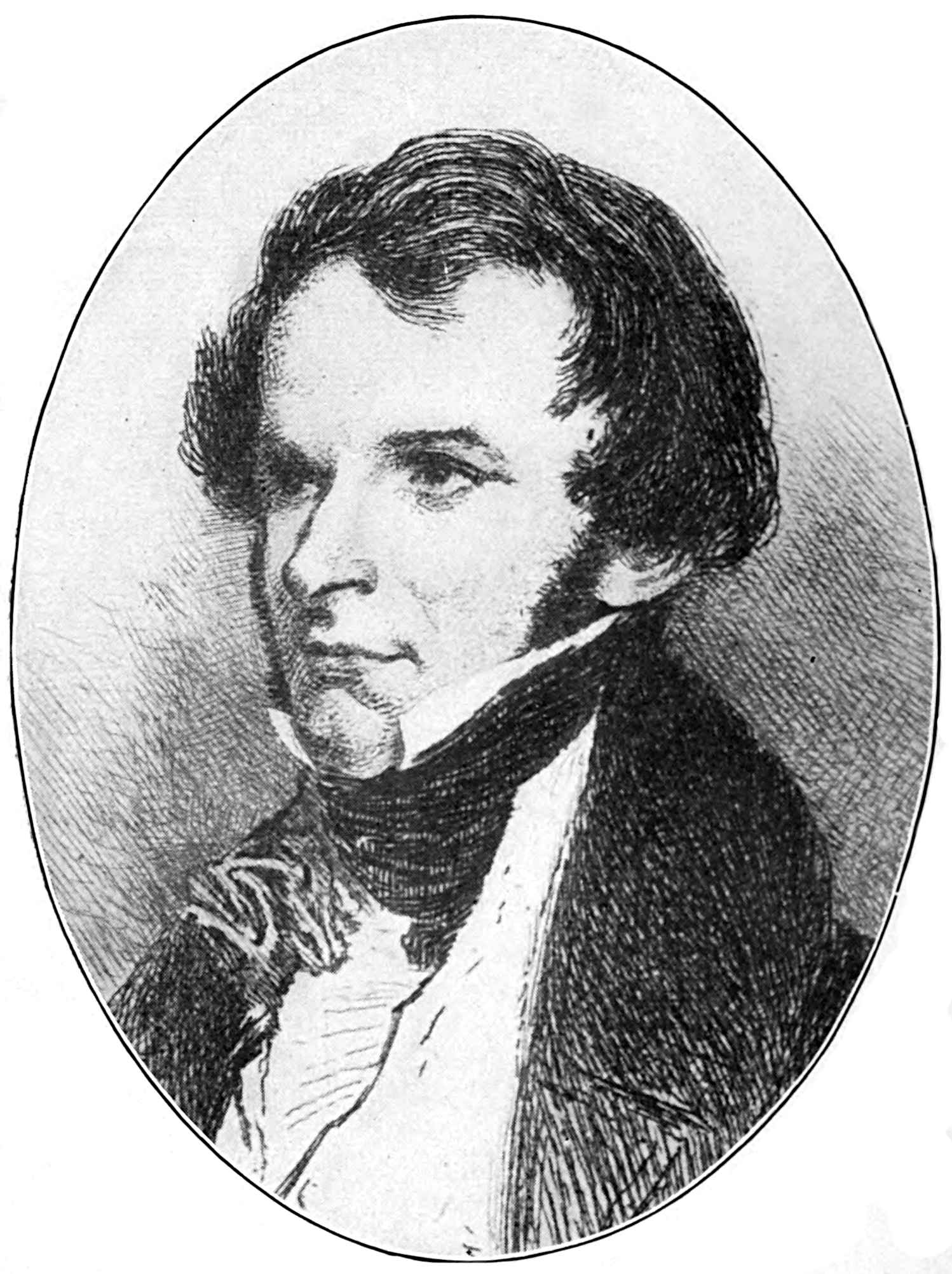
The stories here presented are a selection
from that brilliant series which shine like
a constellation in French literature of the last
century, blazoning Mérimée’s name across it.
Each one has been tested and judged by
successive generations of readers and critics.
The authoritative appraisers of literary values,
French and English, have been pronouncing
upon them from the time of their publication
until now, when they are still pronouncing
upon them, as upon new productions. Their
interest, nevertheless, is still fresh, their
charm as attractive as ever, and inexplicable,
as charm must be. The prediction that was
made in their day having been fulfilled so far,
it does not seem hazardous to renew it, at our
own risk, that they may be placed alongside
of those classics of fiction that meet so natural
a soil in the human mind that we can
no more foresee their ceasing to give pleasure
to readers in course of time than we can foresee
the flowers in the gardens ceasing to give
pleasure to lovers of flowers.
Carmen, with which the book begins, was
the last one written of the series. It might,
however, be said to antedate them all, for the
first impulsive, perhaps instinctive, love of
Mérimée’s imagination was for the passionate
drama of Spain, and his first production, The
Plays of Clara Gazul, was so vivid an imitation
of it that it mystified the critics of the
time, who had yet to learn the extreme
susceptibility of Mérimée’s mind to exotic influences;
a susceptibility that the author indulged,
if he did not foster, throughout life.
It was not until 1830 (after the publication
of Mateo Falcone and The Taking of the Redoubt)
that Mérimée saw Spain with the eyes
of his body, and became naturalised in that
part of it, that, as he describes it, “was
bounded on the north by a gitana and on
the south by a carbine,” whose patois he spoke
fluently, in whose ventas he was at home,
where he confesses to have committed a thousand
follies. In his letters addressed from Madrid
and Valencia, during this first voyage to
Spain, those who are curious about such
questions can read the account of Mérimée’s
introduction to Carmen,—that is, to José Maria,
the contrabandist and bandit, and to the toreador.
As for Carmen herself, “that servant of
the devil,” as José Maria describes her only too
well, although she does not figure in the letters,
we may infer that she did in some of the
“thousand follies.” The story was not, however,
written until fifteen years later than this,
after many subsequent visits to its birthplace.
A postscriptum, dated 1842, is attached to the
letters, giving an account of the death of the
toreador and of José Maria.
Mérimée had so long before this story
proved himself the most exquisite master, in
his day, of the art of simplicity and naturalness
in writing, that he would seem to have
left no farther room to himself for advance in
perfection, no margin for additional praise for
this his last story; and yet it has a quality of
its own that distinguishes it from every preceding
one.
“Señor,” said José Maria, “one becomes a
rascal without thinking of it; a pretty girl
steals your wits, you fight for her, an accident
happens, you have to live in the mountains,
and from a smuggler you become a robber
before you know it.”
This is the simplicity and naturalness, not
of Mérimée, but of José Maria himself; and
the story that follows shows absolutely no
other author than the condemned bandit.
There is no consciousness in reading it of
the perfection that mars the very perfection
of Colomba, nor suspicion of premeditated
pathos as in the supremely pathetic Arsène
Guillot. Form and pathos are no more
thought of by the author than by José Maria
himself. And, therefore, as Taine says, “dissertations
on primitive and savage instinct,
learned essays like Schopenhauer’s on love and
death, are not worth its hundred pages.”
As if he himself recognised the finality of his
art in this identity of it with nature, Mérimée
laid aside his pen after writing it, and wrote
no more stories for twenty years; in truth,
wrote no more, for as his biographer Filon
expresses it, when he took up his pen again,
he found it irremediably rusted.
The Taking of the Redoubt resembles
Carmen in this, that the author so completely
effaces his personality from the teller of the
story, that one finds it easier to suppose than
not that the incident was related to him, as
he says in the prefatory note, by the officer
to whom it happened, and that he merely
wrote it down from memory. The concession,
however, concedes nothing, as long as
the word “memory” is retained in the explanation.
For what it stands for here is an
imagination that could make the carelessly
dropped incident its own, and turn upon it a
marvellous sight (lens-eye and light, all in
one), until what we read was as clear to
Mérimée as it is to us now. Then he wrote
it down in the pages that are without a match
in the thousands of descriptions of battles that
have been written. As one does not go to
another for words to describe what one sees
oneself, so we need no interpreter of our
sensations when we read The Taking of the
Redoubt. It is for us alone, as Mérimée seems
to tell us, to read it or not to read it, to see
what took place or not see it.
In the list of Mérimée’s stories Mateo Falcone
stands immediately before The Taking
of the Redoubt. Both were published in the
same year, in 1829, which was the twenty-sixth
of the author’s age. It is so seldom
mentioned now in English without Walter
Pater’s judgment upon it, “perhaps the
cruellest story in the world,” that that might
well be added to the name as a sub-title. It
would be so, perhaps, if Mérimée had not related
it. He himself, despite the cold impassivity
that he had schooled himself into
maintaining as an author,—he himself shows
here and there a trace of the emotion that he
arouses in us. The temptation, fall, and
punishment of the little child touch indeed
the most sensitive nerve in the human heart;
the one that can give the keenest pain; that
cuts through the heart like a knife. The story
would be well-nigh unbearable in another
hand than Mérimée’s, or had he told it in a
clean, clear thrust of reality, as in The Taking
of the Redoubt. But he retards the action in
the beginning with details and diverts the attention
with local colour; not, however, be
it remarked, such local colour as he saw with
his own eyes, in Spain, but the kind that he
learned how to make so easily in the days of
Clara Gazul and La Guzla, that he lost, as he
confesses, all respect for it. Mateo, Gianetto,
Gamba, and Giuseppa belong also to the domain
of the not seen, not known. But the
child, the unfortunate Fortunato, stands out
against the artificial background of place,
time, and circumstance, with a vividness of
reality that, as in The Taking of the Redoubt,
would make the reality seem vague and indistinct
beside it. A few pages of this story
might be cited as the highest point that Mérimée
attained as an artist.
He himself considered The Venus of Ille
the best story he ever wrote. The preference
is characteristic of him. It contains all
the elements of the mysterious and horrible
for which he had an inherent passion; and
he relates it as he loved to relate the extraordinary,
in the tone of skeptical raillery that
is the surest as well as the subtlest way
of sowing in a reader distrust in the integrity
of his common sense. This tone, also,
was an inherent quality of Mérimée’s; it
represented the attitude of his mind towards
the illusions of his imagination, which he
explains in one of his Lettres Inédites:
“You cannot imagine, madame, the difference
there is between the things which it
pleases me to suppose and those which I
admit to be true. I please myself in imagining
goblins and fairies. I make my own
hair stand on end by relating ghost stories
to myself. But, notwithstanding the physical
effect I experience, I am not prevented
from not believing in ghosts; on this point
my incredulity is so great that even if I
were to see a ghost, I would not believe
in it any the more.”
The old mediæval legend was exhumed by
Mérimée, as he unearthed the bronze statue
of the maleficent Venus, in the little village
under the shadow of the Canigou,—in all
its beauty and terror, in all its ferocity, one
might say, of pagan Christian. He altered
nothing of it, and added only what as a visiting
archæologist, his rôle in the story, he
could not omit: the details of his rather
curious experience; the impression made upon
him by the statue, as a woman of seductive
wickedness and cruel, imperious passions,
a type of woman that, as his biographer
comments, “none in the Paris of his day (the
home of such divinities) understood so well
as he.”
The ascent to the dramatic catastrophe of
the story is so natural, easy, and pleasant
(the preparations for a wedding and its celebration
are of all pleasant things in the world
what a reader loves most to dally with); the
means employed by the writer are so natural—for
there is not the faintest suggestion of or
appeal to the morbid—that we arrive at the
crisis well prepared to lose none of its weird
and terrible intensity, and the thrill and the
shudder that arise in us then are as real as
Mérimée’s own physical tribute to the power
of his imagination.
Such stories have an intrinsic value that
renders them independent of an author’s name
and reputation, even of his time and country.
They are as easily detached from him, and
with as little loss to themselves, as precious
stones are from the name and place of the
mine that once held them. This supreme
distinction of a story is, nevertheless, what
commends it to the assiduous seekers after
the secret of literary perfection; the philosopher’s
stone of the world of letters. Mérimée,
on the whole, has stood the biographical and
critical tests applied to him well, both as man
and artist, and, although the secret of his art
in truth went to the grave with him, this
much at least has been found out, that he was
worthy to be the author of his stories.
I had always suspected the geographers
of not knowing what they were talking
about when they placed the battle-field of
Munda in the country of the Bastuli-Pœni,
near the modern Monda, some two leagues
north of Marbella. According to my own
conjectures concerning the text of the anonymous
author of the Bellum Hispaniense, and
in view of certain information collected in the
Duke of Ossuna’s excellent library, I believed
that we should seek in the vicinity of Montilla
the memorable spot where for the last
time Cæsar played double or quits against
the champions of the republic. Happening
to be in Andalusia in the early autumn of
1830, I made quite a long excursion for the
purpose of setting at rest such doubts as I still
entertained. A memoir which I propose to
publish ere long will, I trust, leave no further
uncertainty in the minds of all honest archæologists.
Pending the time when my deliverance
shall solve at last the geographical
problem which is now holding all the learning
of Europe in suspense, I propose to tell
you a little story; it has no bearing on the
question of the actual location of Munda.
I had hired a guide and two horses at Cordova,
and had taken the field with no other
impedimenta than Cæsar’s Commentaries and
a shirt or two. On a certain day, as I wandered
over the more elevated portion of the
plain of Cachena, worn out with fatigue, dying
with thirst, and scorched by a sun of molten
lead, I was wishing with all my heart that
Cæsar and Pompey’s sons were in the devil’s
grip, when I spied, at a considerable distance
from the path I was following, a tiny
greensward, studded with reeds and rushes,
which indicated the proximity of a spring.
In fact, as I drew nearer, I found that what
had seemed to be a greensward was a marshy
tract through which a stream meandered,
issuing apparently from a narrow ravine between
two high buttresses of the Sierra de
Cabra. I concluded that by ascending the
stream I should find cooler water, fewer
leeches and frogs, and perhaps a bit of shade
among the cliffs. As we rode into the gorge
my horse whinnied, and another horse, which
I could not see, instantly answered. I had
ridden barely a hundred yards when the
gorge, widening abruptly, disclosed a sort of
natural amphitheatre, entirely shaded by the
high cliffs which surrounded it. It was impossible
to find a spot which promised the
traveller a more attractive sojourn. At the
foot of perpendicular cliffs, the spring came
bubbling forth and fell into a tiny basin carpeted
with sand as white as snow. Five or
six fine live-oaks, always sheltered from the
wind and watered by the spring, grew upon
its brink and covered it with their dense shade;
and all about the basin, a fine, sheeny grass
promised a softer bed than one could find at
any inn within a radius of ten leagues.
The honour of discovering so attractive a
spot did not belong to me. A man was already
reposing there, and was asleep in all
probability when I rode in. Roused by the
neighing of the horses, he had risen, and had
walked towards his horse, which had taken
advantage of his master’s slumber to make a
hearty meal on the grass in the immediate
neighbourhood. He was a young fellow, of
medium height, but of robust aspect, and
with a proud and distrustful expression. His
complexion, which might once have been fine,
had become darker than his hair through the
action of the sun. He held his horse’s halter
in one hand and in the other a blunderbuss
with a copper barrel. I will admit that at
first blush the blunderbuss and the forbidding
air of its bearer took me a little by surprise;
but I had ceased to believe in robbers, because
I had heard so much said about them and had
never met one. Moreover, I had seen so
many honest farmers going to market armed
to the teeth that the sight of a firearm did
not justify me in suspecting the stranger’s
moral character.—“And then, too,” I said to
myself, “what would he do with my shirts
and my Elzevir Cæsar?” So I saluted the
man with the blunderbuss with a familiar nod,
and asked him smilingly if I had disturbed his
sleep.
He eyed me from head to foot without replying;
then, as if satisfied by his examination,
he scrutinised no less closely my guide, who
rode up at that moment. I saw that the latter
turned pale and stopped in evident alarm.
“An unfortunate meeting!” I said to myself.
But prudence instantly counselled me to betray
no uneasiness. I dismounted, told the guide
to remove the horses’ bridles, and, kneeling by
the spring, I plunged my face and hands in
the water; then I took a long draught and
lay flat on my stomach, like the wicked soldiers
of Gideon.
But I kept my eyes on my guide and the
stranger. The former drew near, sorely against
his will; the other seemed to have no evil
designs upon us, for he had set his horse at
liberty once more, and his blunderbuss, which
he had held at first in a horizontal position,
was now pointed towards the ground.
As it seemed to me inexpedient to take umbrage
at the small amount of respect shown
to my person, I stretched myself out on the
grass, and asked the man with the blunderbuss,
in a careless tone, if he happened to
have a flint and steel about him. At the same
time I produced my cigar-case. The stranger,
still without a word, felt in his pocket, took
out his flint and steel and courteously struck
a light for me. Evidently he was becoming
tamer, for he sat down opposite me, but did
not lay aside his weapon. When my cigar
was lighted, I selected the best of those that
remained and asked him if he smoked.
“Yes, señor,” he replied.
Those were the first words that he had
uttered, and I noticed that he did not pronounce
the s after the Andalusian fashion,[1]
whence I concluded that he was a traveller
like myself, minus the archæologist.
“You will find this rather good,” I said,
offering him a genuine Havana regalia.
He bent his head slightly, lighted his cigar
by mine, thanked me with another nod, then
began to smoke with every appearance of very
great enjoyment.
“Ah!” he exclaimed, as he discharged the
first puff slowly through his mouth and his
nostrils, “how long it is since I have had a
smoke!”
In Spain, a cigar offered and accepted establishes
hospitable relations, just as the sharing
of bread and salt does in the East. My man
became more talkative than I had hoped. But,
although he claimed to live in the partido of
Montilla, he seemed to be but ill-acquainted
with the country. He did not know the name
of the lovely valley where we were; he could
not mention any village in the neighbourhood;
and, lastly, when I asked him whether he had
seen any ruined walls thereabouts, or any tiles
with raised edges, or any carved stones, he
admitted that he had never paid any attention
to such things. By way of compensation he
exhibited much expert knowledge of horses.
He criticised mine, which was not very difficult;
then he gave me the genealogy of his,
which came from the famous stud of Cordova;
a noble animal in very truth, and so proof
against fatigue, according to his master, that
he had once travelled thirty leagues in a day,
at a gallop or a fast trot. In the middle of
his harangue the stranger paused abruptly, as
if he were surprised and angry with himself
for having said too much.
“You see, I was in a hurry to get to Cordova,”
he added, with some embarrassment.
“I had to present a petition to the judges in
the matter of a lawsuit.”
As he spoke, he glanced at my guide, Antonio,
who lowered his eyes.
The cool shade and the spring were so delightful
to me that I remembered some slices
of excellent ham which my friends at Montilla
had put in my guide’s wallet. I bade him
produce them, and I invited the stranger to
join me in my impromptu collation. If he had
not smoked for a long while, it seemed probable
to me that he had not eaten for at least
forty-eight hours. He devoured the food like
a starved wolf. It occurred to me that our
meeting was a providential affair for the poor
fellow. My guide meanwhile ate little, drank
still less, and did not talk at all, although
from the very beginning of our journey he
had revealed himself to me in the guise
of an unparalleled chatterbox. Our guest’s
presence seemed to embarrass him, and a
certain distrust kept them at arm’s length
from each other, but I was unable to divine
its cause.
The last crumbs of the bread and ham had
vanished; each of us had smoked a second
cigar; I ordered the guide to put the bridles
on our horses, and I was about to take leave
of my new friend, when he asked me where
I intended to pass the night.
I replied, before I had noticed a signal from
my guide, that I was going on to the Venta
del Cuervo.
“A wretched place for a man like you,
señor. I am going there, and if you will
allow me to accompany you, we will ride
together.”
“With great pleasure,” I replied, mounting
my horse.
My guide, who was holding my stirrup,
made another signal with his eyes. I answered
it with a shrug of my shoulders, as if
to assure him that I was perfectly unconcerned,
and we set forth.
Antonio’s mysterious signs, his evident uneasiness,
a few words that had escaped from
the stranger, and, above all, his gallop of
thirty leagues, and the far from plausible explanation
of it which he had offered, had
already formed my opinion concerning our
travelling companion. I had no doubt that I
had fallen in with a smuggler, perhaps a
highwayman; but what did it matter to me?
I was sufficiently acquainted with the Spanish
character to be very sure that I had
nothing to fear from a man who had broken
bread and smoked with me. His very presence
was a certain protection against any
unpleasant meetings. Furthermore, I was
very glad to know what manner of man a
brigand is. One does not see them every
day, and there is a certain charm in finding
oneself in the company of a dangerous individual,
especially when one finds him to be
gentle and tame.
I hoped to lead the stranger by degrees
to the point of making me his confidant, and
despite my guide’s meaning winks, I turned
the conversation to the subject of highway
robbers. Be it understood that I spoke of
them with great respect. There was in Andalusia
at that time a celebrated brigand
named José Maria, whose exploits were on
every tongue.
“Suppose I were riding beside José Maria!”
I said to myself.
I told such stories as I knew concerning
that hero—all to his credit, by the way,—and
I expressed in warm terms my admiration for
his gallantry and his generosity.
“José Maria is a villain pure and simple,”
observed the stranger, coldly.
“Is he doing himself justice?” I thought;
“or is this merely an excess of modesty on
his part?” For, by dint of observing my
companion closely, I had succeeded in applying
to him the description of José Maria
which I had seen placarded on the gates of
many a town in Andalusia. “Yes, it is certainly
he: fair hair, blue eyes, large mouth,
fine teeth, small hands; a shirt of fine linen,
velvet jacket with silver buttons, white leather
gaiters, a bay horse. There is no doubt of
it! But I will respect his incognito.”
We arrived at the venta. It was the sort
of place that he had described, that is to say,
one of the vilest taverns that I had seen as
yet. A large room served as kitchen, dining-room,
and bedroom. The fire was kindled
on a flat stone in the middle of the room, and
the smoke emerged through a hole in the
roof, or rather hung about it, forming a dense
cloud a few feet from the floor. Stretched
on the ground along the walls could be seen
some five or six worn mule-blankets; they
were the beds of the guests. Some twenty
yards from the house, or rather from the
single room which I have described, was a
sort of shed, which did duty as a stable. In
this attractive abode there were no other
human beings, for the moment at least, than
an old woman and a little girl of eight or
ten years, both as black as soot and clad in
shocking rags.
“Behold,” I said to myself, “all that remains
of the population of the ancient Munda
Bœtica! O Cæsar! O Sextus Pompey! how
surprised you would be, should you return to
earth!”
At sight of my companion, the old woman
uttered an exclamation of surprise.
“Ah! Señor Don José!” she cried.
Don José frowned and raised his hand with
an authoritative gesture which instantly silenced
the old woman. I turned to my
guide, and with an imperceptible sign gave
him to understand that there was nothing
that he could tell me concerning the man
with whom I was about to pass the night.
The supper was better than I anticipated.
On a small table about a foot high we were
served with an aged rooster, fricasseed with
rice and an abundance of peppers; then with
peppers in oil; and lastly with gaspacho, a
sort of pepper salad. Three dishes thus highly
seasoned compelled us to have frequent recourse
to a skin of Montilla wine, which was
delicious. After we had eaten, happening to
spy a mandolin hanging on the wall,—there
are mandolins everywhere in Spain,—I asked
the little girl who waited on us if she knew
how to play it.
“No,” she replied, “but Don José plays it
so well!”
“Be good enough,” I said to him, “to sing
me something; I am passionately fond of your
national music.”
“I can refuse no request of such a gallant
gentleman, who gives me such excellent
cigars,” said Don José, good-naturedly.
And, having asked for the mandolin, he
sang to his own accompaniment. His voice
was rough, but very agreeable, the tune melancholy
and weird; as for the words, I did
not understand a syllable.
“If I am not mistaken,” I said, “that is
not a Spanish air. It resembles the zorzicos
which I have heard in the Provinces,[2] and the
words must be Basque.”
“Yes,” replied Don José, with a gloomy
air.
He placed the mandolin on the floor, and
sat with folded arms, gazing at the dying fire
with a strange expression of melancholy. His
face at once noble and fierce, lighted by a
lamp that stood on the low table, reminded
me of Milton’s Satan. Perhaps, like him, my
companion was thinking of the sojourn that
he had left, of the banishment that he had incurred
by a sin. I tried to revive the conversation,
but he did not answer, absorbed as he
was in his sad thoughts. The old woman
had already retired in one corner of the room,
behind an old torn blanket suspended by a
cord. The little girl had followed her to that
retreat, reserved for the fair sex. Thereupon
my guide rose and invited me to accompany
him to the stable; but at that suggestion Don
José, as if suddenly awakened, asked him
roughly where he was going.
“To the stable,” was the guide’s reply.
“What for? The horses have their feed.
Sleep here; the señor will not object.”
“I am afraid the señor’s horse is sick; I
would like the señor to see him; perhaps he
will know what to do for him.”
It was evident that Antonio wished to
speak to me in private; but I had no desire to
arouse Don José’s suspicions, and, in view of
the footing on which we then stood, it seemed
to me that the wisest course was to show the
most entire confidence. So I told Antonio
that I understood nothing about horses, and
that I wished to sleep. Don José went with
him to the stable, whence he soon returned
alone. He told me that nothing was the matter
with the horse, but that my guide considered
him such a valuable beast that he was
rubbing him with his jacket to make him
sweat, and that he proposed to pass the night
in that delectable occupation. Meanwhile I
had stretched myself out on the mule-blankets,
carefully wrapped in my cloak, in order
not to come in contact with them. After
apologising for the liberty he took in taking
his place beside me, Don José lay down before
the door, not without renewing the priming
of his blunderbuss, which he took care to
place under the wallet which served him for a
pillow. Five minutes after we had bade each
other good-night we were both sound asleep.
I had believed that I was tired enough to be
able to sleep even on such a couch; but after
about an hour, a very unpleasant itching
roused me from my first nap. As soon as I
realised the nature of it, I rose, convinced that
it would be better to pass the night in the
open air than beneath that inhospitable roof.
I walked to the door on tiptoe, stepped over
Don José, who was sleeping the sleep of the
just, and exerted such care that I left the house
without waking him. Near the door was a
broad wooden bench; I lay down upon it, and
bestowed myself as comfortably as possible
to finish the night. I was just closing my
eyes for the second time, when it seemed to
me that I saw the shadows of a man and a
horse pass me, both moving without the
slightest sound. I sat up, and fancied that I
recognised Antonio. Surprised to find him
outside of the stable at that time of night, I
rose and walked toward him. He had halted,
having seen me first.
“Where is he?” he asked in a whisper.
“In the venta; he is asleep; he has no fear
of fleas. Why are you taking that horse
away?”
I noticed then that to avoid making any
noise on leaving the shed, Antonio had carefully
wrapped the animal’s feet in the remnants
of an old blanket.
“Speak lower, in God’s name!” said Antonio.
“Don’t you know who that man is?
He’s José Navarro, the most celebrated bandit
in Andalusia. I have been making signs to
you all day, but you wouldn’t understand.”
“Bandit or not, what do I care?” said I;
“he has not robbed us, and I’ll wager that he
has no inclination to do so.”
“Very good! but there’s a reward of two
hundred ducats for whoever causes his capture.
I know that there’s a detachment of lancers
stationed a league and a half from here, and
before daybreak I will bring up some stout
fellows to take him. I would have taken his
horse, but the beast is so vicious that no one
but Navarro can go near him.”
“The devil take you!” said I. “What
harm has the poor fellow done to you that
you should denounce him? Besides, are you
quite sure that he is the brigand you say he
is?”
“Perfectly sure; he followed me to the
stable just now and said to me: ‘You act as
if you knew me; if you tell that honest gentleman
who I am, I’ll blow your brains out!’—Stay,
señor, stay with him; you have nothing
to fear. So long as he knows you are here he
won’t suspect anything.”
As we talked we had walked so far from
the venta that the noise of the horse’s shoes
could not be heard there. Antonio, in a
twinkling, removed the rags in which he had
wrapped them, and prepared to mount. I
tried to detain him by entreaties and threats.
“I am a poor devil, señor,” he said; “two
hundred ducats aren’t to be thrown away,
especially when it’s a question of ridding the
province of such vermin. But beware! if
Navarro wakes, he’ll jump for his blunderbuss,
and then look out for yourself! I have
gone too far to go back; take care of yourself
as best you can.”
The rascal was already in the saddle; he
dug both spurs into the horse, and I soon lost
sight of him in the darkness.
I was very angry with my guide, and
decidedly uneasy. After a moment’s reflection,
I decided what to do, and returned to
the venta. Don José was still asleep, repairing
doubtless the effects of the fatigue and
vigils of several days of peril. I was obliged
to shake him violently in order to rouse him.
I shall never forget his fierce glance and the
movement that he made to grasp his blunderbuss,
which, as a precautionary measure, I had
placed at some distance from his couch.
“Señor,” I said, “I ask your pardon for
waking you; but I have a foolish question to
ask you: would you be greatly pleased to see
half a dozen lancers ride up to this door?”
He sprang to his feet and demanded in a
terrible voice:
“Who told you?”
“It matters little whence the warning comes,
provided that it be well founded.”
“Your guide has betrayed me, but he shall
pay me for it! Where is he?”
“I don’t know; in the stable, I think.—But
some one told me——”
“Who told you? It couldn’t have been
the old woman.”
“Some one whom I do not know.—But
without more words, have you any reason
for not awaiting the soldiers, yes or no? If
you have, waste no time; if not, good-night,
and I ask your pardon for disturbing your
sleep.”
“Ah! your guide! your guide! I suspected
him from the first; but—his account is made
up! Farewell, señor! God will repay you for
the service you have rendered me. I am not
altogether so bad as you think; no, there is
still something in me which deserves a gallant
man’s compassion.—Farewell, señor! I have
but one regret, and that is that I cannot pay
my debt to you.”
“In payment of the service I have rendered
you, promise, Don José, to suspect no one,
and not to think of revenge. Here, take these
cigars, and a pleasant journey to you!”
And I offered him my hand.
He pressed it without replying, took his
blunderbuss and his wallet, and after exchanging
a few words with the old woman, in an
argot which I could not understand, he ran to
the shed. A few moments later I heard him
galloping across country.
I lay down again on my bench, but I slept
no more. I wondered whether I had done
right to save a highwayman, perhaps a murderer,
from the gibbet, simply because I had
eaten ham and rice à la Valenciennes with
him. Had I not betrayed my guide, who was
upholding the cause of the law? Had I not
exposed him to the vengeance of a miscreant?
But the duties of hospitality!—“The prejudice
of a savage!” I said to myself; “I shall
be responsible for all the crimes that bandit
may commit.”—But after all, is it really a prejudice,
that instinct of the conscience which is
impervious to all argument? Perhaps, in the
delicate situation in which I found myself, I
could not have taken either course without
remorse. I was still in a maze of uncertainty
concerning the moral aspect of my action,
when I saw half a dozen horsemen approaching,
with Antonio, who remained prudently
with the rear-guard. I went to meet them
and informed them that the brigand had taken
flight more than two hours before. The old
woman, when questioned by the officer in
command, admitted that she knew Navarro,
but said that, living alone as she did, she
should never have dared to risk her life by
denouncing him. She added that it was his
custom, whenever he visited her house, to
leave in the middle of the night. For my
part, I was obliged to go to a place a few
leagues away, to show my passport and sign
a declaration before an alcalde, after which I
was allowed to resume my archæological
investigations. Antonio bore me a grudge,
suspecting that it was I who had prevented
him from earning the two hundred ducats.
However, we parted on friendly terms at
Cordova, where I gave him a gratuity as large
as the state of my finances would permit.
I passed several days at Cordova. I had
been told of a certain manuscript in the
library of the Dominican convent, in which I
was likely to find valuable information concerning
the Munda of the ancients. Being
very amiably received by the good fathers,
I passed the days in their convent, and walked
about the city in the evenings. There is
always a throng of idlers, about sunset,
on the quay that borders the right bank of
the Guadalquivir at Cordova. There one inhales
the emanations from a tannery which
still maintains the ancient celebrity of the district
for the manufacture of leather; but, on
the other hand, one enjoys a spectacle that
has its merits. A few minutes before the
Angelus, a great number of women assemble
on the river bank, below the quay, which is
quite high. No man would dare to join that
group. As soon as the Angelus rings, it is
supposed to be dark. At the last stroke
of the bell, all those women undress and go
into the water. Thereupon there is tremendous
shouting and laughter and an infernal
uproar. From the quay above, the men stare
at the bathers, squinting their eyes, but they
see very little. However, those vague white
shapes outlined against the dark blue of the
stream set poetic minds at work; and with a
little imagination it is not difficult to conjure up
a vision of Diana and her nymphs in the bath,
without having to fear the fate of Actæon. I had
been told that on a certain day a number of
profane scapegraces clubbed together to grease
the palm of the bell-ringer at the cathedral
and hire him to ring the Angelus twenty minutes
before the legal hour. Although it was
still broad daylight, the nymphs of the Guadalquivir
did not hesitate, but trusting the
Angelus rather than the sun, they fearlessly
made their bathing toilet, which is always of
the simplest. I was not there. In my day
the bell-ringer was incorruptible, the twilight
far from brilliant, and only a cat could have
distinguished the oldest orange-woman from
the prettiest grisette in Cordova.
One evening, when it was too dark to see
anything, I was leaning against the parapet
of the quay, smoking, when a woman ascended
the steps leading to the river and seated herself
by my side. She had in her hair a large
bouquet of jasmine, the flowers of which exhale
an intoxicating odour at night. She
was simply, perhaps poorly clad, all in black,
like most grisettes in the evening. Women
of fashion wear black only in the morning; in
the evening they dress à la francesca. When
she reached my side, my bather allowed the
mantilla which covered her head to fall over
her shoulders, and I saw, “by the dim light
that falleth from the stars,” that she was
young, small, well built, and that she had
very large eyes. I threw my cigar away
at once. She appreciated that distinctively
French attention, and made haste to say that
she was very fond of the smell of tobacco; in
fact, that she sometimes smoked herself, when
she could obtain a very mild papelito. Luckily,
I happened to have some of that description
in my case, and I lost no time in offering
them to her. She deigned to take one and
lighted it at a piece of burning string which a
child brought us in consideration of a small
coin. Mingling our smoke, we talked so
long, the fair bather and myself, that we were
finally left almost alone on the quay. I thought
that I might safely venture to invite her to
take an ice at the neveria.[3] After hesitating
modestly, she accepted; but before concluding
to do so, she wished to know what time
it was. I caused my repeater to strike, and
that striking seemed to surprise her greatly.
“What wonderful things you foreigners
invent! From what country are you, señor?
An Englishman, no doubt?”[4]
“A Frenchman, and your humble servant.
And you, señorita, or señora, are of Cordova, I
presume?”
“No.”
“You are an Andalusian, at all events. It
seems to me that I can tell that by your soft
speech.”
“If you observe everybody’s speech so
closely, you should be able to guess what I
am.”
“I believe that you are from the land of
Jesus, within two steps of paradise.”
(I had learned this metaphor, which designates
Andalusia, from my friend Francisco
Sevilla, a well-known picador.)
“Bah! paradise—the people about here
say that it wasn’t made for us.”
“In that case you must be a Moor, or——”
I checked myself, not daring to say “Jewess.”
“Nonsense! you see well enough that I am
a gypsy; would you like me to tell your
baji?[5] Have you ever heard of La Carmencita?
I am she.”
I was such a ne’er-do-well in those days—fifteen
years ago—that I did not recoil in
horror when I found myself seated beside a
sorceress.
“Pshaw!” I said to myself, “last week I
supped with a highway robber, to-day I will
eat ices with a handmaid of the devil. When
one is travelling, one must see everything.”
I had still another motive for cultivating her
acquaintance. When I left school, I confess
to my shame, I had wasted some time studying
the occult sciences, and several times indeed
I had been tempted to conjure up the
spirits of darkness. Long since cured of my
fondness for such investigations, I still retained,
nevertheless, a certain amount of curiosity
concerning all kinds of superstition, and I rejoiced
at the prospect of learning how far the
art of magic had been carried among the
gypsies.
While talking together we had entered the
neveria and had taken our seats at a small table
lighted by a candle confined in a glass globe.
I had abundant opportunity to examine my
gitana, while divers respectable folk who were
eating ices there lost themselves in amazement
at seeing me in such goodly company.
I seriously doubt whether Señorita Carmen
was of the pure breed; at all events, she was
infinitely prettier than any of the women of
her nation whom I had ever met. No woman
is beautiful, say the Spaniards, unless she combines
thirty so’s; or, if you prefer, unless she
may be described by ten adjectives, each of
which is applicable to three parts of her person.
For instance, she must have three black
things: eyes, lashes, and eyebrows, etc. (See
Brantôme for the rest.) My gypsy could make
no pretension to so many perfections. Her
skin, albeit perfectly smooth, closely resembled
the hue of copper. Her eyes were
oblique, but of a beautiful shape; her lips a
little heavy but well formed, and disclosed
two rows of teeth whiter than almonds without
their skins. Her hair, which was possibly
a bit coarse, was black with a blue reflection,
like a crow’s wing, and long and glossy. To
avoid fatiguing you with a too verbose description,
I will say that for each defect she
had some good point, which stood out the
more boldly perhaps by the very contrast. It
was a strange, wild type of beauty, a face
which took one by surprise at first, but which
one could not forget. Her eyes, especially,
had an expression at once voluptuous and
fierce, which I have never seen since in any
mortal eye. “A gypsy’s eye is a wolf’s eye”
is a Spanish saying which denotes keen observation.
If you have not the time to go to
the Jardin des Plantes to study the glance of a
wolf, observe your cat when it is watching a
sparrow.
Of course it would have been absurd to
have my fortune told in a café. So I requested
the pretty sorceress to allow me to
accompany her to her home. She readily
consented, but she desired once more to
know how the time was passing and asked
me to make my watch strike again.
“Is it real gold?” she inquired, scrutinising
it with extraordinary attention.
When we left the café, it was quite dark;
most of the shops were closed, and the
streets almost deserted. We crossed the
Guadalquivir by the bridge, and at the very
extremity of the suburb, we stopped in front
of a house which bore no resemblance to
a palace. A child admitted us. The gypsy
said some words to him in a language entirely
unknown to me, which I afterwards
found was the rommani or chipe calli, the
language of the gitanos. The child at once
disappeared, leaving us in a room of considerable
size, furnished with a small table,
two stools, and a chest. I must not forget
to mention a jar of water, a pile of oranges,
and a bunch of onions.
As soon as we were alone, the gypsy took
from her chest a pack of cards which seemed
to have seen much service, a magnet, a dried
chameleon, and a number of other articles
essential to her art. Then she bade me make
a cross in my left hand with a coin, and the
magic ceremonies began. It is unnecessary
to repeat her predictions; and, as for her
method of operation, it was evident that
she was not a sorceress by halves.
Unfortunately we were soon disturbed.
The door was suddenly thrown open with
violence, and a man wrapped to the eyes
in a brown cloak entered the room, addressing
the gypsy in a far from amiable
fashion. I did not understand what he said,
but his tone indicated that he was in a very bad
temper. At sight of him the gitana exhibited
neither surprise nor anger, but she ran to
meet him, and, with extraordinary volubility,
said several sentences in the mysterious
tongue which she had already used in my
presence. The word payllo, repeated several
times, was the only word that I understood.
I knew that the gypsies designated thus every
man of another race than their own. Assuming
that I was the subject of discussion,
I looked forward to a delicate explanation;
I already had my hand on one of the stools
and was deliberating as to the precise moment
when it would be well for me to hurl
it at the intruder’s head. But he roughly
pushed the gypsy aside and strode toward
me; then recoiled a step, exclaiming:
“What! is it you, señor?”
I looked closely at him and recognised my
friend Don José. At that moment I was inclined
to regret that I had not let him be hanged.
“Ah! is it you, my fine fellow?” I cried,
laughing as heartily as I could manage to do;
“you interrupted the señorita just as she was
telling me some very interesting things.”
“Always the same! This must come to
an end,” he said between his teeth, glaring
savagely at the girl.
She meanwhile continued to talk to him
in her own language. She became excited
by degrees. Her eye became bloodshot and
terrible to look at, her features contracted,
and she stamped upon the floor. It seemed to
me that she was earnestly urging him to do
something which he evidently hesitated to do.
What that something was, I fancied that
I understood only too well, when I saw her
draw her little hand swiftly back and forth
under her chin. I was tempted to believe
that it was a matter of cutting a throat, and
I had some suspicion that the throat in question
was my own.
To all this torrent of eloquence Don José
replied only by two or three words uttered
in a sharp tone. Thereupon the gypsy bestowed
on him a glance of supreme contempt;
then seated herself Turkish fashion in
a corner of the room, selected an orange,
peeled it, and began to eat it.
Don José seized my arm, opened the door
and led me into the street. We walked about
two hundred yards in absolute silence. Then
he said, extending his hand:
“Go straight ahead and you will come to
the bridge.”
With that he turned his back on me and
walked rapidly away. I returned to my inn
rather sheepishly and in a very bad temper.
The worst feature of the affair was that
when I undressed I found that my watch
was missing.
Various considerations deterred me from
going the next day to demand it back, or
from applying to the corregidor to recover it
for me. I completed my work on the manuscript
at the Dominican convent and departed
for Seville. After wandering about Andalusia
for several months, I determined to return to
Madrid, and it was necessary for me to pass
through Cordova once more. I did not propose
to make a long stay there, for I had
taken a violent dislike to that fair city and the
bathers in the Guadalquivir. However, a few
errands to do and some friends to call upon
would detain me three or four days at least in
the ancient capital of the Mussulman princes.
When I appeared at the Dominican convent,
one of the fathers, who had taken a
lively interest in my investigations concerning
the location of Munda, welcomed me with
open arms.
“Blessed be the name of God!” he cried.
“Welcome, my dear friend! We all believed
you to be dead, and I who speak to you, I
have recited many paters and aves, which I
do not regret, for the welfare of your soul.
So you were not murdered?—for robbed we
know that you were.”
“How so?” I asked, not a little astonished.
“Why, yes—you know, that beautiful repeating
watch that you used to make strike
in the library when we told you that it was
time to go to the choir. Well! it has been
recovered; it will be restored to you.”
“That is to say,” I interrupted, somewhat
disconcerted, “I lost it——”
“The villain is behind the bars, and as he
was known to be a man who would fire a
gun at a Christian to obtain a penny, we were
terribly afraid that he had killed you. I will
go to the corregidor’s with you, and we will
obtain your fine watch. And then, do not let
me hear you whisper that justice does not
know its business in Spain!”
“I confess,” said I, “that I would rather
lose my watch than give testimony in court
which might send a poor devil to the gallows,
especially because—because——”
“Oh! do not be alarmed on that score;
he is well recommended, and he cannot be
hanged twice. When I say hanged, I am
wrong. He is a hidalgo, is your robber; so
that he will be garroted[6] day after to-morrow,
without fail. So, you see, one theft
more or less will have no effect on his fate.
Would to God that he had done nothing but
steal! but he has committed several murders,
each more shocking than the last.”
“What is his name?”
“He is known throughout the province by
the name of José Navarro, but he has another
Basque name, which neither you nor I could
ever pronounce. But he is a man worth
looking at, and you, interested as you are in
seeing all the curiosities of the province,
should not neglect the opportunity to learn
how villains leave this world in Spain. It will
be in the chapel, and Father Martinez will
take you thither.”
My Dominican insisted so earnestly that I
should view the preparations for the “pretty
little hanging” that I could not refuse. I
went to see the prisoner, having first supplied
myself with a bunch of cigars, which, I
hoped, would induce him to pardon my indiscretion.
I was ushered into the presence of Don
José while he was eating. He nodded coldly
to me, and thanked me courteously for the
present I brought him. Having counted the
cigars in the bunch which I placed in his
hands, he took out a certain number and
returned the rest to me, remarking that he
should not need any more.
I asked him if I could make his lot any
easier by the expenditure of a little money or
by the influence of my friends. At first he
shrugged his shoulders and smiled sadly;
but in a moment, on further reflection, he requested
me to have a mass said for the salvation
of his soul.
“Would you,” he added timidly,—“would
you be willing to have one said also for a
person who injured you?”
“Certainly, my dear fellow,” I said; “but
there is no one in this part of the country
who has injured me, so far as I know.”
He took my hand and pressed it, with a
solemn expression. After a moment’s silence,
he continued:
“May I venture to ask another favour at
your hands? When you return to your own
country, perhaps you will pass through Navarre;
at all events, you will go by way of
Vittoria, which is not very far away.”
“Yes,” I said, “I certainly shall go by way
of Vittoria, but it is not impossible that I may
turn aside to go to Pampelune, and, to oblige
you, I think that I would willingly make that
détour.”
“Very well! if you go to Pampelune, you
will see more than one thing that will interest
you. It is a fine city. I will give you this
locket (he showed me a little silver locket
which he wore about his neck); you will
wrap it in paper”—he paused a moment to
control his emotion—“and deliver it, or have
it delivered, to a good woman whose address
I will give you. You will tell her that I am
dead, but that you do not know how I died.”
I promised to perform his commission. I
saw him again the next day, and passed a
large part of the day with him. It was from
his own lips that I learned the melancholy adventures
which follow.
“I was born,” he said, “at Elizondo, in the
valley of Baztan. My name is Don José
Lizzarrabengoa, and you are familiar enough
with Spain, señor, to know at once from my
name that I am a Basque and a Christian of
the ancient type. I use the title Don because
I am entitled to it; and if I were at Elizondo,
I would show you my genealogy on a
sheet of parchment. My family wished me
to be a churchman, and they forced me to
study, but I profited little by it. I was too
fond of playing tennis—that was my ruin.
When we Navarrese play tennis, we forget
everything. One day, when I had won, a
young man from Alava picked a quarrel with
me; we took our maquilas,[7] and again I had
the advantage; but that incident compelled
me to leave the country. I fell in with some
dragoons, and I enlisted in the cavalry regiment
of Almanza. The men from our mountains
learn the military profession quickly. I
soon became a corporal, with the promise of
being promoted to quartermaster, when, to
my undoing, I was placed on duty at the
tobacco factory in Seville. If you have ever
been to Seville, you must have seen that
great building, outside of the fortifications,
close to the Guadalquivir. It seems to me
that I can see the doorway and the guard-house
beside it at this moment. When on duty
Spanish troops either gamble or sleep; I, like
an honest Navarrese, always tried to find
something to do. I was making a chain of
brass wire, to hold my primer. Suddenly my
comrades said: ‘There goes the bell; the
girls will be going back to work.’ You must
know, señor, that there are four or five hundred
girls employed in the factory. They roll
the cigars in a large room which no man can
enter without a permit from the Twenty-four,[8]
because they are in the habit of making themselves
comfortable, the young ones especially,
when it is warm. At the hour when the
women return to work, after their dinner,
many young men assemble to see them pass,
and they make remarks of all colours to them.
There are very few of those damsels who will
refuse a silk mantilla, and the experts in that
fishery have only to stoop to pick up their
fish. While the others stared, I remained on
my bench, near the door. I was young then;
I was always thinking of the old province,
and I did not believe that there were any
pretty girls without blue petticoats and long
plaited tresses falling over their shoulders.[9]
Moreover, the Andalusian girls frightened me;
I was not accustomed as yet to their manners:
always jesting, never a serious word.
So I had my nose over my chain, when I
heard some civilians say: ‘Here comes the
gitanella!’ I raised my eyes and I saw her.
It was a Friday, and I shall never forget it. I
saw that Carmen whom you know, at whose
house I met you several months ago.
“She wore a very short red skirt, which
revealed white silk stockings with more than
one hole, and tiny shoes of red morocco,
tied with flame-coloured ribbons. She put
her mantilla aside, to show her shoulders and
a huge bunch of cassia, which protruded from
her chemise. She had a cassia flower in the
corner of her mouth, too, and as she walked
she swung her hips like a filly in the stud
at Cordova. In my province a woman in
that costume would have compelled everybody
to cross themselves. At Seville every
one paid her some equivocal compliment on
her appearance, and she had a reply for every
one, casting sly glances here and there, with
her hand on her hip, as impudent as the genuine
gypsy that she was. At first sight she did
not attract me, and I returned to my work;
but she, according to the habit of women and
cats, who do not come when you call them,
but come when you refrain from calling them,—she
halted in front of me and spoke to me.
“‘Compadre,’ she said in Andalusian fashion,
‘will you give me your chain to hold the
keys of my strong-box?’
“‘It is to hold my primer’ [épinglette], I
replied.
“‘Your épinglette!’ she exclaimed, with a
laugh. ‘Ah! the señor makes lace, since he
needs pins!’ [épingles]
“Everybody present began to laugh, and I
felt the blood rise to my cheeks, nor could I
think of any answer to make.
“‘Well, my heart,’ she continued, ‘make
me seven ells of black lace for a mantilla, pincushion
[épinglier] of my soul!’
“And, taking the flower from her mouth
she threw it at me with a jerk of her thumb,
and struck me between the eyes. Señor, that
produced on me the effect of a bullet. I did
not know which way to turn, so I sat as
still as a post. When she had gone into the
factory, I saw the cassia blossom lying on
the ground between my feet; I do not know
what made me do it, but I picked it up, unseen
by my comrades, and stowed it carefully
away in my pocket—the first folly!
“Two or three hours later, I was still
thinking of her, when a porter rushed into
the guard-house, gasping for breath and with
a horrified countenance. He told us that a
woman had been murdered in the large room
where the cigars were made, and that we
must send the guard there. The quartermaster
told me to take two men and investigate.
I took my two men and I went upstairs.
Imagine, señor, that on entering the room I
found, first of all, three hundred women in
their chemises, or practically that, all shouting
and yelling and gesticulating, making such an
infernal uproar that you could not have heard
God’s thunder. On one side a woman lay on
the floor, covered with blood, with an X
carved on her face by two blows of a knife.
On the opposite side from the wounded woman,
whom the best of her comrades were
assisting, I saw Carmen in the grasp of five
or six women.
“‘Confession! Confession! I am killed!’
shrieked the wounded woman.
“Carmen said nothing; she clenched her
teeth and rolled her eyes about like a chameleon.
“‘What is all this?’ I demanded. I had
great difficulty in learning what had taken
place, for all the work-girls talked at once.
It seemed that the wounded one had boasted
of having money enough in her pocket to buy
an ass at the fair at Triana.
“‘I say,’ said Carmen, who had a tongue
of her own, ‘isn’t a broomstick good enough
for you?’ The other, offended by the insult,
perhaps because she was conscious that she
was vulnerable on that point, replied that she
was not a connoisseur in broomsticks, as she
had not the honour to be a gypsy or a godchild
of Satan, but that the Señorita Carmencita
would soon make the acquaintance of her
ass, when the corregidor took her out to ride,
with two servants behind to keep the flies
away. ‘Well!’ said Carmen, ‘I’ll make
watering-troughs for flies on your cheek,
and I’ll paint a checker-board on it.’ And
with that, vli, vlan! she began to draw St.
Andrew’s crosses on the other’s face with
the knife with which she cut off the ends of
the cigars.
“The case was clear enough; I took Carmen
by the arm. ‘You must come with me,
my sister,’ I said to her courteously. She
darted a glance at me, as if she recognised
me; but she said, with a resigned air:
“‘Let us go. Where’s my mantilla?’
“She put it over her head in such wise as
to show only one of her great eyes, and followed
my two men, as mild as a sheep.
When we reached the guard-house, the quartermaster
said that it was a serious matter,
and that she must be taken to prison. It fell
to my lot again to escort her there. I placed
her between two dragoons, and marched behind,
as a corporal should do under such circumstances.
We started for the town. At
first the gypsy kept silent; but on Rue de
Serpent—you know that street; it well deserves
its name because of the détours it
makes—she began operations by letting her
mantilla fall over her shoulders, in order to
show me her bewitching face, and turning
toward me as far as she could, she said:
“‘Where are you taking me, my officer?’
“‘To prison, my poor child,’ I replied, as
gently as possible, as a good soldier should
speak to a prisoner, especially to a woman.
“‘Alas! what will become of me? Señor
officer, take pity on me. You are so young,
so good looking!’ Then she added, in a
lower tone: ‘Let me escape, and I’ll give
you a piece of the bar lachi, which will make
all women love you.’
“The bar lachi, señor, is the lodestone,
with which the gypsies claim that all sorts of
spells may be cast when one knows how to
use it. Give a woman a pinch of ground
lodestone in a glass of white wine, and she
ceases to resist.—I replied with as much gravity
as I could command:
“‘We are not here to talk nonsense; you
must go to prison—that is the order, and
there is no way to avoid it.’
“We natives of the Basque country have
an accent which makes it easy for the Spaniards
to identify us; on the other hand, there
is not one of them who can learn to say even
baï, jaona.[10] So that Carmen had no difficulty
in guessing that I came from the provinces.
You must know, señor, that the gypsies, being
of no country, are always travelling, and
speak all languages, and that most of them
are perfectly at home in Portugal, in France,
in the Basque provinces, in Catalonia, everywhere;
they even make themselves understood
by the Moors and the English. Carmen
knew Basque very well.
“‘Laguna ene bihotsarena, comrade of my
heart,’ she said to me abruptly, ‘are you
from the provinces?’
“Our language, señor, is so beautiful, that,
when we hear it in a foreign land, it makes
us tremble.—I would like to have a confessor
from the provinces,” added the bandit in a
lower tone.
He continued after a pause:
“‘I am from Elizondo,’ I replied in Basque,
deeply moved to hear my native tongue
spoken.
“‘And I am from Etchalar,’ said she. That
is a place about four hours’ journey from us.
‘I was brought to Seville by gypsies. I have
been working in the factory to earn money
enough to return to Navarre, to my poor
mother, who has no one but me to support
her, and a little barratcea[11] with twenty
cider-apple trees! Ah! if I was at home, by
the white mountain! They insulted me because
I don’t belong in this land of thieves
and dealers in rotten oranges; and those hussies
all leagued against me, because I told
them that all their Seville jacques[12] with their
knives, wouldn’t frighten one of our boys
with his blue cap and his maquila. Comrade,
my friend, won’t you do anything for a
countrywoman?’
“She lied, señor, she always lied. I doubt
whether that girl ever said a true word in her
life; but when she spoke, I believed her; it
was too much for me. She murdered the
Basque language, yet I believed that she was
a Navarrese. Her eyes alone, to say nothing
of her mouth and her colour, proclaimed
her a gypsy. I was mad, I paid no heed to
anything. I thought that if Spaniards had
dared to speak slightingly to me of the provinces,
I would have slashed their faces as
she had slashed her comrade’s. In short, I
was like a drunken man; I began to say foolish
things, I was on the verge of doing them.
“‘If I should push you and you should fall,
my countryman,’ she continued, in Basque, ‘it
would take more than these two Castilian
recruits to hold me.’
“Faith, I forgot orders and everything, and
said to her:
“‘Well, my dear, my countrywoman, try
it, and may Our Lady of the Mountain be
with you!’
“At that moment we were passing one of
the narrow lanes of which there are so many
in Seville. All of a sudden Carmen turned
and struck me with her fist in the breast. I
purposely fell backward. With one spring
she leaped over me and began to run, showing
us a fleet pair of legs! Basque legs are
famous; hers were quite equal to them—as
swift and as well moulded. I sprang up instantly;
but I held my lance horizontally so as
to block the street, so that my men were delayed
for a moment when they attempted to
pursue her. Then I began to run myself, and
they at my heels. But overtake her! there
was no danger of that, with our spurs, and
sabres, and lances![13] In less time than it takes
to tell it, the prisoner had disappeared. Indeed,
all the women in the quarter favoured
her flight, laughed at us, and sent us in the
wrong direction. After much marching and
countermarching, we were obliged to return
to the guard-house without a receipt from the
governor of the prison.
“My men, to avoid being punished, said
that Carmen had talked Basque with me; and
to tell the truth, it did not seem any too natural
that a blow with the fist of so diminutive
a girl should upset a fellow of my build so
easily. It all seemed decidedly suspicious, or
rather it seemed only too clear. When I went
off duty I was reduced to the ranks and sent
to prison for a month. That was my first
punishment since I had been in the service.
Farewell to the uniform of a quartermaster,
which I fancied that I had already won!
“My first days in prison passed dismally
enough. When I enlisted I had imagined
that I should at least become an officer.
Longa and Mina, countrymen of mine, are
captains-general; Chapalangarra, who, like
Mina, is a negro and is a refugee in your
country—Chapalangarra was a colonel, and
I have played tennis twenty times with his
brother, who was a poor devil like myself.
Now I said to myself: ‘All the time that you
have served without punishment is time
thrown away. Here you are blacklisted, and
to regain the good graces of your superiors,
you will have to work ten times harder than
when you first enlisted! And why did you
receive punishment? For a gypsy hussy,
who made a fool of you, and who is doubtless
stealing at this moment in some corner
of the city.’—But I could not help thinking of
her. Would you believe it, señor? I had always
before my eyes her silk stockings, full
of holes, which she had shown me from top to
bottom when she ran away. I looked through
the bars into the street, and among all the women
who passed I did not see a single one
who could be compared with that devil of a
girl! And then, too, in spite of myself, I
smelt of the cassia flower she had thrown at
me, which, although it had withered, still retained
its sweet odour. If there are such things
as witches, that girl was one!
“One day the jailer came in and gave me an
Alcala[14] loaf.
“‘Here,’ said he, ‘your cousin sends you
this.’
“I took the loaf, greatly surprised, for I had
no cousin in Seville. ‘It may be a mistake,’ I
thought as I glanced at the loaf; but it was so
appetising, it smelt so good, that, without
disturbing myself as to whence it came or for
whom it was intended, I determined to eat it.
On attempting to cut it my knife came in contact
with something hard. I investigated and
found a small English file, which had been
slipped into the dough before baking. There
was also in the loaf a gold piece of two piastres.
There was no more doubt in my mind;
it was a gift from Carmen. To people of her
race freedom is everything, and they would
set fire to a city to save themselves from a
day in prison. However, she was a shrewd
minx, and with that loaf one could snap one’s
fingers at jailers. In an hour’s time the stoutest
bar could be sawed through with the
little file; and with the two piastres I could
exchange my uniform for a civilian’s coat at
the first old clo’-man’s. You may imagine
that a man who had many a time taken young
eaglets from their nests on our cliffs would
not have been at a loss to climb down into
the street from a window less than thirty feet
high. But I did not wish to escape. I still
possessed my honour as a soldier, and to desert
seemed to me a heinous crime. However, I
was touched by that token of remembrance.
When you are in prison you like to think
that you have a friend outside who is interested
in you. The gold piece disturbed
me a little, and I would have liked to return
it; but where was I to find my creditor? That
did not seem to me a simple matter.
“After the ceremony of reduction to the
ranks, I thought that I could not suffer any
more; but I had still another humiliation to
undergo: when, on my release from prison, I
was restored to duty and made to take my
turn at sentry-go like any private. You cannot
conceive what a man of spirit feels at such
a time. I believe that I would as lief have
been shot. Then, at all events, you walk alone,
in front of the platoon; you feel that you are
somebody; people look at you.
“I was stationed at the colonel’s door. He
was a wealthy young man, a good fellow,
who liked to enjoy himself. All the young
officers were at his house, and many civilians—women,
too, actresses, so it was said. For
my own part, it seemed to me as if the whole
city had arranged to meet at his door, in order
to stare at me. Finally, the colonel’s carriage
drives up, with his valet on the box. Whom
do I see alight from it?—the gitanella! She
was arrayed like a shrine this time, bedizened
and bedecked, all gold and ribbons. A spangled
dress, blue slippers, also with spangles,
and flowers and lace everywhere. She had
a tambourine in her hand. There were two
other gypsy women with her, one young and
one old. There always is an old woman to
go about with them. Then, there was an old
man, also a gypsy, with a guitar, to play for
them to dance. You know that it is the fashion
to hire gypsies to go about to parties, to
dance the romalis—that is their national dance—and
oftentimes for something else.
“Carmen recognised me and we exchanged
a glance. I do not know why, but at that
moment I would have liked to be a hundred
feet underground.
“‘Agur laguna,’[15] she said; ‘you seem to
be mounting guard, like a raw recruit, my
officer!’
“And before I had thought of a word to say
in reply, she was inside the house.
“The whole company was in the patio, and
in spite of the crowd, I could see through the
gate almost everything that took place.[16] I
heard the castanets, the tambourine, the
laughter and applause; sometimes I could see
her head when she leaped into the air with
her tambourine. And then I heard some of
the officers say to her many things that brought
the blood to my cheeks. I did not know what
she replied. It was that day, I believe, that I
began to love her in good earnest; for I was
tempted three or four times to go into the
patio and run my sabre into the belly of those
popinjays who were making love to her. My
torture lasted a good hour; then the gypsies
came out and the carriage took them away.
Carmen, as she passed, glanced at me again
with the eyes that you know, and said, very
low:
“‘My countryman, when one likes nice
fried things, one goes to Lillas Pastia’s at
Triana for them.’
“Nimble as a kid, she jumped into the carriage,
the coachman whipped his mules, and
the whole merry band drove away, I know
not where.
“You will readily guess that when I was relieved
from duty I went to Triana; but I
was shaved first, and brushed my clothes as
for a dress parade. She was at Lillas Pastia’s,
an old gypsy, black as a Moor, who kept an
eating-house, to which many civilians came
to eat fried fish—especially, I rather think,
since Carmen had taken up her quarters
there.
“‘Lillas,’ she said, as soon as she saw me,
‘I shall do nothing more to-day. It will be
light to-morrow.[17] Come, my countryman,
let’s go for a walk.’
“She put her mantilla over her face, and behold,
we were in the street, I with no idea
where we were going.
“‘Señorita,’ I said, ‘I believe that I have to
thank you for a present which you sent me
when I was in prison. I ate the bread; I shall
use the file to sharpen my lance, and I shall keep
it in memory of you; but here is the money.’
“‘My word! he has kept the money!’ she
exclaimed, laughing heartily. ‘However, it’s
all the better, for I am not in funds. But what
does it matter? The dog that keeps going always
finds a bone.[18] Come on, we will eat it
all up. You shall treat me.’
“We were walking in the direction of Seville.
As we entered Rue de Serpent, she
bought a dozen oranges and bade me put
them in my handkerchief. A little farther on
she bought bread and sausages, and a bottle
of Manzanilla; and finally she entered a confectioner’s
shop. There she tossed on the
counter the gold piece I had given back to
her with another that she had in her pocket
and some small silver; then she asked me for
all that I had. I had only a piecette and a few
cuartos, which I gave her, sorely vexed because
I had no more. I thought that she
intended to carry off the whole shop. She
selected all the best and most expensive sweetmeats:
yemas,[19]turon,[20] preserved fruits, so long
as the money held out. All those things too
I must needs carry in paper bags. Perhaps you
know Rue de Candilejo, where there’s a head
of King Don Pedro the Justiciary?[21] That
head should have suggested some salutary reflections
to my mind. We stopped in front
of an old house on that street. She entered the
passage and knocked at a door on the ground
floor. A gypsy woman, a veritable handmaid
of Satan, opened the door. Carmen said a few
words to her in rommani. The old woman
grumbled at first, and Carmen, to pacify her,
gave her two oranges and a handful of bonbons,
and allowed her to taste the wine.
Then she put her cloak over her shoulders and
escorted her to the door, which she secured
behind her with an iron bar. As soon as we
were alone, she began to dance and laugh like
a mad woman, saying:
“I stood in the middle of the room, laden
with all her purchases, not knowing where to
put them. She threw them all on the floor
and jumped on my neck, saying:
“‘I pay my debts, I pay my debts! That
is the law of the cales.’[23]
“Ah! that day, señor! that day! When
I think of it, I forget to-morrow!”
The bandit was silent for a moment; then,
having relighted his cigar, he continued:
“We passed the whole day together, eating,
drinking, and the rest. When she had
eaten her fill of bonbons, like a child of six,
she stuffed handfuls of them into the old
woman’s water-jar.—‘That’s to make sherbet
for her,’ she said. She crushed yemas by
throwing them against the wall. ‘That’s to
induce the flies to let us alone,’ she said.
There is no conceivable trick and no folly that
she did not commit. I told her that I would
like to see her dance; but where was she to
obtain castanets? She instantly took the old
woman’s only plate, broke it in pieces, and in
a moment she was dancing the romalis, clapping
the pieces of crockery in as perfect time
as if they had been castanets of ebony or
ivory. One was never bored with that girl,
I assure you.
“Night came on and I heard the drums
beating the retreat.
“‘I must go to quarters for the roll-call,’ I
said.
“‘To quarters?’ she repeated, contemptuously;
‘are you a negro, pray, that you
allow yourself to be led by a stick? You are
a regular canary, in dress and in temper![24]
Go! you are a chicken-hearted fellow!’
“I remained, with my mind made up beforehand
to the guard-room. The next morning,
she was the first to mention parting.
“‘Look you, Joseito,’ she said, ‘have I
paid you? According to our law, I owed you
nothing, as you are a payllo; but you are a
comely youth, and you took my fancy. We
are quits. Good-day.’
“I asked her when I should see her again.
“‘When you are less stupid,’ she replied
with a laugh. Then, in a more serious tone:
‘Do you know, my son, that I believe that I
love you a little bit? But it can’t last. Dog
and wolf don’t live happily together for long.
Perhaps, if you should swear allegiance to
Egypt, I should like to be your romi. But
this is foolish talk; it can never be. Believe
me, my boy, you have come off cheap. You
have met the devil, yes, the devil; he isn’t
always black, and he didn’t wring your neck.
I am dressed in wool, but I am no sheep.[25]
Go and put a wax candle in front of your
majari.[26] She has well earned it. Well, good-bye
once more. Think no more of Carmencita,
or she might be the cause of your
marrying a widow with wooden legs.’[27]
“As she spoke she removed the bar that
secured the door, and once in the street, she
wrapped herself in her mantilla and turned
her back on me.
“She spoke truly. I should have been wise
to think no more of her; but after that day on
Rue de Candilejo, I could think of nothing
else. I walked about all day long, hoping to
meet her. I asked the old woman and the
eating-house keeper for news of her. Both
replied that she had gone to Laloro,[28] which
was their way of designating Portugal.
Probably they said that in accordance with
Carmen’s instructions, but I very soon found
out that they lied. Several weeks after my
day on Rue de Candilejo, I was on duty at
one of the gates of the city. A short distance
from the gate there was a breach in the wall;
men were at work repairing it during the
day, and at night a sentinel was posted there
to prevent smuggling. During the day I saw
Lillas Pastia going to and fro around the
guard-house, and talking with some of my
comrades; all of them knew him, and they
knew his fish and his fritters even better. He
came to me and asked me if I had heard from
Carmen.
“‘No,’ said I.
“‘Well, you will, compadre.’
“He was not mistaken. At night I was
stationed at the breach. As soon as the
corporal had retired, I saw a woman coming
towards me. My heart told me that it was
Carmen. However, I shouted:
“‘Go back! You cannot pass!’
“‘Don’t be disagreeable,’ she said, showing
me her face.
“‘What! is it you, Carmen?’
“‘Yes, my countryman. Let us talk a
little and talk quick. Do you want to earn a
douro? There are some men coming with
bundles; let them alone.’
“‘No,’ I replied. ‘I must prevent them
from passing; those are my orders.’
“‘Orders! orders! So you’ve forgotten
the Rue de Candilejo?’
“‘Ah!’ I exclaimed, completely overwhelmed
by the bare memory of that day,
‘that would be well worth the penalty of
forgetting orders; but I want no smugglers’
money.’
“‘Well, if you don’t want money, would
you like to go again to old Dorothy’s and
dine?’
“‘No,’ I said, half suffocated by the effort
it cost me, ‘I cannot.’
“‘Very good. If you are so stiff-backed,
I know whom to apply to. I will go to your
officer and offer to go to Dorothy’s with him.
He looks like a good fellow, and he will put
some man on duty here who will see no more
than he ought to see. Farewell, Canary. I
shall laugh with all my heart on the day when
the orders are to hang you.’
“I was weak enough to call her back, and
I promised to allow all gypsydom to pass, if
necessary, provided that I obtained the only
reward that I desired. She instantly swore to
keep her word on the next day, and hastened
away to notify her friends, who were close
by. There were five of them,—Pastia was one—all
well laden with English goods. Carmen
kept watch. She was to give warning with
her castanets the instant that she saw the
patrol; but she did not need to do it. The
smugglers did their work in an instant.
“The next day I went to Rue de Candilejo.
Carmen kept me waiting, and when she came
she was in a villainous temper.
“‘I don’t like people who make you ask
them so many times,’ she said. ‘You did me
a very great service the first time, without
knowing whether you would gain anything
by it. Yesterday, you bargained with me.
I don’t know why I came, for I don’t love
you any more. Here, take this douro for
your trouble.’
“I was within an ace of throwing the
money at her head, and I was obliged to
make a violent effort over myself to keep
from striking her. After we had quarrelled
for an hour, I left the house in a rage. I wandered
about the city a long while, tramping
hither and thither like a madman; at last
I entered a church, and, seeking out the
darkest corner, wept scalding tears. Suddenly
I heard a voice:
“‘A dragoon’s tears! I must make a love-philtre
of them!’
“I raised my eyes; Carmen stood in front
of me.
“‘Well, my countryman, are you still
angry with me?’ she said. ‘It must be that I
love you, in spite of what I know of you, for
since you left me, I don’t know what is the
matter with me. See, I am the one now who
asks you to come to Rue de Candilejo.’
“So we made our peace; but Carmen’s
moods were like the weather in our country.
Among our mountains a storm is never so
near as when the sun shines brightest. She
promised to meet me again at Dorothy’s, and
she did not come. And Dorothy told me
coolly that she had gone to Laloro on business
of Egypt.
“As I knew already from experience what
to think on that subject, I sought Carmen
wherever I thought that she could possibly
be, and I passed through Rue de Candilejo
twenty times a day. One evening I was at
Dorothy’s, having almost tamed her by treating
her now and then to a glass of anisette,
when Carmen came in, followed by a young
officer, a lieutenant in our regiment.
“‘Off with you, quick,’ she said to me in
Basque.
“I sat as if stupefied, with rage in my
heart.
“‘What are you doing here?’ the lieutenant
asked me; ‘decamp, leave this house!’
“I could not take a step; I was like a man
who has lost the use of his limbs. The officer,
seeing that I did not withdraw, and that
I had not even removed my forage cap, lost
his temper, seized me by the collar, and shook
me roughly. I do not know what I said to
him. He drew his sword, and I my sabre.
The old woman grasped my arm, and the
lieutenant struck me a blow on the forehead,
the mark of which I still bear. I stepped back
and knocked Dorothy down with a blow of
my elbow; then, as the lieutenant followed
me, I held the point of my sabre to his breast,
and he spitted himself on it. Thereupon Carmen
put out the lamp and told Dorothy in
her language to fly. I myself rushed out into
the street and started to run, I knew not
whither. It seemed to me that some one
was following me. When I came to my
senses, I found that Carmen had not left me.
“‘You great idiot of a canary!’ she exclaimed;
‘you can’t do anything but make a
fool of yourself! I told you, you know, that
I should bring you bad luck. Well! there’s a
cure for everything when one has for one’s
friend a Roman Fleming.[29] First of all, put
this handkerchief on your head, and toss me
that belt. Wait for me in this passage. I
will return in two minutes.’
“She disappeared, and soon brought me a
striped cloak, which she had obtained heaven
knows where. She bade me take off my uniform
and put on the cloak over my shirt.
Thus attired, with the handkerchief with
which she had bound up the wound on my
head, I looked not unlike a peasant from Valencia,
so many of whom came to Seville to
sell their chufas[30] orgeat. Then she took me
into a house much like Dorothy’s, at the end
of a narrow lane. She and another gypsy
washed me and dressed my wound better
than any surgeon could have done, and gave
me something, I don’t know what, to drink;
finally, they laid me on a mattress, and I went
to sleep.
“Probably those women had mingled with
my drink one of those soporific drugs of
which they know the secret, for I did not
wake until very late the next day. I had a
terrible headache and a little fever. It was
some time before I remembered the terrible
scene in which I had taken part the night before.
After dressing my wound, Carmen and
her friend, both squatting beside my mattress,
exchanged a few words of chipe calli, which
seemed to be a medical consultation. Then
they united in assuring me that I should soon
be cured, but that I must leave Seville at the
earliest possible moment; for, if I should be
caught, I would inevitably be shot.
“‘My boy,’ said Carmen, ‘you must do
something. Now that the king gives you
neither rice nor dried fish,[31] you must think
about earning your living. You are too stupid
to steal à pastesas[32]; but you are strong
and active; if you have any pluck, go to the
coast and be a smuggler. Haven’t I promised
to be the cause of your being hung?
That’s better than being shot? However,
if you go about it the right way you will
live like a prince as long as the miñons[33] and
the coast-guards don’t get their hands on your
collar.’
“In this engaging way did that diabolical
girl point out to me the new career for which
she destined me, the only one, to tell the
truth, which remained open to me, now that I
had incurred the death penalty. Need I tell
you, señor? she prevailed upon me without
much difficulty. It seemed to me that
I should become more closely united to her by
that life of perils and of rebellion. Thenceforth
I felt that I was sure of her love. I had often
heard of a band of smugglers who infested
Andalusia, mounted on good horses, blunderbuss
in hand, and their mistresses en croupe.
I imagined myself trotting over mountain and
valley with the pretty gypsy behind me.
When I spoke to her about it she laughed
until she held her sides, and told me that there
was nothing so fine as a night in camp, when
every rom retires with his romi under the little
tent formed of three hoops with canvas
stretched over them.
“‘If I ever have you in the mountains,’
I said to her, ‘I shall be sure of you! There,
there are no lieutenants to share with me.’
“‘Oh! you are jealous,’ she replied. ‘So
much the worse for you! Are you really stupid
enough for that? Don’t you see that I
love you, as I have never asked you for
money?’
“When she talked like that I felt like strangling
her.
“To cut it short, señor, Carmen procured
a civilian’s costume for me in which
I left Seville without being recognised. I
went to Jerez with a letter from Pastia to
a dealer in anisette, whose house was a rendezvous
for smugglers. There I was presented
to those gentry, whose leader, one
Dancaïre, took me into his troop. We started
for Gaucin, where I found Carmen, who had
agreed to meet me there. In our expeditions
she served us as a spy, and a better spy there
never was. She was returning from Gibraltar
and she had already arranged with the master
of a vessel to bring a cargo of English goods
which we were to receive on the coast. We
went to Estepona to wait for it, and concealed
a portion in the mountains. Then, laden with
the rest, we journeyed to Ronda. Carmen
had preceded us thither, and it was she who
let us know the opportune moment to enter
the town. That first trip and several succeeding
ones were fortunate. The smuggler’s life
pleased me better than that of a soldier. I
made presents to Carmen; I had money and a
mistress. I suffered little from remorse, for, as
the gypsies say: ‘The scab does not itch
when one is enjoying one’s self.’ We were
well received everywhere; my companions
treated me well, and even showed me much
consideration. The reason was that I had
killed a man, and there were some among
them who had not such an exploit on their
consciences. But what appealed to me most
strongly in my new life was that I saw Carmen
often. She was more affectionate with
me than ever; but before our comrades she
would not admit that she was my mistress;
and she had even made me swear all sorts
of oaths never to say anything about her. I
was so weak before that creature that I obeyed
all her whims. Moreover, it was the first
time that she had exhibited herself to me with
the reserve of a virtuous woman, and I was
simple enough to believe that she had really
corrected herself of her former manners.
“Our troop, which consisted of eight or ten
men, seldom met except at critical moments;
ordinarily we were scattered about by twos
and threes, in different towns and villages.
Each of us claimed to have a trade; one was
a tinker, another a horse-dealer; I was a silk
merchant, but I seldom showed my face in
the large places because of my unfortunate
affair at Seville.
“One day, or rather one night, our rendezvous
was at the foot of Veger. Dancaïre and
I arrived there before the rest. He seemed in
very high spirits.
“‘We are going to have another comrade,’
he said. ‘Carmen has just played one of her
best tricks. She has managed the escape of
her rom, who was at the presidio at Tarifa.’
“I was already beginning to understand
the gypsy tongue, which almost all my comrades
spoke, and that word rom gave me a
shock.
“‘What’s that? her husband! is she married?’
I asked the captain.
“‘Yes,’ he replied, ‘to Garcia the One-Eyed,
a gypsy, as sharp as herself. The poor
fellow was at the galleys. Carmen bamboozled
the surgeon at the presidio so successfully
that she has obtained her rom’s liberty.
Ah! that girl is worth her weight in gold.
For two years she has been trying to manage
his escape. Every scheme failed until they
took it into their heads to change surgeons.
With the new one she seems to have found a
way to come to an understanding very soon.’
“You can imagine the pleasure that that
news afforded me. I soon saw Garcia the
One-Eyed; he was surely the most loathsome
monster that ever gypsydom reared; black of
skin, and blacker of heart, he was the most
unblushing villain that I have ever met in my
life. Carmen came with him; and when she
called him her rom in my presence, you
should have seen the eyes she made at me
and her grimaces when Garcia turned his
head. I was angry, and I did not speak to
her that night. In the morning we had made
up our bales and were already on the march,
when we discovered that a dozen horsemen
were at our heels. The braggart Andalusians,
who talked of nothing but massacring everybody,
made a most pitiful show. It was a
general save himself who could. Dancaïre,
Garcia, a handsome fellow from Ecija whom
we called the Remendado, and Carmen, did
not lose their heads. The rest had abandoned
the mules, and had plunged into the ravines,
where horses could not follow them. We
could not keep our animals, and we hastily
unpacked the best of our booty and loaded it
on our shoulders, then tried to escape down
the steep slopes of the cliffs. We threw our
bundles before us and slid down on our heels
after them as best we could. Meanwhile the
enemy were peppering us; it was the first
time that I had ever heard the whistle of bullets,
and it didn’t affect me very much. When
one is under the eye of a woman, there is no
merit in laughing at death. We escaped, all
except the poor Remendado, who received a
shot in the loins. I dropped my bundle and
tried to carry him.
“‘Fool!’ shouted Garcia, ‘what have we
to do with carrion? Finish him and don’t
lose the stockings!’
“‘Drop him!’ Carmen called to me.
“Fatigue forced me to place him on the
ground a moment, behind a rock. Garcia
stepped up and discharged his blunderbuss at
his head.
“‘It will be a clever man who will recognise
him now,’ he said, glancing at his face,
which was torn to shreds by a dozen bullets.
“Such, señor, was the noble life I led.
That night we found ourselves in a copse,
utterly worn out and ruined by the loss of
our mules. What does that infernal Garcia
do but pull a pack of cards from his pocket
and begin to play with Dancaïre by the light
of a fire which they kindled. Meanwhile
I had lain down and was gazing at the stars,
thinking of the Remendado and saying to
myself that I would rather be in his place.
Carmen was sitting near me, and from time
to time she played with the castanets and
sang under her breath. Then, drawing nearer
as if to speak to me, she kissed me, almost
against my will, two or three times.
“‘You are the devil!’ I said to her.
“‘Yes,’ she replied.
“After a few hours’ rest she started for
Gaucin, and the next day a young goatherd
brought us food. We remained there the
whole day, and at night went in the direction
of Gaucin. We expected to hear from Carmen.
No one appeared. At daybreak we
saw a muleteer conducting a well-dressed
woman with a parasol, and a small girl who
seemed to be her servant. Garcia said:
“‘Here’s two mules and two women sent
to us by Saint Nicholas; I should rather have
four mules; but no matter, I’ll make the best
of it.’
“He took his blunderbuss and crept down
toward the path, keeping out of sight in the
underbrush. We followed him, Dancaïre and
I, at a short distance. When we were within
arm’s length we showed ourselves and called
to the muleteer to stop. The woman when
she saw us, instead of being frightened—and
our costumes were quite enough to frighten
her—shouted with laughter.
“‘Ha! ha! the lillipendi, to take me for
an erani!’[34]
“It was Carmen, but so perfectly disguised
that I should not have recognised her if she
had spoken a different tongue. She jumped
down from her mule and talked for some
time in a low tone with Dancaïre and Garcia,
then said to me:
“‘We shall meet again, Canary, before
you’re hung. I am going to Gibraltar on
business of Egypt. You will hear of me
soon.’
“We parted, after she had told us of a
place where we could obtain shelter for a few
days. That girl was the Providence of our
party. We soon received some money which
she sent us, and some information which was
worth much more to us; it was to the effect
that on such a day two English noblemen
would leave Gibraltar for Grenoble by such a
road. A word to the wise is sufficient. They
had a store of good guineas. Garcia wanted
to kill them, but Dancaïre and I objected.
We took only their money and watches, in
addition to their shirts, of which we were in
sore need.
“Señor, a man becomes a rascal without
thinking of it. A pretty girl steals your wits,
you fight for her, an accident happens, you
have to live in the mountains, and from
a smuggler you become a robber before
you know it. We considered that it was
not healthy for us in the neighbourhood of
Gibraltar, after the affair of the noblemen, and
we buried ourselves in the Sierra de Ronda.
You once mentioned José Maria to me; well,
it was there that I made his acquaintance.
He took his mistress on his expeditions. She
was a pretty girl, clean and modest and well-mannered;
never an indecent word, and such
devotion. As a reward, he made her very unhappy.
He was always running after women,
he maltreated her, and sometimes he took it
into his head to pretend to be jealous. Once
he struck her with a knife. Well, she loved
him all the better for it. Women are made
like that, especially the Andalusians. She was
proud of the scar she had on her arm, and
showed it as the most beautiful thing in the
world. And then José Maria was the worst
kind of a comrade, to boot. In an expedition
that we made together, he managed
matters so well that he had all the profit, we
all the blows and trouble. But I resume my
story. We heard nothing at all from Carmen.
“‘One of us must go to Gibraltar to find
out something about her,’ said Dancaïre;
‘she should have arranged some affair for
us. I would go, but I am too well known at
Gibraltar.’
“The One-Eyed said:
“‘So am I too; everybody knows me
there, and I’ve played so many games on
the lobsters[35]! and as I have only one eye,
I am hard to disguise.’
“‘Shall I go then?’ said I in my turn,
overjoyed at the bare thought of seeing
Carmen again; ‘tell me, what must I do?’
“The others said to me:
“‘Arrange it so as to go by sea or by San
Roque, as you choose; and when you get to
Gibraltar, ask at the harbour where a chocolate
seller called Rollona lives; when you have
found her, you can learn from her what’s
going on yonder.’
“It was agreed that we three should go
together to the Sierra de Gaucin, where I was
to leave my companions and go on to Gibraltar
in the guise of a dealer in fruit. At
Ronda, a man who was in our pay had
procured me a passport; at Gaucin they gave
me a donkey; I loaded him with oranges and
melons, and started. When I reached Gibraltar,
I found that Rollona was well known
there, but that she was dead or had gone
to the ends of the earth,[36] and her disappearance
explained, in my opinion, the loss of
our means of correspondence with Carmen.
I put my donkey in a stable, and, taking my
oranges, I walked about the city as if to sell
them, but in reality to see if I could not meet
some familiar face. There are quantities of
riff-raff there from all the countries on earth,
and it is like the Tower of Babel, for you
cannot take ten steps on any street without
hearing as many different languages. I saw
many gypsies, but I hardly dared to trust
them; I sounded them and they sounded me.
We divined that we were villains; the important
point was to know whether we
belonged to the same band. After two days
of fruitless going to and fro, I had learned
nothing concerning Rollona or Carmen, and
was thinking of returning to my comrades
after making a few purchases, when, as I
passed through a street at sunset, I heard
a woman’s voice calling to me from a
window: ‘Orange-man!’ I looked up and
saw Carmen on a balcony, leaning on the
rail with an officer in red, gold epaulets, curly
hair—the whole outfit of a great noble. She
too was dressed magnificently: a shawl over
her shoulders, a gold comb, and her dress all
silk; and the saucy minx—always the same!—was
laughing so that she held her sides.
The Englishman called to me in broken
Spanish to come up, that the señora wanted
some oranges; and Carmen said in Basque:
“‘Come up, and don’t be surprised at anything.’
“In truth nothing was likely to surprise me
on her part. I do not know whether I felt more
joy or grief at seeing her again. There was a
tall English servant with powdered hair, at the
door, who ushered me into a gorgeous salon.
Carmen instantly said to me in Basque:
“‘You don’t know a word of Spanish; you
don’t know me.’ Then, turning to the
Englishman: ‘I told you I recognised him
at once as a Basque; you will hear what a
strange tongue it is. What a stupid look he
has, hasn’t he? One would take him for a
cat caught in a pantry.’
“‘And you,’ I said to her in my language,
‘have the look of a brazen-faced slut, and I am
tempted to slash your face before your lover.’
“‘My lover!’ she said; ‘did you really guess
that all by yourself? And you are jealous of
this simpleton? You are more of a fool than
you were before our evenings in Rue de
Candilejo. Don’t you see, blockhead that
you are, that I am doing the business of Egypt
at this moment, and in the most brilliant
fashion too? This house is mine, the lobster’s
guineas will be mine; I lead him by the end
of the nose, and I will lead him to a place he
will never come out of.’
“‘And I,’ I said, ‘if you go on doing the
business of Egypt in this way, I will see to it
that you won’t do it again.’
“‘Ah! indeed! Are you my rom, to give
me orders? The One-Eyed thinks it’s all
right, what business is it of yours? Oughtn’t
you to be content to be the only man who
can say that he’s my minchorrò?’[37]
“‘What does he say?’ asked the Englishman.
“‘He says that he is thirsty and would like
to drink a glass,’ Carmen replied.
“And she threw herself on a couch, roaring
with laughter at her translation.
“When that girl laughed, señor, it was
impossible to talk sense. Everybody laughed
with her. The tall Englishman began to
laugh too, like the fool that he was, and
ordered something to be brought for me to
drink.
“While I was drinking:
“‘Do you see that ring he has on his
finger?’ she asked me; ‘I will give it to you
if you want.’
“I replied:
“‘I would give a finger to have your lord
on the mountains, each of us with a maquila
in his hand.’
“‘Maquila—what does that mean?’ asked
the Englishman.
“‘Maquila,’ said Carmen, still laughing, ‘is
an orange. Isn’t that a curious word for
orange? He says that he would like to give
you some maquila to eat.’
“‘Yes?’ said the Englishman. ‘Well!
bring some maquila to-morrow.’
“While we were talking, the servant
entered and said that dinner was ready.
Thereupon the Englishman rose, gave me a
piastre and offered Carmen his arm, as if she
could not walk alone. Carmen, still laughing,
said to me:
“‘I can’t invite you to dinner, my boy; but
to-morrow, as soon as you hear the drums
beating for the parade, come here with some
oranges. You will find a room better furnished
than the one on Rue de Candilejo, and
you will see whether I am still your Carmencita.
And then we will talk about the
business of Egypt.’
“I made no reply, and after I was in the
street I heard the Englishman calling after
me:
“‘Bring some maquila to-morrow!’ and I
heard Carmen’s shouts of laughter.
“I went out, having no idea what I should
do. I slept little, and in the morning I found
myself so enraged with that traitress that I
had resolved to leave Gibraltar without seeing
her; but at the first beat of the drum all my
courage deserted me; I took my bag of
oranges and hurried to Carmen. Her blinds
were partly open, and I saw her great black
eye watching me. The powdered servant
ushered me in at once; Carmen gave him an
errand to do, and as soon as we were alone
she burst out with one of her shouts of crocodile
laughter and threw herself on my neck.
I had never seen her so lovely. Arrayed
like a Madonna, perfumed—silk-covered
furniture, embroidered hangings—ah!—and
I, dressed like the highwayman that I
was!
“‘Minchorrò!’ said Carmen, ‘I have a
mind to smash everything here, to set fire to
the house, and fly to the mountains!’
“And such caresses! and such laughter!
and she danced, and she tore her falbalas;
never did monkey go through more antics,
more deviltry, more grimacing. When she
had resumed her gravity:
“‘Listen,’ she said, ‘let us talk of Egypt.
I want him to take me to Ronda, where I
have a sister who’s a nun (a fresh outburst
of laughter here). We shall go by a place
that I will let you know. Do you fall upon
him; strip him clean! The best way would
be to finish him; but,’ she added, with a diabolical
smile which she assumed at certain
times, and no one had any desire to imitate
that smile at such times,—‘do you know
what you must do? Let the One-Eyed appear
first. Do you stay back a little; the
lobster is brave and a good shot; he has good
pistols. Do you understand?’
“She interrupted herself with a fresh burst
of laughter that made me shudder.
“‘No,’ I said, ‘I hate Garcia, but he is my
comrade. Some day, perhaps, I will rid you
of him, but we will settle our accounts after
the fashion of my country. I am a gypsy
only by chance; and in certain things I shall
always be a downright Navarrese, as the
proverb says.’
“She retorted:
“‘You are a blockhead, a fool, a genuine
payllo! You are like the dwarf who thinks
he’s tall when he can spit a long way. You
don’t love me—be off!’
“When she said ‘be off!’ I could not go.
I promised to leave Gibraltar, to return to my
comrades and wait for the Englishman; she,
on her side, promised to be ill until it was
time to leave Gibraltar for Ronda. I stayed
at Gibraltar two more days. She had the
audacity to come to see me at my inn, in
disguise. I left the city; I, too, had my plan.
I returned to our rendezvous, knowing the
place and hour when the Englishman and
Carmen were to pass. I found Dancaïre and
Garcia waiting for me. We passed the night
in a wood beside a fire of pine cones, which
blazed finely. I proposed a game of cards to
Garcia. He accepted. In the second game I
told him he was cheating; he began to laugh.
I threw the cards in his face. He tried to take
his gun, but I put my foot on it and said to
him: ‘They say you can handle a knife like
the best jaque in Malaga—will you try it
with me?’ Dancaïre tried to separate us. I
had struck Garcia two or three times with my
fist. Anger made him brave; he drew his
knife and I mine. We both told Dancaïre to
give us room and a fair field. He saw that
there was no way of stopping us, and he
walked away. Garcia was bent double, like
a cat on the point of springing at a mouse.
He held his hat in his left hand to parry, his
knife forward. That is the Andalusian guard.
I took my stand Navarrese fashion, straight in
front of him, with the left arm raised, the left
leg forward, and the knife along the right
thigh. I felt stronger than a giant. He rushed
on me like a flash; I turned on my left foot,
and he found nothing in front of him; but I
caught him in the throat, and my knife went
in so far that my hand was under his chin. I
twisted the blade so sharply that it broke.
That was the end. The knife came out of
the wound, forced by a stream of blood as
big as your arm. He fell to the ground as
stiff as a stake.
“‘What have you done?’ Dancaïre asked
me.
“‘Look you,’ said I; ‘we couldn’t live together.
I love Carmen, and I wish to be her
only lover. Besides, Garcia was a villain,
and I remember what he did to poor Remendado.
There are only two of us left, but we
are stout fellows. Tell me, do you want me
for your friend, in life or death?’
“Dancaïre gave me his hand. He was a
man of fifty.
“‘To the devil with love affairs!’ he cried.
‘If you had asked him for Carmen, he’d have
sold her to you for a piastre. There’s only
two of us now; how shall we manage to-morrow?’
“‘Let me do it all alone,’ I replied. ‘I
snap my fingers at the whole world now.’
“We buried Garcia and pitched our camp
again two hundred yards away. The next
day Carmen and her Englishman passed, with
two muleteers and a servant.
“I said to Dancaïre:
“‘I will take care of the Englishman.
Frighten the others—they are not armed.’
“The Englishman had pluck. If Carmen
had not struck his arm, he would have killed
me. To make my story short, I won Carmen
back that day, and my first words to her
were to tell her that she was a widow.
When she learned how it had happened:
“‘You will always be a lillipendi!’ she
said. ‘Garcia ought to have killed you. Your
Navarrese guard is all folly, and he has put
out the light of better men than you. It
means that his time had come. Yours will
come too.’
“‘And yours,’ I retorted, ‘unless you’re a
true romi to me.’
“‘All right,’ said she, ‘I’ve read more than
once in coffee grounds that we were to go
together. Bah! let what is planted come
up!’
“And she rattled her castanets, as she
always did when she wished to banish some
unpleasant thought.
“We forget ourselves when we are talking
about ourselves. All these details tire you,
no doubt, but I shall soon be done. The life
we were then leading lasted quite a long
time. Dancaïre and I associated with ourselves
several comrades who were more reliable
than the former ones, and we devoted
ourselves to smuggling, and sometimes, I
must confess, we stopped people on the highroad,
but only in the last extremity and when
we could not do otherwise. However, we
did not maltreat travellers, and we confined
ourselves to taking their money. For several
months I had no fault to find with Carmen;
she continued to make herself useful in our
operations, informing us of profitable strokes
of business we could do. She stayed sometimes
at Malaga, sometimes at Cordova, sometimes
at Granada; but at a word from me,
she would leave everything and join me at
some isolated tavern, or even in our camp.
Once only—it was at Malaga—she caused
me some anxiety. I knew that she had cast
her spell upon a very rich merchant, with
whom she probably proposed to repeat the
Gibraltar pleasantry. In spite of all that
Dancaïre could say, I left him and went to
Malaga in broad daylight; I sought Carmen
and took her away at once. We had a sharp
explanation.
“‘Do you know,’ she said, ‘that since
you have been my rom for good and all I love
you less than when you were my minchorrò?
I don’t choose to be tormented or, above all,
to be ordered about! What I want is to
be free and to do what I please. Look out
that you don’t drive me too far. If you tire
me out I will find some good fellow who will
serve you as you served the One-Eyed.’
“Dancaïre made peace between us; but we
had said things to each other that remained on
our minds and we were no longer the same as
before. Soon after an accident happened to
us. The troops surprised us, Dancaïre was
killed, and two more of my comrades; two
others were captured. I was seriously
wounded and but for my good horse I should
have fallen into the soldiers’ hands. Worn
out with fatigue, and with a bullet in my
body, I hid in some woods with the only comrade
I had left. I fainted when I dismounted,
and I thought that I was going to die in the
underbrush like a wounded rabbit. My comrade
carried me to a cave that we knew, then
he went in search of Carmen. She was at
Granada, and she instantly came to me. For
a fortnight she did not leave me a moment.
She did not close an eye; she nursed me with
a skill and attention which no woman ever
showed for the man she loved best. As soon
as I could stand she took me to Granada with
the utmost secrecy. Gypsies find sure places
of refuge everywhere, and I passed more than
six weeks in a house within two doors of the
corregidor who was looking for me. More
than once as I looked out from behind a shutter
I saw him pass. At last I was cured; but
I had reflected deeply on my bed of pain and I
proposed to change my mode of life. I spoke
to Carmen of leaving Spain and of seeking an
honest livelihood in the New World. She
laughed at me.
“‘We were not made to plant cabbages,’
said she; ‘our destiny is to live at the expense
of the payllos. Look you, I have arranged
an affair with Nathan Ben-Joseph of
Gibraltar. He has some cotton stuffs that are
only waiting for you, to pass the frontier. He
knows that you are alive. He is counting on
you. What would our Gibraltar correspondents
say if you should go back on your
word?’
“I allowed her to persuade me and I resumed
my wretched trade.
“While I was in hiding in Granada there
were some bull-fights which Carmen attended.
When she returned she had much to say of a
very skilful picador named Lucas. She knew
the name of his horse and how much his embroidered
jacket cost. I paid no attention to
it. Juanito, my last remaining comrade, told
me some days later that he had seen Carmen
with Lucas in a shop on the Zacatin. That
began to disturb me. I asked Carmen how
and why she had made the picador’s acquaintance.
“‘He’s a fellow with whom one can do
business,’ she said. ‘A river that makes a
noise has either water or stones. He won
twelve hundred reals in the bull-fights. One
of two things must happen: either we must
have that money, or else, as he’s a good rider
and a fellow of good pluck, we must take him
into our band. Such a one and such a one are
dead and you need some one in their places.
Take him.’
“‘I don’t want either his money or his
person,’ I said, ‘and I forbid you to speak to
him.’
“‘Beware!’ said she, ‘when any one defies
me to do a thing it’s soon done!’
“Luckily the picador left for Malaga, and I
turned my attention to bringing in the Jew’s
bales of cotton. I had a great deal to do in
that affair, and so did Carmen; and I forgot
Lucas; perhaps she forgot him, too, for the
moment at least. It was about that time,
señor, that I met you, first near Montilla,
then at Cordova. I will say nothing about
our last interview. Perhaps you remember
it better than I do. Carmen stole your watch;
she wanted your money, too, and above all,
that ring that I see on your finger, which, she
said, was a magnificent ring, which it was
most important for her to own. We had a
violent quarrel, and I struck her. She turned
pale and shed tears, and that produced a terrible
effect on me. I asked her to forgive me,
but she sulked a whole day, and, when I
started to return to Montilla, she refused to
kiss me. My heart was very heavy, when,
three days later, she came to see me with a
laughing face and gay as a lark. Everything
was forgotten, and we were like lovers of two
days’ standing. At the moment of parting,
she said to me:
“‘There’s to be a fête at Cordova; I am
going to it, and I shall find out what people
are going away with money and let you
know.’
“I let her go. When I was alone, I mused
upon that fête and upon Carmen’s change of
humour. ‘She must have had her revenge
already,’ I thought, ‘as she was the first to
make advances.’ A peasant told me that
there were bulls at Cordova. My blood began
to boil, and like a madman, I started for
the city and went to the public square. Lucas
was pointed out to me, and on the bench next
to the barrier, I recognised Carmen. A single
glance at her was enough to satisfy me. Lucas,
when the first bull appeared, played the gallant,
as I had foreseen. He tore the cockade[38]
from the bull and carried it to Carmen, who
instantly put it in her hair. The bull took it
upon himself to avenge me. Lucas was
thrown down, with his horse across his chest
and the bull on top of them both. I looked
for Carmen; she was no longer in her seat.
It was impossible for me to leave the place
where I was, and I was compelled to wait
until the end of the sports. Then I went to
the house that you know, and I lay in wait
there all the evening and part of the night.
About two o’clock Carmen returned, and was
rather surprised to see me.
“‘Come with me,’ I said to her.
“‘All right!’ said she; ‘let us go.’
“I went for my horse and took her behind
me, and we rode all the rest of the night without
exchanging a word. At daybreak we
stopped at a lonely venta, near a little hermitage.
There I said to Carmen:
“‘Listen; I will forget everything; I will
never say a word to you about anything that
has happened; but promise me one thing—that
you will go to America with me and remain
quietly there.’
“‘No,’ she said, sullenly, ‘I don’t want to
go to America. I am very well off here.’
“‘That is because you are near Lucas; but
understand this, if he recovers, he won’t live
to have old bones. But, after all, why should
I be angry with him? I am tired of killing all
your lovers; you are the one I will kill.’
“She looked earnestly at me with that savage
look of hers, and said:
“‘I have always thought that you would
kill me. The first time I saw you, I had just
met a priest at the door of my house. And
that night when we left Cordova, didn’t you
see anything? A hare crossed the road between
your horse’s feet. It is written.’
“‘Carmen, don’t you love me any more?’
I asked her.
“She made no reply. She was seated
with her legs crossed, on a mat, and making
figures on the ground with her finger.
“‘Let us change our mode of life, Carmen,’
I said to her in suppliant tone. ‘Let us go
somewhere to live where we shall never be
parted. You know, we have a hundred and
twenty ounces buried under an oak, not far
from here. Then, too, we have funds in the
Jew Ben-Joseph’s hands.’
“She smiled and said:
“‘Me first, then you. I know that it is
bound to happen so.’
“‘Reflect,’ I continued; ‘I am at the end
of my patience and my courage; make up
your mind, or I shall make up mine.’
“I left her and walked in the direction of
the hermitage. I found the hermit praying.
I waited until his prayer was at an end; I
would have liked to pray, but I could not.
When he rose I went to him.
“‘Father,’ I said, ‘will you say a prayer for
some one who is in great danger?’
“‘I pray for all who are afflicted,’ he said.
“‘Can you say a mass for a soul which
perhaps is soon to appear before its Creator?’
“‘Yes,’ he replied, gazing fixedly at me.
“And, as there was something strange in
my manner, he tried to make me talk.
“‘It seems to me that I have seen you before,’
he said.
“I placed a piastre on his bench.
“‘When will you say the mass?’ I
asked.
“‘In half an hour. The son of the innkeeper
yonder will come soon to serve it.
Tell me, young man, have you not something
on your conscience which torments you?
Will you listen to the advice of a Christian?’
“I felt that I was on the point of weeping.
I told him that I would come again, and I
hurried away. I lay down on the grass until
I heard the bell ring. Then I returned, but I
remained outside the chapel. When the mass
was said, I returned to the venta. I hoped
that Carmen would have fled—she might have
taken my horse and made her escape—but I
found her there. She did not propose that
any one should say that I had frightened her.
During my absence she had ripped the hem
of her dress, to take out the lead. Now she
was standing by a table, watching the lead,
which she had melted and had just thrown
into a bowl filled with water. She was so
engrossed by her magic that she did not notice
my return at first. At one moment she
would take up a piece of lead and turn it in
every direction with a melancholy air; then
she would sing one of those ballads of magic
in which they invoke Maria Padilla, Don
Pedro’s mistress, who, they say, was the
Bari Crallisa, or the great queen of the
gypsies.[39]
“‘Carmen,’ I said, ‘will you come with
me?’
“She rose, pushed her bowl away, and
put her mantilla over her head, as if ready to
start. My horse was brought, she mounted
behind me, and we rode away.
“‘So, my Carmen,’ I said, after we had
ridden a little way, ‘you will go with me,
won’t you?’
“‘I will go with you to death, yes, but I
won’t live with you any more.’
“We were in a deserted ravine; I stopped
my horse.
“‘Is this the place?’ she said.
“And with one spring she was on the
ground. She took off her mantilla, dropped
it at her feet, and stood perfectly still, with
one hand on her hip, looking me in the eye.
“‘You mean to kill me, I can see that,’ she
said; ‘it is written, but you will not make me
yield.’
“‘Be reasonable, I beg,’ I said to her.
‘Listen to me. All of the past is forgotten.
However, as you know, it was you who
ruined me; it was for your sake that I became
a robber and a murderer. Carmen! my Carmen!
let me save you and myself with you.’
“‘José,’ she replied, ‘you ask something
that is impossible. I no longer love you;
you do still love me, and that is the reason
you intend to kill me. I could easily tell you
some lie; but I don’t choose to take the
trouble. All is over between us. As my rom,
you have a right to kill your romi; but Carmen
will always be free. Calli she was born,
calli she will die.’
“‘Then you love Lucas?’ I demanded.
“‘Yes, I did love him, as I loved you, for
a moment—but less than I loved you, I think.
Now, I love nobody, and I hate myself for
having loved you.’
“I threw myself at her feet, I took her
hands, I drenched them with my tears. I
reminded her of all the blissful moments we
had passed together. I offered to remain
a brigand to please her. Everything, señor,
everything; I offered her everything, if only
she would love me again.
“She said to me:
“‘To love you again is impossible. I will
not live with you.’
“Frenzy took possession of me. I drew
my knife. I would have liked her to show
some fear and to beg for mercy, but that
woman was a demon.
“‘For the last time,’ I cried, ‘will you stay
with me?’
“‘No! no! no!’ she replied, stamping the
ground with her foot.
“And she took from her finger a ring I
had given her and threw it into the underbrush.
“I struck her twice. It was the One-Eyed’s
knife, which I had taken, having broken my
own. She fell at the second stroke, without
a sound. I fancy that I still see her great
black eye gazing at me; then it grew dim
and closed. I remained utterly crushed beside
that corpse for a long hour. Then I
remembered that Carmen had often told me
that she would like to be buried in a wood.
I dug a grave with my knife and laid her in
it. I hunted a long while for her ring and
found it at last. I placed it in the grave with
her, also a small crucifix. Perhaps I did
wrong. Then I mounted my horse, galloped
to Cordova, and gave myself up at the first
guard-house. I said that I had killed Carmen,
but I have refused to tell where her body is.
The hermit was a holy man. He prayed for
her! He said a mass for her soul. Poor child!
The Cales are guilty, for bringing her up so.”
Spain is one of those countries where we
find to-day in the greatest numbers
those nomads who are scattered over all
Europe, and are known by the names of
Bohemians, Gitanos, Gypsies, Zigeuner, etc.
Most of them live, or rather lead a wandering
existence, in the provinces of the south and
east, in Andalusia, Estremadura, and the
kingdom of Murcia; there are many in Catalonia.
These latter often cross the frontier
into France. They are to be seen at all
the fairs in the Midi. Ordinarily the men
carry on the trades of horse-dealer, veterinary,
and clipper of mules; they combine therewith
the industry of mending kettles and
copper implements, to say nothing of smuggling
and other illicit traffic. The women tell
fortunes, beg, and sell all sorts of drugs,
innocent or not.
The physical characteristics of the gypsy
are easier to distinguish than to describe, and
when you have seen a single one, you can
readily pick out a person of that race from
a thousand others. Features and expression—these
above all else separate them from
the natives of the countries where they are
found. Their complexion is very dark, always
darker than that of the peoples among whom
they live. Hence the name Cale—black—by
which they often refer to themselves.
Their eyes, which are perceptibly oblique,
well-shaped, and very black, are shaded by
long, thick lashes. One can compare their
look to nothing save that of a wild beast.
Audacity and timidity are depicted therein
at once, and in that respect their eyes express
accurately enough the character of
the race—crafty, insolent, but naturally afraid
of blows, like Panurge. As a general rule,
the men are well-knit, slender, and active;
I believe that I have never seen a single one
overburdened with flesh. In Germany, the
gypsy women are often very pretty; beauty
is very rare among the gitanas of Spain.
When they are very young, they may pass
for rather attractive ugly women; but when
they have once become mothers, they are
repulsive. The uncleanliness of both sexes
is beyond belief, and one who has never seen
the hair of a gypsy matron would find it
hard to form an idea of it, even by imagining
it as like the coarsest, greasiest, dustiest
horsehair. In some large cities of Andalusia,
some of the girls who are a little more attractive
than the rest take more care of
their persons. They go about dancing for
money—dances very like those which are
forbidden at our (Parisian) public balls during
the Carnival. M. Borrow, an English missionary,
the author of two very interesting
works on the gypsies of Spain, whom he
had undertaken to convert at the expense
of the Bible Society, asserts that there is no
known instance of a gitana having a weakness
for a man not of her race. It seems to
me that there is much exaggeration in the
eulogium which he bestows on their chastity.
In the first place, the great majority of them
are in the plight of Ovid’s ugly woman: Casta
quam nemo rogavit. As for the pretty ones,
they are, like all Spanish women, exacting in
the choice of their lovers. A man must
please them and deserve them. M. Borrow
cites as a proof of their virtue an instance
which does honour to his own virtue, and
above all to his innocence. An immoral
man of his acquaintance, he says, offered
several ounces of gold to a pretty gitana,
to no purpose. An Andalusian to whom
I told this anecdote declared that that same
immoral man would have had better luck
if he had shown only two or three piastres,
and that to offer ounces of gold to a gypsy
was as poor a way to persuade her as to
promise a million or two to a servant girl
at an inn. However that may be, it is certain
that the gitanas display a most extraordinary
devotion to their husbands. There is no
peril or privation which they will not defy,
in order to assist them in their need. One
of the names by which the gypsies call themselves—romi
or spouses—seems to me to
bear witness to the respect of the race for
the marriage state. In general, we may say
that their principal virtue is patriotism, if we
may call by that name the fidelity which they
observe in their relations with persons of
the same origin as themselves, the zeal with
which they help one another, and the inviolable
secrecy which they maintain in
respect to compromising affairs. Indeed, we
may remark something similar in all associations
that are shrouded in mystery and
are outside of the law.
A few months ago, I visited a tribe of
gypsies settled in the Vosges. In the cabin
of an old woman, the patriarch of the tribe,
there was a gypsy unknown to her family,
suffering from a fatal disease. That man had
left a hospital, where he was well cared for,
to die among his compatriots. For thirteen
weeks he had been in bed in the cabin of
his hosts, and much better treated than the
sons and sons-in-law who lived in the same
house. He had a comfortable bed of straw
and moss, with reasonably white sheets,
whereas the rest of the family, to the number
of eleven, slept on boards three feet long.
So much for their hospitality. The same
woman who was so humane to her guest
said in his presence: “Singo, singo, homte hi
mulo.” “Before long, before long, he must
die.” After all, the life of those people is so
wretched that the certainty of death has no
terrors for them.
A remarkable feature of the gypsy character
is their indifference in the matter of religion.
Not that they are atheists or skeptics.
They have never made profession of atheism.
Far from that, they adopt the religion of the
country in which they live; but they change
when they change countries. The superstitions
which among ignorant peoples replace
religious sentiments are equally foreign to
them. Indeed, how could superstition exist
among people who, in most cases, live on
the credulity of others! I have observed,
however, among Spanish gypsies, a strange
horror at the thought of touching a dead
body. There are few of them whom money
could hire to carry a corpse to the cemetery.
I have said that most gypsy women dabble
in fortune-telling. They are very skillful at it.
But another thing that is a source of very great
profit to them is the sale of charms and love-philtres.
Not only do they keep frogs’ feet to
fix fickle hearts, or powdered lodestone to force
the unfeeling to love; but at need they make
potent conjurations which compel the devil to
lend them his aid. Last year a Spanish woman
told me the following story: She was passing
one day along Rue d’Alcala, sad and distraught,
when a gypsy sitting on the sidewalk
called after her: “Your lover has been false to
you, fair lady.”—It was the truth.—“Do you
want me to bring him back?”—You will
imagine how joyfully the offer was accepted,
and what unbounded confidence was naturally
inspired by a person who could thus divine at
a glance the inmost secrets of the heart. As it
would have been impossible to proceed to
magic rites in the most frequented street in
Madrid, they made an appointment for the
morrow.—“Nothing easier than to bring the
unfaithful one back to your feet,” said the
gitana. “Have you a handkerchief, a scarf,
or a mantilla that he has given you?”—The
lady gave her a silk handkerchief.—“Now
sew a piastre into a corner of it, with crimson
silk; half a piastre into another; a piecette here;
a two real piece here. Then you must sew a
gold piece in the centre; a doubloon would be
best.”—The doubloon and the rest were duly
sewn into the handkerchief.—“Now, give it
to me; I will take it to the Campo-Santo when
the clock strikes twelve. Come with me, if
you want to see some fine deviltry. I promise
you that you will see the man you love
to-morrow.”—The gypsy started alone for the
Campo-Santo, for the lady was too much
afraid of the devils to accompany her. I leave
you to guess whether the poor love-lorn creature
saw her handkerchief or her faithless lover
again.
Despite their poverty and the sort of aversion
which they inspire, the gypsies enjoy a certain
consideration none the less among unenlightened
peoples, and they are very proud of
it. They feel a haughty contempt for intelligence,
and cordially despise the people who
give them hospitality. “The Gentiles are
such fools,” said a gypsy of the Vosges to me
one day, “that there’s no merit in tricking
them. The other day a peasant woman called
to me on the street, and I went into her
house. Her stove was smoking, and she asked
me for a spell, to make it burn. I told her to
give me first of all a big piece of pork. Then
I mumbled a few words in rommani. ‘You
are a fool,’ I said, ‘you were born a fool, a
fool you will die.’—When I was at the door,
I said to her in good German: ‘The infallible
way to keep your stove from smoking is not
to make any fire in it.’—And I ran off at full
speed.”
The history of the gypsies is still a problem.
To be sure, we know that the first bands of
them, very small in numbers, showed themselves
in the east of Europe early in the
fifteenth century; but no one can say whence
they came to Europe, or why; and, which is
more extraordinary, we have no idea how
they multiplied so prodigiously, in a short
time, in several countries at a great distance
from one another. The gypsies themselves
have preserved no tradition concerning their
origin, and, although most of them speak of
Egypt as their original fatherland, it is because
they have adopted a fable that was spread
abroad concerning them many, many years
ago.
Most Orientalists who have studied the
gypsy language believe that they came originally
from India. In fact, it seems that a great
number of the roots of the rommani tongue
and many of its grammatical forms are found
in phrases derived from the Sanskrit. We can
understand that, in their long wanderings,
the gypsies may have adopted many foreign
words. In all the dialects of the rommani,
we find many Greek words. For example:
cocal, bone, from κόκκαλον; petalli, horseshoe,
from πέταλον; cafi, nail, from καρφί,
etc. To-day, the gypsies have almost as many
different dialects as there are bands of their race
living apart from one another. Everywhere
they speak the language of the country in
which they live more readily than their own,
which they seldom use except as a means of
speaking freely before strangers. If we compare
the dialect of the gypsies of Germany with
that of the Spaniards, who have had no communication
with the former for centuries, we
discover a very great number of words common
to the two; but the original tongue has
been noticeably modified everywhere, although
in different degrees, by the contact with the
more cultivated tongues, which these nomads
have been constrained to employ. German on
the one side, Spanish on the other, have so
modified the substance of the rommani that it
would be impossible for a gypsy of the Black
Forest to converse with one of his Andalusian
brethren, although they need only exchange a
few sentences to realise that each of them is
speaking a dialect derived from the same parent
tongue. A few words in very frequent use
are common, I believe, to all dialects; for
instance, in all the vocabularies which I have
had an opportunity to see, pani means water,
manro, bread, mas, meat, and lon, salt.
The names of the numbers are almost the
same everywhere. The German dialect seems
to me much purer than the Spanish; for it has
retained a number of the primitive grammatical
forms, while the gitanos have adopted
those of the Castilian tongue. A few words,
however, are exceptions to this rule and attest
the former community of the dialects.
The preterit tenses in the German dialect are
formed by adding ium to the imperative,
which is always the root of the verb. The
verbs in the Spanish rommani are all conjugated
like Castilian verbs of the first conjugation.
From the infinitive jamar, to eat, they
regularly make jamé, I have eaten; from lillar,
to take, lillé, I have taken. But some
old gypsies say, on the other hand, jayon,
lillon. I know no other verbs which have
retained this ancient form.
While I am thus parading my slight acquaintance
with the rommani tongue, I must
note a few words of French argot, which
our thieves have borrowed from the gypsies.
The Mystères de Paris has taught good society
that chourin means knife. The word is
pure rommani; tchouri is one of the words
common to all the dialects. M. Vidocq calls
a horse grès—that is another rommani word—gras,
gre, graste, gris. Add the word romanichel,
which in Parisian slang means gypsies.
It is a corruption of rommane tchave,
gypsy youths. But an etymology of which I
am proud is that of frimousse, expression,
face—a word which all schoolboys use, or
did use in my day. Observe first that Oudin,
in his curious dictionary, wrote in 1640 firlimouse.
Now, firla, fila, in rommani means
face; mui has the same meaning, it exactly
corresponds to the Latin os. The combination
firlamui was instantly understood
by a gypsy purist, and I believe it to be in
conformity with the genius of his language.
This is quite enough to give the readers of
Carmen a favourable idea of my studies in
rommani. I will close with this proverb,
which is quite apropos: En retudi panda
nasti abela macha—“a fly cannot enter a
closed mouth.”
1845.
[1] The Andalusians aspirate the s, and in pronunciation
confound it with c soft and z, which the Spaniards pronounce
like the English th. It is possible to recognise an
Andalusian by the one word señor.
[2] That is, the privileged provinces, which enjoy special
fueros, namely, Alava, Biscay, Guipuzcoa, and a part of
Navarre. Basque is the language spoken in those provinces.
[3] A café provided with an ice-house, or rather with a store
of snow. There is hardly a village in Spain which has not
its neveria.
[4] In Spain every traveller who does not carry about with
him specimens of calico or silk is taken for an Englishman,
Inglesito. It is the same in the East; at Chalcis I had the
honour of being announced as a Μιλὸρδος Φραντσέοος
[6] In 1830 the nobility alone enjoyed that privilege. To-day
(1847) under the constitutional régime, the plebeians
have obtained the privilege of the garrote.
[13] All the Spanish cavalry are armed with lances.
[14] Alcala de los Panaderos, a hamlet two leagues from
Seville, where they make delicious small loaves. It is
claimed that their excellence is due to the water of Alcala,
and great quantities of them are taken to Seville daily.
[16] Most of the houses in Seville have an interior courtyard
surrounded by porticos. The inhabitants live there in summer.
The courtyard is covered with canvas, which is kept
wet during the day and removed at night. The gate into
the street is almost always open, and the passage leading
into the courtyard is closed by an iron gate of elaborate
workmanship.
[21] King Don Pedro, whom we call the Cruel, but whom
Isabella the Catholic always called the Justiciary, loved to
walk the streets of Seville at night in search of adventures,
like the Caliph Haroun-al-Raschid. On a certain night he
had a quarrel in an out-of-the-way street with a man who
was giving a serenade. They fought and the king slew the
love-lorn knight. Hearing the clash of swords, an old
woman put her head out of a window and lighted up the
scene with a small lamp (candilejo) which she held in her
hand. You must know that King Don Pedro, who was
very active and powerful, had one physical peculiarity: his
knees cracked loudly when he walked. The old woman
had no difficulty in recognising him by means of that cracking.
The next day the Twenty-four who was on duty
came to the king to make his report. “Sire, there was a
duel last night on such a street. One of the combatants
was killed.” “Have you discovered the murderer?” “Yes,
sire.” “Why is he not punished before now?” “I await
your orders, sire.” “Carry out the law.” Now the king
had recently issued a decree providing that every duellist
should be beheaded, and that his head should be exposed on
the battle-field. The Twenty-four extricated himself from
the dilemma like a man of wit. He caused the head of a
statue of the king to be sawed off, and exposed it in a recess
in the middle of the street where the murder had taken
place. The king and all the good people of Seville thought
it an excellent joke. The street took its name from the
lamp of the old woman, who was the sole witness of the
adventure. Such is the popular tradition. Zuñiga tells the
story a little differently. (See Anales de Sevilla, vol. ii.,
p. 136.) However, there is still a Rue de Candilejo in
Seville, and in that street a stone bust said to be a portrait
of Don Pedro. Unfortunately the bust is a modern affair.
The old one was sadly defaced in the seventeenth century,
and the municipal government caused it to be replaced by
the one we see to-day.
[29]Flamenço de Roma—a slang term to designate a gypsy.
Roma does not mean here the Eternal City, but the race of
Romi, or married folk, a name which the gypsies assume.
The first that were seen in Spain probably came from the
Low Countries, whence the designation Flemings.
[30] A bulbous root of which a very pleasant drink is made.
[38]La divisa, a bow of ribbon, the colour of which indicates
the place from which the bull comes. This bow is
fastened in the bull’s hide by a hook, and it is the very climax
of gallantry to tear it from the living animal and present
it to a woman.
[39] Maria Padilla has been accused of having bewitched
King Don Pedro. A popular tradition says that she presented
to Queen Blanche de Bourbon a golden girdle, which
seemed to the fascinated eyes of the king a living serpent.
Hence the repugnance which he always displayed for the
unfortunate princess.
The Taking of the Redoubt
A military friend of mine, who died of
a fever in Greece a few years ago, told
me one day about the first action in which
he took part. His story made such an impression
on me that I wrote it down from
memory as soon as I had time. Here it is:
I joined the regiment on the fourth of
September, in the evening. I found the colonel
in camp. He received me rather roughly;
but when he had read General B——’s recommendation,
his manner changed and he said
a few courteous words to me.
I was presented by him to my captain,
who had just returned from a reconnaissance.
This captain, with whom I hardly had time
to become acquainted, was a tall, dark man,
with a harsh, repellent face. He had been
a private and had won his epaulets and his
cross on the battle-field. His voice, which
was hoarse and weak, contrasted strangely
with his almost gigantic stature. I was told
that he owed that peculiar voice to a bullet
which had passed through his lungs at the
battle of Jena.
When he learned that I was fresh from the
school at Fontainebleau, he made a wry face
and said:
“My lieutenant died yesterday.”
I understood that he meant to imply: “You
ought to take his place, and you are not
capable of it.”
A sharp retort came to my lips, but I restrained
myself.
The moon rose behind the redoubt of
Cheverino, about two gunshots from our
bivouac. It was large and red, as it usually
is when it rises. But on that evening it
seemed to me of extraordinary size. For an
instant the redoubt stood sharply out in black
against the brilliant disk of the moon. It
resembled the crater of a volcano at the instant
of an eruption.
An old soldier beside whom I happened to
be, remarked upon the colour of the moon.
“It is very red,” said he; “that’s a sign
that it will cost us dear to take that famous
redoubt!”
I have always been superstitious, and that
prophecy, at that particular moment especially,
affected me. I lay down, but I could
not sleep. I rose and walked about for some
time, watching the tremendously long line of
camp-fires that covered the heights above
the village of Cheverino.
When I thought that the fresh, sharp night
air had cooled my blood sufficiently, I returned
to the fire; I wrapped myself carefully
in my cloak and closed my eyes, hoping not
to open them before dawn. But sleep refused
to come. Insensibly my thoughts took
a gloomy turn. I said to myself that I had
not a friend among the hundred thousand
men who covered that plain. If I were
wounded, I should be taken to a hospital and
treated roughly by ignorant surgeons. All that
I had heard of surgical operations came to
my mind. My heart beat violently, and I instinctively
arranged my handkerchief, and the
wallet that I had in my breast pocket, as a sort
of cuirass. I was worn out with fatigue, I
nodded every moment, and every moment
some sinister thought returned with renewed
force and roused me with a start.
But weariness carried the day, and when
they beat the reveille, I was sound asleep.
We were drawn up in battle array, the roll
was called, then we stacked arms, and everything
indicated that we were to have a quiet
day.
About three o’clock an aide-de-camp appeared,
bringing an order. We were ordered
under arms again; our skirmishers spread
out over the plain; we followed them slowly,
and after about twenty minutes, we saw all
the advanced posts of the Russians fall back
and return inside the redoubt.
A battery of artillery came into position
at our right, another at our left, but both well
in advance of us. They began a very hot fire
at the enemy, who replied vigorously, and
the redoubt of Cheverino soon disappeared
beneath dense clouds of smoke.
Our regiment was almost protected from
the Russian fire by a rise in the ground.
Their balls, which, indeed, were rarely aimed
at us, for they preferred to fire at our gunners,
passed over our heads, or, at the worst, spattered
us with dirt and small stones.
As soon as we received the order to advance,
my captain looked at me with a close
scrutiny which compelled me to run my hand
over my budding moustache twice or thrice,
as unconcernedly as I could. Indeed, I was
not frightened, and the only fear I had was
that he should believe that I was frightened.
Those harmless cannon-balls helped to maintain
me in my heroically calm frame of mind.
My self-esteem told me that I was really in
danger, as I was at last under the fire of a battery.
I was overjoyed to be so entirely at my
ease, and I thought of the pleasure I should
take in telling of the capture of the redoubt
of Cheverino in Madame de B——’s salon on
Rue de Provence.
The colonel passed our company; he spoke
to me:
“Well, you are going to see some sharp
work for your début.”
I smiled with an altogether martial air as I
brushed my coat sleeve, on which a shot that
struck the ground thirty yards away had
spattered a little dust.
It seems that the Russians observed the
ill success of their cannon-balls; for they replaced
them with shells, which could more
easily be made to reach us in the hollow
where we were posted. A large piece of one
took off my shako and killed a man near me.
“I congratulate you,” said my captain, as I
picked up my shako; “you’re safe now for
to-day.”
I was acquainted with the military superstition
which believes that the axiom, Non bis in
idem, has the same application on a field of
battle as in a court of justice. I proudly replaced
my shako on my head.
“That is making a fellow salute rather unceremoniously,”
I said as gaily as I could.
That wretched joke was considered first-rate,
in view of the circumstances.
“I congratulate you,” continued the captain;
“you will get nothing worse, and you
will command a company this evening; for I
feel that the oven is being heated for me.
Every time that I have been wounded the
officer nearest me has been hit by a spent
ball; and,” he added in a low tone and
almost as if he were ashamed, “their names
always began with a P.”
I feigned incredulity; many men would
have done the same; many men too would
have been, as I was, profoundly impressed by
those prophetic words. Conscript as I was,
I realised that I could not confide my sensations
to any one, and that I must always
appear cool and fearless.
After about half an hour the Russian fire
sensibly diminished; thereupon we left our
sheltered position to march upon the redoubt.
Our regiment consisted of three battalions.
The second was ordered to turn the redoubt
on the side of the entrance; the other two
were to make the assault. I was in the third
battalion.
As we came out from behind the species of
ridge which had protected us, we were received
by several volleys of musketry, which
did little damage in our ranks. The whistling
of the bullets surprised me; I kept turning my
head, and thus induced divers jests on the
part of my comrades, who were more familiar
with that sound.
“Take it all in all,” I said to myself, “a
battle isn’t such a terrible thing.”
We advanced at the double-quick, preceded
by skirmishers; suddenly the Russians
gave three hurrahs, three distinct hurrahs,
then remained silent and ceased firing.
“I don’t like this silence,” said my captain;
“it bodes us no good.”
I considered that our men were a little too
noisy, and I could not forbear making a
mental comparison between their tumultuous
shouting and the enemy’s impressive silence.
We speedily reached the foot of the redoubt;
the palisades had been shattered and
the earth torn up by our balls. The soldiers
rushed at these newly made ruins with shouts
of “Vive l’Empereur!” louder than one
would have expected to hear from men who
had already shouted so much.
I raised my eyes, and I shall never forget
the spectacle that I saw. The greater part of
the smoke had risen, and hung like a canopy
about twenty feet above the redoubt. Through
a bluish haze one could see the Russian grenadiers
behind their half-destroyed parapet, with
arms raised, motionless as statues. It seems
to me that I can see now each soldier, with
his left eye fastened upon us, the right hidden
by the levelled musket. In an embrasure, a
few yards away, a man stood beside a cannon,
holding a fusee.
I shuddered, and I thought that my last
hour had come.
“The dance is going to begin,” cried my
captain. “Bonsoir!”
Those were the last words I heard him utter.
The drums rolled inside the redoubt. I saw
all the muskets drop. I closed my eyes, and
I heard a most appalling crash, followed by
shrieks and groans. I opened my eyes, surprised
to find myself still among the living.
The redoubt was filled with smoke once
more. I was surrounded by dead and
wounded. My captain lay at my feet; his
head had been shattered by a cannon-ball,
and I was covered with his brains and his
blood. Of all my company only six men and
myself were left on our feet.
This carnage was succeeded by a moment
of stupefaction. The colonel, placing his hat
on the point of his sword, was the first to
scale the parapet, shouting: “Vive l’Empereur!”
He was followed instantly by all
the survivors. I have a very dim remembrance
of what followed. We entered the
redoubt; how, I have no idea. We fought
hand to hand, amid smoke so dense that we
could not see one another. I believe that I
struck, for my sabre was all bloody. At last
I heard shouts of “Victory!” and as the smoke
grew less dense, I saw blood and corpses completely
covering the surface of the redoubt.
The guns especially were buried beneath piles
of bodies. About two hundred men, in the
French uniform, were standing about in
groups, with no pretence of order, some
loading their muskets, others wiping their
bayonets. Eleven hundred Russian prisoners
were with them.
The colonel, covered with blood, was lying
on a shattered caisson near the ravine. A
number of soldiers were bustling about him.
I approached.
“Where is the senior captain?” he asked a
sergeant.
The sergeant shrugged his shoulders most
expressively.
“And the senior lieutenant?”
“Monsieur here, who arrived last night,”
said the sergeant, in a perfectly matter-of-fact
tone.
The colonel smiled bitterly.
“Well, monsieur,” he said, “you command
in chief; order the entrance to the redoubt to
be strengthened with these waggons, for the
enemy is in force; but General C—— will see
that you are supported.”
“Colonel,” I said, “are you severely
wounded?”
“Finished, my boy, but the redoubt is
taken!”
1829.
Mateo Falcone — FOOTNOTES:
As you leave Porto Vecchio and journey
north-west, towards the interior of the
island, you find that the ground rises rather
rapidly; and after a three hours’ jaunt along
winding paths, obstructed by huge boulders,
and sometimes interrupted by ravines, you
find yourself on the edge of a very extensive
maquis. The maquis is the home of the Corsican
shepherd and of all those who are at
odds with the law. You must know that the
Corsican farmer, to save himself the trouble
of fertilising his land, sets fire to a certain
amount of woodland. If the fire spreads farther
than is necessary, so much the worse;
come what come may, he is quite sure of obtaining
a good harvest by planting the ground
fertilised by the ashes of the trees it formerly
bore. When the ripe grain is gathered,—for
they leave the straw, which it would require
some labour to collect,—the roots which are
left unburned in the ground put forth in the
following spring very vigorous shoots, which
reach a height of seven or eight feet in a few
years. It is this species of dense underbrush
which is called maquis. It consists of trees
and bushes of different kinds, mingled together
as God pleases. Only with hatchet in
hand can man open a path through it; and
there are some maquis so dense and thick that
even the wild sheep cannot break through.
If you have killed a man, betake yourself to
the maquis of Porto Vecchio, and you can
live there in safety with a good rifle, powder,
and shot. Do not forget a brown cloak provided
with a hood, to serve as a covering and
as a mattress. The shepherds will give you
milk, cheese, and chestnuts, and you will
have no reason to fear the law, or the dead
man’s kindred, except when you are forced
to go down into the town to replenish your
stock of ammunition.
Mateo Falcone, when I was in Corsica, in
18—, had his home about half a league from
this maquis. He was a rather wealthy man
for that country; living nobly—that is to say,
without working—on the produce of his
flocks, which were driven to pasture here
and there upon the mountains by shepherds,
a sort of nomadic people. When I saw him,
two years subsequent to the episode I am
about to relate, he seemed to me to be not
more than fifty years old at most. Imagine a
small, but sturdily built man, with curly hair
as black as jet, aquiline nose, thin lips, large
bright eyes, and a complexion of the hue of
a boot-flap. His skill in marksmanship was
considered extraordinary, even in his country,
where there are so many good shots. For
example, Mateo would never fire at a wild
sheep with buckshot; but he would bring
one down at a hundred and twenty yards
with a bullet in the head or the shoulder, as he
pleased. He used his weapons as readily at
night as by day, and I was told of this
instance of his skill, which will seem incredible
perhaps to those who have not travelled in
Corsica. A candle was placed at a distance
of twenty-four yards, behind a piece of transparent
paper as large as a plate. He took
aim, then the candle was extinguished, and,
a minute later, in absolute darkness, he fired
and hit the paper three times out of four.
With such transcendent talent, Mateo Falcone
had won a great reputation. He was
said to be as true a friend as he was a dangerous
enemy; always ready to oblige, and
generous to the poor, he lived at peace with
all the world in the district of Porto Vecchio.
But the story was told of him, that at Corte,
where he married his wife, he had disposed
very summarily of a rival who was reputed to
be as redoubtable in war as in love; at all
events, Mateo was given credit for a certain
rifle shot which surprised the aforesaid rival
as he was shaving in front of a little mirror
that hung at his window. When the affair
was forgotten, Mateo married. His wife,
Giuseppa, gave him at first three daughters
(which caused him to fret and fume), and
finally a son, whom he named Fortunato; he
was the hope of the family, the heir to the
name. The daughters were well married;
their father could at need rely upon the daggers
and carbines of his sons-in-law. The
son was only ten years old, but he already
gave rich promise for the future.
On a certain day in autumn, Mateo left the
house early, with his wife, to inspect one
of his flocks at a clearing in the maquis. Fortunato
would have liked to go with them, but
the clearing was too far; moreover, some one
must stay behind to watch the house; so the
father refused; we shall see whether he had
reason to repent.
He had been absent several hours, and little
Fortunato was lying placidly in the sun, watching
the blue mountains, and thinking that, on
the following Sunday, he was going to the
town to dine with his uncle the caporal,[40]
when he was suddenly interrupted in his
meditations by the report of a firearm. He
rose and turned towards the plain from which
the sound came. Other reports followed, at
unequal intervals, coming constantly nearer.
At last, on a path leading from the plain to
Mateo’s house, appeared a man wearing a
pointed cap such as the mountaineers wear,
with a long beard, clad in rags, and hardly
able to drag himself along, using his rifle as
a cane. He had received a bullet in the
thigh.
That man was a bandit,[41] who, having
started under cover of the darkness to go to
the town for powder, had fallen into an ambush
of Corsican voltigeurs.[42] After a stout
defence he had succeeding in beating a retreat,
hotly pursued, and firing from one rock
after another. But he was only a little in advance
of the soldiers, and his wound made it
impossible to reach the maquis before he was
overtaken.
He went up to Fortunato and said:
“You are Mateo Falcone’s son?”
“Yes.”
“I am Gianetto Sanpiero. I am pursued
by the yellow collars.[43] Hide me, for I can’t go
any farther.”
“What will my father say if I hide you
without his leave?”
“He will say that you did well.”
“Who knows?”
“Hide me quick; they’re coming.”
“Wait till my father comes home.”
“Wait? damnation! They will be here in
five minutes. Come, hide me, or I’ll kill
you.”
Fortunato replied with the utmost coolness:
“Your gun’s empty, and there ain’t any
cartridges left in your carchera.”[44]
“I have my stiletto.”
“But can you run as fast I can?”
He gave a leap and placed himself out of
danger.
“You are not Mateo Falcone’s son! Will
you let me be arrested in front of your
house?”
The child seemed to be moved.
“What will you give me if I hide you?” he
said, drawing nearer.
The bandit felt in a leather pocket that hung
from his belt and took out a five-franc piece,
which he had kept in reserve, no doubt, to
buy powder. Fortunato smiled at sight of
the silver; he seized it and said to Gianetto:
“Don’t be afraid.”
He instantly dug a great hole in a haystack
that stood near the house. Gianetto crept into
it, and the child covered him so as to let him
have a little air to breathe, but so that it was
impossible to suspect that the hay concealed a
man. He conceived also an ingeniously crafty
idea, worthy of a savage. He took a cat and
her kittens and placed them on the haystack,
to make it appear that it had not been disturbed
recently. Then, noticing marks of
blood on the path near the house, he carefully
covered them with dirt, and, when that was
done, lay down again in the sun with the
most perfect tranquillity.
A few minutes later, six men in brown
uniform with yellow facings commanded by
an adjutant halted in front of Mateo’s door.
This adjutant was distantly related to the
Falcones. (It is well known that in Corsica
degrees of kinship are followed out much
farther than elsewhere.) His name was Tiodoro
Gamba; he was an active officer, greatly
feared by the bandits, several of whom he had
already run to earth.
“Good-day, my young cousin,” he said to
Fortunato, walking to where he lay; “how
you’ve grown! Did you see a man pass by
just now?”
“Oh! I ain’t as tall as you yet, cousin,”
replied the child, with a stupid expression.
“That will come. But tell me, didn’t you
see a man pass?”
“Didn’t I see a man pass?”
“Yes, a man with a black velvet pointed
cap and a red and yellow embroidered
jacket?”
“A man in a pointed cap and a red and yellow
embroidered jacket?”
“Yes; answer at once, and don’t repeat
my questions.”
“Monsieur le curé passed our door this
morning, on his horse Piero. He asked me
how papa was and I told him——”
“Ah! you little scamp, you are playing
sly! Tell me quick which way Gianetto
went; for he’s the man we’re looking for,
and I am certain he took this path.”
“Who knows?”
“Who knows? I know that you saw him.”
“Does a fellow see people pass when he’s
asleep?”
“You weren’t asleep, good-for-nothing;
the shots woke you.”
“Do you think, cousin, that your guns
make such a great noise? My father’s carbine
makes a lot more.”
“May the devil take you, you infernal
rascal! I am perfectly sure you saw Gianetto.
Perhaps you have hidden him even. Come,
boys; go into the house, and see if our man
isn’t there. He was only going on one foot,
and he knows too much, the villain, to try to
get to the maquis at that gait. Besides, the
marks of blood stopped here.”
“What will papa say?” queried Fortunato,
with a mocking laugh. “What will he say
when he knows that you went into his house
when he was away?”
“You good-for-nothing!” said Adjutant
Gamba, taking him by the ear, “do you know
that it rests with me to make you change your
tune? Perhaps, if I give you twenty blows or
so with the flat of my sabre, you will conclude
to speak.”
But Fortunato continued to laugh sneeringly.
“My father is Mateo Falcone!” he said
with emphasis.
“Do you know, you little scamp, that I can
take you to Corte or to Bastia? I’ll make you
sleep in a dungeon, on straw, with irons on
your feet, and I’ll have you guillotined, if you
don’t tell me where Gianetto Sanpiero is.”
The child laughed heartily at this absurd
threat.
“My father’s Mateo Falcone,” he repeated.
“Adjutant,” said one of the voltigeurs in an
undertone, “let us not get into a row with
Mateo.”
Gamba was evidently perplexed. He talked
in a low tone with his soldiers, who had already
searched the whole house. It was not
a very long operation, for a Corsican’s cabin
consists of a single square room. The furniture
consists of a table, benches, chests, and
household and hunting implements. Meanwhile
little Fortunato patted his cat, and
seemed to derive a wicked enjoyment from
the embarrassment of the voltigeurs and his
cousin.
A soldier approached the haystack. He
saw the cat and thrust his bayonet carelessly
into the hay, shrugging his shoulders, as if he
realised that it was an absurd precaution.
Nothing stirred; and the child’s face did not
betray the slightest excitement.
The adjutant and his squad were at their
wit’s end; they were already glancing meaningly
toward the plain, as if proposing to return
whence they came, when their leader,
convinced that threats would have no effect
on Falcone’s son, determined to make one
last effort, and to try the power of caresses
and gifts.
“You seem to be a very wide-awake
youngster, cousin,” said he. “You will go
far. But you are playing a low game with
me; and if I wasn’t afraid of distressing my
cousin Mateo, deuce take me if I wouldn’t
carry you off with me!”
“Bah!”
“But, when my cousin returns, I’ll tell him
the story, and he’ll give you the lash till the
blood comes, to punish you for lying.”
“And then?”
“You will see. But, I say, be a good boy,
and I’ll give you something.”
“And I’ll give you a piece of advice,
cousin: if you stay here any longer, Gianetto
will be in the maquis, and then it will take
more than one fox like you to catch him.”
The adjutant took a silver watch from his
pocket, worth perhaps thirty francs; and observing
that little Fortunato’s eyes sparkled as
he looked at it, he said, holding it up at the
end of its steel chain:
“Rascal! you’d like to have a watch like
this hanging round your neck, and you’d stroll
through the streets of Porto Vecchio, as proud
as a peacock; and people would ask you:
‘What time is it?’ and you’d say: ‘Look at
my watch!’”
“When I’m big, my uncle the caporal
will give me a watch.”
“Yes; but your uncle’s son has got one
now—not such a fine one as this, to be sure.
Still, he’s younger than you.”
The child sighed.
“Well! would you like this watch, my
little cousin?”
Fortunato, with his eye fixed on the watch,
resembled a cat to which a whole chicken is
presented. As the beast feels sure that he is
being made a fool of, he dares not touch it
with his claws, and he turns his eyes away
from time to time to avoid the risk of yielding
to temptation; but he licks his chops
every instant, and seems to say to his master:
“What a cruel joke this is!”
But Adjutant Gamba seemed to be in earnest
in his offer of the watch. Fortunato did not put
out his hand; but he said with a bitter smile:
“Why do you make sport of me?”
“By God! I am not joking. Just tell me
where Gianetto is, and this watch is yours.”
Fortunato smiled an incredulous smile; and,
fastening his black eyes on the adjutant’s, he
strove to read therein how far he should put
faith in his words.
“May I lose my epaulets,” cried the adjutant,
“if I don’t give you the watch on that
condition! My comrades are witnesses; and
I can’t go back on my word.”
As he spoke, he held the watch nearer and
nearer, so that it almost touched the child’s
pale cheek. His face betrayed the battle
that was taking place in his mind between
covetousness and respect for the duties of
hospitality. His bare breast rose and fell violently,
and he seemed on the point of suffocation.
Meanwhile the watch swung to and fro,
turned, and sometimes touched the end of his
nose. At last, by slow degrees, his right hand
rose toward the watch; the ends of his
fingers touched it; and he felt the full weight
of it on his hand, but still the adjutant did not
let go the end of the chain. The face was
sky-blue, the case newly polished—in the
sun it shone like fire. The temptation was
too great.
Fortunato raised his left hand, too, and
pointed with his thumb, over his left shoulder,
to the haystack against which he was
leaning. The adjutant understood him instantly.
He let go the end of the chain;
Fortunato realised that he was the sole possessor
of the watch. He sprang up with the
agility of a stag, and ran some yards away
from the haystack, which the voltigeurs began
at once to demolish.
They soon saw the hay begin to move; and
a man covered with blood came forth, dagger
in hand; but when he tried to raise himself,
his stiffened wound prevented him from standing
erect. He fell. The adjutant threw himself
upon him and tore his stiletto from his
hand. In a trice he was securely bound, despite
his resistance.
Gianetto, lying on the ground and corded
like a bundle of sticks, turned his head
toward Fortunato, who had drawn near.
“Son of——!” he said, with more scorn
than anger.
The child tossed him the piece of silver
which he had received from him, feeling that
he no longer deserved it; but the outlaw
seemed to pay no heed to that movement.
He said to the adjutant, as coolly as possible:
“I can’t walk, my dear Gamba; you will
have to carry me to the town.”
“You ran faster than a kid just now,” retorted
the cruel victor; “but never fear; I am
so pleased to have caught you, that I would
carry you on my back a whole league without
getting tired. However, my boy, we’ll
make a litter for you with some branches and
your cloak; and we shall find horses at Crespoli’s
farm.”
“Good,” said the prisoner; “just put a
little straw on your litter, too, so that I can be
more comfortable.”
While the voltigeurs busied themselves,
some in making a sort of litter with chestnut
branches, others in dressing Gianetto’s
wound, Mateo Falcone and his wife suddenly
appeared at a bend in the path leading to the
maquis. The woman was stooping painfully
beneath the weight of an enormous bag of
chestnuts, while her husband sauntered along,
carrying nothing save one rifle in his hand
and another slung over his shoulder; for it is
unworthy of a man to carry any other burden
than his weapons.
At sight of the soldiers, Mateo’s first
thought was that they had come to arrest
him. But why that thought? Had Mateo
any difficulties to adjust with the authorities?
No. He enjoyed an excellent reputation. He
was, as they say, a person of good fame; but
he was a Corsican and a mountaineer; and
there are few Corsican mountaineers who, by
carefully searching their memory, cannot find
some trifling peccadillo—such as a rifle shot,
a dagger thrust, or other bagatelle. Mateo’s
conscience was clearer than most, for he had
not aimed his rifle at a man for more than ten
years; but he was prudent none the less, and
he placed himself in a position to make a
stout defence, if need be.
“Wife,” he said to Giuseppa, “put down
your bag and be ready.”
She instantly obeyed. He gave her the
gun that he carried slung over his shoulder,
which might be in his way. He cocked the
one he had in his hand, and walked slowly
toward his house, skirting the trees that lined
the path, and ready, at the slightest hostile
demonstration, to jump behind the largest
trunk, where he could fire without exposing
himself. His wife followed at his heels, holding
his spare gun and his cartridge-box. A
good housewife’s work, in case of a fight, is
to load her husband’s weapons.
The adjutant, on the other hand, was
greatly disturbed to see Mateo advance thus
with measured steps, with rifle raised and
finger on trigger.
“If by any chance,” he thought, “Mateo
proves to be related to Gianetto, or if he is his
friend and should take it into his head to
defend him, the charges of his two rifles
would reach two of us, as sure as a letter
reaches its address; and suppose he should
draw a bead on me, notwithstanding our
relationship!”
In his perplexity he adopted an extremely
courageous course—he went forward alone
toward Mateo, to tell him what had happened,
accosting him as an old acquaintance;
but the short distance that separated them
seemed to him terribly long.
“Hallo! my old comrade,” he cried; “how
goes it, old fellow? It’s me, Gamba, your
cousin.”
Mateo, without a word in reply, halted,
and as the other spoke he raised the barrel
of his gun slowly, so that it was pointed at
the sky when the adjutant met him.
“Good-day, brother,” said the adjutant,
“it’s a long while since I saw you.”
“Good-day, brother.”
“I looked in to say good-day to you and
Cousin Pepa as I passed. We have had a
long jaunt to-day; but we ought not to complain
of fatigue, as we have made a famous capture.
We have caught Gianetto Sanpiero.”
“God be praised!” cried Giuseppa. “He
stole a milch goat from us last week.”
Those words made Gamba’s heart glad.
“Poor devil!” said Mateo, “he was hungry.”
“The rascal defended himself like a lion,”
continued the adjutant, slightly mortified;
“he killed one of my men, and, not content
with that, he broke Corporal Chardon’s arm;
but there’s no great harm done; he was only
a Frenchman. After that, he hid himself so
completely that the devil himself couldn’t
have found him. If it hadn’t been for my
little cousin, Fortunato, I could never have
unearthed him.”
“Fortunato!” cried Mateo.
“Fortunato!” echoed Giuseppa.
“Yes, Gianetto was hidden under the haystack
yonder; but my little cousin showed
me the trick. And I’ll tell his uncle the
caporal, so that he’ll send him a handsome
present for his trouble. And his name and
yours will be in the report I shall send the
advocate-general.”
“Malediction!” muttered Mateo.
They had joined the squad. Gianetto was
already lying on the litter, ready to start.
When he saw Mateo with Gamba, he smiled
a strange smile; then, turning towards the
door of the house, he spat on the threshold,
saying:
“House of a traitor!”
Only a man who had made up his mind to
die would have dared to utter the word
traitor as applying to Falcone. A quick
thrust of the stiletto, which would not have
needed to be repeated, would have paid for
the insult instantly. But Mateo made no
other movement than to put his hand to his
forehead, like a man utterly crushed.
Fortunato had gone into the house when he
saw his father coming. He soon reappeared
with a mug of milk, which he handed to
Gianetto with downcast eyes.
“Away from me!” shouted the outlaw in
a voice of thunder. Then, turning to one of
the voltigeurs, “Comrade,” he said, “give
me a drink.”
The soldier placed his gourd in his hands,
and the outlaw drank the water given him by
a man with whom he had recently exchanged
rifle shots. Then he asked that his hands
might be bound so that they would be folded
on his breast, instead of behind his back.
“I like to lie comfortably,” he said.
They readily gratified him; then the adjutant
gave the signal for departure, bade adieu to
Mateo, who made no reply, and marched
down at a rapid pace towards the plain.
Nearly ten minutes passed before Mateo
opened his mouth. The child glanced uneasily,
now at his mother and now at his
father, who, leaning upon his gun, gazed at
him with an expression of intense wrath.
“You begin well!” said Mateo at last, in a
voice which, although calm, was terrifying to
one who knew the man.
“Father!” cried the child stepping forward,
with tears in his eyes, as if to throw himself
at his feet.
But Mateo cried:
“Away from me!”
And the child stopped and stood still, sobbing,
a few steps from his father.
Giuseppa approached. She had spied the
watch chain, one end of which protruded
from Fortunato’s shirt.
“Who gave you that watch?” she asked
in a harsh tone.
“My cousin the adjutant.”
Falcone seized the watch, and hurled it
against a stone, breaking it into a thousand
pieces.
“Woman,” he said, “is this child mine?”
Giuseppa’s brown cheeks turned a brick
red.
“What do you say, Mateo? Do you know
who you’re talking to?”
“Well, this child is the first of his race that
ever did an act of treachery.”
Fortunato’s sobs and hiccoughs redoubled in
force, and Falcone still kept his lynx-eyes
fastened on him. At last he struck the butt
of his gun on the ground, then threw it over
his shoulder again and started back toward
the maquis, calling to Fortunato to follow him.
The child obeyed.
Giuseppa ran after Mateo and grasped his
arm.
“He is your son,” she said in a trembling
voice, fixing her black eyes on her husband’s,
as if to read what was taking place in his
mind.
“Let me alone,” replied Mateo, “I am his
father.”
Giuseppa embraced her son and entered her
cabin, weeping. She fell on her knees before
an image of the Virgin and prayed fervently.
Meanwhile Falcone walked some two hundred
yards along the path, and did not stop until
they reached a narrow ravine into which
he descended. He sounded the earth with
the butt of his rifle, and found it soft and easy
to dig. It seemed to him a suitable spot for
his design.
“Fortunato, go and stand by that big
stone.”
The child did what he ordered, then knelt.
“Say your prayers.”
“Father, father, don’t kill me!”
“Say your prayers!” Mateo repeated, in a
terrible voice.
The child, stammering and sobbing, repeated
the Pater and the Credo. The father, in a loud
voice, said Amen! at the end of each prayer.
“Are those all the prayers you know?”
“I know the Ave Maria, too, father, and
the litany my aunt taught me.”
“That’s very long, but no matter.”
The child finished the litany in a feeble voice.
“Have you finished?”
“Oh, father! mercy! forgive me! I won’t
do it again! I will pray so hard to my uncle
the caporal that he’ll forgive Gianetto!”
He continued to speak; Mateo had cocked
his gun, and he took aim at him, saying:
“May God forgive you!”
The child made a desperate effort to rise and
grasp his father’s knees; but he had not time.
Mateo fired, and Fortunato fell stark dead.
Without glancing at the body, Mateo returned
to his house to fetch a spade, in order
to bury his son. He had taken only a few
steps, when he met Giuseppa, who was
running after them, terrified by the report.
“What have you done?” she cried.
“Justice.”
“Where is he?”
“In the ravine. I am going to bury him.
He died the death of a Christian; I will have a
mass sung for him. Send word to my son-in-law
Tiodoro Bianchi to come and live with
us.”
1829.
[40] In olden times the caporals were the leaders chosen by the
Corsican communes when they rebelled against the feudal
lords. To-day the name is sometimes given to a man who,
by reason of his property, his alliances, and his clientage,
exerts a certain influence and acts as a sort of magistrate in
a pieve or a canton. The Corsicans, by an ancient custom,
divide themselves into gentlemen (some of whom are magnificoes,
others signori), caporali, citizens, plebeians, and
foreigners.
[41] The word is in this instance synonymous with outlaw.
[42] A corps levied within a few years by the government
and employed on police duty, concurrently with the gendarmerie.
[43] The uniform of the voltigeurs consisted of a brown coat
with a yellow collar.
[44] A leather girdle used as cartridge-box and as wallet.
I was descending the last slope of Canigou,
and, although the sun had already set, I
could distinguish in the plain below the houses
of the little town of Ille, for which I was
bound.
“You know,” I said to the Catalan who
had been acting as my guide since the preceding
day, “you know, doubtless, where Monsieur
de Peyrehorade lives?”
“Do I know!” he cried; “why, I know
his house as well as I do my own; and if it
wasn’t so dark, I’d show it to you. It’s
the finest house in Ille. He has money, you
know, has Monsieur de Peyrehorade; and his
son is going to marry a girl that’s richer than
himself.”
“Is the marriage to take place soon?” I
asked.
“Soon! It may be that the fiddles are
already ordered for the wedding. To-night,
perhaps, or to-morrow, or the day after, for
all I know! It’s to be at Puygarrig; for it’s
Mademoiselle de Puygarrig that the young
gentleman is going to marry.”
I had a letter of introduction to M. de Peyrehorade
from my friend M. de P. He was, so
my friend had told me, a very learned antiquarian,
and good-natured and obliging to the
last degree. He would take pleasure in showing
me all the ruins within a radius of ten
leagues. Now, I relied upon him to accompany
me about the country near Ille, which I
knew to be rich in monuments of ancient
times and of the Middle Ages. This marriage,
of which I now heard for the first time,
might upset all my plans.
“I shall be an interloper,” I said to
myself.
But I was expected; as my arrival had been
announced by M. de P., I must needs present
myself.
“I’ll bet you, monsieur,” said my guide,
as we reached the foot of the mountain, “I’ll
bet you a cigar that I can guess what you are
going to do at Monsieur de Peyrehorade’s.”
“Why, that is not very hard to guess,” I
replied, offering him a cigar. “At this time
of day, when one has walked six leagues over
Canigou, the most urgent business is supper.”
“Yes, but to-morrow? Look you, I’ll bet
that you have come to Ille to see the idol! I
guessed that when I saw you drawing pictures
of the saints at Serrabona.”
“The idol! what idol?” The word had
aroused my curiosity.
“What! didn’t any one at Perpignan tell
you how Monsieur de Peyrehorade had found
an idol in the ground?”
“You mean a terra-cotta, or clay statue,
don’t you?”
“No, indeed! I mean a copper one, and
it’s big enough to make a lot of big sous. It
weighs as much as a church bell. It was way
down in the ground, at the foot of an olive
tree, that we found it.”
“So you were present at the discovery,
were you?”
“Yes, monsieur. Monsieur de Peyrehorade
told us a fortnight ago, Jean Coll and me, to
dig up an old olive tree that got frozen last
year—for it was a very hard winter, you know.
So, while we were at work, Jean Coll, who
was going at it with all his might, dug his
pick into the dirt, and I heard a bimm—just as
if he’d struck a bell.—‘What’s that?’ says
I. We kept on digging and digging, and first
a black hand showed; it looked like a dead
man’s hand sticking out of the ground. For
my part, I was scared. I goes to monsieur,
and I says to him: ‘Dead men under the olive
tree, master. You’d better call the curé.’
“‘What dead men?’ he says.
“He went with me, and he’d no sooner
seen the hand than he sings out: ‘An antique!
an antique!’ You’d have thought he
had found a treasure. And to work he went
with the pick and with his hands, and did as
much as both of us together, you might
say.”
“Well, what did you find?”
“A tall black woman more than half
naked, saving your presence, monsieur, of
solid copper; and Monsieur de Peyrehorade
told us that it was an idol of heathen times—of
the time of Charlemagne!”
“I see what it is: a bronze Blessed Virgin
from some dismantled convent.”
“A Blessed Virgin! oh, yes! I should have
recognised it if it had been a Blessed Virgin.
It’s an idol, I tell you; you can see that from
its expression. It fastens its great white eyes
on you; you’d think it was trying to stare
you out of countenance. Why, you actually
lower your eyes when you look at it.”
“White eyes? They are incrusted on the
bronze, no doubt. It may be some Roman
statue.”
“Roman! that’s it. Monsieur de Peyrehorade
says she’s a Roman.—Ah! I see that
you’re a scholar like him.”
“Is it whole, well preserved?”
“Oh! it’s all there, monsieur. It’s even
handsomer and finished better than the plaster-of-Paris
bust of Louis Philippe at the mayor’s
office. But for all that, I can’t get over the
idol’s face. It has a wicked look—and she is
wicked, too.”
“Wicked! what harm has she done you?”
“None to me exactly; but I’ll tell you.
We had got down on all fours to stand her
up, and Monsieur de Peyrehorade, he was
pulling on the rope, too, although he hasn’t
any more strength than a chicken, the excellent
man! With a good deal of trouble we
got her on her feet. I was picking up a piece
of stone to wedge her, when, patatras! down
she went again, all in a heap. ‘Stand from
under!’ says I. But I was too late, for Jean
Coll didn’t have time to pull out his leg.”
“And he was hurt?”
“His poor leg broken off short like a stick!
Pécaïre! when I saw that, I was furious. I
wanted to smash the idol with my pickaxe,
but Monsieur de Peyrehorade held me back.
He gave Jean Coll some money, but he’s
been in bed all the same ever since it happened,
a fortnight ago, and the doctor says
he’ll never walk with that leg like the other.
It’s a pity, for he was our best runner, and
next to monsieur’s son, the best tennis player.
I tell you, it made Monsieur Alphonse de
Peyrehorade feel bad, for Coll always played
with him. It was fine to see how they’d
send the balls back at each other. Paf! paf!
They never touched the ground.”
Chatting thus we entered Ille, and I soon
found myself in M. de Peyrehorade’s presence.
He was a little old man, still hale and active,
with powdered hair, a red nose, and a jovial,
bantering air. Before opening M. de P.’s
letter, he installed himself in front of a
bountifully spread table, and introduced me
to his wife and son as an illustrious archæologist,
who was destined to rescue Roussillon
from the oblivion in which the indifference
of scholars had thus far left it.
While eating with a hearty appetite—for
nothing is more conducive thereto than the
keen mountain air—I examined my hosts. I
have already said a word or two of M. de
Peyrehorade; I must add that he was vivacity
personified. He talked, ate, rose from his
chair, ran to his library, brought books to
me, showed me prints, filled my glass; he
was never at rest for two minutes in succession.
His wife, who was a trifle too stout,
like all the Catalan women after they have
passed forty, impressed me as a typical provincial,
who had no interests outside of her
household. Although the supper was ample
for at least six persons, she ran to the kitchen,
ordered pigeons killed, all sorts of things fried,
and opened Heaven knows how many jars
of preserves. In an instant the table was
laden with dishes and bottles, and I should
certainly have died of indigestion if I had
even tasted everything that was offered me.
And yet, with every new dish that I declined,
there were renewed apologies. She
was afraid that I would find myself very badly
off at Ille. One had so few resources in
the provinces, and Parisians were so hard to
please!
Amid all the goings and comings of his
parents, M. Alphonse de Peyrehorade sat
as motionless as the god Terminus. He was
a tall young man of twenty-six, with a handsome
and regular face, which however lacked
expression. His figure and his athletic proportions
fully justified the reputation of an
indefatigable tennis player which he enjoyed
throughout the province. On this evening
he was dressed in the height of fashion,
exactly in accordance with the engraving in
the last number of the Journal des Modes.
But he seemed ill at ease in his clothes; he
was as stiff as a picket in his velvet stock,
and moved his whole body when he turned.
His rough, sunburned hands and short nails
formed a striking contrast to his costume.
They were the hands of a ploughman emerging
from the sleeves of a dandy. Furthermore,
although he scrutinised me with interest
from head to foot, I being a Parisian, he spoke
to me but once during the evening, and that was
to ask me where I bought my watch chain.
“Look you, my dear guest,” said M. de
Peyrehorade, as the supper drew to a close,
“you belong to me, you are in my house;
I shall not let you go until you have seen
everything of interest that we have in our
mountains. You must learn to know our
Roussillon, and you must do her justice. You
have no suspicion of all that we are going
to show you: Phœnician, Celtic, Roman,
Arabian, Byzantine monuments—you shall
see them all, from the cedar to the hyssop.
I will take you everywhere, and I will not
let you off from a single brick.”
A paroxysm of coughing compelled him
to pause. I seized the opportunity to say
that I should be distressed to incommode him
at a season so fraught with interest to his
family. If he would simply give me the
benefit of his excellent advice as to the excursions
it would be well for me to make,
I could easily, without putting him to the
trouble of accompanying me——
“Ah! you refer to this boy’s marriage,”
he exclaimed, interrupting me. “That’s a
mere trifle—it will take place day after to-morrow.
You must attend the wedding with
us, en famille, as the bride is in mourning for
an aunt whose property she inherits. So
there are to be no festivities, no ball. It is too
bad, for you might have seen our Catalan girls
dance. They are very pretty, and perhaps
you would have felt inclined to follow my
Alphonse’s example. One marriage, they
say, leads to others.—Saturday, when the
young people are married, I shall be free, and
we will take the field. I ask your pardon
for subjecting you to the ennui of a provincial
wedding. For a Parisian, sated with parties
of all sorts—and a wedding without a ball, at
that! However, you will see a bride—a
bride—you must tell me what you think of
her. But you are a serious man, and you
don’t look at women any more. I have something
better than that to show you. I will
show you something worth seeing! I have a
famous surprise in store for you to-morrow.”
“Mon Dieu!” said I, “it is difficult to keep
a treasure in one’s house without the public
knowing all about it. I fancy that I can divine
the surprise that you have in store for me.
But if you refer to your statue, the description
of it that my guide gave me has served simply
to arouse my curiosity and to predispose me
to admiration.”
“Ah! so he spoke to you about the idol—for
that is what they call my beautiful Venus
Tur—but I will tell you nothing now. You
shall see her to-morrow, by daylight, and tell
me whether I am justified in considering her
a chef-d’œuvre. Parbleu! you could not have
arrived more opportunely! There are some
inscriptions which I, poor ignoramus that I
am, interpret after my manner. But a scholar
from Paris! It may be that you will make fun
of my interpretation—for I have written a
memoir—I, who speak to you, an old provincial
antiquary, have made a start; I propose
to make the printing-presses groan. If you
would kindly read and correct me, I might
hope. For example, I am very curious to
know how you will translate this inscription
on the pedestal: CAVE—but I won’t ask you
anything yet. Until to-morrow! until to-morrow!
Not a word about the Venus to-day!”
“You are quite right, Peyrehorade,” said
his wife, “to let your old idol rest. You
must see that you are keeping monsieur from
eating. Bah! monsieur has seen much finer
statues than yours in Paris. There are dozens
of them at the Tuileries, and bronze ones,
too.”
“There you have the ignorance, the blessed
ignorance of the provinces!” interrupted M. de
Peyrehorade. “Think of comparing an admirable
antique to Coustou’s insipid figures!
“‘With what irreverence
Doth my good wife speak of the gods!’
Would you believe that my wife wanted
me to melt my statue and make it into a bell
for our church! She would have been the
donor, you see. A chef-d’œuvre of Myron,
monsieur!”
“Chef-d’œuvre! chef-d’œuvre! a pretty
chef-d’œuvre she made! to break a man’s
leg!”
“Look you, my wife,” said M. de Peyrehorade
in a determined tone, extending his
right leg encased in a stocking of Chinese
silk, in her direction, “if my Venus had broken
this leg, I should not regret it.”
“Gracious Heaven! how can you say that,
Peyrehorade? Luckily the man is getting
better. Still, I can’t make up my mind to
look at the statue that causes such accidents
as that. Poor Jean Coll!”
“Wounded by Venus, monsieur,” said M.
de Peyrehorade, with a chuckle, “wounded
by Venus, the clown complains:
“‘Veneris nec præmia noris.’
“Who has not been wounded by Venus?”
M. Alphonse, who understood French better
than Latin, winked with a knowing look,
and glanced at me as if to ask:
“And you, Monsieur le Parisien, do you
understand?”
The supper came to an end. I had eaten
nothing for the last hour. I was tired and
I could not succeed in dissembling the frequent
yawns which escaped me. Madame
de Peyrehorade was the first to notice my
plight and observed that it was time to go to
bed. Thereupon began a new series of apologies
for the wretched accommodations I was
to have. I should not be as comfortable as
I was in Paris. One is so badly off in the
provinces! I must be indulgent for the Roussillonnais.
In vain did I protest that after a
journey in the mountains a sheaf of straw
would be a luxurious bed for me—she continued
to beg me to excuse unfortunate country
folk if they did not treat me as well as
they would have liked to do. I went upstairs
at last to the room allotted to me, escorted by
M. de Peyrehorade. The staircase, the upper
stairs of which were of wood, ended in the
centre of a corridor upon which several rooms
opened.
“At the right,” said my host, “is the apartment
which I intend to give to Madame Alphonse
that is to be. Your room is at the end of
the opposite corridor. You know,” he added,
with an expression meant to be sly, “you
know we must put a newly married couple
all by themselves. You are at one end of
the house and they at the other.”
We entered a handsomely furnished room,
in which the first object that caught my eye
was a bed seven feet long, six feet wide, and
so high that one had to use a stool to climb to
the top. My host, having pointed out the location
of the bell, having assured himself that
the sugarbowl was full, and that the bottles
of cologne had been duly placed on the dressing-table,
and having asked me several times
if I had everything that I wanted, wished me
a good-night and left me alone.
The windows were closed. Before undressing
I opened one of them to breathe the
fresh night air, always delicious after a long
supper. In front of me was Canigou, beautiful
to look at always, but that evening, it
seemed to me the most beautiful mountain in
the world, lighted as it was by a brilliant
moon. I stood for some minutes gazing at
its wonderful silhouette, and was on the point
of closing my window when, as I lowered
my eyes, I saw the statue on a pedestal some
forty yards from the house. It was placed at
the corner of a quickset hedge which separated
a small garden from a large square of perfectly
smooth turf, which, as I learned later, was the
tennis-court of the town. This tract, which
belonged to M. de Peyrehorade, had been
ceded by him to the commune, at his son’s
urgent solicitation.
I was so far from the statue that I could not
distinguish its attitude and could only guess
at its height, which seemed to be about six
feet. At that moment two young scamps
from the town walked across the tennis-court,
quite near the hedge, whistling the pretty
Roussillon air, Montagnes Régalades. They
stopped to look at the statue, and one of them
apostrophised it in a loud voice. He spoke
Catalan; but I had been long enough in Roussillon
to understand pretty nearly what he
said.
“So there you are, hussy! (The Catalan
term was much more forcible.) So there you
are!” he said. “So it was you who broke
Jean Coll’s leg! If you belonged to me, I’d
break your neck!”
“Bah! with what?” said the other. “She’s
made of copper, and it’s so hard that Étienne
broke his file, trying to file it. It’s copper of
the heathen times, and it’s harder than I don’t
know what.”
“If I had my cold-chisel”—it seemed that he
was a locksmith’s apprentice—“I’d soon dig
out her big white eyes, as easy as I’d take an almond
out of its shell. They’d make more
than a hundred sous in silver.”
They walked away a few steps.
“I must bid the idol good-night,” said the
taller of the two, suddenly stopping again.
He stooped, and, I suppose, picked up a
stone. I saw him raise his arm and throw
something, and instantly there was a ringing
blow on the bronze. At the same moment
the apprentice put his hand to his head, with
a sharp cry of pain.
“She threw it back at me!” he exclaimed.
And my two rascals fled at the top of their
speed. It was evident that the stone had rebounded
from the metal, and had punished
the fellow for his affront to the goddess.
I closed my window, laughing heartily.
“Still another vandal chastised by Venus!”
I thought. “May all the destroyers of our
ancient monuments have their heads broken
thus!”
And with that charitable prayer, I fell
asleep.
It was broad daylight when I woke. Beside
my bed were, on one side, M. de Peyrehorade
in his robe-de-chambre; on the other a
servant, sent by his wife, with a cup of chocolate
in his hand.
“Come, up with you, Parisian! This is just
like you sluggards from the capital!” said my
host, while I hastily dressed myself. “It is
eight o’clock, and you are still in bed! I have
been up since six. This is the third time I
have come upstairs; I came to your door on
tiptoe; not a sound, not a sign of life. It will
injure you to sleep too much at your age.
And you haven’t seen my Venus yet! Come,
drink this cup of Barcelona chocolate quickly.
Genuine contraband, such chocolate as you
don’t get in Paris. You must lay up some
strength, for, when you once stand in front
of my Venus, I shall not be able to tear you
away from her.”
In five minutes I was ready—that is to say,
half shaved, my clothes half buttoned, and my
throat scalded by the chocolate, which I had
swallowed boiling hot. I went down into the
garden and found myself before a really beautiful
statue.
It was, in truth, a Venus, and wonderfully
lovely. The upper part of the body was nude,
as the ancients ordinarily represented the great
divinities; the right hand, raised as high as the
breast, was turned with the palm inward, the
thumb and first two fingers extended, the other
two slightly bent. The other hand was near
the hip and held the drapery that covered the
lower part of the body. The pose of the
statue recalled that of the Morra Player,
usually known, I know not why, by the
name of Germanicus. Perhaps the sculptor
intended to represent the goddess playing the
game of morra.
However that may be, it is impossible to
imagine anything more perfect than the body
of that Venus; anything more harmonious,
more voluptuous than her outlines, anything
more graceful and more dignified than her
drapery. I expected to see some work of the
later Empire; I saw a chef-d’œuvre of the best
period of statuary. What especially struck me
was the exquisite verisimilitude of the forms,
which one might have believed to have been
moulded from nature, if nature ever produced
such flawless models.
The hair, which was brushed back from
the forehead, seemed to have been gilded
formerly. The head, which was small, like
those of almost all Greek statues, was bent
slightly forward. As for the face, I shall
never succeed in describing its peculiar character;
it was of a type which in no wise
resembled that of any antique statue that I
can remember. It was not the tranquil, severe
beauty of the Greek sculptors, who systematically
imparted a majestic immobility to
all the features. Here, on the contrary, I observed
with surprise a clearly marked intention
on the part of the artist to express mischievousness
amounting almost to deviltry. All
the features were slightly contracted; the
eyes were a little oblique, the corners of the
mouth raised, the nostrils a little dilated.
Disdain, irony, cruelty could be read upon
that face, which none the less was inconceivably
lovely. In truth, the more one looked
at that marvellous statue, the more distressed
one felt at the thought that such wonderful
beauty could be conjoined to utter absence of
sensibility.
“If the model ever existed,” I said to M. de
Peyrehorade,—“and I doubt whether Heaven
ever produced such a woman—how I pity
her lovers! She must have delighted in driving
them to death from despair. There is
something downright savage in her expression,
and yet I never have seen anything so
beautiful!”
“’T is Venus all intent upon her prey!”
quoted M. de Peyrehorade, delighted with my
enthusiasm.
That expression of infernal irony was
heightened perhaps by the contrast between
the very brilliant silver eyes and the coating
of blackish green with which time had overlaid
the whole statue. Those gleaming eyes
created a certain illusion which suggested
reality, life. I remembered what my guide
had said, that she made those who looked at
her lower their eyes. That was almost true,
and I could not help feeling angry with myself
as I realised that I was perceptibly ill at
ease before that bronze figure.
“Now that you have admired her in every
detail, my dear colleague in antiquarian research,”
said my host, “let us open a scientific
conference, if you please. What do you
say to this inscription, which you have not
noticed as yet?”
He pointed to the base of the statue, and I
read there these words:
CAVE AMANTEM.
“Quid dicis, doctissime?” (“What do you
say, most learned of men?”) he asked, rubbing
his hands. “Let us see if we shall agree
as to the meaning of this cave amantem.”
“Why, there are two possible meanings,”
I said. “It may be translated: ‘Beware of
him who loves you—distrust lovers.’ But I
am not sure that cave amantem would be
good Latin in that sense. In view of the
lady’s diabolical expression, I should be inclined
to believe rather that the artist meant
to put the spectator on his guard against that
terrible beauty. So that I should translate:
‘Look out for yourself if she loves you.’”
“Humph!” ejaculated M. de Peyrehorade;
“yes, that is a possible translation; but, with
all respect, I prefer the first, which I will
develop a little, however. You know who
Venus’s lover was?”
“She had several.”
“Yes, but the first one was Vulcan. Did
not the artist mean to say: ‘Despite all your
beauty, and your scornful air, you shall have
a blacksmith, a wretched cripple, for a lover’?
A solemn lesson for coquettes, monsieur!”
I could not help smiling, the interpretation
seemed to me so exceedingly far-fetched.
“The Latin is a terrible language, with
its extraordinary conciseness,” I observed, to
avoid contradicting my antiquary directly; and
I stepped back a few steps, to obtain a better
view of the statue.
“One moment, colleague!” said M. de
Peyrehorade, seizing my arm, “you have not
seen all. There is still another inscription.
Stand on the pedestal and look at the right
arm.”
As he spoke, he helped me to climb
up.
I clung somewhat unceremoniously to the
neck of the Venus, with whom I was beginning
to feel on familiar terms. I even looked
her in the eye for an instant, and I found her
still more diabolical and still lovelier at close
quarters. Then I saw that there were some
letters, in what I took to be the antique cursive
hand, engraved on the right arm. With
the aid of a strong glass I spelled out what
follows, M. de Peyrehorade repeating each
word as I pronounced it, and expressing his
approbation with voice and gesture. I read:
VENERI TVRBVL—
EVTYCHES MYRO
IMPERIO FECIT
After the word tvrbvl in the first line several
letters seemed to have become effaced,
but tvrbvl was perfectly legible.
“Which means?”—queried my host,
with a beaming face, and winking maliciously,
for he had a shrewd idea that I would not
easily handle that tvrbvl.
“There is one word here which I do not
understand as yet,” I said; “all the rest is
simple. ‘Eutyches made this offering to Venus
by her order.’”
“Excellent. But what do you make of
tvrbvl? What is tvrbvl?”
“Tvrbvl puzzles me a good deal. I have
tried in vain to think of some known epithet
of Venus to assist me. What would you say
to Turbulenta? Venus, who disturbs, who
excites—as you see, I am still engrossed by
her evil expression. Turbulenta is not a very
inapt epithet for Venus,” I added modestly,
for I was not very well satisfied myself with
my explanation.
“Turbulent Venus! Venus the roisterer!
Ah! so you think that my Venus is a wine-shop
Venus, do you? Not by any means,
monsieur; she is a Venus in good society.
But I will explain this tvrbvl to you. Of
course you will promise not to divulge my
discovery before my memoir is printed. You
see, I am very proud of this find of mine.
You must leave us poor devils in the provinces
a few spears to glean. You are so rich,
you Parisian scholars!”
From the top of the pedestal, whereon I
was still perched, I solemnly promised him
that I would never be guilty of the baseness
of stealing his discovery.
“Tvrbvl—monsieur,” he said, coming
nearer to me and lowering his voice, for fear
that some other than myself might hear—“read
tvrbvlneræ.”
“I don’t understand any better.”
“Listen. About a league from here, at the
foot of the mountain, is a village called Boulternère.
That name is a corruption of the
Latin word Turbulnera. Nothing is more
common than such inversions. Boulternère,
monsieur, was a Roman city. I have always
suspected as much, but I have never had a
proof of it. Here is the proof. This Venus
was the local divinity of the city of Boulternère;
and this word Boulternère, whose antique
origin I have just demonstrated, proves
something even more interesting—namely,
that Boulternère, before it became a Roman
city, was a Phœnician city!”
He paused a moment to take breath and to
enjoy my surprise. I succeeded in restraining
a very strong inclination to laugh.
“It is a fact,” he continued, “Turbulnera is
pure Phœnician; Tur, pronounced Tour—Tour
and Sour are the same word, are they
not? Sour is the Phœnician name of Tyre; I
do not need to remind you of its meaning.
Bul is Baal; Bal, Bel, Bul—slight differences in
pronunciation. As for nera—that gives me a
little trouble. I am inclined to believe, failing
to find a Phœnician word, that it comes from
the Greek word νηρός, damp, swampy. In
that case the word would be a hybrid. To
justify my suggestion of νηρός, I will show you
that at Boulternère the streams from the
mountain form miasmatic pools. On the
other hand, the termination nera may have
been added much later, in honour of Nera
Pivesuvia, wife of Tetricus, who may have
had some property in the city of Turbul. But
on account of the pools I prefer the etymology
from νηρός.”
And he took a pinch of snuff with a self-satisfied
air.
“But let us leave the Phœnicians and return
to the inscription. I translate then: ‘To
Venus of Boulternère, Myron, at her command,
dedicates this statue, his work.’”
I had no idea of criticising his etymology,
but I did desire to exhibit some little penetration
on my own part; so I said to him:
“Stop there a moment, monsieur. Myron
dedicated something, but I see nothing to indicate
that it was this statue.”
“What!” he cried, “was not Myron a
famous Greek sculptor? The talent probably
was handed down in the family; it was one
of his descendants who executed this statue.
Nothing can be more certain.”
“But,” I rejoined, “I see a little hole in the
arm. I believe that it was made to fasten
something to—a bracelet, perhaps, which this
Myron presented to Venus as an expiatory
offering.—Myron was an unsuccessful lover;
Venus was irritated with him and he appeased
her by consecrating a gold bracelet to her.
Observe that fecit is very often used in the
sense of consecravit; they are synonymous
terms. I could show you more than one example
of what I say if I had Gruter or Orellius
at hand. It would be quite natural for a lover
to see Venus in a dream and to fancy that she
ordered him to give a gold bracelet to her
statue. So Myron consecrated a bracelet to
her; then the barbarians, or some sacrilegious
thief——”
“Ah! it is easy to see that you have written
novels!” cried my host, giving me his
hand to help me descend. “No, monsieur, it
is a work of the school of Myron. Look at
the workmanship simply and you will agree.”
Having made it a rule never to contradict outright
an obstinate antiquarian, I hung my head
with the air of one fully persuaded, saying:
“It’s an admirable thing.”
“Ah! mon Dieu!” cried M. de Peyrehorade;
“still another piece of vandalism! Somebody
must have thrown a stone at my statue!”
He had just discovered a white mark a little
above Venus’s breast. I observed a similar
mark across the fingers of the right hand,
which I then supposed had been grazed by the
stone; or else that a fragment of the stone had
been broken off by the blow and had bounded
against the hand. I told my host about the
insult that I had witnessed, and the speedy
retribution that had followed. He laughed
heartily, and, comparing the apprentice to
Diomedes, expressed a hope that, like the
Grecian hero, he might see all his companions
transformed into birds.
The breakfast bell interrupted this classical
conversation, and I was again obliged, as
on the preceding day, to eat for four. Then
M. de Peyrehorade’s farmers appeared; and
while he gave audience to them, his son took
me to see a calèche which he had bought
at Toulouse for his fiancée, and which I admired,
it is needless to say. Then I went
with him into the stable, where he kept me
half an hour, boasting of his horses, giving me
their genealogies, and telling me of the prizes
they had won at various races in the province.
At last he reached the subject of his future wife,
by a natural transition from a gray mare he
intended for her.
“We shall see her to-day,” he said. “I do
not know whether you will think her pretty;
but everybody here and at Perpignan considers
her charming. The best thing about her
is that she’s very rich. Her aunt at Prades
left her all her property. Oh! I am going to
be very happy.”
I was intensely disgusted to see a young
man more touched by the dowry than by the
beaux yeux of his betrothed.
“You know something about jewels,” continued
M. Alphonse; “what do you think of
this one? This is the ring that I am going to
give her to-morrow.”
As he spoke, he took from the first joint of
his little finger a huge ring with many diamonds,
made in the shape of two clasped
hands; an allusion which seemed to me exceedingly
poetical. The workmanship was
very old, but I judged that it had been changed
somewhat to allow the diamonds to be set.
On the inside of the ring were these words
in Gothic letters: Sempr’ ab ti; that is to say,
“Always with thee.”
“It is a handsome ring,” I said, “but these
diamonds have taken away something of its
character.”
“Oh! it is much handsomer so,” he replied,
with a smile. “There are twelve hundred
francs’ worth of diamonds. My mother
gave it to me. It was a very old family ring—of
the times of chivalry. It belonged to
my grandmother, who had it from hers. God
knows when it was made.”
“The custom in Paris,” I said, “is to give
a very simple ring, usually made of two different
metals, as gold and platinum, for instance.
See, that other ring, which you wear
on this finger, would be most suitable. This
one, with its diamonds and its hands in relief,
is so big that one could not wear a glove
over it.”
“Oh! Madame Alphonse may arrange that
as she pleases. I fancy that she will be very
glad to have it all the same. Twelve hundred
francs on one’s finger is very pleasant. This
little ring,” he added, glancing fatuously at
the plain one which he wore, “was given me
by a woman in Paris one Mardi Gras. Ah!
how I did go it when I was in Paris two
years ago! That’s the place where one
enjoys one’s self!”
And he heaved a sigh of regret.
We were to dine that day at Puygarrig
with the bride’s parents; we drove in the
calèche to the château, about a league and a
half from Ille. I was presented and made
welcome as a friend of the family. I will say
nothing of the dinner or of the conversation
which followed it, and in which I took little
part. M. Alphonse, seated beside his fiancée,
said a word in her ear every quarter of an
hour. As for her, she hardly raised her eyes,
and whenever her future husband addressed
her she blushed modestly, but replied without
embarrassment.
Mademoiselle de Puygarrig was eighteen
years of age; her supple and delicate figure
formed a striking contrast to the bony frame
of her athletic fiancé. She was not only
lovely, but fascinating. I admired the perfect
naturalness of all her replies; and her
good-humoured air, which however was not
exempt from a slight tinge of mischief, reminded
me, in spite of myself, of my host’s
Venus. As I made this comparison mentally,
I asked myself whether the superiority in the
matter of beauty which I could not choose
but accord to the statue, did not consist in
large measure in her tigress-like expression;
for energy, even in evil passions, always
arouses in us a certain surprise and a sort
of involuntary admiration.
“What a pity,” I said to myself as we left
Puygarrig, “that such an attractive person
should be rich, and that her dowry should
cause her to be sought in marriage by a man
who is unworthy of her!”
On the way back to Ille, finding some
difficulty in talking with Madame de Peyrehorade,
whom, however, I thought it
only courteous to address now and then, I
exclaimed:
“You are very strong-minded here in Roussillon!
To think of having a wedding on a
Friday, madame! We are more superstitious
in Paris; no one would dare to take a wife on
that day.”
“Mon Dieu! don’t mention it,” said she;
“if it had depended on me, they certainly
would have chosen another day. But Peyrehorade
would have it so, and I had to give
way to him. It distresses me, however. Suppose
anything should happen? There must
surely be some reason for the superstition,
for why else should every one be afraid of
Friday?”
“Friday!” cried her husband; “Friday is
Venus’s day! A splendid day for a wedding!
You see, my dear colleague, I think of nothing
but my Venus. On my honour, it was
on her account that I chose a Friday. To-morrow,
if you are willing, before the wedding,
we will offer a little sacrifice to her; we will
sacrifice two pigeons, if I can find any
incense.”
“For shame, Peyrehorade!” his wife interposed,
scandalised to the last degree. “Burn
incense to an idol! That would be an abomination!
What would people in the neighbourhood
say about you?”
“At least,” said M. de Peyrehorade, “you
will allow me to place a wreath of roses and
lilies on her head:
“‘Manibus date lilia plenis.’
The charter, you see, monsieur, is an empty
word; we have no freedom of worship!”
The order of ceremonies for the following
day was thus arranged: everybody was to be
fully dressed and ready at precisely ten o’clock.
After taking a cup of chocolate, we were to
drive to Puygarrig. The civil ceremony would
take place at the mayor’s office of that village,
and the religious ceremony in the chapel of
the château. Then there would be a breakfast.
After that, we were to pass the time as
best we could until seven o’clock, when we
were to return to Ille, to M. de Peyrehorade’s,
where the two families were to sup together.
The rest followed as a matter of course. Being
unable to dance, the plan was to eat as much
as possible.
At eight o’clock I was already seated in front
of the Venus, pencil in hand, beginning for
the twentieth time to draw the head of the
statue, whose expression I was still absolutely
unable to catch. M. de Peyrehorade hovered
about me, gave me advice, and repeated his
Phœnician etymologies; then he arranged
some Bengal roses on the pedestal of the
statue, and in a tragi-comic tone addressed
supplications to it for the welfare of the couple
who were to live under his roof. About nine
o’clock he returned to the house to dress, and
at the same time M. Alphonse appeared, encased
in a tightly fitting new coat, white
gloves, patent-leather shoes, and carved buttons,
with a rose in his buttonhole.
“Will you paint my wife’s portrait?” he
asked, leaning over my drawing; “she is
pretty, too.”
At that moment a game of tennis began on
the court I have mentioned, and it immediately
attracted M. Alphonse’s attention. And
I myself, being rather tired, and hopeless of
being able to reproduce that diabolical face,
soon left my drawing to watch the players.
Among them were several Spanish muleteers
who had arrived in the town the night before.
There were Aragonese and Navarrese, almost
all wonderfully skillful at the game. So that
the men of Ille, although encouraged by the
presence and counsels of M. Alphonse, were
speedily beaten by these new champions.
The native spectators were appalled. M.
Alphonse glanced at his watch. It was only
half after nine. His mother’s hair was not
dressed. He no longer hesitated, but took
off his coat, asked for a jacket, and challenged
the Spaniards. I watched him, smiling at
his eagerness, and a little surprised.
“I must uphold the honour of the province,”
he said to me.
At that moment I considered him really
handsome. He was thoroughly in earnest.
His costume, which engrossed him so completely
a moment before, was of no consequence.
A few minutes earlier he was
afraid to turn his head for fear of disarranging
his cravat. Now, he paid no heed to his
carefully curled locks, or to his beautifully
laundered ruff. And his fiancée?—Faith, I
believe that, if it had been necessary, he
would have postponed the wedding. I saw
him hastily put on a pair of sandals, turn back
his sleeves, and with an air of confidence
take his place at the head of the beaten side,
like Cæsar rallying his legions at Dyrrhachium.
I leaped over the hedge and found a convenient
place in the shade of a plum-tree,
where I could see both camps.
Contrary to general expectation, M. Alphonse
missed the first ball; to be sure, it
skimmed along the ground, driven with astounding
force by an Aragonese who seemed
to be the leader of the Spaniards.
He was a man of some forty years, thin and
wiry, about six feet tall; and his olive skin was
almost as dark as the bronze of the Venus.
M. Alphonse dashed his racquet to the
ground in a passion.
“It was this infernal ring,” he cried: “it
caught my finger and made me miss a sure
ball!”
He removed the diamond ring, not without
difficulty, and I stepped forward to take it; but
he anticipated me, ran to the Venus, slipped
the ring on her third finger, and resumed his
position at the head of his townsmen.
He was pale, but calm and determined.
Thereafter he did not make a single mistake,
and the Spaniards were completely routed.
The enthusiasm of the spectators was a fine
spectacle; some shouted for joy again and
again, and tossed their caps in the air; others
shook his hands and called him an honour to
the province. If he had repelled an invasion,
I doubt whether he would have received more
enthusiastic and more sincere congratulations.
The chagrin of the defeated party added still
more to the splendour of his victory.
“We will play again, my good fellow,”
he said to the Aragonese in a lofty tone; “but
I will give you points.”
I should have been glad if M. Alphonse had
been more modest, and I was almost distressed
by his rival’s humiliation. The Spanish
giant felt the insult keenly. I saw him
turn pale under his tanned skin. He glanced
with a sullen expression at his racquet, and
ground his teeth; then he muttered in a voice
choked with rage:
“Me lo pagarás!”
M. de Peyrehorade’s appearance interrupted
his son’s triumph. My host, greatly surprised
not to find him superintending the harnessing
of the new calèche, was much more surprised
when he saw him drenched with perspiration,
and with his racquet in his hand. M. Alphonse
ran to the house, washed his face and hands,
resumed his new coat and his patent-leather
boots, and five minutes later we were driving
rapidly toward Puygarrig. All the tennis
players of the town and a great number of
spectators followed us with joyous shouts.
The stout horses that drew us could hardly
keep in advance of those dauntless Catalans.
We had reached Puygarrig, and the procession
was about to start for the mayor’s office,
when M. Alphonse put his hand to his forehead
and whispered to me:
“What a fool I am! I have forgotten the
ring! It is on the Venus’s finger, the devil
take her! For Heaven’s sake, don’t tell my
mother. Perhaps she will not notice anything.”
“You might send some one to get it,” I said.
“No, no! my servant stayed at Ille, and I
don’t trust these people here. Twelve hundred
francs’ worth of diamonds! that might
be too much of a temptation for more than one
of them. Besides, what would they all think
of my absent-mindedness? They would make
too much fun of me. They would call me
the statue’s husband.—However, I trust that
no one will steal it. Luckily, all my knaves
are afraid of the idol. They don’t dare go
within arm’s length of it.—Bah! it’s no matter;
I have another ring.”
The two ceremonies, civil and religious, were
performed with suitable pomp, and Mademoiselle
de Puygarrig received a ring that
formerly belonged to a milliner’s girl at Paris,
with no suspicion that her husband was
bestowing upon her a pledge of love. Then
we betook ourselves to the table, where we
ate and drank, yes, and sang, all at great
length. I sympathised with the bride amid the
vulgar merriment that burst forth all about her;
however, she put a better face on it than I
could have hoped, and her embarrassment was
neither awkwardness nor affectation. It may
be that courage comes of itself with difficult
situations.
The breakfast came to an end when God
willed; it was four o’clock; the men went out
to walk in the park, which was magnificent,
or watched the peasant girls of Puygarrig,
dressed in their gala costumes, dance on the
lawn in front of the château. In this way,
we passed several hours. Meanwhile the
women were hovering eagerly about the
bride, who showed them her wedding gifts.
Then she changed her dress, and I observed
that she had covered her lovely hair with a
cap and a hat adorned with feathers; for there
is nothing that wives are in such a hurry to do
as to assume as soon as possible those articles
of apparel which custom forbids them to wear
when they are still unmarried.
It was nearly eight o’clock when we prepared
to start for Ille. But before we started
there was a pathetic scene. Mademoiselle de
Puygarrig’s aunt, who had taken the place of
a mother to her, a woman of a very advanced
age and very religious, was not to go to the
town with us. At our departure, she delivered
a touching sermon to her niece on her
duties as a wife, the result of which was a torrent
of tears, and embraces without end. M.
de Peyrehorade compared this separation to
the abduction of the Sabine women.
We started at last, however, and on the
road we all exerted ourselves to the utmost to
divert the bride and make her laugh; but it
was all to no purpose.
At Ille supper awaited us, and such a supper!
If the vulgar hilarity of the morning had
disgusted me, I was fairly sickened by the
equivocal remarks and jests which were aimed
at the groom, and especially at the bride. M.
Alphonse, who had disappeared a moment
before taking his place at the table, was as
pale as death and as solemn as an iceberg.
He kept drinking old Collioure wine, almost
as strong as brandy. I was by his side and
felt in duty bound to warn him.
“Take care! they say that this wine——”
I have no idea what foolish remark I made,
to put myself in unison with the other guests.
He pressed my knee with his and said in a
very low tone:
“When we leave the table, let me have a
word with you.”
His solemn tone surprised me. I looked at
him more closely and noticed the extraordinary
change in his expression.
“Are you feeling ill?” I asked him.
“No.”
And he returned to his drinking.
Meanwhile, amid shouts and clapping of
hands, a child of eleven years, who had
slipped under the table, exhibited to the guests
a dainty white and rose-coloured ribbon which
he had taken from the bride’s ankle. They
called that her garter. It was immediately cut
into pieces and distributed among the young
men, who decorated their buttonholes with
them, according to an ancient custom still observed
in some patriarchal families. This
episode caused the bride to blush to the whites
of her eyes. But her confusion reached its
height when M. de Peyrehorade, having
called for silence, sang some Catalan verses,
impromptu, so he said. Their meaning, so
far as I understood it, was this:
“Pray, what is this, my friends? Does the
wine I have drunk make me see double?
There are two Venuses here——”
The bridegroom abruptly turned his head
away with a terrified expression which made
everybody laugh.
“Yes,” continued M. de Peyrehorade,
“there are two Venuses beneath my roof.
One I found in the earth, like a truffle; the
other, descended from the skies, has come to
share her girdle with us.”
He meant to say her garter.
“My son, choose whichever you prefer—the
Roman or the Catalan Venus. The rascal
chooses the Catalan, and his choice is wise.
The Roman is black, the Catalan white. The
Roman is cold, the Catalan inflames all who
approach her.”
This deliverance caused such an uproar,
such noisy applause and such roars of laughter,
that I thought that the ceiling would fall on
our heads. There were only three sober faces
at the table—those of the bride and groom,
and my own. I had a terrible headache; and
then, for some unknown reason, a wedding
always depresses me. This one, in addition,
disgusted me more or less.
The last couplets having been sung by the
mayor’s deputy—and they were very free, I
must say—we went to the salon to make
merry over the retirement of the bride, who
was soon to be escorted to her chamber, for it
was near midnight.
M. Alphonse led me into a window recess,
and said to me, averting his eyes:
“You will laugh at me, but I don’t know
what the matter is with me; I am bewitched!
the devil has got hold of me!”
The first idea that came to my mind
was that he believed himself to be threatened
by some misfortune of the sort of
which Montaigne and Madame de Sévigné
speak:
“The sway of love is always full of tragic
episodes,” etc.
“I supposed that accidents of that sort happened
only to men of intellect,” I said to
myself.—“You have drunk too much Collioure
wine, my dear Monsieur Alphonse,” I
said aloud. “I warned you.”
“Yes, that may be. But there is something
much more terrible than that.”
He spoke in a halting voice. I concluded
that he was downright tipsy.
“You remember my ring?” he continued,
after a pause.
“Well! has it been stolen?”
“No.”
“Then you have it?”
“No—I—I can’t take it off that infernal
Venus’s finger!”
“Nonsense! you didn’t pull hard
enough.”
“Yes, I did. But the Venus—she has bent
her finger.”
He looked me in the eye with a haggard
expression, leaning against the window-frame
to avoid falling.
“What a fable!” I said. “You pushed the
ring on too far. To-morrow you can recover
it with a pair of pincers. But take care that
you don’t injure the statue.”
“No, I tell you. The Venus’s finger is
drawn in, bent; she has closed her hand—do
you understand? She is my wife, apparently,
as I have given her my ring. She refuses to
give it back.”
I felt a sudden shiver, and for a moment I
was all goose-flesh. Then, as he heaved a
profound sigh, he sent a puff of alcoholic
fumes into my face, and all my emotion vanished.
“The wretch is completely drunk,” I
thought.
“You are an antiquary, monsieur,” continued
the bridegroom in a piteous tone;
“you know all about these statues; perhaps
there is some spring, some devilish contrivance
that I don’t know about. Suppose you
were to go out and look?”
“Willingly,” I said; “come with me.”
“No, I prefer that you should go alone.”
I left the salon.
The weather had changed while we were
at supper, and the rain was beginning to fall
violently. I was about to ask for an umbrella
when a sudden reflection detained me. “I
should be a great fool,” I said to myself, “to
take any trouble to verify what an intoxicated
man tells me! Perhaps, too, he is trying to
play some wretched joke on me, in order
to give these worthy provincials something to
laugh at; and the least that can happen to me
is to be drenched to the skin and to catch a
heavy cold.”
I glanced from the door at the statue, which
was dripping wet, and then went up to my
room without returning to the salon. I went
to bed, but sleep was a long while coming.
All the scenes of the day passed through my
mind. I thought of that lovely, pure maiden
delivered to the tender mercies of a brutal sot.
“What a hateful thing a mariage de convenance
is!” I said to myself. “A mayor dons
a tri-coloured scarf, a curé a stole, and lo! the
most virtuous girl imaginable is abandoned to
the Minotaur! Two persons who do not love
each other—what can they have to say at
such a moment, which two true lovers would
purchase at the cost of their lives? Can a
woman ever love a man whom she has once
seen make a beast of himself? First impressions
are not easily effaced, and I am sure that
this Monsieur Alphonse well deserves to be
detested.”
During my monologue, which I have
abridged very materially, I had heard much
coming and going about the house, doors
opening and closing, carriages driving away;
then I fancied that I heard in the hall the light
footsteps of several women walking toward
the farther end of the corridor opposite my
room. It was probably the procession of the
bride, who was being escorted to her bedroom.
Then I heard the steps go downstairs
again. Madame de Peyrehorade’s door closed.
“How perturbed and ill at ease that poor
child must be,” I thought.
I turned and twisted in my bed, in an
execrable humour. A bachelor plays an absurd
rôle in a house where a marriage is
being celebrated.
Silence had reigned for some time, when
it was broken by heavy steps ascending
the staircase. The wooden stairs creaked
loudly.
“What a brute!” I cried. “I’ll wager
that he will fall on the stairs!”
Everything became quiet once more. I
took up a book in order to change the current
of my thoughts. It was a volume of
departmental statistics, embellished by an article
from the pen of M. de Peyrehorade on
the druidical remains in the arrondissement of
Prades. I dozed at the third page.
I slept badly and woke several times. It
might have been five o’clock, and I had been
awake more than twenty minutes, when a
cock crew. Day was just breaking. Suddenly
I heard the same heavy steps, the same
creaking of the stairs that I had heard before I
fell asleep. That struck me as peculiar. I
tried, yawning sleepily, to divine why M.
Alphonse should rise so early. I could imagine
no probable cause. I was about to close
my eyes again when my attention was once
more attracted by a strange tramping, to
which was soon added the jangling of bells
and the noise of doors violently thrown open;
then I distinguished confused outcries.
“My drunkard must have set fire to something!”
I thought, as I leaped out of bed.
I dressed in hot haste and went out into
the corridor. From the farther end came
shrieks and lamentations, and one heartrending
voice rose above all the rest: “My son!
my son!” It was evident that something
had happened to M. Alphonse. I ran to the
bridal chamber; it was full of people. The first
object that caught my eye was the young man,
half dressed, lying across the bed, the framework
of which was broken. He was livid and absolutely
motionless. His mother was weeping
and shrieking by his side. M. de Peyrehorade
was bustling about, rubbing his temples with
eau de cologne, or holding salts to his nose.
Alas! his son had been dead a long while.
On a couch, at the other end of the room,
was the bride, in frightful convulsions. She
was uttering incoherent cries, and two strong
maidservants had all the difficulty in the
world in holding her.
“Great God!” I cried, “what has happened?”
I walked to the bed and raised the unfortunate
young man’s body; it was already
cold and stiff. His clenched teeth and livid
face expressed the most horrible anguish. It
seemed perfectly evident that his death had
been a violent one, and the death agony indescribably
terrible. But there was no sign of
blood on his clothes. I opened his shirt and
found on his breast a purple mark which extended
around the loins and across the back.
One would have said that he had been
squeezed by an iron ring. My foot came in
contact with something hard on the carpet; I
stooped and saw the diamond ring.
I dragged M. de Peyrehorade and his wife
to their room; then I caused the bride to be
taken thither.
“You still have a daughter,” I said to them;
“you owe to her your devoted care.”
Then I left them alone.
It seemed to me to be beyond question that
M. Alphonse had been the victim of a murder,
the authors of which had found a way to introduce
themselves into the bride’s bedroom
at night. The marks on the breast and their
circular character puzzled me a good deal,
however, for a club or an iron bar could not
have produced them. Suddenly I remembered
having heard that in Valencia the bravi
used long leather bags filled with fine sand
to murder people whom they were hired to
kill. I instantly recalled the Aragonese muleteer
and his threat; and yet I hardly dared
think that he would have wreaked such a terrible
vengeance for a trivial jest.
I walked about the house, looking everywhere
for traces of a break, and finding nothing.
I went down into the garden, to see
whether the assassins might have forced their
way in on that side of the house; but I found
no definite indications. Indeed, the rain of
the preceding night had so saturated the
ground that it could not have retained any
distinct impression. I observed, however,
several very deep footprints; they pointed
in two opposite directions, but in the
same line, leading from the corner of the
hedge next the tennis-court to the gateway
of the house. They might well be M. Alphonse’s
steps when he went out to take his
ring from the finger of the statue. On the
other hand, the hedge was less dense at that
point than elsewhere, and the murderers
might have passed through it there. As I
went back and forth in front of the statue, I
paused a moment to look at it. That time,
I will confess, I was unable to contemplate
without terror its expression of devilish irony;
and, with my head full of the horrible scenes
I had witnessed, I fancied that I had before
me an infernal divinity, exulting over the
disaster that had stricken that house.
I returned to my room and remained there
till noon. Then I went out and inquired concerning
my hosts. They were a little calmer.
Mademoiselle de Puygarrig—I should say M.
Alphonse’s widow—had recovered her senses.
She had even talked with the king’s attorney
from Perpignan, then on circuit at Ille, and
that magistrate had taken her deposition.
He desired mine also. I told him what I knew
and made no secret of my suspicions of the
Aragonese muleteer. He ordered that he
should be arrested immediately.
“Did you learn anything from Madame
Alphonse?” I asked the king’s attorney,
when my deposition was written out and
signed.
“That unfortunate young woman has gone
mad,” he replied, with a sad smile. “Mad!
absolutely mad! This is what she told me:
“She had been in bed, she said, a few minutes,
with the curtains drawn, when her bedroom
door opened and some one came in. At
that time Madame Alphonse was on the inside
of the bed, with her face towards the wall.
Supposing, of course, that it was her husband,
she did not move. A moment later, the bed
creaked as if under an enormous weight. She
was terribly frightened, but dared not turn
her head. Five minutes, ten minutes perhaps,—she
can only guess at the time—passed in
this way. Then she made an involuntary
movement, or else the other person in the
bed made one, and she felt the touch of something
as cold as ice—that was her expression.
She moved closer to the wall, trembling
in every limb. Shortly after, the door opened
a second time, and some one came in, who
said: ‘Good-evening, my little wife.’ Soon
the curtains were drawn aside. She heard a
stifled cry. The person who was in the bed
by her side sat up and seemed to put out its
arms. Thereupon she turned her head, and
saw, so she declares, her husband on his
knees beside the bed, with his head on a level
with the pillow, clasped in the arms of a sort
of greenish giant, who was squeezing him
with terrible force. She says—and she repeated
it twenty times, poor woman!—she
says that she recognised—can you guess
whom?—the bronze Venus, M. de Peyrehorade’s
statue. Since she was unearthed,
the whole neighbourhood dreams of her. But
I continue the story of that unhappy mad
woman. At that sight she lost consciousness,
and it is probable that she had lost her
reason some moments before. She could
give me no idea at all how long she remained
in her swoon. Recovering her senses, she
saw the phantom, or, as she still insists, the
statue, motionless, with its legs and the lower
part of the body in the bed, the bust and arms
stretched out, and in its arms her husband,
also motionless. A cock crew. Thereupon
the statue got out of bed, dropped the dead
body, and left the room. Madame Alphonse
rushed for the bell-cord, and you know the
rest.”
The Spaniard was arrested; he was calm,
and defended himself with much self-possession
and presence of mind. He did not
deny making the remark I had overheard; but
he explained it by saying that he had meant
simply this: that, on the following day, having
rested meanwhile, he would beat his victorious
rival at tennis. I remember that he
added:
“An Aragonese, when he is insulted,
doesn’t wait until the next day for his revenge.
If I had thought that Monsieur Alphonse
intended to insult me, I would have
driven my knife into his belly on the spot.”
His shoes were compared with the footprints
in the garden, and were found to be
much larger.
Lastly, the innkeeper at whose house he
was staying deposed that he had passed the
whole night rubbing and doctoring one of
his mules, which was sick. Furthermore,
the Aragonese was a man of excellent reputation,
well known in the province, where he
came every year in the course of his business.
So he was released with apologies.
I have forgotten the deposition of a servant,
who was the last person to see M. Alphonse
alive. It was just as he was going up to
his wife; he called the man and asked him
with evident anxiety if he knew where I was.
The servant replied that he had not seen me.
Thereupon M. Alphonse sighed and stood
more than a minute without speaking; then
he said:
“Well! the devil must have taken him
away, too!”
I asked him if M. Alphonse had his diamond
ring on his finger when he spoke to
him. The servant hesitated before he replied;
at last he said that he did not think so,
but that he had not noticed particularly.
“If he had had that ring on his finger,”
he added upon reflection, “I should certainly
have noticed it, for I thought that he had
given it to Madame Alphonse.”
As I questioned this man, I was conscious
of a touch of the superstitious terror with
which Madame Alphonse’s deposition had infected
the whole household. The king’s attorney
glanced at me with a smile, and I did
not persist.
Some hours after M. Alphonse’s funeral, I
prepared to leave Ille. M. de Peyrehorade’s
carriage was to take me to Perpignan. Despite
his enfeebled condition, the poor old
man insisted upon attending me to his garden
gate. We passed through the garden in
silence; he, hardly able to drag himself alone,
leaning on my arm. As we were about to
part, I cast a last glance at the Venus. I foresaw
that my host, although he did not share
the terror and detestation which she inspired
in a portion of his family, would be glad to be
rid of an object which would constantly remind
him of a shocking calamity. It was my
purpose to urge him to place it in some museum.
I hesitated about opening the subject,
when M. de Peyrehorade mechanically turned
his head in the direction in which he saw
that I was gazing earnestly. His eye fell
upon the statue, and he instantly burst into
tears. I embraced him, and, afraid to say a
single word, entered the carriage.
I never learned, subsequent to my departure,
that any new light had been thrown
upon that mysterious catastrophe.
M. de Peyrehorade died a few months after
his son. By his will he bequeathed to me
his manuscripts, which I shall publish some
day, perhaps. I found among them no memoir
relating to the inscriptions on the Venus.
P. S.—My friend M. de P. has recently
written me from Perpignan that the statue
no longer exists. After her husband’s death,
Madame de Peyrehorade’s first care was to
have it melted into a bell, and in that new
shape it is now used in the church at Ille.
“But,” M. de P. adds, “it would seem that
an evil fate pursues all those who possess
that bronze. Since that bell has rung at Ille
the vines have frozen twice.”
1837.
Transcriber’s Note
Minor printer’s errors were corrected by the transcriber; otherwise, as
far as possible, original spelling and punctuation have been retained.
There were many errors in the ancient Greek in the printed text; some
of these were introduced by the translator, and some were present in
the French edition. In this file, as far as possible, the ancient Greek
is identical to that of the English text as printed.
The cover image was created by the transcriber and placed in the public
domain.