Of the other forms of tuberculosis laryngeal consumption
is very often combined with pulmonary
consumption. It is estimated that this is true of at
least one-fourth of all cases of pulmonary consumption.
At first laryngeal consumption can not in any
way be distinguished from an ordinary inflammation
of the larynx. A certain weakness and sensitiveness
of the organs however is suspicious, also great
liability to hoarseness. On the other hand laryngeal
consumption may exist without any sort of ailing to
the patient.
These appear later, however, when lung tuberculosis
is progressing. The larynx shows more distinct
outlines on the lean throat, difficulty in swallowing
is experienced, pains radiate toward the ear. Food
and drinks come up again after being swallowed.
The painful cough has a hollow, barking, harsh
sound, provokes vomiting, and the sputum together
with foul breath consists of foamy, slimy, purulent
lumps. Breathing gradually becomes more difficult
and louder.
As regards the duration of laryngeal consumption
it generally runs parallel with pulmonary consumption.
If the latter progresses more rapidly
so also will the destruction of the larynx by the
tubercle-bacilli be a more rapid one and vice versa.
In several cases it has been observed that, if pulmonary
consumption progressed or remained without any
extraordinary symptoms, those with diseased larynx
have lived for years, with alternating improvements
and diminutions, and also an occasional suspension
of all symptoms, till on account of often only a trivial,
evil influence a new stimulus is given and the disease
found an unexpectedly rapid completion of its course.
Until now only few cases of laryngeal consumption
could be looked upon as really cured. Lately it
has been tried to accomplish cures especially by the
application of caustics. This will not now be necessary.
But those afflicted in this way, will henceforth
be obliged to try and live in air free from dust, to
travel south during the winter and to subject themselves
to a general strengthening treatment.
Tuberculosis of the tongue is relatively very
scarce. The individual in such a case nearly always
shows pronounced pulmonary tuberculosis. Sometimes
tuberculosis of the tongue is combined with
tuberculous sores on the lips and also on the anus.
Tongue tuberculosis forms small ulcers, generally
on the rim, very seldomly on the back of the tongue.
They always are very small, generally about the
size of lentils or peas. They often remain unchanged
for months. At times they are very painful, though
as a rule the pain is mild. The male sex is attacked
by tongue tuberculosis especially frequently.
The treatment before this consisted in cutting
out all the diseased parts; now it will be much
simpler.
Nasal tuberculosis appears similar to the common
stopping up of the nose. But when ulcers are
formed, the secretions from the nose take on a
purulent somewhat malodorous character. But if
the affection is neglected, the secretion becomes
bloody and of very bad odor.
Until now nasal tuberculosis had been treated
by applying caustics to the ulcerated portions.
Tuberculosis of the intestines or intestinal consumption
is especially found in children. The
appearance of the same is already characteristic;
the limbs are emaciated and withered; the old-looking
wrinkled face shows a harsh contrast with
the immoderately expanded body (frog-belly) which
is caused by an accumulation of gases in the limp
intestines which are then filled to bursting. Many
such children have succumbed to gradually progressing
emaciation and weakness.
Probably it will not be possible to save all
children in the future that have been stricken with
this disease as many are wanting in sufficient vitality
to resist all external influences.
With adults intestinal consumption makes itself
known by everlasting diarrhoea, a result of the
numerous ulcers in the intestines which have been
caused by the tubercle-bacilli.
Tuberculosis of the brain and of the cerebral
membranes also attack children especially. Before
this no attempts have been made to try whether it is
now possible to cure the tuberculous inflammation of
the cerebral membranes which has previously been
unconditionally fatal. The decision will certainly
soon be made.
We will give a fuller description of the symptoms
of this disease to thus enable timely summons of
medical interference. This disease will be known to
many as "acute hydrocephalus."
As a rule children of 2–7 years of age are attacked
by this fearful disease. The antecedents are
extremely peculiar and manifold. Even two or three
weeks before the outbreak of the real sickness, emaciation
takes place from which the face is strangely
enough entirely exempt, so that children, when
dressed show no signs of a change. Attentive
mothers and nurses, however, regularly notice the
same and especially the appearance of the ribs
causes no little anxiety. With this a slight pallor of
the face is associated and a peculiar lustre of the
eyes. The children lose their former feeling of
gayety and activity. They sleep more than usual,
withdraw from their favorite game, they become
grumbly and shy toward their surroundings
and cry for the slightest reason. It also is very
peculiar that they avoid trying their former little
tricks, such as climbing up on chairs, opening of
door bolts that are almost out of their reach, they
even will not try to look through a latticed window
and asked to do so, decidedly refuse. Boys, that
would not stand anything from their associates,
that fought and wrestled as long as their strength
permitted it, sneak away cowardly and crying from
such attacks. Other children again become extraordinarily
tender-hearted and affectionate, they hug
their parents continually and can hardly console
themselves when they leave them.
In the case of older children that have already
learnt something, teachers notice unusual inattention
and indifference, committing to memory comes
harder than usual and what is finally learnt is
recited in an awkward and stammering way. The
children sleep unusually much and often by day; on
the other hand their sleep at night is less sound and
is interrupted by horrid dreams, frequent turning
over in the bed and frequent clamorous outcries.
The appetite is lessened, and often a craving is
noticed for stimulating food of which, however, little
is eaten. Thirst is not increased. Urinal secretion
is somewhat diminished and the urine is characterized
by a brick-colored precipitate. The stool is
rather costive, especially with larger children; but
diarrhoea may attend this disease. The latter is
principally the case with small children that are in
the stage of first teething.
Headache is rarely felt and hardly ever complained
of even by larger children; dizziness and
unsteady walking is frequently observed. The
children quite often complain of stomach-ache, which
is very much increased by pressure on the abdomen.
Fever is not generally attendant, but the same
may be present.
The symptoms just described, separately or
collectively, gradually increase; the children finally
take to their bed and now the real cerebral affection
developes.
Now the principal symptoms are: vomiting, constipation,
slow pulse, irregular abrupt breathing,
increased temperature of the skin, contracted abdomen,
headache, great excitement alternating with
drowsiness, beginning decrease of reason, and deranged
ability of moving the limbs.
As regards vomiting, this is almost a continuous
symptom and generally appears in the earlier stages.
But the duration of vomiting is very different.
Some children vomit only for one or more days and
not all they have eaten, while others vomit continuously
from the beginning of the disease till they are
relieved by death, and no food can be found that is
not thrown up shortly after its being eaten. In this
connection it is a peculiar fact that vomiting will
not recur if it has once ceased for twenty-four hours.
Very important for the recognition of the disease
is the manner of vomiting. For a child suffering
from a spoiled stomach will be troubled with nausea,
belching, choking and cold sweat long before it is
forced to vomit, while children with acute hydrocephalus
will throw up without any previous symptoms
of that kind, just as though they filled the
mouth with water and spit it out again. Vomiting
is facilitated when children are raised or placed on
their side. It ceases for the time the stomach is
empty, but as soon as fluid or even solid food is
taken in it will be cast out at once without
causing any particular distress or inconvenience to
the child. Gall is very rarely mixed with the vomit.
A second and nearly as constant a symptom is
constipation from which nearly three-fourths of the
diseased children suffer. As a rule cathartics have
no effect and are generally thrown out through the
mouth. This constipation will not last till the end,
for a few pappy stools appear later on whether
purgatives are administered or not. Violent diarrhoea
resulting from intestinal tuberculosis may be
discontinued at the beginning of acute hydrocephalus.
But the later stools will again be thin and of
cadaverous odor.
During the latter stages of the disease children
will often fail to pass urine for twenty-four hours, so
that the physician is obliged to draw it off with a
catheter.
The appetite does not disappear entirely as a
rule. There may not be any desire for food, but
generally little difficulty is experienced in inducing
children to take milk or broth, which is all the more
surprising as vomiting regularly follows.
The fever is generally not very intense. The
temperature of the head, especially the forehead, is
considerably increased in all cases and remains so
until death ensues, while the feet have great tendency
to getting cold.
The pulse is characteristic in many cases. In
the beginning of the disease the pulse is quickened
only to slacken after a few days. The number of
beats may be reduced to 40–60 a minute (normal
90–100), however it does not commonly remain at
a certain figure, but varies, often inside of an hour,
so that at one time 40, then 60 and again 80 beats
may be counted inside of twenty-four hours.
The pulse again increases 1–3 days before death
and then to such a rate that it is almost impossible
to count it. It may reach 180 and 200 beats a
minute. As soon as this rate of the pulse follows
one of the reductions described above a speedy death
may be predicted.
Of great importance are the variations in respiration.
In the beginning stages of the disease breathing
is normal except in such case where tuberculosis
has made great progress in the lungs and in the case
of high fever. Then of course breathing becomes
more rapid. Acute hydrocephalus influences respiration
in such a way that it slackens and becomes
irregular. In one minute children may breath fifteen
times, in another thirty, then again 20 times; at one
time breathing may be very slight with almost invisible
expansion of the chest and without any noise
whatever, then again it may consist of deep sighs;
these are also characteristic of this particular disease.
Sometimes breathing is completely discontinued for
ten seconds and more.
If the pulse attains that extreme rate shortly
before death the rate of breathing will also be increased.
As regards the skin, the same is generally damp
from the beginning of the disease; severe sweats are
observed on the head; with progressing disease the
skin becomes dry, brittle, comes off in flake-like scales
and only when the death-predicting increase of the
pulse sets in, there appears a profuse sweat, the cold
sweat of death.
Headache is also a prominent and pretty nearly
constant symptom. As has been mentioned before,
it does not as a rule attend the precursory symptoms.
It generally begins with vomiting and soon
becomes so violent that older children constantly
cry aloud and lament, while the smaller ones put
their little hands up to their head, pull their hair and
ears and restlessly roll about on the pillow.
These expressions of pain last as long as children
retain consciousness, a particular part of the head is
not commonly pointed out, but asked about it the
majority point to the forehead. With small children
automatic movements are noticed that also seem to
refer to headache, and which consist in rapidly
placing the hand on the head and then drawing it
back.
The larger children complain of pains in the
bowels, especially in the region of the stomach,
which remarkably often, though not regularly, become
more intense by pressing and may become so
violent that the children cry out aloud with pain,
when the stomach or other portion of the abdomen
is but slightly touched. But these pains do not last
as long as the headache, they often stop suddenly, at
times return.
The shape of the abdomen is extraordinarily
characteristic. In the beginning nothing remarkable
can be noticed, but after the symptoms of acute
hydrocephalus, vomiting, constipation, etc., have
lasted for some time, the abdomen gradually decreases
in size, becomes wrinkled and collapses until
it finally assumes a scaphoid shape and by slight
pressure the large iliac artery can be felt on the
spinal column.
This contraction of the abdomen is attendant in
every case of tuberculous meningitis.
If the large fontanel on the head is not yet
closed, the same will gradually bulge out as the
disease progresses.
The mental activity suffers premature derangements,
such as have been fully mentioned in the
description of the precursory symptoms. The most
striking is the confused, staring look, the peevish and
surly behavior, and again in other cases the extreme
indifference toward otherwise well-liked persons and
things. Later on actual delirium sets in, but
generally of a quiet nature.
A very common symptom is a loud, plaintive
outcry, that is repeated at longer or shorter intervals.
Children often cry out at partly regular
intervals during a whole night; these cries are always
accompanied by a loud sigh. These symptoms of
excitement being extremely tormenting and depressing
for the sympathizing relatives, fortunately last
no longer than 6–8 days at the most, and are succeeded
by a deep stupor.
If the children have once become unconscious,
they do not recover again as a rule but remain so
until death; delirium and stupor may alternate with
each other in certain cases, but the former process
is by far the most frequent.
Convulsions appear only in the later stages. At
first the interval between the attacks are long, often
as many as three or four days intervene. Commonly
however they come much oftener and may in some
cases last for hours. All extremities are affected by
these convulsions, the eyes become red, are rolled in
every direction and turning way up are fixed so that
nothing but the whites is visible. After several
minutes, often after two or three hours, these general
convulsions subside, the children, now very pale, drop
into a deep sleep and their general condition appears
much reduced.
Different muscular groups especially those of the
face are subject to local cramps. The upper lip may
become distorted, convulsive smiles have been observed,
also peculiar sucking motions. The children
point their lips and flatten them again, sometimes
for hours in succession.
In the latter stages a squinting of one or both
eyes may be noticed but this may again disappear.
Grinding of the teeth is another very peculiar
symptom which is well-known and feared by experienced
nurses. The arms are subject to various
motions, at times sweeping automaton like, then
again convulsive contractions, sometimes trembling
of the muscles, at others a throbbing of the tendons.
Many patients put their hands to their sexual
organs and make motions tending to onanism.
The legs are not subject to cramps as much as
the arms; they are mostly bent and drawn up in a
half paralyzed condition.
The muscles of the neck and back are very much
contracted and most children, when raised or laid on
their side, bend the head far back.
In most children an extreme sensibility at being
touched is observed. They may be handled with the
greatest possible care and lifted most tenderly, a
slight pressure on the head, body or hands in changing
their position will be violently resisted with
obvious expressions of pain. In the latter stages
this extreme sensibility gives way to insensibility.
Then the children may be pinched and poked,
they may be turned and moved from one side to the
other without any consideration, they will not resist
and only give expression to the remaining sensibility
by a low whimper. The lack of sensibility may be
especially marked in the eyes; these can be touched
with the fingers, without causing a closing of the
lids.
The sense of hearing seems to continue its functions
until very late. Children show that they hear
as long as they are not completely unconscious;
even when addressed in a low tone of voice they
react somewhat. The sense of smell and taste also
are lost toward the very end of the disease.
Paralytic affections appear during the final
stages. It has been observed in some cases that the
arm and limb are paralyzed on one side only. Often
one upper eyelid is paralyzed and hangs down on
one side of the face and the muscles of the tongue
may be affected.
Generally the patient dies after violent general
convulsions that last for hours. Exceptionally only
the paralytic symptoms increase gradually and
cause death without any agony or struggle, simply a
discontinuance of the functions constituting life.
The duration of the disease varies from 2–4
weeks from the beginning of the characteristic symptoms.
Generally the day when the children take to
the bed is fixed as the beginning of the disease.
The former methods of treatment have been a
signal and absolute failure in every case. Every
child that has once been attacked with this disease
has heretofore died. Until now Koch has not been
able to make any experiments with acute hydrocephalus,
so that it remains an open question whether it
is now possible to cure this disease.
Besides tuberculosis of the cerebral membranes
with which children are afflicted, tuberculosis of the
brain may occur, although this disease is very rare.
Tuberculosis of the brain appears in the shape of
small tumors in all parts of the brain. After
longer duration of tuberculosis of the brain, tubercular
meningitis appears.
The process of this disease may be varied. In
some cases the development of cerebral tuberculosis
is manifested by the sudden appearance of high fever
temperatures or violent headache; to this may be
added, slackening of the pulse, vomiting, stiff neck
and isolated cases of palsy; sometimes an attack of
convulsions is the first manifestation.
In other cases the beginning can not be accurately
determined, as the beginning symptoms of the disease
are so slight as to escape notice. Impaired
process of nutrition, languor and headache are
symptoms from which the existence of some serious
affliction may be inferred without being able to
determine its nature in the earlier stages.
Again in other cases the disease may proceed
through all its stages without any cerebral appearances
whatever. This is especially true of small
tubercles and of diseases of infants. However, we
more frequently observe in children than in adults
convulsions of varied intensity and distribution.
Nutrition is more and more impaired as the disease
progresses, in isolated cases only, a temporary
improvement may be observed.
The end of cerebral tuberculosis has been death
before this. Ten days to two weeks, even three weeks
may pass from the first appearance of tubercular
meningitis to the completion of the process of the
disease, attended by feverish motions characteristic
of this condition and by cerebral symptoms, first
with the character of excitement, later on with that
of palsy.
The treatment of cerebral tuberculosis has been
entirely insufficient before this. Let us hope that it
will be possible to effect a cure by means of Koch's
new method.
Tuberculosis of the Kidneys is met with from the
earliest childhood till old age. Most frequently
the male sex is afflicted during manhood.
In most cases tuberculosis also exists in other
organs, especially in the urinary and sexual apparatus.
The existence of pulmonary or intestinal tuberculosis
is not essential.
The symptoms of renal tuberculosis are of such
general and indefinite character, that it is often impossible
to fully determine the disease. Now, however,
it will be more easily possible on account of
Koch's discovery.
The urine may, but need not contain pus and
blood. Sometimes small lumps are found in the
urine.
Pains are only sometimes felt in the renal regions;
fever may be occasionally attendant.
The disease lasts for months and years; though
before now it has inevitably resulted in death, though
it has in exceptional cases taken ten years or more.
The internal treatment of renal tuberculosis was
ineffectual, surgical treatment has been attended
with greater success. This consisted in removing the
diseased kidney. Now good results will possibly be
attained by the application of Koch's method to
cure and resource to surgery will be taken in exceptional
cases only.
Tuberculosis of the suprarenal capsules is of
very rare occurrence. It leads to a peculiar change
in the color of the skin; the same turns dark brown
or bronze color. Sooner or later death results.
Perhaps the application of Koch's method will,
besides curing the disease, give us information regarding
the functions of the suprarenal capsules
about which nothing whatever is as yet known.
A large space in the realm of disease is claimed
by tuberculous affections of the bones and joints.
These afflictions appear particularly in childhood
though manhood is by no means exempt. They may
appear in all portions of the body, although a
marked preference is shown for certain parts. Although
the tubercle-bacilli are infinitely small, they
possess the power to cause suppuration of the bones
and joints and to produce acute inflammation of
these parts.
Most frequently tubercular affections of the
bones are found in the hip-joints, the knee and the
spinal column.
Tuberculous inflammation of the hip-joint is
principally a disease occurring in childhood; though
it rarely appears before the third year. It is most
frequent from the fifth to the tenth year.
Inflammation of the hip-joint developes very
slowly in children, it generally takes months before
the slightest beginning symptoms reach a threatening
appearance. The first sign is lameness; among
laymen tuberculous inflammation of the hip-joints is
known as "voluntary limping."
By limping we understand that mode of walking
in which one leg is spared and by this the trunk is
supported only a short time by one extremity and
all the longer by the other. In every painful affection
of the lower extremity limping results as the
weight of the body increases the pain. The lameness
in the case of diseased hip-joint has something
peculiar about it, inasmuch as not only a part of the
extremity but the whole of it is dragged. For this
very reason parents of children afflicted with inflammation
of the hip-joint use the expression "the
child draws" or "drags the leg".
In the beginning even the examining physician
finds no symptoms of disease in the joint. No
swelling, no abnormal position, no restriction of the
freedom of motion, no pain from pressure or while
moving, in short nothing can be found that would
otherwise indicate the beginning of an inflammation
of the joints.
Yet lameness only is sufficient data from which
we may infer the probable beginning of hip-joint inflammation.
It is much better to overestimate the
significance of this symptom than to miss the proper
time for calling in the aid of a physician by placing
too little confidence on it.
The second symptom, pain, rarely attends the
beginning of lameness, generally it comes several
weeks later and in the case of very slow development
of tubercularly inflamed hip-joint several
months later. In very small children the attendance
of pain is manifested by the fact that they will not
play and they often wake up in the night and begin
to cry.
Children from the fourth and fifth year upward
definitely point out the hip as the seat of pain, sometimes,
however, the knee-joint on the diseased side
is designated with great determination. This pain
in the knee has often been the cause of mistakes.
Later on painfulness of the hip-joint is experienced
from pressure and at about the same time the
movements are impeded.
Then the leg takes a peculiar position. The
thigh is slightly bent and rolls outward. For convenience
the child drops the half of the pelvis corresponding
to the diseased hip-joint, and naturally
raises the other half. From this apparently a curvature
of the spinal column results in the lumbar
region. Apparently only, for when the child is laid
down and the morbid position of the thigh is restored
the curvature of the lumbar column disappears.
During the further progress of the disease the
pain is increased, and the sensibility may become so
acute that the slightest movement of the limb, even
a shaking of the bed in which the patient lies will
cause the most intense pain. In the previous stage
walking could only be done for short distances and
then awkwardly, now it is entirely impossible.
Children are obliged to lie in bed night and day, and
under these altered conditions there is a change of the
position of the extremity. The increased sensibility
induces the child to seek the medium position, the leg
is bent more than in the position mentioned above,
it is halfway straightened.
To this is added, that the child can not lie well on
the sensitive and swollen hip; with right side hip-joint
inflammation it turns on the left. As the diseased
and bent thigh does not then rest on the mattress
the same is placed on the healthy limb for support
and for protection from movements, in the same
manner as we lay one leg on the other in a healthy
condition when we sleep on our side.
The actual danger to life in tuberculous hip-joint
inflammation begins with the time when the child
takes to his bed. The fatal end comes almost without
exception after suppuration has commenced,
very rarely before that time. Total suppuration of
the hip-joint is an almost absolutely fatal process.
If this suppuration sets in suddenly, it may result in
an early death with attendance of acute fever. In
other cases several weeks may elapse from beginning
suppuration till death.
A complete cure of tuberculous hip-joint inflammation
may come about spontaneously. But often
the knee remains bent and unserviceable for walking,
so that crutches or machines must be used.
Even before this the beginning stages were
treated with fair prospects of success, and it is a
lamentable fact that in many cases the import of
these seemingly trivial symptoms has been underestimated.
Rest is of the greatest importance during the
very first stages of the disease in which the attending
symptoms are of so indefinite a character that it
is almost impossible to know whether hip-joint inflammation
will develop or not; the child must not
be allowed to walk. Aside from this the application
of brine-, malt- and sea-water baths is advised. An
abundance of nourishing food is of just as great
importance. All this will also retain its significance
in the future.
Formerly recourse to surgery has been taken
during the later stages of the disease in which
suppuration of the internal parts of the joint has
commenced and large parts of the diseased bones
may have become mortified. An incision is made
into the joint, the same is exposed and all diseased
portions are carefully removed. In the future this
operation must probably also be performed, although
with the difference that the prospects of
success are now much more certain than formerly
when relapses only too often followed the operation.
Tuberculous inflammation of the knee-joint is, as
said before, very frequent with children and is rather
lingering in the beginning. Here also a slight dragging
or limping of the diseased leg can be noticed.
The child when asked about the limping, or of its own
accord, complains of pain in the joint after walking
or when the part is pressed; at first nothing abnormal
can be seen on the knee by the layman.
On closer examination, however, by comparing
the two knees it will be found that the grooves on
each side of the patella, which give the healthy knee-joint
the beautifully modeled shape, have nearly or
quite disappeared; nothing more can be noticed.
The hinderance in motion may be so insignificant,
that the children may slightly limp about for
weeks and months and complain but little. Generally
the physician is not called until the limb begins to
hurt and swell after continued exertion.
The swelling which in the beginning is hardly
noticeable is now more plainly visible, the knee-joint
is evenly rounded and quite sensitive to pressure.
If the disease is not now properly treated, its
further course will be as follows: the patient may
perhaps linger for several months; then comes a
period when he must keep to his bed uninterruptedly
because moving results in too much pain; generally
the limb becomes more and more bent.
Now particularly painful points appear on the
joint, especially on the inner or outer side or in the
bend of the knee; on one of these points a soft portion
distinctly developes, the skin becomes reddened
and finally suppurates from the internal parts outward
and breaks after a few months; thin purulent
matter mixed with flakes is discharged. The pains
now cease, and the condition is improved; but this
improvement does not last; soon another abscess
is formed and thus it continues.
Meanwhile perhaps two or three years may have
elapsed; the general condition becomes greatly reduced.
The child, formerly strong and healthy, has
now become lean, the discharges of matter have
often been attended by acute febrile attacks; the
patient becomes exhausted, loses his appetite and digestion
becomes more impaired from week to week.
Even now a spontaneous change for the better is
possible, though this happens very rarely; more
frequently the disease progresses and leads to death
from exhaustion resulting from severe suppuration
and continual attacks of fever.
Restoration to health is indicated by decreased
suppurative discharges; the openings of the fistulae
contract, the general condition is improved, the
appetite is restored, etc. Finally the fistulae heal,
the joint becomes fixed at an angle or bent or otherwise
crippled, but painfulness disappears and the
patient escapes with his life and a stiff leg. This is
the most favorable result known to have been obtained
in severe cases. The joint may become a solid
bony immovable mass or may admit of slight movements.
The whole process may last from two to four
years.
The former treatment of tuberculous inflammation
of the knee-joint was either of a general or a
local nature. The general treatment was designed
to strengthen and nourish, and will continue to be
applied in the future.
The local treatment consisted in the application
of salves, brushing with tincture of iodine, spanish
fly plasters, wet and dry bandages. As with inflamed
hip-joint absolute rest by lying in bed is of
the greatest importance.
If after a certain period of rest and application
of the above-named remedies no improvement in the
state of health could be noticed, the diseased joint
was laid in plaster or confined with splints.
If even then, after such treatment for months, no
improvement could be noticed but rather that the
general state of health was reduced, nothing remained
to be done excepting an operation, by which
all the diseased parts of the knee-joint were removed,
or amputation, that is, the taking off of the diseased
limb. The latter method was generally adopted in
the case of feeble and emaciated individuals and those
who had passed the age of early manhood, as with
these the removal of the diseased parts did not, as a
rule, result in an improvement of the general condition,
which was especially intended.
Now tuberculous inflammation of the knee-joint
will be treated by Koch's method and in extreme
cases only will operation be necessary. At all rates,
an absolute cure will be easily effected.
Aside from the hip- and knee-joint the spinal
column is most frequently attacked by tuberculosis.
Here also it is the youthful age, from the third year
upward, that has to suffer most from this serious
disease. Adults are rarely attacked by it and with
them it generally appears in connection with general
tuberculosis.
The tubercle-bacilli penetrate into the substance
of the vertebrae, destroy the same and transform it
into purulent matter. As a result the destroyed
vertebrae sink or rather settle down and cause a
curvature of the spine, in other words a humpback.
In the beginning the symptoms of diseased spine
are very indefinite and misleading. The patient
rarely complains of pain at first, and it is only
noticed that the sick child easily tires of standing or
walking and tends to hold on to chairs and similar
objects with his hands to relieve the spinal column of
the weight. From such uncertain data it is of
course impossible to recognize the disease.
Only then when the softened vertebrae give way
under the weight of the body, that is when the humpback
begins to develop, can tuberculous inflammation
of the spine be surmised with any degree of
certainty.
As a rule two other characteristic phenomena
appear which are dependent on the pain in the
affected spinal column. The child, while standing,
places his hand on the thighs and thus directly supports
part of the weight of the trunk with the lower
extremities; at the same time he avoids bending the
spinal column forward. This anxious care for the
diseased vertebrae is especially noticeable when the
child attempts to pick up an object from the floor.
While the healthy child bends freely forward, the sick
one crouches down and while bending the knee and
hip keeps the spinal column as straight and stiff
as possible. Frequently a small spot on the spinal
column is found to be extremely sensitive to pressure
in this stage; but such a subjective symptom must
be considered with caution especially with children.
This humpback, which is a result of tuberculous
inflammation of the spine, must not be confounded
with the humpback caused by rickets. With the
latter the curvature is more uniform as a rule, and in
the start at least, disappears while in a horizontal
position. Besides the humpback resulting from rickets
appears between the first and fourth years of age,
while tuberculous inflammation of the spine rarely
begins before the fourth year. And finally rickets
never causes suppuration while this is always the
case with inflammation of the spine.
The progress of suppuration is downward as a
rule and does not admit of examination until it gets
near to the surface of the body; before this the feverish
conditions toward evening are the only signs
that indicate beginning suppuration. Ardent fever
is not attendant during this time; the temperature
does not exceed 38 or 38.6° C. and even such trifling
increase of temperature may be wanting.
As soon as the skin is reached by the originally
deepseated centres of suppuration, it gradually becomes
red and later on also suppurated. If the skin
is broken and the matter discharged, great care
must be taken to keep the wound clean, as otherwise
the suppurative cavities may suddenly become
ichorous and lead to rapid death. In other cases
this extreme result is not caused and fistulae are
formed from which the ichor constantly flows. Small
bits of mortified and broken off bones may be
thrown out with the matter.
As a result of the sinking and settling of the
vertebrae the spinal chord may suffer from pressure
and contusion as it is contained in a channel formed
by the vertebrae. Aside from certain pain it may
result in paralysis of certain parts.
Formerly the diagnosis of tuberculous inflammation
of the spine in its beginning stages was very
uncertain. A great number of afflicted are at present
cured by surgical treatment; in former times this
was not possible, as the majority of patients died in
whose case the disease had progressed to suppuration.
But the curvature of the spine could not be
removed by any former treatment and can not be by
Koch's new method. Vertebrae once destroyed can
in no way be restored to their normal condition.
Nevertheless the number of patients whose life is
spared will be a still greater one and the number of
complete cures will also be increased in a short time.
Formerly tuberculous inflammation of the spine was
treated as follows: the abscesses were opened and
antiseptics carefully applied: mechanical apparatus
and corsets were used to aid in a natural cure.
These apparatus will surely be of inestimable value
at the application of Koch's method.
As has been stated before tuberculosis may
attack all other bones and joints and there cause the
most serious derangement. Formerly these tuberculous
afflictions were treated surgically or by means
of iodoform, which has produced pretty good results
in certain cases.
However it will certainly be possible to produce
still better results with Koch's method of treatment,
especially in the restoration of the functions of
the afflicted parts. Here, as in all tuberculous affections,
it is particularly essential to subject the
respective case to treatment in as early a stage as
possible and before incurable destruction of the
tissues of the bones and joints have been caused.
A certain disease of the skin called lupus (ringworm)
must be counted in with the number of diseases
generated by the tubercle-bacillus.
Lupus may begin in two different ways. Either
in the form of a purple spot, which is raised above
the level of the skin and which has no definite limits
but blends with the healthy parts; or as a slightly
raised, moderately firm, darkred grain, sharply
limited and about the size of a pinhead or millet
seed.
If the disease has begun in the shape of spots, the
afflicted portions of the skin gradually swell during
the process of the disease. Several isolated knots
appear around which the disease spreads more and
more.
While the disease thus takes possession of greater
area and developes new centers, a uniform scaling off
of all knots begins.
After prolonged existence, sometimes after short
duration, decay and casting off of the epidermis in
its entire thickness supercedes the scaling process,
and suppuration transforms the ringworm into an
ulcer covered by a dirty-brown rind and disagreeably
colored serum.
The ulcers of lupus are of various, generally
irregular shape, the rims not hard, the ground flat
and covered with purulent matter and decayed tissue;
they are commonly surrounded by a faint reddish
areola. These ulcers gradually become epulotic and
form irregular, generally slightly protruding white
scars in which new tubercles may appear.
Lupus appears most frequently in the face and
especially frequent on the nose. Sometimes its appearance
is indicated only by an inflammation and
swelling of the mucous membranes of the nose and
at the same time a reddening of the epidermis. The
nostrils are stopped up by a thin rind which, if torn
off, is replaced by a thicker one below which an ulcer
is formed that spreads with greater rapidity on the
mucous membranes of the nose than on the external
epidermis of the same.
Sometimes the whole process on the nose is so
rapid, that very often the physician is not called
to the patient, before a large part of the wing of
the nose or of the nasal epidermis is destroyed and
deep ulcers have developed under the rind. New
tubercles of lupus are commonly noticed to spring up
on the margins of these ulcers; the cartilage as a
rule resists the progress of the disease for a longer
period and may be unhurt, while the skin on the
wing of the nose may be completely destroyed.
Frequently the process is extended to the mucous
lining of the hard palate and to the gums. Lupus
generally appears on the lips in the same manner as
in the nose. The upper lip especially appears very
much swollen and covered with ulcers after a
prolonged existence of the affection. Sometimes even
the aperture of the mouth itself is reduced in size by
the development of ulcers and scars on the surrounding
parts.
If the process extends to the lower eyelid, the
connective tissue as a rule becomes much swollen and
reddened. The malady especially attacks the inner
angle of the eye, destroys the entrance of the lachrymal
duct, and from there the lupous tubercles
appear on the connective tissue. Gradually
tubercular formations develop on the cornea and
sight becomes impaired.
On other parts of the face lupus generally appears
in the form of small knots, about the size of millet
seeds, which remain for a time then multiply and
spread. The epidermis swells between these knots
and irregular ulcers develop on a hard swollen and
glossy ground, and are covered by dark brown
rinds.
Tubercles appear anew on the margins of the
ulcers and in the spaces between them, isolated whitish
spots of sunken or raised scab tissue are observed
on which very frequently lupous tubercles again
develop.
Lupus appears on the throat, neck, back, breast,
and the extremities, most frequently in serpentine
form i. e. swellings of the skin develop, being
arranged in curves, they progress in the same manner,
these are transformed into just so many ulcers.
Between these whitish scarred spots are noticeable on
which small red lupous tubercles again appear.
Lupus is more frequently found on the extremities
than on the trunk. The surface of the skin is
found to be tense and glossy on a firm base which is
affected by lupus.
Deep ulcerous formations of lupus are sometimes
observed on the fingers and toes, particularly on the
finger-joints, these may at times penetrate into the
inner parts of the joints, secreting whitish pus and
covered with a thick rind.
As regards the difference between lupus and syphilitic
diseases it has been found that lupus commonly
developes before puberty while syphilis appears in
the mature age.
The ulcers of lupus are often round like those of
syphilis with sharply defined margins, but at the
same time they are flat accompanied by little or no
pain; rim and base of the same are loose, red, rank,
and bleed easily. On the other hand syphilitic ulcers
are very painful and rim and base are covered with
greasy matter.
Lupus appears only in the form of knots, which
are deeply inbedded, from size of a pinhead to that
of a lentil, but never as large knots in the beginning.
Syphilis produces large and palpable knots
from the start.
Loss of the bony part of the nose or destruction
of the hard palate are observed, but rarely and after
protracted existence of lupus, and often in the case of
syphilis.
The indicated peculiarities however refer only to
typical cases of lupus and of syphilis. In other cases
it was almost impossible to show a difference.
As regards the course of lupus, the same begins,
as has been stated before, in earliest childhood, sometimes
only in the form of scaly spots and knots.
Less often lupus developes after complete development
of manhood. It is more frequent with women
than with men. Sometimes some of the knots remain
isolated and disappear again after a time; in other
cases additions appear in the course of time, which
may affect larger portions of the body and lead to
more or less dangerous ulcers. As a rule the course
of lupus, even of great extent, is not malignant and
at the most the alliance with traumatic erysipelas
and possibly the appearance of pulmonary consumption
may succeed the affliction. In cases of
not too rare occurrence it has been observed that
lupus has developed into cancer, which has always
resulted fatally.
The treatment of lupus has principally been a
local one. Caustics were applied to destroy lupous
tubercles by direct action, and furthermore recourse
has been taken to the so-called mechanical treatment,
in which the ringworm was scraped out.
Our experiences relating to the mechanical treatment
of lupus have taught us the following.
Lupus can not be cured without destroying and
removing the diseased and affected tissue. That
method which effects the most radical destruction,
protects most from relapses. Therefore the best
method of treating lupus is to cut out the diseased
skin. But with the superficial spreading peculiar to
many cases of lupus this method can only be applied
within certain limits. Then again the secondary
growths after an operation may be of serious consequences.
Unfortunately it has not been possible before this
to remove all diseased portions, no matter what
method was applied, because often tiny lupous tubercles
spring up which are almost invisible to the
naked eye. These tubercles will again be the starting
point for another spreading of lupus.
We will see that Koch's new method to cure has
the advantage both to make visible all tubercles,
even those that have escaped our notice and also to
effect a cure in the shortest time even in old chronic
cases that have before this been considered incurable.
It is especially possible in this form of tuberculosis
to follow the specific action of the new remedy, as we
will learn later on.
Tuberculosis of the testicles is not so very rare,
it is found in about 21⁄2 per cent. of all men afflicted
with pulmonary consumption. It is more rarely met
with in children than in men.
The conditions under which tuberculosis of the
testicles and epididymis developes are various inflammatory
processes with existing disposition. It
is mostly gonorrhea or some other inflammation of
the urethra, or injured testicle. It occurs less frequently
without any apparent cause.
According to the starting point of tuberculosis
the symptoms are varied. If it starts in the testicle,
this appears normal or larger in size, but never
reaches extraordinary dimensions. The surface of
the testicle is at first smooth in the case of increased
tension, later only does it become irregular, bumpy
and of unequal consistency.
If the starting point is in the epididymis, hard,
rounded lumps are formed generally in the head or
tail of the epididymis, rarely in the body. These
increase in size and cause a swelling often of extraordinary
dimensions, the surface of which appears
hard, irregular, bumpy and in certain parts yielding
and elastic. If the process is extended to the testicle,
this also increases in size. Then both together form
an oval swollen mass and can not be distinguished
from each other.
Striking changes appear only later and consist
in the softening of the lumps and in the development
of abscesses.
Very soon the lobuli are affected. The same are
then thickened in the septa, are hard and form an
irregular, bumpy swelling surrounded by more or
less thickened tissue.
Very soon tuberculous changes are caused in the
prostate gland, an organ situated near the intestine
and the functions of which are to dilute the semen.
A hardening is often the first sign, this is followed by
increase in size and then softening.
With the affection of the prostate gland, that of
the urethra also begins, which passes through the
middle of the prostate gland. This disease often
appears in the form of a yellowish secretion, which is
more and more increased and becomes ichorous with
the decay of the urethra and the prostate gland.
This secretion must be distinguished from that which
as a venereal affection caused the whole process.
The tubercular derangements do not only extend forward
but also upward. The bladder, the ureters
and the kidneys are affected and show extreme
derangements with altered urinal secretions and
excretions.
Of other symptoms of tuberculosis of the testicles
pain deserves especial mention. The same is slight
in the beginning, but often becomes insufferable.
The symptoms here related often increase very
slowly. Essential changes are caused during the
chronic course of tuberculosis of the testicles if suppuration
sets in. The skin is perforated and fistulae
are formed. If there is no halt in the process,
general tuberculosis results and this has until now
always caused death.
According to the time in which the general
derangements come about, a chronic and acute
tuberculosis of the testicles has been distinguished.
The former is the more frequent, the latter of rare
occurrence.
The sexual functions may remain unchanged if
only one testicle is diseased, but are generally ruined
if both epididymes are affected, because the secretion
of the semen is then interrupted by the stopping up
of the vas deferens. In some cases the sexual function
may be interrupted for a time only and may
then be resumed.
The treatment before this has been surgical, in
which the diseased parts were carefully removed, and
where this was impossible, even castration (removal
of the testicle) was performed. Without doubt
Koch's method will cause great changes in the
method of treatment here also.
Finally we must include in our reflection the well-known
disease of children, scrofula. Although the
same is not a form of tuberculosis in the sense of the
diseases just considered, still tuberculosis and scrofula
have the most intimate relations. Scrofula is
only too often a precursory stage of tuberculosis.
The manifold scrofulous affections, such as inflamed
eyes, diseased ears, skin diseases, catarrh of
the nose, pharynx or bronchials, inflammation of
the joints and suppuration are not caused through
the cooperation of tubercle-bacilli. But here the
same find an excellent soil for growth and propagation,
and they use the same to the full extent and so
give the impetus for the development of tuberculosis.
Scrofula is one of the most frequent diseases,
it is spread over the whole world. It occurs more
seldom in the tropics than in the north. Furthermore
it is more frequent in a cold and damp climate
than in a dry one. Elevation has no influence on the
development of this disease. Scrofulous individuals
are found in the mountains as well as in the plains.
Scrofula principally attacks children; it occurs
most frequently in the time from the second to the
fifteenth year. Rarely earlier developed scrofula
drags beyond the age of puberty or more advanced
manhood. Sex has no particular influence on the
development of scrofula.
In many cases this particular disease is inherited.
The following causes are considered in the inheritance
of scrofula: great age, close relationship and
infirmity of the parents; but the germ of scrofula is
planted in the child by parents that are themselves
afflicted with tuberculosis or scrofula. This is most
frequently observed in children that have descended
from parents, who were scrofulous in their youth
and remained so, or that became tuberculous later
on and at the time of generation were afflicted by
advanced scrofula or tuberculosis, or that were
suffering from oft-treated but never entirely cured
syphilis. Some scientists claim to have observed the
inheritance of scrofula by children, whose parents at
the time of generation were afflicted with tuberculosis
or were suffering from general debility resulting from
hunger and want.
In the majority of cases scrofula is acquired, as a
rule the development of this disease is favored by
indigence and poor hygienic conditions according to
the coinciding experience of all scientists; nutrition,
especially in the first year of life, has the greatest
influence on the origin of scrofula.
In infancy the most frequent cause of scrofula is
the premature giving of farinaceous food besides the
mother's milk, or the feeding of children with so-called
pap, especially when this is done in the first
month of their life.
In later months the excessive eating of bread,
potatoes or vegetables instead of milk has an injurious
effect.
Furthermore the development of scrofula is
favored by the breathing of foul damp air such as is
frequently found in newly built or damp houses and
also by deficient care of the skin.
Scrofula thrives in the narrow tenement dwellings
in which is found a close, overheated, foul air
pregnant with smoke, kitchen fumes and mustiness
from the damp walls.
Frequently the development of scrofula has been
observed to succeed measles, diphtheria, scarlatina
or whooping-cough.
The opponents of vaccination also designate
vaccination as a frequent cause of scrofula. It is
supposed that a poison is transferred into the
system with the lymph which is enabled to generate
the phenomena of scrofula. However the supposition
has not as yet been proven.
Of course the fact cannot be denied, that cases
of developing scrofula have been at times observed
as succeeding vaccination. But the circumstances
are the same as in the case of the contagious diseases
mentioned above. No one will probably maintain
that in those cases in which the development of
scrofula had been succeeding those diseases, that
this has resulted from a poison generated by the preceding
disease.
The attempt to designate symptoms by which to
recognize a scrofulous constitution has at all times
been made. Many physicians have for a long time
distinguished a torpid and an erethistic scrofulous
constitution.
With a torpid constitution the body is pale,
spongy and bloated, the nose and lips are thick, the
abdomen swelled, there is plenty of fat and but weak
muscles. Such children are indolent, at times peevish
and indifferent, they do not sleep quietly, have no
appetite or may be voracious and suffer from derangements
of digestion. An examination of all
organs indicates no change. The children are easily
afflicted with eruptions of the skin, with inflammation
of the eyes and ears, and catarrh of the mucous
membranes, which are characterized by great obstinacy.
The derangements in nutrition here described
are caused by the lymphatic glands though a swelling
of the same can not be found.
In the case of erethistic scrofula the children are
found to be of slight and lean structure, with fine
hair and long eyelashes; they are active, easily
excited, gifted and extremely sensitive to physical
pain. The face is pale and becomes easily flushed by
physical or emotional excitements. They are easily
subject to palpitation and short breath; and are
attacked by high fevers from the slightest reason.
The lymphatic glands, especially the deepseated ones,
are as a rule more or less swelled.
In most cases, however, the characteristics of
these two forms are blended.
The phenomena of scrofula are manifold and
extend over the entire body.
The skin is frequently the seat of scrofulous
affections. These are particularly found on the head
and face and are characterized by great obstinacy
and tendency to return.
Most frequently herpes appear, the parts especially
affected are the scalp, face, auricular passages,
eyelids and the nose with its surrounding parts.
Pustules are sometimes developed under the skin
and may appear in great numbers. These pustules
may either break through the skin or shrink into a
caseous mass.
Of all mucous membranes that of the nose
becomes most frequently diseased; in a great number
of cases this happens in the form of a chronic
catarrh; the mucous membrane of the nose is reddened
and swollen and a profuse, thick, purulent,
ichorous and easily drying fluid is secreted. Often
the external parts of the nose are swollen as a result
of the catarrh and the nostrils are stopped up with
thick yellowish-green rinds. Inflammation of the skin
is caused by the flowing out of the purulent and
ichorous liquid secreted.
In many other cases the disease appears in the
form of scrofulous ulcers on the mucous membranes
of the nose; in such cases it is found that the nose is
stopped up with numerous yellowish brown crusts;
after removing the same the mucous membrane
appears swollen and moderately reddened, on several
places ulcers, the size of lentils, are found which are
covered with a yellowish gray coating. At the
slightest touch bleeding of the nose is caused; often
also the external parts are reddened and swollen.
In such cases erysipelas frequently developes, starting
from the nose and spreading over the whole
face. Frequently a repetition of erysipelas occurs.
The scrofulous catarrh just described is generally
of a very protracted nature and is marked by many
relapses. Sometimes the fluid secretion of the nose
is of very bad odor.
The mucous membrane of the throat becomes
diseased at the same time as that of the nose. The
same is found to be moderately reddened and
swollen; the lymphatic glands especially those on
the posterior wall of the throat are increased to
swellings the size as large as peas. The tonsils also
become inflamed frequently and become enlarged
through the repeated rather chronic inflammation.
Inflammations of the ear are a common occurrence
with scrofula. These originate most frequently
by means of the eustachian tube, which connects the
ear with the back part of the mouth as a result of
the catarrh of the nose and throat. In a majority of
cases the inflammations of the ears lead to perforation
of the tympanum and may even result in fatal
cerebral meningitis.
The eye is as frequently affected by scrofula.
Swelling of the lids and inflammation of the glands
are the lighter forms. Pustules on the connective
tissue of the eye and on the cornea, accompanied
by photophobia, cramp in the lids and
flowing of tears are those severe forms that are so
frequently observed in scrofula, and that often leave
opaque and incurable spots on the cornea of the eye.
Swelling of the glands has at all times been a
characteristic phenomenon of scrofula. A swelling is
merely the result of diseases of the mucous membrane
of the throat or nose, of herpes of the scalp
or face, of inflammations of the ears, eyes, periosteum,
bones, etc. In the beginning the swelling of the
glands is painless and results in flat swellings of
about the size of filberts, which may be moved back
and forth; such glandular swellings may exist for
years, without showing the slightest alterations.
With renewed attacks they enlarge and may
become of considerable size. At times single glands
become inflamed, hurt when pressed and develop
abscesses which perforate the skin after it has
become inflamed and reddened.
These abscesses may heal within a few days. In
the majority of cases, however, they remain for a
longer period, months and even years and result in
the well-known tumid, hard and immovable scars.
Inflammation of the periosteum and of the bones
is one of the instances of scrofula. Most frequently
spina ventosa is found; the same consists of a
gradual, painless swelling of the diseased bones,
most frequently on the fingers and toes, so that they
become bottle-shaped. The skin covering these
swellings is pale and tense. The swelling may
gradually disappear or begin to suppurate. Besides
this hip- and knee-joint inflammation are observed,
also inflammations of the ankle, elbow-joint, spine,
etc.; especially in the case of diseased bones it is
extremely difficult to fix a dividing line between
scrofula and tuberculosis.
The frequence of anaemia with scrofula is only a
result of the disease and not a symptom. As a
result of scrofula nutrition and assimilation become
impaired, mostly in the cases of extreme suppuration.
Scrofula is a chronic disease. In many cases it is
completely cured, the lighter cases after several
months and the more malignant after several years.
Extreme scrofula may often remain until puberty
and may be completely healed.
Fatal results are due to scrofulously diseased
bones, joints or glands, and it can not be denied
that a large number of children succumb in this
manner. Fatal results may also be due to additional
diseases, such as pneumonia, pleurisy, intestinal
catarrh, etc.
It has been frequently observed that tuberculosis
succeeds scrofula. It is a well-known fact that
scrofula furnishes the largest contingent for tuberculosis.
As a precautionary measure against scrofula a
careful regulation of the diet is recommended.
During the first nine months of life children should
be fed with human milk exclusively if possible. If
scrofula is hereditary in a family, or if the mother
exhibits symptoms of the disease, she should not be
allowed to nurse the child but a strong and healthy
nurse should be engaged. Recourse to artificial
nourishment must only then be taken, when nursing
the child is absolutely impossible. For this purpose
exceptionally pure cow's-milk ought to be
selected. All substitutes, that appear under various
names, such as infant's food, condensed milk, etc.,
contribute much toward the development of
scrofula.
Children 1–2 years of age are to be fed with
milk, meat and eggs. Only strong children, that
show no sign of scrofula may be fed once or twice a
day with small quantities of rice, tapioca, sago,
green vegetables, pulse, etc., beside the food above
mentioned.
To prevent scrofula it is essential not to give the
food of adults to children during the first years of life;
avoid exclusively solid food and prepare the same in
a pappy form as much as possible. Of course a
proper regulation of meal-time and a careful avoidance
of overfeeding is by all means to be observed.
It is of no less importance for a successful treatment
of scrofula to provide surroundings of as
favorable conditions as possible.
First of all pure air containing plenty of oxygen.
Therefore the sea-coast is recommended as a proper
place for scrofulous children. The children ought to
stay there until the signs of scrofula have disappeared
and the entire nutrition has been improved. The
results obtained in the sanitary stations (vacation
colonies) along the sea-shore for scrofulous children
have received much favorable comment.
Mountain air has a similarly favorable effect
especially when salt water baths are used at the
same time; even the plain, pure country air proves
beneficial to scrofulous children. Very dry locations
and dwellings ought to be selected. The children
should remain out of doors as much as possible.
Of great importance for scrofulous children,
furthermore, is a suitable course in gymnastics and
rubbing-down with cold water. To begin with the
water may be 72° but should gradually be reduced
to the natural temperature of well water.
Just how far Koch's new method will take the
place of former remedies used for scrofula can not be
told at present as experiments in this direction are
wanting. Nevertheless it will be possible to prevent
the dangerous transition of scrofula into tuberculosis
and thus save the lives of a great many persons.
Anyone who has informed himself through the
foregoing as to the great number of diseases and
forms of disease that are directly or indirectly
connected with tuberculosis, will now be able to
estimate the farreaching import of Koch's discovery.
It will now be clear to him that pulmonary consumption
constitutes only a part, although a great
part of tuberculosis and that there are a great many
diseases besides that can now be surely cured, it is
hoped, with the aid of Koch's method. But this
much should be remembered by everyone that this
remedy also acts best and surest during the beginning
of a disease. We hope that no one will allow
valuable time to slip unimproved; it may easily
happen that it is too late for successful treatment.
Everyone will be able to recognize the symptoms of
diseases, which Koch has taught to cure, from the
foregoing complete description, and it is better to
apply the remedy once too often than miss the
proper time for application.
Koch's first communications relating to the
subject have just been published and will be given
unabridged in the following pages. As these communications
are written for physicians we will add
such explanatory notes as are deemed essential for
general intelligence.
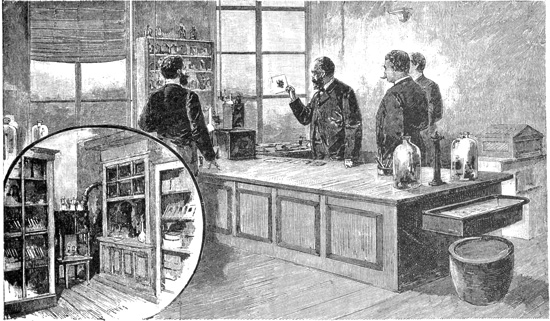
DR. KOCH IN HIS LABORATORY