We have learned that the body is made up of cells, and
that each cell is alive. The cells in our bodies cannot live
separately. There are, however, certain animals and plants
that are each made up of a single cell. These animals and
plants are called germs, and some of them cause disease.
Different
germs cause
different
diseases
These germs are so exceedingly small that we can see
them only with the aid of a microscope. They differ
in appearance one from another, as a pine tree differs
from an ash, or an American child from a Chinese child.
When you plant your garden, you put sweet peas in one
place and asters in another, and you know that you will
have sweet peas growing where you planted the pea seeds,
and asters growing where the aster seeds were put. So
it is with these little germs; you will no more get tuberculosis
from typhoid fever germs than you would get asters
from pea seeds.
Now, while there are many, many kinds of germs in the
world, there are only certain ones that cause certain diseases,
and we have learned where these germs like to live
and how to kill them. We also know that they come only
from some person or animal sick with the particular disease
which they cause. Typhoid fever germs are not given
off by a person suffering with tuberculosis, nor are diphtheria
germs given off by a typhoid fever patient, but the
germ of each disease is given off by some person or animal
suffering from that particular disease.
How sickness
due to germs
can be
prevented
If we kill all the germs that come from people sick with a
certain disease, no one else can catch that disease. Knowing
this, it seems unnecessary for anyone ever to be sick with
disease that is caused by a germ. This is literally true,
and the only reason that we have germ diseases is because
we do not kill the germs that come from the sick people.
Professor Irving Fisher of Yale University has said, "It
is entirely possible to wipe out consumption within a
single generation." It may not actually be done so
quickly, but it is certain that the disease can finally be
wiped out, though it may require many generations to
accomplish it.
Why, then, are germ diseases allowed to exist? Simply
because so many people do not know the facts; and
because many who do know will not take the trouble to
kill the germs, even when they realize that some one else
may get the disease as a result of their carelessness. What
do you think of a woman who said, "I do not care if my
neighbor's children do get scarlet fever from us; she is not
a friend of mine, any way"? A woman has been heard
to make such a statement to a health officer. It is just such
people as this who spread disease.
Questions. 1. How may germs be compared to seeds?
2. What do we know about disease germs that will help us to
get rid of them? 3. How is it possible for us to get rid of consumption
and other germ diseases?
Remember. 1. While there are many kinds of germs in the
world, only a few cause disease. 2. The germ that causes a
certain disease will cause that disease and no other. 3. It is
entirely possible to kill all the germs that cause disease.
We shall not try to learn here all the ways by which it
is possible to destroy the germs of disease as they come
from sick people. But there are certain rules (we sometimes
call them fundamental
principles) that
you must know, if you
hope to keep well and
to prevent others from
getting sick.
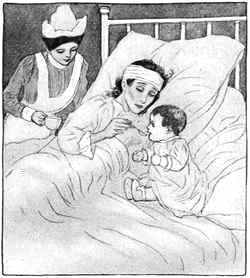
Fig. 40. How diseases are frequently
transmitted to children.
Why we
should stay
away from
the sickroom
The first of these rules
is: Do not go into the
room where any one is sick
unless it is absolutely necessary.
No one but the
nurse should sleep in the
room with a sick person.
We know that certain diseases
are communicable
(catching), but it has not yet been determined whether
some others are communicable or not. It has not been
proved, for instance, that we cannot catch rheumatism from
another person. Only a few years ago it was believed that
one could not take consumption from another person, but
now we know that this is the very way to get it. Therefore,
stay away from sick people as much as possible. It is
not good for the patient to have people around him, and it
is dangerous for the well to come in contact with the sick.
Not using
things used
by the sick
The second rule is: Do not use anything used by a sick
person until it has been washed. This is a good rule to
apply to things used by a well person also. It is neither
safe nor pleasant to eat from the spoon or fork, or to use
the napkin or towel which has been used by someone else.
Sometimes children think the food prepared for a sick
person is ever so much nicer than that set before themselves,
and wish they could have a little of it. How often have
we seen a sick mother give her little ones "a taste" from
the spoon with which she is eating. This is very dangerous,
and if she knew it, the mother would cut her hand off
before exposing her children to this danger.
Reason for
scalding
things used
by the sick
Third: Everything taken from a sickroom should be
boiled before it is used again. The knives, forks, and plates
should not be put with other dishes until after they have
been separately washed and boiled. Towels, napkins, bedding,
and clothing from a sickroom should not be washed
with other bedding and clothing, but should be washed
and boiled separately. Some people send out the clothes
from the sickroom with the rest of their washing, and in
this way give disease to others.
How excreta
from
the sick
should be
treated
Fourth: All discharges (sputum, urine, bowel discharges,
and matter from sores) from any sick person should be
thoroughly disinfected before being finally disposed of. The
sputum should be received on little rags or paper napkins,
and burned; and the other discharges should be disinfected
with some poison that will kill the germs. We shall say
more about disinfection when we come to study the prevention
of special diseases.
Necessity
of washing
the hands
after touching
the sick
Fifth: Every person who touches a sick person, or handles
anything that comes from a sickroom, should immediately
wash his hands. Unless he washes his hands at once,
the germs which may be on them may get into his mouth.
How dirt
causes disease
Sixth: Dirt, which is an indirect cause of disease, must not
be allowed to accumulate. If your yard were full of dirt, garbage,
and manure, it would not cause disease unless the
germs of some disease became planted there. But such a
place is an indirect cause of disease, in that it furnishes a
fine place for germs to grow in. If a fly with typhoid germs
on its feet were to alight in such a yard, the germs would be
planted in a most favorable spot and would grow very fast.
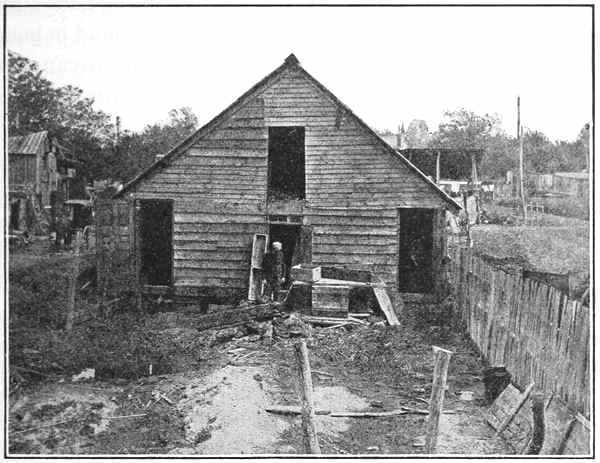
Fig. 41. A place that is an indirect cause of disease, since it
furnishes a fine place for germs to grow in.
None of the disease germs like sunshine; neither do
they like dry places. They die very quickly in the sunlight,
and grow very slowly, if at all, in dry places; but in
damp, dark places they grow very fast. Dirty back yards
make ideal gardens for germs.
Let a fly with germs on its feet alight in a clean yard
where sunshine can reach every corner, and what chance
will the germs have to grow? They will not even get a
start. Hence, while disease cannot be caused by dirt,
disease germs stand a very good chance of living where
there is plenty of dirt and no sunshine. Filthy habits are
on an equality with filthy conditions, and go hand in hand
with them. One of the worst of habits, and a cause of
much sickness, is that of answering Nature's calls in places
other than the closet.
Questions. 1. Why should you never make unnecessary
visits to a sick person? 2. Why should you avoid anything
used by a sick person? 3. Why should everything taken from
a sickroom be scalded? 4. What should be done with all
discharges from a sick person? 5. How is dirt a source of
disease?
Remember. 1. Unless it is necessary, do not go into a room
where anyone is sick. 2. Never sleep in a room with a sick
person. 3. Never eat from a spoon or plate that has been used
by another. 4. Boil all the articles taken from the room of a
sick person. 5. Always wash your hands after touching a sick
person or anything that comes from his room. 6. Sunshine
kills germs; let the sunshine into every corner of your house.
How germs
get into
our bodies
Disease germs get into our bodies in three principal
ways: they are eaten with our food; they are taken in with
the air we breathe; and they get in through breaks in our
skin, even though these breaks be very small, as when made
by the bite of a mosquito or other insect.
How germs
get into
our food:
(1) From
the air
How do germs get into our food or drink? You must
remember that these germs are extremely small, so small
that many of them can be carried by a particle of dust that
you can see only in a ray of sunshine. When the germs
become dried, they float about on these particles of dust,
the dust alights on our food, which is moist and warm, and
the germs immediately begin to grow.
(2) From
the hands
Another way by which germs get on food is from the
hands through which it passes. Did you ever think how
many people handle an apple? First, the man who picks
it from the tree; then the examiner in the packing house
where apples are taken to see that they are the right kind
to be packed in a certain box. Then it is wiped off by a boy
or girl—handling number three; then it is wrapped in
paper—number four. Next it is packed in a box, but in
this case the paper protects the apple from dirty hands.
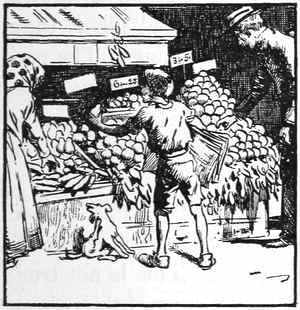
When the merchant buys the apples he feels several
of them, and puts them out on the display shelf;
this makes handling number five. Everyone who thinks
of buying apples will touch one or more of them,
and when they are sold the clerk handles them again.
In other words, every apple goes through the hands of
at least seven people before you get it. Do you not
think it needs washing?
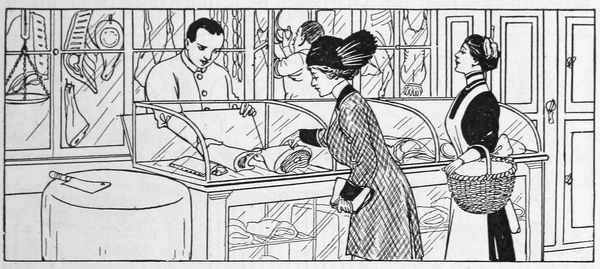
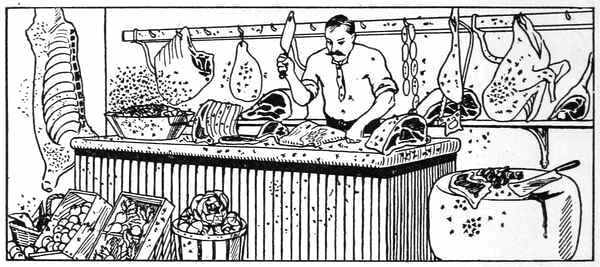
Go into a butcher shop and see how many people
will put their dirty fingers on the meat. Some of
them even keep their gloves on when they do this.
Imagine how many germs may be planted on the finger of
a glove.
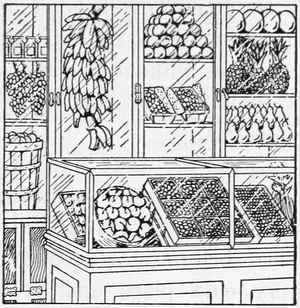
Our whole method of displaying foods for sale is wrong.
The customer can see the fruits, vegetables, and meats just
as well in a glass case as when they are
on an open counter or shelf, and nothing
is gained by poking a dirty finger
into a piece of beef, or by rubbing your
hands over the apples. A glass case
not only will protect the fruits and
meats from such practices, but will
keep out germ-laden dust and flies
whose feet are covered with germs.
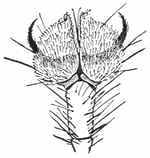
Fig. 42. The foot
of a fly, highly magnified.
(3) From
flies
Probably the most common source of
germs on food is the fly. Did you ever watch a fly very
closely for a long time? Did you ever happen to see a
manure pile early in the morning and notice how many
tiny flies are on it? These flies have just been hatched.
Breeding
places of
flies
Flies like manure because it is the best place they can find
in which to lay their eggs. Each female fly lays about three
hundred eggs. They do not hatch directly into flies, as
hen's eggs hatch into chickens, but when the fly's eggs hatch
you find maggots, and these maggots later hatch into flies.
The journey
of the fly
Turn over the manure some spring morning, and you
will see it full of white specks. These specks are maggots
that will hatch into flies. Watch the flies as they leave the
manure pile and see where they go. If there is a dead dog
or cat or a filthy garbage can near, they will fly to it. Then
they will go into the water-closet and crawl over the filth
there. Their next trip will probably bring them to the
kitchen, where they will crawl over the food. From here
they will go to the cuspidor and take a drink of water, and
will get their feet covered with the dirt that is in the cuspidor.
Next they will try a walk over the nipple of the
baby's bottle, or they will light
on your face, or get into the
butter or milk.
After the fly has been in dirty
places, he "washes" his face and
hands, that is, he rubs his feet
together and then rubs them
over his head. Did you ever see
a fly wash himself with water?
No, you never did.
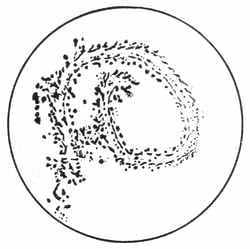
Fig. 43. Where a fly has
walked; each little spot represents
a growth of germs left
by the fly.
After a fly has made his journey,
you would suppose that
his feet would be covered with
dirt and germs, and so they are. Not only does he carry
germs on his feet and body but he also eats dirty and
diseased things. Moreover, fly specks contain the germs
of disease, and the fly is not at all particular about where
he puts his specks.
Proof that
the fly is a
germ carrier
If you let a fly walk over a culture plate, there will be a
growth of germs wherever his feet touch. A culture plate
is simply a glass plate covered with gelatine or something
else in which these germs like to grow, and where they can
easily be seen. Each germ will multiply so fast that there
will soon be a spot of them large enough to be seen readily
with the naked eye. In the picture showing a culture plate
over which a fly has walked (Fig. 43), the
little specks are not single germs, but each
speck represents a growth containing many
thousands of germs.

Fig. 44. Flies go
from filth to food.
How to get
rid of the
fly:
How are we going to get rid of flies? We
cannot get rid of them entirely, but there
are a great many ways by which we can
prevent there being so many of them, and
whereby we may keep them out of our
houses and away from our food.
(1) By removal
of
manure
We have learned that flies are always
found about horse manure, because it
makes a good place in which to hatch their
eggs. If we could dispose of the manure,
there would be one place less for the fly to
lay her eggs. Behind barns we usually find
piles of manure. It is in these heaps that
the fly lays her eggs, not in the little lumps
found in the streets. Now, there is no
sense in keeping this great pile of manure
about any barn. In towns the manure can
be put into a box with a cover, so that the
flies cannot get at it. In the country every
well-managed farm has the barns cleaned
out every day, and it would not be much
more trouble for the farmer to throw the
manure into a wagon and take it to the
fields with him, than it is to pile it up beside
his barn. If he did this, he would find
that there would be few flies about his
house.
(2) By covering
garbage
cans
Even if we were to take every particle of manure away
as fast as possible, we should still have some flies, for when
flies do not find manure for their hatching places, they will
take the next best thing. It must be something dirty; clean
things will not answer at all for a fly's home. Next to the
manure pile, the fly likes a dirty garbage can, a dead animal,
or anything that is decomposing. If she cannot find anything
better, she will take a rotting apple; but she does not
really like this, and if she cannot find anything better than
an old apple in your yard, she will probably go elsewhere
to lay her eggs.
(3) By keeping
clean yards
We cannot entirely stop the hatching of flies, but if we
do away with the old manure piles, keep fresh manure
and garbage cans covered, and keep our yards free from
everything that can decompose, we shall have very few
flies about our houses.
How to
keep flies
out of the
house
Since we cannot get rid of all the flies, the next best
thing is to keep the few that may be left out of our houses
and away from our food. This we can do by means of wire
screens and netting. Wire screens are very cheap, and if
there are no wire screens on your house, you should persuade
your father to buy some. But a screen will not keep
flies out unless it is kept closed, so do your part by never
leaving the screen door open for a second longer than is
necessary for you to go in or out.
Our houses are not the only places that need
screens. Slaughterhouses, butcher shops, candy stores,
grocery stores—every place where any kind of food is
handled or sold—should be screened. Flies should
never be allowed to alight on anything which is to be
eaten.
Questions. 1. Name three ways by which germs get into
our bodies. 2. How do germs get into our food? 3. Why
should foods be screened? 4. Trace the fly from his birth-place
to our food. 5. How do we know that flies have germs
on their feet? 6. Tell how we can get rid of most of the
flies. 7. How can we keep flies out of the house? 8. What
can boys and girls do to help keep them out?
Remember. 1. Always wash an apple, pear, or any other
fruit before you eat it. 2. All foods are handled by many people,
and are not clean until they have been washed. 3. Flies like
to live in dirty places, and their feet and legs are covered with
germs; get rid of the flies. 4. Flies hatch in manure piles and
other dirty places; keep your yard and lot clean so that flies
will have no place to lay their eggs. 5. Put screens on the house
to keep flies out, and keep the screens closed.
The water that we drink frequently contains disease
germs. It is not always the clearest water that is freest
from disease germs, for the germs do not make the water
cloudy.
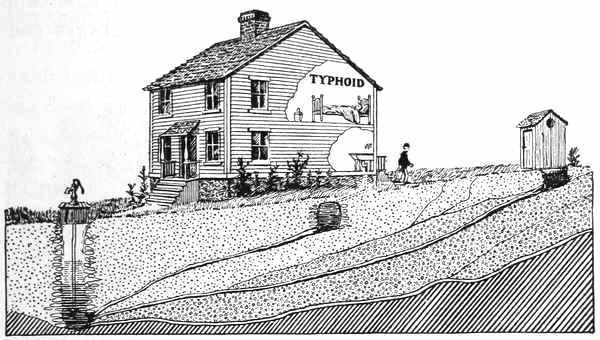
Fig. 45. An improperly located well; notice lines of seepage.
Why sewage
should
not be
put into
streams
Water does not get disease germs from the ground, but
from man. Almost every town has a sewer system that
empties into some stream. This practice was started a long
time ago when men thought that running water would
purify itself in the course of a few miles. We have learned,
however, that this is not true. Germs will continue to
live in running water just as they do in any other water,
and disease germs will live in a stream from twenty-five
to thirty-five days. Estimate how far a stream will flow in
that length of time, and you will know how far disease germs
will travel in that way. No sewage should ever be allowed
to get into a stream until the germs in the sewage have
been killed.
Other
sources of
germs in
streams
Sewage is not the only means by which disease germs are
carried into streams. Often we find people building barns,
slaughterhouses, and mills on the banks of a stream.
The filth from barns and slaughterhouses always contains
disease germs, and often the filth of mills contains
poisons that are just as harmful as germs when taken into
our bodies. None of these things should ever be allowed
to get into a stream. Water is a very important article of
food, and we should take every care to keep it pure.
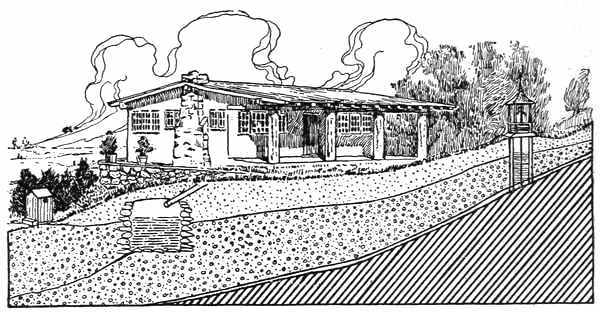
Fig. 46. A properly located well.
How germs
get into
wells
The water from most wells is clear and cool, but nevertheless
may contain many disease germs. "How does this
happen?" you ask. Because the well is too close to an
out-house or some other source of filth. When a man in
the country or in a small town builds a house, he immediately
thinks of digging a well just as close to the house
as he can, so that he need not carry the water far. Next he
thinks of locating the closet, and this, too, he wants near
the house. The well and the closet are often near each
other, and often the closet is on higher ground than the
well. The vault under the closet is seldom water-tight.
In fact, the intention of the owner is that a great part of
the vault contents shall soak away.
In many localities the ground is an open gravel, and the
vault contents run through this gravel into the well, carrying
disease germs with them. In one little town, with wells
as a source of drinking water, the health officers found
that the closet of every house was draining directly into
its well. In some countries vaults can be used; but in any
region where there is a gravel subsoil, the contents of the
closet will find their way into the well, unless the closet is
lower than the bottom of the well. In such places the
vault must be made water-tight, in order to keep the vault
contents out of the well.[2]
Why springs
are not
always pure
Springs are usually sources of pure water, but do not
think that every particle of water that oozes from the ground
is a spring. Near a certain town is a so-called "very fine
spring." This "spring" appeared after a man had made
a cesspool on the hill above, and is simply the drainage
from the cesspool. Springs that come from deep sources,
however, nearly always contain pure water.
The safest
sources of
water
The safest source of water for domestic use is a stream
that is known to be free from contamination, or a well so
deep in the ground that it is hard for any polluting matter
to reach it. But remember that sewage may follow a well
pipe along the outside and thus reach even a deep well, if
the well is not properly protected at the top.
Keep disease germs out of your drinking water. You
cannot drown them out and you cannot strain them out,
so do not let them get in, for you cannot drink water containing
disease germs without running the risk of becoming
sick.
Questions. 1. Mention more than one way in which germs get
into streams. 2. How long may disease germs live in running
water? 3. Mention some instances showing that running
water does not purify itself. 4. How do disease germs get
into milk? 5. Describe the proper location of a well in regard
to refuse. 6. How may springs become polluted? 7. What
are the best sources of water for domestic use?
Remember. 1. Disease germs get into water from dirty
places along the banks of the streams; they do not come from
the ground. 2. Clear water is not always pure; germs do not
make the water cloudy or muddy. 3. Wells often become infected
by matter from closets seeping into them; make your
closet water-tight. 4. Spring water is usually pure, but not all
water that oozes out of the ground is spring water.
Disease
germs in
the air
We take germs into our bodies with the air that we
breathe. Since we cannot stop breathing and live, we
must see to it that the air we breathe is kept pure.
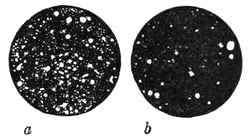
Fig. 47. (a) Prevalence of germs
in air of thickly populated districts.
(b) Prevalence of germs in
air of sparsely populated districts.
There are always more germs in the air of places in
which people live closely crowded together than where
there are only a few people.
This is proved by Figure
47, which shows that many
more germs were found on
a culture plate exposed in
the downtown part of New
York City than on another
plate exposed far uptown,
where there are not so many
people. Remember, however,
that all germs are not disease germs.
How we
may keep
disease
germs out
of the air:
How do the disease germs get into the air? When
one sneezes, a spray of droplets is thrown into the
air. If the person sneezing has the grip, these droplets
contain the germs that cause grip. Whenever a person
with consumption coughs, he sprays droplets which contain
the germs that cause consumption.
(1) When
coughing or
sneezing
If a person would hold a handkerchief before his mouth
when he coughs or sneezes, these droplets of moisture
would not be sprayed into the air, and the disease germs
in them would not be scattered about. You ask, "Shall
everyone who is sick hold a handkerchief before the
mouth when sneezing or coughing?" Everyone, whether
sick or well, ought to hold a handkerchief before the
mouth when sneezing or coughing. Learn to do this at
once, and never forget it.
(2) When
spitting
Another way by which disease germs get into the air is
from the sputum. People spit on the floor or the sidewalk,
and the sputum becomes dried; it is then blown about
as dust. The germs of disease are not killed by drying, and
when they get into our bodies with the dust which we
breathe in, they immediately begin to grow. Disease germs
get into the air chiefly through careless habits of coughing,
sneezing, and spitting, and these careless habits can easily
be prevented.
Why well
people
should not
spit on
floor or
sidewalk
A boy once said that if he saw a consumptive spit on the
sidewalk, he would want to hit him, and to emphasize his
remarks he spat on the floor of the room, just as you have
seen boys spit on the ground when they were thinking of
fighting. There might have been some germs of consumption
in the sputum this boy left on the floor. Of course
he was very positive that he did not have consumption, but
this was no proof that his sputum was free from the germs
of this disease.
Remember that it is not only the sick who should never
spit on the floor or sidewalk, but that no person should
ever spit on any floor or sidewalk, or into any place
except into a cuspidor, handkerchief, or spit-cup of some
kind. If you spit into a handkerchief, a paper napkin, or
a bit of cloth, be sure to burn it as soon as you can,
before it becomes dry.
Questions. 1. In what places do we find germs most abundant
in the air? 2. How do well-bred people avoid putting
disease germs into the air? 3. Why is it important for well
people to take the same precautions as sick people?
Remember. 1. Every person should hold a handkerchief before
the face when coughing or sneezing. 2. Never spit except
into a cuspidor, handkerchief, spit-cup, or other special
receptacle. 3. If well people will practice clean habits, the
sick will be helped and encouraged to follow their example.
4. Remember: No spit, no consumption.
Some insects
that
carry disease
Certain diseases are given to human beings by the bites
of insects. We know that certain ticks and mosquitoes
carry certain germs. It is also probable that disease germs
are transferred from diseased
to well persons by bedbugs and
other insects that bite.
How yellow
fever is
transmitted
For a long time it was
thought that yellow fever was
carried through the air, but
now it has been proved that
yellow fever is not carried in
this way. A well person can
sleep with one who has yellow
fever and not catch the disease.
Yellow fever infection is carried
from a yellow fever patient to
a healthy person only by a certain mosquito. Keep this
mosquito away from the yellow fever patients and there
can be no spread of the disease.
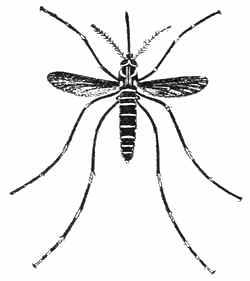
Fig. 48. The mosquito that
carries yellow fever.
It is not many years since yellow fever was one of the
most dreaded diseases in warm countries. To-day there
is not the same fear of it, for the source of the disease has
been discovered and practical methods have been devised
to get rid of the mosquito which carries it.
How malaria
is transmitted
Malarial fever is another disease transmitted by the
bite of a mosquito, but the mosquito that carries malarial
fever is not the same as the one that carries yellow fever.
For a long time it was supposed that malaria came from
the gases which rise from marshes. To-day it is known
that it is not the gases that cause
the sickness, but a mosquito
which lives and grows in the
marshes. Many countries that
have heretofore been practically
worthless on account of malarial
fever, are being made valuable
by draining the marshes and doing
away with places where mosquitoes
can hatch.
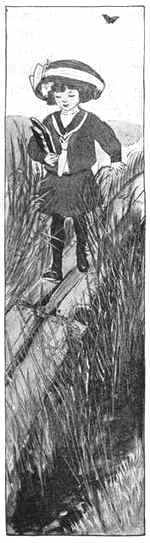
Fig. 49. One of the
places where mosquitoes
hatch.
How to get
rid of the
mosquito
It might seem a very hard task
to get rid of mosquitoes in countries
where there are so many of
them; but it can be done. The
mosquito must have still water in
which to lay her eggs. In countries
where there is danger of
yellow fever or malaria, the rain
barrel and the cistern should be
screened, and the swamps and
water holes filled up. Puddles of
water should not be allowed to
form anywhere, and low places
where water might stand should be
drained. By giving her no place
in which to lay her eggs, we can
get rid of the mosquito; and when
the mosquito disappears, yellow
fever and malaria disappear also.
How wood-ticks
transmit
disease
In certain portions of Montana,
Washington, Idaho, Utah,
and Wyoming, there is a peculiar disease known as
Rocky Mountain spotted (tick) fever. It is now known
that this disease is transmitted to people by the bite of a
wood-tick. Not all wood-ticks carry this fever, and for
people living in districts where this disease does not exist
there is no danger in the bite of a wood-tick; but in a
part of the country where the disease prevails, the wood-tick
should be avoided.
How disease-bearing
insects
can
be destroyed
All insects that are known to transmit diseases can be
destroyed. If we will do away with stagnant water, the
mosquito cannot hatch; if we will cut out underbrush and
oil the domestic animals, the wood-tick will not find a
place to grow. If we wish to get rid of disease, we must
spend money and labor; but it is worth while, for human
life is at stake.
Questions. 1. What insects are known to transmit diseases
to man? 2. How is yellow fever transmitted? 3. Malarial
fever? 4. What disease is transmitted by the wood-tick?
5. How can we get rid of the mosquito? 6. How can we get
rid of ticks?
Remember. 1. It is a proved fact that diseases are transmitted
to man by the bites of mosquitoes and wood-ticks. 2. It is
possible to do away with both the mosquito and the wood-tick
almost completely, although it requires a great deal of work and
the expenditure of a large amount of money. 3. Health is the
most valuable thing we have, and it is foolish to hesitate in
giving the work and money necessary to exterminate disease-bearing
insects, as well as the many other causes of sickness.
How germs
get through
the skin
Germs get into our bodies through breaks in the skin.
These breaks may be made by a cut or a scratch, by the
bite of an insect, or even by the
pulling out of a hair. There
are some special germs, such as
those which cause yellow fever,
which are introduced by the
bite of an insect; but at present
we will consider only those
germs that would naturally
enter through any break in
the skin.
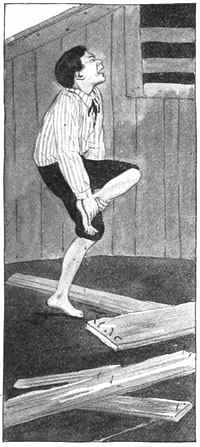
Fig. 50. Small, deep wounds
are very liable to become
infected.
Effect of
germs
in wounds
The skin of the human body
acts as an armor against certain
germs that are constantly trying
to get through it. There
are several germs of this class.
Some of them cause white pus,
or matter, but this is the least
dangerous kind of all. Another
kind causes boils or even blood
poisoning, and another kind
causes erysipelas.
We cannot get rid of these
germs, for they are everywhere,
to a greater or less degree; but
they are more abundant in dirty than in clean places.
They cause every degree of inflammation, from a slight
redness of the skin to the blood poisoning that brings death.
Real cause
of suppuration
Sometimes you will hear people say that a wound suppurated
(that is, became inflamed and full of matter) because
the blood was in bad condition. As a matter of
fact, there would have been no suppuration if germs had not
got into the wound. It was not the condition of the blood
that caused the suppuration, but the germs.
Sometimes, when only a few germs get into a wound, and
when the cells of the body are all in good condition and
doing their work properly, the suppuration will be very
slight, because the healthy cells of the body will kill the
germs. But if very many germs get in, even healthy body
cells cannot kill them all.
We have said that the germs which cause suppuration are
everywhere, so it would seem almost impossible to keep
them out of a wound. This is true in a sense; but even
after they have got into a wound, you can wash them out if
you use plenty of soap and water to cleanse the wound
thoroughly. When I said that it is impossible to keep them
out of a wound, I meant an accidental wound, for it is
quite possible to keep them out of a wound that is made
intentionally, as is done by the surgeon.
How the
surgeon
prevents
suppuration
Do you know how a surgeon gets ready to do an operation?
The first thing he does is to see that the room is
perfectly clean. He has the carpet taken up, the curtains
taken down, and the floor and walls washed. This
is to get rid of all the dirt and germs in the room. If you
should look at the surgeon's instruments, so clean and
bright, you would think it impossible for a germ to find a
place to live on; but the surgeon knows how closely the
germs cling, and therefore he boils all the instruments he is
going to use. Then he puts the towels into a place where
they are made so hot by steam that all the germs on them
are killed. After everything in the room is perfectly clean,
the surgeon cleans his patient with a very stiff brush,
using plenty of soap and water which has been boiled to
kill all the germs in it. He scrubs the part where the
wound is to be made and the skin around it until it is
red. Even then he is not satisfied, for he washes it off with
alcohol and ether, to be sure that any germs that might be
sticking in the fat are removed. He scrubs his hands in
the same way. After all this is done, he can perform the
operation without fear that any of the germs which cause
suppuration will get in, for he knows that he has killed all
of them that would touch the wound.
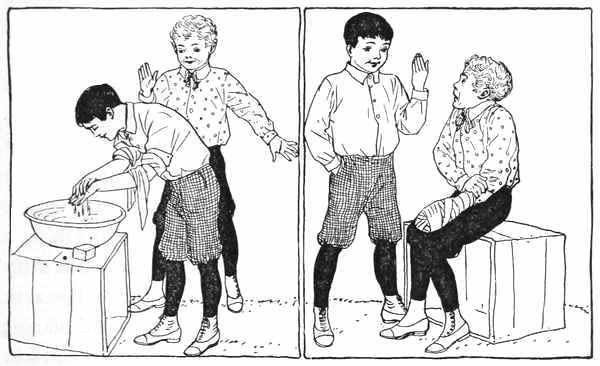
Figs. 51 and 52. Always wash the simplest cut with soap and
water; failure to do this may result in infection and much suffering.
How to
prevent
suppuration
Boys and girls cannot do all this before they cut their
hands or skin their shins, but they can do the next best
thing—they can keep their hands and the rest of their
bodies clean at all times, and thus have as few germs on
them as possible. Then, when they have cut themselves,
they can go straight to some place where there is soap and
water, and can wash the wound thoroughly. After this is
done, a clean bandage should be placed on the cut part to
prevent any other germs from getting in. If this is done
every time you cut yourself, you will probably never have
an infection—that is, a wound that suppurates.
Two boys were playing together one day. They ran into
each other and each got a little cut on his hand. One boy
went home at once, washed the wound, and put on a clean
bandage. He lost a little time from his play, but was soon
back and never had any trouble on account of the cut.
The other boy thought it was foolish to quit his play to take
care of such a little thing, so he tied his hand up in a dirty
handkerchief. Two weeks later he was very ill. His arm
was badly swollen and had to be cut open in several places;
indeed, he came near losing his arm. It always pays to
take care of a wound, be it never so slight.
Deep wounds made with small instruments, such as
small knives, nails or toy pistols, are especially dangerous,
because they are hard to clean and because they quickly
heal up on the surface and leave the germs to grow at the
bottom of the wound. Such wounds as these are dangerous
for another reason.
Where
germs of
lockjaw
grow
There is a germ that gets into wounds but does not cause
suppuration. It is the germ of tetanus, or lockjaw. It
lives in the ground, especially in the ground about barns,
and its peculiar feature is that it will not grow in the air.
If it gets into a large, open wound, it is easily killed, because
it cannot grow where there is air. But when it gets into a
small, deep wound where it cannot be reached, it stays
there until the wound heals over on the surface, and then it
begins to grow. It does not make the parts swell, as the
germs of suppuration do, but quietly continues to grow,
without the wound showing any sign of infection. Finally
it develops a very severe poison that is taken up by the
blood; then the victim suddenly begins to have spasms
about the face, and finally these spasms extend to the entire
body and kill him. Whenever you get a wound so deep
that you cannot wash it thoroughly, go to a doctor and let
him clean it out with some medicine that will kill the germs
that cannot be reached by washing.
How boils
are caused
Sometimes the germs that cause suppuration get under
the skin at a point where a hair has been pulled out, or
even work down beside the hair itself. When this happens,
they cause suppuration under the skin, and the result
is a boil. A boil is merely an infection with the germs that
cause suppuration.
Questions. 1. How do germs get through the skin? 2. Can
we get rid of all the germs that cause suppuration? 3. Why is
it impossible for "bad blood" alone to cause suppuration?
4. How does the surgeon prevent suppuration? 5. How may
you prevent suppuration? 6. What is the danger of cutting
corns with an ordinary knife or razor? 7. Where do germs of
lockjaw grow? 8. What causes boils?
Remember. 1. Germs and not "bad blood" are the cause of
suppuration. 2. Always keep as clean as possible, and immediately
wash any cut, no matter how small. 3. If you have
a deep wound, go at once to a doctor, and let him clean it out
and kill the germs that may be at the bottom of the wound.
How germs
may cause
sickness
without
entering the
body
Some germs that cause disease do not get into the body,
but grow upon its surface, that is, they grow on the mucous
membranes—the skin of the mouth, the throat, and the
nose. As they grow, they develop poisons that are absorbed
by the body, and that make us very sick. The
germs that cause diphtheria belong to this class.
Prevalence
of diphtheria
Diphtheria is one of the most common of all the preventable
diseases. It causes more deaths than any of the
other diseases that can be prevented, except tuberculosis.
The great prevalence of diphtheria is due to lack of care
on the part of those who have this disease and of those
who come in contact with them.
Where the
diphtheria
germ comes
from
The germ that causes diphtheria always comes from
some person or animal that has diphtheria. It never
"just happens." If you went into your yard in the morning
and found some beets growing in your flower bed, you
would know positively that beet seeds had got into your
flower bed in some way. You would not say that the beets
just happened to grow there. So diphtheria will not "just
happen." Diphtheria is always caused by germs that come
from some one who has diphtheria. They may have come
in a letter that was written in the room with the sick person.
They may have come from the library in a book that
had been used by some one ill with diphtheria. They may
have come on some toy that had been played with by a
child that had the disease. There are a thousand ways by
which the germs may be brought to you without your
knowing where they come from.
How to
confine
diphtheria
germs
The public health officers try hard to keep these germs
from being brought to you. In order to do this, they have
to shut away from other people those who have diphtheria
germs; that is, they make the sick ones stay at home until
they are free from the germs of the disease. We call this
quarantine. Quarantine means that you must stay away
from other people when you are sick with a communicable
disease, and that other people must stay away from you.
People are not put in quarantine because they are sick, but
because they are dangerous, and because we are trying to
prevent other people from getting the same disease. Do
not think the health officers unreasonable when they
tell you that you must stay at home and that no one
can come in to see you. This is done to protect other
people and to keep them from getting the same disease
that you have. If you ever have diphtheria, or any other
communicable disease, you must remember that if any
of your playmates come in to see you, they may get the
same disease.
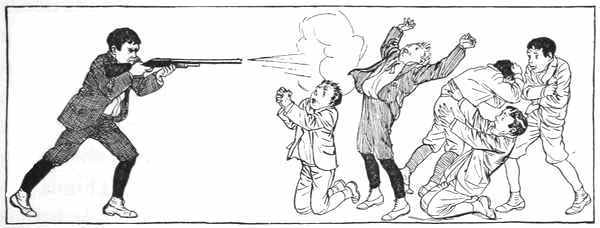
Fig. 53. Disease germs are as deadly as guns.
Seriousness
of breaking
quarantine
Diphtheria kills a great many children, and to play with
your friends after you have had diphtheria, and before the
health officer tells you that you may, is almost like trying
to kill them. They might be very sick and die, or they
might be very sick and get well, or they might not be sick
at all; but you never can tell what will happen if they are
exposed to the disease. If you were to take a gun and
shoot at a friend, you might kill him, or you might shoot
his leg off, or you might not hit him at all; but you would
be trying to hit him, and it would not be your fault if you
did not. It is just the same if you play with a friend when
you have a communicable disease; you shoot the disease
germ at him, and if you do not hit him, it is not your fault.
Why
quarantine
is not raised
sooner
Sometimes people who have been sick with a communicable
disease feel perfectly well, but the health officer tells
them he cannot let them out of quarantine. This is because
he knows that such people still have in their bodies
the germs that cause the disease, and that as long as these
germs are there they can give the disease to other people.
It is not pleasant to have to stay in quarantine when you
feel that you are well, and children, as well as older people,
are very likely to become restless under the circumstances.
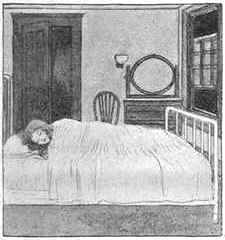
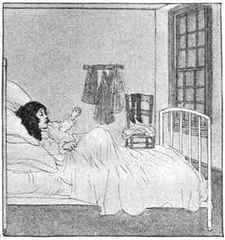
You see an illustration of such a patient in Figure 60, where
the little girl, who is under quarantine for scarlet fever, but
who is feeling quite well, is giving a book to two of her
friends. The book contains the germs that cause scarlet
fever, and the boys are very likely to contract the disease
by handling the book.
Why some
cases of
diphtheria
escape
quarantine:
(1) From
failure to
detect mild
cases
If every case of diphtheria were quarantined, and the
people obeyed the health officer, there would soon be
no more diphtheria. But how does it happen that every
case of diphtheria is not quarantined? Diphtheria is a
very peculiar disease. Sometimes it makes people so sick
that they die in spite of everything that can be done for
them; sometimes it makes the throat only a little sore,
and the child seems so slightly ill that his mother says to
herself, "He is fretful," and does not call the doctor. In
the latter case the child often keeps on going to school, and
exposes other children to the disease; some of them catch
it, and become very sick or
even die. In still other cases,
the mother thinks that a child
has only a case of tonsillitis
and does not call a doctor;
the child's brothers and sisters
go to school and may carry
the germs to other children.
I have known a great many
cases of diphtheria to be spread
in this way.
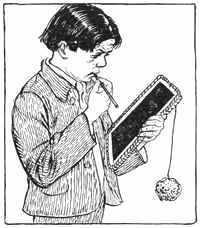
Fig. 54. The old, insanitary
slates and sponges have gone
out of use, but many people
of to-day still follow the dangerous
habit of putting pencils
into their mouths.
Sometimes a dairyman
thinks that his child has nothing
more serious than tonsillitis,
and goes on selling milk.
A great many epidemics have
resulted from such cases. Sore
throats should not be treated lightly, for the most severe
forms of diphtheria may develop from germs that come
from a throat that is only slightly sore. If there is a
case of diphtheria in the town where you live, and if your
throat feels the least bit sore, have your doctor examine
it at once. If you do not wish to have your family doctor
look at your throat, go to the health officer. Had you not
rather stay at home for a week or two than see your best
friends ill or dead because of your carelessness?
(2) From
diphtheria
germs in
throats that
are not sore
There is another peculiar thing about the germ of diphtheria.
It will often get into a throat and grow a little,
just enough to keep alive, but without making the throat
sore at all. The person in whose throat the germs are will
have no idea that they are there, but when he comes in contact
with some one who has a delicate throat, he may give
diphtheria to that person. The disease does not develop
in some throats because the body cells are all healthy and
doing their work so well that, when the diphtheria germs
try to take hold, they are driven off and not allowed to
grow. This is the reason that, before he raises the quarantine,
the careful health officer takes a "culture" from
the throat of everyone in a house where there has been
diphtheria.
How mild
cases may
be detected
The health officer takes a culture by wiping the throat
with a little cotton on a long stick, which he then puts down
into a long glass tube containing some substance that diphtheria
germs like to grow on. If there are any diphtheria
germs in the throat, they will soon show on this culture
material. Then the health officer will say, "No, we cannot
let you out yet, for the germs are still in your throat." No
person who has been staying in a house where there is
diphtheria should be allowed to go out until a culture proves
that his throat is free from the germs of diphtheria.
You see how hard it is to quarantine all cases of diphtheria,
when children are sometimes allowed even to go to
school with sore throats that are really diphtheritic. Only
two things are necessary for getting rid of diphtheria: one
is to quarantine every case, and the other, to have the
people do just what they are told when under quarantine.
This latter is just as important as the quarantine itself,
for people often do not obey the health officer's directions.
Now let us see what are some of these directions.
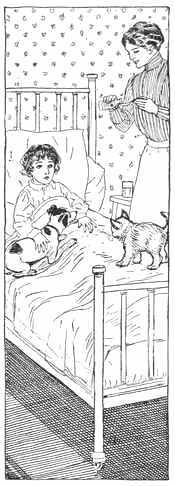
Fig. 55. How pets may
become carriers of disease.
Rules of
quarantine
If you are the patient, the health officer will say that you
must be put in a room where there is just enough furniture
to make you comfortable, and that
no one except the nurse and the
doctor is to go into that room. He
will say that the nurse must stay in
your room all the time, or that she
must at least not go into any other
room in the house; that your meals
must be left outside your door, and
that the person who brings them
must go away before the door is
opened by the nurse. Furthermore,
as everything in the room that cannot
be boiled, or otherwise disinfected,
will have to be burned when
you are well, your pet books and
toys had better not be taken in.
Finally, nothing is to be carried
from the room until it has been put
into a solution that will kill the
germs, and this means not only
dishes, bedding, and clothing, but
even books and letters. The nurse
must see that all discharges from
the throat and nose are received on
little cloths, which are to be burned immediately.
How quarantine
rules
are broken
These are the things that the health officer will tell your
parents must be done. Now let us see what sometimes
happens. Your mother will want to see her little child so
much that she cannot wait until you are well, so she will
slip into your room, kiss your forehead, and hold you tight
against her. When a little later she kisses your baby
brother, and is so thankful that he is not sick too, she does
not realize that she is kissing the very same disease into his
little throat. Or, perhaps your mother is the nurse, and in
the night she hears your little brother crying; she thinks,
"Surely I can slip out and just cover him up; it will not
hurt him just for once," and she does so. What happens?
In a few days your doctor tells you that your little brother
will have to come in and stay with you.
Perhaps your father grows anxious to see you, and one
morning he says he cannot stand it another minute,
so he slips in for a few moments before going to business.
In a few days one of his clerks fails to come to work. Your
father sends a messenger to see what the trouble is, and
the word comes back, "He has diphtheria." Then your
father says, "What are these health officers doing that they
do not stop this thing?" He is very indignant, but it never
occurs to him that he himself has spread the disease by doing
just what he promised the health officer he would not do.
How dogs
and cats
carry disease
germs
The doctor told your mother not to take anything from
the room until it had been disinfected. But you do not consider
Towser, your dog, and Tabby, your cat, "anything,"
so you persuade your mother to let them come in, and you
have a good play with them. You let them rub against
your face and romp on your bed, and do everything that
pet dogs and cats like to do, and in the meantime their fur
is getting full of diphtheria germs. Then Towser and
Tabby run out-of-doors and play with the boys and girls
of the neighborhood. Soon the parents are wondering why
the health officers do not stop the spread of the disease.
No dog or cat should ever be permitted to come into a
house where there is a contagious disease.
These are not all the ways in which people disobey the
orders of the health officer and of the doctor, but these are
enough to show you that it is a very important thing to do
just what they tell you. It is not always easy to follow all
these rules, but it is far better to follow these, and many
more, than to have to think that you have caused the death
of either a friend or a stranger.
Questions. 1. How does the poison of diphtheria get into
the system? 2. Where does the diphtheria germ come from?
3. What is quarantine? 4. What is the danger in breaking
quarantine? 5. Why is quarantine continued after you feel
well? 6. How does it happen that some cases of diphtheria
are not quarantined? 7. What is a diphtheria culture?
8. What rules should you observe while in quarantine? 9.
Tell some of the ways by which quarantine is broken. 10.
How do pet dogs and cats sometimes get disease germs?
Remember. 1. The germs that cause diphtheria always come
from some person or animal that carries diphtheria germs.
2. Diphtheria is always caused by the diphtheria germ, and
the diphtheria germ cannot cause any other disease. 3. People
are quarantined to prevent other people from getting the disease.
4. If there is diphtheria in your neighborhood, and
your throat becomes sore, have the doctor examine it. 5. Every
person who has been staying in a house where there is a case of
diphtheria should have his throat examined to make sure he is
not carrying germs. 6. Never play with dogs or cats when you
have a contagious disease. 7. People who do not obey quarantine
regulations cause a great deal of suffering and many
deaths.
Nature of
diphtheria
poison
The germs of diphtheria do not get into the blood through
the skin, but grow on the surface of the mucous membrane
(skin of the throat), and there produce a poison that gets
into the blood through this membrane. It is this poison
that makes you sick, and it is called a toxin. You already
know that when people have diphtheria, they are sometimes
very sick and sometimes only slightly sick, and that
the germ can live in some throats without causing any ill
effects whatever.
How diphtheria
toxin
is fought
As soon as the diphtheria germ begins to grow in a
throat, the little cells of the body begin to make a certain
substance and to pour it into the blood. This substance
we call antitoxin, which means opposed to the toxin in the
blood. If the little cells make the substance fast enough,
the germs will stop growing, or in some cases they never
really get started growing, because they cannot exist where
there is much antitoxin. Antitoxin looks like clear water.
The following experiment will show you something that
acts in very much the same way that antitoxin does.
If you take a solution of litmus that is made alkaline,
it will be very blue, like indigo; but if you drop a few drops
of lemon juice into this solution it will turn red.[3] Lemon
juice is acid, and is just the opposite of alkali. Now, if
you put a few drops of ammonia, which is alkali, into the
red solution, it will turn blue again. If you put a little
more lemon juice, very carefully, drop by drop, into the
blue solution, it will gradually turn lighter, until it is
entirely clear.
How antitoxin
acts
We will suppose that the blue is due to the toxin produced
by the diphtheria germ, and that the lemon juice
is the antitoxin produced by the cells in the body. If the
antitoxin is made fast enough, the blue disappears; but
if the toxin is made faster than the antitoxin, the blue
remains. It is the same way in the body, only it is not
litmus and acids and alkalies that we have to deal with.
If the toxin is made faster than the antitoxin, the germs
grow, and we get sicker and sicker; but if the antitoxin is
made faster than the toxin, then the germs cannot grow,
and we soon get well, or perhaps do not get sick at all.
How antitoxin
was
discovered
Doctors knew that this was what happened, but for a
great many years they could not discover the composition of
the antitoxin that is made in the body. One day a doctor
suggested, "If we cannot find out the chemical nature of
this thing that is made in the body, why can we not make
it in the body of some animal and then use the blood of the
animal?" And that is just what they did. They put
diphtheria germs into beef tea, and let them grow very
fast and make all the toxin they could. Then the doctors
strained the germs out by passing the beef tea through a
fine filter, in this way getting the poison, and not the germs.
Then they gave a strong, healthy horse a small quantity of
this poison; they did not feed it to him, but injected it into
his blood. Of course the horse was sick for a while, but
soon he began to get well again, for the cells in his body
immediately went to work making antitoxin.
When the horse was well, the doctors gave him more of
the poison; this time he was not so sick and got well even
more quickly. This treatment with toxin was repeated in
gradually increasing doses until the poison did not affect
the horse at all. Then the doctors said, "His blood is full
of antitoxin, and we will see what it will do when injected
into some other animal." So they drew off some of the
horse's blood and took out all the little red cells, leaving
nothing but the clear fluid of the blood. They planted diphtheria
germs in a rabbit's throat, and when the rabbit
became very sick, they gave him
some of the antitoxin from the horse.
The rabbit immediately got well.
Afterward they gave some of this
antitoxin to a little boy who was
very sick with diphtheria, and he,
too, got well. Ever since then the
doctors have been saving many lives
by the use of antitoxin.

Fig. 56. Showing the
number of deaths in
100 cases of diphtheria
when antitoxin is used
on the first, second,
third, fourth, and fifth
days.
Evidences
that antitoxin
saves
lives
Someone may ask, "How do we
know that it is the antitoxin that
saves lives?" In just this way: before
we knew anything about antitoxin,
about half of all the people
with diphtheria died; but since we
have had antitoxin, only about
twelve die out of every hundred
who have this disease. More than this, we know that
when the antitoxin is given within the first twenty-four
hours after the patient is taken sick, there is only about
one death for every one thousand cases of diphtheria.
Do you not think that this is strong proof that antitoxin
saves lives?
How antitoxin
saves lives
Antitoxin saves lives not only by curing those who have
diphtheria, but by preventing others from having it. If
a person who has been where there is a case of diphtheria
is given a dose of antitoxin, he will not have the disease,
because his blood will contain enough antitoxin to destroy
the diphtheria toxin present. If you will watch a careful
doctor when he makes his first visit to a case of diphtheria,
you will notice that, as soon as he gets through treating the
patient, he gives all members of the family who have been
near the patient a dose of antitoxin to keep them from
getting sick.
Antitoxin
not a
poison
Some people may tell you that antitoxin is a poison and
should not be used. The statement that it is in itself a
poison is true. But it is also true that in your body there
are many things that would poison you if you got too much
of them. For instance, there is a gland in your throat
(the thyroid) which secretes a substance that is necessary
for your health, but if you were to take the secretion of
ten such glands it would kill you at once. Now, if the cells
in your body make antitoxin when you have diphtheria, it
is probable that antitoxin is the very thing needed. And
if you can help these cells by giving them antitoxin, ready-made,
does it not seem a reasonable thing to do? People
who give the name of poison to a substance which is known
to have saved many lives are not worthy of attention.
Anything may prove a poison if taken in excess; too much
play will prove a poison, and too much work also.
Questions. 1. What is the poison of diphtheria called?
2. What is antitoxin? 3. Compare the action of antitoxin
on the blood with the action of an acid on the litmus solution.
4. Tell about the discovery of antitoxin. 5. How do we know
that antitoxin saves lives? 6. How does antitoxin prevent
diphtheria? 7. Why should antitoxin not be regarded as a
poison?
Remember. 1. Antitoxin is what the cells in your body make
when you have diphtheria. 2. By using the antitoxin taken
from a horse, you save your own cells the struggle necessary to
make it fast enough to kill the diphtheria germs. 3. If you
have diphtheria, and antitoxin is given promptly, you will get
well. 4. If you have been exposed to diphtheria, antitoxin will
prevent your having the disease. 5. Antitoxin is no more a
poison than are many other medicines.
How typhoid
fever
germs get
into the
system
There are certain diseases, the germs of which get into
bodies through our mouths. That is, we eat or drink
them. Some of these diseases are typhoid fever, cholera,
the summer complaints of children, tuberculosis, and
diphtheria. At present we shall learn about the germ
that causes typhoid fever, how it gets into our food and
drink, and how we may prevent the disease by getting
rid of this germ.
Typhoid fever, like all other diseases caused by germs,
is caused by one kind of germ, and one kind only. You
cannot get typhoid fever by eating cholera germs any more
than you can get diphtheria from typhoid germs.
Animals
free from
typhoid
So far as we know, there is no animal except man that
has typhoid fever. Since the germs of any disease must
come from an animal suffering from that disease, and as
man is the only animal that has typhoid fever, it naturally
follows that the only way to get typhoid fever is from
some person who has the fever or has had it.
How typhoid
germs
leave the
body
We know that typhoid fever germs get into the body with
food, but how do they get out? Once in a great while germs
are found in the matter that the patient vomits, or spits up,
but this is a rare occurrence, so rare that we need hardly
consider it. The germs are present in the blood of the
sufferer, but other people do not get his blood on their
hands or in their food. There are two things that come from
the patient that are loaded with these germs, and these are
the urine and bowel discharges. In these two excretions
of the body are found practically all the typhoid germs that
come from the patient, and these are the causes of other
infections. In other words, it is from these two excretions
that the germs get into food and drink.
How typhoid
germs
get into
water
How do the typhoid germs
get into our food? What is
done with the excretions after
they come from the body?
You will probably say that the
nurse throws them into the
sewer. Very true; but where do
they go when they are thrown
into the sewer? The sewer
must empty somewhere, and in
most instances it empties into
a stream, the water of which
is used for drinking purposes.
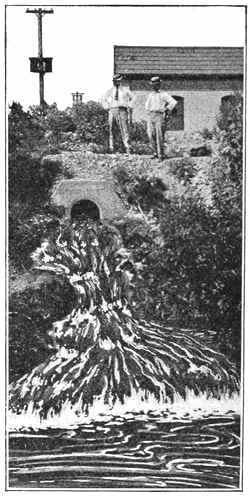
Fig. 57. Pollution of a stream
with sewage.
The widespread
evil
due to the
sickness of
one person
You may think that the
germs from one person would
not make much difference, but
that is where you are mistaken.
There is a town in Pennsylvania
of about eight thousand
inhabitants, which gets its
water from a stream that flows
down from the mountains. One cold winter, while the
stream was frozen, a man living on the bank of the stream
was taken sick with typhoid fever. His nurse threw the
urine and the discharges from his bowels on the ice on the
bank of the creek. When the ice melted, the typhoid
germs in the discharges found their way to the stream
that furnished drinking water to people farther down, and
in a very short time there were over one thousand cases of
typhoid fever in that town. Before the ice melted there
had not been a single case of typhoid, and every one of the
thousand cases came from the water into which had been
allowed to flow the discharges from one man with typhoid
fever. You see what germs from one person may do.
How long
typhoid
fever germs
live in a stream
Sometimes people say that a stream purifies itself every
few miles. It does purify itself of some things, but disease
germs live from twenty-five to thirty-five days in water, and
a stream flows a long way in thirty days.
The pollution
of streams
with sewage
Sometimes we hear people say that it is safe to put sewage
into a certain stream, because no town uses that stream for
drinking water. But of this they can never be sure. Not
long ago certain people said that the water from the river
which flowed through their town was used only by two
dairymen and a vegetable gardener, and therefore there was
no danger in running sewage into the stream. Yet the
dairymen and the gardener sold all their produce in that
very town. The townspeople never considered that the
water into which they ran their sewage was used by the
dairymen for washing their milk vessels (and perhaps for
diluting the milk), and by the gardener for washing his
lettuce and other vegetables. Thus the germs of disease
were brought directly back to the town.
Do not think that you are safe in polluting a stream
with sewage because no town uses the water from that
stream. The individual on the farm is entitled to protection
just as much as the individual in the town. Always
remember that when you pollute with disease the
water used by the farmer, he may bring that disease back
into the town with the produce of his farm.
No sewage, no matter how small the amount, should ever
be permitted to go into a stream until all the disease germs
it contains have been killed. This can be done, though
it will cost something; but we cannot get rid of disease
germs without work, and work cannot be done without
being paid for.
There are other ways of scattering typhoid germs
besides running sewage into streams. Sometimes the
nurse does not throw the discharges from a typhoid
fever patient into a sewer at all, but into a closet vault.
Remember how the material from a closet vault goes
through open ground into a well, and you will understand
what happens. The germs get into the well, and the
whole family may then have typhoid fever.
Let us suppose that the nurse did not throw the discharges
either into the closet or into the sewer, but carelessly
threw them out on the ground behind the house, where, as
it was winter time, they froze as hard as rocks. It does not
seem to hurt typhoid germs in the least to be frozen; when
they get warm again they are as lively as ever. Let us
suppose these particular germs lay there all winter, but in
the spring when everything melted the germs were still
alive and ready to spread disease. It happened that they
did not get into the well or into the milk, but they did get
on your food, and made you ill with typhoid fever.
How flies
carry typhoid
germs
How did the germs get to your food? About the time that
the germs were thawed out, and were beginning to double
in number every hour or two, along came a fly and thought
that spot an attractive one for a lunch. Accordingly he
walked over this mass of filth, collecting a supply of germs
on his feet, and then came in and tracked them over your
bread and butter or other food.
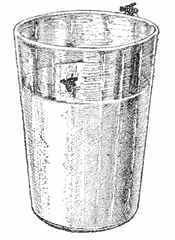
Fig. 58. Flies crawling
on the edge of the
glass or falling into the
milk leave germs that
cause disease.
How typhoid
germs
get into
milk
That is how you got the fever; but the trouble did not
stop with you. When you fell sick, your father thought it
was time to clean the yard, but he was not very careful
what he did with the dirt, including the typhoid fever
discharges which the nurse threw out on the snow during
the winter. There was a low place
in the barnyard and there he dumped
the dirt. One of the cows thought
this fresh pile of dirt would make
a comfortable place to lie down
in. The next morning the milkman
milked her without first washing
her sides and udder, and hundreds
of little particles of dirt, each
one loaded with germs, fell into the
milk. The milk from all the cows
was mixed together, and by the time
it got to town these germs had
grown into many thousands. Some
of the people who drank the milk became ill with
typhoid fever and wondered afterward where they had
taken this disease.
Why the
recovered
patient is
dangerous
The discharges from a typhoid fever patient contain
typhoid germs not only while the disease lasts, but for
many months after the patient is well. In some cases
they are present for years after the illness is over.
The story
of the careless
nurses
Here is a story about typhoid fever that illustrates the
importance of washing and boiling everything that comes
from a sickroom. A few years ago there was an epidemic
of typhoid fever in a certain town. One of the hospitals
was very much crowded, and it became necessary to employ
several extra nurses. All the nurses knew the importance
of washing their hands after handling the patients, and the
old nurses had seen so many bad results from failure to
observe this rule that they were very careful. Three of the
new nurses, however, thought it a great deal of trouble to be
washing their hands all the time, so more and more they
neglected this important duty. The result was that all
three of these girls got typhoid fever and died. They paid
the penalty for neglecting the duty that they well knew
they should have performed.
Typhoid fever can be wiped out by attention to neglected
details—that is, by disinfecting discharges before
throwing them away; by disposing of excretions only in
places that are made for them; by adding lime to the
closet vault every day to kill any germs present; by making
the closet in such a way that flies cannot get into it;
and by not permitting sewage to enter any stream until all
the disease germs have been killed. All these things can be
done. It will require a little work; but had you not rather
take a little extra care than run the risk of catching or
spreading typhoid fever?
Questions. 1. How do typhoid fever germs get into the body?
2. What is one source of these germs? 3. How do these germs
leave the body? 4. Name several ways by which typhoid
germs in a stream may get into foods. 5. How do flies carry typhoid
fever germs? 6. How do these germs get into milk?
Remember. 1. Typhoid germs come from people who have
typhoid fever; they are found in the urine and bowel discharges.
2. No one should ever answer Nature's calls except in a place
provided for that purpose. 3. No sewage should be allowed to
go into any stream until all the germs in it have been killed.
4. Disease germs will live in running water fully as long as
they will in still water. 5. The discharges from a single person
may infect a whole city. 6. When typhoid fever germs get into
milk, they grow very rapidly; hundreds of people have been
given typhoid fever by drinking the milk from a dairy where
there was a single person sick with this disease. 7. People
who have had typhoid often carry the germs for several months
after they are well.
Hookworm disease and amoebic dysentery resemble
typhoid fever in one respect, in that they, too are spread
by the improper disposal of human excreta.
Where
hookworm
disease
prevails
Hookworm disease is found almost exclusively in tropical
or subtropical climates. In the United States it is
rarely seen north of the Potomac and Ohio rivers.
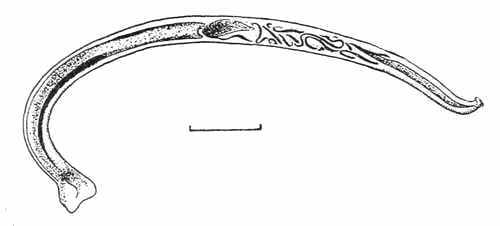
Fig. 59. A full-grown hookworm, magnified; the short line shows
the average length of the hookworm.
What the
hookworm
is
This disease is not caused by a germ, as is typhoid fever,
but by a worm from a quarter to half an inch long, and
about as thick as a small hairpin. These worms get into a
person's intestinal canal, and there lay their eggs, which are
later given off in the bowel discharges. When these discharges
are thrown on the ground, or are put into an open
water-closet, they may be carried about by chickens, flies,
and pigs. Then the eggs hatch in the soil and tiny hookworms
result. When human excreta are not properly disposed
of, in climates where hookworm disease prevails, the
soil becomes practically full of these little worms, and from
the soil they find their way into the bodies of the people.
How it
enters the
body
There are two principal ways by which the hookworm
may enter the body. One is through the mouth, which these
worms reach in practically the same way as do typhoid
fever germs. The hookworm may enter the body through
the skin also. Some authorities state that the worm bores
its way in; but it is probable that it does not actually bore
through sound skin, but enters at some point where there
is a small break.
Where it
lives in the
body
After the worm gets through the skin, it is taken into
the blood and carried to the lungs, and from there it finds its
way to the throat and is swallowed. It makes no difference
whether the hookworm is swallowed or enters the
body through the skin; it finally reaches the intestinal
canal, where it then makes its home. Sometimes thousands
of these worms are found in a single person, and each one
of them entered the body through the mouth or through
the skin. The worms do not multiply in the body, and the
eggs they lay never hatch until after they have left the
body.
How it
affects the
patient
When the hookworm gets into the intestinal canal, it
fastens itself to the wall and sucks the blood from it, at the
same time giving off a poison that enters the blood of the
victim. The loss of blood and the effects of the poison soon
cause the person in whose body these worms are living to
become weak, pale, and thin. He is not able to do much
work, if any, and the result is that people suffering from
this disease are often called lazy. They are not lazy; they
are sick, and many of them die.
How hookworm
disease
can be
prevented
All this sickness and all these deaths might be prevented
simply by the proper disposal of human excreta.
No human excreta should ever be put anywhere except into
a properly constructed sewer or properly constructed privy.
If this rule were always observed, both hookworm disease
and typhoid fever would be abolished.
Where
amoebic
dysentery
prevails
Amoebic dysentery is another disease that is confined
almost entirely to tropical and subtropical climates, though
cases sometimes occur in colder regions.
How it is
spread and
how it may
be prevented
This disease, like typhoid fever, is caused by a germ that
leaves the body with the bowel discharges. The germ
makes its way into the body in the same way that the typhoid
germ enters; that is, it is taken in with food or
drink. The various means by which this germ gets into
our food are the same as those by which the typhoid germ
gets in; and the precautions that will prevent the spread of
typhoid fever will also prevent dysentery. Amoebic dysentery
kills a great many people in warm climates, though it
does not kill as many as does typhoid fever. If it does not
cause immediate death, it often leaves the patient very weak
and sickly for months or years.
Questions. 1. In what climates are hookworm disease and
amoebic dysentery commonly found? 2. In what respects do
they resemble typhoid fever? 3. How does the hookworm
enter the body? 4. Where do the hookworm eggs hatch?
5. How can hookworm disease be prevented? 6. What other
diseases can be prevented by the same precautions?
Remember. 1. Typhoid fever, hookworm disease, and amoebic
dysentery are all caused by the improper disposal of human
excreta. 2. Most of the sickness that can be prevented is the
result of dirty habits; if all people would keep clean and see
that everything about them was kept clean, a great deal of sickness
would be prevented and a great many lives would be
saved.
There are certain diseases that we know to be communicable
(that is, "catching"), but as yet we do not know
the germ that causes them, and therefore we cannot tell
just how they are carried about. We do know that they
are transferred from one person to another; but not being
able to locate the cause, as we can in the diseases of which
we do know the germ, we cannot explain how it is done.
How scarlet
fever is like
diphtheria
Among the diseases of this class we find scarlet fever.
In one respect scarlet fever acts much the same as diphtheria.
A person may have it and not be very sick, sometimes
hardly sick at all. At night a child may have a
high fever, with a slightly sore throat, and the next
morning he may feel perfectly well. The mother supposes
that the fever was due to an "upset stomach,"
thinks no more about it, and sends the child to school.
The next time the child takes a bath, he perhaps notices
that the skin peels off over some parts of the body. This
means that the high fever was due to scarlet fever, but the
breaking-out (rash) was so fine that it was not noticed. It
also means that all the children in the school have been
exposed to the disease. These very mild cases are the
most dangerous because so often they are not recognized.
Why mild
cases are
dangerous:
(1) For the
severe cases
they cause
There are two things to be remembered in connection
with these mild forms of scarlet fever, as well as of every
other communicable disease. The first is that the same
cause which produces a mild form of the disease in one
child may produce its most severe form in another child.
You can contract a mild form of the disease from exposure
to a severe case; and you can contract a severe form from
exposure to a mild case. The character of the case to
which you are exposed will give no indication of the form
the disease will assume in your body.
(2) For the
bad after
effects
The next thing to be remembered about the mild form of
scarlet fever is that, though the child may not be made
very sick at the time, there may later be very bad results.
A child who has had scarlet fever in such a mild form that
he hardly knew he was sick, may, for a while, appear to be
quite well; then suddenly he has an earache, and an
abscess forms. This abscess is due to the scarlet fever
germs which have gone from the throat to the ear, and as a
result the child may lose his hearing entirely.
The child may not, perhaps, have an abscess, but after
a time he may begin to lose flesh, and to grow pale. He
does not care for his meals, does not care to play, says he
is tired, and wants to lie still all the time. Finally his
mother thinks it might be a good idea to have a doctor see
him. The doctor examines his body carefully, and then
asks for a sample of his urine. When he has examined
this, he looks very serious and asks the mother when the
child was sick last, and what the disease was. Perhaps she
has forgotten all about the slight attack of fever, and the
doctor must question her very carefully before she recalls it.
At length it occurs to her, and then the doctor asks, "After
this attack of fever, did you notice that the skin came off his
hands and body?" She replies that she did, and then the
doctor tells her that the child really had scarlet fever, and,
owing to lack of care, he now has kidney disease. This is
a very serious trouble, from which he may never recover,
or, in case of recovery, he may always be weak and sickly.
Even a mild attack of scarlet fever is not to be neglected;
it is a severe and dangerous disease in its very mildest form.
It not only kills a great many boys and girls, but it makes
delicate in health for all their lives many of those who apparently
recover.
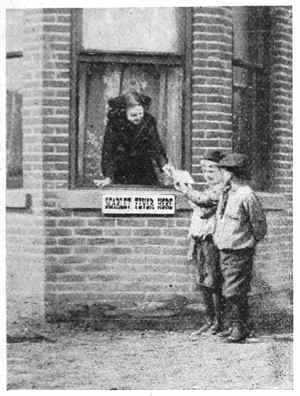
Fig. 60. One of the ways by
which quarantine is broken.
How confusion
of
names
causes mild
cases to go
undetected
We often hear people
speak of two diseases
which they think are not
scarlet fever. These two
diseases are scarlatina and
scarlet rash. Now scarlatina
is simply the scientific
name for scarlet fever.
Some doctors will tell you
that you have scarlatina
and that it is not exactly
scarlet fever. A doctor
who says this either is
deceiving you or does not
know any better. In either
case, he ought not to be a
doctor, for he lets children be exposed to a disease that
is likely to kill many of them. It is the same with
scarlet rash. This, too, is simply another name for scarlet
fever. Changing the name does not change the disease, and
you may call it scarlet fever, scarlatina, or scarlet rash—it
makes no difference which; the disease is one and the
same.
Why quarantine
is necessary for
scarlet fever
Quarantine is the only way known for preventing the
spread of scarlet fever, as well as of diphtheria. If every
case of scarlet fever were quarantined, we could soon
stop this disease; but every case is not quarantined,
because some of them are so mild that they are not
recognized.
How breaking
quarantine
shows
selfishness
Even when a case is quarantined, the people sometimes
neglect the instructions given, just as they do
when there is a case of diphtheria. Then there are
cases that are known to be scarlet fever but are not reported
to the health officers, because the people do not want
to be quarantined. They simply do not want to be put to
any inconvenience themselves, and although this seems a
very strange way for people to act, it happens very often.
There are many selfish people in the world; there are
even people who will not report a case of scarlet fever
because to do so might prevent their going to a party.
Selfishness is at the bottom of it.
It is extremely important that a child should be absolutely
free from all the little scales of skin which are thrown
off after scarlet fever, before he returns to school or mingles
again with others. If there is a discharge from the nose
or ears after the scales have disappeared from the skin,
there is still danger of spreading the disease, for these discharges
often retain the infection for many months.
Questions. 1. Give two reasons why mild cases of scarlet
fever should be carefully treated. 2. Why is quarantine necessary?
3. How does selfishness lead people to spread
scarlet fever? 4. When is it safe to let a scarlet fever patient
mingle with well people?
Remember. 1. If you have scarlet fever and are not very
sick, do not think that you will not be dangerous to others;
severe cases sometimes come from exposure to the mildest
cases. 2. Mild cases of scarlet fever often leave very bad results,
if the patient is not cared for. 3. Be very careful
until you are entirely well. 4. Scarlatina and scarlet rash
are nothing but scarlet fever; keep away from people who
have them. 5. Quarantine is the only way by which we can
prevent the spread of scarlet fever; there is no medicine that
will prevent it. 6. People who violate quarantine regulations
are both selfish and stupid.
Measles is a disease in the same class as scarlet fever.
We do not know the cause, but we do know that it is communicable.
Why measles
should be
avoided
Measles is usually not a severe disease; that is, it does
not kill as many persons in proportion to the number of
cases as does scarlet fever. It does, however, kill more
people than most of us think; a great many little babies
die of it. How often we hear mothers say, "I wish my
children would have measles and be done with it." It
would be very convenient if they could have measles in a
mild way and "be done with it." The trouble is, that we
cannot tell whether it will take a mild form, and, worse
than this, we do not know when they will be done with it.
If you should go into the children's wards of a large
hospital, you would know why measles should be avoided.
There you would hear the doctors questioning the mothers
about the previous diseases of the little ones. You would
be surprised at the number who replied, "He has not
had anything but measles." Then you would hear the
question, "How long since he had the measles?" "He
was just over it when he was taken sick with this trouble."
What is "this trouble"? Follow the doctor along from
bed to bed and see the cases of pneumonia that started
when the child "was just over measles"; see how many
cases of empyema (abscess in the chest) began just after
the measles ended; how many cases of abscess in the bone,
how many cases of disease of the kidneys appeared after
the child recovered from the measles. Then go down into
the eye and ear wards and see how many diseased eyes
and ears have followed an attack of the measles. The
children would not have had these troubles had they not
first had measles.
Necessity
of care in
measles
If you have measles, do not let others come near you,
and do not think that, because you do not feel very sick,
you can run about as usual. If you do not take good care of
yourself, you may have some of the diseases that so often
begin when children are getting over measles. Measles
causes more deaths than is commonly supposed, especially
among young children and very old people; and a great
many children die of diseases which they never would have
had if they had not first had the measles. Avoid people
who have measles, and if you should get the disease, do
not treat it as a slight thing, but consult your doctor at
once.
| Whooping Cough | Scarlet Fever | Measles | Smallpox |
| 4,856 | 4,309 | 4,302 | 74 |

Fig. 61. Deaths in 1907 from four common communicable diseases
reported to the United States Census Bureau.
Evil effects
of whooping
cough
Whooping cough is much the same as measles in this
respect. It kills many children, and, in cases where it does
not kill them, their bodies become so weakened that they
are liable to contract some other disease that may prove
fatal. Avoid people who have whooping cough.
Questions. 1. Why should people avoid measles? 2. Why
should one take care of himself when he has measles? 3. Why
is whooping cough to be avoided?
Remember. 1. Measles is more fatal, especially among babies,
than people realize. 2. Measles causes more diseases of the
bones, ears, and eyes than any other communicable disease.
3. Measles is not dangerous if properly cared for, but when
neglected, it causes much suffering and many deaths. 4.
Whooping cough causes almost as many deaths as does measles.
We now come to the study of a disease, the cause of
which has not been positively recognized. We know that it
is very communicable; but we know also that there is absolutely
no reason for anyone's ever contracting it, since
there is a way by which it may easily be prevented.
Fatality of
smallpox
before the
discovery of
vaccination
Something over a hundred years ago, smallpox was one
of the most fatal diseases known. It is estimated that
during the eighteenth century it killed over 60,000,000
people.
Up to the time when the Spaniards invaded Mexico,
there had been no smallpox there. The Spaniards brought
the disease with them, and historians tell us that out of the
12,000,000 people living in Mexico at that time, at least
6,000,000 died from smallpox. At that time the disease
was considered fatal throughout the world; when it broke
out in a community, people fled without stopping to bury
their dead. It was a rare thing to see a person not more
or less disfigured by the marks the disease leaves on the
face and body.
To-day we find a very different condition. There are
now fewer fatalities from smallpox than from almost any
other communicable disease. During 1906 and 1907 only
169 deaths from smallpox were reported from all over the
United States to the Census Bureau at Washington. What
has caused this marked falling off in the fatality of the
disease?
Discovery
of vaccination
During the time that smallpox was killing so many
people, all the doctors were trying to find something that
would cure the disease or that would prevent it. In the
latter part of the eighteenth century Dr. Edward Jenner,
an English physician, noticed that milkmaids did not
have smallpox as much as did people of other occupations.
He also noticed cows with little sores on their udders that
looked very much like the sores that come with smallpox.
He therefore tried making on the arms of people sores
just like those on the udders of the cows. He did this
by taking a little of the matter from the sores on the
cows and putting it into the scratches on the people's
arms. After these sores had healed, the people who
had been thus treated did not have smallpox. This
simple practice has caused one of the most deadly diseases
known to man to become one of the most easily
controlled.
Prevention
of smallpox
by vaccination:
Though it is well known that before the discovery of
vaccination smallpox was a fatal disease, there are still
some persons who say that vaccination has done nothing
to reduce the mortality. When you learn some of the
facts, you can judge for yourself whether or not vaccination
does prevent smallpox.
(1) In the
Franco-Prussian
War
During the Franco-Prussian War in 1870-71, the German
soldiers were all vaccinated, and only a part of the
French army was vaccinated. Smallpox broke out in the
two armies. As a result, 6,000 of the French died from
smallpox and only 278 of the Germans. In many instances,
the German and the French soldiers were confined in the
same hospitals, with exactly the same opportunities to
contract the disease. But, you might ask, if vaccination
prevents smallpox, how did it happen that there were any
cases among the German soldiers? In order to prevent
smallpox, vaccination must be successful; that is, it must
"take." We will tell you about different kinds of vaccination
a little later.

Fig. 62. In Sweden, before vaccination, smallpox caused 2,050
deaths per million population (represented by the large square). Since
the introduction of vaccination the death rate has dropped to 2 per
million population (represented by the two small squares).
(2) In
Sweden
In Sweden we find strong evidence that vaccination
prevents smallpox. Up to 1801, before vaccination was
introduced into that country, the yearly death rate from
smallpox was 2,050 out of each million of the population.
In 1801 vaccination was introduced into Sweden, but the
people were allowed to be vaccinated or not, just as they
pleased. During the ten years ending with 1811, the annual
death rate from smallpox had dropped from 2,050
per million of the population to 686 per million. Later,
vaccination was made compulsory (that is, everybody in
Sweden was obliged to be vaccinated), and in 1894 the
death rate had dropped to only two deaths a year per million
population. Is it merely a coincidence that this great
falling off in deaths from smallpox came after vaccination
was discovered, or was it due to vaccination?
(3) In the
Philippine
Islands
Before the Philippine Islands were occupied by the
Americans, vaccination was very little practiced, and a
large percentage of the deaths in those islands was caused
by smallpox. In 1897 smallpox caused about 40,000 deaths.
A few years later the Americans enforced vaccination among
the inhabitants of the Philippines, and the result was that
in 1907 there were only 304 deaths from smallpox. There
has been practically no quarantine for smallpox and no
disinfection; the only cause of the suppression of the disease
in the Philippine Islands is vaccination—nothing else.
(4) In
Gloucester,
England
In Gloucester, England, there used to be a great many
people who did not believe in vaccination, though it is
doubtful if they themselves could have explained why they
did not. They seem to have been much like the man who,
when asked, "What do you think of this?" replied, "I
don't know anything about it, but I am against it." In
1890 Gloucester had a population of 42,000 people, most
of whom had never been vaccinated. In the latter part of
1895, smallpox broke out. Quarantine was strictly carried
out, but the disease continued to spread. As the people saw
the number of victims rapidly increasing, many of them
concluded that they had rather be vaccinated than have
smallpox, even though they did not really believe in vaccination.
By the first of April, 1896, over 36,000 people
had been vaccinated in Gloucester, and by the first of
August there was not a case of smallpox in the city. But
what had happened in the meantime? There had been
1,979 cases of smallpox; a very large amount of money had
been expended in quarantining; hundreds of persons had
been disfigured for life; and 439 lives had been lost.
And all this simply because the people did not believe in
vaccination.
Quarantining smallpox is a most expensive luxury,
which may possibly retard the progress of this disease, but
was never known to check an epidemic of it. Every
epidemic of smallpox during the last one hundred years
has been checked by vaccination.
Why some
diseases do
not return
There are certain diseases which you are not likely to
have more than once; one attack protects against another.
Why and how does one attack of a certain disease protect
against another? When a person is taken sick with one
of these diseases, the cells of his body immediately begin
to make a substance called antitoxin. We learned something
about antitoxin when we were studying diphtheria.
In diseases like scarlet fever, measles, and smallpox, in
which one attack protects against another, the antitoxin
that is formed in the body when you are sick stays there
for a long time, in some cases as long as you live. While
this antitoxin is present in the blood, the cause of the disease
cannot live in the body; hence you cannot have the
disease again. After some diseases this antitoxin seems to
disappear from the blood in a short time; after others, it
seems to remain for several years; and after still others it
remains as long as you live. After diphtheria it stays in
the blood only a short time, so that one may have diphtheria
a second time within a few years. Some people
have smallpox, measles, or scarlet fever a second time, but
with most people these diseases never return.
If we knew how to make the cells of our bodies produce
this antitoxin and keep it stored up in the blood all the
time, we should never have any of these diseases. But in
many cases we do not know how to cause the cells to manufacture
this antitoxin. However, in one or two diseases
we do know how to persuade them to make the antitoxin,
and the one in which we know how to accomplish this best
is smallpox. This is just what is done by vaccination.
How vaccination
prevents
smallpox
The object of vaccination is to put the cells of the body
to work making antitoxin. To do this, it is necessary to get
some of the toxin into the body. We want to get in just
enough to make the cells work, and no more. Therefore we
make a very small scratch, and put into it some of the
vaccine which contains the toxin of smallpox. It is impossible
to have these germs in your body and not be
affected by them to some degree. If you did not feel a
little sick, the cells would not be making antitoxin, for the
thing that makes you sick is what makes the cells go to
work. But this sickness is only a matter of a day or two,
and after the cells have made the antitoxin, it will stay
in your body a long time, longer in some cases than in
others.
Some people, after they have once been vaccinated, can
never be successfully vaccinated again; neither can such
people ever have smallpox. Most people, however, can be
successfully vaccinated every five to seven years, and there
are a few people who will "take" if vaccinated every year
or two. These conditions indicate the length of time that
the antitoxin of smallpox will live in the bodies of these
different persons. If vaccination, properly performed, does
not take, the person is not in a condition at that time to
catch smallpox; and if vaccination, properly performed,
does take, it is positive evidence that if this person had been
exposed to smallpox, he would have taken the disease.
Necessity of
repeated
vaccination
It is frequently asked, "How long will vaccination protect
against smallpox?" You can no more answer this
question than you can tell how long the antitoxin will live in
the blood of any particular person. The only safe thing to
do is to be vaccinated every few years, and if smallpox is
present in your community, get vaccinated every year until
the vaccination takes. If it takes, it shows that you were
in a condition to catch the disease; and if it does not take,
you may feel safe from smallpox for a while, at least.
Questions. 1. Why was smallpox formerly more widespread
and more often fatal than it is now? 2. Tell of the discovery
of vaccination. 3. Give instances to show the influence of
vaccination on smallpox epidemics. 4. Why must there be repeated
vaccinations? 5. Show how vaccinating for smallpox
is like taking antitoxin to prevent diphtheria.
Remember. 1. Before the introduction of vaccination, smallpox
was one of the most dangerous diseases known. 2. All
evidence of history tends to show that vaccination has caused
smallpox to become a very mild disease and a comparatively
rare one. 3. Successful vaccination repeated at proper intervals
will prevent smallpox. 4. Vaccination must be repeated
because we do not know just how long the material developed
in the body from a single vaccination will last.
What constitutes
a successful
vaccination
How does it happen that those who have been recently
vaccinated sometimes have smallpox? It is successful
vaccination that prevents smallpox, not recent vaccination;
there is a vast difference between the two. A successful
vaccination is one that results in a sore identical with the
sores of smallpox. Such a sore is secured only as a result
of the action of the germs that cause smallpox.
If the arm is red from the shoulder to the wrist and so
swollen that you cannot use it for weeks, it does not necessarily
mean that you have had a successful vaccination.
Such arms are not the result of vaccination itself, any
more than a railroad wreck is the result of the fact that
there is steam in the engine. The railroad wreck is caused
by carelessness on the part of some operator, and the badly
inflamed and swollen arm is due to lack of care or knowledge
on the part of the vaccinator or the person
vaccinated.
Some pretended
vaccinations
A fly blister is not a successful vaccination. Such a statement
may not seem necessary, until you hear this story.
A man showed a sore on his arm, asserting that it was a
successful vaccination. He was told that it was nothing but
the result of a blister, and not vaccination, and that the work
had been done by putting a small bit of blistering plaster
on his arm. He admitted this to be the fact, and said that
the "doctor" who did it told him that it was a new way of
vaccinating. The doctors who say that vaccination will
not prevent smallpox belong to the class who use fly blisters
and call them vaccinations. When the patient gets smallpox,
those who are opposed to vaccinations say that here
is an illustration of their claim that vaccination will not
prevent smallpox.
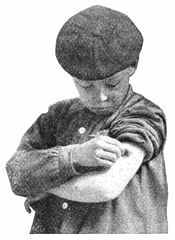
Fig. 63. How vaccinated
arms are sometimes
infected.
Some people who honestly think they were vaccinated
have smallpox. There are sometimes instances in which a
person recently vaccinated with apparent success nevertheless
contracts smallpox; there are still other cases in which
the disease develops after a vaccination
that would not take. Here
is an example:
A doctor vaccinates a child in
the usual manner. At the end of
four or five days, the dressing is
taken from the arm, and the only
thing to be seen is a little black
scab. The child scratches this off.
In a few days the spot becomes
red and a small abscess forms, resembling
a smallpox sore. Naturally,
this is taken for a completely
successful vaccination, but it is not
really so. When the child scratched
off the scab, the vaccination wound was nearly healed, and
the little abscess was caused by some very mild pus germs,
which were under the finger nails with which he scratched
the wound. The abscess was in no wise connected with
the vaccination, but was simply such an infection as a child
might get at any time that he scratched his arm. No one
has ever claimed that such an abscess will prevent smallpox
any more than that a boil will prevent it.
A successful vaccination will prevent smallpox. The
length of time for which it will prevent the disease varies
in different individuals. Some it will protect only for a
year or two, while in others it will last through life.
Dr. H. W. Bond, Health Commissioner of St. Louis,
Missouri, states:
"The experience of this department, based on the observation
of thousands of cases, is that a well-pitted mark
gives at least ten years' immunity. We have never seen a
case of smallpox in a person with a well-pitted scar less
than ten years old—that is, the scar less than ten years
old."
A sore arm
not always
due to successful
vaccination
One of the strongest objections made against vaccination
is that the arm sometimes becomes very sore from it. This
is true, but the sore arm is not a common occurrence and is
never caused by vaccination properly performed. There is
always some cause for the bad arm besides the vaccination.
Cause of
sore arms
The usual cause of a bad arm is improper vaccination;
this means the lack of proper precautions on the part of
the person who does the vaccinating. Years ago, before
vaccination was performed with the great care which is
given it to-day, bad arms could not be prevented; but
to-day the cause of the trouble is not the vaccine, but the
vaccinator. Sometimes a father thinks he will save a dollar
by vaccinating his child himself, and he is likely to injure
the child by attempting to vaccinate him without taking
antiseptic precautions. The same surgical preparations
must be made for a vaccination as for an operation. If
this is not done, a bad arm will result, not because of the
vaccination, but because of the negligence of the vaccinator.
Never allow any person, doctor or otherwise, to vaccinate
you until the skin surface has been well washed with soap
and water, rinsed clean, and wiped off with alcohol. See
that the vaccine is fresh and has been properly kept. When
it begins to "take," keep the spot absolutely clean and
covered with a clean cloth, renewed daily. Never scratch
or rub it. These precautions will prevent the dreaded soreness
of the arm.
How people
themselves
infect their
arms with
pus germs
The person operated on is himself often responsible for
the bad arm. A careful doctor will put a dressing on the
arm, after he has supplied the vaccine, and will tell you to
let that dressing alone, for he wishes to take it off himself.
About the third or fourth day after the vaccination, your
arm begins to itch. Possibly you have forgotten what
the doctor told you; at any rate, you pay no attention to
directions and take the dressing off to scratch the arm.
When you scratch the wound, you introduce pus germs into
it, and you have no reason to expect anything but a sore
arm. In this case, it is not the fault of the vaccinator or of
the vaccination; it is your own fault. Never touch a vaccination
sore; in fact, it is dangerous to touch any sore.
Questions. 1. How is a successful vaccination determined?
2. What are some pretended vaccinations? 3. Mention some
of the things that cause bad arms after vaccination.
Remember. 1. A successful vaccination causes a sore identical
with the sores that result from smallpox. 2. A fly blister
is not a vaccination in any sense of the word. 3. A very sore
arm does not result from a properly performed vaccination, but
from carelessness on the part of the vaccinator or the person
vaccinated.
Tuberculosis, or consumption, has been known for many
centuries. It was known long before Rome was ever heard
of. Hippocrates, a Greek physician, studied it, and said
that if it were treated in its early stages, it could be cured.
Why consumption
is
called the
Great White
Plague
Tuberculosis is called the Great White Plague. It is
called the Great Plague, because it kills more people than
does any other one disease; the White Plague, because
people who suffer from it become so pale and white.
Consumption
more
destructive
than war
It is estimated that nearly 200,000 people die from tuberculosis
every year in the United States. This means that
in this country there is one death from consumption every
two minutes and thirty-six seconds. Is it not fearful to think
of nearly 200,000 people dying every year, in the United
States alone, from a disease that we know can be prevented?
Do you not think that we ought to do everything
we can to prevent this disease from spreading?
During the Civil War 205,070 soldiers were killed in both
armies. This war lasted four years. During the same
length of time there were 640,000 deaths from tuberculosis
in the United States. This means that consumption killed
over three times as many people as were killed during the
same length of time in the Civil War. In some parts of the
country one out of every seven deaths is caused by this
disease, but the average throughout the country is one
death out of every ten.

Fig. 64. Comparing
640,000 deaths
from tuberculosis
the United States
during four years
with the 205,070
deaths in the Civil
War.
Prevalence
of tuberculosis
There are more than 700,000 people sick from tuberculosis
every year in the United States alone. Of this number
nearly 200,000 die every year. Tuberculosis is a disease
that can be prevented. It may take a long time to get rid of
it, but it can be abolished. When you think of all the
people that are sick from tuberculosis, and of all those
who die from it every year, you will surely
want to do all you can to help prevent
this suffering and death.
Tuberculosis
a disease
of various
parts of the
body:
When people speak of consumption
they usually mean tuberculosis of the
lungs; but tuberculosis is not confined
to the lungs. The germs that cause
tuberculosis may attack any part of the
body, and from one part may go to
other parts, setting up a growth wherever
they go.
(1) Of the
throat
Tuberculosis of the throat is a common
form of the disease. When the
germs of tuberculosis settle in the
throat, they destroy the tissues very
rapidly and, as a rule, kill the patient
much more quickly than they do when
they start in the lungs.
(2) Of the
joints
Another frequent form of tuberculosis
in occurs in the knee; this is popularly
called "white swelling." It quickly destroys
the knee joint and results in a stiff
leg. The growth may stop there, but
more often it extends from the knee to
other parts of the body.
Often we see a little boy or girl wearing one shoe with a
sole much thicker than the other. This is because one leg
is shorter than the other, and we notice that the shortened
leg is deformed as well. This condition sometimes results
from an injury, but it is far more likely to be caused by
tuberculosis of the hip joint.
(3) Of the
spine
Again we see boys and girls with diseases of the spine,
so that they have "hunch backs" or are twisted to one side.
These conditions result from tuberculosis of the bones of the
spine.
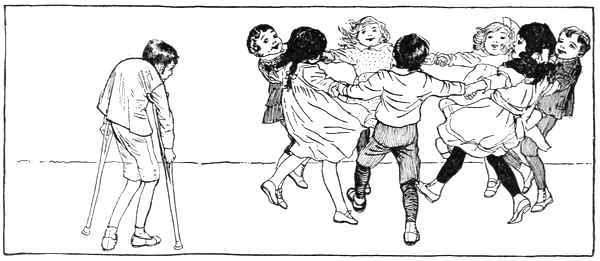
Fig. 65. One of the effects of tuberculosis.
(4) Of the
glands
Sometimes we see children and grown people with swellings
on their necks. These swellings may look smooth, but
they feel as if they were made up of little bunches of grapes
or plums under the skin. They are almost always due to
the growth of the germs that cause tuberculosis of the little
glands of the neck.
(5) Of the
stomach
Any one of the other glands of the body is just as liable to
become affected by tuberculosis as are the glands of the
neck. Tuberculosis of the stomach or bowels is not at all
uncommon.
The germs of tuberculosis are likely to attack any of the
tissues of the body, especially if the cells composing these
tissues are for any reason weakened so that they cannot do
the work required of them. When the tuberculosis germs
grow in tissues, the tissues finally break down and an abscess
forms. A tubercular abscess is sometimes called a
"cold abscess."
All such abscesses finally break and an open sore results.
The matter that comes from the open sore and from the abscess
when it is first opened is full of the germs that cause
tuberculosis. If this matter is allowed to become dry, the
germs are blown about in the dust. Then other people may
inhale them or take them into their bodies through the
mouth or skin and thus contract consumption.
The old
belief that
consumption
is inherited
Until a few years ago it was generally believed that consumption
was inherited. That is, it was thought that
children whose father or mother had consumption were
born with the disease. Even to-day many people hold to this
idea, because they have not studied or learned of the discoveries
made in recent years. These people still believe
that if a child's father or mother dies of tuberculosis, the
child will die of tuberculosis, too, no matter how careful he
may be or how much of a fight he may make against it.
It is true that many people whose parents have died of
consumption also die from this disease; but this does not
prove that they were born with consumption. It merely
shows that they had a good chance to catch the disease by
being continually with some one who had it. It is also true
that a great many people die from consumption whose
parents did not have it. If consumption is an inherited
disease, where did these people get it?
How the
germ of
tuberculosis
was
discovered
About thirty years ago, Dr. Robert Koch discovered
that all consumptives have in their sputum a long, slender
germ which he called the tubercle bacillus. Some of these
germs he injected into guinea pigs, and he found that they
caused the pigs to have consumption. Then he made
many other experiments, and proved beyond question that it
is this very germ that causes tuberculosis, and that no one
has consumption unless he has this germ in his body.
Evidence
that consumption
is not inherited
Then the question arose, "Is the baby whose parents
have consumption born with this germ in its body?" This
question could not at first be answered; but tests were
made by taking the children of consumptive parents away
from their parents, and keeping them in homes where there
were no consumptives. It was found that these babies did
not develop the disease. From these and many other tests,
it has been proved that consumption is not inherited, and
that the reason the child of the consumptive so often has
consumption is because he lives with people having the
disease.
Evidence
that consumption
is
a house
disease
Consumption seems to be confined to certain families,
and this has led many people to think that the disease is
inherited, regardless of the proof that it is not. When we
carefully study the facts in various cases, we find that the
disease is not confined to a certain family, so much as it is
to the house in which the family lives.
The record of a single house will illustrate how tuberculosis
sticks to the house rather than to the family. From
1880 to 1901, a particular house was occupied by a father,
mother, and six children, of whom four died of consumption.
From 1902 to 1903 the house was occupied by another
father and mother with eight children. They moved
away because of the great amount of sickness in the family.
At present this father and one of his children have tuberculosis.
In 1904 the house was occupied by still another
family, consisting likewise of a father, mother, and eight
children. Now it is known that four of the children have
tuberculosis, and it is feared that three others have also
contracted the disease. In 1905 a son of the first occupant,
with his wife and two
children, returned to live
in the house. The father
of this family died of tuberculosis.
Up to 1906
the total results from this
house, scattered through
four families, were as
follows: five deaths, six
cases in people still living,
and three suspected cases.
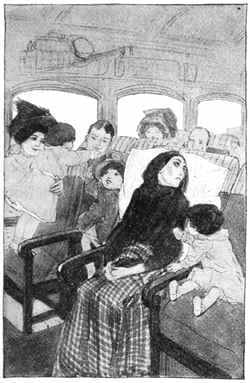
Fig. 66. The constant danger of
infection in railway cars, where
germs can live as well as in a
house.
Why consumption
is a house
disease
When the consumptive coughs,
he sends fine droplets
of moisture into the air.
These droplets contain the
germs that cause tuberculosis.
The moisture evaporates
and the germs are
left sticking to the floors,
the walls, the curtains,
and the furniture of the
room. When the room is swept or dusted, the germs are
stirred up with the dust and people inhale them. The
germ that causes consumption will live for a long time
in a house; you cannot see it, but it is there. Wherever
a consumptive has lived, he has left the germs of this
disease behind him.
How to
disinfect
houses
If a house in which a consumptive has lived is thoroughly
disinfected, all the germs he left there will be killed. Scattering
disinfectants about a room does no good. The only
proper way to disinfect is to close the house, for if the disinfectant
is strong enough to kill the disease germs, no
human being can stay in the house while it is being
used. Disinfecting should be done by the health officer,
because he knows how much disinfectant is needed
to kill every germ in the house and how it should be
used.
Fraudulent
disinfectants
Sometimes you will see an advertisement saying that certain
disinfectants will kill the germs of disease but will not
affect the people. Always remember that any disinfectant
that is strong enough to kill the disease germs will also
kill human beings, and do not be fooled by such advertisements.
Never move into a house that has been previously occupied,
until the house has been disinfected. Do not take it for
granted that the people who lived there before had no
communicable disease. Do not take the word of the agent
or of any one else that there has never been sickness in
the house. People sometimes have tuberculosis without
knowing it; people sometimes have tuberculosis or other
communicable diseases without telling of it.
It does not cost much to disinfect a house, and if the disinfection
is properly done the disease germs will be killed.
"An ounce of prevention is worth a pound of cure." Try
to convince your father that by having the new home disinfected
he may save not only doctor's fees, but perhaps
the lives of himself and his family.
There are a great many things that boys and girls can do
to help fight this disease. This "scourge" can be wiped
out; but if the boys and girls do not help in this great work,
it will never be done.
Questions. 1. Why do people call consumption the Great
White Plague? 2. What is the annual death rate from consumption
in the United States? 3. Compare the fatality from
consumption with the number of soldiers killed during the
Civil War. 4. What amount of illness in the United States is
due to consumption? 5. Describe at least four forms of
tuberculosis. 6. What determines the part of the body in which
the germ of tuberculosis grows?
Remember. 1. Tuberculosis and consumption are the same
disease. 2. This disease kills more people than war, although
it might be prevented. 3. Tuberculosis is not confined to the
lungs but may attack the tissues of any part of the body. 4.
Consumption is not inherited; it is a house disease rather than
a family disease. 5. A house should be disinfected by the
health officer before it is occupied by a new tenant.
How tuberculosis
germs leave
the body:
The sputum (spit) of the consumptive and the discharges
from tubercular sores contain the germs that cause tuberculosis.
Sometimes these germs are so numerous that thousands
of them would be found clinging to the point of a
needle dipped into the sputum or discharges from a patient.
When the consumptive coughs, he sends into the air many
of the germs that cause tuberculosis.
We cannot kill the germs while they are in the body of the
consumptive; but we can kill them after they have left the
body, by seeing that none of the sputum or discharge from
tubercular wounds or sores is allowed to become dried and
blown about as dust.
(1) In discharges
from sores
When the discharge from a tubercular sore becomes
dried and blows about with the dust, the germs are inhaled
into the lungs of other people, or fall into other sores and
cause them to become tubercular. Since this is one of the
most frequent ways by which this dread disease is spread,
you will say at once, "Why, every particle of matter from a
tubercular sore ought to be burned, so that there would be
no possibility of the germs being scattered." This of
course ought to be done, but this is not enough.
People sometimes have consumption and are not aware
that they have it. Others may have tubercular sores and
not know them to be such. Any sore, whether it is tubercular
or not, contains disease germs. They may not be the
germs of tuberculosis, but even the least dangerous of them
is the germ that causes pus (matter).
Since we are trying to get rid not only of the germs that
cause tuberculosis, but also of the germs that cause all
communicable diseases, it would be better to say, "All
discharges from any sore should be burned immediately."
(2) In the
sputum
When people spit on the sidewalk or on the floor, the
sputum will of course become dry. Sometimes a lady
drags her dress through the sputum on the sidewalk or on
the floor; it sticks to her dress and she takes the germs
home with her. The sputum of the consumptive
is loaded with the germs that
cause tuberculosis, and if this sputum is
allowed to be blown about with the dust,
people will inhale it and thus get the
germs into their lungs. Certainly the
consumptive should never spit on the
sidewalk or on the floor, or in the mine,
workshop, or in any place where the
sputum may become dry and form dust. Of course he
should not fill the air about him with germs by coughing
into it; everybody knows that.
Fig. 67. A sputum
cup of waterproof
pasteboard.
Why everybody
should
be careful
about spitting
and
coughing
But no man or woman, boy or girl, should ever spit on the
floor or sidewalk. In the first place it is bad manners.
No person does this who is well brought up. In the second place,
we must remember that the consumptive does not
like to have others know that he has consumption; this
feeling is a part of the disease. If you expect the consumptive
to refrain from spitting on the floor or sidewalk,
you must help him by your example. You cannot expect
him to be the only one to hunt up a cuspidor, when you
yourself are spitting on floor or sidewalk. If you expect
the consumptive to take the precaution necessary to protect
you from this disease, you must take the same precaution
yourself.
In the matter of coughing, the same rules hold true.
If you expect the consumptive to hold a handkerchief before
his mouth when he coughs, you must
do the same.
How to avoid
spitting on
the floor or
sidewalk:
Since it is not right that the consumptive
should spit on the floor or sidewalk,
it will naturally be asked, "What is the
consumptive to do with what he coughs
up?"
(1) By
using paper
napkins
At a very small cost he can buy paper
napkins and envelopes which have been
treated with paraffin to prevent moisture
going through them. If every one
with a cough or with any such trouble as catarrh, which
makes him want to spit frequently, would carry a supply
of these paper napkins and paraffin envelopes, he would
always have a suitable place in which to spit. When you
cough up anything, spit into one of these little napkins,
put the napkin into the envelope, and when you get home
burn the whole thing.
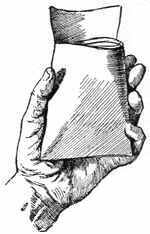
Fig. 68. A pocket
cuspidor.
(2) By
using
pocket
cuspidors
There are other conveniences which can easily be carried
in the pocket, called pocket cuspidors. Some are made of
thin cardboard, treated with paraffin, and filled with
cotton to hold all the moisture of the sputum; others are
made of glass, shaped like a bottle, with a wide mouth.
Those made of cardboard should be burned as soon as
possible and the glass ones should be thoroughly washed
with boiling water.
(3) By having
public
cuspidors
In some cities cuspidors have been placed at the edge
of the sidewalk in an effort to lessen the spread of disease
caused by spitting. These cuspidors have a stream of
water running through them constantly and are connected
with the sewer. They are so made that they cannot easily
be kicked over or upset, and they are placed on stands just
high enough to make it easy to spit into them. If properly
made, they are not unsightly. Would it not be a good thing
if your town would put such cuspidors on your streets, and
if the merchants would put them into their stores? Every
office, every workshop, every store, every railway and
street car should be provided with cuspidors.
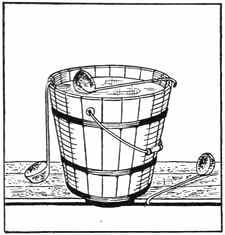
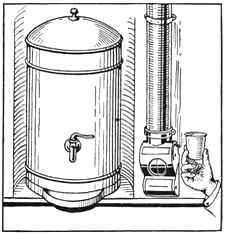
Fig. 69. The common drinking
cup—a fruitful source of infection.
Fig. 70. The individual drinking
cup—each cup clean and
free from disease germs.
How consumption
is spread
from the
lips:
We know that the substance which people cough up
when they have consumption contains the germs that cause
this disease. When they spit this matter out, many of the
germs stick to the lips. This is true not only of consumption,
but of the germs of other diseases, such as diphtheria,
measles, and scarlet fever.
(1) By drinking
cups
When there are disease germs on the lips, it is impossible
for a person to drink and not leave some of the germs
sticking to the edge of the cup or glass. If the germs of
disease are in the mouth, every time that the person suffering
from this disease drinks from a cup, he leaves some of
the germs on the edge of it. The next person to drink
from that cup may get the germs into his mouth.

Fig. 71. A sanitary drinking fountain for public places.
Always avoid drinking from a cup or glass from which
another person has been drinking. You can never tell
who may have disease germs in his mouth, or when you
may get them on your lips by drinking from the same cup.
Each individual should have his own cup and should never
let any one else drink from it.
(2) By putting
pencils
into the
mouth
When you put the point of your pencil into your mouth,
you will leave germs on it just as you do on the edge of a
cup when you drink. Never put your pencil into your
mouth; never use any other person's pencil; never trade
pencils.
(3) By the
common
bite
Sometimes we see a child giving his friends a bite of his
apple or candy or cake. Of course when disease germs are
in the mouth of the one who takes a bite, the germs will be
left on the apple, candy, or cake. By no means should a
boy or girl be selfish, but if you have something to share
with your friends, break it or cut it into pieces. Never
take into your mouth anything from which another person
has taken a bite.
How tubercular
cows
cause consumption
Milk that comes from consumptive cows may contain the
germs that cause tuberculosis. When you drink the milk
from such cows, you take these germs into your body.
They find their way from the stomach and intestine into
the blood, and there they travel about until they find a spot
where the cells are dead or are not doing their work properly.
When they find such a place, they settle down and
begin to grow; and the first thing you know, you will have
tuberculosis in that part of your body. Sometimes the
germs do not have to go out of the stomach or intestines to
find a favorable opportunity to take hold and grow. When
this happens, we have consumption of the bowels.
One cannot tell by looking at milk or by tasting it
whether or not the germs of tuberculosis are present. They
do not make the milk sour; neither do they make it look
different from pure milk.
One cannot tell by looking at a cow whether or not she
has tuberculosis. Sometimes a cow will have tuberculosis
and yet look very healthy. There is, however, a way by
which we can tell when a cow has this disease, no matter
how healthy she may look. This is what is known as the
tuberculin test.
How to detect
tuberculosis in
a cow
If a little tuberculin is injected under the skin of a cow that
has tuberculosis, it will make her have a fever and
appear sick for a day or two. If she is free from tuberculosis,
it will not make her sick at all.
It would seem as if all people who sell milk would want
to know whether their cows have consumption so as not to
run any risk of conveying the disease to their customers.
Some of them do take this precaution, but a great many of
them do not want to go to this trouble. Sometimes you will
hear them say, "Oh, I do not believe in this tuberculin test."
They do not want to believe in it because they know that
the cows, if tested and found to have tuberculosis, will
have to be killed.
The reason that dairymen sell us milk from tubercular
cows is the same that makes the man with scarlet fever in
his house fail to tell the health officer about it; the same
that makes the butcher buy and sell meat from diseased
cattle; the same that makes some people absolutely regardless
of the welfare of others—it is selfishness.
Questions. 1. How does a patient give off tuberculosis
germs? 2. Why should even well people refrain from spitting
in public? 3. Why should the sputum be taken care of?
4. Why should we avoid the common drinking cup? 5. What
is the danger from putting pencils into the mouth? 6. Is it
safe to use another person's pencil? 7. What is the best way of
sharing food? 8. How can one be protected from tubercular
milk?
Remember. 1. The sputum and discharges from all sores
should be immediately burned or disposed of in such a way that
they cannot become dry and be blown about as dust. 2. Consumption
may be contracted by the use of the common drinking
cup, or by putting into your mouth such things as pencils
and coins. 3. The milk from a cow suffering from consumption
contains the germ of tuberculosis. 4. A cow may have tuberculosis
and not appear to be sick. 5. The only way to determine
whether a cow has tuberculosis is by using the tuberculin
test. 6. Every milch cow should be tuberculin tested.
Consumption
should be
recognized
early
When people first get consumption, they seldom realize
that they are seriously sick. Most of them think they
have a bad cold, or are overworked, or that they have been
staying too closely in the house. Often they will not even
see a doctor until they are so sick that the doctor cannot do
much for them.
When you have a slight cough that "hangs on"; when
you feel feverish every afternoon; when you are short of
breath; when you get tired very easily; when you do not
feel like eating anything except candies and cakes—then
you should think of consumption. These are not all the
signs, but they are enough to make you go at once to a
doctor.
A long time ago the doctor would have felt badly if he
had been obliged to tell you that you had consumption;
but now he knows that if you go to him early in the disease
and follow his directions, you will get well.
How consumption
is
cured:
(1) By rest
When the doctor finds that a person has consumption, the
first thing he orders is rest. By this he means absolute rest.
He does not mean that the patient can go to school or to
the office part of the day and rest the remainder of the day.
The doctor will want to watch him constantly. Then
there comes a time when he must begin to take a little exercise;
the doctor tells him just how much exercise to take,
and just what form of exercise is best for him.
(2) By fresh
air
The consumptive must have plenty of fresh air all the
time; he must be out-of-doors as much as possible. You
will wonder how the doctor expects him to be out-of-doors
when he has been told that he must have absolute rest.
Later we will show you how one can practically be out-of-doors
and yet at the same time be in bed.
(3) By sunshine
Sunshine will kill the germs of any disease more quickly
than almost anything we know of, and a consumptive must
have all the sunshine that he can get. Of course it cannot
get into the body to kill the germs, but it strengthens the
cells of the body so much that they can fight with just that
much more energy.
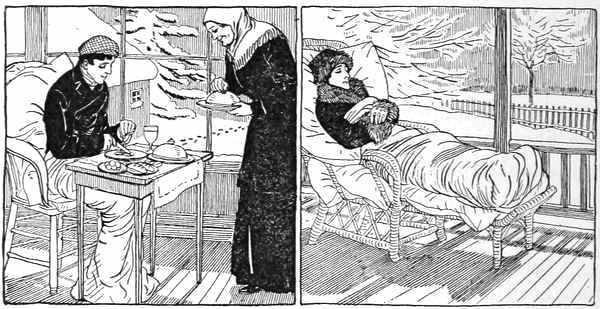
Figs. 72 and 73. Living outdoors in cold weather.
(4) By nourishing
food
Nothing is more important than pure food in building
up the body and in making heat and power. In consumption
the food that is stored up in the body burns itself up
very fast. The consumptive must therefore take not only
the food needed to supply the usual demands of the body,
but enough to make something extra for the disease to
burn up without drawing on the reserve fund stored in
the body. In order to do this, he will have to eat a great
deal, and what he eats must be of the kind that makes the
best building material and the most nourishing material.
He cannot tax his stomach by eating things that are not
nourishing; all the work his stomach can do must be
devoted to the foods he really needs.
The weapons with which we fight consumption are rest,
good food, fresh air, and sunshine. These will do more
good than all the medicine in the world. Fresh air is not
only one of the best things for the cure of consumption, but
it is one of the best things for the prevention of consumption.
You should always breathe plenty of fresh air night
and day, and there is plenty of fresh air to be had if you
will take it.
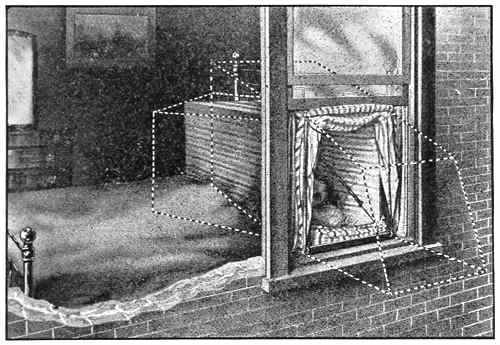
Fig. 74. A window tent. (Invented by Dr. W. E. Walsh.)
How to have
fresh air at
home:
If you have only a single window in your room, try to
sleep with your head in the fresh air. It is not always easy
to arrange a room in such a way that you can have fresh
air without placing your bed in a draft, but even this
difficulty can be overcome.
(1) By window
tents
There are several devices, called window tents, which
you can buy. By the use of such a tent, your head will
be out-of-doors all the time; yet the draft cannot strike
your body, because a part of the tent fits around your
neck and cuts off the air from the rest of your body. One
of these tents is shown in Figure 74. You do not put your
head out of the window; your
head is on your pillow just as
if the tent were not there.
Your bed is placed directly in
front of the window and the tent
comes down over your pillow,
allowing your head practically
to be out-of-doors, but keeping
the cold air out of the room.
Sleeping under a window tent
is the next best thing to sleeping
out-of-doors.

Fig. 75. A sleeping porch built
in a house.
(2) By sleeping
porches
Many of our modern houses
are built with sleeping porches
on which one can sleep outdoors
summer and winter. Where there is not a special
sleeping porch on the house, an ordinary porch may often
be made to serve the purpose, or a very inexpensive sleeping
porch can be added to the house.
(3) By tent
cots
Sometimes people cannot get the use of a porch of
any kind. In such cases it may be possible to put up
a tent in the yard. If the yard is very small, a tent
cot may be used. This is simply a cot with a tent on
it, which can be closed up and put away in the daytime
and set up again at night. In a large city where
the houses have no yards at all, this arrangement can
be used by setting it up on the roof of the house. There
is almost always some way of securing fresh air at night
if we will only give a little thought to the matter.
Fresh air in
schoolrooms
Unfortunately, many of our school buildings are not
provided with good ventilating plants. A proper system
of ventilation furnishes at least 1200 cubic feet of fresh air
per hour for each child in each room.
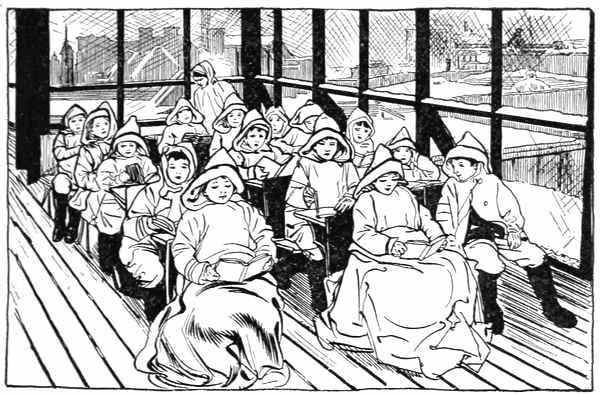
Fig. 76. An open-air schoolroom for consumptive children.
The necessity
for playgrounds
In large cities it is often impossible to find outdoor space
in which boys and girls may play during recess.
Even this difficulty can be overcome by turning the roof
of the school building into a playground, with a high wire
netting around it.
Every school yard should be provided with swings, bars,
and gymnasium apparatus to encourage the children to take
plenty of exercise. Children who live in crowded towns
need exercise during vacation as well as during school
days, and the school yards should be open to them at all
times. A summer teacher who shows the children the
best way to exercise, has work fully as important as that of
any other teacher during the school term.
A sound body is more valuable than education itself,
but a good education and a sound body together are the
best assets any man or woman can have.
Questions. 1. State the four things necessary to cure consumption;
show the value of each. 2. What is the value of
fresh air to every one? 3. How may an abundance of fresh
air be secured in the home? 4. In the school?
Remember. 1. Rest, fresh air, sunshine, and nourishing
food are the cures for consumption. 2. All these things can
be secured in any climate and by every person. 3. Tuberculosis
is a communicable disease. 4. Tuberculosis can be
prevented. 5. Tuberculosis can be cured.
The framework
of the
body
The framework of the body is composed of bones. There
are 206 bones (not including the teeth) in the body. The
bones of the body are divided into four classes—long bones,
short bones, flat bones, and irregular bones.
Construction
of bones
Regardless of their shape, all bones are composed in the
same way. Every bone has an outer and an inner portion.
The outer portion is a dense layer called compact bone. The
inner portion is more open, and is much weaker; this is
called cancellated bone (from cancella, a sponge). In the
smaller bones, the marrow, which is quite soft, runs through
the spongy bone; in the larger long bones, the marrow is
distinct and is enclosed by the spongy bone.
The periosteum
Every bone is covered by a thick, tough layer, the periosteum,
which has three uses. When the bone is injured by
disease or accident, the periosteum makes new bone to fill
in and repair the break. It also builds new bone on the surface
of the old as long as the body is growing. Finally, the
periosteum gives strong and firm attachment to the muscles,
which send tendons into it.
Joints
Every bone in the body (except the hyoid bone, to which
the tongue is attached) is joined with some other bone.
Most of them join with two or more bones. In most instances
the end of a bone which joins with another is rounded off
and made very smooth, so that it can slide easily over the
other bone. There are three principal kinds of joints in the
body. They are called the ball and socket joint, the hinge
joint, and the serrated or saw-tooth joint.
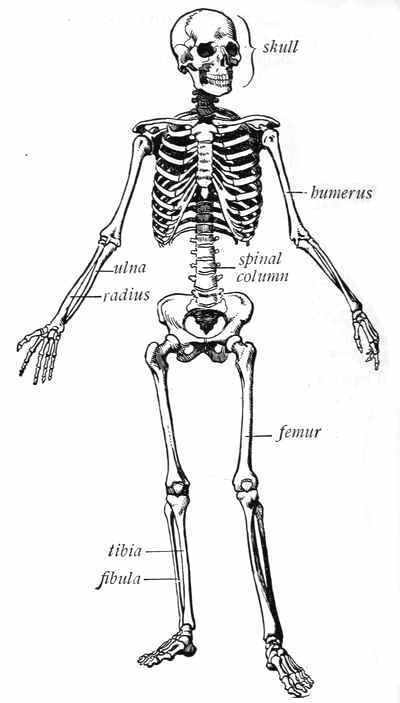
Fig. 77. The skeleton.
The ball and
socket joint
The ball and socket joint is one that can move freely in all
directions. We see it illustrated in the joints of the shoulder
and hip. In these joints one of the bones has a deep depression
in it, and this depression forms the socket. The other
bone has a rounded head that fits into the depression. We
call this rounded head the ball.
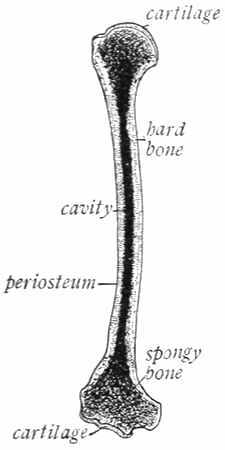
Fig. 78. The structure of a
bone.
The hinge
joint
The hinge joint is illustrated in
the knee and elbow joints. These
joints can move backward and
forward in one plane like a hinge,
but they cannot move in a circle
like the ball and socket joints.
You cannot swing your forearm
about on a pivot at the elbow as
you can your whole arm, nor will
the knee joint bend in every direction
as does the joint at the hip.
Serrated
joints
Serrated joints do not move. The
bones having serrated joints are
fitted tightly together so that they
form practically one bone. We
find this kind of joint illustrated
in the way the bones of the skull
are put together.
Ligaments
The joints of the body are not
held together by rivets, pins or
bolts as are the joints of a machine,
but by bands of very tough
tissue placed about a joint in such a way as to allow it
to move freely, although the bones are all the time
held firmly together. These bands are called ligaments.
Ligaments are much better than bolts or pegs would be,
because they stretch a little, and thus prevent the breaking
of the bones when the joint is put under a severe strain.
Fig. 79. The muscles.
What muscle
is
The lean meat of any animal is composed entirely of
muscle tissue. It is the function of the muscles to move
the body.
Fig. 80. The biceps muscle
contracted.
How the
muscles
work
The muscles are nearly all attached to the bones. They
are just long enough to let the joint straighten out when
the muscles are at rest, but
when the joint bends the
muscle contracts. When a
muscle contracts it becomes
shorter and thicker. Sometimes
it becomes very much
thicker in one place. Every
boy knows how much thicker
the arm muscle (biceps) becomes
when he bends his
elbow hard. He calls this
"showing his muscle."
Tendons
There is not room enough
on most of the bones for all
the muscles to be attached directly to them. Instead of
being thus attached directly to the bone, they end in what
we call tendons. These tendons are hard and strong, and
a very small tendon will lift as much without breaking as
quite a large muscle. The muscles are soft and would have
to be attached over a large area in order to secure the required
strength. The tendons, being so much stronger than the
muscles, can be attached to a very small area and yet secure
the same amount of power as would result from attaching
the muscle itself.
The tendons pass directly into the periosteum, the thick,
strong covering of the bones. So strong is this attachment
that the bone will often break before the tendon will pull
loose.
The skin as
an armor
The entire body is covered with skin, which regulates the
heat of the body and acts as an armor against blows and cuts
which would otherwise injure the delicate nerves and blood
vessels beneath. It also serves to some extent to keep out
the germs of disease. The skin
appears to be smooth, but if you
examine it through a strong
magnifying glass you will see
that it is divided into little
areas. The dividing lines do
not run straight, however, and
the areas are not square like
those you find on a checkerboard.
Fig. 81. A section of the
skin, highly magnified.
Sweat
glands
After looking at the skin with
a strong magnifying glass you
will think that you must have
seen all its irregularities, but if
you will look at it with a powerful
microscope you will find out
many other things. In the first
place you will see many little
openings in the skin. These
little openings make the ridges
which divide the skin into little
areas. Some of the openings are
sweat glands, and there is always
some perspiration coming out of them. When you are very
warm you can see, without the aid of the glass, the drops of
perspiration as they come out on the surface of the skin.
When you are not very warm you cannot see these drops of
perspiration, but they are nevertheless coming out all the
time. When the perspiration comes so slowly that you
cannot see it, it is called insensible perspiration.
Hair
The whole body is covered with hair. You can see the
hair on your head and some of the hair on your arms and
the backs of your hands, but most of the hair on the body
is so fine that you cannot see it without a microscope. Each
of the fine hairs on the body has a root that goes through
the skin just as the root from each hair on your head goes
through it.
Sebaceous
glands
Opening into the little pockets in which the hairs stand,
are glands that secrete a kind of oily material. They are
called sebaceous glands or follicles. Sometimes these follicles
become stopped up; then the material they secrete becomes
thick and cheesy, and the little black points appear on the
skin which we call blackheads. The white matter which
comes out of these blackheads is merely the secretion of the
glands from which the water has been absorbed, leaving the
solid or cheesy portion.
Nails
There is a part of the skin that we do not usually think of
as skin. We mean the nails. The finger nails and the toe
nails do not look like the rest of the skin of the body, but
they are made of just the same kind of cells. The cells of
the nails are flat, dead, and closely packed together. There
are no sweat glands, or sebaceous glands, or any hairs in
the nails.
The alimentary
canal
The digestive system is the part of our bodies in which
the food we eat is so changed that it can be made use of by
the little cells in the body. It is composed of a long canal
with many parts and enlargements, each part necessary for
a certain required work. This canal as a whole is called the
alimentary canal.
Teeth
The mouth does the first part of the work for the digestive
system. Here we find the teeth, which are used for
grinding the food. The teeth are composed of three parts,
the head (or crown), the neck and the root. The head, or
crown, is very hard. Each tooth is hollow, and in the hollow
portion there are nerves and blood vessels.
The salivary
glands
Opening into the mouth are three pairs of glands known
as salivary glands. One pair of glands is located just above
the angle of the jaw. It
is these glands that become
swollen when we
have mumps. Another
pair of glands is placed
just inside the jaw bone,
near the root of the
tongue, and the third
pair is located under the
tongue. These three
pairs of glands secrete the
saliva which moistens
the food and aids in
digesting the starch.
Fig. 82. The alimentary canal.
The
esophagus
The food passes from
the mouth; through a
passage called the esophagus,
or gullet, to the
stomach.
The stomach
The stomach is one of the enlarged parts of the alimentary
canal. Its walls are quite thick, and in these walls are thousands
of little glands. These glands secrete a fluid called
gastric juice. When the food enters the stomach it is held
there for a long time, and the walls of the stomach squeeze
upon it so that the food is mixed with the gastric juice until
every bit of it that will be of any use to the body has become
fluid in character. Not only does the gastric juice make the
food liquid, but it acts on it and changes some of it so that
it will be suitable for use by the little cells of the body. As
fast as the food is made liquid by the juices of the stomach
it is allowed to pass into the intestine through an opening
called the pyloric opening.
The
intestine
The intestine is a long, narrow, twisting and turning tube
that is divided into two principal parts, the large and small
intestine. In the walls of the intestine are many little glands
that secrete a fluid that helps in digesting the food. Two
fluids, one made by the liver, the other by the pancreas, are
brought into the intestine by two small tubes, which come
together in the wall of the intestine six or seven inches below
the pyloric opening. These fluids perform a very important
part in the digestion of all the different foodstuffs.
Villi and
lymphatics
Besides the little glands in the walls of the intestine there
are many thousands of little finger-like projections standing
up from the walls. These are called villi. Each villus has
in it very small vessels, into which the food passes after it
has been digested. These vessels are of two sorts: blood
vessels, which take up the digested starch and proteid
foods, and another sort known as lymphatics, which take
up the fats. All the lymphatics combine into a single
vessel which empties into the great vein at the base of
the neck. Thus the fatty foods pass into the blood and are
mingled with the food materials taken up directly by the
blood vessels.
Two kinds
of blood
vessels
There are two kinds of blood vessels in the body. We
call them arteries and veins. The arteries serve to carry the
blood from the heart to all parts of the body, and the veins
serve to carry the blood back to the heart. The heart is
really a part of the blood vessels, half of each side being like
the veins and half like the arteries.
Arteries
and veins
The walls of the arteries are thicker than those of the
veins. Two sets of arteries leave the heart, one from each
side. The artery that starts from the right side of the heart
goes to the lungs and carries venous blood, which has a very
poor supply of oxygen and is full of impurities. We call this
the pulmonary artery. The artery that leaves the left side
of the heart goes to all parts of the body but the lungs and
carries arterial blood, which has much more oxygen and is
much more free from impurities.
Capillaries
If we follow the blood as it circulates we will see how it
reaches all parts of the body. The big artery that leaves the
left side of the heart divides into smaller and smaller arteries
until there are branches going to every part of the body.
These branches keep dividing until they are so small that
we call them arterioles, and these little arterioles again divide
and become so small that we call them capillaries.
Changes in
the blood
While the blood is passing through the arterioles and the
capillaries, something is happening to it. The little cells
with which these small vessels come in contact have been
taking the oxygen and the nourishing material out of the
blood. At the same time they have been putting something
into the blood. In place of the oxygen they have been putting
in carbon dioxid and in place of the nourishing material they
have been putting in the worn-out materials from the cells.
As the blood passes through certain parts of the body, such
as the kidneys, the worn-out materials from the cells are
taken out of the blood and sent out of the body. The carbon
dioxid is left in the blood until it goes to the lungs.
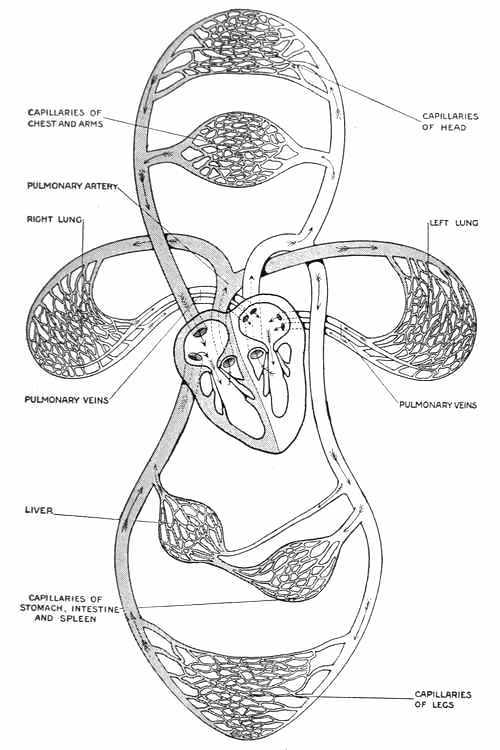
Fig. 83. The white vessels represent the circulation of the arterial
blood; the gray, the circulation of the venous blood.
Venous
blood
The blood has now been followed to the capillaries, where
oxygen and nourishing material have been taken out of it,
and where something else has been added to it. As we follow
a little capillary, we find that instead of dividing again, it
joins others and gradually grows larger. As these blood
vessels grow larger the walls do not become so thick as the
walls of the arteries of the same size. These larger vessels
formed by the union of capillaries are called veins. In other
words, the veins are simply continuations of the arteries
that have divided into extremely small branches and have
now come together again. The blood which has been changed
is now called venous blood. It has much less oxygen in it,
but has received a great deal of carbon dioxid. The veins
continue to come together, until finally they form a single
large vein which empties into the upper half of the right
side of the heart. From there the blood is driven into the
lower half of the right side of the heart and thence to the
pulmonary artery, which goes to the lungs. The blood is
not changed in the heart, so what goes into the pulmonary
artery is still venous blood.
Arterial
blood
The blood goes straight from the heart to the lungs and
there it is changed into arterial blood. The change consists
in taking oxygen from the air and giving off carbon dioxid
to the air. From the lungs the blood goes through the capillaries
again into the veins, the small capillaries in the lungs
uniting to form the pulmonary veins. These veins finally
unite into one vein that empties into the upper half of the
left side of the heart, and from there the blood goes to the
lower half of the same side. The blood has now reached its
starting point and is ready to begin its journey again. The
journey of the blood is as follows:
Entire
circulation
From the right side of the heart to the arteries; from
arteries into arterioles; from arterioles to capillaries; from
capillaries into veins; from veins into the heart; from the
heart to the lungs; and from the lungs back to the heart
again.
Use of the
respiratory
system
That portion of the body by which we breathe is called
the respiratory system. This system is composed of the
nasal passage, the pharynx, the larynx, the trachea, the bronchi,
and the lungs. The mouth is not a part of the respiratory
system; we should never breathe through our mouths.
The use of
the nose in
breathing
As the air passes through the nasal passage it is warmed
and moistened, and a great deal of dust and dirt is taken out
of it. Thus the nasal passage serves to warm, to moisten,
and to clean the air we breathe, and is a very important part
of the respiratory system, since either cold or dry air is very
irritating to the lungs.
Fig. 84. The air passages of the
head and throat.
Pharynx,
larynx, and
trachea
There is only one tube leading from the back of the nasal
passage to the lungs. Different parts of this tube are given
different names. The pharynx is that part that extends
from the back of the nose
to the vocal chords. The
larynx is the part of the
throat where the vocal
chords are located. We
sometimes call it the "Adam's
apple." It is very
prominent in some men,
but seldom noticeable in
women. The trachea is
the part of the tube leading
down from the larynx.
At the lower end of the
trachea the tube divides
into two parts that we
call the bronchi, one leading
to each lung.
The bronchi
The bronchi carry the
air from the trachea to
the lungs. They divide
again and again until they
become so small that
there is a branch for each
little air cell in the lungs.
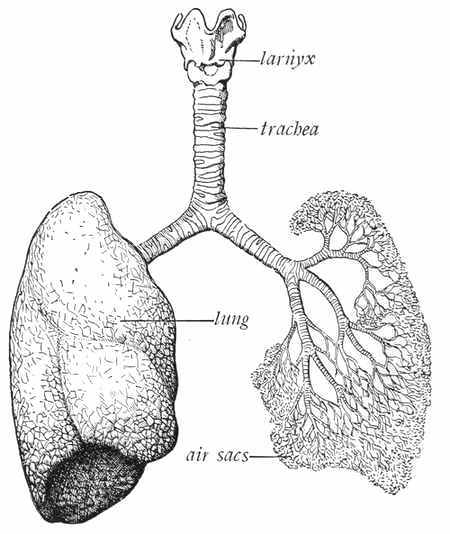
Fig. 85. The lungs.
The lungs
The lungs are the most important part of the respiratory
system. They are made up of lobes. There are two lobes
in the left lung and three in the right. Each lobe is divided
into lobules, which means small lobes. Each lobule is divided
into air spaces. In these air spaces, or cells, the work of the
lungs is performed.
Air cells
The capillaries run in the thin walls of the air spaces.
The walls of these fine blood vessels are so very thin that
the air in the air cells comes in almost direct contact with the
blood in the vessels. While the blood is passing through the
vessels in the walls of the air spaces, something happens to
both the blood and the air. The air we take into our lungs
contains a great deal of oxygen and very little carbon dioxid.
The air that comes out of our lungs contains a great deal of
carbon dioxid and much less oxygen. In other words, the
oxygen from the air goes into the blood, and the carbon
dioxid from the blood goes out into the air.
Necessity of
pure air
If the air we breathe is not pure and does not contain
enough oxygen, the blood cannot get all the oxygen we need,
and the cells of the body become sick and die. If, when we
breathe, we do not fill each little air cell in our lungs with
air, a great deal of the blood sent to the lungs for oxygen
cannot get it. If we wear very tight clothing we cannot take
a full breath and hence cannot fill all the air spaces with air.
If the air spaces in the lungs are not filled, the blood does not
get the oxygen it needs, as there is no other place in the body
to get it.
The eye
compared
to a camera
The eye is one of the most important organs in the body
and also one of the most delicate. It is very much like a
camera.
The cornea
and the
sclera
When you look at an eye you are likely to think that the
front of it is blue or brown. The colored part is not the front
of the eye. If you look at the eye from the side you will
see that there is a curved part in front of the colored part
and that the curved part is perfectly clear. This curved
clear part of the eye we call the cornea. The cornea connects
with the white part of the eye, and this white part extends
all around the rest of the eye, except at a small point in the
back where the optic nerve comes through. This white part
we call the sclera.
Aqueous
humor
The space between the cornea and the colored part of the
eye is filled with a clear fluid that is called the aqueous humor,
which means watery fluid. The space occupied by this fluid
is called the anterior chamber of the eye.
The iris
The iris, which is the colored portion of the eye, is a curtain
that is hung between the anterior and posterior chambers
of the eye. It prevents any light getting into the posterior
chamber except that which passes through a round hole in
the iris called the pupil. The pupil grows larger or smaller
according to the amount of light needed by the eye. If you
look away from a bright light at something in the dark, the
pupil grows larger; if you look back at the light, it grows
smaller. You can see this in a hand mirror.
Lens
Behind the pupil is a clear mass shaped like a very strong
magnifying glass. This is the lens. The lens causes to be
formed on the back of the eye a clear picture of whatever
you are looking at. When you focus a camera, you move
the back towards or away from the lens. When you focus
your eye you cannot move the back of the eye, but you can
make the lens more or less
convex as may be needed to
make a clear picture.
Fig. 86. A cross-section of the eye.
Vitreous
humor
Behind the iris and the
lens, we find the posterior
chamber of the eye. This
occupies by far the greater
portion of the ball and corresponds
to the dark chamber
of a camera. This
chamber is filled with a
clear fluid called the vitreous
humor, which means
jelly-like fluid. It is a clear, gelatinous substance.
The retina
and the optic
nerve
The optic nerve enters the eyeball from the back and
spreads its fibers out in a thin membrane called the retina,
which corresponds to the sensitive plate in a camera. The
lens focuses on the retina the image of any object you look
at. The impression made on the minute nerve endings in
the retina is carried by the optic nerve fibers to the brain.
When this impression reaches the brain we see the object.
Movements
of the eye
Each eye has six muscles that turn it in whatever direction
you want to look. These muscles are very delicate, and for
true sight they must be exactly adjusted. If the muscles on
one side of the eye are stronger than those on the other side,
you will be cross-eyed or wall-eyed. If one of the muscles in
one eye is stronger than the corresponding muscle in the other
eye, it pulls the eyeball out of place and you "see double."
The use of
the outer ear
The portion of the ear that you see on the side of your
head has as much to do with hearing as the outer rim of
the horn into which you speak has to do with making a
record for the phonograph. You know that the record is
really made at the little end of the horn, while the big end
simply collects the sound. The outside portion of the ear
simply collects sounds, and the real hearing is done with the
portion of the ear that is not seen.
Fig. 87. The ear, showing the outer, middle, and the inner part.
The outer ear connects with the short tube that leads to
the drum, which is a thin membrane that separates the
middle ear from the outer ear. This drum does not have
so much to do with hearing as is supposed. To have a hole
in the drum does not mean that you cannot hear.
The middle
ear
The middle ear is that portion which is just inside the
drum. In this we find a chain of little bones. The one
attached to the drum is shaped much like a hammer, and
is called the malleus, which means mallet or hammer. The
next one is shaped like an anvil and is called incus, which
means anvil, and the third is called stapes, which means
stirrup. The flat part of the stapes fits into a small opening
that leads to the internal ear.
The inner
ear
The internal ear is shaped like a snail shell. It makes
several turns, which are hollow like the ends of a conch shell.
In these channels the nerve that receives the impressions
made by the sounds is distributed. This nerve carries the
impressions to the brain.
Fig. 88. The nervous system.
Importance
of the
nervous
system
This system is so important in its use and so difficult to
understand in its details, that a description of it should have
more space than can be given in this summary. Can you
imagine having no feeling and being unable to move? This
would be your condition if you had no nerves.
Nerves compared
to
telegraph
system
Briefly, the nerves might be called the telegraph system of
the body. There is a great central station called the brain
where messages are received and sent out; there are many
sub-stations that make up the spinal cord. Twelve great
nerves pass directly from the brain to the body; all others
pass from the spinal cord.
Extent of
nervous
system
Every nerve leaving these centres divides and sub-divides
into little threads as the arteries divide and sub-divide into
arterioles and capillaries, until every part of the body—every
muscle and part of the skin—has its nerve.
Voluntary
and reflex
action
Every time you choose to move your hand, your brain sends
to the necessary muscles an instantaneous order to act. This
is called voluntary action. If you put your finger against a hot
stove you jerk it away before you could have time to choose
to do it. This happens as an order from a sub-station and
is called reflex action.
Messages travel both ways and it is necessary that the nervous
connection with every part of the body remain unbroken,
and important that the nervous condition be kept healthy.
A false delicacy has often prevented the teaching of vital
lessons to growing children. The day is how at hand when
foolish sentiment must no longer prevent the spread of any
knowledge which is necessary to exterminate the plagues
that have afflicted the race.
In chapters 17, 18, 19 and 32, unpleasant facts are given
in plain language. They are facts that parents do not
teach their children and that most teachers will not frankly
treat with classes in a school. Though they are disagreeable
to discuss, they are essential for children of school
age to know. Now that the dependence of public health
upon personal hygiene is recognized, personal habits and
sanitary conditions are more frankly dealt with than
formerly.
It is an excellent thing occasionally, to have one or two
points of an assigned lesson answered in writing. Any
topic that the teacher may think advisable to treat in this
manner may be discussed on paper at the beginning of
the recitation, five or six minutes being allowed for that
purpose. Even a whole chapter may be assigned to be
studied with a view of answering in writing the questions at
the end of the chapter. The written test can then take the
place of the usual oral recitation. This method is suggested
to the teacher who hesitates to discuss orally certain
plain but essential facts.
Chapter 32 on the Spread and Prevention of Consumption
can be treated with best results orally, if the pupils are
first made to feel the great danger of consumption and to
realize the possibility of preventing the vast havoc wrought
by that dread disease. The attitude of teacher and pupils
should be that while the discussion may be disagreeable, the
disgusting habits referred to in the text are so commonly
practised that unless their dangers are taught this disease
can never be wiped out.
Adenoids, 49, 50
Air, amount necessary for health, 45;
effects of impure, 45–48;
fresh air, when needed, 45–48;
how secured, 46, 47;
how changed in body, 45;
necessity of pure air, 45–48
Air cells, 175
Alcohol, effect of, on body, 67–70;
on brain work, 70;
on consumptives, 69;
on descendants, 69;
on liver, 68;
on morals, 69;
on nervous system, 69;
on powers of resistance, 68;
on stomach, 67;
false ideas about effects of, 67;
what business men think of, 70
Alimentary canal, 169, 170
Amoebic dysentery, how prevented, 122;
how spread, 122;
where prevalent, 122
Animals free from typhoid fever, 113
Antitoxin, how it acts, 108–110;
how discovered, 109;
sometimes considered a poison, 111;
prevents diphtheria, 110;
saves lives, 110
Aqueous humor, 177
Arterial blood, 172
Arteries, 171
Articles used by the sick, dangers from, 75;
how to treat, 76
Bathing, importance of, 60;
frequency of, 60
Baths, hot, 61;
cold, 61
Bedtime for children, 51
Blood, arterial, 172;
how changed in the body, 174;
venous, 171, 172
Boils, how caused, 95, 99
Bones, 163
Bronchi, 175
Building foods, 14, 15
Candy, when harmful, 54;
when not harmful, 54
Canned meats, why poisonous, 32
Capillaries, 172
Cells, are alive, 6;
body made of, 6;
body needs new, 14;
how killed, 7;
must not be killed, 6;
size of a, 5;
what they are like, 5
Circulation of the blood, 171–174
Clothing, effect of damp, 11;
promotes health, 9;
proper weight of, 10
Common drinking cup, 153
Consumption. See Tuberculosis
Cooking, effects of improper, 34, 35;
fatty foods, 34;
meats, 35;
starchy foods, 34
Cornea, 177
Coughing, dangers from, 147, 150–153;
how to prevent dangers from, 152, 153
Cuspidors, in public buildings, 152;
pocket, 152;
street, 152
Dairy, sickness about a, 26, 103, 115
Decomposed foods dangerous, 30, 32
Decomposition, cause of, 30;
effect of cold on, 31;
of foods, 30–32
Desserts, when harmful, 40;
when not harmful, 40
Dining table, effect of dirty, 37;
cheerfulness at, 37
Diphtheria, cure of, 108–111;
germs present after recovery, 101, 102;
germs present when throat is not sore, 104;
how to confine germs, 100;
how poison is fought, 108–110;
mild cases, how detected, 104;
nature of the poison, 108;
prevalence of, 100;
where germs come from, 100;
why some cases are not quarantined, 102–104
Dirt, a cause of sickness, 77, 78;
getting into milk from cows, 23, 117;
from cow barns, 23–25;
from milk cans and bottles, 26, 27;
from milkmen, 25;
from flies, 28, 80, 81
Diseased animals, effect on meats, 19–21;
effect on milk, 28;
tuberculosis from, 28, 155
Drafts, evil effects of, 10;
how to prevent harm from, 10
Ear, care of, 58;
drum, 179;
inner ear, 181;
middle ear, 179;
outer ear, 179
Esophagus, 170
Excreta from sick, how dispose of, 76, 118
Exercise, necessity of, 51, 161
Eye, how germs get into, 56;
how overworked, 57;
method of testing, 58
Far sight, 58
Flies, breeding places for, 77, 80;
as germ carriers, 80, 81, 116;
how to get rid of, 82, 83;
how to keep out, 83
Fly screens, where needed, 83
Foods, advertised, 16;
building, 14–16;
decomposition of, 30–32;
heat-producing, 14–16;
improper cooking of, 34, 35;
cost of suitable, 16;
uses of foods, 14–17;
uses of starches, 14;
uses of fats, 15;
value of meat as a, 15;
value of milk as a, 14
Garbage cans, should be covered, 83
Germs, cause of poison in meats, 31, 32;
carried by dogs and cats, 106;
effect of, in wounds, 95–99;
how, get through the skin, 95;
how, get into the body, 79;
how, get into foods, 79, 80;
how put into the air, 147, 150;
how kept out of the air, 151, 152;
how to fight, 74;
of lockjaw, 98;
man's greatest foe, 1;
nature of a, 73;
not alike, 73;
not killed by running water, 115
Hair, 169
Hearing, how tested, 58
Heat, how kept up in the body, 14
Hookworm disease, character of the worm, 120;
how it enters the body, 121;
how prevented, 122;
nature of the disease, 121;
where worm lives in the body, 121;
where prevalent, 122
Insects that carry disease, 92–94
Intestines, 171
Iris, 177
Joints, 163
Larynx, 174, 175
Lens, the, 178
Ligaments, 165
Lungs, 175
Lymphatics, 171
Malaria, how transmitted, 92;
how prevented, 93
Manure, a hatching place for flies, 80, 82;
how to dispose of, 82
Meal times, frequency of, 53;
regularity of, 53;
should be pleasant, 37, 38
Measles, after effects of, 128;
fatality of, 128;
necessity of care in, 129;
seriousness of, 128;
why to avoid, 128
Meats, characteristics of good, 18;
Clean Meat League, 19;
from diseased animals, 19–21;
germs cause poison in, 19, 32;
how kept clean, 18;
should be cooked, 35;
value of, as a food, 18
Milk, as carrier of disease, 22, 117;
effect of germs on, 22;
effect of disease in cow on, 28;
flies in, 28;
how germs get into, 23–28;
impure, dangerous, 22;
polluted water in, 27;
typhoid fever carried by, 117;
value of, as a food, 14, 20
Mosquitoes, as disease carriers, 92, 93;
how to get rid of, 94
Mouth, why some breathe through, 49
Mouth-breathing, effect of, 50
Muscles, attachment of, 167
Nails, how to care for, 61, 62
Near sight, 57
Nerves, compared to telegraph system, 181;
distribution of, 181
Nose, importance of breathing through, 48
Overcoats, necessity of, 12
Overwork, effect of, 51, 52
Paper napkins for consumptives, 152
Parties, time for, 53
Pencils in mouth, 155
Pharynx, 175
Play a form of work, 52
Playgrounds, 161
Pocket cuspidors, 152
Ptomaines, 19
Quarantine, breaking, shows selfishness, 126;
how broken by family, 105;
rules of, 105;
seriousness of breaking, 101;
when safe to raise, 102;
why necessary, 101;
why some cases escape, 102–104
Reflex action, 181
Respiratory system, 174–177
Rest, proper amount of, 51
Retina, 178
Rocky Mountain Spotted (Tick) Fever, how transmitted, 94
Rubbers, necessity of wearing, 11
Saliva, effect of, on starches, 39, 41
Salivary glands, 170
Scarlet fever, a dangerous disease, 124;
mild cases dangerous, 123, 124
Scarlatina, 125
Scarlet rash, why quarantine is necessary in, 125
School lunches, 37
Sclera, 177
Sebaceous glands, 169
Sewage, effect of, on water, 85–87, 115
Sickness about a dairy, 26, 103, 115;
due to germs, how prevented, 3
Sick room, stay away from, 75
Skin, care of, 60, 61
Smallpox, fatality of, 131;
how prevented, 135–137;
during Franco-Prussian War, 132;
in Sweden, 133;
in Gloucester, 134;
in the Philippine Islands, 134
Spitting, dangers from, 151;
how avoided, 152;
where to spit, 152, 153;
where not to spit, 151
Springs, how polluted, 87
Street cuspidors, 152
Sunshine, effect of, on germs, 77, 78
Suppuration, how the surgeon prevents, 96;
how you may prevent, 97;
real cause of, 96
Sweat glands, the work of, 60
Teeth, brittle, 42;
dangers from poor, 41–43;
how to care for, 43;
necessity of baby teeth, 41;
uses of teeth, 41;
why, decay, 42
Tendons, 167
Tobacco, a poison, 64;
effect of, on blood, 65;
on heart, 66;
on nervous system, 66;
on nose and throat, 65;
on stomach, 66;
extra work caused by, 64
Toilets, improper construction of, 86;
proper construction of, 87;
relation to wells, 85–87
Tonsils, 49, 50
Trachea, 175
Tuberculin test, 155, 156
Tuberculosis, can be prevented, 142, 148, 157;
fatality of, 142;
fresh air in, 157, 158;
germ, discovery of the, 145;
how to get, out of a house, 147, 148;
how germs leave the body, 150, 151;
how spread from cows, 28, 155;
how spread from the lips, 153–155;
how detected in cows, 155;
a house disease, 146, 147;
not inherited, 146;
of the glands, 144;
of the joints, 143;
of the spine, 144;
of the stomach, 144;
of the throat, 143;
prevalence of, 142;
pure food in, 158;
rest in, 157;
should be recognized early, 157;
sunshine in, 158;
why called the Great White Plague, 142
Typhoid fever, animals free from, 113;
carried by flies, 80, 81, 116;
carried by milk, 22, 117;
effect of a single case, 114;
how germs leave the body, 113;
how germs get into the body, 113;
how germs get into water, 114;
importance of cleanliness, 117, 118;
life of germs in a stream, 115;
recovered patient dangerous, 117
Umbrellas, necessity of, 11
Vaccination, cause of sore arms after, 140, 141;
discovery of, 132;
how, prevents smallpox, 135;
necessity of repeating, 137;
pretended vaccination, 138;
when successful, 138
Ventilation, in homes, 46, 159;
in public buildings, 48, 161;
in workshops, 48
Veins, 171
Venous blood, 171, 172
Villi, 171
Vitreous humor, 178
Voluntary action, 181
Water, avoid polluting, 85–88, 115;
effect of sewage on, 85, 115;
how germs get into, 85–88;
polluted, in milk, 27;
safe sources of, 88
Wells, how polluted, 86, 87;
relation of toilets to, 86, 87
Windows, should be kept open, 45–47;
should be screened, 83
Wood-ticks, as disease carriers, 93;
how abolished, 94
Wounds, importance of keeping clean, 97
Yards should be clean, 77
Yellow fever, how transmitted, 92;
how prevented, 92