ut with the year 1441 discovery begins again in earnest, and the
original narratives of Henry's captains, which old Azurara has preserved
in his chronicle, become full of life and interest. From this point to
the year 1448, where ends the Chronica, its tale is exceedingly
picturesque, as it was written down from the remembrance of
eye-witnesses and actors in the discoveries and conquests it records.
And though the detail may be wearisome to a modern reader as a wordy and
emotional and unscientific history, yet the story told is delightfully
fresh and vivid, and it is told with a simple naïveté and truth that
seems now almost lost in the self-consciousness of modern literature.
ut with the year 1441 discovery begins again in earnest, and the
original narratives of Henry's captains, which old Azurara has preserved
in his chronicle, become full of life and interest. From this point to
the year 1448, where ends the Chronica, its tale is exceedingly
picturesque, as it was written down from the remembrance of
eye-witnesses and actors in the discoveries and conquests it records.
And though the detail may be wearisome to a modern reader as a wordy and
emotional and unscientific history, yet the story told is delightfully
fresh and vivid, and it is told with a simple naïveté and truth that
seems now almost lost in the self-consciousness of modern literature.
"It seems to me, says our author" (Azurara's favourite way of alluding
to himself), "that the recital of this history should give as much
pleasure as any other matter by which we satisfy the wish of our Prince;
and the said wish became all the greater, as the things for which he
had toiled so long, were more within his view. Wherefore I will now try
to tell of something new," of some progress "in his wearisome seedtime
of preparation."
"Now it was so that in this year 1441, as the affairs of the kingdom had
now some repose, though it was not to be a long one, the Infant caused
them to arm a little ship, which he gave to Antam Gonsalvez, his
chamberlain, a young captain, only charging him to load a cargo of skins
and oil. For because his age was so unformed, and his authority of needs
so slight, he laid all the lighter his commands upon him and looked for
all the less in performance."
But when Antam Gonsalvez had performed the voyage that had been ordered
him, he called Affonso Goterres, another stripling of the Infant's
household and the men of his ship, who were in all twenty-one, and said
to them, Brothers and friends, it seems to me to be shame to turn back
to our Lord's presence, with so little service done; just as we have
received the lest strict orders to do more than this, so much more ought
we to try it with the greater zeal. And how noble an action would it be,
if we who came here only to take a cargo of such wretched merchandise as
these sea wolves, should be the first to bring a native prisoner before
the presence of our Lord. In reason we ought to find some hereabout, for
it is certain there are people, and that they traffic with camels and
other beasts, who bear their merchandise; and the traffic of these men
must be chiefly towards the sea and back again; and since they have yet
no knowledge of us, they will be scattered and off their guard, so that
we can seize them; with all which our Lord the Infant will be not a
little content, as he will thus have knowledge of who and what sort of
people are the dwellers in this land. Then what shall be our reward, you
know well enough from the great expense and trouble our Prince has been
at, in past years, only to this one end.
The crew shouted a hearty "Do as you please; we will follow," and in the
night following Antam Gonsalvez set aside nine men, who seemed to him
most fit, and went up from the shore about three miles, till they came
on a path, which they followed, thinking that by this they might come up
with some man or woman, whom they might catch. And going on nine miles
farther they came upon a track of some forty or fifty men and boys, as
they thought, who had been coming the opposite way to that our men were
going. Now the heat was very great and by reason of that, as well as of
the trouble they had been at, the long tramp they had on foot and the
failure of water, Antam Gonsalvez saw the weariness of his men, that it
was very great. So let us turn back and follow after these men, said he,
and turning back toward the sea, they came upon a man stark naked,
walking after and driving a camel, with two spears in his hand, and of
our men, as they rushed on after him, there was not one who kept any
remembrance of his great weariness. As for the native, though he was
quite alone, and saw so many coming down upon him, he stood on his
defence, as if wishing to show that he could use those weapons of his,
and making his face by far more fierce than his courage was warrant
for. Affonso Goterres struck him with a dart and the Moor, frightened by
his wounds, threw down his arms like a conquered thing and so was taken,
not without great joy of our men. And going on a little farther they saw
upon a hill the people whose track they followed. And they did not want
the will to make for these also, but the sun was now very low and they
very weary, and thinking that to risk more might bring them rather
damage than profit, they determined to go back to their ship.
But as they were going, they came upon a blackamoor woman, a slave of
the people on the hill, and some were minded to let her alone, for fear
of raising a fresh skirmish, which was not convenient in the face of the
people on the hill, who were still in sight and more than twice their
number. But the others were not so poor-spirited as to leave the matter
thus, Antam Gonsalvez crying out vehemently that they should seize her.
So the woman was taken and those "on the hill made a show of coming down
to her rescue; but seeing our men quite ready to receive them, they
first retraced their steps and then made off in the opposite direction."
And so Antam Gonsalvez took the first captives.
And for that the philosopher saith, resumes the next chapter of the
chronicle, "that the beginning is two parts of the whole matter," great
praise should be given to this noble squire, who now received his
knighthood, as we shall tell. For now we have to see how Nuno Tristam, a
noble knight, valiant and zealous, who had been brought up from boyhood
at the Infant's Court, came to that place where was Antam Gonsalvez,
bringing with him an armed caravel with the express order of his lord
that he was to go to the port of Gallee and as far beyond as he could,
and that he should try and make some prisoners by every means in his
power. And you may imagine what was the joy of the two captains, both
natives of one and the self-same realm and brought up in one and the
self-same household, thus to meet so far from home. And now Nuno Tristam
said that an Arab he had brought with him, a servant of the Infant,
should speak with Gonsalvez' prisoners, and see if he understood their
tongue, and that if he understood it, it would profit them much thus to
know all the state and conditions of the people of that land. But the
tongue of the Arab was very different from that of the captives, so that
they could not understand each other.
And when Nuno Tristam perceived that he could not learn any more of the
manner of that land, he would fain be gone, but envy made him wish to do
something before the eyes of his fellows that should be good for all.
You know, he said to Antam Gonsalvez, that for fifteen years the Infant
has been seeking in vain for certain news of this land and its people,
in what law or lordship they do live. Now let us take twenty men, ten
from each of the crews, and go up country in search of those that you
found. Not so, said the other, for those whom we saw will have warned
all the others, and peradventure when we are looking out to capture
them, we may in our turn become their prisoners. But where we have
gained a victory let us not return to suffer loss. Nuno Tristam said
this counsel was good, but there were two squires whose longing to do
well outran all besides. Gonsalo de Cintra was the first of these, whose
valour we shall know more of in the progress of this history, and he
counselled that as soon as it was night they should set out in search of
the natives, and so it was determined. And such was their good fortune
that they came early in the night to where the people lay scattered in
two dwellings; now the place between the two was but small, and our men
divided themselves in three parties and began to shout at the top of
their voice "Portugal," "St. James for Portugal," the noise of which
threw the enemy into such confusion, that they began to run without any
order, as ours fell upon them. The men only made some show of defending
themselves with assegais, especially two who fought with Nuno Tristam
till they received their death. Three others were killed and ten were
taken, of men, women, and children. But without question, many more
would have been killed or taken if all our men had rushed in together at
the first. And among those who were taken was one of their chiefs, named
Adahu, who shewed full well in his face that he was nobler than the
rest.
Then, when the matter was well over, all came to Antam Gonsalvez and
begged him to be made a Knight, while he said it was against reason that
for so small a service he should have so great an honour, and that his
age would not allow it, and that he would not take it without doing
greater things than these, and much more of that sort. But at last, by
the instant demand of all others, Nuno Tristam knighted Antam Gonsalvez,
and the place was called from that time "Port of the Cavalier."
When the party got back to the ships, Nuno Tristam's Arab was set to
work again, with no better success, "for the language of the captives
was not Moorish but Azaneguy of Sahara," the tongue of the great desert
zone of West Africa, between the end of the northern strip of fertile
country round Fez and Morocco, and the beginning of the rich tropical
region at the Senegal, where the first real blacks were found. The
Portuguese were in despair of finding a prisoner who could "tell the
lord Infant what he wanted to know," but now the chief, "even as he
shewed that he was more noble than the other captives, so now it
appeared that he had seen more than they, and had been to other lands
where he had learnt the Moorish tongue so that he understood our Arab
and answered to whatever was asked of him."
And so to make trial of the people of the land and to have of them more
certain knowledge, they put that Arab on shore and one of the Moorish
women their captives with him, who were to speak to the natives if they
could, about the ransom of those they had taken and about exchange of
merchandise.
And at the end of two days there came down to the shore quite one
hundred and fifty Moors on foot, and thirty-five mounted on camels and
horses, and though they seemed to be a race both barbarous and bestial,
there was not wanting in them a certain sharpness, with which they
could cheat their enemies, for at first there only appeared three of
them on the beach, and the rest lay in ambush till our men should land
and they could rush out and master them, which thing they could easily
have done, so many were they, if our men had been a whit less sharp than
themselves. But when the Moors saw that our boats did not land, but
turned back again to the ship, they discovered their treachery, and all
came down in a body upon the beach, hurling stones and making gestures
of defiance, shewing us the Arab we had sent to them as a captive in
their hands.
So our men came back to the ship and made their division of the
prisoners, according to the lot of each. And Antam Gonsalvez turned back
because he had now loaded his caravel with the cargo that the Infant had
ordered him, but Nuno Tristam went on, as he for his part had in charge.
But as his vessel was in need of repair, he put to shore and careened
and refitted it as well as he could, keeping his tides as if he were
before the port of Lisbon, at which boldness of his many wondered
greatly. And sailing on again, he passed the port of "Gallee," and came
to a cape which he called "The White" (Cape Blanco), where the crew
landed to see if they could make any captures. But after finding only
the tracks of men and some nets, they turned back, seeing that for that
time they could not do any more than they had already done.
Antam Gonsalvez came home first with his part of the booty and then
arrived Nuno Tristam, "whose present reception and future reward were
answerable to the trouble he had borne, like a fertile land that with
but little sowing answers the husbandman."
The chief, or "cavalier" as he is called, whom Antam Gonsalvez brought
home was able to "make the Infant understand a great deal of the state
of that land where he had been," though as for the rest, they were
pretty well useless, except as slaves, "for their tongue could not be
understood by any other Moors who had been in that land." But the Prince
was so encouraged by the sight of the first captives that he at once
began to think "how it would be necessary to send to those parts many a
time his ships and crews well armed, where they would have to fight with
the infidels. So he determined to send at once to the Holy Father and
ask of him that he should give him of the treasures of Holy Church, for
the salvation of the souls of those who in this conquest should meet
their end."
Pope Eugenius IV., then reigning, if not governing, in the great
Apostolic See of the West, answered this appeal "with great joy" and
with all the rhetoric of the Papal Register. "As it hath now been
notified to us by our beloved son Henry, Duke of Viseu, Master of the
Order of Christ, that trusting firmly in the aid of God, for the
confusion of the Moors and enemies of Christ in those lands that they
have desolated, and for the exaltation of the Catholic Faith,—and
because that the Knights and Brethren of the said Order of Christ
against the said Moors and other enemies of the Faith have waged war
with the Grace of God, under the banner of the said Order,—and to the
intent that they may bestir themselves to the said war with yet greater
fervour, we do to each and all of those engaged in the said war, by
Apostolic authority and by these letters, grant full remission of all
those sins of which they shall be truly penitent at heart and of which
they have made confession by their mouth. And whoever breaks,
contradicts, or acts against the letter of this mandate, let him lie
under the curse of the All-Mighty God and of the Blessed Apostles Peter
and Paul."
And besides, adds the chronicle, rather quaintly, of more temporal and
material benefits, the Infant D. Pedro, then Regent of the kingdom, gave
to his brother Henry a charter, granting him the whole of the fifth of
the profits which appertained to the King, and, considering that it was
by him alone that the whole matter of the discovery was carried out at
infinite trouble and expense, he ordered further that no one should go
to those parts without D. Henry's licence and express command.
The chronicle, which has told us how Antam Gonsalvez made the first
captives, now goes on to say how the same one of the Prince's captains
made the first ransom. For the captive chief, "that cavalier of whom we
spoke," Henry's first prize from the lands beyond Bojador, pined away in
Europe, "and many times begged of Antam Gonsalvez that he would take him
back to his own land, where, as he said, they would give for him five or
six blackamoors, and he said, too, that there were two boys among the
other captives for whom they would get a like ransom." So the Infant
sent him back with Gonsalvez to his own people, "as it was better to
save ten souls than three, for though they were black, yet had they
souls like others, all the more as they were not of Moorish race, but
Heathen and so all the easier to lead into the way of salvation. From
the negroes too it would be possible to get news of the land beyond
them. For not only of the Negro land did the Infant wish to know more
certainly, but also of the Indies and of the land of Prester John."
So Gonsalvez sailed with his ransom, and in his ship went a noble
stranger, like Vallarte the Dane, whom we shall meet later on, one of a
kind which was always being drawn to Henry's Court. This was Balthasar
the Austrian, a gentleman of the Emperor's Household, who had entered
the Infant's service to try his fortune at Ceuta, where he had got his
knighthood, and who now "was often heard to say that his great wish was
to see a storm, before he left that land of Portugal, that he might tell
those who had never seen one what it was like.
"And certainly his fortune favoured him. For at the first start, they met
with such a storm that it was by a marvel they escaped destruction."
Again they put out to sea, and this time reached the Rio d'Ouro in
safety, where they landed their chief prisoner, "very well vested in the
robes that the Infant had ordered to be given him," under promise that
he would soon come back and bring his tribe with him.
"But as soon as he got safely off, he very soon forgot his promises,
which Antam Gonsalvez had trusted, thinking that his nobility would
hold him fast and not let him break his word, but by this deceit all our
men got warning that they could not trust any of the natives save under
the most certain security."
The ships now went twelve miles up the Rio d'Ouro, cast anchor, and
waited seven days without a sign of anybody, but on the eighth there
came a Moor, on top of a white camel, with fully one hundred others who
had all joined to ransom the two boys. Ten of the tribe were given in
exchange for the young chiefs, "and the man who managed this barter was
one Martin Fernandez, the Infant's own Ransomer of Captives, who shewed
well that he had knowledge of the Moorish tongue, for he was understood
by those people whom Nuno Tristam's Arab, Moor though he was by nation,
could not possibly get speech with, except only the one chief, who had
now escaped."
With the "Blackamoors," Antam Gonsalvez got as ransom what was even more
precious, a little gold dust, the first ever brought by Europeans direct
from the Guinea Coast, which more thoroughly won the Prince's cause at
home and brought over more enemies and scoffers and indifferentists to
his side than all the discoveries in the world.
"Many ostrich eggs, too," were included in the native ransom, "such that
one day men saw at the Infant's table three dishes of the same, as fresh
and as good as those of any other domestic fowls." Did the Court of
Sagres suppose the ostrich to be some large kind of hen?
What was still more to the Prince's mind, "those same Moors related,
that in those parts there were merchants who trafficked in that gold
that was found there among them"—the same merchants, in fact, whose
caravels Henry had already known on the Mediterranean coast, and whose
starting-point he had now begun to touch. Ever since the days of the
first Caliphs, this Sahara commerce had gone on under the control of
Islam; for centuries these caravans had crossed the valleys and plains
to the south of Morocco and sold their goods—pepper, slaves, and gold
dust—in Moslem Ceuta and Moslem Andalusia; now, after seven hundred
years of monopoly, this Moslem trade was broken in upon by the
Europeans, who, in fifty years' time, broke into the greater monopoly of
the Indian Seas, when Da Gama sailed from Lisbon to Malabar (1497-9).
Next year (1443) came Nuno Tristam's turn once more. People were now
eager to sail in the Infant's service, after the slaves, and still more
the gold dust, had been really seen and handled in Portugal, and "that
noble cavalier," for each and all of the three reasons of his
fellows—"to serve his lord," "to gain honour," "to increase his
profit,"—was eager to follow up his first successes.
Commanding a caravel manned in great part from the Prince's household,
he went out straight to Cape Blanco, the white headland, which he had
been the first to reach in 1441. Passing twenty-five leagues,
seventy-five miles beyond, into the bank or bight of Arguin, he saw a
little island, from which twenty-five canoes came off to meet him, all
hollowed out of logs of wood, with a host of native savages, "naked not
for swimming in the water, but for their ancient custom." The natives
hung their legs over the sides of their boats, and paddled with them
like oars, so that "our men, looking at them from a distance and quite
unused to the sight, thought they were birds that were skimming so over
the water." As for their size, the sailors expected much greater marvels
in those parts of the world, where every map and traveller's tale made
the sea swarm with monsters as big as a continent.
"But as soon as they saw they were men, then were their hearts full of a
new pleasure, for that they saw the chance of a capture." They launched
the ship's boat at once, chased them to the shore, and captured
fourteen; if the boat had been stronger, the tale would have been
longer, for with a crew of seven they could not hold any more prisoners,
and so the rest escaped.
With this booty they sailed on to another island, "where they found an
infinite number of herons, of which they made good cheer, and so
returned Nuno Tristam very joyfully to the Prince."
This last piece of discovery was of much more value than Nuno thought.
He saw in it a first-rate slave hunting-ground, but it became the
starting-point for trade and intercourse with the Negro States of the
Senegal and the Gambia, to the south and east. It was here, in the bay
of Arguin, where the long desert coast of the Sahara makes its last bend
towards the rich country of the south,—that Henry built in 1448 that
fort which Cadamosto found, in the next ten years, had become the centre
of a great European commerce, which was also among the first permanent
settlements of the new Christian exploration, one of the first steps of
modern colonisation.
And now the volunteer movement had fairly begun. Where in the beginning,
says Azurara, people had murmured very loudly against the Prince's
enterprise, each one grumbling as if the Infant was spending some part
of his property, now when the way had been fairly opened and the
fruits of those lands began to be seen in Portugal in much greater
abundance, men began, softly enough, to praise what they had so loudly
decried. Great and small alike had declared that no profit would ever
come of these ventures, but when the cargoes of slaves and gold began to
arrive, all were forced to turn their blame into flattery, and to say
that the Infant was another Alexander the Great, and as they saw the
houses of others full of new servants from the new discovered lands and
their property always increasing, there were few who did not long to try
their fortune in the same adventures.
The first great movement of the sort came after Nuno's return at the end
of 1443. The men of Lagos took advantage of Henry's settlement so near
them in his town of Sagres, to ask for leave to sail at their own cost
to the Prince's coast of Guinea. For no one could go without his
licence.
One Lançarote, a "squire, brought up in the Infant's household, an
officer of the royal customs in the town of Lagos, and a man of great
good sense," was the spokesman of these merchant adventurers. He won his
grant very easily, "the Infant was very glad of his request, and bade
him sail under the banner of the Order of Christ," so that six caravels
started in the spring of 1444 on the first exploring voyage that we can
call national since the Prince had begun his work.
So, as the beginning of general interest in the Crusade of Discovery
which Henry had now preached to his countrymen for thirty years, as the
beginning of the career of Henry's chief captain, the head of his
merchant allies, as the beginning, in fact, of a new and bright period,
this first voyage of Lançarote's, this first Armada sent out to find and
to conquer the Moors and Blacks of the unknown or half-known South, is
worth more than a passing notice.
And this is not for its interest or importance in the story of discovery
pure and simple, but as a proof that the cause of discovery itself had
become popular, and as evidence that the cause of trade and of political
ambition had become thoroughly identified with that of exploration. The
expansion of the European nations, which had languished since the
Crusades, had begun again. What was more unfortunate, from a modern
standpoint, the African slave trade, as a part of European commerce,
begins here too. It is useless to try to explain it away.
Henry's own motives were not those of the slave-driver; it seems true
enough that the captives, when once brought home to Spain, were treated,
under his orders, with all kindness; his own wish seems to have been to
use this man-hunting traffic as a means to Christianise and civilise the
native tribes, to win over the whole by the education of a few
prisoners. But his captains did not always aim so high. The actual
seizure of the captives—Moors and Negroes—along the coast of Guinea,
was as barbarous and as ruthless as most slave-drivings. There was
hardly a capture made without violence and bloodshed; a raid on a
village, a fire and sack and butchery, was the usual course of
things—the order of the day. And the natives, whatever they might gain
when fairly landed in Europe, did not give themselves up very readily to
be taught; as a rule, they fought desperately, and killed the men who
had come to do them good, whenever they had a chance.
The kidnapping, which some of the Spanish patriot writers seem to think
of as simply an act of Christian charity, "a corporal work of mercy,"
was at the time a matter of profit and money returns. Negro bodies would
sell well, Negro villages would yield plunder, and, like the killing of
wild Irish in the sixteenth century, the Prince's men took a Black-Moor
hunt as the best of sport. It was hardly wonderful, then, that the later
sailors of Cadamosto's day (1450-60) found all the coast up in arms
against them, and that so many fell victims to the deadly poisoned
arrows of the Senegal and the Gambia. Every native believed, as they
told one of the Portuguese captains in a parley, that the explorers
carried off their people to cook and eat them.
In most of the speeches that are given us in the chronicle of the time,
the masters encourage their men to these slave-raids by saying, first,
what glory they will get by a victory; next, what a profit can be made
sure by a good haul of captives; last, what a generous reward the
Prince will give for people who can tell him about these lands.
Sometimes, after reprisals had begun, the whole thing is an affair of
vengeance, and thus Lançarote, in the great voyage of 1445, coolly
proposes to turn back at Cape Blanco, without an attempt at discovery of
any sort, "because the purpose of the voyage was now accomplished." A
village had been burnt, a score of natives had been killed, and twice as
many taken. Revenge was satisfied.
It was only here and there that much was said about the Prince's purpose
of exploration, of finding the western Nile or, Prester John, or the way
round Africa to India; most of the sailors, both men and officers, seem
to know that this, or something towards this, is the "will of their
Lord," but it is very few who start for discovery only, and still fewer
who go straight on, turning neither to right hand nor left, till they
have got well beyond the farthest of previous years, and added some
piece of new knowledge to the map of the known world out of the blank of
the unknown.
What terrified ignorance had done before, greed did now, and the last
hindrance was almost worse than the first. So one might say,
impatiently, looking at the great expense, the energy, and time and life
spent on the voyages of this time, and especially of the years 1444-8.
More than forty ships sail out, more than nine hundred captives are
brought home, and the new lands found are all discovered by three or
four explorers. National interest seems awakened to very little purpose.
But what explains the slow progress of discovery, explains also the
fact that any progress, however slow, was made at all, apart from the
personal action of Henry himself. Without the mercantile interest, the
Prince's death would have been the end and ruin of his schemes for many
a year.
But for the hope of adventure and of profitable plunder, and the
certainty of reward; but for the assurance, so to say, of such and such
a revenue on the ventures of the time, Portuguese "public opinion" would
not probably have been much ahead of other varieties of the same organ.
In deciding the abstract question to which the Prince had given his
life, the mob of Lisbon or of Lagos would hardly have been quicker than
modern mobs to rise to a notion above that of personal gain. If the
cause of discovery and an empire to come had been left to them, the
labour leaders might have said then in Spain, as some of them have said
to-day in England, "What is all this talk about the Empire? What is it
to us working men? We don't want the Empire, we want more wages." And so
when the great leader was dead, and the people were left to carry out
his will, his spiritual foresight of great scientific discoveries, his
ideas of conversion and civilisation, were not the things for the sake
of which ordinary men were reconciled to his scheme and ready to finish
his work. If they thought or spoke or toiled for the finding of the way
to India, it was to find the gold and spices and jewels of an earthly
paradise.
This is not fancy. It is simply impossible to draw any other conclusion
from the original accounts of these voyages in Azurara's chronicle, for
Azurara himself, though one of Henry's first converts, a man who
realised something of the grandeur of his master's schemes and their
reach beyond a merely commercial ideal through discovery to empire, yet
preserves in the speeches and actions of captains and seamen alike,
proof enough of the thoroughly commonplace aims of most of the first
discoverers.
On the other hand, the strength of the movement lay of course in the few
exceptions. As long as all or nearly all the instruments employed were
simply buccaneers, with a single eye to trade profits, discovery could
not advance very fast or very far. Till the real meaning of the Prince's
life had impressed his nearest followers with something of his own
spirit, there could be no exploration, except by accident, though
without this background of material gain no national interest could have
been enlisted in exploration at all.
Real progress in this case was by the slow increase of that inner circle
which really shared Henry's own ambition, of that group of men who went
out, not to make bargains or do a little killing, but to carry the flag
of Portugal and of Christ farther than it had ever been planted before,
"according to the will of the Lord Infant." And as these men were called
to the front, and only as they were there at all, was there any rapid
advance. If two sailors, Diego Cam and Bartholomew Diaz, could within
four years, in two voyages, explore the whole south-west coast of Africa
from the Equator to the Cape of Tempests or of Good Hope, was it not
absurd that the earlier caravels, after Bojador was once passed should
hang so many years round the north-west shores of the Sahara?
Even some of the more genuine discoverers, the most trusted of the
Prince's household, men like Gil Eannes, the first who saw the coasts
beyond the terrible Bojador, or Diniz Diaz, or Antam Gonsalvez, or Nuno
Tristam, as they come before us in Azurara's chronicle, are more like
their men than their master.
He thought of the slaves they brought home "with unspeakable pleasure,
as to the saving of their souls, which but for him, would have been for
ever lost." They thought a good deal more, like the crowd that gathered
at the slave market in Lagos, of the "distribution of the captives," and
of the money they would get for each. At those sales, which Azurara
describes so vividly, Henry had the bearing of one who cared little for
amassing plunder, and was known, once and again, to give away his fifth
of the spoil, "for his spoil was chiefly in the success of his great
wishes." But his suite seems to have been as keenly on the look-out for
such favours as their lord was easy in bestowing them.
To return to Lançarote's voyage:
"For that the Infant knew, by certain Moors that Nuno Tristam had
carried off, that in the Isle of Naar, in the Bay of Arguin, and in the
parts thereabout, were more than two hundred souls," the six caravels
began with a descent on that island. Five boats were launched and thirty
men in them, and they set off from the ships about sunset. And rowing
all that night, we are told, they came about the time of dawn to the
island that they sought. And as day was breaking they got up to a
Moorish village close to the shore, where were living all the people in
the island. At sight of this the boats' crews drew up, and the leaders
consulted whether to go on or turn back. It was decided to attack.
Thirty "Portugals" ought to be a match for five or six times as many
natives; the sailors landed and rushed upon the villagers and "saw the
Moors with their women and children coming out of their huts as fast as
they could, when they caught sight of their enemy; and our men, crying
out 'St. James, St. George, Portugal,' fell upon them, killing and
taking all they could. There you might have seen mothers catch up their
children, husbands their wives, each one trying to fly as best he could.
Some plunged into the sea, others thought to hide themselves in the
corners of their hovels, others hid their children underneath the shrubs
that grew about there, where our men found them.
"And at last our Lord God, who gives to all a due reward, to our men
gave that day a victory over their enemies, in recompence for all their
toil in His service, for they took, what of men, women, and children,
one hundred and sixty-five, without counting the slain."
Then finding from the captives that there were other well-peopled
islands near at hand, they raided these for more prisoners. In their
next descent they could not catch any men, but of women and little
boys, not yet able to run, they seized seventeen or eighteen; soon after
this they did meet the "Moormen bold," who were drawing together on all
sides to defend themselves; a great power of three hundred savages
chased another raiding party to their boats.
That the whole expedition had no thought of discovery was plain enough
from the fact that Lançarote did not try to go beyond the White Cape
(Blanco), which had been already passed several times, but turned back
directly he found the hunting grounds becoming deserted, and a descent
producing no prize, except one girl, who had chosen to go to sleep when
the rest of the people fled up country at the first sight of the
Christian boats.
The voyage was a slave chase from first to last, and two hundred and
thirty-five Blacks were the result. Their landing and their sale at
Lagos was a day of great excitement, a long remembered 8th of August.
"Very early in the morning, because of the heat (of the later day) the
sailors began to land their captives, who as they were placed all
together in the field by the landing-place, were indeed a wonderful
sight; for among them there were some that were almost white, of
beautiful form and face; others were darker; and others again as black
as moles and so hideous, alike in face and body, that they looked, to
any one who saw them, the very images of a Lower Hemisphere."
But what heart so stern, exclaims the chronicler, as not to be pierced
with pity to see that company. For some held down their heads, crying
piteously, others looked mournfully upon one another, others stood
moaning very wretchedly, sometimes looking up to the height of Heaven,
calling out with shrieks of agony, as if invoking the Father of Nature;
others grovelled upon the ground, beating their foreheads with their
hands, while others again made their moan in a sort of dirge, in their
own way, for though one could not understand the words, the sense of all
was plain in the agony of those who uttered it.
But most terrible was that agony when came the partition and each
possessor took away his lot. Wives were divided from husbands, fathers
from sons, brothers from brothers, each being forced to go where his lot
might send him. Parents and children who had been ranged opposite one
another, now rushed forward to embrace, if it were for the last time;
mothers, holding their little children in their arms, threw themselves
down, covering their babes with their own bodies.
And yet these slaves were treated with kindness, and no difference was
made between them and other and freeborn servants. The younger captives
were taught trades, and those who showed that they could manage property
were set free and married. Widow ladies treated the girls they bought
like their own daughters, and often left them dowries by will, that they
might marry as entirely free. Never have I known one of these captives,
says Azurara, put in irons like other slaves, or one who did not become
a Christian. Often have I been present at the baptisms or marriages of
these slaves, when their masters made as much and as solemn a matter of
it as if it had been a child or a parent of their own.
During Henry's life the action of buccaneers on the African coast was a
good deal kept in check by the spirit and example and positive commands
of the Infant, who sent out his men to explore, and could not prevent
some outrages in the course of exploration. Again and again he ordered
his captains to act fairly to the natives, to trade with them
honourably, and to persuade them by gentler means than kidnapping to
come to Europe for a time. In the last years of his life he did succeed
in bettering things; by establishing a regular Government trade in the
bay of Arguin he brought a good deal more under control the unchained
deviltry of the Portuguese freebooters; Cadamosto and Diego Gomez, his
most trusted lieutenants of this later time, were real discoverers, who
tried to make friends of the natives rather than slaves.
In the early days of Portuguese exploration, it may also be said,
information, first-hand news of the new countries and their dangers, was
absolutely needed, and if the Negroes and the Azaneguy Moors could not
or would not speak some Christian tongue and guide the caravels to
Guinea, they must be carried off and made fit and proper instruments for
the work.
It would be out of place here to justify or condemn this excuse or to
enter on the wider question of the right or wrong of the slave-trade in
general. It is enough to see how brutally the work of "saving the
Heathen," was carried out by the average explorer, when discovery was
used as a plea for traffic.
No one then questioned the right of Christians to make slaves of Heathen
Blacks; Henry certainly did not, for he used slavery as an education, he
made captives of "Gentiles" for the highest ends, as he believed, to
save their souls, and to help him in the way of doing great things for
his country and for Christendom. He knew more of the results than of the
incidental cruelty, more of the hundreds taken than of the hundreds more
killed and maimed and made homeless in the taking. For centuries past
Moors had brought back slaves from the south across the Sahara to sell
on the coast of Tunis and Morocco; no Christian doubted the right
and—more than the right—the merit of the Prince in bringing black
slaves by sea from Guinea to Lisbon, where they might be fairly saved
from the grasp of "Foul Mahumet."
So if it is said that Henry started the African slave-trade of European
nations, that must not be understood as the full-blooded atrocity of the
West Indian planters, for the use he made of his prisoners was utterly
different, though his action was the cause of incessant abuse of the
best end by the worst of means.
At the time the gold question was much more important than the
slave-trade, and most Portuguese, most Europeans—nobles, merchants,
burghers, farmers, labourers—were much more excited by the news and the
sight of the first native gold dust than by anything else whatever. It
was the first few handfuls of this dust, brought home by Gonsalvez in
1442, that had such a magical effect on public opinion, that spread the
exploring interest from a small circle out into every class, and that
brought forward volunteers on every side. For a Guinea voyage was now
the favourite plan of every adventurer.
But however they may be explained, however natural and even necessary
they may seem to be, as things stood in Portugal and in Latin
Christendom, the slave-trade and the gold hunger hindered the Prince's
work quite as much as they helped it. If further discovery depended upon
trade profits, native interpreters, and the attractions of material
interest, there was at least a danger that the discoverers who were not
disposed to risk anything, and only went out to line their own pockets,
would hang about the well known coasts till they had loaded all the
plunder they could hold, and would then simply reappear at Sagres with
so many more souls for the good Prince to save, but without a word or a
thought of "finding of new lands." And this, after all, was the end.
Buccaneering on the north-west coast of Africa was not what Henry aimed
at.
So he gave a caravel to one of his household, Gonsalo de Cintra, "who
had been his stirrup-boy," and "bade him go straight to the Land of
Guinea, and that for no cause whatever should he do otherwise." But when
De Cintra got to the White Cape (Blanco) it struck him that "with very
little danger he could make some prisoners there."
So with a cheerful impudence, in the face of the Infant's express
commands, he put his ship about and landed in that bay of Arguin, where
so many captures had been made, but he was cut off from the rest of the
men, and killed with seven others by a host of more than two hundred
Moors, and the chronicle which tells of all such details at the greatest
length, stops to give seven reasons for this, the first serious loss of
life the Europeans had suffered in their new African piracies. And for
the rest, "May God receive the soul that He created and the nature that
came forth from Him, as it is His very own. Habeat Deus animam quam
creavit et naturam, quod suum est." (Azurara, ch. 27).
Three other caravels, which quickly followed De Cintra, sailed with
special orders to Christianise and civilise the natives wherever and
however they could, and the result of this was seen in the daring
venture of Joan Fernandez. This man, the pattern of all the Crusoes of
after time, offered to stay on shore among the Blacks "to learn what he
could of the manners and speech and customs of the people," and so was
left along with that "bestial and barbarous" nation for seven months, on
the shores of the Bank of Arguin, while in exchange for him an old Moor
went back to Portugal.
Yet a third voyage was made in this spring of 1445 by Nuno Tristam. And
of this, says Azurara, I know nothing very exact or at first hand,
because Nuno Tristam was dead before the time that King Affonso (D.
Henry's nephew) commanded me to write this history. But this much we do
know, that he sailed straight to the Isle of Herons in Arguin, that he
passed the sandy wilderness and landed in the parts beyond, in a land
fertile and full of palm trees; and having landed he took a score of
prisoners. And so Nuno Tristam was the first to see the country of the
real Blacks. In other words, Nuno reached Cape Palmar, far beyond Cape
Blanco, where he saw the palms and got the all-important certainty that
the desert did end somewhere, and that beyond, instead of a country
unapproachable from the heat, where the very seas were perpetually
boiling as if in a cauldron, there was a land richer than any northern
climate, through which men could pass to the south.
Still further was this proved by the next voyage, which reached the end
of the great western trend of the African coast, and found that instead
of the continent stretching out farther and farther to an infinite
breadth, there was an immense contraction of the coast.
Diniz Diaz, the eldest of that family which gave to Portugal some of her
greatest men and makers, now begged a caravel from the Prince with the
promise of "doing more with it than any had done before." He had done
well under old King John, and now he kept his word.
Passing Arguin and Cape Blanco and Cape Palmar, he entered the mouth of
the Senegal, the western Nile, which was now fixed as the northern limit
of Guinea, or Blackman's Land. "Nor was this a little honour for our
Prince, whose mighty power was thus brought to bear upon the peoples so
far distant from our land and so near to that of Egypt." For Azurara
like Diaz, like Henry himself, thought not only that the Senegal was the
Niger, the western Nile of the Blacks, but that the caravels of
Portugal were far nearer to India than was the fact,—were getting close
to the Mountains of the Moon and the sources of the Nile.
But Diaz was not content with this. He had reached and passed, as he
thought, the great western stream up which men might sail, in the belief
of the time, to the mysterious sources of the world's greatest river,
and so down by the eastern and northern course of the same to Cairo and
the Christian seas. He now sailed on "to a great cape, which he named
Cape Verde," a green and beautiful headland covered with grass and trees
and dotted with native villages, running out into the Western Ocean far
beyond any other land, and beyond which, in turn, there was no more
western coast, but only southern and eastern. From this point Diaz
returned to Portugal.
"But great was the wonder of the people of the coast in seeing his
caravel, for never had they seen or heard tell of the like, but some
thought it was a fish, others were sure it was a phantom, others again
said it might be a bird that had that way of skimming along the surface
of the sea." Four of them picked up courage to venture out in a canoe
and try to settle this doubt. Out they went in their little boat, all
made from one hollow tree, but when they saw that there were men on
board the caravel they fled to the shore and "the wind falling our men
could not overtake.
"And though the booty of Diniz Diaz was far less than what others had
brought home before him, the Prince made very much of his getting to
that land of Negroes and Cape Verde and the Senegal," and with reason,
for these discoveries assured the success of his work, and from this
time all trouble and opposition were at an end. Mariners now went out to
sail to the golden country that had been found or to the spice land that
was now so near; men passed at once from extreme apathy or extreme
terror to an equally extreme confidence. They seemed to think the fruit
was within reach for them to gather, before the tree had been half
climbed. Long before Fernando Po had been reached, while the caravels
were still off the coasts of Sierra Leone, men at home, from King
Affonso to the common seamen of the ports, "thought the line of Tunis
and even of Alexandria had been long passed." The difficult first steps
seemed all.
Now three volunteers, Antam Gonsalvez, and two others who had already
sailed in the Prince's service, applied for the command of ships for the
discovery and conquest of the lands of Guinea, and to bring back Joan
Fernandez from his exile. Sailing past Cape Blanco they set up there a
great wooden cross and "much would it have amazed any one of another
nation that should have chanced to pass that way, not knowing of our
voyages along that coast," says Azurara gleefully, giving us proof
enough in every casual expression of this sort, often dropped with
perfect simplicity and natural truthfulness, that to his knowledge and
that of his countrymen, to the Europe of 1450, the Portuguese had had no
forerunners along the Guinea Coast.
A little south of the Bight of Arguin the caravels sighted a man on the
shore making signals to the ships, and coming closer they saw Fernandez
who had much to tell. He had completely won over the natives of that
part during his seven months' stay, and now he was able to bring the
caravels to a market where trinkets were exchanged for slaves and gold
with a Moorish chief—"a cavalier called Ahude Meymam." Then he was
taken home to tell his story to the Prince, the fleet wasting some time
in descents on the tribes of the bay of Arguin.
When he was first put on shore, Joan Fernandez told Don Henry, the
natives came up to him, took his clothes off him and made him put on
others of their own make. Then they took him up the country, which was
very scantily clothed with grass, with a sandy and stony soil, growing
hardly any trees. A few thorns and palms were the only relief to the
barren monotony of this African prairie, over which wandered a few
nomade shepherds in search of pasture for their flocks. There were no
flowers, no running streams to light up the waste, so Fernandez thought
at first, till he found one or two exceptions that proved the rule. The
natives got their water from wells, spoke a tongue and wrote a writing
that was different from that of the other Moors, though all these
people, in the upland, were Moslems, like the Berbers nearer home. For
they themselves were a tribe, the Azaneguy tribe, of the great Berber
family, who had four times—in the eleventh, twelfth, thirteenth, and
fourteenth centuries—come over to help the Moslem power in Spain.
Yet, said Fernandez, these Moors of the west are quite barbarous: they
have neither law nor lordship; their food is milk and the seeds of wild
mountain herbs and roots; meat and bread are both rare luxuries; and so
is fish for those on the upland, but the Moors of the coast eat nothing
else, and for months together I have seen those I lived among, their
horses and their dogs, eating and drinking only milk, like infants. 'T
is no wonder they are weaker than the negroes of the south with whom
they are ever at war, fighting with treachery and not with strength.
They dress in leather—leather breeches and jackets, but some of the
richer wear a native mantle over their shoulders—such rich men as keep
good swift horses and brood mares. It was about the trade and religion
of the country that Fernandez was specially questioned, and his answers
were not encouraging on either point. The people were bigoted, ignorant
worshippers of the abominations of Mahumet, he said, and their traffic
in slaves and gold was a small matter after all. The only gold he saw in
their country was in ankle rings on the women of the chiefs; the gold
dust and black bodies they got from the negroes they took to Tunis and
the Mediterranean coast on camels. Their salt, on which they set great
store, was from the Tagazza salt quarries, far inland. The chief, Ahude
Meymam, who had been so kind to Fernandez, lived in the upland; the
Christian stranger had been induced to ride up from the coast, and had
reached the Court only after tortures of thirst. The water failed them
on the way, and for three days they had nothing to drink.
Altogether, Fernandez' report discouraged any further attempts to
explore by land, where all the country as far as could be reached seemed
to yield nothing but desert with a few slender oases. It was not indeed
till the European explorers reached the Congo on their coasting voyages
to the south that they found a natural and inviting pathway into the
heart of Africa. The desert of the north and west, the fever-haunted
swamps and jungle of the Guinea Coast only left narrow inlets of more
healthy and passable country, and these the Portuguese did their best to
close by occasional acts of savage cruelty and impudent fraud in their
dealings with the natives.
Another expedition, and that an unlucky one, under Gonsalo Pacheco, a
gentleman of Lisbon, followed this last of Antam Gonsalvez. Pacheco got
leave to make the voyage, equipped a caravel that he had built for
himself, and got two others to share the risk and profits with him. And
so, says Azurara, hoisting the banners of the Order of Christ, they made
their way to Cape Blanco. Here they found, one league from the Cape, a
village, and by the shore a writing, that Antam Gonsalvez had set up, in
which he counselled all who passed that way not to trouble to go up and
sack the village, as it was quite empty of people. So they hung about
the Bank of Arguin, making raids in various places, and capturing some
one hundred and twenty natives, all of which is not of much interest to
any one, though as Pacheco and his men had to pay themselves for their
trouble, and make a profit on the voyage, these man-hunts were the
chief thing they thought about and the main thing in their stories when
they got home.
Men like Pacheco and his friends were not explorers at all. They stopped
far short of the mark that Diniz Diaz had made for the European
Furthest, and their only discovery was of a new cape one hundred miles
and more beyond the Bank of Arguin. Sailing south, because the natives
fled at their approach and left the coast land all bare, "they came to a
headland which they called Cape St. Anne, by which an arm of the sea ran
four leagues up the country," where they hunted for more prisoners.
Still in search of slaves and gold they sailed on two hundred and fifty
miles—eighty leagues—to Negroland, where Diaz had been before, and
where they saw a land, to the north of the Great Western Cape, all
green, peopled with men and cattle, but when they tried to near the
shore and land a storm drove them back. For three days they struggled
against it, but at last they found themselves near Cape Blanco, more
than three hundred miles to the north, where they gave up all thought of
trying to push into the unknown south, and turned cheerfully to their
easier work of slave-hunting. In one of these raids, a party of seven,
in a boat away from all the rest, was overpowered and killed like De
Cintra's men by a large body of natives, "whose souls may God in His
mercy receive in the Habitation of the Saints." The Moors carried off
the boat and broke it up for the sake of its nails, and Azurara was told
by some that the bodies of the dead were eaten by their brutal
conquerors. 'T is certain at least, he adds, that their custom is to eat
the livers of their victims and to drink their blood, when they are
avenging the death of parents or brothers or children, as they do it to
have full vengeance on such as have so greatly injured them.






 his volume aims at giving an account, based throughout upon original
sources, of the progress of geographical knowledge and enterprise in
Christendom throughout the Middle Ages, down to the middle or even the
end of the fifteenth century, as well as a life of Prince Henry the
Navigator, who brought this movement of European Expansion within sight
of its greatest successes. That is, as explained in Chapter I., it has
been attempted to treat Exploration as one continuous thread in the
story of Christian Europe from the time of the conversion of the Empire;
and to treat the life of Prince Henry as the turning-point, the central
epoch in a development of many centuries: this life, accordingly, has
been linked as closely as possible with what went before and prepared
for it; one third of the text, at least, has been occupied with the
history of the preparation of the earlier time, and the difference
between our account of the eleventh-and fifteenth-century Discovery, for
instance, will be found to be chiefly one of less and greater detail.
This difference depends, of course, on the prominence in the later time
of a figure of extraordinary interest and force, who is the true hero in
the drama of the Geographical Conquest of the Outer World that starts
from Western Christendom. The interest that centres round Henry is
somewhat clouded by the dearth of complete knowledge of his life; but
enough remains to make something of the picture of a hero, both of
science and of action.
his volume aims at giving an account, based throughout upon original
sources, of the progress of geographical knowledge and enterprise in
Christendom throughout the Middle Ages, down to the middle or even the
end of the fifteenth century, as well as a life of Prince Henry the
Navigator, who brought this movement of European Expansion within sight
of its greatest successes. That is, as explained in Chapter I., it has
been attempted to treat Exploration as one continuous thread in the
story of Christian Europe from the time of the conversion of the Empire;
and to treat the life of Prince Henry as the turning-point, the central
epoch in a development of many centuries: this life, accordingly, has
been linked as closely as possible with what went before and prepared
for it; one third of the text, at least, has been occupied with the
history of the preparation of the earlier time, and the difference
between our account of the eleventh-and fifteenth-century Discovery, for
instance, will be found to be chiefly one of less and greater detail.
This difference depends, of course, on the prominence in the later time
of a figure of extraordinary interest and force, who is the true hero in
the drama of the Geographical Conquest of the Outer World that starts
from Western Christendom. The interest that centres round Henry is
somewhat clouded by the dearth of complete knowledge of his life; but
enough remains to make something of the picture of a hero, both of
science and of action.
 rabic science constitutes one of the main links between the older
learned world of the Greeks and Latins and the Europe of Henry the
Navigator and of the Renaissance. In geography it adopted in the main
the results of Ptolemy and Strabo; and many of the Moslem travellers and
writers gained some additional hints from Indian, Persian, and Chinese
knowledge; but, however much of fact they added to Greek cartography,
they did not venture to correct its postulates.
rabic science constitutes one of the main links between the older
learned world of the Greeks and Latins and the Europe of Henry the
Navigator and of the Renaissance. In geography it adopted in the main
the results of Ptolemy and Strabo; and many of the Moslem travellers and
writers gained some additional hints from Indian, Persian, and Chinese
knowledge; but, however much of fact they added to Greek cartography,
they did not venture to correct its postulates.



 he special interest of the life and work of Henry the Navigator
(1394-1460) lies in the relation it bears to the general expansion
of Europe and Christendom—an expansion that had been slowly gathering
strength since the eleventh century. But even before the tide had
turned in the age of Hildebrand and the First Crusade, even from the
time that Constantine founded the Christian Empire of Rome, the Christian
Capital on the Bosphorus, and the State Church of the Western
World,—pilgrimage, trade, conquest, and colonisation had been
successively calling out the energies of the moving races, "the motor
muscles" of Europe. It is through the "generous Henry, Prince of
Portugal," that this activity is brought to its third and triumphant
stage—to the time of Columbus and Da Gama and Magellan,—but it is only
by tracing the earlier progress of that outward movement, which has made
Europe the ruling civilisation of the world, that we can fairly grasp
the import of that transition in which Henry is the hero.
he special interest of the life and work of Henry the Navigator
(1394-1460) lies in the relation it bears to the general expansion
of Europe and Christendom—an expansion that had been slowly gathering
strength since the eleventh century. But even before the tide had
turned in the age of Hildebrand and the First Crusade, even from the
time that Constantine founded the Christian Empire of Rome, the Christian
Capital on the Bosphorus, and the State Church of the Western
World,—pilgrimage, trade, conquest, and colonisation had been
successively calling out the energies of the moving races, "the motor
muscles" of Europe. It is through the "generous Henry, Prince of
Portugal," that this activity is brought to its third and triumphant
stage—to the time of Columbus and Da Gama and Magellan,—but it is only
by tracing the earlier progress of that outward movement, which has made
Europe the ruling civilisation of the world, that we can fairly grasp
the import of that transition in which Henry is the hero.

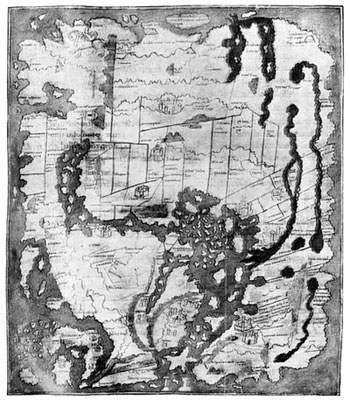

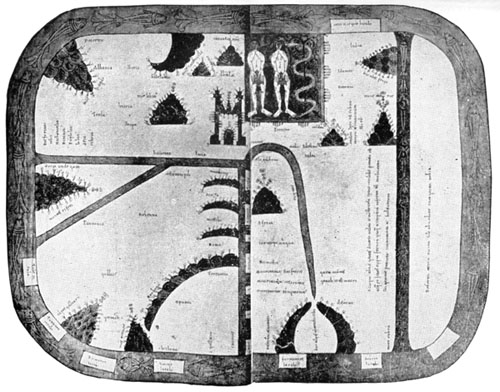
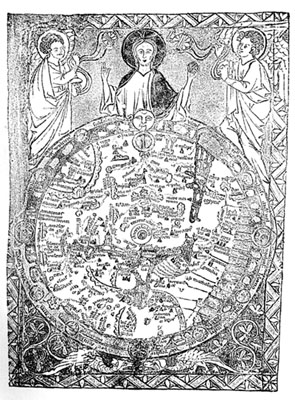

 talian, Catalan, French, and English sailors were the forerunners of
the Portuguese in the fourteenth century, and the latter years of the
thirteenth. And as in land travel, so in maritime, the republics of
Italy, Amalphi, Pisa, Venice, and Genoa, were the leaders and examples
of Europe. Just as the Italian Dante is the first great name in the new
literatures of the West, so the Italian Dorias and Vivaldi and Malocelli
are the first to take up again the old Greek and Phœnician enterprise
in the ocean. Since Hanno of Carthage and Pharaoh Necho's Tyrians, there
had been nothing in the nature of a serious trial to find a way round
Africa, and even the knowledge of the Western or Fortunate Islands, so
clear to Ptolemy and Strabo, had become dim. The Vikings and their
crusader-followers had done nothing south of Gibraltar Straits.
talian, Catalan, French, and English sailors were the forerunners of
the Portuguese in the fourteenth century, and the latter years of the
thirteenth. And as in land travel, so in maritime, the republics of
Italy, Amalphi, Pisa, Venice, and Genoa, were the leaders and examples
of Europe. Just as the Italian Dante is the first great name in the new
literatures of the West, so the Italian Dorias and Vivaldi and Malocelli
are the first to take up again the old Greek and Phœnician enterprise
in the ocean. Since Hanno of Carthage and Pharaoh Necho's Tyrians, there
had been nothing in the nature of a serious trial to find a way round
Africa, and even the knowledge of the Western or Fortunate Islands, so
clear to Ptolemy and Strabo, had become dim. The Vikings and their
crusader-followers had done nothing south of Gibraltar Straits.


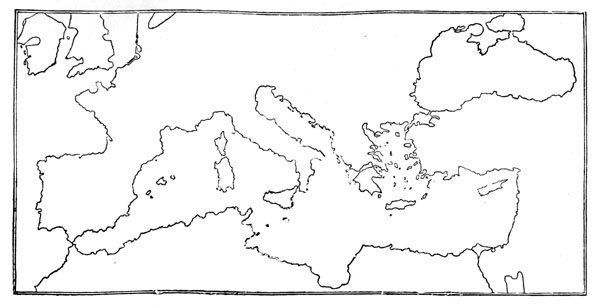
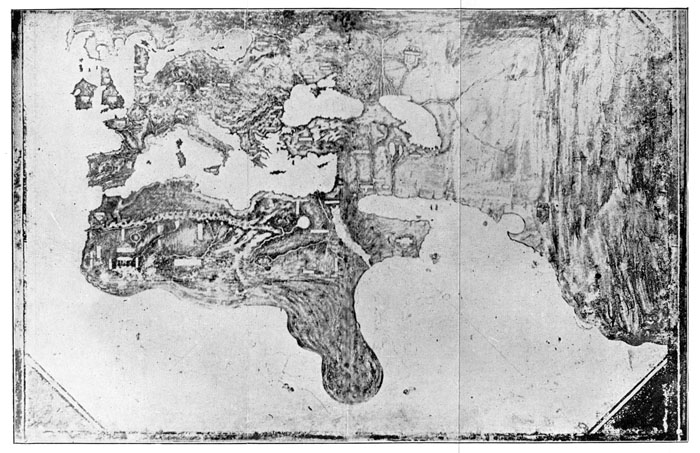


 enry the Navigator is the Hero of Portugal, as well as of discovery,
the chief figure in his country's history, as well as the first leader
of the great European expansion; and the national growth of three
hundred years is quite as much a part of his life, quite as much a cause
of his forward movement, as the growth of Christendom towards a living
interest in the unknown or half-known world around.
enry the Navigator is the Hero of Portugal, as well as of discovery,
the chief figure in his country's history, as well as the first leader
of the great European expansion; and the national growth of three
hundred years is quite as much a part of his life, quite as much a cause
of his forward movement, as the growth of Christendom towards a living
interest in the unknown or half-known world around.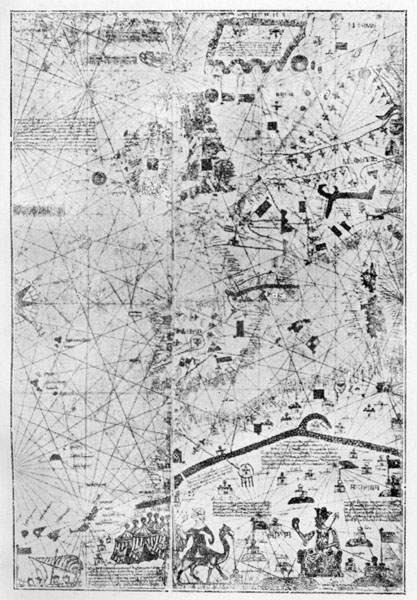

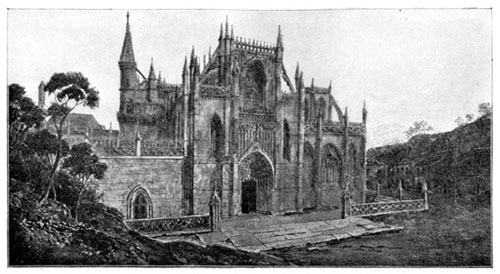
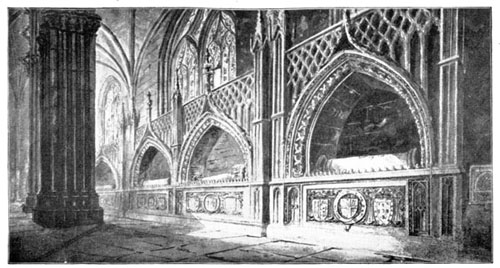



 e have seen how the kingdom of Portugal itself was almost an offspring
of the Crusades. They had left behind them a thirst for wealth and for a
wider life on one side, and a broken Moslem power on the other, which
opened the way and stirred the enterprise of every maritime state. We
know that Lisbon had long been an active centre of trade with the Hanse
Towns, Flanders, and England. And now the projected conquest of Ceuta
and the appeal of the conqueror of Aljubarrota for a great national
effort found the people prepared. A royal prince could do what a private
man could not; and Portugal, more fully developed than any other of the
Christian kingdoms, was ready to expand abroad without fear at home.
e have seen how the kingdom of Portugal itself was almost an offspring
of the Crusades. They had left behind them a thirst for wealth and for a
wider life on one side, and a broken Moslem power on the other, which
opened the way and stirred the enterprise of every maritime state. We
know that Lisbon had long been an active centre of trade with the Hanse
Towns, Flanders, and England. And now the projected conquest of Ceuta
and the appeal of the conqueror of Aljubarrota for a great national
effort found the people prepared. A royal prince could do what a private
man could not; and Portugal, more fully developed than any other of the
Christian kingdoms, was ready to expand abroad without fear at home.





 on Pedro had been nominated sole Regent of Portugal on November 1,
1439, and by the end of the next year all the unsettlement consequent on
the change at court seemed to be at an end. But a deep hatred continued
between the various parties.
on Pedro had been nominated sole Regent of Portugal on November 1,
1439, and by the end of the next year all the unsettlement consequent on
the change at court seemed to be at an end. But a deep hatred continued
between the various parties.