Throughout history, the traces of people who lived before have been
altered by those who followed. Even when Indians camped in places
where their ancestors had camped, they destroyed a piece of the record of
their past. In contrast with this age-old pattern of minor alterations,
however, is the potentially devastating impact of modern-day technology.
In Louisiana today, major types of land modification include energy exploration
and development, timber cutting, agriculture, urban expansion,
waterway modification, and transportation network construction. These
are all likely to disturb archaeological sites if they are conducted without
care.
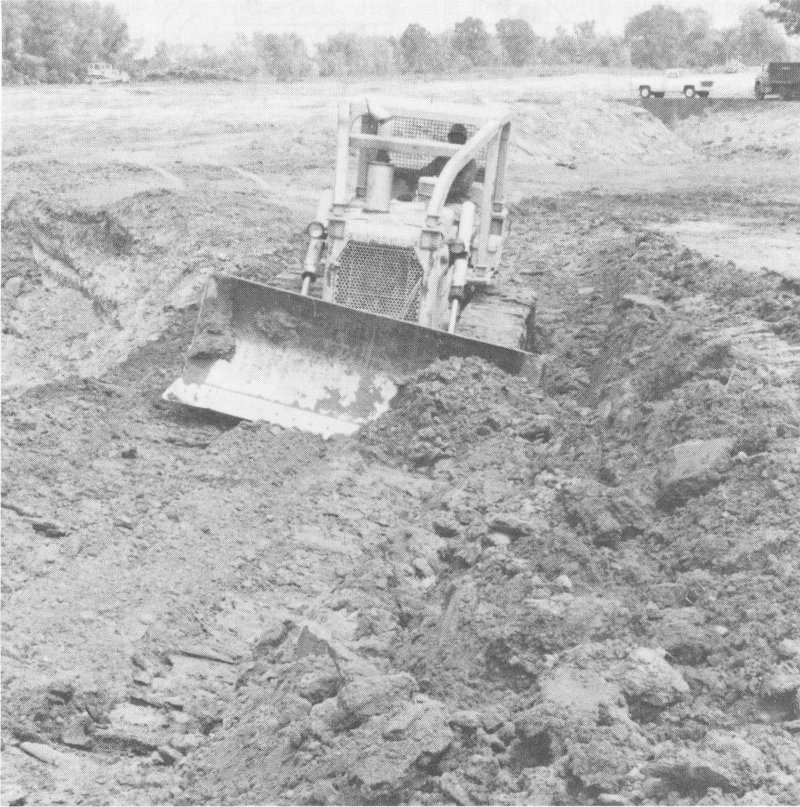
Heavy machinery can destroy a site in minutes.
7
The country’s need for oil, gas, coal, and timber has accelerated the
search for these products in the past decade. As exploration crews cut
roads into otherwise inaccessible areas, previously undetected sites are
exposed and disturbed. When heavy machinery is brought in to begin
logging, drilling, or mining, sites can be gouged or crushed in a few seconds.
Unless the crews are alert, fragile archaeological sites are destroyed
before they are even recorded. In Louisiana’s coastal areas, oil and gas
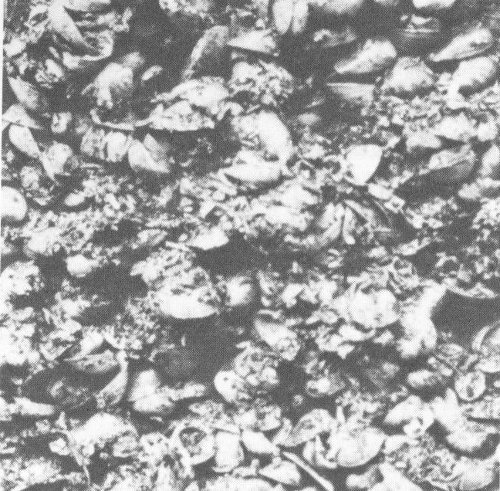
production has also affected sites. Pipelines are often laid through piles of
shells because they are more stable than the surrounding land. Unfortunately,
a great many of these piles are man-made; they are actually archaeological
sites.
Mechanized agriculture affects sites when plows turn up artifacts,
jumbling the materials. Whenever an area is cultivated for the first time,
sites may be found. In Louisiana, previously undisturbed areas within the
river valleys are now being cleared for large-scale agriculture. Many
buried prehistoric sites along old river channels could be destroyed. Sites
in cultivated fields may be damaged further if they are plowed more
deeply than in the past. Modern subsoilers can cut three feet into the
ground, disturbing even deeply buried materials.

This gas pipeline in southeastern Louisiana’s marsh was laid directly through an archaeological
site.
8
Farmers often regard Indian mounds as troublesome when they occur
in areas otherwise ideal for plowing. If farmers do not recognize the value
of these mounds, they may have them removed. For example, a man in
Madison Parish sold the dirt from a large Indian mound on his land for
road fill. The ancient monument was removed so the land could be planted
with soybeans.
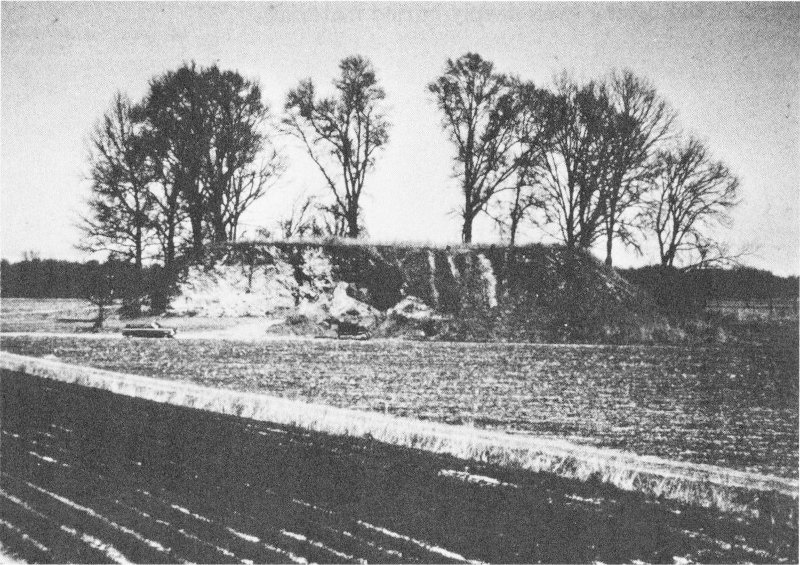
Dirt from this mound in Madison Parish was used for a road foundation ...
Population growth in Louisiana has led to rapidly expanding cities
and extended transportation networks. Modern cities are often in the
same places that Indians and early Europeans built their settlements, so
city growth is almost certain to disturb archaeological sites. As early as
the turn of the century, archaeologists were charting the destruction of a
mound group in eastern Louisiana. A city was growing up around one of
the largest groups of mounds in the Southeastern United States. In 1931,
an archaeologist wrote about the leveling of one of the mounds, a square
multi-stage one, 80 feet tall and 180 feet on each side. The dirt was used to
build the approach ramps for a bridge. Today, part of only one mound
remains, protected because of the recent cemetery on top.
9
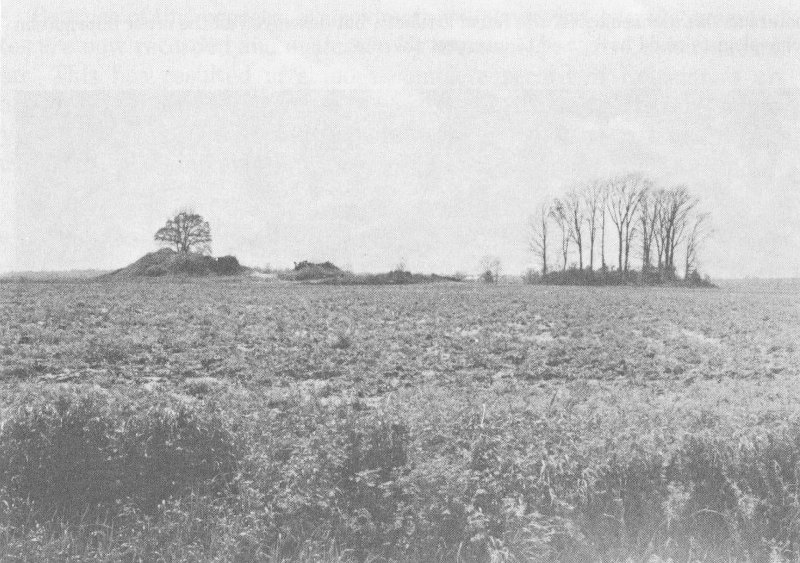
leaving behind only a few clumps of trees.
The destruction mentioned above has resulted from a lack of understanding
of the importance of these sites. It has taken Louisianians a
long time to realize the uniqueness and richness of their state’s cultural
heritage. While many people are now joining in the efforts to conserve the
remaining sites, a few continue to willfully destroy them.
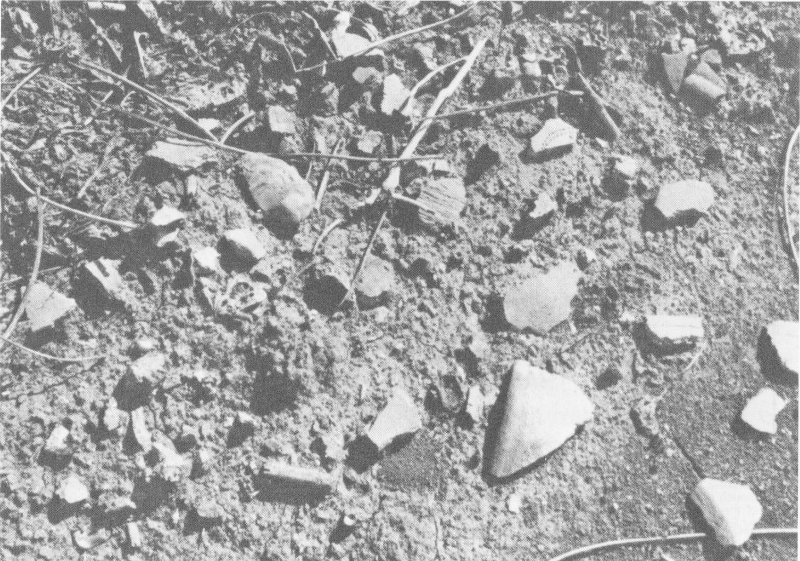
Some individuals dig into sites in order to find artifacts that can be
sold to antiquity dealers. These looters have demolished entire Indian
villages, stealing the story of those sites from all Louisianians. Even if the
artifacts are eventually turned over to an archaeologist, most of the information
has been obliterated. Lost are the records of where the artifacts
originally came from, the relationships of the artifacts to each other, the
samples of materials for laboratory analysis, and usually the ordinary or
broken artifacts that tell the archaeologist much, but sell for little.
10
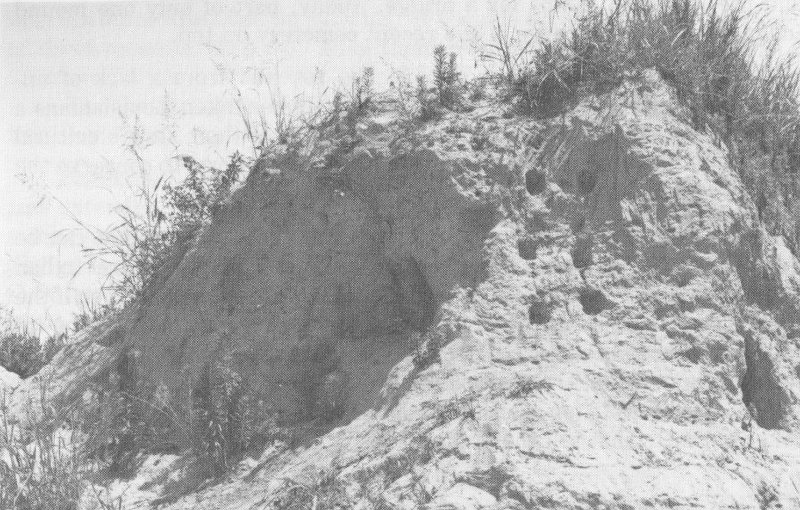
Looters at this archaeological site found artifacts, but destroyed all the other information
archaeologists could have used to interpret the site.
11