In conducting the sale of patents, the greatest
difficulty is most frequently experienced in getting
manufacturers or others sufficiently interested to
look into the merits and possibilities of the invention.
If the inventor can get the parties to actually
consent in their own minds to the proposition
of taking up the invention, the question of terms
and conditions can soon be arranged. Until the
parties solicited can see beyond a doubt that there
is large profits in it for them, the price of the
patent is out of the question; therefore, the first
step is to demonstrate its merits and commercial
value, and get the parties thoroughly interested.
Patentees should not labor under the impression
that because a patent is offered at a very low
price that it will be quickly snapped up as a bargain;
as before stated, if a patent will not bring
in money by manufacturing and selling the article,
it is worthless; and its real value is in exact proportion
to the amount of profits that can be made
from its manufacture.
Should the patentee find that his patent has no
commercial value, it is almost useless to spend
more time and money in trying to realize anything
from it; he had better start again, and endeavor
to invent something that has value and can be
sold.
Value of
Personal
Influence.
Inventors should use the full extent of their
personal influence to spread particulars of their
inventions as far as possible, for this
indirect work is often a leading factor
in creating a favorable impression that
frequently results in the adaption of an invention.
However unacquainted he may be in a business
way, every patentee can, more or less, in his immediate
neighborhood, consult with merchants,
friends, and others in the line of his invention,
who can post him upon the right parties to submit
the patent to, and the best way to see them about
it, and perhaps go with him to visit such as might
be interested in the invention.
Personal
Solicitation
Advisable.
In nearly every case it is more satisfactory for
the patentee to call on the manufacturers or interested
parties personally whenever it
is possible for him to do so. This
brings about a more satisfactory understanding
between them. Many inventors, however,
prefer opening up communication by correspondence,
and after the parties manifest a
willingness or desire to look into the invention
more closely, then arrange to visit them personally.
Having determined upon a visit, the patentee
should endeavor to get a friend known by the parties
to go with him to make their acquaintance.
If the friend cannot go with the patentee, he will
probably give him a note of introduction. It may
happen that his friend does not know the parties
whom the patentee wishes to see, in that event he
may know of someone who does, to whom he can
introduce the patentee and who in turn may either
go with him or arrange to make him known to the
parties solicited. An introduction, of course, is
not absolutely necessary, but it invariably has a
good effect and is generally worth the effort.
The patentee should be prepared to make a
straightforward, business-like presentation of his
invention by means of a suitable model or drawings;
carefully explaining its merits and advantages,
showing as clearly as possible just what the
value of the invention is and what can be made
out of it, and giving tangible reasons why it would
be to the interest of the parties solicited to invest
in the patent. If the patentee is dealing with a
manufacturer it is well to point out not only the
possible advantage he may have by securing the
control of the patent, but also the possible loss
that his business may suffer by allowing one of his
competitors to obtain its control. Many businesses
have been hopelessly crippled by an enterprising
firm securing control of a good patent and
introducing a like article that can be sold cheaper,
or one that will do its work in a better and more
satisfactory manner.
Selling Outright.
Many inventors prefer to sell their patents outright;
that is, in consideration of a specified sum
of money the patentee assigns his entire
interest in the patent, in the same
manner that a person would sell a piece of real estate.
This is a very good method and one of the
quickest ways for the patentee to turn his invention
into money, though it must be remembered
that to sell a patent outright is usually for a very
much smaller sum than could be realized if handled
by other methods.
The day for obtaining enormous sums or fortunes
from the sale of a patent outright is past;
at present to realize any considerable amount, the
patentee generally has to share in the risks as well
as the profits, unless the invention is very highly
developed, and even then he cannot expect to get
as much out of an outright assignment as he could
by sharing in the success of the invention commercially.
If, however, the patentee is content to
take the utmost cash his patent will bring him outright,
he is assured of a principal or lump sum, free
from any chances of the article not selling well
when placed upon the market.
Before signing and delivering the assignment,
the patentee will, of course, see that he has the
consideration, or its equivalent, for which the assignment
is made. If the transaction is made
through correspondence he should send the assignment
duly executed to the purchaser through
the bank or express C. O. D. for the amount.
Assigning an
Undivided
Interest.
In a preceding chapter, the dangers and disadvantages
of an undivided interest are set forth,
and it cannot be considered a wise
course under any consideration to part
with any undivided interest in the proprietorship
of the patent, unless unusually well
paid, or there exists an agreement of copartnership
between the patentee and the assignee. By
such an assignment, no matter how small, the patentee
loses control of his patent.
Dividing a
Patent into
Different
Classes of
Rights.
Many patents, from the nature of the invention,
can be subdivided into different classes of rights,
and each class sold or granted separately
as the patentee may choose.
Thus, the patentee of a tire, or other
appliances for a bicycle, could license
one party to make the same for bicycles and
another for automobiles. In like manner a car-coupler
could be divided between those who build
railway equipments and those who build street-cars,
and so on.
Goodyear, the inventor of the process of vulcanizing
rubber, divided his patent up into many
different rights, licensing one company for manufacturing
rubber combs, licensing another for hose
pipes, another for shoes, another for clothing, and
a number of other different rights, for which each
company or partner paid a tariff. Lyall, inventor
of the continuous loom, also divided his patent
into many different rights; one company weaving
carpets, another corsets, another bags, another
sheeting, etc.
In every case where the invention covers articles
not in the same line of manufacture, the patentee
should not fail to divide the rights into different
classes, granting each party only such rights
as they may be interested in. In this way the
patentee can quite often double or treble the receipts
from his invention.
The patentee may, if he desires, have his machines
built and require the purchasers to pay him
a regular annual rental on each machine, or a tariff
upon the goods produced, in addition to the price
of the machine. Companies are sometimes organized
to manufacture an invention, and employ
travelling men to place the article on annual
rental instead of selling.
Selling by
Territorial
Rights.
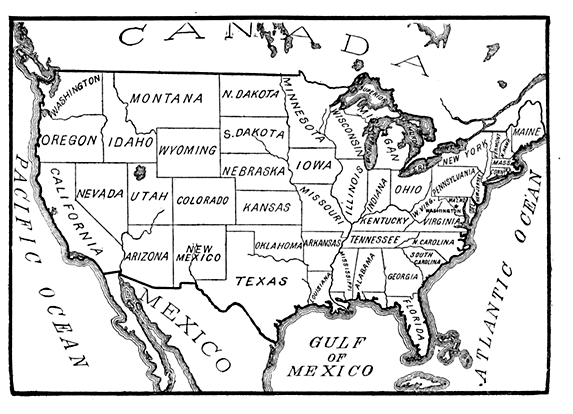
Another method is to sell State and county
rights. This consists of a license whereby the
patentee, in consideration of a certain sum of
money paid him, grants unto another person or
persons the exclusive right to make and sell the
invention, and to authorize others to make and
sell the same, within a specified territory,
during the life of the patent. This
plan of disposing of a patent has often
been highly profitable, but it must be said that
these territorial sales have been conducted in such
a manner in the past, as to bring the whole system
of selling patent rights into disrepute, and in
recent years patentees have found some difficulty
in making sales in this way, unless the device is
of unusual great novelty and attraction to householders
or the general public.
Occasionally, however, there are patents issued
for meritorious inventions that are susceptible of
this mode of procedure, and which can be disposed
of to the greatest advantage by territorial
grants. Such inventions as household novelties
possessing great merit and utility have been most
successfully placed upon this plan, but it must be
remembered that the value of the system rests
upon its capabilities of effecting sales of the
manufactured article to a vast proportion of the
people.
In selling territorial rights it is a mistake to
begin with the small places with the idea of working
the business up and effecting larger sales on
the basis of the smaller ones; it is better to shove
the sales, as much as possible in the start, and after
the more valuable portion of the territory is disposed
of, proceed with the balance until it ceases
to be profitable.
Experience teaches that it is usually advisable
to accept any reasonable offer made for a small
right, even if it does not come up to the patentee's
estimate of its value, as he has plenty of
other territory left, and may lose much time and
money in finding another in the same territory
willing to pay more; besides, the purchaser of such
a right may, by his energy and good judgment, advertise
the invention in such a way as to greatly
benefit the patentee in making further sales.
Some patentees employ good and reliable special
agents to travel and dispose of the patent
rights; others advertise for and appoint State
agents to sell their respective county rights. In
either case these agents expect to make money
by the operation, and require a liberal proportion
of the proceeds for their remuneration; generally
speaking, they will require about one-third the
selling price, unless the patentee can show that
the rights will sell readily, in which case the rating
can be made lower.
Granting
Licenses.
The patentee may also sell licenses under his
patent; that is, in consideration of a certain sum,
the patentee licenses a manufacturer
to make the invention at his own
place of business; it being a personal privilege
and is not transferable unless its terms so
state.
Unless there are a great many manufacturers in
the line of industry to which the patent relates,
and unless the invention has real merit so that it
will be readily adapted by the manufacturers, the
patentee cannot hope to realize any considerable
amount from selling shop-rights alone. As a
general thing, patents for mechanical inventions
can be disposed of to better advantage by other
means, or by selling shop-rights in connection
with other methods; for example, if the patentee
was selling his patent by territorial grants, he
might grant shop-rights in such territory as he
has not sold; or if he is placing the patent upon
non-exclusive royalty contracts, he could grant
shop-rights in such portions of the territory as he
does not contemplate using otherwise.
Some inventions, such as methods or processes,
as a general rule, have to ultimately be sold by
licenses. Such patents can be employed most
profitably by selling licenses, county and State
rights; thus, in the case of a method of constructing
fences, the patentee could sell State and
county rights to parties, who in turn could grant
farm rights, etc.
Placing
upon
Royalty.
The license and royalty plan is perhaps the best
and most popular method with inventors for realizing
from their inventions. This, in effect, involves
a contract between the patentee and the
manufacturer, by which the latter in consideration
of a license to manufacture the
article covered by the patent, agrees
to pay the patentee a certain specified
sum as royalty for each article manufactured or
sold bearing the patented improvement.
Placing a patent on royalty is ordinarily taking
chances, but if the patentee has full confidence in
his article selling well, he should by all means take
royalty in preference to selling the patent in its
entirety. Many valuable patents are sold by their
owners for from $1,000 to $10,000, which yield
the purchasers, when the article is on the market
and selling well, as much as $25,000 annually in
profits. This calls to the author's mind a patent
for which at the outset was doubtfully offered
$3,000, but before the negotiations terminated,
the patentee succeeded in placing it upon an exclusive
royalty basis. The royalties paid to the
patentee during the first four years amounted to
over $50,000, and the manufacturers subsequently
made an offer of $100,000, for the patent.
In making royalty contracts with parties, the
patentee should investigate the standing, rating,
and capabilities of the manufacturer, and, above
all, should be certain that the parties have the
right motive in view, and that the contract is so
drawn that it will fully protect his own interests.
Many patentees have been caught by manufacturers
offering large royalties for the sole purpose
of gaining possession of the patent, that they
might pigeon-hole it, in order to keep the article
out of the market, so that the sale of some similar
article in which they are interested would not be
interfered with by the introduction of a similar or
better article, such as the patent anticipates.
There are others who propose and make royalty
contracts with patentees with no other object than
that of making the special tools, patterns, dies,
etc., for which they charge the patentee an extortionate
price.
The best and safest way for the patentee to
guard against having his patent tied up is to bind
the parties to do certain things in the way of
pushing the sales, making the necessary tools at
their own expense, and commencing its manufacture
within a reasonable time, paying an advance
royalty, or annexing some such condition to the
agreement by which they will be the loser should
they fail to push the inventor's interests.
Unless it cannot be otherwise arranged, the
patentee should not transfer his rights merely in
consideration of receiving a certain sum on each
article sold, as however sterling the character of
the manufacturer, there would be no certainty of
the sales being pushed. The patentee should endeavor
to get the manufacturer to guarantee that
the royalties shall amount to at least a certain
pre-stipulated sum each year, or within a period
of time, and that such sum shall absolutely be
paid to him by the manufacturer, irrespective of
sales. This insures that the manufacturer will be
obliged to push the sales of the article, and do it
justice, since if he neglects his duty purposely, or
from lack of energy, he is out of pocket, and the
patentee is sure of a certain income, with the addition
of a possible fortune that unprecedented sales
may yield him. However, manufacturers are not
always willing to agree to this condition, unless
the guaranteed amount is exceedingly reasonable;
they will usually simply agree to do their best,
and if the sales do not reach a certain figure each
year, the patentee shall have the option of cancelling
the agreement, and receiving back the
patent free and clear.
Royalty licenses can either be exclusive or non-exclusive;
that is, with an exclusive contract the
manufacturer has the exclusive right to manufacture
the article, excluding all others; non-exclusive
is simply a shop-right, in consideration of
which the manufacturer agrees to pay the patentee
or owner of the patent a stipulated price or percentage
upon each article made or sold. The
license can also be exclusive in a certain section,
county, State, or a number of States, as may be
agreed upon.
Any number of conditions that may be agreed
upon may be annexed to and form a part of the
contract, and such an agreement should be drawn
up in compliance with the terms and conditions
agreed upon by a competent attorney, or one
skilled in matters of this kind.
Manufacturing
and
Forming
Companies.
If the patentee has a really good invention,
often he cannot do better than to retain the patent
and work it himself, in case he has the
ability to do so. If he cannot conduct
the manufacturing alone, he may be
able to secure a partner with just sufficient funds,
and equal common sense and business acumen,
to add the necessary elements to the firm to
achieve success.
In some cases, if the patentee does not wish to
retain the whole patent for his own use, an excellent
plan is to commence the manufacture of the
invention in a suitable locality, and after the
business is so far under way as to show progress
and profit, then sell out the business with license
under the patent. To illustrate: a gentleman in
Illinois, having obtained a patent on a farming
implement, succeeded in interesting a party in his
own neighborhood to join with him in its manufacture,
which soon proved successful and remunerative,
and in a short time he was able to sell
out his interest in the business to his partner, with
license under the patent, after which the patentee
started its manufacture in a number of places
elsewhere, and, at the same time, granting licenses
and selling territory in still other sections, where
he was unable to work the invention. In this way
he made a fair fortune from his invention, realizing
about as much from each business established
as he could have probably obtained for the entire
patent if sold outright at first.
In this manner the patentee, with a valuable
patent on an article of general usefulness, could
go on and establish its manufacture in any number
of places, and sell out with license under the
patent. If the first experiment is successful, it is
an easy matter to carry the method out in other
places, and the business can be readily disposed
of anywhere, if it can be shown to be on a paying
basis.
To Organize
Stock
Companies
In recent years many inventors have been
quite successful in organizing stock companies on
the basis of their patents. This is
considered one of the best ways for
handling patents for large and promising
inventions, and it is a method that any
patentee, with ordinary business ability, should
be able to carry out successfully, providing his
invention is of sufficient merit and importance
to form a suitable basis for a successful stock
company.
Many stock companies are incorporated under
the laws of New Jersey, but it is believed the
State of West Virginia is also very favorable to
corporations. The entire expense for incorporating
a company under the laws of the latter State
should not exceed $150. The company can be
incorporated for any amount; large or small, one
hundred dollars or five millions, cost and fees
being the same. The incorporators need not be
residents of the State. No annual statements
required. The meetings of the directors can be
held at any place, and need not be held in the
State where the charter is granted.
Before applying for a charter for a corporation
or stock company, the patentee should mention
his plan to some of his friends and get five
persons who will promise to subscribe for one or
more shares of the stock and act as incorporators
of the company.
Next he should secure the services of a reliable
attorney, familiar with corporation laws, to
prepare the necessary articles of incorporation
and legal papers. The attorney will advise the
patentee how to proceed properly in organizing
his company, and as to the securing of the stock
certificates, subscription blanks, seal, etc. These,
including the attorney's fee, should not cost the
patentee more than $50.
It is well to have some stationery printed with
the proposed name of the company and business
displayed thereon; and also a prospectus published,
setting forth the invention and the plans
of the company for introducing it, etc.
Quite often the patentee can find enough idle
capital in his immediate neighborhood to float a
good portion of the stock. Capital is more easily
secured by the formation of a stock company than
by any other means, as people can subscribe for
small or large amounts, and they often prove
good investments.
In soliciting subscriptions for stock, it is desirable
to get as many prominent and influential
men to buy one or more shares at first to head
the list—their names will be a great aid in making
further sales. Ordinarily the promoter only collects
ten per cent, of the amount subscribed, the
balance being subject to the call of the board of
directors.
After it is ascertained that the shares or stock
are being rapidly subscribed for and selling fully
up to expectation, the patentee can have the
incorporators sign the charter application and
have the attorney file it with the proper State
authorities. This will cost the patentee about
$100 more, for State tax, attorney fees, etc.
When sufficient stock has been subscribed for,
a meeting of the stockholders should be called to
elect directors, and to transact such other business
as may be deemed necessary in regard to
locating and building the plant and getting the
company in shape.
The patentee should receive about one-half the
capital stock in consideration of his transferring
his rights and franchises to the corporation, the
remainder of the stock is sold for the benefit of
the company to create a working capital. The
patentee may sell a portion of his stock, if he
desires, but should also retain a good portion of
it to show his own confidence in the business.
After the meeting of the stockholders, the
direction of the business will probably be taken
out of the hands of the inventor, and the control
will lie in the board of directors of the company.
As a rule it is better that the inventor does not
take an active part in the management of the
company's affairs, unless he is specially fitted for
the position.
If the company is provided with ample capital,
and if the business manager is a competent man,
there is little chance of failure if the invention
has real merit.
Trading
as a Last
Resort.
Patentees are sometimes offered securities or
other property in trade for a patent. It is not
deemed a wise course by most inventors
to consider any proposition for a
trade, especially in the early life of a
patent. Only as a last resort, after failing to
realize from a patent by any other means, is it
advisable to trade a patent; and, before finally
agreeing upon a trade, the patentee should have a
reputable attorney to look fully into the value
and title of the property offered. He should also
insist upon receiving an abstract of title, or a
title guarantee from a reliable title insurance
company.
Unless known to himself, the patentee should
never engage the services of an attorney or
broker recommended by the parties offering the
trade to look into the value and title of the
property. Inventors should be on the lookout
for a set of sharpers who make a business of
offering worthless securities and property in
exchange for patents.