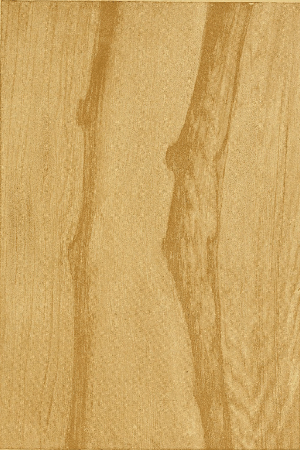
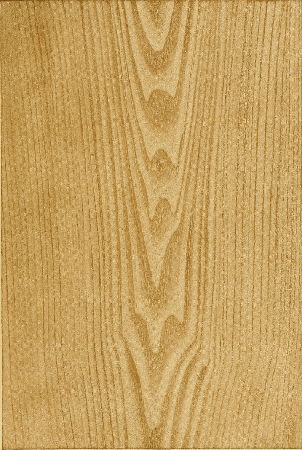
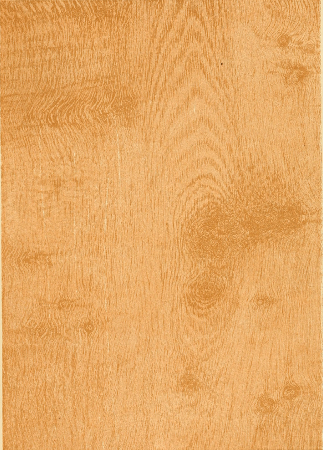
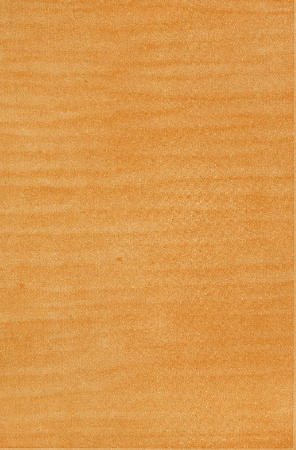
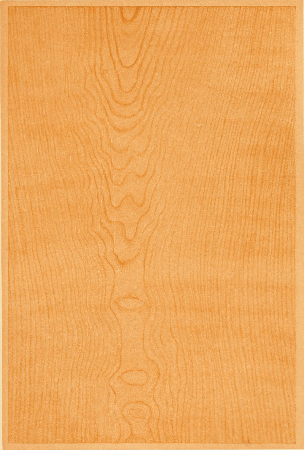
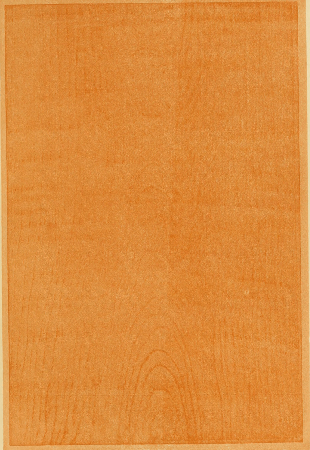
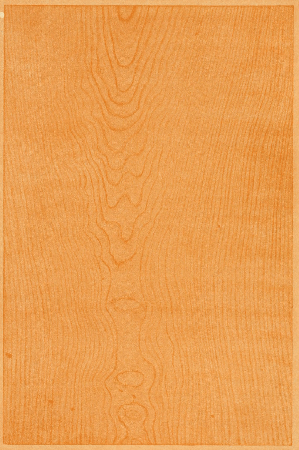
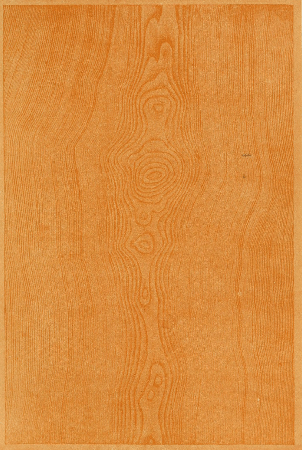
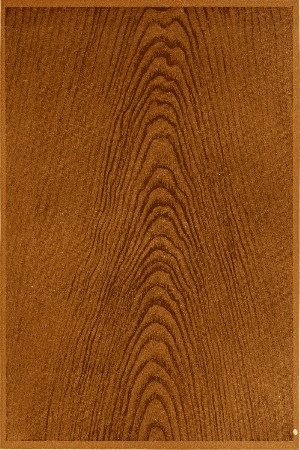
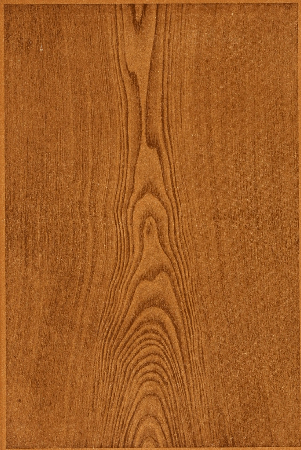
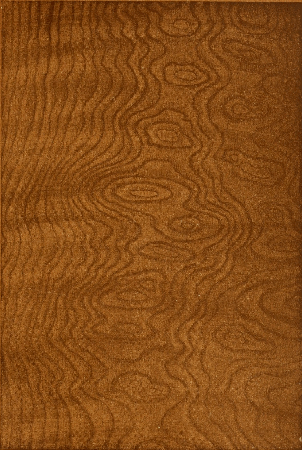
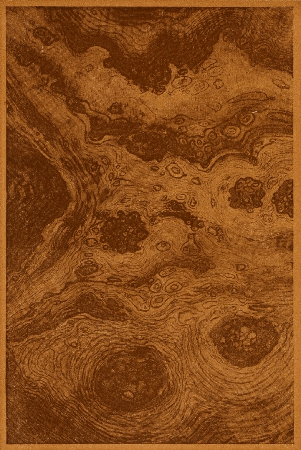
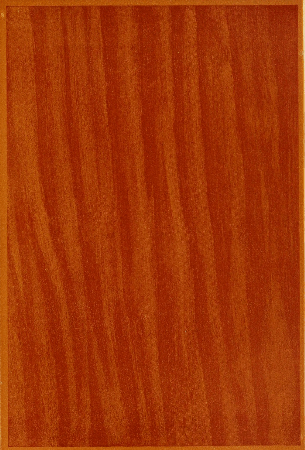
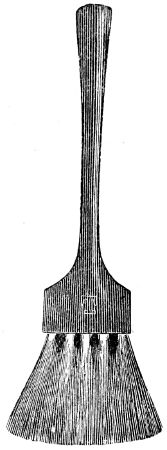
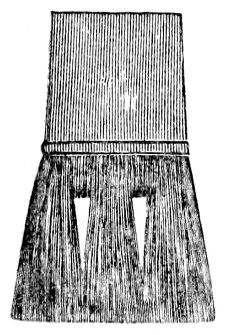
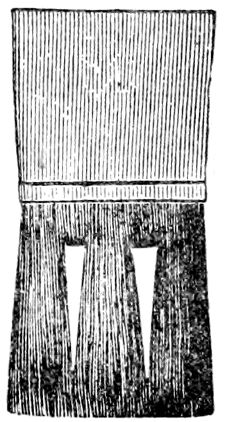
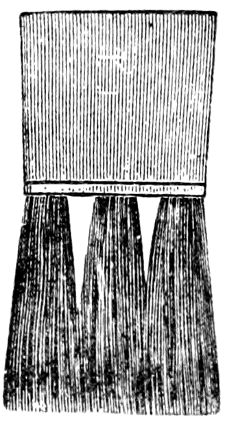
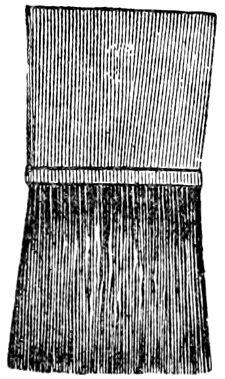
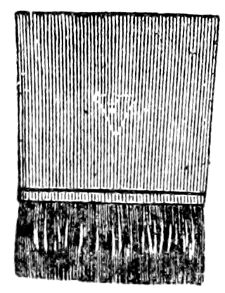
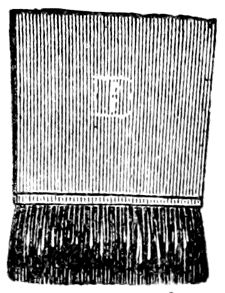
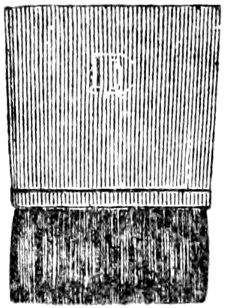
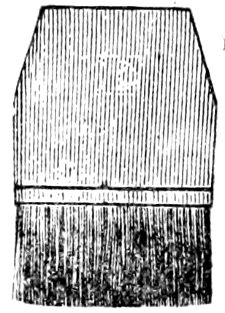
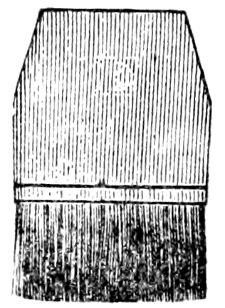
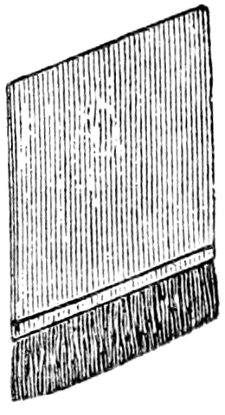
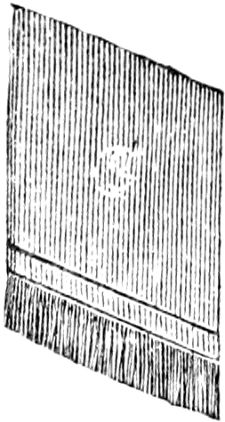
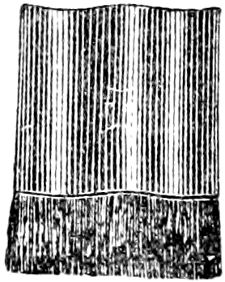
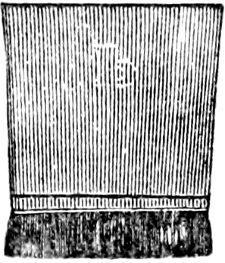
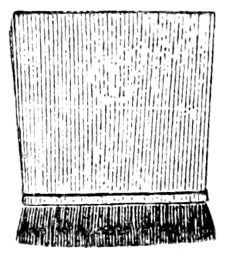
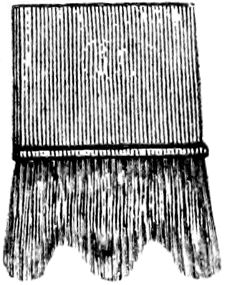
Various devices other than those usually employed—brushes, combs,
etc.—have been invented for representing the grains of wood, and some
of these machines are excellent, and are so constructed that by
properly using them a very good imitation of wood may be obtained. The
majority of them, however, seem to have been invented for the express
purpose of being sold to gullible painters. The work done by such
machines bears but little resemblance to the grain of any wood, and the
only merit they possess is their boasted "ease of manipulation." It
would seem that the majority of the patent pads, rollers, etc., now in
use were designed by persons totally unfamiliar with the various woods
which they claim their machines can represent; they bear the same
relation to good handwork as the schoolboy's drawing of a house bears
to that of an architect. The quality of the work seems to be immaterial
if it can rapidly be executed; and if there are plenty of knots in the
pattern, so much the better. It is of no consequence what wood it is
supposed to represent, so long as it pleases the eye of the painter,
and he will often purchase at an exorbitant price that which is
practically useless for ordinary housework.
I have before me a circular containing some photographic illustrations
of the work done by a patent roller process; and if any wood ever grew
that bears a resemblance to the illustrations, I am ignorant of its
name. Aniline colors are the means employed to represent the grains,
and the process is designed to obviate the necessity of first painting
the work, as the color is directly applied by the roller, without the
wood being prepared in any way. It is claimed that any shadows or
grains existing in the wood will only add to the beauty of the finished
work. This will be news to the intelligent workman. The circular says
nothing about how to use the rollers on painted work, so I presume it
is worthless except for new work, and nearly so for that; for the
painter who attempts to represent wood in the manner described will
find that in the end it costs as much as though he had employed a
skilful workman; and when the job is finished, he will have but a poor
imitation of wood.
So far as I am aware, the oldest machine for representing the graining
of wood is the Mason pad, which consists of a convex pad with handles
at either end. The face of the pad is made of a rubber composition, on
which are engraved the grains, the pad being about two feet in length.
The graining-color is applied to the work, and while wet the pad is
pressed against it, thus removing sufficient color to show the grain.
This process is now seldom used; the composition of which the face of
the pad is made hardens in cold weather and in hot weather it is
inclined to run together, and great care must be taken to avoid
defacing the pad.
The objection common to all roller processes or machines is that they
do the same work over and over again, which is contrary to what we find
in nature, as the grains are always different from one another, so that
it would require an endless variety of patterns to do such work as is
done by any first-class grainer.
Another method for the rapid imitation of wood is found in
stencil-plates, which consist of thin sheets of brass so constructed
that when laid against the panel to be grained they leave no mark until
a cloth is passed over the plate, when the graining-color exposed by
the stencil is rubbed off, thus making the grains. This sort of work
looks much better than that done by any of the pads or rollers, but is
open to the same objection—viz., repetition.
Another process is operated by having rolls with leather or composition
surface, with the grains cut thereon; after the graining-color has been
applied to the work, the rollers are passed over it, thus removing the
color wherever the roller touches. As a rule, the work done by this
process is not very distinct, nor is it particularly clean. Very large
rollers have to be used in order to grain a panel four feet long, as
the work will seldom join without showing the joints; and while a door
was being grained in this manner (with joints in the panels), a skilful
workman could do one by hand and in a much better manner.
The best work that I have ever seen, not done by hand, was by means of
a composition roller with a smooth surface; it can be used only for the
imitation of porous woods, as chestnut, ash and walnut, and is useless
for oak, cherry or any of the close-grained woods. The work can first
be stippled in distemper, and when dry rubbed in lightly in oil; or the
roller can be applied directly to the stippled work or to the
groundwork, and afterwards stippled if necessary. It is requisite to
procure several pieces of the wood to be imitated, smoothed carefully
with the pores open; then directly apply the graining-color and with
the composition roller go over the wood, taking the color from the
pores and applying it directly to the work by transfer. If carefully
done, you have an exact duplicate of the grain of the real wood, and no
man can do better work than this; but, in order to grain a room or a
house in this manner, it is necessary to have a great variety of pieces
of porous wood, and to use each piece only for imitating the wood of
which it is composed.
The gransorbian is another transfer process, by which the grains are
produced as follows: The graining-color is applied in the usual manner,
and heavy absorptive paper on which the grain of the wood to be
imitated is impressed is laid against the wet color; a roller with a
smooth surface is passed over the paper, using considerable force, so
that the color is absorbed into the paper wherever it is pressed
against the work by the roller. The paper can be used several times
before it becomes useless through becoming saturated with color, but,
being cheap, it is an inexpensive manner of doing fair to good work.
All depends on the man who makes the patterns, as, if they are not true
to nature, the effect is very bad, and some of the samples that I have
seen are very poor imitations of the grain of any wood. I should judge
that the paper is produced by applying the pulp to a block of wood on
which the pattern to be produced is engraved, using considerable
pressure to force the pulp into the carved work. The plain work is done
with combs in the usual manner.
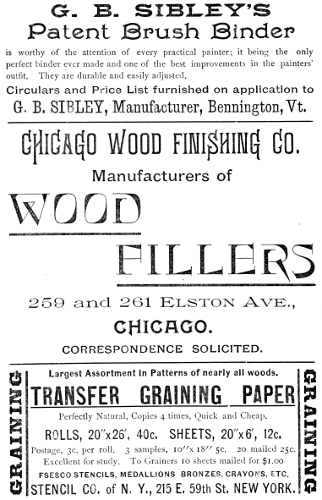
Another transfer process is the transfer paper. The grain is printed on
paper similar to the best wall-paper, and is transferred to the
groundwork by pressure after first wetting the back of the paper and
allowing time for the water thoroughly to soften the printed color. The
surface of the groundwork must first be damped in order to receive the
moist color from the paper. Two or three impressions may be obtained
from each wetting of the paper. Some of the work done by this process
is excellent, and approaches very near the work done by the smooth
transfer roller, but the majority of the paper is printed from blocks
or cylinders, designed not by nature, but by man, and are unworthy of
comparison with those printed from nature.
There are various processes other than handwork, but the above are the
principal methods employed.
The first-class grainer has nothing to fear from any of the foregoing
processes, for while some were being used the work could be done in the
old way, and equally well, provided the workmen were at all skilful. I
have never seen any work that can excel fine handwork, as there is
more grace and variety in such work than there is in any done by any
other methods. When the services of a grainer cannot be obtained,
machine processes may answer for ordinary work or for small work, such
as ice-chests, pails, etc., but the chief objection I have to them is
that they claim too much, and the average painter who buys the process
is deceived, because he is told that any wood can be imitated by this
or that machine, when such is not the case.