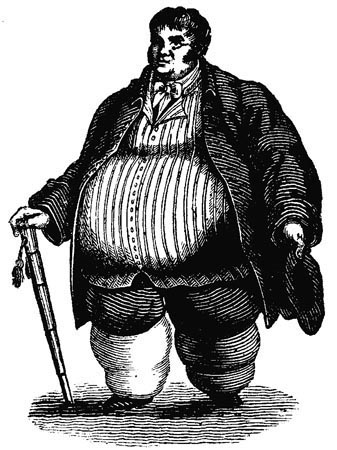
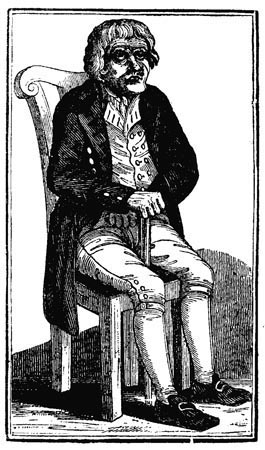
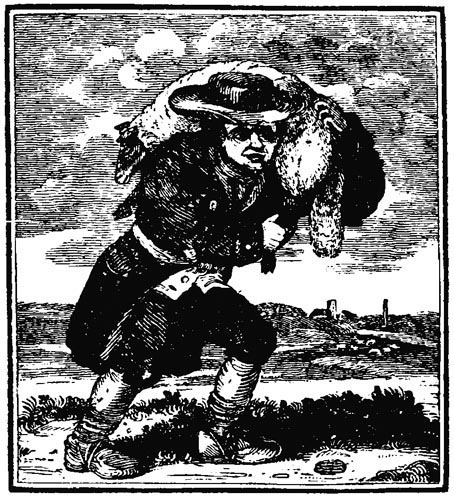
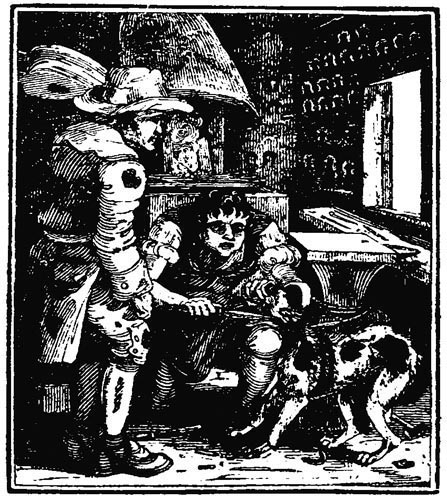
Meggot was the family name of Mr. Elwes; and his name being John, the
conjunction of Jack Meggot induced strangers to imagine sometimes that
his friends were addressing him by an assumed appellation. The father
of Mr. Elwes was an eminent brewer; and his dwelling-house and offices
were situated in Southwark; which borough was formerly represented in
parliament by his grandfather, Sir George Meggot. During his life he
purchased the estate now in possession of the family of the Calverts,
at Marcham, in Berkshire. The father died when the late Mr. Elwes was
only four years old; so that little of the singular character of Mr.
Elwes is to be attributed to him: but from the mother it may be traced
with ease; she was left nearly one hundred thousand pounds by her
husband, and yet starved herself to death. The only children from the
above marriage, were Mr. Elwes, and a daughter, who married the father
of the late Colonel Timms; and from thence came the entail of some
part of the present estate.
Mr. Elwes, at an early period of life, was sent to Westminster School,
where he remained ten or twelve years. He certainly, during that time,
had not misapplied his talents; for he was a good classical scholar to
the last; and it is a circumstance very remarkable, yet well
authenticated, that he never read afterwards. Never, at any period of
his future life, was he seen with a book; nor had he in all his
different houses left behind him two pounds worth of literary
furniture. His knowledge in accounts was little; and, in some measure
may account for his total ignorance as to his own concerns. The
contemporaries of Mr. Elwes, at Westminster, were Mr. Worsley, late
Master of the Board of Works, and the late Lord Mansfield; who, at
that time, borrowed all that young Elwes would lend. His lordship,
however, afterwards changed his disposition.
Mr. Elwes from Westminster-School removed to Geneva, where he shortly
after entered upon pursuits more congenial to his temper than study.
The riding-master of the academy had then three of the best horsemen
in Europe for his pupils: Mr. Worsley, Mr. Elwes, and Sir Sidney
Meadows. Elwes of the three was accounted the most desperate: the
young horses were put into his hands always; and he was, in fact, the
rough-rider of the other two. He was introduced, during this period,
to Voltaire, whom, in point of appearance, he somewhat resembled; but
though he has often mentioned this circumstance, neither the genius,
the fortune, nor the character, of Voltaire, ever seemed to strike him
as worthy of envy.
Returning to England, after an absence of two or three years, he was
to be introduced to his uncle, the late Sir Harvey Elwes, who was then
living at Stoke, in Suffolk, the most perfect picture of human penury
perhaps that ever existed. In him the attempts of saving money was so
extraordinary, that Mr. Elwes never quite reached them, even at the
most covetous period of his life. To this Sir Harvey Elwes he was to
be the heir, and of course it was policy to please him. On this
account it was necessary, even in old Mr. Elwes, to masquerade a
little; and as he was at that time in the world, and its affairs, he
dressed like other people. This would not have done for Sir Harvey.
The nephew, therefore, used to stop at a little inn at Chelmsford, and
begin to dress in character. A pair of small iron buckles, worsted
stockings darned, a worn out old coat, and a tattered waistcoat, were
put on; and forwards he rode to visit his uncle; who used to
contemplate him with a kind of miserable satisfaction, and seemed
pleased to find his heir bidding fair to rival him in the
unaccountable pursuit of avarice. There they would sit—saving
souls!—with a single stick upon the fire, and with one glass of wine,
occasionally, betwixt them, inveighing against the extravagance of the
times; and when evening shut in, they would immediately retire to
rest—as going to bed saved candle-light.
To the whole of his uncle's property Mr. Elwes succeeded; and it was
imagined that his own was not at the time very inferior. He got, too,
an additional seat; but he got it as it had been most religiously
delivered down for ages past: the furniture was most sacredly antique:
not a room was painted, nor a window repaired: the beds above stairs
were all in canopy and state, where the worms and moths held
undisturbed possession; and the roof of the house was inimitable for
the climate of Italy.
Mr. Elwes had now advanced beyond the fortieth year of his age; and
for fifteen years previous to this period it was that he was known in
all the fashionable circles of London. He had always a turn for play;
and it was only late in life, and from paying always, and not always
being paid, that he conceived disgust at the inclination.
The acquaintances which he had formed at Westminster-school, and at
Geneva, together with his own large fortune, all conspired to
introduce him into whatever society he liked best.
Mr. Elwes, on the death of his uncle, came to reside at Stoke, in
Suffolk. Bad as was the mansion-house he found here, he left one still
worse behind him at Marcham, of which the late Colonel Timms, his
nephew, used to mention the following proof. A few days after he went
thither, a great quantity of rain falling in the night, he had not
been long in bed before he found himself wet through; and putting his
hand out of the clothes, found the rain was dropping from the ceiling
upon the bed. He got up and moved the bed; but he had not lain long,
before he found the same inconveniency continued. He got up again, and
again the rain came down. At length after pushing the bed quite round
the room, he retired into a corner where the ceiling was better
secured, and there he slept till morning. When he met his uncle at
breakfast, he told him what had happened. "Ay! ay!" said the old man,
seriously; "I don't mind it myself; but to those that do, that's a
nice corner in the rain."
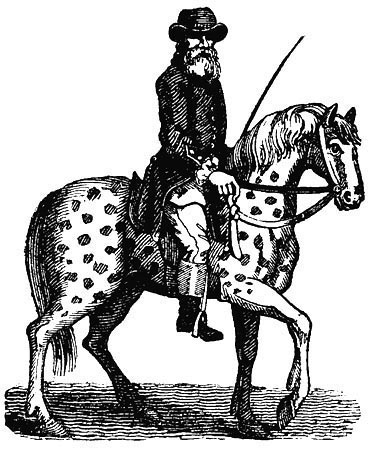
Mr. Elwes, on coming into Suffolk, first began to keep fox-hounds; and
his stable of hunters, at that time, was said to be the best in the
kingdom. Of the breed of his horses he was certain, because he bred
them himself; and they were not broke in till they were six years old.
The keeping of fox-hounds was the only instance in the whole life of
Mr. Elwes of his ever sacrificing money to pleasure. But even here
every thing was done in the most frugal manner. His huntsman had by no
means an idle life of it. This famous lacquey might have fixed an
epoch in the history of servants; for, in a morning, getting up at
four o'clock, he milked the cows. He then prepared breakfast for his
master, or any friends he might have with him. Then slipping on a
green coat, he hurried into the stable, saddled the horses, got the
hounds out of the kennel, and away they went into the field. After the
fatigues of hunting, he refreshed himself by rubbing down two or three
horses as quickly as possible; then running into the house, would lay
the cloth and wait at dinner. Then hurrying again into the stable to
feed the horses; diversified with an interlude of the cows again to
milk, the dogs to feed, and eight horses to litter down for the night.
What may appear extraordinary, this man lived in his place for some
years; though his master used often to call him "an idle dog!" and
say, "the rascal wanted to be paid for doing nothing."
An inn upon the road, and an apothecary's bill, were equal objects of
aversion to Mr. Elwes. The words "give" and "pay" were not found in
his vocabulary; and therefore, when he once received a very dangerous
kick from one of his horses, who fell in going over a leap, nothing
could persuade him to have any assistance. He rode the chase through,
with his leg cut to the bone; and it was only some days afterwards,
when it was feared an amputation would be necessary, that he consented
to go up to London, and, dismal day! part with some money for advice.
The whole fox-hunting establishment of Mr. Elwes, huntsman, dogs, and
horses, did not cost him three hundred pounds a year!
While he kept hounds, and which consumed a period of nearly fourteen
years, Mr. Elwes almost totally resided at Stoke, in Suffolk. He
sometimes made excursions to Newmarket; but never engaged on the turf.
A kindness, however which he performed there, should not pass into
oblivion.
Lord Abingdon, who was slightly known to Mr. Elwes in Berkshire, had
made a match for seven thousand pounds, which, it was supposed, he
would be obliged to forfeit, from an inability to produce the sum,
though the odds were greatly in his favour. Unasked, unsolicited, Mr.
Elwes made him an offer of the money, which he accepted, and won his
engagement.
On the day when this match was to be run, a clergyman had agreed to
accompany Mr. Elwes to see the fate of it. They were to go, as was his
custom, on horseback, and were to set out at seven in the morning.
Imagining they were to breakfast at Newmarket, the gentleman took no
refreshment, and away they went. They reached Newmarket about eleven,
and Mr. Elwes began to busy himself in inquiries and conversation till
twelve, when the match was decided in favour of Lord Abingdon. He then
thought they should move off to the town, to take some breakfast; but
old Elwes still continued riding about till three; and then four
arrived. At which time the gentleman grew so impatient, that he
mentioned something of the keen air of Newmarket Heath, and the
comforts of a good dinner. "Very true," said old Elwes; "very true. So
here, do as I do;"—offering him at the same time, from his great-coat
pocket, a piece of an old crushed pancake, "which," he said, "he had
brought from his house at Marcham two months before—but that it was
as good as new."
The sequel of the story was, that they did not reach home till nine in
the evening, when the gentleman was so tired, that he gave up all
refreshment but rest; and old Mr. Elwes, having hazarded seven
thousand pounds in the morning, went happily to bed with the
reflection—that he had saved three shillings.
He had brought with him his two sons out of Berkshire; and certainly,
if he liked any thing, it was these boys. But no money would he lavish
on their education; for he declared that "putting things into people's
heads, was taking money out of their pockets."
From this mean, and almost ludicrous, desire of saving, no
circumstance of tenderness or affection, no sentiment of sorrow or
compassion, could turn him aside. The more diminutive the object
seemed, his attention grew the greater: and it appeared as if
Providence had formed him in a mould that was miraculous, purposely to
exemplify that trite saying, Penny wise, and pound foolish.
From the parsimonious manner in which Mr. Elwes now lived, (for he was
fast following the footsteps of Sir Harvey,) and from the two large
fortunes of which he was in possession, riches rolled in upon him like
a torrent. But as he knew almost nothing of accounts, and never
reduced his affairs to writing, he was obliged, in the disposal of his
money, to trust much to memory; to the suggestions of other people
still more; hence every person who had a want or a scheme,
with an apparent high interest—adventurer or honest, it signified
not—all was prey to him; and he swam about like the enormous pike,
which, ever voracious and unsatisfied, catches at every thing, till it
is itself caught! hence are to be reckoned visions of distant property
in America; phantoms of annuities on lives that could never pay; and
bureaus filled with bonds of promising peers and members long
dismembered of all property. Mr. Elwes lost in this manner full
one hundred and fifty thousand pounds!
But what was got from him, was only obtained from his want of
knowledge—by knowledge that was superior; and knaves and sharpers
might have lived upon him, while poverty and honesty would have
starved.
When this inordinate passion for saving did not interfere, there are
upon record some kind offices, and very active services, undertaken by
Mr. Elwes. He would go far and long to serve those who applied to him:
and give—however strange the word from him—give himself great
trouble to be of use. These instances are gratifying to select—it is
plucking the sweet-briar and the rose from the weeds that overspread
the garden.
Mr. Elwes, at this period, was passing—among his horses and hounds,
some rural occupations, and his country neighbours—the happiest hours
of his life—where he forgot, for a time, at least, that strange
anxiety and continued irritation about his money, which might be
called the insanity of saving! But as his wealth was
accumulating, many were kind enough to make applications to
employ it for him. Some very obligingly would trouble him with nothing
more than their simple bond: others offered him a scheme of
great advantage, with "a small risk and a certain profit," which as
certainly turned out to the reverse; and others proposed "tracts of
land in America, and plans that were sure of success." But amidst
these kind offers, the fruits of which Mr. Elwes long felt, and
had to lament, some pecuniary accommodations, at a moderate interest,
were not bestowed amiss, and enabled the borrowers to pursue industry
into fortune, and form a settlement for life.
Mr. Elwes, from Mr. Meggot, his father, had inherited some property in
London in houses; particularly about the Haymarket, not far from which
old Mr. Elwes drew his first breath; being born in St. James's parish.
To this property he began now to add, by engagements with one of the
Adam's about building, which he increased from year to year to a very
large extent. Great part of Marybone soon called him her founder.
Portman Place, and Portman Square, the riding-houses and stables of
the second troop of life-guards, and buildings too numerous to name,
all rose out of his pocket; and had not the fatal American war kindly
put a stop to his rage of raising houses, much of the property he then
possessed would have been laid out in bricks and mortar.
The extent of his property in this way soon grew so great, that he
became, from judicious calculation, his own insurer: and he
stood to all his losses by conflagrations. He soon therefore became a
philosopher upon fire: and, on a public-house belonging to him
being consumed, he said, with great composure, "well, well, there is
no great harm done. The tenant never paid me, and I should not
have got quit of him so quickly in any other way."
It was the custom of Mr. Elwes, whenever he went to London, to occupy
any of his premises which might happen to be then vacant. He travelled
in this manner from street to street; and whenever any body chose to
take the house where he was, he was instantly ready to move into any
other. He was frequently an itinerant for a night's lodging; and
though master of above a hundred houses, he never wished to rest his
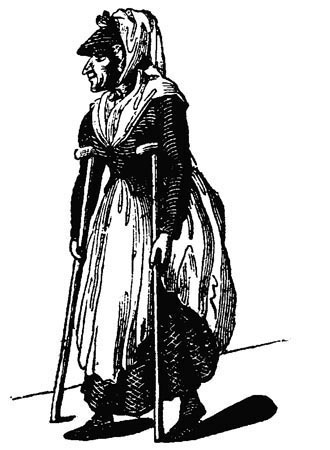
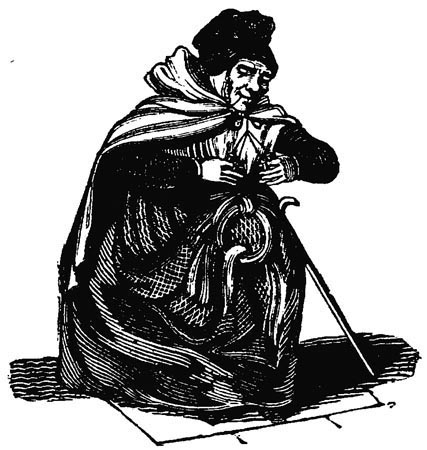
head long in any he chose to call his own. A couple of beds, a couple
of chairs, a table, and an old woman, comprised all his furniture; and
he moved them in about a minute's warning. Of all these moveables, the
old woman was the only one which gave him trouble; for she was
afflicted with a lameness, that made it difficult to get her about
quite so fast as he chose. And then the colds she took were amazing;
for sometimes she was in a small house in the Haymarket; at another in
a great house in Portland Place: sometimes in a little room, and a
coal fire; at other times with a few chips, which the carpenters had
left, in rooms of most splendid, but frigid dimensions, and with a
little oiled paper in the windows for glass.
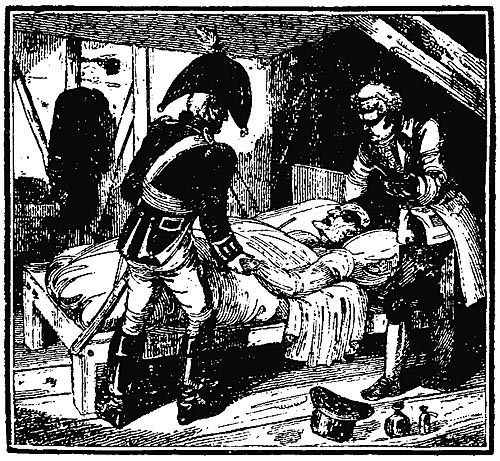
Mr. Elwes had come to town in his usual way, and taken up his abode in
one of his houses that was empty. Colonel Timms, who wished much to
see him, by some accident, was informed his uncle was in London; but
then how to find him was the difficulty. He inquired at all the usual
places where it was probable he might be heard of. He went to Mr.
Hoare's, his banker; to the Mount Coffee-house; but no tidings were to
be heard of him. Not many days afterwards, however, he learnt, from a
person whom he met accidentally, that they had seen Mr. Elwes going
into an uninhabited house in Great Marlborough Street. This was some
clue to Colonel Timms, and away he went thither. As the best mode of
information, he got hold of a chairman; but no intelligence
could he gain of a gentleman called Mr. Elwes. Colonel Timms
then described his person—but no gentleman had been seen. A
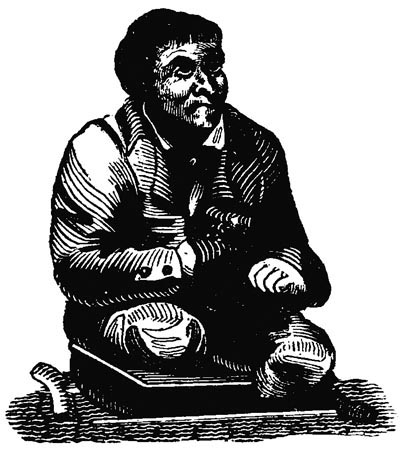
pot-boy, however, recollected, that he had seen a poor old man opening
the door of the stable, and locking it after him, and from every
description, it agreed with the person of old Mr. Elwes. Of course,
Colonel Timms, went to the house. He knocked very loudly at the door;
but no one answered. Some of the neighbours said they had seen such a
man; but no answer could be obtained from the house. The Colonel, on
this, resolved to have the stable-door opened; which being done, they
entered the house together. In the lower parts of it all was shut and
silent; but, on ascending the stair-case, they heard the moans of a
person seemingly in distress. They went to the chamber, and there,
upon an old pallet-bed, lay stretched out, seemingly in the agonies of
death the figure of old Mr. Elwes. For some time he seemed insensible
that any body was near him; but on some cordials being administered by
a neighbouring apothecary, who was sent for, he recovered enough to
say, "That he had, he believed, been ill for two or three days, and
that there was an old woman in the house; but for some reason or other
she had not been near him. That she had been ill herself; but that she
had got well, he supposed, and was gone away."
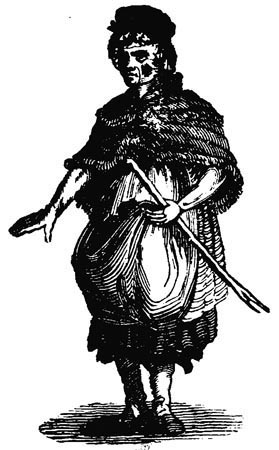
They afterwards found the old woman—the companion of all his
movements, and the partner of all his journeys—stretched out lifeless
on a rug upon the floor, in one of the garrets. She had been dead, to
all appearance, about two days.
Thus died the servant; and thus would have died, but for a
providential discovery of him by Colonel Timms, old Mr. Elwes, her
master! His mother, Mrs. Meggot, who possessed one hundred thousand
pounds, starved herself to death; and her son, who certainly was
then worth half a million, nearly died in his own house for
absolute want.
Mr. Elwes, however, was not a hard landlord, and his tenants lived
easily under him: but if they wanted any repairs, they were always at
liberty to do them for themselves; for what may be styled the comforts
of a house were unknown to him. What he allowed not himself it could
scarcely be expected he would give to others.
He had resided about thirteen years in Suffolk, when the contest for
Berkshire presented itself on the dissolution of parliament; and when,
to preserve the peace of that county, he was nominated by Lord Craven.
To this Mr. Elwes consented; but on the special agreement, that he was
to be brought in for nothing. All he did was dining at the ordinary at
Abingdon; and he got into parliament for the moderate sum of
eighteen-pence!
Mr. Elwes was at this time nearly sixty years old, but was in
possession of all his activity. Preparatory to his appearance on the
boards of St. Stephen's Chapel, he used to attend constantly, during
the races and other public meetings, all the great towns where his
voters resided; and at the different assemblies he would dance with
agility amongst the youngest to the last.
Mr. Elwes was chosen for Berkshire in three successive parliaments:
and he sat as a member of the House of Commons above twelve years. It
is to his honour, that, in every part of his conduct, and in every
vote he gave, he proved himself to be an independent country
gentleman.
The honour of parliament made no alteration in the dress of Mr.
Elwes: on the contrary, it seemed, at this time, to have attained
additional meanness, and nearly to have reached that happy climax of
poverty, which has, more than once, drawn on him the compassion of
those who passed him in the street. For the Speaker's dinners, he had
indeed one suit; with which the Speaker, in the course of the session,
became very familiar. The minister, likewise, was well acquainted with
it: and at any dinner of opposition, still was his apparel the same.
The wits of the minority used to say, "that they had full as much
reason as the minister to be satisfied with Mr. Elwes—as he had the
same habit with every body!" At this period of his life, Mr.
Elwes wore a wig. Much about that time, when his parliamentary life
ceased, that wig was worn out: so then (being older and wiser as to
expense) he wore his own hair; which, like his expenses, was very
small.
He retired voluntarily from a parliamentary life, and even took no
leave of his constituents by an advertisement. But, though Mr. Elwes
was now no longer a member of the House of Commons, yet, not with the
venal herd of expectant placemen and pensioners, whose eyes too often
view the House of Commons as another Royal Exchange, did Mr. Elwes
retire into private life. No; he had fairly and honourably,
attentively and long, done his duty there, and he had so done it
without "fee or reward." In all his parliamentary life, he never asked
or received a single favour; and he never gave a vote, but he could
solemnly have laid his hand upon his breast, and said, "So help me
God! I believe I am doing what is for the best!"
Thus, duly honoured, shall the memory of a good man go to his grave:
for, while it may be the painful duty of the biographer to present to
the public the pitiable follies which may deform a character, but
which must be given to render perfect the resemblance on those
beauties which arise from the bad parts of the picture, who shall say,
it is not a duty to expiate?
The model which Mr. Elwes left to future members may, perhaps, be
looked on rather as a work to wonder at than to follow, even under the
most virtuous of administrations. Mr. Elwes came into Parliament
without expense, and he performed his duty as a member would
have done in the pure days of our constitution. What he had not
bought, he never attempted to sell; and he went forward in that
straight and direct path, which can alone satisfy a reflecting and
good mind. In one word, Mr. Elwes, as a public man, voted and acted in
the House of Commons, as a man would do who felt there were people to
live after him, who wished to deliver unmortgaged to his children the
public estate of government; and who felt, that if he suffered himself
to become a pensioner on it, he thus far embarrassed his posterity,
and injured their inheritance.
When his son was in the Guards, he was frequently in the habit of
dining at the officers' table there. The politeness of his manner
rendered him generally agreeable, and in time he became acquainted
with every officer in the corps. Amongst the rest, was a gentleman of
the name of Tempest, whose good humour was almost proverbial. A
vacancy happening in a majority, it fell to this gentleman to
purchase; but as money is not always to be got upon landed property
immediately, it was imagined that some officer would have been obliged
to purchase over his head. Old Mr. Elwes hearing of the circumstance,
sent him the money the next morning, without asking any security. He
had seen Captain Tempest, and liked his manners; and he never once
afterwards talked to him about the payment of it. But on the death of
Captain Tempest, which happened shortly after, the money was replaced.
This was an act of liberality in Mr. Elwes which ought to atone for
many of his failings. But behold the inequalities which so strongly
mark this human being! Mr. Spurling, of Dynes-Hall, a very active and
intelligent magistrate for the county of Essex, was once requested by
Mr. Elwes to accompany him to Newmarket. It was a day in one of the
spring meetings which was remarkably filled with races; and they were
out from six in the morning till eight o'clock in the evening before
they again set out for home. Mr. Elwes, in the usual way, would eat
nothing; but Mr. Spurling was somewhat wiser, and went down to
Newmarket. When they began their journey home, the evening was grown
very dark and cold, and Mr. Spurling rode on somewhat quicker; but on
going through the turnpike by the Devil's Ditch, he heard Mr. Elwes
calling to him with great eagerness. On returning before he had paid,
Mr. Elwes said, "Here! here! follow me—this is the best road!" In an
instant he saw Mr. Elwes, as well as the night would permit, climbing
his horse up the precipice of the ditch. "Sir," said Mr. Spurling, "I
can never get up there." "No danger at all!" replied old Elwes: "but
if your horse be not safe, lead him!" At length, with great
difficulty, and with one of the horses falling, they mounted the
ditch, and then, with not less toil got down on the other side. When
they were safely landed on the plain, Mr. Spurling thanked heaven for
their escape. "Ay," said old Elwes, "you mean from the
turnpike: very right; never pay a turnpike if you can
avoid it!" In proceeding on their journey, they came to a very narrow
road: on which Mr. Elwes, notwithstanding the cold, went as slow as
possible. On Mr. Spurling wishing to quicken their pace, old Elwes
observed, that he was letting his horse feed on some hay that was
hanging to the sides of the hedge. "Besides," added he, "it is nice
hay, and you have it for nothing!"
Thus, while endangering his neck to save the payment of a turnpike,
and starving his horse for a halfpenny-worth of hay, was he
risking the sum of twenty-five thousand pounds on some iron
works across the Atlantic Ocean, and of which he knew nothing, either
as to produce, prospect or situation.
In the advance of the season, his morning employment was to pick up
any stray chips, bones, or other things, to carry to the fire, in his
pocket; and he was one day surprised by a neighbouring gentleman in
the act of pulling down, with some difficulty, a crow's nest,
for this purpose. On the gentleman wondering why he gave himself this
trouble.
"Oh, Sir," replied he, "it is really a shame that these creatures
should do so. Do but see what waste they make!"
To save, as he thought, the expense of going to a butcher, he would
have a whole sheep killed, and so eat mutton to the—end of the
chapter. When he occasionally had his river drawn, though sometimes
horse-loads of small fish were taken, not one would he suffer to be
thrown in again, for he observed, "He should never see them more!"
Game in the last state of putrefaction, and meat that walked about
his plate, would he continue to eat, rather than have new things
killed before the old provision was exhausted.
When any friends, who might occasionally be with him, were absent, he
would carefully put out his own fire, and walk to the house of a
neighbour; and thus make one fire serve both. His shoes he never would
suffer to be cleaned, lest they should be worn out the sooner. But
still, with all this self-denial—that penury of life to which the
inhabitant of an alms-house is not doomed—still did he think he was
profuse; and frequently said, "he must be a little more careful of his
property." When he went to bed, he would put five or ten guineas into
a bureau, and then, full of his money, after he had retired to rest,
sometimes in the middle of the night, he would come down to see if it
was safe. The irritation of his mind was unceasing. He thought every
body extravagant; and when a person was talking to him one day of the
great wealth of old Mr. Jennings, (who is supposed to be worth a
million,) and that they had seen him that day in a new
carriage, "Ay, ay," said old Elwes; "he will soon see the end of his
money!"
Mr. Elwes now denied himself every thing, except the common
necessaries of life; and, indeed, it might have admitted a doubt,
whether or not, if his manors, his fish-ponds, and grounds in his own
hands, had not furnished a subsistence, where he had not any thing
actually to buy, he would not, rather than have bought any thing, have
starved. He one day, during this period, dined upon the remaining part
of a moor-hen, which had been brought out of the river by a rat! and,
at another, ate an undigested part of a pike, which a larger one had
swallowed, but had not finished, and which was taken in this state in
a net! At the time this last circumstance happened, he discovered a
strange kind of satisfaction; for he said to Capt. Topham, who
happened to be present, "Ay! this is killing two birds with one
stone!" Mr. Elwes, at this time, was perhaps worth nearly 800,000l.
and at this period he had not made his will, of course was not saving
from any sentiment of affection for any person.
As he had now vested the enormous savings of his property in the
funds, he felt no diminution of it.
Mr. Elwes passed the spring of 1786 alone, at his solitary house at
Stoke; and, had it not been for some little daily scheme of avarice,
would have passed it without one consolatory moment. His temper began
to give way apace; his thoughts unceasingly ran upon money! money!
money!—and he saw no one but whom he imagined was deceiving and
defrauding him.
As, in the day, he would not allow himself any fire, he went to bed as
soon as day closed, to save candle; and had begun to deny himself even
the pleasure of sleeping in sheets. In short, he had now nearly
brought to a climax the moral of his whole life—the perfect vanity of
wealth!
On removing from Stoke, he went to his farmhouse at Thaydon Hall; a
scene of more ruin and desolation, if possible, than either of his
houses in Suffolk or Berkshire. It stood alone, on the borders of
Epping Forest; and an old man and woman, his tenants, were the only
persons with whom he could hold any converse. Here he fell ill; and,
as he would have no assistance, and had not even a servant, he lay,
unattended, and almost forgotten, for nearly a fortnight—indulging,
even in death, that avarice which malady could not subdue. It was at
this period he began to think of making his will; feeling, perhaps,
that his sons would not be entitled, by law, to any part of his
property, should he die intestate: and, on coming to London, he made
his last will and testament.
Mr. Elwes, shortly after executing his will, gave, by letter of
attorney, the power of managing, receiving, and paying all his monies,
into the hands of Mr. Ingraham, his lawyer, and his youngest son, John
Elwes, Esq. who had been his chief agents for some time.
Nor was the act by any means improper. The lapses of his memory
had now become frequent and glaring. All recent occurrences he forgot
entirely; and as he never committed any thing to writing, the
confusion he made was inexpressible. As an instance of this, the
following anecdote may serve. He had one evening given a draft on
Messrs. Hoares, his bankers, for twenty pounds; and having taken it
into his head, during the night, that he had over-drawn his account,
his anxiety was unceasing. He left his bed, and walking about his room
with that little feverish irritation that always distinguished
him, waited with the utmost impatience till morning came, when, on
going to his banker, with an apology for the great liberty he had
taken, he was assured there was no occasion for his apology, as he
happened to have in their hands, at that time, the small sum of
fourteen thousand seven hundred pounds!
Mr. Elwes passed the summer of 1788 at his house in Welbeck-Street,
London, without any other society than that of two maid servants: for
he had now given up the expense of keeping any male domestic. His
chief employment used to be that of getting up early in the morning to
visit his houses in Marybone, which during the summer were repairing.
As he was there generally at four o'clock in the morning, he was of
course on the spot before the workmen; and he used contentedly to sit
down on the steps before the door to scold them when they did come.
The neighbours, who used to see him appear thus regularly every
morning, and who concluded, from his apparel, he was one of the
workmen, observed, "there never was so punctual a man as the old
carpenter." During the whole morning he would continue to run up
and down stairs, to see the men were not idle for an instant, with the
same anxiety as if his whole happiness in life had been centred in the
finishing this house, regardless of the greater property he had at
stake in various places, and for ever employed in the minutiæ
only of affairs. Indeed, such was his anxiety about this house, the
rent of which was not above fifty pounds a year, that it brought on a
fever, which nearly cost him his life.
In the muscular and unincumbered frame of Mr. Elwes, there was every
thing that promised extreme length of life; and he lived to above
seventy years of age without any natural disorder attacking him: but,
as Lord Bacon has well observed, "the minds of some men are a lamp
that is continually burning;" and such was the mind of Mr. Elwes.
Removed from those occasional public avocations which had once engaged
his attention, money was now his only thought. He rose upon
money; upon money he lay down to rest; and as his
capacity sunk away from him by degrees, he dwindled from the real
cares of his property into the puerile concealment of a few guineas.
This little store he would carefully wrap up in various papers, and
depositing them in different corners, would amuse himself with running
from one to the other, to see whether they were all safe. Then
forgetting, perhaps, where he had concealed some of them, he would
become as seriously afflicted as a man might be who had lost all his
property. Nor was the day alone thus spent: he would frequently
rise in the middle of the night, and be heard walking about
different parts of the house, looking after what he had thus hidden
and forgotten.
It was at this period, and at seventy-six years old, or upwards, that
Mr. Elwes began to feel, for the first time, some bodily infirmities
from age. He now experienced occasional attacks from the gout: on
which, with his usual perseverance, and with all his accustomed
antipathy to apothecaries, and their bills, he would set
out to walk as far and as fast as he could. While he was engaged in
this painful mode of cure, he frequently lost himself in the streets,
the names of which he no longer remembered, and was as frequently
brought home by some errand-boy, or stranger, of whom he had inquired
his way. On these occasions he would bow and thank them, at the door,
with great civility; but never indulged them with a sight of the
inside of the house.
During the winter of 1789, the last winter Mr. Elwes was fated to see,
his memory visibly weakened every day; and, from his unceasing wish to
save money, he now began to apprehend he should die in want of it. Mr.
Gibson had been appointed his builder in the room of Mr. Adam; and one
day, when this gentleman waited upon him, he said, with apparent
concern, "Sir, pray consider in what a wretched state I am; you see in
what a good house I am living; and here are five guineas, which is all
I have at present; and how I shall go on with such a sum of money,
puzzles me to death—I dare say you thought I was rich; now you see
how it is!"
The first symptoms of more immediate decay, was his inability to enjoy
his rest at night. Frequently would he be heard at midnight as if
struggling with some one in his chamber, and crying out, "I will keep
my money, I will; nobody shall rob me of my property!" On any one of
the family going into his room, he would start from his fever of
anxiety, and, as if wakened from a troubled dream, again hurry into
bed, and seem unconscious of what had happened. At other times, when
perfectly awake, he would walk to the spot where he had hidden his
money, to see if it was safe.
In the autumn of 1789, his memory was gone entirely; his perception of
things was decreasing very rapidly; and as the mind became unsettled,
gusts of the most violent passion usurped the place of his former
command of temper. For six weeks previous to his death, he would go to
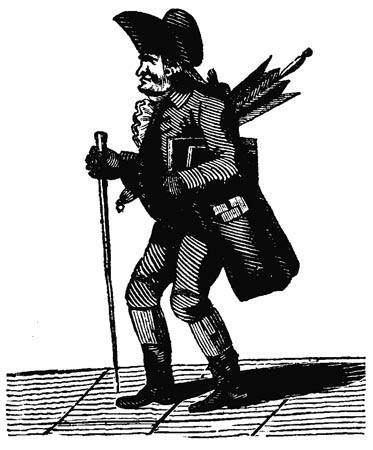
rest in his clothes, as perfectly dressed as during the day. He was
one morning found fast asleep betwixt the sheets, with his shoes on
his feet, his stick in his hand, and an old torn hat upon his head.
Mr. Elwes, on the 18th of November, 1789, discovered signs of that
utter and total weakness, which carried him to his grave in eight
days. On the evening of the first day he was conveyed to bed—from
which he rose no more. His appetite was gone. He had but a faint
recollection of any thing about him; and his last coherent words were
addressed to his son, Mr. John Elwes, in hoping "he had left him what
he wished," On the morning of the 26th of November he expired without
a sigh!
Thus died Mr. Elwes, the most perfect model of human penury which has
been presented to the public for a long series of years.