In a study of what constitutes the foundations of zoölogy we know of
no one better equipped to discuss the various problems than Professor
Brooks.[V] As an original investigator in many groups of invertebrate zoölogy,
as a student of animal life in temperate and tropical seas, as a special
teacher of embryology and zoölogy for a quarter of a century, and, above
all, as a profound student of the philosophical literature of the subject,
his equipment is thorough and complete. A fair review of this work would
be difficult without voluminous quotations from its pages.
The reader will find here the soundest, healthiest acceptance of the Darwinian
theory of natural selection. He penetrates the mists and fogs of
philosophical vagaries and follows the dictum of Tyndall, who, in presenting
the essentials of a discussion, says, "Not with the vagueness belonging
to the emotions, but with the definiteness belonging to the understanding"
we are to study these matters. It is fact, fact, fact. The honest "I do
not know" inspires the reader with a confidence that obscure points are
not to be juggled with. He insists that the principles of science are physical,
that a mechanical interpretation of Nature is reasonable and just.
Referring to Huxley, he remarks that faith and hope are good things, no
doubt, and (quoting from Huxley) "expectation is permissible when belief
is not," but experience teaches that expectation or faith of a master is very
apt to become belief in the mind of the student," and (again from Huxley)
"Science warns us that the assertion which outstrips evidence is not only
a blunder but a crime."
In the chapter of Nature and Nurture he brings many potent facts and
arguments against the idea of the transmission of acquired traits. Without
copious extracts it is impossible to do justice to this masterly presentation
of the subject. The chapter abounds in aphorisms, as indeed do
other portions of the work; and these alone, if serially collated with their
contexts, would make a valuable little handbook for the student of biology.
His chapter on Lamarck is equally strong, and the fallacies of Lamarckianisms
have never been so clearly shown. "The contrast between what we
may call the solicitude of Nature to secure the production of new beings,
and the ruthlessness with which they are sacrificed after they have come
into existence, is a stumbling-block to the Lamarckian, and the crowning
glory of natural selection in that it solves this great enigma of Nature by
showing that it is itself an adaptation and a means to an end, for the sacrifice
of individuals is the means for perfecting the adjustments of living
things to the world around them and for thus increasing the sum of life."
"Whole books have been written on the marvelous fitness of the structure,
the instincts, and the habits of the worker of the honeybee for its life of
active industry—a life in which the male has no share, and from which the
female is cut off by her seclusion in the depths of the hive, and by her devotion
to her own peculiar duties. While the queen and the drones are well
fitted for their own parts in the social organization of the hive, these duties
are quite simple, and very different from the duties of the workers; and
as these latter do not normally have descendants, and as they never under
any circumstances have female descendants, all the workers are the descendants
of queens and not of workers.
"Their wonderful and admirable fitness for their own most necessary
part in the economy of the hive must, therefore, be inherited from parents
who have never been exposed to those conditions to which the workers are
adapted; and this adaptation can not be due to the inheritance of the effect
of these conditions, nor can we believe that they are inherited from some
remote time, when the workers were perfect females or when the queens
were also workers; for the sterile workers of allied species differ among
themselves, thus proving that they have undergone modification since they
became sterile.
"Here we have a most complicated and perfect adjustment of marvelous
efficacy to external conditions which are of such a character as to
prove that the inheritance of the effect of these conditions has had no part
in the production of the adaptation."
His views of bird migration, based on the matter of ovulation and not
on food supply, are extremely interesting. He says: "As their eggs are
very large and heavy, a high birth rate is incompatible with flight, and
the preservation of each species imperatively demands that every egg shall
be cared for with increasing solicitude; for while in other animals increased
danger to eggs or young may be met and compensated by an increase
in the birth rate, the birth rate of birds can not be much increased without
a corresponding restriction of the power of flight. Every one knows
how quickly birds may be exterminated by the destruction of their eggs or
young, and the low birth rate of all birds of powerful flight is a sufficient
reason for migration, for at the same time that their fitness for flight limits
the birth rate, it permits them to seek nesting places beyond the reach of
their enemies."
His critical estimate of Huxley is tersely presented. He says: "His
evolution is not a system of philosophy, but part of the system of science.
It deals with history—with the phenomenal world—and not with the question
what may or may not lie behind it.
"The cultivation of natural science in this historical field and the discovery
that the present order of living things, including conscious, thinking,
ethical man, has followed after an older and simpler state of Nature,
is not 'philosophy' but science. It involves no more belief in the teachings
of any system of philosophy than does the knowledge that we are the
children of our parents and the parents of our children; but it is what
Huxley means by 'evolution.'"
Dr. Brooks credits Galton with employing simple terms to express new
and abstruse truths, and we trust those who are continually wrestling with
the dead languages to pick out new and distracting words to express their
conceptions will profit by Galton's method.
The lecture on Natural Selection and the antiquity of life is replete
with original and pregnant suggestions based upon the results of his own
profound investigations on pelagic life. Here again only ample quotations
from his pages would convey an adequate idea of their value and
importance. In his chapter on Louis Agassiz and George Berkeley he
gives this just tribute to Agassiz:
"The writer was a man of transcendent genius for scientific discovery,
with intense earnestness and enthusiasm for the pursuit of truth, and rare
eloquence and literary skill. If any man was devoted to the cause of truth
and determined to accept it, whatever it might prove to be, that man was
Agassiz; for while his impulses were notably devout and reverential, he
proved, on many occasions, that he was fearless and independent in the
search for truth. It is no disparagement to Buckland and Bell and Chalmers
and the other authors of the Bridgewater Treatises to assert that
Agassiz far surpassed them all in acquaintance with the methods which
lead to success in the interpretation of Nature, and in ability to treat the
problems of natural theology from the standpoint of the zoölogist."
He dedicates his book to Bishop Berkeley, and throughout the lectures
his references indicate a thorough acquaintance with the writings of this
eminent scholar.
Paley's old watch comes in for renewed consideration, and one wonders
if the mainspring of this device will ever be broken. His apt references
to classical authors indicate wide and judicious reading. The book is
overburdened with thought and clear, concise reasoning, and his final
advice should be followed when he urges his readers to do double duty by
reading the book again.
In the April number (1898) of this magazine we had occasion to review
the first two volumes of this work.[W] A perusal of the third volume does not
permit us to modify the expressions and criticisms there made. We then
said the work is "a compact storehouse of facts, a veritable ethnological
museum, and this feature alone renders the book indispensable to American
students." The author "shows no evidence of ever having seen the
magnificent series of volumes issued by the United States Bureau of Ethnology."
"The author in several instances confounds Japan and China."
"His treatment of the African races is by far the most exhaustive." These
extracts will apply most particularly to the present volume. The negro
races of the interior of Africa and those of West Africa, as well as the
cultured races of that continent, are exhaustively treated. In that portion
treating of the history of the civilization of eastern Asia the Japanese and
Chinese are considered together and many mistakes in generalization follow
as a result of this confounding. Long before we get to this portion
of the work an illustration is given of Japanese agricultural instruments,
in which only one plow of the many types in Japan is presented, and this
is evidently taken from a model. Not only has he confounded the Japanese
with the Chinese, but the southern Malays are brought in when he
speaks of the Malay and Japanese love of the cockfight—a practice which
is unknown in Japan. He refers to the Japanese latrine as being built
over running water, whereas the record of this custom is found only in
an ancient Japanese classic of the seventh century. He is in error in
stating that the stage is essentially the same in China and Japan. His
description of the music of Japan applies to China only. The statements
that pearls play a large part in the ornaments of the Japanese, that the
fireproof buildings are of stone, that the Japanese tobacco is moistened
with opium, that the Japanese street dress is full of color, are all erroneous.
His description of the sash worn by men is the description of the woman's
sash. He says "the Japanese currency before the change to dollars and
cents was like that of the Chinese." Had he consulted Snowden's description
of ancient and modern coins, etc., he would have found this correct
statement in regard to Japanese coins: "In their shape, composition, and
relation to each other they present some striking features which set them
apart from every other system of coinage in the world."
The illustrations are badly distributed. Through pages of description
of the Japanese and Koreans, in which little is said about the Koreans,
are scattered illustrations of the inhabitants of Yeso—the Ainu. The illustration
of Japanese table furniture depicts only utensils for smoking and
wine-drinking, and some of these are erroneously labeled, as are those of
certain Chinese utensils.
We trust that the Asiatic portion of this valuable work will be written
over again, and in doing it the author will realize that he is dealing with
four or five hundred million people widely separated in language, modes
of writing, customs, and manners; that he will consider the Ainu, Korean,
Japanese, Chinese, Thibetan, and Indo-Chinese with the same thoroughness
that he has given to the separate groups of the African continent; that
he will draw his information from modern sources and collections properly
labeled and up to date.
Even with the defects pointed out the work will prove of great value to
the American student, as it brings before him the richness of the ethnological
museums of Europe.
The Development of English Thought[X]
is "an attempt to present a theory of
history through concrete illustrations."
The book does not deal with the facts
of history—a knowledge of these is assumed—it
throws into relief certain salient
features of each epoch which were
instrumental in forwarding the social
consciousness. It may, indeed, be called
a philosophy of economics. It has a theory
to propound: Survival is determined
and progress created by a struggle for
the goods for which men strive, or the
means by which they may avert evil.
These goods change, together with the
environment dependent on them. Hence
arise new activities; the race is modified,
new modes of thought come forward,
and finally the characteristics
of the civilization are reconstructed.
These changes are subject to a definite
law of evolution, repeated in each new
environment. England has been chosen
for this economic interpretation of history;
because of its insular position, its
development has been more normal and
indigenous, less subject to foreign influences
since the Reformation, than any
continental country. An explanation of
the psychological theory underlying the
book serves as general introduction.
The antecedents of English thought are
found among the early Germans, and
the Early Church. The fifteenth century,
with its inventions and discoveries,
revolutionized men's ways of living
and thinking. Then the Calvinists and
Puritans imposed their standards of
good and evil. These are followed by
the great English thinkers: Locke, who
marks the beginning of Deism in England;
Mandeville, Hume, and Smith,
developing the economic side; Whitefield
and Wesley leading the religious
revival. Later on, Malthus, Ricardo,
and Mill formulated the Economic Philosophy,
whereas Darwin, the first of
the biologists, imposed biologic habits of
thought on economic inquiry. The concluding
chapter, while cautious in the
discussion of current problems, attempts,
assisted by the lessons of the
past, to indicate the probable future
movement of thought, springing out of
present economic conditions.
Mr. Wilbur S. Jackman has sought in
preparing his manual of Nature Study
for Grammar Grades,[Y] to propose a few
of such problems arising in a thoughtful
study of Nature as are within the
comprehension of grammar-school pupils,
and to offer suggestions designed
to lead to their solution. Directions
may perhaps be given by the teacher—that
is, by some teachers, but very few—but
even if he knows how, it is hardly
possible for him to make them as systematic
to so large an extent as would
be required by a school of inquiring
pupils; and such a plan as the author
offers may be accepted as a valuable
help. Take, for instance, the first lesson
on the mutual relations of plants
and insects—as to plants. The student
is told what equipment to take, what
places to visit; is reminded of seven
kinds of evidence in the shape of galls,
stings, eaten leaves, etc., to be considered;
and is given a list of queries to be
recollected in studying the phenomena,
in their general aspect, as to the benefit
or injury received by the plant from
insects, the attractions it offers, and
the defenses it possesses, with "number
work" relating to the extent of the
depredations, and methods of representing
the results of the study in picture.
The book contains forty-five such lessons
on different aspects of Nature.
In the preparation of his book on
Fertilizers[Z] it has been the aim of Mr.
Voorhees to point out the underlying
principles and to discuss, in the light of
our present knowledge of the subject,
some of the important problems connected
with the use of fertilizing materials.
While the author recognizes the
lack of definite knowledge on many
vital points, he considers it desirable,
when the investigations of the experiment
stations are becoming so important
and they are so well prepared to
study the fundamental principles of
plant nutrition, for the practical man to
have a clear understanding of what is
now known. The book treats of the
natural fertility of the soil and the
sources of the loss of the elements of
fertility, the functions of manure and
fertilizers and the need of artificial ones,
the different classes of fertilizers, the
chemical analysis of them, and the
methods of using them with their special
application to various crops.
We have received, with only a short
interval between them, the first volume
of a third edition and the fourth or
last volume of the second edition of
Alfred H. Allen's Commercial Organic
Analysis.[AA] The former volume is first
to reach us. It is a high testimony to
the value of the work in itself that the
publication of a rival issue of the edition
of 1885 had been begun by another
house, although its age, as suggested by
the date, would indicate that it had
much need of revision. During the thirteen
years since the publication of this
edition later research has thrown new
light on many features of the science
and processes, and has corrected many
of the old conceptions, and the author's
views on some points have changed in
the light of the more recent results, so
that the preparation of a new edition
had become necessary. Mr. Allen has
found it now impossible for him to undertake
the continuous labor which
would be imposed by such a task, and
the work of revision has been undertaken
by Henry Leffmann, of Philadelphia.
For this new edition Mr. Allen
has furnished material on the subjects
of the Kjeldahl process, proteids of
wheat flour, vinegar, brewing sugars,
malt substitutes, hop substitutes, and
secondary constituents in spirits. Information
has been added by the American
reviser, partly from suggestions by
Mr. Allen on the subjects of specific
gravity, formaldehyde, vinegar, methyl,
alcohol, acetone, fusel oil, argol, starch,
glucose, invert sugar, lactose, and wine,
and brief notes on other topics. Processes
of the American Association of
Official Agricultural Chemists have been
reprinted. The revision of Vol. II is
well in hand, and will be much more
extensive than that of Vol I.
On the other hand, the revision of
the second edition has extended over
fourteen years, and is only just completed
with the fourth volume, which
appears a few weeks later than the volume
noticed above. The earlier volumes
have been long out of print, and are destined,
of course, to be supplanted by
those of the new revision. The present
fourth volume, being newer and of the
present date, will serve as the latest till
the last volume of the new revision is
reached; and, besides, the author hopes
to publish an appendix to each volume,
containing the more important of the
later results. The meaning of the term
Commercial Analysis has been somewhat
extended, and matter has been included
that in closest strictness does not
belong under it, it being thought better,
the author says, to include all facts possessing
an analytical or practical interest
to him, in the belief that what he
finds useful himself will be of value to
others.
In The Porto Rico of To-day[AB] a traveler's
view of that interesting island and
its people is presented by Mr. A. G. Robinson,
who went there and remained
during August, September, and October,
1898, as correspondent of the New York
Evening Post. While the book can not
be regarded, as it does not profess and
is not intended to be, as a source of
geographical or statistical information,
it admirably fulfills the design of the author
to present a picture of the people
and of the country as he saw them; and
it is a very living picture too. He looked
with a sharp eye, and has recorded what
he saw in graphic style. In the author's
story of his early days of the island we
are made acquainted with the various
names it has had, of which Porto Rico,
or Puerto Rico, is only the latest. The
oldest of the European names appears to
have been Buriquién, in some one of the
dozen or more spellings it has had, one
of them being Bo. It has also been
called La Isla de Carib, San Juan Bautista,
etc. After the account of the author's
first general impressions and experiences
he describes the city of Ponce,
his visit to a coffee district, a number
of typical towns and villages, the journey
from Ponce to San Juan, the highways,
railways—of which there are one
hundred and forty-three miles in operation
and one hundred and seventy-five
miles under construction—and a fairly
effective telegraph system, views of the
industrial possibilities and commerce of
the island, with some experiences of military
campaigning.
The publication of the revision which
Mr. Herbert Spencer is making of his
Synthetic Philosophy in order to incorporate
in it as far as may be the results
of more recent advances begins
with the first volume of The Principles
of Biology.[AC] The advance during the
last generation, Mr. Spencer thinks,
has been more rapid in the direction
of this science than any other, and
though the hope of bringing a work on
biology at large up to date could not be
rationally entertained at the author's
age and under the existing conditions of
his physical strength, a similar service
to a work on the principles of the science
did not seem impossible. Numerous additions
have been needful. What was
originally said about vital changes of
matter is supplemented by a chapter on
Metabolism. A chapter is added on The
Dynamic Element in Life. The insertion
of some pages on Structure fills a gap
in preceding editions. The revelations
of the microscope on cell life and multiplication
are set forth. A supplementary
chapter on Genesis, Heredity, and
Variation gives the results of further
evidence and further thought in that
line, qualifying and developing certain
views enunciated in the first edition.
Various modern ideas are considered
under the title Recent Criticisms and
Hypotheses. The chapter on The Arguments
from Embryology has been largely
rewritten. Smaller additions appear
in the form of new sections incorporated
in pre-existing chapters. The assistance
needed in the work of revision
has been given by Prof. W. H. Perkin
in Organic Chemistry and its derived
subjects; Prof. A. G. Tansley in Plant
Morphology and Physiology; Prof. E.
W. MacBride and Mr. J. T. Cunningham
in Animal Morphology; and Mr.
W. B. Hardy in Animal Physiology. In
all sections not marked as new the author
desires it to be understood that the
essential ideas set forth are the same as
they were in the original edition of 1864.
Prof. Silas W. Holman attempts
the presentation, in Matter, Energy,
Force, and Work,[AD] of some of the fundamental
ideas and definitions of physics
in a plain and logical manner. His
purpose is not to set forth the experimental
side of the subject or to describe
phenomena or laws. He rather assumes
a slight knowledge of these, and proceeds
to develop the concept and definitions.
The author regards a clearer
thinking on these subjects as of special
importance to engineers and members of
the other technical professions, because
correct views upon them have become
essential in those professions through
the progress of the applications of science
to the industrial arts. These applications
are likewise of considerable
interest to the untechnical members of
the community. Professor Holman has
composed his book with the principle of
presenting the subject of physics in
logical sequence, and has divided it into
two parts, the first of which contains
the matter immediately proper to the
subject, with discussions of substance
or matter, motion; energy and its
forms; force; kinetic energy, force-measurements,
work, potential energy,
and matter again, as distinguished from
substance. The second part comprises
summaries of the chief theories of the
nature of matter, force, and energy, including
the kinetic theory of gases, Le
Sage's theory of gravitation, the vortex-atom
theory, and a discussion of
the nature of energy and matter, with
observations on chemical energy and
the ether.
The Short Course in Music, prepared
for use in schools where a complete
course is not thought necessary, by F.
H. Ripley and Thomas Tappen, is embraced
in two books, of which we notice
the second (American Book Company).
Familiar songs are made the basis of
instruction, some of those which appear
as melodies in Book One being repeated
here in full score. All other material
has been prepared especially for this
book. The music and directions are
adapted equally for unchanged and
changed voices. Voice training and the
elements of phrasing and expression are
furnished in a group of solfeggios at the
close of the book. Theory is given in
condensed form, but one that, it is
claimed, embraces all the essential elements
of vocal music.
Mr. J. E. Marr has prepared his exposition
of The Principles of Stratigraphical
Geology (Cambridge University
Press; The Macmillan Company,
New York, $1.60), under the belief that
an idea of the subject can be obtained
most satisfactorily if a large number of
the details connected with the study of
the stratified rocks are omitted. He has
accordingly given very brief accounts
of the strata of the different systems,
paying more attention to the bearings
of the facts than to their enumeration.
The history of the earth is presented as
a connected one, in which one period is
linked on to the next, every event that
occurs introducing a new complication
into the conditions, which are consequently
never quite the same—the
changes showing an advance from the
simple to the more complex. The study
proves that an enormous period elapsed
subsequent to the formation of the
earth and previous to the deposition of
the stratified rocks, of which we have
only the slightest, if any, knowledge.
The stratigraphical geologist has to establish
the order of succession of the
strata for the chronology, and to ascertain
as far as he can the conditions existing
during the deposition of the several
strata or groups of strata. After
an account of the growth and progress
of stratigraphical geology, the nature of
the stratified rocks and the law of superposition
are discussed; the test of
included organisms and the methods
of classification are explained, the evidences
of conditions under which strata
were formed, and other theoretical points
are considered, and the several geological
systems or periods are enumerated
under the English nomenclature. Finally,
the various estimates of geological
time and the bases on which they are
made are reviewed.
The American Book Company publishes
as a part of the Eclectic System of
Industrial Drawing an excellent manual
of the Elements of Perspective, by
Christine Gordon Sullivan, of the Cincinnati
public schools. It consists of explicit
directions and rules on the general
principles of the art, with applications
in Isometric Projection and
Oblique Perspective, given in concise
form and simple, clear language, amply
illustrated, and supplemented by problems,
in solving which the rules are made
practical.
A convenient manual on Gas and
Petroleum Engines has been prepared
by A. G. Elliott from the French of
Henry de Graffigny for Whittaker's
Electro-Mechanical Series, in recognition
of the interest that has been awakened
in the application of such engines to
supply the place now occupied by horses
in drawing vehicles. One chapter deals
exclusively with the theory of the gas
engines. Other topics treated of are the
history of the gas engine, the description
of existing gas engines, carbureted
air engines, petroleum engines, gas-generating
plants, engines for use with poor
gases, and the maintenance of gas and
oil engines. (The Macmillan Company,
75 cents.)
Laboratory Exercises in Anatomy
and Physiology (New York: Henry
Holt & Co., 60 cents) have been prepared
by James Edward Peabody for
practical application. The precept is
emphasized that the pupil should be
led to see that most of the materials required
for observation and experiment
are furnished by the organs and tissues
of his own body. Directions which have
been found in the author's experience
necessary to guide the pupil in his observations
and experiments are given
at the beginning of each topic. The
questions following them contemplate
the student's seeking the facts from the
material itself, and he is expected to be
trained to distinguish observed results
from the inferences that may be drawn
from them. Some home study is contemplated,
the results to be afterward
reported in class. The book consists almost
entirely of directions for experiments,
and is interlined with blank
sheets for recording observations.
Geographical Nature Studies (American
Book Company) is intended by the
author, Frank Owen Payne, to assist
the teacher, and by pointing out the relations,
often unrecognized, between familiar
phenomena and home geography
to guide the study of the class to definite
and practical ends. The lessons are
intended to fit the comprehension of the
youngest pupils, to promote the cultivation
of habits of accurate observation,
and to stimulate a desire for more
knowledge and broader views of the
world. They lead directly up to the
point where the more formal study of
geography from a text-book begins.
The lessons may be used as reading exercises
and for topical recitations, and
exercises are introduced which may assist
the cultivation of the power of correct
verbal expression in the statement
of facts. The exercises concern weather,
animals, physical phenomena, and objects
about us, and are very various.
Impressions of Medusæ have been
observed on the Jurassic lithographic
limestones of Solenhofen, and some
"problematic fossils" on the Lower
Cambrian rocks of Sweden have been
regarded as derived from Medusæ. Certain
nodules, bearing what looked like
flattened-out starfishes—"star-cobbles"
they were called—have been found
among the fossils of the Coosa Valley,
Alabama. Director Charles D. Walcott,
of the United States Geological Survey,
concluded that these also represented
Medusæ, and began an investigation of
them which involved a comparison with
the Swedish and Bavarian specimens,
and was at last enlarged so as to embrace
all fossil Medusæ. His work is now
published as a separate memoir, Fossil
Medusæ, as one of the Monographs of
the United States Geological Survey
(Vol. XXX). The Middle Cambrian Medusæ
are first described, and then, in
order, the Lower Cambrian of the United
States and of Sweden and Bohemia and
the Jurassic of Bavaria. The text is
illustrated by forty-seven excellent
plates.
A new edition, revised and with additions,
of the Mechanics and Heat of
Edward L. Nichols and W. S. Francis is
published by the Macmillan Company
($1.50). The book is the first volume of
the Elements of Physics of the authors,
which is complete in three volumes. We
find in it no explanation of the nature
and extent of the revisions and additions.
The publication of such a book as
Catering for Two—Comfort and Economy
for small Households (G. P. Putnam's
Sons, $1.25)—has been suggested
to Alice L. James by the difficulty of
reducing the average rules of the cook-book
to meet the wants of a family of
two or three. The work embodies the
results of sixteen years' experience in
labor and study, and the author hopes
that with it the way may be made easier
for others whose bills of fare may
be made for two. The directions are
claimed to be throughout exact and reliable,
and the dishes to be nourishing,
appetizing, and inexpensive. The author's
plan is to take a bill of fare with
a comfortable variety of dishes, and
direct explicitly how each is to be prepared.
The manual on Testing Milk and its
Products, prepared for dairy students,
creamery and cheese factory operators,
food chemists, and dairy farmers, by
E. H. Farrington and F. W. Noll, has
reached a fourth edition, the first three
editions having been exhausted in about
a year. The present edition has been
thoroughly revised, and such additions
have been made to it as have been necessary
to bring it up to date. It has been
adopted as a text-book or reference-book
in the dairy schools of twelve States of
the Union and in a number of schools
in Canada. (Published by the Mendota
Book Company, Madison, Wis. $1.)
The Silver Cross, or the Carpenter
of Nazareth (International Publishing
Company, New York), is a short story
selected and translated from The Mysteries
of the People of Eugène Sue, and
published for the sake of the illustrations
it is supposed to afford of the
tyranny of the ruling class and the oppression
of the working people and the
poor and their suffering thereby which
prevailed in the grand days of the Roman
Empire, as well as always before,
and is assumed to have continued down
to the present. It is the story of the life
and sufferings of Jesus of Nazareth, told
in the thrilling style of the great French
novelist.
Agricultural Experiment Stations. Bulletins
and Reports. Delaware College; No.
44. Sorghum in 1898. By Charles L. Penny.
Pp. 16.—Michigan State Agricultural
College. Special, No. 11. Frozen Trees
and their Treatment. Pp. 4; Nos. 166 and
167. Dairy Matters. By C. D. Smith and
G. H. True. Pp. 30; No. 168. Michigan
Fruit List. By L. H. Taft. Pp. 16; Michigan
Bulletin of Vital Statistics, February
and March, 1899. Pp. 20 each.—New
Hampshire College: No. 58. The Cost of
raising Calves. By Fred W. Morse. Pp.
12; No. 59. Tenth Annual Report. By
Charles S. Murkland. Pp. 56; No. 60.
Green Corn under Glass. By F. William
Rane. Pp. 60; No. 61. The Inspection
of Fertilizers in 1898. Pp. 12; No. 62.
Forcing Pole Beans under Glass. By F.
William Rane. Pp. 8.—New Jersey: Report
of the Botanical Department for 1898.
By Byron D. Halsted. Pp. 84; No. 135.
The Poisonous Plants of New Jersey. By
Byron D. Halsted. Pp. 28.—New York:
No. 150. Two Small Fruit Pests. By F.
H. Hall and V. H. Lowe. Pp. 5.—Ohio:
No. 99. Sugar Beet Investigations in 1898.
By A. D. Selby; United States Department
of Agriculture. Some Insects Injurious
to Garden and Orchard Crops. By F.
H. Chittenden. Pp. 99; North Dakota
Weather and Crop Service for December,
1898. By W. L. Moon and B. H. Bronson.
Pp. 8.
American Economic Association. The
Federal Census. Critical Essays by Members
of the Association. Pp. 516. Paper.
$1.
American Public Health Association.
The Bertillon Classification of Causes of
Death. Lansing, Mich. Pp. 40.
Badenoch, L. N. True Tales of the Insects.
London: Chapman & Hall. Pp. 255.
Barber, Edwin Atlee. Anglo-American
Pottery. (Old English China, with American
Views.) Indianapolis, Ind.: Press of
the Clay-worker. Pp. 170. $1.50.
Bauer, L. A. The Physical Decomposition
of the Earth's Magnetic Field, No. 1.
Pp. 20. Is the Principal Source of the
Secular Variation of the Earth's Magnetism
within or without the Earth's Crust?
Pp. 6.
Bridges and Framed Structures. An
Illustrated Monthly Magazine. Vol. I, No.
1. April, 1899. Chicago: The D. P. Rauck
Publishing Company. Pp. 92. 30 cents.
Campbell, W. W. The Elements of
Practical Astronomy. New York: The
Macmillan Company. Pp. 264. $2.
Fairchild, H. L. Glacial Waters in the
Finger-Lake Region of New York. Pp. 36.
Glacial Lakes, Newberry, Warren, and
Dana, in Central New York. Pp. 14.
Fiske, John. Through Nature to God.
Boston and New York: Houghton, Mifflin
& Co. Pp. 194. $1.
Greinger, S., M. D. A Case of Abnormally
High Temperature subsequent to
Attack of Tertian Ague. Pp. 5.
Hague, Arnold. Presidential Address
to the Geological Society of Washington,
1898. Abstracts of Minutes, etc. Pp. 48.
Hollick, Arthur. Notes on Block Island.
Pp. 20, with plates. The Relations
between Forestry and Geology in New Jersey.
Parts I and II. Pp. 24. Additions
to the Palæobotany of the Cretaceous Formation
on Staten Island. No. II. Pp. 12,
with plates.
Hunter, S. J. Alfalfa, Grasshoppers,
Bees: Their Relationship. University of
Kansas. Pp. 152.
Jackman, Wilbur S. Nature Study for
Grammar Grades. New York: The Macmillan
Company. Pp. 407. $1.
Jenks, Josephine, Translator. Friedrich
Froebel's Education by Development.
New York: D. Appleton and Company.
International Education Series. Pp. 347.
Kemp, James Furman. Preliminary
Report of the Geology of Essex County,
New York. Pp. 24. Geology of the Lake
Placid Region. Pp. 20, with map.
Marot, Helen. A Handbook of Labor
Literature. Philadelphia: Free Library of
Economics and Political Science. Pp.
96. $1.
Mason, Otis Tufton. Aboriginal American
Zoötechny. New York: G. P. Putnam's
Sons. Pp. 37.
New England Anti-Vivisection Society
Monthly. Vol. IV, No. 4. April, 1899.
Pp. 20. Boston. 10 cents. $1 a year.
Pennwitt, W. C. Memorial to the
United States Senate concerning a National
University. Pp. 16.
Peck, F. W., Commissioner General.
The United States at the Paris Exposition
in 1900. Pp. 11. Internationale Exposition
Universelle, Paris, 1900. Regulations,
Classification. Chicago. Pp. 110.
Roosa, D. B. St. John, M. D. Defective
Eyesight. The Principle of its Relief by
Glasses. New York: The Macmillan Company.
Pp. 193. $1.
Russell, Frank. Explorations in the
Far North. University of Iowa. Pp. 190.
Sargent, Frederick Leroy. Corn Plants.
Their Uses and Ways of Life. Boston and
New York: Houghton, Mifflin & Co. Pp.
106.
Smith, D. T., M. D. The Philosophy of
Money, and other Essays. Louisville, Ky.:
John P. Morton & Co. Pp. 203. $1.25.
Smith, Edgar F. (authorized translator).
Victor von Richter's Organic Chemistry,
or Chemistry of the Carbon Compounds.
Edited by Prof. R. Anschütz.
Third American from the eighth German
edition. Philadelphia: P. Blakiston & Co.
Vol. I. The Aliphatic Series. Pp. 625. $3.
Smithsonian Institution (U. S. National
Museum). Cook, O. F. The Diplopod Family
Striariidæ. Pp. 8, with plates. African
Diplopoda of the Family Gomphodesmidæ.
Pp. 64, with plates.
Swift, Morrison I. Anti-Imperialism.
Los Angeles, Cal.: Public Ownership Review.
Pp. 64.
United States Commissioner of Fish
and Fisheries. Report to June 30, 1898.
Washington. Pp. 350.
Woodman, J. Edmund. Studies in the
Gold-bearing Slates of Nova Scotia. Boston
Society of Natural History. Pp. 42,
with 3 plates.
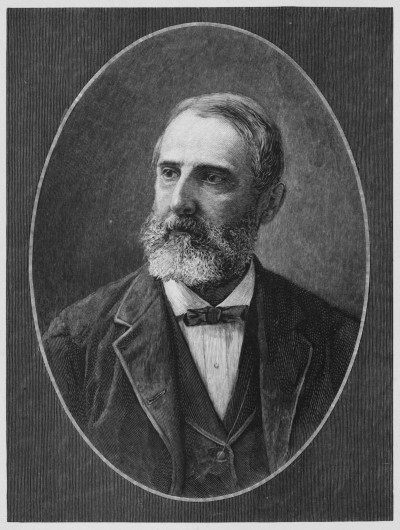 THOMAS EGLESTON.