The Lesson of Popular Government[12] is a fruit of thirty years' study,
by Mr. Bradford, of certain peculiarities in the political workings of our
institutions. The book is not for those who consider it patriotic to shut
their eyes to whatever is going wrong, but for those whose regard for the
Federal Constitution and the organization of our governments is only
increased by the consciousness of the strain to which they are exposed, and
who feel strongly that while the principles of the Government and the character
of the people "are still sound and reliable, some modifications and
readjustments of the machinery must take place, unless we are to drift
through practical anarchy and increasing corruption to military despotism."
For the sake of putting the subject in a clearer light, the three
more prominent approaches to democratic government in modern times—those
of England, France, and the United States—are studied comparatively
in the former part of the work. The carrying on of governments
in accordance with the expressed wish of the people is spoken of in the beginning
as the appearance of a new force which has changed the whole
face of society, and points to still greater changes in the future. How it
has worked in the three countries in which it has been in operation for a
little more than a century, and what it has done, are the questions which
the author undertakes to answer. In England, popular government has
taken the form, with a powerless hereditary sovereign commanding universal
loyalty, of a ministry responsible to a Parliament, which is directly
responsible to the people. In France, the executive is controlled by a legislative
body chosen by universal suffrage, the majority of which is held
together by party discipline. The virtue of this government is undergoing
a supreme test in the Dreyfus case, the right issue of which would show
a greater proportional advance in true liberty and the justification of popular
government than has taken place in any other nation. In the United
States, power is passing more and more into Congress, a body chosen separately
from the President, whose members are actuated by personal, local,
and partisan motives, and rarely rise to the conception of broad national
views or look further than to the immediate present, while the nation
at large and the Executive are without representation such as insures the
co-operation of the ministry and Parliament in England. In all other
respects than appointments to office, which must be made "in strict subordination
to the demands of members of his party in both Houses of Congress,"
the recognized power of the Executive is confined within very narrow
limits. In matters of legislation he has no voice whatever beyond
general recommendations, such as are open to any citizen, and to which
Congress pays little or no attention. In fact, that body resents anything
like an expression of opinion from the President. The system is not encouraging
to the filling of the office by men of the first rank, and men of
that rank seldom reach it. The House of Representatives, meeting every
two years a new body, suffers from its entire want of coherency and the
absence of a qualified leader, and falls an easy prey to the lobbyist and the
boss. So, while "there are still many, perhaps the majority, of men of
good character in public life, the tendency is steadily downward." It has
been customary in some quarters to charge the evils we suffer upon universal
suffrage, but Mr. Bradford maintains that it is this which to-day
is keeping up the character of the Government, and that but for the
restraints imposed by it our political condition would be a great deal
worse than it is. Further light is sought upon the situation, and further
pictures are given of the conditions existing in comprehensive reviews of
the State and municipal governments of the country. In considering proposed
remedies the referendum is dismissed as tending to destroy personality
and diffuse responsibility even more than is done now—the reverse of
the concentration of executive power as the only really indispensable part
of the Government, which should be sought. The enforcement of this
principle of executive supremacy with immediate responsibility is the
purpose of the book. Mr. Bradford would obtain this by giving the representatives
of the administrative departments seats in the House, with power
to suggest legislation, make explanations, and participate in debate. His
final argument is that it can not be charged that democracy is a failure;
but, "with a wholly new force introduced into the world, the proper machinery
for its application has not yet been employed. In its nature it
is reasonable, sound, and, on the whole, beneficent." Using the words of
an English writer, "the failures of government in the United States are
not the result of democracy, but of the craftiest combination of schemes
to defeat the will of democracy ever devised in the world."
We have already published a fairly comprehensive review of Richard
Semon's In the Australian Bush,[13] based upon the German original, by
Prof. E. P. Evans, in the fifty-second volume of the Monthly (November,
1897). But little needs to be added to what Professor Evans has said of
the book besides announcing the appearance of the English edition, the
translation for which was written under the author's own superintendence,
and the contents of which do not differ in any important particular from
the German impression. Professor Semon went to Australia on a special
zoölogical mission, and spent two years there. His purpose was the study of
the wonderful Australian fauna, the oviparous mammals, marsupials, and
ceratodus (lungfish). These animals represent forms which, with a few
notable exceptions, have long since become extinct in other countries, where
they have to be studied in such parts of their bony forms as happen to have
been preserved in the rocks, while here they can be examined alive and in
the flesh—"living fossils," as the author fittingly calls them, links between
the present age and one of the geological periods of the past. His observations
on these subjects are in course of publication in a special scientific
work, not quite half of which has appeared. The present volume consists
in the notes of travel and adventure, the dealing with men, the anthropological
studies, and what we might call the obiter observations of the expedition.
Almost simultaneously with Professor Semon's narrative we
have from the same publishers another book, on The Native Tribes of Central
Australia,[14] which deals more fully, exclusively, and perhaps more expertly
with the anthropology of a part of the Australian continent. Of the
authors, Mr. Gillen has spent the greater part of the past twenty years in
the center of the continent, and as sub-protector of the aborigines has had
exceptional opportunities of coming in contact with the Arunta tribe; and
both of them have been made fully initiated members of that tribe. Though
both about Australia, the two books do not cover the same ground. Australia
is very large, and its physical conditions are such that the groups
of tribes inhabiting the various regions have for a long period of time been
isolated from one another and have followed different lines in development.
Professor Semon's observations were made in the Burnett district
of northeastern Queensland, while those recorded in the work of Spencer
and Gillen were made in the very center of South Australia and of the continent.
Consequently, in reading them we read really about different
things. In addition to the investigation of various customs, such as those
connected with initiation and magic, special attention has been paid by
Messrs. Spencer and Gillen to the totemic system and to matters connected
with the social organization of the tribes; and here again the authors insist
upon the differences between the groups of tribes, and that the customs
of no one tribe or group can be taken as typical of Australia generally in
any other sense than as broad outline. Both works deal with considerable
fullness with the institution of marriage among the Australians, and the
customs by which too close intermarriage is prevented. Among other subjects
treated with especial fullness by Messrs. Spencer and Gillen are the
totems, the bull-roarers, the Intichuma ceremonies (associated with the
totems), the initiation ceremonies, customs relative to the knocking out
of teeth, traditions, burial and mourning, spirit individuals, medicine men
and magic, methods of obtaining wives, myths, clothing, weapons, implements,
decorative art, and names. Professor Semon formed a moderate
opinion of the capacity of the Australians. Though coarse and heavy, their
faces are not bad looking and have expression. They are "no link between
monkeys and men, but human creatures through and through," though of
one of the lowest types. They have no pottery, no agriculture, no abstract
ideas of any kind, can not count very far, but are clever in learning to
write, read, and draw, are experts in signaling, and have their intellect
and senses "brilliantly developed in all directions bearing on the hunt,"
with great dexterity in the use of weapons.
Miss Mary H. Kingsley has given
in her West African Studies[15] a book
marked by pungent wit and striking
originality in its sketches of adventure
and observation, and containing in the
chapters devoted to ethnology results of
her personal studies. She was already
known by a record of her adventures of
a young Englishwoman traveling alone
through some of the worst regions of
West Africa, embodied in her book Travels
in West Africa, which was published
in the latter part of 1898. The present
book may be regarded, as its name implies,
as the result and the embodiment
of the afterthoughts of that hazardous
journey. It includes, after descriptions
in which the unconventional directness
of expression is much to be remarked, an
account of African characteristics and a
description of fishing in West Africa,
chapters of a soberer sort on fetich,
schools of fetich, witchcraft, African
medicine and the witch doctor, and historical
and economical chapters on Early
Trade, French Discovery, Commerce, the
Crown Colony System and some of its
incidents, The Clash of Cultures, and African
Property. Miss Kingsley's criticisms
of the present system of administration
being regarded as rather destructive,
she endeavors to set forth, in a
chapter entitled An Alternative Plan,
"some other way wherein the African
colonies could be managed." Special attention
is invited by the author to two
articles in the appendix to the volume
by M. le Comte C. N. de Cardi and Mr.
John Harford. We are pleased to note
the high appreciation which Miss Kingsley
expresses of the anthropological work
concerning west-coast tribes of our former
contributor, Colonel A. B. Ellis—Sir
A. B. Ellis when he died.
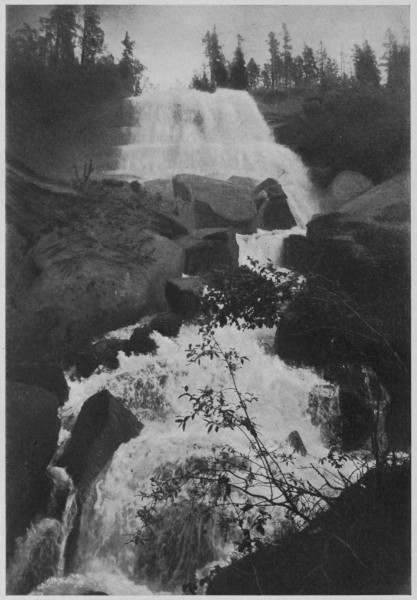
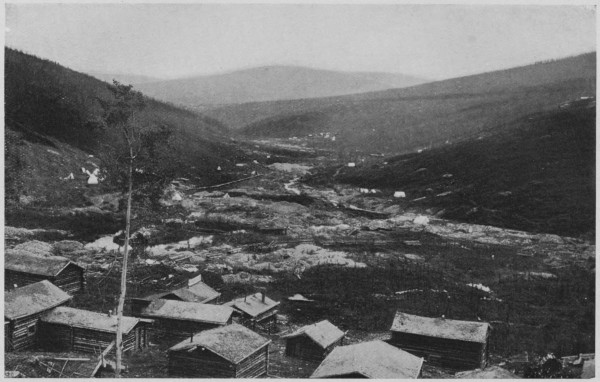
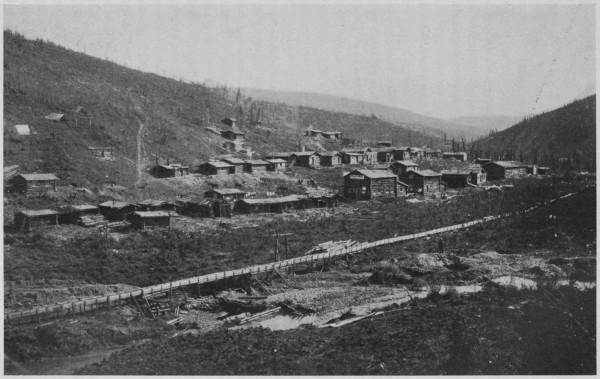
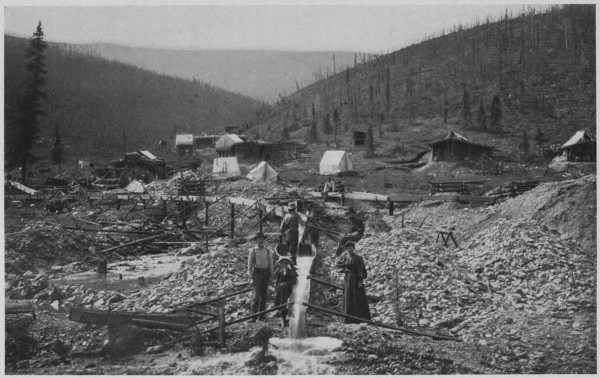
Mr. Frederick Palmer's In the Klondyke[16]
is an unpretentious book and free
from the appearance of sensationalism,
but gives a clear and graphic account
of the region and its ways and of the
getting there at the breaking up of winter.
The author was at Dyea late in
February, having intended to go with a
Government relief expedition which had
found no occasion to proceed farther.
Being thus left out, he undertook, with
dogs and sledges and two companions
who proved congenial, the "untried journey"
of six hundred miles over the ice
fields of the Lewes Lakes and the ice
packs of the Yukon River, which had
been the contemplated route of the expedition.
The start was made about the
18th of March, with little time to spare,
because the Yukon was expected to become
impassable by the 20th of April.
The Chilkoot Pass was achieved in a
day, and the rest of the journey was
made "downhill with the current of the
river at the rate of eight inches to the
mile," in weather that became very variable,
with now hard freezing and now
slush in the middle of the day. The difficulties
of the journey must have been
formidable, with considerable suffering,
besides a week in a hut with the measles,
but no complaint further than the mention
of the incidents appears in the author's
story. On some of the days the
thermometer ranged from 10° to 20° below
zero at two o'clock in the morning,
to 80° above at night, and the author
"had one ear blistered by the frost and
the other by the sun in the same day."
The party arrived at Dawson just four
days before the final break-up of the ice
in the river. Accounts corresponding in
temper and vividness with that of the
journey are given of Dawson, the miners
and mining, the history of the Klondyke
mining enterprise, Klondyke types of
character and adventure, the toils and
trials and profit and losses of the "Pilgrims,"
the workings of the Government,
and the return home to civilization—which
does not appear, after all, to have
offered transcendentally superior attractions
to those who had experienced the
pleasure of adventure.
The History of Physics in its Elementary
Branches[17] has been prepared
by Professor Cajori in the belief that
some attention to the history of a science
helps to make it attractive, and that the
general view of the development of the
human intellect gained in reading a history
on the subject is in itself stimulating
and liberalizing. The author has had
in mind Professor Ostwald's characterization
of the absence of the historical sense
and the want of knowledge of the great
researches upon which the edifice of science
rests as a defect in the present
method of teaching. The subject is
treated by periods. In ancient times
the Greeks, while displaying wonderful
creative genius in metaphysics, literature,
and art, being ignorant of the
method of experimentation, achieved
relatively little in natural science. The
Roman scientific writers were contented
to collect the researches of Greek professors.
Except in a few instances the
Arabs did not distinguish themselves
in original research. Writers in the middle
ages were only commentators, and
knew nothing of personal investigation.
The physicist of the renascence abandoned
scholastic speculation and began
to study Nature in the language of experiment.
The seventeenth century was
a period of great experimental as well
as theoretical activity. In the eighteenth
century speculation was less effectively
restrained and guided by experiments.
The nineteenth century "has
overthrown the leading theories of the
previous one hundred years, and has
largely built anew on the older foundations
laid during the seventeenth century."
The evolution of physical laboratories,
first for teachers and then for students,
is the subject of the last chapter.
"The Great Commanders Series" of D.
Appleton and Company is enriched by a
biography of General Sherman,[18] whom
the author, General Manning F. Force,
styles "the most picturesque figure in
our civil war." He was more than this;
he was its scholar and statesman—a man
distinguished by the possession of high
military combined with the best civil
qualities. Further, as General Force
well says, "his character was absolutely
pure and spotless." In his dealings with
the Vigilance Committee in San Francisco
he assumed a position which it required
courage of a much higher order
than a soldier's to maintain. While comfortably
situated as an honored professor
in the State Military Academy of
Louisiana when the Legislature passed
the Ordinance of Secession, he had no
hesitation in deciding what to do. He
at once gave in his resignation in a letter
that is a model of manliness, declaring
his preference "to maintain allegiance to
the Constitution of the United States as
long as a fragment of it survives." His
career as a general in the civil war is described
at length. Through it all his
foresight, seeking always to accomplish
the most with the least expenditure and
ultimate suffering, to which his strategy
was adapted, is conspicuous. At this
time and afterward his supreme thought
appears to have been as to what would
best conduce to the permanent good of
the republic. To his military ability and
self-effacing patriotism he added a far-seeing
wisdom in council that could always
be relied upon. "In his most unguarded
words his principle was always
clear, noble, and intensely patriotic, and
his careless colloquial expressions often
covered a practical wisdom and insight
of a most striking kind."
In preparing their Text-Book of Algebra[19]
the authors, assuming that mental
discipline is of the first importance
to every student of mathematics, have
endeavored to present the elements of
the science in a clear and logical form,
while yet keeping the needs of beginners
constantly in mind. Special attention
is given to making clear the reason
for every step taken; each principle is
first illustrated by particular examples,
and then rules and suggestions for performing
the operation are laid down.
The authors have endeavored to avoid
apparent conciseness at the expense of
clearness and accuracy, and have thereby
made their volume somewhat larger
than ordinary text-books. Features to
which attention is called are the development
of the fundamental operations
with algebraic numbers and the concrete
illustrations of these operations; the
use of type forms in multiplication and
division and in factoring; the application
of factoring to the solution of equations;
the solutions of equations based
upon equivalent equations and equivalent
systems of equations; the treatment
of irrational equations; the discussions
of general problems and the interpretation
of positive, negative, zero, intermediate,
and infinite solutions of
problems; the treatment of inequalities
and their applications; the outline of a
discussion of irrational numbers; a brief
introduction to imaginary and complex
numbers; and the great number of
graded examples and problems.
The material of the Primary Arithmetic,
Number Studies for the Second,
Third, and Fourth Grades, of A. R.
Hornbrook (American Book Company),
has been chosen with careful reference
to the development of the number sense
of little children, as noticed by the author
and as reported by many other
observers. A distinctive feature of the
work is the use of diagrams called
"number tables," as a concrete basis for
the child's thinking while he is getting
his first ideas of the facts of the addition
and multiplication tables. In them the
numbers up to one hundred are presented
in columns of tens, and so handled
as to exhibit to the child's conception
the relations of the several digits.
By their use he first learns the properties
of ten, then of two, and so on
of the others—not presented in regular
order, but with a view of exhibiting
special properties—and their relations
to one another. The method is ingenious
and appears useful.
The study on Rhode Island and the
Formation of the Union, of the Columbia
University Series in History, Economics,
and Public Law (The Macmillan
Company, New York), was undertaken
by Mr. Frank Greene Bates in
order to ascertain why Rhode Island so
long delayed its ratification of the Federal
Constitution. The delay seems to
have been largely a matter of the assertion
of State rights, in which Rhode
Island appears at that time to have been
but little, if any, behind South Carolina.
Liberty "was the presiding genius
of the spiritual life of the colony, and
the principle of freedom of conscience
was never lost sight of; and this could
not otherwise than heighten the other
characteristics of the colony—individualism."
The course pursued was the
natural outcome of the conditions of the
times, the "outcropping of the undying
love of the people of the State for democracy
and liberty, and their jealousy of
all authority outside their own boundaries."
"No book up to recent date," says
the author of Pantheism, the Light and
Hope of Modern Reason, who signs his
name C. Amryc, and gives no publisher's
name, "has treated pantheism as consistently
as it deserves to be treated";
and he adds that "it is no creed; it is
a logic; it makes absolutely no demand
upon 'belief'; what is not logical is rejected,
what is logical to-day is accepted,
no matter whether it was unlogical
a thousand years ago or will be
illogical a thousand years hence; we are
only responsible for our times." As pantheism,
if it is a true logic, must be applicable
to all races, the author has not
chosen his examples from one nation or
tribe; and he believes that the views he
expresses are also those of nine tenths
of what is called modern science. Many
topics are treated of, some of which
would not at first thought be associated
with an exposition of pantheism.
The matter and manner of the book are
various. Parts of it are fairly good reading;
other parts strike us as different.
A book on The Principles of Agriculture,
prepared by Prof. L. H. Bailey as
a text-book for schools and rural societies,
is published as a number of the
Rural Science Series of the Macmillan
Company ($1.25). In it agriculture is
treated as a business, not a science, but
as a business which is aided at every
point by a knowledge of science. "It
is on the science side that the experimenter
is able to help the farmer. On
the business side the farmer must rely
upon himself, for the person who is not
a good business man can not be a good
farmer, however much he may know of
science." The principle of the intelligent
application of knowledge is illustrated
in a remark of the author's about
the treating of drainage. The learner
is apt to begin at the wrong end of his
problem. In the usual method the pupil
or reader is first instructed in methods
of laying drains. "But drainage is not
the unit. The real unit is texture and
moisture of soils—plowing, draining,
green cropping, are methods of producing
a given or desired result. The real
subject-matter for first consideration,
therefore, is amelioration of soil, rather
than laying of drains." Professor Bailey
aims throughout this book to get at
"the real subject-matter for first consideration"
in matters relating to soils,
the plant and crops, and the animals
and stock.
Ideals and Programmes (C. W. Bardeen,
Syracuse, N. Y., 75 cents) is a collection
of thoughtful and suggestive essays,
by Jean L. Gourdy, on the practical
side of school life and the teaching
of children. The author's ideal
seems to be that the teacher should
have a plan for her work, preparing for
it so as to have the whole course marked
out on general lines for the entire school
year. Thus, her occupation should be to
qualify herself for doing the work right.
These statements of general principles
are followed by essays on reading and
plans for teaching, correlation as "the
headstone of the corner of successful
teaching, geography, sand modeling,
field lessons, kindergarten training, and
discipline." The burden of the whole is
by skillful adaptation to get the best
possible out of every lesson, in which
a liberal use of field work assists greatly,
and above all to avoid the stiff, formal,
juiceless lessons of the old style of
teaching.
There have been several biographies
of Faraday, most of them now out of
print; but the life, work, methods, character,
and aims of the man—who was
"beyond all question the greatest scientific
expositor of his time"—can not be
kept too constantly or too long before the
minds of students. Welcome, therefore,
is the easily accessible and convenient
volume Michael Faraday: His Life and
Work, which has been prepared by Prof.
Sylvanus P. Thompson, and is published
by the Macmillan Company in their
Century Science Series ($1.25). The
work by which Faraday contributed so
much to the advancement of knowledge
is made prominent, and is illustrated
largely, due regard being had to the
limitations of the size of the book, with
citations from his own journal and
copies of his drawings.
In American Indians, a book second
in order but first in date of publication
of a series of "Ethno-Geographic Readers"
(D. C. Heath & Co., Boston), Prof.
Frederick Starr has succeeded in conveying
a large amount of information
about our aborigines in a very small
space, and has done it in a clear style
and a very satisfactory manner. The
book is intended as a reading book for
boys and girls in school, to whose tastes
and capacity it seems well adapted; but
the author will be pleased if it also interests
older readers, and hopes it may
enlarge their sympathy with our native
Americans. Besides the accounts of the
tribal divisions, general customs, manner
of life, houses, and institutions—which
when they are counted up are
found to be quite numerous—it has articles
on the sign language, medicine
men and secret societies, the mounds
and their builders, George Catlin and
his work, the cliff-dwellings and ruins of
the Southwest, the tribes of the Northwest
coast, matters of religious and
mythological significance, the Aztecs,
the Mayas, and the ruined cities of Yucatan
and Central America.
The revision, for the fifth edition, of
H. Newell Martin's The Human Body
(Henry Holt & Co., New York, $1.20)
was undertaken by Prof. George Wills
Fitz with the idea of bringing the book
into accord with the late developments
of physiology, of simplifying the treatment
of some parts while expanding
that of others, and of giving additional
illustrations. Every effort has been
made to avoid injuring those features
of the author's work which have contributed
to making the book so favorably
known. The changes in the first
nine chapters are largely verbal; but
considerable alterations and additions
have been made in some of the succeeding
chapters. The directions for demonstrations
and experiments have been
greatly enlarged and collected into an
appendix. They include the new requirements
in anatomy, physiology, and
hygiene for admission to Harvard College
and the Lawrence Scientific School.
We have already noticed some of
Lucy S. W. Wilson's excellent Manuals
on Nature Study, particularly the one
intended for the guidance of teachers.
We now have in the same line the First
Reader of a series on Nature Study in
Elementary Schools (New York: The
Macmillan Company, 35 cents), a book
composed of original matter and selections
which has been prepared "with the
desire of putting into the hands of little
children literature which shall have for
their minds the same interest and value
that really good books have for grown-up
people." But the author does not expect
to accomplish this by merely giving
the book to the child and leaving
the reading to work out its own effect.
Each of the lessons is intended to be preceded
by a Nature lesson. During or
after the reading a lesson should be
given in the new words introduced, and
afterward the lessons should be grasped
for the sake of thought. The lessons,
which have appropriate illustrations
from Nature, present some novel features.
Among them is an apparent intention
in the original compositions to
follow the child's method of thought.
The American Elementary Arithmetic
(American Book Company) is intended
by the author, Prof. M. A. Bailey,
to cover the first five years' work (beginning
apparently very young) in the
study, and is the first of a two-book
series. It is divided into two parts—for
the primary and for the three succeeding
grades. It contemplates the use
of apparatus, consisting of paper, pasteboard,
toy money, blocks, and splints.
The attempt is made to give every subject
twice: first in pictures, and second
in the particular form of printed words.
Mathematical conceptions are presented
in the first chapter in the order in which
they are supposed to arise in the child's
consciousness—first, once or more, indefinitely;
next, how many, by holding
up fingers, laying down sticks, etc.; and
then by words, and so on—all introductory
work designed to develop step by
step a mathematical vocabulary, and to
form a habit of clear mathematical
thinking. The laboratory plan is followed
in the succeeding chapters.
In the Language Lessons of J. G.
Park (American Book Company) an arrangement
of the matter is aimed at
which will draw upon the student for
such effort as may be expected at a given
stage of advancement, which will cause
him to think first and then to express
his thought with clearness and precision.
In the succeeding parts are given
exercises on language work, with special
drills upon capitalization and punctuation,
inductive lessons in grammar, and,
finally, lessons so graded that a student
may advance very readily from them
into the higher work of grammar. The
study is facilitated by the use of striking
illustrations as the basis of lessons.
The Semi-annual Report of Schimmel
and Company (Leipsic and New York),
though primarily a business document,
furnishes much information about the
industries in essential oils and fine chemicals,
and concerning progress in the
departments of chemical science relating
to these. The report for October,
1898, speaks of much research and many
valuable studies as having been carried
on during the preceding six months in
the domain of the essential oils and their
constitution, and of ample material for
scientific reports as having been gathered.
Agricultural Experiment Stations. Bulletins
and Reports. Connecticut: No. 128.
Commercial Feeding Stuffs. Pp. 12; No.
129. Inspection and Care of Nursery Stock.
By W. E. Britton. Pp. 10. Twenty-second
Annual Report, Part II, Food Products.
Pp. 120.—Cornell University: No. 165.
Ropiness in Milk and Cream. By A. R.
Ward. Pp. 16; No. 166. Sugar-Beet Investigations
for 1898. Pp. 50; No. 167.
The Construction of the Stave Silo. By L.
A. Clinton. Pp. 16.—Hatch Station, Massachusetts
Agricultural College: No. 61.
Asparagus Rust. By G. E. Stone and R.
E. Smith. Pp. 20.—Iowa Agricultural College:
No. 40. Relation of Acid Fermentation
to Butter Flavor and Aroma. Pp. 12;
No. 41. New Orchard Fruits and Shrubs.
Pp. 64; No. 42. Weeds and Potato Scab.
Pp. 12.—New Hampshire Agricultural College:
No. 63. Third Potato Report. By
F. William Ranes. Pp. 32; No. 64. The
Forest Tent Caterpillar. By Clarence M.
Weed. Pp. 24.—New Jersey: No. 136.
Field Experiments with Nitrogenous Fertilizers.
By E. B. Voorhees. Pp. 32.—New
York: No. 149 (popular edition). Will
Poultry thrive on Grain Alone? By F. H.
Hall and W. P. Wheeler. Pp. 7; No. 151
(popular edition). How Ringing affects
Grapes. By F. H. Hall and Wendell Paddock.
Pp. 4; No. 152 (popular edition).
Two Apple Pests and how to check them.
By F. H. Hall and V. H. Lane. Pp. 8; No.
153. Director's Report for 1898. By W. H.
Jordan. Pp. 36; No. 154 (popular edition).
Profitable Potato Fertilizing. By F. H.
Hall and W. H. Jordan. Pp. 2; No. 155
(popular edition). Sugar-Beet Success for
the Season. By F. H. Hull and L. L. Van
Slyke. Pp. 8.—Ohio: No. 100. The Home
Mixing of Fertilizers. By C. R. Thorne.
Pp. 40; No 101. Oats. By J. F. Hickman.
Pp. 24; No. 102. Treatment for Insect
Pests and Plant Diseases, etc. By W. J.
Green and others. Sheet; No. 103. The
San José Scale Problem. By F. M. Webster.
Pp. 24. Newspaper Bulletin No.
192. Bovine Tuberculosis. Pp. 2.—Purdue
University: No. 75. The Sugar Beet. By
H. A. Husten and A. H. Bryan. Pp. 20;
No. 76. Skim Milk for Young Chickens.
By W. B. Anderson. Pp. 8; No. 77. Field
Experiments with Corn. By W. C. Latta
and W. B. Anderson. Pp. 160.—University
of Illinois. Eleventh Annual Report. Pp.
16; No. 84. Spraying Apple Trees. By J.
C. Blair. Pp. 36.—United States Department
of Agriculture. Natural History of
the Marias Islands, Mexico. By E. W.
Nelson. Pp. 96.—West Virginia. Nursery
Hints. By L. C. Corbett. Pp. 24.
Barber, Edwin Atlee. Anglo-American
Pottery, Old English China with American
Views. Indianapolis, Ind.: Press of the
Clay Worker. Pp. 175.
Barrett, John. The Philippine Islands
and America's Interests in the Far East.
Hong-Kong. Pp. 65.
Binet, Alfred. The Psychology of Reasoning.
Based on Experimental Researches
In Hypnotism. Chicago: Open Court
Publishing Company. Pp. 191. 75 cents.
Bridges and Framed Structures. Monthly.
Vol. 1, No. 2. May, 1899. Chicago:
The D. H. Ranck Publishing Company.
Pp. 92, with plates. 30 cents.
Brooks, William Keith. The Foundations
of Zoölogy. New York: The Macmillan
Company. Pp. 339. $2.50.
Bullen, Frank T. Idylls of the Sea.
With an Introduction by J. St. Loe
Strachey. New York: D. Appleton and
Company. Pp. 286. $1.25.
Bulletins, Reports, Transactions, etc.
American Society of Civil Engineers: Proceedings.
Vol. XXV. No. 4. Pp. 150.—British
Columbia, Province of: Annual Report
of the Minister of Mines to December
31, 1898. Pp. 280, with maps.—Chicago
Manual Training School (University of Chicago):
Catalogue, 1898-'99. Pp. 20.—City
of Seattle, County of King, State of Washington:
Report of the Chamber of Commerce.
Pp. 33.—City Library Association,
Springfield, Mass.: Bibliography of Geographical
Instruction. By W. S. Monroe.
Pp. 8.—Geographical Society of Washington:
Presidential Address of Arnold
Hague, Minutes for 1897 and 1898, etc.
Pp. 48.—Massachusetts Institute of Technology:
Annual Report of the President
and Treasurer for 1898. Pp. 96, with
plates; Annual Catalogue, 1898-'99. Pp.
347.—Michigan College of Mines: Catalogue,
1896 to 1898. Pp. 192.—New York
Academy of Natural Sciences: Annals.
Vol. XI, Part III. December 1, 1898. Pp.
230.—Ohio State University, Department
of Zoölogy and Entomology, No. 1: The
Odonata of Ohio. By David S. Kellicott.
Pp. 116.—United States Department of
Labor: No. 21. Pp. 188.—United States
Life-Saving Service: Annual Report of Operations
to June 30, 1898. Pp. 448.—Utah,
State of: Second Biennial Report of the
Superintendent of Public Instruction, to
June 30, 1898. Pp. 317, with tables.—War
Department of the United States: Customs
Tariff and Regulations for the Philippine
Islands. Pp. 40.
Burgess, O. O. A Question of Consciousness.
San Francisco. Pp. 40.
Cumulative Index to a Selected List of
Periodicals. Third Annual Volume, 1898.
Cleveland, Ohio: The Helman-Taylor Company.
Pp. 792.
Coming Age, The. A Magazine of Constructive
Thought. B. O. Flower and Mrs.
C. K. Reifsnider, Editors. Boston and St.
Louis. Vol. I, No. 3. March, 1899. Pp.
112. 20 cents.
Eidlitz, Leopold. On Light. An Analysis
of the Emersions of Jupiter's Satellite
I. New York: The Knickerbocker Press.
Pp. 12.
Elrod, M. J. The College, Past and
Present. Bloomington, Ill.: The University
Press. Pp. 26.
Fay, Edward Allen. Marriages of the
Deaf in America. Washington, D. C.: The
Volta Bureau. Pp. 527.
Gardiner, Charles A. Our Right to acquire
and to hold Foreign Territory. New
York: G. P. Putnam's Sons. Pp. 56.
International Express Company, New
York. Chart of Express Routes over the
World. Sheet.
Interstate Commerce Commission. Statistics
of Railways in the United States to
June 30, 1897. Pp. 687.
Jacoby, Johann. The Object of the Labor
Movement. Translated by Florence
Kelley. New York: International Publishing
Company (International Monthly Library).
Pp. 36. 5 cents.
Jackson, Frederick G. A Thousand
Days in the Arctic. With Preface by Admiral
S. F. Leopold McClintock. New
York: Harper & Brothers. Pp. 940.
Jordan, David Starr, with Official Associates
and Special Contributors. The Fur
Seals and Fur-Seal Islands of the North
Pacific Ocean. In Two Parts. Washington:
Government Printing Office. Pp. 606,
with plates.
Krüger, F. C. Theo. A Step Forward,
A Treatise on Possible Social Reform.
New York: Isaac H. Blanchard & Co.
Pp. 30.
Lucas, Fred Alexander. The Hermit
Naturalist. Trenton, N. J.: William Hibbert.
Pp. 121.
McLaughin, Andrew C. A History of
the American Nation. New York: D. Appleton
and Company. Pp. 587. $1.40.
Marsh, O. C. The Dinosaurs of North
America. United States Geological Survey.
Pp. 112, with 84 plates.
Marshall, Percival. Small Accumulators,
How Made and Used. New York:
Spon and Chamberlain. Pp. 78. 50 cents.
Michigan Ornithological Club, The.
Bulletin of, Monthly. Vol. III, No. 1.
January, 1899. Grand Rapids, Mich. 50
cents a year.
Moon, Clarence B. Certain Aboriginal
Mounds on the Coast of South Carolina.
(Journal of the Academy of Natural Sciences
of Philadelphia.) Pp. 40, with plates.
Moses, Alfred J. The Characters of
Crystals. An Introduction to Practical
Crystallography. New York: D. Van Nostrand
Company. Pp. 211. $2.
Munro, John. The Story of the British
Race. (Library of Useful Stories.) New
York: D. Appleton and Company. Pp. 228.
40 cents.
Palmer, Frederick. In the Klondyke.
Including an Account of a Winter's Journey
to Dawson. New York: Charles Scribner's
Sons. Pp. 218. $1.50.
Porter, Robert P. Industrial Cuba, Being
a Study of Present Commercial and
Industrial Conditions, etc. New York:
G. P. Putnam's Sons. Pp. 428. $3.50.
Reprints. Bolin, Jacob. On Group Contests.
Pp. 14.—Coulter, John M. Notes
on the Fertilization and Embryology of
Conifers. Pp. 4, with plates.—Grabau,
Amadeus W. Moniloperidæ, A New Family
of Palæozoic Corals. Pp. 16, with 4
plates.—Hunter, S. J. The Coccidæ of
Kansas. II. Pp. 12, with 6 plates.—Oliver,
Charles A. The Value of Repeated
and Differently Placed Exposures to the
Roentgen Rays in determining the Location
of Foreign Bodies in and about the
Eyeball. Pp. 4.—Tyson, James, M. D.,
Philadelphia. The Uric-Acid Diathesis
from a Clinical Standpoint. Pp. 15.—Washburn,
F. L. Hermaphroditism in Ostrea
Lurida. Pp. 3.
The Sanitary Home. A Magazine devoted
to Foods, Hygiene, and University
Extension Work. Monthly. Fargo, North
Dakota. Pp. 24. 10 cents. $1 a year.
Schimmel & Co., Leipsic and New
York. Semi-annual Report (Essential Oils,
etc.). April, 1899. Pp. 68.
Smith, D. T. Philosophy of Memory,
and other Essays. Louisville, Ky.: John
P. Morton & Co. Pp. 203.
Smithsonian Institution. Crookes, William.
Diamonds. Pp. 16.—Nutting, J. C.
Hydroida from Alaska and Puget Sound.
Pp. 12, with plates.
Todd, David P. Stars and Telescopes.
A Handy Book of Astronomy. Boston:
Little, Brown & Co. Pp. 419. $2.
Wetterstrand, Otto Georg. Hypnotism
and its Application to Practical Medicine.
Authorized Translation. By Henrik G.
Petersen. New York: G. P. Putnam's
Sons. Pp. 166.
Wilkensen, H. E., Acting Secretary,
and French, H. A., Acting Secretary. An
Earnest Word to Our Friends. Portland,
Oregon. (Home Making there.)
Woodhull, John F., and Van Arsdale,
M. B. Chemical Experiments. New York:
Henry Holt & Co. Pp. 136.
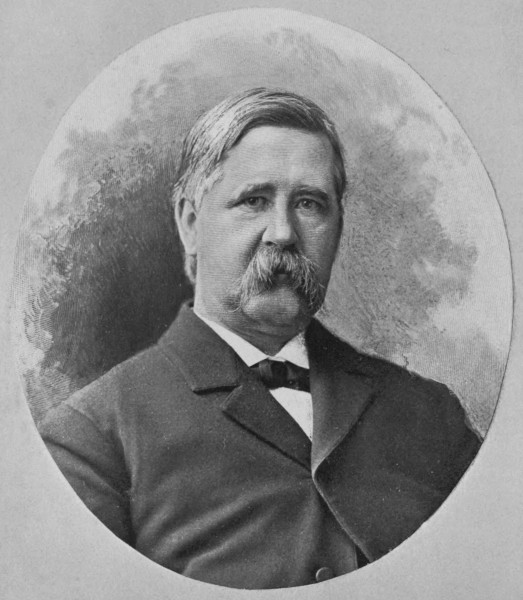 WILLIAM KEITH BROOKS.