There are a great many different ways of conceiving the science of
society, and until the study of the subject is more advanced than it is as
yet, it would be rash to set up any one method as superior to all others.
All that can reasonably be asked is that the subject should be approached
with a competent knowledge of what has previously been thought and
written in regard to it, that the aspects presented should possess intrinsic
importance, and that the treatment should be scientific. The work which
Professor Giddings has published under the title of Elements of Sociology[35]
fulfills these conditions entirely, and we consider it, after careful
examination, as admirably adapted to the purpose it is meant to serve—namely,
as "a text book for colleges and schools." For use in schools—that
is to say, in secondary schools of the ordinary range—the treatment
may be a little too elaborate, but for college use we should say that it is, so
far as method is concerned, precisely what is wanted. We do not know
any other work which gives in the same compass so interesting and satisfactory
an analysis of the constitution and development of society, or so
many suggestive views as to the springs of social action and the conditions of
social well-being. Professor Giddings writes in a clear and vigorous style,
and the careful student will notice many passages marked by great felicity
of expression. In a text-book designed to attract the young to a subject
calling for considerable concentration of attention, this is an advantage
that can hardly be overestimated.
In the first chapter the writer gives us his definition of society as "any
group or number of individuals who cultivate acquaintance and mental
agreement—that is to say, like-mindedness." The unit of investigation in
sociology is declared to be the individual member of society, or, as the
writer calls him, in relation to the investigation in hand, the "socius."
Whether in strict logic the unit of investigation in sociology can be the
individual, even granting, as must be done, that he is born social, is a point
on which we are not fully satisfied. We should be disposed to think that
the study of the individual was rather what Mr. Spencer would call a
"preparation" for sociology than an integral part of the science itself.
From a practical point of view, however, it must be conceded that a treatise
on sociology would begin somewhat abruptly if it did not present in the
first place an adequate description of the "socius," especially setting forth
those qualifications and tendencies which fit and impel him to enter into
relations with other members of the human race. Chapter V of the present
work deals with The Practical Activities of Socii, and shows in an interesting
manner what may be called the lines of approach of individuals
to one another in society. Sometimes the approach is by means of conflict,
and the writer shows how this may be a preparation for peaceful relations
through the insight it gives into opposing points of view. He distinguishes
between primary and secondary conflict—the first being a struggle in
which one individual violently strives to suppress or subdue an opposing
personality, the second a mere trial of differing opinions and tastes, leading
often to a profitable readjustment of individual standpoints.
Chapter X, entitled The Classes of Socii, is an excellent one. The author
classifies socii with reference (1) to vitality, (2) to personality—i.e.
personal resource and capacity—and (3) to social feeling. Under the third
classification he distinguishes (1) the social class, (2) the non-social class,
(3) the pseudo-social class, and (4) the anti-social class. The first of these,
the "social class," is well characterized as follows: "Their distinguishing
characteristic is a consciousness of kind that is wide in its scope and strong
in its intensity. They are sympathetic, friendly, helpful, and always interested
in endeavoring to perfect social relations, to develop the methods of
co-operation, to add to the happiness of mankind by improving the forms
of social pleasure, to preserve the great social institutions of the family and
the state. To this class the entire population turns for help, inspiration,
and leadership, for unselfish loyalty and wise enterprise. It includes all
who in the true sense of the word are philanthropic, all whose self-sacrifice
is directed by sound judgment, all true reformers whose zeal is tempered
by common sense and sober patience, and all those who give expression to
the ideals and aspirations of the community for a larger and better life."
The Pre-eminent Social Class is further discussed in Chapter XII; and the
subsequent chapters, as far as, and including, XIX, describe the processes by
which social results in the balancing of interests, establishment of rights,
assimilation of characters, and general improvement of social conditions,
are realized. The limits which expediency sets to the pursuit of "like-mindedness"
are well shown, and the advantage and necessity for social
progress of free discussion and wide toleration of individual differences are
strongly insisted on. Chapter XX deals with The Early History of
Society, and contains the statement that "from an apelike creature, no
longer perfectly represented in any existing species, the human race is
descended."
The subject of Democracy is well treated in a special chapter (XXIV).
The author is of opinion that, if the natural leaders of society do their
duty, they will wield a moral influence that will give a right direction to
public policy, and secure the continuous advance of the community in prosperity
and true civilization. The "if" is an important one, but the author
has strong hope, in which all his readers will certainly wish to share, that
in the main everything will turn out well.
The remarks on the State in Chapter XXIII are, as far as they go, judicious;
but we could have wished that the author, who we are sure desires
to make his treatise as practically useful as possible, had dwelt somewhat
on the dangers of over-legislation, and had brought into fuller relief than
he has done the difference between state action and voluntary enterprise,
arising from the fact that the former always involves the element of compulsion.
We pass a law when we can not get our neighbor to co-operate
or agree with us in something, and consequently resolve to compel him.
Surely this consideration should suffice to make parsimony the first principle
of legislation. We agree with our author that it is not well to "belittle"
the state (page 214), but it is hardly belittling the state to wish to be
very sparing in our appeals to it for the exercise of coercive power.
We miss also in the work before us such a treatment of the family as
might have been introduced into it with advantage. The family certainly
has an important relation to the individual, and in all civilized countries it
is specially recognized by the state. Mr. Spencer, in the chapter of his
Study of Sociology entitled Preparation in Psychology, has dwelt on the
encroachments of the state on the family; and Mr. Pearson, in his National
Life and Character, published half a dozen years ago, sounded a note of
alarm on the same subject. What position Professor Giddings would have
taken as to the importance of family life and the rights and duties of the
family we do not, of course, know; but we are disposed to think he could
have increased the usefulness and interest of his book by some discussion
of these points. We would only further say that, while the book is specially
intended for scholastic use, it is well adapted for general reading, and
that it could not be read carefully by any one without profit.
Prof. Wesley Mills holds the opinion that in the present stage of the
study of animal life,[36] facts are much more desirable than theories. Experiment
and observation must go on for many years before generalizations will
be worth the making. Putting this belief into practice, he has bred and
reared a large number of animals, making most careful notes on their
physical and mental development, and furnishes in his book, resulting from
these studies, a contribution of unquestionable value to comparative psychology.
In his investigation of the habits of squirrels, he finds the red squirrel,
or chickaree, much more intelligent than the chipmunk. The latter is
easily trapped, but the former profits by experience and is rarely secured a
second time. These little creatures are also adepts in feigning. Two examples
are cited in which squirrels apparently ill recovered rapidly when
left alone and made their escape in vigorous fashion. Many instances of
animals shamming death are judged to be cases of catalepsy induced by excessive
fear. The chickaree is also credited with some musical capacity,
one being observed, when excited, to utter tones that were birdlike;
whence it is concluded "likely that throughout the order Rodentia a genuine
musical appreciation exists, and considerable ability in expressing states
of emotion by vocal forms."
While experimenting with hibernating animals, Professor Mills kept a
woodchuck in confinement five years, and noted that it had a drowsy or
torpid period from November to April. Another specimen subjected to the
same conditions did not hibernate for an hour during the entire season.
Bats began to hibernate at 45° to 40° F., and were so affected by temperature
that they could be worked like a machine by varying it. The woodchuck,
however, was comparatively independent of heat and cold, but very sensitive
to storms. This is found to be true of many wild animals, that they "have
a delicate perception of meteorological conditions, making them wiser than
they know, for they act reflexly."
Some records are given of cases of lethargy among human beings, and
in regard to these, as well as normal sleep and hibernation, it is suggested
that their conditioning and variability throw great light upon the evolution
of function.
In order to observe closely the psychic development of young animals,
Professor Mills raised families of dogs, cats, chickens, rabbits, guinea-pigs,
and pigeons. The data obtained by him, given in the form of diaries with
comparisons and conclusions, constitute Part III, the larger half of the
book, unquestionably first in importance and interest. It is scarcely possible
to overvalue careful studies like these, undertaken not to justify theories,
but to bring to light whatever truths may be apprehended of the nature of
growth and connection of mind and body.
The last division of the book contains the discussions on instinct by
Professors Mills, Lloyd Morgan, Baldwin, and others, first published in
Science. The beginning of the volume, devoted to a general consideration
of the subject, consists of papers on methods of study and comparative
psychology which have appeared in various scientific periodicals, including
this magazine.
In Four-Footed Americans and their
Kin[37] a similar method is applied by Mabel
Osgood Wright to the study of animals to
that which was followed with reference to
ornithology in Citizen Bird. The subject
is taught in the form of a story, with dramatic
incident and adventure, and miniature
exploration, and the animals are allowed
occasionally to converse and express their
opinions and feelings. The scene of the
action is "Orchard Farm and twenty miles
around." Dr. Hunter and his daughter and
colored "mammy" have returned there to
their home after several years of travel, with
two city youths who have been invited to
spend the summer at the place and are told
the story of the birds. Another family have
come to make an autumn visit, but it is
arranged that they should spend the winter
at the farm. "What they did, and how they
became acquainted with the four-footed
Americans, is told in this story." Most of
the common animals of the United States are
met or described in the course of the party's
wandering, as creatures of life rather than
as in the cold and formal way of treating
museum specimens, and a great deal of the
lore of other branches of natural history is
introduced, as it would naturally come in in
such excursions as were taken. The scientific
accuracy of the book is assured by the participation
of Mr. Frank M. Chapman as editor.
At the end a Ladder for climbing the Family
Tree of the North American Mammals is
furnished in the shape of a table of classification;
and an index of English names is
given. The illustrations, by Ernest Seton
Thompson, give lifelike portraits and attitudes
and are very attractive.
St. George Mivart, whose enviable reputation
as a specialist in natural history has
perhaps given some justification for his attempts
at philosophy, has recently published a
new philosophical work entitled The Groundwork
of Science[38]. It is an effort to work out
the ultimate facts on which our knowledge,
and hence all science, is based. A short
preface and introductory chapter are devoted
to a statement of the aims of the work and
some general remarks regarding the history
of the scientific method. An enumeration of
the sciences and an indication of some of
their logical relations are next given. The
third chapter, entitled The Objects of Science,
is given up chiefly to a refutation of
idealism. The methods of science, its physical,
psychical, and intellectual antecedents,
language and science, causes of scientific
knowledge, and the nature of the groundwork
of science are the special topics of the
remaining chapters. The general scheme of
the inquiry is based on the theory that the
groundwork of science consists of three divisions.
"The laborers who work, the tools
they must employ, and that which constitutes
the field of their labor.... Science is partly
physical and partly psychical.... The
tools are those first principles and universal,
necessary, self-evident truths which lie so
frequently unnoticed in the human intellect,
and which are absolutely indispensable for
valid reasoning.... The nature of the workers
must also be noticed as necessarily affecting
the value of their work.... And, last
of all, a few words must be devoted to the
question whether there is any and, if any,
what foundation underlying the whole groundwork
of science." The result at which the
author arrives is stated as follows: "The
groundwork of science is the work of self-conscious
material organisms making use of
the marvelous first principles which they
possess in exploring all the physical and
psychical phenomena of the universe, which
sense, intuition, and ratiocination can anyhow
reveal to them as real existences, whether
actual or only possible.... The foundation
of science can only be sought in that
reason which evidently to us pervades the
universe, and is that by which our intellect
has been both produced and illumined."
A large amount of information, mainly of
a practical character, has been gathered by
Mr. William J. Clark in his book on Commercial
Cuba[39]—information, as Mr. Gould
well says in the introduction he has contributed
to the work, covering almost the entire
field of inquiry regarding Cuba and its resources.
The data have been partly gained
from the author's personal observation and
during his travels on the island, and partly
through laborious and painstaking classification
of existing material, collected from
many and diverse sources. The subject is
systematically treated. The first chapter—How
to Meet the Resident of Cuba—relates
to the behavior of visitors to the
island, really a considerably more important
matter than it would be in this country, for
the Spaniards are strict in their regard for
correct etiquette. It is natural that a chapter
on the population and its characteristics
and occupations should follow this. Even
more important than correct behavior—to
any one at least but a Spaniard—is the subject
of climate and the preservation of
health; and whatever is of moment in relation
to these subjects is given in the chapter
devoted to them. Next the geographical
characteristics of Cuba are described, and the
facilities and methods of transportation and
communication; also social and political
matters, including government, banking, and
commercial finance, and legal and administrative
systems of the past and future. A
chapter is given to Animal and Vegetable
Life, another to Sugar and Tobacco, and
a third to Some General Statistics, after
which the several provinces—Pinar del Rio,
the city and province of Havana (including
the Isle of Pines), and the provinces of Matanzas,
Santa Clara, Puerto Principe, and
Santiago—are described in detail, with their
physical characteristics, their agricultural or
mining resources, their various towns, and
whatever else in them is of interest to the
student of economics. A Cuban Business
Directory is given in the appendix.
A Collection of Essays is the modest designation
which Professors J.C. Arthur and D.T. MacDougal
give to the scientific papers included
in their book on Living Plants and their
Properties.[40] The authors deserve all praise
for having taken the pains without which no
book composed of occasional pieces can be
made complete and symmetrical, to revise
and rewrite the articles, omitting parts "less
relevant in the present connection," and amplifying
others "to meet the demands of continuity,
clearness, and harmony with current
botanical thought." Of the twelve papers,
those on the Special Senses of Plants, Wild
Lettuce, Universality of Consciousness and
Pain, Two Opposing Factors of Increase,
The Right to Live, and Distinction between
Plants and Animals, are by Professor Arthur;
and those on The Development of Irritability,
Mimosa—a Typical Sensitive Plant, The
Effect of Cold, Chlorophyll and Growth,
Leaves in Spring, Summer, and Autumn, and
the Significance of Color, are by Professor
MacDougal. Based to a large extent on original
investigations or careful studies, they
present many novel thoughts and aspects, and
constitute an acceptable addition to popular
botanical literature.
Having described the great and growing
interest taken in child study, President A.R.
Taylor announces as the principal aim of his
book, The Study of the Child,[41] to bring the
subject within the average comprehension of
the teacher and parent. Besides avoiding as
much as possible technical terms and scientific
formulas, the author has made the desire
to announce new principles subservient
to that of assisting his fellow-workers to a
closer relationship with the child. As teachers
and parents generally think it extremely
difficult to pursue the study of the child
without at least a fair understanding of the
elements of psychology, the author intimates
that they often forget that the study will
give them that very knowledge, and that,
properly pursued, it is the best possible introduction
to psychology in general. Every
chapter in the present book, he says, is an
attempt to organize the knowledge already
possessed by those who know little or nothing
of scientific psychology, and to assist
them to inquiries which will give a clearer
apprehension of the nature and possibilities
of the child. The treatise begins with the
wakening of the child to conscious life
through the senses, the nature and workings
of each of which are described. The bridge
over from the physical to the mental is found
in consciousness, which for the present purpose
is defined as the self knowing its own
states or activities. The idea of identity and
difference arises, symbols are invented or
suggested, and language is made possible.
The features of language peculiar to children
are considered. Muscular or motor control,
the feelings, and the will are treated as
phases or factors in development, and their
functions are defined. The intellect and its
various functions are discussed with considerable
fullness; and chapters on The Self,
Habit, and Character; Children's Instincts
and Plays; Manners and Morals; Normals
and Abnormals; and Stages of Growth, Fatigue
Point, etc., follow. A very satisfactory
bibliography is appended.
The Discharge of Electricity through
Gases[42] is an expansion of four lectures
given by the author, Prof. J.J. Thomson, of
the University of Cambridge, at Princeton
University in October, 1896. Some results
published between the delivery and printing
of the lectures are added. The author begins
by noticing the contrast between the variety
and complexity of electrical phenomena that
occur when matter is present in the field
with their simplicity when the ether alone is
involved; thus the idea of a charge of electricity,
which is probably in many classes of
phenomena the most prominent idea of all,
need not arise, and in fact does not arise, so
long as we deal with the ether alone. The
questions that occur when we consider the
relation between matter and the electrical
charge carried by it—such as the state of
the matter when carrying the charge, and the
effect produced on this state when the sign
of the charge is changed—are regarded as
among the most important in the whole range
of physics. The close connection that exists
between chemical and electrical phenomena
indicates that a knowledge of the relation
between matter and electricity would lead to
an increase of our knowledge of electricity,
and further of that of chemical action, and,
indeed, to an extension of the domain of
electricity over that of chemistry. For the
study of this relation the most promising
course is to begin with that between electricity
and matter in the gaseous or simpler
state; and that is what is undertaken in this
book. The subject is presented under the
three general headings with numerous subheadings
of The Discharge of Electricity
through Gases, Photo Electric Effects, and
Cathode Rays.
For a clear and concise presentation of
the framework of psychology and its basal
truths, the Story of the Mind[43] may be commended.
Although the space afforded is
only that of a bird's-eye view, no skeleton
bristling with technical terms confronts us,
but an attractive and well-furnished structure
with glimpses of various divisions that
tempt us to further examination. The text
is simply and charmingly written, and may
induce many to search the recesses of psychology
who, under a less skillful guide,
would be frightened away. A bibliography
at the end of the volume supplies what other
direction may be needed for more advanced
study. Admirable in construction and treatment
as the book is, there are, however,
paths in which we can not follow where
Professor Baldwin would lead, and in others
that we undertake with him we do not
recognize our surroundings as those he describes.
This is especially the case with the
environment of the genius. We do not
find that "he and society agree in regard
to the fitness of his thoughts," nor that "for
the most part his judgment is at once also
the social judgment." If such were the case,
how would he "wait for recognition," or be
"muzzled" for expressing his thoughts? In
almost all cases it is the story of Galileo
over again. In art, science, and social reform
he sees far beyond his fellows. Society
can not accept him because it has not the
vision of a genius. He contradicts its judgment
and is fortunate when he escapes with
the name of "crank." The military hero
does not enter into this category: he glorifies
the past rather than the future; he justifies
the multitude in a good opinion of itself and,
is therefore always received.
The first edition of Professor Bolton's
Catalogue of Scientific and Technical Periodicals[44]
was issued in 1885, and was intended
to embrace the principal independent
periodicals of every branch of pure and applied
science, published in all countries from
the rise of this literature to the present time,
with full titles, names of editors, sequence
of series, and other bibliographical details,
arranged on a simple plan convenient for
reference; omitting, with a few exceptions,
serials constituting transactions of learned
societies. In cases where the scientific character
of the journal or its right to be classed
as a periodical was doubtful, and in other
debatable cases, the compiler followed Zuchold's
maxim, that "in a bibliography it is
much better that a book should be found
which is not sought, than that one should be
sought for and not found." The new edition
contains as Part I a reprint from the plates
of the first edition, with such changes necessary
to bring the titles down to date as could
be made without overrunning the plates; and
in Part II additions to the titles of Part I
that could not be inserted in the plates, together
with about 3,600 new titles, bringing
the whole number of titles up to 8,477, together
with addenda, raising this number
to 8,603, minus the numbers 4,955 to 5,000,
which are skipped between the first and
second parts. Chronological tables give the
dates of the publication of each volume of
the periodicals entered. A library check list
shows in what American libraries the periodicals
may be found. Cross-references are
freely introduced. The material for the
work has been gathered from all available
bibliographies, and by personal examination
of the shelves and catalogues of many libraries
in the United States and Europe, and
from responses to circulars sent out by the
Smithsonian Institution. The whole work is
a monument of prodigious labor industriously
and faithfully performed.
In Theories of the Will in the History of
Philosophy[45] a concise account is given by
Archibald Alexander of the development of
the theory of the will from the early days
of Greek thought down to about the middle
of the present century; including, however,
only the theories of the more important
philosophers. In addition to contributing
something to the history of philosophy, it
has been the author's purpose to introduce in
this way a constructive explanation of voluntary
action. The account closes with the
theory of Lotze; since the publication of
which the methods of psychology have been
greatly modified, if not revolutionized, by the
development of the evolutional and physiological
systems of study. The particular
subjects considered are the theories of the
will in the Socratic period, the Stoic and
Epicurean theories; the theories in Christian
theology, in British philosophy from Bacon
to Reid, Continental theories from Descartes
to Leibnitz, and theories in German philosophy
from Kant to Lotze. The author
has tried to avoid obtruding his own opinions,
expressing an individual judgment only
on matters of doubtful interpretation; and
he recognizes that speculation and the introspective
method of studying the will appear
to have almost reached their limits.
Dr. Frank Overton's text-book of Applied
Physiology[46] makes a new departure
from the old methods of teaching physiology,
in that it begins with the cells as the units
of life and shows their relations to all the
elements of the body and all the processes
of human action. The fact of their fundamental
nature and importance is emphasized
throughout. The relation of oxidation—oxidation
within the cells—as the essential
act of respiration—to the disappearance of
food, the production of waste matters, and
the development of force, is dwelt upon.
The influence of alcohol is discussed in all
its aspects, not in a separate chapter, but
whenever it comes in place in connection
with the several topics and subjects treated.
Other narcotics are dealt with. A chapter
on inflammation and taking cold is believed
to be an entirely new feature in a school
text book. Summaries and review topics
are arranged at the end of each chapter;
subjects from original demonstrations and
the use of the microscope are listed; and
many hygienic topics, such as air, ventilation,
drinking water, clothing, bathing, bacteria,
etc., are specially treated.
The prominent characteristic of Professors
F.P. Venable and J.L. Howe's text-book
on Inorganic Chemistry according to
the Periodic Law[47] is expressed in the title,
and is the adoption of the periodic law as
the guiding principle of the treatment, and
the keeping of it in the foreground throughout.
So far as the authors have noticed, the
complete introduction of this system has not
been attempted before in any text book.
They have made the experiment of following
it closely in their classes, and their success
through several years has convinced them
of its value. "In no other way have we
been able to secure such thorough results,
both as to thorough, systematic instruction
and economy of time. The task is rendered
easier for both student and teacher." After
the setting forth of definitions and general
principles in the introduction, the elements
are taken up and described according to their
places and relations in the periodic groups,
and then their compounds are described successively,
with hydrogen, the halogens, oxygen,
sulphur, and the nitrides, phosphides,
carbides, silicides, and the alloys. The treatment
is systematic, condensed, and clear.
The purpose of Mr. John W. Troeger's
series of Nature-Study Readers is declared by
the editor to be to supply supplementary reading
for pupils who have been two years or
more at school. They are composed, moreover,
with a view to facilitating the recognition
in the printed form of words already
familiar to the ear, and to making the child at
home with them. In carrying out this purpose
the author takes advantage of the child's
fondness for making observations, especially
when attended by his companions or elders.
In doing this the aim has been kept in view
not to weary the child with details, and yet
to give sufficient information to lead to accurate
and complete observations. Most of the
chapters in the present volume, Harold's
Rambles, the second of the series, contain
the information gleaned during walks and
short excursions. Among the subjects concerned
are birds, mammals, insects, earthworms,
snails, astronomy, minerals, plants,
grasses, vegetables, physics, and features
connected with the farm. These Nature-study
readers are published as a branch of
Appletons' Home-Reading series. (New York:
D. Appleton and Company. Price, 40 cents.)
Another of Appletons' Home-Reading
Books is News from the Birds, which the
author, Leander S. Keyser, explains has been
written with two purposes in mind: first, to
furnish actual instruction, to tell some new
facts about bird life that have not yet been
recited; and, second, to inspire in readers a
taste for Nature study. It is by no means a
key for the identification of the birds; but,
instead of telling all that is or may be known
respecting a particular bird, the author has
sought only to recite such incidents as will
spur the reader to go out into the fields and
woods and study the birds in their native
haunts. For the most part the author has
given a record of his own observations, and
not a reiteration of what others have said.
He has gone to the birds themselves for his
facts, and has made very little use of books.
It has been Mr. Ernest A. Congdon's aim,
in preparing his Brief Course in Qualitative
Analysis (New York: Henry Holt; 60 cents),
to render it as concise as possible while making
the least sacrifice of a study of reactions
and solubilities of chemical importance. The
manual covers the points of preliminary reactions
on bases and acids; schemes of analysis
for bases and acids; explanatory notes
on the analyses; treatment of solid substances
(powders, alloys, or metals); and tables of
solubilities of salts of the bases studied.
A comprehensive list of questions, stimulative
of thought, is appended. The book is
intended merely as a laboratory guide, and
should be supplemented by frequent "quiz
classes" and by constant personal attention.
The course has been satisfactorily given in
the Drexel Institute within the allotted time
of one laboratory period of four hours, and
one hour for a lecture or quiz per week, during
the school year of thirty-two weeks.
Lest we Forget is the title which President
David Starr Jordan has given to his
address before the graduating class of Leland
Stanford Junior University, May 25, 1898—"lest
we forget" the dangers and duties and
responsibilities laid upon us by the war with
Spain. Though delivered before the "policy
of expansion" was fully developed, the address
describes with prophetic accuracy the
dream of imperialism with which the minds
even of men usually sane and honest have
become infected, and points out a few of
the logical results to which they would lead,
and the dangers which will have to be incurred
in gratifying them. We cite a few
of the strong points made by the author:
"Our question is not what we shall do with
Cuba, Porto Rico, and the Philippines; it is
what these prizes will do to us." "Shall
the war for Cuba Libre come to an inglorious
end? If we make anything by it, it will be
most inglorious." "I believe that the movement
toward broad dominion, so eloquently
outlined by Mr. Olney, would be a step downward."
Adams, Enos, 2072 Second Avenue, New York.
What is Science? Pp. 14.
Agricultural Experiment Stations. Bulletins.
Delaware College: No. 41. Pea Canning in Delaware.
By G.H. Powell. Pp. 16.—New Hampshire
College: No. 55. The Feeding Habits of
the Chipping Sparrow. By C.M. Weed. Pp.
12; No. 56. Poisonous Properties of Wild Cherry
Leaves. By F.W. Morse and C.D. Howard.
Pp. 12.—New Jersey: No. 130. Forage Crops.
By E.B. Voorhees and C.B. Lane. Pp. 22; No.
131. Feeds Rich in Protein, etc. By E.B. Voorhees.
Pp. 14.—New York: No. 145. Analysis of
Commercial Fertilizers. By L.L. Van Syke. Pp.
100.—United States Department of Agriculture.
Some Books on Agriculture and Sciences related
to Agriculture published in 1896-'98. Pp. 45.;
List of Publications relating to Forestry in the
Department Library. Pp. 93.
Allen, W.D., and Carlton, W.N., Editors
In Lantern Land, Vol. I, No. 1, December 3, 1898.
Monthly. Hartford, Conn. Pp. 16. 10 cents.
Amryc, C. Pantheism, the Light and Hope of
Modern Reason. Pp. 302.
Anthropological Institute of Great Britain and
Ireland, The Journal of. New Series, Vol. I, Nos.
1 and 2, August and November, 1898. London:
Kegan Paul, Trench, Trübner & Co. Pp. 200.
Atkinson, Edward. I. The Cost of a National
Crime. II. The Hell of War and its Penalties.
Brookline, Mass. Pp. 26.
Babcock Printing Press Manufacturing Company.
Some Facts about Modern Presses. Pp. 8.
Brinton, Daniel G. A Record of Study on
Aboriginal American Languages. Pp. 24.
Bulletins, Proceedings, and Reports. American
Society of Naturalists: Records, Vol. II, Part
3. Providence, R.I.: Published by the Society.
Pp. 58.—Argentine Republic. Anales de la Oficina
Meteorologica Argentina, Vol. XII. Climate
of Asuncion, Paraguay, and Rosario de Santa Fé.
Walter G. Davis, Director. Buenos Aires. Pp.
684.—Association of Economic Entomologists:
Proceedings of the Tenth Annual Meeting. Washington:
United States Department of Agriculture.
Pp. 104.—Illinois State Laboratory of Natural
History: Biennial Report of the Director for 1897-'98.
Urbana, Ill. Pp. 31, with plates.—Johns
Hopkins University Circulars: Notes from the
Biological Laboratory, November, 1898. Pp. 34.
10 cents.—Secretary of the Interior: Report for
the Fiscal Year ended June 30, 1898. Pp. 242.—Wagner
Free Institute of Science of Philadelphia:
Transactions, Vol. III, Part IV, April, 1898. Pp.
150, with plates.
De Morgan, Augustus. On the Study and
Difficulties of Mathematics. New edition. Chicago:
The Open Court Publishing Company.
Pp. 288.
Gowdy, Jean L. Ideals and Programmes.
Syracuse, N.Y.: C.W. Bardeen. Pp. 102. 75
cents.
Grand View Institute Journal. Monthly.
Grand View, Texas. Vol. I, No. 1, October, 1898.
Pp. 18.
Hinsdale, Guy, M.D. Acromegaly. Detroit,
Mich.: W.M. Warren. Pp. 88.
Holland, W.J. The Butterfly Book. A Popular
Guide to a Knowledge of the Butterflies of
North America. New York: Doubleday & McClure
Company. Pp. 382, with 48 colored plates.
$3.
James, Alice J. Catering for Two. New
York: G.P. Putnam's Sons. Pp. 292. $1.25.
Lagrange, Joseph Louis. Lectures on Elementary
Mathematics. Translated by T.J. McCormick.
Chicago: Open Court Publishing Company.
Pp. 172. $1.
Loomis, Ernest. Practical Occultism. Chicago:
Ernest Loomis & Co., 70 Dearborn Street.
Pp. 155. $1.25.
Merrill, G.P. The Physical, Chemical, and
Economic Properties of Building Stones. Baltimore:
Johns Hopkins Press. Pp. 80.
National Pure Food and Drug Congress: Memorial
to Congress against Adulterations. Pp. 15.
Owen, Luella A. Cave Regions of the Ozark
and Black Hills. Cincinnati: The Editor Publishing
Company. Pp. 228.
Payson, E.P. Suggestions toward an Applied
Science of Sociology. New York: G.P.
Putnam's Sons. Pp. 237.
Reprints. Baldwin, J. Mark. Princeton Contributions
to Psychology, Vol. II, No. 4, May,
1898. Pp. 32.—Brinton, Daniel G. The Linguistic
Cartography of the Chaco Region. Pp. 30.—Gerhard,
William Paul. Theater Sanitation. Pp. 15.—Kuh,
Sydney, M.D. The Medico-Legal Aspects
of Hypnotism. Pp. 12.—McBride, T.H. Public
Parks for Iowa Towns. Pp. 8.—Macmillan, Conway.
On the Formation of Circular Muskeag in
Tamarack Swamps. Pp. 8, with 3 plates.—Smith,
J.P. The Development of Lytoceras and Phylloceras.
San Francisco. Pp. 24, with plates.—Stuver,
E., M.D. What Influence do Stimulants
and Narcotics exert on the Development of the
Child? Chicago. Pp. 20.—Turner, H.W. Notes
on Some Igneous, Metamorphic, and Sedimentary
Rocks of the Coast Ranges of California. Chicago.
Pp. 16.—Washburn, F.L., Eugene, Ore.
Continuation of Experiment in Propagating Oysters
on the Oregon Coast, Summer of 1898. Pp. 5.
Spencer, Herbert, The Principles of Biology.
Revised and enlarged edition, 1898. Vol. I. New
York: D. Appleton and Company. Pp. 706. $2.
Winthrop, Alice Worthington. Diet in Illness
and Convalescence. New York: Harper &
Brothers. Pp. 287.
United States Geological Survey. The Kaolins
and Fire Clays of Europe, and the Clay-working
Industry of the United States in 1897. By Heinrich
Ries. Pp. 114; Bulletin No. 150. The
Educational Series of Rock Specimens collected
and distributed by the Survey. By J.S. Diller.
Pp. 400; No. 151. The Lower Cretaceous Gryphæas
of the Texas Region. By R.T. Hill and
T.W. Vaughan. Pp. 139, with plates; No. 152.
Catalogue of the Cretaceous and Tertiary Plants
of North America. By F.H. Knowlton. Pp. 247;
No. 153. A Bibliographical Index of North
American Carboniferous Invertebrates. By Stuart
Weller. Pp. 653; No. 154. A Gazetteer of Kansas.
By Henry Gannett. Pp. 246; No. 155.
Earthquakes in California in 1896 and 1897. By
C.D. Perrine Pp. 18; No. 156. Bibliography
and Index of North American Geology, Paleontology,
Petrology, and Mineralogy for 1897. By
F.B. Weeks. Pp. 130.
United States National Museum. Bean, Barton
A. Notes on the Capture of Rare Fishes.
Pp. 2.—Bean, Tarleton H. and Barton A. Notes
on Oxycoltus Acuticeps (Gilbert) from Sitka and
Kadiak, Alaska. Pp 2.—Lucas, F.A. A New
Snake from the Eocene of Alabama. Pp. 2, with
2 plates.
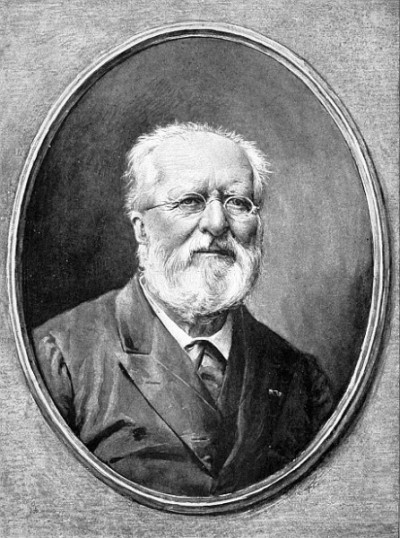 GABRIEL DE MORTILLET.