By W. E. DE RIEMER, M. A.
The recent death, at the closing of the year 1898, of the
lamented Senator Justin S. Morrill, who, as being the author
of the Land-Grant College Act, is justly styled the father of agricultural
education in the United States, seems to suggest the desirability
of taking a survey of agricultural education as it at present
exists in other countries than our own.
Since the pursuit of agriculture is one which concerns more of
the people of our globe than any other pursuit, the necessity for
scientific training for agriculturists becomes more and more evident
to educated people. It is true that the cultivators of the soil do not
generally admit the need of special schooling. At the beginning of
this century very few educators, even, thought so. It was supposed
that tilling the soil had nothing to do with schools, and that science
had no connection with plowing and sowing. Agricultural lectureships
were established early in the eighteenth century in several
European universities, but they were regarded as curiosities of the
age—superfluities of culture, rather than aids to the cultivator.
Farmers themselves were supposed to be the only competent teachers
of agriculture, and experience the only possible guide. But it
has become apparent that no farmer's experience is broad enough
to be adapted to all soils and climates. The successful farmer has
come to regard the land which he owns as a wonderful machine
which, if rightly managed, will turn out the most costly and perfect
product; but which, if neglected or ignorantly handled, will
disappoint his high hopes and possibly impoverish its owner. The
development of commerce which so easily introduces the wheat
and potatoes and other products of our country into competition
with the grain produced in a distant land has taught the producers
of this generation, and especially the citizen of European countries,
that the farmer who can produce the largest crop of grain from
the fewest acres, at the lowest price for the best cereal or vegetable,
is the only successful cultivator. The nation which succeeds best
in this direction with all its soil products is the one which is sure
to have the "balance of trade" always in its favor.
The United States awoke to this idea when, in 1862, Congress
passed the Land-Grant College Act, allotting Government lands in
every State to aid in founding agricultural colleges. The country
became more profoundly moved by this idea when, in 1887, Congress
passed the Hatch Act, granting annually to each State the
sum of fifteen thousand dollars to organize and perpetuate
agricultural experiment stations, and still further when it organized
a Department of Experiment Stations as an integral part of the
Department of Agriculture.
But several of the countries of Europe have anticipated our
action in behalf of agricultural education by a quarter of a century.
Germany and France and little Switzerland realized fifty years ago
that agriculture in its various departments must be pursued with
the aid of the latest science combined with the broadest experience.
These countries have not waited for the laborer to perfect himself
in experience—an impossible attainment—but they have opened
schools of every possible grade, arranged courses of lectures by the
best educated scientists, made elementary agriculture a compulsory
subject in the curricula of the common schools, sent out traveling
instructors to confer with and advise and give courses of lectures
to the older farmers, made it possible—even compulsory—that
young people should attend technical schools at odd hours of
the day or evening, and even tempted them to pass a serious examination
in their respective studies by the offer of a valuable prize as
the reward of success. It is said that Charles Dickens once made
a speech at an agricultural dinner in which he somewhat derisively
said that "the field it paid the farmer best to cultivate was the one
within the ring fence of his own skull." Dickens was correct. The
farmer needs scientific education. The best civilized and progressive
nations of to-day are admitting the utterance of Dickens to be a
serious truth. Vast sums of money are appropriated by European
governments to prevent their agricultural classes from continuing
in or subsiding into ignorance of their art. Even the peasants of
Russia, notably in the province of Ekaterinoslav, by the generous
appliances for special agricultural education made by the Ministry
of Agriculture and State Domains, united with the efforts of the
Ministry of Public Instruction, are made to feel that without expert
teaching a man can not succeed even in the raising of fowls or of
bees, the culture of silkworms, the making of wine, or the manuring
of his fields. Consul Heenan[20] says that in the province named
above the Government annually rents thirty-two experiment fields,
each eight acres in extent, distributed four in each district, and each
one located in the midst of peasant fields. Each of these fields is
placed in charge of some scientifically educated public-school teacher,
who is paid twenty-five dollars per year for his direction, and
receives, besides, all the harvest produced. The teacher uses the
native tools and seeds, and hires neighbor peasants to assist in demonstrating
that with care in plowing, cleaning of seed, cultivating,
and reaping, his field will produce larger crops than his slovenly or
ignorant neighbor. The object lesson has its certain result. The
peasants are gradually adopting the four-field culture system—viz.,
fallow, winter crops, pastures, and summer crops.
Besides these, Russia sustains 68 agricultural schools, containing
3,157 pupils, at a cost of $403,500, of which sum the Government
pays $277,500, and the local zemstovs (societies) or the school
founders pay $136,000.
In France the eminent scientist Lavoisier, at the close of the
last century, advocated the founding of a national school for the
teaching of agricultural science. His plan for government initiation
was not realized, but in 1822 Matthieu de Dombasle founded,
near Nancy, the first true agricultural school. In 1829 and 1830
the schools at Grignon and Grandjouan were founded by August
Bella and Riefell respectively. Now France boasts of one of the
most perfect systems of agricultural education of any country of
the world. Under the joint direction of her Ministers of Agriculture
and of Public Instruction, France plans to cover every phase
of education from the simplest forms of object lessons taught by
law in all her primary schools to the crowning National Institute
of Agriculture at Paris. The facts of science, united with the
soundest experience, are demonstrated to the farmer by lectures
and experimentation; the future agriculturists of the country are
educated in the certainties of scientific research at graded schools,
ranging from elementary to university degrees, and every milkmaid
is taught the necessity of promptness, cleanliness, and system
in the care of milch cows and in the disposal of their milk.
The former able Director-General of French Agriculture, Monsieur
Tisserand, says: "The aim and object of France has been not
only to give to children and young people the means of acquiring
knowledge, but also to establish means for interesting old cultivators.
In this century of extreme competition we must admit that
the agriculturist can only thrive if, in working the soil, he adopts
scientific methods. Old routine is no longer sufficient in this
branch, as it is proved to be insufficient in manufacture." In carrying
out her enlightened policy, instruction was given in 1893[21]
to 3,600 pupil teachers. Thirty agricultural laboratories throughout
the country furnish analyses of soils and manures for the help
of cultivators, and 3,362 trial fields are established where farmers
can profit by experiments suitable to their own districts. The
special farm schools number sixteen; practical schools of agriculture,
thirty-nine; national schools of agriculture and horticulture,
six; three veterinary schools; and one each, bearing the name of
National Agronomic Institute, is a shepherd school, a cheese, and
a silkworm school. In the universities are no less than 160 departments
and chairs of agriculture for students of profoundest research.
All this costs the departments alone over 4,504,050 francs
per annum.
In Prussian Germany no less activity is displayed or energy put
forth to make the farmer's occupation one of financial profit and
scientific status. Statistics for 1897 are at hand in the report of
the Prussian Minister of Agriculture. The German system is
based on the theory that schools and colleges are the only places
where theoretical agriculture can be properly taught. Few of the
higher agricultural schools first established were exclusively such.
A liberal education could be obtained at most of them without
touching the subject of agriculture. Later educators have developed
a system which begins by fostering a love for Nature in the
minds of the pupils in the kindergarten, and patiently develops that
love through all the dozen or more grades of schools until it culminates
in the polytechnic school or the degree granted by the
university.
Germany is indebted to the learned Professor Thaer for the
establishment of its first agricultural school at Möglin in 1807.
But more than all is she, in common with all the world, indebted
to the famous chemist Baron von Liebig, who, in 1840, announced
the scientific truth which underlies all arguments for agricultural
education—viz., that no matter how impoverished a soil is naturally,
or has become by excessive cropping, its fertility may be
restored, maintained, and even increased by providing it with the
mineral and organic matter which it lacks.
Prussian agricultural affairs are under the supervision of the
Ministry of Agriculture, Domains, and Forests. The state maintains
three grades of schools—higher, middle, and lower—as in
other European countries. The most celebrated are the Royal Agricultural
High Schools at Berlin and Popplesdorf, two royal academies
of forestry, and the university courses in agriculture at Halle,
Göttingen, Königsberg, Leipsic, Giessen, and Jena. The state expends
something like two hundred thousand dollars annually on
agricultural education. In Germany agricultural education has so
broadened out as to include training in every technical part of a
farmer's work—culture of forests, fruits, flowers, and vines;
schools to teach wine, cider, and beer making, machine repairing,
engine running, barn construction, and surveying; knowledge of
poultry, bees, and silkworm raising; domestic economy, sewing,
and accounts for farm women—all in addition to the long scientific
courses of study and years of practical work on an established farm.
Verily, the country that excels Germany in training agriculturists
must be par excellence in its methods.
A special feature of agricultural teaching is the traveling professor
(Wanderlehrer). United States Consul Monaghan enthusiastically
describes him: "These teachers, supported partly by the
state and by agricultural unions, go from place to place ... and
lecture on agricultural and horticultural subjects. Their purpose
is to lift up and ennoble agricultural life; to afford the farmer the
knowledge gleaned by science since he left the school; to impart to
him the best methods of selecting soils, fertilizers, cattle, trees, etc.;
to teach him how to use his lands to best advantage, to graft, to
breed in; to get the best, quickest, and most profitable results.
These teachers are skilled scientists, practical workers, not theorists,
... perfectly familiar with the wants and needs of their districts.
Armed with this knowledge, the teacher's usefulness is certain
and unlimited. When he speaks his voice is that of one in
authority, it is heeded.... He is a walking encyclopædia of
knowledge, especially of knowledge pertaining to the woods, hills,
farms, and fields."
Austria has, like Germany, a system of agricultural and forestry
schools in three grades—viz., superior, middle, and lower. Its oldest
school of superior grade was established in 1799 at Krumman.[22]
Similar schools existed later at Grätz, Trieste, Lemberg, Trutsch,
and Altenburg. The latter is especially complete in every appliance
for instruction, and well patronized. The middle schools provide
two-year courses of study and practice, and are located at
Grossan, Kreutz, Dublany, and other points, while the lower schools
incline less to study and more to lectures and farm practice. They
are located in the provinces of Bohemia, Styria, Galicia, and Carinthia.
Forestry schools of various grades exist at Mariabrunn, Wissewasser,
Aussen, Pibram, Windschact, and Nagny; of these, Mariabrunn
is especially deserving of mention for its thorough course
and complete equipment.
Switzerland was the home of the philanthropist and educator
Fellenburg. His school, established at Hopyl in 1806, was a philanthropy
in aid of the peasantry, concerning whom he said that
possessing nothing but bodies and minds, the cultivation of these
was the only antidote for their poverty. At least three thousand
pupils received their education in agriculture here. The Federal
Polytechnic School at Zurich is the nation's pride. Out of six
courses of superior training which it provides for its one thousand
students, forestry and agriculture count as two. Five universities
and numerous special schools furnish aid to agricultural education.
The little kingdoms of Belgium and Holland are following hard
upon the tracks of their powerful neighbors. In Belgium may
be found superior institutions of agriculture, horticulture, veterinary
science, and forestry at Gembloux, Vilvorde, Cureghem, and
Bouillon respectively.
In Holland, whose people robbed the sea to obtain lands for
farms and homes, about £71,500 were expended by the state on
its agricultural department in 1897. Its first school, established
by a communal society at Hären in 1842, was discontinued. The
state in 1876 adopted the school of agriculture which has been
established at Wageningen as its own, and this institution can fairly
lay claim to equality with any in Europe. Government also supports
the State Veterinary College at Utrecht, and subsidizes a
school of forestry and several dairy schools. Agricultural teaching
in primary schools has not yet proved a success.
Italy has not made such progress in agricultural education as
her northern neighbors, yet she is not indifferent to the requirements
of the times. She has a most unique scheme for Government
superintendence of agricultural matters. All comes under
the purview of a general Director of Agriculture, assisted by a
Council for Agricultural Instruction, which latter was established
by royal decree in 1885, and reorganized in 1887. Four divisions
of the department exist—namely, (1) agriculture proper, (2) zoötechny,
(3) forestry, and (4) agricultural hydraulics. Statistics are
not easily procured, but recent catalogues show that the two Royal
Superior Schools of Agriculture, located respectively at Milan and
Portici, are institutions of which any country might be proud. Of
the latter Mr. E. Neville Rolfe, British consul, wrote in 1897 that
it was originally a provincial establishment, but in 1885 it had been
established by royal charter and domiciled in the magnificent
grounds and buildings of a disused royal palace. Its study course
requires three years to complete, and graduates obtain the degree
of Laureato Agronomo. Up to 1896, two hundred and twenty-eight
students had obtained this degree, most of whom are instructors
or Government employees of high rank. It is known also that
thirty-three special and practical agricultural schools exist in different
parts of the kingdom.
Much can not be said in praise of agricultural education in
Spain. That country possesses the machinery for education of the
higher grades, but through her seven distinctly agricultural colleges,
located at Madrid, Saragossa, Barcelona, Corunna, Valencia,
Caceres, and Jerez, she seems only to have obtained men for Government
service at home or abroad. Spain expended in 1896 on
agricultural education the sum of £58,460, but she evidently sends
no Wanderlehrer instructors among her peasant farmers.
It is said that Portugal possesses seven agricultural schools, attended
in 1896 by one hundred and eighty-seven students, but of
their location, save one, and courses of study the writer has no information.
The Government conduct of education is committed
to a Director-General of Agriculture. The leading school is named
the General Institute of Agriculture, and is located at Lisbon. It
provides four courses—viz., (1) rural engineering, (2) agronomy,
(3) sylviculture, (4) veterinary medicine. It has a large tract of
land for demonstration purposes located a few miles from the city.
Concerning Greece and the smaller kingdoms in southeastern
Europe, together with the land of the Turk, not much to the encouragement
of the scientific agriculturist can be said; but turning
northward across Europe to the Scandinavian countries quite a
different state of things becomes apparent. At once we find that
the system of agricultural education is highly developed, and in
some phases is not surpassed by other countries. Immediately we
are in a network of dairy schools, experiment stations, chemical
and seed-control stations, agricultural societies, colleges, and universities.
Here we find five institutions all under royal patronage
and state support. In Norway is the Higher Agricultural School
at Aas, established in 1859. In Sweden stands the Agricultural
Institute at Ultuna, established in 1849, and the Alnarp Agricultural
and Dairy Institute, established in 1862. In Denmark is
the Royal Veterinary and Agricultural College at Copenhagen,
established in 1773 as a veterinary college. In Finland the Mustiala
Agricultural and Dairy Institute, established in 1840. In
these four small states there exist agricultural, horticultural, forestry,
and dairy schools of all grades to the number of one hundred
and fifty-nine. Education in agriculture is not attempted in the
primary public schools of Norway or in any of these Scandinavian
countries, but agricultural elementary instruction is begun in what
other continental countries would call secondary schools, and is
provided for persons intending to be farmers and who are eighteen
years of age and older. Norway spent on elementary agricultural
education in secondary schools, in 1895-'96, the sum of
$31,182, and Finland more than doubled that sum.
Crossing the Channel to Great Britain, again we see a nation
intent on solving the question of success for her agricultural population.
Celebrated Englishmen, Scotchmen, and Irishmen early
began to plan for an educated peasantry, but it was long before any
national system was evolved. The sectional divisions and peculiarities
belonging severally to Scot and Celt and Saxon have not yet
permitted a uniform legislation. Ireland and Scotland each has
its own scheme of Government supervision, and both differ from
England and Wales. It is estimated that but ten per cent of England's
laboring population is concerned with agriculture for support,
while in Ireland there is scarcely ten per cent of the people
who are not dependent on agriculture for existence. In consequence,
we find in Ireland, as in France, intense interest centers
upon the plan to teach agriculture and horticulture in the elementary
public schools, while in England, until very recently, agricultural
education served principally to produce a class of educated
scientific men fitted for the Government home and colonial service.
In Ireland compulsory attendance on primary schools is made
by law. In 1876 Ireland claimed to be the pioneer country in providing
compulsory elementary agricultural instruction in all her
rural schools. She has desperately clung to the theory that in
providing such education in her elementary schools she would
eventually train a nation of agriculturists. To attain this end, elementary
text-books were prepared, which all teachers must use.
The Government grant for a pass at examination in agriculture was
much larger than a pass in any other study; teachers who held certificates
to teach it were given higher salaries than others, and to
enable teachers to prepare for such certificates, scholarships were offered
them at teachers' colleges (normal schools), and their railway
fare was free in going and coming. Plots of ground at schoolhouse
or teacher's house were provided, where flower and vegetable culture
could be constantly practiced, and a special grant was allowed
to the school for cultivating a successful garden, and another special
for classes showing proficiency in practical work. Gardens
were cultivated at convents and workhouses, and the subject was
taught theoretically to "half-time" pupils and students at the
"evening continuation schools."
In December, 1896, Ireland had 8,606 national schools, with
an average attendance of 815,248 pupils. She also had 150 half-time
schools, 155 workhouse schools, 267 convent schools, 30 model
schools, five training colleges for teachers, and two training agricultural
institutes (at Glassnevin and at Munster), and in all of these
agricultural science or practice is either a compulsory or a voluntary
subject. What country can surpass Ireland's enthusiasm for
agricultural training?[23]
Scotland enjoys deservedly the distinction of having been first
among the peoples of Europe to introduce in the university course
scientific education in agriculture. In 1790 a chair was established
in the University of Edinburgh, and a course of agricultural lectures
was given therefrom by Rev. D. Walker. Better than that,
in 1743 a volume entitled Select Transactions was published by
Maxwell, representing the agricultural society known as the "Society
of Improvers," and numbering at one time three hundred
members. Out of this society grew the "Highland and Agricultural
Society," which organization has fostered every agricultural
effort which private beneficence or royal grant has initiated in the
land since 1834. Through its munificence both the departments of
forestry and veterinary surgery have been placed upon a firm educational
basis, and the educational lectureship of Edinburgh University
has been permanently endowed. It has instituted its own
syllabus of examinations for granting "Fellowships in Agriculture,"
and stimulated pupils of the secondary schools to make the
effort by offering prizes and scholarships to the ambitious students.
The University of Aberdeen has lately entered the field as an
agricultural educator by becoming what the Government styles a
"collegiate center," receiving a straight subsidy of £100 per annum,
and furnishing professional instructors to rural assemblies
arranging lectures for them. In the public schools of Scotland
agricultural science is arranged for as an optional study from the
third to the sixth standards inclusive. In 1895-'96, 4,148 pupils
passed examinations in the subject, and the cost of this to the state
was £42,792. In 1896-'97 pupils in the "evening continuation
schools" to the number of 1,089 passed in agriculture, and 115
others in horticulture.
England and Wales are under a joint administration of agricultural
affairs. The Government policy, so far as it has one, has
been continually opposed to paternalism and direct subsidy or ownership
of schools. Rather has her Parliament waited to be solicited
to make subventions by way of encouraging individual or local
society initiative. The flourishing agricultural schools at Cirencester
and Downton, for the instruction of the higher classes, have
grown out of private establishments, then been perpetuated by obtaining
royal charters, by which the Government became pledged
to supply any lack of income. But since 1893 the state has so far
relaxed her policy as to grant subsidies to certain colleges centrally
located, which it styles "collegiate centers," through which colleges
it offers superior instruction to the public. These colleges
associate with themselves ample farm lands for experiment grounds
and dairy machinery, and equip themselves with competent
lecturers, who are also practical experts, and who, upon invitation
from agricultural societies or county councils, go forth as lecturers
upon their special subjects. Each adjacent county makes an annual
grant of £75 to the college funds, and is privileged to nominate
students to attend the college agricultural course at a reduction
of twenty-five per cent on the usual fee. In 1898-'99 the
Board of Education granted to fifteen colleges and associations in
England and Wales the sum of £7,200. The colleges were the
Yorkshire College at Leeds, Durham College of Science at Newcastle-on-Tyne,
University Extension College at Reading, University
College at Nottingham, Southeastern Agricultural College at
Wye, and in Wales the University Colleges at Bangor and Aberystwith.
Besides the direct Government subsidy to higher education, the
state grants to the several counties part of the money raised from
the excise ("drink money") for educational purposes, out of which
at least £78,000 were spent by the committees in 1896-'97 in promoting
agricultural education.
Still further, Parliament puts into the hands of the Science
and Art Department large sums of money to be expended as grants-in-aid
of "technical education." The state recognizes instruction
in the principles of agriculture as instruction in elementary science,
and through this Science and Art Department's grants to primary
and secondary schools, and to teachers' colleges, it encourages agricultural
education as a technical study. In 1896-'97, 1,023 pupils
passed examination, and the respective school managements received
as grant on their account a total sum of £140,150.[24]
In 1897 the Royal Commission on Agricultural Depression in
England made its report. Among other declarations made by the
commission were these: "We believe that it is essential for the
welfare of agriculture that there should be placed within the reach
of every young farmer a sound, general school education, including
such a grounding in the elements of sciences bearing upon agriculture—e. g.,
chemistry, geology, botany, and animal physiology—as
will give him an intelligent interest in them and familiarize
him in their language."[25]
They further recommend that hereafter the control of all funds
for technical agricultural education be placed with the Board of
Agriculture, and that the entire income of the Customs and Excise
Act of 1890 should be devoted to educational purposes, agriculture
receiving its adequate share. Should the first recommendation
carry for all divisions of the United Kingdom, agriculture would
cease to be one of the subjects provided for examination by the
Science and Art Department. Should the second recommendation
become a law, the sum expended by local county councils in
agricultural education would be vastly increased.
Passing from England to her colonies, let us journey toward
the sunrising. Stopping for a moment in Egypt, we note with
pleasure the existence of the newly established School of Agriculture
at Gizeh, which is under the direction of the Ministry of Public
Instruction for Egypt. Its reconstructed course of study was
open to students in 1898, and it provides for four years of study.
Arabic and English are the teaching languages, especially the latter,
and allotments of land for individual culture are made to all
pupils.
Beyond the Indian Ocean lies Hindustan. Here all science
study is awaiting its development. The best cultivation of India
is not behind that of England as a matter of empiricism,[26] but the
science of cultivation is yet to be developed. Agricultural chemistry
and agricultural botany and horticulture, as related to India,
have scarcely been investigated, and text-books in the native
tongues have yet to be written. For this accomplishment all elementary
instruction in public schools must patiently wait. For an
agriculturally educated set of teachers, also, Indian youth studying
in the vernacular must patiently wait. In 1889 the home
Government (Parliament) laid upon the Indian Educational Department
the duty of providing school "readers" which should
contain elementary instruction in agricultural science, and it authorized
a liberal grant-in-aid toward such schools as could furnish
pupils for passes in this subject. For those students who have mastered
the English language a few colleges exist. Saidapet, near
Madras, with about forty students in a three-years' course, including
veterinary, is a pure agricultural institution. Fourteen students
received diplomas in agriculture in March, 1897.
Several colleges have agricultural departments, notably the
Poona College of Science in the Bombay presidency; the Baroda
College; the Maharajah's College and the Shimoga College, Mysore;
the Central College, and the Sanskrit College of Bangalore.
All of these are affiliated with the University of Bombay, and
present pupils for examination in agriculture for the degree of
B. Sc. A.
In many of the English high schools of India are found agricultural
classes which give both science teaching and field practice.
These schools are at Nagpur, Nasik, Sholapur, Ahmednagar,
Ahmedabad, Dhulia, Kolapur, Surat, Belgaum, and Nadiad. The
stimulus to study in these schools is the hope of obtaining a diploma
in agriculture, which would result in employment in the Government
service.
In Lucknow is a celebrated veterinary school whose graduates
have been greatly sought after. One at Bombay has become still
more celebrated. In 1897 sixty-nine students were in attendance.
Graduates easily found employment with native rajahs, and on
the island of Ceylon, and at Mozambique. Another Government
veterinary school recently established at Belgatchia, Calcutta presidency,
has done good work.
The forestry school at Dehra Dun, in the Northwest Provinces,
has attained a great reputation. About seventy students attend,
and the Government charges the cost of the school, 33,000 rupees,
to the districts which send up pupils for study. India, under
the British rule, will soon come into line with educated agriculturists.
In Burmah and in Assam steps have been taken to introduce
science lessons into Government, or grant-in-aid, elementary schools
by the preparation of "readers," as in India, but no secondary or
superior schools in agriculture exist in these countries. So far as
we know, the same is true of Siam and the Malayan Archipelago
and of the Philippines.
Australia, as a federation of states, is late in its development,
but some of its states are surprisingly advanced. New Zealand
has its superior university, combining the three colleges at Auckland,
Lincoln, and Otago. Its syllabus provides for searching examinations
in agriculture to obtain the degree of B. Sc., either of
these colleges having previously granted the diploma of agriculture
to successful students. Each of these colleges has ample
grants of land, but only one—the Canterbury College at Lincoln—has
yet presented agricultural candidates. Forty-four graduates
have received diplomas previous to 1895. Instruction in elementary
schools seems not yet to have included agriculture.
In Queensland the Queensland Agricultural College was opened
at Gatton in 1897.
In South Australia is an agricultural college at Roseworthy
and another at Adelaide which has graduated several recipients
of the diploma.
In Victoria there exists a college at Dookia and another at
Longerong. There is also a school of horticulture at Richmond.
To New South Wales belongs the banner for furnishing the
greatest opportunities for agricultural education. Its university
at Sydney grants a degree of B. Sc. to students from the colleges
of St. Paul, St. John, St. Andrew, the Woman's College, and the
Sydney Grammar School. At Sydney also is the splendid Technical
College, handsomely endowed, having an agricultural department.
The superior of all other schools is the Hawksbury Agricultural
College and Experimental Farm at Richmond, established
in 1891, richly endowed with land (three thousand acres), and organized
on the most approved modern models. Science teaching
is not carried so high as the university standard, but all manner of
practical work must be performed by each student.
Homeward bound, we reach Cape Colony, South Africa.
Here, in 1887, the Government inaugurated a scheme for aiding
farm schools in which elementary agriculture was taught. In
1894, out of 352 schools aided by the Government, 202 were
classed as "farmhouse schools." In higher education there may
be found (1898) the School of Agriculture and Viticulture at
Stellenbosch, and a second one at Sunset East. As both of
these schools are young, statistics concerning them are not yet
available.
Last of England's colonies we notice the Dominion of Canada
on our northern frontier. No evident progress has been made in
introducing agricultural science teaching in the primary schools of
the entire Dominion. The first step taken in the direction of agricultural
education was for the enlightenment of farmers. In 1886
Parliament authorized the establishment of a system of experiment
farms, one in each province in Canada, viz.: one at Ottawa (to
serve both Quebec and Ontario), and one each at Nappan, in Nova
Scotia; at Brandon, Manitoba; at Indian Head, Assiniboia; at
Agassiz, British Columbia; and at Charlottetown, Prince Edward
Island. To give these stations greater efficiency, the Government
encouraged the formation of farmers' institutes in every electoral
district for the hearing of lectures from experts which it provided,
and for discussion or business. To each regularly organized institute
of fifty members a grant of £10 is annually made.
In Nova Scotia five primary and secondary schools are reported
as giving agricultural instruction to two hundred pupils. Some of
these schools have farms or gardens. The Provincial School of
Agriculture at Truro is making a good beginning. In its last class
three students were granted teachers' diplomas, seven received
farmers' diplomas, and eighteen took farmers' certificates. Three
hundred and fifty students have pursued its course of studies.
There is also a horticultural school at Annapolis Valley.
Another horticultural school exists at Wolfville, Nova Scotia,
under the control of a committee of the Fruit-Growers' Association.
Students take a thorough course of two years' duration. The
Legislatures of New Brunswick and of Prince Edward Island grant
bonuses of fifty dollars to each young man of their provinces who
will take a course at this school.
Fine creamery plants are found at various points, and several
provinces sustain each a "traveling dairy," which systematically
visits accessible centers and gives demonstration lectures to farmers'
families.
The crowning agricultural educational institution for the entire
Dominion is the college at Guelph, Ontario. It combines instruction
in veterinary science, horticulture, bee and poultry keeping,
dairying, and the experimental farm. The course continues
for three years. Two years confers the "associate diploma," and
three years' study, with successful examination in the syllabus of
the Toronto University, secures the degree of B. Sc. A. Success
attends all these educational efforts and marks this colonial empire
as among the ranks representing true progress.
Mexico and the countries of South America next claim our
notice. In the first-named country, as early as the year 1850 provision
was made at the old college of San Gregorio for instruction
in agriculture in five different courses. But in 1854 the Government
came into possession of the disused convent of San Jacinto,
Agosta. Here a national school was organized, combining the two
departments of agriculture and veterinary science. It was opened
February 22, 1854, and designated the National School of Agriculture
and Veterinary Science. Its courses of study are up to
the best standards. Three years are necessary to complete the
agricultural course and receive the title of Superintendent of Rural
Estates, and four years' study must be given to secure that of Ingeniero
Agronomo. The course was readjusted in 1893. During
the five years past 169 graduates have received the former and
68 the latter degrees. The management consists of 48 persons,
whose salaries annually cost the Government 96,424 Mexican dollars.
Ample grounds and buildings are provided to make this institution
a matter for national pride.
Besides this college, a farm school exists in one of the federal
districts, costing annually $17,564, and another at the colony of
Porfirio Diaz, costing the state $14,708. Mexico is also moving
to introduce agriculture as a subject for primary instruction in
public schools.
In Uruguay exist fine schools for teaching agriculture and viticulture
which are of recent organization. At Montevideo the Government
has created a Department of Live Stock and Agriculture,
subject to the Home Ministry. The budget of 1897 provides for
organizing and sustaining agricultural schools and experiment
farms to the extent of $28,222, with an additional allowance of
$90,000 for experiments on farms, installation of plants, furniture,
instruments, etc.
Chili is coming to the front in her educational efforts. In the
city of Concepción exists a Practical School of Agriculture. Others
are found at Santiago, at Talca, San Fernando, Elqui, and Salamanca.
The school at Santiago receives an annual subvention of
$40,000, and that at Concepción the sum of $23,000. Attached to
the latter are agronomic stations for soil analysis and oversight of
irrigation systems of the state. The Sociedad Nacional de Agricultur
at Santiago receives an annual grant of $20,000, which it distributes
at agricultural shows and for the support of the zoölogical
garden. At Quintan Normal is also an Institute Agricola of high
grade for agricultural engineers and agronomics, or for furnishing
a simple certificate in agriculture.
Other countries of South America possess education facilities,
but we are not supplied with details concerning them.
Our closing glance must be directed to the far Orient. Japan,
the newest of kingdoms, has a model brace of institutions for superior
education in agriculture. When Japan awoke to the new
ideas, to which for ages she was oblivious, her keenest statesmen
grasped the thought that her agricultural people needed new light
and intellectual quickening along the lines which so vitally affected
their daily subsistence. She took the United States into her confidence.
She imported for a season our Commissioner of Agriculture
(General Capron), in 1871-'72, as "Adviser to the Colonial
Office at Hokaido," who, after visiting Japan, advised the Government
to organize at once an agricultural college at Sapporo, and
still another at Tokio. This advice was cordially received and
speedily adopted. American scholars of the highest wisdom and
experience were imported to inaugurate the work. The college
was inaugurated by Colonel W. S. Clark, LL. D., President of Amherst
Agricultural College, in August, 1876, with twenty-four students.
Its new location was Sapporo, and its new name was the
Sapporo Agricultural College. The Government dealt liberally in
grants of land, but these ample acres have since been mostly confiscated,
leaving only sufficient for educational purposes. Few
can estimate the wonderful uplift which has come to Japan through
this efficient school. In 1893 it had sent out from its agricultural
course 123 graduates; from the engineering, 4; military, 42; and
from the practical department, 114.
In 1874 an agricultural department was added to the Imperial
University at Tokio, the original location of the Sapporo College.
An exhaustive syllabus in the Department of Agriculture provides
examination for many profound students of this science, and admits
them to the highest university degree. Four courses are open
in the university—viz., agriculture, agricultural chemistry, forestry,
and veterinary medicine. In 1895 there were 261 students of
agriculture in the university.
From this extended though by no means exhaustive review
of the status of scientific instruction in agriculture throughout the
world, it is evident that all the progressive nations have caught the
inspiration which attaches to this branch of education, and are
swinging into line in their efforts to adopt it. Old ideals are rapidly
giving place to the new. Educators are forced to admit that
mental culture is as possible under the study of science as by the
protracted study of languages and literature; that such study aids
vastly more than the latter in the training which prepares men for
the active duties of life; and that if the development of husbandry
as a pursuit does not keep pace on an intelligent basis with every
other technical pursuit, national greatness and permanence will
never be achieved.
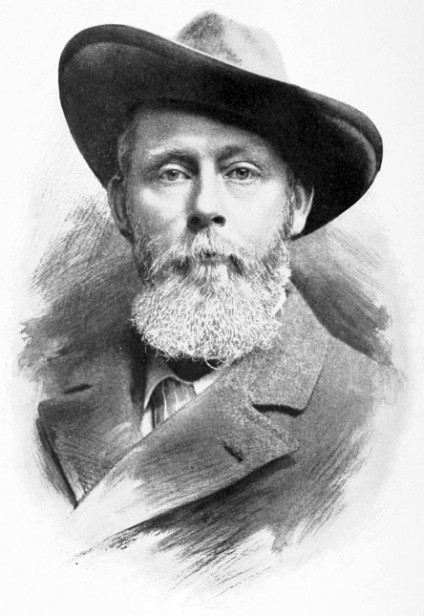 FREDERICK C. SELOUS.
![[a double plus in a circle]](https://openoldbooks.sgp1.digitaloceanspaces.com/books/popular-science-monthly-december-1899-vol-lvi-edited-by-william-jay-youmans/images/doubleplus.png "[a double plus in a circle]") ;
for a small minority, a single plus sign in a circle thus, ⨁.
;
for a small minority, a single plus sign in a circle thus, ⨁.