Plague Prevention.—At present the most
promising and the most rationally based phase of
plague control is that of prevention. The reason
for this is plainly apparent. If the facts in the
case are as stated and if the conclusions of the
Plague Commissioners and students of epidemiology
the world over are correct, to eradicate plague
we need only to control its carriers.
To exterminate the rat (and perhaps the marmot
and ground squirrel), to prevent the transportation
of rats or of infected rat fleas in ships, trains,
clothing, merchandise and upon the bodies of men
and animals from the numerous foci or plague
centres of the world to non-infected localities, is a
beautiful plan indeed.
Restricted to single communities, even where
the intelligence, patriotism, effort and wealth of
the whole people are enlisted, the undertaking is
formidable, with obstacles to its execution, and discouragement
must often be expected. Extended
in its application to the whole plague-infected world
it becomes an undertaking seemingly impossible of
accomplishment.
Yet we are encouraged to face the situation by
a glance at what has been accomplished. The
United States, perhaps, presents the highest examples
of achievement in the cases of San Francisco
and Manila. The work in San Francisco is
too recent and has been too well published to require
detailed review here. A successful campaign against
rats in 1907 practically terminated an epidemic of
considerable proportions well within a year. Behind
this movement, however, were the powerful
machinery of the Federal Government, money in
generous amount and a considerably aroused public,
resentful of the mismanagement of the 1903
epidemic, whereby, through pure fear of financial
loss to commercial interests and by a disgraceful
suppression of the truth, California was made, permanently
perhaps, one of the world's plague centres.
It has been estimated that the rat population of
the world is equal to the human population, and this
estimate does not appear to be unreasonable when
one considers as indices the destruction of the rodents
in cities by the hundreds of thousands, upon
single farms by the thousand, and the wonderful
procreative powers of the rat.
Economic Importance of Rat Destruction.—It
is certain that the economic importance of rat
destruction upon grounds other than those purely
sanitary must be impressed upon the public wherever
a rat campaign is to be carried on.
The absolute inutility of the rat, its enormous
destructiveness to crops, to merchandise in warehouses
and in transit, to poultry, eggs, fruits and
vegetables, to buildings and furniture, and its incendiary
habits causing annual fire losses of considerable
magnitude, must be emphasized in season
and out of season. Such items as the value of the
grain consumed by a single rat per year, as estimated
by the experts of the Agricultural Department, are
convincing arguments in the case. At a daily consumption
of two ounces, the ration for a full-grown
rat, this grain value varies from sixty cents per
year, for wheat, to two dollars per year, for oatmeal,
for each rat subsisted. Similar data in great
variety, relating to direct and indirect losses, are
available for the purpose of making impressive the
economic need for rat destruction.
Accumulated experience from various countries
and cities shows plainly that there is no single
method of rat destruction to be depended upon to
the exclusion of all others and it also shows that
without governmental direction and supervision,
backed by ample authority and the ability and willingness
to expend considerable money, neither
single nor combined methods will be successful.
Moreover in the countries where special effort is
most needed there is often distrust on the part of
the natives, religious prejudice against the destruction
of animal life and frequently open opposition
to the authorities in their efforts to destroy rats.
The same superstitions and religious beliefs which
prevent the killing of venomous snakes in India,
at the annual cost of thousands of human lives,
operate against most measures of rat destruction
proposed by the Government.
Extermination Methods.—The plans and
weapons of warfare against rats include the use
of poisons; traps; starvation; rat-proof construction
of buildings, wharves, bakeries, stables, granaries,
etc.; the introduction of diseases among the rat
population by bacterial viruses and the conservation
of the natural enemies of the rat, such as the cat,
the dog, the ferret, the mongoose, and certain wild
animals and birds of the woods and fields.
Among the most widely used and most effective
poisons is arsenous acid boiled with rice, or
mixed with cheese or cornmeal in the form of a
paste, or placed upon sweets and fruits.
Crude phosphorus is chiefly used in similar
pastes. When mixed with glucose its inflammable
properties are said to be lost. Its inflammability is,
of course, a serious obstacle to its general use.
Strychnine, owing to its bitter taste, is of little
value in poisoning rats, and when used is best combined
with glucose and one per cent. of cyanide of
potassium. Soaked wheat, bread or similar food
is then treated with this mixture and placed where
rats may eat it. It is said to be eaten readily by
ground squirrels with fatal effect. It is, however,
expensive and apt to be taken by domestic fowls.
Most rat poisons have the disadvantage of being
dangerous to human life and must be used with
caution wherever children and ignorant native persons
are about.
Trapping.—Trapping has been found to be a
very effective means of rat destruction in cities.
(See later pages for relative efficiency of traps.)
Rat traps are of several varieties and are constructed
upon various principles. It is sometimes
desirable to catch the rats alive and uninjured, and
for this purpose barrel traps, wire cage traps and
similar devices are placed in the rat highways. These
highways are readily discovered in the cities. Considerable
care must be taken to overcome the natural
caution of the rat, and this includes judgment in
the use of attractive bait, the concealing and smoking
of traps after handling and perhaps the use
of some scent, such as the oil of anise, of which rats
seem to be fond. As a general rule bait should
differ from the food naturally supplied by the
locality. For example, about granaries and stables
fresh animal food should be used for bait, while
about slaughter houses, meat-markets, fish-markets
and similar places, where animal offal is abundant,
the rat should be tempted with vegetable bait.
Where the circumstances will permit, and this
is apt to be so for ground-squirrel destruction, the
burrows may be filled with some asphyxiating or
poisonous gas. In this manner whole families of
rodents, and their fleas as well, are destroyed.
The system is not often applicable in houses, but
aboard ships it is found most effective, the holds of
ships being flooded with sulphur dioxide, developed
by burning sulphur in a special furnace provided
with a pumping and piping system for delivering
the gas at distant parts of the ship. In empty ships'
holds and elsewhere the simple burning of sulphur
in open vessels effects the same results, provided
sufficient sulphur and a sufficient number of vessels
be used and further provided that the generation
and confining of gas be sufficiently prolonged. In
San Francisco harbor, where for more than a year
nine vessels were disinfected per day, this method
was adopted as more effective, speedy and economical
than any other system. It has the disadvantage,
in the case of laden ships, of affording some
danger of fire.
Carbon bisulphide has been extensively used in
California in the burrows of ground squirrels. Its
fumes, being heavier than air, penetrate the burrows
and promptly poison or asphyxiate all living
animals and fleas. Absorbent material of some kind
is saturated with the liquid and placed in the entrance
of the burrow, which is then quickly sealed to
confine the gas.
It will be seen that, in common with other
methods of rat destruction, fumigation has a limited
application and a number of serious objections. It
is particularly useful aboard ships.
The method should never be employed by unskilled
persons or those unacquainted with the
dangers to human life from noxious or asphyxiating
gases.
Starving Rats.—The subjects of the starvation
of rats and rat-proof construction may be considered
together.
Just as the pig in the Philippine Islands and
elsewhere in the Orient must give place as a scavenger
of human excreta to modern and decent
methods of waste disposal, so must the rat, a garbage
scavenger the world over, give place to systematic
garbage collection and removal, with temporary
storage of garbage in covered metal cans
(rat proof).
Incidentally it may be mentioned that the effect
of such measures upon the prevalence of flies and
the transmission of disease by these insects will be
very great and very beneficial to the public health.
Food must be kept from rats and rats must be
kept from the food. Perhaps the greatest resorts
of rats are the places where cattle are fed, where
grain is stored and where animals are killed.
Slaughter houses, markets, grocery stores, restaurants,
bakeries, wharves and warehouses must be
regulated by ordinances duly enforced. Much can
be done with screens of heavy iron wire with a mesh
of less than one inch.
When concrete and metal have displaced wood
and plaster as construction materials; when plank
sidewalks and refuse piles are no more and when the
catch basins of sewers have been made rat-proof
the subsistence problem for the rat will be greatly
increased in difficulty, and starvation should then
begin to lessen the rat population, at least in the
cities.
Rat-proofing.—Municipal authorities should
take up the matter of rat-proof construction for new
buildings and the rat-proofing of old ones by approved
alterations. In Manila, Hong Kong and
elsewhere these methods are receiving attention and
encouraging reports are recorded, more particularly
with regard to the disappearance of plague in districts
so treated than in the disappearance of rats.
This is most important, for if the rat and his fleas
are excluded from houses and therefore from intimate
association with man (an apparently feasible
matter through the rat-proof construction of buildings),
protection against human plague is in great
measure accomplished.
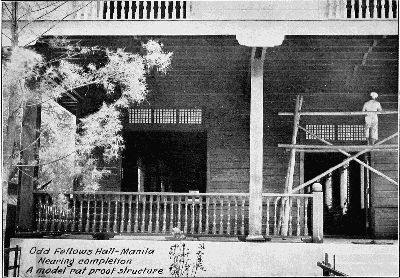
RAT PROOF STRUCTURE WITH SOLID CEMENT BASE, SOLID CONCRETE POSTS, AND UNBOARDED CEILING
In Manila the disappearance and continued absence
of human plague in previously infected localities
goes hand in hand with the introduction of
systematic rat-proofing in sections where cases of
human plague occur.
These measures were first instituted in 1906 and
plague disappeared from Manila in the same year
and did not reappear until 1912.
From 1900 to 1905, $15,000 was paid in rat
bounties and $325,000 was paid for salaries, wages
and expenses in rat catching, with little appreciable
effect upon the number of rats and without causing
the plague to entirely disappear. It must be admitted,
however, that practical control of the disease
was attained during this period.
Rat-proofing of dwelling houses is less expensive
than perpetual wholesale rat destruction and is a
perfectly effective measure against human plague.
In the suppression of the San Francisco epidemic
in 1907 rat-proofing was also extensively resorted to.
The expense of rat-proofing has been generally
considered as prohibitive, but if the work be confined
at first to the vicinity of infected centres and
if it be carried on subsequent to rat-destruction in
corresponding areas the expense need not always be
prohibitive—at least in American governed cities.
The Manila plan of plotting the city into "plague-infected"
areas corresponding with the capture of
plague-diseased rats and systematically working
within geographic boundaries in which rat plague
exists or is likely to spread, as determined by rat
captures and examinations of the rats for signs of
plague, has proved to be a good plan.
To prevent the transportation of rats in ships,
trains and merchandise is an undertaking of difficulty
as well as of importance. In the case of vessels
it involves an understanding of the manner by
which rats gain ingress to the ship and the ways of
preventing them from entering. Few facts are better
known, perhaps, than the fact that all ships harbor
rats, but, except to the initiated, the extent to
which some ships are infested is by no means understood.
I have made voyages upon steamships, which
upon alternate trips carried forage for animals in
the holds, when the conditions were, to say the least,
uncomfortable. To have one's state-room taken
possession of by rats, his clothing carried away, or
to awake with a rat in his berth are unpleasant, but
not uncommon, experiences. I personally know of
a woman, prostrated with sea-sickness, who was
obliged to remain in her berth and see four large
rats disport themselves about her room, and in
another case, on the same ship, a rat jumped from
the washstand into the berth of a sleeping woman,
running across her exposed face and arm.
In travelling upon small dirty steamers in the
Orient I have often slept on deck, quite as much to
avoid the rats and vermin in the state-rooms as for
better ventilation. In a certain ship in which I
travelled some of the ship's officers amused themselves
by shooting rats with an air-rifle in the lower
decks, quietly hiding themselves in dimly-lighted
places and shooting the rats as they crossed the
lighter spaces.
In many ships the rat population far exceeds
the human population. In San Francisco 310 rats
were destroyed by a single fumigation on a vessel
of only 260 tons burden. In Bombay 1300 rats
were destroyed at one time upon a single ship and
in London 1700 were secured at one fumigation.
The ease with which rats adapt themselves to
new environment is shown by the fact that they live,
when permitted to do so, in cold storage and refrigerating
rooms where they grow heavy coats of
fur for protection against the cold.
They gain ingress to ships in three principal
ways: (1) By coming overside upon gang-planks,
wharf stringers, etc. (2) By passing along the
lines by which the ship is made fast to the dock,
through hawse holes, the rat being an expert rope
walker. (3) By coming aboard in the cargo.
By the latter method rats are often brought
aboard by whole families, their fleas included. Many
styles of packages such as barrels, bales, crated
goods, grain in sacks and matting in rolls present
the rat with abundant opportunity to take passage
and it is probably thus, as stowaways, that
rats go to sea in the largest number. Plainly, then,
the placing of rat-funnels upon all lines from ship
to wharf, the use of special fenders, the raising of
gang-planks and even anchorage in the stream will
not prevent rats from getting aboard ships unless
cargo disinfection be practised before loading the
vessel. The ship itself should be fumigated every
three months if possible.
Rats are doubtless carried in considerable numbers
upon railway cars, both freight and passenger.
While riding in a street car in Manila in 1908
I saw a rat run along the window ledge, to the
mingled fright and amusement of the passengers.
The same principles which apply in the case of
ships apply to cars and trains as well. Grain cars
in particular should receive especial attention.
Rat Destruction by the Spread of Rat Diseases.—The
proposal to destroy rats by wholesale,
by spreading epizoötic diseases among them, through
feeding them bacterial virus, has received much attention
in the last ten years. In 1900 Danysz isolated
a bacillus from field mice suffering an epidemic
disease communicable to rats, and great hopes
were entertained that by means of this method decided
reductions in the rat population would result.
Indeed the results in Cape Town, South Africa, in
1901, and in Odessa, Russia, in 1902, seemed to
justify the hope to some extent and certain observers
still believe the method to be effective. Experience
with the Danysz and other organisms has shown,
however, that introduced epidemic diseases do not
destroy rats in sufficient number to do much good
and that nearly all the viruses experimented with
are more or less unreliable.
Most of the organisms are apparently related
to the colon, typhoid or hog-cholera groups. The
mouse-typhoid bacillus (B. typhi murium) was
originally isolated by Loeffler in 1899. The paratyphoid
bacillus and Gärtner's B. enteritidis correspond
closely with the Danysz organism and can
scarcely be separated culturally. In rodents they
produce enteritis, sometimes hemorrhagic in character,
and they are by no means to be regarded as
harmless for man, as originally supposed. In Japan,
in particular, serious and fatal cases of diarrhœal
disease have followed the accidental eating by man
of food treated by these bacterial poisons.
On account of the natural resistance of rats to
diseases of bacterial causation (plague being the
most notable exception to this rule), and the clinical
fact that no sufficient death rate among rodents
is produced by feeding them upon bacterial viruses,
as well as on account of the dangers to man just
mentioned, this method of rat destruction is not in
favor at present.
Poisoning rats and ground squirrels by chemical
poisons seems to be a preferable method, at
least equally effective and without most of the disadvantages
of uncertainty and danger which attach
to the bacterial viruses.
Rat Destruction by Domestic Animals.—Concerning
the utility of such domestic animals as
are natural enemies of the rat, in the warfare against
the offending rodents, there is considerable difference
of opinion, based upon varying experiences.
I leave out of consideration all but the cat and dog.
It will be found that wherever cats and dogs
are well housed (indoors) and well fed they are
apt to be fat, lazy and inefficient. House cats of
this class will catch mice but will often leave rats
alone, but half-wild cats, obliged to forage for their
own subsistence, are often excellent rat-catchers.
Small, active dogs, particularly of the terrier breeds,
will often keep houses practically free from rats
and upon farms they are especially valuable, particularly
if the construction of buildings is such as
to permit them to get beneath the floors. The employment
of these animals will necessarily be confined
to individuals for the freeing of individual
premises from rats.
A fact to be borne in mind is one already cited,
viz.: that cats and dogs sometimes harbor the same
fleas as the rat. Infected rat-fleas often leave dead
rats for other animals and, all things considered,
there are many other objections to the intimate
house dog and house cat which find comfortable
resting places impartially upon the beds of adults
or the cribs of babies and children.
Furthermore, my personal observations have
been such as to cause me to place small reliance in
the value of the ordinary dogs and cats found about
habitations wherein the construction is favorable to
rat-harboring.
Summary of Prevention for the Community.—Before
passing to the consideration of
other matters I would sum up the measures of preventive
treatment for the community. There must
be (1) Active warfare against rats and other
plague-affected rodents and their fleas; (2) Modified
quarantine—detention or disinfection applied
to persons, goods and animals; (3) Disinfection of
cargoes shipped from infected ports; (4) Isolation
of the sick and proper disposal of the dead; (5) International
notification between governments of the
occurrence of plague within their respective territories;
(6) Lastly,—but we might say first in importance,—the
early recognition of the presence
of plague and the rapid diagnosis in individual
cases, both of which are dependent upon laboratory
workers.
All of these measures must be fostered, directed
and aided in every possible way by competent authority
(national if possible), whose officers must
be men of great moral courage and of unselfish purpose.
Behind all of this must be generous financial
support.
I can best emphasize the importance of the observance
of the principles I have laid down by introducing
personal experiences in the conduct of
the antiplague campaign in Manila during 1912, 1913 and 1914.
I therefore present here the following account
of the epidemic, the campaign of suppression and
the various lessons learned.
It should not be difficult for the reader to make
applications of the principles already set forth and
to confirm by the reported facts the assertion that
methods based upon these principles are effective.
If repetitions of any of the foregoing principles
occur it is hoped that, when taken in connection with
concrete applications cited, they will not appear as
redundant.
The Manila Epidemic of 1912 to 1914.—The
chronologic facts concerning the development and
extension of plague in Manila in 1912, 1913 and 1914 are as follows:
The disease made its reappearance in Manila,
after an absence of six years for the human disease
and five years for rodent plague, two verified human
cases having been recorded in June, 1912.
Preceding the appearance of the first Manila
cases there occurred upon incoming ships a number
of cases of plague during the Spring of 1912, detected
at quarantine. Although there is no conclusive
evidence which connects these imported cases,
originating in Hong Kong, China, with the epidemic
which broke out in Manila a few months
later, the fact of their occurrence and recognition is
interesting enough for us to consider before taking
up the study of the Manila epidemic. Concerning
these imported cases Dr. Victor G. Heiser, then
Director of Health for the Philippines, wrote as
follows in the Philippine Journal of Science, in
February, 1914.
Unusual Character of Plague at Quarantine.—It
is perhaps worthy of note that, prior to the appearance
of plague in Manila a number of cases of the disease were
found on incoming steamers. For instance, on April 6,
1912, a death was reported on the steamship Zafiro, which
had arrived the day previous from Hongkong and had
been in the harbor for twenty-four hours at the time of
the death. At the medical inspection of the vessel, which
was made the day previous, no illness was detected. An
investigation showed that the victim had been on deck on
the night of April 5, 1912, in apparently good health.
The next morning, at 6 o'clock, he was found dead in his
bunk. The necropsy and subsequent biological findings
reported by Dr. R. P. Strong of the Bureau of Science
showed that death was due to pneumonic plague.
On April 7, 1912, the steamer Loongsang arrived in
Manila from Hongkong, and the captain reported that a
death had occurred the day previous in a Chinese member
of the crew. Upon investigation of this case, the captain
stated that the man was apparently in good health, but
that while hauling on a rope he fell over in an apparent
faint and was placed in a chair and in the course of a few
hours expired. The necropsy and animal inoculations
showed that he had died of plague and probably of the
pneumonic variety.
Beginning April 7, 1912, the temperature of all members
of the crew and of the passengers that arrived in
vessels from foreign ports was taken with a view to detecting
any possible cases of plague.
On the arrival of the steamship Taisang from Amoy
at the Mariveles Quarantine Station at about 6.30 A.M.
on April 30, 1912, the entire personnel was carefully examined
and found free from sickness of a suspicious nature
and from elevations of temperature. Seventy-three persons
were detained to serve a quarantine detention of
seven days. On the evening of April 30, a Chinese passenger,
aged fifty-one years, was found to have a temperature
of 39° C. with a pulse of 100. He was placed in
the hospital, but protested vehemently that he was not
sick. He was carefully watched from the first; there was
a slight cough; physical examination of the chest revealed
a few râles; smears made of the sputum and stained for
plague bacilli were negative. On the fifth day, the fever
still persisted, but the patient stated that he did not feel
ill and demanded to be released from the hospital. On
this day, the expectoration was blood-stained, but no suspicious
organisms could be found in the smears nor could
any physical signs of pneumonia be detected. Furthermore,
there were no palpable glands. On the morning of
the seventh day, the temperature and pulse dropped and
the general condition was distinctly worse. The patient
now admitted that he felt ill. Several hours later, he
flinched when pressure was made in the right axilla.
Lymphatic enlargement was now made out, and by the
evening of the seventh day the bubo in the axilla had increased
markedly in size, the swelling approximating 3
by 7 centimetres. Glands now became palpable in other
portions of the body, particularly in the cervical region,
and a few hours later there were inguinal and femoral
buboes. The patient became rapidly worse, and died at
7 o'clock on the morning of the eighth day of his illness.
At the necropsy, the glands of the right axilla and those
of the right side of the neck were found enlarged; the
other lymphatic glands were also enlarged, but to a lesser
degree. There was consolidation of the lower lobe of the
right lung, and the spleen was about twice its normal size.
In brief, the necropsy findings of a typical case of septicæmic
plague were present. Smears from the spleen and
the right axillary gland showed immense numbers of
bipolar-staining organisms. Cultures made from fresh
pieces of tissues and later inoculated into animals gave
positive results for plague.
Beginning of the Manila Epidemic.—Proceeding
with the Manila epidemic inaugurated with
the two cases referred to as recorded in June, 1912,
we find that the total number of cases recorded
from the time of the outbreak in 1912 until the last
case in 1914 was 90. (This includes none of the
imported cases from China which developed en
route to Manila from Chinese ports.)
Of these 90 human cases, 76 were fatal and
autopsies were performed in all instances. Fourteen
persons recovered. The number of cases of
animal plague up to July, 1914, was 53. This
refers only to laboratory-proven cases of rat plague.
As a matter of fact, hundreds of dead rats, almost
certainly plague rats, were found in the course of
rat-proofing operations.
Although the period covered by this epidemic
approximates two years, it must not be supposed
that the progress and extension of the epidemic was
an uninterrupted or unobstructed one.
On the contrary, such extension as occurred was
made in spite of the most active suppressive effort,
and it is believed that this effort brought about a
creditable result, as indicated by the accompanying
record.
When one considers the favorable conditions
for the natural spread of plague, both in Manila
and throughout the Philippine Islands, and realizes
the interposed difficulties and obstructions, natural
and unnatural, geographic, human and domestic,
which confront us at every turn of the path to
correction, removal and reformation, our success
in checking the spread of plague appears as a real
achievement, especially when contrasted with the
results of effort during the same period in a British
city of similar size but a few days' sail from Manila,
where the cases were numbered by thousands and
where the infection still persists.
First Manila Cases.—The first case of plague
(June 12, 1912) occurred in a resident of Tondo,
920 Calle Antonio Rivera, and in the light of subsequent
developments it may perhaps be grouped
with the October cases traced to the Manila Railway
Company's freight station and yard, as 920 Calle
Antonio Rivera is but a stone's throw from the
Manila Railway property. The connection, however,
is not clear, and, on the other hand, it is not
wholly inconceivable that the rat epidemic and human
plague cases at the railway station in October
may have been secondary to this June case. Such
speculation is fruitless, however, so far as establishing
facts is concerned.
The second case of human plague occurred 13
days later, June 25, in a resident of a district somewhat
removed from the first case, but in the same
general section of the city.
Then came a lull of more than a month, until
August 4, during which time no case of plague
occurred; or at least none was reported.
August brought forth five cases on the fourth,
eighth, fifteenth, and twenty-first days of the month,
in residents of the Quiapo and Binondo districts.
These cases were unrelated to the preceding ones
so far as could be ascertained.
Another lull of a month, until September 24,
now occurred without a reported case of human
plague. During this time, however, the first cases
of rat plague were discovered, one on August 30
and two on September 6, all of them in the Quiapo
district.
From this time (September 24) on, however,
human cases occurred at intervals of a few days
until Christmas Day, 1912, the longest plague-free
period being one week; the number of cases by
calendar months being distributed as follows: September,
3 cases; October, 22 cases; November, 12
cases; and December, 6 cases.
Geographic Grouping.—Not until October 21
was there any apparent geographic grouping of
cases indicating a well localized infected centre.
Upon this date there began the outbreak of plague
among the employees of the Manila Railway Company,
laborers at the freight station and yard of
the company. This freight station and yard is located
between Calle Azcarraga, Calle Dagupan and
Calle Antonio Rivera. The outbreak totalled 17
human cases, all fatal, and extended into November.
Indeed, the last case traced to this focus occurred
on December 7, 1912.
During the present epidemic of plague in Manila
this focus was the only one to which a larger number
of cases than five could be traced, and in all the
other instances where multiple cases were traced to
an infected centre, the foci were all single buildings.
The locations giving rise to multiple infections
and the number of cases of plague developing at
each address, with months of incidence, are as follows:
Calle San Fernando (804–814), November,
1912, 4 cases; Calle Teodoro Alonzo (518), November
and December, 1912, 2 cases; Calle Cabildo
(Intramuros), November and December, 1912, 2
cases; Calle Comercio (1028), February, 1913, 2
cases; Calle Sande (1364), April, 1913, 5 cases;
Calle Juan Luna (1226), May, 1913, 2 cases.
Returning to the Manila Railway outbreak, it
is necessary to state that a well-defined epidemic
among rats preceded this outbreak, resulting in the
death of a large number of rodents (undoubtedly
from rat plague). This epidemic was not reported
by the railroad company until the outbreak of human
plague had begun. It was then too late to
identify plague in the dead and mummified rats
found under floors, platforms and elsewhere, but
the fact that large numbers of rats had recently
died here was established by the unanimous testimony
of the employees at the freight station and
the finding of rat cadavers.
As stated, the human outbreak here occurred
upon October 21, and fifteen cases developed within
3 days.
This indicates an extensive desertion of fleas
from plague rat cadavers and an attack upon human
beings, after a fasting period, on the part of
the fleas, of several days. The human outbreak
at the station and the death of a large number of
rats at the same place, just previous, correspond to
a nicety and establish to a moral certainty the connection
necessary to explain the epidemic.
After the railway epidemic of human plague,
cases continued to occur through November and
December, without apparent relation to each other,
except in the following instances, which have already been
mentioned:
Four cases under one roof on Calle San Fernando
(November 12, 13, 16 and 22); 2 cases in
one house on Calle Teodoro Alonzo (November 26
and December 2); and 2 cases in the same house
on Calle Cabildo (Intramuros), November 23 and
December 11.
These multiple cases will be referred to elsewhere.
The other cases during October, November and
December were apparently sporadic and unrelated,
either to the other human cases or to the few scattering
cases of rat plague discovered from time to
time. Without doubt, however, all were actually
related to preceding cases of rat plague, i.e., to undiscovered
rat cadavers, dead from plague and
deserted by infected fleas.
In the following plague houses (see list of cases)
dead rats were actually found, although the advanced
degree of desiccation and mummification
defeated the biologic determination of the cause of
death: 518 Calle Teodoro Alonzo; 973 Calle Azcarraga;
282 Estero de Binondo.
In other plague houses the recent finding of
dead rats was alleged by the occupants, but rather
too indefinitely to record positively.
A study of the maps and lists showing the localities
in which cases of rat plague had been found up
to this time (December 26, 1912), in connection
with the location of plague houses, was much less
suggestive than a similar study of the lists and maps
covering the cases of 1913.
However, the existence of concurrent rat plague
and human plague, in corresponding sections of
Manila, had been well established already by bacteriologic
studies of captured rats, made at the
Bureau of Science.
Of nearly equal weight was the observation concerning
the two epidemics, rat and human, at the
Railway Station, which I have already described.
The year 1912 closed, then, with a recorded total
of 50 human cases and 7 verified cases of rat plague.
January, 1913, saw but a single case of human
plague. This occurred on January 24, just a month
from the last previous case, that of Christmas Day.
During this month no case of rat plague was
reported.
In February, 3 human cases occurred and in
March, 4 cases were recorded.
Early in March, 1913, cases of rat plague began
to occur in the Tondo district in a section lying between
Manila Bay and the Estero de la Reina and
extending northward from Calle Moriones. This
was a new district for rat plague and as the cases
increased in number we were able to foresee and
predict the appearance of human plague in the same
district, which in point of congestion of population,
poverty of its residents and in the matter of dilapidation
of its light material houses and shacks, is
about the worst locality in Manila.
From March 22 to September 20, 1913, all the
cases of human plague, 11 in number, occurred in
the midst of this district. During the same period
25 cases of rat plague were reported from the same
section, and a glance at a map of this part of Tondo
instantly shows the relationship existing here between
rat plague and human plague.
This relationship is additionally emphasized by
referring to the memoranda concerning certain overcrowded
houses, in the midst of the rat plague district,
where multiple human cases occurred. (See
memoranda in re 1226 Calle Juan Luna and 1364
Calle Sande.)
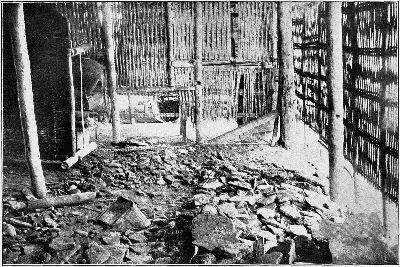
CLEANING AND RAT PROOFING IN BASEMENT OF 1226 CALLE JUAN LUNA IN WHICH TWO CASES OF PLAGUE OCCURRED. RAT
CADAVERS FOUND UNDER BROKEN FLOORS (MANILA PLAGUE CAMPAIGN)
The human cases in April were 5 in number, all
originating in the same house, and the May cases
numbered 4, two of which occurred in the same
house.
It may be explained, in passing, that two cases
of human plague, discovered in Malolos, 25 miles
from Manila, on March 23 and March 26, respectively,
were definitely traced to the same house in
Manila, number 12 Calle Aguila, Tondo, both patients
having lived in the basement of this house
until within 48 hours of the development of the
disease. These persons were unrelated and were
two of a large number of people who lived in a tenement
at this address. Both patients were detected,
while still alive, in Malolos, where they were living
in different and widely separated houses. One of
the patients died in Malolos but the other one was
brought to Manila by train and died at San Lazaro
Hospital. Fortunately no infection was transferred
to Malolos by these two persons. In this connection
it is interesting to note that no other cases have
been reported from outside of Manila, except the
small outbreak in Iloilo in the southern islands,
where the antiplague work was successfully directed
by Dr. Carroll Fox. Concerning this outbreak,
Dr. Heiser, then Director of Health for the Philippines,
writes as follows (Philippine Journal of
Science, February, 1914):
Plague in Iloilo.—In Iloilo, a case suspicious of
plague was reported on July 5, 1912, and this diagnosis
was subsequently confirmed by the laboratory. It occurred
in the person of a Chinaman who was reported to
have come from Bais, Oriental Negros, but later investigation
showed that he had been a resident of Iloilo at
least since February, 1912. The next case was reported
August 18, and the last case, September 17, 1912. There
was a total of 9 cases. All of the cases were confined to
two houses. During July, August, September, and October,
1146 rats were caught in the vicinity of the houses
in which the human cases had occurred, along the water
front, and in the places which were regarded as suspicious,
but in not a single instance was an infected rat found.
Directed to Take Charge of Plague Suppressive
Measures.—Upon my arrival in Manila
from the United States, on October 23, 1912, I
received orders from the Director of Health to take
charge of all plague suppressive measures in Manila
and I remained in charge of this work continuously
until July 11, 1914.
Plague Fighting Organization.—The plague
fighting organization was composed of three American
Sanitary Inspectors and from ten to fifteen
native Assistant Sanitary Inspectors of the Bureau
of Health, rat catchers and laborers of the Bureau
and laborers of the City of Manila supplied by the
Department of Sanitation and Transportation. The
combined force varied in numerical strength from
100 to 150 men and was usually divided into three
parties, distributed in various parts of the city according
to the local indications and needs from time
to time.
After the invasion of Tondo by rat plague we
made special effort to rat-proof the light material
houses of that section, in the course of our cleaning
operations, by the closure of the open ends of bamboo
timbers with cement and with tin cans, in the
manner shown in photographs herewith. In addition
to this, special attention was given to the repair
of broken cement work, and hundreds of Bureau of
Health orders, verbal and written, were issued to
owners, at my request, in the rat plague districts.
The number of houses in which bamboo timbers
were closed by cement or tin exceeded a thousand.
In addition to these means, the very important
matter of depopulating the insanitary basements
of the light material houses in squares where plague
has occurred was given attention, with the result
that hundreds of families were moved from these
insanitary and dangerous ground-floor rooms to
quarters well above ground and measurably removed
from the rats, which roam over the ground from
house to house, foraging for food under kitchens
and in ground-floor storerooms, tiendas and eating
places. The fish packing factories afford them
abundant food and a number of cases of plague
have occurred adjacent to these fish-drying establishments.
Rat-proofing and Rat Destruction.—While
it is frankly admitted that rats may not be completely
exterminated by poisoning and trapping, the
statement, so frequently repeated of late, that destructive
measures really increase their number, is
unwarranted and unsustained by facts, at least in
Manila. It seems to be the common practice for
disbelievers in trapping and poisoning to array the
methods of rat-proofing and rat destruction as
alternative policies, whereas everyone practically
familiar with the work in such cities as Manila—or
even in the United States—knows that there is often
no choice permitted. Rat-proofing is highly desirable,
permanent in its results, and in every respect
the "method of election." On the other hand, it is
entirely inapplicable at certain times and in certain
localities where poverty, lack of interest of property
owners, and ofttimes lack of interest and of money
on the part of municipalities, absolutely preclude its
immediate application. It is therefore unfortunate
that the statement, that rat poisoning and trapping
are ineffective, either in controlling plague or in
reducing the numbers of rats, is circulated. It may
be shown easily, by the daily records, that within a
few weeks after extensive rat poisoning and trapping
(with the breaking up of nests) is pursued in
a given locality, the rat catch drops in the most
decided manner.
Individual premises may be practically cleared
of rats by continued intelligent rat catching and
poisoning, and while the normal rat birth-rate may
keep pace with the normal rat death-rate it will not
keep pace with the normal death-rate plus the poisoning
and trapping death-rate in any given locality,
provided that the poisoning and trapping, with the
destruction of nests, be intelligently and continuously
carried out.
Rat-proofing and rat destruction, then, should
not be contrasted as alternative procedures or
policies. Both are valuable and each has a proper
place. In communities non-infected with plague
and unexposed to infection it will probably be found
that rat-proofing, carried out in connection with the
repairs of old buildings and the erection of new
ones, will meet the requirements. On the other
hand, in cities exposed to plague infection or
already infected, rat destruction is bound to be
necessary for years to come.
In emergency, the removal of people from intimate
relationship with rats (so far as is possible),
as practised recently in Tondo district, Manila,
will often have to take the place of rat-proofing; and
rat destruction and expulsion will be found, in the
last analysis, to be the methods upon which success
or failure in fighting plague during epidemic time
will depend.
In this connection I quote correspondence which
passed between the Director of Health and myself
in 1913.
Upon March 22, 1913, I directed the following letter
to the Director of Health:
Sir: I have the honor to state that Estaban Masibac,
aged twenty-two, laborer, who died at 140 Perla of bubonic
plague, slept upon the ground floor of this house
upon a bamboo bed. All these basement dwellers in this district
now infected with rat plague are in considerable
danger.
The roving rats which wander over these ground surfaces
from house to house come into pretty close contact
with these basement dwellers, and it would appear that
they visit the upper stories of the houses rather infrequently,
unless food is stored there. Upon the ground
they forage upon the food dropped there by the residents
of the houses.
I would like to have authority to order the vacation
of these basement rooms which are almost invariably unfit
for human habitations.
I look upon this measure as an important one at this
threatening time and believe it should be enforced in every
square or block where plague rats have recently been
found. If this authority is granted it will be used
judiciously.
Very respectfully,
[Signed] T. W. Jackson,
Medical Inspector in Charge of Plague Suppression.
Upon March 24 I received the following letter
of authorization:
Sir: Confirming my verbal instructions of yesterday
I have to request that, in accordance with the recommendation
contained in your letter of March 22, that on
account of the danger of the spread of plague in the district
in which plague has appeared extensively, the basement
dwellers in blocks, or squares, in which plague has
been found, should be ordered to vacate.
Very respectfully,
[Signed] Victor G. Heiser,
Director of Health.
Upon November 26, 1912, five dead rats were
reported from the U. S. Army Commissary Warehouses
on the Pasig River near the Malecon. They
were found dead by workmen there and were thrown
into the river by the finders and thus, unfortunately,
examination for plague was prevented.
Upon November 27, a cat, known to have caught
and eaten rats recently at the same place, was reported
to be sick. I took the cat to the Bureau of
Science where she was observed until she died, three
days later.
At autopsy, typical bubonic plague (cervical)
was disclosed, and several guinea-pigs inoculated
from the spleen and bubo died from the same disease.
A guinea-pig, inoculated from a swab introduced
into the cat's rectum, also died from plague
(see report of Dr. Schöbl).
Four kittens, recently born of this plague cat,
were observed for two weeks but showed no sign of
the disease.
Subsequently about 80 rats were caught at these
warehouses and in the vicinity, but none of them
showed post-mortem signs of plague. The Medical
Department, U. S. Army, then took up the matter
of rat catching on all military reservations in Manila
and in all buildings thereon, but no more cases of
animal plague were discovered.
Fleas and Their Habits.—In "Observations
Upon the Bionomics of Fleas Bearing Upon the
Epidemiology of Plague in Eastern Java," by
N. H. Swellengrebel, Ph.D., published by the government
at Batavia, Dutch India, in 1913, some interesting
facts, developed by study and experimentation,
are presented. Some of these facts have a
bearing on the plague problem in the Philippines,
for it should be borne in mind that certain climatic
similarities and racial similarities pertain commonly
to the Javanese and Filipinos and their respective
countries.
While we are not prepared at present to make
general application of the Javanese findings to the
Philippine Islands, for lack of parallel or confirmatory
studies in the Philippines, we may state some
of the conclusions of the Java workers with propriety,
and we may also point out similarities in the
construction of certain Filipino and Javanese habitations
in their relation to rat harboring.
Swellengrebel, in Java, noted the number of
fleas per rat, dealing with Xenopsylla cheopis (the
commonest rat flea in Java) almost exclusively.
This flea, it will be remembered, is also the common
rat flea of India, the Philippines, Australia, Italy,
Brazil and tropical countries generally, being variously
known as Lœmopsylla cheopis, Pulex pallidus,
P. brasiliensis, P. philippinensis, and (in
Italy) P. murinus.
It would not be unreasonable, therefore, to expect
to find at least some of his observations applicable
to the Philippine Islands.
Swellengrebel failed to find Ctenocephalus canis
(dog flea), C. felis (cat flea) and Ceratophyllus
fasciatas (the common rat flea of the United States
and Europe) upon Javanese rats. In attempting
to determine the normal flea census he found that
field rats, and field rats caught indoors, as well,
generally carry fewer fleas than house rats and that
the number of fleas per house rat varies in different
districts from .02 per rat to 2.3 or 4 per rat and that
this variation is not invariably constant with the
presence or absence of rat plague. Concerning the
question whether or not a high flea census may indicate
rat plague, Swellengrebel offers the reasonable
opinion that there is little doubt that plague in
rats increases the number of fleas per rat above
normal and that, consequently, a sudden or marked
increase in the number of fleas per rat, without a
known normal cause, indicates increased rat mortality
and probably rat plague.
As to the influence of temperature and humidity
on the hatching of larvæ, he concludes from experimentation
that the duration of development of the
egg varies under various hygrometric conditions, the
general rule being, "the lower the humidity the
longer the development period."
As to the influences of temperature and humidity
upon the transition of larva to imago he finds that
if humidity diminishes, a smaller number of larvæ
reach the adult stage; and also that a saturated
humidity (in artificial cultures), causing condensation
of water in the substratum, is very fatal to
larvæ. He offers the thought that this, perhaps,
explains why only small numbers of fleas are found
on field rats which live in holes in rice fields which
are necessarily damp, especially in the rainy season.
His experiments to determine the duration of
life of fasting fleas were made with laboratory-bred
fleas which had never fed on blood and with fleas
which had already sucked blood.
The duration of life was variable, but of those
fleas already fed with blood three-quarters (¾)
perished within 10 days and the remainder lived
from ten to twenty days, only one-tenth, however,
surviving for 13 days, if moist conditions were maintained.
High temperature was determined to be an
unfavorable condition.
If from these findings one should attempt to
predicate or predict the extension of plague in
house rats—based on flea prevalence—and this with
relation to climatic conditions, we should be led to
the conclusion that the rainy season, with its greater
humidity, would be quite the most favorable time
of year for rat plague extension in Manila and,
upon the contrary, that the hot dry season through
its unfavorable influence upon flea breeding would
be the least favorable season for rat plague in
Manila.
The hot months of 1913 did not bear out this
reasoning, however, for during these months rat
plague was at its height.
That increased prevalence of human plague has
not gone hand in hand with increased prevalence of
rat plague in Manila, may be explained, I feel sure,
by the activity of our efforts to destroy rats and to
remove the people from close relationship with them.
Another factor of possible explanation of the
greatest prevalence of human plague in Manila during
the late rainy season of 1912 (October), is the
fact that rats are certainly driven above ground
into houses and therefore into closer relationship
with man by heavy rainfall and the consequent
flooding of their subterranean homes.
It appears, therefore, that the seasonal explanation
of greater plague prevalence, rat or human, is
susceptible of several interpretations and I feel sure
that in countries like the Philippines seasonal variations
in heat do not suffice to rid the rats of fleas during
any months of the year. If, then, conditions of
rainfall serve to drive the rats above ground and
indoors during certain months, it would be reasonable
to expect more human plague from closer relationship
of rat and man,—provided that no special
measures were carried out.
Such, however, is not invariably the rule, if statistical
studies are to be taken as evidence, and so
we are reminded that generalizations for countries
of different climates and seasons are not wholly
reliable.
Rat breeding, as well as flea breeding, is influenced
by climate, but as the reproductive activity
of the rat is most retarded by cold weather—an
unknown condition in the Philippines—and as the
climate of Manila is fairly equable so far as heat
and cold are concerned, the only factor which needs
to be considered is that of rainfall. As already mentioned,
rainfall doubtless serves to drive rats above
ground and so, to a certain extent, away from their
nests in burrows and underground.
Their well-known adaptability to changing conditions,
however, permits them to house themselves
comfortably above ground when driven out of these
burrows and holes.
Javan Observations.—The following conclusions
were reached by Dr. J. J. van Loghem in a
report upon "Some Epidemiological Facts Concerning
the Plague in Java" (published by Civil
Medical Service in Netherlands India-Batavia,
1912):
- In plague-infected villages, as distinguished from
plague-free villages, there exists a considerable mortality
among house rats.
- Rats in plague houses and plague quarters have
repeatedly died from plague. Fresh plague rats appear
more often in the houses adjoining plague houses than in
the houses themselves.
- The house rat exists even in the immediate vicinity
of man.
- The ordinary parasite of the house rat is Xenopsylla
[83]cheopis, which experimentally is known to choose
man as a host when starving.
- Fresh plague rats have repeatedly been found to
harbor a great number of fleas.
- Virulent plague bacilli have been demonstrated in
the stomachs of such fleas.
Concerning the prevention of plague by improving
the native dwellings, the same observer says:
"Obviously an increase in the distance between man
and rat becomes an important factor as a means of
preventing the disease."
Conditions of Manila Habitations Favorable
to Rats and Plague.—As shown by our own
experiences in Manila, this end, the separation of
rats and men, is not obtainable by destruction of
rats by poison, traps and rat catchers. Rats dying
of plague in their nests furnish the greatest danger
to man. The plague problem, therefore, where rats
are already infected, from the stand-point of direct
prophylaxis, is the problem of dwellings. It was
from this stand-point that we attacked the problem
in the Tondo (Manila) campaign in 1913.
Manila Verification of Javan Observations.—Having
in mind the experiences of the
plague investigators in Java during the recent epidemics
there (1911–1912), we sought, from the
time the Manila outbreak occurred, to verify some
of the findings of the Java investigators, at least
with special reference to the nesting of rats in close
proximity to human beings and the consequent exposure
of these persons to the infected fleas which
desert the rats dying from plague in these nests.
Not until rat plague invaded the special district
of Tondo, in Manila, in March, 1913, did the opportunity
present itself. Theretofore the Manila cases
had generally appeared in houses of the so-called
"hard material districts," where house construction
is entirely unlike that with which the Java workers
dealt. With the invasion of Tondo, however, the
Java and Manila conditions became similar. I
quote the descriptions of Javanese house construction
from the report of Dr. J. J. Van Loghem,
"Some epidemiological facts concerning the plague
in Java," Batavia, 1912.
The Javan Village House.—In substance, he
says that the Java village house, as a general type,
is a one-storied structure with its roof sloping to
the front and back, i.e., with its ridge parallel with
the front and back aspects of the building. It is
not elevated above the ground by supports or palisades
and has no separate floor, the earth serving as
the floor.
The outer frame is of strong bamboo poles and
the inner frame is also constructed of bamboo.
These bamboo timbers are perforated at various
points to permit of framing with other pieces of
bamboo and for the entrance of pegs, etc.
The roofs of these houses are often made of tiles,
but at times the familiar thatched roof is seen. In
both cases the supports or rafters are bamboo poles.
The principal piece of furniture is the "bale bale,"
or bedstead, usually made of bamboo, except in the
houses of the well-to-do. Small storerooms are
often located in the houses, and stables are sometimes
built against them. In many cases the family
provisions are kept in the house and the cattle are
housed here as well.
Manila Light Material Houses.—If, now,
we turn our attention to the average Tondo
(Manila) light material house it will be apparent
that the description given for the Java village house
fairly describes the Tondo house, except that the
Philippine house is commonly elevated 2 metres
or more above the ground upon bamboo supports
(see photographs). The basement is usually enclosed
in a manner similar to the principal room of
the Java house and the basement room may fairly
be compared, structurally and in the matter of its
floor, with the one-story Java house. In the Manila
house, however, the floor of the upper room takes
the place of the roof of the Java house and like it
is supported by bamboo timbers.
Here, then, in our enclosed basement story, we
have a practical replica of the one-storied Java
house.
Here, also, the principal piece of furniture is
often a bamboo bed, practically identical with the
Java "bale bale," if we may judge from photographs.
In the Java houses the favorite nesting places
for rats were found to be the interiors of horizontal
bamboo pieces of the roof, house frame and bedstead.
The rat usually gains entrance by gnawing
through the natural partitions between the bamboo
sections near the outer end of the pole. Our Manila
photographs show both the natural open ends of
such timbers and the rat-gnawed perforations in the
partitions.
In Java, rats also nest in the thatched roofs, as
they occasionally do in the Philippines.
Nest Materials.—The materials utilized for
nests by rats in Manila and Java seem to be identical
also. Straw, dry leaves and pieces of cotton
are mentioned in the Java reports. The same materials
and additional ones will be found mentioned
in our reports upon nests.
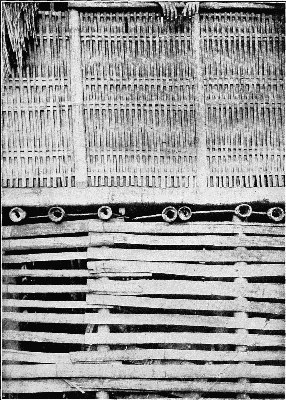
BAMBOO HOUSE SUPPORTS NOT SEALED WITH CEMENT. NOTE HOLES GNAWED IN BAMBOO
ENDS. RATS FREQUENTLY MAKE NESTS IN THESE HOLLOW BAMBOO RAFTERS.
The presence of food was also noted in the
bamboo nests in Java and we often find articles of
food in our Manila nests.
Dr. Korn, P. H. Service, and the writer
(T. W. J.) investigated a good many of these bamboo
house-timbers and we not only found such evidences
of rats as food, rat fæces and nest materials,
but in one case a rat was actually driven out of a
bamboo nest by introducing a long thin strip of
wood. The evidence of similar conditions then is
complete.
We also duplicated the experiences of the Java
workers in finding dead rats inside of the bamboo
house timbers in close proximity to patients sick
(or dead) with plague (see memoranda in the case
of Esteban Masabik, of 140 Calle Perla, March 22,
1913).
Very extensive rat destruction and cleaning
operations, covering a large portion of the city of
Manila and including all sections where cases of
rat plague or human plague developed, were undertaken
and this work was carried on without interruption
for about two (2) years. City laborers to
the number of 60 to 150 were used and the work was
supervised by Sanitary Inspectors Brantigan and
Searcy, of the Bureau of Health. During a part
of the time a flying column of 50 men, under Sanitary
Inspector Hunniecutt, was detached from the
main party and employed at placing rat poison.
The total amount of accumulated dirt removed
from houses and yards approximated 5250 tons (for
17 months ending November 1, 1913).
Without doubt this general cleaning campaign
and the removal of this enormous accumulation of
dirt and rubbish was of great value as an antiplague
measure.
The rat catch will always be found to depend
upon several factors, viz.: the number of persons
employed; the number of traps and portions of
poison placed; the location of the operations and the
length of time a given locality is trapped, poisoned
and cleaned. The variety of baits and poisons will
also affect the results.
In addition to these factors certain others are
found to operate in reducing the rat catch, as, for
example, weather conditions and the occurrence of
Sundays, holidays and the days just preceding and
following holidays.
Upon rainy days and the days just mentioned
the rat catch almost invariably falls off.
From statistics collected by me in connection
with this work, Dr. V. G. Heiser, then Director of
Health for the Philippine Islands, published the
following memorandum in 1914. As it is a correct
transcript of my records I introduce it here in its
entirety.
Comparative Statistics in Rat-catching Methods.[3]—With
a view to ascertaining which type of rat trap was
most effective and also the average number of rats that
are caught by a given number of poisoned baits that are
set out, statistics were kept during the antirat campaign
in Manila. The ratio maintained in catching rats with
two types of traps is indicated in the following table, a
perusal of which will show that for the three months ended
June 30, 1913, there were 120,565 spring or snap traps
set and that for every 100 of this type of trap set there
were caught 6.9 rats. During the same period there were
47,075 wire cage traps set; the total number of rats
caught was 339; which gives 0.72 rat caught for each
hundred traps set. For the quarter ended September 30,
130,627 spring or snap traps were set and 9,753 rats were
caught, which gives 7.47 for each 100 traps set. During
this period 40,621 wire cage traps were set and 395 rats
were caught, which gives 0.97 rat caught for each 100
wire cage traps set.
| Kind of trap or poison |
Quarter ended June 30 |
Quarter ended Sept. 30 |
| Number set |
Number of rats
caught or poisoned |
Per cent. |
Number set |
Number of rats
caught or poisoned |
Per cent. |
| Spring or snap traps |
120,565 |
8,377 |
6.9 |
130,627 |
7,753 |
7.47 |
| Wire cage traps |
47,075 |
339 |
.72 |
40,621 |
395 |
.97 |
| Poison bacon, rice, or coconuts |
166,237 |
1,216 |
.731 |
177,309 |
216 |
.12 |
| |
Quarter ended— |
| June 30 |
Sept. 30 |
| Number of rats: |
|
|
| Caught by dogs |
160 |
5 |
| Killed with clubs and other weapons |
2,889 |
3,818 |
| Found dead from other causes |
316 |
297 |
No accurate record was kept of the number of each
kind of rat bait set. Only the total of all was recorded.
Bacon or coconut with strychnine and rice with arsenic
were used. For instance, for the quarter ended June 30,
1913, there were 166,237 poison baits set in new territory
and the rats found poisoned average for each 100 baits
0.72. During the next quarter there were 177,309 baits
set in territory that had been worked over, and only 216
rats, or 0.12 rat per 100 baits, were killed. From the
foregoing it appears that the rat poison ranks lowest in
efficiency but perhaps highest in economy. In view of the
fact that the original cost of the cage trap is many times
more than that of the spring trap, and the cost of maintenance
is very high, it will be apparent that the spring
trap is by far the more economical as well as more
effective of the two.
Generally speaking, however, the number of rat
catchers engaged and the location of their operations
has the largest influence upon the total catch of rats.
For the fiscal year July 1, 1912, to June 30, 1913,
inclusive, the total catch was 55,101 rats (Manila
only); to December 1, 1913, 79,676.
The most natural explanation of the general
correspondence between the highest rat catch and
the highest incidence of human plague would be
upon grounds of greater activity in rat catching
effort at times of greatest plague prevalence, but
from the inauguration of general systematic rat
catching there was no cessation of effort, even during
the abatement of plague, and in consequence
this explanation does not apply strictly.
It is true, however, that whenever plague occurred
in districts theretofore free from the disease,
rat catching was pushed vigorously in the surrounding
localities.
Making due allowance for all the factors mentioned
I am impressed with the probability, amounting
almost to certainty, that the catch of more than
79,676 rats definitely affected and checked the
spread of plague in Manila in 1913; and I am of
the opinion that systematic and wholesale rat
catching, carried out in the most economical manner
possible, should be persisted in indefinitely, at
least until plague disappears, wherever the disease
occurs.
Efforts to prevent the spread of plague to the
provinces of Luzon, by way of the railways, were
successful and the present measures employed,
freight inspection, the fumigation of packages suspected
or likely to contain rats, and the similar treatment
of freight cars showing signs of rats, should
be continued. In a few cases these measures have
driven rats out of both packages and cars and the
animals have been killed by the sanitarians on duty
at the station.
The matter of water transportation was entirely
within the control of the authorities in charge of
inter-island quarantine affairs.
Rat catching in Manila was systematically performed
and all rats captured were turned over to
the Bureau of Science for examination for plague.
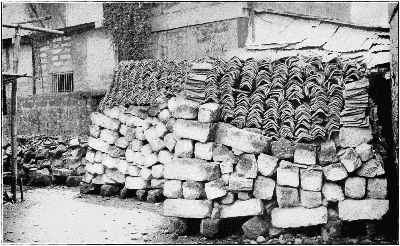
MATERIALS MUST BE MOVED ABOUT IN THE SEARCH FOR RATS (MANILA PLAGUE CAMPAIGN)
When plague foci were discovered the localities
were trapped and poisoned both circumferentially
and centrally, with a view to preventing the diffusion
of infected rats throughout the city.
Rat-proofing.—The theoretic desirability and
superiority of "out building" the rat, over all other
methods of rat suppression, is admitted. The apparent
impracticability of actually rat-proofing
Manila at the present time and our inability to
starve the animals out, justify the other and less
permanent measure, viz.: rat catching. However,
I heartily favor and urge the most complete and
thorough-going rat-proofing of buildings actually
infected with human or animal plague, in all cases.
The building ordinances of Manila already provide
for rat-proof construction in all new buildings
erected.
With a view to cutting off the food supply of
the rat, more than 1100 orders upon householders,
to provide covered garbage cans, were served in the
district of Tondo alone.
The open ends of bamboo timbers in more than
2300 houses were closed, either by cement or tin
cans, during 1913.
Theatre Disinfection.—All the cinematographs
and theatres in the city were disinfected upon
repeated occasions by spraying with petroleum and
cresols, with a view to destroying fleas and preventing
plague infection.
Attempts at deception and concealment of
plague patients, upon the part of members of their
families, were numerous, but with the close scrutiny
of death certificates and dead bodies exercised at all
health stations it is believed that all cases were
recognized.
One case of extremely careless diagnosis occurred.
A death certificate was furnished by a local
native doctor who certified the cause of death to be
"uterine hemorrhage." Suspicion arising, an
autopsy was ordered and a pronounced case of
bubonic plague was disclosed postmortem. No evidence
of uterine hemorrhage, except slight menstrual
signs, was found.
The destruction of infected fleas in plague
houses is of course the primary object of the disinfection
by spraying, which is thoroughly carried out
in every house where a case of human plague or rat
plague appears. The method is a simple one and
consists in spraying a mixture of cresols (2 per cent.)
and kerosene (98 per cent.) over all surfaces of the
house, floors, walls, underlying ground, furniture
and the spaces above ceilings, etc., using the mixture
liberally and securing a general surface distribution.
There is no doubt of the toxicity of this mixture
to all fleas and bed-bugs which it reaches, and
it is undoubtedly an effective measure in rendering
an infected house safe. All of the instances of
multiple house infections, where the cases recurred
after disinfection, in Manila, have been in houses
where, for one reason or another, the recommended
structural rat-proofing has been postponed or where
it has not been done. Thus, on Calle San Fernando
the sequence of the four cases (their progress by
days and in consecutive houses) is explained by the
travel of rats through efficient rat runs present in
the walls and ceilings, rather than by the passage of
fleas through partition walls, from uncommunicating
house to house.
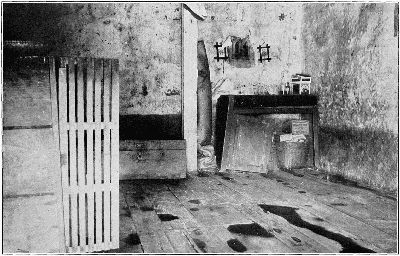
A RAT INFESTED PLAGUE INTERIOR
So also at Calle Cabildo, where the superstructure
of the house was a veritable sieve, there was a
series of communicating double walls.
At the house on Calle T. Alonso a similar condition
existed, but here the two cases which occurred
may have been synchronously infected, or nearly so,
previous to disinfection of the premises.
At Calle Comercio, where six days elapsed between
two cases, the rooms and building were piled
full of merchandise, defeating immediate disinfection,
that is, efficient disinfection, until all the merchandise
was moved and the rooms were emptied.
At 1364 Calle Sande, Tondo, where 5 cases
originated, the infections were undoubtedly almost
synchronous and no infection occurred after disinfection
of the house, while at 1226 Calle Juan Luna,
Tondo, the two cases were plainly infected at about
the same time and this previous to disinfecting the
premises.
Guinea-pigs as Indicators of Infected
Houses.—The following experiment shows strikingly
the necessity for disinfecting houses where
human or animal plague cases have occurred.
Upon December 17, 1912, Dr. O. Schöbl, of the
Bureau of Science, and myself, placed two healthy
guinea-pigs, free from fleas, in a wire trap cage in
the house at No. 4 Calle Barraca, a few hours before
the house was disinfected, a patient with plague
from this house having died within the preceding
twelve hours. The cage containing the guinea-pigs
was placed exactly where the patient had slept upon
the floor, as indicated by the other tenants of the
house. Disinfection was delayed for a few hours
and the guinea-pigs were left in the house for one
day. Upon December 21 one of the guinea-pigs
died from typical bubonic plague—anatomically and
bacteriologically positive—other inoculated experimental
animals also developing the disease.
Other guinea-pigs placed in plague houses on
Calle Cabildo and Calle San Fernando, after disinfection
of the premises, failed to acquire plague.
Natural Enemies of the Flea.—It was observed
during the studies in Java that certain
natural enemies of fleas exist and operate against
their laboratory cultivation and their natural reproduction.
Ants of several varieties, large and small red
ants and small black ones, were found to be very
antagonistic to fleas, both in the larval and adult
states, destroying them actively.
Fleas in the laboratory were found to be affected
with mites, with a resultant high mortality among
the insects. The same parasites were not found
upon wild fleas. On account of the prevalence of
mites upon the laboratory fleas certain experiments
concerning the transmission of plague were vitiated.
The activity of ants in attacking and disposing
of rat cadavers found in our antiplague work in
Manila was frequently brought to my attention.
We invariably included an attack upon ants in
treatment of houses known to harbor, or suspected
of harboring, plague rats. The combination of
kerosene and cresols, elsewhere referred to, was
found to be perfectly satisfactory in the destruction
of ants; assuming, of course, that the necessary
procedure of exposing the ants, by the moving of
merchandise, boards or other protecting materials,
was performed, so that contact, by spraying the insecticide
mixture, was secured.
Activity of Fleas.—It was also observed during
the Java studies that the rat flea, while rather
lazy, may and does cover distances of five metres
and that he sometimes covers eighteen centimetres
at a single leap.
In addition to this, of course, there must be considered
the possibility of his falling considerable
distances.
Zoölogic Classification of Rats.—The matter
of accurately, systematically and scientifically
cataloguing and classifying rats is one of great difficulty
and is not to be undertaken by anyone but a
trained naturalist. However, some of the notes we
have at our disposal, gathered from many sources,
may be set before the reader. It is extremely difficult
to find exact correspondence of statement in
the various classifications offered by writers upon
plague and rats.
Dr. Lantz gives the following brief classification
in his section of the publication, "The Rat and Its
Relation to Public Health."
Order: Rodentia.
Family: Muridæ.
Genus: Mus.
Species are many, but only three or four are cosmopolitan.
Cosmopolitan species: Mus rattus—black, brown, and
roof (Alexandrine) rat; Mus decumanus—gray, barn,
wharf, sewer, and Norway rat.
Mus rattus has many varieties known throughout
the world and these are named according to color
and habitat.
In addition to the names given in Lantz's classification,
we constantly see reference to the black
house rat, the brownish-gray rat (Mus Alexandrinus),
the ordinary ship rat, the field rat, etc.;
terms descriptive of habitat and appearance being
very loosely applied. Little account is taken, by
many, of the well-known variations in the coloration
of rats due to climate and season and of the well recognized
aptitude of the rat for living in-door
or out-door according to circumstances of food supply,
weather, etc. The "sawah" rat of Dutch
India, implicated in the prevalence of plague there,
was formerly considered a variety of Mus decumanus,
but is now described as a field variety of
Mus rattus. So too, varieties of Mus decumanus
are frequently named according to alleged geographic
origin, habitat, color and habits, viz.: sewer
rat, brown rat, Norway rat and migratory rat.
The inevitable confusion bound to arise from
such loose classification is obvious.
Another genus, Gunomys (Nesokia), implicated
in plague, is represented in India by two species
and by at least one (an undetermined one) in Java,
some confusion existing in the matter as yet. Members
of this genus are described as large, rough-coated
rats which live both as house rats and field
rats. In India the Plague Commission reported
specimens of this genus as particularly susceptible
to plague.
In the Philippine Islands no specimens of
Gunomys have been observed, but M. rattus and
M. decumanus are both present and numerous and
both are subject to plague, as shown by the presence
of the disease in specimens examined.
In view of the unreliability of the points of difference
in rats usually given as identifying data,
such as the number and location of the mammæ, the
variations in color and the peculiarities of the footpads,
the Javan observers depend upon the conformation
of the skulls for the determination of
genera, the skull of M. rattus being oval and arched,
that of M. decumanus more closely approaching the
square and rectangular conformation, and that of
Gunomys being broader, higher and longer than
either.
In M. rattus the prominent borders which separate
the parietal from the frontal surfaces of the
skull are oval; in M. decumanus they are parallel
or slightly divergent; in Gunomys they are lyre-shaped.
M. rattus

M. decumanus

Gunomys

To determine these differences the heads of the
rats are cut off, the tissues desiccated by antiformin,
or by boiling and stripping.
From experiences in Porto Rico, Creel, of the
U. S. Public Health Service, concludes that M.
norvegicus (decumanus), while essentially a burrowing
animal and not addicted to climbing or
swimming, is nevertheless quite capable of doing
either. He was found to burrow in the hardest
earth to a depth of two and one-half feet and to
pass through all kinds of wood, soft brick and lime
mortar, probably by gnawing.
The black rat and Alexandrine rat (M. rattus)
in Porto Rico, according to the same observer, do
not burrow at all, but can climb and jump in expert
manner, and are the species found in the rural
districts, remote from houses. He found that all
varieties of rats may swim, from ships to the shore,
distances of from one-fourth to one-half mile, but
that they lack the sense of direction and probably
do not land from ships naturally in this manner
(Public Health Reports, No. 9, February 28, 1913).
The female decumanus is a prolific breeder and
brings forth larger litters than the Mus rattus
female.
Mus decumanus is generally conceded to be
larger and more ferocious than Mus rattus. For
this reason he drives the smaller rats to the upper
floors, the decumanus species generally living near
the ground. He is a burrower and is rarely found
in the upper stories of buildings. Decumanus is
known as a wharf rat, but is rarely trapped on ships
on the Pacific Coast, according to the observations
of Surgeon Simpson of the U. S. Public Health
Service (Public Health Reports, April 11, 1913).
According to the same observer, Mus rattus is the
commonest ship-borne rat. He also states that the
black rat and the roof rat (Alexandrinus), both
varieties of M. rattus, differ chiefly in color. They
live in upper floors, between ceilings, in walls and
roofs and are remarkable climbers as well as being
expert rope-walkers and wire-walkers. On account
of their natural wariness and caution it is not always
easy to induce them to enter or approach traps.
The photographs introduced were taken under
my direction in Manila in 1912, 1913 and 1914.
Some of them show the character of the house construction
in Tondo District, Manila, where plague
flourished in 1913. Others illustrate methods of
rat-proofing bamboo timbers in houses of light material.
These end openings were either closed by
introducing cement or by placing tight-fitting tin
cans over the ends of the bamboo rafters.
There are many interesting memoranda, gathered
and made in connection with our antiplague
work in Manila, especially concerning the location
and construction of rat nests found by our laborers;
the materials used and the fabrication of the nests.
Memoranda giving details of rat catching and rat-proofing
are also presented and notes showing the
location of dead rats found in relation to dead human
bodies of plague victims.
Notes concerning cases of multiple house infection
are also presented as being of possible interest.
The Javan studies in 1911 and 1912 establish
the fact that it is possible to form a fair judgment
as to the length of time a rat has been dead, up to
ten or twelve days, from the condition and appearance
of the rat cadaver, both as to decomposition and
drying. A series of 50 rats was studied. It is to
be understood that the conditions under which these
observations were made were tropical conditions.
They would be fairly comparable with summer conditions
in America, but should not be followed too
closely at other seasons of the year. In my own
experience I have observed that ants are likely to
attack the cadaver early and to obscure the deductions
by their destruction of the body.
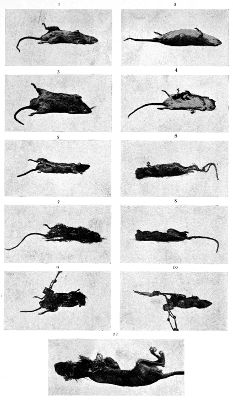
PROGRESSIVE POST-MORTEM CHANGES IN RAT CADAVERS. THE NUMBERS
INDICATE THE NUMBER OF DAYS AFTER DEATH
[105]
| Days after death |
Appearance |
| First to third day |
Distention of the abdomen, increasing. |
| Second to third day |
Loosening of hair by gentle pulling. |
| Third to fourth day |
Loosening of the epidermis by gentle pulling. |
| Third to fifth day |
Perforation of abdominal wall with collapse and disappearance of distention. This perforation
may result from bursting of abdominal wall, or through anus, vulva or thorax. |
| Fourth to sixth day |
Moist shrinking of the body. Swarming of maggots. Spontaneous shedding of tufts of hair. |
| Fifth to eighth day |
Drying of body. |
| Eighth to twelfth day |
Complete dryness and rigidity. |
Photograph (after Publications of the Civil
Medical Service in Netherlands, India) shows the
progressive postmortem changes in rat cadavers, the
numbers indicating the number of days after death.
A Collection of Notes Concerning Rat
Runs, Rat Nests, Their Location and Other
Data.—Attention is invited to the following collection
of notes concerning rat runs, rat nests and their
locations and other data collected by the various
working parties under the direction of Sanitary
Inspectors Brantigan, Renner and Kennard, of
Manila.
Special attention has been given to the finding
and destroying of rat nests, and in this connection
please note that during the month of May, 1913,
one party of workmen (20 men) under Inspector
Brantigan, killed by hand 511 rats out of a total of
1319. This means that many nests were broken
up and that much breeding was interfered with.
In June, 1913, two parties (40 men) killed 772
rats by hand out of a total of 3019.
This work occurred in Tondo District in connection
with extensive cleaning and moving operations.
At 1279 C. Sandejas[4] 7 rats were found in
a nest at the foot of a cluster of bamboo trees, between
the trunks. Nest was made of leaves.
At 728 C. Velasquez, Tondo, 12 rats were driven
from a burrow underneath a thick cement floor by
formaldehyde gas delivered in the burrow through
a rubber hose. This burrow was in sand and the
rats came out about ten minutes after the flow of
gas began. All were killed or captured and two
or three died from the effects of the gas.
On October 27, 1912, two of the rat terriers
belonging to the Bureau of Health caught 192 rats
in one storeroom at the Manila Railway Station, in
38 minutes. At various times they have killed from
10 to 25 rats at a single location, in connection with
the cleaning and moving work done by the laborers.
The dogs caught about 600 rats in all.
On March 11, 1913, 27 rats were caught by
laborers at 202 Calle Concha. They were nesting in
straw covers which had been removed from bottles.
On March 11, 1913, 13 rats were found beneath
a pile of loose tiles at 203 C. Sardinas. The
nest was made of fibres from coconut shells and
straw.
On March 13, 1913, 12 rats were found among
stones scattered in a shallow pile on the ground at
C. Conservador (interior). Nest was made of rice
chaff and small pieces of cloth.
On March 15, 1913, 9 rats were caught at 1353
C. Anloague on the ground floor beneath a pile
of boards. Nest was made of coconut fibre and
shavings.
On March 16, 1913, 24 rats were caught at 934
(interior) Velasquez beneath a wood pile. Nest
was made of coconut-shell fibre and pieces of cloth.
On March 17, 1913, 14 rats were caught under
a pile of hay and straw at 173 Velasquez. Nest was
made from straw, chaff and hay.
The following articles of food were found in
the above-mentioned nests: chicken bones, rice,
coconut, fish and bread.
MEISIC DISTRICT
At 822 Sacristia 6 dead rats found in holes.
At 540 T. Alonso a family of 8 rats was smoked
out and all were killed.
At 514 same street 6 rats were smoked out and
killed.
At 538, interior, same street, 4 rats were smoked
out and killed.
At 546 same street 4 rats were smoked out and
killed.
At 715 San Bernardo dead rat found in a hole.
Nest made of banana leaves and rags.
At 627, interior, Zacateros, 9 rats were smoked
out and killed.
At 669 Benavides 6 rats were smoked out of
four runs and were caught.
At 631 Zacateros 2 rats were smoked out and
killed.
At 417, interior, Misericordia, 4 rats were secured
in two holes under a tile floor. Many rats
were caught at this number (interior) in traps.
At 221 Espelita 7 rats were found in a nest
made of palm leaves and excelsior; location of run
way and nest beneath tile floor.
At 124 Tetuan, in a nest of straw and lint, 5 rats
were caught by hand, alive.
At 415 T. Alonso one live rat and 3 dead ones
were dug out from beneath a tile floor.
SAMPOLOC DISTRICT
At 1001 Bilibid Viejo there were 5 rat runs,
in a Chinese store. Eight rats were secured in a
nest under the cement floor. Nest made of straw
and paper.
At 928 San Sebastian there were 8 rat runs. In
one of them there were caught 8 rats. The nest
was made of straw.
At the same address, later, 3 rats were caught
in another run and 8 young rats, with eyes still unopened,
were found in a nest of straw. A supply
of bread was on hand in this nest.
At 629 Tanduay 20 rats and nests of straw and
paper were found.
At the same address upon another day another
rat run was found and one large rat and 16 small
ones were taken from a nest made of rags, straw,
and fibres.
PACO DISTRICT
At 1115 San Andres in a Chinese tienda (food
store), a long rat run and a nest of rags, straw, and
paper, and 30 small rats were found.
One nest in a bamboo tree 30 feet above ground
was found. Rats had been observed going up the
tree and one was caught at the foot of the tree in a
trap.
SAMPOLOC DISTRICT
At 629 Tanduay 14 young rats and a nest of
straw, paper and rags were found in a stable.
Same address, later, one rat run and nest of
straw and rags with one large rat and 16 small ones
were found.
TONDO DISTRICT
March 27, 1913, one rat was caught alive inside
of a bamboo timber in house at 51, interior, Pesqueria.
At 631 Azcarraga 4 young rats were found in
a nest of paper, leaves, and hay. Chicken bones,
crab shells, and rice were present in the nest.
A young python was caught in a lumber yard in
the Santa Cruz District in June, 1913. In his
stomach was found a half-grown rat. Another
snake was caught in a rat trap at the same address
about the same time.
Plan for Household Rat Destruction.—The
following plan for household rat destruction
was proposed by me to the Director of Health. It
is considered worthy of trial if rat plague appears
in new districts.
Proposal for periodic household rat poisoning in
Manila.
Proposed that, upon a certain day of each week, rat
poison be issued free to all applicants (householders) in
Manila who agree to place same about their premises,
permitting the poison to remain in place for 48 hours.
Instructions and poison placards to be issued with the
poison. Issues to be made from Station Health Offices and
records of issue to be kept.
Collections of dead rats to be made at the end of 24
hours and 48 hours by Bureau of Health employees.
Poison portions to be collected and turned in at the
Station Health Offices at the end of 48 hours, that is, at
the time of the last rat collection. Rats to be tagged
and examined for plague in the usual manner.
Due newspaper notice of the plan and of the gratuitous
issue of poison to be given to the people and their coöperation
requested.
Plan to be tested for at least two months.
[112]MULTIPLE HOUSE INFECTION
Memorandum concerning 1364 Calle Sande:
Within 72 hours (April 25-27) five fatal cases
of plague, all in Filipinos, occurred in Manila. The
five deceased persons lived at 334 C. P. Rada
(Meisic), 1419, interior, C. Dagupan, 1364 C.
Sande (Tondo), 642 C. Ylala (Meisic), and 1492,
interior, C. Dagupan (Tondo).
The following relationships were established by
inquiry and investigation and the circumstances
point strongly to a common source of infection and
to a single geographic focus of plague infection in
connection with all of the cases, viz.: at 1364 C.
Sande (Tondo).
José Raymundo, boy, aged fifteen, lived at 334 C. P.
Rada and worked daily until taken sick on Tuesday,
April 22, at 1364 Sande, in the shop of Simplicio Enriques,
a silversmith, who lived part of the time at the same
address.
José Raymundo died of bubonic plague at San Lazaro
Hospital on Friday, April 25, 1913.
Norberta Mendoza, woman, aged fifty-six, lived at
1418, interior, C. Dagupan. She was the mother-in-law
of Simplicio Enriques, the silversmith at 1364 Sande, and
visited her son-in-law there frequently and within a few
days of her last illness. She was taken sick April 22 and
died at 1419, interior, C. Dagupan, on the morning of
April 26. At autopsy at San Lazaro morgue, the same
day, bubonic plague was found to be present and the
cause of her death.
Trinidad Galves, a young woman, aged sixteen, lived
at 1364 Sande and was taken sick there on April 25. She
was removed to San Lazaro Hospital and died there
April 26, extensive plague lesions being found at autopsy.
Pablo Banzon, man, aged twenty-six, living at 646
C. Ylaya, was taken sick on Friday, April 25. He was
removed to San Lazaro Hospital Saturday afternoon
and died there Sunday evening, April 27. He was shown
to have plague by bacteriologic examination made at the
Bureau of Science. He worked at 1364 Sande as a silversmith,
with José Raymundo and was employed by
Simplicio Enriques.
Simplicio Enriques, aged twenty-seven, a silversmith,
conducting his business at 1364 C. Sande and employing
José Raymundo and Pablo Banzon, was taken sick about
April 23. He moved to two different houses in the interval
between the onset of his sickness and his transfer
to San Lazaro Hospital on April 27, first to 1419 C.
Dagupan, interior, where he remained until the death of
his mother at this house; then to 1492 Dagupan, interior,
from which place he was transferred to San Lazaro Hospital,
where he died with bubonic plague a few days later.
Diagnosis was confirmed at autopsy.
The two women were patients of Dr. Hernando
of Calle Ylaya. He recognized the case of the elder
woman as a probable case of plague, after death,
and reported the matter to the Bureau of Health.
The house at 1364 C. Sande is of the type in
which cases of rat plague and human plague have
recently been found. In our operations to put the
house in a safe condition we found one dead rat,
mummified, in the basement. Unfortunately, the
workmen who swept it out did not note the exact
location at which it was found. The house is in the
midst of the district where rat plague has raged
since early in March, 1913. The basement contained
unauthorized and illegal sleeping rooms until
a few days before this outbreak when they were
removed in the course of our antiplague operations.
The building is constructed of bamboo with a nipa
thatch roof.
The front part of the basement was paved, but
the pavement was undermined and broken. Being
convinced that dead plague rats were present in
the vicinity of this house and probably within it, I
directed that the cement floor under the silversmith
shop and the barber shop, located upon the ground
floor at this address, be torn up. Accordingly, this
was done (April 28) and three dead rats and one
live one were found beneath the cement. As the
bodies were mummified and unfit for bacteriologic
examination they were burned. The living rat was
examined at the Bureau of Science but was found
to be healthy. The cement floor was broken and
permitted fleas from the dead rats to enter the basement
room of the house which was occupied by the
silversmith shop. The rats doubtless died from
plague and the hungry fleas in due time attacked
the nearest persons at hand, the unfortunate occupants
of the silversmith shop and the two women
who frequented the room also.
These facts account for the epidemic at 1364
Sande very completely.
The premises at 1364 Calle Sande were quarantined
by the following order:
Manila, April 27, 1913.
The premises 1364 Sande are hereby declared in
Quarantine for Bubonic Plague by order of the Director
of Health.
The inmates will be permitted to leave the building
and find quarters elsewhere, provided they leave their addresses
with the policeman in charge, so that they may be
readily found. They must remain in the District of Tondo.
If they remain in the house they will be obliged to stay
in the upper story of the house and will have to arrange
for meals to be sent in.
The barber shop and "platero" shop are hereby
ordered closed until further orders.
By order of the Director of Health.
[Signed] T. W. Jackson,
Medical Inspector, in Charge of Plague Suppression.
Memorandum reporting circumstance surrounding
2 cases of plague at 1226 C. Juan Luna (May
17, 1913):
Valeriano Lausin, aged fourteen, Filipino male,
Carmelo maker by trade but out of work at time he was
taken sick, recently removed to this house from 917 C.
Jaboneros where he had been employed. The patient
fixes the date at about a week previous to his sickness, but
the proprietors of 917 Jaboneros are positive in their
statement that he left the place where he lived and worked,
at least two weeks before. This boy recovered.
The circumstances and especially the occurrence
of a second case at 1226 C. Juan Luna, indicate
that infection was incurred here.
Moreover, this house is in the midst of a rat-plague
infected district.
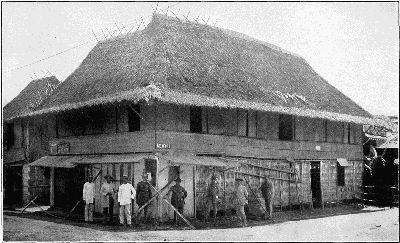
PLAGUE HOUSE, 1226 CALLE JUAN LUNA
The house is of bamboo and nipa construction
and contained illegal basement rooms until a week
ago. About 60 persons lived in this house which
was once licensed as a tenement but which is unsanitary
in a multitude of ways. Bamboo construction,
overcrowding, dirty condition and absence of
proper drainage, water-closet, proper kitchens and
paved ground floors, together with bad ventilation,
made it a dangerous habitation and the added condition
of plague infection made it necessary to
vacate and quarantine the building.
On May 15, at the daily inspection of contacts
in the house 1226 C. Juan Luna, Filomena Suñga,
aged nineteen, and a relative of the owner of the
building, was found to be sick. Her only symptom
was fever, but she was transferred to San Lazaro
upon suspicion and promptly developed symptoms
of plague. She died in a few days and the diagnosis
of plague was verified at autopsy. The following
order was issued:
Station "C," Tondo, Bureau of Health
Manila, P. I., May 15, 1913.
By order of the Director of Health, the house No. 1226
C. Juan Luna is declared infected and is quarantined this
date, for Bubonic Plague. The house will be vacated and
a policeman will register the names of all residents and
the addresses to which they remove.
The residents may remove their personal effects but
will not be permitted to return while the quarantine is in
effect.
[Signed] T. W. Jackson,
Medical Inspector, Station "C," Tondo.
Memorandum: Human body (dead from
plague) and dead rats found in the same basement
room. Upon March 21, 1913, a Filipino laborer
living at 140 Calle Perla, Tondo, was found dead
from bubonic plague.
Upon careful investigation and search of the
premises the following findings were disclosed:
One rat, large, mummified and dry and therefore
dead for at least one week, was found clinging
to a bamboo wall just back of the cot upon which the
dead human body was found.
In a section of bamboo, in a timber constituting
the ceiling of the basement and also the upper part
of the door frame, a rat, dead and dried up, was
found. This section was the end section of the
timber which was partly covered with nipa thatch,
with which the sides of the house were covered. The
ends of a number of the outside rafters (bamboo)
were found to be gnawed through.
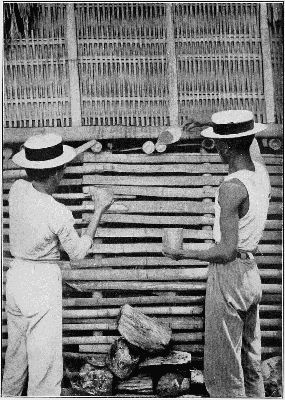
BAMBOO HOUSE SUPPORTS SEALED WITH CEMENT TO PREVENT ENTRANCE OF RATS
(MANILA PLAGUE CAMPAIGN)
Similar conditions were found in adjoining
houses and in one case a live rat was driven out of
a nest in the bamboo.
Sample of Detailed Orders Issued.—Sample
of detailed orders issued by Medical Inspector in
Charge of Plague Suppression. Similar orders
were issued whenever new districts were entered or
new work undertaken.
Memorandum Order. Effective March 25, 1913:
Beginning to-day, 13 men under Assistant Inspector
Parás, will commence cleaning operations at C. Ostra,
extending from the Bay to C. Sande and will clean towards
C. Moriones. They will be provided with a disinfecting
pump and will disinfect the ground surfaces wherever
disturbed, outdoors and indoors. Cleaning is to be done
in the most thorough manner possible, searching meanwhile
for rat nests and rat harbors; re-piling wood, tiles,
stones and merchandise; moving all movable goods out of
doors in their search for rats and rat-holes or nests. All
goods are to be piled above ground at an elevation of at
least one foot. All bamboo beds and bamboo rafters and
parts of the house (in the basements) made of bamboo or
of double walls are to be thoroughly investigated for rats.
All foodstuff attractive for rats is to be placed in covered
boxes or galvanized iron cans, tin cans or barrels, with
tight-fitting covers. Special attention is to be paid to
straw, hay, shavings, grain, rat-holes, and food.
Two men will be detailed to cement up ends of bamboo
and rat-holes, but will not do general repairing. They
will carry materials for mixing cement as needed and will
not be wasteful of materials.
If this force proves to be insufficient in numbers, additional
men may be detailed from the other working parties.
[Signed] T. W. Jackson,
Medical Inspector in Charge of Plague Suppression.
Specimen order issued to Sanitary Inspector
assisting in Plague Suppression by Medical Inspector
in charge.
Sanitary Inspector, Bureau of Health:
Please place the gang of workmen under your charge
in the square bounded by Calles Velasquez, Moriones,
Concha and Manila Bay which is infected with rat plague.
Treat the houses and properties there in the same manner
in which other plague-infected districts have been treated,
viz.: by policing the houses and yards, vacating all basements
of light-material houses in which human habitations
are illegally present; removing (with the consent of the
occupants) all unauthorized basement sleeping places,
beds, platforms, etc., and other illegal structures, closing
up the open ends of bamboo rafters or timbers of the house
with tin or cement.
Where the occupants resist this action sanitary orders
should be issued in the usual manner and interference
should be stopped until the order is served and complied
with. There are a number of most insanitary and unsuitable
shelters of bamboo, tin, etc., used for houses by a
number of families in this square and it is desirable to
tear down these huts if permission can be secured. If
permission is refused orders should be issued on the usual
form.
[Signed] T. W. Jackson,
In Charge of Plague Suppression.
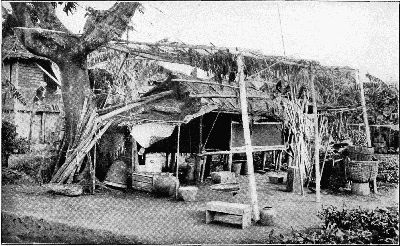
VIEW OF HOUSE AT 447 CALLE CONSERVADOR, TONDO, WHERE INFECTED RATS WERE FOUND (MANILA PLAGUE CAMPAIGN)
Specimen order issued by the Medical Inspector
in charge of Plague Suppression.
Station "C," Tondo, May 21, 1913.
Redistribution of rat catchers and laborers engaged in
antiplague work. Effective May 2, 1913.
Sanitary Inspector Kennard and 20 rat catchers will
move into Tondo District and trap and poison rats in the
district bounded on the west by Manila Bay and on the
east by Estero Reina. The work will be begun at the
extreme north water boundary of this district and will
proceed toward the south.
Sanitary Inspector Brantigan with a similar number
of rat catchers (20) will work within the same east and
west boundaries and will begin trapping and poisoning at
Calle Moriones, proceeding north. The poisoning and
trapping is to be done in the most thorough manner possible,
as this is a dangerously infected district and rat-plague
must be controlled and terminated here.
The laborers, 60 men, divided into 4 parties of 15 men
each under Assistant Sanitary Inspectors Jesús, De la
Rosa, Laxamana and Parás, will continue the cleaning
operations now under way on both sides of C. Juan Luna
south of C. Moriones (plague localities in the same neighborhood),
and thoroughly disinfect.
One party of 15 men will work in the vicinity of C.
Perla, vacate basements as habitations, search for dead
rats in yards, houses, bamboos, under broken concrete,
etc., and will close up openings in structural bamboo by
means of tin and cement. Emphasis is placed upon the
necessity for permanently vacating basements and men
will be sent back over the ground daily to see that the
persons moved out do not return. Reports are desired so
that prosecutions for violations of the law may be instituted
if necessary.
[Signed] T. W. Jackson,
Medical Inspector in Charge of Plague Suppression.
Specimen order issued to Assistants.
May 4, 1913. Station "C," Bureau of Health:
Please place work parties in (interior) 1627–1629
Sande and 525 C. Azcarraga, to clean, disinfect and thoroughly
investigate these premises and the houses, stables
and other buildings in the vicinity. Search for rats, living
and dead, rat nests and rats in bamboos and wood
piles, stone piles, stables, under planks and elsewhere.
Cement the openings in bamboos in houses or close with
tin. Make notes on needed structural work. Do the work
as thoroughly as possible.
[Signed] T. W. Jackson,
Medical Inspector in Charge of Plague Suppression.
Method of Procedure in Collecting and
Forwarding Rats Suspected of Plague Infection
to the Laboratory in Manila, P. I.—Rat
catching,—trapping and poisoning,—is conducted
in accordance with instructions contained in the
Sanitary Inspector's Handbook (pp. 36, 37, 38)
issued by the Bureau of Health.
Rats are collected in Manila and forwarded to
the Bureau of Science for autopsy and for biologic
examination for the presence of plague bacilli in
the following manner:
The various groups of rat catchers are provided
with receptacles (iron pails) and a supply of a
mixture of kerosene, cresol and water (kerosene
10 parts, cresol 2 parts; water 88 parts).
In these vessels, filled with the pulicidal mixture,
the rats are immersed, with a minimum amount of
handling, as soon as they are found (whether in
traps or dead from poison).
If captured alive they are killed and then
promptly immersed. The mixture must be well
shaken or stirred when used, as it separates upon
standing. The immersion is, of course, for the purpose
of destroying any fleas which may be present
upon the captured rat.
A paper tag showing the date and the exact
location of the place of capture, with the name or
group number of the rat catcher, is next affixed to a
foot or to the tail of the rat and firmly tied upon
the same, where it remains until the rat cadaver is
finally disposed of. This tag is a card of strong
Manila paper and the record upon it is made with
an ordinary lead-pencil, as both ink and indelible
pencil marks are apt to become illegible from wetting,
whereas lead-pencil marks are little affected
thereby.
If desired, the disinfected tag in any given case
of rat plague may be returned to the Bureau of
Health, for identification, where an accurate record
of every rat captured is kept.
After dipping and tagging, the rats are taken
to a central point, again dipped, and placed in large,
tightly-covered, galvanized iron cans, in which containers
they are delivered to the laboratory by cart,
once or twice daily.
The Case of Mr. C.—The following are the
facts concerning the case of Mr. W. C., a prominent
American resident of Manila who suffered and died
from plague in 1914.
Mr. C., an editor, was taken ill with plague
on the night of September 18, sought medical advice
and entered St. Paul's Hospital September 19,
and was transferred to San Lazaro Hospital, September
20, with an established clinical and bacteriologic
diagnosis of bubonic plague. He survived
till September 22.
Upon September 21, in the course of disinfecting
the business office of Mr. C., located in a district
which had furnished a number of cases of both rat
and human plague, a dead rat, mummified, was
found in the right hand drawer of his desk and
fleas were seen to hop from the drawer upon opening
it.
A flea killed by the disinfecting mixture at this
desk was identified at the Bureau of Science as a
rat flea (Xenopsylla cheopis).
The rat cadaver was sent to the Bureau of
Science and the following facts were reported from
there some days later:
The mummified rat and skeleton were pulverized
in a sterile mortar and an emulsion was made
and injected into guinea-pigs. The animals died
from plague in a few days and plague bacilli were
recovered from the tissues, as well as from the rat
cadaver, by culture.
A second rat cadaver, found at the same time
in the same building, during cleaning operations,
was similarly treated with identical results.
There could scarcely be a stronger chain of convincing
evidence against the rat and the flea, nor a
more complete and convincing explanation of
Mr. C.'s death than that afforded by these established
facts and official documents. So far as I
know there is no more striking case on record in
the modern history of plague.
Letter of Warning and Appeal.—The following
letter of warning and appeal for coöperation
was suggested and framed by me February 10,
1914, at the time that extensive rat plague was
discovered in the heart of the business district of
Manila. I presented it to the Director of Health
with a strong recommendation for approval and
publication and after consideration he approved
and authorized publication upon February 10. No
change was made in the wording of the proclamation,
but it was issued over the signature of the
Director of Health to give added force and authority
to the appeal. The results were, as I had
hoped they might be, highly beneficial. The taking
of the public into the confidence of the health
authorities brought about a coöperation, without
which our efforts in this difficult situation would
have been sadly handicapped. It is my belief that
this method should often be used by health authorities,
particularly where an intelligent community
is threatened.
To Whom It May Concern:
You are hereby informed that the district bounded by
Calles Rosario, Juan Luna, Dasmariñas and Plaza Calderon
(and possibly the neighborhood bordering upon this
congested district) is a dangerous one for all persons living
or conducting business therein, on account of the
presence there of extensive rat plague. Six human cases
(with five deaths) have recently developed there and many
dead rats have been found. All human cases have been
directly traced to rats dead from plague.
The Bureau of Health is now doing everything within
its power to make this district safe, but the attention of
all citizens, property owners and tenants is called to the
fact that they are required by law to keep their premises
free from rats and to abolish all structural conditions of
the buildings which favor the harboring of rats. This
means rat-proofing, and owners are earnestly urged to
perform this necessary work now, under the direction of
the Bureau of Health.
As a temporary expedient and safeguard all interiors,
walls, floors and ceilings should be sprayed with kerosene
daily, or at intervals of two days, to kill the fleas which
carry plague from rats to human beings. All dark insanitary
places used for living rooms should be vacated
at once; all merchandise should be piled upon trusses at
least a foot above the floor; all straw, shavings and other
material attractive to rats for nesting, should be removed
and burned and all food materials upon which rats may
feed and live should be placed in covered boxes, bins or cans.
All rat-holes should be permanently closed and all
broken cement or masonry should be repaired.
Observance of these instructions may save the lives
of yourselves, your families and your tenants. It is your
duty to do your part in this matter, a part which neither
the Bureau of Health nor the Government can do for you.
Through very great effort the Bureau of Health has
controlled plague in Manila and the Philippine Islands
during the last two years.
Residents must now do their part, and owners of
property must permanently make their buildings safe for
tenants, both for business and residential purposes.
Bacteriologic Observations Made by Dr.
Otto Schöbl.—The following observations upon
the bacteriologic aspect of the Manila epidemic
which we are considering were made by Dr. Otto
Schöbl of the Biological Laboratory of the Bureau
of Science, Manila, and pertain to the cases of the
first year of the epidemic. They were printed in
the December number of the Philippine Journal of
Science in 1913, but as they belong so definitely to
the epidemic I am describing and as Dr. Schöbl has
expressed his willingness for me to quote them in
full, I gladly accept his permission. Dr. Schöbl
advanced the possibilities of blood-culture diagnosis
to such a point of reliability that it became practically
possible for us to expect positive culture in
nearly every case of true plague and the whole
matter of bacteriologic diagnosis was perfected to
a high degree of efficiency under his administration
of the laboratory work.
He relates his observations as follows:
During the recent outbreak of plague in Manila, I had
the opportunity to make certain observations which are
of interest. These observations were made in the examination
of: (1) Specimens taken from patients and from
dead bodies at autopsies, (2) samples of blood-sucking
insects collected in houses where plague patients had lived,
(3) rodents caught by trap or poisoned in the parts of the
city where plague cases occurred from time to time, and
(4) domestic animals suspected of plague infection.
I. Bacteriological Examination of Plague Patients
In order to secure as early diagnosis as possible, the
following procedure of investigation was adopted:
- The bubo was aspirated by means of a sterile hypodermic
[129]syringe. The material thus obtained was placed
in the water of condensation of an agar-slant culture tube.
- At least 7 centimetres of blood were withdrawn
from the cubital vein by means of another sterile syringe,
and 5 centimetres of it were placed in an Erlenmeyer's
flask, containing 200 centimetres of neutral meat broth.
The rest of the blood was emptied into a sterile tube, and
used for agglutination tests.
Cultures obtained by this method were examined microscopically,
and the growths on various culture media were
studied. Gram stain, Löffler's methylene blue, and hanging-drop
method were used. Polar-staining and chain
formation in liquid media and the characteristic type of
colony on the surface of agar were looked for. Animal
inoculation was performed in every case, and the culture
isolated from each case was identified by agglutination
test, rabbit's immune serum being used.
The results of the bacteriological examination of a
series of 24 patients are tabulated in the two following
tables. Table I includes the fatal cases and Table II
those cases which recovered.
The diagnosis of plague could be safely made from the
microscopical examination of the liquid aspirated from the
bubo in the majority of the cases. However, in certain
instances the amount of the aspirated fluid being small
and the bacilli very few, it was impossible to diagnose the
case, especially when the cultures from the bubo were
negative. Repeated examination of the patient was necessary
under those conditions, but it happened in cases 22
and 23 that the patients died of plague before a second
examination could be made. The smears and cultures
from case 22 remained sterile, while the smears and cultures
[130]Table I.—Examination of Fatal Cases of Plague
| Patient |
Race |
Sex |
Age |
Date of
examination |
Duration of
illness |
Hours before death |
Bubo |
Blood |
Skin |
Sputum |
| Smear |
Culture |
Animal
inoculation |
Culture |
Agglutination |
Smear |
Culture |
Animal
inoculation |
Smear |
Culture |
Animal
inoculation |
| |
|
|
|
Years |
1912 |
Days |
|
|
|
|
|
|
|
|
|
|
|
|
| 1. |
Sing Nu |
Chinese |
Male |
(?) |
July |
11 |
5 |
48 |
+ |
+ |
+ |
0 |
0 |
+ |
+ |
+ |
- |
- |
- |
| 3. |
Aluncion Raymundo |
Filipino |
Male |
15 |
Sept. |
29 |
3 |
|
+ |
+ |
+ |
0 |
0 |
0 |
0 |
0 |
0 |
0 |
0 |
| 4. |
Filo Almalas |
Filipino |
Male |
39 |
Oct. |
10 |
4 |
22 |
+ |
+ |
+ |
+ |
- |
+ |
+ |
+ |
0 |
0 |
0 |
| 6. |
Polycarpio Guzman |
Filipino |
Male |
34 |
Oct. |
22 |
2 |
|
+ |
+ |
+ |
0 |
0 |
0 |
0 |
0 |
0 |
0 |
0 |
| 7. |
José Sarmiento |
Filipino |
Male |
37 |
Oct. |
22 |
3 |
|
+ |
+ |
+ |
0 |
0 |
0 |
0 |
0 |
0 |
0 |
0 |
| 8. |
Julian Gonzales |
Filipino |
Male |
41 |
Oct. |
22 |
3 |
23½ |
0 |
0 |
0 |
+ |
- |
0 |
0 |
0 |
+ |
+ |
+ |
| 9. |
Valeriano Buencamino |
Filipino |
Male |
31 |
Oct. |
22 |
3 |
10 |
+ |
+ |
+ |
+ |
- |
0 |
0 |
0 |
0 |
0 |
0 |
| 10. |
Pedro Nicomedes |
Filipino |
Male |
30 |
Oct. |
22 |
2 |
5¾ |
+ |
+ |
+ |
+ |
- |
0 |
0 |
0 |
0 |
0 |
0 |
| 12. |
Regino Gulano |
Filipino |
Male |
34 |
{Oct. |
22 |
2 |
106 |
0 |
0 |
0 |
+ |
- |
0 |
0 |
0 |
0 |
0 |
0 |
| {Oct. |
24 |
4 |
82 |
0 |
0 |
0 |
0 |
0 |
0 |
0 |
0 |
+ |
+ |
+ |
| 13. |
Martin Dimalanta |
Filipino |
Male |
35 |
Oct. |
23 |
3 |
25½ |
+ |
+ |
+ |
+ |
- |
0 |
0 |
0 |
0 |
0 |
0 |
| 14. |
Roberto Obiso |
Filipino |
Male |
25 |
Oct. |
23 |
1 |
53 |
+ |
+ |
+ |
+ |
- |
0 |
0 |
0 |
0 |
0 |
0 |
| 15. |
Juan Barceta |
Filipino |
Male |
23 |
Oct. |
24 |
3 |
37 |
+ |
+ |
+ |
+ |
- |
0 |
0 |
0 |
0 |
0 |
0 |
| 16. |
Yu Tum |
Chinese |
Male |
14 |
Oct. |
24 |
2 |
|
+ |
+ |
+ |
0 |
0 |
0 |
0 |
0 |
0 |
0 |
0 |
| 17. |
Augustin Monterey |
Filipino |
Male |
29 |
Nov. |
1 |
1 |
27 |
+ |
+ |
+ |
+ |
- |
0 |
0 |
0 |
0 |
0 |
0 |
| 18. |
Demetrio Pabraw |
Filipino |
Male |
27 |
Nov. |
23 |
4 |
15 |
0 |
0 |
0 |
+ |
- |
+ |
+ |
+ |
0 |
0 |
0 |
| 21. |
Ambrosio Sobremonte |
Filipino |
Male |
20 |
Dec. |
7 |
6 |
1 |
+ |
+ |
+ |
+ |
- |
0 |
0 |
0 |
0 |
0 |
0 |
| 22. |
Mateo Marcelo |
Filipino |
Male |
8 |
Aug. |
20 |
(?) |
|
- |
- |
- |
0 |
0 |
0 |
0 |
0 |
0 |
0 |
0 |
| 23. |
Alejandro Gita |
Filipino |
Male |
[A]17 |
Nov. |
24 |
3 |
|
- |
- |
- |
0 |
0 |
0 |
0 |
0 |
0 |
0 |
0 |
[131]Table II.—Examination of Plague Patients Who Recovered
| Patient |
Race |
Sex |
Age |
Date of
examination |
Duration of
disease |
Bubo |
Blood |
| Smear |
Culture |
Animal
inoculation |
Culture |
Agglutination |
| |
|
|
|
Years |
1912 |
Days |
|
|
|
|
|
| |
|
|
|
|
{Sept. |
29 |
2 |
- |
- |
- |
0 |
0 |
| |
|
|
|
|
{Oct. |
2 |
5 |
+ |
+ |
+ |
0 |
0 |
| 2. |
Dionisio Capate |
Filipino |
Male |
18 |
{Oct. |
3 |
6 |
0 |
0 |
0 |
- |
+1:16 |
| |
|
|
|
|
{Oct. |
7 |
10 |
- |
- |
- |
0 |
0 |
| |
|
|
|
|
{Oct. |
15 |
18 |
- |
- |
- |
- |
+1:64 |
| |
|
|
|
|
|
|
|
|
|
|
| 5. |
Alejandra Fisher |
European |
Female |
6 |
Oct. |
20 |
7 |
+ |
+ |
+ |
0 |
0 |
| |
|
|
|
|
|
|
|
|
|
|
| |
|
|
|
|
{Oct. |
22 |
2 |
+ |
+ |
+ |
+ |
- |
| |
|
|
|
|
{Oct. |
24 |
4 |
+ |
+ |
+ |
0 |
0 |
| 11. |
Gabriel Sevilla |
Filipino |
Male |
21 |
{Oct. |
26 |
6 |
0 |
0 |
0 |
- |
+1:16 |
| |
|
|
|
|
{Nov. |
8 |
18 |
- |
- |
- |
0 |
0 |
| |
|
|
|
|
{Nov. |
15 |
25 |
- |
- |
- |
- |
+1:64 |
| |
|
|
|
|
|
|
|
|
|
|
| |
|
|
|
|
{Nov. |
26 |
3 |
+ |
+ |
+ |
+ |
- |
| |
|
|
|
|
{Dec. |
6 |
13 |
0 |
0 |
0 |
- |
+1:32 |
| 19. |
Esteban Roa |
Filipino |
Male |
15 |
{Dec. |
16 |
23 |
- |
- |
- |
- |
+1:60 |
| |
|
|
|
|
1913 |
|
|
|
|
|
|
| |
|
|
|
|
{Jan. |
11 |
48 |
- |
- |
- |
- |
+1:120 |
| |
|
|
|
|
|
|
|
|
|
|
| |
|
|
|
|
{Dec. |
2 |
(?) |
+ |
+ |
+ |
0 |
0 |
| 20. |
Sia Su |
Chinese |
Male |
35 |
{Dec. |
5 |
- |
0 |
0 |
0 |
+ |
- |
| |
|
|
|
|
{Dec. |
16 |
- |
- |
- |
- |
- |
+1:80 |
| |
|
|
|
|
|
|
|
|
|
|
| 24. |
Purificacion del Val |
Filipino |
Female |
19 |
{Dec. |
11 |
3 |
+ |
+ |
+ |
0 |
0 |
| {Feb. |
11 |
33 |
- |
- |
- |
0 |
0 |
Note.—The bubo in Nos. 2, 5, and 24 never opened spontaneously. The pus was aspirated at the
time of the second, eventually third, examination. Nos. 11 and 19 opened spontaneously. A fistula formed
along the canal which was caused by the puncture, and healed up in several weeks. Hard inguinal buboes
of secondary order persisted in patient 19 at the time of second examination. No plague bacilli were found
either in the bubo of the first or second order. Patient 20 had a considerable amount of pus in the inguinal
primary bubo, but it was not opened until after the last examination.
made from the swelling on the neck of patient 23
revealed the presence of pneumococci. Both patients died
of plague, as was ascertained by examination of the organs
after death.
Two of the patients, cases 8 and 12, had numerous
plague bacilli in the sputum at the time when the expectoration
showed the presence of blood (twenty-three and
one-half and eighty-two hours, respectively, before death).
In 3 cases I was able to prove the presence of Bacillus
pestis in the skin lesions, intra vitam, fifteen, twenty-two,
and forty-eight hours, respectively, before death. In case
18 there was no doubt that the skin lesions, which covered
the whole body and the face, were of secondary
nature, as the patient died shortly afterward. It was
undoubtedly a case similar to those reported by Gotschlich
and Zabolotny.[5] In the other two patients there was
only 1 maculopapulous efflorescence on the foot in case 1
(with a corresponding femoral bubo) and 2 lesions of the
same type on the arm and forearm in case 4 (with a corresponding
axillary bubo). It is possible that these
lesions were the original port of entry of infection. Numerous
plague bacilli were found in the skin lesions of these
cases, both microscopically and in culture.
The plague patients tabulated in Table II recovered.
They were all treated with antiplague serum. While
cases 5, 11, 19, and 24 appeared clinically to be rather
severe, cases 2 and 20 were mild.
It can be seen from the table that the plague bacilli
may not be detected in the enlarged gland at first (case 2)
and that their presence may be revealed only after repeated
examination of the bubo. It is also evident from
the results of repeated examinations that the plague bacilli
disappear from the infected gland in a comparatively
short time, as a rule at the time when pus starts to form.
Contrary to the findings in patients who died, distinct
phagocytosis was noticed in the smears made from the
aspirated liquid in those patients who recovered and who
had been treated with serum soon after the onset of the
disease. It is undoubtedly this process that clears the
gland of the infectious agents.
The general opinion in regard to the presence of Bacillus
pestis in the circulating blood seems to have been, as
Thompson remarks, that "the bacillus is rarely to be
found in the peripheral blood stream before the agonal
stage."[6]
The Austrian Commission, using few drops of blood,
found positive blood culture in 40 per cent; Calvert in
Manila in 100 per cent when examined twenty-four hours
before death; Choksy, Berestneff, and Mayr in 45 per
cent; and Greig in 60 per cent. The Indian Commission
examined 28 patients, and obtained positive blood cultures
in 16 out of 23 fatal cases. Not a single positive
blood culture was obtained from the patients who survived.
The time of blood examination in positive cases
was three and one-half to seventy-five and one-half hours
before death. The amount of blood used was 1 cubic
centimetre. Only 6 out of the 30 samples, which gave
positive blood culture, were found positive by microscopical
examination of blood smears. The following conclusions
are based on these observations in regard to the septicæmic
stage of bubonic plague: (1) "A severe septicæmia may
be present at a comparatively early stage of the disease
and for a considerable number of hours before death, and
(2) the septicæmia may be of an irregular and fluctuating
type."[7]
From the tables it will be seen that out of 15 patients
examined by me, 14 gave positive blood culture; and of
these 3 recovered. One blood culture revealed the presence
of streptococcus in addition to Bacillus pestis. The
results of the examinations tabulated in Tables I and II
show, in agreement with the findings of the Indian Commission,
the occasional early occurrence of plague bacilli
in the blood stream, as the time of examination in the
positive cases varied from one hour to one hundred six
hours before death. In consideration of the ephemeral
character of the septicæmic stage of plague, as evidenced
by repeated blood cultures in the three patients who recovered,
one can hardly avoid the impression that there
is a certain degree of septicæmia in every case of plague.
The possibility of detecting the bacillus in the circulating
blood increases in proportion with the quantity of
blood used for culture. The best chance to recover plague
bacilli from the circulating blood seems to be in the stage
of high fever and general prostration.
The phenomenon of agglutination of plague bacilli by
the serum of patients was first observed by Wissokowitsch
and Zabolotny in 1897[8] and later confirmed by the German
Plague Commission. Vagedes, Klein, and others[8]
pointed out the defects of the reaction as a diagnostic
means. Aside from the technical difficulties, the reaction
was found inconstant, and its occurrence was not noticed
until the second week of the disease and even then only
in low dilutions of the serum.
Although the recent work of Strong[9] and of Strong
and Teague[10] has reduced the technical difficulties, the
fact remains that positive agglutination of plague bacilli
by the patient's serum cannot be obtained in the first week
of the disease, and, therefore, the isolation of plague
bacilli from the body of the patient is still the only quick
and safe method of plague diagnosis.
Having utilized the technic devised by Teague, I have
had no difficulty in performing the agglutination test in
plague. The emulsion of plague bacilli, to be used for
the test, was prepared by suspending young cultures of
virulent plague bacilli, grown at 30° C., in salt solution
and filtering the suspension through filter paper. No
antiseptic was added nor heat applied. Serial dilutions
of unheated patient's serum were mixed with equal amounts
of bacterial suspension in small test tubes. Incubation
at 35° C. followed. Controls, consisting of serial dilutions
of normal human serum as well as bacterial suspensions
without serum, excluded any possible error which might
have been caused by spontaneous sedimentation of the
bacterial suspension; while a parallel test with highly
agglutinant serum facilitated the reading of positive
results.
Altogether, 22 tests were performed on 15 patients,
11 of whom were fatal cases and 4 of whom recovered.
In the negative reactions, the duration of the disease at
the time of examination ranges from two to six days.
The non-fatal cases showed slight agglutination from the
sixth day on. From that day, the agglutination titer of the
serum was found to rise, and the agglutinins persisted in
the blood of convalescents up to the seventh week of the
disease.[11]
It must be borne in mind that the patients, who showed
positive agglutination, had been vigorously treated with
antiplague serum. Nevertheless, in consideration of the
low titer of the curative serum (dilution 1:32, agglutination
positive; dilution 1:64, agglutination negative), the
rise of the agglutinant power of the patient's serum in
dilutions higher than 1:16 cannot be explained as wholly
due to passive immunity, but rather to active immunity
arrived at on the principle of simultaneous immunization.
From the preceding observations the following conclusions
are drawn:
- The importance of blood cultures as a diagnostic
means is evident from the fact that positive blood culture
was obtained in practically every case that was examined
in the febrile stage of the disease, even when buboes or
signs of pulmonary involvement had not been detected
clinically.
- It is also evident that Bacillus pestis may be found
in the circulating blood of the patients even in cases which
subsequently recover.
- The period of time during which Bacillus pestis
circulates in the blood is evidently short and irregular.
- [137]Mixed infection may be encountered in plague septicæmia
(Streptococcus, Pneumococcus).
- The agglutination test is of no value for the diagnosis
of plague, as it was found positive only in convalescents.
- Phagocytosis of plague bacilli in the bubo was
noticed only in patients who recovered after being vigorously
treated with curative serum.
- The presence of numerous plague bacilli in comparatively
insignificant skin lesions during the life of the
patient points to the possibility of direct transmission,
while the fact that a patient without any apparent bubo,
who is not so sick as to be detained from his daily occupation,
may expectorate large numbers of plague bacilli, are
facts of great importance with regard to the communication
of the disease. It is obvious that the last-mentioned
condition might, and very likely does, give rise to an epidemic
of pneumonic plague if the atmospheric and sanitary
conditions are favorable.
[138]Table III.—Insects Found to Contain Bacillus Pestis
| Author |
Insect |
Source of infection |
Experimental transmission |
| Yersin |
Flies |
Laboratory infection |
|
| Nuttal |
Flies |
Experimental infection |
|
| Nuttal |
Bedbugs |
Experimental infection |
Negative by bite. |
| Nuttal |
Flea |
Experimental infection |
Negative. |
| Hankin |
Ant's fæces |
Fed on plague material |
|
| Hankin |
Bedbugs |
Plague hospital |
|
| Ogata |
Flea |
Plague rats |
|
| Simond |
Flea |
Plague rats, experimental |
Positive. |
| Tindswell, 1900 |
Flea |
Plague rats |
Negative. |
| Tindswell, 1903 |
Flea |
Plague rats |
Negative. |
| Kolle |
Flea |
Experimental infection |
Negative. |
| Gauthier and Raybaud |
Flea |
Experimental infection |
Positive. |
| Liston |
Flea |
Epidemic among pigs; harbored fleas; dead rats found |
Positive. |
| Zirolia |
Flea |
Retained Bacillus pestis, 7–8 days |
|
| British Commission |
Flea |
Repeated experiments |
Positive. |
| Verbijtski |
Flea and bedbug |
Experimental infection |
Positive. |
| La Bonadière and Xanthopulides |
Fly |
|
|
| Herzog |
Pediculus capitis |
Dead body of a plague case |
|
II. Observations on the Transmission of Plague By
Blood-sucking Insects
Judging from the data which have been collected from
the literature[12] on the transmission of plague (Table III),
Simond seems to have been the first to call attention to
the important part which blood-sucking insects, particularly
fleas, play in the transmission of plague. Although
many investigators have been successful in demonstrating
the presence of Bacillus pestis in the digestive system of
blood-sucking insects, it was not until the experiments of
Gauthier and Raybaud that the actual transmission of
plague infection by fleas was convincingly proved. Ever
since the exhaustive and conclusive experiments, which
were carried out both under natural and artificial conditions
by the British Plague Commission, and the work of
Verbijtski, which antedates the British Commission, were
presented, there has been no doubt that the transmission
of plague by blood-sucking insects, particularly by the
fleas, is one, although not the only, mode of spreading this
disease. It is obvious, as Herzog correctly remarks, that
the factors which are responsible for the spreading of
plague must be considered individually in each epidemic
and in various parts of the world as well. There is no
doubt that the importance of any insect in the transmission
of plague depends on its habits as well as on those
of the host, be it either animal or man.
During the recent outbreak of plague in Manila, several
samples of bed-bugs from the beds of the plague patients
and dog fleas from a plague-infected house were
collected and examined, but with negative result.
In spite of the fact that it adds nothing new to the
question of whether or not plague can be transmitted by
fleas, since the question has been conclusively answered
by the work of the Indian Commission, nevertheless the
following observations of a small outbreak of plague among
animals, the spreading of which was due solely to fleas, are
of interest.
One wild rat was inoculated with strain Iloilo 3 of
Bacillus pestis. The skin adjoining the root of the right
ear was scarified, and a loopful of the culture was smeared
on the scarified skin. The rat was found dead three days
after the inoculation.
The cage containing the dead rat was immersed in
kreolin solution. At autopsy the cervical glands were
found slightly swollen, somewhat reddened, but no hæmorrhagic
œdema of the surrounding tissue was noticeable.
There was slight necrosis at the place of inoculation, showing
superficial, purulent discharge. Clear effusion in both
pleural cavities and one hemorrhage in the pleura were
found. The lungs were hyperæmic, but otherwise normal.
The spleen was of somewhat darker color, but otherwise
normal in size and appearance. The liver showed a slight
degree of parenchymatous degeneration, the congestion
making prominent the structure of the organ. The typical,
although not constant, changes of the organ, which
are characteristic of natural plague infection in rats, were
absent. The kidneys were without macroscopic change.
The lymph glands, with exception of the cervical nodes,
were normal.
Examination of the rat's fur revealed ectoparasites
on the neck, under the chin, and back of the ears; these
at the time of the examination apparently were dead.
About 6 common rat fleas were found and identified as
Lœmopsylla cheopis Rothsch. The parasites were immersed
in sterile salt solution for three hours. When removed
in a dry test tube, they began to move about sluggishly.
The intestinal tract of these fleas contained blood.
Five of the fleas were crushed by means of sterile
forceps, and inserted in a pocket under the shaved skin
of a guinea-pig. The animal died of plague within three
days, showing considerable hemorrhagic œdema around
the place of inoculation, typical bilateral inguinal buboes,
and characteristic changes in the spleen. Smears and
cultures made from the bubo and spleen were positive for
Bacillus pestis.
Another wild rat, which was in a separate cage in the
same room where rat 1 had been kept, died twenty-four
hours after rat 1. The two cages were at least 10 centimetres
apart. Rat 2 harbored fleas of the same species
as were found on rat 1.
Numerous severe bites were detected back of the ears
and on the neck of the dead animal. The post-mortem
findings were identical with those described in rat 1; that
is, cervical buboes, pleural effusion, and slightly enlarged
spleen.
It is well to remark that both rats had been kept in the
same room for about six months. Fleas had never been
noticed on our guinea-pigs. During the time the rats had
been kept in the plague house no irregular results were
noticed in plague-inoculated animals. At the time the
first rat was inoculated no other plague-infected animals
were in the plague house, and since that time another building
has been used for plague-infected animals.
Two days after the death of rat 2 three guinea-pigs,
which were kept in separate cages in the same room, were
found dead of plague (smears and cultures were both
positive). Several fleas (Lœmopsylla cheopis) were found
on the necks of these animals. They were collected and
inoculated in the same way as the fleas from the first rat.
The experimental animal, which was inoculated with the
fleas, was killed and found to be infected with plague.
The findings were local reaction, inguinal buboes, and
typical spleen. Smears and cultures were positive for
Bacillus pestis.
Although numerous healthy guinea-pigs were examined
in the same plague house, no fleas could be found
at that time, only the 2 rats and the first 3 guinea-pigs
are positively known to have harbored fleas, the latter
after the death of the rats and not before.
The gross lesions in these naturally infected guinea-pigs
were somewhat unlike those found in guinea-pigs infected
either by vaccination or by intraperitoneal or subcutaneous
inoculation. All except one showed primary
buboes on the neck with more or less extensive hemorrhagic
œdema extending in some cases over the thorax. There
was little pleural effusion present; the spleen always
showed typical changes of necrotic foci varying in size
and number. In one instance similar foci were found also
in the liver, large enough to be visible macroscopically.
This was in a case where like changes were found in the
lungs.
Only one of the guinea-pigs showed an exception, in
that the primary buboes were located in the inguinal
region, with pelvic and axillary glands secondarily involved.
These are the findings usually met within guinea-pigs
artificially infected with plague by the vaccination
method, if the lower part of the abdomen be chosen for
inoculation. The reason for such a deviation from the
findings in the rest of the guinea-pigs may lie in the fact
that this animal was almost completely deprived of hair
by a skin disease.
It is of importance to mention the skin lesions which
were found on the necks of the guinea-pigs, particularly
under the chin. Besides small red spots which appeared
to be fresh flea bites, small, elevated, and fairly deep infiltrations
partly covered with moist scab were found in
the skin under the chin. Other animals showed changes
usually found in the scarified skin of guinea-pigs after
artificial inoculation with plague material. The base of
each cutaneous efflorescence was hemorrhagic and œdematous.
A histological study of the tissues of these guinea-pigs
known to be naturally infected by plague fleas showed the
following changes:
The Cervical Bubo.—The enlarged lymphatic gland
was surrounded with a thickened capsule. Necrosis existed
in the subcapsular part of the gland, where it formed
an almost continuous circular zone, leaving the central
part less changed. Smaller irregular necrotic foci were
scattered throughout the section. Polymorphonuclears in
various stages of disintegration were found throughout the
section.
The Lungs.—Very few blood extravasations were present
in the alveoli; otherwise normal.
The Spleen.—The capsule was thin. There were subcapsular
hemorrhages. The Malpighian bodies were
somewhat enlarged, but of normal structure. Throughout
the parenchyma irregular multiple necrotic foci were
found, leaving but little of spleen tissue intact. Numerous
polymorphonuclears which were present showed varying
degrees of karyorrhexis.
The Kidneys.—The outline of the cells was indefinite;
a few miliary hemorrhages existed in the cortical part of
the organ.
The Liver.—There was excessive congestion, fatty degeneration,
and pigmentation of the cells. The capsule
was slightly thickened.
The Skin.—The epithelium was missing in one place
in the section, and cellular infiltration extended from that
place into the subepithelial layer of the surrounding skin.
The same kind of infiltration reached deep into the skin,
stripes of cellular infiltration penetrating into the tissue
along the muscle fibres. There was no direct connection
between the cellular infiltration and the follicles of the
hair.
It may be well to describe in detail the time of death
from plague among these and the other animals in this outbreak,
as well as the time when the plague house was
disinfected.
The first animal (rat 1) having been inoculated on
August 27, in the afternoon, died of plague within three
days (August 30). The second animal (rat 2) died
twenty-four hours later. Guinea-pigs 3, 4, and 5 (see
plan) were found dead on the morning of September 2;
that is, two days after the death of rat 2 and three days
after the death of rat 1.
The same day that the three guinea-pigs were found
dead of plague, rooms I, III, IV, and VI were thoroughly
disinfected. The floor, the ceiling, and the walls were
sprayed with kerosene and lysol solution. The remaining
animals in room VI were destroyed, and the cages disinfected.
No animals were kept in rooms I, III, and IV at
that time.
Three days after the death of animal 5, guinea-pigs
6 and 7 were found dead of plague, while the next day
guinea-pigs 8 and 9 died. No death occurred on September
7, but the next two days each recorded two plague
guinea-pigs (10, 11, 12, and 13). On September 11, the
last guinea-pig died of plague in this outbreak. The
whole building was then thoroughly disinfected. No
plague-inoculated animals were kept in the rooms after
the first sign of the epidemic. After September 11, no
more cases of spontaneous plague infection were observed.
ANIMAL HOUSE
It will be noticed that the epidemic lasted eleven days
after the first animal died and fourteen days after animal 1
was inoculated. Altogether, 14 animals out of at least
200 animals exposed died of plague.
No death occurred among rabbits, although these
animals were distributed among the guinea-pigs. In fact,
2 rabbits were surrounded by plague guinea-pigs 8, 9,
and 10, but did not contract plague.
From the epidemiological standpoint it is interesting
to know the dimensions and location of the cages in which
the animals were kept.
Aside from the 2 rats which were confined in ordinary
traps that stood on a table 80 centimetres high, the rest
of the animals were kept in regular metal animal cages.
The dimensions of the cages are: Fifty centimetres long,
36 centimetres broad, and 30 centimetres high. The cage
stands on four legs each 10 centimetres long; the centre
of the bottom of the cage holds a drain opening 8 centimetres
above the floor.
The majority of the cages in room II were located
on the floor; some on the second shelf of a wooden rack.
This last-mentioned arrangement, judging from the construction
of the wooden frame, allowed a continuous passageway
for the fleas to the second shelf of the racks.
On the other hand, the deaths among the guinea-pigs in
room V were restricted to the cages standing on the floor,
the majority of cages in that room being placed on tables
80 centimetres high.
Only a theoretical explanation can be given of the short
duration and sudden cessation of the outbreak. One can
assume with great probability that the first partial disinfection
drove the fleas away from the primary source
of infection, and that they traveled as far as possible.
They finally settled in those guinea-pig cages which had
not been molested by the first disinfection. Having no
new supply of plague blood (all of the plague-infected
guinea-pigs having been removed, most of them before
death), the fleas soon cleared themselves of plague bacilli.
The peculiar feature of the outbreak, namely, the failure
to find fleas on the animals in rooms II and V, finds its
explanation in the observation of the Indian Commission
who found that the fleas "died or disappeared very
rapidly."
The following conclusions can be drawn from these
observations:
- The common rat flea (Lœmopsylla cheopis) prefers
the rat to the guinea-pig.
- In the absence of rats it will attack guinea-pigs
rather than rabbits.
- The fleas which have sucked blood from rats or
guinea-pigs afflicted with plague septicæmia were found to
harbor virulent plague bacilli inside of their bodies.
- The transmission of plague infection by direct or
indirect contact being excluded in our case, the fact that
fleas of the same species and harboring plague bacilli were
found on the rat and on the guinea-pigs, the presence of
flea bites on the rats and on the guinea-pigs with positive
findings of skin lesions on that part of the body where the
fleas and flea bites were located, together with the anatomical
picture of the findings in the guinea-pigs, lead to but
one explanation; namely, that the plague infection was
transmitted by fleas.
III. Observations on Animals Suspected of Plague
Out of the several tens of thousands of rodents examined
during the antirat campaign, we have found only
two plague rats which showed the typical picture of
natural plague infection in rat; that is, cervical buboes
with surrounding œdema, subcutaneous injection, pleural
effusion, enlarged spleen, and such changes of the liver as
are characteristic of natural plague infection in rats.
Microscopically, large numbers of plague bacilli were
found in these cases, and pure cultures of Bacillus pestis
were recovered from the spleen. Histological examination
of internal organs, particularly that of the liver, confirmed
the bacteriological findings. The remainder of the
plague rats exhibited only two of the signs of plague
infection, namely, bubo and œdema of the surrounding
tissue, and eventually hemorrhages.
Besides plague infection, a great number of rats
showed purulent conditions from causes other than plague.
Abscesses of the lungs were frequently met with, and cervical
or axillary buboes are not uncommon in Manila rats.
Various pyogenic bacteria were found in the pus of such
abscesses. Of the less common was Bacillus pyocyaneus
and the pneumobacillus of Friedländer. Chronic plague
was excluded in these cases since the animal inoculation
failed to produce plague infection.
More than half of the rats examined harbored parasites
in their organs. Echinococcus taeniæformis was
found in the liver of practically every gray rat, while a
small Ascaris and Tænia diminuta were not uncommon in
the intestines. Two rats were found to have sarcosporidiosis,
2.6 per cent. showed rat leprosy, and 7.4 per cent.
trypanosomiasis. One tumor of the mammary gland and
one tumor in the axillary region were encountered, while
one tumor of the large curvature of the stomach proved
to be a chronic inflammatory tumor due to parasites. One
peritoneal tumor in a rat (Mus decumanus) gave the impression
of a malignant tumor on account of the miliary
dissemination of the peritoneum. It was found to consist
of muscle and spindle-cell sarcomatous tissue. Ectoparasites
were very seldom noticed, on account of the method
of collecting the rats. When present, they were mites
and fleas.
In the naturally infected plague rats the rigidity of
the fresh cadaver was pronounced. The primary bubo
was in every case cervical. Cervical glands were enlarged
and hemorrhagic with slight œdema of the surrounding
tissue. The subcutaneous injection extended over the
neck and chest. The inguinal glands were small and pigmented.
The lungs were collapsed, and showed hemorrhagic
foci. The spleen was slightly enlarged, firm, and
dark red. The liver was rather large, firm, pale red,
with shade of yellow, which was caused by minute yellowish
foci thickly scattered throughout the tissue and visible
through the capsule. The kidneys were hyperæmic. The
intestines were without change. The serous membranes
were pale with no hemorrhages.
Histological examination of the tissue of naturally
infected plague rats showed the following changes:
Liver.—The structure of the organ was well marked;
the veins dilated, trabeculæ slightly compressed, nuclei
well stained, and few of the liver cells showed vacuoles.
Small foci, most numerous under Glisson's capsule, were
scattered throughout the organ; they varied in size, but
were not larger than a miliary tubercle. The small necrotic
foci were found to consist of few necrotic liver cells.
The centre of the larger foci was formed by degenerated
and necrotic liver tissue, surrounded by round-cell infiltration.
Polymorphonuclears were also found in the zone
of cellular infiltration. There was a slight degree of
hemorrhage in each focus. Epithelioid cells and large
vesicular cells with several nuclei were to be found. The
foci, mentioned above, were sharply demarcated from the
surrounding liver tissue, which appeared to be intact.
Spleen.—The structure was well preserved, the capsule
thin. The Malpighian bodies were normal as to the elements
of which they consist. Cells with pycnotic nuclei
were scattered throughout the organ, and vesicular cells
with small, deeply stained, excentrically located nuclei
were present. Polymorphonuclears were found in the
tissue in considerable numbers. No localized necrotic foci
could be found in sections through the spleen.
Cervical Glands.—The blood-vessels were considerably
distended. A few hemorrhages and polymorphonuclears
were present. Œdema of the capsules and surrounding
tissue existed. Part of the gland was necrotic.
Lungs.—The blood-vessels were distended. The alveoli
contained homogeneous masses and blood. There were
numerous subpleural hemorrhages. The bronchi were collapsed,
and contained mucus.
Kidneys.—The cortical part showed subdued structure;
the epithelial cells had an indefinite outline and occasionally
showed vacuolization. The medullar part was
better preserved. There were miliary subcapsular hemorrhages.
A few small foci were scattered throughout both
medullar and cortical parts. They consisted of round-cell
infiltration.
Natural Plague Infection in a Cat
The experiments of the German Plague Commission
proved that cats showed considerable resistance to plague
infection as cutaneous and subcutaneous inoculations
failed to infect them. According to the Austrian Commission,
cats develop submaxillary buboes if fed on plague
material. They are said by Albrecht and Gohn[13] sometimes
to recover. Out of four cats fed on plague material
two died of plague, one showing submaxillary, the other
mesenterial buboes. Virulent plague bacilli were found
in the discharge from the nose and also in the fæces of
cats which apparently did not become infected after having
been fed on plague material.
One case of spontaneous plague infection of a cat was
recorded by Thompson[14] in Sydney.
W. Hunter,[15] in Hongkong made observations on cats
suffering from plague infection. The author also undertook
a few experiments, and arrived at the following
conclusions:
- Cats suffer from plague.
- The disease may be acute or chronic.
- The type of the disease is septicæmic.
- The animals may occasionally play a part in the
dissemination of plague.
- In plague-infected areas cats probably become infected
through rats, which they devour as food.
- In plague-infected districts possible plague infection
in cats is of great importance from a domestic point
of view.
On November 27, 1912, a sick cat was brought to the
laboratory for examination. It was reported that the
animal was found in a warehouse in which dead rats had
been found some time previously. The rats were not
examined. In the morning of the 30th, the cat was found
dead in the cage where it had been kept under observation.
The following are the post-mortem findings:
The animal was a fairly well-nourished female.[16] The
subcutaneous tissue, pericardium, mediastinum, and mesenterium
contained considerable amounts of fat.
The subcutaneous tissue of the neck showed œdema and
small hemorrhages. The submaxillary tissues were swollen
on both sides. When the fasciæ and superficial muscles
of the neck were removed, enlarged glands were found on
both sides. These were closely attached to the submaxillary
salivary glands. The surrounding tissue was œdematous,
but no hemorrhages were noticed in the vicinity of
the enlarged glands. Upon section the glands were found
to be necrotic, and upon pressure a thin purulent liquid
escaped. There were no hemorrhages within the glands.
Several enlarged lymph-nodes, smaller in size, could be
followed down the neck on the left side. The lymph-nodes
in the axillæ as well as in the groins and peribronchial
nodes were normal. The mesenteric glands were slightly
enlarged and reddened.
The lungs were slightly collapsed. A clear, sanguineous,
slightly coagulated effusion was observed in both
pleural cavities. The tissue of the lungs showed considerable
œdema and hypostasis. The bronchi and
pharynx showed no changes, the mucous membrane being
pale and thin.
The heart was normal.
The spleen was enlarged, of light red color, with follicles
slightly prominent.
The stomach contents was blackish in color; there were
no hemorrhages or ulcers in the mucosa.
The liver was somewhat enlarged. The organ showed
prominent structure, the centres of the acini being red,
the periphery lighter in color.
The kidneys were slightly enlarged and pale. The
capsule peeled off easily, the venæ stellatæ were prominent,
the surface smooth; there were no hemorrhages. The
cortex was increased in breadth and was of the same
color as the surface; the pyramids were darker in color.
The organ was of fragile consistence.
Suprarenals were normal, as were also intestine and
bladder.
The histological findings were as follows:
Bubo.—The capsule of the gland was œdematous. The
whole gland as seen in cross section had undergone necrosis,
except a few foci which still showed cellular structure.
Lungs.—The alveoli were filled with homogeneous
masses, containing but few degenerated epithelial cells and
leucocytes. The blood-vessels were dilated, particularly
in the subpleural part of the organ. In some places capillary
mycotic emboli with subsequent hemorrhage were
encountered. The large blood-vessels and bronchi were
normal.
Salivary Glands.—Those glands attached to the primary
bubo showed the normal structure of a combined
mucous and serous gland.
Liver.—There was considerable congestion. The
centres of the acini showed parenchymatous and fatty
degeneration. The cells on the periphery of the acini
exhibited typical fatty infiltration. The large blood-vessels
and small ducts were without change.
Kidney.—The cells of the kidney showed various degrees
of degeneration, ranging from parenchymatous to
fatty infiltration. There were a few capillary hemorrhages
and hyaline casts present.
Suprarenals.—These showed slight degeneration.
Spleen.—This organ showed congestion, a few hemorrhages,
and bacterial emboli; otherwise normal.
The bacteriological examination of the material from
this cat gave the following results:
- Smears:
- From the buboes showed degenerated leucocytes,
many lymphocytes, and numerous bacteria,
some of which resembled Bacillus pestis in their
polar staining.
- From the spleen showed numerous plague-like,
polar-stained bacilli. Round involution forms
were present.
- Cultures:
- From the buboes were badly contaminated with
Bacillus coli and Bacillus pyocyaneus colonies.
- From the spleen: A few scattered colonies of Bacillus
pyocyaneus developed on the surface of the
agar. Between the large colonies a scanty
growth of dewy appearance was noticed. Smears
made from this growth revealed plague-like
bacilli of the cultural type, showing a few club-shaped
involution forms. Subcultures were
made in order to secure pure culture. They
showed a pure growth of Bacillus pestis as indicated
by the morphology of bacilli and shape
of the colonies. Agglutination with plague-immune
serum was positive.
- [154]Inoculation experiments (vaccination method):
- One guinea-pig was inoculated with the material
from the left bubo, another one with material
from the right bubo. They died of plague on
the third and fifth days, respectively.
- One guinea-pig was inoculated with the material
from the spleen. It died of plague on the third
day.
- One guinea-pig was inoculated with material from
the nostrils obtained by swab. The animal survived,
showing no indication of plague.
- One guinea-pig was inoculated with material from
the rectum obtained by swab. It died of plague
on the fifth day.
Although plague infection among cats is apparently
a rare occurrence, the fact that cats may contract the
disease in spite of the high degree of resistance to plague
infection has to be considered from the hygienic standpoint.
To appreciate the important rôle which cats may play
in the spreading of the disease one need only consider the
close contact of these animals with rats on one side and
human beings on the other. It is also a well-established
fact that not only plague-infected cats, but also those
which have devoured plague-infected material and remained
apparently normal, may excrete plague bacilli
which have retained their full virulence.
Notes on Plague in Hong Kong by Dr.
Roberg.—During the Hong Kong epidemic of
plague which preceded and was coincident with that
of Manila, I visited that city twice (December,
1913, and July, 1914), but I did not closely investigate
the methods adopted and carried out by
the authorities there, for the reason that the Manila
plan was so much more productive of results, as
shown by the apparent inability of the Hong Kong
officials to gain control of the disease. However,
I received from Dr. David Roberg, of the Oregon
State Board of Health, a copy of a report made
by him to the Secretary of his State Board of
Health, following an investigation of the Hong
Kong epidemic and the methods there followed.
I have Dr. Roberg's permission to use his report
and it is herewith presented. It is dated Manila,
April 16, 1914, and is as follows:
I have the following notes to present on the epidemic
of bubonic plague in Hongkong.
On April 5th when I arrived in Hongkong the epidemic
was rapidly approaching its height. With its onset
in January there were 47 cases, in February 42, and in
March 223. During the week previous to April 5th, there
were 91 cases; during the six days I was in Hongkong
they averaged 15 a day.
Judging from previous epidemics the present one will
be exceptionally severe. The season for the occurrence of
human plague is from the months of February to July.
The onset is gradual; in May it reaches its maximum and
then declines. In the epidemic of 1912, for the city of
Victoria the monthly rate showed the following, January 9,
February 22, March 61, April 265, May 513, June 346,
July 105, August 11, and September 1. Comparing these
rates with those of the present year it will be seen that
the number for March far exceeds that of two years
previous.
Illustrating the season for human plague, with its onset,
maximum and decline, are the monthly rates for the
city of Kowloon during 1912, when the following cases
occurred: February 2, March 12, April 52, May 246,
June 152, July 39, August 8, and September 3.
The season for human cases is determined by the condition
of the rats. At the close of the season in July the
rats die off from plague in great numbers as it is then the
hottest time of the year. During the months from September
to February the rats increase in number and in
susceptibility to the extent of being sufficient to again
infect human beings. Moreover every other year shows a
marked severity in the epidemics of human bubonic plague.
This is explained by the fact that it requires two years'
time for the rat population to become of sufficient greatness
and susceptibility to cause a severe human outbreak.
This is shown by the yearly number of cases since the year
1911. During the years 1911, 1912 and 1913 respectively,
there were 253, 1847, and 408 cases. During the
present year the monthly rate is exceeding that of the
heavy year of 1912.
The severe epidemic in 1912 was a result of the influx
of 50,000 Chinese refugees into Hongkong during the
revolution in 1911. The number of rats in the native
district depends upon the available food supply, and as
a result of this human overcrowding the amount of waste
food so increased in the houses, yards and streets, that the
over accumulation of garbage could not be kept pace with.
This influx also brought in great numbers of susceptible
rats.
The number of rats killed off during the epidemic in
1912 were so great that in 1913 they had not recovered
sufficiently to cause a severe outbreak during that year,
and as a result of the lightness of epidemic in 1913, they
are so increased in number and susceptibility now that they
are causing a very severe epidemic in human beings.
Of rats in Hongkong they have the Mus decumanus
or drain rat and the Mus rattus or house rat. It is noteworthy
that the drain rat is found plague-infected
throughout the year, while the house rat is found infected
only during the period in which the human epidemics occur,
namely from February to July. The number of infected
rats a year run parallel to the number of monthly cases.
The bulk of human infection is due to the spread of
house rats. Man also becomes infected by the drain rat
when the drains are flooded by rain storms and the rats
are driven into the houses.
What has made plague permanent in Hongkong is the
overcrowding of the native districts. Besides there is a
floating population entering and leaving the native quarters,
numbering about 4000 a day. The native houses
have been built with double floors and walls which harbor
the rats. Where the construction is of wood it is possible
to remove the rat spaces. It has been found since
the introduction of plague into Hongkong in 1894, that
those districts containing the greatest number of soft
brick houses with hollow walls, have shown the greatest
incidence of plague. This can not be remedied as it would
involve the destruction of buildings on too large a scale.
The Work of the Sanitary Board
The area under the control of the Board comprises
the Island of Hongkong containing 32 square miles, with
a sea frontage of 13 miles in length. Included also is the
old city of Kowloon which is situated one mile and a third
across the harbor and contains two and three-fourths
square miles. The city of Victoria on the northern shore
of the Island of Hongkong has a sea frontage of 5 miles,
contains about ten thousand domestic buildings, of which
about one thousand are non-Chinese.
The population of Hongkong is difficult to estimate,
as the floating population is so great. In the 1912 census
there were 446,614 Chinese and 21,163 non-Chinese.
The city of Victoria is divided into 10 Urban Health
Districts and old Kowloon into 2. There is an inspector
in charge of each. These districts are built over an area
averaging from 31 to 140 acres. The houses in these districts
average one thousand and the population from 8000
to 33,000. There are four inspectors in charge of the
scavenging work, one for the disinfection stations in Victoria
and old Kowloon, one for the cemeteries and two
for general duty.
The measures employed by the Sanitary Board are
summarized as follows:
- The exclusion of rats from all dwellings by means
of concreted ground surfaces, the protection of all drain
[159]openings and ventilating openings by iron gratings, and
the prohibition of ceilings and of hollow walls in new buildings
and in those existing buildings from which they have
been removed by order.
- The collection and bacteriological examination of
all dead rats. Facilities for the collection of rats in the
quarters are provided in the shape of small covered bins
attached to lamp posts, telephone posts, electric light
poles, etc. These bins contain a carbolic acid disinfectant,
and the inhabitants are invited to at once put into them
all rats found or killed by them. There are 650 of these
bins distributed throughout the city and its suburbs, and
each of them is visited twice daily by rat collectors who
take all rats found by them to the City Bacteriologist.
Each rat is at once labelled with the number of the bin
from which it is taken, and if subsequently found to be
plague infected, a special survey is immediately made of
the block of houses in that vicinity. All rat-holes and
rat runs are filled up with broken glass and cement, defective
gratings and drains dealt with, and rat poison
distributed free to the occupants. If several plague-infected
rats are found in one locality, a special house-to-house
survey and cleansing of that district is made.
- The destruction of rats by poison, traps and birdlime
boards; special efforts in this direction being made
just before the onset of the regular plague season which
is in the months of from March to July.
- The encouraging of the community to keep cats.
- The systematic cleaning and washing out of all
native dwellings at least once in three months with a flea killing
mixture made by emulsifying kerosene in water.
- An efficient daily scavenging of all streets and lanes
[160]and the daily removal of refuse from the houses, coupled
with the provision of covered metal dust-bins, to reduce as
far as possible the amount of food available for rats.
- The disinfection of plague-infected premises by
stripping them and washing them out thoroughly with a
kerosene emulsion. The bedding, clothing, carpets, rugs,
etc., are conveyed in a huge covered basket to the disinfecting
plant and sterilized with superheated steam. No
objection is made to the treatment of plague cases in
native hospitals, and no restrictions are imposed in regard
to the burial of those dead with plague except the provision
of a substantial coffin.
- Every effort is made by means of lectures, addresses
and explanations to induce the native population
to participate in the above preventive measures.
Upon my last visit to Hong Kong, in July last,
plague was abating. The South China Morning
Post of July 15, 1914, contained the following
statement:
Plague is gradually disappearing from Hongkong.
Last week's return shows that there were 26 cases, of
which 19 were fatal. All were Chinese. The total number
of cases for the current year to date is 2093, with 1939
deaths resulting.
I regret that circumstances do not permit me
to relate in detail the work done and the observations
made during the closing six months of the
Manila epidemic.
Up to the day of my departure from the Philippines,
in July, 1914, I remained in charge of plague
suppression, but the added duties of administration
at San Lazaro Hospital and the coincident
occurrence of a cholera epidemic prevented me from
keeping a detailed record in such form as to permit
reproduction here. It will therefore suffice
to say that the first six months of 1914 witnessed
the passing of the most threatening situation that
has confronted the city of Manila in years. The
record of plague rats found does not convey an
accurate idea of the prevalence of rat plague by
any means, for the simple reason that, when found,
the rat cadavers were in such condition as to forbid
bacteriologic examination; and inasmuch as the
bacteriologic test of plague had been used exclusively
in determining rat plague up to this time, it
seemed desirable to adhere to the original method.
In February we found in one of the districts,
in which we undertook systematic work in consequence
of a few cases of human plague, a very
large number of dead rats, in and adjacent to
houses which furnished human plague cases. In
one building alone more than 150 rat cadavers were
found during our cleaning and rat-proofing operations.
It is this district concerning which the letter
to the public (already quoted) was written.
The methods followed in treating this new and
dangerous focus of infection did not differ from
those practised during the previous year, except
in the matter of intensity. Forces of the cleaning
and rat-catching gangs were increased and the utmost
thoroughness of treatment was insisted upon.
The results fully justified our policy and demonstrated
again how feasible it is to fight plague successfully
if adequate authority be given.
During the last year of the epidemic in Manila
it became the rule for us to expect our plague
workers to locate and find the identical rat cadaver
from which the infected fleas bore the disease to
the human victim, provided the spot upon the floor
where the patient's sleeping mat had been placed
was known. In the better class of houses the rat
(sometimes more than one) was found dead beneath
the floor, behind some post casing, or in other
space caused by double construction. Time and
again I have directed the removal of some panel of
woodwork, some post casing, or a board of the floor
with the full expectation (seldom unrealized) of
finding a dead rat or a rat nest. These experiences
were positively uncanny at times. In the houses of
the poorer class, usually of bamboo and thatch construction,
the finding of the rat was less easy and
more uncertain, although the nest was repeatedly
found, and as related elsewhere the dead rat itself
might be found in a hollow bamboo timber, or in
the thatch construction of the wall. In a house on
Calle Echague, from which a Filipino and his wife
were removed, dead, within a few hours of each
other, several dead rats were found in the floor
(the only piece of double construction in the whole
house) within four feet from the spot where the
sleeping mats were placed. A rat hole led to the
nest and through this hole the fleas from the dead
rats found their way to the human victims sleeping
on the floor above the encased nest.
These instances could be multiplied many times,
but there is no longer any special reason to do so,
as the rat and the rat-flea are so completely incriminated
as to render these repetitions quite unnecessary,
however interesting they may be to the
plague worker. The danger of pursuing these investigations,
to the persons so engaged, must not
be lost sight of, and exposure of such nests and rat
cadavers should invariably be preceded by thorough
spraying of the place, and particularly of
the spot where tearing out of double construction
is to be done. I know of no more dangerous employment
than this, both for laborer and bystander.
[165]


