OFF TO THE NORTH-WEST—NIAGARA—LAKE
SUPERIOR—THE CANADIAN PACIFIC RAILWAY—AT
WINNIPEG.
As in duty bound, I have reached Niagara Falls, and from
motives equally conscientious forbear to trouble you with either
poetry or prose on the scene that now meets my eye. In
seeing them I have an advantage—that in this early season
of the year I am alone and free from the crowd of visitors that
sometimes infest the spot. As it is, there is quite enough
of modern civilization there to disturb the poetry of the place;
and the scream of the steam-engine sadly interferes with the
enjoyment of that everlasting roar which rises as the vast
body of waters tumbles over the falls—raising up majestic
mountains of mist—and then sweeps grandly to the rapids, in
the raging whirlpools of which poor Captain Webb lost his life,
or, in plainer words, committed suicide. Then there are the
cabmen, who will not give you a moment’s peace, and affect
not to understand you when you intimate that you prefer to walk
rather than to ride; and a grand walk it is, about a mile from
the station on the Canadian side. Far, far below is the
river—a chasm in a mass of old dark rock—into which
you peer with wondering eyes till the brain is almost
dizzy. Words fail to convey the impressions, as passing
cloud and fleeting sunshine add to the marvellous beauty of the
spot. I scrambled down to where the ferry-boat is, and
drank in all the charm of the place, not caring to be ferried
across, quite satisfied with watching the eternal fall of water
as I sat there—a mere human speck in that mysterious
grandeur. The white man has come and made the place his
own. He has now thrown three bridges across it, and on the
American side has built a brewery, whose ‘Niagara
ales’ are famous all over the American Continent. I
am glad to say that it is only on the Canadian side that you have
a good view of the Falls; but on neither side is there what there
ought to be, a wilderness. On each side there are houses
and hotels, and churches, all the way; and I was offered
Guinness’s Dublin Stout and Bass’s Pale Ale, just as
if I were dining in a Fleet Street restaurant. On my return
I met a funeral procession. Death had come into one of the
wooden houses on the side, and the friends and relatives had
ridden in their buggies and country carts to pay the last tribute
of respect to the deceased. Yes; death is lord of
life—in the New World as well as in the Old.
I went then by way of Hamilton, through a district as fertile
and as well-farmed as any in England, looking far more
civilized than any part I have yet seen. There are no
stumps of trees in the ground, as there are elsewhere, and the
houses look as if they had been built long enough to allow of
home comforts; and, as Hamilton is the place to which many of our
poor lads are sent, I was glad to feel that in such a district
they would have few hardships to encounter, and would have every
chance of getting on. Here at one time there were bears and
wolves; but they have long since disappeared before the march of
their master, man. It is not so long since there was quail
shooting on the very site of the city of Toronto, and hawks would
carry off the chickens the earlier emigrants were attempting
painfully to rear, and the Indians were also unwelcome
guests. I have heard of an old Scotch settler who, as his
last resort, invoked the aid of bagpipes, wherewith to frighten
his unwelcome guests; but even that did not frighten the Indians,
who carried off the contents of his potato ground,
undisturbed by a musical performance which would have struck
terror into the stoutest English heart. Well, all that wild
forest region is now the home of peace and plenty, and distant be
the day when Professor Goldwin Smith’s idea will be
realized, and it has been peacefully annexed by the United
States. Out in Canada that idea finds little favour.
Why should it? It is a favourite boast with Americans that
Canada will ultimately be theirs. I am sure that is not a
favourite idea of the Canadians themselves. Great Britain,
it is to be hoped, will be as loyal to Canada as Canada is to
her.
The thing is not to be settled quite so easily as Professor
Goldwin Smith anticipates. In Quebec Province we have a
million of French Canadians, who make no secret of their
preference to a French rather than an English alliance, and who
are quite prepared to act accordingly, as soon as British
authority shall have become relaxed. Then we have the
Acadians of Nova Scotia, who would probably follow the lead of
French Canada; nor could the few Britishers of New Brunswick and
Prince Edward Island escape the same fate. France is quite
prepared to increase her influence in this part of the
world. Indeed, at the present moment there is talk of her
buying the island of Anticosti, which, as you may be aware,
though almost uninhabited now—save in the summer, when the
fishermen go there—makes a very respectable appearance in
the river St. Lawrence. Then we come to Ontario, which,
placed as she is, could not withstand an attack from the United
States.
Once upon a time the Yankees did make an attempt of the
kind—that was in 1837—an attempt which the loyal men
of Canada helped Sir Francis Head to put down. Toronto
escaped, though she had the enemy at her very gates. I must say
that all the Canadians with whom I have spoken have no wish to
become Americans. For one thing, they say they can’t
afford it. Government is more costly in America than in
Canada. I admit as much as anyone the right of the people
to decide their fate. If the Canadians prefer to live under
the star-spangled banner, it is vain for us to attempt to retain
them. But the danger is the indifference of the English
public as to the value of such a colony as that of Canada, a
country bigger than all Europe, and at present with a sparse
population only equalling that of London. A few brief facts
will show the importance of the North-West to the English, not
merely as a field for emigration, but for other reasons as
well.
From Liverpool to Winnipeg, viâ Hudson’s
Bay, the distance is less by 1,100 miles than by way of the St.
Lawrence, and they are now talking of making a railway along that
route. From Liverpool to China and Japan,
viâ the northern route, the distance is 1,000 miles
shorter than by any other line. It is really 2,000 miles
shorter than by San Francisco and New York. How immense,
then, will be the power which the possession of Hudson’s
Bay, and of the railway route through to the Pacific, must confer
upon Great Britain, so long as she holds it under safe
control!—and where is the nation that can prevent her so
holding it, as long as her fleets command the North
Atlantic? It is utterly inconceivable that English
statesmen would be found so mad or so unpatriotic as thus to
throw away the key of the world’s commerce, by neglecting
or surrendering British interests in the North-West. Our
great cities would not sanction such a policy for an
instant. England could better afford to give up the Suez
Canal, or be rid of her South African colonies. The
interests of the two countries are inseparable. We require
the
North-West to send us grain. She requires us as her best
customer. Manitoba has her natural market in Great Britain,
and in the near future Great Britain will have her best customers
in Manitoba and the North-Western Provinces.
It is to the credit of the Canadians—that is, if figures
may be trusted—that they spend less on drink, and more on
education, than we do in the Old Country.
Party feeling runs high; but it is difficult to an outsider to
understand what is the line of separation between the ins and the
outs. An English writer tells us that she once asked a
member of the Greek Opposition in Parliament, what was the
difference between them and the Government.
‘Why,’ was his reply, ‘it is this. If M.
Tricoupi says we want railroads, we say, “No; we want
canals.” If he says a thing must be done by horses,
we say, “No; it must be done by oxen.”’
It is just the same here. What one party proposes the other
opposes. The present rulers rode into power on the wings of
Protection. They are Tories; but it is to be feared the
Liberals would have done the same, had they had a chance.
It is the fashion to use very bad language, and to imply the
worst of motives to your opponents; and it is in this easy way
the Canadian newspapers fill up their columns when they are
not—and this seems their great mission—quarrelling
with one another.
The country farmers, who are much keener men of business than
their fellow farmers in the Old Country, care little about
politics. At the last election a friend of mine said to a
farmer, ‘Have you voted?’ ‘Oh yes!’
was the reply. ‘Well, for which party?’
Ah, that was a question he could not answer. He had voted
as his neighbour told him; and he knew that his neighbour was a
real good man, and that he would not give him bad advice.
So long as voters are thus simple, elections will be a mockery and a
sham.
I have left Toronto behind, and here I am on Lake Superior,
the largest body of fresh water in the world—so large is
it, that if you immerse in it Great Britain and Ireland, and add
the Isle of Man and the Isle of Wight, there would still be a
respectable amount of water to spare—enough, at any rate,
to make a river as long as the Thames, which we in England hold
to be a very decent sort of river indeed. As I came up the
St. Lawrence, some of the Canadians, who are, as they may well
be, proud of their grand river, asked me what I thought of
it. My reply was that for a colony so young, it was a very
tidy sort of river indeed; and I may say the same of the enormous
body of water on which I am now floating. It is a big thing
indeed—as might be expected, where both Canada and the
United States contribute to its bigness. We are in the
middle of the lake, having Michigan on one side. Already we have
stopped twice—once to take a pilot, and then again at Le
Sault, where we had to stay while we waited our turn to enter the
canal which connects the Georgian Bay to Lake Superior.
There, indeed, we were made conscious of the fact that we were
within the United States, as the banner of the stars and stripes
floated proudly on each side of us, and there were a few soldiers
in blue regimentals standing on the wharf, to say nothing of
loafers, and boys and girls and half-breeds, to welcome our
arrival.
For one thing I felt proud of my country. The Americans
have nothing here equal to the Algoma, a crack steamer
built on the Clyde for the Canadian Pacific Railway, and to
which, at this present moment, are entrusted Cæsar and his
fortunes. It is only the second trip the Algoma has
made, as for the greater season of the year this immense
water-way, incredible as it seems to us, is a solid block of ice,
and we have it all around us still. I boarded the
Algoma on Saturday afternoon, after a rapid run by rail
from Toronto, which city we left in the morning at half-past
eleven, and I assure you I was glad the journey was safely over,
as once or twice it seemed to me, at one or two of the curves,
the cars were very near leaving the rails; and the boy—they
are all boys here—who had to attend to the brake, gave me a
grin, as if he thought that we had much to be thankful for that
we kept the track at all. I presume I shall get used to
that sort of thing, but at present the sensation experienced in
rounding some of the curves is more novel than agreeable.
We are a very miscellaneous company on board, chiefly Toronto
traders and stalwart boys from Manitoba, who have been enjoying a
holiday in Upper Canada, and emigrants. Gloves are unknown,
likewise hats and shirt-collars are the exception rather than the
rule. As to having one’s boots blackened, that is
rather an expensive luxury, when you recollect the charge
is fivepence a pair, and no one on board apparently has had his
boots blackened for the last week or two; and I question much
whether I shall require any of Day and Martin till I get back to
Toronto again—an event which will take place apparently
about the time of the Greek kalends. Hitherto I have
managed the blacking difficulty most effectively. As far as
Toronto I travelled with my London friend, who, aware of the
custom of the country, had provided himself with the needful
materials for the fitting amount of polish, and who generously
permitted me to reap the benefit of his superior knowledge.
My first attempt, I fear, was a failure. In my bedroom at
the hotel I set to work, and soon acquired the requisite amount
of polish; but, alas! I had forgotten the effect of blacking on
clean sheets, and to my horror I discovered the bed-linen was, at
any rate, as plentifully covered with blacking as ‘them
precious boots.’ However, I did not
regret the catastrophe, as I hoped it might teach the landlord it
would be cheaper to get the boots of his guests blackened in an
efficient manner, than to leave such unskilful amateurs as myself
to do it on their own account.
Life on board the Algoma is as agreeable as can well be
imagined. We have three good meals a day. I am
writing in a magnificent saloon, nearly three hundred feet long,
and if the nights are cold, as they always are on the lakes, I
have a cabin all to myself, and by heaping the bed-clothes for
two berths on my bed, and throwing a heavy great-coat over them,
I manage to keep myself warm for the night. The scenery by
day is magnificent, as we sail in and out among a thousand isles,
all richly wooded to the water’s edge, with here and there
a little village, or small settlement, where the woodmen ply
their calling—the results of which may be seen now in a
raft being towed by a tug, to be shipped lower down to
Liverpool or Glasgow, or in stacks of planks along the
shore. Further behind is the mainland, with rock and wood
in endless succession. At Sault St. Marie, the river is
celebrated for its fish, and as you pass through the canal, you
have plenty of Indian canoes paddling about, with a man at the
stern to seize the fish by a hand-net: the white fish of Lake
Superior is held to be a great delicacy. After a day and
night, we get into the open lake, out of sight of land, and then
we land at Port Arthur, whence we take the train to Winnipeg,
where I hope to hear a scrap of English news.
I have but one complaint to make, and that is, on the Sunday
we had no service of any kind. I am not, nor ever was, a
stickler for forms; but there are times, especially as many now
on board may be planted far away from any religious observance,
when it seems to me a simple service might be the means of
strengthening old impressions, and perhaps planting
new ones. One thinks of that fine old hymn of Andrew
Marvel’s:
‘What can we do but sing His praise,
Who guides us through the watery maze?’
And an hour or so thus spent, surely may be quite as helpful
to the higher life we all dream of, at any rate, as the favourite
occupation of the majority—smoking and spitting, or the
study of the maps of the district to which we are all rapidly
approaching. I had a queer chat this morning with an old
Canadian farmer who landed at Le Sault. He was pleased to
hear that I had been at Yarmouth in Norfolk. His mother was
a Clarke of Yarmouth. Did I know any of the Clarkes of
Yarmouth? I replied that I had not that pleasure, but that
I knew many of the Clarkes, and that they were a
highly-respectable family indeed.
Well, I have now done with Ontario, and you ask me what I
think of it? I reply that it is a beautiful country, and
that it has room for any amount of farm labourers and servant
girls. I have been talking with a gentleman this morning,
who tells me that he pays his groom about £6 a month, and
that he boards him as well. He tells me of a Scotch
labourer who came out without £1 in his pocket, and who has
just died worth £12,000.
At Ottawa I saw a large lumber-yard worth many thousand
pounds, which was the property of one who came from England as a
working man. As to mechanics, I fear the case is
different. In Ontario, in all the towns, the mechanics have
strong unions, and they do all they can to keep out emigrants of
that class, fearing that their own wages will be reduced.
This dog-in-the-manger policy prevails everywhere, and many
mechanics, directly they land, are thus frightened by them, and
want to get back to England at once. There are two sides to
every question. All I can say is, that while a
mechanic’s representative, at Montreal, was telling me that
there
was no room for mechanics, and was doing all he could to induce
those who came out with me to return to England at once, I saw an
advertisement with my own eyes in a local paper (I am sorry I
have forgotten the name) for five hundred mechanics, who were
immediately wanted. A man who has got a good situation in
England would be a fool to give it up and come out; but I believe
a mechanic who has a head on his shoulders—who is young and
in good health, and knows how to take advantage of his
situation—may find a living even in Ontario. This is
my deliberate conviction, after all I have seen and heard, and
with the full knowledge that in Montreal, and Ottawa, and
Toronto, there is a pauper class as badly off as any of the
denizens of our London slums. The people I most pity are
the young fellows who in England have had the training of
gentlemen, and who are sadly out of place in Canada, and whom the
Canadian mothers dread, fearing that they may corrupt the
native youth. Many of them, however, are decent fellows;
but nevertheless, there is no room for them, unless they go out
to Manitoba, and get some farmer to give them board and lodging
for their work. I parted with quite a pang with one such on
Friday, at Toronto. He was the nephew of a well-known noble
lord, and really seemed a very decent sort of fellow.
‘What can you do?’ I said to him. ‘Oh, I
can row and play cricket,’ was his reply.
Unfortunately, Canada is not much of a country for
cricket—the summer season is too short; and I felt that my
young friend, unless he could turn his hand to something more
useful or lucrative, had better have remained at home.
The pleasant steamship journey ended, I landed at Port
Arthur—a town situated in one of the loveliest bays I have
yet seen, almost surrounded by weird and fantastic
rocks—with a view to run by the Canadian Pacific as
far as Winnipeg. As I landed a bill met my eye:
‘Wanted, a hundred rock-men and fifty labourers;’ and
that seemed to me an indication that emigrants need not go
begging for work in that particular locality. Port Arthur,
which stands near the ancient Hudson Bay Company’s station
of Fort William, was in a state of intense activity. Every
one was building wooden houses and shops who could do so.
According to all appearances, it is certainly a busy place; but
architecturally I cannot say that it is of much account.
The main street opens on to the railway, along which the engines,
ringing a doleful bell in order to bid passengers keep out of the
way, pass every few minutes. Then there are wooden shops
and wooden hotels, and the usual concourse of rough, unwashed,
half-dressed loafers in the streets. Behind them is the
forest and in front the bay, with its waters almost as clear as
those of the Baltic, and almost as blue as those of Naples. Yet I certainly got very heartily tired
of Port Arthur, and so, I am sure, did all my travelling
companions, who sat on the planks or on the wooden pavement,
which, being raised above the road, made passable seats, or on
the bits of rock which the railway builders had been too busy to
remove, wondering at what hour the train would start. I
pitied the poor emigrants, with their children, and their beds,
and their household furniture, as they sat there, hour after
hour, in that hot and sandy street. We landed at eleven,
having made the whole distance from Toronto—a run of about
eight hundred miles—in exactly two days and two
nights—not quite so long as Jonah was in the whale’s
belly, but we certainly got over more ground than he did.
When were we to start? No one knew. It takes a long
time to get out £4,000 worth of freight and
passengers’ luggage, and that is what the Algoma had
on board. The worst of railway travelling in Canada is
that there is no one of whom you can ask a question. There
may be a station-master, there may be a whole herd of officials,
there may be an army of porters, but Canadians in one respect
resemble the Americans—and that is, that they think it
inconsistent with their manly dignity to wear any kind of garb
which can in any possible way distinguish them from the crowd of
lookers-on, always to be met with in a railway station, so that
the railway traveller is always in a perplexity. When we
got on shore we were told that we should start in half an
hour. Then came word that we were to be off at half-past
one, and so, as soon as the cars were made up, we joyfully
climbed into them—and the steps are in many cases so high
that it is hard work climbing into them; but still we were no
further on our way, and it was not till a little before four
that, after many false starts, we could fairly believe that we
were off. Oh, it was wearisome work, but then it may be asked,
Whoever travels on a railway for pleasure? It is true these
big American cars have certain advantages ours lack. You
can change your position; you can talk without breaking a
blood-vessel; and you can see more of the country, especially as
they do not go the pace we are accustomed to at home; but there
is such a confusion of persons in them, that to one accustomed to
the society to be met with in an English first-class carriage,
the result is anything but pleasing. In the Canadian
first-class carriage Jack and his master ride side by side,
unless the latter takes a berth in a sleeping car, for which he
has to pay extra. As I did not feel inclined to give three
dollars for a night’s unquiet rest, I took my chance with
the first-class car company, and I can assure you that by the
time the dim grey of morning glimmered on the horizon, I had
heartily repented of my decision. The night was so cold
that everything in the way of ventilation was stopped up.
The car was quite full, and few of my fellow travellers seemed to
have had much regard for soap and water. It is true there
was a lavatory attached to the car, but there was neither water
nor soap nor towels, and the neatness of the lavatory in other
respects only seemed to me to make matters worse. I must
say that the car, which was built in Canada, was a remarkably
handsome one, with its dark wood panels beautifully carved, and
its seats all lined with red velvet; yet when I left it in the
morning it was in a filthy state. I also found in it
agreeable society, but there were many who could not truthfully
be included in such a category—rough men and women with
whom in England you would not care to travel in a third-class
carriage: but I am an Englishman, and may be pardoned for not
knowing any better. It is to the same defect, perhaps, that
I may trace the disappointment I felt at the refreshment sheds,
in which we were permitted to snatch a hasty meal, waited on by a man in
shirt-sleeves. Certainly we do that part of our business
better at home. The Canadian Pacific have a dining-room of
their own at Winnipeg, and there, if possible, the traveller
should endeavour to secure a meal.
But oh, that ride! I shall never forget it. Burns tells
us that Nature tried her ’prentice hand on man
‘And then she made the lassies,
oh!’
I think Nature must have made that part of Canada which lies
between Port Arthur and Winnipeg before she tried her hand on
Great Britain and Ireland. It is true some part of it has
an exquisite combination of wood and water and rock, but the
greater part was either forest or gigantic plains or valleys of
stone—which seemed to shut all hope from the
spectator. In Canada—that is, along the railway
lines—there is little life in the forest, few flowers
display their loveliness, and no song-birds warble in the
trees. All is still—or would be, were it not for the
peculiar croaking of the frogs, to be heard like so many hoarse
whistles from afar. You go miles and miles without seeing a
farm or even a log-hut. In one place I saw an Indian
wigwam, much resembling a gipsy’s tent, and a large canoe;
but dwellings of any kind are the exception, not the rule.
The train every now and then stops, but you see no station, and
why we stop is only known to the engine-driver. We take no
passengers up, and we set none down, or hardly ever. The
people who get in at Port Arthur only want to be taken to
Winnipeg. There is no traffic along the line, because there
are no inhabitants along the line, and for the greater part of
the way it is not only a solitary ride, but a rough one as
well. As you get nearer Winnipeg, the road is easier, and
the pace is more rapid. You leave behind you rocks and
forests, and reach an open plain on which you see, perhaps, a
dozen cows, where millions might fatten and feed. A good
deal of this land, I am told, belongs to the half-breeds.
In time it is to be hoped that they may utilize it more than they
seem to do now.
A great change is impending over this part of the world.
Even that stony district of which I wrote, and which seemed to me
as the abomination of desolation, is, I hear, full of mineral
wealth, which will be brought to light as soon as a certain
boundary difficulty is settled—Ontario and Manitoba at
present are each contending for the prize—and the decision
of the question must shortly take place.
Perhaps the one thing that has most struck me with admiration
is the pluck which has given birth to the Canadian Pacific
Railway, by means of which the emigrant is taken from his landing
in Quebec to his destination on the slopes of the Pacific,
without ever leaving the Canadian soil. It is a patriotic
enterprise, for under the former system the emigrant
who intended to settle in Canada, and who, in reality, was wanted
there, was often tempted to change his mind and to settle in the
United States. It was a bold enterprise, for the cost was
enormous, and Canada is not a wealthy country. It was an
enterprise which was made the subject of party conflict.
Appalling difficulties have had to be surmounted by the
engineers. Yet all have been vanquished, and in a few
months this grand scheme will be an accomplished fact, and you
will be carried direct from one side of this enormous continent
to the other. I think Sir John Macdonald is to be
congratulated for the courage and tenacity he has displayed on
the subject, through good or bad report, and too much praise
cannot be awarded to Mr. George Stephens, who has been the ruling
spirit and life of the undertaking from the first, and I am sure
that such railway officials as those I have met, such
as Mr. Van Horne, have proved loyal coadjutors, evincing a
similar wide grasp of mind and readiness of resource for which
Sir John himself is distinguished.
In England they are well represented by Mr. Begg, who, as he
knows the district well, can speak of it with a confidence and
certainty possessed by no one else. It is to him the credit
must be given of the Manitoba farm in the Forestry Exhibition at
Edinburgh last autumn, which was visited with much interest by
the Prince of Wales and Mr. Gladstone, and to which I was glad to
see, for I was there several days, the Scotch farmers and
agriculturists paid particular attention. Such men are an
honour to Canada, and may be ranked amongst its best
friends. It is to them that Canada owes her present proud
position and ability to find happy homes for the tens of
thousands of England and the Continent, whom she has rescued from
starvation, and whom she has placed in the way to
insure wealth and health and happiness. I find even poor
persecuted Jews driven from Russia on this fertile land, who,
under these favouring skies, have learned to become prosperous
farmers. One may well be proud of Canada, and be proud to
think Canada belongs to us. When Bret Harte asks,
‘Is our civilization a failure,
Is the Caucasian played out?’
I answer in Canada with an emphatic No! Canada is
redolent of industrial success. The very air of the place
is full of hope.
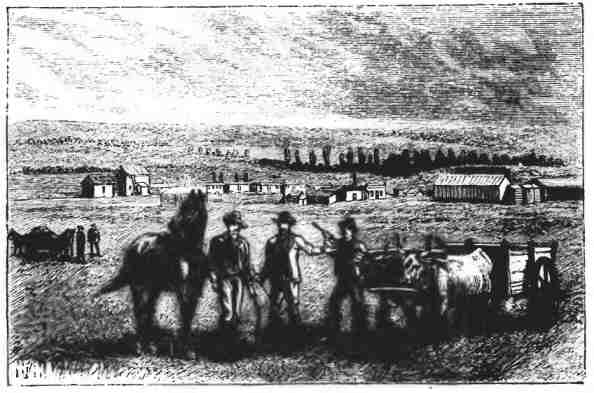
Not only has the Canadian Pacific Railway opened up the
country, but it has established experimental farms in different
parts, in order to test the capabilities of the soil and the
advantages or disadvantages of the climate. It is said, and
extensively believed, that the soil between Moose Jaw and Calgary
is made up of desert and alkali lands, and entirely unfit for
cultivation. With a view to correct that idea,
ten farms were established at the following stations: 1,
Secretan; 2, Rush Lake; 3, Swift Current; 4, Gull Lake; 5, Maple
Creek; 6, Forres; 7, Dunmore; 8, Stair (these two being the
nearest stations east and west of Medicine Hat at the crossing of
the Saskatchewan River); 9, Tilley, and 10, Gleichen, the last
being within view of the Rocky Mountains. The breaking
throughout was found to be easy, the soil in every case good and
in most instances excellent, ranking with the choicest lands in
the Company’s more eastern belt: wherever the rating of the
soil is lowered, according to the Company’s standard, owing
to its being of a lighter grade, the inferiority will be
compensated for by the certainty of the grain maturing more
rapidly.
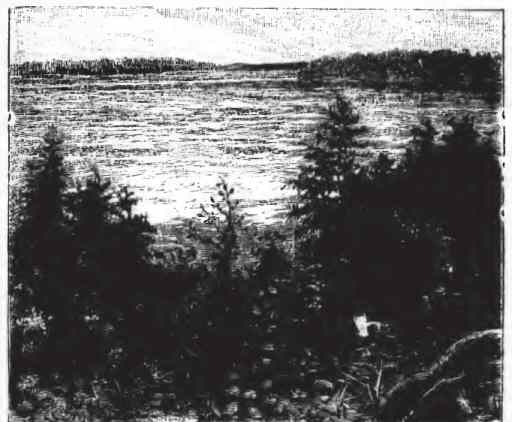
In a pamphlet just issued it is stated that the average from
all the farms was as follows:
‘Wheat 21½ bushels; oats, 44¼;
barley, 23¼; peas, 12½.
‘The above yields were ascertained by accurately
chaining the ground and weighing the grain, this work being done
by a qualified Dominion Land Surveyor, and the results, both
favourable and otherwise, have been fully given.
‘At each farm about one acre of spring wheat and oats
were sown and harrowed in in the fall when breaking was
done. Much of this grain germinated during the mild weather
of November and December, at which time it showed green above the
ground, and as a consequence it was nearly all killed during the
winter, and the ground had to be resown in spring. Some
small pieces of wheat which were not entirely killed out were
left; and, though the straw showed a rank growth, with heads and
grain much larger than that sown in spring, the crop ripened very
unevenly and much later. Fall sowing of spring wheat, which
has proved successful in Manitoba, is not likely to be a success
in the western country, as the winter is much more mild and
open, and the grain liable to germinate and be killed. Fall
wheat has not, as far as we are aware, been tried, and there
seems no reason why it should not prove successful.
‘The results obtained, considering the manner in which
the land was treated, proved much more satisfactory than was
anticipated, and show—
‘1st—That for grain growing, the land in this
section of country is capable of giving as large a wheat yield
per acre as the heavier lands of Manitoba.
‘2nd—That a fair crop can be obtained the first
year of settlement on breaking.
‘3rd—That for fall seeding with spring grain on
the western plains, a satisfactory result cannot be looked for
with any degree of certainty.
‘4th—That cereals, roots, and garden produce can be
successfully raised at an elevation of 3,000 feet above the
sea-level.
‘5th—That seeding can be done sufficiently early
to allow of all the crop being harvested before the first of
September.’
And I hear of many who have done well—some of whom came
out without a rap—and who enjoy a robust health unknown to
them at home.
Perhaps nowhere has a village so suddenly sprung up into a
city as at Winnipeg, which first obtained notoriety by the advent
of Lord Garnet Wolseley, then a young man, who came to suppress
the rebellion raised there by a half-breed of the name of Riel, a
daring young French Canadian, wily as a savage, brilliant and
energetic. In 1870 he appealed to the prejudices and fears
of the half-breeds, and in a few days had 400 men at his
back. Owing to the clemency—perhaps mistaken—of
his captors, Riel escaped the punishment due to his crimes.
In 1873 he was enrolled as a member of Parliament, notwithstanding
that at one time a reward of 5,000 dollars had been offered for
his apprehension as a murderer.
The name of Winnipeg was then little known outside
Manitoba. It was built by traders, who wished to rival Fort
Garrey, then the headquarters of the Hudson’s Bay Company,
and to carry on a free trade on their own account. After
the suppression of the rebellion, Manitoba had a local
Parliament, which met at Winnipeg, and also sent its
representatives to the Dominion Parliament. The place grew
rapidly, though even at that time Mr. Mackenzie, Sir John
Macdonald’s political opponent, declared that a cart track
was good enough for Manitoba for many years to come. In
1875 the total population was 3,031 assessed and 2,000
non-assessed, which was a pretty respectable increase,
considering that in 1869 there were hardly a hundred settlers in
the place. As late as 1876 the sport of
wolf-hunting was carried on by several of the inhabitants just
outside the city. Now it has churches, banks, schools,
manufactures, and mercantile men of great energy and high
standing; and has become, especially since the Pacific Railway
Company has made it one of their great stations, the gateway of
the North-West. Settlers came crowding in from all
quarters, and in ten months, in 1878, 600,592 acres of land were
located. In 1879 Winnipeg boasted of a street extension of
83 miles, and then came the bridge over the Red River to render
the town easy of access to all new-comers. Intoxicated with
success, what the Americans call a ‘boom’ was created
a year or two since, which seemed to have made everyone lose his
wits. There was no end to speculation in town lots;
merchants, tradesmen, professional men, could think of nothing
else. The bottom, however, soon fell out, and at this time
Winnipeg is in rather a depressed state; but it is
clear, from its peculiar position, that this depression can only
be temporary. It is destined to be the great distributing
and railway centre of the vast North-West. The town has now
a population of 26,000, and three daily papers, besides weekly
ones. Ten years hence, it is predicted, she will be ten
times her present size. Her wharves will be lined with
steamboats; her river-banks with elevators; industries and
manufactures will spring up in her midst, and her streets will be
fuller of life than they are to-day.
Winnipeg stands low, and at certain seasons—that is,
when the thaw commences—it is liable to floods; but the air
is singularly pure and bracing—while I write the sky is an
azure blue—and the hottest days are followed by cool
nights. The inhabitants all seem to be in the possession of
good health. Then the water was said to be bad, whereas I
find it to be quite the reverse. The supply of gas is poor,
and it seems rarely used. The one great drawback is
Winnipeg mud.
The
streets, all of them, are as broad as Portland Place, only with
handsomer shops. I fear in wet weather they must be almost
impassable. As it is, the sides are now dried up, as if
they were ploughed, and carriages seem to make their way with
considerable difficulty; but there is a magnificent broad wooden
side walk to all the streets, while in the middle sufficient
smoothness has been attained for the due working of street
railways, which seem to be in a satisfactory condition. I
have also been agreeably disappointed with the hotels, which I
was told were all bad and all tremendously dear. On the
contrary, I have found in the new Douglas Hotel, in the main
street, as good accommodation as I require, and at a very
reasonable rate; while the proprietor—Mr. Bennett, a worthy
Scotchman—does all he can for the comfort of his guests,
having introduced into this far distant land all the latest
improvements, such as heating the place by steam and the use of
electric bells.
A walk in the city is amusing. Grand shops and
well-built offices everywhere attract the eye. Ladies in
the latest fashion meet you one minute, and the next you jostle a
swarthy Indian, half civilized, and his squaw, still less
civilized than himself. Odd fur-skins are exposed for sale,
while a stuffed bear adorns the main street, up and down which
run all day long the newsboys with the latest telegrams from
London, or Paris, or New York. To-day I have seen a
photograph of the original fireman of the ‘Rocket,’
who lives here, and has made a large fortune by contracts.
Unfortunately, at this time he is absent from home, and I fear I
shall not have a chance of interviewing him. Religion
flourishes here. There are about fifteen churches and
chapels in the city, and the Young Men’s Christian
Association is in a very successful condition. Of
Protestant bodies, the leading ones are the Presbyterians, the
Methodists, and the Episcopalians. In connection with the
Cathedral of St. Boniface, the oldest church in the city, it is
interesting to note that the bells came originally from
Birmingham, by Hudson’s Bay, and that after the destruction
of the building the remains of the metal were gathered up and
sent to Birmingham, whence they have again come back after an
interval of three years. The city stands in the midst of a
fertile plain, adequate to the support of any amount of
population. But the land is far better further on. At
Manitoba, for instance, the soil is much finer. Manitoba is
an Indian name denoting the Voice of God. It seems that the
rocks on the river are cavernous, and that at certain seasons of
the year the wind strikes them with such force as to produce a
singular reverberation, which the rude Indian, whose untutored
mind teaches him to see God in the cloud and hear Him in the
wind, considered to be no less than the utterance of the
Deity Himself.
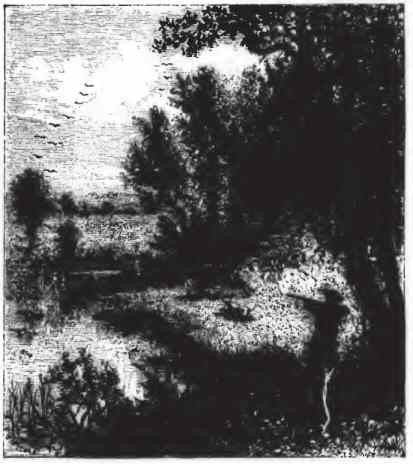
Just now people are rather exercised with the Indians, who
have been placed in reserves where they cannot get a living, and
who, besides, find their location an unhealthy swamp. One
of the Winnipeg journals is very indignant, and says this is what
may be expected from the Government. From all I can learn,
the Indians are sturdy maintainers of their rights, and take care
that the Government shall not easily overreach them; and perhaps,
on the whole, the Indians are better off under Canadian than they
would be under American government. Indeed, people say they
are very good fellows when uncorrupted by Englishmen. The
emigrant in these parts must not be surprised at the occasional
appearance of an Indian; and perhaps it is well that the farmer
takes care of his horses. I am sorry for the poor Indian,
who is the original owner of the soil, and whom, perhaps, one day Mr.
Henry George may see fit to visit with a view to the recovery of
his rights and the redress of his wrongs. When that is the
case, the emigrant will have to pack up and return to his native
land. Till that is the case, however, he may safely cross
the water, and avail himself of the advantages offered him by the
Dominion Government; but to do that he must have at least
£200, and then he can stock his farm and keep himself till
the return for his labours comes in.
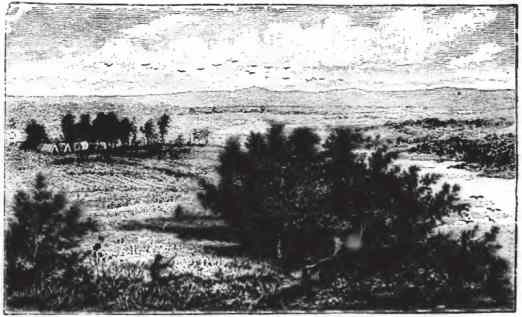
‘The worst of all our books on emigration,’ said
the editor of one of the dailies to me, ‘is that they give
too glowing an estimate of the state of affairs. They say a
farmer will do well with £100. This is not sufficient
capital as a rule to start with. It is true there have been
instances where settlers have succeeded on this sum, but with
such a sum as £200, Manitoba offers the farmer advantages
such as no other place offers him.’ Here, also, the
regular farm-hand is sure of his living. I see an attempt
is being made by a gentleman, now in Winnipeg, to plant out a
couple of hundred boys—and I hear there is room for
them. But there is little building going on in Winnipeg,
and the mechanic need not trouble himself to come here. All
in this part are loud in condemnation of emigration from the
East-end of London. Those poor of the East-end—alas!
neither the Old World nor the New seems to know what to do with
them. Since this was written I see the Manitoba Mortgage
and Investment Company have declared a dividend of eight per
cent., an indication that at any rate in their part of the world
money is being made.


