Philosophical transactions, Vol. L. Part II. For the year 1758. Giving some account of the present undertakings, studies, and labours, of the ingenious, in many considerable parts of the world.
Whole book · 62 sections
Transcriber’s Note — PHILOSOPHICAL TRANSACTIONS, GIVING SOME ACCOUNT OF THE Present Undertakings, Studies, and Labours, OF THE INGENIOUS, IN MANY Considerable Parts of the WORLD.
Variable spelling and hyphenation have been retained. Minor punctuation
inconsistencies have been silently repaired. The Errata of the original
edition have been corrected. Other changes made can be found at the end
of the book.
PHILOSOPHICAL TRANSACTIONS,
GIVING SOME ACCOUNT OF THE
Present Undertakings, Studies, and Labours,
OF THE INGENIOUS,
IN MANY Considerable Parts of the WORLD.
VOL. L. Part II. For the Year 1758.
LONDON:
Printed for L. Davis and C. Reymers,
Printers to the Royal Society,
against Gray’s-Inn Gate, in Holbourn.
M.DCC.LIX.
THE CONTENTS TO Part II. Volume L.
LIX.
AN Account of the Effects of Electricity in
paralytic Cases. In a Letter to John Pringle,
M. D. F.R.S. from Benjamin Franklin, Esq;
F.R.S.
Observations on the late Comet in September
and October 1757; made at the Hague by Mr.
D. Klinkenberg: In a Letter to the Rev. James
Bradley, D. D. Astronomer Royal, and F.R.S.
and Member of the Royal Academy of Sciences at
Paris. Translated from the Low Dutch.
Remarks on the different Temperature of the
Air at Edystone, from that observed at Plymouth,
between the 7th and 14th of July 1757. By Mr.
John Smeaton, F.R.S.
An Account of the Earthquake felt in the
Island of Sumatra, in the East Indies, in November
and December 1756. In a Letter from Mr.
Perry to the Rev. Dr. Stukeley, dated at Fort
Marlborough, in the Island of Sumatra, Feb. 20.
1757. Communicated by the Rev. Wm. Stukeley,
M. D. F.R.S.
An Account of the Earthquake in the West
Parts of Cornwall, July 15th 1757. By the Rev.
William Borlase, M. A. F.R.S. Communicated
by the Rev. Charles Lyttelton, LL. D. Dean of
Exeter, F.R.S.
Some Observations upon the Sleep of Plants;
and an Account of that Faculty, which Linnæus
calls Vigiliæ Florum; with an Enumeration of
several Plants, which are subject to that Law.
Communicated to Wm. Watson, M. D. F.R.S.
by Mr. Richard Pulteney of Leicester.
An Account of the Case of a Boy troubled
with convulsive Fits cured by the Discharge of
Worms. By the Rev. Richard Oram, M. A.
Chaplain to the Lord Bishop of Ely.
An Account of the same Subject, in a Letter from
Mr. John Gaze, of Walket, in the County of
Norfolk, to Mr. Wm. Arderon, F.R.S. Communicated
by Mr. Henry Baker, F.R.S.
An Account of the extraordinary Heat of
the Weather in July 1757, and of the Effects of
it. In a Letter from John Huxham, M. D.
F.R.S. to Wm. Watson, M. D. F.R.S.
An Account of the fossile Thigh-bone of a
large Animal, dug up at Stonesfield, near Woodstock,
in Oxfordshire. In a Letter to Mr. Peter
Collinson, F.R.S. from Mr. Joshua Platt.
A Discourse of the Usefulness of Inoculation
of the horned Cattle to prevent the contagious Distemper
among them. In a Letter to the Right
Hon. George Earl of Macclesfield, P. R. S. from
Daniel Peter Layard, M. D. F.R.S.
An Account of Two extraordinary Cases of
Gall-Stones. By James Johnstone, M. D. of
Kidderminster. Communicated by the Rev. Charles
Lyttelton, LL. D. Dean of Exeter.
A remarkable Case of Cohesions of all the
intestines, &c. in a Man of about Thirty-four
years of Age who died sometime last Summer,
and afterwards fell under the Inspection of Mr.
Nicholas Jenty.
Cases of the remarkable Effects of Blisters
in lessening the Quickness of the Pulse in Coughs,
attended with Infarction of the Lungs and Fever:
By Robert Whytt, M. D. F.R.S. Fellow of the
Royal College of Physicians, and Professor of Medicine
in the University of Edinburgh.
A remarkable Instance of Four rough Stones,
that were discovered in an human urinary Bladder,
contrary to the received Opinion; and successfully
extracted by the lateral Method of Cutting for the
Stone. By Mr. Joseph Warner, F.R.S. and Surgeon
to Guy’s-Hospital.
Observations on the Limax non cochleata
Purpuram ferens, The naked Snail producing Purple.
By John Andrew Peyssonel, M. D. F.R.S.
Translated from the French.
Account of an Experiment, by which it appears,
that Salt of Steel does not enter the Lacteal
Vessels; with Remarks. In a Letter to the Rev.
Thomas Birch, D. D. Secret. R. S. By Edward
Wright, M. D.
An Account of an extraordinary Case of
the Efficacy of the Bark in the Delirium of a Fever.
By Nicˢ. Munckley, M. D. Physician to
Guy’s-Hospital, and F.R.S.
An Account of the Case of the First
Joint of a Thumb torn off, with the Flexor Tendon
in its whole Extent torn out. By Robert
Home, late Surgeon to the Thirtieth Regiment of
Foot, and Surgeon at Kingston upon Hull. In a
Letter to John Pringle, M. D. F.R.S.
An Account of the late Discoveries of
Antiquities at Herculaneum, and of an Earthquake
there; in a Letter from Camillo Paderni,
Keeper of the Museum at Herculaneum, and
F.R.S. to Tho. Hollis, Esq; F.R.S. dated Portici,
Feb. 1. 1758.
Observatio Eclipsis Lunaris facta Matriti
a Pª. Joanne Wendlingen, Societatis Jesu, in
Regali Observatorio Collegii Imperialis ejusdem Societatis,
Die 30 Julii 1757.
Observations upon a slight Earthquake,
tho’ very particular, which may lead to the Knowlege
of the Cause of great and violent ones, that
ravage whole Countries, and overturn Cities. By
John Andrew Peyssonel, M. D. F.R.S. Translated
from the French.
A Catalogue of the Fifty Plants from Chelsea
Garden, presented to the Royal Society by the
worshipful Company of Apothecaries, for the Year
1757, pursuant to the Direction of Sir Hans
Sloane, Baronet, Med. Reg. & Soc. Reg. nuper
Præses, by John Wilmer, M. D. clariss. Societatis
Pharmaceut. Lond. Socius, Hort. Chelsean. Præfectus
& Prælector Botanic.
An Historical Memoir concerning a Genus of
Plants called Lichen by Michelli, Haller, and
Linnæus; and comprehended by Dillenius under
the Terms Usnea, Coralloides, and Lichenoides:
Tending principally to illustrate their several Uses.
Communicated by William Watson, M. D. F.R.S.
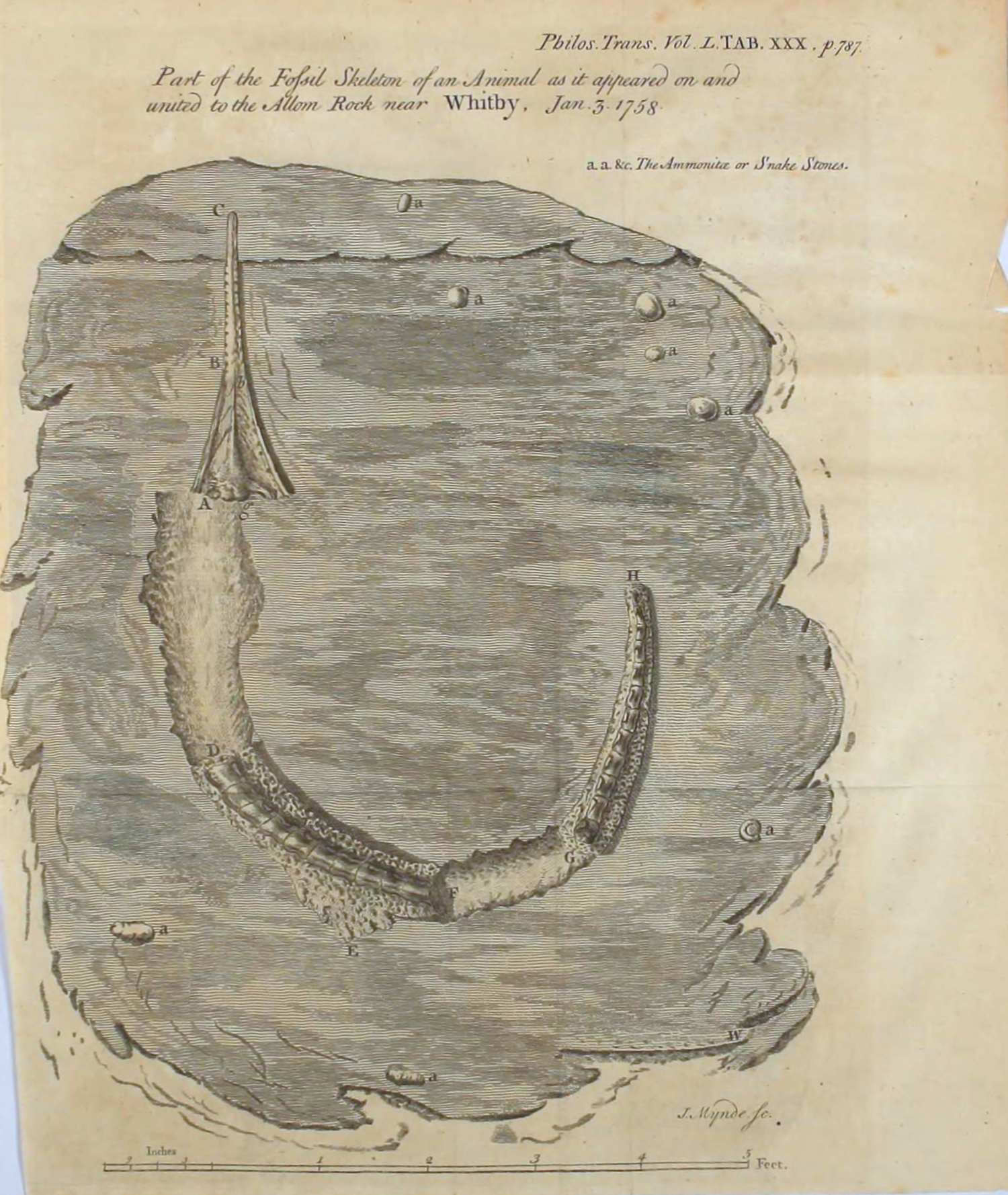
An Account of the fossil Bones of an Allegator,
found on the Sea-shore, near Whitby in
Yorkshire: In a Letter to John Fothergill, M. D.
from Capt. William Chapman.
De rariori quadam Orthoceratitis Specie, in
Suecia reperta, tractatus: in literis a Nicholao
de Himsel, M. D. Riga Livono, ad Gul. Watson,
M. D. R. S. S.
A further Account of the Effects of Electricity
in the Cure of some Diseases: In a Letter
from Mr. Patrick Brydone to Dr. Robert Whytt,
Professor of Medicine in the University of Edinburgh,
and F.R.S.
An Account of the Black Assize at Oxford,
from the Register of Merton College in that University.
Communicated by John Ward, LL. D.
With some additional Remarks.
An Attempt to improve the Manner of working
the Ventilators by the Help of the Fire-Engine.
In a Letter to Tho. Birch, D. D. Secret. R. S. from
Keane Fitz-Gerald, Esq; F.R.S.
An Account of some Experiments concerning
the different Refrangibility of Light. By Mr.
John Dollond. With a Letter from James Short,
M. A. F.R.S. Acad. Reg. Suec. Soc.
An Account of some extraordinary Effects
arising from Convulsions; being Part of a Letter
to John Huxham, M. D. and F.R.S. from William
Watson, M. D. R. S. S.
An Account of an extraordinary Storm of Hail
in Virginia. By Francis Fauquier, Esq; Lieutenant
Governor of Virginia, and F.R.S. Communicated
by William Fauquier, Esq; F.R.S.
An Account of the Heat of the Weather in
Georgia: In a Letter from his Excellency Henry
Ellis, Esq; Governor of Georgia, and F.R.S. to
John Ellis, Esq; F.R.S.
The Invention of a General Method for determining
the Sum of every 2d, 3d, 4th, or 5th, &c.
Term of a Series, taken in order, the Sum of the
whole Series being known. By Thomas Simpson,
F.R.S.
Observatio Eclipsis Lunæ Die 30 Julii 1757.
habita Olissipone à Joanne Chevalier, Congregationis
Oratorii Presbytero, è Regiâ Londinensi Societate.
Communicated by Jacob de Castro Sarmiento,
M. D. F.R.S.
Abstract of a Letter from Mr. William Arderon,
F.R.S. to Mr. Henry Baker, F.R.S. on the
giving Magnetism and Polarity to Brass. Communicated
by Mr. Baker.
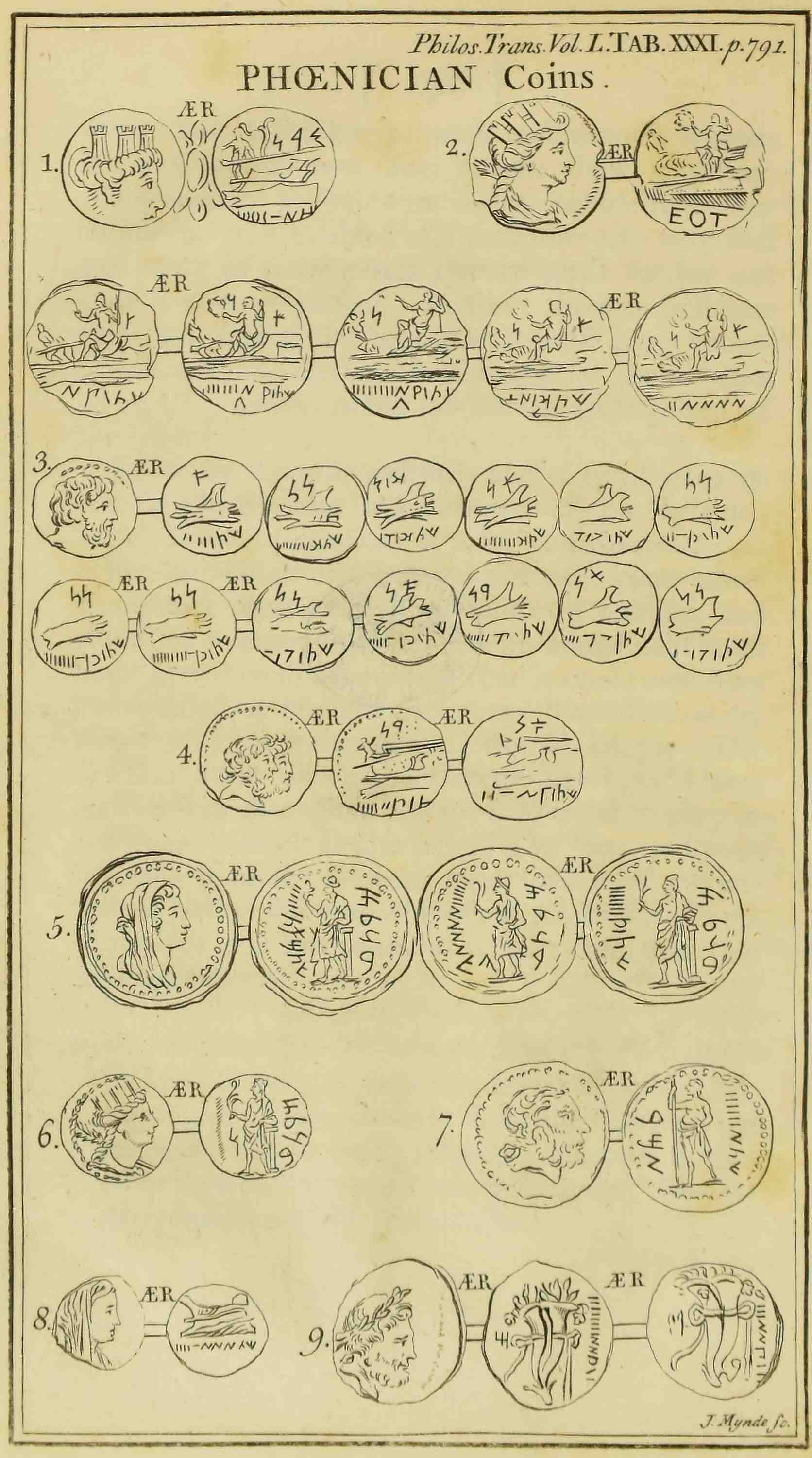
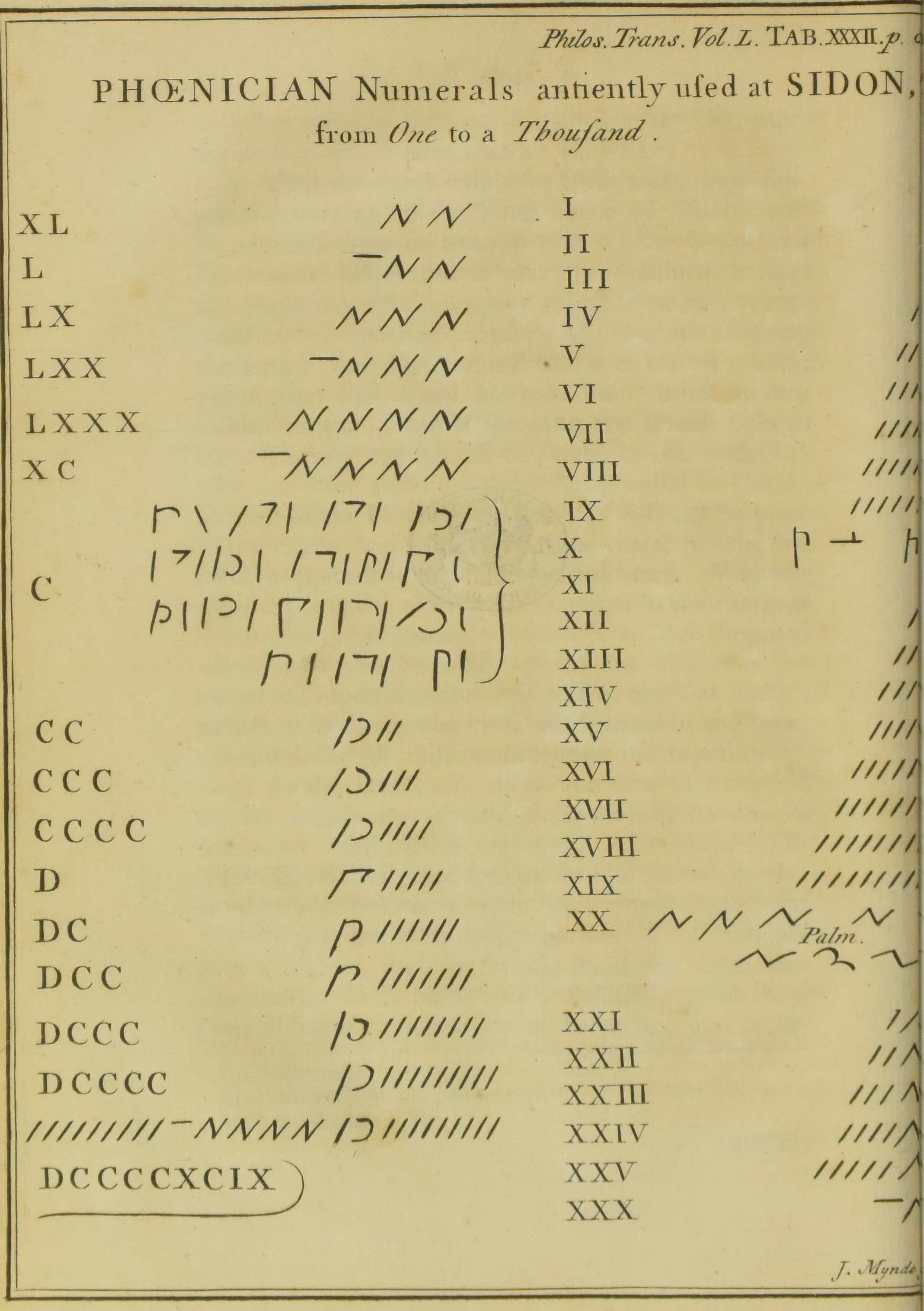
A Dissertation on the Phœnician Numeral
Characters antiently used at Sidon. In a Letter
to the Rev. Tho. Birch, D. D. Secret. R. S. from
the Rev. John Swinton, M. A. of Christ-Church,
Oxon. F.R.S.
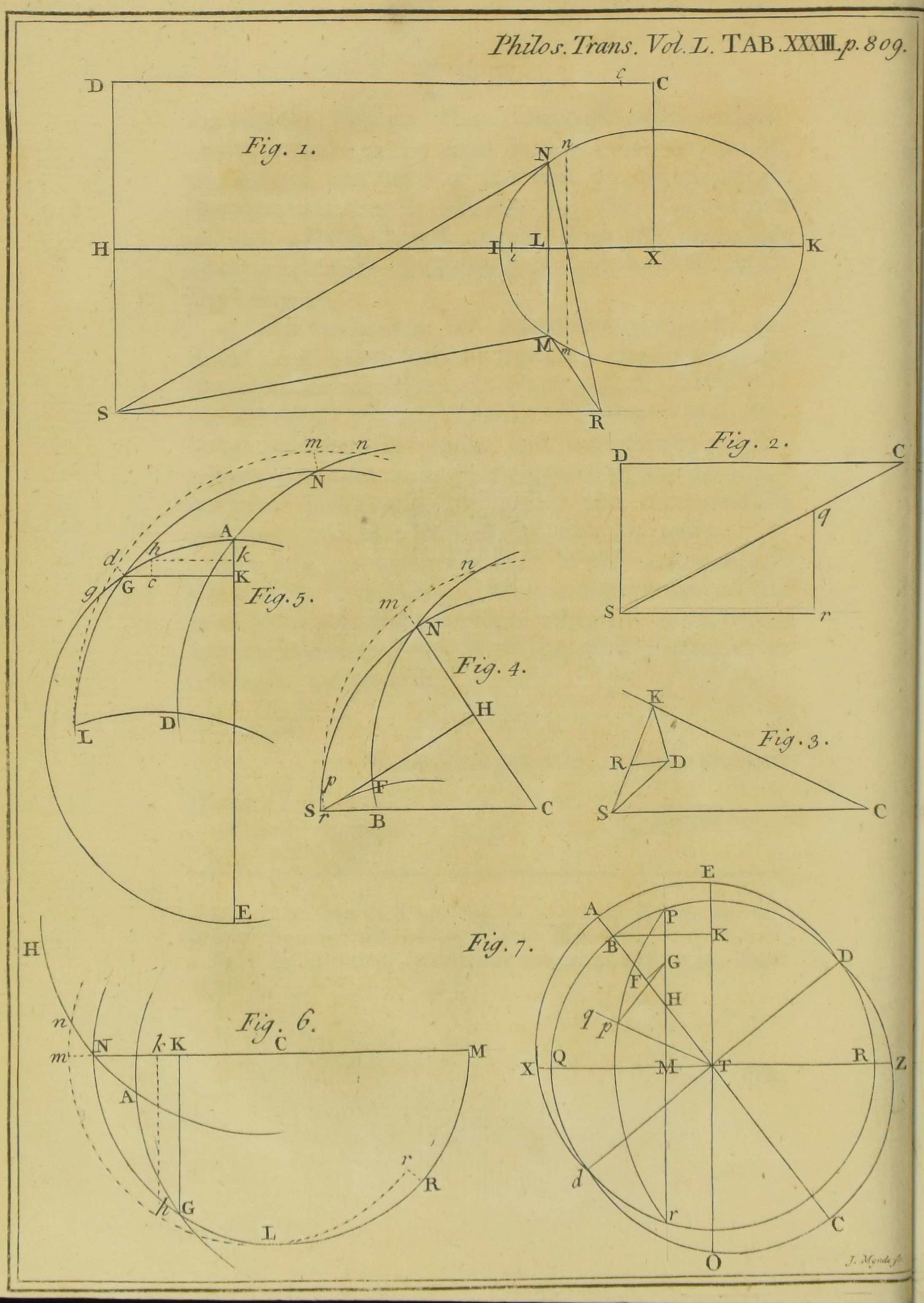
Of the Irregularities in the Motion of a Satellite
arising from the Spheroidical Figure of its
Primary Planet: In a Letter to the Rev. James
Bradley, D. D. Astronomer Royal, F.R.S. and
Member of the Royal Academy of Sciences at Paris;
by Mr. Charles Walmesley, F.R.S. and Member
of the Royal Academy of Sciences at Berlin, and
of the Institute at Bologna.
LIX. An Account of the Effects of Electricity in paralytic Cases. In a Letter to John Pringle, M. D. F.R.S. from Benjamin Franklin, Esq; F.R.S.
SIR,
Read Jan. 12,
1758.
THE following is what I can at present
recollect, relating to the effects
of electricity in paralytic cases, which have
fallen under my observation.
Some years since, when the news-papers made
mention of great cures performed in Italy or Germany,
by means of electricity, a number of paralytics
were brought to me from different parts of
Pensylvania, and the neighbouring provinces, to be
electrised; which I did for them at their request.
My method was, to place the patient first in a chair,
on an electric stool, and draw a number of large
strong sparks from all parts of the affected limb or side.
Then I fully charged two six-gallon glass jars, each of
which had about three square feet of surface coated;
and I sent the united shock of these thro’ the affected
limb or limbs; repeating the stroke commonly three
times each day. The first thing observed was an
immediate greater sensible warmth in the lame limbs,
that had received the stroke, than in the others:
and the next morning the patients usually related,
that they had in the night felt a pricking sensation in
the flesh of the paralytic limbs; and would sometimes
shew a number of small red spots, which they
supposed were occasioned by those prickings. The
limbs too were found more capable of voluntary
motion, and seemed to receive strength. A man,
for instance, who could not the first day lift the
lame hand from off his knee, would the next day
raise it four or five inches, the third day higher; and
on the fifth day was able, but with a feeble languid
motion, to take off his hat. These appearances
gave great spirits to the patients, and made them
hope a perfect cure; but I do not remember, that I
ever saw any amendment after the fifth day: which
the patients perceiving, and finding the shocks pretty
severe, they became discouraged, went home, and
in a short time relapsed; so that I never knew any
advantage from electricity in palsies, that was permanent.
And how far the apparent temporary advantage
might arise from the exercise in the patients
journey, and coming daily to my house, or from the
spirits given by the hope of success, enabling them
to exert more strength in moving their limbs, I will
not pretend to say.
Perhaps some permanent advantage might have
been obtained, if the electric shocks had been accompanied
with proper medicine and regimen, under
the direction of a skilful physician. It may be,
too, that a few great strokes, as given in my method,
may not be so proper as many small ones;
since, by the account from Scotland of a case, in
which two hundred shocks from a phial were given
daily, it seems, that a perfect cure has been made.
As to any uncommon strength supposed to be in the
machine used in that case, I imagine it could have
no share in the effect produced; since the strength
of the shock from charged glass is in proportion to
the quantity of surface of the glass coated; so that
my shocks from those large jars must have been
much greater than any, that could be received from
a phial held in the hand.
I am, with great respect,
SIR, Your most obedient Servant, R. Franklin.
London,
Dec. 21, 1757.
LX. Observations on the late Comet in September and October 1757; made at the Hague by Mr. D. Klinkenberg: In a Letter to the Rev. James Bradley, D. D. Astronomer Royal, and F.R.S. and Member of the Royal Academy of Sciences at Paris. Translated from the Low Dutch.
SIR,
Read Jan. 12,
1758.
I Hope you will be pleased to excuse
the liberty, which I take, of troubling
you with my observations on the comet, which
made its appearance here, and in other parts of Europe,
in the months of September and October last;
and which, according to the news-papers, was first
observed the 11th September by Mr. Gartner, at
Dorlkeurtz near Dresden; then, by me, on the 16th
of the said Month, here in the Hague; and afterwards
in different places. As I find, that you have
observed the comet, I doubt not but that you have
done it in the most accurate manner; and my great
love for this science induces me to beg, that I may
have the happiness of knowing some of your observations.
My good friend Mr. Struyk at Amsterdam
wrote me some time ago, that he intended to
ask the same favour of you; but I have not since
heard any further from him. I observed this comet
from Septemb. 16th in the morning, until Octob.
the 11th in the morning; and found its situations,
according to my method, as follows:
Longit.
Latit.
1757.
°
´
°
´
Sept.
16.
at
4 h. ante mer. The comet in
♋
10
15
with
10
10
North.
17
—
3
—
—
—
—
—
♋
14
7
——
9
38
18
—
3¾
—
—
—
—
—
♋
18
10
——
8
57
19
—
4
—
—
—
—
—
♋
22
1
——
8
17
22
—
2¾
—
—
—
—
—
♌
3
46
——
6
15
23
—
4
—
—
—
—
—
♌
7
36
——
5
24
25
—
4¼
—
—
—
—
—
♌
14
50
——
4
6
28
—
4
—
—
—
—
—
♌
24
22
——
1
41
Oct.
1
—
4¾
—
—
—
—
—
♍
2
46
——
0
12
South.
4
—
4½
—
—
—
—
—
♍
9
45
——
1
30
9
—
4½
—
—
—
—
—
♍
20
20
——
2
40
11
—
5
—
—
—
—
—
♍
24
46
——
3
9
But the two last observations will, in my opinion,
differ the most; because, when I made them, I was in
some doubt about the adjustment of my instruments;
and the comet was then far advanced into the morning
rays. I have, since the month of February last
to the end of May, made sundry observations on
fixed stars, with a telescope of 16 inches, made by
Mr. Short; and with a pendulum clock, made after
the manner of Mr. Graham, by Mr. Vryhthoff of
this place. In the months of February and March,
by a medium of eight observations, I found, that by
the clock, the star Rigel, in every daily revolution,
passed 4 min. 2⁴⁄₉ seconds of time earlier, in the telescope;
and in the latter end of May I found, by six
observations, (the clock not in the least changed or
altered) on the star Spica Virginis, that that star,
in every revolution, passed 4 min. 5¹⁄₂₀ sec. earlier, in
the same telescope; which intervals differ pretty
nearly 2⅗ seconds of time from one another. Whether
this difference arises from any defect in the clock,
or whether it proceeds from any small difference of
velocity of the earth’s motion round its axis, I would
have been very glad to have endeavoured to find out
by farther inquiry, had not the death of Mr. S.
Koenig intervened, and I thereby hindered from continuing
my observations. The above observations
were taken in the observatory of his illustrious Highness
the minor Prince of Orange and Nassau, &c. &c.
under the direction, and with the approbation of the
aforesaid Mr. Koenig. After the death of that gentleman,
I petitioned her Royal Highness the Princess
Governess of these Provinces, &c. that I might have
leave to continue my astronomical observations; but
as yet I have not been able to obtain her Royal
Highness’s permission: otherwise I would have observed
this last comet with more exactness. Had I
been able to pursue the above-mentioned observations,
I would, for the greater certainty in regard to the
pendulum, have made use of a farther precaution.
By means of a stove, with the help of a thermometer,
I would have endeavoured to have kept the
room (in which the clock stood) in the winter, and
at all times, in the same degree of heat it had at the
time I made the observations in the summer. I
would also have daily observed and noted the moon’s
place, at the time of the observations. Tho’ this
is but a slight observation of mine; yet I make no
doubt, but that in case, by the different distances of
the earth from the sun, and the different distances
and situations of the moon with respect to the earth,
and the respective effects produced by these causes,
any inequality arises in the velocity of the diurnal
motion of the earth on its axis, you (who have
made the most sublime observations on the aberration
of the fixed stars, and more than any mortal
ever did before) must have discovered, and are well
acquainted, with the same.
As my above-mentioned observations on the comet
appeared too incorrect to undertake a calculation
for the ascertaining of its path from the theory,
I contented myself with effecting it by a construction.
By this means I found, on a figure, whose
globular or spherical diameter was 13½ Rhineland
inches, as follows:
That the comet was in its perihelion the 21st of
October, at two of the clock in the afternoon: the
place of the perihelion 3 degrees in Leo. The comet’s
distance in the perihelion from the sun was
about 34 parts, whereof 100 make the mean distance
between the sun and the earth. The inclination of the
comet’s orbit with the ecliptic 13 degrees; and the
southern latitude of the perihelion also 13 decrees:
the ascending or north node ☊ 4⅓ degrees in Scorpio;
and the comet’s motion direct, or according to the
order of the signs of the zodiac. On this supposition
I have, for some of the times of observations,
estimated the apparent places of the comet, and
found them as follows:
Long.
Latit.
Sept.
18,
at
3¾
ante merid. In
♋
18¹⁄₁₂
and
9
deg.
North.
19
—
4
—
—
—
♋
22
——
8⅖
22
—
2¾
—
—
—
♌
3⅝
——
6¼
23
—
4
—
—
—
♌
7⅗
——
5½
25
—
4¼
—
—
—
♌
14⅔
——
4
28
—
4
—
—
—
♌
24⅓
——
1¾
Oct.
4
—
4½
—
—
—
♍
9⅓
——
2
——
South.
9
—
4¾
—
—
—
♍
19⅔
——
3⅖
11
—
5
—
—
—
♍
23⅛
——
3⅘
The observations, which I have taken, to ground
the measurement on, are those of the 16th and 23d
of September, and of the 1st of October. It appears
very evident, not only from this rough calculation,
but every other circumstance of this comet,
that it is not the same with that in the year 1682:
which, on certain accounts, is very desirable to be
known; for both here, and in other parts of the Netherlands,
there have been some people, who have
published mere conjectures; and have ventured (very
minutely and exactly, as they pretended) about the
time that this comet first made its appearance, to predict
the return of the comet of the year 1682. But by
the above, the weakness of their pretensions is very
evident to all the world: whereas, if this had proved
to be the expected comet, they would have assumed
to themselves much undue praise, and have pretended
to knowlege even superior to the every-where much
celebrated Newton and Halley.
It appears also probable to me, that this comet is
none of those already calculated, or brought upon a
list, by Messieurs Halley and Struyk. It is somewhat
remarkable, that the line of the nodes is almost at
right angles with the long axis of the ellipsis; which
corresponds nearly with the comets of the years
1580, 1683, and 1686: but those had their perihelions
northward of the ecliptic; whereas the perihelion
of the last, which we have lately seen, was to
the southward of the ecliptic.
I have the honour to subscribe myself, with the
most perfect esteem for you, and your sublime studies,
very respectfully,
SIR, Your very humble and obedient Servant, D. Klinkenberg.
Hague, 13th Dec.
1757.
LXI. Remarks on the different Temperature of the Air at Edystone, from that observed at Plymouth, between the 7th and 14th of July 1757. By Mr. John Smeaton, F.R.S.
SIR,
Read Jan. 12,
1758.
ON the reading of Dr. Huxham’s
letter at the last meeting, some observations
occurred to me, concerning the different
temperature of the air, which I had observed at the
Edystone, from what had been observed by the
Doctor at Plymouth, between the 7th and 14th of
July last: which having been desired by some members
to be put into writing, I beg leave to trouble
you with the following.
Edystone is distant from Plymouth about 16
miles, and without the head-lands of the Sound
about 11.
The 7th and 8th were not remarkable at Edystone
for heat or cold; the weather was very moderate,
with a light breeze at east; which allowed us to
work upon the rock both days, when the tide
served.
About midnight, between the 8th and 9th, the
wind being then fresh at east, it was remarkably
cold for the season, as I had more particular occasion
to observe, on account of a ship that was cast away
upon the rocks. The wind continued cold the 9th
all day; which was complained of by some of the
shipwrecked seamen, who had not time to save their
cloaths; and so fresh at east, as prevented our going
near the rocks, or the wreck; and so continued till
Sunday the 10th; when, seeing no prospect of a
sudden alteration of weather, I returned to Plymouth
in a sailing boat, wrapped up in my thick coat. As
soon as we got within the headlands, I could perceive
the wind to blow considerably warmer; but
not so warm as to make my great coat uneasy.
Having had a quick passage, in this manner I went
home, to the great astonishment of the family to see
me so wrapped up, when they were complaining of
the excessive heat: and indeed, it was not long before
I had reason to join in their opinion.
This heat I experienced till Tuesday the 12th,
when I again went off to sea, where I found the air
very temperate, rather cool than warm; and so continued
till Thursday the 14th.
In my journal for Wednesday the 13th I find the
following remarks, viz. “This evening’s tide” (from
6 A. till 12 A.) “the wind at east, but moderate,
with frequent flashes of lightning to the southward.
Soon after we got on board the store-vessel,
a squall of wind arose from the south-west
on a sudden, and continued for about a minute;
part of which time it blew so hard, we expected
the masts to go by the board: after which it was
perfectly calm, and presently after a breeze returned
from the east.”
And in the journal of the 14th is entered, “This
morning’s tide” (viz. from 1 M. to 1 A.) “the
air and sea quite calm.”
Hence it appears, how different the temper of the
air may be in a small distance; and to what small
spaces squalls of wind are sometimes confined.
It may not be amiss further to observe upon this
head, that once, in returning from Edystone, having
got within about two miles of the Ramhead, we
were becalmed; and here we rolled about for at least
four hours; and yet at the same time saw vessels,
not above a league from us, going out of Plymouth
Sound with a fresh of wind, whose direction was
towards us, as we could observe from the trim of
their sails; and as we ourselves experienced, after
we got into it by tacking and rowing.
I am, Sir,
Your most humble Servant, J. Smeaton.
Furnival’s-Inn Court,
12th Jan. 1758.
LXII. An Account of the Earthquake felt in the Island of Sumatra, in the East-Indies, in November and December 1756. In a Letter from Mr. Perry to the Rev. Dr. Stukeley, dated at Fort Marlborough, in the Island of Sumatra, Feb. 20. 1757. Communicated by the Rev. Wm. Stukeley, M. D. F.R.S.
Read Jan. 12,
1758.
THE earthquake at Lisbon, which
you gave me an account of, was
certainly the most awful tremendous calamity, that
has ever happened in the world. Its effects are extremely
wonderful and amazing; and it seems, as
you observe, to have been felt in all parts of the
globe. On the 3d day of the same month the earthquake
of Lisbon happened, I felt at Manna[1] a
violent shock myself; and from that time to the 3d
of December following I felt no less than twelve
different shocks, all which I took an exact account
of in my pocket-bock. Since which we have had
two very severe earthquakes, felt, we believe, throughout
this island[2].
The walls of[3] Cumberland-house[4]
were greatly damaged by them. Salop-house[4],
my own (formerly Mr. Massey’s), the houses
of Laye[5] and Manna, were all cracked by them;
and the works at the sugar-plantation[6] received
considerable damage. The ground opened near the
qualloe[7] at Bencoolen, and up the River in several
places; and there issued therefrom sulphureous earth,
and large quantities of water, sending forth a most
intolerable stench. Poblo Point[8] was much cracked
at the same time; and some doosoons[9] in-land at
Manna were destroyed, and many people in them.
These are all the ill effects, that have come to our
knowlege; but, it is reasonable to suppose, not all
the damage, that has happened upon the island.
LXIII. Concerning the Fall of Water under Bridges. By Mr. J. Robertson, F.R.S. — Principles. — Problem.
Read Jan. 19,
1758.
SOME time before the year 1740,
the problem about the fall of water,
occasioned by the piers of bridges built across a river,
was much talked of at London, on account of the
fall that it was supposed would be at the new bridge
to be built at Westminster. In Mr. Hawksmore’s and
Mr. Labelye’s pamphlets, the former published in
1736, and the latter in 1739, the result of Mr. Labelye’s
computations was given: but neither the investigation
of the problem, nor any rules, were at
that time exhibited to the public.
In the year 1742 was published Gardiner’s edition
of Vlacq’s Tables; in which, among the examples
there prefixed to shew some of the uses of those
tables drawn up by the late William Jones, Esq;
there are two examples, one shewing how to compute
the fall of water at London-bridge, and the
other applied to Westminster-bridge: but that excellent
mathematician’s investigation of the rule, by
which those examples were wrought, was not printed,
altho’ he communicated to several of his friends copies
thereof. Since that time, it seems as if the problem
had in general been forgot, as it has not made its appearance,
to my knowlege, in any of the subsequent
publications. As it is a problem somewhat curious,
tho’ not difficult, and its solution not generally known
(having seen four different solutions, one of them
very imperfect, extracted from the private books of
an office in one of the departments of engineering in
a neighbouring nation), I thought it might give some
entertainment to the curious in these matters, if the
whole process were published. In the following investigation,
much the same with Mr. Jones’s, as the
demonstrations of the principles therein used appeared
to be wanting, they are here attempted to be supplied.
I. A heavy body, that in the first second of time has
fallen the height of a feet, has acquired such a velocity,
that, moving uniformly therewith, will in
the next second of time move the length of 2 a feet.
II. The spaces run thro’ by falling bodies are proportional
to one another as the squares of their last or
acquired velocities.
These two principles are demonstrated by the
writers on mechanics.
III. Water forced out of a larger chanel thro’ one
or more smaller passages, will have the streams thro’
those passages contracted in the ratio of 25 to 21.
This is shewn in the 36th prop. of the 2d book
of Newton’s Principia.
IV. In any stream of water, the velocity is such, as
would be acquired by the fall of a body from a
height above the surface of that stream.
This is evident from the nature of motion.
V. The velocities of water thro’ different passages of
the same height, are reciprocally proportional to
their breadths.
For, at some time, the water must be delivered
as fast as it comes; otherwise the bounds would
be overflowed.
At that time, the same quantity, which in any
time flows thro’ a section in the open chanel, is
delivered in equal time thro’ the narrower passages;
or the momentum in the narrow passages
must be equal to the momentum in the open
chanel; or the rectangle under the section of the
narrow passages, by their mean velocity, must be
equal to the rectangle under the section of the
open chanel by its mean velocity.
Therefore the velocity in the open chanel is to
the velocity in the narrower passages, as the section
of those passages is to the section of the open
chanel.
But the heights in both sections being equal,
the sections are directly as the breadths;
Consequently the velocities are reciprocally as
the breadths.
VI. In a running stream, the water above any obstacles
put therein will rise to such a height, that
by its fall the stream may be discharged as fast as
it comes.
For the same body of water, which flowed in
the open chanel, must pass thro’ the passages made
by the obstacles:
And the narrower the passages, the swifter will
be the velocity of the water:
But the swifter the velocity of the water, the
greater is the height, from whence it has descended:
Consequently the obstacles, which contract the
chanel, cause the water to rise against them.
But the rise will cease, when the water can run
off as fast as it comes:
And this must happen, when, by the fall between
the obstacles, the water will acquire a velocity
in a reciprocal proportion to that in the
open chanel as the breadth of the open chanel is
to the breadth of the narrow passages.
VII. The quantity of the fall caused by an obstacle in
a running stream is measured by the difference between
the heights fallen from to acquire the velocities
in the narrow passages and open chanel.
For just above the fall, the velocity of the stream
is such, as would be acquired by a body falling
from a height higher than the surface of the
water:
And at the fall, the velocity of the stream is
such, as would be acquired by the fall of a body
from a height more elevated than the top of the
falling stream; and consequently the real fall is
less than this height.
Now as the stream comes to the fall with a
velocity belonging to a fall above its surface;
Consequently the height belonging to the velocity
at the fall must be diminished by the height
belonging to the velocity, with which the stream
arrives at the fall.
In a chanel of running water, whose breadth is contracted
by one or more obstacles; the breadth of
the chanel, the mean velocity of the whole stream,
and the breadth of the water-way between the obstacles
being given; To find the quantity of the
fall occasioned by those obstacles.
Let
b = breadth of the chanel in feet.
v = mean velocity of the water in feet per sec.
c = breadth of the water-way between the obstacles.
Now 25 : 21∷ c : 21⁄25c
the water-way contracted.
Principle III.
And 21⁄25c: b ∷ v : 25b⁄21cv the veloc. per sec. in the
water-way between the obstacles.
Princip. V.
Also (2a)² : vv ∷ a : vv⁄4a the height fallen to
acquire the vel. v.
I. & II.
And (2a)² : (25b ⁄21c)² × vv ∷ a:
(25b⁄21c)² ×
vv ⁄4a the height
fallen to acquire the vel. 25b⁄21cv.
I. & II.
Then (25b ⁄21c)² x
vv⁄4a -
vv⁄4a is the measure of the fall
required.
VII.
Or ((25b⁄21c)² - 1) × vv ⁄4a is a rule, by which the fall may
be readily computed.
Here a = 16,0899 feet and 4a = 64,3596.
Example I.For London-Bridge.
By the observations made by Mr. Labelye in 1746,
The breadth of the Thames at London-bridge is
926 feet;
The sum of the water-ways at the time of the
greatest fall is 236 feet;
The mean velocity of the stream taken at its surface
just above bridge is 3⅙ feet per second.
Under almost all the arches there are great numbers
of drip-shot piles, or piles driven into the bed
of the water-way, to prevent it from being washed
away by the fall. These drip-shot piles considerably
contract the water-ways, at least ⅙ of their
measured breadth, or about 39⅓ feet in the whole.
So that the water-way will be reduced to 196⅔
feet.
Now b = 926; c = 196⅔; v = 3⅙; 4a =
64,3596.
Then 25b⁄21c = 23150⁄4130 = 5,60532.
And 5,60532² = 31,4196; and 31,4196 - 1 =
30,4196 = (25b⁄21c)² - 1.
Also vv = (19⁄6)² = 361⁄36; And vv⁄4a = 361⁄36 × 64,3596
= 0,15581.
Then 30,4196 × 0,15581 = 4,739 feet, the fall
sought after.
By the most exact observations made about the
year 1736, the measure of the fall was 4 feet 9
inches.
Example II.For Westminster-Bridge.
Altho’ the breadth of the river at Westminster-bridge
is 1220 feet; yet, at the time of the greatest
fall, there is water thro’ only the thirteen large arches,
which amount to 820 feet: to which adding the
breadth of the twelve intermediate piers, equal to
174 feet, gives 994 for the breadth of the river at
that time: and the velocity of the water just above
bridge (from many experiments) is not greater than
2¼ feet per second.
Here b = 994; c = 820; v = 2¼; 4a = 64,3596.
Now 25b ⁄21c = 24850⁄17220 = 1,443.
And 1,443² = 2,082; And 2,082 - 1 = 1,082
= (25b ⁄21c)² - 1.
Also vv = (9⁄4)² = 81⁄16; And vv⁄48 = 81⁄16 × 64,3696 =
0,0786.
Then 1,082 × 0,0786 = 0,084 feet, the fall
sought.
Which is about 1 inch; and is about half an
inch more than the greatest fall observed by Mr.
Labelye.
LXIV. An Account of the Earthquake in the West Parts of Cornwall, July 15th 1757. By the Rev. William Borlase, M. A. F.R.S. Communicated by the Rev. Charles Lyttelton, LL.D. Dean of Exeter, F.R.S.
Read Jan. 26,
1758.
ON Friday the 15th of July, 1757.
a violent shock of an earthquake
was felt in the western parts of Cornwall.
The thermometer had been higher than usual,
and the weather hot, or calm, or both, for eight
days before; wind east and north-east. On the
14th in the morning, the wind shifting to the south-west,
the weather calm and hazy, there was a
shower. The afternoon hazy and fair, wind north-west.
The barometer moderately high, but the
mercury remarkably variable.
On the 15th in the morning, the wind fresh at
north-west, the atmosphere hazy. Being on the
sands, half a mile east of Penzance, at 10 A. M.
near low water, I perceived on the surface of the
sands a very unusual inequality: for whereas there
are seldom any unevennesses there, but what are
made by the rippling of the water, I found the sands,
for above 100 yards square, all full of little tubercles
(each as large as a moderate mole-hill), and in the
middle a black speck on the top, as if something
had issued thence. Between these convexities were
hollow basons of an equal diameter. From one of
these hollows there issued a strong rush of water,
about the bigness of a man’s wrist, never observed
there before nor since.
About a quarter after six, P. M. the sky dusky,
the wind being at west north-west, it fell quite calm.
At half past six, being then in the summer-house at
Keneggy, the seat of the Hon. J. Harris, Esq; near
Penzance, with some company, we were suddenly
alarmed with a rumbling noise, as if a coach or
waggon had passed near us over an uneven pavement;
but the noise was as loud in the beginning and at the
end, as in the middle; which neither the sound of
thunder, or of carriages, ever is. The sash-casements
jarred: one gentleman thought his chair
moved under him; and the gardener, then in the
dwelling house (about an hundred yards distant from
us) felt the stone pavement of the room he was in
move very sensibly.
In what place the shock began, and whether progressive
or instantaneous in the several places where
it was felt, is uncertain, for want of accurately determining
the precise point of time in distant places.
The shock was not equally loud or violent. Its
extent was from the isles of Scilly eastward as far
as Liskerd, and towards the north as far as Camelford;
thro’ which district I shall trace it, according
to the best informations I could procure.
In the island of St. Mary, Scilly, the shock was
violent. On the shores of Cornwall, opposite to
Scilly (in the parish of Senan, near the Land’s-end)
the noise was heard like that of a spinning-wheel on
a chamber-floor. Below stairs there was a cry, that
the house was shaking; and the brass pans and pewter
rattled one against another in several houses in the
same parish. In the adjoining parish of St. Just, two
young men being then swimming, felt a strong and
very unusual agitation of the sea. In the town of Penzance,
in one house the chamber-bell rung; in another
the pewter plates, placed edgeways on a shelf,
shifted, and slid to one end of the shelf: and it was
every-where perceived more or less, according as people’s
attention was engaged.
At Trevailer, the seat of William Veale, Esquire,
about two miles from Penzance, the noise was heard,
and thought at first to be thunder: the windows
shook, and the walls of the parlour, where Mr.
Veale sat, visibly moved. The jarring of the windows
continued near half a minute; but the motion
of the walls not quite so long: and some masons,
being at work on a contiguous new building, the upright
poles of the scaffolds shook so violently, that,
for fear of falling, they laid hold on the walls,
which, to their still greater surprize, they found agitated
in the same manner. And a person present,
who was at London at the time of the two shocks in
the year 1751, thought this shock to resemble the
second, both in degree and duration[10].
At Marazion, the next market-town east of Penzance,
the houses of several persons shook to that
degree, that people ran out into the street, lest the
houses should fall upon them.
In the borough of St. Ives, on the north sea, six
miles north of Penzance, the shock was so violent,
that a gentleman, who had been at Lisbon during
several shocks, said, that this exceeded all he had
met with, except that on the 1st of November 1755,
so fatal to that city.
At Tehidy, the seat of Francis Basset, Esq; the
rooms shook, and the grounds without doors were
observed to move. The shock was felt sensibly at
Redruth, St. Columb, Bodman, &c. along to Camelford,
which is about 90 miles from the isle of
Scilly. From Marazion eastward it was felt at several
places in like manner, as far as Lostwythyel; but
at Liskerd, about ten miles east of Lostwythyel, it
was but faintly perceived, and that by a few persons.
It was still less sensible at Loo and Plymouth,
“scarcely sufficient to excite curiosity or fear”[11].
The times of its duration were various. At Keneggy
we thought the noise could not have lasted
above six seconds; at Trevailer, not two miles distant
to the west, it was thought to have lasted near
half a minute; in the parish of Gwynier half a minute;
at Ludgvan, three miles east of Penzance,
the noise was rather longer than half a minute; but
the shaking felt in the garden, and observed in the
houses, short and momentary. In Germo great Pinwork,
seven miles east of Penzance, it lasted only a
few seconds; but in the isles of Scilly it was computed
at 40 seconds.
Thus was this earthquake felt in towns, houses,
and grounds adjacent; but still more particularly
alarming in our mines, where there is less refuge,
and consequently a greater dread from the tremors
of the earth.
In Carnorth adit, in the parish of St. Just, the
shock was sensibly felt 18 fathom deep; in the mine
called Boscadzhill-downs, more than 30 fathom.
At Huel-rith mine, in the parish of Lannant, people
saw the earth move under them, first quick, then
in a slower wavy tremor; and the stage-boards of
the little winds or shafts 20 fathom deep were perceived
to move.
In Herland mine, commonly called the Manor,
in the parish of Gwynier, the noise was heard 55
and 60 fathom deep, as if a studdle[12] had broke,
and the deads[13] were set a running. It was nothing
like the noise of thunder.
In Chace-water mine the same noise was heard,
at least 70 fathom under the surface.
At Huel-rith mine, near Godolphin, the noise
was seemingly underneath. I felt (says the director
of the mine) the earth move under me with a
prodigious swift, and apparently horizontal tremor:
its continuance was but for a few seconds of time,
not like thunder, but rather a dull rumbling even
sound, like deads running under ground. In the
smith’s shop the window-leaves shook, and the slating
of the house cracked. The whim-house shook
so terribly, that a man there at work ran out of it,
concluding it to be falling. Several persons then in
the mine, working 60 fathom deep, thought they
found the earth about them to move, and heard an
uncommon noise: some heard the noise, and felt no
tremor; others, working in a mine adjoining called
Huel-breag, were so frightened, that they called to
their companions above to be drawn up from the
bottoms. Their moor-house was shaken, and the
padlock of their candle-chest was heard to strike
against the staples. To shew, that this noise proceeded
from below, and not from any concussion in
the atmosphere above, this very intelligent captain of
the mine[14] observes, from his own experience,
that thunder was never known to affect the air at 60
fathoms deep, even in a single shaft pierced into
the hardest stone; much less could it continue the
sound thro’ such workings as there are in this mine,
impeded in all parts with deads, great quantities of
timber, various noises, such as the rattling of chains,
friction of wheels and ropes, and dashing of waters;
all which must contribute to break the vibrations of
the air as they descend: and I intirely agree with
this gentleman’s conclusion, that thunder, or any
other noises from above in the atmosphere, could not
be heard at half the depth of this mine. This therefore
could be no other than a real tremor of the earth,
attended with a noise, owing to a current of air and
vapour proceeding upwards from the earth.
I do not hear of any person in those parts, who
was so fortunate as to be near any pool or lake, and
had recollection enough to attend to the motion of
the waters; but it may be taken for granted, that
during the tremors of the earth the fluids must be
more affected than the solids: nay, the waters will
apparently be agitated, when there is no motion of
the earth perceptible, as was the case of our ponds
and lake-waters in most parts of Britain on the 1st
of November 1755. Whence this happens is difficult
to say: whether the earth’s bosom undergoes at
such times a kind of respiration, and alternately emits
and withdraws a vapour thro’ its most porous parts
sufficient to agitate the waters, yet not sufficient to
shake the earth; or whether the earth, during the
agitation of the waters, does rock and vacillate, tho’
not so as to be sensible to man; is what I shall leave
to future inquiry.
Earthquakes are very rare in Cornwall. This was
but of short duration, and did no harm any-where,
as far as I can learn; and it is to be hoped not the
sooner forgotten for that reason; but rather remembered
with all the impressions of gratitude suitable to
an incident so alarming and dangerous, and yet so
inoffensive.
LXV. Some Observations upon the Sleep of Plants; and an Account of that Faculty, which Linnæus calls Vigiliæ Florum; with an Enumeration of several Plants, which are subject to that Law. Communicated to Wm. Watson, M. D. F.R.S. by Mr. Richard Pultney of Leicester.
Read Jan. 26,
1758.
ACosta and Prosper Alpinus, who both
wrote near the conclusion of the
XVIth century, are, I believe, the first, who recorded
that nocturnal change in the leaves of plants, which
has since been called somnus. It is an observation
indeed as old as Pliny’s time, that the leaves of trefoil
assume an erect situation[15] upon the coming of
storms. The same is observable of our wood-sorrel;
and Linnæus adds, of almost all plants with declinated
stamina[16]. In the Trifolium pratense album
C. B. or common white-flowered meadow trefoil,
it is so obvious, that the common people in
Sweden remark, and prognosticate the coming of
tempests and rain from it.
The examples of sleeping plants instanced by Alpinus
are but few. That author says, it was common
to several Egyptian species[17]; but specifies only
the Acaciæ, Abrus, Absus, Sesban, and the Tamarindtree.
Cornutus some time afterwards remarked this
property in the Pseudo-acacia Americana. From
that time it has remained almost unnoticed, till Linnæus,
ever attentive to nature’s works, discovered
that the same affair was transacted in many other
plants; and his observations have furnished us with
numerous and obvious examples thereof. Mr. Miller
mentions it in the Medicago arborea Lin. Sp. Pl. 778.
and we may add to the list two other common plants
not mentioned by Linnæus: these are the Phaseolus
vulgaris, common kidney-bean; and the Trifolium
pratense purpureum majus, or clover-grass: in both
which this nocturnal change is remarkably displayed.
Doubtless the same property exists in numberless other
species; and future observation will very probably
confirm Dr. Hill’s sentiment, that no “plant or tree
is wholly unaffected by it.”
It is now more than twenty years since Linnæus
first attended to this quality in plants. In his Flora
Lapponica, when speaking of the Trifolium pratense
album, as above-mentioned, he remarks, that the
leaves of the Mimosa, Cassia, Bauhinia, Parkinsonia,
Guilandina, and others in affinity with them, were
subject to this change in the night time: and he had
then carried his observations so far, as to find, that
heat and cold were not the cause of this quality;
since they were alike influenced by it when placed
in stoves, where the temperature of the air was always
the same.
The merit of reviving this subject is therefore due
to the illustrious Swede; and the naturalist is greatly
indebted to him for so far extending his observations
thereon.
The subject of the somnus plantarum cannot but
be highly entertaining to the lovers of natural knowlege:
and such, I apprehend, cannot be less entertained
with that faculty, which Linnæus calls vigiliæ
florum; of which we shall give a brief account.
Previous to our explanation of this affair it is proper
to observe, that the flowers of most plants, after
they are once opened, continue so night and day,
until they drop off, or die away. Several others,
which shut in the night-time, open in the morning
either sooner or later, according to their respective
situation in the sun or shade, or as they are influenced
by the manifest changes of the atmosphere. There
are however another class of flowers, which make
the subject of these observations, which observe a
more constant and uniform law in this particular.
These open and shut duly and constantly at certain
and determinate hours, exclusive of any manifest
changes in the atmosphere; and this with so little
variation in point of time, as to render the phænomenon
well worth the observation of all, whose taste
leads them this way.
This faculty in the flowers of plants is not altogether
a new discovery; but we are indebted to the
same hand for additional observations upon this head
likewise. It is so manifest in one of our common
English plants, the Tragopogon luteum, that our country
people long since called it John-go-to-bed-at-noon.
Linnæus’s observations have extended to near fifty
species, which are subject to this law. What we
find principally upon this subject is in the Philosophia
Botanica, p. 273. We will enumerate these plants,
and mention the time when the flowers open and
shut, that those, who have opportunity and inclination,
may gratify themselves, and probably at the
same time extend this branch of botanic knowlege
still farther.
It is proper to observe, that as these observations
were made by Linnæus in the academical garden at
Upsal, whoever repeats them in this country will
very probably find, that the difference of climate will
occasion a variation in point of time: at least this
will obtain in some species, as our own observations
have taught us; in others the time has corresponded
very exactly with the account he has given us.
Whether this faculty hath any connexion with
the great article of fecundation in the oeconomy of
flowers, I cannot determine: in the mean time it is
not improbable. Future and repeated observations,
and well-adapted experiments, will tend to illustrate
this matter, and it may be lead the way to a full explanation
of the cause.
1. Anagallis flore phœniceo C. B. pin. 252. Raii
Syn. p. 282. Anagallis arvensis Lin. Spec. plant. p.
148. The Male Pimpernel. The flowers of this
plant open about eight o’clock in the morning, and
never close till past noon. This plant is common in
kitchen-gardens and in corn-fields, and flowers in
June, and continues in flower three months.
2. The Anagallis cærulea foliis binis ternisve ex
adverso nascentibus C. B. pin. p. 252. Raii Hist. Plant.
p. 1024. Anagallis Monelli Sp. plant. 148. Blue-flowered
Pimpernel with narrow leaves. The flowers
of this plant observe nearly the same time in opening
and shutting as the foregoing.
3. Convolvulus peregrinus cæruleus folio oblongo
C. B. pin. 295. Convolvulus tricolor Sp. plant. 158.
Little blue Convolvulus, or Bindweed. This opens its
flowers between the hours of five and six in the
morning, and shuts them in the afternoon.
4. Phalangium parvo flore ramosum C. B. pin. 29.
Raii Hist. Pl. 1193. Branched Spiderwort with a
small flower. These open about seven in the morning,
and close between the hours of three and four
in the afternoon.
5. Lilium rubrum Asphodeli radice C. B. pin. 80.
Hemerocallis fulvus Sp. pl. 324. The Day Lily.
The flowers open about five in the morning, and
shut at seven or eight in the evening.
6. Plantago aquatica minor. Park. 1245. Raii
Syn. 257. Alisma ranunculoides Sp. pl. 343. Fl.
Suec. 2. Nº. 325. The lesser Water-Plantain, during
its flowering-time, only opens its flowers each day
about noon.
7. Caryophyllus sylvestris prolifer C. B. pin. 209.
Raii Syn. 337. Dianthus prolifer Sp. pl. 410. Proliferous
Pink. The flowers expand about eight in
the morning, and close again about one in the afternoon.
8. Spergula purpurea J. B. III. 722. Raii Syn. p.
351. Arenaria rubra. Sp. pl. 423. Purple Spurrey.
These expand between nine and ten in the morning,
and close between two and three in the afternoon.
This little plant is common among the corn in sandy
soils, and flowers in June.
9. Portulaca latifolia sativa C. B. pin. 288. Portulaca
oleracea Sp. pl. p. 445. Common Purslain,
opens its flowers about nine or ten in the morning,
and closes them again in about an hour’s time.
10. Ficoides Africana, folio plantaginis undulato
micis argenteis adsperso Boerh. Ludg. I. p. 291. Mesembryanthemum
chrystallinum Sp. pl. 480. Diamond
Ficoides. The flowers of this plant open at
nine or ten, and close at three or four in the afternoon.
11. Ficoides Africana folio tereti in villos radiatos
abeunte. Tourn. Mesembryanthemum barbatum Sp.
pl. 482. The flowers of this species expand at seven
or eight in the morning, and close about two in the
afternoon.
12. Ficoides folio tereti Neapolitana flore candido
Herm. Ludg. 252. Kali Crassulæ minoris foliis C. B.
pin. 289. Mesembryanthemum nodiflorum Sp. pl.
480. The flowers of this plant open at ten or eleven
in the morning, and close at three in the afternoon.
13. Mesembryanthemum folio linguiformi latiore
Dillen. Hort. Elth. Mesembryanthemum linguiforme
Sp. pl. 488. Ficoides with a tongue-shaped leaf.
These open at seven or eight in the morning, and
are closed about three in the afternoon.
14. Nymphæa alba J. B. III. 770. Raii Syn. 368.
Nymphæa alba Sp. pl. 510. Fl. Suec. 2. Nº. 470.
White Water Lily. This plant grows in rivers,
ponds, and ditches, and the flowers lie upon the surface
of the water. At their time of expansion, which
is about seven in the morning, the stalk is erected,
and the flower more elevated above the surface. In
this situation it continues till about four in the afternoon,
when the flower sinks to the surface of the
water, and closes again.
15. Papaver erraticum nudicaule flore flavo odorato
Dillen. Hort. Elth. 302. Papaver nudicaule Sp.
pl. p. 507. Wild Poppy with a naked stalk and a
yellow sweet-smelling flower. The flower of this
plant opens at five in the morning, and closes at
seven in the evening.
16. Alyssoides incanum, foliis sinuatis Tourn. Inst.
213. Alyssum sinuatum Sp. pl. 651. Hoary Madwort
with sinuated leaves. The flowers of this plant
expand between the hours of six and eight in the
morning, and close at four in the afternoon.
17. Abutilon repens alceæ foliis, flore helvolo
Dillen. Hort. Elth. 5. Malva Caroliniana Sp. pl. 688.
Creeping Indian Mallow with leaves like Vervain
Mallow, and a flesh-coloured flower. These open at
nine or ten in the morning, and close at one in the
afternoon.
18. Tragopogon luteum Ger. 595. Raii Syn. 171.
Tragopogon pratense Sp. pl. 789. Yellow Goats
Beard, or Go-to-bed-at-noon. The latter of these
names was given to this plant long since, on account
of this remarkable property. The flowers open in
general about three or four o’clock, and close again
about nine or ten, in the morning. These flowers
will perform their vigiliæ, if set in a phial of water,
within doors for several mornings successively; and I
have sometimes observed them to be quite closed,
from their utmost state of expansion, in less than a
quarter of an hour. It flowers in June.
19. Tragopogon gramineis foliis, hirsutis. C. B.
pin. 275. Raii. Hist. Plant. 253. Rose-coloured Goats
Beard. These open between five and six in the
morning, and close about eleven. Tragopog. hybridum
Sp. plant. 789.
20. Tragopogon, calycibus corolla brevioribus inermibus,
foliis lyrato-sinuatis. Hort. Ups. 244. Sp.
pl. 790. Hall. Hort. Gotting. 2. p. 419. The flowers
of this plant open at six or seven in the morning,
and shut between the hours of twelve and four in
the afternoon.
21. Sonchus Tingitanus papaveris folio. Tourn.
Raii Suppl. 137. Scorzonera Tingitana Sp. pl. 791.
African Sowthistle with a poppy leaf. This plant
opens its flowers between four and six in the morning,
and closes them in about three hours.
22. Sonchus repens, multis hieracium majus J. B.
II. 1017. Raii Syn. 163. Sonchus arvensis Sp. pl.
793. Tree Sowthistle. These flowers expand about
six or seven, and close between eleven and twelve in
the forenoon. This is common in corn-fields, and
flowers in June, July, and August.
23. Sonchus lævis Ger. Raii Syn. 161. Sonchus
oleraceus Sp. pl. 794. Smooth or unprickly Sowthistle,
Hares Lettuce. These open about five in the morning,
and close again at eleven or twelve.
24. Sonchus lævis laciniatus cæruleus C. B. pin.
124. Raii Hist. pl. 225. Sonchus alpinus Sp. pl. 794.
Blue-flowered Mountain Sowthistle. These open about
seven, and close about noon.
25. Sonchus tricubitalis, folio cuspidato Merr. pin.
Raii Syn. 163. Sonchus asper arborescens C. B. pin.
124. Sonchus palustris Sp. pl. 793. The greatest
Marsh tree Sowthistle. It expands its flowers about
six or seven, and closes them about two in the afternoon.
26. Lactuca sativa C. B. pin. 122. Sp. pl. 795.
Garden Lettuce, opens its flowers about seven, and
closes them about ten, in the forenoon.
27. Dens leonis Ger. 228. Raii Syn. 170. Leontodon
Taraxacum Sp. pl. 798. Dandelion. It expands
at five or six, and closes at eight or nine, in
the forenoon. This flowers early in the spring, and
again in the autumn.
28. Dens leonis hirsutus leptocaulos, Hieracium
dictus. Raii Syn. 171. Leontodon hispidum Sp. pl.
799. Rough Dandelion, or Dandelion Hawkweed.
This plant opens its flower about four in the morning,
and keeps it expanded till three in the afternoon.
In May.
29. Hieracium minus præmorsa radice. Park. 794.
Raii Syn. 164. Leontodon autumnale. Sp. pl. 799.
Hawkweed with bitten roots, or Yellow Devil’s-bit.
The flowers open about seven, and keep in an expanded
state till about three in the afternoon. It
flowers in July and August.
30. Pilosella repens Ger. 573. Raii Syn. 170.
Hieracium Pilosella Sp. pl. 800. Common creeping
Mouse-ear. It opens about eight in the morning,
and closes about two in the afternoon. Very common
on dry pastures, flowering in June and July.
31. Hieracium murorum folio pilosissimo C. B.
pin. 129. Raii Syn. 168. Hieracium murorum Sp.
pl. 802. The flowers of this plant expand about
six or seven, and close about two in the afternoon.
Upon old walls, flowering in June and July. This
is called in English, French or Golden Lungwort.
32. Hieracium fruticosum angustifolium majus.
C. B. pin. 129. Hieracium umbellatum Sp. pl. 804.
Narrow-leaved bushy Hawkweed. The flowers of
this species expand about six in the morning, and
remain open till five in the afternoon.
33. Hieracium fruticosum latifolium hirsutum C.
B. pin. 129. Raii Syn. p. 167. Hieracium sabaudum
Sp. pl. 804. Bushy Hawkweed with broad
rough leaves. These flowers are in their expanded
state from about seven in the morning till one or two
in the afternoon. In woods, flowering in June and
July.
34. Hieracium montanum cichorii folio. Raii. Syn.
p. 166. Hieracium paludosum Sp. pl. 638. Fl. Suec.
2. Nº. 702. Succory-leaved Mountain Hawkweed.
The flowers expand about six in the morning, and
close about five in the afternoon.
35. Hieracium hortense floribus atro-purpurascentibus
C. B. pin. 128. Hieracium aurantiacum Sp.
pl. 801. Garden Hawkweed with deep purple flowers,
or Sweet Indian Mouse-ear. The flowers are in
their expanded state from six or seven in the morning
till three or four in the afternoon.
36. Hieracium luteum glabrum, sive minus hirsutum.
J. B. Raii Syn. 165. Crepis tectorum Sp.
pl. 807. Smooth Succory Hawkweed. The flowers
of this plant expand about four in the morning, and
close about noon.
37. Hieracium Alpinum Scorzoneræ folio Tourn.
Inst. 472. Crepis Alpina Sp. pl. 806. Mountain
Hawkweed with a vipers-grass leaf. These open
about five or six, and close at eleven in the forenoon.
38. Hieracium dentis leonis folio, flore suave-rubente,
C. B. pin. 127. Raii hist. pl. 231. Crepis rubra
Sp. pl. 806. Hawkweed of Apulia with a flesh-coloured
flower. The flowers remain in their expanded
state from six or seven in the morning till
one or two in the afternoon.
39. Hieracium echioides, capitulis cardui benedicti
C. B. pin. 128. Raii Syn. 166. Picris echioides
Sp. pl. 792. Lang de bœuf. On banks about hedges,
and about the borders of fields, flowering in August.
These expand about four or five in the morning, and
never close before noon: sometimes they remain
open till nine at night.
40. Hieracium Alpinum latifolium hirsutie incanum
flore magno. C. B. pin. 128. Raii Syn. p. 167.
Hypochæris maculata Sp. pl. 810. Broad-leaved
Hungarian Hawkweed. These flowers are in their
vigilating state from six in the morning till four in
the afternoon.
41. Hieracium ramosum, floribus amplis, calycibus
valde hirsutis, foliis oblongis obtusis: dentibus
majoribus inæqualibus incisis Raii Suppl. 144. 76.
Hypochæris Achyrophorus Sp. pl. 810. This plant
opens its flowers about seven or eight in the morning,
and closes them about two in the afternoon.
42. Hieracium minus dentis leonis folio, oblongo
glabro C. B. pin. 127. Hypochæris glabra Sp. pl.
811. These expand about nine in the morning, and
close about twelve or one o’clock.
43. Hieracium falcatum alterum Raii Hist. 256.
Lapsana calycibus fructus undique patentibus, radiis
subulatis, foliis lyratis Hort. Ups. 245. Sp. pl. 812.
The flowers open at five or six, and close between
the hours of ten and one.
44. Hedypnois annua Tourn. Inst. 478. Hyoseris
hedypnois Sp. pl. 809. The flowers open at seven
or eight, and close again at two in the afternoon.
45. Hieracium montanum alterum leptomacrocaulon
Col. Raii Hist. 234. Lapsana chondrilloides
Sp. pl. 812. Mountain Hawkweed with long slender
stalks and small flowers. The flowers are in their
expanded or vigilating state from five or six in the
morning till about ten.
46. Cichoreum sylvestre Ger. em. 284. Raii Syn.
172. Cichorium Intybus Sp. pl. 813. Wild Succory.
On the borders of fields, flowering in August and
September. The flowers open about eight in the
forenoon, and keep expanded till about four in the
afternoon.
47. Calendula arvensis C. B. pin. 275. Raii Hist.
338. Calendula officinalis Sp. pl. 921. Wild Marigold.
The flowers expand from nine in the morning
till three in the afternoon.
48. Calendula foliis dentatis Roy. Ludg. 177.
Miller, p. 50. Tab. 75. f. 1. Calendula pluvialis Sp.
pl. 921. Marigold with indented leaves. The
flowers expand from seven in the morning till three
or four in the afternoon. Linnæus observes of this
plant, that if its flowers do not expand about their
usual time in the morning, it will almost assuredly
rain that day; with this restriction indeed, that the
plant is not affected by thunder showers. Phil. Bot.
275.
49. Sonchus pedunculis squamatis, foliis lanceolatis
indivisis sessilibus. Hort. Upsal. 244. Flor. Suec.
2. Nº. 690. Lactuca Salicis folio, flore cæruleo.
Amman. ruth. 211. Of this plant it is remarked,
that whenever the flowers are in the expanded
state in the night-time, the following day generally
proves rainy.
LXVI. An Account of the Case of a Boy troubled with convulsive Fits cured by the Discharge of Worms. By the Rev. Richard Oram, M. A. Chaplain to the Lord Bishop of Ely. — An Account of the same Subject, in a Letter from Mr. John Gaze, of Walket, in the County of Norfolk, to Mr. Wm. Arderon, F.R.S. Communicated by Mr. Henry Baker, F.R.S.
Read Jan. 26,
1758.
JOseph, son of John and Mary Postle,
of Ingham in the county of Norfolk,
was subject to convulsive fits from his infancy;
which were common and tolerable till he was about
seven years of age. About that time they began to
attack him in all the varieties that can be conceived.
Sometimes he was thrown upon the ground; sometimes
he was twirled round like a top by them; at
others he would spring upwards to a considerable
height, &c. and once he leaped over an iron bar,
that was placed purposely before the fire to prevent
his falling into it. He was much burned; but was
rendered so habitually stupid by his fits, that he never
expressed the least sense of pain after this accident.
His intellect was so much impaired, and almost
destroyed, by the frequency and violence of his
fits, that he scarce seemed to be conscious of any
thing. He did not acknowlege his father or mother
by any expressions or signs; nor seemed to distinguish
them from other people. If at any time he escaped
out of the house without the observation of the family,
he had not understanding to find and return to
it; but would pursue the direction or road he first
took, and sometimes lose himself. Once he was
missing for a whole night; and found the next
morning in the middle of a fen, stuck fast in mud as
deep as his breast. He was very voracious, and would
frequently call for something to eat; which was the
only indication he gave of his knowing any thing. No
kind of filth or nastiness can be conceived, which he
would not eat or drink without distinction. He appeared
to be as ill as he really was; for he was become
a most shocking spectacle. He was so much emaciated,
that he seemed to have no flesh upon his bones;
and his body so distorted, that he was rendered quite
a cripple. His parents consulted a physician at Norwich,
who very judiciously (as it will appear) considered
his disorder as a worm-case, and prescribed
for it accordingly; but (being afraid, I presume, to
give too violent medicines to the boy) without success.
In short, he was so singularly afflicted, that
his parents told me they could not help thinking him
under some evil influence.
It was observed, that his disorder varied, and grew
worse, at certain periods of the moon.
In these miserable circumstances the poor boy continued
to languish, till he was about eleven years of
age (July 1757), when he accidentally found a mixture
of white lead[18] and oil, which had some time
before been prepared for some purpose of painting,
set by on a shelf, and placed, as it was thought, out
of his reach. There was near half a pint of this
mixture when he found it; and, as he did not leave
much, it is thought he swallowed about a quarter
of a pint of it. There was also some lamp-black in
the composition; which was added to give it a proper
colour for the particular use it was intended for
in painting. It was, as I suppose it usually is, linseed
oil, which had been mixed with the lead and lamp-black.
The draught began to operate very soon, by vomiting
and purging him for near 24 hours in the most
violent manner. A large quantity of black inky
matter was discharged; and an infinite number of
worms, almost as small as threads, were voided.
These operations were so intense, that his life was
despaired of. But he has not only survived them,
but experienced a most wonderful change and improvement
after them: for his parents assured me in
November 1757, when I saw him, that he had daily
grown better from the time of his drinking the mixture,
both in body and mind. Instead of a skeleton,
as he almost was before, he is become fat, and rather
corpulent: and his appetite is no longer ravenous,
but moderate and common. His body too is
become straight and erect. His understanding is at
least as much benefited by this peculiar remedy. It
cannot be expected, that he should already have attained
much knowlege, as he seemed, before he was
so wonderfully relieved, to be almost destitute of
ideas. But he appeared, when I saw him, to have
acquired nearly as much knowlege in four months,
as children usually do in four years; and to reason
pretty well on those things, which he knew. He is
now capable of being employed on many occasions;
is often sent a mile or two on errands, which he discharges
as carefully, and then returns as safely, as
any person.
It is farther remarkable, that the boy’s mother,
her father, and sister, are frequently infested with
worms. Her father, tho’ about 60 years of age, is
still much troubled with them: the worms, which
he voids, appear flat, and much larger than those,
which his children have observed. Her sister is often
exceedingly disordered by them. About three months
since they threw her into violent convulsions, and for
some time deprived her of her senses. But the mother
of the boy has been affected in a more extraordinary
manner than the rest. About 20 years ago
she voided some worms, which forced their way
thro’ the pores of the skin, as it is supposed; for
they were found in small clusters under her arms.
As she was very young then, she does not remember
how she was particularly affected; only, that she
suffered violent struggles and convulsions. She is
still, about five or six times in a year, seized with
fainting fits, which usually attack her in bed, and
last three or four minutes; but she cannot certainly
say, tho’ there is very little reason to doubt, that
they are occasioned by worms.
Read Jan. 26,
1758.
JOseph Postle, son of John Postle, of
Ingham in Norfolk, until about the
age of seven years was an healthy well-looking
child; but about that age was afflicted with stoppages,
which often threw him into convulsive fits, and at
last rendered him quite an idiot. He continued in
this condition for about four years, eating and drinking
all that time any thing that came in his way,
even his own excrements, if not narrowly watched.
His father took the advice of several eminent physicians,
both at Norwich and elsewhere; but all their
prescriptions proved of no service.
About the beginning of August last he happened
to get at a painting-pot, wherein there was about a
pound of white lead and lamp-black mixed up with
linseed oil. This he eat almost all up before he was
discovered. It vomited and purged him, and brought
away prodigious numbers of small worms. In a
few days he grew well, his senses returned, and he
is now able to give as rational answers as can be expected
from a boy of his age. His appetite is good,
he is very brisk, and has not had the least return of
his former disorder.
I heard of the above by several people; but not
being satisfied, got my friend to go to Mr. Postle’s
house, of whom he had the foregoing account.
January 12th, 1758.
LXVII. An Account of the extraordinary Heat of the Weather in July 1757, and of the Effects of it. In a Letter from John Huxham, M. D. F.R.S. to Wm. Watson, M. D. F.R.S.
Read Feb. 2,
1758.
I Find by your letter, that the heat at
London was not so great in the beginning
of July 1757, as at Plymouth by two or
three degrees of Fahrenheit’s thermometer. We had
again, after much rain at the close of the month, and
in the beginning of August, excessive heat; viz. on
the 8th, 9th, and 10th of August; which mounted
the mercury in that thermometer to 85; nay, on the
9th, to near 86. I never before remember the mercury
in that thermometer to exceed 84; and that is
even here a very extraordinary degree of heat.
The consequences of this extremely hot season
were hæmorrhages from several parts of the body;
the nose especially in men and children, and the
uterus in women. Sudden and violent pains of the
head, and vertigo, profuse sweats, great debility and
oppression of the spirits, affected many. There
were putrid fevers in great abundance; and a vast
quantity of fluxes of the belly both bilious and
bloody, with which the fevers also were commonly
attended. These fevers were always ushered in by
severe pains of the head, back, and stomach; vomitings
of green and sometimes of black bile, with vast
oppression of the præcordia, continual anxiety, and
want of sleep. These were soon succeeded by tremores
tendinum, subsultus, delirium, or stupor. The
pulse was commonly very quick, but seldom tense
or strong; was sometimes heavy and undose. The
blood oftentimes florid, but loose; sometimes livid,
very rarely sizy: in some however, at the very attack,
it was pretty dense and florid. The tongue
was generally foul, brown, and sometimes blackish;
and towards the crisis often dry. The urine was
commonly high coloured, and in small quantity;
frequently turbid, and towards the end deposed a
great deal of lateritious sediment. A vast number
were seized with this fever, during, and soon after,
the excessive heats; tho’ but few died in proportion.
Long and great heats always very much exalt the
acrimony of the bilious humours; of which we had
this summer abundant instances.
Bleeding early was generally beneficial; profuse,
always hurtful, especially near the state of the fever.
LXVIII. An Account of the fossile Thigh-bone of a large Animal, dug up at Stonesfield, near Woodstock, in Oxfordshire. In a Letter to Mr. Peter Collinson, F.R.S. from Mr. Joshua Platt.
Dear Sir,
Read Feb. 2,
1758.
ABOUT three years ago I sent you
some vertebræ of an enormous size,
which were found in the slate-stone pit at Stonesfield,
near Woodstock, in this county.
I have lately been so lucky as to procure from the
same place the thigh-bone of a large animal, which
probably belonged to the same creature, or one of the
same genus, with the vertebræ above-mentioned.
As the bone, and the stone, in which it is bedded,
weigh no less than two hundred pounds, I have sent
you a drawing of it (SeeTab.XIX.); from which,
and the following short description, you may, I hope,
form some idea of this wonderful fossile.
The bone is 29 inches in length; its diameter,
at the extremity of the two trochanters, is 8 inches;
at the lower extremity the condyles form a surface
of 6 inches. The lesser trochanter is so well expressed
in the drawing, that you cannot mistake it;
and both the extremities appear to be a little rubbed
by the fluctuating water, in which I apprehend it
lay some time before the great jumble obtained,
which brought it to this place; and from whence I
imagine it to have been part of a skeleton before the
flood. For if it had been corroded by any menstruum
in the earth, or during the great conflux of
water before the draining of the earth, it must have
suffered in other parts as well as at each end: but
as the extremities only are injured, we can attribute
such a partial effect to the motion of the water only,
which caused it to rub and strike against the sand,
&c.
The small trochanter was broken in lifting it out
of the hamper, in which it was brought to me; but
not unhappily; since all the cancelli were by that
means discovered to be filled with a sparry matter,
that fixed the stone of the stratum, in which it lay.
The outward coat or cortex is smooth, and of a
dusky brown colour, resembling that of the stone, in
which it is bedded.
One half of the bone is buried in the stone; yet
enough of it is exposed to shew, that it is the thigh-bone
of an animal of greater bulk than the largest
ox. I have compared it with the recent thigh-bone
of an elephant; but could observe little or no resemblance
between them. If I may be allowed to
assume the liberty, in which fossilists are often indulged,
and to hazard a vague conjecture of my
own, I would say it may probably have belonged to
the hippopotamus, to the rhinoceros, or some such
large animal, of whose anatomy we have not yet a
competent knowlege.
The slate-pit, in which this bone was found, is
about a quarter of a mile north-west from Stonesfield,
upon the declivity of a rising ground, the
upper stratum of which is a vegetable mould about
eight or ten inches thick: under this is a bed of
rubble, with a mixture of sand and clay, very coarse,
about six feet deep, in which are a great number of
anomiæ both plain and striated, and many small oblong
oysters, which the workmen call the sickle-oyster,
some of them being found crooked, and
bearing some resemblance to that instrument; but
all differing from the curvi-rostra[19] of Moreton.
Immediately under this stratum of rubble is a bed
of soft grey stone, of no use; but containing the
echini ovarii, with great mamillæ, the clypeati of
different sizes, all well preserved; and also many
anomiæ and pectines. This bed, which is about seven
or eight feet in depth, lies immediately above
the stratum of stone, in which the bone was found.
This stratum is never wrought by the workmen,
being arenarious, and too soft for their use. It is
about four or five feet thick, and forms a kind of
roof to them, as they dig out the stone, of which
the slates are formed; for they work these pits in the
same manner as they do the coal-pits, leaving pillars
at proper distances to keep their roof from falling in.
This last bed of slate-stone is about five feet depth,
and lower than this they never dig. So that the whole
depth of the pit amounts to about 24 or 25 feet.
It was by working out the slate-stone, that this
bone was discovered sticking to the roof of the pit,
where the men were pursuing their work; and with
a great deal of caution, and no less pains, they got
it down intire, but attached to a large piece of stone;
and in this state it now remains in my possession.
There is no water in the works, but such as descends
from the surface thro’ perpendicular fissures;
and the whole is spent in forming the stalactites and
stalagmites, of which there is great variety, and
whose dimensions are constantly increasing. One of
the workmen has been so curious, as to mark the
time of the growth of some of them for several
years past.
I am, with the greatest esteem,
Dear Sir, Your ever obedient, and most humble Servant, Joshua Platt.
Oxon,
Jan. 20. 1758.
LXIX. A Discourse on the Usefulness of Inoculation of the horned Cattle to prevent the contagious Distemper among them. In a Letter to the Right Hon. George Earl of Macclesfield, P. R. S. from Daniel Peter Layard, M. D. F.R.S.
My Lord,
Read Feb. 2,
1758.
THE honour you have done me, in
condescending to peruse my Essay
on the contagious Distemper among the horned
Cattle, claims my most respectful thanks; and I am
no less obliged to your Lordship for the just remark
you made, “That before inoculation could be practised
on the horned Cattle, it is necessary to bring
proofs, that this disease is not susceptible more
than once; and also assurances, that a recovery
from the distemper by inoculation guards the beast
from a second infection.”
An intire conviction of the analogy between this
disease and the small-pox would not permit me to
omit mentioning the great advantages, which must
arise from inoculation; and therefore, my Lord, I
recommend its use: nor do I find any reason to alter
my opinion, after having carefully read over what
has been published, and made the strictest inquiry I
was able in several parts of Great Britain.
I shall, in the concisest manner possible, submit
the following particulars to your Lordship’s consideration,
and the learned Society, over which you so
deservedly preside.
The Marquis de Courtivron, in two memoirs read
before the Royal Academy of Sciences in the year
1748, and published by that learned body, relates
the observations he, together with Monsieur Pelversier
de Gombeau, formerly surgeon to the regiment
de la Sarre, made on the rise, progress, and
fatality, of the contagious distemper at Issurtille,
a town in Burgundy; to which are added experiments
they made, by application, digestion, and
inoculation, towards communicating the disease;
and concludes from the failure of these attempts,
that the distemper can only be communicated from
one beast to another. Besides, notwithstanding the
Marquis observes[20] the regularity of the illness, the
critical days, on the seventh and ninth, and particularly
that all such as recovered had more or fewer
pustules broke out in different parts of the body;
yet[21] he will not allow of Rammazzini’s opinion,
of the analogy between this distemper and the small-pox,
nor that it is an eruptive fever; but ranks it
as a plague.
But the Marquis goes still farther. He positively
say,[22] “That in the preceding years, in the provinces
of Bresse, Maconnois, and Bugey, some private
persons had suffered by buying cattle recovered
from the distemper, which had, at that time,
the pustules remaining on them: which cattle had
the distemper afterwards.” Nay, he adds that
“even after recovering twice, a third infection has
seized and killed many.”
No wonder, my Lord, that such positive assertions
should stagger, and cause the practice of inoculation
not to be received, till the nature of the disease be
absolutely determined, and facts prove the contrary
of what has been asserted.
In a matter of so great importance to every nation,
it were to be wished, that the Marquis de Courtivron
had produced attested observations of these second
and third infections: for tho’ a nobleman of his rank,
character, and great abilities, would not willingly
impose upon the world; yet it may happen, that he
may have received wrong informations.
As to the nature, rise, progress, and fatality, of
this distemper at Issurtille, it appears to be the same
disease as raged in these kingdoms. All the symptoms
agree, as described by Rammazzini, Lancisi,
the Marquis, and in my Essay. A distempered beast
gave rise to the three infections. The illness was
every-where the same in Italy, France, and Britain;
and either terminated fatally on the fourth or fifth
day, when a scouring prevented the salutary eruptions,
or in some cases by abortion; and on the seventh or
ninth favourably, when the pustules had regularly
taken their course. Tho’ the Marquis did not observe,
that any particular medicines were of use, he
says, that in general acids were beneficial, especially
poor thin wines somewhat sour; and that the distempered
beasts were all fond of these acids[23].
The fatality was likewise the same, as will appear
from the Marquis’s tables. Of 192 head of cattle,
176 died. The mortality was chiefly among the fat
cattle, cows with calf, and young sucking or yearling
calves; and of the surviving sixteen, only two calves
out of seventy-seven lived, and these two, with seven
other beasts of the sixteen, escaped the infection, tho’
constantly among the diseased: so that it is plain,
Of 192 beasts,
176
died
7
recovered
9
escaped the infection.
192
The mortality was as considerable in these kingdoms.
Whoever will compare the appearances, progress,
and fatality, of the small-pox, with what is remarked
by authors of authority, as Rammazzini and Lancisi,
and other observers, relative to the contagious distemper
among the horned cattle, will not be at a
loss one moment to determine, whether this disease
be an eruptive fever, like unto the small-pox, or not.
Now if, as the Marquis has granted in both his
memoirs[24], it be a general observation, that an
eruption of pustules on some parts of the body, regularly
thrown out, digested, and dried, is the means
used by nature to effect the cure; and that in general
the morbid matter does not affect the parotid, inguinal,
or other glands, nor produce large carbuncles
and abscesses, as the plague does: Nay more, since it
is observed by the Marquis, that the difference between
the contagious distemper of 1745 and 1746,
and of 1747 and 1748, was, that in the former the
salutary eruptions appeared, but in the latter were,
as he justly apprehends, checked by the excessive
cold weather; and should it appear, that by inoculation
the same regular eruptive fever has been produced,
with every stage, and the same symptoms as
arise in the small-pox; the nature of this distemper
will then be ascertained.
I shall now proceed, my Lord, to lay before your
Lordship and the Society the accounts I have received
relating to the infection and inoculation of the cattle,
and make some observations on the experiments made
at Issurtille.
So long, my Lord, as the distemper has raged in
Great Britain, not one attested proof has been brought
of any beast having this disease regularly more than
once. I make no doubt but these creatures may be
liable to eruptions of different kinds; but as all sorts
of eruptions, says Dr. Mead[25], are not the small-pox,
nor measles, so every pustule is not a sign of
the plague. Thro’ ignorance, or fraud, persons may
have been deceived in purchasing cattle, and have lost
them, as well in England as in the provinces of
France mentioned by the Marquis; but until a second
infection be proved, the general opinion must
prevail in this case, as in the small-pox: for tho’
many have insisted on the same thing with regard to
the small-pox, yet a single instance, properly vouched
and attested, has never been produced, either after
recovery from the natural way, or from inoculation;
unless what is frequently the case with nurses and
others attending the small-pox, that is, pustules
breaking out in their arms and face, be allowed as
the signs of a second infection.
The farmers and graziers in Huntingdonshire,
Cambridgeshire, Lincolnshire, Kent, and Yorkshire,
from whence I have written testimonies, all agree,
that they never knew of a beast having the contagious
distemper more than once. In this county
particularly, Mr. J. Mehew, the farmer mentioned in
my Essay, has now among his stock at Godmanchester
eight cows, which had the contagious distemper
the first time it appeared in Godmanchester in 1746.
It returned in 1749, 1755, and 1756; the two last
not so generally over the town as the two former
years. All these four times Mr. Mehew suffered by
the loss of his cattle; yet those eight cows, which
recovered in 1746, remained all the while the distemper
was in the farm the three years it raged,
were in the midst of the sick cattle, lay with them
in the same barns, eat of the same fodder, nay of
such as the distempered beasts had left and slabbered
upon, drank after them, and constantly received their
breath and steams, without ever being in the least
affected. Is not this a convincing proof? If in general
the cattle be susceptible of a second infection,
how comes it, that not one of these eight cows were
affected?
In the years abovementioned the distemper spared
no beast, but such as had recovered from that disease:
and this is confirmed to me by Mr. Mehew’s
father and brother, all the chief farmers of Godmanchester,
and is the opinion of all the farmers and
graziers in Huntingdonshire, who are so thoroughly
convinced of there being no second infection, that
they are always ready to give an advanced price for
such cattle as have recovered from the contagious distemper.
The Rev. Mr. Scaife, assistant to the Rev. Dr.
Greene, Dean of Salisbury, in his parish of Cottenham,
Cambridgeshire, acquaints me, that the farmers
in that neighbourhood lost, in 1746 and 1747, twelve
hundred head of cattle, in 1751 four hundred and
seventy; and tells me, that Mr. Ivett, Sayers, Moor,
Dent, Lawson, chief farmers at Cottenham, Mr.
Taylor, Sumpter, and Matthews, of his own parish
of Histon, and the farmers of Wivelingham alias
Willingham, unanimously declare, they never had
one instance of a beast having the distemper twice.
Mr. Thorpe, a farmer and grazier near Gainsborough
in Lincolnshire, has had beasts recovered from
the distemper, which have herded with cattle fallen
ill afterwards, and never met with a single instance
of a second infection.
Mr. Lostie, an eminent surgeon at Canterbury, has
inquired for me of the farmers and graziers in that
part of Kent, and about Romney-Marsh; and from
whence no belief of a second infection can be had.
The Rev. Dr. Fountayne, Dean of York, writes
me word, that no beast has been known, in his
neighbourhood, to have had the distemper twice.
And several persons from that county, and others,
have told me the same thing.
If the above testimony of persons of character and
veracity, together with the concurrent persuasion of
farmers in general, be allowed of, it must be determined,
that there is no instance of a second infection.
Supposing now it should appear, that this distemper
is regularly, as in the natural way, tho’ in a milder
manner, produced by inoculation, and that inoculation
secures a beast also from a second infection;
then undoubtedly inoculation will be recommendable.
The very few trials made in England, and those
not with the greatest exactness or propriety, will yet
serve to put this matter out of all doubt.
The Rev. Dean of York had five beasts inoculated,
by means of a skein of cotton dipped in the matter,
and passed thro’ a hole, like a seaton, in the dew-lap.
Of these five, one cow near the time of calving died:
the other four, after going thro’ the several stages of
this contagious disease, recovered; two of which,
being cows young with calf, did not slip their calves.
All four have herded with distempered cattle a long
while, and never had the least symptom of a second
infection.
Mr. Bewley, a surgeon of reputation in Lincolnshire,
inoculated three beasts two years old, for Mr.
Wigglesworth of Manton, in the dew-lap, and with
mucus from the nostrils. All three had the regular
symptoms of the contagious distemper in a mild
manner, recovered, and tho’ they herded a twelvemonth
after with five or six distempered beasts, they
never were the least affected. Mr. Bewley also declared
to Mr. Thorpe, that there never was one instance
produced, that he knew of, of a second infection.
Since it is plain, that notwithstanding neither well-digested
pus was made use of, nor incisions made in
the properest places, and it may be supposed few
medicines were given; yet inoculation succeeded so
as to bring on the distemper in a regular and mild
manner, as appears by the cows with calf not slipping
their calves. One may fairly conclude, that in
this contagious distemper, like unto the small-pox,
the practice of inoculation is not only warrantable,
but much to be recommended.
But how comes it then, that neither by application,
digestion, nor inoculation, the distemper was
not communicated in France?
The Marquis says, that this distemper is not communicated
but from one beast to another immediately.
I must beg leave to say, that to my knowlege
the distemper in February 1756 was carried
from the farm-yard, where I visited some distempered
cattle, to two other farm-yards, each at a considerable
distance, without any communication of
the cattle with each other, and merely by the means
of servants going to and fro, or of dogs.
The experiments made on four beasts, by tying
over their heads part of distempered hides, or pieces
of linen and woollen cloth or silk, which had received
the breath and steams of dying cattle, serve
to shew, by the bullock’s forcing off the cloth tied
about him, that the putrid stench was disagreeable
to him; but that neither his blood, nor that of the
other three beasts, was then in a state to receive the
infection.
With regard to the pustules, which the Marquis
relates were mixed with oats and bran, or dissolved
in white wine; the distempered bile, which was
mixed with milk; milk taken from diseased cows;
water, in which part of a distempered hide had been
steeped; and the precaution taken to force these
mixtures into the paunch of calves, by means of a
funnel, whose end was covered with a piece of raw
distempered skin, that the beast might both swallow
and suck in the disease. All these experiments could
have no other effect than what followed; which was,
that the acrimony of the distempered bile created
first a nausea, and then produced a violent scouring,
which killed the beast, leaving marks of its irritation
on the intestines.
The practice of inoculation is but lately followed,
and even now but little known, in the provinces of
France. Its advantages have not long since been
strangely disputed at Paris. In the case of inoculating
cattle, instead of a slip of raw hide taken from a
beast just dead, or putting a pustule into the neck,
they should either have passed in the dewlap cotton
or silk dipped in well-digested pus, or have inserted
in proper incisions cotton-thread or silk soaked with
pus either on the shoulders or buttocks; the true way
of inoculating in the English manner. Some persons
have indeed thought, that to inoculate with the blood
of the infected would answer the intention; but most
of the modern practitioners chuse to depend on digested
matter.
Several constitutions will not receive infection, let
them be inoculated ever so judiciously. A Ranby,
a Hawkins, a Middleton, and other inoculators, will
tell us, that the incisions have sometimes suppurated
so much, and pustules have appeared round the edges
of the wound, without any other particular marks of
the disease; and yet the patient has never had the
small-pox afterwards. The Marquis mentions an
instance somewhat of the same kind in his first Memoir,
p. 147.
The examination of these very important and interesting
particulars has, I observe, drawn me into a
prolixity, which I fear may prove tedious to your
Lordship: but should I have removed all doubts,
and brought convincing proofs of the absurdity of
fearing a second infection; should I have shewn inoculation
to be a necessary practice, and that the
contagious distemper may be communicated more
ways than one; I hope your Lordship will excuse
the length of this letter. I shall only add my earnest
wishes, that the legislature may, by effectual means,
prevent the importation of distempered cattle and
hides into these kingdoms; the only means of naturalizing
and perpetuating a dreadful distemper, now,
thank God! much decreased among us.
I am, with the greatest respect,
My Lord,
Your Lordship’s
Most humble and most obedient Servant, Daniel Peter Layard.
Huntingdon,
26 Nov. 1757.
LXX. Trigonometry abridged. By the Rev. Patrick Murdoch, A. M. F.R.S. — CASE I. — Theorem I. — CASES II. and III. — Theorem II. — CASE IV. — Theorem III.
Read Feb. 2,
1758.
THE cases in trigonometry, that can
properly be called different from
one another are no more than four; which may be
resolved by three general rules or theorems, expressed
in the sines of arcs only; using the supplemental
triangle as there is occasion.
When of three given parts two stand opposite to
each other, and the third stands opposite to the part
required.
The sines of the sides are proportional to the sines of
angles opposite to them.
Demonstration.
Let QR (Tab.XX.Fig. 1.) be the base of a
spherical triangle; its sides PQ, PR, whose planes
cut that of the base in the diameters QCq, RCr.
And if, from the angle P, the line PL is perpendicular
to the plane of the base, meeting it in L, all
planes drawn through PL will be perpendicular to
the same, by 18. el. 11. Let two such planes be
perpendicular likewise to the semicircles of the sides,
cutting them in the straight lines PG, PH; and the
plane of the base in the lines LG, LH.
Then the plane of the triangle PGL being perpendicular
to the two planes, whose intersection is
QGCq, the angles PGQ LGQ will be right angles,
by 19. el. 11. PG likewise subtends a right
angle PLG, and the angle PGL measures the inclination
of the semicircle QPq to the plane of the
base (def. 6. el. 11.) that is (by 16 el. 3. and 10 el. 11.)
it is equal to the spherical angle PQR: whence PG
is to PL as the radius to the sine of PQR. The
same way PL is to PH as the sine of PRQ is to
the radius: and therefore, ex æquo. PG the sine of
the side PQ is to PH the sine of PR, as the sine
of PRQ is to the sine of PQR.
When the three parts are of the same name.
And,
When two given parts include between them a given
part of a different name, the part required standing
opposite to this middle part.
Let S and s be the sines of two sides of a spherical
triangle, d the sine of half the difference of the same
sides, a the sine of half the included angle, b the sine
of half the base; and writing unity for the radius,
we have Ssa² + d² - b² = 0; in which a or b may
be made the unknown quantity, as the case requires.
Demonstration.
Let PQR (Fig. 2.) be a spherical triangle, whose
sides are PQ PR, the angle included QPR, the
base QR, PC the semiaxis of the sphere, in which
the planes of the sides intersect.
To the pole P, draw the great circle AB, cutting
the sides (produced, if needful) in M and N; and
thro’ Q and R, the lesser circles Qq, rR, cutting
off the arcs QrqR equal to the difference of the
sides; join MN, Qq, rR, QR, qr.
Then the planes of the circles described being parallel
(Theod. sphæric. 2. 2.), and the axis PC perpendicular
to them (10. 1. of the same), their intersections
with the planes of the sides, as QT, and Rt,
will make right angles with PC; that is, QT and
Rt are the sines (S, s.) of the sides PQ PR, and
MC NC are whole sines. Now the isosceles triangles
MCN, QTq, rtR, being manifestly similar;
as also MN, the subtense of the arc which measures
the angle QPR, being equal to (2a) twice the
sine of half that angle; we shall have MN : MC ∷
Qq : QT ∷ rR : Rt; or, in the notation of the
theorem, Qq = 2Sa, rR = 2sa. And further,
the chords QrqR being equal, and equally distant
from the center of the sphere, as also equally inclined
to the axis PC, will, if produced, meet the axis
produced, in one point Z. Whence the points Q,
q, R, r, are in one plane (2. el. 11.), and in the circumference
in which that plane cuts the surface of
the sphere: the quadrilateral QqRr is also a segment
of the isosceles triangle ZQq, cut off by a line
parallel to its base, making the diagonals QR, qr,
equal. And therefore, by a known property of the
circle, Qq × rR + (qR)² = (QR)²; which, substituting
for Qq and Rr the values found above, 2d for
Qr, 2b for QR, and taking the fourth part of the
whole, becomes Ssa² + d² = b² the proposition
that was to be demonstrated.
Note 1. If this, or the preceding, is applied to a
plane triangle, the sines of the sides become the
sides themselves; the triangle being conceived
to lie in the surface of a sphere greater than
any that can be assigned.
Note 2. If the two sides are equal, d vanishing,
the operation is shorter: as it likewise is when
one or both sides are quadrants.
Note 3. By comparing this proposition with
that of the Lord Neper[26], which makes the 39th of Keill’s
Trigonometry, it appears, that if AC, AM, are two arcs, then sin. AC + AM⁄2
× sin. AC - AM⁄2 = (b + d × b -
d =) (sin. ½ AC + sin. ½ AM) ×
(sin. ½ AC - sin. ½ AM). And in the solution
of Case II. the first of these products will be the most readily
computed.
When the part required stands opposite to a part,
which is likewise unknown: Having from the data
of Case I. found a fourth part, let the sines of the
given sides be S, s; those of the given angles Σ, σ;
and the sines of half the unknown parts a and b;
and we shall have, as before, Ssa² + d² - b² = 0;
and if the equation of the supplements be Σσα² + δ² - β² = 0;
then, because α² = 1 - b² = 1 - (Ssa² + d²),
and β² = 1 - a², substituting these values in the
second equation, we get
1 - Σσ × (1 - d²) - δ²⁄1 - SsΣσ = a²; in words thus:
Multiply the product of the sines of the two known
angles by the square of the cosine of half the difference
of the sides: add the square of the sine of half the difference
of the angles; and divide the complement of this
sum to unity, by the like complement of the product of
the four sines of the sides and angles; and the square
root of the quotient shall be the sine of half the unknown
angle.
If we work by logarithms, the operation will not
be very troublesome; but the rule needs not be used,
unless when a table of the trigonometrical analogies
is wanting. To supply which, the foregoing theorems
will be found sufficient, and of ready use;
being either committed to memory, or noted down
on the blank leaf of the trigonometrical tables.
Note, The schemes may be better, raised in card-paper,
or with bent wires and threads.
LXXI. An Account of Two extraordinary Cases of Gall-Stones. By James Johnstone, M. D. of Kidderminster. Communicated by the Rev. Charles Lyttelton, L. L. D. Dean of Exeter.
To the Rev. Dr. Lyttelton, Dean of Exeter.
Rev. Sir,
Read Feb. 9,
1758.
ACcording to promise I send you a
short account of the two extraordinary
cases we talked of, the last time I had the
pleasure of seeing you at Kidderminster.
The truth of the first narrated case you are already
a sufficient judge of; and if it is at all necessary to
ascertain the second in like manner, I can at any
time produce the poor woman and her husband before
you, who will attest the truth of sufferings,
which will not easily escape their memory.
You are at liberty to dispose of this paper as you
shall think proper. I am,
Reverend Sir,
Your respectful and most humble Servant, J. Johnstone.
Kidderminster,
Sept. 11. 1757.
THO’ it is now pretty well known, that colicky
and icteric diseases often arise from gall-stones
generated in the bilious receptacle, and obstructing
its canals; yet an example of one, of such enormous
size, voided into the duodenum from the ductus communis,
as happened in the first of the following cases,
is a very rare, if not intirely an unexampled occurrence.
It will encourage us not too easily to despair of the
expulsion of the largest calculi from the gall-bladder;
and will teach us, that all violent attacks of pain
about the stomach are not owing to gout reflected
upon that organ: it will make us more cautious of
giving drastic cathartics, heating and inflaming medicines,
upon such a vague presumption; and ought
to dispose those, who are trusted with the lives of
their fellow-creatures, to a nicer observation of even
the minutest symptoms and circumstances, which
may occur in diseases.
The second case points out, under certain circumstances,
the practibility of extracting, by incision into
the gall-bladder itself, those calculi, which, from
their figure, or other impediments, cannot be voided
in the natural way. The method of performing this
unusual operation, and some instances of its success,
have already been made public in the Memoires de
l’Acad. de Chirurg.
1. Mrs. F——, a sedentary corpulent old lady,
had been much subject to colicky complaints, without
jaundice, in the vigour of life. The seat of the
pain was chiefly under the right hypochondrium, as
high as the stomach. She had been tolerably free
from it for at least eight years past. December 5,
1753, about eleven o’clock in the evening, she was
suddenly seized with a violent pain, extending from
that part of the stomach lying under the right side,
thro’ to her back. She compared it to a sword
driven in that direction. This pain continued not
only with unremitted violence, but even increased,
till seven o’clock in the morning: all this time she
vomited and strained almost incessantly; but after
her stomach was emptied of its contents, nothing
came up besides clear slime, streaked with blood.
About seven o’clock in the morning she felt her pain
fall or move lower, as she expressed it, and from
that time became remarkably easier. Soon after this
change, she became extremely sick, and vomited up,
for the first time, a prodigious quantity of greenish
yellow bile. She had not before this seizure been
remarkably costive; and in her pain had a free motion
to stool with effect; but during the remainder
of the (6th) day had none, tho’ all this time emollient
clysters were injected; and she took regularly
every two hours a powder of magnes. alb. terr. fol.
tartar. tart. vitriol. ana ℈j. ol. nuc. mosch. gutt. j.
with a draught of the succ. limon. & sal. absinth. But
in the middle of the night, and all day (the 7th), she
had an abundant discharge of loose bilious stools.
She had continued free from excessive pain since the
morning of the former day, only now and then complained
of uneasiness sometimes in one, sometimes in
another, part of her bowels. About twenty-four
hours after her first seizure, she felt a great pain
striking towards the bottom of her back, and one
hour after voided the extraordinary calculus, of which
the figure and description are subjoined. Some time
after pieces of skins were voided by stool, which
were evidently of the texture and appearance of
the internal villous coat of the intestines and gall-bladder.
The above medicines were the only ones
she used, by my direction, under her painful complaint,
excepting an external fomentation, and bleeding,
which the hardness and contractedness of her
pulse seemed to require. She was ordered to drink
plentifully of thin broths, and other soft diluent liquors.
During the course of her disorder she had no appearance
of jaundice, nor since; and, considering her years,
enjoys at present (Sept. 1757) very good health.
This calculus, as appears by the figure, was of a
pyriform shape, resembling the form of the cystis
fellea itself. Its surface was quite smooth and polished,
excepting towards the base, at that part marked
A, where it was scabrous, as if some other substance
had lain contiguous to it. When broken through,
it was composed of concentrical laminæ, which were
alternately white and ochre-coloured. In length it
measured one inch and three tenths; its transverse
section measured at least seven tenths of an inch. It
had a saponaceous smoothness, like other gall-stones,
and floated upon water. It weighed only about 126
grains.
Tho’ it be difficult to conceive, how so bulky a
substance, generated in the gall-bladder, could be
conveyed along so narrow a passage as the common
biliary duct, especially considering the obliquity of
its insertion for near half an inch of length betwixt
the coats of the duodenum; yet there seem sufficient
data in the above case to prove, that this animal
stone was not formed in the alimentary tube, but
(large as it was) had come into it from the ductus
communis choledochus.
The shape and saponaceous smoothness, and colour
of the laminæ, of this substance, shew it was moulded
in the gall-bladder, and formed from bilious particles.
The severe pain and torture, and enormous vomiting,
she underwent, for seven hours after her first seizure,
argue, that it must then be lodged in some canal
much narrower and straighter than the alimentary
canal; for so soon as it dropped into that, the severe
pain in a great measure ceased.
But that straight canal, in which it was situated
during those seven hours of torture, could be no other
than the ductus communis choledochus; for, during
this space of time, no bile was emptied into the
bowels, nor thrown up by the strongest efforts of
vomiting. But no sooner had she perceived the
cause of her pain to move or drop downwards (a
sensation, which points out the precise moment the
stone must have dropped into the duodenum), than
she began to sicken, and instantly after vomited up a
vast quantity of bilious matter; which now, from
the de-obstructed duct, began to flow freely into the
duodenum. The obstruction of the ductus choledochus
was of too short a duration (only three hours)
to occasion any observable jaundice. And it appears
by the bloody flesh-like knots, thrown up with
phlegm by vomiting, that the passage of the substance
was not effected without considerable laceration
of the small bilious ducts. And this easily
accounts for the separation of the villous coat, which
afterwards appeared in this patient’s stools.
This coarse delineation represents
the figure and true
bulk of the calculus; which,
I believe, is still in my patient’s
custody.
2. In February 1752. I was called to relieve a
poor woman of this place, Sarah Ewdall, aged 30
years and upwards, and the mother of several children.
She laboured under the jaundice, and complained
of a severe acute pain striking thro’ from the
right hypochondrium to her back, with frequent vomitings.
A præternatural hardness, of a compass
not exceeding the hollow of the hand, was then
plainly to be felt at the pit of the stomach, or a little
nearer to the right hypochondrium. When that particular
part was pressed, she complained of great
pain. The pain at this part was always increased
by attempting to lie upon the left side. She was
blooded, fomented externally, had emollient saponaceous
clysters injected, and a nitrous apozem, and
pills composed of galban. & sap. Castillens. and soon
after recovered. She had frequent returns of the
same complaint after this; but I saw her not again
till Jan. 1755, when she lay insensible in a fit, which
for several days deprived her of the use of her speech
and of all her senses, only she tossed her limbs about.
About a quarter of a year after she had recovered
from this fit, Mr. Cooper of this place, her apothecary,
informed me, that from a small sore at the
pit of her stomach, which came since her last illness,
she had voided several gall-stones. Curiosity
prompted me to inquire into the matter of fact from
herself. She shewed me the sore, which was now
almost cicatrized. She said, that soon after her last
illness a little pimple arose upon that part of the pit
of the stomach, which had been hard ever since she
had been subject to the jaundice. This pimple broke,
ran matter, and at different times the calculi, which
she shewed me, had come out with the matter. Her
stomach had been somewhat painful before it broke,
but was now easy. The calculi, which she shewed
me, had the appearance of being fragments of larger
ones, and some were almost dust; tho’ she assured
me they all came from the sore in that condition.
Of these fragments I have two or three of the largest
now in my custody: they are light, swim on water,
smooth like soap; are of a yellow colour, and in
some parts brown like snuff; and consist of similar
concentrical layers. The poor woman has since
then been troubled with returns of pain and jaundice,
in the intervals of which her skin is perfectly clear
and white. She is still alive, and ready to attest the
truth of this narrative.
J. Johnstone.
Kidderminster,
Sept. 11th, 1757.
LXXII. A remarkable Case of Cohesions of all the Intestines , &c. in a Man of about Thirty-four Years of Age, who died some time last Summer, and afterwards fell under the Inspection of Mr. Nicholas Jenty.
Read Feb. 9,
1758.
THE subject was tall, and partly
emaciated. I found nothing externally
but a wound in the left side, which seemed
to me to have been degenerated into an ulcer. As I
did not know the man when he was alive, and had
him two days after his decease, I cannot give an immediate
account of the cause of his death. But in
opening his abdomen, I found the epiploon adhering
close to the intestines, in such a manner, that I could
not part it without tearing it. It felt rough and dry.
And as I was going to remove the intestines, to examine
the mesentery, I found them so coherent one
with the other, that it was impossible for me to divide
them without laceration. Then I inflated the
intestinal tube, for the inspection of this extraordinary
phænomenon; but, to my great surprize, all
the external parts of the intestines appeared smooth;
very few of the circumvolutions were seen, occasioned
by the strong lateral cohesions of their sides
with each other. The substance of the intestines
was rough, and a great many pimples, as big as the
head of a pin, appeared in them, and were almost
free from any moisture. It is proper to observe,
that these pimples have been taken for glands by the
late Dr. James Douglas, and others; whereas they are
in reality nothing else but the orifices of the exhaling
vessels obstructed, and are not to be met with except
in morbid cases.
After having made incisions in that part of the
colon next to the rectum, I found the peritonæum, or
external membrane which invests the intestines, and
the viscera of the abdomen, to be of the thickness of
a six-pence; and I fairly drew all the intestines from
their external membrane without separating their cohesions;
the peritonæum, or external membrane, afterwards
appearing like another set of intestines. I
found a fluid in the intestines; and I will not take
upon me to say, how the peristaltic motion must have
been performed. And afterwards I parted the stomach
from its external tunic, as I had done the intestines.
I found no obstruction in the mesenteric
glands; but every evolution of the mesentery firmly
cohered together. The liver also adhered closely
to the diaphragm, and its adjacent parts: and in the
vesicula fellis I found the bile pretty thick, neither
too green nor too yellow, but a tint between both.
I met with nothing remarkable in the other parts of
the abdomen. In opening the thorax, I found the
lungs closely adhering to the ribs laterally, and posteriorly
and interiorly close to the pericardium. In
making an incision to open the pericardium, I found
it so closely adhering to the heart, that I could not
avoid wounding that organ, and with much difficulty
could part it from it. I met with no fluid in
the pericardium. The heart was small; and in the
internal side the pores of the pericardium appeared
so large, that one might have insinuated the head of a
middling pin into them. They have been described
by some anatomists, who have met with cases somewhat
similar to this, but without such universal adhesions;
and they have been supposed to have been
glands. The same pores likewise appeared on the
heart; which, in my opinion, are nothing but the
extremities of the exhaling vessels. In removing the
heart, I found the dorsal, and other lymphatic glands
above the lungs, quite large, indurated, and of a
dark greyish colour. Nothing remarkable appeared
in the lungs; only, that the portion of the pleura,
which invests the lungs, and is generally thin, was
here thick and rough; and thro’ a glass it appeared
as if covered with grains of sand; and might in several
places have been easily torn from the lungs.
The aorta was pretty large; and in that part of it,
which runs on the tenth dorsal vertebra, I found a
cystis, as big as an olive, full of pus; and lower
down, immediately before that vessel perforates the
diaphragm, I found another, something less, full of
matter likewise; both which portions I have by me.
That portion of the aorta, where the cystis appeared,
was rather thicker than the other, and osseous. In
opening the cranium, I found in that part of the cerebrum,
which lies over the cerebellum, a table spoonfull
of pus, of a greenish colour; and examining it
thro’ a glass, there was an appearance of animalcula
in it.
LXXIII. Of the best Form of Geographical Maps. By the Rev. Patrick Murdoch, M. A. F.R.S. — Example. — Rule. — Example 1. — Example 2. — Example 3.
Read Feb. 9,
1758.
I. WHEN any portion of the earth’s
surface is projected on a plane,
or transferred to it by whatever method of description,
the real dimensions, and very often the figure
and position of countries, are much altered and misrepresented.
In the common projection of the two
hemispheres, the meridians and parallels of latitude
do indeed intersect at right angles, as on the globe;
but the linear distances are every-where diminished,
excepting only at the extremity of the projection:
at the center they are but half their just
quantity, and thence the superficial dimensions but
one-fourth part: and in less general maps this inconvenience
will always, in some degree, attend the
stereographic projection.
The orthographic, by parallel lines, would be still
less exact, those lines falling altogether oblique on
the extreme parts of the hemisphere. It is useful,
however, in describing the circum-polar regions: and
the rules of both projections, for their elegance, as
well as for their uses in astronomy, ought to be retained,
and carefully studied. As to Wright’s, or
Mercator’s, nautical chart, it does not here fall under
our consideration: it is perfect in its kind; and
will always be reckoned among the chief inventions
of the last age. If it has been misunderstood, or
misapplied, by geographers, they only are to blame.
II. The particular methods of description proposed
or used by geographers are so various, that we
might, on that very account, suspect them to be
faulty; but in most of their works we actually find
these two blemishes, the linear distances visibly false,
and the intersections of the circles oblique: so that a
quadrilateral rectangular space shall often be represented
by an oblique-angled rhomboid figure, whose
diagonals are very far from equal; and yet, by a
strange contradiction, you shall see a fixed scale of
distances inserted in such a map.
III. The only maps I remember to have seen, in
which the last of these blemishes is removed, and
the other lessened, are some of P. Schenk’s of Amsterdam,
a map of the Russian empire, the Germania
Critica of the famous Professor Meyer, and a
few more[27]. In these the meridians are straight lines
converging to a point; from which, as a center, the
parallels of latitude are described: and a rule has
been published for the drawing of such maps[28]. But
as that rule appears to be only an easy and convenient
approximation, it remains still to be inquired,
What is the construction of a particular map, that
shall exhibit the superficial and linear measures in
their truest proportions? In order to which,
IV. Let ElLP, in this figure (SeeTab.XXI.)
be the quadrant of a meridian of a given sphere,
whose center is C, and its pole P; EL, El, the latitudes
of two places in that meridian, EM their
middle latitude. Draw LN, ln, cosines of the latitudes,
the sine of the middle latitude MF, and its
cotangent MT. Then writing unity for the radius,
if in CM we take Cx = Nn ⁄Ll × MF × MT, and thro’
x we draw xR, xr, equal each to half the arc Ll,
and perpendicular to CM; the conical surface generated
by the line Rr, while the figure revolves on
the axis of the sphere, will be equal to the surface
of the zone that is to be described in the same time
by the arc Ll; as will easily appear by comparing
that conical surface with the zone, as measured by
Archimedes.
And, lastly, If from the point t, in which rR
produced meets the axis, we take the angle CtV in
proportion to the longitude of the proposed map, as
MF the sine of the middle latitude is to radius, and
draw the parallels and meridians as in the figure, the
whole space SOQV will be the proposed part of
the conical surface expanded into a plane; in which
the places may now be inserted according to their
known longitudes and latitudes.
V. Let Ll, the breadth of the zone, be 50°, lying
between 10° and 60° north latitude; its longitude
110°, from 20° east of the Canaries to the center of
the western hemisphere; comprehending the western
parts of Europe and Africa, the more known parts
of North America, and the ocean that separates it
from the old continent.
And because Cx = Nn⁄Ll × MF × MT, add these
three logarithms.
Log. 0.8726650 (= 50° to radius 1)
-1.9408476
Log. MF (sin. 35°)
-1.7585913
Log. MT (tang. 55°)
0.1547732
Take the sum
-1.8542121
from log. Nn (= .6923772)
-1.8403427
the remainder
-1.9861306
is the logarithm of Cx. And because 1:
Cx ∷ MT : xt, to this adding the log. MT
0.1547732
The sum
0.1409038
is the log. of xt = 1.383260; and xR (= xr =
½ Ll) being .4363325, Rt will be 0.9469275, rt
= 1.8195925. Whence having fixed upon any convenient
size for our map, the center t is easily found.
As, allowing an inch to a degree of a great circle,
or 50 inches to the line Rr, Rt the semidiameter of
the least parallel will be 54.255 inches, and that of
the greatest parallel 104.255 inches.
Again, making as radius to MF so the longitude
110° to the angle StV, that angle will be 63° 5´⅗.
Divide the meridians and parallels, and finish the
map as usual.
Note, The log. MT being repeated in this computation
with a contrary sign, we may find xt
immediately by subtracting the sum of the logarithms
of Ll and MF from the log. of Nn.
VI. A map drawn by this rule will have the following
properties:
1. The intersections of the meridians and parallels
will be rectangular.
2. The distances north and south will be exact;
and any meridian will serve as a scale.
3. The parallels thro’ z and y, where the line
Rr cuts the arc Ll, or any small distances of places
that lie in those parallels, will be of their just quantity.
At the extreme latitudes they will exceed, and in
mean latitudes, from x towards z or y, they will fall
short of it. But unless the zone is very broad, neither
the excess nor the defect will be any-where considerable.
4. The latitudes and the superficies of the map
being exact, by the construction, it follows, that the
excesses and defects of distance, now mentioned,
compensate each other; and are, in general, of the
least quantity they can have in the map designed.
5. If a thread is extended on a plane, and fixed
to it at its two extremities, and afterwards the plane
is formed into a pyramidal or conical surface, it may
be easily shewn, that the thread will pass thro’ the
same points of the surface as before; and that, conversely,
the shortest distance between two points in a
conical surface is the right line which joins them,
when that surface is expanded into a plane. Now,
in the present case, the shortest distances on the conical
surface will be, if not equal, always nearly equal,
to the correspondent distances on the sphere: and
therefore, all rectilinear distances on the map, applied
to the meridian as a scale, will, nearly at least,
shew the true distances of the places represented.
6. In maps, whose breadth exceeds not 10° or
15°, the rectilinear distances may be taken for sufficiently
exact. But we have chosen our example of
a greater breadth than can often be required, on purpose
to shew how high the errors can ever arise; and
how they may, if it is thought needful, be nearly
estimated and corrected.
Write down, in a vacant space at the bottom of
the map, a table of the errors of equidistant parallels,
as from five degrees to five degrees of the whole latitude;
and having taken the mean errors, and diminished
them in the ratio of radius to the sine of the
mean inclination of the line of distance to the meridian,
you shall find the correction required; remembering
only to distinguish the distance into its parts
that lie within and without the sphere, and taking
the difference of the correspondent errors, in defect
and in excess.
But it was thought needless to add any examples;
as, from what has been said, the intelligent reader
will readily see the use of such a table; and chiefly
as, whenever exactness is required, it will be more
proper, and indeed more expeditious, to compute
the distances of places by the following canon.
Multiply the product of the cosines of the two given
latitudes by the square of the sine of half the difference
of longitude; and to this product add the square of
the sine of half the difference of the latitudes; the
square root of the sum shall be the sine of half the arc
of a great circle between the two places given.
Thus, if we are to find the true distance from
one angle of our map to the opposite, that is, from
S to Q, the operation will be as follows:
L. sin. 30°
=
-1.6989700
L. sin. 80°
=
-1.9933515
2 L. sin. 55°
=
-1.8267290
-1.5190505
=
log. of
0.330408
and
2 L. sin. 25°
=
-1.2518966
=
log. of
0.178606
Log. of the sum
0.509014
is
-1.7067297
Whose half
is
-1.8533648
the L. sin. of 45° 31´, the double of which is 91° 2´, or 5462 geographical
miles.
And seeing the lines TS, TQ, reduced to minutes
of a degree, are 6255.189 and 3255.189 respectively,
and the angle STV is 63° 5´⅗, the right line SQ on
the map will be 5594´, exceeding its just value by
132´ or 1/42 of the whole.
7. The errors on the parallels increasing fast towards
the north, and the line SQ having, at last,
nearly the same direction, it is not to be wondered
that the errors in our example should amount to
1/42. Greater still would happen, if we measured the
distance from O to Q by a straight line joining those
points: for that line, on the conic surface, lying
every-where at a greater distance from the sphere
than the points O and Q, must plainly be a very
improper measure of the distance of their correspondent
points on the sphere. And therefore, to prevent
all errors of that kind, and confine the other
errors in this part of our map to narrower bounds, it
will be best to terminate it towards the pole by a
straight line KI touching the parallel OQ in the
middle point K, and on the east and west by lines,
as HI, parallel to the meridian thro’ K, and meeting
the tangent at the middle point of the parallel
SV in H. By this means too we shall gain more
space than we lose, while the map takes the usual
rectangular form, and the spaces GHV remain for
the title, and other inscriptions.
VII. Another, and not the least considerable, property
of our map is, that it may, without sensible
error, be used as a sea-chart; the rumb-lines on it
being logarithmic spirals to their common pole t, as
is partly represented in the figure: and the arithmetical
solutions thence derived will be found as accurate
as is necessary in the art of sailing.
Thus if it were required to find the course a ship
is to steer between two ports, whose longitudes and
latitudes are known, we may use the following
To the logarithm of the number of minutes in the
difference of longitude add the constant logarithm[29]-4.1015105, and to their sum the logarithm sine of
the mean latitude, and let this last sum be S.
The cotangent of the mean latitude being T, and
an arithmetical mean between half the difference of
latitude and its tangent being called m, from the logarithm
of T + m take the logarithm of T - m,
and let the logarithm of their difference be D; then
shall S - D be nearly the logarithm tangent of the
angle, in which the ship’s course cuts the meridians.
Note, We ought, in strictness, to use the ratio of
tx + xR to tx - xR instead of T + m to
T - m; but we substitute this last as more
easily computed, and very little different.
Let the latitudes, on the same side of the equator,
be 10° and 60°; then the middle latitude and
its complement are 35° and 55°, and half the difference
of the latitudes is 25°: and the difference of
longitude being 110°, the operation will stand as
below.
Log. 6600´ (in 110°)
3.8195439
Constant log.
-4.1015105
-1.9210544
Log. sin. 35°
-1.7585913
S =
-1.6796457
Again
T
= 1.4281480
m
= .4513202
Log. (T + m)
(= 1.8794682)
0.2740350
Log. (T - m)
(= 0.9768278)
-1.9898180
Log.
0.2842170 =
D = -1.4536500
S - D (= log. tangent 59° 16´)
= 0.2259957
agreeing to a minute with the solution by a table of meridional
parts.
The rest remaining, let the difference of longitude
be only 40°; then
Log. 2400´ (in 40°)
3.3802112
Constant log.
-4.1015105
-1.4817217
Log. sin. 35°
-1.7585913
S =
-1.2403130
D (as before) =
-1.4536500
S - D (= log. tang. 31° 27´ ½)
-1.7866630
Let the difference of longitude be 40°; but the
latitudes 56° and 80°;
And log. 2400´ + log. constant
= -1.4817217
Log. sin. 68°
= -1.9671659
S
= -1.4488876
T (tang. 22°)
= .4040262
m
= .2109980
Log. (T + m)
(= .6150242)
-1.7888921
Log. (T - m)
(= .1830282)
-1.2625181
Log.
0.5263740
= D
= -1.7212944
S - D (= log. tangent 28° 6´)
= -1.7275932
wanting of the true answer no more than 1° 4´.
And in all cases that can occur, the error of this
rule will be inconsiderable.
It is not meant, however, that it ought to take
place of the easier and better computation by a table
of meridional parts: but it was thought proper to
shew, by some examples, how safely the map itself
may be depended on in the longest voyages; provided
it is sufficiently large, and the necessary rumb-lines
are exactly drawn[30].
LXXIV. A short Dissertation on Maps and Charts: In a Letter to the Rev. Thomas Birch, D. D. and Secret. R. S. By Mr. Wm. Mountaine, F.R.S.
London, March 21. 1758.
SIR,
Read April 6,
1758.
AMONG the several improvements
made in arts and sciences by ingenious
men, the construction of globes, maps, or charts,
deserves a place: not only on account of the pleasure
and satisfaction that arises to speculative minds, in
surveying the extent and divisions of this terraqueous
globe, but also for their real use and service to navigation,
trade, and commerce.
Globes perhaps were first invented, as bearing the
nearest semblance to the natural form of the earth
and sea, with proper circles thereon described, and
the several empires and kingdoms, according to their
extent, latitudes, and longitudes, as far as geography
and history would admit.
But tho’ these convey the most general and truest
ideas of the position and situation of places; yet, as
containing but a small surface, they were found not
extensive enough to take in particular kingdoms or
states, with their subdivisions, cities, and rivers, so
as to convey an adequate and sufficient representation.
Besides, they were not so portable and commodious
in voyages or travels.
Maps and Charts were therefore thought of, as
being most convenient for both the purposes above-mentioned;
the accuracy of which depends on representing
the meridians and parallels in such manner,
that when places are laid thereon, according to
their latitudes and longitudes, they may have such
respect to each other, as they have on the globe itself;
and those are either globular or rectilinear.
Globular, or curvilinear, are either general or particular.
General, are the hemispheres; for the most part
constructed stereographically.
Particular, contain only some part of the terraqueous
globe; and of this sort there are sundry
modes of construction, which for the most part
are defective, so as not to be applied with accuracy
and facility to the purposes intended, in determining
the courses or bearings of places, their distances,
or both.
Rectilinear were therefore very early adopted, on
which the meridians were described parallel to each
other, and the degrees of latitude and longitude every-where
equal; the rumbs were consequently right
lines; and hereby it was thought, that the courses
or bearings of places would be more easily determined.
But these were found also insufficient and erroneous,
the meridians being parallel, which ought to
converge; and no method or device used to accommodate
that parallelism.
Notwithstanding the great deficiency in this plane
map or chart, it was preferred, especially in nautical
business; and hath its uses at this day in topographic
constructions, as in bays, harbours, and very narrow
zones.
However, the errors herein were sooner discovered
than corrected, both by mathematicians and mariners,
as by Martin Cortese, Petrus Nonius, Coigniet,
and some say by Ptolemy himself.
The first step towards the improvement of this
chart was made by Gerardus Mercator, who published
a map about the year 1550, wherein the degrees
of latitude were increased from the equator towards
each pole; but upon what principles this was
constructed, he did not exhibit.
About the year 1590, Mr. Edward Wright, an
Englishman, discovered the true principles upon
which such a chart should be constructed; and communicated
the same to one Jodocus Hondius, an engraver,
who, contrary to his honest faith and engagement,
published the same as his own invention: This
occasioned Mr. Wright, in the year 1599, to exhibit
his method of construction, in his book, intitled,
Correction of Errors in Navigation; in the preface of
which book may be seen his charge and proof against
Hondius; and also how far Mercator has any right
to share in the honour due for this great improvement
in geography and navigation.
Blundevill, in his Exercises, page 327, published
anno 1594, gives a table of meridional parts answering
to even degrees, from 1° to 80° of latitude,
with the sketch of a chart constructed therefrom;
but this table he acknowledged to have received
from Mr. Wright, in the following words, page 326,
viz. “In the mean time to reform the saide faults,”
(in the plane chart) “Mercator hath in his universal
chard or mappe made the spaces of the parallels
of latitude to bee wider everie one than other
from the equinoctial towards either of the poles,
by what rule I know not, unless it be by such a
table as my friend Maister Wright of Caius-college
in Cambridge at my request sent me (I thank
him) not long since for that purpose, which table
with his consent, I have plainlie set down,” &c.
About the year 1720, a globular chart was published,
said to be constructed by Mr. Henry Wilson;
the errors in which were obviated by Mr. Thomas
Haselden, in a letter to Dr. Halley; who at the same
time exhibited a new scale, whereby distances on a
given course may be measured, or laid off, at one
extent of the compasses, on Wright’s projection;
and was intended to render the same as easy in practice
as the plane chart.
The above chart was published in opposition to
Mr. Wright’s, which that author charged with imperfections
and errors, and that it represented places
bigger than they are upon the globe.
It is true, the surface is apparently enlarged; but
the position of places, in respect to one another, are
in no wise distorted; and it may be asserted, with
the same parity of reason, that the lines of sines,
tangents, and secants, are false, because the degrees
of the circle, which are equal among themselves,
are thereupon represented unequal.
Yet if a map or chart was so constructed, as to
shew the situation and true extent of countries, &c.
primâ facie (if I may be allowed the expression),
and yet retain all the properties, uses, and simplicity,
of Wright’s construction, it would be a truly great
improvement; but this seems to be impossible.
The method exhibited by the Rev. Mr. Murdoch,
in his paper, read before the Royal Society on the
9th of February last, shews the situation of places,
and seems better calculated for determining superficial
and linear measures, than any other that has occurred
to me.
This Gentleman illustrates his theory with examples
justly intended to point out the quantity of
error, that will happen in a large extent.
For instance; Between latitudes 10° and 60° N.
and containing 110 degrees difference of longitude,
Mr. Murdoch computes the distance at 5594 miles;
which, upon the arc of a great circle, is found to be
5477, or by other methods 5462; so that the difference
is only 117, or at most 132 miles in so great
an extent, and to an high latitude; and the higher
the latitude the greater the error is like to be, where-ever
middle latitude is concerned.
His courses also agree very nearly with computations
made from the tables of meridional parts.
In example the first they are the very same:
In example the 2d they agree to half a minute:
In example the 3d they vary 1° 4´, on account of
the high latitudes, which extend from 56° to 80° N.
However, I do not esteem this method so simple,
easy, and concise, in the practice of navigation, as
Mr. Wright’s construction, especially in determining
the bearings or courses from place to place: nor will
it (I presume) admit of a zone containing both north
and south latitude.
Of these inconveniences Mr. Murdoch seems to
be extremely well acquainted, when he expresses
himself in the following very candid and ingenuous
terms, viz. “As to Wright’s or Mercator’s nautical
chart, it does not here fall under our consideration:
it is perfect in its kind; and will always
be reckoned among the chief inventions of the
last age. If it has been misunderstood or misapplied
by geographers, they only are to blame.”—And
again, at the end of his nautical examples, he
concludes thus, viz. “It is not meant, however,
that it ought to take place of the easier and
better computation by a table of meridional
parts.”
I have the honour to be, with the greatest respect,
SIR,
The Royal Society’s, and Your most obedient Servant, William Mountaine.
Addendato Mr. Murdoch’s Paper, Nº. LXXIII.
IF it is required “to draw a map, in which the superficies of a
given zone shall be equal to the zone on the sphere, while
at the same time the projection from the center is strictly geometrical;”
Take Cx to CM as a geometrical mean between CM
and Nn, is to the like mean between the cosine of the middle latitude,
and twice the tangent of the semidifference of latitudes; and project
on the conic surface generated by xt. But here the degrees of latitude
towards the middle will fall short of their just quantity, and
at the extremities exceed it: which hurts the eye. Artists may
use either rule: or, in most cases, they need only make Cx to
CM as the arc ML is to its tangent, and finish the map; either
by a projection, or, as in the first method, by dividing that part
of xt which is intercepted by the secants thro’ L and l, into equal
degrees of latitude.
Mr. Mountaine justly observes, “that my rule does not admit of
a zone containing N. and S. latitudes.” But the remedy is, to
extend the lesser latitudes to an equality with the greater; that the cone
may be changed into a cylinder, and the rumbs into straight lines.
LXXV. Cases of the remarkable Effects of Blisters in lessening the Quickness of the Pulse in Coughs, attended with Infarction of the Lungs and Fever: By Robert Whytt, M. D. F.R.S. Fellow of the Royal College of Physicians, and Professor of Medicine in the University of Edinburgh.
Read Feb. 16,
1758.
ONE of the most natural effects of
blistering plaisters, when applied
to the human body, is to quicken the pulse, and increase
the force of the circulation. This effect they
produce, not only by means of the pain and inflammation
they raise in the parts to which they
are applied, but also because the finer particles of
the cantharides, which enter the blood, render it
more apt to stimulate the heart and vascular system.
The apprehension, that blisters must in every case
accelerate the motion of the blood, seems to have
been the reason, why some eminent physicians have
been unwilling to use them in feverish and inflammatory
disorders, till after the force of the disease
was a good deal abated, and the pulse beginning to
sink. However, an attentive observation of the effects,
which follow the application of blisters in
those diseases, will shew, that instead of increasing,
they often remarkably lessen the frequency of the
pulse. This I had occasion formerly to take notice
of[31], and shall now evince more fully by the following
cases.
I. A widow lady, aged about 50, was seized (December
1755) with a bad cough, oppression about
her stomach and breast, and a pain in her right side,
tho’ not very acute. Her pulse being quick, and
skin hot, some blood was taken away, which was a
good deal sizy: attenuating and expectorating medicines
were also prescribed. But as her complaints
did not yield to these remedies, I was called on December
26th, after she had been ill about ten days;
at which time her pulse beat from 96 to 100 times
in a minute, but was not fuller than natural. I ordered
her to lose seven or eight ounces more of blood,
which, like the former, was sizy; and next day,
finding no abatement of her complaints, I advised a
blister to be applied, in the evening, to that part of
her right side which was pained. Next morning,
when the blister was removed, the pain of her side
was gone, and her pulse beat only 88 times in a minute,
and in two days more it came down to 78.
However, after the blistered part became dry, the
pulse rose in one day’s time to 96, and continued between
that number and 90 for four days; after which
I ordered a large blister to be put between her shoulders.
When this plaister was taken off, her pulse
beat under 90 times in a minute; and next day it
fell to 76, and the day after to 72. The cough and
other symptoms, which were relieved by the first
blister, were quite cured by the second.
II. John Graham, bookbinder, in Edinburgh, aged
37, of a thin habit of body, formerly subject to
coughs, and thought to be in danger of a phthisis
pulmonalis, having exposed himself unwarily to cold
in the night time, was, about the end of January
1756, seized with a bad cough and feverishness; for
which he was blooded, and had a diaphoretic julep,
a pectoral decoction, and a mixture with gum. ammoniacum
and acetum scilliticum, given him by Mr.
James Russell, surgeon-apothecary in this place. On
the 12th of February, after he had been ill above a
fortnight, I was desired to visit him. He seemed to
be a good deal emaciated; his eyes were hollow,
and cheeks fallen in: he was almost constantly in a
sweat; coughed frequently, and spit up a great
quantity of tough phlegm, somewhat resembling pus:
his pulse beat from 112 to 116 times in a minute.
In this condition I ordered immediately a blister to
be applied between his shoulders, which lessened in
some degree his cough and spitting, as well as the frequency
of his pulse; but the blistered part no sooner
began to heal, than he became as ill as before, and
continued in this bad way nine or ten days, gradually
wasting, with continued sweats, and a great spitting
of a thick mucus. During this time he used tinctura
rosarum, and the mixture with gum. ammon. and acet.
scillit. without any sensible benefit, and had six ounces
of blood taken away, which was very watery, and
the crassamentum was of a lax texture. In this almost
desperate condition, another blister, larger than the
former, was put between his shoulders, which remarkably
lessened his cough and spitting, and in two
or three days reduced his pulse to 96 strokes in a
minute. After this he continued to recover slowly,
without the assistance of any other medicine, except
the tinctura rosarum and the mixture with gum. ammon.
and acet. scillit. and at present he enjoys good
health.
III. Mrs.——, aged upwards of 40, who had
for several years been subject to a cough and spitting
in the winter months, was, in October 1756, seized
with those complaints in a much greater degree than
usual; to remove which, she was blooded, and got
some attenuating and pectoral medicines from Mr.
John Balfour, surgeon-apothecary in Leith. I was
called on November 11th, after she had been ill
several weeks, and found her in a very unpromising
condition. She had a frequent and severe cough,
with great shortness of breath and a wheezing; her
lungs seemed to be quite stuffed with phlegm, of
which she spit a vast quantity every day, and of such
an appearance, that I was apprehensive it was, in
part at least, truly purulent. When she sat up in a
chair, her pulse beat above 130 times in a minute.
She had a considerable thirst, and her tongue was of
a deep red colour, with a beginning aphthous crust
on some parts of it. She was so weak, and her pulse
so feeble, that there was no place for further bleeding:
a blister was therefore applied to her back,
November 11th, which somewhat lowered her pulse,
and lessened the shortness of breathing and quantity
of phlegm in her lungs. November 16th, a second
blister was laid to her side, which gave her still more
sensible relief than the former, and reduced her pulse
to 114 strokes in a minute. November 25th, a third
blister was applied to her back; by which her cough
and wheezing were rendered considerably easier, and
the phlegm, which she spit up, lost its purulent appearance,
became thinner, more frothy, and was
much less in quantity. Her pulse beat now only
104 times in a minute. After this, her cough and
spitting increasing again, she had, on the 20th of
December, a fourth blister applied to her back, which,
like the former, did her great service. Her stomach
being extremely delicate, I scarce ordered any medicines
for her all this time, except a cordial julep,
with spir. volat. oleos. tincture of rhubarb as a laxative,
and a julep of aqu. rosar. acet. vin. alb. and syr.
balsam. of which last she took two table spoonfuls
twice or thrice a day in a quarter of a pint of lintseed
tea. After the fourth blister, she drank for
some time a cupful of infusum amarum twice a day,
and continued to recover slowly: and tho’ during the
remaining part of the winter she was, as usually, a
good deal troubled with a cough, yet in the spring she
got free from it, and is now in her ordinary health.
IV. Christian Mcewen, aged 21, had laboured
under a cough, thick spitting, pain of her breast,
and pains in her sides affecting her breathing, for
about a twelvemonth: and after getting, by proper
remedies, in a good measure free from those complaints,
her cough, from catching a fresh cold, increased
to a greater degree than ever, became hard
and dry, and was attended with a constant difficulty
of breathing, pain in her left side, and head-ach.
After having been seven or eight days in this condition,
she was admitted into the Royal Infirmary, January
9th, 1757. As her pulse was small, tho’ very
quick, viz. beating 130 in a minute, I thought it
unnecessary to bleed her, as from former experience
I did not doubt but that blistering alone would relieve
her: I ordered, therefore, a large blister to be applied
to her left side, where she complained of pain, and
prescribed for her the following julep:
℞ Aqu. menth. simp. spirit. Minderer. ana ℥ iij.
acet. scillit. ℥ i. sacchar. alb. ℥ ij. misce; cap.
coch. ij. ter in die.
She was also desired to breathe frequently over the
steam of hot water, and to drink lintseed tea.
January 10th. Her pulse beat only 112 times in a
minute, and was somewhat fuller than on the 9th.
The blister was not removed till late in the evening,
and made a plentiful discharge. The cough having
been so severe last night, as to keep her from sleep,
I ordered her the following anodyne draught:
℞ Spirit. Minderer. ℥ ss. acet. scillit. ȝ i. syr. papav.
alb. ȝ vi. misce; cap. hor. somni.
Jan. 11th. The cough easier last night; difficulty
of breathing less; pulse 108 in a minute. Ordered
the anodyne draught to be repeated, and the use of
the julep, with acet. scillit. to be continued.
Jan. 12th. Pulse slower; cough and pain of the
side easier; but still complains of a head-ach.
Jan. 13th. Pulse 94 in a minute; cough continues
easier in the night, but is troublesome in the day-time.
Jan. 14th. Every way better; pulse only 80 in a
minute. As her cough is still bound, ordered her,
besides the medicines above-mentioned, a pectoral
decoction of rad. alth. &c.
Jan. 15th. Cough and other complaints in a great
measure removed; pulse 65 in a minute.
From this time her cough gave her little trouble;
but on the 18th she complained of a pain in the
epigastrium, with sickness at stomach, want of apetite,
and a giddiness in her head, which were considerably
relieved by a vomit, infusum amarum, and
stomachic purges; and were almost wholly cured
by the return of her menses on the 5th of February,
after an interval of eight weeks.
V. A girl 21 months old, who had (December
1756) a great load of the small-pox, and not of a good
kind, with a cough and obstructed breathing, was,
on the seventh day from the eruption, blistered on
the back; by which the pulse was lessened from 200
to 156 strokes in a minute. Next day her legs were
also blistered, and the pulse thereby fell to 136. But
the child’s lungs being much oppressed, and her
throat being so full of pustules that she could scarce
swallow any thing, she died towards the end of the
ninth day.
I could add several other cases of the remarkable
effects of blisters in lessening the quickness of the
pulse in coughs attended with fever, pain in the side,
and pituitous infarction of the lungs: but those above
may be sufficient to put this matter out of doubt, as
well as to remove any prejudice, that may still remain
against the free use of so efficacious a remedy.
In a true peripneumony, especially where the inflammation
is great, repeated bleeding is the principal
remedy, and blisters early applied are not so
proper. But when the peripneumony is of a mixed
kind; when the lungs are not so much inflamed
as loaded with a pituitous matter; when bleeding
gives but little relief; when the pulse, tho’ quick,
is small; when the patient is little able to bear evacuations,
and the disease has continued for a considerable
time; in all these cases blistering will produce remarkable
good effects, and, far from increasing, will
generally lessen the frequency of the pulse, and fever,
more speedily than any other remedy.
On the other hand, when the fever and frequency
of the pulse proceed from a true inflammation of the
lungs, from large obstructions tending to suppuration,
or from an open ulcer in them, blisters will be of
less use, nay, sometimes will do harm, except in the
last case, where they, as well as issues and setons,
are often beneficial, tho’ seldom able to compleat a
cure. But as in pituitous infarctions of the lungs,
with cough and fever, repeated blisters applied to the
back and sides are far preferable to issues or setons, so
these last seem most proper in an open ulcer of the
lungs. The former make a greater and more sudden
derivation, and are therefore adapted to acute cases;
the latter act more slowly, but for a much longer
time, and are therefore best suited to chronic diseases.
Further, while blisters evacuate chiefly the
serous humours, issues and setons generally discharge
true purulent matter, and on this account may be of
greatest service in internal ulcers.
In what manner blisters may lessen the fever and
frequency of the pulse attending internal inflammations,
I have elsewhere endeavoured to explain[32];
and shall only add here, that in the cases above recited,
where the quick pulse and feverishness proceeded
more from a pituitous infarction than a true
inflammation of the lungs, blisters, by relieving this
organ, in some measure, of the load of humours oppressing
it, would render the circulation through its
vessels freer, and consequently lessen the quickness
of the pulse, and other feverish symptoms.
It may not, however, be improper briefly to point
out the reason, why blisters, which have been observed
to be remarkably efficacious, even when early
applied, in pleurisies[33], are less so in true peripneumonies.
This difference, I imagine, may be accounted
for from there being no immediate communication
between the pulmonary vessels and those
of the sides and back, to which the blisters are applied;
whereas the pleura, and intercostal muscles,
are furnished with blood-vessels from the intercostal
arteries, which also supply the teguments of the
thorax: so that while a greater flow of serous humours,
and also indeed of red blood, is derived into
the vessels of the external parts, to which the vesicatories
are applied, the force of the fluids in the vessels
of the inflamed pleura, or intercostal muscles,
must be considerably lessened. Further, as the intercostal
muscles and pleura are, as well as the teguments
of the thorax, supplied with nerves from the
true intercostals, blisters applied to the back and sides
may perhaps, on this account also, have a greater effect
in relieving inflammations there than in the lungs,
which have nerves from the eighth pair, and from
the intercostals improperly so called.
Edinburgh, May 23d, 1757.
Extract of a Letter from Dr. Whytt, Professor of
Medicine in the University of Edinburgh, and F.
R. S. to Dr. Pringle, F.R.S.
Edinburgh, 10 Nov. 1757.
WHAT you remark with regard to blisters being
freely used by the physicians at London,
in the cases mentioned in the paper I last sent you, is
very just, and indeed what I knew; but altho’ their
efficacy in such circumstances is now generally acknowleged
both in England and Scotland, yet I do
not remember that their remarkable quality in lessening
the quickness of the pulse has been particularly
attended to. This, therefore, I thought it might not
be amiss to ascertain by a few careful observations.
I agree intirely with you, as to the use of blisters
in fevers; being of opinion, that when there is no
particular part obstructed or inflamed, they are of
little service, and sometimes hurtful, unless perhaps towards
the end, when the pulse begins to sink. Nay,
in fevers, where the substance of the brain is affected,
and not its membranes, I have never found any
sensible benefit from blisters: and I always suspect
the brain itself affected, when a fever and delirium
come on without any preceding head-ach, or redness
in the tunica albuginea of the eyes. This kind of
fever I have met with several times, and have observed
it to be generally fatal.
LXXVI. A remarkable Instance of Four rough Stones, that were discovered in an human urinary Bladder, contrary to the received Opinion; and successfully extracted by the lateral Method of Cutting for the Stone. By Mr. Joseph Warner, F. R. S. and Surgeon to Guy’s-Hospital. — CASE.
Read Feb. 23,
1758.
THE favourable reception those few
papers have met with from the
Royal Society, which I have done myself the honour
of addressing to them, encourages me to take
the liberty of offering the following account to their
consideration: and I am the more immediately induced
to submit this paper to their perusal, as the
fact hereafter related may possibly be not esteemed a
matter of mere curiosity; since it is probable, that
the inferences deduced from the history of the subsequent
case, when attended to, may prove of the
greatest consequence to the future ease and welfare
of the patient, as well as be a means of preventing
the operator from falling into such errors, as cannot
fail of drawing an imputation upon his character, in
the practice of one of the most capital and difficult
undertakings in his profession.
It is a maxim laid down by the most judicious
and best received writers upon operations in surgery,
that when the surface of a stone, which has been
extracted from the bladder, appears to be totally
rough, it amounts to a proof of its having been
there alone. But notwithstanding I admit it is from
experience found, that the observation is in general
well grounded, it may nevertheless appear, from the
following case, that this rule is not unexceptionable:
for which reason perhaps it may be thought right,
that we should not be determined from circumstances
only; but, on the contrary, that it is necessary for
every surgeon to take such methods during the operation,
as will enable him to judge with that degree of
certainty, without which he cannot be enabled to
do so.
The methods I would recommend are these: That
after the extraction of a stone from the bladder, tho’
the whole of its surface be rough, the operator should
nevertheless introduce the forefinger of his left or
right hand thro’ the wound into the cavity of the
bladder; by which means, if the subject be under
twelve years of age, he will be enabled to come in
contact with every internal part of the bladder with
his finger: but if the subject be an adult, and of a
corpulent habit of body, the finger, under these circumstances,
not being found to be sufficiently long
for the purpose, he must have recourse to a female
catheter, or some other instrument that is nearly
strait, quite smooth and polished, and of about nine
or ten inches long; which will serve the purpose
equally well, if of a proper form and thickness.
This is the method I have made use of upon the
like occasions of late years, without giving any great
degree of pain to the patient, or considerably retarding
the operation.
Since I have had the opportunity of making the
following observation, as well as a prior observation
something similar to this, where two rough
stones were extracted by me a few years ago from a
young man’s bladder of 15 years of age, I cannot
help suspecting, that there may have been instances
of one or more stones being left behind in the bladder
at the time of operating, merely from the operator’s
putting too great a confidence in this general
rule. Which suspicion I am led into from having
known people, who have undergone the operation
of cutting for the stone, relapse into the like disorder
in a short time after the healing of their wounds,
attended with such symptoms, as have obliged them
to submit to a second operation; when the stone,
upon being extracted, has appeared of so considerable
a size, as to make it suspicious, that this stone
must probably have been of a much longer growth,
than the short time betwixt the two operations could
admit of. The maxim laid down to us by authors,
of a smooth and polished stone in the bladder being
never there alone, but always accompanied with one
or more stones of the same kind, I know no exception
to. But if this phænomenon should ever occur,
the strict observance of that rule (delivered to us by
judicious writers in surgery) of always searching the
bladder under the like appearances, on presumption
of one or more stones being left behind, cannot be
attended with any future mischief to the patient,
when carefully executed by the methods recommended
above, and undoubtedly should always be
strictly attended to. The smooth and polished appearances
of the surfaces of human calculi are universally
supposed to arise from their rubbing one
against the other; which may with reason be supposed
to be the case: but I confess this inference is
not satisfactory to me; since it is probable, if this
was the sole cause of their smoothness, the same effect
would probably be always produced, when attended
with the same degree of friction. But as this
may be considered as a matter of mere speculation,
I refer the decision of this point to those of superior
abilities.
Mr. William Woodhams, a gentleman farmer, of
a corpulent habit of body, in the 46th year of his
age, now living in the parish of Udimore, within
three miles of Rye in Sussex, was attacked about
eight years ago with severe complaints in his loins,
accompanied with an incapacity of voiding his urine
without the assistance of proper medicines, which
were administered to him by a neighbouring apothecary
for that purpose. These medicines had the desired
effect: they promoted a secretion, and an evacuation
of urine; which appeared to be loaded with
a considerable quantity of gravelly particles mixed
with a mucus of a whitish colour. In the space of
three weeks he had perfectly recovered from this attack,
and continued well for near five years afterwards,
without any return of his complaint, except
when he rode hard on horseback, or drank more
freely of strong liquors than usual. At the expiration
of five years he was seized with an acute fever,
of which he recovered in a few weeks.
Very soon after his recovery from this illness, he
began to complain of excessive pain in voiding his
urine, or upon going to stool; which symptoms
were so greatly increased for many months before he
submitted to the operation, as to quite disable him
from riding, from walking, or from using any kind
of exercise. His urine, of late, was continually and
involuntarily flowing from him in small quantities.
He complained of great pain and soreness in his fundament,
attended with a tenesmus. This account he
delivered to me on the second day after the operation;
and at the same time he very feelingly told me, that
he had enjoyed but very few and short intervals of
ease for the three last years, till since the operation.
On the 30th of January 1758, I cut him, at his
own house in Sussex, having first prepared him
for the operation in the manner, that is usual upon
the like occasion. In the operation, I extracted
the four stones, which I now have the honour of
laying before the Royal Society. The whole surfaces
of these stones appear to be rough, not having
the least marks of ever having rubbed against each
other during their confinement in the bladder: but
yet I conjecture this must frequently have been the
case, as there was no difficulty in embracing these
calculi with the forceps: for had they been contained
in different cells or pouches in the bladder,
which sometimes have been observed from dissections,
this circumstance would, in all probability, have rendered
it impracticable for me to have so immediately
got at them, if at all.
The forceps was introduced only three times into
the bladder for effecting the extraction of the three
first stones, and only twice for the extraction of the
fourth stone. Besides these four stones, which I have
presented to the Society for their inspection, I thought
it not improper to produce, at the same time, some
other human calculi, for their further satisfaction,
each of which was found single in the urinary bladders
of different subjects. The surfaces of these stones
may be observed to be much smoother than the surface
of either of the four stones, that were extracted
from Mr. Woodhams’s bladder in the operation I
have just now recited; and therefore it was more
reasonable to expect to find each of these stones accompanied
with one or more stones in the same
bladder (according to the received opinion), than it
was to find more stones than one in the case of Mr.
Woodhams’s, which has given rise to these observations.
But as the fact before us does of itself shew the
impropriety and danger of determining from the surfaces
of such extraneous bodies, perhaps it may be
thought needless to enlarge upon this subject, to
strengthen those precautions so reasonable to be observed
in this operation. However, as I have already
taken notice of the smooth and polished appearances
of the surfaces of such stones, as are probably
never found single in the bladder; I have produced
two stones of this kind, that were extracted
from the same bladder, to shew, that these stones
do no more resemble those stones of Mr. Woodhams’s,
than a piece of polished marble can be said
to resemble a rough block of the same species.
P. S. I am informed, by a letter from Sussex,
dated the 18th instant, that Mr. Woodhams is
perfectly well in health; that the whole of his
urine had passed through the urethra for the
last five or six days; and that his wound will,
in all probability, be soon healed.
Plate is an exact representation of the sizes and external appearances
of the four rough stones described in the preceding paper
J. Mynde sc.
LXXVII. Observations on the Limax non cochleata Purpur ferens, The naked Snail producing Purple. By John Andrew Peyssonel, M. D. F.R.S. Translated from the French.
Read Feb. 23,
1758.
AMONG the fish we meet with in
the seas of the Antilles of America,
we find, that this I am going to describe will appear
precious, from the beautiful purple colour it produces,
in the same manner, that the cuttle-fish produces
its ink, if a means could be found to procure this
liquor in a sufficient quantity to render it an article
of commerce. These fishes are soft, viscous, without
shells, scales, or bones; are of the nature of the
polypi, and such other kinds, without feet, fins, or
any thing to supply their places. Their motion is
vermicular; and, like the slugs, they wreath themselves
up, and when touched make themselves quite
round.
They fill up certain membranes of the body with
water. Their local motion; antennæ, which they
lengthen and contract; and a great many other properties,
which they have in common with snails,
slugs, and turbinated shell-fish, made me call them
naked snails: and altho’ they have not the most essential
qualities of snails, I thought I might give
them the name; for they have no particular appellation
in this country. Some call them piss-a beds,
some sea-cats, and others a less modest name, tapecon,
taken from Pliny. The Negroes and country people
disagree upon this subject; and therefore I thought
all their names ought to be rejected, in order to adopt
a more significant one, which I have given them;
and that altho’ they are without shells, a quality essential
to snails, they had a right to that class by their
other properties and qualities.
This fish is commonly four inches long, and two
thick; of a greenish colour, spotted with black, each
of which forms a circle. The under part is like that
of snails, flat, with kinds of mamillæ, or rugosities,
which are adhesive; by means of which they advance
in a vermicular motion; and when touched
become round, by retracting their neck and head;
and afterwards protrude them considerably, according
to their motion and progression, crawling upon
rocks to seek their food.
The head of this animal has a flatness, or is inclinable
to a square or parallelogram. On each side
there are membranes or skins, which form kinds of
ears; and under them others, which at times fill
with water, and are then transparent. Under this
thick skin there is a cranium, of a kind of coriaceous
or cartilaginous matter; and in the cranium we find
the brain, which is a white substance, and very firm.
At the basis of the head its oval wide mouth is
placed, being above two lines long, which often discovers
a white hard edge, with which he crops the
fucus’s, and other sea-plants, for his nourishment.
About half an inch from the ears there are two
horns, or antennæ, like those of some testaceous animals,
which serve them for eyes; and these antennæ
extend and contract at will, turning to either side
also. The oesophagus begins at the upper and inner
part of the mouth, which is a delicate long tube;
near which there is another thick one, and made
nearly like the colon, which leads to a bag, or the
first stomach, which may be likened to the craw of
a fowl: it is always filled with fucus mixed with
sand. Sometimes this stomach is double, or at least
lengthens itself considerably, and the aliment parts
it, as it were, into two portions. After this craw, or
stomach, we find another, which performs the same
office with the gizzard of fowls. The membranes
are thick, and are set with twelve stones, or horny
pieces, of a bright yellow colour, and as transparent
as fine yellow amber, ending in points like a diamond;
so that the great side, or basis, is set into the
membrane of the gizzard as a diamond in its socket:
others differ in size, having different figures, that in
acting all together they may be able to break and
grind the herbs the animal feeds upon, as well by
the strength of the muscle or gizzard, which puts
them into action, as by the situation of these stones,
assisted by grains of sand found in it, turning the
whole by this trituration into a liquor. Afterwards,
what was thus triturated by the power of the gizzard
passes into a third belly or stomach, which is covered
by a purple body, resembling the parenchyma of the
liver, and nearly of the same consistence: then this
belly turns into a long tube, which surrounds this
parenchyma, and is covered in like manner by a very
fine membrane: it is full of a white liquor, like
chyle, and goes to discharge itself into another reservoir,
at the side of which is a yellowish gland, like a
pancreas. From these two bodies or glands one of
which may be called hepatic, and the other pancreatic,
two conduits pass out; that of the pancreas
is white, the other of a blackish purple: the first
conducts its chyle, condensed, into a reservoir or
bladder, which may be resembled to the receptaculum
chyli of Pequet, and from thence passes to the
fecal matter: the other conducts to a body made like
the mesentery, but which is always found out of the
common capacity or cavity, in which all the viscera
are contained; which I thus describe:
This common capacity is very large, beginning at
the head and ending at the tail of the fish: it is
sometimes filled with a yellowish water, and is formed
by the fleshy body of the animal; which is only
a membrane composed of fibres every way interwoven
together, open at the top, where the organs
are situated, which contain the purple juice.
There is a hollow upon the back of the animal,
where the canal, filled with a reddish juice, passes out,
carrying it to a fringed body like a mesentery; and it
is there the purple juice is brought to perfection;
and afterwards goes to a long sack lying under a kind
of horny plate, not like the bone of the cuttle-fish,
but like the bone of the sepia, or little cuttle-fish,
which we call le couteau. This bone, or horny substance,
is transparent; and is of a triangular figure,
or approaching the form of a bivalve shell. On the
right side it is fastened by a strong cartilaginous muscle,
which binds it to the body of the animal; and on
the left it is open and detached, and easy to be pulled
up: then it is easy to see underneath both the mesenteric
body, and the tube or reservoir of the purple
juice. This bone, or horny plate, is covered by
a loose membrane, which is by no means attached
to it, but capable of being filled and inflated with
water or wind.
The whole is covered with two membranes, which
are continuations of the flesh of the fish’s body: the
membranes are loose, and larger than are necessary
to the bone: they are wrinkled or rumpled over one
another, to cover the whole, and to defend the bone
and viscera from all kinds of pressure; but they are
ready to stretch one from the other, and leave the
parts destined for the purple juice uncovered. They
begin a little under the neck, and extend, in the female
animal, to the tail, which is flat; and in the
male they do not go so low, but end at some distance
from the tail.
The females are oviparous; for eggs are found in
the grand cavity, at the side of the pancreatic body.
I have already said, that when the animal is touched,
he makes himself round, and throws out his purple
juice, as the cuttle-fish does his ink. This juice is
of a beautiful deep colour: it tinges linen, and the
tincture is difficult to get out. It remains at present
to try if we can collect a sufficient quantity of this
juice, and to find a means of preserving the tincture;
which would then be certainly of great value: to
which purpose I may apply myself.
When the fish is boiled, or put into spirits, it
shrinks up, and loses two thirds of its size; because
all the water, which is in the interstices of the fibres,
is dissipated, and the dried fibres contract: which
clearly appears from dissecting them.
Peyssonel.
Dated at Guadaloupe,
20 Mar. 1757.
LXXVIII. New Observations upon the Worms that form Sponges. By John Andrew Peyssonel, M. D. F.R.S. Translated from the French. — A Description of the Worms which form the Sponges.
Read Feb. 23,
1758.
THE existence of the nests of corallines
and lithophyta, and the mechanism
of their polypi, made me conjecture, that
it was the same with respect to sponges; that animals,
nested in the interstices of their fibres, gave
them their origin and growth: but I had not yet
seen nor discovered the insects, nor observed their
work. Sponges appeared to me only as skeletons:
but I at length discovered these worms, which form
sponges, in the four following species:
1. Spongia Americana tubo similis; The tube-like
sponge of Plumier.
2. Spongia Americana longissima funiculo similis;
The cord-like sponge of Plumier.
3. Spongia Americana capitata et digitata; The
fingered sponge of Plumier.
4. Spongia Americana favo similis; The honeycomb
sponge of Plumier.
These four kinds only differ in form: they have
the same qualities, are made by the same kinds of
worm, and what may be said of the one agrees exactly
with all the rest; for I made the same observations
upon them all.
They may be classed among the spongiæ hyrcinæ,
so called by J. Bauhin, because of the roughness of
their fibres, by a metaphor, from pieces covered
with mud; or among those called by Pliny tragos,
or aphysiæ, being foul, and difficult to cleanse; and
may take the name, which Father Plumier has given
them, drawn from their figure.
These four kinds of sponges are composed of hard,
firm, dirty fibres, sometimes brittle; separated one
from another, having large hollows, or cylindrical
tubes, dispersed thro’ their substance. These tubes
are smooth within. The interstices of their fibres are
filled with a mucilaginous gluey matter, when the
sponge is just taken out of the sea. The mucilage
is of a blackish colour, soon putrifies in the water,
or falls into dust when dried in the sun.
When a fresh sponge is squeezed, this mucilage
comes out frothy, by the mixture of the windings
of its fibres: it always issues forth with sand, or little
parcels of shells crushed by the sea. These fibres,
which consist of the twisted doubles of the sponge,
form as it were a labyrinth filled with worms, which
are easily crushed, and their juice is confused with
the mucilage; but having carefully torn the sponges,
and their gross fibres, I discovered the living worms,
such as I shall mention hereafter.
These species of sponge commonly grow upon
sandy bottoms. At their origins we perceive, as it
were, a nodule of sand, or other matter, almost petrified,
round which the worms begin to work, and
round which they retire, as to their last seat or refuge;
where I had the pleasure of seeing them play, exercise
themselves, and retire, by examining them with
the microscope; and I have even made my observations
without its assistance.
The worms I found in these kinds of sponges are
about one-third of a line thick, and two or three
lines in length. They are so transparent, that one
may discern their viscera thro’ their coverings and
substance: the blood may be seen to circulate, and
all their parts to act. They have a conic figure,
with a small black head furnished with two pincers:
the other extremity is almost square, and much larger
than the head. Upon the back may be seen two
white streaks or fillets, as if they contained the chyle:
these two canals are parallel to each other from the
head to the other extremity, where they come together.
In the middle, where the belly and viscera
ought to be placed, a blackish matter is perceivable,
which has a kind of circulation: sometimes it fills all
the body of the worm, sometimes it gathers towards
the head, or at the other end, and sometimes it follows
the motion of the animal. This vermicular motion
or progression begins at the posterior extremity, and
ends at the head, which is pushed, and consequently
advances forward. I kept these worms alive out of
the sponge, quite detached from it, more than an
hour, having examined them thoroughly with a
middling magnifier; for a great magnifier would be
the grave of the insect.
I was surprised, after having finished my observations,
when I put them near a piece of the fresh
sponge, where the nests were moist, and from which
I had pulled them, to see them enter into them, and
disappear, being lost in the windings of the tubes.
I thought to have found them again; but it was a
difficult task to search for them. I crushed them,
or they were themselves mashed in the tubes, which
I pressed, and of which I had consequently spoiled
the texture; but I could not find them; and this
happened several times.
These worms have no particular lodge: they walk
indifferently into the tubular labyrinth. So that,
without offence to Pliny and other naturalists, I do
not see, that it is in their power to dilate and contract
the bodies of the sponges; which always remain in
the same state of magnitude, without being any
way sensible to the touch, or any other motion of
the sea, nor to any other accident whatsoever, being
an inanimate body; for the animal sensitive life, or
whatever you will have it, belongs only to the worms,
that form these bodies, and which are their dwelling-places;
and which, by the slaver or juice they deposit,
make the sponge increase or grow, as bees,
wasps, and especially the wood-lice of America, increase
their nests or cells.
These sponges, nests, or cells, are attached to some
solid body in the sea. Some kinds are fixed to rocks;
others, as those I am speaking of, are fastened to
heaps of sand, or to pieces of petrified matter, and
even upon sandy bottoms; and the sea putting in
motion the sand, and the little parcels of broken
shells, forces them into the holes of the sponge:
there the sand binds and mixes with mucilaginous
juice, and never is loosed from it but when the
sponge is well dried, or with the mucilage when
putrified, or in powder; and yet some part will remain,
which it is very difficult to take out from the
twisted canals, especially in those sponges of the tragos
kind, so hard to cleanse. In a word, the blood
or humours, which the ancients have observed, is
no other than the mucilage or juice of the substance
of these worms.
Dated at Guadaloupe,
1 March, 1757.
LXXIX. Account of an Experiment, by which it appears, that Salt of Steel does not enter the Lacteal Vessels; with Remarks. In a Letter to the Rev. Tho. Birch, D. D. Secr. R. S. By Edward Wright, M. D.
SIR,
Read Mar. 2,
1758.
THO’ iron is universally allowed to
be one of the most powerful medicines
now in use, yet many physicians observing,
that the fæces of patients, who used it either in a
metallic or saline form, were tinged of a black colour,
have been led to think, that, in a metallic state,
it could not be reduced into particles fine enough to
be received by the lacteal vessels; and if taken in a
saline form, that it underwent a precipitation in the
intestines, by which, being reduced to an earth or
calx, it was in like manner rendered incapable of
making its way into the blood. But the accurate experiments,
with which Signor Menghini has favoured
the public in the Memoirs of the Bononian Academy[34],
sufficiently prove, that the ore and filings of
iron, finely levigated, enter the blood in considerable
quantity; as does also the crocus, calx, or earthy part
of the metal, tho’ in less proportion than the two
former, which were found to act with a violent stimulus
on the vessels, and to have dissolved and broke
the crasis of the blood of different animals, that had
used them for some weeks in large doses mixed with
their ordinary food. Tho’ it must be allowed, that
these experiments are very curious, yet the subject
seems to require a further inquiry, viz. Whether iron
is capable of entering the blood in a state of solution,
or under a saline form: for, from the violent stimulus,
as well as from the dissolution of the blood, and
other symptoms brought on by the use of the ore and
filings, these substances (not being properly dissolved)
appear to have acted in a manner so grossly mechanical,
that, whatever Signor Menghini may think,
very little is to be concluded from them, with regard
to the action of iron on the human body, in such
cases, as indicate its use, and where a rational physician
would think proper to prescribe it as a medicine.
Having read Signor Menghini’s memoir, I recollected,
that in the year 1753 I had, with the assistance
of two friends, made the following experiment,
in order to discover, whether iron, in a saline form,
is capable of entering the lacteals.
An ounce and a half of salt of steel dissolved in a
sufficient quantity of water, filtrated and mixed with
about a pound of bread and milk, were forced down
the throat of a dog, that had been kept fasting for
36 hours. An hour after he had swallowed this
mixture, having secured him in a supine posture, as
is usual in such experiments, we opened the abdomen,
and observed the lacteal vessels, like white
threads, running along the mesentery in a very beautiful
manner. Upon slitting open part of the small
guts, we there found a good deal of the mixture,
which appeared frothy, but without any black colour,
or the least sign of the salt being precipitated;
and struck a deep inky colour with infusion of galls.
Tho’ the white colour of the lacteals convinced us,
that they were full of chyle, yet, as it would have
been impossible to have collected a sufficient quantity
of it from them, we found it necessary to open the
thorax, and tie the thoracic duct a little above the
receptacle, which, from the ligature, soon became
turgid, the animal being alive and warm, and the
chyle still continuing its course towards the thoracic
duct. Having cut open the receptacle, we easily
collected a sufficient quantity of chyle, and immediately
mixed therewith, drop by drop, infusion of
galls; a very simple and easy method, by which an
incredibly small quantity of salt of steel may be
discovered in most liquors: but not the smallest
change of colour was observed, tho’ they were
rubbed together for some time, and allowed to stand
several hours. Now had there been a single atom
(so to speak) of the salt in so small a portion of chyle,
as that used in this experiment, which was, as near
as I could guess, some what less than half an ounce,
it is not to be imagined, that it could have failed to
discover itself by this method of trial; for upon
adding one fourth of a grain of the salt, this mixture
instantly became of a bright purple: and I
have found, by other experiments, that the smallest
quantity of salt of steel shews itself as readily in the
chyle by galls, as in any other liquor of the same
consistence.
This experiment (which was as fair as could have
been desired), together with another observation I
have made, viz. that neither the blood nor urine of
patients, during the use of salt of steel, in the least
change colour with galls, renders it more than probable,
that this salt does not enter the blood.
As the salt was found to have undergone no change
in the small guts, it appears, that it is not prevented
from entering the lacteals by its being decomposed or
precipitated, as has been imagined; but, on the contrary,
that what renders it incapable of being received
by these vessels, is its astringency: for the lacteals seem
to be endowed with that admirable faculty of admitting
such particles of pure chyle as they happen to
be in contact with, and of accommodating their
diameters to them, at the same time that by their
natural irritability, and power of constriction they obstinately
exclude such as are astringent; which, were
they to enter the lacteals, would either produce dangerous
obstructions in these vessels, or, if they got
into the blood, would occasion polypous concretions
in the larger vessels, or coagulations incapable of being
transmitted thro’ the minute vessels of the lungs;
the effects of which would be either sudden death,
or at least inflammations and suppurations from obstructions
in the pulmonary vessels; inconveniences,
which nature, by precluding astringents from entering
the lacteals, has carefully and wisely avoided.
Salt of steel, taken internally, must retain its
astringency until it be precipitated; which can scarce
ever fail to happen in the great guts, from the putrid
fæces they contain, which are always observed to be
tinged of a black colour from the metallic basis of
the salt, part of which, as it has little or no astringency,
may, no doubt, enter the blood, as Signor
Menghini observed of the crocus, which is the same
substance; and we know, from the experiments of
Lister and Musgrave[35], that particles much grosser
than those of the white chyle, provided they be not
astringent, or very acrid, are conveyed by the lacteals.
But the metallic basis being separated from its acid,
and thus reduced to a mere calx or earth, can scarce
be supposed to have any medicinal quality whatsoever,
or at least to have any share in the virtues justly
attributed to salt of steel.
As this salt is not only astringent, and consequently
a strengthener, but at the same time acts with a gentle
stimulus, all its virtues (which are known to be very
great in diseases, where the fluids are either viscid,
cold, and phlegmatic, or dissolved and watery, from
a laxity of the solids) may be accounted for from its
immediate effects on the stomach and primæ viæ,
and on the system of the solids in general by consent;
which it would be needless to illustrate by similar
examples, because well known to every one the least
versed in medical studies. I shall therefore only beg
leave, from the obvious qualities of this medicine,
and from what has been observed above, to deduce
the following corollaries.
1. That salt of steel has no deobstruent or aperient
virtue by any immediate action, that it can possibly
have on the blood, or other animal fluids, as some
have imagined; but that, on the contrary, it owes
this quality to its not entering the blood, which it
would otherwise coagulate, and to its action on the
solids alone.
2. That in diseases proceeding from a laxity of the
solids, great care ought to be taken to restore and invigorate
the primæ viæ; since a medicine (and this
we may presume not the only one) whose immediate
action is confined to those parts, is yet found by experience
to produce so salutary effects in such diseases.
3. That as this salt does not enter the blood, and
consequently cannot be in danger of too much stimulating
or constricting the vessels, on which it only acts
by consent, it may, in small doses, be successfully
used in many cases, where it has been imagined to
be hurtful, particularly in consumptions of the lungs,
so frequent and fatal in this island; which are commonly
attended with too great a laxity of the primæ
viæ, and of the solids in general, tho’ they seem
more immediately to proceed from a laxity and weakness
of the pulmonary vessels; in which circumstances
it must be of the utmost consequence to restore the
tone of those principal organs of chylification, the
primæ viæ; as good chyle not only corrects the acrimony
of the blood, which in the advanced stages
of consumptions so much prevails, but likewise saves
a great deal of labour, which the lungs (already too
much oppressed) must otherwise undergo from a
crude and ill-concocted chyle. Agreeably to this
we find, in the Essays Physical and Literary of Edinburgh[36],
two well-vouched histories of patients far
gone in consumptions, with the usual symptoms of
pain in the breast, cough, gross spitting of fetid matter,
difficulty of breathing, hectic fits, and morning
sweats, perfectly cured in a few weeks, by the use of
the Hartfell-Spaw near Moffat; which, contrary to
what is observed in most natural chalybeat waters,
contains a fixed vitriol of iron.
These, Sir, are the few observations I had to
make at present on this subject. I have taken the
liberty to address them to you, in order, if you
shall think proper, to be communicated to your illustrious
Society; which, I hope, will continue to
latest posterity those interesting researches for the advancement
of every branch of natural knowlege, by
which it has already acquired so much and so deserved
honour; and am, with the greatest respect,
SIR, Your most obedient humble Servant, Edward Wright.
Strand, Feb. 28. 1758.
LXXX. A Dissertation on the Antiquity of Glass in Windows. In a Letter to the Rev. Tho. Birch, D. D. Secret. R. S. By the Rev. John Nixon, M. A. F.R.S.
London, March 2. 1758.
Dear Sir,
Read Mar. 2,
1758.
I Had the honour last winter to lay before
the Royal Society a few observations
upon some of the curiosities found at Herculaneum,
&c.[37]. Among other articles, I just mentioned a
piece of a plate of white glass; and now beg leave
to inquire into the uses, to which such plates might
be applied in the early age, to which this fragment
undoubtedly belongs.
And here a person, who forms his ideas of ancient
customs by what he sees practised in later times, may
be ready to offer several conjectures; in some of
which he will, probably, be mistaken; as in others
he may be justified by the genuine evidences of antiquity.
And, first, It is obvious to imagine, that such
plates might serve for specula, or looking-glasses.
And, indeed, that specula were anciently made, not
only of metals, and some stones, as the[38] phengites,
&c. but also of glass, may, I think, be collected
from Pliny, who, having mentioned the city of Sidon
as formerly famous for glass-houses, adds immediately
afterwards, Siquidem etiam specula excogitaverat[39].
But then it is to be observed, that before
the application of quicksilver in the constructing
of these glasses (which, I presume, is of no great antiquity),
the reflection of images by such specula must
have been effected by their being besmeared behind,
or tinged thro’ with some dark colour, especially
black, which would obstruct the refraction of the
rays of light[40]. Upon these hypotheses (supposing
the tincture to be given after fusion) the lamina before
us may be allowed to be capable of answering
the purpose here assigned.
It may further be suggested, that plates of this
kind might be intended to be wrought into lens’s, or
convex glasses, either for burning, or magnifying objects
placed in their focus. But this designation cannot
be supported by proper vouchers from antiquity.
On the contrary, we are informed, that the ancients
used either specula[41] of metal, or balls[42] of glass
for the former of these purposes; as it is well known,
that glass was not applied to the latter, in optical
uses, till the beginning of the XIIIth century[43].
However, we may with greater probability propose
another use, for which the ancients might employ
such plates of glass, as are now under consideration,
viz. the adorning the walls of their apartments
by way of wainscot. This I take to be the
meaning of the vitreæ cameræ mentioned by Pliny[44];
who intimates, that this fashion took its rise from
glass being used by M. Scaurus[45] for embellishing
the scene of that magnificent theatre, which he erected
for exhibiting shows to the Roman people in his ædileship[46].
And we may collect from the same author[47]
(what is further confirmed by his contemporary [48]Seneca),
that this kind of ornament had
been admitted, in his time, into chambers in houses,
baths, &c. Whether the plates used for this purpose
were stained with various colours (as mentioned
above), or had tints of divers kinds applied to the
back part of them, I shall not pretend to determine:
but in either way they would have a very agreeable
effect.
The last destination, which the obvious congruity
of the thing itself, countenanced by the practice of
many ages past, as well as of the present time, would
induce one to ascribe to such plates of glass, is
that of windows for houses, baths, portico’s, &c.
But I am sensible, that whoever should be hardy
enough to advance such an hypothesis, would be
censured as an innovator, in opposing the general
opinion of the connoisseurs in antiquity. These
gentlemen are almost unanimous in asserting, that
whenever we meet with mention made of specularia
in ancient writers (especially those of, or near to, the
age, to which we must refer this fragment), we are
to understand by that term nothing but fences made
of laminæ, either of a certain stone called from its
transparent quality lapis specularis[49], brought first
from Hispania Citerior, and afterwards found in Cyprus,
Cappadocia, Sicily, and Africa; or of another stone
of the same nature, viz. the phengites. These, tho’
expressly distinguished from each other by Pliny[50],
are yet reckoned by some moderns[51] as one and
the same thing; and thought to have been nothing
but a kind of white transparent talc, of which (according
to Mons.[52] Valois) there is found a great
quantity in Moscovy at this day.
Now that this lapis specularis, or phengites, was
really used for windows by the ancient Romans in their
houses, &c. cannot be denied; since (according to the
opinion of the learned[53] in antiquity) this usage
is mentioned by Seneca[54] among other improvements
in luxury introduced in his time. But whether
it was so used exclusive of other materials (particularly
glass), may, I think, admit a doubt. Salmasius
is of opinion[55], that nothing can be determined
upon this point from the word specular itself,
which seems to be a generical term, equally
applicable to windows of all kinds, whether consisting
of the lapis specularis, or any other transparent
substance.
And as (according to this learned writer) there is
nothing in the term specular itself, which hinders it
from being extended to windows made of other materials
besides those above-mentioned; so others imagine,
that there are some intimations in ancient authors,
which require, that it should actually be so
extended. Thus Mr. Castells, the ingenious illustrator
of the villa’s of the ancients, thinks[56], that
“if this had not been the case, Palladius would not
have given directions to his husbandman to make
specularia in the olearium[57], or store-room,
where the olives were preserved. For it appears
(says this author) from Pliny’s describing a temple[58]
built of the lapis specularis, or phengites,
as the greatest rarity in his time, and the mention
Plutarch makes of a room in Domitian’s palace
lined with it, that it was not common enough
for husbandmen to purchase;” viz. in such quantities,
as were required for the purposes mentioned
above.
I shall not take upon me to decide upon the weight
of this argument of Mr. Castells; but only observe,
that if any one should be induced by it to think, that
the use of glass for windows may be of much greater
antiquity than is commonly allowed, or even as old
as the fragment, which occasions these remarks, he
may find other probable reasons to corroborate his
opinion. As, first, that there seems to have been a
natural and obvious transition from the practice of
using glass plates for the ornamenting the walls of
apartments to that of introducing light into those
apartments, (as we find the lapis specularis was in
fact employed at the same time for both those purposes)
and consequently it seems reasonable to suppose, that
the latter of these applications could not be long in
point of time after the former. But it appears from
the authorities produced above, that the former
of these usages did actually subsist in the age[59]
of Pliny; and therefore before the destruction of
Herculaneum, where he lost his life[60]. From
whence we may draw no improbable conclusion,
that the latter destination of plates of glass, (viz.
for window-fences) did likewise precede the same
event.
Give me leave to add further, that this presumptive
argument in favour of the antiquity of windows
made of plates of glass receives an additional force
from the close relation, which must be allowed to
subsist between them, and those composed of the
lapis specularis. The former must be looked upon
as an improvement upon the other, as they answered
all the purposes of convenience, and at the same
time were more beautiful; and being the manufacture[61]
of Italy, might probably be purchased at
a less expence. Upon all which accounts it seems
reasonable to conclude, that one of these inventions
would naturally be introductory to the other: and
consequently, that as window-lights of the lapis specularis
began to be used within the memory of Seneca,
who died[62] under Nero, about anno Christi
68. (Helvic.), the original of those of glass may have
fair pretensions to a place within the period assigned
in the foregoing paragraph, viz. some years before
the destruction[63] of Herculaneum, in whose ruins
the plate before us was buried.
To conclude: I need not observe to you, that all
the evidence here produced to prove the usage of
glass-windows to have been coæval with the fragment
we are now considering, is of the conjectural
kind only: for, I must confess, I have not been able
to trace it up by any positive authority higher than
about 200 years short of the epocha last mentioned,
viz. to the latter end of the third century[64], when
it is expresly mentioned by Lactantius in these words:—Manifestius
est, mentem esse, quæ per oculos ea,
quæ sunt opposita, transpiciat, quasi per fenestras lucente
vitro aut speculari lapide obductas.—De opificio
Dei, cap. v.
I am,
SIR, Your most obedient humble Servant, J. Nixon.
LXXXI. An Account of an extraordinary Case of the Efficacy of the Bark in the Delirium of a Fever. By Nicˢ. Munckley, M. D. Physician to Guy’s-Hospital, and F.R.S.
Read April 6,
1758.
AS the following case contains some
circumstances, which are curious
in themselves, and which may be of service to be
known, I have thought it proper to be laid before
the Society.
On Sunday the 5th of March I was sent for to a
gentleman, of about 30 years of age, who had been
for some days ill of a fever. I found him with a
degree of heat considerably above what was natural,
and with a pulse rather low, but quick, and beating,
as measured by a stop-watch, about a hundred strokes
in a minute. In this situation he continued, without
any remarkable alteration, for the two following days;
and, from the appearance of this disease, I imagined,
that it would not be speedily terminated. On Wednesday,
the third day of my seeing him, I found him
however much better; his heat being considerably
abated, and his pulse being more than twenty strokes
in a minute slower than it had been the day before.
On this alteration, so much in his favour, it might
have been thought he was growing well, had it not
been, that there was no appearance either by sweat
or urine, or on the skin, by which it could be imagined
the disease was perfectly judged. On this
account no alteration was made in his treatment
that day: but finding, the next morning, that he
had slept well the preceding night, and that his pulse
continued quiet, being no more than 74 strokes in a
minute, he was allowed to get up in the evening, to
have his bed made; and I should have thought him
well, had not every appearance of a critical separation
been still wanting. On this account, I thought him
to be very liable to a return of his fever; and therefore,
when early the next morning I was informed,
that he had been without any sleep, and quite delirious,
the whole night, I was not greatly alarmed,
as thinking he had a feverish paroxysm, to which the
bark would probably put an end. When I saw him
that morning, I found him very delirious; but, to
my great surprise, quite free from all kind of fever
whatever; his pulse being then as calm as it had
been the preceding day. In this condition he remained
all that day, and the following night; nothing,
that was attempted to relieve him, having done him
the least service: on the contrary, his delirium increased
so much, as to make it very difficult for the
attendants to keep him in bed. The next morning
he was much as he had been the day before; his
imagination continuing greatly disturbed, and he at
times laughing, and playing antic tricks, and using
gestures the most opposite to his common demeanour
when well; and which, tho’ the pulse had not been
so perfectly quiet, had more the appearance of a
mania, than of the delirium of a fever. In this unhappy
situation, there was but one thing, which
seemed likely to bring the affair to a speedy determination:
this it was proper to attempt, tho’ the
indications for it were very obscure, and the event
perfectly uncertain. On recollecting the time of this
delirium’s coming on, which was about 36 hours
after the pulse had grown quiet; and perceiving, that
one glass of the water, which had been made in the
night, was thick, and seemed disposed to drop a sediment;
there was some reason to suspect, and indeed
to hope, that tho’ the pulse had been perfectly calm
during the whole time of the delirium, there was
something of the fever still at the bottom of this
complaint. From these indications, obscure as they
were, it was judged proper to make a trial of the
bark; which was accordingly ordered to be taken
immediately, and to be repeated every two hours.
This method succeeded beyond what could have
been imagined; insomuch that it was observable,
even by the attendants on this gentleman, that his
mind came evidently more and more to itself after
every dose: and in the evening, after he had taken
six drachms, his urine grew thick, and dropt a lateritious
sediment; and, excepting the weakness naturally
consequent on such violent emotions as he had
undergone, both of mind and body, he was as well
as ever he had been in his life. He hath repeated
the bark at proper intervals, as is usual after intermittent
fevers, and continues to this day perfectly
well.
The use of the bark, in the most irregular intermittent
disorders, is very happily so well known in this
island, that it might perhaps have been thought needless
to have recited any case merely in confirmation of
this practice: and I am too well aware of the insufficiency
of every thing, but a number of facts on which
to found any philosophical truth, to presume to rest
any thing on one single instance only. But the case
above related is of so very extraordinary a kind, as
to make it worthy of being mentioned, both on its
own account, and for that analogy, which being
found by experience to subsist between diseases, affords
the surest method of reasoning on practical
subjects. The two remarkable circumstances of this
case are, the delirium’s coming on, and continuing,
without any exacerbation of the pulse; and the
bark’s proving so speedy and effectual a remedy, tho’
given at a time, when there was no appearance of any
remission of the symptom, which it was intended to
remove. It hath been thought, that a quick pulse is
so essential to the definition of a fever, as to be a
pathognomonic symptom of it. But experience is
against this notion: perhaps the present case is a
proof of the contrary; however this be, there have
not been wanting instances, in which, towards the
end of a fever, the pulse has grown quiet, without
the abatement of any other symptom, and the patient
hath generally lain comatose, and with the appearance
of one, who hath taken a large quantity of
opium. Galen, in the third book of the Presages of
the Pulse, mentions this symptom, and pronounces
it to be almost a fatal sign: and the same thing hath
happened in more instances than one, which have
come to my knowlege. May not then the above-recited
case lead to this useful inquiry, Whether in
fevers of every kind, when the pulse is quiet, the
bark is not proper to be given, and likely to prove a
remedy? In this case it proved absolutely such: and
that it is at least a safe medicine in all such cases, in
which any practitioner of experience or judgment
would ever think of giving it, is now certainly known.
For my own part, I can safely declare, that in near
ten years experience of it in Guy’s-Hospital, during
which time I find I have given it, on different occasions,
to above five hundred patients in that house
only, I never, from the most accurate observation I
could make, saw it do any harm, or bring on any
bad symptom, even in cases where it did not succeed
according to the intention for which it was ordered;
and (which I have thought worth remarking) in
chronical cases, even in those, where the bark hath
been by many thought the most prejudicial, when,
on the coming on of an intermittent fever, the bark
hath been necessary to cure this secondary disease,
the original distemper hath gone on, according to
the best judgment I could form of it, exactly in the
same manner, as it would have done had the bark
never been given.
LXXXII. An Account of an Earthquake felt at Lingfield in Surrey, and Edenbridge in Kent, on the 24th of January 1758. By James Burrow, Esq., R. S. V. P.
Read April 6,
1758.
IN the London Chronicle, Nº. 181,
published on the 25th of February
1758, in page 185, is the following article: “We
hear, that about two o’clock in the morning of
the 24th of last month” (which was the month
of January), “an Earthquake was felt in the parishes
of Worthe, and East-Grinsted, in Sussex;
Lingfield, in Surrey; and Edenbridge, in Kent;
and other adjacent places: which alarmed several
of the inhabitants very much; but no damage
ensued.”
Mr. Burrow, having some connection with these
two last parishes of Lingfield and Edenbridge, immediately
wrote to the Rev. Mr. Goodricke of Lingfield,
to inquire into the truth of this report: and
Mr. Goodricke’s answer confirmed the fact of its
being felt there, and at other adjacent places; and
added, “that it shook the beds and windows, and
made the plates rattle; and went off with a noise,
like a small gust of wind.”
However, Mr. Burrow did not then judge it to be
either regular or proper to trouble the Society with
this account; because Mr. Goodricke only received
it from hearsay and report, he himself happening to
be absent from Lingfield at that time.
But Mr. Burrow having passed some days, during
the late recess of the Society, at a place called Starborough-castle,
which lies nearly between the two
churches of Lingfield and Edenbridge (scarce four
miles distant from each other), he has had an opportunity
of being more particularly and circumstantially
informed of the fact, as far as relates to those
two parishes: and he is now assured, that it was certainly
and undoubtedly felt and observed by some
persons in each of those two parishes; tho’ (as it
happened in the dead of the night, when most people
were fast asleep) it was not generally perceived:
nor was it much spoken of, even by those, who
were sure they felt it.
The persons, from whose own mouths he can
authenticate the fact, are James Martin, Adam Killick,
Mrs. Jewell, and Mr. Chapman: and he has
no less doubt as to Mr. Orgles and Mrs. Pigott (who
was waked and much frighted by it), tho’ he did not
indeed personally converse with either of the two last.
These two, and Mrs. Jewell, all inhabit quite close
to Lingfield church-yard, on different sides of it:
and Chapman lives within a quarter of a mile of it,
to the south-west.
James Martin lives within a bow-shot of Starborough-castle,
at the eastern edge of the parish of
Lingfield, where it joins to that of Edenbridge; and
Adam Killick’s habitation is three miles north-east of
Starborough, at the north-western point of the parish
of Edenbridge.
All these four, with whom Mr. Burrow personally
conversed, agreed as to the time of the concussion;
viz. between one and two in the morning: and they
all agreed as to the shaking of their beds and windows;
and all of them described the continuance of
the shock as not much more than instantaneous: but
they did not all hear the noise, which some of them
observed it to conclude with; particularly Adam
Killick heard NOnoise at all; and yet, he says, he
was broad awake when it first began: and it shook
his house and bed, and made his windows rattle so
much, that he was apprehensive of their being
broken; and even caused one pane of glass (which
was indeed loose before) actually to drop out. But
James Martin, who was likewise fully awake (as was
his wife too), did hear the noise distinctly. He says,
he felt his house and bed shake, heard his windows
rattle, and some earthen ware clatter upon a chest
of drawers; and also heard a noise, like the distant
discharge of a cannon: whereupon he immediately
said to his wife, “Lord! what is that?” but she
happening, at that very instant, either to cough or
sneeze (she cannot recollect which of the two), did
not, tho’ quite awake, perceive any thing at all of
the matter. However, she confirmed her husband’s
asking her this question under an apparent surprize.
Mr. Burrow had a very particular conversation
with these two separately: and he had also a very
minute detail from Adam Killick (who works for
him as a sort of gardener at Starborough); who further
added, “that the shock waked and frighted his
wife, tho’ she was fast asleep before.”
James Burrow.
6th April, 1758.
LXXXIII. An Account of the Case of the First Joint of the Thumb torn off, with the Flexor Tendon in its whole Extent torn out. By Robert Home, late Surgeon to the Thirtieth Regiment of Foot, and Surgeon at Kingston upon Hull. In a Letter to John Pringle, M. D. F.R.S.
SIR,
Read April 6,
1758.
I Take the liberty of inclosing to you a
case in surgery, which I imagine is
not very common. Marchetis indeed has an observation
of the same kind; and there are several
others collected together by Mons. Morand, in the
second volume of the Memoires of the Royal Academy
of Surgery at Paris: but as I have not heard
of that volume’s being translated into English, and
believe there is no observation of a similar nature in
the Philosophical Transactions, I beg the favour of
you to communicate it to the Royal Society, of
which you are a Fellow; and at the same time to
make them an offer of the joint of the thumb, with
its adherent tendon, which you will receive at the
same time with this; hoping they will do me the
honour of accepting it, as a testimony (tho’ trifling)
of my great esteem and respect for the most learned
Society in Europe. Your Friend Dr. Knox saw the
patient dressed oftener than once; and Mr. Thornhill,
late Surgeon and Manmidwife in Bristol, saw
it when near healed.
I beg you will believe me to be, with great truth,
SIR, Your most obedient, and most humble Servant, Robert Home.
Hull, March 17th,
1758.
JAnuary 2d, 1758, William Taylor, 17 years of
age, an apprentice to a white-smith in this place,
in endeavouring to make his escape from one, who
was going to correct him, opened the door of a cellar,
and threw himself into it; but in his hurry so
intangled his right thumb with the latch, that the
whole weight of his body was suspended by it,
until it gave way, and was torn off at the first articulation;
the flexor tendon being at the same time
pulled out in its whole length, having broke when it
became muscular. I was immediately sent for, found
little or no hæmorrhage, and the bone of the second
phalanx safe, and covered with its cartilage, but protruding
considerably, occasioned by part of the skin
belonging to it being irregularly torn off with the
first joint.
I was doubtful, whether or not I should be obliged,
at last, to make a circular incision, and saw
the bone even with the skin; but thought it proper
to give him a chance for the use of the whole phalanx.
He complained only for the first day of a pretty
sharp pain in the course of the tendon; to which
compresses, wrung out of warm brandy, were applied:
but his arm was never swelled; there was no
ecchymosis; nor had he so much fever, as to require
bleeding even once. The cure proceeded happily,
no symptoms arising from the extracted tendon. At
the third dressing the bone was covered; and no
other application but dry lint was necessary during
the whole time. No exfoliation happened; yet it
was twelve weeks before it was intirely cicatrised,
owing to the loss of skin: and he seems to enjoy
the use of the stump as completely, as if that tendon
was not lost.
LXXXIV. An Account of the late Discoveries of Antiquities at Herculaneum, and of an Earthquake there; in a Letter from Camillo Paderni, Keeper of the Museum at Herculaneum, and F.R.S. to Tho. Hollis, Esq; F.R.S. dated Portici, Feb. 1. 1758.
Read April 6,
1758.
WE have been working continually
at Herculaneum, Pompeii, and
Stabiæ, since my last of Dec. 16, 1756. The most
remarkable discoveries made there are these, which
follow.
February 1757, was found a small and most beautiful
figure of a naked Venus in bronze, the height
of which is six Neapolitan inches. She has silver
eyes, bracelets of gold on her arms, and chains
of the same metal above her feet; and appears in the
attitude of loosening one of her sandals. The base is
of bronze inlaid with foliage of silver, on one side
of which is placed a dolphin.
In July we met with an inscription, about twelve
Neapolitan palms in length, which I have here
copied.
After having found a great number of volumes of
papirus in Herculaneum; many pugillaries, styles,
and stands with ink in them, as formerly mentioned;
at length, in the month of August, upon opening a
small box, we also found, to our exceeding great joy,
the instrument, with which they used to write their
manuscripts. It is made of wood, of an oblong
form, but petrified, and broke into two pieces. There
is no slit in it, that being unnecessary, as the ancients
did not join their letters in the manner we do, but
wrote them separate.
In September were discovered eight marble busts,
in the form of terms. One of these represents Vitellius,
another Archimedes; and both are of the
finest workmanship. The following characters, in
a black tint, are still legible on the latter, namely,
ΑΡΧΙΜΕΔ which is all the inscription that now
remains.
In October was dug up a curious bust of a young
person, who has a helmet on his head, adorned with
a civic crown, and cheek-pieces fastened under his
chin. Also another very fine bust of a philosopher,
with a beard, and short thick hair, having a slight
drapery on his left shoulder. Likewise two female
busts; one unknown, in a veil; the other Minerva,
with a helmet; both of middling workmanship.
In November we met with two busts of philosophers,
of excellent workmanship, and, as may be
easily perceived, of the same artist; but unfortunately,
like many others, without names.
In January was found a small, but most beautiful
eagle, in bronze. It hath silver eyes, perches
on a praefericulum, and holds a fawn between its
talons.
In the same month we discovered, at Stabiæ, a
term six palms high, on which is a head of Plato,
in the finest preservation, and performed in a very
masterly manner. Also divers vases, instruments for
sacrificing, scales, balances, weights, and other implements
for domestic uses, all in bronze.
At length I have finished, with much labour, the
examination and arrangement of the scales, balances,
and weights, which are very numerous in this museum;
and, what is remarkable, many of the former,
with all the weights, exactly answer those now in use
at Naples. At present I am considering the liquid
measures; and also engaged in disposing the paintings
in the new apartment allotted for them. These affairs,
with my usual province of inspecting the workmen,
who are busied in digging; my being obliged
to keep an exact register of every thing, that is discovered;
besides other daily and accidental occurrences;
employ my time so intirely, that I have not
a moment’s repose, but in my bed.
The square belonging to the palace, in which the
museum is deposited, will be finished, and completely
ornamented, by Easter. In the center of it I have
placed the bronze horse, which was broken in many
pieces, and restored by me, as mentioned in my last.
In the walls of the colonades are affixed all the inscriptions
hitherto discovered: and I shall yet adorn
them with altars, curule chairs, and other antiquities
proper for such places. The principal entrance into
the museum hath been made to correspond with the
grand stair-case. On the right side of it stands the
consular statue of Marcus Nonius Balbus, the father;
and on the left, that of Marcus Nonius Balbus, the
son; with two inscriptions relating to, and found near
them. Upon the stair-case are placed eight antique
statues in bronze, on beautiful pedestals of polished
marble. In an opening in the center of the right
hand colonade is fixed the statue of the wife of the
elder Balbus, with the antique inscription belonging to
it. At the entrance of the square, a magnificent pair
of iron gates, with palisades, are just put up, ornamented
with many bronzes, which are gilt; and on
the sides of these gates are two other consular statues
of persons unknown.
The whole day and night of the 24th of last
month it seemed as if Mount Vesuvius would again
have swallowed up this country. On that day it suffered
two internal fractures, which intirely changed
its appearance within the crater, destroying the little
mountain, that had been forming within it for some
years, and was risen above the sides; and throwing
up, by violent explosions, immense quantities of
stones, lava, ashes, and fire. At night the flames
burst out with greater vehemence, the explosions
were more frequent and horrible, and our houses
shook continually. Many fled to Naples, and the
boldest persons trembled. For my own part, I resolved
to abide the event here at Portici, on account
of my family, consisting of eight children, and a
very weak and aged mother, whose life must have
been lost by a removal in such circumstances, and
so rigorous a season. But it pleased God to preserve
us; for the mountain having vented itself that night
and the succeeding day, is since become calm, and
throws out only a few ashes.
LXXXV. A further Attempt to facilitate the Resolution of Isoperimetrical Problems. By Mr. Thomas Simpson, F.R.S. — General Proposition. — General Rule .
Read April 13,
1758.
ABOUT three years ago I had the honour
to lay before the Royal Society
the investigation of a general rule for the resolution of
isoperimetrical problems of that kind, wherein one,
only, of the two indeterminate quantities enters along
with the fluxions, into the equations expressing the
conditions of the problem. Under which kind are
included the determination of the greatest figures under
given bounds, lines of the swiftest descent, solids
of the least resistance, with innumerable other cases.
But altho’ cases of this sort do, indeed, most frequently
occur, and have therefore been chiefly attended
to by mathematicians, others may nevertheless
be proposed, such as actually arise in inquiries
into nature, wherein both the flowing quantities, together
with their fluxions, are jointly concerned.
The investigation of a rule for the resolution of
these, is what I shall in this paper attempt, by
means of the following
Let Q, R, S, T, &c. represent any variable quantities,
expressed in terms of x and y (with given coefficients),
and let q, r, s, t, &c. denote as many other
quantities, expressed in terms of ẋ and ẏ; It is
proposed to find an equation for the relation of x
and y, so that the fluent of Qq + Rr + Ss + Tt,
&c. corresponding to a given value of x (or y), may
be a maximum or minimum.
Let A E, A F, and A G, denote any three values
of the quantity x, having indefinitely small equi-differences
E F, F G; and let E L, F M, and G N,
(perpendicular to A G) be the respective values of y,
corresponding thereto; and, supposing EF (= FG = ẋ)
to be denoted by e, let c M and d N (the successive
values of ẏ) be represented by u and w. Moreover,
supposing P´p´ and P´´p´´ to be ordinates at the middle
points P´ P´´, between E, F and F, G, let the former
(P´p´) be denoted α, and the latter (P´´p´´) by β; putting
A P´ = a and A P´´ = b. Then, if a and α (the
mean values of x and y, between the ordinates E L
and F M) be supposed to be substituted for x and y,
in the given quantity Qq + Rr + Ss + Tt, &c. and
if, instead of ẋ and ẏ, their equals e and u be also
substituted, and the said (given) quantity, after such
substitution, be denoted by Q´q´ + R´r´ + S´s´ + T´t´,
&c. it is then evident, that this quantity Q´q´ + R´r´
+ S´s´ + T´t´, &c. will express so much of the whole
required fluent, as is comprehended between the ordinates
E L and F M, or as answers to an increase of
E F in the value of x. And thus, if b and β be
conceived to be wrote for x and y, e for ẋ, and w for
ẏ, and the quantity resulting be denoted by Q´´q´´ +
R´´r´´ + S´´s´´ + T´´t´´, &c. this quantity will, in like
manner, express the part of the required fluent corresponding
to the interval F G. Whence that part answering
to the interval E G will consequently be
equal to Q´q´ + R´r´ &c. + Q´´q´´ + R´´r´´ &c.
But it is
manifest, that the whole required fluent cannot be a
maximum or minimum, unless this part, supposing the
bounding ordinates E L, G N to remain the same, is
also a maximum or minimum. Hence, in order to
determine the fluxion of this expression (Q´q´ + R´r´
&c.Q´´q´´ + R´´r´´ &c.) which must, of consequence,
be equal to nothing, let the fluxions of Q´ and q´
(taking α and u as variable) be denoted by Q ̇α and qu⋅; also let Rȧ and ru denote the respective fluxions
of R´ and r´; and let, in like manner, the fluxions
of Q´´, q´´, R´´, r´´, &c. be represented by Q ̇β, qẇ, R ̇β rẇ, &c. respectively. Then, by the common
rule for finding the fluxion of a rectangle, the
fluxion of our whole expression (Q´q´ + R´r´&c. + Q´´q´´ + R´´r´´&c.) will be given equal to Q´ qu⋅ +
q´Q ̇α + R´ru⋅ + r´R ̇α
&c. + Q´´qẇ + q´´Q ̇β + R´´rẇ + r´´R ̇β &c. = 0.
But u + w being = GN - EL, and β - α =
GN - EL ⁄2 (a constant quantity), we therefore have
ẇ = -u⋅, and ̇β = ̇α: also u being (= 2rp´) = 2α
- 2EL, thence will u⋅ = 2 ̇α: which values being
substituted above, our equation, after the whole is
divided by ̇α, will become
But Q´´q - Q´q, the excess of Q´´q above Q´q, is the
increment or fluxion (answering to the increment,
or fluxion, ẋ) arising by substituting b for a, β for α,
and w for u. Moreover, with regard to the quantities
on the other side of the equation, it is plain, seeing
the difference of q´Q and q´´Q is indefinitely little
in comparison of their sum, that q´Q may be substituted
in the room of q´Q + q´´Q ⁄2, &c. which being
done, our equation will stand thus:
Flux.Q´ q + R´ r&c. = q´ Q + r´ R&c.
But q´ Q + r´ R&c. represents (by the preceding
notation) the fluxion of q´Q´ + r´R´&c. (or of Qq
+ Rr &c.) arising by substituting α for y, making α
alone variable, and casting off ̇α. If, therefore, that
fluxion be denoted by ̇υ, we shall have flux.Q´ q +
R´ r &c. = ̇υ, and consequently Q´ q + R´ r&c. = υ.
But Q´ q + R´ r&c. (by the same notation) appears
to be the fluxion of Q´q´ + R´r´&c. (or of Qq + Rr&c.) arising by substituting u for ẏ, making u alone
variable, and casting off ̇u. Whence the following
Take the fluxion of the given expression (whose fluent
is required to be a maximum or minimum) making
ẏ alone variable; and, having divided by ÿ, let the
quotient be denoted by υ: Then take, again, the
fluxion of the same expression, making y alone variable,
which divide by ẏ; and then this last quotient
will be = ̇υ.
When ẏ is not found in the quantity given, υ will
then be = 0; and, consequently, the expression for ̇υ, equal to nothing also. But if y be absent, then
will ̇υ = 0, and consequently the value of υ = a constant
quantity. It is also easy to comprehend, that,
instead of ẏ and y, ẋ and x may be made successively
variable. Moreover, should the case to be resolved
be confined to other restrictions, besides that of the
maximum or minimum, such as, having a certain
number of other fluents, at the same time, equal to
given quantities, still the same method of solution
may be applied, and that with equal advantage, if
from the particular expressions exhibiting all the
several conditions, one general expression composed
of them all, with unknown (but determinate) coefficients,
be made use of.
In order to render this matter quite clear, let A,
B, C, D, &c. be supposed to represent any quantities
expressed in terms of x, y, and their fluxions, and
let it be required to determine the relation of x and y,
so that the fluent of Aẋ shall be a maximum, or minimum,
when the cotemporary fluents of Bẋ, Cẋ, Dẋ,
&c. are, all of them, equal to given quantities.
It is evident, in the first place, that the fluent of
Aẋ + bBẋ + cCẋ + dDẋ, &c. (b, c, d, &c. being
any constant quantities whatever) must be a maximum,
or minimum, in the proposed circumstance:
and, if the relation of x and y be determined (by the
rule), so as to answer this single condition (under all
possible values of b, c, d, &c.) it will also appear
evident, that such relation will likewise answer and
include all the other conditions propounded. For,
there being in the general expression, thus derived, as
many unknown quantities b, c, d, &c. (to be determined)
as there are equations, by making the fluents
of Bẋ, Cẋ, Dẋ, &c. equal to the values given; those
quantities may be so assigned, or conceived to be
such, as to answer all the conditions of the said
equations. And then, to see clearly that the fluent
of the first expression, Aẋ, cannot be greater than
arises from hence (other things remaining the same)
let there be supposed some other different relation of
x and y, whereby the conditions of all the other
fluents of Bẋ, Cẋ, Dẋ,&c. can be fulfilled; and
let, if possible, this new relation give a greater fluent
of Aẋ than the relation above assigned. Then, because
the fluents bBẋ, cCẋ, dDẋ, &c. are given,
and the same in both cases, it follows, according to
this supposition, that this new relation must give a
greater fluent of Aẋ + bBẋ + cCẋ + dDẋ, &c.
(under all possible values of b, c, d, &c.) than the
former relation gives: which is impossible; because
(whatever values are assigned to b, c, d, &c.) that
fluent will, it is demonstrated, be the greatest possible,
when the relation of x and y is that above determined,
by the General Rule.
To exemplify, now, by a particular case, the method
of operation above pointed out, let there be
proposed the fluxionary quantity xⁿ ymẏp ⁄ẋp ⁻ ¹; wherein
the relation of x and y is so required, that the
fluent, corresponding to given values of x and y,
shall be a maximum, or minimum. Here, by taking
the fluxion, making ẏ alone variable (according to the
rule) and dividing by ÿ, we shall have
pxⁿ ymẏp⁻ ¹ ⁄ẋp ⁻ ¹
= υ. And, by taking the fluxion a second time,
making y alone variable, and dividing by ẏ, will be
had mxⁿ ym ⁻ ¹ ẏp ⁄ẋp ⁻ ¹ = ̇υ.
Now from these equations to
exterminate υ, let the latter be divided by the former;
so shall mẏ ⁄py = ̇υ ⁄υ;
and therefore aym ⁄ p = υ (a being a
constant quantity). From whence ym ⁄ pẏ = (a ⁄p)¹ ⁄ p ⁻ ¹ ×
ẋx⁻ⁿ ⁄ p ⁻ ¹; and consequently p ⁄m + p × ym ⁺ p ⁄ p = (a ⁄p) ¹ ⁄ p ⁻ ¹ ×
p - 1 ⁄p - n - 1
× xp ⁻ ⁿ ⁻ ¹ ⁄ p ⁻ ¹.
Let there be now proposed the two fluxions xⁿymẋ
and xpyqẏ, the fluent of the former being required
to be a maximum, or minimum, and that of the
latter, at the same time, equal to a given quantity.
Then the latter, with the general coefficient b prefixed,
being joined to the former, we shall here have
xⁿymẋ + bxpyqẏ. From whence, by proceeding as
before, bxpyq = υ, and mxⁿ ym ⁻ ¹ ẋ + qbxpyp ⁻¹ ẏ = ̇υ.
From the former of which equations, by taking the
fluxions on both sides, will be had pbxp ⁻¹ yqẋ +
qbxpyq ⁻ ¹ ẏ (= ̇υ) = mxⁿ ym ⁻ ¹ ẋ + qbxpyq ⁻ ¹ ẏ. Whence
pbxp ⁻ ¹ yq = mxⁿ ym ⁻ ¹; and therefore pbyq ⁻ m ⁺ ¹ =
mxⁿ ⁻ p ⁺ ¹. And in the same manner proper equations,
to express the relation of x and y, may be derived,
in any other case, and under any number of
limitations.
LXXXVI. Observations on the Alga Marina latifolia; The Sea Alga with broad Leaves. By John Andrew Peyssonel, M.D. F.R.S. Translated from the French.
Read April 13,
1758.
HAVING cast anchor at Verdun, the
road at the entrance of the river of
Bourdeaux, I was fishing with a kind of drag-net
upon a bank of sand, which was very fine and
muddy. We collected a number of sea-plants, and
among them the great broad-leaved Alga, which I
did not know: and as the root or pedicle of this
plant appeared to be very particular, I observed it
with attention. The following is its description,
and the detail of my observations.
From a pedicle, which is sometimes flat, and
sometimes round (for they vary in these plants, and
might be about three lines in diameter, and an inch
high, of a blackish colour, and coriaceous substance,
approaching to the nature of the bodies of lithophyta),
a single flat leaf arises, about an inch or an inch and
half broad, thick in its middle to about three lines,
ending at the sides in a kind of edge, like a two-edged
sabre, almost like the common Alga, formed
of longitudinal fibres interlaced with other very delicates
ones, and the whole filled with a thick juice,
like the parenchyma of succulent plants, such as the
Sedum, Aloes, and the like, of a clear yellowish
green, and transparent. This first leaf is always
single, and serves instead of a trunk or stem to the
whole plant.
When it rises to about a foot high, more or less,
it throws out at the sides other leaves formed of a
continuation of the longitudinal fibres; and these
second leaves are of the same thickness and substance
with the first: they are two or three feet long, and
the whole plant is five or six, or more (for one can
hardly tell the length); and is not capable of supporting
itself, but is sustained by the strength of the
waters, in which it floats.
The substance of the plant is not so solid as that
of the common Alga, which is capable of drying as
it fades, and of being kept: whereas the leaves of
this great Alga shrink and wither in the air, become
of a blackish colour, and very friable, or indeed soon
fall into putrifaction. I never observed, that they
bore any fruit: perhaps this was not the season.
But what we find particular in this plant is its root
or foot: First, this pedicle extends in ribs, like what
we call the thighs of certain trees: these thighs are
in right lines: perhaps they run in the same direction
or situation, that is, placed north and south, or east
and west; but this I could not observe. They are
about three or four lines high towards the pedicle,
and, ending, are lost. They flourish and spread at
the bottom, forming an elliptical bladder, like an
egg, flattened above and below, and rounded at the
sides, being intirely empty: it is rough without, and
very smooth within. This egg, or oval bladder, is
exactly round at the ends of the great diameter, but
varies a little in the lesser diameter, and forms itself
like the body of a fiddle. The under part is a
little flattened; and there is a hole, which is very
considerable, in the center of the two diameters.
This hole is about an inch wide, and is quite round:
it gives passage to the root, or pivot, which I shall
by and by mention: the edges appear to turn a little
inward: and it is by this hole that the egg fills with
sea-water. The whole substance of this bladder or
egg is of a coriaceous matter, firm and transparent,
and of a clear green; nor can there be any fibres,
either longitudinal or transverse, observed upon it.
The vault at the top, surmounted by the thighs, is
as it were granulated; but at the rounding of the
egg it produces a kind of mammæ, or little elevations,
very round and cylindrical, intirely full; of the same
nature and substance with the egg.
In examining the under part of the egg, we found
a second rank of these mamellæ, somewhat longer
than the first, and at equal distances from one another,
in a circular line; then a third yet longer;
then a fourth, which at the extremities were bifurcated;
and at last a fifth rank, which divided into
three, and sometimes into five, branches: these last,
placed round the hole, were wreathed inwards, and
several were joined together, and only formed a small
body; and in wreathing themselves thus they close
and embrace the pivot mentioned below. None of
these mamellæ have any apparent opening: their
substance is compact, of the same nature with the
bladder or egg, that produces them.
Below the trunk and thighs the plant protrudes a
pivot, of a like substance with that of the bladder.
This pivot, which is large at its origin, proceeding
thus from the trunk and thighs, forms something like
the knot of the sea-tree: it descends perpendicularly
to the trunk, diminishing as it lengthens, and as it
grows round; and then divides into a number of
mamellæ, branched and wreathed inwards so firmly,
as not to be retracted; of a coriaceous nature, blackish,
forming a bunch like what we call the Rose
of Jericho. I cannot recollect the name of this plant
or flower.
This bunch, or wreathed rose, incloses a heap of
gravel, as if petrified or hardened, and ends upon a
level with the hole of the egg, exactly as high as the
last rank of mamellæ, which wreath upon, embrace,
and sustain it, leaving always an empty space to let
the sea-water pass in, which should fill the inside of
the egg or bladder, and even to let in little fishes and
shells.
I was surprised to find in one little living muscles,
as they always are attached to some solid body by
their beards. Now by what means could they enter
into this egg? I conjectured, that they had their beginning
there, by the seminal matter of muscles carried
in by the sea-water. I also found some small
star-fish, whose rays might be about four or five
lines long.
If my stay here had been longer, I had continued
my observations; and perhaps should have made some
discoveries. It belongs to the academicians of Bourdeaux
to push these observations further, if they
think proper.
From the Entrance of the
river of Bourdeaux, the
4th of August, 1756.
Peyssonel.
LXXXVII. An Account of the distilling Water fresh from Sea-water by Wood-ashes. By Capt. William Chapman: In a Letter to John Fothergill, M. D.
Read April 13,
1758.
Whitby, 10th 2d mo. Feb. 1758.
THY kind acceptance of my last
emboldens me to inform thee,
how, on my return from a voyage to the north part
of Russia, I procured a sufficient quantity of fresh
water from sea-water, without taking with me either
instruments or ingredients expressly for the purpose.
Some time in September last, when I had been
ten days at sea, by an accident (off the north cape of
Finland) we lost the greatest part of our water. We
had a hard gale of wind at south-west, which continued
three weeks, and drove us into 73° lat. During
this time I was very uneasy, as knowing, if our
passage should hold out long, we must be reduced to
great straits; for we had no rains, but frequent fogs,
which yielded water in very small quantities. I now
blamed myself for not having a still along with me
(as I had often thought no ship should be without
one). But it was now too late; and there was a necessity
to contrive some means for our preservation.
I was not a stranger to Appleby’s method: I had
also a pamphlet wrote by Dr. Butler, intituled, An
easy Method of procuring of fresh Water at Sea.
And I imagined, that soap might supply the place
of capital lees, mentioned by him. I now set myself
at work, to contrive a still; and ordered an old
pitch-pot, that held about ten quarts, to be made
clean: my carpenter, by my direction, fitted to it a
cover of fir deal, about two inches thick, very close;
so that it was easily made tight by luting it with
paste. We had a hole thro’ the cover, in which
was fixed a wooden pipe nearly perpendicular. This
I call the still-head: it was bored with an augre of
1½ inch diameter, to within three inches of the top
or extremity, where it was left solid. We made a
hole in this, towards the upper part of its cavity (with
a proper angle) to receive a long wooden pipe, which
we fixed therein, to descend to the tub in which the
worm should be placed. Here again I was at a loss;
for we had no lead pipe, nor any sheet-lead, on
board. I thought, if I could contrive a strait pipe to
go thro’ a large cask of cold water, it might answer
the end of a worm. We then cut a pewter dish,
and made a pipe two feet long; and at three or four
trials (for we did not let a little discourage us) we
made it quite tight. We bored a hole thro’ a cask,
with a proper descent, in which we fixed the pewter
pipe, and made both holes in the cask tight, and
filled it with sea-water: the pipe stuck without the
cask three inches on each side. Having now got my
apparatus in readiness, I put seven quarts of sea-water,
and an ounce of soap, into my pot, and set
it on the fire. The cover was kept from rising by a
prop of wood to the bow. We fixed on the head,
and into it the long wooden pipe above-mentioned,
which was wide enough to receive the end of the
pewter one into its cavity. We easily made the joint
tight.
I need not tell thee with what anxiety I waited
for success: but I was soon relieved; for, as soon
as the pot boiled, the water began to run; and in
twenty-eight minutes I got a quart of fresh water. I
tried it with an hydrometer I had on board, and
found it as light as river-water; but it had a rank
oily taste, which I imagine was given it by the soap.
This taste diminished considerably in two or three
days, but not so much as to make it quite palateable.
Our sheep and fowls drank this water very greedily
without any ill effects. We constantly kept our still
at work, and got a gallon of water every two hours;
which, if there had been a necessity to drink it,
would have been sufficient for our ship’s crew.
I now thought of trying to get water more palateable;
and often perused the pamphlet above-mentioned,
especially the quotation from Sir R. Hawkins’s
voyage, who “with four billets distilled a hogshead
of water wholsome and nourishing.” I concluded
he had delivered this account under a veil, lest his
method should be discovered: for it is plain, that
by four billets he could not mean the fuel, as they
would scarce warm a hogshead of water. When,
ruminating on this, it came into my head, that he
burnt his four billets to ashes, and with the mixture
of those ashes with sea-water he distilled a hogshead
of fresh water wholsome and nourishing. Pleased
with this discovery, I cut a billet small, and burnt it
to ashes; and after cleaning my pot, I put into it a
spoonful of those ashes, with the usual quantity of
sea-water. The result answered my expectations:
the water came off bright and transparent, with an
agreeable pungent taste, which at first I thought was
occasioned by the ashes, but afterwards was convinced
it received it from the resin or turpentine in the pot,
or pipes annexed to it. I was now relieved from my
fears of being distressed thro’ want of water; yet
thought it necessary to advise my people not to be
too free in the use of this, whilst we had any of our
old stock remaining; and told them, I would make
the experiment first myself; which I did, by drinking
a few glasses every day without any ill effect
whatever. This water was equally light with the
other, and lathered very well with soap. We had
expended our old stock of water before we reached
England; but had reserved a good quantity of that
which we distilled. After my arrival at Shields, I invited
several of my acquaintance on board to taste the
water: they drank several glasses, and thought it nothing
inferior to spring-water. I made them a bowl
of punch of it, which was highly commended.
I have not the convenience of a still here, or should
have repeated the experiment for the conviction of
some of my friends: for as to myself, I am firmly
persuaded, that wood-ashes mixed with sea-water
will yield, when distilled, as good fresh water as can
be wished for. And I think, if every ship bound a
long voyage was to take a small still with Dr. Hales’s
improvements, they need never want fresh water.
Wood-ashes may easily be made, whilst there is any
wood in the ship; and the extraordinary expence of
fuel will be trifling, if they contrive so that the still
may stand on the fire along with the ship’s boiler.
I shall think myself sufficiently recompensed, if
any hints here may tend to the relief of my brother
sailors from the dismal extremity of want of water;
an extremity too little regarded by those, who have
never experienced it.
P. S. During my passage from Russia we very
rarely had any aurora borealis; and those few
we saw were faint, and of short continuance:
at which I was much surprised; for about ten
years ago, being in a high north latitude, we had
very beautiful ones almost every night in the
month of September; which exceeded any I
have seen described in the Philosophical Transactions,
or Memoires de l’Academie Royale.
Wm. Chapman.
LXXXVIII. Observatio Eclipsis Lunaris facta Matriti a Pª. Joanne Wendlingen, Societatis Jesu, in Regali Observatorio Collegii Imperialis ejusdem Societatis, Die 30 Julii 1757. — Observatio Eclipsis Lunaris, facta ab eodem, eodem modo, eodem loco, iisdemque instrumentis Die 24 Januar. Anni 1758. — REFLEXIO.
Quælibet observatio bis instituta fuit, semel interjecto
oculum inter lentemque ocularem vitri clari,
cærulei, plani, ac bene tersi, fragmento. Hæ observationes
notantur hac voce cerul. Telescopium,
quo usus sum, est Gregorianum trium pedum Anglicanorum,
omnino præclarum.
Communicated by Matthew Maty, M. D. F.R.S.
[Read April 20, 1758.]
IMMERSIONES.
Tempus
verum
Differentia
h
´
´´
PRincipium eclipsis,
clar.
9
47
34
Mare Humorum,
clar.
—
52
47
Grimaldus
cær.
—
54
28
´´
clar.
—
55
27
—— 59
Bullialdus
cær.
10
1
21
—— 13
——
10
1
34
Keplerus
——
—
9
35
—— 10
——
—
9
45
Copernicus
——
—
16
15
—— 12
——
—
16
28
Heraclides
——
—
18
14
—— 10
——
—
18
24
Manilius
clar.
10
30
43
´´
cær.
10
30
54
—— 11
Menelaus
——
—
34
11
—— 9
——
—
34
20
Promontorium
——
—
44
49
—— 9
——
—
44
58
Mare Crisium
——
—
45
33
—— 11
——
—
45
44
Proclus, clar.
—
46
54
Plato
——
—
54
48
—— 14
——
—
55
2
Langrenus
——
11
7
3
—— 20
——
11
7
23
EMERSIONES.
Tempus
verum
Differentia
h
´
´´
Plato
clar.
11
40
34
´´
cær.
11
40
48
—— 14
Heraclides
——
—
41
27
—— 12
——
—
41
39
Grimaldus
——
—
47
57
—— 7
——
—
48
4
Keplerus
——
—
52
58
—— 10
——
—
53
8
Copernicus
——
12
1
36
—— 12
——
12
1
48
Menelaus
——
—
17
18
—— 10
——
—
17
28
Finis eclipseos, clar.
—
52
15
Ab hora 5ta usque ad finem observationis tantum commovebatur
imprægnata plurimum vaporibus athmosphæra,
ut tota lunæ illuminatæ portio præter
morem undulare videretur. Flabat boreas, indicante
thermometro Reaumuriano. 1. grandem infra
aquæ congelationem.
IMMERSIONES.
Tempus
verum
Differentia
h
´
´´
Principium
4
7
42
´´
Grimaldus
cær.
—
9
55
—— 38
clar.
—
10
33
Aristarchus
——
—
15
37
—— 34
——
—
16
11
Mare Humorum
——
—
20
48
—— 24
——
—
21
12
Copernicus
——
—
26
45
—— 13
——
—
26
58
Plato
——
—
35
41
—— 41
——
—
36
22
Tycho
——
—
39
31
—— 38
——
—
40
9
Menelaus
——
—
45
43
—— 39
——
—
46
22
Plinius
——
—
50
17
—— 27
——
—
50
44
Promontorium Somni
——
—
58
15
—— 27
——
—
58
42
Cleomedes
——
5
0
22
—— 14
——
5
0
36
Proclus
cær.
5
2
9
´´
clar.
5
2
15
—— 6
Princip. Maris Crisii
——
—
3
6
—— 25
——
—
3
31
Langrenus
——
—
7
40
—— 14
——
—
7
54
Immers. tot. Maris Crisii
——
—
8
19
—— 11
——
—
8
30
Immersio totalis Lunæ
——
—
12
50
—— 40
——
—
13
30
In fine cœlum serenum, & athmosphæra quieta.
Notabilis appulsus umbræ terrestris ad faculas
maculasque lunares differentia, dum partim vitro colore
cæruleo tincto, partim absque eo, observationes
instituuntur, inventa a Dº. de Barros, & tum in observatorio
Parisino tum alibi sæpius confirmata, ad me
duplicem hanc lunæ eclipsim, ea qua vel licuit circumspectione,
instituendam determinavit, spe fretus;
me phænomeni hujus causas, si non veras, veritati
saltem proximas, inventurum; unde in tempore de
vitris planis bene tersis, diametri mediæ lineæ, partim
colore cæruleo claro, partim flavo tinctis mihi
provideram, his tamen ultimis uti non licuit ob nimiam
umbræ penumbræque confusionem.
Interjecto oculum inter, lentemque ocularem vitri
cærulei fragmento, sequentia observavi. 1. Umbra
terrestris in immersione citius maculam aut faculam
lunarem attigit, & in emersione tardius deseruit,
quam dum absque eo observationem institui. 2. Claritas
lunæ, alioquin offendens oculum, suavior apparebat.
3. Limites umbræ perfecte terminabantur
excepta secunda eclipsi, in qua (flante borea) ab hora
quinta illuminata lunæ pars undulare videbatur.
Suppositis his phænomenis, uti et athmosphæra lunari,
de qua vix dubio locus, sequentia intuli: 1. Quo
densior dicta athmosphæra fuerit, major radiorum
portio ab hac in immersam umbræ terrestri lunæ
portionem, limitibus saltem proximam, reflectetur,
eosque reddet dubios, quod quidem contingit, dum
absque adminiculo per nudum telescopium observatio
instituitur, secus vero dum oculum inter, lentemque
ocularem, vitrum cæruleo colore tinctum interjicitur.
Addito secundo, ac tertio phænomeno, nempe
per vitrum cæruleum lumen multum apparere suavius,
infertur, si color cæruleus sufficit ad mitigandam
tantopere eam lunæ illuminatæ portionem, quæ extra
omnem umbram conspicitur, quanto magis sufficit,
ad tollendam omnem claritatem, quæ ab athmosphæra
lunari in hoc corpus reflectitur? & ecce tibi
secundam illationem, nempe limites umbræ facilius
determinari. 3. Diametrum umbræ majorem videri
debere, & vel ideo immersiones macularum aut facularum
lunarium citius, emersiones vero tardius succedere
debere; quæ quidem omnia cum observationibus
congruunt.
Dixi in prima illatione, reflecti aliquam luminis
portionem a lunæ athmosphæra in ipsam eclipsatam
corporis hujus portionem, non secus, ac in globo
hoc terraqeno accidit, qui post solis occasum aliquo
adhuc tempore illuminatur. Hæc lucis reflexio tanto
erit major, quanto athmosphæra fuerit densior, &
quia supponere licat, hanc in luna non semper esse
æqualem, infertur, differentiam temporis appulsus
umbræ non in omni eclipsi lunari posse esse æqualem,
quod demum convenire videtur duplici meæ observationi,
ut ex adnotatis temporum differentiis liquet.
Hæc mea est circa propositum phænomenon opinandi
ratio.
LXXXIX. Observations upon a slight Earthquake, tho’ very particular, which may lead to the Knowlege of the Cause of great and violent ones, that ravage whole Countries, and overturn Cities. By John Andrew Peyssonel, M. D. F.R.S. Translated from the French.
Read April. 20,
1758.
I Went to make my observations upon
the natural history of the sea; and
when I arrived at a place called the Cauldrons of
Lance Caraibe, near Lancebertrand, a part of the
island of Grande Terre Guadaloupe, in which place
the coast runs north-east and south-west, the sea
being much agitated that day flowed from the north-west.
There the coast is furnished with hollow
rocks, and vaults underneath, with chinks and crevices:
and the sea, pushed into these deep caverns
by the force and agitation of the waves, compresses
the air, which, recovering its spring, forces the water
back in the form of the most magnificent fountains;
which cease, and begin again at every great
pressure. This phænomenon is common to many
places in this island. The explanation of it is easy;
but the following is what I particularly observed.
As I walked within about forty paces from the
brink of the sea, where the waves broke, I perceived,
in one place, the plants were much agitated by some
cause, that was not yet apparent. I drew near, and
discovered a hole about six feet deep, and half a
foot diameter; and stopping to consider it, I perceived
the earth tremble under my feet. This increased
my attention; and I heard a dull kind of
noise underground, like that which precedes common
earthquakes; which I have observed many a
time. It was followed by a quivering of the earth;
and after this a wind issued out of the hole, which
agitated the plants round about. I watched to see
whether the motion extended to any distance; but
was sensible it did not reach above three or four
paces from the hole, and that no motion was perceived
farther off.
I further observed, that this phænomenon never
happens till after the seventh wave rolls in; for it is
a common thing in this country to find the sea appear
calm for some time, and then to produce seven
waves, which break upon the coast one after another:
the first is not very considerable; the second
is somewhat stronger; and thus they go on increasing
to the seventh, after which the sea grows
calm again, and retires. This phænomenon of the
seven waves is observed by navigators with great attention,
especially at low water, in order to be the
better able to go in or come out at the very time
that the sea grows quiet. These seven waves successively
fill the caverns, which are all along the coast;
and when the seventh comes to open itself, the air
at the bottom of the caverns being greatly compressed,
acted by its elasticity, and immediately made
those fountains and gushings I have mentioned; and
the waters continuing in the caverns, up to the very
place of the hole, began to produce that dull noise,
caused the emotion or earthquake, and finished with
the violent wind forced up thro’ the hole; after
which the water retired into the sea, and having no
further impelling cause, on account of the waves,
rendered every thing quiet again.
I observed, that this phænomenon happened at no
limited time, but according to the approach of the
waves, being strongly put in motion after the seventh.
I remained near half an hour to observe it;
and nearly followed the course of the cavern to its
entrance, directed by the disposition of the coast. I
made my negroes go down where the water broke;
for they doubted the report of the greatness of these
caverns; and when the sea was calm one of them
ventured in, but returned very quickly, or he must
have perished. Therefore I conclude, that these
small earthquakes round the hole, about forty paces
from the wave, were only caused by the compressed
air in some great vault about this place, and that by
its force was driven up the hole that appeared: that
this air in the caverns, compressed to a certain degree,
first caused the dull noise, by the rolling of the
waters, which resisted in the cavern; then acting
more violently, caused the small earthquake, which
ceased when the wind passed out of the hole, and
that the sea retired, and gave liberty to the air, which
was contained and compressed.
Such are the observations I have made; from
which the learned, who are endeavouring to find the
cause of earthquakes, since that dreadful one, which
destroyed the city of Lisbon, may make such conclusions
as they shall think proper.
Peyssonel.
At Guadaloupe,
Jan. 6. 1757.
XC. A Catalogue of the Fifty Plants from Chelsea Garden, presented to the Royal Society by the worshipful Company of Apothecaries, for the Year 1757, pursuant to the Direction of Sir Hans Sloane, Baronet, Med. Reg. & Soc. Reg. nuper Præses, by John Wilmer, M. D. clariss. Societatis Pharmaceut. Lond. Socius, Hort. Chelsean. Præfectus & Prælector Botanic.
Read April 20,
1758.
1751
ALlium sylvestre latifolium.
C. B. P. 74.
Allium ursin. bifolium vernum sylvatic. J. B.
2. 565.
Tridax. Hort. Cliff. 418. After American.
procumbens, foliis laciniatis et hirsutis.
Houston.
XCI. An Historical Memoir concerning a Genus of Plants called Lichen, by Micheli, Haller, and Linnæus; and comprehended by Dillenius under the Terms Usnea, Coralloides, and Lichenoides: Tending principally to illustrate their several Uses. Communicated by Wm. Watson, M. D. F.R.S. — 1. Lichenes filamentosi. — 2. Lichenes fruticulosi. — 3. Lichenes pyxidati. — 4. Lichenes crustacei. — 5. Lichenes foliacei scutellati. — 6. Lichenes erecti ramosi plani. — 7. Lichenes peltati. — Conclusion.
——Natura nihil frustra creaverit, posteros tamen tot inventuros
utilitates ex Muscis auguror, quot ex reliquis vegetabilibus.
Cui bono? Amæn. Acad. III. p. 241.
Read Apr. 27 &
May 4, 1758.
THE whole class of mosses were
taken but very little notice of by
the revivers of botany in the sixteenth century: they
indeed took some pains to distinguish the particular
species that the ancients had mentioned, but disregarded
almost all the rest. Modern botanists however
suppose, that they were but little successful in
general in their application of the ancient names to
plants: nor is a failure in such attempts to be wondered
at, considering the too great conciseness, and
frequent obscurity, of their descriptions. In the class
of mosses, as in many others, the accounts transmitted
to us are little more than a scene of uncertainty
and confusion.
It is to the moderns we are indebted for the discovery
of the far greater number of the plants of this
class. In this branch of botany our own countrymen
Mr. Ray, Buddle, Dale, Doody, Petiver, and
Dr. Morison, Sherard, Richardson, and others, have
distinguished themselves: and amongst foreigners
M. Vaillant, Sig. Micheli, and the very eminent Dr.
Haller: but, beyond all, the late learned and indefatigable
professor at Oxford, Dr. Dillenius, has herein
made the most ample discoveries and improvements,
of which his elaborate history will ever remain
a standing proof.
The word lichen occurs in the writings of Dioscorides
and Pliny; and tho’ it may be doubtful,
there is nevertheless good reason to apprehend, that
Dioscorides meant to describe under that name the
very plant, or at least one of the same genus, to
which the commentators agreed to affix his description.
Since then the name has been variously applied
by different authors; on which account it is
necessary to premise, that the lichen sive hepatica
Off. or liverwort of the shops, does not fall under
this generical term, as it is now formed by the three
above-named authors. They comprehend under the
term Lichen, and Dillenius under those of Usnea,
Coralloides, and Lichenoides, the hairy tree-moss or
usnea of the shops; the muscus pulmonarius, tree-lungwort,
or oak-lungs; the lichen terrestris cinereus,
or ash-coloured ground liverwort; the coralline-mosses;
the cup-mosses; horned mosses; the orchel,
or Canary-weed; the muscus islandicus of Bartholine;
and a multitude of others found upon trees, walls,
rocks, and stones, in all parts of the world, and in
many parts thereof in very great abundance.
Caspar Bauhine in his Pinax, John Bauhine, and
countrymen Gerard and Parkinson, and their cotemporaries,
as they wrote before the time that generical
characters in botany were in use, included
these lichens among the other herbaceous mosses,
under the general name of muscus; adding to the
name in general some epithet descriptive of its form,
place of growth, or supposed virtue.
Mr. Ray, both in his History of Plants, and in
the Supplement, as he was usually averse to the
forming of new names, has interspersed them among
other mosses, under the character of musci steriles
seu aspermi, retaining the synonyms of the two Bauhines,
Gerard, and Parkinson, to the general species.
Dr. Morison seems to have been the first, who separated
them intirely from the herbaceous mosses;
and, from the analogy he supposed they had with the
fungus tribe, formed them into a genus, under the
name of musco-fungus. He enumerates fifty species
and upwards under this term in the Historia Oxoniensis,
and has divided them into five orders, according
to their different appearances, as follows:
Table the 7th of his 15th section exhibits several
good figures of some of these lichens.
Tournefort was the first, who adapted the generical
term lichen to them; but it was in consequence
of his joining them to the lichen of the shops. He
has however excluded the coralline-mosses, and
forms them into a genus, by the name of coralloides;
to which he has connected some plants, properly of
the fungus tribe. In this distinction he is followed
by Dr. Boerhaave in his Index alter Plantarum.
Dr. Dillenius first called them lichenoides, in the
catalogue of plants growing about Giessen, chusing
to retain the word lichen to the liverwort of the
shops. Under this name however, in this work, he
does not comprehend the usneæ, or hairy tree-mosses,
but refers them to the conservæ, adding the epithet
arborea to each species, to distinguish them from the
water kinds. He enumerates upwards of sixty species
of lichenoides, but has applied few or no synonyms to them.
Under the same generic term he has introduced
them into the third edition of Ray’s Synopsis of
British Plants, taking in the usneæ, and recounting
upwards of ninety species, all found spontaneously
growing in England. Many of these are undoubtedly
only varieties. They are in this work very naturally
divided into several orders and subdivisions, for the
greater ease of distinguishing them, as follows:
3. Foliis magis liberis nec tam arcte adnascentibus}
a. Scutellatis et tuberculatis.
b. Peltatis.
M. Vaillant, in the Botanicon Parisiense, retains
Tournefort’s names. Many of these lichens, as well
as other mosses, are accurately represented in the
elegant tables, which adorn that work. Dr. Haller
tells us he learnt to distinguish almost all the mosses
solely by the help of these tables, so well are they expressed.
The lovers of botanic science are greatly indebted
to Boerhaave for his publication of that work.
Micheli, after Tournefort, adopts the term lichen,
and comprehends all the species under it, except one
or two, which he calls lichenoides. This author
however does not take into this genus the liverwort
of the materia medica; he describes the species of
that genus under the name of marchantiæ. Near
twenty of the plates in his Nova Plantarum Genera
are taken up in representing various species of this
genus. In this work they are divided into thirty-eight
orders or subdivisions; a circumstance very necessary
indeed, considering how greatly he has multiplied
the number of the species. It is to be regretted,
that so indefatigable an author, one whose genius
particularly led him to scrutinize the minuter subjects
of the science, should have been so solicitous to increase
the number of species under all his genera:
an error this, which tends to great confusion and embarassment,
and must retard the progress and real improvement
of the botanic science.
Dr. Haller retains Micheli’s term, and enumerates
160 kinds in his Enumeratio Stirpium Helvetiæ: he
divides them into seven orders, according to the following
titles:
1. Lichenes corniculati & pixidati.
2. Lichenes coralloidei.
3. Lichenes fruticosi alii.
4. Lichenes pulmonarii.
5. Lichenes crustacei scutis floralibus ornati.
6. Lichenes scutellis ornati.
7. Lichenes crustacei non scutati.
The extensive number of the species, and the difficulty
of distinguishing them with a tolerable degree
of certainty, has deterred Dr. Haller from adding so
full and complete a list of synonyms to the plants of
this genus as he has elsewhere done in that splendid
work. Plate the 2d exhibits several elegant sorts of
these lichens.
Linnæus, and the followers of his method, who
seem to have established their generical character
from Micheli’s discoveries, retain also his generical
title. Micheli’s passion for the multiplication of species
is no-where more conspicuous than in the plants
of this genus, which he has most enormously augmented
to the number of 298 species. The Swedish
professor cannot be charged with this foible: it is
one of the excellencies of his writings, that they inculcate
the reverse. He has so far retrenched this
genus, that in his general enumeration of plants he
recounts only eighty species belonging to it. They
are in this work divided into eight orders, according
to the difference of appearance which they form by
their facies externa, little or no regard being had to
what are usually called the parts of fructification.
1. Lichenes leprosi tuberculati.
2. Lichenes leprosi scutellati.
3. Lichenes imbricati.
4. Lichenes foliacei.
5. Lichenes coriacei.
6. Lichenes scyphiferi.
7. Lichenes fructiculosi.
8. Lichenes filamentosi.
Dr. Dillenius, in his most elaborate work, intituled,
Historia Muscorum, has divided this Michelian genus
into three, under the names of usnea, coralloides, and
lichenoides. Under the word usnea he comprehends
the hairy tree-mosses, among which are the usnea of
the shops, and the true usnea of the Arabians. Of
these he describes sixteen species. Under coralloides
he describes thirty-nine species, among which are the
cup-mosses, and many others, disposed according to
the following scheme:
Ordo I. Fungiformia, non tubulosa, nec ramosa. 5.
Ordo II. Scyphiformia, tubulosa, simplicia et prolifera.
Series 1. Scyphis perfectioribus. 13. Cup-mosses.
Series 2. Scyphis imperfectis. 20. Horned mosses.
Ordo III. Ramosa fruticuli specie summitatibus acutis
multifariam divisis.
Series 1. Species tubulosæ. 30. Tubulous coralline
mosses.
Series 2. Species solidæ. 39. Solid coralline mosses;
among which is the orchel.
The genus of lichenoides contains 135 species, disposed
according to the following scheme:
Ordo I. Species aphyllæ mere crustaceæ.}
1. Tuberculosæ. 8.
2. Scutellatæ. 18.
Ordo II. Species foliosæ. }
1. Gelatinosæ tuberculosæ et scutellatæ. 35.
2. Aridiores et exsuccæ, scutellatæ. 100.
3. Aridiores peltatæ et clypeatæ. 121.
These plants are not only largely described, and accompanied
with the most perfect assemblage of synonyms;
but every species is accurately figured, and
many of them in various views, and at different ages
of their growth; by which this laborious work, notwithstanding
it is conversant upon the minutest, and
consequently the most abstruse parts of botany, may
nevertheless be justly esteemed, without any exaggeration,
one of the most complete works extant of
the kind.
Dr. Hill, in his History of Plants, has disposed
them into five genera, under the following names:
1. Usnea, comprehending the hairy tree-mosses;
2. Platysma, flat-branched tree-mosses, the lungwort,
and others; 3. Cladonia, containing the orchel and
coralline-mosses; 4. Pyxidium, the cup-mosses; 5.
Placodium, the crustaceous mosses.
The plants of this extensive genus are very different
in their form, manner of growing, and general
appearance: on which account those authors,
who preserve them under the same name, saw the
propriety and necessity of arranging them into different
orders and subdivisions, that the species might
be distinguished with greater facility. Upon the same
principle Dr. Dillenius and Dr. Hill have formed
them into several genera.
So far as the parts of fructification are distinguishable
in these plants, they appear in different forms
upon different species: on some, in the form of tubercles;
on others, in the form of little concave
dishes, called scutellæ; on others, of oblong flat
shields or pelts. All these are conceived by Micheli
and Linnæus to be receptacles of male flowers. The
female flowers and seeds are suspected by the same
authors to be dispersed in the form of farina or dust
upon the same plants, and in some instances on separate
ones. Dillenius has not dared to determine
any thing positively with regard to the real parts of
fructification in these lichens: time will hereafter, it
is to be hoped, throw more light upon the subject.
In order to convey a more distinct idea of the several
plants of this genus, which enter into œconomical
or medical uses in the various parts of the
world, we shall distribute them into several orders,
according to the custom of former writers: and as
is not consistent with our plan to describe each of
these species, we shall refer to the page of the more
modern authors, where they may be found.
Such as consist of mere solid filaments, of a firm
and solid but flexible texture, having the appearance
of fructification in the form of scutellæ, or
flat round bodies growing from the sides or extremities
of these filaments.
This order or division comprehends the hairy tree-mosses,
or usnea of Dillenius and Hill; several of
the species of the fifth order of lichens of Micheli;
and the lichenes filamentosi of Linnæus.
Dr. Dillenius describes sixteen species under the
term usnea, several of which are found in England,
tho’ some of them, as the common usnea of the shops,
but very sparingly, and none of them in any considerable
plenty. The thick woods in many other
parts of Europe, and the rest of the globe, afford them
in great plenty. They hang from the branches of
various kinds of trees, like large tufts of hair, to a
considerable length: some species grow several feet
long. The rocks on the tops of high mountains
afford several kinds. They are of various colours;
some whitish, ash-coloured, others grey or blackish,
and two or three species have a yellow or orange hue.
The commentators in general agreed in making
the bryon of[65] Dioscorides one of these hairy tree-mosses,
which they called usnea. No wonder, therefore,
that at the restoration of letters it became a
matter of controversy, which of them was the usnea
of the ancients. Dioscorides recommends his as an
astringent; and tells us, that “the best grew upon
the cedar; but that from whatever tree it was gathered,
the whitest and most fragrant was preferable
to the black.” The several usneæ would
undoubtedly in different countries be found upon different
trees. In Italy, that of the larch-tree was the
most odoriferous; and on that account Matthiolus[66]
preferred it to all others. That kind, which at
length obtained a place in the shops as the usnea of
the ancients, was a species commonly found in our
countries on old oaks and other trees, and is called
by Dillenius[67] stringy tree-moss, or usnea of the
shops. Many excellent virtues have been ascribed to
it, on a supposition of its being the true usnea; but
it does not appear to have deserved them: and the
present practice, at least in England, has quite expunged
it, and that perhaps very justly.
Dr. Dillenius is evidently of opinion however, that
this common usnea, tho’ it obtained a place in the
shops as such, is not the bryon of Dioscorides and
Pliny, or the phaseon of Theophrastus, since he has
applied these names from those fathers of botany to
another species, which he calls the beard usnea[68].
Nor does either of these species appear to be the true
usnea of the Arabians, whatever title they may seem
to have to it, either from their colour or smell. Bellonius,
as he is quoted by Dr. Dillenius, tells us,
“that the true usnea, or bryon, as he calls it, is sold
at Constantinople under the name of usnech; and
tells us we are deceived in believing ours to be
the true usnea.” Dillenius has therefore described
another species[69], which he received from the East
Indies, from Madagascar, and St. Helen’s, as the
Usnea Arabum. This plant the Indians call saliaga;
and Camelli assures us, that, while fresh, it has a very
fragrant musk-smell. He adds, that he had himself
experienced what Serapio says of it; viz. that a vinous
infusion of it restrains fluxes, stops vomiting,
strengthens the stomach, and induces sleep.
The common usnea of the shops was said to be
the basis of that fine perfumed powder, which the
French called corps de cypre gris, and which formerly
made a great article of trade at Montpelier. Dr.
Brown hints[70], that the perfumers use it still; but
he does not add, where. John Bauhine gives us the
whole process[71] for making that power, which was
vended in great quantities to all parts of France. It
is nevertheless true, that other of the lichens had as
great a share in the competition as the usnea; as the
demand for that powder could not have been answered,
if the makers had confined themselves to
the usnea alone. It was necessary too, inasmuch as
other species are equally well adapted to the same
uses[72].
This usnea is abundantly plentiful in the woods of
Lapland; and Linnæus[73] relates, that the inhabitants
apply it to their feet, when they are sore and excoriated
with much walking. The benefit they receive
from it in this case is undoubtedly owing to its styptic
quality, which is remarked by Matthiolus, and by
Mr. Ray[74] from the German Ephemerides.
The beard usnea before mentioned, which is abundantly
common upon the trees both in the northern
regions of Europe and America, as well as in the
eastern kingdoms, and is described by Mr. Ray as
hanging to the length of two feet, the filaments of
which are not thicker than a common thread, and
of a greenish white colour, is used by the inhabitants
of Pensylvania to dye an orange colour with. This
information Dillenius received from Mr. Bartram.
The black mane usnea, which grows in vast quantities
in the Lapland woods, in a defect of the common
coralline moss makes part of the fodder, and is
equally acceptable to the rein-deer in the winter
time[75].
The long beaded usnea, or necklace-moss[76],
enters into the like œconomical uses in Virginia,
where it is very plentiful. The inhabitants find it a
very agreeable fodder in the winter season to both
sheep and cows[77].
The Norwegians appropriate one of these usnea to
a singular use. Pontoppidan tells us[78], “they
have a certain kind of yellow moss hanging on
the branches of trees of the firs and pines, which
is very venomous, yet applied to a necessary use;
for being mixed in pottage, or with flesh, as a
bait for the wolves, they infallibly die of it.” That
the species here referred to is the brass-wired usnea
of Dillenius[79], or the lichen vulpinus of Linnæus,
cannot be doubted, since this last author mentions[80]
the same application of it with very little variation.
In England it is very rare; in Sweden plentiful,
especially in the province of Smoland, where
the natives dye woollen goods yellow with it.
John Bauhine describes a very beautiful species,
under the name of laricus muscus[81], which gives
a very elegant citron colour upon chewing, or upon
maceration in water. Dillenius is doubtful, whether
this is what he has described under the name of the
orange-coloured forked usnea[82].
We may here observe by the bye, that the usnea
cranii humani, which thro’ the influence of superstition
formerly obtained a place in the catalogues of
the materia medica, does not belong to this division of
the lichens. The writers of those times distinguished
two kinds of usnea humana, under the names of
crustacea and villosa. Any of the crustaceous lichens,
but more properly the common grey-blue pitted
lichenoides of Dillenius, was used for the former of
these; and, as Dale tells us, was held in most
esteem. The villosa was a species of the genus of
hypnum. Indeed it does not appear, that they were
in those days very curious in determining the exact
kind; and doubtless any moss, which happened to
grow upon an human skull, was sufficient for the
purposes designed.
Such as consist of a tough flexible matter, formed
into ramifications, in some species almost simple,
in others resembling small shrubs: in some of the
species the branches are quite solid, in others
tubular.
This order comprehends the third of Dillenius’s
genus of coralloides; the whole cladonia of Hill;
the second, and several species of the third order of
Haller’s lichens; several species of the fifth, and the
whole sixth, order of Micheli; and the lichenes fruticulosi
of Linnæus.
The plants of this genus grow principally upon
the ground on heaths, forests, and mountainous barren
places; except the orcelle, or Canary-weed, which
is found upon the rocks on the sea-coast.
To this division belongs the horned moss[83]. It
is found with us in rocky barren ground, and upon
old walls not uncommon. It was formerly in great
credit as a pectoral; but is now quite in disrepute.
The common branched coralline-moss[84] is one
of the most useful plants of all the tribe of lichens.
It is pretty frequent with us on our heaths, forests,
and mountains. The northern regions afford it in
abundance; and there it is peculiarly and singularly
useful. It is indeed the very support and foundation
of all the Lapland œconomy, and without which the
inhabitants could not sustain their rein-deer in the
winter time. Linnæus tells us[85], that Lapland
affords no vegetables in such plenty as this, and other
of the lichens. Plains of several miles extent are totally
covered over with it, as if with snow; and
where no other plant will even take root, this will
thrive and be luxuriant. These dreary and inclement
wastes, these terræ damnatæ, as a foreigner would
readily call them; these, are the Lapland fields and
fertile pastures. On this lichen the rein-deer, those
sources of all their wealth, feed in the winter time,
when it is in its most flourishing condition, and no
other vegetable is to be had: with this too they will
even become fat. The riches of the Laplanders consist
in their number of these cattle: they are cloathed
with their skins, fed with their flesh, and from their
milk they make both butter and cheese. Nature,
by the inclemency of their seasons, has almost denied
them the cultivation of their earth: they neither
sow nor reap; but live a perpetual migratory life,
tending their flocks of rein-deer, upon which their
whole care is centered and employed.
The milk of the rein-deer is very remarkably fat
and rich: it tastes indeed like cow’s milk, with
which some butter, and a small quantity of fat or
suet, has been intimately united. Dr. Haller[86]
suspects, that this richness of the milk is owing to
the animals feeding upon this moss. Most of the
plants of this family are of an astringent quality,
which indeed they manifest to the taste. This astringency
of their food will doubtless contribute
much to that effect.
The rein-deer are not the only animals that will
feed upon the coralline moss. The Novaccolæ[87]
gather vast quantities of it to fodder their oxen with
in the winter. They take the opportunity of raking it
together in the rainy seasons, when it is tough; for
in dry weather it easily crumbles into powder. This
they moisten with a little water in the winter season
when they use it, and find it excellent fodder.
The coralline mosses are subject to great variation:
and altho’ there are several really distinct species, yet
they run so into one another, that it is no easy matter
to fix upon the real specific distinctions, in many
instances. Some species are perfectly white; others
have the extremities of the branches reddish, some
brown, and others almost black. The common coralline
moss in Lapland not unfrequently grows to be
several inches long, and even a foot high.
The tubular or hollow branched coralline mosses
are not the only kinds upon which the rein-deer will
feed. Almost all the lichens are abundantly more
plentiful in those northern, than in these more southerly
climates. There are several species with solid
branches; one, which Dillenius calls The crisp warty
Alpine coralloides[88], which is almost as plentiful
as the common sort, and is equally acceptable to
those animals[89]. It was before observed, that, in
defect of these mosses, the black mane usnea is a substitute
equally acceptable to those animals.
Another of the most remarkable and useful plants
of this division is the orchel[90], or argol, as it is
commonly called. This enters more into œconomical
uses among us than any other of the whole genus.
How considerable an article it forms in the dying
trade, in which its uses are various and extensive, is
very well known. Its tinging property has been
known from ancient times; and some of our most
celebrated botanic writers are of opinion, that it was
used as a dye even in the days of Theophrastus. That
father of botany mentions a fucus, which, he says,
grew upon the rocks about the island of Crete; and
that they dyed woollen garments of a purple, or rather
a red colour, with it. It grows on the rocks by
the sea-coast in many parts of the Archipelago, and
in the Canary Islands; from whence we generally
import it, as well as from the Cape Verd, which
afford it in plenty. The demand for orchel is so great,
that Mr. Hellot[91], of the Royal Academy of Sciences,
informs us, they gather yearly, upon an average,
from the isle of Teneriffe 500 quintals, which
amounts to 25 ton weight; from the Canary Islands
400 quintals, from Forteventura 300, from Lancerota
300, the same from Gomera, and from Ferro
800.
The way of manufacturing the orchel for the uses
of dying, was for a considerable time a secret in few
hands; but it is now done in London, and other
parts of Europe, to great perfection. Mr. Ray, from
Imperatus, gives a brief account of the process[92].
Micheli has since delivered a more exact detail of it.
His, at least, seems to be the method[93], which the
dyers at Florence used. From both these accounts,
urine and pot-ash appear to be the principal ingredients
used in extracting its colour.
Many other plants of this genus contain the same
tophaceous matter as the orchel; and upon trial have
been found to strike a good colour. Micheli, after
he has related the preparation of the orchel, suggests
the same thing; and M. Hellot, in the treatise
before mentioned, tells us, there are many other
mosses, which will give as good a colour as the
orchel. In fact, he adds, that M. Bernard de Jussieu
brought him some from the forest of Fontainbleau,
which, upon experiments with urine and lime, took
a purple colour. In the sequel of this memoir we
shall point out some of these kinds. M. Hellot has
given us a process, which he made use of for discovering
whether any of these lichens would yield a
red or purple colour. It is as follows: “Put about
two drachms of any of these lichens into a little
glass jar: moisten it well with equal parts of
strong lime-water, and volatile spirit of sal ammoniac;
tie a wet bladder close over the top of the
vessel, and let it stand three or four days. At the
end of this time, if the lichen is likely to answer,
that small quantity of liquor, which you will find
in the glass, will be of a deep crimson red; and
the plant will retain the same colour when the liquor
is all dried up. If neither the liquor nor the
plant have taken any colour, it is needless to make
any further trials with it.” This process is simple
and easy, and well worth observation by all who are
disposed to prosecute experiments of this nature:
and indeed it is worth the trial, whether several lichens,
which we have plentifully enough in England,
would not answer in this respect.
Such as consist of a firm tough flexible matter, formed
into simple tubular stalks, whose tops are expanded
into the form of little cups.
This division contains the cup-mosses of authors;
the second order of coralloides of Dillenius; great
part of the first order of lichens in Haller; the 7th,
8th, 9th, and 10th order in Micheli; and the lichenes
schyphiferi of Linnæus. Dr. Hill has constituted a
genus intirely of these cup-mosses, under the name
of pyxidium.
They are common with us on heaths, and other
dry and barren places. Some of them are proliferous,
even to the third degree, and form a very beautiful
appearance. Some have tubercles on the edges of
the cups, of a beautiful scarlet colour.
The cup-moss[94] was a long time in great and
established use for coughs, and especially for the
whooping cough in children; for which it was long
accounted a specific. To this end it was given in
various forms. Gerard and Parkinson recommend
the powder to be taken for several days together. Dr.
Willis was particularly one of its patrons. He has
given us[95] several forms for its exhibition, as that
of the powder, a decoction, and a syrup from it.
The present practice has quite exploded it, and
very justly perhaps, as in any degree specific in the
above disorder. Nevertheless, it seems to have sustained
that character with as great a reputation, and perhaps
with as good a title to it, as almost any of the
specifics of that age. It has been observed before, on
another occasion, that this tribe of mosses have in
general an astringent property; as such, the cup-mosses
are consequently of a strengthening nature:
it is no wonder, therefore, that they should be helpful
in this disorder, merely as corroborants. That they
were useful in some measure can scarcely be doubted;
and our very eminent Dr. Huxham[96], in treating
upon this obstinate complaint, seems to allow this of
the cup-moss in preference to other idle specifics.
Happily for us, the Peruvian bark supplies a remedy
of infinitely more use, where such analeptics are required.
Dr. Lister, in some ingenious observations of his,
printed in the Philosophical Transactions[97], touching
colours and dyes, observes, that the scarlet heads
of these mosses, upon the affusion of lye, will strike
a purple which will stand.
Such as consist of a dry and friable matter, more
or less thick, formed into flat crusts, very closely
adhering to whatever they grow upon.
Some of the species of this division consist of an
exceeding fine thin crustaceous, or rather, as Micheli
calls it, farinaceous matter, the fructifications appearing
in the form of tubercles. Others consist of a
thicker scabrous crust, having the fructifications in
the form of little cups, called scutellæ.
This division contains the first order of the lichenoides
of Dillenius; the 5th, 6th, and 7th orders of
Haller’s lichens; the lichenes leprosi and crustacei of
Linnæus; and several of the placodium of Hill.
The species are numerous, and most of them very
common on rocks, stones, old walls, the bark of
trees, old pales, &c. which are commonly covered
over with them, in undisturbed places. They form
a very agreeable variety, and some of them have a
very elegant appearance.
Dr. Dillenius describes a species of this order,
which he found upon the tops of the mountains in
Caernarvonshire in Wales; and which the inhabitants
told him they used as a red dye, and found it
preferable to the cork, or arcel, which they call kenkerig.
He has intitled it, in English, The white tartareous
scarlet-dying lichenoides[98]. He is of opinion,
that this is the moss which Martin mentions,
in his account of the Western Islands of Scotland,
under the name of corkir; with which the inhabitants
of the island of Sky dye a scarlet colour. They
prepare it by drying, powdering it, and then steeping
it for three weeks in urine. Linnæus queries whether
this moss be not the same as his lichen calcareus[99];
a species so peculiar to limestone rocks, that
where-ever that stone occurs among others, it may be
distinguished at the first view by this moss growing
upon it. This is a singularity which Dr. Dillenius
has not mentioned in his moss: on the other hand,
Linnæus does not mention any tinging property in
his.
The pérèlle d’Auvergne, or orseille de terre, of the
French, belongs to this order of lichens, and is
called by Dillenius[100]The crayfish-eye-like lichenoides.
It is gathered in large quantities in the province
of Auvergne, and is used as orchel; to which
however it is greatly inferior. They prepare it with
lime and urine; and were acquainted with its use as
a dye long before the Canary weed was known[101]
to them; and it is at this day in more common use
than the orchel. We have it frequent with us upon
old walls, rocks, and stones; but it is to be had in
larger quantities in several other parts of Europe.
The mealy tartareous lichenoides[102] with brown
dishes, forms an article of trade with the people of
West Gothland. They manufacture a beautiful red
dye from it, which they sell under the name of byttelet[103].
Dr. Hill says we have this moss abundantly
in Leicestershire and Warwickshire.
The Welch make a red dye, with urine, from another
moss of this order, which Dillenius describes[104]
by the name of The large leprous lichenoides
with yellow plates. These are not the only species,
which are endowed with a tinging quality: other
kinds have been observed to give a red or purple
colour to paper in which they have occasionally been
inclosed. Doubtless several would, upon sufficient trials,
be found to answer equally well with the orchel.
With regard to these crustaceous mosses in general,
it is highly worthy our regard, that in the œconomy
of nature they answer singular and important
uses. To an unobserving eye, no class of vegetables
may appear more insignificant, or less adapted to advantageous
purposes in the creation, than these. This
vulgar estimation of things is frequently erroneous;
and it is certainly so in the instance before us. These
minute and seemingly insignificant mosses serve, under
some circumstances, to valuable purposes. No
sooner is a rock left bare by the sea, but these lichens
lay the foundation for its future fertility. Their seeds,
which are presently brought thither by the winds,
soon cover it all over. These corrupting, presently
afford a soil sufficient to nourish other smaller mosses;
which, in their turn, form one deep enough for
larger plants and trees; and thus the rock becomes a
fertile island[105].
Such as consist of a more lax and flexible matter,
formed into a foliaceous appearance, having the
parts of fructification in the form of scutellæ.
Some of the plants of this division are interspersed
with the former in some of the systems of botanic
authors. In general this division contains the whole
first series of the second order of lichenoides in Dillenius;
the first division of the second series, and the
latter part of the second division, of the same: it
comprehends the lichenes imbricati and umbilicati
of Linnæus; and many of the placodium of Hill.
The plants of this order are many of them not
less common in England than the foregoing, on
rocks, stones, old pales, trees, &c. Some adhere
very closely to what they grow upon, and seem to
be only foliaceous about the edges: others adhere
but loosely, and are much expanded and divaricated,
so as to form something like ramifications.
It was remarked, from Linnæus’s observation, that
one of the crustaceous lichens was scarcely ever found
growing but upon limestone rocks. On the contrary,
the same author has observed of a foliose lichen belonging
to this order, that it will thrive on all kind
of rocks but limestone rocks. This species[106] Dillenius
calls The common grey-blue pitted lichenoides.
It is very common with us upon trees, old wooden
pales, &c. as well as upon rocks and stones. It is
the usnea cranii humani of the old materia medica.
Linnæus adds, that it will dye a purplish colour.
Hither likewise must be referred the cork or arcel[107],
which is used by the Scotch, and others, to
dye a purple or scarlet colour. The preparation of
it is by powdering, and making it into a mass with
urine. Parkinson tells us[108] the poor people in Derbyshire
scrape it from the rocks, and make the same
use of it. Mr. Ray[109] adds to this account, that
the Welch, who call it kenkerig, have long been
acquainted with this property, and have it in common
use. The colour from this moss is but very
dull; but if the same methods were taken to improve
it, as have been with the orchel, it would
undoubtedly be rendered much better, and more
durable. Linnæus relates[110], that there is an immense
quantity of this moss about the rocks of the
isle of Aland in the Baltick; where the good women
themselves make a yellow dye with it from a simple
decoction of the plant, without the addition of any
saline article. He adds, that those, who would
heighten the colour, add a small quantity of roucou[111]
to the decoction.
Professor Linnæus tells us, that the Gothlanders
manufacture a yellow dye from the common curled
lichenoides with yellow leaves and plates[112]. He
adds, that it is a celebrated medicine in the esteem
of the country people, as a specific in the jaundice[113].
Helwingius, in the Supplement to the Flora Prussica,
affirms, that this moss will tinge paper and linen of
a lively carnation colour, which too will stand the
test of being exposed to the open sun for a long time
without fading. It seems very probable, however, that
he must mean some other plant of this genus, as
Dillenius tells us he made the experiment unsuccessfully.
Sweden affords a moss of this order, which, as
far as hitherto appears, seems to be unknown to
former botanists, and which Linnæus says will dye a
deep purple colour[114].
Such as consist of a firm tough matter, disposed into
flat and thin ramifications growing erect, and
bearing their scutellæ upon the edges, surfaces,
and at the extremities.
This division comprehends the flat branched tree-mosses
of authors; many of the fourth order of
Haller’s lichens; the first part of the second division
of series the second in Dillenius; and the platisma
of Hill.
The plants of this division grow upon old trees,
especially in thick and unfrequented woods; some of
them upon rocks: they are many of them extremely
common in England upon all kinds of trees. As
they were some of the most obvious, so they were
some of the first lichens noticed by the old writers,
by whom they were called lichenes arborum.
The mosses of this order were substituted in the
room of the usnea in the composition of the pulvis
cyprius. The very species, which was most frequently
used for this purpose, was the channel-leaved lichenoides
of Dillenius[115], on account of its being easily reduced
into a fine powder, of a good white colour. Nevertheless,
others are undoubtedly as well adapted to
the same purposes: and, if it was of importance
enough to employ them to any purposes of the like
nature in our own country, they might be procured
in sufficient plenty.
One of the plants of this order is applicable to the
same uses as the Canary-weed, and is reckoned not
much inferior to it; and as it is found in the same
places, it is very often packed up with it in considerable
quantities. Dillenius calls it The flat dyers
lichenoides with longer and sharper horns[116]. It is
truly and properly a plant of the lichen genus, tho’
the older writers of the last century called it a fucus.
They were led into this mistake by its having flat
ramifications, and from its growing on the rocks by
the sea side. It is found in the East Indies upon trees,
and is frequent on the coasts of the Mediterranean,
as well as about the Canary Islands.
Such as consist of a tough or coriaceous matter, disposed
into a foliaceous appearance; on the edges
of which, in general, the parts of fructification
are placed, in the form of flattish oblong bodies,
in these mosses called shields or pelts.
This division contains the third series of the second
order of Dillenius’s lichenoides; the lichenes coriacei
of Linnæus; and several of the placodium of Hill.
That celebrated and well-known plant, the ash-coloured
ground liverwort[117] of Ray belongs to
this order. It is very common all over England on
dry and barren ground; and indeed almost all Europe,
and America too, seems to afford it in sufficient
plenty, as we find it observed by almost all the
botanic writers since Ray, who was one of the
first that described it.
The earliest account we have of its use for the bite
of a mad dog is in the Philosophical Transactions[118],
from Mr. Dampier, in whose family it had been a
secret for a number of years. It was communicated
first to Sir Hans Sloane, as a kind of fungus, or Jew’s-ear;
and, at the request of Dr. Mead, was some
years afterwards received into the London dispensatory.
Scarce any of the boasted specifics of former
ages ever acquired so great reputation as this plant
has done in modern times, for its prevalence against
the bite of a mad dog; and the patronage of the
late learned Dr. Mead made it sufficiently known
throughout all the world. Happy would it be indeed,
if it fully deserved the high encomiums, which
have been bestowed upon it. A great and eminent
physician[119] has doubted its efficacy at all in such
cases; and it is well known, that Boerhaave even
laughed at it. Dr. Mead had certainly an high opinion
of it: he tells us it never failed, thro’ the course
of thirty years experience, where it was duly given
before the hydrophobia came on[120]. Later instances
have shewn, that it is not infallible; and Dr. Van
Swieten’s supposition is but too likely to prove true.
It must be confessed, that Dr. Mead’s exhibition of
it seems too much complicated with other means to
leave room for judging fully of its real efficacy; and
it may really be questioned, whether bleeding, pepper,
and cold-bathing, have not had more to do in the
case than the lichen.
The muscus pulmonarius officinarum[121], tree-lungwort,
or oak-lungs, belongs to this order. It is
found about old oaks, and upon rocks and stones
overgrown with moss, in many of our thick woods
in England; but not in any great plenty.
Few, perhaps, of the antiquated simples were in
more repute, in their day, than this plant. It was
celebrated for ages, on account of its supposed prevalence
in pulmonary complaints of almost all kinds;
and yet, upon inquiry into the original of its use in
such cases, it would probably appear, that it arose
more from a fansied resemblance they found in the
plant to the lungs themselves, than from any real
and well-grounded proofs of its efficacy. As a gentle
astringent, like most other species of the family, it
would doubtless contribute to relieve in many cases
where the lungs were affected, as in hæmoptoës, and
some others: but it does not seem, by any means, to
deserve that high character in medicine which has
been given to it.
The people in Herefordshire, where this moss is
called rags, dye their stockings of a brown colour
with it. This is done by a very strong but simple
decoction in water, and the colour stands well[122].
The fine green lichenoides with black warts[123],
is a celebrated medicine, and in very frequent use,
with the country people about Upsal, for the thrush
in children: to this end they give an infusion of it
in milk. A medicine of this kind is of great importance
in those countries, where that disorder occurs
much more frequently than with us[124]. It is
not received into the Swedish dispensatory; but is
known however in the shops, under the name of
muscus cumatilis. We have it not in England; and
Dillenius found it but in one place about Geissen: in
the woods of Sweden it is more plentiful. A singular
case, which is related in the Amænitates Academicæ[125],
has given rise to an opinion of its usefulness
in the worms also. The case briefly was
this: A country girl had, for near half a year, complained
of excruciating pains in her stomach and
bowels, which were attended with vomiting, anxiety,
and great watchfulness. All that had been prescribed
for her by Professor Linnæus and others, who
took her case for the worms, proved altogether fruitless.
Being afterwards left to the care of her neighbours
and relations, some good women gave her a
decoction of this moss, which the Uplanders call
elfnefwer. After she had taken it a few days, she
vomited up six or seven roundish worms, and was
cured. These were found, upon examination, to be
the maggots of a kind of brown bee-fly, described
by Mr. Ray[126], and by Linnæus[127].
However insufficient this history may be, to prove
the usefulness of this plant as a vermifuge, it will at
least serve to exemplify this fact; namely, that other
animals of the insect kind, besides the teniæ, lumbrici,
and ascarides, may subsist a long time in the primæ
viæ of the human body, and be the cause of great
disturbances therein[128].
Necessity is frequently the parent of the most useful
and important discoveries: and the uses to which
a plant of this order is appropriated by the natives of
Iceland, is a standing proof of the truth of this observation.
That climate will scarcely permit the cultivation
of any kind of grain; but the want of it is
in a great measure happily supplied by the eryngo-leaved
lichenoides[129], which is abundant in the
northern regions; and in that island particularly the
natives have long been acquainted with the methods
of applying it both to the purposes of food and of
physic.
Ray has long since informed us[130], from Bartholine,
that in the spring time, while it is young, it
will purge; in consequence of which it is used as
common spring physic. This quality it loses in a
short time; and what serves for physic in the spring,
is converted the remaining part of the year into food.
They collect large quantities of it, grind it into meal,
and make both pottage and bread of it. It is in
common use not only with the islanders, but in several
parts of Sweden also, where it is found to be
a very appropriate diet in phthisical cases[131]. These
accounts of the excellent use of this lichen correspond
perfectly well with the last accounts of it in
Mr. Horrebow’s Natural History of Iceland, just
published; and which I shall take the liberty of
transcribing as follows: “There is another herb,
called muscus catharticus islandiæ, or mountain-grass,
which they cook up into a delicate dish. I
have often eat of it; at first out of curiosity, but
afterwards for its palateableness and wholesomeness.
The excellent qualities of this herb are described
in the Memoires of the Society of Arts and Sciences
in Sweden. It grows in great abundance;
and those that live near the places, where it is
found, gather great quantities for their own use,
and to send to market. People that live at a
great distance will send and fetch horse-loads
away. Many use no meal or flour at all, when
they are stocked with this herb, which in every
respect is good and wholesome food”[132].
This moss is not very common in the southern
countries of Europe. England affords it but very
sparingly. Mr. Newton and Dr. Dillenius found it
in Wales; Sibbald, in Scotland. It is frequent on
the Alps of Switzerland; and Dr. Haller mentions
it in his Iter Hercynium. Sweden and Lapland have
it in plenty: and on account of its great abundance
and usefulness in Iceland, Bartholine, and after him
others, called it muscus islandicus.
I cannot help remarking, by way of conclusion,
that we have in this genus of plants a convincing instance
of the utility which may result from the study
of natural science in general, and even of its minuter
and hitherto most neglected branches. From a view
of the foregoing memoir it is evident, I presume,
that the œconomical uses of the lichens, in the various
parts of the world, are already very considerable
and important: and altho’ it does not appear, that
the sensible qualities of any of them, or the experience
of former ages, will warrant our ascertaining
any singular powers to them in a medicinal way,
yet posterity will doubtless find the means of employing
them to many valuable purposes in human
life to us unknown.
It will at once be acknowleged, that the vegetable
kingdom supplies us with the far greater share of the
necessaries, the conveniences, and even the elegancies,
of life. The cultivation of that knowlege, which
leads to the investigation of its subjects, cannot,
therefore, but be highly useful and necessary: and
altho’ the bare science of natural knowlege is of itself
worthy of applause, yet it ought to be considered,
in reality, as the necessary means only of applying
the subjects of nature’s kingdoms to their true
ends and purposes, the service of mankind. To know
and distinguish, by determined and specific characters,
even but a small share of that amazing multitude
of objects, with which the great Parent of nature
has furnished our globe, is a task far more than
equal to the duration of human life. To investigate
and ascertain their various qualities and uses is equally
arduous and impracticable. While the naturalists,
therefore, are employed in distinguishing the forms
of things, let others exert the united efforts of genius
and application to investigate their various properties
and uses. I need not say the field for both is boundless:
it doubtless will be so for ages yet to come.
The hopes of discovering some latent property, which
may turn out to the advantage of his fellow creatures,
will animate the man, whose mind is truly formed
for relishing the pleasures of natural science; and
however the result may be, the inspection and contemplation
of nature’s productions will ever afford
that satisfaction, which will amply repay him for his
trouble. The minuter, and, as they are commonly
estimated, the most abject and insignificant things
are not beneath our notice; and an attentive mind
will readily conceive how much farther, and more
extensively useful, every branch of nature’s kingdom
may yet prove in the œconomy of human life. The
man, therefore, whom a genius and love for natural
history has allured into its pursuits, and whose leisure
permits his gratification in such researches, if he is
not happy enough to be crowned with success, at
least deserves it, and merits the thanks of his fellow-creatures
for his application and diligence.
XCII. An Account of the fossile Bones of an Allegator, found on the Sea-shore, near Whitby in Yorkshire. In a Letter to John Fothergill, M. D. from Capt. William Chapman. — References to the Draught.
Whitby, 20th of 1st mo. 1758.
Read May. 4,
1758.
A Few days since we discovered on
the sea-shore, about half a mile
from this place, part of the bones of an animal, appearing
as in the annexed figure (SeeTab.XXII.).
The ground they laid in is what we call allum-rock;
a kind of black slate, that may be taken up in flakes,
and is continually wearing away by the surf of the
sea, and the washing of stones, sand, &c. over it
every tide.
The bones were covered five or six feet with the
water every full sea, and were about nine or ten
yards from the cliff, which is nearly perpendicular,
and about sixty yards high, and is continually wearing
away, by the washing of the sea against it; and,
if I may judge by what has happened in my own
memory, it must have extended beyond these bones
less than a century ago. There are several regular
strata or layers of stone, of some yards thickness,
that run along the cliff, nearly parallel to the horizon
and to one another. I mention this to obviate an
objection, that this animal may have been upon the
surface, and in a series of years may have sunk down
to where it lay; which will now appear impossible,
at least when the stones, &c. have had their present
consistence.
A, B, C, the head and bill, not in the same line or
range with the rest of the bones.
a, b, A bone, with its processes, which I take to be
similar to that, which includes the brain in
fishes. The part between the bone and outlines
appeared to be a smooth membrane; but
was so thin, that in taking up it broke.
It is evident this is the upper part of the
head inverted.
B, C, the superior maxilla intire, and in some places
covered with the inferior one for four or five
inches together. Where this happens, the vacuity
is filled with matter like the rock in
which it lays; and there are large teeth in
each jaw, at such distances, and so posited,
that those in one jaw fill up the vacuities in
the other, and appear like one continued row,
the mouth being shut.
Where there is only the superior maxilla
remaining, there are no teeth; but the sockets
are visible and deep, and at the same distances
from each other as the teeth in the other part
of the jaw. The tip or extremity of the bill
was intire for four or five inches, having both
maxillæ, with their teeth, and towards the
point large fangs. Part of the bill and head
were covered with the rock; which was removed
before they appeared as in the figure.
A, D, F, G, cavities in the rock, about two inches
deep, where, I suppose, the wanting vertebræ
have laid, as they are exactly suited to have
received them.
D, F, Ten vertebræ, from three to four half inches
in diameter, and about three inches long, some
of them separated in taking up. They were
about two inches in the rock.
E, Here we observed something like bone to stretch
from the vertebræ, and intending to take it
up whole, begun to cut at what we thought
a proper distance; but found we cut thro’ a
bone; and with the vertebræ brought up
three or four inches of the os femoris, with
the ball, covered with the periosteum: but the
animal has been so crushed hereabouts, that
we could make little of the socket or os innominata.
Several of the ribs came up with
the vertebræ: they were broke, and laid parallel
to the vertebræ; but not quite close,
there being some of the rock between them.
The periosteum is visible on many of the bones.
G, H, Twelve vertebræ remaining in the rock, with
which they are almost covered, especially towards
the extremity.
The place, where these bones lay, was frequently
covered with sea-sand, to the depth of two feet, and
seldom quite bare; which was the occasion of their
being rarely seen: but being informed that they had
been discovered by some people two or three years
ago, we had one of them with us upon the spot,
who told us, that when he first saw it, it was intire,
and had two short legs on that part of the vertebræ
wanting towards the head. Altho’ we could not
suspect the veracity of this person, we thought he
was mistaken; for we had hitherto taken it for a
fish. But when we took it up, and found the os femoris
above-mentioned, we had cause to believe his
relation true, and to rank this animal amongst those
of the lizard kind: by the length (something more
than ten feet) it seems to have been an allegator;
but I shall be glad to have thy opinion about it.
I am thy friend, William Chapman Sen.
The bones were sent up, and are herewith presented
to the Royal Society by
J. Fothergill.
XCIII. De rariori quadam Orthoceratitis Specie, in Suecia reperta, tractatus; in literis a Nicholao de Himsel, M. D. Riga Livono, ad Gul. Watson, M. D. R.SS.
Read May 11,
1758.
ORthoceratiti recti in loco quodam
Kelwika dicto, prope Fahlunam in
Dahlia, reperti. Inhærebant lapidi cineracei coloris
calcareo, variæ magnitudinis orthoceratiti, quorum
portiones hic delineatas describo.
Fig. A. Orthoceratitis portio, cujus pars inferior saxo
adhuc adhæret; ex lapide calcareo constans
lente in apicem decrescens. Licet ex parvis
ejus fragmentis judicari possit, cylindrum esse
orthoceratitem, ea tamen si conjunguntur,
verum formant conum, et mihi videtur ex
crassitie siphonis, orthoceratitem hunc conicum
duos fere superavisse pedes. Vidi orthoceratitem
in alio lapide calcareo, quem etiam
ibidem loci, Kelwikæ, reperi, longitudine duorum
cum semisse pedum: sed impossibile erat,
integrum eum excutere, nimis enim fragile
erat. Est portio hæc orthoceratitis testa sua
ambiente vestita in a b c. Quinque conspiciuntur
articuli, thalami quondam, arctissime
sibi invicem insidentes, per quos a latere procedit
sipho m n sat crassus, qui in omnibus
fere, quas possideo portionibus orthoceratitarum,
a centro semper remotus, hic ad peripheriam
positus conspicitur. Sipho admodum
lente decrescit, ex quo etiam de longitudine
coni hujus judicare licet. Crustæ vel testæ
a b c interior pars, quæ articulos tegit, crysstallina
est, ex spati crystallis tenuioribus irregularibus
constans.
Fig. B. Portio alia, in qua articuli minus crassi;
sipho quoque ad peripheriam positus, testa
sua in a tecta. Conspicitur septum illud testaceum
in b, communi tenuior, quod ab ipso
articulo superiori procedens, siphonis partem
r s investit.
Fig. B, C. Portio orthoceratitis ex lapide calcareo cineracei
coloris: sipho vero, fluore spatoso
egregie crystallisato, constat.
Fig. C. Portio alia per axin divisa, cujus pars exterior,
testa quæ striis circularibus levioribus
externe ornata, investita conspicitur.
Ex parte interiori Fig. D. confirmatio ejus interna
adparet. Sipho x z gracilior, inter centrum
et peripheriam positus, dimidia parte ambiente
articulo denudatus adparet; dimidia altera,
inferiori articulo c d e tegitur. Articulus
a b spato crystallisato pellucido polygono
repletus est. Articulus c d e vero, saxo
spatoso incarnato paululum repletus est. x.
Siphonis pars superior, ubi radii a peripheria
ad centrum tendentes conspiciuntur. Inter
crystallos spatosos in articulo a b striæ hinc et
inde adparent nigræ, asphalto repletæ; ita
etiam cavitas articuli a b, æque ac superficies
convexa articuli c e, quæ in primam concavam
recipitur, lamina asphalti vestitæ sunt.
Fig. E. Pars alia orthoceratitis majoris, et quidem
facies exterior.
Fig. F. Facies ejus interior, in medio divisi, cum
siphone transeunte satis crasso. a b c et reliquæ
striæ leves, sunt diaphragmata, articulos
a b invicem separantia, siphonem proprie constituentia,
siphonisque tenuiorem membranam,
quæ in o et p adhuc conspicitur, ambientia.
Sunt diaphragmata hæc crassiora in
siphonis vestigiis, et sibi invicem ab inferiori
parte insident. Sipho hic inter centrum et
peripheriam positus est.
Fig. G. Materies calcarea, quæ siphonem replevit
striata, et quidem pars ejus interior, qua centrum
orthoceratitis respicit, peripheriæ opposita.
Fig. H. Facies posterior, peripheriæ propior.
Fig. I. Pars concava articuli majoris orthoceratitis,
in qua diaphragmatis testacei jam crystallisati
portiunculæ albicantes m n r conspiciuntur
cum siphone transeunte.
Fig. K. Portio alia orthoceratitis majoris, ejusque facies
exterior, cum siphone g ad peripheriam
posito. Conspiciuntur his diaphragmata, quæ
ab utroque latere, ab articulis procedunt, se
invicem conjungunt, et siphonem ab exteriori
parte obtegunt. a est testæ satis crassæ portiuncula,
qua portio hæc orthoceratitis vestita
adhuc est.
XCIV. A further Account of the Effects of Electricity in the Cure of some Diseases [133] : In a Letter from Mr. Patrick Brydone to Dr. Robert Whytt, Professor of Medicine in the University of Edinburgh, and F.R.S.
Coldinghame, January 9th, 1758.
Read May 11,
1758.
A Young woman of Aiton, a village
about two miles from this place,
had her right leg drawn back by a contraction of
the muscles that bend the knee, so that she had not
been able to put that foot to the ground for near a
twelvemonth. She had taken the advice of some
Surgeons in the country, and had used several remedies
to no purpose. At last, hearing of the cure of
the paralytic woman, whose case I sent you some
time ago, she insisted on being brought hither; and
underwent a course of electrical shocks for near two
months, receiving every day at least fifty or sixty in
the following manner. She sat close by the machine,
and grasping the phial in her hand, she presented the
wire to the barrel or conductor, and drew the sparks
from it for about half a minute. The phial being
thus charged, she then touched her knee with the wire,
and thereby received such severe strokes, as would
sometimes instantly raise a blister on the part. The
joint was at last so much relaxed, as that she could
walk home with the help of a crutch, tho’ her leg
was so weak, that she had very little use of it. After
she had continued in this state for some weeks, she
was advised to use the cold bath: but that soon
brought back the contraction; and I have been since
informed that she was worse than ever.
A soldier’s wife, a genteel looking woman, of about
30 years of age, was seized with a slight palsy, about
Newcastle, on her way to this country: but before
she got to this place, she had lost all the feeling in
her left side, and so far the power of it, that she
was brought to us in a cart. After receiving 600
strokes from the electrical machine in the usual way,
and in the space of two days, she recovered the use
of her side, and set out on foot to make out the rest
of her journey. However, for fear of a relapse, I
gave her a recommendatory letter to Mr. Sommer,
Surgeon at Haddington, as she was to pass thro’ that
town, and as I knew that he was likewise provided
with an electrical apparatus.
A young woman from Home, a village in this
shire, but at a good distance, complained of a coldness
and insensibility in her left hand and wrist, of
two years standing. When I felt that hand, it was
as cold as a stone, whilst the other was sweating; and
she told me, that it never had been warmer all that
time. I made her draw the sparks from an egg (which
for some other purpose was suspended by a wire
from the conductor) for about half an hour; and at
the end of that time I found the dead hand in a far
greater sweat than the other. She then wrapt it up
in a piece of flannel, as she used to do, and retired.
Next day she told me, that since the operation she
had been able to put off and on her cloaths without
help, which she had not been able to do for a
twelvemonth before. She was again electrised; and
believing she was then quite well, she went away:
but some weeks after, upon the coldness of her hand
beginning to return, she made me another visit, was
again electrised, and was dismissed a second time
apparently cured. This is about two months ago,
and I have heard nothing of her since.
As these two last women are at such a distance, I
cannot pretend to send you their own testimony of
their cure. But for the two cases in the separate
paper, as the persons are inhabitants of this place, I
have taken care that they themselves should sign them,
along with my father; since you have acquainted me,
that accounts of this kind should have the attestation
both of the patients and the minister of the parish.
I shall only add here, that several persons have
been relieved of rheumatic pains, by electrising the
parts affected. And a woman was cured of a deafness
of six months standing, contracted, as she imagined,
by cold. This woman held the phial in her
hand, whilst another person standing on a cake of
resin gave her the shock, by putting the end of the
wire into her ear. This manner of electrising brought
always on a profuse sweat over the head, which we
encouraged, by wrapping it up in flannel. The first
day she came here, she could scarce hear what was
spoken by those about her; but in five days she
seemed to be perfectly cured.
I am, &c. Patrick Brydone.
Copy of the separate Paper before mentioned.
Robert Haigs, of Coldinghame, a labouring man
of about 45, after having been for ten days ill of
a regular tertian ague, at my desire underwent the
electrical shocks in the common way. After having
received about thirty or forty very severe ones, he
grew pale, and staggering for several steps, would
have fallen down, had he not been supported. He
then fell into a sweat, which continued near half an
hour. I desired him to come back the next morning,
immediately before the fit, which he said came
on about ten o’clock. He accordingly came, and
told me he had not the usual symptoms preceding
the fit. He was that day again strongly electrised;
and has been without any aguish symptom ever
since; viz. for the space of four months.
The truth of this is attested by
Robert Haigs, the person cured.
Robt. Brydone, Minister of Coldinghame.
Ann Torry, of Coldinghame, a young woman of
about 20, had a regular tertian (being the first time
she ever had the ague) for near a fortnight. The fit
came on early in the morning. She was electrised
on her well day in the afternoon; and the next
morning, having had only a slight shivering, she
was electrised again about ten o’ clock, and has
had no symptom of the ague since; viz. for three
months.
The above is attested by
Ann Torry, the person cured.
Robt. Brydone, Minister of
Coldinghame.
XCV. An Account of the Black Assize at Oxford, from the Register of Merton College in that University. Communicated by John Ward, LL. D. With some additional Remarks. — Additional Remarks, by Tho. Birch, D. D. Secret. R. S.
Anno nono D. Bickley Custodis, 1577.
Read May 25,
1758.
VIcessimo[134] primo Julii in vestiario
Dñus custos et octo Seniores dispensarunt
cum Decreto de concione et appictantia habendis,
die Dominico post festum Sᵗⁱ Petri ad vincula;
ne vocata et conveniente turba, morbus ille, qui ante
quinque dies quamplurimos infestarat, dissipatior et
periculosior fiat. Etenim 15, 16, et 17, hujus Julii
aegrotant plus minus trecenti homines; et infra duodecim
dierum spatium mortui sunt (ne quid errem)
centum scholares, praeter cives non paucos. Tempus
sine dubio calamitosissimum et luctu plenum.
Nam quidam lectos differentes[135], agitati nescio quo
morbi et doloris furore, suos custodes baculis caedunt
et abigunt; alii per areas et plateas insanientium more
circumcursant; alii in profundam aquarum praecipites
insiliunt; nemo tamen, summo Deo gratia, desperanter
perit. Franguntur omnium animi. Fugiunt
medici, non propter necessitatem fratrum, sed
propter se et cistas creati. Relinquuntur miseri. Domini,
doctores, et collegiorum praefecti, ad unum
pene omnes abeunt. Custos noster, longe omnium
vigilantissimus, domi apud nos manet; in aegrotis
omnem curam, laborem, diligentiam impensus[136]
collocat; die toto, et nocte etiam intempesta, eos
sedulo invisit. Moriuntur e nostris quinque. Omnis
aula, omne collegium, aut domi, aut in via ad patriam,
suos habet mortuos. Mirari quis posset multitudinem
ad medicastrorum domos cum matulis citato
cursu properantium. Pharmacopolarum etiam
conservata syrupos, olea, aquas dulces, pixides, cujusque
generis confectiones, brevissimo tempore exhausta.
Laborant aegroti vehementissimo tum capitis
tum stomachi dolore; vexantur phrenesi; privantur
intellectu, memoria, visu, auditu, et caeteris etiam
sensibus. Crescente morbo, non capiunt cibos, non
dormiunt, ministros aut custodes non patiuntur. Semper,
vel in ipsa morte, mirae orum strenuitas et corporis
robur; et eo declinante, omnia modis impense
contrariis eveniunt. Nulli complexioni aut constitutioni
parcitur; cholericos tamen praecipue hic morbus
molestos habet; cujus ut causas, sic et curas ignorant
medici. Natum suspicantur multi, vel ex
foetido et pestilenti furum e carceribus prodeuntium
aëre (quorum duo vel tres sunt ante paucos dies in
vinculis mortui) vel ex artificiosis diabolicis et plane
papisticis flatibus e Lovaniensi barathro excitatis, et
ad nos scelestissime et clam emissis. Nam illi solum
et hic et alibi decumbunt aegroti, qui in castro, et
guilda, quam appellant, aula, quinto et sexto hujus
mensis adsunt[137]. Assisiorum judices, dominus
Robertus Bell, capitatis baro scaccarii etc. qualem
hactenus non peperit Anglia; dominus Johannes
Barrham, dominae reginae serviens ad legem; papisticae
pravitatis uterque apertissimi hostes et acerrimi
vindices: vicecomes Oxoniensis comitatis[138], equites
aurati duo, armigeri et pacis justiciarii octo, generosi
plures, horum non pauci famuli, omnes (uno aut
attero exceptis) de grandi, ut loquuntur, jure, statim
post fere relictam Oxoniam mortui sunt. Et ut quisque
fortissimus, ita citissime moritur. Foeminae non
petuntur, nec certe pauperes; neque etiam inficitur
quisquam, qui aegrotorum necessitatibus subministrarit,
aut eos inviserit. Sed ut fuit morbus hic insigniter
violentus, ita neque diu duravit. Nam infra
unius mensis curriculum ad pristinam pene sanitatem
restituuntur omnes; ut jam denuo mirari possis tot
scholares, tot etiam cives, urbem et plateas linteis
capitibus obambulantes, et nomen clementissimi Dei
nostri in omne aevum suspicere[139].
Vicessimo quarto Julii Joannes May, socius et
artium magister, in collegio vitam finit. Sepelitur
in ecclesia.
Vicessimo septimo ejusdem Browne clericus moritur
in collegio.
Vicessimo octavo ejusdem Gaunte portionista moritur
in collegio.
Vicessimo nono Dnus Lea, electus probationarius
20 Julii, moritur in collegio.
CAmden, in his Annals of Queen Elizabeth[140],
observes, that almost all, except women and
children, who were present at the assizes at Oxford,
at the tryal of Rowland Jenkes, a Bookseller there,
for seditious words, died, to the number of about
three hundred. Mr. John Stow, in his Chronicle of
England[141], enlarges this number, and affirms, that
there died in Oxford three hundred persons, and in
other places two hundred and odd, from the 6th of
July to the 12th of August; after which died not
any of that sickness; for one of them infected not another:
And this historian agrees with Camden, that
not any one woman or child died thereof. Dr.
George Ethryg, a physician, who practised at that
time at Oxford[142], in the 2d book of his Hypomnemata
quædam in aliquot Libros Pauli Æginetæ, seu
Observationis Medicamentorum, quæ hâc ætate in usu
sunt, printed at London in 1588, in 8vo, mentions,
that on the first night of the appearance of the dissease
about six hundred fell sick of it; and that the
next night an hundred more were seized in the villages
near Oxford. Lord Bacon, in his Natural History, evidently
refers to this, and one or two more instances
of the same kind, in the following passage, Century
X. Nº. 914. “The most pernicious infection next
the plague is the smell of the goal, where prisoners
have been long and close and nastily kept; whereof
we have had in our time experience twice or
thrice, when both the judges, that sat upon the
goal, and numbers of those, that attended the
business, or were present, sickened upon it, and
died. Therefore it were good wisdom, that in
such cases the goal were aired before they be
brought forth.” We have likewise an account in
Mr. Anthony Wood[143], that at the quarter-session
at Cambridge, in Lent in the year 1522, and the
13th of the reign of Henry VIII. the justices, gentlemen,
and bailiffs, with most of the persons present,
were seized with a disease, which proved mortal
to a considerable number of them; those, who
escaped, having been very dangerously sick. With
regard to the unhappy instance of the same kind of
contagion, which happened at the session in the Old
Baily in May 1750, see Dr. Pringle’s excellent work,
intitled, Observations on the Diseases of the Army in
Camp and in Garison[144].
XCVI. A Description of the Plan of Peking, the Capital of China; sent to the Royal Society by Father Gaubil, è Societate Jesu. Translated from the French. — Remarks on Nº. 5, Fan king tchang ; which is the place where the foreign classical books are kept. — Remarks on the Ti ouang miao, Nº. 217. — Continuation of the Remarks on the Ti ouang miao.
King che. The Court.
Read June 1,
1758.
IN this plan are the inclosures of walls,
which form as it were three cities.
Kong tching,
Tse kin.
The first is the imperial palace, or
imperial city. It is called Kong tching
or Tse kin. The numbers 11, 17, 21,
24, mark the great gates of this inclosure.
Hoang tching.
The second inclosure is Hoang
tching. The numbers 3, 18, 30, 86,
mark four great gates of this inclosure.
King tching.
The third inclosure is King tching,
or Royal City. The numbers 235,
1, 99, 146, 173, 183, 188, 109, 211,
mark nine gates of this inclosure.
At the four angles east and west of the north and
south walls is a large pavillion in the form of a fortress.
It is a kind of arsenal or magazine of arrows,
bows, guns, bucklers, cuirasses, pikes, small cannon,
&c.
Observe the angle made by the inclosure Hoang
tching on the south of the gate Nº. 84, to the north
of Nº. 260. The inclosure extends to the east, then
to the south, and continues to the east, passing by
Nº. 3.
1. is the great gate Hien men. As you go on to
the north, 2, 143, 214, are three gates of a great
court with magnificent walls. Thro’ the gate 3 you
enter into a court, where is the Tay miao Nº. 7.
There are reposited the tablets of the ancestors of the
reigning emperor, and of the illustrious subjects deceased,
who have served the dynasty. This miao
or palace is a vast one, and well kept. At regular
times the emperor, princes, and great men, go thither
to perform ceremonies.
Nº. 9 is the Che tsi tan, where are performed, at
regular times, the ceremonies to the ancients, who
have taught the art of agriculture. This palace is a
very beautiful one. 4, 5, 6, are the gates of a court,
where the reguli and princes go frequently to receive
the emperor’s orders. There are halls for their reception.
The mandarins give them tea to drink,
and mark their names in a register. When upon
the fixed days they cannot attend, they are required
to give notice of it. It is in this court, that
the tributary princes, or their envoys, do homage,
and receive the presents of the emperor; which presents
are considered as rewards.
Nº. 11 is Ou men, the great gate with a beautiful
pavillion of a considerable height, in which is a large
bell[145]. This gate, with those marked Nº. 12, 13,
are those of the great court; whence going to the
north, you enter into the beautiful and vast court
Tay ho tien, the gates and galleries of which, with
the balconies, make a fine appearance. In this court,
on the first day of the year, and on other fixed days,
the mandarins, according to their ranks, perform
the ceremony to the emperor, who is seated on his
throne in the hall called Tay ho tien. This hall is a
vast and magnificent one. The princes, ministers,
and great men of the first order, place themselves
there by the emperor. It is in this hall, that the
emperor gives audience to foreign princes and their
ambassadors. You go up to this hall by magnificent
steps.
To the north of Tay ho tien is a large court, whither
the princes, great men, ministers, and principal mandarins,
go in turns every day, to receive the emperor’s
orders, or to present their petitions. To the north of
this court are the apartments of the emperor, the
empress, the queens, and ladies. The great gate of
the place, where these apartments are, is Nº. 23.
All these apartments are in the space contained within
the walls, which have this figure
At A is a beautiful gate to the south. The walls of
the inclosure of the apartments of the emperor and
empress are higher than those of the inclosures of the
queens and ladies. In them are orchards, jets d’eau,
flowering shrubs, and a great number of small chambers
for the eunuchs.
To the west of the court Tay ho tien is the fine
palace Tsi ning kong. The empress-mother lives
there at present. Every thing in this palace is beautiful.
There are little gardens very neat and well
kept. At the east of the Tay ho tien is likewise a
fine palace, where the prince heir, with his court,
resided in the time of the emperor Kanghi. It is a
very beautiful palace, and highly ornamented.
In the inclosure of Kong tching, or Tse kin, there
are tribunals, a great number of magazines, manufactures,
the imperial apothecary’s shop and printing-house;
schools for the Chinese and Tartar languages;
and several temples of idols, one of which, lately
made for the lamas, cost immense sums.
Nº. 26, 28, 29, are the gates of the great inclosure
called Kin chan. It is properly a beautiful pleasure-house,
which the present emperor has caused to be
extremely embellished. There are in it fine gardens
with walks of trees, very rich and elegant apartments,
halls for the musicians and comedians. From the
mountain m, the last emperor of the dynasty Ming,
seeing the city taken by the rebels, hanged himself
on the morning of the 15th of April of the year of
our Lord 1644. On the day before, the 14th of
April, the empress hanged herself in the evening in
the palace. The mountain in Kin chan was made
by art a long time ago.
At the west of the inclosure Kin chan and Tse kin
observe the great laos. 54 is the peta, or white pyramid.
This pyramid stands on a small mountain,
which makes an island. The present emperor has
built there, in the form of an amphitheatre, I do
not know how many apartments with covered and
open galleries, well built, and in a good taste: the
point of view is charming, and the galleries, which
run over the lake, are extremely beautiful. There
are two or three temples of idols. 53 is a fine
building with a temple of idols; and in it a statue
of Fo of an extraordinary height. It is of copper,
gilt, and cost great sums. 76 is a very beautiful
palace called Yng tay, with fine gardens, fine halls,
and fine walks.
55 is the palace, in which is placed the tablet of
the emperor Kang hi, grandfather to the present
emperor, who at regular times goes thither, in order
to honour the memory of that great prince, one of
the most illustrious and fortunate sovereigns of the
empire of China.
81 is the house and church of the French Jesuits.
The house stands in 39° 55´ of northern latitude, or
possibly some seconds more, and 114° to the east
of the observatory of Paris. This situation, with
regard to latitude and longitude, is founded upon a
considerable number of astronomical observations.
By means of a scale, which may be made, we have
the distance between this house and the other parts
of the city, north and south, east and west; as likewise
the latitude and longitude of all the places in
the city of Peking. 248 is the house and church of
the Portuguese Jesuits; 170 the house and church of
the Portuguese Jesuits[146]; 131 the house and church
of the Russians. A little to the east of Nº. 176 is
a small house and chapel for the Russians settled at
Peking for above seventy years past.
31 is Kou leou[147], the Tower of the Drum; 32 is
Tchong leou, the Tower of the Bell; in which is a
very large bell[148].
179 was formerly the palace of the fourth son of
the emperor Kang hi after the death of Kang hi.
This prince reigned under the name of Yong tching.
His son the present emperor caused this palace to be
demolished, and to be rebuilt with an extraordinary
magnificence. In the hall is the tablet of Yong
tching; and there are in this palace grand apartments
for the emperor, when he goes thither to honour the
memory of his father. The emperor has erected
here a temple of idols for the lama of Thibet; and
there are apartments for above three hundred lama’s.
These have Chinese and Tartar disciples to the number
of two hundred. Here are taught, in the Thibetan
language, called here Tan gout, the sciences,
arts, mathematics, physic, spirituality, and the pagan
religion. In this beautiful inclosure there are statuaries
and painters. This building is not at all inferior
in beauty and magnificence to those of the palace
of Peking, or to those, which the present emperor is
going on to erect in his pleasure-houses.
180 Koue he kien is the imperial college. The
great hall, where Confucius is honoured, is a very
beautiful one. There are likewise halls for honouring
the disciples of this philosopher and several eminent
Chinese learned men, who have followed his doctrine
with success. The emperor goes thither sometimes
to perform the ceremony to Confucius as master
and instructor to the empire. The avenues,
courts, and apartments, of Koue he kien have a most
majestic appearance.
70 the smaller observatory.
108 the imperial observatory, built by Kia hing,
emperor of the last dynasty Ming.
136 the tribunal of mathematics, Kin tien kien.
137 the tribunal of mandarins, Ly pou.
139 the tribunal of rites and ceremonies[149], Ly pou.
133 Ping pou, the tribunal of war.
134 Kong pou, the tribunal for public works.
140 Heu pou, the tribunal for the finances.
142 the tribunal of princes, Tsong gin fou.
168 Hing pou, the tribunal for criminal causes.
144 Li fan yuen, the tribunal for foreign nations,
Thibetans, Eleuthians, Russians, and indeed for all
foreigners, who come by the way of Tartary from
the west.
369 Tou tcha yuen, the tribunal of the censors of
the empire. It has under it the provosts and mare-chaussée.
233 the tribunal of Kieou men ti tou, or governor
of the nine gates, that is, the governor of the city.
185 the tribunal of the judge of the city. This
judge is here called Fou yn. He has under him two
judges named Tchi hyen. One of these is the judge
of the district called Ouang ping hien 193. The
other is called the district of Tay tsing hien 182. These
districts are within the city and without it. What is
called at Peking tou yn is called elsewhere tchi fou.
128 is the tribunal of Han lin, or the chosen
doctors of the empire. This tribunal, called Han
lin yuen, is a very considerable one: it has the care
of the registers for the Chinese history. All the
learned men of the empire, and the colleges and
schools, depend upon this tribunal. Here are chosen
the judges and examiners of the compositions for the
degrees of the learned men; as likewise those, who
are most capable of writing verses and pieces of eloquence
for the use of the palace and emperor.
107 Kong yuen is the inclosure, where the compositions
are drawn up for the examination of the
learned men. Here are a great number of little
chambers or cells for the composers, and fine apartments
for the mandarins appointed to preserve good
order, and to prevent those, who compose, from
making use of the compositions of others.
273 Tchoua kou ting is a pavillion, in which is a
drum. Mandarins and soldiers keep guard here day
and night. In ancient times, when any person had
not justice done him, and thought himself oppressed,
he went and beat this drum; at the sound of which
the mandarins ran, and were obliged to carry the
complaint of the party oppressed to the great men or
ministers. Upon which information was taken of
the fact, and justice done. At present the use of
this drum is abolished; but it has been thought proper
to preserve this ancient monument of the Chinese
government.
217 Ti ouang miao is a palace, wherein are the
tablets of a great number of the ancient emperors of
China. At the time of the equinoxes the emperor
goes thither to perform the ceremonies to these deceased
emperors. See the notes on the Ti ouang
miao, p. 723.
92, and the continuation of the buildings to the
north, contain the magazines of gunpowder, salt-petre,
and nitre. In the city are many other magazines.
I do not name them here. They have their
numbers. These magazines are of cloth, mats, skins,
oil, wine, vinegar, wood, coal, porcelain, tea, varnish,
silk, &c.
The city is divided into eight quarters for the
bannieres of the Tartars Mantcheou, the Tartars
Mongou, and the Chinese called Han kun, who follow
the Tartars Mantcheou, and submitted to them
when they entered China. Since that time the Chinese
Han kun are become numerous and powerful.
These eight bannieries are divided by this means as
it were into twenty-four; viz. eight of Mantcheou,
eight of Mongou, and eight of Han kun. Each banniery
has its officers, magazines, and arsenal. These
are pretty spacious inclosures, each of which has its
number.
94 is an inclosure, in which are kept tygers; and
240 an inclosure, wherein are elephants.
65 Tsan yuen is an inclosure for silk-worms.
147, 150, 151, are public granaries, very well
built. Without the gates 146, 173, are many of
these public granaries; as also in the environs of the
city to the north, south, east, and west. The largest
and most magnificent are in the city of Tong tcheou,
four French Leagues to the east of Peking.
37, 38, 42, 52, 54, 59, 60, 66, 80, 83, 84, 85,
91, 93, 117, 118, 152, 154, 156, 160, 165, 178,
196, 203, 210, 215, 218, 225, 229, 230, 250, 255,
261, these numbers mark temples of idols. Some
of these numbers mark halls for honouring of illustrious
deceased persons; but of these there are only
a few. There are several small miao, which are not
numbered. In the Chinese city, in the suburbs, are
many temples of idols; and some even in the emperor’s
palace. And almost all the palaces of the
princes have idol temples.
33, 35, 36, 61, 62, 64, 67, 68, 71, 109, 126,
128, 133, 134, 135, 136, 137, 139, 140, 141, 142,
144, 180, 182, 185, 193, 219, 222, 233, 243, 251,
252, 253, 254, 255, 259, 260, 267, 268, 269, 270,
271, 297, these numbers mark the tribunals, as
well those, which I have already mentioned, as many
other subaltern ones, which depend on them. There
is one for the physicians.
101, 119, 121, 124, 125, 129, 148, 149, 155,
161, 162, 166, 172, 174, 175, 176, 192, 194, 195,
202, 208, 209, 216, 220, 221, 224, 232, 237, 238,
239, 241, 244, 247, 249, 262, 263, 264, mark the
palaces of the princes of the blood, who are divided
into several classes Tsing ouang, reguli of the first order;
Kun ouang, reguli of the second order; Pey le,
reguli of the third order; Pey tse, reguli of the fourth
order; Kong, or counts, divided still farther into
other classes; and Tsiang kun, or generals of armies,
divided likewise into other classes.
Some years ago the emperor caused to be measured
the circumference of the walls of King tching, of
Hoang tching, and of He kin, &c. as likewise the
breadth of the streets, the space filled by the miao,
our three churches, that of the Russians, palaces,
&c. The Chinese city was not measured. A drawing
of all this was made at large, and then reduced
to a smaller scale, as it appears here. I
will not undertake for the perfect exactness of it,
either in the measures or the reduction. All this is
by a Chinese hand. The foot made use of in this
mensuration is to that of France as 1000 to 1016.
1800 of these feet make a ly[150]. By the scale to be
seen in the small plan, and from the dimensions of
the south and east walls of King tching, may be deduced
all the dimensions. The circumference of
the walls of the Chinese city has been formerly measured,
and well, by several measures; and the result
of them may be seen here by the scale.
The south wall of King tching is from east to
west eleven ly and near a third. The east wall from
north to south is nine ly and some paces. So that
the city is not square, as several persons have written.
The persons employed by the emperor to measure
did not think of measuring the space, which contains
the house and church of the congregation de
propagandâ fide. This house and church are situated
to the south between number 207 and a small bridge
to the west of number 201.
In the accounts sufficient mention has been made
of the walls and gates of the city of King tching;
for which reason it is not necessary for me to say
any thing concerning it.
In the year of our Lord 1267, the Tartar emperor
Koublay han (in Chinese Yuen chi tsou) built
the city called Ta tou. It is the principal part of
the present city of King tching. It contained the
Kin chun, a palace Yng tay, Hoang tching, Tse
kin, &c. the walls of the city, an observatory, the
towers of the Drum and the Bell. Yong lo, emperor
of the last dynasty Tay ming, made great alterations
in the city built by Yuen chi tsou.
In the year 1406 the emperor Yong lo undertook
to build stronger and higher walls, and more magnificent
gates, to the city; to rebuild the Hoang tching,
the emperor and empress’s proper habitation, and
the several parts of Tse kin, the courts, hall of the
throne or of Tay ho tien, the Kou leou, the Tchong
leou. He undertook also to build the Sien nong
tan and Tien tan, which are now in the Chinese city.
On account of the wars with the Tartars, the works
undertaken by Yong lo were not finished till the year
of our Lord 1421. Since that time, in the Kin tchin
some alterations have been made in the palace, and
a good number of new miao and palaces have been
built. The emperor Kia tsing built the Chinese city
in the year of Christ 1544.
The gates and walls of the Chinese city are not
all equal in beauty to those in the city King tching.
The streets are neither so broad, nor so well kept in
repair. More than a third of the space of the Chinese
city is not inhabited. It consists only of fields and
gardens. The spaces occupied by the Sien nong tan
and the Tien tan are vast; and between these two
there is a very broad road. In this Chinese city are
some mosques for the Mahometans. The inhabited
part of this city is much more so than the city King
tching and Hoang tching. In the Chinese city are
vast inns for those, who come out of the southern
provinces to Peking. Here are likewise a curious
manufacture of lieou ly or Chinese glass, rich merchants
of women’s ornaments, of gold, of the plant
gin cheng so much esteemed and so dear here, of
varnished furniture, tea, stuffs of value, &c. The
booksellers shops are also in this city. It is to be
remarked, that the walls of the Chinese city and
King tching do not run directly north and south and
east and west, but decline towards the north-west
2° 30´, and as much south-east. It is probable,
that the architects employed in directing the building
of these walls made use of a compass; and that
the declinatiation of the needle was then what is
mentioned above.
What I have said of the walls of the city is likewise
to be said of the walls of Hoang tching and of
Tse king.
At the time of building the city King tching, and
the Chinese city, the Chinese astronomers very well
understood, that the north and south of the compass
was not the north and south of the heavens at Peking;
they knew, that the needle declined to the north-west
and south-east; but that this declination was
not considerable.
Without the gates of the Chinese city, and of
King tching, I mark the suburbs; which are very
full of people and merchants, and like so many cities.
In most of these suburbs there are fine temples of
idols.
The Sien nong tan in the Chinese city is almost
six ly in circuit. These three words signify, The hill
of the ancient husbandmen.
The emperor goes thither every year in the spring
to till the ground, and sacrifices on that hill to heaven.
The emperor’s apartments there have nothing
magnificent in them; but the ceremony of ploughing
is a solemn and curious one, and deserves a particular
description. The emperor tills under a small
covering of mat. When he has ploughed about half
an hour, he ascends a large alcove, from whence he
sees the princes, great men, and mandarins, plough
in the fields, which are not covered with mats.
While the emperor is ploughing, a good number of
peasants sing ancient songs on the importance of
ploughing. The emperor, princes, and great men,
are dressed in the habit of plough-men, and their
instruments of husbandry are very neat, and kept in
a magazine. There are granaries for the grain produced
by this tillage; and it is carefully remarked,
that the grain from the emperor’s tillage is much
better than that from the labour of others. From
this grain are made several cakes for the various sacrifices
to Heaven or Chang ti. The emperor prepares
himself for this ceremony by fasting, prayers
to heaven, and a kind of retreat: and the intention
of it is to keep up a memorial of those times, in
which the princes themselves tilled the ground. This
ceremony is of the highest antiquity in China.
Over against the Sien nong tan is the Tien tan, or
Hill of Heaven, near ten ly in circuit. Every thing
here is magnificent. The emperor goes thither every
year at the winter solstice to sacrifice to heaven. He
prepares himself three days for this ceremony by
fasting, in a palace of Tien tan, called the palace of
fasting. The hill, on which the emperor sacrifices,
is magnificently adorned. At the four avenues are
beautiful triumphal arches of fine marble; and the
hill is ascended by elegant steps. In this ceremony
are introduced many usages contrary to the ancient
Chinese doctrine concerning the sacrifice to heaven.
On the day of the winter solstice are added the honours
paid to the five planets, that is, to their spirit.
These ceremonies added to the sacrifice to heaven are
not very ancient. There are likewise honours to the
first founders of the reigning dynasty. At several
other times the emperor goes to Tien tan to perform
a sacrifice to heaven, and to honour his deceased ancestors.
To the north of the Hill of Heaven is a large and
high terrace, on which is a most magnificent hall in
honour of Chang ti, or the sovereign Lord, and of
his ancestors. On the frontispiece of this hall the
present Tartar emperors have caused an inscription
to be placed to Ap cai han, or the Lord of heaven.
To this Tartar inscription answers the Chinese character
Kien; which has the same meaning as the
character Tien, heaven; and it signifies the Chang
ti, who is intended to be honoured in this hall. The
tablet for the Chang ti is in a place, which shews,
that the honour paid to Chang ti is of a different kind
from the honour paid to ancestors.
Without the eastern gate of King tching, Nº. 145,
is Ge tan, or Hill of the Sun. At the vernal equinox
the emperor sends hither a prince or great man
to honour the sun, that is, the spirit of the sun. This
inclosure, tho’ elegant enough, has nothing very remarkable;
nor is the ceremony very ancient.
Without the north gate of King tching, at Nº.
183, is Ti tan, or the Hill of the Earth. At the
summer solstice the emperor goes thither to sacrifice
to the earth on the hill. Many of the learned men
at present distinguish this sacrifice in the Ti tan from
the sacrifice in the Tien tan. But, according to the
doctrine of Confucius, the sacrifice to the earth has
the same object as the sacrifice to heaven. In both
the supreme Lord Chang ti is to be honoured. I do
not know, whether the emperor adheres to the pure
doctrine of Confucius, and whether he does not pretend
to honour the earth, or spirit of the earth, by
performing a sacrifice, which originally had for its
object the Chang ti, as we are assured by Confucius.
The inclosure of Ti tan is a vast one; but is not at
all equal in beauty to the Tien tan.
Without the western gate of King tching, Nº.
211, is Yue tan, the Hill of the Moon. At the
autumnal equinox the emperor sends thither a prince
or great man to honour the moon, or spirit of the
moon. This ceremony is not very ancient. This
inclosure is a neat one, and pretty large.
Between the two north gates of King tching, Nº.
183 and 188, is a vast esplanade for the exercise of
the troops both horse and foot.
To the north of this esplanade are two beautiful
temples of idols for the lamas. These two monasteries
are very elegant. The emperor and the Tartars
Mon gou lay out great sums on these two monasteries
and the two temples of the lamas.
In the year 1111 before Christ, Ou ouang, founder
of the dynasty Tcheou, nominated his brother Tchao
kong prince of Yen. Yen is the ancient name of a
pretty extensive country, in which Peking stands.
This prince of Yen built a city there, a league and
half south-west of the city King tching. This city
was called Yen king, or the court of Yen. It became
afterwards considerable; and the prince of Yen very
powerful in the country of Petcheli and Leao tong.
In the year 222 before Christ the emperor Tsin chi
hoang destroyed the power of the princes of Yen, the
defendants of Tchao kong, and seized their dominions.
The founder of the dynasty Han destroyed
the power of the family of Tsin chi hoang. In the
time of the dynasty Tsin, before the Christian æra,
and of the dynasty Han, the city of Yen was an important
government, on account of the neighbourhood
of the Tartars. Some time after the dynasty Han
several Tartar princes Sien pi made themselves masters
of the country of Yen. During the dynasty of Tang
the city of Yen was still a considerable one. After the
destruction of that dynasty the Tartars Ki tan[151] made
themselves masters of Tartary, and the provinces of
Chansy, Petcheli, and Leao tong. Their power was
formidable to the Chinese. Their court was in the
city of Yen, which they adorned and inlarged. These
Tartars had, like the Chinese emperors, tribunals;
one for the mathematics, and another for history[152].
They had likewise some illustrious princes, and kept
some correspondence with the Caliphs.
The Tartars Nuntche destroyed the power of
Leao. Their court was also at Yen; and they made
it as magnificent and large a city as Peking is now.
The Mogol Tartars destroyed the empire of the
Nuntche or Kin. Their court was at first at Yen;
but the Tartar Mogol emperor Koublay demolished
that city, and built what is now called King tching:
at least King tching is a good part of the city built
by Koublay, which was some ly larger. The emperor’s
palace was likewise larger.
This city King tching is that, which Marco Paulo
calls Cambalu. Car is khan, which signifies a king;
and balu is a corruption of an old Mogol word balga,
or balah, which signifies a city: whence is formed
the word balgasan in Mogol or Mongou, which signifies
city. Khan balu, or khan balou, signifies the
royal city. King tching, in the time of Marco Paulo,
was the capital of the empire of China. The Persians
and Arabians, from the Mongou word khan
balou, or khan balgasun, or khan balga, formed the
word khan balik or khan balek, which signifies also
the royal city. This name was given by the eastern
people to the city of Caifong fou, the capital of Honan,
and to that of Nanking, the capital of Kiangnan, at
the time when these cities were the court of princes.
This name was also given to the cities of Tartary,
when some powerful princes kept sometimes their
court there. What I have remarked concerning the
words khan balik, khan balek, khan balga, &c. is to
be applied to the words ordo balik, ordou balik. Ordo,
or ordou, or orto, signifies royal, imperial, in the Mogol
or Mongou language. So ordou balik signifies a
court, a royal city; and these words are in fact the
names of some old cities, where the Mogol or Mongou
kings kept their courts.
Tchang signifies magazine, or large place, where
any thing is contained. Fan signifies stranger or foreigner;
and king signifies a classical book.
The Jews of Caifong fou, the capital of Honan,
first told the Jesuit missionaries, that they conceived,
that the Hebrew Bible was preserved at Peking in
the place called Fan king tchang. These first missionaries
neglected to make a search for it at Peking,
or did not think of it. But it did not escape the attention
of Father Bouvet, a French Jesuit, who went
to Fan king tchang. The antient place, where the
foreign books were kept, had been destroyed; and
those books removed into a neighbouring miao where
there were bonzes. Father Bouvet went to this miao
with two other French Jesuits; but they found only
the Koran, fragments of the classical books of the
Indians, and the classical books of the lamas; the
whole in bad condition. Father Bouvet thought,
that he saw in an old coffer Chaldee, Syriac, and
Hebrew characters. The bonze would not shew the
place, where Father Bouvet thought that he had
seen those characters, which, on returning to the
miao, were not found. The emperor had ordered
the bonzes to shew every thing to Father Bouvet.
All the classical books were afterwards removed to
the palace; the miao was demolished; and there
remained nothing but the name of Fan king tchang.
When I passed thro’ Caifong fou, the Jews, in the
presence of Father Gozani, who served me as interpreter,
assured me, that I should find the Bible in
the Fan king tchang. These Jews had not been at
Peking. What they said was in consequence of what
they had been told by old Jews, who were deceased.
When I arrived at Peking, I made inquiries myself,
and caused inquiries to be made by others; but I
could not find the Bible. It is not yet an hundred
years since there were at Peking some Jewish families;
which afterwards turned Mahometans. A
Mahometan, who was a man of parts, assured me
several times, that the Bible was in the possession of
the Mahometans here, whose ancestors were Jews.
But when, in consequence of what he said, inquiries
were made, nothing was found. This Mahometan
informed me likewise, that he had made inquiries;
but if he had done so, his researches proved unsuccessful.
1. The emperors, whose memory is honoured
there, are
The emperors Tou hi, Chin Nong, Hoang ti.
The emperors Chao hao, Tchouen hiu, Ty co, Yao,
Chun.
The emperor Yu, the founder of the dynasty Hia,
and thirteen other emperors of that dynasty.
The emperor Tching tang, the founder of the dynasty
Chang, and twenty-five emperors of that dynasty.
The emperor Ou ouang, the founder of the dynasty
Tcheou, and thirty-one emperors of that dynasty.
The founder of the dynasty Han, and twenty
emperors of that dynasty, who are called western
Han, eastern Han, and later Han.
The founder of the dynasty Tang, and fourteen
emperors of that dynasty.
The founder of the dynasty Song, and thirteen
emperors of that dynasty; which is called the northern
Song and the southern Song.
Gen tchis khan, or Temoug in, the founder of the
dynasty Yuen, is the dynasty of the Mongol or Mogol
Tartars. Besides the founder of this dynasty,
there are ten other emperors of this dynasty, whose
memory is honoured in the Ti ouang miao. The
four first emperors of this dynasty, viz. Gen tchis
khan, Ogo tay, Kouey yevou, and Meng ko, reigned
in the northern provinces, and had not conquered all
China. The emperor Cobilay, or Koublay, in Chinese
Yuen chitsou, completed the conquest of China.
The founder of the dynasty Ming, and the eleven
emperors of this dynasty.
The emperor Ogo tay, the second of the dynasty
Yuen, completed the destruction of the dynasty of
the eastern Tartars, called Kin. It reigned to the
north as long as the dynasty Song reigned to the
south. In the Ti ouang miao is honoured the memory
of the founder of this dynasty Kin, and four
other emperors of it.
The founder of the Tartar dynasty Kin destroyed
the dynasty of the Tartars Ki tan, called Leao, which
conquered a great part of North China and Tartary.
In the Ti ouang miao is honoured the memory of
this Tartar dynasty Leao, and five other emperors of
the Tartars Ki tan, whose country was in that of
Parin in Tartary, among the Mongou or Mogols.
2. In the palace of Peking, and elsewhere, there
are great halls, in which honours are paid to the
memory of the deceased emperors of the reigning
dynasty of the Mantcheou. The first and second emperor
reigned in East Tartary. The emperor Chun
tchi began to reign in China. If we reckon the present
emperor in the number, there are six emperors
Mantcheou. Father Couplet, and others, are mistaken
in reckoning one more. This error was occasioned
by the years of the reign of Tay hong, the
second emperor, having had two names. Father
Couplet, and others, took the two names of the
years of the reign for the name or title of the two
emperors.
3. In the Ti ouang miao is honoured the memory
of some illustrious persons in the different dynasties.
The same is done in the hall, where honour is paid
to the memory of the deceased emperors Montcheou:
and there are there tablets for so many illustrious persons
among those emperors.
4. In the Ti ouang miao are placed none of the
emperors of the dynasty Hin before Christ, nor any
of those between the dynasties Tang and Han, nor
of those of the five small dynasties after that of
Tang. Besides, in each dynasty there are some emperors,
whose tablets are not placed in the Ti ouang
miao. The reigning dynasty has not thought it a
duty to pay honours to those emperors, but considered
them as unworthy the pompous title of Tin
tse, or Sons of Heaven.
5. The Tartars Sien pi, who came from the confines
of Leao tong and Mongol or Mogol Tartary,
had hords named To pa. One of these hords made
themselves masters of Tartary Leao tong, and of several
northern provinces of China. This Tartar
power has the Chinese name of Ouey. It has produced
several great princes. The year of Christ 386
is reckoned the first of that dynasty[153], which reigned
above 180 years. I do not know why the reigning
dynasty has not placed the name of any of these
emperors in the Ti ouang miao.
6. If we suppose, first, that all the books of the
history of China should be lost, or the contents of
them should not be known in Europe; and secondly,
that the catalogue of the emperors, who are mentioned
in the Ti ouang miao, should fall into the
hands of some European critics; it is probable, that
such a catalogue would occasion many false reasonings
with relation to the succession of the emperors,
who have reigned in China.
XCVII. An Attempt to improve the Manner of working the Ventilators by the Help of the Fire-Engine. In a Letter to Tho. Birch, D. D. Secret. R. S. from Keane Fitz-Gerald, Esq; F.R.S. — Explanation of the Three Tables.
SIR,
Read June 8,
1758.
THE reverend and ingenious Dr.
Hales, from whom mankind has
received such benefit by his useful application of
ventilators, being inclined to extend its use to those,
who work in mines at great depths under ground,
where the lives of many are lost by damps and noxious
vapours, occasioned by the want of a free circulation
of air; and finding by experience, that ventilators
worked by wind do not operate above one
third part of the year, and in calm hot weather,
when most wanted, do not operate at all; did me
the honour of applying to me for assistance in contriving
a machine to work the ventilator, by the help
of the fire-engine, which is now generally used in all
mines for drawing off the water; and which I have
accordingly attempted, and hope it will answer the
purpose.
As the lever of the fire-engine works up and down
alternately, and performs at a common medium about
a dozen strokes in a minute, it was necessary to contrive
some way to make the beam, tho’ moving alternately,
to turn a wheel constantly round one way,
and also to increase the number of strokes to fifty or
sixty in a minute.
The model of a machine for this purpose is composed
of four wheels of different sizes, two clicks,
three pinions, and a fly; which is put into motion
by the part of a wheel fixed to the arch of the lever
of the fire-engine.
The wheel, which is turned by the lever, or rather
moved up and down by it, is loose on its arbor; and
likewise one of the rochets, and the wheel next to it.
The outside rochet and outside wheel are fixed on
the arbor.
There are two pinion-wheels fixed on the arbor;
one on each side, near the edge of the wheel moved
by the lever, which turns them.
There are also two clicks; one fixed to the great
wheel, the other to the frame. These exclusive of
the wheel that moves the fly.
The effect is, When the lever moves the wheel
downwards, its click forces the rochet fixed on the
arbor to move along with it, and the other wheels
the same way. When it moves upwards, the click
fixed on the frame stops the larger rochet, and the
wheel next to it, which are pinned together. This
wheel being stopped, and the great wheel carried
upwards by the lever, the pinion towards the edge
of the great wheel is forced round it, and moves
the pinion on the other side the great wheel; which
pinion moves the wheel fixed on the arbor, the contrary
way to the great wheel, which is carried upwards
by the lever. By which means, the arbor is
constantly turned the same way, when the lever of the
fire-engine is moved either upwards, or downwards.
Upon the arbor there is also another great wheel
fixed, which turns a pinion: on the arbor of which
pinion is a crank to move the ventilator, and also a
fly fixed to the end, to help the motion of the crank,
which in the model is turned three times for each
stroke of the lever, and may be increased or diminished,
according to the number of teeth in the
pinion.
The number of teeth in the great wheel moved
by the lever is sixty-six; but need not have teeth
above half way round.
The wheel fixed to the rochet has thirty-three
teeth, and its pinion eleven.
The wheel fixed on the arbor, on the outside, has
twenty-four teeth, and its pinion sixteen.
The wheel, which turns the fly, has ninety teeth,
and the pinion turn’d by this wheel ten.
The greater the number of teeth in the rochets,
the better.
This machine may also be applied to other useful
purposes at mines; and it may be easily made to
turn a mill to grind corn; or to turn a wheel to raise
coals, or whatever else is wanted to be raised from
the mines. As I have not met with any thing of
the kind described, I take the liberty of desiring you
to lay it before the Society; and I hope it may be
made some way useful to the public.
I am, Sir, Your most obedient humble Servant, Kea. Fitz-Gerald.
Poland-Street,
June 7th, 1758.
The wheel A (Tab. 26.), which is turned by the
lever B (Tab. 27.), or rather moved up and down
by it, is loose on its arbor; and likewise one of the
rochets C (Tab. 26.), and the wheel next to it D.
The outside rochet E, and outside wheel F, are fixed
on the arbor.
There are two pinion-wheels G and H fixed on
one arbor; one on each side, near the edge of the
wheel A, moved by the lever.
There are also two clicks a and b; one a fixed to
the great wheel A, the other b fixed to the frame.
These exclusive of the wheel I, that moves the pinion
c, on the arbor of which, the crank d, and fly e,
(Tab. 27.) are fixed.
The effect is, when the lever B moves the wheel
A downwards; its click a, forces the rochet E, fixed
on the arbor K, to move along with it, and the other
wheels the same way. When it moves upwards, the
click b fixed to the frame, stops the larger rochet C,
and the wheel D next to it, which are pinned together;
and as the wheel A is carried upwards by the
lever, the pinion G towards the edge of it, is forced
round the wheel D, and moves the pinion H, on the
other side the great wheel A, which moves the wheel
F fixed on the arbor K, the contrary way to the wheel
A. By which means, the arbor K is constantly turned
the same way, when the lever of the fire-engine moves
either upwards, or downwards.
The pinion G, by being made proportionally
smaller than the pinion H, keeps the arbor K in the
same swiftness of motion, when the lever is moved
upwards, as downwards.
The great wheel I, fixed on the arbor K, turns
the pinion c, on the arbor of which the crank d (to
move the ventilator), and the fly e (to help the motion),
are fixed. The pinion c, is turned three times
by each alternate motion of the lever; which may
be increased, or diminished, according to the number
of teeth in the pinion c.
The number of teeth in the wheel A is sixty-six,
but need not be toothed above half way. Instead
of this wheel there might be a barrel, with a chord
round it, fixed at each end of the arch of the lever,
and projecting somewhat from it; which, by the
motion of the lever, would work in the same manner
in other respects, and be easier made, and at less
expence.
The wheel D fixed to the rochet C has thirty-three
teeth, and its pinion G eleven.
The wheel F fixed on the arbor K has twenty-four
teeth, and its pinion H sixteen.
The greater the number of teeth in the rochets,
the better.
Tab. 26. contains the plan (in parts) of the whole
machine, except the lever B and fly e, which are in
Tab. 27.
Tab. 27. also contains the elevation of the arbor,
with its different fixtures; viz.
Fig. 1.
The rochet C and wheel D (Tab. 26.) fixed
together.
2.
The outside wheel F that works the pinion-wheel
H (Tab. 26).
3.
The two pinion-wheels H and G (Tab. 26.)
fixed on their arbor.
4.
The same fixed to the wheel A (Tab. 26.)
by means of two cocks u and w (Tab. 26.).
5.
The arbor, with the wheel L and rochet E
fixed; t the place, where the wheel A is
fixed.
6.
The elevation of the whole arbor.
Tab. 28. The elevation of the whole machine, the
lever B (Tab. 27.) working the wheel A (Tab. 26).
s
(Tab. 26.) a thin piece of metal screwed to the
wheel A, to keep it in its place t on the arbor
K (Tab. 27.)
u
(Tab. 26.) the cock, that fastens the pinion G, to
the inside of the wheel A.
w
(Tab. 26.) the cock, that fastens the pinion H on
the outside of the wheel A.
x
(Tab. 27.) the arbor, on which the pinions G and
H are fixed.
y
(Tab. 26.) a spring, that keeps the click a in its
place.
The opposite hole enlarged, to admit the pinion c
to pass through.
XCVIII. An Account of some Experiments concerning the different Refrangibility of Light. By Mr. John Dollond. With a Letter from James Short, M. A. F.R.S. Acad. Reg. Suec. Soc.
To the Rev. Dr. Birch, Secret. R. S.
Dear Sir,
Read June 8,
1758.
I Have received the inclosed paper from
Mr. Dollond, which he desires may
be laid before the Royal Society. It contains the
theory of correcting the errors arising from the different
refrangibility of the rays of light in the object-glasses
of refracting telescopes; and I have found,
upon examination, that telescopes made according to
this theory are intirely free from colours, and are as
distinct as reflecting telescopes. I am,
Dear Sir, Your most obedient humble Servant, Ja. Short.
Surrey-street,
8th June, 1758.
IT is well known, that a ray of light, refracted
by passing thro’ mediums of different densities,
is at the same time proportionally divided or spread
into a number of parts, commonly called homogeneal
rays, each of a different colour; and that these, after
refraction, proceed diverging; a proof, that they are
differently refracted, and that light consists of parts
that differ in degrees of refrangibility.
Every ray of light passing from a rarer into a
denser medium, is refracted towards the perpendicular;
but from a denser into a rarer one, from the perpendicular;
and the sines of the angles of incidence
and refraction are in a given ratio. But light consisting
of parts, which are differently refrangible,
each part of an original or compound ray has a ratio
peculiar to itself; and therefore the more a heterogene
ray is refracted, the more will the colours diverge,
since the ratios of the sines of the homogene
rays are constant; and equal refractions produce
equal divergencies.
That this is the case when light is refracted by
one given medium only, as suppose any particular
sort of glass, is out of all dispute, being indeed self-evident;
but that the divergency of the colours will
be the same under equal refractions, whatsoever mediums
the light may be refracted by, tho’ generally
supposed, does not appear quite so clearly.
However, as no medium is known, which will
refract light without diverging the colours, and as
difference of refrangibility seems thence to be a property
inherent in light itself, Opticians have, upon
that consideration, concluded, that equal refractions
must produce equal divergencies in every sort of medium:
whence it should also follow, that equal and
contrary refractions must not only destroy each other,
but that the divergency of the colour from one refraction
would likewise be corrected by the other;
and there could be no possibility of producing any
such thing as refraction, which would not be affected
by the different refrangibility of light; or, in other
words, that however a ray of light might be refracted
backwards and forwards by different mediums,
as water, glass, &c. provided it was so done,
that the emergent ray should be parallel to the incident
one, it would ever after be white; and, conversely,
if it should come out inclined to the incident,
it would diverge, and ever after be coloured.
From which it was natural to infer, that all spherical
object-glasses of telescopes must be equally affected
by the different refrangibility of light, in proportion
to their apertures, whatever material they may be
formed of.
But it seems worthy of consideration, that notwithstanding
this notion has been generally adopted
as an incontestable truth, yet it does not seem to
have been hitherto so confirmed by evident experiment,
as the nature of so important a matter justly
demands; and this it was that determined me to
attempt putting the thing to issue by the following
experiment.
I cemented together two plates of parallel glass at
their edges, so as to form a prismatic or wedge-like
vessel, when stopped at the ends or bases; and its
edge being turned downwards, I placed therein a
glass prism with one of its edges upwards, and
filled up the vacancy with clear water: thus the
refraction of the prism was contrived to be contrary
to that of the water, so that a ray of light transmitted
thro’ both these refracting mediums would
be refracted by the difference only between the two
refractions. Wherefore, as I found the water to refract
more or less than the glass prism, I diminished
or increased the angle between the glass plates, till I
found the two contrary refractions to be equal;
which I discovered by viewing an object thro’ this
double prism; which, when it appeared neither raised
nor depressed, I was satisfied, that the refractions
were equal, and that the emergent rays were parallel
to the incident.
Now, according to the prevailing opinion, the object
should have appeared thro’ this double prism
quite of its natural colour; for if the difference of
refrangibility had been equal in the two equal refractions,
they would have rectified each other: but
the experiment fully proved the fallacy of this received
opinion, by shewing the divergency of the
light by the prism to be almost double of that by
the water; for the object, tho’ not at all refracted,
was yet as much infected with prismatic colours, as
if it had been seen thro’ a glass wedge only, whose
refracting angle was near 30 degrees.
N. B. This experiment will be readily perceived
to be the same as that which Sir Isaac Newton
mentions[154]; but how it comes to differ so very
remarkably in the result, I shall not take upon
me to account for; but will only add, that I
used all possible precaution and care in the process,
and that I keep the apparatus by me to
evince the truth of what I write, whenever I
may be properly required so to do.
I plainly saw then, that if the refracting angle
of the water-vessel could have admitted of a sufficient
increase, the divergency of the coloured rays would
have been greatly diminished, or intirely rectified;
and there would have been a very great refraction
without colour, as now I had a great discolouring
without refraction: but the inconveniency of so
large an angle, as that of the vessel must have been,
to bring the light to an equal divergency with that
of the glass prism, whose angle was about 60 degrees,
made it necessary to try some experiments of
the same kind, by smaller angles.
I ground a wedge of common plate glass to an
angle of somewhat less than 9 degrees, which refracted
the mean rays about 5 degrees. I then made
a wedge-like vessel, as in the former experiment,
and filling it with water, managed it so, that it refracted
equally with the glass wedge; or, in other
words, the difference of their refractions was nothing,
and objects viewed thro’ them appeared neither
raised nor depressed. This was done with an
intent to observe the same thing over again in these
small angles, which I had seen in the prism: and it
appeared indeed the same in proportion, or as near as
I could judge; for notwithstanding the refractions
were here also equal, yet the divergency of the colours
by the glass was vastly greater than that by the
water; for objects seen by these two refractions were
very much discoloured. Now this was a demonstration,
that the divergency of the light, by the
different refrangibility, was far from being equal in
these two refractions. I also saw, from the position
of the colours, that the excess of divergency was in
the glass; so that I increased the angle of the water-wedge,
by different trials, till the divergency of the
light by the water was equal to that by the glass;
that is, till the object, tho’ considerably refracted,
by the excess of the refraction of the water, appeared
nevertheless quite free from any colours proceeding
from the different refrangibility of light; and, as
near as I could then measure, the refraction by the
water was about ⁵⁄₄ of that by the glass. Indeed I
was not very exact in taking the measures, because
my business was not at that time about the proportions,
so much as to shew, that the divergency of
the colours, by different substances, was by no means
in proportion to the refractions; and that there was
a possibility of refraction without any divergency of
the light at all.
Having, about the beginning of the year 1757,
tried these experiments, I soon after set about grinding
telescopic object-glasses upon the new principles
of refractions, which I had gathered from them;
which object-glasses were compounded of two spherical
glasses with water between them. These glasses
I had the satisfaction to find, as I had expected, free
from the errors arising from the different refrangibility
of light: for the refractions, by which the
rays were brought to a focus, were every-where the
differences between two contrary refractions, in the
same manner, and in the same proportions, as in the
experiment with the wedges.
However, the images formed at the foci of these
object-glasses were still very far from being so distinct
as might have been expected from the removal
of so great a disturbance; and yet it was not very
difficult to guess at the reason, when I considered,
that the radii of the spherical surfaces of those glasses
were required to be so short, in order to make the
refractions in the required proportions, that they
must produce aberrations, or errors, in the image, as
great, or greater, than those from the different refrangibility
of light. And therefore, seeing no method
of getting over that difficulty, I gave up all
hopes of succeeding in that way.
And yet, as these experiments clearly proved, that
different substances diverged the light very differently,
in proportion to the refraction; I began to suspect,
that such variety might possibly be found in different
sorts of glass, especially as experience had already
shewn, that some made much better object-glasses,
in the usual way, than others: and as no satisfactory
cause had as yet been assigned for such difference,
there was great reason to presume, that it might be
owing to the different divergency of the light by their
refractions.
Wherefore, the next business to be undertaken,
was to grind wedges of different kinds of glass, and
apply them together, so that the refractions might
be made in contrary directions, in order to discover,
as in the foregoing experiments, whether the refraction
and divergency of the colours would vanish
together. But a considerable time elapsed before I
could set about that work; for tho’ I was determined
to try it at my leisure, for satisfying my own curiosity,
yet I did not expect to meet with a difference sufficient
to give room for any great improvement of
telescopes; so that it was not till the latter end of
the year that I undertook it, when my first trials
convinced me, that this business really deserved my
utmost attention and application.
I discovered a difference, far beyond my hopes,
in the refractive qualities of different kinds of glass,
with respect to their divergency of colours. the
yellow or straw-coloured foreign sort, commonly
called Venice glass, and the English crown glass, are
very near alike in that respect, tho’ in general the
crown glass seems to diverge the light rather the
least of the two. The common plate glass made in
England diverges more; and the white crystal or
flint English glass, as it is called, most of all.
It was not now my business to examine into the
particular qualities of every kind of glass that I could
come at, much less to amuse myself with conjectures
about the cause, but to fix upon such two sorts as
their difference was the greatest; which I soon found
to be the crown, and the white flint or crystal. I
therefore ground a wedge of white flint of about 25
degrees, and another of crown of about 29 degrees,
which refracted nearly alike; but their divergency of
the colours was very different. I then ground several
others of crown to different angles, till I got
one, which was equal, with respect to the divergency
of the light, to that in the white flint: for when
they were put together, so as to refract in contrary
directions, the refracted light was intirely free from
colour. Then measuring the refractions of each
wedge, I found that of the white glass to be to that
of the crown nearly as 2 to 3; and this proportion
would hold very nearly in all small angles. Wherefore
any two wedges made in this proportion, and
applied together, so as to refract in a contrary direction,
would refract the light without any difference
of refrangibility.
To make therefore two spherical glasses, that shall
refract the light in contrary directions, it is easy to
understand, that one must be concave, and the other
convex; and as the rays are to converge to a real
focus, the excess of refraction must evidently be in
the convex; and as the convex is to refract most, it
appears from the experiment, that it must be made
with crown glass, and the concave with white flint
glass.
And further, as the refractions of spherical glasses
are in an inverse ratio of their focal distances; it
follows, that the focal distances of the two glasses
should be inversely as the ratio’s of the fractions of
the wedges: for being thus proportioned, every ray
of light, that passes thro’ this combined glass, at
whatever distance it may pass from its axe, will constantly
be refracted, by the difference between two
contrary refractions, in the proportion required; and
therefore the different refrangibility of the light will
be intirely removed.
Having thus got rid of the principal cause of the
imperfection of refracting telescopes, there seemed
to be nothing more to do, but to go to work upon
this principle: but I had not made many attempts,
before I found, that the removal of one impediment
had introduced another equally detrimental (the same
as I had before found in two glasses with water between
them): for the two glasses, that were to be
combined together, were the segments of very deep
spheres; and therefore the aberrations from the spherical
surfaces became very considerable, and greatly
disturbed the distinctness of the image. Tho’ this
appeared at first a very great difficulty, yet I was
not long without hopes of a remedy: for considering,
the surfaces of spherical glasses admit of great
variations, tho’ the focal distance be limited, and
that by these variations their aberrations may be
made more or less, almost at pleasure; I plainly saw
the possibility of making the aberrations of any two
glasses equal; and as in this case the refractions of
the two glasses were contrary to each other, their
aberrations, being equal, would intirely vanish.
And thus, at last, I obtained a perfect theory for
making object-glasses, to the apertures of which I
could scarce conceive any limits: for if the practice
could come up to the theory, they must certainly
admit of very extensive ones, and of course bear
very great magnifying powers.
But the difficulties attending the practice are very
considerable. In the first place, the focal distances,
as well as the particular surfaces, must be very nicely
proportioned to the densities or refracting powers of
the glasses; which are very apt to vary in the same
sort of glass made at different times. Secondly, the
centres of the two glasses must be placed truly on the
common axis of the telescope, otherwise the desired
effect will be in a great measure destroyed. Add to
these, that there are four surfaces to be wrought perfectly
spherical; and any person, but moderately
practised in optical operations, will allow, that there
must be the greatest accuracy throughout the whole
work.
Notwithstanding so many difficulties, as I have
enumerated, I have, after numerous trials, and a
resolute perseverance, brought the matter at last to
such an issue, that I can construct refracting telescopes,
with such apertures and magnifying powers,
under limited lengths, as, in the opinion of the best
and undeniable judges, who have experienced them,
far exceed any thing that has been hitherto produced,
as representing objects with great distinctness,
and in their true colours.
John Dollond.
XCIX. An Account of some extraordinary Effects arising from Convulsions; being Part of a Letter to John Huxham, M.D. and F.R.S. from William Watson, M.D. F.R.S.
6 June, 1758.
Read June 15,
1758.
IN the month of January 1757, I
was concerned for a young gentle-woman,
who, if the number, continuance, and frequency
of their returns, be considered, suffered the
most violent and severe convulsions I ever knew.
At some times the muscular spasms were general; at
other times single muscles only, or a number of
them, subservient to some particular purpose in the
animal oeconomy, were affected. And such was
the peculiarity of this case, that after and in proportion
as any single muscle, or any determined
number of muscles, had been in a state of spasm, a
paralytic inability succeeded to those muscles, which
very much disordered and impaired, and several times
even for no small continuance prevented the patient
from performing, several of her necessary functions.
When the muscles, for instance, subservient to deglutition
had been convulsed, for many hours after
the fits had left her, she has not been able to swallow
a single drop of liquid: so that when attempts have
been made to cause her to drink, unless the liquor
was immediately thrown back, there was imminent
danger of her being strangled. When her eyes have
been affected, several times a compleat gutta serena,
and total blindness, has ensued; the patient being
able to bear the strong day-light with open eyes,
without being sensible of its influence, or in the
least contracting her widely dilated pupils. After
one of these fits the blindness continued full five
days; and I began to be in fear for the return of her
sight.
You, Sir, who are so excellently well versed in
the animal oeconomy, are not to be informed, that
vocification is performed in the aspera arteria; but
that the articulation of sounds into syllables and words
is modulated principally by the tongue, and muscles
about the larynx. In the case before you, very early
in the disease, the spasms seized the muscles about
the larynx: the consequence of which was, that after
they were over, the patient was unable to utter a
word. This faculty however she again once recovered;
but it continued a very short time, as the
fits returned, which again left her deprived of the
power of speech. After having lost her voice a
second time, her power of speech did not return,
even after she was freed from her convulsions, and
her general health restored. Fourteen months passed,
whilst this patient continued absolutely speechless;
when, after having violently heated herself by four
hours dancing, on a sudden her power of speech
returned, and it has continued perfectly free ever
since.
What is still further remarkable in this case is,
that during the whole time of this patient’s continuing
speechless, her life was rendered yet more
uncomfortable by her having, from the injury to her
brain by the spasms, forgot how to write, so as to
express her meaning that way: but upon the recovery
of her speech, this faculty likewise returned,
which she has retained ever since. During the severity
of this disease, which continued several weeks,
almost every day of which, from the number and
violence of the convulsions, I feared would be the
patient’s last, nothing was left unattempted, which
I imagined could tend to prevent the return of the
spasms, or lessen their effects. My endeavours so
far happily succeeded, that her fits did not return;
but the consequences of them continued, more particularly
her inability to speak. After some months
however, when she was recruited in her strength, I
was desirous of trying the effects of electricity, more
particularly applied about her throat. This was accordingly
attempted; but such was the state of her
nerves, and their sensibility to its effects, that electrizing
brought back the fits, which again affected
her sight: so that I was compelled to desist, lest, in
endeavouring to restore her speech, I might not only
fail in this attempt, but might bring possibly on a
permanent blindness. I determined therefore to trust
the whole to time, which has happily removed all
her complaints.
C. An Account of an extraordinary Storm of Hail in Virginia. By Francis Fauquier, Esq; Lieutenant Governor of Virginia, and F.R.S. Communicated by William Fauquier, Esq; F.R.S.
To the Rev. Tho. Birch, D. D. Secret. R. S.
SIR,
Read Nov. 9,
1758.
IN a letter I received from my brother,
the lieutenant governor of Virginia,
he gives an account of a very remarkable storm of
hail; which, if you think it worth communicating
to the Society, is very much at their service.
It happened on Sunday the 9th of July, about
four o’clock in the afternoon, and was preceded by
some thunder and lightning. It was a small cloud,
that did not seem to threaten much before its breaking,
and did not extend a full mile in breadth. It
passed over the middle of the town of Williamsburgh,
and the skirts of the town had but little of it. Its
course was from N. by W. to S. by E. The hail-stones,
or rather pieces of ice, were most of them
of an oblong square form; many of them an inch
and half long, and about three fourths of an inch
wide and deep; and from one side of most of them
there proceeded sharp spikes, protuberant at least
half an inch. He says he cooled his wine, and froze
cream, with some of them the next day; and they
were not totally dissolved when he went to bed on
Monday night. This storm broke every pane of
glass on the north side his house, and destroyed all
his garden things intirely.
He mentions likewise the heats to have been rather
more than usual in that country this summer; and
particularly on the 9th of August his thermometer
(which is hung on the outside of his house on the
north aspect) was at 97, by Fahrenheit’s graduation,
and some other days as high as 94 or 95. I am,
SIR, Your most obedient humble Servant, Wm. Fauquier.
Jermyn street,
18 October, 1758.
CI. An Account of an extraordinary Case of a diseased Eye; In a Letter to Matthew Maty, M. D. F.R.S. By Daniel Peter Layard, M. D. F.R.S. — REMARKS.
Huntingdon, 20th May, 1758.
Dear Sir,
Read Nov. 9.
1758.
IN October 1755. I communicated to
you, and you inserted in the last volume
of your Journal Britannique, the case of Susannah
Earle, of Hemmingford-Grey in this County,
who, in consequence of the whooping cough, was
afflicted with a protruded eye. The case I now send
you, somewhat similar to that young girl’s in its first
appearance and progress, but by accident attended
with a second disease, will perhaps deserve your attention,
and not seem unworthy of being presented
to the Royal Society.
John Law, of Fenny-Stanton, also in the County
of Huntingdon, a strong and robust lad, thirteen
years and six months old, in Easter week 1756,
beating dung about a close with unusual force, on a
sudden felt a violent pain in his left eye. The pain
increased, an inflammation ensued, and the eye grew
daily larger. The poor boy’s mother followed the
directions, which she received, without the least benefit
to her child, after having, besides other expences,
been defrauded by a quack of two guineas;
a great sum for a poor cottager!
The widow Law, in her distress, heard of Susannah
Earl’s cure. She went to see her; and determined
to bring her son to Huntingdon, for Mr. Hopkins’s
assistance. Accordingly, October the 7th 1756,
she came to Mr. Daniel Hopkins, surgeon, in this
town; and having desired my opinion, we both
examined the eye together.
The left eye was protruded out of its orbit, and
hung down over the cheek to the upper lip. The
coats were greatly discoloured, all the vessels turgid,
the sight totally lost, and the humours appeared like
fluctuating pus. We saw the necessity of an immediate
extirpation, to save the right eye, already
greatly inflamed; and having apprized the mother
and boy of the state the eye was in, a consultation
was desired with two surgeons of St. Ives. Mr.
Dawkes, who was present with Mr. Skeeles at Susannah
Earle’s operation, being dead since that time,
Mr. Thomas Skeeles and Mr. Thomas Want very
charitably met Mr. Hopkins and me the next day,
October the 8th, at the widow Law’s cottage.
The eye appeared to these gentlemen as I have
related: and upon Mr. Want’s pressing with his finger
on the pupil, the globe burst at the edge of the
Iris, and discharged pus. The extirpation of the
eye was unanimously agreed upon, and immediately
performed.
Mr. Hopkins made a puncture with a lancet close
to the external and small canthus of the eye, and
then with a pair of crooked scissars took off all the
distended globe close to the eye-lids. He then
cleaned the cavity of the purulent humours, and
filled it with soft lint, over which he applied bolsters
dipped in warm red wine and water, and the monoculus
bandage to keep on the whole dressings. The
lad was bled in the arm; nitrous medicines, and anodynes,
were prescribed, and a suitable regimen. The
fever, and inflammation of the eye, gradually decreased;
the suppuration of the wound in few days
was good, the distended eye-lids contracted, and
a cure was soon expected.
But on November the 7th the lad went to open
the street-door, and it being a cold and rainy evening,
he quickly felt the bad effects of the cold wind,
which drove the rain in upon him. That night the
wound became again very painful, the eye-lids puffed
up, and next day appeared much inflamed, as were
all the contents of the orbit. Fungous excrescences
soon followed, and an intermittent fever. An emetic
being improper, he was purged with rhubarb, and
afterwards took the bark infused in red wine. The
fever was removed after some time; but the contents
of the orbit continued increasing, and the fungous
excrescences became so large and spongy, as to be of
equal bulk with the diseased eye before extirpation.
All topical applications, to contract this fungus,
were ineffectual, and the application of caustics or
escharotics was prudently avoided, lest they should
produce a carcinomatous ulcer. The discharge was
chiefly a purulent serum: on which account, ever
since the beginning of November he was kept upon
a dry diet.
In February 1757. the remaining coats of the eye
began to appear at the most prominent parts of the
excrescence, and seemed white like a part of the
conjunctiva. On touching it with the finger, a distinct
fluctuation was felt, and an hydrophthalmia
perfectly discovered; but neither the thickness of the
coats, nor the sensibility of the parts, would permit
a puncture to be made, till the cyst, which appeared
formed by the distension of one of the coats of the
eye, was freer from the fungus.
The cyst continued daily to extend itself, and to
separate the fungous edges; the fluctuation became
more manifest, and the membranes thinner. At
length, on the 15th of June 1757, Mr. Hopkins
opened the cyst with the point of a lancet, and let
out a large cup-full of limpid serum, without smell
or taste. The boy felt very little pain in this operation.
The cavity was filled with dry lint, and compresses
dipt in warm red wine and water were applied
over it. All the night following, and several days
after, a great discharge of serum came away. On
the 19th the fungus was considerably lessened. Mr.
Hopkins then dressed the wound with warm unguentum
é gummi elemi, and washed the fungus
with a lotion of aquarum calcis, rosarum, et tincturæ
myrrhæ. On the 23d, upon his removing the
dressings, he saw the cyst loose and collapsed; which
he extracted with his forceps, without the least difficulty,
or pain to his patient. The fungus daily
wasted afterwards, the wound digested well, and the
lad was intirely cured on the 7th of August.
His right eye is perfectly strong, and he has been
free from complaint ever since. The remainder of
the coats of the eye, and of the muscles, bear up
the eye-lids, that when uncovered he only seems to
have closed the left eye: however, he has wore all
the winter a back patch over it, to guard against
fresh cold.
The cyst, when first taken away, measured three
inches and half in length, one inch and half in diameter,
and contained a large cup-full of water. It
appeared to be the tunica sclerotica, was of a clear
pellucid white, and of so delicate a texture, as scarce
to admit of being touched without tearing; and
when dried with all possible care, became so brittle,
that Mr. Hopkins could hardly preserve it in the
manner I now send it.
In both Susannah Earle and John Law’s cases, the
eye was distended by the accumulation of the aqueous
humour, separated in great quantity by the repeated
straining of the blood-vessels in the whooping cough,
which might gradually relax and enlarge the aqueous
ducts of Susannah Earle’s eye; and possibly by the
rupture of those ducts, and of some blood-vessels, at
the time John Law exerted himself violently in beating
dung about the close: for in either case the impetus
of the blood must have been so violent, as to
produce those effects. However, from the hydrophthalmia
succeeding the operation on John Law, the
fungous excrescence, and continual serous discharge
during several months from the wound, it plainly
appears, that an abundance of aqueous humour was
discharged at first by the distention or laceration of
the aqueous ducts, and latterly for want of a contraction
of those vessels, and of the lymphatics, which
were no longer of use.
Both these cases shew the necessity of inquiring
particularly into the causes of diseases of the eyes,
as well as of other parts of the body; for by barely
attending to the symptoms, the disease will not be
removed, tho’ the symptoms be alleviated. Bleeding,
and moderate evacuations, would certainly have, at
first, decreased the tension and pain, and assuaged
the inflammation; but both topical applications, and
internal medicines, were properly to be adapted, and
a suitable diet regulated.
Not to mention the absurd and impertinent abuse
of empirics, what benefit could accrue, in both
these cases, from unctuous, laxative, or emollient
applications, from drastic and mercurial purges?
Tho’ such applications might be well intended, to
take off the tension and inflammation; yet, as
the distension of the blood-vessels only increased
gradually, as the globe of the eye was enlarged;
so whatever application relaxed the coats of the eye,
must infallibly stretch out the vessels yet farther,
and cause a greater pain and inflammation; which
drastic and mercurial purges would also increase.
The only method then to be pursued in such bad
cases would be at first to endeavour to remove the
fullness of the blood, and make use of such topical
remedies as would contract without irritation. If
the cause remains, as the whooping cough in Susannah
Earle’s case, no amendment of the eye can
be expected, while the patient’s blood-vessels are continually
strained by frequent coughing. This illness
therefore should be attended to, and removed as
soon as possible.
But should the eye be so enlarged, as to protrude
itself out of the orbit, there seems no other way to
lessen the bulk of the eye, than by making a puncture
with a proper instrument, to let out the aqueous
humour; and then apply such agglutinant and contracting
collyria, as may reduce the distended coats
and vessels to their former size. This operation
should be performed before the humours are vitiated,
the sight lost, the vessels in a state of suppuration,
and the coats of the eye too far extended; for at
that time nothing less than extirpation can be of use.
Professor Nuck, in his Tractatus de Ductibus Oculorum
Aquosis, p. 120, & seq. relates the success he
had in curing a young man by five repeated punctures,
and a strict observance in a proper use of all
the non-naturals.
I am, with the greatest regard and esteem,
Dear Sir, Your most affectionate Brother, and very humble Servant, D. P. Layard.
CII. An Account of the Heat of the Weather in Georgia: In a Letter from his Excellency Henry Ellis, Esq; Governor of Georgia, and F.R.S. to John Ellis, Esq; F.R.S.
Georgia, 17 July, 1758.
Dear Sir,
Read Nov. 16,
1758.
THO’ some weeks have passed since
I wrote to you, yet so little alteration
has happened in the state of our affairs, that
nothing occurs to me relative to them worth committing
to paper. This indeed I need not regret, as
one cannot sit down to any thing, that requires much
application, but with extreme reluctance; for such
is the debilitating quality of our violent heats at this
season, that an inexpressible languor enervates every
faculty, and renders even the thought of exercising
them painful.
’Tis now about three o’ clock; the sun bears nearly
S. W. and I am writing in a piazza, open at each
end, on the north-east side of my house, perfectly in
the shade: a small breeze at S. E. blows freely
thro’ it; no buildings are nearer, to reflect the heat,
than 60 yards: yet in a thermometer hanging by
me, made by Mr. Bird, and compared by the late
Mr. George Graham with an approved one of his
own, the mercury stands at 102. Twice it has risen
this Summer to the same height; viz. on the 28th of
June, and the 11th of July. Several times it has
been at 100, and for many days successively at 98;
and did not in the nights sink below 89. I think it
highly probable, that the inhabitants of this town
breathe a hotter air than any other people on the face
of the earth. The greatest heat we had last year
was but 92, and that but once: from 84 to 90 were
the usual variations; but this is reckoned an extraordinary
hot summer. The weather-wise of this
country say it forebodes a hurricane; for it has always
been remarked, that these tempests have been
preceded by continual and uncommon heats. I must
acquaint you, however, that the heats we are subject
to here are more intense than in any other parts of
the province, the town of Savannah being situated
upon a sandy eminence, and sheltered all round with
high woods. But it is very sufficient, that the people
actually breathe so hot an air as I describe; and no
less remarkable, that this very spot, from its height
and dryness, is reckoned equally healthy with any
other in the province.
I have frequently walked an hundred yards under
an umbrella, with a thermometer suspended from it
by a thread to the height of my nostrils, when the
mercury has rose to 105; which is prodigious. At
the same time I have confined this instrument close
to the hottest part of my body, and have been astonished
to observe, that it has subsided several degrees.
Indeed, I never could raise the mercury above 97
with the heat of my body.
You know, dear Sir, that I have traversed a great
part of this globe, not without giving some attention
to the peculiarities of each climate; and I can fairly
pronounce, that I never felt such heats any-where as
in Georgia. I know experiments on this subject are
extremely liable to error; but I presume I cannot
now be mistaken, either in the goodness of the instrument,
or in the fairness of the trials, which I have
repeatedly made with it. This same thermometer
I have had thrice in the equatorial parts of Africa;
as often at Jamaica, and the West India islands; and,
upon examination of my journals, I do not find, that
the quicksilver ever rose in those parts above the
87th degree, and to that but seldom: its general station
was between the 79th and 86th degree; and
yet I think I have felt those degrees, with a moist
air, more disagreeable than what I now feel.
In my relation of the late expedition to the north-west,
if I recollect right, I have observed, that all
the changes and variety of weather, that happen in
the temperate zone throughout the year, may be
experienced at the Hudson’s Bay settlements in 24
hours. But I may now extend this observation; for
in my cellar the thermometer stands at 81, in the
next story at 102, and in the upper one at 105; and
yet these heats, violent as they are, would be tolerable,
but for the sudden changes that succeed them.
On the 10th of December last the mercury was at
86; on the 11th it was so low as 38 of the same
instrument. What havock must this make with an
European constitution? Nevertheless, but few people
die here out of the ordinary course; tho’ indeed one
can scarce call it living, merely to breathe, and trail
about a vigorless body; yet such is generally our condition
from the middle of June to the middle of
September. Dear Sir,
Yours most affectionately, Henry Ellis.
CIII. The Invention of a General Method for determining the Sum of every 2d, 3d, 4th, or 5th , &c. Term of a Series, taken in order; the Sum of the whole Series being known. By Thomas Simpson, F.R.S.
Read Nov. 16,
1758.
AS the doctrine of Series’ is of very
great use in the higher branches
of the mathematics, and their application to nature,
every attempt tending to extend that doctrine may
justly merit some degree of regard. The subject of
the paper, which I have now the honour to lay before
the Society, will be found an improvement of some
consequence in that part of science. And how far
the business of finding fluents may, in some cases,
be facilitated thereby, will appear from the examples
subjoined, in illustration of the general method here
delivered.
The series propounded, whose sum (S) is supposed
to be given (either in algebraic terms, or by
the measures of angles and ratio’s, &c.) I shall here
represent by a + bx + cx² + dx³ + ex⁴, &c. and
shall first give the solution of that case, where every
third term is required to be taken, or where the series
to be summed is a + dx³ + gx⁶ + kx⁶, &c. By
means whereof, the general method of proceeding,
and the resolution of every other case, will appear
evident.
Here, then, every third term being required to be
taken, let the series (a + dx³ + gx⁶, &c.), whose
value is sought, be conceived to be composed of
three others.
⅓ × (a + b × (px) + c × (px)² + d × (px)³ + e × (px)⁴, &c.)
⅓ × (a + b × (qx) + c × (qx)² + d × (qx)³ + e × (qx)⁴, &c.)
⅓ × (a + b × (rx) + c × (rx)² + d × (rx)³ + e × (rx)⁴, &c.)
having all the same form, and the same coefficients
with the series first proposed, and wherein the converging
quantities px, qx, rx, are also in a determinate
(tho’ yet unknown) ratio to the original converging
quantity x. Now, in order to determine the
quantities of these ratios, or the values of p, q, and r,
let the terms containing the same powers of x, in the
two equal values, be equated in the common way:
So shall,
⅓ b × px + ⅓ b × qx + ⅓ b × rx = 0
⅓ c × p²x² + ⅓ c × q²x² + ⅓ c × r²x² = 0
⅓ d × p³x³ + ⅓ d × q³x³ + ⅓ d × r³x³ = dx³
⅓ e × p⁴x⁴ + ⅓ e × q⁴x⁴ + ⅓ e × r⁴x⁴ = 0
&c.
And consequently,
p + q + r = 0
p² + q² + r² = 0
p³ + q³ + r³ = 3
p⁴ + q⁴ + r⁴ = 0, &c.
Make, now, p³ = 1, q³ = 1, and r³ = 1; that is,
let p, q, and r, be the three roots of the cubic equation
z³ = 1, or z³ - 1 = 0: then, seeing both the
second and third terms of this equation are wanting,
not only the sum of all the roots (p + q + r) but
the sum of all their squares (p² + q² + r²) will vanish,
or be equal to nothing (by common algebra),
as they ought, to fulfil the conditions of the two first
equations. Moreover, since p³ = 1, q³ = 1, and
r³ = 1, it is also evident, that p⁴ + q⁴ + r⁴ (= p + q
+ r) = 0, p⁵ + q⁵ + r⁵ (= p² +q² + r²) = 0, p⁶ +
q⁶ + r⁶ (= p³ + q³ + r³) = 3. Which equations being,
in effect, nothing more than the first three repeated,
the values of p, q, r, above assigned, equally
fulfil the conditions of these also: so that the series
arising from the addition of three assumed ones will
agree, in every term, with that whose sum is required:
but those series’ (whereof the quantity in
question is composed) having all of them the same
form and the same coefficients with the original series
a + bx + cx² + dx³, &c. (= S), their sums will
therefore be truly obtained, by substituting px, qx,
and rx, successively, for x, in the given value of S.
And, by the very same reasoning, and the process
above laid down, it is evident, that, if every nth term
(instead of every third term) of the given series be
taken, the values of p, q, r, s, &c. will then be the
roots of the equation zⁿ - 1 = 0[155]; and that, the
sum of all the terms so taken, will be truly obtained
by substituting px, qx, rx, sx, &c. successively for x,
in the given value of S, and then dividing the sum
of all the quantities thence arising by the given
number n.
The same method of solution holds equally, when,
in taking every nth term of the series, the operation
begins at some term after the first. For all the terms
preceding that may be transposed, and the whole
equation divided by the power of x in the first of the
remaining terms; and then the sum of every nth
term (beginning at the first) will be found by the
preceding directions; which sum, multiplied by the
power of x that before divided, will evidently give
the true value required to be determined. Thus, for
example, let it be required to find the sum of every
third term of the given series a + bx + cx² + dx³
+ ex⁴, &c. (= S), beginning with cx². Then, by
transposing the two first terms, and dividing the whole
by x², we shall have c + dx + ex² + fx³, &c. =
S - a - bx ⁄ xx (= S´). From whence having found the
sum of every third term of the series c + dx + ex²
+ fx³, &c. beginning at the first (c), that sum,
multiplied by x², will manifestly give the true value
sought in the present case.
And here it may be worth while to observe, that
all the terms preceding that at which the operation
(in any case) begins, may (provided they exceed
not in number the given interval n) be intirely disregarded,
as having no effect at all in the result.
For if in that part (- a - bx ⁄xx) of the value of S´,
above exhibited, in which the first terms, a and bx,
enter, there be substituted px, qx, rx, successively,
for x (according to the prescript) the sum of the
quantities thence arising will be
- a ⁄p²x² - a ⁄q²x² - a ⁄r²x²
- b ⁄px - b ⁄qx - b ⁄rx
which, because p³ = 1, q³ = 1, &c. (or p² = 1 ⁄p,
q² = 1 ⁄ q, &c.) may be expressed thus;
- a ⁄xx × (p + q + r)
- b ⁄x × (p² + q² + r²)
But, that p + q + r = 0, and p² + q² + r² = 0,
hath been already shewn; whence the truth of the
general observation is manifest. Hence it also appears,
that the method of solution above delivered, is not only
general, but includes this singular beauty and advantage,
that in all series’ whatever, whereof the terms are
to be taken according to the same assigned order, the
quantities (p, q, r, &c.), whereby the resolution is
performed, will remain invariably the same. The
greater part of these quantities are indeed imaginary
ones; and so likewise will the quantities be that result
from them, when substitution is made in the
given expression for the value of S. But by adding,
as is usual in like cases, every two corresponding values,
so resulting together, all marks of impossibility
will disappear.
If, in the series to be summed, the alternate terms
(viz. the 2d, 4th, 6th, &c.) should be required to be
taken under signs contrary to what they have in the
original series given; the reasoning and result will be
no-ways different; only, instead of making p³ + q³
+ r³ (or pⁿ + qⁿ + rⁿ, &c.) = +3 (or +n), the
same quantity must, here, be made = -3 (or -n).
From whence, pⁿ being = -1, qⁿ = -1, &c. the
values of p, q, r, &c. will, in this case, be the roots
of the equation zⁿ + 1 = 0.
It may be proper, now, to put down an example,
or two, of the use and application of the general
conclusions above derived. First, then, supposing
the series, whose sum is given, to be x + x² ⁄2 +
x³ ⁄ 3 + x⁴ ⁄ 4 ... + xm ⁄m + xm ⁺ ¹ ⁄ m + 1 + xm ⁺ ² ⁄m + 2 ...
+ xm ⁺ ⁿ ⁄m + n + xm ⁺ ⁿ ⁺ ¹ ⁄m + n + 1 +, &c. = - H. Log.(1-x)
(= S); let it be required, from hence, to
find the sum of the series (xm ⁄ m + xm ⁺ ⁿ ⁄ m + n + xm ⁺ ²ⁿ ⁄ m + 2n
&c.) arising by taking every nth term thereof, beginning
with that whose exponent (m) is any integer
less than n. Here, the terms precedingxm ⁄ m being
transposed, and the whole equation divided by xm,
we shall have 1 ⁄ m + x ⁄ m + 1 + x² ⁄ m + 2 + x³ ⁄ m + 3, &c.
= - 1 ⁄ xm × H. Log.(1 - x) - x + ½x², &c. ⁄ xm. In
which value, let px, qx, rx, &c. be, successively,
substituted for x (according to prescript) neglecting
intirely the terms x + ½x² ⁄xm, as having no effect at all
in the result: from whence we get - 1 ⁄(px)m × Log.(1 - px)
- 1 ⁄ (qx)m × Log.(1 - qx) - 1 ⁄ (rx)m × Log.(1 - rx),
&c. Which multiplied by xm (the quantity
that before divided) gives - 1 ⁄ pm × Log.(1 - px) -
1 ⁄ qm × Log.(1 - qx) - 1 ⁄rm × Log.(1 - rx), &c. =
n times the quantity required to be determined.
But now, to get rid of the imaginary quantities q,
r, &c. by means of their known values α + √αα - 1,
α - √αα - 1, &c. it will be necessary to observe,
that, as the product of any two corresponding ones
((α + √αα - 1) × (α - √αα - 1)) is equal to unity,
we may therefore write (α - √αα - 1)m (= rm) instead
of its equal 1 ⁄ qm, and (α + √αα - 1)m (= qm)
instead of its equal 1 ⁄ rm: by which means the two
terms, wherein these two quantities enter, will
stand thus; - (α - √αα - 1)ⁿ × Log. (1 - qx)
- (α + √αα - 1)m × Log. (1 - rx).
But, if A be assumed to express the co-sine of an
arch (Q), m times as great as that (360° ⁄ n) whose co-sine
is here denoted by α; then will A - √AA - 1
= [156](α - √αα - 1)m, and A + √AA - 1 =
(α + √αα - 1)m: which values being substituted
above, we thence get
- A × (log. (1 - qx) + log. (1 - rx))
+ √AA - 1
× (log. (1 - qx) - log. (1 - rx));
whereof the former part (which, exclusive of the
factor A, I shall hereafter denote by M) is manifestly
equal to - A × log. ((1 - qx) × (1 - rx)) (by the nature
of logarithms) = - A × log. 1 - (q + r).x +
qrx² = - A × log. (1 - 2αx + xx) (by substituting
the values of q and r): which is now intirely free
from imaginary quantities. But, in order to exterminate
them out of the latter part also, put y =
log. (1 - qx) - log. (1 - rx); then will ẏ = - qẋ ⁄ 1 - qx
+ rẋ ⁄ 1 - rx = - (q - r) × ẋ ⁄ 1 - (q + r) × x + xx = - 2√(αα - 1) × ẋ ⁄ 1 - 2αx + xx
= - 2√-1 × √(1 - αα) × ẋ ⁄ 1 - 2αx + xx; where √(1 - αα) × ẋ ⁄ 1 - 2αx + xx expresseth
the fluxion of a circular arch (N) whose radius
is 1, and sine = √(1 - αα) × ẋ ⁄ 1 - 2αx + xx; consequently y will be
= - 2√-1 × N: which, multiplied by √AA - 1,
or its equal √-1 × √1 - AA, gives 2√1 - AA × N;
and, this value being added to that of the former
part (found above), and the whole being divided by
n, we thence obtain - AM + 2√(1 - AA) × N ⁄ n, or 1 ⁄ n
× (-co-s. Q × M + sin. Q × 2N) for that part of the
value sought depending on the two terms affected
with q and r. From whence the sum of any other
two corresponding terms will be had, by barely substituting
one letter, or value, for another: So that,
1 ⁄ n ×
-log. (1 - x)
-co-s. Q × M
+ sin. Q × 2N
-co-s. Q´ × M´
+ sin. Q´ × 2N´
-co-s. Q´´ × M´´
+ sin. Q´´ × 2N´´
-&c.
+ &c.
will truly express the sum of the series proposed to
be determined; M, M´, M´´ &c. being the hyperbolical
logarithms of 1 - 2αx + xx, 1 - 2βx + xx,
1 - 2γx + xx, &c. N, N´, N´´ &c. the arcs
whose sines are x√(1 - αα) ⁄ √(1 - 2αx + xx), x√(1 - ββ) ⁄ √(1 - 2βx + xx),
x√(1 - γγ) ⁄ √(1 - 2γx + xx), &c. and Q, Q´, Q´´, &c. the measures
of the angles expressed by 360° ⁄ n × m, 2 × 360° ⁄ n × m,
3 × 360° ⁄ n × m, &c. And here it may not be amiss to take
notice, that the series xm ⁄ m + xm ⁺ ⁿ ⁄ m + n + xm ⁺ ²ⁿ ⁄ m + 2n +
&c. thus determined, is that expressing the fluent of
xm ⁻ ¹ẋ ⁄ 1 - xⁿ; corresponding to one of the two famous
Cotesian forms. From whence, and the reasoning
above laid down, the fluent of the other form,
xm ⁻ ¹ẋ ⁄ 1 + xⁿ, may be very readily deduced. For, since
the series (xm ⁄ m - xm ⁺ ⁿ ⁄ m + n + xm ⁺ ²ⁿ ⁄ m + 2n - xm ⁺ ³ⁿ ⁄ m + 3n
&c.) for this last fluent, is that which arises by
changing the signs of the alternate terms of the
former; the quantities p, q, r, &c. will here (agreeably
to a preceding observation) be the roots of the
equation zⁿ + 1 = 0; and, consequently, α, β, γ, δ, &c.
the co-sines of the arcs 180° ⁄ n, 3 × 180° ⁄ n, 5 × 180° ⁄ n, &c.
(as appears by the foregoing note). So that, making
Q, Q´, Q´´, &c. equal, here, to the measures of the
angles 180° ⁄ n × m, 3 × 180° ⁄ n × m, 5 × 180° ⁄ n × m, &c. the
fluent sought will be expressed in the very same manner
as in the preceding case; except that the first
term, -log. (1 - x) (arising from the rational root
p = 1) will here have no place.
After the same manner, with a small increase of
trouble, the fluent ofxm ⁻ ¹ẋ ⁄ 1 ± 2lxⁿ + x²ⁿ may be derived,
m and n being any integers whatever. But I shall
now put down one example, wherein the impossible
quantities become exponents of the powers, in the
terms where they are concerned.
The series here given is 1 - x + x² ⁄ 2 + x³ ⁄ 2.3 +
x⁴ ⁄ 2.3.4 - x⁵ ⁄ 2.3.4.5, &c. = the number whose hyp. log.
is -x, and it is required to find the sum of every
nth term thereof, beginning at the first. Here the
quantity sought will (according to the general rule)
be truly defined by the nth part of the sum of all
the numbers whose respective logarithms are -px,
-qx, -rx, &c.; which numbers, if N be taken
to denote the number whose hyp. log. = 1, will be
truly expressed by N⁻px, N⁻qx, N⁻rx, &c.
From whence, by writing for p, q, r, &c. their equals
1, α + √αα - 1, α - √αα - 1, β + √ββ - 1,
β - √ββ - 1, &c. and putting α´ = √1 - αα,
β´ = √1 - ββ, &c. we shall have 1 ⁄ n × (N⁻px +
N⁻qx + N⁻rx), &c. = 1 ⁄ n into N⁻ˣ + N⁻ᵃˣ ×
(N⁻ᵃ´ˣ√⁻¹ + Nᵃ´ˣ√⁻¹) + N⁻ᵝˣ × (N⁻ᵝ´ˣ√⁻¹ +
Nᵝ´ˣ√⁻¹) + &c. But N⁻ᵃ‘ˣ√⁻¹ + Nᵃ‘ˣ√⁻¹ is
known to express the double of the co-sine of the
arch whose measure (to the radius 1) is α´x. Therefore
we have 1 ⁄ n into N⁻ˣ + N⁻ᵃˣ × 2 co-s. α´x +
N⁻ᵝˣ × 2 co-s. β´x, &c. for the true sum, or value
proposed to be determined.
The solution of this case, in a manner a little different,
I have given some time since, in another place;
where the principles of the general method, here
extended and illustrated, are pointed out. I shall put
an end to this paper with observing, that if, in the
series given, the even powers of x, or any other
terms whatever, be wanting, their places must be
supplied with cyphers; which, in the order of numbering
off, must be reckoned as real terms.
CIV. Observatio Eclipsis Lunæ Die 30 Julii 1757. habita Olissipone à Joanne Chevalier, Congregationis Oratorii Presbytero, é Regia Londinensi Societate. Communicated by Jacob de Castro Sarmiento, M.D. F.R.S.
Tubo optico 8 pedum.
Read Nov. 16,
1758.
h
´
´´
INitium penumbræ
9
15
18
INitium dubium eclipsis
9
22
24
Certo jam incœperat
9
23
34
Umbra ad mare humorum observata vitro plano cæruleo
9
31
2
Solo tubo optico observata
9
31
29
Vitro flavo observata
9
31
48
Umbra tangit Grimaldum observata vitro plano cæruleo
9
31
20
Solo tubo optico
9
31
50
Vitro plano flavo
9
32
8
Totus Grimaldus tegitur observatus vitro plano cæruleo
9
34
4
Solo tubo optico
9
34
28
Vitro flavo
9
34
47
Umbra ad Tychonem observata vitro plano cæruleo
9
38
25
Solo tubo optico
9
38
42
Vitro flavo
9
38
59
Umbra ad Harpalum vitro cæruleo observata
9
55
6
Solo tubo optico
9
55
35
Umbra ad Fracastorium
9
59
57
Umbra ad Mare Nectaris
10
00
50
Observata vitro flavo
10
1
8
Umbra ad Dionysium
10
5
2
Umbra tangit Mare Tranquillitatis
10
5
50
Umbra ad Mare Serenitatis
10
10
16
Umbra tegit Menelaum observata vitro cæruleo
10
11
4
Solo tubo optico
10
11
29
Vitro flavo
10
11
50
Totum Mare Fœcunditatis tegitur
10
18
39
Umbra tangit Mare Crisium vitro cæruleo observata
10
22
52
Solo tubo optico
10
23
12
Vitro flavo
10
23
29
Umbra ad Proclum
10
23
33
Possidonius totus tegitur
10
23
50
Totum Mare Serenitatis tegitur
10
24
36
Totum Mare Crisium ab umbra tegitur
10
30
27
Plato tegitur vitro cæruleo observatus
10
31
26
Solo tubo optico
10
31
48
Vitro flavo
10
32
4
Obscuratio maxima
10
55
40
Emersiones.
h
´
´´
Plato emergit observatus vitro flavo
11
19
5
Solo tubo optico
11
19
31
Vitro cæruleo
11
19
50
Aristarchus emergit
11
21
3
Gassendus incepit emergere observatus vitro flavo
11
25
36
Observatus solo tubo optico
11
25
52
Observatus vitro cæruleo
11
26
11
Gassendus totus extra umbram
11
28
2
Schicardus incipit emergere
11
45
44
Totus extra umbram
11
47
10
Totum Mare Humorum extra umbram
11
46
50
Menelaus extra umbram
11
55
36
Mare Serenitatis extra umbram
11
59
46
Tycho extra umbra observatus vitro flavo
12
00
33
Solo tubo optico
12
00
52
Vitro cæruleo
12
1
14
Incipit emergere Mare Crisium
12
8
31
Totum Mare Crisium extra umbram
12
16
28
Finis eclipsis
12
28
26
Observatio hæc peracta é cœlo claro; umbra autem
terræ ita diluta erat, ut maculæ in ea conditæ
satis dignoscerentur.
CV. Singular Observations upon the Manchenille Apple. By John Andrew Peyssonnel, M. D. F.R.S. Translated from the French.
Read Nov. 16,
1758.
THe cruel effects of the tree called
Manchenille are known to all the
world: its milk, which the savages make use of to
poison their arrows, makes the wounds inflicted with
them mortal. The rain, which washes the leaves
and branches, causes blisters to rise like boiling oil;
even the shade of the tree makes those who repose
under it to swell; and its fruit is esteemed a deadly
poison. I was informed, as a very extraordinary thing,
that a breeding woman was so mad as to eat three of
them, which did her very little harm; and this was
looked upon as a miracle, and a proof of the surprising
effects of the imagination and longings of
women with child.
But here is a fact, which will scarce be credited
by many persons, who have frequented these Islands:
which I declare to be true.
One Vincent Banchi, of Turin in Piedmont, a
strong robust man, and an old soldier, of about forty-five
years of age, belonging to the horse, was a
slave with the Turks eleven years, having been taken
prisoner at the siege of Belgrade. He was overseer
of my habitation towards the month of July of the
year 1756. He was one day walking upon the sea
side, and seeing a great number of apples upon the
ground, was charmed with their beautiful colours, and
sweet smell, resembling that of the apple called d’apis:
he took and eat of them, without knowing what they
were; he found they had a subacid taste; and having
eaten a couple of dozen of them, he fill’d his pockets,
and came home, eating the rest as he came.
The Negroes, that saw him eat this cruel fruit, told
him it was mortal; upon which he ceased to eat them,
and threw away the rest.
About four in the afternoon, viz. an hour after this
repast, his belly swelled considerably, and he felt as
it were a consuming fire in his bowels. He could
not keep himself upright; and at night the swelling
of his belly increased, with the burning sensation of
his bowels. His lips were ulcerated with the milk of
the fruit, and he was seized with cold sweats; but my
principal Negro made him a decoction of the leaves of
a Ricinus[157] in water, and made him drink plentifully
of it, which brought on a vomiting, followed by a
violent purging; both which continued for four hours,
during which it was thought he would die. At length
these symptoms grew less; and my Negroes made him
walk, and stir about by degrees; and soon after they
were stopped. Rice-gruel, which they gave him,
put an end to all these disorders; and in four-and-twenty
hours he had no more ailments nor pain; the
swelling of his belly diminished in proportion to his
evacuations upwards and downwards, and he has continued
his functions without being any more sensible
of the poison. We see by this, that the effects of the
poison of the Manchenille are different from those of
the fish at Guadaloupe, which I mentioned.
Dec. 2. 1756.
CVI. Abstract of a Letter from Mr. William Arderon, F.R.S. to Mr. Henry Baker, F.R.S. on the giving Magnetism and Polarity to Brass. Communicated by Mr. Baker.
Dear Sir,
Read Nov. 16,
1758.
FOR some time past I have been
making experiments on the magnetism
of brass, and amongst many pieces that I have
tried, find several that readily attract the needle; but
whether they have had this property originally, or
have received it by hammering, filing, clipping, or
any other such-like cause, I cannot yet determine.
I have a very handsome compass-box made of pure
brass, as far as I can judge: the needle being taken
out, and placed upon a pin fixed properly in a board,
and clear of all other magnetics, the box will attract
this needle at half an inch distance; and, if suffered
to touch, will draw it full 90 degrees from the north
or south points; and I think those parts of the box
marked north and south attract the strongest. The
cover of the box also attracts the needle nearly as much
as the box itself.
As to your supposition, that iron may be mixed
with the brass, I do not know; but I have been informed
it cannot be, as brass fluxes with a much less
degree of heat than iron, and iron naturally swims on
fluid brass. Besides, many of the specimens of brass
I have tried were new as they came from the mill,
where they were wrought into plates, and I presume
were not mixed[158]; yet these I have given the magnetic
virtue to, when they had it not; and some pieces
of brass, which naturally attract the needle, seem to
the eye as fine a bright yellow as any other, and are
as malleable as any I ever met with.
Pieces of brass without any magnetic power, by
properly hammering and giving them the double
touch, after Mr. Mitchel’s method, I have made attract
and repel the needle, as a magnet does, having
two regular poles: and I now send you one such piece
of brass, which I have thus made magnetical. You
will also receive a couple of needles, which I made
myself after the late Zachary Williams’s method, and
a little stand whereon to place them, the better to
shew how this magnetic bar attracts and repels the
needle when properly applied; for it must be noted,
that in making these experiments it is necessary to employ
a very good needle, about 3-½ inches long, well
and tenderly set, and not covered with glass.
You will observe, when you try this bar, that the
same poles repel each other, and the contrary poles
attract; which proves this piece of brass to be indued
with true magnetic virtue and polarity. However it
must be noted, that though the same poles repel each
other, yet, like natural magnets, in contact, or nearly
so, they attract each other; therefore when you
would shew the repelling power of this brass bar, you
must not bring it nearer the needle than ²⁄₁₀ of an inch.
Magnetic brass does not attract iron, not even the
least particle, so far as I can find: whether this is
owing to the weakness of magnetism in the brass, or
to some other cause, I don’t pretend to know.
I have tried to infuse magnetic virtue into several
pieces of copper, lead and pewter; but all my endeavours
have not been able to make them attract the
needle at all. Indeed, when I have held a piece of
pewter, that I have tryed to make magnetical, to the
needle, the needle would tremble, but not approach
the pewter.
I send you another piece of brass, whose either end
attracts either of the poles; this I have infused the
magnetic virtue into, and can at any time, so as to
attract and repel the needle; but, like steel that is set
a low blue, it loseth that polarity in a few hours;
which may arise for its being too short for its weight,
or from its different temper of hardness or softness.
A third piece I also send you, which with all my
endeavours I cannot make attract the needle in the
least; and yet I can perceive no difference between
the appearance of this piece and that of those which
do.
Would some ingenious man pursue these experiments,
perhaps we might have needles made of brass
to act as strongly as steel ones do, which would have
the advantage of being less liable to rust at sea than
steel ones are.
But my whole design was to shew, that brass is
by no means a proper metal to make compass-boxes
of, or to be employed in any instrument where magnetism
is concerned. For as it is demonstrable, beyond
all contradiction, that some brass is found endued
with a power of attracting the magnetic needle;
that other pieces are capable of receiving it either by
accident or design, (let it be from its being mixed
with iron, or any other cause whatever) brass must
be a very improper metal for compass-boxes, as it
may occasion many sad and fatal accidents.
Norwich, Octob. 20th, 1758.
It is well known, that brass has been sometimes
found to affect and disturb the magnetic needle; but,
to give magnetism and polarity to brass, has not, that
I have yet heard, been before attempted. I therefore
have taken the liberty to lay the above account
before this Royal Society, and have also brought the
pieces of brass mentioned therein, which have been
thus made magnetical.
H. Baker.
London,
Nov. 15. 1759.
CVII. An Account of the Sea Polypus, by Mr. Henry Baker, F.R.S.
To the Right Honourable theEarlofMacclesfield,
President of the Royal Society.
My Lord,
Read Nov. 23,
1758.
I now return the marine animal your
Lordship did me the honour to recommend
to my examination; which I find to be a
species of one kind of the Sea Polypi, mentioned by
naturalists; but I think not very accurately described.
The kinds of Sea Polypi are understood to be,
First, The Polypus, particularly so called, the Octopus,
Preke, or Pour-contrel: to which kind our
subject belongs.
Secondly, The Sepia, or Cuttle-fish.
Thirdly, The Loligo, or Calamary. And each of
these has its different species and varieties[159]. The ancients
add the Nautilus; and some sorts of Star-fish
might perhaps be not improperly ranged among them.
All of the first kind have eight arms, placed at
equal distances round the head; below the arms are
two eyes, and the body is short and thick.
The Cuttle-fish, and the Calamary, have each of
them ten arms; of which eight are shorter ones, tapering
gradually to a point from the head, where they
all rise, to their extremities: the other two (frequently
called Tentacula) are three or four times as long,
perfectly round, slender, and of an equal thickness
for above two thirds of their whole length; then
spreading into a form nearly like that of the shorter
arms. Great numbers of acetabula, or suckers, are
placed somewhat irregularly on each of the shorter
arms, and on the spreading parts of the Tentacula,
where some of the suckers are a great deal larger than
the rest.
The body of the Cuttle-fish is broad and flat, having
within it a broad friable white bone; that of the
Calamary is a sort of cartilaginous case holding the
intestines, of a roundish oblong shape, furnished with
two fins, and having within it a thin transparent elastic
substance like Isinglass.
The mouth of the Pour-contrel, Cuttle-fish, and
Calamary, is placed in the fore-part of the head, between
the arms, having an horny beak, hard and
hooked like a parrot’s, which some writers call the
teeth. The eyes of them all are nearly in the same
position.
As the subject under examination resembles in
some particulars all the above kinds of Polypi, this
short account of them may, it is hoped, render the
following description of it the more intelligible: and
with the same view, Mr. George Edwards, Fellow of
the Royal Society, has been so obliging as to make
drawings of the animal itself, in four different positions,
and of the natural size; which drawings are
herewith presented to your Lordship.
Our Polypus is of the Pour-contrel kind, and I believe
of that species called Bolytæna; which is said
to have a musky smell; but if ours had such a smell,
the spirits wherein it lies have taken it quite away.
In the drawing [SeeTab.XXIX.Fig. 1.] is shewn
the anterior part of this animal, which has much the
appearance of a Star-fish. Here are eight arms about
three inches in length, united at their roots, and placed
circularly at equal distances in the same plane,
which has a considerable sinking towards the center.
These arms diminish from their rise to their extremities,
and end exceedingly small. Near the head they
are quadrilateral, but the under-side contracting gradually
to an edge, they become towards the ends trilateral.
On the upper side of each arm are two rows
of acetabula, or suckers, standing in a beautiful order,
as close as they can well be placed, and beginning
from the center of all the arms. These suckers
are perfectly circular, with edges flat on the top, and
a round cavity in the middle of each. They are
largest in the widest part of the arm, and lessen as
the arm diminishes, till they become so small as hardly
to be discernable. It is very difficult to tell their
number: I counted as far as fifty in a row, but am
certain there are many more; and I don’t imagine
the eight arms have so few as a thousand on them.
They rise some height above the surface of the skin;
and wherever they are not, the skin of the arms (unless
on the under-side) is granulated like shagreen[160].
As in the other kinds of Polypi the mouth is placed
between the arms conspicuously enough, I expected
to find it so in this; but the spirits had contracted it
so much, that I could discern no opening at all where
I thought the mouth must be; and therefore could
not say, with assurance, that the mouth was placed
there. Under this difficulty I applied to Sir Hans
Sloane’s most valuable collection of natural history in
the British Musæum, where I found several species
of this kind of Polypi, and amongst the rest a small
dried specimen of the same species as ours, and a
much larger one in spirits, of a species that comes very
near it.
This large specimen afforded the information I
stood in need of: for though here also the mouth was
closed, and the beak drawn down into the center between
the arms, so as not to be seen at all; yet, by
the help of Dr. Morton and Mr. Empson, I had the
satisfaction to see the mouth opened, and the beak in
the same situation, and of the same form and substance,
as in the other kinds of Polypi. Having
gained this knowledge, by applying the point of a
bodkin, I easily felt the beak in our Polypus; but in
so small a subject it cannot be brought to view without
dissection, which is the reason it does not appear
in these drawings.
Fig. 2. represents the Polypus so placed as to shew
the situation of the eyes and the form of its body,
and also in what manner the arms are turned back in
the specimen before us; but we may suppose them
thus disposed merely in the act of dying, and that
when alive they are moveable in all directions.
On that side of the body opposite to the eyes, and
which therefore may be termed the belly-part, there
appears a transverse slit or opening in the skin, not in
a strait line, but a little semicircular; from the anterior
part whereof a tube or pipe proceeds, about
one third of an inch in length, smaller at the extremity,
where it opens with a round orifice, than at
the base, and reaching to within a small distance of
the arms. As both the Cuttle-fish and Calamary
have a pipe nearly in the same situation, though somewhat
different in figure, through which they occasionally
discharge an inky liquor, and some writers
say the fæces also, it is probable the pipe in this animal
may serve to a like purpose; and as the body
of the Calamary is included in a case, the slit across
the body of this animal shews its belly part to have
also a sort of case, though on its back there is no separation
as in the Calamary.
Out of the aforesaid slit or opening a bag issues
with a very slender neck, extending towards the tail,
and enlarging gradually to its end. This bag is
above half the length of the body, and appears like
another body appendant thereto. I should be intirely
at a loss concerning this bag, did not some passages
in Mr. Turberville Needham’s curious observations
on the milt vessels of the Calamary enable me
to form some conjectures about its use.
Having dissected several Calamaries on the coast
of Portugal, without the least indication of milt or
roe, and consequently without knowing which were
male or female, he was much surprised (about the
middle of the month of December) to find a new
vessel forming itself in an obvious part, and replete
with a milky juice. This was an oval bag, in which
the milt vessels formed themselves gradually, the
bag unfolding as these framed and disposed themselves
in bundles. Before that time he had observed
two collateral tubes, which are alike in both sexes;
but a regular progress in the expansion of the
milt-bag and formation of the milt-vessels had not
presented itself before. Those tubes till then appeared
open at one extremity, much resembling the
female parts of generation in a snail, but did not
terminate in a long oval bag extending in a parallel
with the stomach more than half the length of the
fish, as he found them afterwards when the milt vessels
that filled the whole cavity were ripe for ejection.
The same ducts without the bag are found in the female
also, perhaps for the deposition of the spawn.
Vid. Needham’s Microscopical Discoveries, cap. v.
It appears from this account that the male Calamary
(at a certain time of the year only) has a bag
wherein the milt-vessels are contained, and that the
female has no such bag. Since therefore the bag of
our Polypus is found in the same situation as that of
the Calamary, (which is also a kind of Polypus) we
may suppose it to be the milt bag, and that our Polypus
is a male, taken at a time when the milt was
ready for ejection. In the dried specimen at the
British Museum, and also in the other specimens,
there is the same opening, with the pipe that rises
above it towards the arms, but not the least appearance
of the bag in question: they are therefore probably
females, or if males, were caught before such
bag was formed.
Fig. 3. presents another view of this Polypus, its
arms extended circularly with their under-sides next
the eye, and the body so disposed as to shew the
transverse opening a, the oval bag issuing therefrom b,
and the pipe rising upwards towards the arms c.
Fig. 4. shews the Polypus with its transverse opening
and the pipe rising therefrom, but without the oval
bag; it is figured thus by Rondeletius and Gesner,
and the specimen at the British Museum has also this
appearance. It is here shewn with the arms extended
forwards. K is a magnified figure of one of the
acetabula, or suckers; of which there are two rows
on each arm of this Polypus, as before described.
Mr. Needham, in his description of the suckers of
the Calamary, (which he had many opportunities of
examining whilst alive, and whose mechanism is probably
the same as in those of our Polypus) informs
us, “that the action of the suckers depends partly
on their shape, which, when they are extended
resembles nearly that of an acorn-cup, and partly
upon a deep circular cartilaginous ring, armed with
small hooks, which is secured in a thin membrane
something transparent, by the projection of a ledge
investing the whole circumference about the middle
of its depth, and not to be extracted without some
force. That each sucker is fastened by a tendinous
stem to the arm of the animal: which stem,
together with part of the membrane that is below
the circumference of the cartilaginous ring, rises
into and fills the whole cavity when the animal
contracts the sucker for action. In this state
whatever touches it is first held by the minute
hooks, and then drawn up to a closer adhesion by
the retraction of the stem and inferior part of the
membrane, much in the same manner as a sucker
of wet leather sustains the weight of a small stone.”
Vid. Microscopical Discoveries, p. 22.
M shews one of the cartilaginous rings armed with
small hooks, of its real size. The ring this is drawn
from was taken out of a large sucker of a larger Polypus,
and is presented herewith.
By these suckers the Polypus can fix itself to rocks,
and prevent its being tossed about in storms and tempests;
but their principal use must undoubtedly be to
seize and hold its prey: and to this purpose they are
most admirably adapted; for when they are all applied
and act together, unless the Polypus pleases to
withdraw them, nothing can get from it whose
strength is insufficient to tear off its arms. Something
like these suckers is found by the microscope
in the minute fresh water Polype, whereby it is able
to bind down and manage a worm much larger and
seemingly stronger than itself[161]. In like manner the
stella arborescens (which may also be called a Polypus),
though it has not suckers, yet by the hooks along its
arms, and the multiplicity of their branchings, which
have been counted as far as 80,000, it can, by spreading
its arms abroad like a net, so fetter and entangle
the prey they inclose when they are drawn together,
as to render it incapable of exerting its strength:
for however feeble these branches or arms may singly
be, their power united becomes surprising. And we
are assured nature is so kind to all these animals, that
if in their struggles any of their arms are broken off,
after some time they will grow again; of which a
specimen at the British Museum is an undoubted
proof; for a little new arm is there seen sprouting
forth in the room of a large one that had been lost.
It is evident from what has been said, that the Sea
Polypus must be terrible to the inhabitants of the
waters, in proportion to its size (and Pliny mentions
one whose arms were thirty feet in length); for the
close embraces of its arms and the adhesion of its suckers
must render the efforts of its prey ineffectual either
for resistance or escape, unless it be endued with
an extraordinary degree of strength.
Sea Polypi are frequent in the Mediterranean: but
Mr. Haviland of Bath, to whom we are obliged for
this, which is of a different species, thinks it came
from the West Indies, where it is called a Cat-fish.
That like it in the British Museum also came from
thence.
As the Polypus I have endeavoured to describe is
much contracted by lying long in spirits, and dissection
would destroy a specimen well worth preserving,
I hope to be excused if this account should be
found deficient in several particulars, or chargeable
with some mistakes.
Permit me the honour to be,
My Lord, Your Lordship’s Most humble and obedient Servant, H. Baker.
Strand,
Nov. 23d, 1758.
CVIII. A Description of the fossil Skeleton of an Animal found in the Alum Rock near Whitby. By Mr. Wooller. Communicated by Charles Morton, M. D. F.R.S.
Read Nov. 23,
1758.
IT is in this rock, that the Ammonitæ,
or Snake-stones, as they are commonly
called, are found, which have undoubtedly been
formed in the exuviæ of fishes of that shape; and
though none of that species are now to be met with
in the seas thereabouts, yet they in many particulars
resemble the Nautilus, which is well known. The
internal substance of those stones, upon a section
thereof, appears to be a stony concretion, or muddy
sparr. Stones of the same matter or substance, in
the shape of muscles, cockles, &c. of various sizes,
are also found therein, and now and then pieces of
wood hardened and crusted over with a stony substance
are likewise found in it.
Part of the Fossil Skeleton of an Animal as it appeared on and
united to the Allom Rock near Whitby, Jan. 3. 1758.
a. a. &c. The Ammonitæ or Snake Stones.
J. Mynde sc.
Many naturalists have already observed, that among
the vast variety of extraneous substances found at several
depths in the earth, where it is impossible they
should have been bred, there are not so many productions
of the earth as of the sea; and it appears
by the accounts of authors both ancient and modern,
that bones, teeth, and sometimes entire skeletons of
men and animals, have been dug up or discovered in
all ages, and the most remarkable for size commonly
the most taken notice of. In the first particular this
skeleton will most probably appear to have belonged
to an animal of the lizard kind, quadruped and amphibious;
and as to its size, much larger than any
thing of that kind ever met with or found in this
part of the world; though, from the accounts of travellers,
something similar is still to be met with in
many of the rivers, lakes, &c. of the other three.
When the annexed drawing thereof was taken
January 5, 1758. [SeeTab.XXX.] there remained no
more of the vertebræ than is therein expressed; that
is, 10 between D and F, and 12 between G and H:
but when it was first discovered, about 10 years ago,
they were compleat; and there was besides the appearance
of what was then thought to have been
fins, near the back part of the head at A, the same
as appeared further backward at E, when this design
was made. The vertebræ, &c. now wanting
having been either dug up by curious persons, or
washed away by the violence of the waves at high
water, and the accidental beating about of stones,
sand, &c. during that time; the water covering this
skeleton several feet at high water in spring tides;
the cavities in the rock still remaining as in the design.
The substance of the bones, with their periostium,
on the covered or under side, in most parts remains
intire, and their native colour in some places in a
good measure preserved, and the teeth with their
smooth polish plainly to be discovered. Part of the
mandible near the extremity was covered with a shelf
of the rock about three inches thick; which being
cut away and removed, both the mandibles appeared
under it compleat, with the teeth of the upper and
under one, plainly locking or passing by each other.
These appeared to be of the dentes exerti or fang
kind, as well as all the others in the narrow part of
the mandible, and further backwards they were not
observed. From this ledge or shelf the mandible
towards B is single, and appears to be the upper one
of the living animal; and from the head not being
exactly in the line of the body, that part has been
inverted, or quite turned over, and the body itself, as
appears from the transverse processes of the vertebræ,
lies on the right side. There appears one row of
teeth only on each side of the mandible, and they
are about ¾ of an inch asunder.
The mandible B A, the cranium g h, and the vertebræ
from D to F, were attempted to be taken up
whole; but the bones being rendered extremely brittle,
and the rock in which they were fixed being a brittle
blackish slate, with joints or fissures running in every
direction, would not hold together: the whole therefore
fell in many pieces, the vertebræ in the joints
only, which makes them easy to join together again,
and besides shows very plainly the transverse and spinal
processes thereof, with the foramen in the latter
for the spinal marrow. It was now that a piece of
the os femoris, about four inches long, shewed itself
in the sparry concreted substance at E, together with
a piece of the os innominatum, to which it had been
articulated or joined. This, with what has been before
remarked, will sufficiently prove this to have been
an animal of the quadruped, and probably, from
the shape of the cranium peculiar to fishes, of the
amphibious kind. At the same time many pieces of
the costæ or ribs, as broke and crushed up against
the vertebræ, were plainly visible. The cavities of all
the bones were filled with a substance, which appeared
the same as the rock itself; and the substance on
each side the vertebræ, as they laid, was a mixture
of sparry concreted matter with that of the rock itself,
which is a blackish slate. The animal, when
living, must have been at least 12 or 14 feet long.
And the dimensions of the whole, or particular parts
of the skeleton, may be measured from the scale annexed
thereto.
This skeleton lay about six yards from the foot
of the cliff, which is about sixty yards in perpendicular
height, and must have been covered by it
probably not much more than a century ago. The
cliff there is composed of various strata, beginning
from the top, of earth, clay, marle, stones both hard
and soft, of various thicknesses, and intermixed with
each other, till it comes down to the black slate or
alum rock, and about 10 or 12 feet deep in this
rock, this skeleton laid horizontally, and exactly as
designed. The probability, that this cliff has formerly
covered this animal, and extended much more into the
sea, is not in the least doubted of by those that know
it. The various strata, of which it is composed, are daily
mouldering and falling down; and the bottom, being
the slaty alum rock, is also daily beat, washed, and
wore away, and the upper parts undermined, whence
many thousand tuns often tumble down together.
Many antient persons now living, whose testimony
can be no way doubted of, remember this very cliff
extending in some places twenty yards further out
than it does at present. In short there is sufficient
evidence, that at the beginning it must have extended
near a mile further down to the sea than it does
at present; and so much the sea has there gained of
the land.
These are the principal facts and circumstances attending
the situation and discovery of this skeleton;
which from the condition it is in, and from the particular
disposition of the strata above the place where
it is found, seem clearly to establish the opinion, and
almost to a demonstration, that the animal itself must
have been antediluvian, and that it could not have
been buried or brought there any otherwise than by
the force of the waters of the universal deluge. The
different strata above this skeleton never could have
been broken through at any time, in order to bury it,
to so great a depth as upwards of 180 feet; and consequently
it must have been lodged there, if not before,
at least at the time when those strata were formed,
which will not admit of a later date than that
above-mentioned.
P. S. In the xlixth vol. page 639, of the Philosophical
Transactions, an animal is described by Mr. Edwards,
which was brought from the Ganges, and
resembles this in every respect. He calls it Lacerta
(crocodilus) ventre marsupio donato, faucibus
Merganseris rostrum æmulantibus.
CIX. A Dissertation upon the Phœnician Numeral Characters antiently used at Sidon. In a Letter to the Rev. Thomas Birch, D. D. Secret. R. S. from the Rev. John Swinton, M. A. of Christ-Church, Oxon. F.R.S. — I. — II. — III. — IV. — V. — VI. — VII. — VIII. — IX.
Reverend Sir,
Read Dec. 7,
1758.
HAVING, by the assistance of the
Palmyrene numeral characters,
lately made a discovery, which may perhaps hereafter
be of considerable service to chronology; I
could not longer defer, though now deeply engaged
in other matters, communicating it to the Royal
Society. Nor will the memoir containing this, I
flatter myself, be deemed altogether unworthy the
attention of that learned and illustrious body. For,
unless I am greatly deceived, it will bid fair to ascertain,
with a sufficient degree of precision, the Phœnician
dates of several antient Sidonian coins, one of
which was struck above a century before the birth
of Christ, hitherto utterly unknown; and evince
the notation of the Phœnicians, at least those of Sidon,
when they first appeared, to have been extremely
similar to, if not nearly the same with, that
of the Palmyrenes.
A small brass coin of Sidon[162], now in my possession,
exhibits on the reverse three Phœnician letters,
that form the word SIDON, over the prow of
a ship, the usual symbol of the city wherein it was
struck. This coin, which is in good conservation,
I formerly[163] published and explained. The characters
however in the exergue, which I could then
make nothing of, were not with sufficient accuracy
described. This has induced me to transmit you
another draught of the same medal, wherein proper
care has been taken to remedy that defect. The two
first of those characters, though somewhat imperfect,
appear manifestly enough to be Schin and Tzade; as
the former occurs on the Palmyrene[164] marbles,
and the latter on several very valuable[165] Phœnician
coins. The others so nearly resemble the numeral
characters of the Palmyrenes, that they may undoubtedly
be considered as pointing out to us a date.
Which if we admit, the Schin and Tzade will seem
to be the initial letters of the words צה שנת, THE
YEAR OF SIDON, or IN THE YEAR OF
SIDON; as the elements Pe and Schin apparently
denote שנת פסח, THE PASCHA OF THE YEAR,
or IN THE BEGINNING OF THE YEAR, on
the reverse of the famous Samaritan coin of Bologna,
published by Sig. Bianconi[166] not many years since.
Nor can the phrase, THE YEAR OF SIDON, or
IN THE YEAR OF SIDON, intimating the year
of the proper æra of that city, be looked upon as
repugnant either to the Jewish or Phœnician genius;
a similar expression having been used, both in their
writings[167] and on their coins[168], about the time
that the Phœnician medal before me was struck, by
the Jews. That the first of the numeral characters
here stands for TWENTY, we may infer from the
correspondent one of the Palmyrenes, to the form
of which it is by no means unlike. This will likewise
be confirmed by the dates preserved on other
Phœnician coins, which will be immediately produced.
The next, denoting a lesser number, and
not representing FIVE, which we find always expressed
by minute right lines on the Sidonian medals,
must indubitably occupy the place of TEN. The
six following strokes, after what has been just observed,
will be acknowleged to add SIX to the foregoing
numbers; so that the inscription in the exergue
will no longer remain a mystery, the whole only importing,
IN THE YEAR OF SIDON XXXVI.
I have three other coins of Sidon[169], of almost intirely
the same type; only one of them exhibits a date in
Greek numerals, and two bear Phœnician dates. The
Greek numerals are EOT, CCCLXXV; and the Phœnician
correspond with the numbers CXX, CXXVII,
to both of which are prefixed the above-mentioned
initial letters. We meet with draughts of two similar
medals in[170] Arigoni, adorned with characters, expressing
the numbers CXXVIII, CXXX. All these
coins present to our view a turrited head and a branch
of palm, pointing out to us the country to which
they belong, and on the reverse the usual symbol of
Sidon. The year handed down to us by the Greek
date EOT, is the 375th of the æra of Seleucus;
and those denoted by the Phœnician numerals answer
to the 120th, 127th, 128th, and 130th, of the proper
æra of Sidon, as will be hereafter more fully
evinced. Hence we may certainly collect, that these
pieces were struck at Sidon in the years of Christ
11, 18, 19, 21, and 64.
Three coins of Sidon, different from the former,
occur in[171] Sig. Haym, and seven[172] more in my
little cabinet, whose type is altogether the same, with
Phœnician dates, preceded by the two aforesaid initial
letters, upon them. To which we may add five,
preserved in the noble[173] cabinet bequeathed to
Christ-Church, Oxon. by Archbishop Wake, and
another in the valuable collection of the Rev. Dr.
Barton[174], Canon of the said collegiate church,
and a worthy member of this Society. On one side
these medals all exhibit the head of Jupiter, and on
the reverse the prow of a ship, the common symbol
of Sidon. Most of them had various Phœnician
letters at first imprest on the upper part of the reverse,
and one of them (which is pretty remarkable) nearly
the same characters there that appear in the exergue.
The first of the coins mentioned here was struck in
the year of Sidon 5. This has been perfectly well
preserved, and is more curious than any of the rest;
which were emitted from the mint at Sidon in various
years of the proper æra of that city, viz. the 107th,
108th, 110th, 111th, 112th, 114th, 115th, 116th,
117th, and 119th. We meet on none of these medals
with the figure denoting TWENTY, used by the
Sidonians, during the period I am now upon. It not
a little resembles that which prevailed at Tadmor[175]
in the reign of the emperor Claudius, about forty-nine
years after the birth of Christ. The most
antient of the Phœnician coins I am now considering
preceded the commencement of the Christian æra
104 years, and is consequently 153 years older than
the earliest Palmyrene inscription that has hitherto
come to our hands[176].
Some years since I published a small brass medal
of Sidon[177], with the heads of Jupiter and Juno
on one side, and the prow of a ship on the reverse;
but did not accurately enough describe the numeral
characters, and two initial letters, in the exergue.
I therefore take the liberty to send[178] you a new
draught, perfectly well done, of that inscription.
Two more coins of the same type I have since acquired,
and another may be seen in[179] Sig. Haym.
These four pieces only exhibit the years of Sidon
125 and 132.
My small collection likewise affords two[180] other
Phœnician medals of Sidon,[181] and Archbishop
Wake’s noble cabinet one, of the same type, with
different Phœnician dates in the exergue. To these
may be added five, with the publication of which
the learned world has been obliged by Sig. Arigoni[182].
The anterior faces of these coins are adorned
with a veiled head, representing the genius of the
city wherein they were struck; and the reverses with
a human figure leaning upon a pillar, and holding a
branch of palm in its right hand. Several Phœnician
letters also there appear, which may perhaps at first
sight seem to render it somewhat doubtful, whether
the medals belong to Sidon or not. But every suspicion
arising from hence must immediately vanish,
when we cast our eyes upon the two initial elements,
and the numeral characters, in the exergue; which
clearly enough indicate the pieces to have been struck
at Sidon, in the 83d, 87th, 95th, 105th, 106th, 108th,
114th, and 116th years of the æra peculiar to that city.
A Phœnician coin of Sidon likewise occurs in one[183]
of Sig. Arigoni’s plates, and another[184] in my collection,
with the turrited head and branch of palm
visible on three of the[185] medals above described,
which indisputably appertain to that city, together
with the very Phœnician letters and symbol imprest
on the Sidonian coins now before me. This, exclusive
of other considerations, that might be offered,
must set the point I am here insisting upon beyond
dispute.
I have another brass Phœnician medal of Sidon[186],
not a little resembling those above-mentioned,
both in workmanship and size, presenting to our view
on one side the head of Jupiter, and on the other a
human figure with a lance in its right hand. This
coin, which has never yet been published, is adorned
with a Phœnician legend on the reverse, different
from those of all the others that have hitherto appeared.
I therefore judged that a draught of it would
not be unacceptable, though the date imprest originally
in the exergue (answering to the 26th year of
Sidon) has a little suffered from the injuries of time.
The next Phœnician medal of Sidon, which I
shall take the liberty here to describe, is a small brass
one[187], now in my hands, with a veiled head on
the anterior face, and the prow of a ship on the reverse.
M. Bouterouë[188], who has published it,
rightly asserts it to be a Phœnician coin. The year
of Sidon, preserved in the exergue of mine, is 74;
and that in the exergue of M. Bouterouë’s, 73, though
the first numeral character of the latter is somewhat
deformed.
The last Phœnician medals I shall at present produce,
in order to settle the point in view, are[189]
two in my possession, intirely agreeing both in type
and form, as remarkable as any of the others here
touched upon. A similar coin has been published
by Sig. Arigoni[190], and another[191] by M. Bouterouë;
both of which, on several accounts, merit
the attention of the learned. They exhibit on one
side the head of Jupiter laureated, with a beard; and
on the reverse a double cornucopia, together with
three or four Phœnician elements, one or two of
which are in a great measure defaced. A brass medal
of Sidon occurs in Archbishop Wake’s[192] collection,
as well as one in[193] mine, with the head of
Jupiter done exactly after the same manner as that on
the pieces before me, and Europa carried by a bull
on the reverse; which, exclusive of the inscriptions
in the exergue, demonstrate the latter to belong to
Sidon. The first of mine was struck in the 143d
year of the proper æra of that city, and the second
five years after. They correct the barbarous date
assigned by Sig. Arigoni to his coin. M. Bouterouë
has not favoured the learned world with an explication
of the medal, of which he has given us a draught.
Nor has M. l’Abbé Barthelemy, who likewise mentions
this very coin, informed us to what place it appertains;
but contented himself with barely[194] observing,
that the letters preserved on the reverse are
Phœnician. I flatter myself therefore that I shall
not be charged with plagiarism by this celebrated
antiquary, in case what is here submitted to the consideration
of the Royal Society should be so happy
as to meet with the approbation of that learned and
illustrious body; not even by only acquainting the
public, with a sort of politesse so peculiar to his countrymen,
that it is now become one of the most distinguishing
characteristics of their nation[195], “that
a certain Oxford doctor has done him the honour
to adopt the explication he had given.”
For the farther illustration of what has been here
advanced, it will be requisite to observe, that two
æra’s were antiently followed at Sidon; the æra of
Seleucus, and another peculiar to the inhabitants of
that city[196]. On the Greek brass coins of Sidon,
according to F. Frœlich[197], both these epochs seem
to have been used. However, the supputation pointed
out to us by the date on the Greek medal above-mentioned
was undoubtedly made according to the
æra of Seleucus; since otherwise the year exhibited
by that date must have been nearly coincident with
the 266th of Christ, which by those versed in this
kind of literature will never be allowed. For had
the piece presented to our view so recent a date, as
Sidon first became a Roman colony in the reign of
Elagabalus[198], above forty years before; the reverse
ought to have been adorned with some other letters
intimating this, as were those of the Sidonian[199]
coins posterior to that event. As certain is it that all
the Phœnician medals of Sidon, whose numeral characters
have been interpreted here, acknowledge no
other epoch than the proper one of that city, which
commenced in the year[200] of Rome 643. This,
I flatter myself, from the following considerations,
exclusive of others that might, with equal facility,
be offered, will even to demonstration appear.
1. The fifth year mentioned by the oldest of these
coins cannot be the fifth year of the æra of Seleucus,
because the Sidonians were then subject to Antigonus[201],
in whose territories the supputation according
to that epoch did not take place; and consequently
the piece itself must have been struck in the fifth
year of the proper æra of Sidon, nearly coincident
with the 648th of Rome[202].
2. No dates ever occurred upon the medals of
the Syrian kings presiding over the people of Sidon,
either to F. Frœlich or Dr. Vaillant[203], who
have so eminently distinguished themselves in this
branch of literature, before the year of Seleucus 112;
and therefore neither the Phœnician dates preserved
on the aforesaid Sidonian coins whose numeral characters
do not amount to 112, nor the Greek dates
on others falling short of that number, can rationally
be supposed to bear any relation to the æra of that
prince. This certainly must be considered as a strong
presumption, or rather an incontestable proof, that the
last-mentioned Phœnician dates were deduced from
the commencement of the proper Sidonian epoch, as
from their genuine cardinal point. Which reasoning
will by analogy extend, as the numeral characters
exhibited by all the coins here explained are of the
same kind, to every one of the rest.
3. None of the medals of the Syrian kings, with
Phœnician letters upon them[204], hitherto published,
bear any Phœnician dates. This, after what has
been said, renders it extremely probable, that the
pieces of Sidon I am considering were posterior to
those coins; and even that their Phœnician dates referred
to an æra different from that of Seleucus, followed
by the Greek dates on the medals of the Syrian
kings. Which if we admit, this æra could have been
no other than the new one of the Sidonians, that commenced
in the seventh century of Rome.
4. That the dates visible on these coins were supputed
according to the latter epoch of Sidon, will
be manifest from an examination of the Greek and
Phœnician brass medals of that city explained, in[205]
the beginning of this paper; whose type and workmanship
are extremely similar, if not almost intirely
the same. For this circumstance is to me an evident
proof, that they could not have been struck at very
distant times. Now if we take the Greek coin to
have followed the æra of Seleucus, as was undoubtedly
the case, and the others that peculiar to Sidon;
the first of the Phœnician dates[206] will not be prior
to the Greek one above fifty-three years, nor the last
of them precede it above forty-three years. Whereas
if we suppose the numeral inscriptions in the exergues
of the Phœnician Sidonian coins to have been supputed
according to the Seleucian epoch, the difference between
the aforesaid dates will be five times as much;
which with the similarity of workmanship and type,
already observed, will be altogether incompatible.
5. As the Jews[207], about the time that the first
of our medals was struck, denominated the æra of
Seleucus, THE ÆRA OF THE KINGDOM OF
THE GREEKS; we cannot well doubt but it went
amongst the Sidonians, who were neighbours to the
Jews, under the same denomination. From whence
it will follow, that the epoch styled by them emphatically,
THE ÆRA OF SIDON, must have
been different from the æra of Seleucus; and consequently
that which, after the 643d year of Rome,
was peculiar to them.
PHŒNICIAN Numerals antiently used at SIDON,
from One to a Thousand.
J. Mynde sc.
The powers of the Phœnician numeral characters
antiently used at Sidon, which I flatter myself are
now discovered, having been for many ages unknown;
the Society will perhaps not be displeased to see accurate
draughts of the principal Phœnician medals,
from whence they are deduced. I have therefore
taken the liberty to transmit them[208] such draughts,
which may be intirely depended upon. I have also
constructed a table[209] of the numeral characters
themselves, from Unity to A Thousand; which
will demonstrate, in the clearest manner possible, the
great affinity between them and those of the Palmyrenes.
1. From this table it plainly appears, that the
people of Sidon had no particular character to denote
Five, whilst the Phœnician numerals here explained
were in vogue amongst them; that they expressed
TWENTY by a character, during that period, not
very different from the correspondent one used at Tadmor;
and that in all other respects the Phœnician notation
then prevailing at Sidon was, in a manner, the
same with that of the[210] Palmyrenes.
2. It may not be improper to observe, that two
of the Sidonian coins I have been considering[211]
exhibit the Phœnician word מא, equivalent to the
Hebrew מאה, and Syriac מאא, AN HUNDRED,
instead of the centenary numeral character. This,
in conjunction with the appearance of that character,
occupying the very place of the term אמ, on others
of those coins, first induced me to believe, that the
inscription preserved by every one of them in the
exergue could be nothing else but a date.
3. I shall beg leave farther to remark, that none
of the indubitable medals of Tyre, adorned with
Phœnician letters, as far as I have been able to discover,
present to our view any Phœnician dates at all.
This still more clearly evinces the second element
prefixed to the Phœnician numerals in the exergue
to point out to us the city of Sidon, and not that of
Tyre; which[212], indeed, seems already to have
been sufficiently proved.
4. From the foregoing observations we may likewise
collect, that the coin assigned to Demetrius III. by
Mr. Masson, F. Frœlich[213], and Sig. Haym, exhibiting
a Phœnician legend, without a Phœnician date,
in the exergue, ought in reality to be attributed to
Demetrius I. Those three learned men therefore
have been guilty of a mistake in this particular.
Nor can the head on this medal be denied to bear
some resemblance to that of Demetrius I.[214]
with a moderate beard, as it appears on a coin published
by Dr. Vaillant, and in one of F. Frœlich’s
plates. That the letters A K, behind the head, indicate
the piece to have been struck in the twenty-first
year of the proper Sidonian æra[215], as Mr.
Masson and F. Frœlich are pleased to assert, can never
be proved. On the contrary, the improbability of
such a notion may be inferred from two similar letters,
behind the turrited head of the Dea Syria[216],
on a Phœnician coin, which Mr. Masson makes to
point out the forty-first year of the proper epoch of
Sidon; whereas, in truth, that piece seems to have
been struck either in the reign of Demetrius I. or Antiochus
IV.[217] many years before. Nay, that it
was actually struck when Demetrius I. sat upon the
Syrian throne, is rendered almost incontestable by a
medal of that prince now in my possession, with a
Beta behind the head on the anterior part, and the
very reverse of the last-mentioned coin. From the
former of which circumstances it farther appears,
that the alphabetic characters MA, supposed by
Mr. Masson to denote 41, are by no means to be
taken for a date. To which we may add, that
the head on a Phœnician medal, with the two
Greek elements AK behind it, published by Mr.
Reland[218], is apparently that of Demetrius I.;
and that the posterior part of this coin is nearly the
same, in all respects, with the reverse of that supposed
to[219] appertain to Demetrius III. by Mr. Masson
and Sig. Haym. But to wave all other considerations,
relative to the point in view, that may occur,
the features and turns of the face on the medals of
Demetrius III. are so different[220], that no inference
of any validity can be drawn from the pretended
identity or similitude of them, in support of Mr. Masson’s
opinion.
5. The Palmyrene and Phœnician numerals, deduced
from coins and inscriptions, may perhaps be
thought not unworthy a place amongst the arithmetical
characters of various nations, formerly[221] collected
by Bishop Beveridge; and consequently may be
allowed to render somewhat more complete the chronological
institutions, or rather the chronological
arithmetic, of that learned and judicious author.
You will pardon the prolixity of this letter, which
the novelty of the subject may perhaps render a little
more excusable than it would otherwise have been;
and believe me to be, with the most perfect consideration
and esteem,
SIR, Your most obedient humble Servant, J. Swinton.
CX. Of the Irregularities in the Motion of a Satellite arising from the spheroidical Figure of its Primary Planet: In a Letter to the Rev. James Bradley D. D. Astronomer Royal, F.R.S. and Member of the Royal Academy of Sciences at Paris; by Mr. Charles Walmesley, F.R.S. and Member of the Royal Academy of Sciences at Berlin, and of the Institute of Bologna. — Lemma I. — Lemma II. — Coroll. — PROPOSITIO I. — Problema. — PROPOSITIO II. — Problema. — PROPOSITIO III. — Problema. — PROPOSITIO IV. — Problema. — PROPOSITIO V. — Problema. — Problema.
Reverend Sir,
Read Dec. 14,
1758.
SINCE the time that astronomers have
been enabled by the perfection of their
instruments to determine with great accuracy the motions
of the celestial bodies, they have been solicitous
to separate and distinguish the several inequalities discovered
in these motions, and to know their cause,
quantity, and the laws according to which they are
generated. This seems to furnish a sufficient motive
to mathematicians, wherever there appears a cause
capable of producing an alteration in those motions,
to examine by theory what the result may amount
to, though it comes out never so small: for as one
can seldom depend securely upon mere guess for the
quantity of any effect, it must be a blameable neglect
entirely to overlook it without being previously
certain of its not being worth our notice.
Finding therefore it had not been considered what
effect the figure of a planet differing from that of a
sphere might produce in the motion of a satellite revolving
about it, and as it is the case of the bodies
of the Earth and Jupiter which have satellites about
them, not to be spherical but spheroidical, I thought
it worth while to enter upon the examination of such
a problem. When the primary planet is an exact
globe, it is well known that the force by which the
revolving satellite is retained in its orbit, tends to the
center of the planet, and varies in the inverse ratio of
the square of the distance from it; but when the primary
planet is of a spheroidical figure, the same
rule then no longer holds: the gravity of the satellite
is no more directed to the center of the planet, nor
does it vary in the proportion above-mentioned; and
if the plane of the satellite’s orbit be not the same
with the plane of the planet’s equator, the protuberant
matter about the equator will by a constant effort
of its attraction endeavour to make the two planes
coincide. Hence the regularity of the satellite’s motion
is necessarily disturbed, and though upon examination
this effect is found to be but small in the
moon, the figure of the earth differing so little from
that of a sphere, yet in some cases it may be thought
worth notice; if not, it will be at least a satisfaction
to see that what is neglected can be of no consequence.
But however inconsiderable the change may
be with regard to the moon, it becomes very sensible
in the motions of the satellites of Jupiter both on account
of their nearer distances to that planet when
compared with its semidiameter, as also because the
figure of Jupiter so far recedes from that of a sphere.
This I have shewn and exemplified in the fourth satellite;
in which case indeed the computation is more
exact than it would be for the other satellites: for as
my first design was to examine only how far the
moon’s motion could be affected by this cause, I supposed
the satellite to revolve at a distance somewhat
remote from the primary planet, and the difference
of the equatoreal diameter and the axis of the planet
not to be very considerable. There likewise arises
this other advantage from the present theory, that it
furnishes means to settle more accurately the proportion
of the different forces which disturb the celestial
motions, by assigning the particular share of influence
which is to be ascribed to the figure of the central
bodies round which those motions are performed.
I have added at the end a proposition concerning
the diurnal motion of the earth. This motion has
been generally esteemed to be exactly uniform; but
as there is a cause that must necessarily somewhat alter
it, I was glad to examine what that alteration
could amount to. If we first suppose the globe of
the earth to be exactly spherical, revolving about its
axis in a given time, and afterwards conceive that by
the force of the sun or moon raising the waters its
figure be changed into that of a spheroid, then according
as the axis of revolution becomes a different diameter
of the spheroid, the velocity of the revolution
must increase or diminish: for, since some parts of the
terraqueous globe are removed from the axis of revolution
and others depressed towards it, and that in a
different proportion as the sun or moon approaches to
or recedes from the equator, when the whole quantity
of motion which always remains the same is distributed
through the spheroid, the velocity of the diurnal
rotation cannot be constantly the same. This
variation however will scarce be observable, but as it
is real, it may not be thought amiss to determine
what its precise quantity is.
I am sensible the following theory, as far as it relates
to the motion of Jupiter’s satellites, is imperfect
and might be prosecuted further; but being hindered
at present from such pursuit by want of health and
other occupations, I thought I might send it you in
the condition it has lain by me for some time. You
can best judge how far it may be of use, and what
advantage might arise from further improvements in
it. I am glad to have this opportunity of giving a
fresh testimony of that regard which is due to your
distinguished merit, and of professing myself with the
highest esteem,
Reverend Sir, Your very humble Servant, C. Walmesley.
Bath, Oct. 21.
1758.
Invenire gravitatem corporis longinqui ad circumferentiam
circuli ex particulis materiæ in duplicatâ
ratione distantiarum inversè attrahentibus constantem.
ESto NIK (Vid.Tab.xxxiii.Fig. 1.) circumferentia
circuli, in cujus puncta omnia gravitet corpus
longinquum S locatum extra planum circuli. In hoc
planum agatur linea perpendicularis SH, et per circuli
centrum X ducatur recta HXK secans circulum
in I et K, et SR parallela ad HX: producatur autem
SH ad distantiam datam SD, et agantur rectæ
DC, XC, ipsis HX, SD, parallelæ. Tum ductâ
chordâ quavis MN ad diametrum IK normali eamque
secante in L, ex punctis M, N, demittantur in
SR perpendiculares MR, NR, concurrentes in R;
junctisque SM, SN, erit SM = SN, MR = NR,
SR = HL. Dicantur jam SD, k; HX sive DC, h;
XL, x; CX, z; XI, r; eritque HL = h - x, et
SH = k - z. Est autem SM ad SH ut attractio
1 ⁄ (SM)² corporis S versus particulam M in directione
SM ad ejusdem corporis attractionem in directione
SH, quæ proinde erit SH ⁄(SM)³:
sed est SR = HL, et (SM)² = (SR)² + (MR)² = (SR)² + (SH)² + (ML)²; unde sit
SH ⁄ (SM)³ = SH ⁄ ((HL)² + (SH)² + (ML)²)³⁄ ², et ductâ mn parallelâ
ad MN, vis qua corpus S attrahitur ad arcus quàm
minimos Mm, Nn, exponitur per SH × 2Mm ⁄ (SM)³ =
SH × 2Mm × ((HL)² + (SH)² + (ML)²) ⁻³⁄ ². Est autem
(HL)² + (SH)² + (ML)² = kk - 2kz + zz + hh - 2hx + rr,
hincque ponendo kk + hh = ll, ((HL)² + (SH)² = (ML)²)⁻³⁄² =
1 ⁄ l³ + 3kz ⁄ l⁵ + 3hx ⁄ l⁵ - 3rr ⁄ 2l⁵ - 3zz ⁄ 2l⁵ + 15kkzz ⁄ 2l⁷ + 15khzx ⁄ 2l⁷ +
15hhxx ⁄ 2l⁷, neglectis terminis ulterioribus ob longinquitatem
quam supponimus corporis S. Quarè, si scribatur
d pro circumferentiâ IMKN, gravitas corporis
S ad totam illam circumferentiam secundum SH,
sive fluens fluxionis SH × 2Mm × ((HL)² + (SH)² + (ML)²) ⁻³⁄ ²
evadit (k - z) × d in 1⁄l³ + 3kz ⁄ l⁵ - 3rr ⁄ 2l⁵ - 3zz ⁄ 2l⁵ +
15kkzz ⁄ 2l⁷ + 15hhrr⁄4l⁷. Simili modo obtinebitur gravitas
ejusdem corporis S secundum SR. Q. E. I.
Corporis longinqui gravitatem ad Sphæroidem oblatam
determinare.
Retentis iis quæ sunt in lemmate superiori demonstrata;
esto C centrum sphæroidis, cujus æquatori
parallelus sit circulus IMK. Sphæroidis hujus semiaxis
major sit a, semiaxis minor b, eorum differentia
c, quam exiguam esse suppono; et dicatur D circumferentia
æquatoris. Centro C et radio æquali
semiaxi minori describi concipiatur circulus qui secet
IK in i, eritque gravitas in directione SD, qua urgetur
corpus S versus materiam sitam inter circumferentiam
IMKN et circumferentiam centro X et
radio Xi descriptam, æqualis gravitati in lemmate
præcedenti definitæ ductæ in rectam Ii. Sed est
Ii. c∷ IX. a, atque d. D∷ IX. a; unde Ii × d.
D × c∷ (IX)². aa, hoc est, ex naturâ ellipseos, ob
CX = z, et IX = r, Ii × d. D × c∷ bb - zz. bb,
adeoque Ii × d = D × c ⁄bb × (bb - zz), atque rr = aa
- aazz⁄ bb; scribi autem potest in sequenti calculo
bb - zz pro rr ob parvitatem differentiæ semiaxium
in quam omnes termini ducuntur. Gravitas igitur
corporis S in materiam inter circumferentias supradictas
consistentem exprimetur per D × c⁄bb × (bb - zz)
× (k - z) in 1⁄l³ + 3kz⁄l⁵ - 3bb ⁄2l⁵ - 15zz⁄4l⁵ + 15bbhh⁄ 4l⁷ +
45kkzz ⁄ 4l⁷. Et si addatur gravitas in similem materiam
ex alterâ parte centri C ad æqualem à centro distantiam,
quia tunc CX sive z evadit negativa, gravitas
corporis S in hanc duplicem materiam erit D × c ⁄ bb ×
(bb - zz) in 2k⁄l³ - 6kzz ⁄ l⁵ - 3kbb⁄l⁵ + 15k³zz⁄l⁷ + 15hhkbb ⁄ 2l⁷ -
15hhkzz⁄2l⁷. Ducatur jam gravitas hæc in ż, et sumptâ
gravitatum omnium summâ, factâ z = b, gravitatio
tota corporis S in totam materiam globo interiori superiorem
secundum directionem SD æquatori perpendicularem
prodit (D × c) × (4kb⁄3l³ - 4kb³ ⁄5l⁵ + 2khhb³ ⁄l⁷).
Simili ratiocinio gravitatio corporis S in eamdem
materiam secundum directionem SR æquatori parallelam
invenitur æqualis D × c × (4hb⁄3l³ + 2hb³ ⁄5l⁵ -
2hkkb³ ⁄l⁷). Tum si addatur gravitatio corporis S in
globum interiorem, ex unâ parte scilicet 2b³kD⁄ 3al³, et
ex alterâ 2b³hD⁄3al³, habebitur gravitas corporis S in totum
sphæroidem. Q. E. I.
Igitur gravitas corporis S secundum SD est ad ejusdem
gravitatem secundum SR sive DC in materiam
sphæroidis globo interiori incumbentem ut 2k⁄3 - 2kb² ⁄5l²
+ khhb²⁄l⁴ ad 2h⁄3 + hb² ⁄5l² - hkkb² ⁄l⁴, adeoque si gravitas prior
exponatur per k, posterior exprimetur per h - 3hb² ⁄5l²
quamproximè. Unde cum sit DC = h, patet gravitatem
corporis S in sphæroidem oblatam non tendere
ad centrum C, sed ad punctum c rectæ DC in plano
æquatoris jacentis vicinius puncto D.
Vires determinare quibus perturbatur motus Satellitis
circa Primarium suum revolventis.
Exhibeat jam sphærois prædicta planetam quemvis
figurâ hac donatum, et corpus S satellitem circa planetam
tanquàm primarium gyrantem. Quantitas
materiæ globo sphæroidis interiori incumbentis æqualis
est 4bbcD ⁄3a sive 4bcD ⁄3 proximè, et si materia illa locaretur
in centro sphæroidis C, attraheret satellitem
S secundum SC vi 4bcD⁄3l², quæ reducta ad directionem
SD fit 4bckD ⁄ 3l³, et ad directionem DC fit 4bchD⁄3l³. Cum
igitur vis 4bcD ⁄3l² non turbat motum satellitis, utpote
quæ tendat ad centrum motûs et quadrato distantiæ
ab eodem centro sit reciprocè proportionalis, vires
illæ 4bckD ⁄3l³, 4bchD ⁄3l³, in quas resolvitur, etiam motum non
turbabunt. Itaque ex vi D × c × (4kb⁄3l³ - 4kb³⁄5l⁵ + 2khhb³⁄l⁷)
auferatur vis 4bckD⁄ 3l³, et ex vi D × c × (4hb⁄3l³ + 2hb³⁄5l⁵ -
2hkkb³⁄l⁷) auferatur 4bchD⁄3l³, et remanebunt vires D × c ×
- (4kb³ ⁄5l⁵ + 2khhb³⁄l⁷), D × c × (2hb³⁄5l⁵ - 2hkkb³ ⁄l⁷), motuum
satellitis S perturbatrices. Designetur vis D × c ×
(2hb³⁄5l⁵ - 2hhkb³⁄l⁷) per rectam Sr (Fig. 2.) ac resolvatur in
vim Sq tendentem ad centrum planetæ primarii C et ob
triangula similia Srq, SDC, æqualem D × c × (2b³⁄5l⁴ -
2kkb³⁄l⁶), existentibus ut priùs, SD = k, DC = h, SC = l;
et in vim rq rectæ SD parallelam et æqualem D × c ×
(2kb³⁄5l⁵ - 2k³b³ ⁄ l⁷); atque hæc vis posterior subducta ex vi
D × c × - (4kb³ ⁄5l⁵ + 2khhb³ ⁄l⁷) relinquet D × c × 4kb³ ⁄5l⁵ pro
vi perturbatrice in directione SD. Unde cum massa
tota planetæ sit 2abD ⁄ 3, gravitas satellitis tota in planetam
erit 2abD ⁄3l² proximé, vel etiam 2bbD ⁄3l², et hæc gravitas
est ad vim D × c × 4kb³⁄5l⁵ ut 1 ad 6kbc⁄5l³.
Deinde vis illius D × c × 4kb³ ⁄5l⁵ secundum SD pars
ea quæ agit in directione SC est D × c × 4kkb³ ⁄ 5l⁶, quæ
addita vi Sq dat D × c × (2b³⁄5l⁴ - 6kkb³⁄5l⁶) vim perturbatricem
tendentem ad centrum planetæ primarii, atque hæc
vis est ad satellitis gravitatem 2bbD⁄3l² in primarium ut
3bc⁄5l² - 9kkbc ⁄5l⁴ ad 1. Q. E. I.
Coroll.
Designet CK (Fig.3.) lineam intersectionis planorum
æquatoris planetæ et orbitæ satellitis, et resolvatur
vis SD = 6kbc⁄5l³, quæ agit perpendiculariter ad
planum æquatoris, in vim DR perpendicularem ad
planum orbitæ satellitis, et in vim SR jacentem in
eodem plano. Producatur SR donec occurrat CK
in K, eritque SK normalis ad CK, et planum SDK
normale ad planum orbis satellitis; ac proptereà ob
similia triangula SDK, SRD, si m denotet sinum ad
radium 1 et n cosinum anguli SKD, inclinationis
scilicet orbitæ satellitis ad æquatorem planetæ, erit
DR = SD × n = 6kbcn ⁄5l³, et SR = SD × m = 6kbcm⁄5l³,
existente 1 gravitate totâ satellitis in primarium suum.
Jam quoniam vis SR jacet in plano orbitæ satellitis,
hujus plani situm non mutat; accelerat quidem vel
retardat motum satellitis revolventis, sed hæc acceleratio
vel retardatio ob brevitatem temporis ad quantitatem
sensibilem non exurgit: vis DR eidem plano
perpendicularis continuò mutat ejus situm, et motum
nodi generat, quem sequenti propositione definiemus.
Invenire motum nodi ex prædictâ causâ oriundum.
Per motum nodi in hac propositione intelligo motum
intersectionis planorum æquatoris planetæ et orbitæ
satellitis; orbitam autem satellitis quamproximé
circularem suppono. Esto S locus satellitis in orbe
suo SN cujus centrum C, (Fig.4.) SF arcus centro
C descriptus perpendicularis in circulum æquatoris
planetæ FN; SB arcus eodem centro descriptus perpendicularis
ad orbem SN, atque in SB sumatur
lineola Sr æqualis duplo spatio, quod satelles percurrere
posset impellente vi DR in Coroll. præced.
determinatâ, quo tempore in orbe suo describeret
arcum quàm minimum pS: per puncta r, p, describatur
centro C circulus rpn secans equatorem in n,
qui exhibebit situm orbitæ satellitis post illam particulam
temporis, nodo N translato in n. Agantur
SC, CN, et SH perpendicularis in lineam nodorum
CN, et Nm perpendicularis in rpn. Jam cum sint
lineolæ Sr, Nm, ut sinus arcuum Sp, SN, erit Sp.
Sr ∷ SH. Nm; deinde in triangulo rectangulo
Nmn habetur m. 1 ∷ Nm. Nn; unde per compositionem
rationum Sp × m. Sr ∷ SH. Nn = Sr × SH⁄Sp × m:
dato igitur arcu Sp, est Nn sive motus nodi ut Sr ×
SH. In triangulo sphærico rectangulo SFN est sinus
anguli N, hoc est, anguli inclinationis orbitæ satellitis
ad æquatorem planetæ, ad sinum arcûs SF, ut radius
ad sinum arcûs SN, id est, m. k⁄l ∷ 1. SH, adeoque
k⁄l = m × SH; est igitur k⁄l ut SH. Vis autem Sr per
Coroll. Prop. præced. est ut k⁄l, adeoque ut SH;
quamobrem est Sr × SH, proindeque et Nn, ut (SH)²,
hoc est, motus horarius nodi vi præfatâ genitus est
in duplicatâ ratione distantiæ satellitis à nodo. Et
quoniam summa omnium (SH)², quo tempore satelles
periodum suam absolvit, est dimidium summæ totidem
(SC)², ideò motus periodicus est subduplus ejus
qui, si satelles in declinatione suâ maximâ ab æquatore
planetæ continuò perstaret, eodem tempore generari
posset. Sit igitur satelles in maximâ suâ declinatione
sive in quadraturâ cum nodo, eritque SN quadrans
circuli, et Nm mensura anguli Npm sive Spr,
eritque in hoc casu Nn sive motus horarius nodi
ad Nm, hoc est, ad angulum Spr, ut 1 ad m;
est autem angulus Spr ad duplum angulum, quem
subtendit sinus versus arcûs Sp satellitis gravitate
in primarium eodem tempore descripti, id est,
ad angulum SCp qui est motus horarius satellitis
circa primarium, ut vis Sr ad gravitatem satellitis in
primarium, hoc est (per Coroll. Prop. I.), ut 6kbcn⁄5l³
ad 1, sive, quia est in hoc casu k⁄l = m, ut 6bcmn⁄ 5l² ad
1. Unde conjunctis rationibus est motus horarius
nodi ad motum horarium satellitis ut 6bcn ⁄5l² ad 1; et si
S denotet tempus periodicum solis apparens, et L tempus
periodicum satellitis circa primarium suum, cum
sit motus horarius satellitis ad motum horarium solis
ut S ad L, erit motus horarius nodi ad motum horarium
solis ut 6bcn⁄5l²× S⁄L ad 1, et in eadem ratione erit
motus nodi annuus ad motum solis annuum, hoc est,
ad 360°. Quarè, si satelles maneret toto anno in
maximâ suâ declinatione ab æquatore primarii, vis
prædicta ex figurâ sphæroidicâ planetæ primarii proveniens
generaret eodem tempore motum nodi æqualem
6bcn⁄5l² × S⁄L × 360°, et ex supradictis motus verus
nodi annuus erit hujus subduplus, nempe 3bcn⁄5l² × S⁄L ×
360°. Q. E. I.
Coroll.
Si computatio instituatur pro lunâ, assumendo
mediocrem ejus orbitæ inclinationem ad æquatorem
terrestrem, erit n cosinus anguli 23° 28´½; et posito
semiaxi terræ b = 1, erit distantia lunæ à centro terræ
mediocris l = 60 circiter, indeque in hypothesi quod
sit differentia semiaxium c = 1 ⁄229, erit 3bcn⁄5l² × S⁄L ×
360° = 11´´ ½; et si fuerit c = 1 ⁄177, manente terrâ
uniformiter densâ, erit ille motus = 15´´. Hic erit
motus nodorum annuus lunæ regressivus in plano
æquatoris terrestris, qui reductus ad eclipticam, uti
posteà docebitur, pro vario nodorum situ evadet
multò velocior.
Notabilis multò magis erit motus intersectionis orbitarum
satellitum Jovis in plano æquatoris Jovialis; et computabitur
satis accuratè per formulam suprà traditam, modò satelles non sit
Jovi nimis vicinus. Sic pro satellite extimo erit L = 16ᵈ 16ʰ 32´,
b = 1, l = 25,299 circiter, semiaxium Jovis differentia
c = 1⁄13; et positâ
orbis hujus satellitis inclinatione ad æquatorem Jovis æquali 3°,
erit n cosinus hujus inclinationis, atque inde prodibit
3bcn⁄5l²
× S⁄L × 360° = 34´
circiter, motus scilicet nodorum annuus satellitis quarti in plano
æquatoris Jovis in antecedentia. Si minùs vel magìs inclinatur orbis ad
Jovis æquatorem, augeri vel minui debet hic motus in ratione cosinûs
hujus inclinationis.
Cæterùm patet motum hunc nodorum in plano
æquatoris planetæ primarii, æstimando distantiam satellitis
in semidiametris primarii, generatìm esse, dato
tempore, in ratione compositâ, ex ratione directâ differentiæ
semiaxium planetæ et cosinûs inclinationis
orbis satellitis ad planetæ æquatorem, conjunctìm;
et ex ratione inversâ temporis periodici satellitis et
quadrati distantiæ satellitis à centro planetæ, item
conjunctìm.
Motum nodorum Lunæ supra determinatum ad
Eclipticam reducere.
Sunto NAD (Fig.5.) æquator, AGE ecliptica
secans æquatorem in A, E æquinoctium vernum,
A autumnale, LGN orbis lunæ secans eclipticam in
G et æquatorem in N, LD circulus maximus perpendicularis
in æquatorem; et sunto DN, LN, quadrantes
circuli. Tempore dato vi prædictâ transferratur
intersectio N in n, et describatur circulus Lgn
exhibens situm orbis lunaris post illud tempus, secetque
eclipticam in g. Ut autem intersectiones N et
G sine verborum ambagibus distinguantur, priorem
in posterum vocabo Nodum Æquatorium, posteriorem
Nodum Eclipticum. Ductis itaque Nm, Gd, perpendicularibus
in orbem lunæ, est Nn: Nm ∷ 1:
sin. GNA, et Nm : Gd ∷ 1 : sin. LG, itemque
Gd: Gg ∷ sin. Ggd: 1; unde conjunctis rationibus
provenit Nn: Gg∷ sin. Ggd : sin. GNA × sin. LG,
adeoque Gg = Nn × sin. GNA × sin. LG⁄sin. Ggd. Scribantur
s pro sinu et t pro cosinu anguli Ggd, inclinationis
scilicet orbitæ lunaris ad eclipticam, ad radium 1, v
pro sinu et u pro cosinu arcûs EG, p pro sinu et q pro
cosinu obliquitatis eclipticæ; atque per resolutionem
trianguli sphærici GAN, habebitur cos. GNA = n =
qt + psu, indeque sin. GNA = √1 - qqtt -
2pqstu - p² s² u²; sed scribi potest 1 pro t, et rejici
terminus p² s² u² ob exiguitatem sinûs s anguli
5° 8´ ½, proindeque erit sin. GNA = √pp - 2pqsu;
prætereà est sin. GNA: sin. GA sive v ∷ sin. GAN
sive p: sin. GN, ideoque sin. GN sive cos. LG =
pv ⁄ sin. GNA, et sin. LG = u - qsvv ⁄p, ac sin GNA ×
sin. LG = pu - qs quamproximé. Quarè fit Gg
= Nn × pu - qs ⁄s, atque hic est motus nodorum lunarium
tempore dato in plano eclipticæ: quod si
tempus illud datum sit annus solaris, habetur Nn =
3bcn⁄5l² × S⁄L × 360°, unde motus ille eclipticus nodorum
annuus, nullâ habitâ ratione mutationis sitûs nodorum
ex aliâ causâ per id temporis factæ, fiet 3bc⁄5l² × (qt + psu)
× pu - qs ⁄s × S ⁄L × 360°, vel etiam 3bcq⁄5l² × pu - qs ⁄s × S⁄L ×
360° proximé. Q. E. I.
Quo motum nodi lunaris in hac propositione ad
eclipticam reduximus, eodem prorsùs ratiocinio motus
nodi satellitis cujusvis ad orbitam planetæ primarii
reducetur.
Coroll. I.
Exinde liquet nullum esse hunc motum nodi, ubi
sin. LG = 0, vel etiam ubi pu = qs, quod contingit
ubi orbitæ lunaris arcus GN eclipticam et æquatorem
æqualis est 90°, sive ubi nodi lunares versantur
in punctis declinationis lunaris maximæ, sive ubi
arcus AG, cujus cosinus est u, evadit æqualis 78° 5´,
id est, ubi nodus ascendens lunæ versatur in 11° 55´
Cancri, vel 18° 5´ Sagittarii. Eritque progressivus
hic motus, id est, fiet secundum seriem signorum,
dum nodus ascendens lunæ transit retrocedendo ab
18° 5´ Sagittarii ad 11° 55´ Cancri, regressivus autem
in reliquâ parte revolutionis; et maximus evadit
motus regressivus, ubi u = -1, id est, ubi nodus
ascendens versatur in principio Arietis; et maximus
progressivus, ubi u = 1, id est, ubi idem nodus occupat
initium Libræ. Itaque cùm motus ille nodorum
annuus, de quo hîc agitur, universaliter sit
æqualis 3bcq⁄5l² × pu - qs ⁄s × S ⁄L × 360°, hoc est, per Coroll.
Prop. 2. æqualis 11´´ ½ × pu - qs ⁄s vel 15´´ × pu - qs ⁄s
prout differentia semiaxium terræ fuerit 1⁄ 229 vel 1 ⁄177,
existentibus scilicet p sinu et q cosinu anguli 23° 28´ ½,
atque s sinu anguli 5° 8´ ½; eo anno, in cujus medio
circiter nodus lunæ ascendens tenuerit principium
Arietis, motus nodorum regressivus, qui et maximus,
erit 1´ 2´´ vel 1´ 20´´; ubi verò idem nodus subierit
signum Libræ, motus maximus progressivus erit 41´´
vel 53´´. In aliis nodorum positionibus eodem modo
computabitur.
Coroll. II.
Si desideretur excessus regressûs nodi supra progressum
in integrâ nodi revolutione, sequenti ratione
investigabitur. Jungantur equinoctia diametro EA,
in quam demittatur perpendiculum GK, et sumpto
arcu Gh quem describit nodus eclipticus G quo tempore
nodus equatorius N describit arcum Nn, ducatur
hc perpendicularis in GK. Per hanc propositionem
est Gg. Nn ∷ pu - qs⁄s. 1, sive, quia est 1. u
∷ Gh. Gc, fit Gg. Nn ∷ p × Gc ⁄s - q × Gh. Gh;
adeoque summa omnium Gg erit ad summam omnium
Nn, hoc est, motus nodi ecliptici in integrâ
sui revolutione erit ad motum nodi æquatorii eodem
tempore factum, ut summa omnium in circulo
quantitatum p × Gc⁄s - q × Gh ad summam totidem
arcuum Gh, hoc est, ut - q ad 1. Signum autem—denotat
motum fieri in antecedentia sive regressum
nodi excedere ejusdem progressum. Unde cum motus
nodi æquatorii N fit 11´´ ½ vel 15´´ quo tempore
nodus eclipticus describit 19° 20´ ½, motus ille nodi
æquatorii tempore nodi ecliptici periodico evadit 11´´ ½
× 360°⁄19° 20´ ½ = 3´ 34´´ vel 15´´ × 360° ⁄19° 20´ ½ = 4´ 39´´; quo
pacto prodit motus nodi ecliptici præfatus æqualis
q × 3´ 34´´ vel q × 4´ 39´´, proindeque est radius ad
cosinum obliquitatis eclipticæ ut 3´ 34´´ vel 4´ 39´´ ad
motum quæsitum, nempe 3´ 16´´, existente 1⁄229 differentiâ
axium terræ, vel 4´ 16´´ eâ existente 1⁄177: atque
hic est excessus regressûs nodi supra progressum
in integrâ nodi revolutione vi prædictâ genitus. Excessu
igitur hoc minuatur motus nodi lunaris periodicus
360°, et remanebit motus ille quem generat vis
solis.
Variationem inclinationis orbis lunaris ad planum
eclipticæ ex figurâ terræ spheroidicâ ortam determinare.
Esto ANH (Fig.6.) æquator, AG ecliptica, et
A punctum æquinoctii autumnalis: fit NGRM orbis
lunæ secans eclipticam in G et æquatorem in N, in
quo sumantur arcus NL, GR, æquales quadrantibus
circuli. Jam si nodus æquatorius N per temporis
particulam vi prædictâ transferri intelligatur in n, et
per punctum L describatur circulus nLr, exhibebit
hic situm orbis lunæ post tempus elapsum, et si in
eumdem demittantur perpendicula Nm et Rr, posterius
Rr designabit variationem inclinationis orbitæ
lunaris ad eclipticam eodem tempore genitam. Est
autem Nn : Nm ∷ 1: m, itemque Nm: Rr∷ 1:
sin. LR; sed ob NL = GR, est NG = LR; unde
conjunctis rationibus est Nn: Rr∷ 1: m × sin. NG;
ex quo patet variationem inclinationis momentaneam
esse proportionalem sinui distantiæ nodi lunaris ecliptici
à nodo æquatorio. Ad diametrum NM demittatur
perpendiculum GK, et existente Gh decremento arcûs
NG facto quo tempore nodus æquatorius N describit
arcum Nn, agatur hk parallela ipsi GK, eritque 1:
GK sive sin. NG∷ Gh. Kk; proindeque jam erit
Nn: Rr ∷ Gh : m × Kk, adeoque summa omnium
variationum Rr, quo tempore nodus eclipticus G
descripsit arcum MG, genitarum erit ad summam
totidem motuum Nn, hoc est, ad motum nodi æquatorii
N eodem tempore factum, ut summa omnium
Kk ducta in m, ad summam totidem arcuum Gh, id
est, ut m × MK ad MG. Sit NH motus nodi N
tempore revolutionis nodi G ab uno equinoctio ad
alterum, eritque variatio inclinationis eodem tempore
genita, hoc est, variatio tota æqualis 2m × NH⁄MGN.
Unde cùm NH ⁄MGN exprimat rationem motûs nodi
æquatorii ad motum nodi ecliptici, prodit theorema
sequens: Est motus nodi lunaris ecliptici ad motum
nodi æquatorii, ut sinus duplicatus inclinationis mediocris
orbitæ lunaris ad æquatorem, ad sinum variationis
totius inclinationis ejusdem orbitæ ad eclipticam.
In hoc computo inclinationem mediocrem orbis lunaris
ad æquatorem, nempe 23° 28´ ½, usurpo, cum in
revolutione nodi tantum ex unâ parte augetur, quantum
ex alterâ minuitur, et omnes minutias hîc expendere
supervacaneum foret. Motus autem nodi lunaris ecliptici
est ad motum nodi lunaris æquatorii ut 19° 20´ ½
ad 11´´ ½ vel 15´´, sive ut 6055 vel 4642 ad 1, unde
per theorema supra traditum prodit variatio inclinationis
tota æqualis 27´´ vel 35´´, prout differentia axium
terræ statuitur 1 ⁄229 vel 1⁄177. Hac igitur quantitate
augetur inclinatio orbis lunaris ad eclipticam in
transitu nodi ascendentis lunæ ab æquinoctio vernali
ad autumnale, et tantumdem minuitur in alterâ medietate
revolutionis nodi. In loco quolibet G inter
æquinoctia variatio inclinationis est ad variationem
totam ut sinus versus arcûs MG ad diametrum, ut
patet; sive differentia inter semissem variationis totius
et variationem quæsitam est ad ipsam semissem variationis
totius ut cosinus arcûs MG ad radium, hoc est,
ut u - qsvv⁄p ad 1. Q. E. I.
Motum apsidum in orbe satellitis quamproximé circulari,
quatenùs ex figurâ planetæ primarii sphæroidicâ
oritur, investigare.
Per propositionem primam vis perturbatrix, quâ
trahitur satelles ad centrum planetæ primarii, est ad
satellitis gravitatem in ipsum primarium, ut 3bc⁄5l² -
9kkbc⁄5l⁴ ad 1, sive, quia per Prop. 2. est k⁄l = m × SH
(Fig.4.) ponendo scilicet m pro sinu inclinationis
orbitæ satellitis ad æquatorem primarii, et scribendo
y pro SH, ut 3bc⁄5l² × (1 - 3m²y²) ad 1; et summa
harum virium in totâ circumferentiâ cujus radius est
1, est ad gravitatem satellitis toties sumptam ut 3bc⁄5l² ×
(1 - 3m² ⁄2) ad 1. Vis igitur mediocris, quæ uniformiter
agere in satellitem supponi potest, dum revolutionem
suam in orbitâ propemodùm circulari absolvit,
est ad ejus gravitatem in primarium ut 3bc⁄5l² ×
(1 - 3m²⁄2) ad 1; atque hac vi movebuntur apsides, si
nulla habeatur ratio vis alterius quæ orbis radio est
perpendicularis et per medietatem revolutionis satellitis
in unum sensum tendit, per alteram medietatem
in contrarium. Jam quia ex demonstratis in hac et
primâ propositione sequitur gravitatem satellitis circa
planetam, cujus figura est sphærois oblata, revolventis
in distantiâ l generaliter esse ad ejusdem gravitatem in
majori distantiâ L, ut 1 ⁄l² + B⁄l⁴ × (1 - 3m²⁄2) ad 1⁄L² + B ⁄L⁴ ×
(1 - 3m² ⁄2), existente B quantitate datâ exigui valoris,
sive ut 1⁄l² ad 1⁄L² - B⁄l²L² × (1 - 3m²⁄2) + B⁄L⁴ × (1 - 3m² ⁄2)
quamproximé, ideò gravitas satellitis diminuitur in
majori quam duplicatâ ratione distantiæ auctæ quoties
m minor est quantitate √⅔ id est, ubi inclinatio
orbitæ satellitis ad planetæ æquatorem non attingit 54°
44´; diminuitur autem in minori ratione, quoties est
m major quàm √⅔, id est, ubi illa inclinatio superat
54° 44´; adeoque in priore casu progrediuntur apsides
orbis satellitis, in posteriori regrediuntur. Quantitas
autem hujus progressûs vel regressûs sic innotescet.
Per exemplum tertium prop. 45 lib. 1. Princ.
Math. Newt. si vi centripetæ, quæ est ut 1⁄l², addatur
vis altera ut e ⁄l⁴, hoc est, quæ sit ad vim centripetam
1⁄ l² ut e ⁄l² ad 1, angulus revolutionis ab apside unâ ad
eamdem erit 360° √1 + e ⁄1 - e vel 360° ⁄1 - e quamproximé,
existente e quantitate valdé minutâ. Porrò cum sit
motus satellitis in orbitâ suâ revolventis ad motum
apsidis ut 360° ⁄1 - e ad 360° ⁄1 - e - 360°, hoc est, ut 1 ad e,
erit motus apsidis tempore revolutionis satellitis ad
fidera æqualis 360° × e, et hic motus apsidis erit ad
ejusdem motum tempore alio quovis dato ut tempus
periodicum satellitis ad tempus datum. Est autem
in hac nostrâ propositione e = 3bc⁄5l² × 1 - 3m² ⁄2; unde
datur motus apsidum quæsitus. Q. E. I.
Coroll.
Si ad lunam referatur hæc determinatio, habebuntur
b = 1, l = 60, m = sinui anguli 23° 28´ ½, et si
fuerit c = 1⁄229, erit e = 1 ⁄1803203, atque motus apogæi
lunæ spatio centum annorum æqualis 16´ proximé
in consequentia; si fuerit c = 1⁄177, erit e = 1 ⁄1393742,
et motus apogæi æqualis 20´, 7. Hac igitur quantitate
minuendus est motus medius apogæi lunæ
prout observationibus determinatur, ut habeatur motus
ille quem generat vis solis.
Pro quarto autem Jovis satellite, erunt b = 1,
l = 25,299, c = 1 ⁄13, m = sinui anguli 3°, e = 1⁄13924,7;
hincque motus apsidis spatio unius anni solaris prodit
33´, 95 vel ferè 34´ in consequentia, qui tempore
annorum decem fit 5° 40´. Insuper autem notandum
est vi solis perturbari motum satellitis simili
modo quo perturbatur motus lunæ; ideoque, quoniam
vis solis, quâ perturbatur motus lunæ est ad
lunæ gravitatem in terram in duplicatâ ratione temporis
periodici lunæ circa terram ad tempus periodicum
terræ circa solem, hoc est, ut 1 ad 178,725;
pariter vis solis, qua perturbatur motus satellitis Jovialis,
est ad ipsius satellitis gravitatem in Jovem in duplicatâ
ratione temporum periodicorum satellitis circa
Jovem et Jovis circa solem, hoc est, ut 1 ad 67394,6:
vires igitur, quibus perturbantur motus lunæ et satellitis,
sunt ad se invicem, relativé ad eorum gravitates
in planetas suos primarios ut 1 ⁄178,725 ad 1⁄ 67394,6
sive ut 37,708 ad 1. Unde cum viribus similibus
proportionales sunt motus his viribus dato tempore
geniti, si vis prior vel ejusdem vis pars quælibet motum
apsidis generat æqualem 40° 40´ ½ in orbe lunari annuatìm,
vis posterior vel ejusdem pars similis et proportionalis
motum apsidis eodem tempore generabit
æqualem 6´ ½ in orbe satellitis, atque decem annorum
spatio 1° 5´ in consequentia. Addatur 1° 5´ ad 5° 40´,
et motus apsidum totus in orbe satellitis extimi Jovialis
ex duabus prædictis causis oriundus spatio decem annorum
erit 6° 45´ in consequentia. Observationibus
Astronomicis collegit Ill. Bradleius hunc motum
tempore prædicto esse quasi 6°; differentia illa qualiscumque
45´ inter motum observatum et computatum
actionibus satellitum interiorum debebit ascribi.
Scholium.
Ex præcedentibus colligere licet motuum lunarium
inæqualitates originem suam omnem non ducere ex
vi solis, sed earum partem aliquam deberi actioni
Telluris quatenùs induitur figurâ sphæroidicâ. Sufficiat
hîc illarum computasse valorem, et legem, quâ
generantur, demonstrasse: utrum autem hujusmodi
correctiones tales sint ut tabulis Astronomicis inscribi
mereantur, dijudicent Astronomi.
Item manifestum est præter inæqualitates eas, quæ
in motibus satellitum Jovialium ex vi solis et actionibus
satellitum in se invicem nascuntur, oriri alias ex
figurâ Jovis sphæroidicâ ita notabiles ut Observationes
Astronomicas continuò afficere debeant.
De Variatione motûs Terræ diurni.
Si terra globus esset omninò sphæricus quicumque
foret revolutionis axis, manente eâdem in globo
motûs quantitate, eadem maneret rotationis velocitas:
secùs autem est, ubi ob vires solis et lunæ terra induit
formam sphæroidis oblongæ per aquarum ascensum.
Hîc enim non considero figuram telluris oblatam
ob materiæ in æquatore redundantiam, sed
sphæricam suppono nisi quatenùs per aquarum elevationem
et depressionem in sphæroidicam mutatur.
Jam verò in sphæroide hujusmodi, quamvis eadem
maneat motûs quantitas, mutatâ inclinatione axis
transversi ad axem revolutionis, mutabitur revolutionis
velocitas, uti satis manifestum est: cùm autem axis
transversus transit semper per solem vel lunam, singulis
momentis mutabit situm suum respectu axis revolutionis
ob motum quo hi duo planetæ recedunt
ab æquatore terrestri et ad eum vicissìm accedunt.
Variationem motûs terræ diurni ex prædictâ causâ
oriundam investigare.
Exhibeat sphærois oblonga ADCd (Fig.7.) terram
fluidam, cujus centrum T, AC axis transversus jungens
centra terræ et solis vel lunæ, Dd axis minor,
EO diameter æquatoris, et XZ axis motûs diurni.
Centro T et radio TD describatur circulus BDd secans
axem transversum AC in B, et agatur BK perpendicularis
in TE: tum ex quovis circuli puncto P
ductâ PM ad axem XZ normali quæ secet TA in H,
sit Ppr circumferentia circuli quam punctum P rotatione
suâ diurnâ describit, ad cujus quodvis punctum
p ducatur Tp et producatur donec occurrat superficiei
sphæroidis in q; deinde demissâ pG perpendiculari in
PM, et GF perpendiculari in TA, si per puncta AqC
transire intelligatur ellipsis ellipsi ADC similis et
æqualis, erit ex naturâ curvæ, quia sphærois nostra
parùm admodùm differt à sphærâ, pq = AB × (TF)²⁄(TP)²
quamproximé. Jam designet U velocitatem particulæ
in terræ æquatore revolventis motu diurno circum
axem XZ ad distantiam semidiametri TP, eritque
U × PM⁄TP velocitas particulæ P circulum Ppr describentis,
et cum sit TF =(GM - HM) × TK ⁄TP + TH, erit
motus totius lineolæ pq æqualis pq × U × PM ⁄TP =
U × AB × PM ⁄(TP)³ × ((GM - HM) × (TK)²) ⁄TP + TH, adeoque
summa horum motuum in circuitu circuli Ppr, hoc est,
motus superficiei inter circulum Ppr et sphæroidem in
directione Tp contentæ, æquabitur circumferentiæ hujus
circuli ductæ in U × AB × PM ⁄(TP)³ × ((TK)² × (PM)² ⁄2(TP)² + (TK)² × (HM)² ⁄(TP)²
- 2TK × HM × TH⁄TP + (TH)²) sive quia est HM. TM
∷ TK. BK, et TH. HM∷ TP. TK, scribendo D
pro circumferentiâ circuli BDd, æquabitur ille motus
quantitati U × AB × D ⁄2(TP)⁶ × ((TK)² × (PM)⁴ + 2(BK)² × (TM)² × (PM)²).
Deinde horum motuum summa in toto circuitu
globi collecta, hoc est, motus totius materiæ globo
BDd incumbentis prodibit æqualis U × AB × DD⁄32 x
3(TP)² - (BK)²⁄(TP)². Ubi planeta in plano æquatoris consistit,
fit BK = 0, et motus prædictus æqualis
U × 3AB × DD ⁄32. Motus autem globi QPR circa eumdem
axem est (uti facilé demonstratur) U × TP × DD⁄16,
adeoque motus terræ totius fit U × TP × DD⁄16 +
U × AB × DD⁄32 × 3(TP)² - (BK)²⁄(TP)², qui cum idem semper
manere debeat, denotet V velocitatem in superficie
æquatoris terrestris ubi planeta versatur in plano
æquatoris, eritque U × TP × DD⁄16 + U × 3AB × DD⁄32 =
U × TP × DD⁄16 + U × AB × DD⁄32 × 3(TP)² - (BK)²⁄(TP)²; unde
scribendo 1 pro TP quatenùs est radius ad sinum
BK anguli BTK, habetur V. U∷ TP + 3AB⁄2 -
AB × (BK)²⁄2. TP + 3AB⁄2, indeque, quia minima est
altitudo AB respectu semidiametri TP, U - V. V∷
AB × (BK)². 2TP, et U - V = V × AB × (BK)²⁄2TP: pro
V autem patet scribi posse velocitatem angularem
terræ mediocrem quia ab eâ differt quam minimé et
ducitur in quantitatem perexiguam AB × (BK)² ⁄2TP, et
quia tempora revolutionum terræ circa centrum suum
sint reciprocé ut motus angulares U, V, fiet differentia
revolutionum terræ ubi planeta æquatorem tenet
et ubi ab æquatore distat angulo BTK, æqualis 23ʰ
56´ × AB × (BK)²⁄2TP. Quoniam igitur est acceleratio horaria
ad motum terræ horarium mediocrem circa centrum
suum ut AB × (BK)² ad 2 TP sive (quia est sinus
p inclinationis eclipticæ ad æquatorem ad radium 1
ut sinus BK ad sinum distantiæ planetæ ab æquinoctio,
quem sinum dico K) ut AB × p² × K² ad 2 TP;
adeoque acceleratio horaria rotationis terræ crescit in
ratione duplicatâ sinûs distantiæ planetæ à puncto
æquinoctii, et summa omnium illarum accelerationum,
quo tempore transit planeta ab æquinoctio ad
solstitium, est ad summam totidem motuum horariorum
mediocrium, hoc est, acceleratio tota eo tempore
genita est ad tempus illud ut summa quantitatum
omnium AB × p² × K² in circuli quadrante ad summam
totidem 2TP, id est, quia summa omnium
K² in circuli quadrante dimidium est summæ totidem
quadratorum radii, ut AB × p² ad 4 TP. Quamobrèm,
si denotet P quartam partem temporis planetæ
periodici circa terram, erit acceleratio tota motûs
terræ circum axem suum in transitu planetæ ab æquinoctio
ad solstitium genita æqualis AB × P × p²⁄4TP, atque
eadem erit retardatio in transitu planetæ à solstitio
ad æquinoctium. Unde sponte nascitur hoc Theorema:
Est quadratum diametri ad quadratum sinûs
obliquitatis eclipticæ ut quarta pars temporis periodici
solis vel lunæ ad tempus aliud; deinde, est semidiameter
terræ ad differentiam semiaxium ut tempus
mox inventum ad accelerationem quæsitam.
Ascensus aquæ AB vi solis debitus est duorum pedum
circiter, existente semidiametro terræ mediocri
TP = 19615800, unde prodit per theorema acceleratio
terræ circa centrum suum gyrantis facta quo
tempore incedit sol ab æquinoctio ad solstitium,
æqualis 1´´´ 55ⁱᵛ in partibus temporis; et si vi lunæ ascendunt
aquæ ad altitudinem octo pedum, acceleratio
revolutionis terræ inde orta, quo tempore luna transit
ab æquatore ad declinationem suam maximam, erit
34ⁱᵛ: et summa harum accelerationum, quæ obtinet
ubi hi duo planetæ in punctis solstitialibus versantur,
cum non superet duo minuta tertia temporis cum semisse
sive 37 minuta tertia gradûs, vix observabilis
erit. Q. E. I.
Cùm igitur tantilla fit hujusmodi variatio in hypothesi
sphæricitatis terræ; qualis evaderet, terrâ existente
sphæroide oblatâ, frustrà quis inquireret.
CXI. Some Observations on the History of the Norfolk Boy. By J. Wall, M. D. In a Letter to the Rev. Charles Lyttelton, LL.D. Dean of Exeter.
SIR,
Read Dec. 14,
1758.
THE history of the Norfolk Boy,
which, you inform me, has been
communicated to the Royal Society, seems to deserve
a place in the memoirs of that illustrious body, as
well on account of its utility, as its singularity.
The symptoms in this case most evidently arose
from worms in the intestines; which often occasion
unaccountable complaints, and frequently elude the
most powerful medicines, as they did in the instance
before us, till at last they were dislodged by the enormous
quantity of oil-paint, which the poor boy devoured;
and the cause being thus removed, all the
effects ceased.
At first sight it appears wonderful, that this immense
quantity of white lead did not prove fatal;
and that it was not so, could be owing to nothing but
the oil, by which it was enveloped, and its contact
and immediate action on the coats of the intestines
thereby prevented. But the oil did not only obviate
the dangerous effects of this mixture, but appears, to
me at least, to have been the chief cause of the success,
with which it was happily attended. I speak this
with some restriction, because the lead, as its stypticity
was thus covered, might, by its weight, assist in
removing the verminous filth, especially as the bowels
were made slippery by the oil.
Oil has long been observed to be noxious to insects
of all kinds, so that not only those, which survive after
being cut into several pieces, but those also, which live
long with very little air, and those, which revive by
warmth after submersion in water, die irrecoverably,
if they are immerged in, or covered with oil. Rhedi
and Malpighi have made many experiments to this
purpose; and account for the event very rationally
from the oil stopping up all the air-vessels, which in
these animalcula are very numerous, and distributed
almost over their whole bodies.
On this account oil has been recommended as a
vermifuge both by Andry and Hoffmann, though I
believe it has been seldom used in practice in that intention;
or at least has not been given in quantities
sufficient to answer it. Indeed Hoffmann[222] himself
seems not to lay much stress on it as an anthelmintic,
recommending it only as serving to line the inside of
the intestines, and to relax spasms in them; and therefore
as a proper preparative to be given before any
acrid purgatives are ventured on.
The medicines commonly prescribed, and most
depended on, are either of a virulent and drastic nature,
or such as are supposed to be able to destroy
those animals by some mechanical qualities e. g. to
cut, tear, or otherwise affect their tender bodies, and
yet not have force enough to lacerate or injure the
stomach or intestines. Of the former kind are the
leaves and juice of helleboraster, the bark of the Indian
cabbage-tree, coloquintida, resin of jalap, glass
of antimony, and the like; the effects of which are
commonly violent and dangerous, and sometimes
fatal. Of the latter class are crude mercury, and the
milder preparations of that mineral, aloes and other
bitters, tin filings, neutral salts, and vitriolic acids.
Every one conversant in practice too well knows, how
often these medicines are administred ineffectually.
When I had therefore attentively considered the
history of the Norfolk Boy, I determined to try the
efficacy of oil in such cases, as it seemed capable of
producing great effects, and yet could not be attended
with any hazard or danger.
The first person, to whom it was given, with this
view, was —— ——, a patient of our Infirmary,
who was judged to have worms, but had taken several
approved medicines for a considerable time without
success. In a consultation with the other physicians,
the following form was prescribed.
℞. Ol. Oliv. lb.ss. Sp. vol. aromat. ʒij M. cap.
Cochl. iii. mane et H. S.
The volatile spirit was added here to make the oil
saponaceous, and by that means more easily miscible
with the juices in the stomach and primæ viæ. This
medicine answered our expectations, and in a few
days brought away several worms.
—— Lacy, a poor boy of the parish of Feckenham
in this county, aged 13 years, was, as I was
informed, about three or four years ago seized with
convulsive fits, which gradually deprived him of his
senses, and reduced him to a state of idiocy. He had
taken several anthelmintics and purgatives, particularly
the Pulv. Cornachin. but never had voided any
worms, though all the symptoms seemed plainly to
shew, that they were the cause of his disorder. As
he greedily swallowed any thing, which was offered
him, without distinction, I at first ordered him a mixture
of linseed oil ℥vij Tinct. sacr. ℥j: of which he
took four large spoonfuls night and morning. He persisted
in the use of this one whole week without at
all nauseating it, towards the latter end of which time
he voided one round worm of a great length. He now
began to shew much aversion to the medicine; on
which account the Tinctur. sacr. was omitted, and he
was ordered to take the oil alone in the same quantities.
This he continued to do a fortnight longer,
during which time he voided 60 more worms, and in
a great measure recovered the use of his reason[223].
This account I had from the Apothecary, who, by
my directions, supplied him with the medicines.
Soon after this I ordered the same medicine to be
given to Elizabeth Abell, a poor girl in the same
neighbourhood, reduced by epileptic fits to such a state
of idiocy, as to eat her own excrements. It caused
her to void several worms, but she did not recover
her senses.
Since this time I have given the oil to several persons
with good success, and therefore I cannot but
recommend a further tryal of it; since it is a remedy,
which may be used with safety in almost any
quantity; a character, which very few of the anthelmintic
medicines deserve.
It is probable, that some oils are more destructive to
worms than others. Andry (Traité de la Generation
des Vers, cap. 8) prefers nut oil, and tells us, that a human
worm, voided alive, being put into that oil, died
instantly; whereas another worm, voided at the same
time, lived several hours in oil of sweet almonds,
though in a languishing state. This difference he
afterwards (Cap. 9) endeavours to account for, by
supposing, that the oil of almonds is more porous,
and consequently less able to preclude the entrance of
air into the worms. And indeed there is some reason
to conclude, that oils, which dry in the open air, such
as nut and linseed oils, are of a closer texture, less
mixed with water, and consequently more anthelmintic,
than those oils, which freeze by cold, and will
not dry in the open air;[224] such as those from olives or
almonds. Andry tells us, that at Milan the mothers
have a custom to give their children once or twice a
week toasts dipt in nut oil, with a little wine, to kill
the worms: and I know a lady in the country, who
gives the poor children in her neighbourhood the same
oil with great success.
I would recommend this remedy to be used in as
large doses as the stomach will well bear: to which
purpose it may be adviseable to join it either with aromatics,
bitters, or essential oils, such as the case may
require. Andry orders the oil to be taken fasting,
assigning this for a reason, that the stomach being
then most empty, it more readily embraces and stifles
the worms. During this course it will be necessary,
at proper intervals, to give rhubarb, mercurial or aloetic
medicines.
I cannot close this paper without observing, that,
from the history of the Norfolk Boy, we may learn,
in similar cases, where the head is not idiopathic,
never to despair absolutely of a cure, notwithstanding
the disease has been of very long standing. For in
this boy, though the oppression in the brain and
nerves had continued many years, and had been so
violent, as to deprive him not only of his intellectual
faculties, but almost all his sensations; yet were not
the organs much impaired thereby, but he recovered
all his senses again, as soon as the irritation and spasms
in the intestines, which first caused all these terrible
symptoms, were removed. The same thing in a less
degree was observable in the Feckenham Boy, mentioned
before; and we have had two remarkable instances
of the same kind at the Worcester Infirmary;
where a boy and his sister, of the name of Moyses,
received a perfect cure, and recovered the entire use
of their senses, after having been rendered idiots
(though not in so high a degree as the Norfolk Boy)
for more than two years, by epileptic fits proceeding
from worms.
J. Wall.
Worcester
Dec. 7, 1748.
P. S. As the following history has some analogy with
the subject we are now upon, I beg leave to subjoin
it by way of postscript.
A young girl of the name of Lowbridge, at Ledbury,
in Herefordshire, nine years old, had been
long troubled with a gnawing pain at the stomach,
which growing gradually more violent, I was at
last called to her. About a quarter of an hour
before I reached the house, she was seized with a
violent vomiting, whereby she brought up an
amazing number of living animals supposed, to be
upwards of a thousand, together with a vast quantity
of clear viscid phlegm. In shape they exactly
resembled millepedes, except that some of them,
being examined by a magnifying glass, appeared
to have a small filament, which arose from the
middle of the belly, and might probably have
served to fix them to their nidus. They were of different
sizes, from that of the largest millepede, to
some, that were scarce perceptible; so that they appeared
to have been generated at different times,
and grown in the stomach. As the child was suddenly
seized with this effort to vomit, she discharged
her stomach on the floor of the parlour where
she was sitting. The millepedes, they told me, were
at first very lively, and crept briskly different ways;
but they did not live long in the open air. They
were lying in the slime when I came to her, so
that I could not be imposed on as to the verity of
the fact. After this evacuation, the child’s stomach
grew perfectly easy, and continued so.
CXII. Observations upon the Corona Solis Marina Americana; The American Sea-Sun-Crown. By John Andrew Peyssonel, M.D. F.R.S. Translated from the French.
Read Dec. 14,
1758.
I Shall call this insect by this name, because
of the resemblance it bears to
the flower called Corona Solis; since it is, like this,
open and spread.
This insect adheres to the rocks by its basis, which
is flat and round; and tho’ this roundness is sometimes
mis-shapen, it is only occasioned by the inequalities
of the rocks, to which it sticks. Its diameter
is about two or three inches, bearing, from the
center, certain rays, like white nerves, upon a moist
flesh, of a livid violet colour. These rays or nerves
pass from the centre to the circumference; they, too,
consist of a soft fleshy substance, which resembles
bowels or intestines; the whole length of which is
covered with glandulous bodies of a dirty grey colour;
and all these glands filled up the middle of the fish,
making the flowrets, or petals, that form the disk of
the flowers. There is an infinite number of these
glands attached to those filets or nerves, all very distinct
from one another: these filets are well ranged
when viewed downwards; but the upper part is covered
by these glands, which are placed in a confused
manner. These filets pass to the circumference, forming
an edge full of rugosities, which leaves the body
of the animal full of flaws. These hard bodies, upon
which it lives, are not always permanent in the same
place, but capable of changing their places from this
edge or circumference; like a skin or texture of fibres
or flesh, such as the body of the sea snail I have already
described; of the same thickness, of a greenish
colour, and sometimes of a greenish spotted grey,
without shell, bone, or stay. The body or muscular
fleshy skin raises itself up perpendicularly to three
inches; rounds itself at the top, when it is touched;
but it leaves a hole like a sphincter, formed by the
reunion of the fleshy body, which enlarges itself again.
The base opens to the whole extent of the bottom,
makes a reversed prepuce, and immediately brings to
view three rows of papillæ, which are of a conical
figure, of one or two lines long, resembling the glands
under the tongues of oxen, and which may here be
compared to the demi-flowers or radiated flowers of
the Corona Solis.
After this threefold ray of conical pointed papillæ,
there appears a body of a livid violet colour; I took
it for a particular substance or body; but having examined
it, I observed it was only a pellicle, or membrane,
that covered a part of the papillæ I mentioned.
This membrane has sixteen separations, which form
kinds of purses, and yet leave, in the center of the
animal, an empty space, wherein several glands are
brought in view. I do not know, whether, in the
natural state, these membranes do not retire to the
circumference, in order to discover the glands within,
which they usually hide, and which fill up all the
middle of the crown; but when the fleshy body is
gone up again, it covers all the interior parts, closes
them in, and preserves them from the touch of any
extraneous body. I cannot tell how these fishes live,
or what is their mechanism; for I could not distinguish
either a mouth, or any viscera, nor any other
organ serving to their nourishment.
14. Lapensis ore obliquo (14.a) cum opserastis cornutis
15. Subovatis crassa ore minore
16. Cornulacensis conicas ore minores
17. Anglica vulgaris ore patulo
18. Aretica Patelliformis
19. Calceolus (19.a) Idem. hierophylis involutus
20. Diadema Persarum
Barnicles adhering by the base of these Shells.
7. The Whales. Louse (7.a) The underside
8. The East India cup shap’d Barnicle
9. The Bell shap’d Barnicle
10. The Red Coral Tulip Barnicle
11. The pipy conical Barnicle (11.a) The underside
12. The Tortoise Wart (12. a) The underside
13. The American Crabs Wart (13.a) The same sideways
14. The Cape sidemouth Barnicle (14.a) with oblique edge
15. The Eggshap’d thick Barnicle with a small mouth
16. The Cornish cone Barnicle with a small edge
17. The common English Barnicle with a wide mouth
18. The Greenland Limpet shap’d Barnicle
19. The Slipper (19.a) The same cover’d with hierophylis
20. The Persian Crown
CXIII. An Account of several rare Species of Barnacles. In a Letter to Mr. Isaac Romilly, F.R.S. from John Ellis, Esq; F.R.S.
London, Dec. 21. 1758.
Dear Sir,
Read Dec. 21,
1758.
THOSE rare and very extraordinary
new species of Barnacles, which
you have lately received from abroad, are so different
from any of the common species, that I have seen,
that I was resolved to inquire into the nature of an
animal, which, like a Proteus, appears in so many
different shapes or coverings in different parts of the
world. For this end I have consulted that excellent
collection in the British Museum, and some
others in the cabinets of my curious friends.
In this inquiry I met with some very rare ones,
which have not yet been described, as you will observe
in the annexed plate [SeeTab.XXXIV.],
where I have given exact drawings of yours, as well
as the other species of this genus.
This marine animal is called, by writers on natural
history, Balanus, and Concha Anatifera: but the
celebrated Professor at Upsal, Dr. Linnæus, calls the
internal active part, or fish, the Animal Triton, and
the covering or testaceous habitation Lepas, which
he says is a multivalved shell, composed of unequal
valves. The Animal Triton he describes, as having
an oblong body, a mouth with a tongue in it, twisted
about in a spiral manner; sixteen tentacula or claws:
six of the hinder ones on each side, he says, are
cheliferous.
This account differing from that given by the ingenious
Mr. Turberville Needham, F.R.S. in his
Microscopical Essays, I shall give the character of
this animal, as it appeared to me from the many
observations I made on it, while alive in salt water;
and these I compared not only with many dried specimens
of other varieties, but likewise with some of
yours, that were preserved in spirits; and I found
that the parts of the animal agree in all the species.
The experiments, that I made, were on the common
English Barnacle, which is very frequently met
with, at this time of the year, on oysters and other
shell-fish. The microscope, that I made use of to
observe it, was Mr. Cuff’s aquatic one; where the animal,
when taken out of the shell, may be put into the
watch-glass with salt water, or spread on the round
glass plate on the stage of the microscope, and kept
moist with a hair pencil and salt water during the
time of observation: this will keep the claws and
proboscis alive and in motion for many hours together.
This animal has 24 claws, or cirrhi (See Fig.A),
which are disposed in the following manner: the
12 longest stand erect, arising from the back part of
the animal: they are all joined in pairs near the bottom,
and inserted in one common base. These appear
like so many yellow curled feathers: they are
clear, horny, and articulated. Every joint is furnished
with two rows of hairs on the concave side.
The animal, in order to catch its prey, is continually
extending and contracting these arched hairy claws,
which serve it for a net.
The 12 smallest claws are placed next to these,
six on each side: these are divided into pairs; that
is, two claws to one stem, like the chelæ or claws
of the crab. These are more pliable, and fuller of
hairs, than the others, and seem to do the office of
hands for the animal.
The whole number of claws lessen in size gradually
each way, from the tallest in the back, to the
last but one of each side in the front; which last
two are of the middle size.
The proboscis, or trunk, rises from the middle of
the base of the larger claws, and is longer than any
of them: this the animal moves about in any direction
with great agility: it is of a tubular figure,
transparent, composed of rings lessening gradually to
the extremity, where it is surrounded with a circle
of small bristles, which likewise are moveable at the
will of the animal. These, with other small hairs
on the trunk, disappear when it dies.
Along the inside of this transparent proboscis the
spiral dark-coloured tongue appears very plain: this
the animal contracts and extends at pleasure.
The mouth appears like that of a contracted
purse, and is placed in front, between the fore claws.
In the folds of this membraneous substance are six or
eight horny laminæ or teeth standing erect, each
having a tendon proper to direct its motion. Some
of these teeth are serrated, others have tufts of sharp
hairs instead of indentations on the convex side, that
point down into the mouth; so that no animalcule
that becomes their prey can escape back.
Under the mouth lie the stomach, intestines, and
the tendons by which they adhere to the shell.
This then is the general character of the animal of
the whole genus, whether with stems or without.
I shall now give you a short description of the several
kinds I have met with, besides those of your
own, and shall divide them into two kinds; those
that have stems, and those that adhere by their shelly
bases.
The first and most remarkable of those that have
stems is the Barnacle, Fig. 1. This differs from the
Lepas of Linnæus in not having a testaceous, only a
cartilaginous or fleshy covering. On the top of it
are two erect tubular figures like ears: these have a
communication with the internal parts of the animal
(See Fig. 1. b). These inner parts agree with the
general character already given. The stem, which
is here dissected, was full of a soft spongy yellow
substance, which appeared, when magnified, to consist
of regular oval figures, connected together by
many small fibres, and no doubt are the spawn of
the animal.
This extraordinary animal (of which there were
seven together) was found sticking to the Whale
Barnacle (See fig. 1. & 7.), by Mr. Smith of Stavenger
in Norway, who cut both kinds together off a
whale’s lip, that was thrown upon that coast last
year, 1757, and immediately immersed them in spirits
of wine; by which means we have been able
more exactly to describe them.
I have called this animal the Naked Fleshy Barnacle
with Ears; but it appears to claim the name
of Triton rather than Lepas, according to Linnæus,
as having no shelly habitation.
Fig. 2. is the next animal of this class: this is not
yet described. I found several of them sticking to
the Warted Norway Sea Fan, which Dr. Pantoppidan,
the Bishop of North Bergen, sent you: from
its appearance, I have called it the Norway Sea Fan
Penknife. The stem of this is covered with little
testaceous scales. The upper part of the animal is
inclosed in thirteen distinct shells, six on each side,
besides the hinge-shell at the back, which is common
to both sides: these are connected together by
a membrane that lines the whole inside. One of
these is magnified a little at fig. 2. a, in order to express
the figure and situation of each shell the better.
Fig. 3. is taken from D’Argentville’s Lithologie,
Pl. 30. fig. H, who says it is found in the British
channel sticking to sea plants; and that these shells
consist of five pieces. This, from its appearance, I
have called the British Channel Penknife, to distinguish
it from the other.
Fig. 4. is a species of Barnacle called Poussepieds
by the French, and described by Rondeletius as commonly
found adhering to rocks on the coast of Brittany.
He says the people there boil and eat the stem,
which is first of a mouse-colour, and afterwards becomes
red like our prawns. There are many heads,
that arise out of one stem, each of which consists of
two shells, in which are the same parts of the animal
as in the other species. This I have called the
Cornucopia Barnacle. Some of the shells of this
Barnacle were drawn from a specimen in the British
Museum. This Lepas is the Mitella of Linnæus.
Fig. 5. and 6. are the Barnacles called Conchæ
Anatiferæ: these are the sorts so well known to
sailors, and formerly supposed to produce a large
species of duck called a Barnacle. These consist of
five shells. The tube, that supports one of these
kinds, branches out like some species of corallines,
bearing a shelled animal at the end of each branch.
They are generally found adhering to pieces of wood
in the sea, and most ships have some of them sticking
to their bottoms. Those of the southern and
warmer climates are generally of a larger kind than
those of the colder and more northern climates.
The next division of these animals is, those that
adhere by the base of their shells, having no stems.
Here I must observe, that the bottoms of the several
species of this division conform in shape to the
substances they adhere to, or grasp them in such a
peculiar manner, as to render their situation secure
from the violence of the element they live in. Another
provision of nature for the security of these
animals are the four opercula, which, upon their retreating
into the great shell, they can draw to so close
after them, as to secure themselves from outward
danger.
Fig. 7. represents the Whale Barnacle, called Pediculus
Ceti, just as it was cut off the whale’s lip, with
the seven naked Barnacles with ears, already described.
Fig. 7.a is the bottom of the shell. This
has the appearance of the gills of a mushroom. All
the spaces between these laminæ were filled with the
blubber of the whale: by this means they adhere to
the gristly skin of the fish. The narrow cavities between
the branched laminæ are the places where the
ligaments or tendons, that move the opercula, are
inserted.
Fig. 8. is the Cup Barnacle, taken off an East India
ship from Sumatra. The testaceous flat bottom of
this was marked with the seams and lines of the
sheathing, and with the rust of the nails. In one
of these shells the animal is represented protruding
his claws thro’ the opercula.
Fig. 9. is called the Bell-shaped Barnacle. This
was taken off the bottom of a ship from Jamaica,
and had its flat testaceous base marked as the former.
Fig. 10. This represents part of a most elegant
specimen in the curious collection of Dr. John Fothergill.
It is called the Tulip Barnacle, and very
properly, as well from the shape of its shell, as the
beautiful stripes of red mixt with white. It adheres
to a piece of the true red coral, and was fished up
near Leghorn, on the coast of Italy. It is not improbable,
but that these groups of Barnacles, growing
at the same time with the animals that formed
the red coral, may have received an addition to their
fine red colour from the coral.
Fig. 11. is a group of Barnacles of a conical form,
composed of purplish tubes like small quills. Fig.
11.a represents one of the same, with a view of its
base, from the collection of Mr. Peter Collinson,
F.R.S. This was brought from the East Indies.
The insides of these shells have the appearance of
the spongy parts of bones.
Fig. 12. is called the Tortoise-wart Barnacle, being
often found upon that animal. This shell is of a
plano-convex shape, and looks like polished ivory.
The divisions between the valves represent a star with
six points. If these shells are put into soap lees, they
will in a few hours separate into six pieces or valves,
each shelly valve having two ears, like the scallop-shell:
so that this species has its valves connected by
membranes, instead of testaceous sutures, as most
of the others have. Fig. 12. a represents the under
part of the same shell.
Fig. 13. This shell is marked with six rays like a
star, as the former; but is much deeper in proportion
to its diameter. Several of this kind were found
sticking to a crab, that was lately brought from the
island of Nevis; from whence I have called it the
American Crabs-wart.
Fig. 14. is called the Side-mouth Barnacle. This
was found on the southern coast of Africa, near the
Cape of Good Hope, where it adheres to a particular
species of striated purple muscle. Fig. 14.a represents
two of the opercula of this Barnacle remarkably
horned. The shell of this is very thin; but its obliquity
may probably be owing to its situation.
Fig. 15. This egg-shaped Barnacle with a small
mouth is found in clusters sticking to the Buccinum
tribe of shells in the West Indies.
Fig. 16. is the Cornish Barnacle, shaped like a
cone, and with a small mouth. This is described
and figured by the Revᵈ. Mr. William Borlase, F.R.S.
in his Natural History of Cornwall, lately published.
Fig. 17. This is the common English Barnacle,
that is found in such plenty upon all rocks and shells
round this island. From the animal of this, examined
in the microscope, I have taken the character
of the fish of the Barnacle genus.
Fig. 18. This I have called the Limpet-shaped
Barnacle, from its likeness to some species of that
shell. I am indebted to our late worthy member,
Mr. Arthur Pond, for this shell, who assured me it
was brought to him from Greenland. It was, with
several more, found sticking to a very large species
of muscle.
Fig. 19.a. This Sea-Fan, with the Barnacles inclosed
in it, was brought from Gibraltar. I have
called it the Slipper Barnacle, from its shape. SeeFig. 19. These shell-fish adhere, while they are
young, to the slender branches, which are produced
by the animals that compose this species of Sea-fan;
and as the next succession of young animals of this
sea-fan creep up its sides, to increase the bulk and
extension of these first-formed ramifications, they inclose
the shells all round, leaving only their mouths
or apertures open, for the Barnacles to procure their
food. But it frequently happens, that the animals
of the Sea-fans destroy these Barnacles, by overrunning
and involving them in the very center of their
stems. These small Barnacles, interspersed here and
there on the branches, have been taken for fruit or
berries by some gentlemen, who look upon the internal
or horny part of the Sea-fans to be vegetables.
Fig. 20. is a very curious Barnacle, taken from an
elegant specimen in the British Museum; which,
from its figure, I have called the Persian Crown.
I shall now add some further observations on the
nature of these animals.
Upon opening the shells of many of the common
English Barnacles (Fig. 1.) while they were alive,
I found the lower part of the shell, which contained
a cavity equal to two thirds of the whole, full of
spawn; so that the Barnacles, which adhere by the
base of their shells, as well as those that are supported
by fleshy tubes, are propagated by eggs, which they
send forth in inconceivable numbers; as appears by
the clusters of young shells, which we find adhering
not only to the parent animals, but to all hard substances
near them.
The bottom shell of these animals, as well as
their upper shells, vary in form according to their
situation, which occasions some difficulty in determining
their several species with exactness. The
form of the base shell of our common English Barnacle,
is the flat radiated figure represented adhering
to a scallop shell in the front of a group of them at
Fig. 17. The Barnacles at Fig. 8. 9. 14. 15. and
20. have the same kind of base.
I have very lately observed a singular kind of flat
Balanus, on a white Mandrepora coral from the coast
of Italy, in the possession of Mr. Mendez D’Acosta,
F.R.S. whose base appears sunk into the coral, and
of the form of an inverted cone, bending a little to
one side. The inward surface of this conical base
shell appears curiously striated with tubular radii,
which terminate on the surface of the coral, to receive
the extremities of the six valves, that compose
the upper shell. This peculiar form of the base
seems owing to the animals of the coral and of the
Barnacle growing up together, the latter keeping
possession of its proper space, while the former grew
close about it.
The bottom shell of the Barnacle like a Limpet,
at Fig. 18. increases from a small point by many
thin shelly margins, which exactly correspond to the
indentations which we observe on the base of the
outward shell; so that it appears not unlike the
drawing of a fortification in miniature.
I am,
Dear Sir, Your most affectionate Friend, John Ellis.
P. S. The Rev. Mr. William Borlase is now of
opinion, that the Cornish Barnacle at Fig.16.
which he has described in his History of Cornwall,
is rather a Limpet or Patella.
CXIV. A further Account of the poisonous Effects of the Oenanthe Aquatica Succo viroso crocante of Lobel, or Hemlock Dropwort, by W. Watson, M.D. F.R.S.
To theRoyal Society.
Gentlemen,
Read Dec. 21,
1758.
IN the month of June 1746. I communicated
to you some observations
concerning the Oenanthe aquatica Succo viroso crocante
of Lobel, in relation to its poisonous effects upon
some French prisoners at Pembroke. These observations
were afterwards published in the Philosophical
Transactions[225], with an accurate representation of
the plant itself, from an original drawing by that
compleat artist Mr. Ehret. This at that time I
thought the more necessary, as it was of no small
importance to the public, to be well acquainted with
a plant, the effects of which, when taken into our
bodies, were so much to be dreaded. This account
of mine, as well as the representation of the plant,
were republished from the Transactions into the periodical
works of that time; from whence a more
extensive knowlege of and acquaintance with this
plant might have been hoped for. A late instance
however has evinced, that these endeavours have not
had their full effect, as the plant in question is not
yet sufficiently known, and attended to.
John Midlane, a cabinet-maker of Havant in
Hampshire, aged about 58, and of a gross habit of
body, was advised to make use of the water parsnep,
as a remedy for a severe scorbutic disorder, which
he had long been troubled with; and for which he
had taken a variety of medicines. Instead of the water
parsnep, which he purposed to take, there were gathered
for him some roots of the oenanthe above
mentioned; a large one of which was pounded in a
mortar, and the juice thereof squeezed through a
linen cloth, and amounted to about five spoonfuls.
This was suffered to stand all night, and the next
morning (Mar. 31. 1758.), at about half an hour past
five, he drank the whole quantity, except the sediment.
In about an hour and half after he had taken this
juice, he walked about the town upon some business;
and a little before seven, upon his return home,
about an hundred yards from his own house, he
first complained that he was ill; and having walked
about thirty yards further, was so bad as to go into
a neighbour’s house to rest himself. He was soon
led from thence to his own house by two men, and
told them, that he was affected as though he had
lost the use of his limbs. When he was placed
in his chair, he complained greatly of pain all over
him; but particularly in his head. His stomach was
immediately after affected, and he had great reachings
to vomit. At the second attempt he threw up about
half a pint of a clear watry liquor; at the first and
third attempt he discharged scarce any thing. He
was then seized with a great propensity to go to stool,
which went off in about three minutes. After this,
he with the greatest difficulty was conducted upstairs
to bed, where he pulled off part of his cloaths
himself. When he was put to bed, he was attacked
with very severe convulsions, which in about a
quarter of an hour deprived him of his senses; and
continued, with a few intermissions, till he died, a
little before nine o’clock; which was about three
hours and half after the juice had been taken. A profuse
sweat accompanied the whole of these symptoms:
he foamed considerably at the mouth, and his belly
swelled greatly. He purged very much soon after
he was dead, but not before.
As this poor man had taken this dose before his
family were up, no one could imagine from whence
his disorder arose; and consequently the apothecary,
who was called to him, was able to form a judgment
of his case only from the symptoms; as on his coming
he found his patient senseless, and who had not,
while his mind was undisturbed, told any one the
probable cause of his complaints. He took from
him however about ten ounces of blood, and endeavoured
to get some vinum ipecacuanhæ into his
mouth: but his jaws were closed so fast, not above
a spoonful passed, and that by the accident of his
mouth opening of itself.
The symptoms, with which the person above-mentioned
was attacked, were much the same as
those which were observed in the French prisoners,
who were poisoned by the same root at Pembroke.
In both instances occurred those severe muscular
spasms, which kept the under jaw so close to the
upper, that, while the spasm continued, scarce any
force could separate them. In both instances likewise
a considerable time passed before the persons,
who had eaten of this root, though they had taken
enough of it to destroy them, perceived themselves
disordered by it.
I am obliged for this communication to Richard
Warner, Esq; of Woodford, a gentleman of great
merit, whose zeal for the promotion of useful knowlege
I have many times experienced.
The expediency of laying before you observations
of this sort, which may tend, by making people
careful of what they take, to the saving the lives of
many, makes no apology necessary for so doing. I
am, with all possible regard,
Gentlemen, Your most obedient humble Servant, W. Watson.
Lincoln’s-Inn-Fields,
20 Dec. 1758.
CXV. Extract of a Letter to John Eaton Dodsworth, Esq; from Dr. George Forbes of Bermuda, relating to the Patella, or Limpet Fish, found there .
2 April, 1758.
Read Dec. 21,
1758.
AS a curiosity for your esteemed
friend Mr. Theobald, the Captain
will deliver you two fishes, intirely singular here,
and never before observed amongst us. The one is
of the shell kind, and changed its figure so often,
that it was difficult to make a drawing. However
I got a young man to take it in two different positions,
and have sent the drawings with the fish. SeeTab.XXXV.
The small one may be called the sea-batt; and in
some sort resembles that species of animals when it
is swimming.
Additional Remark by Charles Morton, M.D. F.R.S.
The Patella, or Limpet Fish, whose generic characters,
as enumerated by Bishop Wilkins, are, that
it is an exanguious testaceous animal, not turbinated;
an univalve, or having but one shell; being unmoved;
sticking fast to rocks or other things; the convexity
of whose shell doth somewhat resemble a short obtuse-angled
cone, having no hole on the top.
CXVI. A Discourse on the Cinnamon, Cassia, or Canella. By Taylor White, Esquire, F.R.S.
Read Dec. 21,
1758.
THE Cinnamon, Cassia, or Canella,
are shrubs of no great height:
they grow in Ceylon, Malabar, Java, Sumatra, and
other places in the East Indies; as I think, in the island
of St. Thomas, and on the coast of Coromandel.
They are described by Mr. Ray, in his History of
Plants, vol. ii. f. 1559. under the title de Arboribus
Pruniferis.
Linnæus, in his Species Plantarum, places them
under the title Enneandria Monogynia, by the name
Laurus.
The leaf, flower, and fruit, of this plant, are particularly
described by Mr. Ray.
The leaf is smooth and shining; has one large
vein running thro’ the midst, and a remarkable one
on each side; the middle one generally running near
the length of the leaf.
The leaves differ in shape, some being more acute,
others more oval or obtuse.
The flowers grow in an umbel, somewhat like the
Laurus Tinus; but they are small, consisting of one
petal, of a tubular form at the bottom, and divided
at the top into six segments in the form of a star.
The flowers are succeeded by berries growing out
of a capsula, like acorns in shape; which berries
contain a shining seed.
The description of Mr. Ray of the flower, in his
description of the Cinnamon of Malabar, is extremely
accurate; as is also the figure in the Hortus
Malabaricus, Nº. 54. and the description, fol. 107.
under the name Carua. I shall therefore refer to
those.
I shall not trouble you with the question debated
by Mr. Ray, whether the Cinnamon and Cassia of
the ancients were, or were not, the same with those
so called by the moderns? whether the Cinnamon
of the ancients was the twigs of the tree bearing
cloves, or any plant now unknown to us? Mr. Ray
has largely treated on this subject; and to him I refer
such as are curious to be informed on this subject.
But as the Cinnamon and Cassia of the ancients
are said to have been used as perfumes, and to make
perfumed ointments, I think they must have differed
from ours, whose smell is not very fragrant, nor is
emitted to any great distance.
The matter of the present inquiry is, whether the
Cinnamon of Ceylon is the same sort of plant with
that growing in Malabar, Sumatra, &c. differing only
by the soil or climate, in which it grows, which is the
opinion of Garcias; or from the culture or manner
of curing the plant, as I am inclined to believe; or
whether it is really a different genus or species of
plant, as many people believe, and some botanical
writers seem to indicate.
I shall endeavour to explain this matter by producing,
1st, The descriptions of the most celebrated
authors:
2dly, By producing the most accurate figures of
the plants of Sumatra and Ceylon: [See Tab.xxxvi.]
3dly, By shewing the specimen of the leaves and
branches brought from Sumatra.
I have no specimen from Ceylon; but have carefully
examined the specimens kept in the British Museum,
with the assistance of Dr. Maty and Mr. Empson,
and compared them with the specimens I have
from Sumatra; from whence I traced exactly the
figures brought herewith: which specimens are undoubtedly
brought from Ceylon, and were the collections
of Boerhaave, Courteen, Plukenet, and Petiver.
But, previous to this inquiry, I would premise,
that the writers, who give the description of the
Cinnamon of Ceylon, were probably not acquainted
with that of Malabar at the time of their publishing
their works.
Mr. Ray also, who so accurately describes the
flower of the Cinnamon of Malabar, seems not so
well acquainted with its fruit; and probably had
then never seen the specimens of the Cinnamon from
Ceylon; for his description is plainly borrowed from
others, and not his own. Tho’ I have reason to
think he afterwards saw the specimens of Mr. Courteen,
and was convinced, that the plants were the
same.
In his description of the Cinnamon of Ceylon, he
supposes differences in the manner of veining the
leaf, which are not found in the leaves themselves.
He supposes, that the Cinnamon of Ceylon differs
from that of Malabar by its berries growing in cups
like acorns; which is apparently the same in both,
as may be seen in its figure in the Hortus Malabaricus.
The other differences taken notice of by the botanic
writers are as follow:
In the Flora Zeylanica, p. 545. and in the Materia
Medica, 190. the Cinnamon of Ceylon is called
Laurus foliis trinerviis ovato-oblongis nervis unientibus:
which description is adhered to in the Hortus
Cliffordiensis, p. 154. under the name Laurus foliis
oblongo-ovatis nitidis planis. And Burman, in his
Flora Zeylanica, 62. T. 27. calls it Cinamomum foliis
latis ovatis. Whereas the Cassia of Sumatra is distinguished
by these writers: that in Flora Zeyl. 146.
and in Materia Medica, 191. is called Laurus foliis
trinerviis lanceolatis nervis supra basin unitis: and
Burman, Zeylan. 63. T. 28. calls it Cinamomum perpetuo
florens folio tenuiore acuto.
The distinction therefore, which these writers would
make us believe there is between these plants, consists
in the leaves of the one being oval, the other sharp-pointed;
and that the nerves are limited at the bottom
in the Cinnamon, but not so in the Cassia: for as to
the semper florens, mentioned by Burman, that must
undoubtedly be common to both.
Now as to the different shape of the leaves, we
know how often this happens by seminal varieties,
and from the age of plants, as in the leaves of holly
and ivy; and that even the shapes of leaves vary
greatly on the very same plant, and sometimes on
the same branch; as in the ash, and many other
plants, the leaves of the young shoots are more oval
than those on the old boughs, which are generally
more pointed. But this variety is much more frequent
in the plants of warm countries. In the sassafras,
part of the leaves generally near the bottom of
the plant are plain, whilst the other leaves are divided
into three lobes or segments. I have observed
great difference also in the leaves of almost every
one of the American oaks.
In the Virginian cedar, the berries of the same plant
produce some plants with juniper leaves, and others
with leaves like the savin; and some plants with
both leaves growing on the same plant.
I must observe that Burman has, in his figures
of the two plants before mentioned, made them
extremely different. In that of Ceylon he has made
all the leaves oval; and, to make the difference
greater, has drawn the rudiments of the berries; to
which he has added the flower, or part of it, at the
top of the style or rudiment of the fruit: and in
that of Malabar he has drawn the flower growing in
the umbel.
On these drawings I must observe, that his drawing
of the Cinnamon of Ceylon agrees with no one
specimen in the British Museum; and scarcely is
one leaf to be found of the shape, which he gives.
The first figure, which I shall produce, is a drawing
which I procured from the ingenious Mr. Ehret
in the year 1754: which, as I am informed by Mr.
Empson, was from a specimen, given to Mr. Ehret
by him in that year, of the Cinnamon of Ceylon.
See Fig.1.
This agrees in every thing with the drawing of the
Cinnamon of Malabar in the Hort. Malab. fig. 54.
fol. 107. and there called Carua; except that it
wants the fruit: but that defect is supplied by Mr.
Ray’s description of the Cinnamon of Ceylon above
mentioned. See fig. of the fruit, Fig.2.
In the figure in the Hort. Malabar. it may be observed,
that the nerves do not go quite to the bottom
of the leaf. But this is merely accidental, as
will appear by the leaves of the same plant brought
from Sumatra, which I shall produce; in which, part
of the leaves have veins going quite to the bottom,
and united there, and the others not so. See Fig.3.
The next drawing I shall produce contains that
of the leaves of the Cinnamon plant, from specimens
in the British Museum.
Fig.4. A specimen, with the flower, from the
collection of Mr. Courteen, who lived long in
Ceylon. These leaves were more pointed, but
were broke at the end.
Fig.5. A whole leaf, with its point, in the same
collection, growing on a branch, on which are
the rudiments of the fruit.
Fig.12. In the rudiment of the seed before formed,
in the state given in Burman’s first drawing.
Note, It is to be observed also, that the specimens
of the Cinnamon of Ceylon are probably of
cultivated plants.
From all these specimens it plainly appears, that
the distinction of foliis ovatis & lanceolatis does not
appear well founded.
But were it otherwise, and that the leaves of the
plants differed, it would by no means be a proof of
any material difference in the nature or quality of the
plants; as is well known to persons conversant in
natural history.
Before I leave this subject of the description of the
plant, it may be proper to mention, that Bauhin
calls the one of these plants Cinnamomum or Canella
Malabarica & Javanensis, and the other Cinnamomum
Canella Zeylanica, Bauhin. pinax 408 and 409; but
neither from these names, nor from his description,
can any conclusive argument be formed: and that
Herman, in his Hort. Lugd. Batav. 129. t. 1655.
calls this Cinnamon of Ceylon Cassia Cinnamonia.
If any conjecture can arise from hence, it may be,
that the Cinnamon of Ceylon was formerly, as well
as that of Sumatra and Malabar, called Cassia; but
that the Dutch writers, being acquainted with the
excellent qualities, which the ancients ascribed to their
Cinnamon, chose to add the name Cinnamon to that
of Cassia: and in process of time they have found
the name of Cinnamon more profitable than that of
Cassia, by which we chuse to call our Canella, to
our national loss of many thousands a year.
Having now given an account of the figure of
these plants, and in what respect they are said herein
to differ; I shall proceed to consider the pretended
differences in the Canella itself; which are supposed
not to be in form only, but substantial and material;
and are generally understood to be so by persons supposed
to be acquainted with the subject.
Mr. Ray states this matter fully in his Hist. Plant.
vol. ii. p. 1560. in these words: Officinæ nostræ Cassiam
ligneam a Cinnamomo seu Canella distinctam faciunt,
Cassiam Cinnamomo crassiorem plerumque esse,
colore rubicundiorem, substantiâ duriorem, solidiorem
& compactiorem, gustu magis glutinoso, odore quidem
& sapore Cinnamomum aptius referre, tamen Cinnamomo
imbecilliorum & minus vegetam esse, ex accurata
observatione Tho. Johnson.
From these reasons Mr. Ray draws a conclusion
(I must own not very instructive), that the Cinnamon
of Ceylon is Cinnamon; and the Cinnamon of
Malabar, &c. is the Cassia of the shops.
From the specimens I shall now produce, it will
most plainly appear, that these differences are merely
accidents arising from the age of the Canella, the
part of the tree from whence it is gathered, and
from the manner of cultivating and curing it.
In the Philosoph. Transact. Nº. 278. p. 1099. in
Mr. Strachan’s account of Ceylon, which is abridged
by Eames and Martyn, vol. ii. p. 183. he says, that
there are two sorts of Cinnamon-trees, of which the
tree, which is esteemed the best, has a leaf much
larger and thicker than the other; but otherwise no
difference is to be perceived.
Note, Here is no mention of the folio ovato.
I remember, in an account given some years ago
to the Royal Society, three or four sorts were mentioned;
and it was said the best sort was cut every
three or four years.
This superiority I then guessed (as well as the difference
of leaves mentioned by Mr. Strachan) to
arise from the cutting the tree down every three or
four years; which occasioned it to produce strong
and vigorous shoots, thicker and larger leaves, as
well as greater quantity of bark, and of a superior
quality.
A large shoot or sucker of this plant was produced
in the year 1750. or 51. by my worthy friend Dr.
William Watson, together with an account of the
Cinnamon-tree; which is published in the Philosoph.
Transact. vol. xlvii. p. 301. This shoot was a plain
proof to me, that the Cinnamon was frequently cut
down, and that this shoot arose from the root of a
plant so cut; for it was of the size of a walking-cane;
and no shrub could have produced such a
shoot, unless a strong plant cut down.
This method of treating this plant accounts for
the mistake of Garcias, mentioned by Mr. Ray; viz.
Quæ Garcias habet de duplice hujus arboris cortice
ad modum suberis, nobis suspecta sunt, quæque de deliberatione
semel triennio facta; non enim puto renascitur
cortex semel detractus.
This shews, that the bark was gathered every
three years: but Mr. Ray was not acquainted, that
the plant was cut down, in order to take off the
bark, once in three years.
In the account above mentioned to be given to the
Society by Dr. Watson, no descriptions are given
either of the plants of Ceylon, or Malabar; but he
quotes Burman, who says, that he had nine different
sorts of Cinnamon from Ceylon, of which that,
which is the best, is brought to us, and called by
the name Rasse Coronde.
What the differences between these sorts were,
does not appear; whether in leaf or bark, or manner
of culture. And I must observe, that in all the
specimens in the British Museum I could observe
no difference of species. But this is to be understood,
that every sort coming from Ceylon is, by the
Dutch and by the shops, called Cinnamon; and that
of our own growth is by them always called Cassia.
The reason is obvious.
The specimens, which I now produce, of the
Canella or bark of the Cinnamon of Sumatra, I procured
in the year 1755. from Mr. Tho. Combes, a
gentleman then in the service of the East India
Company in Sumatra, by means of a friend.
I was then attempting to form a society for the
carrying on a General Natural History, to try proper
experiments, and to employ proper painters and engravers
suitable to the importance of the subject; and
therefore attempted to establish a correspondence in
those parts, whose productions are as yet little known
to the public.
I mention this design, because it would not be possible
else to explain what Mr. Combes means by
the word Society, which he so often mentions in his
letter; of which I shall produce an extract, so far
as it relates to the present inquiry.
It seemed to me very improbable (as the same
plants are generally found in the same latitude and
soil), that the spices now in the possession of the
Dutch should grow only in that small tract of land,
which is in their possession. And I had many credible
informations, that, whatever they may pretend to the
contrary, this is only a pretence.
I therefore desired to obtain the best information
of the nature and culture of the plants producing
spices, as well as of many other things, which are
foreign from this inquiry.
I desired to know, how the spices were dried and
cured; and that different specimens might be sent
me of the plants, their seed, flower, leaf, and bark,
and properly cured and prepared.
This produced the answer I lay before you herewith,
together with the specimens now produced.
You see hereby, that the Dutch dry their Cinnamon
in sand; probably to take away that viscosity,
which is complained of in the Cassia.
And you will observe also, that the specimen
produced dried and cured is also as free from any
viscosity, as the Cinnamon of Ceylon: That it agrees
also with the Cinnamon in every other quality, and
in colour; and that none of the distinctions mentioned
by Mr. Ray can be found herein; but that
they may arise from the part of the tree, from whence
the bark was taken; the inner bark of the large
wood being red, as you see by the other specimen
produced. And the common Cassia taken from the
larger branches, and not cured, has the viscosity
complained of in some degree, tho’ much less than
it had four years since, when I received it.
Mr. Ray says, that one is weaker in taste, as he
supposes, than the other. That may be so from its
manner of drying, or keeping of it. Dried in large
quantities, and by a stronger heat, it will probably
be stronger, than if it is dried in a lesser quantity, and
slower.
As for the viscosity, the glutinous part is found
in every plant in some degree, as well as in every
animal. It preserves the parts from moisture; but
will be consumed by heat or time; and it will be a
preservative to the plant, till it is destroyed; which
was the reason, as I suppose, that Mr. Ray mentions
Cassia to have kept good thirty years, the viscosity
not having been destroyed by drying.
I suppose the reason, which the Dutch have to
dry it, is to make it sooner fit for the market, and
possibly fitter for distillation.
You will see from Mr. Combes’s letters and specimens,
that he thinks there may be two sorts of
Cassia or Cinnamon in Sumatra: possibly there may
be the same difference in Ceylon; but, if so, I suspect
them both to be only seminal varieties, and that their
virtues are the same.
Mr. Barlow, some time since a Surgeon in the
service of the India company, made a considerable
quantity of oil of the Cassia of Sumatra, which was
very little, if any thing, inferior to that drawn from
Cinnamon; and it was sold to great profit.
If these plants are really the same, or if they are
of equal goodness, supposing there was a small difference
in the form of the leaf, it might be well
worth the attention of the East India company to try
to cultivate these plants in the manner they do in
Ceylon; that is, to make plantations in a proper
soil; and to have regard to the proper distance from
the sea of the place, where they try the experiment:
for some plants require to be near the sea, and others
far from it, in Sumatra; which is the case of the
Mango, and Mangosteen; the one of which must
be near the sea, the other at a distance from it.
I think the plants should be suffered to grow
strong, to be six or seven years old, and then cut
every three years, the bark peel’d off and dried in
hot sand, and packed close and kept dry. This I
take to be all necessary to be done, to try, if our
Cinnamon will not produce as good a price as that
of the Dutch.
Perhaps the plants need not stand so long before
cut; for the vegetation of plants in hot countries is
very great.
There are many other most valuable vegetables in
Sumatra, which might be made staple commodities, as
sagoe, camphire, several sorts of ginger, rice, and many
other, which are foreign to the present inquiry.
But it may not be amiss to recommend it to the
traders to Sumatra to bring some quantity of the
twig-bark of the true Cassia, well cured; and also
to the company, to have a chemist at Sumatra, to
extract carefully the oil of Cassia; which is best, and
in greatest quantities, produced from the bark of the
body, and of the larger branches of the tree: and
also that the company would procure an exemption
of all customs or duties on Cassia, or on the oil of
Cassia, for some time: and also that the college of
physicians in their dispensatory would direct Cassia
or Cinnamon of Malabar or Sumatra to be used,
instead of the Cinnamon of Ceylon; and that the
same should be used by apothecaries and distillers,
and in all simple and compound waters, in which
Cinnamon is used.
Extract of a Letter from Mr.Thomas Combes,
dated Fort Marlborough, 5 Jan. 1755.
IN regard to the first article of your paper, now
before me, which is the inquiry desired to be
made concerning the spices, I am of opinion, that
the true Cinnamon grows no-where but on the island
of Ceylon, unless Cassia be allowed to be the same
tree, which I am inclined to think.
Nº. 9. contains seeds of the Cassia or wild Cinnamon-tree.
As for the seeds of the true Cinnamon-tree,
I believe they are very difficult to be got; for
as the Dutch are the sole masters of this spice, and
get a good deal of money by it, I fancy, according
to their usual custom, they have very well guarded
against the transplantation of it. I hope however,
that these seeds will not be unacceptable to the society,
as Cassia itself is of some value; and as I am
very doubtful, whether this tree is not the same with
the true Cinnamon, being of opinion, that the difference
observed in them arises from the different
method of curing their barks, or from the taking
the bark from different parts of the tree, or at different
seasons, or of different ages, or perhaps all
these.
I have made inquiry concerning this from some
very intelligent persons, and found them to be of
opinion, that the Cassia and Cinnamon-tree were of
the same genus. I have inquired further concerning
the method of curing it at Ceylon; but as this is done
by the natives, the Dutch are not very well acquainted
with it; nor could I obtain any good account of it,
different people giving me different relations. Some
said, it was the inner bark, some the middle, and
some the outer; tho’ of the young branches, they
seemed in general to agree, that it was gathered at a
certain season of the year, and that one part of the
cure was burying it in sand for some time. This
may be tried with Cassia, and may perhaps take away
that viscosity or glutinous quality observed by chewing
it, and which is the principal mark for distinguishing
it from Cinnamon. As to their chemical
oils, I have heard many people say, that they are
not distinguishable otherwise, than that from Cinnamon
is generally better, or, as it may be called,
stronger, than that from Cassia; and accordingly
bears a better price. But the Dutch company’s
chemist at Batavia, if I may give him this title, informed
me, that they are essentially different, and
plainly distinguishable. But I must confess myself
very doubtful of the knowlege or veracity of this
chemist, and strongly suspect, that they are no otherwise
different than in goodness, as many other oils
drawn from the same subject are.
I observe the price of Cassia is greatly risen in
England within these two or three years; but whether
this be owing to an increase in the consumption,
or a decrease in the importation of this commodity,
I cannot say.
The Dutch government of Batavia has this year,
in some new regulations of their trade, prohibited to
all persons the dealing in any of the fine quilled sort
of Cassia, and declared the same to be contraband,
and reserved for their company only; and put it
upon the same footing as their Cinnamon.
What reasons induced them to this, I am yet a
stranger to; but it makes me suspect, that the rise
of this commodity in Europe is owing to some other
cause than a deficiency in the importation thereof.
Perhaps some discovery has been made rendering
Cassia equal to Cinnamon.
In Persia, I think, they make not so great a difference
between them as elsewhere; and I myself, for
want of Cinnamon here for some months past, made
use of the fine quilled Cassia; and the difference I
observe between them I imagine to arise rather from
the greenness and want of dryness in the Cassia, than
any thing else, or perhaps from the method of curing
it: for if there happens to be a little too much Cassia
put into my chocolate (and other things I use in it),
a little bitterish taste arises, something like what we
meet with in most barks; tho’ I do not remember
to have observed this of Cinnamon: but as to its
boiling to a jelly, as Quincy mentions, I find no
such thing, and think it bears boiling as well as
Cinnamon. Nor do I think its distilled water more
subject to an empyreuma than that of Cinnamon.
I have inquired of the country people here, who
bring it us, and they tell me the finest sort is the
inner bark of the small branches; and indeed that it
is the inner bark, I think, is evident in Cinnamon as
well as Cassia; no outer bark of the youngest branches
of any tree having, in my opinion, that smooth surface
observable in both these barks.
I once thought, that it was better to take the bark
from the body of the tree than from the branches,
imagining that the bark from the trunk or body of
all trees must in general be stronger, let its natural
taste be what it will, than from its branches. This
I find to be so in Cassia; and I have been informed,
that the large ligneous pieces of Cassia have afforded
rather more oil in distillation than the fine quilled
sort, their weight being equal; but upon trial I could
not make the bark from the trunk curl or roll up, as
it ought to do, owing, as I suppose, to my unskilfulness,
or to rigidity, or the natural position of its fibres;
for the bark of the younger branches curled of itself,
wanting hardly any other assistance than the
sun.
I have already observed, that Cassia is found in
chewing to have a viscidness, which Cinnamon has
not. I have endeavoured to remove this in a little I
send you, marked B: pray let me know, if it answers;
and be assured, it was taken from the younger
branches of the tree, of which I send you the seeds.
I send you also, marked C, some of the bark
taken from the same tree; as also some of the leaves,
marked D.
I have sent you also a little of the bark of the
trunk of a tree, which, tho’ called Cassia, seems not
to be so, marked E; and also the leaves of the same
tree, marked F.
END of theFiftieth Volume.
AN INDEX TO THE FIFTIETH VOLUME OF THE Philosophical Transactions , For the Years 1757 and 1758.
A
AIR, Remarks on the heat of it in July 1757, by Dr. J. Huxham; with some additional ones by Dr. W. Watson, page 428.
—— —— on its different temperature at Edystone from that observed at Plymouth, between July 7 and 14, 1757, p. 488.
Akenside, Mark, M. D. his observations on the origin and use of the lymphatic vessels in animals, p. 322.
Alga Marina latifolia, observations on it, p. 631.
Allegator, the fossil bones of one, found on the sea-shore near Whitby, p. 688.
America, North, account of an earthquake felt in it Nov. 18. 1755. p. 1.
American Sea Sun-Crown, observations on it, p. 843.
Antiquities, accounts of the late discoveries of some at Herculaneum, p. 49. 88. 619.
Aneurism, remarkable case of one in the principal artery of the thigh, p. 363.
Apple, the Manchenille, singular observations upon it, p. 772.
Arderon, Mr. William, abstract of a letter on giving magnetism and polarity to brass, p. 774.
Assize, the Black, at Oxford, account of it, p. 699.
B
Baker, Mr. Henry, his account of the Opuntia, or Prickly Pear, and of the Indigo plant, in colouring the juices of living animals, p. 296.
—— —— —— their lithontriptic virtue, with lime-water and soap, p. 386.
Case of Lord Horace Walpole; being a sequel to that in Phil. Trans. vol. xlvii. p. 43 and 47,—p. 205.
Cassia, or Canella, a discourse on it, by Taylor White, Esq.; p. 860.
Cavendish, Lord Charles, his description of some thermometers for particular uses, p. 300.
Chapman, Capt. Wm. his account of a method of distilling fresh water from sea-water by wood-ashes, p. 635.
—— —— —— —— —— of the fossil bones of an allegator found on the sea-shore near Whitby in Yorkshire, p. 688.
Characters, Phœnician Numeral, antiently used at Sidon, dissertation upon them, p. 791.
Charts and Maps, a short dissertation on them, p. 563.
Chevalier, Joan. observatio eclipsis lunæ die 27 Martii 1755, Olissipone habita, p. 374.
—— —— —— —— —— die 30 Julii 1757, Olissipone habita, p. 769.
—— —— observationes eclipsium satellitum Jovis, Olissipone habitæ, p. 377.
—— ——, &c. observationes eclipsium satellitum Jovis, anno 1757, Olissipone habitæ, p. 378.
—— —— et Theodor. de Almeida, observationes eclipsis lunæ die 4 Feb. ann. 1757, Olissipone habitæ, p. 376.
Cinnamon, a discourse on it, by Taylor White, Esq; p. 860.
Coin, a Parthian, with a Greek and Parthian legend, some remarks on it, p. 175.
Collet, John, M. D. his letter concerning the peat-pit near Newbury in Berkshire, p. 109.
Comet, observations on that of Sept. and Oct. 1757, made at the Royal Observatory, p. 408.
—— —— —— —— —— —— —— —— made at the Hague, p. 438.
Convulsive Fits, case of a boy troubled with them, cured by the discharge of worms, p. 518.
Convulsions, some extraordinary effects arising from them, p. 743.
Coral, Red, a very singular kind from the Indies, p. 159.
Corallinis de, iisque insidentibus polypis, aliisque animalculis marinis observationes, p. 258.
Cornwall, account of an earthquake in the west parts of it, July 15, 1757, p. 499.
Corona Solis Marina Americana, observations on it, p. 843.
D
Da Costa, Emanuel Mendez, his account of the impressions of plants on the slates of coals, p. 228.
Darwin, Erasmus, M.D. his remarks on the opinion of Henry Eles, Esq; concerning the ascent of vapour, p. 240.
Delirium, of a fever, an extraordinary case of the efficacy of the bark in one, p. 609.
Diseases, effects of electricity in the cure of some particular ones, p. 695.
Dodson and Mountaine, tables of the variation of the magnetic needle by them, adapted to every 5 degrees of lat. and long. in the more frequented oceans, p. 329.
Dollond, Mr. John, his account of some experiments concerning the different refrangibility of light, p. 733.
Dust, Black, an extraordinary shower, which fell in the island of Zetland, Oct. 20. 1755, p. 297.
E
Earthquake, account of one in the island of Sumatra, in the East Indies, Nov. and Dec. 1756, p. 491.
—— —— —— —— in the west parts of Cornwall, July 15, 1757, p. 499.
—— —— —— —— at Lingfield in Surrey, and Edenbridge in Kent, Jan. 24, 1758, p. 614.
Memoir, an historical one on the genus of plants called Lichen, Usnea, Coralloides, and Lichenoides, p. 652.
Men, living, essay towards ascertaining their specific gravity, p. 30.
Milles, Jeremiah, D. D. letters to him, with accounts of the effects of thunder and lightning at Looe and Lanreath, June 27, 1756, p. 104.
—— —— —— his account of the Carlsbad mineral waters in Bohemia, p. 25.
Miller, Mr. Philip, concerning the effects of a storm at Wigton in Cumberland, p. 194.
—— —— —— his remarks on a letter of Mr. John Ellis to P. C. Webb, Esq; printed in Phil. Trans. vol. xlix. part ii. p. 806.—p. 430.
Mitchell, Sir Andrew, his account of an extraordinary shower of black dust, that fell in the Island of Zetland, Oct. 20, 1755, p. 297.
Mixtures, effervescent, strange effects of some, p. 19.
Moffat, in Annandale, a new medicinal well lately discovered there, p. 117.
Mortification, remarkable efficacy of the bark in one, p. 379.
Mount’s-Bay, account of some trees discovered underground on the shore there, p. 51.
Mounsey, James, M. D. his account of the strange effects of some effervescent mixtures, p. 19.
Mountaine and Dodson, tables of the variation of the magnetic needle by them, adapted to every five degrees of lat. and long. in the more frequented oceans, p. 329.
—— Wm. his dissertation on maps and charts, p. 563.
Murdoch, Patrick, his description of the best form of geographical maps, p. 553.
Smeaton, Mr. John, concerning the effects of lightning upon the church and steeple of Lestwithiel in Cornwall, p. 198.
—— —— —— his remarks on the different temperature of the air at Edystone, from that observed at Plymouth, between July 7th and 14th, 1757, p. 488.
Snail, the naked, producing purple, observations on it, p. 585.
Snipe, or Tringa, a new-discovered species of it, p. 255.
Solanum Lethale, Bella-Donna, or Deadly Nightshade, brief botanical and medical history of it, p. 62.
Soap, its virtues in dissolving the stone, p. 221, 386.
Sponges, formed by worms, new observations on them, p. 590.
Steam-Engine, experiments on applying Dr. Hales’s method of distilling salt-water to it, p. 53.
Steam, farther experiments for increasing the quantity of it in a fire-engine, p. 570.
Stone, the virtues of soap in dissolving it, p. 221.
Stones, remarkable instance of four rough ones discovered in an human urinary bladder, extracted by the lateral method of cutting for the stone, p. 579.
Storm, effects of one at Wigton in Cumberland, p. 194.
Stonesfield, account of the fossil thigh-bone of an animal dug up there, p. 524.
Sumatra, Island of, account of an earthquake felt there in Nov. and Dec. 1756, p. 491.
Swinton, the Rev. John, his remarks on a Parthian coin with a Greek and Parthian legend, never before published, p. 175.
—— —— —— —— —— dissertation upon the Phœnician numeral characters antiently used at Sidon, p. 791.
T
Tables of the variation of the magnetic needle, a sett, which exhibit the result of upwards of fifty thousand observations, adapted to every five degrees of lat. and long. in the more frequented oceans, p. 329.
Tendon, Flexor, one torn out in its whole extent, and the first joint of the thumb torn off, p. 617.
Thermometer, state of it at the Hague, Jan. 9, 1757. p. 148.
Thermometers, description of some for particular uses, p. 300.
Thigh-bone of a large animal, a fossil one dug up at Stonesfield, near Woodstock, in Oxfordshire, p. 524.
Thunder and Lightning, the effects of them in the parishes of Looe and Lanreath, June 27th, 1756, p. 104.
Torkos, Just. Joan. observationes anatomico-medicæ de monstro bicorporeo virgineo, p. 311.
Travers, Mr. Peter, his successful treatment of the gut ileum cut thro’ by a knife, p. 35.
Trees, some discovered under-ground on the shore at Mount’s-Bay in Cornwall, p. 51.
Trembley, Mr. Abraham, extract of a letter from him on several curious subjects of natural history, p. 58.
—— —— —— his state of the thermometer at the Hague, Jan. 9, 1757, p. 148.
Wendlingen, P. Joan. observatio eclipsis lunaris facta Matriti, die 30 Julii 1757, p. 640.
White, Taylor, Esq; his discourse on the Cinamon, Cassia, or Canella, p. 860.
Whytt, Robert, M. D. his account of the lithontriptic virtue of the Carlsbad waters, lime-water and soap, p. 386.
—— —— —— concerning the remarkable effects of blisters in lessening the quickness of the pulse in coughs attended with infarction of the lungs, p. 569.
Wigton, in Cumberland, effects of a storm there, p. 194.
Winthrop, Mr. Professor, concerning an earthquake felt in New England, and the neighbouring parts of America, Nov. 18, 1755, p. 1.
Windows, dissertation on the antiquity of glass in them, p. 601.
Wright, Edward, M.D. his account of an experiment, whereby it appears that salt of steel does not enter the lacteals, p. 594.
Wood-ashes, their use in distilling fresh water from sea-water, p. 635.
Wooller, Mr. his description of the fossil skeleton of an animal found in the alum rock near Whitby, p. 786.
Worms, account of a boy cured of convulsive fits by the discharge of some, p. 518.
Other cases of the like nature, p. 839.
—— that form sponges, new observations on them, p. 590.
Z
Zetland, island of, account of an extraordinary shower of black dust which fell there, Oct. 20, 1755, p. 297.
[18] It is not improbable, that a considerable portion of whiting
might be used instead of pure white lead, which is frequently
done: and this supposition is favoured by the mixture’s not proving
fatal to the boy, as such a quantity of white lead in all probability
would.
[19] What Lhwyd calls ostreum minus falcatum, Nº. 451.
[20] Memoires de l’Acad. des Sciences, anno 1748. p. 326.
[37] In a paper read Feb. 24. 1757. See Art. xiii. p. 88.
[38]Porticuum, in quibus spatiari consueverat (Domitianus) parietes
phengite lapide distinxit, e cujus splendore per imagines quicquid
a tergo fieret, provideret. Sueton. Domit. c. 14.
[40] Pliny mentions a kind of glass or jet called obsidianum:—nigerrimi
coloris, aliquando et translucidi, crassiore visu, atque in
speculis parietum pro imagine umbras reddente. Nat. Hist. lib. xxxvi.
c. 26. §. 67.
And that the practice of staining glass was known in his time,
appears from what he says concerning the obsidianum mentioned
above:—Fit et genere tincturæ—totum rubens vitrum, atque non
translucidum. Ibid.
[42] These glass balls had sometimes water within them: Cùm
additâ aquâ vitreæ pilæ sole adverso in tantum excandescant, ut vestes
exurant. Plin. lib. xxxvi. c. 22. §. 45.
Invenio medicos, quæ sunt urenda corporum, non alitèr utilius id
fieri putare, quam crystallinâ pilâ adversis positâ solis radiis. Plin.
Nat. Hist. lib. xxxvii. c. 6. §. 10.
[43] Vid. Mons. Renaudot Memoires de l’Acad. des Inscript.
tom. I.
[45]Theatrum Scauri——scena ei triplex in altitudinemCCCLXcolumnarum.——Ima pars scenæ e marmore fuit: media e vitro:
summa e tabulis inauratis. Nat. Hist. lib. xxxvi. c. 15.
[46] A. V. 678. Hard. not. Plin. lib. xxxvi. c. 8.
[47]Agrippa in thermis, quas Romæ fecit, figlinum opus encausto
pinxit, in reliquis albaria adornavit: non dubiè vitreas facturus cameras,
si prius inventum id fuisset, aut a parietibus scenæ—Scauri
pervenisset in cameras. Lib. xxxvi. c. 25. §. 64.
[48] Seneca, exposing the luxury of the Romans with regard to
their baths, says, Pauper sibi videtur ac sordidus, nisi parietes
magnis ac pretiosis orbibus refulserint—nisi vitro absconditur camera.—Ep.
86.
[53] Montfauc. Antiq. vol. III. part i. lib. iii. c. 4. Lipsius in
loc. &c.
[54]Quædam nostrâ demum prodiisse memoriâ scimus; ut speculariorum
usum, perlucente testâ, clarum transmittentium lumen. Sen.
ep. 90.
[55]Quod fenestris obducebatur ad translucendum, ac lucem admittendam
specular vetens Latini vocârunt. Idque ex speculari lapide,
quí est φεγγιτης, aut ex vitro fiebat, aut aliâ translucidâ materiâ.
Nam specular dictum, non quod ex speculari lapide factum
esset, sed quod visum transmitteret, ac per id speculari liceret. Salm.
Exerc. Plin. in Solin. tom. II. p. 771.
[57] One of Pliny’s cautions for preserving apples is—Austros
specularibus arcere. Nat. Hist. lib. xv. c. 16.
Martial further informs us, that the Romans used to screen their
orchards of choice fruit-trees with specularia. Lib. viii. epig. 14.
[58] I suppose he means that of Fortuna Seia. Lib. xxxvi.
c. 22.
[59] Salmasius, speaking of the custom of adorning chambers
with glass, says—Quod proximè ætatem suam incepisse fieri narrat
Plinius. Quum M. Scaurus——Ex. Plin. tom. II. p. 854.
I do not find this expresly asserted by Pliny: but it might have
been so in fact. This fashion indeed was not begun till after
Agrippa had built his thermæ: but if we suppose that to have been
even as late as his third consulship, viz. ante Christ. 27. (Helvicus),
when he erected the Pantheon (or at least its portico), near
adjoining to those thermæ, there would have been sufficient room,
from that period to the birth of Pliny (viz. anno Christi 24), for
the introduction of this usage.
[64] In order to justify my placing the testimony of this Father
so high, I would observe, that St. Jerome (De Scriptor. Eccles.)
says, that Lactantius—Extremâ senectute magister Cæsaris Crispi
filii Constantini in Gallia fuit. He must probably have exercised this charge between anno Christi 309, when Constantine began to
reign, and 320. If he was then of a great age, he might have
composed the treatise, out of which this authority is produced, and
which was one of the earliest of his works, that are extant (Vid.
Sparkii præf. ad Lactant.), 40 years before, viz. about anno Christi
280; which brings us up to 200 years after the overthrow of Herculaneum,
as above.
[65] Lib. i. c. 20. See this subject largely discussed in Bodæus
à Stapel Comment. in Theoph. p. 156. et seq.
[67]Usnea vulgaris loris longis implexis Hist. Musc. p. 56. Lichen
plicatus Lin. Sp. Pl. 1154. Muscus arboreus: Usnea Officin.
C. B. Raii Syn. III. p. 64.
[68]Usnea barbata loris tenuibus fibrosis Hist. Musc. p. 63. Lichen
barbatus Lin. Sp. Pl. 1155. Quercus excrementum villosum
C. B. p. 422. Bauhine took this to be the true Usnea Arabum.
[69]Usnea ceratoides candicans glabra et odorata Hist. Musc. p. 71.
Muscus arboreus candicans et odorifer Camelli Raii Hist. III. Append.
p. 3.
[83]Coralloides corniculis longioribus et rarioribus. Dillen. Hist.
Musc. p. 103. Muscus corniculatus Ger. p. 1372. Park. 1308.
Raii Hist. I. p. 112. III. p. 28. Lichenoides tubulosum cinereum
minus crustaceum minusque ramosum Raii Syn. 3. p. 67.
[84]Coralloides montanum fruticuli specie ubique candicans Hist.
Musc. p. 107. Lichen rangiferinus Lin. Sp. Pl. 1153. Muscus
corallinus. Tab. Ger. em.
[87] The Novaccolæ are a people originally sprung from the
Finlanders: they fixed themselves in Lapland not long since, and
traffick with the old inhabitants.
[88]Coralloides crispum et botryforme Alpinum Hist. Musc. p. 114.
Lichen paschalis Lin. Sp. Pl. Lichenoides non tubulum cinereum ramosum
totum crustaceum Raii Syn. III. 66. N. 11. This moss is
not common in England. Dr. Dillenius found it upon some of
the mountains in Wales. It is found in many places on Charley-forest,
Leicestershire.
[104]Lichenoides crustaceum et leprosum acetabulis majoribus luteis
limbis argenteis Raii Syn. p. 71. N. 46. Hist. Musc. p. 132.
[105]Vide Œconom. Natur. in Amœn. Acad. vol. II. p. 17.
[106]Lichenoides vulgatissimum cinereo-glaucum lacunosum et cirrosum
Hist. Musc. p. 88. Lichenoides crusta foliosa superne cinereo-glauca,
inferne nigra et cirrosa scutellis nigricantibus. R. Syn. p. 72.
[107]Lichenoides saxatile tinctorium foliis pilosis purpureis Raii
Syn. p 74. Nº. 70. Hist. Musc. p. 185. Lichen petræus purpureus
Derbiensis Park. Theat. p. 1315. Lichen omphalodes Lin. Spec.
Pl. 1143.
[145] When the emperor goes out or comes into the palace, this
bell is rung.
[146] In these two houses are Jesuits of other nations. They are
stiled Portuguese, because these houses and churches depend on
the mission of the Jesuits founded by the king of Portugal.
[147] There are beaten there the five watches of the night. The
sound is heard thro’ the whole city.
[148]Yong lo, emperor of the last dynasty Ming, built these two
towers.
[149] The tribunals of the ministers and grand masters of the emperor’s
house are in the inclosure Tse kin.
[150] The feet are different in China; but 1800 feet always make
a ly. According to the measure of the foot the ly will be greater
or less.
[151] This power is called in China the dynasty Leao.
[152] There is extant, in the Chinese and Tartar Mantcheou languages,
an history of the dynasty of Ki tan.
[153] Of which dynasty there is extant a very curious history.
[154] Book I. Part ii. Prop. 3. Experiment 8. of his Optics.
[155]
If α, β, γ, δ, &c. be supposed to represent the co-sines of the angles
360° ⁄n, 2 × 360° ⁄n, 3 × 360° ⁄n, &c. (the radius being unity); then the
roots of the equation zⁿ - 1 = 0 (expressing the several values of p, q,
r, s, &c.) will be truly defined by 1, α + √αα - 1, α - √αα - 1,
β + √ββ - 1, β - √ββ - 1, &c. The demonstration of this
will be given farther on.
[156]
Because -ẋ ⁄√(1 - xx)
and -Ẋ ⁄ √(1 - XX) are known to express the
fluxions of the circular arcs whose co-sines are x and X, it is evident,
if those arcs be supposed in any constant ratio of 1 to n, that
nẋ ⁄√(1 - xx) = Ẋ ⁄√(1 - XX), and consequently that nẋ ⁄√(xx - 1)
(= nẋ ⁄ √-1 × √(1 - xx) = Ẋ ⁄√-1 × √(1 - XX)) = Ẋ ⁄√(XX - 1).
From whence, by taking the fluents, n × Log. (x + √xx - 1) (or Log.
(x + √xx - 1)ⁿ) = Log. X + √XX - 1; and consequently
(x + √xx - 1)ⁿ = X + √XX - 1: whence also, seeing x - √xx - 1
is the reciprocal of x + √xx - 1, and X - √XX - 1 of X +
√XX - 1, it is likewise evident, that (x - √xx - 1)ⁿ = X - √XX - 1.
Hence, not only the truth of the above assumption, but what has been
advanced in relation to the roots of the equation zⁿ - 1 = 0, will appear
manifest. For if x ± √xx - 1 be put = z, then will zⁿ (= (x ± √xx - 1)ⁿ) = X ± √XX - 1:
where, assuming X = 1 = co-s. 0 = co-s. 360° = co-s. 2 × 360° = co-s. 3 × 360°, &c. the equation
will become zⁿ = 1, or zⁿ - 1 = 0; and the different values of x,
in the expression (x ± √xx - 1) for the root z, will consequently be
the co-sines of the arcs, 0 ⁄n, 360° ⁄ n, 2 × 360° ⁄n, &c. these arcs being
the corresponding submultiples of those above, answering to the co-sine
X (= 1).——In the same manner, if X be taken = -1 =
co-s. 180° = co-s. 3 × 180° = co-s. 5 × 180°, &c. then will zⁿ = -1,
or zⁿ + 1 = 0; and the values of x will, in this case, be the co-sines
of 180° ⁄n, 3 × 180° ⁄n, 5 × 180° ⁄n, &c.
[194]Mémoires de Litterature, tirés des Registres &c. Tom. xxiv.
p. 64. A Paris, 1756.
[195] The whole note, here referred to, in the original runs thus.
“J’avois lû ce Mémoire à l’Académie en 1749, je le communiquai
dans le même temps à un étranger qui se trouvoit alors à
Paris, & qui ayant passé tout de suite en Angleterre, fit part à
un docteur d’Oxford de l’explication que j’avois donnée de la
médaille de Jonathan. Ce dernier m’a fait l’honneur de l’adopter
dans une savante Dissertation imprimée a Oxford en 1750, à
la suite d’une autre Dissertation sur deux inscriptions Phéniciennes.” Mémoires de Litterature, tirés des Registres de l’Académie
Royale des Inscriptions & Belles-Lettres, &c. Tom. xxiv. p. 60.
A Paris, 1756.
For the better understanding of this note, it will be proper to
observe, that the stranger therein mentioned was M. Brucker,
Professor of History in the University of Basil; with whom I contracted
an acquaintance when at Oxford, towards the close of
March 1750. This gentleman then informed me, that M. l’Abbé
Barthelemy communicated to him draughts of three Samaritan
coins of Jonathan, prince and high-priest of the Jews. He added,
that one of these exhibited the words ΒΑΣΙΛΕΩΣ ΑΛΕΞΑΝΔΡΟΥ;
which, according to him, M. l’Abbé Barthelemy interpreted of
Alexander the Great, taking the piece to have been twice struck.
This M. Brucker afterwards in a great measure confirmed, by a
letter he wrote to me at Oxford; which I published intire in 1750,
and endeavoured to prove, that the foregoing inscription was to be
understood of Alexander I. king of Syria, and not of Alexander
the Great. The Samaritan inscription, which M. Brucker only
just touched upon, as is manifest from his letter, I likewise attempted
to explain; producing proper vouchers, in support of what
I advanced. Thus stands the fact, which seems to have given some
offence to M. l’Abbé, stated in the most concise manner possible;
and from it, thus stated, as I apprehend, are naturally deducible
the following observations.
1. As I differed in opinion from M. l’Abbé, with regard to the
words ΒΑΣΙΛΕΩΣ ΑΛΕΞΑΝΔΡΟΥ, as well as in several other respects,
and supported by indisputable authorities what I in all points
advanced, without receiving from any person whatsoever the least
information relative thereto; it very evidently appears, that I did
not adopt M. l’Abbé’s explication of the coin in question.
2. By publishing M. Brucker’s letter, which I have still by me,
intire, I both did him justice, and clearly acknowledged M. l’Abbé
to have first discovered the medals it treats of to belong to Jonathan, prince and high-priest of the Jews; and therefore have by
no means endeavoured, as he would insinuate, to rob him of the
glory of such a discovery.
3. As M. l’Abbé in effect owns himself to have seen my dissertation,
and has (if M. Brucker rightly informed me) since the reading
of his memoir, substituted my notion, relating to the words,
ΒΑΣΙΛΕΩΣ ΑΛΕΞΑΝΔΡΟΥ, in the room of his own; some people
may perhaps imagine, that I have at least as much reason to
recriminate on this occasion, as he had to charge me with the adoption
of his explication. Nay, as he expresly acquaints the public,
that M. Brucker imparted to me the very interpretation of the
coin he (M. l’Abbé) had before communicated to him, and as
this interpretation most evidently makes it to have been first struck
in the reign of Alexander the Great; every unprejudiced person,
unacquainted with the elevated genius and extensive erudition of
M. l’Abbé, will be strongly induced to believe, that there would
be no great injustice in a recrimination. But far be it from me to
retort the accusation upon M. l’Abbé. His uncommon learning,
his singular modesty, his strict honour, his utter contempt of vanity
and ostentation in every shape, so conspicuous to all the world,
must set him infinitely above the reach of such an imputation.
However, notwithstanding the superior merit and exalted abilities
of M. l’Abbé, notwithstanding the known aversion of the French
writers to the practice here hinted at, and their most generous and
candid treatment hitherto of those belonging to the British nation,
it will perhaps hereafter be thought expedient, by the Academy
of Inscriptions and Belles Lettres, not frequently to
suffer an interval of seven years to elapse, between the reading and
publication of their memoirs. For by such unaccountable delays,
if often repeated, a handle may possibly be given to many of the
haughty islanders of reflecting upon, or at least entertaining unfavourable
sentiments of, some of the members of that illustrious
body.
See De Num. quibusd. Sam. & Phœn. &c. Dissert. p. 61-72.
Oxon. 1750.
[196] F. Henric. Nor. Veronens. An. et Epoch. Syromaced. &c. p.
414-424. Lipsiæ, 1696.
[197] Erasm. Frœl. Annal. Compend. Reg. et Rer. Syr. p. 113.
Viennæ, 1754.
[210] It may not however be amiss to remark, that most of the
forms of the Phœnician centenary and decimal numeral characters
rather resemble the correspondent Palmyrene numerals of Gruter
than those of Mr. Dawkins; as will be obvious to every one, who
shall think proper to compare all those different characters one with
another. Philosoph. Transact. Vol. xlviii. Par. ii. p. 721, 741.
[211] See Plate xxxi. Fig. 5. & Arigon. Tab. II. Num. 11.
[220] Joan. Foy-Vaill. ubi sup. p. 375, 378. Haym, ubi sup.
p. 100. Erasm. Frœl. ubi sup. p. 111. Tab. XV.
[221] Gul. Bevereg. Institut. Chronologic. p. 278-331. Eond.
1721.
[222] Oleosis magna tribuitur efficacia, quæ maxime experimento
Fr. Rhedi videtur confirmata, dum muscas et alia insecta variis
liquoribus immersa in vivis permansisse refert, exceptis aliis oleo
perunctis et infusis, quæ invicem mortua vitam non receperunt, licet
radiis solaribus fuerint exposita. Equidem libenter concedo hæc
omnia veritati esse consona, atque etiam oleosa, ut ol. oliv. rapar.
et amygd. dulc. non sine fructu adhiberi: sed scire licet minime
illa eo unquam scopo posse offerri, ut vermes enecent, quia admodum
magna oleorum copia requireretur, si immediatè vermes per totum
intestinorum volumen dispersos deberent extinguere. Multo magis
oleosa in gravibus a lumbricis symptomatibus ideo censerem utilia,
quia sensibiles intestinorum tunicas spasmo constrictas relaxant, et
mucilagine quasi obliniunt atque defendunt, ut postea acriora quaædam
et purgantia remedia magis secure et sine læsione exhiberi possint.
Ita ego sæpius mirabili cum effectu ad vermes enecandos et
symptomata lenienda ol. amygd. d. ad aliquot cochlearia, imo ℥j
vel ℥ij circa lecti introitum vel summo mane pueris præscripsi sumendum,
subjungendo aliquot horas post pilulas ex extracto panchymagogo
Crollii, resina jalappæ, et mercurio dulci paratas.
Hoffmann. Supplement. ad Med. Systemat. de Infant. Morb.
cap. 10. de Vermibus.
[223] I have since been informed, that the boy’s parents being extremely
poor, the medicines were left off as soon as he began to
recover; and that, upon their disuse for some time, he was again
attacked with the same fits as before.
[224] All oils dry more readily after they have been boiled; by
which the superfluous aqueous parts are carried off. Drying oils
are also made by the addition of such substances, as absorb humidities.
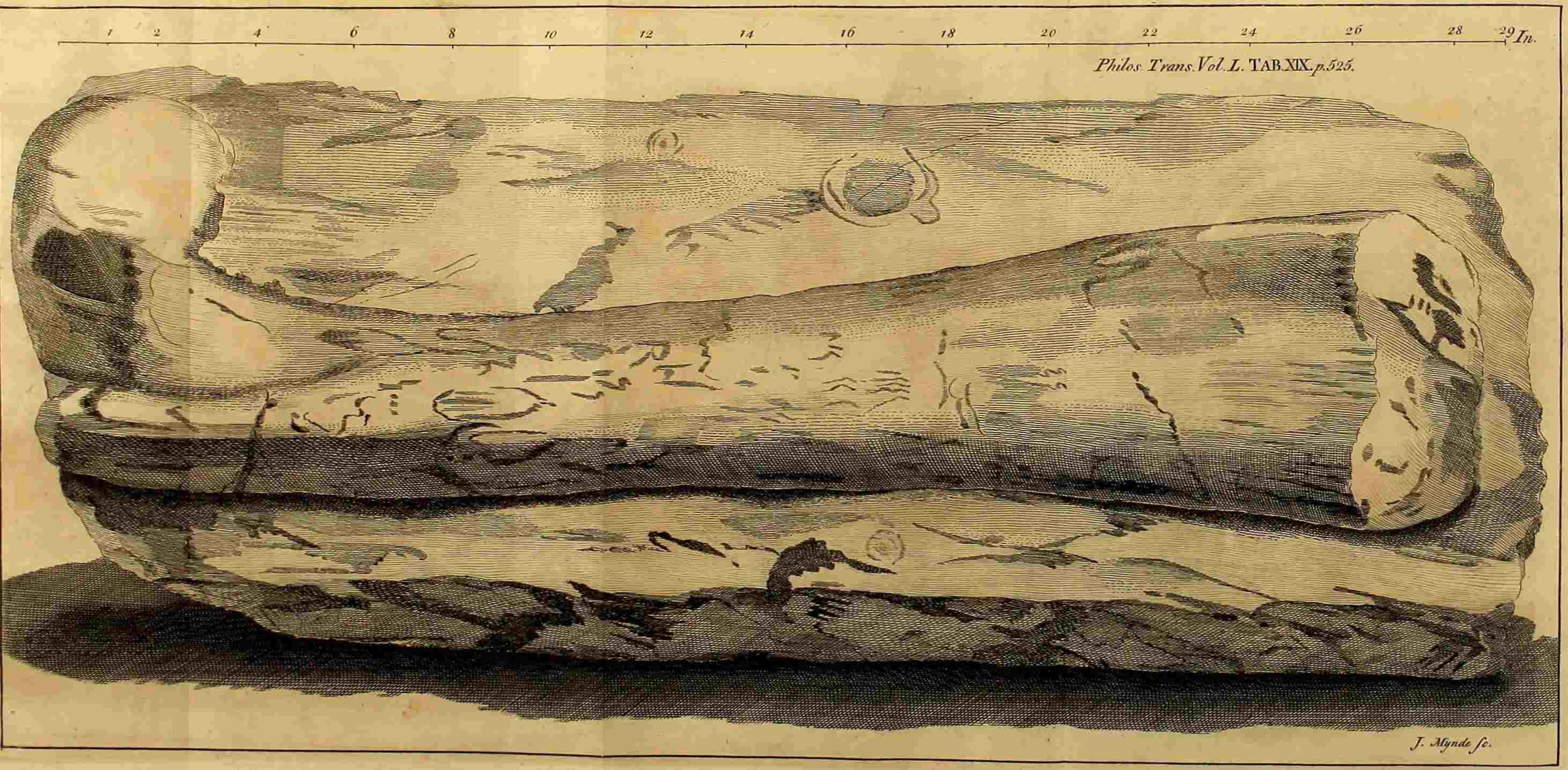
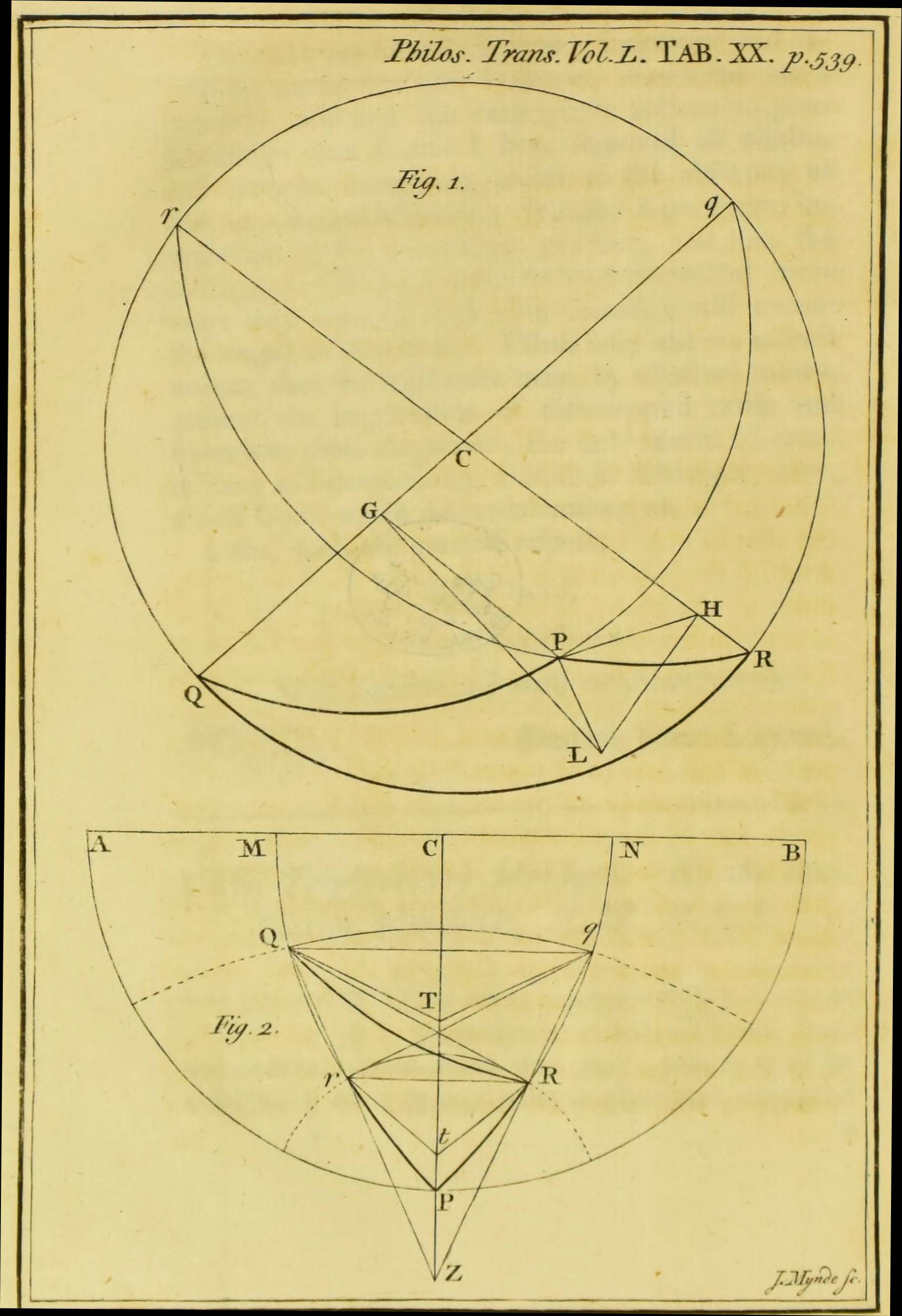
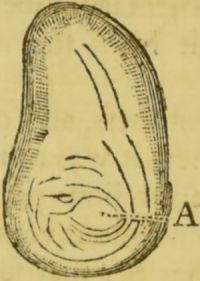
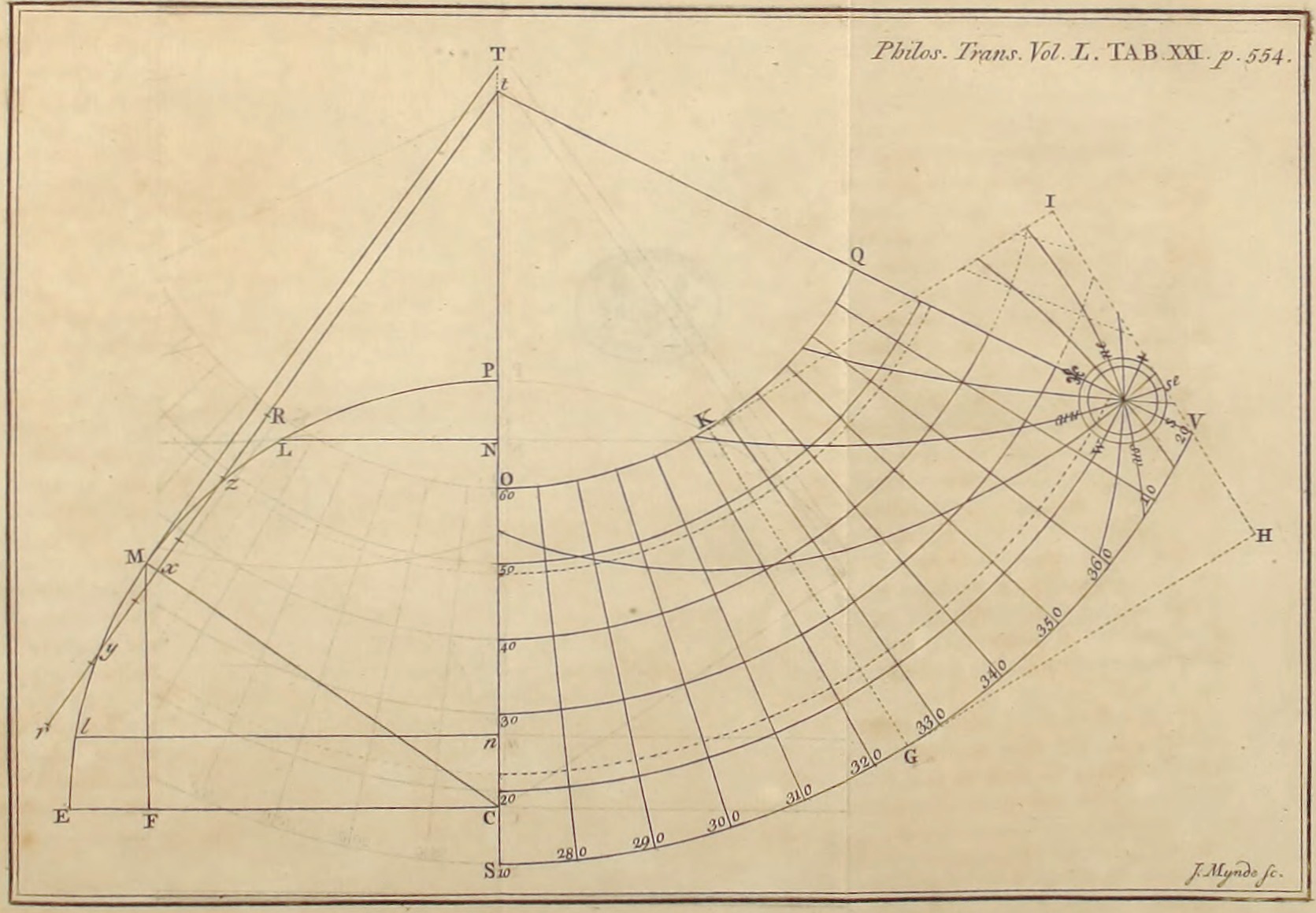
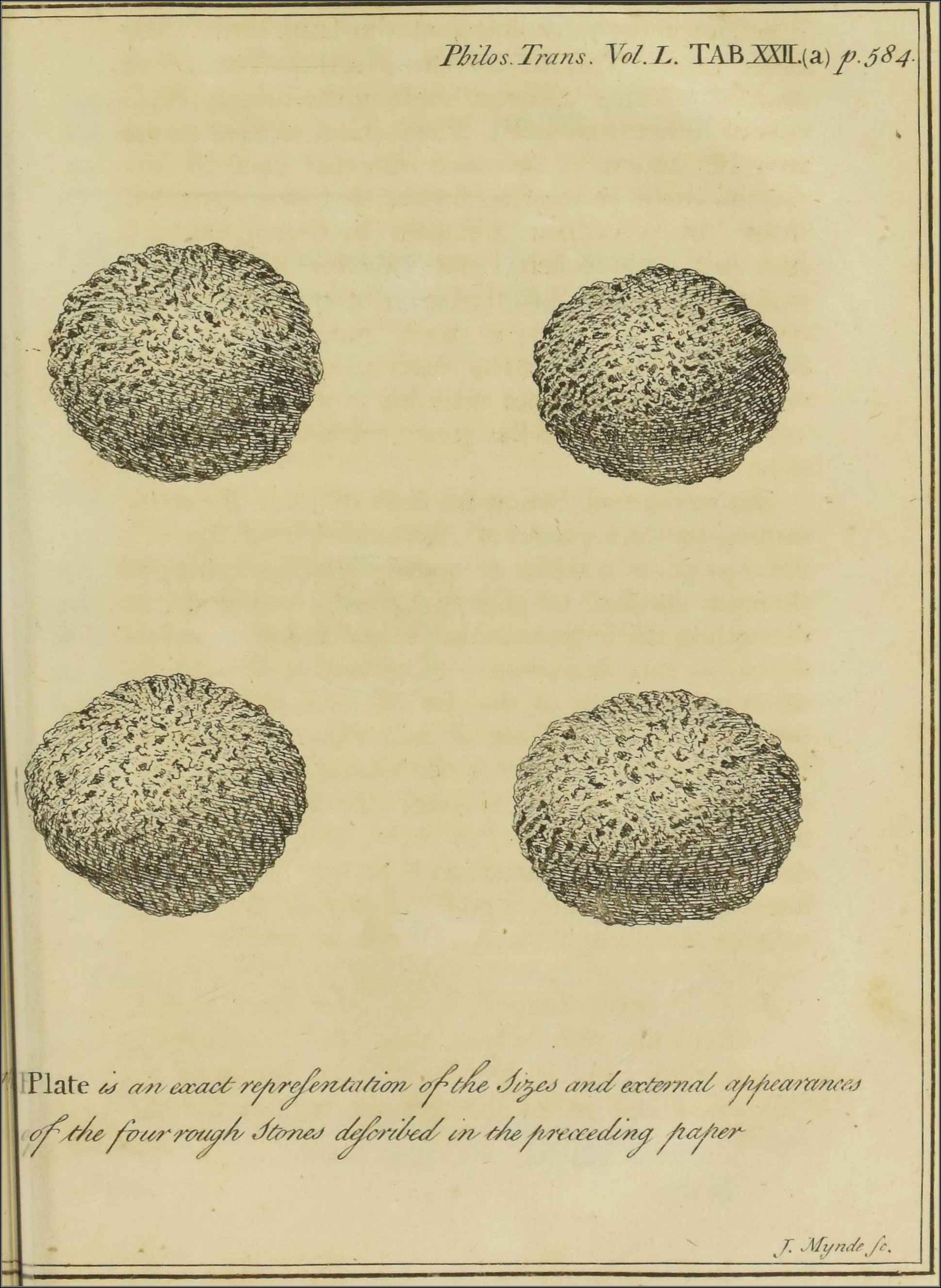
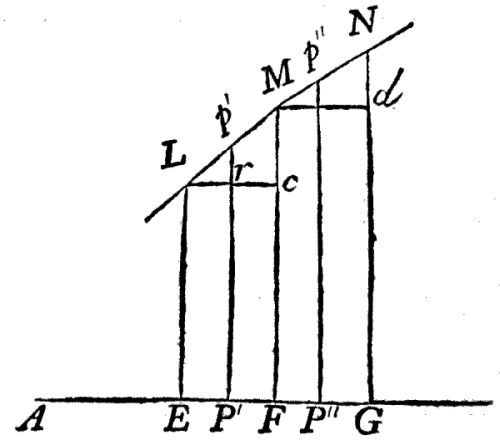
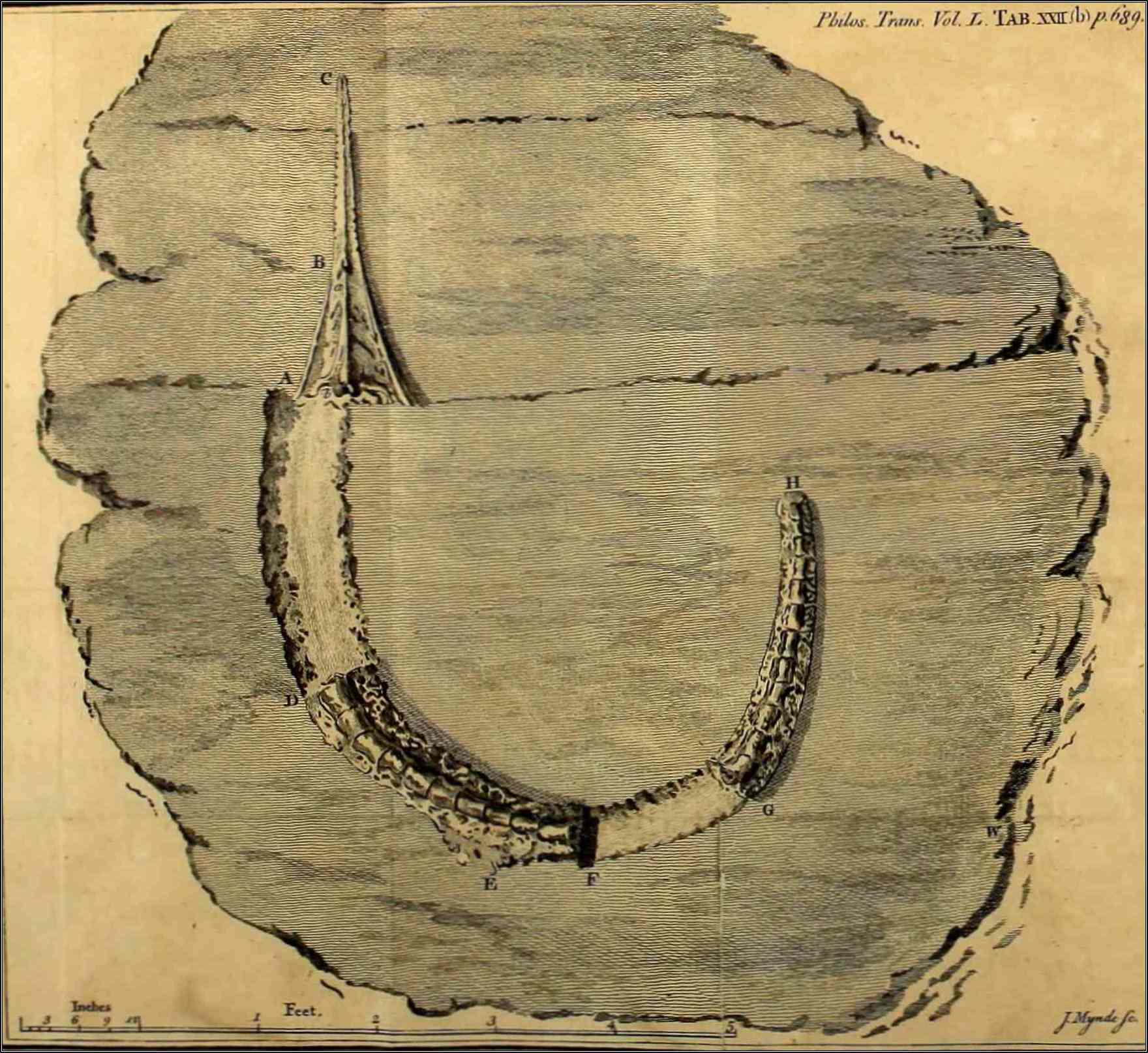
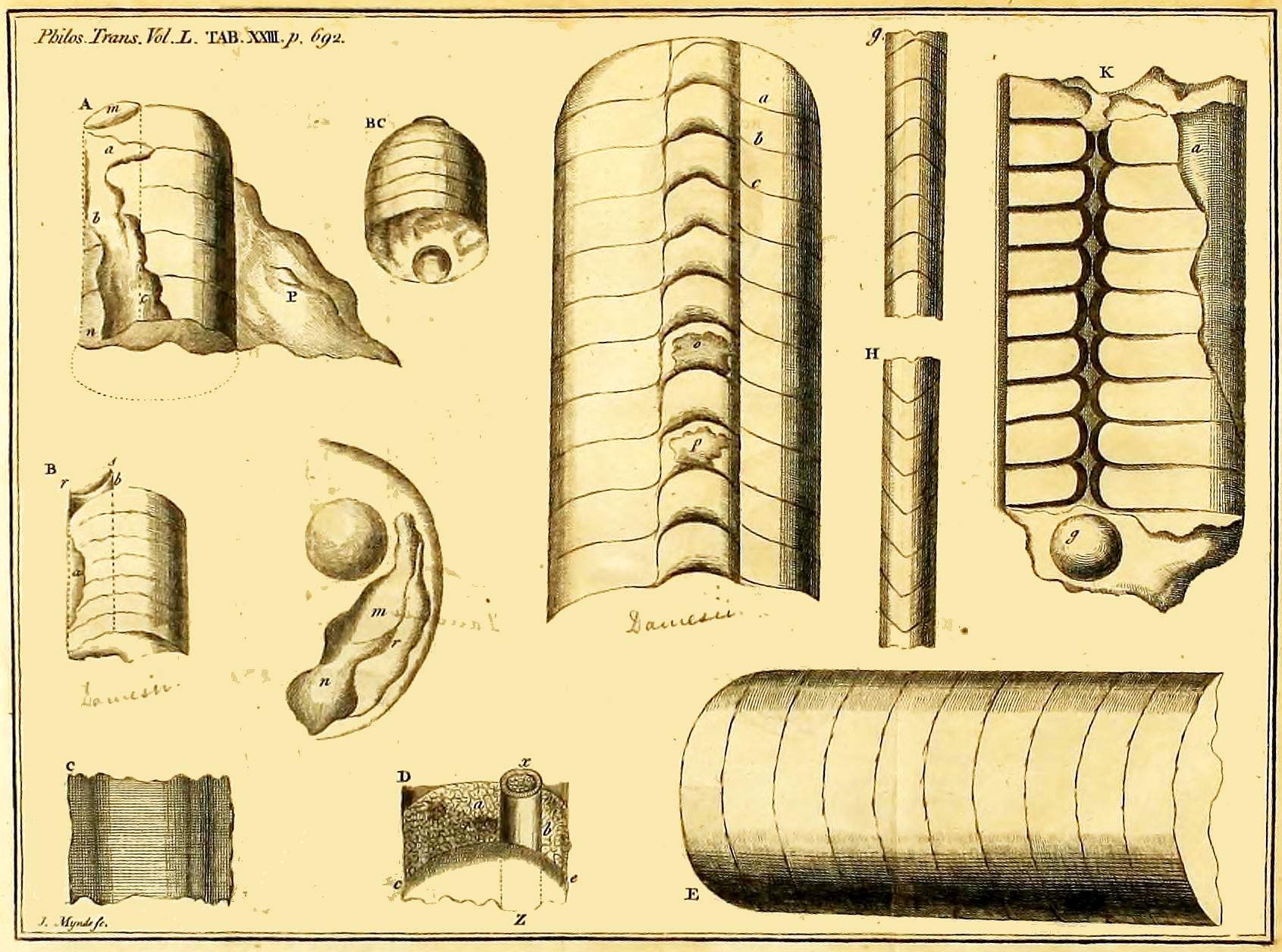
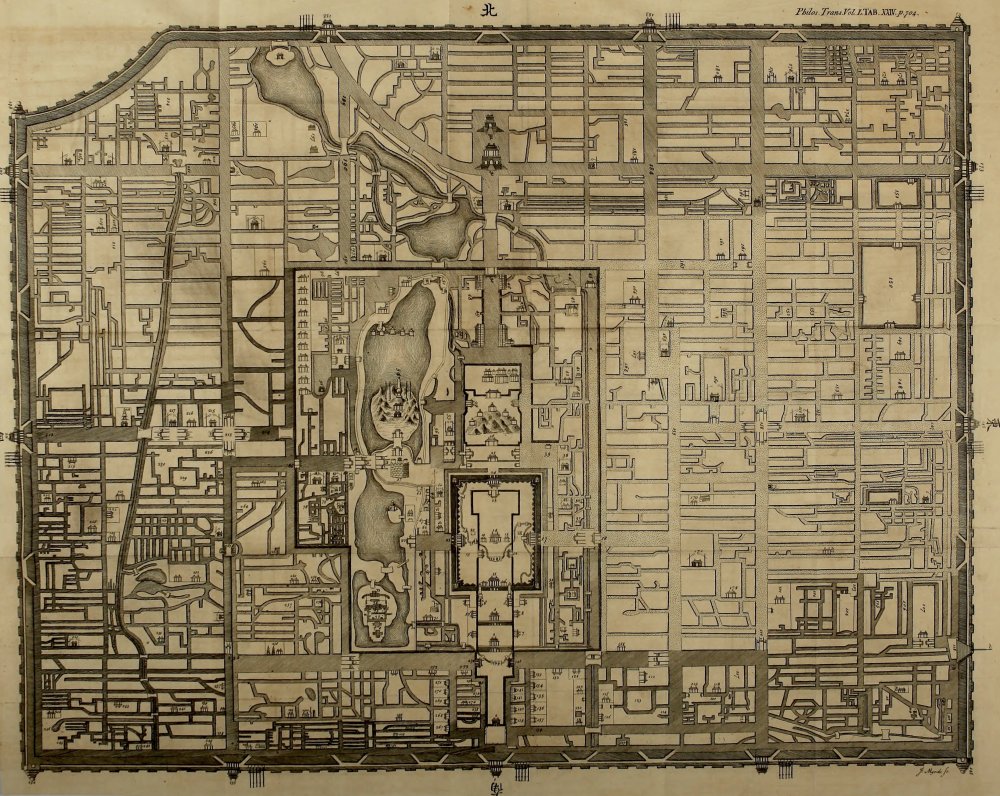
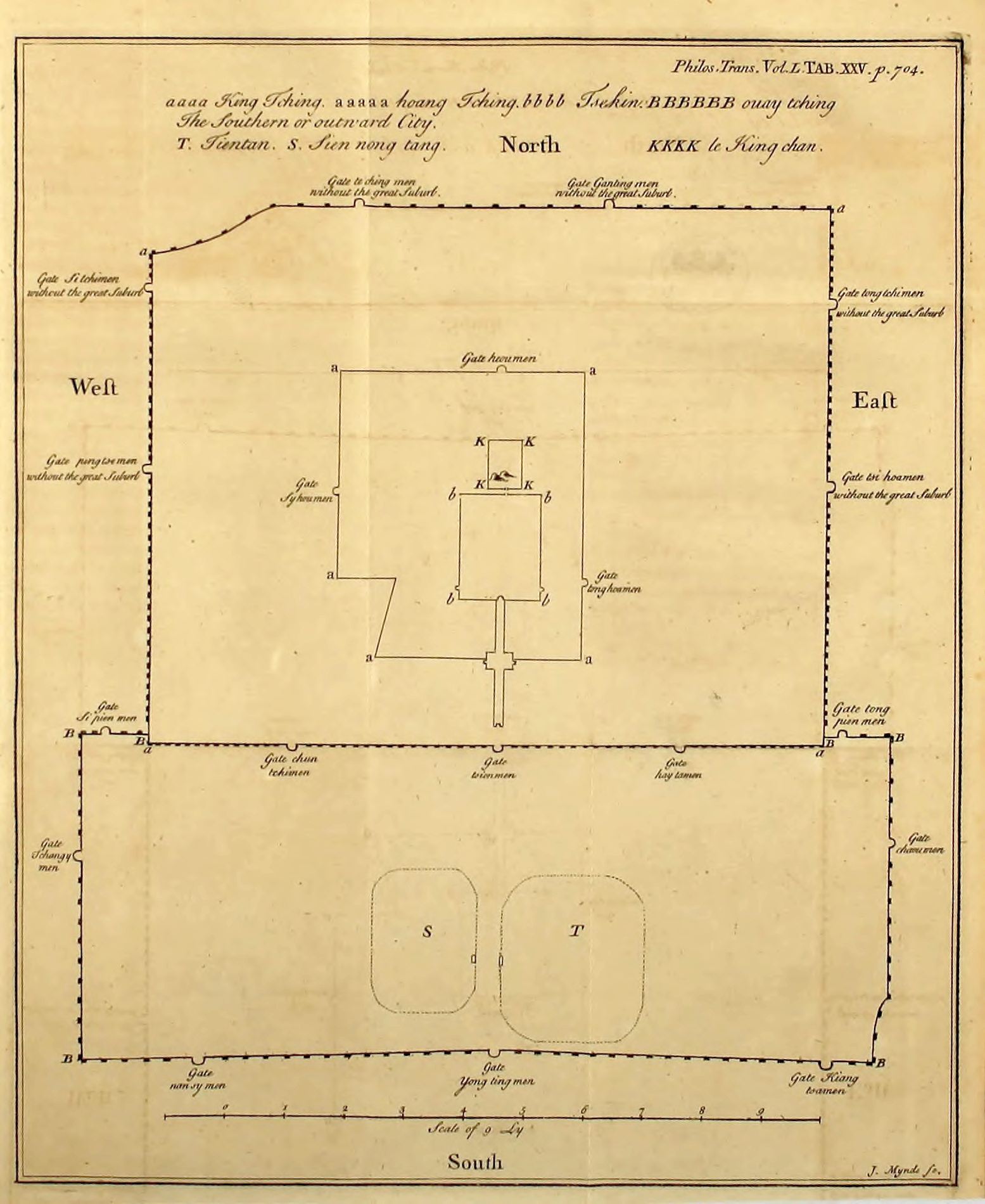
 At A is a beautiful gate to the south. The walls of
the inclosure of the apartments of the emperor and
empress are higher than those of the inclosures of the
queens and ladies. In them are orchards, jets d’eau,
flowering shrubs, and a great number of small chambers
for the eunuchs.