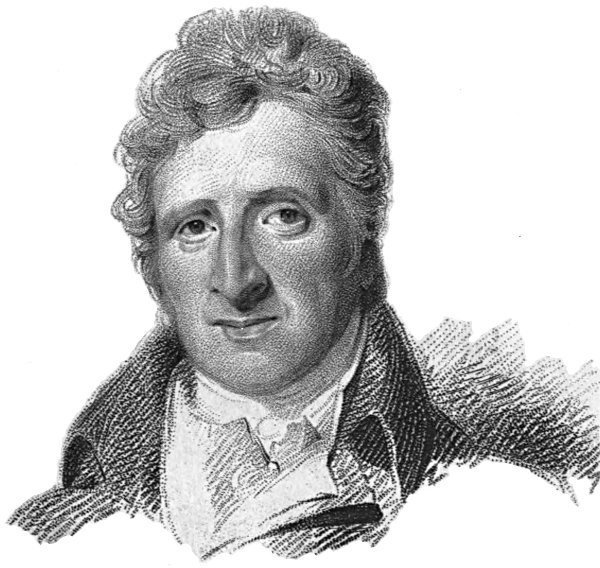
Engraved by J. Heath, from a drawing from life by Commerford.
Sir Jonah Barrington, K.C.
London. Pubd by Colburn & Bentley New Burlington Str.t 1830.
PERSONAL SKETCHES
OF
HIS OWN TIMES,
BY
SIR JONAH BARRINGTON,
JUDGE OF THE HIGH COURT OF ADMIRALTY IN IRELAND,
&c. &c. &c.
IN THREE VOLUMES.
VOL. I.
SECOND EDITION,
REVISED AND IMPROVED.
LONDON:
HENRY COLBURN AND RICHARD BENTLEY,
NEW BURLINGTON STREET.
1830.
PRINTED BY A. J. VALPY, RED LION COURT, FLEET STREET.
TO
THE RIGHT HONOURABLE
CHARLES KENDAL BUSHE,
CHIEF JUSTICE OF IRELAND,
This trifle, the pastime of a winter’s evening, is presented—to
a person of whom I have long held the
highest opinion among the circle of my friends and the
crowd of my contemporaries, and for whom my regards
have been disinterested and undeviating.
The work is too trivial to be of any weight, and I offer
it only as a Souvenir, which may amuse one who can be
constant to friendship at all periods, and knows how to
appreciate a gift, not by its value, but by the feelings of
the heart which sends it.
Jonah Barrington, K. C.
INTRODUCTION
TO THE FIRST EDITION.
The compilation by me of a medley of this description
may appear rather singular. Indeed, I
myself think it so, and had got nearly half-way
through it before I could reasonably account for
the thing;—more especially as it was by no means
commenced for mercenary purposes. The fact is,
I had long since engaged my mind and time on a
work of real public interest; and so far as that
work was circulated, my literary ambition was
more than gratified by the approbation it received.
But it has so happened, that my publishers, one
after another, have been wanting in the qualification
of stability; and hence, my “Historic
Memoirs of Ireland” have been lying fast asleep,
in their own sheets, on the shelves of three successive
booksellers or their assignees; and so ingeniously
were they scattered about, that I found
it impossible for some years to collect them. This
was rather provoking, as there were circumstances
connected with the work, which (be its merits
what they may) would, in my opinion, have ensured
it an extensive circulation. However, I
have at length finished the Memoirs in question,
which I verily believe are now about to be published
in reality,[1] and will probably excite sundry
differences of opinion and shades of praise or
condemnation (both of the book and the author)
among His Majesty’s liege subjects.
1. See the Prospectus, published with the present work.
For the purpose of completing that work, I had
lately re-assumed my habit of writing; and being
tired of so serious and responsible a concern as
“Memoirs of Ireland and the Union,” I began to
consider what species of employment might lightly
wear away the long and tedious winter evenings of
a demi-invalid; and recollecting that I could neither
live for ever nor was sure of being the “last
man,” I conceived the idea of looking over and
burning a horse-load or two of letters, papers, and
fragments of all descriptions, which I had been
carrying about in old trunks (not choosing to leave
them at any body’s mercy), and to which I had
been perpetually adding.
The execution of this inflammatory project I immediately
set about with vast assiduity and corresponding
success; and doubtless, with very
great advantage to the literary reputation of an
immense number of my former correspondents as
well as my own. After having made considerable
progress, I found that some of the fragments
amused myself, and I therefore began to consider
whether they might not also amuse other people.
I was advised to make selections from my store,
particularly as I had, for near half a century, kept—not
a diary—but a sort of rambling chronicle,
wherein I made notes of matters which, from time
to time, struck my fancy. Some of these memoranda
were illegible; others just sufficient to set
my memory working; some were sad, and some
were cheerful; some very old, others recent. In
fine, I began to select: but I soon found that any
thing like a regular series was out of the question;
so I took a heap indiscriminately, picked out the
subjects that amused me most, wrote a list of their
several headings, which were very numerous; and,
as his Majesty pricks for sheriffs, so did I for subjects,
and thereby gathered as many as I conceived
would make two or three volumes. My
next process was to make up court-dresses for my
Sketches and Fragments, such as might facilitate
their introduction into respectable company, without
observing strict chronological sequence, to which
I am aware light readers have a rooted aversion.
This laudable occupation served to amuse me
and to fill up the blanks of a winter’s evening;
and being finished, the residue of the papers re-deposited,
and the trunks locked again, I requested
the publisher of my “Historic Memoirs”
also to set my “Personal Sketches” afloat. This
he undertook to do: and they are now sent out
to the public—the world, as it is called; and
the reader (gentle reader is too hackneyed a term,
and far too confident an anticipation of good temper)
will of course draw from them whatever deductions
he pleases, without asking my permission.
All I have to say is, that the several matters
contained herein are neither fictions nor essays, but
relate to real matters of fact, and personages composed
of flesh and blood. I have aimed at no display
of either fancy or imagination; nor have I set down
long dialogues or soliloquies which could not possibly
be recorded except when heroes and heroines
carried short-hand writers in their pockets, which
must have been peculiarly inconvenient. In
speaking of fanciful matters, I may as well except
my own opinions on certain subjects here and
there interspersed, which I freely leave to the
mercy of any one who is disposed to esteem them
visionary.
However, be it understood, that I by no means
intend this disclaimer as an assault on—but on the
contrary as a distinguished compliment to—writers
and works of pure imagination—of improbability
and impossibility!—inasmuch as such works prove
an unlimited range of intellect and talent, on the
part of the authors, for inventing matters of fact
that never could have occurred, and conversations
that never could have taken place;[2] a talent
which, when duly cultivated and practised for the
use of friends and private families, seldom fails to
bring an author’s name into most extensive circulation;
and if perchance he should get himself into
any scrape by it, nothing is so likely as the exercise
of the same talent of invention to get him
out of it again.
2. I have seen in a new novel a minute recital of a very
affecting soliloquy pronounced with appropriate gesticulation
by a fine young man while he was “pacing about” a large
room in a castle; the thunder meanwhile roaring, and the
rain pattering at the casements. In this castle there was at the
time no other living person; and the soliloquy was so spoken
as his dying words immediately before he shot himself. As
there was nobody else in the castle during the catastrophe, his
affecting words were never divulged till this novel made its
appearance—leaving the ingenious reader to infer the many
invisible spies and tell-tales that survey our most secret movements.
On the other hand, I must own (even against
myself) that the writing of mere common-place
truths requires no talent whatsoever! it is quite a
humdrum, straight-forward, dull custom, which any
person may attain. Besides, matter of fact is not
at all in vogue just now: the disrepute under
which truth in general at present labours, in all
departments and branches of literature, has put it
quite out of fashion even among the savans:—so
that chemistry and mathematics are almost the
only subjects, on the certainty of which the
“nobility, gentry, and public at large,” appear to
place any very considerable reliance.
Having thus, I hope, proved my candour at my
own cost, the deduction is self-evident—namely,
that the unfortunate authenticity of these sketches
must debar them from any competition with the
tales and tattle of unsophisticated invention:
when, for instance, scandal is true, it is (as some
ladies have assured me) considered by the whole
sex as scarcely worth listening to, and actually
requiring at least very considerable exaggeration to
render it at all amusing! I therefore greatly fear
I may not, in this instance, experience so much of
their favour as I am always anxious to obtain: my
only consolation is, that when their desire to
indulge an amiable appetite for scandal is very
ardent, they may find ample materials in every
bookseller’s shop and haut-ton society to gratify the
passion.
I feel now necessitated to recur to another point,
and I do it at the risk of being accused of egotism.
I hope, however, I can advance a good reason for
my proceeding; namely, that, on reading over
some of the articles whereof this mélange is composed,
I freely admit, that if I were not very intimately
acquainted with myself, I might be led at
least into a puzzle as to the writer’s genuine sentiments
on many points of theology and politics.
Now, I wish, seriously speaking, to avoid, on these
subjects, all ambiguity; and therefore, as responsible
for the opinions put forth in the following
Sketches, I beg to state, that I consider myself
strictly orthodox both in politics and theology:
that is to say, I profess to be a sound Protestant,
without bigotry; and an hereditary royalist, without
ultraism. Liberty I love—Democracy I hate:
Fanaticism I denounce! These principles I have
ever held and avowed, and they are confirmed by
time and observation. I own that I have been
what is generally called a courtier, and I have
been also what is generally called a patriot; but I
never was either unqualifiedly. I always thought,
and I think still, that they never should, and never
need be (upon fair principles) opposed to each
other. I can also see no reason why there may
not be patriot kings as well as patriot subjects—a
patriot minister, indeed, may be more problematical.
In my public life, I have met with but one
transaction that even threatened to make my patriotism
overbalance my loyalty: I allude to the
purchase and sale of the Irish Parliament, called
a Union, which I ever regarded as one of the
most flagrant public acts of corruption on the
records of history, and certainly the most mischievous
to this empire. I believe very few men
sleep the sounder for having supported the measure;
though some, it is true, went to sleep a good
deal sooner than they expected when they carried
it into execution.
I must also observe that, as to the detail of
politics, I feel now very considerable apathy. My
day for actual service is past; and I shall only
further allude, as a simple casuist, to the slang
terms in which it has become the fashion to dress
up the most important subjects of British statistics—subjects
on which certain of these Sketches
appear to have a remote bearing, and on which
my ideas might possibly be misunderstood.
I wish it therefore to be considered as my
humble opinion, that what, in political slang, is
termed Radical Reform, is, in reality, proximate
revolution:—Universal Suffrage, inextinguishable uproar:—and
Annual Parliaments, periodical bloodshed.[3]
My doubts as a casuist, with these impressions
on my mind, must naturally be, how
the orderly folks of Great Britain would relish
such pastimes?—I do not extend the query to the
natives of my own country, because, since His
Majesty was there, nobody has taken much notice
of them: besides, the poor people in Ireland having
very little to eat and no amusement at all, the
aforesaid entertainments might divert them, or at
least their hunger, and of course be extremely
acceptable to a great body of the population.
3. I apprehend that there were more persons killed at the
late elections in Ireland than there were members elected at
the contested places; and I have no doubt that annual parliaments
would give more employment to the coroners in Ireland
than any species of riot that has yet been invented for that
pugnacious population. In truth, what I have mentioned in
another work as being the proofs of pleasure in Ireland, were
also generally the termination of contested elections: the gradation
was always the same: viz. “an illumination, a bonfire,
a riot,” and “other demonstrations of joy!”—N.B. Where
candles to illuminate with were not to be had, burning a house
was not unfrequently substituted!
As I also perceive some articles in these Sketches
touching upon matters relative to Popes, Cardinals,
Catholics, &c.; lest I may be misconstrued or
misrepresented on that head, I beg to observe,
that I meddle not at all in the controversy of
Catholic Emancipation. The Doctors employed
differ so essentially in opinion, that, as it frequently
falls out on many other consultations,
they may lose their patient while debating on the
prescription:—in truth, I don’t see how the Doctors
can ever agree, as the prescribers must necessarily
take the assay; and one half of them verily
believe that they should be poisoned thereby!—“Among
ye be it, blind harpers!”
I apprehend I have now touched on most of
the topics which occurred to me as requiring a
word of explanation. I repeat that this book is
only to be considered as a desultory mélange—the
whim of a winter’s evening—a mere chance-selection.
I shall therefore make no sort of apology
for inaccuracies as to unity of time, for defective
connexion, or the like. It amused my
leisure hours; and if it fortunately amuses those
of other people, I shall receive a great deal of
satisfaction.
Jonah Barrington.
May 28th, 1827.
CONTENTS
OF
THE FIRST VOLUME.
MY FAMILY CONNEXIONS.
Family mansion described—Library—Garden—Anecdotes of my family—State of landlord and tenant in 1760—The gout—Ignorance of the peasantry; extraordinary anomaly in the loyalty and disloyalty of the Irish country gentlemen as to James I., Charles I., Charles II., James II., and William—Ancient toasts—My great-grandfather, Colonel John Barrington, hanged on his own gate; but saved by Edward Doran, trooper of King James—Irish customs, anecdotes, &c.
My great-aunt, Elizabeth—Besieged in her castle of Moret—My uncle seized and hanged before the walls—Attempted abduction of Elizabeth, whose forces surprise the castle of Reuben—Severe battle
Instances of attachment formerly of the lower orders of Irish to the gentry—A field of corn of my father’s reaped in one night without his knowledge—My grandfather’s servants cut a man’s ears off by misinterpretation—My grandfather and grandmother tried for the fact—Acquitted—The colliers of Donane—Their fidelity at my election at Ballynakill, 1790
My godfathers—Lord Maryborough—Personal description and extraordinary character of Mr. Michael Lodge—My early education; at home; at school—My private tutor, Rev. P. Crawley, described—Defects of the University course—Lord Donoughmore’s father—Anecdote of the Vice-Provost—A country sportsman’s education
The huntsman’s cottage—Preparations for a seven days’ carousal—A cock-fight—Welsh main—Harmony—A cow and a hogshead of wine consumed by the party—Comparison between former dissipation and that of the present day—A dandy at dinner in Bond-street—Captain Parsons Hoye and his nephew—Character and description of both—The nephew disinherited by his uncle for dandyism—Curious anecdote of Dr. Jenkins piercing Admiral Cosby’s fist
Waking the piper—Curious scene at my brother’s hunting-lodge—Joe Kelly’s and Peter Alley’s heads fastened to the wall—Operations practised in extricating them
The Army—Irish volunteers described—Their military ardour—The author inoculated therewith—He grows cooler—The Church—The Faculty—The Law—Objections to each—Colonel Barrington removes his establishment to the Irish capital—A country gentleman taking up a city residence
Murder of Captain O’Flaherty by Mr. Lanegan, his son’s tutor, and Mrs. O’Flaherty—The latter, after betraying her accomplice, escapes—Trial of Lanegan—He is hanged and quartered at Dublin—Terrific appearance of his supposed ghost to his pupil, David Lauder, and the author, at the Temple in London—Lauder nearly dies of fright—Lanegan’s extraordinary escape; not even suspected in Ireland—He gets off to France, and enters the Monastery of La Trappe—All-Hallow Eve—A church-yard anecdote—My own superstition nearly fatal to me
Marriage of my eldest brother—The bridemaid, Miss D. W.—Female attractions not dependent on personal beauty—Mutual attachment—Illustration of the French phrase je ne sais quoi—Betrothal of the author, and his departure for London, to study for the Bar
Sketch of the company and inmates—Lord Mountmorris—Lieut. Gam Johnson, R.N.—Sir John and Lady O’Flaherty—Mrs. Wheeler—Lady and Miss Barry—Memoir and character of Miss Barry, afterward Mrs. Baldwin—Ruinous effects of a dramatic education exemplified—Lord Mountmorris’s duel with the Honourable Francis Hely Hutchinson at Donnybrook—His lordship wounded—Marquis of Ely, his second
Strictures on change of manners—Moral influence of dress—The three beauties—Curious trial respecting Lady M—— —Termination favourable to her ladyship—Interesting and affecting incidents of that lady’s life—Sir R— M——, his character, and cruelty—Lady M—— married against her will—Quits her husband—Returns—Sir R. mistakes her for a rebel in his sleep, and nearly strangles her
The three classes of gentlemen in Ireland described—Irish poets—Mr. Thomas Flinter and D. Henesey—The bard—Peculiarities of the peasants—Their ludicrous misinformation as to distances accounted for—Civility of a waiter—Equivocation of the peasants, and their misdirection of travellers to different places
Their general character—Objections commonly made to them—Answer thereto—Sir Charles Vernon’s mimicry—Moll Harding—Accident nearly of a fatal nature to the author
Duel of my brother, William Barrington, with Mr. M‘Kenzie—He is killed by his antagonist’s second, General Gillespie—The general’s character—Tried for murder—Judge Bradstreet’s charge—Extraordinary incidents of the trial—The jury arranged—The high sheriff (Mr. Lyons) challenged by mistake—His hair cut off by Henry French Barrington—Exhibited in the ball-room—The Curl Club formed—The sheriff quits the country, and never returns—Gillespie goes to India—Killed there—Observations on his cenotaph in Westminster Abbey
My first entrance into the Irish House of Commons—Dinner at Sir John Parnell’s—Commencement of my intimacy with public men of celebrity—Maiden speech—I attack Grattan and Curran—Suicide of Mr. Thoroton—Lord De Blacquiere—His character
Sir John Stuart Hamilton—Sir Richard Musgrave—Sir Edward Newnham—Sir Vesey Colclough—Sir Frederick Flood—Sir John Blacquiere—Sir Boyle Roche, and his curious bulls—Their characters and personal description—Anecdotes and bon-mots—Anecdote of the Marquess of Waterford
The author first placed in office by Lord Westmoreland—Made king’s counsel by Lord Clare—Jealousy of the bar—Description of Kilkenny Castle—Trial of the Earl of Ormonde for outrage at Kilkenny—Acquitted—Author’s conduct—Distinguished and liberal present from the Earl of Ormonde to the author, of a gold box, and his subsequent letter
Singular anecdotes of Dr. Achmet Borumborad—He proposes to erect baths in Dublin, in the Turkish fashion—Obtains grants from Parliament for that purpose—The baths well executed—The Doctor’s banquet—Ludicrous anecdote of nineteen noblemen and members of Parliament falling into his grand salt-water bath—The accident nearly causes the ruin of the Doctor and his establishment—He falls in love with Miss Hartigan, and marries her—Sudden metamorphosis of the Turk into Mr. Patrick Joyce
The institution of Orangemen—United Irishmen—Protestant ascendancy—Dr. Duigenan—Origin, progress, and customs of the aldermen of Skinners’ Alley described—Their revels—Orange toast, never before published—The aldermen throw Mr. M‘Mahon, an apothecary, out of a window for striking the bust of King William—New association—Anecdotes of Sir John Bourke and Sir Francis Gould—The Pope’s bull of absolution to Sir Francis G.—Its delivery suspended till he had taken away his landlady’s daughter—His death
Rebellion in Ireland, in 1798—Mr. Waddy’s castle—A priest cut in two by the portcullis, and partly eaten by Waddy—Dinner-party at Lady Colclough’s—Names and characters of the company, including Mr. Bagenal Harvey, Captain Keogh, &c.—Most of them executed soon after—Tour through and state of County Wexford, after the battles and storming of the town—Colonel Walpole killed and his regiment defeated at Gorey—Unaccountable circumstance of Captain Keogh’s head not decaying
Counsellor Theobald Wolf Tone—His resemblance to Mr. Croker—He is ordered to be hanged by a military court—General Craig attached in the court of Common Pleas—Tone’s attempt at suicide—Cruel suggestion respecting him
My contest for Dublin city—Supported by Grattan, Ponsonby, Plunkett, and Curran—Singularity of a canvass for Dublin—The election—Curious incidents—Grattan’s famous philippic, never before published—Memoirs of Mr. John Giffard, called the “dog in office”—Horish the chimney-sweeper’s bon-mot
Mr. Richard Brinsley Sheridan’s contest for County Wexford, omitted by all his pseudo-biographers—Duel of Mr. Alcock and Mr. Colclough (candidates), on a question respecting Mr. Sheridan’s poll—Colclough killed—A lamentable incident—Mr. Alcock’s trial—He afterward goes mad and dies—His sister, Miss Alcock, also dies lunatic in consequence—Marquess of Ely tried for an outrage at Wexford, and fined
Lord Clonmel, chief justice of the Irish Court of King’s Bench—His character—Lady Tyrawly’s false charge against him—Consequent duel between him and Lord Tyrawly—Eclaircissement—Lord Tyrawly and Miss Wewitzer—Lord Clonmel’s hints “How to rule a wife”—Subsequent conversation with his lordship at Sir John Tydd’s
My first acquaintance with the Duke of Wellington and the late Marquess of Londonderry, at a dinner at my own house—Some memoirs and anecdotes of the former as a public man—My close connexion with government—Lord Clare’s animosity to me suspended—Extraordinary conference between Lord Castlereagh, Mr. Cooke, and me, in August 1798—Singular communication—Offers made to me for succession as solicitor-general—I decline the terms proposed—Lord Castlereagh’s letter to me—Character of Mr. Pelham, now Earl of Chichester
Quarrel between Lord Norbury and the author in the House of Commons—Curran’s bon-mot—Dinner at Lord Redesdale’s, who attempts being agreeable, but is annoyed by Lord Norbury (then Mr. Toler)—Counsellor O’Farrell—Mr. (now Lord) Plunkett and Lord Redesdale—Lord Norbury and young Burke—His lordship presides at Carlow assizes in the character of Hawthorn
Mr. Grattan in his sedan-chair—The “point of honour”—Mr. Egan’s gift of second-sight—The guillotine and executioner—Colonel Burr, vice-president of the United States, and Mr. Randolph—Mr. Grattan in masquerade—Death of that illustrious patriot, and strictures on his interment in Westminster Abbey—Letter from the author to his son, Henry Grattan, Esq.
Lord Aldborough quizzes the Lord Chancellor—Voted a libeller by the House of Peers—His spirited conduct—Sentenced to imprisonment in Newgate by the Court of King’s Bench—Memoirs of Mr. Knaresborough—His extraordinary trial—Sentenced to death, but transported—Escapes from Botany Bay, returns to England, and is committed to Newgate, where he seduces Lady Aldborough’s attendant—Prizes in the lottery—Miss Barton dies in misery
Sketch of his character—Personal description—Lodgings at Carlow—Mr. Curran and Mr. Godwin—Scenes in the “Cannon” coffee-house—Liberality of mine host—Miss H * * * in heroics—Precipitate retreat—Lord Clancarty—Mr. Curran’s notion of his own prowess—The disqualifications of a wig—Lord and Lady Carleton—Curran in 1812—An attorney turned cobbler—Curran’s audience of the present king of France—Strictures on his biographers
Observations on the law of libel, particularly in Ireland—“Hoy’s Mercury”—Messrs. Van Trump and Epaphroditus Dodridge—Former leniency regarding cases of libel contrasted with recent severity—Lord Clonmel and the Irish bar—Mr. Magee, of the “Dublin Evening Post”—Festivities on “Fiat Hill”—Theophilus Swift and his two sons—His duel with the Duke of Richmond—The “Monster!”—Swift libels the Fellows of Dublin University—His curious trial—Contrast between the English and Irish bars—Mr. James Fitzgerald—Swift is found guilty, and sentenced to Newgate—Dr. Burrows, one of the Fellows, afterward libels Mr. Swift, and is convicted—Both confined in the same apartment at Newgate
Biographical and characteristic sketch of Dean Kirwan—His extraordinary eloquence—The peculiar powers of Sheridan, Curran, and Grattan contrasted—Observations on pulpit, bar, and parliamentary oratory
Reception of the late Queen Caroline (then Princess of Wales) at the drawing-room held after the “delicate investigation”—Her depression and subsequent levity—Queen Charlotte and the Princess compared and contrasted—Reflections on the incidents of that day and evening—The Thames on a Vauxhall night
Characteristic and personal sketches of three Irish barristers: Mr. William Fletcher (afterward chief justice of the Court of Common Pleas), Mr. James Egan (afterward judge of Dublin county), and Mr. Bartholomew Hoare, king’s counsel—Lord Yelverton’s dinner party—The author’s parody—Mr. Egan right by mistake!
The hollowness of interested popularity illustrated in the example of Mr. Norcot—The dilemma of a gamester—The last resource—The “faithful” valet—Mr. Norcot turns Mahometan—His equivocal destiny
Baron Monckton—Judge Boyd—Judge Henn—Legal blunder of a judge, and Curran’s bon-mot thereon—Baron Power—His suicide—Crosby Morgal’s spirit of emulation—Judge William Johnson—Curious anecdote between him and the author—Judge Kelly—His character and bon-mots—Lord Kilwarden—His character—Murder of him and his nephew the Rev. Mr. Wolfe—Mr. Emmet executed—Memoir of that person—Judge Robert Johnson—Arrested in Ireland, and tried in London, for a libel written on Lord Redesdale in Ireland and published by Cobbett—Doubts of the legality of his lordship’s trial—He is found guilty
Family mansion described—Library—Garden—Anecdotes of my family—State of landlord and tenant in 1760—The gout—Ignorance of the peasantry; extraordinary anomaly in the loyalty and disloyalty of the Irish country gentlemen as to James I., Charles I., Charles II., James II., and William—Ancient toasts—My great-grandfather, Colonel John Barrington, hanged on his own gate; but saved by Edward Doran, trooper of King James—Irish customs, anecdotes, &c.
I was born at Knapton, near Abbeyleix, in the
Queen’s County,—at that time the seat of my
father, but now of Sir George Pigott. I am the
third son and fourth child of John Barrington,
who had himself neither brother nor sister; and at
the period of my birth, my immediate connexions
were thus circumstanced.
My family, by ancient patents, by marriages,
and by inheritance from their ancestors, possessed
very extensive landed estates in Queen’s County,
and had almost unlimited influence over its population,
returning two members to the Irish Parliament
for Ballynakill, counties of Kilkenny and
Galway.
Cullenaghmore, the mansion where my ancestors
had resided from the reign of James the First,
was then occupied by my grandfather, Colonel
Jonah Barrington. He had adopted me as soon as
I was born, brought me to Cullenaghmore, and
with him I resided until his death.
That old mansion (the Great House as it was
called) exhibited altogether an uncouth mass, warring
with every rule of symmetry in architecture.
The original castle had been demolished, and its
materials converted to a much worse purpose: the
edifice which succeeded it was particularly ungraceful;
a Saracen’s head (our crest) in coloured
brick-work being its only ornament. Some of the
rooms inside were wainscoted with brown oak,
others with red deal, and some not at all. The
walls of the large hall were decked (as was customary)
with fishing-rods, fire-arms, stags’ horns,
foxes’ brushes, powder-flasks, shot-pouches, nets,
and dog-collars; here and there relieved by the
extended skin of a kite or a king-fisher, nailed up
in the vanity of their destroyers: that of a monstrous
eagle, (which impressed itself indelibly on
my mind,) surmounted the chimney-piece, accompanied
by a card announcing the name of its assassin—“Alexander
Barrington;”—who, not being a
rich relation, was subsequently entertained in the
Great House two years, as a compliment for his
present. A large parlour on each side of the
hall, the only embellishments of which were some
old portraits, and a multiplicity of hunting, shooting,
and racing prints, with red tape nailed round
them by way of frames, completed the reception-rooms;
and as I was the only child in the house,
and a most inquisitive brat, every different print
was explained to me.
I remained here till I was near nine years old;
I had no play-fellows to take off my attention from
whatever I observed or was taught; and so strongly
do those early impressions remain engraven on my
memory, (naturally most retentive,) that even at
this long distance of time I fancy I can see the
entire place as it stood then, with its old inhabitants
moving before me:—their faces I most clearly
recollect.
The library was a gloomy closet, and rather
scantily furnished with every thing but dust and
cobwebs: there were neither chairs nor tables;
but I cannot avoid recollecting many of the principal
books, because I read such of them as I could
comprehend, or as were amusing; and looked over
all the prints in them a hundred times. While
trying to copy these prints, they made an indelible
impression upon me; and hence I feel confident
of the utility of embellishments in any book intended
for the instruction of children. I possessed
many of the books long after my grandfather’s
death, and have some of them still. I had an
insatiable passion for general reading from my
earliest days, and it has occupied the greater proportion
of my later life. Gulliver’s Travels, Robinson
Crusoe, Fairy Tales, and The History of the
Bible, all with numerous plates, were my favourite
authors and constant amusement: I believed every
word of them except the fairies, and was not entirely
sceptical as to those “good people” neither.
I fancy there was then but little variety in the
libraries of most country gentlemen; and I mention
as a curiosity, the following volumes, several
of which, as already stated, I retained many years
after my grandfather and grandmother died:—The
Journals of the House of Commons; Clarendon’s
History; The Spectator and Guardian;
Killing no Murder; The Patriot King; Bailey’s
Dictionary; some of Swift’s Works; George Falkner’s
Newspapers; Quintus Curtius in English;
Bishop Burnet; A Treatise on Tar-water, by some
other bishop; Robinson Crusoe; Hudibras; History
of the Bible, in folio; Nelson’s Fasts and
Feasts; Fairy Tales; The History of Peter Wilkins;
Glums and Gouries; somebody’s Justice of
Peace; and a multiplicity of Farriery, Sporting,
and Gardening Books, &c. which I lost piecemeal,
when making room for law-books—probably not
half so good, but at least much more experimental.
Very few mirrors in those days adorned the
houses of the country gentlemen:—a couple or
three shaving-glasses for the gentlemen, and a
couple of pretty large dressing-glasses, in black
frames, for the ladies’ use, composed, I believe,
nearly the entire stock of reflectors at my grandfather’s,
except tubs of spring water, which answered
for the maid-servants.
A very large and productive, but not dressed-up
garden, adjoined the house. The white-washed
stone images; the broad flights of steps up and
down; the terraces, with the round fish-pond,—rivetted
my attention, and gave an impressive
variety to this garden, which I shall ever remember,
as well as many curious incidents which I
witnessed therein.
At the Great House, where the Courts Leet
and Baron were duly held, all disputes among the
tenants were then settled,—quarrels reconciled,—old
debts arbitrated: a kind Irish landlord then
reigned despotic in the ardent affections of the
tenantry, their pride and pleasure being to obey
and to support him.
But there existed a happy reciprocity of interests.
The landlord of that period protected the
tenant by his influence—any wanton injury to
a tenant being considered as an insult to the lord;
and if the landlord’s sons were grown up, no time
was lost by them in demanding satisfaction from
any gentleman for maltreating even their father’s
blacksmith.
No gentleman of this degree ever distrained a
tenant for rent: indeed the parties appeared to be
quite united and knit together. The greatest abhorrence,
however, prevailed as to tithe proctors,
coupled with no great predilection for the clergy
who employed them. These certainly were, in
principle and practice, the real country tyrants of
that day, and first caused the assembling of the
White Boys.
I have heard it often said that, at the time I
speak of, every estated gentleman in the Queen’s
County was honoured by the gout. I have since
considered that its extraordinary prevalence was
not difficult to be accounted for, by the disproportionate
quantity of acid contained in their seductive
beverage, called rum-shrub—which was then universally
drunk in quantities nearly incredible, generally
from supper-time till morning, by all country
gentlemen—as they said, to keep down their claret.
My grandfather could not refrain, and therefore
he suffered well:—he piqued himself on procuring,
through the interest of Batty Lodge, (a follower of
the family who had married a Dublin grocer’s
widow,) the very first importation of oranges and
lemons to the Irish capital every season. Horse-loads
of these, packed in boxes, were immediately
sent to the Great House of Cullenaghmore; and
no sooner did they arrive, than the good news of
fresh fruit was communicated to the Colonel’s
neighbouring friends, accompanied by the usual
invitation for a fortnight.
Night after night the revel afforded uninterrupted
pleasure to the joyous gentry; the festivity
being subsequently renewed at some other mansion,
till the gout thought proper to put the whole party
hors de combat; having the satisfaction of making
cripples for a few months such as he did not kill.
Whilst the convivials bellowed with only toe or
finger agonies, it was a mere bagatelle; but when
Mr. Gout marched up the country, and invaded
the head or the stomach, it was then called no
joke; and Drogheda usquebaugh, the hottest-distilled
drinkable liquor ever invented, was applied
to for aid, and generally drove the tormentor in
a few minutes to his former quarters. It was, indeed,
counted a specific; and I allude to it the
more particularly, as my poor grandfather was
finished by over-doses thereof.
It was his custom to sit under a very large
branching bay-tree in his arm-chair, placed in
a fine sunny aspect at the entrance of the garden.
I particularly remember his cloak, for I kept it
twelve years after his death: it was called a cartouche
cloak, from a famous French robber who, it
was said, invented it for his gang for the purposes
of evasion. It was made of very fine broad-cloth;
of a bright blue colour on one side, and a bright
scarlet on the other: so that on being turned, it
might deceive even a vigilant pursuer.
There my grandfather used to sit of a hot sunny
day, receive any rents he could collect, and settle
any accounts which his indifference on that head
permitted him to think of.
At one time he suspected a young rogue of
having slipped some money off his table when
paying rent; afterward, when the tenants began
to count out their money, he threw the focus of
his large reading-glass upon their hands:—the
smart, without any visible cause, astonished the
ignorant creatures!—they shook their hands, and
thought it must be the devil who was scorching
them. The priest was let into the secret: he seriously
told them all it was the devil sure enough,
who had mistaken them for the boy that stole the
money from the Colonel; but that if he (the priest)
was properly considered, he would say as many
masses as would bother fifty devils, were it necessary.
The priest got his fee; and another farthing
never was taken from my grandfather.
My grandfather was rather a short man, with
a large red nose—strong made; and wore an immense
white wig, such as the portraits give to Dr.
Johnson. He died at eighty-six years of age,
of shrub-gout and usquebaugh, beloved and respected.
I cried heartily for him; and then became
the favourite of my grandmother, the best woman
in the world, who went to reside in Dublin, and
prepare me for college.
Colonel John Barrington, my great-grandfather,
for some time before his death, and after I was
born, resided at Ballyroan. My grandfather
having married Margaret, the daughter of Sir
John Byrne, Bart., had taken the estates and
mansion, and given an annuity to my great-grandfather,
who died, one hundred and four years old,
of a fever, having never shown any of the usual
decrepitudes or defects of age: he was the most
respectable man by tradition of my family, and for
more than seventy years a parliament man.
Sir Daniel Byrne, Bart. my great grandfather,
lived at his old castle of Timogrie, almost adjoining
my grandfather Barrington: his domains, close to
Stradbally, were nearly the most beautiful in the
Queen’s County. On his decease, his widow,
Lady Dorothea Byrne, an Englishwoman, whose
name had been Warren, (I believe a grand-aunt to
the late Lady Bulkley,) resided there till her death;
having previously seen her son give one of the first
and most deeply to be regretted instances of what
is called forming English connexions. Sir John
Byrne, my grand-uncle, having gone to England,
married the heiress of the Leycester family:—the
very name of Ireland was then odious to the English
gentry; and previous terms were made with him,
that his children should take the cognomen of
Leycester, and drop that of Byrne; that he should
quit Ireland, sell all his paternal estates there, and
become an Englishman. He assented; and the
last Lord Shelburne purchased, for less than half
their value, all his fine estates, of which the Marquis
of Lansdown is now proprietor.
After the father’s death, his son, Sir Peter Leycester,
succeeded, and the family of Byrne, descended
from a long line of Irish princes and chieftains,
condescended to become little amongst the
rank of English Commoners; and so ended the
connexion between the Byrnes and Barringtons.
My mother was the only daughter of Patrick
French, of Peterwell, county Galway, wherein
he had large estates: my grandmother (his wife)
was one of the last remaining to the first house
of the ancient O’Briens. Her brother, my great-uncle,
Donatus, also emigrated to England, and
died fifteen or sixteen years since, at his mansion,
Blatherwick, in Cheshire, in a species of voluntary
obscurity, inconsistent with his birth and large
fortune. He left great hereditary estates in both
countries to the enjoyment of his mistress and
natural children, excluding the legitimate branches
of his family from all claims upon the manors or
demesnes of their ancestors. The law enabled
him to do what a due sense of justice and pride
would have interdicted.
The anomaly of political principles among the
country gentlemen of Ireland at that period was
very extraordinary. They professed what they
called “unshaken loyalty;” and yet they were
unqualified partisans of Cromwell and William,
two decided usurpers—one of them having dethroned
his father-in-law, and the other decapitated
his king.
The fifth of November was always celebrated in
Dublin for the preservation of James, a Scottish
king, (after Queen Elizabeth had cut his mother’s
head off) from Guy Fawkes and a barrel of gunpowder
in London; then the thirtieth of January
was highly approved of by a great number of
Irish, as the anniversary of making Charles the
First, the son and heir of the said James, shorter
by his head. Then the very same Irish celebrated
the restoration of Charles the Second, the son of
the shortened king, and who was twice as bad as
his father; and whilst they rejoiced in putting a
crown upon the head of the son of the king who
could not keep his own head on, they never failed
to drink bumpers to the memory of Old Noll, who
had cut that king’s head off; and in order to commemorate
the whole story, and make their children
remember it, they dressed up a fat calf’s-head,
whole and white, on every anniversary of King
Charles’s throat being cut, and with a red-smoked
ham, which they called “Bradshaw,” placed by
the side of it, all parties partook thereof most
happily; washing down the emblem and its accompaniment
with as much claret as they could hold,
in honour of Noll the regicide!
Having thus proved their loyalty to James the
First, and their attachment to his son’s murderer,
and then their loyalty to the eldest of his grandsons,
they next proceeded to celebrate the birth-day of
William of Orange, a Dutchman, who had kicked
their king, (his father-in-law) the second grandson,
out of the country, and who in all probability
would have given the Irish another calf’s head for
their celebration, if the said king, his father-in-law,
had not got out of the way with the utmost expedition,
and gone to live upon charity in France,
the then mortal enemy of the British nation; and
as they dressed a calf’s head for the son’s murder,
so they dressed sheeps’ trotters every first of July,
to commemorate the grandson’s running away at
the Boyne Water, in the year 1690.
One part of the Irish people then invented a
toast, called, “The glorious, pious, and immortal
memory of William, the Dutchman;” whilst another
raised a counter-toast, called “The memory of the
chesnut horse,” that broke the neck of the same King
William.[4] But in my mind, (if I am to judge of
past times by the corporation of Dublin) it was
only to coin an excuse for getting loyally drunk as
often as possible, that they were so enthusiastically
fond of making sentiments, as they called
them.[5]
4. King William’s neck was not broken, only his collar-bone;
his fall from a chesnut horse, however, hastened his dissolution.
5. Could his majesty, King William, learn in the other world
that he has been the cause of more broken heads and drunken
men, since his departure, than all his predecessors, he must be
the proudest ghost and most conceited skeleton that ever entered
the gardens of Elysium.
As to the politics of my family, we had (no
doubt) some very substantial reasons for being
both Cromwellians and Williamites; the one confirmed
our grants, and the other preserved them
for us; my family, indeed, had certainly not only
those, but other very especial reasons to be pleased
with King William; and though he gave them nothing,
they kept what they had, which might have
been lost but for his usurpation.
During the short reign of James the Second in
Ireland, those who were not for him were considered
to be against him, and of course were subjected
to the severities and confiscations usual in
all civil wars. Amongst the rest, my great-grandfather,
Colonel John Barrington, being a Protestant,
and having no predilection for King James, was
ousted from his mansion and estates at Cullenaghmore
by one O’Fagan, a Jacobite wig-maker and
violent partizan, from Ballynakill. He was, notwithstanding,
rather respectfully treated, and was
allowed forty pounds a year by his said wig-maker,
so long as he behaved himself.
However, he only behaved well for a couple of
months; at the end of which time, with a party of
his faithful tenants, he surprised the wig-maker,
drove him out of possession in his turn, and repossessed
himself of his mansion and estates.
The wig-maker, having escaped to Dublin, laid
his complaint before the authorities; and a party
of soldiers were ordered to make short work of it,
if the colonel did not submit on the first summons.
The party demanded entrance, but were refused;
and a little firing from the windows of the
mansion took place. Not being, however, tenable,
it was successfully stormed—the old gamekeeper,
John Neville, killed, and my great-grandfather
taken prisoner, conveyed to the drum-head at
Raheenduff, tried as a rebel by a certain Cornet
M‘Mahon, and in due form ordered to be hanged
in an hour.
At the appointed time, execution was punctually
proceeded on; and so far as tying up the colonel
to the cross-bar of his own gate, the sentence was
actually put in force. But at the moment the
first haul was given to elevate him, Ned Doran, a
tenant of the estate, who was a trooper in King
James’s army, rode up to the gate—himself and
horse in a state of complete exhaustion. He saw
with horror his landlord strung up, and exclaimed,—
“Holloa! holloa! blood and ouns, boys! cut
down the colonel! cut down the colonel! or ye’ll
be all hanged yeerselves, ye villains of the world,
ye! I am straight from the Boyne Water, through
thick and thin: Ough, by the hokys! we’re all
cut up and kilt to the devil and back agin—Jemmy’s
scampered, bad luck to him, without a
‘good bye to yees!’—or, ‘kiss my r—p!’—or the
least civility in life!”
My grandfather’s hangmen lost no time in getting
off, leaving the colonel slung fast by the neck
to the gate-posts. But Doran soon cut him down,
and fell on his knees to beg pardon of his landlord,
the holy Virgin, and King William from the
Boyne Water.
The colonel obtained the trooper’s pardon, and
he was ever after a faithful adherent. He was
the grandfather of Lieutenant-colonel Doran, of
the Irish brigade, afterward, (if I recollect right,)
of the 47th regiment—the officer who cut a German
colonel’s head clean off in the mess-room at
Lisbon, after dinner, with one stroke of his sabre.[6]
He dined with me repeatedly at Paris about six
years since, and was the most disfigured warrior
that could possibly be imagined. When he left
Cullenagh for the continent, in 1784, he was as
fine, clever-looking a young farmer as could be
seen; but he had been blown up once or twice
in storming batteries, which, with a few sabre-gashes
across his features, and the obvious aid of
numerous pipes of wine, or something not weaker,
had so spoiled his beauty, that he had become of
late absolutely frightful.
6. Sir Neil O’Donnel, who was present, first told me the
anecdote. They fought with sabres: the whole company were
intoxicated, and nobody minded them much till the German’s
head came spinning like a top on the mess-table, upsetting
their bottles and glasses. He could not remember what they
quarrelled about. Colonel Doran himself assured me that he
had very little recollection of the particulars. The room was
very gloomy:—what he best remembered was, a tolerably effective
gash which he got on his left ear, and which nearly eased
him of that appendage:—it was very conspicuous.
This occurrence of my great-grandfather fixed
the political creed of my family. On the 1st of
July, the orange lily was sure to garnish every
window in the mansion: the hereditary patereroes
scarcely ceased cracking all the evening, to glorify
the victory of the Boyne Water, till one of them
burst, and killed the gardener’s wife, who was
tying an orange ribbon round the mouth of it, which
she had stopped for fear of accidents.
The tenantry, though to a man Papists, and at
that time nearly in a state of slavery, joined heart
and hand in these rejoicings, and forgot the victory
of their enemy while commemorating the rescue of
their landlord. A hundred times have I heard the
story repeated by the “Cotchers,”[7] as they sat
crouching on their hams, like Indians, around the
big turf fire. Their only lament was for the death
of old John Neville, the game-keeper. His name
I should well remember; for it was his grandson’s
wife, Debby Clarke, who nursed me.
7. A corruption of “Cottager;” the lowest grade of the
Irish peasants, but the most cheerful, humorous, and affectionate.
The word is spelt differently and ad libitum. Though
the poorest, they were formerly the most happy set of vassals in
Europe.
This class of stories and incidents was well
calculated to make indelible impression on the
mind of a child, and has never left mine.—The old
people of Ireland (like the Asiatics) took the
greatest delight in repeating their legendary tales
to the children, by which constant, unvarying repetition,
their old stories became hereditary, and I
dare say neither gained nor lost a single sentence
in the recital, for a couple of hundred years. The
massacres of Queen Elizabeth and Cromwell were
quite familiar to them; and by an ancient custom
of every body throwing a stone on the spot where
any celebrated murder had been committed, upon
a certain day every year, or whenever a funeral
passed by, it is wonderful what mounds were
raised in numerous places, which no person, but
such as were familiar with the customs of the poor
creatures, would ever be able to account for.
I have often thought that people, insulated and
shut out from society and external intercourse,
ignorant of letters and all kinds of legends save
their own local traditions, are as likely to be faithful
historians as the plagiarists and compilers of
the present day.
I have heard the same stories of old times told
in different parts of the country by adverse factions
and cotchers, with scarcely a syllable of difference
as to time or circumstance. They denote their
periods, not by “the year of our Lord,” or reigns,
or months; but by seasons and festivals, and
celebrated events or eras,—such as “the Midsummer
after the great frost”—“the All-hallow
eve before the Boyne Water”—“the Candlemas
that Squire Conolly had all the hounds at Bally
Killeavan”—“the time the English Bishop[8] was
hanged,” &c. &c.
8. Arthur, Bishop of Waterford, was hung at Dublin for an
unnatural crime—a circumstance which the prejudiced Irish
greatly rejoiced at, and long considered as forming an epocha.
ELIZABETH FITZGERALD.
My great-aunt, Elizabeth—Besieged in her castle of Moret—My uncle seized and hanged before the walls—Attempted abduction of Elizabeth, whose forces surprise the castle of Reuben—Severe battle.
A great-aunt of mine, Elizabeth Fitzgerald,
was married to Stephen Fitzgerald, who possessed
the castle of Moret, near Bally-Brittis, not very
far from Cullenagh.[9] She and her husband held
their castle firmly during the troubles. They had
above forty good warders; their local enemies had
no cannon, and but few guns. The warders, protected
by the battlements, pelted their adversaries
with large stones, when they ventured to approach
the walls; and in front of each of that description
of castle, there was a hole perpendicularly over
the entrance, wherefrom any person, himself unseen,
could drop down every species of defensive
material upon assailants.
9. I have heard the battle of Moret told a hundred times, and
never with one variation of fact or incident. It was a favourite
legend with the old people, and affords a good idea of the habits
and manners of those lawless times.
About the year 1690, when Ireland was in a
state of great disorder, and no laws were regarded,
numerous factious bodies were formed in every
part of the country to claim old rights, and re-take
possession of forfeited estates, by mere force, when
their factions were strong enough.
My uncle and aunt, or rather my aunt and uncle
(for she was said to be far the most effective of
the two), at one time suffered the enemy, who
were of the faction of the O’Cahils of Timagho,
and who claimed my uncle’s property, (which they
said—very truly—Queen Elizabeth had turned
them out of,) to approach the gate in the night-time.
There were neither outworks nor wet fosse;
the assailants therefore, counting upon victory,
brought fire to consume the gate, and so gain
admittance. My aunt, aware of their designs,
drew all her warders to one spot, large heaps of
great stones being ready to their hands at the top
of the castle.
When the O’Cahils, in great numbers, had got
close to the gate, and were directly under the
loop-hole, on a sudden streams of boiling water,
heated in the castle coppers, came showering
down upon the heads of the crowd below: this
extinguished their fire, and cruelly scalded many
of the besiegers.
The scene may be conceived which was presented
by a multitude of scalded wretches, on a
dark night, under the power and within the reach
of all sorts of offensive missiles. They attempted
to fly; but whilst one part of the warders hurled
volleys of weighty stones beyond them, to deter
them from retreating, another party dropped stones
more ponderous still on the heads of those who,
for protection, crouched close under the castle-walls:
the lady of the castle herself, meantime,
and all her maids, assisting the chief body of the
warders in pelting the Jacobites with every kind
of destructive missile, till all seemed pretty still;
and wherever a groan was heard, a volley of stones
quickly ended the troubles of the sufferer.
The old traditionists of the country say, that at
day-break there were lying one hundred of the
assailants under the castle-walls—some scalded,
some battered to pieces, and many lamed so as to
have no power of moving off; but my good aunt
kindly ordered them all to be put out of their
misery, as fast as ropes and a long gallows, erected
for their sakes, could perform that piece of humanity:—her
faithful old partizan, Keeran Karry,
always telling them how sorry the lady was that
she had no doctor in the castle, she being so
tender-hearted that she could not bear to hear their
groaning under the castle-walls, and so had them
hanged out of pure good-nature.
After the victory, the warders had a feast on the
castle-top, whereat each of them recounted his
own feats. Squire Fitzgerald, who was a quiet
easy man, and hated fighting, and who had told
my aunt, at the beginning, that they would surely
kill him, having seated himself all night peaceably
under one of the parapets, was quite delighted
when the fray was over. He walked out into his
garden outside the walls to take some tranquil air,
when an ambuscade of the hostile survivors surrounded
and carried him off. In vain his warders
sallied—the squire was gone past all redemption!
It was supposed he had paid his debts to Nature—if
any he owed—when, next day, a large body
of the O’Cahil faction appeared near the castle.
Their force was too great to be attacked by the
warders, who durst not sally; and the former
assault had been too calamitous to the O’Cahils to
warrant them in attempting another. Both were
therefore standing at bay, when, to the great joy
of the garrison, Squire Fitzgerald was produced,
and one of the assailants, with a white cloth on a
pike, advanced to parley.
The lady on the castle-top attended his proposals,
which were very laconic. “I am a truce,
lady!—Look here, (showing the terrified squire)
we have your husband in hault—yee’s have yeer
castle sure enough. Now we’ll change, if you
please: we’ll render the squire, and you’ll render
the keep; and if yees won’t do that same, the
squire will be throttled before your two eyes in
half an hour.”
“Flag of truce!” said the heroine, with due
dignity and without hesitation; “mark the words
of Elizabeth Fitzgerald, of Moret Castle: they
may serve for your own wife upon some future
occasion.—Flag of truce! I won’t render my keep,
and I’ll tell you why: Elizabeth Fitzgerald may
get another husband, but Elizabeth Fitzgerald may
never get another castle; so I’ll keep what I have;
and if you don’t get off faster than your legs can
readily carry you, my warders will try which is
hardest, your skull or a stone bullet.”
The O’Cahils kept their word, and old Squire
Stephen Fitzgerald, in a short time, was seen
dangling and performing various evolutions in the
air, to the great amusement of the Jacobites, the
mortification of the warders, and chagrin (which
however was not without a spice of consolation) of
my great-aunt, Elizabeth.
This magnanimous lady, after Squire Stephen
had been duly cut down, waked, and deposited in
his garden, conceived that she might enjoy her
castle with tranquillity; but, to guard against
every chance, she replenished her stony magazine;
had a wide trench dug before the gate of the castle;
and pit-falls, covered with green sods, having
sharp stakes driven within, scattered round it on
every side—the passage through these being only
known to the faithful warders. She contrived,
besides, a species of defence that I have not seen
mentioned in the Pacata Hibernia, or any of the
murderous annals of Ireland: it consisted of a
heavy beam of wood, well loaded with iron at the
bottom, and suspended by a pulley and cord from
the top of the castle, and which, on any future
assault, she could let down through the projecting
hole over the entrance;—alternately, with the aid
of a few strong warders above, raising and letting
it drop smash among the enemy who attempted to
gain admittance below,—thereby pounding them
as if with a pestle and mortar, without the power of
resistance on their part.
The castle-vaults were well victualled, and at
all events could safely defy any attacks of hunger;
and as the enemy had none of those despotic
engines called cannon, my aunt’s garrison were at
all points in tolerable security. Indeed, fortunately
for Elizabeth, there was not a single piece
of ordnance in the country, except those few which
were mounted in the Fort of Dunrally, or travelled
with the king’s army; and, to speak truth, fire-arms
then would have been of little use, since
there was not sufficient gunpowder among all the
people to hold an hour’s fighting.
With these and some interior defences, Elizabeth
imagined herself well armed against all marauders,
and quietly awaited a change of times and a period
of general security.
Close to the castle there was, and I believe still
remains, a shallow swamp and a dribbling stream
of water, in which there is a stone with a deep
indenture on the top. It was about three feet
high—very like a short joint of one of the pillars
of the Giant’s Causeway. This stone was always
full of limpid water, called St. Bridget’s water,—that
holy woman having been accustomed daily to
kneel in prayer on one knee, till she wore a hole in
the top of the granite by the cap of her pious joint.
She then filled it with water, and vanished from
that country. It took the saint a full month, however,
to bore the hole to her satisfaction.
To this well, old Jug Ogie, the oldest piece of
furniture in Moret Castle, (she was an hereditary
cook,) daily went for the purpose of drawing the
most sacred crystal she could, wherewith to boil
her mistress’s dinner; and also, as the well was
naturally consecrated, it saved the priest a quantity
of trouble in preparing holy water for the use of
the warders. It was then also found to boil vastly
quicker, and ten times hotter, than any common
water, with a very small modicum of any kind of
fuel. But the tradition ran that it would not boil
at all for a year and a day after Madam Elizabeth
died. It was believed, also, that a cow was poisoned,
which had the presumption to drink some
of it, as a just judgment for a beast attempting to
turn Christian.
On one of these sallies of old Jug, some fellows
(who, as it afterward appeared, had with a very
deep design lain in ambush) seized and were carrying
her off, when they were perceived by one of
the watchmen from the tower, who instantly gave
an alarm, and some warders sallied after them.
Jug was rescued, and the enemy fled through the
swamp; but not before one of them had his head
divided into two equal parts by the hatchet of
Keeran Karry, who was always at the head of
the warders, and the life and soul of the whole
garrison.
The dead man turned out to be a son of Andrew
M‘Mahon, a faction-man of Reuben; but nobody
could then guess the motive for endeavouring to
carry off old Jug, the most ancient hag in that
country. However, the matter soon became
developed.
Elizabeth was accounted to be very rich,—the
cleverest woman of her day,—and she had a large
demesne into the bargain: and finding the sweets
of independence, she refused matrimonial offers
from many quarters; but as her castle was, for
those days, a durably safe residence, such as the
auctioneers of the present time would denominate
a genuine undeniable mansion, the country squires
determined she should marry one of them, since
marry willingly she would not—but they nearly
fell to loggerheads who should run away with her.
Almost every one of them had previously put the
question to her by flag of truce, as they all stood in
too much awe of the lady to do it personally: till
at length, teased by their importunities, she gave
notice of her fixed intention to hang the next flag
of truce who brought any such impudent proposals
of marriage.
Upon this information, it was finally agreed to
decide by lot, at a full meeting of her suitors, who
should be the hero to surprise and carry off Elizabeth
by force, which was considered a matter of
danger on account of the warders, who would
receive no other commandant, were well fed, and
very ferocious.
Elizabeth got wind of their design and place of
meeting, which was to be in the old castle of Reuben,
near Athy. Eleven or twelve of the squires
privately attended at the appointed hour, and it
was determined, that whoever should be the lucky
winner was to receive the aid and assistance of
the others in bearing away the prize, and gaining
her hand. To this effect, a league offensive and
defensive was entered into between them—one
part of which went to destroy Elizabeth’s warders
root and branch; and to forward their object, it
was desirable, if possible, to procure some inmate
of the castle, who, by fair or foul means, might be
induced to inform them of the best mode of entry:
this caused the attempt to carry off old Jug Ogie.
However, they were not long in want of a spy;
for Elizabeth, hearing of their plan from the gossoon[10]
of Reuben (a nephew of Jug’s), determined to take
advantage of it. “My lady,” said Jug Ogie,
“pretend to turn me adrift in a dark night, and
give out that my gossoon here was found robbing
you—they’ll soon get wind of it, and I’ll be the
very person the squires want—and then you’ll
hear all.”
10. A gossoon was then, and till very lately, an indispensable
part of a country gentleman’s establishment;—a dirty, bare-legged
boy, who could canter six miles an hour on all sorts of
errands and messages—carry turf—draw water—light the fires—turn
the spit, when the dog was absent, &c. tell lies, and eat
any thing. One of these gossoons took a run (as they call
it) of ten miles and back for some person, and only required a
large dram of whiskey for his payment.
The matter was agreed on, and old Jug Ogie and
the gossoon were turned out, as thieves, to the
great surprise of the warders and the country.
But Jug was found and hired, as she expected;
and soon comfortably seated in the kitchen at
Castle Reuben, with the gossoon, whom she took
in as kitchen-boy. She gave her tongue its full
fling,—told a hundred stories about her “devil of a
mistress,”—and undertook to inform the squires of
the best way to get to her apartment.
Elizabeth was now sure to learn every thing so
soon as determined on. The faction had arranged
all matters for the capture:—the night of its execution
approached: the old cook prepared a good
supper for the quality:—the squires arrived, and
the gossoon had to run only three miles to give the
lady the intelligence. Twelve cavaliers attended,
each accompanied by one of the ablest of his faction—for
they were all afraid of each other, whenever
the wine should rise upwards; and they did
not take more for fear of discovery.
The lots, being formed of straws of different
lengths, were held by M‘Mahon, the host, who
was disinterested; and the person of Elizabeth,
her fortune, and Moret castle, fell to the lot of
M‘Carthy O’Moore, one of the Cremorgan squires,
and, according to tradition, as able-bodied, stout a
man as any in the whole country. The rest all
swore to assist him till death; and one in the
morning was the time appointed for the surprise of
Elizabeth and her castle—while in the mean time
they began to enjoy the good supper of old Jug
Ogie.
Castle Reuben had been one of the strongest
places in the county, situated on the river Barrow,
in the midst of a swamp, which rendered it nearly
inaccessible. It had belonged to a natural son of
one of the Geraldines, who had his throat cut by
Andy M‘Mahon, a game-keeper of his own; and
nobody choosing to interfere with the sportsman, he,
with his five sons, (all rapparees well-armed and
wicked) remained peaceably in possession of the
castle, and now accommodated the squires during
their plot against Elizabeth.
That heroic dame, on her part, was not inactive;
she informed her warders of the scheme to force a
new master on her and them; and many a round
oath she swore (with corresponding gesticulations,
the description of which would not be over agreeable
to modern readers,) that she never would
grant her favours to mortal man, but preserve her
castle and her chastity to the last extremity.
The warders took fire at the attempt of the
squires. They always detested the defensive system;
and probably to that hatred may be attributed
a few of the robberies, burglaries, and
burnings, which in those times were considered in
that neighbourhood as little more than occasional
pastimes.
“Arrah! lady,” said Keeran Karry, “how many
rogues ’ill there be at Reuben, as you larn, to-night?—arrah!”
“I hear four-and-twenty,” said Elizabeth, “besides
the M‘Mahons.”
“Right, a’nuff,” said Keeran: “the fish in the
Barrow must want food this hard weather; and I
can’t see why the rump of a rapparee may not
make as nice a tit-bit for them as any thing else:
four-and-twenty!—phoo!”
All then began to speak together, and join most
heartily in the meditated attack on Reuben.
“Arrah! run for the priest,” says Ned Regan;
“maybe yee’d like a touch of his reverence’s office
first, for fear there might be any sin in it.”
“I thought you’d like him with your brandy,
warders,” said Elizabeth with dignity: “I have
him below: he’s praying a little, and will be up
directly. The whole plan is ready for you, and
Jug Ogie has the signal. Here, Keeran,” giving
him a green ribbon with a daub of old Squire Fitzgerald,
(who was hanged,) dangling therefrom,
“if you and the warders do not bring me the captain’s
ear, you have neither the courage of a
weazel, nor—nor” (striking her breast hard with
her able hand) “even the revenge of a woman in
yees.”
“Arrah, be asy, my lady!” said Keeran, “be
asy! by my sowl, we’ll bring you four-and-twenty
pair, if your ladyship have any longing for the ears
of such villains, my lady!”
“Now, warders,” said Elizabeth, who was too
cautious to leave her castle totally unguarded, “as
we are going to be just, let us also be generous;
only twenty-four of them, besides five or six of the
M‘Mahons, will be there. Now it would be an
eternal disgrace to Moret, if we went to overpower
them by numbers: twenty-four chosen warders,
Father Murphy and the corporal, the gossoon and
the piper, are all that shall leave this castle to-night;
and if Reuben is not a big bonfire by day-break
to-morrow, I hope none of you will come
back to me again.”
The priest now made his appearance; he certainly
seemed rather as if he had not been idle
below during the colloquy on the leads; and the
deep impressions upon the bottle which he held in
his hand, gave ground to suppose that he had been
very busy and earnest in his devotions.
“My flock!” said Father Murphy,—somewhat
lispingly,—“my flock”—
“Arrah!” said Keeran Karry, “we’re not sheep
to-night: never mind your flocks just now. Father!
give us a couple of glasses a piece!—time enough
for mutton-making.”
“You are right, my chickens!” bellowed forth
Father Murphy, throwing his old black surtout
over his shoulder, leaving the empty sleeves dangling
at full liberty, and putting a knife and fork
in his pocket for ulterior operations:—“I forgive
every mother’s babe of you every thing you choose
to do till sun-rise: but if you commit any sin after
that time, as big even as the blacks of my nele, I
can’t take charge of yeer sowls, without a chance
of disappointing you.”
All was now in a bustle:—the brandy circulated
merrily, and each warder had in his own mind
made mince-meat of three or four of the Reuben
faction, whose ears they fancied already in their
pockets. The priest, spitting on his thumb,
marked down the “De profundis” in the leaves of
his double manual, to have it ready for the burials:—every
man took his long skeen in his belt—had a
thick club, with a strong spike at the end of it,
slung with a stout leather thong to his wrist; and
under his coat, a sharp broad hatchet with a
black blade and a crooked handle. And thus, in
silence, the twenty-five Moret warders, commanded
by Keeran Karry, set out with their
priest, the piper, and the gossoon with a copper pot
slung over his shoulders as a drum, and a piece
of a poker in his hand, to beat it with, on their
expedition to the castle of Reuben.
Before twelve o’clock, the warders, the priest,
Keeran Karry, and the castle piper, had arrived
in the utmost silence and secrecy. In that sort of
large half-inhabited castle, the principal entrance
was through the farm-yard, which was, indeed,
generally the only assailable quarter. In the present
instance, the gate was half open, and the
house lights appeared to have been collected in the
rear, as was judged from their reflection in the
water of the Barrow, which ran close under the
windows. A noise was heard, but not of drunkenness;—it
was a sound as of preparation for battle.
Now and then a clash of steel, as if persons were
practising at the sword or skeen for the offensive,
was going forward in the back hall; and a loud
laugh was occasionally heard. The warders foresaw
it would not be so easy a business as they
had contemplated, and almost regretted that they
had not brought a less chivalrous numerical force.
It was concerted that ten men should creep
upon their hands and feet to the front entrance,
and await there until, by some accident, it might
be sufficiently open for the ferocious rush which
was to surprise their opponents.
But Keeran, always discreet, had some forethought
that more than usual caution would be
requisite. He had counted on dangers which the
others had never dreamt of, and his prudence, in
all probability, saved the lives of many of the
warders. He preceded his men, crawling nearly
on his breast; he had suspected that a dog overheard
them, and a bark soon confirmed the truth
of that suspicion, and announced the possibility of
discovery. Keeran, however, was prepared for
this circumstance; he had filled his pockets with
pieces of bacon impregnated with a concentrated
preparation of nux vomica, then, and at a much
later period, well known to the clergy and spirituals
on the continent.[11] Its fatal effect on dogs
was instantaneous; and the savoury bacon having
rendered them quite greedy to devour it, it had
now an immediate influence on two great mastiffs
and a wolf-dog who roamed about the yard at
nights. On taking each a portion, they resigned
their share of the contest without further noise.
11. It was formerly used by nuns, monks, &c. in the warm
climates to temper their blood withal. There is a sort of cooling
root sold at the herbalists in Paris at present, of which the
young religieuses of both sexes are said to make a cheap, palatable,
and powerful anti-satanic ptisan. It is displayed in the
shops on strings, like dried lemon-peel.
Keeran thus advanced crawling to the door; he
found it fast, but on listening, soon had reason to
conjecture that the inmates were too numerous and
well armed to make the result of the battle at all
certain. He crept back to the hedge; and having
informed the warders of the situation in which
they were placed, one and all swore that they
would enter or die. The priest had lain himself
down under a hay-stack in the outer yard, and the
piper had retired nobody knew where, nor in fact
did any body care much about him, as he was but
a very indifferent chanter.
Keeran now desired the warders to handle their
hatchets, and be prepared for an attack so soon
as they should see the front door open, and hear
three strokes on the copper kettle. The gossoon
had left that machine on a spot which he had described
near the gate, and Keeran requested that,
in case of any fire, they should not mind it till
the kettle sounded. He then crawled away, and
they saw no more of him.
The moments were precious, and seemed to
advance too fast. At one o’clock, a body armed
possibly better than themselves, and probably
much more numerous, would issue from the castle
on their road to Moret, prepared for combat.
The result in such a case might be very precarious.
The warders by no means felt pleased with their
situation; and the absence of their leader, priest,
and piper gave no additional ideas of conquest or
even security. In this state of things near half an
hour had elapsed, when of a sudden they perceived,
on the side of the hay-yard toward their
own position, a small blaze of fire issue from a
corn-stack—in a moment another, and another!
The conflagration was most impetuous; it appeared
to be devouring every thing, but as yet
was not perceived by the inmates at the rear of
the house. At length volumes of flame illuminated
by reflection the waters of the river under
the back windows. The warders now expecting
the sally, rubbed their hands well with bees’ wax,
and grasped tightly their hatchets, yet moved not:—breathless,
with a ferocious anxiety, they awaited
the event in almost maddening suspense. A loud
noise now issued from the interior of the house;
the fire was perceived by the garrison—still it
might be accidental—the front door was thrown
open, and above thirty of the inmates poured out,
some fully, others not fully armed. They rushed
into the hay-yard—some cried out it was “treachery!”
whilst others vociferated “accident!
accident!”—All was confusion, and many a stout
head afterward paid for its incredulity.
At that moment the copper kettle was beaten
rapidly and with force:—a responsive sound issued
from the house—the garrison hesitated, but hesitation
was quickly banished; for on the first blow
of the kettle, the warders, in a compact body, with
hideous yells, rushed on the astonished garrison,
who had no conception who their enemies could
be. Every hatchet found its victim; limbs, features,
hands, were chopped off without mercy—death
or dismemberment followed nearly every
blow of that brutal weapon, whilst the broad sharp
skeens soon searched the bodies of the wounded,
and almost half the garrison were annihilated before
they were aware of the foe by whom they had
been surprised. The survivors, however, soon
learned the cause (perhaps merited) of their comrades’
slaughter. The war cry of “A Gerald!—a
Gerald!—a Gerald!”—which now accompanied
every crash of the murderous hatchet, or every
plunge of the broad-bladed skeen, informed them
who they were fighting with:—fifteen or sixteen
still remained unwounded of the garrison—their
case was desperate. Keeran Karry now headed
his warders. The gossoon rapidly and fiercely
struck the copper, in unison with the sound of the
fatal weapons, whilst the old and decrepit Jug
Ogie, within the castle, repeated the same sound,
thereby leading the garrison to believe that to
retreat inside the walls would only be to encounter
a fresh enemy.
The affair, however, was far from being finished;—the
survivors rapidly retired, and got in a body
to the position first occupied by Keeran’s warders.
They were desperate—they knew they must die,
and determined not to go alone to the other regions.
The flames still raged with irresistible fury in the
hay-yard. It was Keeran who had set fire to the
corn and hay, which materials produced an almost
supernatural height of blaze and impetuosity of
conflagration. The survivors of the garrison were
at once fortified, and concealed from view, by a
high holly hedge, and awaited their turn to become
assailants:—it soon arrived.
From the midst of the burning ricks in the hay-yard
a shrill and piercing cry was heard to issue,
of “Ough, murther—murther!—the devil—the
devil! ough Holy Virgin, save me! if there is any
marcy, save me!” The voice was at once recognised
by the warriors of Moret as that of their
priest Ned Murphy, who had fallen asleep under
a hay-stack, and never awakened till the flames
had seized upon his cloak. Bewildered, he knew
not how to escape, being met, wherever he ran,
by crackling masses. He roared and cursed to
the full extent of his voice; and gave himself up
for lost, though fortunately, as the materials of his
habit did not associate with flame, he was not
dangerously burned, although suffering somewhat
in his legs. No sooner did they perceive his situation,
than the warders, each man forgetting himself,
rushed to save their clergy, on whom they
conceived the salvation of their souls entirely to
depend. They imagined that the fight was ended,
and prepared to enjoy themselves by the plunder
of Castle Reuben.
This was the moment for the defeated garrison:—with
a loud yell of “a Moore! a Moore! a Moore!”
they fell in their turn upon the entangled warders
in the hay-yard, five of whose original number had
been wounded, and one killed, in the first fray;
whilst many had subsequently thrown down their
hatchets, to rescue their pastor, and had only their
spikes and skeens wherewith to defend themselves.
The battle now became more serious, because
more doubtful, than at its commencement. Several
of the warders were wounded, and four more lay
dead at the entrance to the hay-yard; their spirit
was dashed, and their adversaries laid on with the
fury of desperation. Keeran Karry had received
two sword-thrusts through his shoulder, and could
fight no more; but he could do better—he could
command. He called to the warders to retreat
and take possession of the castle, which was now
untenanted: this step saved them; they retired
thither with all possible rapidity, pursued by the
former garrison of the place, who however were
not able to enter with them, but killed another
man before the doors were fast closed. Keeran
directed the thick planks and flag-stones to be
torn up, thereby leaving the hall open to the cellar
beneath, as had been done at Moret. The enemy
were at bay at the door, and could not advance,
but, on the other hand, many of the warders having,
as we before stated, flung away their hatchets,
were ill armed. The moment was critical: Keeran,
however, was never at a loss for some expedient;
he counted his men; five had been killed in the
hay-yard, and one just outside the walls; several
others were wounded, amongst whom was the
piper, who had been asleep. Keeran told the
warders that he feared the sun might rise on their
total destruction, if something were not immediately
done. “Are there,” said he, “five among
ye, who are willing to swap your lives for the victory?”
Every man cried out at once—and, I!—I!—I!—echoed
through the hall. “It is well!”
said Keeran, who without delay directed five men,
and the gossoon with the copper kettle, to steal
out at the back of the castle, creep through the
hedges, and get round directly into the rear of the
foe before they attacked; having succeeded in
which, they were immediately to advance, beating
the vessel strongly.—“They will suppose,” said
the warlike Keeran, “that it is a reinforcement,
and we shall then return the sound from within.
If they believe it to be a reinforcement, they will
submit to mercy: if not, we’ll attack them front
and rear—and as our numbers are pretty equal,
very few of us on either side will tell the story to
our childer! but we’ll have as good a chance, at
any rate, as them villains.”
This scheme was carried into immediate execution,
and completely succeeded. The enemy, who
were now grouped outside the door, hearing the
kettle in their rear, supposed that they should be at
once attacked by sally and from behind. Thinking
they had now only to choose between death and
submission, the mercy, which was offered, they
accepted; and peep-o’day being arrived, the vanquished
agreed to throw their arms into the well,—to
swear before the priest that they never would
disturb, or aid in disturbing, Lady Elizabeth or
the castle of Moret,—that no man on either side
should be called upon by law for his fighting that
night; and finally, that the person who had succeeded
in drawing the lot for Elizabeth, should
deliver up the lock of his hair that grew next his
ear, to testify his submission: this latter clause,
however, was stipulated needlessly, as M‘Carthy
O’Moore was discovered in the farm-yard, with
nearly all his face sliced off, and several skeen
wounds in his arms and body. Early in the
morning, the dead were buried without noise or
disturbance in a consecrated gravel-pit, and both
parties breakfasted together in perfect cordiality
and good-humour: those who fell were mostly
tenants of the squires. The priest, having had his
burnt legs and arm dressed with chewed herbs[12] by
Jug Ogie, said a full mass, and gave all parties
double absolution, as the affair was completed by
the rising of the sun. The yard was cleared of
blood and havock; the warders and garrison parted
in perfect friendship; and the former returned to
Moret Castle, bringing back Jug Ogie to her impatient
mistress. Of the warders, thirteen returned
safe; six remained behind badly wounded, and
six were dead. Keeran’s wounds were severe,
but they soon healed; and Elizabeth afterward
resided at Moret to a very late period in the reign
of George the First. Reuben soon changed its occupant,
M‘Mahon, who, in the sequel, was hanged
for the murder of his master; and that part of the
country has since become one of the most civilized
of the whole province.
12. I believe that most countries produce simple herbs, of a
nature adapted to the cure of diseases prevalent in their respective
climates. The old Irishwomen formerly had wonderful
skill in finding and applying such remedies; they chewed
the herbs into a sort of pap, and then extracted the juice, for
the patient to take inwardly—whilst the substance was applied
as a poultice.
Many of the rebels told me, after 1798, that having no doctors,
the country bone-setters and the “Colloughs” (old women) soon
cured their flesh-wounds and broken limbs: “but,” added they,
“when a boy’s skull was smash’d, there was no more good in
him.”
I have given the foregoing little history in full,
inasmuch as it is but little known—is, I believe,
strictly matter of fact, and exhibits a curious
picture of the state of Irish society and manners in
or about the year 1690. A small part of Moret
castle is still standing, and presents a very great
curiosity. One single ivy tree has, for a period
beyond the memory of man, enveloped the entire
ruins; has insinuated its tendrils through the thick
walls; penetrated every seam and aperture; and
now contributes to display one solid mass of combined
masonry and foliage. It stands on the old
Byrne (now Lansdowne) estate, about a mile from
the great heath, Queen’s County.
IRISH GENTRY AND THEIR RETAINERS.
Instances of attachment formerly of the lower orders of Irish to the gentry—A field of corn of my father’s reaped in one night without his knowledge—My grandfather’s servants cut a man’s ears off by misinterpretation—My grandfather and grandmother tried for the fact—Acquitted—The colliers of Donane—Their fidelity at my election at Ballynakill, 1790.
The numerous and remarkable instances, which
came within my own observation, of mutual attachment
between the Irish peasantry and their landlords
in former times, would, were I to detail
them, fill volumes. A few only will suffice, in
addition to what has already been stated, to show
the nature of that reciprocal good-will, which, on
many occasions, was singularly useful to both parties;
and in selecting these instances from such as
occurred in my own family, I neither mean to
play the vain egotist, nor to determine generals by
particulars, since good landlords and attached
peasantry were then spread over the entire face of
Ireland, and bore a great proportion to the whole
country. Were that the case at present, Ireland
would be an aid, and a substantial friend, instead
of a burthen and a troublesome neighbour to her
sister island. He must be a good prophet that can
even now foresee the final results of the Union.
I remember that a very extensive field of corn
of my father’s had once become too ripe, inasmuch
as all the reapers in the country were employed in
getting in their own scanty crops before they
shedded. Some of the servants had heard my
father regret that he could not by possibility get in
his reapers without taking them from these little
crops, and that he would sooner lose his own.
This field was within full view of our windows.
My father had given up the idea of being able to
cut his corn in due time. One morning, when he
rose, he could not believe his sight:—he looked—rubbed
his eyes—called the servants, and asked
them if they saw any thing odd in the field:—they
certainly did—for, on our family retiring to rest
the night before, the whole body of the peasantry
of the country, after their hard labour during
the day, had come upon the great field, and had
reaped and stacked it before dawn! None of
them would even tell him who had a hand in it.
Similar instances of affection repeatedly took
place; and no tenant on any of the estates of my
family was ever distrained, or even pressed, for
rent. Their gratitude for this knew no bounds;
and the only individuals who ever annoyed them
were the parsons, by their proctors, and the tax-gatherers
for hearth-money; and though hard cash
was scant with both landlord and tenant, and no
small bank-notes had got into circulation, provisions
were plentiful, and but little inconvenience
was experienced by the peasantry from want of a
circulating medium. There was constant residence
and work—no banks and no machinery;
and though the people might not be quite so
refined, most undoubtedly they were vastly
happier.
But a much more characteristic proof than the
foregoing of the extraordinary devotion of the
lower to the higher orders of Ireland, in former
times, occurred in my family, and is publicly on
record.
My grandfather, Mr. French, of County Galway,
was a remarkably small, nice little man, but of
extremely irritable temperament. He was an excellent
swordsman, and proud to excess: indeed,
of family pride, Galway County was at that time
the focus, and not without some reason.
Certain relics of feudal arrogance frequently set
the neighbours and their adherents together by the
ears:—my grandfather had conceived a contempt
for, and antipathy to, a sturdy half-mounted gentleman,
one Mr. Dennis Bodkin, who, having an
independent mind, entertained an equal aversion
to the arrogance of my grandfather, whom he took
every possible opportunity of irritating and opposing.
My grandmother, an O’Brien, was high and
proud—steady and sensible—but disposed to be
rather violent at times in her contempts and animosities;
and entirely agreed with her husband
in his detestation of Mr. Dennis Bodkin.
On some occasion or other, Mr. Dennis had
outdone his usual outdoings, and chagrined the
squire and his lady most outrageously. A large
company dined at my grandfather’s, and my grandmother
launched out in her abuse of Dennis, concluding
her exordium by an hyperbole of hatred
expressed, but not at all meant, in these words:—“I
wish the fellow’s ears were cut off! that might
quiet him.”
It passed over as usual: the subject was
changed, and all went on comfortably till supper;
at which time, when every body was in full glee,
the old butler, Ned Regan (who had drunk enough),
came in:—joy was in his eye; and whispering
something to his mistress which she did not comprehend,
he put a large snuff-box into her hand.
Fancying it was some whim of her old domestic,
she opened the box and shook out its contents:—when,
lo! a considerable portion of a pair of
bloody ears dropped upon the table!—The horror
and surprise of the company may be conceived:
on which Ned exclaimed—“Sure, my lady, you
wished that Dennis Bodkin’s ears were cut off; so
I told old Gahagan (the game-keeper), and he took
a few boys with him, and brought back Dennis
Bodkin’s ears—and there they are; and I hope
you are plazed, my lady!”
The scene may be imagined;—but its results
had like to have been of a more serious nature.
The sportsman and the boys were ordered to get
off as fast as they could; but my grandfather and
grandmother were held to heavy bail, and tried at
the ensuing assizes at Galway. The evidence of
the entire company, however, united in proving
that my grandmother never had an idea of any
such order, and that it was a misapprehension on
the part of the servants. They were, of course,
acquitted. The sportsman never re-appeared in
the county till after the death of Dennis Bodkin,
which took place three years subsequently, when
old Gahagan was reinstated as game-keeper.
This anecdote may give the reader an idea of
the devotion of servants, in those days, to their
masters. But the order of things is reversed—and
the change of times cannot be better illustrated
than by the propensity servants now have to rob
(and, if convenient, murder) the families from
whom they derive their daily bread. Where the
remote error lies, I know not; but certainly the
ancient fidelity of domestics seems to be totally out
of fashion with those gentry at present.
A more recent instance of the same feeling as
that indicated by the two former anecdotes,—namely,
the devotion of the country people to old
settlers and families,—occurred to myself; and, as
I am upon the subject, I will mention it. I stood
a contested election, in the year 1790, for the borough
of Ballynakill, for which my ancestors had
returned two members to Parliament during nearly
200 years. It was usurped by the Marquis of
Drogheda, and I contested it.
On the day of the election, my eldest brother
and myself being candidates, and the business
preparing to begin, a cry was heard that the
whole colliery was coming down from Donane,
about eight miles off. The returning officer, Mr.
Trench, lost no time: six voters were polled
against me; mine were refused generally in mass;
the books were repacked, and the result of the
poll declared—the election ended, and my opponents
just retiring from the town,—when seven or
eight hundred colliers were seen entering it with
colours flying and pipers playing; their faces were
all blackened, and a more tremendous assemblage
was scarce ever witnessed. After the usual shoutings,
they all rushed into the town with loud cries
of “A Barrinton! a Barrinton! Who dares say
black is the white of his eye? Down with the Droghedas!—We
don’t forget Ballyragget yet!—Oh,
cursed Sandy Cahill!—High for Donane!” &c.
The chief captain came up to me:—“Counsellor,
dear!” said he, “we’re all come from Donane
to help your honour against the villains that
oppose you:—we’re the boys that can tittivate!—Barrinton
for ever! hurra!”—Then coming close to
me, and lowering his tone, he added,—“Counsellor,
jewel! which of the villains shall we settle
first?”
To quiet him, I shook his black hand, told him
nobody should be hurt, and that the gentlemen
had all left the town.
“Left the town?” said he, quite disappointed:
“Why then, counsellor, we’ll be after overtaking
them. Barrinton for ever!—Donane, boys!—Come
on, boys! we’ll be after the Droghedas.”
I feared that I had no control over the riotous
humour of the colliers, and knew but one mode
of keeping them quiet. I desired Billy Howard,
the innkeeper, to bring out all the ale he had; and
having procured many barrels in addition, together
with all the bread and cheese in the place,
I set them at it as hard as might be. I told
them I was sure of being elected in Dublin, and
“to stay azy” (their own language); and in a
little time I saw them as tractable as lambs.
They made a bonfire in the evening, and about ten
o’clock I left them as happy and merry a set of
colliers as ever existed. Such as were able strolled
back in the night; the others next morning; and
not the slightest injury was done to any body or
any thing.
The above was a totally unexpected and voluntary
proof of the disinterested and ardent attachment
of the Irish country people to all who
they thought would protect or procure them
justice.[13]
13. Here I wish to observe the distinction which occurs to me
as existing between the attachment of the Scottish Highlanders
to their lairds and the ardent love of the Irish peasantry to
their landlords—(I mean, in my early days, when their landlords
loved them.)
With the Highlanders—consanguinity, a common name,
and the prescriptive authority of the Scottish chief over his
military clan, (altogether combining the ties of blood and feudal
obedience) exerted a powerful and impetuous influence on the
mind of the vassal. Yet their natural character—fierce though
calculating—desperate and decisive—generated a sort of independent
subserviency, mingled with headstrong propensities
which their lairds often found it very difficult to moderate, and
occasionally impossible to restrain when upon actual service.
The Irish peasantry, more witty and less wise, thoughtless,
enthusiastically ardent, living in an unsophisticated way but at
the same time less secluded than the Highlanders, entertained
an hereditary, voluntary, uninfluenced love for the whole family
of their landlords. Though no consanguinity bound the two
classes to each other, and no feudal power enforced the fidelity
of the inferior one, their chiefs resided in their very hearts:—they
obeyed because they loved them: their affection, founded
on gratitude, was simple and unadulterated, and they would
count their lives well lost for the honour of their landlords. In
the midst of the deepest poverty, their attachment was more
cheerful, more free, yet more cordial and generous, than that of
any other peasantry to any chiefs in Europe.
The Irish modes of expressing fondness for any of the family
of the old landlords (families which, alas! have now nearly
deserted their country) are singular and affecting. I witnessed,
not long since, a genuine example of this, near the old mansion
of my family.—“Augh then! Musha! Musha! the owld
times!—the owld times!—Ough! then my owld eyes see a
B—— —before I die. ’Tis I that loved the breed of yees—ough!
’tis myself that would kiss the track of his honour’s feet
in the guther, if he was alive to lead us! Ough! God rest his
sowl! any how! Ough! a-vourneen! a-vourneen!”
Yet these peasants were all papists, and their landlords all
protestants:—religion, indeed, was never thought of in the
matter. If the landlords had continued the same, the tenantry
would not have altered. But under the present system, the
populace of Ireland will never long remain tranquil, whilst at
the same time it is increasing in number—an increase that cannot
be got rid of:—hang, shoot, and exile five hundred thousand
Irish, the number will scarcely be missed, and in two years the
country will be as full as ever again.
It is not my intention to enumerate the several modes recommended
for reducing the Irish population, by remote and recent
politicians; from Sir William Petty’s project for transporting
the men,—to Dean Swift’s scheme of eating the children, and
the modern idea of famishing the adults. A variety of plans
may yet, I conceive, be devised, without applying to either of
these remedies.
MY EDUCATION.
My godfathers—Lord Maryborough—Personal description and extraordinary character of Mr. Michael Lodge—My early education—At home—At school—My private tutor, Rev. P. Crawley, described—Defects of the University course—Lord Donoughmore’s father—Anecdote of the Vice-Provost—A country sportsman’s education.
A christening was, formerly, a great family
epocha:—my godfathers were Mr. Pool of Ballyfin,
and Captain Pigott of Brocologh Park; and I
must have been a very pleasant infant, for Mr.
Pool, having no children, desired to take me home
with him, in which case I should probably have
cut out of feather a very good person and a very
kind friend—the present Lord Maryborough,
whom Mr. Pool afterwards adopted whilst a
midshipman in the navy, and bequeathed him a
noble demesne and a splendid estate near my
father’s. My family have always supported
Lord Maryborough for Queen’s County, and
his lordship’s tenants supported me in my hard-contested
election for Maryborough in 1800.
No public functionary could act more laudably
than Mr. Pool did whilst secretary in
Ireland; and it must be a high gratification to
him to reflect that, in the year 1800, he did not
sell his vote, nor abet the degradation of his
country.
Captain Pigott expressed the same desire to
patronise me as Mr. Pool;—received a similar
refusal, and left his property, I believe, to a
parcel of hospitals: whilst I was submitted to
the guardianship of Colonel Jonah Barrington,
and the instructions of Mr. Michael Lodge, a
person of very considerable consequence in my
early memoirs, and to whose ideas and eccentricities
I really believe I am indebted for a great
proportion of my own, and certainly not the worst
of them.
Mr. George Lodge had married a love-daughter
of old Stephen Fitzgerald, Esq. of Bally Thomas,
who by affinity was a relative of the house of
Cullenaghmore, and from this union sprang Mr.
Michael Lodge.
I never shall forget his figure!—he was a tall
man with thin legs and great hands, and was
generally biting one of his nails whilst employed
in teaching me. The top of his head was half
bald: his remaining hair was clubbed with a rose-ribbon;
a tight stock, with a large silver buckle to
it behind, appeared to be almost choking him:
his chin and jaws were very long: and he used
to hang his under jaw, shut one eye, and look up
to the ceiling, when he was thinking, or trying to
recollect any thing.
Mr. Michael Lodge had been what is called
a Matross in the artillery service. My grandfather
had got him made a gauger; but he was
turned adrift for letting a poor man do something
wrong about distilling. He then became a land-surveyor
and architect for the farmers:—he could
farry, cure cows of the murrain, had numerous
secrets about cattle and physic, and was accounted
the best bleeder and bone-setter in that county—all
of which healing accomplishments he exercised
gratis. He was also a famous brewer and
accountant—in fine, was every thing at Cullenagh:
steward, agent, caterer, farmer, sportsman, secretary,
clerk to the colonel as a magistrate, and also
clerk to Mr. Barret as the parson: but he would
not sing a stave in church, though he’d chant
indefatigably in the hall. He had the greatest
contempt for women, and used to beat the maid-servants;
whilst the men durst not vex him, as
he was quite despotic! He had a turning-lathe,
a number of grinding-stones, and a carpenter’s
bench, in his room. He used to tin the saucepans,
which act he called chymistry; and I have
seen him, like a tailor, putting a new cape to his
riding-coat! He made all sorts of nets, and knit
stockings; but above all, he piqued himself on the
variety and depth of his learning.
Under the tuition of this Mr. Michael Lodge,
who was surnamed the “wise man of Cullenaghmore,”
I was placed at four years of age, to learn
as much of the foregoing as he could teach me in
the next five years: at the expiration of which
period he had no doubt of my knowing as much
as himself, and then (he said) I should go to school
“to teach the master.”
This idea of teaching the master was the greatest
possible incitement to me; and as there was
no other child in the house, I never was idle, but
was as inquisitive and troublesome as can be
imagined. Every thing was explained to me;
and I not only got on surprisingly, but my memory
was found to be so strong, that Mr. Michael
Lodge told my grandfather half learning would
answer me as well as whole learning would another
child. In truth, before my sixth year, I was
making a very great hole in Mr. Lodge’s stock of
information (fortification and gunnery excepted),
and I verily believe he only began to learn many
things himself when he commenced teaching them
to me.
He took me a regular course by Horn-book, Primer,
Spelling-book, Reading-made-Easy, Æsop’s
Fables, &c.: but I soon aspired to such of the old
library books as had pictures in them; and particularly,
a very large History of the Bible with
cuts was my constant study. Hence I knew how
every saint was murdered; and Mr. Lodge not
only told me that each martyr had a painter
to take his portrait before death, but also fully
explained to me how they had all sat for their
pictures, and assured me that most of them had
been murdered by the Papists. I recollect at this
day the faces of every one of them at their time of
martyrdom; so strongly do youthful impressions
sink into the mind, when derived from objects
which at the time were viewed with interest.[14]
14. Formerly the chimneys were all covered with tiles, having
scripture-pieces, examples of natural history, &c. daubed on
them; and there being a great variety, the father or mother
(sitting of a winter’s evening round the hearth with the young
ones) explained the meaning of the tiles out of the Bible, &c.;
so that the impression was made without being called a lesson,
and the child acquired knowledge without thinking that it was
being taught. So far as it went, this was one of the best modes
of instruction.
Be this as it may, however, my wise man,
Mr. Michael Lodge, used his heart, head, and
hands, as zealously as he could to teach me most
things that he did know, and many things he
did not know; but with a skill which none of
our schoolmasters practise, he made me think
he was only amusing instead of giving me a
task. The old man tried to make me inquisitive,
and inclined to ask about the thing which he
wanted to explain to me; and consequently, at
eight years old I could read prose and poetry,—write
text,—draw a house, a horse, and a game-cock,—tin
a copper saucepan, and turn my own
tops. I could do the manual exercise with my
grandfather’s crutch; and had learnt, besides, how
to make bullets, pens, and black-ball; to dance a
jig, sing a cronaune,[15] and play the Jew’s harp.
Michael also showed me, out of scripture, how the
world stood stock still whilst the sun was galloping
round it; so that it was no easy matter at
college to satisfy me as to the Copernican system.
In fact, the old Matross gave me such a various
and whimsical assemblage of subjects to think
about, that my young brain imbibed as many odd,
chivalrous, and puzzling theories as would drive
some children out of their senses; and, truly, I
found it no easy matter to get rid of several of
them when it became absolutely necessary, whilst
some I shall certainly retain till my death’s day.
15. The Cronaune had no words; it was a curious species of song,
quite peculiar, I believe, to Ireland, and executed by drawing
in the greatest possible portion of breath, and then making a
sound like a humming-top:—whoever could hum the longest,
was accounted the best Cronauner. In many country gentlemen’s
houses, there was a fool kept for the express purpose, who
also played the trump, or Jews’-harp; some of them in a surprising
manner.
This course of education I most sedulously followed,
until it pleased God to suspend my learning
by the death of my grandfather, on whom I doted.
He had taught me the broad-sword exercise with
his cane, how to snap a pistol, and shoot with the
bow and arrow; and had bespoken a little quarter-staff,
to perfect me in that favourite exercise of his
youth, by which he had been enabled to knock a
gentleman’s brains out for a wager, on the ridge of
Maryborough, in company with the great grandfather
of the present Judge Arthur Moore, of the
Common Pleas of Ireland. It is a whimsical gratification
to me, to think that I do not at this moment
forget much of the said instruction which I
received either from Michael Lodge, the Matross,
or from Colonel Jonah Barrington,—though after
a lapse of nearly sixty years!
A new scene was now to be opened to me. I
was carried to Dublin, and put to the famous
schoolmaster of that day, Dr. Ball, of St. Michael-a-Powell’s,
Ship-street;—one of the old
round towers still stands in the yard—towers
which defy all tradition. Here my puzzling commenced
in good earnest. I was required to learn
the English Grammar in the Latin tongue; and to
translate languages without understanding any of
them. I was taught prosody without verse, and
rhetoric without composition; and before I had
ever heard any oration, except a sermon, I was
flogged for not minding my emphasis in recitation.
To complete my satisfaction,—for fear I should be
idle during the course of the week, castigation
was regularly administered every Monday morning,
to give me, by anticipation, a sample of what
the repetition day might produce.
However, notwithstanding all this, I worked my
way, got two premiums, and at length was reported
fit to be placed under the hands of a private
tutor, by whom I was to be finished for the
University.
That tutor was well known many years in
Digges-street, Dublin, and cut a still more extraordinary
figure than the Matross. He was the
Rev. Patrick Crawly, Rector of Killgobbin, whose
son was hanged a few years ago for murdering two
old women with a shoemaker’s hammer. My
tutor’s person was, in my imagination, of the same
genus as that of Caliban. His feet covered a considerable
space of any room wherein he stood, and
his thumbs were so large that he could scarcely
hold a book without hiding more than half the
page of it:—though bulky himself, his clothes
doubled the dimensions proper to suit his body;
and an immense frowzy wig, powdered once a
week, covered a head which, for size and form,
might vie with a quarter-cask.
Vaccination not having as yet plundered horned
cattle of their disorders, its predecessor had
left evident proofs of attachment to the rector’s
countenance. That old Christian malady, the
small-pox, which had resided so many centuries
amongst our ancestors, and which modern innovations
have endeavoured to undermine, had
placed his features in a perfect state of compactness
and security—each being sewed quite tight to
its neighbour, every seam appearing deep and
gristly, so that the whole visage appeared to defy
alike the edge of the sharpest scalpel and the skill
of the most expert anatomist.
Yet this was as good-hearted a parson as ever
lived:—affectionate, friendly, and, so far as
Greek, Latin, Prosody, and Euclid went, excelled
by few: and under him I acquired, in
one year, more classical knowledge than I had
done during the former six,—whence I was enabled,
out of thirty-six pupils, to obtain an early
place in the University of Dublin, at entrance.
The college course, at that time, though a
very learned one, was ill arranged, pedantic,
and totally out of sequence. Students were
examined in “Locke on the Human Understanding,”
before their own had arrived at the
first stage of maturity; and Euclid was pressed
upon their reason before any one of them could
comprehend a single problem. We were set to
work at the most abstruse sciences before we
had well digested the simpler ones, and posed
ourselves at optics, natural philosophy, ethics,
astronomy, mathematics, metaphysics, &c. &c.
without the least relief from belles-lettres,
modern history, geography, or poetry; in short,
without regard to any of those acquirements—the
classics excepted,—which form essential parts of
a gentleman’s education.[16]
16. Mr. Hutchinson, a later provost, father of Lord Donoughmore,
went into the opposite extreme; a most excellent classical
scholar himself, polished and well read, he wished to introduce
every elegant branch of erudition:—to cultivate the modern
languages,—in short, to adapt the course to the education of
men of rank as well as men of science. The plan was most
laudable, but was considered not monastic enough: indeed, a
polished gentleman would have operated like a ghost among
those pedantic Fellows of Trinity College. Dr. Waller was
the only Fellow of that description I ever saw.
Mr. Hutchinson went too far in proposing a riding-house.
The scheme drew forth from Dr. Duigenan a pamphlet called
“Pranceriana,” which turned the project and projector into
most consummate, but very coarse and ill-natured ridicule.
Doctor Barrett, late vice-provost, dining at the table of the
new provost, who lived in a style of elegance attempted by none
of his predecessors, helped himself to what he thought a peach,
but which happened to be a shape made of ice. On taking it
into his mouth, never having tasted ice before, he supposed, from
the pang given to his teeth and the shock which his tongue and
mouth instantly received, that the sensation was produced by
heat. Starting up, therefore, he cried out (and it was the only
oath he ever uttered), “I’m scalded, by G—d!”—ran home,
and sent for the next apothecary!
Nevertheless, I jogged on with bene for the classics—satis
for the sciences—and mediocriter for mathematics.
I had, however, the mortification of
seeing the stupidest fellows I ever met, at school
or college, beat me out of the field in some of the
examinations, and very justly obtain premiums
for sciences which I could not bring within the
scope of my comprehension.
My consolation is, that many men of superior
talent to myself came off no better; and I had the
satisfaction of hearing that some of the most erudite,
studious, and pedantic of my contemporary
collegians, who entertained an utter contempt for
me, went out of their senses; and I do believe
that there are at this moment some of the most
eminent of my academic rivals amusing themselves
in mad-houses. One of them I lamented much—he
still lives; his case is a most extraordinary one,
and I shall mention it hereafter:—’twill puzzle the
doctors.
Whenever, indeed, I seek amusement by tracing
the fate of such of my school and college friends as
I can get information about, I find that many of
the most promising and conspicuous have met untimely
ends; and that most of those men whose
great talents distinguished them first in the university
and afterward at the bar, had entered, as
sizers, for provision as well as for learning:—indigence
and genius were thus jointly concerned in
their merited elevation; and I am convinced that
the finest abilities are frequently buried alive in
affluence and in luxury: revolutions are sometimes
their hot-bed, and at other times their grave.
The death of my grandmother, which now took
place, made a very considerable change in my situation,
and I had sense enough, though still very
young, to see the necessity of turning my mind
toward a preparation for some lucrative profession—either
law, physic, divinity, or war.
I debated on all these, as I thought, with great
impartiality:—the pedantry of the book-worms
had disgusted me with clericals; wooden legs put
me out of conceit with warfare; the horrors of
death made me shudder at medicine; the law was
but a lottery-trade, too precarious for my taste;
and mercantile pursuits were too humiliating for
my ambition. Nothing, on the other hand, could
induce me to remain a walking gentleman: and so,
every occupation that I could think of having its
peculiar disqualification, I remained a considerable
time in a state of uncertainty and disquietude.
Meanwhile, although my choice had nothing to
do with the matter, by residing at my father’s I
got almost imperceptibly engaged in that species
of profession exercised by young sportsmen, whereby
I was initiated into a number of accomplishments
ten times worse than the negative ones of the
walking gentleman:—namely,—riding, drinking,
dancing, carousing, hunting, shooting, fishing,
fighting, racing, cock-fighting, &c. &c.
After my grandmother’s death, as my father’s
country-house was my home, so my two elder
brothers became my tutors—the rustics my precedents—and
a newspaper my literature. However,
the foundation for my propensities had
been too well laid to be easily rooted up; and
whilst I certainly, for awhile, indulged in the
habits of those around me, I was not at all idle as
to the pursuits I had been previously accustomed
to. I had a pretty good assortment of books of
my own, and seldom passed a day without devoting
some part of it to reading or letter-writing;
and though I certainly somewhat mis-spent, I cannot
accuse myself of having lost, the period I passed
at Blandsfort—since I obtained therein a full insight
into the manners, habits, and dispositions of
the different classes of Irish, in situations and
under circumstances which permitted nature to
exhibit her traits without restraint or caution:
building on which foundation, my greatest pleasure
has ever been that of decyphering character, adding
to and embellishing the superstructure which
my experience and observation have since conspired
to raise.
It is quite impossible I can give a better idea of
the dissipation of that period, into which I was
thus plunged, than by describing an incident I
shall never forget, and which occurred very soon
after my first entrée into the sporting sphere.—It
happened in the year 1778, and was then no kind
of novelty:—wherever there were hounds, a kennel,
and a huntsman, there was the same species
of scena, (with variations, however, ad libitum,)
when the frost and bad weather put a stop to field
avocations.
IRISH DISSIPATION IN 1778.
The huntsman’s cottage—Preparations for a seven days’ carousal—A cock-fight—Welsh main—Harmony—A cow and a hogshead of wine consumed by the party—Comparison between former dissipation and that of the present day—A dandy at dinner in Bond-street—Captain Parsons Hoye and his nephew—Character and description of both—The nephew disinherited by his uncle for dandyism—Curious anecdote of Dr. Jenkins piercing Admiral Cosby’s fist.
Close to the kennel of my father’s hounds, he
had built a small cottage, which was occupied
solely by an old huntsman, (Matthew Querns,) his
older wife, and his nephew, a whipper-in. The
chase, the bottle, and the piper, were the enjoyments
of winter; and nothing could recompense a
suspension of these enjoyments.
My elder brother, justly apprehending that the
frost and snow of Christmas might probably prevent
their usual occupation of the chase, on St.
Stephen’s day, (26th Dec.) determined to provide
against any listlessness during the shut-up period,
by an uninterrupted match of what was called
hard going, till the weather should break up.
A hogshead of superior claret[17] was therefore
sent to the cottage of old Querns the huntsman;
and a fat cow, killed, and plundered of her skin,
was hung up by the heels. All the windows were
closed, to keep out the light. One room, filled
with straw and numerous blankets, was destined
for a bed-chamber in common; and another was
prepared as a kitchen for the use of the servants.
Claret,—cold, mulled, or buttered,[18]—was to be
the beverage for the whole company; and in addition
to the cow above mentioned, chickens, bacon,
and bread were the only admitted viands. Wallace
and Hosey, my father’s and my brother’s
pipers, and Doyle, a blind but famous fiddler,
were employed to enliven the banquet, which it
was determined should continue till the cow became
a skeleton, and the claret should be on its
stoop.
17. Claret was at that time about 18l. the hogshead, if sold for
ready rhino; if on credit, the law, before payment, generally
mounted it to 200l.; besides bribing the sub-sheriff to make his return,
and swear that Squire * * * * had “neither body nor goods.”
It is a remarkable fact, that formerly scarce a hogshead of claret
crossed the bridge of Banaghu, for a country gentleman, without
being followed, within two years, by an attorney, a sheriff’s
officer, and a receiver of all his rents, who generally carried back
securities for 500l.
18. Buttered claret was then a favourite beverage—viz. claret
boiled with spice and sugar, orange-peel, and a glass of brandy;
four eggs, well beat up, were then introduced, and the whole
poured in a foaming state from one jug into another, till all was
frothy and cream-coloured. ’Twas “very savoury!”
My two elder brothers;—two gentlemen of the
name of Taylor (one of them afterward a writer
in India);—Mr. Barrington Lodge, a rough songster;—Frank
Skelton, a jester and a butt;—Jemmy
Moffat, the most knowing sportsman of the neighbourhood;—and
two other sporting gentlemen of
the county,—composed the permanent bacchanalians.
A few visitors were occasionally admitted.
As for myself, I was too unseasoned to go
through more than the first ordeal, which was on
a frosty St. Stephen’s day, when the hard goers
partook of their opening banquet, and several
neighbours were invited, to honour the commencement
of what they called their shut-up
pilgrimage.
The old huntsman was the only male attendant;
and his ancient spouse, once a kitchen-maid in the
family, (now somewhat resembling the amiable
Leonarda in Gil Blas,) was the cook; whilst the
drudgery fell to the lot of the whipper-in. A long
knife was prepared, to cut collops from the cow;
a large turf fire seemed to court the gridiron on its
cinders; the pot bubbled up as if proud of its
contents, whilst plump white chickens floated in
crowds upon the surface of the water; the simmering
potatoes, just bursting their drab surtouts,
exposed the delicate whiteness of their mealy
bosoms; the claret was tapped, and the long
earthen wide-mouthed pitchers stood gaping under
the impatient cock, to receive their portions. The
pipers plied their chants; the fiddler clasped his
cremona; and never did any feast commence with
more auspicious appearances of hilarity and dissipation—anticipations
which were not doomed to
be falsified.
I shall never forget the attraction this novelty
had for my youthful mind. All thoughts but
those of good cheer were for the time totally
obliterated. A few curses were, it is true, requisite
to spur on old Leonarda’s skill, but at
length the banquet entered: the luscious smoked
bacon, bedded on its cabbage mattress, and partly
obscured by its own savoury steam, might have
tempted the most fastidious of epicures; whilst
the round trussed chickens, ranged by the half
dozen on hot pewter dishes, turned up their white
plump merry-thoughts exciting equally the eye
and appetite: fat collops of the hanging cow,
sliced indiscriminately from her tenderest points,
grilled over the clear embers upon a shining gridiron,
(half drowned in their own luscious juices,
and garnished with little pyramids of congenial
shalots,) smoked at the bottom of the well-furnished
board. A prologue of cherry-bounce
(brandy) preceded the entertainment, which was
enlivened by hob-nobs and joyous exclamations.
Numerous toasts, as was customary in those
days, intervened to prolong and give zest to the repast:
every man shouted forth the name of his
fair favourite, and each voluntarily surrendered a
portion of his own reason, in bumpers to the
beauty of his neighbour’s mistress. The pipers
jerked from their bags appropriate planxties to
every jolly sentiment: the jokers cracked the usual
jests and ribaldry: one songster chanted the joys
of wine and women; another gave, in full glee,
“stole away” and “the pleasures of the fox-chase:”
the fiddler sawed his merriest jigs:
the old huntsman sounded his long cow’s horn,
and thrusting his fore-finger into his ear (to aid
the quaver,) gave the view holloa! of nearly ten minutes’
duration; to which melody tally ho! was
responded by every stentorian voice. A fox’s
brush stuck into a candlestick, in the centre of the
table, was worshipped as a divinity! Claret flowed—bumpers
were multiplied—and chickens, in the
garb of spicy spitchcocks, assumed the name of
devils to whet the appetites which it was impossible
to conquer.
For some hours my jollity kept pace with that
of my companions: but at length reason gradually
began to lighten me of its burden, and in
its last efforts kindly suggested the straw-chamber
as an asylum. Two couple of favourite hounds
had been introduced to share the joyous pastime
of their friends and master; and the deep bass of
their throats, excited by the shrillness of the huntsman’s
tenor, harmonized by two rattling pipers, a
jigging fiddler, and twelve voices, in twelve different
keys, all bellowing in one continuous unrelenting
chime—was the last point of recognition
which Bacchus permitted me to exercise: my eyes
now began to perceive a much larger company
than the room actually contained;—the lights were
more than doubled, without any real increase of
their number; and even the chairs and tables
commenced dancing a series of minuets before
me. A faint tally ho! was attempted by my reluctant
lips; but I believe the effort was unsuccessful,
and I very soon lost, in the straw-room,
all that brilliant consciousness of existence, in the
possession of which the morning had found me so
happy.
Just as I was closing my eyes to a twelve hours’
slumber, I distinguished the general roar of “stole
away!” which seemed almost to raise up the very
roof of old Matt Querns’s cottage.
At noon, next day, a scene of a different nature
was exhibited. I found, on waking, two associates
by my side, in as perfect insensibility as that from
which I had just aroused. Our pipers appeared indubitably
dead! but the fiddler, who had the privilege
of age and blindness, had taken a hearty nap,
and seemed as much alive as ever.
The room of banquet had been re-arranged by
the old woman: spitchcocked chickens, fried
rashers, and broiled marrowbones appeared struggling
for precedence. The clean cloth looked fresh
and exciting: jugs of mulled and buttered claret
foamed hot upon the refurnished table; and a better
or heartier breakfast I never enjoyed in my
life.
A few members of the jovial crew had remained
all night at their posts; but I suppose alternately
took some rest, as they seemed not at all affected
by their repletion. Soap and hot water restored
at once their spirits and their persons; and it was
determined that the rooms should be ventilated and
cleared out for a cock-fight, to pass time till the
approach of dinner.
In this battle-royal, every man backed his own
bird; twelve of which courageous animals were
set down together to fight it out—the survivor to
gain all. In point of principle, the battle of the
Horatii and Curiatii was re-acted; and in about
an hour, one cock crowed out his triumph over the
mangled body of his last opponent;—being himself,
strange to say, but little wounded. The other
eleven lay dead; and to the victor was unanimously
voted a writ of ease, with sole monarchy
over the hen-roost for the remainder of his days;
and I remember him, for many years, the proud
and happy commandant of his poultry-yard and
seraglio. They named him “Hyder Ally;”—and
I do not think a more enviable two-legged animal
existed.
Fresh visitors were introduced each successive
day, and the seventh morning had arisen before
the feast broke up. As that day advanced, the
cow was proclaimed to have furnished her full
quantum of good dishes; the claret was upon its
stoop; and the last gallon, mulled with a pound
of spices, was drunk in tumblers to the next merry
meeting!—All now retired to their natural rest,
until the evening announced a different scene.
An early supper, to be partaken of by all the
young folks, of both sexes, in the neighbourhood,
was provided in the dwelling-house, to terminate
the festivities. A dance, as usual, wound
up the entertainment; and what was then termed
a “raking pot of tea,”[19] put a finishing stroke, in
jollity and good-humour, to such a revel as I never
saw before, and, I am sure, shall never see again.
19. A raking pot of tea always wound up an Irish jollification.
It consisted of a general meeting about day-break, in the common
hall, of all the “young people” of the house—mothers and
old aunts of course excluded; of a huge hot cake well buttered—strong
tea—brandy, milk, and nutmeg, amalgamated into
syllabubs—the fox-hunter’s jig, thoroughly danced—a kiss all
round, and a sorrowful “good-morning.”
When I compare with the foregoing the habits
of the present day, and see the grandsons of
those joyous and vigorous sportsmen mincing
their fish and tit-bits at their favourite box in
Bond-street; amalgamating their ounce of salad
on a silver saucer; employing six sauces to coax
one appetite; burning up the palate to make
its enjoyments the more exquisite; sipping their
acid claret, disguised by an olive or neutralized by
a chesnut; lisping out for the scented waiter, and
paying him the price of a feast for the modicum
of a Lilliputian, and the pay of a captain for the
attendance of a blackguard;—it amuses me extremely,
and makes me speculate on what their
forefathers would have done to those admirable
Epicenes, if they had had them at the “Pilgrimage”
in the huntsman’s cottage.
To these extremes of former roughness and
modern affectation, it would require the pen of
such a writer as Fielding to do ample justice.
It may, however, afford our reader some diversion
to trace the degrees which led from the
grossness of the former down to the effeminacy
of the latter; and these may, in a great measure,
be collected from the various incidents
which will be found scattered throughout these
sketches of sixty solar revolutions.
Nothing indeed can better illustrate the sensation
which the grandfathers, or even aged
fathers, of these slim lads of the Bond-street and
St. James’s-street establishments, must have felt
upon finding their offspring in the elegant occupations
I have just mentioned, than an incident relating
to Captain Parsons Hoye, of County Wicklow,
who several years since met with a specimen
of the kind of lad at Hudson’s, in Covent-Garden.
A nephew of his, an effeminate young fellow,
who had been either on the Continent or in
London a considerable time, and who expected to
be the Captain’s heir, (being his sister’s son) accidentally
came into the coffee-room. Neither uncle
nor nephew recollected each other; but old
Parsons’ disgust at the dandified manners, language,
and dress of the youth, gave rise to an
occurrence which drew from the bluff seaman
epithets wonderfully droll, but rather too coarse
to record:—the end of it was, that, when Parsons
discovered the relationship of the stranger, (by
their exchanging cards in anger,) he first kicked
him out of the coffee-room, and then struck him
out of a will which he had made,—and died very
soon after, as if on purpose to mortify the macaroni!
Commodore Trunnion was a civilized man,
and a beauty (but a fool), compared to Parsons
Hoye,—who had a moderate hereditary property
near Wicklow; had been a captain in the royal
navy; was a bad farmer, a worse sportsman,
and a blustering justice of peace: but great at
potation! and what was called, “in the main,
a capital fellow.” He was nearly as boisterous
as his adopted element: his voice was always
as if on the quarter-deck; and the whistle of an
old boatswain, who had been decapitated by his
side, hung as a memento, by a thong of leather,
from his waistcoat button-hole. It was frequently
had recourse to, and, whenever he wanted a word,
supplied the deficiency.
In form, the Captain was squat, broad, and
coarse: a large purple nose, with a broad
crimson chin to match, were the only features of
any consequence in his countenance, except a
couple of good-enough bloodshot eyes, screened
by most exuberant grizzle eye-brows. His powdered
wig had behind it a queue in the form
of a hand-spike,—and a couple of rolled-up
paste curls, like a pair of carronades, adorned
its broad-sides; a blue coat, with slash cuffs
and plenty of navy buttons, surmounted a scarlet
waistcoat with tarnished gold binding—the
skirts of which, he said, he would have of their
enormous length because it assured him that the
tailor had put all the cloth in it; a black Barcelona
adorned his neck; while a large old round hat,
bordered with gold lace, pitched on his head, and
turned up on one side, with a huge cockade stuck
into a buttonless loop, gave him a swaggering air.
He bore a shillelagh, the growth of his own estate,
in a fist which would cover more ground than the
best shoulder of wether mutton in a London
market.[20] Yet the Captain had a look of generosity,
good nature, benevolence, and hospitality,
which his features did their very best to conceal,
and which none but a good physiognomist could
possibly discover.
20. I once saw the inconvenience of that species of fist
strongly exemplified. The late Admiral Cosby, of Stradbally
Hall, had as large and as brown a fist as any admiral in His
Majesty’s service. Happening one day unfortunately to lay
it on the table during dinner, at Colonel Fitzgerald’s, Merrion
Square, a Mr. Jenkins, a half-blind doctor, who chanced to sit
next to the admiral, cast his eye upon the fist: the imperfection
of his vision led him to believe it was a roll of French bread,
and, without further ceremony, the doctor thrust his steel fork
plump into the admiral’s fist. The confusion which resulted
may be easily imagined:—indeed, had the circumstance happened
any where but at a private table, the doctor would probably
never have had occasion for another crust. As it was,
a sharp fork, sticking a sailor’s fist to the table, was rather too
irritating an accident for an admiral of the blue to pass over
very quietly.
MY BROTHER’S HUNTING-LODGE.
Waking the piper—Curious scene at my brother’s hunting-lodge—Joe Kelly’s and Peter Alley’s heads fastened to the wall—Operations practised in extricating them.
I met with another ludicrous instance of the
dissipation of even later days, a few months after
my marriage. Lady B— and myself took a tour
through some of the southern parts of Ireland,
and among other places visited Castle Durrow,
near which place my brother, Henry French Barrington,
had built a hunting cottage, wherein he
happened to have given a house-warming the previous
day.
The company, as might be expected at such a
place and on such an occasion, was not the most
select:—in fact, they were hard-going sportsmen,
and some of the half-mounted gentry were
not excluded from the festival.
Amongst others, Mr. Joseph Kelly, of unfortunate
fate, brother to Mr. Michael Kelly, (who by
the bye does not say a word about him in his Reminiscences,)
had been invited, to add to the merriment
by his pleasantry and voice, and had come
down from Dublin solely for the purpose of assisting
at the banquet.
It may not be amiss to say something here of
this remarkable person. I knew him from his
early youth. His father was a dancing-master in
Mary-street, Dublin; and I found in the newspapers
of that period a number of puffs, in French
and English, of Mr. O’Kelly’s abilities in that way—one
of which, a certificate from a French artiste
of Paris, is curious enough.[21] What could put it
into his son’s head, that he had been Master of
the Ceremonies at Dublin Castle is rather perplexing!
He became a wine-merchant latterly, dropped
the O which had been placed at the beginning
of his name, and was a well-conducted and respectable
man.[22]
21. Mr. O’Kelly is just returned from Paris. Ladies and gentlemen,
who are pleased to send their commands to No. 30,
Mary-street, will be most respectfully attended to.
Je certifie que M. Guillaume O’Kelly est venu à Paris pour
prendre de moi leçons, et qu’il est sorti de mes mains en état de
pouvoir enseigner la danse avec succès.
Gardel, Maître à Danser de la Reine,
et Maître des Ballets du Roi.
À Paris, le 20ème Août, 1781.
22. But as he was a Roman Catholic, and as no Roman Catholic
could then hold any office in the vice-regal establishment
of Dublin Castle, Mr. M. Kelly must have been misinformed
on that point as to his father, whom I have often seen. Mr.
Gofton, a dancing-master of Anne-street, Linen Hall, and
uncle to Doctor Barrett, the late extraordinary vice-provost of
Trinity College, was a friend of Mr. O’Kelly’s, and taught me
to the day of his death, which was sudden. Under his tuition,
I beat time and danced minuets for four years. Doctor Barrett
used to carry his uncle’s kit till he entered Dublin College, of
which he died vice-provost. He had two brothers; the most
promising one was eaten by a tiger in Dublin, the other died a
pawnbroker.
Joe was a slender young man, remarkably handsome;
but what, in that part of the country, they
emphatically styled “the devil!” I recollect his
dancing a hornpipe upon the stage in a sailor’s costume
most admirably. He also sang the songs of
Young Meadows, in “Love in a Village,” extremely
well, as likewise those of Macheath and other
parts; but he could never give the acting any effect.
He was, strictly speaking, a bravura singer;—there
was no deep pathos—nothing touchant in his
cadences;—but in drinking-songs, &c. he was unrivalled.
As his brother has not thought proper
to speak about him, it might be considered
out of place for me to go into his history, all of
which I know, and many passages whereof might
probably be both entertaining and instructive.
Some parts of it however are already on record,
and others I hope will never be recorded. The
Duke of Wellington knew Joe Kelly extremely
well; and if he had merited advancement, I dare
say he would have received it. The last conversation
I had with him was on the Boulevard Italien,
in Paris. I was walking with my son, then belonging
to the 5th Dragoon Guards. Kelly came
up and spoke to us. I shook him by the hand,
and he talked away:—spoke to my son—no answer;—he
tried him again—no reply. Kelly
seemed surprised, and said, “Don’t you know
me, Barrington? why don’t you speak to me?”—“’Tis
because I do know you that I do not
speak to you,” replied my son.—Kelly blushed,
but turned it off with a laugh. I could not then
guess the reason for this cut direct; and my son
refused to tell me: I have since, however, become
acquainted with it, and think the sarcasm well
merited. It was indeed the bitterer, from its being
the only one I ever heard my son utter. Joe Kelly
killed his man in a duel, for which he was tried,
and narrowly escaped. According to his own account
indeed, he killed plenty at the battle of
Waterloo, and in other actions. He was himself
shot at Paris by a commissary with whom he had
quarrelled, and the Irish humorists remarked
thereupon that Joe had “died a natural death.”
Of this convivial assemblage at my brother’s, he
was, I take it, the very life and soul. The dining-room
(the only good one) had not been finished
when the day of the dinner-party arrived, and the
lower parts of the walls having only that morning
received their last coat of plaster, were, of
course, totally wet.
We had intended to surprise my brother; but
had not calculated on the scene I was to witness.
On driving to the cottage-door, I found it open,
whilst a dozen dogs, of different descriptions,
showed themselves ready to receive us not in the
most polite manner. My servant’s whip, however,
soon sent them about their business, and I ventured
into the parlour to see what cheer. It was
about ten in the morning: the room was strewed
with empty bottles—some broken—some interspersed
with glasses, plates, dishes, knives, spoons,
&c.—all in glorious confusion. Here and there
were heaps of bones, relics of the former day’s
entertainment, which the dogs, seizing their opportunity,
had cleanly picked. Three or four of the
Bacchanalians lay fast asleep upon chairs—one or
two others on the floor, among whom a piper lay
on his back, apparently dead, with a table-cloth
spread over him, and surrounded by four or five
candles, burnt to the sockets; his chanter and
bags were laid scientifically across his body,
his mouth was quite open, and his nose made
ample amends for the silence of his drone. Joe
Kelly, and a Mr. Peter Alley, from the town
of Durrow, (one of the half-mounted gentry,)
were fast asleep in their chairs, close to the
wall.
Had I never viewed such a scene before, it
would have almost terrified me; but it was nothing
more than the ordinary custom which we called
waking the piper.[23]
23. Waking the piper was an ancient usage. When he had
got too drunk to play any more, he was treated as a corpse—stretched
out, and candles placed round him: while in this insensible
state, they put the drone of his pipe into his mouth, and
blew the bellows till he was bloated. This was called blowing-up
the piper with false music. It did him no bodily harm, as
burnt whiskey and plenty of pepper soon sent the wind about
its business, to the no small amusement of the company.
I sent away my carriage and its fair inmate to
Castle Durrow, whence we had come, and afterward
proceeded to seek my brother. No servant
was to be seen, man or woman. I went to the
stables, wherein I found three or four more of the
goodly company, who had just been able to reach
their horses, but were seized by Morpheus before
they could mount them, and so lay in the mangers
awaiting a more favourable opportunity. I apprehend
some of the horses had not been as considerate
as they should have been to tipsy gentlemen,
since two or three of the latter had their
heads cut by being kicked or trampled on. Returning
hence to the cottage, I found my brother,
also asleep, on the only bed which it then afforded:
he had no occasion to put on his clothes, since he
had never taken them off.
I next waked Dan Tyron, a wood-ranger of
Lord Ashbrook, who had acted as maître d’hôtel
in making the arrangements, and providing a
horse-load of game to fill up the banquet. I then
inspected the parlour, and insisted on breakfast.
Dan Tyron set to work: an old woman was called
in from an adjoining cabin, the windows were
opened, the room cleared, the floor swept, the
relics removed, and the fire lighted in the kitchen.
The piper was taken away senseless, but my
brother would not suffer either Joe or Alley to be
disturbed till breakfast was ready. No time was
lost; and, after a very brief interval, we had before
us abundance of fine eggs, and milk fresh from
the cow, with brandy, sugar and nutmeg in
plenty;—a large loaf, fresh butter, a cold round
of beef, (which had not been produced on the
previous day,) red herrings, and a bowl-dish of
potatoes roasted on the turf ashes;—in addition
to which, ale, whiskey, and port made up the
refreshments. All being duly in order, we at
length awakened Joe Kelly, and Peter Alley, his
neighbour: they had slept soundly, though with
no other pillow than the wall; and my brother
announced breakfast with a view holloa![24]
24. The shout of hunters when the game is in view.
The twain immediately started and roared in
unison with their host most tremendously! it was
however in a very different tone from the view
holloa,—and continued much longer.
“Come boys,” says French, giving Joe a pull—“come!”
“Oh, murder!” says Joe, “I can’t!”—“Murder!—murder!”
echoed Peter. French pulled
them again, upon which they roared the more,
still retaining their places. I have in my lifetime
laughed till I nearly became spasmodic; but never
were my risible muscles put to greater tension than
upon this occasion. The wall, as I said before, had
but just received a coat of mortar, and of course
was quite soft and yielding when Joe and Peter,
having no more cellarage for wine, and their eyesight
becoming opake, thought proper to make it
their pillow; it was nevertheless setting fast from
the heat and lights of an eighteen hours’ carousal;
and, in the morning, when my brother awakened
his guests, the mortar had completely set, and
their hair being the thing best calculated to amalgamate
therewith, the entire of Joe’s stock, together
with his queue, and half his head, was
thoroughly and irrecoverably bedded in the greedy
and now marble cement;—so that if determined
to move, he must have taken the wall along with
him, for separate it would not. One side of Peter’s
head was in the same state of imprisonment, so as
to give his bust the precise character of a bas-relief.
Nobody could assist them, and there they
both stuck fast.
A consultation was now held on this pitiful case,
which I maliciously endeavoured to protract as
long as I could, and which was every now and
then interrupted by a roar from Peter or Joe, as
each made fresh efforts to rise. At length, it was
proposed by Dan Tyron to send for the stone-cutter,
and get him to cut them out of the wall
with a chisel. I was literally unable to speak
two sentences for laughing. The old woman
meanwhile tried to soften the obdurate wall with
melted butter and new milk—but in vain. I
related the school story how Hannibal had worked
through the Alps with vinegar and hot irons:—this
experiment likewise was made, but to no
purpose; the hot irons touching the raw, only
added a new octave to the roars of the captives,
and the Carthaginian solvent had no better success
than the old crone’s. Peter being of a more
passionate nature, grew ultimately quite outrageous:
he bellowed, gnashed his teeth, and swore
vengeance against the mason;—but as he was
only held by one side, a thought at last struck
him: he asked for two knives, which being
brought, he whetted one against the other, and
introducing the blades close to his skull, sawed
away at cross corners for half an hour, cursing
and crying out during the whole operation, till at
length he was liberated, with the loss only of half
his hair, the skin of one jaw, and a piece of his
scalp, which he had sliced off in zeal and haste
for his liberty. I never saw a fellow so extravagantly
happy! Fur was scraped from the
crown of a new hat, to stop the bleeding; his
head was duly tied up with the old woman’s
praskeen;[25] and he was soon in a state of bodily
convalescence. Our solicitude was now required
solely for Joe, whose head was too deeply buried
to be exhumated with so much facility. At
this moment Bob Casey, of Ballynakill, a very
celebrated wig-maker, just dropped in, to see
what he could pick up honestly in the way of his
profession, or steal in the way of any thing else;
and he immediately undertook to get Mr. Kelly
out of the mortar by a very ingenious but tedious
process, namely,—clipping with his scissors and
then rooting out with an oyster knife. He thus
finally succeeded, in less than an hour, in setting
Joseph Kelly, Esq. once more at liberty, at the
price of his queue, which was totally lost, and of
the exposure of his raw and bleeding occiput.
The operation was, indeed, of a mongrel description—somewhat
between a complete tonsure and
an imperfect scalping, to both of which denominations
it certainly presented claims. However,
it is an ill wind that blows nobody good! Bob
Casey got the making of a skull-piece for Joe,
and my brother French had the pleasure of
paying for it, as gentlemen in those days honoured
any order given while enjoying their hospitality,
by a guest, to the family shop-keeper or artizan.
25. A coarse dirty apron, worn by working women in a kitchen,
in the country parts of Ireland, and exhibiting an assemblage
of every kind of filth. Were you to ask a “Collough” why
she keeps it so dirty, her reply would be—“Sure nobody never
heard of washing a praskeen, plaze your honor’s honor!”
I ate a hearty breakfast, returned to Durrow,
and, having rejoined my companion, we pursued
our journey to Waterford,—amusing ourselves the
greater part of the way with the circumstances
just related, which, however, I do not record
merely as an abstract anecdote, but, as I observed
in starting, to show the manners and habits of
Irish country society and sportsmen,[26] even so
recently as thirty-five years ago; and to illustrate
the changes of those habits and manners, and the
advances toward civilization, which, coupled with
the extraordinary want of corresponding prosperity,
present phenomena I am desirous of impressing
upon my reader’s mind, throughout the whole of
this miscellaneous collection of original anecdotes
and observations.
26. Pipers at that time formed an indispensable part of every
sporting gentleman’s establishment. My father always had
two—the ladies’ piper for the dance, the gentlemen’s piper for
occasions of drinking. These men rendered that instrument the
most expressive imaginable:—with a piece of buff leather on
their thigh, they made the double chanter almost speak words,
and by a humorous mode of jerking the bag, brought out the
most laughable species of chromatic conceivable.
They were in the habit of playing a piece called “the
wedding,” in which words were plainly articulated. The
wedding-dinner, the dancing, drinking, &c. all was expressed
in a surprising manner. They also played “the Hunt, or
Hare in the Corn” through all its parts—the hounds, the horns,
the shouts, the chase, the death, &c. If the German who
composed the Battle of Prague had heard an old Irish piper,
he never would have attempted another instrumental imitation
of words.
CHOICE OF PROFESSION.
The Army—Irish volunteers described—Their military ardour—The author inoculated therewith—He grows cooler—The Church—The Faculty—The Law—Objections to each—Colonel Barrington removes his establishment to the Irish capital—A country gentleman taking up a city residence.
My veering opinion as to a choice of profession
was nearly decided by that military ardour which
seized all Ireland, when the whole country had
entered into a resolution to free itself for ever from
English domination. The entire kingdom took up
arms—regiments were formed in every quarter—the
highest, the lowest, and the middle orders, all
entered the ranks of freedom, and every corporation,
whether civil or military, pledged life and
fortune to attain and establish Irish independence,
but with the same constitution, and under the
same king as England, inseparably and for ever
united. England tried to evade, as she could not
resist this; but in 1782 Ireland was pronounced a
free and independent nation.
My father had raised and commanded two corps—a
dragoon troop called the Cullenagh Rangers,
and the Ballyroan Light Infantry. My elder
brother commanded the Kilkenny Horse, and the
Durrow Light Dragoons. The general enthusiasm
caught me; and before I well knew what I was
about, I found myself a martinet and a red-hot
patriot. Having been a university man, I was also
considered to be of course a writer, and was accordingly
called on to draw up resolutions for volunteer
regiments all over the county. This was
my first attempt at political subjects; and a general
declaration which I wrote being short enough and
warm enough to be comprehended by all the parties,
it was unanimously adopted—every man
swearing, as he kissed the blade of his sword, that
he would adhere to these resolutions to the last
drop of his blood, which he would by no means
spare, till we had finally achieved the independence
of our country. We were very sincere,
and really, I think, determined to perish, (if necessary)
in the cause—at least, I am sure, I was.
The national point was gained, but not without
much difficulty and danger. The Irish parliament
had refused to grant supplies to the crown or pass
a mutiny bill for more than six months. The
people had entered into resolutions to prevent the
importation of any British merchandise or manufactures.
The entire kingdom had disavowed all
English authority or jurisdiction, external or internal;
the judges and magistrates had declined
to act under British statutes:—the flame had spread
rapidly, and had become irresistible.
The British Government saw that either temporising
or an appeal to force would occasion the
final loss of Ireland: 150,000 independent soldiers,
well armed, well clothed, and well disciplined,
were not to be coped with,—and England yielded.[27]
Thus the volunteers kept their oaths: they redeemed
their pledge, and did not lay down their
arms until the independence of Ireland had been
pronounced from the throne, and the distinctness
of the Irish nation promulgated in the government
gazette of London.
27. The Irish patriots demanded 30,000 stand of arms from
Government, which the latter not being so circumstanced as to
enable them to refuse with safety, they were delivered to the
volunteers, from the ordnance stores in Dublin Castle, and distributed
among those corps which were least able to purchase
arms.
Having carried our point with the English, and
proposed to prove our independence by going to
war with Portugal about our linens, we completely
set up for ourselves, except that Ireland was
bound, as I before said, constitutionally and irrevocably,
never to have any king but the King of
Great Britain—whether de jure or de facto, however,
was not specified.
We were now, in fact, regularly in a fighting
mood; and being quite in good humour with
England, determined to fight the French, who had
threatened to invade us. I recollect a volunteer
belonging to one of my father’s corps, (a schoolmaster
of the name of Beal,) proposing a resolution
to the Ballyroan Infantry, which purported, “that
they would never stop fighting the French till they
had flogged every sowl of them into mincemeat!”
This magnanimous resolution was adopted with
cheers, and was, as usual, sworn to, each hero
kissing the muzzle of his musket. In truth, the
whole nation being well prepared for blows; and
disappointed, as a fellow-countryman gravely
observed to me at the period, of fighting the English,
were quite anxious to have a bout with the
French: so long, indeed, as they could get a good
meal of fighting, they were just then no great
epicures as to who were served up.
I am not going any further into a history of
those times, to which I have alluded only to show
what, for the moment, excited my warlike ardour,
and fixed my determination, although but temporarily,
to adopt the military profession.
On communicating this decision to my father,
he procured me, from a friend and neighbour,
General Hunt Walsh, a commission in that officer’s
own regiment, the 30th. The style of the thing
pleased me very well:—but, upon being informed
that I should immediately join the regiment, in
America, my heroic tendencies received a serious
check. I had not contemplated transatlantic emigration;
and feeling that I could get my head
broken just as well in my own country, I, after a
few days’ mature consideration, perceived my military
ardour grow cooler and cooler every hour—until,
at length, it was obviously defunct. I therefore
wrote to the General a most thankful letter,
at the same time “begging the favour of him to
present my commission in his regiment to some
hardier soldier, who could serve his majesty with
more vigour; as I, having been brought up by
my grandmother, felt as yet too tender to be any
way effective on foreign service—though I had no
objection to fight as much as possible in Ireland, if
necessary.” General Walsh accepted my resignation,
and presented my commission to a young
friend of his, (an only son) whose brains were
blown out in the very first engagement.
Having thus rejected the army, I next turned
my thoughts to that very opposite profession—the
church. But though preaching was certainly a
much safer and more agreeable employment than
bush-fighting, yet a curacy and a wooden leg
being pretty much on a parallel in point of remuneration,
and as I had the strongest objection to
be either dismembered or half starved, in the
service of the king or the altar, I also declined
the cassock, assuring my father that “I felt I was
not steady enough to make an ‘exemplary parson;’
and as any other kind of parson generally did
more harm than good in a country, I could not, in
conscience, take charge of the morals of a flock of
men, women, and children, when I should have
quite enough to do to manage my own; and
should therefore leave the church to some more
orthodox graduate.”
Medicine was next in the list of professions to
which I had, abstractedly, some liking. I had
attended several courses of anatomical lectures at
Dublin; and although with very repugnant feelings
had studied that most sublime of all sciences,
human organization, by a persevering attention to
the celebrated wax-works of that university. Yet
my horror and disgust of animal putridity in all its
branches was so great, (inclusive even of stinking
venison, which most people admire,) that all surgical
practice by me was necessarily out of the
question; and medicine, without a touch of surgery,
presenting no better chance of making a
fortune, shared a similar fate with the sword and
the pulpit.
Of the liberal and learned professions, there
remained but one, namely, the law. Now, as to
this, I was told by several old practitioners, who
had retired into the country, (as I afterward found,
from having no business to do in town,) that if I
were even as wise as Alfred, as learned as Lycurgus,
or as vociferous as Serjeant Toler,—nobody
would give me sixpence for all my law (if I had a
hundred weight of it), until I had spent at least
ten years in watching the manufacture. However,
they consoled me by saying, that if I could put up
with light eating during that period, I might then
have a very reasonable chance of getting some
briefs, particularly after inviting a gang of attorneys
to dine with me.—Here I was damped again! and
though I should have broken my heart if condemned
to remain much longer a walking gentleman,
I determined to wait awhile, and see if
nature would open my propensities a little wider,
and give me some more decisive indication of
what she thought me fittest for.
While in this comfortless state of indecision, my
father, like other country gentlemen, to gratify his
lady under the amiable pretence of educating the
children, gave his consent to be launched into the
new scenes and pleasures of a city residence. He
accordingly purchased an excellent house in Clare-street,
Merrion-square; left a steward in the
country to mismanage his concerns there; made
up new wardrobes for the servants; got a fierce
three-cocked hat, with a gold button and loop to
it, for himself; and removed his establishment
(the hounds excepted) to the metropolis of Ireland.
Here my good and well-bred mother (for such
she was) had her Galway pride revived and gratified;
the old green coach de cérémonie was regilt
and regarnished, and four black geldings, with two
postilions and a sixteen-stone footman (in white,
scarlet, and laced liveries) completed her equipage.
I had my bit of blood in the stable; my elder
brother, who had been in the First Horse, had
plenty of them:—my father had his old hunter
“brown Jack;” and we set out at what is commonly
called a great rate—but which great rates
are generally, like a fox-chase, more hot than
durable. However, the thing went on well
enough; and during our city residence many
pleasurable and many whimsical incidents occurred
to me and other individuals of my family; one of
which was most interesting to myself, and will
form a leading feature in my subsequent Sketches.
Before adverting to this, however, I will mention
a lamentable event which occurred during
our stay in Clare-street, to a neighbour of ours,
Captain O’Flaherty, brother to Sir John, whom I
shall hereafter notice. The captain resided nearly
facing us; and though the event I speak of, and
the very extraordinary incident which succeeded
it, are clearly digressions, yet the whole story is
so singular, that I will, without further apology,
introduce it.
MURDER OF CAPTAIN O’FLAHERTY.
Murder of Captain O’Flaherty by Mr. Lanegan, his sons’ tutor, and Mrs. O’Flaherty—The latter, after betraying her accomplice, escapes—Trial of Lanegan—He is hanged and quartered at Dublin—Terrific appearance of his supposed ghost to his pupil, David Lauder, and the author, at the Temple, in London—Lauder nearly dies of fright—Lanegan’s extraordinary escape; not even suspected in Ireland—He gets off to France, and enters the Monastery of La Trappe—All-Hallow Eve—A church-yard anecdote—My own superstition nearly fatal to me.
Captain O’Flaherty, a most respectable gentleman,
resided in Clare-street, Dublin, opposite
my father’s house. He had employed a person of
the name of Lanegan, as tutor to the late John
Burke O’Flaherty, and his other sons. But after
some little time Lanegan became more attentive to
Mrs. O’Flaherty, the mother, than to her boys.
This woman had certainly no charms either of
appearance or address, which might be thought
calculated to captivate any one; and there was a
something indescribably repulsive in her general
manners, in consequence whereof all acquaintance
between her and our family soon terminated. She
was not satisfied with the occasional society of
Mr. Lanegan, whilst he continued in the house as
tutor, but actually proceeded to form a criminal
intercourse with him; and, in order to free herself
from all restraint, meditated the very blackest
of human crimes, which she determined to perpetrate
by giving the unfortunate captain a rice-pudding
for his dinner, by virtue whereof she
might at any rate be saved the trouble of ever
making another for him.
Mr. Lanegan was with this view sent by her to
several apothecaries’ shops; at each of which, to
avoid suspicion, he asked for a very little stuff to kill
the rats; and thus, by small portions, they ultimately
procured a sufficient quantity to kill not
only the rats, but the husband into the bargain.
The murderous scheme was carried into execution
by Mrs. O’Flaherty herself, and the captain
was found dead in his bed! Some misgivings,
however, were generated from the appearance of
the body, which swelled and exhibited black
spots: and these, with other unequivocal signs,
conspired to prove that the rats (for they were
actually dealt with) had not been the only sufferers.
The Coroner’s Inquest, indeed, soon decided
the matter, by a verdict of “Poisoned by Arsenic.”
Mrs. O’Flaherty and Mr. Lanegan began now
to suspect that they were in rather a ticklish situation,
and determined to take a private journey
into the country until they should discover how
things were likely to go. The adulterous wife,
full of crime and terror, conceived a suspicion that
Lanegan, who had only purchased the poison by
her directions, and had not administered it (except
to the rats), might turn king’s evidence, get
the reward, and save himself by convicting her.
Such a catastrophe she therefore determined, if
possible, to prevent.
On their journey she told him that, upon full
consideration, she conceived there could be no
possibility of bringing conclusive evidence against
them, inasmuch as it would appear most probable
that the captain had, by accident, taken the poison
himself—and that she was determined to surrender
and take her trial as soon as possible, recommending
Mr. Lanegan to do the same. In
pursuance of this decision, as they passed near the
town of Gowran, County Kilkenny, she said,
“There is the gate of a magistrate: do you go up
first, put on a bold face, assure him of your entire
innocence, and say that, as infamous and false
reports have been spread, both of yourself and me,
you came expressly to surrender and take your
trial;—for that you could not live in society under
such vile imputations! Say, also, that you hear
Mrs. O’Flaherty intends likewise to surrender
herself in the evening, and request that he will be
at home to receive her.”
Lanegan, suspecting no fraud, followed these
instructions literally;—he was secured, though
without roughness, and preparations were made
for his being taken to Dublin next day in custody.
The magistrate waited for Mrs. O’Flaherty, but
she did not appear: he sent down to his gate-house
to know if any lady had passed by: the
porter informed him that a lady and gentleman
had been near the gate in a carriage, in the morning,
and that the gentleman got out and went up
the avenue to the house, after which the lady had
driven away.
It now appearing that they had been actually
together, and that Lanegan had been telling falsehoods
respecting his companion, strong suspicions
arose in the mind of the magistrate. His prisoner
was confined more closely, sent under a strong
guard to Dublin, indicted for murder, and tried at
the ensuing commission.
Positive evidence was given of Lanegan’s criminal
connexion with Mrs. O’Flaherty, coupled with
the strongest circumstantial proof against him.
He had not the courage boldly to deny the fact,
and being found guilty, was sentenced to be
hanged and quartered; the former part of which
sentence having been carried into execution, his
body, after a cut on each limb, was delivered to his
mother for burial.—Mrs. O’Flaherty escaped beyond
sea, and has, I believe, never since been
heard of in the country.
Such is the history which forms the prelude to
an occurrence some time afterward in which I
was a party, and which may be regarded as a curious
illustration of stories of supposed ghosts.
A templar and a friend of mine, Mr. David
Lauder, a soft, fat, good-humoured, superstitious
young fellow, was sitting in his lodgings, (Devereux-court,
London,) one evening at twilight. I
was with him, and we were agreeably employed
in eating strawberries and drinking Madeira.
While chatting away in cheerful mood, and laughing
loudly at some remark made by one of us, my
back being toward the door, I perceived my friend’s
colour suddenly change—his eyes seemed fixed
and ready to start out of his head—his lips quivered
convulsively—his teeth chattered—large drops of
perspiration flowed down his forehead, and his hair
stood nearly erect.
As I saw nothing calculated to excite these
emotions, I naturally conceived my friend was
seized with a fit, and rose to assist him. He
did not regard my movements in the least, but
seizing a knife which lay on the table, with the
gait of a palsied man retreated backward—his
eyes still fixed—to a distant part of the room,
where he stood shivering, and attempting to pray;
but not at the moment recollecting any prayer, he
began to repeat his catechism, thinking it the next
best thing he could do: as—“What is your name?
David Lauder! Who gave you that name? My
godfathers and godmothers in my baptism!” &c.
&c.
I instantly concluded the man was mad; and
turning about to go for some assistance, was myself
not a little startled at sight of a tall, rough-looking
personage, many days unshaved, in a very
shabby black dress, and altogether of the most
uncouth appearance. The stranger and I stood for a
moment opposite each other, staring and motionless:
at length he broke silence, and addressing
my friend, said, in a low croaking voice, “Don’t
be frightened, Mr. Lauder; sure ’tis me that’s here.”
When Davy heard the voice, he fell on his
knees, and subsequently flat upon his face, in
which position he lay motionless.
The spectre (as I now began to imagine it was)
stalked toward the door, and I was in hopes he
intended to make his exit thereby; instead of
which, however, having deliberately shut and
bolted it, he sat himself down in the chair I had
previously occupied, with a countenance nearly as
full of horror as that of Davy Lauder himself.
I was now totally bewildered; and scarce knowing
what to do, was about to throw a jug of water
over my friend, to revive him if possible, when
the stranger, in his croaking voice, cried—
“For the love of God, give me some of that,—for
I am perishing!”—I hesitated, but at length
did so: he took the jug and drank immoderately.
My friend Davy now ventured to look up a
little, and perceiving that I was becoming so familiar
with the goblin, his courage somewhat revived,
although his speech was still confused:—he
stammered, rose upon his knees, held up his hands
as if in supplication, and gazed at the figure for
some time, but at length made up his mind that it
was tangible and mortal. The effect of this decision
on the face of Davy was as ludicrous as the
fright had been. He seemed quite ashamed of
his former terror, and affected to be stout as a
lion! though it was visible that he was not at his
ease. He now roared out in the broad, cursing
Kerry dialect: “Why then, blood and thunder!
is that you, Lanegan?”
“Ah, Sir, speak low!” said the wretched
being.
“How the devil,” resumed Davy, “did you
get your four quarters stitched together again,
after the hangman cut them off of you at Stephen’s
Green!”
“Ah, Gentlemen!” exclaimed the poor culprit,
“speak low: have mercy on me, Master Davy;
you know it was I taught you your Latin.—I’m
starving to death!”
“You shall not die in that way, you villanous
schoolmaster!” said Davy, pushing toward him
a loaf of bread and a bottle of wine that stood on
the table,—but standing aloof himself, as though
not yet quite decided as to the nature of the intruder.
The miserable creature having eaten the bread
with avidity, and drunk two or three glasses of
wine, the lamp of life once more seemed to brighten
up. After a pause, he communicated every circumstance
relating to his sudden appearance before
us. He confessed having bought the arsenic
at the desire of Mrs. O’Flaherty, and that he was
aware of the application of it, but solemnly protested
that it was she who had seduced him; he
then proceeded to inform us that after having been
duly hanged, the sheriff had delivered his body to
his mother, but not until the executioner had given
a slight cut on each limb, just to save the law;
which cuts bled profusely, and were probably the
means of preserving his life. His mother, conceiving
that the vital spark was not extinct, had
put him into bed, dressed his wounded limbs, and
rubbed his neck with hot vinegar. Having steadily
pursued this process, and accompanied it by pouring
warm brandy and water down his throat, in
the course of an hour he was quite sensible, but
experienced horrid pains for several weeks before
his final recovery. His mother filled the coffin he
was brought home in with bricks, and got some
men to bury it the same night in Kilmainham burial-ground,
as if ashamed to inter him in open
day. For a long time he was unable to depart,
being every moment in dread of discovery:—at
length, however, he got off by night in a smuggling
boat, which landed him on the Isle of Man,
and from thence he contrived to reach London,
bearing a letter from a priest at Kerry to another
priest who had lived in the Borough, the purport
of which was to get him admitted into a monastery
in France. But finding the Southwark priest
was dead, he then went to Scotland, using various
disguises; and returning to town, was afraid,
though possessing some little money sent him by
his mother, even to buy food, for fear of detection!
but recollecting that Mr. Lauder, his old
scholar, lived somewhere in the Temple, he had
got directed by a porter to the lodging the night
before.
My friend Davy, though he did not half like it,
suffered this poor devil to sit in the chamber till
the following evening. He then procured him a
place in the night coach to Rye, from whence he
got to St. Vallery, and was received, as I afterward
learnt from a very grateful letter which he
sent to Lauder, into the monastery of La Trappe,
near Abbeville, where he lived in strict seclusion,
and died, as I heard, some years since.
This incident is not related as a mere isolated
anecdote, unconnected with any serious general
considerations; but rather with a view to show
how many deceptions a man’s imagination may
hastily subject him to; and to impress the consideration
that nothing should be regarded as supernatural,
which can by possibility be the result
of human interference.
In the present case, if Lanegan had withdrawn
before Lauder had arisen and spoken to him, no
reasoning upon earth could ever have convinced
the Templar of the materiality of the vision. As
Lanegan’s restoration to life after execution had
not at that time been spoken of, nor even suspected,
Lauder would have willingly deposed,
upon the Holy Evangelists, that he had seen the
actual ghost of the schoolmaster who had been
hanged and quartered in Dublin a considerable
time before; his identification of the man’s person
being rendered unequivocal from the circumstance
of his having been formerly Lanegan’s pupil. And
I must confess that I should myself have seen no
reason to doubt Lauder’s assertions, had the man
withdrawn from the chamber before he spoke to
me—to do which, under the circumstances, it was
by no means improbable fear might have induced
him.
Thus one of the “best authenticated ghost
stories ever related” has been lost to the history
of supernatural occurrences. The circumstance,
however, did not cure Davy Lauder in the least
of his dread of apparitions, which was excessive.
Nor have I much right to reproach my friend’s
weakness in this particular. I have, on the other
hand, throughout my observations admitted—nay,
I fear, occasionally boasted—that I was myself
superstitious. The species of reading I adopted
and ardently pursued from my infancy upward
may, I admit, have impressed my mind indelibly;
and the consciousness of this fact should have
served to render me rather sceptical than credulous
upon any subject that bore a mysterious character.
My relations, whilst I was a boy, took it into
their heads that I was a decided coward in this
way, which though I in round terms denied, I
freely admitted at the same time my coyness with
regard to trying any unnecessary experiments or
making any superstitious invocations, particularly
on Allhallow-eve,[28] or other mysterious days, whereupon
a sort of bastard witchcraft is always practised
in Ireland.
28. The pranks formerly played in Ireland on Allhallow-eve,
were innumerable. The devil was supposed to be at large on that
night, and permitted to make what prey he could among the
human species, by bringing them together. His principal occupation
was therefore thought to be match-making, and it was
whispered that he got more subjects, and set more Christians by
the ears, through the sacrament of matrimony, than all his other
schemes put together. Matches were then frequently made
by burning nuts, turning shifts, &c.
Hence I was universally ridiculed on those anniversaries
for my timidity; and, one Allhallow-eve,
my father proposed to have a prayer-book,
with a £5 bank-note in it, left on a certain tomb-stone
in an old catholic burial-ground quite apart
from any road, and covered with trees. It was
two or three fields’ distance from the dwelling-house;
and the proposal was, that if I would go
there at twelve o’clock at night, and bring back
the book and a dead man’s bone, (many of which
latter were scattered about the cemetery,) the
note should be mine; and, as an additional encouragement,
I was never after to be charged with
cowardice. My pride took fire, and I determined,
even though I might burst a blood-vessel through
agitation, or break my neck in running home
again, I would perform the feat, and put an end
to the imputation.
The matter therefore was fully arranged. The
night proved very dark; the path was intricate,
but I was accustomed to it. There were two or
three stiles to be crossed; and the Irish always
conceive that if a ghost is any where in the neighbourhood,
he invariably chooses a stile at which
to waylay the passengers.
However, at the appointed hour I set out. I
dare say most ladies and gentlemen who may
read this know what palpitation of the heart means;
if so, let them be so good as to fancy an excess of
that feeling, and they may then form some idea of
the sensations with which I first touched the cold
grave-stones of the dead, who, if they had possessed
any spirit, would have arisen, en masse, to
defend their bones from being made the subject of
ridiculous experiment.
Having groped for some time in the dark, I
found the book, but my hand refused to lift it,
and I sat down panting and starting at every
rustle of the foliage: through the gloom wherewith
the trunks and branches of the trees were
invested, my excited imagination conjured up
figures and shapes which I expected, at every
glance, would open into skeletons or shrouded
spectres! I would, at that moment, have given
the world to be at home again!—but I really could
not stir: my breath had got too short, and my
eyesight too confused, for motion.
By degrees these sensations subsided. I obtained
a little confidence; the moving of a branch
no longer startled me, and I should have got on
well enough had not an unlucky goat, which came
roaming near the place, though with a different
object, thrown me into a complete relapse. At
the conclusion of about half an hour, however,
which appeared to me at least five-and-twenty
years, I secured the book snugly in my pocket,
together with a dead man’s thigh-bone, which I
tied up in a cloth brought with me for the purpose;
and, fastening this round my waist, lest
it should drop during my flight, I made a very
rapid exit from this scene of perilous achievement.
Having reached the house in triumph, and taken
a large tumbler of wine, I proceeded to exhibit
my book, put the bank-note in my pocket, and
with an affectation of unconcern untied my cloth
and flung my huge thigh-bone upon the supper-table.
I had my full revenge! The girls, who
had been amusing themselves by telling each
other’s fortunes, tossing coffee, burning nuts, turning
shifts, writing abracadabras, &c. &c. &c., were
cruelly shocked—they all set up a loud shriek,
and whilst some were half swooning, others ran
headlong out of the room, or rolled over the chairs.
My courage now grew rampant: I laughed at
their terrors, saying, if they pleased, they might
leave the bone on the top of my bed till morning,
and that would sufficiently show, who was most
in dread of dead people!—
Confidence was at length restored on all sides.
I was half cured of my superstitious fears, and
the family universally admitted that I certainly
should make a brave general if I went into the
army. We made merry till a late hour, when I
retired joyously to bed, and sleep very soon began
to make still further amends for my terrors.
While dreaming away most agreeably, I was
suddenly aroused by a rustling noise for which
I could not account. I sat up, and, upon listening,
found it to proceed from the top of my bed,
whereon something was in rapid motion. The
dead man’s thigh-bone immediately started into
my recollection, and horrible ideas flashed across
my mind. A profuse perspiration burst out at
once on my forehead, my hair rose, the cramp
seized both my legs, and just gathering power to
call out “Murder, Murder!—help, help!” I
buried my head under the clothes. In this situation,
I could neither hear nor see, and was besides
almost suffocated: after awhile, I began to think
I might have been dreaming, and with that idea
thrusting my head fearfully out, the bone (for that
it certainly was) sprang with a tremendous crash
from the bed down beside me upon the floor, where
it exhibited as many signs of life (probably more)
than when its original owner was in legal possession
of it. Upon viewing this, my spirits sank again,
I shook like a man in an ague, gave some inarticulate
screams, and at length dropped back,
nearly senseless, upon the pillow with my eyes
covered.
How long I lay thus, I know not; I only remember
that the bone still continued its movements,
and now and then striking a chair or table,
warned me of my probable fate from its justly enraged
proprietor, who, I was apprehensive, would
soon appear to demand his undoubted property.
Had the scene continued long, I actually believe
I should scarce have survived it: but at last,
paradise seemed all on the sudden to be regained,
though in no very orthodox way. A loud laugh
at the door clearly announced that I had been well
played off upon by the ladies, for my abrupt display
of a dead man’s bone on a supper-table. The
whole of the young folks entered my room in a
body, with candles; and after having been reassured,
and nourished by a tumbler of buttered
white wine, I obtained, by degrees, knowledge of
the trick which had occasioned a laugh so loud, so
long, and so mortifying to my self-conceit.
The device was simple enough: a couple of
cords had been tied to the bone, and drawn under
the door, which was at the bed’s foot; and by
pulling these alternately, the conspirators kept the
bone in motion, until their good-humoured joke
had well nigh resulted in the loss of their kinsman’s
reason.
My character for bravery as to supernaturals
was thus finally demolished;—and my general
courage was also considered as a doubtful matter,
in consequence of a most plausible piece of argument
used by old Christopher Julian, a retired
exciseman, who occasionally came down from his
little cottage to take some shrub-punch at my
father’s house. He was very humourous, and we
all liked him.
“Sure, Master Jonah,” said the old gauger,
“cowardice is occasioned only by the fear of
death?”
I assented.
“And whether a man comes to that death by
another man or by a ghost, it’s just the same thing
to him?”
“Certainly,” said I, very inconsiderately giving
in to him.
“Then,” said Kit Julian, triumphantly, “how
the devil can a man be stout as to a man, and
afraid of a ghost? If I knew any such shy cocks,
they never should get into the revenue. The
devil a smuggler ever they’d face; and then heigh
for the potsheen, and contrabands! If a man’s
not afraid for his own carcass, he’d never dread
another man’s winding sheet!”
“That’s true,” said my father, and the laugh
was turned completely against me.
ADOPTION OF THE LAW.
Marriage of my eldest brother—The bridesmaid, Miss D. W.—Female attractions not dependent on personal beauty—Mutual attachment—Illustration of the French phrase je ne sais quoi—Betrothal of the author, and his departure for London, to study for the Bar.
My father still conceived that the military profession
was best suited to my ardent and volatile
spirit. I was myself, however, of a different opinion;
and fortune shortly fixed my determination.
An accident occurred, which, uniting passion,
judgment, and ambition, led me to decide that
the Bar was the only road to my happiness or
celebrity; and accordingly I finally and irrevocably
resolved that the law should be the future
occupation of my life and studies.
The recollection of the incident to which I have
alluded excites, even at this moment, all the sensibility
and regret which can survive a grand climacteric,
and four-and-forty years of vicissitude.
I shall not dilate upon it extensively; and, in
truth, were it not that these personal fragments
would be otherwise still more incomplete, I should
remain altogether silent on a subject which revives
in my mind so many painful reflections.
My elder brother married the only daughter of
Mr. Edwards, of Old Court, County Wicklow
(niece to Mr. Tennison, M. P. County Monaghan).
The individuals of both families attended that
marriage, which was indeed a public one. The
bridemaid of Miss Edwards was the then admired
Miss D. Whittingham. This lady was
about my own age: her father had been a senior
fellow of Dublin University, and had retired on
large church preferments. Her uncle, with whom
she was at that time residing, was a very eminent
barrister in the Irish capital. She had but one
sister, and I was soon brought to think she had
no equal whatever.
They who read this will perhaps anticipate a
story of a volatile lad struck, in the midst of an
inspiring ceremony, by the beauty of a lively and
engaging female, and surrendering without resistance
his boyish heart to the wild impulse of the
moment. This supposition is, I admit, a natural
one; but it is unfounded. Neither beauty, nor
giddy passion, nor the glare of studied attractions,
ever enveloped me in their labyrinths. Nobody
admired female loveliness more than myself; but
beauty in the abstract never excited within me
that delirium which has so impartially made fools
of kings and beggars—of heroes and cowards;
and to which the wisest professors of law, physic,
and divinity, have from time immemorial surrendered
their liberty and their reason.
Regularity of feature is very distinct from expression
of countenance, which I never yet saw
mere symmetry successfully rival. I thank Heaven,
that I never was either the captive or the
victim of “perfect beauty;” in fact, I never loved
any handsome woman save one, who still lives,
and I hope will do so long: those whom I admired
most (when I was of an age to admire any) had
no great reason to be grateful for her munificence
to creating Nature.
Were I to describe the person of D. Whittingham,
I should say that she had no beauty; but,
on the contrary, seemed rather to have been selected
as a foil to set off the almost transparent
delicacy of the bride whom she attended. Her
figure was graceful, it is true: her limbs fine, her
countenance speaking; yet I incline to think that
few ladies would have envied her perfections.
Her dark and deep-sunk, yet animated and penetrating
eyes could never have reconciled their
looking-glasses to the sombre and swarthy complexion
which surrounded them; nor the carmine
of her pouting lips to the disproportioned extent
of feature which it tinted. In fine, as I began,
so will I conclude my personal description—she
had no beauty. But she seems this moment before
me as in a vision. I see her countenance, busied
in unceasing converse with her heart;—now illuminated
by wit, now softened by sensibility—the
wild spirit of the former changing like magic into
the steadier movements of the latter;—the serious
glance silently commanding caution, whilst the
counteracting smile at the same moment set caution
at defiance. But upon this subject I shall
desist, and only remark further, that before I was
aware of the commencement of its passion, my
whole heart was hers!
Miss Whittingham was at that time the fashion
in high society: many admired, but I know of
none who loved her save myself; and it must have
been through some attractive congeniality of mind
that our attachment became mutual.
It will doubtless appear unaccountable to many,
whence the spell arose by which I was so devoted
to a female, from whom personal beauty seems to
have been withheld by Nature. I am unable to
solve the enigma. I once ventured myself to ask
D. Whittingham if she could tell me why I loved
her? She answered by returning the question;
and hence, neither of us being able to give an explicit
reason, we mutually agreed that the query
was unanswerable.
There are four short words in the French language
which have a power of expressing what
in English is inexplicable—Je ne sais quoi; and
to these, in my dilemma, I resorted. I do not
now wish the phrase to be understood in a mere
sentimental vein,—or, in the set terms of young
ladies, as “a nice expression!” In my mind it is
an amatory idiom; and, in those few words, conveys
more meaning than could a hundred pages:
I never recollect its being seriously applied by any
man till he had got into a decided partiality.
I have said that the phrase is inexplicable; but,
in like manner as we are taught to aim at perfection
whilst we know it to be unattainable, so will
I endeavour to characterise the Je ne sais quoi
as meaning a species of indefinable grace which
gives despotic power to a female. When we praise
in detail the abstract beauties or merits of a
woman, each of them may form matter for argument,
or a subject for the exercise of various tastes;
but of the Je ne sais quoi there is no specification,
and upon it there can be no reasoning. It is
that fascinating enigma which expresses all without
expressing any thing; that mysterious source
of attraction which we can neither discover nor account
for; and which nor beauty, nor wit, nor
education, nor any thing, but nature, ever can
create.
D. Whittingham was the fashion:—but she depended
solely, as to fortune, on her father and her
uncle. I was the third son of a largely estated,
but not at all prudent family, and was entitled to
a younger child’s portion, in addition to some exclusive
property of my own (from my grandmother):
but I had passed twenty-one, and not even fixed
on a profession—therefore, the only probable result
of our attachment seemed to be misery and
disappointment. Notwithstanding, when in the
same neighbourhood, we met,—when separate, we
corresponded; but her good sense at length perceived
that some end must be put to this state of
clandestine correspondence, from which, although
equally condemning it, we had not been able to
abstain. Her father died, and she became entitled
to a third of his estate and effects; but this
accession was insufficient to justify the accomplishment
of our union. I saw, and, with a half-broken
heart, acquiesced in, her view of its impossibility
until I should have acquired some productive
profession. She suggested that there was no
other course but the Bar, which might conciliate
her uncle. The hint was sufficient, and we then
agreed to have a ceremony of betrothal performed
by a clergyman, and to separate the next moment,
never to meet again until Fortune, if ever so disposed,
should smile upon us.
The ceremony was accordingly performed by a
clerical person in the parlour of the post-office at
Bray, County Wicklow; and immediately afterward
I went on board a packet for England, determined,
if possible, to succeed in a profession
which held out a reward so essential to my happiness.
I did succeed in that profession: but, alas! she
for whose sake my toil was pleasure had ceased
to exist. I never saw her more! Her only sister
still lives in Merrion Square, Dublin, and in her
has centred all the property of both the father
and uncle. She is the widow of one of my warmest
friends, Mr. Burne, a king’s counsel.
I hasten to quit a subject to me so distressing.
Some very peculiar circumstances attended, as I
learned, the death of that most excellent of women;
but a recital of these would only increase the impression
which I fear I have already given grounds
for, that I am deeply superstitious. However, I
have not concealed so important an incident of my
life hitherto not published, and I have done.
A DUBLIN BOARDING-HOUSE.
Sketch of the company and inmates—Lord Mountmorris—Lieut. Gam Johnson, R. N.—Sir John and Lady O’Flaherty—Mrs. Wheeler—Lady and Miss Barry—Memoir and character of Miss Barry, afterward Mrs. Baldwin—Ruinous effects of a dramatic education exemplified—Lord Mountmorris’s duel with the Honourable Francis Hely Hutchinson at Donnybrook—His Lordship wounded—Marquis of Ely, his second.
After my return to Dublin from the Temple,
before I could suit myself with a residence to my
satisfaction, I lodged at the house of Mr. Kyle, in
Frederick-street, uncle to the present provost of
Dublin University. Mrs. Kyle was a remarkably
plain woman, of the most curious figure, being
round as a ball; but she was as good as she was
ordinary. This worthy creature, who was a gentlewoman
by birth, had married Kyle, who, though
of good family, had been a trooper. She had lived
many years, as companion, with my grandmother,
and, in fact, regarded me as if I had been her own
child.
In her abode so many human curiosities were
collected, and so many anecdotes occurred, that,
even at this distance of time, the recollection
amuses me. Those who lodged in the house dined
in company: the table was most plentifully served,
and the party generally comprised from eight to
ten select persons. I will endeavour to sketch the
leading members of the society there at the period
of which I speak; and first on the list I will place
the late Lord Mountmorris, of celebrated memory.
He was a very clever and well-informed, but eccentric
man;—one of the most ostentatious and
at the same time parsimonious beings in the
world. He considered himself by far the greatest
orator and politician in Europe; and it was he
who sent a florid speech, which he intended to
have spoken in the Irish House of Lords, to the
press:—the debate on which it was to be spoken
did not ensue; but his Lordship having neglected
to countermand the publication, his studied harangue
appeared next day in the Dublin newspapers
with all the supposititious cheerings, &c.
duly interposed! I believe a similar faux pas has
been committed by some English nobleman.
His Lordship, at the period in question, was
patronising what is commonly ycleped a led captain—one
Lieutenant Ham or Gam Johnson, of
the royal navy, brother to the two judges and
the attorney. He was not, however, a led captain
in the vulgar application: he was an independent-minded
man, and a brave officer; but,
like many others, sought for patronage because
he could not get on without it. Though not absolutely
disgusting, Lieut. Johnson was certainly
one of the ugliest men in Christendom. It was
said of him that he need never fire a shot, since
his countenance alone was sufficient to frighten
the bravest enemy. His bloated visage, deeply
indented by that cruel ravager of all comeliness,
the smallpox, was nearly as large as the body
which supported it, and that was by no means diminutive.
Yet he was civil and mild, and had,
withal, a much higher character as an officer than
his captain in the Artois frigate, Lord Charles
Fitzgerald, who, it was at that time thought, conceived
that a sound nap was as good as a hard
battle.
Next in the company came Sir John O’Flaherty,
Bart. (whose brother had been poisoned by
Lanegan), and Lady O’Flaherty his sposa. He was
a plain, agreeable country gentleman. Her Ladyship
was to the full as plain, but not quite so
agreeable. However, it was (as Mrs. Kyle said) a
very respectable thing, at a boarding-house, to hear—“Sir
John O’Flaherty’s health!”—and “Lady
O’Flaherty’s health!”—drunk or hobnobbed across
the table.—They formed, indeed, excellent stuffing
to cram in between my Lord Mountmorris and the
simple gentry.
Lady Barry, widow of the late Sir Nathaniel
Barry, Bart., and mother of Sir Edward, (who was
also an occasional guest,) follows in my catalogue,
and was as valuable a curiosity as any of the set.—She,
too, was a good ingredient in the stuffing
department.
Mrs. Wheeler, the grandmother of Sir Richard
Jonah Denny Wheeler Cuffe, a cousin of mine,
gave up her whole attention to lap-dogs; and
neither she nor the last-mentioned dowager were
by any means averse to the fermented grape—though
we never saw either of them “very far
gone.”
Lady Barry’s only daughter, afterward Mrs.
Baldwin, was also of the party. Though this
young female had not a beautiful face, it was peculiarly
pleasing, and she certainly possessed one
of the finest of figures,—tall, and slender in its proportions,
and exquisitely graceful. Her father,
Sir Nathaniel Barry, many years the principal
physician of Dublin, adored his daughter, and had
spared neither pains nor expense on her education.
She profited by all the instruction she received,
and was one of the most accomplished
young women of her day.
But unfortunately he had introduced her to the
practice of one very objectionable accomplishment,
calculated rather to give unbounded latitude to,
than check, the light and dangerous particles of a
volatile and thoughtless disposition. He was himself
enthusiastically fond of theatricals, and had
fitted up a theatre in the upper story of his own
house. There the youthful mind of his untainted
daughter was first initiated into all the schemes,
passions, arts, and deceptions of lovers and of libertines!—the
close mimicry of which forms the very
essence of dramatic perfection. At sixteen, with
all the warmth of a sensitive constitution, she was
taught to personify the vices, affect the passions,
and assume the frivolities of her giddy sex!
Thus, through the folly or vanity of her father,
she was led to represent by turns the flirt, the
jilt, the silly wife, the capricious mistress, and the
frail maiden,—before her understanding had arrived
at sufficient maturity, or his more serious
instructions made sufficient impression, to enable
her to resist voluptuous sensations. She had not
penetration enough (how could she have?) to perceive
that a moral may be extracted from almost
every crime, and that a bad example may sometimes
be more preservative against error, (from
exhibiting its ruinous consequences,) than a good
one. She was too young, and too unsteady, to make
these subtle distinctions. She saw the world’s
pleasures dancing gaily before her, and pursued the
vision—until her mimicry, at length, became nature,
her personification identity. After two or three
years, during which this mistaken course was pursued,
Sir Nathaniel died, leaving his daughter in
possession of all the powers of attraction without
the guard of prudence. In the dance—in declamation—in
music—in the languages—she excelled:
but in those steady and solid qualities which adapt
women for wedlock and domesticity, she was altogether
deficient. Her short-sighted father had
been weak enough to deck her with the gaudy
qualifications of an actress at the expense of all
those more estimable acquirements which her mind
and her genius were equally susceptible of attaining.
The misfortunes which ensued should therefore
be attributed rather to the folly of the parent than
to the propensities of the child. Her heart once
sunk into the vortex of thoughtless variety and
folly, her mother was unable to restrain its downward
progress; and as to her weak, dissipated
brother, Sir Edward, I have myself seen him, late
at night, require her to come from her chamber to
sing, or play, or spout, for the amusement of his
inebriated companions;—conduct which the mother
had not sufficient sense or resolution to control.
However, good fortune still gave Miss Barry a fair
chance of rescuing herself, and securing complete
comfort and high respectability. She married
well, being united to Colonel Baldwin, a gentleman
of character and fortune:—but, alas! that
delicacy of mind which is the best guardian of
female conduct, had been irrecoverably lost by her
pernicious education, and in a few years she relinquished
her station in society.
Long after that period, I saw Mrs. Baldwin at
the house of a friend of mine, into which she had
been received, under an assumed name, as governess.
This effort, on her part, could not be
blamed: on the contrary, it was most commendable;
and it would have been both cruel and
unjust, by discovering her, to have thwarted it.
Though many years had elapsed, and her person
had meanwhile undergone total alteration,—her
size being doubled, and her features grown coarse
and common,—I instantly recognised her as one
whom I had known long before, but whose name
I could not recollect. I had tact enough to perceive
that she courted concealment, and, in consequence,
I carefully abstained from any pointed
observation. The mother of the children subsequently
told me that her governess, Mrs. Brown,
was an admirable musician, and took me to the
door of her room to hear her play. She was
sitting alone, at the piano. I listened with an
anxiety I cannot describe—indeed scarcely account
for. She sang not with superiority, but in
plaintive tones, which I was confident I had heard
before, yet could not remember where,—when an
air which, from a very peculiar cause, had in
early days impressed itself indelibly on my memory,
brought Miss Barry at once to my recollection.[29]
Her image swam into my mind as she appeared
when youth, grace, innocence, and accomplishments
made her a just subject for general admiration,
and had particularly attracted a friend of
mine, Mr. Vicars, the brother of Mrs. Peter
Latouche, who loved her to distraction.—He since
married Miss Georges.
29. It was a favourite air of D. Whittingham’s, and affected
me much, though after a lapse of twenty-four years.
Her secret I kept inviolably:—but some person,
I believe, was afterward less considerate, and she
was discovered. Had I supposed it possible she
could have then enfeebled the morals, or injured
the habits, of my friend’s children, I should myself
have privately given her a hint to change her
situation;—but I never should have betrayed her.
I conceived her at that time to be trustworthy in
the execution of the duties she had undertaken.
She had suffered amply. Her own daughter
resided with her, and scarcely ever left her side.
No longer a subject for the irregular passions, she
had just lived long enough, and felt keenly enough,
to render her early follies a warning for her later
years, and even to cause her to entertain disgust
for those errors which had so fatally misled her:—and
I then believed, nor have I now any reason to
question the solidity of my judgment, that she was
on the direct road to prudence and good conduct.
I have related these events, as I confess myself
to be an avowed enemy to a dramatic education.
That sexual familiarity which is indispensable
upon the stage undermines, and is, in my opinion,
utterly inconsistent with, the delicacy of sentiment,
the refinement of thought, and reserve of
action, which constitute at once the surest guards
and the most precious ornaments of female character.
Strong minds and discriminating understandings
frequently escape; but, what a vast
majority of Thalia’s daughters fall victims to the
practices of their profession!
Let us return to Kyle’s boarding-house. The
different pursuits adopted by these curious members
of the society assembled there were to me
subjects of constant entertainment, and I stood
well with all parties.—Good manners, good humour,
and good cheer, make every place agreeable;—all
these were united at Kyle’s boarding-table:
the society never exceeded ten; and the
company was always good.
One day, after dinner, Lord Mountmorris
seemed rather less communicative than usual,
but not less cheerful. He took out his watch;
made a speech, as customary; drank his tipple
(as he denominated the brandy and water), but
seemed rather impatient. At length, a loud rap
announced somebody of consequence, and the
Marquis of Ely was named.
Lord Mountmorris rose with his usual ceremony,
made a very low bow to the company, looked
again at his watch, repeated his congé, and made
his exit. He entered the coach where Lord Ely
was waiting, and away they drove. Kyle (a most
curious man) instantly decided that a duel was in
agitation, and turned pale at the dread of losing
so good a lodger. Lieutenant Gam Johnson was of
the same opinion, and equally distressed by the
fear of losing his Lordship’s interest for a frigate.
Each snatched up his beaver, and, with the utmost
expedition, pursued the coach. I was also rather
desirous too see the fun, as Lieutenant Gam
(though with a sigh!) called it, and made the best
of my way after the two mourners, not, however,
hurrying myself so much—as, whilst they kept the
coach in view, I was contented with keeping them
within sight. Our pursuit exceeded a mile;
when, in the distance, I perceived that the coach
had stopped at Donnybrook fair-green, where, on
every eighth of June, many an eye seems to mourn
in raven gray for the broken skull that had protected
it from expulsion. I took my time, as I
was now sure of my game, and had just reached
the field when I heard the firing. I then ran
behind a large tree, to observe further.
Lieut. Gam and Kyle had flown toward the
spot, and nearly tumbled over my Lord, who had
received a bullet from the Hon. Francis Hely
Hutchinson (late collector for Dublin) on the
right side, directly under his Lordship’s pistol
arm. The peer had staggered and reposed at his
length on the green-sward, and I certainly thought
it was all over with him. I stood snugly all the
while behind my tree, not wishing to have any
thing to do at the coroner’s inquest, which I considered
inevitable. To my astonishment, however,
I saw my Lord arise, gracefully but slowly; and,
after some colloquy, the combatants bowed to
each other and separated; my Lord got back to
his coach, with aid, and reached Frederick-street,
if not in quite as good health, certainly with as
high a character for bravery, as when he left it.
In fact, never did any person enjoy a wound more
sincerely! It was little else than a contusion, but
twenty grains more of powder would probably
have effectually laid his Lordship “to rest on the
field of battle.” He kept his chamber a month,
and was inconceivably gratified by the number of
inquiries daily made respecting his health—boasting
ever after of the profusion of friends who thus
proved their solicitude. His answer from first to
last was—“no better.”—To speak truth, one-half of
the querists were sent in jest by those whom his
singularity diverted.
IRISH BEAUTIES.
Strictures on change of manners—Moral influence of dress—The three beauties—Curious trial respecting Lady M—— —Termination favourable to her Ladyship—Interesting and affecting incidents of that lady’s life—Sir R—— M——, his character, and cruelty—Lady M—— married against her will—Quits her husband—Returns—Sir R. mistakes her for a rebel in his sleep, and nearly strangles her.
It is singular enough, but at the same time
true, that female beauty has of late years kept
pace in improvement with modern accomplishments.
She who in the early part of my life
would have been accounted a perfect beauty,—and
whose touch upon a harpsichord or spinnet,
accompanied by a simple air sung with what they
then called “judgment,” (in tune,) would have
constituted her a syren as well as a Venus, would
now be passed by merely as “a pretty girl, but
such a confounded bore with her music!” In fact,
women fifty years since (and much later) not being,
generally speaking, thrust into society till they
had arrived at the age of maturity, were more
respected, more beloved, and more sedulously
attended than in these days, when the men seem
to have usurped the ladies’ corsets, to affect their
voices, practise their gait, imitate their small-talk,
and, in surtouts and trowsers, hustle ladies off the
foot-paths, to save their own dog-skins from humidity.
This degradation of both sexes has arisen from
various causes. Beauty is now less rare, accomplishments
more common, dress less distinguished,
dignity worse preserved, and decorum less attended
to, than in former times. It is a great
mistake in women not to recollect their own importance,
and keep up that just medium between
reserve and familiarity which constitutes the best
criterion whereby to appreciate the manners of a
gentlewoman. But women are too apt to run into
extremes in every thing; and overlook the fact,
that neither personal beauty nor drawing-room
display are calculated to form permanent attractions,
even to the most adoring lover.—The
breakfast-table in the morning, and fire-side in the
evening, must be the ultimate touch-stones of connubial
comfort; and this is a maxim which any
woman who intends to marry should never lose
sight of.
To such lengths did respect for the fair sex extend,
and so strong was the impression formerly
that men were bound to protect it even from accidental
offence, that I remember the time, (indeed
I witnessed two instances,) when, if any gentleman
presumed to pass between a lady and the
wall in walking the streets of Dublin, he was considered
as offering a personal affront to her escort;
and if the parties wore swords, (as was then customary,)
it is probable the first salutation to the
offender would be—“Draw, sir!” However, such
affairs usually ended in an apology to the lady for
inadvertence, scarcely ever proceeding to extremities
unless the offence was premeditated.
But if a man ventured to intrude into the boxes
of the theatre in his surtout, or boots, or with his
hat on, it was regarded as a general insult to every
lady present, and he had little chance of escaping
without a shot or a thrust before the following
night. Every gentleman then wore in the evening
a sword, a queue, and a three-cocked hat—appointments
rather too fierce-looking for the modern
dandy! whilst the morning dress consisted of what
was then called a French frock, (having no skirt-pockets,)
a waistcoat bordered with lace, velvet
or silk breeches, silk stockings, pumps, and a
couteau de chasse, with a short, curved broad blade—the
handle of green ivory, with a lion’s head in
silver or gilt at the end, and a treble chain dangling
loose from its mouth, terminating at an ornamented
cross or guard, which surmounted the green scabbard.
Such was the costume: but although either
the male or female attire of that day might now
appear rather grotesque, yet people of fashion had
then the exclusive dress and air of such, and
ladies ran no risk of being copied in garb or manner,
or rivalled, perhaps surpassed, by their pretty
waiting-maids—now called “young persons!”—who
not unfrequently first ape, then traduce, and next
supplant, their mistresses. The nice young governesses
also, (of twenty,) now selected to instruct
young ladies of seventeen, present a modern system
of education to which, I believe, Doctors
Commons is under obligation.
The Irish court at that period was kept up with
great state, and hence the parties who frequented
it were more select. I recollect when the wives
and daughters of attorneys (who now, I believe, are
the general occupiers of the red benches, then
solely the seats of nobles) were never admitted to
the viceregal drawing-rooms. How far the present
growing system of equality in appearance
among different ranks will eventually benefit or
injure society in general, is for casuists, not for me,
to determine. I must, however, take occasion to
own myself an admirer, and (whenever it is proper)
a zealous contender for distinction of ranks;
and to state my decided opinion, that superior talents,
learning, military reputation, or some other
quality which raises men by general assent, should
alone be permitted to amalgamate common with
high society. Nature, by conferring talent, points
out those whom she intended to distinguish: but
“free agency” too frequently counteracts the intention
of Nature, and great talent is often overpowered,
and lost in a crowd of inferior propensities.
It is an observation I have always made, (although
it may be perhaps considered a frivolous
one,) that dress has a moral effect upon the conduct
of mankind. Let any gentleman find himself
with dirty boots, old surtout, soiled neckcloth,
and a general negligence of dress, he will, in all
probability, find a corresponding disposition to
negligence of address. He may, en deshabille, curse
and swear, speak roughly and think coarsely: but
put the same man into full dress; powder, or at
least curl him well, clap a sword by his side, and
give him an evening coat, waistcoat, breeches,
and silk stockings, lace ruffles and a chapeau
bras, and he will feel himself quite another person!—To
use the language of the blackguard
would then be out of character: he will talk
smoothly, affect politeness if he has it not, pique
himself upon good manners, and respect the women:
nor will the spell subside until, returning home,
the old robe de chambre (or its substitute surtout),
the heelless slippers, with other slovenly appendages,
make him lose again his brief consciousness
of being a gentleman!
Some women mistake the very nature and purposes
of dress: glaring abroad, they are slatterns
at home. The husband detests in his sposa what
he is too apt to practise himself: he rates a dirty
wife; she retorts upon a filthy husband, and each
of them detests the other for that neglect of person
which neither will take the trouble of avoiding,
except to encounter strangers.
Two ladies, about the period of my entrance into
public life, and another some time after, became
very conspicuous for their beauty, though extremely
different in all points both of appearance
and manners. They still live:—two of them I
greatly admired—not for beauty alone, but for an
address the most captivating; and one of these,
especially, for the kindest heart and the soundest
sense, when she gave it fair play, that I have
(often) met with amongst females.
In admitting my great preference for this individual
lady, I may, perhaps, be accused of partiality,
less to herself than to a family:—be it so!—she
was the wife of my friend, and I esteem her
for his sake: but she is an excellent woman,
and I esteem the Honourable Mrs. C. Hutchinson
also for her own.
Another of the ladies alluded to, Lady M—, is
a gentlewoman of high birth, and was then, though
not quite a beauty, in all points attractive: indeed,
her entire person was symmetrical and graceful.
She passed her spring in misfortune—her summer in
misery—her autumn without happiness!—but I
hope the winter of her days is spent amidst every
comfort. Of the third lady I have not yet spoken:—though
far inferior to both the former, she has
succeeded better in life than either; and, beginning
the world without any pretensions beyond
mediocrity, is likely to end her days in ease and
more than ordinary respectability.
My first knowledge of Lady M— arose from a
circumstance which was to me of singular professional
advantage; and, as it forms a curious anecdote,
I will proceed to relate it.
At the assizes of Wexford, while I was but
young at the bar, I received a brief in a cause of
Sir R—— M——, Bart., against a Mr. H——.
On perusal, I found it was an action brought by
the baronet against the latter gentleman respecting
his lady, and that I was retained as advocate
for the lady’s honour. It was my “first
appearance” in that town. But, alas! I had a
senior in the business; and therefore was without
opportunity of attempting any display. The ill-fated
Bagenal Harvey[30] was that senior counsel,
and he had prepared himself to make some exhibition
in a cause of so much and such universal
excitement. I felt dispirited, and would willingly
have given up twenty fees to possess his opportunity.
30. An unfortunate friend of mine who was afterward hanged,
and his head stuck over the door of the same court-house.
The cause proceeded before Judge Kelly: the
evidence of Sir R—— M—— was finished, and the
proper time for the defence had arrived; every
thing as to the lady was at stake. Bagenal Harvey
had gone out to take fresh air, and probably
to read over some notes, or con some florid sentences
and quotations with which he intended to
interlard his elocution. At the moment the evidence
closed the judge desired me to proceed.
I replied, that Mr. Harvey, my senior, would return
into court directly.
Judge Kelly, who was my friend, said he would
not delay public business one minute for anybody;
and, by a sort of instinct, or rather impulse,—I
cannot indeed exactly say what it was, but certainly
it was totally impromptu,—I began to state
her ladyship’s case. I always had words enough
at command: the evidence afforded sufficient material
for their exercise; and, in fact, being roused
by the cause into a sort of knight-errantry, I felt
myself completely identified with it. If I should
succeed, it would greatly serve me. I forgot poor
Bagenal Harvey, and was just getting into the
marrow and pathos of my case, when the crier
shouted out “Clear the way for Counsellor Harvey!”
Bagenal came in, puffing and blowing,
and struggling through the crowd—scarcely able
to command utterance. I instantly stopped, and
begged his pardon, adding that the judge had said
the public time could wait for nobody! “So,”
continued I, “let me just show you where I left
off! (turning over the leaves of my brief:)—there,
begin there—it will be useless to repeat what I
have already said; so begin there.” A loud laugh
succeeded.
Bagenal, though generally very good-tempered,
became irritated as much as he was susceptible of
being, and whispered me that he considered it a
personal insult: while old Judge Kelly gravely
said, “Go on, Mr. Barrington, go on! we can
have no speeches by dividends: go on, sir!” So
on I went, and I believe, (because every body told
me so,) that my impromptu speech was entirely
successful. I discredited the witnesses by ridicule,
destroyed all sympathy with the husband,
and interested every body for the wife. In short,
I got the judge and jury into good-humour. Yet,
I know not that I should have ensured a verdict,
had not a certain point of law, which I believe was
then started for the first time, occurred to me;
and which, though rational in itself, and on that
trial recognised by the judge, has since been overruled
in terms, though it stands in substance;—namely,
if a husband cannot truly aver that he
has sustained mental injury by the loss of that
comfort arising from the society of a wife, it is
anomalous to say he has any claim to damages;
and this averment can scarcely be made where
the parties have been separated voluntarily and
completely for years.[31]
31. This is, indeed, altogether a species of action, placing a
price upon dishonour, maintained in no country but England (a
money country). Why not transfer the offence to the criminal
side of the courts of justice? All the rest of Europe ridicules
our system. The idea entertained on the continent upon such
occasions is silence or death!—if not the most lucrative, certainly
the most honourable mode of procedure.—An affectionate
husband cannot be recompensed by any thing, and a rich seducer
cannot be punished. But if the gentleman was to be sent
to a tread-mill, and the lady to solitary confinement, adultery
would soon be as much out of fashion as it is now the haut
goût.
The judge, the kindest-hearted man living,
chuckled at this new point. The jury, who did
not much admire the plaintiff, were quite pleased
with my suggestion; and after the judge had
given his charge, in a few minutes, to the utter
discomfiture of the baronet, there was a verdict
against him! His lips quivered; he stood pale
and trembling with anger; and subsequently
quitted the town with the utmost expedition.
Some time after, a complete reconciliation took
place between the parties, so far that her ladyship
consented to live with him again—influenced
much, I rather think, by having suffered
great inconvenience, if not distress, from want of
regularity in the receipt of her separate maintenance
of 700l. per annum. I had the pleasure of
meeting her frequently afterwards at the lady
lieutenant’s parties.
The conclusion of the renewed intercourse is too
curious to be omitted. Sir R—— had taken a house
in Nassau Street, in the city of Dublin; and it
was thought possible that he and his wife might,
at any rate, pass some time under the same roof:
but fate decided otherwise.
Sir R—— was literally insane on all political subjects,
his imagination being occupied, night and
day, with nothing but papists, jesuits, popes,
priests, and rebels. Once in the dead of the night
his lady was awakened by a sense of positive
suffocation, and rousing herself, found that Sir
R—— was in the very act of strangling her!—He
had grasped her by the throat with all his might,
and, muttering heavy imprecations, had nearly
succeeded in his diabolical attempt.—She struggled,
and at length extricated herself from his
grasp; upon which he roared out, making a fresh
effort—“You infernal papist rebel! you United
Irishman! You eternal villain! I’ll never part
from you alive, if you don’t come quietly to the
guard-house!”
In fact this crazy Orange-man had in his dream
fancied that he was contesting with a rebel, whom
he had better choke than suffer to escape, and
poor Lady M—— was nearly sacrificed to his excess
of loyalty. In her robe de chambre and slippers
she contrived to get out of the house, and never
more ventured to return, as she now clearly perceived
that even her personal safety could not be
calculated on in her husband’s society.
I have in another work given a full character of
Sir R—— M——, and stated my opinion of his worse
than mischievous history of Ireland. One more
anecdote of him, and I have done.
Whilst he was high sheriff for the county of
Waterford, an old man was sentenced to be
whipped at the cart’s tail for some political offence;
when, the executioner not being in readiness, the
high sheriff,—a baronet and member of Parliament,—took
up the cat-o’-nine-tails, ordered the
cart to move on slowly, and operated himself with
admirable expertness, but much greater severity
than the hangman would have used!—Thus did he
proceed to whip the old man through the streets
of the city; and when the extreme point was
reached, the sentence executed, and he was
scarcely able to raise his arm, he publicly regretted
he had not a little farther to go!
Lady M—— was, in her own right, entitled to
a fortune of 15,000l., to be paid only on her
marriage. Her father, a gentleman of rank and
estate, had by some mismanagement in office become
extremely embarrassed. Sir R— M—, a
man of family, but whose fortune was not large,
cast his eye on her beauty—not totally overlooking
her property. His taste was indisputably good;
the lady being, at that period, every thing that
could be desired! She possessed an ardent mind,
great constitutional gaiety, and a sensitive heart;—to
which were added a most engaging figure and
a lovely and expressive countenance. Her father
she loved dearly; and for his unhappy circumstances,
therefore, her heart bled; but Sir R—
M— could make no impression upon it. On the
contrary, he excited her aversion.—Thus her affections
being unattainable, the baronet resolved,
if possible, to purchase her hand, leaving her heart
to some future opportunity! Hence commences
the affecting narrative of her ladyship’s wrongs
and misfortunes, related to me by herself, almost
unconsciously, in broken fragments, and at several
times.
“I was not aware (said she) what caused my
dear father’s obvious unhappiness, and often was
I surprised at the pertinacity with which he
pressed the baronet upon my consideration. I
rejected him over and over again; still his suit
was renewed, still my father appeared more anxious
on his behalf, whilst my mother seconded
their wishes.—My aversion increased; yet Sir
R— M—’s assiduities were redoubled with his
repulses; and at length I contemplated the
leaving my father’s house, if I were longer persecuted
by these addresses.
“Though young, I knew the failing of my own
character, which possessed not sufficient resolution
to oppose its constitutional tendencies. Nature
had formed me for all the pleasures and the pains
which are alike inseparable from sensibility. I
found a glow in every thought—an enthusiasm in
every action. My feelings were always in earnest.
I could love to excess, and hate to rancour! but I
could do neither with mediocrity. I could be the
best or the worst of wives. I could endure any
thing with a man I loved, but could not sit upon
a throne with one whom I detested.
“At length, I discovered the whole of my
father’s more than pressing embarrassments; and
understood that Sir R— M— had agreed to give
up to him a considerable portion of my fortune if
our marriage was effected. This shock to such a
disposition as mine was cruel; and the dilemma
was distracting: it involved my father’s comforts—or
my own misery!
“Often, as we sat at our family repasts, have I
perceived that dear parent lay down the fork he
was conveying to his lips, and turn away to conceal
the agitation of mind which might have
betrayed to us that distress he was endeavouring
to conceal.
“Gradually, I found that filial affection was
taking the strongest hold of me. I thought I
could endure unhappiness myself, but I could not
bear to see my father miserable. I weighed the
consequences, and reasoned so far as I possessed
the faculty of reasoning. I saw his ruin or my
own was inevitable!
“The struggle was, indeed, sharp—it was long—it
was very painful: but at length filial piety
prevailed over self; and I determined upon making
the sacrifice. I communicated to my father my
decision to admit the addresses of Sir R— M—,
without hinting at my true reasons; but, at the
same moment, I felt an indescribable change of
character commence, which, from that sad period,
has more or less affected every action of my
life. I felt a sort of harsh sensation arise within
my mind, and operate upon my temper, to which
they had previously been strangers. My spirits
flagged,—all pleasures grew insipid; and I perceived
that the ice of indifference was chilling the
sensibility of my nature.
“From the moment of my assent, my father’s
disposition seemed to have undergone almost as
radical a change as my own. He became once
more cheerful, and I had at least the gratification
of reflecting that, if I were myself lost, I had
saved a parent! But I must remark that it was
not so as to my mother—who, indeed, had not
been kind to me.
“In due time the settlements were prepared,
and my fortune, I learnt, secretly divided. The
ceremony was about to be performed, and Sir
R— M— at that very hour appeared to me to be
the most disagreeable of mankind. There was a
sort of uncouth civility—an abrupt, fiery, coarse
expression, even in his most conciliating manners,
which seemed to set all feelings of respect or cordiality
at defiance. As to love, he was not susceptible
of the passion; whilst I was created to
enjoy its tenderest blessings. He was half mad
by nature;—I had become so from misery! and in
this state of mind we met to be united at the altar!
I was determined, however, that he should learn
by anticipation what he had to expect from me
as a wife. ‘Sir R— M—, (said I to him,) I am
resolved to give you the last proof you will ever
receive of my candour. I accept you, not only as
a husband whom I never can love, and never will
obey, but whom I absolutely detest!—now marry
me at your peril, and take the consequences!’—He
laughed convulsively, took me by the hand,
and having led me into the next room, that ceremony
was performed to which I should have
thought a sentence of death preferable. The
moment we were united I retired to my chamber,
where tears, flowing in torrents, cooled my heated
feelings. My purpose in marrying was effected:
I therefore determined that (if possible) I never
would live an hour in his society, and it was two
months before my ill-fated stars compelled me to
become the actual wife of the most unfeeling and
abominable of fanatics.
“Our residence together of course was short,
and at twenty-one I was thrown upon the world,
to avoid my husband’s society. Being possessed
of sufficient means, I travelled; and for the fourteen
years of our separation my whole time was
an unnatural and continued strife between passion
and propriety. On a late occasion, you were my
counsel, and from you nothing has been concealed.
You did me more than justice—you have defeated
him, and preserved me!”
I have not seen her ladyship for these many
years; but never did I meet with one whom I
conceived to be more completely thrown away, or
whose natural disposition seemed better calculated
to lead to her own happiness and to the happiness
of those within her sphere of influence. I speak
of her as she was when I knew her; and I have
no reason to alter my impressions. Her father,
mother, and husband, are all gone: how she is
situated with regard to her surviving connexions, I
know not.
PATRICIANS AND PLEBEIANS.
The three classes of gentlemen in Ireland described—Irish poets—Mr. Thomas Flinter and D. Henesey—The bard—Peculiarities of the peasants—Their ludicrous misinformation as to distances accounted for—Civility of a waiter—Equivocation of the peasants, and their misdirection of travellers to different places.
I will now proceed to lay before the reader a
brief but more general sketch of the state of Irish
society at the period of my youth, reminding him
of the principle which I have before assumed;
namely, that of considering anecdotes, bon-mots,
and the like, valuable only as they tend to exemplify
interesting facts relative to history or manners:
many such I have inserted in these fragments;
and as I have been careful throughout to
avoid mere inventions, my reader need not, by
any means, reserve their perusal for the study of
his travelling carriage.
Miss Edgeworth, in her admirable sketch of
Castle Rackrent, gives a tolerably faithful picture
of the Irish character under the combination of
circumstances which she has selected; and the
account that I am about to give may serve as an
elucidation of the habits and manners of Irish
country society about the period Miss Edgeworth
alludes to, and somewhat later—with which she
could not be so well acquainted.
In those days, the common people ideally separated
the gentry of the country into three classes,
and treated each class according to the relative
degree of respect to which they considered it
entitled.
They generally divided them thus:
1. Half-mounted gentlemen.
2. Gentlemen every inch of them.
3. Gentlemen to the back-bone.
The first-named class formed the only species
of independent yeomanry then existing in Ireland.
They were the descendants of the small grantees
of Queen Elizabeth, Cromwell, and King William
III. by their confiscations; possessed about 200 or
300 acres of land each, in fee, from the Crown;[32]
and were occasionally admitted into the society of
better gentlemen—particularly hunters—living at
other times amongst each other, with an intermixture
of their own servants, with whom they
were always on terms of intimacy. They generally
had good clever horses, which could leap over
any thing, but seldom felt the trimming-scissors or
currycomb, unless they belonged to jockey gentlemen.
The riders commonly wore buck-skin
breeches, and boots well greased, (blacking was
never used in the country,) and carried large thong
whips heavily loaded with lead at the butt-end,
so that they were always prepared either to horsewhip
a man or knock his brains out, as circumstances
might dictate. These half-mounted gentlemen
exercised hereditarily the authority of
keeping the ground clear at horse-races, hurlings,
and all public meetings (as soldiers keep the lines
at a review). Their business was to ride round
the inside of the ground, which they generally did
with becoming spirit, trampling over some, knocking
down others, and slashing every body who
encroached on the proper limits. Bones being
but very seldom broken, and skulls still seldomer
fractured, every body approved of their exertions,
because all the by-standers gained thereby a full
view of the sport which was going forward. A
shout of merriment was always set up when a half-mounted
gentleman knocked down an interloper;
and some of the poets present, if they had an
opportunity, roared out their verses[33] by way of a
song to encourage the gentlemen.
32. Their ancestors had mostly been troopers in the English
armies, and were mingled amongst the Irish to mend the breed.
They however soon imbibed the peculiarities of the Irish character
with an increased ability to procure all its gratifications.
In country sports they were quite pre-eminent, except a few
who took exclusively to farming and drinking.
33. I recollect an example of those good-humoured madrigals.
A poet, called Daniel Bran, sang a stanza aloud, as he himself
lay sprawling on the grass, after having been knocked down
with a loaded whip, and ridden over, by old Squire Flood, who
showed no mercy in the “execution of his duty.”
“There was Despard so brave, (a soldier)
And that son of the wave, (a sailor)
And Tom Conway, the pride of the bower; (a farmer)
But noble Squire Flood
Swore, G—d d—n his blood!
But he’d drown them all in the Delower.”
The second class, or gentlemen every inch of
them, were of excellent old families;—whose
finances were not in so good order as they might
have been, but who were not the less popular
amongst all ranks. They were far above the first
degree, somewhat inferior to the third; but had
great influence; were much beloved, and carried
more sway at popular elections and general
county meetings than the other two classes put
together.
The third class, or gentlemen to the back-bone,
were of the oldest families and settlers, universally
respected, and idolised by the peasantry, although
they also were generally a little out at elbows.
Their word was law; their nod would have immediately
collected an army of cottagers, or colliers,
or whatever the population was composed of.
Men, women, and children, were always ready
and willing to execute any thing “the squire”
required, without the slightest consideration as to
either its danger or propriety. The grand juries
were selected from the two last classes.[34]
34. These distinct classes have for some years been gradually
losing their characteristic sharp points, and are now wearing
fast away. The third class have mostly emigrated, and, like
the wolf-dogs, will soon be extinct.
A curious circumstance perhaps rendered my
family peculiarly popular. The common people
had conceived the notion that the lord of Cullenaghmore
had a right to save a man’s life every
summer assizes at Maryborough; and it did frequently
so happen, within my recollection, that
my father’s intercession in favour of some poor
deluded creatures (when the White Boy system
was in activity) was kindly attended to by the
government; and, certainly, besides this number,
many others of his tenants owed their lives to
similar interference. But it was wise in the
government to accede to such representations;
since their concession never failed to create such
an influence in my father’s person over the tenantry,
that he was enabled to preserve them in
perfect tranquillity, whilst those surrounding were
in a constant state of insubordination to all law
whatever. Hanging the Irish will never either reform
their morals, or thin their population.
I recollect a Mr. Tom Flinter, of Timahoe, one
of the first-class gentlemen, who had speculated
in cows and sheep, and every thing he could buy
up, till his establishment was reduced to one blunt
faithful fellow, Dick Henesey, who stuck to him
throughout all his vicissitudes. Flinter had once
on a time got a trifle of money, which was burning
in his greasy pocket, and he wanted to expend
it at a neighbouring fair! where his whole history,
as well as the history of every man of his half-mounted
contemporaries, was told in a few verses,[35]
by a fellow called Ned the dog-stealer, but who
was also a great poet, and resided in the neighbourhood:—he
was remarkably expert at both his
trades.
35. These lines were considered as a standing joke for many
years in that part of the country, and ran as follows:
Dialogue between Tom Flinter and his man.
Tom Flinter.
Dick!
said he;
Dick Henesey.
What?
said he;
Tom Flinter.
Fetch me my hat:
says he;
For I will go,
says he;
To Timahoe,
says he;
To buy the fair,
says he;
And all that’s there,
says he.
Dick Henesey.
Arrah! pay what you owe!
said he;
And then you may go,
says he;
To Timahoe,
says he;
To buy the fair,
says he;
And all that’s there,
says he.
Tom Flinter.
Well! by this and by that!
said he;
Dick! Here, hang up my hat!
said he.
In travelling through Ireland, a stranger is very
frequently puzzled by the singular ways, and especially
by the idiomatic equivocation, characteristic
of every Irish peasant. Some years back,
more particularly, these men were certainly originals—quite
unlike any other people whatever.
Many an hour of curious entertainment has been
afforded me by their eccentricities; yet, though
always fond of prying into the remote sources of
these national peculiarities, I must frankly confess
that, with all my pains, I never was able to develop
half of them, except by one sweeping observation;
namely, that the brains and tongues of
the Irish are somehow differently formed or furnished
from those of other people. Phrenology
may be a very good science; but the heads of the
Irish would puzzle the very best of its professors.
Very few of those belonging to the peasantry, indeed,
leave the world in the same shape they came
into it. After twenty years of age, the shillelah
quite alters the natural formation, and leaves so
many hills and hollows upon their skulls, that the
organ of fighting is the only one discoverable to
any certainty.
One general hint which I beg to impress upon
all travellers in Hibernia, is this: that if they show
a disposition toward kindness, together with a
moderate familiarity, and affect to be inquisitive,
whether so or not, the Irish peasant will outdo
them tenfold in every one of these dispositions.
But if a man is haughty and overbearing, he had
better take care of himself.
I have often heard it remarked and complained
of by travellers and strangers, that they never
could, when on a journey, get a true answer from
any Irish peasant as to distances. For many years
I myself thought it most unaccountable. If you
meet a peasant on your road, and ask him how
far, for instance, to Ballinrobe, he will probably
say it is, “three short miles!” You travel on,
and are informed by the next peasant you meet,
“that it is five long miles!” On you go, and the
next will tell “your honour” it is “a long mile,
or about that same!” The fourth will swear “if
your honour stops at three miles, you’ll never get
there!” But, on pointing to a town just before you,
and inquiring what place that is, he replies,
“Oh! plaze your honour, that’s Ballinrobe,
sure enough!”
“Why you said it was more than three miles
off!”
“Oh yes! to be sure and sartain, that’s from
my own cabin, plaze your honour.—We’re no scholards
in this country. Arrah! how can we tell
any distance, plaze your honour, but from our own
little cabins? Nobody but the schoolmaster knows
that, plaze your honour.”
Thus is the mystery unravelled. When you
ask any peasant the distance of the place you require,
he never computes it from where you then
are, but from his own cabin; so that, if you asked
twenty, in all probability you would have as many
different answers, and not one of them correct.
But it is to be observed, that frequently you can
get no reply at all, unless you understand Irish.
In parts of Kerry and Mayo, however, I have
met with peasants who speak Latin not badly.
On the election of Sir John Brown for the county
of Mayo, Counsellor Thomas Moore and I went
down as his counsel. The weather was desperately
severe. At a solitary inn, where we were
obliged to stop for horses, we requested dinner;
upon which, the waiter laid a cloth that certainly
exhibited every species of dirt ever invented. We
called, and remonstrating with him, ordered a
clean cloth. He was a low fat fellow, with a countenance
perfectly immoveable, and seeming to have
scarcely a single muscle in it. He nodded, and
on our return to the room, (which we had quitted
during the interval,) we found, instead of a clean
cloth, that he had only folded up the filthy one
into the thickness of a cushion, and replaced it
with great solemnity. We now scolded away in
good earnest. He looked at us with the greatest
sang-froid, said sententiously, “Nemo me impune
lacessit!” and turned his back on us.
He kept his word; when we had proceeded
about four miles in deep snow, through a desperate
night, and on a bleak bog-road, one of the wheels
came off the carriage, and down we went! We
were at least three miles from any house. The
driver cursed (in Irish) Michael the waiter, who,
he said, “had put a bran new wheel upon the carriage,
which had turned out to be an old one, and
had broken to pieces. It must be the devil,” continued
he, “that changed it. Bad luck to you,
Michael the waiter, any how! He’s nothin else
but a treacherous blackguard, plaze your honour!”
We had to march through the snow to a
wretched cottage, and sit up all night in the
chimney corner, covered with ashes and smoke,
and in company with one of the travelling fools
who are admitted and welcomed for good luck in
every cabin, whilst a genuine new wheel was got
ready for the morning.
The Irish peasant, also, never, if he can avoid
it, answers any question directly: in some districts,
if you ask where such a gentleman’s house is, he
will point and reply, “Does your honour see that
large house there, all amongst the trees, with a
green field before it?”—You answer, “Yes.”
“Well,” says he, “plaze your honour that’s not it.
But do you see the big brick house, with the cow-houses
by the side of that same, and a pond of
water?—you can’t see the ducks, becaze they are
always diving, plaze your honour.”
“Yes.”
“Well, your honour, that’s not it. But, if you
plaze, look quite to the right of that same house,
and you’ll see the top of a castle amongst the trees
there, with a road going down to it betune the
bushes,—and a damn’d bad road, too, for either a
beast or his master!”
“Yes.”
“Well, plaze your honour, that’s not it neither—but
if your honour will come down this bit of a
road a couple of miles, I’ll show it you sure enough—and
if your honour’s in a hurry, I can run on hot
foot,[36] and tell the squire your honour’s galloping
after me. Ah! who shall I tell the squire, plaze
your honour, is coming to see him?—he’s my own
landlord, God save his honour day and night!”
36. A figurative expression for “with all possible speed”—used
by the Irish peasants: by taking short cuts, and fairly
hopping along, a young peasant would beat any good traveller.
Their superstitions are very whimsical. On returning
from the election of Mayo, I asked a fellow
who was trotting away by the side of the carriage,
and every now and then giving a long hop, to show
us his agility—(twisting his shillelah over his head
like a whirligig)—“if he was going far that
night.”
“Ough! no, no, plaze your honour; it is me
that would not go far in this country, these times,
after sunset—oh, no, no!”
Fancying he alluded to robbers, I did not feel
comfortable:—“And pray, friend,” said I, “why
not?”
“I’ll tell your honour that:—becaze, plaze your
honour, all the ould people say that the devil comes
out of Castlebar after sun-down, to look for prey,
from the day the Virgin was delivered till Candlemas
eve, and all the priests can’t do nothing
against him in this quarter. But he’s never seen
no more the same year till the holly and ivy drive
him out of all the chapels and towns again coming
Christmas—and that’s the truth, and nothing else,
plaze your honour’s honour!”
IRISH INNS.
Their general character—Objections commonly made to them—Answer thereto—Sir Charles Vernon’s mimicry—Moll Harding—Accident nearly of a fatal nature to the author.
An Irish inn has been an eternal subject of
ridicule to every writer upon the habits and accommodations
of my native country. It is true
that, in the early period of my life, most of the
inns in Ireland were nearly of the same quality—a
composition of slovenliness, bad meat, worse
cooking, and few vegetables (save the royal Irish
potato); but with plenty of fine eggs, smoked
bacon, often excellent chickens, and occasionally
the hen, as soon as she had done hatching them—if
you could chew her. They generally had capital
claret, and plenty of civility in all its ramifications.[37]
37. I have visited many small inns, where they never gave a
bill, only a verbal—“What your honour pleases!” I once
asked a poor innkeeper in Ossory, why he did not make out
his bills as other publicans did:—he gave me many reasons for
not doing so:—“The gentlemen of the country,” said he,
(“God bless them!) often give us nothing at all, and the
strange quality generally give us more than we’d ask for; so
both ends meet! But,” added he, proceeding to the most decisive
reason of all, “there is never a schollard in the house—and
the schoolmaster drinks too much punch, plaze your honour,
when Mary sends for him, to draw out a bill for us; so we take
our chance!”
The poor people did their best to entertain their
guests, but did not understand their trade; and
even had it been otherwise, they had neither furniture,
nor money, nor credit, nor cattle, nor customers
enough to keep things going well together.
There were then no post-horses nor carriages,—consequently,
very little travelling in Ireland; and
if there had been, the ruts and holes would have
rendered thirty miles a-day a good journey. Yet
I verily believe, on the whole, that the people in
general were happier, at least they appeared vastly
more contented, than at present. I certainly
never met with so bad a thing in Ireland as the
“Red Cow” in John Bull: for whatever might
have been its quality, there was plenty of something
or other always to be had at the inns to
assuage hunger and thirst.
The best description I ever recollect to have
heard of an Irish inn, its incidents and appurtenances,
was in a sort of medley sung and spoken
by the present Sir Charles Vernon, when he had
some place in the Lord Lieutenant’s establishment
at Dublin Castle: it was delivered by him to
amuse the company after supper, and was an excellent
piece of mimicry. He took off ducks,
geese, pigs, chickens, cattle-drivers, the cook and
the landlady, the guests, &c., to the greatest
possible perfection.
One anecdote respecting an Irish inn may, with
modifications, give some idea of others at that
period. A Mrs. Moll Harding kept the natest inn
at Ballyroan, close to my father’s house. I recollect
to have heard a passenger (they were very
scarce there) telling her, “that his sheets had not
been aired.” With great civility Moll Harding
begged his honour’s pardon, and said,—“they
certainly were, and must have been well aired, for
there was not a gentleman came to the house the
last fortnight that had not slept in them!”
Another incident which occurred in an Irish inn
is, for very good reasons, much more firmly impressed
on my recollection, and may give a hint
worth having to some curious travellers in their
peregrinations to Kerry, Killarney, &c.
The present Earl Farnham had a most beautiful
demesne at a village called Newtown Barry,
County Wexford. It is a choice spot, and his
Lordship resided in a very small house in the village.
He was always so obliging as to make me
dine with him on my circuit journey, and I slept
at the little inn—in those days a very poor-looking
one indeed—but not bad.
The day of my arrival was, on one occasion, wet,
so that to proceed was impossible, and a very
large assemblage of barristers were necessitated to
put up with any accommodation they could get.
I was sure of a good dinner; but every bed was
engaged. I dined with Lord F., took my wine
merrily, and adjourned to the inn, determined to
sit up all night at the kitchen fire. I found every
one of my brethren in bed; the maid-servant full
of good liquor; and the man and woman of the
house quite as joyously provided for. The landlady
declared, she could not think of permitting
my honour to sit up; and if I would accept of their
little snug cupboard-bed by the fire-side, I should
be as warm and comfortable as my heart could
wish, and heartily welcome too. This arrangement
I thought a most agreeable one: the bed was let
down from the niche into which it had been
folded up, and, in a few minutes, I was in a comfortable
slumber.
My first sensation in the morning was, however,
one which it is not in my power to describe
now, because I could not do so five minutes after
it was over;—suffice it to say, I found myself in a
state of suffocation, with my head down and my
feet upward! I had neither time nor power for
reflection:—I attempted to cry out, but that was
impossible;—the agonies of death, I suppose, were
coming on me, and some convulsive effort gave me a
supernatural strength that probably saved me from
a most whimsical and inglorious departure. On
a sudden I felt my position change; and with a
crash sounding to me like thunder, down the bed
and I came upon the floor.—I then felt that I had
the power of a little articulation, and cried out
“murder!” with as much vehemence as I was able.
The man, woman, and maid, by this time all tolerably
sober, came running into the room together.
The landlady made no inquiry, but joined me in
crying out murder in her loudest key: the maid
alone knew the cause of my disaster, and ran as
fast as she could for the apothecary. I had,
however, recovered after large draughts of water,
and obtained sense enough to guess at my situation.
The maid, having been thoroughly moistened
when I went to bed, on awakening just at break of
day, began to set matters to rights, and perceiving
her master and mistress already up, had totally forgotten
the counsellor! and having stronger arms
of her own than any barrister of the home circuit,
in order to clear the kitchen, had hoisted up the
bed into its proper niche, and turned the button at
the top that kept it in its place: in consequence
of which, down went my head and up went my
heels! Now, as air is an article indispensably
necessary to existence (and there was none under
the bed-clothes), death would very soon have
ended the argument, had not my violent struggles
caused the button to give way, and so brought
me once more from among the Antipodes.—The
poor woman was as much alarmed as I was!
I felt no inconvenience afterward. But what
has happened once may chance to occur again;
and I only wonder that the same accident does
not frequently take place among this kind of
people and of beds.
FATAL DUEL OF MY BROTHER.
Duel of my brother William Barrington with Mr. M‘Kenzie—He is killed by his antagonist’s second, General Gillespie—The general’s character—Tried for murder—Judge Bradstreet’s charge—Extraordinary incidents of the trial—The jury arranged—The high sheriff (Mr. Lyons) challenged by mistake—His hair cut off by Henry French Barrington—Exhibited in the ball-room—The Curl Club formed—The sheriff quits the country, and never returns—Gillespie goes to India—Killed there—Observations on his cenotaph in Westminster Abbey.
As the circumstances attending the death of
my younger brother, William Barrington, by the
hand of the celebrated General Gillespie, (whom
government has honoured with a monument in
Westminster Abbey,) have been variously detailed,
(seldom, indeed, twice the same way,) I think it
right to take this opportunity of stating the facts
of that most melancholy transaction. I will do so
as concisely as may be, and as dispassionately as
what I consider the murder of a beloved brother
will admit.
William Barrington had passed his twentieth
year, and had intended, without delay, to embrace
the military profession. He was active, lively,
full of spirit and of animal courage;—his predominant
traits were excessive good-nature, and a
most zealous attachment to the honour and individuals
of his family.
Gillespie, then captain in a cavalry regiment,
had shortly before the period in question married
a Miss Taylor, an intimate friend of ours, and was
quartered in Athy, where my mother resided.
A very close and daily intercourse sprang up
between the families. After dinner, one day, at
Gillespie’s house, when every gentleman had
taken more wine than was prudent, a dispute arose
between my brother and a Mr. M‘Kenzie, lieutenant
in an infantry regiment, quartered at the
same place. This dispute never should have been
suffered to arise; and, as it was totally private,
should, at least, never have proceeded further.
But no attempt was made either to reconcile or
check it, on the part of Captain Gillespie, although
the thing occurred at his own table.—He never
liked my brother.
Gillespie was a very handsome person; but it
was not that species of soldier-like and manly
beauty, which bespeaks the union of courage and
generosity. He had a fair and smooth countenance,
wherein the tinge of reckless impetuosity
appeared to betray his prevailing character. His,
however, was not the rapid flow of transitory
anger, which, rushing ingenuously from the heart,
is instantly suppressed by reason and repentance:—I
admire that temper; it never inhabits the same
mind with treachery or malice. On the contrary,
a livid paleness overspread the plethoric countenance
of Gillespie upon the slightest ruffle of his
humour:—the vulgar call such, “white-livered
persons:” they are no favourites with the world in
general; and I have never, throughout the course
of a long life, observed any man so constituted
possessing a list of virtues.
I never could bear Gillespie! I had an instinctive
dislike to him, which I strove, in vain, to conquer.
I always considered him to be a dangerous
man—an impetuous, unsafe, companion—capable
of any thing in his anger. I know I ought not
to speak with prejudice; yet, alas! if I do, who
can blame me?
A cenotaph, voted by the British Parliament,
has raised his fame:—but it is the fame of a
sabreur—erected on piles of slaughter, and cemented
by the blood of Indians. No tale of
social virtues appears to enrich the cornice of his
monument. I wish there had! it would at least
have indicated repentance.
To return to my story.—Midway between Athy
and Carlow was agreed on for a meeting. I resided
in Dublin, and was ignorant of the transaction
till too late. A crowd, as usual in Ireland, attended
the combat; several gentlemen, and some
relatives of mine, were, I regret to say, present.
In a small verdant field, on the bank of the Barrow,
my brother and M‘Kenzie were placed. Gillespie,
who had been considered as the friend and intimate
of my family, volunteered as second to M‘Kenzie,
(a comparative stranger,) who was in no way
adverse to an amicable arrangement. Gillespie,
however, would hear of none; the honour of a
military man, he said, must be satisfied, and
nothing but blood, or at least every effort to draw
it, could form that satisfaction.
The combatants fired and missed:—they fired
again; no mischief was the consequence. A reconciliation
was now proposed, but objected to by
Gillespie:—and will it be believed that, in a civilised
country, when both combatants were satisfied,
one of the principals should be instantly slain
by a second? Yet such was the case: my brother
stood two fires from his opponent, and after professing
his readiness to be reconciled, was shot
dead by the hand of his opponent’s second.
Gillespie himself is now departed: he died by
the same death that he had inflicted. But he was
more favoured by Providence;—he died the death
of a soldier;—he fell by the hand of the enemy,
not by the weapon of an intimate.
William was my very beloved brother. The
news soon reached me in Dublin. I could not, or
rather, I durst not, give utterance to the nature
and excess of my feelings on the communication.
Thus much I will admit—that sorrow had the least
share in those thoughts which predominated. A
passion not naturally mine absorbed every other:—my
determination was fixed: I immediately set
out post; but my brother had been interred prior
to my arrival; and Gillespie, the sole object of my
vengeance, had fled, nor was his retreat to be
discovered. I lost no time in procuring a warrant
for murder against him from Mr. Ryan, a magistrate.
I sought him in every place to which I
could attach suspicion; day and night my pursuit
was continued, but, as it pleased God, in vain. I
was not, indeed, in a fit state for such a rencontre;
for had we met, he or I would surely have perished.
I returned to Dublin, and, as my mind grew
cooler, thanked Heaven that I had not personally
found him. I, however, published advertisements
widely, offering a reward for his apprehension; and
at length he surrendered into the prison of Maryborough,
to take his trial.
The assizes approached; and I cannot give the
sequel of this melancholy story better than by a
short recital of Gillespie’s extraordinary trial, and
the still more extraordinary incidents which terminated
the transaction.
The judges arrived at the assize town, (it was
during the summer assizes of 1788,) accompanied
in the usual way by the high sheriff, (Mr. Lyons,
of Watercastle,) and escorted by numerous bailiffs
and a grand cavalcade. Mr. Lyons was a gentleman
of taste and elegance, who had travelled much,
but very seldom came to Ireland: he possessed a
small fortune and a beautiful cottage ornée, on the
banks of the Nore, near Lord De Vesci’s. Mr.
Thomas Kemmis (afterward crown solicitor of
Ireland, and a sincere friend of mine,) was the
attorney very judiciously selected by Captain Gillespie
to conduct his defence.
The mode of choosing juries in criminal cases is
well known to every lawyer, and its description
would be uninteresting to an ordinary reader.
Suffice it to say, that by the methods then used of
selecting, arranging, and summoning the panel, a
sheriff, or sub-sheriff, in good understanding with
a prisoner, might afford him very considerable, if
not decisive, aid. And when it is considered that
juries must be unanimous, even one dissentient or
obstinate juror being capable of effectually preventing
any conviction,—and further, that the
charge we are alluding to was that of murder or
homicide, occurring in consequence of a duel, on
the same ground and at the same time,—it might
fairly be expected that the culprit would stand a
chance of acquittal from military men, who, accustomed
to duelling, and living in a country where
affairs of that kind were then more frequent than
in any other, might be inclined to regard the circumstance
more indulgently than a jury of mere
civilians.
To select, by management, a military jury, was
therefore the natural object of the prisoner and his
friends; and, in fact, the list appeared with a
number of half-pay officers at the head of it, who,
as gentlemen, were naturally pained by seeing a
brother-officer and a man of most prepossessing
appearance, in the dock for murder. The two
prisoners (Gillespie and M‘Kenzie) challenged
forty-eight; the list was expended, and the prosecutor
was driven back to show cause why he
objected to the first thirteen. No legal ground for
such objection could be supported; and thus, out
of twelve jurors, no less than ten were military
officers! The present Lord Downs and the late
Judge Fletcher were the prisoner’s counsel.
On this, perhaps, the most interesting trial ever
known in that county, numerous witnesses having
been examined, the principal facts proved for the
prosecution were:—that after M‘Kenzie and my
brother had fired four shots without effect, the
latter said he hoped enough had been done for
both their honours, at the same time holding out
his hand to M‘Kenzie,—whose second, Captain
Gillespie, exclaimed, that his friend should not be
satisfied, and that the affair should proceed. The
spectators combined in considering it concluded,
and a small circle having been formed, my brother,
who persisted in uttering his pacific wishes, interposed
some harsh expressions toward Gillespie,
who thereupon losing all control over his temper,
suddenly threw a handkerchief to William Barrington,
asking if he dared take a corner of that!—The
unfortunate boy, full of spirit and intrepidity,
snatched at the handkerchief, and at the same
moment received a ball from Gillespie through his
body;—so close were they together, that his coat
appeared scorched by the powder. He fell, and
was carried to a cabin hard by, where he expired
in great agony the same evening. As he was in
the act of falling, his pistol went off. Gillespie
immediately fled, and was followed by three of his
own dragoons, whom he had brought with him,
and who were present at the transaction, but
whom he declined examining on the trial. The
spectators were very numerous, and scarcely a
dry eye left the field.
Capt. Gillespie’s defence rested upon an assertion
on his part of irritating expressions having
been used by my brother, adding that the cock of
his own pistol was knocked off by my brother’s
fire. But that very fact proved every thing
against him; because his shot must have been
fired and have taken effect in my brother’s body
previously; for if the cock had been broken in the
first place, Gillespie’s pistol could not have gone
off. In truth, the whole circumstance of a second
killing a principal because he desired reconciliation
was, and remains, totally unexampled in the
history of duelling even in the most barbarous
eras and countries.
Judge Bradstreet, who tried the prisoners, held
it to be clearly murder by law. A verdict of even
manslaughter must (he contended) be returned
by a forced or rather false construction;—but
acquit him (Gillespie) generally, the jury could
not.
The prosecution was not followed up against
M‘Kenzie, whose conduct throughout had been
that of an officer and a gentleman, and who had
likewise desired reconciliation. Of course he was
acquitted.
The jury had much difficulty in making up their
verdict. Some of them, being men of considerable
reputation, hesitated long. They could not acquit;
they would not convict;—and hence a course was
taken which corresponded neither with the law
nor the evidence. A verdict of “justifiable homicide”
was returned, in consequence of which
Capt. Gillespie was discharged on his recognizance
to appear in the court of King’s Bench the
ensuing term, and plead his Majesty’s pardon.
Thus was compromised the justice of the country.
Thus commenced the brilliant career of that
general whom the munificence of the British nation
has immortalised by a monument amongst
her heroes!—Thus did the blood of one of the
finest youths of Ireland first whet Gillespie’s appetite
for that course of glorious butchery to which
he owed his subsequent elevation. But conscience
is retributive, and Heaven is just. I hear
that he was never happy after:—intrepid to excess,
he often tempted fate; and his restless and
remorseless existence was at length terminated
by a Gentoo in India.
The circumstances attending General Gillespie’s
death are remarkable, and manifest, in my opinion,
desperation rather than real bravery. He had,
contrary to instructions, attempted to storm:—his
fire was inadequate—his troops repulsed:—new
attempts were made, but again unsuccessfully,
numerous brave men being sacrificed to no purpose.
Still the general persisted;—even the
guard was taken from the paymaster, who had
treasure under his care.—Gillespie was aware that
he had disobeyed instructions, and was determined
to succeed or perish in the attempt. He
damned the paymaster, who remonstrated against
being left unprotected—looked for a moment at
the storming party through his glass,—and seeing
his men falling fast, he drew his sword, called
upon every soldier to follow him, and in five
minutes received several balls, which ended his
cares and existence. Requiescat in pace!—but
never will I set my foot in Westminster Abbey.
Scarcely was the melancholy trial referred to
over, when the case was succeeded by another almost
in the opposite extreme—altogether too ludicrous,
indeed, to form the termination of so serious
a business, but at the same time too extraordinary
and too public to be omitted. It was certainly,
in its way, as unparalleled an affair as that
which gave rise to it.
On the evening of the trial, my second brother,
Henry French Barrington,—a gentleman of considerable
estate, and whose perfect good temper,
but intrepid and irresistible impetuosity when assailed,
were well known—the latter quality having
been severely felt in the county before,—came
to me. He was, in fact, a complete country gentleman,
utterly ignorant of the law, its terms and
proceedings; and as I was the first of my family
who had ever followed any profession (the army
excepted), my opinion, so soon as I became a
counsellor, was considered by him as oracular:
indeed, questions far beyond mine, and sometimes
beyond the power of any person existing, to solve,
were frequently submitted for my decision by our
neighbours in the country.
Having called me aside out of the bar-room,
my brother seemed greatly agitated, and informed
me that a friend of ours, who had seen the jury-list,
declared that it had been decidedly packed!—concluding
his appeal by asking me what he ought
to do? I told him, we should have “challenged
the array.”—“That was my own opinion, Jonah,”
said he, “and I will do it now!” adding an oath,
and expressing a degree of animation which I could
not account for. I apprised him that it was now
too late, as it should have been done before the
trial.
He said no more, but departed instantly, and I
did not think again upon the subject. An hour
after, however, my brother sent in a second request
to see me. I found him, to all appearance,
quite cool and tranquil. “I have done it, by
G-d!—(cried he, exultingly)—’twas better late
than never!” and immediately he produced from
his coat-pocket a long queue and a handful of powdered
hair and curls. “See here!” continued he,
“the cowardly rascal!”
“Heavens!” cried I, “French, are you mad?”
“Mad!” replied he, “no, no! I followed your
own advice exactly. I went directly after I left
you to the grand-jury room to ‘challenge the
array,’ and there I challenged the head of the array,
that cowardly Lyons!—He peremptorily refused
to fight me; so I knocked him down before
the grand-jury, and cut off his curls and tail!—See,
here they are,—the rascal! and my brother
Jack is gone to flog the sub-sheriff!”
I was thunderstruck, and almost thought my
brother was crazy, since he was obviously not in
liquor at all. But after some inquiry, I found that,
like many other country gentlemen, he took words
in their commonest acceptation. He had seen the
high sheriff coming in with a great “array,” and
had thus conceived my suggestion as to challenging
the array was literal; and accordingly, repairing
to the grand-jury dining-room, had called the
high sheriff aside, told him he had omitted challenging
him before the trial, as he ought to have
done according to advice of counsel; but that it
was better late than never, and that he must immediately
come out and fight him. Mr. Lyons
conceiving my brother to be intoxicated, drew
back, and refused the invitation in a most peremptory
manner. French then collared him, tripped
up his heels, and putting his foot on his breast, cut
off his side-curls and queue with a carving-knife
which an old waiter named Spedding (who had
been my father’s butler, and liked the thing,) had
readily brought him from the dinner-table. Having
secured his spoils, my brother immediately
came off in triumph to relate to me his achievement.
Mr. Lyons was a remarkably fine, handsome
man; and, having lived very much abroad, was
by no means acquainted with the humours of Irish
country gentlemen, with whom he had associated
but little, and by whom he was not at all liked;
and this his first reception must have rather surprised
him.
Mr. Flood, one of the grand-jury, afterward informed
me, that no human gravity could possibly
withstand the astonishment and ludicrous figure
of the mutilated high sheriff; the laugh, consequently,
was both loud and long. Nobody chose
to interfere in the concern; and as Mr. Lyons had
sustained no bodily injury, he received very little
condolement amongst the country gentlemen, and
immediately withdrew.
My situation in this curious dénouement was truly
to be commiserated, since I should be considered
as the adviser of my brother; and I therefore determined
to consult Mr. Downs, (Gillespie’s counsel)
as to what was best to be done in the matter.
Mr. (afterward Lord) Downs, always proud, icy,
and decorous, seemed to think my brother’s case
irremediable, and that a couple of years’ imprisonment
and a heavy fine, at least, must be the necessary
result of such a trimming of a high sheriff in
the face of a county—advising French, at the same
time, to fly and make terms if possible. “Fly!”
said French Barrington, when I informed him of
the suggestion; “no, no! tell Counsellor Thingumbob
to go to the ball to-night, and he’ll see more
of the matter.” In fact, my brother went to the
ball-room when it was crowded, and having tied
the sheriff’s curls and queue to a lamp which hung
in the centre of the room, got upon a form, and
made a loud proclamation of the whole transaction
from first to last. A sort of sympathetic feeling
caught the young men in the room, many of whom
were my brother’s companions: they immediately
led out their partners, and formed a circle-dance
(as about a May-pole) around the sheriff’s spoils,
which were sticking to the lamp. The remonstrances
of mothers, and other discreet efforts,
were totally vain:—the girls liked the fun, and a
succession of different sets did honour in turn to
Mr. Lyons’ late queue and curls. A club was
subsequently proposed, to be called the Curl Club,
and to be held every summer assize; and this
was for several years kept up.
The ensuing morning my brother dressed up
the bridle of his hunter with the curls and queue,
newly powdered by Mr. Robert Casey; and
having paraded the streets for a considerable time
(avoiding the judge’s residence), he rode home;
and was never called to account or molested on
the subject in any way whatsoever.
Mr. Lyons left the country almost immediately,
went back to the Continent, and never after, at
least to my knowledge, returned.
The matter, however, having been justly represented
in a serious light to the judge, he sent for
me, and I related the entire truth. He had been
much dissatisfied with the verdict, and had received
strong hints as to the arrangement of the
jury: he could not restrain a smile, but said he
must, if required, give permission to a magistrate
to take examinations against Mr. Barrington. He,
however, declined all personal interference on circuit;
desiring Mr. Lyons to apply to the King’s
Bench, where no doubt he would be duly attended
to, according to the merits of the case. But
no examinations whatever were taken; nor was
any application made to the King’s Bench. It
could not have been made without involving the
question as to the way in which the jury was constituted;
and since that matter would not bear
sifting, the circumstances were suffered to remain
without further investigation.
ENTRANCE INTO PARLIAMENT.
My first entrance into the Irish House of Commons—Dinner at Sir John Parnell’s—Commencement of my intimacy with public men of celebrity—Maiden speech—I attack Grattan and Curran—Suicide of Mr. Thoroton—Lord De Blacquiere—His character.
The day on which I first took my seat in the
Irish Parliament for the city of Tuam I still reflect
on as one of the most gratifying of my life.
The circumstance, abstractedly, was but of secondary
consideration; but its occurrence brought
back to my mind the events of past ages, and the
high respectability of the race from which I sprang.
My imagination was excited, and led me almost
to fancy that I could see my forefathers ranged
upon those seats which they had so long and so
honourably occupied in the senate of their country,
welcoming their descendant to that post which
had not for a few years past been filled by any
member of the family. In fact, the purer part of
my ambition was hereby gratified. I felt myself
an entirely independent representative of an
equally independent nation—as a man assuming
his proper station in society, not acquiring a new
one.
I confess I always had, and still continue to
have, and to nourish, the pride which arises from
having been born a gentleman. I am aware that
wealth, and commerce, and perhaps talent, have,
in modern times, occasioned family pride to be
classed in the rank of follies; but I feel it, nevertheless,
most strongly:—and if it be even a crime,
I am culpable; if a folly, I submit to be regarded
as imbecile. The sensations I experienced were
indeed altogether delightful upon finding myself
seated under that grand and solemn dome:—I
looked around me, and saw the most dignified
men of that day,—the ablest orators of Europe,—many
of the best-bred courtiers, and some of
the most unsophisticated patriots in the empire!
These, including a few friends and intimates of
my family, were mingled, here and there, in amicable
groups, and by turns kindly encouraged a
young barrister, of only two years’ practice, without
patronage or party, as a fair independent aspirant
to rank and eminence.[38]
38. Perhaps this may be considered rather too egotistical and
highly coloured; but I must observe that at that time the importance
of a member of the Irish Parliament was much greater
in his country, than that of an English member at present in
his. The Irish parliament was formerly almost wholly composed
of gentlemen of family and high respectability: there
was neither an attorney nor a usurer in it; on the contrary,
there were no two professions in the world to which the Irish
gentlemen had so great an aversion; to the one from experience,
the other from anticipation.
I was greatly moved and excited: but it was
not excitement of an ephemeral or feverish character;
on the contrary, my emotions had their
source in a tranquil, deep-seated, perhaps proud,
satisfaction, impossible to be clearly described,
and almost impossible to be felt by any but such
as might be placed in circumstances precisely
similar.
There were some members present, I have already
said, with whom I was personally acquainted.
My friend, Sir John Parnell—partly, I am
sure, on my account, and partly, no doubt, with
a view to the service of government, lost no time
in introducing me to many of his own particular
friends.
I dined with him on that day: he was then
chancellor of the exchequer. The entire party
I do not recollect; but I remember perfectly those
individuals of it with whom I subsequently cultivated
acquaintance. Among them were Major
Hobart (since Lord Buckinghamshire), Isaac Corry,
Sir John (since Lord) De Blacquiere, Robert
Thoroton, Marcus Beresford (Lord Clare’s nephew),
the present Lord Oriel (then Speaker), Thomas
Burgh, of Bert, Sir Hercules Langreish, and James
Cuffe (since Lord Tyrawley). The scene was
new to me:—hitherto, my society in Dublin had
naturally fallen among the members of my own
profession; we were all barristers, and I felt myself
but a barrister: and though certainly we
formed at that time the second-best society in
Ireland, it was inferior to that of which I had now
become a member. I found myself, in fact, associated
as an equal with a circle of legislators whose
good-breeding, wit, and conviviality were mingled
with political and general information. I was in
my element:—the first steps of the ladder were
mounted; and as meanwhile Sir John’s champaign
was excellent, and quickly passed round, my
spirits rose to a pitch far higher than in the morning,
and any talent for conversation or anecdote
which I might possess involuntarily coming out,
Sir John Parnell, shaking his fat sides with laughter,
according to his usual custom, said to me, before
we broke up, “Barrington, you’ll do!” upon
which, Sir Hercules Langreish, who had very
much the tone of a Methodist preacher, yet was
one of the wittiest men in Ireland, immediately
said,—“No: we must have another trial;” and
a day was fixed to dine with him.
My acquaintance soon augmented to a degree
almost inconvenient. My friendship I limited to
such men as I held to possess congeniality of sentiment;
and before any long time had elapsed,
I was not only the frequent guest of many of the
distinguished characters of Ireland, but was considered
as an early and favoured candidate for any
professional promotion which the shortness of my
standing at the bar would admit of.
Reflecting, soon after I had taken my seat, on
the novel nature of my situation, I felt that it was
beset by considerable difficulties. I allude to the
decision necessary for me to come to with respect
to the line of politics I meant to pursue. I was
not a new man, by whom any course might be
taken, without exciting comment or question. On
the contrary, I was of an old family, the importance
and influence of which I was desirous to revive
in that house, and hence it became requisite
that I should weigh my actions well, and avoid
precipitancy.
Political parties at that time ran high, though
but little individual hostility existed. Grattan,
the two Ponsonbys, Curran, Brownlow, Forbes,
Bowes, Daly, Connolly, Arthur Brown, and numerous
other most respectable personages were
then linked together in a phalanx of opposition
which, under the name of Whiggery, not only
assailed the government upon every feasible occasion,
but was always proposing measures which,
under the then existing system, were utterly
inadmissible. The opposition had the advantage
in point of ability, and, therefore, nothing but
supreme talent had any chance, among them, of
rendering its possessor useful or valued. Though
my nature was patriotic, I ever respected the
aristocracy, which, while the democracy exhibits
a people’s general character and energy, tends to
embellish the state, and to give it an imposing
grandeur.
The supporters of the Irish government, as I
have said, were certainly inferior, except in patronage
and power, to the opposition by which
they were assailed. But they lived socially:
there was a sort of convivial union among them,
which, whether in high or low life, is, of all other
ties, for awhile most binding upon my countrymen.
It was therefore rather inconsistent in Lord
Clare to give offence, as he did, to many of the
most respectable gentlemen of Ireland by calling
the Whigs an “eating and drinking club,”[39] since
the sarcasm might, at least with equal justice,
have been retorted on the supporters of His Majesty’s
government. All the great constitutional
questions were, in 1790, supposed to have been
arranged. Still the opposition sought a more
radical reform, to which the government would
not accede. They wrangled, in fact, about every
trifle—and that at a time when the local concerns
of the country were advancing to the highest
pitch of prosperity. To neither party, however,
attached any dishonourable stigma, which should
prevent an honest man from joining their ranks;
and meanwhile, I sought celebrity and advancement.
The coast was clear before me. I was
my own master, and free to choose my own
course. In case of my connecting myself with
the Whigs, I saw that I must play but a very
inferior part in their game. I felt that amidst
such an assemblage of talent I had but little right
to expect eminence, and still less probability of
acquiring professional advancement, even if my
friends should become victorious. But, above all,
I reflected that what at first view had appeared to
me a blaze of constitutional patriotism, dwindled,
on a closer inspection, into what is generally
called party.
39. What they called in Ireland mahogany acquaintances.
The country had prospered beyond all possible
anticipation, and was still further advancing in
prosperity, under the then existing system of administration.
I did not perceive that any immediate
change of men or measures was at all in
prospect, nor that it was at that moment necessary,
or even desirable. My immediate personal
connexions were on the side of the government.
I had always doubted the sincerity of the Whigs:
my doubts were now realised, and, on the whole
consideration, I determined to attach myself to
the administration. I had previously voted with
them on the choice of a Speaker; but that I did
not consider as constituting any pledge as to my
future conduct. I voted for Mr. Forster, as the
friend of Sir John Parnell, and because I considered
him more fitting for the station than his
opponent, Mr. William Ponsonby.
Thus, my mind being at length made up, I determined
to render myself of some importance to
the side I had adopted. The common course of
desultory debate (even conquest over declaimers
of my own calibre) would have led to no distinction.
I decided either to rise or fall; and with
this view, resolved to fly at once at the highest
game, in which attempt even if I should not succeed,
the trial itself would be honourable. My
earliest effort was therefore directed against the
two most celebrated speakers of that period, Grattan
and Curran; and on the first day I rose I
exhibited a specimen of what I may now call true
arrogance. The novelty of such unexpected effrontery
surprised the House, and afterward surprised
myself. It was a species of bold hardihood,
which, I believe, no person who had a just
sense of his own inferiority would have ventured
on without great hesitation. I launched into a
strong philippic on the conduct of the most able
and respectable opposition that Ireland had ever
possessed. I followed and traced the Whigs, as I
thought, through all their meanderings and designs.
In a word, I surpassed the boundaries, not
only of what I had myself resolved, but of what
common prudence and propriety should have dictated.
The government party, at the same time,
was evidently not gratified. Its members, no
doubt, considered me as a lost partizan, who had
courted and called for my own suppression; and
with some portion of the same feeling myself, I sat
down almost ashamed of my forwardness, and
awaiting, if not with resignation, at least with
certainty, a just although cruel chastisement.
How then must I have been surprised, and how
wofully rebuked, by the mild and gentlemanly
retorts which I received from Grattan! whilst
Curran’s good temper never showed itself more
conspicuously than in his treating me merely with
wit and facetiousness. I was abashed and mortified
on contrasting the forbearance of those great
men with my own intemperance. Had I perceived
any thing like contempt in that forbearance,
I really believe I should have found it difficult to
resume my spirits in the House; but no such
feeling appeared toward me; and it is most singular
to say, that some incidents which sprang
from that very night’s debate gave rise both to the
friendship of Mr. Grattan,[40] with which I was
afterward honoured, and to the close intimacy
between me and Mr. Curran, which was never
after interrupted.
40. Though my actual intimacy with, and friendship for, Mr.
Grattan, did not mature at a very early period, his conduct
that night proved to me the nobleness of his nature. I was
impetuous, petulant, and altogether too inexperienced for a
debater. Mr. Cuffe, after I had put forth something improperly
warm as to Mr. Grattan, said to him, “Why don’t you
put down that chap at once? a single sentence of yours would
silence him completely.”—“No, no, no!” said Grattan, “we
are not at all on a fair level. I could do him a great deal of
mischief; he can do me none. My name is made; he is trying
to make one, too: he’s a bold boy, but I don’t think he is
a bad one.”
I had the good fortune, on that occasion, to
make one fair hit as to Grattan, which he afterward
told me he was much pleased with. It
came across me at the moment:—in fact, most of
the speeches I ever made have been literally
impromptu. I never studied a speech in my life,
except on law cases; and perhaps to this circumstance
I may honestly attribute an incorrectness
of language that frequently attended my best
efforts.
Grattan had repeatedly assailed our side of the
house, as “a side from which all public virtue
had long been banished.” I observed, “that the
right honourable gentleman had proved unequivocally
the falsehood of his own assertion, that
public virtue was confined to one side of the house;
for I had had the honour of seeing the right honourable
gentleman himself on both!” I alluded to his
having supported government against Mr. Flood,
after the vote of 50,000l. by parliament. This
joke was loudly cheered, and perhaps somewhat
contributed to save me from discomfiture.
From that day I attached myself zealously and
sincerely to the administration of Lord Westmoreland.
I became more or less intimate with almost
every member of my party in parliament. I
formed close and lasting friendships with Edward
Cooke, the unfortunate and lamented Robert
Thoroton, Isaac Corry, and Sir John De Blacquiere;
and it was not very long before the opposition
also opened their convivial ranks to receive
me. Curran and Arthur Brown were the earliest
of my intimates on that side the house; and before
1792 had expired, I felt myself as happy on all
points, and as much befriended, as any man of
my standing who had preceded me.
Before I went into parliament, I had become
acquainted with Mr. R. Thoroton, who had come
over to Ireland with the Duke of Rutland. He
had the manner of a coxcomb, but the heart of a
friend, and the sentiments of a gentleman. He
was clerk of the House of Commons; and being
by no means a common man, formed a necessary
part of all our societies. He and I lived much
together: and I found the intercourse very advantageous,
since my friend knew every thing that
was going forward, and, under the rose, set me
right on many occasions. At the same time, I
was aware that circumstances existed which were
the cause, to him, of great anxiety; and, finally,
a most unexpected event,—namely, the death of
Mr. Thoroton by his own hand,—deprived me of
one of the sincerest and most useful friends I ever
possessed.
But among the foremost of all those persons
who, from first to last, endeavoured to do me
service, was a man universally esteemed for his
gentlemanly manners, and as universally abused
for public jobbing. As to the latter, it concerned
not me; whilst his friendship was of the greatest
advantage.
Sir John (afterward Lord) De Blacquiere (I
believe of Swiss descent) had been colonel of a
regiment of heavy cavalry in Ireland; had acted
as secretary of legation in France with Lord
Harcourt, and, having succeeded him there for a
short time as minister, came to Ireland with his
lordship as principal secretary, and becoming a
permanent resident, attached himself to that side
of politics whence only he could derive the great
object of his exertions,—a revenue sufficiently
ample to enable him to entertain his friends as
well, and far more agreeably, than any other
person I had previously met. Nobody ever understood
eating and drinking better than Sir John
De Blacquiere; and no man ever was better
seconded in the former respect than he was by his
cook, Mrs. Smith, whom he brought from Paris,
after he had been minister there. His company
seldom exceeded ten in number; but so happily
was it selected, that I never yet saw a person rise
from his table who did not feel gratified. Sir
John was one of the old school; and with all the
playful good-breeding by which it was distinguished,
he had nothing of that starch pride which,
in more recent times, has supplanted conviviality
without making men either wiser, better, or happier.
Sir John certainly was a pluralist, enjoying, at
one time, the first, the middle, and the last pension
on the Irish civil list. He was director of the
public works in Dublin; and to his jobbing is that
capital indebted for its wide streets, paving,
lighting, and convenient fountains. He made
as much as he could of these works, it is true;
but every farthing he acquired in Ireland he expended
in it. If his money came from the public
purse, it was distributed to the public benefit: if
he received pensions from the crown, butchers,
bakers, and other tradesmen pocketed every shilling
of it. He knew employment to be the best
species of charity. In short, Sir John De Blacquiere
was as much abused, and as much regarded,
as any public character of any period.
SINGULAR CUSTOMS IN THE IRISH PARLIAMENT.
Anecdote of Tottenham in his boots—Interesting trial of the Earl of Kingston for murder—Description of the forms used on that occasion.
A very singular custom prevailed in the Irish
House of Commons which never was adopted in
England, nor have I ever seen it mentioned in
print. The description of it may be amusing.
On the day whereon the routine business of the
budget was to be opened, for the purpose of voting
supplies, the speaker invited the whole of the
members to dinner in the House, in his own and
the adjoining chambers. Several peers were accustomed
to mix in the company; and I believe an
equally happy, joyous, and convivial assemblage
of legislators never were seen together. All distinctions
as to government or opposition parties
were totally laid aside; harmony, wit, wine, and
good-humour reigning triumphant. The speaker,
clerk, chancellor of the exchequer, and a very few
veteran financiers, remained in the House till the
necessary routine was gone through, and then
joined their happy comrades—the party seldom
breaking up till midnight.
On the ensuing day the same festivities were
repeated; but on the third day, when the report
was to be brought in, and the business discussed
in detail, the scene totally changed;—the convivialists
were now metamorphosed into downright
public declamatory enemies, and, ranged on opposite
sides of the House, assailed each other without
mercy. Every questionable item was debated—every
proposition deliberately discussed; and more
zealous or assiduous senators could nowhere be
found than in the very members who, during two
days, had appeared to commit the whole funds of
the nation to the management of half a dozen arithmeticians.
But all this was consonant to the national character
of the individuals. Set them at table, and
no men enjoyed themselves half so much; set
them to business, no men ever worked with more
earnestness and effect. A steady Irishman will
do more in an hour, when fairly engaged upon
a matter which he understands, than any other
countryman (so far, at least, as my observation has
gone) in two. The persons of whom I am more
immediately speaking were extraordinarily quick
and sharp. I am, however, at the same time,
ready to admit that the lower orders of officials—such,
for instance, as mere clerks in the public
offices, exhibited no claim to a participation in the
praise I have given their superiors: they were, on
the other hand, frequently confused and incorrect;
and amongst that description of persons I believe
there were then fewer competent men than in most
countries.
Another custom in the House gave rise to a very
curious anecdote, which I shall here mention.
The members of Parliament formerly attended the
House of Commons in full dress—an arrangement
first broken through by the following circumstance:—
A very important constitutional question was
debating between government and the opposition;
a question, by the bye, at which my English readers
will probably feel surprised; namely, “as to the
application of a sum of 60,000l., then lying unappropriated
in the Irish Treasury, being a balance
after paying all debts and demands upon the
country or its establishments.” The numbers
seemed to be nearly poised,—although it had been
supposed that the majority would incline to give
it to the king, while the opposition would recommend
laying it out upon the country; when the
serjeant-at-arms reported that a member wanted
to force into the House undressed, in dirty boots,
and splashed up to his shoulders.
The speaker could not oppose custom to privilege,
and was necessitated to admit him. It proved
to be Mr. Tottenham, of Ballycurry, County Wexford,
covered with mud, and wearing a pair of
huge jack-boots! Having heard that the question
was likely to come on sooner than he expected, he
had (lest he should not be in time) mounted his
horse at Ballycurry, set off in the night, ridden
nearly sixty miles up to the Parliament-house
direct, and rushed in, without washing or cleaning
himself, to vote for the country. He arrived just at
the critical moment! and critical it was, for the
numbers were in truth equal, and his casting vote
gave a majority of one to “the country” party.
This anecdote could not die while the Irish
Parliament lived; and I recollect “Tottenham in
his boots” remaining, down to a very late period,
a standing toast at certain patriotic Irish tables.
Being on the topic, (and, I confess, to me it is
still an interesting one,) I must remark a singular
practical distinction in the rules of the Irish and
English Houses of Commons. In England, the
House is cleared of strangers for every division,
and no person is supposed to see or know in what
way the representatives of the people exercise
their trust. In Ireland, on the contrary, the divisions
were public, and red and black lists were
immediately published of the voters on every important
occasion. The origin of this distinction I
cannot explain, but it must be owned that the
Irish was the most constitutional practice.
One interesting scene at which I was present
merits especial description, on many accounts.
No other instance of the kind has occurred in the
British Empire in my time; and as it forms a very
important record with relation to the independent
political state of Ireland at the period, and has not
yet been made the subject of any historical detail
or observation, it cannot fail to be interesting in
every point of view:—I allude to the trial of a
peer of the realm of Ireland for murder, by the
House of Lords in Dublin, after the acknowledgment
of Irish independence.
The grand and awful solemnity of that trial
made a deep impression on my memory; and,
coupled with the recollection that it proclaimed
indisputably the sovereignty of the Irish nation,
its effect on a contemplative mind was of a penetrating
nature.
Robert, Earl of Kingston, stood charged with
the murder of Colonel Fitzgerald, by shooting him.
The relation of the circumstances of that event
would be, in every point of view, improper, and
would only serve to recall painful recollections long
since sunk into oblivion. I therefore abstain from
any further allusion to them. The laws of the
country required the trial of the accused party at
the bar of his peers:—but as no similar case had
occurred in Ireland within the memory of man, it
was requisite to consult precedents upon the subject,
in order to render his lordship’s trial conformable
to the Lex Parliamentaria common to both
countries. These precedents were accordingly
sought by the proper officers; and as his lordship
was very popular, and his provocation maddening,—and
as all were ignorant of the evidence which
was to be brought forward, the whole affair was of
a most exciting nature to every man, more especially
to those individuals who possessed the noble
lord’s acquaintance.
Owing to the great number of attendants, the
full muster of peers, and the extensive preparations
of every kind necessary in order to adhere
to precedent, the House of Lords was supposed not
to be sufficiently large for the occasion.—The
number of peers, in fact, had been more than
doubled since the time it was built.
The Irish House of Peers was considered one
of the most beautiful and commodious chambers
possible. It combined every appearance of dignity
and comfort: the walls were covered with
tapestry, representing the battle of the Boyne, and
the entire coup-d’œil was grand and interesting;
but being, as I have said, considered too small for
all the purposes of the trial in question, the House
of Commons was made ready in preference.
Whoever had seen the interior of the Irish
House of Commons must have admired it as one
of the most chaste and classic models of modern
architecture. A perfect rotunda, with Ionic pilasters,
enclosed a corridor which ran round the interior.
The cupola, of immense height, bestowed
a magnificence which could rarely be surpassed;
whilst a gallery, supported by columns, divided
into compartments, and accommodating nearly 700
spectators, commanded an uninterrupted view of
the chamber.
This gallery, on every important debate, was
filled, not by reporters, but by the superior orders
of society—the first rows being generally occupied
by ladies of fashion and rank, who diffused a
brilliance over, and excited a polite order and
chivalrous decorum in that assembly which the
British House does not appear very sedulously to
cultivate.
This fine chamber was now fitted up in such
a way as to give it the most solemn aspect. One
compartment of seats in the body of the House was
covered with scarlet cloth, and appropriated to
the peeresses and their daughters, who ranged
themselves according to the table of precedence.
The Commons, their families and friends, lined the
galleries: the whole house was superbly carpeted,
and the speaker’s chair newly adorned for the
lord chancellor.—On the whole, it was by far
the most impressive and majestic spectacle ever
exhibited within the walls of the Irish Parliament.
At length the peers entered, according to their
rank, in full dress, and richly robed. Each man
took his seat in profound silence; and even the
ladies (which was rather extraordinary) were likewise
still. The chancellor, bearing a white wand,
having taken his chair, the most interesting moment
of all was at hand, and its approach really
made me shudder.
Sir Chichester Fortescue, king-at-arms, in his
party-coloured robe, entered first, carrying the
armorial bearings of the accused nobleman emblazoned
on his shield: he placed himself on the
left of the bar. Next entered Lord Kingston himself,
in deep mourning, moving with a slow and
melancholy step. His eyes were fixed on the
ground; and, walking up to the bar, he was
placed next to the king-at-arms, who then held
the armorial shield on a level with his lordship’s
shoulder.
The supposed executioner then approached, bearing
a large hatchet with an immense broad blade.
It was painted black except within about two
inches of the edge, which was of bright polished
steel. Placing himself at the bar on the right of
the prisoner, he raised the hatchet about as high
as his lordship’s neck, but with the edge averted;
and thus he remained during the whole of the trial.
The forms, I understood, prescribed that the edge
should continue averted until the pronouncing of
judgment, when, if it were unfavourable, the blade
was instantly to be turned by the executioner toward
the prisoner, indicating at once his sentence
and his fate. The whole scene was extremely
affecting.
I could not reconcile my mind to the thought of
such a consummation. I knew the accused party,
and had a high regard for him; and hence I felt
a very uneasy sensation, inasmuch as I was profoundly
ignorant of what would be the termination
of the awful scrutiny.
The usual legal ceremonies were now entered
on:—the charge was read—the prisoner pleaded
not guilty—and the trial proceeded. A proclamation
was made (first generally, then name by
name,) for the witnesses for the prosecution to
come forward. It is not easy to describe the
anxiety and suspense excited as each name was
called over. The eyes of every body were directed
to the bar where the witnesses must enter,
and every little movement of the persons who
thronged it was held to be intended to make room
for some accuser. None, however, appeared—thrice
they were called, but in vain: and it was
then announced that “no witnesses appearing, to
substantiate the charge of murder against Robert,
Earl of Kingston, the trial should terminate in the
accustomed manner.” The chancellor proceeded
to put the question; and every peer, according to
his rank, arose and deliberately walking by the
chair in which the chancellor was seated, placed
his hand as he passed solemnly on his heart, and
repeated, “Not guilty, upon my honour!” (The
bishops were, very properly, precluded from voting
in these criminal cases.) After all had passed,
which ceremony occupied an hour, the chancellor
rose and declared the opinion of the Peers of Ireland,—“That
Robert, Earl of Kingston, was not
guilty of the charge against him.” His lordship
then broke his wand, descended from his chair,
and thus ended the trial—most interesting because
it had at once a strong political and constitutional
bearing, and affected a nobleman universally beloved.
The result was highly satisfactory to every
one who had learned the circumstances which led
to the fatal event for which the Earl of Kingston
was arraigned,—whose conduct, though strictly
justifiable neither in law nor morality, might have
been adopted by the best of men under similar
provocation.
This was the first and last trial by the House of
Peers in Ireland after the declaration of Irish independence:
and, all other considerations apart,
its record remains as a testimonial of the temporary
emancipation of Ireland from British trammels.
THE SEVEN BARONETS.
Sir John Stuart Hamilton—Sir Richard Musgrave—Sir Edward Newnham—Sir Vesey Colclough—Sir Frederick Flood—Sir John Blacquiere—Sir Boyle Roche, and his curious bulls—Their characters and personal description—Anecdotes and bon-mots—Anecdote of the Marquess of Waterford.
Among those parliamentary gentlemen frequently
to be found in the coffee-room of the
House, were certain baronets, of very singular
character, who, until some division called them to
vote, passed the intermediate time in high conviviality.
Sir John Stuart Hamilton, a man of small
fortune and large stature, possessing a most liberal
appetite both for solids and fluids—much wit, more
humour, and indefatigable cheerfulness,—might be
regarded as their leader.
Sir Richard Musgrave, who (except on the abstract
topics of politics, religion, martial law, his
wife, the pope, the pretender, the Jesuits, Napper
Tandy, and the whipping-post,) was generally in
his senses, formed, during those intervals, a very
entertaining addition to the company: he was extremely
full of anecdote (given in rather a rhapsodical
vein) about Martin Luther, Tod Jones, Pope
Pius, Sir Judkin Fitzgerald, Doctor Troy, &c.
Sir Edward Newnham, member for Dublin
county, afforded a whimsical variety by his affectation
of early and exclusive transatlantic intelligence.
By repeatedly writing letters of congratulation,
he had at length extorted a reply from
General Washington, which he exhibited upon
every occasion, giving it to be understood, by significant
nods, that he knew vastly more than he
thought proper to communicate to any body.
Sir Vesey Colclough, member for County Wexford,
who understood books and wine better than
any of the party, had all his days treated money
so extremely ill, that it would continue no longer
in his service! and the dross (as he termed it)
having entirely forsaken him, he bequeathed an
immense landed property, during his life, to the
uses of custodiums, elegits, and judgments, which
never fail to place a gentleman’s acres under the
especial guardianship of the attorneys. He was
father to that excellent man, John Colclough, who
was killed at Wexford, and to the present Cæsar
Colclough, whose fall might have afforded rather
less cause of regret than his brother’s.
Sir Vesey added much to the pleasantry of the
party by occasionally forcing on them deep subjects
of literature, of which few of his companions
could make either head or tail: but to avoid the
imputation of ignorance, they often gave the most
ludicrous proofs of it on literary subjects, geography,
history, and astronomy, with which he
eternally bored them.
Sir Frederick Flood, also member for County
Wexford, whose exhibitions in the Imperial Parliament
have made him tolerably well known in
England, was very different in his habits from the
last-mentioned baronet;—his love of the dross, and
spirit of ostentation, never losing their hold throughout
every action of his life. He was but a second-rate
blunderer in Ireland. The bulls of Sir Boyle
Roche (of whom we shall speak hereafter) commonly
involved aphorisms of sound sense, while
Sir Frederick’s (on the other hand) possessed the
qualification of being, in general, pure nonsense.
He was a pretty, dapper man, very good-tempered;
and had a droll habit, of which he could
never effectually break himself (at least in Ireland):—whenever
a person at his back whispered
or suggested any thing to him while he was speaking
in public, without a moment’s reflection he
almost always involuntarily repeated the suggestion
literatim.
Sir Frederick was once making a long speech
in the Irish Parliament, lauding the transcendent
merits of the Wexford magistracy, on a motion for
extending the criminal jurisdiction in that county,
to keep down the disaffected. As he was closing
a most turgid oration, by moving “that the said
magistracy ought to receive some signal mark of
the lord lieutenant’s favour,”—John Egan, who
was rather mellow, and sitting behind him, jocularly
whispered, “and be whipped at the cart’s
tail:”—“and be whipped at the cart’s tail!” repeated
Sir Frederick unconsciously, amidst peals
of the most uncontrollable laughter.—Mr. Egan
then rose, and seconded the motion: this was
irresistible. Sir Frederick’s achievements in the
English House of Commons were quite insipid.
Sir John Blacquiere flew at higher game than
the other baronets, though he occasionally fell into
the trammels of Sir John Hamilton. Sir John
Blacquiere was a little deaf of one ear, for which
circumstance he gave a very singular reason:—his
seat, when secretary, was the outside one on the
treasury bench, next to a gangway; and he said
that so many members used to come perpetually
to whisper him, and the buzz of importunity was
so heavy and continuous,—that before one claimant’s
words had got out of his ear, the demand of
another forced its way in, till the ear-drum, being
overcharged, absolutely burst! which, he said,
turned out conveniently enough, as he was then
obliged to stuff the organ tight, and tell every
gentleman that his physician had directed him
not to use that ear at all, and the other as little as
possible!
Sir John Stuart Hamilton played him one day,
in the corridor of the House of Commons, a trick
which was a source of great entertainment to all
parties. Joseph Hughes, a country farmer and
neighbour of Sir John Stuart Hamilton, who knew
nothing of great men, and (in common with many
remote farmers of that period) had very seldom
been in Dublin, was hard pressed to raise some
money to pay the fine on a renewal of a bishop’s
lease—his only property.—He came directly to
Sir John, who, I believe, had himself drunk the
farmer’s spring pretty dry, whilst he could get any
thing out of it. As they were standing together
in one of the corridors of the Parliament-house,
Sir John Blacquiere stopped to say something to
his brother baronet:—his star, which he frequently
wore on rather shabby coats, struck the farmer’s
eye, who had never seen such a thing before; and
coupling it with the very black visage of the
wearer, and his peculiar appearance altogether,
our rustic was induced humbly to ask Sir John
Hamilton “who that man was with the silver sign
on his coat?”
“Don’t you know him?” cried Sir John; “why,
that is a famous Jew money-broker.”
“May-be, please your honour, he could do
my little business for me,” responded the honest
farmer.
“Trial’s all!” said Sir John.
“I’ll pay well,” observed Joseph.
“That’s precisely what he likes,” replied the
baronet.
“Pray, Sir John,” continued the farmer, “what’s
those words on his sign?” (alluding to the motto
on the star.)
“Oh,” answered the other, “they are Latin,
‘Tria juncta in uno.’”
“And may I crave the English thereof?” asked
the unsuspecting countryman.
“Three in a bond,” said Sir John.
“Then I can match him, by J—s!” exclaimed
Hughes.
“You’ll be hard set,” cried the malicious baronet;
“however, you may try.”
Hughes then approaching Blacquiere, who had
removed but a very small space, told him with
great civility and a significant nod, that he had a
little matter to mention, which he trusted would
be agreeable to both parties. Blacquiere drew
him aside and desired him to proceed. “To come
to the point then, at once,” said Hughes, “the
money is not to say a great deal, and I can give
you three in a bond—myself and two good men as
any in Cavan, along with me. I hope that will
answer you. Three in a bond! safe good men!”
Sir John Blacquiere, who wanted a supply
himself, had the day before sent to a person who
had advertised the lending of money; and, on
hearing the above harangue, (taking for granted
that it resulted from his own application,) he
civilly assured Hughes that a bond would be of
no use to him! good bills might be negotiated, or
securities turned into cash, though at a loss; but
bonds would not answer at all.
“I think I can get another man, and that’s one
more than your sign requires,” said Hughes.
“I tell you,” repeated Sir John, “bonds will not
answer at all, sir!—bills! bills!”
“Then it’s fitter,” retorted the incensed farmer,
“for you to be after putting your sign there in
your pocket, than wearing it to deceive the
Christians, you damn’d usurer! you Jew, you!”
Nobody could be more amused by this dénouement
than Blacquiere himself, who told every body
he knew, of “Hamilton’s trick upon the countryman.”
Sir Richard Musgrave, although he understood
drawing the long bow as well as most people, never
patronised it in any other individual. Sir John
Hamilton did not spare the exercise of this accomplishment
in telling a story, one day, in the presence
of Sir Richard, who declared his incredulity
rather abruptly, as indeed was his constant manner.
Sir John was much nettled at the mode in
which the other dissented, more particularly as
there were some strangers present. He asseverated
the truth on his word: Sir Richard, however,
repeating his disbelief, Sir John Hamilton furiously
exclaimed—“You say you don’t believe my
word?”
“I can’t believe it,” replied Sir Richard.
“Well, then,” said Sir John, “if you won’t
believe my word, by G—d I’ll give it you under
my hand!” clenching at the same moment his great
fist.
The witticism raised a general laugh, in which
the parties themselves joined, and in a moment all
was good-humour. But the company condemned
both the offenders—Sir John for telling a lie, and
Sir Richard for not believing it—to the payment of
two bottles of hock each.
Whoever the following story may be fathered
on, Sir John Hamilton was certainly its parent.
The Duke of Rutland, at one of his levees, being
at a loss (as probably most kings, princes, and
viceroys occasionally are) for something to say to
every person he was bound in etiquette to notice,
remarked to Sir John Hamilton that there was “a
prospect of an excellent crop:—the timely rain,”
observed the duke, “will bring every thing above
ground.”
“God forbid, your Excellency!” exclaimed the
courtier.
His excellency stared, whilst Sir John continued,
sighing heavily as he spoke:—“yes, God
forbid! for I have got three wives under it!”
At one of those large convivial parties which
distinguished the table of Major Hobart, when he
was secretary in Ireland, among the usual loyal
toasts, “The wooden walls of England” being
given,—Sir John Hamilton, in his turn, gave “The
wooden walls of Ireland!” This toast being quite
new to us all, he was asked for an explanation:
upon which, filling a bumper, he very gravely
stood up, and bowing to the Marquess of Waterford
and several country gentlemen, who commanded
county regiments, he said—“My lords
and gentlemen! I have the pleasure of giving you
‘The wooden walls of Ireland’—the colonels of
militia!”
So broad but so good-humoured a jeu d’esprit,
excited great merriment: the truth was forgotten
in the jocularity, but the epithet did not perish.
I saw only one grave countenance in the room,
and that belonged to the late Marquess of Waterford,
who was the proudest egotist I ever met
with. He had a tremendous squint—the eyes
looking inward, a disposition which Lavater particularly
characterises; and as to the marquess,
he was perfectly right: nor was there any thing
prepossessing in the residue of his features to
atone for this deformity. Nothing can better
exemplify his lordship’s opinion of himself and
others, than an observation I heard him make at
Lord Portarlington’s table. Having occasion for a
superlative degree of comparison between two persons,
he was at a loss for a climax. At length,
however, he luckily hit on one. “That man was—(said
the marquess)—he was as superior as—as—as—I
am to Lord Ranelagh!”
I will now advert to Sir Boyle Roche, who certainly
was, without exception, the most celebrated
and entertaining anti-grammarian in the Irish
Parliament. I knew him intimately. He was of
a very respectable Irish family, and, in point
of appearance, a fine, bluff, soldier-like old gentleman.
He had numerous good qualities; and
having been long in the army, his ideas were full
of honour and etiquette—of discipline and bravery.
He had a claim to the title of Fermoy, which however
he never pursued; and was brother to the
famous Tiger Roche, who fought some desperate
duel abroad, and was near being hanged for it.[41]
Sir Boyle was perfectly well-bred in all his habits;
had been appointed gentleman-usher at the Irish
Court, and executed the duties of that office to the
day of his death with the utmost satisfaction to
himself as well as to every one in connexion with
him. He was married to the eldest daughter of
Sir John Frankland, Bart.; and his lady, who
was a bas bleu, prematurely injured Sir Boyle’s
capacity (it was said) by forcing him to read
“Gibbon’s Decline and Fall of the Roman Empire,”
whereat he was so cruelly puzzled without being in
the least amused, that, in his cups, he often stigmatised
the great historian as a low-bred fellow, who
ought to have been kicked out of company whereever
he was, for turning people’s thoughts away
from their prayers and their politics, to what the
devil himself could make neither head nor tail of!
41. He regarded swords no more than knitting-needles, and
pinked every man he faced in combat.
His perpetually bragging that Sir John Frankland
had given him his eldest daughter, afforded
Curran an opportunity of replying,—“Ay, Sir
Boyle, and depend on it, if he had had an older one
still, he would have given her to you!” Sir Boyle
thought it best to receive the repartee as a compliment,
lest it should come to her ladyship’s ears,
who, for several years back, had prohibited Sir
Boyle from all allusions to chronology.
This baronet had certainly one great advantage
over all other bull and blunder makers: he seldom
launched a blunder from which some fine aphorism
or maxim might not be easily extracted. When a
debate arose in the Irish House of Commons on
the vote of a grant which was recommended by
Sir John Parnell, chancellor of the exchequer, as
one not likely to be felt burdensome for many
years to come,—it was observed in reply, that the
House had no just right to load posterity with a
weighty debt for what could in no degree operate
to their advantage. Sir Boyle, eager to defend
the measures of government, immediately rose,
and, in a few words, put forward the most unanswerable
argument which human ingenuity could
possibly devise. “What, Mr. Speaker!” said he,
“and so we are to beggar ourselves for fear of
vexing posterity! Now, I would ask the honourable
gentleman, and this still more honourable
House, why we should put ourselves out of our
way to do any thing for posterity:—for what has
posterity done for us?”
Sir Boyle, hearing the roar of laughter which
of course followed this sensible blunder, but not
being conscious that he had said any thing out of
the way, was rather puzzled, and conceived that
the House had misunderstood him. He therefore
begged leave to explain, as he apprehended that
gentlemen had entirely mistaken his words: he
assured the House “that by posterity he did not
at all mean our ancestors, but those who were to
come immediately after them!” Upon hearing this
explanation, it was impossible to do any serious
business for half an hour.
Sir Boyle Roche was induced by government
to fight as hard as possible for the Union:—so he
did, and I really believe fancied, by degrees, that
he was right. On one occasion, a general titter
arose at his florid picture of the happiness which
must proceed from this event. “Gentlemen (said
Sir Boyle) may titther, and titther, and titther,
and may think it a bad measure; but their heads
at present are hot, and will so remain till they
grow cool again; and so they can’t decide right
now; but when the day of judgment comes, then
honourable gentlemen will be satisfied at this
most excellent Union! Sir, there is no Levitical
degrees between nations, and on this occasion I
can see neither sin nor shame in marrying our own
sister!”
He was a determined enemy to the French Revolution,
and seldom rose in the House for several
years without volunteering some abuse of it.
“Mr. Speaker,” said he, in a mood of this kind,
“if we once permitted the villanous French masons
to meddle with the buttresses and walls of our
ancient constitution, they would never stop nor
stay, sir, till they brought the foundation-stones
tumbling down about the ears of the nation!
There,” continued Sir Boyle, placing his hand
earnestly on his heart, his powdered head shaking
in unison with his loyal zeal, whilst he described
the probable consequences of an invasion of Ireland
by the French republicans;—“There, Mr.
Speaker! if those Gallican villains should invade
us, sir, ’tis on that very table, may-be, these honourable
members might see their own destinies
lying in heaps a-top of one another! Here perhaps,
sir, the murderous marshal-law-men (Marseillois)
would break in, cut us into joints, and
throw our bleeding heads upon that table, to stare
us in the face!”
Sir Boyle, on another occasion, was arguing for
the Habeas Corpus Suspension Bill in Ireland:—“It
would surely be better, Mr. Speaker,” said
he, “to give up not only a part, but, if necessary,
even the whole, of our constitution, to preserve the
remainder!”
This baronet having been one of the Irish Parliamentary
curiosities before the Union, I have
only exemplified his mode of blundering, as many
ridiculous sayings have been attributed to him.
He blundered certainly more than any public
speaker in Ireland; but his bulls were rather
logical perversions, and had some strong point in
most of them.
The English people consider a bull as nothing
more than a vulgar nonsensical expression: but
Irish blunders are frequently humorous hyperboles
or oxymorons,[42] and present very often the
most energetic mode of expressing the speaker’s
meaning.
On the motion to expel Lord Edward Fitzgerald
from the House of Commons, for hasty
disrespectful expressions regarding the House and
the Lord Lieutenant, it was observable that the
motion was violently supported by the younger
men then in Parliament; including the late Marquess
of Ormonde, &c. The marquess was, indeed,
one of the strongest supporters of a measure,
the object of which was to disgrace a young
nobleman, his own equal: and it was likewise
worthy of remark that the motion was resisted by
the steadiest and oldest members of the House,
and by them finally rejected.
Sir Boyle Roche laboured hard and successfully
for Lord Edward, who was eventually required to
make an apology: it was not, however, considered
sufficiently ample or repentant. Sir Boyle was at
his wits’ end, and at length produced a natural
syllogism, which, by putting the House in good-humour,
did more than a host of reasoners could
have achieved. “Mr. Speaker,” said the baronet,
“I think the noble young man has no
business to make any apology.—He is a gentleman,
and none such should be asked to make an
apology, because no gentleman could mean to give
offence!”
Dennis M‘Carthy, the postilion of Lord Lisle,
had an action for crim. con. brought against him
by his master, and upon a very forced construction
of law in such cases, by the chief baron, the
jury found damages for 5000l. against Dennis.—He
was of course sent to gaol; and damages to
that amount and of that nature excluding the
debtor from the benefit of the Insolvent Act,
strong efforts were made in Parliament to have
Dennis included especially, by name, in the statute,
he having remained ten years in close confinement.
His liberation was constantly applied
for, and as constantly rejected. Sir Boyle, as a
last effort, made a florid speech in his best style
on behalf of the poor fellow, arguing truly, “that
Lady Lisle, and not Dennis, must have been the
real seducer;” and concluding thus:—“And what,
Mr. Speaker, was this poor servant’s crime? After
all, sure, Mr. Speaker, it was only doing his
master’s business by his mistress’s orders! and is it
not very hard to keep a poor servant in gaol for
that which if he had not done he would have deserved
a horsewhipping?” This way of putting
the case had the desired effect:—Dennis’s name
was especially included by the Commons; but in
the House of Lords it was thrown out by Lord
Clonmell, chief justice, though two years had
scarcely elapsed since his lordship himself had
fought a duel with the late Lord Tyrawley for
crim. con. with her ladyship.
Never was there a more sensible blunder than
the following. We recommend it as a motto to
gentlemen in the army. “The best way,” said
Sir Boyle, “to avoid danger, is to meet it plump!”
Lord Townsend, when he went over as Lord
Lieutenant of Ireland, was greatly amused on entering
the beautiful bay of Dublin. There are
two great and dangerous sand-banks to be encountered
on entering the harbour, with a small village
close to them on the shore.
“What bank is that?” asked Lord Townsend.
“That’s the North Bull,” said the captain.
“And pray, what’s that other bank?” inquired
the Lord Lieutenant.
“That’s the South Bull, my lord,” answered the
pilot.
“And what’s the name of that little village?”
“That’s Ring’s-End, your Excellency,” said the
mate.
“What!” exclaimed Lord Townsend; “two
bulls and one impossibility is quite enough for one
harbour! I think, if the parliament is like the
port, I shall not find it easy to compose an answer
to its address.”
ENTRANCE INTO OFFICE.
The author first placed in office by Lord Westmoreland—Made king’s counsel by Lord Clare—Jealousy of the bar—Description of Kilkenny Castle—Trial of the Earl of Ormonde for outrage at Kilkenny—Acquitted—Author’s conduct—Distinguished and liberal present from the Earl of Ormonde to the author, of a gold box, and his subsequent letter.
In December, 1793, the secretary, Lord Buckinghamshire,
wrote to say that he wished to see
me at the Castle. I immediately attended, when
he said, “Barrington, I am about to depart from
Ireland: and,” continued he, after my sincere expressions
of regret, “as you have heretofore had
nothing from us but convivial intercourse, it is just
you should now have fare somewhat more substantial;
with the approbation of the Lord Lieutenant,
therefore, I have managed to secure for you a very
handsome office,—the ships’ entries of the port of
Dublin.”
At the name and nature of this office I rather demurred;
whereupon Lord Buckinghamshire smiled,
and said, “You have no objection to a good sinecure,
I suppose, the emoluments payable every
Sunday morning by the deputy: the place was
lately held by Mr. George Ponsonby, and is at
this moment enjoyed by Serjeant Coppinger; but
I have negotiated to give him, his son, and his
wife, an annuity of £800 a year, to resign it to
you: we were bound to provide for him as an old
servant of thirty years, and this is a convenient
opportunity for doing so!”
This, so far, was agreeable: but still, professional
advancement being the object next my heart,
I neither felt nor looked totally satisfied.
Lord Buckinghamshire then said, “You are a
grumbling fellow: but I anticipated your grumbling,
and the Lord Chancellor (Lord Clare) has
consented to your being at the same time appointed
one of the king’s counsel;—thus at once
giving you a step over the heads of all your circuit
seniors, except Sir Frederick Flood, who is not, I
fancy, very formidable.”
This arrangement altogether met my wishes. I
hastened to Lords Westmoreland and Clare, to
thank them most cordially; and the fifth year
after becoming a barrister, I found myself at the
head of my circuit, and high up in the official rank
of my profession. Practice generally follows the
fortunate: I was immediately considered as on
the high-road of preferment; the attorneys pursued
me like a flock of rooks! and my business was
quadrupled.
I purchased a fine house in Merrion Square,
from Mr. Robert Johnson, then counsel to the revenue,
(afterward judge,) who at that period felt
himself going down hill; and here I launched into
an absolute press of business; perhaps justly acquiring
thereby the jealousy of many of my seniors.
This jealousy, however, gave rise to one of the
most gratifying incidents of my life.
John, Earl of Ormonde, resided, like a true Irish
nobleman, in the utmost splendour and hospitality,
in his fine ancient castle at Kilkenny. He scarcely
ever went even to the Irish metropolis—his entire
fortune being expended in his own city; whereby
every shopkeeper and trader experienced the advantages
of his lordship’s residence. His establishment
was ample—his table profuse—his
friendship warm and unbounded. The very appearance
of his castle (though only a portion of
the old duke’s) was still such as to remind the
spectator of its former magnificence. Proudly
towering over the river Nore, from which it was
separated only by the public walk, a high and
grand rampart on that side conveyed the idea at
once of a palace and a fortress; whilst towards
the city an old princely portal, flanked by round
towers, opened into a spacious court, within which
were preserved two sides of the original edifice,
and a third was, at the period I allude to, rebuilding,
in a style, however, far too modern and ordinary.
The exterior mouldings of the castle exhibited
the remains of the gilding which had formerly
been laid on with a lavish hand.
The interior of this noble edifice, with the exception
of one saloon and the picture-gallery, was
not calculated to satisfy expectation: but both
those were unique—the one with respect to its form,
the other to its prospects. The grand saloon was not
shaped like any other, I believe, existing—oval in its
figure, and not large;—but the wall, twelve feet
thick, admitted of recesses on the sides, which had
the appearance of small rooms, each being terminated
by a large window, and its sides covered with
mirrors which reflected the beautiful and varied
prospects of city, country, wood, river, and public
promenade. When I was at the castle, in fact,
every thing appeared to me delightful.
Walter, the late Marquess of Ormonde, though
my junior in years, had been my intimate friend
and companion; as was also his cousin, Bryan
Cavanagh. We lived together at Temple, and Lord
Ormonde was then the finest young man I ever saw.
He had quite a cross private tutor (Rankin), who
was with his lordship at Oxford, and then came
to reside at Lincoln’s Inn with his cousin Bryan,
till his father had provided for him—an interval of
nearly a year.
Lady Ormonde, mother of Walter, was the only
child of Earl Winderford, and, as lady of the castle,
was careful to keep up her due importance.
It is not impossible for women or men either to
mistake form for dignity. True pride is accompanied
by an amiable condescension: mere ceremony
is the result of false pride, and not of dignity.
I thought (perhaps erroneously) that her
ladyship made this mistake.
The Earl John, my friend’s father, was rather in
the opposite extreme. He was well read and
friendly; indeed, a truer friend or more honourable
person could not exist: yet he was a hard-goer (as
it was called), and an incessant talker. His lordship
occasionally adjourned to a kind of tavern in
the city, of which a certain widow Madden was
the hostess, and where one Mr. Evans, surnamed
“Hell-cat,” together with the best boozers and
other gentlemen of Kilkenny, assembled to amuse
his lordship by their jests and warm punch, and to
emulate each other in the devouring oysters and
lobsters—the best which could possibly be procured.
Hither, in fact, the company from the
castle often repaired for amusement.
These boozing-matches sometimes proceeded
rather too far; and, one night, Mr. Duffy, a sharp,
smart, independent-minded apothecary of Kilkenny,
who had offended the Ormonde family on
some very sensitive point, being alluded to, a
member of the party, with more zeal than prudence,
proposed as a toast, “a round of rascals!”
taking care to designate Doctor Duffy as belonging
to that honourable fraternity. On departing
from the tavern, far more full of liquor than wit,
some wild young man in company suggested the
demolition of the doctor’s windows: no sooner
said than done!—the piper played, the stones
flew, and Duffy’s shivered panes bore ample testimony
to the strength of the widow’s beverage.
No personal injury however ensued, and the affair
appeared to have terminated.
A glazier was sent early next morning by command
of my lord to repair the windows; but this
the doctor refused to allow; and in due form applied
for and obtained a criminal information in
the King’s Bench for the outrage, against Lord
Ormonde, his son Walter, James the present Marquess,
Lord Thurles, and others. The information
was, in due legal form, sent down to be tried
at the spring assizes very soon after I had been
appointed king’s counsel.
None felt more jealousy at my promotion than
Mr. William Fletcher, (since judge of the Common
Pleas,) many years my senior at the bar and
on circuit. Lord Ormonde directed briefs to be
sent to me and to Fletcher, with fees of fifteen guineas
each. I never loved money much in my life,
and therefore thought it quite enough; or rather,
I did not think about it.
The defendant’s case fell of course to me as
leading counsel. At this circumstance Fletcher
felt sore, and ran sulky; and the sulkier he got the
more zealous became I. We had but a bad case of
it: the cross-examination of the irritated apothecary,
who grew after awhile quite ferocious, fell
to my lot. I performed my duty, and it then devolved
on Fletcher to speak to the evidence. This
however he declined to do. I pressed him; but
he peremptorily refused. I exclaimed—“Nay,
Fletcher, you took a fee: why not speak?”—“Yes,”
answered the angry barrister, “just
enough to make me hold my tongue!”—“Do
speak,” persisted I. “I won’t,” replied he. “Then
I must do it for you,” was my rejoinder. My zeal
was enkindled, and I felt myself in earnest and
interested. I persevered till I saw the jury smile,
to do which, they only wanted a good pretence.
I held on my course till I saw them pleased; and
the result was an acquittal of Lord Ormonde, and
a conviction of all the others.
To his lordship this acquittal was invaluable.
The conviction of the Earl of Ormonde for a nocturnal
outrage in his own town, would have been
to him a source of the utmost dismay. I knew
this, and acted accordingly. He had heard of the
conversation between Fletcher and me; but he
thanked both without distinction, and made no
partial remarks. I was hurt for a moment at this
apparent neglect, but thought of it no longer, and
his lordship never mentioned the circumstance.
On the ensuing summer assizes Lord Ormonde
invited the judges, barristers, several of the grand-jury,
and the principal gentlemen of the county,
to a magnificent dinner at the castle. It was a
long table, and every thing in the grandest style.
A judge sat on each side of Lady Ormonde at
the head, and Fletcher and myself were their next
neighbours. After the cloth was removed, and
Lady Ormonde had retired, his lordship stood up,
and, in a loud voice, said,—“I have waited with
impatience for this public opportunity of expressing
to Mr. Barrington the high sense I entertain
of his important and disinterested services to me
at the last assizes: I now beg his acceptance of a
small testimonial of my gratitude and friendship.”—And
he immediately slid along the table a magnificent
gold snuff-box, with his arms, &c. and
the following inscription:—
A Token of Friendship and Gratitude from the Earl of Ormonde
and Ossory to Jonah Barrington, Esq., one of His Majesty’s
Counsel at Law. August, 1794.
I was utterly astonished by this distinguished
and most unexpected favour conferred in so public
and honourable a manner; and involuntarily, without
a moment’s thought, (but certainly with the
appearance of ill-nature,) I triumphantly handed
round the box for the inspection of my brother-barristers.
Fletcher, confused as might be supposed,
slightly shoved it back to me:—his conduct
on the trial having been known, a sensation
became visible amongst the company, which I
would almost have given up the box to have
avoided exciting. His countenance, however,
though not usually subject to be much impressed
by kind feelings, clearly acquitted me of any intentional
insult: in truth, I really felt as much as
he did when I perceived my error, and wished to
pocket the prize without its creating further notice.
But this was impossible: I was obliged to return
thanks, which ceremony I went through very
badly. Fletcher did not remain long, and I also
adjourned at an early hour to the bar-room, where
the incident had preceded me. I now tried my
best to put all parties into good humour, and
finished the night by a much deeper stoup of
wine than I should have indulged in at Lord
Ormonde’s.
Next morning I found a billet from the earl,
enveloping a bank-note for 100l., with these
words:—
“Dear Sir,
“My attorney did not do you justice;
you will permit me to be my own attorney on this
occasion.
“Your friend and humble servant,
“Ormonde and Ossory.”
From that time to the day of his lordship’s
death, I experienced from him, on every occasion
within his reach, the utmost extent of kindness,
civility, and friendship. His successor, with whom
I had been so long and so very intimately acquainted,
was whirled at an early age into the
vortex of fashionable life and dissipation. Having
lost his best guide and truest friend, his cousin
Bryan Cavanagh, many of his naturally fine qualities
were absorbed in the licentious influence of a
fashionable female connexion; and thus became
lost to himself and to many of those friends who
had most truly valued him.
I have mentioned Walter, Marquess of Ormonde,
the more particularly, because, extraordinary as it
may appear, it certainly was to that fatal connexion
of his (where I am sure he had not been
the seducer) that I owe several of the most
painful and injurious events of my life. Of the
existence of this connexion I had irrefragable
proof; and of its having operated as a bar to
the chief objects of his life and ambition, and
of my own also, I have equal reason to feel convinced.
His lordship married his own god-daughter, a
most amiable young lady; but too late: and never
have I remarked, through the course of a long,
observing life, any progress more complete from
the natural levities of youth to confirmed habits
of dissipation, from the first order of early talent
to the humblest state of premature imbecility,
than that of the late Marquess of Ormonde, who
had, at one period of our intimacy, as engaging a
person, as many noble, manly qualities, and to the
full as much intellectual promise, as any young
man of his country.
DR. ACHMET BORUMBORAD.
Singular anecdotes of Dr. Achmet Borumborad—He proposes to erect baths in Dublin, in the Turkish fashion—Obtains grants from Parliament for that purpose—The baths well executed—The Doctor’s banquet—Ludicrous anecdote of nineteen noblemen and members of Parliament falling into his grand salt-water bath—The accident nearly causes the ruin of the Doctor and his establishment—He falls in love with Miss Hartigan, and marries her—Sudden metamorphosis of the Turk into Mr. Patrick Joyce.
Until England dragged the sister kingdom
with herself into the ruinous expenses of the
American war, Ireland owed no public debt.—There
were no taxes, save local ones: the Parliament,
being composed of resident gentlemen,
interested in the prosperity and welfare of their
country, was profuse in promoting all useful
schemes; and no projector, who could show any
reasonable grounds for seeking assistance, had
difficulty in finding a patron. On these points,
indeed, the gentlemen who possessed influence,
were often unguarded, and sometimes extravagant;—but
the people lost nothing, since all was
expended amongst themselves.
Among other projectors, whose ingenuity was
excited by this liberal conduct, was one of a very
singular description—a Turk who had come over,
or (as the on-dit went) had fled from Constantinople.
He proposed to establish, what was greatly
wanted at that time in the Irish metropolis, “Hot
and Cold Sea-water Baths;” and by way of advancing
his pretensions to public encouragement,
offered to open free baths for the poor, on an extensive
plan—giving them, as a doctor, attendance and
advice gratis, every day in the year. He spoke
English very intelligibly; his person was extremely
remarkable; and the more so, as he was the first
Turk who had ever walked the streets of Dublin in
his native costume. He was in height considerably
above six feet, rather pompous in his gait, and
apparently powerful; an immense black beard
covering his chin and upper lip. There was, at
the same time, something cheerful and cordial in
the man’s address; and, altogether, he cut a very
imposing figure. Every body liked Doctor Achmet
Borumborad: his Turkish dress, being extremely
handsome, without any approach to the tawdry,
and crowned with an immense turban, drew the
eyes of every passer-by; and I must say that I
have never myself seen a more stately-looking
Turk since that period.
The eccentricity of the Doctor’s appearance
was, indeed, as will readily be imagined, the
occasion of much idle observation and conjecture.
At first, whenever he went abroad, a crowd of
people, chiefly boys, was sure to attend him—but
at a respectful distance; and if he turned to look
behind him, the gaping boobies fled, as if they
conceived even his looks to be mortal. These
fears, however, gradually wore away, and were
entirely shaken off, on the fact being made public,
that he meant to attend the poor; which undertaking
was, in the usual spirit of exaggeration,
soon construed into an engagement, on the part of
the Doctor, to cure all disorders whatever! and
hence he quickly became as much admired and
respected as he had previously been dreaded.
My fair readers will perhaps smile, when I assure
them that the persons who seemed to have
the least apprehension of Doctor Borumborad, or
rather to think him “a very nice Turk!” were the
ladies of the metropolis. Many a smart, snug
little husband, who had been heretofore considered
“quite the thing,”—despotic in his own
house, and peremptory commandant of his own
family, was now regarded as a wretched, contemptible,
close-shaven pigmy, in comparison with the
immensity of the Doctor’s figure and whiskers;
and, what is more extraordinary, his good-humour
and engaging manners gained him many friends
even among the husbands themselves! he thus
becoming, in a shorter period than could be imagined,
a particular favourite with the entire city,
male and female.
Doctor Achmet Borumborad, having obtained
footing thus far, next succeeded surprisingly in
making his way amongst the members of Parliament.
He was full of conversation, yet knew his
proper distance; pregnant with anecdote, but discreet
in its expenditure; and he had the peculiar
talent of being humble without the appearance of
humility. A submissive Turk would have been
out of character, and a haughty one excluded from
society: the Doctor was aware of this, and regulated
his demeanour with remarkable skill upon
all occasions (and they were numerous) whereon
(as a lion) he was invited to the tables of the great.
By this line of conduct, he managed to warm those
who patronised him into becoming violent partisans;
and accordingly little or no difficulty was
experienced in getting a grant from Parliament for
a sufficient fund to commence his great metropolitan
undertaking.
Baths were now planned after Turkish models.
The money voted was most faithfully appropriated;
and a more ingenious or useful establishment
could not be formed in any metropolis. But
the cash, it was discovered, ran too short to enable
the Doctor to complete his scheme; and, on the
ensuing session, a further vote became necessary,
which was by no means opposed, as the institution
was good, fairly executed, and charitably applied.
The worthy Doctor kept his ground: session after
session he petitioned for fresh assistance, and
never met with refusal: his profits were good, and
he lived well; whilst the baths proved of the
utmost benefit, and the poor received attention and
service from his establishment, without cost. An
immense cold-bath was constructed, to communicate
with the river: it was large and deep, and
entirely renewed every tide. The neatest lodging
rooms, for those patients who chose to remain
during a course of bathing, were added to the establishment,
and always occupied. In short, the
whole affair became so popular, and Dr. Achmet
acquired so many friends, that the annual grants
of Parliament were considered nearly as matters
of course.
But, alas! fortune is treacherous, and prosperity
unstable. Whilst the ingenious Borumborad was
thus rapidly flourishing, an unlucky though most
ludicrous incident threw the poor fellow completely
a-back; and, without any fault on his part, nearly
ruined both himself and his institution.
Preparatory to every session it was the Doctor’s
invariable custom to give a grand dinner, at the
baths, to a large number of his patrons, members
of Parliament, who were in the habit of proposing
and supporting his grants. He always, on these
occasions, procured some professional singers, as
well as the finest wines in Ireland—endeavouring
to render the parties as joyous and convivial as
possible. Some nobleman, or commoner of note,
always acted for him as chairman, the Doctor
himself being quite unassuming.
At the last commencement of a session, whereupon
he anticipated this patronage, it was intended
to increase his grant, in order to meet the
expenses of certain new works, &c. which he had
executed on the strength of the ensuing supply;
and the Doctor had invited nearly thirty of the
leading members to a grand dinner in his spacious
saloon. The singers were of the first order; the
claret and champaign excellent; and never was
the Turk’s hospitality shown off to better advantage,
or the appetites of his guests administered to
with greater success. The effects of the wine, as
usual on all such meetings in Ireland, began to
grow obvious. The elder and more discreet
members were for adjourning; whilst the juveniles
declared they would stay for another dozen!
and Doctor Borumborad accordingly went down
himself to his cellar, to select and send up a choice
dozen by way of bonne bouche for finishing the
refractory members of Parliament.
In his absence, Sir John S. Hamilton, though a
very dry member, took it into his head that he
had taken enough, and rose to go away, as is
customary in these days of freedom when people
are so circumstanced: but at that period men
were not always their own masters on such occasions,
and a general cry arose of—“Stop,
Sir John!—stop him!—the bonne bouche!—the
bonne bouche!”—The carousers were on the
alert instantly: Sir John opened the door and
rushed out; the ante-chamber was not lighted;
some one or two-and-twenty stanch members
stuck to his skirts; when splash at once comes
Sir John, not into the street, but into the great
cold-bath, the door of which he had retreated by,
in mistake! The other Parliament-men were too
close upon the baronet to stop short (like the horse
of a Cossack): in they went, by fours and fives;
and one or two, who, on hearing the splashing of
the water, cunningly threw themselves down on
the brink to avoid popping in, operated directly as
stumbling-blocks to those behind, who thus obtained
their full share of a bonne bouche none of
the parties had bargained for.
When Doctor Borumborad re-entered, ushering
a couple of servants laden with a dozen of his best
wine, and missed all his company, he thought
some devil had carried them off; but perceiving
the door of his noble, deep, cold-bath open, he
with dismay rushed thither, and espied a full
committee of Irish Parliament-men either floating
like so many corks upon the surface, or scrambling
to get out like mice who had fallen into a bason!
The Doctor’s posse of attendants were immediately
set at work, and every one of the honourable
members extricated: the quantity of Liffey-water,
however, which had made its way into their
stomachs, was not so easily removed, and most of
them carried the beverage home to their own
bed-chambers.
It was unlucky, also, that as the Doctor was a
Turk, he had no Christian wardrobe to substitute
for the well-soaked garments of the honourable
members. Such dresses, however, as he had,
were speedily put into requisition; the bathing
attendants furnished their quota of dry apparel;
and all was speedily distributed amongst the
swimmers, some of whom exhibited in Turkish
costume, others in bathing-shifts; and when the
clothes failed, blankets were pinned around the
rest. Large fires were made in every room;
brandy and mulled wine liberally resorted to;
and as fast as sedan-chairs could be procured, the
Irish Commoners were sent home, cursing all
Turks and infidels, and denouncing a crusade
against any thing coming from the same quarter
of the globe as Constantinople.
Poor Doctor Achmet Borumborad was distracted
and quite inconsolable! Next day he duly visited
every suffering member, and though well received,
was acute enough to see that the ridicule with
which they had covered themselves was likely to
work out eventually his ruin. His anticipations
were well-founded: though the members sought
to hush up the ridiculous parts of the story, they
became, from that very attempt, still more celebrated.
In fact, it was too good a joke to escape
the embellishments of Irish humour; and the
statement universally circulated was—that “Doctor
Borumborad had nearly drowned nineteen
members of Parliament, because they would not
promise to vote for him!”
The poor doctor was now assailed in every
way. Among other things, it was asserted that
he was the Turk who had strangled the Christians
in the Seven Towers at Constantinople!—Though
every body laughed at their own inventions, they
believed those of other people; and the conclusion
was, that no more grants could be proposed, since
not a single member was stout enough to mention
the name of Borumborad! The laugh, indeed,
would have overwhelmed the best speech ever
delivered in the Irish Parliament.
Still the new works must be paid for, although
no convenient vote came to make the necessary
provision: the poor doctor was therefore cramped
a little; but notwithstanding his embarrassment,
he kept his ground well, and lost no private friends,
except such as the wearing-off of novelty estranged.
He continued to get on; and at length a new circumstance
intervened to restore his happiness, in
a way as little to be anticipated by the reader as
was his previous discomfiture.
Love had actually seized upon the Turk above
two years before the accident we have been recording.
A respectable surgeon of Dublin, of the
name of Hartigan, had what might be termed a
very “neat” sister; and this lady had made a lasting
impression on the heart of Borumborad, who
had no reason to complain of his suit being treated
with disdain, or even indifference. On the contrary,
Miss H. liked the doctor vastly! and praised
the Turks in general, both for their dashing
spirit and their beautiful whiskers. It was not,
however, consistent either with her own or her
brother’s Christianity to submit to the doctor’s
tremendous beard, or think of matrimony; till
“he had shaved the chin at least, and got a parson
to turn him into a Christian, or something of
that kind.” Upon those terms only would she
surrender her charms and her money—for some
she had—to Doctor Achmet Borumborad, however
amiable.
The doctor’s courtship with the members of
Parliament having now terminated, so far at any
rate as further grants were concerned, and a grant
of a much more tender nature being now within
his reach, he began seriously to consider if he
should not at once capitulate to Miss H., and exchange
his beard and his Alcoran for a razor and
the New Testament. After weighing matters deliberately,
love prevailed; and he intimated by
letter, in the proper vehemence of Asiatic passion,
his determination to turn Christian, discard his
beard, and, throwing himself at the feet of his beloved,
vow eternal fidelity to her in the holy bands
of matrimony. He concluded by requesting an
interview in the presence of the young lady’s confidant,
a Miss Owen, who resided next door. His
request was granted, and he repeated his proposal,
which was duly accepted, Miss Hartigan stipulating
that he should never see her again until the
double promise in his letter was fully redeemed;
upon which he might mention his own day for the
ceremony. The doctor having engaged to comply,
took leave:—for the last time he stroked his
glossy beard, and departed with a look so sensitive
and tender, that both the intended bride
and bridesmaid regarded the yielding Musselman
with the fervor of an Asiatic constitution.
On the evening of the same day a gentleman
was announced to the bride-elect, with a message
from Doctor Achmet Borumborad. Her confidential
neighbour was immediately summoned; the
gentleman waiting meantime in a coach at the
door. At length Miss Hartigan and her friend
being ready to receive him, in walked a Christian
gallant, in a suit of full-dress black, and a very
tall, fine-looking Christian he was! Miss H. was
surprised; she did not recognise her lover, particularly
as she thought it impossible he could have
been made a Christian before the ensuing Sunday!
He immediately, however, fell on his knees, seized
and kissed her lily hand, and on her beginning to
expostulate, cried out at once, “Don’t be angry,
my dear creature! to tell the honest truth, I am as
good a Christian as the archbishop; I’m your own
countryman, sure enough!—Mr. Patrick Joyce
from Kilkenny county:—the devil a Turk any
more than yourself, my sweet angel!” The ladies
were astonished; but astonishment did not prevent
Miss Hartigan from keeping her word, and Mr.
and Mrs. Joyce became a very loving and happy
couple.
The doctor’s great skill, however, was supposed
to lie in his beard and faith;—consequently, on
this dénouement, the baths declined. But the honest
fellow had never done any discreditable or improper
act; none indeed was ever laid to his charge:
he fully performed every engagement with the
Parliament whilst he retained the power to do
so.
His beauty and portly appearance were considerably
diminished by his change of garb. The
long beard and picturesque dress had been half
the battle; and he was, after his transformation,
but a plain, rather coarse, but still brave-looking
fellow. An old memorandum-book reminded me
of these circumstances, as it noted a payment
made to him by me on behalf of my elder brother,
who had been lodging in the bath-house at the time
of the swimming match.
I regret that I never inquired as to Joyce’s subsequent
career, nor can I say whether he is or not
still in the land of the living. This little story
shows the facility with which public money was
formerly voted, and, at the same time, the comparatively
fortunate financial state of Ireland at that
period, when the public purse could afford a multiplicity
of such supplies without any tax or imposition
whatsoever being laid upon the people to
provide for them! How very different were the
measures of that Parliament even ten years afterward!
The early life of Doctor Achmet Borumborad was
obscure. All he mentioned himself was, that he
left Ireland very young, in a merchant vessel,
for Smyrna, where he lived with a high German
doctor, who performed miraculous cures in that
city. He affected to be a Turk, in order to get
a better insight into the country and people. He
appeared a man of much general information, and
had studied the arts. Lord Charlemont had met
him in Greece, and became his patron in Ireland.
He was altogether a very well-conducted person;
but being, as we have said, the first Turk (in appropriate
costume) who had figured in Ireland,
and glowing accounts of harems and seraglios
having been previously read in the Arabian Nights;
the doctor excited great curiosity, and not a little
interest among the ladies. The old and rich Countess
of Brandon fell desperately in love with his
fine muscular person; but he never could be prevailed
on to return her passion. She died of age
some years before the Turk married Miss Hartigan.
ALDERMEN OF SKINNERS’ ALLEY.
The institution of Orangemen—United Irishmen—Protestant ascendancy—Dr. Duigenan—Origin, progress, and customs of the aldermen of Skinners’ Alley described—Their revels—Orange toast, never before published—The aldermen throw Mr. M‘Mahon, an apothecary, out of a window for striking the bust of King William—New association—Anecdotes of Sir John Bourke and Sir Francis Gould—The Pope’s bull of absolution to Sir Francis—Its delivery suspended till he had taken away his landlady’s daughter—His death.
Orange societies, as they are termed, were
first formed by the Protestants to oppose and counteract
the turbulent demonstrations of the Catholics,
who formed the population of the south of
Ireland. But at their commencement, the Orangemen
certainly adopted a principle of interference
which was not confined to religious points alone,
but went to put down all popular insurrections
which might arise on any point. The term, Protestant
ascendancy, was coined by Mr. John Gifford
(of whom more hereafter), and became an
epithet very fatal to the peace of Ireland. Many
associations indeed were, from time to time, originated:
some for reform, others to oppose it;
some for toleration, others for intolerance! There
were good men and loyal subjects among the
members of each; including many who never
entertained the most distant idea of those disastrous
results to be apprehended, at the feverish
period preceding the rebellion of 1798, from any
encouragement to innovation.
I followed up the principles my family had
invariably pursued from their first settlement in
Ireland; namely, an attachment divided between
the crown and the people. In the year 1795, I
saw that the people were likely to grow too strong
for the crown; and therefore became at once, not
indeed an ultra—but one in whom loyalty absorbed
almost every other consideration. I willingly
united in every effort to check the rising spirit
of popular disaffection—the dreadful results of
which were manifested in the atrocities acting
throughout France, and in the tottering state of
the crowns of Europe.
I had been previously initiated by my friend,
Doctor Duigenan, judge of the Prerogative Court,
into a very curious but most loyal society, whereof
he was grand-master at the time of my election;
and as this club differed essentially from any other
in the empire, it may be amusing to describe it—a
labour which nobody has hitherto, I believe,
undertaken.
This curious assemblage was called “The
Aldermen of Skinners’ Alley:” it was the first
Orange association ever formed; and having, at
the period I allude to, existed a full century in
pristine vigour, it had acquired considerable local
influence and importance. Its origin was as follows:—After
William the Third had mounted the
English throne, and King James had assumed the
reins of government in Ireland, the latter monarch
annulled the then existing charter of the Dublin
corporation, dismissed all the aldermen who had
espoused the revolutionary cause, and replaced
them by others attached to himself. In doing
this he was certainly justifiable:—the deposed
aldermen, however, had secreted some little articles
of their paraphernalia, and privately assembled
in an alehouse in Skinners’ Alley, a very
obscure part of the capital: here they continued
to hold Anti-Jacobite meetings; elected their own
lord mayor and officers; and got a marble bust of
King William, which they regarded as a sort of
deity! These meetings were carried on till the
battle of the Boyne put William in possession of
Dublin, when King James’s aldermen were immediately
cashiered, and the Aldermen of Skinners’
Alley reinvested with their mace and aldermanic
glories.
To honour the memory of their restorer, therefore,
a permanent association was formed, and
invested with all the memorials of their former
disgrace and latter reinstatement. This organization,
constituted near a century before, remained,
I fancy, quite unaltered at the time I became a
member. To make the general influence of this
association the greater, the number of members
was unlimited, and the mode of admission solely
by the proposal and seconding of tried aldermen.
For the same reason, no class, however humble,
was excluded—equality reigning in its most perfect
state at the assemblies. Generals and wig-makers—king’s
counsel and hackney clerks, &c.
all mingled without distinction as brother-aldermen:—a
lord mayor was annually appointed; and
regularity and decorum always prevailed—until,
at least, toward the conclusion of the meetings,
when the aldermen became more than usually
noisy and exhilarated,—King William’s bust being
placed in the centre of the supper-table, to overlook
their extreme loyalty. The times of meeting
were monthly; and every member paid sixpence
per month, which sum (allowing for the absentees)
afforded plenty of eatables, porter and punch, for
the supping aldermen.
Their charter-dish was sheeps’ trotters (in allusion
to King James’s running away from Dublin):—rum-punch
in blue jugs, whisky-punch in white
ones, and porter in its pewter, were scattered plentifully
over the table; and all regular formalities
being gone through, the eating part of the ceremony
ended, and numerous speeches made, the
real business began by a general chorus of “God
save the King!” whereupon the grand engine,
which, as a loyal and facetious shoemaker observed,
would bind every sole of them together,
and commemorate them all till the end of time,
was set at work by order of the lord mayor. This
engine was the charter-toast, always given with
nine times nine! and duly succeeded by vociferous
acclamations.
The 1st of July (anniversary of the battle of the
Boyne) was the chartered night of assembly: then
every man unbuttoned the knees of his breeches,
and drank the toast on his bare joints—it being
pronounced by his lordship in the following words,
composed expressly for the purpose in the year
1689; afterward adopted by the Orange societies
generally; and still, I believe, considered as the
charter-toast of them all.
This most ancient and unparalleled sentiment
runs thus:—
ORANGE TOAST.
“The glorious, pious, and immortal memory
of the great and good King William!—not forgetting
Oliver Cromwell, who assisted in redeeming
us from popery, slavery, arbitrary power, brass-money,
and wooden shoes!—May we never want
a Williamite to kick the * * * * of a Jacobite!—and
a * * * * for the Bishop of Cork! And he
that won’t drink this, whether he be priest, bishop,
deacon, bellows-blower, grave-digger, or any other
of the fraternity of the clergy;—may a north wind
blow him to the south, and a west wind blow him
to the east! May he have a dark night—a lee-shore—a
rank storm—and a leaky vessel, to carry him
over the river Styx! May the dog Cerberus make
a meal of his r—p, and Pluto a snuff-box of his
skull! and may the devil jump down his throat
with a red-hot harrow, with every pin tear out a
gut, and blow him with a clean carcase to hell!
Amen!”[43]
43. I have seen this loyal sentiment drank out of Doctor
Duigenan’s wig, brimful of wine!—its stanchness in holding
liquid might be easily accounted for by any person who saw the
doctor’s forehead either after a passion or a paroxysm of loyalty.
The extraordinary zeal wherewith this toast was
drank, could only be equalled by the enthusiasm
with which the blue and white jugs and pewter
pots were resorted to, to ascertain the quality of
the potation within; both processes serving to indicate
the quantity of loyalty entertained by every
alderman toward the King, Doctor Duigenan, and
the Protestant Religion!—they then rebuttoned
the knees of their breeches (trousers had not come
into fashion), and sat down to work again in downright
earnest. Mr. Powell, a jolly apothecary, of
Thomas-street, in my time, led the vocal band;[44]
and after a dozen speeches, accompanied by numerous
replenishments of the jugs, &c. every body
who had any thing to do in the morning generally
withdrew, leaving the rest of the loyalists to finish
the last drop.
44. He burst a blood-vessel in singing “Rule Britannia,” and
soon after became defunct, to the irreparable loss of the Skinners’
Alley loyalists.
The idea of “Orange Societies” arose, in my
opinion, from this association, which, I believe,
still exists, but has, I understand, degenerated
into a sort of half-mounted club;—not exclusive
enough for gentlemen, and too fine for wig-makers:
it has, in fact, sunk into a paltry and unimportant
corporate utensil.
I recollect an amusing circumstance which
many years back occurred in this lodge. Until
politics grew too hot, Napper Tandy and several
other of the patriots were aldermen: but finding
that ultra-loyalty was making way too fast for
their notions, they sought some fair opportunity
of seceding from the club, stealing the mace, and
regenerating the whole board and establishment
of Skinners’-alley! and the opportunity was not
long wanting.
An apothecary, of the name of M‘Mahon, had
become an alderman solely to avoid being considered
a friend of the Pope: this, in point of
reality, he was; but as, at that period, his creed
was not the popular one, he conceived that he
might thrive better in his business by appearing
a stanch Protestant; or at least might learn, by
association, some valuable secrets, and then blab
them to his own sect.
But M‘Mahon, although a clever person, was,
like many an honest fellow, vastly more candid
when he got “the sup in” than he had ever
intended to be; indeed, in these circumstances,
whatever a man thinks often comes out in spite
of him, as if it disagreed with his liquor! Thus,
one unfortunate night, “Doctor M‘Mahon, the
apothecary,” (as he was termed in Aungier-street,)
having made too free amongst his brother-aldermen,
and been completely overmastered by the
blue jug, forgot his company, and began to speak
rather unkindly of King William. His worthy
associates, who had made similar applications to
the blue and white, took fire at this sacrilege offered
to their patron saint: one word brought on another;—the
doctor grew outrageous; and, in his
paroxysm, (not having the fear of flogging before
his eyes,) actually damned King William! proceeding,
in the enthusiasm of his popery, most
thoughtlessly for himself and for the unhappy
king’s bust then staring before him, to strike it
with his huge fat fist plump in the face!
The aldermen, who had never heard blasphemy
against their canonised king before, were astonished,
while the bust immediately showed most
evident and marvellous symptoms of maltreatment
by the apothecary; its beautiful virgin white
marble appearing to be actually stained with
blood! This miracle caused one of the aldermen
to roar out in a fright—“That villain, M‘Mahon,
has broken the king’s nose!”—“The king’s nose!”
ran throughout the room: some, who had been
dozing, hearing this cry of high-treason from
every quarter, rose and rushed with the rest upon
the doctor: his clothes were soon turned into ribbons,
and the cry of “throw him out of the
window!” was unanimously and resolutely adopted:
the window was opened; the doctor, after
exerting all his muscular powers (and he was a
strong, active man), was compelled to yield to
numbers, and out he went into the street, very
much to the ease and satisfaction of the loyal
aldermen. The window was now closed again,
the “Glorious Memory” drunk, the king’s nose
washed clean from the blood formerly belonging
to the doctor’s knuckles (which his Majesty’s
feature had unmercifully scarified), and all restored
to peace and tranquillity.
As for the poor doctor, out he went, as we have
said, clean and cleverly, one good story. But
(whether through chance or Providence we will
not pretend to determine) fortunately for him,
a lamp and lamp-iron stood immediately under
the window whereby he had made so sudden an
exit! Hence, the doctor’s route downward was
impeded by a crash, like that made by the crescent
in a military band, against the lamp; the glass and
other materials all yielded to the precious weight,
and very probably prevented the pavement from
having the honour of receiving his brains for the
scavenger: he held a moment by the iron, and
then dropped quite gently into the arms of a
couple of guardians of the night, who, attracted
by the uproar in the room above, and seeing the
window open, and the doctor getting out feet
foremost, conceived that it was only a drunken
frolic, and so placed themselves underneath “to
keep the gentleman out of the gutter.”[45]
45. Leaping out of a window voluntarily was formerly by no
means uncommon in the country parts of Ireland:—some did it
for fun—others for love: but it was generally for a wager.
Very few serious accidents occurred in consequence of these
exploits, there being generally a dunghill, or some other soft
material, under the windows of country gentlemen’s lodges—the
tumble was, in truth, more dirty than dangerous; dislocation
being the utmost injury I was accustomed to see resulting
therefrom.
The doctor scarcely waited to thank his preservers,
set out pretty well sobered to his home,
and the next day, summoning all the humane and
patriotic aldermen, to whom he told his own story,
they determined to secede and set up a new corps
at the King’s Arms in Fowns’s-street. The old
aldermen defended their conduct as loyal subjects;
the others stigmatised it as the act of a set
of man-slaughterers: these old and young guards of
the British Constitution from that day set about
advertising each other, and making proselytes on
either side; and the Orange and United Irishmen
parties gained as many recruiting serjeants by the
fracas, as there were permanents or seceders
among those illustrious aldermen.
As nothing is so much calculated to gratify the
aldermen of Skinners’ Alley as anecdotes respecting
his Holiness the Pope, or their eminencies the
cardinals, I am happy in being enabled to afford
them one, of which I was an eye-witness. I had
the honour of touching his Holiness’s bull to the
late Sir Francis Gould (of gallant memory), and
of seeing the beautiful candles therewith—six feet
and an inch in their sockets: and if the saving
clause in the bull should disappoint the aldermen,
they must blame the caution of Cardinal Gonsalvi
for having it inserted (though, I believe, a lay
cardinal). I regret that at present I can furnish
them with no other anecdotes of the kind (at
least that came within my own knowledge); but
the following will serve excellently well to elucidate
the Pope’s bulls of absolution.
A few years since, the present Sir John Bourke,
of Glinsk, Bart., travelled with his new-married
lady and establishment to Rome—not solely for
his pleasure, but, as an Irish Catholic, to pay his
respects to the Pope, kiss his Holiness’s toe, and
purchase antiquities.
The late Sir Francis Gould, then at Paris, requested
Sir John (before me) that, as he fancied
he felt himself in a declining state of health, and
unable to travel so far as Rome, he (Sir John)
would take the proper steps, through Cardinal
Gonsalvi, to procure him from his Holiness a bull
of plenary absolution, and, if possible, an indulgence
also; adding that Sir John might hint to the
Cardinal that he intended to bequeath a good deal
of his property amongst the clergy.
Sir John undertook the matter,—proceeded to
Rome,—saw the Cardinal, and, as far as the absolution
went, succeeded. He was himself at the
same time created “Marchese de Bourke of the
Holy Roman Empire;” and a bull was duly made
out for Sir Francis Gould, at very considerable expense.
Sir John received also a couple of blessed
candles, six feet long, to burn whilst the bull was
being read. Its express terms and conditions,
however, were:—“Provided the penitent, Sir
Francis Gould, should not again voluntarily commit
the same sins now forgiven;” (which list included
nearly all the sins the Cardinal could think
of!) in the other case, the forgiveness would be
void, and the two sets of sins come slap upon the
soul of Sir Francis at once, no doubt with compound
interest;—and which nothing but severe
penance, some hundred full masses, and a great
deal of mass-money, would ever be able to bring
him through.
Sir John having brought home the bull, magnificently
enclosed, and sewed up in a silk bag
sealed officially by the Cardinal, informed Sir
Francis (as we were all dining together at Bourke’s
hotel) that he had that day unpacked his luggage,
had the Pope’s bull perfectly safe, and would hand
it to him instantly.
Sir Francis asked him its exact purport. “I
have had two others,” said he; “but they are
null, for I sinned again, and so can’t depend upon
them.”
Sir John informed him of the purport, so far as his
Latin went; when Sir Francis calmly said, “My
dear Bourke, don’t give me the bull yet awhile: its
operation, I find, is only retrospective, and does
not affect sins committed after its delivery: why
did you not bring me one that would answer
always?”
“Such a one would cost a damned deal more,”
replied Sir John.
“Well, then,” said Sir Francis, “send it to me
in about ten days or a fortnight—not sooner: it will
answer then pretty well, as I am about taking
away a beautiful young creature, my landlady’s
daughter, next week, and I should have that sin
to answer for, if you gave me the bull before I had
her clean out of Paris!”
He kept his word, took off the girl, then got the
absolution; and in a very short time, poor fellow!
was afforded, by death, an opportunity of trying
its efficacy.
PROCESSION OF THE TRADES.
Dublin corporation anecdote—Splendid triennial procession of the Dublin corporation, called Fringes (franchises), described.
Nothing can better show the high opinion formerly
entertained by the Irish of their own notoriety,
and particularly by that celebrated body
called the “Corporation of Dublin,” than the following
incident. Mr. Willis, a leather-breeches-maker
in Dame-street, and a famous orator at the
corporation meetings, holding forth on a debate
about the parochial watch (a subject which was
considered as of the utmost general importance),
discoursed as follows:—“This, my friends, is a
subject neither trifling nor obscure; the character
of our corporation is at stake on your decision!—recollect,”
continued he, “recollect, brother freemen,
that the eyes of all Europe are upon us!”—The
volunteers were certainly of some celebrity,
and it was supposed they would not be unheard of
in foreign countries.[46]
46. At the breaking out of the American war Colonel Brown,
in derision of the colonists, declared, that he would march
through all America with St. Andrew’s watchmen!—This declaration
being made in the House of Commons, was thought to be
in earnest by several members of the Dublin corporation. It
was therefore suggested by one of the body to address his Majesty
with a tender of the watchmen of St. Andrew’s, St. Ann’s,
and St. Peter’s parishes, for American service. This serious
offer drew down on the poor colonel such a volley of ridicule,
that he never after mentioned America in Parliament. But
such was the general contempt of the Americans at the commencement
of the contest.
Colonel Brown was brother to old Lord Altamont.
One of the customs of Dublin which prevailed
in my early days made such a strong impression
upon my mind, that it never could be obliterated.
The most magnificent and showy procession, I
really believe, except those of Rome, then took
place in the Irish metropolis every third year, and
attracted a number of English quite surprising, if
we take into account the difficulty and hazard of
a passage at that time from London to Dublin.
The corporation of the latter city were, by the
terms of their charter, bound, once in three years,
to perambulate the limits of the lord mayor’s jurisdiction,
to make stands or stations at various points,
and to skirt the Earl of Meath’s liberties—a part of
the city at that era in great prosperity, but forming
a local jurisdiction under the earl (in the nature
of a manor) totally distinct from that of
Dublin.
This procession being in fact partly intended to
mark and to designate the extreme boundaries of
his lordship’s jurisdiction, at those points where
they touch the Earl of Meath’s liberty, the lord
mayor thrust his sword through the wall of a certain
house;—and then concluded the ceremony
by approaching the sea at low water, and hurling
a javelin as far upon the sands as his strength admitted,
which was understood to form the boundary
between him and Neptune.
The trade of Dublin is comprised of twenty-five
corporations, or guilds, each independent of the
other, and represented, as in London, by a common
council. Every one of these comprised its
masters, journeymen, and apprentices;—and each
guild had a patron saint, or protector, whose image
or emblem was on all great occasions dressed up
in appropriate habiliments.
For this procession every member of the twenty-five
corporations prepared as for a jubilee. Small
funds only were collected, and each individual
gladly bore his extra charges—the masters and
journeymen being desirous of outvying one another,
and conceiving that the gayer they appeared
on that great day, the more consideration would
they be entitled to throughout the ensuing three
years! Of course, therefore, such as could afford
it spared no expense: they borrowed the finest
horses and trappings which could be procured;
the masters rode—the journeymen walked, and
were succeeded by the apprentices.
Every corporation had an immense carriage,
with a great platform and high canopy,—the whole
radiant with gilding, ribbons, and draperies, and
drawn by six or eight horses equally decked and
caparisoned—their colours and flags flying in all
directions. On these platforms, which were fitted
up as workshops, were the implements of the respective
trades; and expert hands were actually at
work during the entire perambulation, which generally
lasted eight or nine hours!—The procession
indeed took two hours to pass. The narrow-weavers
wove ribbons which they threw to
the spectators:—the others tossed into the air
small patterns of the fabric they worked upon:
the printers were employed in striking off innumerable
hand-bills, with songs, and odes to the
lord mayor, the lady mayoress, &c.
But the smiths’ part of the spectacle was the
most gaudy: they had their forge in full work,
and were attended by a very high phaeton adorned
in every way they could think of—the horses
covered with flowers, gilt stars, and coloured
streamers. In this phaeton sat the most beautiful
woman they could possibly procure, as wife to
their patron, Vulcan. It is unnecessary to describe
her dress: suffice it to say, it approached
that of a Venus as nearly as decency would permit:
a blue scarf, covered with silver doves, was
used at her discretion, and four or five little
Cupids, apparently naked, with goose wings stuck
to their shoulders, (aiming with bows and arrows
at the ladies in the windows,) played at her feet.—On
one side rode, on the largest horse which could
be provided, a huge fellow, representing Vulcan,
dressed cap-à-pie in coal-black armour, and flourishing
an immense smith’s sledge-hammer as if it
had been a light toy!—On the other side pranced
his rival, Mars, on a tawdry-caparisoned charger,
in shining armour (with an immensity of feathers
and horse-hair), and brandishing a two-edged glittering
sword six or eight feet long—Venus meantime
seeming to pay much more attention to her
gallant than to her husband. Behind the phaeton
rode Argus, with an immense peacock’s tail; whilst
numerous other gods and goddesses, saints, devils,
satyrs, &c. were distributed in the procession, on
carriages painted with clouds for the gods, and
blue flames for the devil!
The skinners and tanners seemed to undergo no
slight penance—a considerable number of these
artisans being dressed up close in sheep and goat
skins of different colours. The representatives of
the butchers were enveloped in hides, with towering
horns, and rode along brandishing knives,
marrowbones, and cleavers!—a most formidable-looking
corporation! The apothecaries made up
and distributed pills and boluses on their platform,
which was furnished with numerous metal
pestles and mortars, so contrived and tuned as to
sound, in the grinding, like bells ringing some
popular air.—Each corporation had its appropriate
band and colours; perfect order was maintained;
and so proud was the Dublin mob of what they
called their fringes,[47] that on this peculiar occasion
they managed to behave with great decorum and
propriety.
But the crowd seemed always in the most
anxious expectation to see the tailors, who were
certainly the favourites. The master-tailors usually
borrowed the best horses from their gentlemen
customers; and as they were not accustomed to
horseback, the scene was certainly highly ludicrous.
A tailor on a spirited horse has ever been
esteemed a curiosity; but a troop of a hundred and
fifty or two hundred tailors, all decked with ribbons
and lace and every species of finery, on horses
equally adorned, presented a spectacle outvying
description! Their great difficulty in keeping their
seats was extremely amusing.—But when the
beast was too obstreperous, a couple of tawdry
apprentices led him:—this precaution, however,
did not prevent occasional misadventures. The
journeymen and apprentices walked—except that
number of workmen on the platform. St. Crispin
with his last, St. Andrew with his cross, and St.
Luke with his gridiron, were all included in the
show; as were the city officers in their full robes
and paraphernalia. The guild of merchants, being
under the especial patronage of the Holy Trinity,
could not, with all their ingenuity, find out any
unprofane emblem, except a shamrock, of huge
dimensions! the three distinct leaves whereof are
on one stalk. This, by the way, offered St. Patrick
means of explaining the Trinity, and thereby
of converting the Irish to Christianity; and hence
the shamrock became the national emblem of Ireland.
The merchants had also a large ship on
wheels, drawn and manned by real sailors.
This singular procession I twice witnessed: it
has since been abolished, after having worked
well, and done no harm, from the days of the
very first lord mayor of Dublin. The city authorities,
however, began at length to think venison
and claret would be better things for the same
expense; and so it was decided that the money
should remain in the purse of the corporation, and
a wretched substitute for the old ceremony was
arranged. The lord mayor and sheriffs, with some
dozen of dirty constables, now perambulate these
bounds in privacy and silence;—thus defeating,
in my mind, the very intention of their charter, and
taking away a triennial prospective object of great
attraction and pride to the inhabitants of the metropolis
of Ireland, for the sole purpose of gratifying
the sensual appetites of a city aristocracy,
who court satiety and indigestion at the expense
of their humbler brethren.
The unnecessary abolition of all ancient ceremonies
is impolitic. Such as that of which I speak,
tended to keep up an honest feeling of national
pride, and to mark epochas in time: gratifying the
humbler classes by giving them the prospect, although
a distant one, of an attractive object adapted
to their taste, their habits, and their station.
The fringes were a spur to industry, and the poor
people took great pride therein.
IRISH REBELLION.
Rebellion in Ireland, in 1798—Mr. Waddy’s castle—A priest cut in two by the portcullis, and partly eaten by Waddy—Dinner-party at Lady Colclough’s—Names and characters of the company, including Mr. Bagenal Harvey, Captain Keogh, &c.—Most of them executed soon after—Tour through and state of County Wexford, after the battles and storming of the town—Colonel Walpole killed and his regiment defeated at Gorey—Unaccountable circumstance of Captain Keogh’s head not decaying.
Many incidents which, I really think, could
not have occurred in any country except Ireland,
took place in the year 1798. There is something
so very different from other people in every deed
or word of the unsophisticated Irish, that in fact
one has no right to be surprised, whatever scenes
may be acted by them.
One of these curious occurrences remains even
to this day a subject of surmise and mystery.
During the rebellion in County Wexford in 1798,
Mr. Waddy, a violent ultra loyalist, surrounded
by a neighbourhood of inveterate insurgents, to
whom he had made himself peculiarly obnoxious,
fled to a castle at a considerable distance from the
town of Wexford. Though out of repair, it was
not unfit for habitation; and might secure its
tenant from any coup de main of undisciplined insurgents.
He dreaded discovery so much, that he
would entrust his place of refuge to no person
whatsoever; and, as he conceived, took sufficient
food to last until he might escape out of the
country. There was but one entrance to the
castle, and that was furnished with an old portcullis,
which drew up and let down as in ancient
fortresses.
Here Mr. Waddy concealed himself; and every
body was for a long time utterly ignorant as to
his fate:—some said he was drowned in the
Slaney; some, burned alive; others, murdered
and buried in ploughed ground! But while each
was willing to give an opinion as to the mode of
his destruction, no one supposed him to be still
alive. At length, it occurred to certain of his
friends to seek him through the country; with
which view they set out, attended by an armed
body! Every wood and ruin was explored; but
their search was vain, until approaching by chance
an old castle, they became aware of a stench,
which the seekers conjectured to proceed from
the putrid corpse of murdered Waddy. On getting
nearer, this opinion was confirmed; a dead
body lay half within and half without the castle,
which the descent of the old portcullis had crushed
nearly into equal portions. Poor Mr. Waddy was
deeply lamented; and, though with great disgust,
they proceeded to remove that half of the carcase
which lay outside the entrance—when, to their
infinite astonishment, they perceived that it was
not Waddy, but a neighbouring priest, who had
been so expertly cut in two;—how the thing
had happened, nobody could surmise. They
now rapped and shouted—but no reply: Waddy,
in good truth, lay close within, supposing them to
be rebels. At length, on venturing to peep out,
he discovered his friends, whom he joyfully requested
to raise, if possible, the portcullis, and let
him out, as he was almost starved to death.
This, with difficulty, was effected, and the
other half of the priest was discovered immediately
within the entrance,—but by no means in
equally good condition with that outside; inasmuch
as it appeared that numerous collops and
rump-steaks had been cut off the reverend gentleman’s
hind-quarters by Waddy, who, early one
morning, had found the priest thus divided; and
being alike unable to raise the portcullis or get out
to look for food, (certain indeed, in the latter case,
of being piked by any of the rebels who knew him,)
he thought it better to feed on the priest, and
remain in the castle till fortune smiled, than run
a risk of breaking all his bones by dropping from
the battlements—his only alternative.
To the day of Waddy’s death, he could give no
collected or rational account how this incident
occurred:—indeed, so confused had his head become
in consequence of his critical circumstances,
that the whole appeared to him ever after as a
dream or vision quite beyond his comprehension.
The foregoing, though among the most curious,
is but one of the extraordinary occurrences of that
dreadful insurrection—some of which tend to
strengthen my superstitious feeling, which is, I
confess, very deep-rooted, as also is my conviction,
that “whatever is, is right!”—Scarcely any except
the fortunate will, I suppose, be ready to join
me in the latter notion, though in the former I am
aware I have many associates, particularly among
old women and hypochondriacs: I am, it is true,
perpetually laughed at for both by what are termed
clever ladies and strong-minded gentlemen, but still
think proper to retain my own impressions.
I will detail the following circumstance in illustration
of these principles. It took place immediately
previous to the breaking out of the rebellion.
I dined at the house of Lady Colclough (a near
relative of Lady Barrington), in the town of Wexford,
in April, 1798. The company, so far as I
now recollect, consisted of about sixteen persons,
among whom were several other of Lady Barrington’s
relatives (then members of the grand-jury):
Mr. Cornelius Grogan, of Johnstown, a
gentleman, seventy years old, of very large fortune,
who had represented the county; his two brothers,
both wealthy men; Captain Keogh, afterward rebel
governor of Wexford, the husband of Lady B.’s
aunt; the unfortunate John Colclough, of Tintern,
and the still more unfortunate Mr. Colclough;
Counsellor John Beauman; Counsellor Bagenal
Harvey, afterward the rebel generalissimo; Mr.
William Hatton, a rebel director in Wexford; and
some others. The conversation after dinner turning
on the distracted state of the country, became
rather too free, and I begged some of the party to
be more moderate, as our ways of thinking were
so different, and my public situation did not permit
me, especially at that particular period, to hear
such strong language: the loyalists among us did
not exceed five or six (exclusive of ladies, whose
politics nobody minds).
The tone of the conversation was soon changed,
but not before I had made up my mind as to the
probable fate of several in company, though I certainly
had no idea that, in little more than a month,
a sanguinary rebellion would desolate my native
land, and violent deaths, within three months,
befall a considerable proportion of that joyous
assemblage. I had seen enough, however, to convince
me that all was not right; and that, by
plunging one step further, most of my relatives
and friends would be in imminent danger. The
party however broke up; and next morning,
Counsellor Beauman and myself, happening to
meet on the bridge, talked over the occurrences of
the previous day, uniting in opinion as to the inauspicious
aspect of things, and actually proceeding
to sketch out a list of those among the dinner-party
whom we considered likely to fall victims!—and
it so turned out that every one of our predictions
was verified! It was superficial observation
alone that led me to think as I did at that moment,
but a decided presentiment of what eventually
happened soon after took possession of me; and
indeed so full was I of forebodings, that I was
more than once roused out of my sleep by the
horrid ideas floating through my mind as to the
fate of connexions for whom I had a warm affection.
Bagenal Harvey (already mentioned in this
work), who had been my school-fellow and constant
circuit-companion for many years, laughed,
at Lady Colclough’s, at my political prudery; assured
me I was totally wrong in suspecting him;
and insisted on my going to Bargay Castle, his
residence, to meet some old Temple friends of ours
on the ensuing Monday;—my relative Captain
Keogh was to be of the party.
I accordingly went there to dinner; but that
evening proved to me one of great uneasiness, and
made a very disagreeable impression both on my
mind and spirits. The company I met included,
besides the host, Mr. Cornelius Grogan; Captain
Keogh; the two unfortunate Counsellors Sheers,
who were both hung shortly afterward; Mr. Colclough,
who was hung on the bridge; Mr. Hay,
who was also executed; Mr. William Hatton, one
of the rebel directory of Wexford, who unaccountably
escaped; and a gentleman of the bar whose
name I shall not mention, as he still lives. In fact,
seven of the company were soon afterward headless.
The entertainment was good, and the party
cheerful. Temple freaks were talked over; the
bottle circulated: but, at length, Irish politics became
the topic, and proceeded to an extent of disclosure
which utterly surprised me. With the
Messrs. Sheers (particularly Henry) I had always
been on terms of the greatest intimacy: I had extricated
both of them not long before from considerable
difficulty, through the kindness of Lord
Kilwarden; and I had no idea that matters wherein
they were concerned had proceeded to the
lengths developed on that night. The probability
of a speedy revolt was freely discussed, though in
the most artful manner, not a word of either of the
party committing themselves, or indeed any one
else: but they talked it over as a result which
might be expected from the complexion of the
times and the irritation excited in consequence
of the severities exercised by the government.
The chances of success, in the event of a rising,
were openly debated, as were also the circumstances
likely to spring from that success, and the
examples which the insurgents would in such a
case probably make. The Marquess of Ely and
Lord Clare they looked upon as persons not likely
to be spared. All this was at the same time talked
over, without one word being uttered in favour
of rebellion;—a system of caution which, I afterward
learned, was much practised for the purpose
of gradually making proselytes without alarming
them. I, however, saw through it clearly, and
here my presentiments came strong upon me. I
found myself in the midst of absolute though unavowed
conspirators. I perceived that the explosion
was much nearer than the government expected;
and was startled at the decided manner
in which my host and his friends spoke. The barrister
whom I have mentioned but not named did
not reside in that province, and had no connexion
with it that I ever heard of. I therefore saw that
he was an envoy. He has, I believe, never been publicly
committed in that business.
Under these circumstances, my alternative was
evidently to quit the house, or give a turn to the
conversation. I therefore began to laugh at the
subject, and ridicule it as quite visionary, observing
jestingly to Keogh—“Now, my dear Keogh, it
is quite clear that you and I, in this famous rebellion,
shall be on different sides of the question;
and of course one or the other of us must necessarily
be hanged at or before its termination—I
upon a lamp-iron in Dublin, or you on the bridge
of Wexford. Now, we’ll make a bargain!—if we
beat you, upon my honour I’ll do all I can to save
your neck; and if your folks beat us, you’ll save
me from the honour of the lamp-iron!”
A hearty laugh ensued, and my health was
drunk in a bumper.
We shook hands on the bargain, and the whole
after-talk assumed a cheerful character. But I
returned to Wexford at twelve at night, with a
most decided impression of the danger of the
country, and a complete presentiment that either
myself or Captain Keogh would never see the
conclusion of that summer.
I immediately wrote to Mr. Secretary Cooke,
without mentioning names, place, or any particular
source of knowledge; but simply to assure him
that there was not a doubt that an insurrection
would break out at a much earlier period than the
government contemplated. I desired him to ask
me no questions, because I could give him no details,
my ideas being the free result of observation:
however, I said that he might depend upon the
fact; adding that a commanding force ought instantly
to be sent down to garrison the town of
Wexford, which might prevent any rising. “If
the government,” said I, in conclusion, “does not
attend to my warning, it must take the consequences.”
My warning was purposely disregarded;
but his Majesty’s government soon found I
was right. They lost Wexford, and might have
lost Ireland, by that culpable inattention.
The result need scarcely be mentioned; many
members of that jovial dinner-party were executed
within three months! and on my next visit to
Wexford, I saw the heads of Captain Keogh, Mr.
Harvey, and Mr. Colclough, on spikes over the
court-house door.
Previously to the final catastrophe, however,
when the insurgents had been beaten, Wexford
retaken by our troops, and Keogh made prisoner,
I did not forget my promise to him at Bargay
Castle. He was a good man and a respectable
gentleman, and I would have gone any length to
save him. Many certificates had reached Dublin
of his humanity to the royalists whilst the town of
Wexford was under his government, and of attempts
made upon his life by Dixon, a brutal chief
of his own party, for his endeavouring to resist the
rebel butcheries. I had intended to go with these
directly to Lord Camden, the lord lieutenant;
but I first saw Mr. Secretary Cooke, to whom I
related the entire story, and showed him several
favourable documents. I begged he would
come with me to the lord lieutenant, whom
the aide-de-camp in waiting had informed me
would receive me forthwith. He told me I
might save myself the trouble of going to Lord
Camden; and at the same time handed me a despatch
received that morning from General Lake,
who stated that he had thought it necessary, on
recapturing Wexford, to lose no time in “making
examples” of the rebel chiefs; and that accordingly,
Mr. Grogan, of Johnstown, Mr. Bagenal
Harvey, of Bargay Castle, Captain Keogh, Mr.
Colclough, and some other gentlemen, had been
hanged on the bridge and beheaded the previous
morning.
I felt shocked beyond measure at this intelligence,—particularly
as I knew Mr. Cornelius
Grogan (an excellent gentleman, seventy years
of age, of very large fortune and establishments,)
to be no more a rebel than myself. Being unable,
from infirmity, to walk without assistance, he was
led to execution.—His case was, in fact, most pitiable:
he was decidedly murdered according to
municipal law, but which at that period was totally
superseded by “martial law,” which in many
instances was most savagely resorted to.
I was at all times ready and willing to risk my
life to put down that spirit of mad democracy
which sought to subvert all legal institutions, and
to support every true principle of the constitution
which protected us: but at the same time I must
in truth and candour say (and I say it with reluctance),
that, during those sanguinary scenes, the
brutal conduct of certain frantic royalists was at
least on a parallel with that of the frantic rebels.
Immediately after the recapture of Wexford, I
traversed that county, to see the ruins which had
been occasioned by warfare. Enniscorthy had
been twice stormed, and was dilapidated and
nearly burned. New Ross showed melancholy
relics of the obstinate and bloody battle of full
ten hours’ duration, which had been fought in
every street of it; when Lord Mountjoy fell, at the
head of his regiment, by the fire of a rebel named
Shepherd, who singled him out at the three
billet-gate:—his regiment instantly retreated, and
the triumphant rebel advanced and took his lordship’s
watch out of his pocket. The man afterward
showed it me in Dublin, when I took him as
a witness on the attainder bill before the House of
Commons. Lord Clare wanted to take it, and to
send him to Newgate;—but I had brought him
up on an amnesty, and government supported me.
The numerous pits crammed with dead bodies, on
Vinegar Hill, seemed on some spots actually elastic
as we stood upon them; whilst the walls of an
old windmill on its summit appeared stained and
splashed with the blood and brains of the many
victims who had been piked or shot against it
by the rebels. The court-house of Enniscorthy,
wherein our troops had burned alive above eighty
of the wounded rebels; and the barn of Scullabogue,
where the rebels had retaliated by burning alive
above one hundred and twenty Protestants—were
terrific ruins! The town of Gorey was utterly destroyed,—not
a house being left perfect; and the
bodies of the killed were lying half-covered in
sundry ditches in its vicinity. It was here that
Colonel Walpole had been defeated and killed a
few days before.[48]
48. No man ever came to a violent death more unwarily!
Colonel Walpole was a peculiarly handsome man, an aide-de-camp
to Lord Camden. With somewhat of the air of a petit-maître,
he fluttered much about the drawing-room of the
Castle:—but, as he had not seen actual service, he felt a sort
of military inferiority to veterans, who had spent the early part
of their lives in blowing other people’s brains out; and he
earnestly begged to be entrusted with some command that
might give him an opportunity of fighting for a few weeks in
the County Wexford, and of writing some elegant despatches
to his excellency the lord lieutenant. The lord lieutenant
most kindly indulged him with a body of troops, and sent him
to fight in the County Wexford, as he requested: but on passing
the town of Gorey, not being accustomed to advanced-guards
or flankers, he overlooked such trifles altogether! and having
got into a defile with some cannon and the Antrim regiment,—in
a few minutes the colonel was shot through the head—the
cannon changed masters—and most of the Antrim heroes had
each a pike, ten or twelve feet long, sticking in his carcase:—“Sic
transit gloria mundi!”
An unaccountable circumstance was witnessed
by me on that tour immediately after the retaking
of Wexford. General Lake, as I have before
mentioned, had ordered the heads of Mr. Grogan,
Captain Keogh, Mr. Bagenal Harvey, and Mr.
Colclough, to be placed on very low spikes over
the court-house door of Wexford. A faithful
servant of Mr. Grogan had taken away his head;
but the other three remained there when I visited
the town. The countenances of friends and relatives,
in such a situation, would, it may be imagined,
give any man most horrifying sensations!
The heads of Mr. Colclough and Harvey seemed
black lumps, the features being utterly undistinguishable;
that of Keogh was uppermost, but the
air had made comparatively little impression on it!
His comely and respect-inspiring face (except the
livid hue) appeared nearly as in life: his eyes
were not closed—his thin hair did not look much
ruffled: in fact, it seemed to me rather as a head
of chiselled marble, with glass eyes, than as the
lifeless remains of a human creature:—this singular
appearance I never could get any medical man
satisfactorily to explain.[49] I prevailed on General
Hunter, who then commanded in Wexford, to
suffer the three heads to be taken down and
buried.
49. It has occurred to me, that the very great difference in the
look of the heads might proceed from the following causes:—Messrs.
Harvey and Colclough were hanged on the bridge, and
their bodies suffered to lie some time before they were decapitated.
The effect of strangulation made the faces black; and
the blood cooling and stagnating, this black colour remained.
Keogh had been decapitated as soon as cut down;—the warm
blood was therefore totally discharged from the head, and the
face became livid, no stagnate blood remaining to blacken it. If
the thing had not been public, it might have been doubted. It
is now thirty years past, and I can divine no other reason for
so curious a circumstance; and army surgeons in Paris (I
suppose the best in the world) tell me that my conjecture is
perfectly well-founded.
WOLF TONE.
Counsellor Theobald Wolf Tone—His resemblance to Mr. Croker—He is ordered to be hanged by a military court—General Craig attached in the court of Common Pleas—Tone’s attempt at suicide—Cruel suggestion respecting him.
Theobald Wolf Tone was one of the most
remarkable of the persons who lost their lives in
consequence of that wild democratic mania, which,
at the period treated of in the former sketch, had
seized upon the reason of so many otherwise sensible
individuals. His catastrophe cannot fail to be
interesting:—it affected me much.
This gentleman’s enthusiastic mind was eternally
surrounded by the mist of visionary speculation:
it was a fine sailer, but wanted ballast. He
had distinguished himself somewhat in the University
as a desultory declaimer; but, in my judgment,
that was the full extent of his oratorical
powers. He was neither high-born nor wealthy:—in
fact, I fear even a certain competency was
not at his command; and hence his spirit, naturally
restless, was additionally goaded and inflamed.
He had no steady pursuit; nor was his
nature adapted to mental labour:—of personal activity
he had abundance; but was deficient in
judgment, and absolutely destitute of cool common
sense.
Yet Wolf Tone possessed considerable talent,
together with great personal firmness and intrepidity;
but he knew not the time, place, or
manner of turning these gifts to his advantage.
His best qualities were squandered—his worst
exposed; and there was a total absence of that
consolidating power which draws such abilities
to a focus.
It is a curious circumstance that Mr. Tone,
a decided revolutionist, married (improvidently
enough) one sister, whilst Mr. Thomas Reynolds,
who betrayed the revolutionary friends of Tone
and of himself, espoused another.
Tone was called to the Irish bar; but had been
previously over-rated by the Historical Society,
and did not succeed. I thought it a pity (as he
was really a very good-hearted person) that he
should not be fairly tried, and, if possible, pushed
forward; and being myself high on the circuit, I
took him round in my carriage three circuits, and
thought well of him; but he was too light and
visionary; and as for law, I found that species of
science quite uncongenial to him. His person was
unfavourable, and not gentlemanly; and he had not
been much in society:—his countenance was thin
and sallow; and he had in his speech a harsh guttural
pronunciation of the letter R. Mr. Croker,
of the Admiralty, resembles him in personal appearance
greatly, but is much Tone’s inferior in
elocution. Had Tone had the hundredth part of
Mr. Croker’s tact and skill in working upward, he
might this day have been living and happy.
It is my belief that Tone could not have succeeded
in any steady civil profession. He was
not worldly enough, nor had he sufficient collectedness
for his guidance. His biography has been
repeatedly published, and I only intend here to
allude to the extraordinary circumstances of his
death;—an event upon which I confess I had
many painful feelings, and not the less so from its
being connected with my own judicial functions.
He had been taken in arms by Sir John Borlase
Warren, at sea, in a French frigate, proceeding
to land troops in Ireland. He wore the uniform
of a French officer; but being recognised,
brought prisoner to Dublin, and delivered over for
trial to the provost-marshal and military authorities,
he was of course condemned to be hanged. I
did not see him under these distressing circumstances,
nor in truth was it my wish to do so; for
although there existed between us no actual friendship,
still I had a strong feeling for a gentleman
with whom I had been so well acquainted.
It occurred to his counsel that the jurisdiction
of martial law could not extend to him, as it only
operated on land, and he had been taken at sea.
An application was therefore made to the Common
Pleas to have him brought up by habeas
corpus, in order (the point being ascertained) to
be regularly tried before the competent tribunal—the
Court of Admiralty. The habeas corpus
being granted, was served on General Craig, who
then commanded in Dublin; but who, considering
(as all the generals then did) that the municipal
judges were no more than corporals or quarter-masters
with respect to his Majesty’s forces, refused
to obey it, and was attacked for his disobedience;
an order was immediately made for the
general, the provost-marshal, brigade-major, and
some others, to be taken into custody by the officers
of the court of Common Pleas forthwith.
To me (as judge of the Admiralty) this appeal
was most distressing. Had Tone the least chance
of escape in any court, or upon any trial, it might
have been otherwise; but he could not be defended;
and to have him brought before me only
to witness his conviction, and to pronounce his
sentence, shocked me extremely. His friends
thought this course might prolong his fate a considerable
time, and it was supposed that something
might intermediately occur calculated to effect a
commutation of the capital punishment. I knew
better! I was convinced that his execution was
determined on: it was unavoidable, and I felt
great uneasiness.
The court having, as I have said, ordered General
Craig and Major Sandys (provost-marshal)
to be arrested for disobedience, both these gentlemen,
after some hesitation, submitted to the arrest,
and the pursuivant was then directed to bring up
the body of Theobald Wolf Tone, on the writ of
habeas corpus.—The judges sat patiently awaiting
the officer’s return; and the decision being
of great importance, the court was crowded to
suffocation.
A considerable time elapsed, and still the pursuivant
returned not. At length he appeared, with
horror in his looks, and scarcely able to speak.
He informed the court that Mr. Tone, feeling certain
of execution by order of the military, and
being ignorant of the motion which his friends
thought might give him some chance for his life,
had cut his throat from ear to ear, and, he believed,
was dying! A surgeon now attended, who
reported that the prisoner had certainly cut his
throat, but that recovery was possible: the incision
was long and deep, but had missed the artery,
and he still lived. Of course the trial was postponed;
every friend he had (and I think he had
many amongst the bar) rejoicing that poor Tone
had escaped a public execution. He lingered
awhile:—and will it be believed, that when the
wound had been connected, and whilst life still
seemed to be precarious, owing to the extreme
inflammation,—I say, will it be believed that
there existed cruelty sufficient in the breast of any
human creature to advise his execution—though
it would have been impossible to put the sentence
in force without inserting the rope within the
wound, and nearly tearing away the unfortunate
gentleman’s head from his body?—Yet such advice
was positively given, for “the sake of example;”—and
rejected, I am happy to say, with
horror! I will spare the man who gave it the
ignominy which would thence attach to his name
were it mentioned.
DUBLIN ELECTION.
My contest for Dublin city—Supported by Grattan, Ponsonby, Plunkett, and Curran—Singularity of a canvass for Dublin—The election—Curious incidents—Grattan’s famous philippic, never before published—Memoirs of Mr. John Giffard, called the “dog in office”—Horish the chimney-sweeper’s bon-mot.
In 1803, I had become particularly popular in
Dublin. I was not at enmity with any sect or
party. The losses and deprivations which the
citizens of Dublin were suffering in consequence
of the Union, brought to their recollection the fact
of my having been one of its most zealous opponents.
They knew that I had entertained professional
ambition; and they also knew that, in
order to oppose that measure, and support the
independence of the nation as well as my own, I
had with open eyes sacrificed all the objects of my
ambition;—that I had refused the most gratifying
proposals; and, in maintenance of principle, had
set my face decidedly against the measures of that
government which I had on other occasions supported,
and which alone possessed the power to
advance me. They knew that I had braved the
animosity of Chancellor Clare, whom few had ever
ventured to oppose so decidedly as myself; and
that I had utterly renounced Lord Castlereagh,
by whom all means were employed to attach me.
In fact, the citizens of Dublin recollected that I
had abandoned every prospect in life to uphold
their interest;[50] and consequently many persons
on both sides of politics had proposed to me to
become a candidate for the representation of the
metropolis in Parliament. Some entire corporations
voted me their freedom and support; and a
great number of the freeholders tendered me their
aid. Having, in addition, an extensive personal
interest of my own, I at length determined to
stand the contest.
50. This observation is fully verified. I anticipated the consequences
of an imperium in imperio, which the Union inevitably
produced; and which always evades the claims and
advancement of bold, independent men, preferring those who
have more pliability, discretion, and tact, for the management
of second-hand rulers and authorities.
Persons of the first weight and rank came forward
in my favour; and among these I am proud
to enumerate—His Grace the Duke of Leinster,
Mr. Grattan, Mr. George Ponsonby, Mr. Curran,
Mr. Plunkett, many of the most respectable members
of my own profession, and numerous private
gentlemen. Indeed, the mode in which I was
brought forward, and the parties by whom I was
encouraged, could not but gratify me highly.
The city, however, immediately divided into
two inveterate factions,—one of which declared
for Mr. Beresford, the banker, and Mr. Ogle, the
Orange chieftain; whilst the other supported Mr.
Latouche and myself. A fifth gentleman, Sir John
Jervoise White Jervoise, Bart., also announced
himself a candidate, on the strength of his own
personal connexions and individual property in
the city, backed by any second votes he could
pick up amongst the rest.
Dublin differs from London in this respect—inasmuch
as there must be an individual canvass,
requiring hard labour of at least two months or
ten weeks, by day and by night, to get through it
cleverly. One custom alone takes up an immensity
of time, which, though I believe it never existed
any where else, has the semblance of good
sense to recommend it. The grand corporation of
Dublin comprises twenty-five minor corporations
or trades, each independent of the other; and all
(knowing their own importance previous to an
election, and their insignificance after it is over)
affect the state and authority of a Venetian senate,
and say (shrewdly enough), “How can we, ignorant
men! tell who is fittest to represent Dublin
till we have an opportunity of knowing their abilities?”
And for the purpose of acquiring this
knowledge, each corporation appoints a day to
receive the candidates in due formality in its hall;
and each candidate is then called on to make an
oration, in order to give the electors power of
judging as to his capability to speak in parliament.
So that, in the progress of his canvass, every candidate
must make twenty-four or twenty-six
speeches in his best style! Nothing can be more
amusing than the gravity and decorum, wherewith
the journeymen barbers,[51] hosiers, skinners, cooks,
&c. &c. receive the candidates, listen to their fine
florid harangues, and then begin to debate amongst
themselves as to their comparative merits; and, in
truth, assume as much importance as the diplomatists
at Vienna, with intentions to the full as
wholesome.
51. These gentry, not many years since, addressed the Duke
of York as “the corporation of surgeons,”—i. e. barber-surgeons.
The address was replied to without its being known
that they were only shavers and wig-makers!
However, I got through my canvass of nearly
three months, and remained tolerably in my senses
at the conclusion of it: though, most undoubtedly,
I drank as much porter and whisky with the
electors themselves, and as much tea and cherry-brandy
with their wives, as would have ended my
days on any other occasion. But I loved the
people of Dublin; I had lived more than thirty
years among them; was upon good terms with
all parties and societies; and, if elected, I should
have been a very faithful, and I trust, an effective
representative.
The humours of an Irish canvass can only be
known to those who have witnessed them; and,
I believe, no election, even in Ireland, ever gave
rise to more of what is termed real fun. Most
of the incidents are too trivial and too local for
detail: but there were some so ludicrous, that,
even at this moment, I can scarce refrain from
laughing at their recollection.
Never was a business of the kind conducted
with more spirit; and, at the same time, a degree
of good temper prevailed, not to have been expected
in a contest which called into play the
most fiery and rancorous party feelings; and the
genuine stream of humour that steadily flowed
on, had a great effect in washing away any marks
of ill-blood.
It is with pride I relate that the four voters who
formed my first tally were, Mr. George Ponsonby[52]
(afterward lord chancellor), Mr. Henry Grattan,
Mr. William Plunkett (the present attorney-general),
and Mr. John Philpott Curran (afterward
master of the rolls); and that the two
former accompanied their votes by far more than
merited eulogiums. No candidate on any election
in Ireland ever yet exhibited so talented a tally.
52. “My reason,” said Mr. Ponsonby, on the hustings, “for
proposing Mr. Barrington for the representation of the city of
Dublin is—that I have known him as my friend, and I have
known him as my enemy; and, in either character, have found
him ‘an honest man.’”
I lost the election: but I polled to the end of the
fifteen days, and the last tally; and had the gratification
of thinking that I broke the knot of a virulent
ascendancy, was the means of Mr. Latouche’s
success, and likewise of Mr. Grattan’s subsequent
return.
In the course of that election many curious
incidents occurred; and as every thing which
relates to Mr. Grattan, and tends to elucidate the
character and peculiarities of that most pure and
eminent of my countrymen, must necessarily be
interesting (anecdotes, which, as cotemporaries
are dropping fast around me, would, if not now
recorded, be lost for ever,)—I feel myself justified
in detailing a few, though in themselves of no
particular importance.
In the days of unsophisticated patriotism, when
the very name of Grattan operated as a spell to
rouse the energies and spirit of his country;—when
the schisms of party bigotry had yielded
to the common weal, and public men were sure
to obtain that public gratitude they merited;—the
corporation of Dublin (in some lucid interval
of the sottish malady which has ever distinguished
that inconsiderate and intemperate body) obtained
a full-length portrait of Henry Grattan, then
termed their great deliverer. His name graced
their corporate rolls as an hereditary freeman,[53]
when the jealous malice of that rancorous and
persevering enemy of every man opposed to him,
the Earl of Clare, in a secret committee of the
House of Lords, introduced into their report some
lines of a deposition by one Hughes (a rebel who
had been made a witness, and was induced to coin
evidence to save his own life), detailing a conversation
which he alleged himself to have had with
Mr. Grattan, wherein the latter had owned that
he was a United Irishman. Every body knew
the total falsity of this. Indeed, Mr. Grattan
was, on the other hand, a man whose principles
had been on certain occasions considered too
aristocratic; and yet he was now denounced, in
the slang of the lord chancellor, “an infernal
democrat!” The corporation of Dublin caught the
sound, and, without one atom of inquiry, tore
down from their walls the portrait which had
done them so much honour, and unceremoniously
expelled Mr. Grattan from the corporation without
trial or even notice; thus proclaiming one of the
most loyal and constitutional subjects of the British
empire to be a rebel and incendiary. He despised
and took no notice of their extravagance, but
nevertheless sorely felt their ingratitude.
53. Mr. Grattan’s father had been recorder of Dublin and
representative in parliament for that city.
On the election in question, I was proposed by
Mr. George Ponsonby; and upon Mr. Grattan
rising next to vote upon my tally, he was immediately
objected to as having been expelled on the
report of Lord Clare’s committee. A burst of
indignation on the one side, and of boisterous
declamation on the other, forthwith succeeded.
It was of an alarming nature: Grattan meanwhile
standing silent, and regarding, with a smile of the
most ineffable contempt ever expressed, his shameless
accusers. The objection was made by Mr.
John Giffard—of whom hereafter. On the first
intermission of the tumult, with a calm and dignified
air, but in that energetic style and tone so
peculiar to himself, Mr. Grattan delivered the following
memorable words—memorable, because
conveying in a few short sentences the most overwhelming,
although certainly hyperbolical philippic—the
most irresistible assemblage of terms
imputing public depravity, that the English, or, I
believe, any other language, is capable of affording:—
“Mr. Sheriff, when I observe the quarter from
whence the objection comes, I am not surprised
at him who made it;—the hired traducer of his
country—the excommunicated of his fellow-citizens—the
regal rebel—the unpunished ruffian—the
bigotted agitator!—In the city a firebrand—in
the court a liar—in the streets a bully—in the
field a coward!—And so obnoxious is he to the
very party he wishes to espouse, that he is only
supportable by doing those dirty acts the less vile
refuse to execute!”
Giffard, thunderstruck, lost his usual assurance;
and replied, in one single sentence, “I would
spit upon him in a desert!”—which vapid exclamation
was his sole retort!
I called for the roll, and, on inspection, the
form of erasing Mr. Grattan’s name appeared to
have been omitted. Of course, the objection was
overruled,—my friend voted, and his triumph was
complete.
The erasure of his name from the roll was never
afterward attempted; and, on the dissolution of
that parliament, he was requested by the very
same body to stand forward as their “most illustrious
countryman!” and elected by acclamation
in that very same court-house, as the representative
of the city and corporation which had so recently
endeavoured to debase and destroy him;
his chairing being attended with enthusiasm by
those who some time before would with equal
zeal have attended his execution. Never was
there exhibited a more complete proof of causeless
popular versatility; which, indeed, was repeatedly
practised on that genuine patriot.—It totally disgusted
me;—and for ever banished from my mind
the charm of vulgar popularity, which envelopes
patriots only to render their fall the more conspicuous.
If a public character acts conscientiously,
the less he seeks for popularity the more certainly
he will acquire it, and the longer it will adhere to
him.
Mr. John Giffard, the subject of the foregoing
philippic, was a very remarkable person. He had
a great deal of vulgar talent; a daring impetuosity;
and was wholly indifferent to public opinion.
From first to last he fought his way through the
world; and finally worked himself up to be the
most sturdy partisan I ever recollect in the train
of government. His detestation of the Pope and
his adoration of King William he carried to an excess
quite ridiculous; in fact, on both subjects he
seemed occasionally delirious. His life had many
curious incidents connected with it; and as it
would be wrong that a name so frequently occurring
in the local history of Ireland should remain
unnoticed, I have, therefore, in these fragments
introduced it.
I did not agree with Mr. Grattan as to the epithets
wherewith he honoured the captain. “A
coward” he most certainly was not; and, with all
his faults, he had several qualities which in social
intercourse are highly valuable; and, hence, it is
just to make a clear distinction between his private
and his public character. He was as sincere,
warm-hearted, and friendly a person as I ever met
with; and, on the other hand, a bitterer enemy
never existed: I do not think he ever was mine,
and I certainly never was his: indeed, I had a
very great regard for him in private, and sometimes
in public—even against myself, because I
found him sincere. Our first difference arose on
that election, but never proceeded to any degree
of hostility.
Giffard was originally an apothecary. When I
was at the Dublin University, the students were
wild and lawless:—any offence to one was considered
as an offence to all; and as the elder sons
of most men of rank and fortune in Ireland were
then educated in Dublin College, it was dangerous
to meddle with so powerful a set of students, who
consequently did precisely what they chose (outside
the college-gates). If they conceived offence
against any body, the collegians made no scruple
of bringing the offender into the court, and pumping
him well; and their unanimity and numbers
were so great, that it was quite impossible any
youth could be selected for punishment. In my
time, we used to break open what houses we
pleased!—regularly beating the watch every night,
except in one parish, which we always kept in
pay, to lend us their poles wherewith to fight the
others! In short, our conduct was outrageous;
and the first check we ever received was from
Giffard, who was a director of the watch, and resided
close to the Parliament-house.
He having in some way annoyed the collegians,
they determined to pump Giffard; but they
reckoned without their host! He entrenched himself
in his house, which we assailed, breaking all
his windows. He gave repeated warnings to no
purpose; and a new assault being commenced,
Giffard fired a pistol, and a collegian was wounded
in the wrist, whereupon the assailants immediately
raised the siege.
It was a lucky shot for Giffard, who immediately
obtained some parochial office for his firmness;—made
himself of importance on every trifling subject;
and harangued constantly in the vestry. Of
his subsequent progress I know nothing till about
the year 1790, when I became a public character,
and found Giffard an attaché to the Castle in divers
capacities. He was afterward placed in the
revenue department, became a common-councilman,
and at length high sheriff; at which epoch
he acquired the title which forsook him not, of
“The Dog in Office,” though wherefore, I could
never rightly make out. His acts from that period
became part of the general statistical history of
Irish politics. One of his sons was butchered in
cool blood by the rebels at Kildare, which naturally
increased the ferocity of the father. His
eldest son, Harding Giffard, and Mr. Croker of
the Admiralty, married two sisters in Waterford.
Mr. Croker’s good luck enabled him to aid his
relative, who, having tried the Irish bar in vain for
several years, has become chief justice of Ceylon:—Mr.
Croker himself (after his unsuccessful professional
essay) being casually indebted to several
persons of celebrity for his very rapid elevation.
During the election we are speaking of, one
Horish, a master chimney-sweeper, appeared on
the hustings. This man, being known to have
several votes at command besides his own, had
been strongly canvassed, but would promise none
of the candidates, or give the least hint how he intended
to vote.
During the rebellion of 1798, Mr. John Beresford
(one of the candidates) had built a riding-house
for his yeomanry troop in Marlborough
Green, which had been also much used as a place
for whipping suspected persons in, to make them
discover what in all probability they never knew;—a
practice equally just and humane, and liberally
resorted to (perhaps for sport) by military officers,
pending that troublous era, when martial law
authorised every species of cruelty.
In Mr. Beresford’s riding-house this infernal
system was carried on to a greater extent than in
any other place of execution then tolerated in the
metropolis:—to such an extent, indeed, that some
Irish wags (who never fail even upon the most
melancholy occasions to exercise their native humour)
had one night the words, “Mangling done
here by J. Beresford and Co.” painted upon a
sign-board, and fixed over the entrance.
It happened that this same Horish had been
among those who had paid to their king and
country a full share of skin for the crime of being
anonymously suspected. He had not forgotten
the couple of hundred lashes on his bare carcase
which he had received in Mr. Beresford’s riding-house:
but the circumstance (being of such an
ordinary nature) was, of course, totally forgotten
by the candidate, notwithstanding the tenacious
sensation of the elector’s loins, where many a good
thick welt remained to remind him of the pastime.
Horish, a coarse, rough-looking, strong-built,
independent, and at the moment well-dressed
brute of a fellow, remained quite coquettish as to
his votes. “Let me see!” said he, feeling his
importance, and unwilling to part with it, (which
would be the case the moment he had polled,)
and looking earnestly at all the candidates,—“Let
me see! who shall I vote for?—I’m very hard to
please, gentlemen, I assure you!” He hesitated:
we all pressed:—“Fair and easy, gentlemen,”
said Horish, looking at each of us again, “don’t
hurry a man!”
“Barrington,” cried impatient Beresford, “I
know that honest fellow Horish will vote for me!”
Horish stared, but said nothing.
“Indeed he will not,” replied I,—“eh, Horish?”
Horish looked, but remained silent.
“I’ll lay you a rump and dozen,” exclaimed
Beresford, “on the matter!”
Horish now started into a sort of animation, but
coolly replied:—“You’ll lose that same rump and
dozen, Mr. Beresford! ’twas many a dozen you
gave my r—p already in your riding-house, and to
the devil I bob that kind of entertainment! but if
ever I have the honour of meeting you up a chimney,
depend on it, Mr. Beresford, I’ll treat you
with all the civility imaginable!—Come, boys,
we’ll poll away for the counsellor!” and, under
Horish’s influence, I was supported by every chimney-sweeper
in the city of Dublin (and there were
many) who had a vote. I think he brought me
near twenty voters of one species or another.
ELECTION FOR COUNTY WEXFORD.
Mr. Richard Brinsley Sheridan’s contest for County Wexford, omitted by all his pseudo-biographers—Duel of Mr. Alcock and Mr. Colclough (candidates), on a question respecting Mr. Sheridan’s poll—Colclough killed—A lamentable incident—Mr. Alcock’s trial—He afterward goes mad and dies—His sister, Miss Alcock, also dies lunatic in consequence—Marquess of Ely tried for an outrage at Wexford, and fined.
It is to be lamented that the biographers and
eulogists of Richard Brinsley Sheridan should
have suppressed some of the most creditable incidents
of his variegated life, while his memory is
disgraced by pretended friends and literary admirers.
These writers have raked up from his ashes, and
exposed to public indignation, every failing of that
great and gifted man:—so that, if their own productions
were by any chance to become permanent,
they would send him down to posterity as a witty,
but low and dissipated sharper; or, in their very
best colouring, as the most talented of mean and
worthless mendicants. But Sheridan’s reputation
will outlive all such attempts to obliterate it;
while the ignorance of his libellers is conspicuous
from their entire omission of some of the most
interesting events of his career, at the same time
that others are vouched for, which to my individual
knowledge are gross misrepresentations.
Among the incidents that have been overlooked
is one both extraordinary and melancholy, and
forming an honourable comment on Mr. Sheridan’s
public character. I was myself interested
in the transaction;—and can give it on my own
responsibility. I am, indeed, most anxious to
rescue his memory from the rough hands which, in
sketching their subject, have placed the mane of
the lion upon the shoulders of a mountebank.
In speaking thus, I deeply regret that one of
these biographers should be a man whom I esteem;
and I regret it the more, since he has used poor
Sheridan as a chopping-block, whereon to hack
the character of the most illustrious person of the
British empire, who (for the first time in his life,
I believe) has been accused of pecuniary illiberality.
A circumstance accidentally came to my
knowledge to prove that charge the very reverse of
truth. But an opportunity will be taken by me
of observing still more explicitly on these friends
of Mr. Sheridan.
At the general election of 1807, Mr. John Colclough,
of Tintern Abbey, County Wexford, a near
relative of mine, (and locum tenens of his elder-brother,
Mr. Cæsar Colclough, who had been long
resident on the continent,) declared himself for the
second time candidate for Wexford county, which
he had represented in the previous parliament.
The Colclough estates were large, the freeholders
thereon numerous, and devoted to the interest of
their patriotic leader, whose uncle, Mr. John Grogan,
of Johnstown Castle (also a relative of mine),
possessed of a very large fortune and extensive
tenantry, had united with his nephew and other
most respectable and independent gentlemen of
that county, to liberate its representation from the
trammels of certain noblemen who had for many
years usurped its domination. Mr. Colclough was
determined to put the pride, spirit, and patriotism
of the county to proof; and therefore, in the progress
of the business, proposed Mr. Richard Brinsley
Sheridan as joint-candidate with himself, declaring
that he was authorised by the independent
freeholders of the county to say, that they should
feel the greatest gratification in being represented
by so distinguished an ornament to the name of
Irishman.
Mr. Colclough and Mr. Sheridan were therefore
nominated on the one hand; and Mr. Alcock, supported
by the interest of the influenced electors,
on the other.
Never yet was any poll conducted by more resolute,
active, and zealous partisans; but it is lamentable
to add that they were equally intemperate
as zealous. The ignis fatuus of patriotism had
caught the mass of the population; tenants no
longer obeyed the dictates of their absent landlords
nor the menaces of tyrannic agents: no man
could count on the votes of his former vassals.
The hustings was thronged with crowds of tenantry,
constitutionally breaking away from their shackles,
and voting according to their principles of free
agency for Sheridan,—a man known to them only
by the celebrity of his talents. The poll proceeded:—the
independent party was advancing
fast to success; and had the election continued,
there is little doubt that Mr. Sheridan would have
been a representative for Wexford county. At
this crisis occurred one of the most unfortunate
and melancholy events on Irish record, and by
which the contest was terminated—as if the untoward
destiny of Sheridan withered every thing
with which he came in contact.
Several tenants of a person who had given his
interest to Mr. Alcock absolutely refused to vote
for that gentleman, declaring that, at every risk,
they would support Colclough and “the great
Sheridan!” Mr. Alcock’s partisans perverted the
free agency of these men into seduction on the
part of Mr. Colclough: hence a feeling decidedly
hostile was excited; the fierce zeal and frenzy of
election partisanship burst into a flame; and Mr.
Colclough was required to decline such votes, or
to receive them at his peril.
Of course he disregarded this outrageous threat,
and open war ensued. One party lost sight of reason;—both,
of humanity; and it was determined,
that before the opening of next morning’s poll, the
candidates should decide, by single combat, the
contested question, and (of course) the election
itself. With what indignation and horror must such
a resolution, at once assailing law, good morals,
and decency, be now regarded! and how will the
feeling of surprise increase from its being passed
over with impunity!
Early on the eventful morning many hundred
people assembled to witness the affair; and it
will scarcely be believed that no less than eleven
or twelve county magistrates stood by, passive
spectators of the bloody scene which followed,
without an effort, or apparently a wish, to stop the
proceeding.
Both combatants were remarkably near-sighted;
and Mr. Alcock determined on wearing glasses,
which was resisted by the friends of Mr. Colclough,
who would wear none.—The partisans of
the former, however, persevered, and he did wear
them. The ground at length was marked; the
anxious crowd separated on either side, as their
party feelings led them; but all seemed to feel a
common sense of horror and repugnance. The
unfeeling seconds handed to each principal a
couple of pistols; and placing them about eight
or nine steps asunder, withdrew, leaving two gentlemen
of fortune and character—brother-candidates
for the county—and former friends, nay,
intimate companions,—standing in the centre of a
field, without any personal offence given or received,
encouraged by false friends, and permitted
by unworthy magistrates, to butcher each other
as quickly and as effectually as their position and
weapons would admit.
The sight was awful!—a dead silence and pause
ensued: the great crowd stood in motionless suspense:
the combatants presented: men scarcely
breathed: the word was given: Mr. Alcock fired
first, and his friend—his companion—one of the
best men of Ireland, instantly fell forward, shot
through the heart! he spoke not—but turning on
one side, his heart’s blood gushed forth—his limbs
quivered—he groaned, and expired. His pistol
exploded after he was struck—of course without
effect.
The bystanders looked almost petrified. The
profound stillness continued for a moment, horror
having seized the multitude, when, on the sudden,
a loud and universal yell (the ancient practice of
the Irish peasantry on the death of a chieftain)
simultaneously burst out like a peal of thunder
from every quarter of the field; a yell so savage
and continuous—so like the tone of revenge,—that
it would have appalled any stranger to the customs
of the country. Alcock and his partisans immediately
retreated; those of Colclough collected
round his body; and their candidate (a few moments
before in health, spirits, and vigour!) was
mournfully borne back upon a plank to the town
of his nativity, and carried lifeless through those
very streets which had that morning been prepared
to signalise his triumph.
The election-poll, of course, proceeded without
further opposition:—the joint friends of Colclough
and Sheridan, deprived of their support, and thunderstruck
at the event, thought of nothing but
lamentation; and in one hour Mr. Alcock was
declared duly elected for Wexford county, solely
through the death of his brother-candidate, whom
he had himself that morning unjustly immolated.
A more wanton duel, a more unnecessary, cruel,
and in all points illegal transaction, never occurred
in the United Empire: yet, strange to say, of
those eleven or twelve magistrates who actually
stood by, as amateurs or partisans, in defiance of
the law and of their duty,—not one was displaced
or punished!—a precedent of impunity most discreditable
to the high authorities of that day, dangerous
to the peace of the country, and subversive
of the first principles of free election. Judge of
Sheridan’s feelings on receiving this intelligence!
and judge of the correctness of his biographers,
who have suppressed the incident altogether.
Nor was poor Colclough’s death the last act
of the tragedy. His friends thought themselves
called on to prosecute Mr. Alcock, who fled, but
subsequently returned and surrendered for trial.
I attended, as special counsel for the prosecution.
Baron Smith tried the cause. The evidence was
stronger than I have deemed it necessary to recite.
The baron stated his opinion on the legal
distinctions as applicable to duelling, and on that
opinion the bar differed. It was not the wish of
the prosecutors to do more than mark the transaction
by a conviction for manslaughter, which the
law, under the circumstances, seemed to render
imperative. However, the then politics of Wexford
juries differed not unfrequently both from the
laws of God and the statute book; and the verdict
returned in this instance was, to the surprise
of every one, a general acquittal!
But, alas! the acquitted duellist suffered more
in mind than his victim had done in body. The
horror of the scene, and the solemnity of the trial,
combined to make a fatal inroad on his reason!
He became melancholy; his understanding gradually
declined; a dark gloom enveloped his entire
intellect; and an excellent young man and
perfect gentleman at length sank into irrecoverable
imbecility. Goaded by the vicious frenzy
of election partisans, he had slain his friend; and,
haunted by reflection and sorrow, he ended his
own days in personal restraint and mental ruin.
Two other duels were fought upon the same
occasion, but with little injury and still less interest.
Mr. Cæsar Colclough has since returned
from the continent; and, on the strength of his
late brother’s popularity, was elected member for
County Wexford. He has not, however, followed
up the high reputation of that brother; nor very
satisfactorily fulfilled the expectations of his constituents.
But to this sanguinary and fatal duel there was
yet another sad corollary. Miss Alcock, sister of
the member, had been most deeply affected by
the mournful catastrophe. She had known Colclough
long and intimately; and being an amiable
and sensitive young woman,—her brother’s absence,
his trial, and his subsequent depression,
kept the gloomy transaction alive in her mind:
hence she also gradually wasted; and the death
of her brother sinking deeper and deeper into a
heart, all the sources of tranquillity whereof had
been dried up,—her reason wandered, at length
fled, and she did not long survive the dreadful
fate of her friend and of her brother.
A trivial anecdote will suffice to exhibit the
general state of Wexford county, and of the aristocracy
and magistracy, many of whom were a
disgrace to their office, and completely filled up
Mr. Grattan’s definition of a “regal rebel” by
their arrogance, tyranny, oppression, and disaffection.
By these men the peasantry were goaded
into a belief that justice was banished, and so
driven into the arms of the avowed rebels, who
used every lure to enforce their previous delusion.
A handsome young woman, maid-servant to a
Mrs. Lett, who was considered as a great patriot
(rebel) in Wexford, happened one summer’s evening
to sit at her mistress’s window singing songs,
but to certain airs that were not considered orthodox
by the aristocracy.
The present Marquess of Ely, with the high
sheriff and other gentlemen of the county, were
retiring after their wine from the grand-jury, and
heard this unfortunate young siren warbling at
the window: but as the song sounded to their
loyal ears of a rebellious tendency, it was thought
advisable to demolish the fragile parts of Mrs.
Lett’s house-front without delay; and, accordingly,
my lord, the high sheriff, and their friends (to preserve
the peace and protect the constitution from
such traitorous maid-servants), forthwith commenced
their laudable undertaking; and stones
being the weapons nearest at hand, the windows
and the warbling maid received a broadside, which
was of the greatest utility to the glazier, and had
well-nigh put fees into the pockets, not only of
the surgeon, but of the sexton and coroner likewise.
However, on this occasion, justice was not so
far off as the peasants had been persuaded: my
lord, the high sheriff, and others, being indicted
and tried, I had the honour of being his lordship’s
counsel; and as our duty was to make “the
worse appear the better cause,” I certainly did my
utmost for the marquess:—but his lordship, conceiving
my delicacy to the maid-servant rather too
great, requested permission to ask her a few questions
himself, which was granted.
“Now, girl,” said the marquess, “by the oath
you have taken, did you not say you would split
my skull open?”
“Why, then, by the virtue of my oath,” said the
girl, turning to the judge, “it would not be worth
my while to split his skull open, my lord!”
“Ha! ha!” said the marquess, “now I have
her!” (wisely supposing she made some allusion
to a reward for killing him:) “and why, girl, would
it be not worth your while?”
“Because, my lord,” answered she, “if I had
split your lordship’s skull open,—by virtue of my
oath, I am sure and certain I should have found
little or nothing inside of it!”
The laugh against the noble marquess was now
too great to admit of his proceeding any further
with his cross-examination: he was found guilty,
and fined.
WEDDED LIFE.
Lord Clonmel, chief justice of the Irish Court of King’s Bench—His character—Lady Tyrawly’s false charge against him—Consequent duel between him and Lord Tyrawly—Eclaircissement—Lord Tyrawly and Miss Wewitzer—Lord Clonmel’s hints “How to rule a wife”—Subsequent conversation with his lordship at Sir John Tydd’s.
The first chief judge who favoured me with his
intimacy was Lord Clonmel, chief justice of the
King’s Bench. His character appears at full
length in my “Historical Memoirs of Ireland,”
vol. i. p. 38, and a curious but true character
it is. I was introduced to his lordship’s notice
through Sir John Tydd (the truest friend he had),
and received from him many instances of attention;
and he gave me, early in life, some of the
very best practical maxims. As he was one of
the celebrated official “fire-eaters” (whom I shall
hereafter mention), and fought several duels, it
may be amusing to extract here, from the work in
question, a few distinguishing traits of his lordship.—“Mr.
Scott never omitted one favourable
opportunity of serving himself. His skill was
unrivalled, and his success proverbial. He was
full of anecdotes, though not the most refined:
these in private society he not only told, but
acted; and when he perceived that he had made
a very good exhibition, he immediately withdrew,
that he might leave the most lively impression of
his pleasantry behind him. His boldness was his
first introduction—his policy, his ultimate preferment.—Courageous,
vulgar, humorous, artificial,
he knew the world well, and he profited by that
knowledge:—he cultivated the powerful; he
bullied the timid; he fought the brave; he
flattered the vain; he duped the credulous; and
he amused the convivial. He frequently, in his
prosperity, acknowledged favours he had received
when he was obscure, and occasionally requited
them. Half-liked, half-reprobated, he was too
high to be despised, and too low to be respected.
His language was coarse, and his principles arbitrary;
but his passions were his slaves, and his
cunning was his instrument. In public and in
private he was the same character; and, though
a most fortunate man and a successful courtier, he
had scarcely a sincere friend or a disinterested
adherent.”—What regard I had for his lordship
was literally so.
His duel with Lord Tyrawly was caused and
attended by circumstances which combine to form
a curious narrative:—Lady Tyrawly had an utter
dislike for her husband (then the Honourable
James Cuffe). They had no children, and she
made various efforts to induce him to consent to a
distinct and total separation. There being no substantial
cause for such a measure, Mr. Cuffe looked
upon it as ridiculous, and would not consent.—At
length, the lady hit upon an excellent mode
for carrying her wishes into effect, and ensuring
a separate maintenance: but I have never heard
of the precedent being followed.
Mr. Cuffe found her one day in tears, a thing
not frequent with her ladyship, who had a good
deal of the amazon about her. She sobbed—threw
herself on her knees—went through the
usual evolutions of a repentant female—and, at
length, told her husband that she was unworthy
of his future protection,—had been faithless to
him, and was a lost and guilty woman.
I suppose there is a routine of contrition, explanation,
rage, honour, &c. &c. which generally
attends developments of this nature; and I take
for granted that the same was duly performed by
the Honourable Mr. and Mrs. Cuffe. Suffice it to
say, that the latter was put into a sedan-chair and
ordered out of the house forthwith to private lodgings,
until it was the will of her injured lord to
send a deed of annuity for her support.
Mr. Cuffe next proceeded to summon a friend,
and inform him that his wife had owned “that
villain Scott,” the attorney-general, and the pretended
friend of his family, to be her seducer!—that
not his love, but his honour was so deeply concerned,
as to render the death of one or the other
necessary;—and, without further ceremony, a message
was sent, for mortal combat, to the attorney-general,
urging the lady’s confession, his own dishonourable
breach of trust, and Mr. Cuffe’s determination
to fight him.
Mr. Scott, well knowing that a declaration, or
even an oath, of innocence would, by the world, be
considered either as honourable perjury on his
part, to save Mrs. Cuffe’s reputation, or as a mode
of screening himself from her husband’s vengeance
(and in no case be believed even by the good-natured
part of society); made up his mind for the
worst.
The husband and supposed gallant accordingly
met: no explanation could be listened to: the
ground was duly measured—the flints hammered—the
parties bowed to each other (as was then
usual), and exchanged shots; and each having
heard the bullets humanely whiz past his skull,
without indicating a desire of becoming more intimately
acquainted therewith, Mr. Scott told his
antagonist that he was totally mistaken, and gave
his honour that he never had the slightest familiarity
with the lady, who, he concluded, must have
lost her reason.[54]
54. A Mr. George Bathron, of Durrow, an apothecary, had,
about 1783, been accused of a similar misdemeanour with the
wife of a brother volunteer in the same town, but with more
reason. He however got over it better: he denied the fact
plump; and the ensuing Sunday, after having received the
sacrament in church, swore that he never in his life had “behaved
unlike a gentleman by Mrs. Delany.” This completely
satisfied the husband; and the apothecary was considered a
trustworthy person—of high honour, moral tendency, and
shamefully calumniated.
There was no cause for denying credence to
this; while, on the other hand, it was but too
likely that Mr. Cuffe had been tricked by his lady
wife. She was sure of a separation, for he had
turned her out: and if he had fallen on the field of
honour, she would have had a noble jointure;—so
that she was in utrumque parata,—secure under
every chance—death or Doctor Duigenan.
On his return, he sent her a most severe reprimand;
and announced but a moderate annuity,
which she instantly and haughtily refused, positively
declaring that she never had made any confession
of guilt! that the whole was a scheme of his
own vicious jealousy, to get rid of her; and that
she had only said, he might just as well suspect
the attorney-general, who had never said a civil
thing to her, as any body else! She dared him to
prove the least impropriety on her part; and yet
he had cruelly turned her out of his house, and
proclaimed his innocent wife to be a guilty woman.
Mr. Cuffe saw she had been too many for him
every way!—he durst not give more publicity to
the affair; and therefore agreed to allow her a very
large annuity, whereon she lived a happy life, and
died not many years since at Bath.
The subsequent connexion of Lord Tyrawly had
likewise a singular termination. Miss Wewitzer,
sister to the late celebrated violinist of that name,
soon filled Mrs. Cuffe’s vacant place; and by her
my lord had many children—the eldest being the
present Colonel Cuffe, member of Parliament for
Mayo; a very good man, honourable and friendly.
I never saw two persons live more happily together
than Lord Tyrawly and Miss Wewitzer,
whom he considered as his wife. She was unexceptionably
correct, and he wholly attached to
her. She had been remarkably pretty, and celebrated
as Rosetta (in Bickerstaff’s opera). I was
intimate with Lord Tyrawly, and have entertained
a great regard for Colonel Cuffe from his boyhood.
The death of Lady Tyrawly at length gave his
lordship the long-expected opportunity of realising
his promises and intentions, for the sake of his
family; and Lord Tyrawly and Miss Wewitzer
being regularly married, she became the real Lady
Tyrawly—whom she had so many years represented.
Now, here was a cohabitation of considerably
more than twenty years, in happiness and tranquillity,
followed up by an honourable and just
arrangement, wherefrom it might be rationally
supposed an increase of happiness would ensue.
But no sooner did the parties become legally man
and wife, than Madam Discord introduced herself!
It is singular, but true, that (as if Nature
originally intended every living thing to remain
totally free and independent) the moment any
two animals, however fond before, are fastened
together by a cord or chain they cannot break,
they begin to quarrel without any reason, and
tear each other, solely because they can’t get
loose again.[55]
55. Nobody has put this better than Pope, in the mouth of
Eloisa—
“Not Cæsar’s empress would I deign to prove;—
No! make me mistress to the man I love:
And if there be another name more free,
More fond, than mistress, make me that to thee!”
I think what renders ladies quarrelsome after they are tied,
who were so sweet and conciliatory before, is, the natural and
inherent spirit of contradiction of which the fair sex are accused.
This they are privileged to exercise to its full extent
during courtship; and the abrupt transfer of it immediately
after the honey-moon might ruffle the temper of an angel!
So it was with my Lord and Lady T.; and
every hour added fresh fuel to the flame. She
had been Lady Tyrawly only in remainder and
expectancy; but possession alters matters extremely
in the humour of most people. At length (to
continue my pretty simile) the chain became red-hot,—neither
of them could bear it longer, and
the whole affair ended in a voluntary and most
uncomfortable separation! However, it was only
for a short time: death, always fond of doing
mischief in families, very soon brought them together
again; and if such a thing can be conceived
as possible in the other world, it is no bad
conjecture, that at this very moment my Lord T.,
the two Ladies T., and Lord Clonmel, are,
among a group of other ghosts, thinking what
fools men are to give themselves so much uneasiness
upon subjects which only pass like shadows,
instead of turning their minds to what might be
much more material—namely, how to get over
their sins when the last assizes come round.
I recollect one of Lord Clonmel’s maxims was,
“whatever must be done in the course of the
week, always do it on Monday morning:” and in
truth, whoever practises that rule, will find it in
no slight degree convenient. I never did.
Immediately after I was married, I resided next
door to Lord Clonmel, in Harcourt-street. He
called on me most kindly, and took me to walk
over his fine gardens and lawn; and was so
humorous and entertaining, that his condescension
(as I then felt it) quite delighted me; but I afterward
found out that he made a point of discovering
every young man likely to succeed in public
life, and took the earliest moment possible of being
so civil as to ensure a friend, if not a partisan; and
no man wanted the latter more than his lordship.
“Barrington,” said he to me, “you are married?”
“No doubt,” said I, laughingly, “as tight as
any person on the face of the earth, my lord.”
“All women in the world,” rejoined his lordship,
“are fond of having their own way.”
“I am firmly of your opinion, my lord,” said I.
“Now,” pursued he, “the manner in which all
wives are spoiled, is by giving them their own way
at first; for whatever you accustom them to at the
beginning, they will expect ever after: so, mind
me! I’ll tell you the secret of ruling a wife, if
known in time:—never do any thing for peace-sake:
if you do, you’ll never have one hour’s tranquillity
but by concession—mind that!”
“I firmly believe it,” exclaimed I.
“Well,” said he, “practise it, Barrington!”
Some time after, I met his lordship at Lamberton,
Queen’s county, the seat of Sir John Tydd.
He related the above story with much humour,
and asked me if I had taken his advice.—“No,”
said I.
“No! why not?” inquired his lordship.
“Because,” replied I, “a philosopher has an
easier life of it than a soldier.”
I had the laugh against him, and the more particularly
as his lordship had married a second wife,
Miss Lawless (the present dowager); and I believe
no husband in Ireland adhered less to his own
maxim than did Lord Clonmel after that union.
My own opinion on the subject ever was, that
contradicting a woman never pays for the trouble
of the operation: if she is a fool, it makes her
worse; if a sensible woman, she does not require
it; and if of an epicene temper, coaxing will do
more in half an hour, than bullyragging (a vulgar
but expressive Irish idiom) in a fortnight.
DUKE OF WELLINGTON AND MARQUESS OF LONDONDERRY.
My first acquaintance with the Duke of Wellington and the late Marquess of Londonderry, at a dinner at my own house—Some memoirs and anecdotes of the former as a public man—My close connexion with government—Lord Clare’s animosity to me suspended—Extraordinary conference between Lord Castlereagh, Mr. Cooke, and me, in August 1798—Singular communication—Offers made to me for succession as solicitor-general—I decline the terms proposed—Lord Castlereagh’s letter to me—Character of Mr. Pelham, now Earl of Chichester.
My personal acquaintance with the Duke of
Wellington originated accidentally, soon after I
commenced public life; and so clearly shows the
versatility of men, the fallibility of judgment, and
the total uncertainty of all human prediction, that
I cannot avoid mentioning it.
In 1793, when I was in high repute, most prosperous
at the bar, living in the first ranks of society,
a distinguished favourite at the vice-regal
court, and designated as a candidate for the first
offices of my profession, I occasionally gave large
splendid dinners, according to the habit invariably
adopted in those times by persons circumstanced
like myself.—At one of those entertainments
Major Hobart (Lord Buckinghamshire); Sir John
Parnell; Isaac Corry; I think Lord Limerick;
Sir John (afterward Lord) de Blacquiere; Lords
Llandaff, Dillon, Yelverton; the Speaker, &c. &c.—in
all, upward of twenty noblemen and commoners
did me the honour of partaking my fare:
to assist in preparing which Lord Clonmel sent
me his two grand cooks. At that period I was
not unentertaining; and a most cheerful party
was predicted.—The House had sat late, and etiquette
never permitted us to go to dinner (where
the Speaker was a guest) until his arrival, unless
he had specially desired us to do so.
The Speaker did not join us till nine o’clock,
when Sir John Parnell brought with him, and
introduced to me, Captain Wellesley and Mr.
Stewart, two young members, who having remained
in the House, he had insisted on their
coming with him to my dinner, where he told them
good cheer and a hearty welcome would be found;
and in this he was not mistaken.
Captain Arthur Wellesley had, in 1790, been
returned to Parliament for Trim, County Meath,
a borough under the patronage of his brother,
the Earl of Mornington.[56] He was then ruddy-faced
and juvenile in appearance, and rather popular
among the young men of his age and station.
His address was not polished: he occasionally
spoke in Parliament, but not successfully, and
never on important subjects; and evinced no promise
of that unparalleled celebrity and splendour
he has since reached, and whereto intrepidity and
decision, good luck and great military science,
have justly combined to elevate him. As to his
late civil triumph, I will suspend giving my opinion,
though I hold a strong one.
56. I think he was opposed by the present Mr. Saurin, and
Mr. Tod Jones (who afterward sent a bullet through Sir
Richard Musgrave’s abdomen).
Lord Castlereagh was the son of Mr. Stewart,
a country gentleman, generally accounted to be
a very clever man, in the north of Ireland. He
had been a professed and not very moderate patriot,
and at one time carried his ideas of opposition
exceedingly far,—becoming a leading member of
the Reform and Liberal societies.[57]
57. See the history of Belfast, and the northern clubs and
volunteer resolutions of that period—namely, 1779 or 1780.
He and Mr. Joy, a printer, drew them up conjointly.
Lord Castlereagh began his career in the Irish
Parliament, by a motion for a committee to inquire
into the representation of the people, with the
ulterior object of a reform in Parliament. He
made a good speech, and had a majority in the
House, which he certainly did not expect, and I
am sure did not wish for. He was unequal and
unwilling to push that point to further trial: the
matter cooled in a few days; and after the next
division, was deserted entirely. Mr. Stewart,
however, after that speech, was considered as a
very clever young man, and in all points well
taught and tutored by his father, whose marriage
with the Marquess of Camden’s sister was the
remote cause of all his future successes:—how
sadly terminated!
At the period to which I allude, I feel confident
nobody could have predicted that one of those
young gentlemen would become the most celebrated
general of his era, and the other the most
unfortunate minister of Europe. However, it is
observable, that to the personal intimacy and reciprocal
friendship of those two individuals, they
mutually owed the extent of their respective elevation
and celebrity:—Sir Arthur Wellesley never
would have had the chief command in Spain but
for the ministerial aid of Lord Castlereagh; and
Lord Castlereagh never could have stood his ground
as a minister, but for Lord Wellington’s successes.
At my house the evening passed amidst that
glow of well-bred, witty, and cordial vinous conviviality,
which was, I believe, peculiar to high
society in Ireland.
From that night I became somewhat intimate
with Captain Wellesley and Mr. Stewart; and perceived
certain amiable qualities in both. Change
of times, or the intoxication of prosperity, certainly
tends either to diminish or increase some natural
traits in every man’s character, or to neutralise
qualities which had previously been prominent.
Indeed, if Lord Wellington had continued until
now the same frank, plain, open-hearted man, he
certainly must have been better proof against those
causes which usually excite a metamorphosis of
human character than any one who ever preceded
him. Still, if possible, he would have been a
greater man; at least, he would have better drawn
the distinction between a warrior and a hero—terms
not altogether synonymous.
Many years subsequently to the dinner-party I
have mentioned, after Sir Arthur had returned
from India, I one day met Lord Castlereagh in
the Strand, and a gentleman with him. His
lordship stopped me, whereat I was rather surprised,
as we had not met for some time: he spoke
very kindly, smiled, and asked if I had forgotten
my old friend? It was Sir Arthur Wellesley
whom I discovered in his companion; but looking
so sallow and wan, and with every mark of what
is called a worn-out man, that I was truly concerned
at his appearance.—But he soon recovered
his health and looks, and went as the Duke of
Richmond’s secretary to Ireland; where he was
in all material traits still Sir Arthur Wellesley—but
it was Sir Arthur Wellesley judiciously improved.
He had not forgotten his friends, nor
did he forget himself. He told me that he had
accepted the office of secretary only on the terms
that it should not impede or interfere with his
military pursuits; and what he said proved true,
for he was soon sent, as second in command of the
troops, with Lord Cathcart to Copenhagen, to
break through the law of nations, and execute
upon a Christian state and ancient ally the most
distinguished piece of treachery that history records.
On Sir Arthur’s return he recommenced his
duty of secretary; and during his residence in
Ireland, in that capacity, I did not hear one complaint
against any part of his conduct either as a
public or private man. He was afterward appointed
to command in Spain: an appointment
which was, I then thought, expected by Sir John
Doyle. I do not mean to infer the least disparagement
to either the military or diplomatic talents
of Sir John; but his politics, or at least those of
his friends, were opposite, and he might have
pursued a very different course to decide (for the
time being) the fate of Europe.
A few days before Sir Arthur’s departure for
Spain, I requested him and Lord Manners to
spend a day with me, which they did. The
company was not very large, but some of Sir
Arthur’s military friends were of the party:—the
late Sir Charles Asgill, the present General Meyrick,
&c. &c. I never saw him more cheerful or
happy. The bombardment of Copenhagen being
by chance stated as a topic of remark, I did not
join in its praise; but, on the other hand, muttered
that I never did nor should approve of it.
“Damn it, Barrington!” said Sir Arthur,
“why? what do you mean to say?”—“I say,
Sir Arthur,” replied I, “that it was the very best
devised, the very best executed, and the most just
and necessary ‘robbery and murder’ now on record!”
He laughed, and we soon adjourned to the
drawing-rooms, where Lady Barrington had a ball
and supper as a finish for the departing hero.
In 1815, having been shut up in Paris during
the siege, I went out to Neuilly to pay a visit to
the duke before our troops got into the city.—I
had not seen him since the day above-mentioned;
and he had intermediately much changed in his
appearance, though seeming just as friendly.
I knew his Grace when Captain Wellesley—Sir
Arthur Wellesley—Secretary Wellesley—Ambassador
Wellesley—and Duke of Wellington. In
the first stage of this career, I was, as a public
man, more than his equal; in the last, nobody is
so much. However, it is a fine reflection for the
contemporaries of great people, that it will be
“all the same a hundred years hence!” and
heroes, diplomatists,[58] &c. must either become
very good-tempered fellows when they meet in
the Elysian fields, or—there must be a very strong
police to keep them in order.
58. The following unpublished lines, by Miss M. Tylden, the
most talented young lady I ever met, depict the frivolity and
short-lived nature of human vanities more forcibly than a hundred
sermons—if we calmly reflect what a contemptible animal
is man!—
“The kingdoms of the world have pass’d away,
And its strong empires moulder’d into dust,
Swift as the changes of a poet’s dream;
And kings and heroes, and the mighty minds
Whose hopes circled eternity, and seized
The stars as their inheritance, and grew
Too big for mortal frames—until they sank
Into the narrow bounds of nature:—
These are the things which, even nameless now,
Are on the earth forgot—or, if retain’d,
Of power, of life, and motion all bereft!”
Whilst the duke was at St. Denis, I was present
in the French Chamber of Deputies when the
question of capitulation was discussed; and most
undoubtedly Marshal Ney supported that measure
upon the basis of a general amnesty. On any other,
it would never have been listened to: the battle
would have taken place; and the Duke of Wellington
would have had to contest the most sanguinary
and desperate engagement of his day with
a numerous and well-appointed army, frantic with
zeal to revenge their disgrace at Waterloo. This
I know:—for I was (truly against the grain) kept
more than twelve hours in the midst of that army
at Vilette, two days before the capitulation. Of
this more will be seen in the last volume. I cannot
but remark, that if Ney had been pardoned,
and the horses not sent to Venice, or the Louvre
plundered, the spirit of the capitulation—nay, the
very words of it—would have been more strictly
adhered to.
I must be rightly understood respecting Lord
Londonderry, to whom, individually, I never had
the slightest objection. I always found him
friendly, though cold; and fair, though ambiguous.—I
never knew him break his word; and believe
him to have been, as a private gentleman,
unconnected with Parliament or official negotiations,
perfectly honourable. But here my eulogy
must close; for, with regard to public character,
his lordship must, I fear, be pronounced
corrupt. When determined on a point, nothing
could stop him. In Ireland, his career was distinguished
by public bribery and palpable misrepresentations:—of
which assertion, had I not indisputable
and ample proof, I would not hazard it.
Mr. Pelham (now Earl of Chichester) was secretary
to Lord Camden when lord lieutenant. I
had the good fortune and pleasure (for it was a
great pleasure to me) to be on very friendly terms
with this amiable and engaging gentleman, and
have seldom met any public personage I liked so
well—moderate, honourable, sufficiently firm and
sufficiently spirited: I had a real gratification in
attaching myself not only to his measures, but to
his society. In all our intercourse (which ceased
with his departure) I found him candid and just,
and experienced at his hands several public acts
of kindness and attention.
Mr. Pelham’s parliamentary talents were not of
a splendid order. The people of Ireland never
required stars for ministers; but a fair and candid
secretary was a great treat to them, and Mr. Pelham
was making rapid way in public esteem
(though no friend to emancipation). The last day
I ever saw him in Ireland he and his brother-in-law,
Lord Sheffield, did me the favour of dining with
me in Merrion Square. I perceived he was uncommonly
dull, and regretted the circumstance
much: he obviously grew worse,—at length laid
his head upon the table, and when he departed
was extremely ill: next day he was in a violent
fever, his life was long despaired of; he recovered
with difficulty, and, on his recovery, returned to
England. Mr. Stewart (by marriage the lord
lieutenant’s nephew) was named as locum tenens
during Mr. Pelham’s absence, or (should he not
return) until the appointment of another secretary.
But he was soon discovered by his employers to be
fit for any business; and as it had been long in the
secret contemplation of the British ministry to extinguish
the Irish Parliament, either by fraud or
force,—and Lord Camden being considered too
inactive (perhaps too conscientious and honourable)
to resort to either of those weapons, it was determined
to send over an old servant-of-all-work, who
had fought till he was beaten, and negotiated till
he was outwitted. This person (Lord Cornwallis),
with the assistance of his young secretary,
would stop at nothing necessary to effect the purpose;
and they could, between them, carry a measure
which few other persons, at that period, durst
have attempted.
These fragments are not intended as political
episodes. The result of that coalition every body
knows: I shall only state so much of the transaction
as relates to my own individual concerns.
I had an interview with Lord Castlereagh, some
time after he came into office, at Mr. Cooke’s
chambers. He told me he understood I expected
to be the next solicitor-general, and had applied
for the office. I answered, that I not only expected
as much, but considered myself, under all
circumstances, entitled to that preferment. He
and Mr. Cooke both said, “yes;” and recommended
me to make “my party good with Lord
Clare,” who had expressed “no indisposition” to
the appointment on a vacancy. Had I not been
supposed of some use to the government, I do not
doubt but Lord Clare would have preferred many
other more subservient gentry of my profession.
But he knew that although Lord Westmoreland, on
leaving Ireland, had made no express stipulation,
he had subsequently gone as far as he could with
Lord Camden for my promotion. Lord Clare
played me off cleverly, until, in the month of August
1799, I was sent for in private by the secretary,
Edward Cooke, who had been a particularly
confidential friend of mine for several years. Having
first enjoined secrecy as to the subject of our
conference, he told me that a measure of great
import had been under consideration in the English
cabinet, and might possibly be acted on: and
then proceeding to acquaint me that Lord Clare
had made no objection to my promotion, he asked
in so many words if I would support the “question
of a union, IF it should be brought forward?”
I was struck as if by a shot! I had no idea of
such a thing being now seriously contemplated,
although I had often heard of it as a measure suggested
in 1763. My mind had never any doubts
upon the degrading subject, all thoughts whereof
had been considered as banished for ever by the
Volunteers, and the Renunciation passed by the
British legislature, in 1782. I therefore replied
at once, “No, never!”—“You’ll think better of
it, Barrington!” said he. “Never!” rejoined I:
and the discussion was dropped; nor did I confide
it to any save one individual, who differed with me
very much, at least as to the mode of my refusal.
I was determined, however, to know how the
matter really stood; and, without touching on the
late conversation, desired to be apprised whether
they preserved the intention of appointing me
solicitor-general. I received no other answer than
the following letter from Lord Castlereagh, without
any explanation;—but it was enveloped in a very
long one from Mr. Cooke, headed “strictly private;”
and, therefore, of course, still remaining
so, at least during my life. It may one day be
considered a very remarkable public document.
September 7, 1799.
“My dear sir,
“I am directed by his Excellency, the
Lord Lieutenant, to assure you, that he would be
glad to avail himself of any proper opportunity of
complying with your wishes; and that he regrets
much he is at present so particularly circumstanced
with respect to the office of solicitor-general,
that he feels it impossible to gratify your
desire as to that appointment. I should, myself,
have been very happy had I been able to communicate
to you a more favourable result.
“Dear Sir, yours very sincerely,
“Castlereagh.”
I have never had any thing more to do with the
successive governments of Ireland,[59] and have used
much forbearance in giving my opinion of Irish
lord chancellors, except Mr. Ponsonby, whom
nobody ever heard me praise as a very great
lawyer, but whom every body has heard me term
a just judge, an honest, friendly man, and an adequate
chancellor.
59. Lord Castlereagh’s letter to me put, in fact, a civil end to
my dreams of promotion; and I was neither sinister nor cunning
enough to regain any influence after the Union was effected.
Of Lord Camden, I believe, there was no second
opinion in the circle wherein I moved:—a better
man could not be; but instead of governing, he
was governed: and intimately acquainted as I
was with every procedure and measure during his
administration in Ireland, I do most fully acquit
him, individually, of the outrageous, impolitic, and
ill-judged measures which distinguished his rule.
As to Lord Clare, he was despotic, and the greatest
enemy Ireland ever had. His father had been a
Roman Catholic, and intended for a priest, but
changed his tenets, became a barrister of great
and just celebrity, and left many children.
Lord Clare was latterly my most inveterate
enemy: the cause shall hereafter[60] be no secret;—it
arose from a vicious littleness of mind scarcely
credible, and proves to me that implacability of
temper never exists without attendant faults; and
although it may be deprecated by cringing, is seldom
influenced by feelings of generosity.
60. If this cause involved no names but his lordship’s and my
own, it should appear in these volumes; but it is a much more
comprehensive subject, and I feel too delicate on the point
at present to enlarge further upon it.
LORD NORBURY.
Quarrel between Lord Norbury and the author in the House of Commons—Curran’s bon-mot—Dinner at Lord Redesdale’s, who attempts being agreeable, but is annoyed by Lord Norbury (then Mr. Toler)—Counsellor O’Farrell—Mr. (now Lord) Plunkett and Lord Redesdale—Lord Norbury and young Burke—His lordship presides at Carlow assizes in the character of Hawthorn.
Lord Norbury (then Mr. Toler) went circuit
as judge the first circuit I went as barrister. He
continued many years my friend, as warmly as he
possibly could be the friend of any one, (he had
been a sporting companion of my uncle, Harry
French,) and I thought he was in earnest. One
evening, however, coming hot with the Tuscan
grape from Lord Clare’s (at that time my proclaimed
enemy), he attacked me with an after-dinner
volubility, which hurt and roused me very
much. I kept indifferent bounds myself: but
he was generally so very good-tempered, that I
really felt a repugnance to indulge him with as
tart a reply as a stranger would have received, and
simply observed, that “I should only just give him
that character which developed itself by his versatility—namely,
that he had a hand for every man,
and a heart for nobody!” I did not say this in an
incensed tone, though I fear the sarcasm has stuck
to him from that day to this. He returned a very
warm answer, gave me a wink, and made his
exit:—of course I followed. The serjeant-at-arms
was instantly sent by the Speaker to pursue
us with his attendants, and to bring both refractory
members back to the House. Toler was caught
by the skirts of his coat fastening in a door, and
they laid hold of him just as the skirts were torn
completely off. I was overtaken (while running
away) in Nassau-street, and, as I resisted, was
brought like a sack on a man’s shoulders, to the
admiration of the mob, and thrown down in the
body of the House. The Speaker told us we must
give our honours forthwith that the matter should
proceed no further:—Toler got up to defend himself;
but as he then had no skirts to his coat,
made a most ludicrous figure; and Curran put a
finishing-stroke to the comicality of the scene, by
gravely saying, that it was the most unparalleled insult
ever offered to the House! as it appeared that
one honourable member had trimmed another honourable
member’s jacket within these walls, and
nearly within view of the Speaker.
A general roar of laughter ensued. I gave my
honour, as required, I think with more good-will
than Toler; and would willingly have forgotten
the affair altogether, which he apparently never
did. I only hope that, when his memory declines,
(which time cannot be very far off now,) our quarrel
will be the first circumstance that slips it. If
I could forget any thing, I should long ago have
lost all recollection thereof.
Lord Norbury had more readiness of repartee
than any man I ever knew who possessed neither
classical wit nor genuine sentiment to make it
valuable. But he had a fling at every thing; and,
failing in one attempt, made another—sure of
carrying his point before he relinquished his efforts.
His extreme good-temper was a great advantage.
The present Lord Redesdale was much
(though unintentionally) annoyed by Lord Norbury,
at one of the first dinners he gave (as lord
chancellor of Ireland) to the judges and king’s
counsel. Having heard that the members of the
Irish bar (of whom he was then quite ignorant)
were considered extremely witty, and being desirous,
if possible, to adapt himself to their habits,
his lordship had obviously got together some of his
best bar-remarks (for of wit he was totally guiltless,
if not inapprehensive) to repeat to his company,
as occasion might offer; and if he could not
be humorous, determined at least to be entertaining.
The first of his lordship’s observations after
dinner, was the telling us that he had been a Welsh
judge, and had found great difficulty in pronouncing
the double consonants which occur, as in the
instance of Lloyd, in Welsh proper names. “After
much trial,” continued his lordship, “I found
that the difficulty was mastered by moving the
tongue alternately from one dog-tooth to the
other.”
Toler seemed quite delighted with this discovery;
and requested to know his lordship’s dentist,
as he had lost one of his dog-teeth, and would,
before he went to North Wales, which he intended
to do during the long vacation, get another in
place of it. This went off flatly enough—no
laugh being gained on either side.
Lord Redesdale’s next remark was,—that when
he was a lad, cock-fighting was the fashion; and
that both ladies and gentlemen went full-dressed
to the cock-pit, the ladies being in hoops.
“I see now, my lord,” said Toler, “it was
then that the term cock-a-hoop was invented!”
A general laugh now burst forth, which rather
discomposed the learned chancellor. He sat for
awhile silent; until skaiting became a subject of
conversation, when his lordship rallied, and with
an air of triumph said, that in his boyhood all
danger was avoided; for, before they began to
skait, they always put blown bladders under their
arms; and so, if the ice happened to break, they
were buoyant and safe.
“Ay, my lord;” said Toler, “that’s what we
call blatherum-skate in Ireland.”[61]
His lordship did not understand the sort of
thing at all; and (though extremely courteous)
seemed to wish us all at our respective homes.
Having failed with Toler, in order to say a civil
thing or two, he addressed himself to Mr. Garrat
O’Farrell, a jolly barrister, who always carried a
parcel of coarse national humour about with him;
a broad, squat, ruddy-faced fellow, with a great
aquiline nose and a humorous Irish eye. Independent
in mind and property, he generally said
whatever came uppermost.—“Mr. Garrat O’Farrell,”
said the chancellor solemnly, “I believe
your name and family are very respectable and
numerous in County Wicklow. I think I was introduced
to several of them during my late tour
there.”
“Yes, my lord,” said O’Farrell, “we were very
numerous; but so many of us have been lately
hanged for sheep-stealing, that the name is getting
rather scarce in that county!”
This was quite conclusive: his lordship said no
more; and (so far as respect for a new chancellor
admitted) we got into our own line of conversation,
without his assistance. His lordship, by degrees,
began to understand some jokes a few minutes
after they were uttered. An occasional smile discovered
his enlightenment; and, at the breaking
up, I really think his impression was, that we
were a pleasant, though not very comprehensible
race, possessing at a dinner-table much more good-fellowship
than special-pleading; and that he
would have a good many of his old notions to get
rid of before he could completely cotton to so dissimilar
a body:—but he was extremely polite.
Chief Justice Downs, and a few more of our high,
cold sticklers for “decorum,” were quite uneasy
at this skirmishing: yet I doubt if Lord Redesdale
liked them at all the better before the end of
the entertainment.
I never met a cold-blooded ostentatious man of
office, whom I did not feel pleasure in mortifying:
an affectation of sang-froid is necessary neither to
true dignity nor importance; on the contrary, it
generally betrays the absence of both, and of many
amiable qualities into the bargain.
I never saw Lord Redesdale more puzzled than
at one of Plunkett’s best jeux d’esprits. A cause
was argued in Chancery, wherein the plaintiff
prayed that the defendant should be restrained
from suing him on certain bills of exchange, as
they were nothing but kites.—“Kites!” exclaimed
Lord Redesdale:—“Kites, Mr. Plunkett! Kites
never could amount to the value of those securities!
I don’t understand this statement at all, Mr.
Plunkett.”
“It is not to be expected that you should, my
lord,” answered Plunkett: “in England and in
Ireland, kites are quite different things. In England,
the wind raises the kites; but in Ireland, the
kites raise the wind!”
“I do not feel any way better informed yet,
Mr. Plunkett,” said the matter-of-fact chancellor.
“Well, my lord, I’ll explain the thing without
mentioning those birds of prey:”—and therewith
he elucidated the difficulty.
Lord Redesdale never could pronounce the
name of Mr. Colclough (a suitor in the Chancery
court). It was extremely amusing to hear how
he laboured to get it off his tongue, but quite in
vain! Callcloff was his nearest effort. I often
wished I could recommend him to try his dog-teeth.—His
lordship was considered by the Irish
bar a very good lawyer. They punned on his title,
as he had singularly assumed one so apropos to his
habits: they pronounced it Reads-a-deal. But his
lordship’s extraordinary passion for talking, added
Talks-a-deal to his appellation. He was told of
both sobriquets, but did not understand punning; and
perhaps he was right.
On the discussion of the Catholic bill, in 1792,
Lord Westmoreland, then lord lieutenant of Ireland,
certainly did not approve of the precipitate
measures wished for by his secretary, Major Hobart
(afterwards Earl of Buckinghamshire). I had
the honour of distinctly knowing the sentiments
of both, and clearly saw the shades of difference
which existed between them, but which, of course,
I had not the presumption to notice. I felt convinced
that both were my friends, and was desirous,
if possible, to run counter to neither.
I never had disputed the political right of the
Catholics theoretically: but I had been bred up
amongst Williamites, and had imbibed (without
very well understanding their bearing) strong
Protestant principles; and hence I deemed it
wisest neither to speak nor vote upon the subject
at that period; and, in fact, I never did.
The Irish Catholics had conceived a wonderfully
high opinion of Mr. Edmund Burke’s assistance
and abilities.—Because he was a clever
man himself, they conceived his son must needs
be so too; and a deputation was sent over to
induce young Mr. Burke to come to Ireland, for
the purpose of superintending the progress of
their bills of emancipation in the Irish Parliament;
and, to bear his expenses, a sum of 2000l.
was voted. Mr. Keogh, of Dublin, a very sensible
man, who had retired from trade, was extremely
active upon this occasion.
The bills were introduced, and resisted: a petition
had been prepared by Burke; but being
considered neither well-timed nor well-worded,
certain even of the warmest Catholic supporters
declined to present it.
Young Burke, either totally ignorant of parliamentary
rules, or supposing that in a disturbed
country like Ireland they would be dispensed
with (especially in favour of a son of the great
Burke), determined he would present the petition
himself;—not at the bar, but in the body of the
House! Accordingly, he descended from the gallery,
walked into the body of the House with a
long roll of parchment under his arm, and had
arrived near the Treasury-bench, when a general
cry of “Privilege!—A stranger in the House!”
arose from all quarters, and checked the progress
of the intruder: but when the Speaker, in his loud
and dignified tone, called out “Serjeant-at-arms,
do your duty!” it seemed to echo like thunder in
Burke’s ears; he felt the awkwardness of his
situation, and ran towards the bar. Here he was
met by the serjeant-at-arms with a drawn sword,—retracing
his steps, he was stopped by the clerk;
and the serjeant gaining on him, with a feeling of
trepidation he commenced actual flight! The door-keepers
at the corridor now joined in pursuit; but
at length, after an excellent chase, (the members
all keeping their seats,) he forced through the
enemy behind the Speaker’s chair, and escaped!
no doubt, to his great satisfaction. Strong measures
were immediately proposed: messengers
despatched in all quarters to arrest him: very few
knew who he was; when Lord Norbury, (with
that vivacious promptness which he always
possessed,) on its being observed that no such
transaction had ever occurred before, exclaimed,
“Yes—I found the same incident some few days
back in the cross-readings of the columns of a
newspaper:—‘Yesterday a petition was presented
to the House of Commons——it fortunately missed
fire, and the villain ran off!’”
It was impossible to withstand this sally, which
put the House in a moment into good humour.
Burke returned to England unsuccessful, and the
matter dropped.
It being observed by some member that the
serjeant-at-arms should have stopped the man at
the back-door, Sir Boyle Roche very justly asked
the honourable gentleman—“How could the serjeant-at-arms
stop him in the rear, whilst he was
catching him in the front?”
I read some time back in the English newspapers
an anecdote of Lord Norbury’s having appeared
on the bench in a masquerade dress! As
I was myself present at that occurrence, it is only
just to his lordship to state the facts, whence it
will appear that it was totally a mistake—so much
so, indeed, that his lordship did not seem to be
conscious of his habiliments even whilst every person
in court was staring with astonishment.
Some time previously, Lady Castlereagh had
given a very splendid masquerade, at which I saw
the chief justice in the dress, and character of Hawthorn,
in “Love in a Village;” and well did he
enact that part. The dress was a green tabinet,
with mother-of-pearl buttons, striped yellow-and-black
waistcoat, and buff breeches; and was altogether
cool and light.
On going the next circuit, (the weather being
excessively sultry, and his lordship having a great
press of sentences to pass on rebels, &c. at Carlow,)
he put on, under his robes, the lightest vestments
in his lordship’s wardrobe. Now, be it remembered,
that the use of the said masquerade-dress
was a dead secret except to the robes that
covered it; and neither the passing nor future
generations would ever have heard a word of the
green jacket, if the said robes had kept themselves
close, as the chief justice had carefully provided
before the sounding of the trumpet.
The warmth of the day, however, and the variety
of appropriate addresses necessary to be
framed for so many convicted criminals, might be
expected to take away a certain quantity of any
man’s precaution; and, as a chief justice is but a
man, Lord Norbury fell into the snare! and, feeling
the heat insufferable, (which the twisting his
wig sideways did not relieve,) he involuntarily
first turned up the sleeves of his robe, then loosened
the zone round his waist: the robe being now
free from all restraint, thought it had a right to
steal away from the green jacket; and thus the
unconscious chief justice, the representative of the
King, “stood confessed” to the auditory in the
court-house as representative of a very different
character from that of his Majesty! But it was
an accident that might, without culpability, have
happened even to an archbishop! I myself once
saw a bishop play the fiddle, at one of the concerts
of the first Lady Westmoreland, in Dublin
Castle; and it was not even pretended that he did
it by accident.
It is only justice to Lord Norbury to add, that
I have repeatedly seen him do things involuntarily,
which it would have been totally impossible for
him to have done, if conscious, at the time, of his
own actions. Though acute in general, he occasionally
thought of so many things at once, that
he lost all recollection whether of place or circumstance.[62]
62. His lordship purchased from the legatee of the parliamentary
trustee of my family estate, a small portion of it in the
Queens’ county, for, I believe, 40,000l. I have taken steps to
render all those sales subjects of equity inquiry—the trustee
having bought it up himself, after some transfers—I unfortunately
assented to the Act of Parliament which left 8000l.
a year at the mercy of trustees—Dieu et mon droit!
HENRY GRATTAN.
Mr. Grattan in his sedan-chair—The “point of honour”—Mr. Egan’s gift of second-sight—The guillotine and executioner—Colonel Burr, vice-president of the United States, and Mr. Randolph—Mr. Grattan in masquerade—Death of that illustrious patriot, and strictures on his interment in Westminster Abbey—Letter from the author to his son, Henry Grattan, Esq.
Many anecdotes occur to me of my late respected
friend, Mr. Grattan. There are but few,
however, which can throw fresh light upon a
character so long and so generally known, and
which exhibited unvarying excellence.
I never met any man who possessed the genuine
elements of courage in a higher degree than
Mr. Grattan,—in whom dwelt a spirit of mild, yet
impetuous bravery, which totally banished all apprehensions
of danger.
I have already given some account of my contest
for Dublin city, and of the circumstances connecting
my illustrious friend therewith. On the
evening of the first day of polling, whilst I sat at
dinner, a servant announced that a gentleman in
a sedan-chair was at the door and wished to speak
to me. I immediately went out, and finding it
was Grattan, begged him to enter the house;
upon which he desired his chair to be taken into
the hall. His manner was so agitated and mysterious,
that I felt quite alarmed, and feared something
untoward had happened to him. We went
into a parlour, where, without any introductory
observation, he exclaimed—“Barrington, I must
have a shot at that r——l!”
“Heavens!” said I, “what r——l?”
“There is but one such!” cried he:—“Giffard!”
“My dear Grattan,” I replied, “you cannot be
serious:—there is no ground for a challenge on
your part: if he survives your words, no bullet
could have effect upon him.”
“Ah, that won’t do, Barrington!” exclaimed
Grattan: “he objected to my voting for you,
because, he said, I was a ‘discarded corporator.’”
“That was not intended as personal,” said I;
“and even had he gained his point, would it not
be an honour for you to be removed from such a
corporation?”
“Barrington,” rejoined he, “it’s of no use!—I
must have a shot at the man: I can’t sleep unless
you go to him for me.”
This I peremptorily refused; arguing and reasoning
with him again and again: he still continuing
obstinate, I begged him to go and ask the
advice of Mr. George Ponsonby.
“Oh no,” replied he, “Ponsonby is a wise
man;—wiser than either of us: in fact, he is
sometimes too wise and too peaceable. You must
go to Giffard:—perhaps it may not be wise, but I
know you prefer your friend’s honour to his safety.—Come,
now, get your hat, Barrington!”
Upward of an hour elapsed before I could even
half convince him that he was wrong; but at
length I hit on the only argument that could
make any impression on him, and extracted a promise
that he would let the affair drop:—“Grattan,”
said I, “recollect matters, and have consideration
for me.” He started:—“Yes,” continued
I, “you know it was solely on my account that
you exposed yourself to any insult; and do you
think I could remain an idle spectator, in a conflict
whereof I was the cause?—If you do not promise
me that you will go ‘no further in this business,’
I shall instantly make the thing personal
with Giffard myself.”
For a moment he was silent, then smiling—“Coriolanus,”
said he, “replied to his parent—‘Mother!
you have conquered!’—I will go no further.”
“I humbly thank you,” said I, “for making
an old woman of me!”—He then went away, as I
conceived, tolerably satisfied.—He had come thus
privately (for the curtains were drawn round his
chair) to avoid suspicion being excited of his intentions,
and the authorities consequently interfering
to prevent the combat. My surprise may
be imagined, when, at six o’clock the next morning,
I was roused by the same announcement of a
gentleman in a chair! I knew it must be Grattan,
and directed him to be brought in.
I had now the same game to play over again.
He said he had not slept a wink all night, from
thinking about “that Giffard;” and that he “must
have a shot at him.” Another course now suggested
itself to me, and I told him I had, on consideration,
determined, whether right or wrong,
that, if he persevered, I would wait upon the
sheriff and get him bound over to keep the peace.
He was not pleased at this, but had no option:
he strode about the room, taking long steps and
frequently raising himself up, as was his custom
whenever agitated.—I was peremptory; and ultimately
he agreed not to revive the subject during
the election.
Mr. Egan (one of the roughest-looking persons
possible), being at one time a supporter of government,
made virulent philippics, in the Irish House
of Commons, against the French Revolution. His
figure was coarse and bloated, and his dress not
over-elegant withal; in fact, he had by no means
the look of a member of Parliament.
One evening he fell foul of a speech of Grattan’s;
and among other absurdities, said in his paroxysm,
that the right honourable gentleman’s speech had
a tendency to introduce the guillotine into the very
body of the House: indeed, he almost thought he
could already perceive it before him!—(“Hear him!
hear him!” echoed from Sir Boyle Roche.) Grattan
good-humouredly replied, that the honourable
member must have a vastly sharper sight than he
had. He certainly could see no such thing: “but
though,” added Grattan, looking with his glass
toward Egan, “I may not see the guillotine, yet
methinks I can perceive the executioner!”
“Order! order!” shouted Sir Boyle Roche:
“Disorder! disorder!” cried Curran:—a general
laugh prevented any further observation.
Colonel Burr, who had been vice-president of
America, and probably would have been the next
president, but for his unfortunate duel with General
Hamilton, came over to England, and was
made known to me by Mr. Randolph, of Virginia,
a gentleman with whom I was very intimate. He
requested I would introduce him to Mr. Grattan,
whom he was excessively anxious to see. Colonel
Burr was not a man of prepossessing appearance—rough-featured,
and neither dressy nor polished—but
a well-informed, sensible man; and though
not a particularly agreeable, yet an instructive
companion.[63]
63. I see in the “American Review” of the former edition of
this work, a remark that I was mistaken in my picture of Colonel
Burr.—They must know better than me; I only state
what my impression was on superficial knowledge.
People in general form extravagant anticipations
regarding eminent persons. The idea of a great
orator and Irish chief carried with it, naturally
enough, corresponding notions of physical powers,
elegance, vigour, and dignity. Such was Colonel
Burr’s mistake, I believe, about Mr. Grattan, and
I took care not to undeceive him.
We went to my friend’s house, who was to
leave London next day. I announced that Colonel
Burr (from America), Mr. Randolph, and
myself, wished to pay our respects; and the servant
informed us that his master would receive us
in a short time, but was at the moment much
occupied on business of consequence. Burr’s
expectations were of course on the alert! Randolph
also was anxious to be presented to the
great Grattan; and both impatient for the entrance
of this Demosthenes. At length the door opened,
and in hopped a small bent figure,—meagre, yellow,
and ordinary; one slipper and one shoe; his
breeches’ knees loose; his cravat hanging down;
his shirt and coat-sleeves tucked up high, and an
old hat upon his head.
This apparition saluted the strangers very courteously:—asked
(without any introduction) how
long they had been in England, and immediately
proceeded to make inquiries about the late General
Washington and the revolutionary war. My companions
looked at each other:—their replies were
costive, and they seemed quite impatient to see
Mr. Grattan! I could scarcely contain myself;
but determined to let my eccentric, unconscious
countryman take his course: he appeared quite
delighted to see his visitors, and was the most
inquisitive person in the world. Randolph was
far the tallest, and most dignified-looking man of
the two, gray-haired and well-dressed: Grattan,
therefore, took him for the late vice-president, and
addressed him accordingly. Randolph at length
begged to know if they could shortly have the
honour of seeing Mr. Grattan!—Upon which, our
host (not doubting but they knew him) conceived
it must be his son James for whom they inquired,
and said, he believed he had that moment wandered
out somewhere to amuse himself!
This completely disconcerted the Americans:
they looked at each other, then at me, and were
about to make their bow and their exit, when I
thought it high time to explain; and, taking
Colonel Burr and Mr. Randolph respectively by
the hand, introduced them to the Right Honourable
Henry Grattan.
I never saw people stare so, or more embarrassed!
Grattan himself now perceiving the
cause, heartily joined in my merriment:—he
pulled down his shirt-sleeves, pulled up his stockings,
and, in his own irresistible way, apologised
for the outré figure he cut, assuring them he had
totally overlooked his toilet, in anxiety not to keep
them waiting; that he was returning to Ireland
next morning, and had been busily packing up
his books and papers in a closet full of dust and
cobwebs! This circumstance rendered the interview
more interesting: the subject of colonial independence
recommenced, and Grattan shone. The
Americans were charmed with their reception;
and, after a protracted visit, retired highly gratified:
whilst Grattan returned again to his books
and cobwebs, regretting very heartily that his
immediate departure prevented him from having
the pleasure of their further society.
Nobody lamented more than myself the loss of
this distinguished man and true patriot, who, as
every one knows, breathed his last in the British
metropolis, after a long and painful illness; and
the public papers soon after announced, to my
astonishment and chagrin, the fact of preparations
being on foot for his interment in Westminster
Abbey! I say, to my astonishment and chagrin;
because it was sufficiently plain that this affected
mark of respect was only meant to restrain the
honest enthusiasm which might have attended his
funeral obsequies in his own country.
The subtle minister then ruling the councils of
Britain, knew full well that vanity is the falsest
guide of human judgment, and therefore held out
that Westminster Abbey (the indiscriminate dormitory
of generals and spies—of ministers, admirals,
and poets,) was the most honourable resting-place
for the remains of an Irish patriot. This
lure was successful; and, accordingly, he who
had made British ministers tremble in the cabinet—whose
forbearance they had propitiated by a tender
of the king’s best palace in Ireland[64]—and whose
fame they had, nevertheless, endeavoured to destroy,
and whose principles they had calumniated,—was
escorted to the grave by the most decided of his
enemies, and (as if in mockery of his country and
himself) inhumed among the inveterate foes of
Ireland and of Grattan! It is mean to say that
Lord Castlereagh had latterly changed his opinion,
and become civil to his illustrious opponent:—so
much the worse! he thereby confessed that, in
1797, and the two following years, he had laboured
to destroy an innocent man and to disgrace an Irish
patriot, who, during a great portion of that period,
lay on the bed of sickness.
64. See my “Historic Memoirs of Ireland,” (vol. ii.) where
this curious incident is fully detailed. The offer was unexampled;
the refusal (in my opinion) injudicious.
The Duke of Leinster, doubtless with the best
possible motives, but with a view of the subject
differing from my own, suggested that Ireland
should do honour to her patriot son, by erecting
a cenotaph to his memory. This, I must
confess, appears to me (I speak of it merely
as matter of opinion) to be nothing more than
cold-blooded mockery—a compliment diminutive
and empty. Toward such a monument I would
not subscribe one farthing:—but if the revered
ashes of my friend could be restored to his country,
there is no Irishman who (in proportion to his
means) would go beyond myself in contributing
to raise a monumental column which should outvie
the pillars dedicated in Dublin to the glorious
butcheries of Trafalgar and Waterloo: while these
are proudly commemorated, no national pile records
the more truly glorious triumphs of 1782—nor
the formation of that irresistible army of volunteers
which (in a right cause) defied all the power
of England! But my voice shall not be silent:
and deeply do I regret the untoward fate by which
this just tribute to national and individual virtues
has devolved upon the feeble powers of an almost
superannuated writer.
Ireland gave me birth and bread; and though
I am disgusted with its present state, I love the
country still. I have endeavoured to give (in a
more important work) some sketches of its modern
history at the most prosperous epochas, with
gloomy anecdotes of its fall as an independent
kingdom; and if God grants me a little longer
space, I shall publish my honest ideas of the ruin
to which the British Empire will not long remain
blind, if she continue to pursue the same
system (which seven hundred years have proved
to be a destructive one) in that misgoverned
country.
Extract of a letter from Sir Jonah Barrington to
the present Henry Grattan, Esq., M.P.:—
“My dear Grattan,
“I regret your not receiving my letter,
in reply to yours, written immediately after the
lamented departure of my honoured friend. In
that letter I proposed forthwith to publish the
sequel of my character of Mr. Grattan, accompanied
with his portrait and some additional observations.
I had composed the sequel, much to
my own satisfaction, as the continuation of his
character promised in the number of my historical
work where I say ‘his career is not yet finished.’
“Your last letter did not reach me for five
months, and having received no reply to mine, I
threw the manuscript into the fire, keeping no
copy; it was scarcely consumed, however, before
I repented the having done so.
“But now permit an old and sensitive friend to
expostulate a little with you, in the simple garb
of queries:—
“Why, and for what good reason,—with what
policy, or on what feeling, are the bones of the
most illustrious of Irishmen suffered to moulder in
the same ground with his country’s enemies?
“Why suffer him to be escorted to the grave by
the mock pageantry of those whose political vices
and corruptions ravished from Ireland every thing
which his talent and integrity had obtained for
her?
“Why send his countrymen on a foreign pilgrimage,
to worship the shrine of their canonised
benefactor? Were not the cathedrals of Ireland
worthy to be honoured by his urn,—or the youths
of Erin to be animated by knowing that they possessed
his ashes? Can it be gratifying to the
feelings of his countrymen to pay the sexton of a
British abbey a mercenary shilling for permission
even to see the grave-stone of your parent?[65]
“You were deceived by the blandishments of
our mortal enemy: he knew that political idolatry
has great power, and excites great influence in
nations. The shrine of a patriot has often proved
to be the standard of liberty; and it was therefore
good policy in a British statesman to suppress
our excitements:—the mausoleum of Rousseau is
raised in France—the tradition of Grattan only will
remain to his compatriots.
“He lived the life—he died the death—but he
does not sleep in the tomb of an Irish patriot!
England has taken away our constitution, and
even the relics of its founder are retained through
the duplicity of his enemy.
“You have now my sentiments on the matter,
and by frankly expressing them, I have done my
duty to you, to myself, and to my country.
“Your ever affectionate and sincere friend,
“Jonah Barrington.”
65. I was myself once refused even admittance into Westminster
Abbey, wherein his ashes rest!—the sexton affirming
that the proper hour was past!
HIGH LIFE IN NEWGATE.
Lord Aldborough quizzes the Lord Chancellor—Voted a libeller by the House of Peers—His spirited conduct—Sentenced to imprisonment in Newgate by the Court of King’s Bench—Memoirs of Mr. Knaresborough—His extraordinary trial—Sentenced to death, but transported—Escapes from Botany Bay, returns to England, and is committed to Newgate, where he seduces Lady Aldborough’s attendant—Prizes in the lottery—Miss Barton dies in misery.
Lord Aldborough was an arrogant and ostentatious
man; but these failings were nearly
redeemed by his firmness and gallantry in his
memorable collision with Lord Chancellor Clare.
Lord Aldborough, who had built a most tasteful
and handsome house immediately at the northern
extremity of Dublin, had an equity suit with Mr.
Beresford, a nephew of Lord Clare, as to certain
lots of ground close to his lordship’s new and
magnificent mansion, which, among other conveniences,
had a chapel on one wing and a theatre
on the other, stretching away from the centre in
a chaste style of ornamental architecture.
The cause was in Chancery, and was not protracted
very long. Lord Aldborough was defeated,
with full costs: his pride, his purse, and his mansion,
must all suffer; and meddling with either of
these was sufficient to rouse his lordship’s spleen.
He appealed, therefore, to the House of Peers,
where, in due season, the cause came on for hearing,
and where the chancellor himself presided.
The lay lords did not much care to interfere in the
matter; and, without loss of time, Lord Clare of
the House of Peers confirmed the decree of Lord
Clare of the Court of Chancery, with full costs
against the appellant.
Lord Aldborough had now no redress but to
write at the lord chancellor; and without delay
he fell to composing a book against Lord Clare
and the system of appellant jurisdiction, stating
that it was totally an abuse of justice to be obliged
to appeal to a prejudiced man against his own
prejudices,—and particularly so in the present instance,
Lord Clare being notorious as an unforgiving
chancellor to those who vexed him: few lords
attending to hear the cause, and such as did not
being much wiser for the hearing:—it being the
province of counsel to puzzle not to inform noblemen,
he had no chance.
Lord Aldborough, in his book, humorously
enough stated an occurrence that had happened
to himself when travelling in Holland. His lordship
was going to Amsterdam on one of the canals
in a trekschuit—the captain or skipper of which,
being a great rogue, extorted from his lordship
for his passage much more than he had a lawful
right to claim. My lord expostulated with the
skipper in vain: the fellow grew rude; his lordship
persisted; the skipper got more abusive. At
length Lord Aldborough told him he would, on
landing, immediately go to the proper tribunals
and get redress from the judge. The skipper
cursed him as an impudent milord, and desired
him to do his worst, snapping his tarry finger-posts
in his lordship’s face. Lord Aldborough paid the
demand, and, on landing, went to the legal officer
to know when the court of justice would sit. He
was answered, at nine next morning. Having no
doubt of ample redress, he did not choose to put
the skipper on his guard by mentioning his intentions.
Next morning he went to court, and began
to tell his story to the judge, who sat with his
broad-brimmed hat on, in great state, to hear
causes of that nature. His lordship fancied he had
seen the man before; nor was he long in doubt!
for ere he had half finished, the judge, in a voice
like thunder, (but which his lordship immediately
recognised, for it was that of the identical skipper!)
decided against him with full costs, and ordered
him out of court. His lordship, however,
said he would appeal, and away he went to an advocate
for that purpose. He did accordingly appeal,
and the next day his appeal cause came regularly
on. But all his lordship’s stoicism forsook
him, when he again perceived that the very
same skipper and judge was to decide the appeal
who had decided the cause; so that the learned
skipper first cheated, and then sent him about his
business, with three sets of costs to console him.
The noble writer having in his book made a
very improper and derogatory application of this
Dutch precedent to Lord Chancellor Clare and the
Irish appellant jurisdiction, was considered by his
brother peers as having committed a gross breach
of their privileges, and was thereupon ordered to
attend in his place, and defend himself (if any defence
he had) from the charge made against him
by the lord chancellor and the peers of Ireland.
Of course the House of Lords was thronged to
excess to hear his lordship’s vindication. I went
an hour before it met, to secure a place behind
the throne, where the commoners were allowed to
crowd up as well as they could.
The chancellor, holding the vicious book in his
hand, asked Lord Aldborough if he admitted that
it was of his writing and publication? To which
his lordship replied,—that he could admit nothing
as written or published by him, till every word of
it should be first truly read to their lordships aloud
in the House. Lord Clare, wishing to curtail
some parts, began to read it himself; but being
rather short, and not quite near enough to the
light, his opponent took a pair of enormous candlesticks
from the table, walked deliberately up to
the throne, and requested the chancellor’s permission
to hold the candles for him whilst he was
reading the book! This novel sort of effrontery
put the chancellor completely off his guard: he
was outdone, and permitted Lord Aldborough to
hold the lights, whilst he read aloud the libel comparing
himself to a Dutch skipper: nor did the
obsequious author omit to set him right here and
there when he omitted a word or proper emphasis.
It was ludicrous beyond example, and gratifying
to the secret ill-wishers of Lord Clare, who bore
no small proportion to the aggregate numbers of
the House. The libel being duly read through,
Lord Aldborough at once spiritedly and adroitly
said that he avowed every word of it to their lordships;—but
that it was not intended as any libel
either against the House or the jurisdiction, but
as a constitutional and just rebuke to their lordships
for not performing their bounden duty in
attending the hearing of the appeal: he being
quite certain that if any sensible men had been
present, the lord chancellor would only have had
two lords and two bishops (of his own creation) on
his side of the question.
This was considered as an aggravation of the
contempt, though some thought it was not very
far from matter-of-fact.—The result was, that
after a bold speech, delivered with great earnestness,
his lordship was voted guilty of a high
breach of privilege toward the Irish House of
Peers, and a libel on the lord chancellor, as chairman
of the House.
His lordship was afterward ordered to Newgate
for six months by the Court of King’s Bench (on
an information filed against him by the attorney-general
for a libel on Lord Clare); which sentence,
he told them, he considered, under the circumstances,
as a high compliment and honour. In
fact, he never was so pleased as when speaking of
the incident, and declaring that he expected to
have his book recorded on the Journals of the
Lords:—the chancellor himself (by applying his
anecdote of the Dutch skipper) having construed
it into a regular episode on his own proceedings
and those of the peerage.
Lord Aldborough underwent his full sentence
in Newgate; and his residence there gave rise to
a fresh incident in the memoirs of a very remarkable
person, who, at that time, was an inmate of
the same walls (originally likewise through the
favour of Chancellor Clare), and lodged on the
same staircase; and as I had been professionally
interested in this man’s affairs, I subjoin the following
statement as curious, and in every circumstance,
to my personal knowledge, matter-of-fact.
James Fitzpatrick Knaresborough was a young
man of tolerable private fortune in the county of
Kilkenny. Unlike the common run of young men
at that day, he was sober, money-making, and
even avaricious, though moderately hospitable;
his principal virtue consisting in making no exhibition
of his vices. He was of good figure; and,
without having the presence of a gentleman, was
what is called a handsome young fellow.
Mr. Knaresborough had been accused of a capital
crime by a Miss Barton, (natural daughter of
William Barton, Esq., a magistrate of the county
of Kilkenny,) who stated that she had gone away
with him for the purpose, and in the strict confidence,
of being married the same day at Leighlin
Bridge.—Her father was a gentleman, a magistrate,
and of consideration in the county, and a
warrant was granted against Knaresborough for
the felony; but he contrived to get liberated on
bail—the amount being doubled. The grand-jury,
however, on the young woman’s testimony, found
true bills against him for the capital offence, and
he came to Carlow to take his trial at the assizes.
He immediately called on me with a brief,—said
it was a mere bagatelle, and totally unfounded,—and
that his acquittal would be a matter of course.
I had been retained against him; but introduced
him to the present Judge Moore, to whom he
handed his brief. He made so light of the business,
that he told me to get up a famous speech
against him, as no doubt I was instructed to do:
that indeed I could not say too much; as the
whole would appear, on her own confession, to be a
conspiracy! nay, so confident was he of procuring
his acquittal, that he asked Mr. Moore and myself
to dine with him on our road to Kilkenny, which
we promised.
On reading my brief, I found that, truly, the
case was not over-strong against him even there,
where, in all probability, circumstances would be
exaggerated; and that it rested almost exclusively
on the lady’s own evidence: hence, I had little
doubt that, upon cross-examination, the prisoner
would be acquitted.
The trial proceeded. I was then rather young
at the bar, and determined, for my own sake, to
make an interesting and affecting speech for my
client;—and having no doubt of Knaresborough’s
acquittal, I certainly overcharged my statement,
and added some facts solely from invention. My
surprise, then, may be estimated, when I heard
Miss Barton swear positively to every syllable of
my emblazonment! I should now have found
myself most painfully circumstanced, but that I
had no doubt she must be altogether deprived of
credit by his counsel; and, in fact, she was quite
shaken on her cross-examination. The prisoner’s
advocate smiled at her and at us; and said, “the
woman’s credit was so clearly overthrown, that
there could be no doubt of Knaresborough’s innocence
of the charge of violence; and any protracted
defence on so clear a subject would be
useless.”
The court seemed to acquiesce. I considered
all was over, and left the place as the jury retired.
In about an hour, however, I received an account
that Knaresborough had been found guilty, and
sent back to gaol under sentence of death!—I
was thunderstruck, and without delay wrote to
the chief secretary, in Dublin, begging him instantly
to represent to the lord lieutenant the
real facts, and that I, as counsel for the prosecution,
knew the total falsity of a great part of her
evidence:—execution was in consequence respited.
So soon as I could return to town, I
waited on Major Hobart and the lord lieutenant,
stated precisely the particulars I have here given,
and my satisfaction (even from my own brief) that
the girl was perjured. They referred me to Lord
Chancellor Clare, whose answer I wrote down,
and never shall forget: “That may be all very true,
Barrington! but he is a rascal, and if he does not
deserve to be hanged for this, he does for a former
affair,[66] right well!” I told him it was quite necessary
for me to publish the whole matter, in
my own justification. He then took from his
bureau a small parcel of papers, and requested
me to read them: they proved to be copies of
affidavits and evidence on a former accusation,
(from which Knaresborough had escaped by lenity,)
for snapping a pistol at the father of a girl he had
seduced.—Lord Clare, however, recommended
his sentence to be changed to transportation: but
this was to the convict worse than death, and he
enclosed to me a petition which he had sent to
government, declining the proposed commutation,
and insisting on being forthwith executed, pursuant
to his first sentence! Notwithstanding, he
was, in fine, actually transported. He had contrived
to secure in different ways 10,000l., and
took a large sum with him to Botany Bay. I
had heard no more of him for several years,—when
I was astonished one day by being accosted
in the streets of Dublin by this identical man,
altered only by time and in the colour of his hair,
which had turned quite gray. He was well
dressed, had a large cockade in his hat, and did
not at all court secrecy. He told me that the
governor had allowed him to come away privately:
that he had gone through many entertaining and
some dismal adventures in Africa, and in America—whence
he last came; and he added, that as
government were then busy raising troops, he had
sent in a memorial, proposing to raise a regiment
for a distant service, solely at his own expense.
“I have,” said he, “saved sufficient money for
this purpose, though my brother has got possession
of a great part of my fortune.” In fact,
he memorialised and teased the government (who
were surprised at his temerity, yet unwilling to
meddle with him) until at length they had him
arrested, and required to show his written authority
from the governor of New South Wales for
returning from transportation,—which being unable
to do, he was committed to Newgate, to await
the governor’s reply.
66. The former affair alluded to by Lord Clare was certainly
of a most unpardonable description.
Here his firmness and eccentricity never forsook
him; he sent in repeated petitions to the ministry,
requesting to be hanged, and told me he would
give any gentleman 500l. who had sufficient interest
to get him put to death without delay! An
unsatisfactory answer arrived from New South
Wales:—but the government could not, under
the circumstances, execute him for his return;—and
liberate him Lord Clare would not: his
confinement therefore was, of course, indefinitely
continued. During its course he purchased
a lottery ticket, which turned out a prize of
2000l.; and soon after, a second brought him 500l.
He lived well; but having no society, was determined
to provide himself a companion at all
events.
At this juncture the Earl of Aldborough became
his next-door neighbour.—My lady (the best wife
in the world) did not desert her husband; and, as
all women of rank entertain what they call a
“young person” to attend on them;—that is,
(speaking generally) a girl handsomer than the
mistress, neater in her dress, as good in her address—and
more cautious as to her character;—Lady
Aldborough brought such a one with her to the
prison as her dresser and tea-maker. But this
“young person,” considering (as Swift says) that
“service is no inheritance,” and that she had no
money of her own, and hearing that Fitzpatrick
Knaresborough possessed great plenty of that necessary
article, some way or other the metallic
tractors brought them acquainted on the stairs.
To run away with him, she had only to trip across
a lobby: so she actually broke the sabbath by
taking that journey one Sunday morning, and left
my lord and my lady to finish the morning service,
and wonder at the attractions of Newgate, which
could set a-wandering the virtue of their “young
person,” whom all the temptations, luxuries, and
lovers of London and Dublin had never been able
to lead astray from the path of rectitude! My
lady was surprised how “Anna” could possibly
connect herself with a convict for such a shocking
crime;—but his lordship, who knew the world
better, said that was the very reason why Anna
admired him. However, the whole business in all
its ramifications terminated pretty fortunately.
My lord had his full revenge on Lord Clare, and
got great credit for his firmness and gallantry;
Knaresborough was at length turned out of Newgate
when the government were tired of keeping
him in; while the “young person” produced
sundry other young persons of her own in prison,
and was amply provided for. The only set-off
to this comedy of “All’s Well that Ends Well”
was the melancholy fate of poor Miss Barton,
who married, was soon deserted by her husband,
after his beating her unmercifully, and died in
misery.
JOHN PHILPOT CURRAN.
Sketch of his character—Personal description—Lodgings at Carlow—Mr. Curran and Mr. Godwin—Scenes in the “Cannon” coffee-house—Liberality of mine host—Miss H * * * in heroics—Precipitate retreat—Lord Clancarty—Mr. Curran’s notion of his own prowess—The disqualifications of a wig—Lord and Lady Carleton—Curran in 1812—An attorney turned cobbler—Curran’s audience of the present king of France—Strictures on his biographers.
There have been few public men whose characters
have afforded a more ample field for comment
than that of Mr. Curran, and there are very
few who have been more miserably handled by
their biographers. Young men, who fancied they
knew him because they were latterly in his society,
in fact knew him not at all. None but the intimates
of his earlier and brighter days, and, even
among such, those only who had mixed with him
in general as well as professional society, could
possibly estimate the inconsistent qualities of that
celebrated orator. There was such a mingling of
greatness and littleness, of sublimity and meanness,
in his thoughts and language, that cursory
observers (confused amidst his versatility and brilliance)
quitted Curran’s society without understanding
any thing relating to him beyond his
buoyant spirits and playful wit. But toward the
close of his days this splendour dissipated, and
dark and gloomy tints appeared too conspicuously,
poor fellow! for his posthumous reputation. He
felt his decline pressing quick upon him, and
gradually sank into listless apathy.
In 1790 he was in the zenith of his glory; but
even so early as 1796, his talents and popularity
seemed to me to have commenced an obvious declension.
By seceding from parliament, he evacuated
the field of battle and that commanding eminence
from whence he had so proudly repulsed
all his enemies. His talents, for a while survived;
but his habits of life became contracted, his energies
were paralysed, his mind rambled, he began
to prose,—and, after his appointment to the Rolls,
the world seemed to be closing fast upon him.
My intimacy with Curran was long and close.
I knew every turn of his mind and every point of
his capacity. He was not fitted to pursue the
subtleties of detail;—but his imagination was
wide-ranging and infinite, his fancy boundless,
his wit indefatigable. There was scarce any
species of talent to which he did not possess some
pretension. He was gifted by nature with the
first faculties of an advocate and of a dramatist;
and the lesser but ingenious accomplishment of
personification (without mimicry) was equally
familiar to him. In the circles of society, where
he appeared every body’s superior, nobody ever
seemed jealous of that superiority:—it soared too
high above the pretensions of others.
Curran’s person was mean and decrepid: very
slight, very shapeless—with nothing of the gentleman
about it; on the contrary, displaying
spindle limbs, a shambling gait, one hand imperfect,
and a face yellow, furrowed, rather flat,
and thoroughly ordinary. Yet his features were
the reverse of disagreeable: there was something
so indescribably dramatic in his eye and the play
of his eyebrow, that his visage seemed the index
of his mind, and his humour the slave of his will.
I never was so happy in the company of any man
as in Curran’s for many years. His errors he
made interesting—his very foibles were amusing.—He
had no vein for poetry; yet fancying himself
a bard, he fabricated pretty verses: he certainly
was no musician; but conceiving himself to be
one, played pleasantly on the fiddle. Nature had
denied him a voice; but he thought he could sing;
and in the rich mould of his capabilities, the desire
here also engendered the capacity, and his
Irish ballads were excessively entertaining.
It is a curious, but a just remark, that every
slow, crawling reptile is in the highest degree disgusting;
while an insect, ten times uglier, if it be
sprightly and seem bent upon enjoyment, excites
no shudder. It is so with the human race: had
Curran been a dull, slothful, torpid mannerist, all
his talents would not have redeemed his personal
defects.—But his rapid movements,—his fire,—his
sparkling eye,—the fine and varied intonations
of his voice,—these conspired to give energy to
every word he uttered, and new life to every company
he mixed with; and I have known ladies
who, after an hour’s conversation, actually considered
Curran a beauty, and preferred his society to
that of the finest fellows present. There is, however,
it must be admitted, a good deal in the circumstance
of a man being celebrated, as regards
the patronage of females.—Nothing flatters a
woman so much as being noticed by a man of
talent: she considers it as a public eulogium on
his own understanding: her looking-glass had
told her she was pretty; but she was not so certain
of her intellectual attractions.
Curran had a perfect horror of fleas: nor was
this very extraordinary, since those vermin seemed
to show him peculiar hostility. If they infested a
house, my friend said, that “they always flocked
to his bed-chamber, when they heard he was to
sleep there!” I recollect his being dreadfully
annoyed in this way at Carlow; and, on making
his complaint in the morning to the woman of the
house, “By Heavens! madam,” cried he, “they
were in such numbers, and seized upon my carcase
with so much ferocity, that if they had been
unanimous, and all pulled one way, they must have
dragged me out of bed entirely!”
I never saw Curran’s opinion of himself so much
disconcerted as by Mr. Godwin, whom he had
brought, at the Carlow assizes, to dine with Mr.
Byrne, a friend of ours, in whose cause he and I
had been specially employed as counsel. Curran,
undoubtedly, was not so happy as usual in his
speech on this occasion—but he thought he was.
Nevertheless, we succeeded; and Curran, in great
spirits, was very anxious to coax a public compliment
from Mr. Godwin, as an eminent literary
man, teasing him (half-jokingly) for his opinion of
his speech. Godwin fought shy for a considerable
time; at length, Curran put the question
home to him, and it could no longer be shifted.
“Now what did you think of my speech to evidence,
to-day, Godwin?—Eh?”
“Since you will have my opinion,” said Godwin,
folding his arms, and leaning back in his
chair with much sang-froid, “I really never did
hear any thing so bad as your prose—except your
poetry, my dear Curran!”
Curran and I were in the habit, for several
years, of meeting, by appointment, in London,
during the long vacation, and spending a month
there together, in the enjoyment of the public
amusements;—but we were neither extravagant
nor dissipated. We had both some propensities
in common, and a never-failing amusement was
derived from drawing out and remarking upon
eccentric characters. Curran played on such
people as he would on an instrument, and produced
whatever tone he thought proper from them.
He always kept a good fiddle in London, which he
occasionally brought out under his coat to dining-houses
where we were not known. It produced
innumerable adventures; for he played and sang
in the drollest manner.
We were in the habit of frequenting the Cannon
coffee-house, Charing Cross, (kept by the uncle of
Mr. Roberts, proprietor of the Royal Hotel, Calais,)
where we had a box every day at the end of the
room; and as Curran was free from professional
cares, his universal language was that of wit, while
my high spirits never failed to prompt my performance
of Jackall to the Lion. Two young gentlemen
of the Irish bar were frequently of our
party in 1796, and contributed to keep up the flow
of wit, which, on Curran’s part, was well-nigh
miraculous.
Gradually the ear and attention of the company
were caught. Nobody knew us, and, as if carelessly,
the guests flocked round our box to listen.
We perceived them, and increased our flights
accordingly. Involuntarily, they joined in the
laugh, and the more so when they saw it gave
no offence. Day after day the number of our
auditors increased,—until the room, at five o’clock,
was thronged to hear “the Irishmen.” One or
two days we went elsewhere; and, on returning
to “the Cannon,” our host begged to speak a word
with me at the bar. “Sir,” said he, “I never
had such a set of pleasant gentlemen in my house,
and I hope you have received no offence.” I replied,
“Quite the contrary!”—“Why, sir,” rejoined
he, “as you did not come the last few days,
the company fell off. Now, sir, I hope you and
the other gentleman will excuse me if I remark
that you will find an excellent dish of fish, and a
roast turkey or joint, (with any wine you please,)
on your table, every day at five o’clock, while
you stay in town; and, I must beg to add, no
charge, gentlemen!”
I reported to Curran, and we agreed to see it
out. The landlord was as good as his word:—the
room was filled: we coined stories to tell each
other; the lookers-on laughed almost to convulsions;
and for some time we literally feasted.
Having had our humour out, we desired a bill,
which the landlord positively refused: however,
we computed for ourselves, and sent him a 10l.
note enclosed in a letter, desiring him to give the
balance to his waiters.
I do not think I was ever so amused in my life,
as at that curious occurrence. One Irish templar
alone recognised us, and we made him promise
secrecy as to our names: I never saw him after:—indeed,
I believe he never returned.
An anecdote of a very different nature terminated
one of our trips to London:—I had long
known that there had existed what Curran called
“a refined friendship” between him and a Miss
Hughes, at Spa. She was afterward a friend of
Holman, the player, and finally married Major
Scott, an associate of Mr. Hastings. Curran asked
me one day, if I was too squeamish to go and sup
with a former friend of his, who had pressed him
to come that evening to supper, and permitted him
to bring a companion. He told me who it was, and
I was quite pleased at the idea of knowing a person
of whom I had heard so much in Ireland.
She had in fact been a lady of very considerable
estate there.
We were received with the greatest cordiality and
politeness by Miss Hughes:—another young lady
and two children were in the room. Curran was
most humorous and enlivening, and every thing
foreboded a cheerful petit soupé, when the lady told
Curran she wished to speak a word to him in the
next room. They accordingly withdrew. I was
in conversation with the governess and children,
when I heard a noise like the report of a small
pistol, and Curran immediately rushed into the
apartment—Miss Hughes marching majestically
after him. He took no notice of me, but snatching
up his hat, darted down stairs and into the
street with the utmost expedition. I really conceived
that she had fired at him; and feeling dubious
as to my own probable fate, (without a word
passing,) pounced upon my chapeau, and made
after my friend in no small haste. I could not,
however, open the street-door, and therefore gave
myself up for a murdered man, particularly on the
bell ringing violently: but the revulsion of my
feelings was quite heavenly when I heard Miss
Hughes’s voice over the banisters calling to her
maid to “open the street-door for the gentleman.”
I lost no time in making good my retreat; but did
not see Curran again till next morning.
I had the greatest curiosity to know the cause
of his sudden flight; upon which he told me, but
without any symptom of wit or humour, that she
was the most violent-tempered woman existing;
that on their going into the boudoir together, she
informed him that she was then considerably distressed
for a sum of money for two or three months;
and that as she had never been under any pecuniary
obligation to him, she would now ask one—namely,
the loan of the sum she wanted, on her
own note. Curran, who was particularly close,
dreading the amount, anticipated her demand by
hoping she did not suppose he could be so mean
as to require her note for any little advance he
might have it in his power to make; and was
happy in handing her half the sum at his command
in London—taking as he spoke a £10 note out of
his pocket-book. “By Heavens! Barrington,” said
Curran, “her look petrified me: she gazed for a
moment at the note—tore it to atoms, muttering
the word ‘rascal!’ and when I was preparing to
make an apology, hit me plump on the side of the
head, with a fist at least as strong as any porter’s!
I thought my brains were knocked out!—did you
not hear the crack?” inquired he. “To be sure
I did,” said I; “but I thought it was a shot!” “Did
she say any thing,” continued he, “after I was
gone away?”—“She only said,” replied I, “that
you were the greatest rascal existing, (hereat
Curran trembled hugely,) and that she would
next day find you out wherever you were, and expose
you all over London as a villain and a seducer!”
Curran turned pale as ashes:—he trembled;
his lips quavered, and after staggering about, he
made some excuse for leaving the room. Toward
dinner-time, I found I had carried my joke too
far; I received a note stating that he was necessitated
to start for Ireland directly on particular
business, and would be off in the mail!
I never told him the truth, particularly since
the lady was soon after married, as I have related,
and had a noble establishment in London, and as
I learned that Curran had found means to make
his peace with the offended fair, at whose house
and hospitable table he became a frequent guest.
Mrs. Waring afterward broke her neck by a fall
down stairs; and some people averred that a flask
or two of champaign had been playing tricks upon
her. She was most agreeable in her address and
manner (her amazonian paroxysms always excepted).
The extraordinary length of her feet
(which were like a pair of brackets) should have
saved her from tumbling any where; while, if I
could judge by report, it was miraculous how
Curran’s pegs preserved his perpendicular on
occasion of what he termed the diabolical clout
she bestowed upon him.
Lord Clancarty and Mr. Vesey Fitzgerald were
two Irish barristers in whom I never could perceive
the raw material for ambassadors—yet none
ever dropped their “Nisi Prius” with better
effect. The former, a friendly, honourable man,
seemed but ill calculated to shine among the immortal
carvers, who, at Vienna, cut up nations
like dumplings, and served round people and kingdoms
to the members of their company with as
little ceremony as if they had been dealing only
with paste and raspberries.
Lord Clancarty’s family were for a long period
highly respected land-proprietors in County Galway,
and at the great cattle fair of Ballinasloe;
but never were remarkable for any profusion of
talent. His lordship’s father, usually called Billy
Trench of Ballinasloe, was a nice dapper little
man, wore tight clean leather-breeches, and was
very like the late Lord Clanwilliam, of amorous
memory. He was extremely popular among all
classes.
The present peer was called to the Irish bar.—Most
men are found to have some predominant
quality when it is properly drawn forth; but, in
sending Mr. Trench to the bar, his friends found
(after a due noviciate) that they were endeavouring
to extract the wrong commodity, and that his
law would never furnish sufficient stuffing to keep
emptiness out of his pocket. During the rebellion,
however, I discovered that he was a most excellent
serjeant of dragoons, in which capacity his
lordship did me the honour of being my subaltern
in the barristers’ cavalry; and I have the satisfaction
of reflecting, that a considerable portion of
our rank and file were, in a very short time after
the Union, metamorphosed into ambassadors,
secretaries, judges, noblemen, bishops, and ministers!—What
a loss must the empire therefore
have sustained, if we had been all piked by the
rebels! a result not very improbable, as I am apprehensive
we should have proved rather helpless
fellows in a general engagement with 20 or 30,000
of those desperate gentry! in which case, the
whole kingdom of Ireland would have been left
with scarcely sufficient professors of the art of
litigation to keep that science (as well as the
church and state) in preservation till new lawyers
could be broken into harness.
Curran took no part in those fierce military
associations, and he was quite right. He was
perfectly unadapted either to command or to
obey; and as he must have done the one or the
other, he managed much better by keeping out of
the broil altogether;—as he himself said to me—“If
I were mounted on ever so good a charger, it
is probable I should not stick ten minutes on his
back in any kind of battle: and if my sword was
ever so sharp, I should not be able to cut a rebel’s
head off, unless he promised to ‘stand easy’ and in
a good position for me.”
Curran had ordered a new bar wig, and not
liking the cut of it, he jestingly said to the peruke-maker,
“Mr. Gahan, this wig will not answer me
at all!”
“How so, sir?” said Gahan: “it seems to fit,
and covers your ears extremely well.”
“Ay,” replied Curran, “but it is the very
worst speaking wig I ever had. I can scarce utter
one word of common law in it; and as for equity, it
is totally out of the question.”
“Well, sir,” said Mr. Gahan, the wig-maker,
with a serious face, “I hope it may be no loss
to me. I dare say it will answer Counsellor
Trench.”
But Counsellor Trench would not take the wig.
He said, though it did not impede his speech, he
could not hear a word in it. At length, it was
sent by Gahan to Mr. Vesey Fitzgerald, who,
having at that time no pressing occasion for either
a speaking or hearing wig (in a professional way),
and the wig fitting his head, he purchased it from
Mr. Gahan, who sold it a bargain, on account
of its bad character;—though Curran afterwards
said, “he admitted that the wig had been grossly
calumniated; for the very same head which Mr.
Vesey Fitzgerald then put it on was afterward
fixed up at the front of the Irish exchequer, where
every one of the king’s debtors and farmers were
obliged to pay the wig-wearer some very handsome
and substantial compliment!—the said wearer
not being necessitated either to hear or speak one
word upon the occasion.”
Chief Justice Carleton was a very languishing
personage. He never ceased complaining of his
bad state of health, and frequently introduced
Lady Carleton into his “Book of Lamentations:”
thence it was remarked by Curran to be very extraordinary,
that the chief justice should appear
as plaintiff (plaintive) in every cause that happened
to come before him!
One Nisi Prius day, Lord Carleton came into
court, looking unusually gloomy. He apologised
to the bar for being necessitated to adjourn the
court and dismiss the jury for that day; “though,”
proceeded his lordship, “I am aware that an
important issue stands for trial: but, the fact is, I
have met with a domestic misfortune, which has
altogether deranged my nerves!—Poor Lady
Carleton (in a low tone to the bar) has most unfortunately
miscarried, and——”
“Oh, then, my Lord!” exclaimed Curran,
“there was no necessity for your lordship to
make any apology; it now appears that your
lordship has no issue to try.”
The chief justice faintly smiled, and thanked
the bar for their consideration.
In 1812, Curran dined at my house in Brookstreet,
London. He was very dejected: I did
my utmost to rouse him—in vain. He leaned his
face on his hand, and was long silent. He looked
yellow and wrinkled; the dramatic fire had left
his eye, the spirit of his wit had fled, his person
was shrunken, his features were all relaxed and
drooping, and his whole demeanour appeared
miserably distressing.
After a long pause, a dubious tear standing in
his dark eye, he on a sudden exclaimed, with a
sort of desperate composure, “Barrington, I am
perishing! day by day I’m perishing! I feel it:
you knew me when I lived—and you witness my
annihilation.” He was again silent.
I felt deeply for him. I saw that he spoke
truth: his lamp was fast approaching its last
glimmer: reasoning with him would have been
vain, and I therefore tried another course—bagatelle.
I jested with him, and reminded him of old
anecdotes. He listened—gradually his attention
was caught, and at length I excited a smile; a
laugh soon followed, a few glasses of wine brought
him to his natural temperament, and Curran was
himself for a great part of the evening. I saw,
however, that he would soon relapse, and so it
turned out: he began to talk to me about his
family, and that very wildly. He had conceived
some strange prejudices on that head, which I
disputed with him, until I was wearied. It was a
subject he seemed actually insane on: his ideas
were quite extraordinary, and appeared to me
steeled against all reason. He said he felt his
last day approaching; his thoughts had taken
their final station, and were unchangeable.
We supped together, and he sat cheerful enough
till I turned him into a coach, at one o’clock in the
morning.
Mr. Curran had a younger brother, who was
an attorney—very like him, but taller and better-looking.
This man had a good deal of his brother’s
humour, a little wit, and much satire; but
his slang was infinite, and his conduct very dissolute.
He was, in fact, what may be termed the
best blackguard of his profession (and that was
saying a great deal for him). My friend had
justly excluded him from his house, but occasionally
relieved his finances, until these calls became
so importunate, that, at length, further compliance
was refused.
“Sir,” said the attorney to me one day, “if
you will speak to my brother, I am sure he’ll give
me something handsome before the week is out!”
I assured him he was mistaken, whereupon he
burst into a loud laugh!
There was a small space of dead wall, at that
time, directly facing Curran’s house, in Ely Place;
against which the attorney procured a written permission
to build a little wooden box. He accordingly
got a carpenter (one of his comrades) to
erect a cobbler’s stall there for him; and having
assumed the dress of a Jobson, he wrote over his
stall, “Curran, Cobbler:—Shoes toe-pieced,
soled, or heeled, on the shortest notice:—when
the stall is shut, inquire over the way.”
Curran, on returning from court, perceived this
worthy hard at work, with a parcel of chairmen
lounging round him. The attorney just nodded
to his brother, cried, “How do you do, Jack?”
and went on with his employment.
Curran immediately despatched a servant for
the spendthrift, to whom having given some
money, the show-board was taken down, the stall
removed, and the attorney vowed that he would
never set up again as a cobbler.
I never knew Curran express more unpleasant
feelings than at a circumstance which really was
too trivial to excite any such; but this was his
humour: he generally thought more of trifles
than of matters of importance, and worked himself
up into most painful sensations upon subjects
which should only have excited his laughter.
At the commencement of the peace he came to
Paris, determined to get into French society, and
thus be enabled to form a better idea of their
habits and manners,—a species of knowledge for
which he quite languished. His parasites (and
he liked such) had told him that his fame had
already preceded him even to the closet of Louis
le Désiré: he accordingly procured letters of introduction
from persons of high rank in England,
who had foolishly lavished favours and fortunes on
the gang of emigrants, in general the most ungrateful
(as time has demonstrated) of the human
species, although it was then universally believed
that they could not quite forget the series of kindnesses
which had preserved them from starving or
from massacre.
Among other letters, he had the honour of bearing
one, couched in strong terms, from his Royal
Highness the Duke of Sussex to the Count d’Artois,
now King of France.
“Now I am in the right line,” said Curran,
“introduced by a branch of one royal family to
that of another: now I shall have full opportunity
of forming my own opinion as to the sentiments of
the old and new nobility of France, whereon I
have been eternally though rather blindly arguing.”
I was rather sceptical, and said, “I am disposed
to think that you will argue more than ever when
you get home again. If you want sentiment, they
say in England that Monsieur has very little of
Sterne in his composition.”
“Egad, I believe there is two of you!” retorted
Curran; and away he went to the Tuileries, to
enter his name and see Monsieur. Having left
his card and letters of introduction (as desired),
he waited ten days for an audience: Monsieur
was occupied.—A second entry was now made by
Curran at the palace; and after ten days more, a
third: but Monsieur was still occupied. A fresh
entry and card of J. P. C. had no better success.
In my life I never saw Curran so chagrined. He
had devised excuses for the prince two or three
times: but this last instance of neglect quite overcame
him, and in a few days he determined to
return to Ireland without seeing the Count d’Artois
or ascertaining the sentiments of the ancient
and modern French nobility. He told his story to
Mr. Lewins, a friend of ours in Paris, who said it
must be some omission of the Swiss.
“Certainly,” said Curran, catching at this
straw, “it must, no doubt. It must be some
omission of the Swiss. I’ll wait one week more:”
and his opinion was in a few days realised by the
receipt of a note from Monsieur’s aide-de-camp,
stating, that His Royal Highness would be glad to
receive Mr. Curran at eight o’clock the following
morning at the Tuileries.
About nine o’clock he returned to the hotel,
and all I could get from him, in his wrath, was
“D——n!” In fact, he looked absolutely miserable.
“Only think!” said he, at length; “he
told me he always dined with his brother, and
kept no establishment of his own; then bowed
me out, by ——, as if I was an importunate dancing-master!”
“Wait till the next revolution, Curran,” said I,
“and then we’ll be even with him!”
At this moment Mr. Lewins came in, and, with
a most cheerful countenance, said, “Well, Curran,
I carried your point!”
“What point?” said Curran.
“I knew it would take,” pursued Lewins, smirking:
“I told Monsieur’s aide-de-camp that you
felt quite hurt and unhappy on account of Monsieur’s
having taken no notice of your letters or
yourself, though you had paid him four visits at
long intervals, and that—”
“What do you say?” shouted Curran.
Upon Lewins repeating his words with infinite
glee, my disappointed friend burst out into a regular
frenzy, slapped his face repeatedly, and ran
about, exclaiming, “I’m disgraced! I’m humbled
in the eyes of that man! I’m miserable!”
I apprehend he experienced but little more
civility from any of the restored gentry of the
French emigrants, to several of whom he had
brought letters, and I am sure had he received
any notable invitation from them, I must have
heard of it. I fancy that a glass of eau sucré was
the very extent of the practical hospitality he experienced
from Messieurs les émigrés, who, if I
might judge by their jaws and cravats of the
quantity and quality of their food, and of their
credit with washerwomen, were by no means in
so flourishing a state as when they lived on our
benevolence.
There is much of the life of this celebrated man[67]
omitted by those who have attempted to write it.
Even his son (a barrister, whom I have never seen)
could have known but little of him, as he was not
born at the time his father’s glories were at their
zenith. Before he became the biographer of his
celebrated parent, Mr. Curran would have done
well to inquire who had been that parent’s decided
friends, and who his invidious enemies; who supported
him when his fame was tottering, and who
assailed him when he was incapable of resistance:
if he had used this laudable discretion before he
commenced his character, he would probably have
learned how to eulogise, and how to censure, with
more justice and discrimination.
67. Curran died, I believe, at Brompton, and was buried in
Paddington church-yard; but I am ignorant whether or not a
stone marks the spot.
No gentlemen of our day knew Mr. Curran more
intimately than myself, although our natural propensities
were in many points quite uncongenial.
His vanity too frequently misled his judgment,
and he thought himself surrounded by a crowd of
friends, when he was encompassed by a set of
vulgar flatterers: he looked quite carelessly at the
distinctions of society, and in consequence ours
was not generally of the same class, and our intercourse
more frequently at my house than at his.
But he could adapt himself to all ranks, and was
equally at home at Merrion Square or at the
Priory.
The celebrity of Curran’s life, and the obscurity
of his death—the height of his eminence, and the
depth of his depression—the extent of his talents,
and the humiliation of his imbecility—exhibited
the greatest and most singular contrast I ever knew
among the host of public characters with whom I
so long associated.
At the bar I never saw an orator so capable of
producing those irresistible transitions of effect
which form the true criterion of forensic eloquence.
But latterly, no man became more capable, in
private society, of exciting drowsiness by prosing,
or disgust by grossness: such are the inconsistent
materials of humanity.[68]
68. It is very singular that Mr. Duguery, one of the most accomplished
men, the most eloquent barristers, and best lawyers
I ever knew, (a cousin-german of Lord Donoughmore,) fell
latterly, though at an early age, into a state of total imbecility—became
utterly regardless of himself, of society, and of the
world;—and lived long enough to render his death a mercy!
I should not allude here to a painful subject as
respects the late Mr. Curran, had it not been so
commonly spoken of, and so prominent an agent
in his ulterior misfortunes: I mean that unlucky
suit of his against the Rev. Mr. Sandes. I endeavoured
as much as possible to dissuade him from
commencing that action, having reason to feel
convinced that it must terminate in his discomfiture;
but he was obdurate, and had bitter cause
to lament his obduracy. I did my utmost also to
dissuade him from his unfortunate difference with
Mr. Ponsonby. I told him (as I firmly believed)
that he was wrong, or at all events imprudent, and
that his reputation could bear no more trifling
with: but he did not credit me, and that blow
felled him to the earth!
THE LAW OF LIBEL.
Observations on the law of libel, particularly in Ireland—“Hoy’s Mercury”—Messrs. Van Trump and Epaphroditus Dodridge—Former leniency regarding cases of libel contrasted with recent severity—Lord Clonmel and the Irish bar—Mr. Magee, of the “Dublin Evening Post”—Festivities on “Fiat Hill”—Theophilus Swift and his two sons—His duel with the Duke of Richmond—The “Monster!”—Swift libels the Fellows of Dublin University—His curious trial—Contrast between the English and Irish bars—Mr. James Fitzgerald—Swift is found guilty, and sentenced to Newgate—Dr. Burrows, one of the Fellows, afterward libels Mr. Swift, and is convicted—Both confined in the same apartment at Newgate.
In the early part of my life, the Irish press,
though supposed to be under due restraint, was in
fact quite uncontrolled. From the time of Dean
Swift, and Draper’s Letters, its freedom had increased
at intervals not only as to public but
private subjects. This was attributable to several
curious causes, which combined to render the law
of libel, although stronger in theory, vastly feebler
in practice than at the present day; and whoever
takes the trouble of looking into the Irish newspapers
about the commencement of the American
revolution, and to 1782, will find therein some of
the boldest writing and ablest libels in the English
language. Junius was the pivot on which the
liberty of the press at one moment vibrated:
liberty was triumphant; but if that precedent
were to prevail to the same extent, it achieved too
much.
The law of libel in England, however railed at,
appears to me upon the freest footing that private
or public security can possibly admit. The press
is not encumbered by any previous restraints. Any
man may write, print, and publish whatever he
pleases; and none but his own peers and equals,
in two distinct capacities, can declare his culpability,
or enable the law to punish him as a criminal
for a breach of it (this excepts the practice of
informations, often necessary). I cannot conceive
what greater liberty or protection the press can
require, or ought to enjoy. If a man voluntarily
commits an offence against the law of libel with
his eyes open, it is only fair that he should abide
by the statute that punishes him for doing so.
Despotic governments employ a previous censorship,
in order to cloak their crimes and establish
their tyranny. England, on the other hand, appoints
independent judges and sworn jurors to
defend her liberties; and hence is confirmed to
the press a wholesome latitude of full and fair discussion
on every public man and measure.
The law of libel in Ireland was formerly very
loose and badly understood, and the courts there
had no particular propensity for multiplying legal
difficulties on ticklish subjects.
The judges were then dependant; a circumstance
which might have partially accounted for
such causes being less frequent than in later times:
but another reason, more extensively operating,
was, that in those days men who were libelled
generally took the law into their own hands, and
eased the King’s Bench of great trouble by the
substitution of a small-sword for an information, or
a case of pistols for a judgment;—and these same
articles certainly formed a greater check upon the
propagation of libels than the twelve judges and
thirty-six jurors, altogether, at the present day;
and gave rise to a code of laws very different from
those we call municipal. A third consideration is,
that scolding-matches and disputes among soldiers
were then never made matters of legal inquiry.
Military officers are now, by statute,[69] held unfit
to remain such if they fight one another, whilst
formerly they were thought unfit to remain in the
army if they did not: formerly, they were bound
to fight in person; now, they can fight by proxy,
and in Ireland may hire champions to contest the
matter for them every day in the week, (Sunday
excepted,) and so decide their quarrels without
the least danger or one drop of bloodshed. A few
able lawyers, armed with paper and parchment,
will fight for them all day long, and, if necessary,
all night likewise; and that, probably, for only as
much recompense as may be sufficient to provide
a handsome entertainment to some of the spectators
and pioneer attorneys, who are generally
bottle-holders on these occasions.
Another curious anomaly is become obvious. If
lawyers now refuse to pistol each other, they may
be scouted out of society as cowards, though
duelling is against the law! but if military officers
take a shot at each other, they may be dismissed
from the army, though fighting is the essence and
object of their profession: so that a civilian, by
the new lights of society, changes places with the
soldier;—the soldier is bound to be peaceable,
and the civilian is forced to be pugnacious—cedent
arma togæ. It is curious to conjecture what
our next metamorphosis may be!
The first publication which gave rise (so far as
I can remember) to decided measures for restraining
the Irish press, was a newspaper called
“Hoy’s Mercury,” published above fifty years
ago by Mr. Peter Hoy, a printer, in Parliament-street,
whom I saw some time since in his shop,
on Ormond Quay, in good health, and who voted
for me on the Dublin election of 1803.
In this newspaper Mr. Hoy brought forward
two fictitious characters—one called Van Trump,
the other Epaphroditus Dodridge. These he
represented as standing together in one of the
most public promenades of the Irish capital;
and the one, on describing the appearance, features,
and dress of each passer-by, and asking
his companion—who that was?—received, in
reply, a full account of the individual, to such a
degree of accuracy as to leave no doubt respecting
identity—particularly in a place so contracted as
(comparatively speaking) Dublin then was. In
this way as much libellous matter was disseminated
as would now send a publisher to gaol for
half his life; and the affair was so warmly and
generally taken up, that the lawyers were set to
work, Peter Hoy sadly terrified, and Van Trump
and Epaphroditus Dodridge banished from that
worthy person’s newspaper.
But the most remarkable observation is, that
so soon as the Irish judges were, in 1782, made
by statute independent of the crown, the law of
libel became more strictly construed, and libellers
more severely punished. This can only
be accounted for by supposing that, while dependent,
the judges felt that any peculiar rigour
might be attributed, in certain instances, less to
their justice than to their policy; and, being thus
sensitive (especially in regard to crown cases),
they were cautious of pushing the enactments to
their full scope. After the provision which rendered
them independent of the ruling powers, this
delicacy became needless:—but, nevertheless, a
candid judge will always bear in mind, that austerity
is no necessary attribute of justice, which is
always more efficient in its operation when tempered
with mercy. The unsalutary harshness of
our penal code has become notorious. True, it is
not acted up to; and this is only another modification
of the evil, since it tempts almost every culprit
to anticipate his own escape. On the continent
it is different. There, the punishment
which the law provides is certainly inflicted: and
the consequence is, that in France there is not
above one capital conviction to any twenty in
England.
The late Lord Clonmel’s[70] heart was nearly
broken by vexations connected with his public
functions. He had been in the habit of holding
parties to excessive bail in libel cases on his own
fiat, which method of proceeding was at length
regularly challenged and brought forward; and,
the matter being discussed with asperity in parliament,
his lordship was restrained from pursuing
such courses for the future.
70. His lordship’s only son (married to a daughter of the Earl
of Warwick) is now a total absentee, and exhibits another lamentable
proof, that the children even of men who rose to
wealth and title by the favours of the Irish people feel disgusted,
and renounce for ever that country to which they are
indebted for their bread and their elevation!
He had in the Court of King’s Bench, about
1789, used rough language toward Mr. Hackett,
a gentleman of the bar, the members of which profession
at that time considered themselves as all
assailed in the person of a brother barrister. A
general meeting was therefore called by the father
of the bar; a severe condemnation of his lordship’s
conduct voted, with only one dissentient
voice; and an unprecedented resolution entered
into, that “until his lordship publicly apologised,
no barrister would either take a brief, appear in
the King’s Bench, or sign any pleadings for that
court.”
This experiment was actually tried:—the judges
sat, but no counsel appeared; no cause was prepared;
the attorneys all vanished, and their lordships
had the court to themselves. There was no
alternative; and next day Lord Clonmel published
a very ample apology, by advertisement in
the newspapers, and, with excellent address, made
it appear as if written on the evening of the offence,
and therefore voluntary.[71]
71. An occurrence somewhat of the same nature took place at
no very great distance of time, at Maryborough assizes, between
Mr. Daley, a judge of the Irish Court of King’s Bench,
and Mr. W. Johnson, now judge of the Common Pleas.
Mr. Daley spoke of committing Mr. Johnson for being rude
to him; but, unfortunately, he committed himself! A meeting
was called, at which I was requested to attend; but I declined,
and was afterward informed that my refusal had (very unjustly)
given offence to both parties. The fact is, that, entertaining
no very high opinion of the placability of either, I did not
choose to interfere, and so unluckily replied that “they
might fight dog, fight bear,—I would give no opinion about
the matter.”
One of the few things I ever forgot is, the way in which that
affair terminated:—it made little impression on me at the time,
and so my memory rejected it.
This nobleman had built a beautiful house
(which he called Neptune) near Dublin, and walled
in a deer-park to operate medicinally, by inducing
him to use more riding exercise than he otherwise
would take. Mr. Magee, printer of the Dublin
Evening Post (who was what they call a little
cracked, but very acute), one of the men whom
his lordship had held to excessive bail, had never
forgiven it, and purchased a plot of ground under
my lord’s windows, which he called “Fiat-hill:”
there he entertained the populace of Dublin, once
a week, with various droll exhibitions and sports:—such,
for instance, as asses dressed up with wigs
and scarlet robes; dancing dogs, in gowns and
wigs, as barristers; soaped pigs, &c. These assemblies,
although productive of the greatest annoyance
to his lordship, were not sufficiently riotous
to be termed a public nuisance, being solely
confined to Magee’s own field, which his lordship
had unfortunately omitted to purchase when he
built his house.
The earl, however, expected at length to be
clear of his tormentor’s feats—at least for awhile;
as Magee was found guilty on a charge of libel,
and Lord Clonmel would have no qualms of conscience
in giving justice full scope by keeping him
under the eye of the marshal, and consequently
an absentee from “Fiat-hill,” for a good space of
time.
Magee was brought up for judgment, and pleaded
himself, in mitigation, that he was ignorant of the
publication, not having been in Dublin when the
libel appeared; which fact, he added, Lord Clonmel
well knew. He had been, indeed, entertaining
the citizens under the earl’s windows, and
saw his lordship peeping out from the side of one
of them the whole of that day; and the next
morning he had overtaken his lordship riding into
town. “And by the same token,” continued Magee,
“your lordship was riding cheek by jowl with
your own brother, Matthias Scott, the tallow-chandler,[72]
from Waterford, and audibly discussing
the price of fat, at the very moment I passed you.”
72. Lord Clonmel and Matthias Scott vied with each other
which had the largest and most hanging pair of cheeks—vulgarly
called jowls. His lordship’s chin was a treble one, whilst
Matthias’s was but doubled;—but then it was broader and
hung deeper than his brother’s.
There was no standing this:—a general laugh
was inevitable; and his lordship, with that address
for which he was so remarkable, (affecting to commune
a moment with his brother judges) said,—“it
was obvious, from the poor man’s manner,
that he was not just then in a state to receive
definitive judgment; that the paroxysm should be
permitted to subside before any sentence could be
properly pronounced. For the present, therefore,
he should only be given into the care of the marshal,
till it was ascertained how far the state of
his intellect should regulate the court in pronouncing
its judgment.” The marshal saw the
crisis, and hurried away Magee before he had
further opportunity of incensing the chief justice.
Theophilus Swift, who, though an Irishman,
practised at the English bar, gave rise to one of
the most curious libel cases that ever occurred in
Ireland, and which involved a point of very great
interest and importance.
Theophilus had two sons. In point of figure,
temper, disposition, and propensities, no two
brothers in the whole kingdom were so dissimilar.
Dean Swift, the elder, was tall, thin, and gentlemanly,
but withal an unqualified reformer and
revolutionist: the second, Edmond, was broad,
squat, rough, and as fanatical an ultra-royalist as
the king’s dominions afforded. Both were clever
men in their way.
The father was a free-thinker in every respect;—fond
of his sons, although materially different
from either, but agreeing with the younger in
being a professed and extravagant loyalist. He
was bald-headed, pale, slender, and active—with
gray eyes, and a considerable squint: an excellent
classic scholar, and versed likewise in modern literature
and belles lettres. In short, Theophilus
Swift laid claim to the title of a sincere, kind-hearted
man; but was, at the same time, the
most visionary of created beings. He saw every
thing whimsically—many things erroneously—and
nothing like another person. Eternally in motion,—either
talking, writing, fighting, or whatever
occupation came uppermost, he never remained
idle one second while awake, and I really believe
was busily employed even in his slumbers.
His sons, of course, adopted entirely different
pursuits; and, though affectionate brothers, agreed
in nothing save a love for each other and attachment
to their father. They were both writers,
and good ones; both speakers, and bad ones.
Military etiquette was formerly very conspicuous
on some occasions. I well recollect when
a man bearing the king’s commission was considered
as bound to fight any body and every
body that gave him the invitation. When the
Duke of York was pleased to exchange shots with
Colonel Lennox (afterwards Duke of Richmond),
it was considered by our friend Theophilus as a
personal offence to every gentleman in England,
civil or military; and he held that every man who
loved the reigning family should challenge Col.
Lennox, until somebody turned up who was good
marksman enough to penetrate the colonel, and
thus punish his presumption.
Following up his speculative notions, Mr. Swift
actually challenged Colonel Lennox for having
had the arrogance to fire at the king’s son. The
colonel had never seen or even heard of this antagonist;
but learning that he was a barrister and
a gentleman, he considered that, as a military
man, he was bound to fight him as long as he
thought proper. The result, therefore, was a
meeting;—and Colonel Lennox shot my friend
Theophilus clean through the carcase; so that, as
Sir Callaghan O’Brallaghan says, “he made his
body shine through the sun!”—Swift, according
to all precedents on such occasions, first staggered,
then fell—was carried home, and given over—made
his will, and bequeathed the Duke of York
a gold snuff-box! However, he recovered so completely,
that when the Duke of Richmond went
to Ireland as lord lieutenant, I (to my surprise)
saw Swift at his grace’s first levee, most anxious
for the introduction. His turn came; and without
ceremony he said to the Duke, by way of a
pun, that “the last time he had the honour of
waiting on his grace, as Colonel Lennox, he received
better entertainment—for that his grace
had given him a ball!”
“True,” said the duke, smiling; “and now
that I am lord lieutenant, the least I can do is to
give you a brace of them!”—and in due time, he
sent Swift two special invitations to the balls, to
make these terms consistent with his excellency’s
compliments.
Swift, as will hence be inferred, was a romantic
personage. In fact, he showed the most decisive
determination not to die in obscurity, by whatever
means his celebrity might be acquired.
A savage, justly termed the monster, had, during
Swift’s career at the bar, practised the most horrid
and mysterious crime we have yet heard of—namely,
that of stabbing women indiscriminately
in the street—deliberately and without cause. He
was at length taken and ordered for trial: but so
odious and detestable was his crime, that not a
gentleman of the bar would act as his advocate.
This was enough to induce Swift to accept the
office. He argued truly, that every man must be
presumed innocent till by legal proof he appears
to be guilty, and that there was no reason why
the monster should be excepted from the general
rule, or that actual guilt should be presumed on
the charge against him more than any other charge
against any other person: that prejudice was a
primâ facie injustice; and that the crime of stabbing
a lady with a weapon which was only calculated
to wound, could not be greater than that of stabbing
her to the heart, and destroying her on the
instant: that if the charge had been cutting the
lady’s throat, he would have had his choice of advocates.
This line of reasoning was totally unanswerable.
He spoke and published his defence
of the monster, who, however, was found guilty,
and not half punished for his atrocity.
Theophilus had a competent private fortune;
but as such men as he must somehow be always
dabbling in what is called in Ireland “a bit of a
law-suit,” a large per-centage of his rents never
failed to get into the pockets of the attorneys and
counsellors; and after he had recovered from the
Duke of Richmond’s perforation, and the monster
had been incarcerated, he determined to change
his site, settle in his native country, and place his
second son in the university of Dublin.
Suffice it to say, that he soon commenced a
fracas with all the fellows of the university, on account
of their “not doing justice somehow,” as he
said, “to the cleverest lad in Ireland!” and, according
to his usual habit, he determined at once
to punish several of the offenders by penmanship,
and regenerate the great university of Ireland by a
powerful, pointed, personal, and undisguised libel
against its fellows and their ladies.
Theophilus was not without some plausible
grounds to work upon; but he never considered
that a printed libel did not admit of any legal justification.
He at once put half a dozen of the fellows
hors de société, by proclaiming them to be
perjurers, profligates, impostors, &c. &c.; and
printed, published, and circulated this his eulogium
with all the activity and zeal which belonged to
his nature, working hard to give it a greater circulation
than almost any libel published in Ireland,
and that is saying a great deal!—but the main
tenor of his charge was a most serious imputation
and a very home one.
By the statutes of the Irish university, strict
celibacy is required; and Mr. Swift stated “that
the fellows of that university, being also clergymen,
had sworn on the Holy Evangelists, that they
would strictly obey and keep sacred these statutes
of the university, in manner, form, letter, and
spirit, as enjoined by their charter from the virgin
queen. But that, notwithstanding such their solemn
oath, several of these fellows and clergymen,
flying in the face of the Holy Evangelists and
Queen Elizabeth—and forgetful of morality, religion,
common decency, and good example, had
actually taken to themselves each one woman (at
least), who went by the name of Miss Such-a-one,
but who, in fact, had, in many instances, undergone,
or was supposed to have undergone, the ceremony
and consummation of marriage with such
and such a perjured fellow and parson of Dublin
university: and that those who had not so married,
had done worse! and that, thereby, they
had either perjured themselves or held out so vicious
a precedent to youth, that he was obliged to
take away his son, for fear of his morals becoming
relaxed.”
It is easy to conceive that this publication, from
the pen of a very gentlemanly, well-educated barrister,
who had defended the monster at the bar
and the Duke of York in Hyde Park, and showed
himself ready and willing to write or fight with
any man or body of men in Ireland, naturally
made no small bustle and fuss among a portion
of the university-men. Those who had kept out
of the scrape by neither marrying nor doing worse,
were reported not to be in any state of deep
mourning on the subject, as their piety was the
more conspicuous; and it could not hurt the feelings
of either of them to reflect that he might possibly
get a step in his promotion, on account of
the defection of those seniors whose hearts might
be broken, or removal made necessary, by the
never-ending perseverance of this tremendous barrister,
who had christened his son Dean Swift,
that he might appear a relative of that famous
churchman, the patron and idol of the Irish people.
The gentlemen of the long robe were, of course,
delighted with the occurrence: they had not for
a long time met with so full and fair an opportunity
of expending every sentence of their wit,
eloquence, law, and logic, as in taking part in this
celebrated controversy. I was greatly rejoiced at
finding on my table a retainer against the fellows
and parsons of Trinity College, whom I formerly
considered as a narrow-minded and untalented
body of men, getting from 1000l. to 1500l. a year
each for teaching several hundred students how
to remain ignorant of most of those acquirements
that a well-educated gentleman ought to be master
of: it is true, the students had a fair chance of
becoming good Latin scholars, of gaining a little
Greek and Hebrew, and of understanding several
books of Euclid, with three or four chapters of
Locke on the Human Understanding, and a sixpenny
treatise on logic written by the Rev. Dr.
Murray, a very good divine, (one of the body,) to
prove clearly that sophistry is superior to reason.[73]
This being my opinion of them, I felt no qualms
of conscience in undertaking the defence of Theophilus
Swift, Esq., though most undoubtedly a
gross libeller. It is only necessary to say, that
Lord Clonmel, who had been (I believe) a sizer
himself in that university, and, in truth, all the
judges felt indignant (and with good reason) at
Theophilus Swift’s so violently assailing and disgracing,
in the face of the empire, the only university
in Ireland—thus attacking the clergy though
he defended a monster.
73. Nothing can so completely stamp the character of the university
of Dublin as their suppression of the only school of eloquence
in Ireland—“The Historical Society;”—a school from
which arose some of the most distinguished, able, and estimable
characters that ever appeared in the forum, or in the parliament
of Ireland: this step was what the blundering Irish would
call—“advancing backwards.”
An information was in due form granted against
Theophilus; and as he could neither deny the fact
nor plead a justification to the libel, of course we
had but a bad case of it. But the worse the case
the harder an Irish barrister always worked to
make it appear a good one. I beg here to observe,
that the Irish bar were never so decorous
and mild at that time, as to give up their briefs
in desperate cases, as I have seen done in England—politely
to save (as asserted) public time,
and conciliate their lordships: thus sending their
clients out of court, because they thought they
were not defensible. On the contrary, as I have
said, the worse the case entrusted to an Irish barrister,
the more zealously did he labour and fight
for his client. If he thought it indefensible, why
take a fee? but his motto was—While there is
life there is hope. During the speeches of these
resolute advocates, in obstinate cases, powder and
perspiration mingled in cordial streams adown their
features: their mouths, ornamented at each corner
with generous froth, threw out half-a-dozen arguments,
with tropes and syllogisms to match, while
English gentlemen would have been cautiously
pronouncing one monosyllable, and considering
most discreetly what the next should be. In
short, they always stuck to their cause to the very
last gasp!—and it may appear fabulous to a steady,
regular English expounder of the law, and conceder
of cases, that I have repeatedly seen a cause
which the bar, the bench, and the jury, seemed
to think was irrevocably lost,—after a few hours’
rubbing and puffing, (like the exertions of the
Humane Society,) brought into a state of restored
animation; and, after another hour or two of cross-examination
and perseverance, the judges and
jury have changed their impressions, and sent
home the cause quite alive in the pockets of the
lawful owner and his laborious solicitor.
In making these observations, I cannot but
mention a gentleman long at the very head of the
bar, as prime serjeant of Ireland, Mr. James Fitzgerald.[74]
I had a great friendship for him: I knew
him in extensive practice, and never saw him give
up one case while it had a single point to rest
upon, or he a puff of breath left to defend it; nor
did I ever see any barrister succeed, either wholly
or partially, in so many cases out of a given number,
as Mr. Fitzgerald: and I can venture to say
(at least to think), that had that Right Honourable
James Fitzgerald been sent ambassador to Stockholm
in the place of the Right Honourable Vesey
Fitzgerald, his cher garçon, he would have worked
Bernadotte to the stumps, by treating him just as
if he were a motion in the court of exchequer.
There was no treaty which the government of
England might have ordered him to insist upon,
that he would not have carried, at all events to a
degree, and pleaded for costs into the bargain.
74. This is the Mr. James Fitzgerald who gave up the highest
office of his profession rather than betray his country:—he
opposed the Union zealously, and received and deserved the
most flattering address from the Irish bar.
This is a digression: but having been accustomed,
for near forty years, to express my regard
for that gentleman, and as this is probably the
last time I shall ever have an opportunity of doing
so, I was determined in my “last speech” not to
be forgetful of my old, and, I really believe, sincere
friend.
And now, reader! (I have in my preface stated
my objections to the epithet gentle) we will go
back to Theophilus Swift, and the college, and
the King’s Bench. The trial at length came on,
and there were decidedly more parsons present
than I believe ever appeared in any court of justice
of the same dimensions. The court set out
full gallop against us: nevertheless, we worked on—twice
twelve judges could not have stopped us!
I cross-examined the most learned man of the
whole university, Dr. Barret, a little, greasy,
shabby, croaking, round-faced vice-provost: he
knew of nothing on earth, save books and guineas—seldom
went out, held but little intercourse with
men, and none at all with women. I worked at
him unsuccessfully for more than an hour; not one
decisive sentence could I get him to pronounce:
at length, he grew quite tired of me, and I thought
to conciliate him by telling him that his father
had christened me. “Indeed!” exclaimed he:
“Oh!—I did not know you were a Christian!” At
this unexpected repartee, the laugh was so strong
against me, that I found myself silenced. My
colleagues worked as hard as I: but a seventy-horse
power could not have moved the court. It
was, however, universally admitted that there was
but one little point against us out of a hundred
which the other side had urged: that point too
had only three letters in it: yet it upset all our
arguments: that talismanic word “law” was more
powerful than two speeches of three hours each;—and,
by the unanimous concurrence of the court
and jury, Theophilus Swift, Esq., was found guilty
of writing, publishing, (and undoubtedly proving,)
that certain parsons, fellows of Dublin University,
had been living (conjugally) with certain persons
of an entirely different sex: and, in consequence,
he was sentenced to twelve months’ imprisonment
in his Majesty’s close, called the “gaol of Newgate,”
where he took up his residence with nearly
two hundred and forty felons and handy pickpockets—exclusive
of burglars, murderers, and
United Irishmen, who were daily added to that
select society.
My poor visionary friend was in a sad state of
depression: but Heaven had a banquet in store
for him which more than counterbalanced all his
discomfitures:—an incident that I really think
even the oracle of Delphos never would have
thought of predicting.
The Rev. Doctor Burrows was, of all the parsons,
the most inveterate enemy and active prosecutor
of my friend Theophilus: he was one of
those who, in despite of Queen Elizabeth, and
the rules of the Holy Trinity, had fallen in love,
and indulged his concupiscence by uniting his
fortunes and person with the object of it in the
holy bands, without a dispensation—and by that
incontinent omission got within the circle of Swift’s
anti-moralists. This reverend person determined
to make the public hate Theophilus, if possible, as
much as he did himself; and forgetting, in his zeal,
the doctrine of libel, and the precedent which he
had himself just helped to establish, set about to
slay the slayer, and write a quietus for Theophilus
Swift (as he supposed) during the rest of his days!
Thus, hugging himself in all the luxury of complete
revenge on a fallen foe, Dr. Burrows produced
a libel nearly as unjustifiable against the
prisoner, as the prisoner had promulged against
him: and having printed, published, and circulated
the same, his reverence and madam conceived
they had executed full justice on the enemy of
marriage and the clergy. But, alas! they reckoned
without their host: no sooner had I received a
copy of this redoubtable pamphlet, than I hastened
to my friend Theophilus, whom, from a state
of despondency and unhappiness, I had the pleasure,
in half an hour, of seeing at least as happy
and more pleased than any king in Europe. It is
unnecessary to say more than that I recommended
an immediate prosecution of the Rev. Doctor Burrows,
for a false, gross, and malicious libel against
Theophilus Swift, Esq. Never was any prosecution
better founded, or more clearly and effectually
supported; and it took complete effect. The
reverend prosecutor, now culprit in his turn, was
sentenced to one-half of Swift’s term of imprisonment,
and sent off to the same close and same company
as Theophilus.
The learned fellows were astounded; the
university so far disgraced; and the triumphant
Swift immediately published both trials,
with observations, and notes critical and historical,
&c.
But, alas! the mortification of the reverend
fellow did not end here. On arriving at his
Majesty’s gaol of Newgate, (as the governor informed
me,) the doctor desired a room as high up
as could be had, that he might not be disturbed
whilst remaining in that mansion. The governor
informed him, with pungent regret, that he had
not a pigeon-hole unoccupied at the time, there
being upward of two hundred and forty prisoners,
chiefly pickpockets, many of whom were waiting
to be transported; and that, till these were got
rid of, he had no room, nay, not even a cell, that
would answer his reverence: but there was a very
neat little chamber in which were only two beds—one
occupied by a respectable and polite gentleman;
and if the doctor could manage in this way
meanwhile, his reverence might depend on a preference
the moment there should be a vacancy, by
the removal of the pickpockets.
Necessity has no law; and the doctor, forced to
acquiesce, desired, though with a heavy heart, to be
shown to the chamber. On entering, the gentleman
and he exchanged bows; but in a moment
both started and stared involuntarily at sight of
each other. On one was to be seen the smile
of triumph, on the other the grin of mortification.
But Swift (naturally the pink of politeness) gave
no reason for an increase of the doctor’s chagrin.
On the contrary, after several obeisances, (looking
steadily at his own nose with one eye, and fixing
the other on the parson,) my friend Theophilus
commenced a rapid and learned dissertation upon
the Greek and Latin classics, natural philosophy,
Locke on the Human Understanding, &c. &c. running
on without stop or stay, until he perceived
an incipient relaxation in the muscles of his reverence’s
face.
In fine, his good humour and good manners
had their full operation on the incarcerated Trinitarian.
As the sunbeams put out a fire, so did a
sense of his own folly flash so strong upon the
doctor’s reason, that it extinguished the blaze of
his anger; and the governor having left them, in
a short time an éclaircissement took place between
these two fellow-lodgers in a room fourteen feet
by twelve! I afterward learned that they jogged
on very well together till the expiration of their
sentences, and I never heard of any libel published
by either the doctor or Theophilus from
that day forth.
PULPIT, BAR, AND PARLIAMENTARY ELOQUENCE.
Biographical and characteristic sketch of Dean Kirwan—His extraordinary eloquence—The peculiar powers of Sheridan, Curran, and Grattan contrasted—Observations on pulpit, bar, and parliamentary oratory.
A comparative scale of the talents of the celebrated
men of my day I have frequently attempted,
but never with success. Though I knew most of
them both in private and public, my mind could
never settle itself to any permanent opinion on so
complicated a subject. Nevertheless, I quite agree
with the maxim of Pope—that “The noblest study
of mankind is man!” and the analysis of human
character has ever formed one of my greatest
amusements, though all endeavours to reduce my
observations to a system have proved decidedly
idle. Hence, I have at times grown out of humour
with the science altogether, and made up my
mind that there never was a more unprofitable
occupation than that of determining a public
character whilst the individual still lived. It is
only after the grave has closed on men—when
they can change no more, and their mortal acts
are for ever terminated—that their respective natures
become truly developed. This is a reflection
that must surely force itself upon the mind and
heart of every observant man.
The depressions of adversity generally leave the
ostensible character pretty much as it originally
appeared, save that it occasionally throws out
hidden errors, abjectness or fortitude, and that
talent or ingenuity is sometimes elicited in a
greater proportion than the sufferer was previously
imagined to possess. But I have always seen
high prosperity the true and almost infallible
touchstone: and since I have had leisure to observe
the world, its effects upon my fellow-countrymen
have proved more remarkable than upon
the people of any other country—and indeed, in
many instances, to an extent thoroughly ridiculous.
Eloquence, (a first-rate quality in my scale of
talent,) is that for which the Irish were eminently
celebrated. But the exercise of this gift depends
on so many accidental circumstances, and is withal
so much regulated by fashion, that its decline is
scarcely surprising. So few possess it from nature,
and its superiority when possessed is so
transcendent, that it has become the interest of
the only body in Ireland now accustomed to extempore
public speaking, (the bar,) to undervalue
and throw it into the back-ground, which they
have effectually succeeded in. A dull fellow can
cry “come to the point!” as well as the most
eloquent declaimer.
Pulpit eloquence is, in my opinion, by far the
most important of any: the interest in which it is
enlisted is, or ought to be, tremendously absorbing;
and in consequence, it is deserving of the
highest and most persevering cultivation. Yet,
what is the fact?—Unless we resort to the temples
of sectarianism, and run a risk of being annoyed
by vulgarity and fanaticism, we have little or no
chance of meeting with a preacher who seems in
earnest. Polemical controversy may be carried
on between priests with but little zeal and very
meagre devotion; and bishops may think it quite
sufficient to leave the social duties and cardinal
virtues to work their way by force of their own
intrinsic merits; yet these are the points whereon
a really eloquent and zealous minister might rouse
the attention of his hearers to effectual purpose,
and succeed in detaching them from methodistical
cant and rant, which, at present, (merely in consequence
of apparent heartiness and a semblance
of inspiration,) naturally draw away both old and
young—both sensible and illiterate—from the
tribe of cold metaphysical expositors who illuminate
the Christian tenets in our parochial congregations.
Nothing can better exemplify the latter observations
than a circumstance connected with the
little island of Guernsey. There are seven Protestant
churches in that island, where the usual
service is gone through in the usual manner, but
in the French language. A parcel of Methodists,
however, professed themselves discontented with
the Litany, established a different form of worship,
and set up a meeting-house of their own, upon a
more “free and easy” foundation, calling every
thing by its proper name, and giving out that they
could save two souls for every one a common Protestant
parson could manage: in due time they
inveigled a set of fanatic persons of both sexes to
form a singing choir, which employed itself in
chanting from morning till night; every girl who
wanted to put her voice in tune being brought by
her mamma to sing psalms with the new lights!
This vocal bait took admirably; and, in a short
time, the congregations of “the seven churches”
might have been well accommodated in one. On
the other hand, although the meeting-house was
enlarged, its portals even were thronged on every
occasion, multitudes both inside and out all squalling
away to the very stretch of their voices.
The dean and clergy, perceiving clearly that
singing had beaten praying out of the field, made
a due representation to the bishop of Winchester,
and requested the instructions of that right reverend
dignitary, how to bring back the wayward
flock to their natural folds and shepherds, from
which they had been lured by the false warbling
of fanatics. The bishop replied, that as the desertion
appeared to be in consequence of the
charms of melody, the remedy was plain—namely,
to get better singers than the Methodists, and to sing
better tunes; in which case the Protestant churches
would, no doubt, soon recover every one of their
parishioners.
Not having, for many years, heard a sermon in
Ireland, I am not aware of the precise state of its
pulpit oratory at present. But of this I am quite
sure—that neither politics nor controversy are the
true attributes of Christian worship; and that,
whenever they are made the topic of spiritual discourses,
the whole congregation would be justified
in dozing even from text to benediction.
I have heard many parsons attempt eloquence,
but very few of them, in my idea, succeeded.
The present Archbishop of Dublin worked hard
for the prize, and a good number of the fellows of
Dublin College tried their declamatory organs to
little purpose: in truth, the preaching of one minister
rendered me extremely fastidious respecting
eloquence from the pulpit.
That individual was Dean Kirwan (now no
more), who pronounced the most sublime, eloquent,
and impressive orations I ever heard from
the members of any profession, at any era. It is
true, he spoke for effect, and therefore directed his
flow of eloquence according to its apparent influence.
I have listened to this man actually with
astonishment! He was a gentleman by birth,
had been educated as a Roman Catholic priest,
and officiated some time in Ireland in that capacity;
but afterwards conformed to the Protestant
church, and was received ad eundem. His extraordinary
powers soon brought him into notice;
and he was promoted by Lord Westmoreland to a
living; afterwards became a dean; and would,
most probably, have been a bishop;—but he had
an intractable turn of mind, entirely repugnant to
the usual means of acquiring high preferment. It
was much to be lamented that the independence of
principle and action which he certainly possessed
was not accompanied by any reputation for philanthropic
qualities. His justly high opinion of
himself seemed (unjustly) to overwhelm every
other consideration.
Dr. Kirwan’s figure, and particularly his countenance,
were not prepossessing; there was an
air of discontent in his looks, and a sharpness in
his features, which, in the aggregate, amounted to
something not distant from repulsion. His manner
of preaching was of the French school: he
was vehement for awhile, and then, becoming (or
affecting to become) exhausted, he held his handkerchief
to his face: a dead silence ensued—he
had skill to perceive the precise moment to recommence—another
blaze of declamation burst upon
the congregation, and another fit of exhaustion
was succeeded by another pause. The men began
to wonder at his eloquence, the women grew nervous
at his denunciations. His tact rivalled his
talent: and, at the conclusion of one of his finest
sentences, a “celestial exhaustion” (as I heard a
lady call it) often abruptly terminated his discourse.
If the subject was charity, every purse
was laid largely under contribution. In the
church of St. Peter’s, where he preached an annual
charity sermon, the usual collection, which
had been under 200l., was raised by the dean to
1,100l.! I knew a gentleman myself, who threw
both his purse and watch into the plate, through
an impulse that nothing but such eloquence could
have excited.
Yet the oratory of this celebrated preacher
would have answered in no other profession than
his own, and served to complete my idea of the
true distinction between pulpit, bar, and parliamentary
eloquence. Kirwan in the pulpit, Curran
at the bar, and Sheridan in the senate,—were
the three most effective orators I ever recollect, in
their respective departments.
Kirwan’s talents seemed to me to be limited
entirely to effective elocution. I had much intercourse
with him at the house of Mr. Hely, of
Tooke’s-court. While residing in Dublin, I met
him in private society at a variety of places; and
my overwrought expectations were a good deal
disappointed. His style of address had nothing
engaging; nothing either dignified or graceful. In
his conversation there was neither sameness nor
variety—ignorance nor information; and yet,
somehow or other, he avoided insipidity. His
amour propre was the most prominent of his superficial
qualities; and a bold, manly, intractable
independence of mind and feeling, the most obvious
of his deeper ones. I believe he was a good
man, if he could not be termed a very amiable
one; and learned, although niggardly in communicating
his information.
I have remarked thus at large upon Dean Kirwan,
because he was, altogether, the greatest
orator I ever heard, and because I never met any
man whose true character I felt myself more at a
loss accurately to pronounce upon. It has been
said that his sermons were adroitly extracted from
passages in the celebrated discourses of Saurin,
the Huguenot, who preached at the Hague (grandfather
or great-grandfather to the late attorney-general
of Ireland).[75] It may be so; and in that
case all I can say is, that Kirwan was a most judicious
selector, and that I doubt if the eloquent
writer made a hundredth part of the impression of
his eloquent plagiarist.
75. Voltaire in his “Age of Louis the XIV,” says, “James
Saurin was born at Nismes, 1677:—he was the best preacher
of the reformed church; but he dealt too much in what was
called the refugee style. He was created minister to the noblesse
at the Hague; was a learned man—but addicted to pleasures:
he died 1730.”
I should myself be the plagiarist of a hundred
writers, if I attempted to descant upon the parliamentary
eloquence of Sheridan. It only seems
necessary to refer to his speech on Mr. Hastings’s
trial;[76] at least that is sufficient to decide me as
to his immense superiority over all his rivals in
splendid declamation. Most great men have their
distinct points of superiority, and I am sure that
Sheridan could not have preached, nor Kirwan
have pleaded. Curran could have done both—Grattan
neither:—but, in language calculated to
rouse a nation, Grattan, whilst young, far exceeded
any of them;—and in mere flow of words, Yelverton
was above all.
76. I had an opportunity of knowing that Mr. Sheridan was
offered 1000l. for that speech by a bookseller, the day after it
was spoken, provided he would write it out correctly from the
notes taken, before the interest had subsided; and yet, although
he certainly had occasion for money at the time, and assented
to the proposal, he did not take the trouble of writing a line of
it! The publisher was of course displeased, and insisted on his
performing his promise: upon which Sheridan laughingly replied
in the vein of Falstaff:—“No, Hal!—were I at the
strappado, I would do nothing by compulsion!” He did it at
length—but too late! and, as I heard, was (reasonably enough!)
not paid.
I have often met Sheridan, but never knew him
intimately. He was too much my senior and
superior. While he was in high repute, I was at
laborious duties: while he was eclipsing every
body in fame in one country, I was labouring
hard to gain money in another. He professed
whiggism: I did not understand it, and have met
very few patriots who appear to have acted even
on their own definition thereof—if any certain definition
there is.
QUEEN CAROLINE.
Reception of the late Queen Caroline (then Princess of Wales) at the drawing-room held after the “delicate investigation”—Her depression, and subsequent levity—Queen Charlotte and the Princess compared and contrasted—Reflections on the incidents of that day and evening—The Thames on a Vauxhall night.
I have often mused on the unfortunate history
and fate of the late Queen Caroline. It is not for
me here to discuss her case, or give any opinion
on the conduct of the ruling powers in the business.
I shall only observe, that though it was not
possible to foresee such events as subsequently
took place, I had, from the time of my being presented
to that princess by Lord Stowell, felt an
unaccountable presentiment that her destiny would
not be a happy one.
Upon the close of the “delicate investigation,”
a drawing-room of the most brilliant description
was held at St. James’s, to witness the Princess’s
reception by her Majesty, Queen Charlotte. I
doubt if a more numerous and sparkling assemblage
had ever been collected in that ancient
palace;—curiosity had no small share in drawing
it together.
The sun was that day in one of his most glaring
humours; he shone with unusual ardour into the
windows of the antique ball-room—seeming as if
he wished at the same moment to gild and melt
down that mass of beauty and of diamonds which
was exposed to all his fervour. The crowd was
immense, the heat insufferable; and the effects
resulting therefrom liberally displayed themselves,
though in different-tinted streams (from the limpid
to the crimson), upon the fine features of the natural
and aided beauties.
I was necessitated to attend in my official dress:
the frizzled peruke, loaded with powder and pomatum
(covering at least half the body of the
sufferer), was wedged in amongst the gaudy
nobles. The dress of every person who was so
fortunate as to come in contact with the wigs, like
the cameleon, instantly imbibed the colour of the
thing it came in collision with; and after a short
intimacy, many a full-dress black received a large
portion of my silvery hue, and many a splendid
manteau participated in the materials which render
powder adhesive.
Of all the distressed beings in that heated
assembly, I was most amused by Sir Vicary
Gibbs, then attorney-general.—Hard-featured and
impatient—his wig awry—his solids yielding out
all their essence—he appeared as if he had just
arisen (though not like Venus) from the sea.
Every muscle of his angular features seemed
busily employed in forming hieroglyphic imprecations!
Though amused, I never pitied any
person more—except myself. Wedged far too
tight to permit even a heaving sigh at my own
imprisonment, I could only be consoled by a
perspective view of the gracious Charlotte, who
stood stoutly before the throne like the stump of a
baronial castle to which age gives greater dignity.
I had, however, in due rotation, the honour of
being presented, and of kissing the back of her
Majesty’s hand.
I am, of course, profoundly ignorant of her Majesty’s
manner in her family, but certainly her
public receptions appeared to me the most gracious
in the world: there could not be a more engaging,
kind, and condescending address than
that of the Queen of England. It is surprising
how different a queen appears in a drawing-room
and in a newspaper.
At length, the number of presentations had diminished
the pressure, and a general stir in the
crowd announced something uncommon about to
take place. It was the approach of the Princess
of Wales.
Whoever considered the painfully delicate situation
in which this lady was then placed, could not
help feeling a sympathy for her apparent sufferings.
Her father, the Duke of Brunswick, had
not long before expired of his wounds received at
Jena; and after her own late trials it was, I
thought, most inauspicious that deep mourning
should be her attire on her reception—as if announcing
at once the ill-fate of herself and of her
parent: her dress was decked with a multiplicity
of black bugles. She entered the drawing-room
leaning on the arm of the Duke of Cumberland,
and seemed to require the support. To her it
must, in truth, have been a most awful moment.
The subject of the investigation, the loss of her
natural protector, and the doubts she must have
felt as to the precise nature of her reception by
the Queen, altogether made a deep impression on
everyone present. She tottered to the throne:
the spectacle grew interesting in the highest degree.
I was not close; but a low buzz ran round
the room that she had been received most kindly,
and a few moments sufficed to show that this was
her own impression.
After she had passed the ordeal, a circle was
formed for her beyond the throne. I wished for
an introduction, and Lord Stowell (then Sir
William Scott) did me that honour. I had felt
in common with every body for the depression of
spirits with which the Princess had approached
her Majesty. I, for my part, considered her in
consequence full of sensibility at her own situation:
but so far as her subsequent manner showed,
I was totally mistaken. The trial was at an end,
the Queen had been kind, and a paroxysm of spirits
seemed to succeed and mark a strange contrast to
the manner of her entry. I thought it was too
sudden and too decisive: she spoke much, and loud,
and rather bold: it seemed to me as if all recollection
of what had passed was rapidly vanishing.
So far it pleased me, to see returning happiness;
but still the kind of thing made no favourable impression
on my mind. Her circle was crowded;
the presentations numerous: but on the whole,
she lost ground in my estimation.
This incident proved to me the palpable distinction
between feeling and sensibility—words
which people misconstrue and mingle without discrimination.
I then compared the two ladies.
The bearing of Queen Charlotte certainly was not
that of a heroine in romance: but she was the
best-bred and most graceful lady of her age and
figure I ever saw: so kind and conciliating, that
one could scarcely believe her capable of any
thing but benevolence. She appeared plain, old,
and of dark complexion; but seemed unaffected,
and commanded that respect which private virtues
will ever obtain for public character. I liked
her vastly better than her daughter-in-law.—I
mention only as a superficial, not an intellectual
feeling, that I never could reconcile myself to
extra-natural complexions.
I returned from the drawing-room with a hundred
new thoughts excited by circumstances which
had never occurred to me on any former occasion,
and by the time I arrived at the Adelphi, had
grown from a courtier into a philosopher! Even
there, however, my lucubrations were doomed to
interruption. From my chamber at the Caledonian,
the beauty of the animated Thames quite
diverted my mind from the suffocating splendour,
under the pressure of which I had passed three
hours. The broad unruffled tide, reflecting the
rich azure of the firmament, awakened in my mind
ideas of sublimity which would have raised it
toward heaven, had not dinner and a new train of
observation recalled me to worldly considerations,
which I fancied I had for one evening completely
laid aside. Another scene of equal brilliance in
its own way soon rivetted my attention. It was a
Vauxhall evening—and thousands of painted and
gilded skiffs darted along under my windows,
crowded with flashy girls and tawdry cits, enveloped
in all their holiday glories, and appearing to
vie in gaudiness with the scullers of which they
were the cargo. Here elegance and vulgarity,
rank and meanness, vice and beauty, disease and
health, mingling and moving over the waters, led
me to the mortifying reflection, that this apparently
gay and happy company probably comprised
a portion of the most miserable and base
materials of the British population.
I soon became fatigued by the brilliant sameness
of the scene; and a sort of spurious philosophy
again led me back to the Queen’s drawing-room,
and set me reflecting on numerous subjects,
in which I had not the remotest interest! but as
solitary reasoning is one of the very greatest incentives
to drowsiness, that sensation soon overcame
all others; the sensorial powers gradually
yielded to its influence; and, in a short time, the
Queen and the Princess of Wales—the drawing-room
and the gilded boats—the happy-looking
girls and assiduous gallants—all huddled together
in most irreverent confusion, sheered off (as a
seaman would say), and left a sound and refreshing
slumber in place of all that was great and gay—dazzling
and splendid—in the first metropolis of
the European hemisphere.
LORD YELVERTON AND THE BAR.
Characteristic and personal sketches of three Irish barristers: Mr. William Fletcher (afterward chief justice of the Court of Common Pleas), Mr. James Egan (afterward judge of Dublin county), and Mr. Bartholomew Hoare, king’s counsel—Lord Yelverton’s dinner party—The author’s parody—Mr. Egan right by mistake!
Mr. William Fletcher, since chief justice of
the Common Pleas; Mr. James Egan, afterward
judge of Kilmainham; and Mr. Bartholomew
Hoare, one of the king’s counsel, were certainly
the three most intractable men of their profession,
though of characters very dissimilar.
Mr. Fletcher, a very clever man and excellent
lawyer, had a surly temper combined with a kind
heart and an honest free-spirited principle, which
never forsook him either in private life or as a
public functionary. He was hard-featured, and
although morose in court, disposed to jocularity in
society: his appetites seemed to incline toward
gourmandise, and in fact, toward voluptuousness,
generally speaking. As a judge, he was upright,
uninfluenced, and humane.
Mr. Egan, a huge, coarse-looking, red-faced,
boisterous fellow, to as tender a heart as ever was
enclosed in so rough an outside,[77] added a number
of other good qualities which it would be too much
to expect should exist without some alloy. His
manners were naturally gross; and it was curious
to see him, in full-dress, with bag and sword,
endeavour to affect good breeding. He had immense
business at the bar at the time Lord Yelverton
presided in the Court of Exchequer; and
he executed that business zealously and successfully,
with, however, as occasion served, a sprinkling
of what we term “balderdash.” In fact, he
both gave and received hits and cuts with infinite
spirit, and in more ways than one; for he had
fought a good number of duels (one with swords),
and had the good fortune to escape with an unpierced
skin. Natural death was his final enemy,
and swept him off long before nature ought to
have had any hand in it. He died judge of Dublin
county. His heart was in its right place; he was
an utter stranger to double dealing—and never
liked money except for what enjoyments it could
purchase.
77. They called him the Venison Pasty: a coarse, black, hard
crust, with excellent feeding inside of it.
Bartholomew Hoare was inferior to both. He
wrote better, but spoke most disagreeably;—his
harangues being sententious and diffuse, though
not destitute of point. He was ill-tempered, arrogant,
and rude, with a harsh expression of countenance;
but withal, what was termed “an able
man.” In point of intellect, indeed, he perhaps
exceeded Egan, but in heart I must rank him inferior.
Egan was popular with the most talented
men of his profession: Hoare could never attain
professional popularity in any shape, though he
numbered some great men among his friends.
These are merely fugitive sketches of three
members of the Irish bar who (I knew not why)
were generally named together, but whose respective
careers terminated very differently. Bartholomew
Hoare died in great distress.
The chief baron, Lord Yelverton, got one day
after dinner, at his house at Fairview, into an argument
with Egan, which in truth he always
courted, and led him on in so droll a way as never
failed to enhance the merriment of the company.
Hoare never heard an argument in his life between
any two persons, or upon any subject, wherein he
did not long to obtrude; and Fletcher, if he
thought he had conceived a good hit, was never
easy till he was delivered of it. On the evening
in question, the trio had united in contesting with
their host all manner of subjects, which he had
himself designedly started, to excite them. His
lordship was in high glee, and played them off in
a style of the most superior wit and cleverness,
assisted (for he was a first-rate scholar) by much
classic quotation: by successive assaults he upset
the three, who were as less than one in the hands
of Yelverton, when he chose to exert himself. The
evening certainly turned out among the pleasantest
I ever passed in society.
Lord Yelverton’s wit and humour had a weight
and solidity in it, which emitted a fervid as well
as a blazing light. I opened not my lips:—had I
mingled in their disputation, I should not only
have got my full portion of the tattooing (as they
termed it), but also have lost, in becoming an
actor, the gratification of witnessing the scene.
At length Lord Yelverton wrote under the table
with a pencil the following words, and sent the
scrap by a servant to me:—“Barrington, these
fellows will never stop!—pray write something about
them, and send it to me.”—I left the room, and
having written the following parody in a hand to
resemble printing, sent it in to his lordship sealed
as a letter:—
Three pleaders, in one vulgar era born,
Mount-Melic, Cork, and Blarney, did adorn:
In solemn surliness the first surpass’d,
The next in balderdash—in both the last:
The force of Nature could no further go;
To make a third, she join’d the former two!
Lord Yelverton, not expecting the lampoon to
come in form of a letter, was greatly diverted; it
was read over and over again, amidst roars of
laughter. Every body entertained his own conjecture
respecting the writer, and each barrister
appropriated to himself one of the three characteristics.
I was not at all suspected that night, since
I had in nowise interfered, and my brief absence
had not been noticed: but next day in court, it
somehow came out. Nobody but Hoare was
vexed, and him I silenced by threatening that
I would write another epigram on him solus if he
provoked me. He vowed at first he would make
an example of me; and by cutting satire he was
well able to do so: but I got him into good
humour before we parted.
Egan, however, professed annoyance at me from
some cause or other in the course of that same
day. He was never remarkable for the correctness
of his English. In speaking to some motion
that was pending, he used the word obdurate frequently.
I happened to laugh; Egan turned round,
and then addressing himself to the chief baron,
“I suppose, my lord,” said he ironically, “the
gentleman laughs at my happening to pronounce
the word obdurate wrong.”
“No, my lord,” replied I, “I only laughed
because he happened to pronounce it right!”
I never heard him utter the word obdurate afterward.
MR. NORCOT’S ATTEMPT AT SUICIDE.
The hollowness of interested popularity illustrated in the example of Mr. Norcot—The dilemma of a gamester—The last resource—The “faithful” valet—Mr. Norcot turns Mahometan—His equivocal destiny.
Mr. Norcot was an eccentric Irish barrister,
the uncertainty of whose fate has given rise to a
vast number of surmises: the last authentic account
described him as a Turk selling rhubarb and
opium in the streets of Smyrna! When the Duke
of Richmond was lord lieutenant of Ireland he
was a great favourite at the Castle revels. He
could drink as stoutly as the duke himself, touch
the piano as well as a lady, or gamble as deeply
as any of the gentlemen: he could jest even
better than Sir Charles Vernon, and drove all
other bachelors out of the field at the vice-regal
orgies. Hence his reception was so flattering,
that he discarded all reflection, and at length
found his purse empty, his resources dry, his profession
unproductive, his estate melted down, and
his reputation not improved. The noble duke
gave him no place—but at his dinner-table, while
smiles and lemonade were the favours of the
duchess:—the courtiers turned their faces toward
him whilst he was rich, and their backs when he
had grown poor: his best puns began to pass
without notice, his mimicry excited no laughter,
and his most high-flown compliments scarcely
received a curtsey.
A fat, hearty, convivial fellow does not perceive
what is termed the half-cut near so soon as
your lank, sensitive, thorough-paced goer; and
Norcot was not completely undeceived as to his
own declining influence until, one evening, having
lost much more money than he had to pay, he
began to consider how to make up the deficiency.
He had very little cash left any where, and
was not versed in the borrowing system: so he
thought he would wait a few days to see what
Providence would be pleased to do for him; and
as he had never thought it worth his while to rely
upon her before, he did not know exactly in what
way to court her assistance. Irish gentlemen so circumstanced
are very apt to suppose that they may
find Providence, or in other words good luck, at the
bottom of two or three bottles of wine, and accordingly
never omit the application thereunto. Norcot
pursued the usual course, and certainly made
away with that number at least next night, with
the duke. But, alas! this kind of exorcism was
unsuccessful in his instance, and he was necessitated
to return home, at three o’clock in the morning,
sobered by the very lassitude of excess, and
maddened by reflection. On arriving, he threw
himself into his arm-chair, his mind became confused,
his reason wandered: he thought of resources—there
were none!—but the extent of his
poverty and debts being as yet not publicly known,
he thought of borrowing: the plan, however,
seemed a doubtful one; and besides, he was deterred
from trying it by his pride. He next thought
of prison; this inflamed his brain still farther, and
drove him upon the fearful alternative of suicide!
Here a door of retreat seemed open, although
whither it led he knew not: but he had neither
heart to bear up against misfortune, nor religion
to assuage it: he had no steady friend to advise
with, and no liberal one to relieve him.
He sank for a moment into an enviable state of
insensibility. His servant Thomas, a broad, faithful
Irishman, but who never had known the meaning
of any kind of feelings (except corporeal ones),
stood by surprised at the change in his master’s
manner. “Thomas!” exclaimed the desponding
Norcot, “Thomas, are my pistols charged?”
“Right well, plase your honour,” replied Thomas.
“The flints, Thomas?”
“I’m sure they’d strike fire enough to burn a
barrel of gunpowder, if your honour wanted to
blow it up!”
“Bring them hither,” said Norcot.
Thomas did not approve of this order, and answered,
“Sure your honour can’t want them till
day-light, any how!” But, upon Norcot’s authoritatively
waving his hand, he brought the pistols,
wondering what his master wanted with them.
“Thomas,” said the desperate man, “you were
always faithful!”
“And why should not I?” said Thomas.
“Well, then, Thomas, I can live no longer!”
“Thunder and oons, master! why not?”
“’Tis enough to say, Thomas,” pursued the
hapless barrister, taking up one of the pistols,
“that I am determined to die!”
Thomas, never having seen such a catastrophe,
was quite alarmed; but all his eloquence was in
vain: having wept and argued to no purpose, he
ran towards the window to shout murder, but it
was fast. Norcot (who was an unbeliever) shuddering
meanwhile less at the idea of the crime he
contemplated than at that of eternal annihilation,
(which his tenets induced him to anticipate,) said,
“Thomas, take one of these pistols, and put it to
my head; apply the other here, to my heart;—fire
both together, and put me out of my pain—for
die I will!”
Thomas mused and bethought himself, and then
answered, “I am willing to do the best I can for
so good a master, but truly I can’t shoot, and may
be I’d miss your honour! Hadn’t I better go to
some gentleman of your acquaintance that I heard
you say never missed any body—and who would
do it cleverly?”
“None but you,” returned the unyielding desperado,
“shall shoot me, Thomas!”
“I never shot any body!” cried the servant:
“but (taking up the pistols) your honour says, one
at your head: may I crave what part of it?”
“There,” said Norcot, pointing to his temple;
“the other through my heart!”
“And which side is your honour’s heart to-night?”
inquired the dilatory valet.
“Here!” replied Norcot: “now cock and fire!”
Thomas, who had been planning all this time
how to get rid of the business, now seemed on the
sudden to recollect himself. “But, master, dear!”
said he, “when you were going to fight a duel
with that Captain O’Brien, at the Cove of Cork,
your honour took out Surgeon Egan with you,
saying, that no gentleman should risk his life without
a doctor: so, if you plase, I’ll just step over
first and foremost, and fetch Surgeon Macklin
here for fear of accidents!” Without waiting any
reply, he instantly stepped out of the room as fast
as he could, taking the pistols with him, and leaving
Norcot in astonishment: he actually went to
the doctor, told him the story, and brought him
over to reason with his master, who remained in
a state of perfect distraction. However, the fit
somewhat subsided; and the incident’s being thus
placed in a novel and ridiculous point of view had
the most extraordinary effect on Norcot’s mind.
He recovered the use of his reason, and calm
reflection succeeded the burning frenzy. He
could scarcely avoid smiling at Thomas; and,
relating the adventure himself, pretended it was
only a trick of his own to terrify his servant. But
when he was left to himself, he considered what
was best to be done, and adopted it. He made
up all the means he could, and got into a place
of secrecy, where he awaited the result of the
“chapter of accidents,” and the efforts of his
great friends to procure him some employment for
subsistence:—nor was he long unprovided for.
He was appointed to an office, I think at Malta, but
where he soon disgraced himself in a manner
which for ever excluded him from society. Being
now lost past all redemption, he fled to the Morea,
and from thence to Constantinople, where he renounced
the cross and became a Musselman. But
even there he was not fortunate: he has for some
time been lost sight of, and exhibits a most edifying
lesson to the dissipated and unbelieving. After
commencing the world with as plausible prospects
of success and respectability as most men of his
day, Norcot, if dead, has died a disgraced and
blasphemous renegado; thus confirming an observation
of mine, throughout life, that a free-thinker
is ever disposed to be also a free-actor, and is restrained
from the gratification of all his vices only
by those laws which provide a punishment for
their commission.
ANECDOTES OF IRISH JUDGES.
Baron Monckton—Judge Boyd—Judge Henn—Legal blunder of a judge, and Curran’s bon-mot thereon—Baron Power—His suicide—Crosby Morgal’s spirit of emulation—Judge William Johnson—Curious anecdote between him and the author—Judge Kelly—His character and bon-mots—Lord Kilwarden—His character—Murder of him and his nephew the Rev. Mr. Wolfe—Mr. Emmet executed—Memoir of that person—Judge Robert Johnson—Arrested in Ireland, and tried in London, for a libel written on Lord Redesdale in Ireland and published by Cobbett—Doubts of the legality of his lordship’s trial—He is found guilty.
Before, and for some time after, I was called
to the bar, the bench was in several instances very
curiously manned as to judges. The uniform custom
had previously been to send over these dignitaries
from England;—partly with a view to protect
the property of absentees,[78] and partly from
political considerations: and the individuals thus
sent appeared as if generally selected because
they were good for nothing else. In truth, as the
judges of Ireland were not made independent of
the crown until 1784, no English barrister who
could earn his bread at home would accept a precarious
office in a strange country, and on a paltry
salary. Such Irishmen, also, as were in those
days constituted puisne judges, were of the inferior
class of practising barristers, on account of the
last-mentioned circumstance.
78. The interest of money in England was only five per cent;
in Ireland, six. Moneyed Englishmen, therefore, lent out large
sums on Irish mortgages. Lord Mansfield had vested much
money in this way; and as Irish mortgages, from the confused
state of Irish entails at that time, were generally considered
rather ticklish securities, the Irish judges were sent over from
England to take care of that matter, and were removable at
pleasure, for the same reason.
A vulgar idea, most ridiculous in its nature,
formerly prevailed in Ireland, of the infallibility of
judges.—It existed long before and at an early
period of my observations, and went so far even
as to conceive that an ignorant barrister, whose
opinion nobody probably would ask, or, if obtained,
nobody would act upon—should he, by
interest, subserviency, or other fortuitous circumstances,
be placed on the judicial bench, immediately
changed his character—all the books in his
library pouring their information into his head!
The great seal and the king’s patent were held to
saturate his brain in half an hour with all that
wisdom and learning which he had in vain been
trying to get even a peep at during the former
portion of his life; and the mere dicta of the
metamorphosed barrister were set down, by reporters,
as the infallible (but theretofore inexplicable)
law of the land; and, as such, handed
round to other judges under the appellation of
precedents, entitled to all possible weight and
authority in judicial decisions.
This old doctrine of the infallibility of dicta and
precedents, (which presented, in fact, an accumulation
of enigmas and contradictions,) was at one
time carried to great lengths;—I believe partly
from a plausible system of making legal decisions
uniform, whether right or wrong; and perhaps
partly from the inability of the adopters to make
any better sort of precedent themselves. A complaisance
so ridiculous has of late been much relaxed.[79]
79. A judge who feels himself bound by old precedents in the
teeth of his own convictions, is much to be pitied. If he decides
according to the said precedents, he does wrong with his
eyes open. If he decides against them, he will be considered
as deciding against the settled law of the land, and the Courts
of Error quickly set the ancient mistake on its legs again.
To show the gradual and great improvement of
the Irish bench, and the rapid advance as regards
the administration of justice in the law courts
of that country, I will subjoin a few illustrative
anecdotes.
Baron Monckton, of the Exchequer (an importation
from England), was said to understand
black letter and red wine better than any who had
preceded him in that situation. At all events,
being often vino deditus, he on such occasions described
the segment of a circle in making his way
to the seat of justice! This learned baron was
longer on the bench than any other I recollect to
have heard of; he resided in Butter-lane, and was
held as a precedent.
I have in later days enjoyed the intimacy of
a very clever well-informed man, and a sound
lawyer, who (like the baron) rather indulged in
the juice of the grape, and whom Lord Clare
had made a judge for some services rendered to
himself. The newspapers eulogised this gentleman
very much for his singular tender-heartedness,
saying, “So great was the humanity of Judge
Boyd, that when he was passing sentence of death
upon any unfortunate criminal, it was observable
that his lordship seldom failed to have ‘a drop in
his eye!’” He was, in fact, a humane though firm-minded
man, and understood his trade well. He
was tall and strong, and his face exactly resembled
a scarlet pincushion well studded! He was considered
to be a slave to the tender passion, and was
called (by no means mal-apropos) “Love in a
blaze!”
I remember a barrister being raised to the Irish
bench, who had been previously well known by
the ingenious surname of Counsellor Necessity,—because
“necessitas non legem habet:” and certainly,
to do him justice, he was not unworthy
of the cognomen.
Old Judge Henn (a very excellent private character)
was dreadfully puzzled on circuit, about
1789, by two pertinacious young barristers (arguing
a civil bill upon some trifling subject) repeatedly
haranguing the court, and each most
positively laying down the “law of the case” in
direct opposition to his adversary’s statement thereupon.
The judge listened with great attention
until both were tired of stating the law and contradicting
each other, when they unanimously requested
his lordship to decide the point.
“How, gentlemen,” said Judge Henn, “can I
settle it between you?—You, sir, positively say
the law is one way, and you (turning to the opposite
party) as unequivocally affirm that it is the
other way. I wish to God, Billy Harrison, (to
his registrar, who sat underneath,) I knew what
the law really was!”
“My lord,” replied Billy Harrison most sententiously,
(rising at the same moment, and casting
a despairing glance toward the bench,) “if I
knew what the law was, I protest to God I would
tell your lordship with a great deal of pleasure!”
“Then we’ll save the point, Billy Harrison!”
exclaimed the judge.—“What point, my lord?”
said Billy.
A more modern justice of the Irish King’s
Bench, in giving his dictum on a certain will case,
absolutely said, “he thought it very clear that the
testator intended to keep a life interest in the estate
to himself!” The bar did not laugh outright; but
Curran soon rendered that consequence inevitable.
“Very true, my lord,” said he, “very true! testators
generally do secure life interests to themselves.
But, in this case, I rather think your lordship
takes the will for the deed!”
The chief judges were, however, generally accomplished
men, of first-rate talent as lawyers;
and the chancellors, with few exceptions, had
been learned, able, and dignified; qualities, which
Lord Lifford was the last to unite in an eminent
degree.
On the subject of judges, I cannot omit a few
anecdotes of a very different description from the
foregoing, totally extra-judicial, which occurred
in my own time.
Baron Power was considered an excellent
lawyer, and was altogether one of the most curious
characters I have met in the profession.—He was
a morose, fat fellow, affecting to be genteel: he
was very learned, very rich, and very ostentatious.
Unfortunately for himself, Baron Power held the
lucrative office of usher of the Court of Chancery,
which was principally remunerated by fees on
monies lodged in that court. Lord Clare (then
chancellor) hated and teazed him, because Power
was arrogant himself, and never would succumb to
the arrogance of Fitzgibbon, to whom in law he
was superior. The chancellor had a certain control
over the usher; at least he had a sort of
license for abusing him by inuendo, as an officer
of the court, and most unremittingly did he exercise
that license. Baron Power had a large
private fortune, and always acted in office strictly
according to the custom of his predecessors; but
was attacked so virulently and pertinaciously by
Lord Clare, that having no redress, it made a deep
impression, first on his pride, then on his mind,
and at length on his intellect. Lord Clare followed
up his blow, as was common with him: he
made daily attacks on the baron, who chose rather
to break than bend; and who, unable longer to
stand this persecution, determined on a prank of
all others the most agreeable to his adversary!—The
baron walked quietly down early one fine
morning to the south wall, which runs into the
sea, about two miles from Dublin; there he very
deliberately filled his coat-pockets with pebbles;
and having accomplished that business, as deliberately
walked into the ocean, which received
him cordially, but did not retain him long, his body
being thrown ashore with great contempt by the
very next tide. His estates devolved upon his
nephews, two of the most respectable men of their
country; and the lord chancellor enjoyed the
double gratification of destroying a baron, and
recommending a more submissive usher in his
place; and when all parties were out of mourning,
got his own son, the Honourable Hubert Fitzgibbon
(a very nice child at that time), into the
patent. They might have blamed Lord Clare for
drowning the baron; but there is no law human
or divine which forbids a man from providing for
his own offspring when he has the opportunity.
So, as such or such an office must exist, if the
business is duly performed, it is nothing to the
nation who executes it.
Had the matter ended thus, it might not have
been so very remarkable; but the precedent was
too respectable and inviting not to be followed by
persons who had any particular reasons for desiring
strangulation; as a judge drowning himself gave
the thing a sort of dignified legal éclat! It so
happened, that a Mr. Crosby Morgal, then an
attorney residing in Dublin, (of large dimensions,
and with shin bones curved like the segment of a
rainbow,) had, for good and sufficient reasons, long
appeared rather dissatisfied with himself and other
people. But as attorneys were considered much
more likely to induce their neighbours to cut their
throats than to execute that office upon themselves,
nobody ever suspected Morgal of any
intention to shorten his days in a voluntary manner.
However, it appeared that the signal success of
Baron Power had excited in the attorney a great
ambition to get rid of his sensibilities by a similar
exploit.—In compliance with such his impression,
he adopted the very same preliminaries as the baron
had done; walked off by the very same road,
to the very same spot; and, having had the advantage
of knowing, from the coroner’s inquest,
that the baron had put pebbles into his pocket
with good effect, adopted likewise this judicial precedent,
and committed himself in due form into the
hands of Father Neptune, who took equal care of
him as he had done of the baron; and, after having
suffocated him so completely as to defy the exertions
of the Humane Society, sent his body floating
ashore, to the full as bloated and buoyant as
Baron Power’s had been. This gentleman was
father to a lady of fortune and some rank, still living,
and whose first husband met a much more disagreeable
finale, being shot against his will by his
brother candidate at an election. She has herself,
however, been singularly fortunate throughout
life.
As a sequel to this little anecdote of Crosby
Morgal, it is worth observing, that, though I do
not recollect any of the attorneys immediately following
his example, four or five of his clients very
shortly after started from this world of their own
accord, to try, as people then said, if they could
any way overtake Crosby, who had left them no
conveniences for staying long behind him.[80]
80. The Irish attorneys had, I believe, then pretty much the
same reputation and popularity enjoyed by their tribe throughout
the United Kingdom. They have now, in each country,
wisely changed their designation into that of solicitors. I recollect
one anecdote, which will, I think, apply pretty well
to the major part of that celebrated profession. Some years
ago, a suitor in the Court of Exchequer complained in person
to the chief baron, that he was quite ruinated, and could go on
no further! “Then,” said Lord Yelverton, “you had better
leave the matter to be decided by reference.”—“To be sure I
will, my lord,” said the plaintiff: “I’ve been now at law thirteen
years, and can’t get on at all! I’m willing, please your
lordship, to leave it all either to one honest man or two attorneys,
whichever your lordship pleases.”—“You had better
toss up, head or harp, for that,” said Lord Yelverton, laughing.
Two attorneys were however appointed, and, in less than a
year, reported that “they could not agree:” both parties then
declared, they would leave the matter to a very honest farmer,
a neighbour of theirs. They did so, and, in about a week,
came hand-in-hand to the court, thanked his lordship, and told
him their neighbour had settled the whole affair square and
straight to their entire satisfaction! Lord Yelverton used to
tell the anecdote with great glee.
Mr. William Johnson (the present Judge Johnson)
was one of my brother barristers whose smiles
were not always agreeable to me when we went
circuits together. I liked his frowns extremely,
because they were very sincere, extremely picturesque,
and never niggardly. But as to smiles,
my own had the trouble of mounting up from my
heart; he, more wise, had an assortment ready
prepared for the use of his policy: in this particular,
therefore, we were not matched.
When my friend William was angry, I was sure
he was in earnest, and that it would not be over
too soon: I therefore considered it as a proper,
steady sort of concern. But his paroxysms of
good-humour were occasionally awkward; and I
have frequently begged of him to cheer up our
society by getting into a little passion; nay, I
have sometimes taken the liberty of putting him
into a slight one myself, to make him more agreeable.
Be it remembered, however, that this was before
Mr. William Johnson became a judge; I cannot
say what effect an inoculation by Lord Norbury’s
merry temperament may have had upon his
constitution. But I have frequently told him,
when I saw him drooping into placidity (he is not
singular on that point), that either physic or wrangling
was indispensable, to keep the bile from stagnation;
and I hope my old chum has not suffered
himself to sink into a morbid state of mental tranquillity.
I always promised to give William Johnson a
page or two in my “Historic Memoirs of Ireland:”
some of his friends suggested that he would be more
appropriately introduced into my “Fragments.”
As we are now both rather stricken in years,
I will adopt their suggestion without abandoning
my own purpose, and, with the best wishes for
his celebrity, bequeath him in each work to posterity,
to make what use they please of, as they
certainly will of both of us, when we cannot help
ourselves.
Though divers curious and memorable anecdotes
occur to me of my said friend, Judge William Johnson,
I do not conceive that any of them can be very
interesting out of court, particularly after he becomes
defunct, which nature has certainly set down as a
“motion of course.” One or two, however, which
connect themselves with my egotistical feelings
shall not be omitted. At the same time, I assure
him, that I by no means approve of our late
brother Daly’s method of reasoning, who, on
speaking rather indecorously of Mr. William Johnson,
in his absence, at the bar-mess on circuit,
was tartly and very properly asked by the present
Mr. Justice Jebb, “Why he would say such
things of Mr. Johnson behind his back?”—“Because,”
replied Mr. Daly, “I would not hurt his
feelings by saying them to his face!”
I often reflect on a singular circumstance which
occurred between my friend Johnson and me, as
proving the incalculability of what is called in the
world “luck,” which, in my mind, cannot have a
better definition than “The state-lottery of nature.”
My friend is the son of a respectable apothecary,
formerly of Fishamble-street, Dublin, and was
called to the bar some few years before me; but
the world being blind as to our respective merits,
I got immediately into considerable business, and
he, though a much steadier and wiser man, and a
much cleverer lawyer, got none at all.—Prosperity,
in short, was beginning fairly to deluge me; when
suddenly I fell ill of a violent fever on circuit,
which nearly ended my career. Under these circumstances,
Johnson acted by me in a kind and
friendly manner, and insisted on remaining with
me, which however I would not allow; but I never
forgot the proffered kindness, and determined, if
ever it came within my power, to repay this act of
civility (though then involving no great pecuniary
sacrifice).
I was restored to health, and my career of good
fortune started afresh, whilst Johnson had still no
better luck. He remained assiduous, friendly,
and good-natured to me; but at the same time he
drooped, and told me at Wexford, in a state of despondency,
that he was determined to quit the bar
and go into orders. I endeavoured to dissuade
him from this, because I had a presentiment that
he would eventually succeed; and I fairly owned
to him that I doubted much if he were mild enough
for a parson, though quite hot enough for a barrister.
About two years after, I was appointed king’s
counsel.—My stuff gown had been, so far, the
most fortunate one of our profession, and Johnson’s
the least so. I advised him jocosely to get a new
gown; and shortly after, in the whim of the
moment, fancying there might be some seeds of
good luck sticking to the folds of my old stuff after
I had quitted it for a silken robe, I despatched a
humorous note to Johnson, together with the stuff
gown, as a mark of my gratitude for his attentions,
begging he would accept it from a friend and well-wisher,
and try if wearing it would be of equal
service to him as to me.
He received my jocose gift very pleasantly, and
in good part; and, laughing at my conceit, in the
same spirit of whim put on the gown. But,
whatever may become of prepossessions, certain it is
that from that day Johnson prospered; his business
gradually grew greater and greater; and, in
proportion as it increased, he became what they
call in Ireland, high enough to every body but the
attorneys. No doubt he was well able to do their
business; but they never seemed to find it out till
he had got the lucky gown on his back, though he
had a “brother, Tom,” of that cast, a good bringer,
too.
Thus my friend William Johnson trudged ably
on through thick and thin, but minding his stepping
stone, till he got to the Parliament House, into
which Lord Castlereagh stuffed him (as he said
himself), “to put an end to it.” However, he
kept a clear look-out, and now sits in the place
his elder brother Judge Robert had occupied, who
was rather singularly unjudged for having Cobbettised
Lord Redesdale, as will hereafter appear.
I have always considered that Judge Robert Johnson
was treated cruelly and illegally: the precedent
has never been followed, and I hope never will.
Old Mr. Johnson, the father of these two gentlemen,
when upward of sixty, procured a diploma
as physician—to make the family genteeler.
He was a decent, orderly, good kind of apothecary,
and a very respectable, though somewhat ostentatious
doctor; and, above all, an orthodox, hard-praying
Protestant. I was much amused one
day after dinner at Mr. Hobson’s, at Bushy, near
Dublin, where the doctor, Curran, myself, and
many others were in company. The doctor delighted
in telling of the successes of his sons, Bob,
Bill, Gam, and Tom the attorney, as he termed
them: he was fond of attributing Bob’s advancement
rather to the goodness of God than the Marquess
of Downshire; and observed, most parentally,
that he had brought up his boys, from their
very childhood, with “the fear of God always before
their eyes.”—“Ah! ’twas a fortunate circumstance
indeed, doctor,” said Curran; “very fortunate
indeed, that you frightened them so early!”
One of the most honourable and humane judges
I ever saw upon the Irish bench was the late Justice
Kelly, of the Common Pleas. He acquired
professionally a very large fortune, and died at a
great age, beloved and regretted by every being
who had known him. It was he who tried the
cause of Lady M—; and never did I see him
chuckle with pleasure and a proper sense of gallantry
more than he did at the verdict in that
case.
He was no common man. Numerous anecdotes
have been told of him: many singular ones I myself
witnessed; but none which did not do credit
to some just or gentlemanly feeling. He had
practised several years in the West Indies; and
studying at the Temple on his return, was in due
season admitted to the Irish bar, to the head of
which he rose with universal approbation.
At the time the Irish insisted on a declaration
of their independence Judge Kelly had attained
the high dignity of prime sergeant; a law office
not known in England. In Ireland the prime sergeant
was at the head of his profession, having
precedence of the attorney and solicitor-general.
On the government first opposing the declaration
of Irish independence Kelly, from his place
in Parliament, declared “he should consider it
rather a disgrace than an honour to wear the prime
sergeant’s gown under a ministry which resisted
the rights of his country!” and immediately sent
in his resignation, and retired to the rank of a private
barrister.
Among such a people, and in consequence of
such conduct, it is useless to attempt describing
his popularity. Nobody was satisfied who had not
Tom Kelly for his advocate in the courts: no suitor
was content who had not Tom Kelly’s opinion
as to title: all purchasers of property must have
Tom Kelly’s sanction for their speculations. In
a word, he became both an oracle and a fortune-teller:
his court-bag grew too heavy for his
strength; but he got through every cause gallantly
and cheerfully: he was always prepared; his
perseverance never yielded; his arguments seldom
failed; his spirits never flagged. This enviable
old man lived splendidly, yet saved a large fortune.
At length, it was found so unpopular to leave him at
the bar, that he was first appointed solicitor-general,
and then mounted on the bench of the Common
Pleas, where having sat many years, he retired to
his beautiful country residence, near Stradbally,
Queen’s County, and lived as a country gentleman
in hospitable magnificence. He married three of
his daughters well, pursued his field-sports to his
death, and departed this world to the unanimous
regret of all who knew him.
Judge Kelly’s only son, while his father yet
lived, turned methodist; got infatuated among
devotees and old women; became a sectarian
preacher! and has by these means contrived, as
thoroughly as the possession of a large fortune will
permit him, to bury once more the family name in
that obscurity whence his father had raised it.
After Judge Kelly had assumed the bench the
public began to find out that his legal knowledge
had been overrated! his opinions were overruled—his
advice thought scarce worth having—his
deductions esteemed illogical:—in short, he lost
altogether the character of an infallible lawyer; but
had the happiness of thinking he had confirmed
his reputation for honour, justice, and integrity.
He used to say, laughingly, “So they find out
now that I am not a very stanch lawyer. I am
heartily glad they did not find it out thirty years
ago!”
He loved the world; and this was only gratitude,
for the world loved him; and nobody ever yet enjoyed
existence with more cheerfulness and composure.
“Egad!” he used to say, “this world is
wheeling round and round quite too fast to please
me. For my part, I’d rather be a young shoe-boy
than an old judge.” He always most candidly
admitted his legal mistakes. I recollect my friend
William Johnson once pressing him very fiercely
to a decision in his favour, and stating as an argument
(in his usual peremptory tone to judges he
was not afraid of) that there could be no doubt on
the point—precedent was imperative in the matter,
as his lordship had decided the same points the
same way twice before.
“So, Mr. Johnson,” said the judge, looking
archly—shifting his seat somewhat, and shrugging
up his right shoulder,—“so! because I decided
wrong twice, Mr. Johnson, you’d have me do so a
third time? No, no, Mr. Johnson! you must excuse
me. I’ll decide right this bout:”—and so he
did. Had he died previous to this circumstance,
his two wrong decisions would have been precedents
and settled law.
The anecdotes of his quaint humour are in fact
innumerable, and some of his charges quite extraordinary.
His profile was very like Edmund
Burke’s: he had that sharp kind of nose which
gives a singular cast to the general contour; but
there was always an appearance of drollery lurking
in his countenance. No man could more justly
boast of carrying about him proofs of nationality,
as few ever had the Irish dialect stronger. It was
in every word and every motion! Curran used to
say he had the brogue in his shoulders! If Judge
Kelly conceived he had no grounds to be ashamed
of his country, she had still less to be ashamed of
him. He was calculated to do credit to any land.
I also had the pleasure of being acquainted with
Mr. Arthur Wolfe intimately, afterward Baron
Kilwarden, and chief justice of Ireland. This
gentleman had, previously to his advancement,
acquired very high eminence as an equity lawyer:
he was many years my senior at the bar.
Wolfe had no natural genius, and but scanty
general information: his talents were originally
too feeble to raise him by their unassisted efforts
into any political importance. Though patronised
by the Earl of Tyrone, and supported by the
Beresford aristocracy, his rise was slow and gradual;
and his promotion to the office of solicitor-general
had been long predicted, not from his
ability, but in consequence of his reputation as a
good-hearted man and a sound lawyer.
On the elevation of Mr. John Fitzgibbon to
the seals Mr. Wolfe succeeded him as attorney-general;
the parliamentary duties of which office
were, however, far beyond the reach of his oratory,
and altogether too important for his proportion
of intellect; and hence he had to encounter
difficulties which he was unable, on some
occasions, successfully to surmount. The most
gifted members of his own profession were, in
fact, then linked with the first-rate political talents
of the Irish nation, to bear down those measures
which it had become Mr. Wolfe’s imperative official
duty to originate or support.
In the singular character of Mr. Wolfe there
were strange diversities of manner and of disposition.
On first acquaintance, he seldom failed to
make an unfavourable impression: but his arrogance
was only superficial—his pride innoxious—his
haughtiness theoretical. In society, he so
whimsically mixed and mingled solemn ostentation
with playful frivolity, that the man and the boy,
the judge and the jester, were generally alternate.
Still Kilwarden’s heart was right and his judgment
sufficing. In feeling he was quick—in apprehension
slow. The union of these qualities
engendered a sort of spurious sensibility, which
constantly led him to apprehend offence where
none was ever intended. He had a constant dread
of being thought petulant; and the excitement
produced by this dread became itself the author
of that tetchy irritation which he so much deprecated.
Thus, like certain humorous characters
on the stage, he frequently worked himself into
silly anger by endeavouring to show that he was
perfectly good-tempered.
Lord Kilwarden, not perceiving the true distinction
between pride and dignity, thought he
was supporting the appearance of the one, when,
in fact, he was only practising the formality of
the other; and, after a long intercourse with the
world, he every day evinced that he knew any
one’s else character better than his own. As
attorney-general during a most trying era, his
humanity, moderation, justice, and discretion, were
no less evident than was his strict adherence to
official duties; and the peculiarities of his manner
were merged in the excellence of his sterling qualities.
In the celebrated cause of the King against
Heavy (in the King’s Bench), Mr. Curran and I
were Heavy’s counsel; and afterwards moved to
set aside the verdict on grounds which we considered
to form a most important point, upon legal
principles.
Curran had concluded his speech, and I was
stating what I considered to be the law of the case,
when Lord Kilwarden, impatient and fidgety,
interrupted me:—“God forbid, Mr. Barrington,”
said he, “that should be the law!”
“God forbid, my lord,” answered I, “that it
should not be the law!”
“You are rough, sir!” exclaimed he.
“More than one of us have the same infirmity,
my lord.”
“I was right, sir,” said he, colouring.
“So was I, my lord,” returned I, unbendingly.
He fidgeted again, and looked haughty and
sour. I thought he would break out, but he only
said, “Go on, sir—go on, sir!” I proceeded;
and, whilst I was speaking, he wrote a note, which
was handed to me by the officer. I kept it, as
affording a curious trait of human character. It
ran thus:—
“Barrington,
“You are the most impudent fellow I
ever met! Come and dine with me this day at
six. You will meet some strangers; so I hope
you will behave yourself, though I have no reason
to expect it!——
K.”
To conclude this sketch:—Lord Kilwarden was,
in grain, one of the best men I ever met through
life: but, to be liked, it was necessary he should
be known; and the more intimately known, the
more apparent were his good qualities. He had
not an error, to counterbalance which some merit
did not exhibit itself. He had no wit, though he
thought he said good things: as a specimen of his
punning, he used to call Curran “Gooseberry!”
The instability of human affairs was lamentably
exemplified in his lordship’s catastrophe:—his life
was prosperous, and deservedly so; his death
cruel and unmerited. There scarcely exists in
record a murder more inhuman or more wanton
than that of the chief justice.
In 1803, on the evening when the partial but
sanguinary insurrection broke out in Dublin (organised
by Mr. Emmet), Lord Kilwarden had retired
to his country-house near the metropolis, and was
tranquilly enjoying the society of his family, when
he received an order from government to repair to
town on particular business: in fact, the police,
the secretaries, and all attached to the executive,
had continued incredulous and supine, and never
believed the probability of a rising until it was at
the very point.
Lord Kilwarden immediately ordered his carriage,
and, attended only by his nephew (a clergyman)
and one of his daughters, proceeded to Dublin,
without the least suspicion of violence or interruption.
His road, however, lay through Thomas
Street—wide and long—wherein the rebels had
first assembled; and previously to Lord Kilwarden’s
arrival had commenced operations. Before
his lordship could conceive, or had time to ask,
the cause of this assemblage, he was in the midst
of their ranks: hemmed in on every side by masses
of armed ruffians, there was no possibility of retreat;
and without being conscious of a crime, he
heard the yells of murder and revenge on every
side around him, and perceived that he was lost
beyond the power of redemption.
A general shout ran among the insurgents of
“The chief justice!—the chief justice!” Their
crime would have been the same in either case;
but it was alleged that they were mistaken as to
the person, conceiving it to be Lord Carleton, who,
as justice of the Common Pleas, had some years
before rendered himself beyond description obnoxious
to the disaffected of Ireland, in consequence
of having been the judge who tried and
condemned the two Counsellors Sheers, who were
executed for treason, and to whom that nobleman
had been testamentary guardian by the will of
their father. The mob thought only of him; and
Lord Kilwarden fell a victim to their revenge
against Lord Carleton.
The moment the cry went forth the carriage
was stopped, and the door torn open. The clergyman
and Miss Wolfe got out and ran. The latter
was suffered to escape; but the pikemen pursued,
and having come up with Mr. Wolfe, mangled and
murdered, in a horrid manner, as fine and inoffensive
a young gentleman as I ever knew.
Hundreds of the murderers now surrounded the
carriage, ambitious only who should first spill the
blood of a chief justice. A multitude of pikemen
at once assailed him; but his wounds proved that
he had made many efforts to evade them. His
hands were lacerated all over, in the act of resistance;
but, after a long interval of torture, near
thirty stabs in various parts of his body incapacitated
him from struggling further with his destiny.
They dragged him into the street: yet,
when conveyed into a house, he was still sensible,
and able to speak a few words: but soon after
expired, to the great regret of all those who knew
him well, as I did, and were able to separate his
frivolity from his excellent qualities.
Certain events which arose out of that cruel
murder are singular enough. Mr. Emmet, a young
gentleman of great abilities, but of nearly frantic
enthusiasm, who had been the indiscreet organ
and leader of that partial insurrection, was son
to the state physician of Ireland, Doctor Emmet.
Some time after the unfortunate event he was
discovered, arrested, tried, and executed. On
his trial Mr. Plunkett was employed to act for
the crown, with which he had not before been
connected; but was soon after appointed solicitor-general.
The circumstances of that trial were
printed, and are no novelty; but the result of it
was a paper which appeared in Cobbett against
Lord Redesdale, and which was considered a libel.
It was traced to Judge Robert Johnson, of the
Common Pleas, who was in consequence pursued
by the then attorney-general, Mr. O’Grady, as
was generally thought by the bar (and as I still
think), in a manner contrary to all established principles
both of law and justice. The three law
courts had the case argued before them. The
judges differed on every point:[81] however, the
result was that Judge Johnson, being kidnapped,
was taken over to England, and tried before the
King’s Bench at Westminster, for a libel undoubtedly
written in Ireland, although published by
Cobbett in both countries. He was found guilty;
but, on the terms of his resigning office, judgment
was never called for. As, however, Judge Robert
Johnson was one of those members of Parliament
who had forgotten their patriotism and voted for
the Union, the government could not in reason
abandon him altogether. They therefore gave him
twelve hundred pounds a year for life! and Robert
Johnson, Esquire, has lived many years not a bit
the worse for Westminster; while his next brother
(to whom I have already paid my respects) was
made judge of the Common Pleas, and reigns in
his stead. This is the Mr. Robert Johnson who,
from his having been inducted into two offices,
Curran used to style, on alluding to him in the
House of Commons, “the learned barrack-master.”
He was a well-read, entertaining man, extremely
acute, an excellent writer, and a trustworthy,
agreeable companion. But there was something
tart in his look and address, and he did not appear
good-natured in his manner or gentlemanly in his
appearance; which circumstances, altogether,
combined with his public habits to render him
extremely unpopular. He did not affect to be a
great pleader, but would have made a first-rate
attorney: he was indeed very superior to his
brother William in every thing except law; in
which the latter, when a barrister, was certainly
entitled to the pre-eminence.
81. On the argument of that case in the Exchequer the judgment
of Baron Smith was delivered with an ability scarcely
ever rivalled. Its impression may be best imagined from the
fact of the whole bar rising immediately on its conclusion by a
sort of sympathetic impulse, and bowing to him profoundly.
END OF VOL. I.
PRINTED BY A. J. VALPY,
RED LION COURT, FLEET STREET.
Transcriber’s note:
Title page, ‘TWO’ changed to ‘THREE,’ “IN THREE VOLUMES.”
Page 78, full stop inserted after ‘Mr.,’ “of Mr. O’Kelly’s abilities”
Page 109, ‘five-and twenty’ changed to ‘five-and-twenty,’ “at least five-and-twenty years,”
Page 112, ‘guager’ changed to ‘gauger,’ “said the old gauger”
Page 115, ‘neice’ changed to ‘niece,’ “niece to Mr. Tennison”
Page 154, semicolon inserted after ‘he,’ “For I will go, says he;”
Page 206, ‘attornies’ changed to ‘attorneys,’ “guardianship of the attornies.”
Page 223, ‘attornies’ changed to ‘attorneys,’ “the attorneys pursued”
Page 239, ‘staunch’ changed to ‘stanch,’ “two-and-twenty stanch members”
Page 284, ‘attached’ changed to ‘attacked,’ “and was attacked for his”
Page 317, em-dash inserted after ‘chance,’ “every chance—death or”
Page 331, full stop inserted after ‘it,’ “I would not hazard it.”
Page 332, full stop inserted after ‘Mr.,’ “Mr. Pelham’s parliamentary talents”
Page 381, ‘ballance’ changed to ‘balance,’ “to give the balance”
Page 396, comma canged to full stop, “so long associated.”
Page 469, full stop inserted after ‘did,’ “and so he did.”
Page 475, ‘Lrod’ changed to ‘Lord,’ “and Lord Kilwarden fell”