New original cover art included with this eBook is granted to the public domain.
Four Splendid Daily Trains to
California
Overland Limited
Lv. Chicago 7:00 p.m.; ar. San Francisco 10:10 a.m., third
day. The fastest and only exclusively first-class train
Chicago to San Francisco. $10.00 extra fare.
Los Angeles Limited
Fast, luxuriously equipped train for Southern California.
Lv. Chicago 10:02 p.m.; ar. Los Angeles 4:30 p.m., third day.
San Francisco Limited
Lv. Chicago 9:30 p.m.; ar. San Francisco 8:50 p.m., third
day. A fast, electric-lighted train without extra fare.
California Mail
Lv. Chicago at 10:45 p.m.; ar. San Francisco 9:30 a.m.,
fourth day.
Chicago, Union Pacific and North Western Line
Fast and convenient schedules, superior equipment.
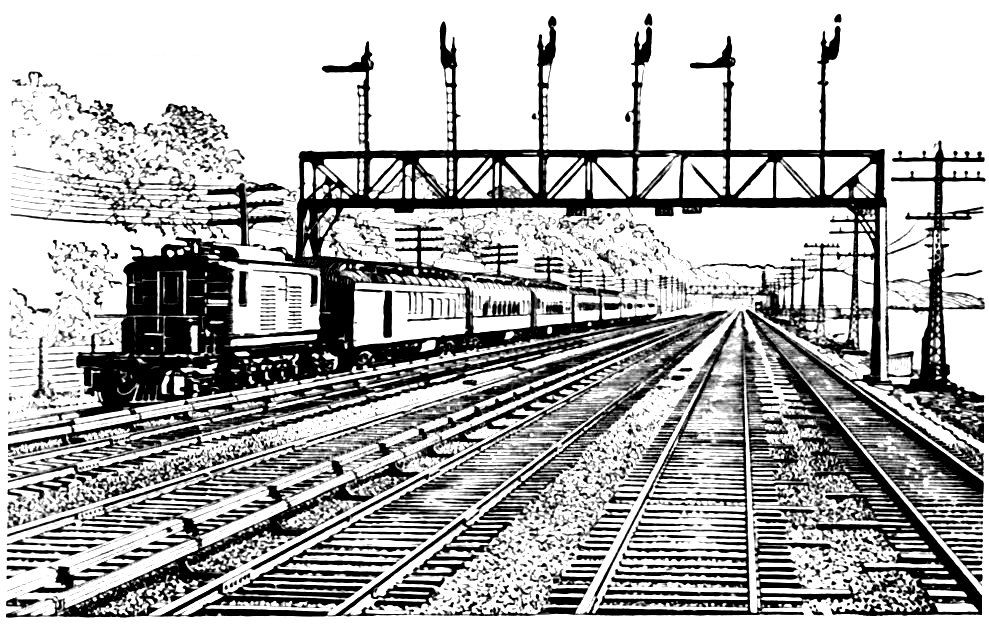
The scenic and historic route providing more rock-ballasted
double track roadbed protected by automatic electric
safety signals than any other transcontinental line.
For particulars apply to your nearest agent or address
A. C. JOHNSON, Pass’r Traffic Mgr.C. A. CAIRNS, Gen’l Pass’r & Ticket Agt. Chicago and North Western Ry. CHICAGO, ILL.
The Direct and Logical Route to the Panama-Pacific Exposition, San Francisco, Feb.
20 to Dec. 4, and Panama-California Exposition, San Diego, Jan. 1 to Dec. 31, 1915
Entered as Second Class Matter, September 16, 1912, at the Post Office at New York Copyright, 1915, by the International Peace Forum
WORLD COMMENT — MATERIAL PROBLEMS MUST BE SETTLED FIRST — THE ASSAULT ON J. P. MORGAN — WON’T DANCE TO OUR MUSIC — SECRETARY BRYAN’S RESIGNATION — NO INTERVENTION IN MEXICO — A WOMAN’S DEPARTMENT — A LESSON TO BE HEEDED — NEW PROBLEMS — PEACE BY COMPULSION — PREPAREDNESS AND WAR — MR. LANSING’S PROMOTION — THE FREEDOM OF THE SEAS — PIRATICAL PERSECUTION OF BIG BUSINESS HALTED — ONE ESSENTIAL FACTOR OF A PEACE LEAGUE — THE REALPOLITIKER AND THE IDEALPOLITIKER — IDEALISM NOT PRACTICALLY POTENT — GERMAN SOCIALISTS FOR PEACE
The developments of the Great
War, up to date, do not hold out
any hope that Idealism will be
respected until the war is finished and the
passions of the belligerents are cooled.
It is evident that the practical and material
problems must first be solved, leaving
the ethical ones for later adjustment.
It is to be feared, indeed, that the war will
settle down not only into a ghastly conflict
of blood and destruction, but also
into one of retaliation and cruelty, in
which all the laws of war hitherto recognized
will be ignored and all international
law will become a dead letter. The old
Latin motto, Inter arma silent leges, is
already construed more literally in practice
than it was by the pagans of the pre-Christian
era. Modern inventions of
death-dealing machinery, poisonous gases
and explosives, deadly air craft and submarines,
have furnished an excuse to
declare the former international rules for
the conduct of war obsolete, and it is a
question if this avowal will not become
more pronounced as the war progresses.
The world is confronted with the horrible
possibility that war will come to mean
actually, as it always has in theory, the
denial of all humanity, all justice, all
fairness, all chivalry, all mercy, and become
a struggle to the death not a bit
less brutal than that of the wild beasts of
the jungle.
The attempted assassination of J.
P. Morgan, the eminent financier,
was undoubtedly the work of a
crank, or a man crazed by too much
brooding over the bloody tragedy now
enacting in the theatre of the great war.
It is the men of prominence who are usually
the objects of attacks from the demented.
The assassination of Presidents
Garfield and McKinley was unmistakably
the work of cranks whose murderous instincts
had been set aflame by irresponsible
newspaper talk and reckless political
criticism. The mind of the man Holt
who shot Mr. Morgan appears to have
been unsettled in much the same manner.
The incident tends to emphasize and
bring home to every one the necessity for
putting a curb upon the tongue and to
refrain from vicious war talk. It is a
time especially in this country, to soothe
instead of to arouse passion. The spirit
of neutrality should sit upon the tongue
and the pen, preside at the feast, and accompany
us in our daily round of duties.
Let there be one great country in which4
the demon of strife and murder is not let
loose. It is not always possible to protect
a man against a crank, but it is possible
to restrain the evil speech which breeds
cranks.
In the face of such a possibility a
peaceful and unarmed nation like the
United States is absolutely powerless
to interfere with more effect than the
twittering of sparrows against the combats
of eagles. We may pipe our tunes of
peace in Mr. Bryan’s most resonant
voice, but the ensanguined nations will
not listen. If we fortunately keep out of
the war, our reserve of moral force and
idealism may be potent at some future day.
Whatever may be the judgment
of William J. Bryan’s
motives in resigning the position
of Secretary of State in President
Wilson’s cabinet, there is an almost universal
feeling of relief at the accomplished
fact. We doubt if there is a single one
even of Mr. Bryan’s warmest admirers
who would not admit, if brought to an
honest confession, Mr. Bryan’s utter
incompetency for such a place. President
Wilson was doubtless conscious of
Mr. Bryan’s failings when he grafted
him into his cabinet, but he was moved
by political considerations which at the
time seemed to be compelling. And
there is no doubt that Bryan has been
highly useful to Wilson in bringing the
Democratic party, to which Wilson was
comparatively a stranger, to the support
of the administration. Bryan’s
services in the Cabinet have been purely
political. At the time the appointment
was tendered him there was no dream of
the outbreak of the great war which has
imposed such a burden and strain upon
the office of Secretary of State in conducting
our foreign relations. There was to
be sure the Mexican trouble, which was
serious enough, but at the time probably
not appreciated at its full gravity. There
is a widespread belief that the fundamental
mistake of our Mexican policy was
due to Mr. Bryan’s impracticable idealism.
At that time the President was not
fully awake to the weakness of Bryan’s
character, and carelessly allowed himself
to be committed to a policy of drift and
pusillanimity which, instead of saving
Mexico from anarchy, has resulted in
plunging it into the worst anarchy in its
history, and has confronted the United
States with possibly the hard necessity of
military intervention to save the Mexican
people from utter destruction. This is a
result that was not sought by Mr. Bryan,
but it is a result which his vacillation invited.
By the time the European situation
developed President Wilson was
better acquainted with Secretary Bryan,
and he judiciously took the conduct of the
State Department, so far as it concerned
the European crisis, into his own hands.
This has saved us from a fatal involvement
which could hardly fail to embroil
us with one or more of the belligerent
powers. For it is usually weakness and
not strength which embroils a country in
war when the country is seeking to avoid
war. Secretary Bryan displayed such a
capacity for blundering, such actual imbecility
when it came to grappling with
practical questions, that his presence in
the State Department always endangered
the smashing of diplomatic crockery as
the presence of a bull in a China shop endangers
the smashing of actual crockery.
President Wilson is entitled to credit for
seizing the reins of our foreign relations
and holding them with a firm hand the
moment he became convinced of the utter
incompetency and uselessness of the driver
he had selected. The retirement of Bryan
is a load off the shoulders of his administration
which may save it from the utter
ruin which threatened it. The country
breathes more freely that Bryan has gone.
In private life his platitudes and puerile
philosophies can do comparatively little
harm, notwithstanding his accomplishments
as an orator, his personal magnetism,
and his apparent sincerity. In their
long acquaintance with him on the stump5
and the rostrum the American people
have come to size him up pretty correctly.
They look upon him much as they would
upon an actor with a pleasing voice and
presence who entertains but does not convince.
His exposition of the beatitudes
and generally accepted moralities, and his
reiteration of common-place and tawdry
sentiment passes off harmlessly like a
glow of summer lightning so long as he is
a private citizen, and we all have to be
thankful that he no longer speaks with an
official voice.
The arrest of General Huerta on the
Mexican border on a charge of
violating the neutrality laws of
the United States by plotting another
Mexican revolution within our borders,
adds new spice to the Mexican situation.
Perhaps one revolution more or less in
Mexico wouldn’t make much difference,
but the United States is bound to protect
its neutrality and not permit the various
factions of Mexican banditti to carry on
their operations or to enlist men on our
soil. No actual or would-be Mexican
leader has as yet displayed sufficient patriotism
to subordinate his personal ambitions
to the welfare of his country.
These leaders are not amenable to advice
from Washington, and hence there does
not appear to be any way for the United
States to enforce order and protect life
and property in Mexico short of intervention.
However, intervention is not
to be thought of for the present. This is
a very inopportune time for our country
to engage in a military adventure in Mexico.
President Wilson, in a speech last
winter, asserted that the Mexican people
had the same right to cut each other’s
throats as the people of Europe had. If
that was true then, it is equally true now.
The stories of anarchy and starvation
among the Mexican people are no doubt
greatly exaggerated. We are so informed
by a gentleman who has spent the last
two years in and near Mexico. He says
that the soil of the country is so rich and
the skies so kindly that a very little labor
suffices to raise ample food, and that conditions
in all the towns he visited were
orderly and business going on as usual.
Most of the men make a business of fighting
for some chief, while the women and
children do the work and keep the pot
boiling. Almost all the casualties are
among the belligerents who have adopted
fighting as an industry. It was so in
Europe during the formative years of the
various nations. Mexico’s political development
is about that of the twelfth or
thirteenth century in Europe. We should
wait patiently until some leader arises
strong enough to dominate the situation
and enforce order, in the mean time
bringing to bear such moral influences as
we can to hasten the pacification of our
sister republic. But we do not think
that public sentiment in the United
States is ready to approve the shedding of
red American blood in a Mexican crusade
to compel that people to adopt our ideals.
A woman’s Department of the
International Peace Forum, under
the leadership of Mrs. Alice Gitchell
Kirk, with headquarters at Cleveland,
Ohio, has been organized. This
Department will have a Bureau in the
World Court magazine, conducted by
Mrs. Kirk, who is a well known writer
and lecturer who has been prominent in
many activities for the promotion of the
welfare of her sex and of the rising generation.
The purpose of the Department is
to promote the cause of National and
International Amity by the application
of safe and sane principles to world problems;
to set clearly before the American
people the ideals at issue between American
thought and life as compared with the
economic, social and political theories
which spell revolution and ruin; to exemplify
and reinforce the faith of the people
in personal initiative as the mainspring of
all real social, industrial, political and
moral well-being; to encourage the study
of the laws of hygiene and so conserve life
and promote happiness and usefulness; to
promote a loyal adherence to the institutions6
by which America has come to be a
land of peace, liberty, and progress under
law; to uphold the American ideal of home;
the dignity of womanhood, and the rights
of childhood; the love of country, the supremacy
of the flag, and to maintain the
everlasting reality of religion as the foundation
of civilization.
The wonders that Germany has
accomplished in this war, not
only in the marching and fighting
of her armies, but in civic and
industrial organization sets the pace for
the world, which all the nations will have
to approximate in the immediate future, or
fall hopelessly behind. After waging war
for a year against five great nations and
several small ones, in which the number
of men engaged and the expenditure of
war material has been unparalleled,
Germany shows no signs of exhaustion.
She has demonstrated that her people
cannot be starved out. She has demonstrated
that she has an unlimited supply
of men and munitions. While the armies
of the opposing nations have frequently
suffered from lack of ammunition, the
Germans have always had an ample supply
notwithstanding the lavishness of
their expenditure. And in the civil life
the whole people of the country not engaged
in military operations have been
organized and employed so as to produce
the best results in supporting the war.
The method, the careful planning, the
foresight, displayed by the civil and military
administrators have never before
been equaled by any nation in the history
of the world. The marvelous German
efficiency is the natural outflow of this
method and foresight combined with the
energy of the German character. In comparison
with the German method the
method of the other nations seems haphazard.
Other elements of the German
power are industry, frugality and careful
attention to details. Nothing is allowed
to be wasted. The same marvelous organization
and method was displayed by
Germany in peace before the present war
broke out. The strength that the nation
displayed in industry and commerce was
no accident, any more than is the strength
she is now displaying in war. Here in the
United States especially the lesson of
Germany should be taken to heart. We
need it in peace, and we may need it in
war. We have the most vast and varied
resources of any nation on earth, and our
methods are the most wasteful. Our
people possess phenomenal energy, but
they waste much of it in frivolity. They
have the most abounding wealth, and they
dissipate it in extravagance. With the
frugality and patience and method and
organization of the Germans our nation
could lead the world in peace or in war,
in science, in education and in ethics.
The invention and application of
the submarines and the airships
unquestionably call for new rules
of warfare on land and sea. The German
contention that the submarine cannot be
held to the requirement of notice and
search required of surface water craft
would, if allowed, work against Germany
if she had a navy and merchant marine
afloat. It is because the German fleets,
except the submarines, are practically
swept from the seas, that the contention of
Germany in regard to the submarines
now works almost exclusively in her favor.
A prominent American manufacturer, who
has had much to do with the development
of the modern submarine, asserted, in a
recent interview, that the United States
should concentrate its naval expenditures
on the construction and operation of
submarine craft. He avers that with a
fleet of five hundred submarines of an
approved type, efficiently manned, the
coasts and coast cities of the United
States could be perfectly protected against
armed invasion. With such submarines
watching, he says, no hostile ships could
approach our coast and every hostile
troop transport could be easily sunk.
This is a question for experts, but it is
evident that the development of submarine
warfare is going to lead to great7
changes in the rules of the game. The
same may be said with regard to air
craft. If a German, French or English
aircraft drops bombs behind the enemy’s
lines and hits non-combatants, men,
women and children, or neutrals, are the
nations sending out the aircraft to be
held to particular liability? It is evident
that the aircraft cannot give notice before
the attack, cannot warn the civilians to
get out of the way, cannot search the
buildings on which they drop the bombs
to see if they contain war material. H.
G. Wells, the eminent British author, is
out with an article in which he declares
that the way to beat Germany is through
the air; that England must send out aircraft
by the tens of thousands and drop
explosives all over Germany, blow up
their arsenals and ammunition factories,
their supply depots of all kinds, and carry
the war home to the German people. If
such a mode of warfare is adopted by all
the nations can any restrictions be placed
upon it—and will any restrictions be
placed upon the operations of submarine
craft?
Some of the weaknesses and inconsistencies
of the plan proposed by
the Philadelphia League of Peace
meeting are succinctly set forth in a communication
from Hon. James Brown Scott
in this issue of the World Court. It
will be seen that the approval or adoption
of such a plan by the United States would
place the government and people of this
country in a very equivocal position. To
begin with, we should have to discard the
advice given by George Washington in his
Farewell Address, not to entangle ourselves
in the wars and politics of European
nations; and in the second place we should
have to place the Monroe Doctrine in
pawn. We should have either to abandon
our independence as a sovereign nation, or
else place ourselves in the inconsistent
attitude of approving the use of force to
coerce other powers while refusing ourselves
to be coerced; and by implication
we would place ourselves in the rôle of a
bully to the weaker nations and of subserviency
to the strong powers—unless
we want to obligate ourselves to join in a
war against the strong powers regardless
of our preparedness or ability to carry on
such a conflict.
The proposition to furnish a contingent
to a posse comitatus to enforce the judgment
of a World Supreme Court stands
on a very different footing. The League
of Peace plan would compel us to furnish
a force to compel any other nation to
come before the Council of Conciliation.
The proposition formulated at Cleveland
by the World Court Congress was to
first establish the International Court by
consent and agreement of the Powers,
and then to help furnish a posse comitatus
in case of necessity, to execute the decrees
of the court. Any nation taking its case
before a World Court voluntarily, would
thereby tacitly agree to submit to the
judgment of such Court, and in case it
proved recalcitrant compulsion to compel
its submission would be justified legally
and morally.
At a recent meeting at Cooper
Institute one of the speakers was
interrupted with the question:
“Is Europe to-day an example of peace by
preparedness?” The inference of the
question was that preparedness for war,
so far from preventing war, tends to breed
war. This would be true if all nations
would disarm. Europe to-day is not an
example of peace by preparedness, but
of war through unequal preparedness.
Only one nation was thoroughly prepared
for war, and that nation, in the conflict
thus far, has proved the victor on all the
battle fronts. If the other great nations
had been equally prepared, there would
undoubtedly have been no war. Half
measures never led to satisfactory results.
France and England and Russia knew,
or should have known, that Germany was
better prepared for war than any nation
in all history ever was before. They
made a show of preparation, but when the
war began they were not half prepared.8
They had ample warning which they neglected
to heed. They are now reaping
the bitter fruit of their folly. Preparedness
for war is not an insurance of peace
if one potentially rival nation is permitted
to so far exceed the others as to outclass
them. Preparation for war is useless
unless it is adequate.
The promotion of Robert Lansing
to be Secretary of State following
Mr. Bryan’s resignation is a recognition
of the principle of selecting men
for public place for demonstrated fitness
to perform the duties of the position rather
than for political availability. It is not
known that Mr. Lansing has any political
influence to speak of. But as Mr. Bryan’s
assistant he demonstrated the possession
of a comprehensive knowledge of international
law, sound judgment, and the
diplomatic instinct. He has been all
along the real Secretary of State whom
the President consulted, while Mr. Bryan
was merely the figurehead. It is of course
an open question whether it would not
have been better for the President to
appoint a man of national reputation and
commanding ability to occupy the chief
place in his Cabinet, relying upon Mr.
Lansing for the detail and technical work.
Such an appointment might have added
strength to the Wilson administration,
but while Mr. Lansing occupies the place
the people of the country will have a comfortable
feeling that no foolish mistakes
are likely to be made, and that no half
baked or hair brained theories will be
promulgated to complicate our foreign
relations and make our State Department
a laughing-stock.
Colonel House, President Wilson’s
personal representative, who
spent some time in the principal
capitals of Europe in the endeavor to ascertain
whether there was any tangible peace
sentiment which could be utilized by the
United States as a basis of mediation, has
apparently convinced the President that
any movement in that direction would be
useless at present. Col. House came in
touch with the leading soldiers and statesmen
of the various belligerent nations, and
he found that no nation was ready to accept
any peace terms that the enemy
would be likely to offer. One important
phase of public sentiment in Germany, as
stated by Col. House is the idea that
Germany’s most important interests lie in
colonial expansion and the incidental
development of over-seas commerce,
rather than in territorial expansion in
Europe itself. To this end Germany, it is
believed, will demand as a condition of
peace the freedom of the seas—that is, the
recognition of the principle that the
property, except contraband, of all private
owners shall be exempt from seizure
on the high seas in time of war. This is
a principle for which the United States
has always contended. There is no reason
why private property on the seas should
not be exempt from seizure the same as is
private property on the land. Germany’s
ambition for colonial expansion may be of
vital interest to the United States if that
ambition takes the direction of colonial
expansion on any part of the American
continents. It may be that when peace
comes to be arranged our Monroe Doctrine
will be subject to closer examination
than it ever has been before, and if any
disposition is shown by the contracting
powers to contravene it, it will be up to
the people and government of this country
to decide whether they will let down
the bars or firmly maintain it. And if we
are to maintain it, the question of our
physical power to do so will have to be
considered.
The decision of the Federal Court
in the suit brought for the dissolution
of the United States Steel
Corporation holds out some hope to business
men that the persecution of big
business in this country merely because
it is big, is to cease. The case has to go9
to the Supreme Court of the United
States, but the decision of this tribunal in
the Cash Register Company case leads to
the reasonable inference that it will uphold
the decision of the lower court in the
Steel Corporation case. The essence of
the Cash Register decision is that the
mere ability to commit the crime of combination
in restraint of trade is not equivalent
to the commission of the crime. The
Cash Register Company, by reason of its
bigness, could, had it been so inclined, put
smaller concerns out of business by unfair
competition; but the evidence adduced
failed to prove that it had done so. The
lower court gave it a clean bill of health,
and the Supreme Court tacitly approved
the verdict of the lower court. The
government lawyers denounced the Cash
Register Company in unmeasured terms
virtually on the ground that its size made
it a menace to competition, but the courts
refused to hold it guilty because it possessed
power which it did not exercise.
Nothing could show up in a clearer light
the folly of the Government’s persecution
of big business. To dissolve a corporation,
or to penalize it, simply because it
possesses the power to commit an offense
which it does not commit, would be equivalent
to ordering the arms of a stalwart
citizen cut off lest he use his fists to pound
some weaker citizen to a jelly. The attitude
of this administration towards business,
if we judge it by some of the prosecutions
for which it stands responsible, is
that success in business is an evidence of
an evil disposition and a menace to all
other business. If the Federal Courts
have successfully called a halt upon this
piratical attitude towards the country’s
industry and commerce, the people of the
country have reason to thank God for the
Federal Courts.
Any grouping of powers in a League
of Peace which leaves Germany
out of the account must fail.
There is no doubt that peace in Europe
could be brought about quickly if Germany
would offer moderate terms. For
so far as the war has proceeded Germany
is actually the victor. If peace were declared
now on the basis of the status quo,
Germany would be in possession of foreign
soil which would vastly increase her resources
and her prestige, and would have
an army in being and stores of ammunition
surpassing that of all the other belligerents
combined. If Germany would
enter into a League of Peace with the
other great powers to compel the peace
of the world, there would be no doubt
of the ability of such a league to keep any
and all nations from war; but with Germany
left out, her veto upon any plan of
compulsory peace would be sufficient to
wreck it. We are only stating the situation
as it stands to-day. What changes
in it the future will make we cannot predict.
It is evident that Germany’s power
cannot be materially crippled except by a
long war. If the Allies can hold her in
check and continue to hold the seas, that
may bring about German exhaustion of
which there are no signs at present. Such
a prolongation of the war will also bring
about the exhaustion of the other nations,
so that their people will be ready for a
just international arrangement to insure
universal peace. But even then Germany
will be a power to be reckoned with, and
any League of Peace or International
Bund that aims to be effective will have
to include the great Germanic peoples.
Mr. David Jayne Hill, former
American Ambassador to Germany,
says, in a recent magazine
article, that there are two antagonistic
schools of thought regarding the application
of moral principles to international
affairs: First, the Realpolitiker, who hold
that international rights have no other
basis than superior strength—in brief,
that Might makes Right. Second, the
Idealpolitiker, who desire to place the
entire international system upon the basis
of strictly moral conceptions.
It is generally recognized by publicists10
that as a matter of fact there is at present
no enforceable international law. There
are certain rules for the conduct of war
set up, but no means of enforcing them.
And as for the matter of declaring war,
there is absolutely no recognized restraint.
One nation may declare war against another
for revenge, for conquest, for subjugation,
or for the purpose of restraining
and crippling its trade. In short, international
law as it exists to-day is nothing
more than a system of ethics or public
opinion. Public opinion often makes its
influence felt in a nation, and may become
enacted into enforceable laws. But there
is no means of enforcing ethics as between
nations, and any nation which feels itself
strong enough to do so, may defy world
opinion.
An international tribunal for Judicial
Settlement, which we might call a World
Supreme Court, established by the consent
and coöperation of the great powers,
could gradually erect a body of international
law that would be both ideal and
real. This is the only way in which international
law will ever come to have
any actual, positive, binding force.
In spite of this fact, there are idealists
like Former Secretary Bryan who,
while insisting that the United States
should set up as a sort of moral mentor
for the world, nevertheless contend that
we should not increase our armament.
They proclaim themselves advocates of
peace at any price. This may be correct
as a mental attitude, but in these strenuous
times, when the most powerful nations
are appealing to physical force to
adjust questions which might better have
been settled by diplomacy, the still small
voice of moral suasion, though coming
from potentially powerful America, is not
likely to be heard, above the din of battle.
We can record our protests, of course, but
so far as any practical measures to enforce
humanity are concerned, we are
quite powerless. Our government should
either keep out of the mess, and wait for
returning reason, after the war is over, to
pave the way to universal peace through
Judicial Settlement—or, we should immediately
proceed to place ourselves in a
condition of preparedness for war.
Utterances of various Socialist
leaders and newspapers in Germany
in favor of peace have recently
filtered out of Germany, and have
aroused considerable interest. The German
Socialists differ materially from the
Socialists of many other countries, in the
fact that they constitute a recognized and
responsible political party which has a
large representation in the German parliament.
The idea has widely prevailed
that the German people were absolutely
united in favor of carrying on the war to
the point of “world domination or downfall,”
but now we find men and publications
of influence deprecating the idea of
conquest and annexation of territory, or
an invasion of the liberties of other peoples.
They declare that the mass of the German
people want peace, and that Germany’s
military victories place the German government
in a position to negotiate peace
with justice and honor.
Whether these utterances represent any
deep or widespread sentiment in Germany,
we have no means of knowing.
But their publication serves to inspire a
hope that the implacable purpose of Germany
to carry on a war of conquest has
been exaggerated, and that discussion of
terms of peace might not be premature
even now, if some feasible plan were
presented.
EDITORIALS — CRIMINAL WAR TALK — A PREMATURE MOVEMENT — THE LEAGUE OF PEACE — THE IDEALS OF PEACE AND THE REALITIES OF WAR — ONE PREDICTION FULFILLED—WHAT OF THE NEXT?
11
“The World Court” makes its début
to-day. It supplants the magazine formerly
published by the International
Peace Forum, entitled The Peace Forum
but as will be observed, it undertakes a
much larger and far more vastly important
work in its ambition to further the
creation of a World Court. As a magazine,
an effort has been made in this initial
issue to give it all the veneer and finesse of
the latter-day periodical. As the months
proceed, every effort will be made by the
men of letters associated with it and its
contributors to further its value as a publication
of world wide importance. The
necessity for such a magazine was made
patent at the recent World Court Congress.
The delegates and many men of affairs
who participated in that epochal Conference
realized the enormous importance
of an organ to voice the sentiment for this
great project.
During the past few months, the work
of the International Peace Forum has
been specifically directed to the project
of furthering the institution of a true
International Court of Justice, which was
adopted in principle by the forty-four
nations composing the Second Hague
Conference (1907), including Germany
and Great Britain. The suggestion has
also met the approval of many State Legislatures,
leading Chambers of Commerce
and other representative civic, industrial,
educational and religious bodies. It received
a mighty impulse and enthusiastic
endorsement at the recent largely attended
World Court Congress, at Cleveland, Ohio.
This project is thus no chimerical
scheme or iridescent dream, but a well
matured plan which if properly sustained
will prove a powerful factor in insuring
the future peace of the world. Such a
tribunal as is contemplated would not
only be able to adjudicate specific disputes
but would gradually build up a
body of International Law as potent in
preserving the peaceful relations of nations
as the body of domestic laws is in
preserving peaceful relations among the
citizens and states of the several nations.
In becoming more specifically the organ
and representative of this world-wide
movement, this magazine broadens its
field and adopts a name more expressive
of its larger mission.
The Peace Forum, during the four
years of its existence, has steadily grown
in circulation and usefulness and influence.
It has become the medium through which
many of the most distinguished writers
and speakers have sought to reach the
public. The World Court will continue
to be the medium of expression of
such contributors of national and international
reputation. In coöperation
with them it will continue to advocate
peace in all relations of private and public
and international life, with the specific
object in view of extending the principle
of judicial settlement which now lies at the
foundation of the civil authority of nations,
until it becomes the foundation of
all international relations, when nations
will no more think of submitting their
differences to a duel between armies and
navies than individuals in civilized and well
ordered countries would think of resorting
to the arbitrament of the private duel.
Not only will The World Court advance
the idea of judicial settlement in relation
to world disputes, but will strive to
establish the principle as the basis of national
peace and prosperity. This is a
work which should appeal to all business
and professional men, indeed, to all toilers
whether with hand or head. Laborers in
all fields are entitled to the fruits of their
toil. The humble worker with his hands
is not to be dispossessed by the confiscatory
programme, any more than is
the farmer, the merchant, the manufacturer
or the educated specialist. It is a
trite saying that the interests of capital
and labor are identical,—a truism no one
dares formally to dispute; but there is no
doubt that in the enactment of legislation
and the execution of laws, representatives12
of these respective interests have acted
as if they were antagonistic, and one has
sought to get the better of the other.
Judicial settlement can alone hold the
scales of justice evenly balanced and
thereby guarantee fair play. The toiler
working with hand or brain is employing
a capital given him by nature, and with
industry and frugality under the operation
of the rule of equal opportunity, he
may accumulate the capital of money,
goods, machinery, or land, which in effect
gives him additional earning power.
Thus, one class is constantly merging into
the other, and each is equally interested
in the integrity, and independence of the
courts. Both are equally interested in
the preservation of the rights of personal
property and in opposing legislative and
executive invasion of their rights. Both
are equally opposed to bureaucracy in the
government and interference with private
management. The laborer does not want
to be compelled to labor for a wage arbitrarily
fixed by a government bureau, nor
should a railroad or other industry be
compelled to submit to harrassing and
paralyzing control. Experience has demonstrated
that railroads, telephones,
telegraphs and other utilities are more
efficiently conducted under private than
under public ownership, as are mills,
shops, and stores. A multitude of government
commissions help to give a multitude
of jobs to a multitude of politicians, but
they do not reduce the cost of living.
Efficiency is evolved by private effort
and not by official meddlesomeness. Law
is only beneficially operative when backed
by public opinion strong enough to vitalize
and enforce it.
The broad platform of “The World
Court” is peace at home and abroad,
peace in society, in the church, in business
and industry; immunity of business and
industry from the menace of such malicious
inquisition under the protection of a
Government Commission as Chairman
Walsh attempted in a manner that aroused
the protest even of the Commission of
which he is the head. We invite all who
believe in peace, in law and order and
justice, in the reliance upon judicial rather
than warlike processes for the defense of
the individual and the state, to unite
with us in the movement for judicial settlement.
What we propose is to place
National morality on a plane with the
standard of individual morality, which
has brought about the reign of law and
order in the enlightened nations. This
plane of morality would do away with
public war as it has done away with private
war. International Judicial Settlement
will react beneficially upon National
Judicial Settlement and lead to the adoption
of higher standards, both in National
and International life.
Among the most insidious and
reckless foes to peace are those
who are constantly predicting
wars between the United States and other
nations. At the present time there is
absolutely no reason why the United
States should go to war with any nation
on earth. The favorite pastime of some
alarmists for several years past has been
to predict war between this country and
Japan. Nobody can show any reason
why we should attack Japan, and all the
evidence and all the signs of the times go
to show that Japan has not the least intention
of attacking us.
A Minneapolis journalist who recently returned
from a six months’ stay in the Orient,
and who was present with the Japanese at
the siege of Tsing-tao, gives some cogent
reasons why Japan will not seek war with
the United States, despite some disputes
over the immigration question and possibly
in regard to the open door in China.
Japan at the present time is in financial
difficulties. The existing war has kept
tourists from her shores and curtailed her
trade, while putting her to large expenses
in war preparation. Not one penny of
the war debt incurred in the war with
Russia has yet been paid. What is holding
Japan together to-day is her export
of tea and silks to the United States. Millions
of her citizens are dependent upon
these trades for their livelihood. Japan
doesn’t want the Philippines because she13
has now ample territory more geographically
and climatically favorable to her
needs, and she is not greatly exercised
over the emigration question, because she
needs immigrants herself. The government
would much rather keep the people
at home—besides her naval and military
experts are wise enough to know that they
would stand little chance in attempting
to fight the United States across eight
thousand miles of ocean.
The talk of war with Germany or England,
whichever may be the winner in
the European conflict, after that awful
contest is finished, is equally pernicious
and damnable. There is no reason why
we should go to war with either. The
United States intends to observe all the
obligations of neutrality and so to conduct
herself as to win the respect and good
will of all the combatants. It would require
a supreme act of folly on our part
to drive us into war with any European
country. So long as we observe our moral
obligations we are in no danger of attack.
During the month of June “A
League of Peace” was organized
in Philadelphia. The tentative
proposals of the originators of the movement,
as reported in articles in the daily
papers, is to obtain “an agreement from
the various nations of the world to submit
all differences to adjudication or arbitration,
to use their military forces to prevent
any one of their number from going
to war before all questions in dispute shall
have been submitted to an international
court or council; and that the powers in
the agreement codify rules of international
law by which they shall abide.” In order
to give the movement an appearance of
solid backing a formidable list was published
of the names of prominent men who
had been invited to the Philadelphia
conference.
Any careful and intelligent student of
the world situation must recognize the
fact that an effective agreement of this
character among nations is impossible
before the conclusion of the great war in
Europe and Asia. The most powerful
nations of the world are engaged in this
Titanic struggle, and it is not supposable
that they will enter into an arbitration
agreement before the terms of peace are
concluded. Any agreement made by any
number of nations omitting the now belligerent
nations would be futile, for the
nations at war command vast armies and
navies and stores of war material and military
organization against which the now
peaceful nations would contend in vain.
The proposition of the Cleveland
World Court Congress was practicable
and feasible. It was to formulate a plan
and have it ready to submit to a world conference
after the present war is over, if possible
with the moral support of the United
States and the other American nations.
Our government could well afford to
support a movement of that kind after
the war, but it could not afford to join an
arbitration league before the war ends,
which proposes to back up its demands
by military force.
It will be remembered that in signing
The Hague Convention the American
delegates made the reservation that no
provision should be so construed as to
require the United States of America to
depart from its traditional policy of not
intruding upon or interfering with, or
entangling itself in the political questions
or policy of internal administration of
any European state. This was in accordance
with the traditional policy of
the United States, embodied in Washington’s
Farewell Address, which was under
no circumstances to interfere in the affairs
of Europe. We certainly could not be a
party to an agreement to lend our military
forces, in combination with the military
forces of other nations, to prevent one
European nation from going to war with
another. We might, after the war, become
a party to an agreement to organize
a World Court for Judicial Settlement
and to contribute our contingent to the
posse comitatus of such world court, on
the invitation of all the powerful nations
of both hemispheres.
The negative part of our Monroe Doctrine
is the restraining injunction of14
Washington’s Farewell Address. We do
not propose to meddle in the affairs of
Europe, and President Monroe warned
the European nations that we would not
permit them to meddle in the political
affairs of this hemisphere or to attempt
to impose their political systems upon
any of the American nations. If we
start in to interfere now, in accordance
with the so-called “League of Peace”
proposition, what becomes of our Monroe
doctrine? The war in Europe will have
to be fought out to some definite conclusion
before any effective and compelling
League of Peace is possible.
As indicating the attitude of a portion
of the press toward this movement we
reproduce the following editorial from the
Detroit Free Press.
The new scheme for a League of Peace can
make very little appeal to practical minds that
give it real attention. Like all such plans it
is largely visionary and based upon assumptions
and premises which have no basis in fact
because they fail to take into account the
fundamentally static selfishness of human
nature. The leaders of this movement strike
ground only at one point and then impotently.
They recognize the fact that anything done in
the way of working for permanent peace must
be accomplished through force and not by
moral suasion.
Their scheme is to gather together the powers
of the earth into a peace league, the members
of which will pool their military and naval
strength for the common good. No country
will thereafter be permitted to make war upon
another until certain measures of prevention
have been taken and certain formalities observed,
all with a view to settling the trouble
in a peaceful way. If a government transgresses,
the whole world will immediately jump
on its back.
This is an extension of the international
police idea of visionaries who only a short year
ago were still telling the world that conflicts
between great powers were at an end and that
establishments for the prosecution of war
might henceforth be limited to police armaments
for keeping in order the smaller and less
civilized nations such as the Balkan states and
Mexico. Naturally the European war has
smashed this illusion. But it has not discouraged
the illusionists.
A very important defect in the League of
Peace scheme is that it cannot be guaranteed
to work, and a plan of this sort which cannot
be guaranteed is likely to become a greater
menace to peace through backfire than no
agreement at all. It means a close association
and conflict of unmixable interests and ambitions
which are sure to create friction of a
most inflammatory sort.
Suppose the United States and Japan and the
great powers of Europe and the A. B. C. alliance
join this league. Suppose after the
league is duly organized two of the most
powerful states, states relatively as strong as
Germany and Russia were at the outset of
the present war, get into a wrangle. Suppose
they disregard their promises and incontinently
go to war. How are they to be stopped and
disciplined? Only through a general world
war beside which the one now in progress
might sink into insignificance. The whole
population of the globe might be obliged to
fight in order to keep the peace.
A great defect in all these schemes of peace
promotors and disarmament enthusiasts is
that they hope to create an artificial condition
of placidity without natural incentive, and fail
to take into account the element of self-interest
which alone can make a peace pact of practical
value. Alliances, ententes and treaties
among nations having common interests have
played large parts in the history of the world
and have led to prolonged periods of peace as
well as to bloody wars, but they generally
have been enduring and valuable in close proportion
to the strength of their appeal to self-interest
among the parties concerned.
WAR AND THE IDEALS OF PEACE. By
Henry Rutgers Marshall, L. H. D., D. S. published
by Duffield & Co. New York.
“War and the Ideals of Peace,”
is rather an abstruse study of
the mental and psychological
processes which form human character and
lead to human action. It is mainly a discussion
of the validity of the contention
that recurrent wars are inevitable because
man is governed by the inexorable laws of
nature, which compel him to contend for
dominance. The author admits that
man is by nature a fighting animal, but
contends that he possesses also “creative
spontaneity,” and may by his own efforts15
mould and shape ideals that will enable
him to triumph over the natural bent of
his disposition. Thus individuals may
be led in the ways and thoughts of peace
and mould the policy of nations to peace
rather than war.
This is obviously true. It is shown in
the history of nations, in the fact that
through enlightened public sentiment
many nations, especially during the past
one hundred years, have been impelled
to peace when there was temptation to
war. The exceptions, when wars have
occurred, have been due to the fact that
enlightened public sentiment suffered a
relapse or reversion and favored war.
The antidote for war undoubtedly lies in
developing the individual conscience,
setting its creative spontaneity to work to
formulate peace ideals—in short, to get
the mass of men to think peace instead of
war. Public sentiment is simply the
superior weight of individual opinion, and
if public sentiment is decisively for peace,
the nation in which such public sentiment
prevails will not go to war except to repel
aggression.
This leads us to a point of disagreement
with the author of the book in his practical
application of his theories to the correct
policy for this country to pursue. That
we should stand at all times for the principles
of peace no right-thinking man will
deny. But that to realize these principles
it is the duty of this nation to disarm
without a simultaneous agreement of the
other great nations to do likewise, we
emphatically deny. Dr. Marshall says:
“We are a specially privileged people,
free at present from enemies who might wish
to attack us, and able to arm without too
long delay should we see signs of growing
danger of aggression. If we failed of alertness
we might by a bare chance be caught
unprepared by some enemy not now in
sight, but it were surely better to take this
small risk than to waste our energies in
what is likely to be uncalled for preparation.
Protected as we are by our broad ocean
boundaries we have a unique opportunity
to show to the world the benefits accruing
to a state that does not spend a large proportion
of its resources upon implements
of the construction of implements of destruction
and upon the training of large
bodies of citizens to their employment.
Did I, as an individual, find living at some
distance from me a first class prize fighter,
marvelously efficient, but at the time thoroughly
exhausted, it would surely appear
stupid for me to take my time and energies
from the pursuits for which I seem fitted in
order to devote myself to the attempt to
become what could not at best be more
than a second rate prizefighter, really because
of fear that the first rate prizefighter
might regain his strength and at some future
time run amuck and do me injury.”
The present mode of fighting, as developed
in the trenches of Belgium and
France, which takes all the glamour and
romance and glory out of war, and reduces
it to a dismal contest of organization
and machinery, requires, for its successful
prosecution, preparation of forces
and machinery which demands much
time. The recruiting, organization, training
and equipment of men to fight modern
battles is also a work of considerable time.
In the preparation of naval defense time
is still a more essential factor. The ocean
which separates us from Europe is no
longer a barrier, but a highway. The
transportation of men and arms and munitions
is far easier and more expeditious by
sea than by land. So the broad ocean is
no longer our protection.
The analogy of the prizefighter and the
private citizen misses the mark. The
prizefighter is held in check by the local
police force which all governments and
municipalities must possess, no matter
how peaceful their ideals. If there were
an international police force capable of
preserving the peace among nations, then
it would not be necessary for a nation to
arm, any more than it is now necessary
for the private citizen to arm. But in the
absence of such a protection it is necessary
for each nation to look to its own protection.
In the absence of a world Court of Justice
empowered by the stronger nations
to settle international disputes, and armed
with power to enforce its decrees, world
peace can only be maintained by a proper
adjustment of the balance of power. If
all the great nations or groups of nations16
were about equally armed and equally
prepared, the chance of wars would be
minimized. The present conflagration
in Europe and Asia is due largely to the
fact that rival powers were nowhere
nearly equally balanced. One power so
amazingly surpassed the others in preparedness
that conflicting forces could
not be held in check. Had England and
France been as prepared for war as Germany,
and as efficiently organized, or had
Germany been as negligent as England, the
war could hardly have occurred. It would
not have cost England a tithe of what she
has already expended in this war to have
been so well prepared as to have enabled
her to absolutely hold the balance of power.
The argument that at the close of the
present great war any of the belligerent
nations will be too exhausted to attack
us, will hardly hold water. The victor
will have a great organized military establishment,
with troops inured to war,
and perhaps filled with the spirit of war.
To such a power a rich, unarmed nation
like ours might be an easy prey. At the
conclusion of our civil war this country,
although it had been for four years fighting
an exhaustive war, was, from a military
standpoint, stronger than it ever
was before or ever has been since.
We may perhaps in time rely for peace
on world ideals of peace, but until such
ideals are of universal acceptance we cannot
put our trust in them. We hope that
our nation may, at the end of this war,
be instrumental in organizing a world
tribunal for Judicial Settlement, but in order
to have weight in the world councils
looking to that end, we shall have to
speak with a strong voice. We shall
have to be strong not only in ideals, but
in real and potential force.
Writing in 1889, Hall, the
famous English publicist, predicted
that the conduct of the
next great war would be hard and unscrupulous,
but he added: “There can be very
little doubt that if the next war is unscrupulously
waged it will also be followed by a
reaction toward increased stringency of
law. I look forward with much misgiving
to the manner in which the next
great war will be waged, but with no misgiving
at all to the character of the rules
which will be acknowledged ten years
after its termination by comparison with
the rules now considered to exist.”
The prediction of the great publicist,
made so many years ago, as to the next
great war, has come true. The intervening
wars have been trifling by comparison
and marked by no material increase in
severity, but the present war has passed
all the bounds of precedent and even of
imagination. Let us hope that the prophecy
as to the modification of the laws
of war after the present conflict is ended
will be as measurably fulfilled.
The invention and application of death-dealing
machinery and chemicals may
even give the prophecy a larger fulfillment
by the abolition of war altogether. For
this we humbly hope and pray.
THE ADMINISTRATION FORCE OF THE SUPREME COURT OF INTERNATIONAL JUSTICE
17
HON. FRED DENNETT
A court is created for the
purpose of administering justice,
under law.
“This then is the general
significance of law, a rule of
action dictated by some superior being.”
And then the great teacher of the English
Common law lays down the principles of
the moral law “that we should live honestly,
should hurt nobody, and should
render to every one his due”; and of the
law of nature “that man should pursue
his own true and substantial happiness,”
adding, “that this is the foundation of
what we call ethics, or natural law; for the
several articles into which it is branched
in our systems amount to no more than
demonstrating that this or that action
tends to man’s real happiness, and therefore
very justly concluding that the performance
of it is a part of the law of nature
or, on the other hand, that this or that
action is destructive of man’s happiness,
and therefore that the law of nature forbids
it.”
From these two prior laws he derives
the “third kind of law to regulate this
mutual intercourse, called the ‘law of
nations,’ which, cannot be dictated by
any, but depends entirely upon the rules
of natural law, or upon mutual compacts,
treaties, leagues, and agreements between
these several communities: in the construction
also of which compacts we have
no other rules to resort to, but the law
of nature: being the only one to which all
the communities are equally subject.”
The “natural law” is no longer the controlling
“law.”
That which most promptly suggests itself
to the mind of the ordinary man, when
law is talked of, is not the moral law or the
natural law, but municipal law, “a rule of
civil conduct prescribed by the supreme
power in a state, commanding what is
right and prohibiting what is wrong.”
The tendency towards the enactment of
man made statutes has magnified the
“municipal Law,” until it is in the way of
becoming the only law, and as it overshadows,
then the principles of the moral
law and the law of nature gradually are
dwarfed, and become atrophied. The
law of commerce is the “municipal law”;
and as the commercial instinct becomes
greater, the municipal law becomes the
prevailing law. Statutory law takes the
place of “common law.” Ethics are replaced
by written inhibitions. The moral
law becomes evanescent; men consult the
revised codes to find the boundaries of
that search for happiness, instead of consulting
their inner consciousness.
It follows that there is left no such law
as “international law,” for there are no
statutes to bind nations and no supreme
power to enforce a rule of conduct, and
the ethics of natural law are not a world
restraining force.
The evil of statutory law—necessary
as it is—lies in the fact that man becomes
prone to look to the numerous volumes to
find a guidance of conduct. Nations are
formed of members of society. If the
units of the nations have become trained
to look to the statutes for the control of
actions, and feel at liberty to do those
things which are not forbidden therein,
they, as part of the nation, will refuse to
be guided in their relationship with other
nations by anything except their personal
inclinations; moral ethics as a rule of conduct
having disappeared.
Instead of the restraint of respect and
love a new controlling sense is established,
that of fear.18
A court is created as a means by which
to administer justice. Without the power
to compel the observance of its decrees a
court is but a comedy.
If there be no supreme power, there can
be no supreme court. For without a supreme
power there can be no way of establishing
a responsible force having
vested in it the duty of compelling the
observance of the decrees of a supreme
tribunal.
If a Supreme Court of International
Justice be established and there be created
an international force to enforce the
decrees thereof, the units of that force will
be responsible to the nations from whom
they are taken, and not to the Supreme
Court, unless that Supreme Court become
more than a judicial body; it must become
also a supreme administrative body of the
United States of the World. Enforcement
of a decree is impossible unless there
is unity of force back of it. If a majority
be relied upon, then the majority may be
found to change. Government can only
prevail when the opinion of the majority
becomes the accepted doctrine of the
whole. Otherwise revolution.
The Supreme Court of International
Justice, to be of practical use, must pass
from its position of Supreme Court to
Supreme Controlling body. An utopian
dream, which may in the generations to
come be a reality. But not for generations.
Without a supreme controlling body
there must be something to substitute in
moral effect. There has existed a something
which has been one influence to
prevent nations from being always at war,
when their individual advancement was
opposed.
Dread; a greater controlling power than
fear.
Dread of devastation; dread of wanton
destruction; dread of extermination.
War is undertaken by a weaker power
only when the alternative is dread of
something even greater than devastation
or wanton destruction—dread of extermination.
But the dread of war has ceased to
prevent war; because the horrors of war
had lost their vividness.
That universal peace will some day
reign supreme must be accepted by all
who believe in a progressive civilization.
This includes all the thinking world. If
there is to be universal peace, and if it
is not to come through a consolidation of
all nations, which is extremely improbable,
then it must come from some controlling
feeling, which will in itself create the
administrative branch of the Supreme
Court of International Justice.
The police force to compel observance
with the decrees of this Supreme Court
will be incorporeal: It will be Dread.
There never will be established an international
corporeal force capable of enforcing
the obedience to the decrees of
this Court. That means the establishment
of a war force to prevent war; it is
foolish in its conception. The power
against which a decree is to be enforced
will withdraw its representatives from the
international force, and by the establishment
of alliances, just as at present, meet
with arms the force of arms.
If it be a weak nation; it will do, as it
does now—obey the mandate through
fear, unless the mandate means extermination,
when it will fight. National
extermination, while fighting, is better
than extermination without resistance.
The first power for enforcement will be
“Dread.” A greater dread than exists
to-day, because of a greater object lesson
of horror than has existed heretofore.
All things, that are, have a reason for
their existence. The present conflagration
must have its raison d’être. In
orderly evolution it is not to be presumed
that the reason is for the world control
by any one power. That suggestion might
meet the conceit of a nation, but would
not meet the approbation of the world.
Nations having deviated from the
moral law, the individuals thereof having
gradually become accustomed to written
rules of regulation, it has been necessary
to substitute something for the moral
code, for the present, until the moral code
can once more take its rightful place.
Dread will be enthroned as the enforcer
of agreements. Dread of war will prevent
war.19
That this may come about, it is necessary
that there shall be a concrete example
of the horrors of war in all its awful intensity.
As nations have increased and
as armaments have been multiplied, it
is necessary that the lesson of “dread”
must be planted firmly.
The times were ripe for the lesson. The
wonders of art can bring before an audience
a scene of horror as it was enacted
thousands of miles away.
Hence the horrors of the present war.
It must not be thought for a moment that
they have reached their climax. They
will be permitted to continue until they
have increased to such intensity that men
will mention war with bated breath, and
nations that pretend to civilization will
arm only to protect themselves from uncivilized
countries; until the uncivilized
become civilized and armaments cease.
But the first great preventive of war
will be “Dread,” succeeded in the ultimate
by the acceptance of the rule of ethics.
Man may create a Court of International
Justice. God alone can create the
force back of it for the enforcement of its
decrees.
Out of that which appears evil, good
does come. The sufferings of the battlefield
will be sanctified by the generations
of warless existence.
There were the burnt offerings and sacrifices
of the Old Testament. They were
symbolical.
The battlefields of Europe are the burnt
offerings for perpetual peace.
The power of enforcement will first be
practical, “Dread,” but as this is a base
reason, it will gradually be changed by
the light of a better understanding into
the rule of ethics.
A WORLD COURT DEMANDED BY A NEW WORLD LIFE
BY
JOSIAH STRONG
There is, I think, a widespread
impression that great
world events of profound
importance are now preparing.
The break-down of
time-honored theories of international
relations based on armed force would seem
to mark the end of the present war as a
favorable time for the reconstruction of
the political relations of the nations on a
higher plane.
Since the beginning of the simplest
form of life on this planet, there has been
down through all the ages, a stream of
tendency toward increasing diversity,
and toward a more complex and more
highly organized form of life. This
biological law is also the great law of
social progress, that is, first, differentiation,
and then, coördination and integration.
Or, in other words, there is, first,
the development of diversity, and then,
the organization of these diverse elements
into a social unity.
For thousands of years nations and
races became increasingly unlike until
within the memory of living men, when
this time-long stream of tendency, having
accomplished its work, was reversed;
and now, for nearly a century, there has
been an increasing tendency toward oneness—the
coördination and integration
of different peoples into one great world
life. This new tendency was caused by
the application of steam to transportation
by land and sea. In the first stage of
international commerce transportation
by caravans and row boats was so costly
that only luxuries, such as gems, precious
spices, and silks, were articles of commerce.
This concerned only the few. The second
stage was introduced by the application20
of sails and the discovery of the mariner’s
compass, which made it possible to transport
many of the conveniences of life,
which affected increasing numbers. The
third, and present, great stage of commerce
began when railways brought the
produce of continents to the seaboard,
and the triple expansion engine made
great merchant vessels possible. As a
result, the necessaries of life are now transported
in immense quantities, which fact
vitally affects the entire people. These
conditions have created an interdependence
of the nations from which there is
no escape. If a nation is agricultural, it
is dependent on others, both for markets
and for manufactures; if it is a manufacturing
nation, it is dependent on others,
both for markets and for food.
When an agricultural people attempt
to make themselves independent of other
nations by establishing their own manufactures,
they soon discover that by a
sort of mechanical Malthusianism machinery
inevitably increases several times
as fast as population; hence the nation
no sooner becomes independent of those
who wish to sell than it becomes dependent
on those who wish to buy. The only
possible way to avoid such national interdependence
is to adjure modern civilization.
The differentiation and organization of
a world industry, which necessitates an
ever-increasing international dependence,
has created this new world life. In
earlier ages, when nations were economically
independent, political independence
was natural and inevitable. Of course
there could be no world-consciousness
when a common world life did not exist,
and each sovereign nation was sufficient
unto itself. But as the world’s economic
life becomes more nearly one—as it certainly
will under the quiet compulsion of
economic law—the increasing interdependence
of nations places the well-being
of each increasingly in the keeping of
others; and their relations to each other
become more and more vital until their
mutual service becomes a matter of life
and death. If, for instance, all other
peoples should make and enforce a declaration
of non-intercourse with Great
Britain, that nation would literally perish
in a few months.
Evidently, the increasing interdependence
of the nations is creating new international
rights and duties, but there is
no World Legislature to recognize and
legalize them; there is no World Court
to interpret and apply them; and there is
no World Executive to enforce and vitalize
them. Precisely here appears one of the
most obscure and, at the same time, one
of the most potent causes of the war.
The economic and industrial organization
of the world has far outgrown the
political organization of the world. And
in spite of all efforts to keep the peace,
this will continue an active cause of war
until there has been provided for the
new world life an adequate body politic.
Until then governments will undertake,
by military power, to make, interpret, or
enforce a law of nations to please themselves;
and this seizure of civil functions
on the part of armed force is war; it is an
attempt to make might right; it is the
law of the jungle; it is the abnegation of
civilization; it is anarchy between nations.
Now that the world is coming to self-consciousness,
it must accept the responsibility
of its future, and take intelligent
direction of it. The new tendency
toward world integration is permanent
because it is due to new conditions which
are permanent. This cosmic movement
toward coördination and integration is
the very essence of the new civilization
which is reshaping the world. Nations
and individuals have unconsciously, and,
therefore, unintelligently, and slowly
adapted themselves to these changed and
changing conditions. Now is the accepted
time to undertake a readjustment
which shall be conscious and, therefore,
intelligent—a broad-minded “coöperation
with the real tendency of the world.” which
Carlyle called the “insight of genius.”
The new world life means, sooner or
later, a world consciousness, a world
conscience, a world ethics, and a World
Court, together with the other departments
of an organized political life embodied
in a Federation of the World.
RURAL COÖPERATION IN EUROPE AND THE UNITED STATES
21
BY
GEORGE K. SHAW
In the Annual Reports for 1914 of
the Federal Council of the Churches
of Christ in America, there are some
interesting data upon the social
effects of Coöperation in Europe.
This report was prepared by the Rev. Chas.
O. Gill, Field Investigator for the Commission
on the Church and Social Service.
In making his investigations he visited
no less than twelve countries and gained
information as to two others from members
of the Commission who visited them.
In a previous volume entitled, “The
Country Church,” Mr. Gill had pointed
out that there is no satisfactory solution
of the problem of rural life apart from the
reorganization of rural business. For
this reason it was determined to make a
study of European countries that had
given serious attention to the organization
of farmers for business purposes. One object
of the study was to learn what part the
rural churches should take in a movement
necessary for the preservation of a high
standard of country life and for insuring
the possibility of a successful rural church.
It was found that in most of the area
covered the coöperative movement had
passed beyond the experimental stage.
Rural coöperation in Europe is more than
half a century old.
Probably the best known example of
the success of rural coöperation is found
in Denmark. Much has been written
about the wonderful transformation
wrought in that country by union of effort
among her farmers. Coöperation has
been one of the most essential factors by
which the people of Denmark have rescued
themselves from a condition of extreme
economic distress and attained a
prosperity which, considering Denmark’s
limited natural resources, is most remarkable,
it is due chiefly to this that Denmark
has more wealth per capita than any
other country in Europe.
In Italy, the business of the Federation
of Coöperative Agricultural Associations
has grown since 1895 not less than 43 per
cent. in any five year period, while the
number of its agricultural societies grew
from 1892 to 1910 no less than ten-fold.
The business of its coöperative credit
institutions more than doubled in the
four-year period from 1908 to 1912.
The movement has also been successful
in Hungary. In 1912 there were 8,000
parishes into which the activities of coöperative
societies extended. Up to the
outbreak of the war coöperation had also
made great progress in Belgium, while in
Holland the coöperative idea has been
making leaps and bounds during the past
ten years. Here, as in other countries,
including Austria, Russia, France, and
Switzerland, it has been demonstrated
that coöperation is a necessary condition
of general agricultural prosperity.
But Germany affords the best example
of agricultural coöperation on a large
scale. In the twenty-year period from
1890 to 1910 the number of German coöperative
agricultural societies grew from
3,000 to 25,000. From 1892 to 1908 the
membership of coöperative societies for
collective purposes grew from 12,000 to
213,000, and the membership of coöperative
dairy societies from 51,500 to more
than 1,250,000. Mr. Gill remarks: “It
is due to coöperation more than to any
other one thing that Germany has been
able to increase her agricultural productivity
fifty per cent. in fifty years, until
now, though smaller in area than our state
of Texas, it produces 95 per cent. of the
food of 66,000,000 people.”22
Thus it will be seen that agricultural
coöperation has worked well both in small
countries and in great. The good results
have been incalculably great especially
among the poor farmers. It has emancipated
them from the usurer. In many
places the small farmers had never known
freedom from oppressive creditors until
the founding of rural coöperative institutions.
By capitalizing the common
honesty of the poor, coöperation has secured
for the small farmer, at the lowest
rates of interest, money to be used by him
in his necessary operations. Agricultural
coöperation in distribution has enabled
the farmer to work for his own support
instead of for the support of a large number
of superfluous distributors. Before
the introduction of coöperation the small
farmer had been forced to buy inferior
goods at high prices and to sell his products
at prices unreasonably low. But
coöperation changed all this. It enabled
the small farmer to place himself on the
level with the large farmer in producing
articles of good quality, as well as in the
matter of prices received for them; also
to obtain goods of guaranteed quality
at moderate prices. Thus while coöperation
has promoted efficiency on the farm,
it has also secured the farmer freedom in
the market, and has contributed to the
higher life of the home.
So it is not alone in material betterment
that coöperation has blessed the farmers.
It has done a great work in promoting
education; in launching benevolent enterprises
for members; in enriching the rural
social life. The coöperative societies
have made grants to village libraries, organized
circles for reading and acting, and
established evening clubs. They have also
appointed local cattle shows and regular
meetings in which instructive lectures on
coöperation, agriculture and other topics
are delivered. They have formed gymnastic
societies and bathing establishments,
cattle and poultry breeding societies,
local nursing centres, infant aid associations,
anti-consumption leagues, and engaged
in a great variety of other good works.
The recreational and educational buildings
are paid for and managed by the people.
Consequently the people get what
they want and make use of what they get.
The coöperative buildings become the
most complete social-centre houses in existence.
Each building is a kind of club
for men, women and children where they
spend their leisure hours and become acquainted
and neighborly.
Nor is this the whole benefit. It has
been observed that coöperation has had a
marked effect in the promotion of thrift
and morals and temperance. The coöperator
as a rule gets out of debt and
begins to save. This increases his independence
and self-respect. The closer
association with his neighbors puts him
more upon his good behavior. Many a
hard drinking laborer has, under such influences,
quit his evil habits and rescued
his family from wretchedness. All this
naturally leads to an increase of honesty
and business integrity. Where there is a
small rural coöperative credit society a
person cannot borrow from it unless he
has acquired a reputation for reliability.
As a consequence a loan comes as a certificate
of character, while the refusal of a
loan may well lead the would-be borrower
to serious reflection. As a result people
come to care more for their reputation in
their dealings with one another. Honesty
comes to be an essential quality in
business efficiency.
Another all-powerful influence of coöperation
is found in the promotion of
democracy. The coöperative movement
is essentially democratic in origin. Success
can be attained only by equality of
opportunity, mutual consideration and
fair treatment. This naturally promotes
political efficiency also, because the education
and the closer association found in
coöperation lead each individual to realize
his responsibility and to endeavor to use
his voting power intelligently and wisely.
The effect in the promotion of Peace,
Brotherhood, and Religion, is thus indicated
in the report: “It was observed by
members of the American Commission
that in nearly all the European countries
the great body of the coöperators, especially
among the leaders, think of
agricultural coöperation as a sort of23
social reform and in some cases almost
as a religion. The admirable moral and
social results are recognized everywhere.
Not only has it taught illiterate men to
read, made dissipated men sober, careless
men thrifty, and dishonest men square,
but it has made friends of neighbors who
had been enemies, while estrangement
among men on account of religious antipathies
and the inheritance of ancient
feuds have yielded to its influence and
disappeared. It could scarcely be expected
that a movement with such beneficial
results could have been inaugurated
and successfully furthered apart from
close association with the Christian
churches. In many of the coöperative
enterprises the clergymen have played an
important part. The sympathetic participation
in and promotion of the coöperative
movement on the part of the
church is a logical and almost necessary
result of the existence of a movement of
such a character, since many of the ends
for which the church is striving are effectually
accomplished by coöperative institutions
while these institutions, in their
purposes and endeavors, necessarily command
the sympathy and allegiance of every
sincere and disinterested churchman.”
It would be well if an exhaustive report
of this kind could be made upon the social
effects of rural coöperation in the United
States. We know that the coöperative
movement has made some progress in this
country, but in comparatively few localities
has it assumed the comprehensiveness
and thoroughness which has characterized
it in Denmark and Germany.
Coöperative movements are not unknown
to the cities, but in a business way there
is far more need for them in the rural
districts, for the population of those districts
is more scattered and the farmer,
when working alone, is more helpless in
the face of combinations that may be
formed against him. A great many instances
have come to public knowledge
where the farmer has received very inadequate
prices for his products while the
consumer in the cities has at the same time
been compelled to pay prices which appear
extortionate. Who has not heard
of the farmers’ apples rotting on the
ground because he could not afford to
market them at the price offered, while
the consumer has at the same time complained
that his apples were costing him
too much? This is at times true of a
great many products. Farmers usually
sell in competition with each other, at the
wholesale price, and buy what they need
at the retail price. Before the days of
coöperation the Denmark farmer was as
a rule wretchedly poor; but when he
joined with his neighbors and they appointed
a selling agent in London, who
guaranteed quality of product, he began
to obtain the best London prices, to secure
cheaper transportation rates and also
saved the commissions formerly paid to a
number of middle men. His agents in
London and other cities also bought goods
for distribution among the coöperative
farmers at wholesale prices.
In our middle western states the coöperative
movement started first with
coöperative creameries, many of which
proved very successful. In some rural
districts the farmers are organized and
have provided warehouse facilities for
storing their surplus products until a
satisfactory market can be obtained, and
have learned to sell and buy through their
own agents. In such communities the
farmers are thrifty and prosperous, and
their social life and activities makes the
country as desirable a place of residence,
so far as that is concerned, as the neighboring
cities—and in some respects much
more so. There is no reason why the
American farmers and rural dwellers cannot
profit as largely by coöperation as
the people of any part of Europe. The
chief economic problem of any country
is proper distribution of products and
labor. With a proper distribution of
labor there would not be the congestion
that often makes the unemployment problem
so serious in some districts, and
there would not be the inequality of
reward for industry that makes some too
rich and the large masses too poor. The
rural communities are the backbone of the
nation’s prosperity. All the wealth comes
primarily from the land.
THE MOBILIZATION OF PUBLIC OPINION
24
BY
JOHN EDWARD OSTER
At present the question
that is most prominent before
the world is that of peace.
Almost everybody whom we
meet has some opinion regarding
this question which he is ready to
express. How has this opinion been
formed? It is certainly true that very,
very few have thought carefully over this
question, or have studied it in a fair unbiased
manner. There are wide differences
of opinion, and without the slightest
doubt there are very good and legitimate
reasons for these wide differences. They
arise chiefly, perhaps, because of different
local circumstances affecting educational
conditions, or the conditions of influential
classes of society, and a thousand and one
other reasons, which may carry more or
less weight.
Practically every family has members
who were more than once directly affected
by the absence of peace—war, and have
wished for peace, or without knowing it,
had the pacifist spirit. Almost every
person is likely to feel a sense of deep injury
under the pressure of an unpleasant
burden, and naturally thinks the issue
or whatever it is must be fought out with
iron and blood. An opinion of some kind
is there, which is made up mostly of sentiment,
based upon a somewhat erroneous
knowledge of some few facts in the situation.
No matter which side of the fence
individuals are on, they have gained their
ideas mostly from newspapers, or from
chance talks here and there, with men
whom they believe, in most instances to
be much better informed than themselves,
consequently they are using the same
source of information in most instances,
and conviction is simply deepened by a
constant repetition of the thought.
Again, most people form their opinions
and judgments without due examination;
they have a leaning toward one side of the
question from other considerations than
those belonging to it; and many have an
unreasonable predilection toward the
militaristic idea thinking that the pacifist
stands for weakness and possesses cowardly
spirit. The minds of many are
biased on account of the vigorous propaganda
carried out by the militarists in the
form of large armaments, and international
tangles, war scares and many other
things which make international peace
appear as an utter impossibility.
It has been said that the first and most
practical step in obtaining what one wants
in this world, is wanting it. Naturally a
person would think that the next step
would be expressing what one wants, but
usually consists in wanting it still more
and more until one can well express it.
This is particularly true when the thing a
person wants is something which concerns
the whole world, for here all these other
individuals who must be asked perhaps
have but a very slight interest in what one
wants. Until a large number desire a
thing strong enough, and wish for it hard
enough to say it, and get it outside of
themselves, and perhaps make it contagious
so that the thought will be catching
to every person exposed to it, nothing
happens at all.
Every man who, in some public place,
like a book, paints the picture of his
heart’s desire, and who throws forth as
upon a screen where all men may see them
his most immediate and pressing ideals,
performs a very important service to
humanity. If a man’s sole interest were
to find out what all men living in the
world to-day, need and want most, and25
what is necessary for their welfare, the
best and only way for him to do it, would
be for him to write clearly, and quite definitely
so that we could all compare
notes, on exactly what he wanted himself.
The thing that the populations of the
earth want and need as a whole in this
darkness and din of the world is safety
and security in the pursuits of life, liberty,
and happiness. Too many persons, with
a pugnacious tenacity, cling to the idea
that world peace is an idle and futile
dream. Even so, nothing is more visionary,
than trying to run a world without
dreams, especially an economic world
such as the one we live on. It is because
even bad dreams are better on this foot
stool than having no dreams at all, that
so called bad people are in a wholesale
measure allowed to run it. The one
factor in economics to be reckoned with
in the final and practical sense, is the desire
to do right. An ideal to be sure, but
at some time or other, it was an ideal that
aroused the wrong passions, and now it is
only another corrective ideal that will
arouse the right passion. The next step
by our political economists is the statement
of a shrewd, dogged, realizable ideal,
and that is universal peace between nations.
The great upheavals which precede
changes of civilization, such as the fall of
the Roman Empire and the foundation of
the Arabian Empire, seem at first sight
determined more especially by political
transformations, foreign invasions, or the
annihilation and overthrow of dynasties.
A more attentive study of these events
shows that behind their apparent causes,
the real cause, as a rule, is seen to be, a
modification in the opinions of the populations.
The true historical upheavals
are not those which compel astonishment
by their spectacularity, and impetuous
violence, and vehemence. The only important
changes whence the renewal of
civilization is a resultant, affects ideas,
opinions and beliefs.
The landmarks of history are the visible
effects of the invisible changes of human
opinion, and the reason these great memorable
events are so rare, is, because there
is nothing so stable in a race, as the inherited
groundwork, and fundamental
foundation of its opinions. The present
epoch, without a doubt, is one of these
critical times, in which the opinion of
mankind, is undergoing a great transformation.
There are two fundamental factors at
the bottom of this transformation. The
first, caused by the wholesale destruction
of life and property, which shakes to
pieces the political and social beliefs in
which all the elements of our civilization
are rooted. The second is the creation
of entirely new conditions of existence
of thought as the result of multitudinous
scientific, modern, and industrial discoveries.
The opinions of the past, although
half destroyed, being still very powerful,
as the present state of militarism proves,
and the opinions which are to replace
them, being still in a process of transformation,
the present age represents a
period of transition and political confusion.
As yet, we cannot say exactly what
will be evolved some day from this necessarily
somewhat chaotic period. What
will be the fundamental ideas on which
the societies that are to succeed our own,
will be built up? At present, there is no
manner of knowing. It is perfectly clear,
that the societies of the future will have
to reckon with a new power, and that
power is public opinion. On the ruins of
so many ideas formerly considered beyond
discussion, and now either dead or
dying, of so many sources of authority
that successive revolutions have destroyed,
this power, which alone has arisen
in their stead seems soon destined to absorb
the others. While practically all of
our ancient beliefs are tottering and disappearing,
while the old pillars of society
are giving way, one by one, the power of
public opinion is the only force that is
growing, and of which the prestige is
steadily and continually on the increase.
The age we are about to enter, will, in
truth, be governed by public opinion.
Less than a century ago the traditional
policy of European States and the rivalries26
of sovereigns were the principal factors
that shaped events, consequently the
opinion of the masses did not count, and
was scarcely noticed. To-day the opposite
state of affairs predominates, and it
is the traditions which used to obtain in
politics, and the individual tendencies and
rivalries of rulers, which are counting for
less and less; while, on the contrary, the
voice of the people has become preponderant.
It is this voice that dictates
their conduct to rulers, whose endeavor it
is, to take notice of its utterances.
Practically all the world’s masters, all
the founders of religions or empires, the
apostles of all beliefs, eminent statesmen,
and in a more modest sphere, the mere
chiefs of small groups of men have always
been unconscious psychologists, possessed
of an instinctive and often very scientific
knowledge of the character of public
opinion. It was mostly this accurate
knowledge that enabled them so easily to
establish their complete mastery as was
so often done.
Napoleon had a marvellous insight into
the public opinion of the country over
which he reigned, but he, at times, completely
misunderstood it, and overshot
the mark, and as a rule completely misunderstood
the public opinion of other
nations. It was because he misunderstood
it that he engaged in Spain, and
notably in Russia, in conflicts in which
his power received blows, which were
destined within a brief period of time to
ruin it. Neither did the most subtle
advisers of Napoleon understand public
opinion, as they should have done, for
Talleyrand wrote him, that: “Spain
would receive his soldiers as Liberators.”
The real truth of the matter was, that it
received them as beasts of prey. A
slight acquaintance with public opinion
in that case would have easily foreseen
this reception.
Public opinion rules and is practically
as unattackable as our religious ideas were
in the Middle Ages. Imagine a modern
free thinker translated into those days of
the Middle Ages. Can you think that,
after having ascertained the sovereign
power of the religious opinion that was
then in force, that he would have been
tempted to attack it? Having fallen into
the hands of a judge disposed to have him
burned at the stake, under the imputation
of having concluded a pact with the
Devil, or of having participated in the
Witches’ Sabbath, would it have occurred
to him to dispute the existence of the
Devil or of the Witches’ Sabbath? It
were as wise to oppose a cyclone with
discussion as public opinion, which is a
slow growth and gradually comes from
within, or, in other words, is the product
of education.
As a consequence of the slowness of the
movement of the psychological characteristics
of races, great stability and fixity,
which prevents the overthrow of the
equilibrium of races, and their works, is
the result. Only in the long run, and by
slow hereditary accumulations, is it possible
for the psychological and the anatomical
elements of the human species to be
transformed. The evolution of civilization
depends wholly on these transformations.
Public opinion is often made by prominent
factors, such as wants, the struggle
for life, the action of certain surroundings,
the progress of industry and the sciences,
education facilities, wars, etc. Ideas do
not become public opinion, until, as the
consequence of a very slow elaboration,
they have descended from the mobile regions
of thought, to that stable, and unconscious
region of the sentiments, in
which the motives of our intentions are
elaborated. They then become elements
of character and begin to influence conduct.
It is this line up of unconscious
ideas, that give us character. The idea of
international Peace, has been at work for
several generations, and on account of the
slowness of our mental transformations,
many generations of men are needed to
secure the triumph of new ideas, and
many generations are necessary to cause
old ideas to disappear. During the
Middle Ages, there were two principal
ideas: Religious and feudal. Its arts,
literature and whole conception of life
were derived from these ideas, until the
time of the Renaissance when they began27
to change; and also the conception of
life, the arts and literature underwent an
entire transformation.
No matter what the nature of the ideas
may be, whether scientific, artistic, philosophic,
or religious, the mechanism of its
propagation remains identically the same.
With International Peace, it is the same,
and must first be adopted, as has been
done, by a small number of apostles, the
intensity of whose faith and the authority
of whose names give great prestige. As
soon as these apostles succeed in convincing
a small circle of adepts and thus form
new apostles, the new idea enters into the
domain of discussion, where it first arouses
universal opposition, because it necessarily
clashes with much that is very old
and well established. The apostles who
defend it are naturally greatly excited
by the opposition, which causes them to
defend the new idea with energy and diligence.
The new idea becomes more and
more a subject of discussion, and of course
is entirely accepted by the one side and
entirely rejected by the other side, with
almost as much vehemence. These impassioned
debates help the progress of the
idea very materially, and it keeps going
and going, and the new generations who
find it controverted tend to adopt it
merely because it is a progressive measure,
and because young people, always eager
to be independent, find wholesale opposition
to old ideas to be the most accessible
form of originality.
Consequently, the new idea continues
to gain in strength, and finally it does not
need any more support, and spreads everywhere
by the mere effect of imitation, acting
with contagion, a faculty with which
humans are very heavily endowed. Just as
soon as the mechanism of contagion intervenes,
the idea enters on the phase which
necessarily signifies ultimate success, and
it then becomes public opinion, and takes
on a penetrating and subtle force, which
spreads it progressively among all intellects,
creating simultaneously a sort of
special receptive atmosphere or a general
manner of thinking. Like the fine dust
of the prairie, which penetrates everywhere,
it finds its way into the interior of
all the conceptions, and all the productions
of an epoch, and the idea and its consequences,
then form part of that compact
stock of hereditary commonplaces loaded
on us by education. Thus the idea has
triumphed, and has entered the domain
of public opinion, where it has nothing to
fear.
The Seventeenth Amendment to the
United States Constitution is a fine example
of the reception accorded an idea
by public opinion as I have illustrated
above. For seventy years the apostles
of the political doctrine that the direct
election of United States Senators by the
people is best for them, kept hammering
away with their arguments, until it was
finally adopted as an amendment to the
Constitution. The object of most arguments
are at first abhorred, finally endured,
and eventually embraced.
The idea of International Peace like
the Seventeenth Amendment, has practically
run its prescribed course for adoption.
It has reached the point where
progress is rapid. Of the various ideas
which guide a civilization, some rest confined
with the upper grades of the nation,
while others go deep down among the
population. As a rule they arrive there
much deformed, but, when they do arrive
there, the power they exert over primitive
minds incapable of much reasoning is
wonderfully large. Under such conditions
the idea represents something
that is practically invincible, and its
efforts are hurled forward with violence
analagous to a stream that has overflown
its banks. There are always hundreds
of thousands of men in a nation of the
larger sort who are ready to risk their
lives to defend an idea as soon as this
idea has actually convinced or subjugated
them.
International Peace has been talked
and discussed for so many years, that the
time is now ripe for it to be inaugurated
as part of the international law of the
world.
OUR NATIONAL STAGE-FRIGHT
28
BY
EDWARD F. MURPHY
Quite recently our country
was merely a pupil at the
Hague, a student of the
Science of Peace. In her
studies she manifested a
little more zest, and evidently progressed
much more rapidly than her companions.
For, when a very significant test came
from Mexico, she passed the examination
gloriously. Her answer to the great Mexican
question was implicitly this: no matter
how great a grievance may be, it is less
a grievance than war, since war includes
all grievances. The world admired her
wisdom. The Hague smiled approval.
True, to preserve peace with Mexico,
we had to leave Mexico at war with herself.
The malodorous moral vapors from
that civil seethe are still filling our country
with nausea. But if we allow our laudable
and just indignation to be tempered
with reflection, we shall have to confess
that war would only enrage our illiterate
neighbors to even grosser excesses; at best,
could finally quell their restlessness for
only a time; at worst, would create for us
more difficulties than it would solve. Besides,
to add to Mexico’s crimes the ravages
of our weapons would be to increase
the world’s woes; to increase them at a
time when all hell seems to be conspiring
against the human race. Grievances,
better than anything else, bear postponement.
They are proved by the test of
time. If real, they endure.
Mexico is now in the throes of liberty-birth.
She is painfully working out her
destiny, just as we and other nations have
done before her. She has a right to be let
alone. There will be time enough for us
to settle with her when she has settled
with herself. There is honor for us in the
waiting. In the interim, humanity, the
universal law, demands that we do our
diplomatic and charitable utmost to win
the innocent sufferers in Mexico from torment.
Our country’s attitude toward Mexico
has won for her a unique distinction.
From pupil, she has become teacher of
peace. Europe’s agonized eyes are now
appealingly fixed on her. Naturally,
such a sudden and unexpected elevation
has somewhat dazed her. She doubts
that her voice will be heard, or, if heard,
be heeded, in the unearthly clangor of
arms. She is apprehensive that stray
shots from the war-zone may ricochet
across the Atlantic and inflict wounds
upon her which it would be dishonor not
to redress. This nervousness, forsooth,
is a kind of stage-fright. She is much
like a player, possessed of all such requisites
as talent, memory, and trappings,
but timorous of throat difficulties and
gallery missiles at the première.
We are a people of energy, hence of
nerves, hence of imagination, hence of
fears. But let us compose ourselves.
Poor performers are deservedly criticized.
The world is our audience; it is expecting
great things; shall we give it disappointment?
No, of course not! But are we
not making a bad début?
Comes a murmur from all sides the regular
army and the navy should be augmented.
Those who dare say nay are
forthwith stigmatized as madmen. At
the outbreak of the European War, however,
armaments were acknowledged by
everyone as the cause of the conflict. But
now it seems that belligerency has so
heated our blood that cool reason has been
boiled out of our heads. Facts, nevertheless,
remain; even though our opinions
and sentiments have changed. Whether
we at present care to consider it or not, it
is a sorry truth that Europe’s armies have
rendered the Hague helpless and inaugurated
an era of horrors.29
And now, must we, the only nation influential
enough to champion Peace,
genuflect to Mars?
Notwithstanding the lively jeers of
militaristic scribes, the statement stands
that the possession of weapons is the
strongest stimulus to their use. Germany
armed to the teeth, felt too puissant for
Peace; too easily she found a cause for war:
the world weeps. Experience is the queen
of instructors; but do her pupils always
learn? Mammoth calamities have testified,
and are at this moment witnessing,
that martial means to avert trouble draw
down on men their greatest sorrows.
They have caused History to be couched
with a sword-point and blood. The nations
across the sea are now madly struggling
for life, although up to a few months
ago, they were cheerfully and blindly
making ready for death,—creating the
instruments with which to slay one another.
Are we, who should be wise with
a firm realization of their lack of wisdom,
about to be false to our national policy
and follow the unhappiest of examples?
If the defects of our present national defence
speak to foreign countries of our
weakness, an increase of militia would indicate
military design. A reputation for
bellicoseness, fully as much as for impotence,
invites complications. Martial rivalry,
suspicions, and jealousies are the
recipe for disaster.
With military combustibles in perfect
order, a tiny spark from Servia set Europe
on fire. If we similarly prepare for disaster,
the slightest of grievances will serve
to prepare disaster for us. Indeed, even
with our present limited army, many of
us wax perkily indignant, defiant, and
menaceful over sundry occurrences. Some
hotly mumble that the Tennessee incident
is not yet settled; though, in truth, it is
difficult, in cool consideration, to establish
any reason for continued heat. Others
with flashing eye, grumble over the
alleged maltreatment of Americans in the
belligerent countries; though all United
States citizens were bidden home at the
very beginning of the contest, and were
given every reasonable means of conveyance.
Which facts assuredly stamp the
troubles of those who have deliberately
remained abroad as personal and not national
affairs. The moral is this: if, without
an adequate national weapon of defence,
we are inclined to take such haughty
umbrage upon such inferior provocation,
how much greater and dangerous will be
our resentments, when we are animated
with the confidence inspired by an ample
military array!
In these turbulent days, when some excuse
for war is encountered at almost
every turn, the consciousness of unpreparedness
is our greatest defense. Our
weakness is our salvation. If we clothe
ourselves with strength, there is little
doubt that certain noisy newspapers
which, despite the President’s express
wishes, are even now doing their subtle
best to stir up mischief, will goad us on
to a proof of that strength. God only
knows where we shall be, if we forge for
ourselves the grim means to get there!
And, if the war-god finds homage in the
United States, the only remaining powerful
luminary of Peace will have set. The
world will be enveloped with affliction.
Chaos will reign.
But why do we fear the possible advent
of turmoil? It is quite improbable.
Shackled with a thousand problems and
interests of her own, Europe could not
harm us, even if she would. Far from desiring
to hurt us, however, she seeks to be
helped by us. Ours is a sacred trust.
Peace and plenty are our charge. While
the terrible conflict rages, we can mitigate
its ravages. When it closes, we shall have
the moral and material wherewith to
revive and cure a maimed and bleeding
continent. Shall we be such traitors to
humanity as to adopt measures which
may imperil that trust?
Perchance we sniff complications with
Japan. Yet we have received diplomatic
assurances from that quarter which should
leave us reasonably easy. But if our
sense of prudence is so strong that we
must provide for emergencies, let us cast
about for means which do not spell danger
We shall not have to look far, nor ponder
much. For securing our country against
future catastrophe, there is an obvious30
method, much cheaper, more effective,
and less jeopardous than army-building.
It is simply a promotion of that principle
whose presence is really the cause of Germany’s
greatness and whose decay is the
most ominous of England’s menaces:
national spirit. Let us not posit the
safety of our country in the hands of
120,000 paid soldiers. As patriots, each
and every one of us should keep the precious
spirit of the nation aglow in his own
breast. Then, if disaster threatens, we
shall meet it in a phalanx against which
it can but patter in vain. Millions, armed
with disinterested love of country, are
much more mighty than thousands,
equipped with perfunctory training, brand
new guns, and nicely burnished swords.
For, the security of our land is in ourselves,
not in our army. When the
Spanish-American War burst upon us,
we were, so far as militia goes, unprepared,
but, in point of national spirit, we
were practically a unit. Like magic,
unity made soldiery appear. The call
for volunteers was answered by many
more than could be accommodated. If
we are now as united as we were then,
why are we fearfully clutching about for
new defences? If we are not, let us earnestly
endeavor to be. The condition of
England is a darkly significant example
to spur us on. In her hour of greatest
trial, those on whom she chiefly relies for
sustenance, her seamen, have leapt at
her throat, demanding what she is ill able
to give. They fervidly argue that their
increased risks should and must be renumerated
with increased salaries. They
prefer a fat pay-roll to their country’s
welfare. Much will England’s vast navy
and great army avail her, if her children
thus fall away from her best interest and
from each other. Heaven forbid that any
similar division should obtain in America
during time of public distress! To prepare
against it, is by far more prudent,
serviceable, and necessary, than to rear
armies.
In fine, let us not insult the Peace with
which our land is blessed, by presenting
it with arms!
THE WAR STATE
BY
WINTER RUSSELL
The war state stands before us
to-day proud and unafraid.
It is however self-conscious.
To use the figures and similes
of Carlisle in his “Characteristics”
like Doctor Kitchener, it has a
good system. It is not like the Indian
war state that knew no other kind of state
and therefore didn’t realize that it had a
system nor was it like Countryman and
“had no system.” The war state to-day
has a system and it glories in it. Its rules
are God’s laws and man’s vices and crimes
are its virtues. It knows its purposes
which it says are divine.
Those purposes are first to secure order
within, second to make war without. It
might almost say that its purpose is to
make war without. In no sense of the
word does it make war without so that it
can keep order within. Its purpose therefore
is to make war for it keeps order
within so it can better make war without.
It might almost say, in fact, it does say
that if it did not make war it would have
no right to exist. If it doesn’t make war
better than another it has no right to exist.
It makes war that it may grow, that it
may develop, that it may progress, that
it may enlarge itself. It ceases from
war for the time being only that it may
prepare to make war again. War is its
health, its vocation. Its provisional
peace is its novitiate, its apprenticeship,
its years of training. Should it
cease to grow and enlarge itself, it would31
thereby cease to be healthy and true to
its main purpose.
An axiom with many people is that the
truth or falsity of many if not all contentions
can be found by magnifying them or
trying to make them universal. If the
contention of the world state is valid this
axiom would seem to have found its Waterloo,
for it is obvious that if the perfect
war state is ever achieved it must constantly
grow, it must extend its boundaries
continuously. When the war state shall
have reached its zenith it will fall into the
inevitable decay and degeneration that
comes with peace, unless it should divide
the World state up into tiny and imperfect
war states and begin over again the
centuries which were spent in warfare, to
see from which centre of the globe the
new war state shall spread itself. For it
is apparent that since war is necessary, a
world of peace would almost be worse
than no world at all.
If wars cannot come with the inevitableness
with which astute ministers try to
clothe them they must be consciously and
openly caused merely for the sake of having
war.
It may be said and it indeed often is
that such a conclusion is impossible, that
no constantly growing war state can
evolve. War’s spokesmen say that power
too widespread places the beneficent uses
of conflict beyond the reach of the majority
of such a state and malign peace
causes inner decay. Eternal bloodshed
it would appear is the price of national
health. And several hostile war states
must forever rock progress in its crimson
cradle.
This presents to us the other horn of the
logical dilemma. All states owe it to
themselves and to the world to become
thoroughly militarized. Hatred and rivalry
must be constantly cherished. Socialism’s
dream of an international
brotherhood that has beguiled the hearts
of many who fear most of its other principles
is indeed only a dream to be dispelled
when the State’s real function is
exercised.
Iron, hinting its own scarcity, must be
primarily used for Busy Berthas, submarines
and breast piercers. Motor
trucks which it was hoped were to be the
disseminators of food and strength are
to become the swift germs of international
disease.
Much of the ever-growing spring of
inventive geniuses must be turned from
its natural channel of construction to flow
through the ways of death and destruction.
The works we glory in in times of peace
must become the enemies of life. Ships
that float upon the bosom of the air deal
their horrible and flaming shafts. The
dove-like aeroplane becomes the eye of
the army dragon.
War states shall build this commerce
but to destroy it as children knock down
their toy houses. Philanthropists shall
attempt to soften and heal the sore spots
of society but to see the nations’ statesmen
tear and rend the living flesh, leaving
ulcers that cannot close for years.
The war state of course has satisfactory
reasons for making war for growth and
development. It must make war to
spread its civilization and destroy other
civilizations. There could be no concert
or symphony of civilizations properly
speaking. Civilizations serve their purposes
only as they die and pass away.
The myriads of philanthropists, social
workers, statesmen and jurists in various
states that have not received the gospel
of war are not building for all time. They
are building primarily to render more
glorious the victory of the war state.
Artists that create, architects that build
are only making structures whose rôle in
man’s history is to be noble ruins.
Physicians and scientists shall study
man’s body, make warfare upon his unseen
enemies, plan and plot the life of
health, spend years in study and research,
that they may save a few from the
plagues of typhoid, of pneumonia, consumption
and the other afflictions of man’s
body only to see man’s latest death dealing
toy destroy in seconds the healthful
tissues it has taken years to build. They
shall see their systems of sanitation and
hygiene fall like a phantom castle in the
air. Disorder, rapine and lust shall
spread more disease than health boards32
could cure or prevent in a decade, and
last of all they shall find themselves marshalled
and arrayed as one of the brigades
in the cohorts of death.
The students of sociology and of economic
reform will plan and contrive systems
of life that shall create and preserve
the rights and property of all only to see
them swept away as the tidal wave sweeps
away a city in its ruthless coming on.
Education realizing as it does that its
purpose is not only to instruct but to
nourish and tutor the soul, to win the
mind to love and inspiring thoughts, sees
its gentle years made worse than wasted
by the hours of passion and hatred that
lengthen into weeks, months and years of
war. It sees its histories made hateful
and horrid with the tales of grief and
death. Seeking in some small way to
assist the church in its work of winning
love for one’s neighbor, it has to place
upon its shelves the stories that engender
hate and fear. Not the good things that
our neighbors have done us but the ill
that we have done to them and they have
done to us are made the subject of story
and glory. Art is conscripted to herald
forth the might, majesty and mystery of
hell, caparisoned in all the trappings of
death’s glitter and brandishing the latest
implement of pain. Poetry’s sweet notes
become rasping and strident as they reiterate
the tales that should only be told
or sung by the furies and witches of Hades.
Two thousand years ago we were told
that no man could serve two masters and
yet the apologists of war tell us with
astounding frankness that the morals of
the state and of the individual not only
can but should be different. Man can
at the behest of state, wound, maim, tear,
and kill, he may commit rape, robbery,
arson and murder and yet be virtuous.
He can do this and still be expected to go
back to his home and be as noble and
loved a rational creature as he was before.
While he is doing this and spreading misery,
those whom he has left behind for a
time or forever are also ennobled and inspired
and those to whom he comes, whose
villages are crushed by shot and shell and
rendered a flaming sacrifice on the altar
of war, are taught the power of godlike
soldiers. The time will come, however,
when we shall realize that man cannot
serve not only God and Mammon but he
cannot serve God and Mars. Who knows
but we are simply awaiting the scientist
who shall show the unerring and uninterrupted
flood from the horrors of war to
the criminal years of peace. The seeds
that we sow in the years of hatred and
pain bring forth the fruit that fill our
prisons and render our normal life so
fretful and feverish.
The war state tells its people to forgive
and forget, to coöperate, to sacrifice, to
be unselfish and yet it says to its people:
“You as a unit shall not coöperate, you
shall fight, you shall not forgive and forget,
you shall cherish revenge and nourish
the passion to retaliate. You shall not
as a people make sacrifices, you shall take
from others and make others sacrifice.”
Either Mars or God, must and will at
length prevail. The world cannot forever
serve them both.
The war state is to its neighbor as the
robber is to the unprepared banker. The
war state says: “You have had years to
prepare for war and you have not prepared.
You have put your strength to the
uses and arts of peace, you have developed
the mind and the spirit of your people and
since you have neglected its iron body you
must render tribute unto me.” So a
robber might say to a bank president:
“You have had time to build your vault
of steel and install your burglar alarms
yet you have not prepared and I have
come with my revolver and lantern to
deprive you of your well earned gain. I
shall deprive you even of the earnings of
the poor that have been entrusted to you,
for might makes right and force is the
power that rules the world.” The pugilist
might as well say to the college president:
“You have had years to develop
your muscles, and to perfect yourself in the
art of fisticuff and self-defense and you
have neglected it, therefore I shall assume
your position and if you like it not I shall
give you a knockout blow and drag you
from your college office.”
A world of harmony, a world that shall33
in truth know the music of the spheres
will not be known until it becomes a world
of forgiveness, of international coöperation
and sacrifice. As difficult as it was
and long as it took, the modest forgiveness
that has marked the relations of the North
and South and the wholeness that has
blessed that forgiveness and coöperation
is an unquestionable witness to the virtue
and necessity of applying to peoples and
states the same virtues and the same
ethics that we apply one to another. We
have got to limit not only the war state
but the war man. We have got to realize
that not only as individuals but as states,
we are all members one of another. Nationalism
is in its best sense, a virtue just
as individualism is in its best sense a virtue.
The individual should give to the world
the best that is in him and so should the
state, but no more can a state give it by
making war than can a man by being an
enemy of his fellows.
Much of the nationalism that we hear
about is worse than useless because it engenders
hatred and nourishes pride.
Who to-day thinks that Hayne’s ideal was
higher than Webster’s? What is there in
being a South Carolinian, or of the State
of Massachusetts, so important as being a
citizen of the United States or what is
there about being a citizen of the United
States so glorious as being a brother of all
mankind?
PEACE THROUGH ECONOMIC PRESSURE HOW COMMERCE CAN BE AN EFFECTIVE FORCE BEHIND THE WORLD COURT—ADDRESS DELIVERED BEFORE THE WORLD COURT CONGRESS IN CLEVELAND ON MAY 14TH — TO ESTABLISH A WORLD COURT — THE FORCE TO PUT BEHIND THE COURT — GREAT POWER OF ECONOMIC PRESSURE — INTERNATIONAL CLEARING HOUSE PROPOSED — HOW ENGLAND AND FRANCE PREVENTED WARS — THREE WAYS TO APPLY ECONOMIC PRESSURE — ADVANTAGES OVER INTERNATIONAL POLICE FORCE — THE QUESTION OF PROFIT OR LOSS — WHAT A TRIAL BALANCE OF COMMERCE SHOWS — THE WORLD COURT CAN BE ESTABLISHED
BY
HERBERT S. HOUSTON
DELEGATE TO THE CONGRESS FROM
THE CHAMBER OF COMMERCE OF THE UNITED STATES
The President of the United
States has spoken in strong,
sane words, in the message
to Germany published this
morning, and the country
will be behind him and with him to a man.
In the clear logic of a great mind the distinction
is made that no agency of warfare
should be employed that, by its own limitations,
cannot respect the accepted rules
of war. That argument I believe will be
accepted by the neutral nations and ultimately
by the world. In effect, it is a
declaration that if there is to be war it
must be conducted according to the rules
of the game, according to the rules and
limitations which Germany and the other
nations of the world have set up through
the centuries.
But, gentlemen, this Congress stands
for a bigger thing than the rules of war—it
stands for the rules of peace. It represents
a serious endeavor to establish a
World Court that shall ultimately bring
about the end of war. The thing that has
struck me in this Congress from the opening
day is its upright downright seriousness.
It is essentially a Congress of ways
and means. The desirability of peace,
the absolute necessity of peace in a world
that claims to be civilized is taken for
granted—no one discusses it. What
everyone is discussing instead is a sane,
wise plan of securing peace. Ex-President
Taft in his unusually able state-paper
has proposed a plan for a World34
Court; Judge Parker has endorsed it in
his address; a great banker like Emerson
McMillan has outlined a plan by which
the members of such a Court can be
chosen; William Dudley Foulke in his
scholarly paper last night proposed a plan
of orderly progress for a League of the
Nations, following the analogy of our own
Confederation and our own Constitution;
and James Brown Scott, in the able address
we have just heard this morning, has
pointed out the present status of the
Hague Tribunal and shown how we can
go forward from the point of great accomplishment
that the world has already
reached.
In much of this discussion reference has
been made to the power to put behind a
World Court in order to make it effective.
Now I wish to speak briefly of economic
pressure as the most truly international
force and as the most efficient possible
force to put behind this proposed World
Court. That great leader and teacher
of Ohio and the country, Dr. Washington
Gladden, said to me yesterday, “The
world on the old basis is bankrupt. It
must be reorganized on a new basis.”
Appreciation of that fact, it seems to me,
is the chief significance of this Congress.
And the world can be reorganized on a
new basis if it will avail itself of one of
its greatest forces, the force of international
commerce, which can be applied as
economic pressure to establish justice and
to serve civilization.
Let us briefly examine economic pressure.
Of what does it consist and how
could it be applied? The most effective
factors in world-wide economic pressure,
such as would be required to compel nations
to take justiciable issues to a World
Court for decision and to submit to its
decrees, are a group of international forces.
To-day money is international because
in all civilized countries it has gold as
the common basis. Credit based on gold
is international. Commerce based on
money and on credit is international.
Then the amazing network of agencies by
which money and credit and commerce
are employed in the world are also international.
Take the stock exchanges, the
cables, the wireless, the international
postal service and the wonderful modern
facilities for communication and inter-communication—all
these are international
forces. They are common to all
nations. In the truest sense they are
independent of race, of language, of religion,
of culture, of government and of
every other human limitation. That is
one of their chief merits in making them
the most effective possible power, used in
the form of economic pressure to put behind
a World Court.
Business to-day is really the great organized
life of the world. The agencies
through which it is carried forward have
created such a maze of interrelations that
each nation must depend on all the others.
A great Chicago banker, John J. Arnold,
Vice-President of the First National Bank
of that city, said to me this week that so
closely drawn and interwoven had become
the economic net in which the world was
immeshed that if the great war could have
been postponed four or five years it would
never have swept down upon men like a
thunderbolt of destruction. As an additional
strand of great strength in the warp
and woof of modern progress, Mr. Arnold
believes that an International Clearing
House will come—in fact that it is an inevitable
development in international
finance. It was my privilege to hear him
make a notable address before the last
meeting of the American Investment
Bankers’ Association in Philadelphia in
which he proposed such a Clearing House
for settling balances between nations, just
as our modern Clearing Houses now settle
balances between Banks in cities in which
they are located. Beyond question such
an International Clearing House, when
established, would quickly become an
invaluable auxiliary to a World Court,
helping to give it stability and serving,
when occasion arose, as a mighty agency35
through which economic pressure could
be applied.
And I believe Mr. Arnold is right in his
view that an International Clearing House
is bound to come. Business, finance and
commerce are now so truly international
that there is a manifest need of it. As a
strong proof of this let me remind you
that when this war broke, forty per cent.
of the securities of the world were held
internationally.
Now economic pressure is not a new
thing in the world. It has been used before
by one nation against another and
usually with tremendous effectiveness.
When Philip was organizing the great
armada the merchants of London persuaded
the merchants of Genoa to withhold
credit and moneys from the Spanish
King. The result was that the armada
was delayed for over a year, and then the
English were prepared to meet the shock.
What could be done three centuries ago
for a year to delay a Power so great as
Spain then was could be done in this century
far more effectively. And it has
been employed in this century. When
the German Emperor dispatched the
gunboat to Agadir bringing on the acute
crisis with France, I happened to be in
Paris. On the fourth day of the crisis I
was having luncheon at the Grand Hotel
with a young French banker of the Credit
Lyonnais. I remarked on the fact that
the crisis was becoming less acute and inquired
the reason. “We are withdrawing
our French investments from Germany,”
was the rejoinder, “and that economic
pressure is relieving the situation.” As
we all know, it not only relieved the situation
but it served as a definite means to
prevent a war that seemed imminent.
Now I submit that a force which England
could use against Spain in the Sixteenth
Century and that France could use against
Germany in the Twentieth Century—in
each case let me remind you a single nation
was applying force against another
single nation and that nation its enemy—I
submit that that force can be applied
by all nations collectively against another
nation that refuses to settle in a World
Court a justiciable issue.
Economic pressure could be applied in
three ways:
First: To compel nations to submit
justiciable questions to the World
Court.
Second: To compel nations to submit
to the decrees of the World Court.
Third: To serve as a penalty against
an offending nation for breaking a
Hague Convention.
A nation that should decline to take
justiciable questions to the World Court,
after having agreed with other nations to
do so, would manifestly become an outlaw.
Why shouldn’t other nations immediately
declare an embargo of non-intercourse
with an outlaw nation, refusing
to buy from that nation or sell to that
nation or have any intercourse whatsoever
with that nation? In this connection I
should like to read the resolution that I
offered yesterday.
Believing that commerce as the organized
business life of the world is interdependent
because international, and
believing that it can become a great
conservator of the world’s peace, therefore
be it
Resolved, by this World Court Congress
that the next Hague Conference
be urged in the interest of peace, to
provide as a penalty for the infraction
of its conventions or for a refusal to
submit all justiciable issues to arbitration,
that an embargo shall be declared
against the offending nations by the
other signatory nations, as follows:
1—Forbidding an offending nation
from buying or selling within their
territory or territory under their control.
2—Forbidding an offending nation
from raising money through the sale of
bonds, or of any other forms of debt,36
within their territory or territory under
their control. Be it further
Resolved that the President and
officers of this World Court Congress
be instructed to take all possible and
proper means to secure the adoption by
the next Hague Conference of this proposal
to apply the economic pressure
of commerce as the most efficient, humane
and civilized means of insuring
the world’s peace by making the proposed
World Court effective.
One of the great advantages of economic
pressure is that it can be applied from
within, rather than from without. You
will recall that Mr. Marburg, in his very
interesting address yesterday, spoke of
the question that has arisen in many
minds as to whether military force should
be put behind a World Court. As you
know there has been a standing proposal
for an international police force. Colonel
Roosevelt has often urged the necessity for
such a force with his wonted vigor. But
after all isn’t this proposal, stripped, likely
to turn out to be merely militarism masquerading
under another name? The
fighting armies abroad are composites
from different countries, an actual and
destructive international police force in
operation right now. No gentle euphemism
can disguise the grim front of Mars.
Unless an international police force is subjected
to the most drastic control and used
under the most compelling limitations it
is in danger of provoking the very war it
is organized to avoid. War breeds war,
as all history shows. The epigram of
David Starr Jordan in a speech at the
Economic Club in New York a few weeks
ago, envisaged a fact, for it is true, as he
said, that “when every one is loaded, some
one is going to explode.” I will admit
that an international police force may
serve some good purpose as an international
sheriff to aid in carrying forward the
due and orderly processes of a World
Court. But when it comes to enforcing
the decrees of such a Court, I would set
over against an international police force,
as being incomparably more powerful and
of incomparably greater ease in use, the
compelling and world-wide force of commerce.
Economic pressure touches the
war chest of every country. Instead of
fighting with bullets let us fight with the
money and credit that must be behind
bullets. And the world can fight in that
way to protect the civilization that has
been slowly and painfully built up through
the centuries if it will use the force of commerce
that stands ready to its hand.
This force of commerce can be applied
from within. Nations can declare an
economic embargo against an offending
nation. Or it is more accurate to say the
offending nation raises an economic embargo
itself by its own act in breaking its
pledge to other nations and placing itself
outside the pale of civilization by becoming
an outlaw.
Or course, the one apparently strong
and valid argument to be brought against
economic pressure is that it would bring
great loss to the commerce of the nations
applying it. But that loss would be far
less than the loss brought by war. And
there would be no loss whatever if war
were avoided. Still to the automobile
factories in these great Lake Cities, working
over time on war contracts, to the
farmer enchanted with the magic of
“dollar wheat” and to those especially
affected by mounting export balances an
economic pressure that resulted in smaller
trade may seem an astonishing measure
to adopt. But ask the cotton growers
who had their market cut from under
them by war; consider the virtual moratorium
in this country when the exchanges
closed, bringing an incalculable loss in
shrinkage in security values and affecting
all business; consider the industrial
survey made in New York and other
cities during the past winter showing
that unemployment had increased threefold;
listen to the poignant human appeal
from our Charity Organizations; at
least one must grant that the shield of
Mars has two sides. And it has always
had two sides. But the burnished side37
is not that which reflects the ghastly
image of war.
If a balance could be rightly struck in
this country is there any one who believes
that our interests would be best served by
war in some other country? This is quite
apart from any question of humanity or
civilization. Let it be a trial balance of
commerce alone and it will show a heavy
debit against war. And an accounting
will show the same result in all other countries.
If this be true, with only current
commerce entering into the equation, how
staggeringly true it becomes when the
piled up debts caused by war are considered.
Economists who have examined
the matter state that this war has already
cost over forty billions of dollars. And
the end is not yet.
So why shouldn’t business, which has
been binding the world more closely together
for centuries, be employed to protect
the world against the waste and loss
of war? Hague Conferences have sought
earnestly for penalties that would save
their Conventions from being treated as
mere “bits of paper.” Penalties that
every nation would be bound to respect
could be enforced through economic pressure.
The loss in trade would be small or
great in proportion to the amount and
duration of the pressure; but it would be
at most only an infinitesimal fraction of
the loss caused by war.
The Chairman reminds me that my
twenty minutes is expiring. So let me
briefly refer in conclusion to that wonderful
address made by Rabbi Silverman
yesterday. In it he seemed to say that
religion had broken down because the
war had come. As he spoke I was reminded
of going across Illinois a week ago
this morning. I lifted the curtain of my
sleeper berth and there in a little town we
were passing through stood a church with
the cross shining above it in a golden radiance
across the great green stretches of the
valley—a scene of peace. Then I thought
how the cross and the temple and the
mosque were looking down that very May
morning in the valleys of the Vistula, the
Marne and the Rhine on guns, on soldiers
and armed camps—a scene of war. Then
I thought that the other strong spiritual
forces of the world had not been sufficiently
powerful to bring wars to an end.
In the great Public Library here in Cleveland
and in the Libraries of all the warring
nations are the works of Goethe and
Schiller, of Hugo and Balzac, of Shakespeare
and Milton, of Tolstoi and Turgenieff—all
imperishable contributions to
the world’s intellectual life, but still they
have not ended war. Your orchestras
as well as those of Paris, Berlin and London,
play the music of Beethoven, Tschaikowsky,
Berlioz and Haydn, and music
is one of the most spiritual of the arts,
but it has not ended war. Painting and
sculpture are part of the common heritage
of mankind but they have not ended war.
Isn’t it possible that the world has depended
too much on these spiritual forces?
By that I mean, the world has not yet
been brought to the stage of civilization
by these forces where it can depend on
them wholly to end war. The world has
had churches and schools and libraries and
galleries—but the world like this great
city and this country and every other city
and country needs a Court House. To
my mind, all these spiritual forces have
been working through the generations
toward a time, toward this very time,
when the world would be ready for a
World Court. That Court is within our
grasp. What is needed is to give it force
and power through economic pressure
that will compel its use and it will forthwith
become a mighty bulwark of civilization,
protecting the world from the
waste and futility and the utter tragedy
of war.
THE WORK OF THE WORLD COURT CONGRESS
38
CONDENSATION OF AN ARTICLE BY JEREMIAH W. JENKS OF THE NEW YORK
UNIVERSITY, IN THE JUNE “REVIEW OF REVIEWS”
One of the catchwords of the
great World Court Congress
held in Cleveland in May
was “In time of war prepare
for peace.” There can be
no doubt that the accumulating horrors of
the present war are turning the minds of
the people of all countries, neutral as
well as belligerent, toward peace as never
before. As the war drags on and it becomes
more and more evident that there
is to be no crushing victory for either side,
belligerent and neutral nations alike are
casting about for methods, other than the
absolute weakness of a vengeful or greedy
rival, that should be sure decidedly to
lessen, if not absolutely to prevent, the
evils of war in the future.
Mr. John Hayes Hammond, as chairman
of the one hundred distinguished
leaders of thought, business and government,
has taken up the idea of an International
Court before which the governments
of the world may appear to find a
solution for their international justiciable
problems. It seems eminently reasonable
and probable that plans well thought out
may be not only acceptable, but welcomed
at the close of the war, by a sufficient number
of states to insure a permanent establishment
of such a Court, whose decisions
would settle finally all questions of a
justiceable nature.
In the great meeting at Cleveland
Judge Alton B. Parker, in a significant
address lauded the patriotic endeavors of
Former President Taft to forward the
movement toward the lessening of war
by arbitration treaties, and introduced
Mr. Taft, whose learned and eloquent
address made the plan for a World
Court appear eminently practicable
through its close analogy to the United
States Supreme Court and that court’s
treatment of the questions that are justiceable.
In subsequent meetings of the World
Court Congress the growth of the judicial
element in international arbitration was
carefully traced. The much-disputed
question of the composition of the World
Court and the best form for the organization
were fully treated, by Theodore Marburg,
the former United States minister
at Brussels, and by Mr. Emerson McMillin,
of New York City, who presented
a detailed plan providing for the selection
of judges by an electoral college to be
chosen by the different nations who
should have an equal representation as
regards their sovereignty, but have further
representation in the electoral college in
proportion to their population and the
extent of their commerce.
The eloquent addresses not only stirred
the enthusiasm of the great audiences, but
men of statesmanlike minds were looking
forward to practical definite results.
Before the World Court Congress adjourned
steps were taken to make the
Committee of One Hundred a permanent
body, and so to organize public opinion,
with the aid of other associations, of legislative
bodies, and of the press, that it will
prove of distinct assistance to the administration
at Washington, which has seemed
ready at any fitting moment to support
the movement practically.
UNITED STATES SUPREME COURT THE PROTOTYPE OF A WORLD COURT — CONTROVERSIES BETWEEN INDEPENDENT NATIONS SUGGEST THEMSELVES WHICH ARE NOT CAPABLE OF JUDICIAL SOLUTION AND YET ARE QUITE CAPABLE OF LEADING TO WAR
39
BY
HON. WILLIAM HOWARD TAFT
Institutional advances in the
progress of the world are rarely made
abruptly. They are not like Minerva,
who sprang full-armed from
the brain of Jove. If they are to
have the useful feature of permanence
they must be a growth so that the communities
whose welfare they affect may
grow accustomed to them as natural and
so accept them. Our so-called Anglo-Saxon
civil liberty with its guaranties
of the Magna Charta, the Petition of
Right, the Bill of Rights, the Habeas
Corpus Act and the Independence of
the Judiciary, constituting the unwritten
British Constitution, made our
American people familiar with a body of
moral restraints upon executive and
legislative action to secure the liberty of
the individual. The written limitations
upon Colonial legislative action in
Colonial charters granted by the Crown
and their enforcement by the Privy
Council of England probably suggested
to the framers of our Federal Constitution
that the principles of British Constitutional
liberty be given written form and
be committed to a Supreme and Independent
Court to enforce them as against
the Executive and Congress, its coördinate
branches in the Government. The
step, epochal as it was, from judicially
enforcing such limitations against a subordinate
Legislature under a written
charter of its powers, to a judicial enforcement
of the limitations imposed by
the sovereign people on the Legislature
and Executive that they the people had
created in the same instrument, was not
radical but seemed naturally to follow.
The revolted Colonies after the Revolution,
though united by a common situation
and a common cause in their struggle
with Great Britain, and acting together
through the Continental Congress in a
loose and voluntary alliance, were sovereigns
independent of each other. The
Articles of Confederation, which declared
their union to be permanent, were not
agreed to and ratified in such a way as to
be binding until some five years after the
Declaration of Independence. Meantime
it had become increasingly evident
that, strong as were their common interests,
they had divergent ones, too, which
might embarrass their kindly relations.
The leagues of Greece had furnished an
example of confederations of small States,
forced together by a common oppressor
and foe, which had found it wise to settle
their own differences by some kind of
arbitral tribunal. The office which the
Privy Council and the Crown had filled
in settling inter-colonial controversies
suggested an analogy less remote than
those in Grecian history and prompted
the adoption of a substitute. So there
was inserted in the Articles of Confederation
a provision for a “court to determine
disputes and differences between two or
more States of the Confederation concerning
boundary jurisdiction or any
other cause whatever.” The complainant
State was authorized to present a
petition to Congress stating the matter in
question and praying for a hearing.
Notice of this was to be given by order
of Congress to the other State in the
controversy, and a day was assigned for
the appearance of the two parties by their
lawful agents who should agree upon
judges to constitute a court for hearing40
the matter in question. If they could
not agree, Congress was then to name
three persons out of each of the thirteen
States. From this list each party was
required alternately to strike out one
until the number was reduced to thirteen,
and from these thirteen not less than
seven nor more than nine names, as
Congress should direct, were in the
presence of the Congress to be drawn by
lot, and the persons whose names were
so drawn, or any five of them, constituted
the court to hear and finally determine
the controversy.
Proceedings were instituted under this
provision before the Constitution by
New Jersey against Vermont, by New
York against Vermont, by Massachusetts
against Vermont, by Pennsylvania against
Virginia, by Pennsylvania against Connecticut,
by New Jersey against Virginia,
by Massachusetts against New York,
and by South Carolina against Georgia.
Only one of these cases came to hearing
and decision by a court selected as provided.
That was the case of Pennsylvania
against Connecticut, involving the
governmental jurisdiction over the valley
of Wyoming and Luzerne county. The
court met and held a session of forty-one
days at Trenton in New Jersey. Able
counsel represented the parties, and the
court made a unanimous decision in favor
of Pennsylvania, without giving reasons.
A compromise is suspected, because Connecticut
promptly acquiesced, and soon
thereafter, with the approval of the
Pennsylvania delegation, Congress passed
an act accepting a cession by Connecticut
of all the lands claimed by it west of the
west line of Pennsylvania, except the
Western Reserve, now in Ohio, which
Connecticut was thus given ownership of,
and which it sold and settled. A number
of the other cases were compromised, and
in some no proceedings were taken after
the initial ones.
In the Constitutional Convention the
necessity for some tribunal to preserve
peace and harmony between the States
was fully conceded by all, but the form of
court was the subject of some discussion.
One proposal was that the Senate should
be a court to decide between the States
all questions disturbing peace and harmony
between the States, while the
Supreme Court was given only jurisdiction
in controversies over boundaries.
Ultimately, however, the judicial power
of the United States exercised through the
Supreme Court was extended to “controversies
between States,” without exception.
To those who do not closely look into
this jurisdiction of the Supreme Court it
seems no different from that of the
ordinary municipal court over controversies
between individuals. The States
are regarded merely as municipal or
private corporations subject to suit
process, trial, and judgment to be rendered
on principles of municipal law
declared by statute of State Legislature
or Congress, or established as the common
law. It is assumed that the Constitution
has destroyed the independence
and sovereignty of the States and made
the arrangement a mere domestic affair.
This is a misconception. The analogy
between the function of the Supreme
Court in hearing and deciding controversies
between States and that of an
international tribunal sitting to decide
a cause between sovereign nations is very
close. When the suit by one State against
another presents a case that is controlled
by provisions of the Federal Constitution,
of course there is nothing international
about it. But most controversies between
States are not covered by the
Federal Constitution. That instrument
does not, for instance, fix the boundary
line between two States. It does not
fix the correlative rights of two States
in the water of a non-navigable stream
that flows from one of the States into
another. It does not regulate the use
which the State up stream may make of
the water, either by diverting it for
irrigation or by using it as a carrier of
noxious sewage. Nor has Congress any
power under the Constitution to lay
down principles by Federal law to govern
such cases. The Legislature of neither
State can pass laws to regulate the right
of the other State. In other words41
there is nothing but international law to
govern. There is no domestic law to
settle this class of cases any more than
there would be if a similar controversy
were to arise between Canada and the
United States.
For many purposes, the States are
independent sovereigns and not under
Federal control. They have lost the
powers which the people in the Constitution
gave to the Central Government;
but in the field of powers left to them each
is supreme within its own limits, and by
the exercise of that power may trespass
on the exercise of similar power by its
neighbor. How is such a conflict to be
settled? It may be by diplomacy, i.e., by
negotiation and compromise agreement,
but this under the Constitution must be
with the consent of Congress. It might
be settled by war, but the Constitution
forbids. And the State invaded by the
forces of another State can appeal to the
General Government to resist and suppress
the invasion, no matter what the
merits of the quarrel. In other words,
one of the attributes of sovereignty and
independence which the people in ordaining
the Constitution took away from the
States was the unlimited power to make
agreements between each other as to their
respective rights, and the other was that
of making war on each other when other
means of settlement failed.
What did the people through the Constitution
substitute for these attributes
of unrestricted diplomatic negotiation and
compromise and the right to go to war
over such interstate issues? The right
of the complaining State to hale the
offending State before the Supreme Court
and have the issue decided by a binding
judgment.
Now, can the complaining State bring
every issue between it and another State
before the Supreme Court? No. The
only issues which the Court can hear and
decide are questions which in their nature
are capable of judicial solution. Mr.
Justice Bradley first called such questions
“justiciable,” and Chief Justice Fuller
and Mr. Justice Brewer used the same
term. There are issues between States
of a character which would be likely to
lead to high feeling and to war if they
arose between independent sovereignties,
and which the Supreme Court cannot
decide because they are not capable of
judicial solution. In such cases between
States of course there can be no war, because
the Federal Government would
suppress it. Therefore, if an amicable
understanding cannot be reached, the
States are left with an unsettled dispute
between them and no way of deciding
it. They must put up with the existing
state of things.
There have been several interesting
cases before our Supreme Court illustrating
the character of the jurisdiction I
have been describing. Chicago built a
sewage canal to drain her sewage with the
aid of the waters of Lake Michigan into
the Desplaines River, then into the
Illinois, and then into the Mississippi,
from which St. Louis and other Missouri
towns derived their water supply. The
Governor of Illinois was empowered to
open the canal. The State of Missouri
brought suit in the Supreme Court of the
United States to enjoin the State of
Illinois and the Sanitary District of
Chicago from continuing the flow, on the
ground that the impurities added to the
Mississippi water had greatly increased
the typhoid fever in Missouri. It was
held that this was a subject matter
capable of judicial solution—that Missouri
was the guardian of her people’s
welfare and had a right to bring such a
suit, and, if she made a clear case, to
enjoin such use of the Mississippi and its
tributaries.
Mr. Justice Shiras, in upholding the
jurisdiction (Missouri vs. Illinois, 180
U.S. 208, 241), spoke for the Court as
follows:
“The cases cited show that such jurisdiction
has been exercised in cases involving
boundaries and jurisdiction over
lands and their inhabitants, and in cases
directly affecting the property rights and
interests of a State. But such cases manifestly
do not cover the entire field in which
such controversies may arise, and for
which the Constitution has provided a42
remedy; and it would be objectionable,
and indeed impossible, for the Court to
anticipate by definition what controversies
can and what can not be brought
within the original jurisdiction of this
Court.
“An inspection of the bill discloses
that the nature of the injury complained
of is such that an adequate remedy can
only be found in this Court at the suit
of the State of Missouri. It is true that
no question of boundary is involved, nor
of direct property rights belonging to the
complainant State. But it must surely
be conceded that, if the health and comfort
of the inhabitants of a State are
threatened, the State is the proper party
to represent and defend them. If Missouri
were an independent and sovereign
State, all must admit that she could seek
a remedy by negotiation, and, that failing,
by force. Diplomatic powers and the
right to make war having been surrendered
to the General Government, it
was to be expected that upon the latter
would be devolved the duty of providing
a remedy, and that remedy, we think, is
found in the Constitutional provisions
we are considering.”
This hearing was on demurrer. When
the case came before the Court again on
the merits, Mr. Justice Holmes delivered
the judgment of the Court, and, while
affirming the jurisdiction of the Court,
pointed out the difficulties the Court has
in exercising it and the care it must take
in doing so. He said in the course of his
opinion:
“It may be imagined that a nuisance
might be created by a State upon a
navigable river like the Danube which
would amount to a casus belli for a State
lower down unless removed. If such a
nuisance were created by a State upon
the Mississippi, the controversy would
be resolved by the more peaceful means
of a suit in this Court.”
Speaking of this provision in the Constitution
extending the judicial power to
controversies between States, Mr. Justice
Bradley in Hans vs. Louisiana (134 U.S.
1-15) said:
“Some things, undoubtedly, were made
justiciable which were not known as such
at the common law; such, for example,
as controversies between States as to
boundary lines, and other questions admitting
of judicial solution. And yet the
case of Penn vs. Lord Baltimore (I Ves.
Sen. 444) shows that some of these unusual
subjects of litigation were not unknown
to the courts even in Colonial
times; and several cases of the same
general character arose under the Articles
of Confederation, and were brought before
the tribunal provided for that purpose
in those articles (131 U. S. App. 1).
The establishment of this new branch of
jurisdiction seemed to be necessary from
the extinguishment of diplomatic relations
between the States. Of other
controversies between a State and another
State, or its citizens, which, on the settled
principles of public law, are not subjects
of judicial cognizance, this Court has
often declined to take jurisdiction.”
A very satisfactory discussion of the
scope of the power of the Supreme Court
to settle controversies between States
is contained in Mr. Justice Brewer’s
opinion in the suit brought by Kansas
against Colorado to restrain the latter
from absorbing so much of the water of
the Arkansas River flowing from Colorado
into Kansas as seriously to interfere with
the supply of water from the river for
irrigation purposes in Kansas. He said
(206 U. S. 95, 99):
“When the States of Kansas and
Colorado were admitted into the Union
they were admitted with the full
powers of local sovereignty which belonged
to other States (Pollard v. Hagan,
supra; Shively v. Bowlby, supra; Hardin
v. Shedd, 190 U. S., 508, 519); and Colorado
by its legislation has recognized the
right of appropriating the flowing waters
to the purposes of irrigation. Now the
question arises between two States, one
recognizing generally the common law
rule of riparian rights and the other prescribing
the doctrine of the public ownership
of flowing water. Neither State can
legislate for nor impose its own policy
upon the other. A stream flows through
the two and a controversy is presented43
as to the flow of that stream. It does not
follow, however, that because Congress
cannot determine the rule which shall
control between the two States, or because
neither State can enforce its own
policy upon the other, the controversy
ceases to be one of a justiciable nature,
or that there is no power which can take
cognizance of the controversy and determine
the relative rights of the two
States. Indeed, the disagreement,
coupled with its effect upon a stream
passing through the two States, makes
a matter for investigation and determination
by this Court....
“As Congress cannot make compacts
between the States as it cannot in respect
to certain matters by legislation compel
their separate action, disputes between
them must be settled either by force or
else by appeal to tribunals empowered
to determine the right and wrong thereof.
Force under our system of government is
eliminated. The clear language of the
Constitution vests in this Court the power
to settle those disputes. We have exercised
that power in a variety of instances,
determining in the several instances the
justice of the dispute. Now, is our
jurisdiction ousted, even if, because
Kansas and Colorado are States sovereign
and independent in local matters, the
relations between them depend in any
respect upon principles of international
law? International law is no alien in
this tribunal....
“One cardinal rule, underlying all the
relations of the States to each other, is
that of equality of right. Each State
stands on the same level with all the rest.
It can impose its own legislation on no
one of the others, and is bound to yield
its own views to none. Yet, whenever,
as in the case of Missouri v. Illinois, 180
U. S., 208, the action of one State reaches
through the agency of natural laws into
the territory of another State, the question
of the extent and the limitations of
the rights of the two States becomes a
matter of justiciable dispute between
them, and this Court is called upon to
settle that dispute in such a way as will
recognize the equal rights of both and at
the same time establish justice between
them. In other words, through these
successive disputes and decisions this
Court is practically building up what may
not improperly be called interstate common
law.”
Controversies between one State and
another, or its citizens, which are not
justiciable or capable of judicial solution
find examples in the suits brought before
the Supreme Court. One case of which
the Supreme Court refused to take jurisdiction
was Wisconsin vs. the Pelican
Insurance Company (1 U. S.), in which
the State of Wisconsin sought to enforce
against a Louisiana insurance company a
judgment rendered in a Wisconsin court
for penalties imposed by a Wisconsin
statute upon foreign insurance companies
for failure to comply with statutory
regulations of its business. It was held
that neither under international comity
nor law was one nation required to enforce
extra-territorially the criminal law of
another nation, and that therefore the
controversy presented was not one of
which as between the States of the Union
the Supreme Court could take cognizance.
Again, in Louisiana vs. Texas, 176 U. S.,
1, Louisiana sought to restrain the
Governor of Texas from so enforcing a
quarantine law as to injure the business of
the people of Louisiana. The law itself
on its face was a proper one for the protection
of Texas. In dismissing the suit
the Court said:
“But in order that a controversy between
States, justiciable in this Court,
can be held to exist, something more must
be put forward than that the citizens
of one State are injured by the maladministration
of the laws of another. The
State cannot make war, nor enter into
treaties, though they may, with the consent
of Congress, make compacts and
agreements. When there is no agreement,
whose breach might create it, a
controversy between States does not arise
unless the action complained of is State
action, and acts of State officers in abuse or
excess of their powers cannot be laid hold
of as in themselves committing one State
to a distinct collision with a sister State.44
“In our judgment, this bill does not
set up facts which show that the State of
Texas has so authorized or confirmed the
alleged action of her health officer as to
make it her own, or from which it necessarily
follows that the two States are
in controversy within the meaning of the
Constitution.”
Thus suppose C nation in the exercise
of its conceded powers admits to its shore,
and indeed to its citizenship, the citizens
or subjects of A nation and excludes those
of B nation from both. The discrimination
is certainly within the international
right of C nation, but it may lead to
acrimony and war. This is not a justiciable
question, nor one that could be
settled by a court.
The so-called General Arbitration
Treaties negotiated by Secretary Knox
with France and England used the word
“justiciable” to describe the kind of
questions which the parties bound themselves
to submit to arbitration. They
defined this to include all issues that could
be decided on principles of law or equity.
The issue whether a question arising
was justiciable and arbitrable was to be
left to the decision of a preliminary investigating
commission. The term justiciable
and indeed the whole scheme of
these treaties were suggested by the
provision for settling controversies between
States in the Federal Constitution
and the construction of it by the Supreme
Court. The controversies between
States, decision of which was not determined
by rules furnished by the Constitution
or by Congressional regulation, were
strictly analogous to questions arising
between independent nations, and were
to be divided into justiciable and non-justiciable
questions by the same line of
distinction. The treaties were not ratified
by the United States Senate, but
their approval by England and France
and by the Executive of this country
constitutes a valuable and suggestive
precedent for the framing of the Constitution
and jurisdiction of an arbitral
court to be one of the main features of a
league of peace between the great nations
of the world.
Now, is it idle to treat such a league
as possible? Well, let us take England
and Canada. For a hundred years we
have been at peace. For that century
we have had a frontier between us and
Canada four thousand miles long which is
entirely undefended by forts or navies.
We have had issue after issue between the
two peoples that because of their nature
might have led to war. But we have
settled them by negotiation, or, when
that has failed, by arbitration, until now
it is not too much to say that the “habit”
of arbitration between us is so fixed that
a treaty to secure such a settlement in
future issues would not make it more
certain than it is. I concede that conditions
have been favorable for the creating
of such a customary practice. The
two peoples have the same language and
literature, the same law and civil liberty
and the same origin and history. Each
had a wide domain, in the settlement and
development of which their energies and
ambitions have been absorbed. The
jealousies and encroachments of neighbors
in the thickly populated regions of
Europe have not been present to stir up
strife. And yet we ought not to minimize
the beneficent significance of this
century of peace by ignoring the fact
that many of the issues which we have
settled peaceably seemed at the time to
be difficult of settlement and likely to
lead to war. The Alabama Claims issue
and the Oregon Boundary dispute were
two of this kind.
It is interesting to note that we now
have two permanent arbitral English-American
Commissions settling questions.
One of them is to determine the equitable
rules to govern the use of waters on our
national boundary in which both nations
and their citizens have an interest, and
to apply them to causes arising. The
analogy between the function which the45
Supreme Court performed in the Kansas
and Colorado case in regard to the use of
the Arkansas River and that of this Commission
in respect to rivers traversing both
countries and crossing the border is
perfect. Having thus reached what is
practically the institution of a League and
Arbitral Court with England and Canada
for the preservation of peace between us,
may we not hope to enlarge its scope and
membership and give its benefits to the
world?
Will not the exhaustion in which all the
belligerents, whether victors or vanquished,
find themselves after this awful
sacrifice of life and wealth make them
wish to make the recurrence of such a
war less probable? Will they not be in a
mood to entertain any reasonable plan
for the settlement of international disputes
by peaceable means? Now, can
we not devise such a plan? I think we
can.
The Second Hague Conference has
proposed a permanent court to settle
questions of a legal nature arising between
nations. But the signatories to the
convention would under such a plan not
be bound to submit such questions. Nor
were the conferring nations able to agree
on the constitution of the court. But the
agreement on the recommendation for
the establishment of such a court shows
that the idea is within the bounds of the
practical.
To constitute an effective League of
Peace we do not need all the nations.
Such an agreement between eight or nine
of the Great Powers of Europe, Asia, and
America would furnish a useful restraint
upon possible wars. The successful establishment
of a Peace League between
the Great Powers would draw into it
very quickly the less powerful nations.
What should be the fundamental plan
of the League?
It seems to me that it ought to contain
four provisions. In the first place, it
ought to provide for the formation of a
court which would be given jurisdiction
by the consent of all the members of the
League to consider and decide justiciable
questions between them or any of them,
which have not yielded to negotiation,
according to the principles of international
law and equity, and that the court
should be vested with power, upon the
application of any member of the League,
to decide the issue as to whether the
question arising is justiciable.
Second—A Commission of Conciliation
for the consideration and recommendation
of a solution of all non-justiciable
questions that may arise
between the members of the League
should be created, and this Commission
should have power to hear evidence,
investigate the causes of difference, and
mediate between the parties and then
make its recommendation for a settlement.
Third—Conferences should be held
from time to time to agree upon principles
of international law, not already
established, as their necessity shall suggest
themselves. When the conclusions
of the Commission shall have been submitted
to the various parties to the
League for a reasonable time, say a year,
without calling forth objection, it shall be
deemed that they acquiesce in the principles
thus declared.
Fourth—The members of the League
shall agree that if any member of the
League shall begin war against any other
member of the League, without first
having submitted the question, if found
justiciable, to the Arbitral Court provided
in the fundamental compact, or
without having submitted the question,
if found non-justiciable, to the Commission
of Conciliation for its examination,
consideration, and recommendation,
then the remaining members of the
League agree to join in the forcible defense
of the member thus prematurely
attacked.
First—The first feature involves the
principle of the general arbitration treaties
with England and France, to which
England and France agreed, and which I
submitted to the Senate, and which the
Senate rejected or so mutilated as to destroy
their vital principle. I think it
is of the utmost importance that it should
be embraced in any effective League of46
Peace. The successful operation of the
Supreme Court as a tribunal between
independent States in deciding justiciable
questions not in the control of Congress
nor under the legislative regulation of
either State furnishes a precedent and
justification for this that, I hope, I have
made clear. Moreover, the inveterate
practice of arbitration, which has now
grown to be an established custom for
the disposition of controversial questions
between Canada and the United States,
is another confirmation of the practical
character of such a court.
Second—We must recognize, however,
that the questions within the jurisdiction
of such a court would certainly not include
all the questions that might lead
to war, and therefore we should provide
some other instrumentality for helping
the solution of those questions which are
non-justiciable. This might well be a
Commission of Conciliation—a commission
to investigate the facts, to consider
the arguments on both sides, to mediate
between the parties, to see if some compromise
cannot be effected, and finally
to formulate and recommend a settlement.
This may involve time, but the
delay, instead of being an objection, is
really one of the valuable incidents in the
performance of such a function by a
commission. We have an example of
such a Commission of Conciliation in the
controversy between the United States
and Great Britain over the Seal Fisheries.
The case on its merits as a judicial question
was decided against the United
States, but the world importance of not
destroying the Pribiloff Seal herd by
pelagic sealing was recognized and a compromise
was formulated by the arbitral
tribunal, which was ultimately embodied
in a treaty between England, Russia,
Japan, and the United States. Similar
recommendations were made by the court
of arbitration which considered the issues
arising between the United States and
Great Britain in respect to the Newfoundland
Fisheries.
Third—Periodical conferences should
be held between the members of the
League for the declaration of principles
of international law. This is really a
provision for something in the nature of
legislative action by the nations concerned
in respect to international law.
The principles of international law are
based upon custom between nations
established by actual practice, by their
recognition in treaties and by the consensus
of great law writers. Undoubtedly
the function of an Arbitral Court established
as proposed in the first of the above
suggestions would lead to a good deal of
valuable judge-made international law.
But that would not cover the whole field.
Something in the nature of legislation on
the subject would be a valuable supplement
to existing international law. It
would be one of the very admirable results
of such a League of Peace that the scope
of international law could be enlarged
in this way. Mr. Justice Holmes, in the
case of Missouri vs. Illinois, to which I
have already referred, points out that the
Supreme Court in passing on questions
between the States and in laying down
the principles of international law that
ought to govern in controversies between
them should not and can not make itself
a legislature. But in a League of Peace
there is no limit to the power of international
conferences of the members in such
a quasi-legislative course, except the
limit of the wise and the practical.
Fourth—The fourth suggestion is one
that brings in the idea of force. In the
League proposed, all members are to
agree that if any one member violates its
obligation and begins war against any
other member, without submitting its
cause for war to the Arbitral Court if it is
a justiciable question, or to the Commission
of Conciliation if it is otherwise,
all the members of the League should
unite to defend the member attacked
against a war waged in breach of plighted
faith. It is to be observed that this
does not involve the members of the
League in an obligation to enforce the
judgment of the Court or the recommendation
of the Commission of Conciliation.
It only furnishes the instrumentality
of force to prevent attack
without submission. It is believed it is47
more practical than to attempt to enforce
judgments after the hearing. One reason
is that the failure to submit to one of the
two tribunals the threatening cause of
war for the consideration of one or the
other is a fact easily ascertained, and
concerning which there can be no dispute,
and it is a palpable violation of the
obligation of the member. It is wiser
not to attempt too much. The required
submission and the delay incident thereto
will in most cases lead to acquiescence
in the judgment of the Court or in the
recommendation of the Commission of
Conciliation. The threat of force against
plainly unjust war—for that is what is
involved in the provision—will have a
most salutary deterrent effect. I am
aware that membership in this League
would involve on the part of the United
States an obligation to take part in
European and Asiatic wars, it may be,
and that in this respect it would be a departure
from the traditional policy of the
United States in avoiding entangling
alliances with European or Asiatic countries.
But I conceive that the interest of
the United States in the close relations it
has of a business and social character with
the other countries of the world—much
closer now than ever before—would justify
it, if such a League could be formed, in
running the risk that there might be of
such a war in making more probable the
securing of the inestimable boon of peace
to the world that now seems so far away.
THE CLEVELAND CONGRESS
BY
JOHN WESLEY HILL
This is a topsy-turvy world
to-day. Thinking men—and
women too, for that matter,
stand aghast at the harking
backward to barbarism. In one
fell swoop, as it were, from a plane of
ostensible civilization the greater part of
the civilized universe has been plunged
into a veritable maelstrom; an indescribable
cataclysm of heinous warfare and
matchless bestiality. Danté in his wildest
dreams painted no such Inferno and the
end blacker in perspective than the background
of a Doré painting is not yet!
Out of the chaos what may come is a
matter of rife speculation for future historians.
But that there is a sovereign
remedy for the avoidance and future recurrence
of such world racking evils of
carnal pillage, wholesale murder and
strife, is a fact that cannot be gainsaid
and the keynote for that panacea was
sounded at Cleveland on three gala days,
this last May, when the first great World
Court Congress was held with an enthusiasm
and earnestness almost unprecedented
in the history of such assemblages
in this country.
This whole land was just awakening
from a commercial and industrial somnolence,
unrecorded except in days of
panic and war at home, when the Congress
was convened on May 12th and the
progenitors of the great movement had
many misgivings as to their ability to
induce the staid business man of this
country to lay aside his duties even for
the movement and attend.
Marts and ’changes had been closed;
industries idle and nearly the whole
business world at a standstill for months
past when the call for the Congress was
sounded and it was thought by some of
its warmest advocates that so many
difficulties beset the way that but a
meagre gathering could be assembled.
To the astonishment and gratification of
the big men back of the movement just
the reverse was true and it is doubtful
if a more representative body of Americans
ever assembled under one roof.
A one time President, Senators of the48
State and Nation, members of Congress,
great Captains of Industry, Educationalists,
Bankers, Brokers, Ministers of
the Gospel, diplomats and men of conspicuous
prominence in nearly every walk
in life thronged the immense armory in
which the Congress was in session for
three days, and the initial movement for
a great World Court begun.
Some idea of the intense interest in the
all-important prospect may be had from
the statement that no less than twenty-eight
governors of various states of the
Union signed the call for the Congress.
More than one thousand delegates answered
the roll call, representing national
and civic life in all its different branches.
Some of the more conspicuously prominent
men present were ex-President
William Howard Taft, John Hays Hammond,
Judge Alton B. Parker, Henry
Clews, Theodore Marburg, Rabbi Joseph
Silverman, James Brown Scott, of the
Carnegie Peace Foundation, Denys P.
Myers, of the World Peace Foundation,
Hon. Bainbridge Colby, of New York,
Dr. Francis E. Clark, Dr. Samuel T.
Dutton, Hon. Henry Lane Wilson, William
Dudley Foulke, Senator Atlee Pomerene
of Ohio, Harry A. Garfield, son of
the late President Garfield, Thomas
Raeburn White, Bascom Little, Herbert
S. Houston, Vice-President of Doubleday,
Page & Co., Thomas B. Warren, Senator
Warren G. Harding, Emerson McMillin,
and numerous others.
From noon on Wednesday, May 12th,
until late Friday evening, the Congress
was constantly in session and many
memorable addresses were made by men
notable in the world of affairs. The
various addresses delivered put peace before
the world as a business proposition.
They discussed the economic side of war
and demonstrated that peace is necessary
to business stability and prosperity,
that war directs and masters men, money,
and measures, diverts them from the
legitimate channels of industry and concentrates
effort upon destruction instead
of the constructive processes which are
essential to public and private welfare.
The horrible slaughter and devastation
of war are brought to the consciousness
of the people of all countries by the
gigantic contest now raging, more vividly
than ever before, and the emotions engendered
lead many good men and women
to the suggestion of all kinds of idealistic
and impracticable schemes for bringing
the war to an end and ushering in universal
peace. But when we look at the
character of the nations engaged in the
struggle and of the men who direct the
policies of these nations, and at the deep
underlying causes which precipitated
the conflict, we perceive that peace cannot
be restored by mere sentiment, nor
can the permanence of peace if it is once
secured, be guaranteed by mere paper
treaties. The problem of peace is a
problem which requires law as the basis
of its solution. It is a problem which
cannot be solved by sentimentalists and
dreamers, but must be grappled by
strong and clear visioned men. The
failure of many merely sentimental peace
movements in the past has tended to
bring the cause of peace into ill repute.
Those who called the World Court
Congress at Cleveland felt that the time
had come when strong hands were needed
to launch an effective movement, and
they accordingly summoned an array of
men which has never been surpassed in
any gathering, for collective wisdom,
knowledge of the world, experience, and
practical business sense. The discussion
conducted by these men was in no wise
historical or sciolistic, but based upon
the solid foundation of reason, law,
justice, and feasibility. The speakers
were informed by knowledge and experience;
many were adepts in the science
of business and finance and government
and practical politics. Some were experts
in international law, and diplomacy.
The plan they proposed must commend
itself to practical business men for its
workability, no less than to idealists for
its justice and essential benevolence.
One great, rhymic, world-bettering
ideal was the motif, the soul inspiring
theme of all those addresses and invocations
for a World Court—a World Court
where men may carry their grievances49
like men, not beasts of the field, and have
their differences adjudged on the basic
principles of equity and the fundamentals
of justice; a World Court which might
be a tribunal in prototype of the greatest
court of the greatest peoples in the universe;
a World Court which by its
rulings would make not possible the
mobocracy which menaces to-day; a
court which by its laws unto itself will
preclude beyond possibility such wars of
extermination as are existent to-day!
The Congress proceeded from the very
first with the machinery of a great National
Convention. It had been said
that no such gathering of peace advocates
and their factional followers could be
assembled without petty bickerings,
harsh argument, and debate. Nothing
could be further from the resultant fact.
Not a note of discord marred the proceedings
and the preliminary work looking
to the establishment of the international
peace tribunal was accomplished
with dispatch and fine promise. The
speakers of honor and the delegates to a
man seemed to be inspired with the work
ahead and the vital import of final
achievement.
The titanic struggle between the great
powers abroad was not touched upon.
Nothing was said or done that could
possibly embarrass President Wilson or
his advisors and all thought and effort
was for future prevention rather than
momentary cure. Former President
Taft’s address, delivered on the opening
day of the Congress, had largely to do
with the question of arbitration. He
dwelt upon its grave importance and did
not think it necessary in the constitution
of an effective league of peace to embody
all the nations. An agreement of eight
or nine of the great powers of Europe,
Asia, and America would furnish a useful
restraint upon possible wars and its
successful establishment draw into it
eventually the less powerful nations.
The Hon. Alton B. Parker set his seal of
approval upon such an international
court and called attention to the fact that
it already had had the careful consideration
of the forty-four states comprising
the Second Hague Conference; by the
Institute of International Law; by
the approving leading powers since 1907
and by the American Society for Judicial
Settlement of International Disputes at
no less than four annual conferences. A
World Court patterned after our own
Supreme Court—the greatest court in
the history of the world—he thought
entirely possible and practicable.
Senator Warren G. Harding of Ohio
inferred that the projected World Court
would give a new stamp on the sacredness
of international contracts and that
he said was a guarantee of peace itself.
The World Court was just as feasible
as a family court, declared Hon. John
Hays Hammond, although it did involve
more elements as a tribal court. The
time was ripe, he declared, for the higher
règime of pacific reason and moral adjudication
and America should voice the
world groping and moral inquiry of the
race and cause them to crystallize into
a new world state “where men shall learn
war no more.”
After setting forth the limitations of
the World’s Court which perforce of
necessity turns to the future rather than
the past the Hon. Henry Lane Wilson
asked “How vast would be the gain to
humanity and civilization, how greatly
would the number of wars be reduced,
and how enormously would the horrors
of conflict be diminished, if such a court
were now in existence?”
The purpose of the Congress, said
Bainbridge Colby, was to bear aloft the
standards of justice and of law; of
justice as the mightiest concern of mankind—of
law as its indispensable instrument.
Mr. Colby positively denied that
force had dethroned reason and declared
that “The purpose of this Congress is to
assert the undaunted and unshaken belief
of the freest people in the world, that
God still reigns, and that justice is
mightiest in the mighty.”
Rabbi Joseph Silverman made an appeal
for the awakening of a new spirit
of patriotism which would point the
way to a great World Court for peace.50
“We are worse off to-day,” he asserted,
“than men were in the days of savagery.
The savage went forth with his bow and
his arrow and his tomahawk, and one
savage could, at best, with one shot kill
one human being. But the modern
civilized man goes forth with Krupp
guns and cannons and bombs and shells
and submarines and automobile and airship,
and one human being to-day, with
these arts and sciences of civilization, one
human being, pressing one button, with
one shot can kill ten thousand human
beings, and destroy hundreds of millions
of dollars’ worth of property. One savage
can kill one man—one civilized man can
destroy a whole city.”
Mr. Henry Clews in an address entitled
“An Epochal Event,” called attention
to the fact that the World Court
Congress was an event of supreme importance
and attracted world wide attention
and interest that could not fail to
help the cause of permanent peace. The
movement, he avowed, for the creation
of a great International Court of Justice
“brings us a step nearer to that sublime
idea of the inspired writer when men
‘shall beat their swords into plowshares
and their spears into pruning hooks,’
and they shall hear no more of war upon
the surface of this fair earth.”
Emerson McMillin discussed the composition
of “The World Court.” He
would not brook the thought that there
was not patent and paramount need
for such an institutional tribunal. The
necessity for an International Court was
so obvious that it was not a subject for
discussion. The delegates of forty-five
states would not have supported it at the
Hague Conference if there had not been
a great desire and a growing demand for
it. He called attention, in his warm
advocacy for the establishment of the
Court, to the records of the two Hague
Conferences. In 1899 it was but necessary
to suggest the creation of a World’s
Court to have it promptly put aside as
impracticable. After a lapse of but
eight years the 1907 Conference adopted
the following: “The Conference recommends
to the signatory powers the
adoption of the project hereunto annexed
of a convention for the establishment of
a Court of Arbitral Justice and its putting
in effect, as soon as an accord shall be
reached upon the choice of the judges and
the constitution of the court.” This
received the unanimous support of all the
conferees.
In a logical appeal for such a court,
U. S. Senator Atlee Pomerene of Ohio,
presented some startling facts. “My
friends,” he said, “the other day the
Cleveland Plain Dealer said, editorially,
that according to the best estimates up
to date there had been lost in this horrible
war, 5,970,000 men. Think of it. In
the great State of Ohio, which Senator
Harding and I have the honor to represent,
according to the last Federal census
there were only 4,700,000 souls, men,
women, and children. To-day there are,
perhaps about 5,000,000 souls in Ohio.
In other words, in the short space of
about eight or nine months, nearly one
million more men have been lost than we
have men, women, and children in Ohio,
all because the heads of governments are
worshipping old Mars.”
Thomas Raeburn White presented to
the Congress a series of technical provisions
for the appointment of judges to
the International Court of Arbitration.
They could be easily surmounted, however,
he thought, and in an address
on “The Method of Procedure,” the
Hon. James Brown Scott declared that
great as these difficulties were in the
selection of judges, they were not insuperable.
President Harry A. Garfield, of Williams
College, in a discussion on “The
Minimum Number of Nations Required
to Successfully Inaugurate the Court,”
thought that four of the great powers
would suffice for an inaugural. He
called attention to the fact that Mr.
Thomas Raeburn White, speaking at the
third national conference of the American
Society for Judicial Settlement of International
Disputes in December, 1912,
analyzed the articles of the convention
providing for the establishment of the
court and showed that the question was51
clearly left to the Powers represented at
the conference, and could be adopted by
any two or more of them when they saw
fit. There appears to be no serious dissent
from this proposition.
There were other numerous addresses
by men of nation-wide importance.
There were utterances that will go down
through the aeons of a new history-making
civilization.
Men who had come to the Congress
with the air of dreamers went away surcharged
with the inspired atmosphere of
accomplishment. As Bainbridge Colby
had said it was no new thought, no new
ideal, this scheme of the World Congress
for a World Court. It had come down
through the centuries. But in the other
ages, ay, even in the latter years there
had been no such dire necessity for this
purposed International Tribunal. To-day
was a different day with a different
need. Jew and Gentile, capitalist and
laborer touched shoulders and joined
hands in the common weal and the great
cause at this World Congress for the
World Court. The Rabbi pointed out
in one breath that the arrow of the
savage killed one man and the gun of
civilization destroyed a whole city and
all within! In the next the figures of a
grave Senator pointed to the horror that
in a few months of civilized warfare
1,000,000 more souls have been hurled
into eternity than there is population
in the Buckeye State. Small wonder
that the cardinal, incontrovertible facts
and figures so widely disseminated
through the press of this country have
staggered the comprehension and understanding
of humanity the world over.
For the wassail cries of the royal rioters
in warfare of all other ages are but miniature
in comparison with those in this era
of infamy.
A word in conclusion to the Mayor
Newton D. Baker, Bascom Little and
the people of Cleveland. Partly by
chance and partly by design this almost
matchlessly beautiful lake city was selected
for the initial sessions of the World
Congress. By municipal experts the
world over, Cleveland is counted one of
the greatest accomplishments in latter-day
city building extant. Environment
is everything and I shall always believe
that so much was accomplished at the
Congress because of the perfection of
arrangements and the fitting surroundings
to say nothing of the incomparable
hospitality of the city. Since my return
to New York and the offices of the International
Peace Forum, I have been
besieged with inquiries in relation to these
accomplishments. Beginning with the
month of July, a great magazine entitled
The World Court published
under the auspices of the International
Peace Forum will make its appearance
on the book stalls. Many of these inquiries
will then be answered. Its main
purpose will be to advocate the establishment
of a World Court which I am almost
prone to prophesy is already assured.
In addition the magazine will carry departments
of Art, Music, Literature, the
Drama and Information. Its editors and
contributors will be eminent men of
letters and it will carry a department
under the title of “World Comment”
which will hold and interest every thinking
man in this and other lands. This
magazine will have many kind words for
Cleveland. That city itself may well
feel proud of its achievements in behalf
of the World Congress and a World
Court.
And for a surety it was an epoch and
an honor in the brilliant history of that
great city. When the World Court is
established the name of the city of
Cleveland will ever be associated with
it. And the two names will spell peace—International,
national, commercial, and
industrial peace—the peace that passeth
all understanding and the peace that a
tired world is crying for with that soul-racking
wail that comes only from the
soul of a strong and helpless man.
I shall never forget the evening of the
last session of the Congress. As I
wended my way out of the armory, the
city arose before me in all its multicolored
splendor—the passing throngs52
of men whose martial air proclaimed their
success as plain as the gold lettering on the
haberdasher’s windows, the beautifully
gowned and garmented women and the
streets and avenues in all their kaleidoscopic
picturesqueness. And then another
picture of the cities of the old world
laid bare in want and woe and war.
God forfend such ill fortune to you,
Cleveland, in the evil days for assuredly
you have contributed your share to the
Cause of Peace.
REVIEW OF BOOKS
A Short History of War and Peace.
By G. H. Perris, Author of “Russia in
Revolution,” “The Life and Teaching of
Tolstoy,” etc. Membre de l’Institute
International de Paix. 50 cents net.
Home University Library. New York,
Henry Holt & Company; London, Williams
and Norgate.
Mr. Perris, who like all other authors
of the Home University Library series
is a recognized authority of his subject.
He gives a brilliant summary, condensing
into a nutshell the steps by which the nations
have passed from a state of constant
war to a state of comparative peace, and
shows that soldiers of genius no longer
appear because the environment is unfavorable
and the demand has failed,
Othello’s occupation’s gone. The mechanism
of war has killed the art of war; and
this mechanism is doomed itself because,
while it can reap no recompense, its cost
in use is likely to bring its owners to
the pit of bankruptcy, famine and revolution.
In summing up Mr. Perris says: “So
far from being based upon unchangeable
passions, the nature of man as “a social
animal” is based upon material and moral
interests which have undergone deep
changes, indeed, but in a certain general
order and direction. We can trace these
changes both in the structure and the
function of successive societies established
in the course of the swarming process
by which the earth has been filled.”
He shows that the ideas of arbitration
have been gaining ground slowly but
surely.
Belgium. By C. K. Ensor, sometime
scholar of Balliol College, Oxford, England.
With maps, 50 cents net. Series
of the Home University Library, number
95, pp 256. New York: Henry Holt &
Co., 1915.
The events of August, 1914, and their
sequel have shown Belgium to many in a
new light. They have seen a nation
where they had supposed that there was
only geographical expression. They have
seen martial courage where they had forgotten
that it had been famous for
centuries. They have been surprised
to find in this little land so much civic
patriotism.
Belgium is the most accessible country
on the Continent to the English: and it
has been visited by numberless Americans
since Longfellow’s day, but it is proverbially
easy to overlook what lies under one’s
nose. Those of us who have long been
aware that Belgium is something more
than a collection of old buildings and
Old Masters, or a stopping place on the
journey to Germany or Switzerland, can
but welcome the new interest which is
taken in her by the wider public on both
sides of the Atlantic, for she is worthy of
it. The episode which the world pities
is not an historical accident, ennobling
by chance the record of an ignoble people.
If under the ordeal they have become
great, it was because they had greatness
in them.
The author in speaking of the architecture
of Belgium has his doubts as to how
much of it will escape the devastation of
the European War. “But in any case53
the first sequel of peace in Belgium must
be rebuilding. It will be fortunate
then,” the author says, “that in consequence
of the building fever of recent
years the country is equipped beyond the
ordinary needs of its size with architects,
builders, trained workmen, and experience,
which may enable its ruined towns to rise
purified and beautified from their ashes.”
This statement may be true if the architects,
builders, trained workmen and
other workers have not been killed in
battle. The devastation of Belgium,
alone is argument enough for the rest
of the world to quit the foolishness of
war.
An Open Letter to the Nation with
Regard to a Peace Plan. By James
Howard Kehler, New York: Mitchell
Kennerley. 1915, pp 25.
The letter in this neat little volume is
addressed to The President, The Ministers
of Government and The Congress
of the United States: To the Members of
the Peace Societies: To the Press and to
the People:
There is a lot of good common sense in
this letter. For example, in the opening
of the letter the author asks that the
name of the War Department be changed
to that of the Peace Department, and
that its Ministers hereafter be known as
Secretaries of Peace, and that what are
known as War Policies hereafter may be
known as Peace Policies. He shows that
in reality the Secretary of War is really a
secretary of Peace, and that his primary
office is not to make war, but to avert it,
and the degree of his prestige is in direct
ratio to his success in preserving the peace
and tranquility of our people, and that
our war budgets are in fact peace budgets,
etc.
Of course, we know that the Secretary
of War does not have a thing to do
with the diplomatic correspondence that
arranges for a war, but nevertheless
the idea of giving significance to the
symbolism of the names of the offices
and their ministers has considerable
value.
The Socialists and the War. By
William English Walling, author of
“Socialism As It Is,” “Progressivism and
After,” etc., etc. New York: Henry Holt
& Co., 1915. 512 pp. $1.50 net.
The author here presents a documentary
statement of the position of the
Socialists of all countries; with special
reference to their peace policies, and includes
a summary of the Revolutionary
state Socialist measures adopted by the
Governments at war. The editor of this
work is a well known writer on Socialism,
being the author of “Socialism As It Is,”
“Progressivism and After,” and other
books along this line, of which it may be
said that this is his best effort.
About three fourths of the book consists
of documentary statements of Socialists
of all countries toward the war, and
the running editorial comments set forth
vividly the conditions under which the
various statements were made with an
indication of why they are important.
The Socialist and a good many others
who are great on asking questions will
find a few here that are well answered in
a fair way. Would the common people
of Europe have declared war? Have the
peoples of Europe definitely accepted
monarchy, or is republicanism a force to
be reckoned with? If one side forced the
other side to disarm, would this partial
disarmament make for total disarmament,
or would it make for a war of revenge?
And many other questions of a
similar nature. A large part of the
material utilized by the author, has appeared,
under his editorship in The New
Review. The Socialists believe that war
should be ended immediately, or when the
present European war becomes a “draw.”
Defenseless America. By Hudson
Maxim. New York: Hearst’s International
Library Company. 1915. Price,
$2.00, pp. 318.
This volume has been named “A call
to arms against War.” A phalanx of
facts are presented upon the defenseless
condition of this country. After reading
this volume we seem to be as helpless as a54
new-born baby. As a fact we are a new
born country. The United States is the
youngest of the family of nations, but
nevertheless we are a lusty youngster.
It is a fact that self-preservation is the
first law of nature. Self-preservation
should also be the first law of nations. Is
that the case in this country? Upon this
subject Mr. Maxim has written this interesting
volume.
Every person has a right to his own opinions,
and he also has a right to have such
opinions as he thinks are right. That is
an undisputed privilege. Many think
that the United States is well enough prepared,
while on the other hand many
think that this Government is in a precarious
condition on account of its lack of
defensive material. Mr. Maxim in accordance
with the title of his book holds the
latter view. According to his first chapter,
any statement against heavier national
armament is a dangerous preachment.
Ernest Haeckle has said that there is
nothing constant but change. He might
have said also that there is a no more consistent
thing in its constancy than human
inconsistency. And Herbert Spencer
rightfully said that, as he grew older, the
more and more he realized the extent to
which mankind is governed by irrationality.
Billings was probably right when
he said, “It is not so much the ignorance
of men that makes them ridiculous as
what they know that is not so.”
German Philosophy and Politics. By
John Dewey, Professor of Philosophy
in Columbia University. New York,
1915. Henry Holt & Co. Price, $1.25
net, pp. 134.
Dr. John Dewey, one of the world’s
greatest philosophers, here gives the unprofessional
philosopher a succinct notion
of the development of classic German
philosophy from Kant to Hegel. All
technical details are omitted. Professor
Dewey gives some interesting side-lights
on German war philosophy, and shows
how German thought took shape in the
struggle for German nationality against
the Napoleonic menace, and how profoundly
that crisis affected the philosophy
of morals, of the state, and of history
which has since that time penetrated into
the common consciousness of Germany.
Doctor Dewey thinks that cavalry generals
who employ philosophy to bring home
practical lessons are mighty rare outside
of Germany. More significant than the
words themselves are their occasion and
the occupation of the one who utters them.
Outside of Germany it would be indeed
hard to find an audience where an appeal
for military preparedness would be reinforced
by allusions to the Critique of
Pure Reason. By taking the statements
as given by the German philosophers one
can understand the temper in which opinion
in Germany meets a national crisis.
When the philosopher Eucken, who received
the Nobel prize for contributing
to the idealistic literature of the world,
justifies the part taken by Germany in a
world war because the Germans alone do
not represent a particularistic and nationalistic
spirit, but embody the “universalism”
of humanity itself, he utters a
conviction bred in German thought by
the ruling interpretation of German philosophic
idealism. By the side of this
motif the glorification of war as a biologic
necessity, forced by increase of population,
is a secondary detail giving a totally
false impression when isolated from its
context. Philosophical justification of
war follows inevitably from a philosophy
of history composed in nationalistic
terms. The author says that history is
the movement, the march of God on
earth through time. Only one nation at
a time can be last and hence the fullest
realization of God.
The War and America. By Hugo
Münsterberg. D. Appleton & Co.,
New York and London. 1915. $1.00
net, pp. 210.
The Peace and America. By Prof.
Hugo Münsterberg. D. Appleton &
Co., New York and London. 1915.
Price $1.00 net, pp. 280.
These two illuminating books written
by Professor Münsterberg of Harvard55
University, give a wealth of information
regarding the causes of the Great War.
He is known as perhaps the greatest
psychologist in America to-day. He is,
however, well qualified to write on this
great subject on account of his intense
interest in the outcome of the conflict,
and also on account of his great desire
for peace between nations.
The War and America discusses the
essential factors and issues of the European
War and their meaning and import
for Americans. All the fighting that
has been done through the thousands of
years past were nothing but mere skirmishes
as compared with the conflict of
to-day. The one great lesson for America
in the European conflict will show that the
loss and waste will be so much larger than
the righting of a possible wrong will
amount to that it will be utterly impossible
to even think of going into a war on
a large scale as has been done in the
Great War. All concessions could have
been granted a half dozen times over by
each and every nation involved in the
conflict, and yet, the cost would have
been but a mere drop in the bucket as
compared with what it now amounts to,
after one year of hostilities. Professor
Münsterberg says: “A gigantic destruction
of human life such as this war demands
must naturally force on everyone
the wish for a substitute which is less
painful to the imagination.” Perhaps
good will come of the war in that respect.
It will be such a lesson to the world that
it will be thoroughly awakened to the real
danger of the present foolish method of
settling international disputes. Professor
Münsterberg is a writer of great fame,
having written more books on Psychology
than any other man, he gives a broad interpretation
to that peculiar state of international
affairs which have ultimately to
reckon with the Peace Movement.
THE INFORMATION DESK
56
An article by Ellis B. Usher, of the University
of Wisconsin, in a current magazine, says
the vote of the State is steadily falling off. In
the year 1900 the percentage of votes cast to
the voting population was a fraction above 74.
In 1912 the percentage had fallen to 46½, and
in 1914 it was only 43. Professor Usher attributes
the steady decrease in the number of
votes cast to the disgust of the voters with the
primary election laws and other meddlesome
legislation. “We have attempted,” he says,
“to substitute machinery for citizenship. We
have cumbered our statute books with laws,
and expected them, unaided and automatically
to create citizens faithful to their duties. Instead,
this new machinery has proved an annoyance,
and a restraint upon the electorate,
and has defeated that untrammeled action by
the voter that is of the highest essence of
citizenship.”
In his address at the annual meeting of the
United States Steel Corporation, Judge Gary
the Chairman of the Board of Directors, said
there had been quite a general feeling that the
government of the United States had not pursued
a well defined and consistent policy
toward business, but that on the contrary it
had been the policy of some of the governmental
agencies to interfere with, to delay
and obstruct natural progress; to punish and
destroy rather than to regulate and encourage.
He thought there were signs now of a fairer
policy, and consequently of a better business
outlook.
Jose Cascales Munoz, ex-professor of sociology
in the University of Madrid, Spain, has
issued an eloquent plea for peace. He says
that disarmament can be brought about only
by an agreement of the stronger powers and
the formation of an international army to
support the decisions of a world court to
which all international disputes must be referred.
For the establishment of such a
world court a world conference would be
necessary. Professor Munoz thinks that if
even three strong nations could unite for the
formation of such a world court the others
could gradually be brought into line, and
little by little the work would be made perfect.
The New York Peace Society has sent a
letter to President Wilson setting forth the
Society’s views on national defense and armament.
The letter was signed, among others,
by Andrew Carnegie, Oscar S. Straus and
Jacob H. Schiff. It declares that the United
States needs a powerful navy for defense, but
never for aggression, and that our systems of
national and state militia should be extended
on such a basis as to constitute an adequate
land defense.
Prof. Kuno Meyer, speaking of the recent
activities of Japan, says: “This is a golden
opportunity for Japan. She realizes that the
European nations cannot interfere with her
and that America will not.” This is attributing
selfish and material motives to Japan. If
she is animated by such motives it is certainly
an opportunity for her to push for the hegemony
of Asia while the nations of Europe are
cutting each other’s throats, and the American
nations are anxiously waiting to see what the
effect of the great struggle is to be upon the
Western Hemisphere.
A correspondent of a daily paper suggests
that automobiles be equipped with “cow-catchers,”
or some device which would throw
any unfortunate pedestrian, who happens
to be run into, aside, instead of drawing him
under the wheels. This suggestion is worth
considering. A cow-catcher on an automobile
might not be ornamental, but if it would save
human life the owners and operators of the
machines could stand a little ugliness. Besides,
there is sufficient ingenuity among
auto-builders to make a device of that kind
that would not be positively hideous. If
properly constructed it would often save
property as well as life and limb.
Reproduced from an actual photograph
Rock Ballast, Electric Power, Third Rail, Electric Automatic Signals.
“The Water Level Route”
“There is a certain
solidity and
permanence about
this concern which
smacks of nothing
unfinished.”
Albert W. Atwood
in Harper’s Weekly
TRANSCRIBER’S NOTES
Silently corrected obvious typographical errors and variations in spelling.
Retained archaic, non-standard, and uncertain spellings as printed.