Scene.—A barn. In flat, large door to roll back
l., closed; above door, hay-mow, practicable
staging, loose hay piled upon it; over that, window,
through which moonbeams stream. l., stalls
with harness suspended from pegs, bench on which are two
basins and towels. r., bins, above stalls and
bins, r. and l., hay-mow with hay
(painted). r. c., two benches thus:
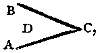 b d
a c, on which are seated
a. Tom Larcom, b. Nat
Harlow, and between them four farmers, three girls;
another girl standing c.; beside her on floor,
kneeling, a farmer picks up the husks thrown by the
huskers, and puts them in a basket. A small pile of corn,
d., which the occupants of the benches are at
work on, throwing the corn into bins, r.; the
husks behind. Just back of b., Hanks
seated on a barrel with violin playing, "In the sweet
by and by." Stub leaning against wing,
l., i e. listening; stool r.,
i e.; red lanterns hung r. and
l., red light from footlights. Hanks
plays the air through during the rising of curtain.
b d
a c, on which are seated
a. Tom Larcom, b. Nat
Harlow, and between them four farmers, three girls;
another girl standing c.; beside her on floor,
kneeling, a farmer picks up the husks thrown by the
huskers, and puts them in a basket. A small pile of corn,
d., which the occupants of the benches are at
work on, throwing the corn into bins, r.; the
husks behind. Just back of b., Hanks
seated on a barrel with violin playing, "In the sweet
by and by." Stub leaning against wing,
l., i e. listening; stool r.,
i e.; red lanterns hung r. and
l., red light from footlights. Hanks
plays the air through during the rising of curtain.
Stub. Golly! hear dat now, will you? D-d-dat what I call
music in de har, fur it jes make my har stan' on end, yes, it does.
And I feel—I feel jes as dough I was skewered onto dat ar fiddle-bow,
an' bein' drawed frou a sea ob bilin' merlasses. Golly, so sweet!
Nat. There's a first-class puff for you, Hanks, from the
mouth of a critic—with a black border.
Tom. You do beat all nater, Hanks, with the fiddle; your hand
is as cute, and your ear as fine, as though the one had never held
a plough, or the other listened to the jingling of a cowbell. Talk
of your genuses. Give me the chap that's a Jack at any thing, from
digging ninety tater-hills afore breakfast, to sparking a pretty girl
at 'leven o'clock on a starlight night.
Stub. Wid de ole man comin' roun' de corner ob de house wid
a double-barrel rebolver, "You scoot or I shoot." Don't forget de
embellishments, Tom Larcom. (All laugh.)
Nat. Ha, ha! had you there, Tom.
Tom. What are you laughing at? If old Corum mistook me for a
prowler one night, am I to blame?
Stub. Coorse not, coorse not, when you didn't stop to
'lucidate, but jumped de fence and scooted down de road hollering
"Murder!" (Laugh.)
Tom (flinging an ear of corn at Stub). A little
more ear and less tongue, Stub.
Stub (ducking his head). Don't waste de fodder. Had ear
enough dat night. Golly! jes woke de whole neighborhood.
Tom. Ah! the course of true love never did run smooth.
Stub. By golly! you—you found it pretty smoove runnin' dat
night.
Tom (threatening Stub). Will you be quiet?
Stub. Ob coorse. Don't waste de fodder.
Nat. Ah, Tom, Nature never cut you out for a lover.
Tom. P'r'aps not; but I've got art enough to cut you
out, Nat, if you do make up to my property, Kitty Corum. (Enter
Kitty, r., overhearing last words.)
Kitty. Indeed! Your property! I like that. And when, pray,
did you come into possession?
Tom. That's for you to say, Kitty. I'm an expectant heir as
yet. Don't forget me in your will, Kitty.
Nat. Don't write your will in his favor.
Kitty.
"When a woman wills she wills: depend on't;
And when she won't she won't, and there's the end on't."
Tom (sings). "If I could write my title clear."
Nat. Give me the title, Kitty.
Tom. I'd give you a title—Counter-jumper, Yardstick; that's
about your measure. You talk about titles; why, all you are good for
is to measure tape and ribbons, cut "nigger-head," shovel sugar, and
peddle herrings for old Gleason. Bah! I smell soap now.
Nat (jumping up). You just step outside, and you shall
smell brimstone, and find your measure on the turf, Tom Larcom.
Kitty. There, there, stop that! I'll have no quarrelling.
Supper's nearly ready, and the corn not finished.
Tom. We'll be ready for the supper, Kitty. If I could only
find a red ear.
Kitty. And if you could?
Tom. I should make an impression on those red lips of yours
that would astonish you.
Kitty. Indeed! It would astonish me more if you had the
chance. (Laugh.) But where's Harry Maynard?
Tom. Off gunning with Mr. Thornton. He said he'd be back in
time for the husking: they must have lost their way.
Kitty. His last night at home, too.
Stub. Yas, indeed. Off in de mornin', afore de broke ob day.
I's gwine to drive dem ober to de steam-jine station. Miss Jennie
gwine to see him off; 'spect she'll jes cry her eyes out comin' home.
Tom. Well, I can't see the use of Harry Maynard's trottin'
off to the city with this Mr. Thornton. Let well enough alone, say I.
Here's a good farm, and a smart, pretty girl ready to share life with
him; and yet off he goes to take risks in something he knows nothing
about.
Kitty. Don't say a word against Mr. Thornton; he's just
splendid.
Chorus of Girls. Oh, elegant!
Tom. There it is! Vanity and vexation! here's a man old
enough to be your father. Comes up here in his fine clothes, with a
big watch-chain across his chest, and a seal ring on his finger, and
you girls are dead in love with him at first sight.
Kitty. Tom, you're jealous. Harry Maynard is not content to
settle down here; he wants to see the world, and I like his spunk. If
I was a man I would get the polish of city life.
Stub. So would I, so would I. Yas, indeed; get de polish down
dar. Look at Joe Trash; he went down dar, he did. New suit ob store
clo's onto him, and forty dollars in his calf-skin. He come back in
free days polished right out ob his boots.
Tom. Well, I s'pose it's out of fashion not to like this
Thornton, but there's something in the twist of his waxed-end
mustache, and the roll of his eye, that makes me feel bad for Harry.
Kitty. You needn't fear for Harry. He won't eat him.
Stub. No, sir, he's not a connubial: he's a gemblum.
Tom. Ah! here's the last ear, and, by jingo! it's a red one.
Chorus. Good for you, Tom! good for you!
Nat. I'll give you a dollar for your chance.
Tom. No, you don't, Nat; I'm in luck.—Now, Kitty, I claim
the privilege. A kiss for the finder of the red ear. (All rise.)
Kitty. Not from me, saucebox.
Nat. Run, Kitty, run! (Kitty runs in and out among
the huskers, Tom in pursuit.)
Tom. It's no use, Kitty; you can't escape me. (She runs
down r. corner; as Tom is about to seize her,
she stoops, and runs across stage, catches Stub by the
arms, and whirls him round. Tom, in pursuit, clasps
Stub in his arms.)
Stub. "I'd offer thee dis cheek ob mine." If you want a smack
take it. I won't struggle.
Tom (strikes his face with hand). How's that for a smack?
Stub. Dat's de hand widout de heart: takes all de bloom out
ob my complexion. (Goes across stage holding on to his face, and
exits r. Kitty runs through crowd again, comes
r., Tom in pursuit.)
Tom. It's no use, Kitty: you must pay tribute.
Kitty. Never, never! (Runs across to l., and then
up stage to back. Door opens, and enter Harry Maynard and
Thornton, equipped with guns and game-bags; Kitty
runs into Harry's arms.)
Harry. Hallo! just in time. You've the red ear, Tom, so, as
your friend, I'll collect the tribute. (Kisses Kitty.)
Kitty (screams). How dare you, Harry Maynard!
Tom. Yes, Harry Maynard, how dare you?
(Thornton, Harry, Kitty,
Tom, and Nat come down; others carry
back the benches, and clear the stage; then converse in
groups at back.)
Harry. Don't scold, Tom. It's the first game that has crossed
my path to-day: the first shot I've made. So the corn is husked,
and I not here to share your work. We've had a long tramp, and lost
our way. (goes to r. with Thornton; they
divest themselves of their bags, and lean their guns against bin. 2d
entrance.)
Tom (l. c.). Empty bags! Well, you are smart
gunners: not even a rabbit.
Harry (r. c. Thornton sits on stool,
r.). No, Tom; they were particularly shy to-day, so I
had to content myself with a deer, your dear, Tom. (All laugh;
Nat, l., very loud, Tom threatening
him.)
Kitty (c.). His dear, indeed! I'll have you to
understand I'm not to be made game of.
Harry. No, dear, no one shall make game of you; but keep a
sharp lookout, for there's a keen hunter on the track, and when Tom
Larcom flings the matrimonial noose—
Kitty. He may be as lucky as you have been to-day, and return
empty-handed.
Tom. Don't say that, Kitty; haven't I been your devoted—
Kitty. Fiddlesticks! (pushes him back, and comes to l.
C.) If there is any thing I hate, it's sparking before company.
Nat (l.). And there's where you're right, Kitty.
As much as I love you, I would never dare to be so outspoken before
company.
Tom. Oh, you're a smart one, you are! (Enter Stub,
r.)
Stub. Supper's onto de table, and Miss Maynard, she says,
says she, you're to come right into de kitchen, eat all you like,
drink all you like, an' smash all de dishes if you like; an' dere's
fourteen kinds ob pies, an' turnobers, an' turn-unders, an' cold
chicken, an'—an'—cheese—
Harry. That will do, Stub. My good mother is a bountiful
provider, and needs no herald. So, neighbors, take your partners;
Hanks will give you a march, and Mr. Thornton and I will join you as
soon as we have removed the marks of the forlorn chase.
Stub. Yas, Massa Hanks, strike up a march: something lively.
Dead march in Saul; dat's fus rate.
Tom (c.). Kitty, shall I have the pleasure? (Offers
his left arm to Kitty.)
Nat (l.). Miss Corum, shall I have the honor?
(Offers his right arm to Kitty.)
Kitty (between them, looks at each one, turns up her nose
at Tom, and takes Nat's arm). Thank you, Mr.
Harlow. I'll intrust this property to you.
Nat. For life, Kitty?
Kitty. On a short lease. (They go up c., face
audience; others pair, and fall in behind them.)
Tom (c.). Cut,—a decided cut. I must lay in wait
for Yardstick when this breaks up, and I think he will need about a
pound of beefsteak for his eyes in the morning. (Goes l.
and leans dejectedly against wing. Music strikes up, the march is
made across stage once, and off r., Stub strutting
behind.)
Harry (crosses l.). Why, Tom, don't you go in?
Tom. Certainly. Come, Hanks. (Goes over to Hanks.)
They'll want your music in there, and I'm just in tune to play second
fiddle. (They exeunt r., arm in arm.)
Harry (goes to bench l., and washes hands). Now,
Mr. Thornton, for a wash, and then we'll join them. (Thornton
keeps his seat in a thoughtful attitude. Harry comes
down.) Hallo! what's the matter? Homesick?
Thornton (laughs). Not exactly; but there's something in
this old barn, these merry huskers, this careless happy life you
farmers lead, has stirred up old memories, until I was on the point of
breaking out with that melancholy song, "Oh, would I were a boy again!"
Harry. Now, don't be melancholy. That won't chime with the
dear old place; for, though it has not been free from trouble, we
drive all care away with willing hands and cheerful hearts.
Thornton. It is a cheery old place, and so reminds me of one
I knew when I was young; for, like you, I was a farmer's boy.
Harry. Indeed! you never told me that.
Thornton. No: for 'tis no fond recollection to me, and I
seldom refer to it. I did not take kindly to it, so early forsook a
country life for the stir and bustle of crowded cities. But, when one
has reached the age of forty, 'tis time to look back.
Harry. Not with regret, I trust: for you tell me you have
acquired wealth in mercantile pursuits, and so pictured the busy life
of the city, that I am impatient to carve my fortune there.
Thornton. And you are right. The strong-armed, clear-brained
wanderers from the country carry off the grand prizes there. You are
ambitious: you shall rise; and, when you are forty, revisit these
scenes, a man of wealth and influence.
Harry. Ah, Mr. Thornton, when one has a friend like you to
lead the way, success is certain. I am proud of your friendship, and
thankfully place my future in your keeping.
Thornton. That shows keen wit at the outset. Trust me, and
you shall win. (Rises.) But I am keeping you from your friends, and
I know a pair of bright eyes are anxiously looking for you. (Goes to
bench, and washes hands.)
Jessie (outside l., sings),—
"In the sweet by and by,
We shall meet on that beautiful shore," &c.
Harry. Ah! my "sweet by and by" is close at hand. (Enter
Jessie, r., with pail.)
Jessie. O you truant! (Runs to him.) Now, don't flatter
yourself that I came in search of you. Do you see this pail? this is
my excuse.
Harry. 'Tis an empty one, Jessie. I am very sorry you have
been anxious on my account; but I'm all ready, so let's in to supper.
Jessie. Not so fast, sir: the pail must be filled. I'm going
for milk.
Harry. Then "I'll go with you, my pretty maid."—You'll
excuse me a moment, Mr. Thornton.
Jessie. Mr. Thornton!—Dear me, I didn't see you! Good
evening.
Thornton. Good evening, Miss Jessie.
Jessie. Are you very, very hungry?
Thornton. Oh, ravenous!
Jessie. Then don't wait, but hurry in, or I won't be
responsible for your supper: huskers are such a hungry set.—Come,
Harry.
Harry. Don't wait, Mr. Thornton: it takes a long time to get
the milk; don't it, Jessie?
Jessie. Not unless you tease me—but you always do.
Harry. Of course, I couldn't help it; and tease and milk
go well together. (Exeunt Jessie and Harry,
l. Thornton stands c.looking after
them.)
Thornton. Yes, yes, 'tis a cheery old place. Pity the storm
should ever beat upon it; pity that dark clouds should ever obscure
its brightness; yet they will come. For the first time in a life
of passion and change, this rural beauty has stirred my heart with
a longing it never felt before. I cannot analyze it. The sound of
her voice thrills me; the sight of her face fascinates me; the
touch of her hand maddens me; and, with it all, the shadow of some
long-forgotten presence mystifies me. This must be love. For I would
dare all, sacrifice all, to make her mine. She is betrothed to him.
He must be taken from her side, made unworthy of her, made to forget
her. The task is easy to one skilled in the arts of temptation. Once
free, her heart may be turned towards me. 'Tis a long chase: no wonder
I am melancholy, Harry Maynard; but there's a keen, patient hunter on
the track, who never fails, never. (Enter John Maynard,
r.)
John Maynard. Well, well, here's hospitality: here's
hospitality with a vengeance. That rascal Harry has deserted you, has
he?—you, our honored guest. It's too bad, too bad.
Thornton. Don't give yourself any uneasiness about me, old
friend. Harry has left me a moment to escort a young lady.
Maynard. Ah, yes, I understand: Jessie, our Jessie, the witch
that brings us all under her spells. No wonder the boy forgot his
manners; but to desert you—
Thornton. Don't speak of desertion; you forget I am one of
the family.
Maynard. I wish you were with all my heart. I like you, Mr.
Thornton. I flatter myself I know a gentleman, when I meet him. You
came up here, looked over my stock, and bought my horses at my own
price, no beating down, no haggling; and I said to myself, He's a
gentleman, for gentlemen never haggle. So I say I like you (gives his
hand), and that's something to remember, for John Maynard don't take
kindly to strangers.
Thornton. I trust I shall always merit your good opinion.
Maynard. Of course you will; you can't help it. There's
our Harry just raves about you, and you've taken a fancy to him. I
like you for that too. Then you are going to take him away, and show
him the way to fortune by your high pressure, bustle and rush, city
ways. Not just the notion I wanted to get into his head; but he's
ambitious, and I'll not stand in his way. He's our only boy now. There
was another; he went down at the call of his country, a brave, noble
fellow, and fell among the first; and he died bravely: he couldn't
help it, for he was a Maynard. But 'twas a hard blow to us. It made
us lonely here; and even now, when the wind howls round the old house
in the cold winter nights, mother and I sit silent in the corner,
seeing our boy's bright face in the fire, till the tears roll down
her cheeks, and I—I set my teeth together, and clasp her hands,
and whisper, He died bravely, mother,—died for his country like a
hero,—like a hero.
Thornton. Ah! 'tis consoling to remember that.
Maynard. Yes, yes. And now the other, our only boy, goes
forth to fight another battle, full of temptation and danger. Heaven
grant him a safe return!
Thornton. Amen to that! But fear not for him. I have a
regard, yes, call it a fatherly regard; and it shall be my duty to
guard him among the temptations of the city.
Maynard. That's kind; that's honest. I knew you were a
gentleman, and I trust you freely.
Thornton. You shall have a good account of him; and 'twill
not be lonely here, for you have a daughter left to comfort you.
Maynard. Our Jessie, bless her! she's a treasure. Sixteen
years ago, on one of the roughest nights, our Harry, then a mere boy,
coming up from the village, found a poor woman and her babe on the
road lying helpless in the snow. He brought her here: we recognized
her as the daughter of one of our neighbors, a girl who had left
home, and found work in the city. This was her return. Her unnatural
father shut the door in her face, and she wandered about until found
by Harry. She lingered through the night, speechless, and died at
sunrise. I sought the father, but he had cast her out of his heart and
home; for he believed her to be a wanton. Indignant at his cruelty, I
struck him down; for I'm mighty quick-tempered, and can't stand a mean
argument. I gave the mother Christian burial, took the child to my
heart, and love her as if she was my own. As for him, public opinion
drove him from our village; and her child is loved and honored as he
could never hope to be.
Thornton. And your son will marry her with this stain upon
her?
Maynard. Stain? what stain? Upon her mother's finger was
a plain gold ring; and, though the poor thing's lips were silent,
her eyes wandered to that ring with a meaning none could fail to
guess. She was a deserted wife; and, even had she been all her father
thought her, what human being has a right to be relentless, when we
should forgive as we all hope to be forgiven? But come, here I am
chatting away like an old maid at a quilting. Come in, and get your
supper, for you must be hungry: come in. (Exeunt r. Enter
l., Harry, with his arm round Jessie,
the pail in his hand.)
Harry. Yes, Jessie, 'tis hard to leave you behind; but our
parting will not be for long. Once fairly embarked in my new life,
with a fair chance of success before me, I shall return to seek my
ready helper.
Jessie. Harry, perhaps you will think me foolish, but I
tremble at your venture. Why seek new paths to fortune when here is
all that could make our lives happy and contented?
Harry. But it's so slow, Jessie; and, with the best of luck,
I should be but a plodding farmer. To plough and dig, sow and reap,
year in and year out,—'tis a hard life, all bone and muscle: to be
sure, rugged health and deep sleep; but there is excitement and
bustle, quick success and rousing fortunes. Ah, Jessie, if one half my
schemes work well, you shall be a lady.
Jessie. To be your own true, loving wife, your ever ready
helper, is all I ask. O Harry, if you should forget me in all this
bustle!
Harry. Forget you? Never: in all my hopes you are the shining
light; in all my air-built castles, which energy should make real and
substantial ones, you are enthroned my queen.
Jessie. Enthrone me in your heart: let me be an influence
there, to shield you from temptation, and, come fortune or failure, I
shall be content.
Harry. An influence, Jessie: hear my confession. Unknown to
you, I stood beneath your window last night, as you sat looking up at
the moon, singing the song I love, "In the sweet by and by." I thought
how soon we must part, and your sweet voice brought tears to my eyes.
Jessie, I believe, that, were I so weak as to fall beneath temptation,
in the darkest hour of misery, the remembrance of that voice would
call me back to you and a better life.
Jessie. You will not forget me?
Harry. Oh, we are getting melancholy. (Smiles.) Why should
I not fear a rival?
Jessie. Now you are jesting, Harry. Do I not owe my life to
you?
Harry. Hush, hush! that is a forbidden subject, and all you
owe to me has been paid with interest in the gift of your true, loving
heart. (They pass off, r. Enter Capt. Bragg,
c.)
Capt. Bragg. Well, I never—no, never. If Parson Broadnose
himself, in full black, with all his theological prognostications to
back him, had said to me, Capt. Bragg, did you ever? I should have
fixed my penetrating eyes upon him, and answered boldly, No, never.
Slighted, absolutely, undeniably, unquestionably slighted! I, Capt.
Nathan Bragg, distinguished for my martial deportment, my profound
knowledge, my ready wit, yes, every thing that adds a charm to
merrymaking; I, ex-commander of that illustrious corps, the Lawless
Rangers, that rivals the grandest European regiments in drill and
parade,—slighted at a mean, contemptible little husking. Fact, by
jingo! But I'm not to be slighted: I won't be slighted. I am here
to testify my profound contempt for a slight. If John Maynard has
a husking, and forgets to invite the grand central figure on such
occasions, it is the duty of the grand central figure to overlook the
little breach of etiquette, and appear to contribute to the happiness
of its fellow townsmen. There is an air of gloom about this place,
all owing to my absence. They're in to supper: I'll join them, to
cheer the dull hearts and (going r.)— Hallo! guns, guns.
(Takes up one.) There's a beauty. This reminds me of my warlike
days at country muster, and the Lawless Rangers. Ah, those rangers!
every man with a Roman nose, six feet high, and a dead shot: not a man
would miss the dead eye at one hundred paces,—if he could help it.
Ah! I can see 'em now as I gave the order: ready—aim—fire (raising
gun and firing as he speaks.) Murder! the blasted thing was loaded.
(Drops it, and staggers across stage to l., trembling.
A fowl drops from r., at the shot. Enter r.,
Mr. Maynard, Stub, Harry, Jessie,
Tom, and Mrs. Maynard.)
Maynard. Who fired that gun? Ah, Capt. Bragg, what's the
matter?
Stub (taking up fowl). Dat ar poor ole rooster am a gone
goose. Dat's what's de matter.
Harry (taking up gun). Captain, have you been meddling with
my gun?
Mrs. Maynard. Of course he has: he's always meddling.
Capt. Mrs. Maynard, that's an absurd remark. It's all right:
one of my surprises. You must know I wanted a rooster for to-morrow's
dinner. I'm very fond of them: there's such a warlike taste about
them. And we are a little short of roosters; my last one, being a
little belligerent this morning, walked into Higgins's yard, and
engaged in deadly combat: so deadly that Higgins's fowl was stretched
a lifeless corse upon the ground: for Bragg's roosters always lick,
always. But in spite of my earnest protest, despite the warlike maxim,
Spoils to the victor belong, Higgins shot my rooster and nailed him to
his barn door like a crow, and his crow was gone. Fact, by jingo.
Maynard. Yes: but what's that got to do with my rooster?
Capt. Well, I wanted a rooster: so says I to myself,
Maynard's got plenty, he can spare one just as well as not; so I'm
come to borrow one. Well, I found you had company, and not wishing to
disturb you, and seeing a gun handy, I singled out my dinner roosting
aloft there, raised the gun,—you know I'm a dead shot,—shut my eyes—
Tom. Shut your eyes! Is that one of your dead shot tactics?
Capt. Shut one eye, squinted, of course, that's what I said,
and fired. The result of that shot is before you. If you will examine
that fowl, you will find that he is shot clean through the neck.
Stub. He's shot all ober; looks jes for all de world like a
huckleberry puddin'.
Maynard. Well, captain, I call this rather a cool proceeding.
Capt. Ah, you flatter me: but coolness is a characteristic
of the Braggs. When I raised that company for the war, the Lawless
Rangers, I said to those men, Be cool: don't let your ardor carry you
too far.
Tom. Yours didn't run you into battle, did it, captain?
Capt. I couldn't run anywhere. Just when the call came for
those men, after I had prepared them for battle, and longed to lead
them to the field, rheumatism—in the legs too—blasted all my hopes,
and left me behind. But my soul was with them, and, if they achieved
distinction, they owed it all to my early teaching—to the Bragg they
left behind. (Struts up stage.)
John Maynard (to Thornton). Ah! he's a sly old fox.
Thornton (tapping his head). A little wrong here.
Maynard. No, he's a cool, calculating man, but as vain as a
peacock.
Capt. (coming down). Sorry I didn't know you had company.
Wouldn't have intruded for the world.
Maynard. It's all right, captain. Join us: we were expecting
you. (To Thornton.) I can say that truly, for he's always
popping in where he's not wanted.
Capt. Ah! thank you. A-husking, I see. What's the yield?
Maynard. Excellent. My five-acre lot has given me two hundred
bushels. That's what I call handsome.
Capt. Pooh! you should see my corn. There's nothing like
Bragg's corn. My three-acre lot gave me three hundred bushels, and
every other ear was a red one.
Chorus. Oh!
Capt. Fact, by jingo! (Nat and Kitty
enter r., followed by huskers.)
Maynard. Come, boys, get ready for the dance.—Mother, you
take the captain in to supper.
Mrs. Maynard. Come, captain, you must be hungry.
Capt. (coming to r.). Thank you, I could feed
a bit. But don't stir: I can find the table; and, when I do find
it, I shall do full justice to your fare, or I am no Bragg. (Exit
r. Harry rolls back the big door, others put out
lanterns. Moonlight streams upon the floor. Change footlights.)
Thornton (to Jessie). Miss Jessie, shall I have
the honor of dancing with you?
Jessie. Thank you, Mr. Thornton. (Takes his arm, and they go
up. Nat and Kitty come down c.)
Nat. Ah, Kitty, now for the dance. Of course you will open
the ball with me.
Kitty (hanging on his arm, looks around, and nods to
Tom; he comes down on the other side). Did I promise you a
dance to-night, Mr. Larcom?
Tom (sulkily). I believe you did: but I ain't particular.
Kitty. But I am.
Nat. Kitty, dance with me.
Kitty. I shall do just as Mr. Larcom says; if he does not
wish me, why—
Tom. Oh, Kitty, you know I do, you know I do! (Takes
her arm, and whirls her up stage. Nat goes over to
l., and leans against wing watching them.)
Harry. Now, boys, take your partners for Hull's
Victory.—Come, mother. (Gives Mrs. Maynard his arm, and
goes to door, taking the lead. Tom and Kitty,
Thornton and Jessie next, others form in front
of them. Stub goes to l. Dance Hull's Victory.
When Tom and Kitty come in front, Tom
talks with Mr. Maynard, who stands r., and
Kitty makes signs to Nat: he comes over, takes
her arm, and they go up and off, l. u. e., appearing soon
after in the loft at back; they sit on the hay, and watch the dancing.
The dance is continued some time, Stub dancing by himself,
l. When it is Tom's turn to dance, Stub
slips into set, and gives his hand. Tom dances a little
while before finding his mistake; then pushes Stub back,
looks round and up, descries Kitty and Nat. Goes
off l. u. e. Dance goes on. Enter Capt. Bragg,
r., with a chicken-bone in one hand, and a piece of pie
in the other; stands watching the dancers. Tom appears
in loft, behind Nat. Nat puts his arm round
Kitty, and is about to kiss her; Tom pulls him
back upon the hay, and pummels him.)
Nat. Help! Murder! Murder! (Dance stops.)
Capt. Hallo! Thieves! Burglars! (Seizes the other gun,
raises it, and fires. Fowl drops from l. Stub
picks it up; Mr. Maynard seizes Captain's arm.)
Stub. Dere's anoder rooster dead shot.
Capt. Fact, by jingo!
Tableau.
Capt. r. c., with gun raised;
Maynard c., with hand on gun;
Stub l., holding up fowl; others
starting forward watching group. Tom has
Nat down in the loft with fist raised above him.
Kitty kneels r. of them, with her
apron to her face.
Curtain.