Absenteeism, 146, 326, 330
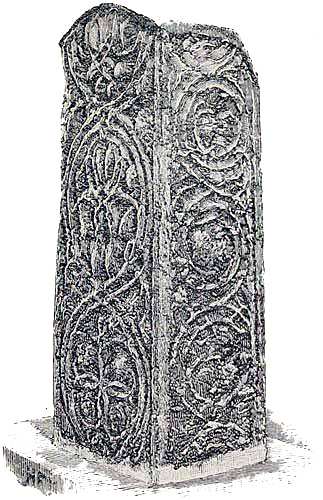
Acca’s Cross, base of, 27
Addi the Ealdorman, consecration of his church at North Burton, 48
Ælfric, homilies, 223
Aged clergy, provision for, 290-296
Aidan, apostle of Northumbria, 20;
his schools, 21;
preaching, 21, 22, 46
Alb, 191
Alcuin, 36
Aldhelm, 31, 49
Aldhelm’s religious poetry, 241
Ale, church, and other ales, 317
Alfred, laws of, 65, 76, 80, 82
Alfriston parsonage house, 152, 153
Amice, 192
Amyss, 195
Anglo-Saxon conquest, manner of, 3, 5
Anglo-Saxon monasteries, in France, 21;
in Kent, 29;
Northumbria, 29;
East Anglia, 31;
Wessex, 31;
Mercia, 31-33;
list of others, 33;
life of the, 35;
destruction of, by Danes, 37;
restoration of, by Edgar and Dunstan, 37
Anglo-Saxons, their civil organization, 5;
religion, 7;
temples, 9-11;
priesthood, 11;
sacred places, 12
Archdeacons, 173, 533;
of Lincoln, 353, 354;
of Chichester, 362
Armour worn by clergy, 172, 175, 177
Assistant curates, 50, 105, 106
Athelstan, law of, encouraging landowners to build churches on their estates, 51;
laws of, 66
Augustine, apostle of Kent, 15
Augustine, St., monastery of, 29, 35
Banns of marriage, 235
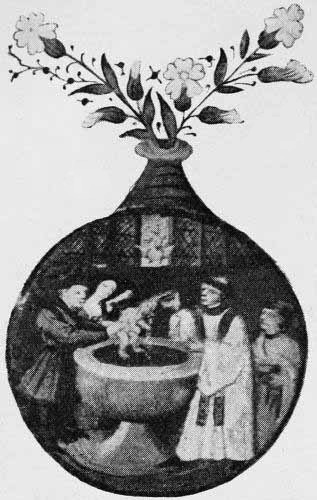
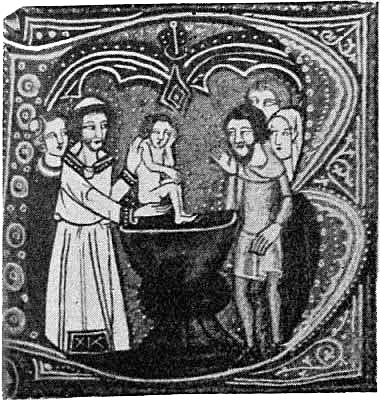
Baptism, within thirty days under penalty, 58, 68, 234
Bede, his description of mission work, 23;
letter to Archbishop Egbert, 49
Bede Roll, 211, 311, 472, 496
Bedesmen, 449
Bell to be rung for service, 70, 447;
in carrying viaticum to the sick, 239;
sacring bell, 246
Benedict Biscop, 30, 36
Benefices, parochial, subdivision of, 56
Berdstaple Deanery, from “Taxatio,” 382;
comparison of its parishes in the “Taxatio,” “Valor,” and Clergy List, 562
Berneston, 118
Beverley Minster, 548
Bidding Prayer, 207, 208
Birinus, apostle of Wessex, 21
Boniface (Winfrid), 22, 60
Bradfield-on-Avon, church at, 31, 32
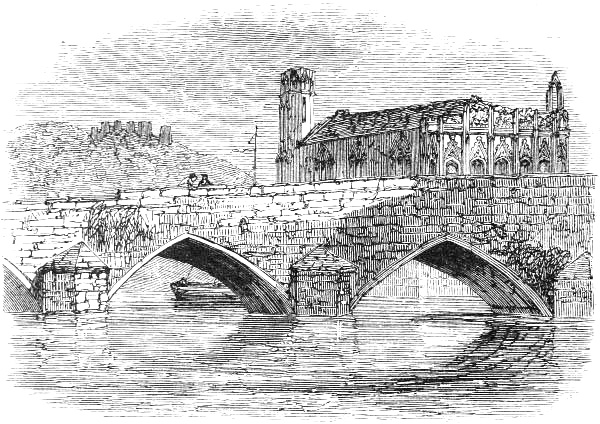
Bridge chapels, 527
Brigg Rural Deanery, comparison of its parishes in the “Taxatio,” “Valor,” and Clergy List, 564
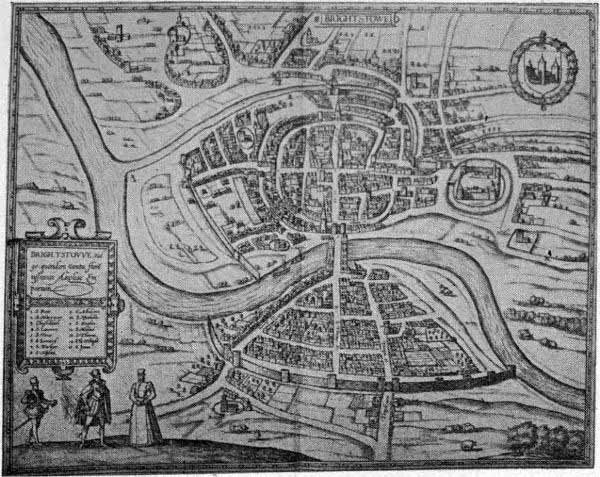
Bristol, 499;
a Saxon burgh, its Saxon churches, 499;
religious houses, 500;
growth of parishes, 500;
inclusion of Temple and Redcliff, 502
Britons, survivors of the Anglo-Saxon conquest, 4
Burton-on-Trent, monastery and town of, 508
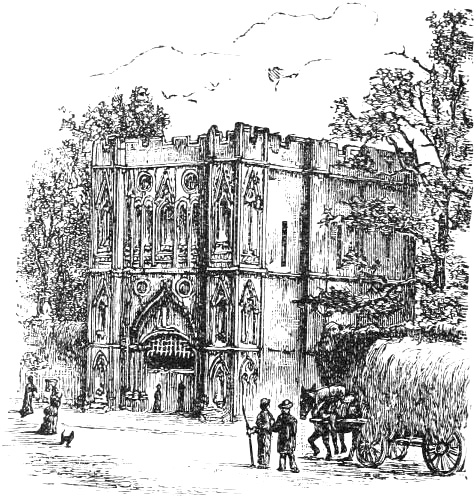
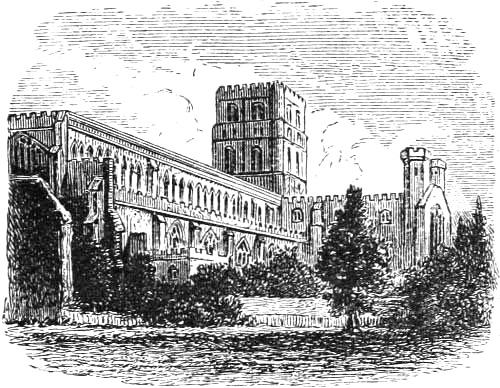
Bury St. Edmunds, 510
Cædmon, his poems, 250
Canons, 73, 335;
of Lincoln, 350-352;
of Chichester, 360
Canterbury, King’s School at, 131;
archbishops of, of humble birth, 133
Canute, 37;
laws of, 52, 76, 80, 86
Career offered by the Church, 129, 134
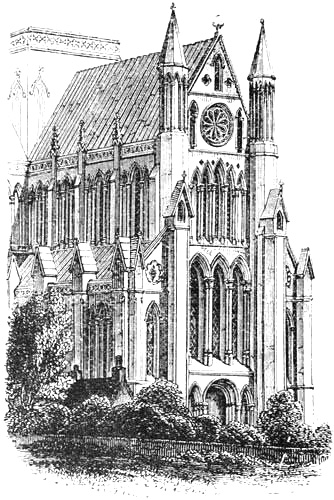
Cathedral close, 340
Cathedral, organization of, 334;
of secular canons, 335;
monastic, 336;
idea of, 350;
description of, 357
Cealchythe, council at, 41, 78, 82
Cedd, apostle of the East Saxons, 30, 36, 39
Celibacy of the clergy, 66, 73, 258-273, 282, 283
Chadd, Bishop of Mercia, 30, 31, 36
Chantries, 212;
of Burghersh, 341, 356, 447;
in Lincoln Cathedral, 354;
in Chichester Cathedral, 362;
definition of, 438;
number and distribution of, 442, 443;
foundation deed of, 444, 469;
of the Black Prince, 446;
Richard III., 447;
Henry VII., 447;
nomination to, 451;
dissolution of, 471
Chantry chapels, 453-456;
furniture of, 445;
sometimes chapels-of-ease, 467
Chantry priests, of cathedrals incorporated, London, 443;
York, 503;
of towns, sometimes a priest’s house provided for them, 518, 525;
remuneration of, 461-464;
duties of, 465, 466;
sometimes schoolmasters, 469-471
Chapels, royal, 46, 123;
parochial, 50, 110;
free, 123, 124;
domestic chantry, 421, 422, 457
Chaplains, parish, 105, 106, 111;
domestic, 409-423
Chapter house, 342;
use of, 357
Chasuble, 191, 244
Chaucer’s “Canterbury Tales,” extracts from, 172, 271, 304
Choristers, of Lincoln Cathedral, 356;
song schools for, 469, 471
Churches, Saxon, different status of, 52, 54;
number of, 54;
repair of, 66, 188;
to be reserved to sacred uses, 69;
burial in, 69;
dilapidations, 163;
their architecture, 184;
furniture, 187, 189, 190
Churchyard, 69, 205, 281, 316;
right of sanctuary in, 308;
sports, markets, etc., in, 316, 317
Clergy, number of, in 1377, 390
Clerk, parish. See Parish clerk
Clitheroe, castle church of, 120
Clovesho, councils at, 41, 60, 240
Clugny, Abbey of, 368
Clun, Shropshire, 112
Colchester Castle, domestic chapel, 410
Colleges, at universities, 140;
Rotherham, 517;
Wingham, 564, note;
Wye, 566, note
Communion, Holy, doctrine of, 75, 237;
in one kind, 235
Confession, 234, 239, 536, 543
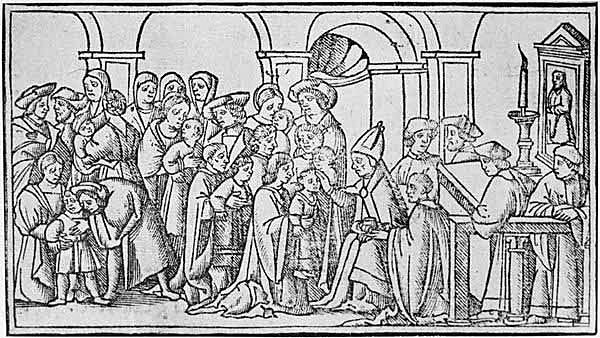
Confirmation, 238;
sponsors at, 59, 69, 234
Confraternity of a religious house, 439
Conisborough, 103, 409
Conversion of the English, 14, 21-23
Conway Castle chapel, 410
Cope, 193, 196
Costume of clergy, ordinary, 165, 169-171
Course of studies, 139
Courts, ecclesiastical, 532, 544
Coventry St. Michael’s Church, 555
Cranmer, Edmund, 564, 565 note
Cranmer on the education of the lower classes, 131
Creed, Apostles’, exposition of, 217;
metrical version of, 238
Cross, station, 24
Cuckfield Church, 455
Customs on holy days, 311
Cuthbert, 23
Daily celebration of Holy Communion, 205, 206
Daily Psalter in cathedrals, 351
Daily service in churches and chapels, 205, 207
Dalmatic, 192
Danes destroy monasteries and churches, 37
Dean and chapter, 336;
of Lincoln, 345;
of Chichester, 361
Delamere, Abbot of St. Albans, 199
Denington, Chantry Chapel at, 456
Devotional books, 225;
poetry, 255-257
Dilapidations, 162
Dioceses, Saxon, 20;
subdivision of, 41, 42
Discipline, 531;
of clergy, 533-535, 537;
of laity, 535-544;
defiance of, 542, 543
Dispensations, for obstacles to ordination, 146, 275;
for non-residence, 146
“Dives and Pauper,” 249
Domesday Survey, mention of churches and clergy in, 54
Domestic chapels, 409;
Norman, 409, 418;
Edwardian, 410;
later, 412-437;
chantries in, 421, 457;
oratories, 422;
number of, 423;
licences for, 424, 428;
marriages in, 431;
furniture of, 433;
services in, 435
Domestic chaplains, in the sixth century, 408;
Saxon, 409, 417;
Norman, 409, 419-437;
members of religious houses acting as, 418;
emoluments of, 419, 420, 462
Dress, ordinary, of the clergy, 164-172, 233
Duns Scotus, 139
Dunstable Priory, 102, 324
Dunstan, 37, 66
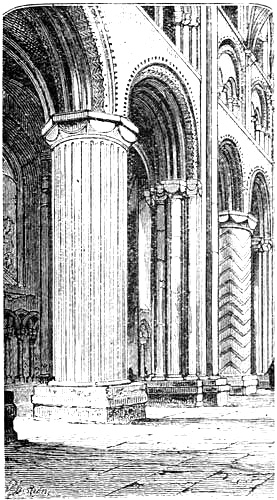
Durham Cathedral, 87
Ecclesiastical courts, 86, 532
“Edgar, Canons of,” 66
Edmund, laws of, 66
Egbert, Archbishop of York, 49;
constitutions of, 111
Elfric, canons of, 74
Endowments of parish churches, 45, 53
England, Church of, 41
Establishment of the Church among the English, 20
Ethelbert, King of Kent, laws of, 57, 58
Ethelred, laws of, 72, 82
Eucharist, rules for celebration of, 70;
doctrine of, 75
Evensong, 200, 203, 204
Exchange of benefice by bishops or priests forbidden, 68
Excommunication, general, 238, 544, 545
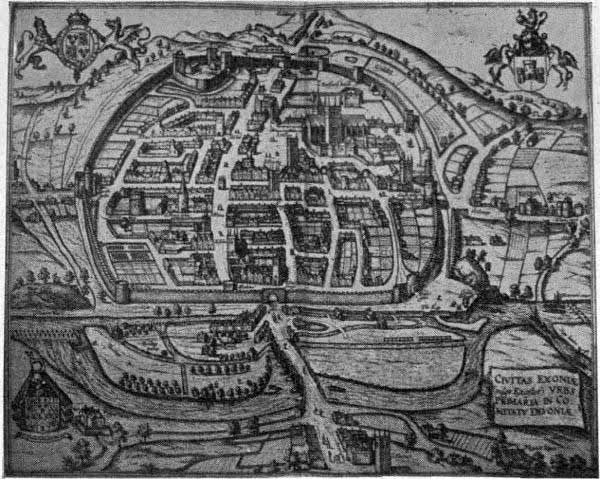
Exeter, chapels and religious houses in, 497;
parochial organization, 497
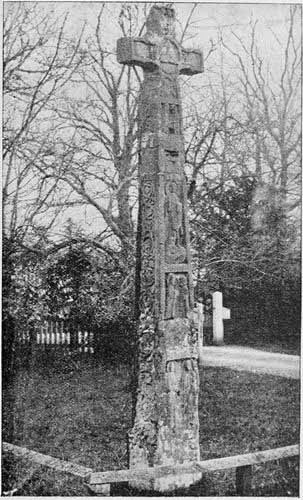
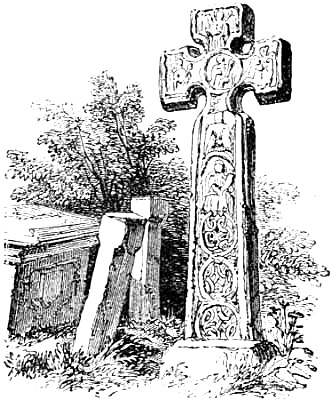
Eyam, cross at, 26
Farming benefices, 321, 324, 326, 331, 403
Fasting, 60, 71
Felix, apostle of the East Angles, 21
Fifteenth century, character of, 553;
architecture of, 553
Firstfruits and tenths, 380
Folk-mote, 6
Foreign incumbents, 320
Fourteenth century, character of, 549
Free chapels, 124
Friars, at the universities, 140;
origin of, 370;
organization, 371;
work, 373;
success, 374;
interference with parochial clergy, 376;
poverty, 378
Furniture, of clergy houses, 174-182;
of churches, 187-191
Gilds, definition of, 473;
trade, 475;
religious, 476-481;
social, 482;
at Ludlow, 473, 476;
Bristol, 476;
York, 476;
Norwich, 478;
Worcester, 478;
Birmingham, 478;
suppression of, 483
Glebe, size of, 55
Godparent, 59, 69, 234
Goodrich, Bishop of Ely, his monumental brass, 198
Granby, 103
Gratian’s Decretals, 121
Gray, Archbishop Walter de, his “Register,” 102, 116, 189
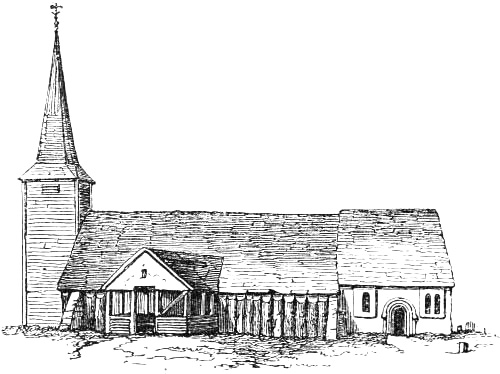
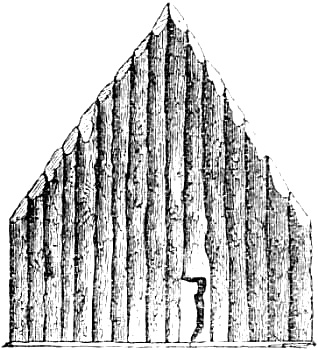
Greenstead Church, Essex (Saxon timber church), 52
Grostete, Bishop of Lincoln, 167, 281, 327, 336;
his “Castle of Love,” 242
Hampole, Richard of, 225
Harlow, 100
Heathenism, laws against, 58, 59, 68, 72
Heptarchic kingdoms, establishment of their churches, 20
Hertford, council at, 41
Hilda, St., 30
Holy days, 80
Holy loaf, 235, 403
Hood, 239
Hospitality of the clergy, 158-160
Hours, canonical, 74
Hugh of St. Victor, 138;
St., Bishop of Lincoln, 281, 322;
of Wells, Bishop of Lincoln, 280
Humble birth, bishops of, 133
Hundred, 5
Illuminated MSS., references to, 567
Impropriation of benefices, 95-97;
forbidden without consent of bishops, 98
Ine, King of the West Saxons, laws of, 57, 58
Iona, 15
Ipswich, in Domesday, 506;
in the “Taxatio,” 506;
convents of Austin Canons and Friars, 507;
hospitals, 507
Isolation of Anglo-Saxon townships, 6
John Ball, priest, 171
Jutland, introduction of Christianity into, 17
Kellum, 117
King’s College Chapel, Cambridge, 552
Kingston-on-Thames, 115;
free chapel there, 125
Kirkby Malamdale, 102
Laindon church and house, 162
Lanfranc, 88, 136
Lateran, council of, in A.D. 1179, 98
Latimer, Hugh, his education, 141
Laws, Saxon codes of, 39, 57-83
“Lay Folks’ Mass-book,” 243-249
Learning, revival of, 136
Lepers, 286, 294, 343
Lewinna, South Saxon martyr, 17
Lights for altar, 312;
statues, 313, 498;
purification, 314, 425;
funeral, 315;
meaning of, 312, 315.
See Tapers
Lincoln Cathedral, 338, 340;
organization of its chapter, 343
Lindisfarne, 20, 29, 35
London Bridge, 529
London, parishes of, 492;
subdivision of, 495;
number of, 495;
fees in, 496;
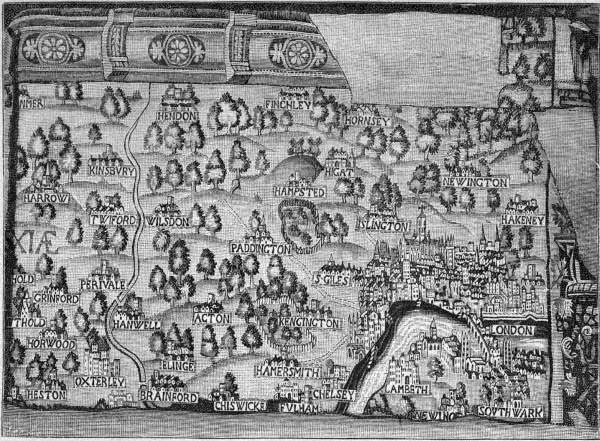
map of, in 1570, 493
Longland, John, Bishop of Lincoln, 344
Lord’s Prayer, metrical version of, 248
Magdalen College, Oxford, 554
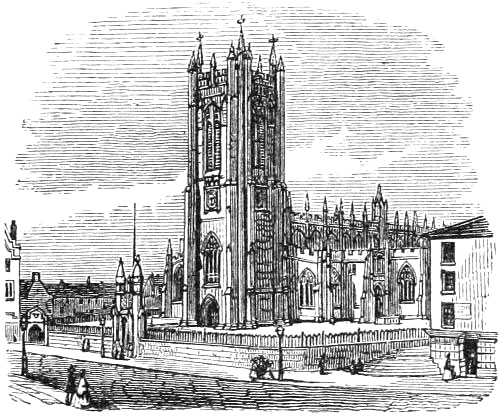
Manchester, parochial history of, 515
Manumission of slaves, 81, 82, 332, 333
Market Harborough Church, 186
Married clergy, 262
Mass, 200, 236, 237, 243-248
Matins, 200, 202, 204
Mediety, benefices held in, 56
“Minster,” 37
Miracle plays, 315
Mission work among the Anglo-Saxons, 21, 24
Monasteries, Saxon, 28-37;
revival of, under Edgar and Canute, 37;
Norman, 90-93;
character, 366;
social influence, 367;
parochial influence, 369
Money, comparative value of, in 1292, 1534, and 1890, 404
Monks, 73, 97, 98, 108, 285
Mortuary services, 457-462
Morville, 114
Myrk John, “Instructions for Parish Priests,” 232
“Myrroure of our Ladye,” 249
Newark, 523
Newnham, Gloucestershire, 119
Non-residence, 146, 326, 330
Norman bishops, abbots, priests, costume of, 83, 91
Norman conquest, results of, 84
Normans, church building by the, 87, 88
Northumberland, Earl of, staff of domestic chapel, 413
Norway, anecdotes of its conversion, 17-19;
introduction of Christianity into, 18, 19
Norwich, parishes of, 490
Oils for baptism and unction, 72, 75
Offering days, 71, 73
Offerings as source of income, 400
Offertory, 245;
of the domestic chapels, 414, 426
Opinions during the Middle Ages, 546
Orarium, or stole, 192
Ordeal, 66
Ordericus Vitalis, 90, 115
Orders of the clergy, 74
Ordination, 144-146;
refusal of, 327, 328
Pallium, 191
Papal supremacy, 85
Parish clerk, 67, 283, 298-305
Parishes, origin of, 44-46;
extent of, 50, 110;
subdivision of, 51, 53;
number of, in A.D. 1292 and A.D. 1534, 385, 394;
income of, 389, 396, 397-406
Parish priest, his ecclesiastical status, 50;
social status, 51, 73;
instructions for, 232-240
Parsonage houses, 148-158, at Weston Turville, West Dean, Alfriston, Kelvedon, Kingston-on-Thames, Bulmer, Ingrave, Ingatestone, Allington, Little Bromley, North Benfleet, Great Bentley, St. Peter’s Colchester, Radwinter, Laindon; and 161
Passion play, 304, 315
Patronage, abuse of, by the Crown, 321
Paulinus of York, 17, 21
Peckham, Archbishop, his manual of teaching, 216
Penance, 201;
by proxy, 64;
forbidden, 64;
for sabbath-breaking, 201
Penitential system, Saxon, 532
Peter Lombard, 137
Pickering, 117
“Piers Plowman,” Vision and Creed, extracts from, 132, 133, 150, 171, 203, 207, 278
Pilgrimage, 308;
places of, 309
Pilgrims, 309
Pledge breaking, punishment of, 65.
Pluralities, 323
Pocklington, 117
Poetry, devotional, 255-257
“Poor Parson of a Town,” Chaucer’s, 550
Preaching, 62, 71, 75, 214-223, 285-288;
helps in, 223, 224
Prebend, 351;
of Lincoln Cathedral, 353
Prebendaries of Lincoln, 351;
of Chichester, 361
Presentation of offenders to the bishop, 62, 67
Priests, character of, 68, 71, 73, 233;
duties of, 69, 72, 233-240
Primer, 249
Prince bishops of Durham, 363;
of Winchester, 364;
of Ely, 364
Privilege of clergy, 86
Procession, or Litany, 212, 311
Processions to mother church, 121;
to cathedral, 121, 299
Puch the Ealdorman, consecration of his church at South Burton, 46
Recluse, 295, 527
Rectors not in holy orders, 325, 327, 328
Revenues of the bishops, deans, and chapters, etc., of Lincoln Cathedral, 344;
of Chichester Cathedral, 360
Robert Pullein, 138
Roger Bacon, 139
Rotherham, parochial history of, 516;
College, 517
Roundelay, 118
Royal chapels, 46, 123
Ruthwell, cross at, 25
Saffron Walden Church, 185
Saints, canonization by local synods, 63, 81
Saints’ Days, 80;
appointed by synods, 63, 81
St. Alban’s, monastery and town of, 513
St. Edmund’s Bury, monastery and town of, 510
Sanctuary, 75, 306;
right of, in churches, 75, 306;
in churchyards, 308;
in certain persons, 308
Saxon clergy, 21, 23, 38, 57-83;
vestments of, 62, 83
Saxon codes of law, 39, 57
Saxon nobleman, house of, 47
Scholastic theology, 137
“Sentences” of Peter Lombard, 137
Serfs admitted to Orders, 130
Sermon helps, 223
Sermons, 215
Service books and vestments which each church was required to possess, 67, 189, 195
Services in church, 200;
attendance at, on Sundays, 79, 201, 203;
on week-days, 205-207
“Services,” 479
Sham priests, 143, 144
Shawbury, 112
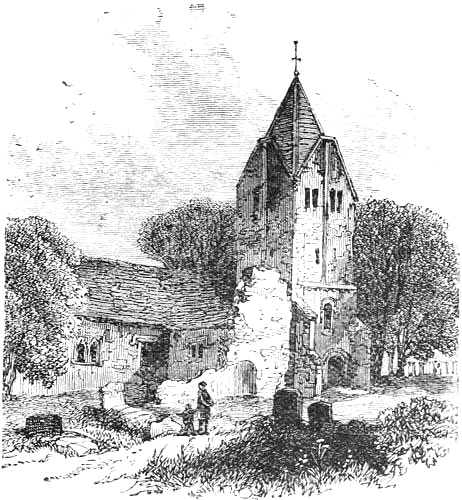
Shoreham Church, 89
Shrine of Edward Confessor, 187
Sick, visitation of, 161, 237, 239
Sins, eight deadly, 214;
seven deadly, 221, 226, 230
Slavery, 72, 81-83, 332
Slave-trade, 82, 83
Sompting Church, 55
Sons of clergy, 262, 273-278
Sponsors, at Confirmation, 55, 69, 234;
at Baptism, 234
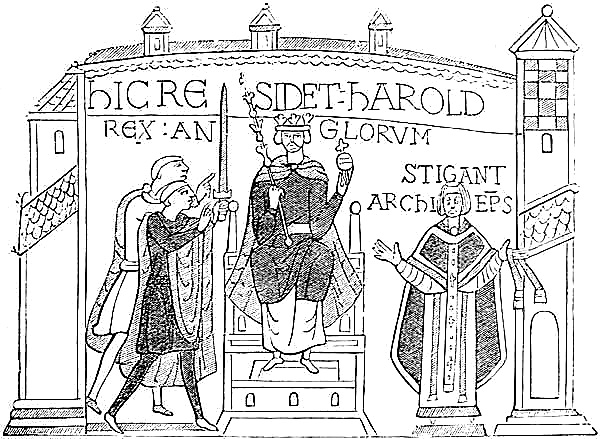
Stigand, Archbishop, 84, 86
Stokesay, 119
Stratford, John de, Archbishop, injunction on costume of clergy, 164, 188
Students, 140-144
“Summa Theologica” of Thomas Aquinas, 138
Sunday, observance of, 69, 73, 79, 205;
penalty for desecration of, 201, note
Surnames of ecclesiastics taken from their birthplaces, 135
Surplice, 193, 194
Synodals, annual sum due from incumbent of a benefice to the bishop, 397;
paid on attending the synod to procure the holy oils.
Synods, 41, 67, 337
Tapers carried at baptism (Harl. MS. 2278, f. 76);
at marriage, 496;
churching, 496;
penance, 315;
funerals, 496
“Taxatio” of Pope Nicholas IV., 381
Teaching by priests, 63, 214, 216-223;
by parents, 69
Temples, Anglo-Saxon, 9-11;
Norse, 18, 19
Ten Commandments, exposition of, 218;
metrical version of, 239
Theodore of Tarsus, Archbishop of Canterbury, 40;
holds a synod at Hertford A.D. 673, at which the Heptarchic Churches unite into the Church of England, 41;
divides the Heptarchic dioceses, 41;
encourages the parochial system, 45
Thirteenth century, character of, 548
Thomas Aquinas, 138
Thoresby, Archbishop of York, his manual of teaching, 222
Thornbury, staff of domestic chapel, 413
Tithe, 78;
small, 99, 101
Titles for Orders, 145
Tower of London, domestic chapel, 409
Town parishes, origin of, 489
Towns, description of, 487;
founded by monasteries, 507;
Burton-on-Trent, 508;
St. Edmund’s Bury, 510;
St. Albans, 513
Township, Saxon, description of, 4, 5
Twelfth century, religious character of, 547
Types and antitypes, 231
Unction, Extreme, 237, 239
Universities, 136, 140
“Valor” of Henry VIII., 392
Vestments, clerical, 62, 98, 165, 191, 194, 195, 198, 199, 244, 299;
origin of, 191;
symbolism of, 196
Vicar, 99-107
Vicarages, foundation of, 98-108
Vicars choral, 341;
of Lincoln, 355;
of Chichester, 362
Virtues, the seven chief, 221, 229
Visitation of the sick, 162, 237, 239, 282
Visitation, the bishop’s, 279, 337;
articles, 281, and replies, 285-289;
by the archdeacon, 338
Wakefield bridge and chapel, 528
Wapentake, 5
Warham, William, 564, 565, note
Warwick Chantry Chapel, Tewkesbury, 454
Weapons carried by clergy, 167, 183
West Dean parsonage house, 151
Westminster, synod of, A.D. 1102, 98, 113
Whalley, 107, 108, 120;
history of the parish of, 557
Wiclif’s Bible, 242
Wihtred, King of Kent, laws of, 57, 59, 77, 81
Wilfrid of York, apostle of the South Saxons, 40, 41, 42
Wills of clergymen, 171-183
Winchester, synod of, A.D. 1070, 86
Windsor, domestic chapels, 412
Winfrid (Boniface), 22, 60
Wingham, college of, 564, note
Woolrichston, 131
Wye, college of, 566, note
Yatton, 106
Yellow pest, seventh century, 39
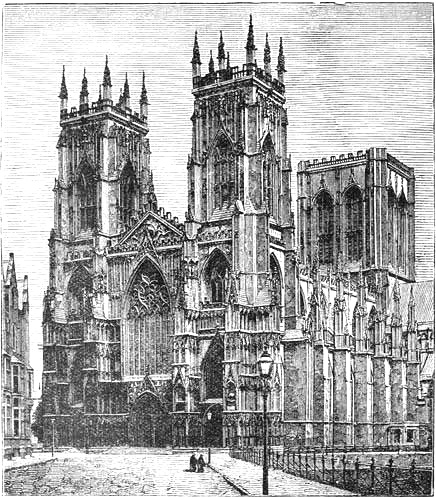
York, Minster, 503, 504;
St. Mary’s Abbey, 503;
hospitals in, 504;
parish churches, 505;
of clergy, 505;
income of parochial benefices in, 506;
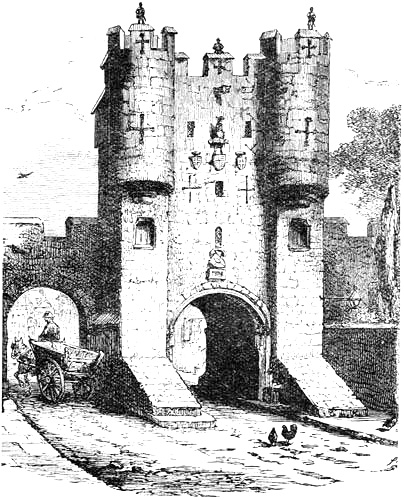
Micklegate Bar, 487
Zacharias, Bishop of Rome, 61
THE END.
PRINTED BY WILLIAM CLOWES AND SONS, LIMITED, LONDON AND BECCLES.
Footnotes:
[1] We gather from FitzHerbert “On Surveyinge,” chap. xl. (1470 to 1538,
A.D.) that this condition of things continued general to the end of the
sixteenth century.
[2] Grimm, Stallybras’s ed., i. 90.
[3] Thorpe, “Ancient Laws,” etc., 201.
[4] “Burnt Njal.”
[5] We know very little of the religion of these Teutonic tribes before
their conversion, or of its usages. Mr. Kemble had “no hesitation in
asserting” that their religion was the same as that of the Scandinavians;
he thought that the Mark and system of land occupation which had existed
long before in their native seats was introduced in its entirety into
their new settlements, and that every Mark had its fanum, delubrum or
sacellum; and, further, that the priests attached to these heathen
churches had lands—perhaps freewill offerings, too—for their support.
Under these circumstances, he argues that nothing could be more natural
than the establishment of a baptismal church in every Mark which adopted
Christianity and the transference of the old endowments to the new
priesthood (“The Saxons in England,” ii. 423).
[6] See a list of them at p. 63.
[7] 27th of the Council of London, 1102 A.D.
[8] Coifi asked, Quis aras et fana idolorum cum septis quibus erant
circumdata primus profanare debet ... pergebat ad idola ... mox
appropinquabat ad fanum.... In King Alfred’s Anglo-Saxon version of Bede,
aras is represented by wigbed, fana by heargas, idolorum by
deofolgild, a septis in one place by hegum (hedges), and in the other by
getymbro. Getymbro may mean a construction of any material, but probably
here of timber (“Eccl. Hist.,” ii. c. 13).
[9] There is another notice of the existence of temples among the East
Saxons, in the narrative of Bishop Jaruman’s work of reclaiming the half
of those people under the rule of the sub-king Sighere, when they had
relapsed to their old superstitions as the result of the great plague of
664 A.D. Bede says that the people “began to restore the temples that had
been abandoned, and to adore idols”; but Jaruman “restored them to the way
of righteousness; so that, either forsaking or destroying the temples and
altars which they had erected, they reopened the churches.” At first
sight, the narrative gives the idea of a number of temples, and a number
of churches scattered over the country; but, on consideration, we call to
mind that the East Saxons had been converted by Cedd only ten or twelve
years before (653), and that we do not read of his building more than two
churches, one at Tilbury on the Thames, the other at Bradwell, at the
mouth of the Blackwater, which was probably outside the district in
question; and the temples spoken of may not have been more numerous than
the churches mentioned in the same vague terms; or Bede may have had in
mind the open-air places of worship of the old religion and the prayer
stations at which the Christian missionaries used to assemble their
converts (“Eccl. Hist.,” iii. c. 30).
[10] Professor Skeat, in letters to the present writer.
[11] Anglo-Saxon nom. hearh; dat. hearge; pl. nom. heargas. Many
English words are formed on “dative” types.
[12] In Icelandic, hörgr = “a heathen place of worship, an altar of
stone erected on a high place, or a sacrificial cairn built in the open
air, and without images.”
[13] Whitaker’s “Craven,” p. 500.
[14] Saint Lewinna is said to have suffered martyrdom for her faith at
the hands of the heathen South Saxon, during the time of Archbishop
Theodore. “Acta Sanct.,” July 24, p. 608, and “Sussex Archeol. Coll.,”
vol. i. p. 45.
[15] Some stories of the introduction of Christianity among others of the
rude northern peoples are well worth giving as an illustration, in
likenesses, and in contrasts, of our own story, and especially because
they give a quantity of details which will supply the paucity of such
details in our own histories. They are later in time, but they belong to a
similar phase of manners.
When Harold Klak, King of Jutland, who had received baptism on a visit to
the Court of Louis le Debonaire (A.D. 820), returned home and destroyed
the native shrines, proscribed the sacrifices, and abolished the
priesthood, his people resented it, and drove him into exile.
Hacon of Norway had been baptized at the Court of our King Athelstan. At
first he sent for a bishop and priests from England; a few of his intimate
companions received baptism, and two or three churches were built in the
district more immediately subject to him. Then at the Froste Thing, the
winter assembly of the whole people, the king proposed to them to accept
baptism. One of the bonders replied, in the name of his fellow-chiefs,
“The ancient faith which our fathers and forefathers held from the oldest
times, though we are not so brave men as our ancestors, has served us to
the present time. If you intend to take the matter up with a high hand,
and try to force us, we bonders,” he said, “have resolved among ourselves
to part with you, and take some other chief, under whom we may freely and
safely enjoy the faith which suits our inclinations.” The following winter
four of the bonders bound themselves by oath to force the king to
sacrifice to the gods, and to root out Christianity from Norway. The
churches were burnt, and the priests stoned, and when the king came to the
Yule Thing, he consented to taste the horseflesh of the sacrifice, and
drink to the gods.
When Olaf Tryggveson gained the throne of Norway, having been baptized in
England, he began by destroying the temples in his own territory, and
declared that he would make all Norway Christian or die. The crisis came
at the Midsummer Althing, held at Mære, where was an ancient temple; and
thither all the great chiefs and bonders, and the whole strength of the
heathen party, assembled. At a preliminary meeting of the bonders, Olaf
proposed to them to adopt the Christian religion; they demanded, on the
other hand, that he should offer sacrifice to the gods. He consented to go
with them to the temple, and entered it with a great number of his own
adherents; and when the sacrifice began the king suddenly struck down the
image of Thor with his gold inlaid axe so that it rolled down at his feet;
at this signal his men struck down the rest of the images from their
seats, and then came forth and again demanded that the people should
abandon their belief in gods who were so powerless. The people
surrendered, and “took baptism.” Subsequently, Olaf Haraldson (1015),
learning that the old sacrifices were still secretly offered at Mære, and
other places, surprised a party at Mære, who were engaged in the forbidden
worship, put their leader to death, and confiscated the property of the
rest. Then Olaf went to the uplands, and summoned a Thing. Gudbrand, a
powerful chief of the district, sent a message-token summoning the
peasants far and wide to come to the Thing, and resist the king’s demand
to abandon their ancient faith. Gudbrand had a temple on his own land, in
which was an image of Thor, made up of wood, of great size, hollow within,
covered without with ornaments of gold and silver. At the first meeting,
Sigurd the Bishop, arrayed in his robes, with his mitre on his head, and
his staff in his hand, preached to the assembly about the true faith and
the wonderful works of God. When he had finished, one of the bonders said:
“Many things are told us by this horned man, with a staff in his hand,
crooked at the top like a ram’s horn; since your God, you say, is so
powerful, tell him to make it clear sunshine to-morrow, and we will meet
you here again, and do one of two things—either agree with you about this
matter, or fight you.” Accordingly, on the morrow, before sunrise, the
assembly came together again to the Thing-field, Olaf and his followers on
one side, and Gudbrand and his men bringing with them into the field the
great image of Thor, glittering with gold and silver, to which the heathen
party did obeisance. Olaf had given instructions beforehand to one of his
chiefs, Kolbein the Strong, who usually carried besides his sword a great
club. “Dale Gudbrand,” said the king, “thinks to frighten us with his god,
who cannot even move without being carried. You say that our God is
invisible, turn your eyes to the east, and behold his splendour,” (for the
sun was just rising above the horizon). And when they all turned to look,
Kolbein the Strong acted upon his instructions; he struck the idol with
his war-club with such force that it broke in pieces, and a number of mice
ran out of it among the crowd. Olaf taunted them with the helplessness of
such a god; and Gudbrand admitted the force of the argument. “Our god will
not help us, so we will believe on the God thou believest in.” He and all
present were baptized, and received the teachers whom King Olaf and Bishop
Sigurd set over them, and Gudbrand himself built a church in the valley.
There was a great temple at Upsala, with idols of Thor, Woden, and Frigga,
which was afterwards converted into a church (see Snorre Sturlusun’s
“Heimskringla,” translated by S. Lang, with notes by R. B. Anderson, vol.
i. pp. 103-105, 110, and vol. iv. p. 40).
Temples and sacrifices seem to imply the existence of priests; but it is
remarkable that, in the collisions between Hakon and the Olafs and the
heathenism of Norway, there is no mention of a single priest.
[16] Bede, “Eccles. Hist.,” ii. 14.
[17] Ibid., ii. 16.
[18] Bede, iii. 3.
[19] Ibid., iii. 5.
[20] Ibid., iii. 14.
[21] Ibid., v. 6. There are other indications that travellers sometimes
took tents on their journeys through the thinly inhabited country.
[22] Pertz, ii. 334.
[23] Bede, iii. 26.
[24] Bede, iv. 27.
[25] In the life of St. Willibald, we read that “it was the ancient custom
of the Saxon nation, on the estates of some of their nobles and great men,
to erect not a church, but the sign of the Holy Cross, dedicated to God,
beautifully and honourably adorned, and exalted on high for the common use
of daily prayer” (Acta SS. Ord. Benedict, sect. iii., part 2). So it was a
custom with “St. Kentigern to erect a cross in any place where he had
converted the people, and where he had been staying for a time” (“Vita
Kentigerni,” by Joscelin, the Monk of Furness). Adalbert, a Gallic bishop,
in the time of St. Boniface, preached in fields and at wells, and set up
little crosses and oratories in various places.
[26] The church at Bradfield-on-Avon, recently discovered, unaltered and
uninjured, was probably the church of one of these monasteries.
[27] Of the early monasteries of the East Saxons, the East Anglians, the
South Saxons, and of the Dioceses of Rochester and Hereford, little is
known.
[28] “Historical Church Atlas,” E. McClure.
[29] Secular monasteries are alluded to in the fifth canon of Clovesho
(A.D. 747), and eighth canon of Calchythe (816). A canon of Clovesho (803)
forbad laymen to be abbots.
[30] Bishop of Oxford, “Const. Hist.,” i. 251.
[31] The Bishop of Oxford, however, says, “Occasional traces of
Ecclesiastical assemblies of single kingdoms occur, but they are scarcely
distinguishable from the separate Witenagemots” (“Const. Hist.,” i. 264).
[32] The 123rd of the novels.
[33] Labbe and Cossart Councils, 9. 119.
[34] Letters of Gregory the Great, lib. xii. ep. xi. (Migne 77, p. 1226).
[35] Another capitulary, dated 832, ordained that if there were an
unendowed church it should be endowed with a manse and two villani by the
freemen who frequented it, and if they refuse it shall be pulled down.
[36] When Willibrord, a Northumbrian educated at Ripon, was evangelizing
Frankish Frisia, 692, etc., Alcuin records that he founded not only
monasteries but encouraged the foundation of parish churches. Alcuin,
“Opera II.,” tom. 101, p. 834. Migne.
[37] Bede, iii. 17.
[38] Ibid., v. 4, 5.
[39] At the same time, to encourage commerce, a merchant who had made
three voyages in his own ship was entitled to the rank of Thane.
[40] The Bishop of Oxford and earlier authorities are of opinion that the
“burg geat settl” means the right of jurisdiction over tenants. Sharon
Turner conjectures that the place in the king’s hall means a seat in the
Witenagemot.
[41] Thorpe, “Ancient Laws,” i. 367.
[42] S.P.C.K., “Roch. Dioc. Hist.,” p. 25.
[43] Ellis’s “Introduction to Domesday Book.”
[44] Parishes with two rectors continued not infrequently throughout the
Middle Ages; there are some even to the present day. The way in which the
parochial duties were divided is indicated by two examples given in
Whitaker’s “Craven” (p. 504). Linton has two rectors, who take the service
in alternate weeks; they have their stalls on either side of the choir,
and parsonage houses nearly adjoining one another. So at Bonsal each
rector has his own stall and pulpit.
Sometimes each mediety had its own church. The churches of Willingale
Spain and Willingale Doe, in Essex, are in the same churchyard. At
Pakefield, Suffolk, there is a double church, each with its choir and nave
and altar, divided only by an open arcade.
[45] Bôt = compensation.
[46] This is the earliest notice (in England at least) of the ancient
custom of having a confirmation god-parent, different from the baptismal
sponsors. There are other notices of it in the canons of Edgar (see p. 69)
and the twenty-second of the laws of Canute; and in many canons of English
Mediæval Diocesan Councils. Queen Elizabeth and Edward VI. were each
baptized and confirmed at the same time, and, according to primitive
custom, each had three baptismal sponsors and one confirmation god-parent.
It is still enjoined by the third rubric at the end of the Church
Catechism and by the twenty-ninth of the canons of 1603.
[47] i.e. be scourged.
[48] So it is usually stated, but the date and place of the council are
very questionable.
[49] Zachary’s letters to the English inhabitants of Britain were in Latin
and English. The documents are not on record, but we are told that they
were read at the Council; in them he “familiariter admonebat et veraciter
conveniebat et postremo amabiliter exorabat,” and to those who despise
these modes of address he “anathematis sententiam procul dubio properandam
insinuabat.”
[50] This prayer is as follows: “O Lord, we beseech Thee, of Thy great
mercy, grant that the soul of (such a person) may be secured in a state of
peace and repose, and that he may be admitted with the rest of Thy saints
into the region of light and happiness.”
[51] Among the “Canons of Edgar,” the following occurs:—“A powerful man
may satisfy a sentence of seven years’ fasting in three days. Let him lay
aside his weapons and ornaments, and go barefoot and live hard, etc., and
take to him twelve men to fast three days on bread, water, and green
herbs, and get wherever he can 7 times 120 men, who shall fast for him
three days, then will be fasted as many fasts as there are days in seven
years.”
[52] Thorpe, i. 227.
[53] It is not known by whose authority the ecclesiastical regulations
which are entitled the canons of Edgar were drawn up, but they appear to
be of this date.
[54] That it might be seen that they were complete and in good order, just
as the laity came to the Hundred mote or Wapentake with their weapons. For
list of them see Ælfric’s Pastoral, 44.
[55] To keep a copy of the constitutions made at the synod.
[56] The time was subsequently shortened to seven days.
[57] Probably spots of ground accounted sacred.
[58] In the “vulgar tongue.”
[59] The priests had a small consecrated slab of stone which they used on
missionary journeys and at other times.
[60] The Legatine Council of Cealchythe (787, 5 c.) explains this by
saying he must not celebrate with naked thighs. (See Exodus xxviii. 42.)
[61] For hours of service see Thorpe, “Ancient Laws,” etc., ii. 359.
[62] By laws of Alfred and Guthrum, if a priest misdirect people about a
festival or fast he shall pay 30s.
[63] Meaning obscure.
[64] The chief distinction between nuns and mynchens appears to have
consisted in the superior age and strictness of life of the former
(Thorpe, “Ancient Laws”).
[65] The laws of Canute say ½d. worth of wax for every hide on Easter
Eve, All Saints, and Purification.
[66] Allusions to the Danish incursions.
[67] Fifth law of Ine.
[68] Law 16.
[69] Law 17.
[70] Mr. Kemble, as we have seen, is of opinion that the people in those
days of heathendom had a temple in every township, and that the priesthood
were endowed with lands as well as offerings, but we do not find
sufficient evidence of this.
[71] The monks of Jumieges, in the seventh century, fitted out vessels and
sailed great distances to redeem slaves. St. Eligius spent large sums in
redeeming them—20, 50, 100 at a time. Christian missionaries bought
slaves, and trained them as Christians.
[72] “Diplomatarium Anglicanum.”
[73] “Collier,” i. 241. The Cathedral Churches of the Continent were
universally served by Canons.
[74] Bishop of Oxford’s “Select Charters,” p. 73.
[75] Robert d’Oyley, a powerful Norman noble, repaired the ruinous
parochial churches in and out of Oxford in the reign of William I.
(Brewer, “Endowment, etc., of the Church of England,” p. 74). Corsuen
built a number of houses and two churches on a piece of land granted to
him in the suburb of Lincoln. (? St. Mary le Wigford, and St. Peter at Gowts.)
[76] Eyton’s “Shropshire” mentions several cases in that county.
[77] Bohn’s edition of “Eccl. Hist, of Ordericus Vitalis,” i. 10.
[78] Nearly all the village churches of the Craven district of Yorkshire
were built in the time of Henry I., and many of them enlarged in the time
of Henry VIII. (Whitaker’s “Craven”).
[79] Orderic, iv. xxiv.
[80] It was stopped by Innocent III. in a decretal letter to the
Archbishop of Canterbury, c. 1200.
[81] See Sir H. Ellis’s “Introduction to Domesday,” i. 324, 325.
[82] The Church of Gisburn, Yorkshire, was given to the Nunnery of
Stainfield, Lincolnshire, by a Percy. For fifty years the nuns simply
presented to the rectory like any other patron; then in 1226 Archbishop
Walter Gray assigned them ad proprios usus, half a carucate of the glebe
land, and the tithe of corn in various places named, but without endowing
a vicarage, and the convent presented six more rectors under those
conditions; it was not until 1341 that a vicarage was ordained.
(Whitaker’s “Craven,” p. 45).
[83] This Council also forbade a vicar to hold more than one parish.
[84] Where the religious house was situated in or near the parish church,
special arrangements were not infrequently made. At Tortington, near
Arundel, Sussex, was a small house of Austin canons which existed before
the time of King John. The vicar of the parish had a corrody in the house,
consisting of a right to board and lodging for himself and a serving boy.
At Sybeton, Suffolk, the vicar and curate had their lodging and food in
the religious house (“Valor,” iii. 442). At Taunton, in 1308, the Priory
supplied the vicar with allowances of bread and ale, and hay and corn, and
two shillings a year for the shoeing of his horse (“Bath and Wells,” p.
121, S.P.C.K.). See also Lenton, p. 404.
[85] One of the constitutions of Archbishop Stratford (1333) requires
religious appropriators of churches to give a benefaction to the poor
yearly, according to the judgment of the bishop, on pain of sequestration.
[86] Newcourt’s “Repertorium,” ii. 310. Upon making an appropriation an
annual pension was usually reserved to the bishop and his successors,
payable by the body benefited, for a recompense of the profits which the
bishops would otherwise have received (Sir R. Phillimore, “Ecclesiastical
Law”).
[87] i.e., which had obtained from the Court of Rome exemption from the
Bishop’s ordinary jurisdiction.
[88] According to Matthew Paris, “the bishops of England at that time
designed to recover from the monasteries all the appropriated churches.
Grostete of Lincoln took steps to carry out the design in his diocese, but
the monks appealed to Rome and defeated the bishop” (Matthew Paris, Bohn’s
ed., ii. pp. 325, 326, 401, 420).
[89] Gray’s “Register,” p. 113. Surtees Society.
[90] Ibid., p. 112.
[91] Gray’s “Register,” p. 113. Surtees Society.
[92] Extracts from Lincoln Registers. Harl. MS. 6950, p. 1250.
[93] Bronscombe’s “Register,” p. 253.
[94] Ibid., p. 330.
[95] Ibid., p. 334.
[96] “Bath and Wells,” p. 122, S.P.C.K.
[97] Long Preston, in Craven, is mentioned in “Domesday.” In the reign of
Stephen it was granted by Wm. de Amundeville to the church and canons of
Embsay. In 1303, Archbishop Corbridge ordained that the church should be
served by a fit vicar and his ministers. In 1307 there was another
“taxation,” a third in 1322, and a fourth in 1455 (Whitaker, “Craven,” p.
145).
[98] In the Episcopal Register of Lincoln, under date 25th April, 1511,
William, Abbot of Oseney, was admitted to the Vicarage of St. Mary
Magdalen, Oxford, on the presentation of the Abbot and Convent of the
same.
[99] “Lichfield,” p. 138, S.P.C.K.
[100] It was this which made a rectory so much like a small monastery in
its constitution, that rectories were often called minsters, and
monasteries often merged into rectories.
[101] Hopesay and Hopton, originally probably chapels parochial of Clun,
were of the nature of free chapels, i.e. not at the disposal of the
baroness or of the rector, but only of the lord of the fee (Eyton’s
“Shropshire,” ix. 258).
[102] Eyton’s “Shropshire,” viii. 149.
[103] The two chapels of Rilston and Coniston—(Coniston chapel is very
early Norman, or still earlier, with triangular windows)—in the parish of
Burnsal, co. York, as late as the beginning of this century had had no
chaplains or separate endowment, but were still served in the primitive
mode by the Rector of Burnsal; both have cylindrical fonts of high
antiquity, and therefore must always have had the sacramentalia. Chapels
with these rights were always presentable, and served by chaplains who
took an oath of obedience to the rector, and were not removable at
pleasure; whereas mere chapels-of-ease were served by stipendiaries
removable, or by the parish priest himself (Whitaker’s “Craven,” p. 528).
[104] The probable explanation is that the lord of the ville of Billingley
had made some arrangement with the mother church for the payment of half
his tithe to his own chapel; the small payments from the other chapels
were acknowledgments of subjection.
[105] The original deed is in possession of Mr. G. Morris, of Shrewsbury.
“Know all men, both now and hereafter, on the day of the dedication of the
cemetery of Eston that I, Robert, son of Aher, gave to God and to the
chapel of the same vill of Eston one virgate of land, containing sixty
acres, and all tithe of my demesne of the same vill, and one mansion, for
the health of my soul and of all my predecessors and successors. And that
my gift may be free and quit of all reclaim by me or my heirs and may ever
remain firm and stable I have fortified it with this present writing, and
with the impression of my seal.—There being witnesses Robert, Bishop of
Hereford, Reinald, Prior of Wenlock, Peter the archdeacon, and many
others” (Eyton’s “Shropshire,” i. p. 207).
[106] See p. 90.
[107] There were more monasteries founded in the reign of Stephen than in
any other period of similar duration.
[108] A. Heales, “History of Kingston-upon-Thames.”
[109] Archbishop Gray’s “Register,” p. 168.
[110] Ibid., p. 211.
[111] Archbishop Gray’s “Register,” p. 45.
[112] Ibid.
[113] Eyton’s “Shropshire,” v. 28.
[114] Whitaker’s “History of Whalley,” p. 223.
[115] Whitaker’s “History of Whalley,” pp. 223-225.
[116] The great Law-book of the Mediæval Church.
[117] The king is supposed to visit his own chapels and hospitals by the
Lord High Chancellor.
[118] Sir R. Phillimore.
[119] In the college at Tonge, any one of the five chaplains bringing a
guest to dinner was to pay for him 3d. if at the high table, and ¼d.
if at the low (S.P.C.K., “Lichfield,” p. 161).
[120] A. Heales, “History of the Free Chapel of St. Mary Magdalen,
Kingston-on-Thames.”
[121] Pages 20 and 82.
[122] Page 68.
[123] When Winfrid, afterwards St. Boniface, showed a strong precocious
vocation for the religious life, his father, who seems to have been the
principal person of his town, forthwith sent him—at six or seven years of
age—to a religious house at Exeter, to be educated for the Church.
[124] Men who had any serious personal blemish, or any defect in respect
to birth, learning, or morals, were excluded by canon from ordination
(Constitutions of Otho, 1237). Illegitimacy and servile origin were both
defects of birth.
[125] Thorold Rogers, “Agriculture and Prices in England,” vol. ii. pp.
613, 615, 616.
[126] “Eccl. Proceedings of Courts of Durham,” Surtees Society, p. 5.
[127] John Knox said, “Every scholar is something added to the riches of
the Commonwealth.”
[128] See the quotation in its entirety on p. 278.
[129] Cobbler.
[130] “The Babees Book,” Early English Text Society, p. 401.
Of Archbishops of Canterbury, the parentage of William of Corbeuil is not
known; the inference is that it was humble. Thomas Becket was the son of a
London citizen; Richard, of humble parents; Baldwin, of humble parents at
Exeter; Richard Grant, parentage unknown; Edmund Rich, son of a merchant
at Abingdon; Richard Kilwardby, a Dominican friar of unknown parentage;
Robert Winchelsey, probably of humble birth; Walter Reynolds, the son of a
baker at Windsor; Chichele, a shepherd-boy, picked up and educated by
William of Wykham; Cranmer’s people were small squires in Notts. And so in
other sees. Ralph Flambard, Bishop of Durham, the great Justiciar of Henry
I., was the son of a poor Norman priest; Thomas of Rotherham, Archbishop
of York, was of obscure parentage; Richard of Wych, the saintly Bishop of
Chichester, was the son of a decayed farmer at Droitwich, and for several
years worked on the land like a labourer; the famous Grostete was of a
poor family at Stradbroke, Suffolk; Thomas of Beckington, Bishop of Bath
and Wells, is said to have been the son of a weaver; John of Sheppey was
taken up and educated by Hamo, Bishop of Rochester, and succeeded his
benefactor in the see.
[131] By 9 Ed. II. c. 8, clerks in the king’s service were declared not
bound to residence on their benefice.
[132] The custom might sometimes be misleading. Thus, a priest in the
diocese of Bath and Wells with the high-sounding name of Richard de Burgh,
was a villein of the bishop who had given him freedom and holy orders.
[133] See notice of the college founded by Archbishop Thomas of Rotherham,
p. 517.
[134] The universal ignorance of the Greek language at that time made the
great works of the Eastern Church a sealed book to the scholars of the West.
[135] At the Council of Trent, nearly three hundred years after his death,
the “Summa” was placed on the secretary’s desk beside the Holy Scriptures,
as containing the orthodox solution of all theological questions.
[136] Wesley published an edition of it.
[137] Peter Lombard’s “Text-book.”
[138] “Norfolk Archæology,” vol. iv. p. 342.
[139] “Lincoln,” p. 194. S.P.C.K.
[140] “The York Pontifical,” p. 370. Surtees Society.
[141] In the Diocese of York, in 1344-5, there were ordained—
| Acolytes |
|
421 |
| Sub-deacons |
|
204, |
of whom |
71 |
were regulars. |
| Deacons |
|
326 |
" |
96 |
" |
| Priests |
|
271 |
" |
44 |
" |
| |
1222 |
|
211 |
In 1510-11, there were—
| Acolytes |
|
298, |
of whom |
17 |
were regulars. |
| Sub-deacons |
|
296 |
" |
51 |
" |
| Deacons |
|
248 |
" |
41 |
" |
| Priests |
|
265 |
" |
173 |
" |
| |
1107 |
|
282 |
In the first year of the episcopate of Bishop Stapledon of Exeter, viz.
from December 21, 1308, to September 20, 1309, there were ordained 539 to
the first tonsure, 438 acolytes, 104 sub-deacons, 177 deacons, 169
priests.
In the year from March 22, 1314, to December 20, 1315, there were ordained
75 to the first tonsure, 71 acolytes, 44 sub-deacons, 50 deacons, 66
priests.
[142] “In 1281 the Pope dispensed an acolyte, whose left little finger had
been shortened while a child by an unskilful surgeon, to hold a benefice
notwithstanding the defect” (“Calendar of Papal Registers,” 1491). “Jacob
Lowe and Sampson Meverall, base born, and Godfrey Ely, blind of one eye,
were dispensed by the Pope for ordination” (“Register of Smyth, Bishop of
Lichfield,” p. 175).
[143] “Lichfield,” p. 129. S.P.C.K. See additional examples in the chapter
on Abuses.
[144]
Now hath each rich a rule
To eaten by themselve,
In a privy parlour
For poor man sake,
Or in a chamber with a chimney;
And leave the chief hall,
That was made for meals
Men to eaten in.
The “Vision of Piers Ploughman.”
[145] Of which there is a description and drawing in the Records of the
Archæological Society of that county, vol. ii. p. 251.
[146] In those days the rooms of a house were not massed compactly
together under one roof; the hall was the primitive house, and additions
to it were effected by annexing distinct buildings, each of which was
called a house.
[147] Newcourt’s “Repertorium,” ii. p. 350.
[148] “Transactions of the Essex Archæological Society,” vol. ii. part ii.
(New Series), p. 141.
[149] Alfred Heales, “Kingston-on-Thames,” p. 17.
[150] Newcourt’s “Repertorium,” ii. p. 103.
[151] Newcourt’s “Repertorium,” ii. 281.
[152] Ibid., ii. 284.
[153] “Hist. of England,” i. p. 41.
[154] A lawsuit gives us a glimpse of John of Bishopstone, the rector of
Cliffe, at Hoo, going to church on the Sunday before Christmas, 1363,
accompanied by his chaplains, clerks, and household, as if they all lived
together (S.P.C.K., “Rochester,” p. 188).
[155] Newcourt’s “Repertorium,” ii. 97.
[156] Newcourt’s “Repertorium,” ii. 46.
[157] Ibid., ii. 309.
[158] A statute of 3 Ed. I., A.D. 1275, says, “Abbeys have been
overcharged by the resort of great men and others; none shall come to eat
or lodge in any house of religion of any others’ foundation than his own;
this does not intend that the grace of hospitality be withdrawn from such
as need.”
[159] See Matthew Paris under 1240 A.D., “to receive guests, rich and
poor, and show hospitality to laity and clergy according to their means,
as the custom of the place requires.”
[160] In the returns of a survey of the estates of the Dean and Chapter of
Exeter in 1300 both the manor houses and the rectory houses are included,
and their similarity is evident: “Culmstock Manor. There is a hall in the
Manor, and a soler within the hall and a chamber, a kitchen without
furnum and turella (stove and small turret for smoke and ventilation),
and a dove house; there wants a granary. Utpottery. There is in the
farmhouse a sufficient hall and chamber, a new grange, and other
sufficient houses, 1330. Vicar of Colyton, Richard Brondiche, is a leper.
Colyton Domus Sanctuarii (house in the churchyard). There is there a
competent hall with a chamber and chimney, a competent kitchen, without
turella, however; two granges; the other houses are sufficient; the
gardens are eaten up with age and badly kept. Branscombe Manor. There is a
hall with two chambers and garderobes good and sufficient; a new kitchen
with a good turella; all the other houses in good condition” (“Register
of Bishop Grandisson,” part i. p. 572).
[161] Clive, in the diocese of Worcester, was appropriated to Worcester
Priory; formerly the rector lived in the Aula Personæ. In the middle of
the thirteenth century the rectory house was let to a tenant. The vicar
lived in one of several houses in the village which belonged to the
benefice; there were two chaplains, one of whom lived in another of these
houses, and the second in a soler (“Register of Worcester Priory” (Camden
Society), p. lxxxi.).
[162] “Scenes and Characters of the Middle Ages,” p. 133.
[163] “Essex Archæol. Transactions,” vol. vi. part iii.
[164] Hingeston-Randolph’s “Register of Bishop Grandisson,” pp. 349, 356.
[165] Lyndewode, “Provinciale.” Compare the 74th of the Canons of 1603.
[166] “Grostete’s Letters” (Rolls Series), p. 49.
[167] “York Fabric Rolls” (Surtees Society), p. 243.
[168] For picture of the basilard and purse see Royal MS., 6 Ed. VI., f.
478, p. 492, etc.
[169] Catalogus omnium qui admissi pet’runt in fraternitatis beneficium
Monasterii Sti. Albani, cum picturis eorum et compendiosis narrationibus.
(British Mus., Nero D., vii.)
[170] These, with the descriptions, are taken from “Scenes and Characters
of the Middle Ages,” by the present writer.
[171] A. Gibbons, “Early Lincoln Wills,” p. 57.
[172] Ibid., p. 130.
[173] The record of a suit in the Ecclesiastical Court of Durham gives us
a curious little illustrative anecdote of a quarrel in the Rectory of
Walsingham, in the year 1370. The bishop, the archdeacon, and their
attendants were passing the night there, probably after a Visitation. The
record tells us in full detail how, after the Bishop had gone out of the
hall of the rectory into the chamber, the family remaining in the hall,
Nicholas de Skelton uttered threats against John of Auckland, the servant
of the archdeacon, viz. that he would break his head. One of the
archdeacon’s people intervened, when the angry Nicholas threatened to
break his head also. The archdeacon seems to have then interfered, when a
servant of Nicholas, offering to strike the archdeacon with a hawking
staff, the archdeacon drew his cultellum; the servant broke it in two
with his staff; the archdeacon hurled the half which he held, and it
killed another of the company who happened to interpose. The archdeacon
was summoned before the Court to answer for the homicide.
[174] Quoted from “Scenes and Characters of the Middle Ages,” p. 248, by
the present writer.
[175] Cushion for the back and seat of the bench.
[176] “Wills and Inventories” (Surtees Society), p. 54.
[177] “Testamenta Ebor.,” i. p. 371.
[178] “Testamenta Ebor.,” i. p. 385.
[179] “Testamenta Ebor.,” i. p. 82.
[180] York: “Wills and Inventories,” p. 117.
[181] “Essex Archæol. Transactions,” vol. vi. part ii. (New Series), p.
123.
[182] Holinshed’s “Description of Britain,” p. 233.
[183] Johnson’s “Canons,” etc., ii. 365.
[184] Stapledon’s “Register,” p. 182.
[185] H. Randolph, p. 378.
[186] Lyndewode, “Provinciale,” p. 35.
[187] Archbishop Gray’s “Register,” p. 217.
[188] Laid on tombs, or hung on the walls as ornaments. See Matthew Paris,
under 1256 (v. 574, Rolls ed.).
[189] See woodcut, p. 165.
[190] “Antiquary,” 1897, pp. 279, 298.
[191] For explanation of the meaning of the vestments in the “Book of
Ceremonies,” 1539, see Mackenzie Walcott, “Parish Churches before the
Reformation.”
[192] It is to be regretted that in the revived use of copes, as seen, for
example, on the steps at the west end of St. Paul’s, on the day of the
Queen’s Jubilee procession, the designers have taken the unwieldy and
ungraceful fifteenth and sixteenth century garment as their pattern; it is
shaped like a cone, it does not fit the shoulders, it imprisons the arms,
its corners overlap in front, while its hood sticks up at the back of the
head.
[193] Humbert de Romain, General of the Dominicans in the thirteenth
century, says that “the great and the poor seldom visited the churches.”
Neander’s “Church History,” vii. 439 (Bohn). The great, as we shall see in
Chapter XXVII., had their domestic chapels.
[194] T. Belson and J. Fowler, c. 1570, were sentenced to do penance in
church for working on a Sunday (“Ecclesiastical Proceedings of the Courts
of Durham” (Surtees Society), p. 105). Again, c. 1450, several persons
accused of working on Sundays and saints’ days were sentenced to precede
the procession as penitents, to receive two “fustigations,” and to abstain
from so offending in future under a penalty of 6s. 8d. (pp. 28-30). In
1451, Isabella Hunter and Katherine Pykering were sentenced, for washing
linen on the festival of St. Mary Magdalene, to receive two fustigations
cum manipulo lini (p. 30).
Francis Gray was admonished to come to church on Sunday under penalty of
4d., and on the festivals under penalty of 2d., to be applied to the
fabric of the church of Durham (p. 27).
The same year Thomas Kirkham and Thomas Hunter, accused of mowing a
certain meadow on the festival of St. Oswald and receiving payment for it,
were sentenced to precede the procession, carrying in hand a bottle of
hay, to receive four fustigations, and not to offend again under penalty
of 10s. (p. 32).
[195] Lyndwode says, “It maybe gathered that mass was always preceded by
matins or primes” (iii. 23).
[196] This was the normal hour in the time of Gregory of Tours and of
Gregory the Great.
[197] Bishop Poore, in his “Rule for Anchoresses,” advises them not to be
communicated oftener than twelve times a year. The Lateran Council of 1215
ordered that every one should communicate at least once a year at Easter,
and should confess at least once a year before Easter.
[198] Common.
[199] From Whitaker’s text of “Piers Ploughman’s Vision,” part ii. p. 529.
[200] Ibid. i. 104.
[201] Early English Text Society.
[202] In the presentation of the churchwardens of Ricall, Yorkshire, in
1519, they complain that “pedlars come into the church porch on feast
days, and there sell their goods.”
In 1416 the wardens and questmen of St. Michael-le-Belfry, York, presented
that “a common market of vendibles is held in the churchyard on Sundays
and holy days, and divers things, and goods, and rushes, are exposed for
sale” (“York Fabric Rolls”).
[203] Cardwell.
[204] Procter, “Hist. of the Book of Common Prayer,” p. 227.
[205] Peckham’s “Constitutions,” 1281, bid every priest to celebrate at
least once a week.
[206] “The York Manual,” by Rev. J. Raine (Surtees Society), p. 123.
[207] See pp. 460, 461, 496, and p. 472.
[208] The canons of Edgar required the clergy to preach every Sunday.
[209] It was early in the twelfth century that seven was adopted as the
number of the Sacraments, vices, virtues, etc. The seven Sacraments are
first mentioned by Otto, Bishop of Bamberg, in 1124 (Neander, “Church
History,” vii. 465).
[210] See second footnote, p. 214.
[211] See second footnote, p. 214.
[212] Not infrequently a great preacher was sent by a bishop round his
diocese, and people were invited by the offer of indulgences to all who
would go to hear him.
[213] From a very early time what we reckon as the first and second
commandments were taken together as the first; and what we reckon as the
tenth was divided into two. So King Alfred gives them in the beginning of
his Code of Law.
[214] Cum superstitionibus characterum.
[215] “Indolence, carnal security.”
[216] His writings are chiefly translations or adaptations of the works of
St. Bernard, St. Bonaventure, and Hugh and Richard of St. Victor. They are
marked by tenderness of feeling, vigour, and eloquence in his prose style,
and grace and beauty in his verse. See “Yorkshire Writers”—“Richard of
Hampole and his Followers,” by C. Horstman, 1895. Here is a short example
from “The Book made by Richard Hampole, Hermit, for an Anchoress” (Early
Eng. Text Society). “Wit thou well that a bodily turning to God without
thine heart following, is but a figure and likeness of virtue and of no
soothfastness. Therefore a wretched man or woman is that who neglecteth
all the inward keepings of himself, and maketh himself outwardly a form
only and likeness of holiness in habit or clothing, in speech and in
bodily works, beholding other men’s deeds and judging their faults,
thinking himself to be something when he is nothing, and so neglecteth
himself. Do thou not so, but turn thine heart with thy body principally to
God, and shape thee within in His likeness, by meekness and charity and
other spiritual virtues, and then art thou truly turned to Him.”
[217] See “The Parson’s Tale,” in Chaucer’s “Canterbury Tales.”
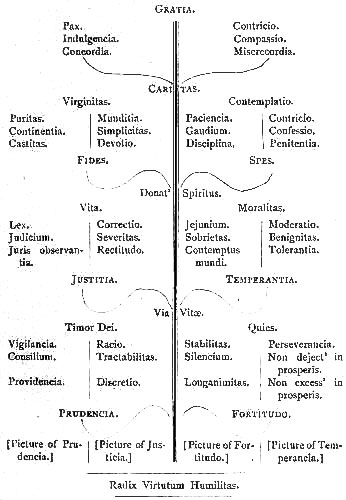
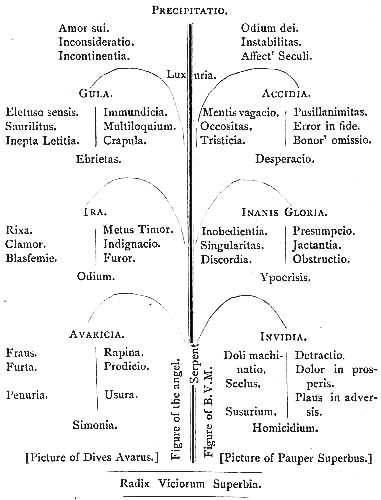
[218] Also in the Stowe MS. 89, 2, there are a series of trees
representing virtues and vices.
[219] Together.
[220] Other sponsors were required at the Confirmation (see p. 59).
[221] Archbishop Simon of Sudbury, 1378, made a Constitution that all
should confess and communicate thrice a year, viz. Easter, Pentecost, and
Christmas, on pain of excommunication and refusal of burial (Johnson’s
“Laws and Canons,” ii. 444).
[222] Death.
[223] In the latter part of the eleventh century, for reasons of
expediency, the custom was introduced of dipping the bread into the wine,
and so administering to the communicants. This was condemned by the
Council of Claremont 1095, but kept its ground in England till forbidden
by the Council of London in 1175. The withdrawal of the wine from the
laity altogether began in the twelfth century. Anselm had prepared the way
by affirming that “the whole Christ was taken under either species.”
Robert Pulleyn, 1170, taught that the flesh of Christ alone should be
distributed to the laity. The practice came into gradual use in the
thirteenth century; the second canon of Archbishop Peckham, 1281, bids the
parish priests to teach the more ignorant of the laity that the body and
blood of Christ are received under the single species of the bread. It is
believed not to have become general in England till it was ordered by the
Council of Constance in 1415, which excommunicated all priests who should
communicate the laity in both kinds. It is to be observed that in the
Sarum Missal there is no recognition whatever of administration in one
kind.
In some churches there was an endowment for the provision of the holy
bread, as at St. Mary Magdalen, Colchester.
[224] Gravely.
[225] Both.
[226] Hence.
[227] Maiden.
[228] This was first ordered by Pope Honorius III. in 1217.
[229] The churchyard was frequently called the “sanctuary.”
[230] Ratified.
[231] In baptism.
[232] Locked.
[233] There are various forms on record of this “general sentence of
excommunication.” Two are given at pp. 86 and 119 of the “York Manual”
(Surtees Society).
[234] Upon.
[235] Go.
[236] See plate opposite.
[237] Printed by the Early English Text Society.
[238] Chasuble.
[239] Believe.
[240] Another version says, “Don’t wait for the priest to ask for the mass
penny, but go up and offer, though there is no obligation; it will make
your chattle increase in your coffer.”
[241] From another version of the book we extract the following sentence,
which contains an expression of the doctrine of the Eucharist—
Every day thou mayest see
The same body that died for thee,
Tent[A] if thou wilt take,
In figure and in form of bread,
That Jesus dealt ere He were dead,
For His disciples’ sake.
[242] Abroad.
[243] Dead.
[244] Give utterance to.
[245] Also.
[246] “The Epic of the Fall of Man” (S. H. Gurteen), 1896. The translation
seems to be as close as may be, consistently with an intelligible
expression of the thoughts of the original and a poetical form.
[247] “Political, Religious, and Love Poems,” Furnival (Early English Text
Society), pp. 111, 151, 162.
[248] Ransom.
[249] Song of Solomon, ii. 5, 8.
[250] Whence his pain.
[251] Prosperity.
[252] It is easy to quote a long list of quasi-married bishops and
dignitaries of this period. The last two bishops of Elmham, Stigand and
Ethelmar, appointed by the saintly and ascetic Edward the Confessor, were
married men; so was Herbert, the first bishop of the same see (removed to
Norwich), appointed by the Conqueror, and perhaps the second William
(1086), and Edward (1121). Robert Bloet, Bishop of Lincoln (1094), had a
son Simon, whom he made Dean of that Cathedral. Roger of Salisbury (1107)
was married. Robert Lymesey, of Chester (1086-1117), left a daughter
settled with her husband, Noel, on the see lands near Eccleshall; and
Hugh, Dean of Derby in this episcopate, was married. Roger of Lichfield
(1121) was a married man; he put his son Richard into the Archdeaconry of
Coventry, and he was afterwards promoted to the see (1161). Three Bishops
of Durham were married men, viz. Ralph Flambard (1099), Geoffrey Rufus
(1133), and the famous Hugh Puiset (1153); the wife of the latter was a
lady of the Percy family. Several Archbishops of York were the sons of
married clergymen.
There is an extant letter from Thomas, the first Norman Archbishop of
York, in which he complains that his canons were married men. The Canons
of Durham turned out by Bishop William of S. Carilef (1081) were all
married men, so were some of those turned out of Rochester Cathedral by
Bishop Gundulf; one of them, Ægelric, who had retired to the Benefice of
Chatham, on his wife’s death obtained her burial by the monks of the
Cathedral in the most honourable manner (S.P.C.K., “Rochester,” p. 50).
[253] At a visitation of Lincoln Cathedral by Bishop Bokingham, 1363-1398,
it appeared that almost all the cathedral clergy disobeyed the canons
(S.P.C.K., “Lincoln,” p. 84). A statute of the Chapter of Bath and Wells,
in 1323, forbade any canon who had a concubine [wife] before his
appointment to meet her except in the presence of discreet witnesses. So
late as 1520 the Vicar-General had occasion to admonish the dean to
correct one of the canons for keeping a concubine [wife] in his house of
residence. The use of the ugly word by which the canons described these
persons was not indefensible; the old laws of Imperial Rome recognized a
kind of marriage with an inferior wife as respectable, it went so far at
one time as to require unmarried proconsuls to take such a wife with them
to their province, and this was not to prevent them from making afterwards
a legal marriage. For example, St. Helena was first the concubine of
Constantius, and he afterwards raised her to the higher dignity of his
wife, and Constantine, their son, raised her to the dignity of empress.
[254] In 1221 and the following years, the pope issued mandates to the
English bishops bidding them deprive married clerks (“Papal Letters,” vol.
i. pp. 79, 84, 86, 90, Rolls Series).
[255] See also Roger of Wendover under 1225, ii. 287, Rolls Series.
[256] This is an allusion to another canon which made it illegal for a man
to separate from his wife in order to enter into a religious order
requiring a vow of celibacy, without his wife’s consent.
[257] One explanation of the frequent repetition of these canons by
successive synods is that in those early days it was not a matter of
course that a law once made stood good until repealed; rather, on the
contrary, that a law lapsed by desuetude, and needed to be re-enacted from
time to time to keep it in vigour. The early kings renewed their
predecessors’ concessions; grantees sought the confirmation of charters
from the heir of the original grantor; and laws of Parliament were often
passed again by subsequent Parliaments. So a new archbishop began his
reign by calling the provincial synod together and issuing a set of
provincial constitutions, repeating former canons, which it was still
necessary to keep in active use.
[258] In the debates of the Twenty-fourth Session of the Council of Trent,
in the autumn of 1563, one patriarch declared that the proposed decree
annulling clandestine marriages was directly opposed to the law of God,
and that he would resist it at the peril of his life (Bishop of Bristol,
“On what are the Papal Claims founded?”—S.P.C.K.).
[259] Hook’s “Lives of the Archbishops of Canterbury,” vi. 317.
[260] It is very significant that after the Reformation legislation had
legalized clerical marriages, the wives of the bishops did not openly live
in their palaces with them, but in houses of their own. It was a survival
of the custom that ecclesiastics might have wives, but that their wives
might not be introduced into society.
[261] “Harl.,” 862, p. 221. A more important example is that of Margaret
Countess of Flanders, who married a deacon, and subsequently repudiated
him and married again, with the result of a disputed succession (Matthew
Paris, under 1254 A.D., v. 435, Rolls Series).
[262] “Transactions of the Gloucester Archæol. Society,” 1893. Paper on
“Newnham,” by R. I. Kerr.
[263] J. Raine, Preface to “Archbishop Gray’s Register.”
[264] See other curious instances of it in the “Papal Letters,” Rolls
Series, vol. i. pp. 239, 243.
[265] “Letters of Henry III.,” Rolls Series.
[266] The Bishop of Oxford doubts whether the sons of such marriages after
the twelfth century would be ordained without a dispensation.
[267] MS. 5824, f. 5. British Museum.
[268] Pope Clement VI., in 1398, sent to Bishop Grandisson of Exeter at
his request a dispensation for fifty priests and scholars, by name, to
receive holy orders and hold benefices. Thirty are classed as
illegitimate, both parents being single persons; ten as having one parent
a married person; ten as born of presbyters or persons in holy orders
(“Grandisson’s Register,” Hingeston-Randolph, part i. p. 147).
[269] “Papal Letters,” vol. i. p. 113.
[270] “Register of Archbishop Gray,” p. 73.
[271] “Stapledon’s Register,” p. 180.
[272] “Archbishop Gray’s Register,” J. Raine, p. 29.
[273] Ibid., p. 153.
[274] A. Gibbons, “Early Lincoln Wills.”
[275] Tonsured.
[276] There are frequent entries in the Episcopal Registers of
dispensations super defectum natalium to the sons of nativi to take
orders and hold benefices. There are several examples in which a bishop
gives such a dispensation to so-and-so “nativus meus,” to take sacred
orders and hold ecclesiastical benefices; a gracious act of kindness to
one of his own serfs (see p. 130).
[277] Should feed beggars.
[278] Usually the bishop, but there were many exceptions.
[279] Page 63.
[280] “Labbe’s Councils,” vol. xxii. p. 234.
[281] There is a picture of a bishop’s visitation in the fourteenth
century MS. Royal 6 E. VI., and a much better of the sixteenth century in
the printed Pontifical, p. 196, and of an archdeacon’s in the MS. Royal 6
E. VI., fols. 132 and 137.
[282] Procter, “History of the Book of Common Prayer,” p. 262.
[283] I refrain from repeating the unsupported assumption that these
synodsmen gave name to our modern sidesmen, for which there is no
evidence. Moreover, Professor Skeat assures me, in kind reply to a
question on the subject, that the principles which govern the gradual
changes of our language will not admit of the idea of the derivation of
the one word from the other.
[284] From the “Annales de Burton,” p. 307.
[285] When St. Hugh became Bishop of Lincoln he made several decrees, one
of which was “that no layman have the celebration of masses inflicted on
him as a penance” (“Dioc. Hist. Lincoln,” p. 103, S.P.C.K.). It looks as
if the clergy had set up a bad practice of inflicting attendance at Holy
Communion, and making an offering as an ordinary act of penance. It was
prohibited again in 1378 by Archbishop Simon of Sudbury (Johnson, “Laws
and Canons,” ii. 444).
[286] A vulgar game.
[287] The pope was at this time discouraging the study of civil law by the
clergy (see Collier’s “Ecclesiastical History,” i. 464).
[288] The bishop appointed certain priests as confessors of the clergy.
[289] Prebendary Hingeston-Randolph’s “Register of Walter Stapledon,” p.
194.
[290] Prebendary Hingeston-Randolph’s “Register of Walter Stapledon,” p.
130.
[291] Ibid., p. 111.
[292] Prebendary Hingeston-Randolph’s “Register of Walter Stapledon,” p.
573.
[293] Prebendary Hingeston-Randolph’s “Register of Walter Stapledon,” p.
109.
[294] S.P.C.K., “Dioc. Hist. of Hereford,” p. 112.
[295] Quivil’s “Register” (Hingeston-Randolph), p. 337.
[296] There may be some error, since in the “Taxatio” the annual income of
Bigby is given as £4 6s. 8d.
[297] Stapledon’s “Register,” p. 342.
[298] S.P.C.K., “Chichester Diocese,” p. 104.
[299] “Dioc. Hist. of Hereford,” pp. 113, 114.
[300] “Papal Letters,” i. 59, Rolls Series.
[301] “Early Lincoln Wills,” p. 163.
[302] Whitaker’s “Craven,” p. 95.
[303] (Job xix. 21), A. Gibbons, “Early Lincoln Wills.”
[304] “Test. Ebor.,” p. 73.
[305] Brown, “Fasc.,” ii. 412.
[306] October, 1441, the parishioners of Ashdown, Kent, complain that
their rector, Lawrence Horwood, does not provide at his own cost, as he
ought to do, a clerk to officiate in the church on holy days. The suit in
the bishop’s court on this matter went on for two years, and was left unsettled.
[307] This parish clerk occurs in several other of our illustrations of
processions and services.
[308] V. 171, Rolls Series.
[309] “Mon. Ang.,” iii. 227.
[310] White Kennett, “Parochial Antiq., Glossary,” sub voc.
[311] A. Gibbons, “Early Lincoln Wills,” p. 87.
[312] Ibid., p. 6.
[313] Robert Aphulley, of Lincoln, 1407, makes a bequest to the Gild of
Clerks at Lincoln, durante dicta gilda, quando recitabitur nomen meum
inter nomina defunctorum, et hanc antiphon “Alma Redemptoris Mater,” etc.
(A. Gibbons, “Early Lincoln Wills,” p. 108).
[314] Curled.
[315] Spread out.
[316] Hair.
[317] Complexion.
[318] Neatly.
[319] Watchet, a kind of cloth.
[320] Small twigs of trees (? May blossom).
[321] Musical instruments.
[322] Page 75.
[323] Elizabeth Darcy, 13 Henry V., in her will, desires to be buried in
the church of the nuns of Heynynges, and leaves to their chapel a great
missal, and her portforium and great psalter to be fastened with an iron
chain. She leaves a book of romances, called “Leschell de Reson,” and two
Primers, and a book called “Bybill,” and another called “Sainz Ryall,” and
another called “Lanselake.” CCs. for masses, to be kept in a chest in
some secret place in Lincoln Cathedral and distributed to the chaplains
annually (A. Gibbons, “Early Lincoln Wills,” p. 118). After the battle of
Lincoln “Fair,” in 1221, the victors “pillaged the churches throughout the
city, breaking open the chests and storerooms with axes and hammers, and
seizing all the gold and silver in them, clothes of all colours, women’s
ornaments, gold rings, goblets, and jewels” (“Roger of Wendover,” ii. 218,
Rolls Series).
[324] See instances of it in “Roger of Wendover,” ii. 162, 165, and iii.
209, 211, Rolls Series.
[325] See Erasmus’s “Praise of Folly,” and an account of the “Sanctuaries
at Durham and Beverley,” by Rev. J. Raine (Surtees Society).
[326] See “Scenes and Characters of the Middle Ages,” pp. 157-194, by the
present writer.
[327] Lyndewood’s “Pontificale,” pp. 298, 156.
[328] J. C. Cox, in “Curious Church Gleanings,” p. 44.
[329] “York Fabric Rolls,” Surtees Society, p. 248.
[330] Wilkins, “Concilia,” ii. 170.
[331] See articles in the Churchman’s Family Magazine for 1865, p. 419.
[332] S.P.C.K., “Dioc. Hist. of Lincoln.”
[333] Collier, “Eccl. Hist.,” i. 438.
[334] Peckham, for example (see Collier, “Eccl. Hist.,” i. 484).
[335] “Kingston-on-Thames,” by A. Heales, p. 25.
[336] “Dioc. Hist. of Lincoln,” p. 150, S.P.C.K.
[337] Boniface VII., in his decretal, allows a sub-deacon to take a
benefice, and grants him seven years in which to qualify himself for the
orders of deacon and priest, by dispensation or permission of his superior
(Johnson, “Laws and Canons”).
[338] Bishop Quivil, in 1281, gave a young rector the usual licence of
absence for study, and to put his benefice to farm salva Canonica
Porcione assignanda per Episcopum pauperibus ejusdem Parochiæ prout in
ultimo concilio Lambethensi est statutum (Quivil’s “Register,” p. 321).
See also pp. 32, 35, for donations to the fabric.
In 1322, the Bishop of Bath and Wells gave this licence to Emericus of
Orchard, and also to Peter Pyke of Kyngeston, on condition that they each
should say one hundred Psalms for the soul of the bishop, and of all the
faithful departed (T. Hugo’s “Extracts,” vol. i. p. 86).
In 1312, Master William de Carreu, clerk, instituted to Holsworthy, had
dispensation for non-residence for three years for study, which in 1315
was renewed for a year, and again in 1316, 1317, and 1318. Master Richard
de Honemanacole, sub-deacon, instituted to Iddesleigh in 1320, had a
dispensation for non-residence for three years for study, which was
renewed in 1323 for a year in foreign parts, and in 1324 renewed again for
two years (Bishop Stapledon’s “Register”).
[339] “Letters of Grostete” (Rolls Series), pp. 63, 68, 151.
[340] Quivil’s “Register,” p. 353.
[341] S.P.C.K., “Diocesan History of Bath and Wells.”
[342] Matthew Paris, under 1251 and 1252 A.D., v. 256, 279.
[343] Grandisson’s “Register,” p. 520.
[344] A.D. 1338, Licence to John Hert, Rector of Croxton, to put his
church to farm for four years, at the instance of Ade. Lymbergh. Leave of
absence for a year to William de Colesbrok, at the instance of Dom. Thom.
de Astele. Leave of absence to Dom. Wells de Gresleygh, Rector of
Hildresham, for two years, at the instance of the Countess Mareschal
(“Register of Bishop Grandisson, of Exeter”).
[345] “Transactions of the Essex Archæological Society,” vol. vi. part ii.
(New Series), p. 110.
[346] “Anglo-Saxons,” iii. 297.
[347] Whitaker’s “Craven,” p. 164.
[348] Whitaker’s “Whalley,” p. 134.
[349] In the time of Edward I.
[350] A ground plan and elevations of some of the buildings of the palace
and deanery are engraved in the Lincoln Volume of the Archæol. Institute,
1848 A.D.
[351] The vicars of the residentiaries lived at first in the residence
houses in something like the capacity of chaplains (“The Cathedral,” E. W.
Benson, Archbishop of Canterbury). Ralph of Shrewsbury, 1329-1361,
incorporated them at Wells.
[352] Benson’s (Archbishop of Canterbury) “The Cathedral,” p. 35.
[353] Octagonal at York, Salisbury, Wells; decagonal at Old St. Paul’s,
Hereford, Lichfield, and here at Lincoln.
[354] Benson, “The Cathedral,” p. 19.
[355] An example of a married canon.
[356] Benson, “The Cathedral,” p. 12.
[357] Benson, “The Cathedral,” p. 27.
[358] There is a portrait of Bishop Longland, at the beginning of a
Benedictional written for him, in the Add. MS. 21974, in the British
Museum Library.
[359] In the “Taxatio” of Pope Nicholas IV., A.D. 1291, p. 76, the goods
spiritual and temporal of the bishop everywhere in the Diocese of Lincoln
are returned at the round sum of £1000.
[360] J. Talbot was Prebendary of Cliffeton, Notts, worth £20, and had £6
13s. 4d. from the dean and chapter to find a cantarist for the chantry
of Queen Eleanor at Harby, in the parish of Clifton, Notts. S. Grene or
Foderby was Prebendary of Bedford Minor, worth £3 10s. 9d.
[361] Probably a worker in laton, an alloy of brass.
[362] “Pulsan’ad organ;” it could not be the organ blower, for his stipend
was twice as much as that of the carpenter and lathonius.
[363] They consisted of the impropriation of five parochial benefices.
[364] He was a very forward man in defacing the shrines of this church and
delivering up the treasure thereof into King Henry VIII.’s hands (Willis’s
“Survey of Cathedrals”).
[365] “Valor Eccl.,” vol. iv. p. 198.
[366] Ibid., p. 43.
[367] Ibid., p. 88.
[368] Ibid., p. 124.
[369] Ibid., p. 166.
[370] Ibid., p. 78.
[371] Ibid., p. 138.
[372] Ibid., p. 344.
[373] Ibid., p. 107.
[374] Ibid., p. 88.
[375] Ibid., p. 127.
[376] Ibid., p. 64.
[377] “Valor Eccl.,” vol. iv. p. 20.
[378] 1 Chron. ii. 5.
[379] There might be—often were—canons who had no prebends; that is the
condition to which the too-sweeping reforms of recent times have reduced
the great majority of the canons of all our cathedrals.
[380] Benson, “The Cathedral.”
[381] See two canons in their tippets, in Tib. E. VII. f. 27, v., an
English MS. of the latter half of the fifteenth century.
[382] “P’comunis et vinis” (“Valor,” iv. pp. 8b and 22).
[383] See p. 362.
[384] The archdeaconries of this diocese (except that of Oxford) had no
endowment; their income was derived from fees, etc.
[385] Dr. Foxe’s Christian name is not given. A Matthew Foxe was rector of
Hardwyk, £6 17s. 5d.; a John Fox was vicar of East Haddon, £15; and a
Thomas Fox, vicar of Lewesden, £6 17s. 4d.
[386] ? founder of a Chantry, £5 6s. 8d., at Leighton Bromeswold
Church (see “Valor,” vol. iv. p. 258).
[387] Up to the fifteenth century, at least, part of the cathedral nave
was used as the parish church of St. Peter; at a later period, probably
after Henry VIII., the north transept was used for that purpose, and so
continued until 1853, when the present parish church was built.
[388] “Taxatio of Pope Nicholas,” p. 138b.
[389] Among the items are the rent received from the Society of Lincoln’s
Inn for their Inn, £6 13s. 4d.; and the rent of certain tenements in
Chancery Lane (which are still called the Chichester Rents), £2 13s.
4d.
[390] “Valor,” vol. i. p. 308.
[391] Ibid., p. 318.
[392] Ibid., p. 340.
[393] Ibid., p. 346.
[394] Ibid., vol. iv. p. 19.
[395] Ibid., p. 19b.
[396] Ibid., vol. i. p. 301.
[397] Ibid., p. 185.
[398] “Valor,” vol. i. p. 301.
[399] Ibid., p. 333.
[400] Ibid., p. 301.
[401] Ibid., p. 324.
[402] Ibid., p. 317.
[403] Ibid., p. 300.
[404] Ibid., p. 345.
[405] An antiphon was sung nightly before St. Mary’s image by the junior
vicar after evensong (1459-63). The shrine of St. Richard stood as usual
at the back of the high altar; a harper used to play and sing the praises
of the saint (Rev. T. Hugo).
[406] Rev. Mackenzie Walcott, Building News, May 15, 1874.
[407] The permanent relation between a religious house and its founder is
illustrated in the case of Boxgrove Cluniac Priory, Sussex. The founder,
in 1120, Robert de Hara, stipulated [for himself and his descendants, we
take for granted] that he should choose one of the monks to officiate in
the chapel at his neighbouring manor house of Halnaker; and that if at any
time the monks should fail to elect to a vacancy in the office of prior
within three months, he should nominate.
The prioress and nuns of Mount Grace, c. 1250, bound themselves to present
each successive Prioress for approval to John le Verdun, their patron
(advocato nostro), and his heirs or their deputies (“Eccl. Documents,”
p. 66, Camden Society. See also Cartnell Priory, “Papal Letters,” vol. i.
p. 135, Rolls Series).
[408] See the case of two of the Prebendaries of Lincoln, named at p. 343;
and of two parish priests, at pp. 286 and 294.
[409] Matthew of Westminster says the Franciscans dwelt “in bodies of ten
or seven;” but Chaucer seems to intimate that the usual number of friars
in each house was thirteen—
And bring me then twelve friars, will ye why?
For thirtene is a convent as I wis.
“Sompnour’s Tale.”
[410] Wert thou not.
[411] Health and strength.
[412] Seal.
[413] Neander’s “Church History,” vii. 403 and 399.
[414] Lynwoode’s “Provinciale,” p. 133.
[415] e.g. the valuation, in the “Valor Ecclesiasticus,” of the
Carmelites of Lynn is a clear income of 35s. 8d.; of the Dominicans,
18s.; of the Austin Friars, 24s. 6d. (“Valor Eccl.,” iii. 397, 398).
At Northampton the rent fetched by the whole friary, with the friar’s
house and garden, is £10 10s.; of the Franciscans, £6 17s. 4d.; of
the Dominicans, £5 7s. 10d. (“Valor Eccl.,” v. 318).
[416] Except the trinoda necessitas.
[417] As a consequence of the Scottish Wars, the northern province was so
harried and impoverished that the clergy were unable to pay the tenths
demanded, and a new taxation of part of the Province was made in 1318.
[418] St. Botolph, Colchester.
[419] See Appendix II.
[420] The Bishop of Oxford says the whole number of parish churches in the
Middle Ages was not much over 8000 (“Const. Hist.,” iii. p. 396). There
have been very erroneous estimates current. The Parliament of 1371 granted
to the king a sum of £50,000, to be raised by contribution of 22s. 3d.
from each parish, there being, according to the common opinion, 40,000
parishes in England. On this the Bishop of Oxford makes a note (“Const.
Hist.,” ii. 459) that it is an illustration of the absolute
untrustworthiness of mediæval figures, which, even when most
circumstantially minute, cannot be accepted, except where as in the public
accounts vouchers can be quoted. The returns to a writ issued by the king
to the local authorities of each shire to certify the number of parishes
in it, showed that there were only 8669. Stow, in his “Annals,” p. 268,
gives the returns in extenso. The anonymous author of the famous libel,
“A Supplication for Beggars,” says there are within the realm of England
52,000 parish churches. Maskell, in his “Monumenta Ritualia,” I. ccij,
mentions several MSS. in the British Museum which contain memoranda on the
subject, Royal 8 B xv., Royal 8 D iv., Titus D 3. In the first, in a
fifteenth-century handwriting, is a note sunt in Regno Angliæ Ecclesiæ
parochiales, 46,100.
[421] In 1371 the smaller benefices and chantries were taxed by the king
(Stowe, “Annales,” p. 268).
[422] The following are the details for the several dioceses (except
Durham and Chester):—
| Diocese. |
|
Beneficed. |
|
Unbeneficed. |
| Lincoln—Archdeaconry of Lincoln, Stow, Leicester, and Rutland |
|
2,001 |
|
1,660 |
| Lincoln—Archdeaconry of Northampton, Hunts, Bucks, Oxon, and Bedford |
|
1,522 |
|
1,313 |
| Canterbury |
|
599 |
|
495 |
| Bath and Wells—Archdeaconry of Bath |
|
119 |
|
82 |
| Bath and Wells—Archdeaconry of Taunton |
|
139 |
|
72 |
| Bath and Wells—Archdeaconry of Wells |
|
335 |
|
336 |
| Salisbury—Archdeaconry of Berks and Wilts |
|
461 |
|
246 |
| Salisbury—Archdeaconry of Dorchester and Sarum |
|
734 |
|
467 |
| Exeter—County of Devon |
|
559 |
|
756 |
| Exeter—County of Cornwall |
|
199 |
|
487 |
| Ely |
|
358 |
|
658 |
| Chichester |
|
473 |
|
168 |
| London—Archdeaconry of London |
|
336 |
|
427 |
| London—Archdeaconry of Essex, Middlesex, and Colchester |
|
268 |
|
241 |
| London—“et predicti Coll.” |
|
531 |
|
526 |
| Rochester—In the City and Diocese of Rochester |
|
157 |
|
54 |
| Rochester—In the Deanery of Iselham |
|
4 |
|
9 |
| Jurisdiction of St. Alban |
|
106 |
|
50 |
| Winchester—Archdeaconry of Winton |
|
616 |
|
305 |
| Winchester—Archdeaconry of Surrey |
|
218 |
|
— |
| Winchester—In Arch. predicti |
|
— |
|
152 |
| Coventry and Lichfield—Archdeaconry of Coventry |
|
272 |
|
241 |
| Coventry and Lichfield—Archdeaconry of Stafford |
|
180 |
|
321 |
| Coventry and Lichfield—Archdeaconry of Derby |
|
175 |
|
281 |
| Coventry and Lichfield—Archdeaconry of Cestr |
|
162 |
|
336 |
| Coventry and Lichfield—Archdeaconry of Salop |
|
106 |
|
— |
| Worcester—Archdeaconry of Wigan |
|
425 |
|
425 |
| Worcester—Archdeaconry of Gloucester |
|
414 |
|
409 |
| York |
|
1,790 |
|
1,481 |
| Carlisle |
|
135 |
|
97 |
| Norwich |
|
1,844 |
|
1,848 |
| |
15,238 |
|
13,943 |
[423] The preface to the “Valor,” when it was printed by the Record
Office, says, “We have here presented before us in one grand conspectus
the whole ecclesiastical establishment of England and Wales, as it had
been built up in successive centuries, and when it was carried to its
greatest height.... So that we at once see not only the ancient extent and
amount of that provision which was made by the piety of the English nation
for the spiritual edification of the people, by the erection of churches
and chapels for the decent performance of the simple and touching
ordinances of the Christian religion; but how large a proportion had been
saved from private appropriation of the produce of the soil, and how much
had been subsequently given, to form a public fund accessible to all, out
of which might be supported an order of cultivated and more enlightened
men dispersed through society, and by means of which blessings
incalculable might be spread amongst the whole community. If there were
spots of extravagances, yet on the whole it is a pleasing as well as a
splendid spectacle, especially if we look with minute observation into any
portion of the Record, and compare it with a map which shows the
distribution of population in those times over the island, and then
observe how religion had pursued men even to his remotest abodes, and was
present among the most rugged dwellers in the hills and wildernesses of
the land, softening and humanizing their hearts.”
[424]
| |
|
Rectories. |
|
Vicarages. |
|
Chapels. |
|
Chantries. |
| Canterbury |
|
225 |
|
108 |
|
13 |
|
23 |
| Rochester |
|
128 |
|
56 |
|
10 |
|
13 |
| Bath and Wells |
|
368 |
|
126 |
|
33 |
|
53 |
| Chichester |
|
279 |
|
124 |
|
13 |
|
39 |
| London |
|
731 |
|
201 |
|
31 |
|
310 |
| Winchester |
|
289 |
|
95 |
|
21 |
|
14 |
| Sarum |
|
540 |
|
182 |
|
68 |
|
72 |
| Oxford |
|
167 |
|
64 |
|
8 |
|
10 |
| Lincoln |
|
1,310 |
|
492 |
|
30 |
|
213 |
| Peterboro |
|
355 |
|
92 |
|
10 |
|
30 |
| Exeter |
|
524 |
|
185 |
|
43 |
|
36 |
| Gloucester |
|
246 |
|
106 |
|
35 |
|
30 |
| Hereford |
|
152 |
|
84 |
|
27 |
|
57 |
| Coventry and Lichfield |
|
466 |
|
207 |
|
29 |
|
106 |
| Chester |
|
197 |
|
78 |
|
5 |
|
127 |
| Worcester |
|
133 |
|
47 |
|
17 |
|
31 |
| Norwich |
|
1,103 |
|
276 |
|
31 |
|
60 |
| Ely |
|
157 |
|
80 |
|
11 |
|
29 |
| Llandaff |
|
143 |
|
61 |
|
22 |
|
12 |
| St. David’s |
|
288 |
|
120 |
|
10 |
|
3 |
| Bangor |
|
110 |
|
27 |
|
45 |
|
4 |
| St. Asaph |
|
157 |
|
83 |
|
4 |
|
0 |
| York |
|
581 |
|
305 |
|
19 |
|
424 |
| Carlisle |
|
75 |
|
38 |
|
0 |
|
19 |
| Durham |
|
114 |
|
70 |
|
1 |
|
18 |
| |
8,838 |
|
3,307 |
|
536 |
|
1,733 |
[425] “Constitutional History,” iii. 366.
[426] In the Easter account-book.
[427] “Valor,” v. 32, 263, etc.
[428] “Valor,” v. 35.
[429] Ibid., p. 61.
[430] Ibid., p. 75.
[431] Ecclia de Donecaster divisa est pars que fuit Hugonis p’t’ pens’ in
eadem, £43 6s. 8d.; pens’ Abbis Be Marie Ebor. in eadem, £5; pars
Rogers’ in eadem p’t’ pens’, £40; pens’ Abbis Be Marie Ebor. in eadem, £5
(“Taxatio,” p. 299).
[432] “Valor,” v. 45.
[433] Ibid., p. 157.
[434] The chrisom was the linen cloth, or garment, which the priest put on
the recently baptized child. It was to be offered by the mother when she
came to be churched. It might be used again at baptism, or for other
church purposes, or it might be converted into ornaments for the good of
the church, but not turned to any profane use (“Constitutions of St.
Edmund of Canterbury,” 1234).
In the Visitation of Churches in the patronage of St. Paul’s (1249-1252,
p. xii.), fifty-six panni chrismales are said to be at Tillingham church,
and at Pelham Furneaux several chrisoms were used as manutergia—napkins
for wiping the hands at mass.
[435] “Valor,” iii. 45.
[436] “Valor Eccl.,” iii. 45.
[437] Ibid., iii. p. 38.
[438] Ibid., v. p. 189.
[439] Denar’ Missaribz et candel’ oblat’. Porcione panis bn̄dict’ diebus
dni oblat’ (see p. 236).
[440] Ibid., v. 157.
[441] For sending his locum tenens to the synods and processions?
(“Valor Eccl.,” i. p. 67).
[442] “History of Agriculture and Prices in England,” J. E. T. Rogers.
[443] “Annals of St. Paul’s Cathedral,” p. 145.
[444] Matthew of Westminster, under the year 1249, says of a number of men
in the country about Southampton, that they were of such rank that they
were considered equal to knights, and that their estates were valued at
£40, £50, or £80 a year (Rolls Series, ii. 360).
[445] Ibid., under year 1253, ii. 383.
[446] Agobarth, Archbishop of Lyons, c. 833, complains that there is
scarcely one to be found who aspires to any degree of honour and temporal
distinction who has not his domestic priests; and that these chaplains are
constantly to be found serving tables, mixing the strained wine, leading
out the dogs, managing ladies’ horses, or looking after the lands.
[447] Lib. ix. ep. lxx. (Migne 77, p. 100).
[448] Thorpe’s “Select Charters,” pp. 521 and 511.
[449] Under the year 1067.
[450] In Ludlow Castle, the great chapel in the court was built soon after
the Temple Church in London, and, like it, with a circular nave and
aisles, and projecting choir.
[451] A chapel at Charney, Berks, of the latter part of the thirteenth
century, is described and engraved in the “Archæological Journal” for
1848, p. 311.
[452] These castle chapels were usually dedicated to some saint; as
Windsor to St. George, the Tower to St. Peter, Oxford to St. George,
Tattershall to St. Nicholas, Toryton to St. James, Barnard Castle to the
Twelve Apostles, Alnwick to the Twelve Apostles, etc.
[453] “Archæologiæ,” xxv. pp. 320, 323.
[454] Chapel of the Earl of Northumberland—
First, a preist, a doctor of divinity, a doctor of law, or a bachelor of
divinitie, to be dean of my lord’s chapel.
It. A preist for to be surveyour of my lorde’s lands.
It. A preist for to be secretary to my lorde.
It. A preist for to be amner (almoner) to my lorde.
It. A preist for to be sub-dean for ordering and keaping the quoir in my
lorde’s chapell daily.
It. A preist for riding chaplein for my lorde.
It. A preist for a chaplein to my lorde’s eldest son, to wait uppon him
daily.
It. A preist for my lorde’s clerk of the closet.
It. A preist for a maister of gramer in my lorde’s house.
It. A preist for reading the Gospel in the chapel daily.
It. A preist for singing of our Ladie’s Mass in the chapell daily.
The number of these persons as chapleins and priests in household are xi.
The gentlemen and children of my lord’s chappell which be not appointed to
attend at no time but only in exercising of Godde’s service in the chapell
daily at Matteins, Lady-Mass, Highe-Mass, Evensong, and Compeynge:—
First, a bass.
It. A second bass.
A maister of the childer, or counter-tenor.
Second and third counter-tenor.
A standing tenor.
A second, third, and fourth standing tenor.
The number of these persons as gentlemen of my lorde’s chappell xi.
Children of my lorde’s chappell—
Three trebles and three second trebles, in all vi.
A memorandum of all the offerings of my lorde and my lady and my lorde’s
children customably used yearly at principall feasts, and other offeringe
dayes of the yere—
Furst. My lorde’s offeringe accustomede upon All hallow-Day yerely, when
his lordshippe is at home at the Highe Mass, if he kepe Chapell, xijd.
Item. My lade’s offerringe accustomede upon All hallowe-Day yerely, if she
offer at the Highe Masse, if my lorde kepe chapell, to be paid out of my
lord’s coffures, if she be at my lorde’s fyndinge and not at her owen,
viij.
And, not to repeat the formal verbiage in every entry—
On Xmasday my lord gave xij, and my lady viij.
On St. Stephen’s Day, when his lordeshipp is at home, a groit to bow at a
Low Mass in his closet.
On New-Yers-Day, my lord, if he be at home and keep chapel, offers xij,
and my lady viij.
On Twelfth Day my lord offers xij, and my lady viij.
On Candilmas-Day to be sett in his lordschippe’s candil to offer at the
High Mass v groits for the v Joyes of our lady xxd., and my lady xij.
And my lord useth and accustomyth yerely upon Candilmas-Day to caus to be
delyveride for the offeringe of my lords son and heire the lorde Percy to
be sett in his candil ij, and for every one of my yonge masters, my lords
yonge sonnes to be sett in the candils affore the offeringe j for aither
of them, iiij. On St. Blaye’s Day to be sett in his lordsshippe candil to
offer at Hye Mass, if his lordschyp kepe chapell iiijd., and my lady
iiij, and my lorde sone and heire j, and my lords yonger sonnes j for
every of them. Upon Goode-Friday when his lorschippe crepeth the cros,
iiij, my lady iiij, and my lord Percy ij, and my yonge masters, when they
crepe the cross, j.
On Easter Even, when his lordshipp taketh his rights, iiij, and my lady,
when her ladischipe taketh her rights, iiij, and his lordschippe’s
children that be of aige to take their rights, ij, to every of them. And
my lord useth yerely to caus to be delyvrede to every of his lordschippe’s
wardes or Hausmen, or anny other yonge gentilmen that be at his
lordschippe’s fynding, and be of aige to take their rights after ij, to
every such person.
On Easter day, in the mornynge, when my lord crepeth to the cross after
the Resurreccion iiij, and my lady iiij, and the lord Percy, and my yonge
masters every of them j.
On Easter day at High Mass my lord offers xjj, my lady viij, and his
children each j.
On St. George’s Day, when my lord is at home, and kepith St. George’s
Feast, xd.
My lorde’s offeringe accustomed at the Mas of Requiem, upon the morrow
after Seyne George-Day, when his lordschip is at home, and kepith Sayn
George Feast, which is accustomed yerely to be don for the soulles of all
the knightes of the Order of the Garter departede to the mercy of God,
iiij.
My lord useth when he is at home, and kepith Dergen over night, and Mas of
Requiem upon the morrowe of my lord his Father xij month mynde, to offer
at the Mas of Requiem iiij, and his sons, every of them, at the Mas of
Requiem done for my lord’s father xij month mynde j.
On Ascension Day my lord offers xij, my lady viij.
On Whitsonday xjj, my lady viij, and his children j.
On Trinity Sonday xij, my lady viij.
On Mychaelmas iiij, for his lordschipe offeringe to the Holy Blode of
Hailles (Hales) iiij; for his offeringe to our Lady of Walsyngeham iij; to
Sayne Margarets, Lyncolinschire iiij.
My lord useth yerely to sende for the upholding of the light of waxe,
which his lordschip fynds byrnynge yerely before the Holy Blode of
Hailles, containing xvj lb. of wax in it after vijd., ob. for the
fyndynge of every lb.; if redy wrought by a covenant maide by gret with
the monk for the hole yere for fynding of the saide light byrnying xs.
The same for a light at Walsingham vjs., viiid., and at St. Margaret’s
x. And for a light to burne before our Lady in the Whitefrers of Doncaster
of my lord’s foundation at mas-tyme daily xiijs. iiijd.
Presents at Xmas to Barne Bishop [the Boy Bishop?] of Beverley and York,
when he comes, as he is accustomed, yearly.
Rewards to the children of his chapell when they do sing the responde
called Exaudivi at the mattynstime for xi in vespers upon Allhallow Day,
6s. 8d.
On St. Nicholas Eve, 6s. 8d.
To them of his lordshipe’s chappell if they doe play the play of the
Nativitie upon Xmas Day in the mornynge in my lorde’s chappell before his
lordship xxs.
For singing Gloria in Excelsis at the mattens time upon Xmas Day in the
mornyng.
To the Abbot of Miserewle [Misrule] on Xmas (?)
To the yeoman or groom of the vestry for bringing him the hallowed taper
on Candlemas Day?
To his lordship’s chaplains and other servts. that play the play before
his lordship on Shrofetewsday at night xxs.
That play the play of Resurrection upon Estur Daye in the mg. in y lorde’s
chappell before his lordship.
To the yeoman or groom of the vestry on Allhallows Day for syngnge for all
christynne soles the saide nygthe so it be past mydnight 3s. 4d.
The Earl and Lady were brother and sister of St. Christopher Gilde Yorke,
and pd. 6s. 8d. each yearly; and when the Master of the Gild brought
my lord and my lady for their lyverays a yard of narrow violette clothe
and a yard of narrow rayed cloth, 13s. 4d. (i.e. a yard of each to
each).
And to Proctor of St. Robert’s, Knasbruge, when my lorde and my lady were
brother and sister, 6s. 8d. each.
At pp. 272-278 is an elaborate programme of the ordering of my lord’s
chapel for the various services.
At p. 292 is an order about the washing of the linen of the chapel for a
year. Eighteen surplices for men, and six for children, and seven albes,
and five altar cloths for covering of the altars, sixteen times a year
against the great feasts.
At p. 285 is an order that the vestry stuff shall have at every removal
[for it was carried about from one to another of my lord’s houses] one
cart for the carrying of the nine antiphoners, the four grailles, the
hangings of the three altars in my lord’s closet and my ladie’s, and the
sort [suit] of vestments and single vestments and copes “accopeed” daily,
and all other my lord’s chappell stuff to be sent afore my lord’s chariot
before his lordship remove (“Antiq. Repertory,” iv. 242).
[455] Whose emoluments at the beginning of the sixteenth century are all
given in the “Valor” of Henry VIII., vol. ii. p. 317.
[456] “Valor,” ii. p. 153.
[457] “Taxatio,” p. 298.
[458] Where there was a single chaplain, he probably always had a boy who
“served” him at mass, and also acted as his personal attendant.
[459] Whitaker’s “Craven.”
[460] “Taxatio,” p. 18.
[461] Page’s “Yorkshire Chantries.”
[462] “Early Lincoln Wills,” p. 6.
[463] “Valor Eccl.,” ii. 403.
[464] An oratory differs from a church; a church is appointed for public
worship, and has an endowment for the minister and others; an oratory is
not built for saying mass, nor endowed, but ordained for a family to
perform its household worship in. A bell might not be put up in an
oratory, because it was not a place of public worship.
[465] The exemption from the jurisdiction of the ordinary of royal chapels
is recognized by a bull of Innocent IV. (“Annales de Burton,” p. 275).
[466] Grostete summoned Earl Warren and his chaplain for having Divine
service celebrated in his hall at Grantham, being an unconsecrated place
(“Letters of Grostete,” Rolls Series, p. 171).
[467] Eyton’s “Shropshire,” ix. 326.
[468] There are similar conditions in a licence in 1310, to Dame Matilda
de Hywys for her chapel of Tremetherecke, in the parish of Duloc (Register
of Bishop Stapledon of Exeter, “Hingeston-Randolph,” p. 300).
[469] Newcourt’s “Repertorium,” ii. 434.
[470] See “Description of the Vyne,” by the late Mr. Chute, the
proprietor.
[471] The clerk whose duty it was to keep the bishop’s register sometimes
grew weary of writing the so-frequent record in full, and simply noted
that licence was granted to so-and-so, in formâ communi, or in formâ
consueta (“Grandisson’s Register,” pp. 492, 509, etc.).
[472] Canon Hingeston-Randolph’s “Register of Edmund Stafford,” p. 271.
[473] Edit. J. Raine, p. 58.
[474] Edit. J. Raine, p. 271.
[475] “Register of Bath and Wells” (Rev. T. Hugo’s “Extracts”), p. 158.
There are other instances, at Maystoke, Hoddesdon, Atthorpe, in the “Papal
Letters,” vol. i. pp. 192, 522.
[476] Edited by Mr. George Nichols for the Camden Society.
[477] “Sussex Archæol. Coll.,” iii. 112.
[478] G. Offor, “Life of Tyndale.”
[479] A. Gibbons, “Early Lincoln Wills,” p. 136.
[480] “Richmondshire Wills,” p. 34.
[481] “Test. Ebor.,” p. 220.
[482] A. Gibbons, “Early Lincoln Wills,” p. 57.
[483] Ibid., p. 111.
[484] “Lichfield,” p. 168, S.P.C.K.
[485] “Eccl. Proceedings of Courts of Durham,” p. 44.
[486] “Register” of Bishop Gray of Lincoln.
[487] In 1348 the Convent of St. Augustine, Canterbury, and in 1365 the
Convent of Westminster, petitioned the pope to have Divine offices
celebrated in the chapels of their manors and churches, i.e. rectories
(“Papal Letters,” vol. i. pp. 139, 506).
[488] “Hingeston-Randolph,” p. 319.
[489] Ibid., p. 378.
[490] Walcott’s “Chichester Registers.”
[491] Alternate vertical stripes of white and red (?).
[492] “Fifty Earliest English Wills,” etc., E. E. Text S., p. 5.
[493] The longest time allowed for saying a mass is an hour; those who say
it in less than half an hour are reproved (J. H. Dickenson, “The Sarum
Missal”).
[494] Mallory’s “History of Prince Arthur.”
[495] “Autobiography of Anne Murray,” in the time of James I. (Camden
Society).
[496] In Saxon times the priest and brethren of Bath admitted Sæwi and
Theodgefu his wife to brotherhood and bedrœdenne (prayer) for life and
death (Thorpe’s “Diplomatarium,” p. 436). Gilbert Tyson, temp. William
I. or II., gave land to Selby “for the soul of my lord King William, and
for my soul and the souls of my wife and children, ... on condition that I
be plenarius frater in the said church.” Sir Roger Tromyn and Dame Joan
his wife were admitted, in 1307, to share in the prayers of the Abbey of
Wymore, and to have their obsequies celebrated when they deceased as for a
brother of the house (“Eccl. Documents,” Camden Society, pp. 49, 72).
[497] Osborn, Abbot of St. Evroult (1063), instituted an anniversary, on
the 26th June, for the fathers, mothers, brothers, and sisters of all the
monks of St. Evroult. The names of all the brethren were registered in a
long roll when professed. This roll was kept near the altar throughout the
year, and an especial commemoration was made before God of the persons
inscribed, when the priest says in celebrating mass, “Animas famulorum
famularum que tuorum,” etc. “Vouchsafe to join to the society of Thine
elect, the souls of Thy servants, both men and women, whose names are
written in the roll presented before Thy holy altar.” At the anniversary,
on 26th June, the roll of the deceased was spread open on the altar, and
prayers were offered, first for the dead and afterwards for living
relations and benefactors and all the faithful in Christ (“Orderic
Vitalis,” i. 447).
William de Ros, clerk of Bayeux, gave £40 sterling to the monks of St.
Evroult.... His name was inscribed in the register by the monks of St.
Evroult for the many benefits he conferred on the abbey, and masses,
prayers, and alms were appointed for him as if he had been a brother there
professed (i. 269).
Some of the monks of St. Evroult contributed largely to the monastery, and
procured from their relations, acquaintances, and friends donations of
tithes and churches, and ecclesiastical ornaments for the use of the
brethren.
[498] Surtees Society, the “Liber Vitæ of Durham.”
[499] There were, in fact, a few others; e.g. the Domestic Chapel at the
Vyne, Hampshire, had been founded as a chantry.
[500] In Yorkshire, less than a dozen are recorded before the fourteenth
century, about a quarter of the whole number were founded between 1300 and
1350, the greatest number from 1450 to 1500 (Page’s “Yorkshire Chantries,”
Surtees Society).
[501] If groups of united chantries be reckoned as one, or 53 if each be
counted separately; served by 52 priests, with an average income of £7
9s. 6d. The chantry priests lived in a mansion founded for them called
Priest’s House, or in the chambers of their respective chantries (“St.
Paul’s and Old City Life,” p. 100, W. S. Simpson).
[502] For another example of a foundation deed of a chantry, see that of
Thomas, Earl of Derby (p. 469), in Blackburn parish church, 1514
(Whitaker’s “Whalley,” ii. 322)
[503] Dan John Raventhorpe leaves a wooden side altar with a cupboard
beneath the said altar (almariolum subtus idem altare) to keep the books
and vestments. So also in the will of Richard Russell, citizen of York,
1435 (“Test. Ebor.,” ii. 53).
[504] Wodderspoon, “Memorials of Ipswich,” p. 352.
[505] Chantry Certificates, Co. York, Roll 70, No. 6.
[506] “York Fabric Rolls,” p. 87.
[507] “Register” of Bishop Buckingham, p. 282.
[508] A. Gibbons, “Early Lincoln Wills,” p. 91.
[509] S.P.C.K., “Diocese of Lichfield,” p. 161. So at the Free Chapel at
Kingston (see p. 125).
[510] “Early Lincoln Wills,” p. 29.
[511] Ibid., p. 60.
[512] Ibid., p. 150.
[513] Newcourt’s “Repertorium.”
[514] “Diocesan Hist. of Hereford,” S.P.C.K.
[515] “Lichfield Diocese,” p. 115, S.P.C.K.
[516] Here are a few examples from Lincoln Diocese only, within fifty
years. William Aghton, Archdeacon of Bedford, 1422, left a bequest for
masses for his soul. Richard of Ravenser, Archdeacon of Lincoln, 1385,
leaves 2s. to every nun of the Order of Sempringham and every anchorite
or recluse in Lincolnshire and Yorkshire, and numerous other bequests to
religious houses, besides a manor and certain tenements to be sold in aid
of a chaplain of the vicars [choral] of Lincoln, to celebrate at St.
Giles’s Without, Lincoln, for him, etc. William Wintringham, Canon of
Lincoln, 1415, left 200 marks for mortuary masses. Richard Croxton, Canon
of Lincoln, 1383, left £50 for masses for ten years. John of Haddon, Canon
of Lincoln, 1374, left £21 to find two chaplains for two years. Robert of
Austhorpe, Doctor of Laws and Licentiate in Arts, 1372, left 20s. for
masses. Stephen of Hoghton, Rector of the Mediety of Lesyngham, 1390, left
20s. and two books to the Prior and Convent of Nocton for a perpetual
anniversary. Robert of Lottryngton, Rector of Gosberkyrk, 1391, left £10
and his portiforium and psalterium to his church, and a bequest for two
chaplains to celebrate for him for a year. Richard Morys, Rector of
Bryngton, 1396, leaves £4 to Mr. William Ynflet, to celebrate for him (A.
Gibbons, “Early Lincoln Wills”).
[517] “Early Lincoln Wills,” p. 158.
[518] There are chantry chapels in two stories at Hereford and Gloucester
Cathedrals, and Tewkesbury, and two at East Horndon, Essex.
[519] A. Gibbons, “Early Lincoln Wills,” p. 201.
[520] Baines’s “Manchester” (Harland’s edition), p. 45.
[521] “Test. Ebor.,” iv. 121.
[522] See calendar of perpetual obits in St. Paul’s Cathedral in appendix
to Milman’s “Annals of St. Paul’s.”
[523] In the “Sarum Manual” the rules which follow death began with a
Commendatio Animarum [Exequiis] consisting of psalms and prayers for the
dead. The body was then washed and laid on a bier; vespers for the day
were said, followed by the Vigiliæ Mortuorum, divided into several
parts, the special vespers and special matins known from their respective
antiphons as the Placebo and Dirige. The body was then carried in
procession to church. There the Missa Mortuorum was said, and after it
came the Inhumatio defuncti.
[524] See p. 348.
[525] Hingeston-Randolph, “Stafford’s Register,” p. 399.
[526] Wodderspoon, “Ipswich,” p. 392.
[527] Ibid., p. 399.
[528] It was a very humble imitation of the primitive custom of giving a
funeral feast.
[529] Ibid., p. 393.
[530] “Essex Arch. Trans.,” vol. i. part iii. p. 150 (New Series).
[531] “Diocese of Bath and Wells,” p. 136, S.P.C.K.
[532] “Diocesan Histories, Lincoln,” p. 81, S.P.C.K.
[533] Ibid., p. 197.
[534] “Early Lincoln Wills,” p. 209.
[535] “Early Lincoln Wills,” p. 164.
[536] Ibid., p. 107.
[537] Ibid., p. 158.
[538] Gibbons, “Early Lincoln Wills,” p. 185.
[539] Ibid., p. 210.
[540] Hamo, Bishop of Rochester, in 1341 endowed a chantry for himself in
the cathedral, the prior and convent engaging to give the chantry priest
lodging and the food of a monk and 24s. yearly.
[541] Archbishop Sudbury, 1378, ordered Annuellers to be content with 7
marks, and others who serve cure of souls with 8 marks, or diet and 4
marks.
[542] This is the same year as the statute quoted above; and is clearly
the ecclesiastical counterpart of that civic legislation.
[543] The Black Death, in 1348.
[544] In 1391, the dean and chapter made a regulation that henceforth no
beneficed person should hold a chantry in St. Paul’s excepting their own
minor canons.
[545] In 1323, J. de Taunton, priest and vicar in the Church of Wells, was
collated by the Bishop to “annuate” in the Church of St. Mary, Wells, to
celebrate for the soul of F. de Bullen (?) and all faithful souls (Rev. T.
Hugo’s “Extracts,” p. 88). In the register of Montacute, Bishop of Ely,
1337, licence was given to Mr. Nicho. de Canterbury, stare in obsequiis
of J. de Polleyne for two years, and this at the instance of Dnus. John de
Polleyne. The same year licence was given to Dnus. Richard Rupel, Rector
of the Church of Carlton quod possit stare in obsequiis of Dni. Paris
Lewen for two years.
[546] The chantry priests of London, having been summoned by the bishop in
1532, and desired to contribute towards the £100,000 demanded by King
Henry VIII. of the clergy, made such a stir that the bishop dismissed them
for the time, and afterwards had some arrested and imprisoned (Stow’s
“Chronicle,” p. 559).
[547] Enough.
[548] Also at Bromley. See Whitaker’s “Whalley.”
[549] Page’s “Yorkshire Chantries.”
[550] “Lay Folks’ Mass Book.”
[551] “York Fabric Rolls.”
[552] In the “Calendar of Chantries” there are forty-two such schools
recorded.
[553] Whitaker’s “History of Whalley,” ii. 322.
[554] Whitaker, “Craven,” p. 147.
[555] Ibid., p. 326.
[556] Whitaker, “Whalley,” p. 326.
[557] Whitaker, “Whalley,” p. 155.
[558] Whitaker, “Craven,” p. 438.
[559] For example, the chantry chapel of Billericay, Essex, continued in
this condition until Bishop Blomfield induced the trustees to surrender
the chapel and the right of presentation to it to the bishop, on condition
of a stipend of £120 being settled upon it from Queen Anne’s Bounty Fund.
[560] The rule of the Ludlow Gild was that, “if any of the brethren or
sisters be brought to such want that they have not enough to live upon,
then, once, twice, thrice, but not a fourth time, as much help shall be
given them, out of the goods of the gild, as the rectors and stewards,
having regard to their deserts, and to the means of the gild, shall
order.... If any brother or sister be wrongfully cast into prison, the
gild shall do its utmost, and spend money, to get him out.... If any fall
into grievous sickness, they shall be helped, both as to their bodily
needs and other wants, out of the common fund of the gild, until their
health is renewed as before. If any one becomes a leper, or blind, or
maimed, or smitten with any incurable disorder (which God forbid), we will
that the goods of the gild shall be largely bestowed on him.... If any
good girl of the gild cannot have the means found her by her father,
either to go into a religious house or to marry, whichever she wishes to
do, friendly and right help shall be given her out of our means, and our
common chest, towards enabling her do whichever of the two she wishes.”
The rules of one of the gilds in Hull enact that “inasmuch as the gild was
founded to cherish kindness and love, the alderman, steward, and two
helpmen in case of a quarrel between two members shall deal with the
matter, and shall earnestly strive to make them agree together without any
suit or delay, and so that no damage either to body or goods shall in any
wise happen through the quarrel.” If the officials neglect to interpose
their good offices, they are fined four pounds of wax among them; and if
the disputants will not listen to them, they shall pay four pounds of wax;
and, finally, all the members of the gild shall be summoned to meet, and
the difficulty shall be referred to them for settlement.
[561] By the rules of the Lancaster Gild, “on the death of a member of the
gild all the brethren then in the town shall come to placebo and dirge, if
summoned by the bellman, or pay 2d.” “All shall go to the mass held for
a dead brother or sister; each brother or sister so dying shall have at
the mass on the day of burial six torches and eighteen wax-lights, and at
other services two torches and four wax-lights.” “If any of the gild die
outside Lancaster, within twenty miles, twelve brethren shall wind and
deck the body at the cost of the gild, and if the brother or sister so
dying wished to be buried where he died, the same twelve shall see that he
has fitting burial there where he died.” Some of the gilds had a hearse
and embroidered pall which were used at funerals of members of the gild,
and sometimes let out to others.
[562] A return was made into Chancery, in the twelfth year of Richard II.
(1387), of the original objects, endowments, and extent of gilds
generally, and the masters and wardens; the records of more than 500 exist
and form the substance of Toulmin Smith’s book on English gilds.
[563] Page’s “Yorkshire Chantries,” p. 83.
[564] See chap. xxiv. p. 417.
[565] S.P.C.K., “Worcester Diocese,” p. 138.
[566] From the “Valor Eccl.,” iii. 315, we learn that at Thetford, in
Norfolk, there was a Gild of the Blessed Virgin Mary in a certain chapel
in the Bayly end, with a master whose income was £6 13s. 4d., two
priests with £5 6s. 8d. each, and two clerks with 20s. each.
From the same source we learn that at Boston, Lincolnshire, there were
three gilds, one of the Blessed Virgin Mary with five chaplains, whose
revenues amounted to £24 a year; one of Corpus Christi with six chaplains,
income £32; and one of St. Peter with two chaplains, income £10 13s.
4d.
Alice Lowys, widow of Lowys of Boston, merchant, 1350, leaves bequests to
the High Altar, and to the Gilds of Blessed Mary, St. Katharine, St.
George, etc. (“Early Lincoln Wills,” p. 175).
Isabella Longland, widow, of Henley-upon-Thames, 1527, leaves “to the hye
aulter of Henley Church 20d., and hye aulter of our Ladye a diapur cloth
of iij elles and more. To the Fraternity of Jesus in the said church,
4s.; to the Gilde of our blessed lady of Boston in the dioces of
Lincoln, whereof I am suster, to have masses of Scala celi and dirge
shortly after my departing, 6s. 8d.; to the Brotherhood of St. George
and St. Christopher of York for ditto, 6s. 8d. To my sone my Lorde of
Lincoln, a standing cup of silver and gilt with a kever, having the image
of St. Mighell, and a droigon in the toppe, and borne with iij aungells in
the foote.... To my prestes for to bere me to the churche ev’y preste,
8d. She was the mother of John Longland, Bishop of Lincoln, 1521-1547”
(Ibid., p. 208).
[567] “Valor Eccl.,” iii. 237.
[568] Page 468.
[569] Thus Stamford had in All Saints’ Church the Gild of All Saints, the
Gild of St. John and St. Julian, the Gild of Corpus Christi, and Philip’s
chantry. In St. Mary’s Church an endowment for stipendiaries and a
chantry; in St. Stephen’s Church a chapter; in St. Clement’s Church a
gild.
[570] Wm. Trenourth of St. Cleer, Cornwall, 1400, leaves to the store of
St. Cleer, three sheep; to the store of St. Mary in St. Cleer Church, two
sheep; to the store of Holy Cross therein, one sheep, and the same to the
store of St. James (Hingeston-Randolph, “Stafford’s Register,” p. 380).
[571] W. Haselbeche, clark, 1504, leaves to the Fraternity of St. Peter,
holden within the Church of Littlebury, Essex, his best brass pot and a
dozen of great platters marked with C.
To the Fraternity of Our Lady’s Assumption in the Church of Haddestoo, in
Norfolk, toward the buying and building of a hall for the Fraternity,
26s. 8d. (“Essex Arch. Trans.” (New Series), vol. i. p. 174).
In an inventory of the goods at Chich St. Osyth Church, 6 Ed. VI., occurs:
“There be the ymplements sometime belonging to the Trinity Gylde. In the
hands of the churchwardens—brasse pott, weighing 3 c. 4 li.; brass pott,
weying 35 li. (much obliterated by decay), ... spitts remaining; dozen of
peuter, waying 31 li. And also in the hands of Sir J. Harwy, church pryst,
one garnyshe of peuter” (Ibid., p. 28).
[572] This is illustrated in two charming pictures of the end of the
fifteenth century in the Royal MS. 19 cviii. cap., folios 3 and 90, where
the town with its wall, round towers, moat and bridge, and one great
church dominating the houses, rises out of the park-like meadows with a
castle on a neighbouring height. In the lower margin of the late
fourteenth-century MS. (Royal 13 A iii.) the scribe has given a number of
sketches, very neatly executed, of towns mentioned in his narrative. They
are probably for the most part fancy sketches, but they serve to show that
the idea of a town in the mind of a mediæval draughtsman was a wall and
gates with a grove of towers and spires soaring above. See folios 27, 32,
33, 34, etc., and especially “London,” folio 56. An interesting view of a
town with a great church and several smaller towers and spires appearing
over the walls is in Lydgate’s “Siege of Thebes,” 18 D. 11, folio 148.
[573] It seems likely that sometimes the same proprietor built more than
one church for his tenants, e.g. Abbot Ursin is said to have built three
churches for his burgh of St. Alban (see p. 513). The Abbey of St. Edmund
seems to have built two within a very short period (see p. 511). At
Lincoln, a lay proprietor, Colsuen, shortly after the Conquest, built
thirty-six houses and two churches on a piece of waste ground outside the
city given to him by the king (“Domesday Book”).
[574] References to the plan of Norwich. Places within the city indicated
by letters—
A. St. Leonard’s.
B. Bishop’s Gate.
C. The Cathedral Church.
D. St. Martin’s at the Pallis Gale.
E. St. Bathold’s.
F. St. Clement’s.
G. St. Augustine’s.
H. St. Martin’s at the Oke.
I. The Castle.
K. St. Peter’s Permantigate.
L. St. Martin’s on the Hill.
M. St. John’s on the Hill.
N. St. Michael’s.
O. St. John’s at the Gate.
P. St. Stephen’s.
Q. The Market Place.
R. St. Gyles’s Gate.
S. Hell Gate.
T. St. Benet’s Gate.
V. St. Stephen’s Gate.
W. Pockethorpe Gate.
X. The New Milles.
Y. Chapell in the Field.
Z. St. Martin’s Gate.
[575] “Historic Towns: London.” Rev. W. I. Loftie.
[576] “Stowe’s Survey of London,” vol. ii. p. 26 (by Strype, A.D. 1720).
[577] “It may be that the parochial system was not fully organized in
Exeter till the time of the Ordinance (of 1222), and that while some of
the chapels were suppressed, others were now raised to the rank of parish
churches” (E. A. Freeman, “Historic Towns”: Exeter).
[578] References to the Plan of Exeter. Places of the city indicated by
figures—
1. East Gates.
2. St. Lawrence.
3. The Castle.
4. Corrylane.
5. St. Ione Cross.
6. St. Stephen’s.
7. Bedford House.
8. St. Peter’s.
9. Bishop’s Pallace.
10. Palace Gate.
11. Trinity.
12. Bear Gate.
13. St. Marye’s.
14. Churchyard.
15. St. Petroke’s.
16. High Stret.
17. Guild Hall.
18. Alhallowes.
19. Goldsmith Stret.
20. St. Paule.
21. Paule Stret.
22. St. Pancres.
23. Waterbury Stret.
24. North Gate.
25. Northgate Stret.
26. St. Keran’s.
27. Cooke Row.
28. Bell Hill.
29. Southgate Stret.
30. South Gate.
31. Grenny Stret.
32. St. Gregorie’s.
33. Milk Lane.
34. The Shambles.
35. St. Olaves.
36. St. Mary Arche.
37. Archer Lane.
38. St. Nicholas.
39. St. John’s.
40. Friar Waye.
41. Little Britaine.
42. Alhallowes.
43. St. Marie’s Steps.
44. West Gate.
45. Smithen Stret.
46. Idle Lane.
47. Postern Stret.
48. Racke Lane.
[579] Its thirteenth century hall and fourteenth century dormitory still
exist.
[580] The existing fabric was built early in the second half of the
fifteenth century, at the joint cost of the Abbot of Glastonbury, to whom
the benefice belonged, and of the parishioners; John Shipward, the mayor,
adding the handsome tower.
[581] On the suppression of the religious houses, the fine church of the
Austin Canons supplied the Cathedral Church of the new diocese of
Bristol—now happily restored to the dignity and usefulness of a separate
see.
[582] References to the plan of Bristol. Places of the city indicated by
letters—
A. Great St. Augustine.
B. Little St. Augustine.
C. The Gaunt.
D. St. Michael.
E. St. James.
F. Froom Gate.
G. St. John’s.
H. St. Lawrence.
I. St. Stephen’s.
K. St. Leonard.
L. St. Warburg’s.
M. Christ Church.
N. Allhallowes.
O. St. Mary Port.
P. St. Peter’s.
Q. St. Phillip.
R. The Castle.
S. St. Nicholas.
T. St. Thomas.
V. The Temple.
W. Ratcliff Gate.
X. Temple Gate.
Y. Newgate.
[583] J. Raine, “Historic Towns”: York.
[584] Ellis’s “Introd. to Domesday Book,” ii. p. 491.
[585] Ellis’s “Introd. to Domesday Book,” ii. p. 491.
[586] A very complete inventory of the possessions of this Priory taken
room by room, at the time of the suppression, is printed in J.
Wodderspoon’s “Ipswich,” p. 314.
[587] See an account of this chantry at p. 444.
[588] There is a diagram of it, with the chapel at the west end, in the
Gentleman’s Magazine for 1751, p. 296.
[589] Vol. iii. p. 147. At p. 145 the sum is given as £23.
[590] In 1233 the convent obtained a prohibition from the pope to erect an
oratory or chapel within a Roman mile of their altar (“Papal Letters,”
vol. i. p. 137, Rolls Series).
[591] When the Countess of Clare, the lady of one of the manors at
Walsingham, gave the Franciscans a site for a house here, in 21 Henry II.,
the prior and convent petitioned her against the foundation, but without
success.
[592] See Wingham and Wye in Appendix III.,
pp. 564, 566.
[593] Ecclia de Roderham divisa est, Pars Abbis de Clervall, £16 13s.
4d.; vicar ejusdem ptis, £5; pars Rogeri cum vicar ejusdem partis, £21
13s. 4d.; Pens’ Prioris de Lewes in eadem eccles de Roderham, £1 6s.
8d. (“Taxatio,” p. 300).
[594] The example set by the cathedrals for gathering the cantarists into
a college, was followed by private benefactors in several towns, e.g.
Newark, p. 525.
[595] At the time of the “Taxatio,” the portion of the prior of Worksop in
the Church of Sheffield was worth £10 (“Taxatio,” p. 299).
[596] The Augmentation Commissioners of Ed. VI. return that the Parish of
Newnham, Gloucestershire, where are houselying people, ciijx, has certain
lands, tenements, and rents given to the parishioners to bestow the
profits according to their discretion, “in reparying the p̄m̄isses,
sometyme in mendyng of high weyes and bridgs within the same p̄s̄he; and
sometymes, and of late, in findinge a prieste ther to serve for the soles
of the givers and founders, and for c̄t̄en Xtn works, worth £14 0s.
1d. Ornament, plate, and juellry to the same, none, r value xs.”
(Notes on the Borough and Manor of Newnham.—R. I. Kerr, Gloucester,
“Transactions,” 1893).
[597] The castle chapel, dedicated to St. Philip and James, “was anciently
given to the mother church” of Newark.
[598] A suburb outside the borough, called the North End, had a Hospital
of St. Leonard, and was a separate parish.
[599] Dedicated to St. Mary Magdalen.
[600] p. 403.
[601] It was probable that he was the chaplain of the Castle Chapel.
[602] An effigy of Alan Fleming, merchant, who died in 1361, engraved,
with canopy and ornamental work, on a great sheet of brass, is one of the
finest of the “Flemish brasses,” and one of the treasures of the church.
It is engraved in Waller’s and in Boutell’s “Monumental Brasses.”
[603] Thoroton records the epitaph of R. Browne, armiger, late Alderman of
the Gild of Holy Trinity of this church, and Constable of the Castle, and
principal seneschal of the liberty of the town and receiver for Thomas
Wolsey, Cardinal of York, and for the Lord John Longland, Bishop of
Lincoln, and for the vice-count of the Counties of Notts and Derby, who
died 1532.
[604] See p. 519.
[605] See p. 125.
[606] Thoroton gives the inscription on the tomb of Robert Kirkclaye, the
first master of the Long School for forty-two years, who died in 1570 (?).
[607] See an account of them in “Scenes and Characters of the Middle
Ages.” Virtue and Co.
[608] “Valor,” v. p. 157.
[609] Ibid., ii. p. 54.
[610] Matthew Paris (under 1250 A.D.) relates a case in which Bishop
Grostete deprived a clerk accused of incontinency; the clerk refused to
give up his benefice; the bishop excommunicated him; at the end of forty
days of grace, the clerk still refusing to submit, the bishop sent word to
the sheriff to take and imprison him as contumacious; the sheriff, being a
great friend of the clerk and no friend of the bishop, delayed or refused;
the bishop thereupon excommunicated the sheriff; he complained to the
king; the king applied to the pope, and obtained an order restraining the
bishop (M. Paris, v. 109).
[611] “Greenfield’s Register,” quoted in Church Times, March 11, 1898.
[612] “Grostete’s Letters,” Rolls Series, p. 48.
[613] S.P.C.K., “Lichfield,” p. 178.
[614] “Durham Ecclesiastical Proceedings,” p. 47.
[615] There is a picture of the confession of clerics in the MS. 6 E. VII.
f. 506 verso.
[616] S.P.C.K., “Rochester,” p. 224.
[617] Matthew Paris, v. 223.
[618] S.P.C.K., “Hereford,” p. 87.
[619] “Papal Letters,” vol. iii. p. 142, Rolls Series.
[620] “Gray’s Register,” York, p. 269.
[621] S.P.C.K., “Diocesan Histories: Bath and Wells,” p. 129.
[622] Whitaker, “Craven,” p. 149.
[623] S.P.C.K., “Diocesan History of Rochester,” p. 189.
[624] Ibid., p. 231.
[625] S.P.C.K., “Rochester,” p. 231.
[626] “Durham Eccl. Proceedings,” p. 64.
[627] “Durham Eccl. Proceedings,” Surtees Society, p. 107.
[628] S.P.C.K., “Rochester,” p. 224.
[629] S.P.C.K., “Diocesan Histories: Bath and Wells,” p. 128. We are
reminded of the story told by Sismondi (chap. xlix.), that when Pope Urban
V., in 1369, sent two legates with a bull of excommunication to Bernabo
Visconti, Duke of Milan, that strong-willed prince compelled the legates
to eat the documents, parchment, leaden seals, silk cord, and all. So
Walter de Clifford, in 1250, compelled a royal messenger to eat the
letters he brought, with the seal (Matthew Paris, ii. 324). The writ of
summons was sometimes a small slip of parchment, or perhaps paper, and the
seal a thin layer of beeswax covered with paper, so that the story is not
impossible. There are other instances on record in which the summoner was
compelled by violence to destroy his writ—in what manner is not
stated—instead of serving it (“Calendar of Entries in Papal Registers,”
A.D. 1247-48, pp. 239, 243).
[630] The castigation by the schoolmaster of a scholar hoisted on a man’s
back after the hardly obsolete fashion of our public schools is depicted
in the same MS., 6 E. VI., at f. 214, under the heading “Castigatio;”
and again in the second volume of the work (6 E. VII.), at f. 444, under
the heading “Master;” as if the word “castigatio” naturally suggested
“schoolboy,” and the primary function of a “master” were to use the rod.
[631] “Ecclesiastical Proceedings from the Courts of Durham,” p. 20.
[632] Ibid., p. 21.
[633] S.P.C.K., “Diocese of Lichfield,” p. 171. See other examples in
“Diocesan Histories of Bath and Wells,” p. 130.
[634] There are forms of it in “The York Manual,” Rev. J. Raine, Surtees
Society, pp. 86, 119.
[635] See “The Repression of Overmuch Blaming of the Clergy,” by Reginald
Pecock, Bishop of Chichester. Rolls Series.
[636] The host asks him—
“Sire preest, quod he, art thou a vicary,
Or art thou a parson? say soth by thy fay,”
but the poet does not, by answering the question, narrow the class
represented.
[637] Sparing nor proud.
[638] Rebuke.
[639] Scrupulous.
[640] “Camden Society,” p. 23.
[641] Whitaker’s “Whalley,” p. 58.
[642] It appears, by a subsequent document, that he had a domestic oratory
in his Hall, which stood at the east end of the churchyard.
[643] United by Act of Parliament. c. 1734.
[644] Morant says that a chantry was founded here in 1328.
[645] Appropriated to Abbey of Stratford Langthorne.
[646] The chantry was founded at and for the little town of Billericay,
1½ miles from the parish church.
[647] The advowson belonged to Bilegh Abbey. Morant says (i. p. 247) West
Leigh was a parish held at the Conquest by the canons of St. Paul’s
adjoining this. In 1432 the abbey and the canons agreed to unite the two
parishes, the abbey taking two turns of presentation and the canons one.
[648] Among the smaller benefices (p. 24); the greater part of their
income having been apportioned to the Religious Houses.
[649] Built by the family of Barringtone Barnton on their estate here.
[650] Rectory belonged to Prittlewell Priory.
[651] “Taxatio,” pp. 1, 2.
[652] “Valor,” i. pp 36, 92.
[653] Elder brother of the Archbishop, Archdeacon of Canterbury, “Valor,”
i. p. 32.
[654] William Warham, nephew of Archbishop Warham, late Archdeacon of
Canterbury, “Valor,” i. p. 32.
[655] In Saxon times the manor belonged to a family named Liveing; soon
after the Conquest it was in the possession of a family named Beke.
[656] “Revolving in his mind God’s wonderful and great mercies to him in
leading him and preferring him to such riches and eminence in Church and
State, and in preserving him from danger both by sea and land, and out of
gratitude to the memory of his parents and friends, at whose charge he was
educated and brought to that pitch of honour, he thought he could not pay
a more grateful acknowledgment than to set apart a very considerable part
of his estate in this manner.”—Preface to his Statutes for his College,
Hasted’s “Kent,” iii. 173.