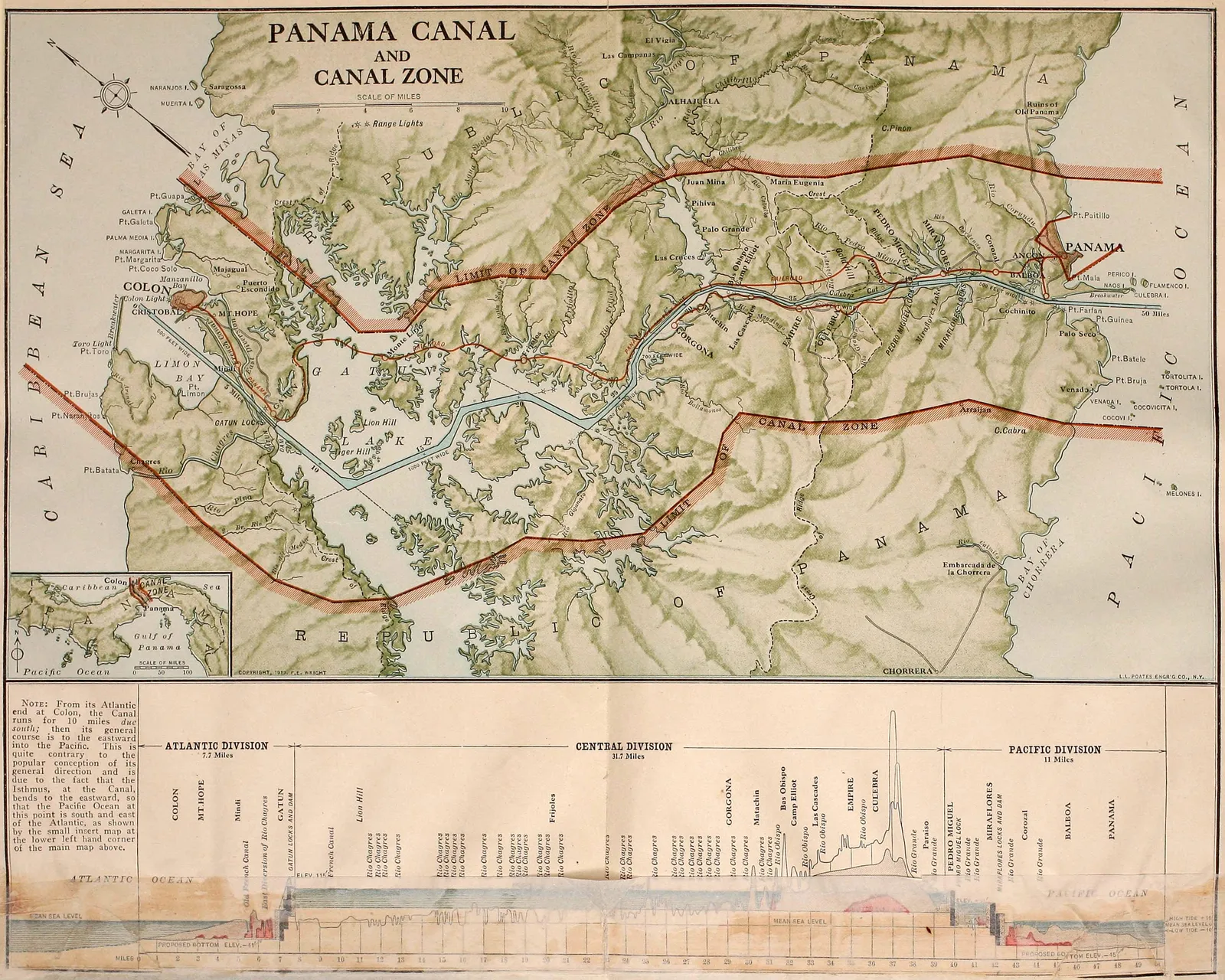
Within twenty miles,
at the very most,
east and west of
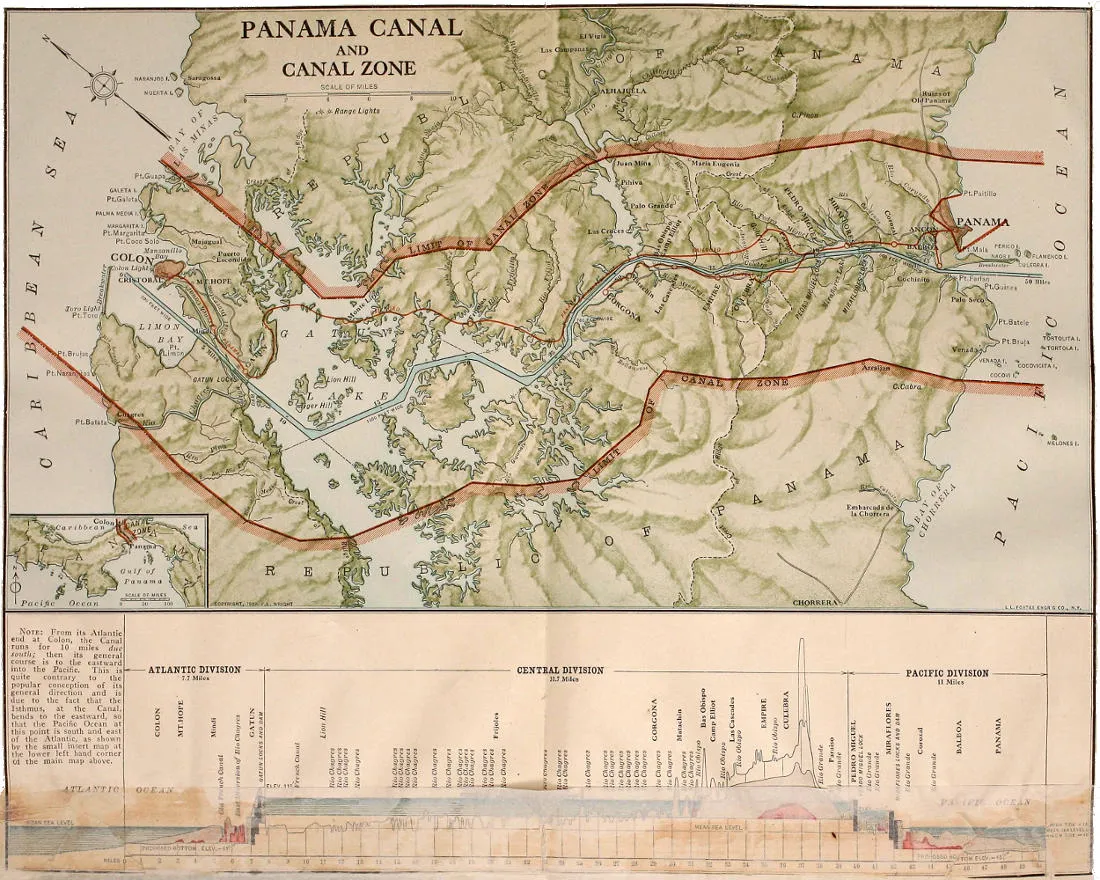
Colon lie the chief
existing memorials
of the bygone days
of Spanish discovery
and colonization,
and English
adventurous raids
and destruction, on
the Isthmus. All
that is picturesque
and enthralling—that
is to say, all
that is stirring,
bloody, and lawless—in the history of the Caribbean
shore of the Isthmus lies thus adjacent to the Atlantic
entrance of the Canal. To the east are Nombre
de Dios and Porto Bello—the oldest European
settlements on the North American continent, the
one being founded about 1510, almost a century
and a half before the landing at Plymouth, and the
other in 1607, the very year of the planting of Jamestown,
Virginia. To the west is the castle of San
Lorenzo at the mouth of the Chagres, the gateway
to the Pacific trade, built in the latter years of the
sixteenth century and repeatedly destroyed. About
these Spanish outposts, once thriving market towns
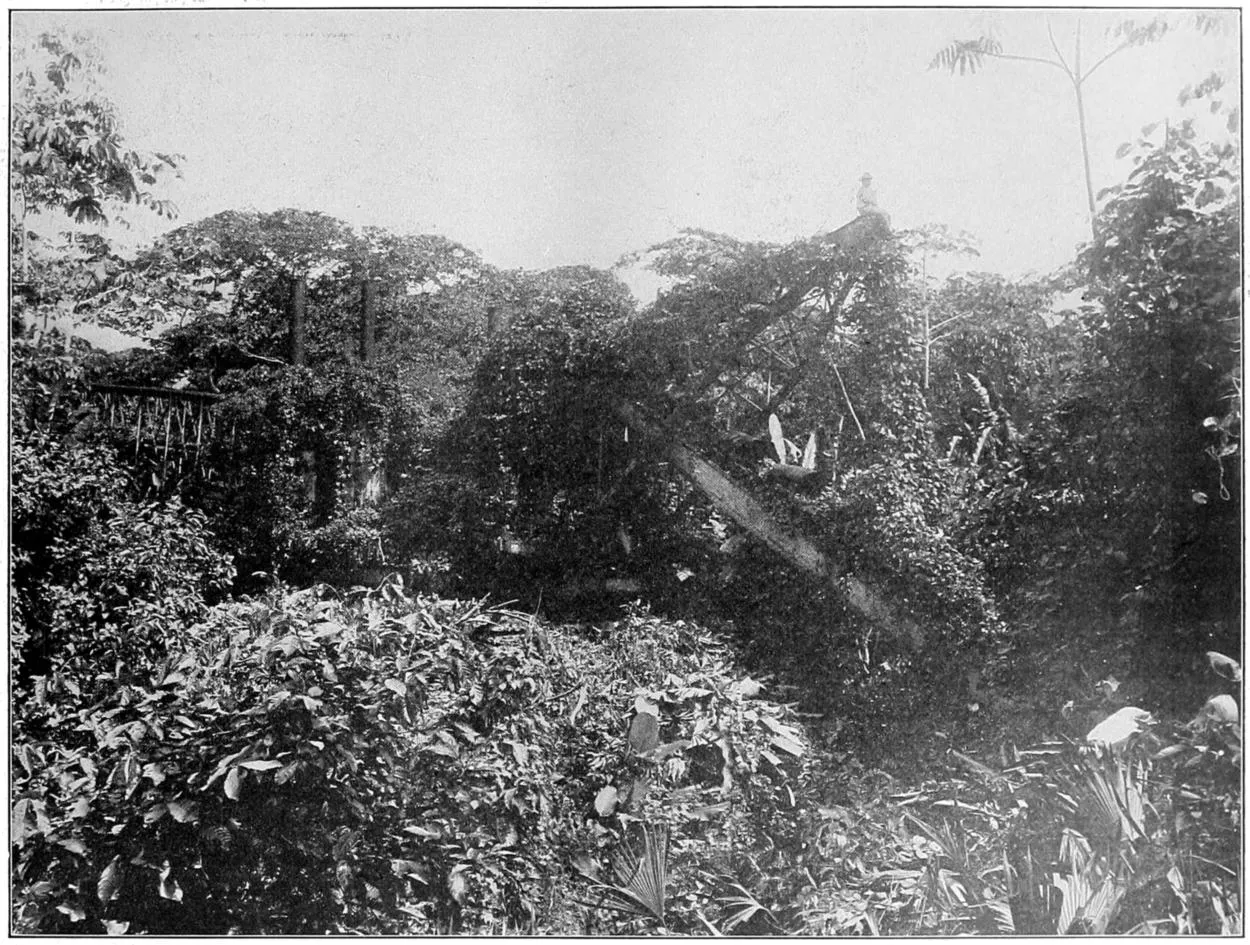
and massive fortresses, but now vine-covered ruins
where “the lion and the lizard keep their court”
clusters a wealth of historical lore.
Let us for the time turn from the Panama of today,
and from speculation as to its future, and look
back upon the Panama of the past. It is a past too
full of incident, too replete with stories of battle,
murder and sudden death for full justice to be done
to it in a chapter. Volumes, libraries almost, have
been written about it, for Panama is not one of the
happy countries without a history. Of that history
the survey here is necessarily the most cursory.
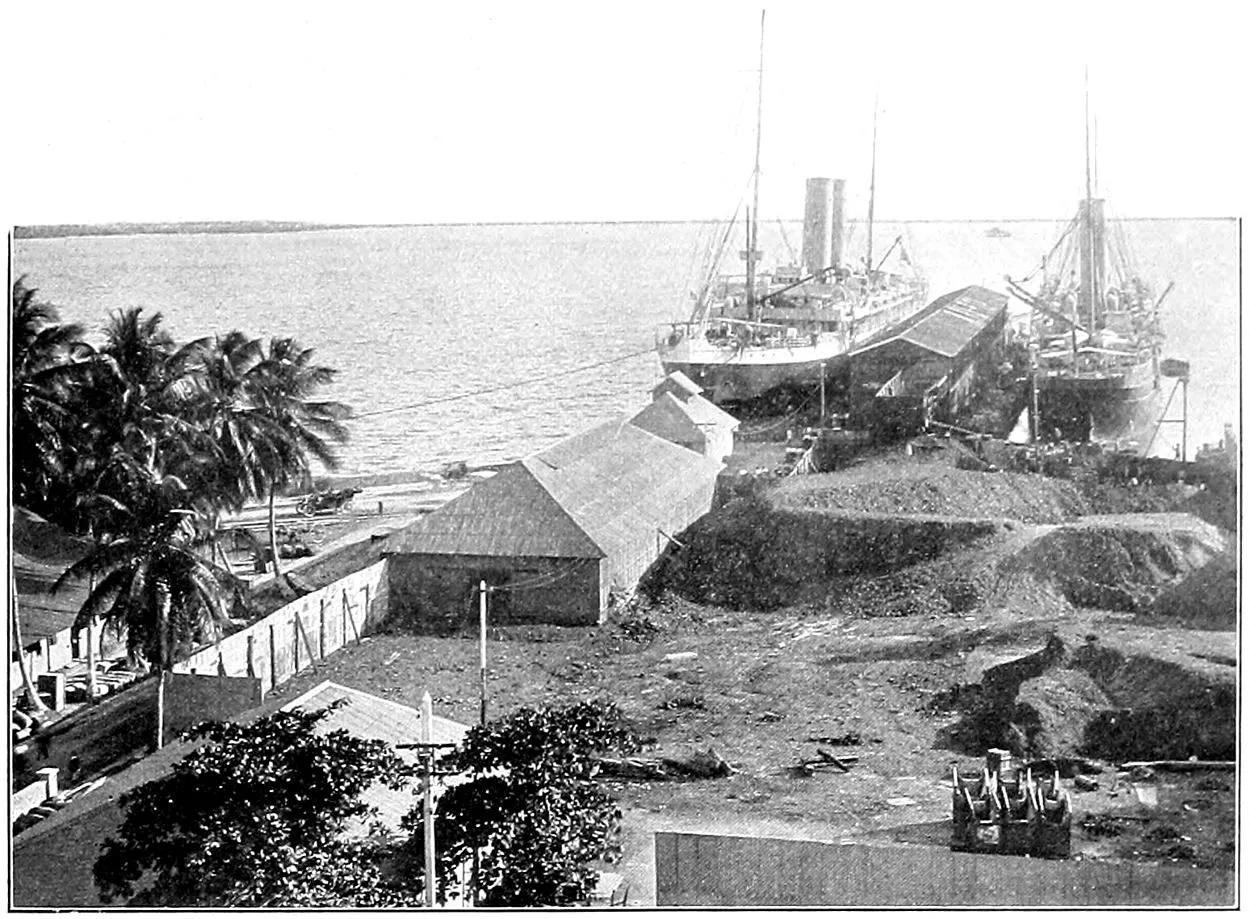
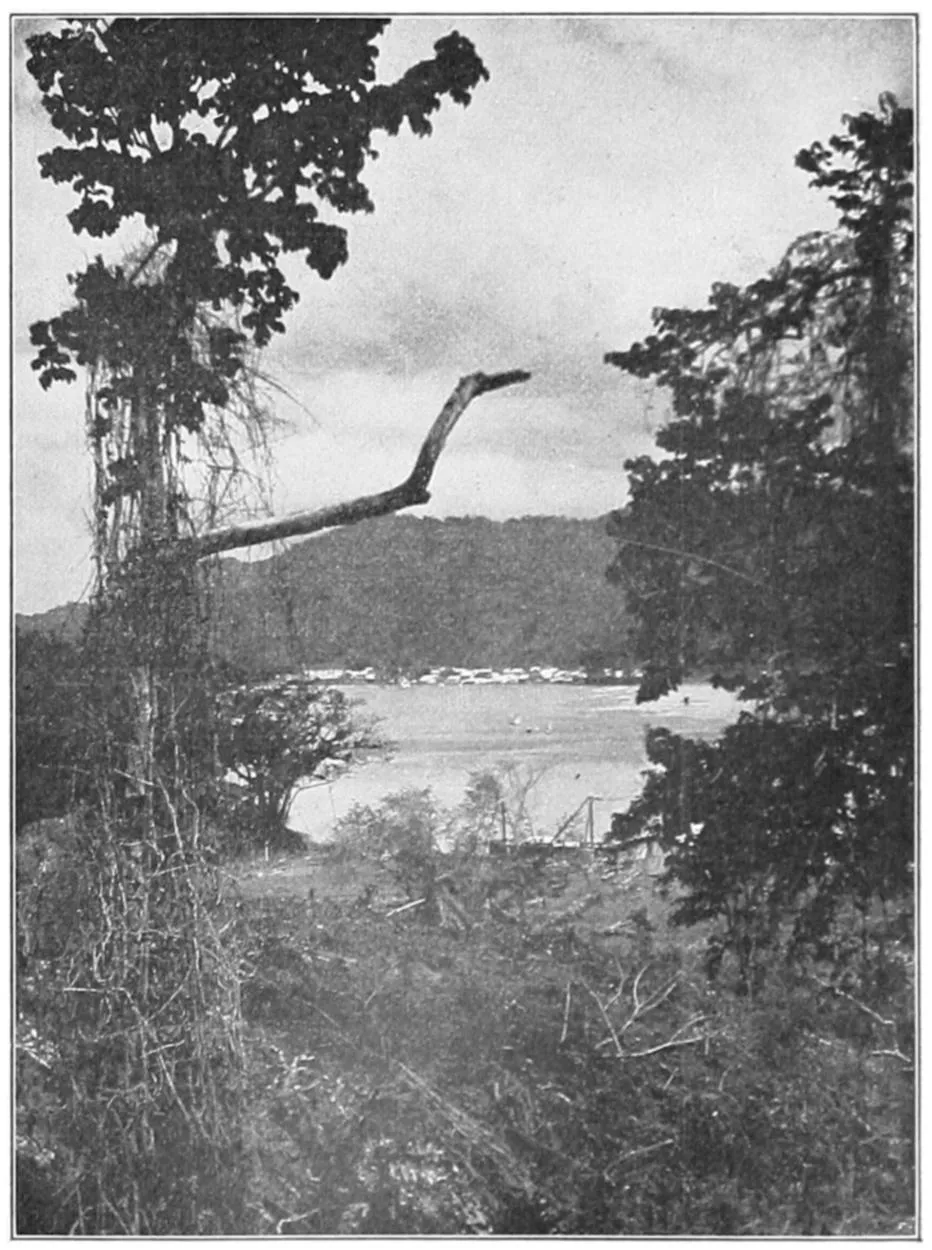
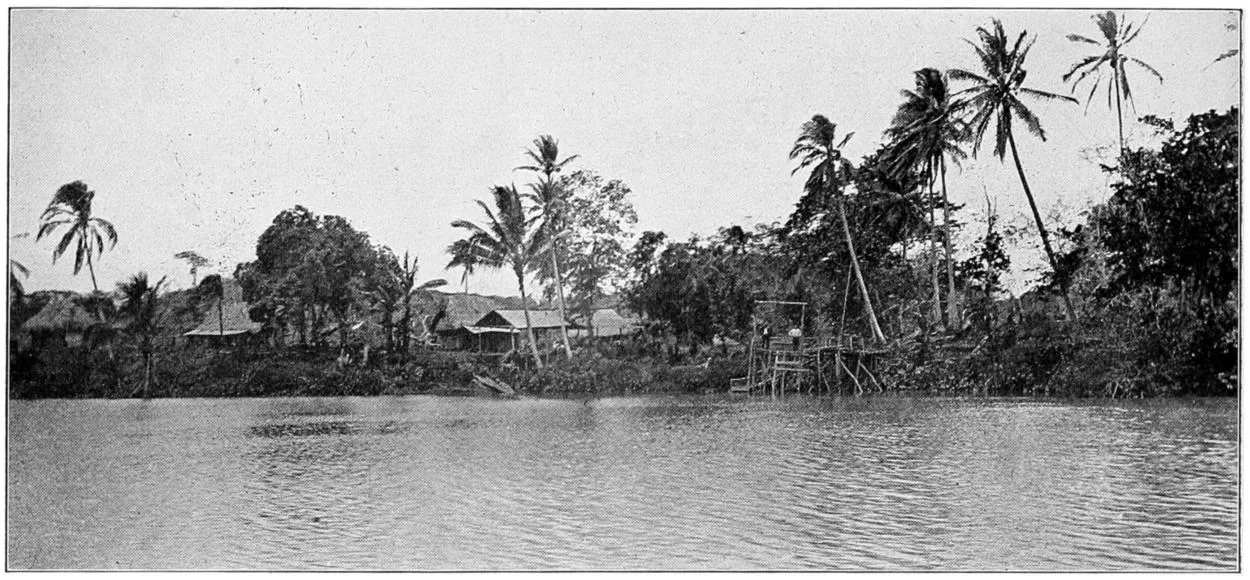
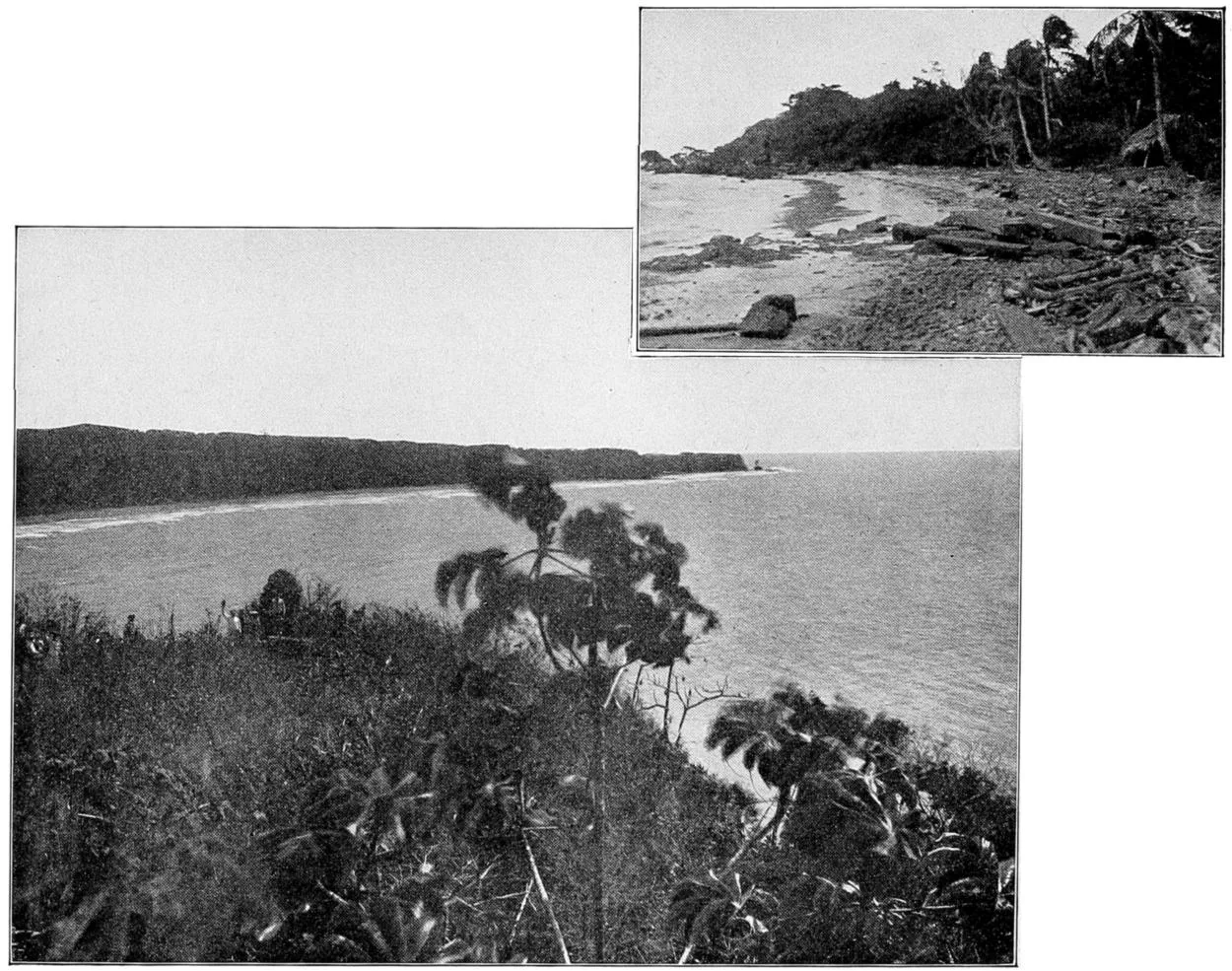
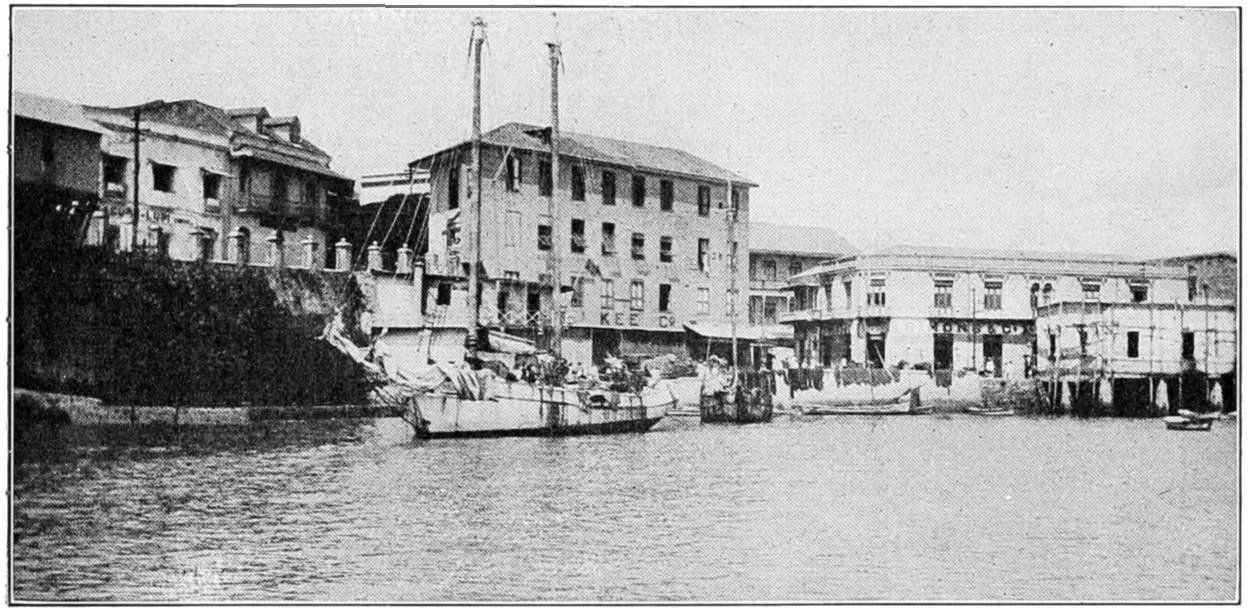
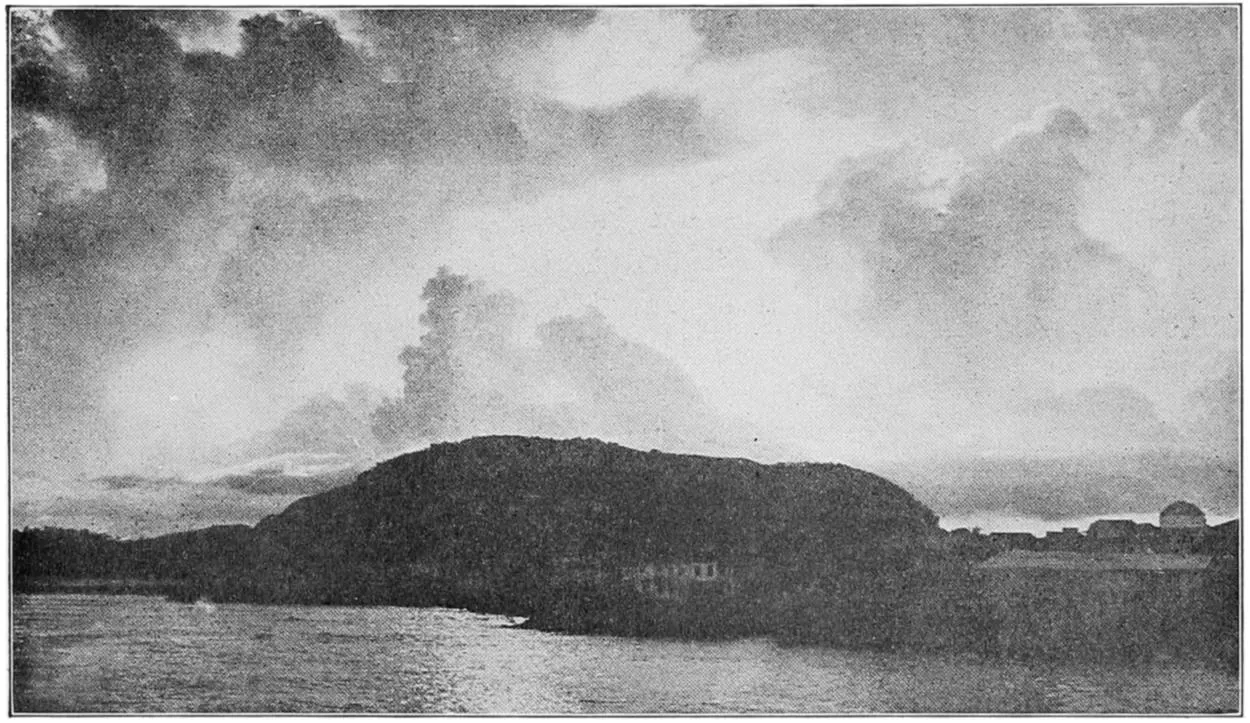
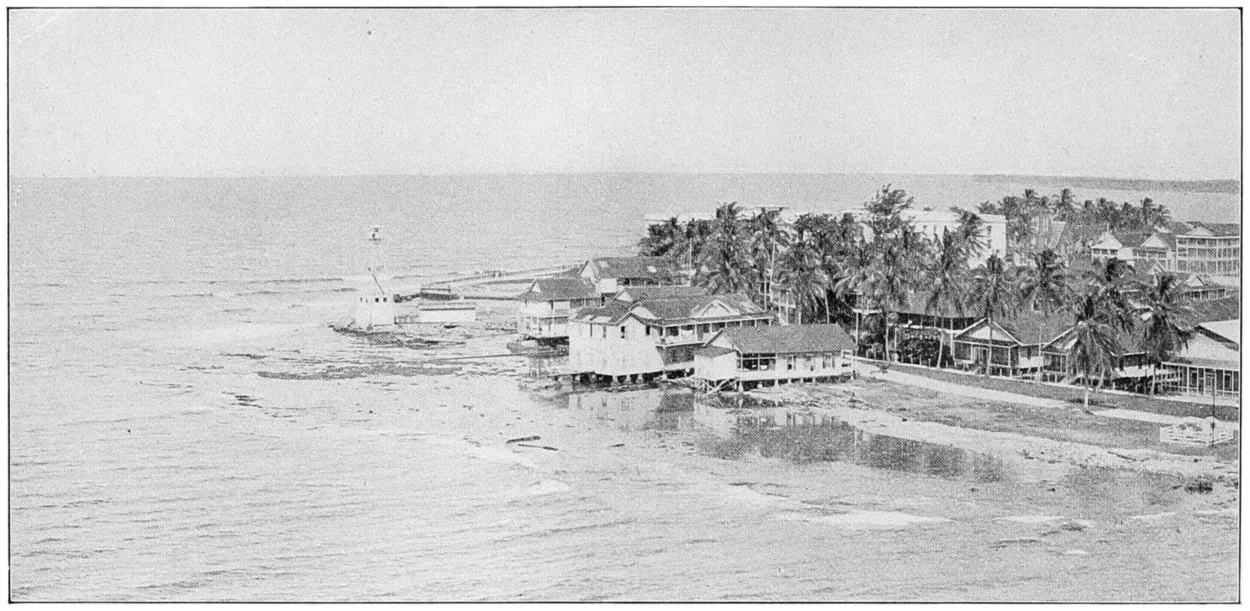
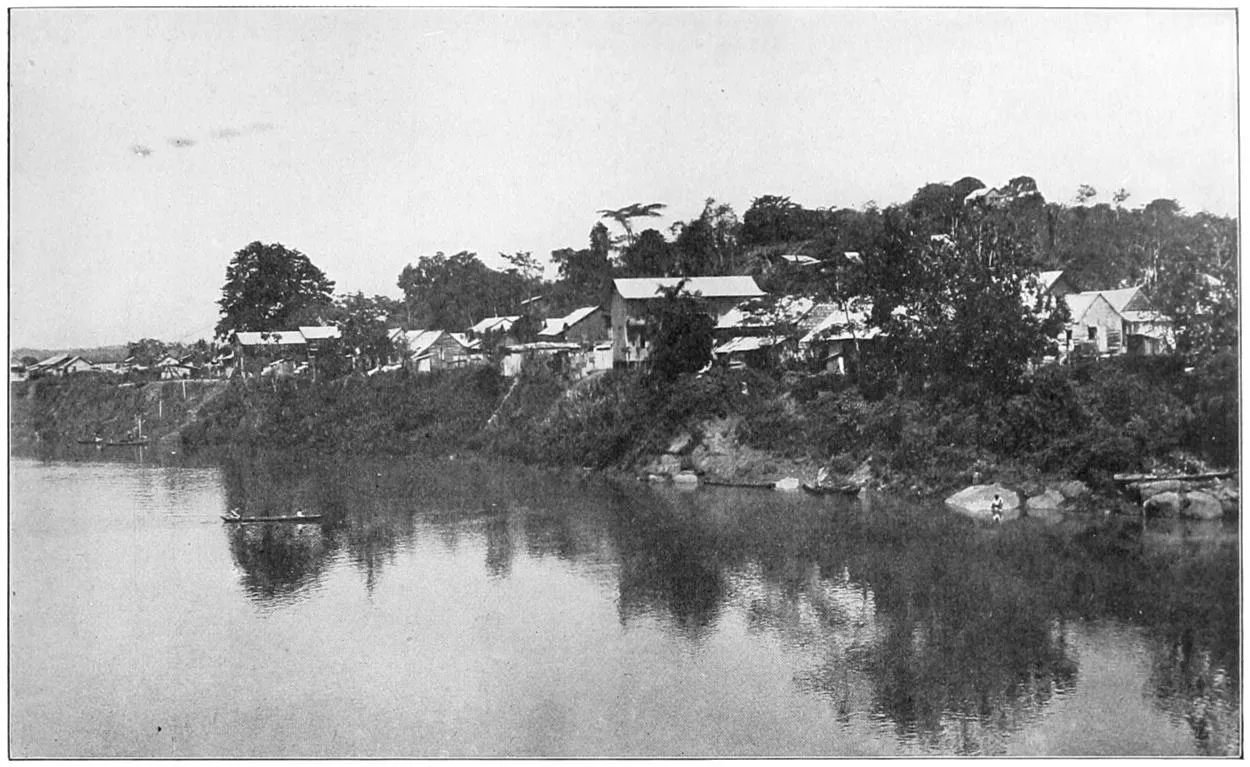
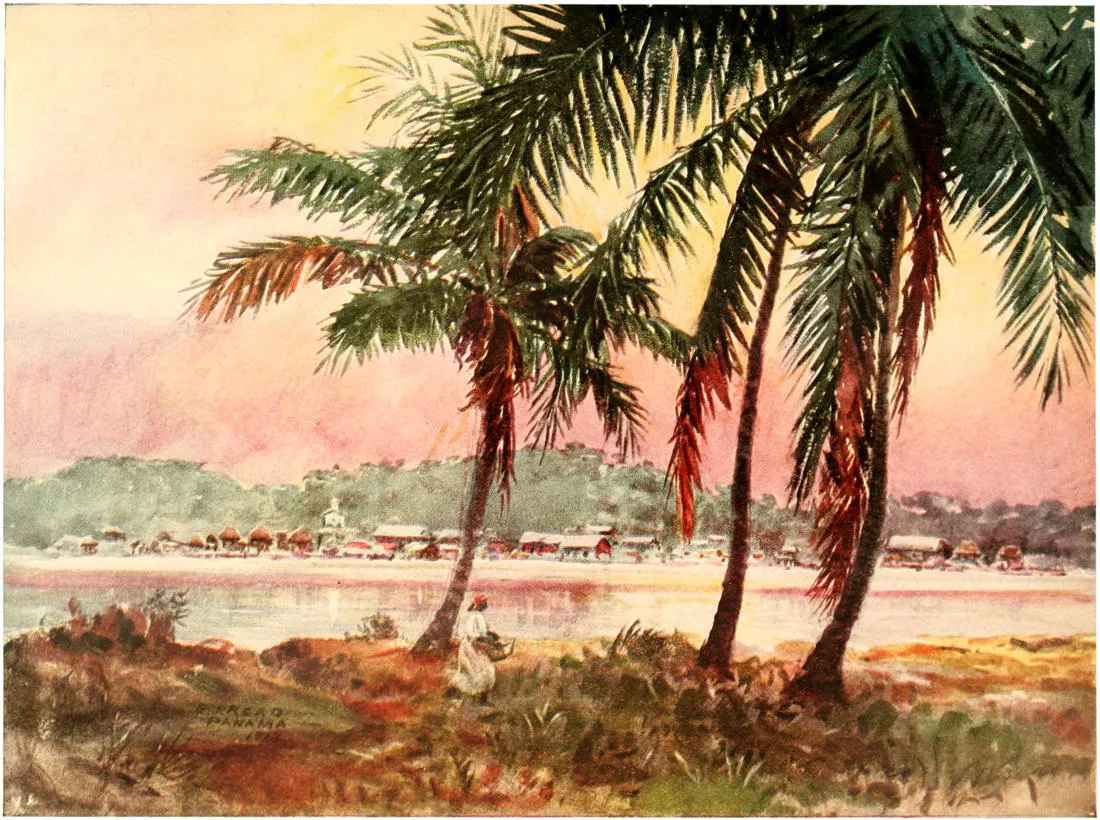
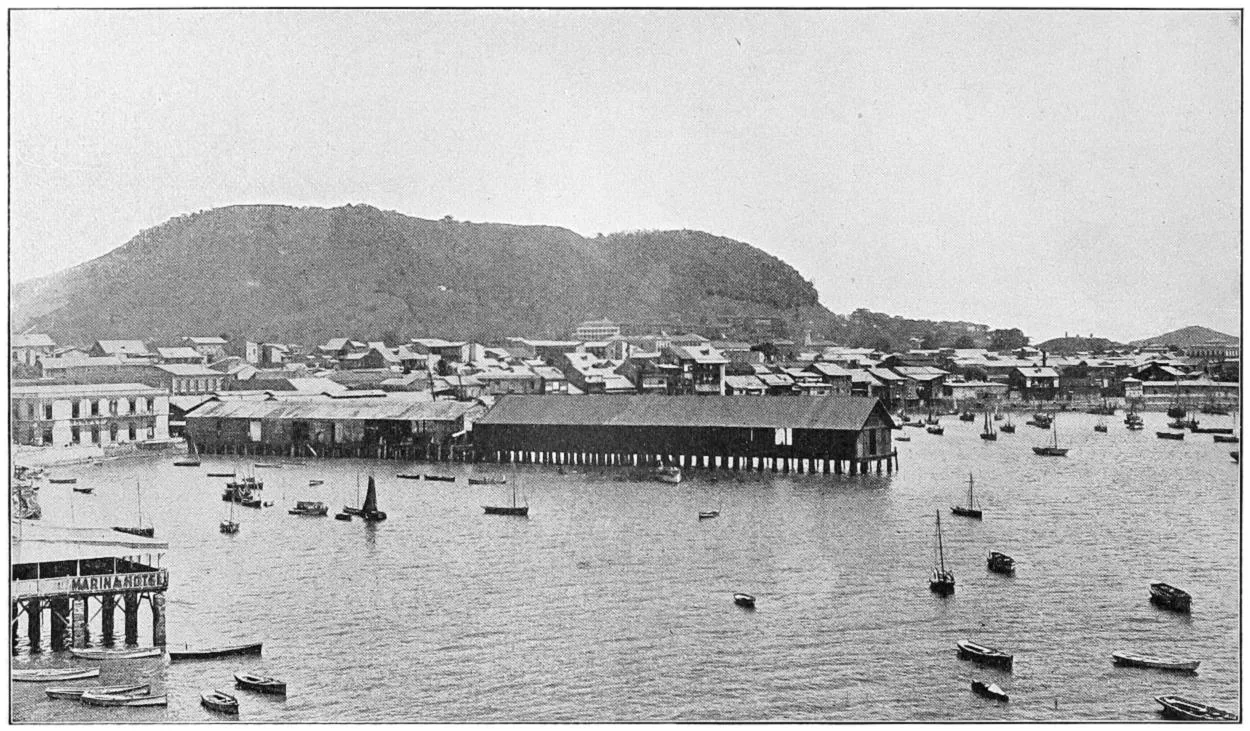
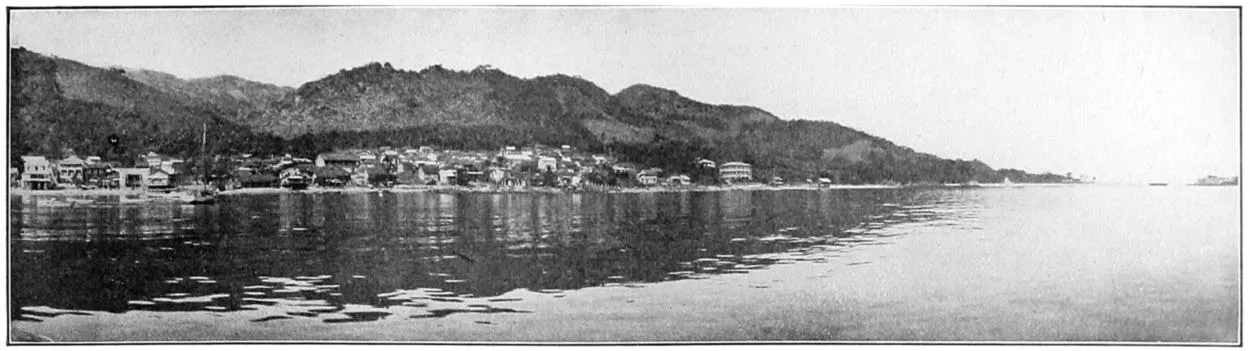
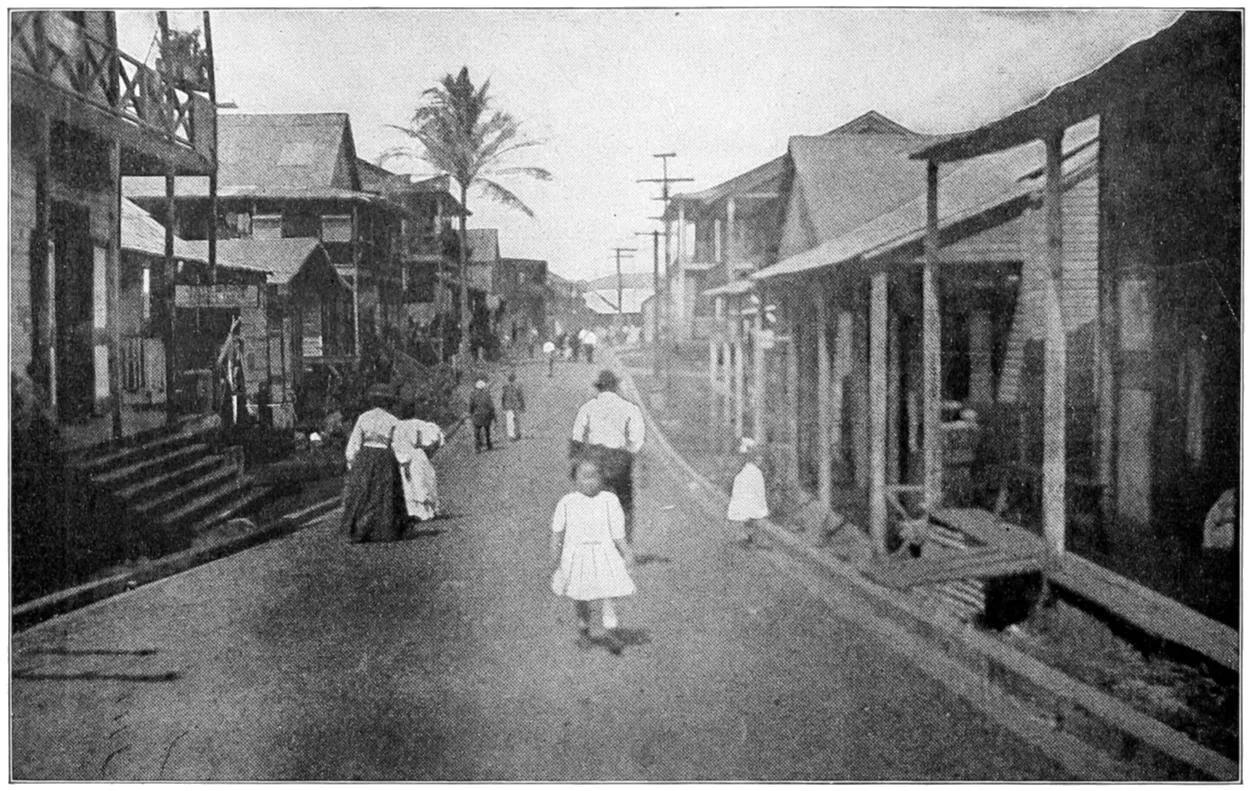
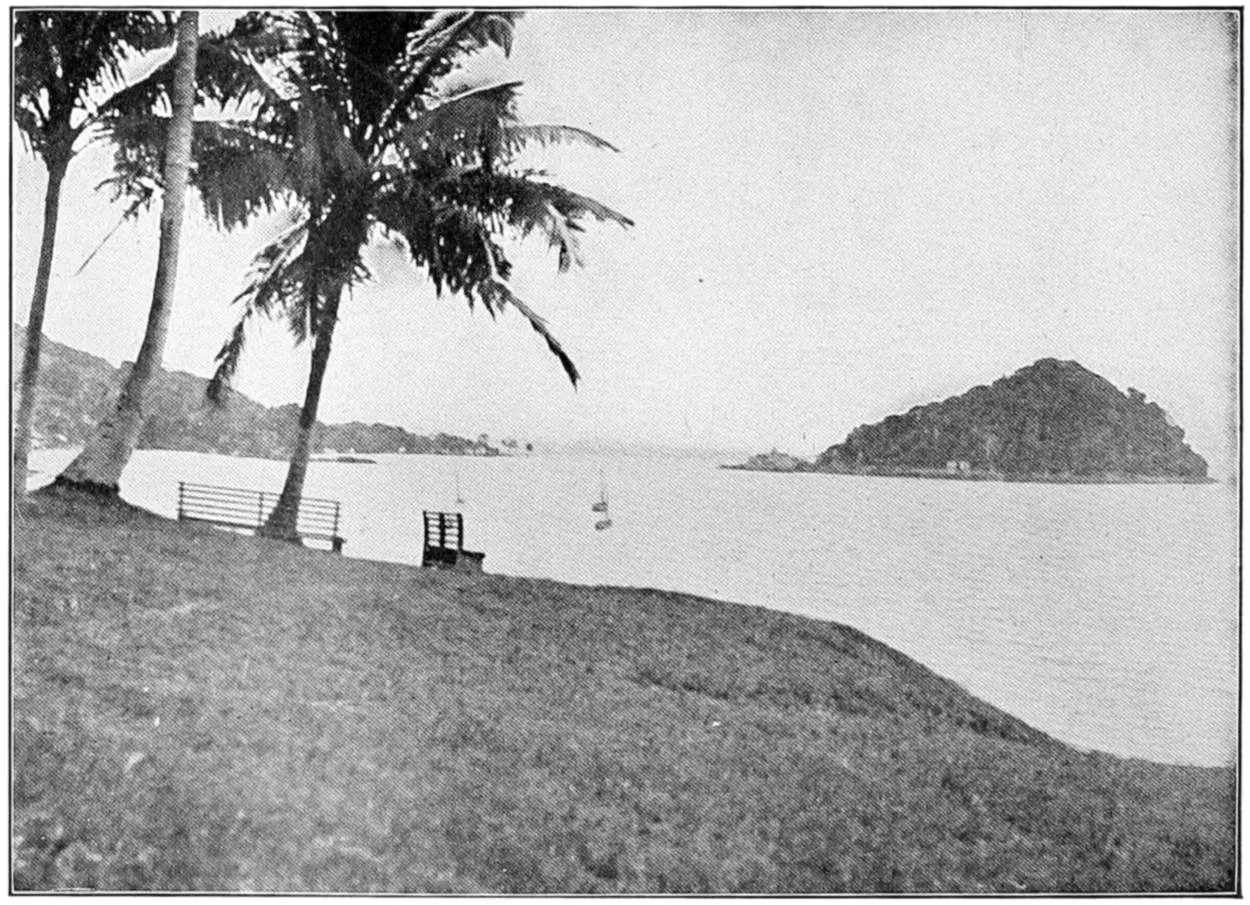
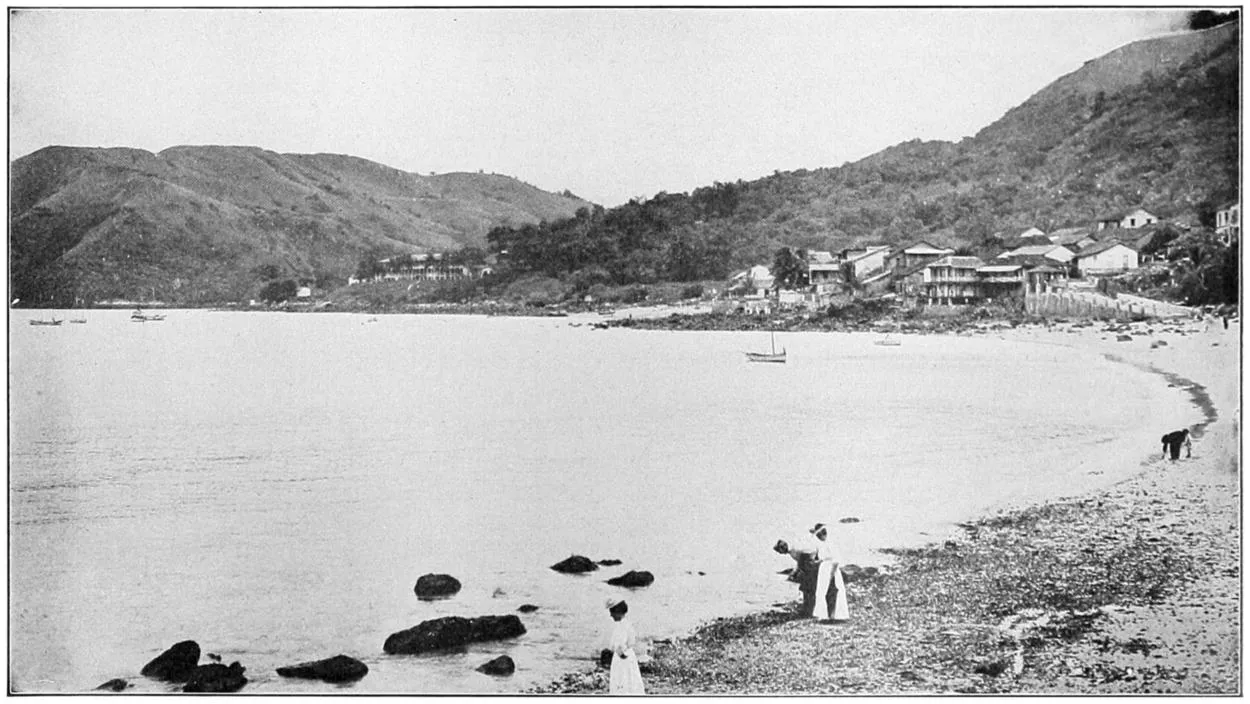
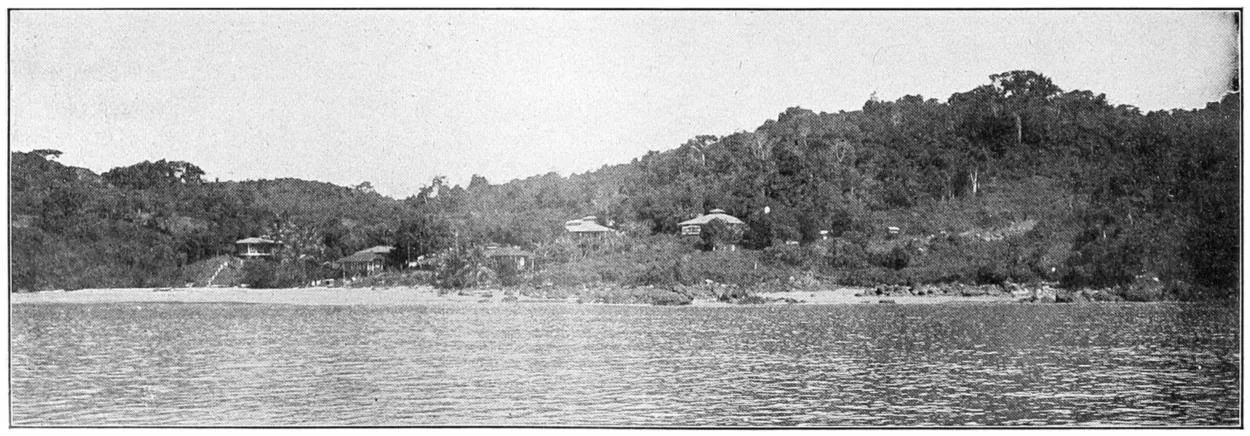
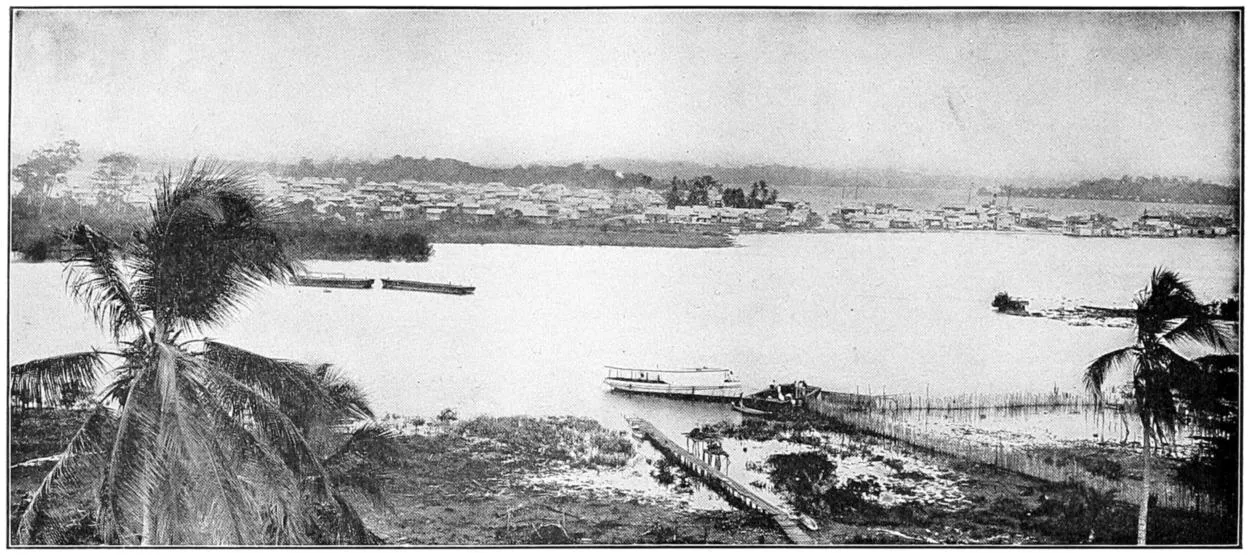
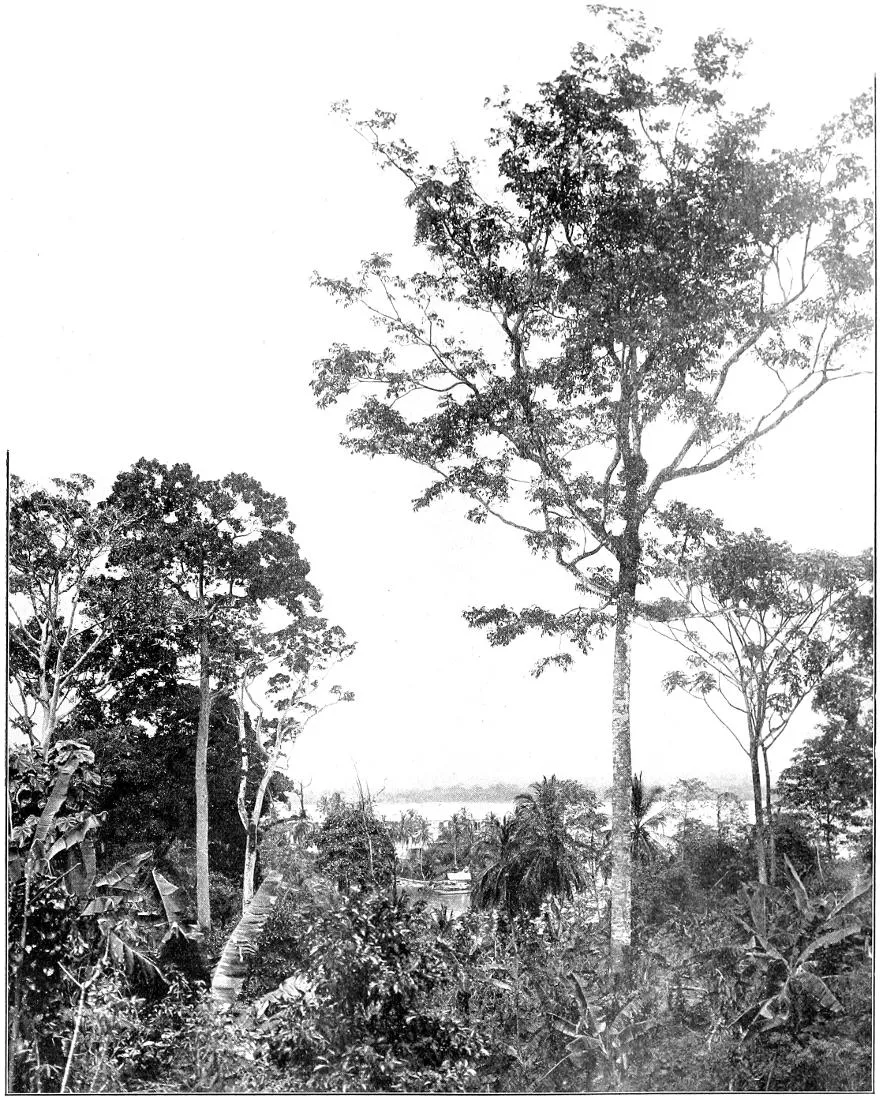
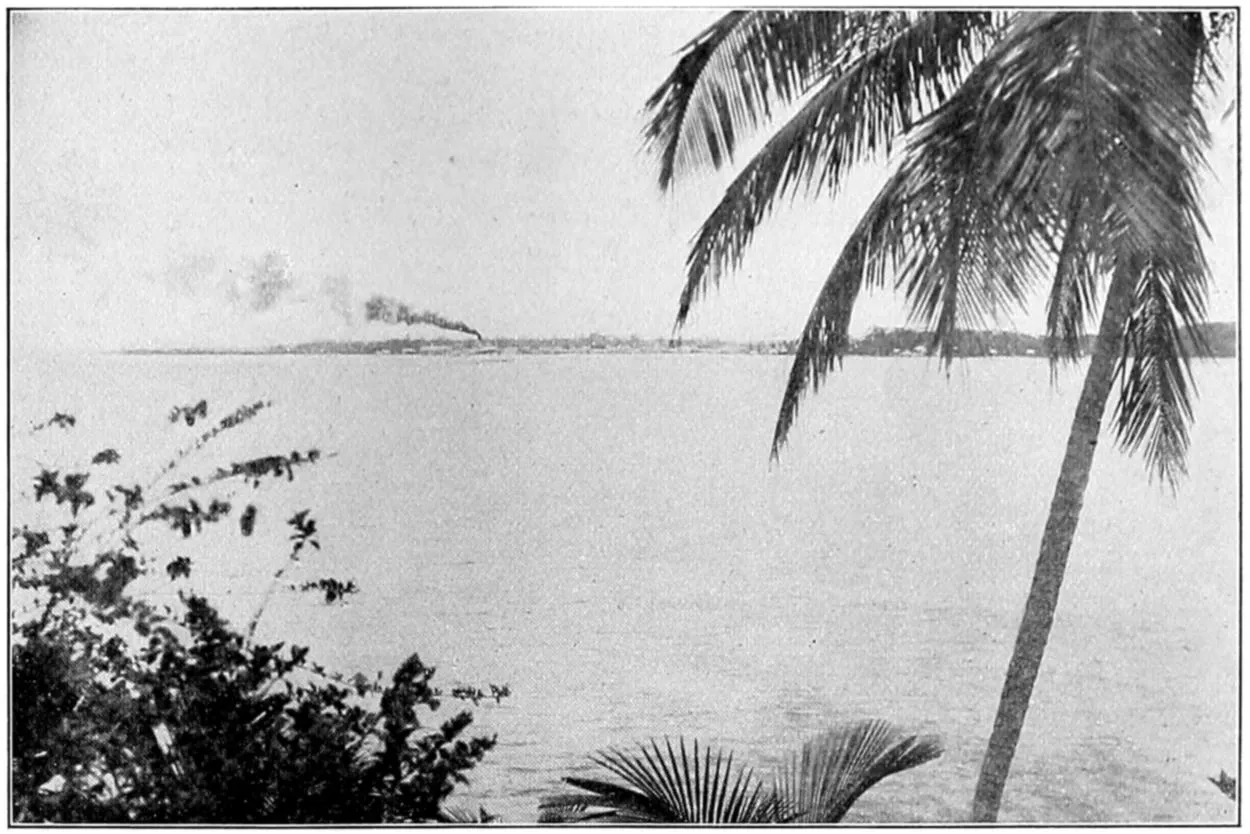
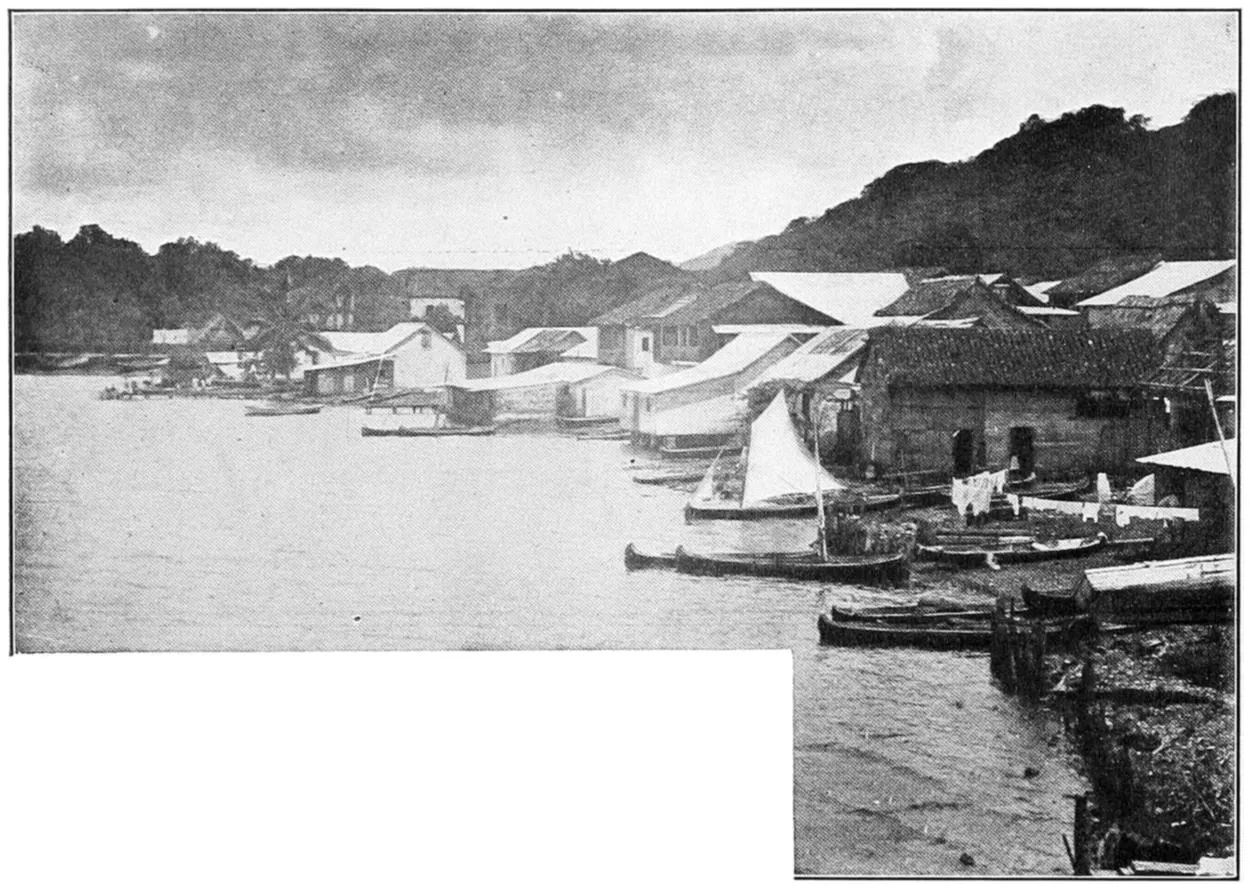
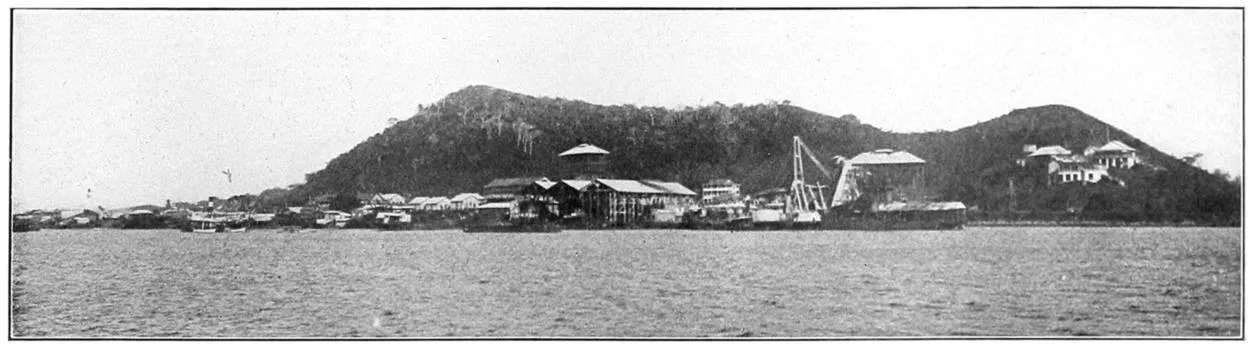
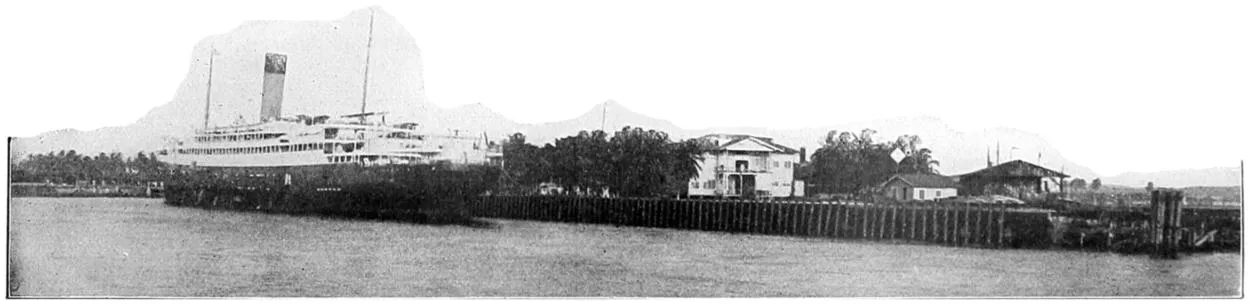
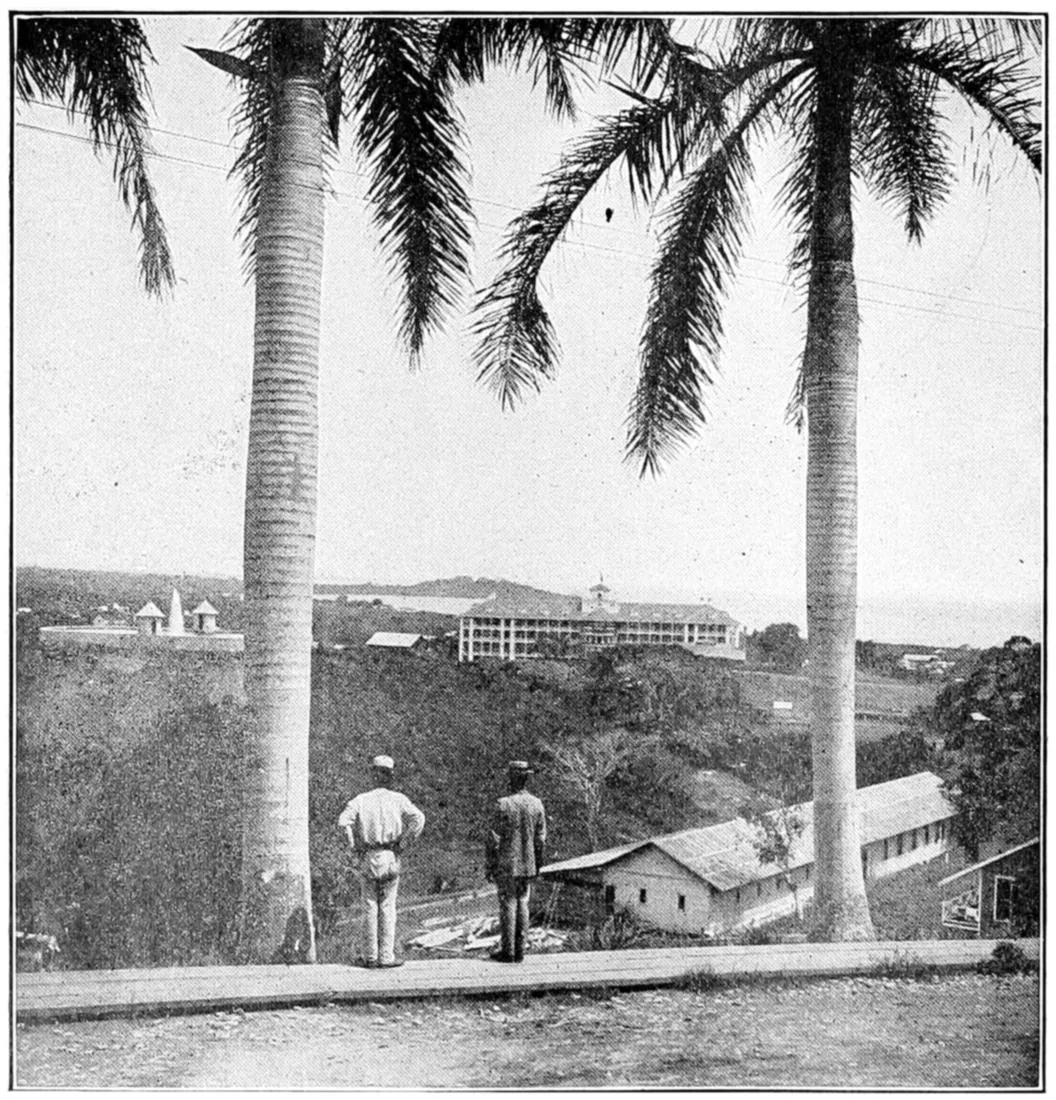
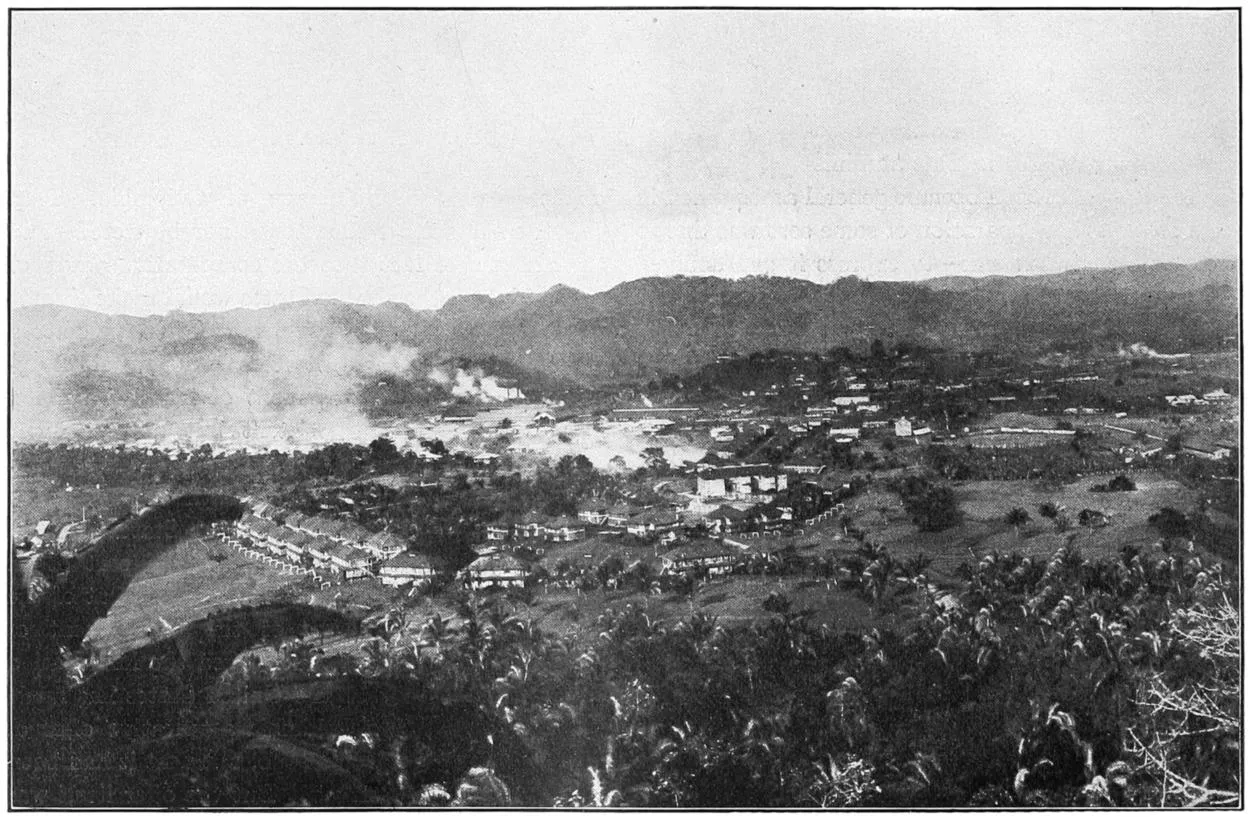
MODERN PORTO BELLO PROM ACROSS THE BAY
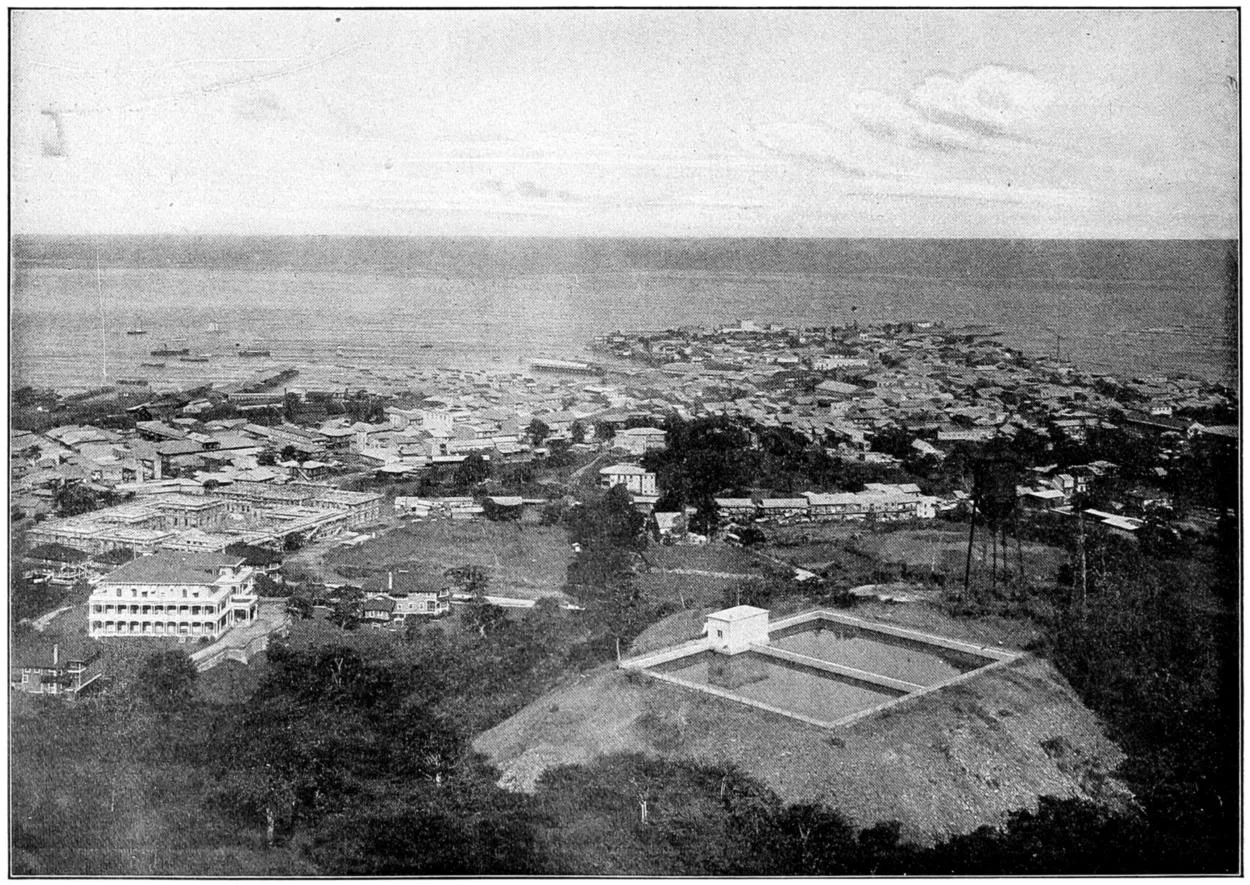
Twenty miles from Colon to the east is the spacious
deep water harbor of Porto Bello, visited and named
by Columbus in 1502. Earlier still it had harbored
the ships of Roderigo de Bastides who landed there
in 1500—probably the first European to touch
Panama soil. He sought the strait to the Indies,
and gold as well. A few miles east and north of
Porto Bello is Nombre de Dios, one of the earliest
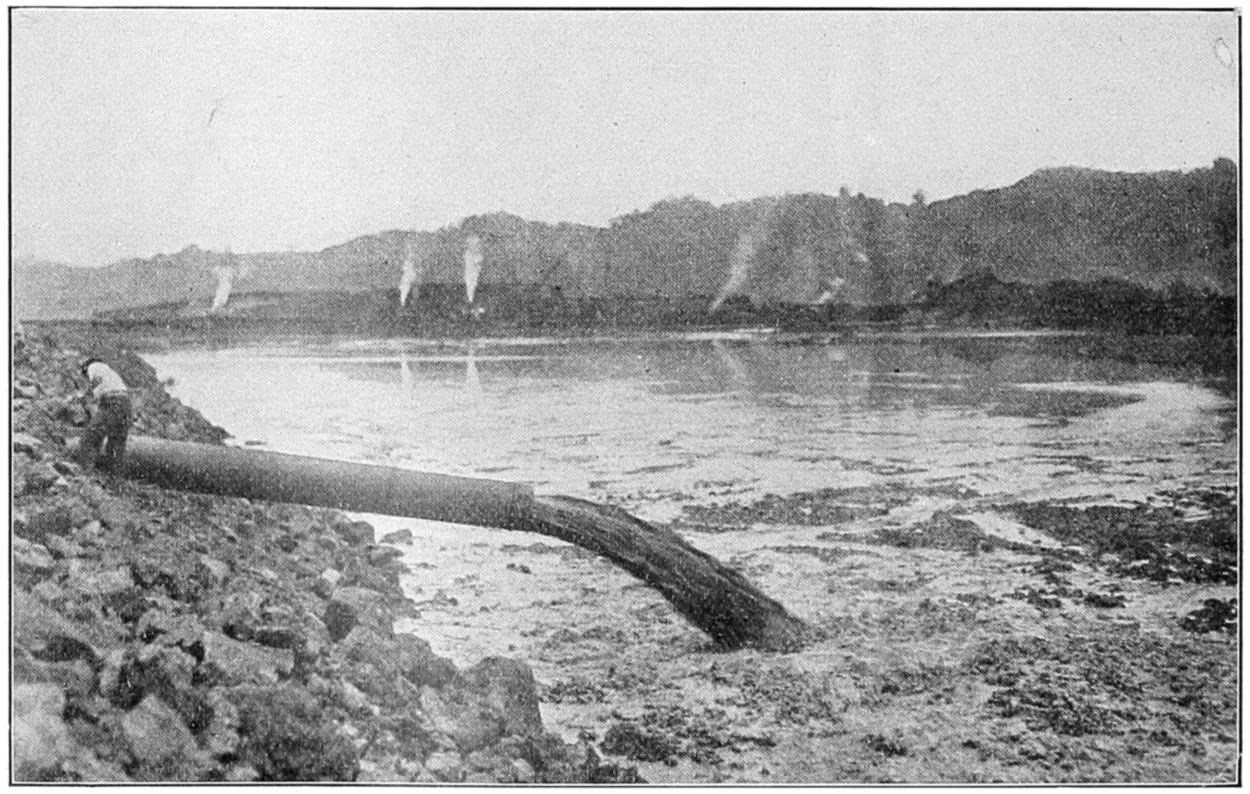
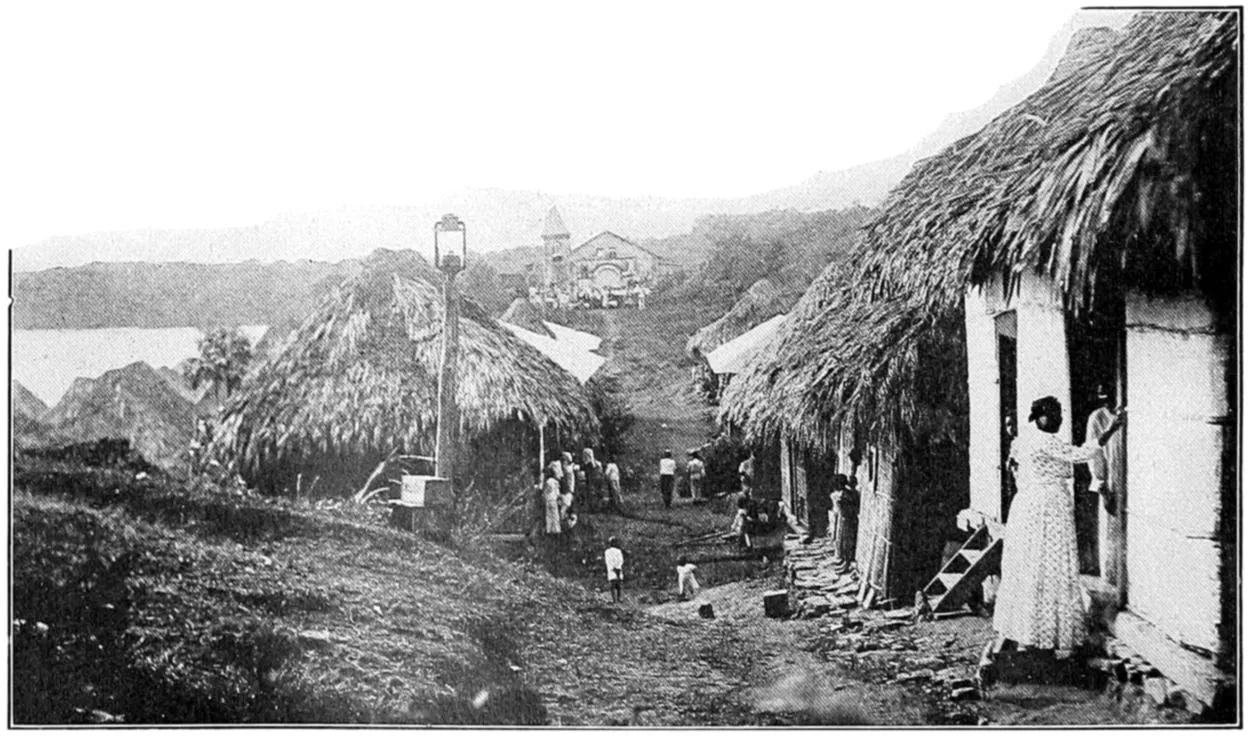
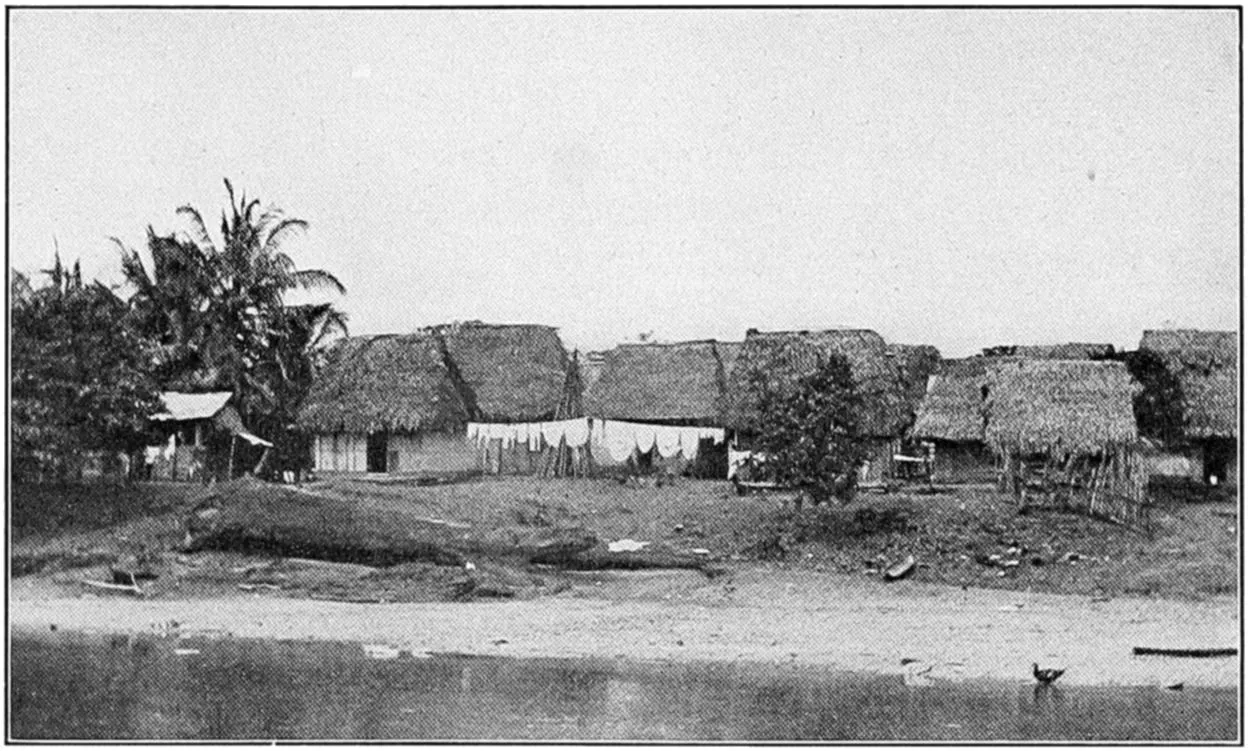
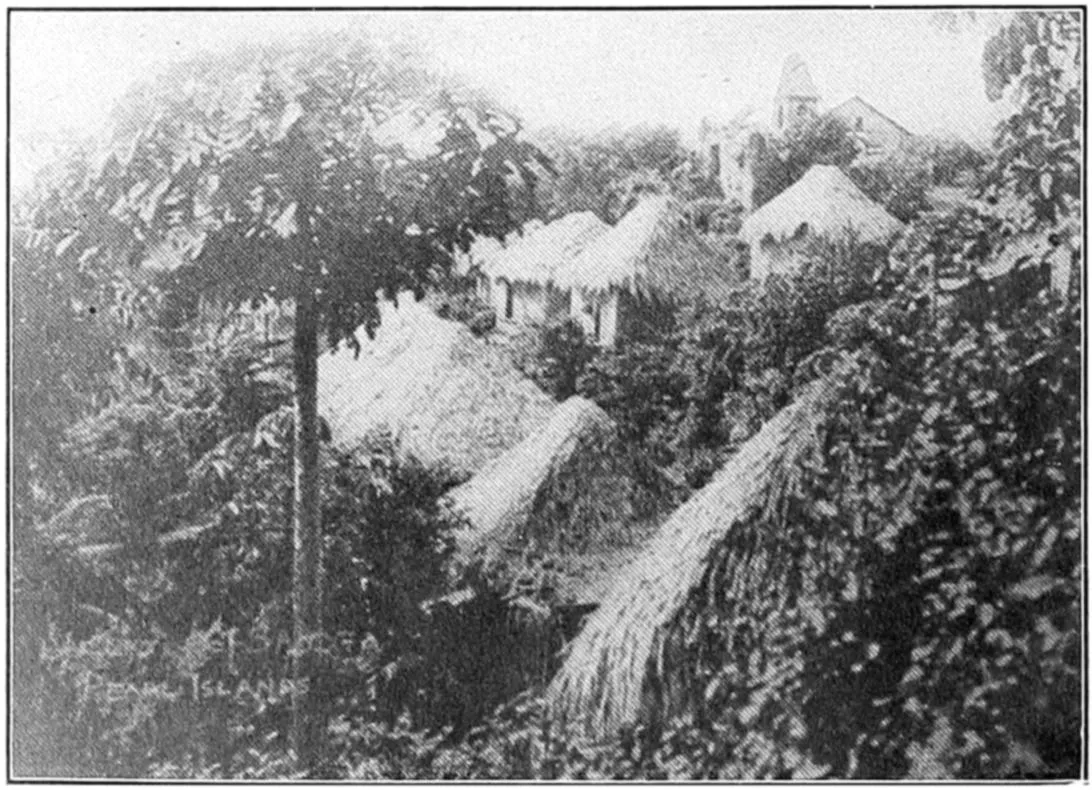
Spanish settlements but now a mere cluster of huts
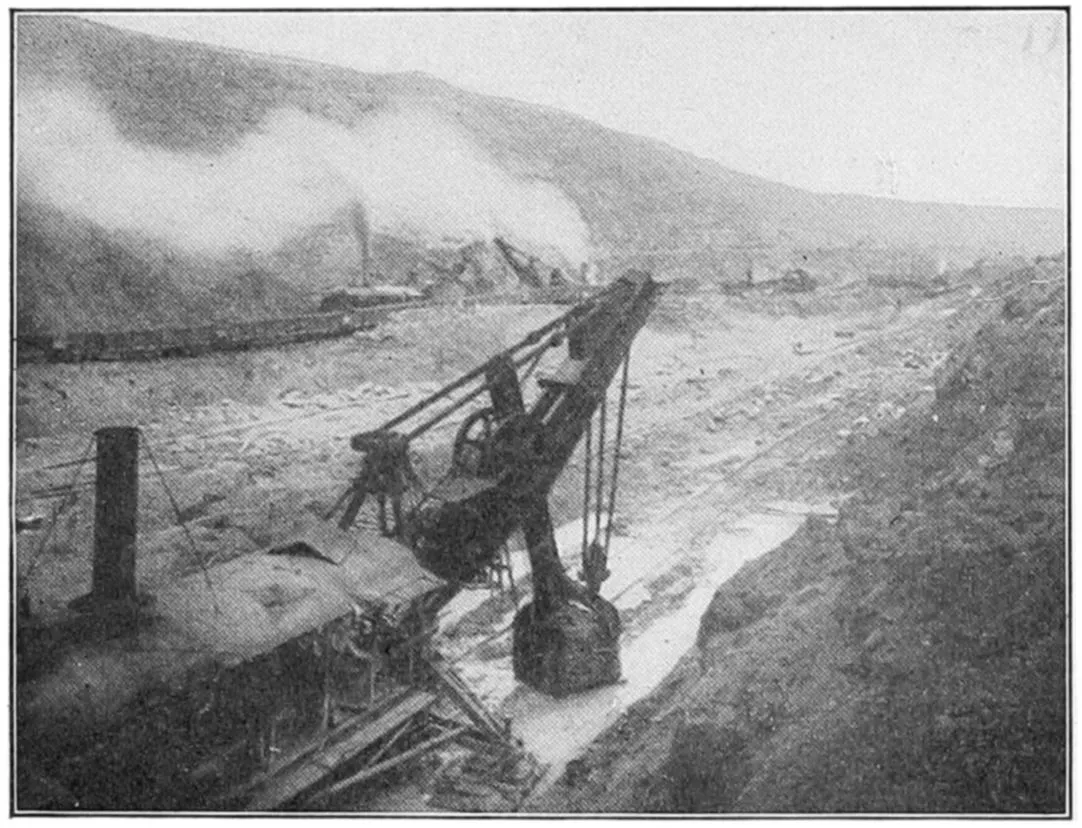
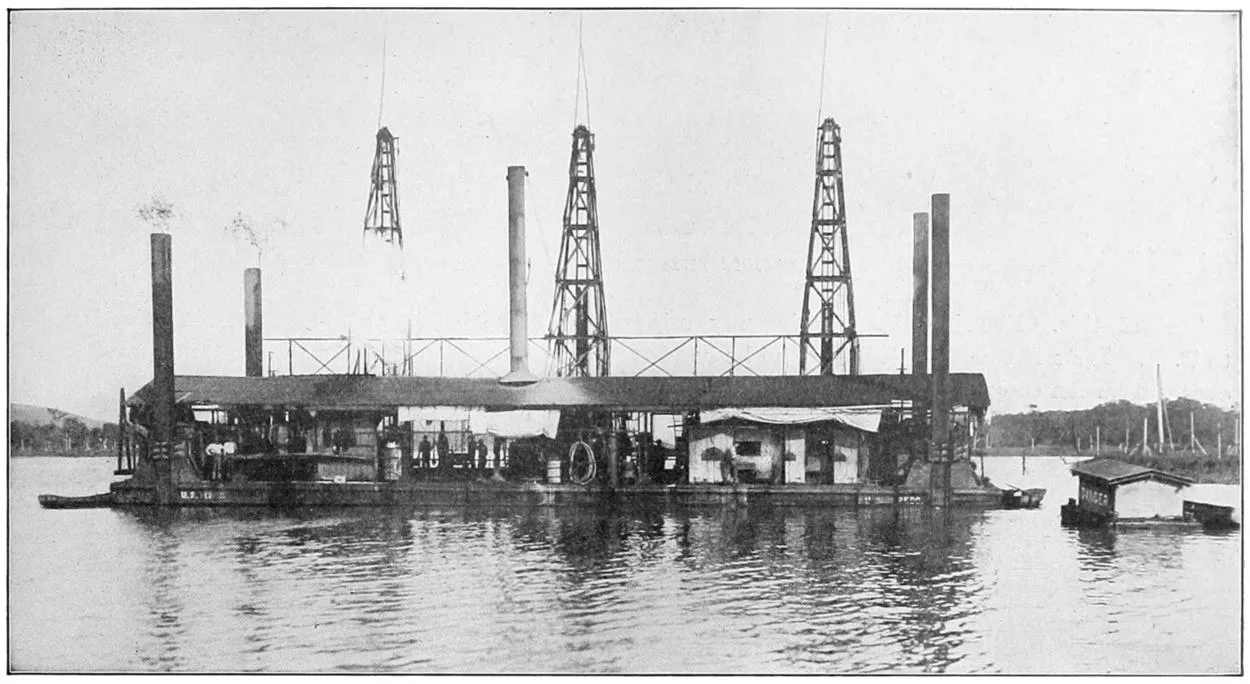
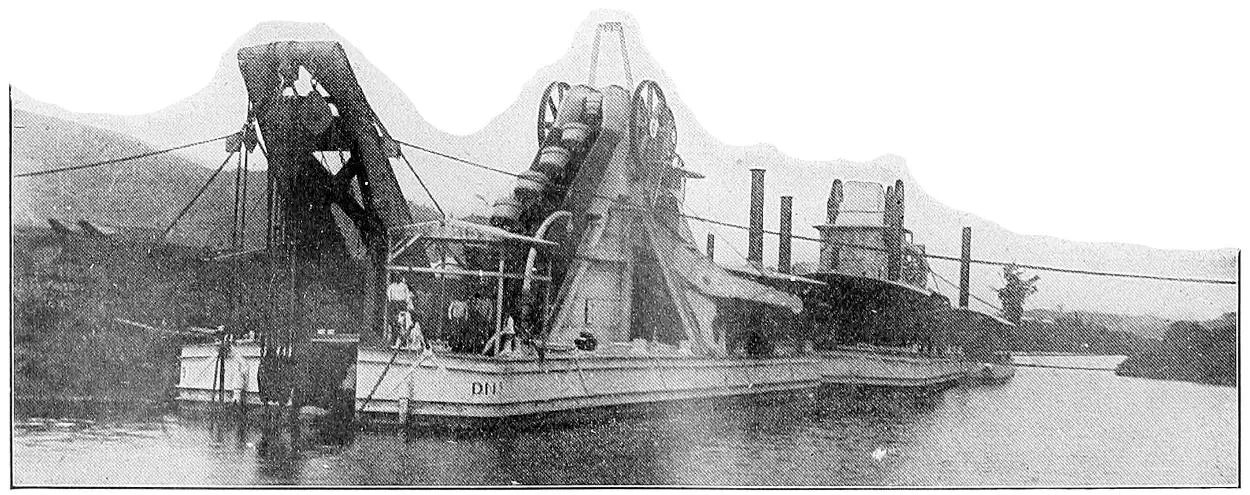
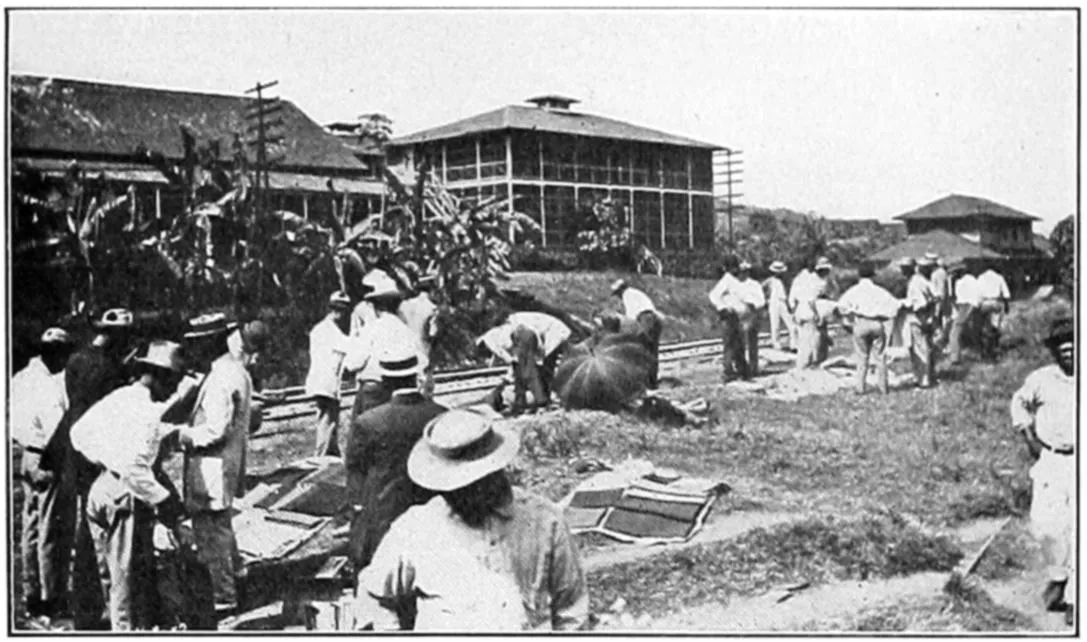
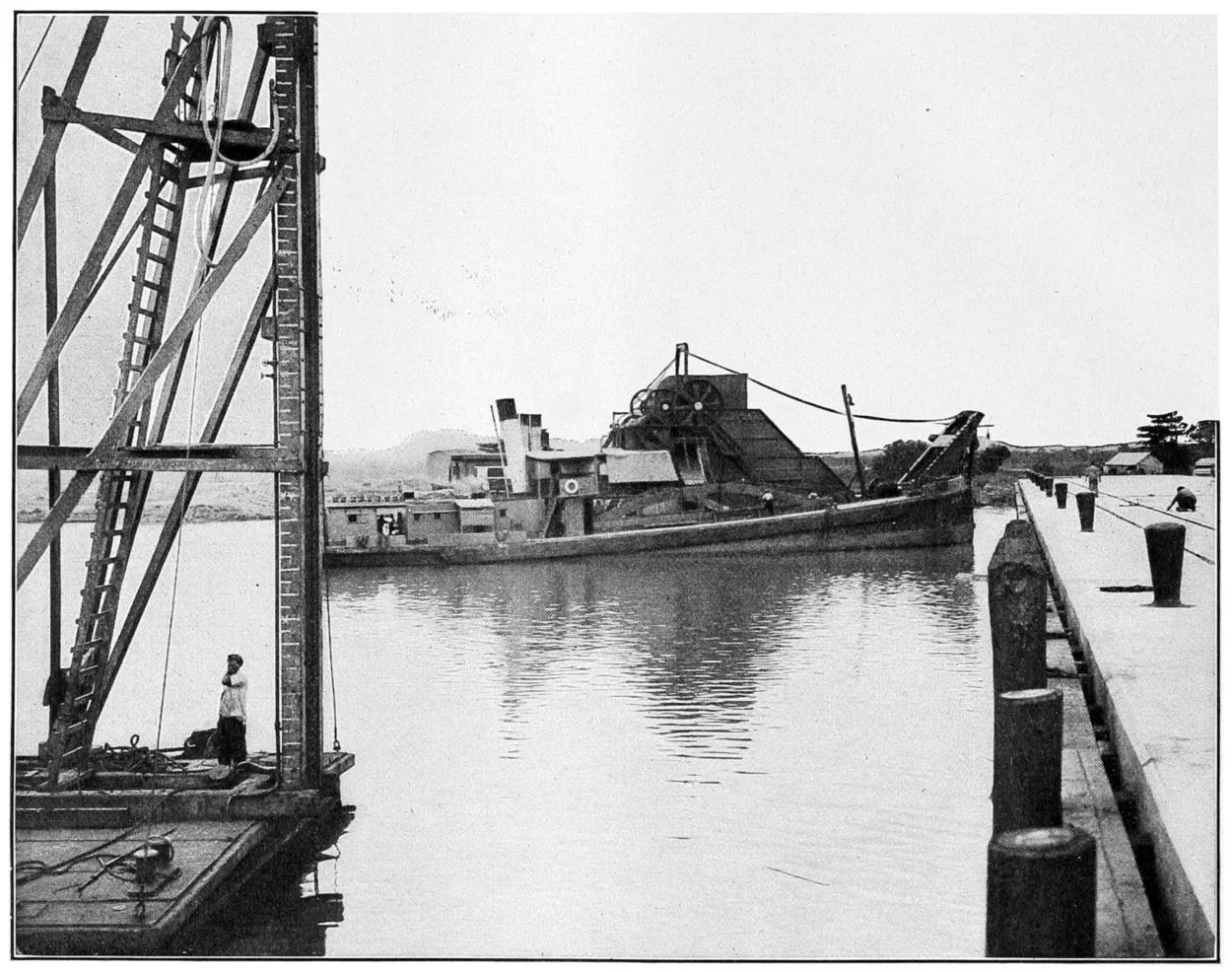
amidst which the Canal workers were only recently
dredging sand for use in construction. Few visit
Nombre de Dios for purposes of curiosity and
indeed it is little worth visiting, for fires, floods
and the shifting sands of the rivers have obliterated
all trace of the old town. The native village consisted
of about 200 huts when the American invasion
occurred, but a spark from one of the engines set
off the dry thatch of one of the huts and a general
conflagration ensued. The Americans have since
repaired the damages, to the sanitary advantage
of the place, but at heavy cost to its picturesqueness.
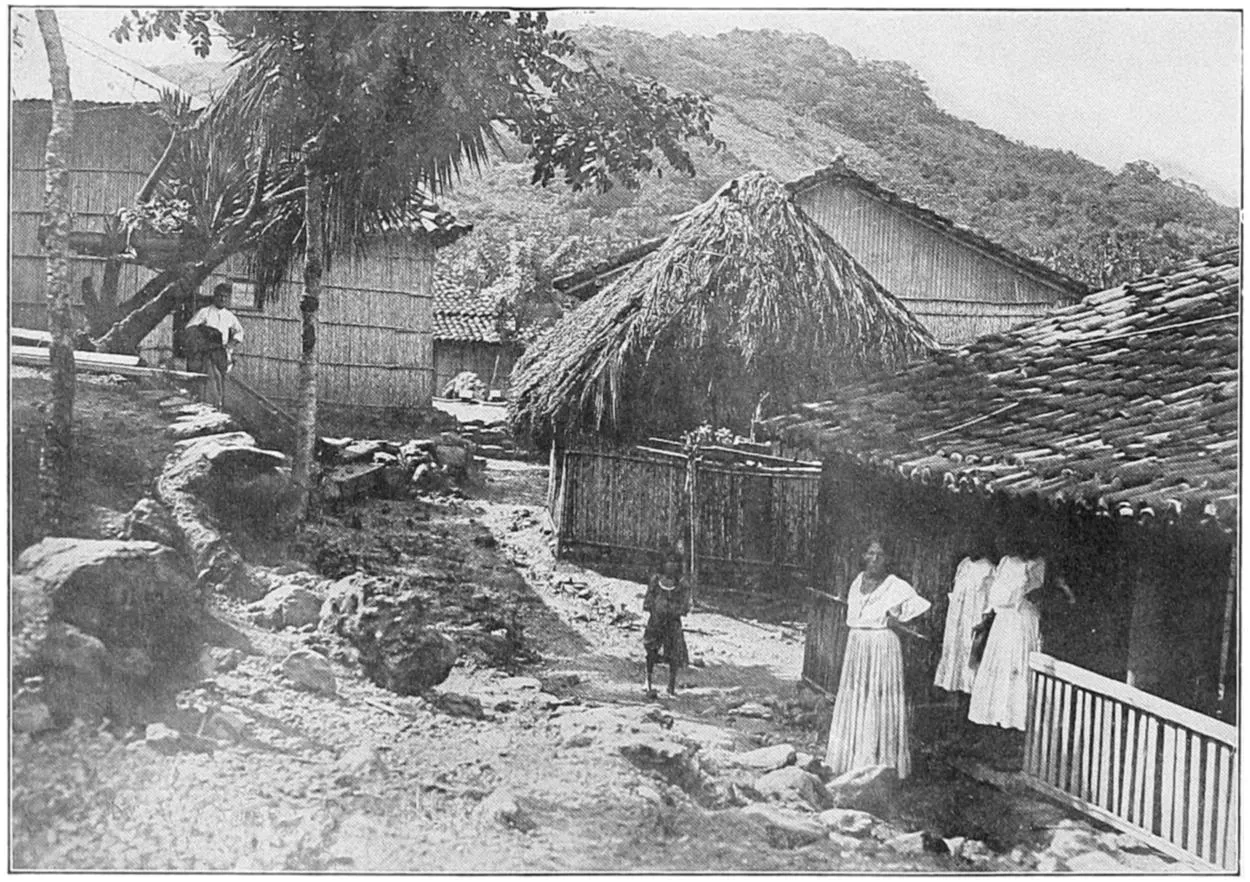
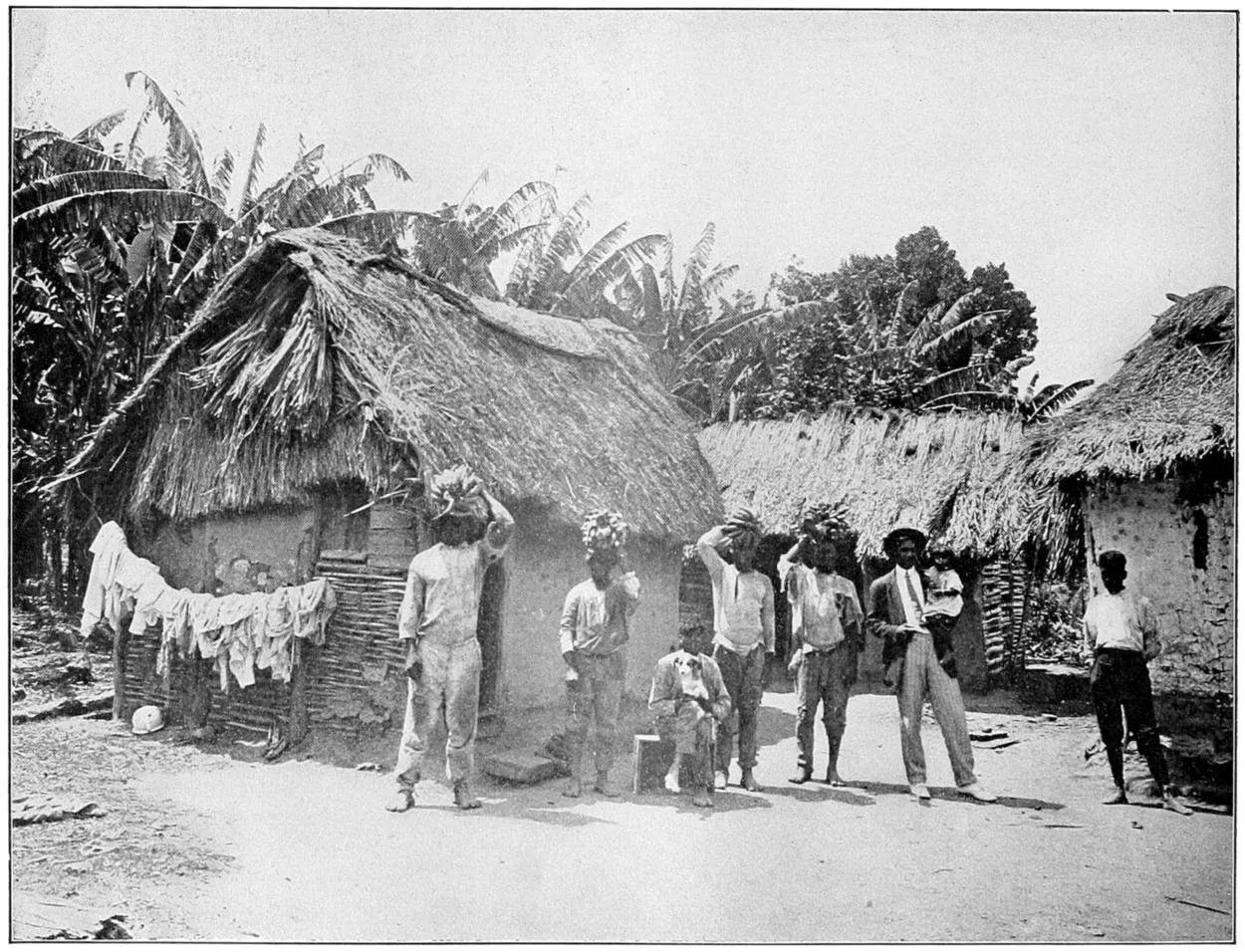
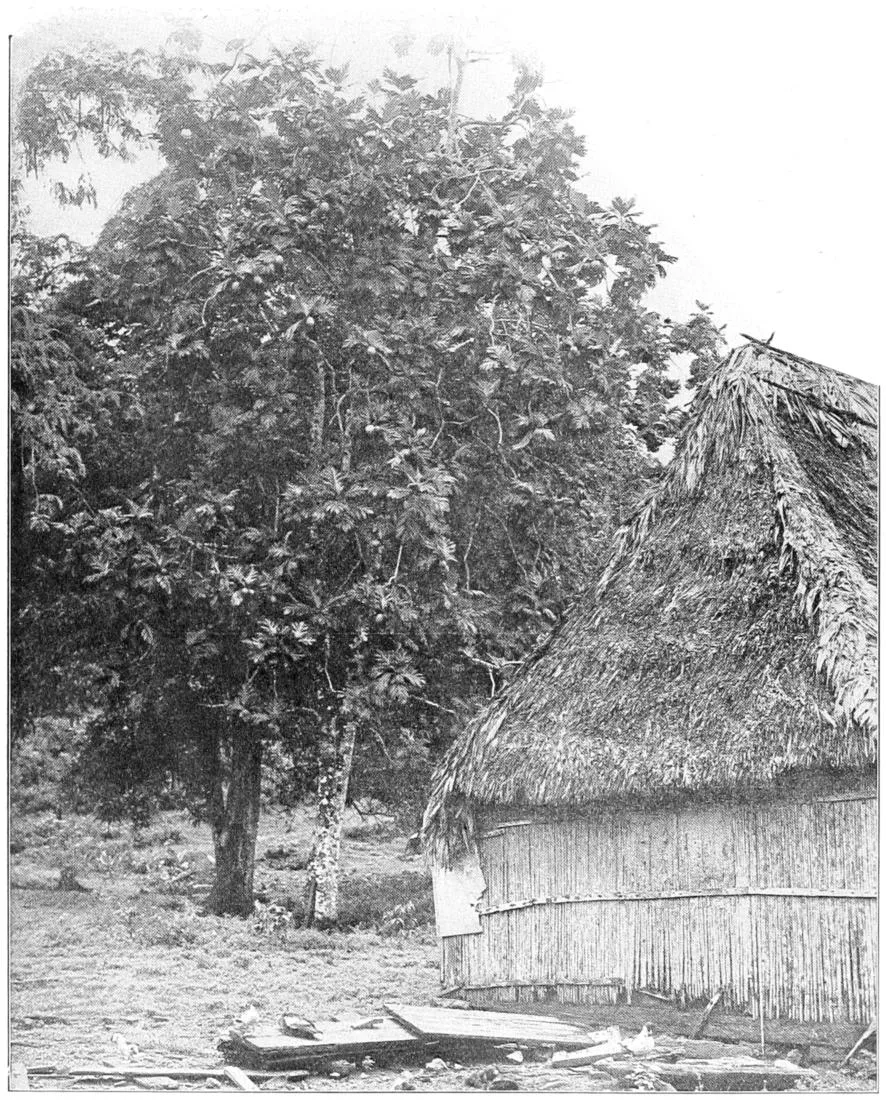
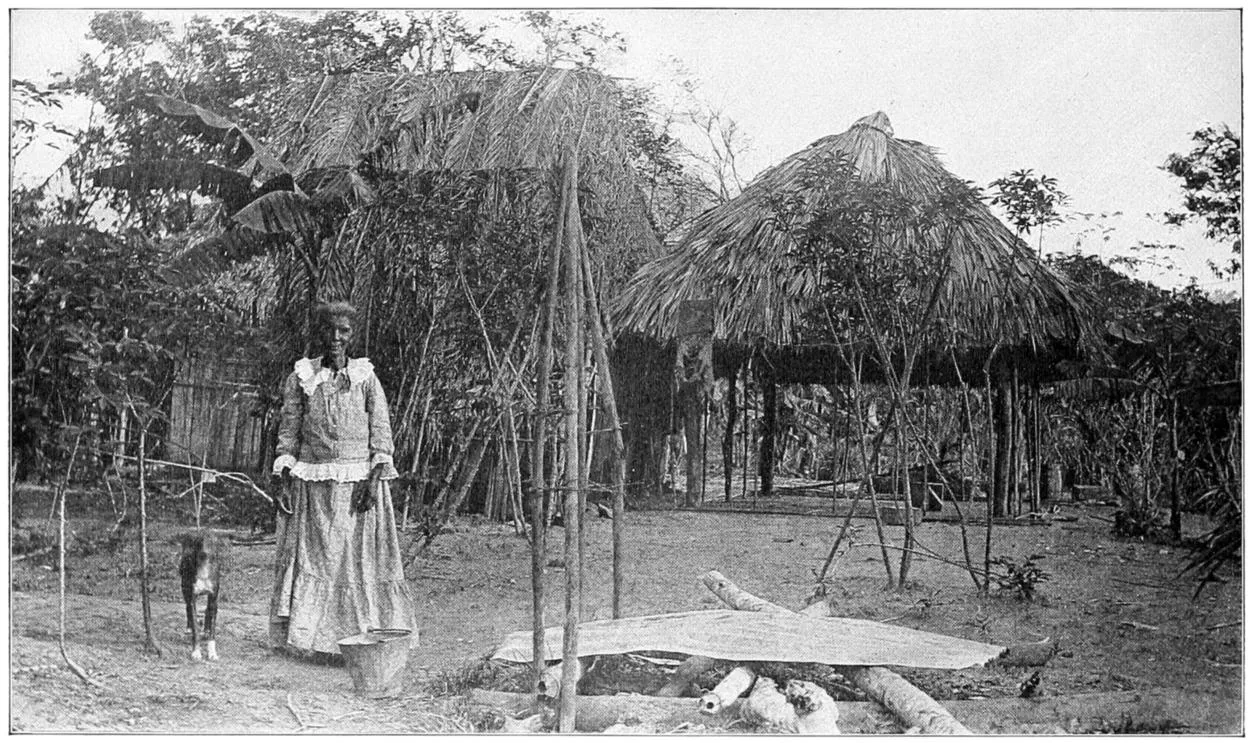
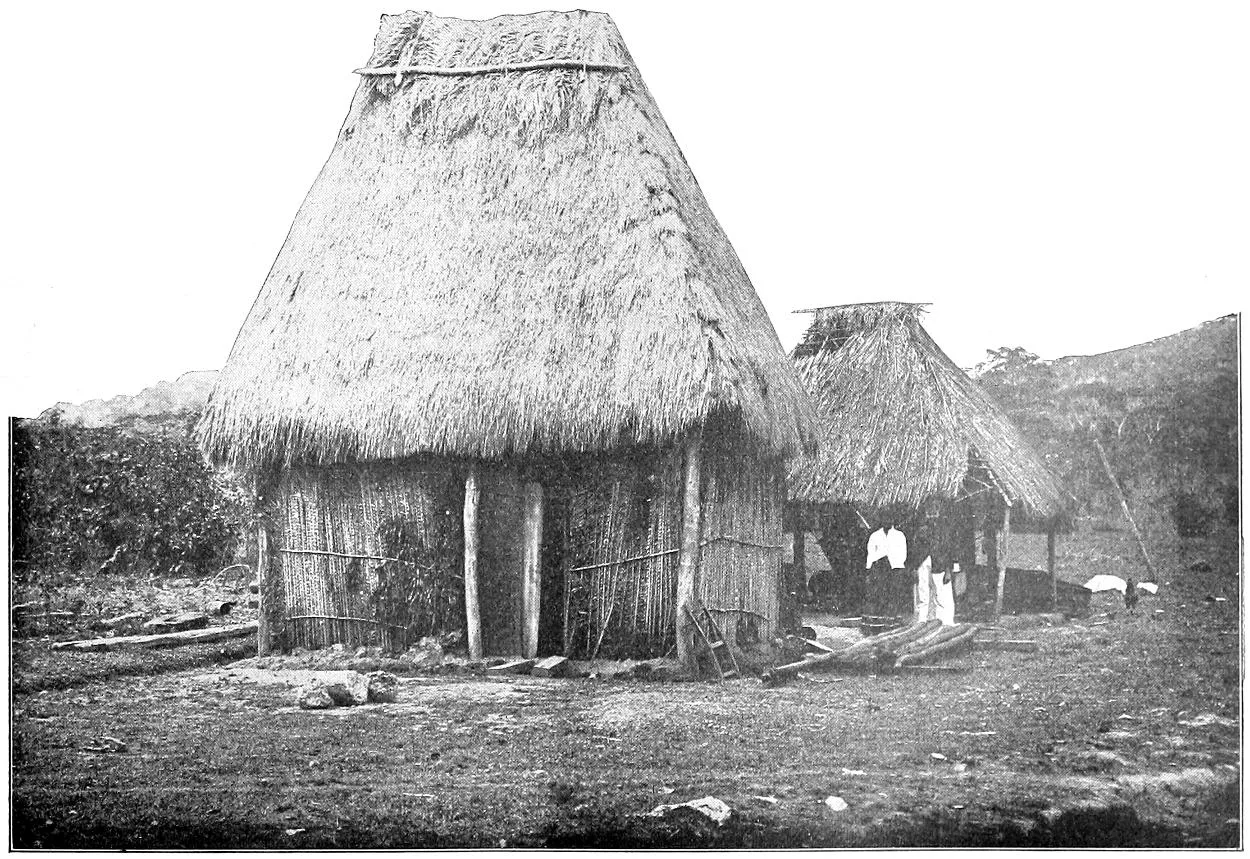
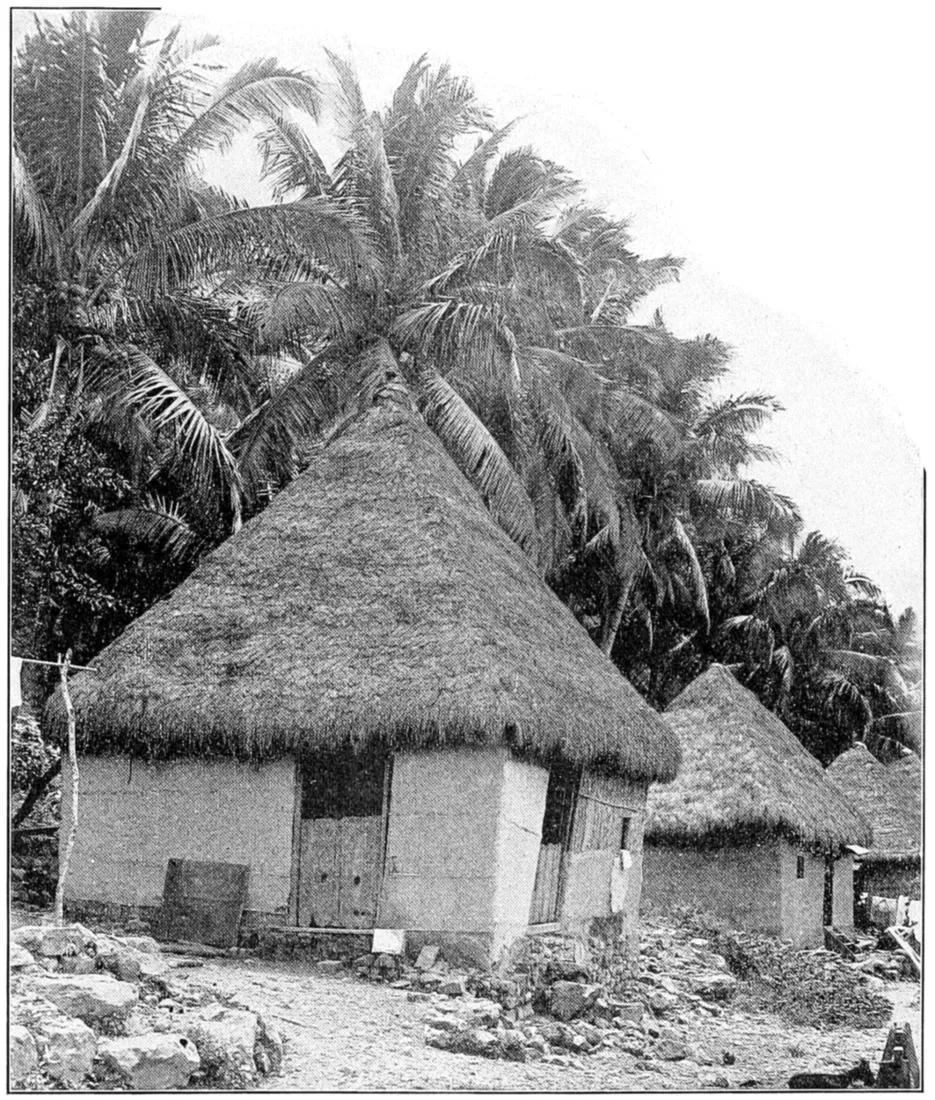
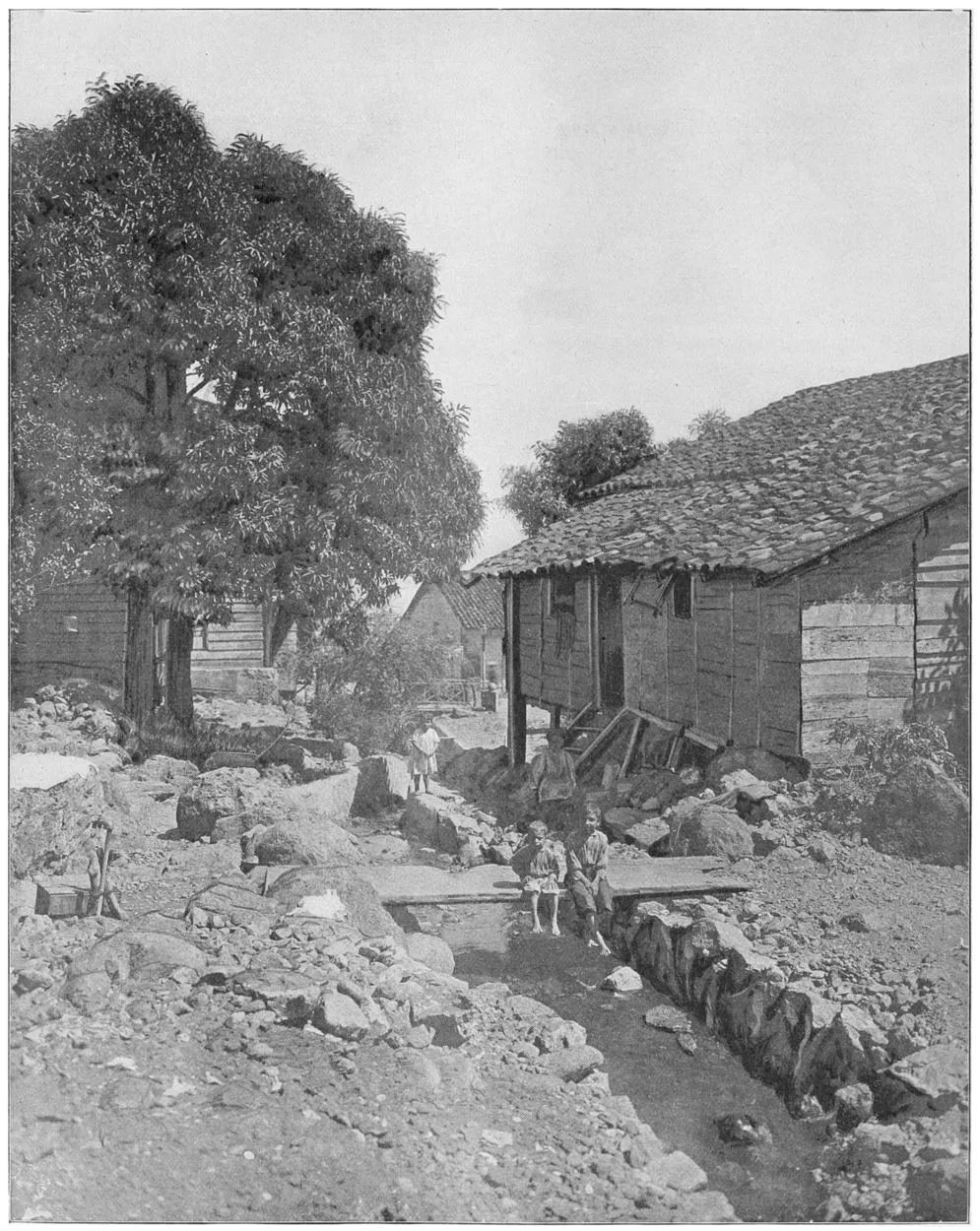
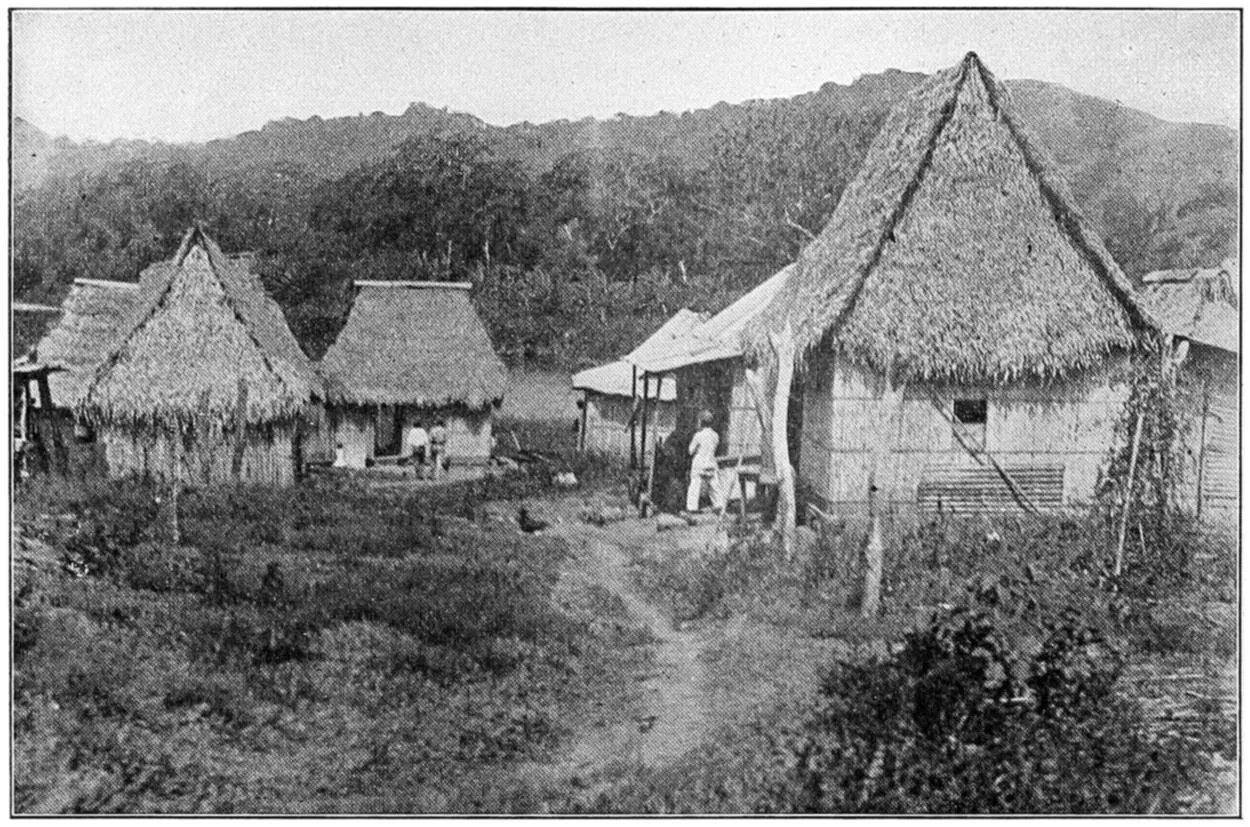
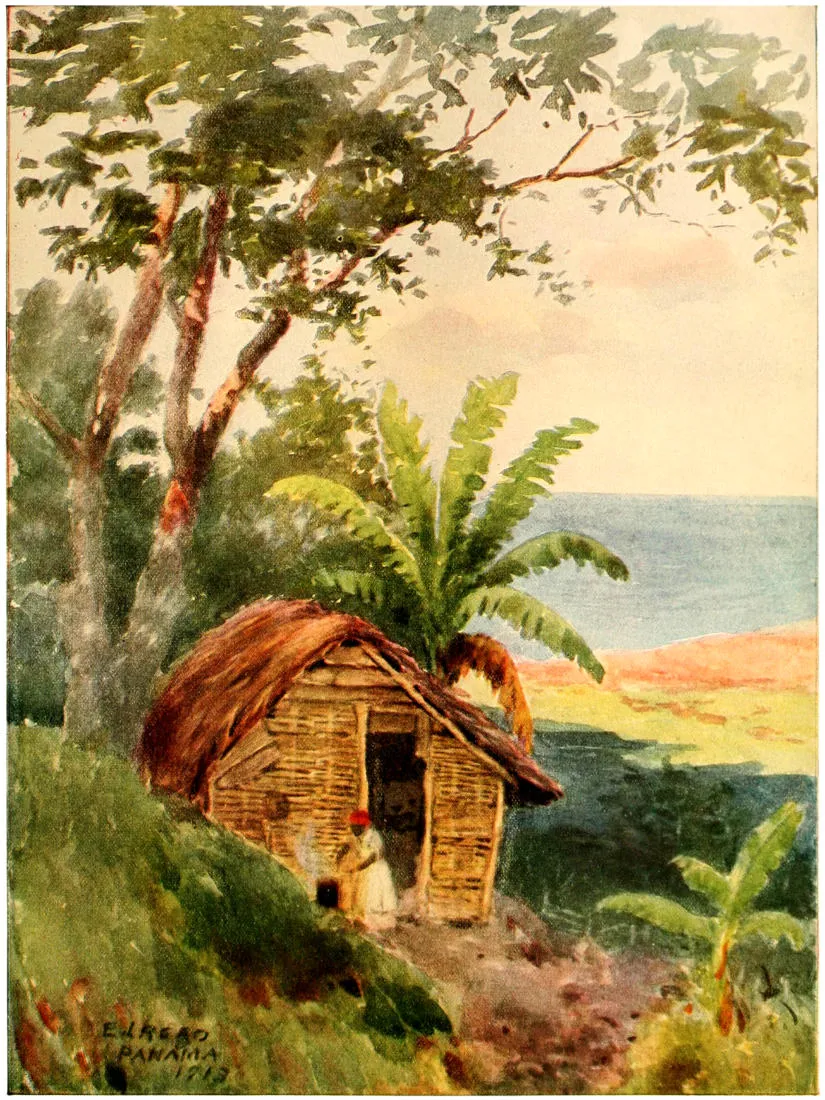
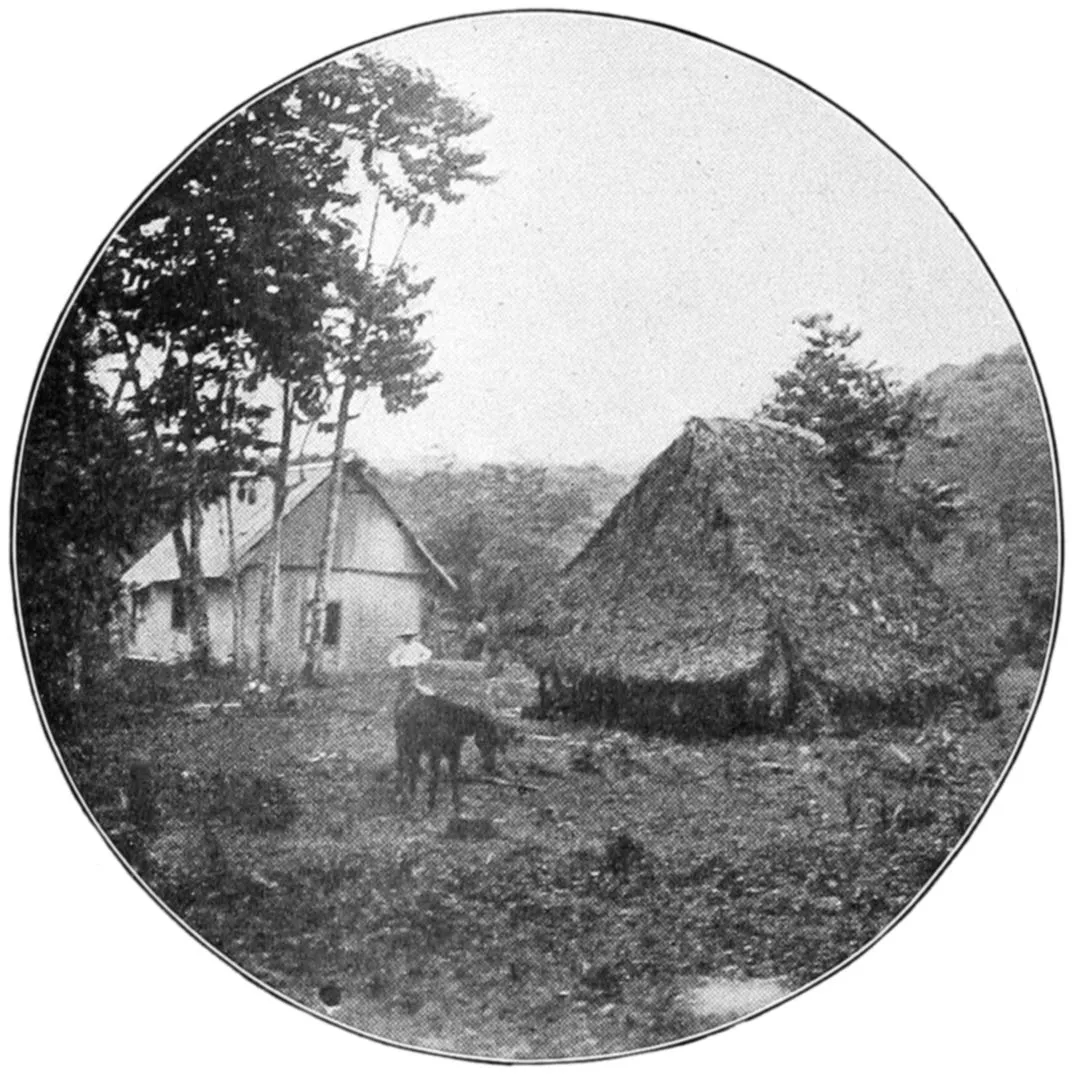
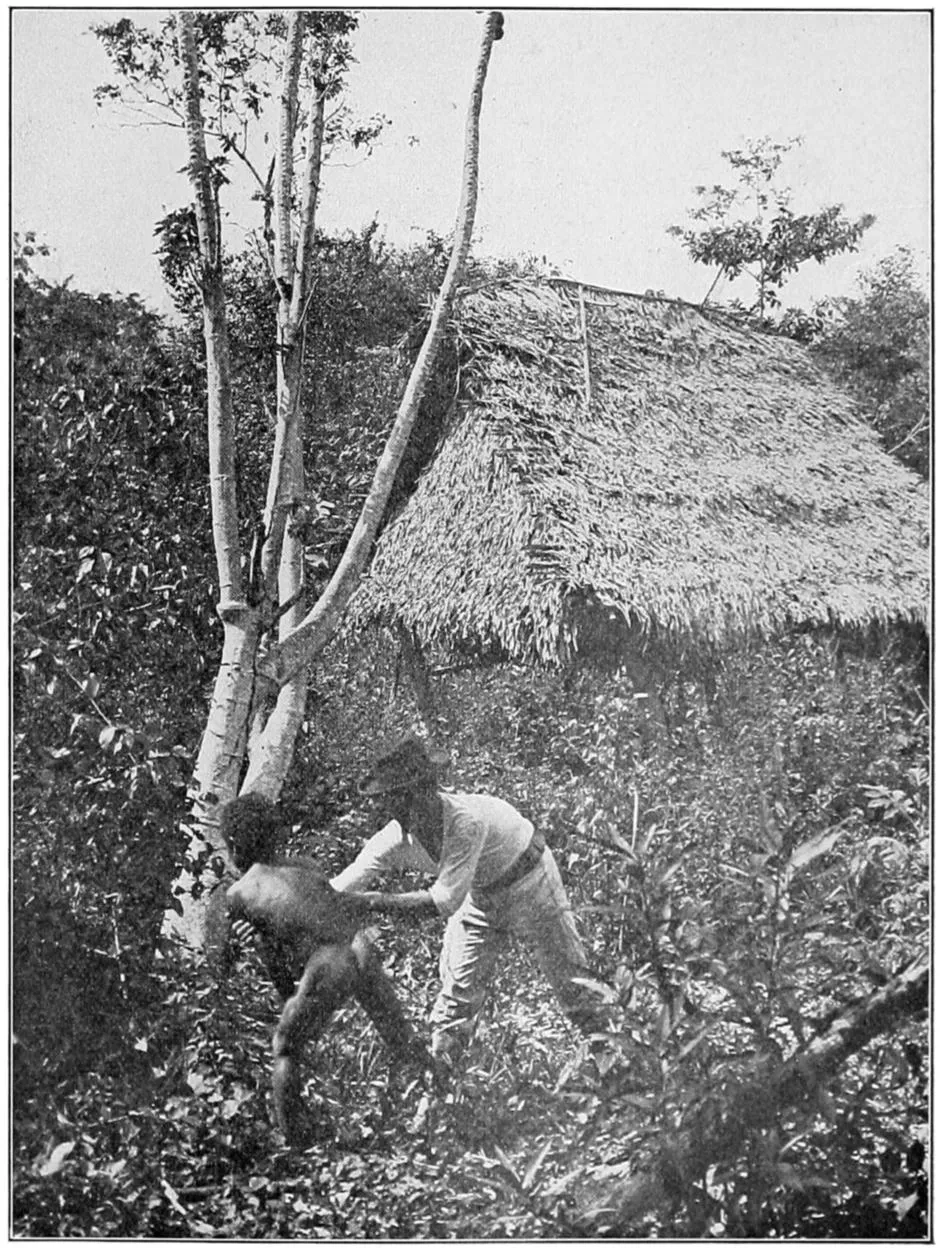
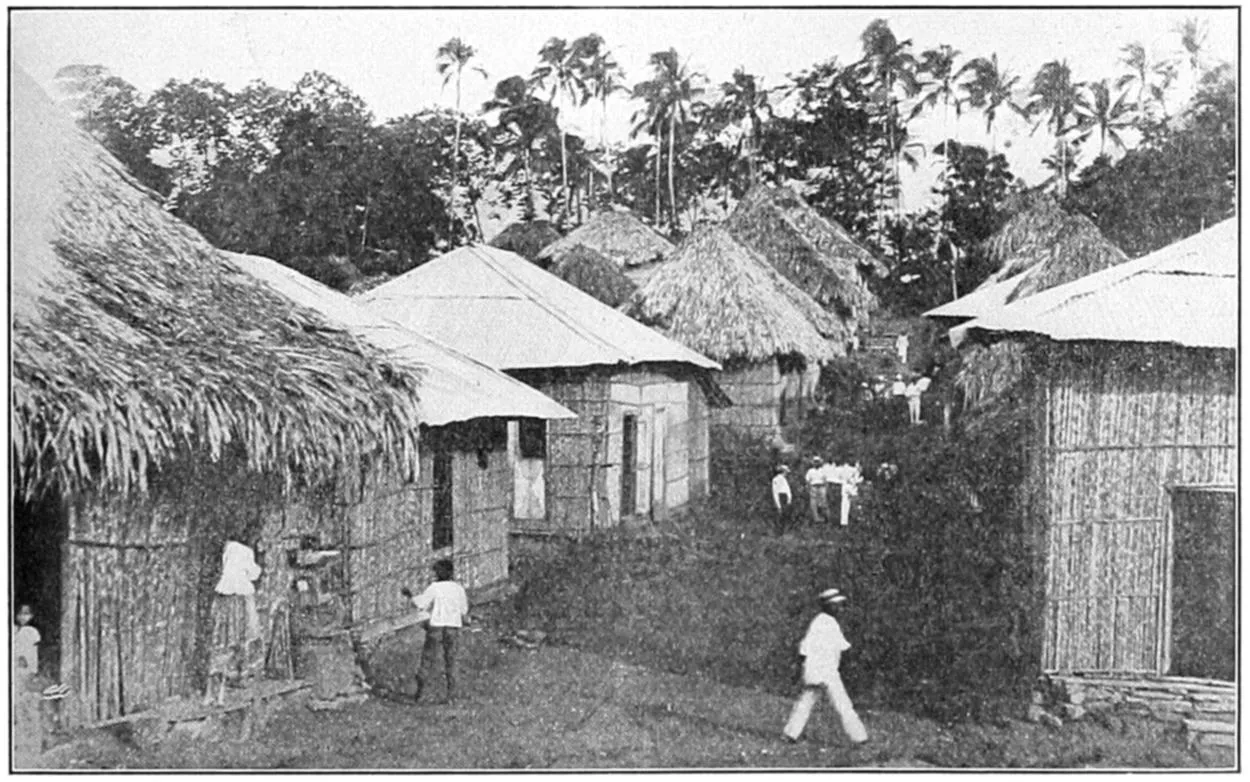
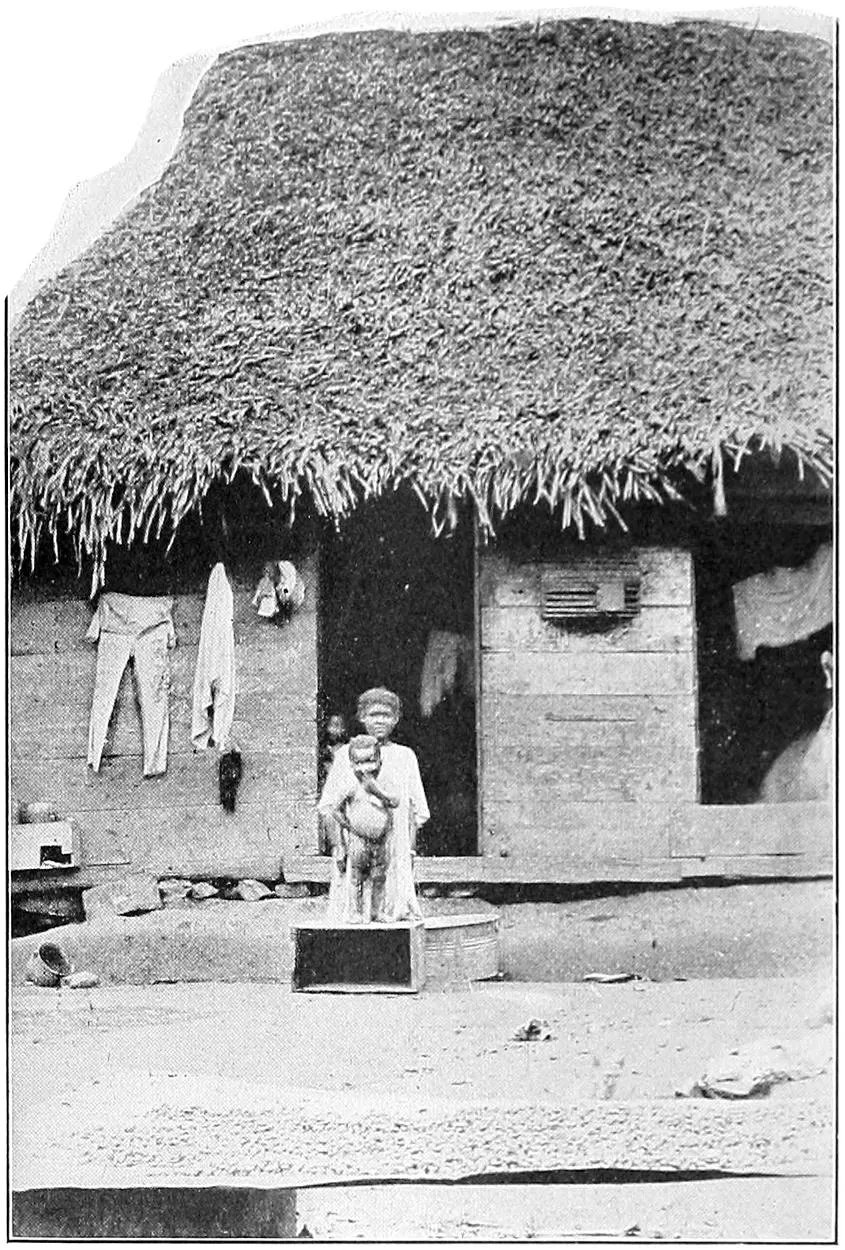
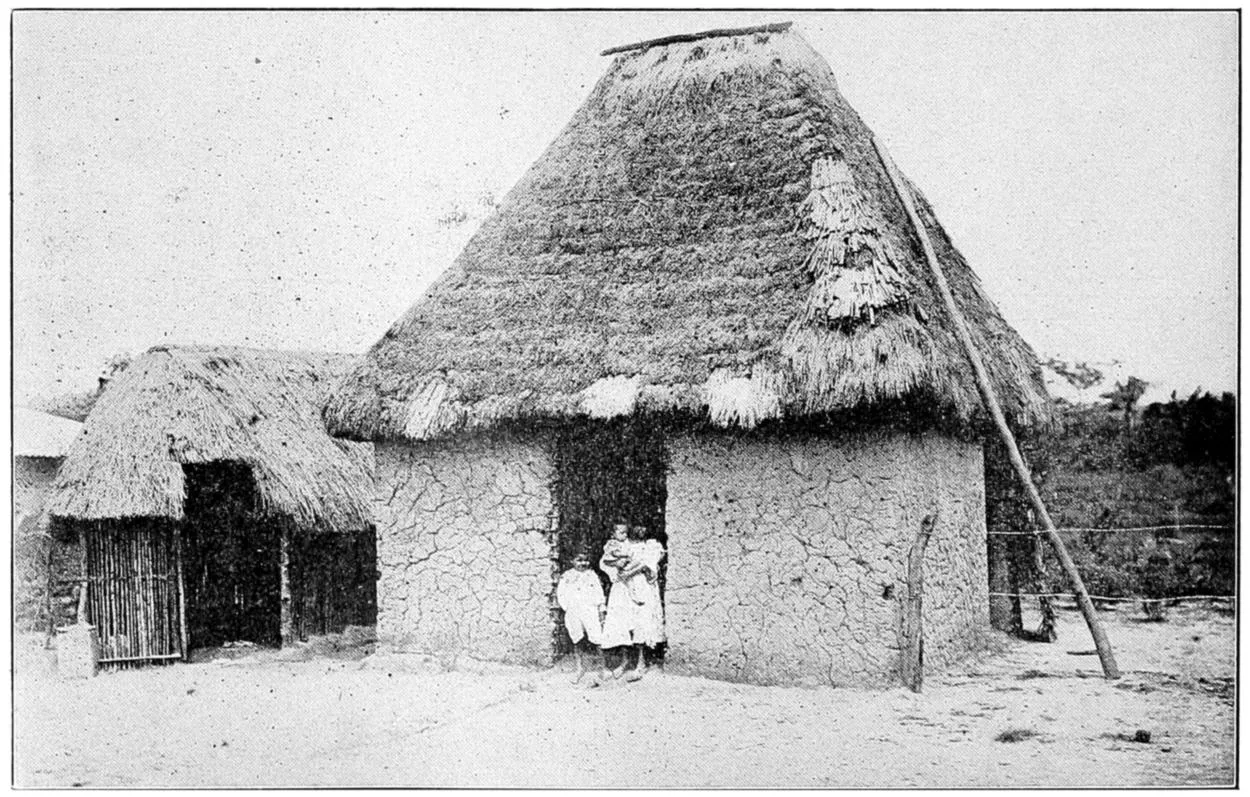
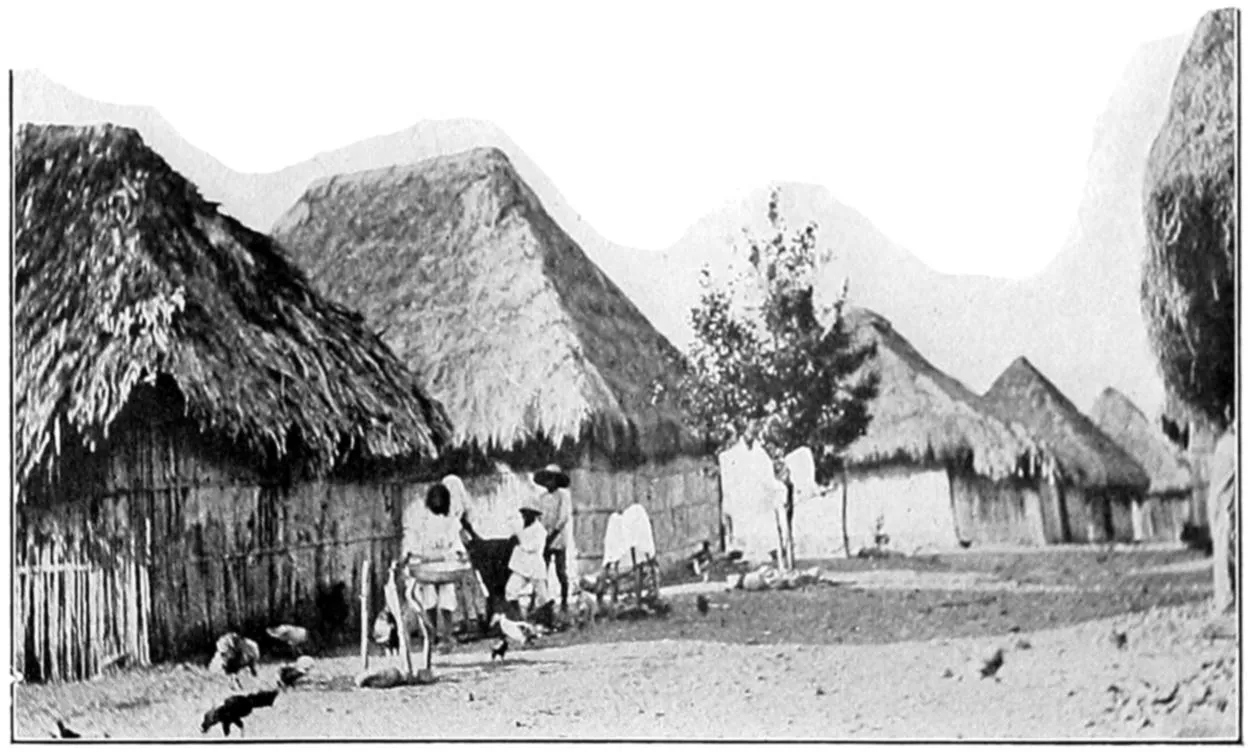
TYPICAL NATIVE HUT IN PORTO BELLO DISTRICT
For that quality you must look to its past, for it
figured largely in the bloody life of the Isthmus in
the 16th century. It was founded by one Don
Diego de Nicuesa, who had held the high office of
Royal Carver at Madrid. Tired of supervising the
carving of meats for his sovereign he sailed for the
Isthmus to carve out a fortune for himself. Hurricanes,
treachery, jealousy, hostile Indians, mutinous
sailors and all
the ills that jolly
mariners have to face
had somewhat abated
his jollity and his
spirit as well when he
rounded Manzanillo
Point and finding himself
in a placid bay
exclaimed: “Detengamonos
aqui, en
nombre de Dios”
(Let us stop here in
the name of God).
His crew, superstitious
and pious as
Spanish sailors were
in those days, though
piety seldom interfered
with their profanity
or piracy, seized
on the devout invocation
and Nombre de
Dios became the name
of the port.
The town thus
named became for a
time the principal
Spanish port on the
Caribbean coast and
one of the two terminals
of the royal road
to Old Panama. But
the harbor was poor,
the climate sickly, for
the town was shut in
on the landward side
by mountains which
excluded the breeze.
It came to be called the Spanish Graveyard. Children
died in infancy, and Spanish mothers sent
theirs to Cruces to be reared. Difficult of defense
by either land or sea it was menaced alternately
by the Cimmaroons and the English, and in 1572
Sir Francis Drake took it by assault but gained little
profit by the adventure, in which he nearly lost
his life. Warned by this, and by other attacks, a
distinguished Spanish engineer was sent to examine
Nombre de Dios with other Caribbean ports.
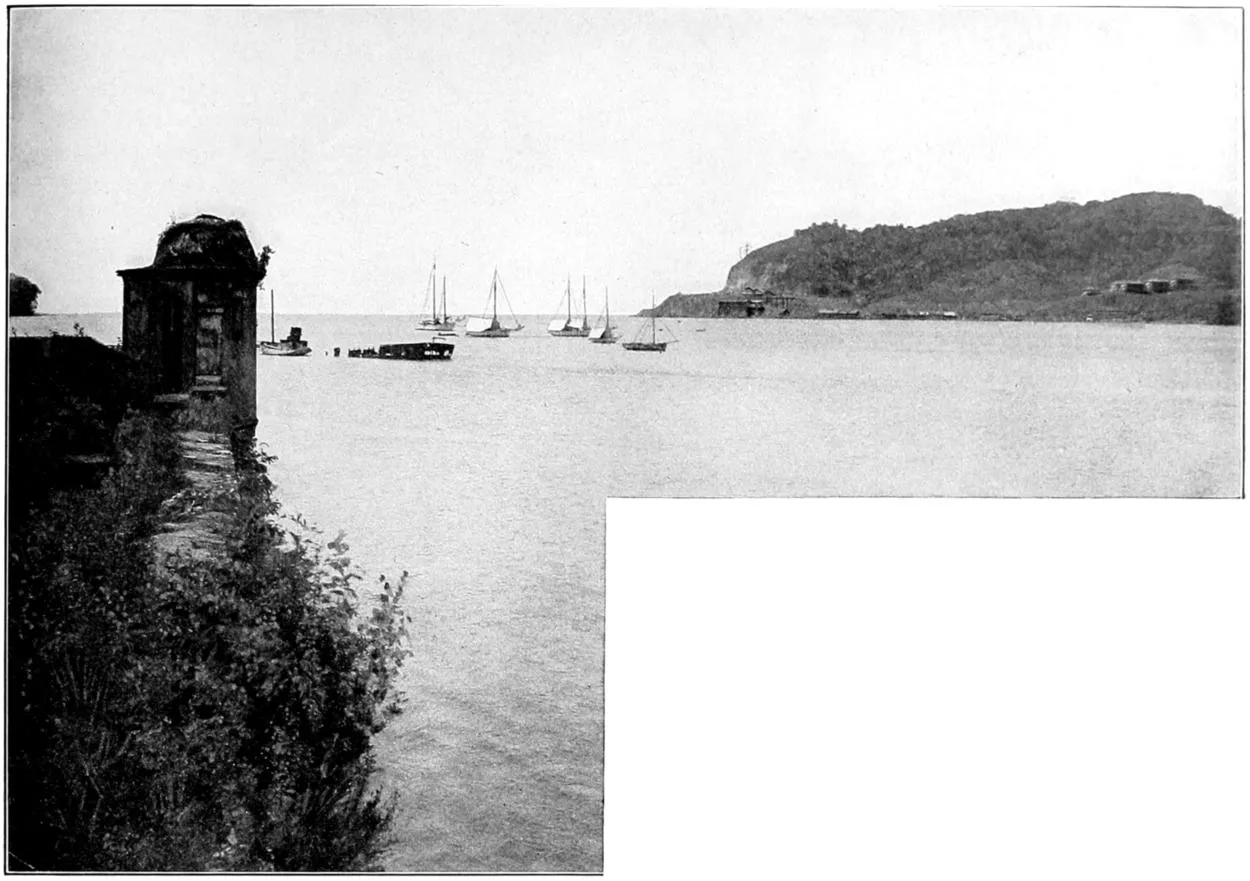
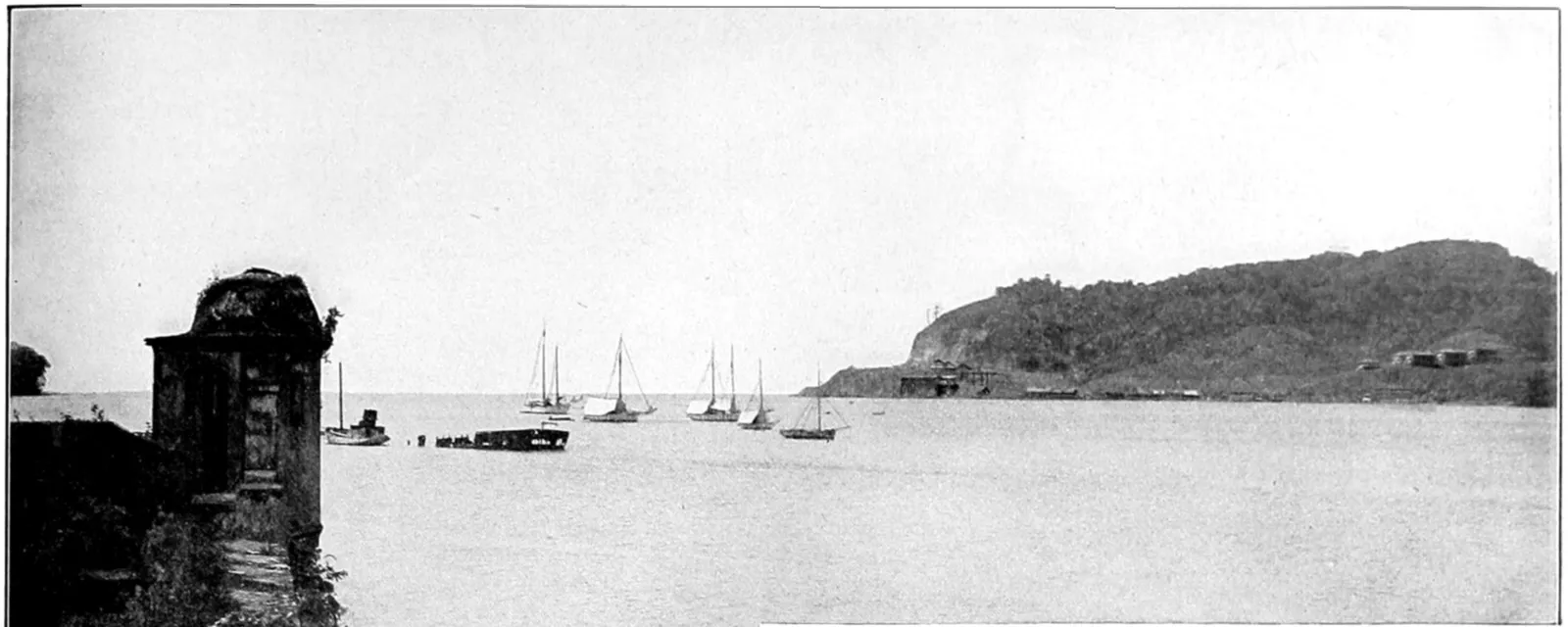
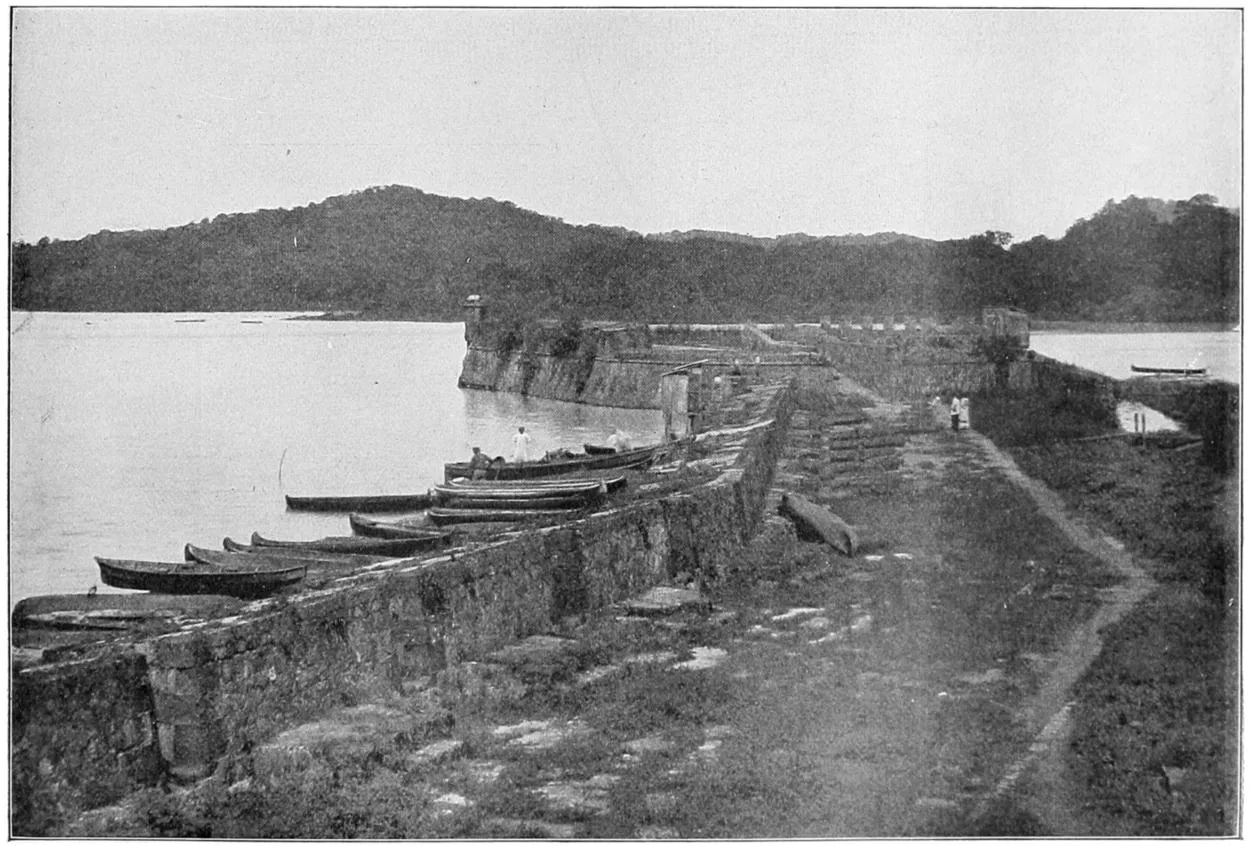
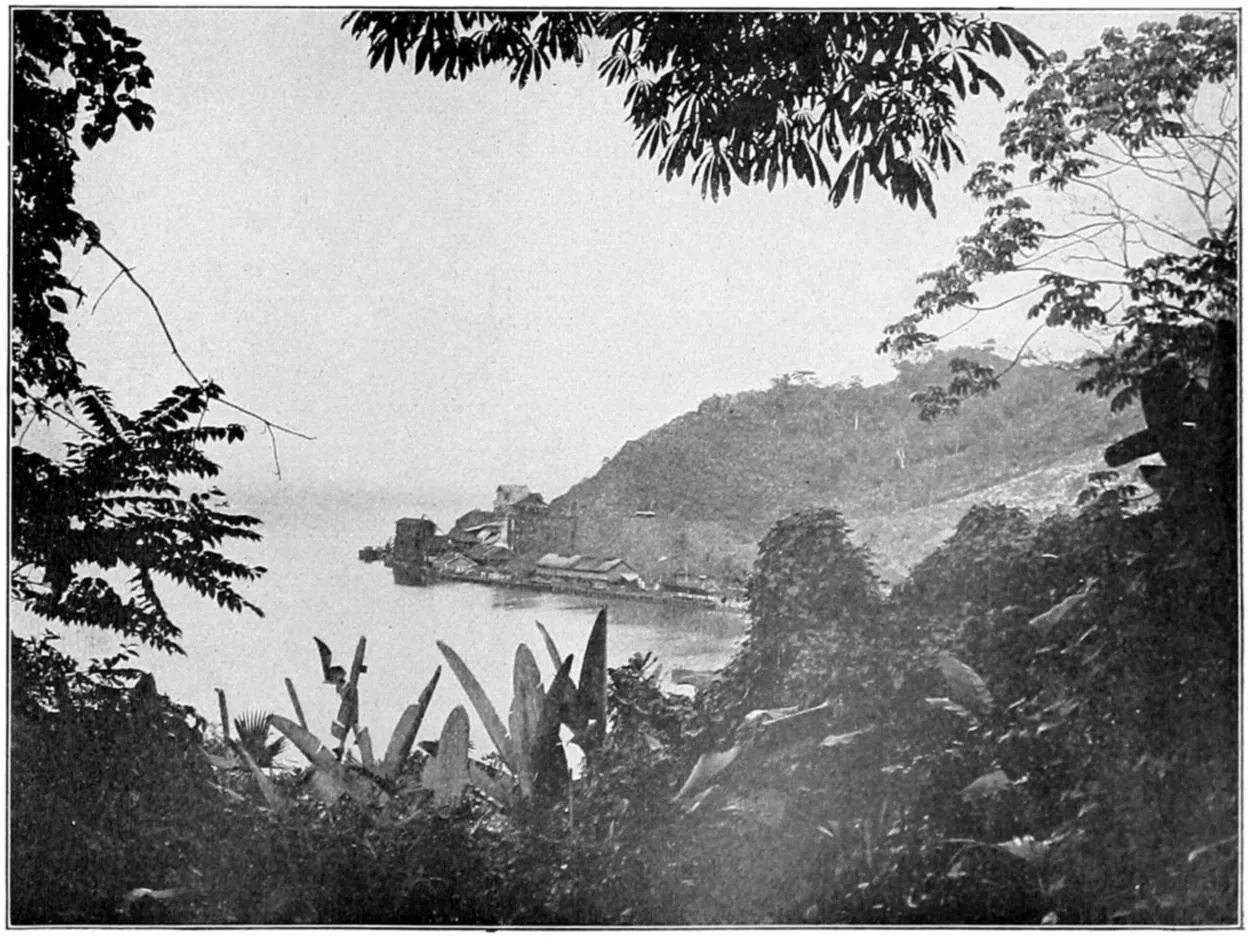
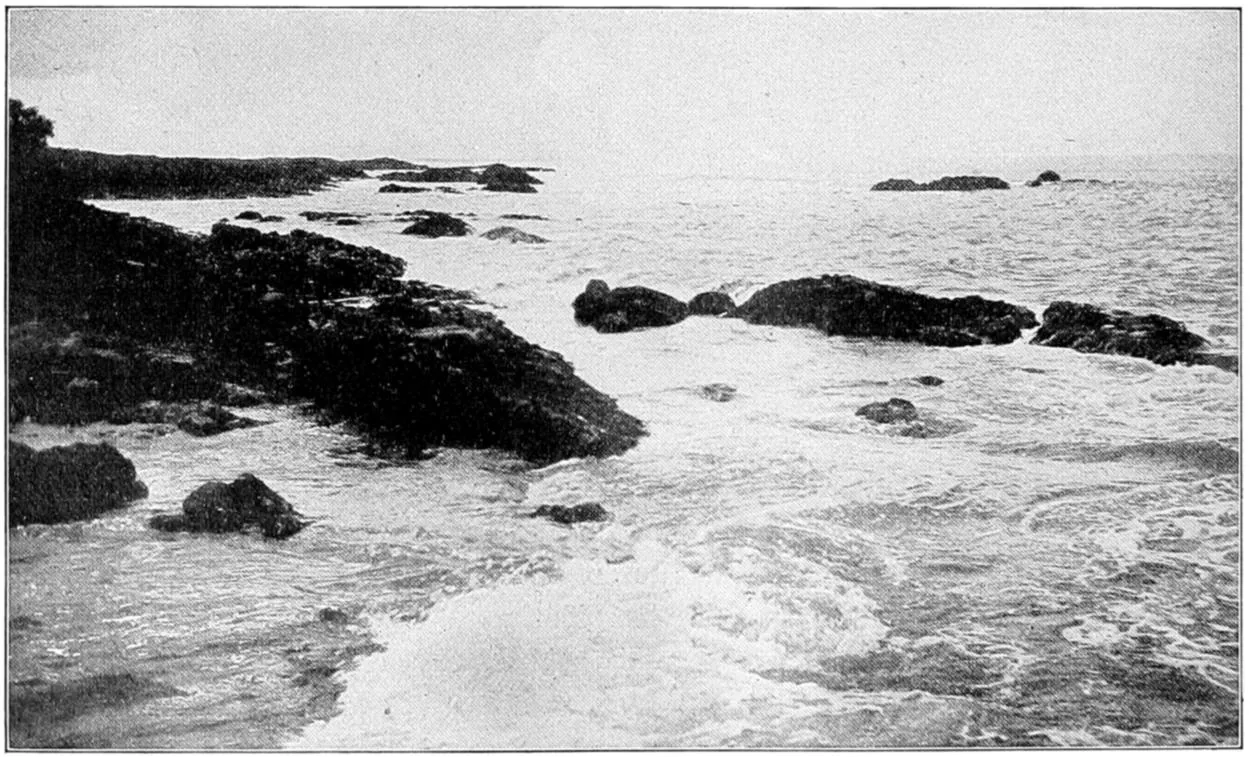
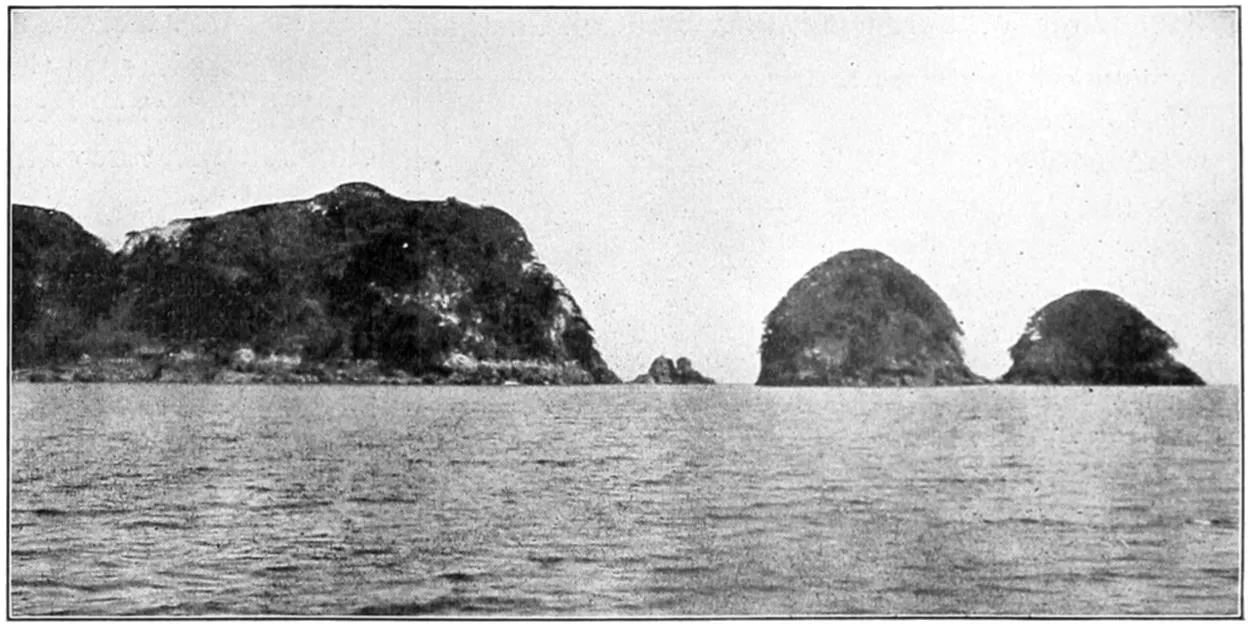
ENTRANCE TO PORTO BELLO HARBOR, FROM SPANISH FORT
ENTRANCE TO PORTO BELLO HARBOR, FROM SPANISH FORT
He was impressed by Porto Bello and reported “if
it might please your Majesty it were well that the
city of Nombre de Dios be brought and builded in
this harbor.” It was so graciously ordered and the
“city” having been “brought and builded” at
Porto Bello its old site gradually relapsed into
wilderness save for the few huts found when the
American engineers descended upon it seeking not
gold but sand. In the course of this quest they
uncovered an old Spanish galleon but did not report
any pieces of eight, ingots or doubloons. Indeed
looking all over the Canal work we may well say,
never was there so much digging for so little treasure,
for even in the great Culebra cut no trace of precious
metal was found.
Nombre de Dios then affords little encouragement
for the visits of tourists, but Porto Bello, nearer
Colon, is well worth a visit. The visit however is
not easily made. The trip by sea is twenty miles
steaming in the open Caribbean which is always
rough, and which on this passage seems to any save
the most hardened navigators tempestuous beyond all
other oceans. There are, or rather were, no regular
lines of boats running from Colon and one desiring
to visit the historic spot must needs plead with the
Canal Commission for a pass on the government
tug which makes the voyage daily. The visit is well
worth the trouble however for the ruins are among
the finest on the American continent, while the bay
itself is a noble inlet. So at least Columbus thought
it when he first visited it in 1502. His son, Fernando,
who afterwards wrote of this fourth voyage of the
Genoese navigator, tells of this visit thus:
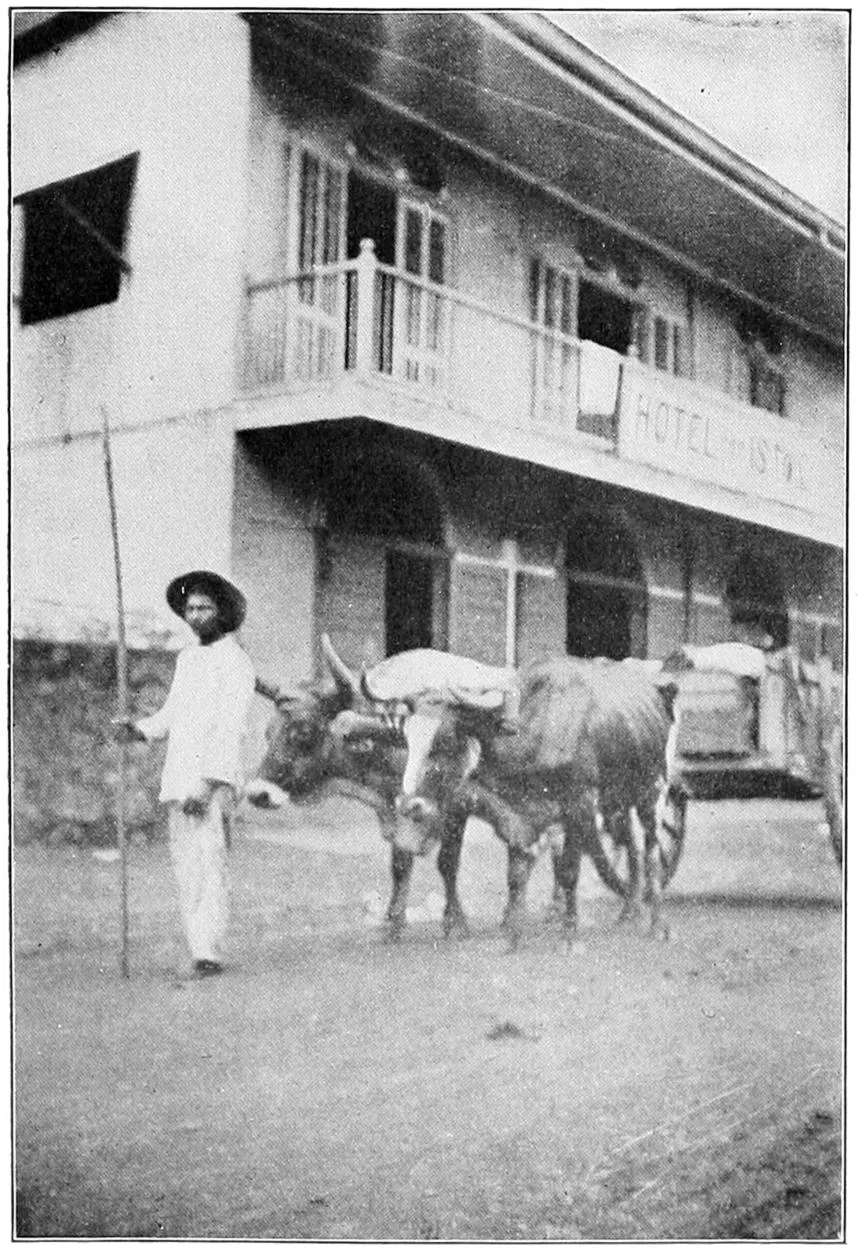
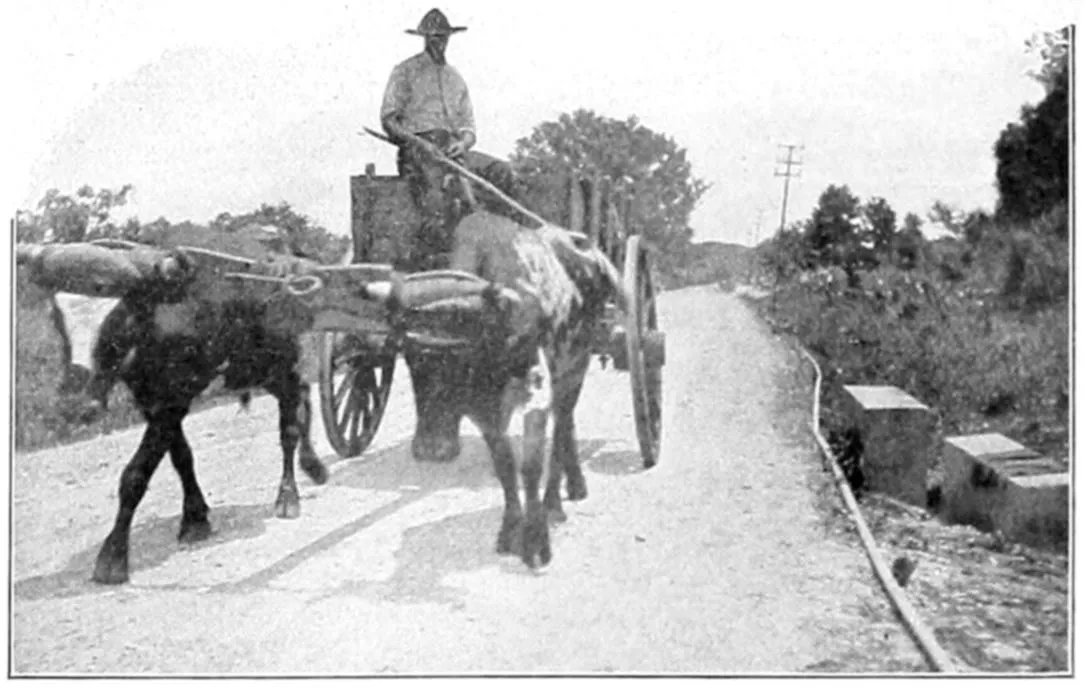
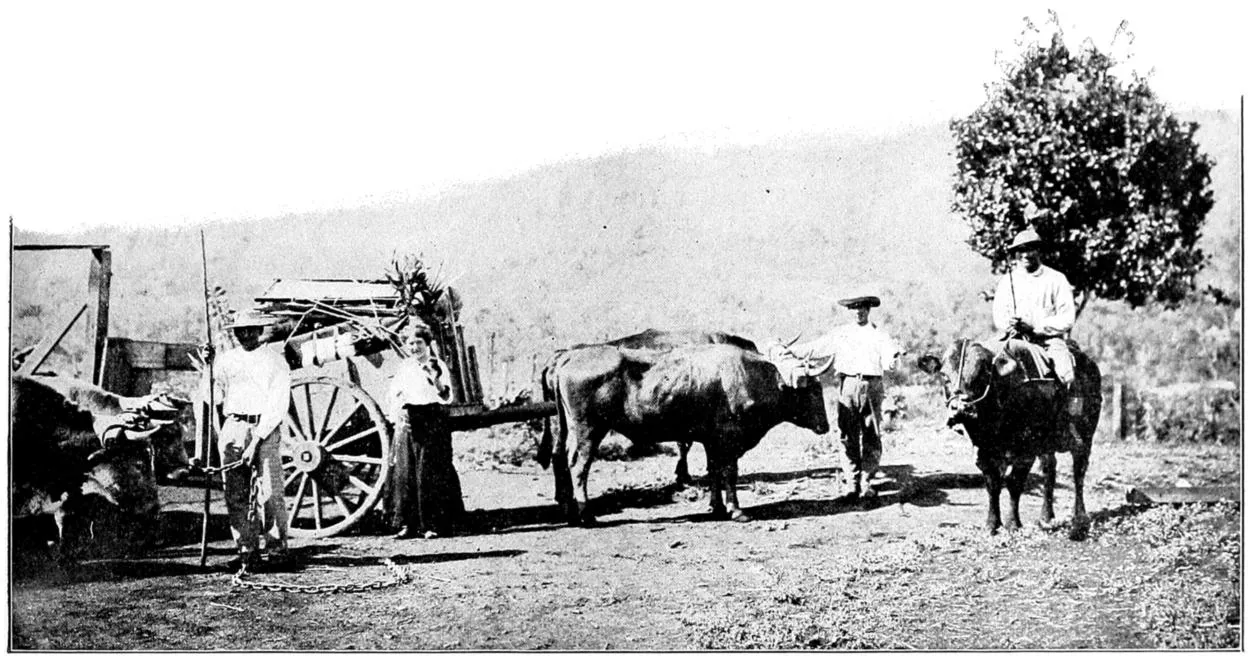
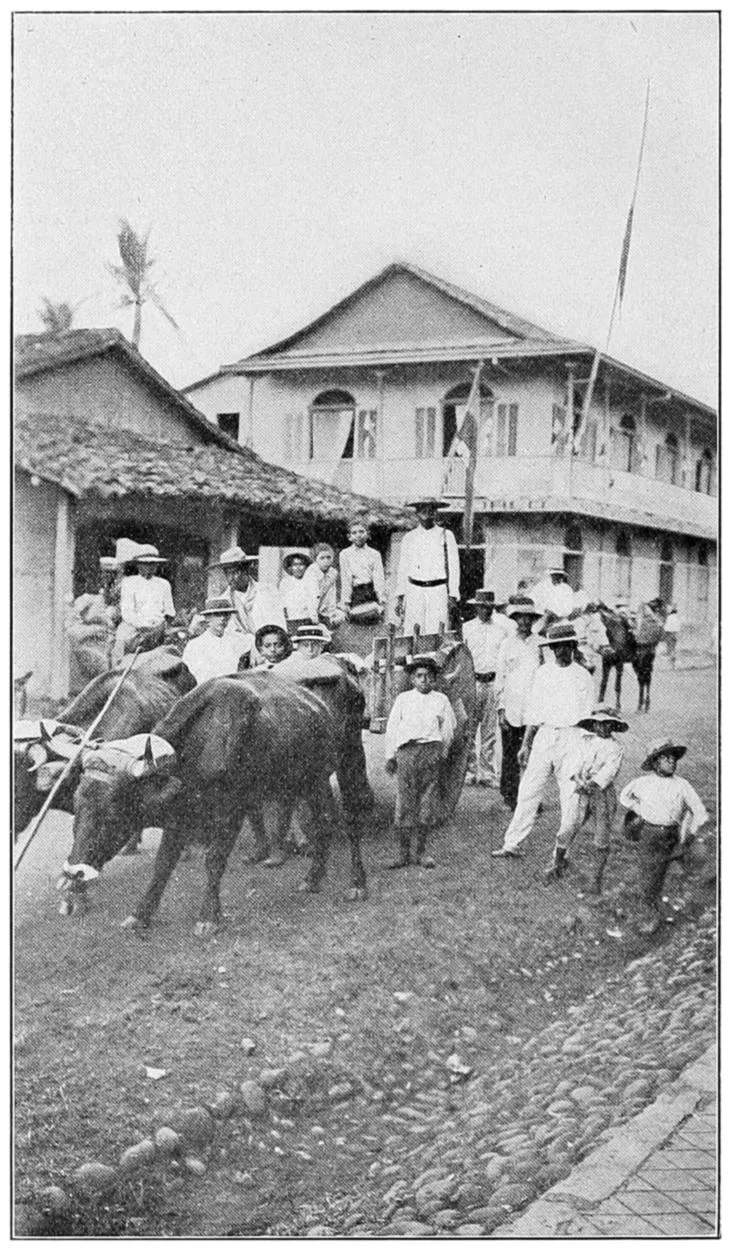
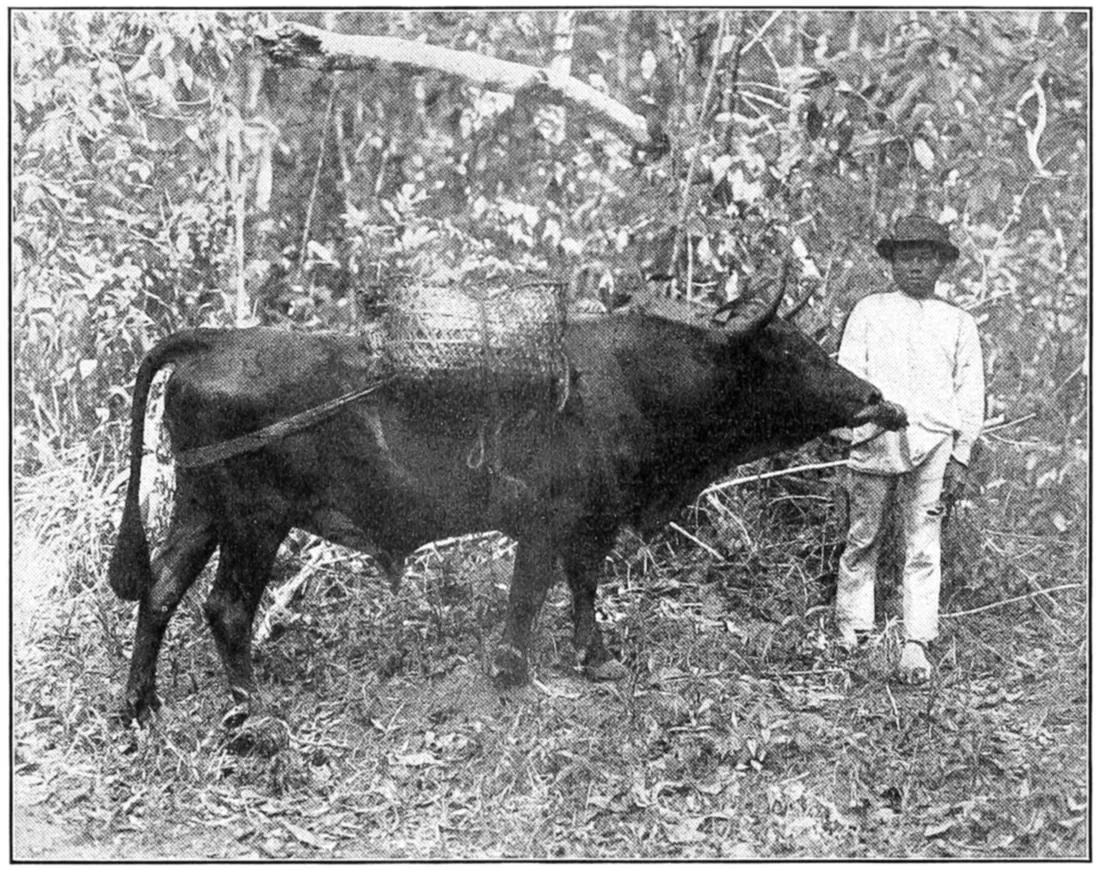
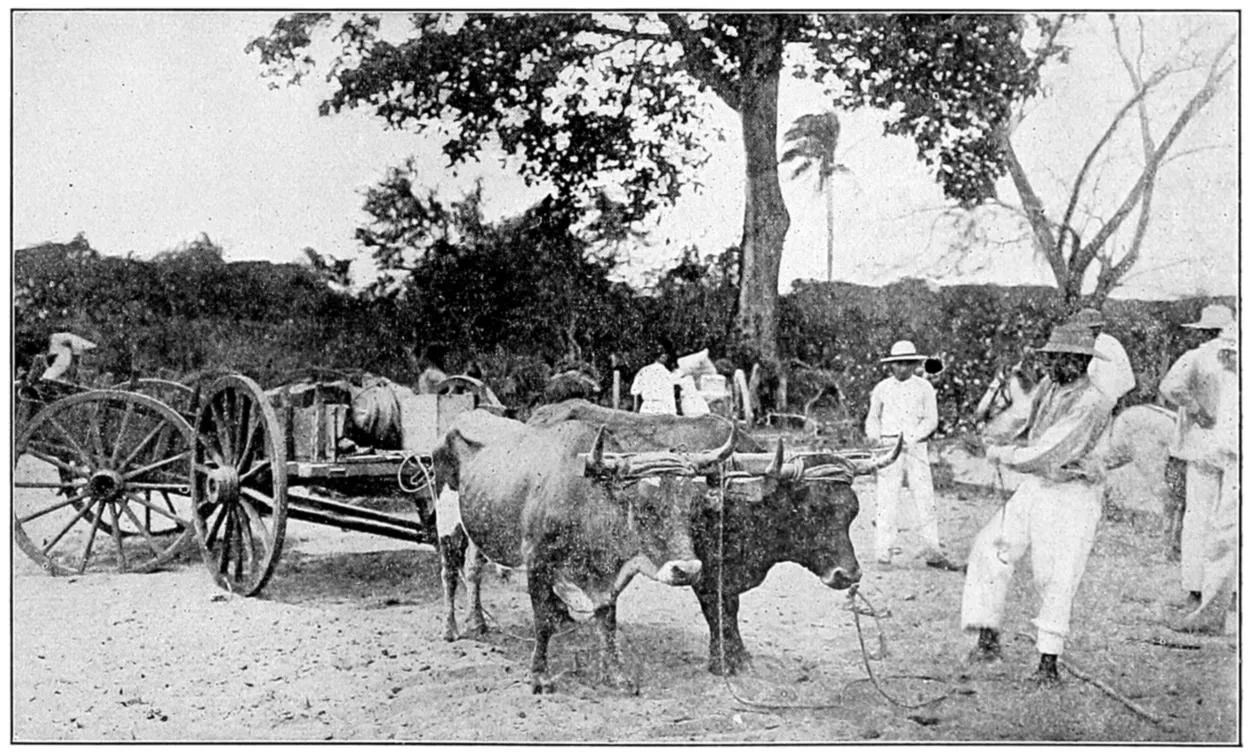
BULLOCK CART ON THE SAVANNA ROAD
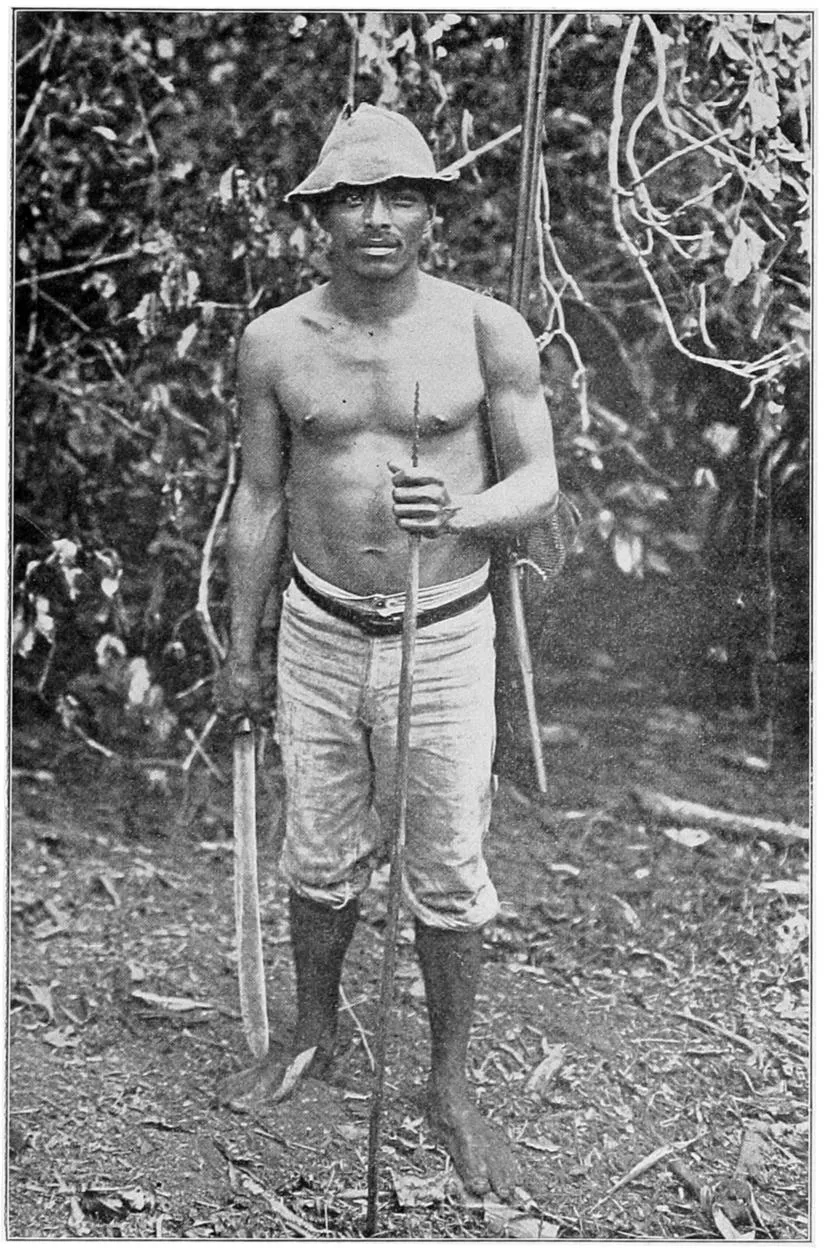
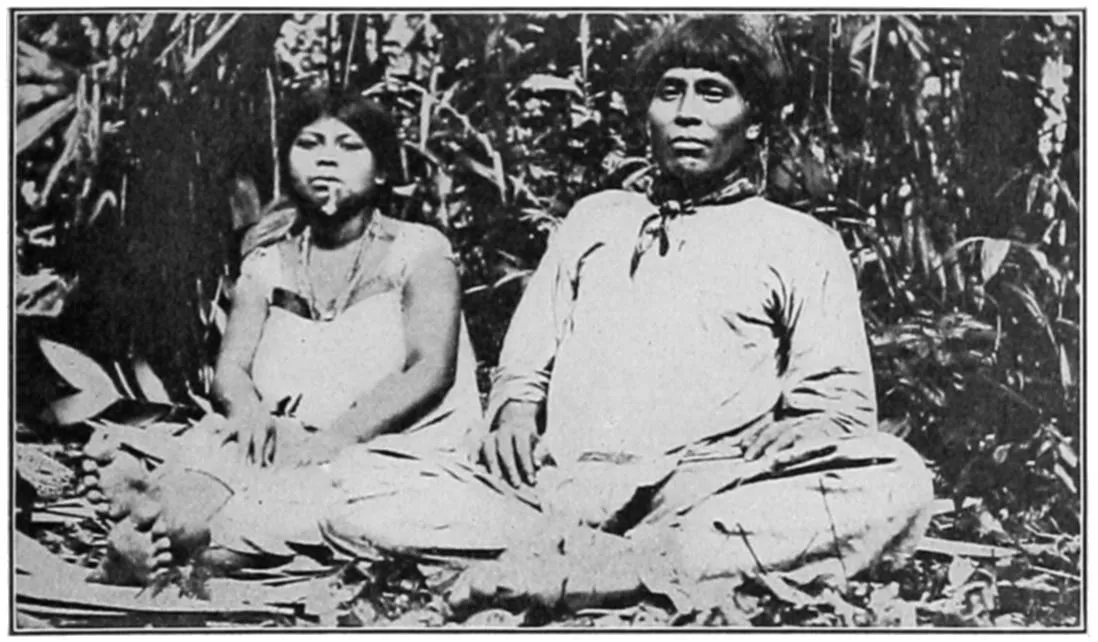
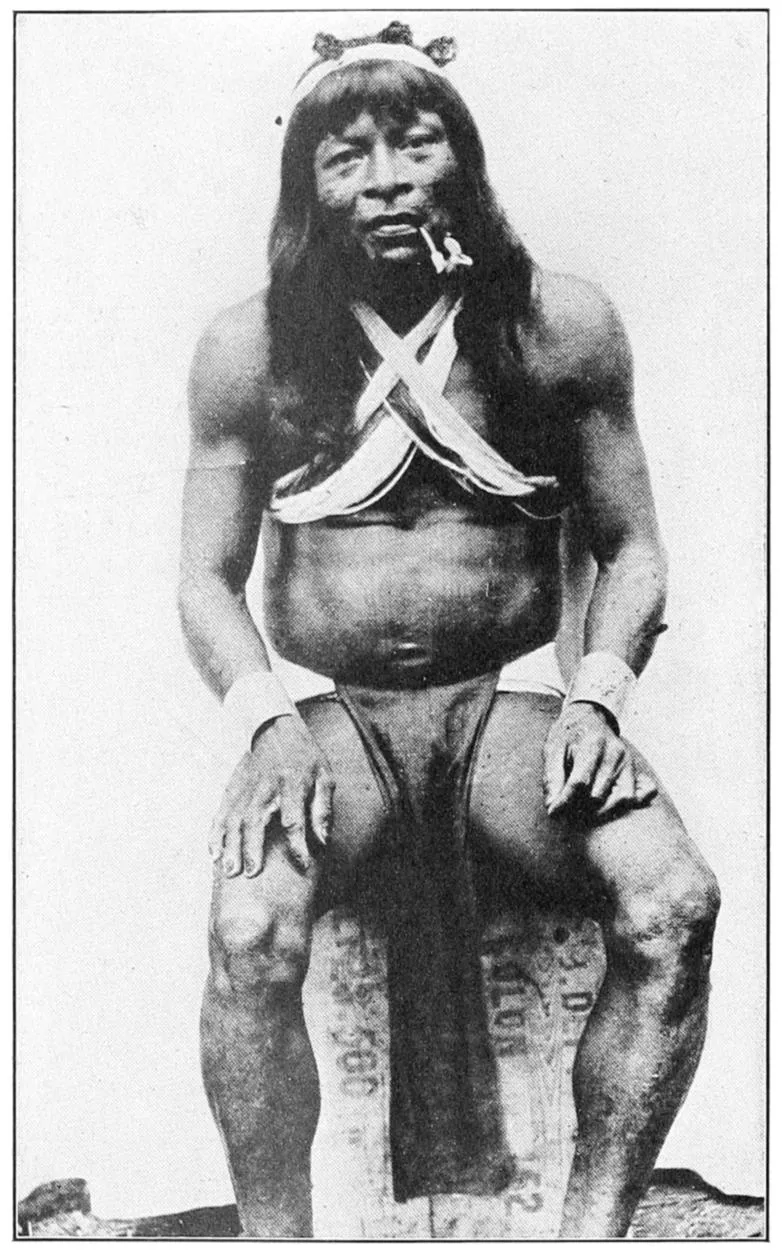
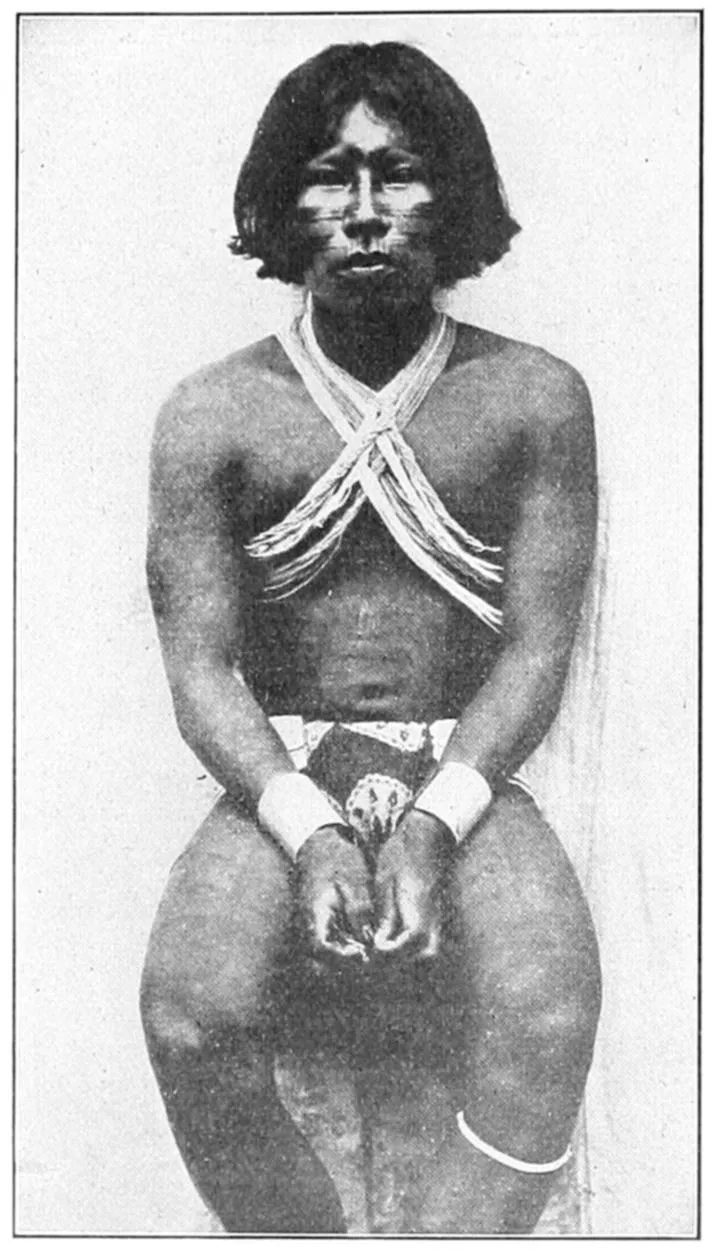
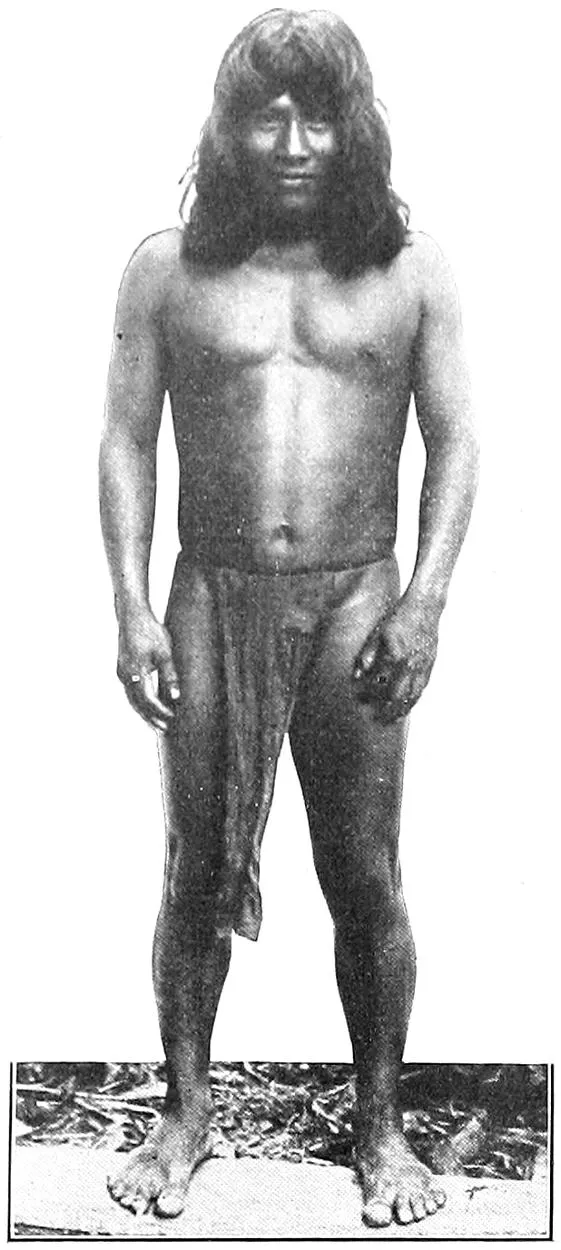
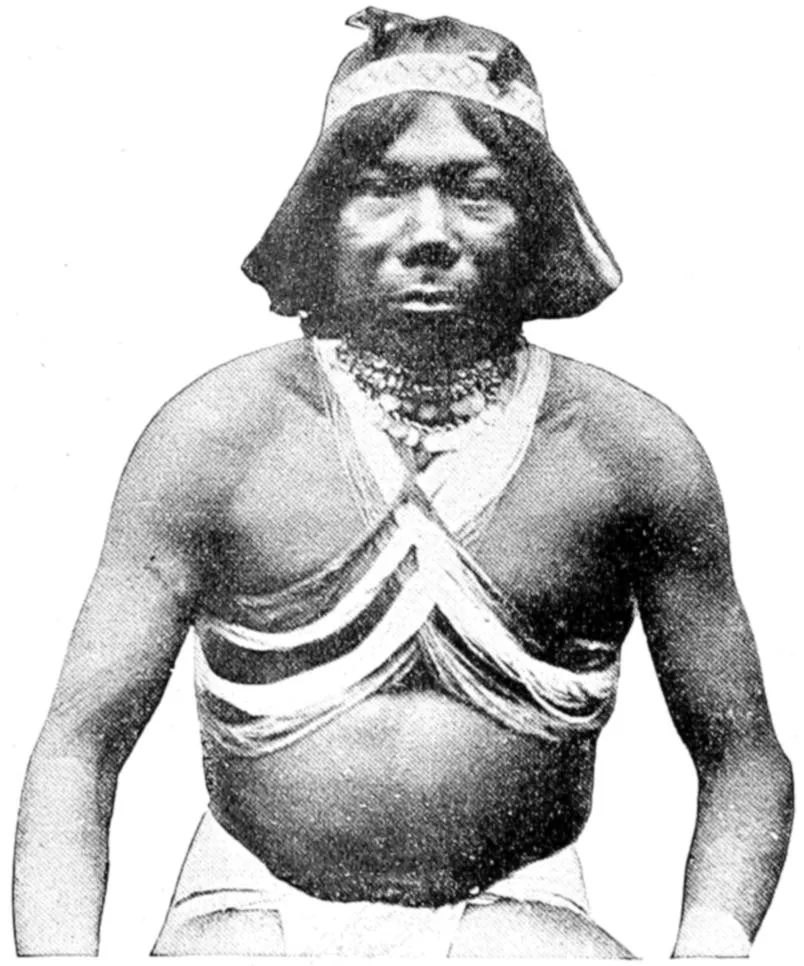
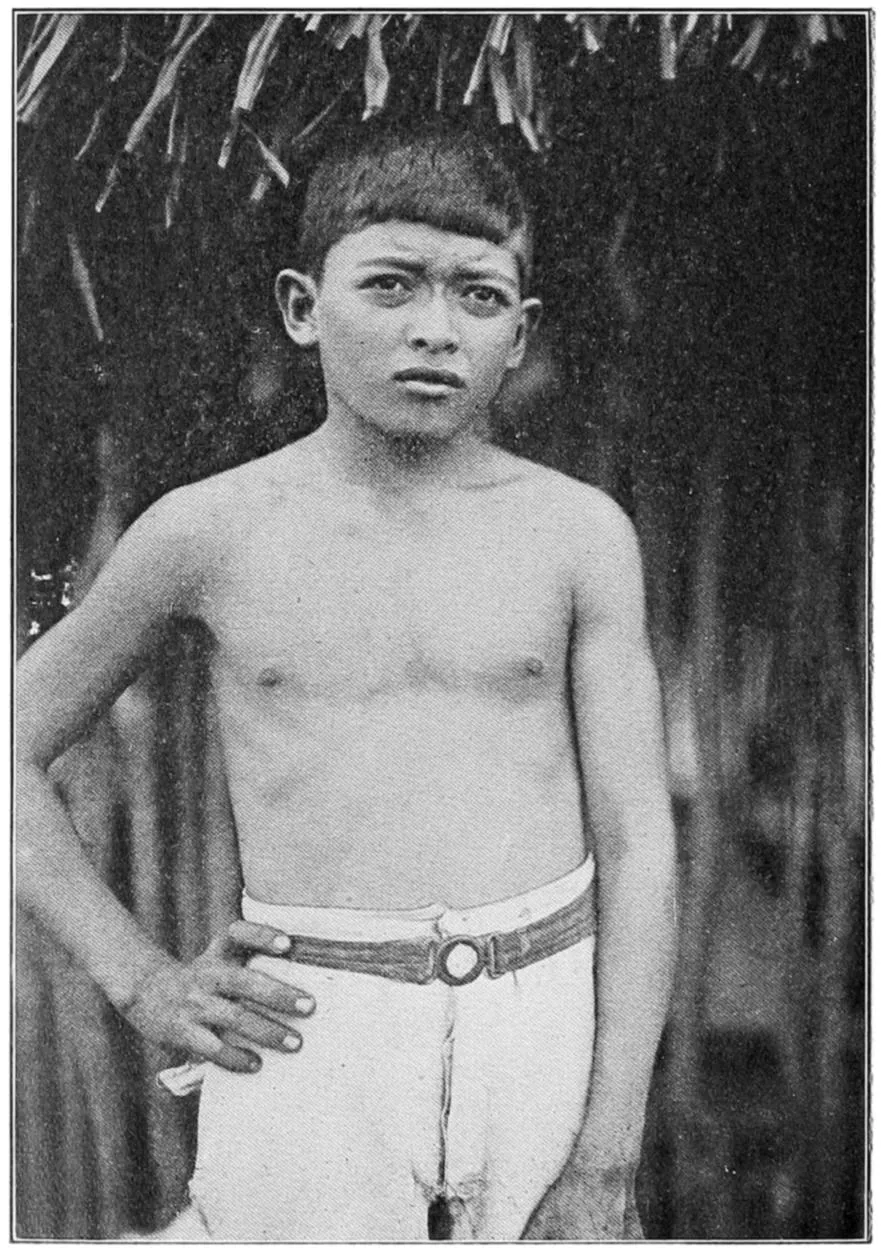
MODERN INDIAN, DARIEN REGION
Note characteristic weapons—machete, javelin and shot-gun
“The Admiral without making any stay went on
till he put into Puerto Bello, giving it that name
because it is large, well peopled and encompassed
by a well cultivated country. He entered the place
on the 2nd of November (1502), passing between two
small islands within which ships may lie close to the
shore and turn it out (sic) if they have occasion. The
country about the harbor, higher up, is not very
rough but tilled and full of houses, a stone’s throw
or a bow shot one from the other;
and it looks like the finest landscape
a man can imagine. During seven
days we continued there, on account
of the rain and ill weather, there
came continually canoes from all
the country about to trade, for provisions,
and bottoms of fine spun
cotton which they gave for some
trifles such as points and pins.”
Time changes, and things and
places change with it. What are
“bottoms of fine spun cotton” and
“trifles such as points”? As for
the people whose houses then so
plentifully besprinkled the landscape
round about, they have largely vanished.
Slain in battle, murdered in
cold blood, or enslaved and worked
to death by the barbarous Spaniards,
they have given place to a mongrel
race mainly negro, and of them even
there are not enough to give to
Porto Bello today the cheery, well
populated air which the younger
Columbus noticed more than 400
years ago.
The real foundation date of Porto
Bello is fixed at 1607, though probably
the moving thither of Nombre
de Dios began earlier. Its full name
in Spanish was San Felipe de Puertovello,
for the pious Spaniards were
hard put to it to name a city, a
mountain, a cape or a carouse without
bringing in a saint. Typically
enough San Felipe was soon forgotten
and the name became Puerto
Bello or beautiful harbor. It grew
rapidly, for, as already noted, the city of Nombre
de Dios was reërected there. By 1618 there
were 130 houses in the main town not counting
the suburbs, a cathedral, governor’s house,
kings’ houses, a monastery, convent of mercy and
hospital, a plaza and a quay. The main city was
well-built, partly of stone or brick, but the suburbs,
one of which was set aside for free negroes, were
chiefly of wattled canes with palm thatch. A few
plantations and gardens bordered on the city, but
mainly the green jungle came down to the very edge
as it does with Chagres, Cruces or other native
towns today.
It was the Atlantic port of entry for not Panama
alone, but for the entire west coast of South America
and for merchandise intended for the Philippines.
Its great days were of course the times of the annual
fairs which lasted from 40 to 60 days, but even at
other times there were 40 vessels and numbers of
flat boats occupied in the trade of
the port. Yet it was but an outpost
in the jungle after all. No man
alone dared tread the royal road
from the city’s gate after nightfall.
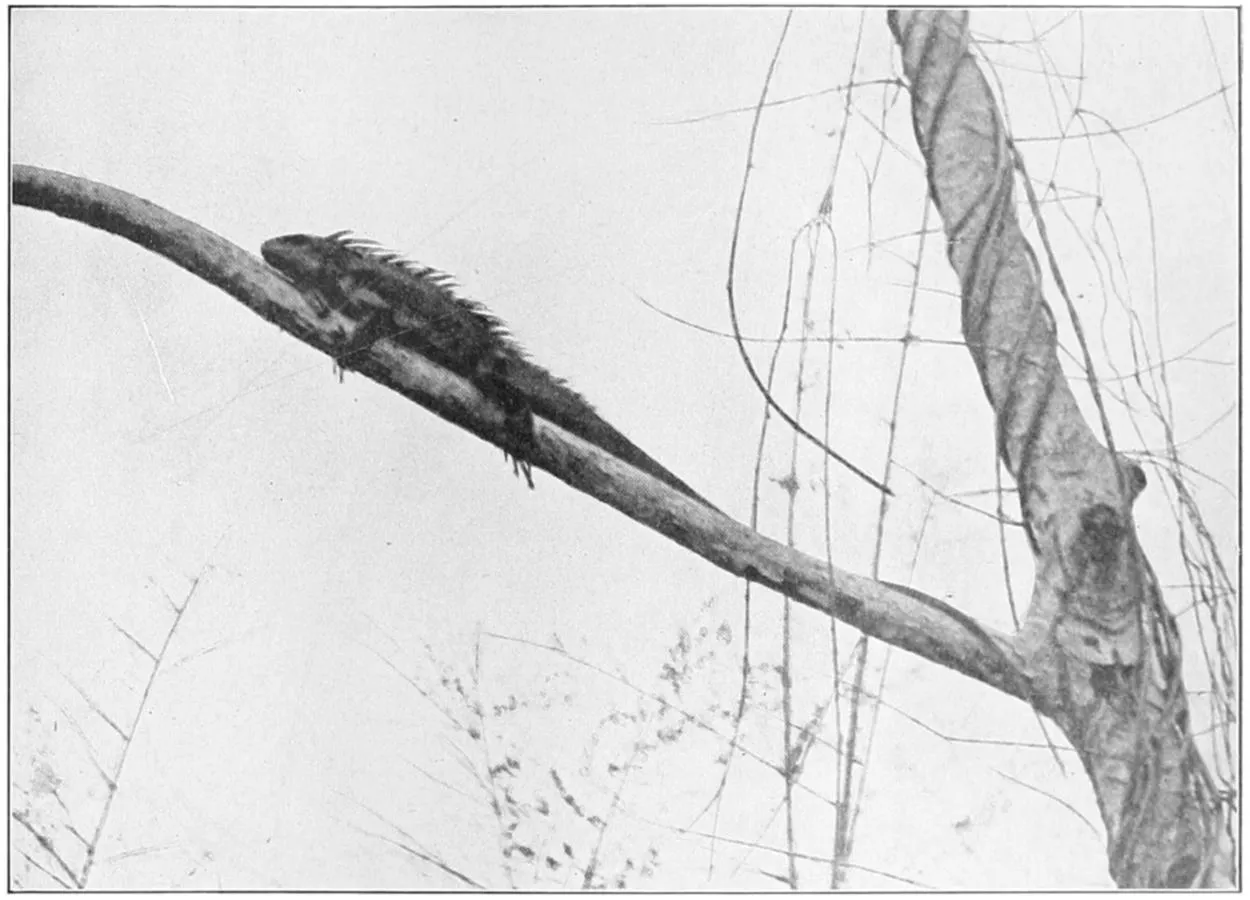
In the streets snakes, toads and the
ugly iguana, which the natives devour
eagerly, were frequently to be seen.
The native wild cat—called grandiloquently
a lion or a tiger—prowled
in the suburbs and, besides carrying
off fowls and pigs, sometimes attacked
human beings. The climate was better
than that of Nombre de Dios yet
sufficiently unhealthful. Child-birth
was so often fatal and the rearing of
children attended with so much mortality
that all mothers who were
able resorted to Panama or Cruces
at such a time.
It was for a time a considerable
market place and for the privilege of
trading there the brokers paid into
the public coffer 2,000 ducats a year.
Another source of revenue was a
tax of two reales on each head of
cattle slaughtered in the shambles—a
tax still retained in form in the
Republic of Panama. He who
brought in a negro slave had to pay
two pesos for the privilege and from
this impost a revenue of some $1,000
a year was obtained, most of which
was used in cutting down the jungle
and in maintaining roads.
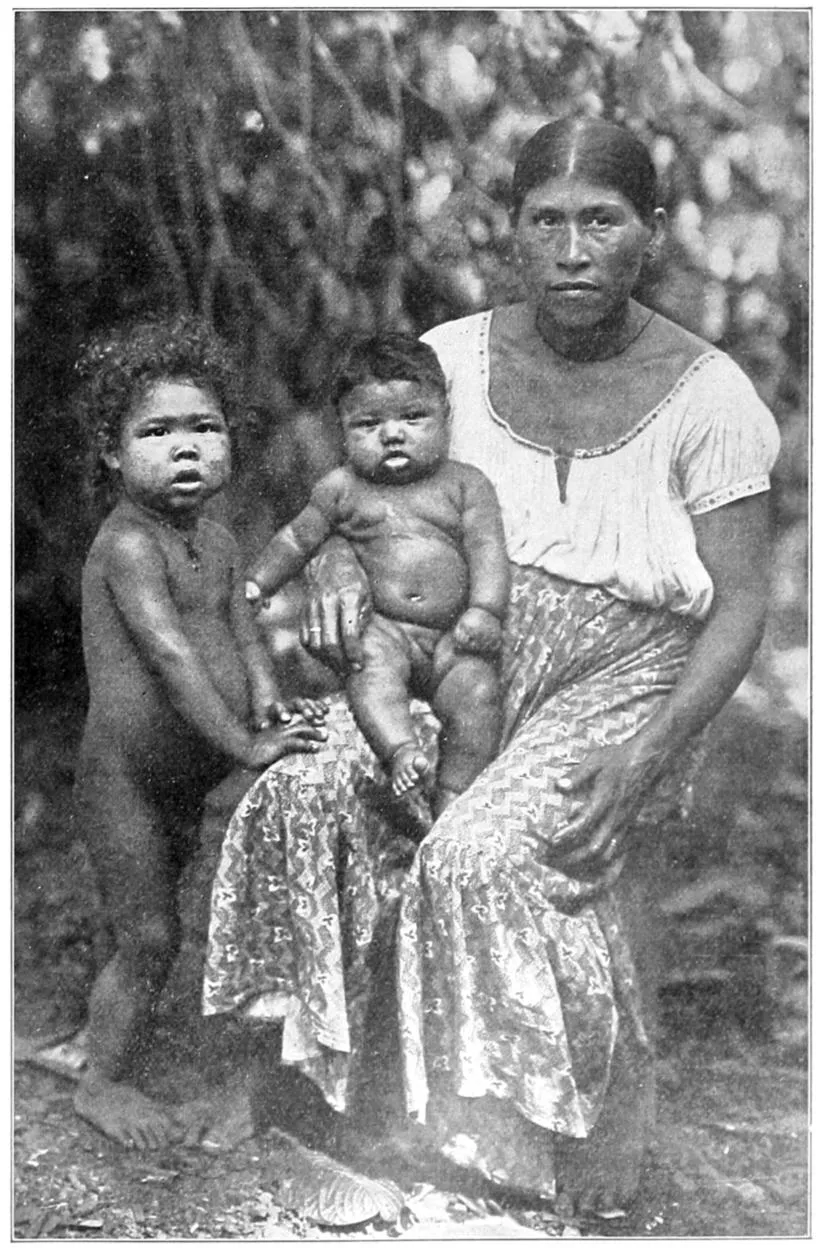
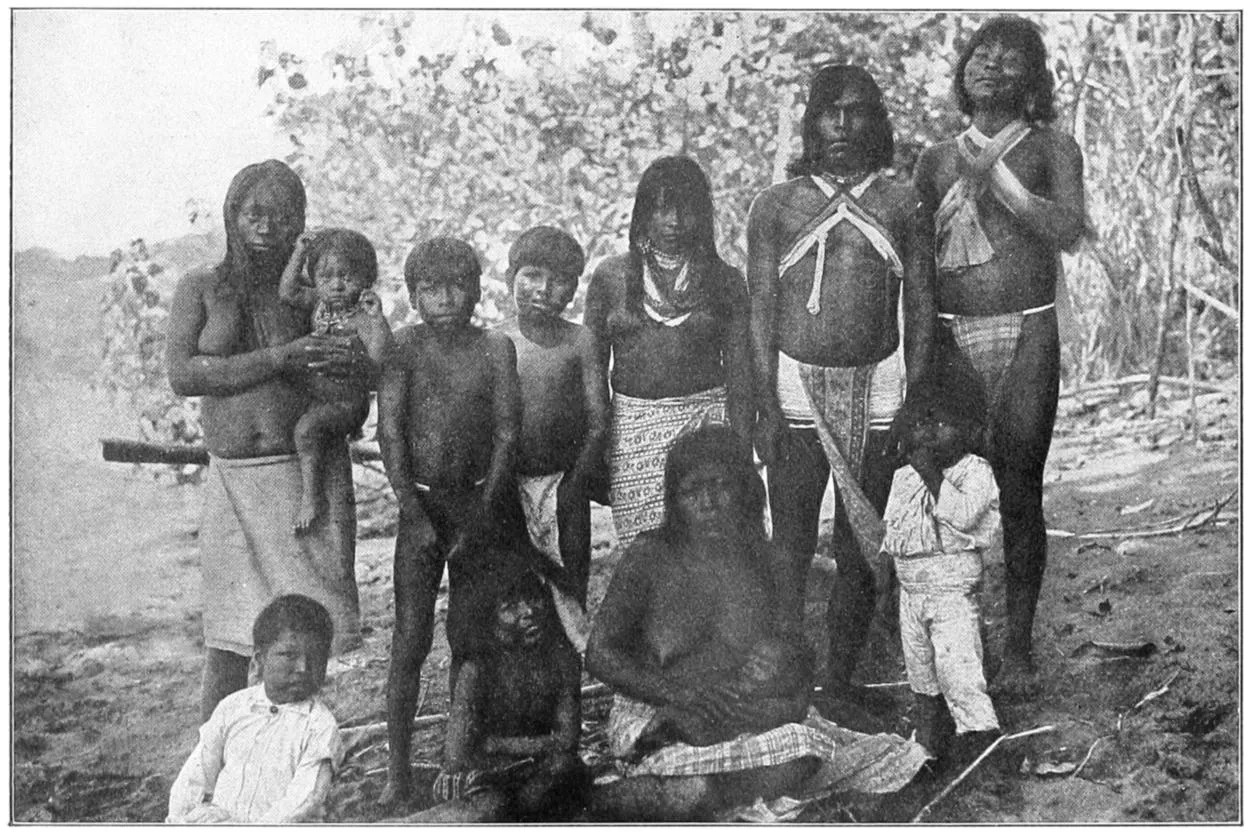
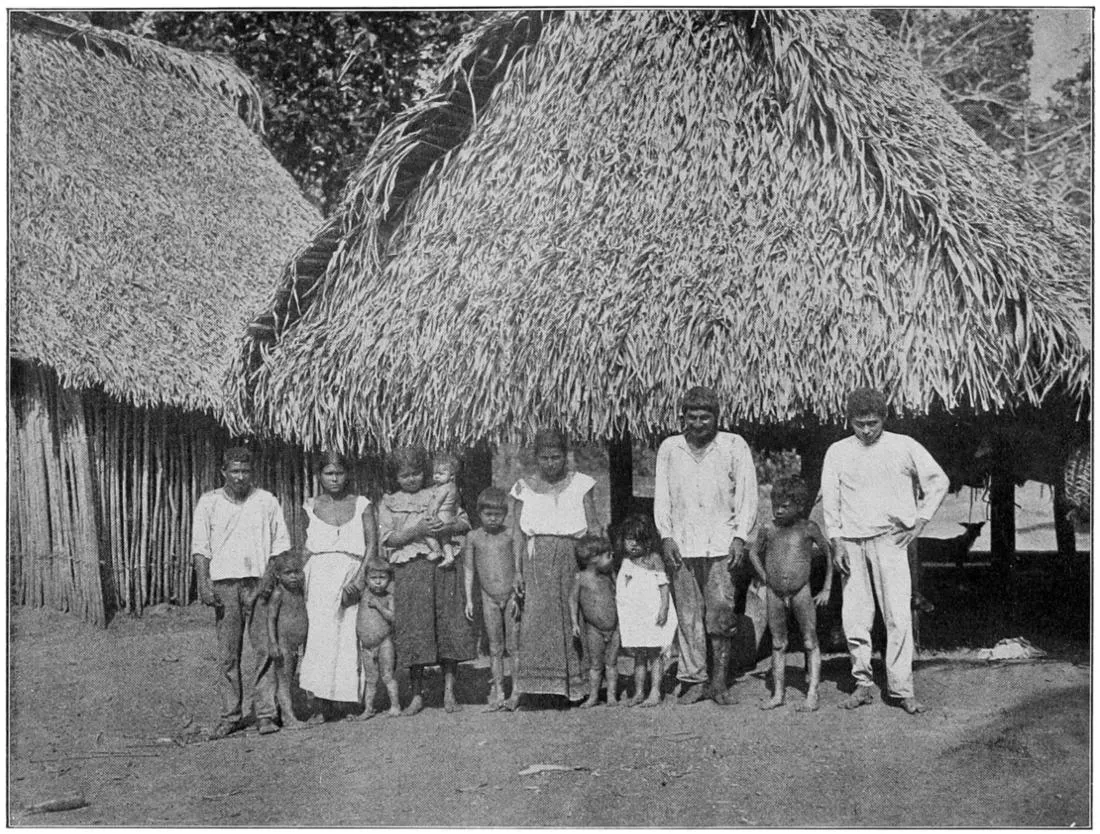
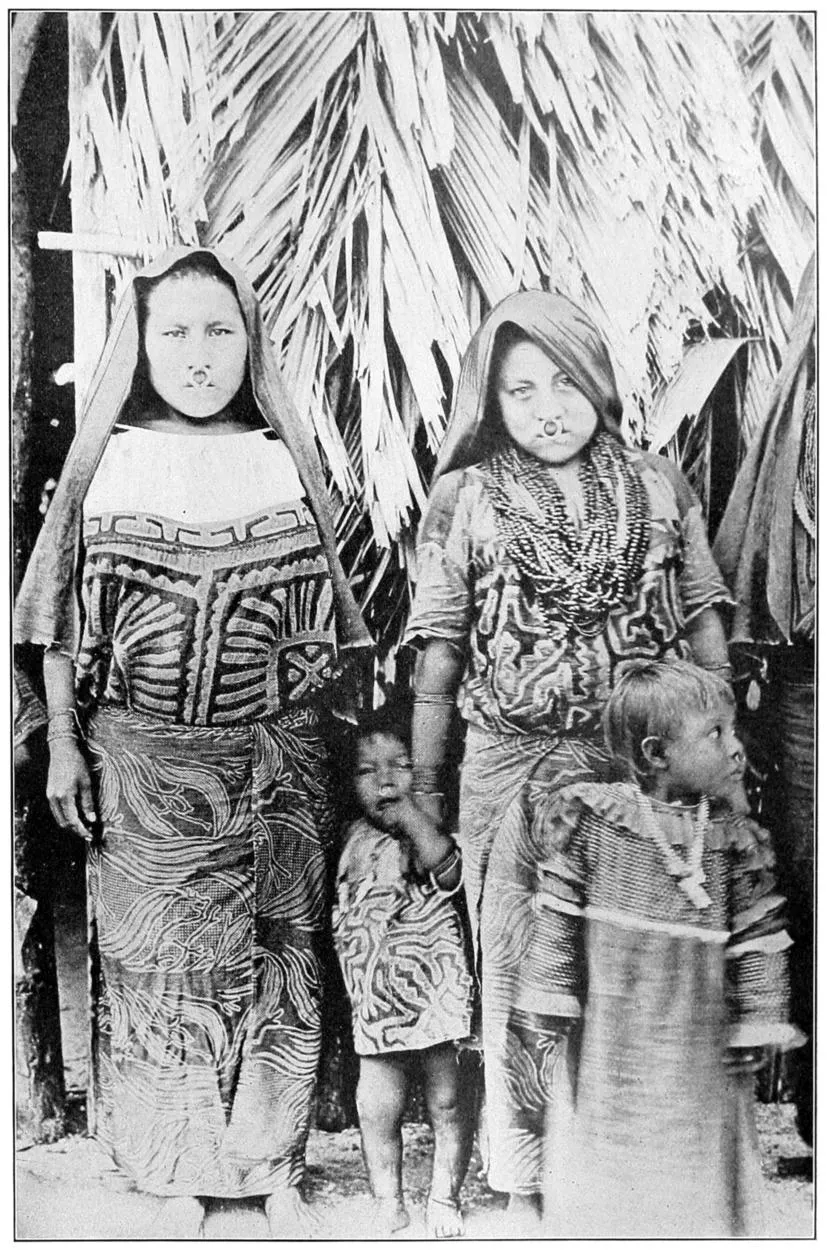
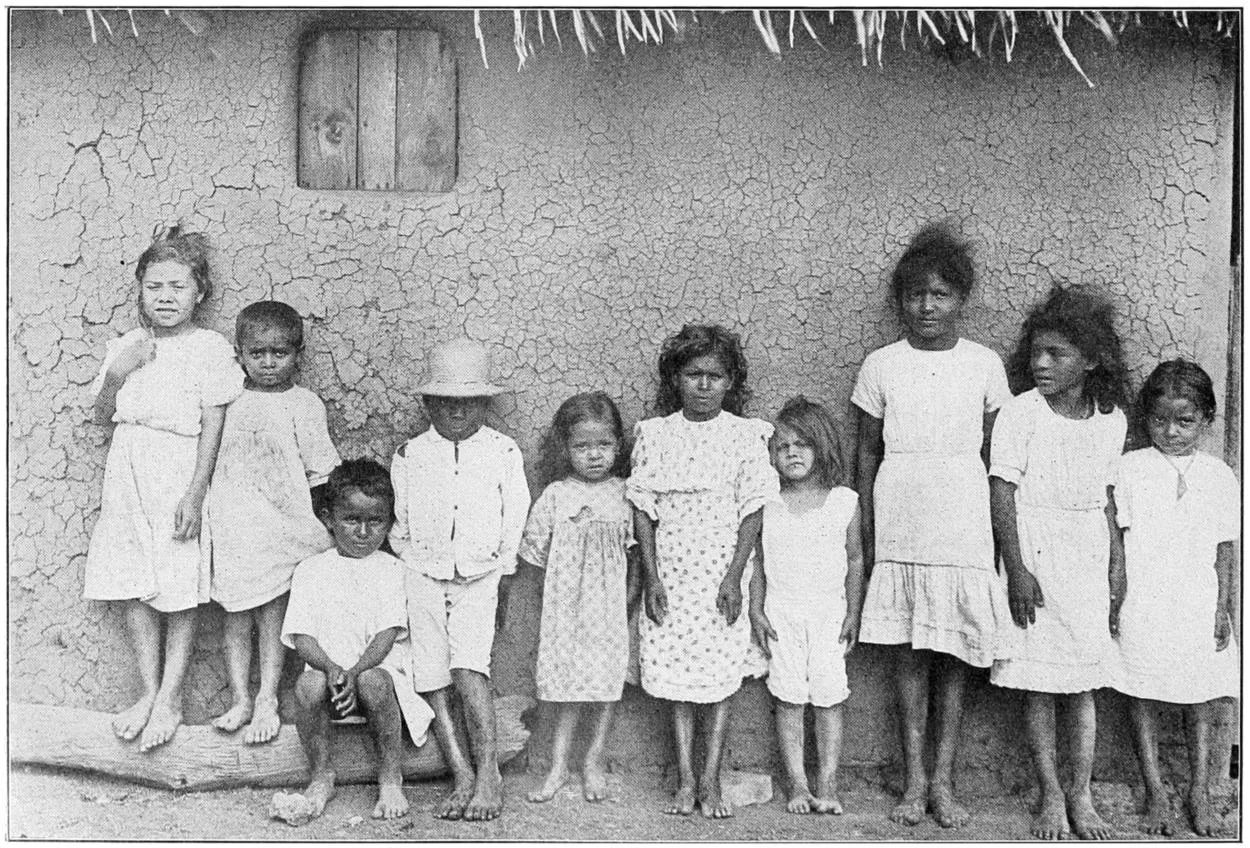
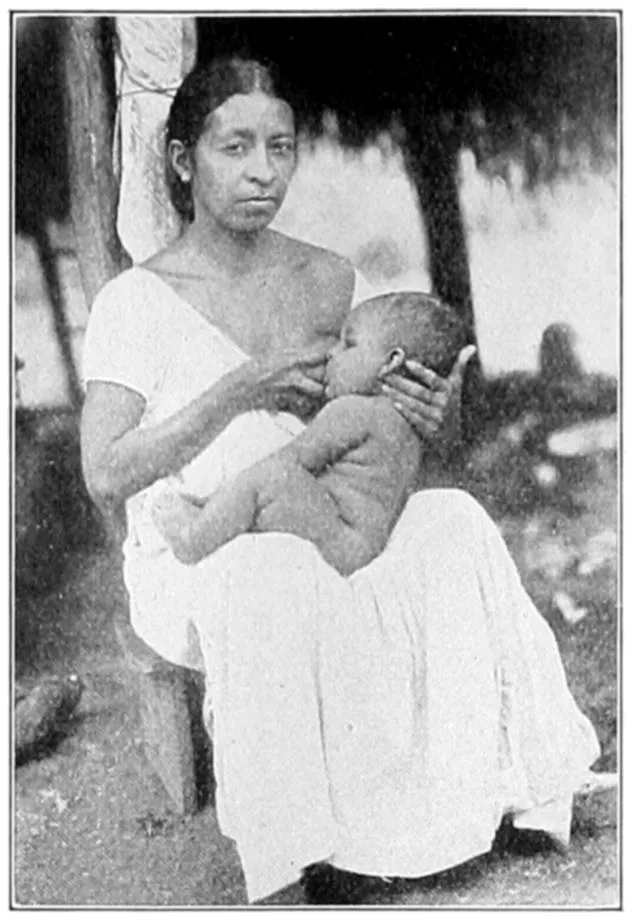
NATIVE FAMILY IN CHORRERA
Before Porto Bello had even the
beginnings of a town, before even the
settlement at Nombre de Dios had
been begun, there landed at the former port a
Spaniard to whom the Isthmus gave immortality
and a violent death—two gifts of fortune
which not uncommonly go hand in hand. Vasco
Nunez de Balboa was with Bastides in the visit
which preceded that of Columbus. Thereby he
gained a knowledge of the coast and a taste for
seafaring adventure. Having tried to be a planter
at Santo Domingo and failed therein, he gave his
creditors the slip by being carried in a barrel aboard
a ship about to explore the Panama coast under the
Bachelor Encisco. Though they laughed at him
for a time as “el hombre de casco”, “the man in a
cask”, his new companions in time came to accept
his leadership and ultimately discarded that of
Encisco, for besides gallantry Balboa possessed a
genius for intrigue. Except for his great achievement
of the discovery of the Pacific, and his genius
in making friends of the tribes he had subdued,
Balboa’s career does not differ greatly from that of
the leaders of other remorseless Spanish hordes who
harried the hapless people of Central America,
robbing, enslaving and murdering them with brutal
indifference to their rights and totally callous to
their sufferings. One can hardly read of the Spaniards
in Central America and Peru without sympathizing
somewhat with the Indian cacique who,
having captured two of the marauders, fastened
them to the ground, propped open their jaws and
poured molten gold down their throats saying the
while: “Here’s gold, Spaniards! Here’s gold. Take
a plenty; drink it down! Here’s more gold.”
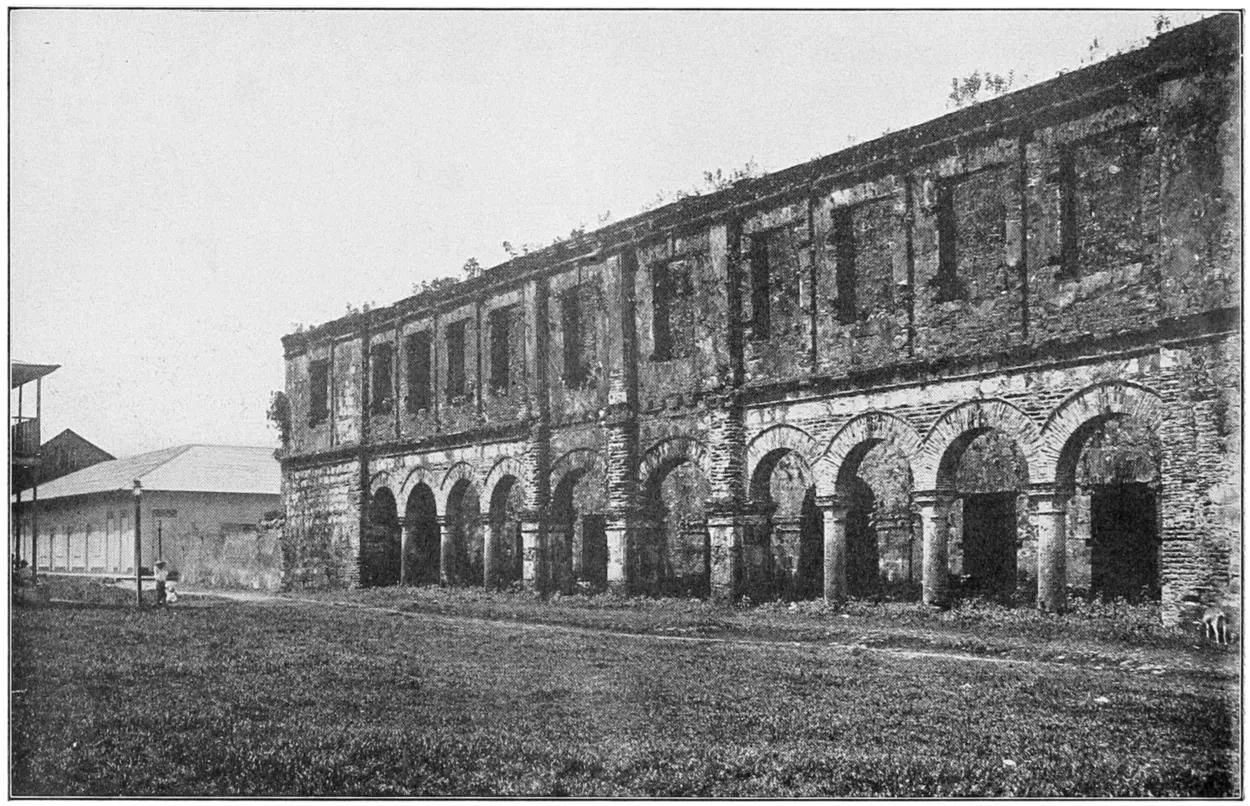
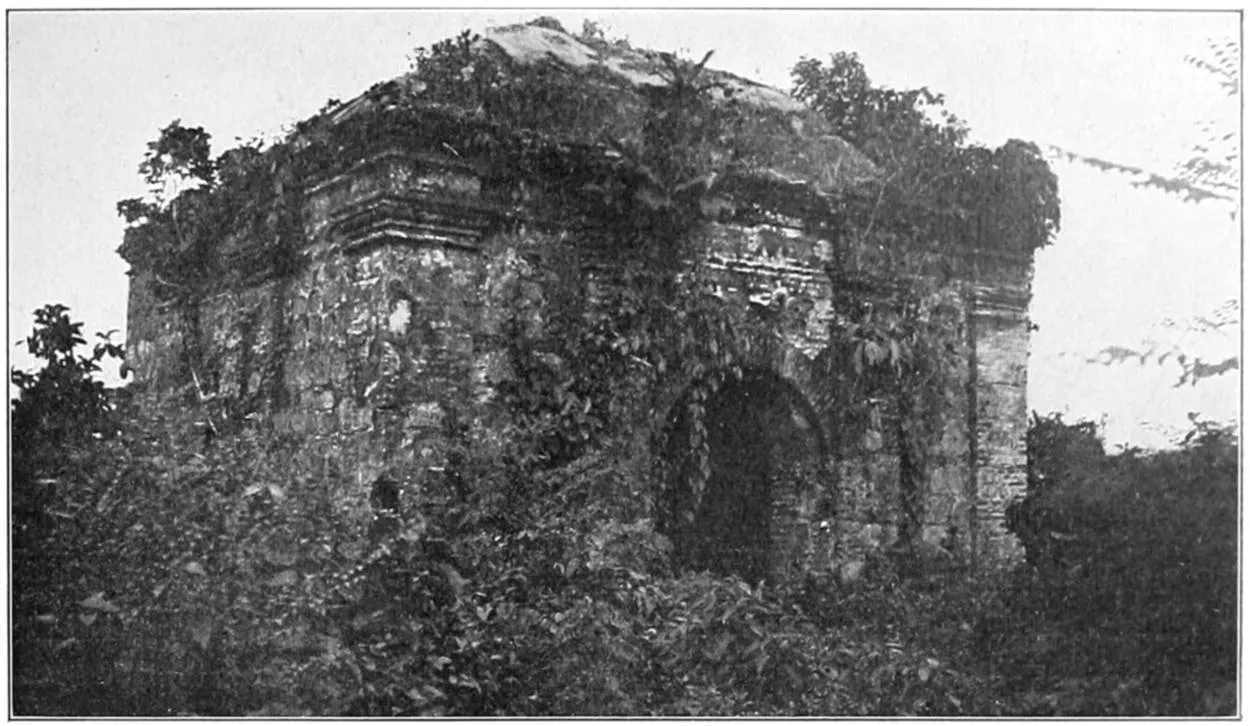
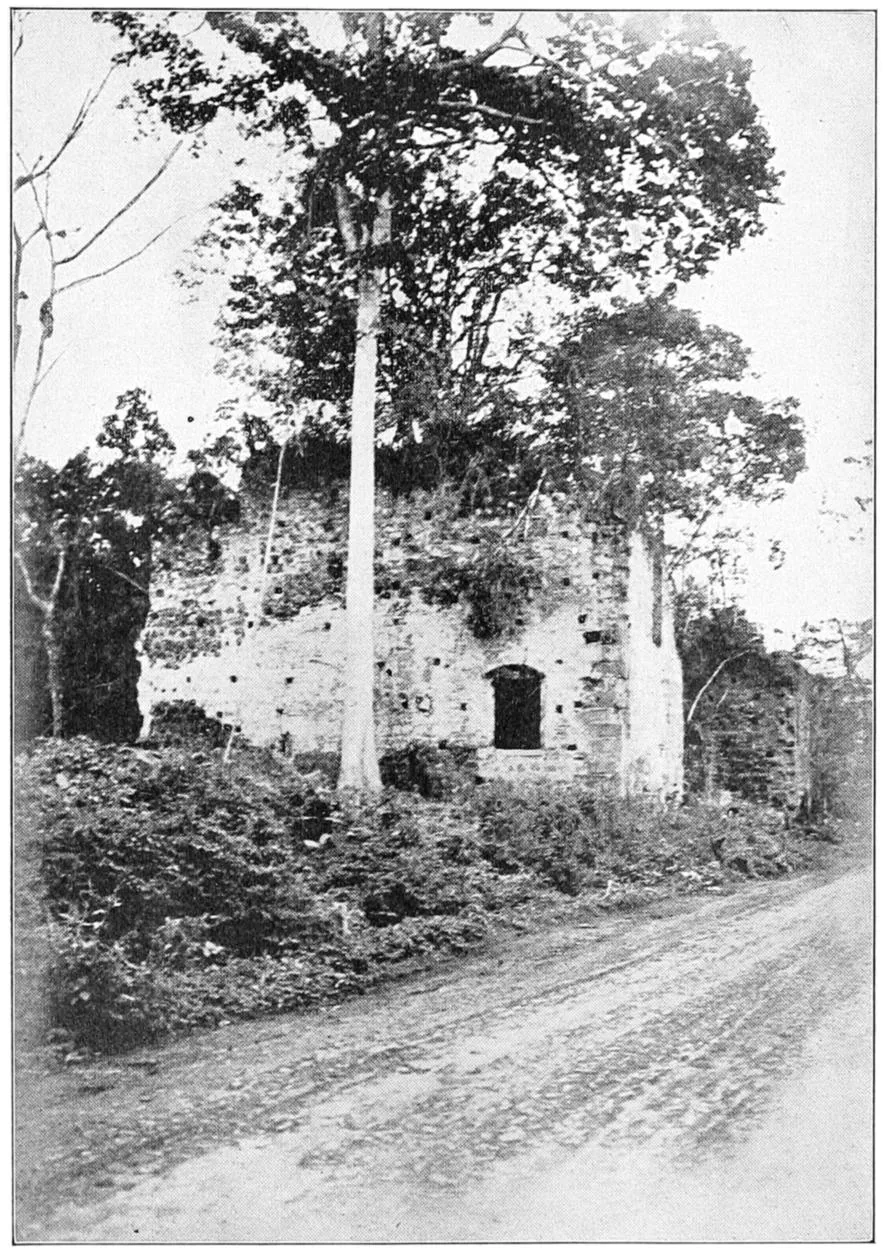
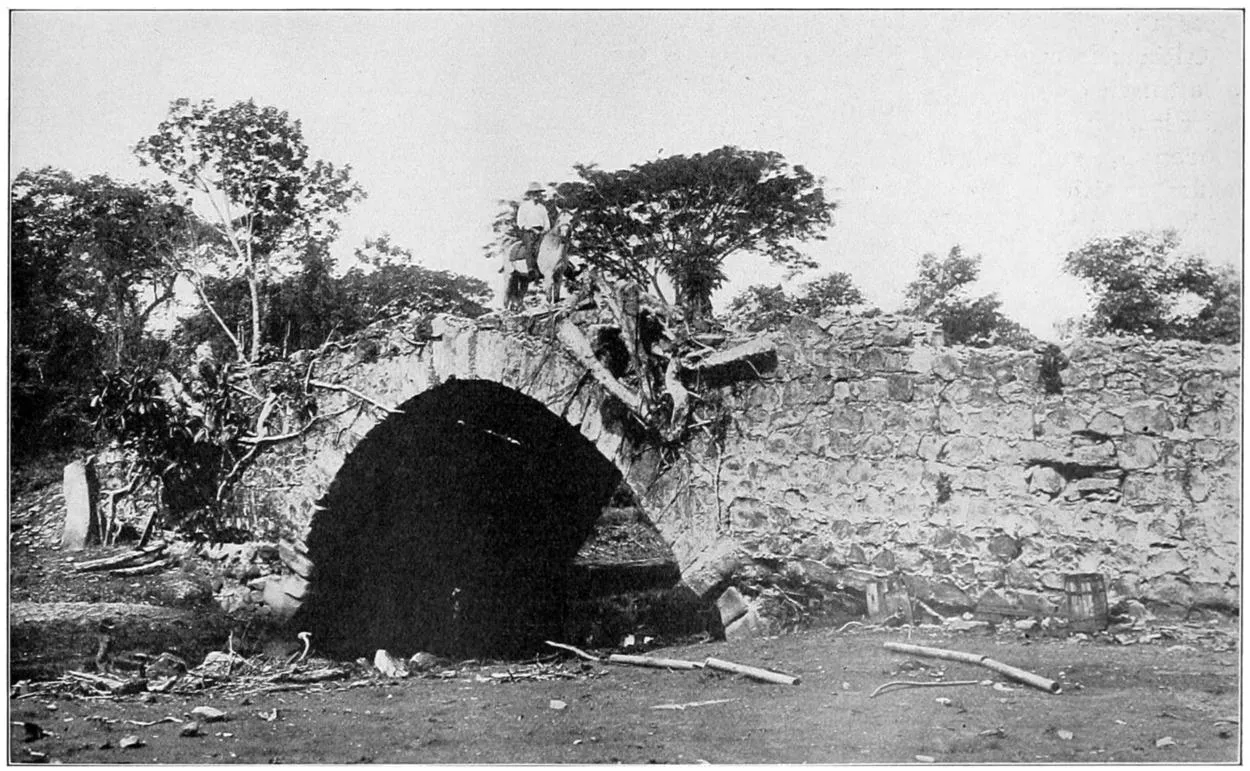
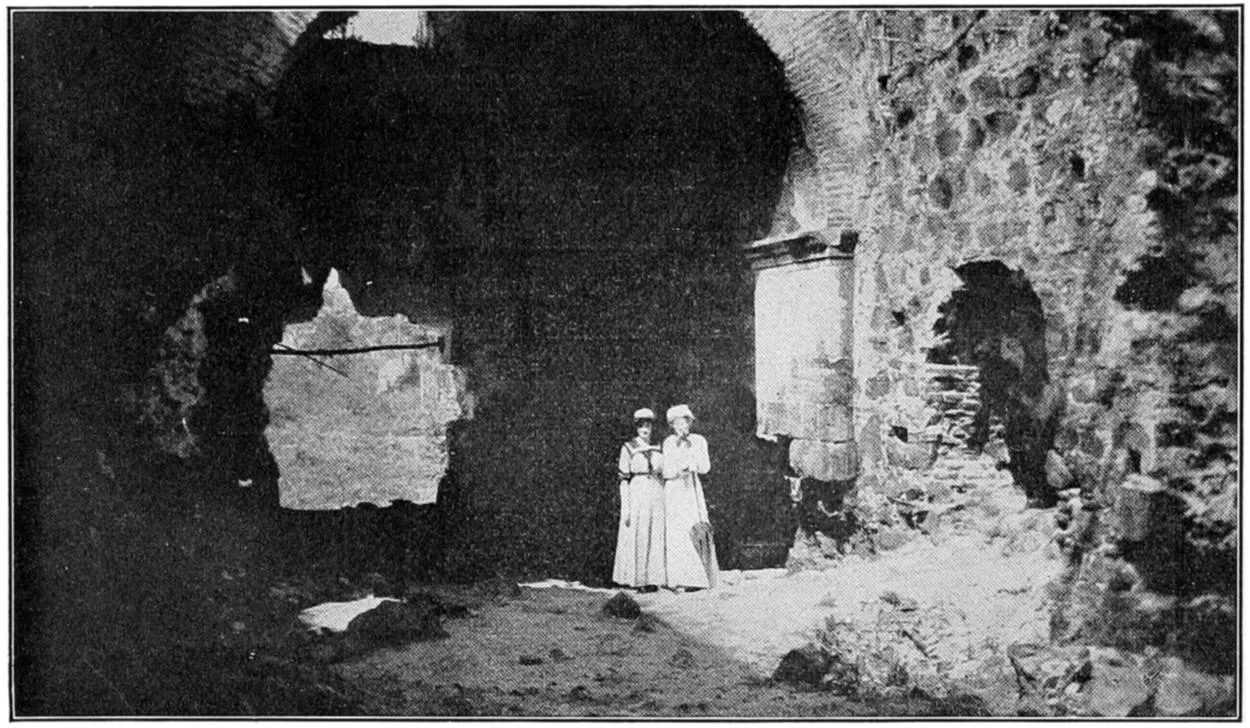
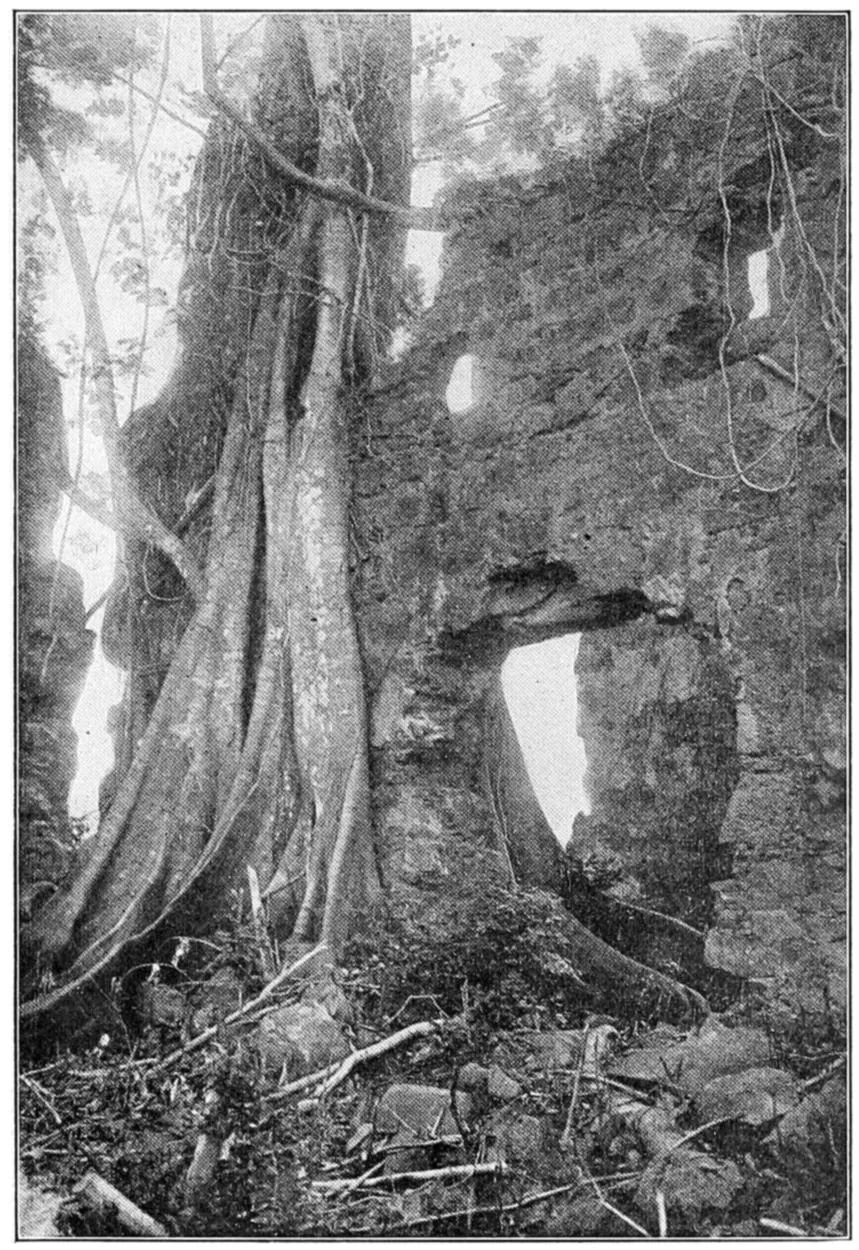
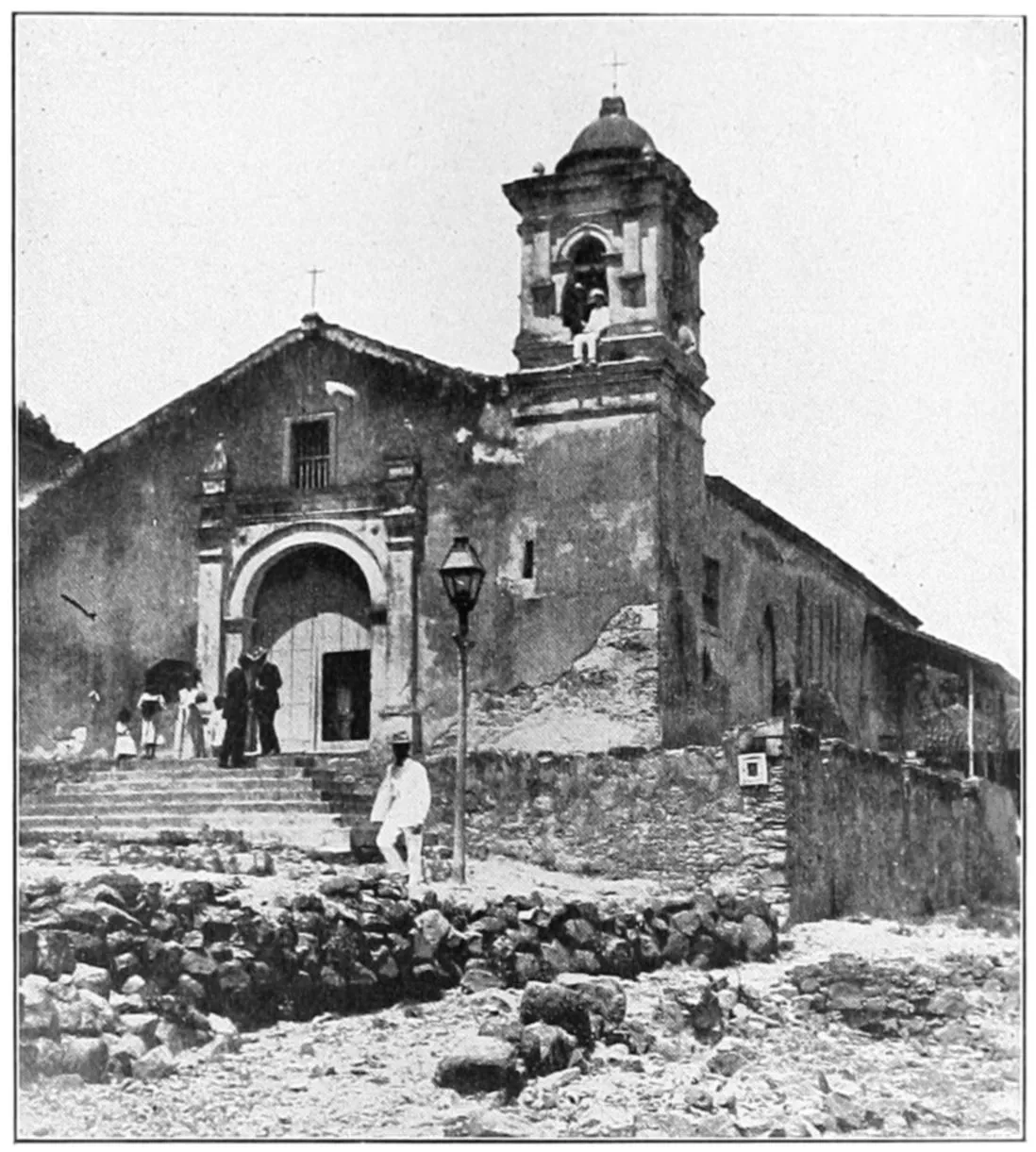
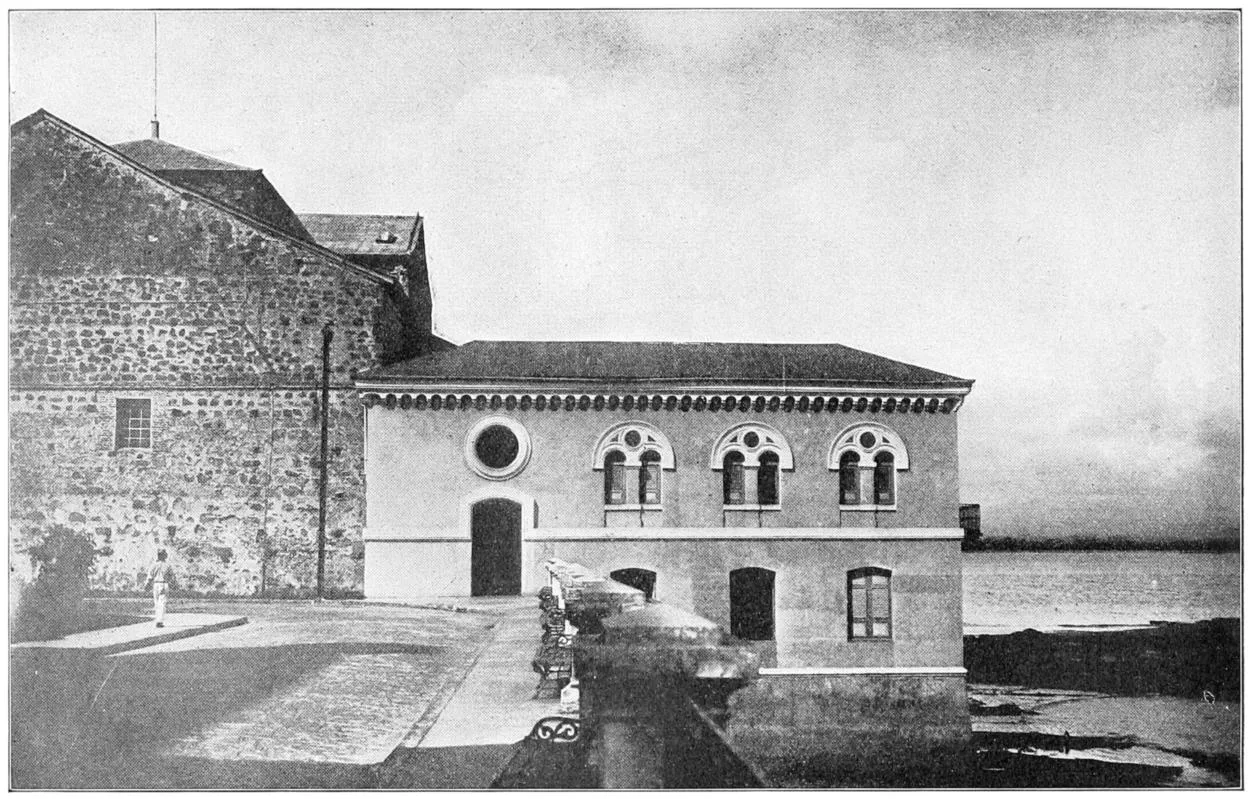
SEVENTEENTH CENTURY RUIN AT PORTO BELLO
This edifice, still well preserved, is believed to be the Casa Real, or Custom House
Balboa was a pacifier as well as a fighter and it
is recorded of him that even on the warpath he was
not unnecessarily brutal. Indeed one cacique whom
he overthrew was so impressed with his forbearance
that he entered into alliance with the Spaniard and
gave him his favorite daughter. Though he never
married the girl Balboa “always lov’d and cherish’d
her very much”, according to Herrera, which is perhaps
more than some wives get with a wedding ceremony.
To anyone who has seen the Isthmian country
as it is today, when the stateliest native house is
but a hut, and when it would appear that the barest
necessities of life are all that are sought by its people,
the story told by Herrera, the official historian of
the Spanish court, suggests a pitiful deterioration
in the standard of native life. Of the home and
village of Comagre, the greatest cacique of the
Darien region, he writes:
“His palace was more remarkable and better built
than any that had yet been seen either on the
Islands, or the little that was known of the Continent,
being 150 paces in length and eighty in breadth
... so beautifully wrought that the Spaniards
were amaz’d at the sight of it and could not express
the Manner and Curiosity of it. There were in it
several Chambers and Apartments and one that was
like a Buttery was full of such Provisions as the
Country afforded, as Bread, Venison, Swine’s Flesh,
etc. There was another large Room like a Cellar
full of earthen Vessels, containing Several sorts of
white and red Liquors made of Indian Wheat,
Roots, a kind of Palm-Tree and other Ingredients,
the which the Spaniards commended when they
drank them!”
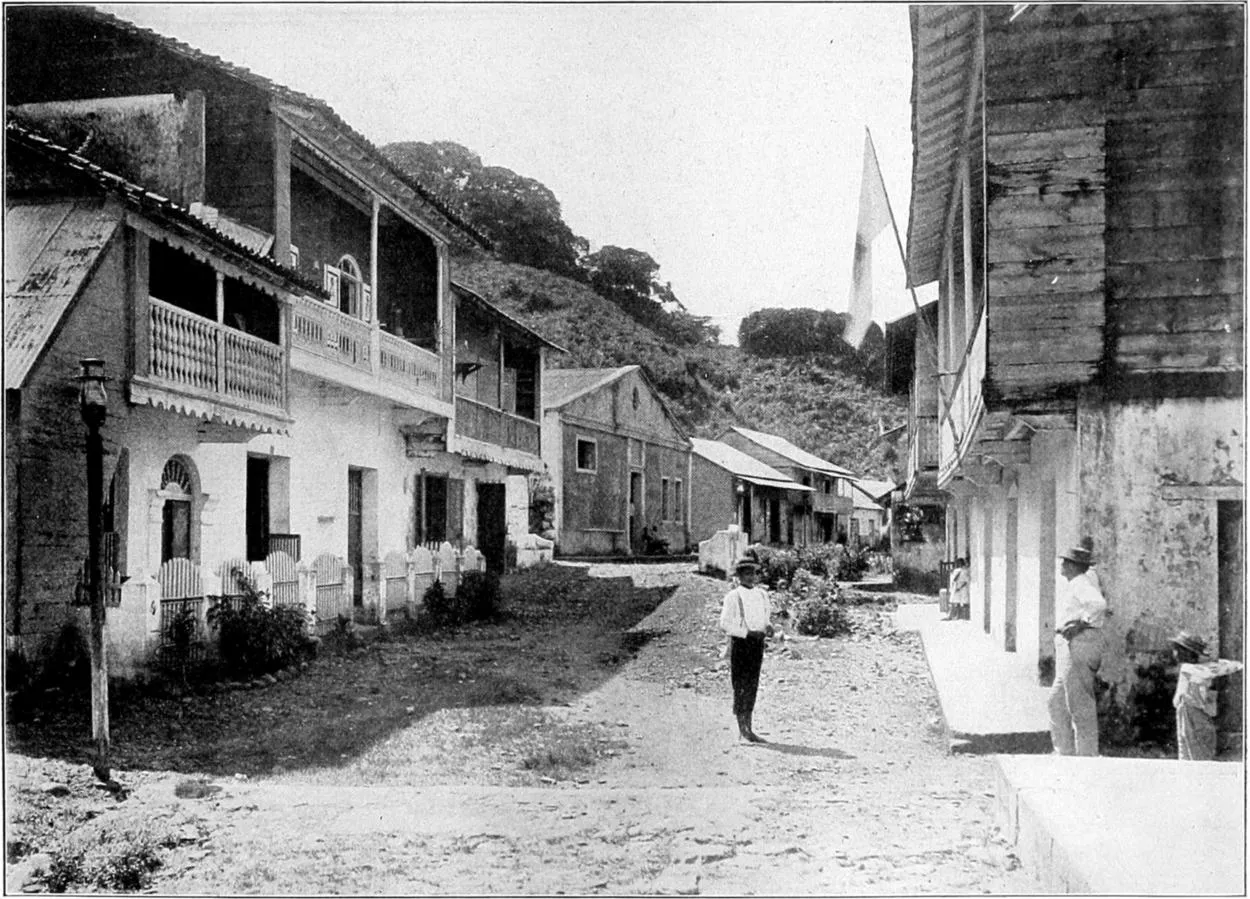
Canal Commission Photo.
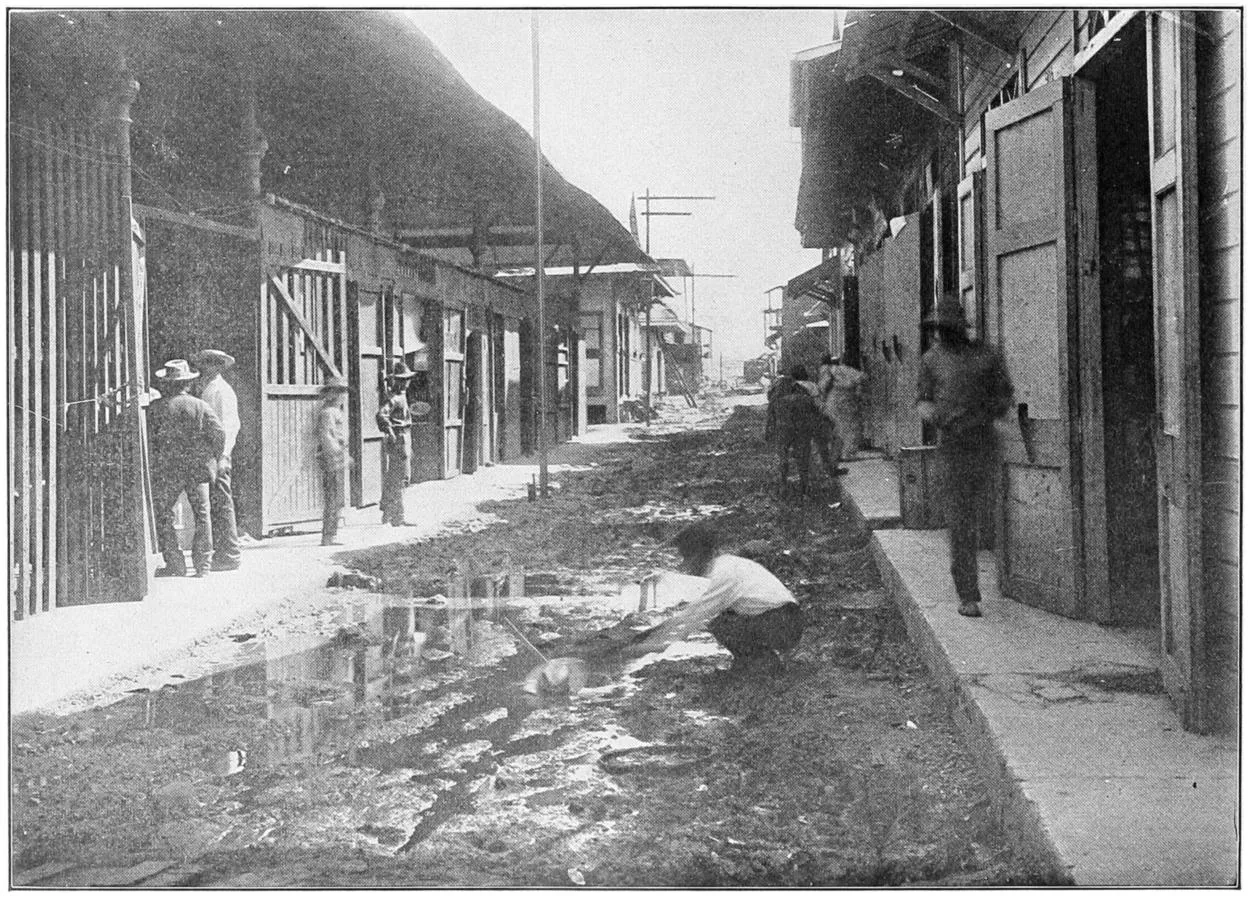
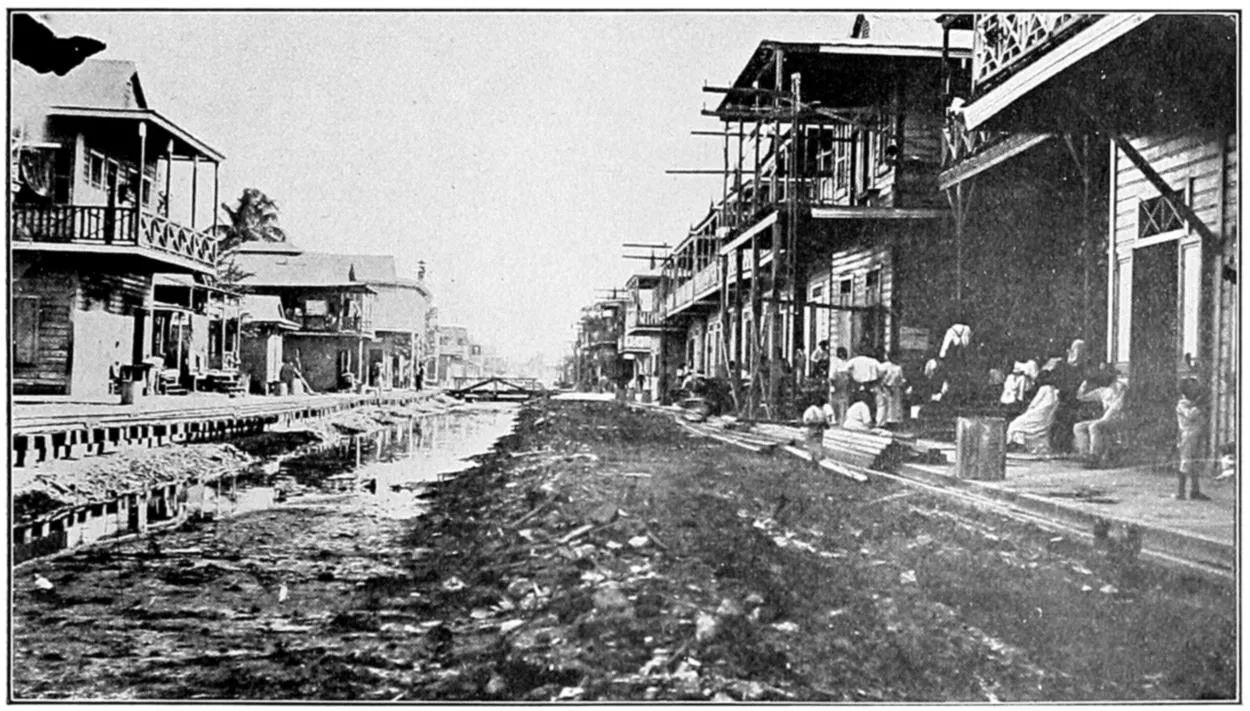
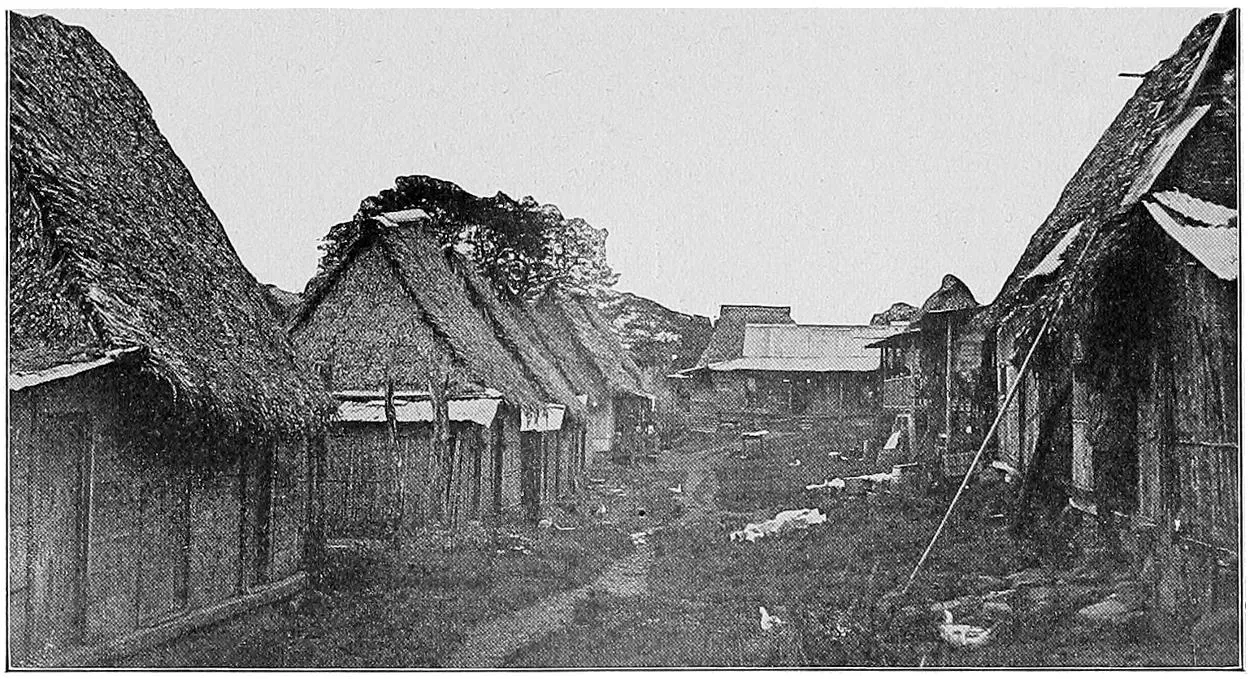
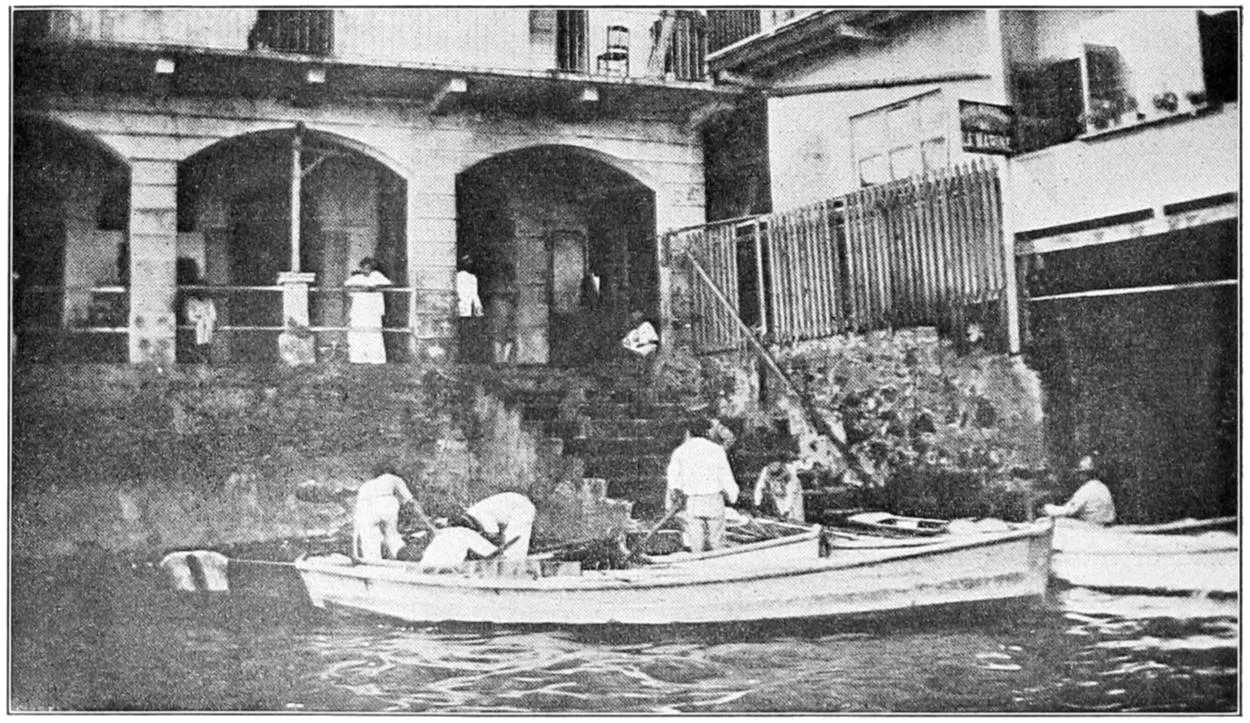
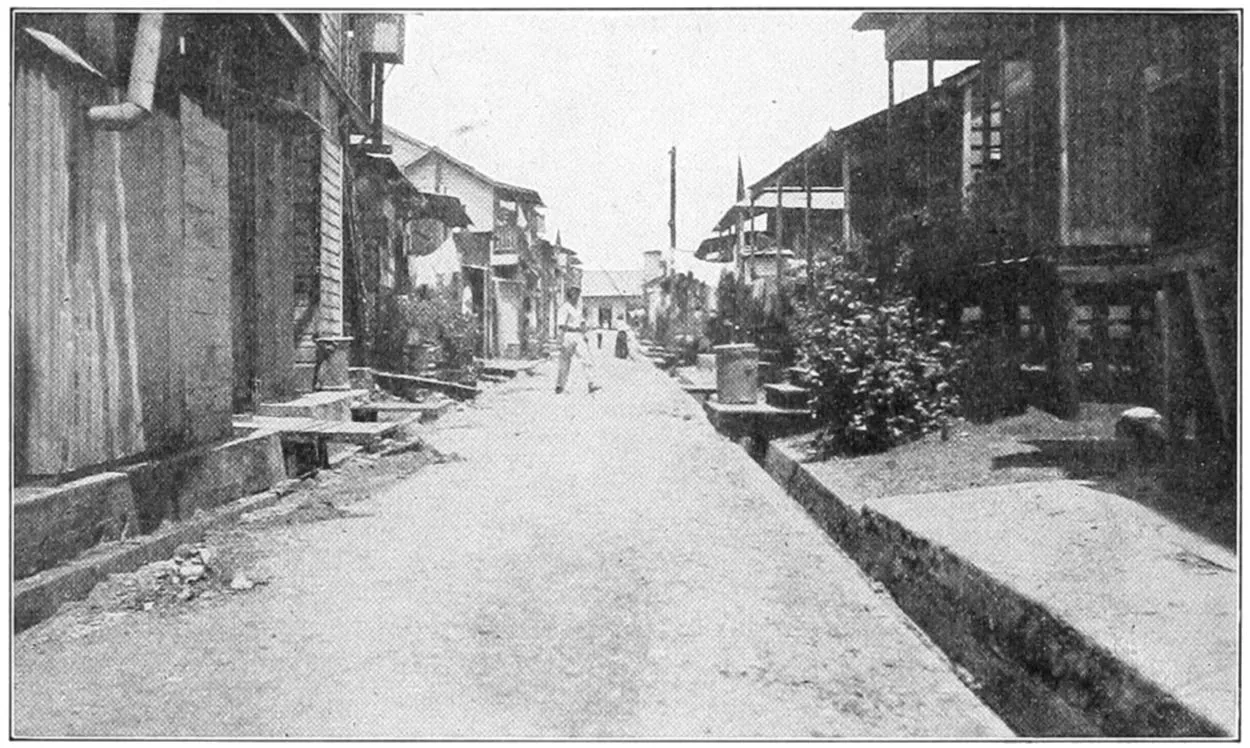
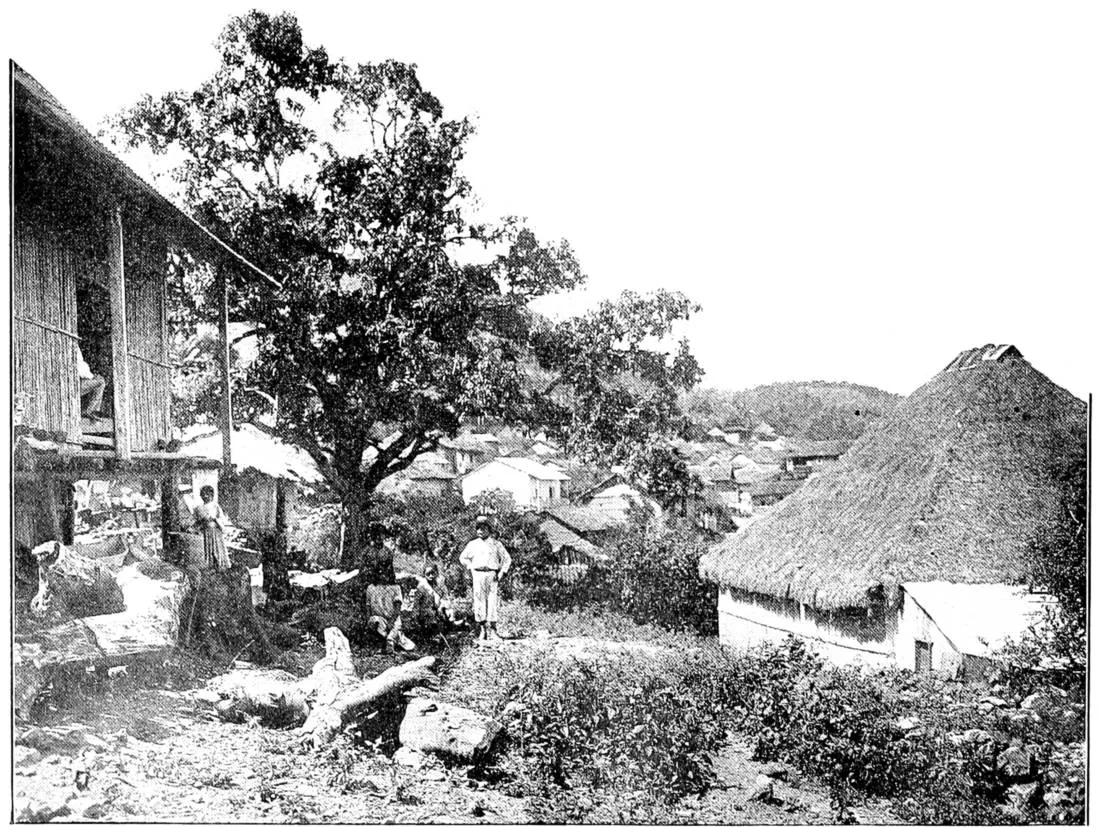
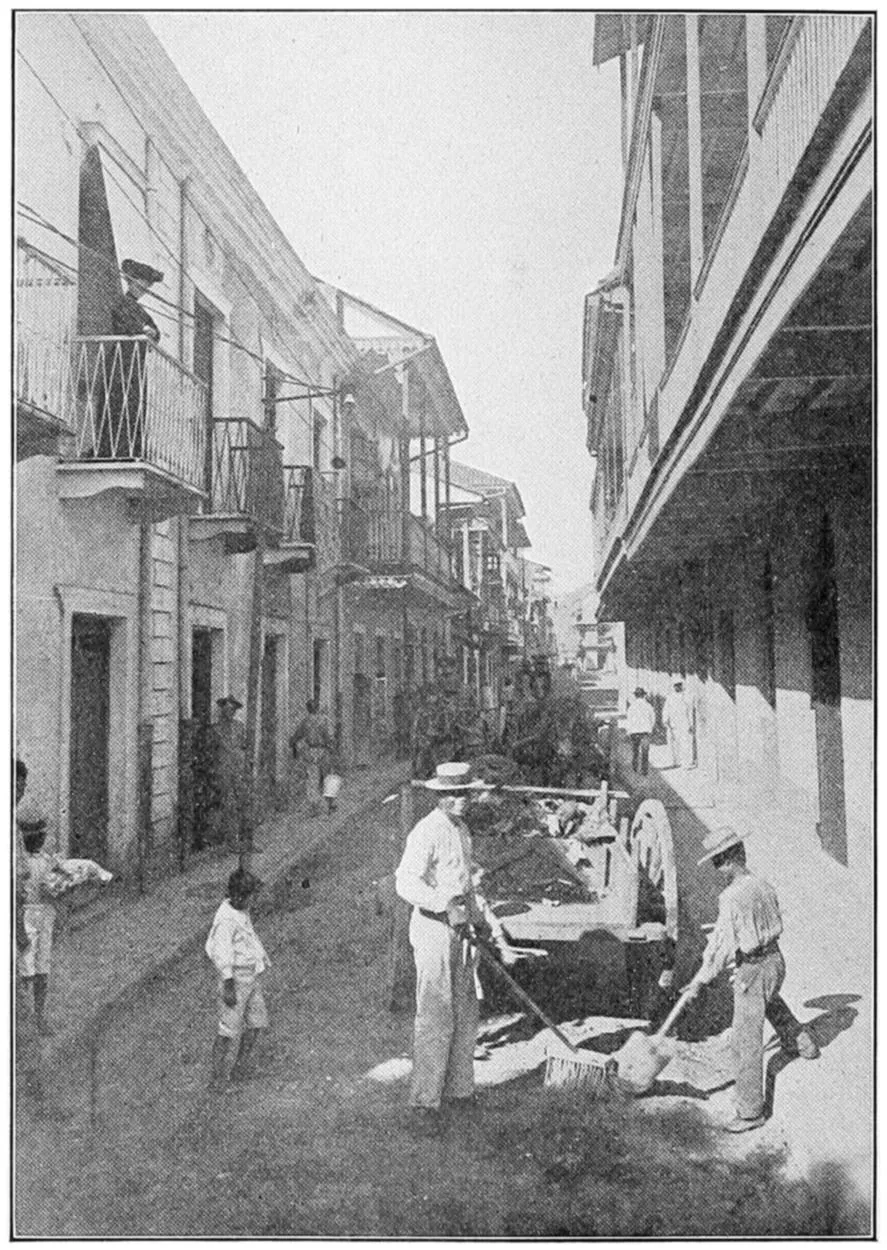
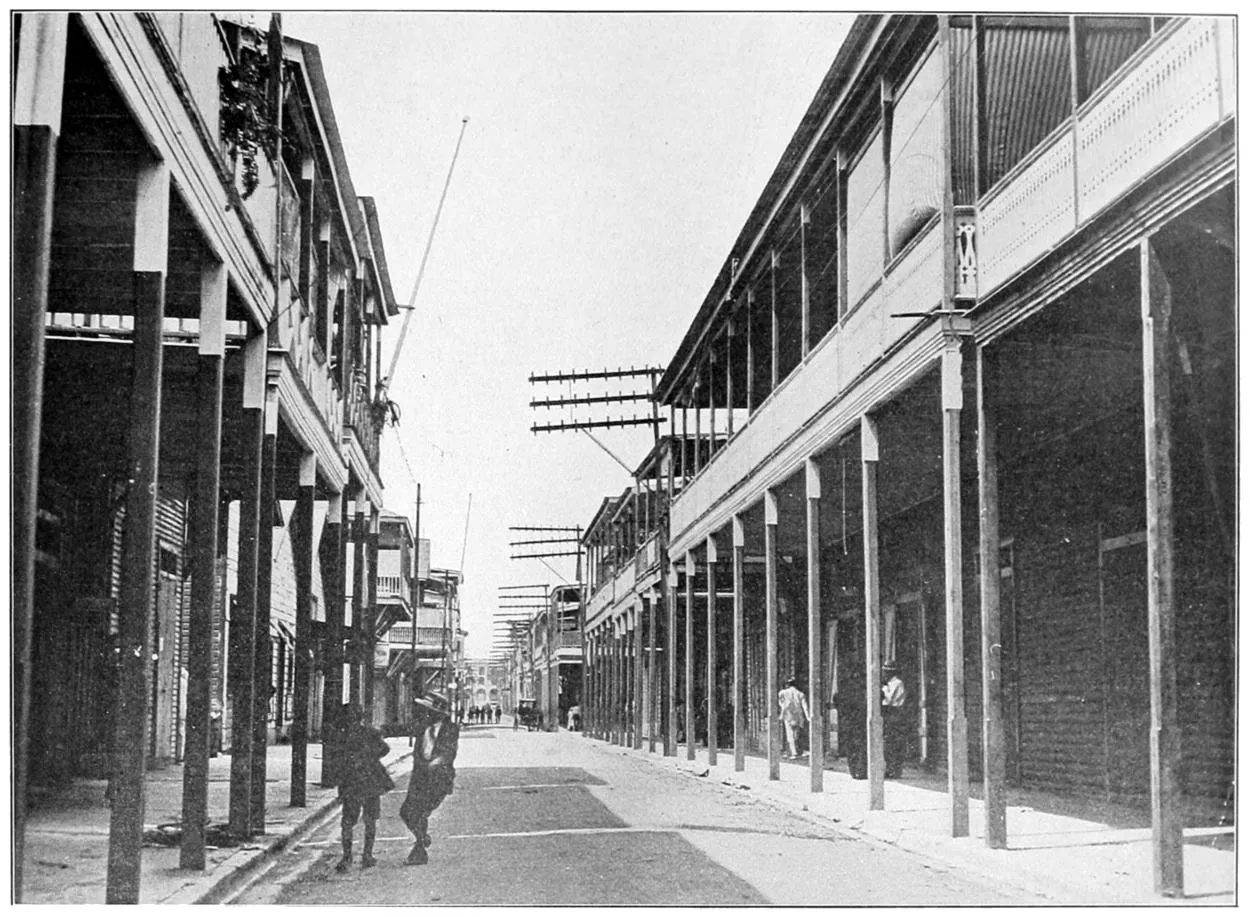
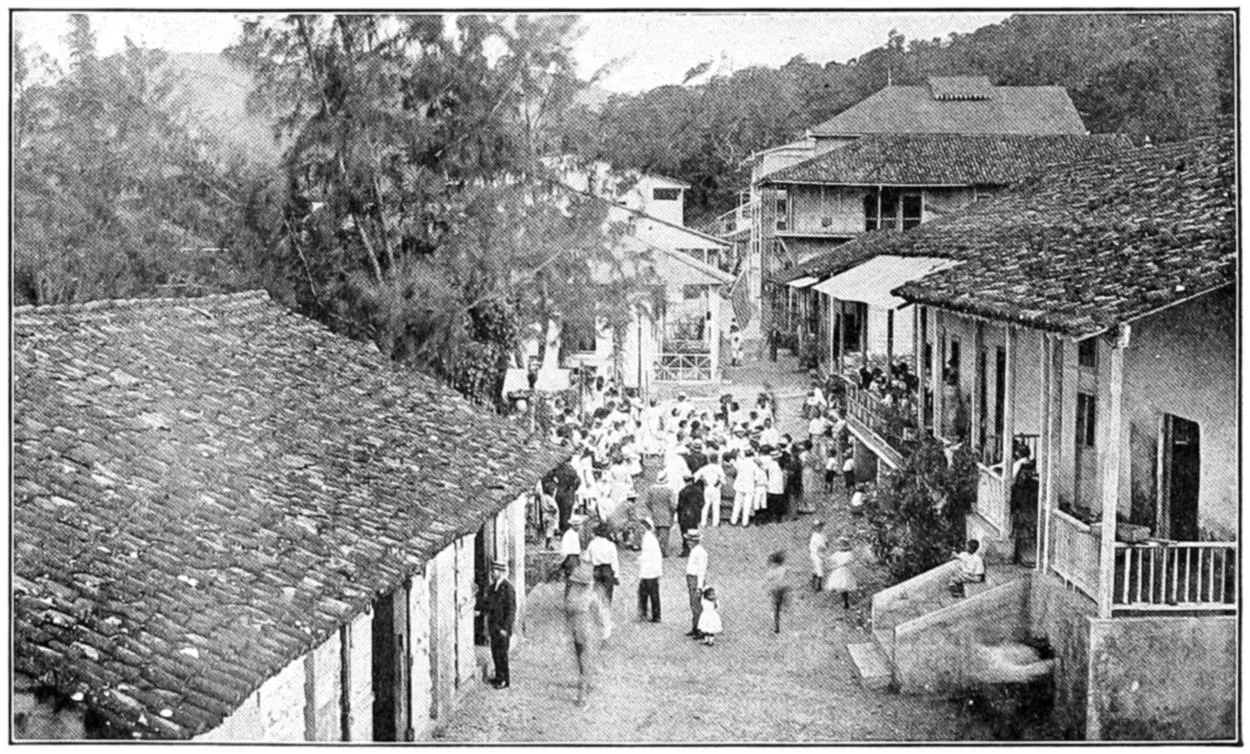
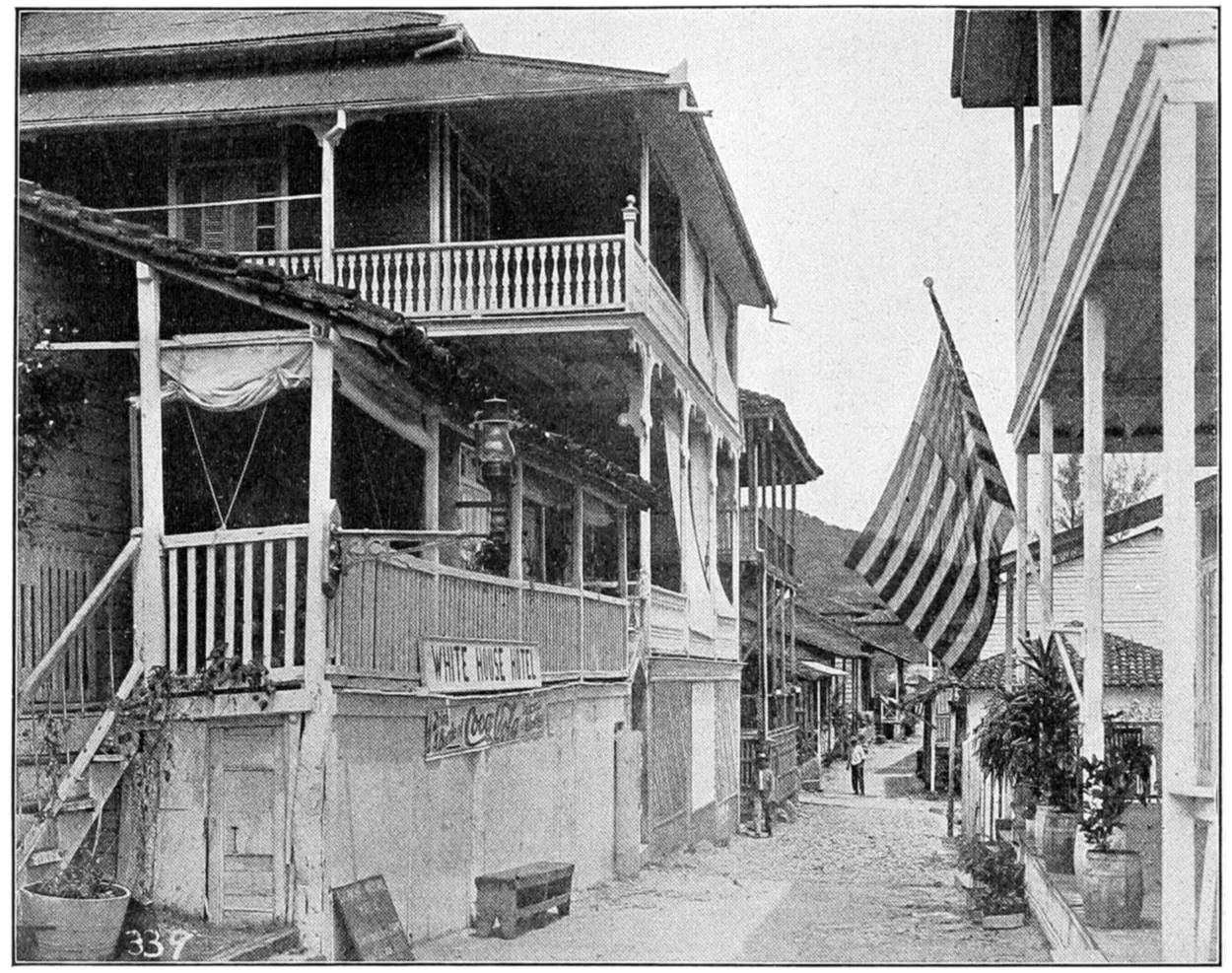
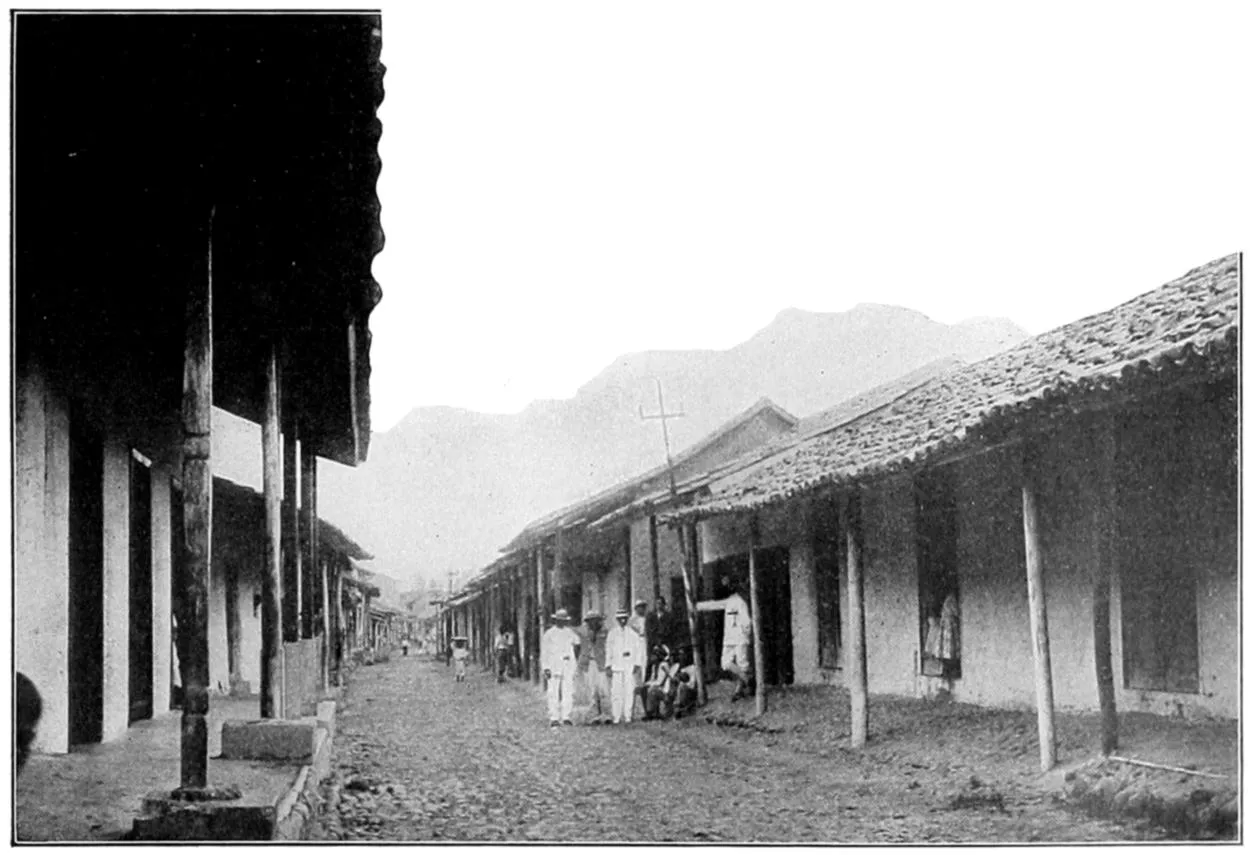
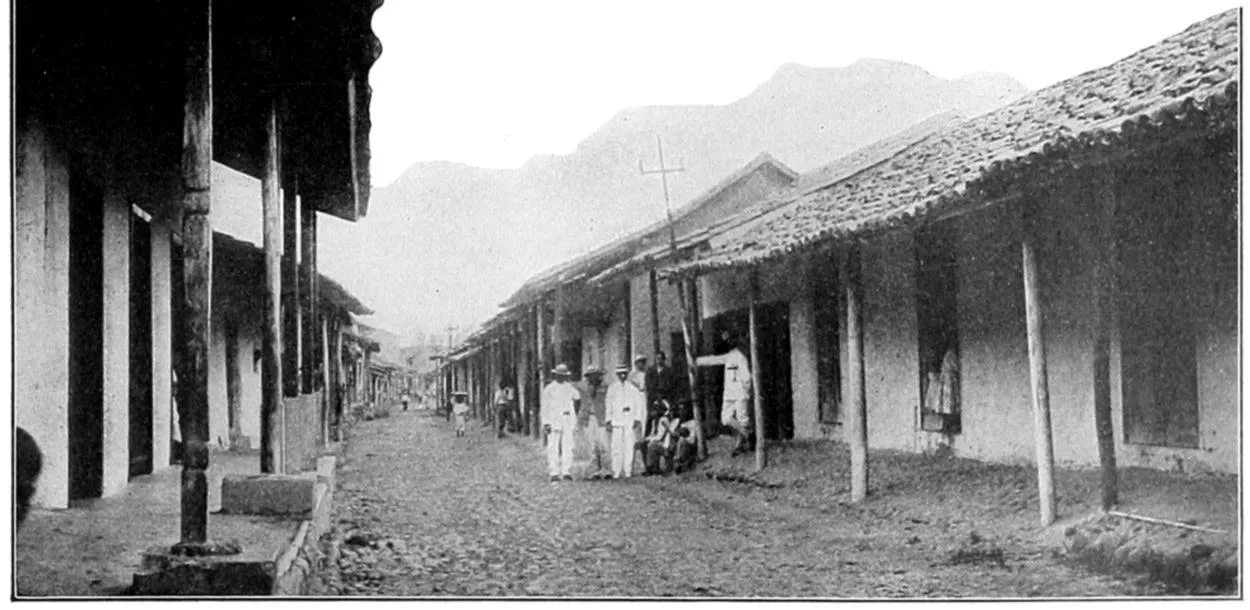
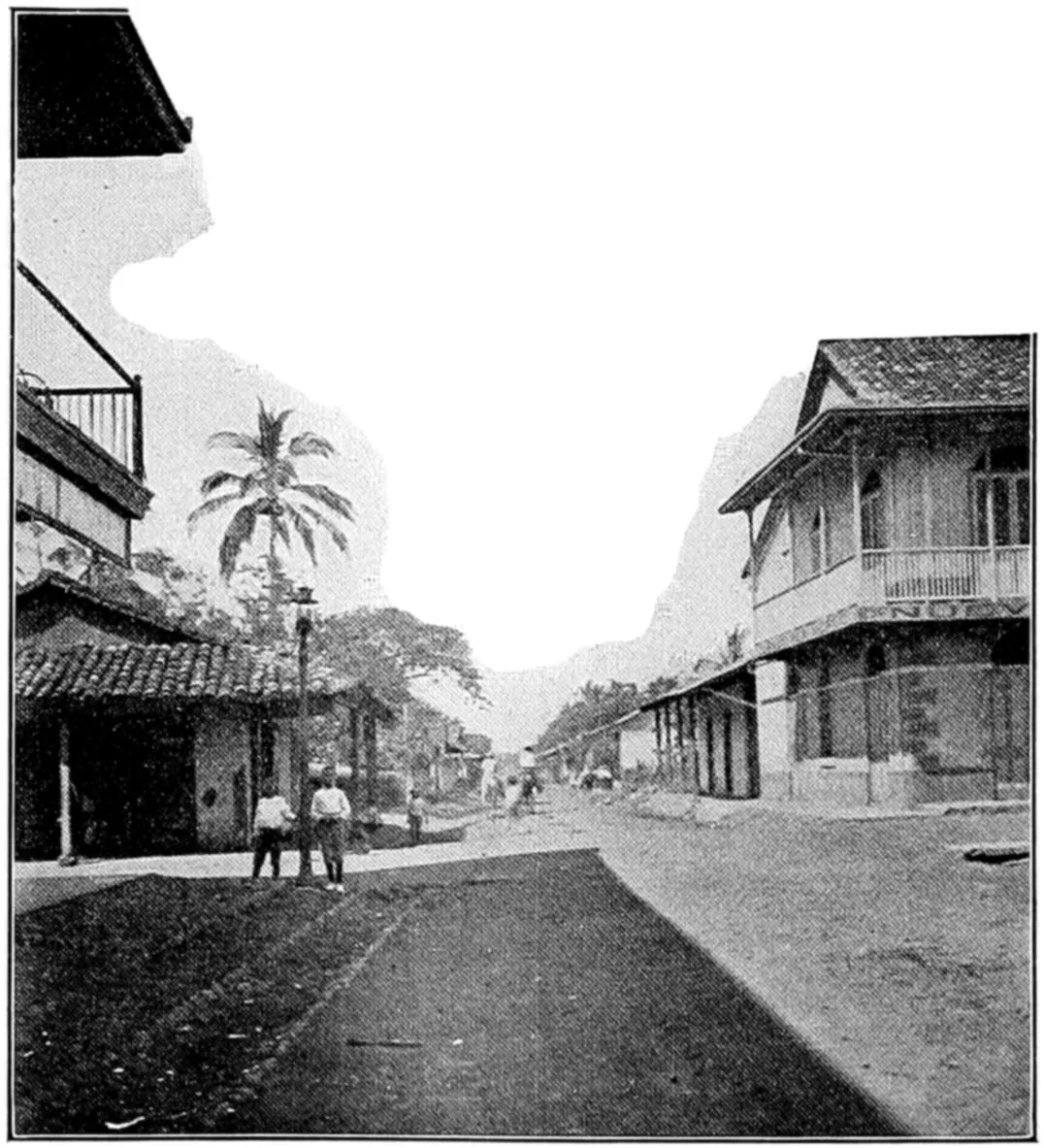
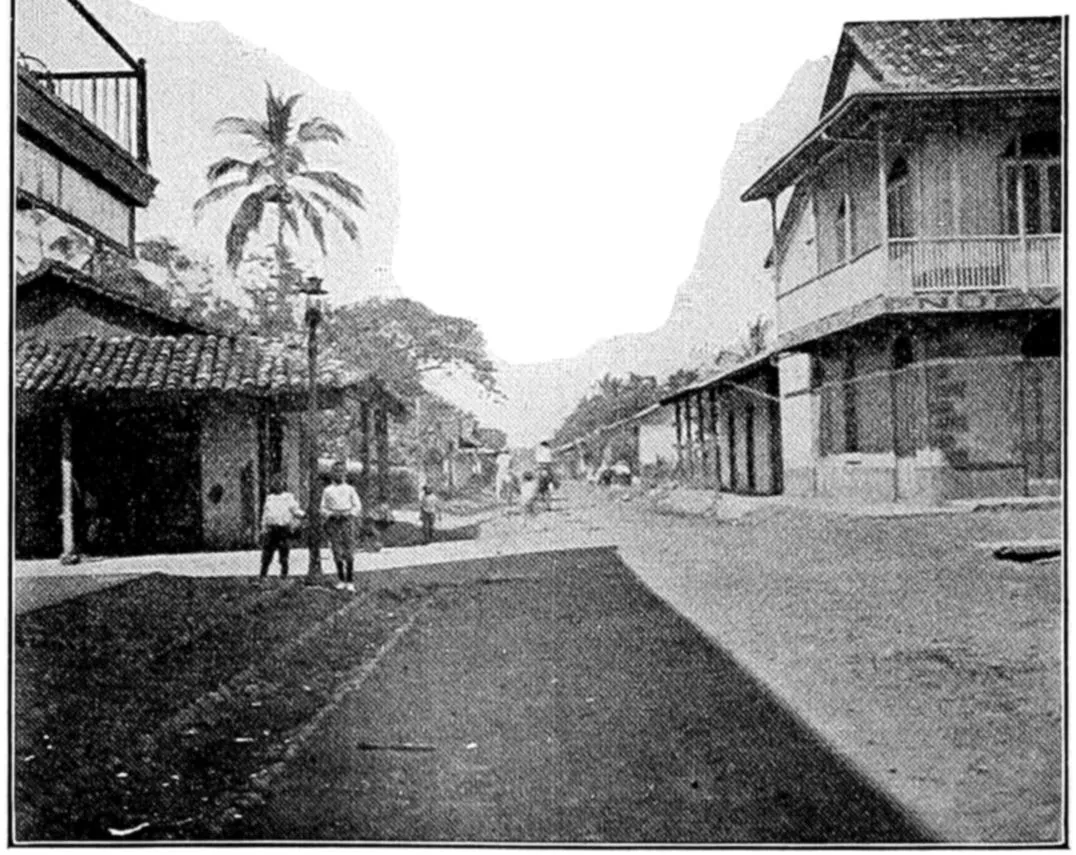
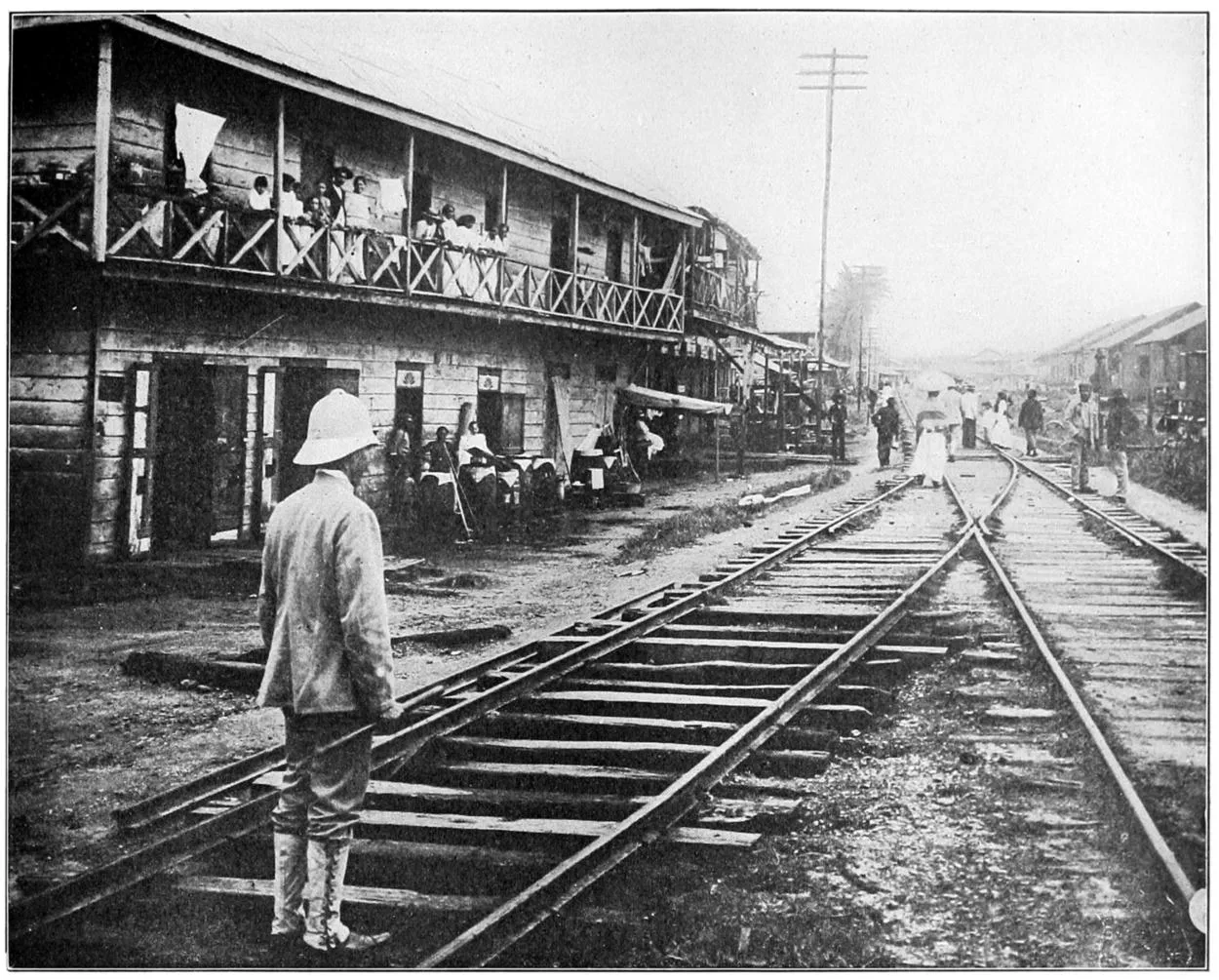
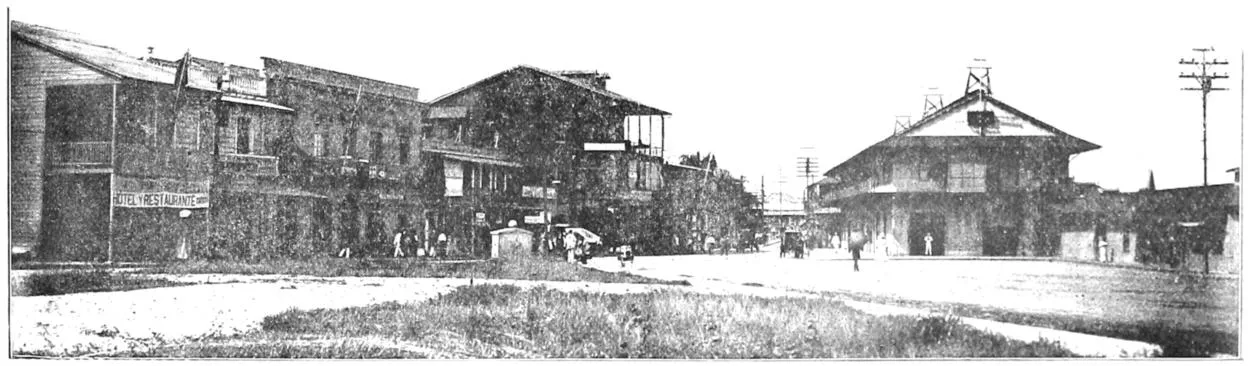
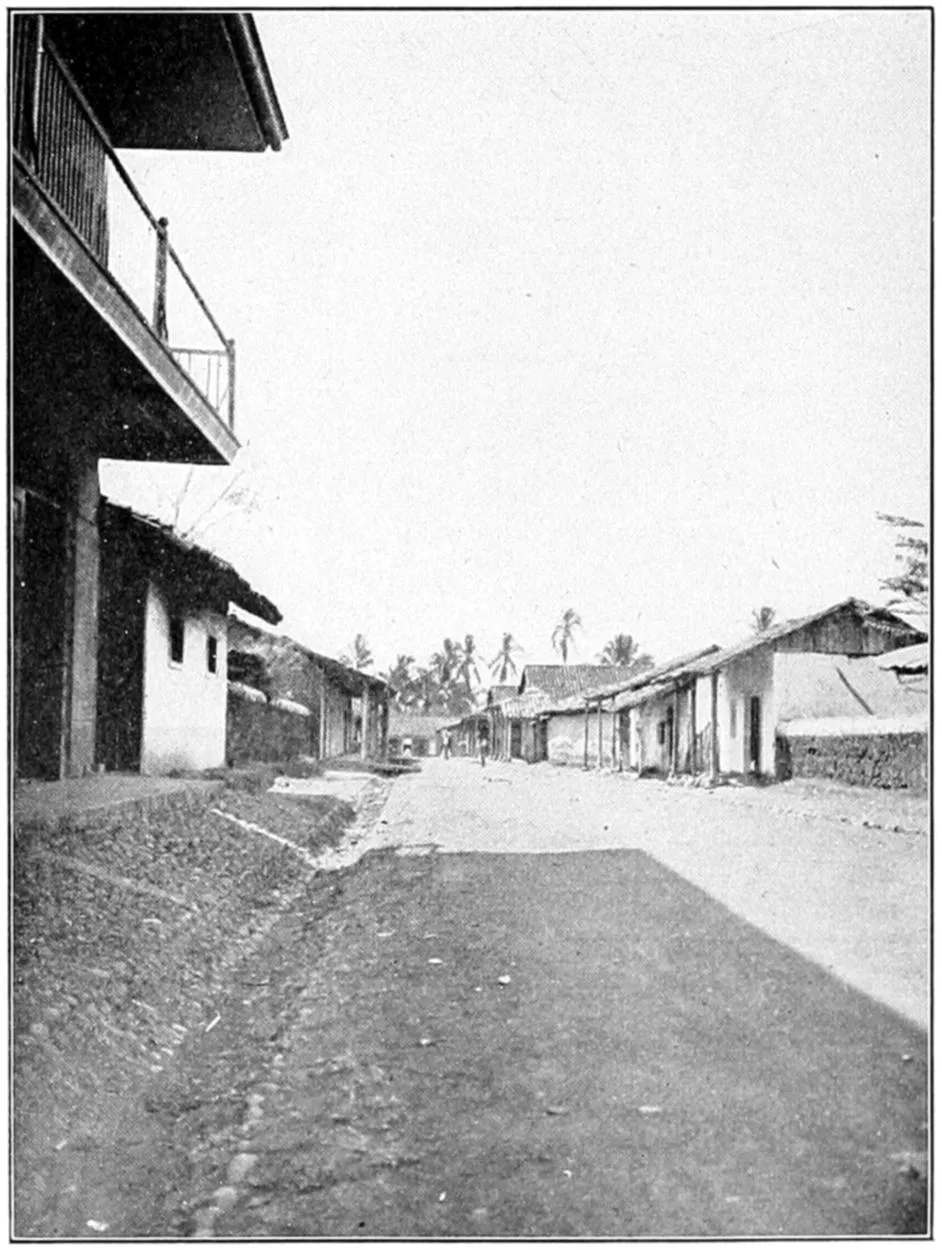
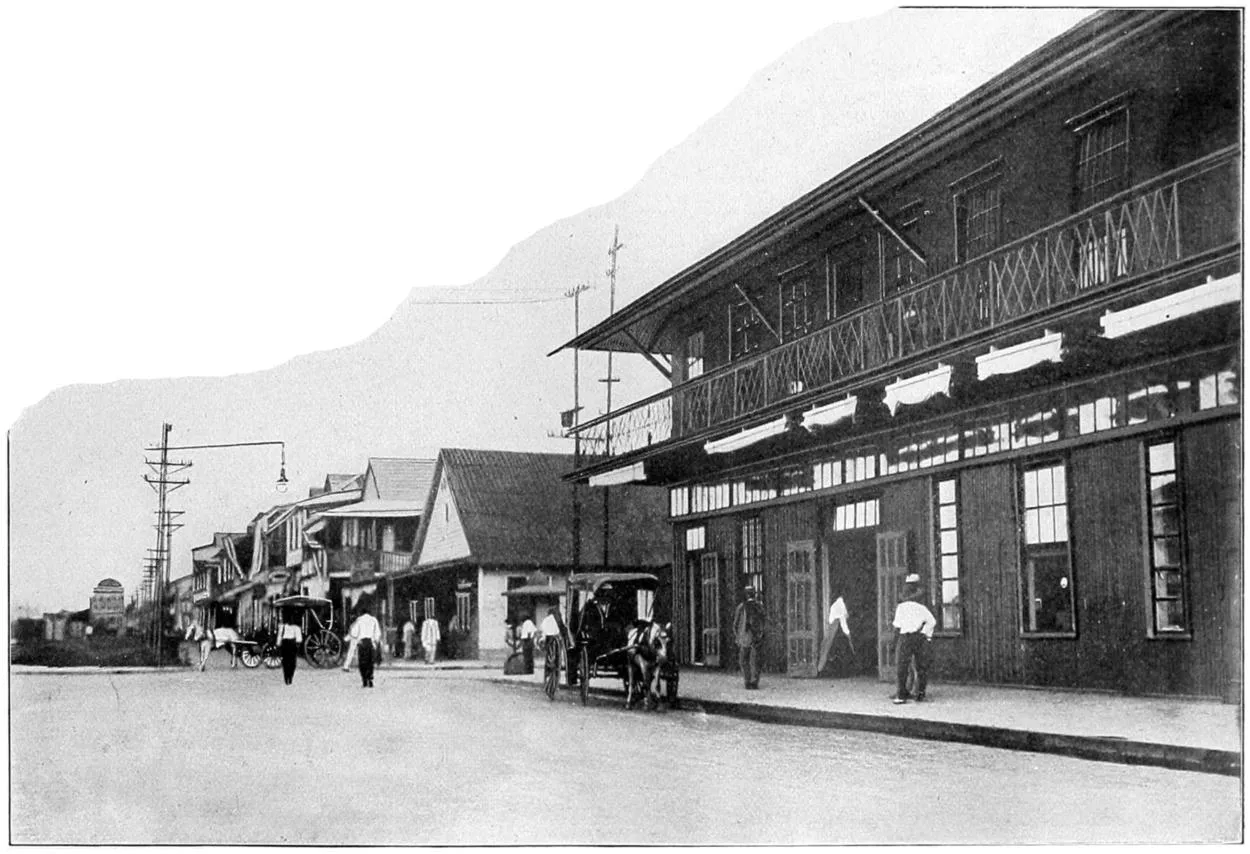
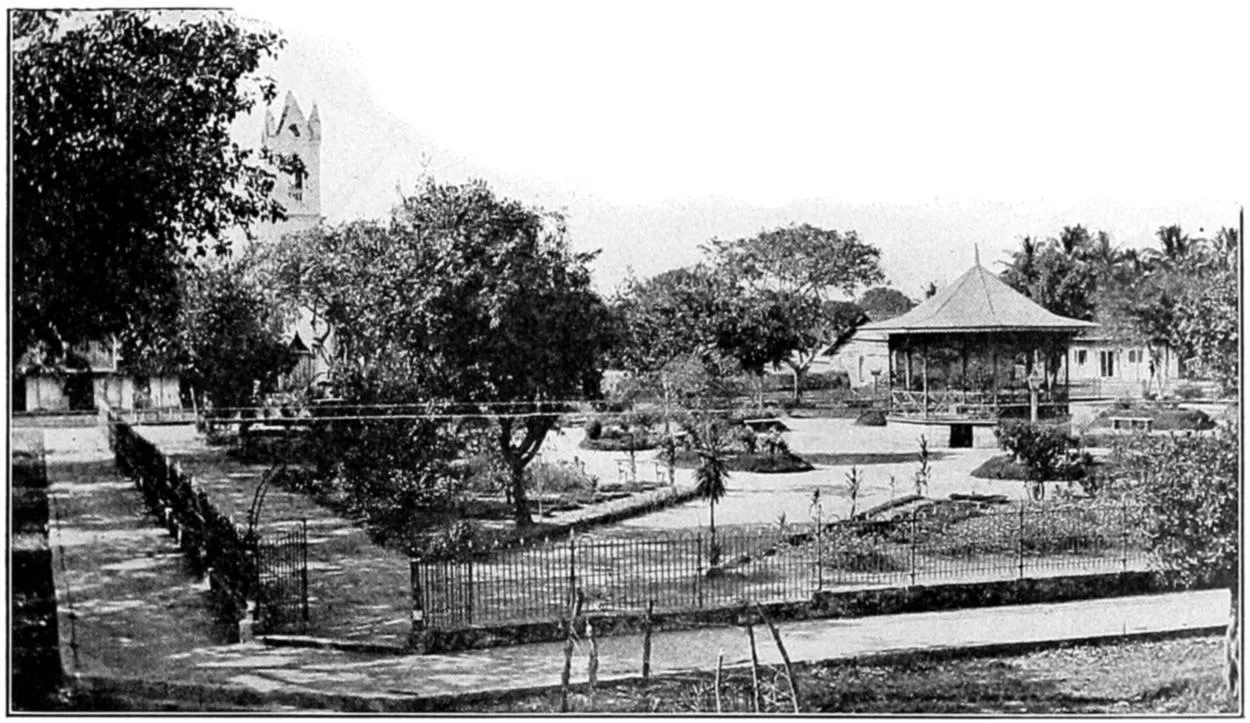
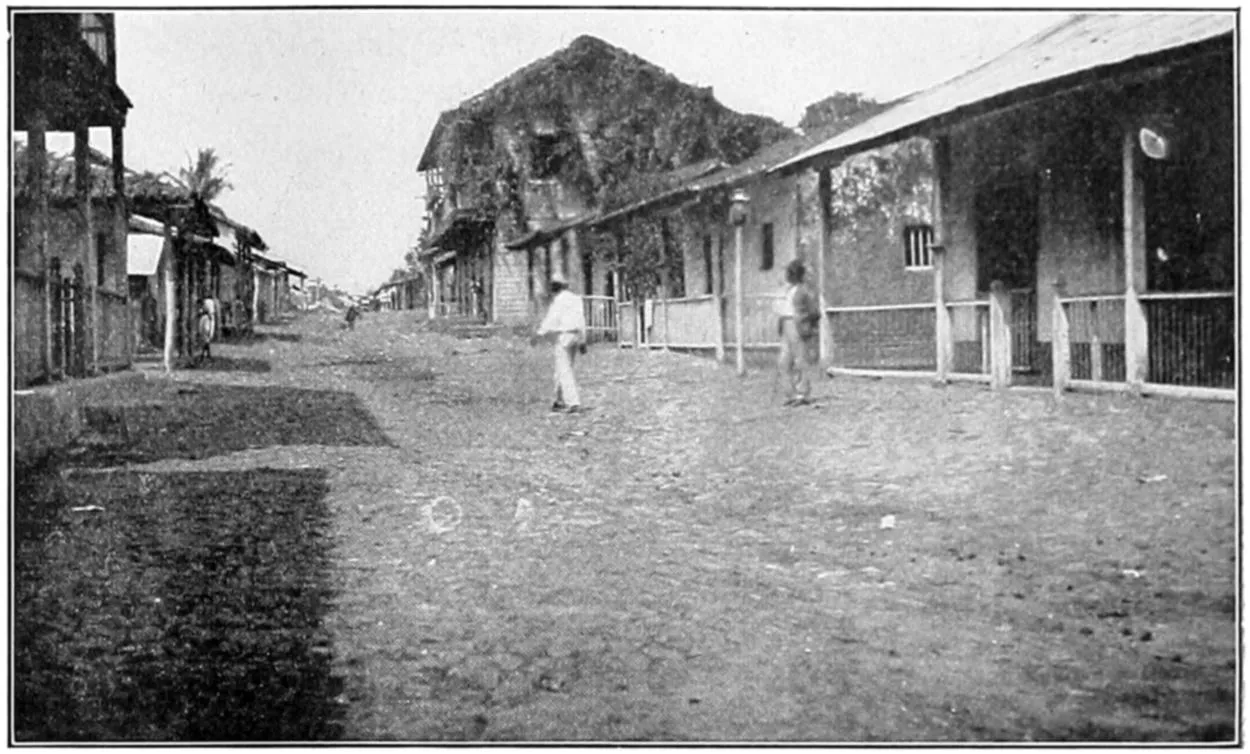
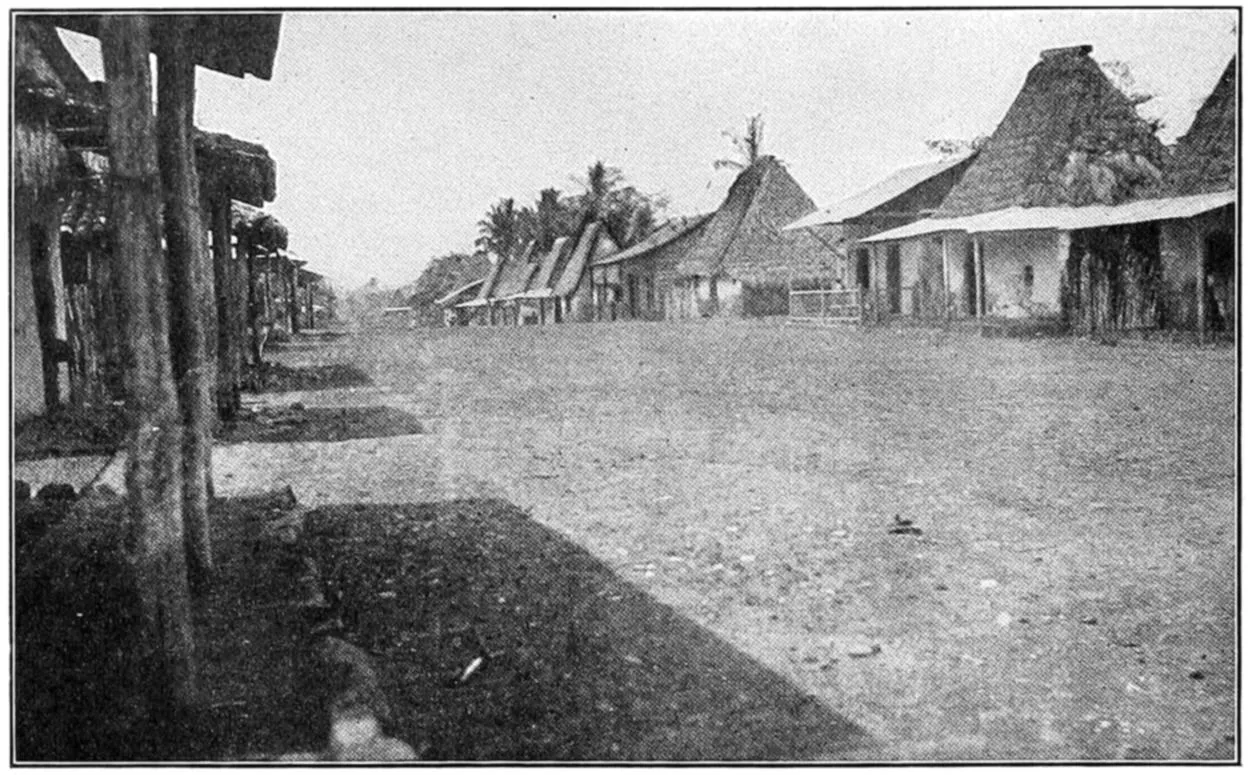
STREET IN MODERN PORTO BELLO
How ingenuous the historian’s closing line! Doubtless
the Spaniards commended as lavishly as they
drank. The blood they shed, the gold they stole,
the houses they burned, the women they violated
and the Indians they foully tortured and murdered
form a long count in the indictment of civilization
against Spain in Central America and the West
Indies. That today the Spanish flag waves over not
one foot of the territory ravaged by Pizarro, Nicuesa,
Cortez, Balboa, and Pedrarias is but the slenderest
of justice—the visitation upon the children of the
sins of their fathers. It is fair to say that of all
the ruffianly spoliators Vasco Nuñez de Balboa was
the least criminal. If he fought savagely to overthrow
local caciques, he neither tortured, enslaved
nor slew them after his victory, but rather strove
to make them his friends. He left the provinces
somewhat depleted of gold and pearls after his visits,
but one of the evidences of the complete lack of the
cultivating grace of civilization among the Indians
was that they did not care so much for these gewgaws
as they did for their lives, the honor of their
women and their liberty. This would of course
stamp them as sheer barbarians on Fifth Avenue
or the Rue de la Paix.
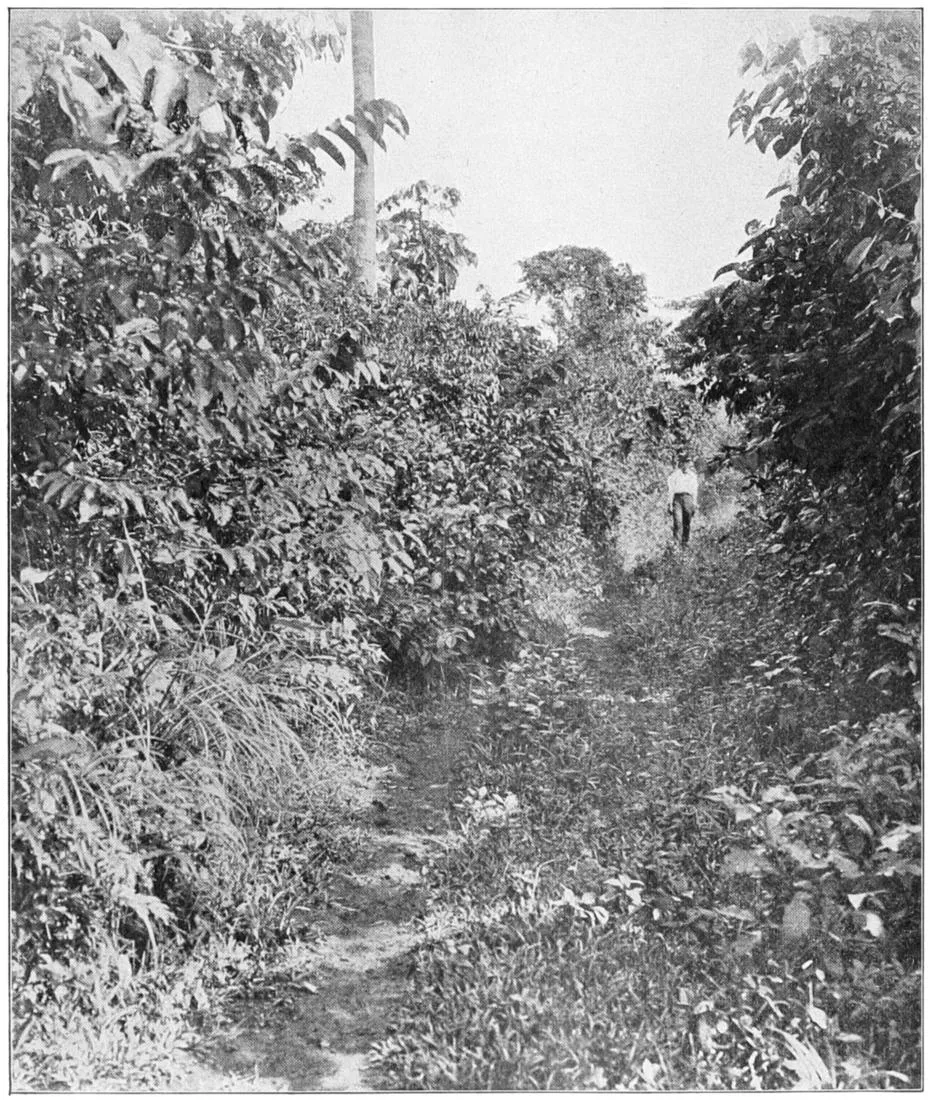
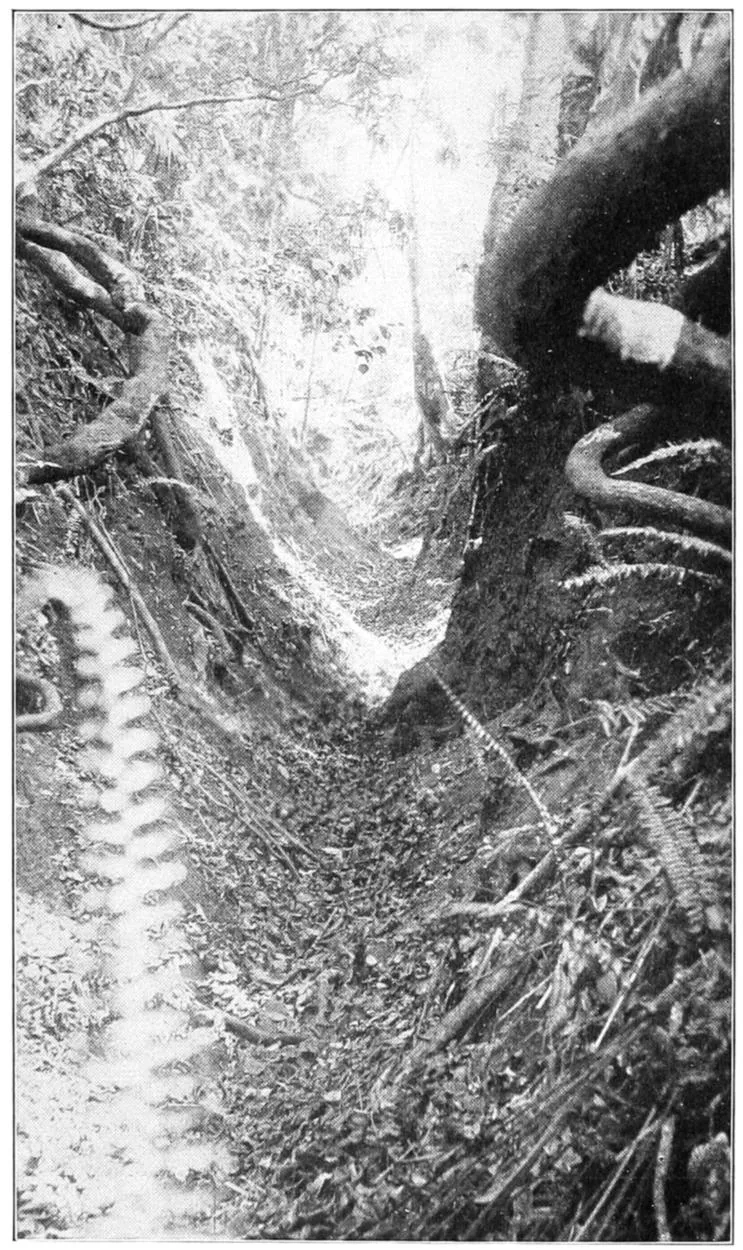
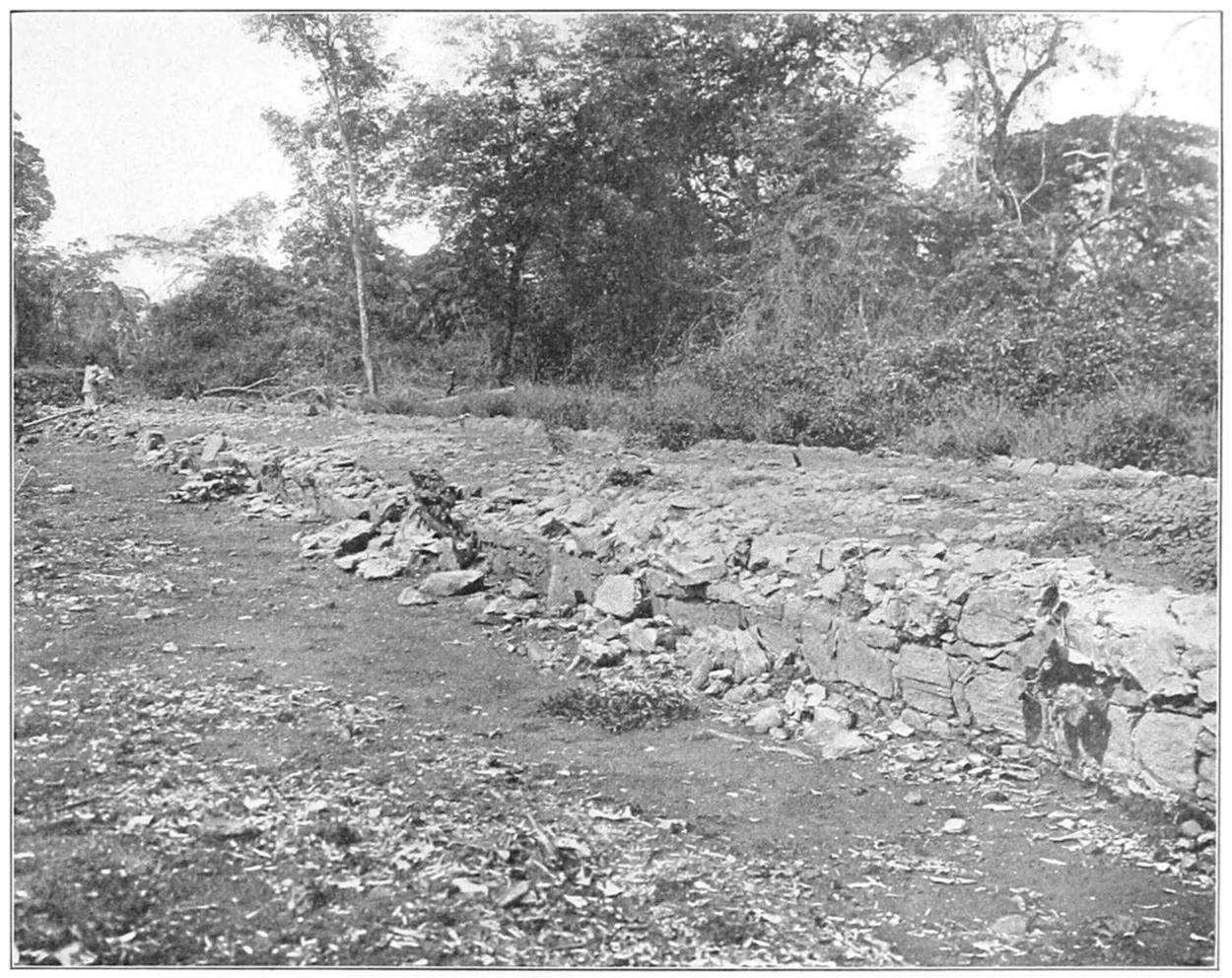
ANCIENT TRAIL FROM PORTO BELLO
Over this trail Balboa may have led his men on the march that led to the still unknown Pacific
As a matter of fact the Indian scorn of the Spanish
greed for gold was the cause of Balboa’s first hearing
of the Pacific Ocean. He had made an alliance with
Careta, a cacique of some power, who gave his
daughter to Balboa, together with 70 slaves and
about 4000 ounces of gold. As usual the Spaniards
were quarreling over the plunder, when a son of
the cacique, one Panciano, strode amongst them and,
kicking the gold out
of his way, addressed
them in language thus
reported by the historian
Quintana:
“Christians! why
quarrel and make so
much turmoil about a
little gold, which nevertheless
you melt
down from beautifully
wrought work into
rude bars? Is it for
such a trifle that you
banish yourselves from
your country, cross the
seas, endure hardships
and disturb the peaceful
nations of these
lands? Cease your
unseemly brawl and I
will show you a country
where you may
obtain your fill of
gold. Six days’ march
across yonder country
will bring you to an
ocean sea like this
near which we dwell,
where there are ships
a little less in size
than yours, with sails
and oars, and where
the people eat out of
vessels of gold and
have large cities and
wealth unbounded.”
In the light of our
later knowledge we know that he referred to the
Pacific and to Peru. At the conclusion of his address
he volunteered to lead the Spaniards to the
unknown sea, provided they first would aid him
and his father in the overthrow of a hostile tribe,
and further that they increase their own numbers
to 1000 men, for he foresaw hard fighting.
To recuperate his force and add to it Balboa returned
to his base at Santa Maria. Here he found
trouble of divers kinds. Part of his men were
mutinous. Letters from friends at Madrid told
that his enemies there were conspiring for his undoing—had
even caused a new governor to be sent
out to replace him, with orders to send him home for
trial. But the most immediate danger was an
Indian plot to raid and wholly obliterate the Spanish
town—an enterprise which we can hardly blame the
oppressed aborigines for cherishing.
An Indian girl, whom a cavalier had first converted
to Catholicism, then baptized and then taken
for his mistress, revealed the plot to her lover. It
had been told her by her brother who, knowing of
the wrath to come, in the quaint language of Peter
Martyr, “admonyshed her at the days appoynted
by sume occasion to convey herselfe oute of the way
leste shee shuld bee slayne in the confusion of
bataile.” Instead of doing this the faithless one,
“forgettinge her parentes, her countrie and all her
friendes, yea and all the kinges into whose throates
Vaschus had thrust his sworde, she opened uppe the
matter unto hym, and conceled none of those things
which her undiscrete broother had declared unto
her.”
Canal Commission Photo
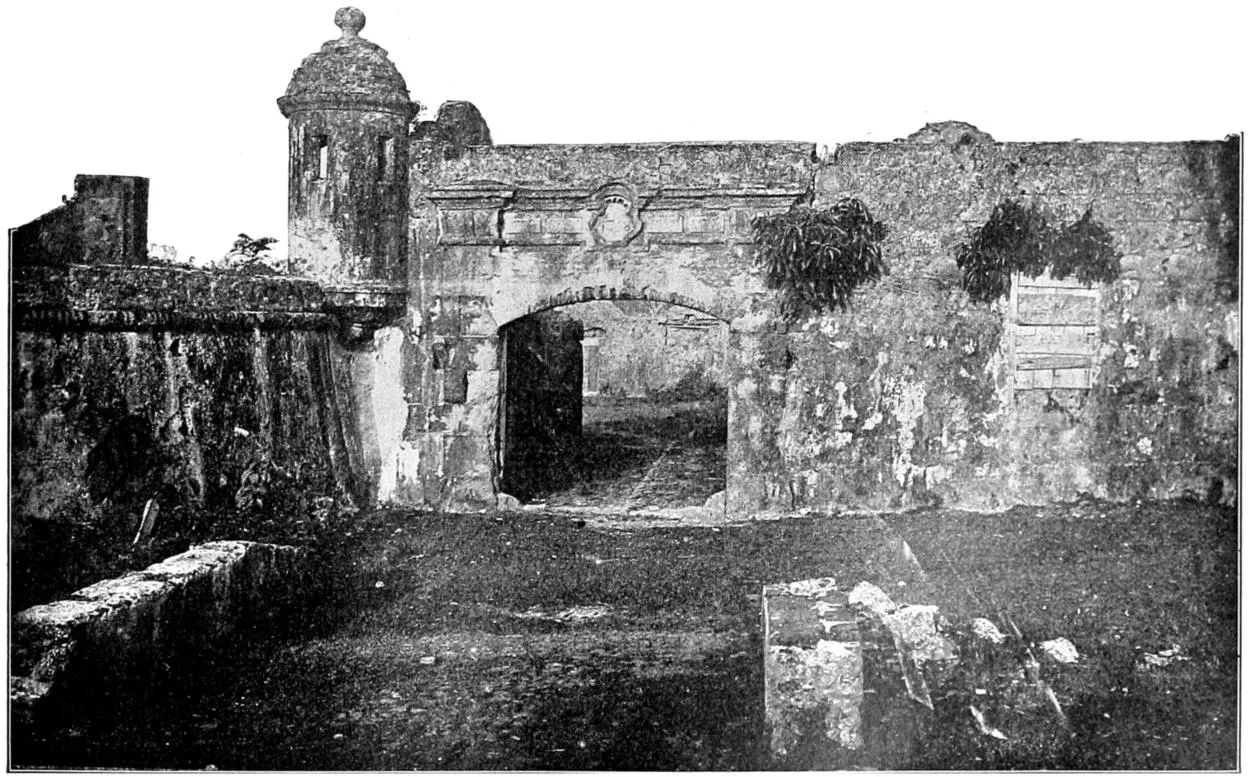
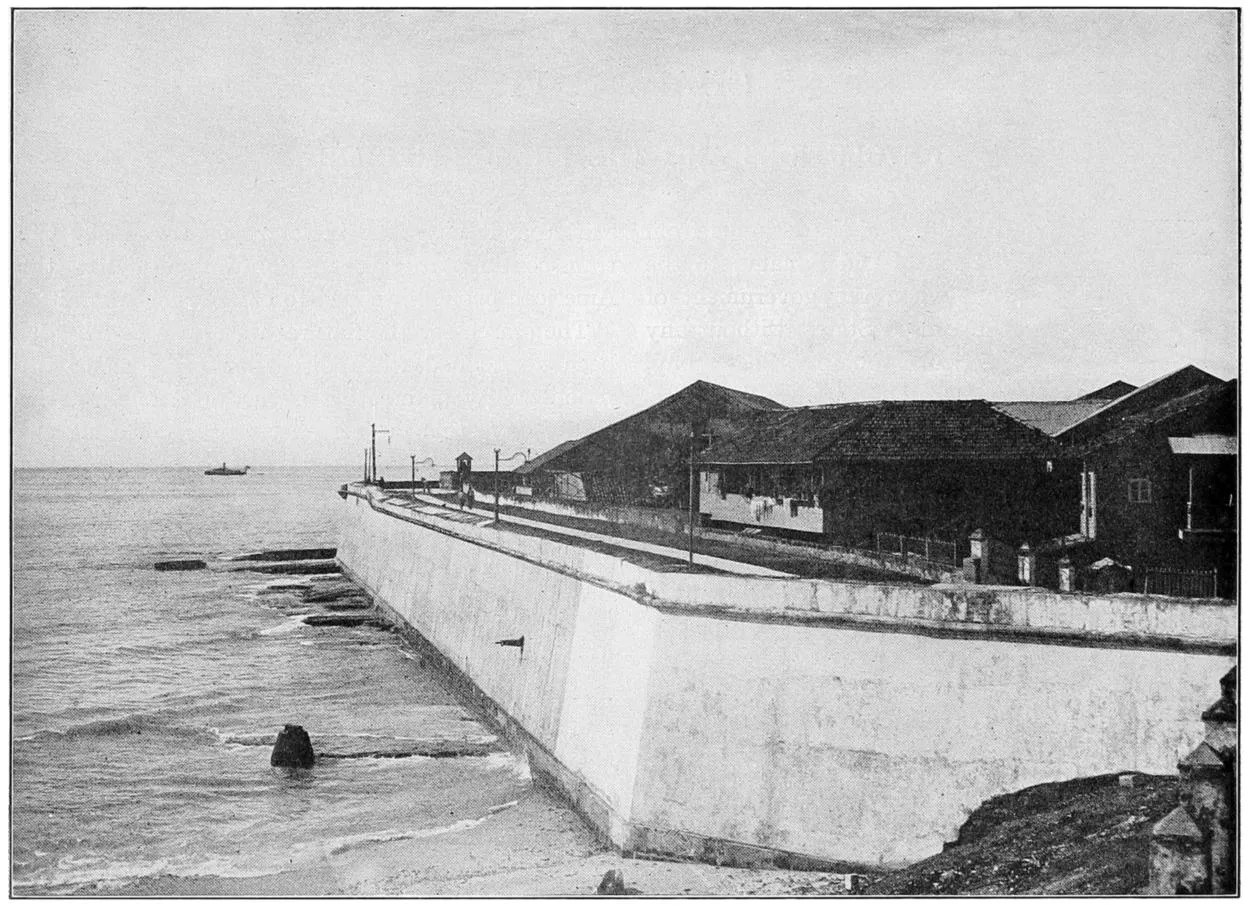
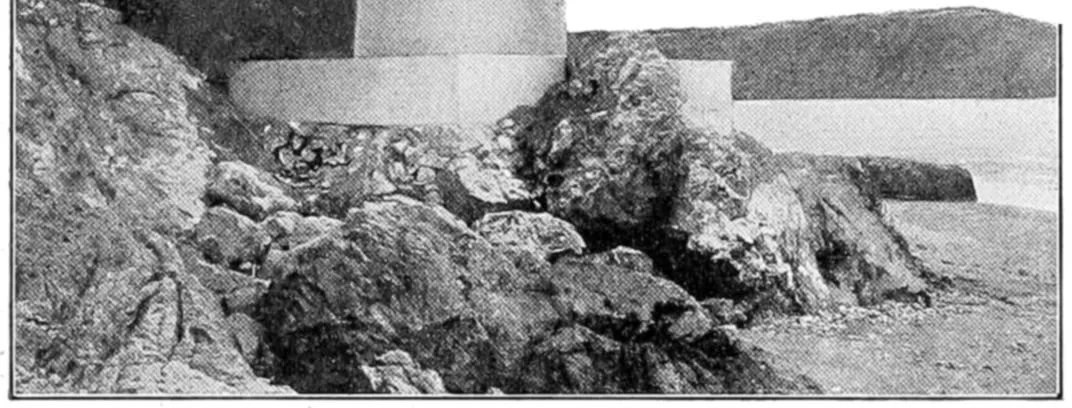
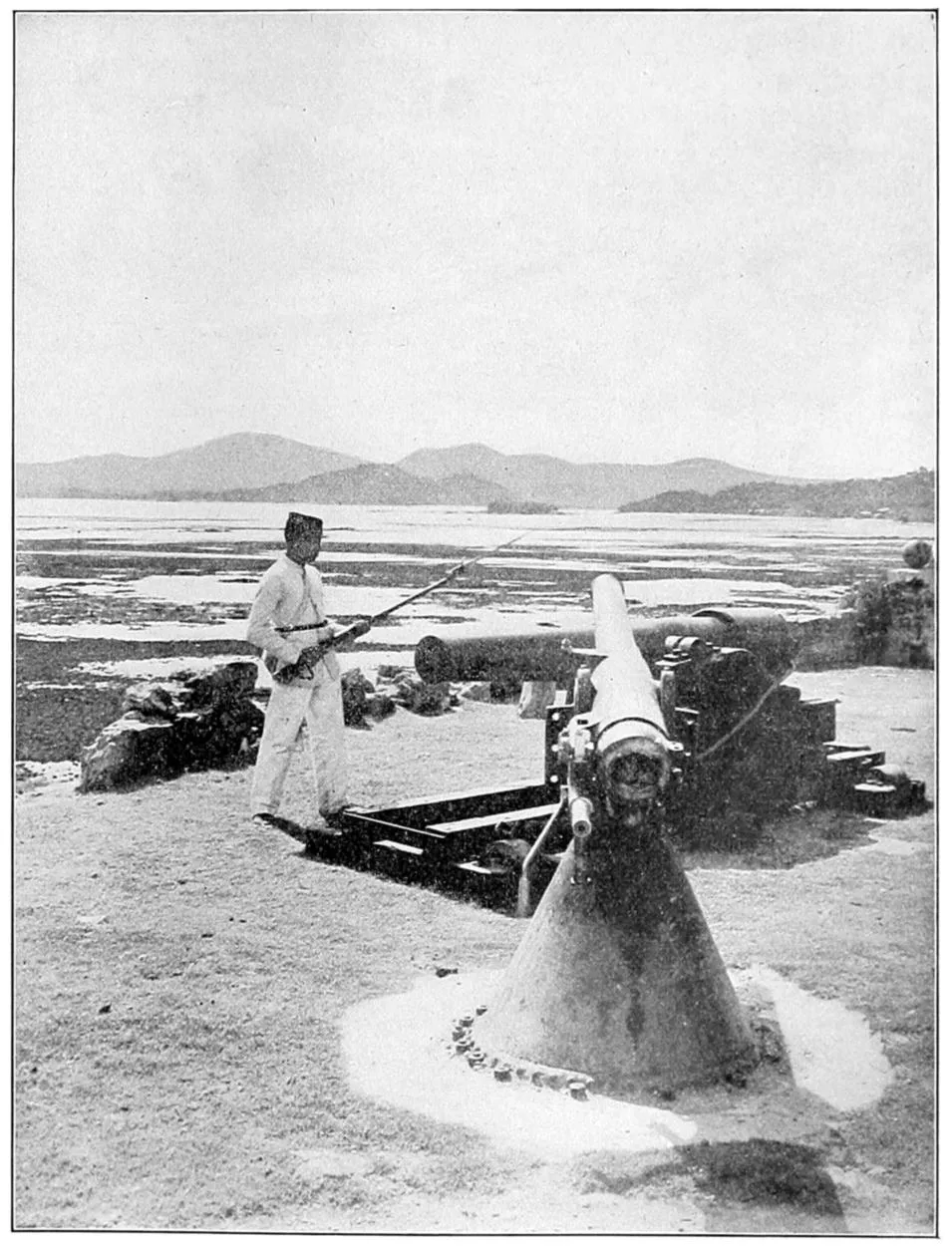
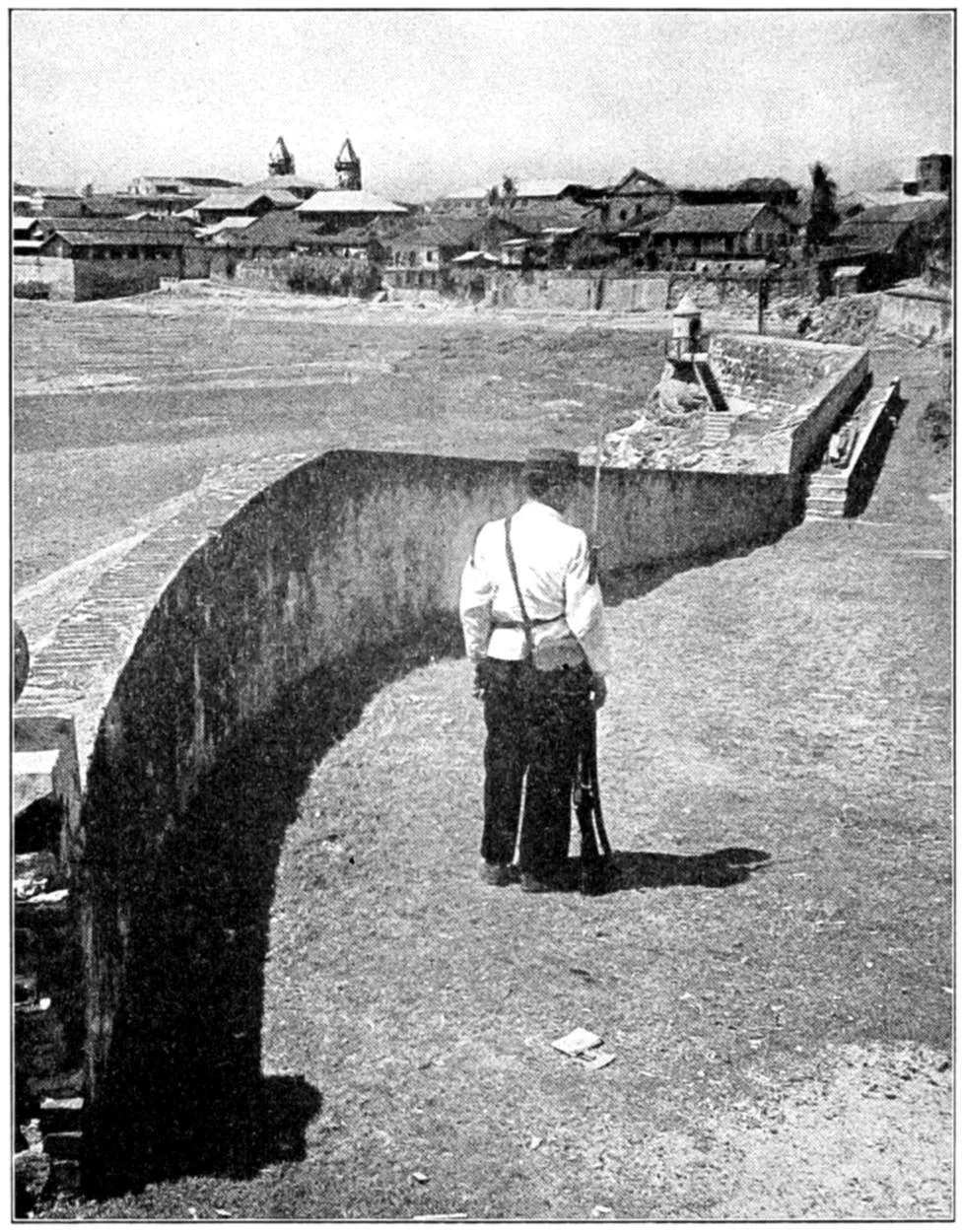
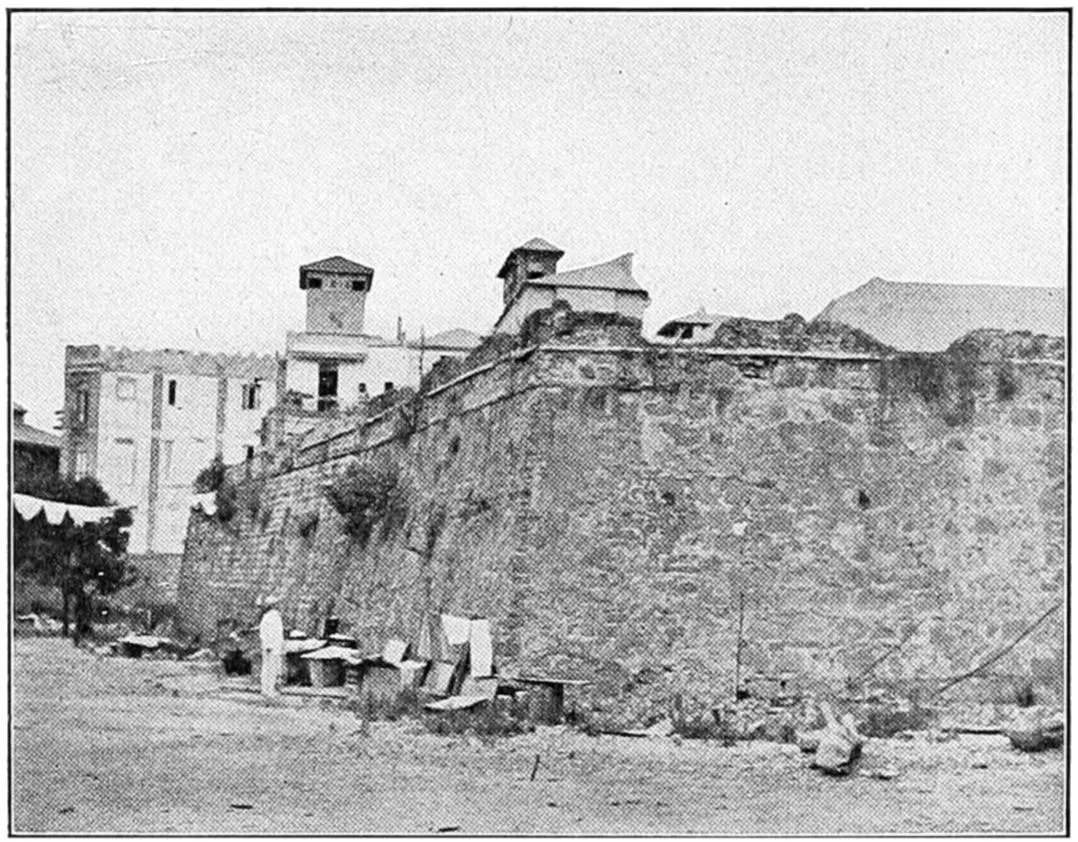
SPANISH FORT AT ENTRANCE TO PORTO BELLO HARBOR
Balboa was never accused of hesitation. The
girl was forced to reveal her brother’s hiding place.
He was put to the torture and the information thus
extorted enabled the Spaniards to strike at once and
strike hard. With 150 men he went into the Indian
territory of Darien, surprised the natives and put
them to total rout. The almost invariable victories
of the Spaniards, except when they were taken
by surprise, do not indicate superior valor on their
part. To begin with they carried fire arms which
affrighted the Indians as well as slaughtered them.
Further, they wore partial armor—leather jerkins,
helmets and cuirasses of steel—so that the unhappy
aborigines were not only exposed to missiles, the
nature of which they could not comprehend, but saw
their own arrows and javelins fall useless from a
fairly struck target. In one battle the Indians were
even reduced to meeting their foes with wooden
swords, and, after the inevitable victory, one of the
victors to further impress the vanquished with the
futility of their defensive weapons ordered the fallen
chief to stretch forth his right arm, and with one
blow struck it off.
The Indians were superstitious. Anything out of
the ordinary filled them with dread. Many refused
to stand and fight because Balboa rode into battle
on a white horse. Some trained blood hounds that
the Spaniards took into battle with them also terrified
them. Doing battle with them in the open was
almost like slaughtering sheep. Only in ambush
were they formidable. It may be noted in passing
that not all the barbarities were on the Spanish side.
One of Balboa’s most trusted lieutenants, Valdivia,
was caught in a tempest and his ship wrecked.
Those who escaped were captured by the natives,
penned up and fattened for a cannibal feast. The
day of festivity arriving Valdivia and four of his
companions were conducted to the temple and there
offered up a sacrifice. Their hearts were cut out
with knives of obsidian and offered to the gods while
their bodies were roasted and devoured by the savages.
News from Madrid convinced Balboa that he was
in disfavor at court. Some great exploit was
needed to reëstablish his prestige. He determined
to seek without delay that new sea of which he had
been told, and to this end gathered an army of 190
Spaniards and about 1,000 Indians. A pack of the
trained European war dogs were taken along. The
old chroniclers tell singular tales about these dogs.
Because of the terror they inspired among the
Indians they were held more formidable than an
equal number of soldiers. One great red dog with a
black muzzle and extraordinary strength was endowed
with the rank of a captain and drew the pay
of his rank. In battle the brutes pursued the fleeing
Indians and tore their naked bodies with their fangs.
It is gravely reported that the Captain could distinguish
between a hostile and a friendly native.
Photo, Prof. Otto Lutz
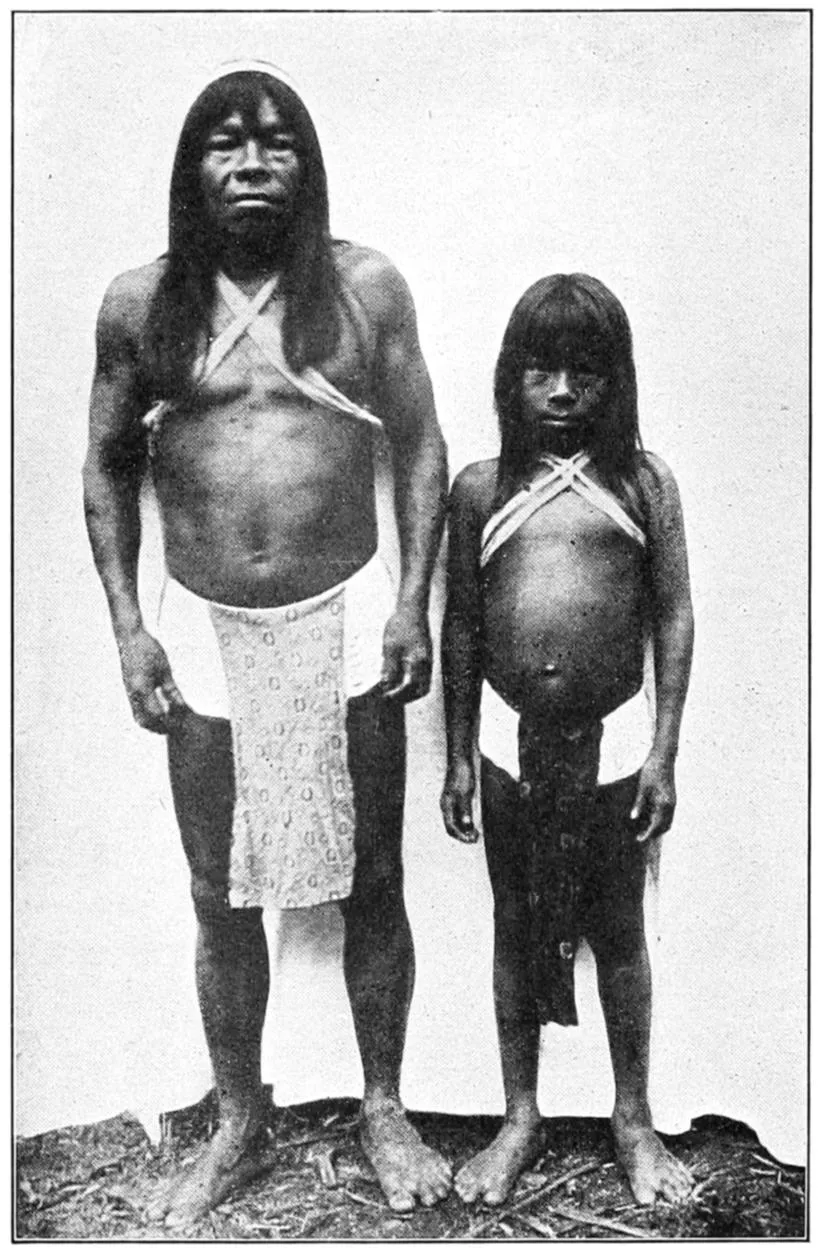
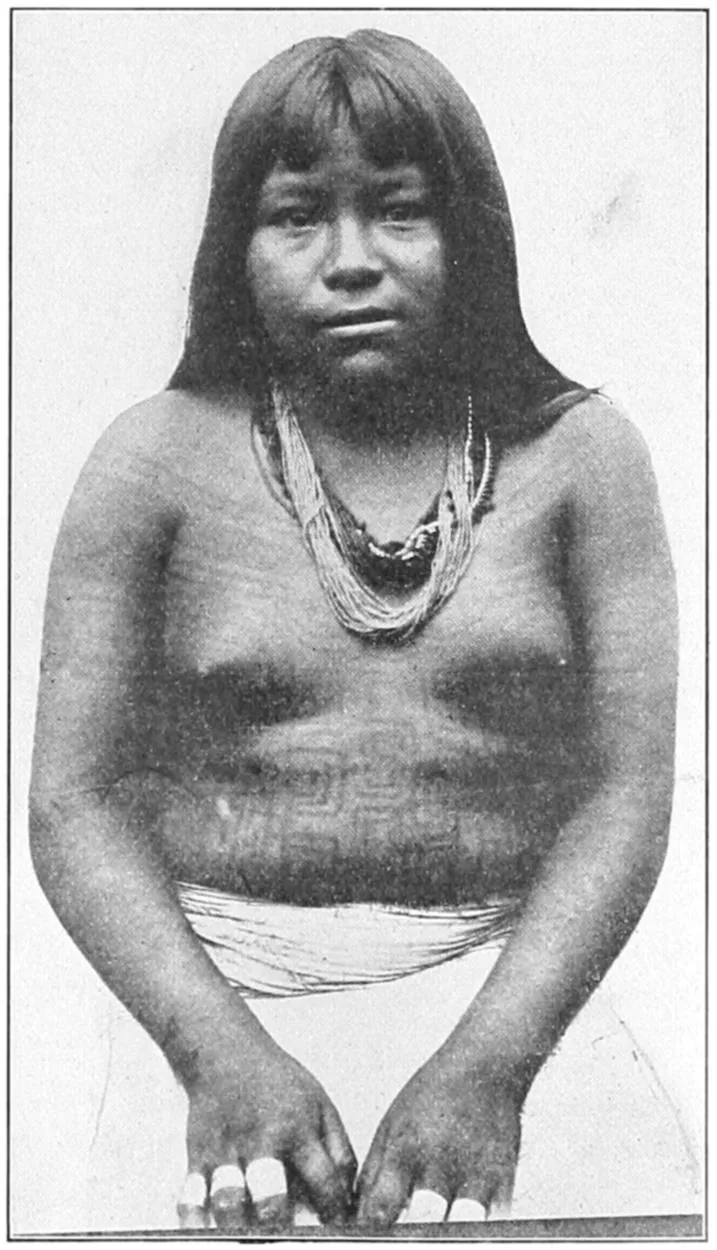
A GROUP OF CHOLO INDIANS
It is practically impossible to trace now the exact
line followed by Balboa across the Isthmus. Visitors
to the Canal Zone are shown Balboa Hill, named in
honor of his achievement, from which under proper
climatic conditions one can see both oceans. But
it is wholly improbable that Balboa ever saw this
hill. His route was farther to the eastward than the
Zone. We do know however that he emerged from
the jungle at
some point on
the Gulf of San
Miguel. What
or where the
hill was from
which with
“eagle eyes he
star’d at the
Pacific” we
can only guess.
It was one of
the elevations
in the province
of Quareque,
and before attaining
it Balboa
fought a
battle with the
Indians of
that tribe who
vastly outnumbered
his force,
but were not armed to fight Spaniards. “Even as
animals are cut up in the shambles,” according to
the account of Peter Martyr, “so our men, following
them, hewed them in pieces; from one an arm, from
another a leg, here a buttock, there a shoulder.”
The chief Porque and 600 of his followers were slain
and as usual dead and living were robbed of their
golden jewelry.
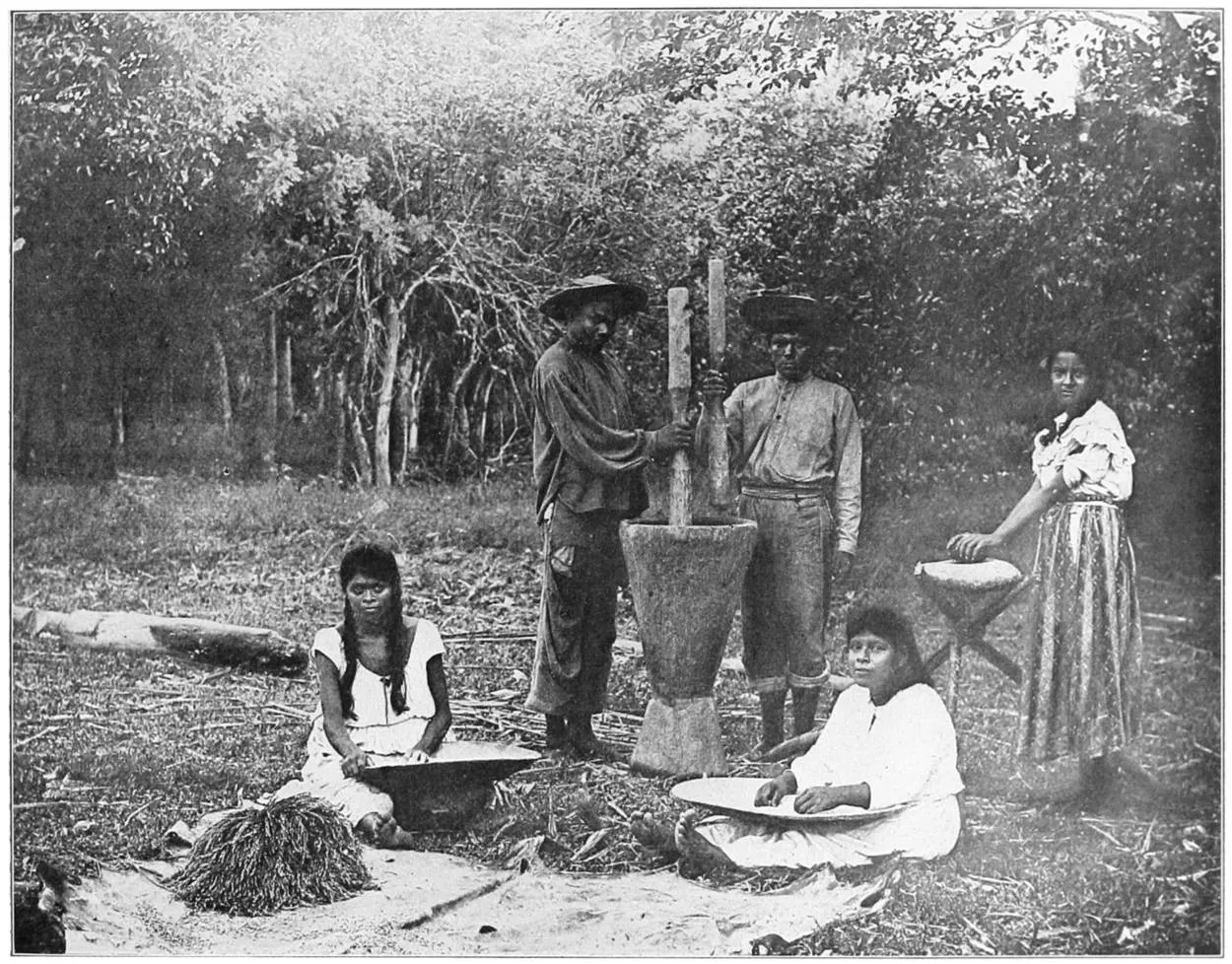
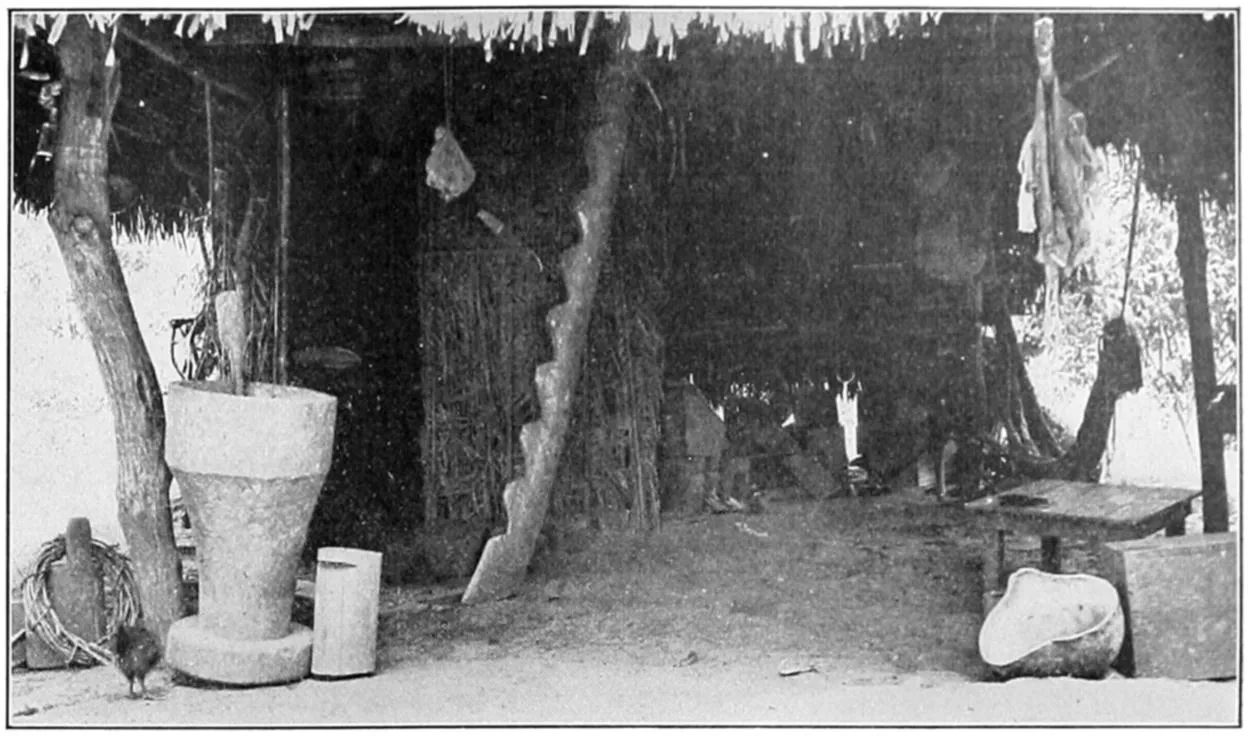
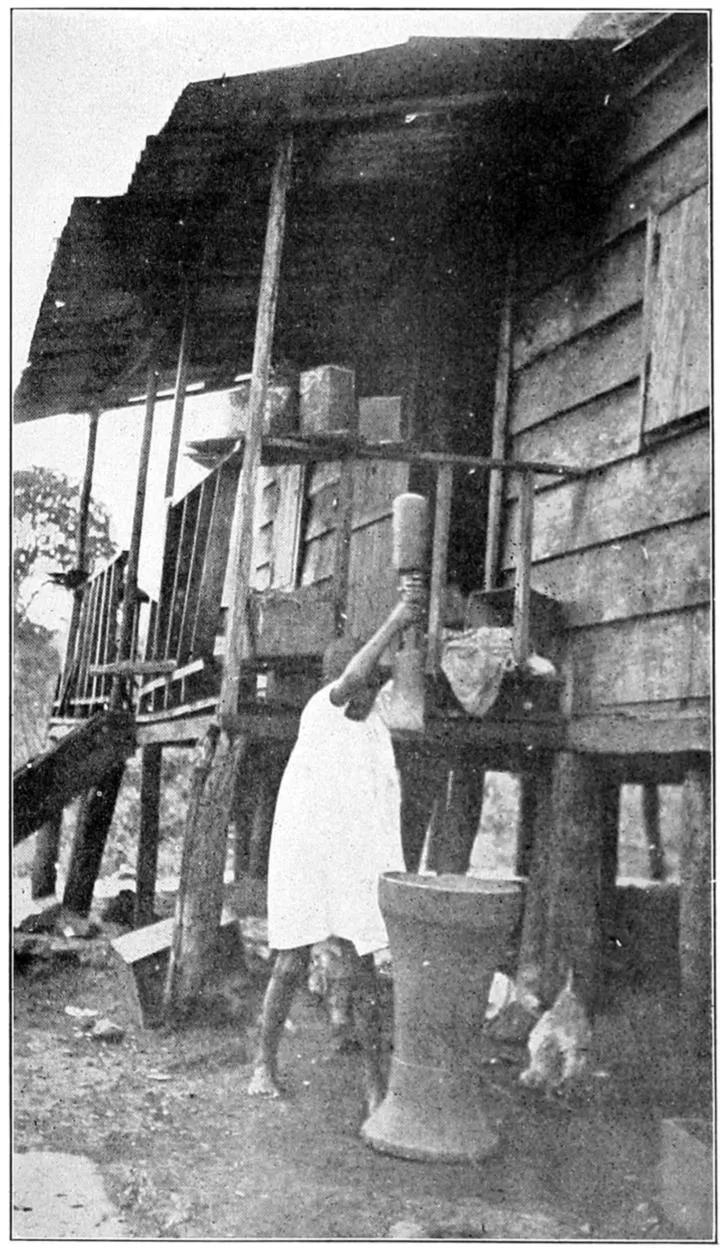
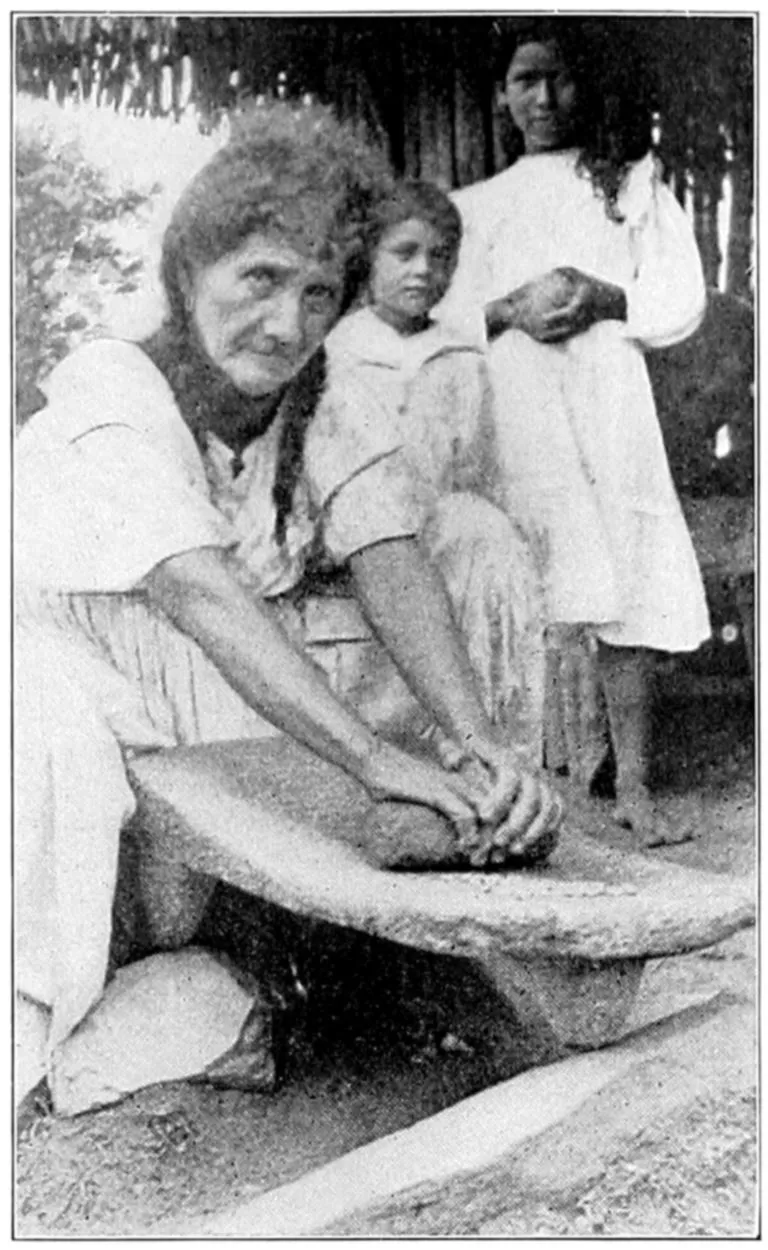
NATIVES GRINDING RICE IN A MORTAR OWNED BY ALL
It never occurred to the Indians to let one man own the mortar and charge all others for its use
Balboa’s force of Spaniards was now reduced to
67 men; the rest were laid up by illness, but notwithstanding
the ghastly total of Indian lives taken, no
Spaniard had been slain. With these he proceeded
a day’s journey, coming to a hill whence his native
guides told him the sought-for sea might be seen.
Ordering his men to stay at the base he ascended the
hill alone, forcing his way through the dense underbrush
under the glaring tropical sun of a September
day. Pious chroniclers set down that he fell on his
knees and gave thanks to his Creator—an act of
devotion which coming so soon after his slaughter of
the Quarequa Indians irresistibly recalls the witticism
at the expense of the Pilgrim Fathers, that on
landing they first fell upon their knees and then upon
the aborigines. Whatever his spirit, Balboa never
failed in the letter of piety. His band of cut-throats
being summoned to the hilltop joined the official
priest in chanting the “Te Deum Laudamus” and
“Te Dominum confitur.” Crosses were erected
buttressed with stones which captive Indians, still
dazed by the slaughter of their people, helped to
heap. The names of all the Spaniards present were
recorded. In fact few historic exploits of so early
a day are so well authenticated as the details of
Balboa’s triumph.
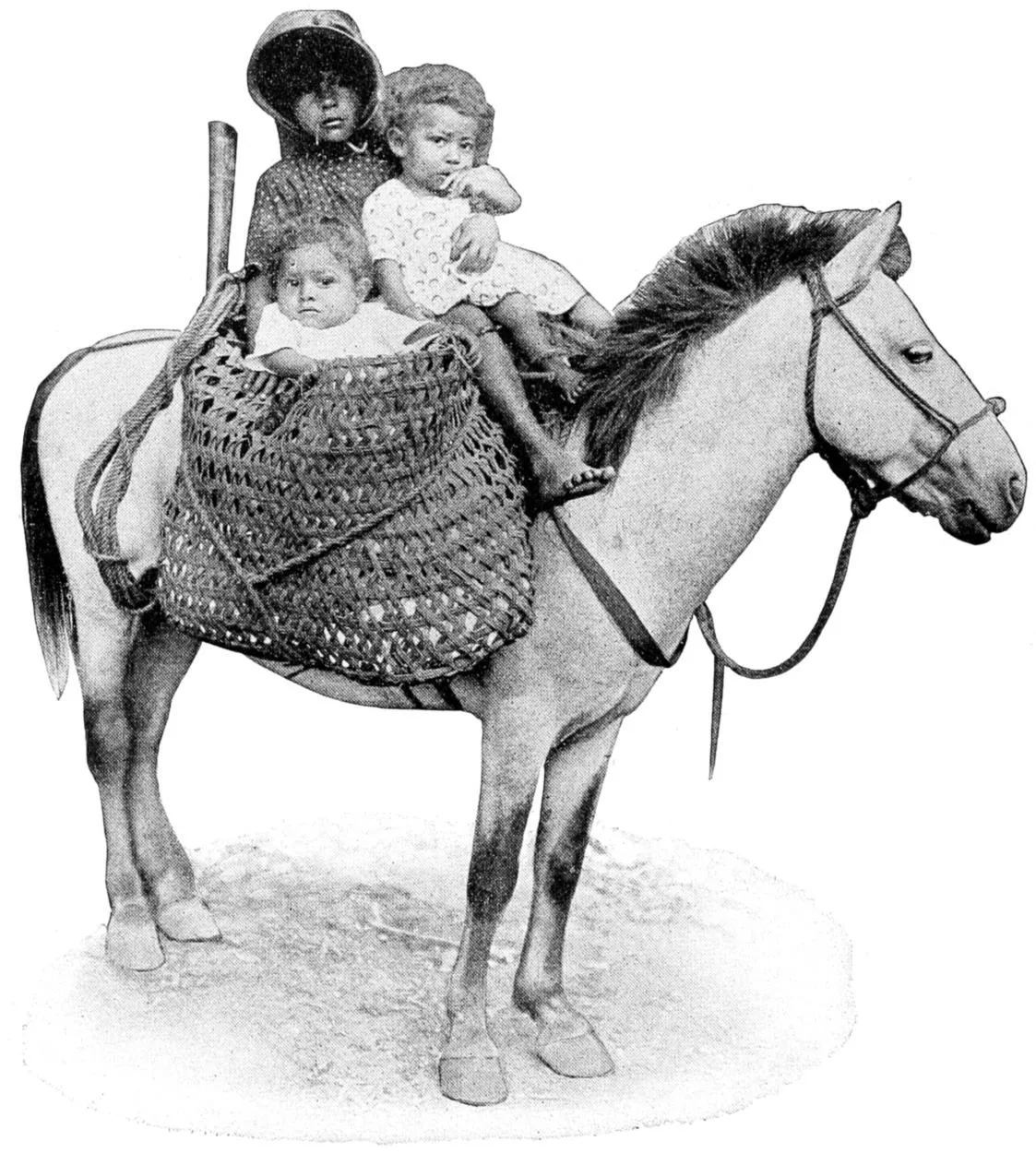
Photo T. J. Marine.
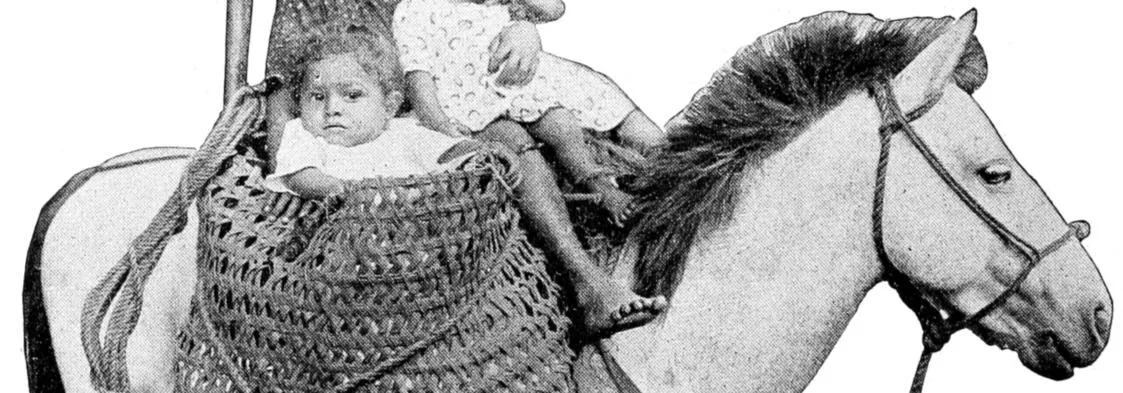
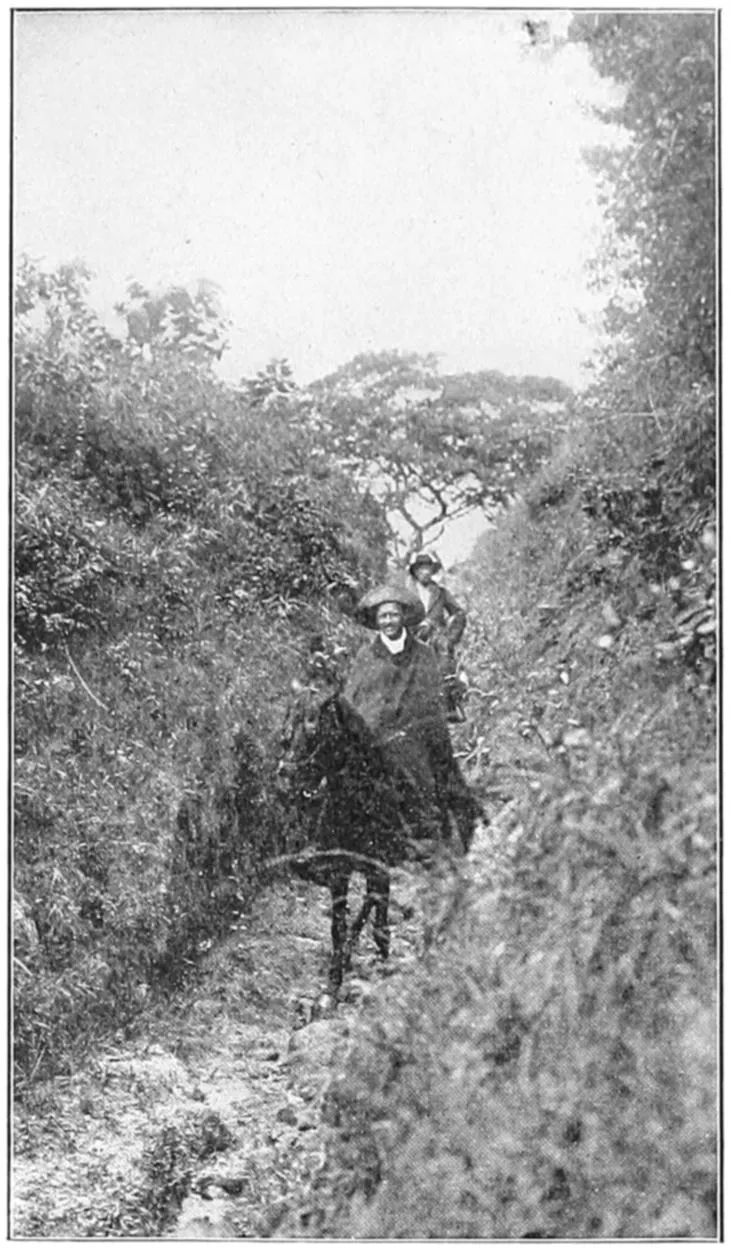
FAMILY TRAVEL ON THE PANAMA TRAIL
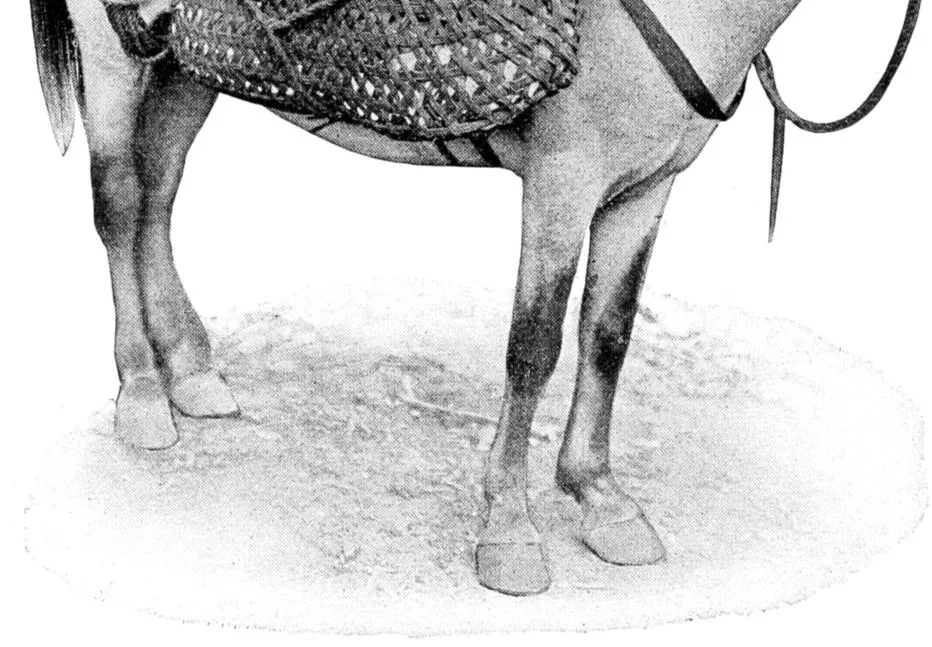
Photo T. J. Marine.
FAMILY TRAVEL ON THE PANAMA TRAIL
Descending the hill they proceeded with their
march for they were then but half way to their goal.
Once again they had to fight the jungle and its
savage denizens. Later exploring parties, even in
our own day, have found the jungle alone invincible.
Steel, gunpowder and the bloodhounds opened the
way, and the march continued while the burden of
gold increased daily. It is curious to read of the
complete effrontery with which these land pirates
commandeered all the gold there was in sight.
From Comagre were received 4000 ounces—“a
gift”; from Panca, ten pounds; Chiapes disgorged
500 pounds to purchase favor; from Cocura 650
pesos worth of the yellow metal and from Tumaco
640 pesos besides two basins full of pearls of which
240 were of extraordinary size. The names of these
dead and gone Indian chiefs signify nothing today,
but this partial list of contributions shows that as a
collector Balboa was as efficient as the Wiskinkie of
Tammany Hall. Not counting pearls and girls—of
both of which commodities large store was
gathered up—the spoil of the expedition exceeded
40,000 pesos in
value.
It was September 29,
1513, that at last
Balboa and his men
reached the Pacific.
Being St. Michael’s day
they named the inlet
of the sea they had
attained the Gulf of
St. Michael. On their
first arrival they found
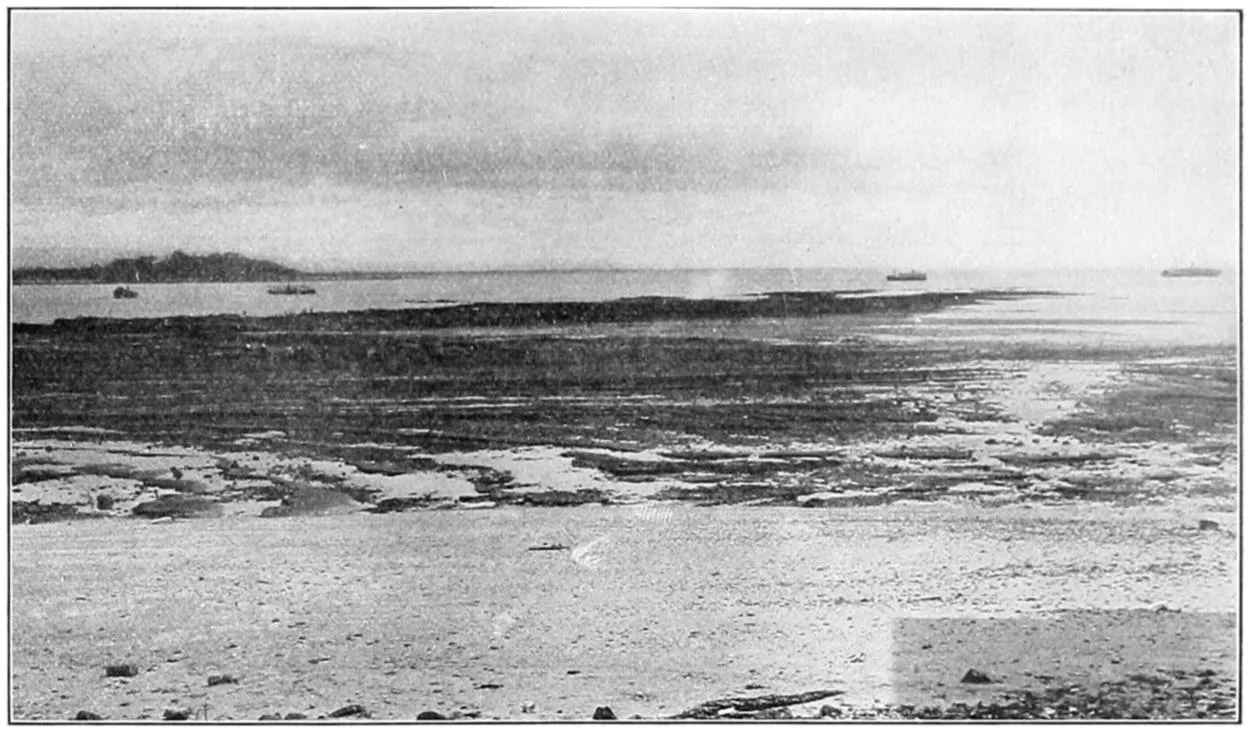
they had reached the
sea, but not the water,
for the tide which at
that point rises and
falls twenty feet, was out and a
mile or more of muddy beach interspersed
with boulders intervened
between them and the water’s edge.
So they sat down until the tide had
returned when Balboa waded in
thigh deep and claimed land and
sea, all its islands and its boundaries
for the King of Spain. After
having thus performed the needful
theatrical ceremonies, he returned
to the practical by leading his men
to the slaughter of some neighboring
Indians whose gold went to
swell the growing hoard.
The Spaniards made their way along the Pacific
coast to a point that must have been near the present
site of Panama City, for it is recorded that on a
clear day they could see the Pearl Islands in the
offing. Balboa wanted mightily to raid these
islands, but felt it more prudent to hasten back to
the Atlantic coast and send reports of his discovery
and tribute of his gold to the King before his
enemies should wholly undo him. So he made his
way back, fighting and plundering new tribes all
the way and leaving the natives seemingly cowed,
but actually full of hatred. They had learned the
folly of standing against the white man’s arms.
“Who that had any brains,” asked one chieftain
touching Balboa’s sword, “would contend against
this macana which at one blow can cleave a man in
two?”
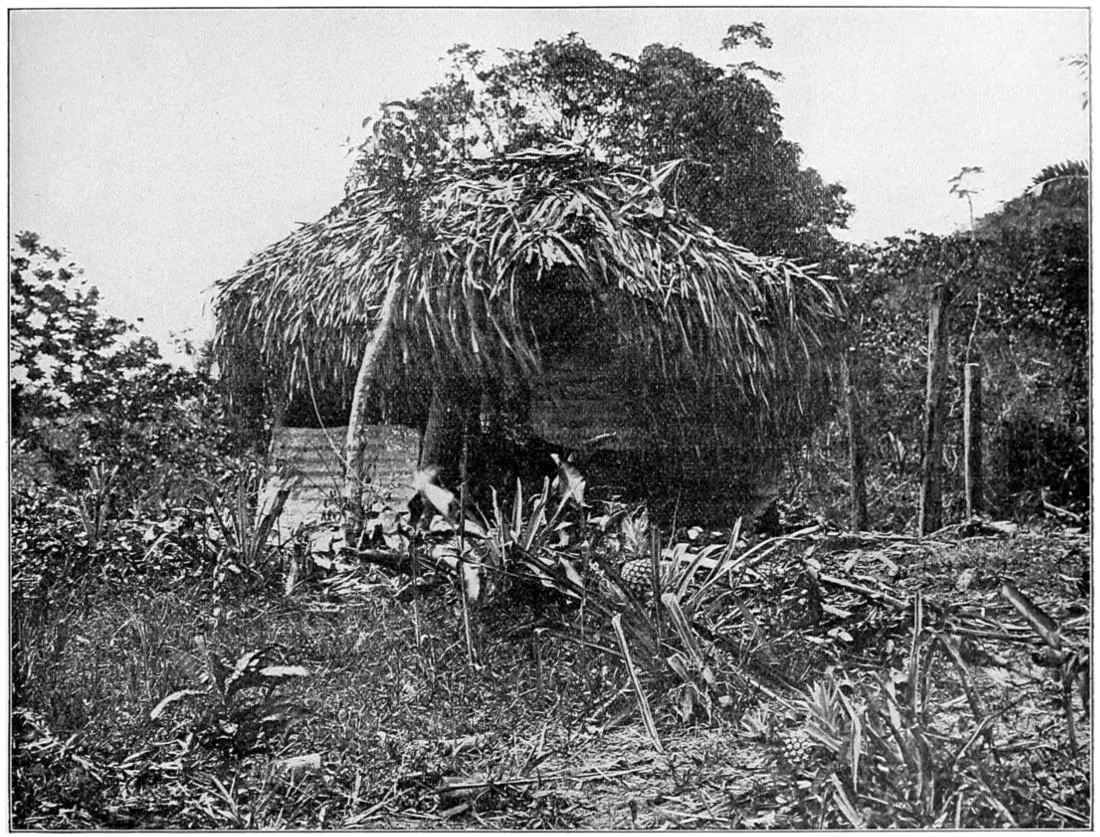
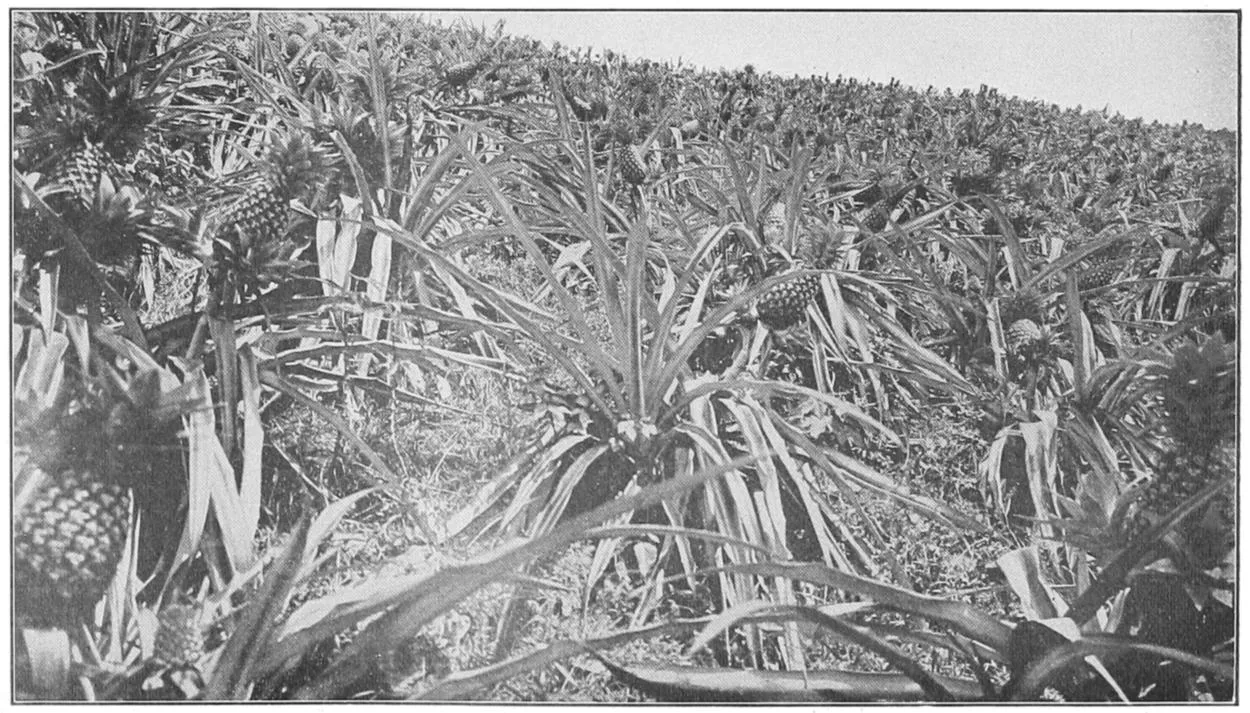
DESERTED NATIVE HUT
Note the profusion of pineapples growing wild, without further attention they will thrive and multiply
The return was made to Antigua where Balboa
was received with loud acclaim. Indeed he had
accomplished the incredible. Not only had he discovered
a new ocean, not only had he brought home
booty worth a dukedom, but in the height of the
rainy season he had marched 190 men through the
unknown jungle, fighting pitched battles almost
every day, taking food and drink where he could
find it or going without, and finally brought all
back without losing a man. No expedition since,
even the peaceful scientific or surveying ones of our
own days, has equaled this record. He had left
the Indians pacified, if resentful, and the letter
which he sent off to King Ferdinand was a modest
report of a most notable achievement. “In all his
long letter,” says Peter Martyr, “there is not a
single leaf written which does not contain thanks to
Almighty God for deliverance from perils and
preservation from many imminent dangers.”
But Vasco Nunez de Balboa now approached the
unhappy and undeserved close of a glorious career.
As his letter went slowly across the seas in a clumsy
galleon to Spain, one Pedrarias with a commission
to govern Balboa’s province and to deal out summary
justice to Balboa, who had been represented
to the King as a treacherous villain, was on the
Atlantic making for the New World. When Ferdinand
received Balboa’s
letter he would have
given much to recall his
hasty commission to
Pedrarias, but there was
no wireless in those days,
and the new governor,
with power of life and
death over Balboa, was
now well out at sea.
The blow did not fall
at once. On arrival at
Santa Maria de la Antigua
in June, 1514,
Pedrarias sent a courier
to Balboa to announce
his coming and his authority.
The devoted
followers of Vasco Nunez
were for resisting the
latter, assuring him that
the King could not have
received the report of his
notable discovery, else
he would not thus have
been supplanted. Balboa
however submitted
gracefully, promising the
newcomer implicit obedience.
Pedrarias, though
charged to try Balboa
for treason, concealed
his orders until he had
gathered all the useful
information that the old chieftain could impart and
won many of his followers to his own personal support.
Then he arrested Balboa and put him on trial,
only to have him triumphantly acquitted. Pedrarias
was disgusted. He hated Balboa and feared
his influence in the colony. For his own part he
was tearing down the little kingdom his predecessor
had erected.
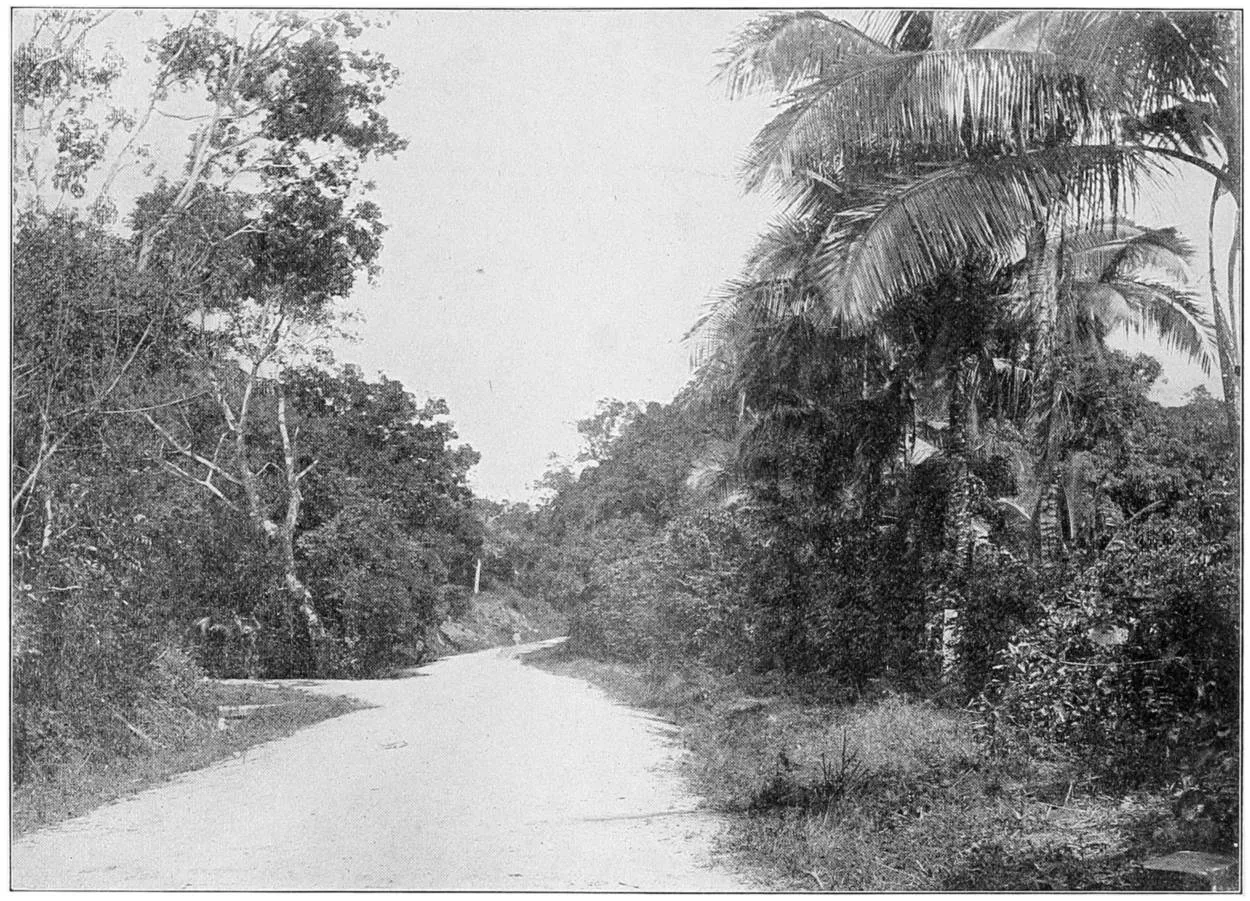
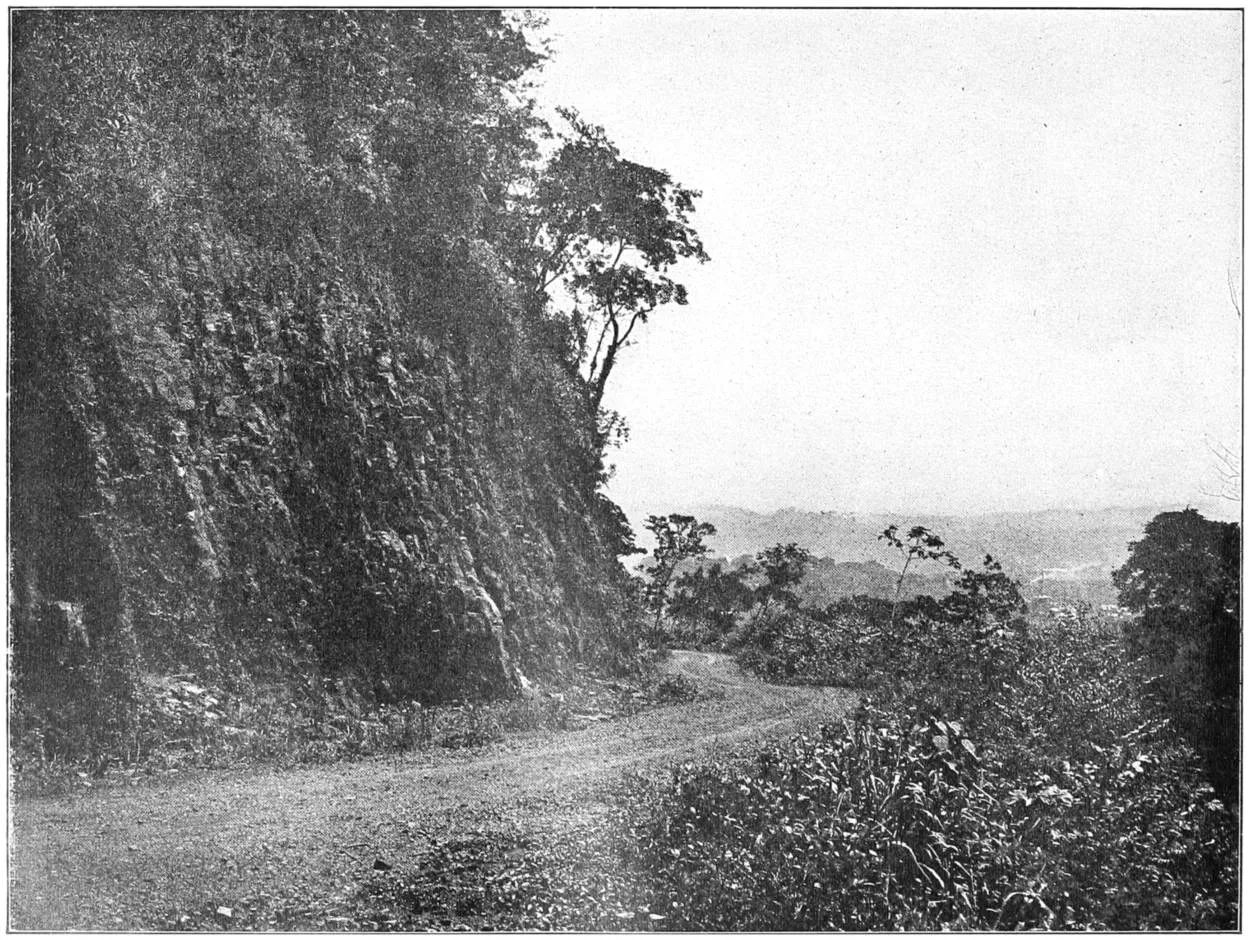
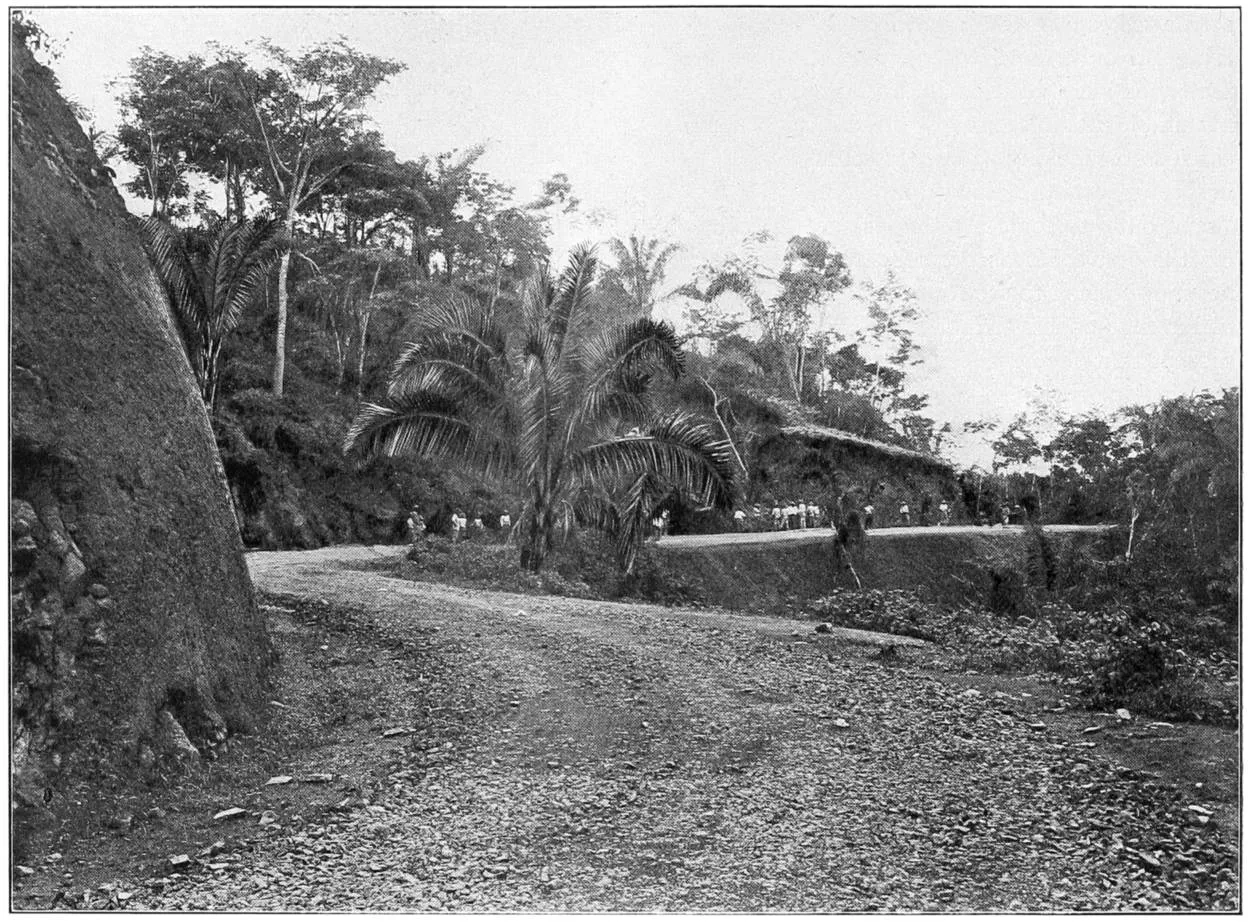
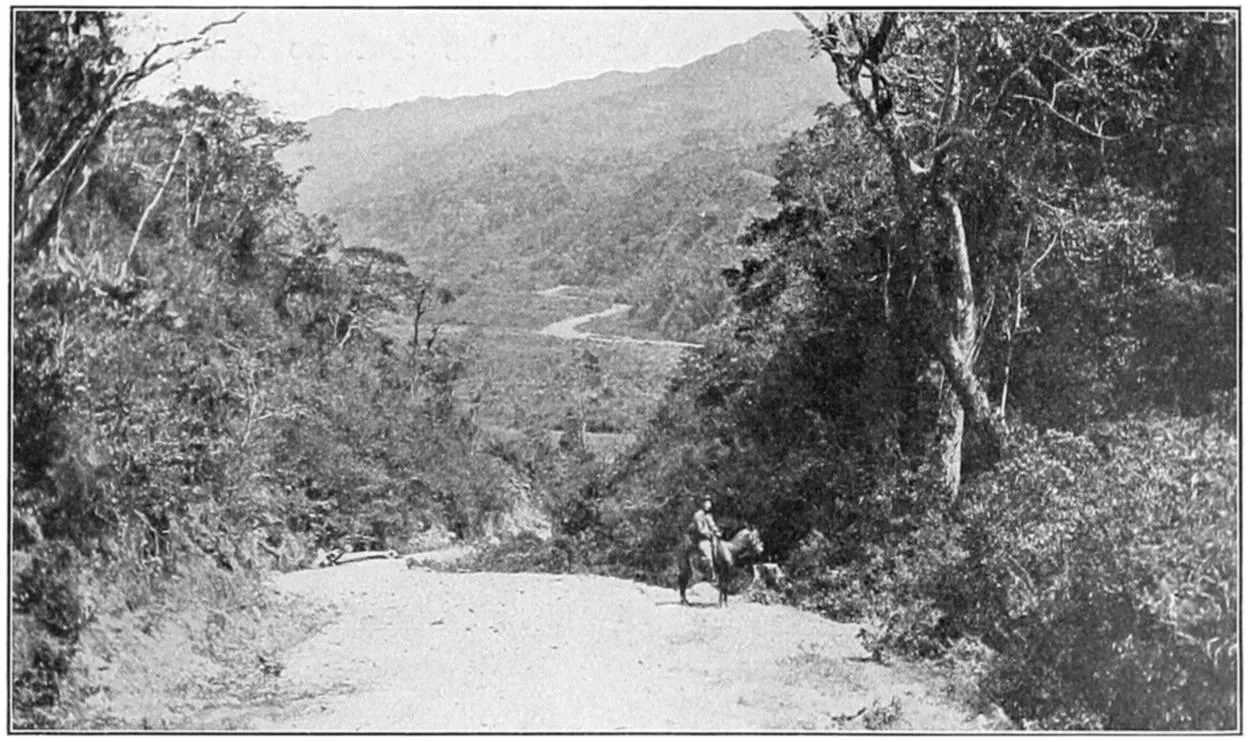
WHAT THEY STILL CALL A ROAD IN PANAMA
Balboa had fought the Indian tribes to their
knees, then placated them, freed them without
torture and made them his allies. Pedrarias applied
the methods of the slave trader to the native
population. Never was such misery heaped upon
an almost helpless foe, save when later his apt pupil
Pizarro invaded Peru.
The natives were murdered,
enslaved, robbed,
starved. As Bancroft
says, “in addition to
gold there were always
women for baptism, lust
and slavery.” The whole
Isthmus blazed with war,
and where Balboa had
conquered without losing
a man Pedrarias lost 70
in one campaign. One
of these raids was into
the territory now known
as the Canal Zone. On
one raid Balboa complained
to the King there
“was perpetrated the
greatest cruelty ever
heard of in Arabian or
Christian country in any
generation. And it is
this. The captain and
the surviving Christians,
while on this journey,
took nearly 100 Indians
of both sexes, mostly
women and children, fastened
them with chains
and afterwards ordered
them to be decapitated
and scalped.”
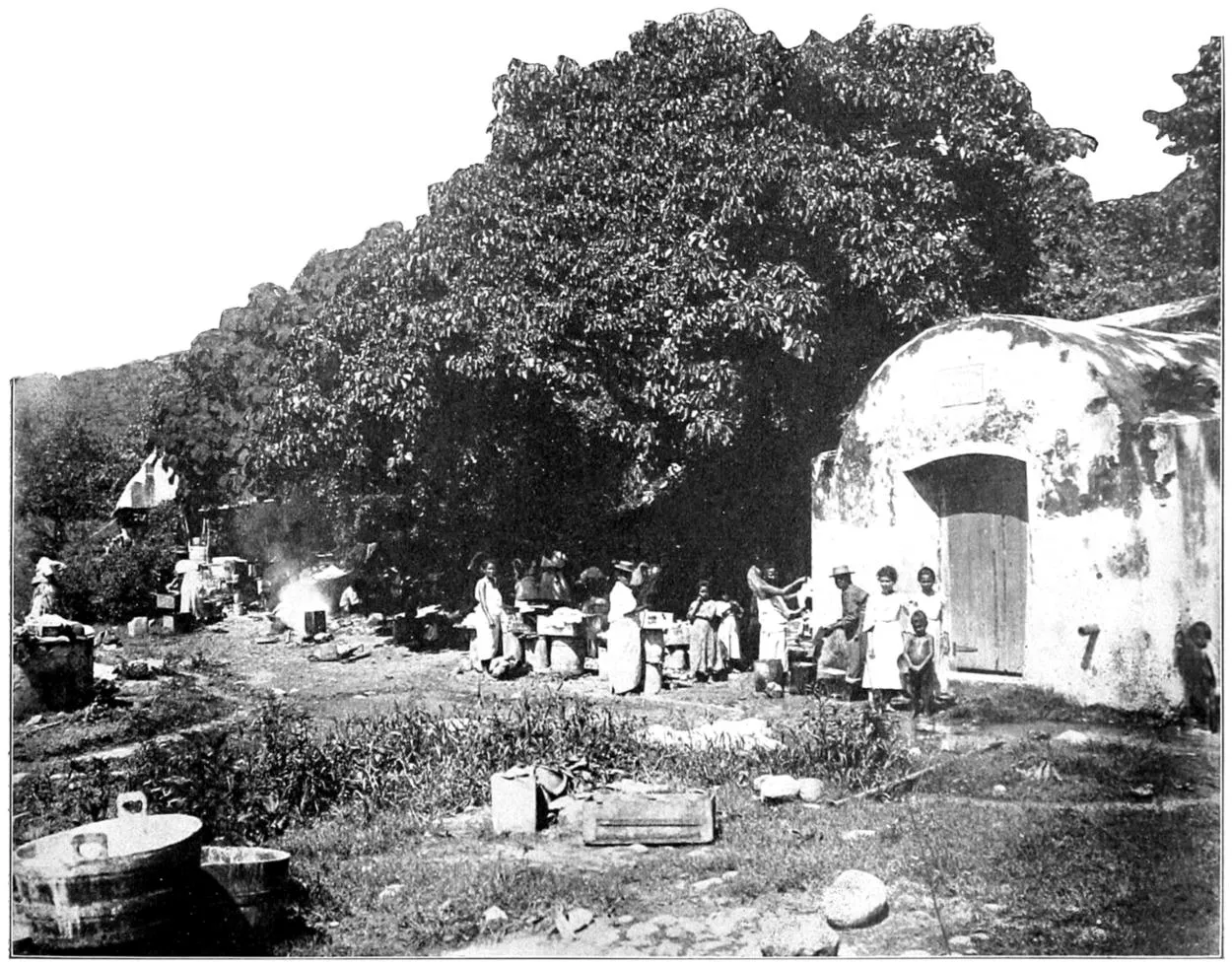
OUTDOOR LIFE OF THE NATIVES
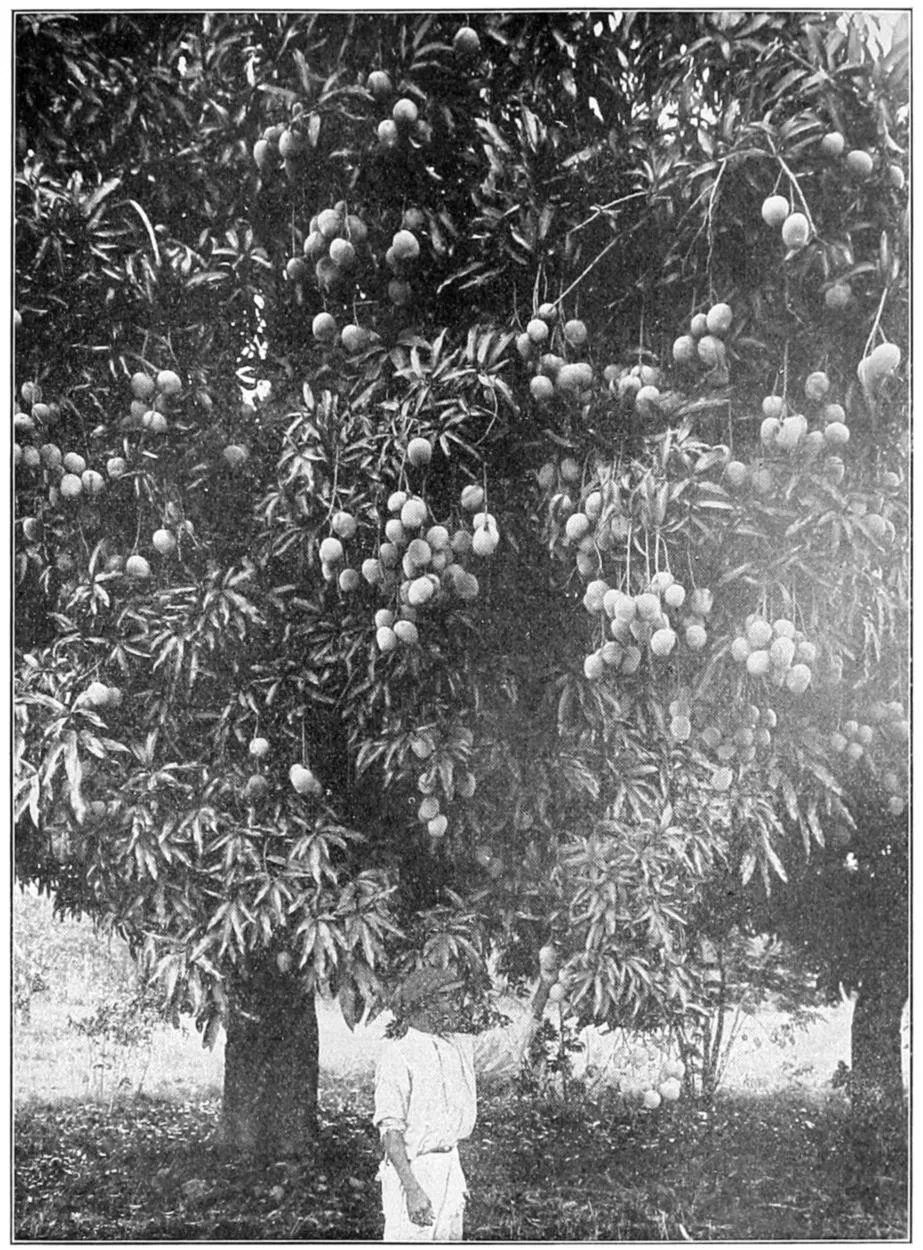
The tree is a mango so loaded with fruit that the boughs droop. The fruit is seldom liked by others than natives
Ill feeling rapidly increased
between Pedrarias and Balboa. The
former with the jealousy and timidity of an
old man continually suspected Balboa of plotting
against him. His suspicion was not allayed
when royal orders arrived from Spain creating Balboa
adelantado and governor of the newly discovered
Pacific coast. The title sounded well but he would
have to fight to establish his government over the
Indians and even then Pedrarias would be his
superior. But he determined to make the effort,
though with the whole Isthmus in war-paint because
of the cruelties of Pedrarias he would have to fight
every inch of his way. Moreover he tried to carry
across the isthmus the hulls of four brigantines,
constructed on the Atlantic coast and designed to be
put together on the Pacific. Just why he attempted
this exploit is perplexing, for there were as good timber
and better harbors for shipyards on the Pacific side.
Nearly 2000 Indian lives were sacrificed in the
heart-rending task of carrying these heavy burdens
through the jungle, and when the task was ended
it was found that the timbers of two of the ships were
useless, having been honeycombed by worms. Two
however were seaworthy and with them he put
forth into the Pacific, but a great
school of whales encountered near the
Pearl Islands, where even today they
are frequently seen, affrighted his men
who made him turn back.
In his party was a man who
had fallen in love with Balboa’s
beautiful mistress, the
daughter of the
Indian cacique Careta. She had been annoyed by
his advances and complained to Vasco Nunez, who
warned the man to desist, accompanying the warning
with remarks natural to the situation. This man
overheard a conversation, really concerning some
pitch and iron for the ships but which might be distorted
to convey the impression that Balboa was
plotting the overthrow of Pedrarias. By an unlucky
chance the eavesdropper was chosen as
one of a party to carry dispatches to Pedrarias,
and had no sooner reached the presence of that
bloodthirsty old conquistadore than he denounced
Balboa as a traitor. Moreover he roused the
old man’s vanity by telling him that Balboa was
so infatuated with his mistress that he would
never marry the governor’s daughter—a marriage
which had been arranged and announced as an
affair of state.
In a rage Pedrarias determined to put an end to
Balboa. Accordingly he wrote a pleasant letter,
beseeching him to come to Santa Maria for a conference.
That Balboa came willingly is evidence
enough that he had no guilty knowledge of any plot.
Before he reached his destination however he was
met by Pizarro with an armed guard who arrested
him. No word of his could change the prearranged
program. He was tried but even the servile court
which convicted him recommended mercy, which
the malignant Pedrarias refused. Straightway,
upon the verdict the great explorer, with four of his
men condemned with him, was marched to the
scaffold in the Plaza, where stood the block. In a
neighboring hut, pulling apart the wattled canes of
which it was built that he might peer out while
himself unseen Pedrarias gloated at the sight of the
blood of the man whom he hated with the insane
hatred of a base and malignant soul. There the
heads of the four were stricken off, and with the
stroke died Vasco Nunez de Balboa, the man whose
name more than any other man’s deserves to be
linked with that of Columbus in the history of the
Isthmus of Panama. It was in 1517, and Balboa
was but forty-two years old.
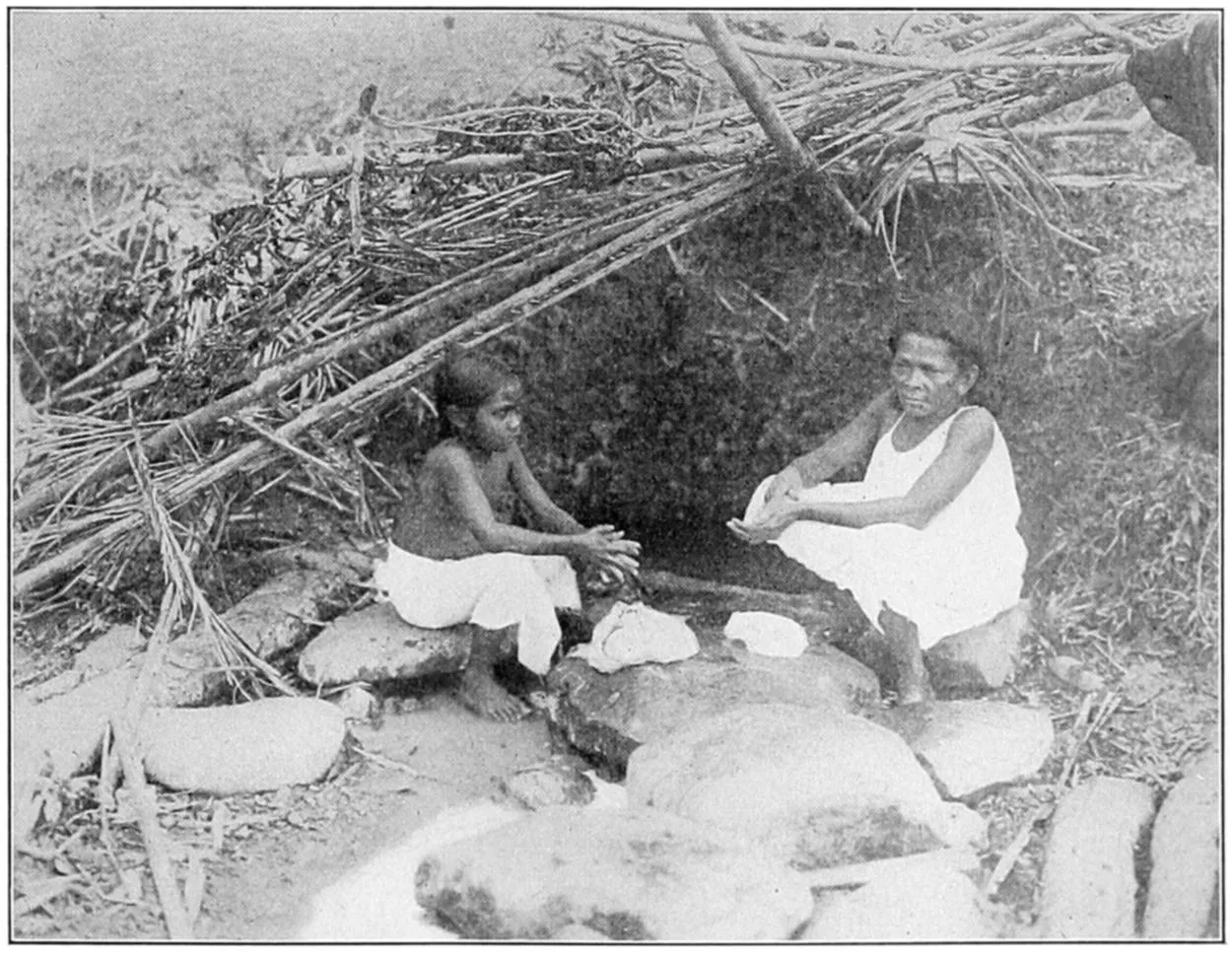
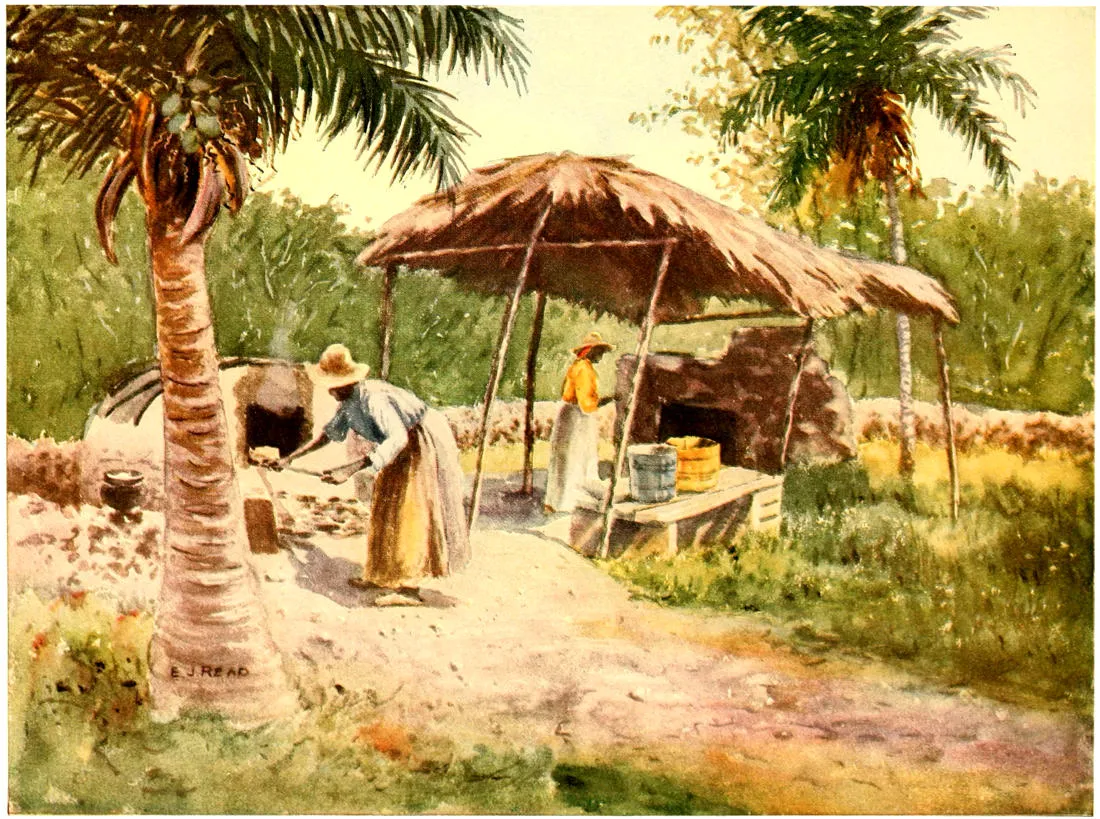
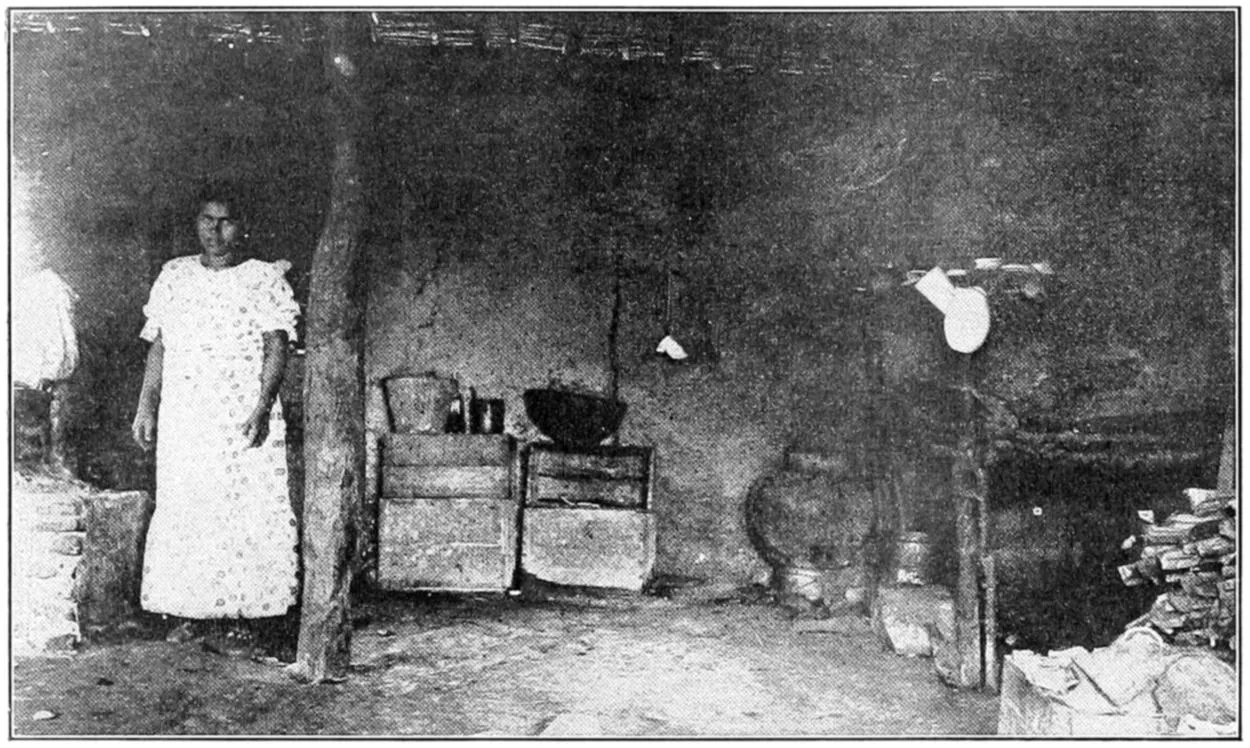
NATIVE HUT AND OPEN-AIR KITCHEN
Had the bungling and cruel Pedrarias never been
sent to the Isthmus that part of the country known
as the Darien might by now be as civilized as the
Chiriqui province. As it was, the thriving settlements
of Acla and Antigua languished and disappeared,
and the legacy of hatred left by the Indians
of that day is so persistent that the white man has
never been able to establish himself on the eastern
end of the Isthmus.
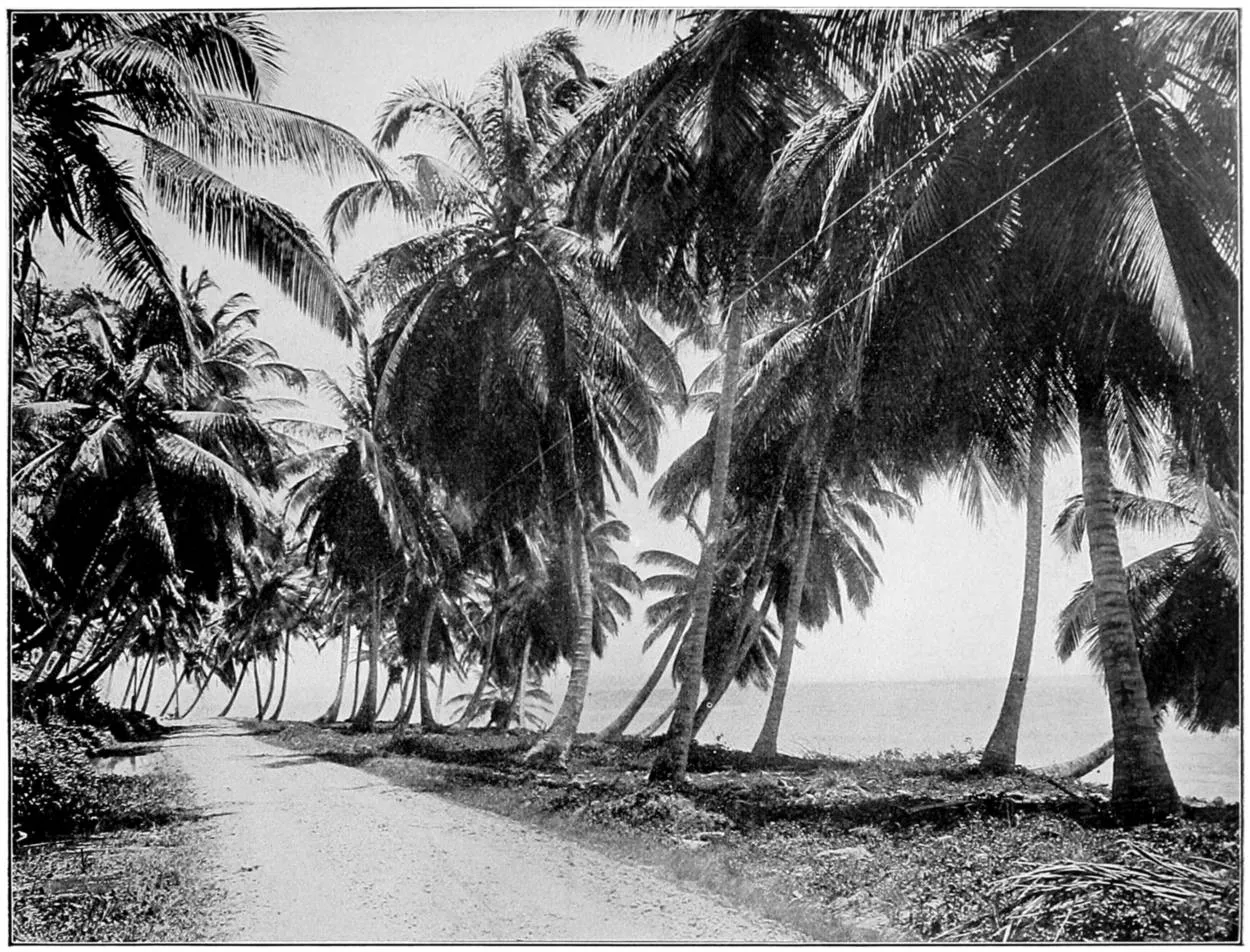
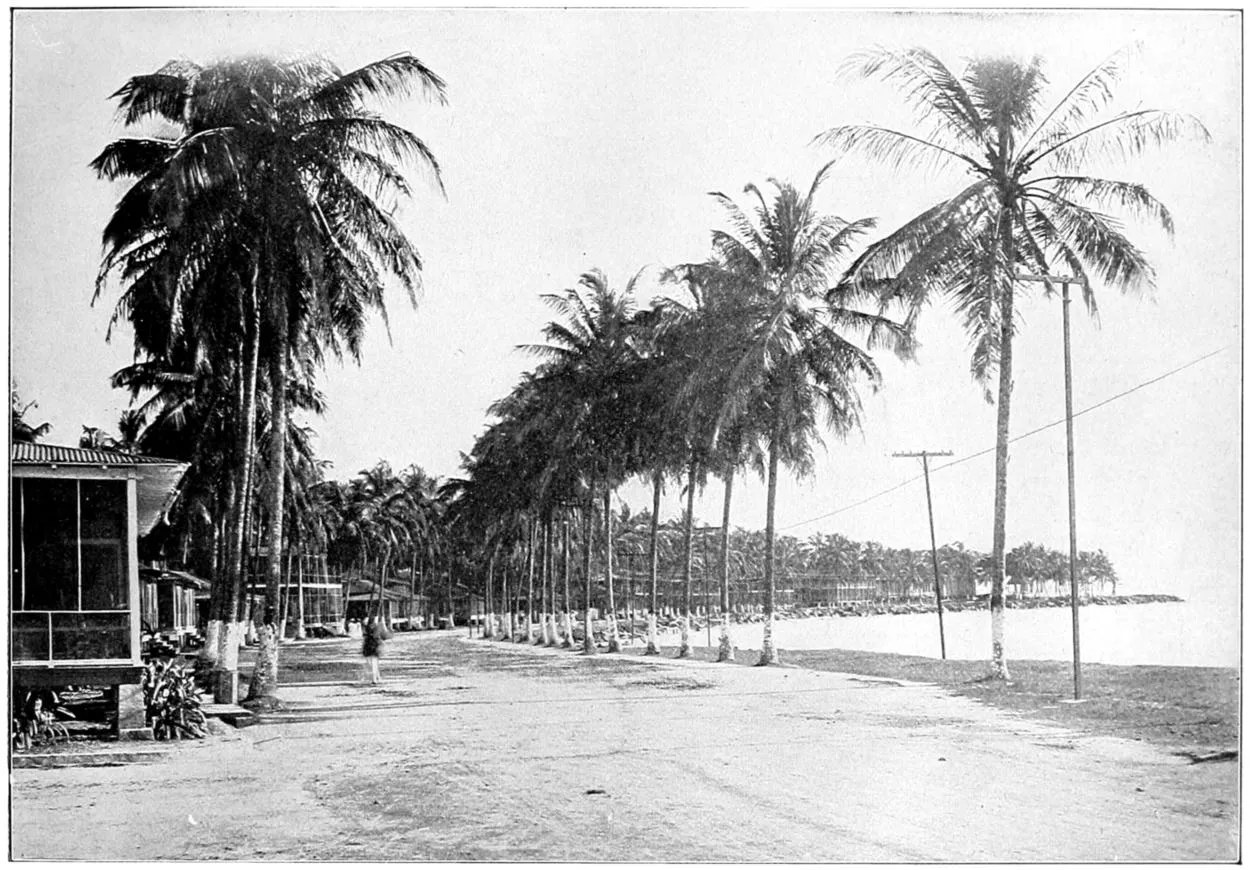
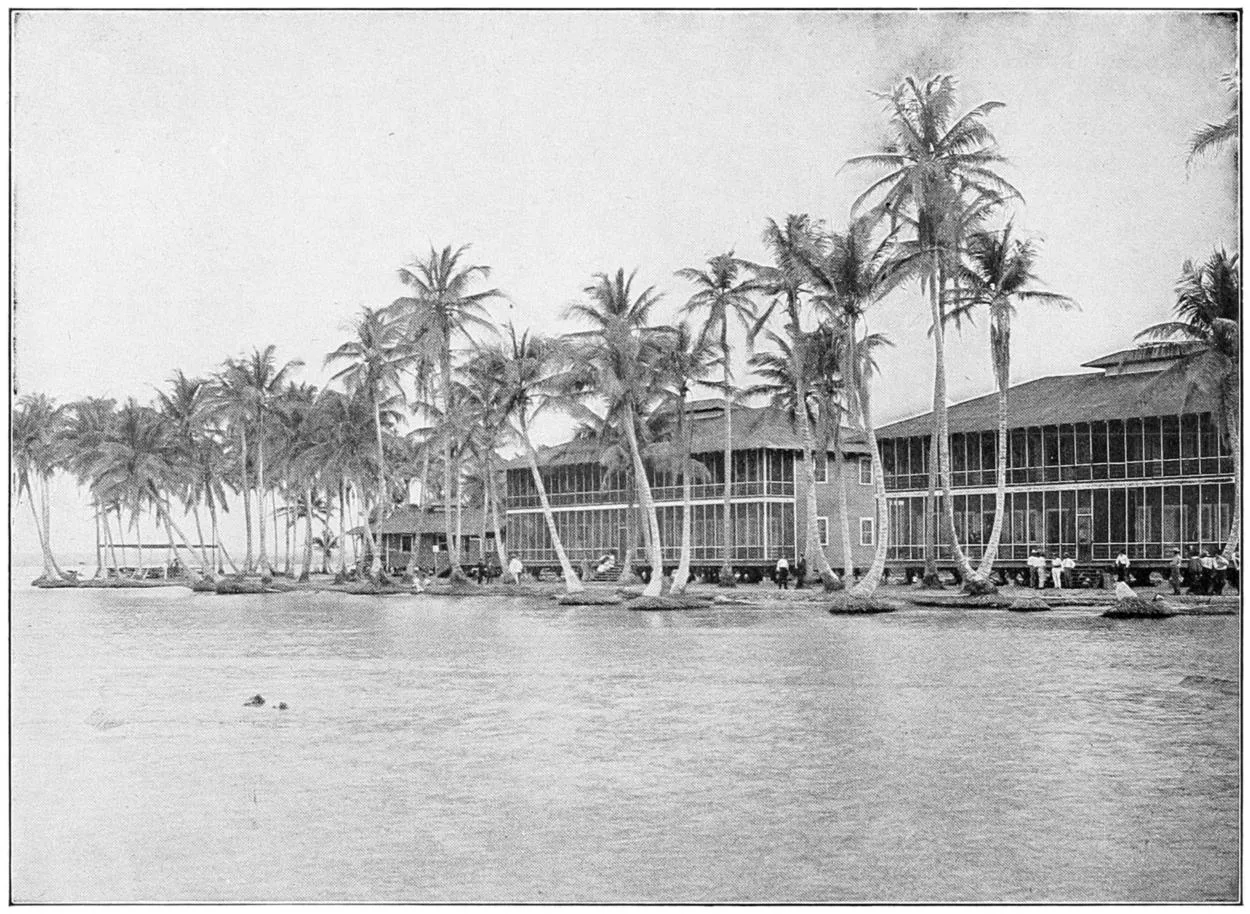
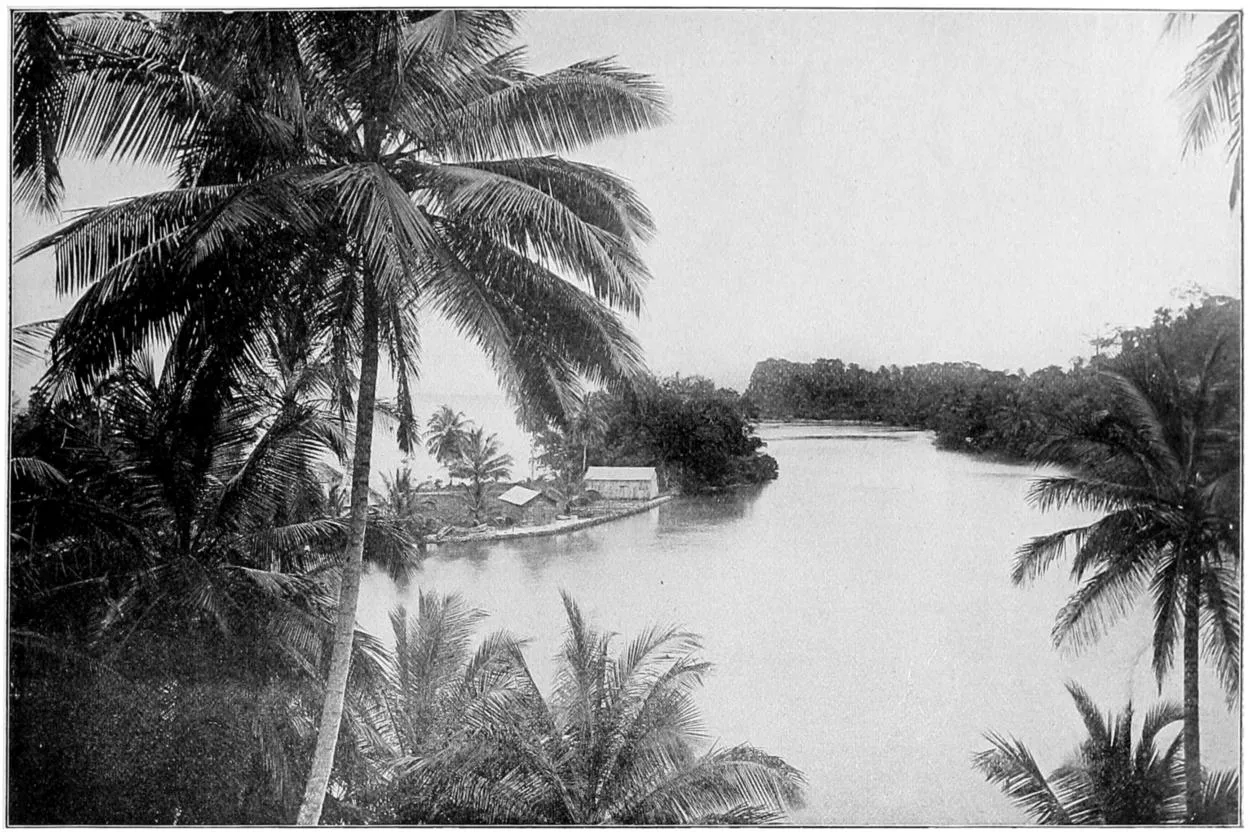
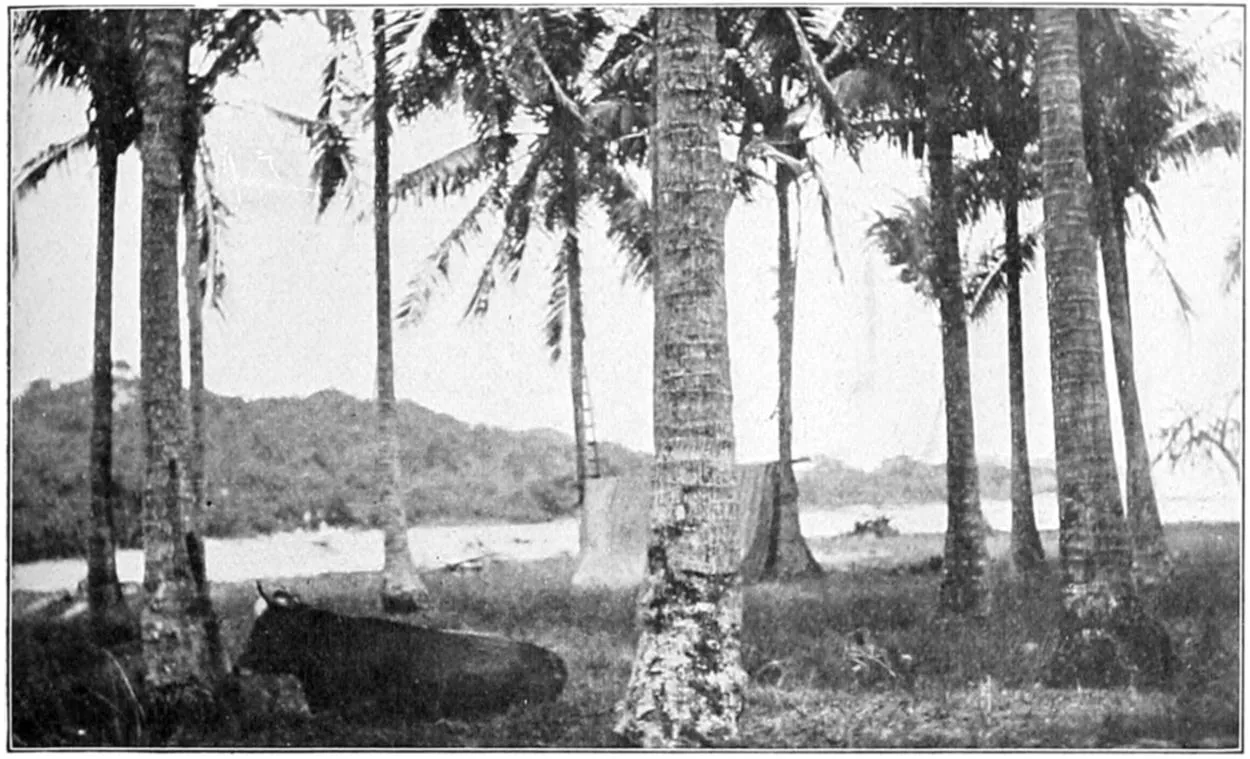
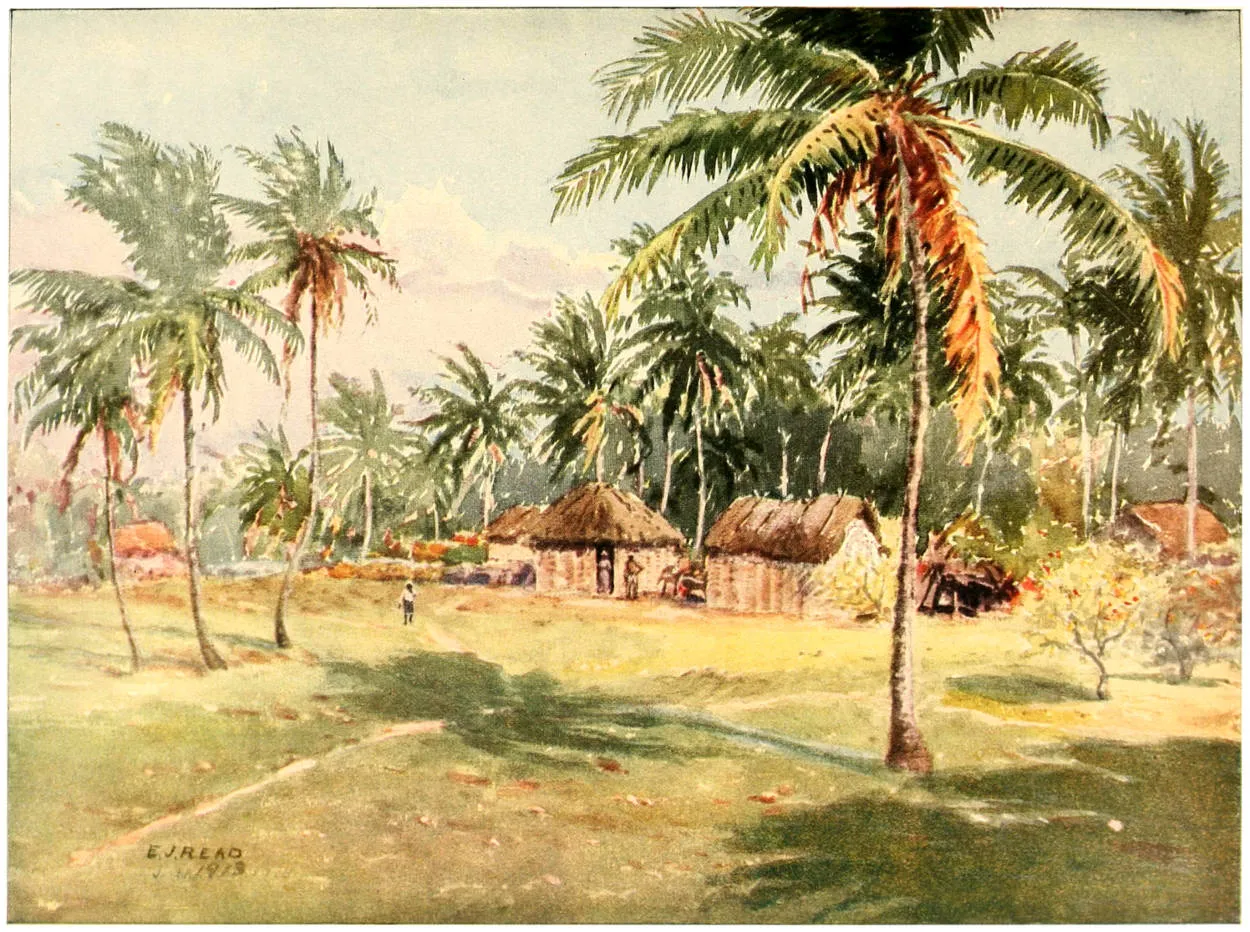
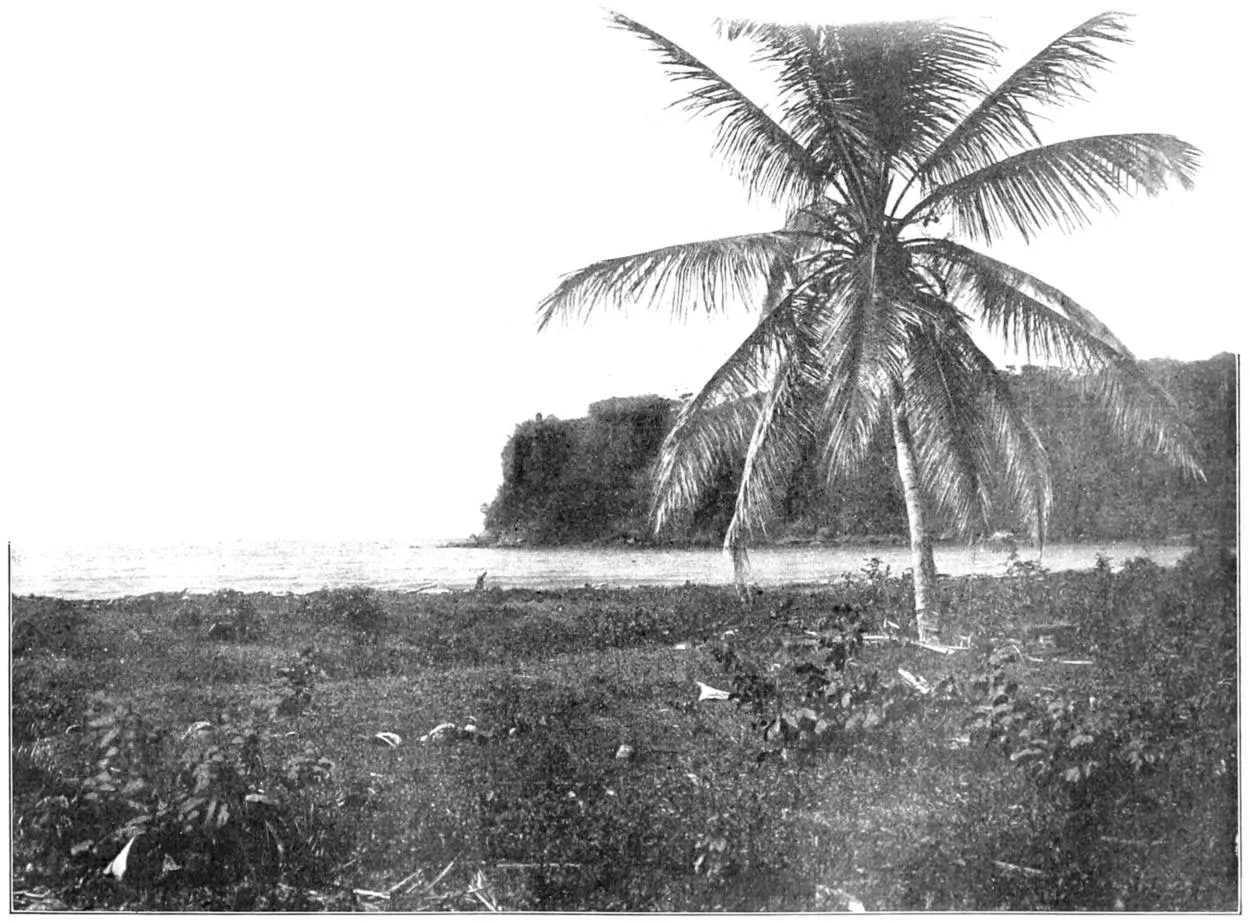
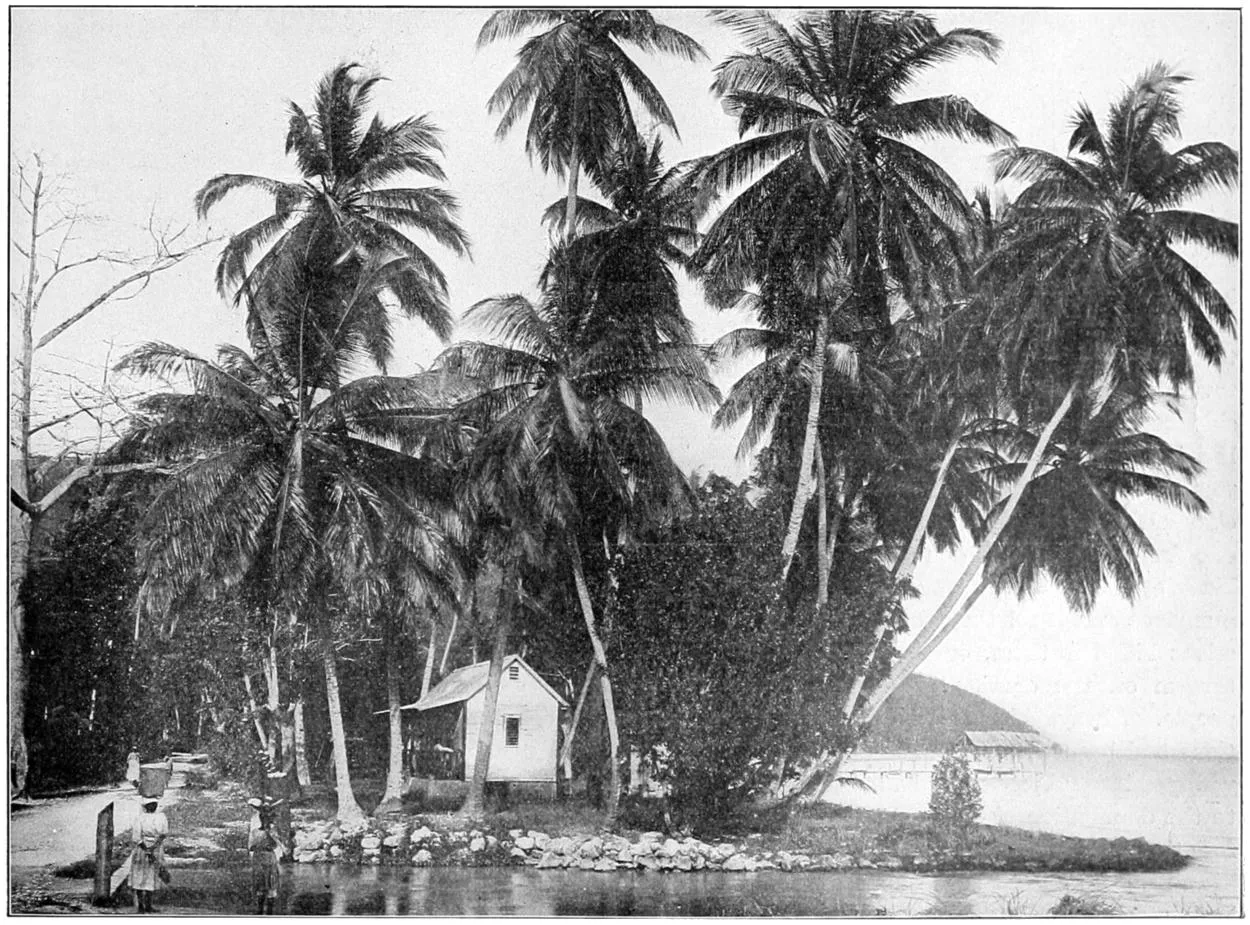
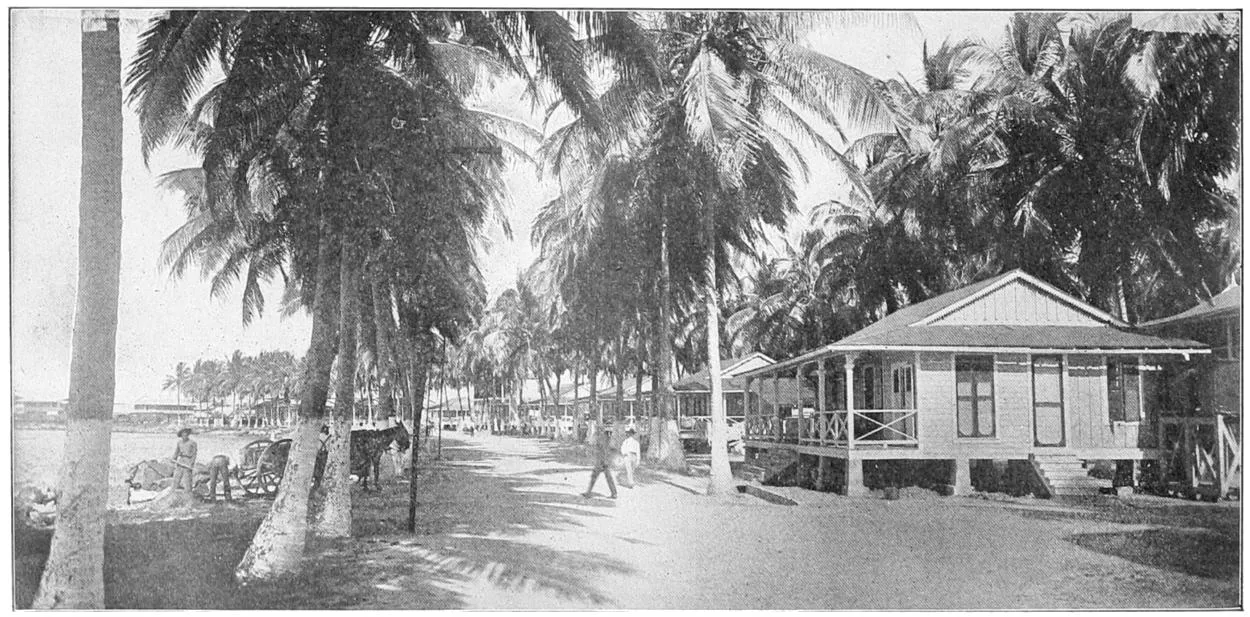
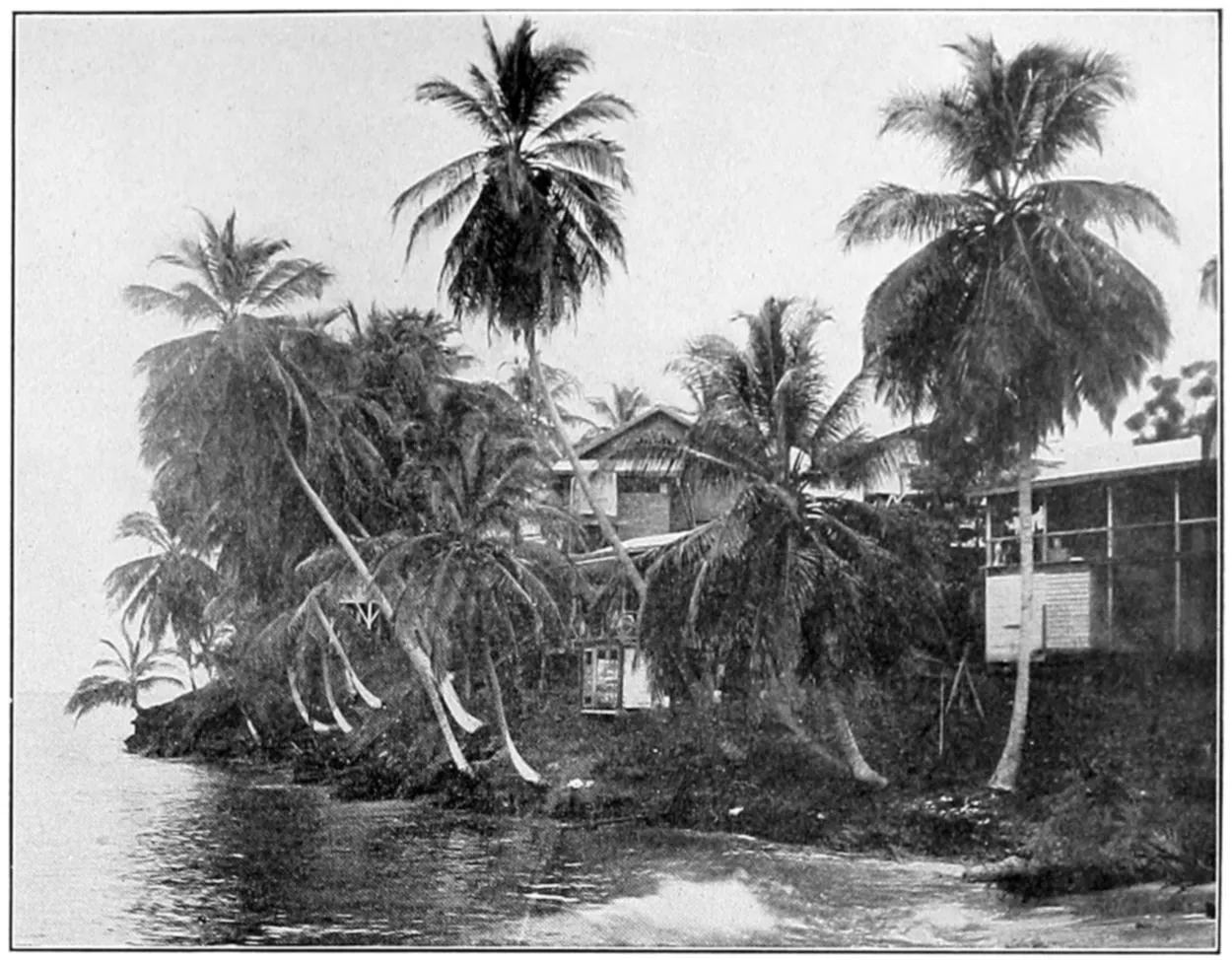
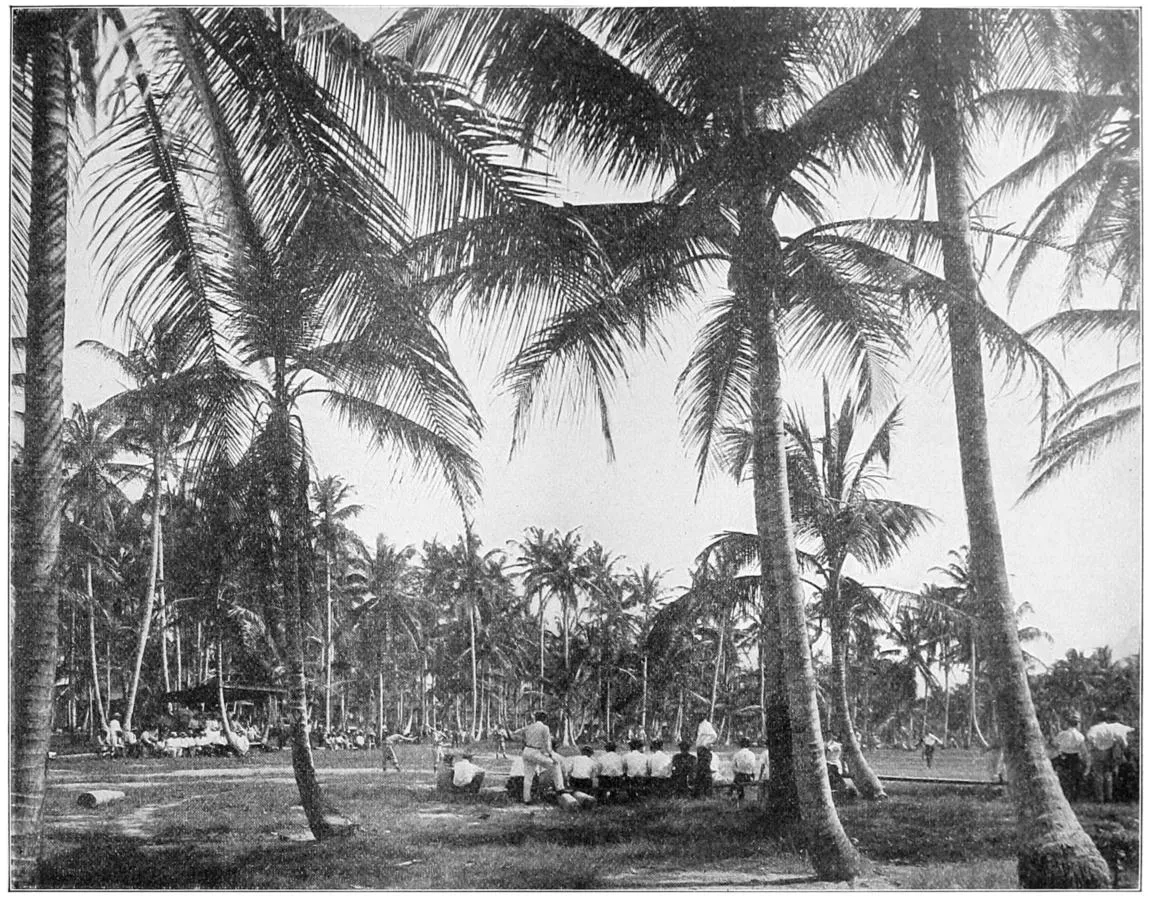
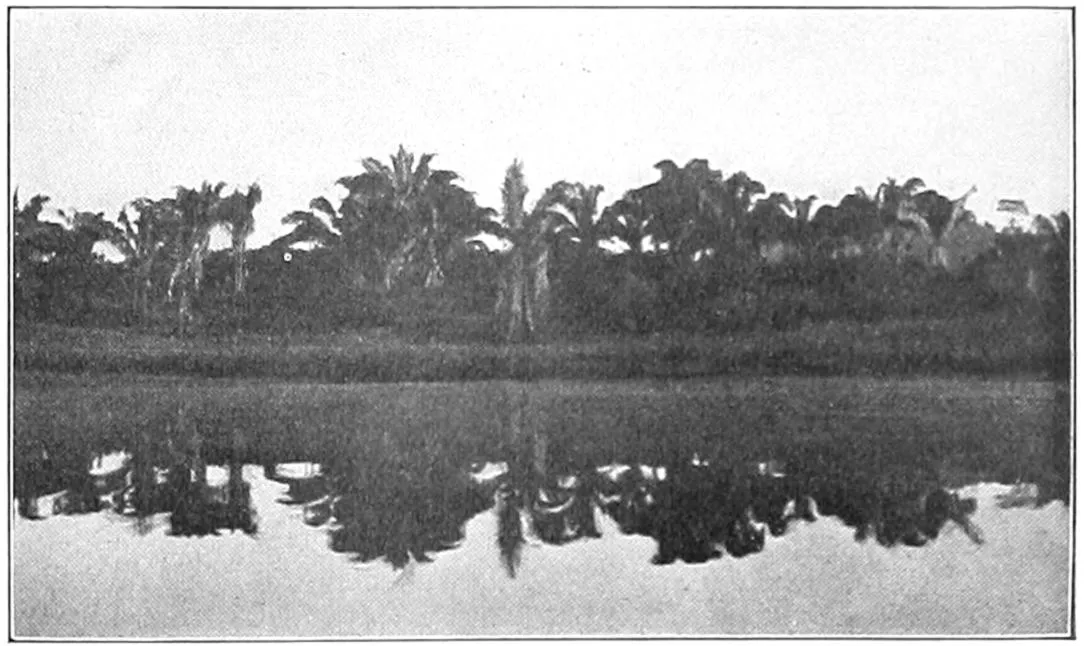
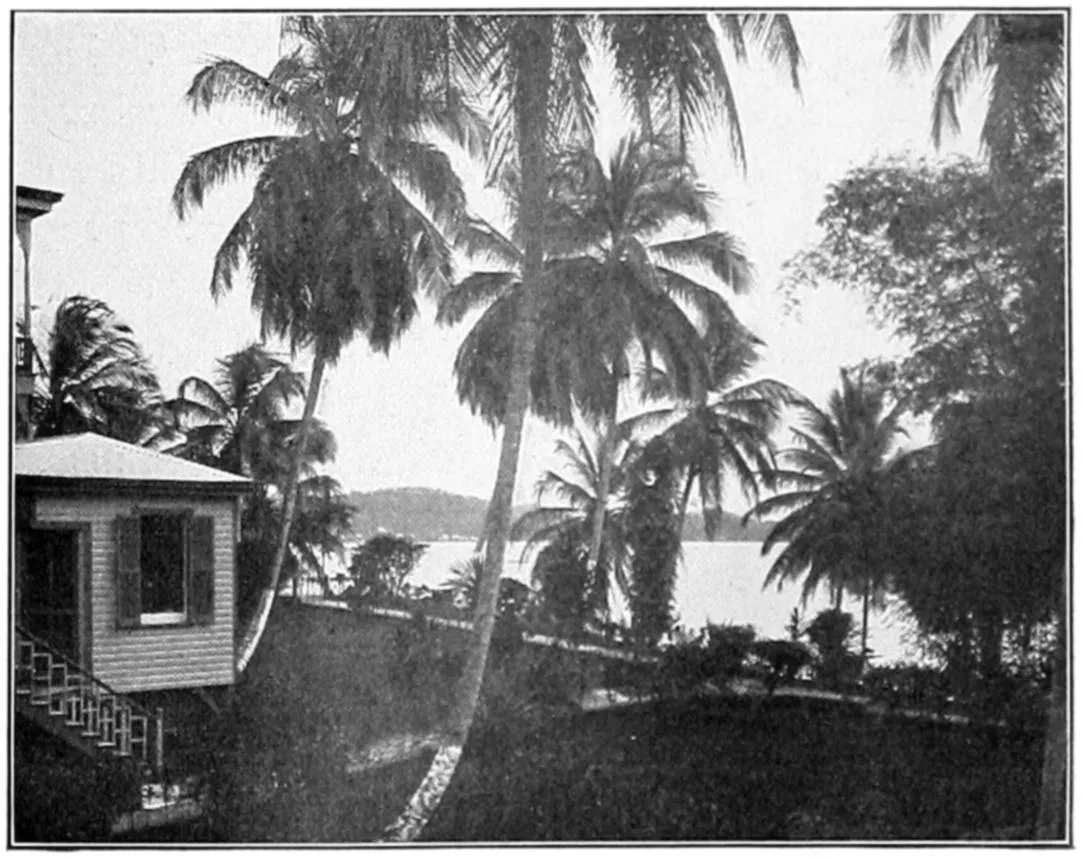
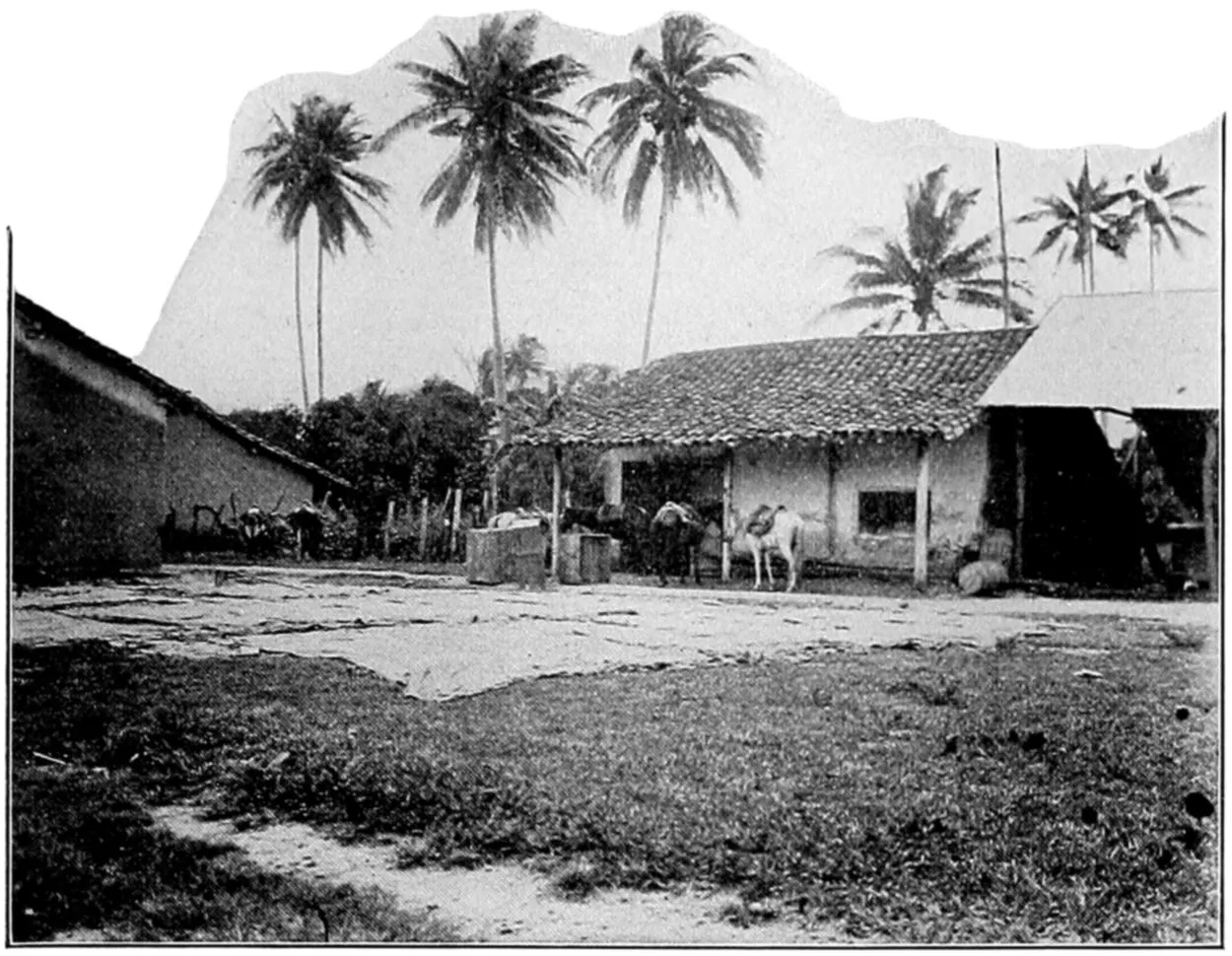
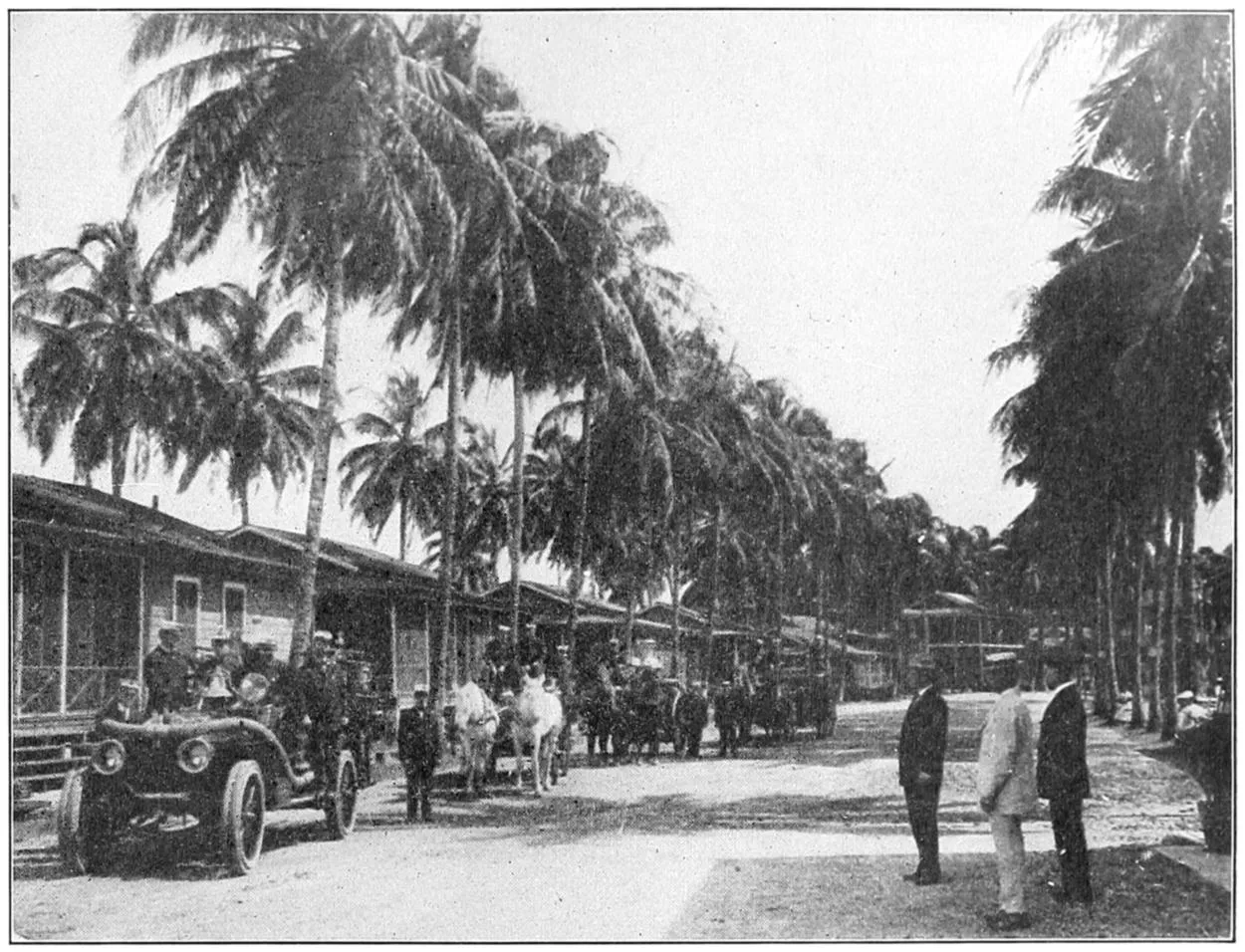
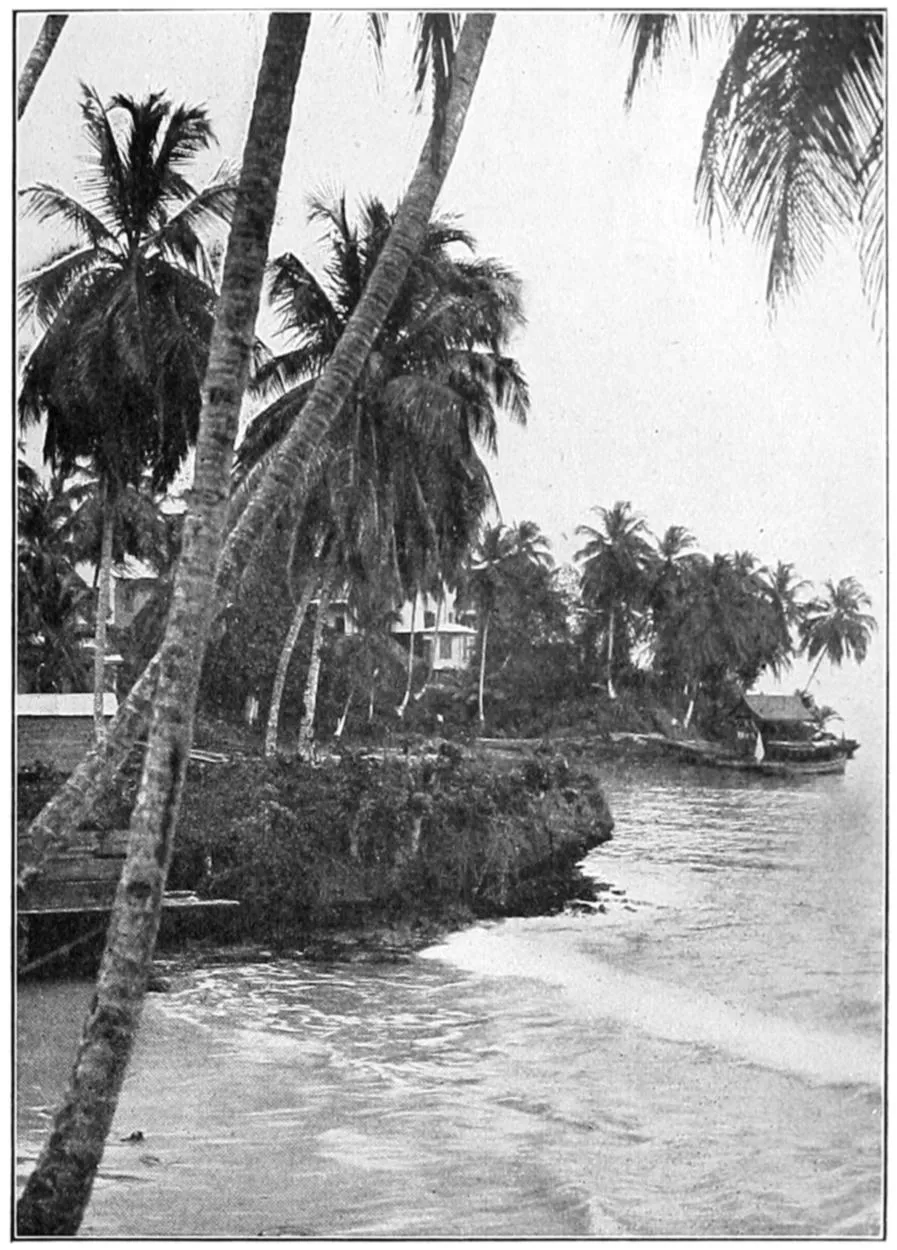
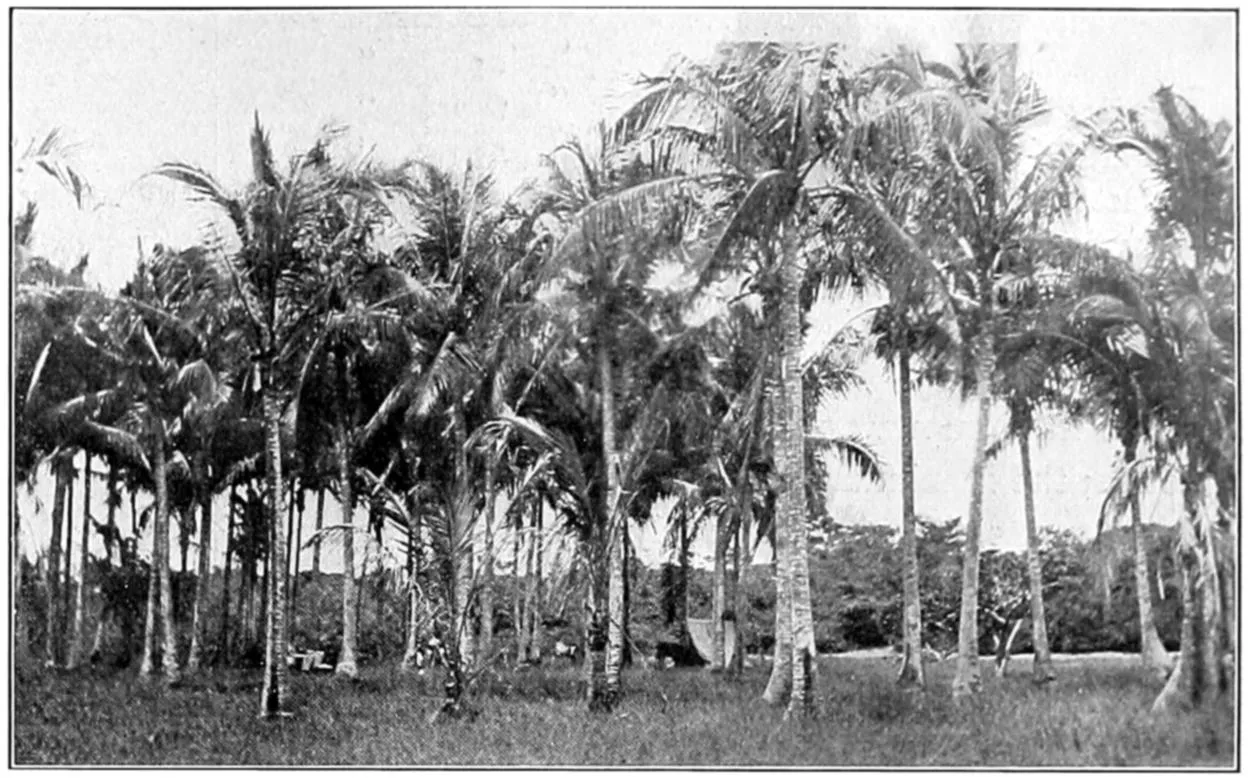
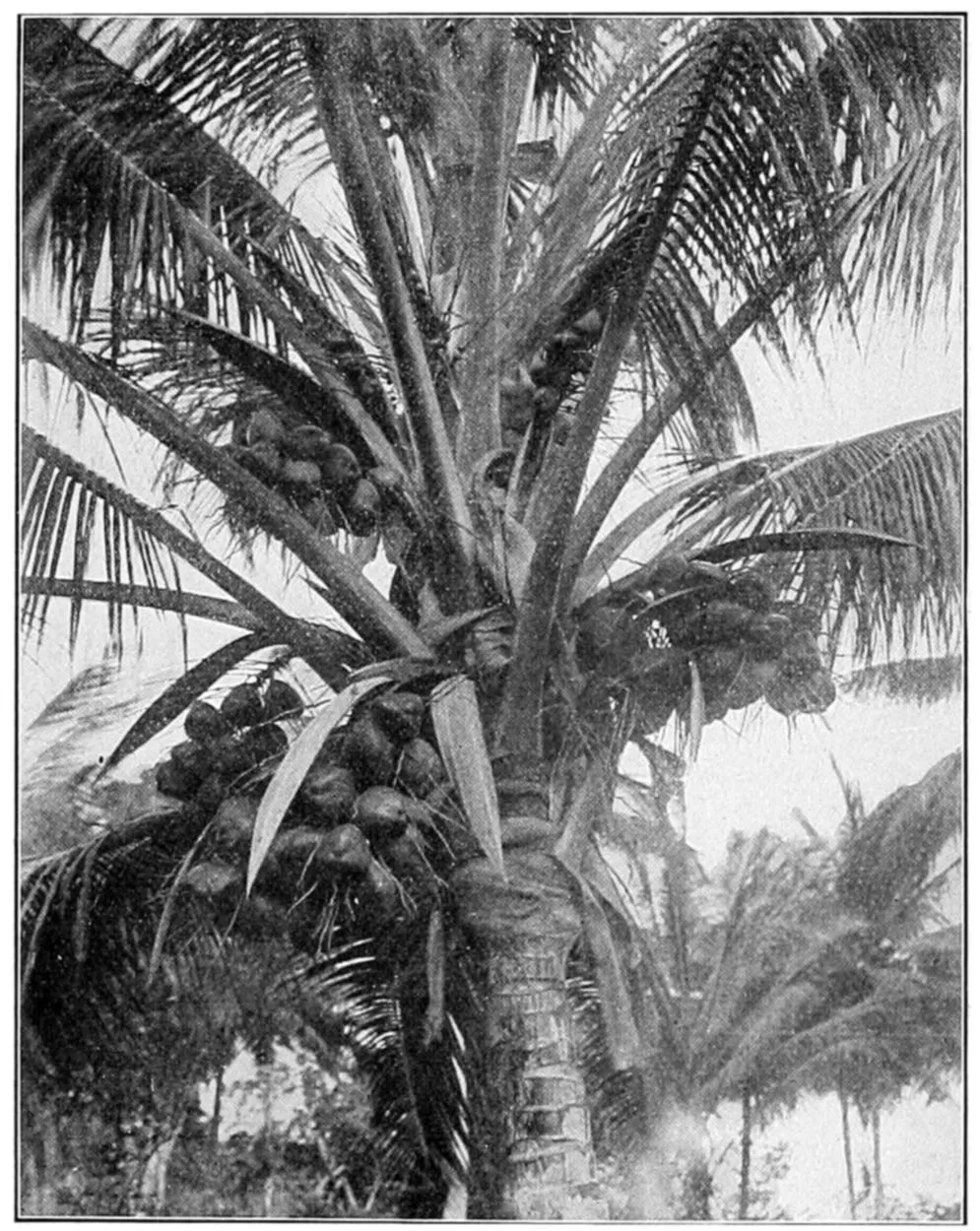
COCOANUT GROVE ON THE CARIBBEAN COAST
Fate has dealt harshly with the memory of Balboa.
Keats, in his best known and most quoted sonnet,
gives credit for his discovery to Cortez. Local
tradition has bestowed his name on a hill he never
saw, and Panamanian financial legislation has given
his name to a coin which is never coined—existing as
a fictitious unit like our mill. He did not himself
realize the vastness of his discovery, and gave the
misleading name of the South Sea to what was the
Pacific Ocean. But time is making its amends.
History will accord with the verdict of John Fiske
who said of him:
“Thus perished in the forty-second year of his
age the man who, but for that trifle of iron and
pitch, would probably have been the conqueror of
Peru. It was a pity that such work should not
have fallen into his
hands, for when at
length it was done, it
was by men far inferior
to him in character and
caliber. One cannot
but wish that he
might have gone on
his way like Cortez,
and worked out the
rest of his contemplated
career in accordance
with the
genius that was in
him. That bright
attractive figure and
its sad fate can never
fail to arrest the attention
and detain the
steps of the historian
as he passes by. Quite
possibly the romantic
character of the story
may have thrown
something of a glamour about
the person of the victim,
so that unconsciously we tend
to emphasize his merits while
we touch lightly upon his
faults. But after all, this
effect is no more than that
which his personality wrought
upon the minds of contemporary
witnesses, who were
unanimous in their expressions
of esteem for Balboa, and of
condemnation for the manner
of his taking off.”
Ramsay, Photo
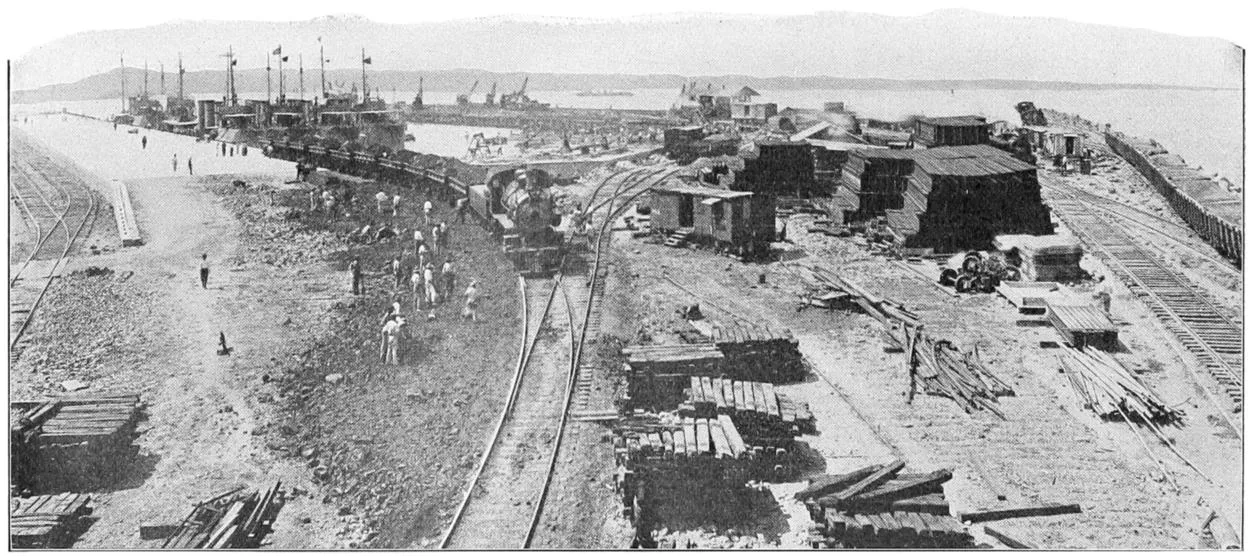
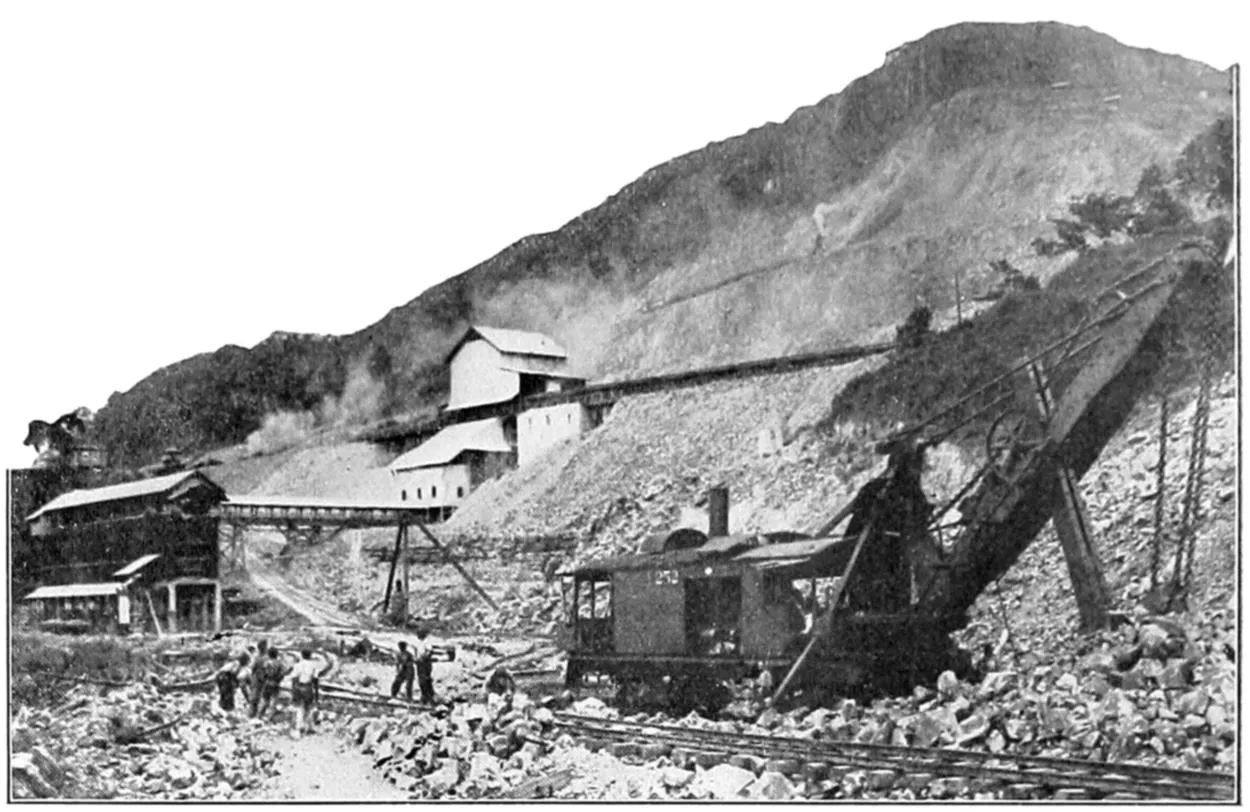
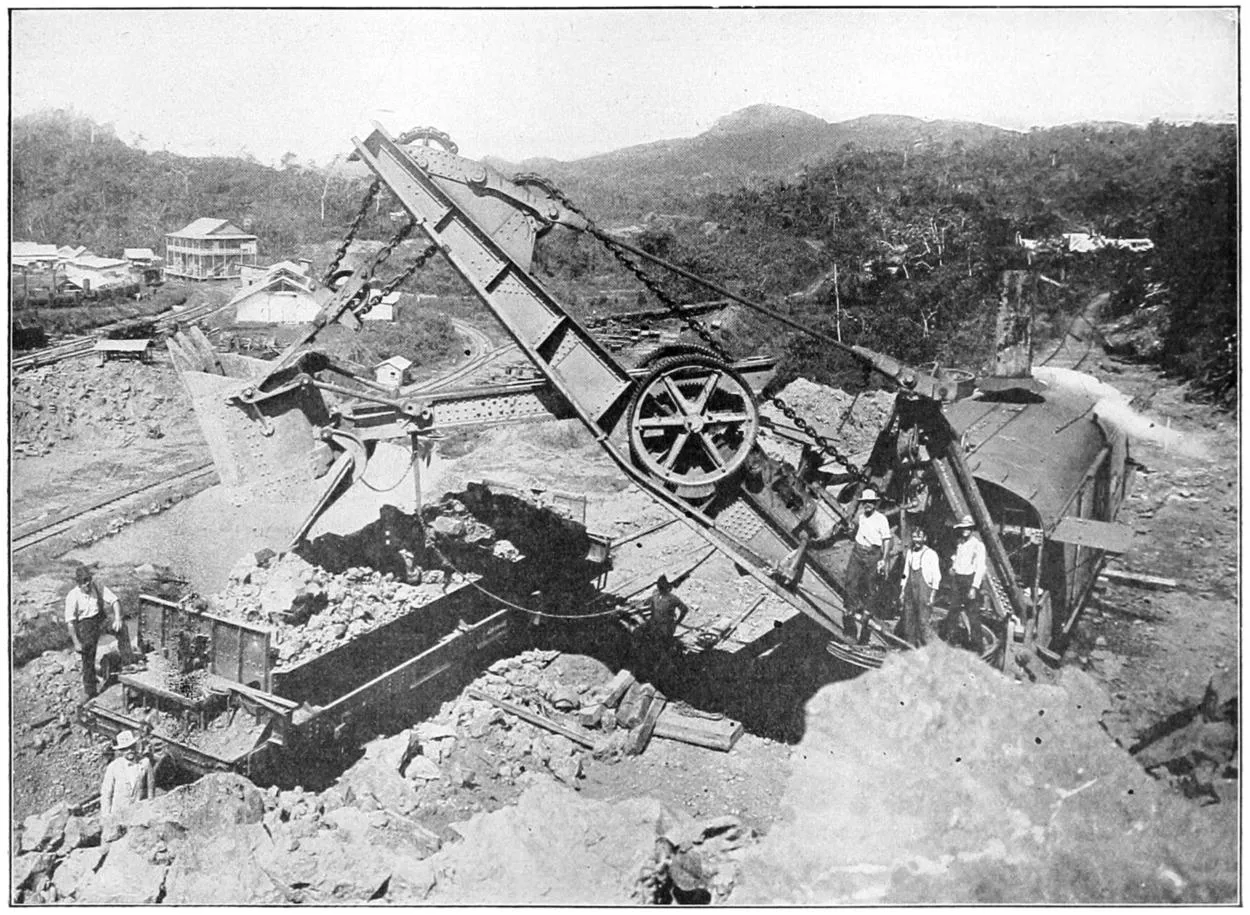
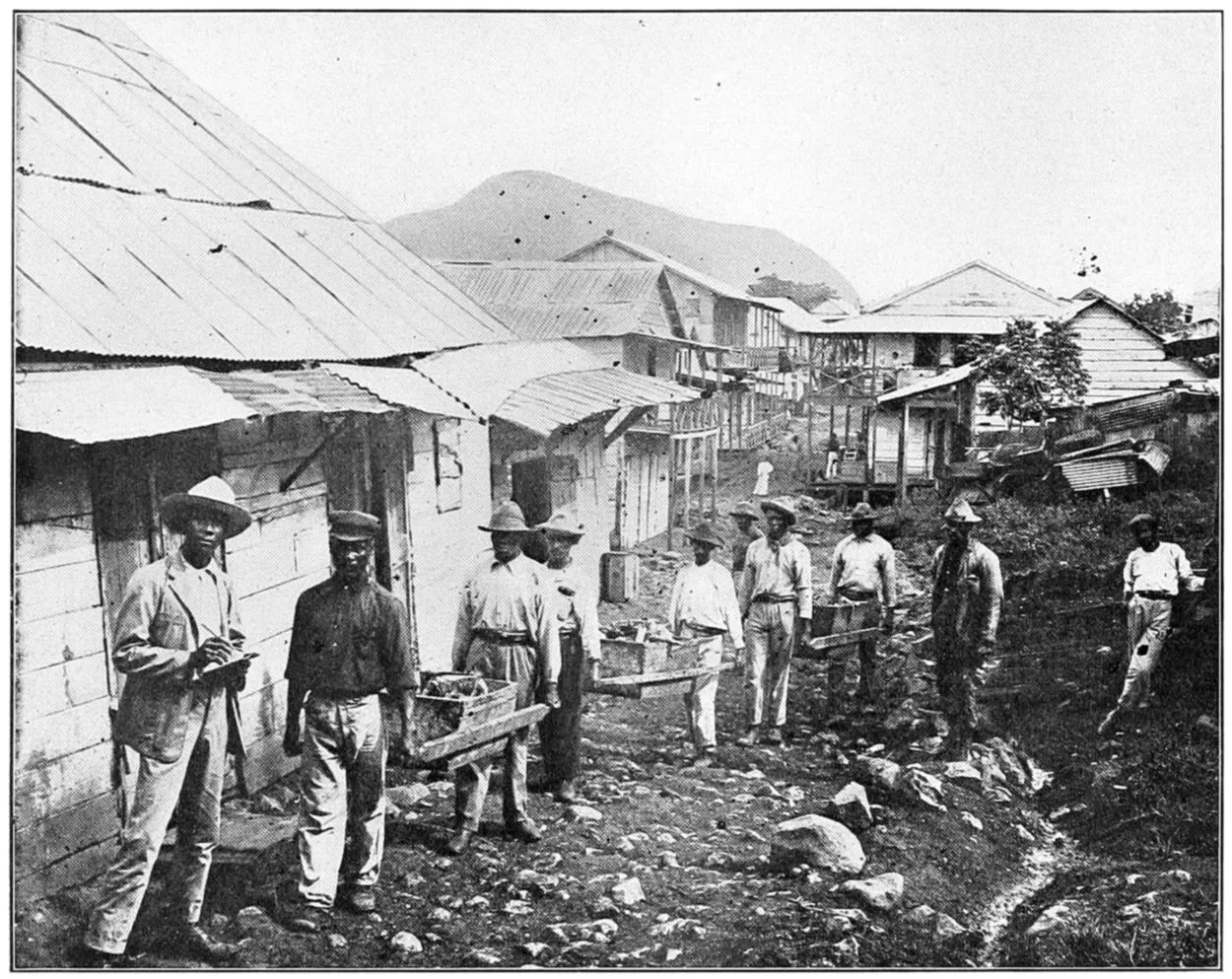
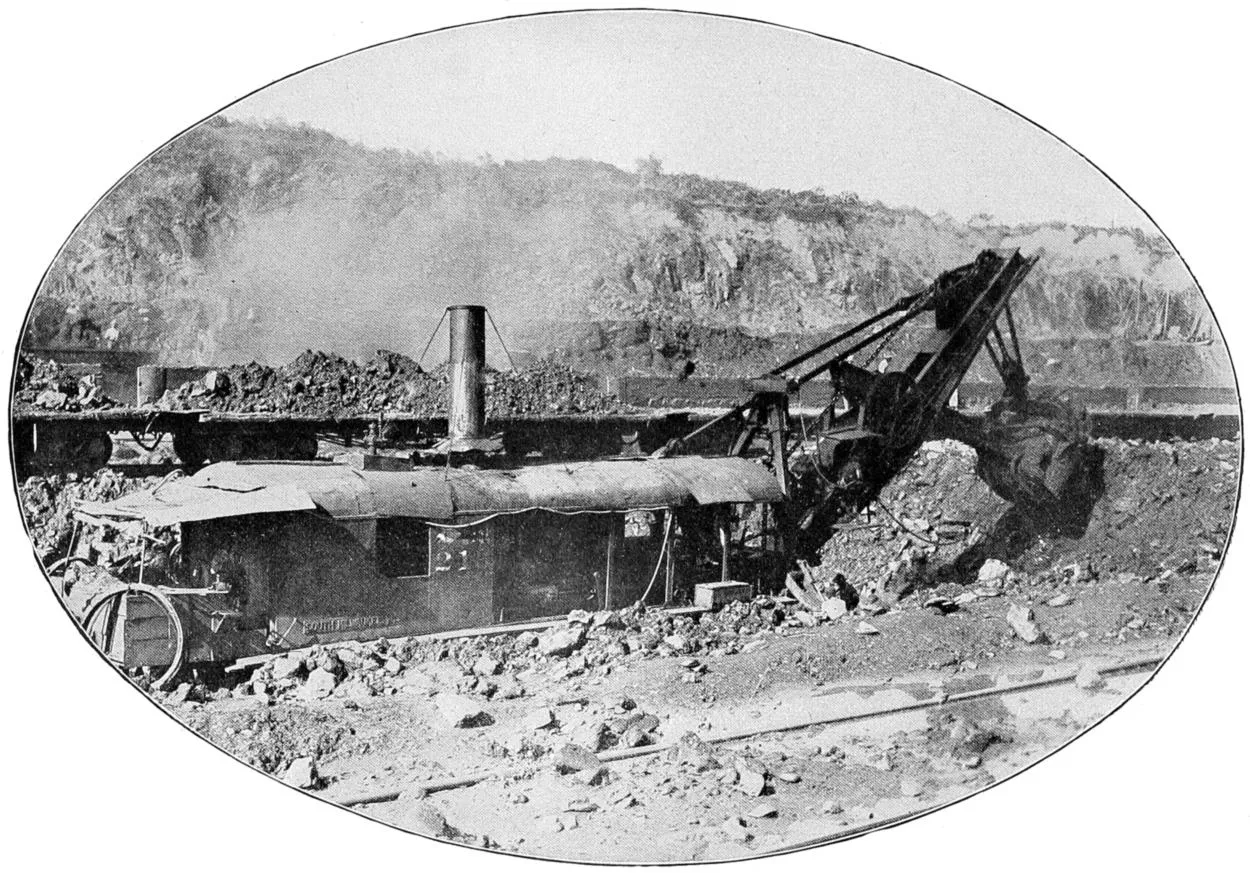
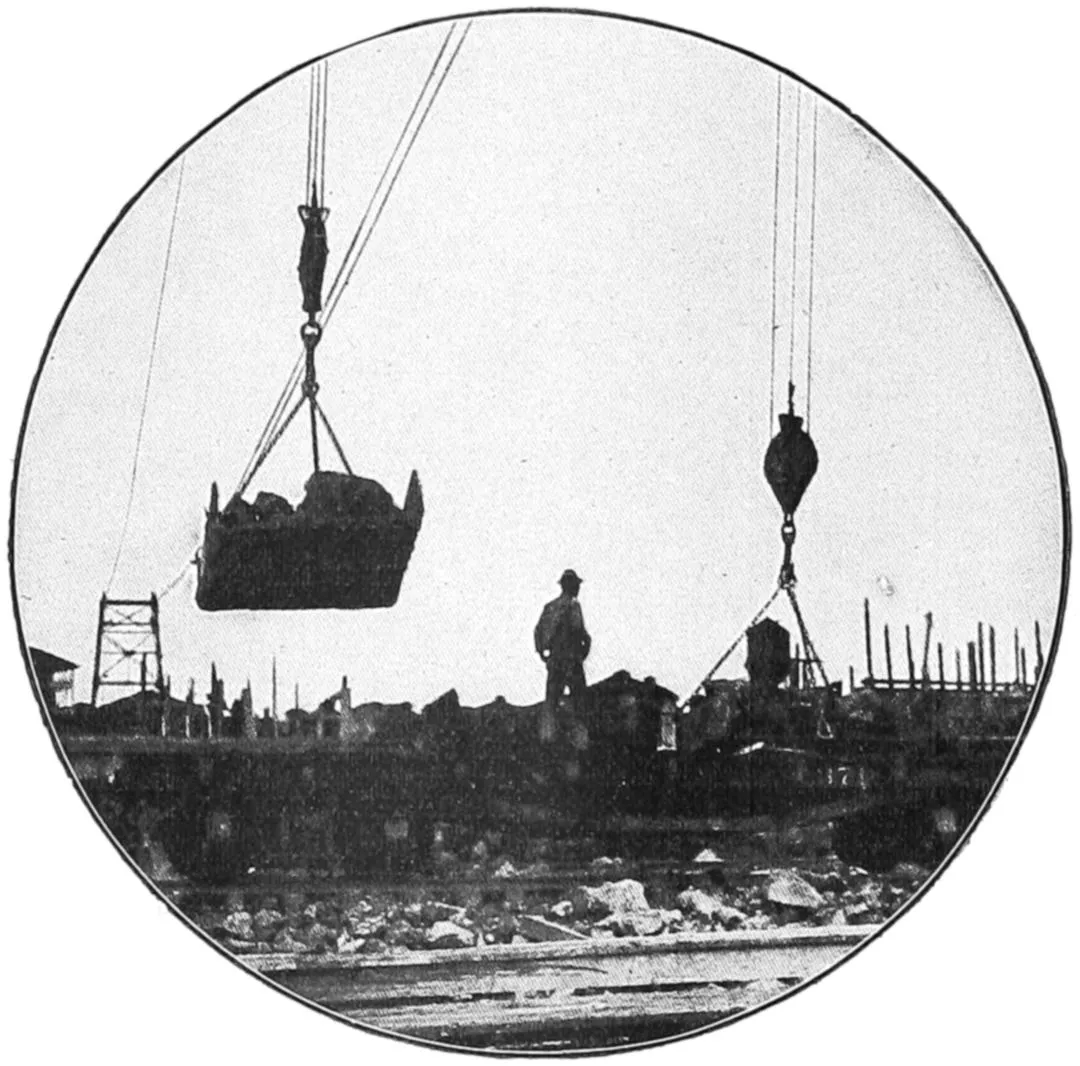
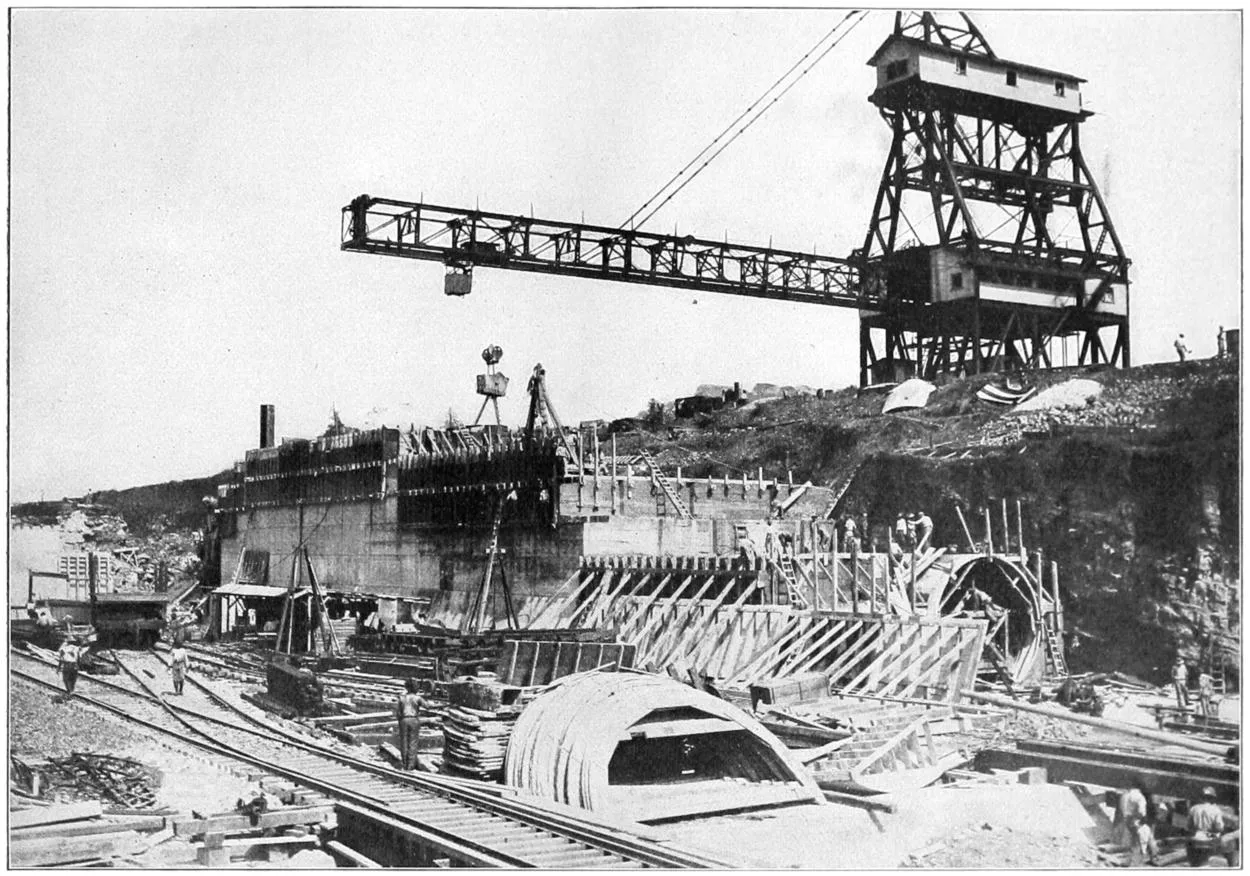
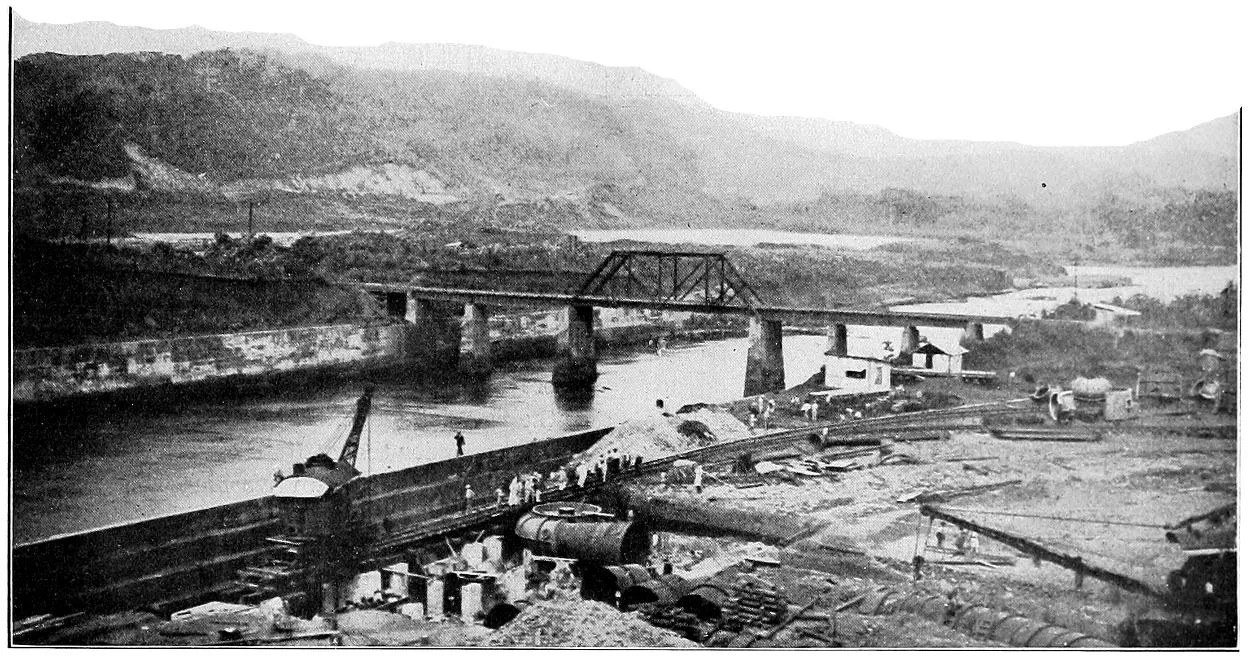
CANAL COMMISSION STONE CRUSHER, PORTO BELLO
And finally the United States
government has acted wisely
and justly when in decreeing
a great port, lined with massive
docks, the stopping place for all the argosies
of trade entering or leaving the Canal at its Pacific
end, they conferred upon it the name Balboa. It
will stand a fitting monument to the great soldier
and explorer whose murder affected for the worse
all Central America and Peru.
But to return to Porto Bello. Balboa’s own association
with that settlement was of the very briefest,
but the influence of his discovery was to it all important.
For the discovery of the Pacific led to
the conquest of Peru under Pizarro, the founding of
Old Panama and the development at Porto Bello
of the port through which all the wealth wrung
from that hapless land of the Incas found its Atlantic
outlet.
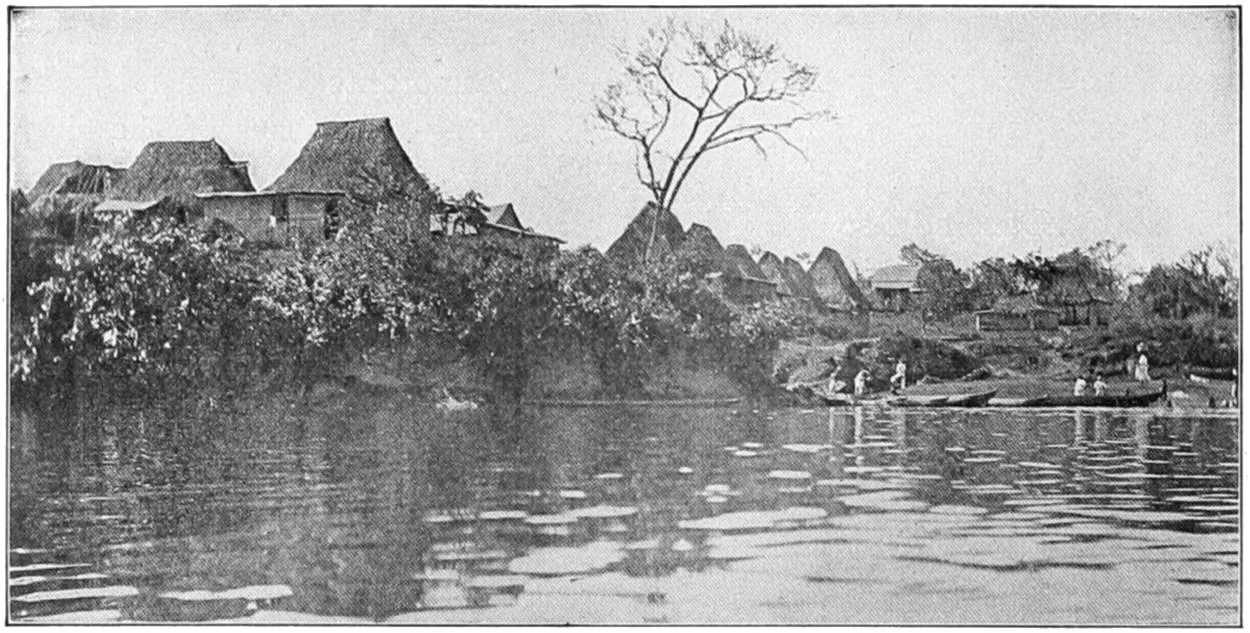
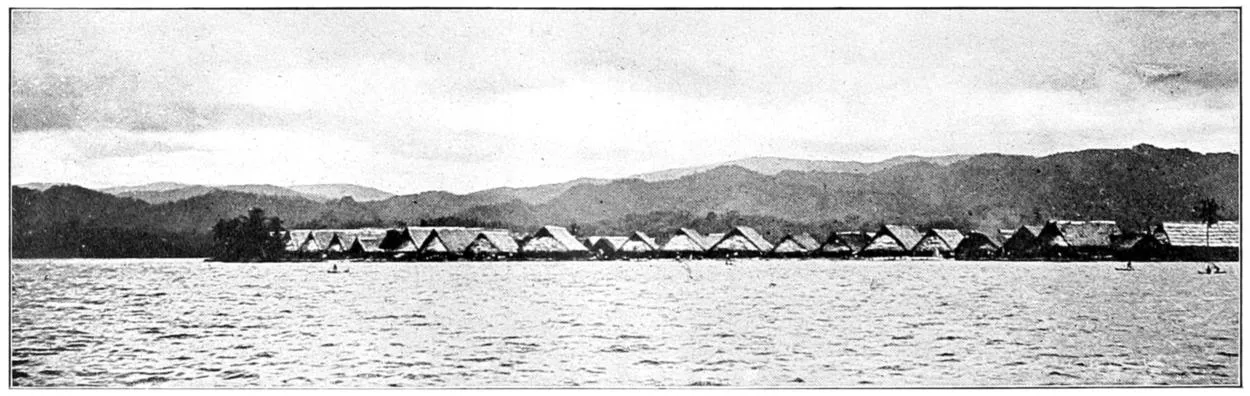
NATIVE HUTS NEAR PORTO BELLO
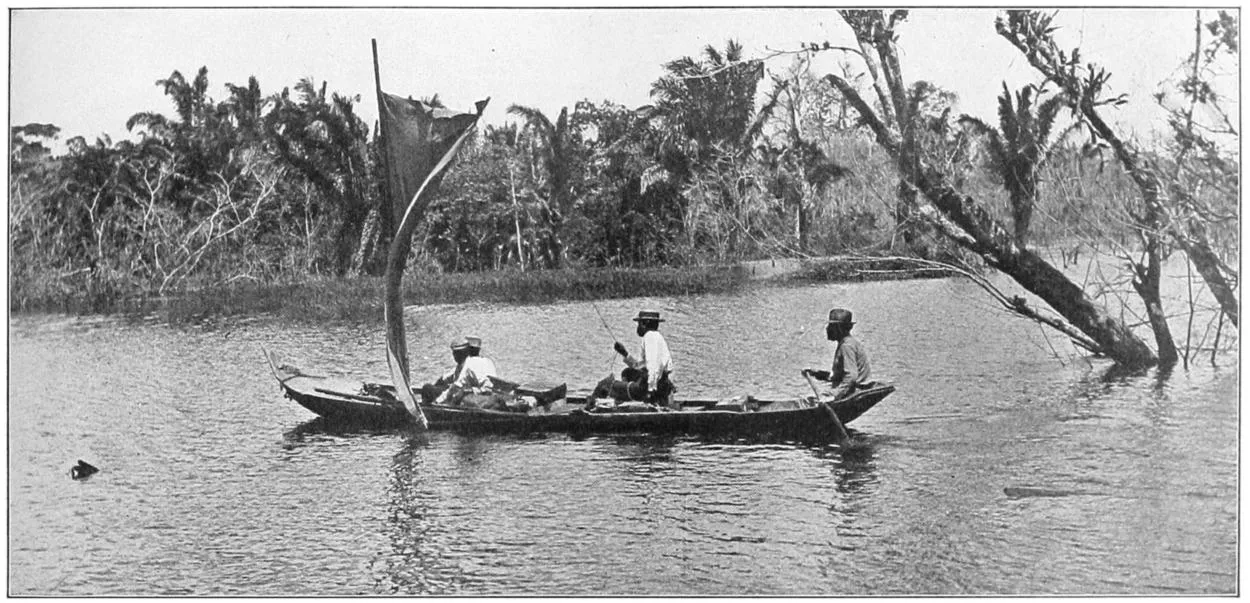
The Indians of this region are fishermen and famous navigators. They ship on vessels leaving Colon for far distant ports
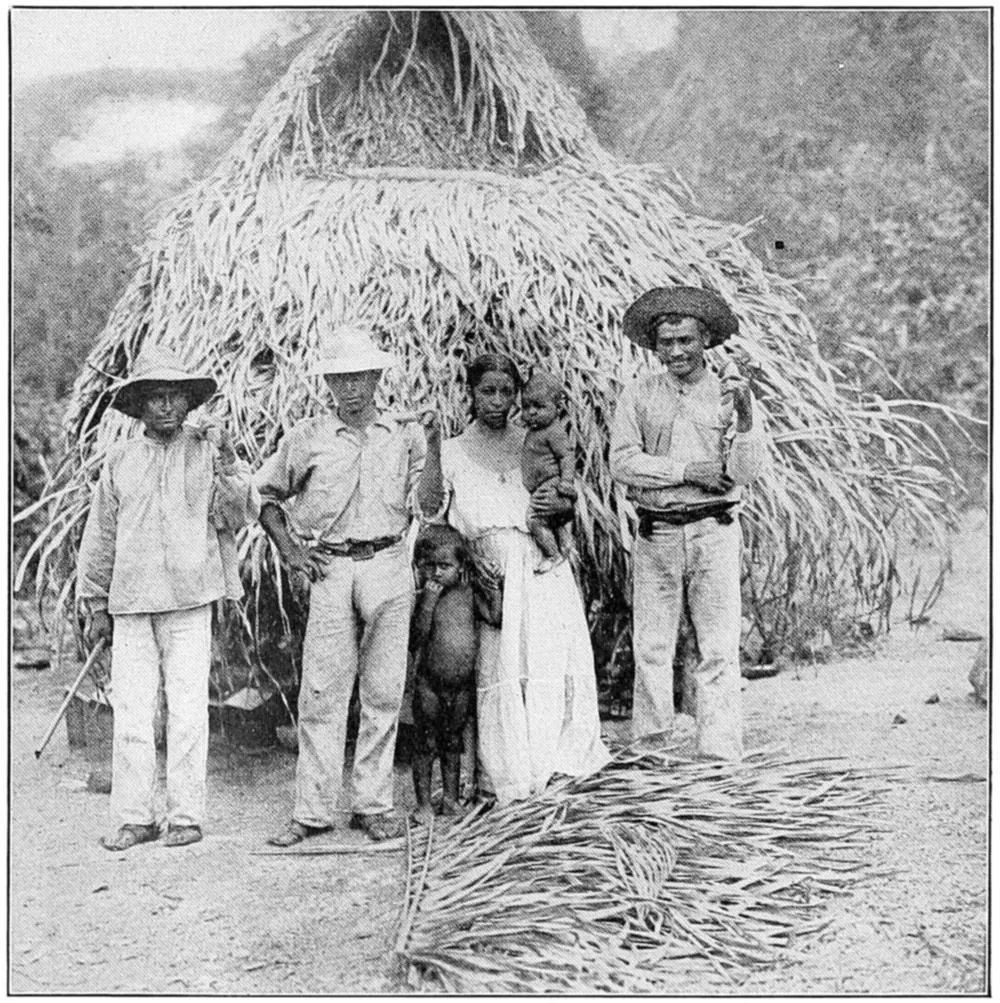
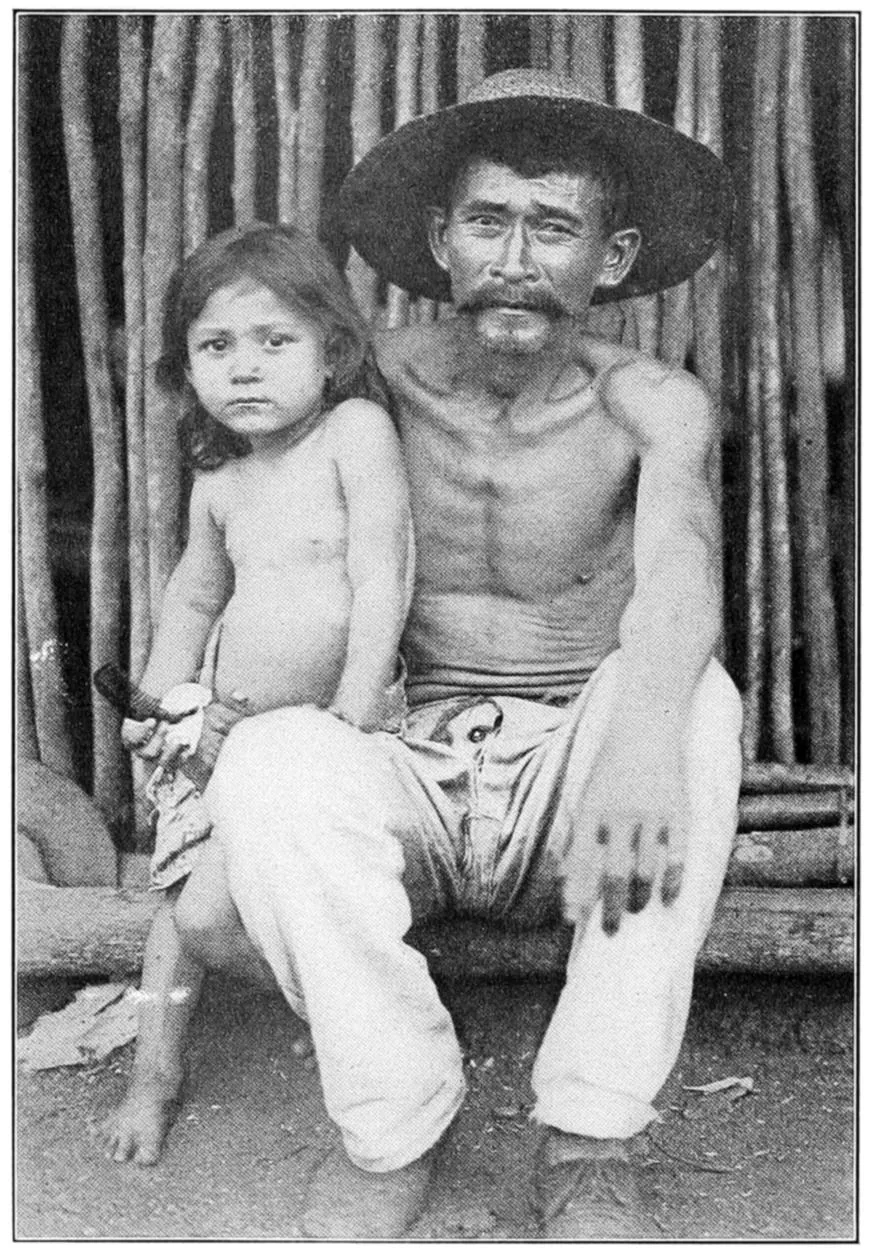
AN INDIAN FAMILY OF THE DARIEN
The story of Old Panama may be reserved for a
later chapter,
even though
the rise and
fall of both
Nombre de
Dios and
Porto Bello
were chiefly
dependent upon
the chief
Spanish city
of the Pacific
coast. For
great as was
the store of
gold, silver
and jewels
torn from the Isthmian Indians and sent from
these Spanish ports back to Spain, it was a mere
rivulet compared to the flood of gold that poured
through the narrow trails across the Isthmus
after Pizarro began his ravishment of Peru. With
the conquest of the Land of the Incas, and the
plunder thereof that made of the Isthmus a mighty
treasure house attracting all the vampires and vultures
of a predatory day, we have little to do here.
Enough to point out that all that was extorted
from the Peruvians
was sent
by ship to
Panama and
thence by
mule carriage
either across
the trail to
Nombre de
Dios or Porto
Bello, or else
by land carriage
to some
point on the
Chagres River,
usually Venta
Cruces, and
thence by the river to San Lorenzo and down the
coast to Porto Bello. Nor did the mules return
with empty packs. The Peruvians bought from
the bandits who robbed them, and goods were
brought from Spain to be shipped from Panama
to South America and even to the Philippines.
It seems odd to us today with “the Philippine
problem” engaging political attention, and with
American merchants hoping that the canal may
stimulate a profitable Philippine trade, that three
hundred years ago Spanish merchants found profit
in sending goods by galleons to Porto Bello, by
mule-pack across the Isthmus and by sailing vessel
again to Manila. Perhaps to the “efficiency experts”
of whom we are hearing so much these days,
it might be worth while to add some experts in
enterprise.
Photo by Underwood and Underwood
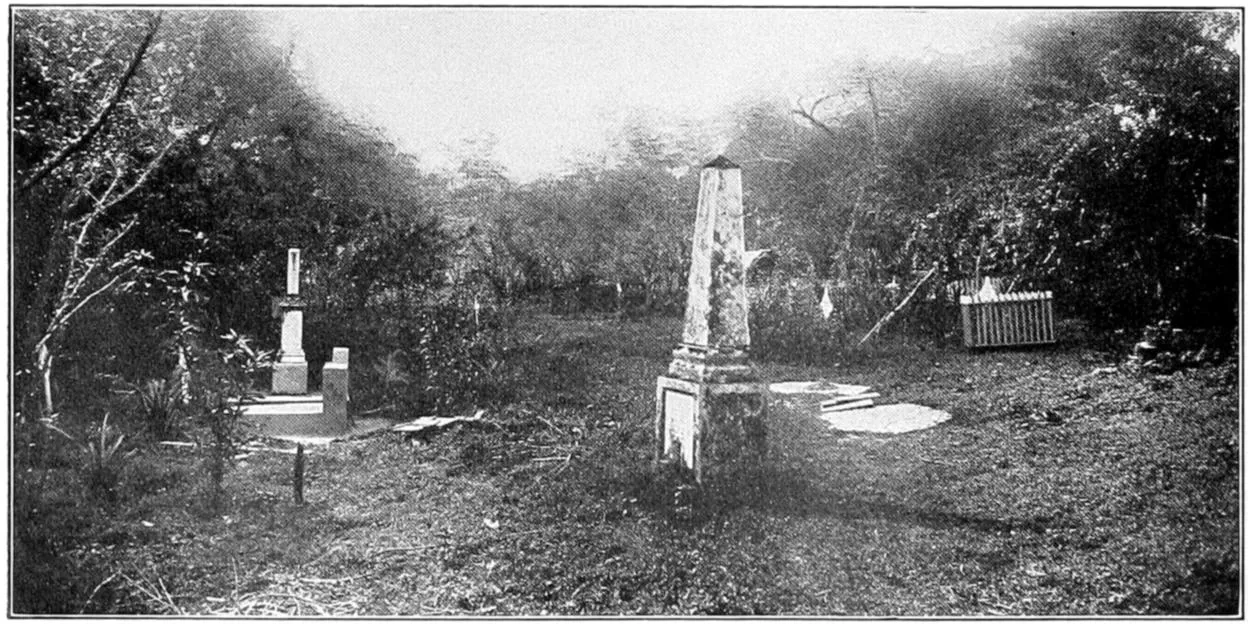
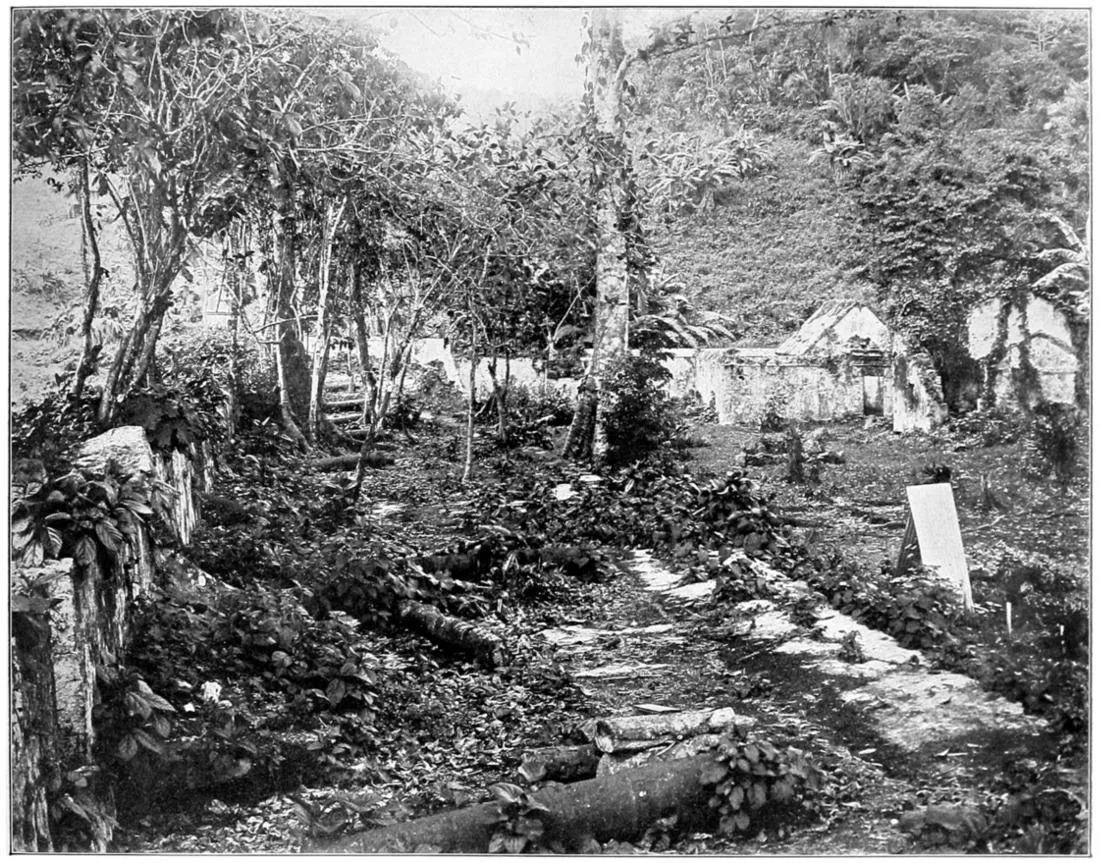
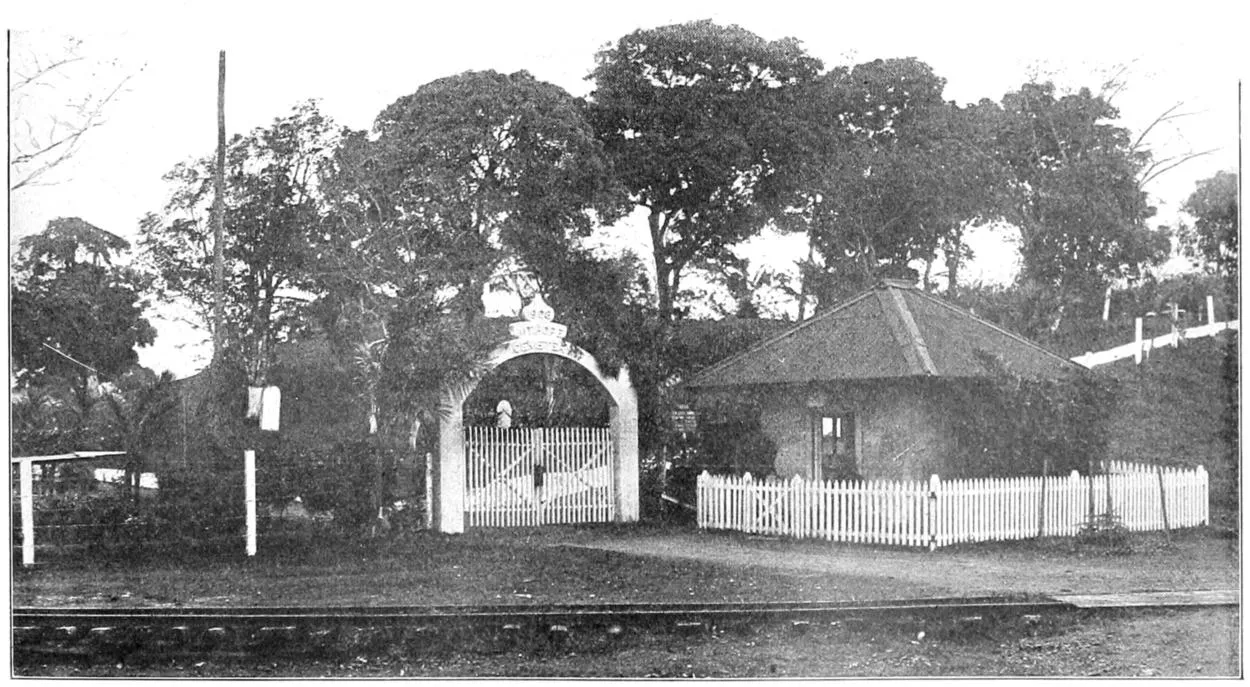
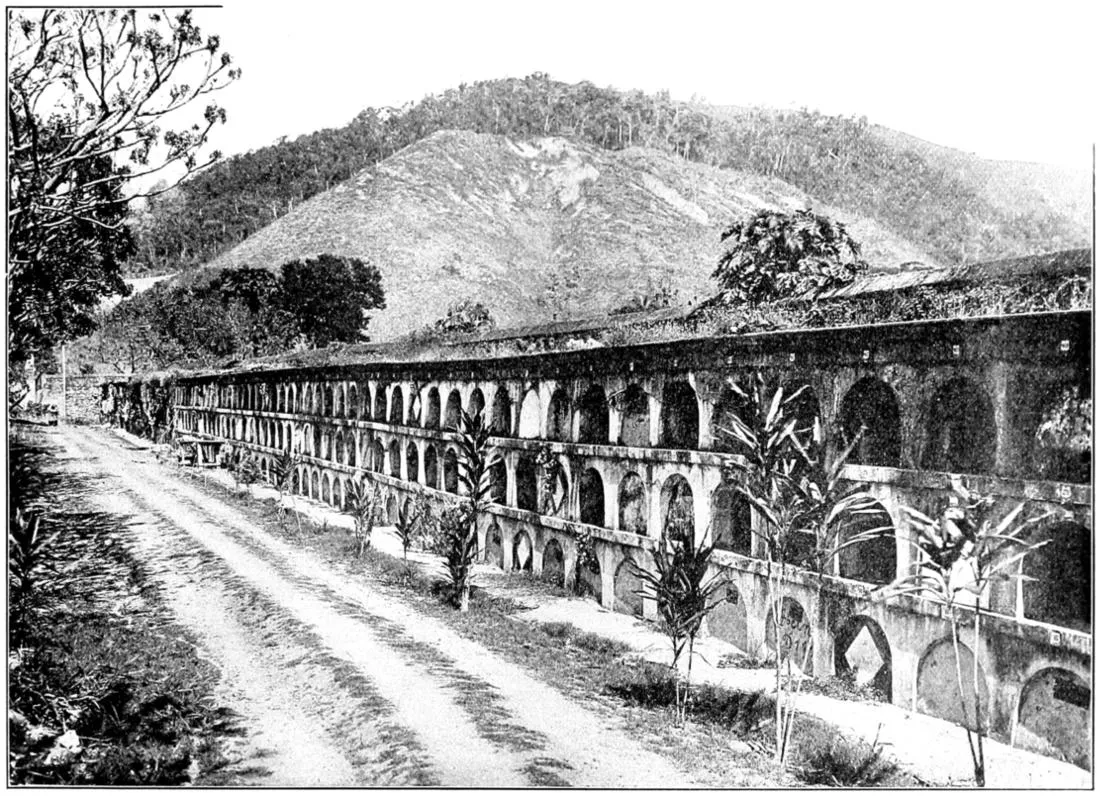
RUINED SPANISH FORT AT PORTO BELLO
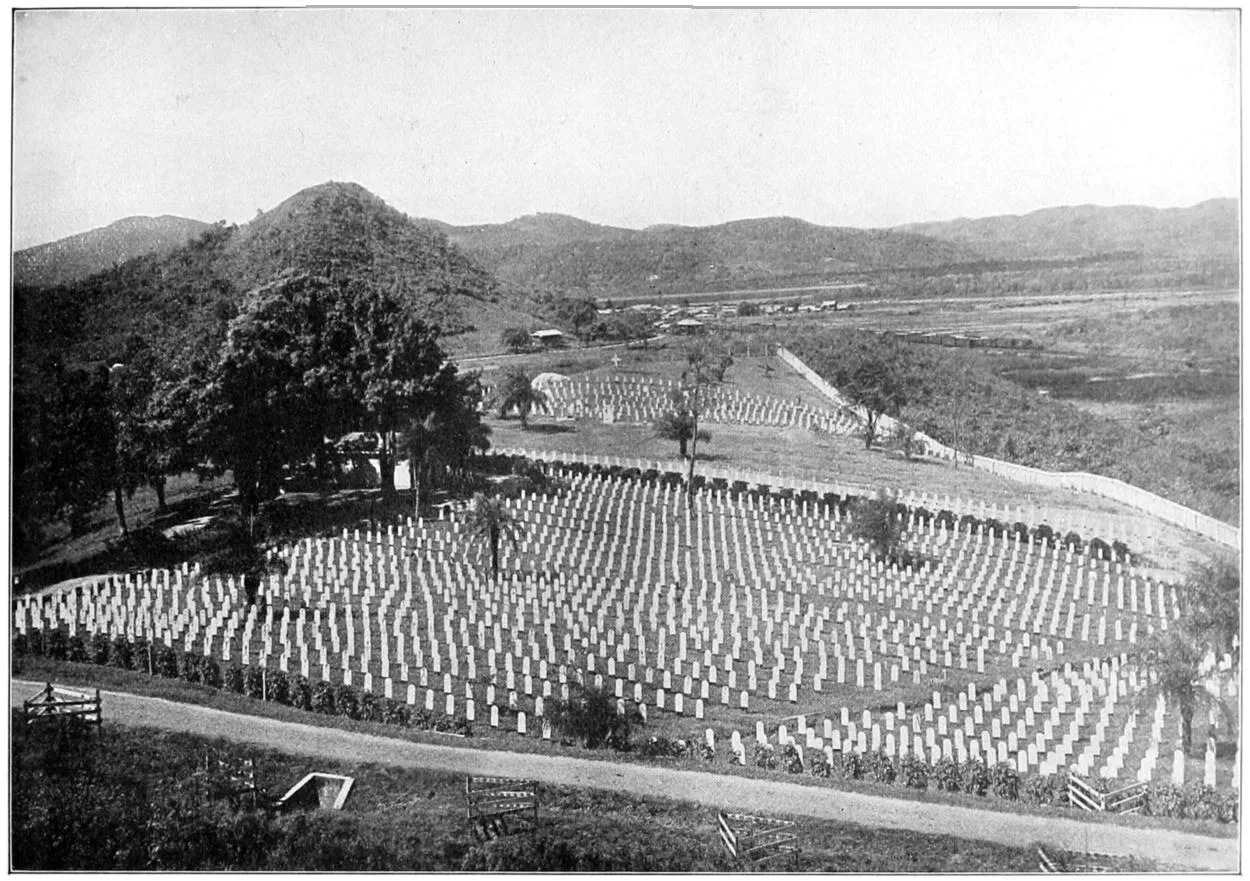
Now used as an American cemetery. The site is one of infinite beauty, but the cemetery is neglected
As this Spanish trade increased the corsairs or
buccaneers sprung into being—plain pirates, who
preyed on Spanish commerce alone, finding excuse
in the fact that the Spanish were Catholics, or in
the plea that Spain had no right to monopolize
American trade. The excuses were mere
subterfuges, but served in a day when piracy was
winked at. The men offering them were not animated
by religious convictions, nor would they have
engaged in the American trade if permitted. For
them the more exciting and profitable pursuit of
piracy, and this they pushed with such vigor that
by 1526 the merchant vessels in the trade would sail
together in one fleet guarded by men-of-war. At
times these fleets numbered as many as forty sail,
all carrying guns. The system of trade—all regulated
by royal decree—was for the ships to sail for
Cartagena on the coast of Colombia, a voyage
occupying usually about two months. Arrived
there, a courier was sent to Porto Bello and on to
Panama with tidings of the approach of the fleet.
Other couriers spread the tidings throughout the
northern provinces of South America.
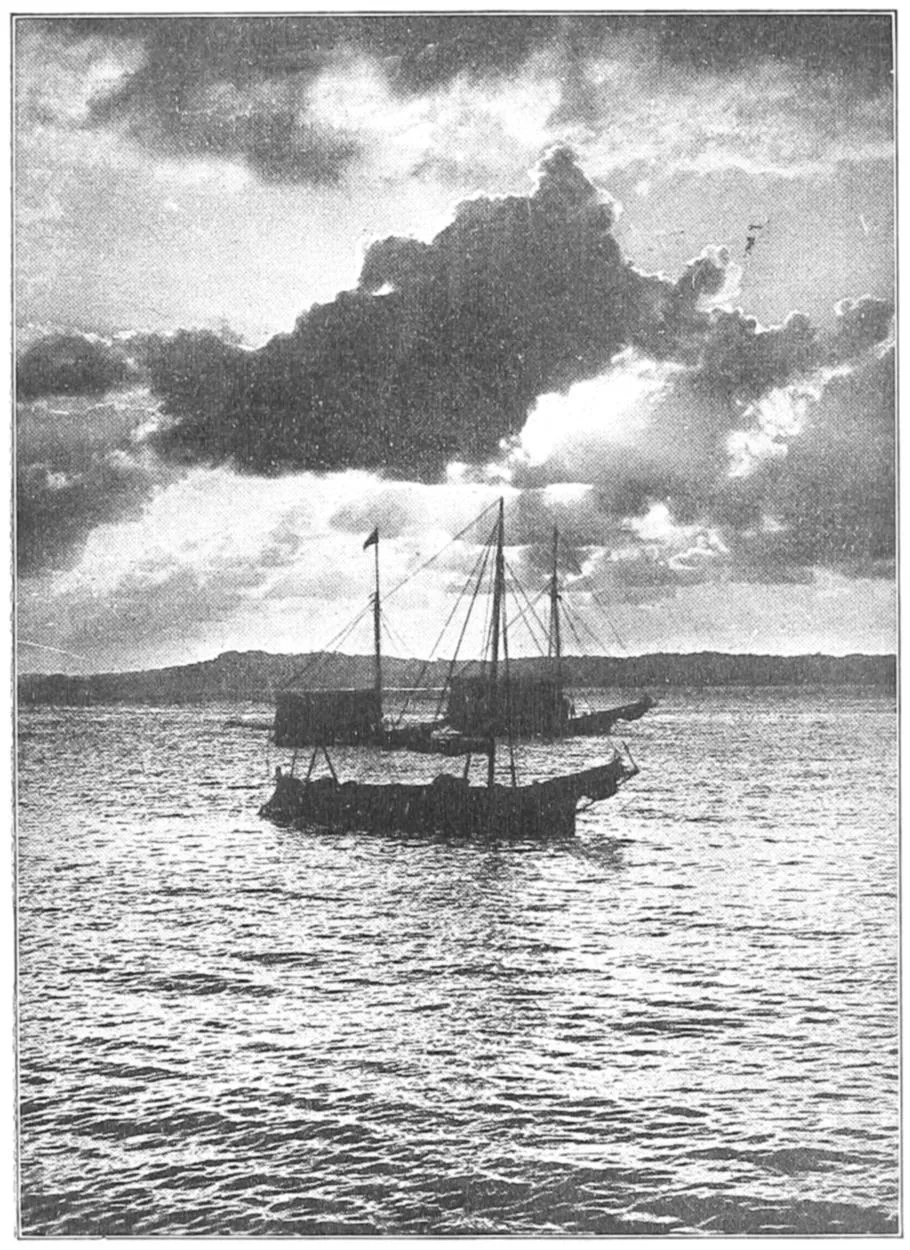
Photo by Underwood and Underwood
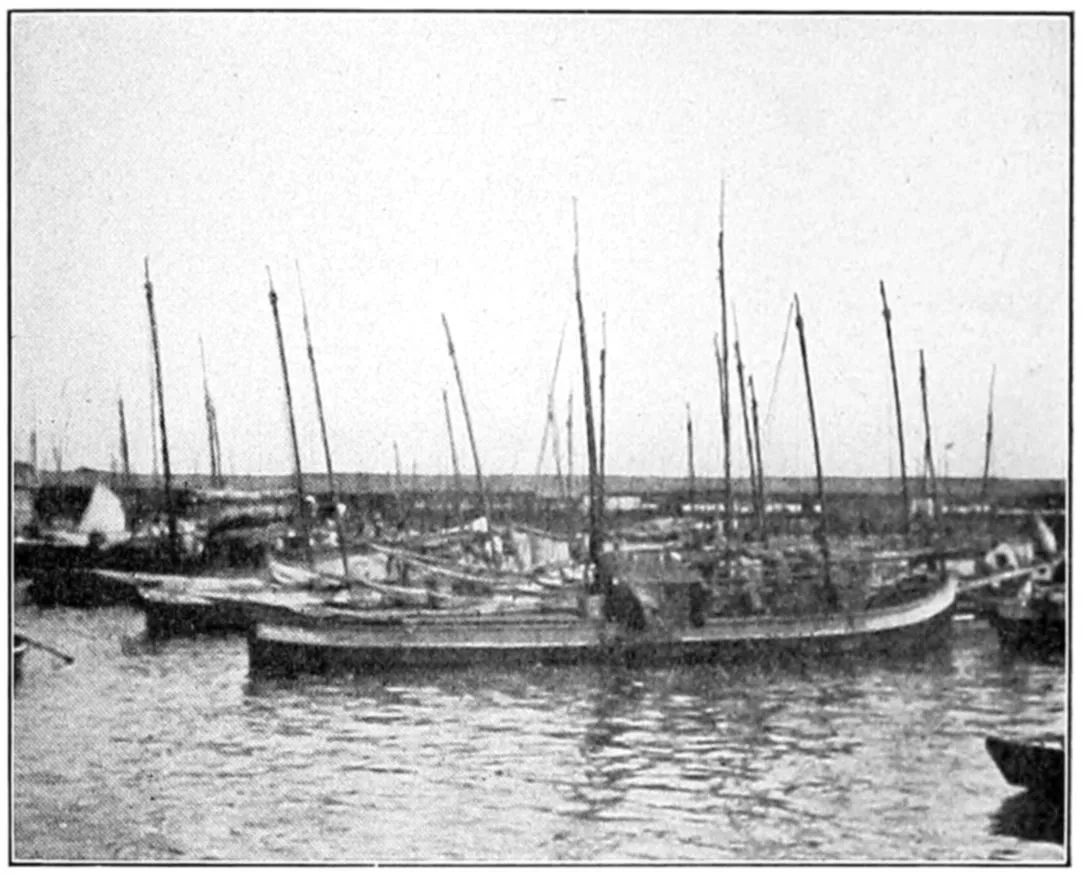
SAN BLAS LUGGERS AT ANCHOR
The fleet would commonly stay at Cartagena a
month, though local merchants often bribed the
general in command to delay it longer. For with
the arrival of the ships the town awoke to a brief
and delirious period of trading. Merchants flocked
to Cartagena with indigo, tobacco and cocoa from
Venezuela, gold and emeralds from New Granada,
pearls from Margarita and products of divers sorts
from the neighboring lands. While this business
was in progress, and the newly laden galleons were
creeping along the coast to Nombre de Dios and
Porto Bello, word had been sent to Lima for the
plate fleet to come to Panama bearing the tribute
to the King—gold stripped from the walls of temples,
pearls pried from the eyes of sacred images,
ornaments wrested from the arms and necks of
native women by a rude and ribald soldiery. With
the plate fleet came also numerous vessels taking
advantage of the convoy, though indeed there was
little danger from pirates on the Pacific. The Atlantic,
being nearer European civilization, swarmed
with these gentry.
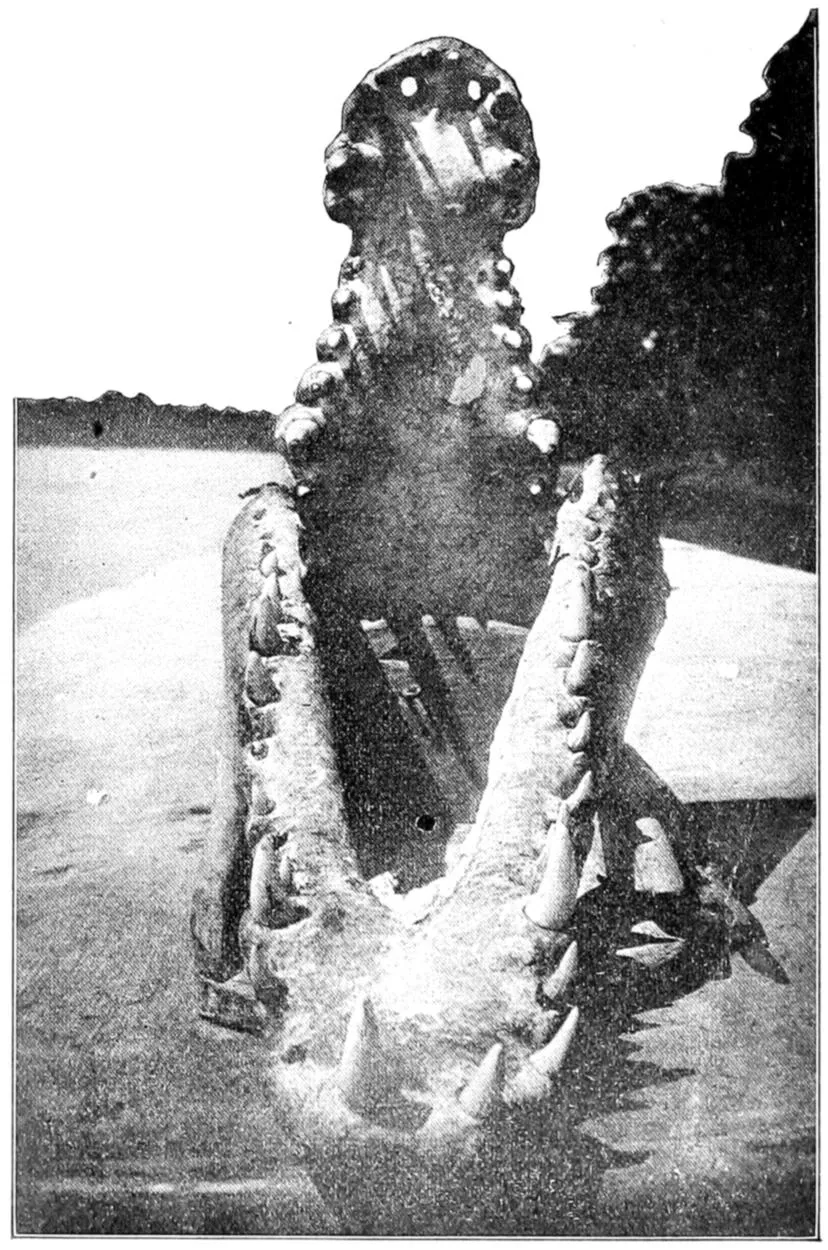
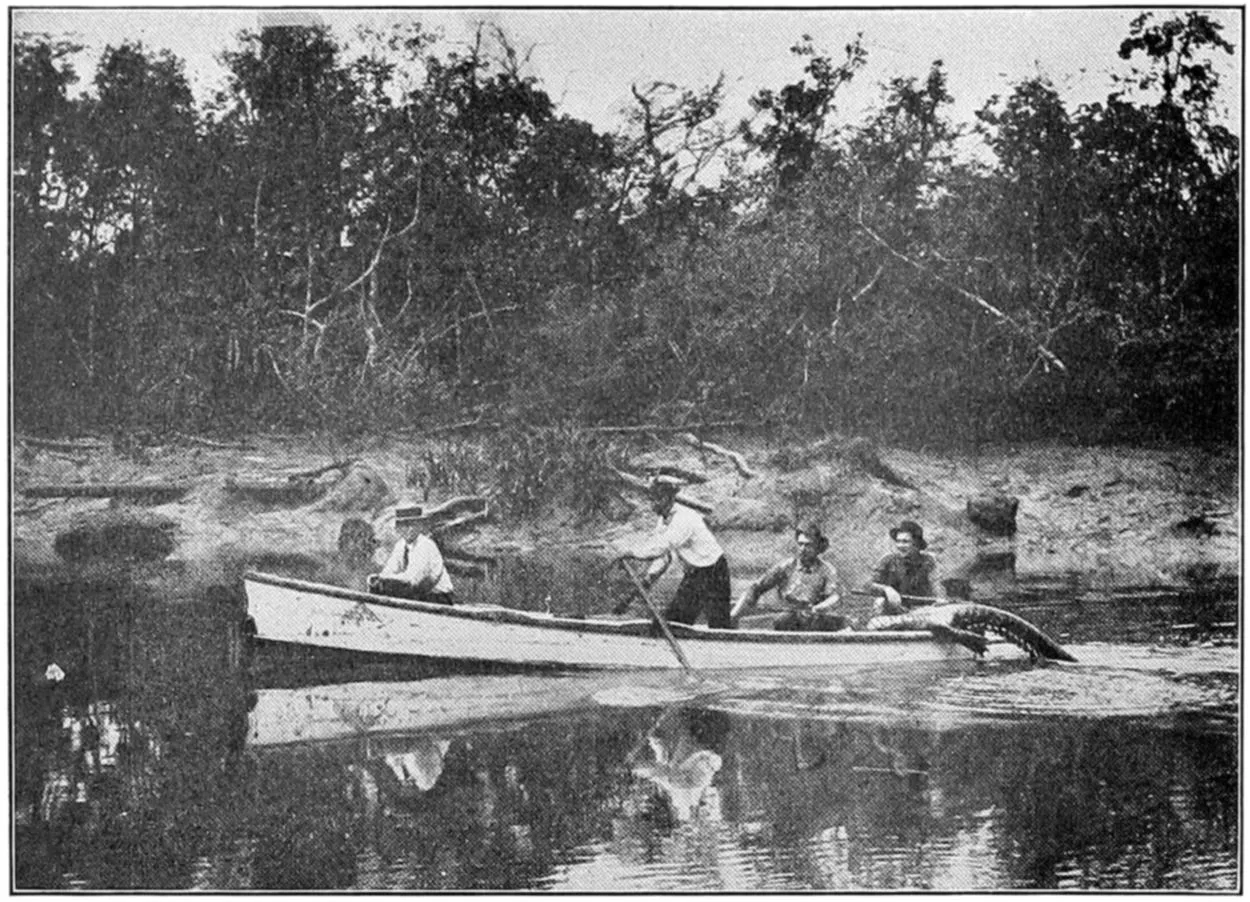
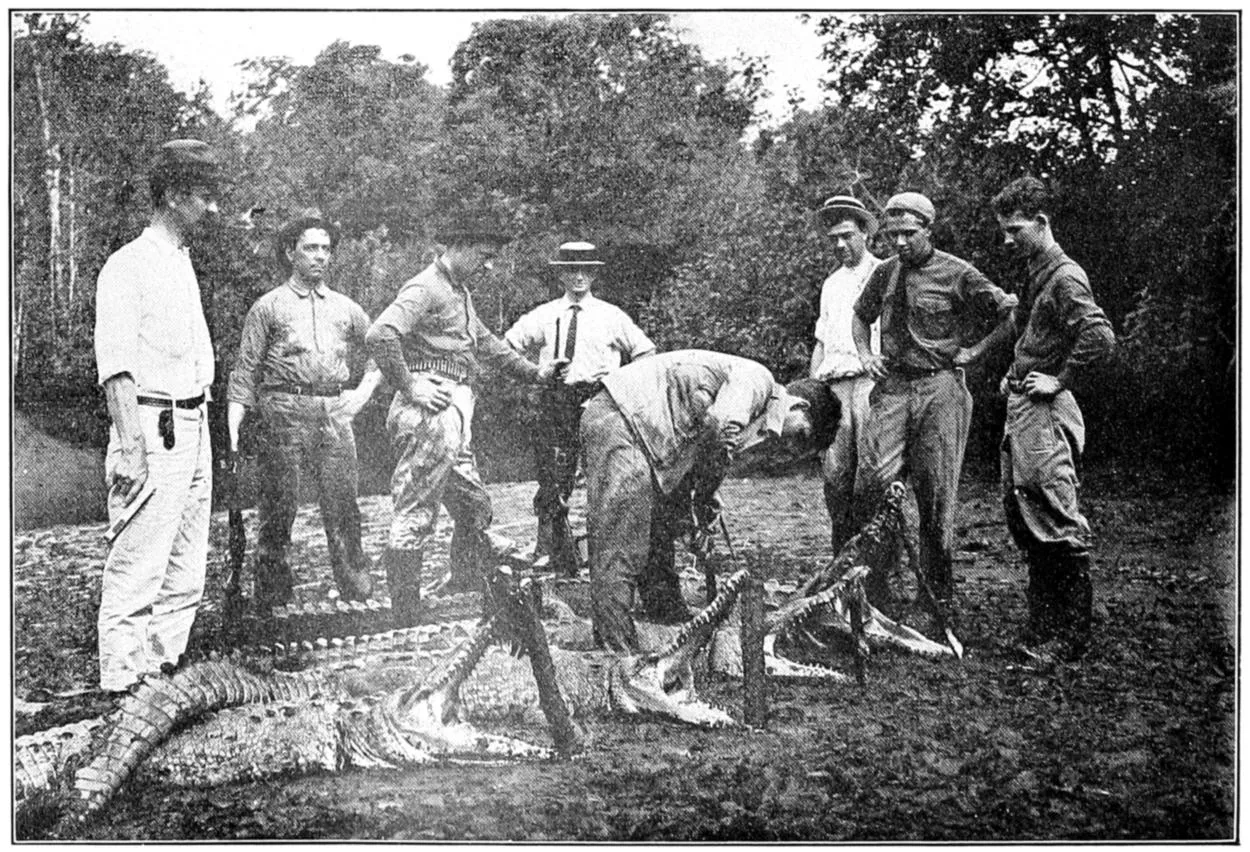
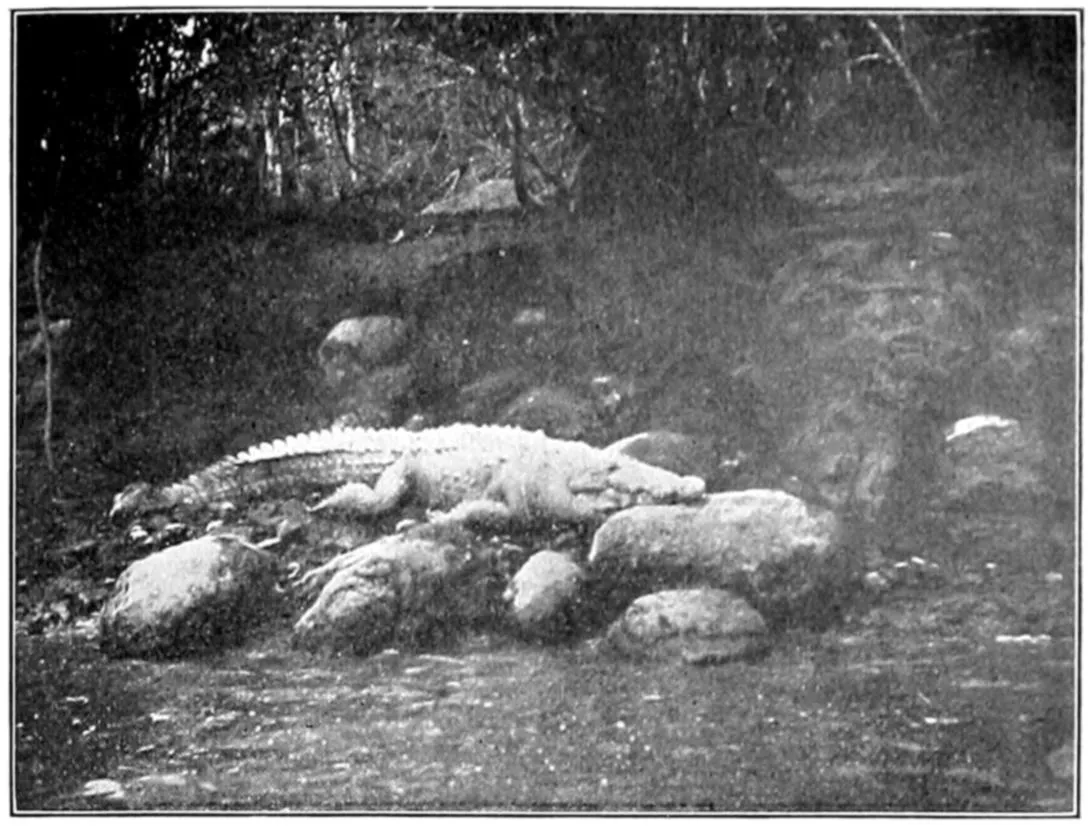
THE TEETH OE THE TROPICS
Skeletonized jaws of a Bayano river crocodile
At Panama all was transferred to mules and started
for the Atlantic coast. So great was the volume
of treasure and of goods to be transported that the
narrow trail along which the mules proceeded in
single file, usually
100 in a caravan
or train, was occupied
almost
from one end to
the other, and the
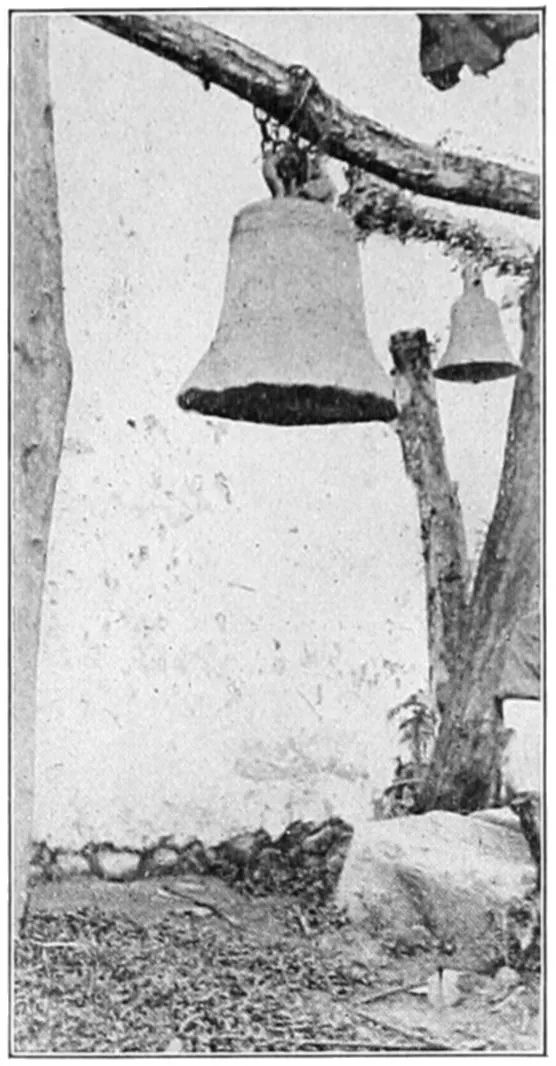
tinkling of the
mule-bells, and
the cries of the muleteers were seldom stilled. Indians
sometimes raided the trail and cut out a loaded mule
or two, and the buccaneers at one time, finding robbery
by sea monotonous, landed and won rich booty
by raiding a treasure caravan. The bulkier articles
of commerce were packed in carts at Panama and
sent to Venta Cruz where they were transferred
to flat boats, and taken down the river to San
Lorenzo and thence to Porto Bello by sea. When
the galleons had cast anchor at that port, and the
merchants and caravans were all arrived the little
town took on an air of bustle and excitement astonishing
to the visitor who had seen it in the hours
of its normal life.
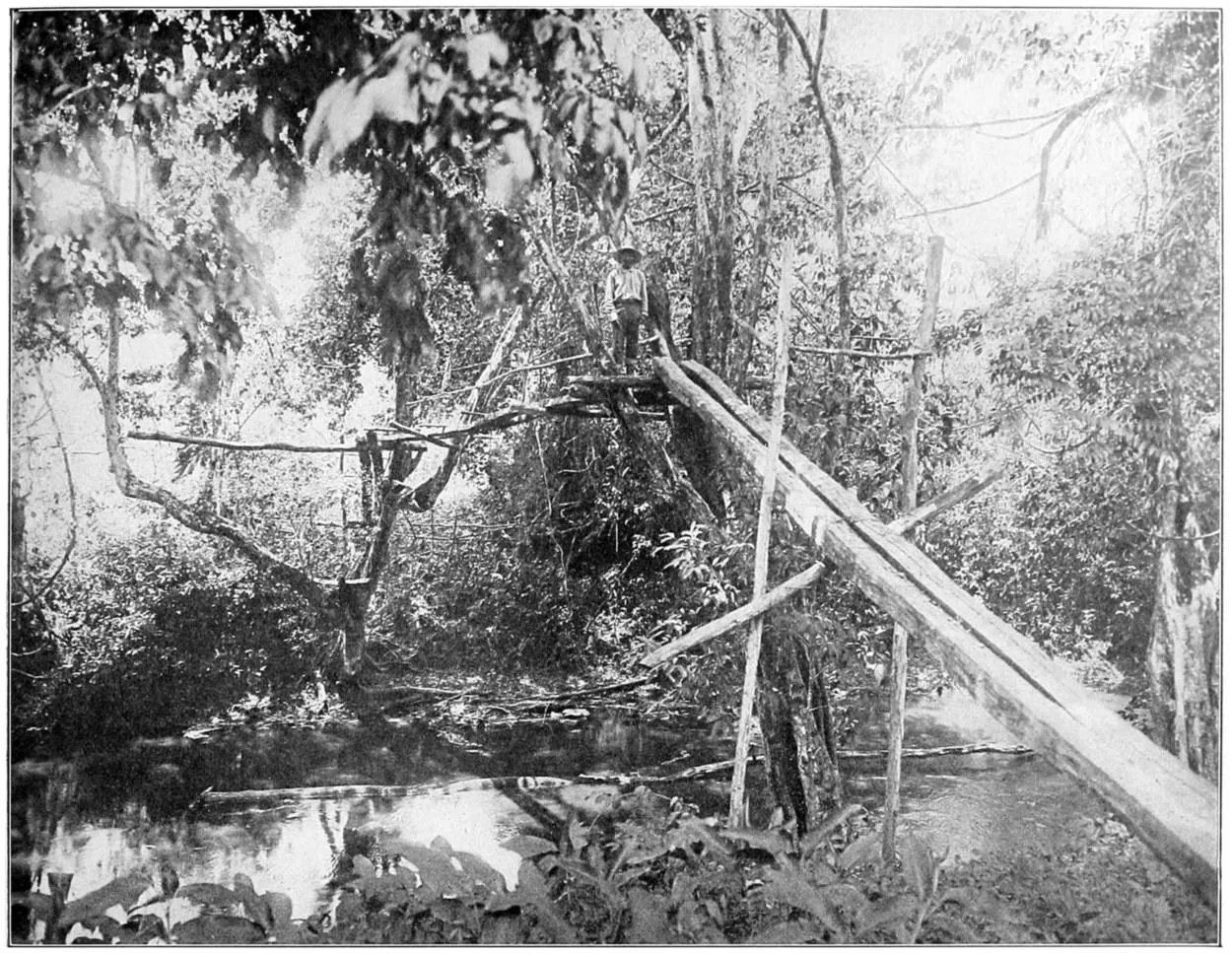
NATIVE BRIDGE IN THE DARIEN
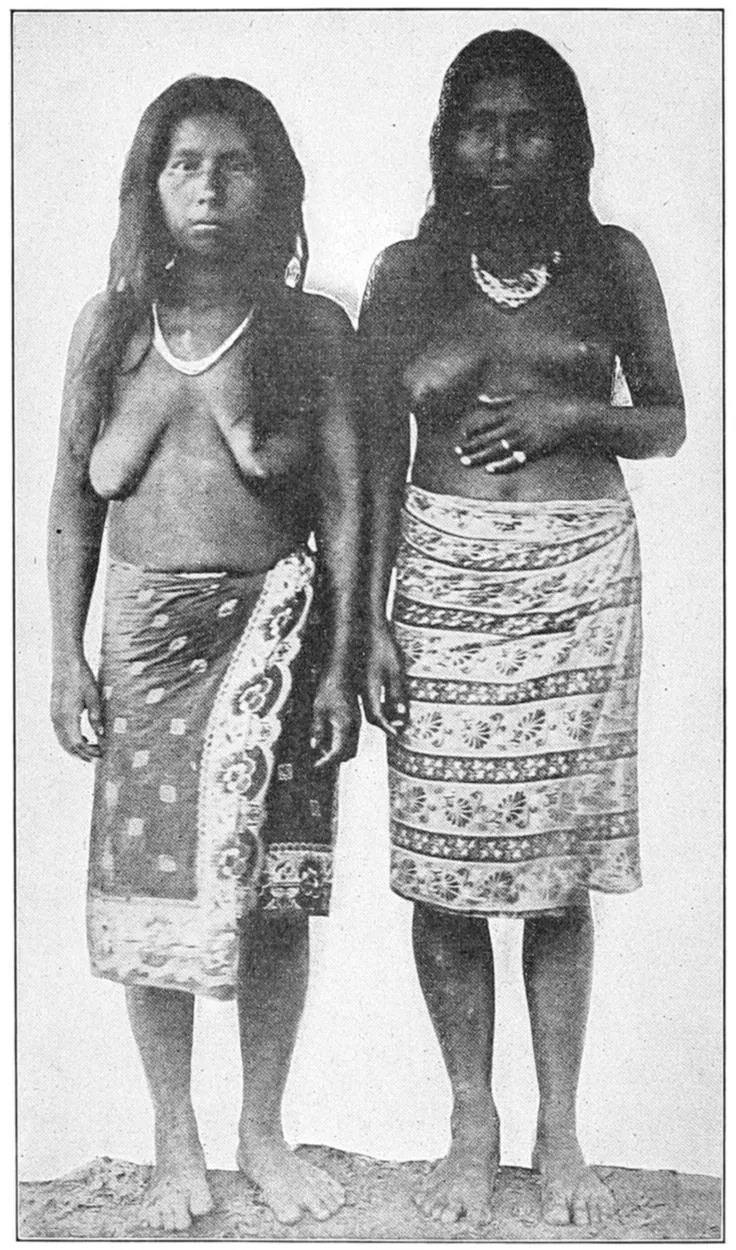
Copyright, 1912, National Geographic Magazine, Washington, D. C.
Photo by Henry Pittier
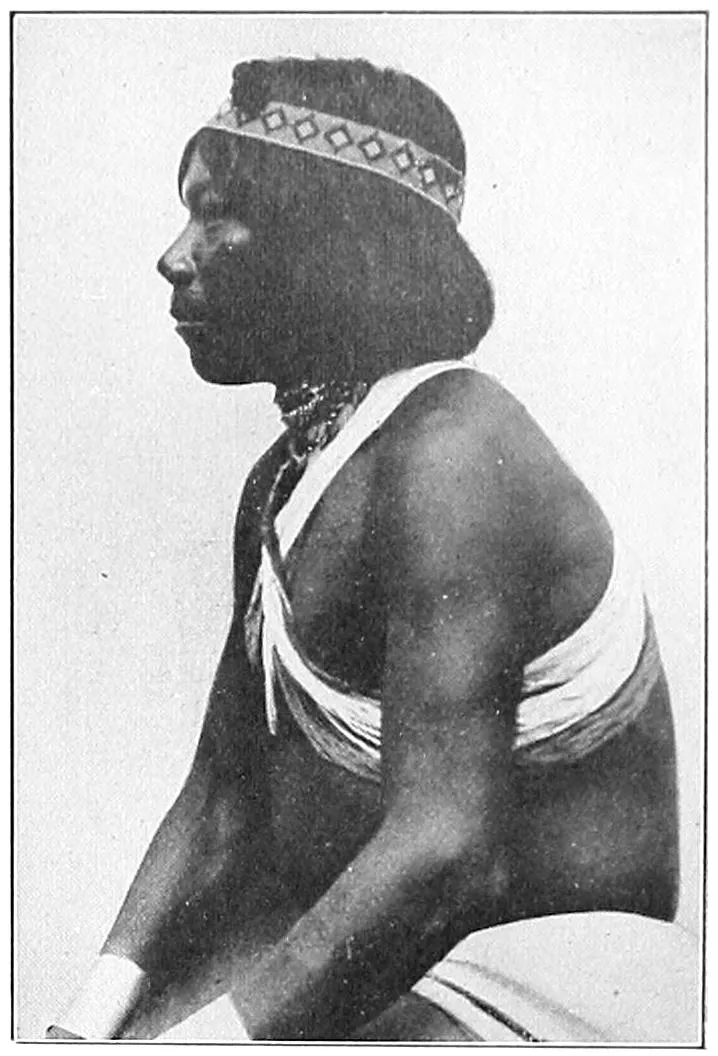
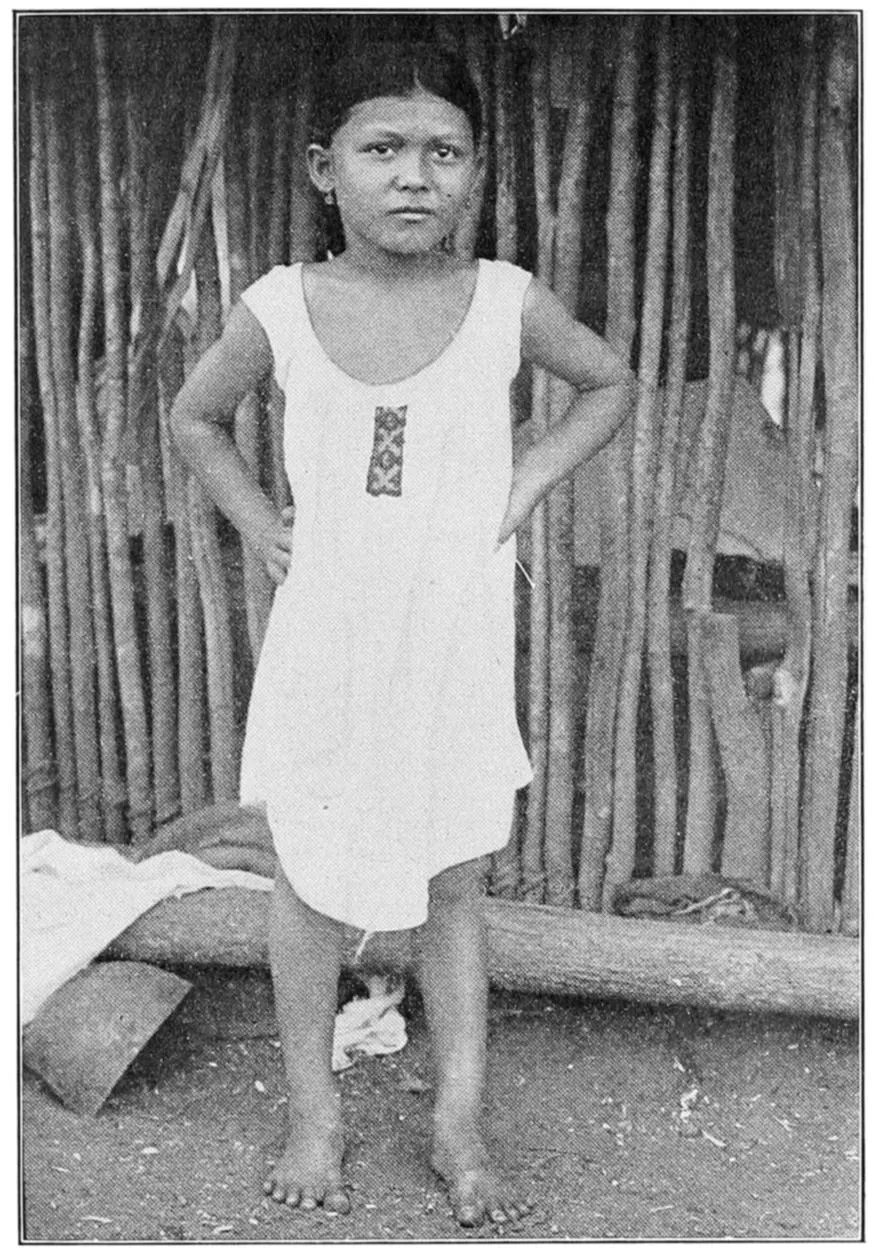
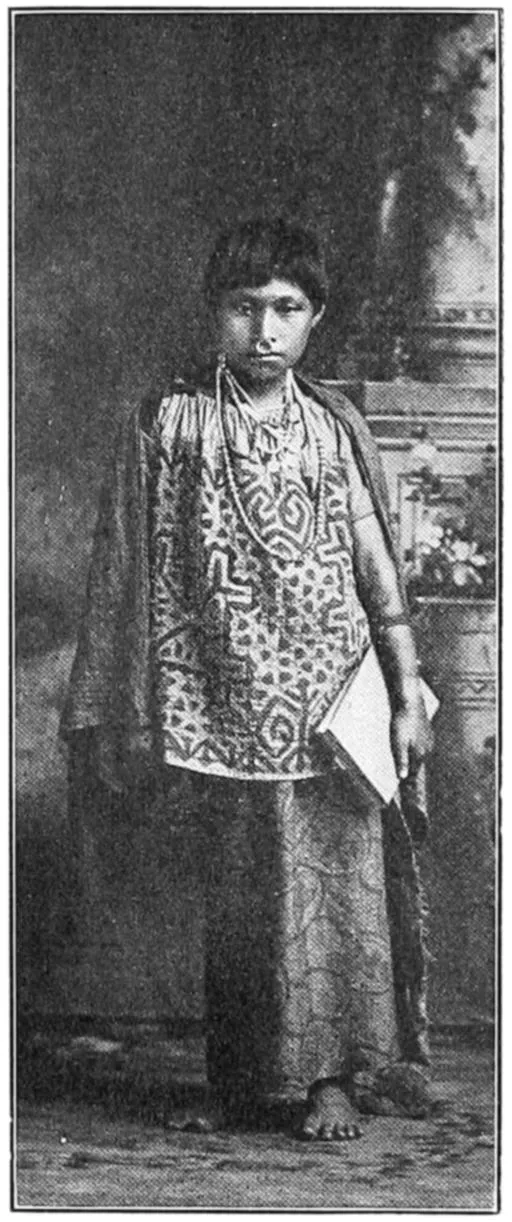
CHOCO INDIAN GIRLS
Note the toes. With them they pick up the smallest objects
“The spectator,” says Alcedo, “who had just
before been considering Porto Bello in a poor, unpeopled
state, without a ship in the port and breathing
nothing but misery and wretchedness, would
remain thunderstruck at beholding the strange
alteration which takes place at the time of this
fair. Now he would see the houses crowded with
people, the square and the streets crammed with
chests of gold and silver, and the port covered with
vessels; some of these having brought by the river
Chagres from Panama the effects of Peru, such as
cacao, bark (quina), vicuna wool, bezoar stone, and
other productions of these provinces. He would see
others bringing provisions from Cartagena; and he
would reflect that, however detestable might be its
climate, this city was the emporium of the riches
of the two worlds, and the most considerable commercial
depot that was ever known.”
The visitor to Porto Bello today may see still
standing the long stone façade of the aduana, or
custom house, facing the ancient plaza. In that
square the merchants erected cane booths and
tents made of sails, while all available space was
filled with bales of goods drawn thither on sledges.
With the fleet came 5000 or 6000 soldiers, who
besides the sailors needful to man the vessels, the
merchants and their clerks,
the porters, the buyers of
all nationalities and the
native sightseers crowded
the little town of a few
hundred houses so that it
appeared to be in possession
of a mob.
An itinerant preacher,
Thomas Gage, who has
left some entertaining reminiscences
of his experiences
on the Isthmus, tells
quaintly of seeking lodgings
during the fair:
“When I came into the
Haven I was sorry to see
that as yet the Galeons
were not come from Spaine,
knowing that the longer I
stayed in that place, the
greater would be my
charges. Yet I comforted
myselfe that the time of
year was come, and that
they could not long delay
their coming. My first
thoughts were of taking
up a lodging, which at that
time were plentifull and
cheape, nay some were offered
me for nothing with
this caveat, that when the
Galeons did come, I must
either leave them, or pay a dear rate for them. A
kind Gentleman, who was the Kings Treasurer, falling
in discourse with me, promised to help me, that
I might be cheaply lodged even when the ships came,
and lodgings were at the highest rate. He, interposing
his authority, went with me to seeke one, which
at the time of the fleets being there, might continue
to be mine. It was no bigger than would containe
a bed, a table, a stoole or two, with roome enough
beside to open and shut the doore, and they demanded
of me for it during the aforesaid time of
the fleet, sixscore Crownes, which commonly is a
fortnight. For the Towne being little, and the
Soldiers, that come with the Galeons for their
defence at least four or
five thousand; besides merchants
from Peru, from
Spain and many other
places to buy and sell, is
causes that every roome
though never so small, be
dear; and sometimes all
the lodgings in the Towne
are few enough for so many
people, which at that time
doe meet at Portobel. I
knew a Merchant who
gave a thousand Crownes
for a shop of reasonable
bignesse, to sell his wares
and commodities that yeer
I was there, for fifteen daies
only, which the Fleet continued
to be in that Haven.
I thought it much for
me to give the sixscore
Crownes which were demanded
of me for a room,
which was but as a mouse
hole, and began to be
troubled, and told the
Kings Treasurer that I had
been lately robbed at sea,
and was not able to give
so much, and bee besides
at charges for my diet,
which I feared would prove
as much more. But not a
farthing would be abated of what was asked;
where upon the good Treasurer, pitying me, offered
to the man of the house to pay him threescore
Crownes of it, if so be that I was able to
pay the rest, which I must doe, or else lie without
in the street. Yet till the Fleet did come I
would not enter into this deare hole, but accepted
of another faire lodging which was offered me for
nothing. Whilst I thus expected the Fleets coming,
some money and offerings I got for Masses, and for
two Sermons which I preached at fifteen Crownes
a peece. I visited the Castles, which indeed seemed
unto me to be very strong; but what most I wondered
at was to see the requa’s of Mules which
came thiether from Panama, laden with wedges of
silver; in one day I told two hundred mules laden
with nothing else, which were unladen in the publicke
Market-place, so that there the heapes of
silver wedges lay like heapes of stones in the street,
without any feare or suspition of being lost. Within
ten daies the fleet came, consisting of eight Galeons
and ten Merchant ships, which forced me to run
to my hole. It was a wonder then to see the multitude
of people in those streets which the weeke
before had been empty.
“Then began the price of all things to rise, a fowl
to be worth twelve Rialls, which in the mainland
within I had often bought for one; a pound of beefe
then was worth two Rialls,
whereas I had in other places
thirteen pounds for half a
Riall, and so of all other
food and provisions,
which was so excessively
dear, that I knew not
how to live but by
fish and Tortoises,
which were very many, and though somewhat deare,
yet were the cheapest meat I could eate.”
INDIAN HUTS NEAR PORTO BELLO
On this annual fair, and on trade with the back
country, both Nombre de Dios and Porto Bello
waxed prosperous and luxurious. Prosperity was a
dangerous quality for a town or a man to exhibit
in those days when monarchs set the example of
theft and extortion, and private plunderers were
quick to follow it. So Nombre de Dios was early
made the point of an audacious raid by Sir Francis
Drake. Though Drake was a bold adventurer, he
is given a measure of immortality by a statue in
Baden, the inscription on which celebrates him as
the introducer of potatoes into Europe. But personal
profit, not potatoes, had his chief attention,
though as a side issue he engaged in the slave trade.
July 29, 1572, he made a descent upon Nombre de
Dios with 73 men armed, according to a writer of
the time, with “6 Targets; 6 Fire Pikes; 12 Pikes;
24 Muskets and Callivers; 16 Bowes and 6 Partizans;
2 Drums and 2 Trumpets.” His men landed
from pinnaces and after encountering “a jolly hot
volley of shot” in the plaza put the Spaniards
to flight. At the point of a sword a captive
was forced to lead the raiders to the Governor’s
house where to his joy Drake discovered
a stack of silver ingots worth a
million pounds sterling. But ’twas an
embarrassment of riches, for the bars
were of 40 pounds weight each and therefore hard
to move, so Drake sought the King’s Treasure House
where he hoped to find more movable wealth. As
the door was being broken down he fainted from
loss of blood, and as he lay speechless on the sill
the Spaniards rallied and attacked the invaders.
Though Drake reviving sought to hold his men up
to the fight, they had lost their dash, and despite his
protestations carried him bodily to the boats. The
men were wiser than their leader because it was the
chance arrival of some
soldiers from Panama
that had rallied the
populace of the town,
and the English, deprived
of Drake’s leadership,
would certainly
have been overwhelmed.
That leader
however grieved sincerely
when a Spanish
spy told him later that
there were 360 tons of
silver in the town and
many chests of gold
in the treasure house.
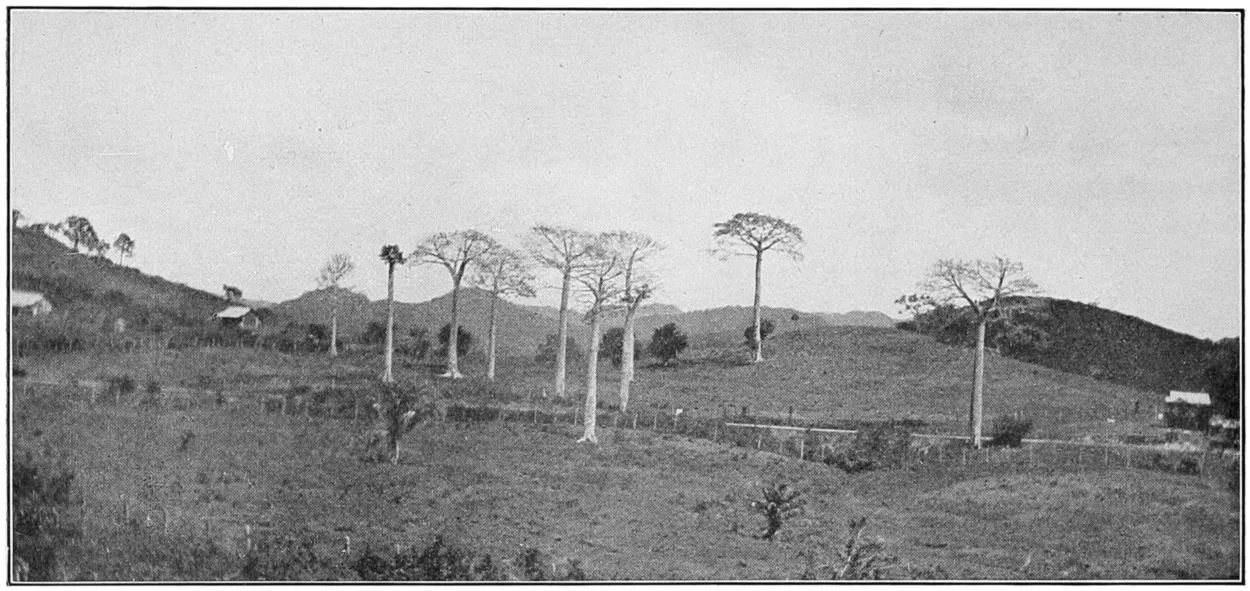
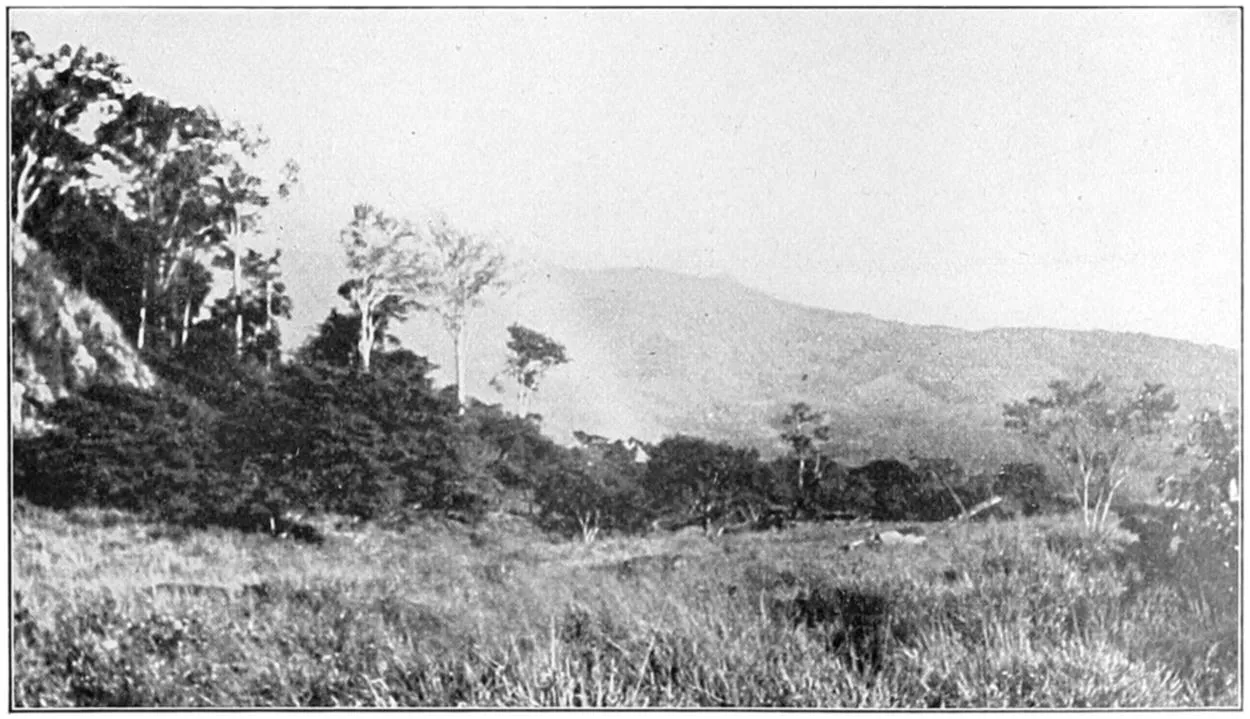
COUNTRY BACK OF PORTO BELLO
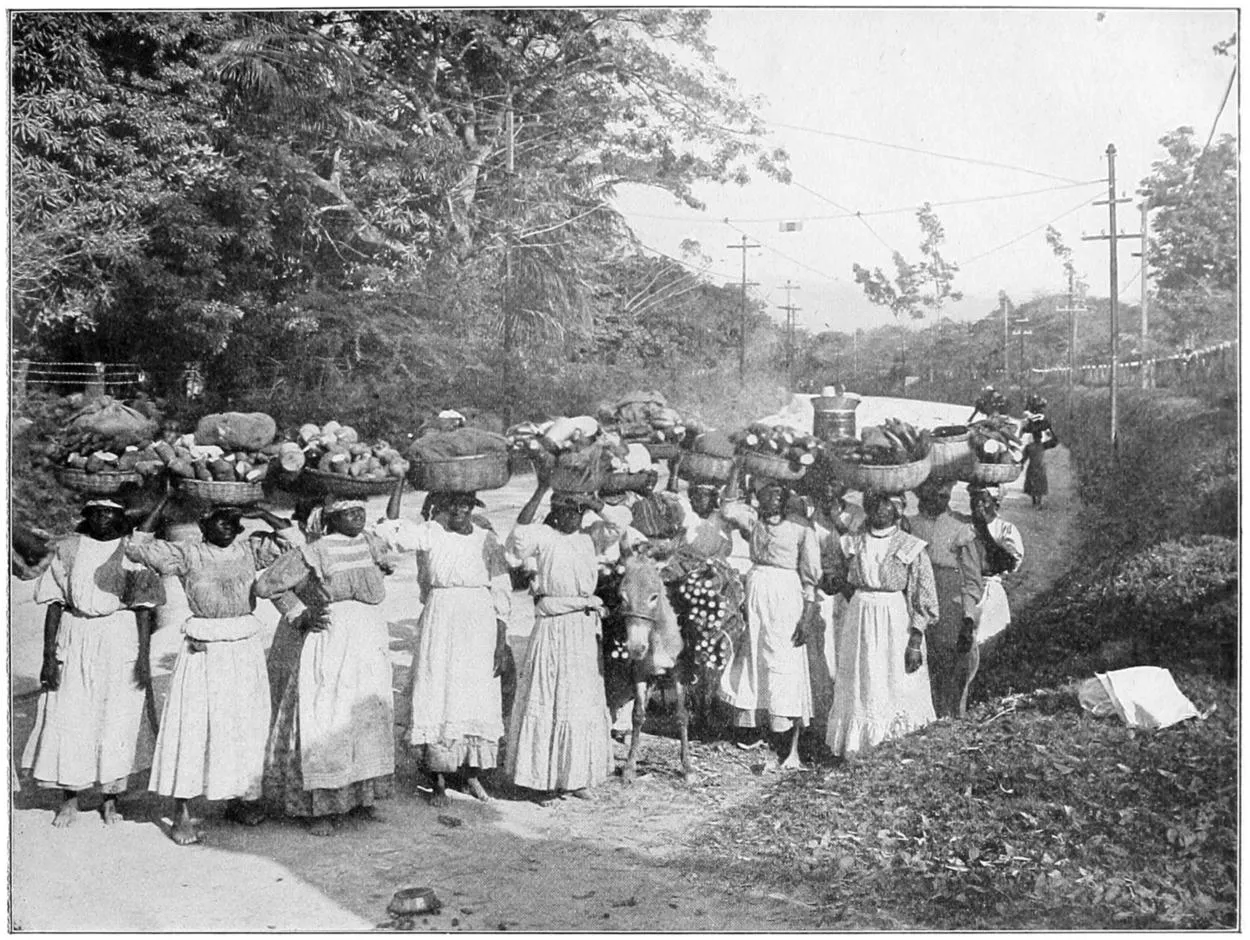
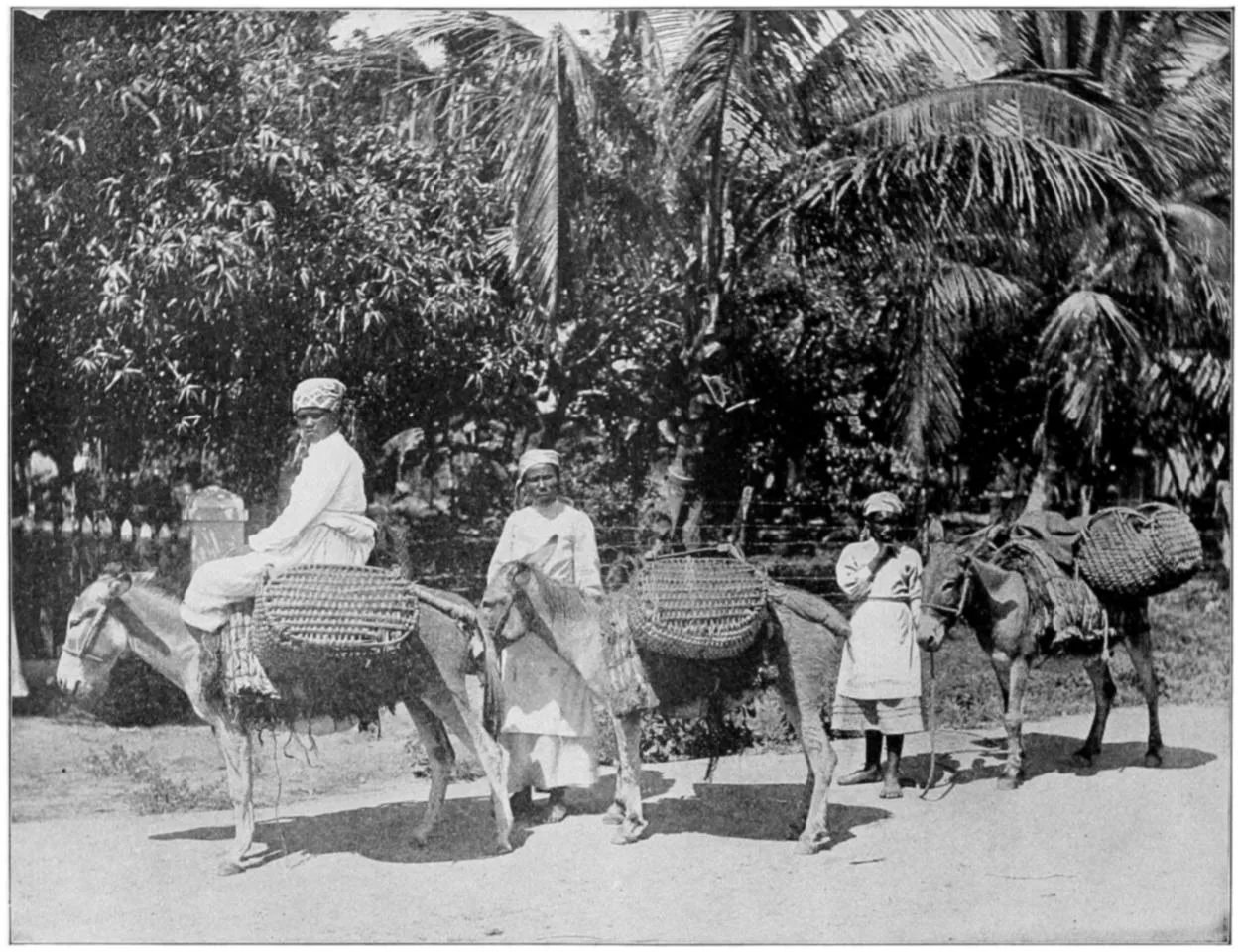
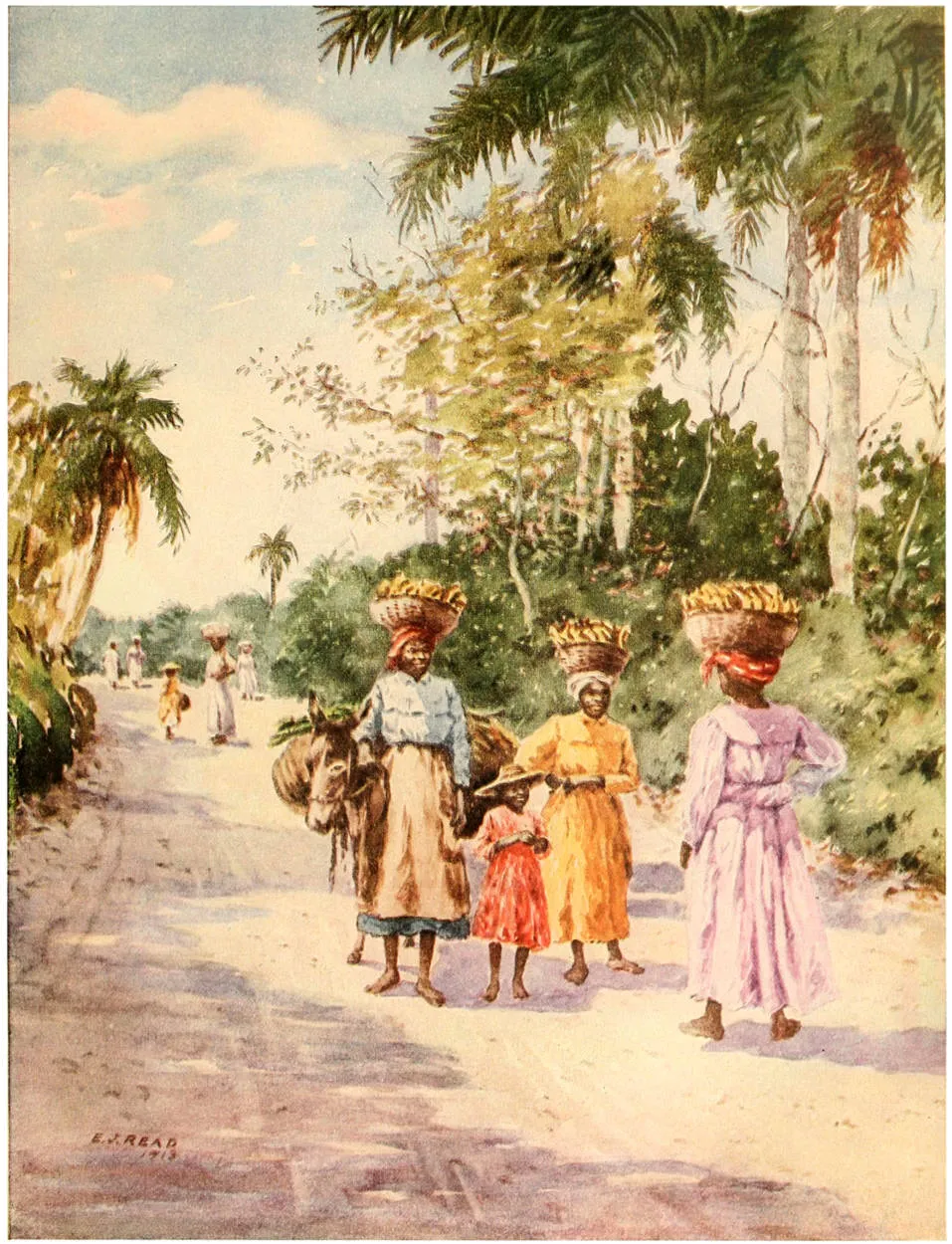
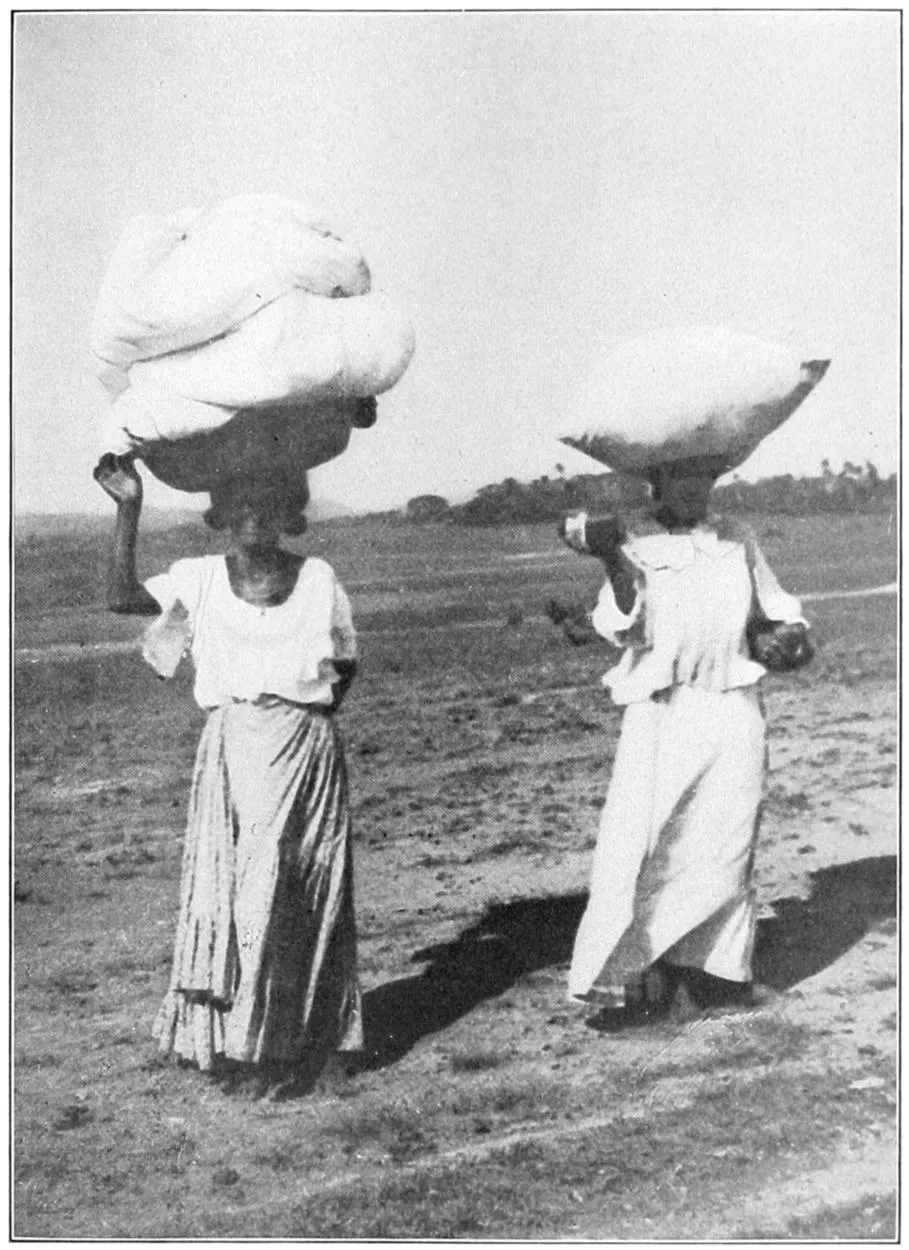
NATIVE WOMEN OF THE SAVANNAS BEARING BURDENS
With his appetite
whetted for treasure
Drake retired to plan
a more profitable raid.
This was to be nothing
less than a land expedition
to cut off one
of the treasure caravans
just outside of
old Panama on its way
down the Nombre de
Dios trail. Had the
Indian population
been as hostile to the
English then as they
became in later days
this would have been
a more perilous task.
But at this time the
men who lurked in the
jungles, or hunted on
the broad savannas
had one beast of prey they feared and hated more
than the lion or the boa—the Spaniard. Whether Indian
or Cimmaroon—as the escaped slaves were called—every
man out in that tropic wilderness had some
good ground for hating the Spaniards, and so when
Drake and his men came, professing themselves enemies
of the Spaniards likewise, the country folk
made no war upon them but aided them to creep
down almost within sight of Panama. Halting here,
at a point which must have been well within the
Canal Zone and which it seems probable was near
the spot where the Pedro Miguel locks now rise, they
sent a spy into the town who soon brought back
information as to the time when the first mule-train
would come out.
All seemed easy then. Most of the travel across
the isthmus was by night to avoid the heat of the
day. Drake disposed his men by the side of the
trail—two Indians
or Cimmaroons
to
each armored
Englishman.
The latter had
put their shirts
on outside of
their breastplates
so that
they might be
told in the
dark by the
white cloth—for
the ancient
chroniclers
would have us
believe them
punctilious
about their
laundry work.
All were to lie
silent in the
jungle until
the train had
passed, then
closing in behind
cut off all
retreat to Panama—when ho! for the fat panniers
crammed with gold and precious stones!
CAMINA REALE, OR ROYAL ROAD NEAR PORTO BELLO
The plan was simplicity itself and was defeated
by an equally simple mischance. The drinks of the
Isthmus which, as we have seen, the Spaniards
commended mightily when they drank, were treacherous
in their workings upon the human mind—a
quality which has not passed away with the buccaneers
and cimmaroons, but still persists. One of
Drake’s jolly cutthroats, being over fortified with
native rum for his nocturnal vigil, heard the tinkle
of mule bells and rose to his feet. The leading
muleteer turned his animal and fled, crying to the
saints to protect him from the sheeted specter in
the path. The captain in charge of the caravan was
dubious about ghosts, but, there being a number of
mules loaded with grain at hand, concluded to send
them on to see if there were anything about the
ghosts which a proper prayer to the saint of the
day would exorcise. So the Englishmen again
heard the tinkling mule bells, waited this time in
low breathing silence to let the rich prize pass,
then with shouts of triumph dashed from the jungle,
cut down or shot the luckless muleteers, and swarmed
about the caravan eager to cut the bags and get at
the booty—and were rewarded with sundry bushels
of grain intended to feed the crowds at Nombre
de Dios.
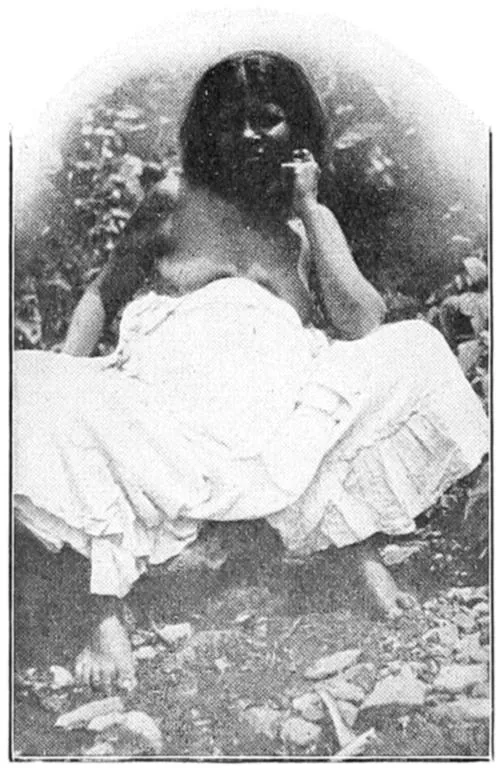
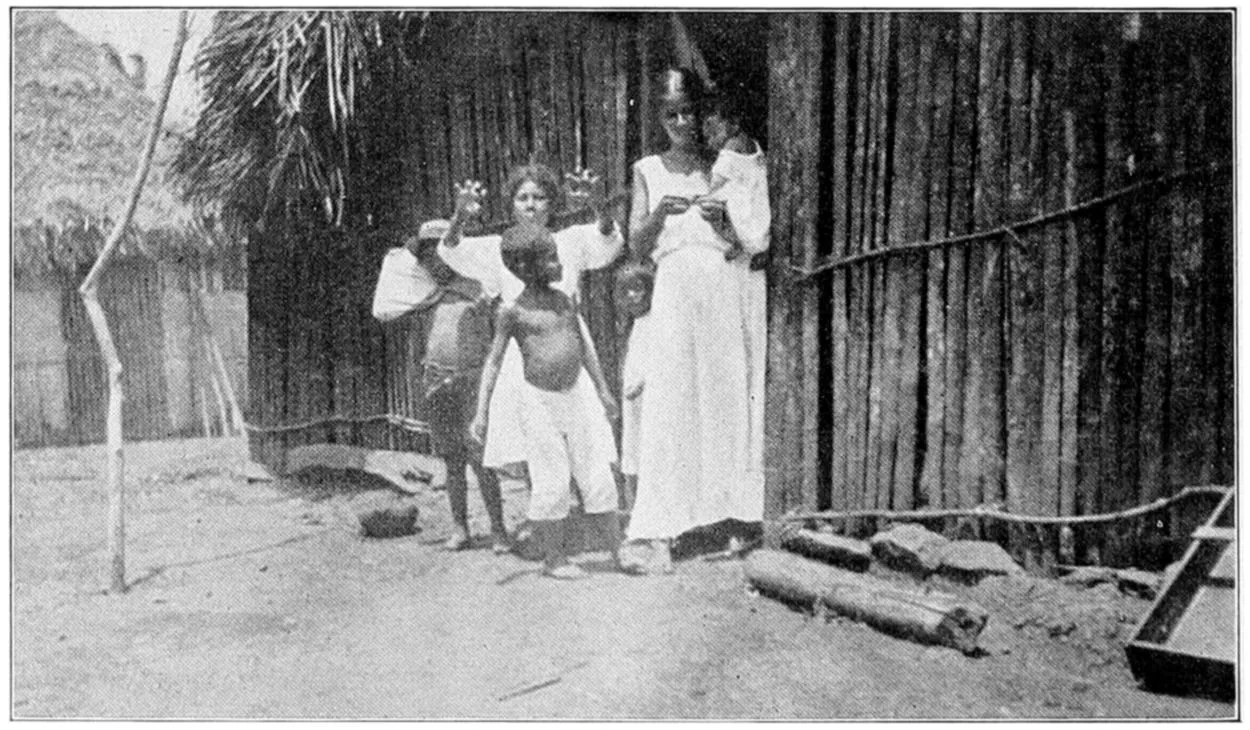
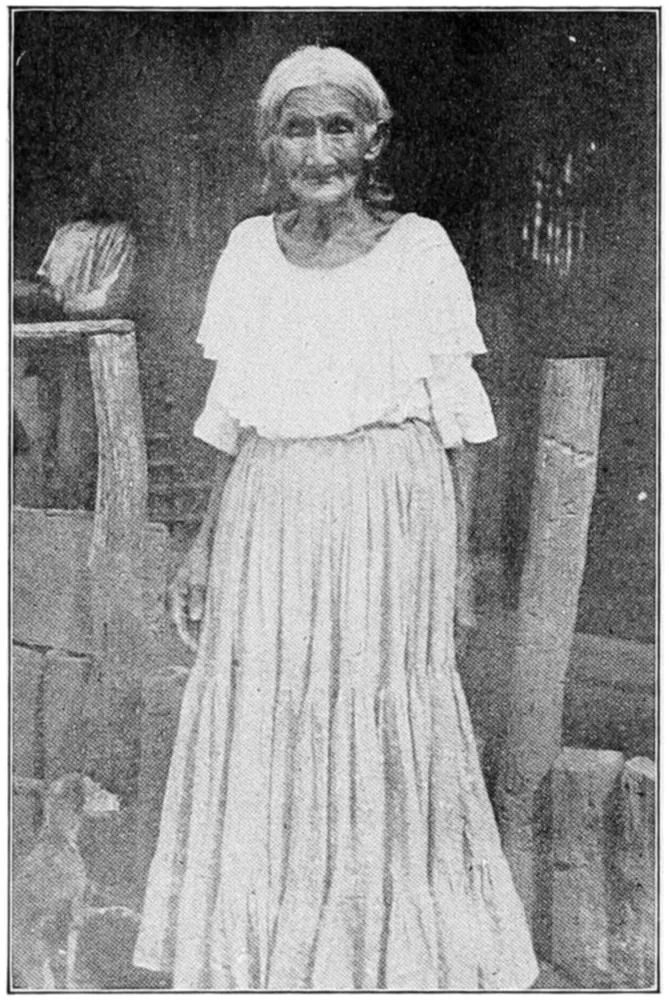
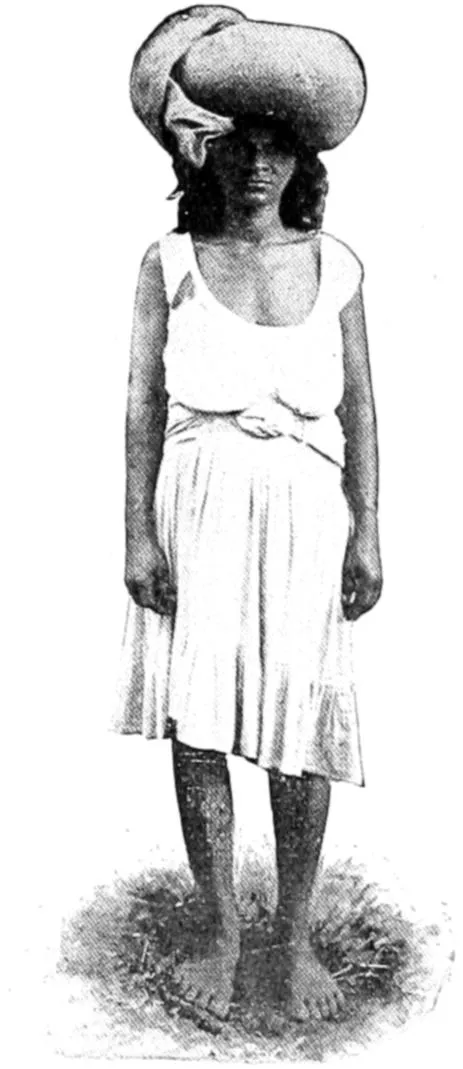
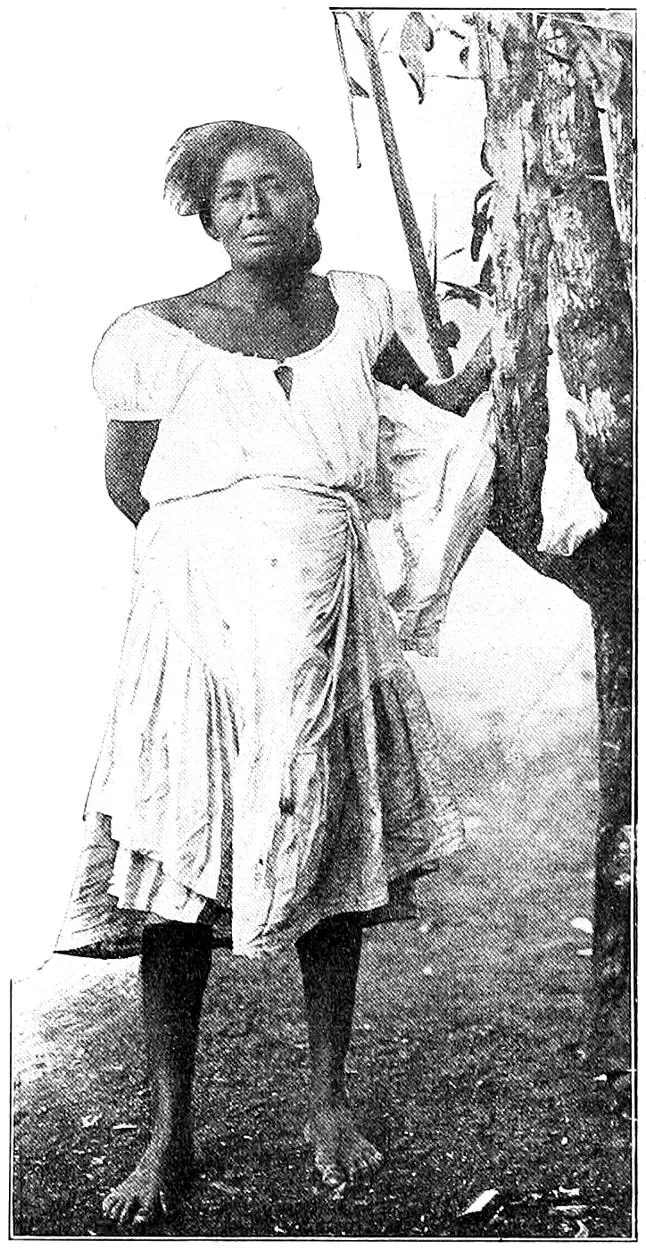
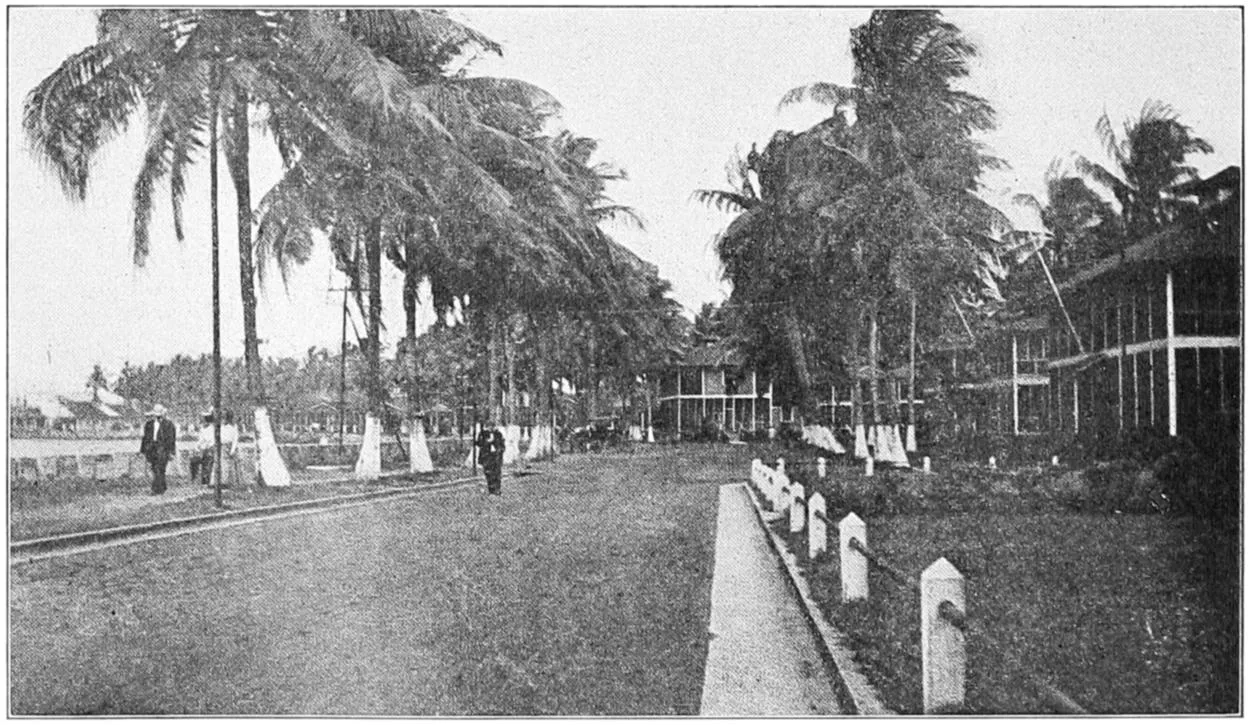
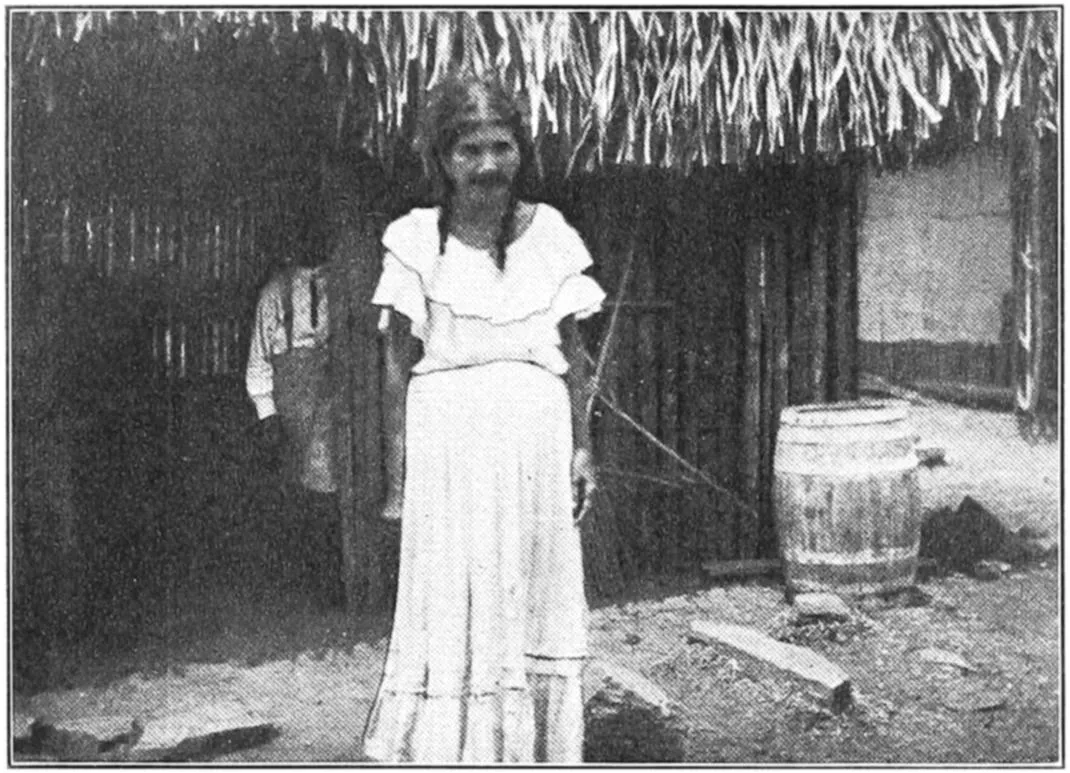
A LADY OF THE SAVANNA
The disaster was irreparable. The true treasure
train at the first uproar had fled back to the walls
of Panama. Nothing was left to Drake and his
men but to plod back empty handed to Cruces,
where they had left
their boats. Of
course they raided
the town before
leaving but the season
was off and the
warehouses barren.
Back they went to
the coast and relieved
their feelings
by ransacking a few
coastwise towns and
hurling taunts at the
governor of Cartagena.
Shortly thereafter
they renewed
their enterprise and
did this time capture
the treasure train,
getting perhaps $100,000 worth of plunder, with
but little loss. Some French pirates under Captain
Tetu, who had joined in the adventure, suffered
more severely and their captain, wounded and
abandoned in the forest, was put to death by the
Spaniards with certain of their favorite methods of
torture.
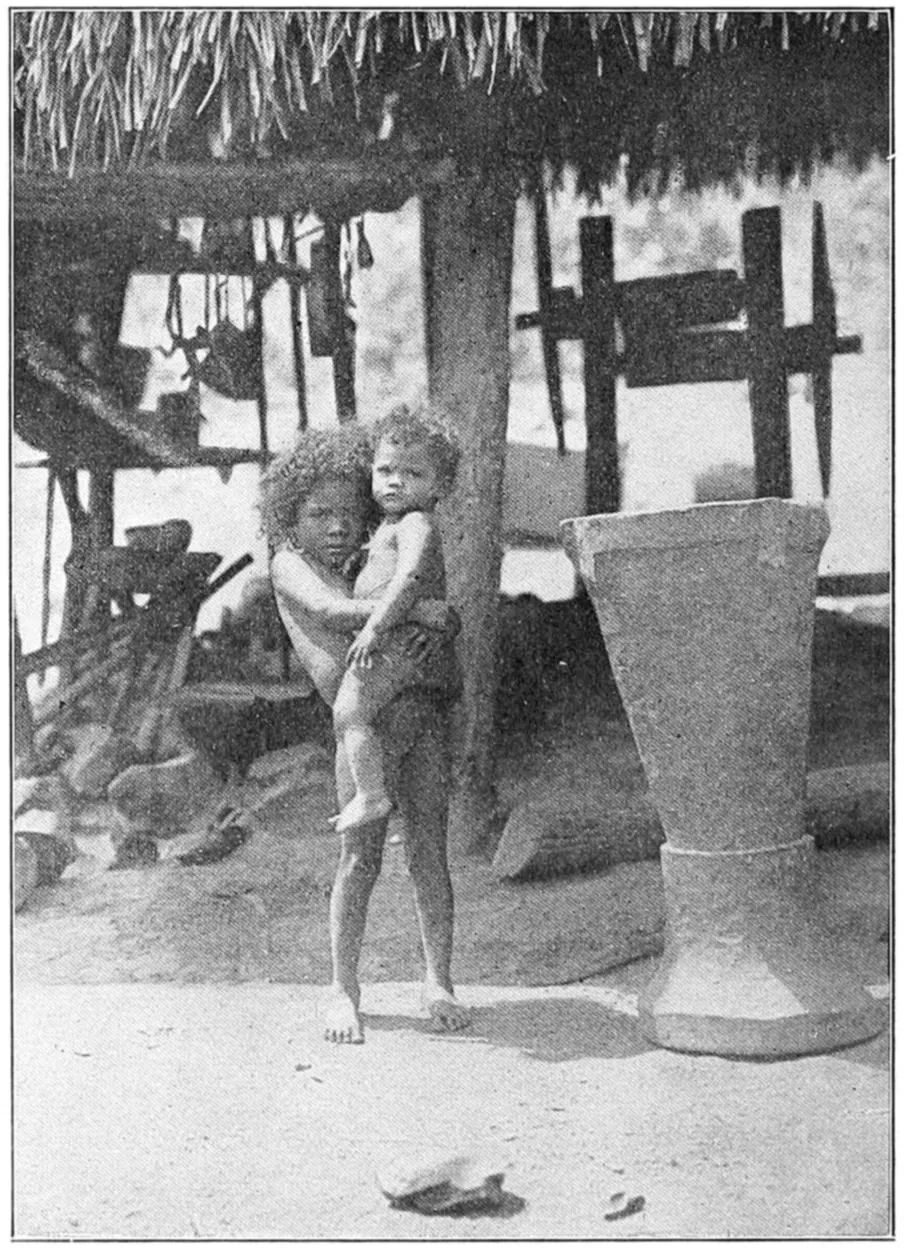
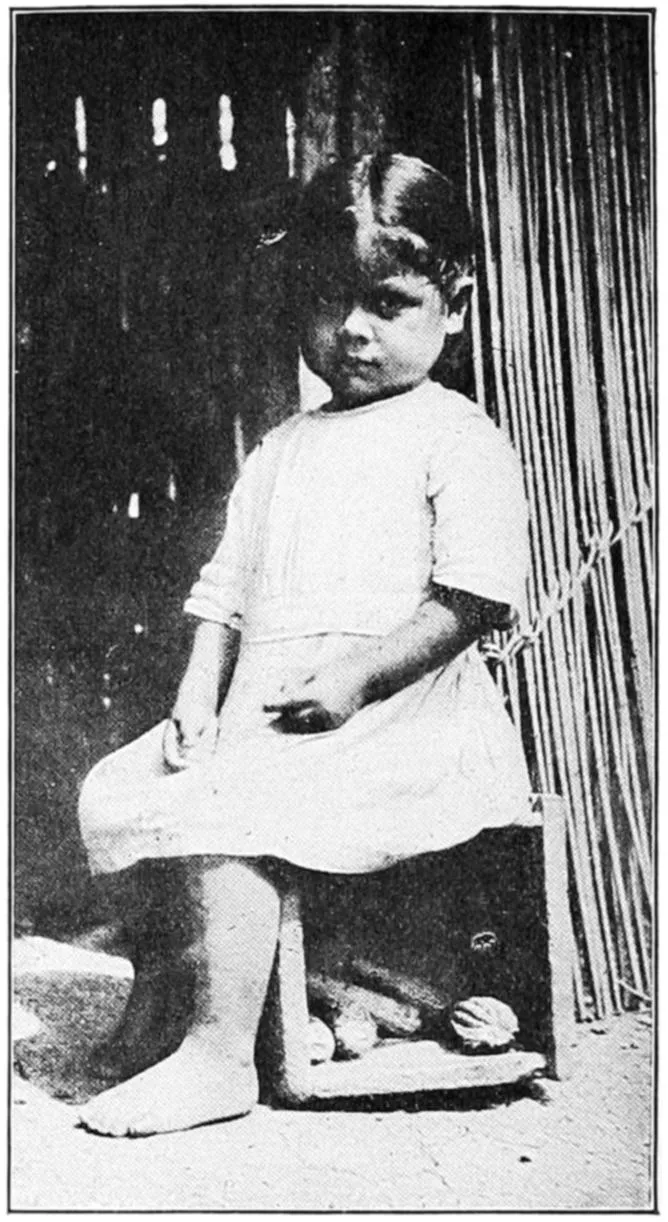
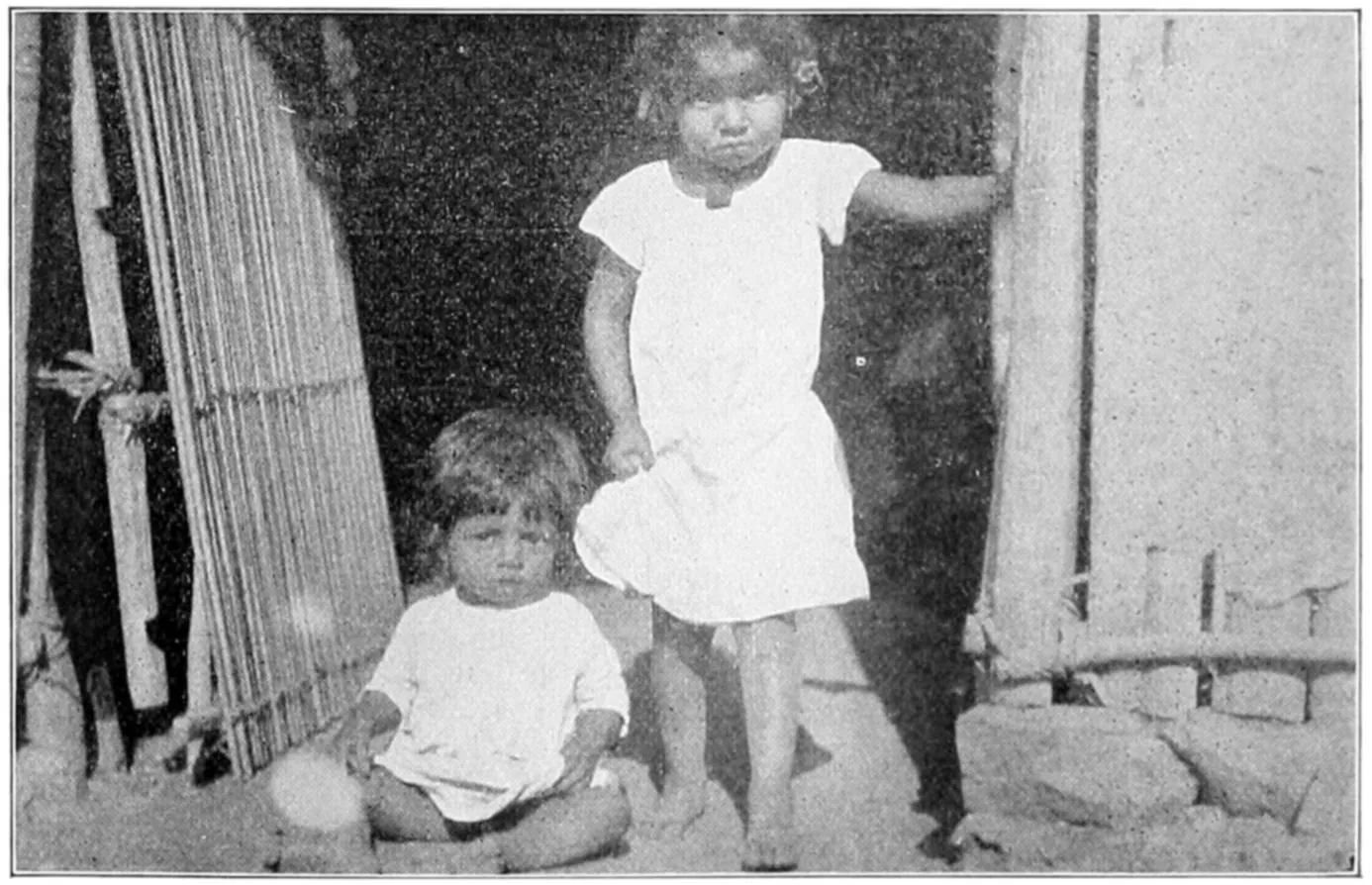
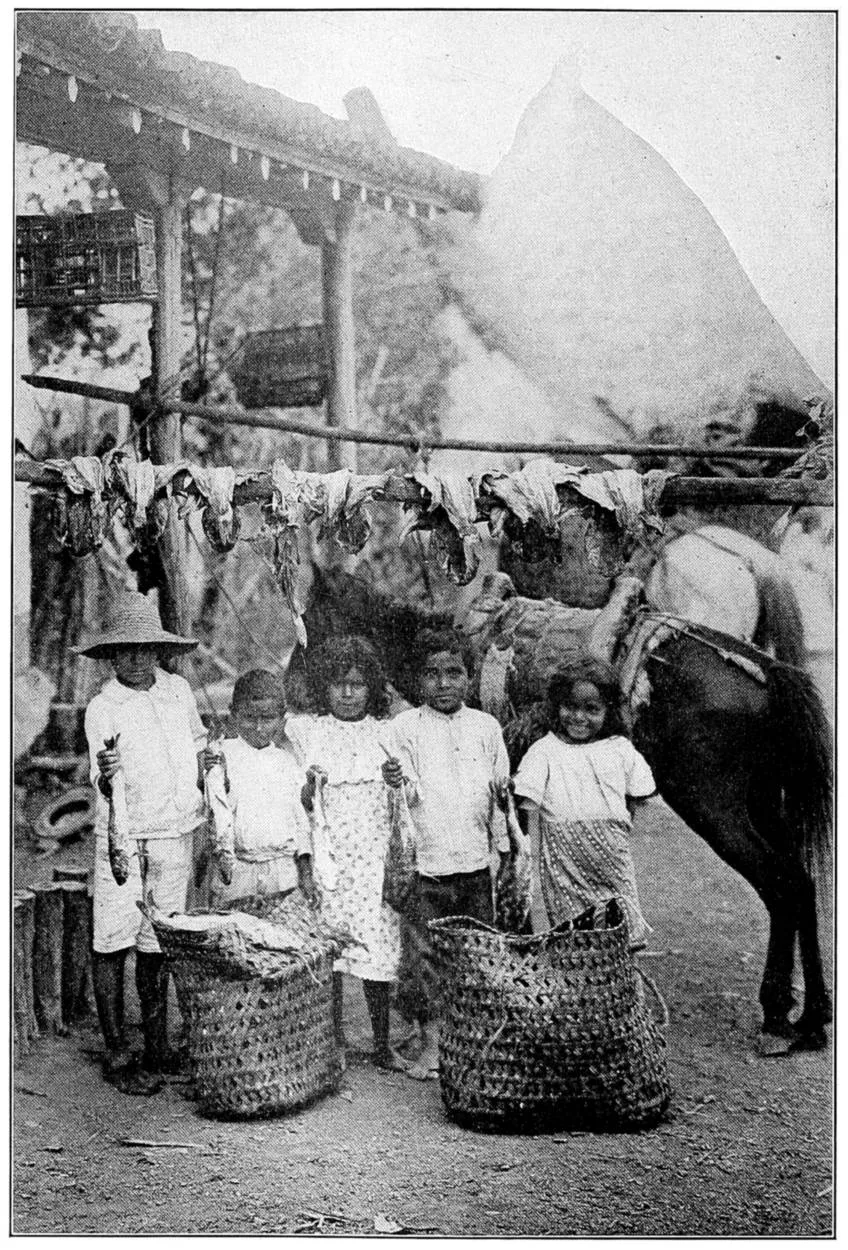
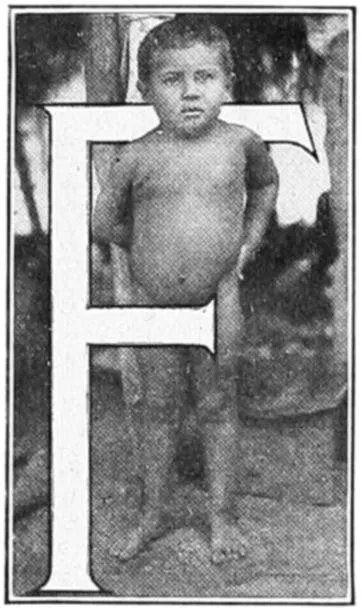
NATIVE CHILDREN, PANAMA PROVINCE
After a time in England Drake returned to the
Caribbean with a considerable naval force, harried
the coast, burned and sacked some towns, including
Nombre de Dios, and obtained heavy ransom from
others. He put into the harbor of Porto Bello, with
the intent of taking it also, but while hesitating
before the formidable fortresses of the place was
struck down by death. His body, encased in lead,
was sunk in the bay near perhaps to the ancient
ships which our dredges have brought to light.
The English long revered him as a great sailor and
commander, which he was, though a reckless adventurer.
His most permanent influence on the
history of the Isthmus was his demonstration that
Nombre de Dios was incapable of defense, and its
consequent disappearance from the map.
Such greatness as had pertained to Nombre de
Dios was soon assumed by Porto Bello, which soon
grew far beyond the size attained by its predecessor.
It became indeed a substantially built town, and its
fortresses on the towering heights on either side of
the beautiful bay seemed fit to repel any invader—notwithstanding
which the town was repeatedly
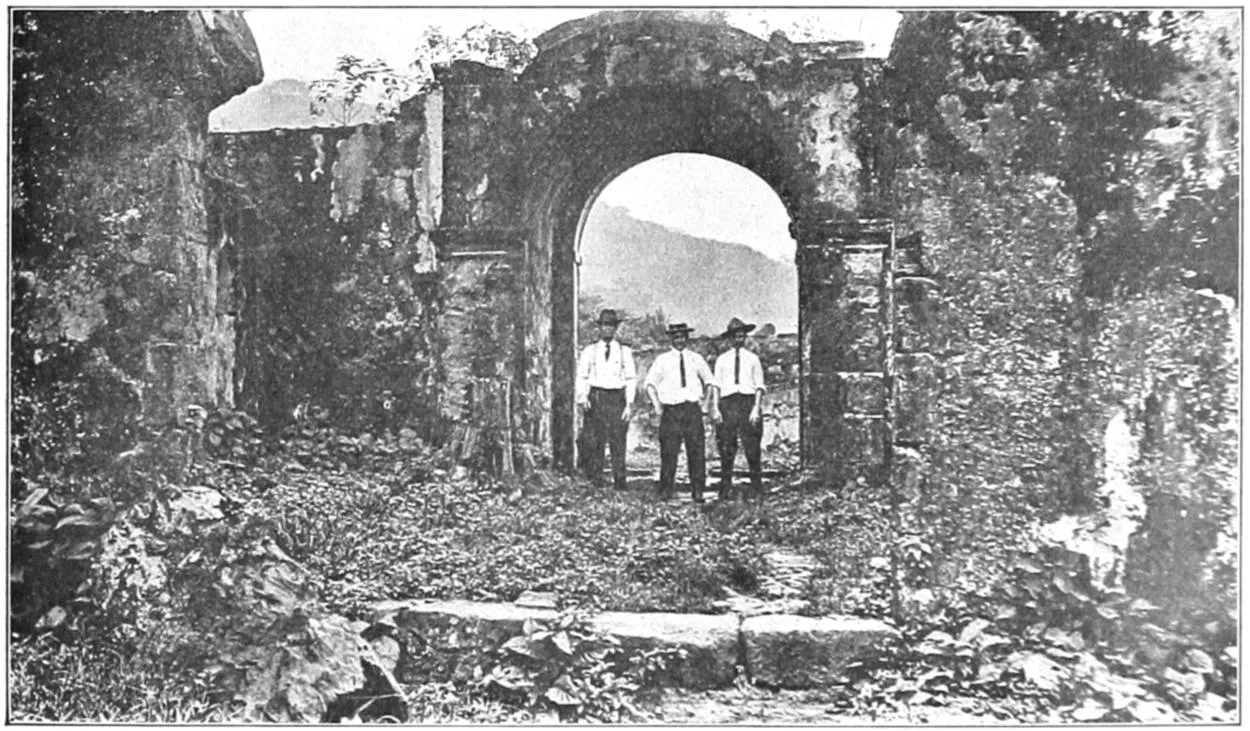
taken by the English. Even today the ruins of
town and forts are impressive, more so than any
ruins readily accessible on the continent, though to
see them at their best you must be there when the
jungle has been newly cut away, else all is lost in a
canopy of green. Across the bay from the town,
about a mile and a half, stand still the remnants
of the “Iron Castle” on a towering bluff, Castle
Gloria and Fort Geronimo. These defensive works
were built of stone, cut from reefs under the water
found all along the coast. Almost as light as pumice
stone and soft and easily worked when first cut,
this stone hardens on exposure so that it will stop
a ball without splitting or chipping. When Admiral
Vernon, of the British navy, had captured the town
in 1739, he tried to demolish the fort and found
trouble enough. “The walls of the lower battery,”
he recorded, “consisting of 22 guns, were nine foot
thick and of a hard stone cemented with such fine
mortar that it was a long work to make any impression
in it, to come to mine at all, so that the
blowing up took sixteen or eighteen days.” Even
today the relics of the Iron Fort present an air of
bygone power and the rusty cannon still lying by
the embrasures bring back vividly the days of the
buccaneers.
Inheriting the greatness and prosperity of Nombre
de Dios, Porto Bello inherited also its unpleasant
prominence as a target for the sea rover. French
filibusters and various buccaneers raided it at their
fancy, while the black Cimmaroons of the mainland
lay in wait for caravans entering or leaving its gates.
To describe, or even to enumerate, all the raids
upon the town would be wearisome to the reader.
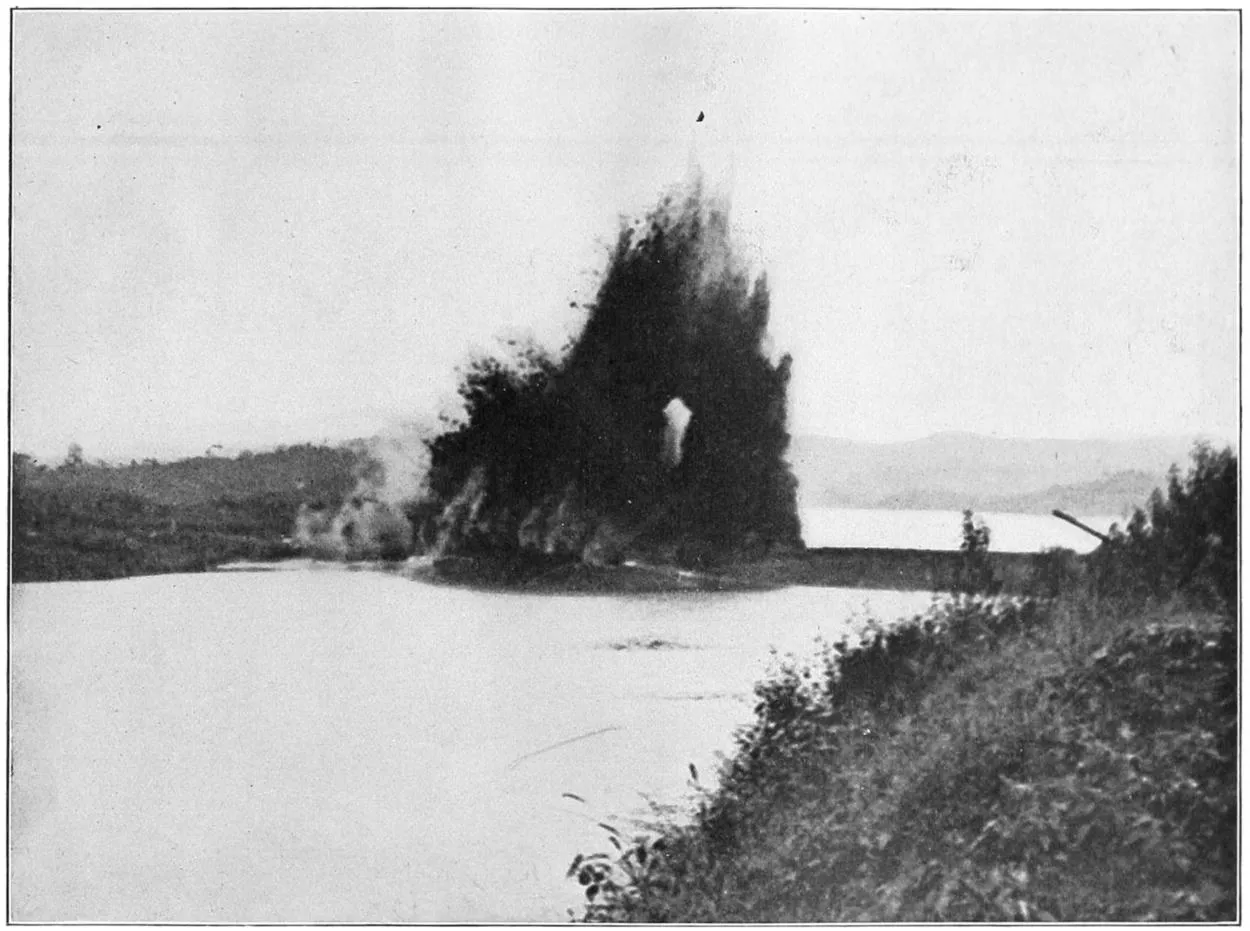
Most savage, however, of the pests that attacked
the place was Sir Henry Morgan, the
Welsh buccaneer, whose exploits
are so fully and admiringly related by
Esquemeling that we may follow his narrative,
both of the sack of Porto Bello, and the later destruction
of the Castle of San Lorenzo.
BULL-RIDER AND NATIVE CAR AT BOUQUETTE, CHIRIQUI
It was in 1668 that Morgan made his first attack
upon Porto Bello. “Here,” wrote Esquemeling,
“are the castles, almost inexpugnable, that defend
the city, being situated at the entry of the port; so
that no ship or boat can pass without permission.
The garrison consists of three hundred soldiers, and
the town is constantly inhabited by four hundred
families, more or less. The merchants dwell not
here, but only reside for awhile, when the galleons
come or go from Spain; by reason of the unhealthiness
of the air, occasioned by certain vapors that
exhale from the mountains. Notwithstanding their
chief warehouses are at Porto Bello, howbeit their
habitations be all the year long at Panama; whence
they bring the plate upon mules at such times as
the fair begins, and when the ships, belonging to
the Company of Negroes, arrive here to sell slaves.”
Morgan’s expedition consisted of nine ships and
about 460 men, nearly all British—too small a force
to venture against such a stronghold. But the
intrepid commander would listen to no opposition.
His ships he anchored near
Manzanillo Island where
now stands Colon. Thence
by small boats he conveyed
all save a few of his men to a point near
the landward side of the town, for he feared to
attack by sea because of the great strength of the
forts. Having taken the Castle of Triana he resolved
to shock and horrify the inhabitants of the town
by a deed of cold-blooded and wholesale murder,
and accordingly drove all the defenders into a
single part of the castle and with a great charge
of gunpowder demolished it and them together. If
horrified, the Spaniards were not terrified, but continued
bravely the defense of the works they still
held. For a time the issue of the battle looked dark
for Morgan, when to his callous and brutal mind
there occurred
an
idea worthy
of him alone.
Let us follow
Esquemeling’s
narrative
again:
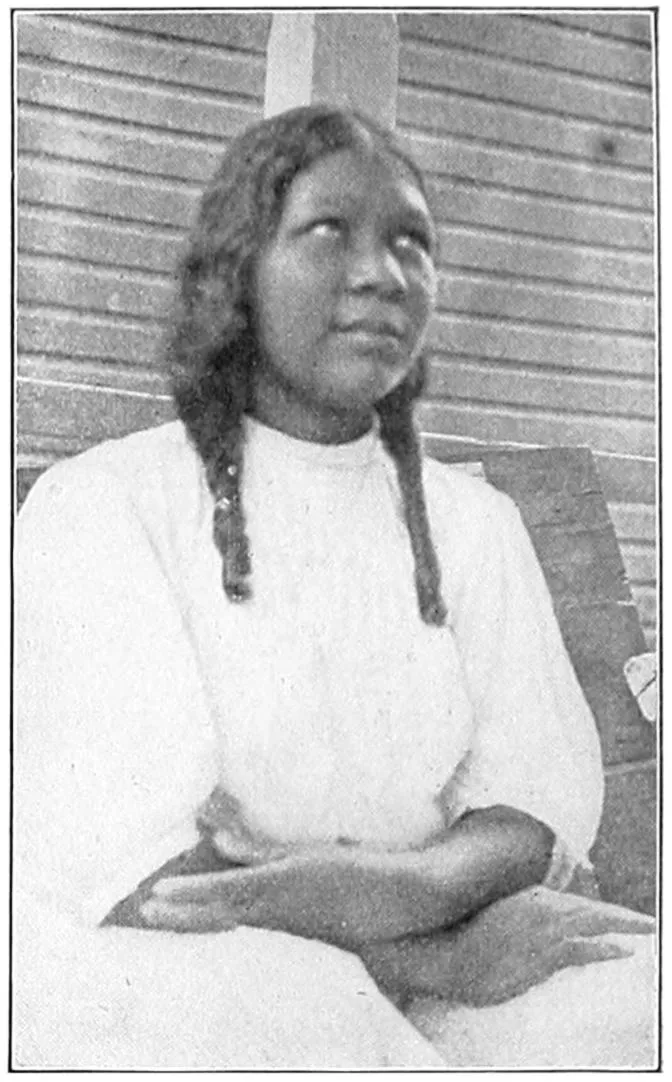
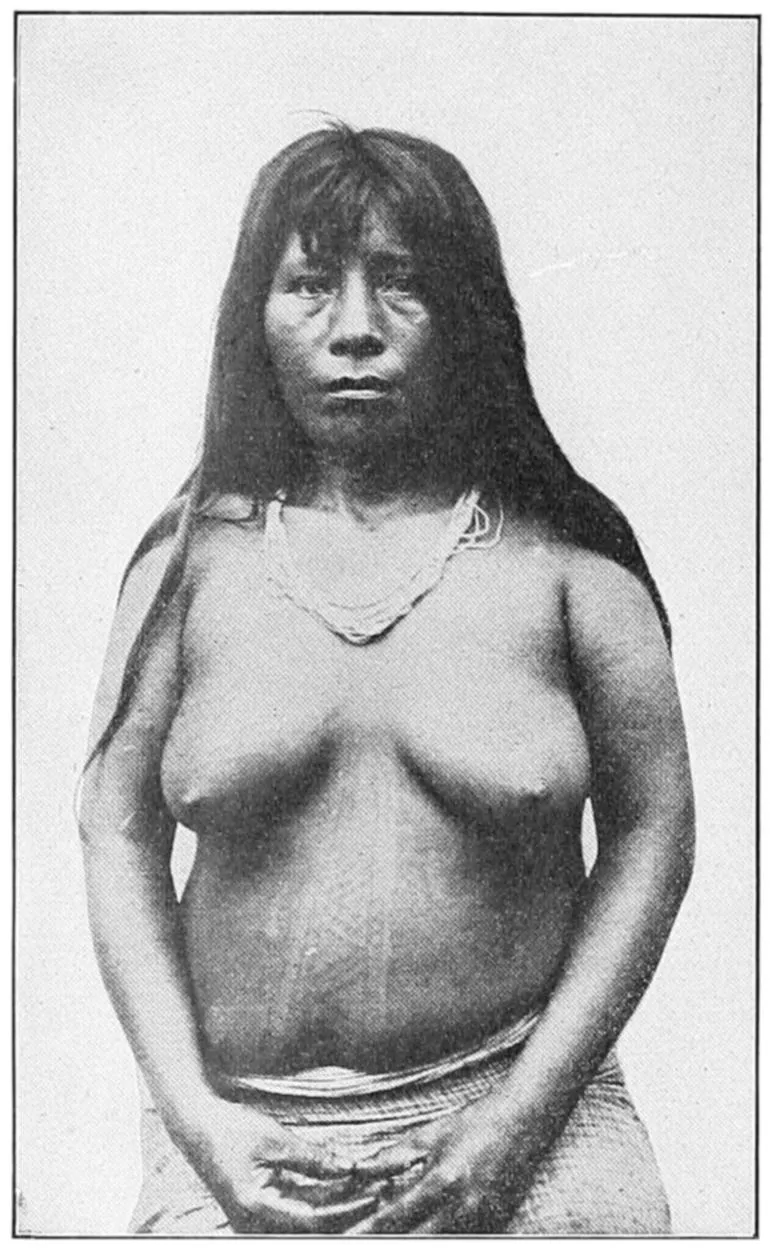
THE INDIANS CALL HER A WITCH
“To this
effect, therefore,
he ordered
ten or
twelve ladders
to be
made, in
all possible
haste, so
broad that
three or four
men at once
might ascend
them. These
being finished, he commanded all the religious men
and women whom he had taken
prisoners to fix them against the walls
of the castle. Thus much he had
beforehand threatened the governor to
perform, in case he delivered not the
castle. But his answer was: ‘I will
never surrender myself alive.’ Captain
Morgan was much persuaded
that the governor would not employ
his utmost forces, seeing religious
women and ecclesiastical persons exposed
in the front of the soldiers to
the greatest dangers. Thus the
ladders, as I have said, were put into
the hands of religious persons of both
sexes; and these were forced at the
head of the companies, to raise and
apply them to the walls. But Captain
Morgan was deceived in his
judgment of this design. For the
governor, who acted like a brave
and courageous soldier, refused not,
in performance of his duty, to use
his utmost endeavors to destroy
whosoever came near the walls. The
religious men and women ceased not to cry unto
him and beg of him by all the Saints of Heaven he
would deliver the castle, and hereby spare both his
and their own lives. But nothing could prevail with
the obstinacy and fierceness that had possessed the
governor’s mind. Thus many of the religious men
and nuns were killed before they could fix the ladders.
Which at last being done, though with great loss of
the said religious people, the pirates mounted them
in great numbers, and with no less valour; having
fireballs in their hands and earthen pots full of
powder. All which things, being now at the top of
the walls, they kindled and cast in among the
Spaniards.
A CUNA-CUNA FAMILY NEAR PORTO BELLO
COPYRIGHT, 1913, BY F. E. WRIGHT
A NATIVE VILLAGE
These villages are now scattered throughout the Canal Zone but will disappear as the order
expelling natives from the Zone is more thoroughly enforced.
“This effort of the pirates was very great, insomuch
as the Spaniards could no longer resist nor
defend the castle, which was now entered. Hereupon
they all threw down their arms, and craved quarter
for their lives. Only the governor of the city would
admit or crave no mercy; but rather killed many of
the pirates with his own hands, and not a few of his
own soldiers because they did not stand to their
arms. And although the pirates asked him if he
would have quarter, yet he
constantly answered: ‘By no
means; I had rather die as a
valiant soldier, than be hanged
as a coward’. They endeavored
as much as they could to take
him prisoner. But he defended
himself so obstinately that they
were forced to kill him; notwithstanding
all the cries and tears
of his own wife and daughter,
who begged him upon their
knees he would demand quarter
and save his life. When the
pirates had possessed themselves
of the castle, which was
about night, they enclosed
therein all the prisoners they
had taken, placing the women
and men by themselves, with
some guards upon them. All
the wounded were put into a
certain apartment by itself,
to the intent their own complaints
might be the cure of
their disease; for no other was afforded them.”
For fifteen days the buccaneers held high carnival
in Porto Bello.
Drunk most
of the time,
weakened with
debauchery and
riot, with discipline
thrown
to the winds,
and captains
and fighting
men scattered
all over the
town in pursuit
of women and
wine, the outlaws
were at
the mercy of
any determined
assailant. Esquemeling
said,
“If there could
have been found 50 determined
men they could have retaken
the city and killed all the
pirates. Less than fifty miles
away was Panama with a heavy
garrison and a thousand or
more citizens capable of bearing
arms. Its governor must have
known that the success of the
raid on Porto Bello would but
arouse the pirates’ lust for a
sack of his richer town. But
instead of seizing the opportunity
to crush them when they
were sodden and stupefied by
debauchery he sent puerile
messages asking to be informed
with what manner of weapons
they could have overcome such
strong defenses. Morgan naturally
replied with an insult
and a threat to do likewise to
Panama within a twelvemonth.
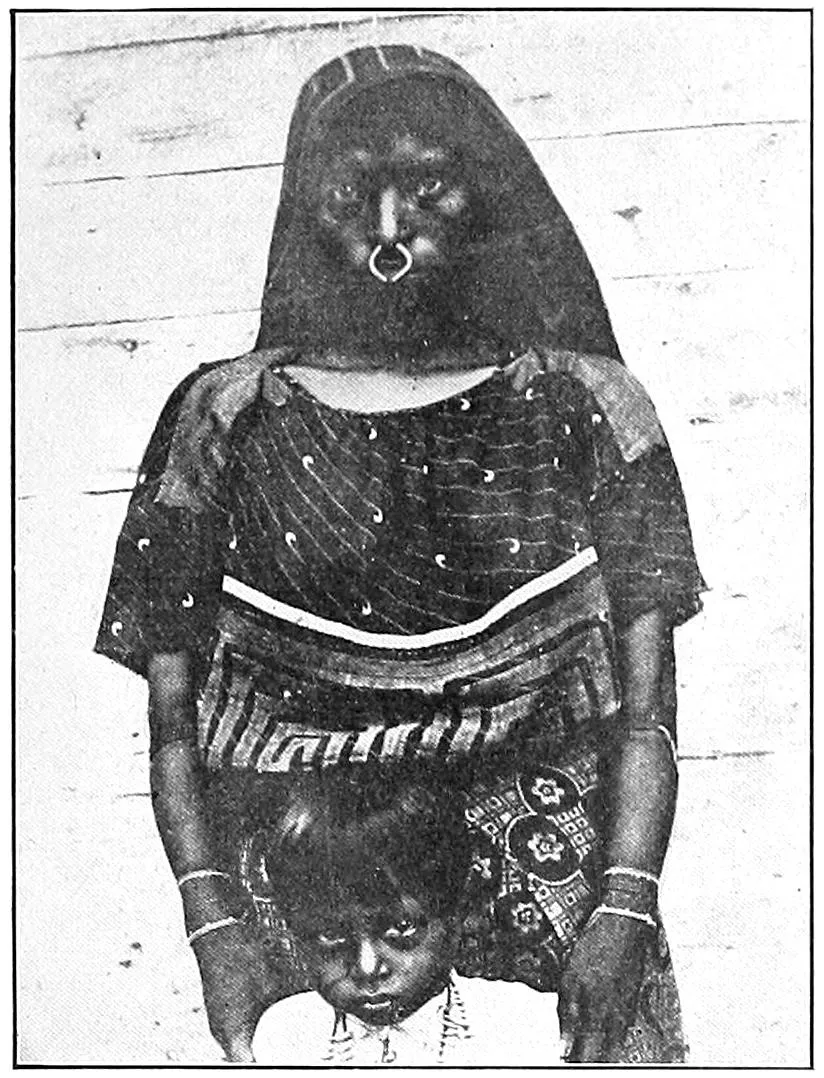
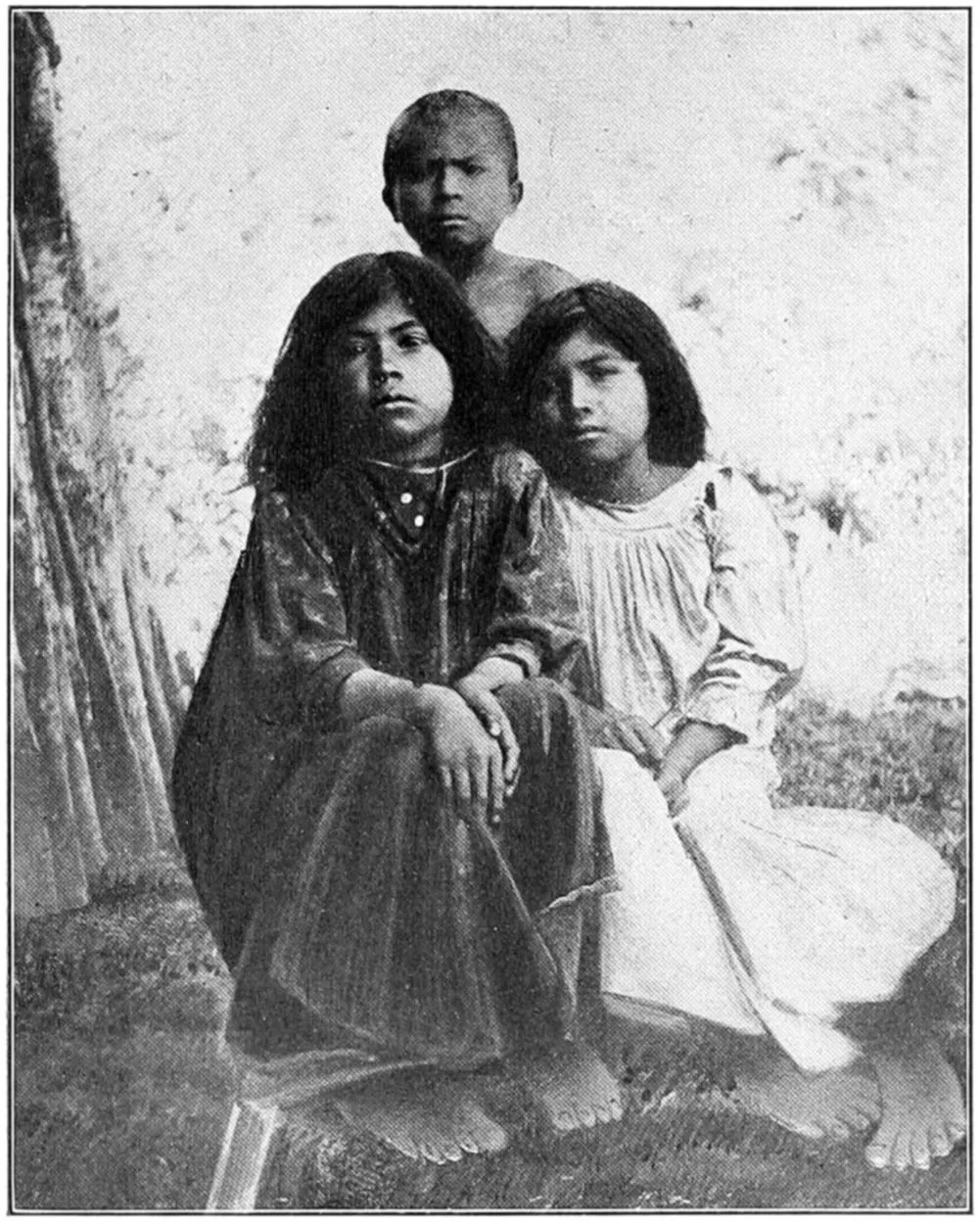
A CHOLO MOTHER AND DAUGHTER
“For fifteen days the revel
was maintained, every citizen
who looked as if he had money being put to the
torture to compel him to confess where he had
hidden it.
When all had
been extorted
that seemed
possible the
buccaneers
made ready to
depart. But
first Morgan
demanded 100,000
pieces of
eight, in default
of which he
would burn the
city and blow
up the castles.
The wretched
citizens sought
aid of the President
of Panama
who was as unwilling
to help them with gold as with powder and
lead. In some miraculous way they raised it, and
Morgan and his men departed, making their way to
that town of revelry, Port Royal, of which I have
already spoken, at the entrance to Kingston harbor.
Perhaps it is fair to contrast with Esquemeling’s
story of the exploit Morgan’s official report—for this
worthy had a royal commission for his deeds. The
Captain reported that he had left Porto Bello in as
good condition as he found it, that its people had
been well treated, so much so that “several ladies of
great quality and other prisoners who were offered
their liberty to go to the President’s camp refused,
saying they were now prisoners to a person of quality
who was more tender of their honors than they
doubted to find in the President’s camp; and so
voluntarily continued with him.”
Captain Morgan’s own testimony to his kindness
to prisoners and his regard for female honor impresses
one as quite as novel and audacious as his
brilliant idea of forcing priests and nuns to carry the
scaling ladders with which to assault a fortress defended
by devout Catholics. Yet except for little
incidents of this sort the whole crew—Spanish conquistadores,
French filibusters and British buccaneers—were
very tenacious of the forms of religion
and ostentatious piety. The Spaniards were always
singing Te Deums, and naming their engines of war
after the saints; Captain Daniels, a French filibuster,
shot dead a sailor for irreverent behavior during
mass; the English ships had divine service every
Sunday and profanity and gambling were sometimes
prohibited in the enlistment articles. All of which
goes to show that people may be very religious and
still a pest to humanity—nor is it necessary to turn
to the buccaneers for instances of this fact.