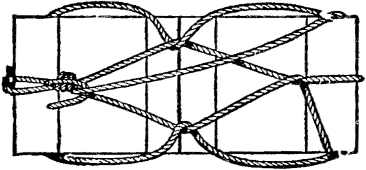
Whether the load is made up with
kyacks, alforjas, or separate packs
slung to the crosstree saddle as described
in the preceding chapter it must be secured
in place. For this purpose various
hitches are employed by packers, each hitch
well adapted to the particular conditions which
evolved it.
Our description will be confined to the following
six hitches, which furnish ample variety
to suit the exigencies of ordinary circumstances:
(1) The crosstree or squaw hitch, which
is the father of all hitches because from it the
diamond, the double diamond and all pack-train
hitches in present-day use were evolved.
(2) A diamond hitch, adapted to the crosstree
pack saddle. This is a form of single
diamond.
(3) The United States army diamond particularly
adapted for use with the aparejo. The
true double diamond is a hitch rarely called for
save in army work or freighting pack trains,
and will therefore be omitted. There are several
so-called double diamonds that might be
described, but these near-double diamonds possess
little or no advantage over the single diamond,
and we shall pass them over as they are
scarcely resorted to in ordinary pack work.
(4) The one-man or lifting hitch.
(5) The stirrup hitch, to be used when the
packer has rope but no cinch.
(6) The saddle hitch, employed in slinging
loads upon an ordinary riding saddle.
(7) The hitch for packing a sick or injured
man.
This hitch was introduced into the Northwest
by the early fur traders and adopted by
the Indians. Among Indians, women are the
laborers, and the crosstree hitch being the hitch
almost exclusively employed by the squaws was
presently dubbed by white men the "squaw
hitch." It is a hitch very generally used by
prospectors, and for this reason is known in
some localities as the "prospector's hitch."
In other sections of the West, where sheep
herders commonly use it, it is locally called
the "sheep herder's hitch." It is a hitch
easily thrown by one man, holds well, and is
therefore a favorite.
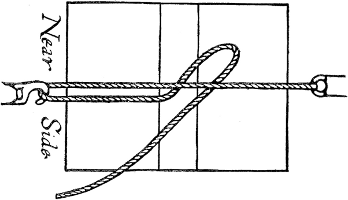
Squaw or Crosstree Hitch
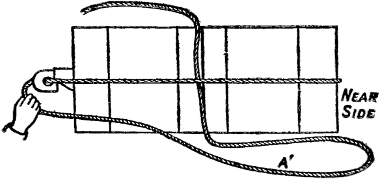
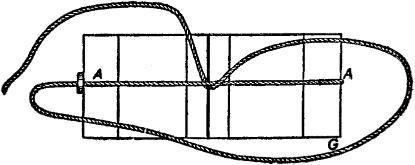
(Fig. 1.) Rope engaged on cinch hook and bight of rope
running from rear forward under standing rope.
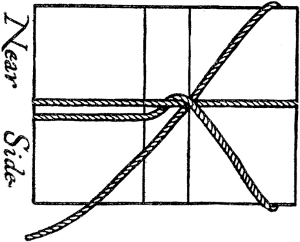
(Fig. 2.) Loop of bight enlarged, reversed and passed
around bottom and lower corners of off side pack.
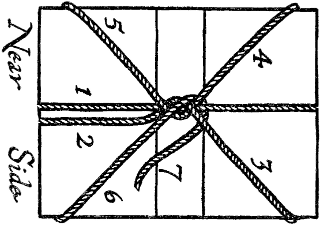
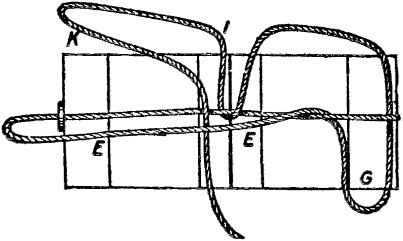
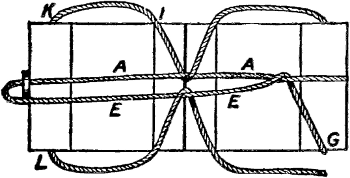
(Fig. 3.) Hitch formed and ready to tighten. 1. Standing
rope. 2. Running rope. 3. Rear rope—off side. 4.
Front rope—off side. 5. Front rope—near side. 6. Rear
rope—near side. 7. Marker.
With lash rope attached to cinch, take a
position on the near side of the animal facing
the pack. Throw the cinch over the top and
center of pack in such manner as to be easily
reached under the horse's belly. Pick up cinch
and engage the rope from in out upon the
hook. Draw up slack, taking care that the
cinch rests properly upon the horse's belly.
Grasp the running and standing rope in left
hand above the hook, to hold slack, and with
the right hand double the running rope and
thrust the doubled portion under the standing
rope from rear forward in a bight, at top of
pack. Enlarge the loop of the bight by drawing
through enough slack rope to make the loop
of sufficient size to be passed over and around
the off side kyack or pack. Step to off side,
turn loop over, and engage it around the ends
and bottom of kyack, from front to rear. Return
to near side, and pass the loose end of
running rope around the forward end, bottom
and finally rear end of kyack. Draw the rope
end, from above down, over and under the
standing rear and running ropes, at the top and
center of the load, and the hitch is ready to
tighten.
To tighten the hitch, grasp the running rope
a little above the cinch hook, and pull with all
your strength, taking up every inch of slack
possible. Retain this slack by holding the
standing and running rope together with left
hand, while with the right hand you reach to
top of load and pull up slack where running
rope passes under standing rope. Go to off
side and draw in all slack, following the rope
around off side pack. Retaining slack, return
to near side, and still following rope and taking
up slack around front to rear of near side
pack, grasp end of rope, already engaged as
directed over and under standing rear and
running rope, pull hard, bracing a foot against
pack, and tie. Two men, one on each side of
the horse, can, of course, throw the hitch and
tighten the load much more quickly than one.
Tightening the load is just as important a feature
of packing as evenly balancing the packs.
The result of an improperly tightened load
will pretty certainly be a sore-backed horse.
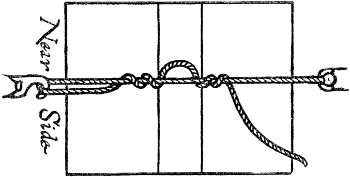
(Fig. 1.) A turn is here taken around standing rope
with loop of bight of running rope thrust under standing
rope from rear to front, as in Fig. 1, illustrating Squaw
Hitch.
Take position on the near side of horse, as
when forming the crosstree hitch, and throw
cinch over horse, engaging it on hook and adjusting
it in exactly similar manner. Take in
slack and retain it by grasping the standing
and running ropes in left hand. Double running
rope and thrust doubled portion under
standing rope in a bight, from rear forward
at top and center of load. Take up all slack.
Enlarge loop of bight by drawing through
enough running rope to form a diamond of
sufficient size to hold top of load. Now bring
center of loop over and under standing rope,
from rear forward, thus giving rope at each
side of loop a complete turn around standing
rope. Throw the disengaged portion of running
rope to off side of horse, and passing to
the off side, bringing the rope down along rear,
bottom, and up front of kyack, thrust loose
rope end up through loop at top of pack.
Take in slack and return to near side of horse.
Engage running rope around front, bottom and
rear end of near side kyack or pack, and thrust
rope end over and under standing rope opposite
center of loop. Take up slack and load in
ready to tighten.
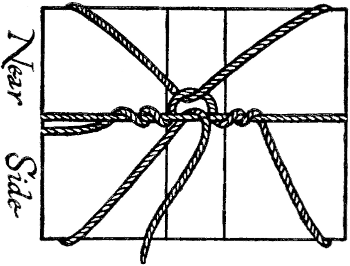
Crosstree Diamond Hitch
(Fig. 2.) Hitch formed ready to tighten.
Tighten load by grasping running rope above
hook and drawing as tight as possible. Hold
slack with left hand, gripping running and
standing rope, and take up slack at loop with
right hand. Pass to off side and take up slack
and tighten rear to front around kyack. Pass
to near side, tightening front to rear; finally,
bracing a foot against the load pull on loose
end, and retaining all slack make final tie.
The above described "diamond" hitch is
not the true diamond employed by government
pack trains where the aparejo is used, but it is
a diamond evolved from the crosstree hitch,
and is particularly well adapted to the crosstree
or sawbuck pack saddle, is easily formed,
and holds the load securely, which is the ultimate
object of all hitches.
The single diamond hitch employed by army
packers is the ideal hitch for securing a load
upon an aparejo. This is a two-man hitch,
though an expert can throw it alone.
One packer takes his position on the off side
of the animal, while the other with the coiled
lash rope, cinch attached, remains on the near
side.
The near packer, retaining the cinch, throws
the coiled rope over the horse's haunch, to rear.
The off packer picks up end of rope, and receiving
the hook end of cinch, passed to him
under horse's belly by near packer, holds it
together with end of rope in his left hand, and
stands erect.
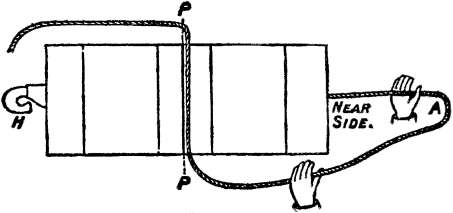
United States Army Diamond Hitch
Figures represent successive stages in formation.
Near side towards right in each case. Line PP in Fig. 1
represents horse's back. AA (Fig. 3) standing part of
rope, and A´ (Fig. 2) the running rope.
The near packer, taking a position at the
horse's neck, grasps the rope about six feet
from cinch, and with an upward and backward
motion, drops it between the two packs, one
slung on either side of the aparejo.
Still grasping the rope in his right hand just
forward of the packs at the top, he pulls forward
between the packs sufficient running rope
to permit him to bring his hand down to his
side. Retaining the rope in his right hand
he now reaches up with his left hand, and
with back of hand up and thumb under
grasps running rope and draws sufficient rope
forward to permit the left hand grasping the
rope to come down to his side, arm's length.
With the right elbow crooked the right hand,
still holding the rope, is brought up about on
a level with the chin, and the left hand, also
retaining its hold on the rope, thumb down, is
raised to hollow of the right arm, with loop of
rope between the hands lying outside the right
arm. Now by a single swinging motion with
both hands the rope in the right hand, called
the "standing rope," is thrown over the center
of pack to the off packer who stands ready
to receive it; and the rope held in the left hand,
called the "running rope," over the horse's
neck, forward of the pack.
The off packer, still standing with cinch hook
and end of rope in left hand, with his right
hand grasps the standing rope as it comes over
as high up as he can conveniently reach, draws
it down, and holding the cinch hook in proper
position below the aparejo draws down the
standing rope and engages it upon the hook
from in out.
The near packer now draws forward between
the packs about six feet more rope, which he
throws to the rear of the near side pack. This
rope is now called the "rear" rope. He next
grasps the running rope at the horse's neck,
and with the off packer's assistance releases that
portion of the running rope lying between the
packs forward of the standing rope, and brings
it to the center of pack on near side, next to and
just back of the standing rope.
He now slips his right hand down the rope
to a point half way between pack and aparejo
boot, and with the left hand reaches from forward
between standing rope and aparejo and
grasps the rope just above the right hand. Both
hands are now slipped down the rope, and with
the same motion drawn apart, one on each side
of standing rope (under which the rope being
manipulated passes) to the cinches. With the
hands about ten inches apart, the section of rope
between them, which is held in a horizontal
position, is jammed down between the two
cinches under the aparejo.
The off packer, holding the running rope
with his right hand above the hook, places the
left hand holding end of rope on top of running
rope between his right hand and the hook, and
with thumb under running rope grasps both
ropes and slips his hands up on running rope,
bringing it to center of load.
He now draws the end of the rope, held by
left hand, forward until a foot or so falls upon
the near side of the horse's neck. The hitch
is now formed, ready to tighten.
To tighten, the near packer with his left
palm passing the side and center of the pack
grasps the running rope at the rear of the standing
rope, at the same time bringing the running
rope between the thumb and index finger of the
left hand, which he is using as a brace. In this
position he is prepared to hold slack as it is
given him by the off packer.
The off packer grasps the running rope close
down to the hook, and, bracing himself with a
knee against the aparejo boot, pulls with all his
might, taking two or more pulls, if necessary,
and giving slack to near packer, until no more
slack can be taken on standing rope. He now
steps smartly to rear and throws the top rope
forward of the pack. The top rope is the rope
leading up from the rear corner of the aparejo
boot on near side to the side and center of off
side pack. After it is thrown forward it is
called the "front" rope. He now prepares to
receive slack from near packer by grasping the
rear rope where it lies between the packs.
The near packer, who has been receiving the
slack given him by the off packer, carries his
right hand, with which he holds the slack at
rear of standing rope, to lower side of pack
toward the aparejo, and reaches under standing
rope, with left hand grasps rope above right
hand, drawing it forward under standing rope,
and employing both hands jams it upward in a
bight between standing rope and pack. Care
should be taken during this operation to retain
all slack.
The near packer now engages around front
boot of aparejo the free portion of the running
rope below the bight just formed. Holding
slack with left hand, he grasps the rope to rear
of cinch in right hand; receiving slack from left
hand he brings rope to rear of aparejo boot,
and with both hands carries rope smartly to
upper corner of side pack, always retaining
slack. The off packer receives slack, pulling it
in quickly hand over hand, the near packer retaining
his hold until the off packer has the rope
taut. The near packer now takes a position
at the forward end of load, facing the rear, and
grasps end of rope prepared to take slack from
off packer.
The off packer, after receiving slack from
near packer as described takes a turn of the
rope around each hand, holding every inch of
slack, steps to the rear, keeping in line with
the horse's body, and then facing forward
throws his full weight back upon the rope. Retaining
the slack with his left hand, with his
right hand he brings the free portion of running
rope under and around the aparejo boot,
from rear to front, passes forward of rope, and
facing the rear and grasping rope, right hand
above the left, brings it smartly to upper corner
of pack.
The near packer, holding end of rope, immediately
draws in slack until he has about six
feet of free rope, which he throws over center
of load to off side, and then drawing in all remaining
slack takes a turn of rope around each
hand and throws his weight upon it, and the off
packer releases his hold.
Holding the slack with the left hand, the
near packer releases his right hand and with
it engages the free or running portion of rope
under and around the aparejo boot to rear
of load, while the off packer steps to rear of
load, takes end of rope, and while he draws
in all slack, neatly coils rope, holding coil in
right hand at lower side of pack, and, with palm
of left hand braced against center of load, receives
slack from near packer.
Grasping in his left hand the taut rope above
the coils, and lifting it sufficiently above the
load to admit the coiled rope under it, he swings
the coils with his right hand from rear to front
to top of load and brings the standing rope
held in his left hand down on top of the coils
to hold them. He now takes a loop of the
rope, forces it between standing rope and pack,
in a bight, and takes a turn of the loop around
standing and running rope to secure it, first
joining the loop well up, and the hitch is tightened.
This is a pretty good hitch sometimes where
kyacks are not used and an irregular pack is
swung upon the crosstree. While it holds the
pack very securely to the animal's back, its
tendency is to lift the corners that might cause
friction upon the horse's sides.
Standing on the near side of the horse, throw
cinch over the horse's back, pick up cinch and
engage rope upon cinch hook, from in out, as
in previous hitches. Take up slack, bring running
rope up side of pack, double and thrust
loop or bight under standing rope from rear
forward at top of pack, to hold slack. Throw
all loose rope to off side, and pass around to
off side yourself.
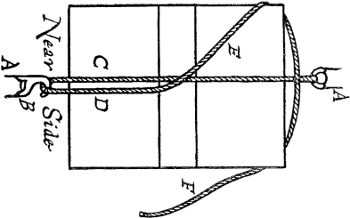
(Fig. 1.)
A—Cinch
C—Standing rope
B—Cinch hook
D—Running rope
E—Front rope
F—Marker
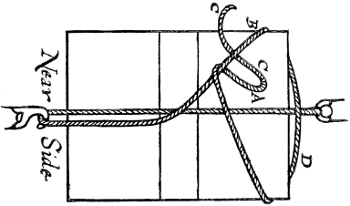
Lifting Hitch
(Fig. 2.) Grasp loop A in left hand and with right
jam rope C C along and under rope B (where latter
passes beneath corner of pack) to D, as shown in Fig. 3.
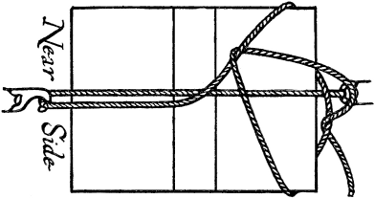
(Fig. 3.) Off side of hitch completed.
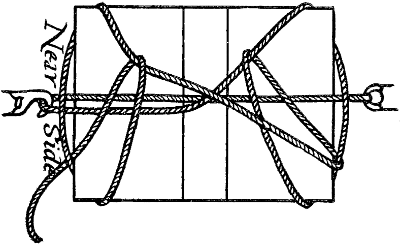
Lifting Hitch
(Fig. 4.) Hitch formed ready to tighten.
Draw loose end of running rope forward and
from under standing rope at top of pack. The
effect of operations thus far is this: The running
rope passes up the near side, from hook
and to top of load and passes under standing
rope, which will serve effectually in final tightening
of cinch to hold slack.
Pass end of running rope over and under
the forward end of off pack and backward under
standing rope and pack. Now bring the
rope forward over side of pack, double, and
thrust the doubled portion over and under forward
rope in a bight. With left hand grasp
double of rope at bight just to rear of forward
rope where it passes over and under forward
rope, and with right hand slip running rope
down and just to rear of standing rope. Take
up slack. By pulling hard upon loose end of
running rope the ends of pack will be lifted
slightly.
Throw loose end over horse to near side,
and across middle of load. Pass to near side
and manipulate rope as on off side. Tighten
load. Secure the hitch by bringing loose end
of rope over and under forward running and
standing ropes, and tie.
This hitch is useful where the packer has
lash rope but no cinch, and may be employed on
sawbuck saddle, aparejo, or where the load is
hung upon an ordinary riding saddle. It is a
two-man hitch, though one man may manipulate
it.
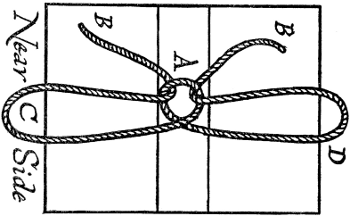
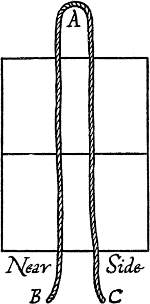
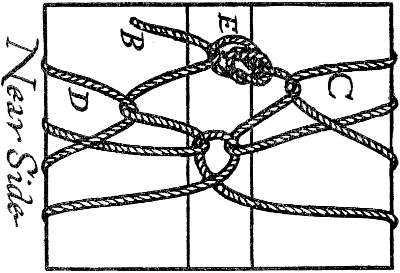
(Fig. 1.) Rope is thrown across load with equal portion
falling on each side. Loop A is formed on top of
load, and the ends BB are passed through it to form
large loops C and D.
Stirrup Hitch
(Fig. 2.) Loops C and D are passed under horse's
belly and seized by packers on opposite sides. Each packer
then draws end of rope which he is holding through loop
which has been passed to him. Off packer forms bowline
knot, E, and near packer passes his end of rope through
this. Hitch is now ready to tighten.
Pass the rope over the load, with an equal
division of rope on either side. Form a loop
at center and top of load. Each packer will
now place a foot upon the rope, where it falls
from loop to ground, and pass his end of rope
through loop from above down and draw
through slack rope. This forms a loop on
either side in which the foot rests. Each
packer will now bring forward and under the
horse's belly the loop in which his foot rests,
passing the loop to the other packer at the same
time disengaging his foot, and will pass the
loose end of rope which he holds through the
loop which he receives. The ropes on top of
pack will now be spread to properly cover and
secure the pack, and all slack taken.
The off side packer now forms a bowline
knot in the loose end of his rope, the near side
packer passes his loose end through the bowline
loop. To tighten the load the off side
packer gives slack, while the near side packer
braces and draws in on loose end of rope, tying
at bowline loop to secure load.
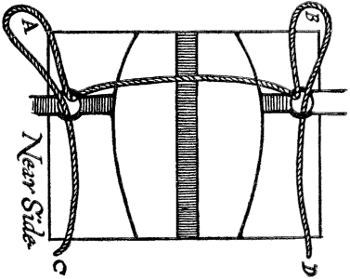
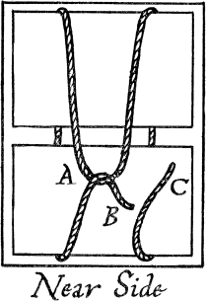
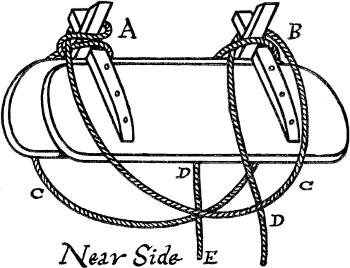
Saddle Hitch
With rope arranged as shown throw deer across saddle,
enlarge loops A and B around haunches and neck. Bring
ends C and D together, form bowline knot on end D, pass
end C through it and tighten.
This is a particularly useful hitch when it
becomes necessary to sling a deer to a riding
saddle for transportation to camp.
Throw the lash rope across the saddle seat,
an equal division of rope falling to either side.
Double the rope where it crosses the cinch ring
and thrust it through the cinch ring in a loop,
drawing through enough loose rope to form a
good-sized loop. This should be done on both
sides. Lay the deer across saddle, with head
hanging on one side and haunches on the other
side, slip loop on one side over the deer's head,
and the loop on the other side over its
haunches. Take in all slack. Form a bowline
loop on end of off side rope, and lay it on
top of load. This loop should be so adjusted
as to reach the middle of the top of load.
Passing to near side, thread loose end of near
side rope through the bowline loop. Tighten
load by pulling on loose end, and tie.
Sometimes it occurs that a member of a party
is so injured or becomes so ill as to be helpless,
and the problem of transporting him upon
horseback presents itself. This may be done
in the following manner upon a crosstree or
sawbuck saddle:
Cut two straight sticks three feet long and
about three inches in diameter. Fit one on
either side of saddle snug against the forks.
Lash securely to forks forward and rear, with
ends of sticks protruding an equal distance forward
of and back of forward and rear forks.
It may be well to cut shallow notches in the
sticks where they rest against the forks. This
will preclude lateral motion.
Cut two sticks two feet long and three inches
in diameter. Place one in front and one in
rear at right angles to and across top of sticks
already in position. These cross-pieces are to
be lashed to position one about two inches
from forward ends, the other two inches from
rear ends of lengthwise sticks. Before lashing
them into position cut notches to receive lash
ropes at points of intersection, that any tendency
to slip or work loose may be overcome.
Now cut two poles six feet long and three
inches in diameter. Spread a pack cloth upon
the ground, and presuming the pack cloth is
six feet wide, place a pole on each outer end
of it. Roll poles, with pack cloth, to center
until there is a width of twenty inches between
the outer edges of poles. In this position lace
cloth to each pole, or if horseshoe or other
nails are handy, nail it to poles. Should the
cloth be wider than length of poles, fold in a
margin on each end, before rolling. Place litter
on cross-pieces, the flat of canvas on top.
Notch, and secure poles of stretcher at front
and rear to cross-pieces. Lash down litter by
means of the stirrup hitch.