A Delaware Legend—A Story of the Old Time—The
Christmas Play—A Cruel Accusation—The Flight in
the Darkness along the River Shore—The Trial and
the Condemnation—St. Pillory's Day seventy Years
ago—Flogging a Woman—The Deliverance.
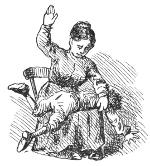
While the scenes at the whipping-post on flogging-day
are fresh in my mind, I have written down the
story of Mary Engle. It is a Delaware legend, and
the events of which it speaks occurred, I will say, seventy-odd
years ago, when they were in the habit of lashing
women in this very town of New Castle.
It was on Christmas day that a little party had assembled
in the old Newton mansion to participate in the
festivities for which, at this season of the year, it was famous
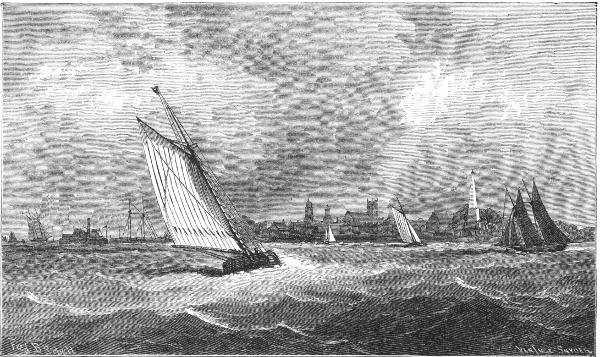
all the country over. The house stood upon the river bank,
three miles and more from New Castle, and in that day
it was considered the greatest and handsomest building in
the whole neighborhood. A broad lawn swept away from
it down to the water's edge, and in summer-time this was
covered with bright-colored flowers and bounded by green
hedges. Now the grass was bleached with the cold; the
[Pg 212]
hedges were brown and sere, and the huge old trees, stripped
of their foliage, moaned and creaked and shivered in the
wind, rattling their branches together as if seeking sympathy
with each other in their desolation.
Inside the mansion the scene was as cheerful as life and
fun and high spirits could make it.
Old Major Newton, the lord and master of all the wide
estates, was one of the race of country gentlemen who introduced
to this continent the manners, habits and large hospitality
of the better class of English squires of his day. He
was a mighty fox-hunter, as many a brush hung in his dining-hall
could attest. A believer in the free use of the good
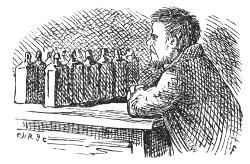
things of life, his sideboard always contained a dozen decanters,
from which the coming, the remaining
and the parting guests were expected to
follow the major's example in drinking
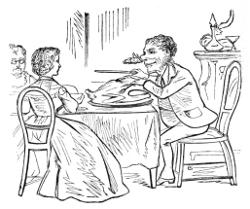
deeply. His table was always profusely
supplied with good fare, and dining with
him was the great duty and pleasure of the day. He was a
gentleman in education, and to some extent in his tastes; but
his manners partook of the coarseness of his time, for he
swore fierce oaths, and his temper was quick, terrible and
violent. His forty negro slaves were treated with indulgent
kindness while they obeyed him implicitly, but any attempt
at insubordination upon their part called down upon their
heads a volley of oaths and that savage punishment which
the major considered necessary to discipline.
To-day the major had been out of spirits, and had not
joined heartily in the hilarity of the company, which, despite
the gloom of the master, made the old house ring with the
merriment and laughter due to the happiness of Christmas
time.
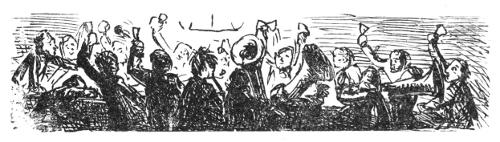
At five o'clock dinner was done; and the ladies having
withdrawn, the cloth was removed, the wine and whisky and
[Pg 213]
apple-toddy, and a half dozen other beverages, were brought
out, and the major, with his male guests, began the serious
work of the repast. The major sat at the head of the table;
Dr. Ricketts, a jolly bachelor of fifty, who neglected medicine
that he might better spend his fortune in a life of ease
and pleasure, presided at the lower end of the board, upon
the flanks of which sat a dozen gentlemen from the neighboring
estates, among them Tom Willitts, from the adjoining
farm, and Dick Newton, the major's only son.
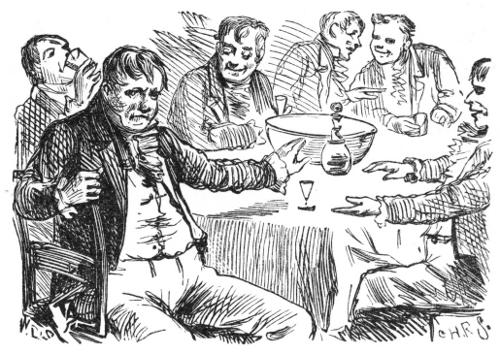
The conversation languished somewhat. The major was
as gloomy as he had been earlier in the day. Dick seemed
to sympathize with his father. Tom Willitts was impatient
to have the drinking bout over, that he might go to the parlor,
where his thoughts already wandered, and where his
fiancée, Mary Engle, the fair governess in the major's
family, awaited him. The guests at last began to be
depressed by the want of spirits in their host; and if it had
not been for Doctor Ricketts, there would have been a dull
time indeed. But the doctor was talkative, lively and
wholly indifferent to the taciturnity of his companions. His
weakness was a fondness for theorizing, and he rattled on
from topic to topic, heedless of anything but the portly
[Pg 214]
goblet which he replenished time and again from the
decanter and the punch-bowl.
At last he exclaimed, in the hope of rousing his host
from his apparent despondency, "And now let's have a
song from the major. Give us the 'Tally Ho!' Newton."
"I can't sing it to-day, gentlemen," said the major; "the
fact is I am a good deal out of sorts. I have met with a
misfortune, and I—"
"Why, what's happened?" exclaimed the whole company.
"Why," said the major, with an oath, "I've lost my
famous old diamond brooch—a jewel, gentlemen, given to
my father by George II.—a jewel that I valued more than
all the world beside. It was the reward given to my father
for a brave and gallant deed at the battle of Dettingen, and
its rare intrinsic value was trifling beside that which it possessed
as the evidence of my father's valor."
"How did you lose it, major?" asked the doctor.
"I went to my desk this morning, and found that the lock
had been picked, the inside drawer broken open and the
brooch taken from its box."
"Who could have done it?"
"I can't imagine," replied the major; "I don't think any
of those niggers would have done such a thing. I've searched
them all, but it's of no use, sir—no use; it's gone. But if I
ever lay hands on the scoundrel, I'll flay him alive—I will,
indeed, even if it should be Dick there;" and the old man
gulped down a heavy draught of port, as if to drown his
grief.
"My theory about such crimes," said the doctor, "is
that the persons committing them are always more or less
insane."
"Insane!" swore the major, fiercely. "If I catch the
man who did this, I'll fit him for a hospital!"
"We are all a little daft at times—when we are angry, in
[Pg 215]
love, in extreme want, or excited by intense passion of any
kind," said the doctor. "Extreme ignorance, being neglect
of one's intellectual faculties, is a kind of insanity, and so is
the perversion of the moral perceptions of those who are
educated to a life of crime from their childhood. My theory
is that punishment should be so inflicted as to restore reason,
not merely to wreak vengeance."
"And my theory is that every vagabond who breaks the
laws ought to be flogged and imprisoned, so that he may
know that society will not tolerate crime. Hang your fine-spun
theories about the beggars who prey upon the community!"
said the major, rising and kicking back his chair ill-naturedly.
The doctor had nothing more to say, and the company
withdrew to the parlor.
There, gathered around the great fireplace, sat Mrs. Newton,
her daughters—both children—Mary Engle, their tutor,
Mrs. Willitts and the wives of the gentlemen who had come
from the dinner-table.
They rose as the men entered the room, and greeted them
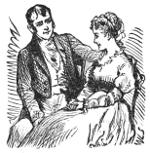
cordially. Tom Willitts went quickly to Mary's side, and
while the others engaged in lively conversation he took her
hand gently and, as was their privilege, they walked slowly
up the room and sat by the window alone, Mary's face
brightening as she thanked Tom heartily for the beautiful present
he had sent her the day before.
"Why don't you wear it now, Mary?" asked Tom.
"Do you want me to? I will get it and put it on, then, when I
go to my room," said Mary.
Mary Engle was the daughter of a widow in humble circumstances
[Pg 216]
who lived in the village. Talented and well-educated,
she had determined no longer to be a burden upon
her mother, but to support herself. She had chosen to become
a governess in Major Newton's family. Young, beautiful
and of good social position, she was a valuable acquisition
to that household, and was a universal favorite, although
the major could never quite rid himself of the notion that,
as she was a dependant and an employé, he was conferring
a favor upon her by permitting such intimate relations to
exist between her and his family. But he treated her
kindly, as all men must a pretty woman. She was a girl
with whom any man might have fallen in love upon first
acquaintance. Dick Newton loved her passionately before
she had been in his father's house a month. But she had
chosen rather to favor Tom Willitts, a constant visitor at
the Newton mansion, and as fine a fellow as ever galloped
across the country with the hounds. Dick had not had time
to propose before the game was up and Tom called the prize
his own. But Dick nursed his passion and smothered his
disappointment, while he swore that he would possess the
girl or involve her and her lover in common ruin with himself.
Tom had been engaged for three months before this
Christmas day. He was to be married in the coming
spring.
There was to be a theatrical exhibition in the Newton
mansion this Christmas evening, in which the young people
were to participate. A temporary stage had been erected at
one end of the long room, and at an early hour seats were
placed in front of the curtain, and the guests took their
places, conversing with much merriment and laughter until
the bell gave the signal for the performance to begin.
It was a little play—a brief comedy of only tolerable merit,
and it devolved upon Mary Engle to enter first.
She tripped in smiling, and began the recitation with a
[Pg 217]
vivacity and spirit that promised well for the excellence of
her performance throughout. Upon her throat she wore a
diamond brooch which blazed and flashed in the glare of the
foot-lights.
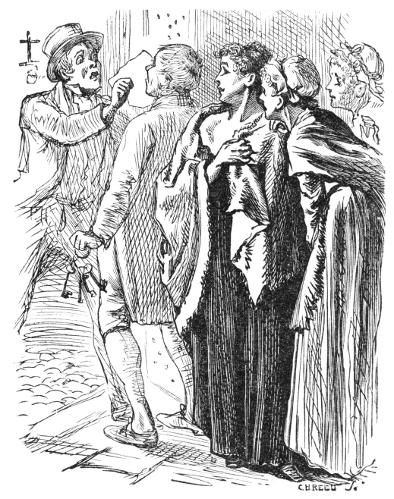
There was an exclamation of surprise on the part of the
gentlemen present, and the sound startled Mary. She
paused and looked around her inquiringly. Just then
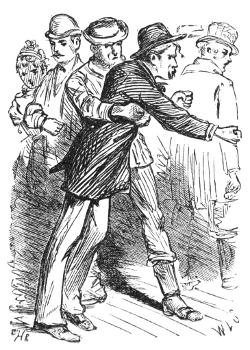
Major Newton caught sight of the brooch. With an ugly
word upon his lips, he sprang from his seat and jumped upon
the stage.
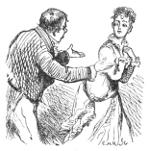
"Where did you get that?" he demanded, fiercely, pointing
at the diamonds, his hand trembling violently.
There was absolute silence in the room as Mary, pale and
calm, replied:
"Why do you ask, sir?"
"Where did you get that, I say? It was stolen from me.
You are a thief!"
In an instant she tore it from her dress and flung it upon the
floor.
The major leaped toward it and picked it up quickly.
Mary covered her face with her hands, and the crimson
of her cheeks shone through her fingers.
"Where did you get it?" again demanded the major.
"I will not tell you, sir," said she, dragging down her
hands with an effort and clasping them in front of her.
"Then leave this house this instant, and leave it for ever!"
said the major, wild with passion.
Tom Willitts entered just as the last words were uttered.
Mary seemed fainting. He flew to her side as if to defend
her against her enemy. He did not know the cause of her
trouble, but he glared at the major as if he could slay him.
[Pg 218]
But as he tried to place his arm around Mary, she shrank
away from him; and giving him one look of scorn and contempt
and hatred, she ran from the room.
From the room to the great door in the hall, which, with
frantic eagerness, she flung open, and then, without any
covering upon her fair head, hot with shame and disgrace,
and maddened with insult, she fled out into the cold and
dark and desolate winter's night.
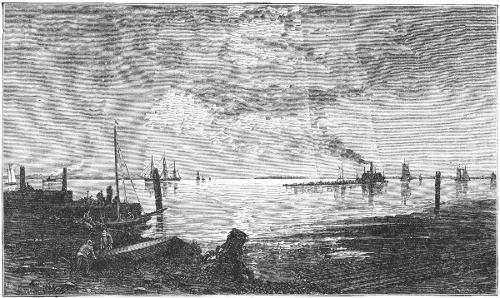
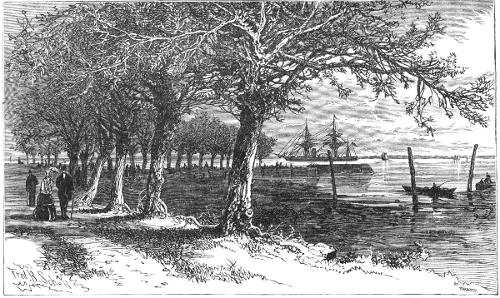
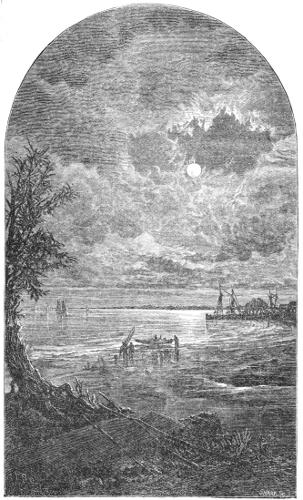
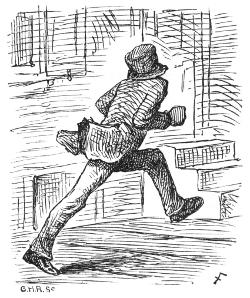
Scarcely heeding the direction, she reached the river's
shore; and choosing the hard sand for a pathway, she hurried
along it. The tide swept up in ceaseless ripples at her
feet, the waves breaking upon the icy fringe of the shore,
each with a whisper that seemed to tell of her dishonor.
The wind rustled the sedges upon the banks and filled them
with voices that mocked her. The stars that lighted her
upon her mad journey twinkled through the frosty air with
an intelligence they had never before possessed. The lights,
far out upon the river and in the distant town, danced up
and down in the darkness as if beckoning her to come on to
them and to destruction.
Her brain was in a whirl. At first she felt an impulse to
end her misery in the river. One plunge, and all this
anguish and pain would be buried beneath those restless
waters. Then the hope of vindication flashed upon her
mind, and the awful sin and the cowardice of self-destruction
rose vividly before her. She would seek her home and the
mother from whom she should never have gone out. She
would give up happiness and humanity, and hide herself
from the cold, heartless world for ever. She would have no
more to do with false friends and false lovers, but would shut
herself away from all this deceit and treachery and unkindness,
and nevermore trust any human being but her own
dear mother.
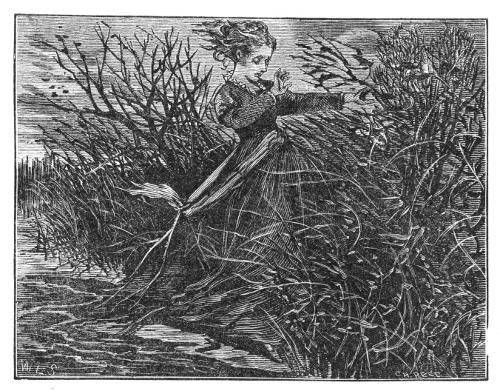
And so, over the sandy beach, through mire and mud,
[Pg 219]
through the high grass and the reeds of the water's edge,
tangled and dead, and full of peril in the darkness, with
her hair disheveled and tossed about by the riotous wind,
but with not a tear upon her white face, she struggled onward
through the night, until, exhausted with her journey,
her wild passion and her misery, she reached her mother's
house, and entering, clasped her arms about her mother's
neck, and with a sob fell fainting at her feet.
There was an end to merriment at the Newton mansion.
When Mary ran from the room, the company stood for a
moment amazed and bewildered, while the major, raging
with passion, yet half ashamed of his furious conduct, walked
rapidly up and down the stage, attempting to explain the
theft to his guests and to justify his conduct. But Tom
Willitts, shocked at the cruel treatment he had received
from Mary, yet filled with righteous indignation at the
major's violence, interrupted his first utterance.
[Pg 220]
"You are a coward and a brute, sir; and old as you are,
I will make you answer for your infamous treatment of that
young girl."
And before the major could reply he dashed out to pursue
Mary and give her his protection. He sought her in vain
upon the highway; and filled with bitterness, and wondering
why she had so scorned him, he trudged on through the
darkness, peering about him vainly for the poor girl for
whom he would have sacrificed his life.
"Perhaps it was merely a jest," suggested Mrs. Willitts.
"I think Mary wholly incapable of theft. She never could
have intended seriously to keep the brooch."
"A pretty serious jest," said the major, "to break into my
desk three days ago. It's the kind of humor that puts people
in jail."
"My theory about the matter," said the doctor, "is this:
She either was made the victim of a pretty ugly practical
joke, or else some one stole the jewel from you and gave it
to her to get her into trouble."
"I don't believe anything of the kind," said the major.
"It must be so. If she had stolen it, she certainly would
not have worn it in your presence this evening. It is absurd
to suppose such a thing. Taking this theory—"
"Hang theorizing!" exclaimed the major, seeing the force
of this suggestion, but more angry that he was driven to
admit it to his own mind. "She is a thief, and as sure as I
live she shall either confess, tell how she got the jewel or go
to prison."
"And as sure as I live," said the doctor, grown indignant
and serious, "I will unravel this mystery and clear this innocent
girl of this most infamous and wicked imputation."
"Do it if you can!" said the major, and turned his back
upon him contemptuously.
The doctor left the house, and the company dispersed,
[Pg 221]
eager gossips, all of them, to tell the story far and wide
throughout the community before to-morrow's noon.
When Mary had revived and told, in broken words, the
story of her misery and disgrace, her mother soothed and
comforted her with the assurance that she should never leave
her again; and while she denounced Major Newton's conduct
bitterly, she said he would find that he had made a mistake
and would clear her of the charge.
"But he will not find it out, mother."
"Why? Where did you get the brooch, Mary?"
"Do not ask me, mother; I cannot, cannot tell you."
"Had you merely picked it up and put it on in jest?"
"No, no," said Mary, "it was given to me, I cannot tell
by whom, and I thought it was mine. It was cruel, cruel!"
and her tears came again.
"And who was it that did so vile a thing?" asked her
mother.
"Mother, I cannot tell even you that."
"But, Mary, this is foolish. You must not, for your own
sake, for mine, hide the name of this criminal."
"I will never, never tell. I will die first."
"Was it Tom Willitts?"
"You must not question me, mother," said Mary, firmly.
"If the person who betrayed me is cowardly enough to place
me in such a position, and then to stand coldly by and witness
my shame, I am brave enough and true enough to
bear the burden. I would rather have this misery than
his conscience."
Tom Willitts knocked at the door.
"If it is Tom Willitts, mother," said Mary, rising, "tell
him I will not see him. Tell him never to come to this
house again. Tell him," she said, her eyes glowing with
excitement, and stamping her foot upon the floor, "tell him I
[Pg 222]
hate him—hate him for a false, mean villain!" and she fell
back upon the chair in a wild passion of tears.
Mrs. Engle met Tom at the door. He was filled with
anxiety and terror, but he rejoiced that Mary was safe.
Mrs. Engle told him that Mary refused to see him. He
was smitten with anguish, and begged for a single word
with her.
"Do you know anything about this wicked business, Mr.
Willitts?" asked Mrs. Engle, suspicious, because of Mary's
words, that Tom was the criminal.
"Upon my honor I do not. I heard Major Newton's
language, and saw the brooch upon the floor; and when
Mary fled from me, I pursued her, wondering what it all
meant."
"She evidently suspects you of having been the cause of
the trouble. Prove that you were not. Until then she will
not see you. I beg you, for yourself and her, to tell the
truth about this, if you know it, or at least to persist till you
discover it."
Tom went away distressed and confounded. She suspected
him. No wonder, then, she had spurned him so
rudely. He thought the matter over, and could arrive at
no solution of the difficulty. He had sent her a bracelet
which she had promised to wear, but she had not worn it.
It was impossible that this brooch could have been substituted.
No, his own servant had given it to her, and brought
her thanks in return. Besides, who could be base enough to
play such a dastardly trick upon a pretty young girl? He
could not master the situation; and in his trouble he went
the next morning to Dr. Ricketts.
The doctor was equally puzzled, but he was certain that
there was foul play somewhere. He had pledged himself to
unravel the mystery, and he began the work by visiting
Mary. Alone, he went to her house. He found it in
[Pg 223]
strange commotion. Mrs. Engle was sitting upon the sofa,
crying bitterly; Mary, with pale, sad face, but with an air
of determination, confronted an obsequious man, who, with
many apologies and a manner that proved that he was
ashamed of his business, extended a paper toward her, and
requested her to accompany him.
It was a constable with a warrant for her arrest.
Nearly five weary months were to pass before the cruel
time of the trial. Dr. Ricketts busied himself examining
every one who could possibly have been connected with the
affair of the brooch, but with no result but a deeper mystery.
Tom's servant swore that he had given the bracelet into
Mary's own hand. Two of the house servants at Major
Newton's were present at the time, and they were certain
the package was not broken. Mary's thimble had been
found under the broken desk in which the brooch was kept,
and the housemaid had discovered a chisel secreted behind
some books in the bookcase in her room.
The evidence, slight though it was, pointed to Mary as
the criminal, despite the absurdity of the supposition, in
view of the manner in which she had worn the jewel. Mary
herself preserved an obstinate silence, refusing to tell how
or where or from whom she procured the fatal brooch. The
doctor was bewildered and confounded, and he at last gave
up his inquiries in despair, hoping for a gracious verdict
from the jury at the trial.
Through all the weary time Mary kept closely at home,
secluded from friends and acquaintances. Indeed, visitors
were few in number now. She was in humble circumstances,
and she was in disgrace. Society always accounts its members
guilty until their innocence is proved. There were
people in the town who had been jealous of her beauty,
her popularity, her place in the affections of rich Tom Willitts,
and these did not hesitate to hint, with a sneer, that
[Pg 224]
they had always doubted the reported excellence of Mary
Engle, and to assert their belief in her guilt.
Tom Willitts was nearly crazed about her treatment of
him and the ignominy that was heaped upon her. With
Dr. Ricketts and Dick Newton, who professed intense anxiety
to help solve the matter, he strove valiantly to clear her
of the charge, but without avail.
The day of the trial came. The court-room was crowded.
Able lawyers on both sides sparred with each other, as able
lawyers do, but the heart of the prosecuting attorney was
evidently not with his work. His duty was clear, however,
and the evidence was overwhelming. The defence had
nothing to offer but Mary's good character and her appearance
before the company with the brooch upon her
person.
The judge was compelled to instruct the jury against the
prisoner. An hour of anxious suspense, and they returned
a verdict of "guilty."
Mrs. Engle began to sob violently. Mary drew her veil
aside from a face that was ashen white, but not a muscle
quivered until the judge pronounced the sentence:
"Costs of prosecution, a fine of one hundred dollars,
twenty lashes upon the bare back on the Saturday following,
and imprisonment for one year."
Mary fell to the floor insensible, and Dr. Ricketts, raising
her in his arms, applied restoratives. She was removed to
the jail to await her punishment.
The doctor mounted his horse and sped away in hot haste
forty miles to Dover. He had influence with the governor.
He would procure a pardon, and then have Mary taken
away from the scene of her tribulation—where her suffering
and disgrace would be forgotten, and she would be at peace.
He was unsuccessful. The governor was a just, not a merciful,
man. The law had been outraged. Twelve good men
[Pg 225]
and true had said so. If people committed crimes, they must
submit to the penalty. Society must be protected. The intelligence
and social position of the criminal only made the
demands of justice more imperative. If he pardoned Mary
Engle, men would rightly say that the poor and friendless
and weak were punished, while the influential and rich escaped
the law. He must do his duty to Delaware and to her
people. He could not grant the pardon.
But there was to be another appeal to executive mercy.
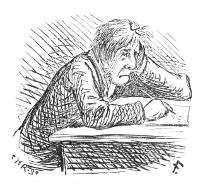
It was the night before the punishment. The doctor sat in his
parlor, before the glowing fire in the grate, and with his head
resting upon his hand he thought sadly of the pitiful scene
he had witnessed in the jail from which he had just come—of
Mary, in the damp, narrow cell, bearing herself like a
heroine through all this terrible trial, and still keeping a
secret which the doctor felt certain would give her back her
freedom and her good name if it could be disclosed; of Mrs.
Engle, full of despair and terror, crying bitterly over the
shame and disgrace that had come upon her child, and
which would be increased beyond endurance on the morrow.
As the doctor's kind old heart grew heavy with these
thoughts, and from the bewildering maze of circumstances he
tried to evolve some theory that promised salvation, Dick
Newton entered.
He was haggard and pale, and his eyes were cast down to
the floor.
"Why, Dick, what's the matter?" asked the doctor.
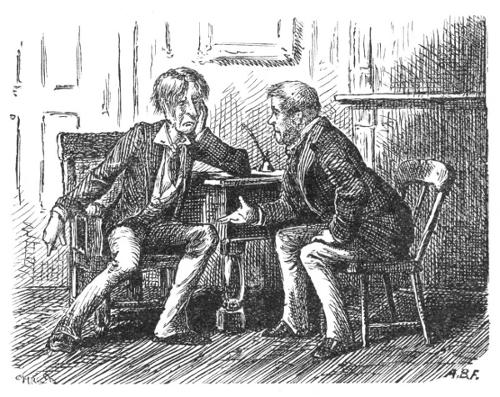
"Dr. Ricketts, I have come to make a shameful confession.
I—"
"Well?" said the doctor, suspiciously and impatiently, as
Dick's voice faltered.
"I will not hesitate about it," said Dick, hurriedly; "I
am afraid it is even now too late. I stole the diamond
brooch."
[Pg 226]
"What?" exclaimed the doctor, jumping to his feet in a
frenzy of indignant excitement.
"I am the cause of all this trouble. It was my fault that
Mary Engle was accused and convicted, and it will be my
fault if she is punished. Oh, doctor, cannot something be
done to save her? I never intended it should go so far."
"You infamous scoundrel!" said the doctor, unable
to restrain his scorn and contempt; "why did
you not say this before? Why did you permit all
this misery and shame to fall upon the defenceless
head of a woman for whom an honest man should have
sacrificed his very life? How was this villainy consummated?
Tell me, quickly!"
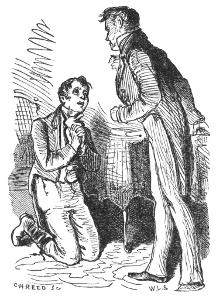
The poor wretch sank upon his knees, and with a trembling
voice exclaimed,
"I loved her. I hated Tom Willitts. He sent her a
bracelet. I knew it would come. I broke open father's
cabinet and took his brooch. With threats and money I
induced Tom's servant to lend me the box for a few moments
before he entered the house. I placed the brooch in it. She
thought it came from Tom, and she resolved to die rather
than betray him, although she thinks him the cause of her
ruin. It was vile and mean and wicked in me, but I thought
Tom would be the victim, not she; and when the trouble
came, I could not endure the shame of exposure. But you
will save her now, doctor, will you not? I will fly—leave
[Pg 227]
the country—kill myself—anything to prevent this awful
crime."
The miserable man burst into tears. Dr. Ricketts looked
at him a moment with eyes filled with pity and scorn, and
then said,
"So my theory was right, after all. Come, sir, you will
go to the governor with me, and we will see if he will grant
a pardon upon your confession."
"What, to-night?" asked Dick.
"Yes, to-night—now; and it will be well for you and
your victim if fleet horses carry us to Dover and back
before ten to-morrow morning."
In five minutes the pair were seated in a carriage, and
through the black night they sped onward, the one with his
heart swelling with hope, joy and humanity, the other cowering
in the darkness, full of misery and self-contempt, and
of horrible forebodings of the future.
Saturday morning—a cold, raw, gusty morning in May.
The town was in a small uproar. Men lounged on the
porches of the taverns, in front of which their horses were
hitched, talking politics, discussing crop prospects, the
prices of grain, the latest news by coach and schooner from
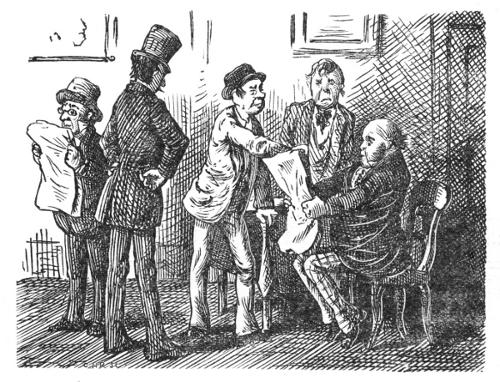
Philadelphia. Inside the bar-room men were reading newspapers
a month old, drinking, swearing and debating with
loud voices.
But the attraction that morning was in another quarter.
In the middle of the market street there was a common—a
strip of green sod twenty feet wide fringed on either side with
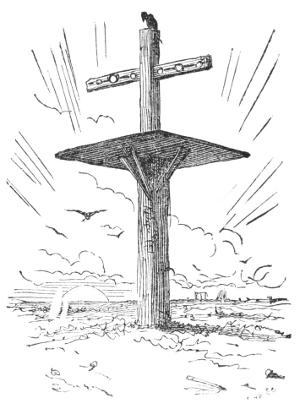
a row of trees. In the centre of this stood the whipping-post
and pillory.
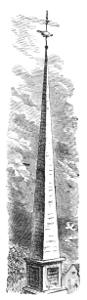
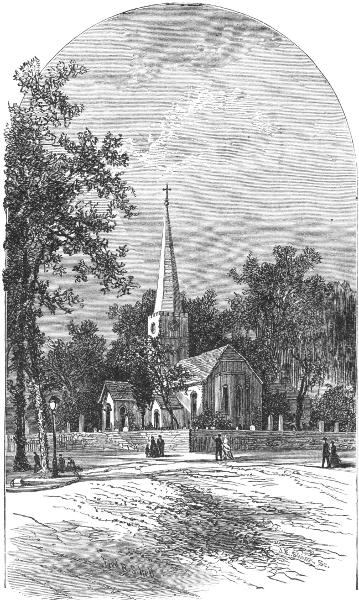
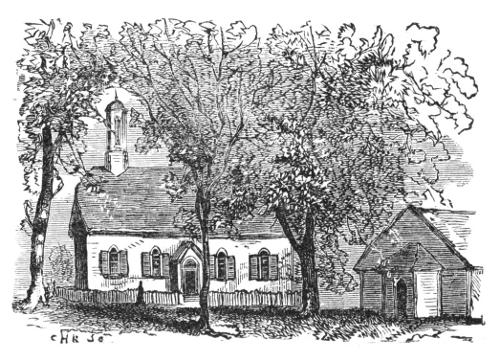
The hour of ten tolled out from the steeple down the
street. It was the same bell that called the people together
on Sunday to worship God and to supplicate his mercy. It
[Pg 228]
was a bell of various uses. It summoned the saints to prayer
and the sinners to punishment.
At its earliest stroke the jailer issued from the prison with
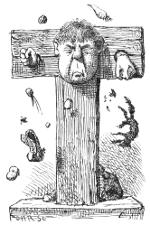
a forlorn-looking white man in his clutches. He hurried his
prisoner up the ladder, and prepared to fasten him in the pillory.
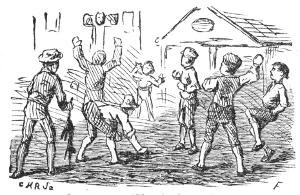
The boys below collected in knots, and fingered the missiles
in their hands. The jailer descended. A boy lifted his
hand and flung a rotten egg at the pilloried wretch. It hit
him squarely in the face, and the feculent contents streamed
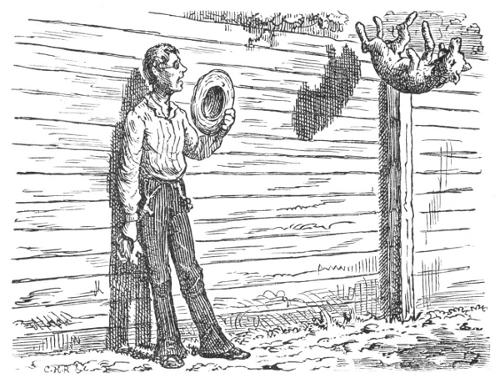
down to his chin. That was the signal. Eggs, dead cats,
mud, stones, tufts of sod and a multitude of filthy things
were showered upon the prisoner, until the platform was
covered with the débris. He yelled with pain, and strove
vainly to shake from his face the blood that streamed forth
from the cut skin and the filth that besmeared
it. The crowd hooted at him and
laughed at his efforts, and called him vile
names, and jested with him about his
wooden collar and cuffs, and no human
heart in all that assembly had any pity for him. For an
hour he stood there, enduring inconceivable torture. When
the steeple clock struck eleven, he was taken out in wretched
plight, almost helpless and sorely wounded. No more pillory
that day. It was the turn of the whipping-post now.
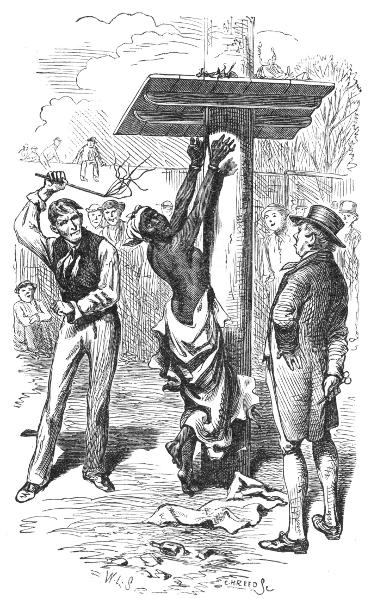
There were two women to be whipped, one of them white,
the other black. We know who the white woman was.
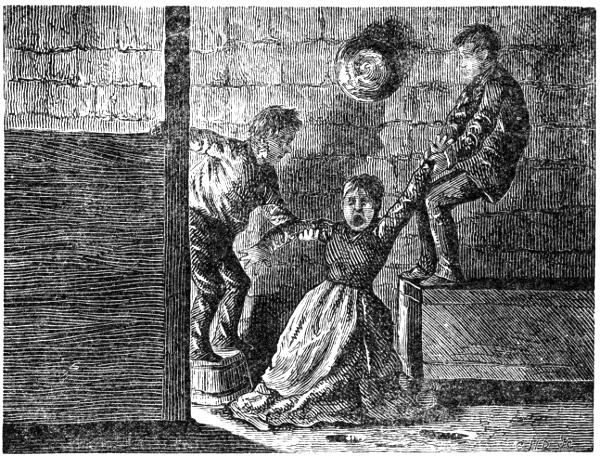
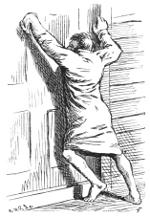
The negro was to suffer first. She was dragged from the jail
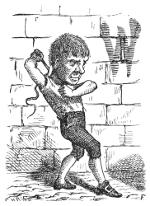
wild with fright and apprehension. Around her legs a soiled
skirt of calico dangled. About her naked body, stripped
for the sacrifice, a fragment of carpet was hung. The jailer
brought her by main force to the post through the jeering
crowd, and while she begged wildly, almost incoherently, for
mercy, promising vague, impossible things, the officer of the
law clasped the iron cuffs about her uplifted hands, so that
[Pg 229]
[Pg 231]
she was compelled to stand upon her toes to escape unendurable
agony. The blanket was torn from her shoulders, and
with dilated eyes glistening with terror, she turned her head
half around to where the sheriff stood, ready to execute the
law.
[Pg 230]
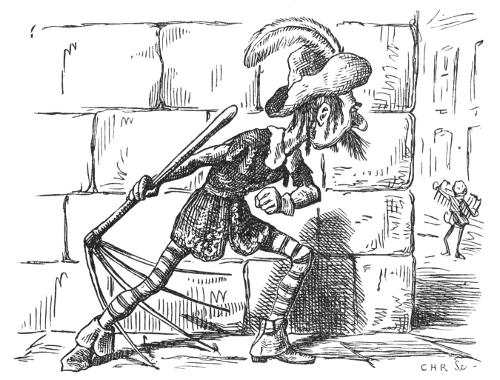
This virtuous officer felt the sharp thongs of his "cat"
complacently as he listened with dull ear to the incessant
prayers of the woman; and when the jailer said, "Forty
lashes, sheriff," the cat was swung slowly up, and the ends
of the lashes touched the victim's back, bringing blood at the
first blow.
The crowd laughed and applauded. The sheriff accepted
the applause with the calm indifference of a man who feels
the greatness of his office and has confidence in his own
skill.
As the lashes came thick and fast, the skin swelled up
into thick purple ridges, and then the blood spurted out in
crimson streams, flowing down upon the wretched skirt and
staining it with a new and dreadful hue. The woman's
piercing screams rang out upon the air and filled some kind
hearts with tender pity. But as it was a "nigger," the tendency
to human kindness was smothered.
Beneath the blows she writhed and contorted and shrank
forward, until at last, faint with loss of blood, with terrible
pain and nervous exhaustion, she sank helplessly down and
hung by her arms alone. At first the sheriff thought he
would postpone the rest of the punishment until she recovered.
But there were only five more lashes to be given, and he concluded
that it would be as well to finish up the job. They
were inflicted upon the insensible form, and then the jailer
came forward with a pair of shears. The sheriff took them
coolly and clipped away a portion of the woman's ears. Her
hands were then unshackled; and bleeding, mutilated, unconscious,
she was carried into the prison.
[Pg 232]
Her agonized cries had penetrated those walls already and
brought a whiter hue to the pale cheeks of the woman who
by this ignominy had learned her sisterhood with the poor
black. There were two other women in the cell, Mrs. Engle
and Mrs. Willitts. The former controlled herself for her
daughter's sake, but dared speak no word to her. Mrs.
Willitts, through her tears, tried to comfort Mary as with
hesitating hands she disrobed her for her torture:
"The day will come, Mary dear, when you will be vindicated,
and these wicked men will hide their heads with bitter
shame and humiliation. But bear up bravely, dear. Have
good courage through it all. Perhaps it will not be so hard.
'Though there be heaviness for a night, joy cometh in the
morning.' We will all be happy together yet some day."
Mary Engle stood there, speechless, statue-like, immovable,
as they took away her garments, and her fair white
skin glistened in the dim light.
It was almost time. The black woman was being dragged
through the door to the next cell. The murmur of the crowd
came up from the street. Mrs. Willitts placed the blanket
upon those ivory shoulders, and Mary, turning to her mother,
flung her arms about her and kissed her. In a whisper
she said,
"I shall die, mother. I will not live through it. I will
never see you again."
But there was not a tear in her eye. Wrapping the blanket
tightly about her, with the calmness of despair she prepared
to step from the cell at the call of the impatient jailer.
A great commotion in the streets. The noise of horse's
hoofs. A din of voices; then a wild cheer.
Dr. Ricketts dashed in, flourishing a paper in his hand.
"She is pardoned! pardoned!" he shouted; "go back!
take her back!" he said as the jailer laid his hand upon
Mary. "See this!" and he flung the paper open in his face.
[Pg 233]
The long agony was over, and the reaction was so great
that Mary Engle, hardly conscious of the good thing that
had happened to her, and not fully realizing the events by
which her innocence was proved, stood stupefied and bewildered.
Then she felt faint, and laying her upon the low
bed, they told her all the story; and when the doctor said
that Tom was not a guilty man, she turned her face to the
wall to hide the blinding tears, and she muttered:
"Thank God! thank God for that!"
As she came out of the prison doors, leaning on the doctor's
arm, the crowd, now largely increased, hailed her with
a hurrah, but Mary drew her veil over her face and shuddered
as she thought how these very people had assembled
to see her flogged.
[Pg 234]
"It is my theory, my dear," said the doctor, "that human
beings are equally glad when their fellow-creatures get into
trouble and when they get out of it."
Back once again in her old home, Mary was besieged by
friends whose regard had suddenly assumed a violent form,
and who were now eager to congratulate her upon her vindication.
Tom Willitts came to the door and inquired for Mrs.
Engle.
"Can I come in now?" he inquired, with a glow upon his
face.
He did go in, and there, before them all, he clasped Mary
in his arms, while she begged him to forgive her for all the
suffering she had caused him.
But Tom wanted to be forgiven, too; and as both confessed
guilt, repentance and an earnest wish to be merciful, they
were soon better friends than ever.
"I used to love you," said Tom, "but now I worship you
for your heroism and your sacrifice for me."
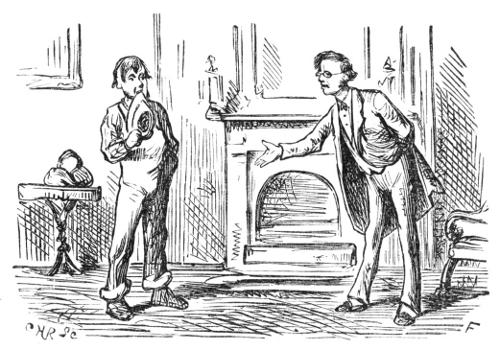
There was another visitor. Old Major Newton entered
the room, hat in hand, and with bowed head. The lines in
his face were deeper and harder than usual, but he looked
broken and sad.
He went up to Mary and said as he stood before her with
downcast eyes:
"I have come to ask pardon for my brutality and cruelty.
The injury I did to you I can never atone for. I shall carry
my remorse to the grave. But if you have any word of pity
for an old man whose son has fled from home a scoundrel
and a villain, and who stands before you broken-hearted,
ready to kiss your feet for your angelic goodness and your
noble self-sacrifice, say it, that I may at least have that
comfort in my desolation."
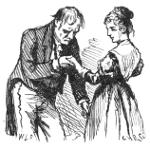
And Mary took the old man's hard hands in hers and
[Pg 235]
spoke kind and gentle words to him; and with tears coursing
down his rough cheeks, he kissed
her dainty fingers and went out,
and back to his forlorn and wretched home.
There was another Christmas night a few months later, and
this time the merry-making was going on in the Willitts mansion.
There were two brides there. Mary and Tom Willitts were
busy helping the children with their Christmas games, and
keeping up the excitement as if no sorrow had ever come
across their path; while seated at the upper end of the room,
Dr. Ricketts and his wife (Mrs. Engle that had been), looking
upon the younger pair with pride and pleasure, touched only
now and then with a sad memory of the troubled times that
were gone by for ever.
And when the games were all in full progress, Tom and
his wife watched them for a while, and then he drew her
arm through his, and they went to the porch and looked out
upon the river beating up against the ice-bound shore, just
as it did on that night one year ago. But it had a different
language to Mary's ears now. It was full of music, but
music that seemed in a minor key, as the remembrance
of that wild flight along the shore came up vividly in her
mind.
Neither spoke for a while, but each knew that the thoughts
of the other went over all the misery and terror of the past,
only to rest satisfied with the calm, sweet happiness of the
present. Mary, clasping her husband's arm tighter in her
grasp, looked with unconscious eyes out over the broad
river, while her lips slowly repeated that grand old hymn of
comfort and hope:
[Pg 236]
- "There is a day of peace and rest
- For sorrow's dark and dreary night;
- Though grief may bide an evening guest,
- Yet joy shall come with morning light.
- "The light of smiles shall beam again
- From lids that now o'erflow with tears,
- And weary days of woe and pain
- Are earnests of serener years."
[Pg 237]