The crux of American politics is the quadrennial election
of President. In the ebb and flow of our political
activity the flood-tide comes in the Presidential contests.
There are often tumultuous struggles and decisive events
in the intervals, but their political effect and all the issues
and movements of parties crystallize in the recurring conflict
for the possession of the chief executive power.
Our American system makes the President the centre
and focus of political life. He is at once Prime Minister
and independent executive. He blends the functions of
what in parliamentary government is the head of the
Cabinet, and what in other government is the head of the
State. He is a vital part of the legislative power without
being amenable to its control or dependent on its life.
He is the framer of policies and the arbiter of parties.
All this makes the election of President the central chord
and the arterial force of our broad political action.
The history of Presidential elections, if not the history
of the nation, is at least the history of its determining
periods. The successive epochs of our national progress,
with their passionate struggles and controlling influences,
are fully reflected in these contests. After the retirement
of Washington the battles from 1800 for a quarter of a
century, which gave the succession of Jefferson, Madison,
and Monroe, marked the reaction from federal authority
and the rise of the democratic impulse in the young
Republic. Then came the period running through the
three contests and two elections of Jackson, the heirship of
Van Buren, and the cyclonic reversal under “Tippecanoe
and Tyler too” in 1840, which turned on practical questions
of internal polity and signalized the transition from
the formative stage of the government to the inevitable
clash between the sections. This was followed by the
long political and moral contention between freedom and
slavery, which began with the success of Polk and the
Texas annexation policy in 1844 and ended with the
defeat of the divided Democracy and the election of
Lincoln in 1860, when the political combat culminated
in the armed and colossal struggle of the civil war. Since
its conclusion and its settlements the nation has been
engaged in the mighty work of internal upbuilding, never
equalled anywhere else in the world, and the elections
have involved the contending theories.
The narrative of these elections, with the rise and fall of
parties, their divisions and their creeds, presents the outlines
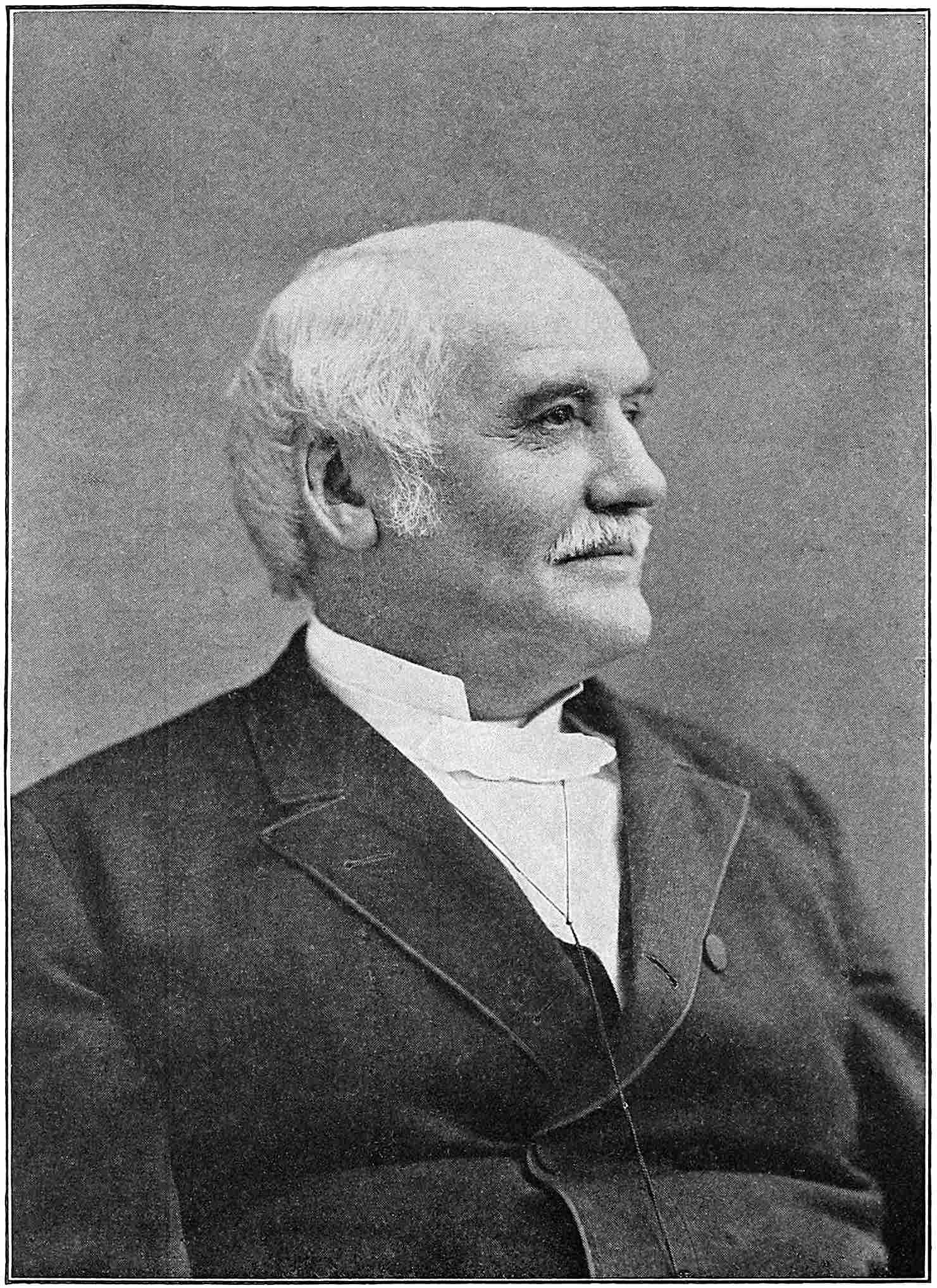
of the national development. For this work Colonel
McClure, by experience, taste, and special knowledge, is
peculiarly and pre-eminently fitted. It is doubtful if any
other living American has borne so active and so intimate
a part in so many Presidential elections. Not yet of age,
but already a zealous and eager observer of political movements
as a young editor, he attended the Whig National
Convention of 1848 in Philadelphia, and witnessed the
nomination of General Taylor. From that time he has
been personally familiar with the inner workings of every
national convention and campaign. Including this year,
there have been twenty-nine Presidential contests in our
history. Colonel McClure has actively participated in fourteen,
or practically one-half of the entire number.
He was born at Centre, Perry County, Pennsylvania, on
the 9th of January, 1828. Spending his youth on his
father’s farm, he became a tanner’s apprentice at fifteen,
and remained at this trade for three years. His schooling
was very limited, and his mental equipment was almost
wholly the rich endowment nature had given him and
the attainments which his extraordinary intellectual force
brought in after-years. At nineteen he became the editor
of the Juniata Sentinel, and his natural ability and vigorous
pen soon gave him a recognized position and a distinct
influence. Before he was twenty-one he served as a
conferee for Andrew G. Curtin in his Congressional candidacy,
and laid the foundations of his long and intimate
friendship with the great War Governor. Speedily called
to the editorship of a more important paper at Chambersburg,
his impress broadened, and in 1853, at the age of
twenty-five, he was nominated by the Whigs for Auditor-General,
the youngest man ever named by any party in
Pennsylvania for a State office. Four years later he was
elected to the Legislature, serving in the House and then
in the Senate for several years. His career in that body
was brilliant and distinctive. He was independent, fearless,
and aggressive, a ready and trenchant debater, and he
displayed political and parliamentary abilities of the highest
order.
In the Republican National Convention of 1860 he
played a prominent part. He and Curtin were potential
in leading the Pennsylvania break from Cameron to Lincoln,
and in promoting the nomination of the latter.
With that success he accepted the chairmanship of the
State Committee, and made a dashing and energetic campaign,
which resulted in the October State victory that assured
and portended the election of Lincoln. This relation
to the contest and subsequent service with Governor
Curtin, in directing Pennsylvania’s part in the war, placed
him on an intimate footing with the President, and during
those dramatic and trying years he was a commanding
figure in the State. Later he settled in Philadelphia in
the practice of the law; became one of the leading spirits
in the Republican revolt of 1872 which led to the Greeley
movement; returned to the Legislature, where, free from
party shackles, he waged unsparing war against jobbery
and wrong, and where his forensic talent, his bold attacks,
and rare powers of invective and sarcasm made him at
once respected and feared. Finally, he found what was
to prove his higher and truer place, and entered upon
what was to be his main life-work in the establishment of
the Philadelphia Times, where he has had an ample and
conspicuous arena for the editorial genius which has
ranked him among the foremost journalists of the country.
Here, for twenty-five years, with ripened experience
and mellowed spirit, but with unabated passion for political
movements, Colonel McClure has been both the actor
and the critic in the great and constantly changing drama
of public events. Standing between both parties, bound
by neither, but in the counsels of each, he has been exceptionally
informed on all the currents of political activity.
No one has had a broader acquaintance with the
public men of his time, or has been more thoroughly behind
the scenes in the shifting transformations of public
action. From his earliest years politics has had an extraordinary
fascination for his fertile mind, and his taste
and talent for it have been equally marked. There has
been no national convention of either party for years that
he has not attended, and the episodes and influences
which have turned the decision of the hour have been as
familiar to him as the broader principles which have
moulded the general course of action.
Colonel McClure is thus peculiarly qualified, not only
to present the large history of Presidential contests, but
to illuminate it with the instructive side-lights which are
as entertaining as they are suggestive. Comprehensive
in its treatment, infused with the very life and spirit of
political action, prepared with complete knowledge, and
written in a style of singular charm and force, this work
is not only a labor of love, but a valuable contribution to
the historical literature of American politics.
Charles Emory Smith
Washington, April, 1900
PREFACE
I have endeavored in this volume to supply a want in
our political history by giving not only a detailed and reliable
report of the nomination and election of every President of
the United States, but by giving with it many important
sidelights relating to the selection and character of our
Chief Magistrates.
With a personal knowledge of national conventions covering
over half a century, and an intimate acquaintance with
the chief actors of both parties in selecting Presidential
candidates, I am able to give the inside movements of some
of our important national struggles which are imperfectly
understood. The inspiration and organization of all the
various political parties, great and small, are concisely presented,
and the personal reminiscences of the struggles of
the great men of the country have been most carefully
prepared.
Absolute accuracy in the preparation of political history
covering a period of one hundred and twelve years is not
to be expected, as record evidence is at times either imperfectly
preserved or entirely destroyed; but no pains have
been spared to make this volume a complete and reliable
history of our Presidents and how we make them.
I am indebted to Edward Stanwood’s “History of Presidential
Elections” and to Greeley’s “Political Text-Book
of 1860” for valuable data of the earlier conflicts for the
Presidency. Many of the personal and political reminiscences
given are an elaboration of a series of articles originally
prepared for the Saturday Evening Post, of Philadelphia.
A. K. M.
Philadelphia, March 1, 1900.
THE WASHINGTON ELECTIONS
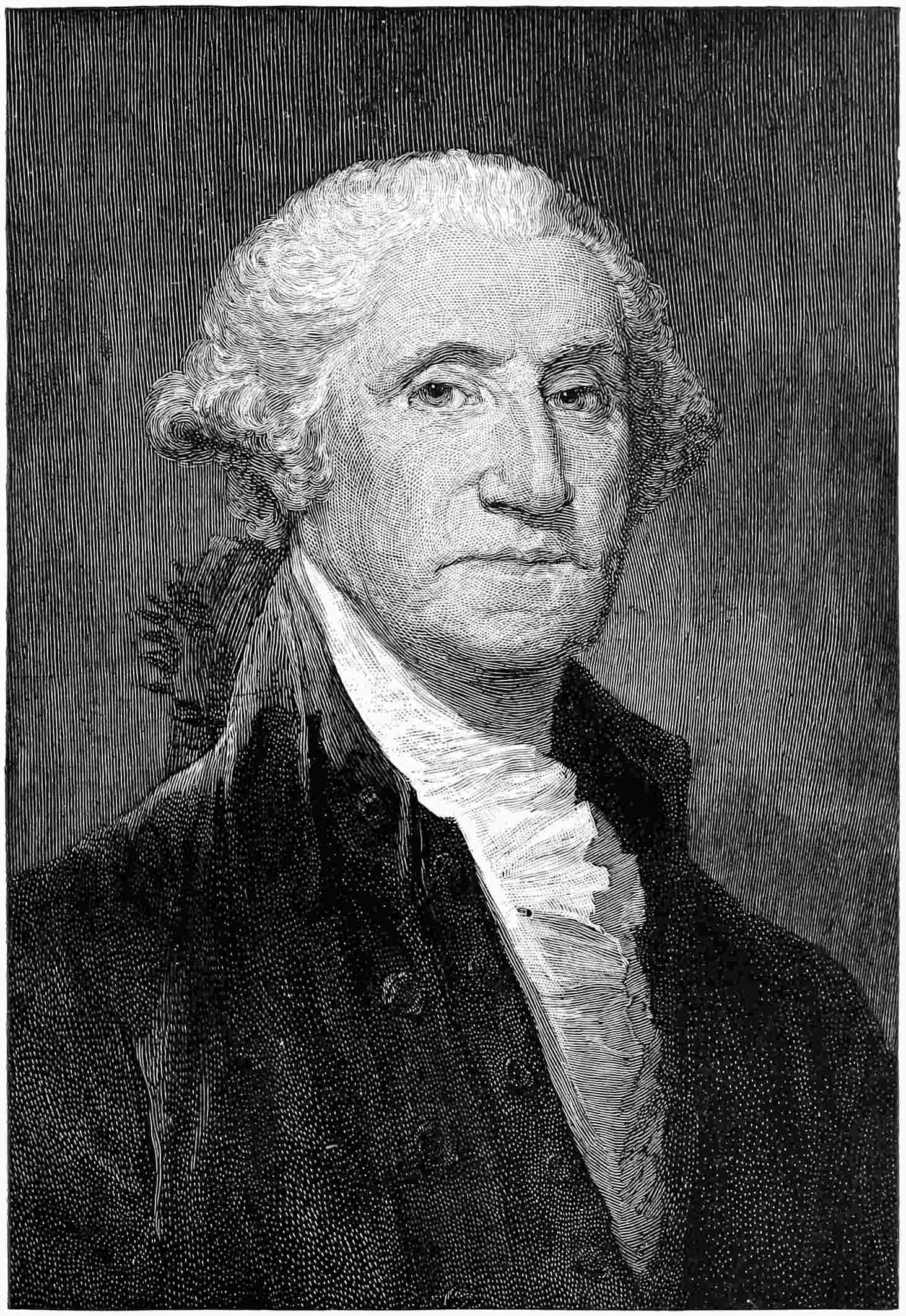
GEORGE WASHINGTON
1789–1792
The first election for President of the United States was
held on the first Wednesday of January, 1789, and it was an
election in which the people took no part whatever in most
of the States. The election should have been held in
November, 1788, but the Constitution of 1787, that required
ratification by nine States to make it the supreme law of the
nation, did not receive the approval of the requisite number
of States until the 21st of June, 1788, when New Hampshire
made up the ninth State approving it. Vermont followed
five days later, and New York, after a bitter struggle, ratified
the Constitution on the 26th of July. There was then ample
time for Congress to make provisions for a Presidential
election in November, but many weeks were wasted in a
struggle for the location of the national capitol, and it was
not until the 13th of September that Congress was prepared
to pass a resolution declaring the ratification of the Constitution,
and directing the election of Presidential electors.
Communication was at that time very slow and uncertain
between the several States, and as Congress did not fix the
time for an election until the middle of September, the first
Wednesday of January, 1789, was deemed the earliest period
at which an election could be had. Considering the length
of time required to communicate with the different States,
and the extreme difficulty in the States communicating with
their people and Legislatures, it was practically impossible
to have a Presidential election in which the people of the
country generally could participate.
None of the States had made any preparation for an election,
and the only practical method for choosing electors was
by the Legislatures, as the Constitution provided then, as it
does now, that each State shall appoint Presidential electors
“in such manner as its Legislature may direct.” Attempts
were made to hold popular elections in New Hampshire,
Massachusetts, Pennsylvania, Maryland, and Virginia, but
even in New Hampshire and Massachusetts, after elections
had been held after a fashion, the Legislatures of those
States finally chose the electors. There were next to no
votes cast in Pennsylvania,[1] Maryland, and Virginia, as
there was no contest, the election of Washington being
conceded by all; and whatever votes were cast in the States
have never found their way into the political statistics of
the country. Rhode Island and North Carolina had not
ratified the Constitution and did not choose electors, and
in New York a bitter contest arose in the Legislature
between the friends and opponents of the Constitution,
resulting in a disagreement between the Senate and House
that was not adjusted in time for the Legislature to choose
electors. Thus, New York, Rhode Island, and North Carolina
gave no votes for President in the Electoral College of 1789.
There had been no formal nomination of Washington for
President and Adams for Vice-President in any part of the
country. In later Presidential elections it was common for
Legislatures and mass-meetings to present candidates for
President, but I cannot find a record of any formal presentation
of either the name of Washington or Adams as candidates
at the first Presidential election. Washington was
accepted as the logical ruler of the Republic, whose sword
had won its independence, and Massachusetts, the State of
Lexington and Bunker Hill, was conceded the second place
on the ticket by general assent. Both were pronounced
Federalists, and Washington was much more positive in
his partisanship than is now generally believed. He was
consulted about the choice of a Vice-President, and he
answered that while he took it for granted that “a true
Federalist” would be elected to the Vice-Presidency, he
was unwilling to indicate any preference; but it was generally
known that he and his immediate friends preferred
John Adams, who had been one of the committee with
Jefferson to prepare the Declaration of Independence, and
who had written a very vigorous pamphlet in favor of the
adoption of the Constitution.
It is now generally assumed that there was no shade of
opposition to Washington’s election to the Presidency, but
the anti-Federalists, many of whom were opposed to the
Constitution, made several ineffectual efforts to defeat him.
It is known that Franklin was approached on the question
of being Washington’s competitor, but there is little doubt
that he peremptorily refused. At that time the Presidential
electors did not vote directly for President and Vice-President
as they do now. Each elector voted for two men for
President, both of whom could not be a resident of the same
State, and the candidate receiving the largest vote, if a
majority, was chosen President, and the candidate receiving
the second largest vote for President became Vice-President.
Several movements were made, without ever attaining the
dignity of importance, to have votes quietly taken from
Washington and given to Adams, and other movements
were made to defeat Adams for Vice-President, but all of
them were signal failures. It is understood that Hamilton,
the closest friend of Washington, was not friendly to Adams.
There is some reason to believe that he would have seconded
the movement of the anti-Federalists to make George Clinton
Vice-President had it given any promise of success.
The electoral colleges met on the first Wednesday of February,
1789, and elected Washington President, he receiving
69 votes, being the full number of electors, and John Adams
received 34 votes for President, which made him Vice-President,
although he did not receive a majority of the
electoral votes. The following table shows the vote in detail
as cast by the Electoral College, all of the men having been
voted for only as Presidential candidates:
STATES.
George Washington.
John Adams.
Samuel Huntington.
John Jay.
John Hancock.
Robert H. Harrison.
George Clinton.
John Rutledge.
John Milton.
James Armstrong.
Edward Telfair.
Benjamin Lincoln.
New Hampshire
5
5
—
—
—
—
—
—
—
—
—
—
Massachusetts
10
10
—
—
—
—
—
—
—
—
—
—
Connecticut
7
5
2
—
—
—
—
—
—
—
—
—
New Jersey
6
1
—
5
—
—
—
—
—
—
—
—
Pennsylvania
10
8
—
—
2
—
—
—
—
—
—
—
Delaware
3
—
—
3
—
—
—
—
—
—
—
—
Maryland
6
—
—
—
—
6
—
—
—
—
—
—
Virginia
10
5
—
1
1
—
3
—
—
—
—
—
South Carolina
7
—
—
—
1
—
—
6
—
—
—
—
Georgia
5
—
—
—
—
—
—
—
2
1
1
1
Total
69
34
2
9
4
6
3
6
2
1
1
1
The Congress of the Confederation had provided that the
new Congress chosen under the Constitution should meet
in New York on the first Wednesday of March to declare
the result of the Presidential election and inaugurate the new
Republic, but a quorum of the Senate did not appear until
the 6th of April, and on that day the electoral vote was
counted in the presence of the two Houses, and Washington
and Adams declared elected. They were notified of their
election as speedily as possible, but it was not until the 30th
of April that they were inaugurated.
Washington’s second election was quite as unanimous as
the first, both at the polls and in the electoral colleges. No
opposition electoral tickets were formed in any of the States,
as the re-election of Washington and Adams was universally
accepted. The Presidential electors of that day were appointed
in accordance with the obvious spirit of the Constitution,
that meant to provide an entirely dispassionate and
independent tribunal in the Electoral College to exercise the
soundest discretion in the choice of a President and Vice-President.
No pledges were asked or given by any one
named as an elector, and each one was free to vote according
to the dictates of his own judgment. Had there been
opposition electoral tickets, they would have logically run
on opposing lines with distinct obligations on the part of
each side as to how their votes would be cast, but no such
question arose until the first battle between Adams and
Jefferson in 1796.
There was no organized opposition to the administration
of Washington at the close of his first term, but the Democratic
sentiment, so ardently cherished by Jefferson, had
been steadily growing, and with two such able and aggressive
opposing partisans as Jefferson and Hamilton in the
Washington Cabinet, it was only natural that opposition to
the Federal policy would gradually take shape to be effective
when the overshadowing personality of Washington became
eliminated from the politics of the country. Jefferson and
Hamilton often had serious differences in the Cabinet, and
Washington uniformly sided with Hamilton. Washington
had little personal and no political sympathy whatever with
Jefferson, and only one of Jefferson’s rare tact and sagacity
could have remained in the Washington Cabinet and
fashioned the great opposition party that carried him
triumphantly into the Presidential chair four years after
Washington’s retirement. As opposition to the re-election
of Washington and Adams would have been entirely fruitless,
it was wisely not attempted, and the election passed off
in almost as perfunctory a manner as did the first election
in 1789.
Rhode Island and North Carolina had ratified the Constitution,
and Vermont became a State on the 4th of March,
1791, and Kentucky on the 1st of June, 1792, giving fifteen
States to participate in the second Presidential election. In
nine of the States Presidential electors were chosen by the
Legislatures, and by popular vote in New Hampshire, Massachusetts,
Pennsylvania, Maryland, North Carolina, and
Virginia, but there were very few votes polled, and what
were cast indicated nothing politically, as there were no opposing
electoral tickets.
Washington again received the unanimous vote in the
electoral colleges—132 in number—and Adams became Vice-President
by receiving 77 votes for President. When the
two Houses met to declare the vote, Vice-President Adams
presided in the House, opened and read the certificates of
the votes of the several States, and declared Washington and
himself elected President and Vice-President. The following
is the official vote in the electoral colleges as cast in 1792:
STATES.
Washington.
Adams.
Clinton.
Jefferson.
Burr.
New Hampshire
6
6
—
—
—
Vermont
3
3
—
—
—
Massachusetts
16
16
—
—
—
Rhode Island
4
4
—
—
—
Connecticut
9
9
—
—
—
New York
12
—
12
—
—
New Jersey
7
7
—
—
—
Pennsylvania
15
14
1
—
—
Delaware
3
3
—
—
—
Maryland
8
8
—
—
—
Virginia
21
—
21
—
—
North Carolina
12
—
12
—
—
South Carolina
8
7
—
—
1
Georgia
4
—
4
—
—
Kentucky
4
—
—
4
—
Total
132
77
50
4
1
THE ADAMS-JEFFERSON CONTEST
1796
While it was generally accepted that Washington would
not be a candidate for a third term, he gave no definite expression
on the subject until he issued his farewell address a
short time before the election of 1796. Washington was an
extremely reticent man, and it is possible that, in view of the
serious complications between this country and France, he
may have anticipated a contingency that would make him
accept a third election to the Presidency, but it seems to have
been well understood by those nearest to him in official
circles that he earnestly desired to retire to private life at the
expiration of his second term. He was then the richest man
in the country, his wealth being almost wholly composed
of land and slaves, and for twenty years he had been unable
to give any attention to his large business interests. While
his election and re-election to the Presidency by a unanimous
vote were very gratifying to him, he greatly preferred the
life upon his plantation, where he gave most careful attention
to all the details of its management.
As early as 1793 it was generally accepted by the public
that Washington would not be a candidate for re-election,
and that Jefferson and Adams would be the logical competitors
for the succession. Jefferson had cleared his decks
for the battle by resigning his office as Secretary of State
early in 1794. He was not in harmony with the severe Federal
policy of Washington, and was very positively hostile to
the policy of the administration in failing to support the
French Revolution. Jefferson led the Democratic forces of
the country; Washington, and Adams as his logical successor,
led the Federal forces, and between them there was an
irreconcilable dispute as to the form of government the new
Republic should assume. Washington, Adams, Hamilton,
and their associates did not believe in the capacity of the
people for self-government. They favored the strongest
possible government, with checks and balances which could
effectually restrain what they regarded as positive and dangerous
ebullitions of public sentiment. They would have
made Senators for life and given only the semblance of government
to the people. Jefferson, on the other hand, took the
broad ground that the people were sovereign and should rule.
He logically supported the French Revolution against the
Bourbon Kings, and cherished the strongest prejudices
against England. As Secretary of State he could not well
have remained in the Washington Cabinet the last two years
of the administration, but he doubtless resigned to be entirely
free to make his great battle for the Presidency in 1796.
Neither Jefferson nor Adams was nominated for the Presidency
in 1796 by any Legislature or mass-meeting of which
there is any record as far as I have been able to ascertain.
Adams was the choice of Washington, and the logical successor
to Washington as the Federal candidate for President,
and Jefferson stood head and shoulders over all the Republicans
of that day. The title of Republican was adopted by
the friends of Jefferson, and the Democratic party was
founded in 1796 by Jefferson under the name of Republican,
established as the majority party of the nation four years
later, and it fought and won the Democratic battles under
that name until 1824, when the Jackson party changed the
title to Democracy.
If the overshadowing individuality of Washington could
have been eliminated from the contest of 1796, Jefferson
would have defeated Adams by a decided majority, but
Washington was earnestly enlisted in the support of Adams,
and all the power of the administration was wielded in favor
of the Federal candidate. While Washington was not
charged with violent partisanship in his appointments, it is
none the less true that when the issue came between Adams
and Jefferson, every Federal official of the country felt bound
to support, with all the power he possessed, the candidate
preferred by Washington. Had Grover Cleveland lived in
that day, he would have had ample opportunity to denounce
the “pernicious activity” of office-holders with as much
reason as he denounced them a century later in his support of
civil service reform.
Not only were the Federal officials aggressively enlisted
in favor of Adams, but the personal influence of Washington,
that was greater than that ever wielded by any other official
or citizen of the Republic down to the present time, was a
serious obstacle to Jefferson’s success. The people loved
Jefferson as the author of the Declaration of Independence,
and a large majority of them sympathized with his liberal
ideas of popular government, but the name of Washington
was sacred to a large majority, and his wishes were paramount
in deciding their political action. Such were the conditions
under which Jefferson entered the contest against
Adams in 1796.
In this contest, for the first time, there were two candidates
distinctly declared as competitors for the Presidency, and
other candidates as distinctly declared as competitors for
Vice-President, although all had to be voted for as candidates
for President in the Electoral College. At that time
Aaron Burr was in the zenith of his power. He was one of
the most astute politicians of that day, inordinately ambitious,
unscrupulous in his methods, and he was generally
accepted by the friends of Jefferson as the candidate for
Vice-President.
New York was a Federal State, but it was hoped that by
the masterly ability of Burr the electoral vote of New York
might be won for Jefferson, although while there was entire
unanimity among the Republicans in support of Jefferson,
there was not equal unanimity in the support of Burr. He
failed to carry New York for Jefferson, but succeeded in
carrying it for Jefferson and himself in 1800, and his victory
was won so early in the contest by the election of a Republican
Legislature in that State in May, 1800, that he practically
decided the battle against Adams.
The Presidential contest between Jefferson and Adams
developed into the most defamatory campaign ever known in
the history of American politics, unless the second campaign
of 1800 between the same leaders may be accepted as equalling
it. In no modern national campaign have candidates
and parties been so maliciously defamed as were candidates
and parties when Jefferson and Adams fought for power in
the contest of the Fathers of the Republic. Jefferson was
denounced as an unscrupulous demagogue, and Adams was
denounced as a kingly despot without sympathy with the
people, and opposed to every principle of popular government.
There were few newspapers, but it was the age of the pamphleteer,
and the political pamphlets of those days, if compared
with the political asperities of the present age, would
make the partisan vituperation of the evening of the nineteenth
century appear as tame and feeble. Nor were political
leaders of that day any less unscrupulous than are the political
leaders of the present. The struggles of mean ambition were
as common then as now, and political leaders jostled each other
in the most vituperative assaults to give victory to their cause.
The contest ended in November, when the elections were
held in the various States. Tennessee had been admitted to
the Union on the 1st of June, 1796, making sixteen States
to participate in the choice of a President. Of these, six
States held some form of popular elections, while ten chose
their electors by the Legislature. The popular vote cast at
these elections had no material significance. There was but
one ticket voted for in nearly or quite all of the six States
which assumed to choose electors by popular vote, as the New
England States were solid for Adams, and the Southern
States, where elections were held, were strong in the support
of Jefferson. The result was the election of Adams in the
Electoral College by a vote of 71 to 68 for Jefferson, who
thereby became Vice-President. The following is the vote in
detail, as cast in the Electoral College, the electors voting
only for President:
STATES.
John Adams, Mass.
Thomas Jefferson, Va.
Thomas Pinckney, S. C.
Aaron Burr, N. Y.
Samuel Adams, Mass.
Oliver Ellsworth, Conn.
George Clinton, N. Y.
John Jay, N. Y.
James Iredell, N. C.
George Washington, Va.
Samuel Johnston, N. C.
John Henry, Md.
Charles C. Pinckney, S. C.
New Hampshire
6
—
—
—
—
6
—
—
—
—
—
—
—
Vermont
4
—
4
—
—
—
—
—
—
—
—
—
—
Massachusetts
16
—
13
—
—
1
—
—
—
—
2
—
—
Rhode Island
4
—
—
—
—
4
—
—
—
—
—
—
—
Connecticut
9
—
4
—
—
—
—
5
—
—
—
—
—
New York
12
—
12
—
—
—
—
—
—
—
—
—
—
New Jersey
7
—
7
—
—
—
—
—
—
—
—
—
—
Pennsylvania
1
14
2
13
—
—
—
—
—
—
—
—
—
Delaware
3
—
3
—
—
—
—
—
—
—
—
—
—
Maryland
7
4
4
3
—
—
—
—
—
—
—
2
—
Virginia
1
20
1
1
15
—
3
—
—
1
—
—
—
North Carolina
1
11
1
6
—
—
—
—
3
1
—
—
1
South Carolina
—
8
8
—
—
—
—
—
—
—
—
—
—
Georgia
—
4
—
—
—
—
4
—
—
—
—
—
—
Kentucky
—
4
—
4
—
—
—
—
—
—
—
—
—
Tennessee
—
3
—
3
—
—
—
—
—
—
—
—
—
Total
71
68
59
30
15
11
7
5
3
2
2
2
1
It will be seen by the foregoing table that Pennsylvania,[2]
Maryland, Virginia, and North Carolina cast divided electoral
votes for the Presidency between Jefferson and Adams.
In Pennsylvania, Adams received 1 electoral vote to 14 for
Jefferson. In Maryland, Adams received 7 to 4 for Jefferson.
In Virginia, Jefferson’s own State, Adams received 1
to 20 for Jefferson, and in North Carolina the vote was 1 for
Adams to 11 for Jefferson. In all of these States the electors
were chosen by popular vote, and they were doubtless
selected with reference to their character and intelligence
without pledges as to how they should cast their ballots in the
electoral colleges. One of the Virginia electors exercised his
admitted right to vote against Jefferson, who had the largest
popular following in the State. It was this independent action
of a few electors in 1796 that made both parties draw
their lines severely in the selection of the candidates for
electors, and from that time until the present all electoral
tickets have been made up of men who were accepted as
solemnly pledged to vote for their party candidates in the
Electoral College.
THE JEFFERSON-ADAMS-BURR CONTEST
1800–1
The Presidential contest of 1800 was as revolutionary in
its aim and in its accomplishment as was the Republican
revolution of 1860. The Federalists had practically undisputed
control of the Government for twelve years, under
Washington and John Adams, and the power of the Federal
party, with the overwhelming individuality of Washington
in its favor, accomplished the election of Adams over
Jefferson in 1796. When the battle of 1800 opened, Washington
was dead, and Hamilton, one of the ablest of the
Washington political lieutenants, was not in hearty sympathy
with Adams.
The Federalists held both branches of Congress, and a
tidal wave of partisan bitterness and personal defamation
ran riot, both in Congress and throughout the country. Our
foreign complications with France had become very serious,
and Congress approved what was then regarded as very
extensive preparations for a war that was bitterly opposed
by the Republican minority, the followers of Jefferson. So
violent were the political discussions of the country that
Adams, acting in accord with the Federal theory of a strong
suppressive government, demanded and secured the passage
of what are known as the Alien and Sedition laws, which
now rank among the most odious legislative acts in the
history of the Republic.
While the Alien and Sedition laws were apparently aimed
at those who were open enemies of the country in war, they
were, in fact, intended to suppress criticism of the administration
and to impose the severest penalties for open hostility
to its policy. The first session of the Congress of 1797–98
lasted eight months, and even in the fierce passions of civil
war the Congressional debates did not equal the asperities
of the Congressional debates of a century ago. The first
Alien law lengthened the period for naturalization to fourteen
years, and all emigrants were required to be registered and
the certificate of registration to be the only proof of residence.
All alien enemies were forbidden the right of citizenship
under any circumstances.
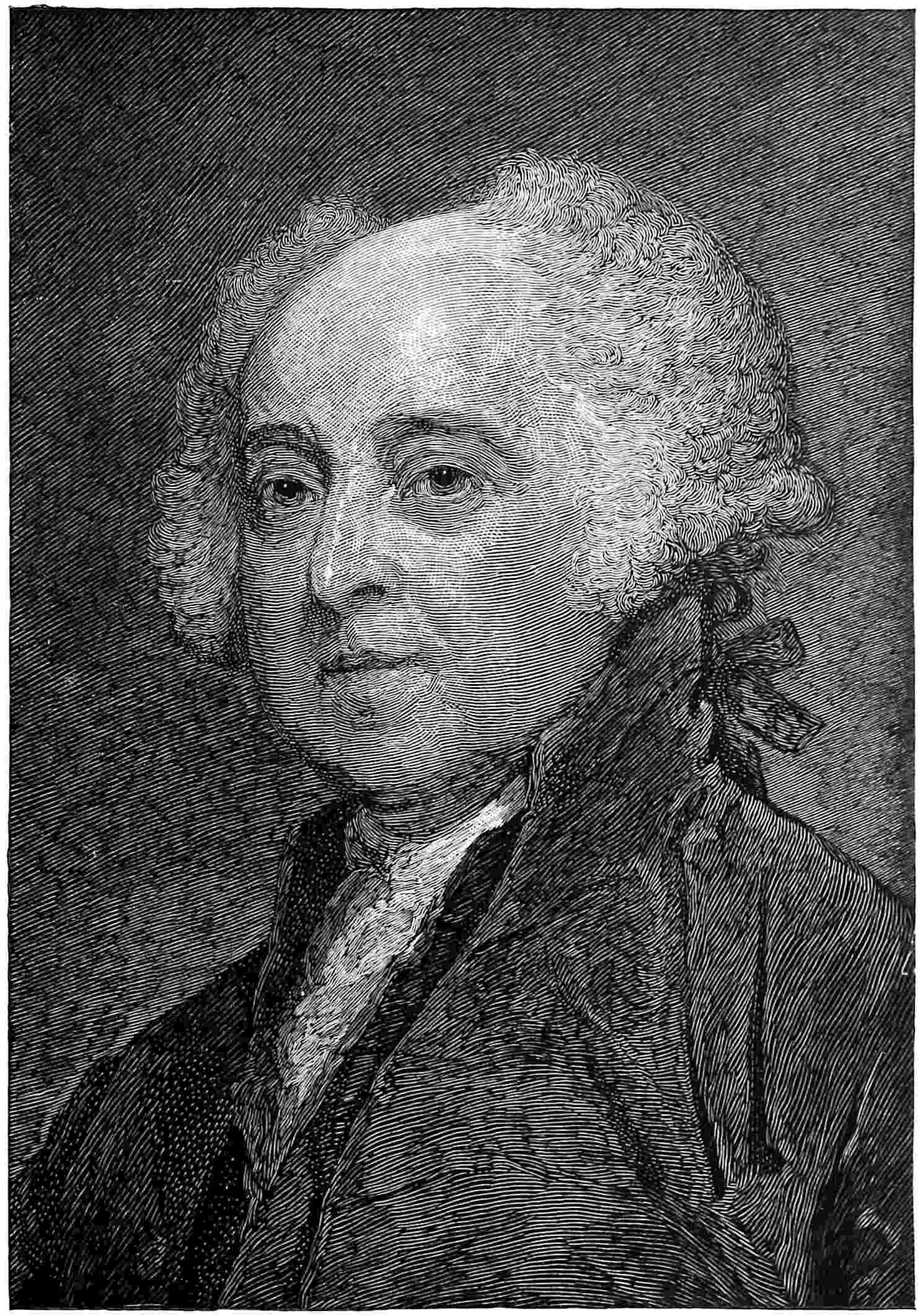
JOHN ADAMS
Another of the series gave the President the power in
case of war to seize or expel all resident aliens of the nation
at war with us, and yet another gave the President power
to deport any alien whom he might think dangerous to the
country, and if after being ordered away he remained in
the country, he was subject to imprisonment for three years
and forbidden citizenship. In addition to these provisions,
aliens so imprisoned could be removed from the country by
the President’s order. Such were the general provisions of
the Alien law. The Sedition bill, that was part of the same
policy, declared that any who hindered officers in the discharge
of their duties or opposed any of the laws of the
country were guilty of high crime and misdemeanor, punishable
by fine and imprisonment. Those who were guilty of
writing or publishing any false and malicious writings against
Congress or the President, or aided therein, were made punishable
by a fine of $2000 and imprisonment for two years.
These measures were in harmony with the Federal theory
of government. The Federal leaders did not believe the
people capable of self-government, and Adams felt justified
in imposing the severest penalties upon all who severely
criticised or violently opposed the administration. Washington
was yet alive and in full mental and physical vigor when
these laws were passed, and it is reasonable to assume that
he approved of them, as he could have defeated them if he
had opposed their enactment. Hamilton vainly protested
against the Alien and Sedition laws as a fatal political
blunder, but Federalism had never suffered defeat, and
President Adams never doubted his re-election until the
vote was declared against him.
The contest of 1800 had its lines so well defined from the
outset that candidates for President and Vice-President
were as clearly indicated, although without any formal
declaration, as national tickets would be indicated by a
national convention of modern times. There is no record
of the Congressional caucus in 1800, but it seems to be an
accepted tradition that the Federals, who had a majority of
the House, first called a secret caucus to confer about the
management of the campaign. They did not formally name
candidates, but by general consent Adams was accepted as
the candidate for President and Charles C. Pinckney, of
South Carolina, for Vice-President. Apparently well-authenticated
reports tell of a Republican Congressional
caucus held during the same year, but there is no preserved
record of it. If such a caucus was held, candidates were
not nominated nor was any declaration of principles made.
The chief object of the Republican caucus seems to have
been to harmonize the friends of Jefferson on Burr as the
accepted candidate for Vice-President, but no preference
was expressed in any formal way. When the Federalists
held their first caucus the Republicans denounced it as a
“Jacobinical conclave,” and so severe were the criticisms
of the Philadelphia Aurora, the leading Jefferson organ,
that its editor was at one time arraigned before the bar of
the Senate.
The contest of 1800 opened early in the year, the reported
Congressional caucuses having been held in February or
March, and from that time until the election the political
discussions were acrimonious to a degree that would surprise
the present generation. Jefferson had cordially united his
friends in the support of Burr, and it was Burr’s magnificent
leadership that carried the electoral vote of New York by
winning the Legislature of that State as early as May. New
York had voted for Adams in 1796, and the loss to Adams
of one of the leading States of the Union and its transfer to
Jefferson made the battle next to hopeless for Adams, but
he and his friends fought it out to the bitter end.
No new States had been admitted during the Adams
administration, and the same sixteen States which had elected
Adams over Jefferson were then to pass a second judgment
upon the great leaders of the two opposing political theories
of that day. In Pennsylvania the Federalists controlled the
Senate chiefly by hold-over Senators, as the popular sentiment
of the State was strongly for Jefferson. In the three
previous elections for President the Pennsylvania Legislature
had passed special acts authorizing a popular vote for
President, but in 1800, the Federals having control of the
Senate, refused to pass a bill for an election whereby the
choice of electors was thrown into the Legislature, and it
required joint action of the Federal Senate and the largely
Republican House to provide for a choice of electors even
by the Legislature. The Federal Senators refused to go
into joint convention except upon conditions which would
divide the electoral vote, and the Republicans of the House
were compelled to choose between disfranchising the State,
as New York had been disfranchised in 1789, or to concede
a large minority of the electors to Adams.
It was finally agreed that each House should nominate
8 electors, and that the Houses should then meet jointly and
each member should vote together for 15 of the 16 thus
nominated. The result was that the Federalists forced the
election of 7 Adams electors with 8 for Jefferson. The
Federal Senators, 13 in number, who controlled the Senate
against the 11 Republicans, were heralded by their party
papers and leaders as grand heroes, because by the accident
of power in one body of the Legislature not immediately
chosen by the people they had wrested 7 electors from
Jefferson, which would have been given to him either by a
popular vote or by a joint vote of the Legislature.
Rhode Island at this election for the first time chose
electors by popular vote, making 6 States which chose electors
by the vote of the people and 10 which chose electors
by the Legislature. As the electoral colleges could vote
only for candidates for President, Jefferson and Burr received
precisely the same vote, 73 in number, and Adams
received 65, with 64 for Pinckney and 1 for John Jay. The
following is the table of the vote as cast in the electoral colleges:
It is impossible to give anything like an intelligent presentation
of the popular vote between Jefferson and Adams.
In most of the States which chose electors by popular vote
there was practically no contest, as the New England States
voted solidly for Adams, and the Southern States south of
Maryland voted as solidly for Jefferson, with the exception
of North Carolina, where an electoral ticket seems to have
been chosen on the original theory that electors should
exercise sound discretion in the choice of a President, and
in the exercise of that discretion 4 of the North Carolina
electors voted for Adams and 8 for Jefferson. Had Pennsylvania
been permitted to give expression either to the
popular will or to the decided Republican majority of the
Legislature, 7 of the Pennsylvania votes would have been
taken from Adams and added to Jefferson, which would
have made him 80 electoral votes to 58 for Adams.
Jefferson had won his election, and there should have been
no question about according it to him. Under the electoral
system of that day, by which each elector voted for two
candidates for President, Jefferson and Burr each received
73 votes for the Presidency, and upon the face of the returns
were equally entitled to claim the highest honor of the
Republic. True, Burr had not been discussed or seriously
thought of as a candidate for President. He was accepted
by the Republicans distinctly as the candidate for Vice-President,
and the whole battle was fought out on the issue
between Jefferson and Adams. Had Burr been honest and
manly, he would have ended the struggle at once by declaring
that the people had elected Jefferson to the Presidency,
and that Burr could not consent to be presented to the
country and the world as seeking to wear the stolen honors
of the Government; but Burr developed his true character
as soon as he discovered that his vote was equal to that
given to Jefferson. While he did not make any open or
visible effort to elect himself over Jefferson, he silently
assented to the use of his name, and thus made the Presidency
hang in uncertainty from the time of the election in
November until the 17th of February, when the contest was
finally decided in favor of Jefferson, and Burr stamped with
infamy. That he wished to be elected over Jefferson cannot
be reasonably doubted. If he had not permitted the use of
his name without protest as a candidate against Jefferson,
there would have been no discussion and no uncertainty, as
the House would have chosen Jefferson on the 1st ballot.
Jefferson could have accomplished his own election without
a serious contest if he had accepted the proposition of
the Federalists to give him the election, to which he was
entitled by the vote of the people, if he would agree not to
remove the Federalists who then filled all the offices of the
Government. Under Washington and Adams, the Republicans
were practically proscribed in national appointments,
and Adams had been specially proscriptive in dispensing
the patronage of his administration. One of the most discreditable
acts of his administration was the creation, by
his Federal Congress in the expiring hours of Federal rule,
of a number of judges, to whom commissions were issued
by Adams at midnight before his retirement from office.
They were known in political discussions of that day as the
“midnight judges,” and the measure was so odious that
it speedily destroyed itself. Jefferson, while not specially
proscriptive in political appointments, regarded it as inconsistent
with his appreciation of executive duties to give any
pledge to the opposition to retain their friends in office.
They naturally assumed that Jefferson would be as proscriptive
as Adams had been, and that their only safety was in
making terms with Jefferson, whose election they could
accomplish without difficulty.
It is quite probable that they could have made such terms
with Burr, and it is possible that such conditions were proposed
and accepted, but the Federalists knew that the defeat
of Jefferson would be a monstrous perversion of the popular
will; and Hamilton and Bayard, of Delaware, and other
prominent Federalists earnestly opposed all affiliation with
Burr. Burr having failed to announce that Jefferson had
been elected President by the people, and should be elected
by the House, and Jefferson having refused to make terms
with the Federalists, the election went into the House under
rules which had been adopted by Congress to meet the
special case. Under the rules, the House was required to
retire to its own chamber after the announcement of the
electoral vote showing no choice, and proceed to ballot for
President, and to continue to ballot without adjournment
until a choice was effected. That session of the House continued
for seven days. The balloting began on the 11th of
February and ended on the 17th, as the House, instead of
adjourning, simply took recesses from time to time. Each
State could cast but one vote in the House, and that vote
was determined by a majority of the delegation. Where the
delegation was evenly divided the State had no vote. The
following is the vote of the States on the 1st ballot, February
11, 1801:
STATES.
Jefferson.
Burr.
State voted for.
New Hampshire
—
4
Burr.
Vermont
1
1
Divided—Blank.
Massachusetts
3
11
Burr.
Rhode Island
—
2
Burr.
Connecticut
—
7
Burr.
New York
6
4
Jefferson.
New Jersey
3
2
Jefferson.
Pennsylvania
9
4
Jefferson.
Delaware
—
1
Burr.
Maryland
4
4
Divided—Blank.
Virginia
16
3
Jefferson.
North Carolina
9
1
Jefferson.
South Carolina
—
5
Burr.
Georgia
1
—
Jefferson.
Kentucky
2
—
Jefferson.
Tennessee
1
—
Jefferson.
Total
55
49
Nineteen ballots were taken on the same day, then a
recess was taken until the 12th, when 9 additional ballots
were taken, and 1 ballot was taken on the 13th, 4 on the
14th, 1 on the 16th (the 15th being Sunday), and 1 on the
17th, making an aggregate of 35 ballots, all of which were
precisely a repetition of the 1st ballot given in the foregoing
table. Jefferson received the vote of 8 States, Burr of 6,
and 2 were blank, because of divided delegations. The vote
of 9 States was necessary to an election, and there was no
choice.
On the 2d ballot cast on the 17th, being the 36th ballot
in all, Jefferson was successful, receiving the votes of 10
States to 4 for Burr and 2 blank. The changes in favor
of Jefferson were made by one Vermont member declining
to vote, thus allowing his colleague to cast the vote of the
State for President, and by four from Maryland also declining
to vote, by which the tie in that State was broken in
Jefferson’s favor.
In addition to these changes South Carolina and Delaware
cast blank votes, but they did not help Jefferson, as he
required the positive vote of 9 States to accomplish his
election. It was James A. Bayard, of Delaware, a leading
Federalist, who changed his vote on the last ballot from
a vote for Burr to a blank ballot. Jefferson was thus declared
elected President, and Burr became Vice-President
by the mandate of the Constitution, he having received the
highest electoral vote for President excepting that cast for
Jefferson.
It can be readily understood that Burr’s permission of
the use of his name to defeat the election of Jefferson in the
House made an impassable gulf between them, and that
contest dated the decline of Burr’s power in the land. He
knew that there could be no future for him, and his restless
genius sought new fields in which to gratify his ambition,
ending in his arrest and trial for treason, and also staining
his skirts with the murder of Hamilton. Hamilton was
open in his hostility to Burr in the contest between Jefferson
and Burr in the House, and it was Burr’s resentment of
Hamilton’s hostility to his election that made him seize upon
a trivial pretext to force Hamilton into a duel, in which
Hamilton fell mortally wounded at the first fire. Burr’s
public career was thus ended by the Jefferson-Burr contest,
and although he lived many years thereafter, he drank the
bitterest dregs of sorrow, and died in poverty and unlamented.
Adams accepted his defeat most ungracefully. He remained
in the Executive Mansion until midnight of the 3d
of March, 1801, when he and his family deserted it, leaving
it vacant for Jefferson to enter, without a host to welcome
him. It was the only instance in which the retiring President
did not personally receive the incoming President in the
Executive Mansion, with the single exception of President
Johnson, who did not remain at the White House to receive
Grant; but Johnson was excusable from the fact that Grant
had expressed his purpose not to permit Johnson to accompany
him in the inauguration ceremonies. Jefferson, in
marked contrast with the pomp and ceremony of Federal
inaugurations, appeared on the 4th of March clad in home-spun,
and rode his own horse unattended to the Capitol, and
after the inauguration ceremonies returned to the Executive
Mansion in like manner. Both Jefferson and Adams lived
for more than a quarter of a century after their great battle
terminated in 1800, and time greatly mellowed the asperities
of their desperate political conflicts. In the later years of
their life, when both had lived long in retirement, they had
friendly correspondence; and it is one of the most notable
events in our political annals that Jefferson and Adams, who
stood side by side in presenting the Declaration of Independence
to Congress, and who had fought the fiercest political
battles of the nation as opposing leaders, both died on the
same day—the natal day of the Republic—July 4, 1826.
THE JEFFERSON-PINCKNEY CONTEST
THOMAS JEFFERSON
1804
The election of Jefferson in 1800 was a complete revolution
in the political policy of the new Republic, and it maintained
its supremacy for sixty years. The Republican party
that triumphed with Jefferson never suffered a defeat until
after the name of the party had been changed to Democracy
under Jackson. John Quincy Adams, who was elected President
in 1824, was nominated and supported as a Republican,
as were Jackson, Crawford, and Clay, and the Whig triumphs
of 1840 and 1848 stand in our history as accidental
victories without changing the general policy of the Government
in any material respect. It may be accepted as a fact
that from 1800 until 1900, the full period of a century, there
have been but two political policies established and maintained
in the government of this country. The Democratic
policy ruled from 1800 to 1860, and from 1860 to 1900 the
Republican policy has maintained its supremacy, notwithstanding
the two Democratic administrations of Cleveland.
They were but temporary checks upon Republican mastery,
as the Whig successes of 1840 and 1848 were mere temporary
checks upon Democratic rule.
With Jefferson’s success in 1800 came, for the first time,
the control of the Republicans in both branches of Congress,
and Jefferson thus had the entire legislative power of the
Government in thorough sympathy and harmony with himself.
He was bitterly opposed by the Federalists at every
step. They justly criticised his hostility to an American
navy; they complained vehemently of his removals from
office in partisan interests, and they specially assailed his
ostentatious attempts to limit the authority and powers of the
General Government to give the supreme sovereignty of the
nation to the people.
The one act of his administration that was most violently
assailed was his purchase of Louisiana in 1803. It was
proclaimed by the Federalists as the most flagrant usurpation
of authority, as an utter overthrow of the Constitution,
and as the beginning of the end of the Union. There is not
an argument made to-day against the acquisition of the Philippines
and Puerto Rico that is not the echo of the earnest
arguments made by the Federalists against the acquisition of
Louisiana. The ablest of the Federalists proclaimed in the
Senate and House that the Union was practically destroyed
by the acquisition of a distant country, containing a people
with no sympathy with our interests or institutions; who
were generally strangers to our language and could never be
educated to the proper standard of American citizenship.
But the country then, as now, believed in expansion, and the
acquisition of Louisiana stands out as one of the grandest
achievements of statesmanship exhibited by any administration,
from Washington to McKinley.
The contest between Jefferson and Burr for the Presidency,
after one had been distinctly supported as a candidate
for President and the other as distinctly as a candidate for
Vice-President, taught the necessity of changing the method
of choosing a President in the Electoral College, but the
Federalists bitterly opposed the change, chiefly on the
ground that it was desired solely to gratify the personal
ambition and interests of Jefferson. The proposed amendment
prevailed, however, and was ratified by thirteen of the
sixteen States in ample time for the contest of 1804. The
dissenting States in the ratification of the amendment were
Massachusetts, Connecticut, and Delaware. Under that
amendment the electors voted for President and Vice-President
as they do to-day, and the candidate for Vice-President
must now have a majority of the electoral vote as well as
the candidate for President to be successful.
The Congressional caucus that made Presidents for many
years became an accepted institution in 1804, when the Republican
or Jeffersonian members of Congress were publicly
invited to meet on the 25th of February. They unanimously
nominated Mr. Jefferson for re-election, and as Burr was
unthought of for Vice-President, they nominated George
Clinton, of New York, for that office. This was the first
open political caucus or convention to nominate national candidates.
The caucuses of 1800 were held in secret by both
the Federalists and Republicans, and no record was preserved
of their actions. Those who called the caucus, appreciating
the prejudice that would likely be provoked by Congress
attempting to dictate the candidates for President and
Vice-President, distinctly declared that the caucus or conference
was called solely as individuals, and not as official
representatives of the Senate and House. If the Federalists
held a caucus in 1804, there is no record of it that I have been
able to find, but they united on Charles C. Pinckney, of South
Carolina, for President, and Rufus King, of New York, for
Vice-President. Both of the parties gave the second place
on their respective tickets to New York, clearly indicating
that they regarded New York as one of the pivotal States of
the conflict.
Ohio had been admitted into the Union in 1802, making
17 States to take part in the election of 1804, and the new
apportionment, shaped by the census of 1800, enlarged the
number of electoral votes. While the Federalists had greatly
diminished in popular strength by the loss of power and the
steadily gaining approval of Jefferson and his Republican
policy, they did not abate in any degree the intensity of their
hostility to Jefferson, and in a few States where contests were
made, the campaigns were conducted on the old defamatory
lines which marked the two great battles between Jefferson
and Adams.
In most of the States there was practically no contest, but
in Massachusetts and Connecticut, where Federalism had
always maintained its supremacy, the Federalists fought
with an earnestness and desperation such as might have been
expected in a hopeful struggle. The fiercest battle was
fought in Massachusetts, where for the first time the Republicans
defeated the Federalists in the largest vote ever cast
in the State. Jefferson electors received 29,310 votes to 25,777
for the Pinckney ticket, giving Jefferson a majority of
3533. This was a terrible blow to Adams, and it was aggravated
by the fact that while Massachusetts faltered, Connecticut
gave her electoral vote to the Federal ticket. Delaware,
with her three electoral votes, was the only other State
that maintained her devotion to the Federal cause, and the
electoral votes of those 2 States, with 2 added from the 11
votes of Maryland, summed up the entire vote of the Federal
candidate for President in the Electoral College, the vote
being 162 for Jefferson to 14 for Pinckney, and a like vote
for Clinton and King for Vice-President. The following
table presents the official vote cast in the electoral colleges:
STATES.
President.
Vice-President.
Thomas Jefferson.
Charles C. Pinckney.
George Clinton.
Rufus King.
New Hampshire
7
—
7
—
Vermont
6
—
6
—
Massachusetts
19
—
19
—
Rhode Island
4
—
4
—
Connecticut
—
9
—
9
New York
19
—
19
—
New Jersey
8
—
8
—
Pennsylvania
20
—
20
—
Delaware
—
3
—
3
Maryland
9
2
9
2
Virginia
24
—
24
—
North Carolina
14
—
14
—
South Carolina
10
—
10
—
Georgia
6
—
6
—
Kentucky
8
—
8
—
Tennessee
5
—
5
—
Ohio
3
—
3
—
Total
162
14
162
14
THE MADISON-PINCKNEY-CLINTON CONTESTS
JAMES MADISON
1808–12
The election of Jefferson ended the line of the succession
to the Presidency from the Vice-Presidency. Adams as
Vice-President succeeded Washington as President, and
Jefferson as Vice-President succeeded Adams, but the Burr
fiasco made it impossible for the succession to be maintained,
and for many years the line of succession to the Presidency
was in the Premiers of the administration. Indeed during
the entire century from 1800 to 1900 but one Vice-President
has been elected to the Presidency. That single exception
was Martin Van Buren, and he started under the Jackson
administration as Premier. Madison, who was Secretary
of State under Jefferson, succeeded Jefferson to the Presidency;
Monroe, Secretary of State under Madison, succeeded
Madison as President; John Quincy Adams, Secretary
of State under Monroe, succeeded Monroe as President,
and since that time Buchanan was the only Secretary of State
who reached the Presidency, although Webster, Cass and
Blaine, who were Premiers under several administrations,
were defeated in Presidential contests.
Madison was generally regarded as the favorite of Jefferson
for the succession, and Jefferson’s power at that time
was second only to the power of Washington in dictating
who should succeed him to the highest honor of the Republic.
Irritating opposition to Madison came from his own
State of Virginia, where the friends of Monroe were quite
aggressive. Two caucuses had been held in the Virginia
Legislature, one by the friends of Madison, and the other,
much smaller in number, by the friends of Monroe, and both
were thus formally presented to the country to succeed Jefferson.
A caucus of the Republican members of both branches of
Congress was called to meet on the 23d of January, 1808. It
was known that the friends of Madison largely outnumbered
the friends of Monroe in Congress, and the active
supporters of Monroe earnestly opposed a nomination by the
Congressional caucus. The caucus was held, however, and
was attended by a majority of the Senators and Representatives,
and Madison was nominated on the 1st ballot, receiving
83 votes to 3 for Monroe and 3 for George Clinton.
Monroe had a considerably larger strength in Congress, but
the result was predetermined, and a number of them did not
participate. George Clinton was nominated by substantially
the same vote for Vice-President. The caucus system was
under fire, and the caucus, in justification of its own act,
adopted a resolution declaring that in making the nominations
the members had “acted only in their individual characters
as citizens,” and because it was “the most practical
mode of consulting and respecting the interests and wishes
of all upon a subject so truly interesting to the people of the
United States.”
It was a considerable time before the friends of Monroe
gave a cordial adhesion to the caucus nominations, but Jefferson,
who was friendly to both Madison and Monroe, interposed
and reconciled the friends of Monroe by the expectation
that Monroe would succeed Madison; and as there
was practically no serious opposition to Madison presented
by the Federalists, the campaign drifted into the general acceptance
of Madison’s election long before the election was
held. The Federalists did not hold any caucus or formally
present candidates, but accepted Pinckney and King, for
whom they had voted in the last contest against Jefferson.
In the New England States vigorous contests were made
by the Federalists to regain the supremacy they had lost, and
New Hampshire, Massachusetts and Rhode Island, which
had voted for Jefferson, were regained by the Federalists,
but the struggle was not made with any hope of defeating
Madison for President. There had been no increase in the
number of States nor in the vote of the electoral colleges.
Madison won an easy and decisive victory, receiving 122
electoral votes to 47 for Pinckney and 6 for George Clinton,
who was the regular nominee of the Republicans for Vice-President,
and who was elected to that office by 113 electoral
votes to 47 for King and 15 scattering. New York was obviously
disaffected, as while the Republican caucus had accorded
to Clinton of that State the second place on the ticket,
and elected him Vice-President, the electoral vote of New
York was divided, Madison receiving 13 to 6 cast for Clinton,
and in the same electoral college Clinton received 13
votes for Vice-President to 3 for Madison and 3 for Monroe.
The votes of North Carolina and Maryland were also
divided, but that was not unusual, as after Washington retired
the electoral votes of those States were divided, because
their electors were chosen by Congressional districts.
There is no intelligent record of the popular vote, and it
would be needless to attempt to present it, as outside of New
England the States which were contested generally chose
their electors by the Legislature. The following is the vote
in detail as cast in the Electoral College:
The battle for Madison’s second election in 1812 began
in the early period of our second war with Great Britain.
Many complicated foreign questions excited earnest discussion
and renewed the partisan bitterness of the earlier national
contests, while the struggle for the renewal of the
charter of the United States bank convulsed financial and
business circles. The bill was lost by indefinite postponement
in the House in 1811 by a single vote, and soon thereafter
a like bill was rejected in the Senate by the casting vote
of the Vice-President. Madison did not possess the breadth
of statesmanship so grandly exhibited by Jefferson, and he
lacked in the positive qualities needed to meet the grave
issues which confronted him. He parried our foreign questions
with almost endless diplomatic correspondence, and in
the conduct of the war he lacked in the settled purpose and
methods which are always necessary to sustain a government
in such a crisis.
It was then that Clay came to the front as Commoner of
the nation, and it was his able, eloquent, and inspiring utterances
and actions, aided by Senator Crawford, of Georgia,
that saved the administration when it was apparently threatened
with defeat. Madison was unwilling to accept war
with England until it became clearly evident that he must
declare war or give the Federalists a restoration to power,
and it was only after he had been very earnestly appealed to
by the men upon whom he had most to depend, that he sent
a message to Congress pointing out the necessity of a declaration
of war, to which both branches in secret sessions gave
their approval.
It was not until after Madison had decided upon an aggressive
war policy with England that the Congressional
caucus was called to nominate Republican candidates for
President and Vice-President. The caucus met on the 12th
of May apparently without objection, and Madison was renominated
by a unanimous vote, only one member present
declining to vote. Clinton had died in office, and a new nomination
had to be made for Vice-President. John Langdon,
of New Hampshire, who was the first Senator to be President
pro tem. of the body, was nominated for Vice-President,
receiving 64 votes to 16 for Elbridge Gerry and 2 scattering.
Langdon declined the nomination, and the second
caucus was convened when Gerry was nominated by a vote
of 74 to 3 scattering. While the proceedings of the caucus
were apparently very harmonious, there was significance in
the fact that some 50 Republican Senators and Representatives
did not attend, only one being present from New York
State.
The reason for the New York members declining to attend
the caucus was soon developed by a counter movement,
made in New York, to bring out DeWitt Clinton, who was
the leader of the Republicans of that State, as the candidate
in opposition to Madison. The Federalists had no part in
making him the competitor of Madison, but they were quite
willing, in their utter helplessness, to support any bolt
against the omnipotence of the Republican caucus. Many
of the Republicans thought that the administration was not
sufficiently aggressive in its opposition to England, and
many others opposed Madison and were ready to support
Clinton or any other promising candidate who was entirely
opposed to the war. Had Clinton acted in harmony with the
Republicans and supported Madison, he would have been a
very formidable competitor of Monroe for the succession,
but in allowing himself to be made a candidate of the opposition,
he entirely lost his position as a Republican leader.
Madison had been nominated by the Republican Congressional
caucus on the 12th of May, and on the 29th of May
a caucus of the Republican members of the New York Legislature
was held, at which 91 of the 93 members were present,
and they unanimously nominated Clinton as a candidate
for President, and the Federalists gradually dropped into his
support. The Federalists took no formal action for the
selection of candidates until September, when a conference of
the leaders of that party was held in New York, with representatives
from 11 States, and that conference nominated
Clinton for President with Jared Ingersoll for Vice-President.
The campaign logically drifted into a square issue between
the war and the peace parties, and even with all the factional
hostility to Madison in the Republican ranks, such an issue
could result only in the success of the party that sustained the
Government in its war with England. The Federalists carried
a solid New England vote for Clinton with the exception
of Vermont, that broke loose from her Federal moorings
and cast her entire electoral vote for Madison. New
York, with the largest electoral vote of any State, was carried
chiefly by Clinton’s personal popularity, and New Jersey
was lost to Madison in disregard of the popular vote of
the State by a Federal Senate and House that was successful
against a Republican majority by reason of the peculiar
shaping of the legislative districts. The Legislature
repealed the law for the choice of electors by a popular
vote, and elected Federal electors by the Legislature. Had
the popular vote of New Jersey prevailed, the vote between
Madison and Clinton in the Electoral College would have
been 136 for Madison to 81 for Clinton. The following is
the vote as cast by the electoral colleges:
STATES.
President.
Vice-President.
James Madison, Va.
DeWitt Clinton, N. Y.
Elbridge Gerry, Mass.
Jared Ingersoll, Penn.
New Hampshire
—
8
1
7
Vermont
8
—
8
—
Massachusetts
—
22
2
20
Rhode Island
—
4
—
4
Connecticut
—
9
—
9
New York
—
29
—
29
New Jersey
—
8
—
8
Pennsylvania
25
—
25
—
Delaware
—
4
—
4
Maryland
6
5
6
5
Virginia
25
—
25
—
North Carolina
15
—
15
—
South Carolina
11
—
11
—
Georgia
8
—
8
—
Kentucky
12
—
12
—
Tennessee
8
—
8
—
Louisiana
3
—
3
—
Ohio
7
—
7
—
Total
128
89
131
86
Louisiana was admitted into the Union on the 8th of
April, 1812, and participated in the Presidential election,
making 18 States. It will be seen that there was but one
State that cast a divided electoral vote. Maryland continued
to choose all but the electors at large by Congressional districts,
and gave 6 votes to Madison and 5 to Clinton. North
Carolina changed her method of electing by districts to the
choice of electors by the Legislature, thus making her electoral
vote solid. Gerry, the candidate for Vice-President on
the ticket with Madison, received 3 more votes in the Electoral
College than were given to Madison, one of which
came from New Hampshire and two from Massachusetts.
THE MONROE ELECTIONS
1816–20
The election of James Monroe to the Presidency in 1816
and his re-election in 1820 did not rise to the dignity of
political contests. The Federal party was practically overthrown
by the success of the war with England, and after
the close of the war Federalism never asserted itself as
a political factor in national affairs. There were murmurings
of discontent in the Republican organization, but the Federalists
were then in the unenviable attitude of having
sympathized with the enemy in a foreign war, and the
prejudices of the patriotic people of the country were intensified
against the action of the Hartford convention, for
which the Federalists were held responsible.
Whether justly or unjustly, it was believed by the Republicans
throughout the country that the Hartford conventionists
had given “blue-light” signals to the enemy’s ships,
and thereby hindered the escape of American vessels which
were blockaded. The overthrow of Federalism was so
complete that the party never again formally presented
candidates for President and Vice-President, and the first
Monroe election of 1816 would probably have been as unanimous
in the Electoral College as was his second election but
for the fact that the three Federal States which voted against
Monroe did not hold popular elections for President at all,
but chose their electors by the Legislature. Massachusetts,
the home of Adams, that had always chosen Presidential
electors by popular vote, repealed the law in 1816, so that
there was not a single elector chosen by the people against
Monroe.
While Monroe’s two elections and administrations are
now pointed to as the “era of good feeling,” that has never
been repeated in this country. Monroe himself did not
reach the Presidency by the rosy path that would now be
naturally accepted for him in his journey to the highest
civil trust of the nation. The usual Congressional caucus
was called on the 10th of March, 1816, asking the Republican
Senators and Representatives to meet on the 12th for the
purpose of nominating candidates for President and Vice-President.
Only 58 of the 141 Republican members attended
this meeting, and, instead of taking action, a resolution was
passed calling a general caucus for the 16th, and at that
caucus 118 members appeared. There were strong and
widespread prejudices against the Congressional caucus
system, and it was denounced by many prominent Republicans
as “King Caucus” that sought to control the people
in the selection of the highest officers.
JAMES MONROE
Senator Crawford, of Georgia, who had been the leading
Senator, as Clay was the leading Representative, in the
support of the war during the Madison administration, was
an aggressive candidate for President, and was more popular
with the politicians generally throughout the country than
was Monroe. Great anxiety was felt about the probable
action of the caucus, as it was feared that Monroe might be
overthrown, notwithstanding the fact that he was favored
by both Jefferson and Madison. When the caucus met with
twenty-three Republican absentees, the majority of whom
absented themselves because they were positively opposed
to the caucus system, Mr. Clay offered a resolution declaring
it inexpedient to nominate candidates, but his proposition
failed. He thus put himself on record as early as 1816
against the caucus system, and he rejected and took the field
against it as a candidate in 1824.
The canvass between Monroe and Crawford was very
animated, and Monroe succeeded by only 11 majority, the
vote being 65 for Monroe and 54 for Crawford. Governor
Daniel D. Tompkins, of New York, was nominated for
Vice-President, receiving 20 votes more than were given
to Monroe. The Crawford sentiment was strong in New
York and New Jersey, as well as in North Carolina, Kentucky,
and his native State of Georgia, and public meetings
were held in different sections of the country after the nominations
had been made, denouncing the caucus system, at
one of which Roger B. Taney, who later became Chief
Justice, was one of the aggressive opponents.
Had there been a formidable Federal party, it is doubtful
whether Monroe’s election might not have been seriously
imperilled, but the war feeling was too fresh in the minds
of the people to tolerate anything that was in sympathy with
that expiring political organization. The Republicans who
were opposed to Monroe had to choose between falling in
with the caucus nomination, and giving Monroe a unanimous
support, or making a square fight as a bolting Republican
faction, without permitting the aid of the Federalists. As
that was impracticable, the Republican discontent gradually
subsided and the election of Monroe was conceded by all.
The Federalists made no nomination, but supported Rufus
King, one of their old national candidates, and scattered
their few votes for Vice-President, no two of the three States
voting for the same candidate. Indiana had adopted a State
Constitution in June, but was not formally admitted to the
Union until the 11th of December, after the Presidential
election had been held. The State, however, had voted for
President, and elected three Republican electors for Monroe,
but an animated dispute arose in Congress about counting
the vote, because of the alleged ineligibility of Indiana to
vote for President when not formally admitted into the
Union, even though the people had adopted a State Constitution
several months before the election. The two bodies
separated, to enable the House to decide the issue, but finally
the question was postponed by a nearly unanimous vote, and
the Senate invited to return, when the vote was declared as
follows:
STATES.
President.
Vice-President.
James Monroe, Va.
Rufus King, N. Y.
Daniel D. Tompkins, N. Y.
John E. Howard, Md.
James Ross, Penn.
John Marshall, Va.
Robert G. Harper, Md.
New Hampshire
8
—
8
—
—
—
—
Vermont
8
—
8
—
—
—
—
Massachusetts
—
22
—
22
—
—
—
Rhode Island
4
—
4
—
—
4
—
Connecticut
—
9
—
—
5
—
—
New York
29
—
29
—
—
—
—
New Jersey
8
—
8
—
—
—
—
Pennsylvania
25
—
25
—
—
—
—
Delaware
—
3
—
—
—
—
3
Maryland
8
—
8
—
—
—
—
Virginia
25
—
25
—
—
—
—
North Carolina
15
—
15
—
—
—
—
South Carolina
11
—
11
—
—
—
—
Georgia
8
—
8
—
—
—
—
Kentucky
12
—
12
—
—
—
—
Tennessee
8
—
8
—
—
—
—
Louisiana
3
—
3
—
—
—
—
Ohio
8
—
8
—
—
—
—
Indiana
3
—
3
—
—
—
—
Total
183
34
183
22
5
4
3
Monroe’s re-election in 1820 presents the singular political
spectacle of his success without having been formally nominated
by any party, and without a single electoral vote being
chosen against him. That had occurred in Washington’s
two elections, but it was not believed possible that, with the
bitter partisan disputes which immediately followed Washington’s
retirement, any man could ever be chosen for the
Presidency without more or less of a contest. Monroe’s
administration had no serious political or diplomatic problem
to confront it, and the country was rapidly recovering
from the war and proud of the achievements of the American
army and navy in the second contest with the English.
Monroe was naturally cautious and conservative. There
was nothing aggressive in the policy of his administration,
and really no occasion to invite aggression. The Federal
Party was practically extinct, and the Republicans were in
thorough accord with the Monroe administration. A feeble
movement was made early in 1820 to supersede Monroe, but
it never attained importance, and even those who attempted
it denied responsibility for it. The usual Republican Congressional
caucus was called, and very few members took
the trouble to attend it, as there was really nothing to do;
and it was deemed better for the party to accept Monroe
and Tompkins for re-election than to have formal nominations
made by a very few representatives of the party.
Monroe and Tompkins were thus accepted without any
formalities whatever as the Republican candidates for President
and Vice-President, and no opposing candidates were
presented in any way whatever of which I can find any
record or tradition. Monroe thus ran in 1820, as Washington
did at both his elections, without opposition, and every
electoral vote of the nation was chosen for him.
Five new States had been admitted and participated in
the election of 1820. Mississippi came in December, 1817;
Illinois in December, 1818; Alabama in December, 1819;
Maine in March, 1820, and Missouri had adopted a Constitution
in July, 1820, and although not formally admitted
into the Union until August, 1821, the vote of that State
was counted, as was the vote of Indiana in 1816. The
following is the official vote as announced by Congress:
It will be seen that a single electoral vote was cast against
Monroe in the New Hampshire Electoral College. The
whole 8 electors were chosen as Monroe men, and would
have voted for him had it been necessary to elect him, but
one of the New Hampshire electors gave as his reason for
voting for John Quincy Adams for President and Richard
Rush, of Pennsylvania, for Vice-President, that he was
unwilling that any other President than Washington should
receive a unanimous electoral vote.
Monroe’s administrations were uneventful beyond the
assertion of what has ever since been known as the Monroe
Doctrine, that was evolved by Monroe and John Quincy
Adams, his Secretary of State, and the first serious contest
in Congress over the Slavery issue, growing out of the
admission of Missouri as a State. After the admission of
Louisiana as a State the remainder of the territory embracing
the Louisiana purchase was organized as the Territory
of Missouri, and in 1818 the portion of the territory now
embraced in the State of Missouri applied for admission
into the Union as a State. In 1819 the House passed a bill
for the admission of Missouri, with a clause prohibiting
slavery, but it was not accepted by the Senate.
In 1820 the Senate sent a bill to the House for the admission
of Maine, and authorizing the organization of the
State of Missouri. The House had already passed a bill
for the admission of Maine, but it refused to accept the
Senate’s provision relating to Missouri. There was very
violent agitation on the Slavery question for some time, and
many feared that it would end in the disruption of the
Union; but Clay became the pacificator, and chiefly by his
efforts what has ever since been known as the Missouri
Compromise was accepted, admitting Missouri as a slave
State, but prohibiting slavery in all of the Louisiana territory
north of 36 degrees and 30 minutes north latitude.
This compromise did not fully satisfy either side, but it
was accepted, and on the 10th of August, 1821, President
Monroe proclaimed the admission of Missouri into the
Union.
Monroe had the most unruffled period of rule ever known
in the history of the Republic. Washington, with all his
omnipotence, was fearfully beset by factional strife and the
wrangles of ambition on every side, and there was no period
of his two administrations in which he was not greatly
fretted by the persistent and often desperate disputes among
those who should have been his friends; but Monroe had
an entirely peaceful reign, with the single exception of the
slavery dispute over the Missouri question, and at the close
of his term he retired to his home in Virginia entirely
exhausted in fortune. For several years he acted as a
Justice of the Peace, but his severely straitened circumstances
finally compelled him to make his home with his
son-in-law in New York, where he died in 1831, and, like
Jefferson and Adams, on the 4th of July.
THE ADAMS-JACKSON-CRAWFORD-CLAY CONTEST
JOHN QUINCY ADAMS
1824
With the re-election of Monroe in 1820, the Federal party
had perished as a political factor; “King Caucus,” as the
Congressional caucus for nominating national candidates
had been generally designated, had fulfilled its mission, and
none pretended that it could be revived to name the successor
of Monroe. As Federalism was unfelt and unfeared, and as
the Congressional caucus had lost its prestige and power, the
Presidential field of 1824 invited a free-for-all race, and the
discussion of the succession began actively as early as 1822.
It seems unaccountable that the Republicans, after having
had the benefit of the Congressional caucus to concentrate
their vote on national candidates, did not conceive the idea
of a general conference of representative Republicans from
the different States to unite them on candidates for President
and Vice-President, but no national convention was
ever held by any party until the anti-Masons inaugurated it
in Philadelphia in 1830, two years before the Presidential
election of 1832.
As there was practically no Federal party, none but Republicans
were discussed for the succession to Monroe. It
is a common but erroneous idea that John Quincy Adams
was in harmony with the Federal sentiment of his State and
New England generally. After having filled a number of
important offices, principally in diplomatic circles, he was
elected to the United States Senate as a Federalist by the
Massachusetts Legislature in 1802, but he heartily supported
the administration of Jefferson, resulting in instructions
passed by the Legislature demanding that he should
change his political policy. He refused to obey the Legislative
instructions, but resigned his seat in the Senate, and
thenceforth he acted uniformly with the Republicans, and
was Secretary of State during the eight years of Monroe’s
administration.
While very many candidates were discussed for the succession,
when the time came for concentration only six
names remained, and three of those were members of the
Monroe Cabinet. They were John Quincy Adams, Secretary
of State; John C. Calhoun, Secretary of War; William H.
Crawford, Secretary of the Treasury; Henry Clay, of
Kentucky, who had been Speaker of the House; Ex-Governor
De Witt Clinton, of New York, who was not then in
official position, and General Andrew Jackson, of Tennessee,
who had been Senator, Representative, and Supreme Judge.
Mr. Clay was presented to the people as a candidate for
President by the Kentucky Legislature as early as the 18th
of November, 1822, or two years before the election, and the
Missouri Legislature also adopted a resolution about the
same time recommending Mr. Clay. During the year 1823
the Legislatures of Illinois, Ohio, and Louisiana had also
formally favored Clay.
General Jackson was first formally named for the Presidency
by a mass-meeting in Blount County, Tenn., early
in 1823, and that was followed up by various mass-meetings
and local conventions in different parts of the Union. Mr.
Adams, although not in sympathy with the Federalists,
having earnestly supported the war with England against
the Federal sentiment of his State, was presented as a candidate
by the Legislature of Massachusetts, and it was
seconded by most of the New England States during the
early part of the year 1824.
Clinton was nominated by local mass-meetings in New
York and Ohio. Calhoun was presented by the Legislature
of South Carolina, and Crawford by the Legislature of Virginia.
It is worthy of note that while Adams was the
Premier of the administration, Crawford was obviously the
favorite candidate of President Monroe, as the Legislature
of Virginia recommended Crawford, and Virginia voted for
him at the election.
All of these candidates were opposed to the Congressional
caucus excepting Crawford, who had been the competitor of
Monroe in the caucus in 1816. His friends made earnest
effort to get the prestige of a caucus nomination, and 6
Senators and 5 Representatives from different States called
a caucus to meet on the 14th of February, 1824, “to recommend
candidates to the people of the United States for the
office of President and Vice-President.” That call was met
by a card signed by 24 Republican Senators and members
declaring that of the 261 Senators and Representatives there
were 81 who were opposed to the caucus. The caucus was
held, however, but only 66 members appeared, a majority of
whom were from 4 States, and 8 States were not represented
at all. A motion to adjourn to meet some weeks later was
opposed by Mr. Van Buren and rejected. A ballot was then
had for President, when Crawford received 64, Adams 2,
Jackson 1, and Macon 1. Albert Gallatin, of Pennsylvania,
was also nominated for Vice-President.
The caucus nomination was certainly a hindrance rather
than a help to Crawford, as it concentrated his opponents
to a very large extent. The caucus system had become very
odious, and with 5 of the 6 candidates openly hostile to the
caucus, it placed Crawford at a decided disadvantage. Gallatin,
who was of foreign birth, was bitterly assailed, and a
month before the election he withdrew his name as a candidate,
but no attempt was made to give formal nomination
to a successor for him on the ticket.
Strange as it may appear, Pennsylvania, the home of
Gallatin, did not cordially respond to his nomination, and
there was a decided preference in that State in favor of
Calhoun for Vice-President. Calhoun and Clinton, being
without any large measure of support, gradually dropped
out of the Presidential contest, leaving Adams, Jackson,
Crawford, and Clay to make the scrub race. There were 24
States to participate in the election, and New York, Vermont,
Delaware, South Carolina, Georgia and Louisiana
chose their electors by their Legislatures, while Maine,
Massachusetts, Maryland, Illinois, and Kentucky chose electors
by districts, and in the other States popular elections
were held and electors chosen by general ticket.
An incident that occurred in the selection of electors by
the Legislature of New York resulted in making Clay the
fourth candidate in the Electoral College instead of the third.
There were 3 of the electors chosen by the Legislature who
were elected as Clay men by a combination between the Clay
and Adams men, who in the Electoral College divided their
votes between Adams, Crawford, and Jackson, and had they
voted for Clay, as it was expected they would, Clay would
have had 40 votes in the electoral colleges and Crawford
only 38. As only the three highest candidates in the Electoral
College could be returned to the House from which a
choice had to be made, Crawford was thus returned instead
of Clay, and if Clay had been returned, it is probable that
Adams would not have been chosen President. The New
York Legislature had a protracted contest in choosing electors.
The combined strength of the candidates in the two
Houses as shown by the 1st ballot was 60 for Crawford, 57
for Adams, and 39 for Clay. Finally a combination was
made between the friends of Adams and Clay, and divided
electors were chosen, by which Adams received 26 votes,
Crawford 5, Clay 4, and Jackson 1. In Delaware the electors
were divided by a like dispute in the Legislature.
The contest was not one of great bitterness, and in some
States there was practically no contest at all. Massachusetts
and Virginia, for instance, did not poll half their votes, as
they were really not contested, one being conceded to Adams
and the other to Crawford. The following is the popular
vote of the States except where the electors were chosen by
the Legislature, as nearly as it can be ascertained after the
most exhaustive investigation of the records:
The popular vote as given in the foregoing table does not
fully represent the relative strength of the opposition candidates
to Jackson. There were what were called “Opposition”
tickets, “People’s” tickets, and “Convention” tickets
voted in different States. It will be seen that Jackson received
no votes in New England excepting a few in New
Hampshire, and in most of those States electoral tickets were
known as “Opposition” designed to concentrate all the opposition
to Adams, and in North Carolina the Jackson ticket
was voted as the “People’s” ticket, but no more intelligent
and satisfactory presentation of the popular vote can be gathered
from the records than that presented.
The following is the vote of the Electoral College:
STATES.
President.
Vice-President.
Andrew Jackson, Tenn.
J. Q. Adams, Mass.
W. H. Crawford, Ga.
H. Clay, Ky.
John C. Calhoun, S. C.
Nathan Sanford, N. Y.
Nathaniel Macon, N. C.
Andrew Jackson, Tenn.
M. Van Buren, N. Y.
H. Clay, Ky.
Maine
—
9
—
—
9
—
—
—
—
—
New Hampshire
—
8
—
—
7
—
—
1
—
—
Vermont
—
7
—
—
7
—
—
—
—
—
Massachusetts
—
15
—
—
15
—
—
—
—
—
Rhode Island
—
4
—
—
3
—
—
—
—
—
Connecticut
—
8
—
—
—
—
—
8
—
—
New York
1
26
5
4
29
7
—
—
—
—
New Jersey
8
—
—
—
8
—
—
—
—
—
Pennsylvania
28
—
—
—
28
—
—
—
—
—
Delaware
—
1
2
—
1
—
—
—
—
2
Maryland
7
3
1
—
10
—
—
1
—
—
Virginia
—
—
24
—
—
—
24
—
—
—
North Carolina
15
—
—
—
15
—
—
—
—
—
South Carolina
11
—
—
—
11
—
—
—
—
—
Georgia
—
—
9
—
—
—
—
—
9
—
Alabama
5
—
—
—
5
—
—
—
—
—
Mississippi
3
—
—
—
3
—
—
—
—
—
Louisiana
3
2
—
—
5
—
—
—
—
—
Kentucky
—
—
—
14
7
7
—
—
—
—
Tennessee
11
—
—
—
11
—
—
—
—
—
Missouri
—
—
—
3
—
—
—
3
—
—
Ohio
—
—
—
16
—
16
—
—
—
—
Indiana
5
—
—
—
5
—
—
—
—
—
Illinois
2
1
—
—
3
—
—
—
—
—
Total
99
84
41
37
182
30
24
13
9
2
Jackson led the popular vote, as was generally expected,
and next to him is Adams, with Clay third and Crawford
fourth. While all of the 4 candidates were regarded as Republicans
as between Federalism and Republicanism, the
friends of Adams in a number of the States fought the battle
under the title of National Republicans, and the supporters
of Jackson, who represented the more Democratic element
of the opponents of Federalism, entitled themselves in some
States the Democratic Republicans. As was generally expected,
there was no choice for President, as no one of the 4
candidates had a majority of either the popular or electoral
votes, but Calhoun was elected Vice-President by a large majority,
having received the support of the Adams men generally
in New England, and of the Jackson men in Pennsylvania,
Maryland, North and South Carolina, and indeed in
all of the Southern States, excepting Georgia, Kentucky, and
Missouri.
Thus for the second time in the history of the Republic the
Presidential election was remanded to the House for final
decision, and the names of Jackson, Adams, and Crawford,
the three highest in the Electoral College, were returned to
that body from which a choice had to be made by a majority
of the States. Although Clay had received less votes
than Crawford, he was a very much more potent factor in
deciding the contest between the three candidates than Crawford
could have been, and it soon became evident that the
friends of Clay were in much closer accord and sympathy
with Adams than they were with the friends of either Crawford
or Jackson. Clay certainly had no love for Jackson, as
Jackson was not accredited with any great qualities of statesmanship,
and it was the general apprehension that Clay
would control the election in favor of Adams that made the
friends of Jackson publish the accusation of “bargain and
sale” between Adams and Clay, by which Clay was to make
Adams President and receive the position of Premier under
the administration. Although the Legislature of Kentucky
had requested the Congressmen from that State to vote for
Jackson, there were well-known reasons, both public and
personal, why Clay could not favor Jackson, and on the first
ballot in the House Adams received the votes of 13 States,
with 7 for Jackson and 4 for Crawford. The majority of
the delegation of each State decided how the vote should be
cast, and the following table shows not only how the vote of
each State was given, but the divisions in the different delegations
in deciding between the three candidates:
STATES.
Adams.
Jackson.
Crawford.
Vote for—
Maine
7
—
—
Adams.
New Hampshire
6
—
—
Adams.
Vermont
5
—
—
Adams.
Massachusetts
12
1
—
Adams.
Rhode Island
2
—
—
Adams.
Connecticut
6
—
—
Adams.
New York
18
2
14
Adams.
New Jersey
1
5
—
Jackson.
Pennsylvania
1
25
—
Jackson.
Delaware
—
—
1
Crawford.
Maryland
5
3
1
Adams.
Virginia
1
1
19
Crawford.
North Carolina
1
2
10
Crawford.
South Carolina
—
9
—
Jackson.
Georgia
—
—
7
Crawford.
Alabama
—
3
—
Jackson.
Mississippi
—
1
—
Jackson.
Louisiana
2
1
—
Adams.
Kentucky
8
4
—
Adams.
Tennessee
—
9
—
Jackson.
Missouri
1
—
—
Adams.
Ohio
10
2
2
Adams.
Indiana
—
3
—
Jackson.
Illinois
1
—
—
Adams.
87
71
54
The administration of John Quincy Adams will be regarded
by the careful and dispassionate student of American
history as the model government of the Republic. He was
the most accomplished scholar who ever filled the position,
and surpassed all others in general and accurate intelligence.
He was a tireless student until the day of his death, and he
had no taste and no fitness for political manipulation. He
removed but two men from office during his four years in the
Presidency, and they were dismissed for very good cause,
and in the discharge of his official duties he looked solely to
what he conceived to be the interests of the nation.
He made no efforts to popularize himself personally;
was regarded as austere and unapproachable, but he was
always courteous, and the arts of the demagogue had no
place in the Executive Mansion. He was the real author of
the Monroe Doctrine, and earnestly attempted to accomplish
what Blaine struggled to accomplish three-quarters of
a century later—that is, the unity of the South American
governments in sympathy with our Government. His Cabinet
was not in political harmony, but as he regarded politics
as entirely outside of Cabinet duties, he never took note of
political disagreements. He aimed to win a re-election solely
by deserving the considerate approval of the American
people. After his defeat he returned to his home in Massachusetts,
but was soon elected to Congress, where he continued
until his death in 1848.
As an illustration of the careful methods of his life my
own experience in obtaining his autograph serves a good
purpose. A few weeks before his death, when I was the
editor of a village newspaper and ambitious to have the autographs
of the celebrated men of the country, I wrote him
asking for an autograph letter. I received no reply, and
after his death was announced I assumed that the letter had
gone into the waste basket; but three months after his death
I received a letter franked by Louise Catharine Adams
(widows of Presidents were then accorded the franking
privilege), and the envelope contained only the autograph of
John Quincy Adams, clipped from a public document that
he had franked. The pressure of duties had prevented him
from answering my letter, but the fact that it was answered
by his wife so long after his death is evidence that many letters
had accumulated, all of which were answered by Mrs.
Adams. He fitly died in the Capitol of the nation. He was
stricken with paralysis during a session of the House, and
died on the following day, having written, as I believe, the
most lustrous political record of any of our statesmen, with
the single exception of Abraham Lincoln.
THE JACKSON-ADAMS-CLAY CONTESTS
ANDREW JACKSON
1828–32
The election of Jackson to the Presidency in 1828 was not
in any sense a revolution as to the general policy of the Government,
but it was a decided revolution in the political
methods of our national administrations. Madison, Monroe,
and Adams were not confronted by the spoils system.
They never entertained the question of removing men from
office to reward political friends or to punish political
enemies.
The civil service system of the Government under those
administrations was an ideal system, but the Jackson leaders
openly inspired the followers of their favorite to earnest
political action by the declaration that “to the victors belong
the spoils.” That slogan was first heard in the Jackson-Adams
campaign of 1828, and when Jackson succeeded,
for the first time Washington was overrun with a countless
host of greedy spoilsmen, clamoring for the dismissal of
every man who had not supported Jackson.
Jackson himself was thoroughly committed to the policy
of political proscription, and from that day until the present
time it has been generally accepted that a change of politics
in the national administrations means a general change of the
now enormous army of Federal officers, excepting as it is
feebly restrained by all parties professing devotion to a civil
service system with none honestly maintaining it.
When it is remembered that Jackson was defeated by
Adams in 1824, although having more popular and electoral
votes than Adams, it is not surprising that the friends of
Jackson became intensely embittered, and they opened the
campaign of 1828 immediately after the inauguration of
Adams in 1825. In the Southwest, where Jackson lived and
had his chief strength outside of Pennsylvania, the cockpit,
the race-course and the gaming-table were favorite amusements,
and the people were strongly prejudiced against what
they regarded as the aristocratic power that had been maintained
by the Virginia Presidents and continued by Adams.
They had a candidate who enthused his followers to the uttermost,
and the quiet citizens of Washington, long used to
the delectable and cultivated official circles which had prevailed
from Washington to the second Adams, were shocked
at the mob of Democratic place-hunters who crowded into
the Capitol when Jackson became President, and had access
to the White House regardless of conventionality, where
Jackson is reported to have smoked his corn-cob pipe during
his greeting of visitors. With Jackson came the spoils system
that has done so much to demoralize the politics of the
Republic.
Jackson held a very strong position before the nation, not
only because of his triumph over the British at New Orleans,
but because of the high civil positions which he had
filled with reasonable credit, but without displaying any high
standard of statesmanship. He aided in framing the
Tennessee Constitution in 1796, and was elected as the first
Representative in Congress by the people after the admission
of the State, then entitled to only one member.
He had been an ardent supporter of Jefferson in his first
contest with the elder Adams, and in 1797 he was elected to
the United States Senate, but he resigned a year later to become
a Judge of the Supreme Court of the State, where he
served until 1804, and was again elected Senator in 1823.
He had filled all those important civil positions before he had
attained any military distinction. He had served in the last
year of the war of the revolution as a boy, and the only thing
notable that is preserved of his military record of that day
is the tradition that after he had been captured by the British
he was wounded by an English officer because he refused to
clean the officer’s boots.
It is not likely that he ever would have been a prominent
candidate for President but for the fact that he defeated the
English in the battle of New Orleans on the 8th of January,
1815. Had there been steamships, cables, and telegraphs at
that time Jackson could never have commanded the hero
worship that twice elected him President and made him
practically political dictator.
The treaty of peace between England and the United
States was signed at Ghent on December 24, 1814, but it required
nearly a month for the Government to receive information
that the treaty had been signed and that the war was
ended. On January 8, 1815, more than a fortnight after
England and the United States were actually at peace by
their own treaty, the battle of New Orleans was fought between
Jackson and Packenham, and a victory achieved over
the English that then electrified the country as thoroughly as
did Dewey’s victory at Manila. That victory, and that victory
alone, made Jackson President, and with his rugged and
indomitable will, for nearly a generation he stamped his impress
upon the policy of the Government with greater emphasis
than any other living man since Washington.
The Presidential contest of 1828 formally began soon
after the inauguration of Adams, when the Legislature of
Tennessee presented Jackson as a candidate, and the criticisms
of the Adams administration revived much of the
political asperities and resentments of the violent discussions
between the old Federalist and Republican parties in the days
of Jefferson and the elder Adams. One of the reasons
strongly urged against the re-election of Adams was that his
administration had become recklessly extravagant, as the
expenditures of the Government under him had reached the
enormous sum of nearly $14,000,000 a year.
Adams was attacked also because of his liberal views on
the questions of protection and public improvements,
although Jackson had sustained nearly or quite the same
views by his votes in Congress. Adams had no trained political
leaders; his Cabinet was divided even on the question
of supporting himself, and the ideal statesmanship that
Adams worshipped was not calculated to school and equip
great politicians. Chiefly through the efforts of Martin Van
Buren the supporters of Crawford were brought into the
support of Jackson, a feat that was probably not difficult
from the fact that Clay, the Secretary of State under Adams,
was not friendly with Crawford.
The Congressional caucus was not thought of, and Adams
became a candidate to succeed himself by resolutions of
Legislatures and mass-meetings. Calhoun, who was the
Vice-President under Adams, was accepted by the friends
of Jackson and received nearly as large an electoral vote as
his chief. It was a contest between the dignified statesmanship
of that day and the Democratic element of the country.
Adams was accepted as the National Republican candidate
and Jackson was supported under the flags of Republican
Democracy, and in some sections of Democracy alone. It was
this contest and the success of Jackson that crystallized the
Republican party of Jefferson into the Democratic party that
then had the ablest political leaders of the nation.
The friends of Adams seem to have been confident of his
re-election, and a majority of the States chose their
electors by popular vote. It was a battle between the
Democratic hero of New Orleans, the friend of the people,
and the aristocratic power of the Republic. With Jackson’s
great prestige and Adams’s feebleness in resources to
support himself in the great contest before the people, it is
not surprising that Jackson was elected by a very large popular
and electoral majority. The following is the popular
vote where a direct vote was had in the several States between
Jackson and Adams:
The majority for Jackson was so decisive both in popular
and electoral votes that the verdict was accepted by the country,
and the vote was counted and declared by Congress
without any incident worthy of note. The following table
presents the vote in detail for President and Vice-President
in the Electoral College:
STATES.
President.
Vice-President.
Andrew Jackson, Tenn.
John Quincy Adams, Mass.
John C. Calhoun, S. C.
Richard Rush, Penn.
William Smith, S. C.
Maine
1
8
1
8
—
New Hampshire
—
8
—
8
—
Vermont
—
7
—
7
—
Massachusetts
—
15
—
15
—
Rhode Island
—
4
—
4
—
Connecticut
—
8
—
8
—
New York
20
16
20
16
—
New Jersey
—
8
—
8
—
Pennsylvania
28
—
28
—
—
Delaware
—
3
—
3
—
Maryland
5
6
5
6
—
Virginia
24
—
24
—
—
North Carolina
15
—
15
—
—
South Carolina
11
—
11
—
—
Georgia
9
—
2
—
7
Alabama
5
—
5
—
—
Mississippi
3
—
3
—
—
Louisiana
5
—
5
—
—
Kentucky
14
—
14
—
—
Tennessee
11
—
11
—
—
Ohio
16
—
16
—
—
Indiana
5
—
5
—
—
Illinois
3
—
3
—
—
Missouri
3
—
3
—
—
Totals
178
83
171
83
7
The campaign of 1832 resulting in the triumphant re-election
of Jackson developed a more confused condition of
politics in the nation than had ever been presented. The
Federal party was dead, and did not even pretend to maintain
its organization in any of the States. The Republican
party was divided between the National Republicans and
the Democratic Republicans, who followed Jackson, and
finally adopted the flag of Democracy. Jackson’s first
administration had been anything but a peaceful one. An
open quarrel had broken out between Jackson and Vice-President
Calhoun, and Jackson was not only a good hater, but a
good fighter. He was largely influenced by Van Buren, who
was his Secretary of State, and who was one of the most
sagacious political managers of his day. He aimed to succeed
Jackson as President by having the Jackson administration
enlisted in his favor, and his first step toward that end
was to overthrow Calhoun, and Jackson emphasized his
hostility to Calhoun by dictating the nomination of Van
Buren for Vice-President.
A considerable number of prominent old Republicans who
had supported Jackson had become alienated from him because
of the intensely partisan qualities of his administration
and because of his aggressive interference in the Cabinet
scandal resulting from Mrs. Eaton’s social ambition as the
wife of a Cabinet minister. Scandals were multiplied in
Washington about the Jackson Kitchen Cabinet, of which
Amos Kendall was regarded as the chief, but with all the disturbance
in the National Capitol, the people of the country
were sturdy in their devotion to Jackson, as was proved by
his large majority, both in popular and electoral votes, over
Clay, who was confessedly the ablest leader of the opposition.
This contest brings us to the introduction of the National
Convention. The first political national convention held in
this country was called to meet in Philadelphia in September,
1830, by a number of prominent anti-Masonic leaders.
The anti-Mason party had sprung up suddenly and attained
great power in the North, as it was the only outlet for the
old Federalists, most of whom were in sympathy with the
opposition of the new party to Masonic and all other secret
societies.
The death of William Morgan, who, it was claimed, had
been murdered by the Masons for revealing the secrets of
the order, was most dramatically presented in the political
organs of the day, and the new party speedily absorbed most
of the opposition elements to the Democracy in the Northern
States. The anti-Masonic national convention that met in
Philadelphia in 1830 was presided over by Francis Granger,
of New York, and was composed of 96 delegates, representing
New York, Massachusetts, Connecticut, Vermont, Rhode
Island, Pennsylvania, New Jersey, Ohio, Maryland, and the
Territory of Michigan. This convention was held more than
two years before the Presidential election, for which it was
expected to nominate candidates for President, but instead
of making nominations, it adjourned to meet in Baltimore in
September, 1831, when it had 112 delegates, with Indiana
and Ohio added to the States presented. John C. Spencer
was its president, and William Wirt, of Maryland, was
nominated for President, and Amos Ellmaker, of Pennsylvania,
for Vice-President. Instead of passing a platform,
as is now common, the convention issued an elaborate address
to the people of the Union.
This action of the anti-Masons was followed by the National
Republicans, who met in national convention at Baltimore,
on December 12, 1831, with 17 States, represented by
157 delegates. Henry Clay was nominated for President
and John Sergeant, of Pennsylvania, for Vice-President. No
platform was adopted by this convention, but it followed the
anti-Masons by issuing an address to the people of the country
in which it was stated that “the political history of the
Union for the last three years exhibits a series of measures
plainly dictated in all their principal features by blind cupidity
or vindictive party spirit, marked throughout by a disregard
of good policy, justice, and every high and generous
sentiment, and terminating in a dissolution of the Cabinet
under circumstances more discreditable than any of the kind
to be met with in the annals of the civilized world.”
The Democrats followed the anti-Masons and National
Republicans by calling a National Democratic convention, to
meet in Baltimore in May, 1832, to nominate a candidate for
Vice-President. Jackson was so universally accepted as the
candidate of the Democrats for re-election that the convention
was not allowed to make a nomination for the first office,
but a resolution was passed declaring that the convention
“cordially concurred in the repeated nominations that General
Jackson had received in various parts of the country for
re-election as President.” The convention adopted the two-thirds
rule that has prevailed in every Democratic convention
from that day until the present time, requiring that
“two-thirds of the whole number of the votes in the convention
shall be necessary to constitute a choice.”
Van Buren was nominated for Vice-President, receiving
208 votes to 26 for Richard M. Johnson and 49 for Philip P.
Barbour. No platform of principles was adopted, nor was
an address issued by the convention to the people, but a resolution
was passed declaring that “in place of a general address
from this body” the delegations should address their
respective constituents on the political issues of the day.
Never were two candidates presented for the first office
of the nation who so widely differed in their chief qualities.
Jackson was a clear-headed man of rugged intellect, of inflexible
purpose, a relentless opponent and a devoted friend,
while Clay was the most magnetic of all the popular leaders
this country has ever produced. No one before or since
Clay’s time has approached him in that peculiar quality but
James G. Blaine. The hero-worship of Jackson was earnest
and always aggressive when summoned to battle, but Clay
was beloved and idolized beyond that accorded to any leader
of any party in the history of the Republic. He was a most
brilliant orator, imposing in presence and gifted in every
grace that attracted the multitude, and he was imperious as
Cæsar in his leadership. His friends battled for him with
matchless enthusiasm, but Jackson was so strongly entrenched
in the confidence of the masses that he won an easy
victory over the Sage of Ashland.
The contest was one of unusual violence and defamation,
and it was doubtless aggravated by the personal enmity that
existed between Jackson and Clay. The veto of the bill rechartering
the Bank of the United States had greatly disturbed
financial circles, and it was believed in the early part
of the struggle that the financial and business interests of the
country would endanger Jackson’s success, but the popular
prejudice against banks in that day was so great that Jackson
largely profited by the open opposition of his former supporters
who were interested in maintaining a national financial
institution. The anti-Masonic electoral ticket was
adopted by the National Republicans in several of the States,
and it is specially shown in the popular vote of Vermont,
where Clay appears to have carried the State, and yet the
electoral vote was given to William Wirt, the anti-Masonic
candidate. Had it been possible for the electoral vote of that
State to elect Clay President, it would have been cast for
him.
The number of electors had been enlarged by the new
apportionment, and Delaware had provided for the choice of
electors by a popular vote, leaving South Carolina as the only
State to appoint electors by the Legislature. That State
continued the system of the legislative choice of electors
without interruption until the civil war of 1861. Several of
the States also abandoned the election of delegates by the
district system, Maryland alone adhering to it. In Alabama
there was no electoral ticket opposed to Jackson, and the
popular vote is not attainable. Georgia was also without an
anti-Jackson electoral ticket, while Missouri, that was
friendly to Clay in 1824, seems to have made no battle for
him against Jackson. The following is the popular vote, as
nearly as it can be ascertained:
STATES.
Jackson.
Clay.
Maine
33,291
27,204
New Hampshire
25,486
19,010
Vermont
7,870
11,152
Massachusetts
14,545
33,003
Rhode Island
2,126
2,810
Connecticut
11,269
17,755
New York
168,497
154,896
New Jersey
23,856
23,393
Pennsylvania
90,983
56,716
Delaware
4,110
4,276
Maryland
19,156
19,160
Virginia
33,609
11,451
North Carolina
24,862
4,563
South Carolina
———
———
Georgia
20,750
———
Alabama
———
———
Mississippi
5,919
———
Louisiana
4,049
2,528
Kentucky
36,247
43,396
Tennessee
28,740
1,436
Missouri
5,192
———
Ohio
81,246
76,539
Indiana
31,552
15,472
Illinois
14,147
5,429
Totals
687,502
530,189
There was some ragged voting for President and much
more for Vice-President. Jackson received 219 votes in
the Electoral College to 49 for Clay, 11 for Floyd, and 7 for
Wirt, given by Vermont, and which would have gone to
Clay had they been needed. South Carolina, under the
influence of Calhoun, refused to vote for either Jackson or
Van Buren, but cast the electoral vote for John Floyd, of
Virginia, for President, and for Henry Lee, of Massachusetts,
for Vice-President. Van Buren was not acceptable
to all the friends of Jackson, as the Pennsylvania Democratic
Convention positively instructed the electors to vote for
William Wilkins for Vice-President, which instructions
were obeyed in the Electoral College, and a convention of
Jackson men had been held in June, in Charlottesville, Va.,
and nominated P. P. Barbour, of that State, for the Vice-Presidency,
with Jackson for President. A like convention
was held, composed of delegates from a number of counties
in North Carolina, in which Jackson and Barbour were
nominated, but Barbour did not reach the dignity of support
in the Electoral College.
There were no disputes as to the return of the electoral
colleges, and the vote was declared by Congress as follows:
STATES.
President.
Vice-President.
Andrew Jackson, Tenn.
Henry Clay, Ky.
John Floyd, Va.
William Wirt, Md.
Martin Van Buren, N. Y.
John Sergeant, Penn.
William Wilkins, Penn.
Henry Lee, Mass.
Amos Ellmaker, Penn.
Maine
10
—
—
—
10
—
—
—
—
New Hampshire
7
—
—
—
7
—
—
—
—
Vermont
—
—
—
7
—
—
—
—
7
Massachusetts
—
14
—
—
—
14
—
—
—
Rhode Island
—
4
—
—
—
4
—
—
—
Connecticut
—
8
—
—
—
8
—
—
—
New York
42
—
—
—
42
—
—
—
—
New Jersey
8
—
—
—
8
—
—
—
—
Pennsylvania
30
—
—
—
—
—
30
—
—
Delaware
—
3
—
—
—
3
—
—
—
Maryland
3
5
—
—
3
5
—
—
—
Virginia
23
—
—
—
23
—
—
—
—
North Carolina
15
—
—
—
15
—
—
—
—
South Carolina
—
—
11
—
—
—
—
11
—
Georgia
11
—
—
—
11
—
—
—
—
Alabama
7
—
—
—
7
—
—
—
—
Mississippi
4
—
—
—
4
—
—
—
—
Louisiana
5
—
—
—
5
—
—
—
—
Kentucky
—
15
—
—
—
15
—
—
—
Tennessee
15
—
—
—
15
—
—
—
—
Ohio
21
—
—
—
21
—
—
—
—
Indiana
9
—
—
—
9
—
—
—
—
Illinois
5
—
—
—
5
—
—
—
—
Missouri
4
—
—
—
4
—
—
—
—
Totals
219
49
11
7
189
49
30
11
7
Jackson’s second administration was even more tempestuous
than the first. His nullification proclamation that
convulsed the country from centre to circumference, and
the first “pocket veto” in the history of the country by
which he had killed the Land bill, were among the later acts
of his first administration, and entered very largely into the
bitterness of political dispute that continued during his
second term. Both were denounced as violent usurpations,
and it is doubtful whether any but Andrew Jackson could
have made the record he left on both of those vital issues.
He had vetoed the recharter of the United States Bank
during his first term, and supplemented that hostility to the
institution early in his second term by the removal of the
Government deposits from the bank. His Secretary of the
Treasury, Mr. Duane, resolutely opposed the removal of
the deposits, but Jackson would not brook opposition, and
in order to carry out his new financial policy, he accepted
Duane’s resignation and appointed Roger B. Taney, who
was in accord with the President, and who was finally
rewarded by his promotion to the Chief Justiceship of the
United States.
He had devoted followers in Congress; he was absolute
master of Congressional action during his second term, and
he was heartily supported by the great mass of the people,
a very large portion of whom regarded him as the model
patriot and the infallible political oracle of the nation. They
loved his courage and his pugnacity, and as he always was
the winner, they had every inspiration to rejoice over the
triumphs of their devotedly worshipped leader.
Strange as it may seem, the first evidence of the weakness
of Jackson’s popular strength was exhibited in his own
State of Tennessee, where Hugh L. White, a Senator from
that State, was nominated to succeed Jackson as President
by the Tennessee Legislature. Jackson was much disturbed
by it. When the question was before the Legislatures of
Alabama and Tennessee, copies of the Washington Globe,
the organ of the administration, containing severe assaults
upon Senator White, were franked to the members of those
Legislatures by the President himself; but notwithstanding
all Jackson’s efforts to make Van Buren his successor,
Tennessee voted for Judge White by 10,000 majority.
Upon his retirement from the Presidency in 1837, he
imitated Washington by a farewell address to the American
people, that was received by a large majority as second in
reverence only to the farewell address of Washington. His
health was feeble when his stormy eight years of Presidential
rule were ended, and after the inauguration of Van
Buren he retired to “The Hermitage,” his home, near
Nashville, in Tennessee, where he died on the 8th of June,
1845.
THE VAN BUREN-HARRISON CONTEST
MARTIN VAN BUREN
1836
The national contest of 1836 that made Martin Van Buren
President gave birth to a new political organization known
as the Whig party. The opposition to Jackson agreed only
in opposing Jackson, but it was not possible to unite on any
national policy. The strongest organized element of the
opposition was the anti-Masonic party, that was very
powerful in the North, but among the opponents of Jackson
were many who, like Mr. Clay, were Masons of high degree,
and they could not act with a political party that made
anti-Masonry one of the cardinal principles of its faith.
The National Republican party practically perished with
the defeat of Clay in 1832, and a very large majority of its
members were not in sympathy with the anti-Masons.
These conditions led to the organization of the Whig party
in 1834, and it gradually absorbed all the old National
Republicans, Federalists, anti-Masons, and all the other
varied forms of opposition to Jackson. Its name and its
declaration of principles were declared by a number of leading
men in 1834, and it gradually developed in strength
until it was the leading factor in the support of Harrison
in 1836, and won the election of Harrison by an overwhelming
majority of both the popular and electoral votes
in 1840. The Whig party maintained itself as one of the
ablest political organizations the country has ever had, but
it was much more noted for its conservative restraints upon
the Democrats than for the successful establishment of its
policy in the administration of the Government. It elected
two Presidents, Harrison and Taylor, but neither seriously
impressed the policy of the Whig party upon the nation. It
practically perished in 1852, when it made its last great
battle for General Scott for President, and carried but four
States.
As the contest of 1836 was approached the various elements
of opposition to Jackson felt confident that they
could poll a majority of the popular vote, but there was no
possibility of their uniting upon any one candidate without
suffering great loss in their popular following. It was
decided, therefore, that instead of attempting to unite the
opposition to Jackson on one candidate, they would support
several candidates who were particularly strong in their
respective localities, with the hope that a majority of the
electors might thus be chosen who would unite in the election
of the strongest of the opposition candidates.
The Democrats were very much disturbed, as signs of
disintegration were visible to all. Jackson was the most
potent of any of our retiring Presidents, with the exception
of Washington, and he dictated Van Buren for the succession.
Without the omnipotent power of Jackson, Van
Buren could not have been nominated or elected. Jackson
had the Democracy thoroughly organized, and he wielded
all the official power of his administration relentlessly to
carry out his political aims. There was much hesitation
about the Democrats accepting a national convention, because
of the opposition to Van Buren, but Jackson personally
importuned the leading Democrats to summon a
convention at an early period, and a convention was finally
called, to be held in Baltimore on the 20th of May, 1835,
nearly a year and a half before the Presidential election.
It was not a representative convention, as although over
six hundred delegates attended, a majority of them were
from Maryland alone, but each State was allowed to cast
the vote corresponding with its representation in Congress.
Van Buren was nominated unanimously on the 1st ballot,
and Richard M. Johnson, of Kentucky, was made the
candidate for Vice-President, receiving 178 votes, with 87
cast for William C. Rives, of Virginia. The two-thirds
rule was reaffirmed in the convention, and even after Johnson
had been nominated under the rule Virginia refused
to approve the action of the convention presenting him as
the candidate for Vice-President. No platform was adopted
and no address was issued by the body to the people of the
country.
The prominent candidates presented in opposition to
Van Buren were General William H. Harrison and Judge
John McLean, of Ohio; Daniel Webster, of Massachusetts,
and Judge Hugh L. White, of Tennessee. Willie P.
Mangum, who received the electoral vote of South Carolina
chosen by the Legislature, was not a candidate before the
people, and it is remarkable that South Carolina, at war
with Jackson on the right of nullification, cast her electoral
vote for Mangum, who was one of the leaders of the Whig
party and afterward distinguished as a Whig United States
Senator.
No attempt was made to bring these opposing opposition
elements together. Harrison was first nominated at Harrisburg,
Penn., by two State conventions, both meeting ostensibly
as anti-Masons, the one being Democratic and the other
inclining to the new Whig organization, and he was also
presented by Legislatures and mass-meetings in other
States. Webster was nominated by the Whig Legislature
of Massachusetts, and Judge White was nominated by the
Legislatures of Tennessee and Alabama, and by mass-meetings
in different sections of the South. He was then
a United States Senator from Tennessee, but at war with
Jackson, and he was confessedly the strongest opponent of
Jackson in the entire South. The fact that he could command
a nomination from the Democratic Legislature of
Tennessee while Jackson was President is the best evidence
of his exceptional popularity with the people, and it was
proved also by him carrying the electoral vote of the State
over Van Buren by a decided majority. Judge McLean
gradually dropped out of the fight, as he was from Harrison’s
State, and Harrison soon developed as much the strongest
candidate of the entire opposition competitors.
The contest was one of intense bitterness. There were
no conflicting opposition tickets run against Van Buren.
In States where White was strongest the opposition united
on White electoral tickets, where Harrison was strongest
they united on Harrison electoral tickets, and where
Webster was strongest they united on Webster electoral
tickets. The campaign was thus shrewdly managed by the
opposition, and it gave some promise of success, as if a
majority of the electoral votes had been chosen against
Van Buren, they would doubtless have been united upon
one candidate before the time for meeting of the electoral
colleges. In Clay’s State the battle was made for Harrison
with him in the forefront of the fight, and Harrison carried
the State by a safe majority.
The defamation of the contest of 1836 was equal to any
of the malignant contests of the early days of the Republic.
Van Buren, Harrison, White, and Webster were most
vindictively assailed, and their public and private lives
criticised far beyond the lines of decent disputation. Van
Buren was proclaimed the mere puppet of Jackson; Harrison
was denounced as a failure in field and forum, where
he had been General, Governor, and Senator; Webster was
defamed as an old blue-light Federalist, and White was
assailed in the South as an ingrate who had sacrificed his
self-respect to ambition.
There were twenty-six States to participate in the election
of 1836. Arkansas had come into the Union on the 15th
of June, and Michigan, where electors were chosen before
the admission of the State, was formally admitted into the
Union on the 26th of January, 1837, before the electoral
count took place in Congress, and the precedent in the
Missouri case in 1821 settled the right of Michigan to
participate in the election. In all of the States, with the
single exception of South Carolina, the electors were chosen
by popular vote and by general ticket. The following was
the popular vote as returned for the several candidates,
taking the vote of the opposition electors chosen as an
indication of the choice of their respective States:
As Van Buren was successful, not only by a small popular
majority, but by a clear majority of the electoral vote, no
effort was necessary to unite the opposition electoral colleges,
and they divided their votes between Harrison,
White, and Webster, according to the preferences of the
respective States. Virginia refused to give her electoral
vote to Johnson for Vice-President, and that left him
without an election, as he had not a majority of the whole
Electoral College. He was, however, promptly elected by
the Senate, receiving 33 votes to 16 for Francis Granger.
He was the only Vice-President in the history of the
Republic who was not elected by the Electoral College.
When Adams, Jackson, Crawford, and Clay ran in 1824,
and there was no choice for President in the Electoral
College, John C. Calhoun received a decided majority in the
college and was elected without an appeal to the Senate.
The following is the vote as cast for President and Vice-President
in the electoral colleges:
STATES.
President.
Vice-President.
Martin Van Buren, N. Y.
William H. Harrison, O.
Hugh L. White, Tenn.
Daniel Webster, Mass.
Willie P. Mangum, N. C.
Richard M. Johnson, Ky.
Francis Granger, N. Y.
John Tyler, Va.
William Smith, Ala.
Maine
10
—
—
—
—
10
—
—
—
New Hampshire
7
—
—
—
—
7
—
—
—
Vermont
—
7
—
—
—
—
7
—
—
Massachusetts
—
—
—
14
—
—
14
—
—
Rhode Island
4
—
—
—
—
4
—
—
—
Connecticut
8
—
—
—
—
8
—
—
—
New York
42
—
—
—
—
42
—
—
—
New Jersey
—
8
—
—
—
—
8
—
—
Pennsylvania
30
—
—
—
—
30
—
—
—
Delaware
—
3
—
—
—
—
3
—
—
Maryland
—
10
—
—
—
—
—
10
—
Virginia
23
—
—
—
—
—
—
—
23
North Carolina
15
—
—
—
—
15
—
—
—
South Carolina
—
—
—
—
11
—
—
11
—
Georgia
—
—
11
—
—
—
—
11
—
Alabama
7
—
—
—
—
7
—
—
—
Mississippi
4
—
—
—
—
4
—
—
—
Louisiana
5
—
—
—
—
5
—
—
—
Arkansas
3
—
—
—
—
3
—
—
—
Kentucky
—
15
—
—
—
—
15
—
—
Tennessee
—
—
15
—
—
—
—
15
—
Missouri
4
—
—
—
—
4
—
—
—
Ohio
—
21
—
—
—
—
21
—
—
Indiana
—
9
—
—
—
—
9
—
—
Illinois
5
—
—
—
—
5
—
—
—
Michigan
3
—
—
—
—
3
—
—
—
Totals
170
73
26
14
11
147
77
47
23
THE HARRISON-VAN BUREN CONTEST
WILLIAM HENRY HARRISON
1840
Memorable as was the campaign of 1840 that called General
Harrison to the Presidency by a popular whirlwind, the
thoughtful student of American politics will regard that
campaign as even more memorable because it gave birth to a
party, of the humblest pretensions at the start as a political
power, that twenty years later saw its principles triumph in
the election of Lincoln, and the mastery of the party that
has controlled the policy of the Government for forty years.
The Abolition party, that was the corner-stone upon which
the modern Republican party is reared, was organized in
December, 1839, at Warsaw, Genesee County, N. Y., when,
at a mass convention, with but few States represented, it
nominated James G. Birney, of New York, for President,
and Francis G. Lemoyne, of Pennsylvania, for Vice-President.
This party had but one vital principle that made up its
political faith, and that was the abolition of slavery. It was
looked upon as a movement of a few political cranks, and
was not regarded as a possible factor in that or any future
political contest. It cast a few votes in 1840, but in 1844 it
diverted enough votes from Henry Clay in New York State
to defeat him for the Presidency. Its total vote in 1840
aggregated only 7069, one-third of which was cast in New
York and one-fourth in Massachusetts; but it was the party
of destiny, and its origin can be studied with profit. Its few
supporters of that day who braved the prejudices of all
parties were actuated by a sincere conviction, and that conviction
was made more and more acceptable from year to
year as the aggressions of slavery multiplied, until it finally
died a colossal suicide.
The divided opposition elements which had polled within
30,000 of the vote received by Van Buren in 1836 were
coerced by supreme necessities to united action for the campaign
of 1840. But three candidates were prominently discussed.
They were General William H. Harrison of Ohio,
Henry Clay of Kentucky, and Winfield Scott of Virginia.
Clay was much the ablest of them, and had the most enthusiastic
and earnest friends, but the old anti-Masonic element
crucified Clay in the Whig convention of 1839, just as
Seward was crucified in the convention of 1860 by the
American sentiment that was an indispensable factor to
enable the Republicans to win. Clay was a Royal Arch
Mason, and he would doubtless have lost largely in the rank
and file of the anti-Masons, who had been educated in the
fiercest strife of political contests to believe that Masonry
was incompatible with patriotism.
Harrison had been Governor of the Indiana Territory,
Senator in Congress and a successful general, having won
a decisive victory over the English and the Indians at Tippecanoe.
Scott was green with the laurels of Chippewa and
Lundy’s Lane, and was regarded as the first soldier of the
Republic. One thing strongly in Harrison’s favor was the
fact that in the free-for-all race of 1836 he had largely outstripped
his anti-Jackson associate candidates for President.
The Whig National Convention was called to meet at
Harrisburg on the 4th of December, 1839, just one year before
the Presidential election, and no national convention in
the history of our politics ever moved with such extreme
caution. It was three days after the convention was organized
before a ballot was reached for President, the whole
time having been occupied in formal conferences of committees
appointed by each delegation to confer in the frankest
way as to the best ticket to unite the incongruous opposition
elements. Clay had made exhaustive effort to unite the
opposition, even if necessary to sacrifice himself. On repeated
occasions he publicly declared that his name should
not be entertained if it was in any degree an obstacle to success,
and in a Buffalo address delivered some time before the
convention met, he said: “If my name creates any obstacle
to union and harmony, away with it, and concentrate upon
some individual more acceptable to all branches of the
office.”
A Union Pennsylvania convention had been held in Harrisburg
in September, embracing representatives of the old
National Republicans, anti-Masons, and Whigs. It was
largely planned and carried out by Thaddeus Stevens, whose
violent anti-Masonic convictions made him the opponent of
Clay, and that convention, while highly complimenting Clay,
declared that General Harrison was the most available of all
the candidates named for President. Governor Barbour, of
Virginia, presided over the national convention, and instead
of proceeding to ballot for candidates, the convention, after
careful consideration, decided that the delegations from the
different States should confer with each other, through sub-committees,
and if possible reach a conclusion as to the best
nomination and report to the convention.
While there is no official record of the action of these
committees, it is known that at the start more favored Clay
than any of the two other candidates, as one of the known
facts relating to their action gave Clay 103 votes to 94 for
Harrison and 57 for Scott. This vote is based on the
assumption that the entire delegation of each State would
vote in harmony with its committee, as the resolution under
which the committees were appointed provided that “each
State represented shall vote its full electoral vote by such
delegation in the committee.” After three days of conference,
the joint committees reported to the convention that
they had decided in favor of Harrison by a vote of 148 to 90
for Clay and 16 for Scott.
On the following day the convention accepted the report
of the committees by adopting a resolution declaring General
Harrison the candidate of the convention, and it was unanimously
approved amidst great enthusiasm. The friends of
Clay gave very prompt and cordial support to the action
of the convention, and the friends of Harrison proved their
appreciation of the magnanimity of Clay’s friends by unanimously
nominating John Tyler, of Virginia, for Vice-President,
who was the leader of the Clay forces in the convention.
No platform or expression of principles was given in any
manner. Indeed, none of the political questions of the day
diverted the convention at any time from the supreme purpose
of uniting the opposition to Van Buren on a single
ticket.
It was the vote of Virginia that finally decided the question
of making Harrison the candidate of the convention. The
three prominent candidates were all sons of Virginia, and
had Clay been available he would doubtless have been preferred.
A very earnest effort was made to force the nomination
of General Scott when Clay was conceded to be unavailable,
and the Virginia delegates long hesitated in making a
choice between Harrison and Scott. Both were of Old Dominion
birth, and the pride of the Mother of Presidents
would have been gratified with the nomination of either.
It was at this stage of the contest that Thaddeus Stevens,
who was the leading delegate from Pennsylvania, controlled
the Virginia delegation by a scheme that was more
effective than creditable. Scott, who was quite too fond of
writing letters, had written a letter to Francis Granger, of
New York, in which he evidently sought to conciliate the
antislavery sentiment of that State. It was a private letter,
but Granger exhibited it to Stevens and permitted Stevens
to use it in his own way. As the headquarters of the Virginia
delegation were the centre of attraction, they were
always crowded, and Stevens called there along with many
others. Before leaving he dropped the Scott letter on the
floor, and it was soon discovered and its contents made
known to the Virginians. That letter decided the Virginians
to support Harrison and to reject Scott. Either could have
been elected if nominated, as the Van Buren defeat of 1840
was one of the most sweeping political hurricanes in the history
of the country.
My authority for this is Mr. Stevens himself. He disliked
Scott on general principles through his great aversion to all
men whose vanity was conspicuous, but he had a much
stronger reason for nominating Harrison in his possession
of an autograph letter from General Harrison, assuring
Stevens that if he, Harrison, was elected President, Stevens
would be a member of his Cabinet. After the election Stevens
said nothing and made no movement to make himself
prominent as a candidate for the Cabinet, as he felt entirely
secure, while Josiah Randall, father of the late Samuel J.
Randall, and then a prominent Whig, and Charles B. Penrose,
grandfather of the present United States Senator Penrose,
entered the field aggressively as candidates for a Cabinet
portfolio. When the Cabinet was announced, Stevens
was dumbfounded to find his name omitted. He never forgave
Webster, who was made the head of the Cabinet, for the
failure, and he believed until the day of his death that Webster
had prevented his appointment.
There was much dissatisfaction with the Van Buren administration.
The severe business and industrial depression
which came upon the country about the middle of Van
Buren’s term was very disastrous, and the financial troubles
were largely charged to the arbitrary financial system introduced
by Jackson and maintained by Van Buren. Labor was
largely unemployed and business was paralyzed. So grave
were the financial disturbances that several of the States
were swept from their honest moorings by the cheap money
craze, and irresponsible banks were created almost without
limit or restraint, all of which brought speedy and fearful
disaster to the people.
A large portion of the Democratic party had not at any
time heartily favored Van Buren, and only their devotion to
Jackson made them accept Van Buren as their candidate.
The Democratic leaders of a number of the States openly
declared that they would not participate in the national convention.
A convention was finally called, and met in Baltimore
on the 5th of May, 1840, with Connecticut, Delaware,
Virginia, South Carolina, and Illinois not represented, while
some of the other States had but one or two delegates. Governor
William Carroll, of Tennessee, presided over the convention,
and Van Buren was renominated by the adoption of
a resolution declaring that as he was the unanimous choice
of the party and the convention, “he should be presented as
the Democratic candidate for the office of President.” Another
resolution, offered at the same time and by the same
man, Mr. Clay, of Alabama, was as follows: “That the convention
deem it expedient at the present time not to choose
between the individuals in nomination, but to leave the decision
to their Republican Democratic fellow-citizens in the
several States, trusting that before the election shall take
place their opinions shall become so concentrated as to secure
the choice of a Vice-President by the electoral colleges.”
There was positive opposition to the election of Vice-President
Johnson in 1836, as was shown by his failure to
command a majority of the electoral votes, while Van Buren
was elected President, and that opposition seems to have
increased rather than diminished. There was much discussion
in the convention after it had unanimously adopted the
first resolution declaring Van Buren the candidate for President
as to what action the convention should take on the
Vice-Presidency, and finally the resolution before quoted was
unanimously adopted, leaving the party without a formally
nominated candidate for the second place on the ticket.
This convention for the first time presented a national
party platform as follows:
1. Resolved, That the Federal Government is one of limited
powers derived solely from the Constitution, and the grants of power
shown therein ought to be strictly construed by all the departments
and agents of the Government, and that it is inexpedient and dangerous
to exercise doubtful constitutional powers.
2. Resolved, That the Constitution does not confer upon the General
Government the power to commence and carry on a general
system of internal improvement.
3. Resolved, That the Constitution does not confer authority upon
the Federal Government, directly or indirectly, to assume the debts
of the several States, contracted for local internal improvements,
or other State purposes; nor would such assumption be just or
expedient.
4. Resolved, That justice and sound policy forbid the Federal
Government to foster one branch of industry to the detriment of
another, or to cherish the interest of one portion to the injury of
another portion of our common country; that every citizen and
every section of the country has a right to demand and insist upon
an equality of rights and privileges, and to complete an ample
protection of person and property from domestic violence or foreign
aggression.
5. Resolved, That it is the duty of every branch of the Government
to enforce and practise the most rigid economy in conducting
our public affairs, and that no more revenue ought to be raised
than is required to defray the necessary expenses of the Government.
6. Resolved, That Congress has no power to charter a United
States Bank; that we believe such an institution one of deadly hostility
to the best interests of the country, dangerous to our Republican
institutions and the liberties of the people, and calculated to
place the business of the country within the control of a concentrated
money power, and above the laws and the will of the people.
7. Resolved, That Congress has no power, under the Constitution,
to interfere with or control the domestic institutions of the several
States, and that such States are the sole and proper judges of everything
appertaining to their own affairs not prohibited by the Constitution;
that all efforts of the Abolitionists or others, made to induce
Congress to interfere with questions of slavery, or to take incipient
steps in relation thereto, are calculated to lead to the most
alarming and dangerous consequences, and that all such efforts have
an inevitable tendency to diminish the happiness of the people, and
endanger the stability and permanency of the Union, and ought not
to be countenanced by any friend to our political institutions.
8. Resolved, That the separation of the moneys of the Government
from banking institutions is indispensable for the safety of the
funds of the Government and the rights of the people.
9. Resolved, That the liberal principles embodied by Jefferson
in the Declaration of Independence, and sanctioned in the Constitution,
which makes ours the land of liberty and the asylum of the
oppressed of every nation, have ever been cardinal principles in the
Democratic faith; and every attempt to abridge the present privilege
of becoming citizens and the owners of soil among us ought to be
resisted with the same spirit which swept the Alien and Sedition
laws from our statute book.
JOHN TYLER
The campaign of 1840 was the most unique of our political
history. The Democrats, in attempting to belittle General
Harrison, declared that he lived in a “log cabin” and drank
hard cider. Instead of resenting these expressions, intended
to prejudice the public against the Whig candidate, the
Whigs at once took up the log cabin as one of the great
illustrative features of the contest, and when the battle
reached its zenith, and the people gathered by thousands at
the mass-meetings, the log cabin was always in the procession
as the symbol of the simplicity of the party candidate
for President. It was a campaign of speeches and songs,
and it developed a new class of campaign orators, of which
the then celebrated and long after well-known Buckeye
Blacksmith was a type.
It was the first national campaign in which the masses of
the people took intense interest, and alike in the cities of the
East, the prairies of the West, and the savannas of the
South the people were singing and shouting for “Tippecanoe
and Tyler, too.” The Whig campaign culminated in
a tempest against the Democrats, and resulted in the overwhelming
defeat of Van Buren, and General Harrison certainly
contributed largely to the result by taking the stump
in Ohio in September and October, to vindicate himself
against the accusations made that he was a mere puppet in
the hands of political leaders and unable to speak for himself.
The following was the popular vote for Harrison and
Van Buren:
There was nothing to quibble about in declaring the count
in Congress, as Harrison had nearly three-fourths of the
electoral vote, with a very large popular majority. While the
Democrats had not nominated any candidate for Vice-President,
and as a division of the vote would be of little consequence,
the Democratic electors generally voted for Vice-President
Johnson for re-election. Virginia, that cast a solid
vote against him four years before, gave him 22 of the 23
votes, and South Carolina, while voting for Van Buren, gave
its 11 votes to L. W. Tazewell, of Virginia, for Vice-President,
leaving Johnson with only 48 of the 294 electoral votes.
The following is the vote as cast in the electoral colleges:
STATES.
President.
Vice-President.
W. H. Harrison, Ohio.
Martin Van Buren, N. Y.
John Tyler, Va.
R. M. Johnson, Ky.
L. W. Tazewell, Va.
James K. Polk, Tenn.
Maine
10
—
10
—
—
—
New Hampshire
—
7
—
7
—
—
Vermont
7
—
7
—
—
—
Massachusetts
14
—
14
—
—
—
Rhode Island
4
—
4
—
—
—
Connecticut
8
—
8
—
—
—
New York
42
—
42
—
—
—
New Jersey
8
—
8
—
—
—
Pennsylvania
30
—
30
—
—
—
Delaware
3
—
3
—
—
—
Maryland
10
—
10
—
—
—
Virginia
—
23
—
22
—
1
North Carolina
15
—
15
—
—
—
South Carolina
—
11
—
—
11
—
Georgia
11
—
11
—
—
—
Alabama
—
7
—
7
—
—
Mississippi
4
—
4
—
—
—
Louisiana
5
—
5
—
—
—
Kentucky
15
—
15
—
—
—
Tennessee
15
—
15
—
—
—
Missouri
—
4
—
4
—
—
Arkansas
—
3
—
3
—
—
Ohio
21
—
21
—
—
—
Indiana
9
—
9
—
—
—
Illinois
—
5
—
5
—
—
Michigan
3
—
3
—
—
—
Totals
234
60
234
48
11
1
Harrison was in feeble health when he was called from the
clerkship of the Cincinnati courts, that he had held for many
years, to the highest civil trust of the world, and the intense
pressure upon him after his election so impaired his vitality
that he died a little more than a month after his inauguration.
Harrison’s death was the first break in the Presidency since
the organization of the Government. John Tyler was Vice-President,
and was living quietly on his farm on the Virginia
Peninsula. He could not be reached by railways, and telegraphs
were unknown. He had no knowledge that he had
become President through the death of Harrison until late
the next day, when Webster and another member of the
Cabinet finally found their way to his home, partly by water
and partly overland, and formally announced to him the
death of the President and the new duties which devolved
upon him. He hastened to Washington to find a very grave
dispute among the leading statesmen of both parties as to
whether he became President or simply Acting President.
It was important to determine whether he was President
with the full title. The question was brought up in Congress,
and in the midst of a discussion on the subject a message
was received from the Executive Mansion signed
“John Tyler, President.” The dispute was at once ended,
and the question settled for all time.
THE POLK-CLAY CONTEST
JAMES K. POLK
1844
President Tyler wrecked the Whig party and defeated
Henry Clay for President in 1844. The Whigs had carried
a majority in both Senate and House in the Harrison sweep
of 1840, and they confidently expected that the Whig policy
of a national bank to take the place of the bungling Sub-Treasury,
of aid to public improvements, and of a protective
tariff to stimulate our industries, would inaugurate a Whig
political system that could be permanently maintained by
the American people. President Harrison died only a little
more than a month after he had been inaugurated. He was
the oldest President at the time of his inauguration that the
country has had, either before or since, and he was physically
unequal to the severe exactions put upon him by the
clamor for political positions. Civil service reform had
then no part in the politics of the country, and as Jackson
and Van Buren had been vindictively proscriptive in Federal
appointments, it was logically expected that there would be
a general removal of the Van Buren favorites. Harrison
exhausted his vitality by trying to meet his friends and
confer with them about political appointments, in addition
to the important questions of State which demanded his
attention, and he literally wore himself out and died from
exhaustion.
John Tyler, who had been one of the most ardent of the
Clay Whigs, was confidently expected to maintain the policy
of Harrison. The public measures advocated by Clay were
well understood by all, and it was reasonable to assume that
Tyler, who had been long one of his most earnest supporters,
was in entire accord with his chief. A special session of
Congress was summoned to meet on the 31st of May, 1841,
and the Whigs expected to carry all their political theories
into practical effect by national statutes at an early day.
To the surprise of some of the leaders, President Tyler
exhibited some measure of unsoundness on the question of
the United States Bank, but after repeated conferences
with him they believed that they could frame a bill that
would entirely meet his views and command his approval.
The bill was passed by a decided majority in both branches,
and the Whigs were dumbfounded by a prompt veto from
the President. Other conferences followed, and a new bill
was framed, to which the President assented, and although
it was passed without amendment, another veto followed.
The first veto of the Bank bill brought out very angry
criticisms from a number of the Whig leaders, and one
of the most earnest and aggressive of Tyler’s critics was
John Minor Botts, then a Whig Congressman from Virginia,
and one of the most brilliant and erratic of the Whig
leaders of his day. It was believed that the irritation of the
President, caused by the criticisms of leading Whigs, finally
decided the President to veto the second Bank bill.
Thus the Whigs were defeated in one of the cardinal
measures of their faith. The Whig Senators and Representatives
met in caucus and published an address to the
country, in which it was declared that “those who brought
the President into power can no longer in any manner or
degree be justly held responsible or blamed for the administration
of the Executive branch of the Government.” Thus
the Whig power was broken and demoralized at the very
threshold of its existence, and the chasm between the Whig
Senate and House, on the one side, and the President, on
the other, steadily widened and deepened until it was
admittedly impassable.
President Tyler’s political antecedents offer some excuse
for his failure to approve the national bank. He opposed
Jackson, as did many other able men in the South, because
Jackson had violated the strict construction policy of Southern
leaders, especially in his aggressive warfare against
nullification, and one trained in the school of strict construction
of the supreme law could readily find excuse for
withholding his approval from the United States Bank.
The same principle applied to internal improvements by the
Government, and could have been applied to forbid a protective
tariff. The only fruit the Whigs gathered from
their great triumph of 1840 was the protective tariff of
1842, that became so popular, especially in the North, that
many Democrats who supported Polk in 1844 declared that
they favored the tariff of 1842, and that it could not be
disturbed if Polk were elected. In Pennsylvania it was
common to see in Democratic processions banners bearing
the inscription of “Polk-Dallas-Shunk and the Tariff of
1842,” and a letter received by Judge Kane, of Philadelphia,
from Mr. Polk during the campaign was interpreted, and
plausibly interpreted, as meaning an approval of the then
existing tariff. The Whigs, defeated in all their other
important measures, were sadly crippled in the campaign
for the succession, and even the tariff of 1842 was repealed
for a moderate free-trade tariff in 1846.
President Tyler had provoked the earnest and generally
vindictive hostility of the Whigs without having made
friends with the Democrats. They loved and cheered his
apostasy, but gave no love or individual support to the
apostate. He confidently expected that they would make him
the Democratic candidate for President in 1844, and that
delusion was cherished by him until the Democratic National
Convention met in Baltimore to nominate national candidates.
It was attended by a very large number of office-holders
and other friends of Tyler. Finding that they
could not command any support for their favorite in the
convention, they improvised a national convention of their
own on the same day that the Democratic convention met,
and unanimously nominated Tyler for President without
naming any candidate for Vice-President. The movement
had no vitality, as there was no response from either the
press or the public, and on the 20th of August Tyler wrote
an elaborate and reproachful letter, withdrawing his name
from the list of Presidential candidates.
When his term ended he lived in retirement on his
Virginia farm, unknown and unfelt as a political factor.
He was among the almost forgotten men of the past when,
half a generation later, he appeared in Washington as a
member of the Peace Convention that was called in 1861
to devise some measures to prevent a civil war, that he did
not live to see fulfil its bloody mission.
When Van Buren was defeated for re-election to the
Presidency in 1840, his friends imitated the Jackson tactics
of 1825 by at once renominating him by mass-meetings and
through Democratic newspapers as the Democratic candidate
for President in 1844, and a decided majority of the
delegates to the national convention were either instructed
for Van Buren or elected as his friends. Calhoun was
favored by the Democrats of South Carolina and Georgia,
and ex-Vice-President Johnson was an energetic candidate
for the nomination, with General Cass, of Michigan, as the
man who was looked to as most likely to concentrate the
opposition to Van Buren. Van Buren was in the attitude
before the Democratic National Convention of 1844 that
Seward was before the Chicago Republican Convention of
1860. A decided majority of the delegates desired his
nomination, but many of them believed that Clay would
defeat him, and they were quite willing to reaffirm the
two-thirds rule, even against the earnest protest of Van
Buren’s most faithful leaders, because it was well known
that he never could attain the two-thirds vote of the convention.
Van Buren was regarded as a most accomplished and
rather an unscrupulous politician. He was certainly a
brilliant political leader, a very sagacious counsellor, and
believed in shaping the policy of the party chiefly or wholly
with the view of success; but a short time before the meeting
of the national convention he made one of the boldest
political deliverances of his life against the annexation of
Texas, and he did it with the knowledge that the Democrats
of the South were practically united in the support of
annexation, with a very large proportion of the Northern
Democrats in harmony with it. In the month of May letters
were given to the public from both Van Buren and Clay,
opposing the annexation of Texas at that time as inexpedient,
because it would mean war with Mexico, unless annexed
with the consent of that nation. Clay’s letter did not
strengthen him in the South, but certainly strengthened him
in the North, and should have prevented the Abolition vote
in New York from sacrificing Clay and electing an ardent
supporter of the annexation of Texas with its slave Constitution,
and under a treaty that permitted its subdivision
into four new States, each of which would increase the slave
power in the Senate.
Van Buren’s letter was made public just about one
month before the meeting of the Democratic National Convention,
and it was severely criticised by Southern newspapers
and Democratic leaders generally, and with great
severity by those who desired his defeat. The Richmond
Enquirer, then one of the ablest and most influential of the
Democratic organs of the country, edited by Mr. Ritchie,
demanded that the instructions which had been given to
the Virginia delegates to support Van Buren should be
rescinded. In some instances delegates did disobey Van
Buren instructions and others resigned rather than support
him.
The convention met in Baltimore on the 27th of May,
South Carolina being the only State not represented. The
first important movement made in the body after its organization
was the readoption of the two-thirds rule, which all
understood meant the defeat of Van Buren, notwithstanding
that a majority of the delegates would vote for him. The
sincere and earnest friends of Van Buren battled earnestly
against the adoption of the rule, but it finally prevailed by
a vote of 148 to 118, and a large majority of the votes in
favor of the rule were cast by Southern delegates. It was
claimed by his friends, and I doubt not with reason, that
had the delegates in the convention voted as they had been
instructed to vote, Van Buren would have received within
a very few votes of the necessary two-thirds to make a
nomination on the 1st ballot.
The convention was anything but harmonious, and stormy
debates were common from the beginning to the end of the
proceedings of the convention. Finally the convention
reached the ballot for President, and Van Buren received
on the 1st ballot 146 votes to 120 for all others, giving
him a clear majority of 26 of the whole convention, but
under the two-thirds rule it required 178 to nominate him.
The following table shows the nine ballots in detail, the
last resulting in the nomination of James K. Polk, of Tennessee:
1st.
2d.
3d.
4th.
5th.
6th.
7th.
8th.
9th.
M. Van Buren, N. Y.
146
127
121
111
103
101
99
104
2
L. Cass, Mich.
83
94
92
105
107
116
123
114
29
R. M. Johnson, Ky.
24
33
38
32
29
23
21
—
—
J. Buchanan, Pa.
4
9
11
17
26
25
22
2
—
L. Woodbury, N. H.
2
1
2
—
—
—
—
—
—
Com. Stewart, Pa.
1
1
—
—
—
—
—
—
—
J. C. Calhoun, S. C.
6
1
2
—
—
—
—
2
—
J. K. Polk, Tenn.
—
—
—
—
—
—
—
44
233
Mr. Polk was the first “dark-horse” candidate ever
nominated by any hopeful party for the Presidency. He
had not been discussed as a candidate for President, but
had been pressed by some of his political friends as a
candidate for the Vice-Presidency. He had been long in
Congress, was distinguished for his ability and impartiality
as Speaker of the House, and had been elected Governor
of his State in 1841, but had been defeated in the contest
for re-election in 1843, only one year before his nomination
for President. Although his nomination for President
seemed to be a spontaneous movement of the convention
to rescue the party from its bitter factional feuds and the
wrangling ambitions of its leaders, there is little doubt
that the slavery managers of the South would be satisfied
with none other than a positive Texas annexationist, and
secretly but systematically prepared a number of the delegates
to accept Polk as a compromise when the convention
should come to a deadlock on the other candidates.
Polk was heralded as the special friend and protégé of
Jackson, who was yet living, and those who paved the way
for his nomination had very plausible arguments to offer,
especially to Southern men, with whom the slavery issue
had become vital. However the nomination of Polk may
have been organized, it had all the appearance of a spontaneous
stampede in the convention. He had only 44 votes
on the 8th ballot, the first in which his name appears.
While the 9th ballot was in progress the delegates began to
change their votes to Polk, and the result was that before
its close the chairmen of delegations were jostling each
other to get their votes recorded early for the successful
candidate. The Morse experimental telegraph line had just
been completed between Washington and Baltimore, and
the Democratic leaders at Washington were advised by
telegraph of Polk’s nomination, to which a congratulatory
response was promptly given.
Although the Van Buren men had finally voted for Polk,
preferring him to any of the candidates who had aggressively
opposed the success of Van Buren, they were profoundly
grieved at Van Buren’s defeat. They believed that
slavery had crucified Van Buren, and it was their purpose,
during the flush of their anger, to allow Polk to suffer
a humiliating disaster. The friends of Polk well understood
the deep disaffection that would confront them among the
friends of Van Buren, and they adopted the very shrewd
policy of taking Van Buren’s ablest lieutenant as the candidate
for Vice-President. Silas Wright, of New York,
Van Buren’s own State, was then one of the ablest of the
Democratic Senators of that day, and a most zealous supporter
of Van Buren. He was nominated for Vice-President
by practically a unanimous vote, only eight of the Georgia
delegates preferring Levi Woodbury, of New Hampshire.
Mr. Wright, being in the Senate at Washington, was at
once informed by telegraph of his nomination, but smarting
under what he believed to be the betrayal of Van Buren, he
promptly sent a curt and peremptory declination back on the
wire. Had there been no electric telegraph, Mr. Wright
would have accepted the nomination for Vice-President and
been elected to that position, but the success of Morse’s
great invention, that had been completed between Washington
and Baltimore only a few days before the convention
met, changed his political destiny.
After mature reflection the friends of Van Buren were
brought to terms by the Democratic leaders in the interest
of Polk, and they decided to give a cordial support to the
national ticket, but New York was regarded as certain to
vote against Polk unless some extraordinary measures were
adopted to save it. It was finally decided that only by
nominating Senator Wright for Governor could the vote
of the State be assured to Polk, and the man who had
declined the Vice-Presidency that was within his reach,
because he expected and really desired the ticket to be
defeated, was compelled to resign his seat in the Senate
to accept the Democratic nomination for Governor of New
York. He was admittedly the strongest man in the party,
and it was that nomination that saved the Democrats of
New York from demoralization and made Mr. Polk President.
Two years later Wright suffered a humiliating defeat in
a contest for re-election, and thus ended a political career
that should have been rounded out in the second office of the
Government. Jackson was made President because there
were no steamers, cables, or telegraphs to advise him on the
8th of January, 1815, when he fought and won the battle
of New Orleans, that peace had been declared between the
two nations a fortnight before, and Silas Wright lost the
Vice-Presidency and ended his political career in disaster
because the telegraph had just been invented and put into
operation between Washington and Baltimore.
The convention then proceeded to a second nomination
for Vice-President, with the following result:
1st Ballot.
2d Ballot.
John Fairfield, Maine
107
30
Levi Woodbury, New Hampshire
44
6
Lewis Cass, Michigan
39
—
R. M. Johnson, Kentucky
26
—
Com. Stewart, Pennsylvania
23
—
Geo. M. Dallas, Pennsylvania
13
220
Wm. L. Marcy, New York
5
—
The nomination of Dallas was made unanimous.
In constructing the Democratic platform for 1844 the
Democrats threw out a political drag-net. The first Democratic
national platform that had been adopted by the convention
of 1840 was embodied in its entirety in the platform
of this convention, and the following new resolutions added:
Resolved, That the American Democracy place their trust, not
in factitious symbols, not in displays and appeals insulting to the
judgment and subversive of the intellect of the people, but in a clear
reliance upon the intelligence, patriotism, and the discriminating
justice of the American people.
Resolved, That we regard this as a distinctive feature of our
political creed, which we are proud to maintain before the world,
as the great moral element in a form of government springing from
and upheld by the popular will; and we contrast it with the creed
and practice of Federalism, under whatever name or form, which
seeks to palsy the will of the constituent, and which conceives no
imposture too monstrous for the popular credulity.
Resolved, Therefore, that, entertaining these views, the Democratic
party of this Union, through the delegates assembled in general
convention of the States, coming together in a spirit of concord,
of devotion to the doctrines and faith of a free representative
Government, and appealing to their fellow-citizens for the rectitude
of their intentions, renew and reassert before the American people
the declaration of principles avowed by them on a former occasion,
when, in general convention, they presented their candidates for
the popular suffrage.
Resolved, That the proceeds of the public lands ought to be sacredly
applied to the national objects specified in the Constitution;
and that we are opposed to the laws lately adopted, and to any law,
for the distribution of such proceeds among the States, as alike inexpedient
in policy and repugnant to the Constitution.
Resolved, That we are decidedly opposed to taking from the
President the qualified veto power by which he is enabled, under
restrictions and responsibilities amply sufficient to guard the public
interest, to suspend the passage of a bill, whose merits cannot secure
the approval of two-thirds of the Senate and House of Representatives,
until the judgment of the people can be obtained thereon, and
which has thrice saved the American people from the corrupt and
tyrannical domination of the Bank of the United States.
Resolved, That our title to the whole of the territory of Oregon
is clear and unquestionable; that no portion of the same ought to
be ceded to England or any other power; and that the reoccupation
of Oregon and the reannexation of Texas at the earliest practical
period are great American measures which this convention
recommends to the cordial support of the Democracy of the
Union.
Resolved, That this convention hold in the highest estimation and
regard their illustrious fellow-citizen, Martin Van Buren of New
York; that we cherish the most grateful and abiding sense of the
ability, integrity, and firmness with which he discharged the duties
of the high office of President of the United States, and especially
of the inflexible fidelity with which he maintained the true doctrines
of the Constitution and the measures of the Democratic party during
his trying and nobly arduous administration; that in the memorable
struggle of 1840 he fell a martyr to the great principles of which he
was the worthy representative, and we revere him as such; and that
we hereby tender to him, in honorable retirement, the assurance of
the deeply seated confidence, affection, and respect of the American
Democracy.
The Whigs had nominated their national ticket in advance
of the Democrats, the convention having been held at Baltimore
on the 1st of May, with every State fully represented.
It was a national assembly of unusual ability, and was most
heartily and enthusiastically united in the support of Clay
for the Presidency. It did not require the formality of a
ballot to present him as the Whig candidate, and his nomination
was made by acclamation. It required three ballots to
nominate a candidate for Vice-President, as follows:
First.
Second.
Third.
T. Frelinghuysen, N. J.
101
118
155
John Davis, Mass.
83
74
79
Millard Fillmore, N. Y.
53
51
40
John Sergeant, Penn.
38
32
—
Total
275
275
274
The platform adopted by the Whigs was brief but expressive.
The Whig faith was tersely given in a single resolution.
The other resolutions were simply eloquent tributes
to Clay and Frelinghuysen, and the convention adjourned,
making the welkin ring with cheers for “Harry Clay of
the West” and for the “Mill Boy of the Slashes,” and absolutely
confident of the triumphant election of their great
leader to the highest honors of the Republic. The first Whig
national platform was as follows:
Resolved, That, in presenting to the country the names of Henry
Clay for President and of Theodore Frelinghuysen for Vice-President
of the United States, this convention is actuated by the conviction
that all the great principles of the Whig party—principles
inseparable from the public honor and prosperity—will be maintained
and advanced by these candidates.
Resolved, That these principles may be summed as comprising:
a well-regulated currency; a tariff for revenue to defray the necessary
expenses of the Government, and discriminating with special
reference to the protection of the domestic labor of the country;
the distribution of the proceeds from the sales of the public lands;
a single term for the presidency; a reform of executive usurpations;
and generally such an administration of the affairs of the country as
shall impart to every branch of the public service the greatest practical
efficiency, controlled by a well-regulated and wise economy.
Resolved, That the name of Henry Clay needs no eulogy. The
history of the country since his first appearance in public life is his
history. Its brightest pages of prosperity and success are identified
with the principles which he has upheld, as its darkest and more
disastrous pages are with every material departure in our public
policy from those principles.
Resolved, That in Theodore Frelinghuysen we present a man
pledged alike by his Revolutionary ancestry and his own public
course to every measure calculated to sustain the honor and interest
of the country. Inheriting the principles as well as the name of a
father who, with Washington, on the fields of Trenton and of Monmouth,
perilled life in the contest for liberty, and afterward, as a
Senator of the United States, acted with Washington in establishing
and perpetuating that liberty, Theodore Frelinghuysen, by his course
as Attorney-General of the State of New Jersey for twelve years, and
subsequently as a Senator of the United States for several years,
was always strenuous on the side of law, order, and the Constitution,
while, as a private man, his head, his hand, and his heart have
been given without stint to the cause of morals, education, philanthropy,
and religion.
The third national convention that presented candidates
for the campaign of 1844 was that of the Abolitionists.
They had grown since 1840, when they first nominated Mr.
Birney as their candidate, and their platform, elaborate as it
is, is well worthy of careful study. It met at Buffalo, in
August, 1843, and nominated James G. Birney, of New
York, for President, and Thomas Morris, of Ohio, for Vice-President,
and it increased its vote up to 62,300, all of
which were cast in the Northern States, including 15,812
for Birney in New York. As nearly all of them were of
Whig antecedents, they would have preferred Clay to Polk
if they had not presented a ticket of their own to divert
their votes, and it was their support of Birney that gave
Polk the majority over Clay in the Empire State, whose electoral
vote decided the contest. The following is the full text
of the first platform presented by an Abolition national
convention:
Resolved, That human brotherhood is a cardinal principle of true
democracy, as well as of pure Christianity, which spurns all inconsistent
limitations; and neither the political party which repudiates
it nor the political system which is not based upon it can be truly
democratic or permanent.
Resolved, That the Liberty party, placing itself upon this broad
principle, will demand the absolute and unqualified divorce of the
General Government from slavery, and also the restoration of equality
of rights among men, in every State where the party exists or
may exist.
Resolved, That the Liberty party has not been organized for any
temporary purpose by interested politicians, but has arisen from
among the people in consequence of a conviction, hourly gaining
ground, that no other party in the country represents the true
principles of American liberty or the true spirit of the Constitution
of the United States.
Resolved, That the Liberty party has not been organized merely
for the overthrow of slavery. Its first decided effort must indeed be
directed against slaveholding as the grossest and most revolting
manifestation of despotism, but it will also carry out the principle
of equal rights into all its practical consequences and applications,
and support every just measure conducive to individual and social
freedom.
Resolved, That the Liberty party is not a sectional party, but a
national party; was not originated in a desire to accomplish a single
object, but in a comprehensive regard to the great interests of the
whole country; is not a new party nor a third party, but is the
party of 1776, reviving the principles of that memorable era, and
striving to carry them into practical application.
Resolved, That it was understood in the times of the Declaration
and the Constitution that the existence of slavery in some of
the States was in derogation of the principles of American liberty,
and a deep stain upon the character of the country and the implied
faith of the States; and the nation was pledged that slavery should
never be extended beyond its then existing limits, but should be
gradually, and yet at no distant day, wholly abolished by State
authority.
Resolved, That the faith of the States and the nation thus
pledged was most nobly redeemed by the voluntary abolition of
slavery in several of the States, and by the adoption of the ordinance
of 1787 for the government of the territory northwest of the river
Ohio, then the only territory in the United States, and consequently
the only territory subject in this respect to the control of Congress,
by which ordinance slavery was forever excluded from the
vast regions which now compose the States of Ohio, Indiana, Illinois,
Michigan, and the Territory of Wisconsin, and an incapacity
to bear up any other than free men was impressed on the soil itself.
Resolved, That the faith of the States and nation thus pledged
has been shamefully violated by the omission on the part of many
of the States to take any measures whatever for the abolition of
slavery within their respective limits; by the continuance of slavery
in the District of Columbia and in the Territories of Louisiana
and Florida; by the legislation of Congress; by the protection afforded
by national legislation and negotiation to slaveholding in
American vessels, on the high seas, employed in the coastwise slave
traffic; and by the extension of slavery far beyond its original limits,
by acts of Congress admitting new Slave States into the Union.
Resolved, That the fundamental truth of the Declaration of Independence,
that all men are endowed by their Creator with certain
unalienable rights, among which are life, liberty, and the pursuit
of happiness, was made the fundamental law of our National
Government by that amendment of the Constitution which declares
that no person shall be deprived of life, liberty, or property without
due process of law.
Resolved, That we recognize as sound the doctrine maintained
by slaveholding jurists, that slavery is against natural rights and
strictly local, and that its existence and continuance rest on no
other support than State legislation, and not on any authority of
Congress.
Resolved, That the General Government has, under the Constitution,
no power to establish or continue slavery anywhere, and therefore
that all treaties and acts of Congress establishing, continuing,
or favoring slavery in the District of Columbia, in the Territory of
Florida, or on the high seas, are unconstitutional, and all attempts
to hold men as property within the limits of exclusive national
jurisdiction ought to be prohibited by law.
Resolved, That the provisions of the Constitution of the United
States, which confer extraordinary political powers on the owners
of slaves, and thereby constituting the two hundred and fifty thousand
slaveholders in the Slave States a privileged aristocracy, and
the provision for the reclamation of fugitive slaves from service, are
anti-republican in their character, dangerous to the liberties of the
people, and ought to be abrogated.
Resolved, That the practical operation of the second of these
provisions is seen in the enactment of the Act of Congress respecting
persons escaping from their masters, which act, if the construction
given to it by the Supreme Court of the United States in the
case of Prigg v. Pennsylvania be correct, nullifies the habeas corpus
acts of all the States, takes away the whole legal security of personal
freedom, and ought therefore to be immediately repealed.
Resolved, That the peculiar patronage and support hitherto extended
to slavery and slaveholding by the General Government ought
to be immediately withdrawn, and the example and influence of
national authority ought to be arrayed on the side of liberty and
free labor.
Resolved, That the practice of the General Government, which
prevails in the Slave States, of employing slaves upon the public
works, instead of free laborers, and paying aristocratic masters, with
a view to secure or reward political services, is utterly indefensible
and ought to be abandoned.
Resolved, That the freedom of speech and of the press, and the
right of petition and the right of trial by jury, are sacred and inviolable;
and that all rules, regulations, and laws in derogation of
either are oppressive, unconstitutional, and not to be endured by free
people.
Resolved, That we regard voting, in an eminent degree, as a moral
and religious duty, which, when exercised, should be by voting for
those who will do all in their power for immediate emancipation.
Resolved, That this convention recommend to the friends of liberty
in all those Free States where any inequality of rights and privileges
exists on account of color, to employ their utmost energies to
remove all such remnants and effects of the slave system.
Whereas, The Constitution of these United States is a series of
agreements, covenants, or contracts between the people of the United
States, each with all and all with each; and
Whereas, It is a principle of universal morality, that the moral
laws of the Creator are paramount to all human laws; or, in the
language of an Apostle, that “we ought to obey God rather than
men;” and
Whereas, The principle of common law, that any contract, covenant,
or agreement to do an act derogatory to natural rights is vitiated
and annulled by its inherent immorality, has been recognized by
one of the Justices of the Supreme Court of the United States, who
in a recent case expressly holds that any “contract that rests upon
such a basis is void;” and
Whereas, The third clause of the second section of the fourth
article of the Constitution of the United States, when construed as
providing for the surrender of a fugitive slave, does “rest upon such
a basis,” in that it is a contract to rob a man of a natural right,
namely, his natural right to his own liberty, and is, therefore, absolutely
void; therefore,
Resolved, That we hereby give it to be distinctly understood by
this nation and the world, that, as Abolitionists, considering that
the strength of our cause lies in its righteousness, and our hope for
it in our conformity to the laws of God and our respect for the
rights of man, we owe it to the Sovereign Ruler of the universe, as
a proof of our allegiance to Him, in all our civil relations and offices,
whether as private citizens or as public functionaries sworn to support
the Constitution of the United States, to regard and to treat
the third clause of the fourth article of that instrument, whenever
applied to the case of a fugitive slave, as utterly null and void, and
consequently as forming no part of the Constitution of the United
States, whenever we are called upon or sworn to support it.
Resolved, That the power given to Congress by the Constitution,
to provide for calling out the militia to suppress insurrection, does
not make it the duty of the Government to maintain slavery by military
force, much less does it make it the duty of the citizens to form
a part of such military force. When freemen unsheath the sword,
it should be to strike for liberty, not for despotism.
Resolved, That to preserve the peace of the citizens and secure
the blessings of freedom, the Legislature of each of the Free States
ought to keep in force suitable statutes rendering it penal for any
of its inhabitants to transport, or aid in transporting from such State,
any person sought to be thus transported merely because subject
to the slave laws of any other State; this remnant of independence
being accorded to the Free States by the decision of the Supreme
Court in the case of Prigg v. The State of Pennsylvania.
Mr. Clay enjoyed a much larger measure of personal popularity
than any other man in the nation, and he was universally
accepted as the most gifted political orator of his day.
He was to the Whigs of that time what Blaine was to the
Republicans during his several unsuccessful battles for the
Presidency. It is a notable fact in political history that no
pre-eminent political orator ever succeeded in reaching the
Presidency. Garfield was the nearest approach to it, but
he was a contemporary of Blaine, and Blaine far outstripped
him either on the hustings or in parliamentary debate. Clay
had entered both the House and Senate when little more
than eligible by age, and he was admittedly the most accomplished
presiding officer the House ever had. He was the
Commoner of the war of 1812, and rendered most conspicuous
service to his country. His speeches in the House did
more than the persuasion of any other dozen men to force
the young Republic into a second contest with England on
the right of search on the high seas. He was always strong
in argument, was often impassioned and superbly eloquent,
and in every great emergency of the country during the first
half of the present century he was the pacificator. President
Madison was most reluctant to declare war against England,
and he yielded to it only when it became a supreme
necessity to obey the general demand of the country for an
appeal to arms.
When Clay was nominated for President in 1844, it was
generally believed that he would have an easy victory over
Van Buren, and when Polk, of Tennessee, was made the
compromise candidate against him, the Whigs at first believed
that the nomination of a comparatively obscure man
against the great chieftain of the Whigs would give them a
walk-over. The campaign had made little progress, however,
until the Whigs discovered that the Democrats were
going to be thoroughly united on Polk, and that he was probably
the strongest candidate who could have been nominated
against Clay. His chief strength was in his negative qualities.
He had not been involved in any of the conflicts of
ambition among the Democratic leaders. He was regarded
as the favorite of Jackson, and while his nomination had
been made without any previous discussion or suggestion
of his claims to the Presidency, he had filled high State and
national positions with credit, and he could not be accused
of incompetency. I doubt indeed whether any other Democrat
could have been nominated by the Democratic convention
to make a successful battle against Clay.
The Whigs entered the contest defiant in confidence and
enthusiastic to a degree that had never before been exhibited
in the support of any candidate. The devotion of the Whigs
to Clay was little less than idolatry, and strong men shed
scalding tears over his defeat. He was largely handicapped
in his battle by the complications put upon the Whig party
by President Tyler. The Cabinet was wholly Democratic
and bitterly against Clay. Under the demoralization caused
by Tyler’s betrayal of the party the Whigs had lost the House
in 1842, but they retained their mastery in the Senate, and a
new peril to Clay was soon developed in the growth of the
Abolition sentiment of Western New York. Neither Clay
nor Polk made campaign speeches, and both maintained
themselves with scrupulous dignity throughout the long and
exceptionally desperate contest.
Pennsylvania was then, as in 1860, the pivotal State of the
struggle, and the death of the Democratic candidate for Governor
during the midsummer deprived the Whigs of a
source of strength that most likely would have given them
the State in October. The Democrats had a violent factional
dispute in choosing a candidate for Governor. Mr. Muhlenberg,
who had been a bolting candidate against Governor
Wolfe in 1835, thereby electing Ritner, the anti-Masonic candidate,
was finally nominated for Governor over Francis R.
Shunk, the candidate of the opposing faction. Muhlenberg
was weakened by his aggressive factional record, and the
Democrats were hardly hopeful of his election, but he died
just when the struggle was at its zenith, and Shunk was
then unanimously and cordially accepted as the Democratic
leader.
The Whigs had nominated General Markle, of Westmoreland,
who was unquestionably the strongest man they could
have presented. The Presidential battle was practically
fought in that contest for Governor, and when Shunk was
elected by 4397 majority, there were few who cherished
much hope of Clay’s election. Pennsylvania lost in October
could not be regained in November, but the Whigs did not
in any measure relax their efforts, and Polk carried the
State over Clay by 6332.
When Pennsylvania faltered the greatly impaired hopes of
the Whigs centred in New York, as it was believed that
New York might decide the contest in favor of Clay, even
with Pennsylvania certain to vote against him. The nomination
of Silas Wright for Governor had thoroughly united the
Van Buren followers in support of Polk, and while Clay
stood against the annexation of Texas and the extension of
the slave power, the antislavery sentiment of New York was
greatly strengthened by the fact that both Clay and Polk
were Southerners and slaveholders. Birney, the Abolition
candidate, received 15,812 votes, while Polk’s majority in the
State was 5106. Mr. Greeley, who was one of the leaders
in the antislavery movement, and much more practical than
the organized Abolitionists, bitterly denounced that party
for defeating Clay. In his Whig Almanac for 1845 he had
an elaborate review of the contest, in which he said:
“The year 1844 just ended has witnessed one of the most
extraordinary political contests that has ever occurred. So
nice and equal a balance of parties; so universal and intense
an interest; so desperate and protracted a struggle, are entirely
without parallel.... James K. Polk owes his
election to the Birney or Liberty party. Had there been no
such party drawing its votes nine-tenths from the Whig
ranks, Mr. Clay would have received at least the votes of
New York and Michigan, in addition to those actually cast
for him, giving him 146 electoral votes to Polk’s 129. To
Birney & Co., therefore, is the country indebted for the election
of Polk and the annexation and anti-tariff ascendency
in the Federal Government.”
The number of States voting was 26, the same as in 1840.
The new Congressional apportionment had reduced the
Representatives from 242 to 223, making the total number of
electors 275. The following table exhibits the popular and
electoral vote:
The Whigs, in keen despair over the defeat of their ablest
and most beloved champion, charged fraud as the controlling
factor in giving the Democrats their victory, but the battle
had been fought and lost, and there was nothing left for
them but submission. The electoral count was uneventful,
and Polk and Dallas were formally declared elected President
and Vice-President without objection.
The most desperate contests outside of New York and
Pennsylvania were made in Tennessee and Delaware. Tennessee
was the home of Polk, and the “Old Hero of New
Orleans” threw himself into the contest for Polk with tireless
energy. He inspired his veteran followers not only
because he wanted Polk elected, but because he much more
wanted Clay defeated. Clay had defeated him for President
in the House in 1825, and Jackson never forgot a friend and
rarely forgave an enemy. It was many days after the election
before the vote of Tennessee could be ascertained, and
it was claimed by both parties until the official vote was declared.
It was finally announced that Clay had carried the
State by 113, and the success of Clay in that State was the
only silver lining the Whigs had to the dark cloud of their
defeat.
Another memorable battle, though not in any sense an
important contest as affecting the result, was fought in Delaware.
The States did not then vote for President on the
same day as now. All of them voted for Presidential electors
in the month of November, although at that time nearly all
the States elected their State officers and Congressmen
earlier in the year. Delaware, with only 3 electoral votes,
held both her State and her Presidential elections on the
second Tuesday of November, and when her election day
came around it was known to all that Clay was absolutely
defeated for President.
New York and Pennsylvania had voted for Polk a week
before, and on the second Tuesday of November only Massachusetts
and Delaware were left among the States that had
not yet chosen electors. Massachusetts was Whig and
hardly contested, but Delaware made a most heroic battle for
Clay, even when it was known that a victory in the little
Diamond State could not aid the election of their favorite.
The Democrats, inspired by their positively assured success
in the national contest, exhausted their resources and efforts
to win, but in the largest vote ever cast in the State, Clay won
by 287 majority, receiving a larger vote than was cast for
the Whig candidates for Governor or for Congress, both of
whom were successful, the first by 45 majority and the last
by 173.
The Kentucky electors met at their Capitol on the day
appointed for the electoral colleges to cast their votes for
President, and in sorrowing devotion to their chief cast the
vote of the State for Clay for President. After their official
duties had been performed a committee was appointed to
prepare an address to be delivered to Mr. Clay at Ashland.
All the members of the college, with many other citizens,
accompanied the committee, and Clay met them at his hospitable
door to hear the address delivered by Mr. Underwood,
the chairman. Clay’s reply was one of the most beautiful
of his very many exquisite illustrations of oratory. He
said he would not “affect indifference to the personal concern
which I had in the political contest just terminated, but unless
I am greatly self-deceived, the principal attraction to me
of the office of President of the United States arose out of
the cherished hope that I might be an humble instrument, in
the hands of Providence, to accomplish public good,” and in
conclusion he said: “I heartily thank you, sir, for your
friendly wishes for my happiness in the retirement which
henceforth best becomes me.” Thus closed the memorable
Polk-Clay contest of 1844.
THE TAYLOR-CASS-VAN BUREN CONTEST
1848
President Polk was not blessed with a tranquil administration.
The annexation of Texas had been approved by
Tyler several days before Polk was inaugurated as President,
and that at once made strained relations between this country
and Mexico. It was an open secret then, and is now
a part of the undisputed history of the country, that the election
of Polk and the annexation of Texas were regarded by
the friends of slavery extension as most important achievements,
and that period dated the aggressive action of the
South, first to extend and next to nationalize slavery. The
annexation of Texas brought in a Slave State and two
United States Senators, with the treaty right to add eight
new Senators by the subdivision of the State.
This met Calhoun’s complaint that the South could not
maintain its equilibrium in the Senate because of the growing
West. The purposes of the Southern extensionists, however,
went far beyond the annexation of Texas. They meant to
have part of Mexico, peaceably if possible, by war if necessary;
and the war was deliberately planned and precipitated
upon Mexico by the action of the administration. The territory
between the Nueces and the Rio Grande rivers was
claimed by both Texas and Mexico, but Mexico had exercised
uniform jurisdiction. Texas had never served a writ
or collected a dollar of revenue on the Rio Grande, and the
United States army of occupation, commanded by General
Taylor, had not gone south of the Nueces. There was much
violent discussion in Mexico over the annexation of Texas,
whose independence Mexico disputed, and threats of war
were freely made.
The President, without the authority or knowledge of
Congress, ordered General Taylor to march to the Rio
Grande and maintain it as the southern line of Texas. This
precipitated the battles of Palo Alto and Resaca de la
Palma, in which Taylor defeated the Mexicans. The Democratic
Congress then prefaced a bill providing for the national
defence by declaring that “we are at war by the act
of Mexico.” The purpose of the Mexican war was very
freely and severely criticised by a large portion of the people
and by many of the ablest men of the nation. The Whigs
in Congress were willing to vote for all needed appropriations
for the support of the army, but a few members of the
House, with the late John Strohm, of Pennsylvania, as the
leader, after unsuccessfully struggling to strike out the
declaration that “we were at war by the act of Mexico,”
refused to vote for the army appropriation; and Corwin, of
Ohio, made the ablest speech that ever was delivered in the
Senate, with the single exception of Webster’s reply to
Hayne, against the Mexican war and against appropriating
money for its prosecution.
ZACHARY TAYLOR
The certainty that the administration would acquire a
large portion of Mexican territory for the purpose of creating
new Slave States gave dignity and importance to the
slavery agitation that it never before attained, and in the
fall elections of 1846 the Whigs carried the popular branch
of Congress by a decided majority. The repeal of the protective
tariff of 1842 and the substitution of the revenue
tariff of 1846 contributed considerably to the Democratic
disaster, and the war was finally prosecuted by the administration
with an adverse House, although willing to furnish
all appropriations necessary to support the armies in the field.
After Taylor’s early victories over the Mexicans he invaded
Mexican territory and captured Monterey, and these
victories made his name a household word throughout the
country. Instead of permitting Taylor to proceed with the
war that he had so successfully conducted up to that time,
the administration decided to practically retire him. General
Scott was called to plan an independent campaign from
Vera Cruz to the capital of Mexico. It was openly charged
that the administration feared the popularity of “Old Zach,”
as Taylor was generally called by the people, and that it had
little fear of Scott as a Presidential candidate. Scott planned
his campaign; was furnished with an independent army,
and when he arrived at Vera Cruz he stripped General Taylor
of nearly all his regulars, leaving him an army of but little
over 4000, most of them volunteers. Santa Anna, whose
return to Mexico had been sanctioned by our Government,
made himself Military Dictator. He gathered an army of
22,000 of the best Mexican troops and made a rapid movement
to strike and crush General Taylor at Buena Vista.
The history of that battle is well known. Taylor not only
defeated but routed the Mexicans, and thereby made himself
the next President of the United States.
General Scott made a most brilliant campaign, fighting
repeated battles, and finally captured the City of Mexico,
when the administration involved him in bitter controversy,
as was easily done with General Scott, and had him tried by
a court of his inferiors in the Capitol of the enemy he had
conquered. Brilliant as was his military campaign he returned
home with little if any increased prestige, and every
schoolboy in the land was huzzaing for “Old Zach,” or for
“Old Rough and Ready.”
There seems to be poetic justice in the marvellous historical
fact that with the large amount of territory conquered
from Mexico, and the additional territory afterward purchased
by the Gadsden treaty, the South did not gain a single
Slave State, and it quickened the issue of slavery that greatly
hastened its destruction just when it hoped to attain omnipotence.
It was uncertain after the war of Mexico was inaugurated
and the certainty of the acquisition of Mexican territory accepted
just when and in what shape the issue of the extension
of slavery would be presented. To the surprise of the
friends of the administration it came much sooner and in
much graver form than they had anticipated. On the 8th
of August, 1846, President Polk sent a message to Congress
asking for an appropriation to be placed at the President’s
disposal to enable him to negotiate an advantageous treaty
of peace with the Mexican Government, and a bill was
promptly presented to the House appropriating $32,000,000
for immediate use in negotiations with Mexico. There were
a number of able and earnest antislavery Democrats in the
House, and among them David Wilmot, of Pennsylvania.
When the bill, making the large appropriation to obtain
peace with Mexico, that obviously meant the acquisition of
Southern territory, was presented to the House, repeated
conferences were had between the antislavery Democratic
leaders, and what has since been known as the “Wilmot
Proviso” was originally drawn by Judge Brinkerhoff, then
a Democratic Congressman from Ohio, and finally revised
and agreed upon, to be offered as an amendment to the Mexican
Appropriation bill.
The Speaker was adverse to the antislavery Democrats,
and it was uncertain whether any of them could obtain the
floor to offer the amendment. The result was that a copy of
the proviso was furnished to some half a dozen, with the
understanding that each should take advantage of any opportunity
to obtain the floor during the consideration of the
bill and offer the amendment. The opportunity happened
to come to Mr. Wilmot, and he offered the following amendment,
that is the original of what is now known as the “Wilmot
Proviso.”
“Provided, That as an express and fundamental condition to
the acquisition of any territory from the Republic of Mexico by the
United States, by virtue of any treaty that may be negotiated between
them, and to the use by the Executive of the moneys herein appropriated,
neither slavery nor involuntary servitude shall ever exist
in any part of said territory except for crime whereof the party shall
be first duly convicted.”
This proviso came like a bombshell into the ranks of the
administrationists, and they were unable to defeat it. It
was carried in Committee of the Whole by a vote of 83 to
64, with only 3 Democrats from the Free States opposing
it. When the measure was reported to the House, Mr. Tibbatts,
of Kentucky, moved that it do lie on the table, and the
motion was defeated by 93 to 79. The bill was engrossed for
third reading by 85 to 80, and passed finally without further
division, with a motion to reconsider laid on the table by
vote of 83 to 73. Thus what is now known as the Wilmot
Proviso was embodied by the House in the Appropriation bill
for negotiating peace with Mexico.
The Wilmot Proviso raised the slavery issue in the most
direct form, and it played an important part in the Presidential
contest of 1848. It was simply a repetition of the clause
prohibiting slavery that was put in the ordinance of 1787
by Thomas Jefferson, when the Northwestern Territory
was ceded by Virginia to the United States. It was a very
embarrassing issue to many Northern Democrats, and to a
few Southern Whigs who inclined to prevent slavery extension.
General Cass, who was made the candidate for President
in 1848, originally declared himself in favor of the
Wilmot Proviso, but he learned a year later that no man
could maintain his fellowship with the Democratic party
under the Polk administration and support the prohibition of
slavery in the Territories.
When the discussion of candidates for the Presidential
contest of 1848 became active, General Cass was addressed
on the subject of slavery by A. O. P. Nicholson, of Nashville,
Tenn., in which he inquired of Cass whether he was in favor
of the acquisition of Mexican territory, and what his views
were as to the Wilmot Proviso. General Cass answered,
December 24, 1847, in which he declared himself in favor of
the acquisition of Mexican territory and against the Wilmot
Proviso, on which point he said: “I am strongly impressed
with the opinion that a great change has been going on in
the public mind upon this subject, in my own as well as
others, and that doubts are resolving themselves into convictions
that the principle it involves should be kept out of
the national Legislature and left to the people of the Confederacy
in their respective local governments.” But for this
declaration Cass would not have been the Democratic candidate
for President in 1848, and that declaration also opened
the door for the Van Buren bolt that defeated Cass in the
great ambition of his life.
In addition to the serious political complications which
confronted the Polk administration and threatened the defeat
of the Democratic party at its close, the Oregon dispute with
England, that had been made one of the chief features of the
Polk campaign of 1844, was sensibly adjusted by Secretary
of State Buchanan, but in utter disregard of the Democratic
declarations and ostentatious professions of the campaign.
In that contest the Democrats from every stump
declared that the boundary line between Oregon and England
must be “54° 40´, or fight”; but when the issue became
a question of statesmanship and diplomacy, a treaty
was made fixing 49° as the boundary, and thus confessing
that the claim of the Democrats in the campaign was made
either in ignorance or insincerity.
Another of the troubles that confronted the Democracy
was the intense factional dispute in New York between
what were known as the Hunkers and the Barnburners.
The Hunkers were so called in derision by their enemies as
men who always hunkered after office, and the Barnburners
were so called by their opponents because it was charged that
to correct evils in the party, they were ready to follow the
foolish farmer who burnt his barn to rid it of rats.
Silas Wright, who had lost the Vice-Presidency in 1844 by
his devotion to Van Buren, and was finally compelled to run
for Governor to save the State, suffered a severe defeat in
1846 when a candidate for re-election. That defeat was
charged by Van Buren and his friends to the perfidy of the
Hunkers. So intense was the bitterness between these factions
that they could not agree on delegations to the national
convention, and two opposing delegations were chosen, the
Barnburners being antislavery Democrats and the Hunkers
the regular or pro-slavery Democrats. The national convention
met at Baltimore on the 22d of May, 1848, with every
State represented, and New York with a double delegation.
Andrew Stevenson, of Virginia, was made President, and
the two-thirds rule was adopted by a vote of 175 to 78. For
two days the convention wrangled over the disputing delegations
from New York, and after protracted and angry debate
a motion was finally passed by 126 to 124 admitting
both delegations, each to cast half the vote of the State.
While this was a comparative victory for the Barnburners,
they withdrew from the convention, and the
Hunker delegation refused to participate in the proceedings.
The prominent candidates before the convention for President
were Cass and Buchanan, with Cass immensely in the
lead and reasonably certain to be nominated before the convention
met. He had a large plurality on the 1st ballot, but
did not reach the requisite two-thirds vote until the 4th, as
is shown by the following table, giving the ballots in detail:
First.
Second.
Third.
Fourth.
Necessary to a choice
168
168
169
169
Lewis Cass, Mich.
125
133
156
179
James Buchanan, Penn.
55
54
40
33
Levi Woodbury, N. H.
53
56
53
38
George M. Dallas, Penn.
3
3
—
—
W. J. Worth, Tenn.
6
6
5
1
John C. Calhoun, S. C.
9
—
—
—
W. O. Butler, Ky.
—
—
—
3
The convention adjourned after the nomination of Cass
to meet in evening session to select a candidate for Vice-President,
and without any preliminaries the ballot was had
as follows:
Wm. O. Butler, Ky.
114
J. A. Quitman, Miss.
74
John Y. Mason, Va.
24
Wm. R. King, Ala.
29
Jas. J. McKay, N. C.
13
Jefferson Davis, Miss.
1
A 2d ballot was had and ended in the unanimous nomination
of Butler.
The platform of the party was not reported until the fifth
and final day of the convention, and it was altogether the
most elaborate declaration of principles ever made by a political
party in national convention. Immediately after the
first resolution as we give it followed the full text of the
Democratic platforms adopted in 1840 and 1844, and to the
fifth resolution of the platform of 1844 the following sentence
was added: “And for the gradual but certain extinction
of the debt created by the prosecution of a just and
necessary war after peaceful relations shall have been restored.”
The Democratic platform of 1848, therefore, included
the platforms of 1840 and 1844, with the following
new declarations of faith:
Resolved, That the American Democracy place their trust in the
intelligence, the patriotism, and the discriminating justice, of the
American people.
Resolved, That the war with Mexico, provoked on her part by
years of insult and injury, was commenced by her army crossing
the Rio Grande, attacking the American troops, and invading our
sister State of Texas; and that, upon all the principles of patriotism
and the laws of nations, it is a just and necessary war upon our
part, in which every American citizen should have shown himself
on the side of his country, and neither morally nor physically, by
word or deed, have given aid and comfort to the enemy.
Resolved, That we should be rejoiced at the assurance of a peace
with Mexico, founded on the just principles of indemnity for the
past and security for the future; but that, while the ratification of
the liberal treaty offered to Mexico remains in doubt, it is the duty
of the country to sustain the administration in every measure necessary
to provide for the vigorous prosecution of the war, should
that treaty be rejected.
Resolved, That the officers and soldiers who have carried the
arms of their country into Mexico have crowned it with imperishable
glory. Their unconquerable courage, their daring enterprise, their
unfaltering perseverance and fortitude when assailed on all sides
by innumerable foes—and that more formidable enemy, the diseases
of the climate—exalt their devoted patriotism into the highest
heroism, and give them a right to the profound gratitude of their
country and the admiration of the world.
Resolved, That the Democratic National Convention of thirty
States, composing the American Republic, tender their fraternal
congratulations to the National Convention of the Republic of
France, now assembled as the free suffrage representatives of the
sovereignty of thirty-five millions of republicans, to establish governments
on those eternal principles of equal rights, for which their
Lafayette and our Washington fought side by side in the struggle
for our national independence; and we would especially convey to
them and to the whole people of France our earnest wishes for the
consolidation of their liberties, through the wisdom that shall guide
their counsels, on the basis of a democratic constitution, not derived
from the grants or concessions of kings or dynasties, but
originating from the only true source of political power recognized
in the States of this Union: the inherent and inalienable rights of
the people, in their sovereign capacity, to make and to amend their
forms of government in such a manner as the welfare of the community
may require.
Resolved, That with the recent development of this grand political
truth—of the sovereignty of the people and their capacity and power
for self-government, which is prostrating thrones and erecting republics
on the ruins of despotism in the Old World—we feel that
a high and sacred duty is devolved, with increased responsibility,
upon the Democratic party of this country, as the party of the people,
to sustain and advance among us constitutional liberty, equality, and
fraternity, by continuing to resist all monopolies and exclusive legislation
for the benefit of the few at the expense of the many; and
by a vigilant and constant adherence to those principles and compromises
of the Constitution, which are broad enough and strong
enough to embrace and uphold the Union as it was, the Union as
it is, and the Union as it shall be, in the full expansion of the
energies and capacity of this great and progressive people.
Resolved, That a copy of these resolutions be forwarded, through
the American Minister at Paris, to the National Convention of the
Republic of France.
Resolved, That the fruits of the great political triumph of 1844,
which elected James K. Polk and George M. Dallas President and
Vice-President of the United States, have fulfilled the hopes of the
Democracy of the Union in defeating the declared purposes of their
opponents to create a national bank; in preventing the corrupt and
unconstitutional distribution of the land proceeds, from the common
treasury of the Union, for local purposes; in protecting the currency
and labor of the country from ruinous fluctuations, and guarding
the money of the people for the use of the people; by the establishment
of the constitutional treasury; in the noble impulse given
to the cause of free trade, by the repeal of the tariff of 1842, and
the creation of the more equal, honest, and productive tariff of
1846; and that, in our opinion, it would be a fatal error to weaken
the hands of a political organization by which these great reforms
have been achieved, and risk them in the hands of their known adversaries,
with whatever delusive appeals they may solicit our surrender
of that vigilance which is the only safeguard of liberty.
Resolved, That the confidence of the Democracy of the Union in
the principles, capacity, firmness, and integrity of James K. Polk,
manifested by his nomination and election in 1844, has been signally
justified by the strictness of his adherence to sound Democratic
doctrines, by the purity of purpose, the energy and ability which
have characterized his administration in all our affairs at home and
abroad; that we tender to him our cordial congratulations upon the
brilliant success which has hitherto crowned his patriotic efforts, and
assure him in advance that, at the expiration of his Presidential term,
he will carry with him to his retirement the esteem, respect, and admiration
of a grateful country.
Resolved, That this convention hereby present to the people of
the United States Lewis Cass, of Michigan, as the candidate of the
Democratic party for the office of President, and William O. Butler,
of Kentucky, as the candidate of the Democratic party for Vice-President
of the United States.
After the platform had been reported, Mr. Yancey, of
Alabama, offered an additional resolution providing, “That
the doctrine of non-interference with the rights of property
of any portion of the people of this Confederacy, be it in the
States or Territories thereof, by any other than the parties
interested in them, is the true Republican doctrine recognized
by this body,” but it was rejected by a vote of 216 to 36.
Yancey’s resolution stated just what the convention believed,
but what it did not dare express.
Notwithstanding the serious complications which confronted
the Democrats at the opening of the campaign of
1848, they started out with every prospect of electing their
national ticket. Cass was accepted as the ablest of the Democratic
leaders of that day, and his nomination seemed to inspire
the Democrats to earnest effort for his election. There
was then no apprehension of the Van Buren bolt that grew to
such immense proportions before the campaign closed, and
made the defeat of Cass inevitable.
The Whigs were in an unfortunate position to go before
the country. They had opposed the Mexican war vehemently,
had protested against the acquisition of Mexican territory,
and were certain to be divided on sectional lines arising
from the additional Territories and future States our expansion
was sure to give us. They were in the same position
in which they found themselves in 1839, when they had to
unite discordant elements of opposition to Van Buren to win
the victory. The idolatry for Clay was yet cherished in all
its intensity, and although enfeebled by age, he yielded to the
earnest importunities of his friends, and announced himself
as candidate for the nomination, though all intelligent and
dispassionate Whig leaders knew that he was not available.
General Scott had been clouded by serious differences
with the administration, in which his volubility had served
his enemies a good purpose, and Webster never had a large
popular following as a Presidential candidate. It was the
first national convention that I ever witnessed, being then
a boy editor in the interior and not old enough to vote for the
men I supported. It was held in Chinese Hall, in Philadelphia,
where the Continental Hotel now stands, and was dominated
by the wonderfully able political leaders and statesmen
which the South produced in ante-bellum days. They
knew that they could not meet the slavery issue in the new
Territories, and they presented General Taylor to the convention,
and, without a pledge from Taylor himself, they
formally pledged themselves to the convention that if not
nominated he would not be the candidate of any other party,
and would support the ticket.
The Whig National Convention convened at Philadelphia
on the 7th of June, with a full representation from every
State excepting Texas. Ex-Governor John M. Morehead, of
North Carolina, presided. The conferences of the Whig
leaders were anything but harmonious, and there were indications
at times of an open and very serious rupture. Clay’s
friends knew that it was the last battle that ever could be
made for him. Their idolatry for Clay made them earnest,
enthusiastic, even desperate, although most of them could not
but foresee that his nomination was impossible, and that his
election, if nominated, would be quite improbable.
The friends of Clay and Scott did not take kindly to General
Taylor. He had been nominated some time before by
a Native American National Convention that then represented
but an inconsiderable following principally in the
Eastern cities, and he had never distinctly declared his devotion
to the Whig policy. Congressman L. D. Campbell, of
Ohio, offered a resolution just before the balloting began,
declaring that the convention should not entertain the candidacy
of any man for President or Vice-President “who
had not given assurances that he would abide by the action
of the convention; that he would accept the nomination and
that he would consider himself the candidate of the Whig
party.” An angry debate was avoided by the President
ruling the resolution out of order. Mr. Campbell appealed,
but the appeal was lost. Mr. Fuller, of New York, then
offered a resolution declaring that no man should be nominated
for President unless “he stands pledged to support
in good faith the nominees and to be the exponent of Whig
principles.” This was also ruled out of order, and an appeal
was tabled.
Even after Taylor had been nominated, Mr. Allen, of
Massachusetts, who afterward bolted the party and supported
Van Buren as a Free Soiler, offered a resolution declaring
that the Whig party would abide by the nomination
of Taylor on condition that he would accept the nomination
as the candidate of the Whig party, and adhere to its great
fundamental principles of no extension of slavery territory,
no acquisition of foreign territory by conquest, protection
to American industry, and opposition to Executive usurpation.”
That was ruled out of order, as were several other
resolutions aiming at some expression on the question of
slavery.
The Southern Whig leaders saw that the only possible way
to save the Whigs in the South was to nominate a Southern
man; General Taylor was the only Southern man whom
they believed could command favor in the North, and they
wanted no expression from the convention on any of the
delicate and perilous issues which confronted them. A number
of leading Southern delegates, headed by Balie Peyton,
of Tennessee, gave their formal pledge to the convention that
General Taylor would accept the nomination and would
abide by the decision of the party, and that he could safely
be trusted as an exponent of the Whig policy. The convention
had three ballots before a choice was reached for President,
as follows:
First.
Second.
Third.
Fourth.
Zachary Taylor, La.
111
118
133
171
Henry Clay, Ky.
97
86
74
32
Winfield Scott, N. J.
43
49
54
63
Daniel Webster, Mass.
22
22
17
14
John McLean, Ohio.
2
—
—
—
John M. Clayton, Del.
4
4
1
—
The nomination of Taylor was not made unanimous, as a
number of the New England delegates and some from Ohio
had decided not to support him under any circumstances, and
they were later welcomed into the Free Soil Democracy that
nominated Van Buren on the distinct antislavery extension
platform. Among the most disgruntled of those who attended
the convention was Horace Greeley. I met him then
for the first time, and saw as much of him as I could, as he
was my ideal fellow-editor. As soon as Taylor was nominated
he started for New York, and I met him just as he was
departing. He was evidently in great haste to make the
Camden & Amboy train, and he was hurrying down Chestnut
Street. His low-crowned, broad-brimmed, fuzzy fur hat
set at an angle of 45 degrees on the back of his head, his profusion
of shirt collar protected from wandering over his
shoulders by an immense black silk handkerchief he used as a
necktie, with the awkward knot serenely resting under his
left ear, and his immense baggy black swallowtail coat, and
the literal carpetbag he held by one handle, while the other
lay down on the side of the bag, did not contribute much
toward his genteel appearance. It was evident that he was
mad clear through. In answer to my question as to how he
liked the nomination of Taylor, he curtly answered, “Can’t
say that I admire it,” and shuffled along toward the ferry,
but the Tribune of the next morning had a terrific leader
against Taylor, the title of which was “The Philadelphia
Slaughterhouse,” and Greeley long hesitated about coming
into the support of Taylor. He could not follow Van Buren,
in whom he had no faith and against whom he had made his
first great battle as an editor in 1840. Finally, seeing that the
choice was between Cass and Taylor, Greeley decided to
support the Whig candidate, and the Whigs of New York
showed their appreciation of his action by nominating him to
fill an unexpired term in Congress, to which he was elected
by a large majority.
The contest for Vice-President had been very animated,
and for some time before the meeting of the convention it
seemed probable that Abbott Lawrence, a New England millionaire,
might win it. He made the first attempt that had
been ventured to gain a national nomination by the money-in-politics
system, but after Taylor had been nominated for
President his friends naturally looked to some representative
supporter of Clay to be placed second on the ticket, and Fillmore
led Lawrence on the 1st ballot and was nominated on
the 2d. The ballots were as follows:
1st Ballot.
2d Ballot.
Millard Fillmore
115
173
Abbott Lawrence
109
83
Scattering
50
4
George Evans, of Maine, and T. M. T. McKennen,
Andrew Stewart, and John Sergeant, of Pennsylvania, all received
a few votes. The nomination of Fillmore was made
unanimous by the delegates who remained in the convention.
The convention adopted no platform.
After the nomination of General Taylor for President an
interesting, and what would now be regarded as a most ludicrous,
incident occurred relating to the letter written by
Governor Morehead, President of the Convention, to General
Taylor advising him of his nomination for the Presidency.
At that time the prepayment of postage was not compulsory,
and unpaid letters were charged from five to ten times the
present rate of letter postage. President Morehead promptly
mailed a letter to General Taylor at Baton Rouge, Louisiana,
notifying him of his nomination, but several weeks
elapsed without any response. The telegraph was then in its
infancy, and unthought of as an agent except in the most
urgent emergency, and Governor Morehead finally sent a
trusted friend to visit General Taylor and inquire why his
letter of acceptance had not been given. Every political
crank, as well as many others in the country, had been writing
letters to General Taylor on the subject of the Presidency,
very few of whom prepaid their letter postage. Old
“Rough and Ready” became vexed beyond endurance at the
tax imposed upon him, and he gave peremptory orders to the
postmaster to send to the dead-letter office all letters addressed
to him which were unpaid. Governor Morehead, assuming
that a letter advising a man of his nomination for the
Presidency, that carried with it a reasonably certain election,
was a matter of quite as much interest to Taylor as to himself,
had not prepaid the postage on his letter, and it had gone
to the dead-letter office in accordance with Taylor’s general
orders. When the mistake was discovered, the error was
corrected by the sending of a second letter—postage prepaid—to
General Taylor, to which he promptly responded, and
the explanation given that the original letter had miscarried
in the mails.
MILLARD FILLMORE
One of the interesting episodes of the convention was the
arrival in Philadelphia, while the Whig convention was in
session, of General Cass and his suite of Democratic leaders
of national fame. Cass was on his way home from Washington,
and the short time that he remained here he liberally
divided public attention with the Whigs. An immense
crowd welcomed Cass at the Jones Hotel, on Chestnut, above
Sixth, and I there for the first time saw and heard General
Cass, Senator Houston, Senator Allen, Senator Benton, and
Representative Stevenson, all of whom spoke from the balcony
of the hotel, and were cheered to the echo. I recall
Houston as one of the handsomest men I have ever seen, with
perfect physique, of heroic form, and a superbly chiselled
face, portraying all the strength of the best type of the Roman.
Cass was heavy and ponderous, but an able and attractive
speaker, and I remember Benton well because his speech
made him remembered as a colossal, perpendicular I. Allen
was then notable as the “fog-horn,” and he could be heard
a square beyond any of the others. A facetious delegate in
the Whig convention, with admirable mock gravity, suggested
that as the Democratic funeral train was in this city
taking Cass’s body home by the lakes, the convention should
adjourn.
As might have been expected, and as was greatly feared
by both the leading parties, the slavery issue was at once
made the vital one of the contest. The Democrats hoped
that as the contest warmed up the Van Buren followers
would acquiesce as they did in 1844, but what at first
seemed to be a cloud on the Democratic horizon no bigger
than a man’s hand soon after developed into a promised
tempest. The Barnburners, who had withdrawn from the
Democratic National Convention, called a State convention,
to meet at Utica, N. Y., on the 22d of June, and invited
delegates from other States for conference. Massachusetts,
Connecticut, Ohio, and Wisconsin were represented, and
after devoting two days to the discussion of the best policy
to adopt, Van Buren was formally nominated for President,
and Henry Dodge, of Wisconsin, for Vice-President, who
declined, and supported Cass. Van Buren’s formal acceptance
of the nomination followed soon thereafter, and it was
the first definite notice to the regular Democrats that the
Free-Soil Democracy was going to be earnestly arrayed
against Democratic success.
Although Van Buren had accepted the first nomination,
it was deemed wise as the campaign progressed to have
a much more representative national body to make him the
candidate, and a largely attended mass convention met at
Buffalo on the 9th of August, over which Charles Francis
Adams, of Massachusetts, presided, and which had representatives
from seventeen States. On the formal ballot for
President, Van Buren had 159 votes to 129 for John P.
Hale, of New Hampshire, who had already been nominated
by the Abolitionists, and Charles Francis Adams was nominated
by acclamation for Vice-President. After this convention
had made its nominations and declared its platform,
Mr. Hale, the Abolition candidate, retired from the contest,
and he and his followers gave a cordial support to Van
Buren. The following was the Van Buren platform as
declared by the Buffalo convention:
Whereas, We have assembled in convention, as a union of freemen,
for the sake of freedom, forgetting all past political differences,
in common resolve to maintain the rights of free labor against
the aggressions of the slave power, and to secure free soil for a free
people; and
Whereas, The political conventions recently assembled at Baltimore
and Philadelphia, the one stifling the voice of a great constituency,
entitled to be heard in its deliberations, and the other
abandoning its distinctive principles for mere availability, have dissolved
the national party organizations heretofore existing by nominating
for the chief magistracy of the United States, under the
slaveholding dictation, candidates, neither of whom can be supported
by the opponents of slavery extension without a sacrifice of consistency,
duty, and self-respect; and
Whereas, These nominations so made furnish the occasion and
demonstrate the necessity of the union of the people under the
banner of free democracy, in a solemn and formal declaration of
their independence of the slave power, and of their fixed determination
to rescue the Federal Government from its control:
Resolved, Therefore, that we, the people here assembled, remembering
the example of our fathers in the days of the first Declaration
of Independence, putting our trust in God for the triumph of
our cause, and invoking His guidance in our endeavors to advance
it, do now plant ourselves upon the national platform of freedom, in
opposition to the sectional platform of slavery.
Resolved, That slavery in the several States of this Union which
recognize its existence depends upon State laws alone, which cannot
be repealed or modified by the Federal Government, and for which
laws that Government is not responsible. We therefore propose no
interference by Congress with slavery within the limits of any
State.
Resolved, That the proviso of Jefferson, to prohibit the existence
of slavery after 1800 in all the Territories of the United States,
southern and northern; the votes of six States and sixteen delegates,
in the Congress of 1784 for the proviso, to three States and
seven delegates against it; the actual exclusion of slavery from the
Northwestern Territory by the ordinance of 1787, unanimously
adopted by the States in Congress; and the entire history of that
period—clearly show that it was the settled policy of the nation not
to extend, nationalize, or encourage, but to limit, localize, and discourage
slavery; and to this policy, which should never have been
departed from, the Government ought to return.
Resolved, That our fathers ordained the Constitution of the United
States in order, among other great national objects, to establish
justice, promote the general welfare, and secure the blessings of
liberty; but expressly denied to the Federal Government, which they
created, all constitutional power to deprive any person of life, liberty,
or property, without due legal process.
Resolved, That, in the judgment of this convention, Congress has
no more power to make a slave than to make a king; no more
power to institute or establish slavery than to institute or establish
a monarchy. No such power can be found among those specifically
conferred by the Constitution, or derived by any just implication
from them.
Resolved, That it is the duty of the Federal Government to relieve
itself from all responsibility for the existence or continuance of
slavery wherever the Government possesses constitutional authority
to legislate on that subject, and is thus responsible for its existence.
Resolved, That the true and, in the judgment of this convention,
the only safe means of preventing the extension of slavery into territory
now free is to prohibit its existence in all such territory by
an act of Congress.
Resolved, That we accept the issue which the slave power has
forced upon us; and to their demand for more Slave States and
more slave territory, our calm but final answer is, no more Slave
States and no more slave territory. Let the soil of our extensive domains
be ever kept free for the hardy pioneers of our own land, and
the oppressed and banished of other lands, seeking homes of comfort
and fields of enterprise in the New World.
Resolved, That the bill lately reported by the committee of eight
in the Senate of the United States was no compromise, but an absolute
surrender of the rights of the non-slaveholders of all the
States; and while we rejoice to know that a measure which, while
opening the door for the introduction of slavery into territories now
free, would also have opened the door to litigation and strife among
the future inhabitants thereof, to the ruin of their peace and prosperity,
was defeated in the House of Representatives, its passage,
in hot haste, by a majority embracing several Senators who voted
in open violation of the known will of their constituents, should
warn the people to see to it that their representatives be not suffered
to betray them. There must be no more compromises with
slavery; if made, they must be repealed.
Resolved, That we demand freedom and established institutions
for our brethren in Oregon, now exposed to hardships, peril, and
massacre by the reckless hostility of the slave power to the establishment
of free government for free territory, and not only for
them, but for our new brethren in New Mexico and California.
And whereas, It is due not only to this occasion, but to the whole
people of the United States, that we should declare ourselves on
certain other questions of national policy; therefore,
Resolved, That we demand cheap postage for the people; a retrenchment
of the expenses and patronage of the Federal Government;
the abolition of all unnecessary offices and salaries; and the
election by the people of all civil officers in the service of the Government,
so far as the same may be practicable.
Resolved, That river and harbor improvements, whenever demanded
by the safety and convenience of commerce with foreign
nations, or among the several States, are objects of national concern;
and that it is the duty of Congress, in the exercise of its constitutional
powers, to provide therefor.
Resolved, That the free grant to actual settlers, in consideration of
the expenses they incur in making settlements in the wilderness,
which are usually fully equal to their actual cost, and of the public
benefits resulting therefrom, of reasonable portions of the public
lands, under suitable limitations, is a wise and just measure of public
policy which will promote, in various ways, the interests of all the
States of this Union; and we therefore recommend it to the favorable
consideration of the American people.
Resolved, That the obligations of honor and patriotism require
the earliest practicable payment of the national debt; and we are,
therefore, in favor of such a tariff of duties as will raise revenue
adequate to defray the necessary expenses of the Federal Government,
and to pay annual instalments of our debt, and the interest
thereon.
Resolved, That we inscribe on our banner, “Free Soil, Free
Speech, Free Labor and Free Men,” and under it will fight on, and
fight ever, until a triumphant victory shall reward our exertions.
The Presidential contest of 1848 for the first time presented
the Native American party in the field with national
candidates. It had its origin chiefly from the Philadelphia
riots of 1844, resulting from a bitter feud between the
Catholics and Protestants in the uptown river districts of
Philadelphia. The organization of the Native American
party immediately followed in Philadelphia, with opposition
to Catholics and foreigners as its faith, and for nearly a
decade it held the balance of power between the Whigs and
Democrats in that city, and several times elected members
of Congress. A like party was organized in New York,
and attained some local success in that city. The national
convention of the Native Americans was held in Philadelphia
in September, 1847, and while it did not make a formal
nomination, it recommended General Taylor for President
and chose Henry A. S. Dearborn, of Massachusetts, for
Vice-President. The party was unknown and unfelt in the
contest, although it aided somewhat in giving the electoral
vote of Pennsylvania to Taylor.
In November, 1847, the Liberty party, that had twice
nominated and ran Birney as its candidate for President,
met at New York and nominated John P. Hale, of New
Hampshire, for President, and Leicester King, of Ohio, for
Vice-President. When the Free-Soil Democracy developed
huge proportions and nominated Van Buren, the old Abolition
party was entirely absorbed in the Free-Soil organization.
The Liberty League, made up of a small number of the more
radical Abolitionists, held a meeting at Rochester on the
2d of June, 1848, and nominated Gerrit Smith, of New
York, for President, and Rev. Charles E. Foote, of Michigan,
for Vice-President; and what was called the Industrial
Congress, made up of a handful of labor agitators, met at
Philadelphia on the 13th of June, 1848, and nominated
Gerrit Smith for President and William S. Waitt, of Illinois,
for Vice-President. Neither the Hale Abolition party,
the Liberty League Abolition party, nor the Industrial Congress
party presented any electoral tickets of which I have
been able to find any record. The canvass was a very earnest
one, and the Whigs steadily grew in confidence as it progressed,
while the Democrats were threatened on every side
with disaster.
Pennsylvania broke from her Democratic moorings at
the October election, when William F. Johnson, Whig, was
elected Governor by 305 majority, and generally the preliminary
elections were favorable to the Whigs. There
were then thirty States, as Florida had come in March 3,
1845; Texas, December 29, 1845; Iowa, December 28, 1846,
and Wisconsin, May 29, 1848, and the Presidential electors
were then for the first time all chosen on the same day, with
the single exception of Massachusetts. Van Buren did not
carry a State, but he gave Taylor an easy triumph by the
large Democratic defection he caused in the pivotal States.
The following table exhibits the popular and electoral votes
as declared by Congress:
All parties made earnest efforts to control the popular
branch of Congress, and national interest naturally centred
in the Wilmot district of Pennsylvania, as he was the author
of the Wilmot Proviso, that was the fountain of the slavery
dispute. He had been twice elected to Congress in what was
then a strong Democratic district, composed of Bradford,
Susquehanna, and Tioga, but which have been among the
strongest Republican counties in the State since the organization
of that party. The district had given over 2000
majority for Polk against Clay, and although Wilmot was
the only member of Congress from Pennsylvania who voted
for the tariff of 1846, he was re-elected in the fall of that
year by a decided majority.
When Van Buren was nominated, Wilmot openly declared
himself as a Free-Soil Democrat, but he received the regular
Democratic nomination for Congress in his district. The
Cass pro-slavery Democrats bolted and nominated Jonah
Brewster as a Simon-pure Democrat, and the Whigs nominated
Henry W. Tracy, confidently expecting to elect him.
Wilmot was triumphantly elected, receiving 8597 votes to
4795 for Tracy, Whig, and 922 for Brewster, Cass Democrat.
He also nearly evenly divided the Democratic vote of
Bradford and Tioga between Cass and Van Buren, giving
Taylor a large plurality over Cass in the district.
While the Wilmot Free-Soil Democrats bolted on the
Democratic national ticket, they generally supported Morris
Longstreth, the Democratic candidate for Governor, who
was defeated by Johnson in October by 305 majority. The
re-election of Wilmot in one of the strong Democratic
districts of Pennsylvania greatly strengthened the antislavery
cause throughout the country. He and his followers
fell back into the regular Democratic line in 1852 in support
of Pierce, and they finally severed their relations with the
Democratic party in 1854, provoked by the repeal of the
Missouri Compromise, and in 1856 they carried the Northern
counties of the State by large majorities for Fremont.
Cass carried every State west of the Pennsylvania line,
including Ohio, where the antislavery sentiment of the
Western Reserve was unwilling to accept a large slaveholder
as a candidate for President. Corwin, the most brilliant and
impressive of the stump-speakers of that day, made desperate
efforts to save the State, but Van Buren received over
35,000 votes, and Cass won the electors by a plurality of
over 16,000. I once heard Corwin in his inimitable way tell
the story of that campaign. The people of Ohio in that
day were taught their politics by mass-meetings, and any
one of the audience was entirely at liberty to interrogate
the speaker. Corwin, in his plausible and fascinating way,
was trying to explain how the antislavery cause would be
best served by electing a slaveholder President, when a tall,
lank countryman, sitting on the fence, put a very pointed
question to him, that he felt unable to answer. He tried to
meet it in a humorous way, but only aroused his interrogator
to make a more pointed inquiry of him, that Corwin could
not answer. He was one of the few orators who could
convulse an audience with his superb humor, and his facial
expression was at times even more mirth provoking than his
language. The question involved the negro issue, and Corwin
had an unusually swarthy complexion, and he unhorsed
his inquirer by saying to his audience with an expression
that powerfully accentuated his remark: “I submit, fellow-citizens,
whether it is proper to put such a question to a man
of my complexion,” and the dispute ended in boisterous
laughter and cheers for Corwin. The Whigs won easy victories
in all the debatable States of the South; and General
Taylor came to the Presidency knowing less about how his
election had been accomplished than any man who had ever
been called to the Chief Magistracy of the Republic. Thus
was Martin Van Buren avenged for the Southern betrayal
of 1844.
THE PIERCE-SCOTT CONTEST
FRANKLIN PIERCE
1852
While the Whigs were apprehensive as to General Taylor’s
fidelity to an aggressive Whig policy both before and
after his election, when he came to the selection of his Cabinet
he quieted all doubts by appointing a positive Whig
Cabinet, with John M. Clayton, one of the ablest of the Whig
leaders of that day and an eminently practical politician, to
the Premiership. Taylor had little fitness for responsible
civil duties, and charged his Cabinet, that was made up of
eminently able men, with the administration of their different
departments. The slavery question was uppermost in
the politics of the day, and the Taylor Cabinet finally decided
upon a policy to solve the delicate problem by admitting none
of the newly acquired Mexican possessions as Territories,
but leaving the question of slavery to be determined by themselves
when they came to admission as States.
This policy was antagonized by the ultra antislavery people,
who wanted the distinct prohibition of slavery in Territorial
organizations, and also by the extreme slavery Whigs,
who desired them admitted as Territories without any expression
on slavery, believing that slaves could be taken into
any Territory south of the Missouri Compromise line unless
prohibited by the organic law. Clay had returned to the
Senate, and being neither more nor less than human, he had
little inclination to harmonize with an accidental Whig President
who filled the position to which Clay felt he was justly
entitled. As opposed to the policy of the President, Clay
came in as pacificator and proposed what then became
known, and what have since been known as the Compromise
Measures of 1850. It is doubtful whether either the administration
or the Clay Compromise policy could have been successful
had the President lived. Certainly the Compromise
bill would have failed, but it is uncertain whether the administration
could have wielded sufficient power to carry its
policy through Congress. Its policy was a negative one,
postponing the slave issue in the new acquisitions until the
people could act in their sovereign capacity in the creation
of States.
President Taylor died July 9, 1850, and Millard Fillmore
became President by virtue of his office as Vice-President.
Taylor’s death changed the political purposes of the administration
in the earnest struggle then in Congress to meet
the question of slavery in the newly acquired territory. Fillmore,
like nearly all Vice-Presidents, was not in harmony
with the President, and when he became President himself
he reversed the policy of the administration.
It was on this issue that Webster wrecked himself. He
was in the confidence of the Taylor administration, and was
chosen to be the champion of its policy for meeting the slavery
issue in the Territories. He personally conferred with
the Cabinet forty-eight hours before he delivered his memorable
seventh-of-March speech, in which he cast his lot with
Clay and the pro-slavery wing of the party, and neither the
President nor any Cabinet officer had any notice of his purpose
to change until they were astounded by hearing the
views he expressed in his speech. William M. Meredith, of
Philadelphia, was then Secretary of the Treasury, and he
was so much offended by what he regarded as Webster’s
perfidy that he never spoke to him thereafter.
Fillmore was the second Vice-President who had succeeded
to the Presidency by the death of the President, and,
like Tyler, he reversed the policy of the party, and estranged
the Whigs of the North very generally from him. After he
became President the Compromise Measures were revived,
and Clay made the last great battle of his life as pacificator.
With the power of the administration added, the Clay Compromise
Measures passed both branches of Congress, and
were promptly approved by the President. They declared,
first, against the abolition of slavery in the District of Columbia;
second, in favor of the admission of California as a
Free State; third, in favor of a severely stringent Fugitive
Slave law; fourth, for the payment to Texas of $10,000,000
for yielding her claims to New Mexico, and fifth, in favor of
the admission of Utah and New Mexico as Territories without
restrictions as to slavery.
The passage of the Compromise Measures practically
united the Democratic party, as the friends of slavery extension
had won a substantial triumph, and the Democrats
of the North were generally in harmony with that policy, but
it greatly weakened the Whigs in the North without
strengthening them in the South, and Fillmore, and Webster,
then Secretary of State, became rival candidates for the
Whig nomination, while the anti-Compromise or antislavery
element of the Whigs united on General Scott.
When the Democratic National Convention met at Baltimore,
June 1, 1852, the leaders were entirely confident of
electing their candidates. John W. Davis, of Indiana, was
made President, and the two-thirds rule reaffirmed. The
sessions of the convention were protracted, lasting six days,
but there was little angry dispute as to either candidates or
measures. There were 49 ballots for President, Cass and
Buchanan being the leading competitors at the start. The
Virginia delegation, that was always potential in Democratic
conventions, had become weary of the hopeless contest between
the candidates, and on the 35th ballot cast a solid
vote for Franklin Pierce, of New Hampshire, whose name
had not up to that time been before the convention. The
friends of Cass made an earnest rally, but were unable to
concentrate sufficient strength to approach the two-thirds
vote, and Marcy finally loomed up as the leading competitor
of Pierce. The following table gives the detail vote on each
ballot:
BALLOTS.
Cass.
Buchanan.
Douglas.
Marcy.
Butler.
Houston.
Dodge.
Lane.
Dickinson.
Pierce.
1
116
93
20
27
2
8
3
13
1
—
2
118
95
23
27
1
6
3
13
1
—
3
119
94
21
26
1
7
3
13
1
—
4
115
89
31
25
1
7
3
13
1
—
5
114
88
34
26
1
8
3
13
1
—
6
114
88
34
26
1
8
3
13
1
—
7
113
88
34
26
1
9
3
13
1
—
8
113
88
34
26
1
9
3
13
1
—
9
112
87
39
27
1
8
—
13
1
—
10
111
86
40
27
1
8
—
14
1
—
11
101
87
50
27
1
8
—
13
1
—
12
98
88
51
27
1
9
—
13
1
—
13
98
88
51
26
1
10
—
13
1
—
14
99
87
51
26
1
10
—
13
1
—
15
99
87
51
26
1
10
—
13
1
—
16
99
87
51
26
1
10
—
13
1
—
17
99
87
50
26
1
11
—
13
1
—
18
96
85
56
25
1
11
—
13
1
—
19
89
85
63
26
1
10
—
13
1
—
20
81
92
64
26
1
10
—
13
1
—
21
60
102
64
26
13
9
—
13
1
—
22
53
104
77
26
15
9
—
13
1
—
23
37
103
78
26
19
11
—
13
1
—
24
33
103
80
26
23
9
—
13
1
—
25
34
101
81
26
24
9
—
13
1
—
26
33
101
80
26
24
10
—
13
1
—
27
32
98
85
26
24
9
—
13
1
—
28
28
96
88
26
25
11
—
13
1
—
29
27
93
91
26
25
12
—
13
1
—
30
33
91
92
26
20
12
—
13
1
—
31
64
79
92
26
16
10
—
—
1
—
32
98
74
80
26
1
8
—
—
1
—
33
123
72
60
25
2
6
—
—
1
—
34
130
49
53
23
1
5
—
—
16
—
35
131
39
52
44
1
5
—
—
1
15
36
122
28
43
58
1
5
—
—
1
30
37
120
28
37
70
1
5
—
—
1
29
38
107
28
33
84
1
5
—
—
1
29
39
106
28
33
85
1
5
—
—
1
29
40
106
27
33
85
1
5
—
—
1
29
41
107
27
33
85
1
5
—
—
1
29
42
101
27
33
91
1
5
—
—
1
29
43
101
27
33
91
1
5
—
—
1
29
44
101
27
33
91
1
5
—
—
1
29
45
96
27
32
97
1
5
—
—
1
29
46
78
28
32
97
1
5
—
—
1
44
47
75
28
33
95
1
5
—
—
1
49
48
73
28
33
90
1
6
—
—
1
55
49
2
—
2
—
2
—
—
—
—
282
Two ballots were had for Vice-President, the first resulting
as follows:
Wm. R. King, Ala.
126
Gideon J. Pillow, Tenn.
25
D. R. Atchison, Mo.
25
T. J. Rusk, Texas
12
Jefferson Davis, Miss.
2
Wm. O. Butler, Ky.
27
Robert Strange, N. C.
23
S. U. Downs, La.
30
J. B. Weller, Cal.
28
Howell Cobb, Ga.
2
The 2d ballot ended with the unanimous nomination
of Mr. King.
The party platform was precisely that of 1848, all embodied
in full text, with two new resolutions added on the
subject of slavery and additional resolutions relating to
other national issues. The Democratic platform of 1852,
therefore, embraced all the previous Democratic platforms
with the following added:
Resolved, That the foregoing proposition covers, and is intended
to embrace, the whole subject of slavery agitated in Congress; and
therefore the Democratic party of the Union, standing on this national
platform, will abide by and adhere to a faithful execution
of the acts known as the “Compromise” Measures settled by the
last Congress—the act for reclaiming fugitives from service or
labor included; which act, being designed to carry out an express
provision of the Constitution, cannot with fidelity thereto be repealed,
nor so changed as to destroy or impair its efficiency.
Resolved, That the Democratic party will resist all attempts at
renewing in Congress, or out of it, the agitation of the slavery question,
under whatever shape or color the attempt may be made.
Then follow the resolutions in former platforms respecting
the distribution of the proceeds of land sales, that respecting
the veto power, and these additions:
Resolved, That the Democratic party will faithfully abide by and
uphold the principles laid down in the Kentucky and Virginia resolutions
of 1792 and 1798, and in the report of Mr. Madison to the
Virginia Legislature in 1799; that it adopts those principles as constituting
one of the main foundations of its political creed, and is
resolved to carry them out in their obvious meaning and import.
Resolved, That the war with Mexico, upon all the principles of
patriotism and the law of nations, was a just and necessary war on
our part in which no American citizen should have shown himself
opposed to his country, and neither morally nor physically, by word
or deed, given aid and comfort to the enemy.
Resolved, That we rejoice at the restoration of friendly relations
with our sister republic of Mexico, and earnestly desire for her all
the blessings and prosperity which we enjoy under republican institutions,
and we congratulate the American people on the results of
that war, which have so manifestly justified the policy and conduct
of the Democratic party, and insured to the United States indemnity
for the past and security for the future.
Resolved, That, in view of the condition of popular institutions
in the Old World, a high and sacred duty is devolved, with increased
responsibility, upon the Democracy of this country, as the
party of the people, to uphold and maintain the rights of every State,
and thereby the union of States, and to sustain and advance among
them constitutional liberty, by continuing to resist all monopolies
and exclusive legislation for the benefit of the few at the expense
of the many, and by a vigilant and constant adherence to those
principles and compromises of the Constitution which are broad
enough and strong enough to embrace and uphold the Union as it
is, and the Union as it should be, in the full expansion of the energies
and capacity of this great and progressive people.
The nomination of Pierce was received very generally by
the Democrats with great enthusiasm. The spirit of young
Democracy had grown up in the party and become very formidable.
The Democratic Review, the monthly organ of
Democracy, had been reorganized with an able and most
aggressive staff devoted to the overthrow of “old fogyism”
in the party, and when Pierce was nominated the boys who
do the shouting were almost wholly in sympathy with the
young Democracy, and the old-timers had to fall in the rear
of the procession. With the Democratic party united on
candidates who were free from factional complication, and
with the Compromise Measures, on which they could unite
both the North and South, they started in the contest with
every advantage and maintained it until election day, when
the Whig party suffered its Waterloo.
The Whig convention met in Baltimore on the 16th of
June with every State represented, and John G. Chapman,
of Maryland, was made the presiding officer. The Southern
delegates fortified themselves before the meeting of the
convention by a caucus declaration of the party platform,
and it was an open secret that if the convention accepted the
platform, enough Southern men would support Scott to
give him the nomination. They knew that Fillmore could
not be elected, and that Webster was even weaker than
Fillmore, and they were willing to accept Scott, who was
the candidate of the antislavery element of the party, if
the Compromise Measures were squarely affirmed by the
party convention, while Scott was willing to accept the
nomination with any platform the convention might formulate.
Fillmore had carried the Compromise Measures and
forced the Whigs to accept them in the party platform, but
the insincerity of that expression was manifested by the
refusal to nominate Fillmore, and by the nomination of
Scott, who represented the anti-Compromise Whigs of the
country. There were 53 ballots for President, but during
the long struggle there was little exhibition of ill-temper.
Scott started with 131 to 133 for Fillmore and 29 for
Webster, and ended with 159 for Scott to 112 for Fillmore
and 21 for Webster. The following table presents the ballots
in detail:
BALLOTS.
Scott.
Fillmore.
Webster.
1
131
133
29
2
133
131
29
3
133
131
29
4
134
130
29
5
130
133
30
6
133
131
29
7
131
133
28
8
133
131
28
9
133
133
29
10
135
130
29
11
134
131
28
12
134
130
28
13
134
130
28
14
133
130
29
15
133
130
29
16
135
129
28
17
132
131
29
18
132
131
28
19
132
131
29
20
132
131
29
21
133
131
28
22
132
130
30
23
132
130
30
24
133
129
30
25
133
128
31
26
134
128
30
27
134
128
30
28
134
128
30
29
134
128
30
30
134
128
29
31
134
128
30
32
134
128
30
33
134
128
29
34
134
126
28
35
134
128
28
36
136
127
28
37
133
128
28
38
136
127
29
39
134
128
30
40
132
129
32
41
132
129
32
42
134
128
30
43
134
128
30
44
133
129
30
45
133
127
32
46
134
127
31
47
135
129
29
48
137
124
30
49
139
122
30
50
142
122
28
51
142
120
29
52
146
119
27
53
159
112
21
Necessary to choose, 147
The nomination of Scott was made unanimous, and William
A. Graham, of North Carolina, who was Secretary of
the Navy under the Fillmore administration, was given a
unanimous nomination for Vice-President on the 2d ballot.
The following platform was adopted without opposition,
excepting as to the eighth and last, affirming the new
and stringent Fugitive Slave law. After an earnest debate
it was adopted by a vote of 212 to 70. Many of the friends
of General Scott voted for that resolution from considerations
of expediency. General Scott in his letter of acceptance
broadly affirmed the platform in its entirety.
The Whigs of the United States, in convention assembled, adhering
to the great conservative principles by which they are controlled
and governed, and now, as ever, relying upon the intelligence
of the American people, with an abiding confidence in their
capacity for self-government, and their devotion to the Constitution
and the Union, do proclaim the following as the political sentiments
and determination for the establishment and maintenance of
which their national organization as a party was effected:
First. The Government of the United States is of a limited character,
and it is confined to the exercise of powers expressly granted
by the Constitution, and such as may be necessary and proper for
carrying the granted powers into full execution, and that powers
not granted or necessarily implied are reserved to the States respectively
and to the people.
Second. The State governments should be held secure to their
reserved rights, and the General Government sustained on its constitutional
powers, and that the Union should be revered and watched
over as the palladium of our liberties.
Third. That while struggling freedom everywhere enlists the
warmest sympathy of the Whig party, we still adhere to the doctrines
of the Father of his Country, as announced in his Farewell
Address, of keeping ourselves free from all entangling alliances with
foreign countries, and of never quitting our own to stand upon
foreign ground; that our mission as a republic is not to propagate
our opinions, or impose on other countries our forms of government
by artifice or force; but to teach by example, and show by our success,
moderation and justice, the blessings of self-government and
the advantage of free institutions.
Fourth. That, as the people make and control the Government,
they should obey its Constitution, laws, and treaties, as they would
retain their self-respect and the respect which they claim and will
enforce from foreign powers.
Fifth. That the Government should be conducted on principles
of the strictest economy; and revenue sufficient for the expenses
thereof, in time of peace, ought to be mainly derived from a duty
on imports, and not from direct taxes; and in laying such duties
sound policy requires a just discrimination, and protection from
fraud by specific duties, when practicable, whereby suitable encouragement
may be afforded to American industry, equally to all classes
and to all portions of the country.
Sixth. The Constitution vests in Congress the power to open and
repair harbors, and remove obstructions from navigable rivers,
whenever such improvements are necessary for the common defence
and for the protection and facility of commerce with foreign
nations or among the States—said improvements being in every
instance national and general in their character.
Seventh. The Federal and State governments are parts of one
system, alike necessary for the common prosperity, peace and security,
and ought to be regarded alike with a cordial, habitual, and
immovable attachment. Respect for the authority of each, and
acquiescence in the just constitutional measures of each, are duties
required by the plainest considerations of national, State and individual
welfare.
Eighth. That the series of acts of the Thirty-second Congress,
the act known as the Fugitive Slave law included, are received and
acquiesced in by the Whig party of the United States as a settlement
in principle and substance of the dangerous and exciting questions
which they embrace; and, so far as they are concerned, we
will maintain them, and insist upon their strict enforcement, until
time and experience shall demonstrate the necessity of further legislation
to guard against the evasion of the laws on the one hand and
the abuse of their powers on the other, not impairing their present
efficiency; and we deprecate all further agitation of the question
thus settled, as dangerous to our peace, and will discountenance
all efforts to continue or renew such agitation, whenever, wherever,
or however the attempt may be made; and we will maintain this
system as essential to the nationality of the Whig party and the
integrity of the Union.
The Compromise Measures were pressed upon the country
as a finality, and the Democrats, with all of the Southern
Whigs and many Northern Whigs, accepted them as such.
Had the Pierce administration permitted the slave issue to
rest on the Compromise Measures, it is probable that the
birth of the Republican party would have been long postponed,
but the repeal of the Missouri Compromise gave fresh
vitality to the slavery dispute and quickened the antislavery
sentiment of the country to the aggressive battle that culminated
in the election of Lincoln in 1860.
The Free-Soil Democrats called a national convention to
meet at Pittsburg on the 11th of August, over which Henry
Wilson, of Massachusetts, presided. John P. Hale, of New
Hampshire, was nominated for President, and George W.
Julian, of Indiana, for Vice-President without the formality
of a ballot. The following platform was adopted:
Having assembled in national convention as the Democracy of the
United States; united by a common resolve to maintain right against
wrong and freedom against slavery; confiding in the intelligence,
patriotism, and discriminating justice of the American people;
putting our trust in God for the triumph of our cause, and invoking
His guidance in our endeavors to advance it—we now submit
to the candid judgment of all men the following declaration of principles
and measures:
1. That governments deriving their just powers from the consent
of the governed are instituted among men to secure to all those
unalienable rights of life, liberty, and the pursuit of happiness with
which they are endowed by their Creator, and of which none can
be deprived by valid legislation, except for crime.
2. That the true mission of American Democracy is to maintain
the liberties of the people, the sovereignty of the States, and the
perpetuity of the Union, by the impartial application to public affairs,
without sectional discriminations, of the fundamental principles
of human rights, strict justice, and an economical administration.
3. That the Federal Government is one of limited powers, derived
solely from the Constitution, and the grants of power therein ought
to be strictly construed by all the departments and agents of the Government,
and it is inexpedient and dangerous to exercise doubtful
constitutional powers.
4. That the Constitution of the United States, ordained to form
a more perfect Union, to establish justice, and secure the blessings
of liberty, expressly denies to the General Government all power
to deprive any person of life, liberty, or property without due process
of law; and, therefore, the Government, having no more power to
make a slave than to make a king, and no more power to establish
slavery than to establish a monarchy, should at once proceed
to relieve itself from all responsibility for the existence of slavery
wherever it possesses constitutional power to legislate for its
extinction.
5. That, to the persevering and importunate demand of the slave
power for more Slave States, new Slave Territories, and the nationalization
of slavery, our distinct and final answer is: No more Slave
States, no Slave Territory, no nationalized slavery, and no national
legislation for the extradition of slaves.
6. That slavery is a sin against God and a crime against man,
which no human enactment or usage can make right; and that
Christianity, humanity, and patriotism alike demand its abolition.
7. That the Fugitive Slave act of 1850 is repugnant to the Constitution,
to the principles of the common law, to the spirit of
Christianity, and to the sentiments of the civilized world. We
therefore deny its binding force upon the American people, and
demand its immediate and total repeal.
8. That the doctrine that any human law is a finality, and not
subject to modification or repeal, is not in accordance with the
creed of the founders of our Government, and is dangerous to the
liberties of the people.
9. That the acts of Congress known as the “Compromise” Measures
of 1850—by making the admission of a sovereign State contingent
upon the adoption of other measures demanded by the special
interest of slavery; by their omission to guarantee freedom in
the Free Territories; by their attempt to impose unconstitutional
limitations on the power of Congress and the people to admit new
States; by their provisions for the assumption of five millions of
the State debt of Texas, and for the payment of five millions more
and the cession of a large territory to the same State under menace,
as an inducement to the relinquishment of a groundless claim; and
by their invasion of the sovereignty of the States and the liberties
of the people, through the enactment of an unjust, oppressive, and
unconstitutional Fugitive Slave law—are proved to be inconsistent
with all the principles and maxims of Democracy, and wholly inadequate
to the settlement of the questions of which they are claimed
to be an adjustment.
10. That no permanent settlement of the slavery question can be
looked for except in the practical recognition of the truth that
slavery is sectional and freedom national; by the total separation
of the General Government from slavery, and the exercise of its
legitimate and constitutional influence on the side of freedom; and
by leaving to the States the whole subject of slavery and the extradition
of fugitives from service.
11. That all men have a natural right to a portion of the soil;
and that, as the use of the soil is indispensable to life, the right of
all men to the soil is as sacred as their right to life itself.
12. That the public lands of the United States belong to the
people, and should not be sold to individuals nor granted to corporations,
but should be held as a sacred trust for the benefit of the
people, and should be granted in limited quantities, free of cost, to
landless settlers.
13. That a due regard for the Federal Constitution and a sound
administrative policy demands that the funds of the General Government
be kept separate from banking institutions; that inland and
ocean postage should be reduced to the lowest possible point; that
no more revenue should be raised than is required to defray the
strictly necessary expenses of the public service, and to pay off the
public debt; and that the power and patronage of the Government
should be diminished, by the abolition of all unnecessary offices,
salaries, and privileges, and by the election, by the people, of all
civil officers in the service of the United States, so far as may be
consistent with the prompt and efficient transaction of the public
business.
14. That river and harbor improvements, when necessary to the
safety and convenience of commerce with foreign nations or among
the several States, are objects of national concern; and it is the
duty of Congress, in the exercise of its constitutional powers, to provide
for the same.
15. That emigrants and exiles from the Old World should find
a cordial welcome to homes of comfort and fields of enterprise in
the New; and every attempt to abridge their privilege of becoming
citizens and owners of soil among us ought to be resisted with inflexible
determination.
16. That every nation has a clear right to alter or change its
own government, and to administer its own concerns, in such a
manner as may best secure the rights and promote the happiness of
the people; and foreign interference with that right is a dangerous
violation of the laws of nations, against which all independent governments
should protest, and endeavor by all proper means to prevent;
and especially is it the duty of the American Government,
representing the chief republic of the world, to protest against, and
by all proper means to prevent, the intervention of kings and emperors
against nations seeking to establish for themselves republican
or constitutional governments.
17. That the independence of Hayti ought to be recognized by
our Government, and our commercial relations with it placed on a
footing of the most favored nation.
18. That as, by the Constitution, the “citizens of each State shall
be entitled to all the privileges and immunities of citizens in the
several States,” the practice of imprisoning colored seamen of other
States, while the vessels to which they belong lie in port, and refusing
the exercise of the right to bring such cases before the Supreme
Court of the United States, to test the legality of such proceedings,
is a flagrant violation of the Constitution, and an invasion
of the rights of the citizens of other States, utterly inconsistent
with the professions made by the slaveholders, that they wish the
provisions of the Constitution faithfully observed by every State in
the Union.
19. That we recommend the introduction into all treaties hereafter
to be negotiated between the United States and foreign
nations, of some provision for the amicable settlement of difficulties
by a resort to decisive arbitration.
20. That the Free Democratic party is not organized to aid either
the Whig or the Democratic wing of the great slave-compromise
party of the nation, but to defeat them both; and that, repudiating
and renouncing both as hopelessly corrupt and utterly unworthy of
confidence, the purpose of the Free Democracy is to take possession
of the Federal Government, and administer it for the better protection
of the rights and interests of the whole people.
21. That we inscribe on our banner, “Free soil, free speech, free
labor, and free men!” and under it will fight on and fight ever
until a triumphant victory shall reward our exertions.
22. That upon this platform the convention presents to the American
people as a candidate for the office of President of the United
States, John P. Hale, of New Hampshire, and as a candidate for the
office of Vice-President of the United States, George W. Julian, of
Indiana, and earnestly commends them to the support of all free
men and all parties.
The contest of 1852 was a hopeless one for the Whigs
from the start. General Scott had great faith in his own
election, but he stood almost entirely alone in that confidence.
After the disastrous October elections he took the stump
against the advice of his more discreet friends, and delivered
a number of campaign speeches, which are now remembered
chiefly because of his flattery to the foreign vote, complimenting
the “rich Irish brogue” and “the sweet German
accent” of many of his supporters. The result was that
Pierce, a man who had never been discussed for the Presidency,
but had been brought out as the “dark horse” at
the national convention, carried every State in the Union
but four—Massachusetts and Vermont, in the North, and
Kentucky and Tennessee, in the South. The following is
the popular and electoral vote:
President Pierce could have had a tranquil administration
and generally maintained sectional peace if he had not
wantonly reopened the slavery issue by assenting to the
repeal of the Missouri Compromise and making it a Democratic
measure. Kansas and Nebraska, which were north
of the Missouri line, whose territory had been solemnly
dedicated to freedom by the Missouri Compromise of 1820,
that admitted Missouri as a Slave State, were coveted by
the slavery extensionists, and they decided not only against
the solemnly plighted faith of the nation, but, in disregard
of climatic objections, to force slavery in both of those
Territories and make them Slave States. The slavery propagandists
had failed to gather any substantial fruits for
slavery from our Mexican acquisitions, and in the desperation
of the suicide they resolved to force slavery into Kansas
and Nebraska by a system of violence that was generally
described at that time as “border ruffianism,” and that
made the name of John Brown immortal.
The repeal of the Missouri Compromise was the beginning
of the end of slavery. It was noticed that there could be no
peace with Northern industry and progress advancing
rapidly and hastening the formation of new States, while
the South was standing still. A number of new and very
able men had been called into the political arena by the
slavery agitation. Salmon P. Chase, of Ohio, and Charles
Sumner, of Massachusetts, were both elected to the Senate
by a solid Democratic vote, united with the Free Soilers of
their respective Legislatures. Henry Wilson, the “Natick
Cobbler,” had become more potent in Massachusetts than
was Webster at the time of his death; and the antislavery
sentiment was visibly and speedily growing toward immense
proportions.
The Whig party made its final battle in 1852, although
it was nominally in the field in 1856, and a new party was
created out of the odds and ends of the old Native American
party. Opposition to Catholics had been intensified by
Pierce appointing Judge Campbell, of Philadelphia, Postmaster-General.
He was a very able and faithful Cabinet
officer, and there was no pretence that his religious views
in any way influenced his official appointments, but it revived
the embers of Native Americanism, and the great mass of
the Whigs, who knew that the Whig party had practically
perished, and the antislavery Democrats were without
political vocations. They were like the Federalists who
first found refuge in anti-Masonry, and with anti-Masonry
afterward found refuge in the Whig party. The result was
the very rapid spread of the new American, or what was
commonly called the Know-Nothing party, with secret
lodges and its members all sworn not to divulge the movements
of the organization and to vote for its nominated
candidates. It exhibited wonderful strength in many localities
early in 1854, and it was not uncommon in local elections,
when the vote was counted, to find that all the officers
elected were unknown to the public as candidates. Its first
important triumph was in the municipal election of Philadelphia
in May, 1854, when Judge Conrad, candidate of the
Whigs and secret candidate of the Know-Nothings, was
elected Mayor by an overwhelming majority.
The Democrats lost a large number of their ablest men
on the slavery issue, provoked to defection by the repeal of
the Missouri Compromise, and it was evident that the party
would be divided in the next national campaign; but the
various elements of opposition were even more incongruous
and had little prospect of anything approaching the unity
necessary to succeed. Pierce, like Fillmore, Polk, and
Tyler, was a candidate for re-election, but failed disastrously
in his own convention after wielding the power of
his position to the uttermost, and his administration ended
with the country rent by sectional feuds and gravely threatened
with fraternal war.
THE BUCHANAN-FREMONT-FILLMORE CONTEST
1856
The Presidential battle of 1856, that gave Pennsylvania
her only President in James Buchanan, is memorable chiefly
because it dated the birth of the Republican party as a
national organization, that was destined to conduct the greatest
civil war of modern history, to abolish slavery, maintain
its power uninterruptedly for a quarter of a century, and to
write the most lustrous chapters in the annals of the Republic.
The Democrats were greatly demoralized by the repeal of
the Missouri Compromise, and they suffered the aggressive
defection of a number of Democratic leaders with large
popular following, but the various shades of opposition to
the Democracy were even more hopelessly divided. The
Democrats had the advantage of being able to command a
solid vote from the South on a square slavery issue, and they
reasonably hoped that they could hold enough States in the
North to give them success. Buchanan had been abroad as
Minister during the troublesome times of the Pierce administration,
and he returned just in good time to make the most
out of the disturbed situation that confronted him. The renomination
and re-election of Pierce were hopeless. Cass
had been defeated by the people and suffered repeated defeats
in national conventions. Buchanan thus had a strong
lead for the Presidential nomination, and he was most fortunate
in having the accomplished, devoted, and tireless
Colonel Forney to manage his campaign, not only for the
nomination, but to direct the national contest in the few
Northern States which could be held to the Democratic flag.
The Southern leaders had absolute confidence in Buchanan,
and they were entirely justified in their faith. He
had been a Federal member of Congress in early days, and
later entered the Democratic party with all the strict construction
ideas of Federalism, which were then in harmony
with the Democratic policy as applied to the slavery issue.
He was the logical Democratic candidate for President in
1856; and President Pierce, an utterly impossible candidate,
as it was known that he never could command the necessary
two-thirds vote in the convention, was his only serious competitor
when the balloting began.
JAMES BUCHANAN
The Democratic National Convention met in Cincinnati
on the 2d of June, with full delegations from every State, and
two contesting delegations from New York and Missouri.
The quarrel between the factions in both States was intensely
bitter. The opposing factions of New York were known as
the “Hards,” who were a spawn of the old Hunkers, and the
“Softs,” who took the place of the Barnburners. The Missouri
delegations were known as the Bentonites and the Regulars,
the Bentonites having lost the control of the party organization
in the State. The convention solved the problem
by admitting both delegations from each State, and giving
each delegate only half a vote. John E. Ward, of Georgia,
was made the permanent president, and the two-thirds rule
was reaffirmed without a contest.
It was at this convention that Stephen A. Douglas first
developed as an aggressive candidate for President, and as
he had led the battle for the repeal of the Missouri Compromise,
he was in harmony with the Pierce administration.
As will be seen by the ballots, his strength was almost wholly
given to Pierce until Pierce’s unavailability was clearly established,
when the Pierce vote was mostly transferred to
Douglas. The following table presents the 17 ballots in
detail, resulting in the nomination of Buchanan:
BALLOTS.
Buchanan.
Pierce.
Douglas.
Cass.
1
135
122
33
5
2
139
119
¹⁄₂
3
¹⁄₂
6
3
139
¹⁄₂
119
32
5
¹⁄₂
4
141
¹⁄₂
119
30
5
¹⁄₂
5
140
119
¹⁄₂
31
5
¹⁄₂
6
155
117
¹⁄₂
28
5
¹⁄₂
7
143
¹⁄₂
89
58
5
¹⁄₂
8
147
¹⁄₂
87
56
5
¹⁄₂
9
146
87
56
7
10
150
¹⁄₂
80
¹⁄₂
59
¹⁄₂
5
¹⁄₂
11
147
¹⁄₂
80
63
5
¹⁄₂
12
148
79
63
¹⁄₂
5
¹⁄₂
13
150
77
¹⁄₂
63
5
¹⁄₂
14
152
¹⁄₂
75
63
5
¹⁄₂
15
168
¹⁄₂
3
¹⁄₂
118
¹⁄₂
4
¹⁄₂
16
168
—
121
6
17
296
—
—
—
As Buchanan was from the North, the Vice-Presidency
was conceded to the South, and 10 candidates were placed in
nomination. The 1st ballot resulted as follows:
J. A. Quitman, Miss.
59
Linn Boyd, Ky.
33
A. V. Brown, Tenn.
29
J. A. Bayard, Del.
31
T. J. Rusk, Texas
2
J. C. Breckenridge, Ky.
55
B. Fitzpatrick, Ala.
11
H. V. Johnson, Ga.
31
Trusten Polk, Mo.
5
J. C. Dobbin, N. C.
13
When the 2d ballot was called, a number of the candidates
had their names withdrawn, and Mr. Breckenridge
was given a unanimous nomination. He was the idol of the
young Democracy of the South, having won his spurs by two
of the most remarkable Congressional campaigns in the history
of Kentucky, in which he had defeated Governor
Letcher and Leslie Combs, two of the ablest of the old Clay
leaders in the Ashland district. His success was due entirely
to his own personal popularity. He was not only one of the
ablest of all the Breckenridges, but he was a most accomplished,
genial, and delightful companion, and his nomination
greatly strengthened the Democratic ticket in all sections
of the country.
The platform was finally adopted without a contest. It
recited first the preamble adopted in 1844, followed by ten
resolutions from other previous platforms, embracing the
first five of 1840, and others embracing the Democratic views
on the proceeds of the public land; in opposition to a national
bank; in favor of the subtreasury system; in support
of the veto power, and opposing any new limitations upon
naturalization. To these the following new resolutions were
added:
And whereas, Since the foregoing declaration was uniformly
adopted by our predecessors in national convention, an adverse
political and religious test has been secretly organized by a party
claiming to be exclusively American, and it is proper that the American
Democracy should clearly define its relations thereto, and declare
its determined opposition to all secret political societies, by
whatever name they may be called—
Resolved, That the foundation of this Union of States having been
laid in, and its prosperity, expansion, and pre-eminent example of
free government built upon entire freedom in matters of religious
concernment, and no respect of persons in regard to rank or place
or birth, no party can be justly deemed national, constitutional, or
in accordance with American principles which bases its exclusive
organization upon religious opinions and accidental birthplace. And
hence a political crusade in the nineteenth century, and in the United
States of America, against Catholics and foreign-born, is neither
justified by the past history nor future prospects of the country, nor
in unison with the spirit of toleration and enlightened freedom
which peculiarly distinguishes the American system of popular
government.
Resolved, That we reiterate with renewed energy of purpose the
well-considered declarations of former conventions upon the sectional
issue of domestic slavery and concerning the reserved rights
of the States—
1. That Congress has no power under the Constitution to interfere
with or control the domestic institutions of the several States,
and that all such States are the sole and proper judges of everything
appertaining to their own affairs not prohibited by the Constitution;
that all efforts of the Abolitionists or others made to induce Congress
to interfere with questions of slavery, or to take incipient steps in
relation thereto, are calculated to lead to the most alarming and
dangerous consequences, and that all such efforts have an inevitable
tendency to diminish the happiness of the people and endanger the
stability and permanency of the Union, and ought not to be countenanced
by any friend of our political institutions.
2. That the foregoing covers, and was intended to embrace, the
whole subject of slavery agitation in Congress, and therefore the
Democratic party of the Union, standing on this national platform,
will abide by and adhere to a faithful execution of the acts known
as the “Compromise” Measures, settled by the Congress of 1850, the
act for reclaiming fugitives from service or labor included; which
act, being designed to carry out an express provision of the Constitution,
cannot, with fidelity thereto, be repealed, or so changed as
to destroy or impair its efficiency.
3. That the Democratic party will resist all attempts at renewing,
in Congress or out of it, the agitation of the slavery question, under
whatever shape or color the attempt may be made.
4. The Democratic party will faithfully abide by and uphold the
principle laid down in the Kentucky and Virginia resolutions of 1797
and 1798, and in the report of Mr. Madison to the Virginia Legislature
in 1799; that it adopts these principles as constituting one of
the main foundations of its political creed, and is resolved to carry
them out in their obvious meaning and import.
And that we may more distinctly meet the issue on which a
sectional party, subsisting exclusively on slavery agitation, now relies
to test the fidelity of the people, North and South, to the Constitution
and the Union—
1. Resolved, That, claiming fellowship with and desiring the co-operation
of all who regard the preservation of the Union under
the Constitution as the paramount issue, and repudiating all sectional
issues and platforms concerning domestic slavery which seek
to embroil the States and incite to treason and armed resistance to
law in the Territories, and whose avowed purpose, if consummated,
must end in civil war and disunion, the American Democracy recognize
and adopt the principles contained in the organic laws establishing
the Territories of Nebraska and Kansas as embodying the
only sound and safe solution of the slavery question, upon which the
great national idea of the people of this whole country can repose
in its determined conservation of the Union, and non-interference
of Congress with slavery in the Territories or in the District of
Columbia.
2. That this was the basis of the compromise of 1850, confirmed
by both the Democratic and Whig parties in national conventions,
ratified by the people in the election of 1852, and rightly applied to
the organization of the Territories in 1854.
3. That by the uniform application of the Democratic principle
to the organization of Territories, and the admission of new States
with or without domestic slavery, as they may elect, the equal rights
of all the States will be preserved intact, the original compacts of the
Constitution maintained inviolate, and the perpetuity and expansion
of the Union insured to its utmost capacity of embracing, in
peace and harmony, every future American State that may be constituted
or annexed with a republican form of government.
Resolved, That we recognize the right of the people of all the
Territories, including Kansas and Nebraska, acting through the
legally and fairly expressed will of the majority of the actual residents,
and whenever the number of their inhabitants justifies it,
to form a constitution, with or without domestic slavery, and be
admitted into the Union upon terms of perfect equality with the
other States.
Resolved, Finally, that in view of the condition of popular institutions
in the Old World (and the dangerous tendencies of sectional
agitation, combined with the attempt to enforce civil and
religious disabilities against the rights of acquiring and enjoying
citizenship in our own land), a high and sacred duty is devolved,
with increased responsibility, upon the Democratic party of this
country, as the party of the Union, to uphold and maintain the
rights of every State, and thereby the Union of the States; and to
sustain and advance among us constitutional liberty, by continuing
to resist all monopolies and exclusive legislation for the benefit of
the few at the expense of the many; and by a vigilant and constant
adherence to those principles and compromises of the Constitution
which are broad enough and strong enough to embrace and uphold
the Union as it was, the Union as it is, and the Union as it shall
be, in the full expansion of the energies and capacity of this great
and progressive people.
1. Resolved, That there are questions connected with the foreign
policy of this country which are inferior to no domestic question
whatever. The time has come for the people of the United States
to declare themselves in favor of free seas, and progressive free
trade throughout the world, and by solemn manifestations to place
their moral influence at the side of their successful example.
2. Resolved, That our geographical and political position with
reference to the other States of this continent, no less than the interest
of our commerce and the development of our growing power,
requires that we should hold sacred the principles involved in the
Monroe Doctrine. Their bearing and import admit of no misconstruction,
and should be applied with unbending rigidity.
3. Resolved, That the great highway, which nature as well as
the assent of States most immediately interested in its maintenance
has marked out for free communication between the Atlantic and the
Pacific oceans, constitutes one of the most important achievements
realized by the spirit of modern times, in the unconquerable energy
of our people; and that result would be secured by a timely and
efficient exertion of the control which we have the right to claim
over it; and no power on earth should be suffered to impede or clog
its progress by any interference with relations that it may suit our
policy to establish between our Government and the governments of
the States within whose dominions it lies. We can, under no circumstances,
surrender our preponderance in the adjustment of all questions
arising out of it.
4. Resolved, That, in view of so commanding an interest, the
people of the United States cannot but sympathize with the efforts
which are being made by the people of Central America to regenerate
that portion of the continent which covers the passage across
the inter-oceanic isthmus.
5. Resolved, That the Democratic party will expect of the next
administration that every proper effort be made to insure our ascendancy
in the Gulf of Mexico, and to maintain permanent protection
to the great outlets through which are emptied into its waters
the products raised out of the soil and the commodities created by
the industry of the people of our Western valleys and of the Union
at large.
Resolved, That the administration of Franklin Pierce has been
true to Democratic principles, and therefore true to the great interests
of the country. In the face of violent opposition he has maintained
the laws at home, and vindicated the rights of American
citizens abroad; and therefore we proclaim our unqualified admiration
of his measures and policy.
When Buchanan was nominated for President everything
indicated his election by a very large majority and without
a serious struggle. It was evident to all that the antislavery
sentiment was making rapid strides in the North. The
Democrats felt certain of a solid vote in the South, and they
did not regard it as possible for the Republican party to
unite the American and conservative Whig elements to
sufficient extent to enable it to make a hopeful contest
in Pennsylvania, New York, and the Western Democratic
States; but very soon after the meeting of the first Republican
National Convention the new party grew with such
rapidity that the Democratic leaders finally looked the fact
in the face that they had a very desperate and doubtful
contest before them.
The Republican party first appeared in the political arena
in 1854. It had then a small organization in New York
State, and cast a sufficient number of votes to elect Clark,
the Whig candidate, for Governor, over Seymour, the
Democratic candidate, who lost the Governorship by 309
majority. I was at the cradle of the Republican party; was
a delegate to its first State convention, held in Pittsburg,
Penn., in 1855. It was a mass convention, composed of
a loose aggregation of political free-thinkers, but a number
of very able men, including Giddings and Bingham, of
Ohio, and Allison, of Pennsylvania, who presided, delivered
addresses. There was but one State office to fill in Pennsylvania,
that of Canal Commissioner. The convention was
made up very largely of the aggressive Abolition element
of the State, small in number, but bold and assertive in
action, as was shown by the spontaneous nomination of
Passmore Williamson, who was then in prison for contempt
of court in a fugitive slave case. The nomination was
resented by all the conservative Whigs and by the Americans,
and without the votes of those parties the Republican
organization could not carry a township in the State.
Williamson was finally persuaded to retire, and the Whig,
American, and Republican committees united on Thomas
Nicholson, of Beaver, but the elements were too discordant,
and the State was lost by some 12,000.
I was a delegate to the first Republican National Convention,
that met in Philadelphia on the 17th of June, 1856. It
was also a mass convention, as the party had no organization,
and States sent large or small delegations as was most
convenient. I went to the convention, hoping to aid in
the nomination of Judge McLean for President, who was
sufficiently conservative to command both the Whig and
American votes, and I had no faith whatever in the success
of a distinctive Republican candidate and party. I was
surprised to find the Republicans of New England and of
New York who were attending the convention in favor of
a radical Republican policy, and I was so much dissatisfied
with the evident outcome of the convention that, although
I attended its first session, I did not enroll as a delegate,
and did not participate in any of its important proceedings.
I well remember meeting Mr. Greeley among the first of
those who came to the convention, and wondered how he
had lost all his political cunning when he told me, in the
most enthusiastic way, that Fremont would carry New York
by 50,000 majority, and that the Republican party would be
sufficiently strong to win the battle without any concessions
whatever to the other elements opposed to the Democratic
party. I had no faith in Fremont, either as a candidate or
as a President. I shared the general conservative Whig
sentiment of Pennsylvania that the Republican convention
in nominating Fremont on a square-toed Republican platform
was altogether too “wild and woolley” in flavor to
win at the election. Greeley was mistaken as to New York
only in making the Republican majority one-third less than
it turned up on election night, when Fremont had nearly as
many votes as Buchanan and Fillmore combined.
The nomination of Fremont was engineered by some of
the shrewdest of the old Democratic leaders, most conspicuous
of whom was the elder Francis P. Blair, who had been
one of the most sagacious of the Democratic politicians
during the administrations of Jackson, Van Buren, and
Polk. They believed it best to take a candidate for the
Presidency who had no political record whatever to antagonize
the conflicting political views which must be united to
give the party success; and Fremont was young, had served
in the army with credit, had made what then were regarded
as wonderful explorations in the Rocky Mountains, and had
the distinction of having been forced to retire from the
army for what was claimed to have been conspicuously
heroic and patriotic action on his part. He had never said
anything or done anything to offend any political prejudice.
It turned out that he was strongest where he was least
known. The old California Forty-niners, who were back in
Pennsylvania, and some of them prominent in politics, did
not enthuse over Fremont’s nomination. I distinctly recollect
the trite summing up of Fremont’s qualities by one who had
been with him in California by saying: “Fremont is a
millionaire without a dollar, a soldier who never fought a
battle, and a statesman who never made a speech;” but that
his nomination was altogether the strongest that could have
been made in the Philadelphia convention cannot be doubted
by any who study the history of that contest and the marvellous
political revolution it wrought. Henry S. Lane, of Indiana,
presided over the convention, and a single ballot was
had for President, as follows:
STATES.
Fremont.
McLean.
Maine
13
11
New Hampshire
15
—
Vermont
15
—
Massachusetts
39
—
Rhode Island
12
—
Connecticut
18
—
New York
93
3
New Jersey
7
14
Pennsylvania
10
71
Delaware
—
9
Maryland
4
3
Ohio
30
39
Indiana
18
21
Illinois
14
19
Michigan
18
—
Wisconsin
15
—
Iowa
12
—
Minnesota
—
3
Kansas
9
—
Nebraska
—
3
Kentucky
5
—
California
12
—
Totals
359
196
The nomination of Fremont was made unanimous with
great enthusiasm, and there was only one ballot for Vice-President,
resulting as follows:
William L. Dayton, N. J.
259
Abraham Lincoln, Ill.
110
N. P. Banks, Mass.
46
David Wilmot, Penn.
43
Charles Sumner, Mass.
35
Jacob Collamer, Vt.
15
John A. King, N. Y.
9
S. C. Pomeroy, Kan.
8
Thomas Ford, Ohio
7
Henry Wilson, Mass.
5
Cassius M. Clay, Ky.
4
Henry C. Carey, Penn.
3
Wm. F. Johnston, Penn.
2
Mr. Dayton was then declared the nominee of the convention
by a unanimous vote, and the following platform was
adopted:
This convention of delegates, assembled in pursuance of a call
addressed to the people of the United States, without regard to past
political differences or divisions, who are opposed to the repeal of
the Missouri Compromise, to the policy of the present administration,
to the extension of slavery into Free Territory; in favor of
admitting Kansas as a Free State, of restoring the action of the
Federal Government to the principles of Washington and Jefferson;
and who purpose to unite in presenting candidates for the offices of
President and Vice-President, do resolve as follows:
Resolved, That the maintenance of the principles promulgated in
the Declaration of Independence and embodied in the Federal Constitution
is essential to the preservation of our republican institutions,
and that the Federal Constitution, the rights of the States, and
the union of the States, shall be preserved.
Resolved, That with our republican fathers we hold it to be a
self-evident truth, that all men are endowed with the unalienable
rights to life, liberty, and the pursuit of happiness, and that the
primary object and ulterior designs of our Federal Government were
to secure these rights to all persons within its exclusive jurisdiction;
that, as our republican fathers, when they had abolished slavery in
all our national territory, ordained that no person should be deprived
of life, liberty, or property without due process of law, it becomes
our duty to maintain this provision of the Constitution against all
attempts to violate it for the purpose of establishing slavery in any
Territory of the United States, by positive legislation, prohibiting
its existence or extension therein. That we deny the authority of
Congress, of a Territorial Legislature, of any individual or association
of individuals, to give legal existence to slavery in any Territory
of the United States while the present Constitution shall be
maintained.
Resolved, That the Constitution confers upon Congress sovereign
power over the Territories of the United States, for their government,
and that in the exercise of this power it is both the right and
the duty of Congress to prohibit in the Territories those twin relics
of barbarism, polygamy and slavery.
Resolved, That while the Constitution of the United States was
ordained and established by the people in order to form a more
perfect Union, establish justice, insure domestic tranquillity, provide
for the common defence, and secure the blessings of liberty,
and contains ample provision for the protection of the life, liberty,
and property of every citizen, the dearest constitutional rights of
the people of Kansas have been fraudulently and violently taken
from them; their territory has been invaded by an armed force;
spurious and pretended legislative, judicial, and executive officers
have been set over them, by whose usurped authority, sustained by
the military power of the Government, tyrannical and unconstitutional
laws have been enacted and enforced; the rights of the
people to keep and bear arms have been infringed; test oaths of
an extraordinary and entangling nature have been imposed as a
condition of exercising the right of suffrage and holding office; the
right of an accused person to a speedy and public trial by an impartial
jury has been denied; the right of the people to be secure
in their persons, houses, papers, and effects against unreasonable
searches and seizures has been violated; they have been deprived
of life, liberty, and property without due process of law; that the
freedom of speech and of the press has been abridged; the right to
choose their representatives has been made of no effect; murders,
robberies, and arsons have been instigated and encouraged, and the
offenders have been allowed to go unpunished; that all these things
have been done with the knowledge, sanction, and procurement of
the present administration; and that for this high crime against the
Constitution, the Union, and humanity, we arraign the administration,
the President, his advisers, agents, supporters, apologists, and
accessories, either before or after the fact, before the country and
before the world, and that it is our fixed purpose to bring the actual
perpetrators of these atrocious outrages, and their accomplices, to a
sure and condign punishment hereafter.
Resolved, That Kansas should be immediately admitted as a State
of the Union, with her present free Constitution, as at once the
most effectual way of securing to her citizens the enjoyment of the
rights and privileges to which they are entitled, and of ending the
civil strife now raging in her territory.
Resolved, That the highwayman’s plea, that “might makes right,”
embodied in the Ostend circular, was in every respect unworthy of
American diplomacy, and would bring shame and dishonor upon any
government or people that gave it their sanction.
Resolved, That a railroad to the Pacific Ocean, by the most central
and practical route, is imperatively demanded by the interests of the
whole country, and that the Federal Government ought to render
immediate and efficient aid in its construction; and, as an auxiliary
thereto, the immediate construction of an emigrant route on the line
of the railroad.
Resolved, That appropriations by Congress for the improvement
of rivers and harbors, of a national character, required for the accommodation
and security of our existing commerce, are authorized
by the Constitution, and justified by the obligation of Government
to protect the lives and property of its citizens.
The American or Know-Nothing party had become the
leading factor of the opposition elements to Democracy in the
elections of 1854–55. In some sections the Whig party was
entirely obliterated, and in the South there was no organization
opposed to Democracy but the American. The cardinal
principle of its faith was that “Americans must rule
America,” and its opposition to the Catholic Church was positive
and pronounced. It had gravitated from the original
Native Americans of 1844 into the Order of United Americans,
and it coalesced with the remnants of the Whig party
and with the antiadministration Democrats in most of the
Northern States. It had reached about its highest measure
of strength in 1855, chiefly because of its strong hold in the
South. In New England and the far Western States the
Americans had been very generally absorbed in the Republican
organization when the battle opened for the Presidency
in 1856.
The American National Council was called to meet in Philadelphia
on the 19th of February, 1856, and nearly all the
States were represented. The Council was a secret body, in
accordance with the usages of the party. After three days
of animated discussion it adopted a party platform, and on
the 22d of February the Council adjourned and organized
the American National Nominating Convention. Ephraim
Marsh, of New Jersey, was made president. An earnest
effort was made in the convention to antagonize the right of
the National Council to make the platform for the party.
Mr. Killinger, of Pennsylvania, offered a resolution, declaring
that the Council had no authority to prescribe a platform
of principles, and that the convention should nominate no
man for President or Vice-President “who is not in favor of
interdicting the introduction of slavery into territory North
36° 30´ by Congressional action,” but his proposition failed
by a vote of 141 to 59. The failure of this resolution led to
the retirement from the convention of the more pronounced
antislavery delegates or North Americans, as they were
called. The convention then proceeded to ballot for President
as follows:
1st Ballot.
2d Ballot.
M. Fillmore, New York
71
179
George Law, New York
27
24
Garrett Davis, Kentucky
13
10
John McLean, Ohio
7
13
R. F. Stockton, New Jersey
8
—
Sam. Houston, Texas
6
3
John Bell, Tennessee
5
—
Kenneth Raynor, North Carolina
2
14
Erastus Brooks, New York
2
—
Lewis D. Campbell, Ohio
1
—
John M. Clayton, Delaware
1
—
After the 2d ballot, Mr. Fillmore was unanimously declared
the nominee, and on the 1st ballot Andrew Jackson
Donelson, of Tennessee, who was the adopted son of General
Jackson, was nominated for Vice-President, receiving 181
votes to 8 for Governor Gardner, of Massachusetts, 8 for
Percy Walker, of Alabama, and 8 for Kenneth Raynor, of
North Carolina. The following platform was then unanimously
adopted:
1. An humble acknowledgment of the Supreme Being, for his
protecting care vouchsafed to our fathers in their successful Revolutionary
struggle, and hitherto manifested to us, their descendants,
in the preservation of their liberties, the independence and the union
of these States.
2. The perpetuation of the Federal Union and Constitution, as
the palladium of our civil and religious liberties and the only sure
bulwark of American independence.
3. Americans must rule America; and to this end native-born
citizens should be selected for all State, Federal and municipal
offices of Government employment, in preference to all others.
Nevertheless,
4. Persons born of American parents residing temporarily abroad
should be entitled to all the rights of native-born citizens.
5. No person should be selected for political station (whether of
native or foreign birth) who recognizes any allegiance or obligation
of any description to any foreign prince, potentate, or power, or who
refuses to recognize the Federal and State Constitutions (each
within its sphere) as paramount to all other laws as rules of political
action.
6. The unqualified recognition and maintenance of the reserved
rights of the several States, and the cultivation of harmony and
fraternal good-will between the citizens of the several States, and,
to this end, non-interference by Congress with questions appertaining
solely to the individual States, and non-intervention by each
State with the affairs of any other State.
7. The recognition of the right of native-born and naturalized
citizens of the United States, permanently residing in any Territory
thereof, to frame their constitution and laws, and to regulate their
domestic and social affairs in their own mode, subject only to the
provisions of the Federal Constitution, with the privilege of admission
into the Union whenever they have the requisite population for
one representative in Congress; provided, always, that none but
those who are citizens of the United States, under the Constitution
and laws thereof, and who have a fixed residence in any such Territory,
ought to participate in the formation of a constitution or in
the enactment of laws for said Territory or State.
8. An enforcement of the principle that no State or Territory
ought to admit others than citizens to the right of suffrage, or of
holding political offices of the United States.
9. A change in the laws of naturalization, making a continued
residence of twenty-one years, of all not heretofore provided for, an
indispensable requisite for citizenship hereafter, and excluding all
paupers and persons convicted of crime from landing upon our
shores; but no interference with the vested rights of foreigners.
10. Opposition to any union between Church and State; no interference
with religious faith or worship, and no test oaths for office.
11. Free and thorough investigation into any and all alleged
abuses of public functionaries, and a strict economy in public expenditures.
12. The maintenance and enforcement of all laws constitutionally
enacted, until said laws shall be repealed or shall be declared null
and void by competent judicial authority.
13. Opposition to the reckless and unwise policy of the present
administration in the general management of our national affairs,
and more especially as shown in removing “Americans” (by designation)
and conservatives in principle from office, and placing foreigners
and ultraists in their places; as shown in a truckling subserviency
to the stronger, and an insolent and cowardly bravado
toward the weaker powers; as shown in reopening sectional agitation,
by the repeal of the Missouri Compromise; as shown in granting
to unnaturalized foreigners the right of suffrage in Kansas and
Nebraska; as shown in its vacillating course on the Kansas and
Nebraska question; as shown in the corruptions which pervade some
of the departments of the Government; as shown in disgracing
meritorious naval officers through prejudice or caprice; and as
shown in the blundering mismanagement of our foreign relations.
14. Therefore, to remedy existing evils, and to prevent the disastrous
consequences otherwise resulting therefrom, we would build
up the “American party” upon the principles hereinbefore stated.
15. That each State Council shall have authority to amend their
several constitutions, so as to abolish the several degrees, and substitute
a pledge of honor, instead of other obligations, for fellowship
and admission into the party.
16. A free and open discussion of all political principles embraced
in our platform.
The seceding delegates, consisting of the antislavery wing
of the party and small in number, organized a convention
of their own, and without the formality of a ballot, nominated
John C. Fremont, of California, for President, and
Ex-Governor William F. Johnston, of Pennsylvania, for
Vice-President, but they finally supported Fremont and Dayton.
The fragments of the old Whig party met in national convention
at Baltimore on the 17th of September, in which 26
States were raggedly represented. Edward Bates, of Missouri,
presided over the convention, and the proceedings
were uneventful. Fillmore and Donelson, the candidates
nominated by the American party, were unanimously nominated
for President and Vice-President by resolution, and
the following platform adopted:
Resolved, That the Whigs of the United States, now here assembled,
hereby declare their reverence for the Constitution of the
United States, their unalterable attachment to the national Union,
and a fixed determination to do all in their power to preserve them
for themselves and their posterity. They have no new principles to
announce, no new platform to establish, but are content to broadly
rest—where their fathers rested—upon the Constitution of the
United States, wishing no safer guide, no higher law.
Resolved, That we regard with the deepest interest and anxiety
the present disordered condition of our national affairs—a portion
of the country ravaged by civil war, large sections of our population
embittered by mutual recriminations; and we distinctly trace
these calamities to the culpable neglect of duty by the present
national administration.
Resolved, That the Government of the United States was formed
by the conjunction in political unity of widespread geographical
sections, materially differing not only in climate and products, but
in social and domestic institutions; and that any cause that shall
permanently array the different sections of the Union in political
hostility and organized parties, founded only on geographical distinctions,
must inevitably prove fatal to a continuance of the national
Union.
Resolved, That the Whigs of the United States declare, as a
fundamental rule of political faith, an absolute necessity for avoiding
geographical parties. The danger so clearly discerned by the
Father of his Country has now become fearfully apparent in the
agitation now convulsing the nation, and must be arrested at once
if we would preserve our Constitution and our Union from dismemberment,
and the name of America from being blotted out from
the family of civilized nations.
Resolved, That all who revere the Constitution and the Union
must look with alarm at the parties in the field in the present Presidential
campaign—one claiming only to represent sixteen Northern
States, and the other appealing mainly to the passions and prejudices
of the Southern States; that the success of either faction must add
fuel to the flame which now threatens to wrap our dearest interests
in a common ruin.
Resolved, That the only remedy for an evil so appalling is to
support a candidate pledged to neither of the geographical sections
now arrayed in political antagonism, but holding both in a just and
equal regard. We congratulate the friends of the Union that such
a candidate exists in Millard Fillmore.
Resolved, That, without adopting or referring to the peculiar
doctrines of the party which has already selected Mr. Fillmore as a
candidate, we look to him as a well-tried and faithful friend of the
Constitution and the Union, eminent alike for his wisdom and firmness;
for his justice and moderation in our foreign relations; for
his calm and pacific temperament, so well becoming the head of a
great nation; for his devotion to the Constitution in its true spirit;
his inflexibility in executing the laws; but, beyond all these attributes,
in possessing the one transcendant merit of being a representative
of neither of the two sectional parties now struggling for political
supremacy.
Resolved, That, in the present exigency of political affairs, we
are not called upon to discuss the subordinate questions of administration
in the exercising of the constitutional powers of the Government.
It is enough to know that civil war is raging, and that the
Union is imperilled; and we proclaim the conviction that the
restoration of Mr. Fillmore to the Presidency will furnish the best if
not the only means of restoring peace.
The campaign of 1856 was one of the most desperately
fought conflicts in the history of American politics. In some
of the Northern States, and particularly in Pennsylvania,
that had to be carried against Buchanan in October to give
promise of his defeat, the American party, or the supporters
of Fillmore and Donelson, were nearly or quite as strong as
the distinctive Republicans. Both were opposed to the election
of Buchanan, but they were wide apart not only on the
slavery issue, but on the questions of citizenship and religious
proscription. As the contest warmed up the necessity
for some sort of union between these elements was accepted
on both sides, and in Pennsylvania, Illinois, Indiana,
and some other States the Americans, Republicans, and old
Whigs united on State tickets. Illinois, while it gave its
electoral vote to Buchanan, elected Colonel Bissell, an antislavery
and anti-Buchanan Democrat, Governor, and in
Pennsylvania the Democratic ticket was successful in October
only by a very small majority.
In several of the States they harmonized on an electoral
ticket. They did it by printing two electoral tickets for the
two wings of the opposition. On one ticket the first candidate
for elector was John C. Fremont, and on the other
ticket was the name of Millard Fillmore. The understanding
was that if the Union electoral ticket succeeded, the entire
vote, less the one lost by using the names of Fillmore and
Fremont, should be cast for either candidate if thereby he
could be elected, and if such united vote would not elect
either candidate the vote was to be divided between Fillmore
and Fremont, as the voters indicated by the first name at the
head of the ticket.
In common with the great mass of conservative Whigs
who were at first greatly disappointed in the nomination of
Fremont and the radical attitude of the new Republican
party, I gradually drifted into the contest because of the
offensive deliverances on slavery made by the Cincinnati
platform. I knew Mr. Buchanan personally, and if I could
have obeyed my individual preferences as to a candidate,
would have voted for him. The slavery issue soon became so
sharply defined that the great mass of the Whigs of the
North fell in to the support of Fremont. There was considerable
defection of prominent Whigs in Buchanan’s State,
embracing the Reeds, the Ingersolls, the Whartons, the Randalls,
and others of Philadelphia, whose conservative Whig
views, with their great personal respect for Buchanan, influenced
them to support him. Buchanan was not a magnetic
man, not a popular man in the common acceptation of
the term, but he was respected by all not only for his ability,
but for his integrity and generally blameless reputation. He
was a very courteous gentleman, but the multitude did not
rush into his arms as it did into the arms of Clay and Blaine,
and it is quite probable that his bachelor life, a destiny given
him by a devotion with tragic end, doubtless made him less
genial than he might have been.
Pennsylvania was the pivotal State in the contest, and
Colonel Forney was chairman of the Democratic State Committee.
He was thoroughly familiar with the political situation,
and greatly impaired his health by his exhaustive efforts
to save Buchanan in his home State. His relations with
Buchanan were of the closest and most confidential nature,
and each implicitly trusted the other. Buchanan knew Forney’s
ability in the management of a great political battle,
and there was no concealment between them as to the reward
Forney should receive if Buchanan succeeded. Forney’s
ambition was to continue in journalism, and it was not only
understood, but the assurance voluntarily given to Forney by
Buchanan, that if Buchanan became President, Forney should
conduct the national organ in Washington and receive the
Senate printing. What was then known as the Senate printing
was an abuse that had grown up from small to large proportions
until it became a fortune to any man who received
it during the period of an administration. Gales and Seaton,
of the National Intelligencer, had enjoyed it for many years,
and when Democratic administrations became more distinctly
partisan the favoritism was continued and the profits
magnified. It was deemed a necessity for each administration
to have an organ, and it was accepted in those days as
the Democratic oracle of the nation. By making Forney the
editor of the administration organ at Washington with the
Senate printing, his highest ambition in his journalistic career
would have been gratified, with ample fortune added.
So intimate were Buchanan and Forney, that Forney’s family
spent part of the summer at Wheatland, where Forney
would occasionally tarry for a day’s rest and to consult with
his chief.
Both parties were very confident of carrying the State in
October, but Forney outgeneralled the leaders of the Union
ticket by his masterful manipulation of Philadelphia, and the
Buchanan State ticket was successful in October by 3500
majority. Had the Buchanan State ticket been defeated,
Buchanan’s defeat for President would have been clearly
foreshadowed, as it would doubtless have made a successful
union on the electoral tickets in New Jersey, Indiana, and
Illinois, as had already been done in Pennsylvania. Notwithstanding
the loss of Pennsylvania in October, the friends
of Fremont and Fillmore made desperate efforts to carry the
State in November, and so well did they fight their battle that
Buchanan’s majority in the State over the combined vote of
Fremont and Fillmore was only 1025. The Fremont and
Fillmore people believed that they had been defrauded out
of the October election in Pennsylvania, and Forney was
denounced with extreme bitterness that had lost none of its
intensity in the Senatorial fight of 1857, when the resentments
of the opposition made Forney’s defeat for Senator
possible in a Democratic Legislature.
Buchanan, Fremont, and Fillmore each bore themselves
with great dignity during the campaign. Fillmore was not in
sympathy with Buchanan, but he had even less sympathy for
Fremont and the radical Republican policy he represented.
Fremont made his home during the contest in New York,
under the strictest orders not to discuss any political question,
either orally or by letter, with any outside of those in
charge of his campaign. Along with several others, I called
upon him at his home some time before the election, simply
to pay our respects to the man we were supporting for President,
and he was so extremely cautious that he evaded the
most ordinary expressions relating to the conduct and prospects
of the battle. He impressed me as possessing a
stronger individuality than I had credited him with, and his
enforced policy of silence made him appear as a severely dignified
gentleman with strong intellectual possibilities. But
considering the record he made in the early part of the war,
when he had, for the first time, opportunity to display his
abilities, there are few who will not feel that his election to
the Presidency might have been equally disastrous to himself
and to the country.
The battle ended by the election of Buchanan, although
Fremont carried the New England States and New York
and the Northwestern Democratic States with the whirl of
the tempest. The following table exhibits the popular and
electoral vote:
A quarrel between Buchanan and Forney was more far-reaching
in its results than can well be estimated by those
not entirely familiar with the beginning and the end of the
dispute. During the campaign, Buchanan, greatly pressed
with the increased correspondence that came to him, asked
Forney to send him a competent and trustworthy secretary,
and Buchanan, for the first time, abandoned his uniform policy
of writing all his own letters in clear, beautiful copper-plate
style. Forney sent one of his own assistants to aid
Buchanan, and having charge of Buchanan’s correspondence
he became cognizant of the fact that the Southern leaders
were very generally and earnestly demanding of Buchanan
the pledge that Forney should not be made editor of the administration
organ.
Buchanan parried the appeals of the Southern friends for
some time, but finally, knowing that his election depended
upon a united South, they became mandatory, and Buchanan,
without advising Forney of the fact, finally gave his pledge
that Forney should not be chosen. The secretary was indignant
at this betrayal of his friend, and quietly sought Forney,
advised him of the fact and expressed his purpose not
to return. Forney required the secretary to go back and
perform his duties and take no note of what had happened.
He was greatly disappointed, as it denied him what was the
great ambition of his life, involving editorial distinction and
fortune, but he believed that Buchanan had yielded to imperious
necessity and that he would not be allowed to suffer
from the change.
It was not until after the election that Buchanan informed
Forney of the necessity of making a change in his reward,
and Forney proposed to accept a position in the Cabinet, to
which Buchanan would have willingly consented, but the
same intense opposition to Forney as a Cabinet officer surged
against him from the South. It was next proposed by Buchanan
that Forney should take the Berlin mission with a liberal
commercial salary added, but Mrs. Forney peremptorily
refused to entertain it. It was finally agreed that Forney
should be elected to the Senate. The Democrats had a majority
of three on joint ballot, and it was not doubted that
any Democrat nominated by the caucus would be chosen.
Henry D. Foster, a very prominent Democrat, who had been
in Congress and who was the Democratic candidate for Governor
in 1860, was a member of the House. He was a candidate
for Senator, and doubtless would have been chosen
had Forney not been suddenly injected into the field. It was
not until the Legislature was about to meet that Forney’s
candidacy was decided upon. It required very prompt and
positive action to secure the nomination of Forney, and
Buchanan, with all his extreme caution under ordinary circumstances,
wrote a letter to Senator Mott urging the election
of Forney. That letter became public and greatly exasperated
the friends of the other candidates, but a new Democratic
administration with the President from the State and
just on the threshold of great political power was able to
command the nomination for Forney, and it was accomplished,
but leaving many open sores.
The Republicans and Americans of the Legislature were
smarting under what they regarded as the fraud that Forney
engineered to give the State to Buchanan, and they were
quite willing to join any movement to defeat him. General
Cameron had come into the Republican party in 1856, and
was at the head of the electoral ticket, and he had a very
strong hold upon some old Democratic friends. He proposed
to the Republicans and Americans of the Legislature
that if they would give him a united vote he could command
three Democratic votes and be elected. The Union caucus,
as it was called, appointed a committee to whom three Democrats
must be shown and give their pledges to vote for
Cameron, and if such report was made back to the caucus
by the committee, without giving the names of the Democrats
who were to vote for Cameron, the Republicans were
pledged to vote unitedly for Cameron on the 1st ballot.
The committee saw Representatives Lebo, Maneer, and
Wagonseller, Democrats, who pledged themselves to vote
for Cameron if they could elect him, and to the surprise of
all parties except the very few who understood the arrangement,
Cameron was elected Senator and Forney suffered
a most humiliating defeat.
After Forney’s defeat for Senator, it became much more
difficult than even before for Buchanan to reward him, as
he doubtless felt should be done. Efforts were made to give
him a liberal share of the post-office printing, but Forney and
Buchanan were gradually becoming estranged, and finally
Forney decided that he could not harmonize with Buchanan
and his friends, and that he would renew his journalistic career
on independent lines. The result was the establishment
of the Philadelphia Press.
The slavery issue speedily divided Douglas and Buchanan,
and Forney had his opportunity. He had suffered much
from the proscriptive hatred of the South, and he became
Douglas’s ablest and most enthusiastic supporter in the
North, which brought him into direct antagonism with
Buchanan. From the time that battle began, Forney and
Buchanan were strangers during the remainder of their lives,
and no one man did more to educate the North up to the election
of Abraham Lincoln than John W. Forney.
We are told that the political methods of the present age
are greatly degenerate as compared with the political methods
of the old-school leaders, of which Buchanan was about
the last representative in the White House. It will surprise
many of the present day to be told that Buchanan gave personal
attention not only to organize county leaders in his support
for the Presidency, but wrote elaborate letters even to
township leaders. I have in my possession a number of Mr.
Buchanan’s anti-Presidential letters, and I think it due to the
truth of history to give one of them as a foot-note to illustrate
the politics of half a century ago.[16] Perry County, to
which the letter refers, is a small county adjoining Franklin,
the birthplace of Buchanan. It had only a single delegate
to the Democratic State Convention, and, considering Buchanan’s
location, he should have been able to command its
support without special effort. The friend to whom he wrote
was an Associate Judge of the county and active in politics,
and when it is remembered that this letter is only one of very
many written to a single small county to gain a single delegate
for Buchanan against General Cass, who lived in a distant
State, the political methods employed to reach the Presidency
in that day will be generally accepted as no improvement
on the methods now employed to gain the highest honors
of the Republic.
Buchanan entered the Presidency earnestly determined to
end the slavery agitation, but unfortunately he hoped to end
it by the unqualified success of slavery in all of the new Territories
and the right of transit through the free States of
slaves as servants. The Dred Scott decision was foreshadowed
in his inaugural address, and he and the pro-slavery
statesmen of that time were confident that the Republican
ebullition of 1856 was a mere tidal wave that would speedily
perish, and that the South would be so strongly entrenched
for the defence of slavery that it could not be successfully assailed.
He was elected by the South; he was the strictest of
strict constructionists on all Constitutional questions, and he
naturally sustained the South in going far beyond what his
judgment approved in the efforts to force slavery into Kansas
and Nebraska.
The strength of the slavery sentiment steadily grew under
the aggravations of the pro-slavery men who sought to force
slavery into the new Territories of the West, and it was this
continued discussion and the outrages perpetrated on the
people of Kansas and Nebraska that made the election of a
Republican President possible in 1860, and that finally precipitated
the Civil War. Buchanan adhered to the South
until open rebellion was organized by the capture of forts
and arsenals and the organization of a Confederate government,
but when he found himself powerless to restrain the
South from armed rebellion, he reorganized his Cabinet and
exhausted his then wasted powers to bring the South into
submission to the Government. He had an aggressively
loyal Cabinet during the last few months of his administration,
and when he retired, generally denounced by the loyal
sentiment of the country as a faithless Executive, he earnestly
supported the Government in every measure necessary
to suppress the rebellion and prevent the dismemberment of
the Republic. He died soon after the close of the war, a thoroughly
honest and patriotic public servant, but widely misunderstood.
His revolutionary Kansas-Nebraska policy
made the Republican revolution of 1860 inevitable, and made
Abraham Lincoln President.
THE LINCOLN-BRECKENRIDGE-DOUGLAS-BELL CONTEST
1860
In 1860 the nation proclaimed the third great political
epoch of its history by an aggressive departure from Democracy
to the Republicanism that has since ruled without
material interruption. There have been two Democratic
administrations since the Republican epoch of 1860, but
though they, for the time, halted and modified the Republican
policy, they never had the power to make a decisive reversal
of Republican mastery. Thus an epoch of twelve years of
Federalism, another of sixty years of Democracy, and another
of forty years of Republicanism tell the story of the
political revolutions of the Republic during a period of one
hundred and twelve years.
When Fremont made his brilliant campaign of 1856 and
narrowly escaped election to the Presidency, it was generally
accepted by all the varied phases of politics opposed to radical
Republicanism that the Republican movement was like a
bee—biggest at its birth—and that it never could win a
national victory; but all the chief events affecting the political
sentiment of the country from 1856 until 1860 tended to
strengthen Republican sentiment and to alienate a large portion
of the intelligent elements of Democracy. The significant
elections of 1858 and 1859, with the Kansas-Nebraska
war convulsing the country from centre to circumference,
steadily strengthened Republican lines, and when the leaders
of the party came to face the great battle of 1860 they well
understood that success was within their reach, and never
did a party exhibit greater sagacity in leadership than was
displayed in the convention that nominated Lincoln.
William H. Seward was the confessed Republican leader
of the nation. He was admittedly its ablest champion and
was among its earliest supporters. He had been long in the
Senate, and was the peer of any in the discussion of all the
grave questions which then agitated our national Legislature.
He was not only the ablest of his party, but he was
one of the most exemplary and courteous of men. Two-thirds
of all the delegates elected to that convention were
friends of Seward and expected to vote for him, and his
nomination would have been inevitable on the 1st ballot
had not the convention been restrained by considerations of
expediency which were most reluctantly accepted. Lincoln’s
own delegation from Illinois embraced one-third of positive
Seward men. They were instructed for Lincoln without
hope of his nomination at the time, and most of them expected
to perform a mere perfunctory duty by voting for him
on one or more ballots.
ABRAHAM LINCOLN
Horace Greeley had sounded the first note of warning
against the nomination of Seward, and his paper, the New
York Tribune, was then the most influential journal ever
published in this country. It was the Republican Bible, and
its weekly edition was more read in the West than all other
Eastern papers combined. He startled the party by a series
of dignified and masterly articles in favor of Edward Bates,
of Missouri, for President, on the ground that Seward was
not available, and that a man of the great ability and conservative
attitude of Bates alone could win in that contest. But
though the conservative element of the opposition to the
Democracy was not enthusiastic for Seward and his “irrepressible
conflict,” the true reason of Seward’s defeat was
not presented either by Mr. Greeley or by any public discussion
before the meeting of the convention.
I have read many romances about how, why and by whom
Abraham Lincoln was nominated for President at Chicago,
but the explanation is very simple, and when presented must
be accepted by all as conclusive. Henry S. Lane had been
nominated as the Republican candidate for Governor of Indiana,
and Andrew G. Curtin had been nominated by the Republicans
for Governor of Pennsylvania. These States
voted for Governor and other State officers on the second
Tuesday of October, and they were the pivotal States of
the national contest. It was an absolute necessity to carry
them in October to assure the election of a Republican President,
and the first inquiry of the Republican leaders at Chicago,
outside of those who were blindly devoted to Seward,
was “Who can carry Indiana and Pennsylvania?”
Lane and Curtin were there solely for the purpose of getting
the strongest possible national ticket nominated to aid
them in their State contests. With Lane was John D. Defrees,
as Chairman of the Republican State Committee of
Indiana, and I was with Curtin, as he had charged me with
the same responsible duty in Pennsylvania. Curtin and Lane
decided that they could not be elected if Seward were nominated
for President. They were not personally or politically
hostile to him; they had but one thing in view, and that was
their own election, which was essential to elect a Republican
President.
Prior to 1860 the Republican party had never carried either
Pennsylvania or Indiana. Opposition to the pro-slavery
policy of the Buchanan administration had crystallized antislavery
Democrats, Whigs, and Americans into the support
of Union State tickets, and had elected them; but in Pennsylvania
the Republican name was omitted from necessity,
and the organization was entitled the People’s party. In
both of these States there was an organized and powerful
American party yet in existence, without which the Republicans
could not succeed. It was the remnant of the American
or Know-Nothing revolution of 1854, and they cherished
their own faith with great fidelity and would not support any
candidate who was friendly to the Catholics.
When Seward was elected Governor of New York in 1838
it was largely by the influence of Archbishop Hughes, one of
the ablest Catholic prelates this country has ever had; and
Seward, not only because of his gratitude to his Catholic
friends, but because of his broad and liberal views generally,
in a message to the Legislature urged a division of the school
fund between the Catholics and Protestants. That was the
rock on which Seward was wrecked. Had he been nominated,
the entire American element of the opposition would
have been aggressively against him, and Pennsylvania and
Indiana would have been lost not only by the defeat of Curtin
and Lane in October, but by the defeat of Seward in November.
The situation was earnestly presented by Curtin and Lane,
and Mr. Defrees and I accompanied them in their conferences
with various delegations which were devoted to
Seward, but were willing to abandon him—not because they
loved Seward less, but because they loved Republican success
more. I saw several rural delegates from New England
States shed tears as they confessed that they must abandon
Seward because he could not carry Pennsylvania and Indiana,
and certainly more than one-third of all the delegates
who voted for Lincoln in that convention did it in sincerest
sorrow because compelled to abandon their great leader for
the sake of victory.
Under such conditions the Seward lines were steadily
weakening, but never was a movement so ably led as was the
Seward movement at Chicago. It was literally a battle of
giants. Thurlow Weed, the master of masters in politics, led
the fight for Seward, and he had around him Governor Morgan,
Chairman of the National Committee; Raymond, of the
Times, and many others of distinguished ability in such
struggles. Weed invited Lane to drive with him, and, in the
course of their conversation, assured him that if his delegation
would support Seward all the money needed to carry his
election in Indiana would be generously furnished; but
Lane knew that no amount of money could give him victory
in October with Seward as the national candidate.
The convention met on Wednesday, May 16, and George
Ashman, of Massachusetts, was made permanent president.
The first day was devoted to routine duties, and the second to
the adoption of a platform and rules to govern the convention.
The convention adjourned on Thursday evening profoundly
impressed with the great battle that was to be fought
on the following day, and both sides exhausted political
strategy to gain the advantage. Weed organized a most imposing
street parade of the Seward people. They had thousands
of Seward spectators outside of the delegates, and it
was one of the most impressive public displays I have ever
witnessed. They paraded the streets for an hour or more
before the meeting of the convention.
The friends of Lincoln had been tireless in their efforts,
and they displayed wonderful ability in handling their forces.
The leaders in immediate charge of the Lincoln people were
Colonel Medill, of the Chicago Tribune; David Davis, afterward
Judge of the Supreme Court; Norman B. Judd, Chairman
of the Republican State Committee, and Leonard Swett,
who was almost a copy of Lincoln physically, and who was
Lincoln’s closest friend until the day of his death. When
they found that the Seward parade was to come off, they
counselled how to meet it, and they finally decided that while
the Seward men were parading they would fill the immense
temporary wigwam—erected for the convention, and capable
of holding five thousand spectators—with men who should
go there solely for the purpose of hurrahing for Lincoln.
They carried this plan into very successful operation, and
when the Seward procession attempted to march into the convention
hall they found it filled to overflowing, and very few
Seward men outside the delegation could obtain admission.
Just before the convention opened I saw the New York
delegation file in and fill the only vacant place in the immense
building. They were appalled when they saw how they had
been outgeneralled. Almost immediately behind the New
York men, who were under the lead of Evarts as Chairman
of the delegation, sat Horace Greeley at the head of the
Oregon delegation. That new State, just admitted into the
Union, was so far from civilization, as the iron horse had
not yet been heard in either the Rockies or the Sierra Nevadas,
that the Republican convention selected a number of
prominent men in the East, including Greeley, to represent
the State. I never saw a more benignant face than that of
Greeley’s when the nomination of Lincoln was declared. It
was known by the supporters of Seward that Pennsylvania
and Indiana had both decided to support Lincoln, the Pennsylvanians
having declared for Lincoln by four majority over
Bates, after giving a complimentary ballot to Cameron.
With very little preliminary movement the ballot began,
and Seward’s two-thirds vote of the convention dwindled
down to 173¹⁄₂ when 234 were necessary to a choice. Lincoln,
with Pennsylvania and Ohio giving complimentary ballots
to Cameron and Chase, had 102 votes. As the ballots were
announced, every vote for Lincoln was cheered to the echo,
while there were but few cheers for Seward except from the
delegates themselves. When the 2d ballot was called
the Seward people felt that they must largely increase their
strength or fall in the race. As Lincoln gained most of the
vote of Pennsylvania, with important gains from other
States, the wildest cheering greeted the announcements, and
when the ballot was given with only 10 votes gained by
Seward and 75 votes gained by Lincoln, it became evident to
all that Seward’s strength was exhausted and that Lincoln
was the coming man. The next and last ballot soon showed
Lincoln as leading Seward, and from that time on it was difficult
to announce the votes of the States because of the
frenzied cheers for “Abe Lincoln.”
When the last State was called it was known that Lincoln
was either nominated or very close to it. The vote as recorded
was 231¹⁄₂ for Lincoln, being 2¹⁄₂ votes short of a majority,
and 180 for Seward, with some 50 scattering. Before
the result was announced Chairman Carter, of Ohio,
got up on his chair to assure the attention of the President,
and said:
“I rise to announce the change of four votes from Ohio
from Mr. Chase to Abraham Lincoln.”
It was known then that this gave Lincoln the majority, and
I have never before nor since witnessed such a scene as was
made by the great mass of the Lincoln people who were in
the hall. A large charcoal picture of Lincoln was presented
in the gallery at the rear of the hall, and the whole vast audience,
with few exceptions outside of the New York delegation,
rose to indulge in the wildest enthusiasm for some
minutes.
When order was finally restored, Maine, Massachusetts,
and Missouri changed a number of votes to Lincoln, giving
him a total of 354, being 120 odd votes more than he needed.
When the vote was announced by the President cheers broke
out afresh, but they soon quieted down to await the action of
the New York delegation that was expected to move the
unanimous nomination. There was certainly fully five minutes
of dead silence in the body, as the New York delegates
were mortified beyond expression at their discomfiture; but
after a long wait that seemed to be vastly longer than it was,
the tall form of William M. Evarts arose, and with reluctance
that was unconcealed said:
“Mr. President, I move that the nomination of Abraham
Lincoln be made unanimous.”
Governor Andrew, of Massachusetts, rose as soon as he
saw Evarts rise, and when Evarts’s motion was made Andrew
seconded it, and with the unanimous vote of the convention
and the heartiest huzzas from the many thousands
who witnessed the proceedings, Abraham Lincoln was declared
the Republican candidate for President. The convention
adjourned to meet again in the evening to nominate a
candidate for Vice-President.
As there will be general interest felt in the proceedings of
the Republican National Convention that gave the country
the first Republican President in Abraham Lincoln, I give
the detailed vote of each State represented in the convention
on the three ballots for President, as follows:
STATES.
1st Ballot.
Seward.
Lincoln.
Wade.
Cameron.
Bates.
McLean.
Read.
Chase.
Dayton.
Sumner.
Fremont.
Collamer.
Maine
10
6
—
—
—
—
—
—
—
—
—
—
New Hampshire
1
7
—
—
—
—
—
1
—
—
1
—
Vermont
—
—
—
—
—
—
—
—
—
—
—
10
Massachusetts
21
4
—
—
—
—
—
—
—
—
—
—
Rhode Island
—
—
—
—
1
5
1
1
—
—
—
—
Connecticut
—
2
1
—
7
—
—
2
—
—
—
—
New York
70
—
—
—
—
—
—
—
—
—
—
—
New Jersey
—
—
—
—
—
—
—
—
14
—
—
—
Pennsylvania
1
¹⁄₂
4
—
47
¹⁄₂
—
1
—
—
—
—
—
—
Maryland
3
—
—
—
8
—
—
—
—
—
—
—
Delaware
—
—
—
—
6
—
—
—
—
—
—
—
Virginia
8
14
—
1
—
—
—
—
—
—
—
—
Kentucky
5
6
2
—
—
1
—
8
—
1
—
—
Ohio
—
8
—
—
—
4
—
34
—
—
—
—
Indiana
—
26
—
—
—
—
—
—
—
—
—
—
Missouri
—
—
—
—
18
—
—
—
—
—
—
—
Michigan
12
—
—
—
—
—
—
—
—
—
—
—
Illinois
—
22
—
—
—
—
—
—
—
—
—
—
Texas
4
—
—
—
2
—
—
—
—
—
—
—
Wisconsin
10
—
—
—
—
—
—
—
—
—
—
—
Iowa
2
2
—
1
1
1
—
1
—
—
—
—
California
8
—
—
—
—
—
—
—
—
—
—
—
Minnesota
8
—
—
—
—
—
—
—
—
—
—
—
Oregon
—
—
—
—
5
—
—
—
—
—
—
—
Kansas
6
—
—
—
—
—
—
—
—
—
—
—
Nebraska
2
1
—
1
—
—
—
2
—
—
—
—
District of Columbia
2
—
—
—
—
—
—
—
—
—
—
—
Totals
173
¹⁄₂
102
3
50
¹⁄₂
48
12
1
49
14
1
1
10
STATES.
2d Ballot.
Seward.
Lincoln.
Bates.
Cameron.
McLean.
Chase.
Dayton.
C. M. Clay.
Maine
10
6
—
—
—
—
—
—
New Hampshire
1
9
—
—
—
—
—
—
Vermont
—
10
—
—
—
—
—
—
Massachusetts
22
4
—
—
—
—
—
—
Rhode Island
—
3
—
—
2
3
—
—
Connecticut
—
4
4
—
—
2
—
2
New York
70
—
—
—
—
—
—
—
New Jersey
4
—
—
—
—
—
10
—
Pennsylvania
2
¹⁄₂
48
—
1
2
¹⁄₂
—
—
—
Maryland
3
—
8
—
—
—
—
—
Delaware
—
6
—
—
—
—
—
—
Virginia
8
14
—
1
—
—
—
—
Kentucky
7
9
—
—
—
6
—
—
Ohio
—
14
—
—
3
29
—
—
Indiana
—
26
—
—
—
—
—
—
Missouri
—
—
18
—
—
—
—
—
Michigan
12
—
—
—
—
—
—
—
Illinois
—
22
—
—
—
—
—
—
Texas
6
—
—
—
—
—
—
—
Wisconsin
10
—
—
—
—
—
—
—
Iowa
2
5
—
—
¹⁄₂
¹⁄₂
—
—
California
8
—
—
—
—
—
—
—
Minnesota
8
—
—
—
—
—
—
—
Oregon
—
—
5
—
—
—
—
—
Kansas
6
—
—
—
—
—
—
—
Nebraska
3
1
—
—
—
2
—
—
Dist. of Columbia
2
—
—
—
—
—
—
—
Totals
184
¹⁄₂
181
35
2
8
42
¹⁄₂
10
2
STATES.
3d Ballot.
Seward.
Bates.
Chase.
Lincoln.
McLean.
Dayton.
C. M. Clay.
Maine
10
—
—
6
—
—
—
New Hampshire
1
—
—
9
—
—
—
Vermont
—
—
—
10
—
—
—
Massachusetts
18
—
—
8
—
—
—
Rhode Island
1
—
1
5
1
—
—
Connecticut
1
4
2
4
—
—
1
New York
70
—
—
—
—
—
—
New Jersey
5
—
—
8
—
1
—
Pennsylvania
—
—
—
52
2
—
—
Maryland
2
—
—
9
—
—
—
Delaware
—
—
—
6
—
—
—
Virginia
8
—
—
14
—
—
—
Kentucky
6
—
4
13
—
—
—
Ohio
—
—
15
29
2
—
—
Indiana
—
—
—
26
—
—
—
Missouri
—
18
—
—
—
—
—
Michigan
12
—
—
—
—
—
—
Illinois
—
—
—
22
—
—
—
Texas
6
—
—
—
—
—
—
Wisconsin
10
—
—
—
—
—
—
Iowa
2
—
¹⁄₂
5
¹⁄₂
—
—
—
California
8
—
—
—
—
—
—
Minnesota
8
—
—
—
—
—
—
Oregon
1
—
—
4
—
—
—
Kansas
6
—
—
—
—
—
—
Nebraska
3
—
2
1
—
—
—
Dist. of Columbia
2
—
—
—
—
—
—
Totals
180
22
24
¹⁄₂
231
¹⁄₂
5
1
1
So keen were the disappointments of the New York delegation,
and Mr. Weed, who was the Seward leader, that
when earnestly urged to name a candidate for Vice-President,
who would have been accepted by a nearly unanimous vote,
they churlishly refused to do so. Governor Morgan would
have been taken as the candidate to emphasize the desire of
the friends of Lincoln to recognize the friends of Seward, but
he peremptorily refused to accept it, and the convention then
nominated Hannibal Hamlin, of Maine, as a representative
of the Democratic-Republican element; but New York
divided her vote between five candidates, giving a bare majority
to Hamlin from personal choice.
As the friends of Seward declined to indicate a candidate
for Vice-President the convention reassembled in the evening
to enter a free-for-all race for the second place on the
ticket. Hamlin commanded nearly a solid vote from New
England that attracted others. He was known throughout
the country as the man who had resigned the chairmanship
of his committee in the Senate in 1856 to declare himself for
Fremont, although an earnest Democrat up to that time, and
that he had accepted the Republican nomination for Governor
and won out by an overwhelming majority. There was
a strong sentiment in the convention in favor of Cassius M.
Clay, not because he was personally preferred, but because
it was thought wise by many to desectionalize the party by
taking a candidate for Vice-President from a Slave State.
Hamlin had a good lead on the 1st ballot, and on the 2d
won an easy victory. The two ballots were as follows:
STATES.
1st Ballot.
2d Ballot.
C. M. Clay.
Banks.
Reeder.
Hickman.
Hamlin.
Hamlin.
Clay.
Hickman.
Maine
—
—
—
—
16
16
—
—
New Hampshire
—
—
—
—
10
10
—
—
Vermont
—
—
—
—
10
10
—
—
Massachusetts
—
20
1
1
1
26
—
—
Rhode Island
—
—
—
—
8
8
—
—
Connecticut
2
1
—
2
5
10
—
2
New York
9
4
2
11
35
70
—
—
New Jersey
1
—
7
—
6
14
—
—
Pennsylvania
4
¹⁄₂
2
¹⁄₂
24
7
11
54
—
—
Maryland
2
—
—
1
8
10
1
—
Delaware
3
—
—
1
2
6
—
—
Virginia
23
—
—
—
—
—
23
—
Kentucky
23
—
—
—
—
—
28
—
Ohio
—
—
—
—
48
46
—
—
Indiana
18
—
—
—
8
12
14
—
Missouri
—
9
—
9
—
13
5
—
Michigan
4
—
—
—
8
8
4
—
Illinois
2
—
16
2
2
20
2
—
Texas
—
—
—
—
—
—
6
—
Wisconsin
5
—
—
—
5
5
5
—
Iowa
—
1
1
—
6
3
—
—
California
—
—
—
8
—
7
1
—
Minnesota
1
—
—
1
6
7
1
—
Oregon
—
1
—
3
1
3
—
2
Kansas
—
—
—
6
—
2
1
3
Nebraska
1
—
—
5
—
—
—
6
District of Columbia
2
—
—
—
—
2
—
—
Totals
101
¹⁄₂
38
¹⁄₂
51
58
194
367
86
13
The Chicago convention that nominated Lincoln for President
was not only the ablest national political body that ever
met in the country up to that time, but it exhibited the highest
type of political strategy. It has never since then been
equalled in ability and leadership, with the single exception
of the Republican convention of 1880, in which the friends of
Grant made their last stand to give their chieftain a third
term. As compared with these two, all subsequent conventions
were tame.
The following platform was unanimously adopted:
Resolved, That we, the delegated representatives of the Republican
electors of the United States, in convention assembled, in discharge
of the duty we owe to our constituents and our country, unite
in the following declarations:
1. That the history of the nation, during the last four years, has
fully established the propriety and necessity of the organization and
perpetuation of the Republican party, and that the causes which
called it into existence are permanent in their nature, and now,
more than ever before, demand its peaceful and constitutional
triumph.
2. That the maintenance of the principles promulgated in the
Declaration of Independence and embodied in the Federal Constitution—“that
all men are created equal; that they are endowed by
their Creator with certain unalienable rights; that among these are
life, liberty, and the pursuit of happiness; that, to secure these rights,
governments are instituted among men, deriving their just powers
from the consent of the governed”—is essential to the preservation
of our republican institutions; and that the Federal Constitution,
the rights of the States, and the union of the States, must and
shall be preserved.
3. That to the union of the States this nation owes its unprecedented
increase in population, its surprising development of material
resources, its rapid augmentation of wealth, its happiness at
home, and its honor abroad; and we hold in abhorrence all schemes
for disunion, come from whatever source they may; and we congratulate
the country that no Republican member of Congress has
uttered or countenanced the threats of disunion so often made by
Democratic members, without rebuke and with applause from their
political associates; and we denounce those threats of disunion, in
case of a popular overthrow of their ascendancy, as denying the vital
principles of a free government, and as an avowal of contemplated
treason, which it is the imperative duty of an indignant people sternly
to rebuke and forever silence.
4. That the maintenance inviolate of the rights of the States, and
especially the right of each State to order and control its own domestic
institutions according to its own judgment exclusively, is
essential to that balance of power on which the perfection and endurance
of our political fabric depends; and we denounce the lawless
invasion by armed force of the soil of any State or Territory,
no matter under what pretext, as among the gravest of crimes.
5. That the present Democratic administration has far exceeded
our worst apprehensions, in its measureless subserviency to the
exactions of a sectional interest, as especially evinced in its desperate
exertions to force the infamous Lecompton Constitution
upon the protesting people of Kansas; in construing the personal
relation between master and servant to involve an unqualified
property in person; in its attempted enforcement, everywhere, on
land and sea, through the intervention of Congress and of the Federal
courts, of the extreme pretensions of a purely local interest;
and in its general and unvarying abuse of the power entrusted to it
by a confiding people.
6. That the people justly view with alarm the reckless extravagance
which pervades every department of the Federal Government;
that a return to rigid economy and accountability is indispensable to
arrest the systematic plunder of the public treasury by favored
partisans; while the recent startling developments of frauds and
corruptions at the Federal metropolis show that an entire change of
administration is imperatively demanded.
7. That the new dogma that the Constitution, of its own force,
carries slavery into any or all of the Territories of the United States,
is a dangerous political heresy, at variance with the explicit provisions
of that instrument itself, with contemporaneous exposition,
and with legislative and judicial precedent; is revolutionary in its
tendency, and subversive of the peace and harmony of the country.
8. That the normal condition of all the territory of the United
States is that of freedom; that as our republican fathers, when they
had abolished slavery in all our national territory, ordained that
no person should be deprived of life, liberty, or property without
due process of law, it becomes our duty, by legislation, whenever
such legislation is necessary, to maintain this provision of the Constitution
against all attempts to violate it; and we deny the authority
of Congress, of a territorial legislature, or of any individual, to give
legal existence to slavery in any Territory of the United States.
9. That we brand the recent reopening of the African slave-trade,
under the cover of our national flag, aided by perversions of judicial
power, as a crime against humanity, and a burning shame
to our country and age; and we call upon Congress to take prompt
and efficient measures for the total and final suppression of that
execrable traffic.
10. That in the recent vetoes, by their Federal governors, of the
acts of the Legislatures of Kansas and Nebraska, prohibiting slavery
in those Territories, we find a practical illustration of the boasted
Democratic principle of non-intervention and popular sovereignty,
embodied in the Kansas-Nebraska bill, and a demonstration of the
deception and fraud involved therein.
11. That Kansas should of right be immediately admitted as a
State under the Constitution recently formed and adopted by her
people and accepted by the House of Representatives.
12. That, while providing revenue for the support of the General
Government by duties upon imports, sound policy requires such an
adjustment of these imposts as to encourage the development of the
industrial interests of the whole country; and we commend that
policy of national exchanges which secures to the workingmen liberal
wages, to agriculture remunerating prices, to mechanics and
manufacturers an adequate reward for their skill, labor, and enterprise,
and to the nation commercial prosperity and independence.
13. That we protest against any sale or alienation to others of
the public lands held by actual settlers, and against any view of the
free-homestead policy which regards the settlers as paupers or suppliants
for public bounty; and we demand the passage by Congress
of the complete and satisfactory homestead measure which has already
passed the House.
14. That the Republican party is opposed to any change in our
naturalization laws, or any State legislation by which the rights of
citizenship hitherto accorded to immigrants from foreign lands shall
be abridged or impaired; and in favor of giving a full and efficient
protection to the rights of all classes of citizens, whether native or
naturalized, both at home and abroad.
The bitter estrangement of Douglas and President
Buchanan made an impassable gulf between Douglas and the
radical Southerners who stood by Buchanan. Douglas had
a desperate contest in his State for re-election to the Senate
in 1858, when he was opposed by Lincoln as the Republican
candidate, and was even more vindictively opposed by all the
power of the national administration. Lincoln won the
State, as he carried the Republican or Union State ticket,
but the legislative districts were so gerrymandered that
Douglas won the Legislature and came back in triumph to
defy the President. There was no reasonable prospect,
therefore, of Democratic unity in the campaign of 1860.
Douglas, who was the most astute of all the Democratic politicians
of his day, clearly foresaw that the violent attitude
of the South must result in the defeat of the slavery party
and the early extinction of slavery; but slavery had always
been omnipotent since the battle began, and it would not
learn that its mastery could be overthrown.
The Democratic National Convention was called for the
first time to meet far South, in the city of Charleston, the
home of Calhoun, the cradle of nullification, and the one
place in the Union where secession ran rampant. It was
obviously intended to environ the convention with an army
of the ablest Southern leadership. The convention met on
the 23d of April, 1860, and every State was fully represented,
with double delegations from Illinois and New York. The
few administration followers in Illinois had made a rump
Democratic organization and sent an anti-Douglas delegation
to Charleston, and in New York they had another contest
between the “Hards” and the “Softs,” the “Hards”
being opposed to Douglas and the “Softs” for him. Caleb
Cushing was made permanent president, and it was decided
that no ballot should be had for President until a platform
was adopted. On the following day the convention did not
get beyond the settlement of contested seats, admitting the
“Softs” of New York and the Douglas men from Illinois,
and the debates on even the most trivial disputes were unusually
bitter. On the third day threats of bolting became
common among the Southern delegates, as the admission
of the Douglas delegates from New York and Illinois clearly
indicated that the Douglas people controlled the convention.
On the fourth day majority and minority reports were made
on the platform, the majority by Mr. Avery, of North Carolina,
and the minority by Mr. Payne, of Ohio. General Benjamin
F. Butler, who was a prominent delegate in the convention,
as he would be anywhere, and who voted for Jefferson
Davis for the Presidency right along, presented a
minority report of his own, and Senator Bayard, of Delaware,
followed with a platform of his invention. On the
fifth day Senator Bigler, of Pennsylvania, moved to recommit
the platforms to the committee with instructions to report
in an hour, and the motion to recommit was carried, 152
to 151, while the motion to instruct was lost by a very large
vote. On the same day Mr. Avery, from the majority of the
committee on platform, reported a new declaration of principles,
and an elaborate discussion followed, and Mr. Samuels,
of Iowa, presented a new minority report.
After a protracted and ill-tempered debate, it was finally
decided that the vote on the platform should be taken on
Monday, the 30th, and on that day the convention proceeded
to vote without debate. Butler’s platform was rejected by
198 to 105. Next the minority report of Mr. Samuels, being
the Douglas platform, was carried by 165 to 138. The report
of the committee as amended was then adopted without a
vote by States, upon which the Alabama delegation presented
a written protest announcing the purpose of the delegates
to withdraw from the convention. The Mississippi,
Florida, and Texas delegations gave like notice, and the
Louisiana delegation excepting two, the South Carolina
delegation excepting three, with three of the Arkansas delegation,
two of the Delaware delegation, including Senator
Bayard, and one from North Carolina then withdrew from
the convention. There were great pomp and ceremony in
this proceeding, as formal protests and elaborate speeches
were made by the retiring delegates. The convention was
thus largely depleted, but a resolution, declaring that two-thirds
of a full convention, being 202 votes, shall be necessary
to make nominations, was adopted by 141 to 112. The
convention then proceeded to ballot for President with the
following result:
BALLOTS.
Douglas.
Guthrie.
Hunter.
Dickinson.
A. Johnson.
Lane.
Jeff. Davis.
Toucey.
F. Pierce.
1
145
¹⁄₂
35
42
7
12
6
1
¹⁄₂
2
¹⁄₂
1
2
147
36
¹⁄₂
41
¹⁄₂
6
¹⁄₂
12
6
1
2
¹⁄₂
—
3
148
¹⁄₂
42
36
6
¹⁄₂
12
6
1
—
—
4
149
37
¹⁄₂
41
¹⁄₂
5
12
6
1
—
—
5
149
¹⁄₂
37
¹⁄₂
41
5
12
6
1
—
—
6
149
¹⁄₂
39
¹⁄₂
41
3
12
7
—
—
—
7
150
¹⁄₂
38
¹⁄₂
41
4
11
6
1
—
—
8
150
¹⁄₂
38
¹⁄₂
40
¹⁄₂
4
¹⁄₂
11
6
1
¹⁄₂
—
—
9
150
¹⁄₂
41
39
¹⁄₂
1
—
6
1
¹⁄₂
—
—
10
150
¹⁄₂
39
¹⁄₂
39
4
12
5
¹⁄₂
1
¹⁄₂
—
—
11
150
¹⁄₂
39
¹⁄₂
38
4
12
6
¹⁄₂
1
¹⁄₂
—
—
12
150
¹⁄₂
39
¹⁄₂
38
4
12
6
1
¹⁄₂
—
—
13
149
¹⁄₂
39
¹⁄₂
28
¹⁄₂
1
12
20
1
—
—
14
150
41
27
¹⁄₂
12
20
¹⁄₂
1
—
—
15
150
41
¹⁄₂
26
¹⁄₂
¹⁄₂
12
20
¹⁄₂
1
—
—
16
150
42
26
¹⁄₂
12
20
¹⁄₂
1
—
—
17
150
42
26
¹⁄₂
12
20
¹⁄₂
1
—
—
18
150
41
¹⁄₂
26
1
12
20
¹⁄₂
1
—
—
19
150
41
¹⁄₂
26
1
12
20
¹⁄₂
1
—
—
20
150
42
26
¹⁄₂
12
20
¹⁄₂
1
—
—
21
150
¹⁄₂
41
¹⁄₂
26
¹⁄₂
12
20
¹⁄₂
1
—
—
22
150
¹⁄₂
41
¹⁄₂
26
¹⁄₂
12
20
¹⁄₂
1
—
—
23
152
¹⁄₂
41
¹⁄₂
25
¹⁄₂
12
19
¹⁄₂
1
—
—
24
151
¹⁄₂
41
¹⁄₂
25
1
¹⁄₂
12
19
¹⁄₂
1
—
—
25
151
¹⁄₂
41
¹⁄₂
25
1
¹⁄₂
12
19
¹⁄₂
1
—
—
26
151
¹⁄₂
41
¹⁄₂
25
12
12
9
1
—
—
27
151
¹⁄₂
42
¹⁄₂
25
12
12
8
1
—
—
28
151
¹⁄₂
42
25
12
¹⁄₂
12
8
1
—
—
29
151
¹⁄₂
42
25
13
12
7
¹⁄₂
1
—
—
30
151
¹⁄₂
45
25
13
11
5
¹⁄₂
1
—
—
31
151
¹⁄₂
47
¹⁄₂
32
¹⁄₂
3
11
5
¹⁄₂
1
—
—
32
152
¹⁄₂
47
¹⁄₂
22
¹⁄₂
3
11
5
¹⁄₂
1
—
—
33
152
¹⁄₂
47
¹⁄₂
22
¹⁄₂
3
11
14
¹⁄₂
1
—
—
34
152
¹⁄₂
47
¹⁄₂
22
¹⁄₂
5
11
12
¹⁄₂
1
—
—
35
152
47
¹⁄₂
22
4
¹⁄₂
12
13
1
—
—
36
151
¹⁄₂
48
22
4
¹⁄₂
12
13
1
—
—
37
151
¹⁄₂
64
¹⁄₂
16
5
¹⁄₂
¹⁄₂
12
¹⁄₂
1
¹⁄₂
—
—
38
151
¹⁄₂
66
16
5
¹⁄₂
—
13
—
—
—
39
151
¹⁄₂
66
¹⁄₂
16
5
¹⁄₂
—
12
¹⁄₂
—
—
—
40
151
¹⁄₂
66
¹⁄₂
16
5
¹⁄₂
—
12
¹⁄₂
—
—
—
41
151
¹⁄₂
66
¹⁄₂
16
5
¹⁄₂
—
12
¹⁄₂
—
—
—
42
151
¹⁄₂
66
¹⁄₂
16
5
—
13
—
—
—
43
151
¹⁄₂
65
¹⁄₂
16
5
—
13
1
—
—
44
151
¹⁄₂
65
¹⁄₂
16
5
—
13
1
—
—
45
151
¹⁄₂
65
¹⁄₂
16
5
—
13
1
—
—
46
151
¹⁄₂
65
¹⁄₂
16
5
—
13
1
—
—
47
151
¹⁄₂
65
¹⁄₂
16
5
—
13
1
—
—
48
151
¹⁄₂
65
¹⁄₂
16
5
—
13
1
—
—
49
151
¹⁄₂
65
¹⁄₂
16
4
—
14
1
—
—
50
151
¹⁄₂
65
¹⁄₂
16
4
—
14
1
—
—
51
151
¹⁄₂
65
¹⁄₂
16
4
—
14
1
—
—
52
151
¹⁄₂
65
¹⁄₂
16
4
—
14
1
—
—
53
151
¹⁄₂
65
¹⁄₂
16
4
—
14
1
—
—
54
151
¹⁄₂
61
20
¹⁄₂
2
—
16
1
—
—
55
151
¹⁄₂
65
¹⁄₂
16
4
—
14
1
—
—
56
151
¹⁄₂
65
¹⁄₂
16
4
—
14
1
—
—
57
151
¹⁄₂
65
¹⁄₂
16
4
—
14
1
—
—
Douglas had a large plurality of the votes, but could not
obtain even a two-thirds vote of the remaining delegates.
After the 57th ballot a motion was made to adjourn the convention
to reassemble at Baltimore on the 18th of June. That
was adopted by 195 to 55, whereupon President Cushing adjourned
the convention to reconvene in Baltimore. The retiring
delegates met at St. Andrew’s Hall, in Charleston,
elected Senator Bayard, of Delaware, president, and after
much discussion adopted a platform of its own. After
spending four days wholly devoted to discussion, that body
adjourned to reconvene in Richmond on the second Monday
in June. This convention reconvened in Richmond on the
11th of June, with delegates from Alabama, Texas, Louisiana,
Mississippi, Georgia, South Carolina, Florida, Tennessee,
and Virginia. John Erwin, of Alabama, was made
President, when it adjourned to meet again in Richmond
on the 21st of June, and reassembled on that day and awaited
the action of the Democratic seceders of the Baltimore convention,
who nominated Breckenridge and Lane, when it
accepted the candidates of the seceders and their platform,
and adjourned sine die.
The regular Democratic National Convention reassembled
in Baltimore on the 18th of June, and the first three days
were devoted to a wrangling discussion on rules, platforms,
rights of delegates, etc. The first disturbing questions the
convention had to meet were the admission of delegates and
the right of partial delegations representing States to cast
the full vote of the State. The decision of the convention
started another small tidal wave of secession and Virginia retired.
North Carolina followed, then Tennessee, and a portion
of Maryland. Later California and Delaware withdrew
with a part of Kentucky, and President Cushing became so
disgusted that he resigned his position and bolted himself.
The convention finally proceeded to ballot for President, and
two ballots were had, with the following result:
STATES.
1st Ballot.
2d Ballot.
Douglas.
Breckenridge.
Guthrie.
Douglas.
Breckenridge.
Guthrie.
Maine
5
¹⁄₂
—
—
7
—
—
New Hampshire
5
—
—
5
—
—
Vermont
5
—
—
5
—
—
Massachusetts
10
—
—
10
—
—
Rhode Island
4
—
—
4
—
—
Connecticut
3
¹⁄₂
1
—
3
¹⁄₂
¹⁄₂
—
New York
35
—
—
35
—
—
New Jersey
2
¹⁄₂
—
—
2
¹⁄₂
—
—
Pennsylvania
10
3
3
10
7
2
¹⁄₂
Maryland
2
¹⁄₂
—
—
2
¹⁄₂
—
—
Virginia
1
¹⁄₂
—
—
3
—
—
North Carolina
1
—
—
1
—
—
Alabama
9
—
—
9
—
—
Louisiana
6
—
—
6
—
—
Arkansas
1
¹⁄₂
—
1
¹⁄₂
—
—
Missouri
4
¹⁄₂
—
1
¹⁄₂
4
¹⁄₂
—
1
¹⁄₂
Tennessee
3
—
—
3
—
—
Kentucky
—
—
4
¹⁄₂
3
—
1
¹⁄₂
Ohio
23
—
—
23
—
—
Indiana
13
—
—
13
—
—
Illinois
11
—
—
11
—
—
Michigan
6
—
—
6
—
—
Wisconsin
5
—
—
5
—
—
Iowa
4
—
—
4
—
—
Minnesota
2
¹⁄₂
¹⁄₂
1
4
—
—
173
¹⁄₂
5
10
181
¹⁄₂
7
¹⁄₂
5
¹⁄₂
As Douglas had received nearly the unanimous vote of the
remaining delegates, it was finally resolved that as he had
two-thirds of all the votes given in the convention, he was
the nominee of the party for President. Benjamin Fitzpatrick,
Senator from Alabama, was nominated for Vice-President,
receiving 198¹⁄₂ votes to 1 for William C. Alexander, of
New Jersey. Senator Fitzpatrick declined the nomination
when notified of it, and the National Committee supplied the
vacancy by the nomination of Herschel V. Johnson, of
Georgia. The platform adopted by this convention was as
follows:
1. Resolved, That we, the Democracy of the Union, in convention
assembled, hereby declare our affirmance of the resolutions
unanimously adopted and declared as a platform of principles by
the Democratic convention at Cincinnati in the year 1856, believing
that Democratic principles are unchangeable in their nature when applied
to the same subject-matters; and we recommend as the only
further resolutions the following:
Inasmuch as differences of opinion exist in the Democratic party
as to the nature and extent of the powers of a Territorial legislature,
and as to the powers and duties of Congress, under the Constitution
of the United States, over the institution of slavery within
the Territories—
2. Resolved, That the Democratic party will abide by the decisions
of the Supreme Court of the United States on the questions of constitutional
law.
3. Resolved, That it is the duty of the United States to afford
ample and complete protection to all its citizens, whether at home
or abroad, and whether native or foreign.
4. Resolved, That one of the necessities of the age, in a military,
commercial, and postal point of view, is speedy communication between
the Atlantic and Pacific States; and the Democratic party
pledge such constitutional government aid as will insure the construction
of a railroad to the Pacific Coast at the earliest practicable
period.
5. Resolved, That the Democratic party are in favor of the
acquisition of the island of Cuba, on such terms as shall be honorable
to ourselves and just to Spain.
6. Resolved, That the enactments of State Legislatures to defeat
the faithful execution of the Fugitive Slave law are hostile in character,
subversive of the Constitution, and revolutionary in their
effects.
7. Resolved, That it is in accordance with the interpretation of the
Cincinnati platform, that, during the existence of the Territorial
governments, the measure of restriction, whatever it may be, imposed
by the Federal Constitution on the power of the Territorial
Legislature over the subject of the domestic relations, as the same
has been, or shall hereafter be, finally determined by the Supreme
Court of the United States, should be respected by all good citizens,
and enforced with promptness and fidelity by every branch of the
General Government.
The seceders from the Baltimore convention, who were
really representing the seceders from the Charleston convention
then in session at Richmond, immediately organized
a new convention in the Front Street Theatre, of Baltimore,
with 21 States fully or partially represented. Caleb Cushing
was made chairman, and after adopting the two-thirds rule,
a ballot was had for President, all of the votes being cast for
J. C. Breckenridge, of Kentucky, by the following States:
Vermont
¹⁄₂
Massachusetts
8
New York
2
Pennsylvania
4
Maryland
4
¹⁄₂
Virginia
11
¹⁄₂
North Carolina
8
¹⁄₂
Georgia
10
Florida
3
Alabama
9
Louisiana
6
Mississippi
7
Texas
4
Arkansas
4
Missouri
1
Tennessee
9
¹⁄₂
Kentucky
4
¹⁄₂
Minnesota
1
California
4
Oregon
3
Breckenridge, having received the unanimous vote of the
convention, was declared the candidate with great enthusiasm,
and Joseph Lane, of Oregon, received a like unanimous
vote for Vice-President on the 1st ballot. The convention
then adopted the following platform, being the same that
had been reported to the Charleston convention by the majority
of the platform committee:
Resolved, That the platform adopted by the Democratic party
at Cincinnati be affirmed, with the following explanatory resolutions:
1. That the government of a Territory organized by an act of
Congress is provisional and temporary; and during its existence
all citizens of the United States have an equal right to settle with
their property in the Territory, without their rights either of person
or of property being destroyed or impaired by Congressional legislation.
2. That it is the duty of the Federal Government, in all its departments,
to protect, when necessary, the rights of persons and
property in the Territories, and wherever else its constitutional
authority extends.
3. That when the settlers in a Territory, having an adequate
population, form a State constitution, the right of sovereignty commences,
and, being consummated by admission into the Union,
they stand on an equal footing with the people of other States; and
the State thus organized ought to be admitted into the Federal
Union, whether its constitution prohibits or recognizes the institution
of slavery.
4. That the Democratic party are in favor of the acquisition of
the island of Cuba, on such terms as shall be honorable to ourselves
and just to Spain, at the earliest practicable moment.
5. That the enactments of State Legislatures to defeat the faithful
execution of the Fugitive Slave law are hostile in character, subversive
of the Constitution, and revolutionary in their effect.
6. That the Democracy of the United States recognize it as the
imperative duty of this Government to protect the naturalized citizen
in all his rights, whether at home or in foreign lands, to the same
extent as its native-born citizens.
Whereas, One of the greatest necessities of the age, in a political,
commercial, postal, and military point of view, is a speedy communication
between the Pacific and Atlantic coasts—
Therefore be it Resolved, That the Democratic party do hereby
pledge themselves to use every means in their power to secure the
passage of some bill, to the extent of the constitutional authority
of Congress, for the construction of a Pacific railroad from the
Mississippi River to the Pacific Ocean, at the earliest practicable
moment.
A convention of delegates, representing the Constitutional
Union party, met at Baltimore on the 9th of May and nominated
John Bell, of Tennessee, for President, and Edward
Everett, of Massachusetts, for Vice-President. Two ballots
were had, as follows:
1st Ballot.
2d Ballot.
John Bell
68
¹⁄₂
138
Samuel Houston
57
69
John M. Botts
9
¹⁄₂
7
John McLean
21
1
J. J. Crittendon
28
1
Edward Everett
25
9
¹⁄₂
William Goggin
3
—
William A. Graham
22
18
William L. Sharkey
7
8
¹⁄₂
William C. Rieves
13
—
Mr. Bell was declared the unanimous choice of the convention,
and Mr. Everett was unanimously nominated without
the formality of a ballot. The following platform was
adopted by this convention:
Whereas, Experience has demonstrated that platforms adopted
by the partisan conventions of the country have had the effect to
mislead and deceive the people, and at the same time to widen the
political divisions of the country by the creation and encouragement
of geographical and sectional parties, therefore—
Resolved, That it is both the part of patriotism and of duty to
recognize no political principle other than the Constitution of the
country, the union of the States, and the enforcement of the laws,
and that, as representatives of the constitutional Union men of the
country in national convention assembled, we hereby pledge ourselves
to maintain, protect, and defend, separately and unitedly,
these great principles of public liberty and national safety, against
all enemies at home and abroad, believing that thereby peace may
once more be restored to the country, the rights of the people and
of the States re-established, and the Government again placed in
that condition of justice, fraternity, and equality which, under the
example and Constitution of our fathers, has solemnly bound every
citizen of the United States to maintain a more perfect union,
establish justice, insure domestic tranquillity, provide for the common
defence, promote the general welfare, and secure the blessings
of liberty to ourselves and our posterity.
It will be noticed that the American party had entirely disappeared
as a political factor in 1860, and what was called
the Constitutional Union party had its origin from a number
of old and conservative Americans who could not follow
either of the old parties. The movement originated chiefly
with the friends of General Houston, of Texas, who had
separated from the Democratic party and was elected Governor
of his State after he identified himself with the American
organization. It was expected by those who did the preliminary
work of organizing the Constitutional Union party
that Houston would be made the candidate for President,
and it will be seen that on the 1st ballot he was within 9
votes of Bell. The movement gained unexpected strength
through the North, and when the delegates assembled at Baltimore
a majority of them regarded it as a necessity to nominate
two of the ablest, cleanest, and most conservative men
of the country, and John Bell was taken because it was
known that he could command a much larger vote from the
old Whigs and Americans of the South, where the Republicans
could have no votes, than any other candidate. The
American party never reappeared in the political arena after
1856, when it succeeded in carrying the electoral vote of
Maryland for Fillmore.
The contest was one of great activity, with much more bitterness
exhibited by the Democratic factions toward each
other than either displayed toward the Republicans.
Douglas took the stump and spoke as far South as New
Orleans, throughout the West, in various places in New
York and other Eastern States. His speeches were the ablest
and most aggressive ever delivered in a national contest.
Lincoln, Breckenridge, and Bell took no prominent individual
part in the battle. One of the peculiar features of the campaign
of 1860 was the development of a war spirit in the
North that was quickened by the organization known as
“The Wide-Awakes.” They were Republican organizations
uniformed by caps and capes, and each one carrying a lantern
in night processions. Many of them drilled as military companies,
for the threat of war came up with almost every echo
from the South. The young men of the North, and especially
the young men just from our colleges, entered largely
and very enthusiastically into the Lincoln ranks, and in no
previous Presidential battle was there such able and general
discussion of public questions on the hustings. The slavery
question had presented a new phase to the people of the
North. It was not a mere battle against slavery, although
that appealed very strongly to the convictions of most of the
Republicans, but the South had, by the deliverances of its
leading men, made the issue directly against the mastery of
the free labor of the North. It was denounced by some of the
ablest Southern leaders as unworthy of respect or recognition,
holding that labor was menial, and that the North was
made up very largely of “small-fisted farmers” and “greasy
mechanics,” and Senator Chestnut, of South Carolina, who
delivered the most honest and one of the ablest speeches on
the labor question, compared the slave labor of the South
most favorably with the “mud-sills of the North.” This attitude
of the South logically brought the most intelligent
labor classes of all conditions into the support of the Republican
ticket to vindicate their own manhood and independence.
The following table presents the popular and electoral
vote:
The election of Lincoln was the second great political revolution
in the history of the country, and it came with fearful
import. The revolution won by Jefferson in 1800 simply
displaced the Federalists, gave authority to the Republicans,
and liberalized the policy of the Government. The revolution
that brought Lincoln into the Presidency was the first
popular expression emphasizing the purpose of the nation to
halt the extension of slavery; and while the Republican policy
meant no more than to prevent slavery extension, it was
well understood in the South that it menaced the safety of
slavery even where it was then undisputed. The Southerners
had little tolerance for Republicanism. They had seen
it grow from the despised Abolition cranks to the Republican
party that had dominated Congress before it elected a President.
Republicans in Congress were seldom treated with
respect by their Southern associates, and often the most wanton
and flagrant insults were given them not only on the
floor of the House but on other occasions.
Personal encounters disgraced the record of both House
and Senate, and the most respectable term the South ever
applied to antislavery members was that of “Black Republican.”
Even in Philadelphia, that became the most loyal of
all cities, nearly the whole commercial and financial interests
were arrayed against Lincoln, because they regarded the
Republican party as disturbers of national tranquillity and of
all the interests of trade. So strong was the conservative
element among the old Whigs in that State that the name of
Republican had to be discarded. Curtin was elected Governor
as the candidate of the “People’s party,” and the delegates
to the Chicago convention represented only that organization.
When Lincoln’s election was announced the
Democrats could not reconcile themselves to the mastery of
a party they had so openly and persistently despised.
I witnessed an interesting episode in Philadelphia, on the
night of Curtin’s election. The Prince of Wales was then
on a visit to this country, and had just arrived at the Continental
Hotel in Philadelphia. My headquarters as chairman
of the Lincoln committee were at the Girard House immediately
opposite, and I saw the handsome young Prince,
then a picture of manly vigor and beauty, stand on the
Chestnut Street balcony for an hour, surrounded by his
suite of nobles, watching what he regarded as the dying
agonies of the Republic. The main streets of the city were
crowded with shouting, wrangling, and rioting partisans, and
the Prince obviously congratulated himself that he had just
happened in this country in time to see its angry dissolution.
He witnessed the riotous enthusiasm of the Republicans, and
the much more riotous madness of the defeated party, until
he wearied of it, and he was astounded the next morning to
discover that the city was as quiet and serene as an average
Philadelphia Sunday.
Lincoln brought to the Presidency the strongest personality
that has ever adorned the highest trust of the nation.
It is studied with increased interest as time passes onward in
its flight, and it is worthy of extended notice here. I had
not met Lincoln personally until after his election. I had attended
the Chicago convention as chairman of the State committee
along with Curtin, and bore some humble part in aiding
the nomination of Lincoln; and my correspondence with
him during the campaign would have made one of the most
interesting of Lincoln relics, but unfortunately the letters
were destroyed when Chambersburg, including my own
house, was burnt by General McCausland.
Pennsylvania was the battle ground, and he naturally tried
to keep in close touch with it. His letters were always
kind and hopeful, sometimes quaint, and always going
directly to the point of winning the State. He communicated
with me every week from the time I opened headquarters
early in June until after the election, and I prized more
highly the Lincoln correspondence of that struggle than any
of all the many valued letters I have ever received. I think
it safe to say that he was as familiar with the details of the
contest in Pennsylvania as I was myself, and knew every
element of strength and every element of weakness in our
lines. He was never enthusiastic or sentimental, but always
thoroughly practical, with occasional flashes of his exquisite
Western humor.
After such intercourse with Lincoln, lasting from the beginning
to the close of the great battle of his life, I of course
had formed what I supposed to be an intelligent and accurate
estimate of the character and attributes of the man, but I
never had a glimpse of the grandeur of Lincoln’s character
until I met him personally at his home in Springfield on the
3d of January, 1861. A contest over the appointment of
Cameron to the Cabinet, in which I took part, in opposition
to Cameron, made Lincoln telegraph me on the 2d of January
to visit him at Springfield. I was then a member of the
Senate; the Legislature was just about to meet, and I made
as hurried a trip as possible. I reached Springfield about
seven o’clock on the evening of the 3d, having telegraphed
him in advance that I would arrive at that hour and must return
at eleven. I went from the depot directly to his house,
and when I rang the bell the door was opened by Lincoln
himself, and I saw no other person during my stay.
I think I did not well conceal my disappointment when I
stood before him in the dimly lighted hall looking up into
the face of the new President. There was nothing in his
appearance calculated to make a favorable impression at first
sight. He was illy clad, ungraceful in movement, and his
rudely chiselled face, that was always sad in repose, clearly
portrayed the fretting anxieties which his election to the
Presidency to meet the severest trial of the Republic had
brought upon him. He had then decided to appoint Cameron
to the Cabinet, against which I had protested, and he had
sent for me to know whether there were good reasons for a
change of judgment. We sat down in his plainly furnished
parlor, and for an hour or more he heard me patiently with
evident interest. During this part of the conversation he
said but little, but gave many incisive questions to be
answered. He did not exhibit a single trace of humor, and it
seemed to me most of the time as if I were making my appeal
to a sphinx. He gave no sign whatever as to whether
I impressed him or not, and when I left him I had not a
single clue by which to judge what importance he had attached
to my arguments, but before he retired that night he
wrote a letter to Cameron revoking the appointment, and
suggesting that Cameron should regard the position as tendered,
and give a letter of declination.
In that letter, which can be found in Nicolay and Hay’s
“Life of Lincoln,” he uses this language: “You will say this
comes of an interview with McClure, and this is partly but not
wholly true.” The result was that the position of Secretary
of War was held open until Lincoln arrived in Washington,
when Seward and Weed finally prevailed upon the President
to give the position to Cameron. He advised me of his purpose
after he had decided, and was much gratified for the
assurance that no factional hostility would be made against
either Cameron or the administration. Seward and Weed
were much embittered at Curtin and Lane for defeating
Seward at Chicago, and they dealt a retributive blow by
securing the appointment of Cameron, as Cameron and Curtin
were never in political accord after the bitter struggle
they had for Senator in 1855.
It was not until after the question of the Cabinet appointment
was dismissed that I had an opportunity to see something
of Lincoln as he was. It was my part to do the talking
on the Cabinet issue; after that it was his part to talk, and he
gradually developed all the great and grand qualities of his
character. He was appalled at the prospect of civil war being
the sequel of his election to the Presidency, and above
all things, he wanted peace if consistent with the line of duty.
He fully appreciated that he was confronted by graver problems
than had ever beset American statesmanship, and that
he was compelled to meet the great issue of the threatened
dismemberment of the Republic.
He was painfully and profoundly impressed with the fearful
responsibility that devolved upon him, but the first great
attribute of his character developed by this discussion, or
rather by his statements of the situation, was his unswerving
fidelity to duty regardless of all personal or political interests,
and even regardless of life itself. He well understood
that armed rebellion was apparently inevitable, and that he
must meet the most appalling peril that ever confronted our
free government, and one for which neither the history of
this Government nor of any other Government of the world
furnished precedents to guide him in his course. The right
of secession had been claimed and denied since the formation
of the Constitution with almost equal ability and integrity,
and there he was, crowned with the laurels of the highest
trust of the civilized world, with the prospect of a nearly
united South in rebellion, and the North divided—and intensely
divided—as to the power of the Government to maintain
the unity of the States by force. I heard Lincoln in this
conversation but a short time before I discovered that he
had but one purpose, from which no interests could swerve
him, and that was to perform his duty with fidelity and accept
the consequences. He felt that as a Republican President
he would owe it to his party to give it the advantages of
power; yet he understood that the Government could not be
maintained without the co-operation of the Democrats.
My next meeting with Lincoln was under circumstances
well calculated to study his true character intelligently. I
was one of a dozen or more who dined with him at what is
now the Commonwealth Hotel in Harrisburg on the evening
of the 22d of February, 1861. The dinner was given by
Governor Curtin to the President-elect, and I believe that
none of the guests are now living but myself. The story of
Lincoln’s sudden departure on the memorable midnight
journey to Washington from Harrisburg on that night has
been many times told, and in no instance with entire correctness.
He arrived in Philadelphia on the evening of February
21, and the published programme of his journey to
Washington was from Philadelphia to Harrisburg on the
22d, and from Harrisburg to Washington by the Northern
Central Railroad through Baltimore on the 23d. He was
met in Philadelphia by Mr. Fenton, President of the Philadelphia,
Wilmington and Baltimore Railroad, and by Pinkerton’s
detectives, who informed him that he could not pass
through Baltimore according to his published programme
without inviting assassination, that had been deliberately
planned; and the son of Senator Seward brought Lincoln
a letter signed by Seward and General Scott, insisting that
he should change his route, because he could not safely pass
through Baltimore if the time of his coming were known.
He was earnestly urged to omit his Harrisburg appointment
and take the eleven o’clock train from Philadelphia to
Washington that night, but he peremptorily refused, and left
the question to be determined at Harrisburg. He hoisted
the flag on Independence Hall early on the morning of the
22d, and delivered an address that betrayed none of the
serious emotions which must have agonized him at the
time. He arrived at Harrisburg early in the afternoon,
where I was one of the legislators to receive him, had a reception
and delivered a brief address in the hall of the House,
and soon after five o’clock he sat down to the dinner at the
hotel as the guest of Governor Curtin, who was there advised
by Colonel Lamon and Colonel Sumner of the information
received in Philadelphia the night before, and of the necessity
of considering the question of changing his route.
Dinner was hastily served, when the servants were cleared
from the dining-hall, and Governor Curtin stated the facts to
the dining guests, and insisted that Lincoln’s programme
should be changed. Every one present promptly responded
in approval, and the only silent man at the table was Lincoln.
I sat near enough to him to watch and study his face, and
there was not a sign of agitation upon it, and when he was
called upon to give his views, it was at once made evident
to all that he thought much more of commanding the respect
and honor of the nation than of preserving his life. His
answer was substantially, and I think exactly, in these
words: “I cannot consent. What would the nation think of
its President stealing into its capital like a thief in the
night?” His voice was clear and distinct, and his cool and
earnest manner made his expression painfully pathetic.
Fortunately, among the guests was the late Colonel
Thomas A. Scott, and when Governor Curtin declared that
the question was not one for Lincoln to decide, Colonel Scott
at once proposed to take charge of the new programme, and
send Lincoln back to Philadelphia on a special train in time
to make the eleven o’clock from Broad and Prime Streets to
Washington that night. Scott was a master alike in keenness
of perception and swiftness of execution. He at once
directed the Governor to take Lincoln down to the front of
the hotel, where there were multitudes awaiting to cheer
them, and loudly call a carriage to take them to the Executive
Mansion, as that would be the natural place for them to go.
They entered the carriage, drove up along the river front
toward the Executive Mansion, and then made a detour to
reach the depot in thirty minutes, as instructed by Colonel
Scott. I accompanied Colonel Scott to the depot, when he
first cleared one track of his line to Philadelphia, forbidding
anything to enter upon it until released, and with his own
hands cut all of the few telegraph wires which then came into
Harrisburg. A locomotive and a car were in readiness at the
time appointed a square below the depot, where Lincoln and
Curtin arrived with Colonel Lamon, and Lincoln and Lamon
entered the car for their journey. When I shook hands with
Lincoln and wished him God’s protection on his journey, he
was as cool and deliberate as ever in his life.
Every precaution had been taken to prevent the knowledge
of a change in Lincoln’s programme being known to any
who might possibly communicate by telegraph, and when
the wires were all cut we felt assured that unless Lincoln
should be accidentally detected in Philadelphia, none would
know of his journey until he arrived at Washington. But
one person in Philadelphia was advised of the movement,
and he was Superintendent Kenney, of the Philadelphia,
Wilmington and Baltimore Railroad, still prominently connected
with its service, who was instructed by Colonel Scott
to meet Lincoln at the Pennsylvania depot and conduct him
to the Broad and Prime station. Beyond Superintendent
Kenney, no one outside of the few in Harrisburg who had
arranged and started Lincoln on his journey had any knowledge
of the change in his route.
He was received by Superintendent Kenney in a carriage,
taken to the Broad and Prime station, where a section of a
sleeping car had been engaged for him, entered it without
attracting attention, and at six o’clock the next morning he
was in Washington. We had a sleepless and a terribly long
and anxious night at Harrisburg, but about six o’clock
Colonel Scott reunited the wires in his railroad station, and
received the despatch: “Plums delivered Nuts safely,”
which announced the safe arrival of the President.
THE LINCOLN-McCLELLAN CONTEST
ANDREW JOHNSON
1864
The average intelligent student of our Civil War a generation
after the conflict ended, with Lincoln’s achievements
in the grateful remembrance of every patriot, would naturally
assume that Lincoln’s re-election to the Presidency in
1864 was never in any measure doubtful; but in fact three
months after his renomination in Baltimore his defeat by
General McClellan was generally apprehended by his friends
and frankly conceded by Lincoln himself. On the 23d of
August, 1864, he wrote the following with his signature
appended:
“This morning, as for some days past, it seems exceedingly probable
that this administration will not be re-elected. Then it will be my
duty to co-operate with the President-elect so as to save the Union
between the election and the inauguration, as he will have secured
his election on such grounds that he cannot possibly save it afterward.”
This paper he sealed and delivered to Secretary Welles
with notice not to open it until after the election.
There was very earnest opposition to Lincoln’s renomination
by men of eminent ability and influential leadership in
the Republican party. Chase, Wade, Henry Winter Davis,
and Horace Greeley were bitterly opposed to accepting him
as the Republican candidate for the second contest, as they
believed that he could not be elected. In addition to these,
Sumner was not heartily for him; Stevens was earnestly opposed
to the President because he had not pressed confiscation
and other punishments against the South, and the extreme
radical wing of the Republican party was aggressive
in its hostility. Lincoln’s strength was with the people, and
they overwhelmed the leaders who sought his overthrow.
The only exhibition of weakness I ever saw in Lincoln was
exhibited during what might be called the contest for his
renomination. There was, in point of fact, no contest at all,
as after all the efforts of the opposing leaders had been exhausted
the Republican people rallied to his support and asserted
their mastery. He was painfully impressed with the
apprehension that he might be defeated in the convention,
and on a number of occasions I heard him discuss the question
with a degree of interest that was painful. Even after a
majority of all the delegates to the convention had been
positively instructed for him, and certainly two-thirds of the
remainder were publicly pledged to his support, he could not
dismiss the fears of his possible defeat.
I visited him several times within a month of the convention,
in obedience to his telegrams, when he discussed only
the political dangers which beset him. He told me that his
name would go into history darkly shadowed by a fraternal
war that he would be held responsible for inaugurating if he
were unable to continue in office to conquer the Rebellion and
restore the Union.
Lincoln was human, as are all men, and a more anxious
candidate I have never known. The last time I conferred
with him on the subject was within two weeks of the meeting
of the convention, and I could hardly treat with respect his
anxiety about his renomination. He had given close study
to the election of delegates, and I called his attention to the
fact that a decided majority were positively instructed for
him, and that he certainly knew that a majority of the others
could not be diverted from him. He had to admit that there
seemed to be no plausible reason for doubting the result, but,
with a merry twinkle of the eye, he said:
“Well, McClure, I don’t quite forget that I was nominated
by a convention that was two-thirds for the other fellow.”
I had to admit that he had been nominated by a convention
that was two-thirds for Seward, but no such conditions could
arise as presented themselves in the Seward fight to swerve
the convention from its purpose.
So anxious was he about the situation that he made the
very unreasonable request of me to become a delegate-at-large
from Pennsylvania when I had already been unanimously
elected a delegate from my Congressional district.
I vainly attempted to convince him that it mattered not
whether I was a delegate-at-large or a district delegate, as
my power to serve him would be just the same; but he persisted
in urging me to go before the State convention with
the ungracious request to elect me a delegate-at-large—a
position that was sought as one of honor—when I was
already a member of the delegation from my district.
The only possible explanation I could conceive was that, as
Cameron was certain to be a delegate-at-large, he desired me
to be one with Cameron, and thus have both the Cameron and
Curtin wings of the party equally represented at the head of
the delegation. Fortunately, political conditions enabled me
to carry out his wish, and Cameron and I were elected on the
1st ballot by a nearly unanimous vote.
I never suspected Lincoln’s purpose in asking me to
change my position as a delegate until three days before the
meeting of the convention, when I went to Washington in
obedience to his summons. He then asked me to vote for
the nomination of Andrew Johnson for Vice-President. He
had Cameron already committed to the nomination of Johnson
as a War Democrat to succeed Hamlin, but he gave me
no intimation of Cameron’s position. I was favorable to the
renomination of Hamlin, but after hearing Mr. Lincoln’s
reasons for the request he made I would have voted for
Johnson in obedience to a sense of public duty, although
Lincoln was not wrong in assuming that I was likely to vote
for any candidate for Vice-President he specially desired.
He was not opposed to Hamlin, but he knew that the success
of the party depended upon bringing into the Republican
fold a large body of War Democrats who had never become
Republicans, such as Judge Holt, General Dix, General Butler,
and Governor Johnson, and he wished to nationalize
the Republican party.
But the conclusive reason why he desired the nomination
of Johnson was that it would most effectually prevent the
recognition of the Confederacy by England and France.
That was the great peril in the last year of the war, and Lincoln
believed that in no way could the success of the Government
in the suppression of the Rebellion be so clearly presented
to the world as by taking Andrew Johnson, of Tennessee,
who had filled every important position within the
gift of his State, and elect him to the Vice-Presidency from a
reorganized rebellious State in the heart of the Confederacy.
It is needless to say that, notwithstanding my prejudice
against Johnson, I agreed to support him; but Lincoln’s
caution prevented him from giving me any intimation as to
the attitude of Cameron, who was equally pledged to Lincoln
in the Johnson cause. Cameron and I met at the convention
in Baltimore on June 7 without either knowing the
position of the other, and as our political relations were not
of the confidential order, although our personal intercourse
was always pleasant, it required some diplomacy for us to
reach an understanding. Cameron had been committed to
Hamlin, with whom he had served in the Senate, and was
somewhat embarrassed, and he suggested that while he was
friendly to Hamlin he did not believe that he could be nominated,
to which I agreed. He then proposed that we should
line up the two factions of the State in the delegation and
cast a unanimous vote for Hamlin when the State was first
called, and change it to a unanimous vote for Johnson
when the roll-call ended, to which I readily assented; and
with some effort we had a harmonious delegation on that
line with the exception of Thaddeus Stevens, who sat beside
me when I cast my vote for Johnson, and who with a grim
smile said to me: “Can’t you find a candidate for Vice-President
without going down into a d——d rebel province?”
The vote of the State was, however, recorded unanimously
for Johnson, and it was the like efforts of Lincoln in
his very quiet and earnest way that made Andrew Johnson
Vice-President and President.
The Republican National Convention met in Baltimore on
the 7th of June, 1864, and the venerable Rev. Dr. Robert J.
Breckinridge, of Kentucky, was temporary president and
Ex-Governor William Dennison, of Ohio, permanent president.
Every State outside of the Southern Confederacy, and
some that were partially inside of it, were fully represented.
There was no contest for President, as the nomination of
Lincoln was conceded. He received the unanimous vote of
every State on 1st ballot with the exception of the Missouri
delegation, that was instructed for Grant, and that was
promptly changed to Lincoln to make the vote unanimous.
There was a considerable undercurrent in the convention
that was not friendly to Lincoln, but so powerless that no
attempt was made to assert it.
The important contest of the convention was for Vice-President.
Until a short time before the meeting it was
generally expected that Vice-President Hamlin would be renominated
with President Lincoln; but when the delegates
came together, opposition to Hamlin was developed and
unexpectedly to many of the members, and it soon became
evident that a powerful organization had been quietly crystallized
to nominate Andrew Johnson, of Tennessee, then
Military Governor of that State. The 1st ballot gave Andrew
Johnson 200 and 150 for Hamlin and 108 for Dickinson, with
61 votes scattered; but before the ballot closed Pennsylvania
led off by changing from Hamlin and giving a unanimous
vote for Johnson. Stevens was opposed to the change, but
finding himself alone in the delegation, he permitted his vote
to be recorded with the majority. Other changes were made,
and the 1st and only ballot was finally announced as 494
for Johnson, 17 for Dickinson, and 9 for Hamlin. The following
platform was prepared and reported to the convention
by Henry J. Raymond, of New York, and unanimously
adopted:
1. Resolved, That it is the highest duty of every American citizen
to maintain against all their enemies the integrity of the Union, and
the permanent authority of the Constitution and laws of the United
States; and that, laying aside all differences of political opinion,
we pledge ourselves as Union men, animated by a common sentiment,
and aiming at a common object, to do everything in our power
to aid the Government in quelling by force of arms the rebellion
now raging against its authority, and in bringing to the punishment
due to their crimes the rebels and traitors arrayed against it.
2. Resolved, That we approve the determination of the Government
of the United States not to compromise with rebels, or to offer
them any terms of peace, except such as may be based upon an unconditional
surrender of their hostility and a return to their just
allegiance to the Constitution and laws of the United States; and
that we call upon the Government to maintain this position, and to
prosecute the war with the utmost possible vigor to the complete
suppression of the rebellion, in full reliance upon the self-sacrificing
patriotism, the heroic valor, and the undying devotion of the American
people to their country and its free institutions.
3. Resolved, That as slavery was the cause, and now constitutes
the strength of this rebellion, and as it must be, always and everywhere,
hostile to the principles of republican government, justice
and the national safety demand its utter and complete extirpation
from the soil of the Republic; and that, while we uphold and maintain
the acts and proclamations by which the Government, in its
own defence, has aimed a deathblow at this gigantic evil, we are in
favor, furthermore, of such amendment to the Constitution, to be
made by the people in conformity with its provisions, as shall terminate
and forever prohibit the existence of slavery within the
limits or the jurisdiction of the United States.
4. Resolved, That the thanks of the American people are due to
the soldiers and sailors of the army and navy who have perilled
their lives in defence of their country and in vindication of the honor
of its flag; that the nation owes to them some permanent recognition
of their patriotism and their valor, and ample and permanent provision
for those of their survivors who have received disabling
and honorable wounds in the service of the country; and that the
memories of those who have fallen in its defence shall be held in
grateful and everlasting remembrance.
5. Resolved, That we approve and applaud the practical wisdom,
the unselfish patriotism, and the unswerving fidelity with which
Abraham Lincoln has discharged, under circumstances of unparalleled
difficulty, the great duties and responsibilities of the Presidential
office; that we approve and endorse, as demanded by the emergency
and essential to the preservation of the nation and as within
the provisions of the Constitution, the measures and acts which he
has adopted to defend the nation against its open and secret foes;
that we approve, especially, the proclamation of emancipation and
the employment as Union soldiers of men heretofore held in slavery;
and that we have full confidence in his determination to carry these
and all other constitutional measures essential to the salvation of
the country into full and complete effect.
6. Resolved, That we deem it essential to the general welfare
that harmony should prevail in the national councils, and we regard
as worthy of public confidence and official trust those only who
cordially endorse the principles proclaimed in these resolutions,
and which should characterize the administration of the Government.
7. Resolved, That the Government owes to all men employed in
its armies, without regard to distinction of color, the full protection
of the laws of war; and that any violation of these laws, or of
the usages of civilized nations in time of war, by the rebels now in
arms, should be made the subject of prompt and full redress.
8. Resolved, That foreign immigration, which in the past has
added so much to the wealth, development of resources, and increase
of power to this nation—the asylum of the oppressed of all
nations—should be fostered and encouraged by a liberal and just
policy.
9. Resolved, That we are in favor of a speedy construction of the
railroad to the Pacific coast.
10. Resolved, That the national faith, pledged for the redemption
of the public debt, must be kept inviolate, and that for this
purpose we recommend economy and rigid responsibility in the
public expenditures, and a vigorous and just system of taxation;
and that it is the duty of every loyal State to sustain the credit and
promote the use of the national currency.
11. Resolved, That we approve the position taken by the Government,
that the people of the United States can never regard with
indifference the attempt of any European power to overthrow by
force or to supplant by fraud the institutions of any republican
Government on the western continent; and that they will view with
extreme jealousy, as menacing to the peace and independence of
their own country, the efforts of any such power to obtain new foot-holds
for monarchical governments, sustained by foreign military
force, in near proximity to the United States.
The sixth resolution, read in the light of the present, would
seem to be a very harmless and proper expression on general
principles, but every member of the convention voted for it,
well understanding that it meant a demand from the supreme
authority of the party that Montgomery Blair should retire
from the position of Postmaster-General. He was not in
harmony with the policy of the administration, but Lincoln
hesitated to remove him, as their personal relations were
always pleasant. Some weeks after the convention had
adjourned the more earnest opponents of Postmaster-General
Blair were disappointed that Lincoln did not remove him,
and several of them called upon Lincoln to explain why he
had not obeyed the command of the party. Lincoln answered
that he fully recognized the right of the Republican party,
through its highest tribunal, to instruct him as to members
of the Cabinet, but he added, with a significant twinkle of
the eye, that those resolutions related to the next administration
and not to the present. Soon thereafter, however,
Mr. Blair resigned, and Governor Dennison, of Ohio, succeeded
him.
The Democratic convention met in Chicago on August 29,
and Horatio Seymour was permanent president. It was
on the 23d of the same month that Lincoln had written
the paper before referred to, expressing his settled belief
that he would be defeated. Grant had been hammering
away between the Wilderness and the James with appalling
sacrifice of life and without visible substantial results. Sherman
had been fighting his way toward Atlanta, and had
never won anything approaching a victory over Johnson.
Thus the summer was well-nigh ended without the inspiration
of victory, and the long, fearful strain and sacrifice
suffered by the people made many patriotic hearts inclined
to accept peace on any reasonable terms.
The Democratic convention thus met just when the country
was most profoundly impressed with the terrible sacrifices
of war and the apprehension that the military power of the
Confederacy could not be conquered. It was this condition
that made the Democrats commit the fatal blunder of declaring
in their national platform, “As the sense of the American
people that, after four years of failure to restore the Union
by the experiment of war, under the pretence of a military
necessity of a war power higher than the Constitution,”
considerations of humanity, liberty, and the public welfare
demand “that immediate efforts be made for a cessation of
hostilities with a view to an ultimate convention of all the
States.” Had the election been held at that time, McClellan
would have been elected, but the delegates from the Democratic
convention when on their way home after their fatal
deliverance against the war met the people at every city and
village cheering to the echo over the capture of Atlanta, and
by night they found almost a continuous line of torches
displayed by crowds cheering themselves hoarse over the
great victory that was the beginning of the end of the war.
It was universally accepted by the Democrats before the
Chicago convention met that General George B. McClellan
would be their candidate. He had been in retirement at
Orange, N. J., after he had been removed from the command
of the Army of the Potomac in the fall of 1862, and his
friends were very enthusiastic in his support. It was believed
that he had sufficient flavor of the soldier to hold war
Democrats, and he was known to be in very positive antagonism
with the whole political and war policy of the President.
He was a man of blameless character and altogether the
strongest candidate upon whom the Democrats could unite.
The 1st and only ballot for President in the convention gave
174 votes to McClellan, with 38 for Thomas H. Seymour,
of Connecticut, 12 for Horatio Seymour, of New York, with
¹⁄₂ vote for Charles O’Conor, of New York, and 1¹⁄₂ votes
blank. Changes were made before the ballot closed, giving
McClellan 202¹⁄₂ votes to 28¹⁄₂ for Thomas H. Seymour, and
the nomination of McClellan was made unanimous with
great enthusiasm.
There was only one ballot for Vice-President, as follows:
James Guthrie, Ky.
65
¹⁄₂
Geo. H. Pendleton, Ohio
55
¹⁄₂
Lazarus W. Powell, Ky.
32
¹⁄₂
George W. Cass, Pa.
26
Daniel W. Voorhees, Ind.
13
J. H. Caton
16
Augustus C. Dodge, Iowa
9
John S. Phelps, Mo.
8
Very soon after the 2d ballot began Mr. Guthrie’s name
was withdrawn, followed by the withdrawal of other candidates,
and Mr. Pendleton was nominated unanimously. The
following platform was adopted with little opposition:
Resolved, That in the future, as in the past, we will adhere with
unswerving fidelity to the Union under the Constitution as the only
solid foundation of our strength, security, and happiness as a people,
and as a framework of Government equally conducive to the welfare
and prosperity of all the States, both Northern and Southern.
Resolved, That this convention does explicitly declare, as the
sense of the American people, that after four years of failure to
restore the Union by the experiment of war, during which, under the
pretence of a military necessity, or war power higher than the Constitution,
the Constitution itself has been disregarded in every part,
and public liberty and private right alike trodden down, and the material
prosperity of the country essentially impaired—justice, humanity,
liberty, and the public welfare demand that immediate
efforts be made for a cessation of hostilities, with a view to an ultimate
convention of the States, or other peaceable means, to the
end that, at the earliest practicable moment, peace may be restored
on the basis of the Federal union of the States.
Resolved, That the direct interference of the military authorities
of the United States in the recent elections held in Kentucky, Maryland,
Missouri, and Delaware was a shameful violation of the Constitution;
and a repetition of such acts in the approaching election
will be held as revolutionary, and resisted with all the means and
power under our control.
Resolved, That the aim and object of the Democratic party is to
preserve the Federal Union and the rights of the States unimpaired;
and they hereby declare that they consider that the administrative
usurpation of extraordinary and dangerous powers not granted by
the Constitution; the subversion of the civil by military law in
States not in insurrection; the arbitrary military arrest, imprisonment,
trial, and sentence of American citizens in States where civil
law exists in full force; the suppression of freedom of speech and of
the press; the denial of the right of asylum; the open and avowed
disregard of State rights; the employment of unusual test oaths;
and the interference with and denial of the right of the people to
bear arms in their defence; are calculated to prevent a restoration of
the Union and the perpetuation of a Government deriving its just
powers from the consent of the governed.
Resolved, That the shameful disregard of the administration to
its duty in respect to our fellow-citizens who are now, and long have
been, prisoners of war and in a suffering condition, deserves the
severest reprobation, on the score alike of public policy and common
humanity.
Resolved, That the sympathy of the Democratic party is heartily
and earnestly extended to the soldiery of our army and the sailors
of our navy, who are and have been in the field and on the sea, under
the flag of our country; and, in the event of its attaining power, they
will receive all the care, protection, and regard that the brave soldiers
and sailors of the Republic have so nobly earned.
The renomination of Lincoln by the Republican National
Convention was so entirely assured early in the year that
the Republican opponents of the President made a desperate
effort to crystallize an opposition to Lincoln of such formidable
character as to compel the national convention to choose
another candidate. The call for the Republican convention
to meet at Baltimore was issued on the 22d of February,
and very active efforts were made by the leaders of the
opposition to place a Republican ticket in the field before
Lincoln could be renominated. A mass convention was
called, to meet at Cleveland on the 31st of May, and some
three hundred and fifty responded to the call. John Cochrane,
of New York, was made permanent president, and
without the formality of a ballot John C. Fremont was
nominated for President and John Cochrane for Vice-President
by acclamation. Both promptly accepted the
nominations, but instead of inspiring Republican revolt
against Lincoln, as was anticipated, the nominations gave
no exhibition of popular strength, and after considerable
conference between the insurgents and the regulars, Fremont
and Cochrane announced their retirement from the contest
on the 21st of September, and urged the re-election of
Lincoln. The following platform was adopted by the Fremont
convention:
First. That the Federal Union shall be preserved.
Second. That the Constitution and laws of the United States must
be observed and obeyed.
Third. That the Rebellion must be suppressed by force of arms,
and without compromise.
Fourth. That the rights of free speech, free press, and the habeas
corpus be held inviolate, save in districts where martial law has
been proclaimed.
Fifth. That the Rebellion has destroyed slavery, and the Federal
Constitution should be amended to prohibit its re-establishment,
and to secure to all men absolute equality before the law.
Sixth. That integrity and economy are demanded at all times in
the administration of the Government, and that in time of war the
want of them is criminal.
Seventh. That the right of asylum, except for crime and subject
to law, is a recognized principle of American liberty; that
any violation of it cannot be overlooked, and must not go unrebuked.
Eighth. That the national policy known as the “Monroe Doctrine”
has become a recognized principle, and that the establishment
of an anti-republican government on this continent by any
foreign power cannot be tolerated.
Ninth. That the gratitude and support of the nation are due to
the faithful soldiers and the earnest leaders of the Union army and
navy for their heroic achievements of deathless valor in defence of
our imperilled country and civil liberty.
Tenth. That the one-term policy for the Presidency adopted by
the people is strengthened by the force of the existing crisis, and
should be maintained by constitutional amendments.
Eleventh. That the Constitution should be so amended that the
President and Vice-President shall be elected by a direct vote of the
people.
Twelfth. That the question of the reconstruction of the rebellious
States belongs to the people, through their representatives in Congress,
and not to the Executive.
Thirteenth. That the confiscation of the lands of the rebels, and
their distribution among the soldiers and actual settlers, is a measure
of justice.
The country was prepared, at the time the Democratic
platform was adopted, to receive its demands relating to the
war with some respect, but the aspect of the contest was
speedily changed by Sherman’s capture of Atlanta and
Sheridan’s brilliant victories in the Shenandoah Valley.
General McClellan and his friends appreciated the unfortunate
expression of the convention against the war, that was
made very generally odious among loyal people by the
thrilling victories of the army, and in his letter of acceptance,
that he delayed long enough to give the fullest consideration
to the subject, he plainly dissented from the war plank of
the platform. He said: “I could not look in the face of my
gallant comrades of the army and navy who have survived
so many bloody battles and tell them that their labors and
the sacrifice of so many of our slain and wounded brethren
had been in vain, that we had abandoned that Union for
which we have so often perilled our lives;” to which he
added: “No peace can be permanent without union.”
While the contest had been fairly doubtful and at times
exceedingly gloomy for Lincoln, the victories of Sherman
and Sheridan caused a sudden tidal wave, that utterly overwhelmed
McClellan and left him the worst defeated candidate
of history in any contested election, receiving only 21
electoral votes to 212 for Lincoln. The following table
gives the popular and electoral vote, with the soldier vote
in a separate table, as cast in the field:
The army vote of Vermont, Kansas, and Minnesota was
not received in time to be taken into the official count, and
part of the vote of Wisconsin was rejected for informality.
The States of Tennessee and Louisiana also held elections
and were carried for Lincoln, but their votes were not necessary
to the election of the Republican ticket, and although
Lincoln earnestly desired that these States should be recognized
and the votes counted, Congress, by joint resolution,
that Lincoln signed with great reluctance, declared that they
should not be recognized, and they were omitted in the final
count by Congress.
Pennsylvania was the only Republican State that faltered
in the fall elections of 1864. There was no State ticket to
be chosen, and the Republicans in charge of the campaign
assumed that Lincoln would carry the State without extraordinary
efforts, while the friends of McClellan, a native of
the State, with strong individual and social relations, made
exhaustive efforts to give him the victory.
The October election was practically a stand-off, and
Lincoln telegraphed me on the morning after the election
to come to Washington. He was much distressed at the
attitude of our State, and apprehensive that New York, with
Horatio Seymour as Governor, one of the ablest Democrats
of the country, might vote for McClellan, as Tammany was
then in the very zenith of its power. I had been Chairman
of the State Committee when Lincoln was elected in 1860,
and General Cameron was my successor in 1864. He was
thoroughly competent for the task, but evidently did not
appreciate the perils which confronted him. Lincoln asked
me to join Cameron and devote the intervening month
between the October and November elections to assure a
victory. I answered that I could not make the suggestion
to Cameron, as our political relations were not especially
friendly, to which he replied, asking me whether I would
do it if so requested by Cameron. I of course assented, and
the following day I received a letter from Cameron at my
home in Chambersburg, requesting me to join him, where
I found Honorable Wayne MacVeagh, who had been the
Republican chairman the year before and who was then not
more friendly to Cameron than myself. We all united in
an earnest effort to win the State, always acting in entire
harmony with Cameron and his committee.
I had private quarters at the Continental, while Cameron’s
quarters were at the Girard, and, as requested, advised
Lincoln each day of the apparent progress of the battle.
My reports were not so assuring as he desired, for the
friends of McClellan, inspired by the partial victory of
October, renewed their energies for the November fight.
Postmaster-General Dennison came to see me on a special
mission from Lincoln about two weeks before the election
to learn the situation as precisely as possible, and I had to
tell him that I saw but little hope of carrying the State on
the home vote. The army vote would doubtless be largely
for Lincoln and give him the State, but it would be declared
a “bayonet election,” and with such a result in Pennsylvania,
and New York lost, as was possible, while Lincoln’s election
could not be defeated, as the Southern States did not vote,
the moral power of the new administration to prosecute the
war and attain peace would be greatly impaired. My answer
to Lincoln was that I would go to Washington within a few
days if it should appear necessary to take extreme measures
to save the State on the home vote.
As the political conditions did not improve, I telegraphed
to Lincoln that I would meet him at nine o’clock in the
evening to discuss the campaign. I found him nervously
anxious about Pennsylvania, although not doubting his
re-election. He knew that New York was trembling in the
balance and might be lost, and his fears were fully warranted,
as he had but little over 6000 majority in a million
votes. I told him that I had not confidence in the State
being carried by the home vote, but that it could be done
without interfering with the military operations of the army,
as Grant was then besieging Petersburg and Sheridan had
whipped the Confederates clear out of the valley. I suggested
that he should in some way have Grant furlough
five thousand Pennsylvania soldiers home for twenty days,
and that Sheridan should do the same, as that vote cast at
home would insure a home majority. He hesitated about
making the request of Grant for reasons which I could not
understand, and I then suggested that General Meade was
a soldier and a gentleman, and that he could safely send
an order to him as Commander of the Army of the Potomac,
and that Meade would obey it and permit the order to be
returned.
A messenger from the War Office went the next morning
to Meade, bearing the order from Lincoln, brought it back
with him, and fully five thousand Pennsylvania soldiers were
furloughed to return home. I said: “How about Sheridan?”
Lincoln’s face brightened and with great enthusiasm he said:
“Oh, Phil; he’s all right.”
The same order went to Sheridan, of which no record was
ever kept, and Sheridan sent five thousand of his veterans
home to vote as they shot, and Lincoln’s majority on the
home vote was 5712, to which the army vote added 14,363,
making a total majority in the State of 20,075.
It is not generally known how earnestly Lincoln labored
for compensated emancipation. He made earnest efforts
to save the Border States to the Union by the assurance of
compensation for slaves, and even after all the slave States
south of the Potomac and the Ohio had joined the Confederacy,
he adhered to the policy of compensated emancipation
until the day of his death. In August, 1864, when the
political situation presented a very gloomy aspect, I had
a long conference with Lincoln at the White House, and
he then introduced the subject of compensated emancipation.
In that conversation he gave me the first intimation of
his purpose to try and end the war by paying the South
$400,000,000 as compensation for the freedom of the slaves.
He had the proposition written out in his own handwriting,
but he well knew that if such a purpose on his part were
made public, it would make his re-election impossible. He
discussed it freely and very earnestly, however, and said
that he regarded compensated emancipation as the only
way to restore fellowship between the States. He did not
doubt the ability of the North to overthrow the military
power of the Confederacy, but what he most feared was
that the people of the South, driven to desperation by the
severe sacrifices they had suffered, and the general desolation
of their country, that gave them no hope of regaining
prosperity, would make their armies disband into guerrilla
squads and would be implacable in their resentments against
the Government.
In all of the many expressions I heard Lincoln make use
of, toward the close of the war, he always exhibited an
earnest desire to do something that would impressively teach
the Southern people that they were not to be held as conquered
subjects of a despotic power, but were to come back
into the Union and enjoy the blessings of a reunited people.
Lincoln believed that in no way could he so widely and
profoundly impress the Southern people with the desire of
the Government to deal with them in generous justice as
by paying them $400,000,000 as compensation for the loss
of their slaves. I can never forget the earnestness with
which he spoke of this proposition at a time when he did
not dare breathe it to the public. He said the war was
costing $4,000,000 a day, and that it would certainly last
for more than four months, thus costing the Government
more than the whole amount he would have gladly given as
compensation for the freedom of the slaves, not to calculate
the sacrifice of life and destruction of property. He fretted
because he could not convey to the South what he believed
should be done to close the war and enable them to re-establish
their homes and fruitful fields. He believed in his
theory of compensated emancipation until his death, and he
abandoned it only a short time before the surrender of Lee.
He would have suggested it to Vice-President Stephens, of
the Confederacy, at their City Point meeting in the winter
of 1865, had not Stephens advised him at the outset that he
was instructed by Jefferson Davis to entertain no proposition
that did not perpetuate the Confederacy, and after his return
he wrote a message to Congress in favor of it, submitted it
to his Cabinet, by which it was nearly or quite unanimously
disapproved, and he endorsed upon it the disapproval of the
Cabinet and laid it away.
Lincoln was the most notable combination of sadness and
mirth that I ever met with in any of our public men. His
face in repose, under all circumstances, was one of the
saddest I ever beheld. It would brighten in conversation,
and at times would portray a measure of sorrow that could
not be surpassed. He was from his youth much given to
melancholy. While he was known as fond of sports and
brimful of humor, a very large portion of his life was
always given to isolation and solitude, when he gave free
latitude to the melancholy tendencies of his mind.
Strange as it may seem, he was always a hopeful man,
never pessimistic, and always inclined when discussing any
question to take the bright side. He was severely conscientious
in his convictions and in his actions. He had faith in
the present and greater faith in the future. He had been in
early life what is now commonly called an agnostic, with a
strong inclination to atheism, but in his mature years he
never exhibited a trace of it. I have never known any man
who had greater reverence for God than Abraham Lincoln.
Throughout his writings, political and otherwise, will be
found multiplied expressions of his abiding faith in the Great
Ruler of nations and individuals.
In a single sentence to be found in Lincoln’s second inaugural
address the country and the world have the most
complete portrayal of his character. When he was inaugurated
for a second term as President, on the 4th of
March, 1865, the military power of the Confederacy was
broken, and many in his position would have exhibited the
pride of the victor over the vanquished on such an occasion;
but after stating in the kindest and most temperate language
the duty of himself and of the patriotic people of the country
to protect the Union against dismemberment, he does not
utter a word of resentment against the South. “With malice
toward none; with charity for all,” was the brief and
eloquent sentence in which he defined the duty of those who
had then substantially destroyed the power of the Rebellion.
That beautiful expression came from the heart of Abraham
Lincoln, and it profoundly impressed the whole country, then
wildly impassioned by the bitterness of fraternal strife. He
knew the resentments which must confront him in restoring
the shattered fragments of the Union, and his supreme desire
was to have the bitterness of the conflict perish when peace
came.
No man who has filled the Presidential chair was so vindictively
and malignantly defamed as was Lincoln in the
South. The opponents of the war in the North were guilty
of unpardonable assaults upon his integrity, his ability, and
his methods, but the South had no knowledge of him, as he
had filled no important part in national affairs before his
election to the Presidency; and his humble birth in Kentucky,
close by the birthplace of Jefferson Davis, and his
exaggerated rudeness of appearance and manner made the
people of the South ready to believe anything to his discredit.
He was proclaimed throughout the Confederacy as a second
Nero; as a bloody and remorseless butcher; as a vulgar
clown who met the sorrows of the nation with ribald jest.
Not a single virtue was conceded to him.
No one could know Lincoln well without seeing some
features of his home life. I have seen him in grave conversation
with public men on the most momentous subjects, when
“Tad” Lincoln, his favorite boy, would rush into the room,
bounce on to his father’s lap, throw his arms around his neck,
and play hobby-horse on his foot regardless of all the sacred
affairs of State. There never was a frown from the father,
and the fretting questions of even a great war seemed to perish
until “Tad” had completed his romp. The greatest sorrow
of Lincoln’s life shadowed the altar of his own home,
and it was one he had to suffer in silence. The calamity that
befell Mrs. Lincoln after his death was visible to those who
had opportunity to see for themselves at an early period of
his administration. Mrs. Lincoln was mentally unbalanced,
but not sufficiently so to prevent the performance of her social
functions, and her vagaries often led to severe reflections
upon the President, at times even to the extent of charging
her with sympathy for the South, as her brothers were prominent
in the Southern army.
I first saw Mrs. Lincoln at Harrisburg on the night that
Lincoln made his midnight journey to Washington, and the
greatest difficulty we had on that occasion was to prevent her
from creating a scene that would have given publicity to the
movement. I thought her a fool, and was so disgusted with
her that I never spoke to her afterward, although I had frequently
gone with ladies to her receptions. I wronged her,
for she was then not wholly responsible, and soon after Lincoln’s
death the climax came, leaving her to grope out the
remainder of her life in the starless midnight of insanity.
With Lincoln’s many other sorrows, considering his love of
home and family, it may be understood how keenly he suffered,
and how he was clouded by shadows for which the
world could give no relief.
No man ever came in contact with Abraham Lincoln who
did not learn to love, honor, and even reverence him. His
ablest political enemies ever paid the highest tributes, not
only to his personal attributes, but to his masterly ability, and
none surpassed Stephen A. Douglas, the ablest foeman Lincoln
ever met, in his appreciation of Lincoln’s qualities. He
had to accept vastly the gravest responsibilities ever put
upon any President of the United States, and I am quite sure
that no other man could have filled Lincoln’s place during
the Civil War with equal safety to the Republic. Had he
been vindictive and resentful his fame would not be without
blemish to-day.
What was to me the most beautiful tribute I have ever
heard paid to him came from the lips of Jefferson Davis,
when I visited him at his home in Mississippi some ten years
after the war. He never tired of discussing the character
and the actions of Lincoln, and asked me many questions
about his personal qualities. After he had heard all that
could be given in the brief time that I had, he said with a
degree of mingled earnestness and pathos that few could
have equalled:
“Next to the destruction of the Confederacy, the death of
Abraham Lincoln was the darkest day the South has ever
known.”
THE GRANT-SEYMOUR CONTEST
1868
To the casual reader of our political history, the election
and re-election of Grant to the Presidency immediately after
the close of the war would seem to be a result at once logical
and inevitable; but there are few of the present day who have
any knowledge of the many obstacles which confronted
Grant in his transfer from the highest military to the highest
civil duties of the nation.
It is noted that Grant, the Great Captain of the Age, was
elected and re-elected by large majorities; that General
Hayes, another soldier of national fame, succeeded him;
that General Garfield, a soldier-statesman, succeeded Hayes,
defeating Hancock, the most brilliant Democratic soldier of
the war, by only a few thousands on the popular vote; that
Blaine, the first civilian candidate of the party, was the first
Republican to suffer defeat after the political revolution of
1860; that General Harrison, another honored soldier, was
successful as the Republican candidate in 1888, and that
Major McKinley, now Chief Magistrate of the Republic,
carried his musket as a private in the flame of battle, and
came out of the war an officer promoted for gallantry. With
such a line of military Presidents, the natural assumption of
the student of our political history would be that General
Grant’s election came about because none could question its
fitness.
There were very serious obstacles to Grant’s nomination
for the Presidency by the Republicans in 1868. First, he
was not a Republican and never had been. He had never
voted a Republican ticket, and he never cast a Republican
ballot until after he had been eight years a Republican President.
His last vote before he re-entered the army was cast
for a radical pro-slavery Democrat, and he did not even sympathize
with Stephen A. Douglas in 1860, although he lived
in Illinois, the home of the great Democratic leader of that
day. Second, he was resolutely averse to being a candidate
for the Presidency. He was General of the Army, with freedom
to retire without diminution of pay; he had no political
training, and felt himself unfitted for a political career. He
was honest and apparently fixed in his purpose not to become
a candidate. These objections at first appeared to be insuperable
obstacles to Grant’s nomination, but he was
human, and had he declined the Presidency when it was apparently
within his reach, he would have stood as the only
man in the history of the Republic who had refused its
crown.
U. S. GRANT
The Democrats were in a hopeless condition, and they at
once began a systematic movement to make him their candidate.
This alarmed the Republicans, and they made equally
earnest and methodical efforts to make him their leader. It
is doubtful upon which side General Grant would have fallen
had it not been for the early estrangement between President
Johnson and himself. Johnson made repeated attempts to
overslaugh him either directly or indirectly. He ordered
Grant to Mexico to get him out of the country, but Grant refused
to go, and he afterward made an earnest effort to
supersede Grant by calling General Thomas to the command
of the army, but Thomas stubbornly refused to consider the
call. As the Republicans were then in bitter warfare against
Johnson, Grant logically found sympathy in Republican circles,
and finally, with visible reluctance, he agreed to become
the candidate of the Republicans. Had he been nominated
by the Democrats he would have been elected, but his administration
would have greatly conserved and liberalized the
Democratic teachings of that day. His final assent to become
the Republican candidate for President was obtained
by the late Colonel Forney.
The assassination of Lincoln and the succession of Vice-President
Johnson to the Presidency repeated the political
history of Tyler and Fillmore in a radical change of the policy
of the Government. Johnson started under a cloud in his
career as Vice-President. On the day of his inauguration he
appeared in the Senate visibly intoxicated, and delivered a
maudlin harangue so disgraceful that a correct report was
never permitted to be given to the public. The report of that
address as severely modified by the omission of the most offensive
expressions was highly discreditable. He was immediately
hurried away to the country residence of the elder
Francis P. Blair, and there remained most of the time until
more than a month later, when Lincoln was assassinated.
He never attempted to resume his place in the Senate as
presiding officer, although he was frequently in Washington
and was there on the night of the assassination.
As President he at first startled the country by the most
violent demands for the punishment of all those prominently
engaged in the Rebellion. His favorite declaration was that
“treason must be made odious.” It was not long, however,
until his views were materially changed, and he gradually
drifted into entire sympathy with the South and aggressively
against the policy of the Republicans in Congress. It was
this conflict between the Executive and the legislative
powers of the Government that led to the radical policy of
reconstruction and the wholesale enfranchisement of the colored
voters of the South. All the reconstruction measures
were vetoed by the President and passed over his veto by the
Senate and House, and the issue grew more and more in bitterness
until it culminated in the impeachment of Johnson,
in which he escaped conviction by a single vote. Grant and
Johnson had an acrimonious dispute when Grant, as Secretary
of War ad interim, admitted Stanton back to the office
after the Senate had refused to approve his removal by the
President, and from that time Grant and Johnson never met
or exchanged courtesies on any other than official occasions,
where the necessity for it was imperative. When the arrangements
were about to be made for the inauguration of
Grant, he peremptorily refused to permit President Johnson
to accompany him in the carriage to the Capitol for the inauguration
ceremonies, and Johnson did not make his appearance
on that occasion.
I never met President Johnson but once during his term
in the White House. I had met him casually before and
during the war, but cherished a strong prejudice against him
as an arch demagogue because of a debate between him and
Senator Bell, his colleague from Tennessee, that I happened
to hear in the Senate. Bell was one of the ablest and most
dignified of Senators, and I never witnessed a more offensive
exhibition of the studied arts of the demagogue than Johnson
displayed in that Senatorial controversy. It was on some
phase of the sectional issue, and Bell’s exalted patriotism and
manly plea for union and fellowship contrasted with Johnson
as the soaring eagle contrasts with the mousing owl. I
had voted for his nomination for Vice-President in the Republican
convention of 1864, because I surrendered my own
preferences to considerations of expediency presented by
Lincoln.
When he made the disgraceful exhibition of himself on
inauguration day as he appeared as Vice-President in the
Senate, I published an editorial in my Chambersburg paper
denouncing Johnson as having offended against the dignity
and decency not only of our own Government, but of civilized
governments throughout the world, and demanded his resignation.
Little more than a month thereafter he became President,
and a troop of new friends flocked about him. It is
needless to say that he was soon advised of the severe criticism
I had made upon the inauguration address. I did not
see or hear from him or communicate with him in any way
until the early fall, when Governor Curtin informed me that
he had received a request from the President for Curtin and
myself to visit him at Washington. My answer to Curtin
was that as he was in an official position it was probably his
duty to regard a request from the President as a command,
but as I was not anybody of consequence, I would not go.
Within a fortnight a second and more pressing request was
made to Curtin for us to come to Washington to confer with
the President on the political situation. Curtin felt that we
should go. He thought it possible that Johnson might yet
be saved from political apostasy, although I had no confidence
whatever in the future of the administration, judging
from the surroundings he had invited, but I accompanied the
Governor to Washington and called upon the President.
At that time Johnson had attempted and largely carried
out a scheme of reconstruction of his own, that had gradually
drifted him into very close and sympathetic relations with
the ruling class of the South that had been active in rebellion.
He had appointed provisional Governors, Legislatures had
been chosen, Congressmen and Senators had been elected to
some extent, and I was utterly surprised to find the President
entirely confident that his scheme of reconstruction would be
sanctioned by Congress. I was well informed by conference
with the leading Republicans of the North as to the policy
they would pursue in Congress, and I knew that there was
not the shadow of a chance for any of his reconstructed
States to be readmitted into the Union on the basis of his
policy.
Curtin’s more responsible official position and general distrust
made him quite willing to avoid discussion with the
President, who opened the conversation by an earnest appeal
to us to give tranquillity to the country and renewed
prosperity to business by accepting his method of reconstruction,
that he always spoke of as “my policy.” I answered
by stating that it would be simply a waste of time and effort
to attempt to maintain his policy, as not a single Senator and
Representative then elected to the next Congress, or to be
elected thereafter by Southern States as then reconstructed,
would be admitted into Congress. He seemed to be utterly
amazed at the audacity of such a declaration, and informed
me in the most imperious and insolent manner that every
State would be restored to the Union and to representation
in the coming Congress. I told him that he was suffering
from the common misfortune of power in seldom hearing the
truth. He exhibited much irritation, and several times walked
the full length of the Executive Chamber with rapid step, apparently
to get cooling time for his passion. He finally tempered
the discussion by more courteous expression, and we
went over the whole ground with rugged frankness on both
sides, ending in the disagreement on which we had started.
I then asked him what he proposed to do with Jefferson
Davis, who was still in prison at Fortress Monroe, charged
with complicity in the assassination of Lincoln. I saw that
he was much embarrassed by the inquiry, and told him that
he owed it to the truth of history, to Davis himself and to
public justice to give him a fair trial. I reminded him also
that Wurz, who had just been tried by a court-martial for
wanton and murderous brutality to the Union prisoners,
with the judgment in the case then in the hands of the Government,
but not announced, would be condemned and executed,
as he was poor and friendless. I said that if Wurz
was guilty of studied brutality to prisoners he deserved to
die, but that if he was simply executing the policy of the
government of the Confederacy, as was then publicly
charged, of deliberately and systematically murdering Union
prisoners by giving them unwholesome or insufficient food,
and withholding the necessary and possible attention to the
sick and dying, the responsible criminal was Jefferson Davis.
In answer, the President asked how that could be done, to
which I responded by saying that a court-martial, consisting
of Generals Grant, Sherman, Thomas, Sheridan and Meade,
could well be charged with so grave an inquiry, as their
judgment would be accepted by the country and the world.
If they condemned Davis, he deserved to be executed. If
they acquitted him, as I believed they would, he would stand
acquitted of one of the most colossal crimes ever charged
against an individual. To my surprise, the President
answered that there was strong prejudice growing up
against court-martials. He was quite right in that declaration,
as up to that time he had used them freely and almost
wholly in the administration of justice in all cases having any
connection with the war. He had denounced Davis as an
assassin, and in his new relations with the South, which
changed his conditions materially, he was anxious to protect
Davis, and evidently did not wish his accusations to be
passed upon by a competent court.
I then said to the President that it was his duty to discharge
Davis; that Davis should either be tried or given his
liberty at an early day, as he had already been long in prison,
and I reminded him also that he could not try a man for
treason who was President of a government that had beleaguered
our Capitol for four years, and that had been
recognized by our own Government and by the leading governments
of the world as a belligerent power. The discussion
of the Davis question, that was a very unpleasant one
to the President, brought the conference to a finish, and
every prediction that I made to him about his reconstruction
policy was fulfilled to the letter. Curtin took only an incidental
part in the conference, and we parted with ceremonial
courtesy, never to meet again.
While the Republicans had been seriously divided by Johnson’s
defection, chiefly because of the large patronage he
had to dispense, their columns became gradually reunited,
and in 1868 it was practically a solid Republican party
arrayed against Johnson with a very few deserters; and
the Democrats, while appreciating Johnson’s betrayal of
the Republicans, had no love and little respect for the betrayer.
From the time that Grant’s candidacy was announced
no other aspirant was seriously discussed in Republican circles,
and his name brought not only most of the later stragglers
of the party into the fold, but commanded the support
of a large Democratic element in addition.
The Republican National Convention met at Chicago on
the 20th of May, and easily finished its work in two days.
Carl Schurz was temporary president, and General Joseph
R. Hawley, of Connecticut, was the permanent president.
The usual preliminaries were disposed of without jar during
the first day, and the committee on resolutions reported
promptly on the morning of the second day. The following
is the full text of the platform as adopted by a unanimous
vote:
The National Republican party of the United States, assembled
in national convention in the city of Chicago, on the 21st day of
May, 1868, make the following declaration of principles:
1. We congratulate the country on the assured success of the reconstruction
policy of Congress, as evinced by the adoption, in the
majority of the States lately in rebellion, of constitutions securing
equal civil and political rights to all; and it is the duty of the Government
to sustain those institutions and to prevent the people of
such States from being remitted to a state of anarchy.
2. The guarantee by Congress of equal suffrage to all loyal men
at the South was demanded by every consideration of public safety,
of gratitude, and of justice, and must be maintained; while the
question of suffrage in all the loyal States properly belongs to the
people of those States.
3. We denounce all forms of repudiation as a national crime;
and the national honor requires the payment of the public indebtedness
in the uttermost good faith to all creditors at home and
abroad, not only according to the letter, but the spirit of the laws
under which it was contracted.
4. It is due to the labor of the nation that taxation should be
equalized, and reduced as rapidly as the national faith will permit.
5. The national debt, contracted as it has been for the preservation
of the Union for all time to come, should be extended over a
fair period for redemption; and it is the duty of Congress to reduce
the rate of interest thereon, whenever it can be honestly done.
6. That the best policy to diminish our burden of debt is so to
improve our credit that capitalists will seek to loan us money at
lower rates of interest than we now pay, and must continue to pay,
so long as repudiation, partial or total, open or covert, is threatened
or suspected.
7. The Government of the United States should be administered
with the strictest economy; and the corruptions which have been
so shamefully nursed and fostered by Andrew Johnson call loudly
for radical reform.
8. We profoundly deplore the untimely and tragic death of
Abraham Lincoln, and regret the accession to the Presidency of
Andrew Johnson, who has acted treacherously to the people who
elected him and the cause he was pledged to support; who has
usurped high legislative and judicial functions; who has refused to
execute the laws; who has used his high office to induce other
officers to ignore and violate the laws; who has employed his executive
powers to render insecure the property, the peace, the liberty
and life of the citizen; who has abused the pardoning power; who
has denounced the national Legislature as unconstitutional; who has
persistently and corruptly resisted, by every means in his power,
every proper attempt at the reconstruction of the States lately in
rebellion; who has perverted the public patronage into an engine of
wholesale corruption; and who has been justly impeached for high
crimes and misdemeanors, and properly pronounced guilty thereof
by the vote of thirty-five Senators.
9. The doctrine of Great Britain and other European powers,
that because a man is once a subject he is always so, must be
resisted at every hazard by the United States as a relic of feudal
times, not authorized by the laws of nations, and at war with our
national honor and independence. Naturalized citizens are entitled
to protection in all their rights of citizenship, as though they were
native born; and no citizen of the United States, native or naturalized,
must be liable to arrest and imprisonment by any foreign
power for acts done or words spoken in this country; and, if so
arrested and imprisoned, it is the duty of the Government to interfere
in his behalf.
10. Of all who were faithful in the trials of the late war, there
were none entitled to more special honor than the brave soldiers
and seamen who endured the hardships of campaign and cruise
and imperilled their lives in the service of the country; the bounties
and pensions provided by the laws for these brave defenders of the
nation are obligations never to be forgotten; the widows and
orphans of the gallant dead are the wards of the people—a sacred
legacy bequeathed to the nation’s protecting care.
11. Foreign immigration, which in the past has added so much
to the wealth, development, and resources, and increase of power
to this Republic—the asylum of the oppressed of all nations—should
be fostered and encouraged by a liberal and just policy.
12. This convention declares itself in sympathy with all oppressed
peoples struggling for their rights.
13. We highly commend the spirit of magnanimity and forbearance
with which men who have served in the Rebellion, but who
now frankly and honestly co-operate with us in restoring the peace
of the country and reconstructing the Southern State governments
upon the basis of impartial justice and equal rights, are received
back into the communion of the loyal people; and we favor the
removal of the disqualifications and restrictions imposed upon the
late rebels in the same measure as the spirit of disloyalty will die
out, and as may be consistent with the safety of the loyal people.
14. We recognize the great principles laid down in the immortal
Declaration of Independence as the true foundation of Democratic
government; and we hail with gladness every effort toward making
these principles a living reality on every inch of American soil.
The convention then proceeded to make nominations, and
after an able and impassioned speech by General Logan presenting
General Grant’s name, the roll was called and every
vote responded in favor of Grant, giving 650 in all. As soon
as the vote was announced, a curtain on the rear of the stage
was lifted, presenting a heroic picture of Grant, and the convention
responded to the nomination and the picture of the
Great Captain with deafening cheers.
There was a spirited contest for the Vice-Presidency.
Wade, of Ohio, had the lead, and Fenton, of New York, Wilson,
of Massachusetts, and Colfax, of Indiana, all started with
a very promising vote. I was chairman of the Pennsylvania
delegation, and in obedience to the unanimous instructions
of the State, presented to the convention the name of Andrew
G. Curtin for second place on the ticket. It soon became
evident that the contest would be between Wade and Colfax,
and when the struggle was thus narrowed Colfax won an
easy victory. The following table presents the several ballots
for Vice-President:
First.
Second.
Third.
Fourth.
Fifth.
Benjamin F. Wade, of Ohio
147
170
178
206
38
Reuben E. Fenton, of New York
126
144
139
144
69
Henry Wilson, of Massachusetts
119
114
101
87
—
Schuyler Colfax, of Indiana
115
145
165
186
541
Andrew G. Curtin, of Penn.
51
45
40
—
—
Hannibal Hamlin, of Maine
28
30
25
25
—
James Speed, of Kentucky
22
—
—
—
—
James Harlan, of Iowa
16
—
—
—
—
John A. J. Creswell, of Maryland
14
—
—
—
—
Samuel C. Pomeroy, of Kansas
6
—
—
—
—
William D. Kelley, of Penn.
4
—
—
—
—
The swift mutations in American politics were strangely
illustrated in the nomination for Vice-President at that convention.
Senator Benjamin F. Wade, of Ohio, who was
about closing a term of eighteen years in the service of the
Senate, who was then President pro tem. of that body, and
who was expected to reach the Presidency for a period of
eight months by the impeachment and dismissal of President
Johnson, was the prominent candidate for Vice-President
before the meeting of the convention. It was generally believed
that Johnson would be successfully impeached; that
Wade would become President for the remainder of the term,
with illimitable patronage, and that his nomination for the
Vice-Presidency was apparently assured. But when many
delegates were on their way to Chicago on Saturday, the
16th, the trained lightning sped the message westward that
Johnson had been acquitted by a single vote in the Senate,
and that ended Wade’s candidacy. He had many friends independent
of the prospective power that had made him formidable,
and they made a stubborn battle for him, but though
he was highest of all on the 1st ballot, on the 5th and final
vote he had but 38 votes to 541 for Schuyler Colfax and 69
for Senator Fenton, of New York. Thus two crushing disasters
had befallen Wade in a single week. He had the Presidency
apparently within his grasp—and this would have
carried the Vice-Presidency for another term—but he was
smitten in both efforts, and these crowning disasters closely
followed his defeat for re-election to the Senate. He was
the sturdy, bluff, uncompromising patriot of the Senate during
the war, and after these three disasters came upon him
in quick succession, the old man groped his way along for a
few years in solitude and then slept the dreamless sleep of
the dead.
The Democratic National Convention met in New York
on the 4th of July, and there was a strong sentiment among
the delegates favorable to the nomination of a liberal Republican
for President. The Republicans had nominated a
Democrat, and Chief Justice Chase, who was an old-time
Democrat, and who had won a very large measure of Democratic
confidence by his rulings in the impeachment case of
President Johnson, was a favorite with a very powerful
circle of friends, who had quietly, but very thoroughly, as
they believed, organized to have him nominated by a spontaneous
tidal wave after a protracted deadlock between the
leading candidates. I have every reason to believe that
Chase would have been nominated at the time Seymour was
chosen, and in like manner, had it not been for the carefully
laid plan of Samuel J. Tilden to prevent the success of Chase.
Horatio Seymour, the ablest Democrat of that day, was
president of the convention, and he had no more idea of being
nominated for President than he had of becoming the
Czar of Russia. It was generally supposed that Seymour
left the chair of the convention because some votes had been
cast for him for President, but he really left the chair because
he expected to aid in the nomination of Chase, and
when Seymour called another to preside, the Tilden strategy
completed its purpose by an able Democrat demanding the
nomination of Horatio Seymour, and delivering a most eloquent
and impressive eulogy upon the confessed leader of the
Democracy. In vain did Seymour give a peremptory declination.
The convention had been organized for its work,
and men in nearly every delegation who had been assigned
to their task rose and swelled the hurrah for Seymour.
When he found the tide was likely to be overwhelming, he
declared with equal earnestness and pathos, “Your candidate
I cannot be;” but the wave sped on and Seymour was
made the candidate by a practically unanimous vote.
He was prevailed upon to consider the subject, and that
meant, of course, that he could not decline. There had been
twenty-one ballots before the nomination of Seymour, in
which Pendleton, Hancock, and Hendricks were the leading
competitors. It was then that the nomination of Chase was
expected to be made just as the nomination of Seymour was
made, and Tilden’s was the master hand that shaped the action
of the convention.
Tilden was a master leader, as subtle and sagacious as he
was able, and he thoroughly organized the plan to nominate
Seymour, not so much because he desired Seymour as the
candidate, as because he was implacable in his hostility to
Chase. It was well known by Chase and his friends that Tilden
crucified Chase in the Democratic convention of 1868,
and this act of Tilden’s had an impressive sequel eight years
later, when the election of Tilden hung in the balance in the
Senate, and when the accomplished daughter of Chase decided
the battle against Tilden.
The convention met on the 4th of July, which was Saturday,
and nothing beyond organization was accomplished
until Monday. The supporters of Pendleton were altogether
the most aggressive of all the candidates. They represented
the “Greenback” issue that had then taken form, and exhibited
considerable popular strength, not only in the Democratic
party, but to some extent in the Republican party. The
two-thirds rule was reaffirmed, and on Tuesday the committee
on platform reported the following resolutions, which
were unanimously adopted:
The Democratic party, in national convention assembled, reposing
its trust in the intelligence, patriotism, and discriminating justice
of the people, standing upon the Constitution as the foundation and
limitation of the powers of the Government and the guarantee of
the liberties of the citizen, and recognizing the questions of slavery
and secession as having been settled, for all time to come, by the
war, or the voluntary action of the Southern States in constitutional
conventions assembled, and never to be renewed or reagitated, do,
with the return of peace, demand:
1. Immediate restoration of all the States to their rights in the
Union under the Constitution, and of civil government to the American
people.
2. Amnesty for all past political offences, and the regulation of
the elective franchise in the States by their citizens.
3. Payment of the public debt of the United States as rapidly as
practicable; all moneys drawn from the people by taxation, except
so much as is requisite for the necessities of the Government, economically
administered, being honestly applied to such payment,
and where the obligations of the Government do not expressly state
upon their face, or the law under which they were issued does not
provide that they shall be paid in coin, they ought, in right and
in justice, to be paid in the lawful money of the United States.
4. Equal taxation of every species of property according to its
real value, including Government bonds and other public securities.
5. One currency for the Government and the people, the laborer
and the officeholder, the pensioner and the soldier, the producer and
the bondholder.
6. Economy in the administration of the Government; the reduction
of the standing army and navy; the abolition of the Freedmen’s
Bureau, and all political instrumentalities designed to secure
negro supremacy; simplification of the system, and discontinuance
of inquisitorial modes of assessing and collecting internal revenue,
so that the burden of taxation may be equalized and lessened; the
credit of the Government and the currency made good; the repeal
of all enactments for enrolling the State militia into national forces
in time of peace; and a tariff for revenue upon foreign imports,
and such equal taxation under the internal revenue laws as will
afford incidental protection to domestic manufacturers, and as will,
without impairing the revenue, impose the least burden upon and
best promote and encourage the great industrial interests of the
country.
7. Reform of abuses in the administration, the expulsion of corrupt
men from office, the abrogation of useless offices, the restoration
of rightful authority to, and the independence of, the executive
and judicial departments of the Government, the subordination of
the military to the civil power, to the end that the usurpations of
Congress and the despotism of the sword may cease.
8. Equal rights and protection for naturalized and native-born
citizens, at home and abroad; the assertion of American nationality
which shall command the respect of foreign powers, and furnish an
example and encouragement to peoples struggling for national integrity,
constitutional liberty, and individual rights, and the maintenance
of the rights of naturalized citizens against the absolute
doctrine of immutable allegiance, and the claims of foreign powers
to punish them for alleged crime committed beyond their jurisdiction.
In demanding these measures and reforms, we arraign the Radical
party for its disregard of right, and the unparalleled oppression and
tyranny which have marked its career.
After the most solemn and unanimous pledge of both Houses of
Congress to prosecute the war exclusively for the maintenance of
the Government and the preservation of the Union under the Constitution,
it has repeatedly violated that most sacred pledge under
which alone was rallied that noble volunteer army which carried
our flag to victory. Instead of restoring the Union, it has, so far as
in its power, dissolved it, and subjected ten States, in the time of
profound peace, to military despotism and negro supremacy. It has
nullified there the right of trial by jury; it has abolished the habeas
corpus, that most sacred writ of liberty; it has overthrown the
freedom of speech and the press; it has substituted arbitrary seizures
and arrests, and military trials and secret star-chamber inquisitions
for the constitutional tribunals; it has disregarded, in time
of peace, the right of the people to be free from searches and seizures;
it has entered the post and telegraph offices, and even the
private rooms of individuals, and seized their private papers and
letters without any specific charge or notice or affidavit, as required
by the organic law; it has converted the American Capitol into a
bastile; it has established a system of spies and official espionage
to which no constitutional monarchy of Europe would now dare to
resort; it has abolished the right of appeal, on important constitutional
questions, to the supreme judicial tribunals, and threatened
to curtail or destroy its original jurisdiction, which is irrevocably
vested by the Constitution, while the learned Chief Justice
has been subjected to the most atrocious calumnies, merely because
he would not prostitute his high office to the support of the false
and partisan charges preferred against the President. Its corruption
and extravagance have exceeded anything known in history, and, by
its frauds and monopolies, it has nearly doubled the burden of the
debt created by the war. It has stripped the President of his constitutional
power of appointment, even of his own Cabinet. Under
its repeated assaults the pillars of the Government are rocking on
their base, and should it succeed in November next and inaugurate
its President, we will meet, as a subjected and conquered people,
amid the ruins of liberty and the scattered fragments of the Constitution.
And we do declare and resolve that ever since the people of the
United States threw off all subjection to the British crown the
privilege and trust of suffrage have belonged to the several States,
and have been granted, regulated, and controlled exclusively by the
political power of each State respectively, and that any attempt by
Congress, on any pretext whatever, to deprive any State of this
right, or interfere with its exercise, is a flagrant usurpation of power,
which can find no warrant in the Constitution, and, if sanctioned
by the people, will subvert our form of government, and can only
end in a single centralized and consolidated government, in which
the separate existence of the States will be entirely absorbed, and
unqualified despotism be established in place of a Federal union of
coequal States. And that we regard the Reconstruction Acts (so-called)
of Congress, as such, as usurpations, and unconstitutional,
revolutionary, and void.
That our soldiers and sailors, who carried the flag of our country
to victory against a most gallant and determined foe, must ever be
gratefully remembered, and all the guarantees given in their favor
must be faithfully carried into execution.
That the public lands should be distributed as widely as possible
among the people, and should be disposed of either under the pre-emption
or homestead lands, or sold in reasonable quantities, and
to none but actual occupants, at the minimum price established by
the Government. When grants of the public lands may be allowed,
necessary for the encouragement of important public improvements,
the proceeds of the sale of such lands, and not the lands themselves,
should be so applied.
That the President of the United States, Andrew Johnson, in
exercising the powers of his high office in resisting the aggressions
of Congress upon the constitutional rights of the States and the
people, is entitled to the gratitude of the whole American people,
and in behalf of the Democratic party we tender him our thanks
for his patriotic efforts in that regard.
Upon this platform the Democratic party appeal to every patriot,
including all the conservative element and all who desire to support
the Constitution and restore the Union, forgetting all past differences
of opinion, to unite with us in the present great struggle
for the liberties of the people; and that to all such, to whatever
party they may have heretofore belonged, we extend the right
hand of fellowship, and hail all such co-operating with us as friends
and brethren.
Resolved, That this convention sympathize cordially with the
workingmen of the United States in their efforts to protect the rights
and interests of the laboring classes of the country.
Resolved, That the thanks of the convention are tendered to Chief
Justice Salmon P. Chase for the justice, dignity, and impartiality
with which he presided over the court of impeachment on the trial
of President Andrew Johnson.
The ballots for President began on Tuesday and ended
Thursday. The following table gives the ballots in detail:
BALLOTS.
Geo. H. Pendleton, Ohio.
Andrew Johnson, Tenn.
Winfield S. Hancock, Penn.
Sanford E. Church, N. Y.
Asa Packer, Penn.
Joel Parker, N. J.
James E. English, Conn.
James R. Doolittle, Wis.
Thos. A. Hendricks, Ind.
Horatio Seymour, N. Y.
Francis P. Blair, Mo.
Reverdy Johnson, Md.
Scattering.
1
105
65
33
¹⁄₂
33
26
13
16
13
2
¹⁄₂
—
—
—
10
¹⁄₂
2
104
52
40
¹⁄₂
33
26
15
¹⁄₂
12
¹⁄₂
12
¹⁄₂
2
—
10
¹⁄₂
8
¹⁄₂
3
119
¹⁄₂
34
¹⁄₂
45
¹⁄₂
33
26
13
7
¹⁄₂
12
9
¹⁄₂
—
4
¹⁄₂
11
1
4
118
¹⁄₂
32
43
¹⁄₂
33
26
13
7
¹⁄₂
8
11
¹⁄₂
9
2
16
1
5
122
24
46
33
27
13
7
15
19
¹⁄₂
—
9
¹⁄₂
—
1
6
122
¹⁄₂
21
47
33
27
13
6
12
30
—
5
—
—
7
137
¹⁄₂
12
¹⁄₂
42
¹⁄₂
—
—
7
6
12
39
¹⁄₂
—
¹⁄₂
—
—
8
156
¹⁄₂
6
28
—
—
7
6
12
75
—
¹⁄₂
—
—
9
144
5
¹⁄₂
24
¹⁄₂
—
—
7
6
12
80
¹⁄₂
—
¹⁄₂
—
—
10
147
¹⁄₂
6
34
—
—
7
—
12
82
¹⁄₂
—
¹⁄₂
—
—
11
144
¹⁄₂
5
¹⁄₂
32
¹⁄₂
—
—
7
—
12
¹⁄₂
88
—
¹⁄₂
—
—
12
145
¹⁄₂
4
¹⁄₂
30
—
—
7
—
12
¹⁄₂
89
—
¹⁄₂
—
1
¹⁄₂
13
134
¹⁄₂
4
¹⁄₂
48
¹⁄₂
—
—
7
—
13
81
—
¹⁄₂
—
1
¹⁄₂
14
130
—
50
—
—
7
—
13
84
¹⁄₂
—
—
—
—
15
129
¹⁄₂
5
¹⁄₂
79
¹⁄₂
—
—
7
—
12
82
¹⁄₂
—
—
—
—
16
107
¹⁄₂
5
¹⁄₂
113
¹⁄₂
—
—
1
—
12
70
¹⁄₂
—
—
—
—
17
70
¹⁄₂
6
137
¹⁄₂
—
—
7
—
12
80
—
—
—
3
¹⁄₂
18
56
¹⁄₂
10
144
¹⁄₂
—
—
31
¹⁄₂
—
12
87
—
—
—
3
¹⁄₂
19
—
—
135
¹⁄₂
—
—
22
6
4
107
¹⁄₂
—
13
¹⁄₂
—
5
20
—
—
142
¹⁄₂
—
—
—
16
12
121
2
13
—
9
21
—
—
135
¹⁄₂
—
—
—
19
12
132
—
—
—
5
22
—
4
90
¹⁄₂
—
—
—
1
4
140
¹⁄₂
21
—
—
—
Before the 22d ballot was announced delegations began to change their votes
to Seymour, and the changes were continued amid great enthusiasm until he
received the unanimous nomination. The twenty-one votes given him on the
last ballot were all cast by Ohio delegates.
It was charged that the nomination of Seymour had been
carefully planned by his friends before the meeting of the
convention, in imitation of the nominations of Polk and
Pierce, but in point of fact the nomination of Seymour was
not planned by his friends nor had they any idea of nominating
him when the convention met, as his name was not
before the convention at all until the 22d ballot and the
third day of balloting. He was most earnestly averse to
accepting the nomination. His health was impaired, he had
had many and very earnest political conflicts, and he felt
himself physically and mentally unequal to the exacting
duties of a campaign. His nomination was, as I have stated,
conceived and executed for the purpose of defeating Chase.
Having failed to nominate a Republican for President,
the convention unanimously nominated General Frank P.
Blair, of Missouri, for Vice-President without the formality
of a ballot. He was one of the most radical and aggressive
of Republicans when the Republican party was organized in
1856, and brought the first important victory to that party
when, in the early fall of 1856, he was elected to Congress
from St. Louis, being the first Republican who ever represented
a Southern State in the national Legislature. I
remember meeting him in Washington just before the clash
of arms began, after the bombardment of Sumter. He was
impatient with Lincoln for not precipitating the war, and
told me that he would go back to Missouri the next day,
and that the country would soon hear of battles fought in
that State. He executed his purpose, for it was through
him chiefly or wholly that the early and bloody battles of
Missouri were fought. He was one of the most brilliant
of the corps commanders of the army, but had evidently
fallen into disfavor with Grant, and Blair was as tireless
a fighter as Grant himself. In a public letter, directed to
J. C. Broadhead a short time before the convention met,
General Blair denounced Grant as aiming at imperialism,
and declared that his election to the Presidency would date
the downfall of our Republican institutions.
General Blair spoke frequently during the contest, but
his speeches were so violent that they gave offence to many
conservative Democrats; and after the October elections,
which were disastrous to the Democrats, the New York
World, the leading Democratic organ, came out in a
leader demanding that he be retired from the ticket;
but Blair was not the man to retreat under fire. Seymour
took the stump, to present the party in a more conservative
attitude, and delivered a number of speeches, which rank
among the ablest popular addresses of American politics;
but he could not halt the tidal wave that swept Grant into
the Presidency. The following table gives the electoral and
popular vote:
There was dispute as to the right of some of the Southern
States to participate in the election. It will be seen that
West Virginia, North Carolina, South Carolina, Georgia,
Alabama, Louisiana, Arkansas, Missouri, Tennessee, and
Kentucky had all participated in the election. Fortunately,
the disputed States did not in any way affect the result, and
Congress passed a joint resolution declaring that none of
the rebellious States should be entitled to electoral votes,
unless at the time of the election they had adopted Constitutions
since the 4th of March, 1867, and had an organized
State Government, and unless such States had representation
in Congress under the Reconstruction laws. Of course,
President Johnson vetoed the measure, but it was promptly
passed over the veto by both branches of Congress, and
became a law. By that resolution, Virginia, Mississippi, and
Texas were absolutely excluded from the election.
The other Southern States had representation in Congress,
with the exception of Georgia. The question whether
Georgia should be permitted to have her vote counted resulted
in a very serious dispute, on which the Senate and
the House divided, but Mr. Wade, President of the Senate,
in declaring the result, counted the vote of Georgia and
precipitated a very disgraceful scene, in which General
Butler most offensively assailed the presiding officer. There
was no question whatever as to the election of Grant and
Colfax, and Congress duly declared them President and
Vice-President of the United States.
The contest of 1868 crystallized the “Greenback” sentiment
of the country under the leadership of George H.
Pendleton, who was the nominee for Vice-President with
McClellan in 1864, and who expected to capture the Democratic
National Convention of 1868, to nominate himself for
President on the Greenback platform. The Pendleton
followers were the hustlers of that convention, and they
were all decorated with a badge that was an imitation of
the greenback. Gold had been at a high premium during
the war, and was at a considerable premium in 1868, with
resumption apparently very far off. The cheap-money idea
had been industriously impressed upon the people by the
demagogues of that day, and as many of the obligations
of the United States were payable only in lawful money,
while the bonds issued during the war were payable in coin,
it was easy to make plausible appeal to the prejudices of the
industrial classes, who were paying very high prices for
all the necessaries of life.
This theory had been very widely discussed by the various
shades of opposition to the Republicans, but the Pendleton
movement for the Democratic nomination for the Presidency
dignified it as a national issue, and it succeeded in making
the New York Democratic platform go more than half way
in favor of repudiation of our obligations by payment in
greenbacks. The greenback issue thus vitalized became
a very important one in many of the States and caused
strange political revolutions, such as the election of Democratic
Governors and Democratic Legislatures in Maine and
Ohio.
It is doubtful whether the Republicans could have been
lined up squarely in the support of the national credit with
any other candidate than Grant, and one of the first acts that
he signed as President distinctly provided for the payment in
coin of all bonds of the Government bearing interest, and
declared also that specie payments should be resumed as
speedily as practicable. The Greenback party not only
figured largely in State politics, but became formidable as
a third party in national contests, and the free-silver theory
of to-day is simply the old greenback issue of cheap money
in another form.
THE GRANT-GREELEY CONTEST
1872
General Grant was a thorough soldier, with little qualification
for civil duties and a natural distaste for politics. I
doubt whether he had any defined political policy when he
entered the Presidency. He believed in maintaining the
credit of the Government, and accepted in a conservative
way the general policy of the Republican party, but he knew
little or nothing of the political leadership of the nation, and
his friends generally felt that the success of his administration
would depend very largely upon surrounding him with
a Cabinet composed of the ablest and most sagacious men
of the party, but Grant cherished no such ideas himself.
He evidently assumed that politics could be run by general
orders, as an army could be commanded, and it was that
mistake that alienated a very large portion of the Republicans
from him in the early period of his administration,
and culminated in the Liberal Republican Convention at
Cincinnati in 1872.
I had frequently met General Grant before his nomination
and election to the Presidency, but only in the most casual
way on social occasions, and never had any conversation
with him, either on politics generally or on his candidacy
for the Presidency. I was earnestly in favor of his nomination
and election, because I believed that calling him to the
Presidency would do more to reconcile the South and give
better assurance of sectional tranquillity than the election of
any of the leading Republican statesmen of that day. I had
just changed my residence to Philadelphia, having suffered
serious financial disaster in the burning of Chambersburg
by McCausland, and it was my settled purpose after Grant’s
election to cease active participation in politics and devote
my efforts wholly to my profession.
My first and only meeting with Grant before his retirement
from the Presidency, at which we had any protracted
conversation, was a short time before his inauguration.
Chief Justice Read, of Pennsylvania, handed me a letter,
addressed to the President-elect, and asked me to deliver it
in person when I next visited Washington. I did not know
its contents, but inferred that it related to the appointment
of Curtin to a Cabinet office. A few days thereafter when
in Washington I called upon General Grant at his headquarters
and delivered the letter, and after a very brief
conversation, rose to take my leave. He had opened the
letter in the meantime, and as I reached the door he called
me back, saying that Judge Read’s letter strongly urged
the appointment of Curtin to the Cabinet, and that he desired
to tell me frankly as a close friend of Curtin why he could
not meet the wishes of the many friends of Curtin by giving
him a Cabinet portfolio. He spoke very highly of Curtin,
and showed his appreciation of Curtin’s position by nominating
him as Minister to Russia at an early day after his
inauguration, and against the protest of Senator Cameron.
In the course of the conversation I saw Grant’s crude theory
of conducting a national administration. He said that his
Cabinet officers would be his official confidential family, and
he desired to appoint them entirely in accordance with his
personal preferences. I said to him that it was certainly
his right to have only men in his Cabinet who were entirely
agreeable to himself, but that it was very important for him
to have the ablest politicians of the country largely represented
in it, to save his administration from the many
political complications which would otherwise confront him.
I saw that Grant was not a willing listener to any suggestions,
although given in the most courteous manner, and he
answered with a somewhat liberal display of what some
called “obstinacy” and others called “determination,” as
one of the leading attributes of his character. I then spoke
more freely and frankly, and finally said to him that if I
were suddenly called to the command of the army, with
little or no military experience, I would feel that my greatest
need was generals; and I added that it was in no measure
disrespectful to him to say that, having been called from
the command of the army to the Presidency of the Republic,
without experience in high civil duties, his greatest need
was statesmen. The advice was not grateful to Grant; on
the contrary, he was obviously fretted, as none of the many
who sought favors at his hands had ventured to tell him the
truth so plainly. When the conversation ended he gave me
a moderately cordial good-by, and I never again met him,
excepting once at the large banquet given by Mr. Childs
on the evening after the opening of the Philadelphia Centennial
in 1876, until soon after he had retired from his
eight years’ service in the Presidency, and never had any
communication with him.
I opposed his renomination, participated in the Liberal
Republican Convention that nominated Greeley, had charge
of the Greeley campaign in Pennsylvania, and labored very
earnestly for Grant’s defeat in 1872. On the day that he
retired from the Presidency I had an editorial in the Philadelphia
Times, speaking of General Grant as history would
record his achievements, and of necessity highly complimentary
to him. A few days thereafter I met him with
Mr. Childs at the Continental Hotel, and he came forward
in a manner that was unusually demonstrative for Grant,
and was profuse in his thanks for the editorial referred to.
He said that he specially valued it because it came from
one who had been among his severest critics during his
Presidential term, and he ended by inviting me to lunch with
him at Mr. Drexel’s office that afternoon.
I willingly accepted the invitation and spent two hours
with Grant, most of the time alone after Mr. Drexel and
Mr. Childs had left us. I was surprised to find him one of
the most agreeable of conversationalists, and he discussed
politics generally and the Hayes-Tilden contest with a degree
of frankness and intelligence that surprised me. He said
that he confidently expected the Electoral Commission to
give the vote of Louisiana to Mr. Tilden, but that as Chief
Magistrate it was his duty only to maintain the law, and that
when the law of the nation made the Electoral Commission
a final tribunal for the settlement of the dispute, he would
have maintained that judgment with all the power of the
Government.
I was specially gratified at this interview to have a particular
prejudice that I had cherished against Grant since
1864 entirely dissipated by a conversation into which I
cautiously led him on the Lincoln-McClellan campaign of
1864. I have stated in another chapter that Mr. Lincoln
hesitated in October, 1864, to send an order to General
Grant to furlough five thousand of his Pennsylvania soldiers
home to vote for President, and sent it to Meade. I had
known how Lincoln had sustained Grant after the battle
of Shiloh, when Grant had few friends and none outside of
Lincoln able to sustain him. When Lincoln hesitated to
send the order to Grant, I spoke very freely and reminded
Lincoln how he had saved Grant, and wanted to know why
he could not now trust the man who would have been
overwhelmed but for the generous and heroic offices of
Lincoln. Lincoln finally answered that he had never received
or heard of any expression from General Grant expressing
a preference for his election over General McClellan. Lincoln
certainly at that time doubted Grant’s attitude in that
contest, and having been one of the many who had urged
Lincoln to remove Grant from his command after Shiloh,
I could not fail to cherish some prejudice against Grant as
wanting in fidelity to Lincoln.
In our general discussion of politics I remarked that he
had very studiously avoided all political expression during
the war, and that I had specially noted his silence during
the campaign of 1864 between Lincoln and McClellan. His
answer was prompt and given evidently in the frankest
manner, as he said substantially: “Of course, I could not
with propriety give any public expression in a political
contest where one candidate had given me the highest commission
in the army and the other candidate had been my
predecessor in command of the army.” The answer was
given in such simple earnestness that I never thereafter
doubted Grant’s fidelity to Lincoln, although Lincoln certainly
was disappointed that Grant gave no expression
during the campaign. On the night of Lincoln’s election
Grant sent him a very hearty telegram of congratulation.
President Grant drifted into a political control that ultimately
made his administration intensely sectional and factional,
and during his first administration he was intolerant
of criticism, and often openly disregarded Republican sentiment
in sustaining many of his favorites, who brought
scandals upon his rule. On great questions, however, Grant
certainly was great. He conceived the idea of territorial
expansion that has been so successfully carried out by the
present administration with the hearty approval of an overwhelming
majority of the people. He made an earnest
movement for the annexation of San Domingo, and he gave
exhaustive public and private efforts to attain it. This
policy was severely criticised by some of the leading members
of the party, prominent among whom were Sumner and
Greeley, and the San Domingo scheme was ridiculed from
one end of the country to the other as a wild, visionary,
political enterprise, designed to give place and fortune to
administration favorites.
So bitter did the Republican national feud become that
the anti-administration leaders decided to take the initiative
in opposing Grant’s re-election. At no time in the history
of any administration was the political machinery of the
Government so complete and despotic as it was under Grant,
although not in any degree personally directed by himself,
and it was well known that the opposition would have little
voice in the regular Republican convention, and that it was
entirely powerless to prevent Grant being presented as the
Republican nominee.
The first national conventions of the year were held at
Columbus, O., in February. The Labor Reformers were
first in the field, as their convention was held at Columbus
on the 21st of February, with Edward M. Chamberlain,
of Massachusetts, as President. This convention was made
up largely or wholly of men who believed in the greenback
policy, as it demanded an indefinite issue of greenbacks,
which would be a legal tender for the payment of all public
and private debts. The following is the full text of its
platform:
We hold that all political power is inherent in the people, and
free government is founded on their authority and established for
their benefit; that all citizens are equal in political rights, entitled
to the largest religious and political liberty compatible with the
good order of society, as also to the use and enjoyment of the fruits
of their labor and talents; and no man or set of men is entitled to
exclusive separable endowments and privileges, or immunities from
the Government, but in consideration of public services; and any
laws destructive of these fundamental principles are without moral
binding force, and should be repealed. And believing that all the
evils resulting from unjust legislation now affecting the industrial
classes can be removed by the adoption of the principles contained
in the following declaration, therefore,
Resolved, That it is the duty of the Government to establish a
just standard of distribution of capital and labor by providing a
purely national circulating medium, based on the faith and resources
of the nation, issued directly to the people without the
intervention of any system of banking corporations; which money
shall be legal tender in the payment of all debts, public and private,
and interchangeable at the option of the holder for Government
bonds bearing a rate of interest not to exceed 3.65 per cent., subject
to future legislation by Congress.
2. That the national debt should be paid in good faith, according
to the original contract, at the earliest option of the Government,
without mortgaging the property of the people or the future earnings
of labor, to enrich a few capitalists at home and abroad.
3. That justice demands that the burdens of Government should
be so adjusted as to bear equally on all classes, and that the exemption
from taxation of Government bonds bearing extortionate rates
of interest is a violation of all just principles of revenue laws.
4. That the public lands of the United States belong to the people
and should not be sold to individuals nor granted to corporations,
but should be held as a sacred trust for the benefit of the people,
and should be granted to landless settlers only, in amounts not exceeding
one hundred and sixty acres of land.
5. That Congress should modify the tariff so as to admit free such
articles of common use as we can neither produce nor grow, and
lay duties for revenue mainly upon articles of luxury and upon
such articles of manufacture as will, we having the raw materials
in abundance, assist in further developing the resources of the
country.
6. That the presence in our country of Chinese laborers, imported
by capitalists in large numbers for servile use, is an evil,
entailing want and its attendant train of misery and crime on all
classes of the American people, and should be prohibited by
legislation.
7. That we ask for the enactment of a law by which all mechanics
and day-laborers employed by or on behalf of the Government,
whether directly or indirectly, through persons, firms, or
corporations, contracting with the State, shall conform to the reduced
standard of eight hours a day, recently adopted by Congress
for national employés, and also for an amendment to the acts of
incorporation for cities and towns, by which all laborers and
mechanics employed at their expense shall conform to the same
number of hours.
8. That the enlightened spirit of the age demands the abolition
of the system of contract labor in our prisons and other reformatory
institutions.
9. That the protection of life, liberty, and property are the three
cardinal principles of government, and the first two are more
sacred than the latter; therefore money needed for prosecuting
wars should, as it is required, be assessed and collected from the
wealth of the country, and not entailed as a burden upon posterity.
10. That it is the duty of the Government to exercise its power
over railroads and telegraph corporations, that they shall not in any
case be privileged to exact such rates of freight, transportation, or
charges, by whatever name, as may bear unduly or unequally upon
the producer or consumer.
11. That there should be such a reform in the civil service of the
national Government as will remove it beyond all partisan influence,
and place it in the charge and under the direction of intelligent
and competent business men.
12. That as both history and experience teach us that power
ever seeks to perpetuate itself by every and all means, and that its
prolonged possession in the hands of one person is always dangerous
to the interests of a free people, and believing that the spirit
of our organic laws and the stability and safety of our free institutions
are best obeyed on the one hand and secured on the other
by a regular constitutional change in the chief of the country at
each election; therefore, we are in favor of limiting the occupancy
of the Presidential chair to one term.
13. That we are in favor of granting general amnesty and restoring
the Union at once on the basis of equality of rights and privileges
to all, the impartial administration of justice being the only
true bond of union to bind the States together and restore the
government of the people.
14. That we demand the subjection of the military to the civil
authorities, and the confinement of its operations to national purposes
alone.
15. That we deem it expedient for Congress to supervise the patent
laws, so as to give labor more fully the benefit of its own ideas and
inventions.
16. That fitness, and not political or personal considerations,
should be the only recommendation to public office, either appointive
or elective, and any and all laws looking to the establishment of
this principle are heartily approved.
Four ballots were had to nominate a candidate for President,
resulting in the choice of David Davis, of Illinois.
The following table exhibits the ballots in detail:
First.
Second.
Third.
Fourth.
John W. Geary, of Pennsylvania
60
—
—
—
Horace H. Day, of New York
59
21
59
3
David Davis, of Illinois
47
88
93
201
Wendell Phillips, of Massachusetts
13
76
12
—
J. M. Palmer, of Illinois
8
—
—
—
Joel Parker, of New Jersey
7
7
7
7
George W. Julian, of Indiana
6
1
5
—
B. Gratz Brown, of Missouri
—
—
14
—
Horace Greeley, of New York
—
—
11
—
Two ballots were had for Vice-President, as follows:
First.
Second.
E. M. Chamberlain, Massachusetts
72
57
Joel Parker, New Jersey
70
112
Allanson M. West, Mississippi
18
—
Thomas Ewing, Ohio
31
22
W. G. Bryan, Tennessee
10
—
Davis and Parker were unanimously declared the candidates
of the party for President and Vice-President.
Although Judge Davis had responded by telegraph to
the notification of his nomination from the convention,
expressing his gratitude for the honor conferred, he did not
definitely accept. Had Judge Davis been nominated by the
Liberal Republicans at Cincinnati in May, he would doubtless
have remained as the candidate of the Labor Reformers,
but in June, when there was no possibility of him being
a candidate of any other organization, Davis and Parker
both declined and retired from the contest. A small portion
of the delegates were reconvened, and Charles O’Conor,
of New York, was nominated for President, without naming
any candidate for Vice-President. Thus, the Labor Reform
organization was practically out of the battle of 1872.
A Prohibition National Convention was also held at Columbus
on the 22d of February, with representatives from
nine States, and Samuel Chase, of Ohio, was made permanent
president. An elaborate platform was adopted, but the
party does not seem to have been of sufficient importance
to command the publication of its platform in full in the
newspapers, and it is lost to history, as I have not been able
to find it. James Black, of Pennsylvania, was nominated
for President, and John Russell, of Michigan, for Vice-President
by a unanimous vote, after having been presented
by a committee on nominations.
The Liberal Republican National Convention met at
Cincinnati on the 1st of May. The organized Republican
opposition to Grant had its origin in the State contest in
Missouri, where the Democrats and the Liberals united to
efface a most proscriptive Constitution and laws, denying
all rights of citizenship to those who had been engaged in
rebellion. A number of meetings were held in the Western
cities to organize the Liberal Republican party, and it was
a mass-meeting of the Liberals of Missouri in Jefferson
City, in January, 1872, that first decided to call a national
convention of Liberal Republicans, and fixed Cincinnati and
the 1st of May as the place and time for it to assemble.
It seemed evident to all who had intelligently and dispassionately
observed the political situation that the majority
of the people of the country would vote against the re-election
of Grant if they could be heartily united, but the
elements were strangely incongruous, as Greeley, Sumner,
Trumbull, and many others of the Liberal leaders had been
among the most earnest champions of radical Republicanism,
and had antagonized the Democratic party so fiercely and
persistently as to make unity between them apparently impossible.
It was only the utterly helpless condition of the
Democrats that made them entertain the question of fusing
with the Liberals by taking their ticket and platform.
Strange as it may seem, Mr. Vallandigham, one of the
most aggressive of all the Northern “Copperheads” during
the war, and who had been arrested by Burnside and
banished into the Southern lines, was one of the first of the
leading Democrats to propose a union of all the elements
opposed to Grant and unite in fully accepting the results
of the war, the reconstruction policy, and the amendments
to the Constitution. I attended this convention as a delegate
and acted as chairman of the delegation. Of the prominent
men named for the nomination, I greatly preferred David
Davis, the executor of Abraham Lincoln, and a man so
conservative and liberal in his political views and so thoroughly
identified with the substantial interests of the country
that he would have provoked no antagonism whatever from
the financial and business interests of the nation, but Horace
Greeley was his competitor for the place, and there was no
man in the country for whom I cherished stronger affection.
I had known Greeley for many years.
When the Liberal agitation began, the prominent candidates
discussed were Horace Greeley, Charles Francis
Adams, David Davis, and B. Gratz Brown, of Missouri.
Greeley became intensely interested in his own nomination.
He felt that he had devoted his life to the best efforts for
his country, and especially for the lowly. He was the
foremost of all in the great battle for the overthrow of
slavery, and he craved the recognition of his work by an
election to the Presidency. Before the convention met he
made an appointment to meet me at the Colonnade Hotel
in Philadelphia. He felt that he could speak with entire
freedom to me, and he opened his heart to the full extent
of saying how much he desired the nomination and what it
meant to him.
Could I have made him President, I would gladly have
done so, but I knew that he could not be elected, and told
him so with frankness that he appreciated. He yielded to
my judgment as to his availability, and accepted the suggestion
that had then been made generally by the more conservative
of the Liberal Republicans that David Davis would be
the only candidate who could certainly defeat Grant. He was
conservative, able, and clear-headed, and the business interests
of the country would have had entire confidence in him.
In answer to my statement that the Democrats certainly
could not be united in Greeley’s favor, and without which
an election could not be accomplished, he said: “Well, if
they won’t take me head foremost, they might take me boots
foremost,” meaning for Vice-President. I said I did
not doubt that his nomination for the second place could be
accomplished with every prospect of success at the election.
We parted with the distinct understanding that his friends
should move unitedly to nominate David Davis for President
and Greeley for Vice-President.
When we reached Cincinnati a conference of the leading
friends of Davis and Greeley was held the night before the
convention met, Senator Fenton being present as the leader
of the Greeley forces. Leonard Swett, the immediate representative
of Davis, was present, along with John D. Defrees,
of Indiana, and a number of others. The plan of operation
was agreed upon, and when we adjourned to enjoy a late
supper we regarded it as settled that Davis and Greeley
would be nominated on the next day.
About midnight it was whispered that General Frank P.
Blair, as the representative of B. Gratz Brown, of Missouri,
and others had held a secret conference to unite the Greeley
and Brown forces to make Greeley the candidate for President
and Brown second on the ticket. We soon discovered
that the movement had been thoroughly organized, and
many Greeley men who were much more zealous than
discreet at once accepted the new situation, and forced even
Fenton to fall back to the support of Greeley. Fenton was
one of Greeley’s most sincere and devoted friends, and it
was with great reluctance that he joined in the effort to
nominate Greeley when he felt that it could result only in
crucifying him. The withdrawal of the Greeley men from
the Davis-Greeley combination left Davis a hopeless candidate,
as the convention was largely radical and little inclined
to consider questions of expediency.
The Liberal Republican National Convention was simply
a huge mass-meeting, with nearly all of the States of the
Union represented, and it was boiling over with go-as-you-please
independence in politics. Stanley Matthews, afterward
made Supreme Judge, was temporary president, and although
he denounced the Grant administration in his opening speech
as a monument of corruption, he soon thereafter bolted
Greeley and supported Grant. Carl Schurz was made permanent
president. The contest for President was evidently
narrowed down to Adams and Greeley. I voted on every
ballot for Adams, with whom I had little sympathy, and
three-fourths of the Pennsylvania delegation voted with me.
On the 6th ballot Greeley was nominated by changes of
votes after the ballot had been announced, but I did not
change the vote of Pennsylvania until he had received a
majority of the votes of the convention. The following are
the ballots for President:
First.
Second.
Third.
Fourth.
Fifth.
Sixth.
Charles Francis Adams, Mass.
203
243
264
279
258
324
Horace Greeley, New York
147
245
258
251
309
332
Lyman Trumbull, Illinois
110
148
156
141
81
19
B. Gratz Brown, Missouri
95
2
2
2
2
—
David Davis, Illinois
92
¹⁄₂
75
41
51
30
6
Andrew G. Curtin, Pennsylvania
62
—
—
—
—
—
Salmon P. Chase, Ohio
2
¹⁄₂
1
—
—
24
32
Mr. Greeley’s nomination was made unanimous, and the
convention proceeded to ballot for Vice-President as follows:
First.
Second.
B. Gratz Brown, Missouri
237
435
Lyman Trumbull, Illinois
158
175
George W. Julian, Indiana
134
¹⁄₂
—
Gilbert C. Walker, Virginia
84
¹⁄₂
75
Cassius M. Clay, Kentucky
34
—
Jacob D. Cox, Ohio
25
—
John M. Scoville, New Jersey
12
—
Thomas W. Tipton, Nebraska
8
3
John M. Palmer, Illinois
—
8
The following platform was unanimously adopted:
The administration now in power has rendered itself guilty of
wanton disregard of the laws of the land, and of usurping powers
not granted by the Constitution; it has acted as if the laws had
binding force only for those who were governed, and not for those
who govern. It has thus struck a blow at the fundamental principles
of constitutional government and the liberties of the citizen.
The President of the United States has openly used the powers
and opportunities of his high office for the promotion of personal
ends.
He has kept notoriously corrupt and unworthy men in places of
power and responsibility, to the detriment of the public interest.
He has used the public service of the Government as a machinery
of corruption and personal influence, and has interfered with tyrannical
arrogance in the political affairs of States and municipalities.
He has rewarded with influential and lucrative offices men who
had acquired his favor by valuable presents, thus stimulating the
demoralization of our political life by his conspicuous example.
He has shown himself deplorably unequal to the task imposed
upon him by the necessities of the country, and culpably careless
of the responsibilities of his high office.
The partisans of the administration, assuming to be the Republican
party and controlling its organization, have attempted to justify
such wrongs and palliate such abuses to the end of maintaining
partisan ascendancy.
They have stood in the way of necessary investigations and indispensable
reforms, pretending that no serious fault could be found
with the present administration of public affairs, thus seeking to
blind the eyes of the people.
They have kept alive the passions and resentments of the late
civil war, to use them for their own advantage; they have resorted
to arbitrary measures in direct conflict with the organic law, instead
of appealing to the better instincts and latent patriotism of the
Southern people by restoring to them those rights the enjoyment
of which is indispensable to a successful administration of their
local affairs, and would tend to revive a patriotic and hopeful
national feeling.
They have degraded themselves and the name of their party,
once justly entitled to the confidence of the nation, by a base sycophancy
to the dispenser of executive power and patronage, unworthy
of republican freemen; they have sought to silence the
voice of just criticism, and stifle the moral sense of the people, and
to subjugate public opinion by tyrannical party discipline.
They are striving to maintain themselves in authority for selfish
ends by an unscrupulous use of the power which rightfully belongs
to the people, and should be employed only in the service of the
country.
Believing that an organization thus led and controlled can no
longer be of service to the best interests of the Republic, we have
resolved to make an independent appeal to the sober judgment,
conscience, and patriotism of the American people.
We, the Liberal Republicans of the United States, in national
convention assembled at Cincinnati; proclaim the following principles
as essential to just government:
1. We recognize the equality of all men before the law, and hold
that it is the duty of government, in its dealings with the people,
to mete out equal and exact justice to all, of whatever nativity,
race, color, or persuasion, religious or political.
2. We pledge ourselves to maintain the union of these States,
emancipation and enfranchisement, and to oppose any reopening
of the questions settled by the Thirteenth, Fourteenth, and Fifteenth
Amendments of the Constitution.
3. We demand the immediate and absolute removal of all disabilities
imposed on account of the Rebellion, which was finally
subdued seven years ago, believing that universal amnesty will
result in complete pacification in all sections of the country.
4. Local self-government, with impartial suffrage, will guard the
rights of all citizens more securely than any centralized power.
The public welfare requires the supremacy of the civil over the
military authority, and the freedom of the person under the protection
of the habeas corpus. We demand for the individual the
largest liberty consistent with public order, for the State self-government,
and for the nation a return to the methods of peace and
the constitutional limitations of power.
5. The civil service of the Government has become a mere instrument
of partisan tyranny and personal ambition, and an object of
selfish greed. It is a scandal and reproach upon free institutions,
and breeds a demoralization dangerous to the perpetuity of republican
government. We therefore regard a thorough reform of the
civil service as one of the most pressing necessities of the hour; that
honesty, capacity and fidelity constitute the only valid claims to
public employment; that the offices of the Government cease to be a
matter of arbitrary favoritism and patronage, and that public station
shall become again a post of honor. To this end it is imperatively
required that no President shall be a candidate for re-election.
6. We demand a system of Federal taxation which shall not unnecessarily
interfere with the industry of the people, and which
shall provide the means necessary to pay the expenses of the Government,
economically administered, the pensions, the interest on
the public debt, and a moderate reduction annually of the principal
thereof; and recognizing that there are in our midst honest but
irreconcilable differences of opinion with regard to the respective
systems of protection and free trade, we remit the discussion of the
subject to the people in their congressional districts and the decision
of Congress thereon, wholly free from executive interference or
dictation.
7. The public credit must be sacredly maintained, and we denounce
repudiation in every form and guise.
8. A speedy return to specie payments is demanded alike by the
highest considerations of commercial morality and honest government.
9. We remember with gratitude the heroism and sacrifices of the
soldiers and sailors of the Republic, and no act of ours shall ever
detract from their justly earned fame or the full rewards of their
patriotism.
10. We are opposed to all further grants of lands to railroads or
other corporations. The public domain should be held sacred to
actual settlers.
11. We hold that it is the duty of the Government in its intercourse
with foreign nations to cultivate the friendships of peace by
treating with all on fair and equal terms, regarding it alike dishonorable
to demand what is not right or submit to what is wrong.
12. For the promotion and success of these vital principles, and
the support of the candidates nominated by this convention, we
invite and cordially welcome the co-operation of all patriotic citizens,
without regard to previous political affiliations.
When the convention adjourned I regarded the opportunity
to make a successful contest against Grant as wholly
lost. Greeley had been hammering the Democrats in his
pungent paragraphs for thirty years, and they could have
little sympathy with him, and the business interests of the
country could not accept a President whose financial policy
was expressed in the single sentence, “The way to resume
is to resume,” referring, of course, to the resumption of
specie payments, then the most vital issue. There were
a number of prominent Democrats at the convention as
spectators, and I was surprised to learn before midnight
that many of them had decided to favor the nomination of
the Cincinnati ticket by the Democratic convention.
The Democrats of Tennessee led off for the endorsement
of Greeley by the Democratic National Convention, as did
a number of other States, but it was not until the Democratic
State Convention of Indiana met and nominated Hendricks
for Governor, with a positive declaration in favor of supporting
the Liberal Republican national ticket, that the
position of the Democratic party was finally determined.
After the bold attitude assumed by Hendricks, the Democratic
dispute as to the policy of the party practically ended.
It was very generally accepted that the only chance the
Democrats had was to fall in as part of the Liberal Republican
procession.
The Republican National Convention met in Philadelphia
on the 5th of June, and as all the disturbing anti-administration
elements had been eliminated by the organization of the
Liberal Republicans, there was entire harmony in the renomination
of General Grant. Morton McMichael, of Pennsylvania,
was temporary chairman, and Judge Settle, of North
Carolina, permanent presiding officer. The nomination of
Grant was made by acclamation and with great enthusiasm,
but there was a spirited and, indeed, a desperate contest for
the Vice-Presidency. Colfax had been in ill-health some
months before the meeting of the convention, and publicly
announced his purpose not to be a candidate for re-election.
Until then he had been an almost universal favorite with the
newspaper correspondents of Washington, who had then
become a very formidable political power, but after the
announcement of his retirement his fellowship with them
gradually diminished, and when later he announced that,
notwithstanding his public declination, he would be a candidate
for renomination, the Washington newspaper men
organized and made an aggressive battle against him. It is
not disputed that they accomplished his defeat, as Henry
Wilson, of Massachusetts, was nominated on the 1st ballot,
receiving 364¹⁄₂ votes to 321¹⁄₂ for Colfax.
The campaign literature of this contest presented the
singular fact that neither of the Republican candidates for the
two highest offices of the Government bore his own proper
name. Grant’s name was Hiram Ulysses, but when he was
appointed a cadet to West Point he was erroneously entered
as Ulysses S. Grant, and he accepted that name until his
death. Another campaign story told how Henry Wilson’s
true name was Jeremiah Colbath, and that when known as
the “Natick Cobbler” he studied night and day to advance
himself. He was very much charmed with the eloquence of
Representative Wilson, of New Hampshire, and he finally
adopted the name of Henry Wilson, by which he was known
throughout his entire public career. The following platform
was unanimously adopted:
The Republican party of the United States, assembled in national
convention in the city of Philadelphia, on the 5th and 6th days
of June, 1872, again declares its faith, appeals to its history, and
announces its position upon the questions before the country.
During eleven years of supremacy it has accepted with grand
courage the solemn duties of the time. It suppressed a gigantic
rebellion, emancipated four millions of slaves, decreed the equal
citizenship of all, and established universal suffrage. Exhibiting
unparalleled magnanimity, it criminally punished no man for political
offences, and warmly welcomed all who proved loyalty by obeying
the laws and dealing justly with their neighbors. It has steadily
decreased with firm hand the resultant disorders of a great war, and
initiated a wise and humane policy toward the Indians. The Pacific
Railroad and similar vast enterprises have been generously
aided and successfully conducted, the public lands freely given to
actual settlers, immigration protected and encouraged, and a full
acknowledgment of the naturalized citizens’ rights secured from
European powers. A uniform national currency has been provided,
repudiation frowned down, the national credit sustained under the
most extraordinary burdens, and new bonds negotiated at lower
rates. The revenues have been carefully collected and honestly
applied. Despite annual large reductions of the rates of taxation,
the public debt has been reduced during General Grant’s Presidency
at the rate of a hundred millions a year. Great financial crises have
been avoided, and peace and plenty prevail throughout the land.
Menacing foreign difficulties have been peacefully and honorably
composed, and the honor and power of the nation kept in high
respect throughout the world. This glorious record of the past is
the party’s best pledge for the future. We believe the people will
not intrust the Government to any party or combination of men
composed chiefly of those who have resisted every step of this beneficent
progress.
2. The recent amendments to the national Constitution should
be cordially sustained because they are right, not merely tolerated
because they are law, and should be carried out according to their
spirit by appropriate legislation, the enforcement of which can safely
be intrusted only to the party that secured these amendments.
3. Complete liberty and exact equality in the enjoyment of all
civil, political, and public rights should be established and effectually
maintained throughout the Union by efficient and appropriate
State and Federal legislation. Neither the law nor its administration
should admit any discrimination in respect of citizens by reason
of race, creed, color, or previous condition of servitude.
4. The National Government should seek to maintain honorable
peace with all nations, protecting its citizens everywhere, and sympathizing
with all peoples who strive for greater liberty.
5. Any system of the civil service under which the subordinate
positions of the Government are considered rewards for mere party
zeal is fatally demoralizing, and we therefore favor a reform of the
system by laws which shall abolish the evils of patronage and make
honesty, efficiency, and fidelity the essential qualifications for public
positions, without practically creating a life-tenure of office.
6. We are opposed to further grants of the public lands to corporations
and monopolies, and demand that the national domain
be set apart for free homes for the people.
7. The annual revenue, after paying current expenditures, pensions,
and the interest on the public debt, should furnish a moderate
balance for the reduction of the principal, and that revenue, except
so much as may be derived from a tax upon tobacco and liquors,
should be raised by duties upon importations, the details of which
should be so adjusted as to aid in securing remunerative wages to
labor, and promote the industries, prosperity, and growth of the
whole country.
8. We hold in undying honor the soldiers and sailors whose
valor saved the Union. Their pensions are a sacred debt of the
nation, and the widows and orphans of those who died for their
country are entitled to the care of a generous and grateful people.
We favor such additional legislation as will extend the bounty of
the Government to all soldiers and sailors who were honorably discharged,
and who, in the line of duty, became disabled, without
regard to the length of service or cause of such discharge.
9. The doctrine of Great Britain and other European powers
concerning allegiance—“Once a subject always a subject”—having
at last, through the efforts of the Republican party, been
abandoned, and the American idea of the individual right to transfer
allegiance having been accepted by European nations, it is the duty
of our Government to guard with jealous care the rights of adopted
citizens against the assumption of unauthorized claims by their
former governments, and we urge continued careful encouragement
and protection of voluntary immigration.
10. The franking privilege ought to be abolished, and the way
prepared for a speedy reduction in the rates of postage.
11. Among the questions which press for attention is that which
concerns the relations of capital and labor, and the Republican
party recognizes the duty of so shaping legislation as to secure full
protection and the amplest field for capital, and for labor, the creator
of capital, the largest opportunities and a just share of the mutual
profits of these two great servants of civilization.
12. We hold that Congress and the President have only fulfilled
an imperative duty in their measures for the suppression of violent
and treasonable organizations in certain lately rebellious regions,
and for the protection of the ballot-box; and therefore they are
entitled to the thanks of the nation.
13. We denounce repudiation of the public debt, in any form or
disguise, as a national crime. We witness with pride the reduction
of the principal of the debt, and of the rates of interest upon the
balance, and confidently expect that our excellent national currency
will be perfected by a speedy resumption of specie payment.
14. The Republican party is mindful of its obligations to the
loyal women of America for their noble devotion to the cause
of freedom. Their admission to wider spheres of usefulness is
viewed with satisfaction; and the honest demand of any class of
citizens for additional rights should be treated with respectful
consideration.
15. We heartily approve the action of Congress in extending
amnesty to those lately in rebellion, and rejoice in the growth of
peace and fraternal feeling throughout the land.
16. The Republican party proposes to respect the rights reserved
by the people to themselves as carefully as the powers delegated by
them to the States and to the Federal Government. It disapproves
of the resort to unconstitutional laws for the purpose of removing
evils by interference with the rights not surrendered by the people
to either the State or the National Government.
17. It is the duty of the General Government to adopt such
measures as may tend to encourage and restore American commerce
and shipbuilding.
18. We believe that the modest patriotism, the earnest purpose,
the sound judgment, the practical wisdom, the incorruptible integrity,
and the illustrious services of Ulysses S. Grant have commended
him to the heart of the American people, and with him at
our head we start to-day upon a new march to victory.
19. Henry Wilson, nominated for the Vice-Presidency, known to
the whole land from the early days of the great struggle for liberty
as an indefatigable laborer in all campaigns, an incorruptible legislator,
and representative man of American institutions, is worthy
to associate with our great leader and share the honors which we
pledge our best efforts to bestow upon them.
The Democratic National Convention met in Baltimore
on the 9th of July. Thomas Jefferson Randolph, of Virginia,
was the temporary president and ex-Senator James R.
Doolittle, of Wisconsin, was permanent president. The
Cincinnati Liberal Republican platform was reported by the
committee without the change of a word. Senator Bayard,
of Delaware, vigorously opposed it, but it was adopted by
670 to 62. A ballot was had for President, resulting as
follows:
Horace Greeley, New York
686
Jeremiah S. Black, Pennsylvania
21
Thos. F. Bayard, Delaware
16
Wm. S. Groesback, Ohio
2
Blank
7
On the 1st ballot for Vice-President, B. Gratz Brown
received 713 votes to 6 for John W. Stevenson, of Kentucky,
and 13 blank. The nominations were then made unanimous.
It was one of the most harmonious conventions that I ever
witnessed, and there was very general and absolute confidence
felt that the Democrats and Liberals united could
sweep the country and elect Greeley to the Presidency.
There were few among the Democratic leaders who openly
and determinedly dissented. In point of fact the Democratic
leaders were quite sufficiently united on Greeley to have
given him the victory, but the rank and file refused to follow,
as was proved by the State elections, all of which
showed that the Democrats lost more of their following than
the Republicans gave them from the Liberal ranks.
It was not until September 3d that the Democratic opposition
to Greeley took form, when a national convention was
held at Louisville, Ky., and nominated Charles O’Conor,
of New York, for President and John Quincy Adams, of
Massachusetts, for Vice-President without the formality
of a ballot. Adams had agreed to accept the nomination if
O’Conor stood at the head of the ticket, but O’Conor
promptly and peremptorily declined, after which Mr. Lyon,
president of the convention, was nominated for President,
but he also declined. The nomination for President was
then tendered to Mr. Adams, but he refused, and finally the
convention renominated O’Conor, and adjourned without
inquiring whether the candidates would stand or decline.
The following is the platform adopted by the Democratic
dissenters:
Whereas, A frequent recurrence to first principles, and eternal
vigilance against abuses, are the wisest provisions for liberty, which
is the source of progress, and fidelity to our constitutional system is
the only protection for either; therefore,
Resolved, That the original basis of our whole political structure
is a consent in every part thereof. The people of each State voluntarily
created their State, and the States voluntarily formed the
Union; and each State has provided, by its written Constitution,
for everything a State should do for the protection of life, liberty,
and property within it; and each State, jointly with the others, provided
a Federal Union for foreign and inter-State relations.
Resolved, That all government powers, whether State or Federal,
are trust powers coming from the people of each State; and that
they are limited to the written letter of the Constitution and the
laws passed in pursuance of it, which powers must be exercised in
the utmost good faith, the Constitution itself providing in what manner
they may be altered and amended.
Resolved, That the interests of labor and capital should not be
permitted to conflict, but should be harmonized by judicious legislation.
While such a conflict continues, labor, which is the parent of
wealth, is entitled to paramount consideration.
Resolved, That we proclaim to the world that principle is to be
preferred to power; that the Democratic party is held together by
the cohesion of time-honored principles which they will never surrender
in exchange for all the offices which presidents can confer.
The pangs of the minorities are doubtless excruciating; but we welcome
an eternal minority under the banner inscribed with our principles
rather than an almighty and everlasting majority purchased
by their abandonment.
Resolved, That, having been betrayed at Baltimore into a false
creed and a false leadership by the convention, we repudiate both,
and appeal to the people to approve our platform, and to rally to
the polls and support the true platform, and the candidates who
embody it.
Resolved, That we are opposed to giving public lands to corporations,
and favor their disposal to actual settlers only.
Resolved, That we favor a judicious tariff for revenue purposes
only, and that we are unalterably opposed to class legislation which
enriches a few at the expense of the many under the plea of protection.
The campaign was a very earnest one, but after the
Greeley tide had struck its ebb in the North Carolina election
in August, the battle was a hopeless one for Greeley,
and he was defeated by a very large majority. The following
table gives the popular vote:
I find that many tables of the popular vote are discordant,
and I have accepted the table prepared by Mr. Stanwood as
he presented it. The Louisiana dispute arose from two returning
boards. Governor Warmouth, who was, by virtue
of his office, the head of the returning board, had supported
Greeley, and the dispute led to two returning boards, each
of which made a different return of the official vote of the
State, one giving it to Greeley and the other to Grant. Mr.
Greeley died soon after the election and before the electoral
colleges met, and the minority electors, who had been chosen
for Greeley, were entirely at sea, as will be seen by the following
table of the electoral vote as returned to Congress.
There were many quibbles raised in the joint convention of
the two houses in counting and declaring the vote. Mr.
Hoar, of Massachusetts, objected to the Georgia votes cast
for Greeley because he was dead at the time, and various
other technical objections were made, but the table I give
shows the vote as it was accepted:
From the time that Greeley was nominated in May, until
probably a month after the meeting of the Democratic convention
in July, everything pointed to his triumphant election.
Leading men of the party were daily announcing
themselves as his supporters, and a tidal wave that would
sweep Greeley into the Presidency seemed certain. But in
August the great business interests of the country, then
rocked in the tempest of inflation created by the war, became
appalled at the prospect of the election of Greeley, whose
financial and business policy would be but an experiment.
All knew that the business of the country was dangerously
inflated, and that disaster must come sooner or later, but
they felt that it would be delayed by the re-election of Grant,
and in the brief period of one month the Greeley tide began
its ebb, which doomed him to a most humiliating defeat.
Had David Davis been the candidate there would have been
no such apprehension in business and monetary circles, and
I have never doubted that he would have been elected as the
logical successor of Abraham Lincoln.
Although I had opposed the nomination of Greeley, he
well understood that it was solely because I felt that I was
thus a better friend to him than he was to himself, and I
devoted my time to tireless effort to give him success. Outside
his editorial duties, in which he was a master of masters,
he was as guileless and unsophisticated as a child, and even
his closest friends trembled when they regarded his election
to the Presidency as more than probable. About the 1st of
August, before the revulsion had become visible, I was sent
for by Waldo Hutchings to meet the friends of Greeley in
conference at the Astor House. Among those present were
Mr. Hutchings, Whitelaw Reid, ex-Congressman Cochran,
and several others, and they informed me that I had been
sent for to call upon Greeley and earnestly admonish him
against making any pledges or promises whatever, before
the election, as to his Cabinet appointments. They said that
if elected President his safety would be in having about him
an able, faithful and discreet Cabinet, and they feared that
in the kindness of his heart he would become complicated
with those who sought to importune him for preferment. In
order to keep him from visitors he was then hidden away in
a private upstairs room in Brooklyn, where I was directed to
call on my mission.
I never saw a happier face than that of Greeley when I
met him, as he was then entirely confident of success, and in
a very kind and facetious way he reminded me that I had
underestimated his strength with the people. When opportunity
came in the conversation I suggested to him that a
man who was elected President by a combination of opposing
political interests would have very grave and complicated
duties to perform, and that he should especially
avoid any Cabinet complications. With the simplicity and
confidence of a child his answer was: “Don’t misunderstand
me; you ought to know that I would appoint no Cabinet
officer from your section without your approval.” He was
surprised to find that I was not there to obtain promises, but
to warn him against the peril of saying to others just what
he had said to me, and after reviewing the conditions he
agreed that his only safety was in avoiding all obligations
relating to appointments until the duty confronted him.
He asked me to go to North Carolina and give a week to
the campaign in that State, and to that I agreed, although I
was in charge of the Pennsylvania battle. That was the last
time that I saw Horace Greeley. After the disastrous elections
of October, which clearly foreshadowed his defeat, he
made New England and Western tours, and delivered
speeches which well compare with the grandest utterances of
our best statesmanship. But the tide against him was resistless,
and while nursing a dying wife and worn out by his
ceaseless offices of affection, the blow came that clouded one
of the noblest, purest, and ablest of the great men of the
land.
On the last day that he put pen to paper he wrote me a
brief letter saying that he was “a man of many sorrows,”
but that he “could not forget the gallant though luckless
struggle” I had made in his behalf. Broken in health, bereaved
in his affections, and disappointed in his greatest ambition,
his reason toppled from its throne and he died an inmate
of an asylum. The two chieftains of the political contest
of 1872 were brought together soon after the victor and
vanquished were declared, as President Grant stood at the
tomb of Horace Greeley to pay the last tribute of himself and
the nation to the fallen philanthropist.
THE HAYES-TILDEN CONTEST
1876
The Presidential contest of 1876 brought into the national
political arena the strongest personality developed by the
Republican party, with the single exception of Abraham
Lincoln. James G. Blaine was admittedly the Henry Clay
of the Republican party, and both were equally idolized and
equally fated. The Republican party had men of profounder
intellect than Blaine, but no one who so completed the circle
of all the qualities of a popular leader, including masterly
ability as a disputant. Like Clay, he was idolized by his
friends and most bitterly defamed by his foes, and both
were twice defeated by their party for Presidential nominations
when the party was successful, and both nominated
only to suffer defeat.
With an intimate knowledge of the public men of the last
half century, I regard Blaine as the most magnetic man
I have ever met. His greeting to friend and stranger was
always generous without gush, and at once brought all who
had any communication with him into apparently the closest
relations. He remembered names of the humblest and most
distant of his acquaintances; always knew something of
their communities and their interests. It was not the art
of a demagogue, but the natural impulse of a big-hearted,
big-brained enthusiast, and Blaine was an enthusiast in
everything that enlisted his interest. When, in addition to
these charming personal qualities, he possessed every attribute
of a great popular orator, it is not difficult to understand
why Blaine became the favorite of the people. Like
all who have reached any measure of distinction in that
line, he had bitter and malignant foes, and he could well
have said of himself, as Clay once did when overcome by
an exhibition of the generosity of his friends, who had paid
a note that greatly embarrassed him: “Never had man
such friends and such enemies as Henry Clay.” The chief
difference between Clay and Blaine was in the fact that the
masses did not know Clay from personal contact, while
the masses well knew Blaine, and saw him as he was in
his every-day life as well as in his great achievements in
politics and statesmanship. In another respect Blaine
differed widely from Clay. Blaine was a fatalist, and from
1876, when he was first defeated for the Republican nomination
for President in Cincinnati, until his name was last
presented to the Republican National Convention in 1892,
he was oppressed, profoundly oppressed, with the belief
that he never could be President; while Clay hoped to
realize the great dream of his life, and confidently expected
his election to the Presidency until his final defeat in the
Philadelphia convention of 1848.
RUTHERFORD B. HAYES
I saw Blaine soon after the Cincinnati convention of 1876,
and talked with him for an hour alone at the Continental
Hotel, and I well remember the sad expression of his strong
face when he said: “I am the Henry Clay of the Republican
party; I can never be President.” He was standing by a
window looking out upon the street, with his arm over my
shoulder, and he spoke of his hopes and fears with a subdued
eloquence that was painfully impressive. He was again
defeated for nomination in 1880, thus suffering two defeats
when the candidates chosen by the convention were elected.
He was nominated in 1884 and defeated, thus completing
the circle of the sad history of Clay and the Whig party.
Clay was defeated in the Harrisburg convention of December,
1839, by Harrison, who was elected; he was nominated
by the Baltimore convention in 1844, and defeated by Polk;
and in 1848 he was again defeated for the nomination in
the Philadelphia convention by Taylor, who was elected.
Thus both Clay and Blaine were twice defeated in their
respective party conventions when their successful competitors
were elected, and both nominated when their parties
suffered defeats. Soon after Blaine’s nomination, in 1884,
I sent a brilliant staff correspondent of my paper, who had
intimate personal relations with Blaine, to stay with him
at Augusta for several weeks. One pleasant afternoon they
walked along the banks of the Kennebec River, when Blaine
insensibly diverted the conversation into a soliloquy. He
said: “Clay was defeated in two conventions when he could
have been elected President, and he was nominated for
President when his competitor was elected, and that competitor
was one who had not been publicly discussed as
a Presidential candidate before the meeting of the Baltimore
convention of 1844. I was defeated in two conventions
when I could have been elected. I am nominated now with
a competitor alike obscure with the competitor of Clay.”
He then brought the soliloquy to a climax by holding up
his hand and repeating what he seemed to regard as talismanic
figures, “1844–1884.” Clay was defeated in 1844, and
Blaine was impressed with the belief that he would suffer
defeat in 1884.
The prospect for Republican success was not flattering
at the opening of the campaign of 1876. The Grant administration
was severely criticised and the party greatly weakened
by the scandals of the Whiskey Ring, the impeachment
of Secretary Belknap, and by the general business depression
that began in 1873. The Democrats had carried a large
majority in the popular branch of Congress in 1874, and
the Republicans were so seriously alarmed at the prospect
of losing the election of 1876 that Senator Oliver P. Morton,
the ablest of the Republican leaders, made an earnest effort
to procure an amendment to the Constitution providing for
the election of Presidents by popular vote, but the scheme
failed. There was also some disturbance in the Republican
party, caused by the evident desire of General Grant to
secure a third term. He had written a letter to General
Harry White, of Pennsylvania, that was very unlike Grant,
whose habit was to express his convictions clearly and
tersely, but in this letter he elaborately discussed the question
of a third term, without distinctly declaring whether he
would or would not accept it.
There was but one conclusion that could be drawn from
the letter, and that was that Grant was more than willing
to have a third nomination tendered to him. The State
convention of Pennsylvania, over which General White
presided, had declared with emphasis “opposition to the
election to the Presidency of any person for a third term.”
General White expected a letter from President Grant in
accord with that expression, but the nearest that Grant came
to a declination was in the single sentence of the letter,
speaking of the third term, he said: “I do not want it any
more than I did the first,” to which he added the suggestion
that the Constitution put no restriction upon the period
a President might serve.
Another pointed admonition to Grant not to press his
candidacy was given by the adoption of a resolution in the
House, declaring that the established precedent of Washington,
who retired from the Presidency after the second
term, had become “a part of our Republican system of
government, and that any departure from this time-honored
custom would be unwise, unpatriotic, and fraught with peril
to our free institutions.” This resolution passed by 234 to
18, and was supported not only by all the Democrats, but
of the 88 Republicans voting, 70 voted for it. One of the
peculiar features of the contest for the Republican nomination
was presented in the candidacy of Benjamin H. Bristow,
then Secretary of the Treasury, who was not in harmony
with the President, and yet refused to resign. He was the
candidate of the most violent anti-Grant element.
The Republican convention met at Cincinnati on the 14th
of June, and it was one of the most earnest and stubborn
contests I have ever witnessed. Blaine had a clear majority
of the delegates in the convention, and certainly would have
been nominated with anything like fair play. On the Sunday
morning immediately before the meeting of the convention,
and when all the delegates and the outside political hustlers
were earnestly at work in Cincinnati, a dispatch came from
Washington that fell like a thunderbolt from an unclouded
sky upon Blaine’s friends. He had fallen at the church
door when about to enter for service, and was unconscious
for some time, and the opponents of Blaine made the most
of the misfortune.
The first reports of his illness were greatly exaggerated,
and his friends at the convention were much disconcerted
and discouraged, but when on Monday morning he telegraphed
them himself that his illness was not serious, all
were again thoroughly united to force his nomination. The
friends of Blaine had a majority of the convention. There
was not an hour during the sessions of that body that a
majority of the delegates did not desire to nominate him
for President, but many were held by instructions or other
complications, as was the entire Pennsylvania delegation,
made up almost wholly of Blaine men, but instructed for
Governor Hartranft. Strange as it may seem, he received
the votes of a majority of all the delegates in the convention,
but not on any one ballot, and never was the wish of a
nominating body so artfully misled from its intent.
The speech of Ingersoll nominating Blaine was the most
powerful and impressive I ever heard before a deliberative
body, and had a ballot been reached on that day no combination
could have prevented Blaine’s success. The struggle
was desperate for delay, and the opponents of Blaine, fearing
that the session might be extended into the evening, and
thus reach a ballot without adjournment, had the gas clandestinely
cut off from the building, and an adjournment was
enforced by darkness. The enemies of Blaine were very
powerful. President Grant was one of the most aggressive
and vindictive, and ex-Senator Cameron, who was then
Secretary of War, was chairman of the Pennsylvania delegation,
and pitiless and tireless in his opposition to Blaine.
At nearly midnight, before the second day of the convention,
Cameron had decided that he must give up the battle
against Blaine and assent to his nomination, as his delegation
had become very refractory, and all knew that Blaine could
be nominated whenever all who desired his nomination were
free to vote for him. His defeat was planned in and executed
from Cameron’s room, who had his trusted lieutenants about
him, including the late Robert W. Mackey, who was the
most accomplished and practical politician of his day in
Pennsylvania, and the late William H. Kemble. It was
decided to propose to the Pennsylvania delegation that as
they were instructed for Hartranft, and to vote as a unit,
they should do so only while Hartranft’s vote increased, and
that whenever he dropped in the race the delegation should
then vote as a unit as the majority directed. This was
enthusiastically accepted by the friends of Blaine, as they
believed that Hartranft’s strength would soon be exhausted,
and that then they would get a solid vote for Blaine; but
Mackey and Kemble, who understood how to manage
politicians of every grade, including the carpet-baggers and
colored political speculators from the South, arranged with
a number of delegations, chiefly in the Southern States, to
have Hartranft’s vote increased slightly on every ballot.
Instead of starting Hartranft with an exhibition of his full
strength, part of it was held back, and, to the consternation
of the Blaine men from this State, Hartranft’s vote was
maintained until the climax came in the landslide to Governor
Hayes, of Ohio, as a compromise candidate. But for
Secretary Cameron and State Treasurer Mackey and ex-State
Treasurer Kemble, Blaine’s nomination would have
been absolutely certain at the Cincinnati convention in 1876.
The convention had as permanent president Edward McPherson,
of Pennsylvania, who was a devoted friend of
Blaine, but whose delegation, under the manipulation of
Chairman Cameron, was held from Blaine until it was too
late to be of service to him. Conkling, of New York, who
had the unanimous support of his State, was the favorite
candidate of the administration, but from Blaine’s opponents
was heard on every side the slogan “anybody to beat
Blaine.” It was not until the third day that a ballot was
reached, and on the 7th a stampede was made to Governor
Hayes, of Ohio, and he was unanimously declared the nominee
of the party. The following table exhibits the ballots
in detail:
First.
Second.
Third.
Fourth.
Fifth.
Sixth.
Seventh.
Blaine
285
296
293
292
286
308
351
Morton
125
120
113
108
95
85
—
Bristow
113
114
121
126
114
111
21
Conkling
99
93
90
84
82
81
—
Hayes
61
64
67
68
104
113
384
Hartranft
58
63
68
71
69
50
—
Jewell
11
—
—
—
—
—
—
Scattering
3
4
3
5
5
5
—
William A. Wheeler, of New York, was nominated for
Vice-President without a formal ballot, as soon after the balloting
began the several other candidates were withdrawn,
and he was nominated by acclamation. The following platform
was unanimously adopted:
When, in the economy of Providence, this land was to be purged
of human slavery, and when the strength of government of the
people, by the people, and for the people, was to be demonstrated,
the Republican party came into power. Its deeds have passed into
history, and we look back to them with pride. Incited by their
memories to high aims for the good of our country and mankind,
and looking to the future with unfaltering courage, hope, and purpose,
we, the representatives of the party in national convention
assembled, make the following declaration of principles:
1. The United States of America is a nation, not a league. By
the combined workings of the national and State governments, under
their respective Constitutions, the rights of every citizen are
secured, at home and abroad, and the common welfare promoted.
2. The Republican party has preserved these governments to the
hundredth anniversary of the nation’s birth, and they are now embodiments
of the great truths spoken at its cradle, “That all men
are created equal; that they are endowed by their Creator with certain
unalienable rights, among which are life, liberty, and the pursuit
of happiness; that for the attainment of these ends governments
have been instituted among men, deriving their just powers
from the consent of the governed.” Until these truths are cheerfully
obeyed, or, if need be, vigorously enforced, the work of the
Republican party is unfinished.
3. The permanent pacification of the Southern section of the
Union, and the complete protection of all its citizens in the free enjoyment
of all their rights, is a duty to which the Republican party
stands sacredly pledged. The power to provide for the enforcement
of the principles embodied by the recent constitutional amendments
is vested by those amendments in the Congress of the United
States, and we declare it to be the solemn obligation of the legislative
and executive departments of the Government to put into immediate
and vigorous exercise all their constitutional powers for removing
any just causes of discontent on the part of any class, and
for securing to every American citizen complete liberty and exact
equality in the exercise of all civil, political, and public rights. To
this end we imperatively demand a Congress and a Chief Executive
whose courage and fidelity to these duties shall not falter until these
results are placed beyond dispute or recall.
4. In the first act of Congress signed by President Grant, the
National Government assumed to remove any doubts of its purpose
to discharge all just obligations to the public creditors, and “solemnly
pledged its faith to make provision, at the earliest practicable
period, for the redemption of the United States notes in coin.”
Commercial prosperity, public morals, and national credit demand
that this promise be fulfilled by a continuous and steady progress
to specie payment.
5. Under the Constitution the President and heads of departments
are to make nominations for office; the Senate is to advise
and consent to appointments, and the House of Representatives is
to accuse and prosecute faithless officers. The best interest of the
public service demands that these distinctions be respected; that
Senators and Representatives, who may be judges and accusers,
should not dictate appointments to office. The invariable rule in
appointments should have reference to the honesty, fidelity, and
capacity of the appointees, giving to the party in power those places
where harmony and vigor of administration require its policy to be
represented, but permitting all others to be filled by persons selected
with sole reference to the efficiency of the public service, and the
right of all citizens to share in the honor of rendering faithful service
to the country.
6. We rejoice in the quickened conscience of the people concerning
political affairs, and will hold all public officers to a rigid responsibility,
and engage that the prosecution and punishment of all who
betray official trusts shall be swift, thorough, and unsparing.
7. The public-school system of the several States is a bulwark
of the American Republic, and, with a view to its security and permanence,
we recommend an amendment to the Constitution of the
United States forbidding the application of any public funds or
property for the benefit of any schools or institutions under sectarian
control.
8. The revenue necessary for current expenditures and the obligations
of the public debt must be largely derived from duties upon
importations, which, so far as possible, should be adjusted to promote
the interests of American labor and advance the prosperity of
the whole country.
9. We reaffirm our opposition to further grants of the public land
to corporations and monopolies, and demand that the national
domain be devoted to free homes for the people.
10. It is the imperative duty of the Government so to modify existing
treaties with European governments, that the same protection
shall be afforded to the adopted American citizen that is given to the
native-born; and that all necessary laws should be passed to protect
emigrants, in the absence of power in the States for that purpose.
11. It is the immediate duty of Congress fully to investigate the
effect of immigration and importation of Mongolians upon the moral
and material interests of the country.
12. The Republican party recognizes with its approval the substantial
advances recently made toward the establishment of equal
rights for women by the many important amendments effected by
Republican Legislatures in the laws which concern the personal and
property relations of wives, mothers, and widows, and by the appointment
and election of women to the superintendence of education,
charities, and other public trusts. The honest demands of this
class of citizens for additional rights, privileges, and immunities
should be treated with respectful consideration.
13. The Constitution confers upon Congress sovereign power over
the Territories of the United States for their government, and in
the exercise of this power it is the right and duty of Congress to
prohibit and extirpate, in the Territories, that relic of barbarism—polygamy;
and we demand such legislation as shall secure this end
and the supremacy of American institutions in all the Territories.
14. The pledges which the nation has given to her soldiers and
sailors must be fulfilled, and a grateful people will always hold those
who imperilled their lives for the country’s preservation in the kindest
remembrance.
15. We sincerely deprecate all sectional feeling and tendencies.
We therefore note with deep solicitude that the Democratic party
counts, as its chief hope of success, upon the electoral vote of a
united South, secured through the efforts of those who were recently
arrayed against the nation; and we invoke the earnest attention of
the country to the grave truth that a success thus achieved would
reopen sectional strife and imperil national honor and human rights.
16. We charge the Democratic party with being the same in character
and spirit as when it sympathized with treason; with making
its control of the House of Representatives the triumph and opportunity
of the nation’s recent foes; with reasserting and applauding in
the national Capitol the sentiments of unrepentant rebellion; with
sending Union soldiers to the rear, and promoting Confederate
soldiers to the front; with deliberately proposing to repudiate the
plighted faith of the Government; with being equally false and imbecile
upon the overshadowing financial questions; with thwarting the
ends of justice by its partisan mismanagement and obstruction of
investigation; with proving itself, through the period of its ascendancy
in the lower house of Congress, utterly incompetent to administer
the Government; and we warn the country against trusting a
party thus alike unworthy, recreant, and incapable.
17. The national administration merits commendation for its honorable
work in the management of domestic and foreign affairs, and
President Grant deserves the continued hearty gratitude of the
American people for his patriotism and his eminent services, in war
and in peace.
18. We present as our candidates for President and Vice-President
of the United States two distinguished statesmen, of eminent
ability and character, and conspicuously fitted for those high offices,
and we confidently appeal to the American people to intrust the
administration of their public affairs to Rutherford B. Hayes and
William A. Wheeler.
The friends of Blaine were grievously disappointed at the
action of the Cincinnati convention, but Blaine promptly
came to the front in his heroic way, and made a tireless battle
for the success of the ticket.
The Democratic convention met at St. Louis on the 28th
of June. Henry Watterson, of Kentucky, was temporary
chairman, and was succeeded by General John A. McClernand,
of Illinois, as permanent presiding officer. This was the
first convention to cross the Father of Waters, and it was a
thoroughly organized Tilden convention before it met. Tilden
was the ablest political manager in the Democratic party
of that day. He was tireless, methodical, and sagacious,
and he made his nomination over Hancock and Hendricks
by early and complete organization of his friends in all the
debatable States. He had won national reputation by his
courage in bringing Tweed to justice, and he was regarded
by the country generally as well equipped for the high duties
of Chief Magistrate. The friends of Hendricks made a desperate
battle for him, but they were outclassed in leadership,
and it was a Tilden convention when the body convened,
with very able men to hold it in subjection.
The Tilden forces required little leadership at St. Louis,
as his nomination had been thoroughly accomplished before
the convention met. Tilden exhausted his wonderful powers
of organization in getting control of the delegations of
doubtful States, and looked minutely to the men who should
be chosen as delegates, and when the convention met there
was no boisterous jostling between the opposing forces, as
the majority was complete in its organization and moved
with directness to the accomplishment of its purpose.
William L. Scott, of Erie, Penn., who was twice elected to
Congress in an overwhelmingly Republican district, was the
accepted leader of the Tilden people. He was personally
popular, self-poised, sagacious, and discreet, and all he had
to do was to keep his solid lines unbroken.
The minority was dumbfounded at the development of the
Tilden strength, but the Hendricks people, led by McDonald,
of Indiana—afterward United States Senator—and most
zealously and aggressively aided by the helpless Tammany
minority in the New York delegation, fought heroically at
every step; but with Scott to manage and Harry Watterson
to inspire the Tilden people, they maintained their mastery
from start to finish, and Tilden was declared the nominee.
When the nomination was announced the convention presented
a singular spectacle. The Tilden delegates were at
once upon their feet cheering lustily and waving their handkerchiefs,
and one after another of the minority delegations
rose and joined in the huzzas for the declared candidate,
but the Indiana delegates sat stubbornly in their seats, presenting
the appearance of a small cleared patch in a forest.
The convention waited some minutes for the Indiana men to
rise, but they kept their seats. The next day Hendricks was
made the candidate for Vice-President in spite of the protests
of his delegation and his friends, and finally the convention
joined in united cheers for the ticket.
Much bitterness was developed during the struggle between
the opposing clans, and a duel between General Morgan,
a fighting Democratic soldier of Ohio, and Colonel
Breckenridge, of Kentucky, was only averted, when the convention
adjourned, by Colonel Watterson hurrying Breckenridge
off to dinner, and compelling him to make concessions
which properly satisfied the Ohio warrior.
It required only two ballots to give Tilden the nomination,
as follows:
First.
Second.
Samuel J. Tilden, N. Y.
417
535
Thomas A. Hendricks, Ind.
140
60
Winfield S. Hancock, Penn.
75
59
William Allen, Ohio
56
54
Thomas F. Bayard, Del.
33
11
Joel Parker, N. J.
18
18
Allen G. Thurman, Ohio
—
7
The platform was prepared under Tilden’s own direction,
and it was unanimously adopted as follows:
We, the delegates of the Democratic party of the United States,
in national convention assembled, do hereby declare the administration
of the Federal Government to be in urgent need of immediate
reform; do hereby enjoin upon the nominees of this convention,
and of the Democratic party in each State, a zealous effort
and co-operation to this end; and do hereby appeal to our fellow-citizens
of every former political connection to undertake with us
this first and most pressing patriotic duty.
For the Democracy of the whole country, we do here reaffirm
our faith in the permanence of the Federal Union, our devotion to
the Constitution of the United States, with its amendments universally
accepted as a final settlement of the controversies that engendered
civil war, and do here record our steadfast confidence in
the perpetuity of Republican self-government.
In absolute acquiescence in the will of the majority—the vital
principle of republics; in the supremacy of the civil over the military
authority; in the total separation of Church and State, for the
sake alike of civil and religious freedom; in the equality of all
citizens before just laws of their own enactment; in the liberty of
individual conduct, unvexed by sumptuary laws; in the faithful education
of the rising generation, that they may preserve, enjoy, and
transmit these best conditions of human happiness and hope—we
behold the noblest products of a hundred years of changeful history;
but, while upholding the bond of our Union and great charter of
these our rights, it behooves a free people to practise also that
eternal vigilance which is the price of liberty.
Reform is necessary to rebuild and establish in the hearts of the
whole people the Union, eleven years ago happily rescued from the
danger of a secession of States, but now to be saved from a corrupt
centralism which, after inflicting upon ten States the rapacity of
carpet-bag tyrannies, has honeycombed the offices of the Federal
Government itself with incapacity, waste, and fraud; infected
States and municipalities with the contagion of misrule, and locked
fast the prosperity of an industrious people in the paralysis of hard
times.
Reform is necessary to establish a sound currency, restore the
public credit, and maintain the national honor.
We denounce the failure, for all these eleven years of peace, to
make good the promise of the legal tender notes, which are a
changing standard of value in the hands of the people, and the
non-payment of which is a disregard of the plighted faith of the
nation.
We denounce the improvidence which, in eleven years of peace,
has taken from the people in Federal taxes thirteen times the whole
amount of the legal tender notes, and squandered four times their
sum in useless expense without accumulating any reserve for their
redemption.
We denounce the financial imbecility and immorality of that party
which, during eleven years of peace, has made no advance toward
resumption, no preparation for resumption, but instead has obstructed
resumption, by wasting our resources and exhausting all
our surplus income; and, while annually professing to intend a
speedy return to specie payments, has annually enacted fresh
hindrances thereto. As such hindrance, we denounce the resumption
clause of the act of 1875, and we here demand its repeal.
We demand a judicious system of preparation by public economy,
by official retrenchment, and by wise finance, which shall
enable the nation soon to assure the whole world of its perfect
ability and its perfect readiness to meet any of its promises at the
call of the creditor entitled to payment.
We believe such a system, well devised, and, above all, intrusted
to competent hands for its execution, creating at no time an artificial
scarcity of currency, and at no time alarming the public mind
into a withdrawal of that vaster machinery of credit by which
ninety-five per cent. of all business transactions are performed—a
system open, public, and inspiring general confidence—would, from
the day of its adoption, bring healing on its wings to all our
harassed industries, set in motion the wheels of commerce, manufactures,
and the mechanic arts, restore employment to labor, and
renew in all its natural resources the prosperity of the people.
Reform is necessary in the sum and modes of Federal taxation,
to the end that capital may be set free from distrust, and labor
lightly burdened.
We denounce the present tariff, levied upon nearly four thousand
articles, as a masterpiece of injustice, inequality, and false pretence.
It yields a dwindling, not a yearly rising revenue. It has impoverished
many industries to subsidize a few. It prohibits imports
that might purchase the products of American labor. It has degraded
American commerce from the first to an inferior rank on
the high seas. It has cut down the sales of American manufactures
at home and abroad and depleted the returns of American agriculture—an
industry followed by half our people. It costs the people
five times more than it produces to the treasury, obstructs the processes
of production, and wastes the fruits of labor. It promotes
fraud, fosters smuggling, enriches dishonest officials, and bankrupts
honest merchants. We demand that all custom-house taxation
shall be only for revenue.
Reform is necessary in the scale of public expense—Federal,
State, and municipal. Our Federal taxation has swollen from sixty
millions gold, in 1860, to four hundred and fifty millions currency,
in 1870; our aggregate taxation from one hundred and fifty-four
millions gold, in 1860, to seven hundred and thirty millions currency,
in 1870; or in one decade from less than five dollars per
head to more than eighteen dollars per head. Since the peace, the
people have paid to their tax gatherers more than thrice the sum
of the national debt, and more than twice that sum for the Federal
Government alone. We demand a rigorous frugality in every
department, and from every officer of the Government.
Reform is necessary to put a stop to the profligate waste of the
public lands and their diversion from actual settlers by the party in
power, which has squandered two hundred million acres upon railroads
alone, and out of more than thrice that aggregate has disposed
of less than a sixth directly to tillers of the soil.
Reform is necessary to correct the omissions of a Republican
Congress, and the errors of our treaties and diplomacy, which have
stripped our fellow-citizens of foreign birth and kindred race recrossing
the Atlantic, of the shield of American citizenship, and
have exposed our brethren of the Pacific coast to the incursions of
a race not sprung from the same great parent stock, and, in fact,
now by law denied citizenship through naturalization as being
neither accustomed to the traditions of a progressive civilization
nor exercised in liberty under equal laws. We denounce the policy
which thus discards the liberty-loving German and tolerates a revival
of the Cooly trade in Mongolian women imported for immoral
purposes, and Mongolian men held to perform servile labor-contracts,
and demand such modification of the treaty with the
Chinese empire or such legislation within constitutional limitations
as shall prevent further importation or immigration of the Mongolian
race.
Reform is necessary, and can never be effected but by making it
the controlling issue of the elections, and lifting it above the two
false issues with which the office-holding class and the party in
power seek to smother it:
1. The false issue with which they would enkindle sectarian strife
in respect to the public schools, of which the establishment and
support belong exclusively to the several States, and which the
Democratic party has cherished from their foundation, and is resolved
to maintain without prejudice or preference for any class,
sect, or creed, and without largesses from the treasury to any.
2. The false issue by which they seek to light anew the dying
embers of sectional hate between kindred peoples once estranged,
but now reunited in one indivisible republic and a common destiny.
Reform is necessary in the civil service. Experience proves that
efficient, economical conduct of the governmental business is not
possible if its civil service be subject to change at every election;
be a prize fought for at the ballot-box; be a brief reward of party
zeal, instead of posts of honor assigned for proved competency,
and held for fidelity in the public employ; that the dispensing of
patronage should neither be a tax upon the time of all our public
men, nor the instrument of their ambition. Here, again, promises
falsified in the performance attest that the party in power can work
out no practical or salutary reform.
Reform is necessary even more in the higher grades of the public
service. President, Vice-President, judges, Senators, Representatives,
Cabinet officers—these and all others in authority are the
people’s servants. Their offices are not a private perquisite; they
are a public trust.
When the annals of this Republic show the disgrace and censure
of a Vice-President; a late Speaker of the House of Representatives
marketing his rulings as a presiding officer; three Senators
profiting secretly by their votes as law-makers; five chairmen of
the leading committees of the House of Representatives exposed
in jobbery; a late Secretary of the Treasury forcing balances in
the public accounts; a late Attorney-General misappropriating public
funds; a Secretary of the Navy enriched or enriching friends
by percentages levied off the profits of contractors with his department;
an ambassador to England censured in a dishonorable
speculation; the President’s private secretary barely escaping conviction
upon trial for guilty complicity in frauds upon the revenue;
a Secretary of War impeached for high crimes and misdemeanors,—the
demonstration is complete that the first step in reform must
be the people’s choice of honest men from another party, lest the
disease of one political organization infect the body politic, and
lest, by making no change of men or parties, we get no change of
measures and no real reform.
All these abuses, wrongs, and crimes, the product of sixteen
years’ ascendency of the Republican party, create a necessity for
reform confessed by Republicans themselves; but their reformers
are voted down in convention and displaced from the Cabinet.
The party’s mass of honest voters is powerless to resist the eighty
thousand office-holders, its leaders and guides.
Reform can only be had by a peaceful civic revolution. We
demand a change of system, a change of administration, a change
of parties, that we may have change of measures and of men.
Resolved, That this convention, representing the Democratic
party of the United States, do cordially endorse the action of the
present House of Representatives in reducing and curtailing the
expenses of the Federal Government, in cutting down salaries, extravagant
appropriations, and in abolishing useless offices and
places not required by the public necessities; and we shall trust to
the firmness of the Democratic members of the House that no committee
of conference and no misinterpretation of the rules shall
be allowed to defeat these wholesome measures of economy demanded
by the country.
Resolved, That the soldiers and sailors of the Republic, and the
widows and orphans of those who have fallen in battle, have a
just claim upon the care, protection, and gratitude of their fellow-citizens.
Business and trade were very much depressed in 1876, as
the country was then approaching the panic and industrial
troubles of 1877, which convulsed the country from Eastern
to Western sea, and the Greenback or Independent National
party, as it was called, exhibited formidable proportions in
the contest. It held its national convention at Indianapolis
on the 18th of May, with Thomas J. Durant, of Washington,
D. C., as permanent president. Peter Cooper, the noted
philanthropist of New York, was unanimously nominated
for President, and Newton Booth, then a California Senator,
was in like manner nominated for Vice-President, but he
declined, and General Samuel F. Cary, of Ohio, was substituted.
There were 19 States represented by 239 delegates.
The following platform was unanimously adopted:
The Independent party is called into existence by the necessities
of the people, whose industries are prostrated, whose labor is deprived
of its just reward, by a ruinous policy which the Republican
and Democratic parties refuse to change, and in view of the failure
of these parties to furnish relief to the depressed industries of the
country, thereby disappointing the just hopes and expectations of
the suffering people, we declare our principles, and invite all independent
and patriotic men to join our ranks in this movement for
financial reform and industrial emancipation.
1. We demand the immediate and unconditional repeal of the
Specie-Resumption act of January 14, 1875, and the rescue of our
industries from ruin and disaster resulting from its enforcement;
and we call upon all patriotic men to organize, in every Congressional
district of the country, with a view of electing Representatives
to Congress who will carry out the wishes of the people in
this regard, and stop the present suicidal and destructive policy of
contraction.
2. We believe that a United States note, issued directly by the
Government, and convertible on demand into United States obligations,
bearing a rate of interest not exceeding one cent a day on
each one hundred dollars, and exchangeable for United States notes
at par, will afford the best circulating medium ever devised. Such
United States notes should be full legal tender for all purposes except
for the payment of such obligations as are, by existing contracts,
especially made payable in coin, and we hold that it is the
duty of the Government to provide such circulating medium, and
insist, in the language of Thomas Jefferson, that bank paper must
be suppressed, and the circulation restored to the nation, to whom
it belongs.
3. It is the paramount duty of the Government, in all its legislation,
to keep in view the full development of all legitimate business,
agricultural, mining, manufacturing, and commercial.
4. We most earnestly protest against any further issue of gold
bonds, for sale in foreign markets, by which we would be made, for
a long period, hewers of wood and drawers of water for foreigners,
especially as the American people would gladly and promptly take,
at par, all bonds the Government may need to sell, provided they
are made payable at the option of the holder, and bearing interest
at 3.65 per cent. per annum, or even a lower rate.
5. We further protest against the sale of Government bonds for
the purpose of purchasing silver, to be used as a substitute for our
more convenient and less fluctuating fractional currency, which,
although well calculated to enrich owners of silver mines, yet in
operation it will still further oppress, in taxation, an already over-burdened
people.
The Prohibitionists held their national convention at
Cleveland, O., on the 17th of May, and nominated Greene
Clay Smith, of Kentucky, for President, and G. T. Stewart,
of Ohio, for Vice-President, by acclamation, and adopted
the following platform:
The Prohibition Reform party of the United States, organized in
the name of the people to revive, enforce, and perpetuate in the
Government the doctrines of the Declaration of Independence, submit
in this centennial year of the Republic, for the suffrages of all
good citizens, the following platform of national reforms and measures:
1. The legal prohibition in the District of Columbia, the Territories,
and in every other place subject to the laws of Congress, of
the importation, exportation, manufacture, and traffic of all alcoholic
beverages as high crimes against society; an amendment of the
national Constitution to render these prohibitory measures universal
and permanent; and the adoption of treaty stipulations with foreign
powers to prevent the importation and exportation of all alcoholic
beverages.
2. The abolition of class legislation and of special privileges in the
Government, and of the adoption of equal suffrage and eligibility to
office without distinction of race, religious creed, property, or sex.
3. The appropriation of the public lands in limited quantities to
actual settlers only; the reduction of the rates of inland and ocean
postage; of telegraphic communication; of railroad and water transportation
and travel to the lowest practicable point by force of law,
wisely and justly framed, with reference not only to the interests
of capital employed, but to the higher claims of the general good.
4. The suppression by law of lottery and gambling in gold, stocks,
produce, and every form of money and property, and the penal
inhibition of the use of the public mails for advertising schemes of
gambling and lotteries.
5. The abolition of those foul enormities, polygamy and the social
evil, and the protection of purity, peace, and happiness of homes
by ample and efficient legislation.
6. The national observance of the Christian Sabbath, established
by laws prohibiting ordinary labor and business in all departments
of public service and private employment (works of necessity, charity,
and religion excepted) on that day.
7. The establishment by mandatory provisions in national and
State Constitutions, and by all necessary legislation, of a system of
free public schools for the universal and forced education of all the
youth of the land.
8. The free use of the Bible, not as a ground of religious creeds,
but as text-book of the purest morality, the best liberty, and the
noblest literature, in our public schools, that our children may
grow up in its light, and that its spirit and principles may pervade
the nation.
9. The separation of the Government in all departments and
institutions, including the public schools and all funds for their
maintenance, from the control of every religious sect or other association,
and the protection alike of all sects by equal laws, with
entire freedom of religious faith and worship.
10. The introduction into all treaties hereafter negotiated with
foreign governments of a provision for the amicable settlement of
international difficulties by arbitration.
11. The abolition of all barbarous modes and instruments of punishment;
the recognition of the laws of God and the claims of
humanity in the discipline of jails and prisons, and of that higher
and wiser civilization worthy of our age and nation, which regards
the reform of criminals as a means for the prevention of crime.
12. The abolition of executive and legislative patronage, and
the election of President, Vice-President, United States Senators,
and of all civil officers, so far as practicable, by the direct vote of the
people.
13. The practice of a friendly and liberal policy to immigrants from
all nations, the guarantee to them of ample protection, and of equal
rights and privileges.
14. The separation of the money of Government from all banking
institutions. The National Government only should exercise the
high prerogative of issuing paper money, and that should be subject
to prompt redemption on demand in gold and silver, the only
equal standards of value recognized by the civilized world.
15. The reduction of the salaries of public officers in a just ratio
with the decline of wages and market prices, the abolition of sinecures,
unnecessary offices, and official fees and perquisites; the practice
of strict economy in Government expenses, and a free and thorough
investigation into any and all alleged abuses of public trusts.
A mass convention held under the name of the American
National party met in Pittsburg on the 9th of June, 1875,
and nominated James B. Walker, of Illinois, for President,
and Donald Kirkpatrick, of New York, for Vice-President.
This political organization made no figure in the contest of
1876, and did not again appear in the subsequent national
elections. The following platform was adopted:
We hold: 1. That ours is a Christian and not a heathen nation,
and that the God of the Christian Scriptures is the author of civil
government.
2. That God requires and man needs a Sabbath.
3. That the prohibition of the importation, manufacture, and sale
of intoxicating drinks as a beverage is the true policy on the temperance
question.
4. The charters of all secret lodges granted by our Federal and
State Legislatures should be withdrawn, and their oaths prohibited
by law.
5. That the civil equality secured to all American citizens by Article
13th, 14th, and 15th of our amended Constitution should be preserved
inviolate.
6. That arbitration of differences with nations is the most direct
and sure method of securing and perpetuating a permanent peace.
7. That to cultivate the intellect without improving the morals of
men, is to make mere adepts and experts; therefore, the Bible should
be associated with books of science and literature in all our educational
institutions.
8. That land and other monopolies should be discountenanced.
9. That the Government should furnish the people with an ample
and sound currency, and a return to specie payment as soon as practicable.
10. That maintenance of the public credit, protection to all loyal
citizens, and justice to Indians are essential to the honor and safety
of our nation.
11. And finally, we demand for the American people the abolition
of electoral colleges, and a direct vote for President and Vice-President
of the United States.
The contest of 1876 was conducted with great earnestness,
but it was not distinguished for the defamation of candidates.
The popular tide seemed to be with Tilden, as the
reformation he had wrought in the Democratic party by the
overthrow of Tweed in New York presented him in bold
contrast to the administration of Grant, that had brought
a tempest of scandals upon the party; but misfortune seemed
to multiply upon Tilden from the beginning to the close
of the battle. His first disaster, and what in the end proved
to be a fatal one, was the result of the admission of Colorado
into the Union. Thomas N. Patterson, an active Democrat,
had been chosen as a delegate to Congress from Colorado
in 1874 by a majority of 2163, and he gave the Democrats,
who largely controlled the House, the positive assurance
that the admission of Colorado would bring in another
Democratic State. They had the power to exclude Colorado,
but believing that the large majority of the Democrats had,
under Patterson’s lead in 1874, anchored the Territory safely
in the Democratic column, the Democrats admitted the new
State, and her three electoral votes decided the election
against Tilden, as even with South Carolina, Florida, and
Louisiana taken from Tilden, all of which had voted for
him, Hayes was chosen by a single vote.
The first State election in Colorado was held in the
summer of 1876, and to the utter consternation of the Democrats
the Republicans elected the entire State ticket with
25 majority on joint ballot in the Legislature, and it was
settled before the State election that the new State would
not be put to the trouble and expense of another election for
President in the fall, and that the Legislature would choose
the electors, as it did. Tilden thus started in the contest
with three electoral votes positively assured against him in
the new State, that had been admitted because it was confidently
expected to be Democratic.
On the popular vote Tilden had, according to the Republican
returns, 252,224 majority over Hayes, and had the
electoral colleges cast their votes as the popular vote was
cast in Louisiana, Florida, and South Carolina, Tilden would
have received 203 to 156 for Hayes. The following table
presents the popular vote and gives the Democratic and
Republican returns of Florida and Louisiana, with the totals
as they would appear with either count accepted:
On the morning after the election, newspapers of all
parties announced the election of Tilden for President, but
a murmur of the coming storm came at the same time from
Senator Chandler, of New Hampshire, who was secretary
of the national committee, of which Senator Zachariah
Chandler, of Michigan, was chairman, who announced that
Hayes was elected, and declared that the States of Florida,
Louisiana, and South Carolina had honestly voted for Hayes,
and that he would finally receive their electoral votes. With
the whole machinery of the Government in the hands of the
Republicans, it was almost a hopeless battle for Tilden to
fight for the disputed Southern States, but the Democratic
people became violently aroused, and threats were freely
made that the inauguration of Hayes would be prevented
by mob violence if attempted.
So grave had the situation become that both branches
of Congress finally passed an act, creating what was known
as the Electoral Commission, that should be a tribunal of
last resort, to determine the disputed election. The bill
passed the House by the vote of 158 Democrats and 33
Republicans, with 68 Republicans and 18 Democrats voting
in the negative; and in the Senate the bill was passed by the
votes of 26 Democrats and 21 Republicans, with 16 Republicans
and 1 Democrat voting against it. The measure was
approved by the President on the 29th of January. As
a majority of the Democrats in both Houses favored the
measure, it was assumed that Tilden desired them to support
it, but in point of fact Tilden was irresolute, and put it upon
his friends to decide what should be done. Had any other
man been the Democratic candidate, he would have been
a great leader and an aggressive one; but from the beginning
to the close of the post-election battle Tilden was apparently
dwarfed into utter helplessness, and when it became evident
that the Commission would decide against him, he distinctly
disclaimed all responsibility for the creation of the tribunal.
The Electoral Commission was finally made up under the
law, composed of Senators Edmunds, Morton, Frelinghuysen,
Republicans, and Thurman and Bayard, Democrats;
of Representatives Payne, Hunton, and Abbott, Democrats,
and Garfield and Hoar, Republicans, with Justices Strong
and Miller, Republicans, and Clifford and Field, Democrats,
and the fifth member of the court to be chosen by the four.
Justice David Davis was first chosen as the fifth judicial
member of the court, but he declined, as he had just been
elected to the Senate by Illinois, and Justice Bradley was
then selected to fill his place. Had Davis remained on the
Commission, it is reasonably certain that the vote of the
Electoral Commission would have been 8 for Tilden and
7 for Hayes. This Commission, whose judgment was to be
final, decided in favor of Hayes on every disputed proposition
by a vote of 8 to 7, and thus made him President by the
following electoral vote:
STATES.
Hayes.
Tilden.
Maine
7
—
New Hampshire
5
—
Vermont
5
—
Massachusetts
13
—
Rhode Island
4
—
Connecticut
—
6
New York
—
35
New Jersey
—
9
Pennsylvania
29
—
Delaware
—
3
Maryland
—
8
Virginia
—
11
West Virginia
—
5
North Carolina
—
10
South Carolina
7
—
Georgia
—
11
Florida
4
—
Alabama
—
10
Mississippi
—
8
Louisiana
8
—
Texas
—
8
Arkansas
—
6
Missouri
—
15
Tennessee
—
12
Kentucky
—
12
Ohio
22
—
Michigan
11
—
Indiana
—
15
Illinois
21
—
Wisconsin
10
—
Minnesota
5
—
Iowa
11
—
Nebraska
3
—
Kansas
5
—
Colorado
3
—
Nevada
3
—
California
6
—
Oregon
3
—
185
184
The true history of the struggle for the control of the
electoral votes of South Carolina, Florida, and Louisiana has
never been written and now never can be fully written. The
ablest men of both sides attended the contest in those States
to battle for or against the action of the returning boards.
All three States had voted for Tilden, but the returning
boards, which had been created by the carpet-bag rule of the
South, set aside the returns on the plea of fraud and certified
the electoral vote for Hayes. The strength of the claim of
the Democrats was practically admitted after the inauguration
of Hayes by the President aiding in the adjustments
which gave the Democrats the Governors and the Legislatures
of those States, and ousting the Republicans who had given
the electoral vote to the President.
The chief factor in the bold and revolutionary action that
returned the three States named for the Republican candidate
for President was J. Donald Cameron, then Secretary
of War under President Grant, and later United States Senator.
He is nothing if not heroic when occasion demands
it. I remember calling upon him at the Continental Hotel
a few days after the election, and inquired of him whether he
really meant to force the reversal of the vote in those States
and have Hayes returned as elected. He answered with perfect
frankness that he had started in to do it, that he meant
to do it, and that it was right to do it, as the Republicans
had not opportunity to vote in the South, and the only way
to meet such frauds was by the strong power of the Government.
But for the assurance that the army and navy would sustain
the returning boards of those States in whatever they
did under color of law, the reversal of the popular vote never
could have been accomplished. The State of Florida was
manipulated by Robert W. Mackey, who was the most accomplished
politician the Republicans have ever produced
in Pennsylvania. He was apparently dying of consumption
for ten years, and when it became necessary to send some
competent man to handle Florida, he was selected. He
started on his mission, and his racking cough and general
consumptive features gave plausibility to the statement that
he was going South to nurse his health. Two Democratic
visiting committeemen were on the same train, and he overheard
them mature their plans to hold the State for Tilden.
He telegraphed to C. D. Brigham, who had been a prominent
editor and Republican politician in Pittsburg, but who then
resided in Florida, to meet him at the station, and before the
Democrats attempted to carry their plans into execution
they were completely blocked by Mackey, who could summon
all the Federal officials to his aid.
Governor Curtin and Senator Sherman met face to face at
New Orleans in the struggle to win the electoral vote of
Louisiana, and at one stage of the battle Tilden could have
secured the vote by telegraphing a single word to Curtin; but
Tilden seemed to have lost his cunning, and hesitation was
exhibited by him at every stage of the conflict when the
promptest action was indispensable. I visited him at his
home in Gramercy Park when the contest was on at white
heat, and was amazed to find his table covered with legal
briefs, as though his election depended upon the law that
would govern before a competent and impartial judicial
tribunal. He permitted himself and his friends to become
involved in a compromising way in the Oregon dispute for
a single elector, and had the same method been adopted in
Louisiana, he would have won. Instead of discussing the
situation as it was, he presented to me elaborate arguments
to show how it should be, and I could not refrain from
reminding him that he was not dealing with judicial tribunals
nor with honest men, and that he must either meet them
on their own ground and with their own weapons or he must
fall in the fight. He seemed to be utterly bewildered, and
the man who had organized his nomination and election with
consummate skill shrivelled up into pitiable indecision and
inaction when he had the power to cast the die for or against
himself.
The severe strain upon the popular sentiment of the country
that had given Tilden 250,000 majority for President was
greatly tempered, especially in the South, by a very shrewd
movement planned early in the after-election contest to conciliate
the leading people of the South. They received positive
assurances from men very close to Hayes, and who gave
the assurance of Hayes’s approval of the movement, that if
Hayes should be inaugurated President without violence the
State governments of Louisiana, Florida, and South Carolina
would be given to the Democrats. That Hayes approved
of the plan is evidenced by the fact that after he
became President he stood resolutely by the promise made
by his friends to give the Democrats control of the governments
of those States.
There was not serious friction in Florida; the Democratic
candidate for Governor was allowed to be inaugurated on a
returned majority of 195 as given by the Supreme Court.
In South Carolina the face of the returns gave Wade Hampton
1134 majority for Governor, with about a like majority
for the Democratic Presidential electors, but the Returning
Board threw out Democratic counties and returned Chamberlain,
Republican, as elected Governor by a majority of
3433, and gave the Republican electors majorities ranging
from 600 to 900.
Two Legislatures were organized and two claimants for
the Governorship were qualified, but after a long siege, in
which the friends of Hampton were with difficulty restrained
from taking violent possession of the Capitol, the Republicans
gave up the contest, as they discovered that President
Hayes would not support them, and Hampton and his associate
Democratic candidates and a Democratic Legislature
were accepted.
The great battle was made in Louisiana, where the Returning
Board gave Hayes the State by a majority of 4807, and
declared the Republican electors chosen by about the same
majority. The face of the returns gave a majority of 7876
for Tilden and 8101 for Nichols, Democratic candidate for
Governor. There, as in South Carolina, two Governors
were qualified and two Legislatures organized, and Stephen
B. Packard, who had been counted in as the Republican
Governor, and had been largely instrumental in giving the
electoral vote to Hayes, and thereby electing him, demanded
that the President should sustain him, logically insisting
that if Hayes was elected Packard was elected, and that if
Packard must go out Hayes must go out with him.
The faith of the President and his friends were pledged to
the people of property in Louisiana that they should have
their own State government, but it was a most difficult obligation
to discharge. Finally, the President appointed a
committee of eminent Republicans, two of whom were the
present Senator Hawley, of Connecticut, and ex-Attorney-General
Wayne MacVeagh, of Washington, to go to New
Orleans and solve the problem. The first necessity to accomplish
that result was to withdraw enough Senators and Representatives
from the Packard Legislature to the Nichols
Legislature to give Nichols a quorum in both houses of undisputed
legislators, as that would leave Packard without a
Legislature and clothe Nichols’s government with all the
ceremony of law.
Many of the Packard legislators were negroes, and most
of them commercial. The change could be effected only by
purchase, in which the Hawley and MacVeagh committee had
no part. There were enough and to spare of Packard legislators
who were willing to sell out, but the Democrats were
impoverished and could not raise money to buy them. One
of the active men in the movement was Duncan F. Kenner,
one of the most prominent men in the State for many years,
and among the Senators in the market was one of his former
slaves, who demanded a high price. The State had been
desolated, business paralyzed, and the people of Louisiana
had not recovered from the universal waste of war, and while
they were more than willing to buy enough of the Packard
men to give Nichols the Legislature, they were absolutely
without the means to do it.
In this emergency the Louisiana Lottery Company came
forward and proposed to furnish the citizens of New Orleans,
who were managing the movement, all the money they
needed on condition that when the Democrats came into
power and amended the Constitution, they should give the
Louisiana Lottery a twenty-five-year charter in the Constitution.
It was a hard bargain, but as they could do no better
they accepted the proffer, and a very large sum of money
was thus furnished and paid to the negroes and carpet-bag
legislators, who were very glad to get under cover with cash
in their pockets, knowing that the end of carpet-bag rule was
near at hand. Packard finally found himself abandoned
by a majority of the undisputed Senators and Representatives.
His administration thus ended, and the promise of
the friends of Hayes, which Hayes manfully sustained, was
fully performed, and the property people of the South were
given their right to govern their own States as the price of
assenting to Hayes as President.
The Nichols government kept faith with the Louisiana
Lottery Company, and the people of Louisiana have ever
since been unjustly criticised as the only State in the Union
that gave the highest possible charter to a lottery company,
as they could not explain the inexorable conditions which
compelled them to do it. This was the last act of the great
political drama of 1876–77 that made Rutherford B. Hayes
President.
The action of Tilden defeating Chase in the Democratic
convention of 1868 had its sequel with mingled romance and
reality in the defeat of Tilden for the Presidency in 1877,
when the vote of Louisiana was passed upon by the Senate.
Kate Chase Sprague was the most brilliant woman in
Washington society during the war period, and in every way
one of the most attractive. Her home in Washington was
the centre of the most accomplished men in public life, and
among them was Roscoe Conkling, the ablest of the Republican
Senators. The contest for the Presidency before the
Electoral Commission in 1876–77 turned on the vote of
Louisiana, and it required the approving vote of the Senate
to give the electoral vote of that State to Hayes. Had it
been given to Tilden, he would have been the President.
Many believed that Hayes had not been elected and should
not be declared elected, and among those who shared that
conviction was Mr. Conkling, although he did not publicly
express it.
The Senate was carefully canvassed, and enough Republican
votes were marshalled to throw the vote of the Senate
in favor of Tilden on the Louisiana issue if Conkling would
lead in support of that policy, and it was understood
that he had agreed to do so. When the crucial time came
Conkling did not appear at all, and the anti-Hayes Republicans,
being without a leader, fell back to their party lines
and gave the vote of the State and the Presidential certificate
to Hayes. It is an open secret that Conkling resolved his
doubts as urged by Mrs. Sprague, who thereby avenged
the defeat of her father in the Democratic nomination of
1868, that had been accomplished by Tilden; and thus Tilden
lost the Presidency, to which he had been elected by a popular
majority of over 250,000.
THE GARFIELD-HANCOCK CONTEST
1880
The greatest battle ever fought in a national convention
was witnessed at Chicago where the Republican National
Convention met on June 2, 1880. Grant had made his
journey around the world, received the homage of the highest
rulers of every clime, and returned to be greeted with
a degree of popular enthusiasm that had never before been
given to any citizen of the Republic. During Grant’s
absence his friends had made tireless efforts to organize his
forces in all the States, and the friends of Blaine, who
fought this battle royal with the friends of Grant, had been
equally earnest and ceaseless to give Blaine the victory. It
was indeed a battle of giants, and the auditorium in which
the convention was held was the most impressive picture
I have ever witnessed. There were not less than ten thousand
spectators in addition to the full delegations and alternates
from the States. Neither of the opposing chieftains ever
had a majority in the body, but for a week they stood up
face to face with unbroken lines and belligerent leaders in
hand-to-hand conflict.
Among the delegates were Conkling, Garfield, Harrison,
Logan, and many other conspicuous and able leaders of
the opposing factions. Blaine’s people, with the aid of the
field, weakened Grant’s lines by preventing the unit rule
in any delegation, whereby Grant lost a considerable number
of votes in New York, Pennsylvania, and other States. That
was a test of the distinctive Grant strength in the body.
Conkling opened the nominations by presenting the name
of Grant, and he did it in imperial grandeur and with
a degree of eloquence that was most impressive. Next to
the speech of Ingersoll, who nominated Blaine in 1876,
Conkling’s appeal for the nomination of Grant will stand
as the ablest of all the many able deliverances in the history
of American politics. I sat quite close to him on the platform
when he delivered it, and he was a most interesting study.
Had he been as discreet as he was eloquent, it would have
been a perfect exhibition of impressive oratory; but Conkling
was inspired not only by his love of Grant, but more influenced
than he confessed to himself by an intense hatred
of Blaine, that he cherished until his death.
JAMES A. GARFIELD
He mortally offended every friend of Blaine, and thereby
made it impossible even to win the hesitating men in the
Blaine ranks by his keen and pungent fling at the delegates
who disregarded their instructions to vote as a unit for
Grant, and by his aggressive assault upon Blaine when he
referred to Grant as a candidate “without patronage, without
emissaries, without committees, without bureaus, without
telegraph wires running from his house to this convention
or running from his house anywhere.” Unlike the Ingersoll
speech nominating Blaine in 1876, the speech of Conkling,
able, eloquent, and grand as it was, left Grant weaker,
instead of stronger.
Very general interest centred in General Garfield, who
was at the head of the Ohio delegation, that was instructed
for Senator Sherman for President. Garfield knew the
situation; he knew that a third candidate must eventually
be accepted, and he illy concealed his efforts to advance
himself, while ostensibly struggling for Sherman. His
speech nominating Sherman was a plea for peace rather
than an aggressive presentation of Sherman’s claims, and
it was well understood that his plea for peace was, in fact,
a plea for himself. At various stages of the balloting tidal
waves of enthusiasm would start for Garfield, and he
narrowly escaped a spontaneous nomination. He was personally
very popular, of imposing presence, a most accomplished
speaker, and he was finally accepted by the friends
of Blaine because he was not the partisan of either Blaine
or Grant, and also because they could certainly win with
him, and thus defeat Grant.
The convention became weary of what was evidently an
equal contest between the Grant and Blaine forces, and all
who were not intensely enlisted in the factional fight were
glad to end the bitter struggle by accepting Garfield. Grant’s
memorable 306 stood by him and never lowered their flag
until they were defeated and fell with their faces to the foe.
Senator Hoar, of Massachusetts, was the permanent
president of the convention, and it was a battle of giants,
lasting well in to the second week. Mr. Joy, who presented
the name of Blaine to the convention, grievously disappointed
the friends of the Plumed Knight. His advocacy of his chief
was tame compared with the masterly orations of Conkling
and Garfield, but his friends were in admirable fighting trim,
and no such heroic struggle as that between Blaine and
Grant has ever been recorded in the history of American
politics. Conkling was chairman of his delegation, and was
offensively imperious in every announcement that he made
to the convention. His delegation had been instructed to
vote a unit for Grant, but the convention had unshackled
the delegates by allowing each one to cast his vote according
to his choice, and Conkling in announcing the vote for
Blaine in New York always did it with a sneer, and often
with offensive expression. A ballot was not reached until
Monday of the second week in the convention, and for two
days the extraordinary spectacle was presented of Grant
and Blaine holding their forces with but little variation,
until the Blaine column finally broke for Garfield. The
following table presents the ballots in detail:
BALLOTS.
James A. Garfield.
Ulysses S. Grant.
James G. Blaine.
John Sherman.
Elihu B. Washburne.
George F. Edmunds.
William Windom.
Rutherford B. Hayes.
George W. McCrary.
Roscoe Conkling.
John F. Hartranft.
Edmund J. Davis.
Philip H. Sheridan.
Benjamin Harrison.
Total.
Necessary to a choice.
1st
—
304
284
93
31
34
10
—
—
—
—
—
—
—
755
378
2d
1
305
282
94
31
32
10
—
—
—
—
—
—
—
755
378
3d
1
305
282
93
31
32
10
—
—
—
—
—
—
1
755
378
4th
1
305
281
95
31
32
10
—
—
—
—
—
—
1
755
378
5th
1
305
281
95
31
32
10
—
—
—
—
—
—
1
755
378
6th
2
305
280
95
31
32
10
—
—
—
—
—
—
—
755
378
7th
2
305
281
94
31
32
10
—
—
—
—
—
—
—
755
378
8th
1
306
284
91
32
31
10
—
—
—
—
—
—
—
755
378
9th
2
308
282
90
32
31
10
—
—
—
—
—
—
—
755
378
10th
2
305
282
92
32
31
10
1
—
—
—
—
—
—
755
378
11th
2
305
281
93
32
31
10
1
—
—
—
—
—
—
755
378
12th
1
304
283
92
33
31
10
1
—
—
—
—
—
—
755
378
13th
1
305
285
89
33
31
10
—
1
—
—
—
—
—
755
378
14th
—
305
285
89
35
31
10
—
—
—
—
—
—
—
755
378
15th
—
309
281
88
36
31
10
—
—
—
—
—
—
—
755
378
16th
—
306
283
88
36
31
10
—
—
—
—
—
—
—
754
378
17th
—
303
284
90
36
31
10
—
—
—
—
1
—
—
755
378
18th
—
305
283
91
35
31
10
—
—
—
—
—
—
—
755
378
19th
1
305
279
96
32
31
10
—
—
—
1
—
—
—
755
378
20th
1
308
276
93
35
31
10
—
—
—
1
—
—
—
755
378
21st
1
305
276
96
35
31
10
—
—
—
1
—
—
—
755
378
22d
1
305
275
97
35
31
10
—
—
—
1
—
—
—
755
378
23d
2
304
275
97
36
31
10
—
—
—
—
—
—
—
755
378
24th
2
305
279
93
35
31
10
—
—
—
—
—
—
—
755
378
25th
2
302
281
94
35
31
10
—
—
—
—
—
—
—
755
378
26th
2
303
280
93
36
31
10
—
—
—
—
—
—
—
755
378
27th
2
306
277
93
36
31
10
—
—
—
—
—
—
—
755
378
28th
2
307
279
91
35
31
10
—
—
—
—
—
—
—
755
378
29th
2
305
278
116
35
12
7
—
—
—
—
—
—
—
755
378
30th
2
306
279
120
33
11
4
—
—
—
—
—
1
—
755
378
31st
1
308
276
118
37
11
3
—
—
1
—
—
—
—
755
378
32d
1
309
270
117
44
11
3
—
—
—
—
—
—
—
755
378
33d
1
309
276
110
44
11
4
—
—
—
—
—
—
—
755
378
34th
17
312
275
107
30
11
4
—
—
—
—
—
—
—
756
379
35th
50
313
257
99
23
11
3
—
—
—
—
—
—
—
756
379
36th
399
306
42
3
5
—
—
—
—
—
—
—
—
—
755
378
While it was generally expected that the convention would
eventually stampede to Garfield, the movement was given
vitality and form by the Wisconsin delegation. The only
name prominently discussed as a compromise candidate in
addition to that of Garfield was the name of Senator
Windom, of Minnesota, who had received the vote of his
State from the start. In a caucus of the delegation a small
majority of the Wisconsin delegation voted to prefer Garfield
to Windom, and that movement started the tide that gave
the victory to Garfield. It is quite possible that if Wisconsin
had declared for Windom, instead of Garfield, as it failed
to do by only a very few votes, Windom might have been
made the candidate, as he occupied a very strong position
in the party, was free from factional alliances, and probably
would have been quite as strong a candidate with the people
as Garfield. When the Wisconsin delegation decided to
break the deadlock by accepting Garfield, it opened the door
for the wearied anti-Grant gladiators to find speedy and
gratifying refuge. Grant’s column stood to him with marvellous
fidelity. He started with 304 votes, never fell below
302, never rose above 313, and ended on the final ballot
with 306. The nomination of Garfield was made unanimous
amidst the wildest enthusiasm.
Senator Conkling was in violent temper over the defeat
of Grant, and when he was asked to name a candidate for
Vice-President he at first petulantly refused to do so, but
some of his more deliberate friends suggested the name of
Chester A. Arthur, who was in the delegation. Arthur
had acted as chairman during part of the balloting when
Conkling was absent, and his dignified and manly manner
of announcing the vote of his State contrasted very favorably
with the offensive manner of Conkling. Conkling assented
to rather than dictated the nomination of Arthur, and the
1st ballot for Vice-President was as follows:
Chester A. Arthur, N. Y.
468
Elihu B. Washburne, Ill.
199
Marshall Jewell, Conn.
43
Horace Maynard, Tenn.
30
Edmund J. Davis, Texas
20
Blanche K. Bruce (Col.), Miss.
8
James L. Alcorn, Miss.
4
Thomas Settle, Fla.
2
Stewart L. Woodford, N. Y.
1
CHESTER A. ARTHUR
The nomination was promptly made unanimous. The
following platform was unanimously adopted:
The Republican party in national convention assembled, at the
end of twenty years since the Federal Government was first committed
to its charge, submits to the people of the United States this
brief report of its administration. It suppressed the Rebellion which
had armed nearly a million of men to subvert the national authority.
It reconstructed the Union of the States with freedom instead of slavery
as its corner-stone. It transformed four millions of human beings
from the likeness of things to the rank of citizens. It relieved Congress
from the infamous work of hunting fugitive slaves, and
charged it to see that slavery does not exist. It has raised the value
of our paper currency from thirty-eight per cent. to the par of gold.
It has restored upon a solid basis payment in coin for all the national
obligations, and has given us a currency absolutely good and equal
in every part of our extended country. It has lifted the credit of
the nation from the point where six per cent. bonds sold at eighty-six
per cent. to that where four per cent. bonds are eagerly sought
at a premium. Under its administration railways have increased
from thirty-one thousand miles in 1860 to more than eighty-two
thousand miles in 1879. Our foreign trade has increased from seven
hundred million dollars to one billion, one hundred and fifty million
dollars in the same time, and our exports, which were twenty million
dollars less than our imports in 1860, were two hundred and
sixty-four million more than our imports in 1879. Without resorting
to loans, it has, since the war closed, defrayed the ordinary
expenses of government besides the accruing interest on the public
debt, and has annually disbursed more than thirty million dollars
for soldiers’ pensions. It has paid eight hundred and eighty-eight
million dollars of the public debt, and, by refunding the balance at
lower rates, has reduced the annual interest charge from nearly one
hundred and fifty-one million dollars to less than eighty-nine million
dollars. All the industries of the country have revived, labor
is in demand, wages have increased, and throughout the entire country
there is evidence of a coming prosperity greater than we have
ever enjoyed.
Upon this record the Republican party asks for the continued confidence
and support of the people, and this convention submits for
their approval the following statement of the principles and purposes
which will continue to guide and inspire its efforts:
1. We affirm that the work of the last twenty-one years has been
such as to commend itself to the favor of the nation, and that the
fruits of the costly victories which we have achieved through immense
difficulties should be preserved; that the peace regained
should be cherished; that the dissevered Union, now happily restored,
should be perpetuated, and that the liberties secured to this
generation should be transmitted undiminished to future generations;
that the order established and the credit acquired should
never be impaired; that the pensions promised should be extinguished
by the full payment of every dollar thereof; that the reviving
industries should be further promoted, and that the commerce,
already so great, should be steadily encouraged.
2. The Constitution of the United States is a supreme law, and
not a mere contract; out of confederated States it made a sovereign
nation. Some powers are denied to the nation, while others are denied
to the States; but the boundary between the powers delegated and
those reserved is to be determined by the national, and not by the
State tribunals.
3. The work of popular education is one left to the care of the several
States, but it is the duty of the National Government to aid that
work to the extent of its constitutional duty. The intelligence of
the nation is but the aggregate of the intelligence in the several
States, and the destiny of the nation must be guided, not by the
genius of any one State, but by the average genius of all.
4. The Constitution wisely forbids Congress to make any law
respecting an establishment of religion, but it is idle to hope that
the nation can be protected against the influences of sectarianism
while each State is exposed to its domination. We therefore recommend
that the Constitution be so amended as to lay the same prohibition
upon the Legislature of each State, and to forbid the appropriation
of public funds to the support of sectarian schools.
5. We affirm the belief avowed in 1876, that the duties levied for
the purpose of revenue should so discriminate as to favor American
labor; that no further grant of the public domain should be made
to any railway or other corporation; that, slavery having perished
in the States, its twin barbarity, polygamy, must die in the Territories;
that everywhere the protection accorded to citizens of American
birth must be secured to citizens by American adoption; and
that we esteem it the duty of Congress to develop and improve our
watercourses and harbors, but insist that further subsidies to private
persons or corporations must cease; that the obligations of the
Republic to the men who preserved its integrity in the hour of battle
are undiminished by the lapse of the fifteen years since their final
victory—to do them perpetual honor is, and shall forever be, the
grateful privilege and sacred duty of the American people.
6. Since the authority to regulate immigration and intercourse
between the United States and foreign nations rests with Congress,
or with the United States and its treaty-making powers, the Republican
party, regarding the unrestricted immigration of the Chinese
as an evil of great magnitude, invoke the exercise of those powers
to restrain and limit that immigration by the enactment of such just,
humane and reasonable provisions as will produce that result.
7. That the purity and patriotism which characterized the earlier
career of Rutherford B. Hayes in peace and war, and which guided
the thoughts of our immediate predecessors to him for a Presidential
candidate, have continued to inspire him in his career as Chief
Executive, and that history will accord to his administration the
honors which are due to an efficient, just, and courteous discharge
of the public business, and will honor his interposition between the
people and proposed partisan laws.
We charge upon the Democratic party the habitual sacrifice of
patriotism and justice to a supreme and insatiable lust of office and
patronage; that to obtain possession of the national and State
Governments and the control of place and position they have
obstructed all efforts to promote the purity and to conserve the
freedom of suffrage, and have devised fraudulent certifications and
returns; have labored to unseat lawfully elected members of Congress,
to secure at all hazards the vote of a majority of the States
in the House of Representatives; have endeavored to occupy by
force and fraud the places of trust given to others by the people of
Maine, and rescued by the courageous action of Maine’s patriotic
sons; have, by methods vicious in principle and tyrannical in practice,
attached partisan legislation to appropriation bills, upon whose
passage the very movements of the Government depend, and have
crushed the rights of individuals; have advocated the principles
and sought the favor of rebellion against the nation, and have
endeavored to obliterate the sacred memories of the war, and to
overcome its inestimably valuable results of nationality, personal
freedom, and individual equality.
The equal, steady, and complete enforcement of laws and the
protection of all our citizens in the enjoyment of all privileges and
immunities guaranteed by the Constitution, are the first duties of
the nation. The dangers of a solid South can only be averted by a
faithful performance of every promise which the nation has made
to the citizen. The execution of the laws and the punishment of
all those who violate them are the only safe methods by which an
enduring peace can be secured and genuine prosperity established
throughout the South. Whatever promises the nation makes, the
nation must perform, and the nation cannot with safety delegate
this duty to the States. The solid South must be divided by the
peaceful agencies of the ballot, and all opinions must there find
free expression, and to this end the honest voter must be protected
against terrorism, violence, or fraud.
And we affirm it to be the duty and the purpose of the Republican
party to use every legitimate means to restore all the States of this
Union to the most perfect harmony that may be practicable; and
we submit it to the practical, sensible people of the United States
to say whether it would not be dangerous to the dearest interests
of our country at this time to surrender the administration of the
National Government to the party which seeks to overthrow the
existing policy under which we are so prosperous, and thus bring
distrust and confusion where there are now order, confidence, and
hope.
The Republican party, adhering to principles affirmed by its last
national convention of respect for the constitutional rule covering
appointments to office, adopts the declaration of President Hayes,
that the reform of the civil service should be thorough, radical, and
complete. To this end it demands the co-operation of the legislative
with the executive department of the Government, and that Congress
shall so legislate that fitness, ascertained by proper, practical tests,
shall admit to the public service.
General Grant had become intensely interested in the contest
for a third term, and he had every reason to believe that
it would be accorded to him. Foreign travel and intelligent
observation had greatly enlarged his narrow political ideas
and tempered his political asperities, and he would undoubtedly
have made a much better President than ever he did
before. But the unwritten law of the nation confronted
him, declaring that no man could fill the Presidential chair
for a longer period than did George Washington. It was
that sentiment that decided the contest against him.
He was at his home in Galena, not far from Chicago, during
the sessions of the convention, but while he was advised
of what transpired from day to day, he gave no directions and
made no suggestions to his friends. He had the ablest galaxy
of leaders that ever appeared in a national convention
in support of any one candidate, and he trusted them implicitly.
On the morning after the convention adjourned he
came to Chicago, and I met him at the Palmer House, where
he had come to confer with his discomfited friends. His
face gave no sign of the disappointment he had suffered.
He met his friends in even a more genial way than was his
custom. He expressed himself as entirely content with the
decision of the convention, and greatly appreciated the support
that had been given him. He never looked better in
his life, and while I could not congratulate him, I could
truthfully express my gratification at seeing him the picture
of health and comfort.
He was then in entire accord with his leading friends in
their purpose to prevent the election of Garfield, and for two
months after the campaign opened Garfield would have been
overwhelmingly beaten, but after Conkling’s conference with
Garfield in Ohio, Grant’s friends gave a most zealous support
to Garfield’s election, and barely saved him by the aid of
Tammany’s betrayal of Hancock.
The Democratic National Convention met at Cincinnati on
the 22d of June, with John W. Stevenson, of Kentucky, as
permanent president. The dispute over contested seats
lasted until the second day. Massachusetts, that had never
voted for a Democratic candidate for President, put up the
fiercest fight between disputing delegations, and New York
had a bitter factional quarrel between delegations chosen by
the regular Democrats and another chosen by the Tammany
people. The Tammany followers, under the lead of John
Kelly, were very vindictive in their opposition to Tilden,
openly declaring that they would not support Tilden if nominated,
and the Tammany delegation was rejected. The
position of Tilden was regarded as doubtful until well on in
the second day of the contest, when an elaborate letter from
him was read to the convention withdrawing his name. The
letter had been prepared by Tilden and given to a trusted
friend to use it only if it became evident that Tilden could
not be again nominated, or that he could not be elected if
nominated. The judgment of his most dispassionate friends
was that he might be nominated, but that he could not be
elected, with the fierce opposition of Tammany and his failure
to assert his right to the Presidency in 1877.
After Tilden’s withdrawal the contest was really between
Hancock and Samuel J. Randall, of Pennsylvania. If the
Tilden strength had been concentrated on Randall at the
opening of the convention, his nomination would have been
within the range of probability, but even after Tilden withdrew
he hesitated until the 2d ballot before he gave Randall
any support. Bayard was a close second to Hancock
on the 1st ballot, but he was at no time within sight of a
nomination.
It was on this occasion that the late Daniel Dougherty
made the most eloquent speech of his life, presenting the
name of Hancock to the convention. He was not a member
of the delegation, but was called into it for the purpose on
the morning of the day that the nomination was to be made.
He hurried around to my room at the St. Nicholas, as he
hesitated about accepting the duty assigned him. He always
prepared his important speeches and memorized them. I
earnestly urged him to go at once to his room and write a
short speech and be prepared to deliver it. He finally decided
to do so, and in a speech of not over twenty minutes
he delivered the greatest oration of his life.
Only two ballots were had for President, and on the second
Hancock was so largely in the lead, having 320 to 128¹⁄₂
for Randall, that the delegations began to change their votes
until Hancock had 705 to 33 for all others. The following
table gives the ballots in detail:
CANDIDATES.
First.
Second.
After changes.
Winfield S. Hancock, Pennsylvania
171
320
705
Thomas F. Bayard, Delaware
153
¹⁄₂
113
2
Henry B. Payne, Ohio
81
—
—
Allen G. Thurman, Ohio
68
¹⁄₂
50
—
Stephen J. Field, California
65
65
¹⁄₂
—
William R. Morrison, Illinois
62
—
—
Thomas A. Hendricks, Indiana
50
¹⁄₂
31
30
Samuel J. Tilden, New York
38
6
1
Horatio Seymour, New York
8
—
—
Samuel J. Randall, Pennsylvania
—
128
¹⁄₂
—
Scattering
31
22
—
As Indiana was one of the debatable States, William H.
English, of that State, was nominated for Vice-President,
with only Richard M. Bishop, of Ohio, named against him.
Before the ballot had proceeded to any considerable extent,
Bishop’s name was withdrawn, and English given a unanimous
nomination. The following platform was unanimously
adopted:
The Democrats of the United States, in convention assembled,
declare—
1. We pledge ourselves anew to the constitutional doctrines and
traditions of the Democratic party, as illustrated by the teachings
and example of a long line of Democratic statesmen and patriots,
and embodied in the platform of the last national convention of the
party.
2. Opposition to centralizationism and to that dangerous spirit of
encroachment which tends to consolidate the powers of all the
departments in one, and thus to create, whatever be the form of
government, a real despotism. No sumptuary laws; separation of
Church and State for the good of each; common schools fostered
and protected.
3. Home rule; honest money, consisting of gold and silver, and
paper convertible into coin on demand; the strict maintenance of
the public faith, State and national; and a tariff for revenue only.
4. The subordination of the military to the civil power, and
a general and thorough reform of the civil service.
5. The right to a free ballot is the right preservative of all rights,
and must and shall be maintained in every part of the United States.
6. The existing administration is the representative of conspiracy
only, and its claim of right to surround the ballot-boxes with troops
and deputy marshals, to intimidate and obstruct the electors, and
the unprecedented use of the veto to maintain its corrupt and
despotic power, insult the people and imperil their institutions.
7. The grand fraud of 1876–77, by which, upon a false count of
the electoral votes of two States, the candidate defeated at the polls
was declared to be President, and, for the first time in American
history, the will of the people was set aside under a threat of military
violence, struck a deadly blow at our system of representative
government; the Democratic party, to preserve the country from
a civil war, submitted for a time in firm and patriotic faith that the
people would punish this crime in 1880; this issue precedes and
dwarfs every other; it imposes a more sacred duty upon the people
of the Union than ever addressed the conscience of a nation of
freemen.
8. We execrate the course of this administration in making places
in the civil service a reward for political crime, and demand a reform
by statute which shall make it forever impossible for the defeated
candidate to bribe his way to the seat of a usurper by billeting
villains upon the people.
9. The resolution of Samuel J. Tilden not again to be a candidate
for the exalted place to which he was elected by a majority of his
countrymen, and from which he was excluded by the leaders of
the Republican party, is received by the Democrats of the United
States with sensibility, and they declare their confidence in his
wisdom, patriotism, and integrity, unshaken by the assaults of
a common enemy, and they further assure him that he is followed
into the retirement he has chosen for himself by the sympathy and
respect of his fellow-citizens, who regard him as one who, by
elevating the standards of public morality, merits the lasting gratitude
of his country and his party.
10. Free ships and a living chance for American commerce on the
seas and on the land. No discrimination in favor of transportation
lines, corporations, or monopolies.
11. Amendment of the Burlingame treaty. No more Chinese
immigration, except for travel, education, and foreign commerce,
and therein carefully guarded.
12. Public money and public credit for public purposes solely, and
public land for actual settlers.
13. The Democratic party is the friend of labor and the laboring
man, and pledges itself to protect him alike against the cormorant
and the commune.
14. We congratulate the country upon the honesty and thrift of
a Democratic Congress, which has reduced the public expenditure
forty million dollars a year; upon the continuation of prosperity at
home and the national honor abroad; and, above all, upon the
promise of such a change in the administration of the Government
as shall insure us genuine and lasting reform in every department
of the public service.
The National Greenback party held its national convention
at Chicago on the 9th of June, with Richard Trevellick, of
Michigan, as permanent president. A single ballot was had
for President, resulting as follows:
James B. Weaver, Iowa.
224
¹⁄₂
Henry B. Wright, Penn.
126
¹⁄₂
Stephen D. Dillaye, N. Y.
119
Benj. F. Butler, Mass.
95
Solon Chase, Maine.
89
Edward P. Allis, Wis.
41
Alexander Campbell, Ill.
21
Before the vote was finally announced delegations speedily
changed their votes to Weaver, and he was declared unanimously
chosen as the candidate. B. B. Chambers, of Texas,
was nominated for Vice-President by 403 votes to 311 for
Allanson M. West, of Mississippi. The following platform
was adopted:
1. That the right to make and issue money is a sovereign power
to be maintained by the people for the common benefit. The delegation
of this right to corporations is a surrender of the central
attribute of sovereignty, void of constitutional sanction, conferring
upon a subordinate irresponsible power absolute dominion over
industry and commerce. All money, whether metallic or paper,
should be issued and its volume controlled by the Government, and
not by or through banking corporations, and, when so issued, should
be a full legal tender for all debts, public and private.
2. That the bonds of the United States should not be refunded,
but paid as rapidly as practicable, according to contract. To enable
the Government to meet these obligations, legal tender currency
should be substituted for the notes of the national banks, the national
banking system abolished, and the unlimited coinage of silver, as
well as gold, established by law.
3. That labor should be so protected by national and State authority
as to equalize its burdens and insure a just distribution
of its results; the eight-hour law of Congress should be enforced;
the sanitary condition of industrial establishments placed under
rigid control; the competition of contract labor abolished; a bureau
of labor statistics established; factories, mines, and workshops inspected;
the employment of children under fourteen years of age
forbidden; and wages paid in cash.
4. Slavery being simply cheap labor, and cheap labor being simply
slavery, the importation and presence of Chinese serfs necessarily
tends to brutalize and degrade American labor; therefore immediate
steps should be taken to abrogate the Burlingame treaty.
5. Railroad land grants forfeited by reason of non-fulfilment of
contract should be immediately reclaimed by Government; and
henceforth the public domain reserved exclusively as homes for
actual settlers.
6. It is the duty of Congress to regulate interstate commerce.
All lines of communication and transportation should be brought
under such legislative control as shall secure moderate, fair, and
uniform rates for passenger and freight traffic.
7. We denounce, as destructive to prosperity and dangerous to
liberty, the action of the old parties in fostering and sustaining
gigantic land, railroad, and money corporations, invested with, and
exercising, powers belonging to the Government, and yet not responsible
to it for the manner of their exercise.
8. That the Constitution, in giving Congress the power to borrow
money, to declare war, to raise and support armies, to provide and
maintain a navy, never intended that the men who loaned their
money for an interest consideration should be preferred to the soldier
and sailor who perilled their lives and shed their blood on
land and sea in defence of their country; and we condemn the
cruel class legislation of the Republican party, which, while professing
great gratitude to the soldier, has most unjustly discriminated
against him and in favor of the bondholder.
9. All property should bear its just proportion of taxation; and
we demand a graduated income tax.
10. We denounce as most dangerous the efforts everywhere manifest
to restrict the right of suffrage.
11. We are opposed to an increase of the standing army in time
of peace, and the insidious scheme to establish an enormous military
power under the guise of militia laws.
12. We demand absolute democratic rules for the government of
Congress, placing all representatives of the people upon an equal
footing, and taking away from committees a veto power greater than
that of the President.
13. We demand a government of the people, by the people, and
for the people, instead of a government of the bondholders, by the
bondholders, and for the bondholders; and we denounce every
attempt to stir up sectional strife as an effort to conceal monstrous
crimes against the people.
14. In the furtherance of these ends, we ask the co-operation of
all fair-minded people. We have no quarrel with individuals, wage
no war upon classes, but only against vicious institutions. We
are not content to endure further discipline from our present actual
rulers, who, having dominion over money, over transportation, over
land and labor, and largely over the press and the machinery of
government, wield unwarrantable power over our institutions, and
over our life and property.
15. That every citizen of due age, sound mind, and not a felon,
be fully enfranchised, and that this resolution be referred to the
States, with recommendation for their favorable consideration.
The Prohibition convention met at Cleveland on the 17th
of June. The platform was substantially a repetition of the
platform of 1876, and General Neal Dow, of Maine, was
presented for President, and A. M. Thompson, of Ohio, for
Vice-President.
The few scattered fragments of the American party held
a convention on the 27th of June, and nominated John W.
Phelps, of Vermont, for President, and Samuel C. Pomeroy,
of Kansas, for Vice-President. Their platform declared
against secret societies, Freemasonry in particular, and all
other anti-Christian movements. The party was not heard
of in the contest.
The Presidential contest of 1880 was remarkable for the
absence of bitterness or vituperation. Garfield and Hancock
were both highly respected, and I cannot recall a struggle
for the Presidency that exhibited less of the asperities which
are usually displayed in the struggle for the political control
of the nation. Hancock was beaten on the popular vote by
a majority of but little over 7000, and he lost his election
by Tammany failing to give him a cordial support in New
York.
The following table presents the popular and electoral
vote of 1880:
Garfield possessed more political honors at one time than
any other public man in the history of the country. After
the November election of 1880, he was the Congressman
from his district; he was United States Senator-elect, having
been chosen by the Ohio Legislature in January of the same
year, and he was President-elect. He had many elements
of popularity, but was not a courageous leader like Blaine.
He was not a strong, aggressive man, although able in
debate and one of the most scholarly of our public men. He
had a most difficult rôle to fill when he came into the
Presidency. Conkling wholly distrusted him when Garfield
was first nominated for President, as was clearly evidenced
by Conkling failing to call upon Garfield when Garfield
made his first visit to New York after the Chicago convention,
although he stopped at the same hotel where Conkling
was a guest. Later in the campaign Conkling was earnestly
urged to visit Garfield, and he made the visit, resulting in
the Conkling and Grant forces earnestly supporting Garfield’s
election.
General Grant, for the first time in his life, took the stump
to aid the Garfield cause; but even after having turned the
tide in favor of Garfield’s election, Conkling knew that
Garfield was not a self-reliant leader, and after the appointment
of Blaine to the Cabinet, with whom Conkling had no
relations whatever, private or official, Conkling had little
confidence in Garfield fulfilling his pledges made to the
friends of Grant. The open breach came when Garfield
nominated Robertson for Collector of New York. Robertson
was one of the New York delegates to Chicago who voted
against Grant, and was one of the most aggressive anti-Conkling
men in the State. This appointment was at once
charged upon Blaine, but the evidence is conclusive that it
was made by Garfield alone, without even a suggestion from
Blaine, who certainly did not desire to precipitate a war
between the administration of which he was Premier and
so formidable a political factor as Conkling. It was simply
Garfield’s blunder, made in haste, and it proved very clearly
that he was not equipped to meet the political exigencies
which confronted him. Conkling blundered even worse than
Garfield. He petulantly resigned his seat in the Senate, in
which his colleague, Senator Platt (now Senator from New
York), joined him, although he had served but a fraction
of a year of his full term.
Conkling confidently hoped to be re-elected by the New
York Legislature, and he doubtless would have succeeded
had not the presiding officer of the Senate, by a very shrewd
and simple parliamentary act, postponed the election a week
longer than Conkling expected. That delay was fatal, and
a protracted and humiliating contest was made by Conkling
and Platt, each week both losing prestige and support, until
finally the Republicans of the New York Legislature were
compelled to cast them both aside and elect new Senators.
Vice-President Arthur stood manfully abreast with Conkling,
his friend, in his battle at Albany for re-election, but after
the failure on the 1st ballot there never was a time when the
re-election of Conkling and Platt was possible. Conkling
retired from politics utterly disgusted, located in New
York, where he very rapidly acquired a lucrative practice,
and his tragic death from exposure in the great blizzard of
1888 ended the career of one of the ablest of the statesmen
of his day.
Arthur was the fourth Vice-President who succeeded to
the Presidency by the death of the President, and he was
the second whose honors had come to him by the assassination
of his chief. The accession of Arthur created very
general distrust in both business and political circles. He
was little known beyond his factional conflicts in New York,
having been removed from a leading Custom House office
by Secretary Sherman. That removal was sustained by the
Republican Senate in defiance of the power of Conkling.
It was generally assumed that the administration of Arthur,
under the lead of Conkling, would be one of political vengeance,
and of necessity convulse the party and end Republican
power in the nation.
Business interests were disturbed because they feared that
Arthur would be a political President with little exhibition
of statesmanship, but Arthur rose to the full measure of
his responsible duties. While he moved with great caution,
to avoid a breach with his own friends, he soon offended
Conkling, and gradually won the confidence and respect of
the nation to an extent that few Presidents have enjoyed.
The Garfield administration had been started on lines that
Arthur could not follow, and the retirement of the Garfield
Cabinet, with the exception of Robert T. Lincoln, then
Secretary of War, was soon accomplished. The prosecution
of the Star-Route Postal frauds was the one thing on which
Blaine and MacVeagh, the Attorney-General, had decided
to make a creditable record for the administration, and while
Arthur was quite as honest as Garfield, political necessities
compelled him to discourage those prosecutions. Beyond
that there was not a blemish on his administration of some
three years and a half. He appreciated the fact that the
President should be above the rule of faction, and in that
he early offended Conkling. He nominated Conkling as
Supreme Judge of the United States, but Conkling peremptorily
rejected it, and thenceforth the relations between
Arthur and Conkling were severely strained.
Arthur was the one of the four Vice-Presidents succeeding
to the Presidency who did not change the policy of the
administration. He gradually won the esteem of all parties
in the land by his dignity, courtesy, and manliness in every
emergency that confronted him. He was one of the most
genial and delightful of all the Presidents who occupied the
White House, and he would doubtless have been nominated
for President in 1884 but for the fact that Blaine had that
honor safely mortgaged. Arthur was desirous of a nomination,
but Blaine was so strong with the leaders and also with
the rank and file of the party that he won an easy victory
over the President.
The opposition to Arthur in the Republican convention
of 1884 was not inspired by hostility to him or to his
administration. It was simply the overwhelming Republican
sentiment of the country that demanded Blaine as the party
candidate for President. I had met President Arthur frequently
during his Presidential term, although I never had
any political or personal interests to serve. It was always
a pleasure to call upon him and enjoy the dignified and
cordial welcome he ever gave to visitors. I last saw him
on the night of the Cleveland inauguration day, that closed
his Presidential term. He was the guest of honor at a dinner
given by Senator Cameron, and I was painfully impressed
with what I then assumed to be the keen disappointment of
Arthur at his retirement from the Presidency. He seemed
greatly depressed in spirit and to lack his usual genial and
fascinating qualities. It was not long after, however, when
it became known that he had retired from the Presidential
office the victim of a fatal disease, that exhausted his vitality.
He lived a very quiet life, beloved by all who knew him
and respected by the whole nation during the brief period
between his retirement and his death.
THE CLEVELAND-BLAINE CONTEST
1884
The Presidential campaign of 1884 was opened on June
5 by the Republican National Convention at Chicago, which
nominated Blaine after the Arthur administration had made
a feeble struggle against him. Strange as it may seem,
Blaine took much less interest in his nomination at that time
than he had in his contests of 1876 and 1880. He was painfully
impressed by the conviction that he was fated not to
be President, and he feared his defeat. A recent article by
ex-Governor Boutwell, of Massachusetts, who was then in
Congress with Blaine, stated that a short time before the
meeting of the convention, when Blaine knew that the nomination
was within his own hands, he told Boutwell that he
was glad to have some votes in the convention, but that he
did not wish the nomination. He desired to defeat President
Arthur, and urged Boutwell to organize for the nomination
of General Sherman for President and Robert Lincoln
for Vice-President.
I saw Blaine frequently during the months preceding the
nomination, and he never exhibited any special gratification
at the fact that he could then, for the first time, surely attain
the leadership in his party for which he had so long struggled;
but he had not the courage to decline it. The nomination
came to him, and though he did not heartily welcome it,
he was justly proud of it.
The contest between Cleveland and Blaine was one of the
most spirited and earnest of our national political struggles.
The assassination of Garfield and the factional troubles
which arose under Garfield, and continued to some extent
under Arthur, greatly disturbed Republican tranquillity, and
in 1882 the Democrats won all the debatable States and carried
the popular branch of Congress. Grover Cleveland in
that year became a national political factor by his election as
Governor of New York by nearly 200,000 majority. Blaine
had the vital Republican element very earnestly in his support,
but had to confront the implacable opposition of many
of the ablest leaders of his party. He had already been a
candidate before two Republican conventions, in which his
enemies had defamed him without limit, and the Grant influence
was as vindictive, although not so powerful, in 1884 as
it was in 1876 and 1880.
GROVER CLEVELAND
The Republican National Convention met at Chicago on
the 3d of June, and ex-Representative John R. Lynch, of
Mississippi (colored), was made temporary president, and
ex-Senator John B. Henderson, of Missouri, permanent
president. The friends of President Arthur, largely representing
Federal officials, made a very earnest battle for their
chief, but it was a Blaine convention from start to finish.
Many questions of party policy and rules were discussed
and a platform adopted during the first three days of the
convention, and it was not until the evening session of the
third day that Presidential candidates were presented. On
the morning of the fourth day, the convention proceeded to
ballot, resulting in the nomination of Blaine, as follows:
First.
Second.
Third.
Fourth.
James G. Blaine, of Maine
334
¹⁄₂
349
375
541
Chester A. Arthur, of New York
278
276
274
207
George F. Edmunds, of Vermont
93
85
69
41
John A. Logan, of Illinois
63
¹⁄₂
61
53
7
John Sherman, of Ohio
30
28
25
—
Joseph R. Hawley, of Connecticut
13
13
13
15
Robert T. Lincoln, of Illinois
4
4
8
2
William T. Sherman, of Missouri
2
2
2
—
The nomination of Blaine was made unanimous with great
enthusiasm. The convention then adjourned until evening,
when General John A. Logan, of Illinois, was nominated for
Vice-President on the 1st ballot, receiving 779 votes to 7
for Lucius Fairchild, of Wisconsin, and 6 for Walter Q.
Gresham, of Indiana. General Logan was regarded as one
of the most prominent of the Grant leaders, and it was considered
good policy to unite the two elements of the party
by giving him second place. His nomination was also made
unanimous, and cheered to the echo. The following platform
was unanimously adopted:
1. The Republicans of the United States, in national convention
assembled, renew their allegiance to the principles upon which they
have triumphed in six successive Presidential elections, and congratulate
the American people on the attainment of so many results
in legislation and administration by which the Republican party
has, after saving the Union, done so much to render its institutions
just, equal, and beneficent, the safeguard of liberty, and the embodiment
of the best thought and highest purposes of our citizens. The
Republican party has gained its strength by quick and faithful
response to the demands of the people for the freedom and equality
of all men; for a united nation, assuring the rights of all citizens;
for the elevation of labor; for an honest currency; for purity in
legislation; and for integrity and accountability in all departments
of the Government. And it accepts anew the duty of leading in
the work of progress and reform.
2. We lament the death of President Garfield, whose sound statesmanship,
long conspicuous in Congress, gave promise of a strong
and successful administration, a promise fully realized during the
short period of his office as President of the United States. His
distinguished services in war and in peace have endeared him to
the hearts of the American people.
3. In the administration of President Arthur we recognize a
wise, conservative, and patriotic policy, under which the country
has been blessed with remarkable prosperity; and we believe his
eminent services are entitled to and will receive the hearty approval
of every good citizen.
4. It is the first duty of a good Government to protect the rights
and promote the interests of its own people. The largest diversity
of industry is most productive of general prosperity and of the comfort
and independence of the people. We therefore demand that
the imposition of duties on foreign imports shall be made, not for
revenue only, but that, in raising the requisite revenues for the Government,
such duties shall be so levied as to afford security to our
diversified industries and protection to the rights and wages of the
laborers, to the end that active and intelligent labor, as well as capital,
may have its just reward, and the laboring man his full share
in the national prosperity.
5. Against the so-called economical system of the Democratic
party, which would degrade our labor to the foreign standard, we
enter our most earnest protest. The Democratic party has failed
completely to relieve the people of the burden of unnecessary taxation
by a wise reduction of the surplus.
6. The Republican party pledges itself to correct the irregularities
of the tariff and to reduce the surplus, not by the vicious and
indiscriminate process of horizontal reduction, but by such methods
as will relieve the taxpayer without injuring the laborer or the great
productive interests of the country.
7. We recognize the importance of sheep husbandry in the United
States, the serious depression which it is now experiencing, and
the danger threatening its future prosperity; and we therefore
respect the demands of the Representatives of this important agricultural
interest for a readjustment of duties upon foreign wool,
in order that such industry shall have full and adequate protection.
8. We have always recommended the best money known to the
civilized world, and we urge that an effort be made to unite all commercial
nations in the establishment of an international standard
which shall fix for all the relative value of gold and silver coinage.
9. The regulation of commerce with foreign nations and between
the States is one of the most important prerogatives of the General
Government, and the Republican party distinctly announces its purpose
to support such legislation as will fully and efficiently carry
out the constitutional power of Congress over interstate commerce.
10. The principle of the public regulation of railway corporations
is a wise and salutary one for the protection of all classes of
the people, and we favor legislation that shall prevent unjust discrimination
and excessive charges for transportation, and that shall
secure to the people and to the railways alike the fair and equal protection
of the laws.
11. We favor the establishment of a national bureau of labor;
the enforcement of the eight-hour law; a wise and judicious system
of general education by adequate appropriation from the national
revenues wherever the same is needed. We believe that everywhere
the protection of a citizen of American birth must be secured to
citizens by American adoption, and we favor the settlement of national
differences by international arbitration.
12. The Republican party, having its birth in a hatred of slave
labor, and in a desire that all men may be truly free and equal, is
unalterably opposed to placing our workingmen in competition with
any form of servile labor, whether at home or abroad. In this spirit
we denounce the importation of contract labor, whether from Europe
or Asia, as an offence against the spirit of American institutions,
and we pledge ourselves to sustain the present law restricting
Chinese immigration, and to provide such further legislation as is
necessary to carry out its purposes.
13. Reform of the civil service, auspiciously begun under Republican
administration, should be completed by the further extension
of the reformed system already established by law to all the
grades of the service to which it is applicable. The spirit and purpose
of the reform should be observed in all executive appointments,
and all laws at variance with the objects of existing reformed
legislation should be repealed, to the end that the dangers to free
institutions which lurk in the power of official patronage may be
wisely and effectively avoided.
14. The public lands are a heritage of the people of the United
States, and should be reserved, as far as possible, for small holdings
by actual settlers. We are opposed to the acquisition of large tracts
of these lands by corporations or individuals, especially where such
holdings are in the hands of non-resident aliens, and we will endeavor
to obtain such legislation as will tend to correct this evil.
We demand of Congress the speedy forfeiture of all land-grants
which have lapsed by reason of non-compliance with acts of incorporation,
in all cases where there has been no attempt in good faith
to perform the conditions of such grants.
15. The grateful thanks of the American people are due to the
Union soldiers and sailors of the late war; and the Republican
party stands pledged to suitable pensions for all who were disabled,
and for the widows and orphans of those who died in the war. The
Republican party also pledges itself to the repeal of the limitation
contained in the Arrears act of 1879, so that all invalid soldiers
shall share alike, and their pensions begin with the date of disability,
and not with the date of the application.
16. The Republican party favors a policy which shall keep us
from entangling alliances with foreign nations, and which gives us
the right to expect that foreign nations shall refrain from meddling
in American affairs—the policy which seeks peace and trade with
all powers, but especially with those of the Western Hemisphere.
17. We demand the restoration of our navy to its old-time
strength and efficiency, that it may in any sea protect the rights of
American citizens and the interests of American commerce. We
call upon Congress to remove the burdens under which American
shipping has been depressed, so that it may again be true that we
have a commerce which leaves no sea unexplored, and a navy which
takes no law from superior force.
18. That appointments by the President to offices in the Territories
should be made from the bona fide citizens and residents of
the Territories wherein they are to serve.
19. That it is the duty of Congress to enact such laws as shall
promptly and effectually suppress the system of polygamy within
our Territories, and divorce the political from the ecclesiastical
power of the so-called Mormon Church, and that the law so enacted
should be rigidly enforced by the civil authorities, if possible, and
by the military, if need be.
20. The people of the United States, in their organized capacity,
constitute a nation, and not a mere confederacy of States. The
National Government is supreme within the sphere of its national
duties, but the States have reserved rights which should be faithfully
maintained, and which should be guarded with jealous care,
so that the harmony of our system of government may be preserved
and the Union kept inviolate.
21. The perpetuity of our institutions rests upon the maintenance
of a free ballot, an honest count, and correct return. We denounce
the fraud and violence practised by the Democracy in Southern
States, by which the will of the voter is defeated, as dangerous to
the preservation of free institutions; and we solemnly arraign the
Democratic party as being the guilty recipient of the fruits of such
fraud and violence.
22. We extend to the Republicans of the South, regardless of
their former party affiliations, our cordial sympathy, and pledge to
them our most earnest efforts to promote the passage of such legislation
as will secure to every citizen, of whatever race and color,
the full and complete recognition, possession, and exercise of all
civil and political rights.
The Democratic National Convention met at Chicago on
the 8th of July, and was temporarily organized with Richard
D. Hubbard, of Texas, as chairman. The first day of the
convention was unusually boisterous. The Tammany delegates,
under the lead of John Kelly, were in a minority in the
delegation, and under the Democratic unit rule their votes
would be cast for Cleveland, to whose nomination they were
bitterly opposed. A desperate struggle was made to break
the unit rule, and thus release Tammany from the support
of Cleveland. The proposition was very largely defeated,
and during the balloting the Tammany people made various
and ineffectual efforts to have their votes recorded. On the
morning of the second day, William F. Vilas, of Wisconsin,
was made permanent president, and the presentation of candidates
for President followed, after which the platform was
adopted and one ballot had for President, and on the following
morning the 2d ballot was had, resulting in the selection
of Cleveland.
Cleveland’s nomination was accomplished solely by the
earnest and skilful management of his cause by Daniel
Manning, who was Secretary of the Treasury during half of
Cleveland’s first administration. Cleveland was a reluctant
candidate, for he was not confident that he could be nominated,
and doubted if he could be elected if nominated; but
Manning gathered about him a very powerful organization,
and under the unit rule carried the New York delegation
solid for Cleveland, though Tammany, under the lead of
John Kelly, stoutly opposed him.
Randall had been named as the candidate for President by
Pennsylvania, and had a delegation strongly committed to
his support. I was present at the conferences of Randall’s
friends, and it became evident at an early stage of the battle
that Randall’s nomination was not within the range of possibility.
His pronounced protection views made him ineligible.
Ex-Attorney-General William U. Hensel was there,
and was actively enlisted in the Randall cause. When the
defeat of Randall became clearly inevitable Hensel and I
had a conference with Manning, and after a careful review
of the situation it became apparent that Cleveland could be
nominated with the aid of Randall’s friends. We made no
suggestions to Manning as to conditions, but told him that
we would telegraph for Randall and have him there the next
morning early, so that he and Randall could confer alone.
Hensel and I telegraphed Randall urgently requesting him
to take the first train for Chicago. He arrived the next
morning, was brought directly by Mr. Hensel to my room,
where Mr. Manning was in waiting, and Hensel and I went
to breakfast.
No one but Mr. Hensel and myself knew of Randall’s
arrival, but within half an hour after he and Manning had
met word was passed from Randall himself for his friends to
support Cleveland. That settled the contest in Cleveland’s
favor. Tammany protested, but the Tammany vote was cast
for Cleveland all the same under the unit rule that the New
York Democrats have always maintained.
The following are the ballots for President in detail:
First.
Second.
Grover Cleveland, of New York
392
683
Thomas F. Bayard, of Delaware
170
81
¹⁄₂
Thomas A. Hendricks, of Indiana
—
145
¹⁄₂
Allen G. Thurman, of Ohio
88
4
Samuel J. Randall, of Pennsylvania
78
4
Joseph E. McDonald, of Indiana
56
2
John G. Carlisle, of Kentucky
27
—
Roswell P. Flower, of New York
4
—
George Hoadly, of Ohio
3
—
Samuel J. Tilden, of New York
1
—
Thomas A. Hendricks, of Indiana, upon whom the opposition
to Cleveland had largely united on the 2d ballot
for President, was unanimously nominated for Vice-President.
On a motion to make the nomination of Cleveland
unanimous, vigorous “nos” came up, especially from the
Tammany Hall delegates, but the nomination of Hendricks
was welcomed with the heartiest cheers. The following is
the Democratic platform as adopted in 1884:
The Democratic party of the Union, through its representatives
in national convention assembled, recognizes that, as the nation
grows older, new issues are born of time and progress, and old issues
perish; but the fundamental principles of the Democracy, approved
by the united voice of the people, remain and will ever remain, as
the best and only security for the continuance of free government.
The preservation of personal rights, the equality of all citizens before
the law, the reserved rights of the States, and the supremacy
of the Federal Government within the limits of the Constitution,
will ever form the true basis of our liberties, and can never be surrendered
without destroying that balance of rights and powers which
enables a continent to be developed in peace, and social order to
be maintained by means of local self-government. But it is indispensable
for the practicable application and enforcement of these
fundamental principles that the Government should not always be
controlled by one political party. Frequent change of administration
is as necessary as constant recurrence to the popular will.
Otherwise, abuses grow, and the Government, instead of being
carried on for the general welfare, becomes an instrumentality for
imposing heavy burdens on the many who are governed, for the
benefit of the few who govern. Public servants thus become arbitrary
rulers. This is now the condition of the country; hence a
change is demanded.
The Republican party, so far as principle is concerned, is a
reminiscence. In practice it is an organization for enriching those
who control its machinery. The frauds and jobbery which have
been brought to light in every department of the Government are
sufficient to have called for reform within the Republican party;
yet those in authority, made reckless by the long possession of
power, have succumbed to its corrupting influence, and have
placed in nomination a ticket against which the independent portion
of the party are in open revolt. Therefore a change is demanded.
Such a change was alike necessary in 1876, but the will of
the people was then defeated by a fraud which can never be forgotten
nor condoned. Again, in 1880, the change demanded by the people
was defeated by the lavish use of money contributed by unscrupulous
contractors and shameless jobbers, who had bargained for
unlawful profits or high office. The Republican party, during its
legal, its stolen, and its bought tenures of power, has steadily decayed
in moral character and political capacity. Its platform promises
are now a list of its past failures. It demands the restoration
of our navy; it has squandered hundreds of millions to create a
navy that does not exist. It calls upon Congress to remove the
burdens under which American shipping has been depressed; it
imposed and has continued these burdens. It professes the policy
of reserving the public lands for small holdings by actual settlers;
it has given away the people’s heritage, till now a few railroads and
non-resident aliens, individual and corporate, possess a larger area
than that of all our farms between the two seas. It professes a
preference for free institutions; it organized and tried to legalize a
control of State elections by Federal troops. It professes a desire
to elevate labor; it subjected American working-men to the competition
of convict and imported contract labor. It professes
gratitude to all who were disabled or died in the war, leaving
widows and orphans; it left to a Democratic House of Representatives
the first effort to equalize both bounties and pensions. It
professes a pledge to correct the irregularities of our tariff; it
created and has continued them. Its own tariff commission confessed
the need of more than twenty per cent. reduction; its Congress
gave a reduction of less than four per cent. It professes the
protection of American manufactures; it has subjected them to an
increasing flood of manufactured goods and a hopeless competition
with manufacturing nations, not one of which taxes raw materials.
It professes to protect all American industries; it has impoverished
many, to subsidize a few. It professes the protection of American
labor; it has depleted the returns of American agriculture, an industry
followed by half our people. It professes the equality of all
men before the law, attempting to fix the status of colored citizens;
the acts of its Congress were overset by the decisions of its courts.
It “accepts anew the duty of leading in the work of progress and
reform;” its caught criminals are permitted to escape through contrived
delays or actual connivance in the prosecution. Honeycombed
with corruption, outbreaking exposures no longer shock its moral
sense. Its honest members, its independent journals, no longer
maintain a successful contest for authority in its canvasses or a
veto upon bad nominations. That change is necessary is proved
by an existing surplus of more than $100,000,000, which has yearly
been collected from a suffering people. Unnecessary taxation is
unjust taxation. We denounce the Republican party for having
failed to relieve the people from crushing war taxes, which have
paralyzed business, crippled industry, and deprived labor of employment
and of just reward.
The Democracy pledges itself to purify the administration from
corruption, to restore economy, to revive respect for law, and to
reduce taxation to the lowest limit consistent with due regard to
the preservation of the faith of the nation to its creditors and pensioners.
Knowing full well, however, that legislation affecting the
occupations of the people should be cautious and conservative in
method, not in advance of public opinion, but responsive to its demands,
the Democratic party is pledged to revise the tariff in a
spirit of fairness to all interests. But, in making reduction in taxes,
it is not proposed to injure any domestic industries, but rather to
promote their healthy growth. From the foundation of this Government,
taxes collected at the custom house have been the chief
source of Federal revenue. Such they must continue to be. Moreover,
many industries have come to rely upon legislation for successful
continuance, so that any change of law must be at every
step regardful of the labor and capital thus involved. The process
of reform must be subject in the execution to this plain dictate of
justice: all taxation shall be limited to the requirements of economical
government. The necessary reduction in taxation can and
must be effected without depriving American labor of the ability to
compete successfully with foreign labor, and without imposing lower
rates of duty than will be ample to cover any increased cost of
production which may exist in consequence of the higher rate of
wages prevailing in this country. Sufficient revenue to pay all the
expenses of the Federal Government, economically administered,
including pensions, interest and principal of the public debt, can
be got under our present system of taxation from custom-house
taxes on fewer imported articles, bearing heaviest on articles of
luxury, and bearing lightest on articles of necessity. We therefore
denounce the abuses of the existing tariff; and, subject to the preceding
limitations, we demand that Federal taxation shall be exclusively
for public purposes, and shall not exceed the needs of the
Government economically administered.
The system of direct taxation, known as the “internal revenue,”
is a war tax, and, so long as the law continues, the money derived
therefrom should be sacredly devoted to the relief of the
people from the remaining burdens of the war, and be made a fund
to defray the expenses of the care and comfort of worthy soldiers
disabled in the line of duty in the wars of the Republic, and for the
payment of such pensions as Congress may from time to time grant
to such soldiers, a like fund for the sailors having been already
provided; and any surplus should be paid into the Treasury.
We favor an American continental policy, based upon more intimate
commercial and political relations with the fifteen sister republics
of North, Central, and South America, but entangling alliances
with none.
We believe in honest money, the gold and silver coinage of the
Constitution, and a circulating medium convertible into such
money without loss.
Asserting the equality of all men before the law, we hold that
it is the duty of the Government, in its dealings with the people, to
mete out equal and exact justice to all citizens, of whatever nativity,
race, color, or persuasion, religious or political.
We believe in a free ballot and a fair count; and we recall to the
memory of our people the noble struggle of the Democrats in the
Forty-fifth and Forty-sixth Congresses, by which a reluctant Republican
opposition was compelled to assent to legislation making
everywhere illegal the presence of troops at the polls as the conclusive
proof that a Democratic administration will preserve liberty,
with order.
The selection of Federal officers for the Territories should be
restricted to citizens previously resident therein.
We oppose sumptuary laws, which vex the citizens and interfere
with individual liberty.
We favor honest civil service reforms and the compensation of
all United States officers by fixed salaries, the separation of Church
and State, and the diffusion of free education by common schools,
so that every child in the land may be taught the rights and duties
of citizenship.
While we favor all legislation which will tend to the equitable
distribution of property, to the prevention of monopoly, and to the
strict enforcement of individual rights against corporate abuses,
we hold that the welfare of society depends upon a scrupulous regard
for the rights of property as defined by law.
We believe that labor is best rewarded where it is freest and
most enlightened. It should, therefore, be fostered and cherished.
We favor the repeal of all laws restricting the free action of labor,
and the enactment of laws by which labor organizations may be
incorporated, and of such legislation as will tend to enlighten the
people as to the true relation of capital and labor.
We believe that the public land ought, as far as possible, to be
kept as homesteads for actual settlers; that all unearned lands
heretofore improvidently granted to railroad corporations by the
action of the Republican party should be restored to the public
domain, and that no more grants of land shall be made to corporations
or be allowed to fall into the ownership of alien absentees.
We are opposed to all propositions which, upon any pretext,
would convert the General Government into a machine for collecting
taxes to be distributed among the States or the citizens thereof.
In reaffirming the declaration of the Democratic platform of 1856,
that “the liberal principles embodied by Jefferson in the Declaration
of Independence, and sanctioned in the Constitution, which
makes ours the land of liberty and the asylum of the oppressed
of every nation, have ever been cardinal principles in the Democratic
faith,” we nevertheless do not sanction the importation of
foreign labor or the admission of servile races, unfitted by habits,
training, religion, or kindred, for absorption into the great body of
our people, or for the citizenship which our laws confer. American
civilization demands that against the immigration or importation
of Mongolians to these shores our gates be closed.
The Democratic party insists that it is the duty of this Government
to protect with equal fidelity and vigilance the rights of its
citizens, native and naturalized, at home and abroad; and, to the
end that this protection may be assured, United States papers of
naturalization, issued by courts of competent jurisdiction, must be
respected by the executive and legislative departments of our own
Government and by all foreign powers. It is an imperative duty of
this Government to efficiently protect all the rights of persons and
property of every American citizen in foreign lands, and demand
and enforce full reparation for any invasion thereof. An American
citizen is only responsible to his own Government for any act done
in his own country or under her flag, and can only be tried therefor
on her own soil and according to her laws; and no power exists in
this Government to expatriate an American citizen to be tried in
any foreign land for any such act.
This country has never had a well-defined and executed foreign
policy, save under Democratic administration. That policy has
ever been in regard to foreign nations, so long as they do no act
detrimental to the interests of the country, or hurtful to our citizens,
to let them alone. As the result of this policy, we recall the
acquisition of Louisiana, Florida, California and the adjacent Mexican
Territory by purchase alone, and contrast these grand acquisitions
of Democratic statesmanship with the purchase of Alaska,
the sole fruit of a Republican administration of nearly a quarter
of a century.
The Federal Government should care for and improve the Mississippi
River and other great waterways of the Republic, so as to
secure for the interior States easy and cheap transportation to tide
water.
Under a long period of Democratic rule and policy, our merchant
marine was fast overtaking and on the point of outstripping
that of Great Britain. Under twenty years of Republican rule and
policy, our commerce has been left to British bottoms, and the
American flag has almost been swept off the high seas. Instead of
the Republican party’s British policy, we demand for the people of
the United States an American policy. Under Democratic rule
and policy, our merchants and sailors, flying the Stars and Stripes
in every port, successfully searched out a market for the various
products of American industry; under a quarter of a century of
Republican rule and policy, despite our manifest advantages over
all other nations, in high paid labor, favorable climates, and teeming
soils; despite freedom of trade among all these United States;
despite their population by the foremost races of men, and an
annual immigration of the young, thrifty, and adventurous of all
nations; despite our freedom here from the inherited burdens of
life and industry in Old World monarchies, their costly war navies,
their vast tax-consuming, non-producing standing armies; despite
twenty years of peace—that Republican rule and policy have managed
to surrender to Great Britain, along with our commerce, the
control of the markets of the world. Instead of the Republican
party’s British policy, we demand, in behalf of the American Democracy,
an American policy. Instead of the Republican party’s discredited
scheme and false pretence of friendship for American labor,
expressed by imposing taxes, we demand, in behalf of the Democracy,
freedom for American labor by reducing taxes, to the end
that these United States may compete with unhindered powers for
the primacy among nations in all the arts of peace and fruits of
liberty.
With profound regret we have been apprised by the venerable
statesman, through whose person was struck that blow at the vital
principles of republics, acquiescence in the will of the majority, that
he cannot permit us again to place in his hands the leadership of
the Democratic hosts, for the reason that the achievement of reform
in the administration of the Federal Government is an undertaking
now too heavy for his age and failing strength. Rejoicing that
his life has been prolonged until the general judgment of our fellow-countrymen
is united in the wish that that wrong were righted in
his person, for the Democracy of the United States we offer to
him, in his withdrawal from public cares, not only our respectful
sympathy and esteem, but also that best of homage of freemen—the
pledge of our devotion to the principles and the cause now
inseparable in the history of this Republic from the labors and
the name of Samuel J. Tilden.
With this statement of the hopes, principles and purposes of the
Democratic party, the great issue of reform and change in administration
is submitted to the people, in calm confidence that the popular
voice will pronounce in favor of new men and new and more
favorable conditions for the growth of industry, the extension of
trade and employment and due reward of labor and of capital, and
the general welfare of the whole country.
The campaign of 1884 gave birth to the Anti-Monopoly
party, that held its national convention at Chicago on the
14th of May, with John F. Henry as permanent president.
General Benjamin F. Butler, of Massachusetts, was nominated
as the candidate for President on the 1st ballot, receiving
122 votes to 7 for Allen G. Thurman, of Ohio, and 1 for
Solon Chase, of Maine. No nomination for Vice-President
was made. The National Committee later nominated A. M.
West, of Mississippi, for that office. The following platform
was adopted by a vote of 85 to 29:
The Anti-Monopoly organization of the United States, in convention
assembled, declares:
1. That labor and capital should be allies; and we demand
justice for both by protecting the rights of all against privileges
for the few.
2. That corporations, the creatures of law, should be controlled
by law.
3. That we propose the greatest reduction practicable in public
expenses.
4. That in the enactment and vigorous execution of just laws,
equality of rights, equality of burdens, equality of privileges, and
equality of powers in all citizens, will be secured. To this end we
declare:
5. That it is the duty of the Government to immediately exercise
its constitutional prerogative to regulate commerce among the
States. The great instruments by which this commerce is carried
on are transportation, money, and the transmission of intelligence.
They are now mercilessly controlled by giant monopolies, to the
impoverishment of labor, the crushing out of healthful competition,
and the destruction of business security. We hold it, therefore,
to be the imperative and immediate duty of Congress to pass
all needful laws for the control and regulation of these great agents
of commerce, in accordance with the oft-repeated decisions of the
Supreme Court of the United States.
6. That these monopolies, which have exacted from enterprise
such heavy tribute, have also inflicted countless wrongs upon the
toiling millions of the United States; and no system of reform
should commend itself to the support of the people which does not
protect the man who earns his bread by the sweat of his face.
Bureaus of labor statistics must be established, both State and
national; arbitration take the place of brute force in the settlement
of disputes between employer and employed; the national
eight-hour law be honestly enforced; the importation of foreign
labor under contract be made illegal; and whatever practical
reforms may be necessary for the protection of united labor must
be granted, to the end that unto the toiler shall be given that proportion
of the profits of the thing or value created which his labor
bears to the cost of production.
7. That we approve and favor the passage of an interstate commerce
bill. Navigable waters should be improved by the Government,
and be free.
8. We demand the payment of the bonded debt as it falls due;
the election of United States Senators by the direct vote of the
people of their respective States; a graduated income tax; and a
tariff, which is a tax upon the people, that shall be so levied as to
bear as lightly as possible upon necessaries. We denounce the
present tariff as being largely in the interest of monopoly, and
demand that it be speedily and radically reformed in the interest of
labor, instead of capital.
9. That no further grants of public lands shall be made to corporations.
All enactments granting lands to corporations should
be strictly construed, and all land grants should be forfeited where
the terms upon which the grants were made have not been strictly
complied with. The lands must be held for homes for actual
settlers, and must not be subject to purchase or control by non-resident
foreigners or other speculators.
10. That we deprecate the discrimination of American legislation
against the greatest of American industries—agriculture, by
which it has been deprived of nearly all beneficial legislation, while
forced to bear the brunt of taxation; and we demand for it the
fostering care of Government, and the just recognition of its importance
in the development and advancement of our land; and
we appeal to the American farmer to co-operate with us in our
endeavors to advance the national interests of the country and the
overthrow of monopoly in every shape, whenever and wherever
found.
The National party, that was the legatee of the Greenback
party, held its national convention at Indianapolis, on the
28th of May, with James B. Weaver, of Iowa, its president.
General Benjamin F. Butler, of Massachusetts, was nominated
for President on the 1st ballot, as follows:
Benjamin F. Butler, Mass.
322
Jesse Harper, Ill.
99
Solon Chase, Me.
2
Edward P. Allis, Wis.
1
David Davis, Ill.
1
General Butler was then declared the choice of the convention,
but the motion to make it unanimous called out hisses
from a portion of the delegates. A. M. West, of Mississippi,
was nominated for Vice-President by acclamation. The following
platform was adopted:
Eight years ago our young party met in this city for the first
time, and proclaimed to the world its immortal principles, and
placed before the American people as a Presidential candidate that
great philanthropist and spotless statesman, Peter Cooper. Since
that convention our party has organized all over the Union, and
through discussion and agitation has been educating the people to
a sense of their rights and duties to themselves and their country.
These labors have accomplished wonders. We now have a great,
harmonious party, and thousands who believe in our principles in
the ranks of other parties.
“We point with pride to our history.” We forced the remonetization
of the silver dollar; prevented the refunding of the public debt
into long-time bonds; secured the payment of the bonds, until “the
best banking system the world ever saw,” for robbing the producer,
now totters because of its contracting foundation; we have stopped
the wholesale destruction of the greenback currency, and secured
a decision of the Supreme Court of the United States establishing
forever the right of the people to issue their own money.
Notwithstanding all this, never in our history have the banks,
land-grant railroads, and other monopolies been more insolent in
their demands for further privileges—still more class legislation.
In this emergency the dominant parties are arrayed against the
people, and are the abject tools of the corporate monopolies.
In the last Congress, they repealed over twelve million dollars of
annual taxes for the banks, throwing the burden upon the people to
pay, or pay interest thereon.
Both old parties in the present Congress vie with each other in
their efforts to further repeal taxes in order to stop the payment of
the public debt and save the banks whose charters they have renewed
for twenty years. Notwithstanding the distress of business, the
shrinkage of wages, and panic, they persist in locking up, on various
pretexts, four hundred million dollars of money, every dollar of
which the people pay interest upon, and need, and most of which
should be promptly applied to pay bonds now payable.
The old parties are united—as they cannot agree what taxes to
repeal—in efforts to squander the income of the Government upon
every pretext rather than pay the debt.
A bill has already passed the United States Senate making the
banks a present of over fifty million dollars more of the people’s
money, in order to enable them to levy a still greater burden of
interest taxes.
A joint effort is being made by the old party leaders to overthrow
the sovereign constitutional power of the people to control their own
financial affairs, and issue their own money, in order to forever
enslave the masses to bankers and other business. The House of
Representatives has passed bills reclaiming nearly one hundred million
acres of land granted to and forfeited by railroad companies.
These bills have gone to the Senate, a body composed largely of
aristocratic millionaires, who, according to their own party papers,
generally purchased their elections in order to protect great monopolies
which they represent. This body has thus far defied the people
and the House, and refused to act upon these bills in the interest of
the people.
Therefore we, the National party of the United States, in national
convention assembled, this twenty-ninth day of May, A.D., 1884, declare:
1. That we hold the late decision of the Supreme Court on the
legal tender question to be a full vindication of the theory which
our party has always advocated on the right and authority of Congress
over the issue of legal tender notes, and we hereby pledge
ourselves to uphold said decision, and to defend the Constitution
against alterations or amendments intended to deprive the people
of any rights or privileges conferred by that instrument. We demand
the issue of such money in sufficient quantities to supply the
actual demand of trade and commerce, in accordance with the increase
of population and the development of our industries. We
demand the substitution of greenbacks for national bank notes, and
the prompt payment of the public debt. We want that money which
saved our country in time of war, and which has given it prosperity
and happiness in peace. We condemn the retirement of the fractional
currency and the small denomination of greenbacks, and demand
their restoration. We demand the issue of the hoards of money
now locked up in the United States Treasury, by applying them to
the payment of the public debt now due.
2. We denounce, as dangerous to our republican institutions,
those methods and policies of the Democratic and Republican parties
which have sanctioned or permitted the establishment of land,
railroad, money, and other gigantic corporate monopolies; and we
demand such governmental action as may be necessary to take from
such monopolies the powers they have so corruptly and unjustly
usurped, and restore them to the people, to whom they belong.
3. The public lands being the natural inheritance of the people,
we denounce that policy which has granted to corporations vast
tracts of land, and we demand that immediate and vigorous measures
be taken to reclaim from such corporations, for the people’s use
and benefit, all such land grants as have been forfeited by reason
of non-fulfilment of contract, or that may have been wrongfully
acquired by corrupt legislation, and that such reclaimed lands and
other public domain be henceforth held as a sacred trust, to be
granted only to actual settlers in limited quantities; and we also demand
that the alien ownership of land, individual or corporate, be
prohibited.
4. We demand Congressional regulation of interstate commerce.
We denounce “pooling,” stock watering, and discrimination in rates
and charges, and demand that Congress shall correct these abuses,
even, if necessary, by the construction of national railroads. We
also demand the establishment of a Government postal telegraph
system.
5. All private property, all forms of money and obligations to
pay money, should bear their just proportion of the public taxes.
We demand a graduated income tax.
6. We demand the amelioration of the condition of labor, by
enforcing the sanitary laws in industrial establishments, by the
abolition of the convict labor system, by a rigid inspection of mines
and factories, by a reduction of the hours of labor in industrial establishments,
by fostering educational institutions, and by abolishing
child labor.
7. We condemn all importations of contracted labor, made with
a view of reducing to starvation wages the workingmen of this country,
and demand laws for its prevention.
8. We insist upon a constitutional amendment reducing the terms
of United States Senators.
9. We demand such rules for the government of Congress as shall
place all representatives of the people upon an equal footing, and
take away from committees a veto power greater than that of the
President.
10. The question as to the amount of duties to be levied upon
various articles of import has been agitated and quarrelled over, and
has divided communities, for nearly a hundred years. It is not now,
and never will be, settled, unless by the abolition of indirect taxation.
It is a convenient issue, always raised when the people are
excited over abuses in their midst. While we favor a wise revision
of the tariff laws, with a view to raising a revenue from luxuries
rather than necessities, we insist that, as an economic question, its
importance is insignificant as compared with financial issues; for
whereas we have suffered our worst panics under low and also under
high tariffs, we have never suffered from a panic, nor seen our factories
and workshops closed, while the volume of money in circulation
was adequate to the needs of commerce. Give our farmers and
manufacturers money as cheap as you now give it to our bankers,
and they can pay high wages to labor, and compete with all the
world.
11. For the purpose of testing the sense of the people upon the
subject, we are in favor of submitting to a vote of the people an
amendment to the Constitution in favor of suffrage regardless of
sex, and also on the subject of the liquor traffic.
12. All disabled soldiers of the late war should be equitably pensioned,
and we denounce the policy of keeping a small army of office-holders,
whose only business is to prevent, on technical grounds,
deserving soldiers from obtaining justice from the Government they
helped to save.
13. As our name indicates, we are a national party, knowing no
East, no West, no North, no South. Having no sectional prejudices,
we can properly place in nomination for the high offices of
state, as candidates, men from any section of the Union.
14. We appeal to all people who believe in our principles to aid
us by voice, pen, and votes.
The Prohibitionists divided in the contest of 1884. Their
first was a mass convention, held at Chicago on the 19th of
June, under the title of the American Prohibition National
Convention, with J. L. Barlow, of Connecticut, as president.
The fact that it was not largely a representative body is evidenced
from the fact that on the ballot for President, Samuel
C. Pomeroy, of Kansas, received 72 votes to 12 for all others,
and was declared the nominee, and John A. Conant, of Connecticut,
was nominated for Vice-President without a ballot.
This organization did not have any electoral tickets as far as
I can learn.
It adopted the following platform:
We hold: 1. That ours is a Christian, and not a heathen, nation,
and that the God of the Christian Scriptures is the author of civil
government.
2. That the Bible should be associated with books of science and
literature in all our educational institutions.
3. That God requires and man needs a Sabbath.
4. That we demand the prohibition of the importation, manufacture,
and sale of intoxicating drinks.
5. That the charters of all secret lodges granted by our Federal
and State Legislatures should be withdrawn and their oaths prohibited
by law.
6. We are opposed to putting prison labor or depreciated contract
labor from foreign countries in competition with free labor to benefit
manufacturers, corporations, and speculators.
7. We are in favor of a thorough revision and enforcement of the
law concerning patents and inventions, for the prevention and punishment
of frauds either upon inventors or the general public.
8. We hold to and will vote for woman suffrage.
9. We hold that civil equality secured to all American citizens by
Articles Thirteen, Fourteen, and Fifteen of our amended national
Constitution should be preserved inviolate, and the same equality
should be extended to Indians and Chinamen.
10. That international differences should be settled by arbitration.
11. That land and other monopolies should be discouraged.
12. That the General Government should furnish the people with
an ample and sound currency.
13. That it should be the settled policy of the Government to reduce
the tariffs and taxes as rapidly as the necessities of revenue and
vested business interests will allow.
14. That polygamy should be immediately suppressed by law, and
that the Republican party is censurable for its long neglect of its
duty in respect to this evil.
15. And, finally, we demand for the American people the abolition
of electoral colleges, and a direct vote for President and Vice-President
of the United States.
The regular national Prohibition party held its convention
in Pittsburg on the 23d of July with Samuel Dickie, of Michigan,
as permanent president. The sentiment of the party
was very strongly in favor of Governor John P. St. John, of
Kansas, who was unanimously nominated as President, and
William Daniel, of Maryland, was chosen for Vice-President
by a like unanimous vote. The following platform was
adopted:
The Prohibition-Home-Protection party, in national convention
assembled, acknowledge Almighty God as the rightful sovereign of
all men, from whom the just powers of government are derived, and
to whose laws human enactments should conform. Peace, prosperity,
and happiness only can come to the people when the laws of their
national and State governments are in accord with the divine will.
That the importation, manufacture, supply, and sale of alcoholic
beverages, created and maintained by the laws of the national and
State governments, during the entire history of such laws, is everywhere
shown to be the promoting cause of intemperance, with resulting
crime and pauperism; making large demands upon public
and private charity; imposing large and unjust taxation and public
burdens for penal and sheltering institutions upon thrift, industry,
manufactures, and commerce; endangering the public peace; causing
desecration of the Sabbath; corrupting our politics, legislation,
and administration of the laws; shortening lives; impairing health,
and diminishing productive industry; causing education to be neglected
and despised; nullifying the teachings of the Bible, the Church,
and the school, the standards and guides of our fathers and their
children in the founding and growth under God of our widely extended
country; and, while imperilling the perpetuity of our civil and
religious liberties, are baleful fruits by which we know that these
laws are alike contrary to God’s laws and contravene our happiness;
and we call upon our fellow-citizens to aid in the repeal of these
laws and in the legal suppression of this baneful liquor traffic.
The fact that, during the twenty-four years in which the Republican
party has controlled the General Government and that of many
of the States, no effort has been made to change this policy; that
Territories have been created from the national domain and governments
from them established, and States admitted into the Union,
in no instance in either of which has this traffic been forbidden, or
the people of these Territories or States been permitted to prohibit
it; that there are now over two hundred thousand distilleries, breweries,
wholesale and retail dealers in these drinks, holding certificates
and claiming the authority of Government for the continuation
of a business which is so destructive to the moral and material welfare
of the people, together with the fact that they have turned a
deaf ear to remonstrance and petition for the correction of this abuse
of civil government, is conclusive that the Republican party is insensible
to or impotent for the redress of those wrongs, and should no
longer be intrusted with the powers and responsibilities of government;
that although this party, in its late national convention, was
silent on the liquor question, not so were its candidates, Messrs.
Blaine and Logan. Within the year past Mr. Blaine has publicly
recommended that the revenues derived from the liquor traffic shall
be distributed among the States, and Senator Logan has by bill proposed
to devote these revenues to the support of schools. Thus
both virtually recommend the perpetuation of the traffic, and that
the State and its citizens shall become partners in the liquor crime.
The fact that the Democratic party has, in its national deliverances
of party policy, arrayed itself on the side of the drink makers
and sellers by declaring against the policy of prohibition of such
traffic under the false name of “sumptuary laws,” and, when in
power in some of the States, in refusing remedial legislation, and,
in Congress, of refusing to permit the creation of a board of inquiry
to investigate and report upon the effects of this traffic, proves that
the Democratic party should not be intrusted with power or place.
There can be no greater peril to the nation than the existing competition
of the Republican and Democratic parties for the liquor
vote. Experience shows that any party not openly opposed to the
traffic will engage in this competition, will court the favor of the
criminal classes, will barter away the public morals, purity of the
ballot, and every trust and object of good government, for party
success; and patriots and good citizens should find in this practice
sufficient cause for immediate withdrawal from all connection with
their party.
That we favor reforms in the administration of the Government,
in the abolition of all sinecures, useless offices and officers, in the
election by the people of officers of the Government instead of appointment
by the President. That competency, honesty, and sobriety
are essential qualifications for holding civil office, and we oppose
the removal of such persons from mere administrative offices, except
so far as it may be absolutely necessary to secure effectiveness to
the vital issues on which the general administration of the Government
has been intrusted to a party.
That the collection of revenue from alcohol, liquors, and tobacco
should be abolished, as the vices of men are not a proper subject
for taxation; that revenue for customs duties should be levied for
the support of the Government, economically administered; and when
so levied, the fostering of American labor, manufactures, and industries
should constantly be held in view.
That the public land should be held for homes for the people and
not for gifts to corporations, or to be held in large bodies for speculation
upon the needs of actual settlers.
That all money, coin and paper, shall be made, issued, and regulated
by the General Government, and shall be a legal tender for all
debts, public and private.
That grateful care and support should be given to our soldiers and
sailors, their dependent widows and orphans, disabled in the service
of the country.
That we repudiate as un-American, contrary to and subversive of
the principle of the Declaration of Independence, from which our
Government has grown to be the government of fifty-five millions
of people, and a recognized power among nations, that any person
or people shall or may be excluded from residence or citizenship
with all others who may desire the benefits which our institutions
confer upon the oppressed of all nations.
That while there are important reforms that are demanded for
purity of administration and the welfare of the people, their importance
sinks into insignificance when compared with the reform of
the drink traffic, which annually wastes eight hundred million dollars
of the wealth created by toil and thrift, and drags down thousands
of families from comfort to poverty; which fills jails, penitentiaries,
insane asylums, hospitals, and institutions for dependency;
which destroys the health, saps industry, and causes loss of
life and property to thousands in the land, lowers intellectual and
physical vigor, dulls the cunning hand of the artisan, is the chief
cause of bankruptcy, insolvency, and loss in trade, and by its corrupting
power endangers the perpetuity of free institutions.
That Congress should exercise its undoubted power, and prohibit
the manufacture and sale of intoxicating beverages in the District
of Columbia, in the Territories of the United States, and in all places
over which the Government has exclusive jurisdiction; that hereafter
no State shall be admitted into the Union until its Constitution
shall expressly prohibit polygamy and the manufacture and sale of
intoxicating beverages.
We earnestly call the attention of the laborer and mechanic, the
miner and manufacturer, and ask investigation of the baneful effects
upon labor and industry caused by the needless liquor business,
which will be found the robber who lessens wages and profits, the
destroyer of happiness and the family welfare of the laboring man,
and that labor and all legitimate industry demand deliverance from
the taxation and loss which this traffic imposes, and that no tariff
or other legislation can so healthily stimulate production or increase
a demand for capital and labor, or produce so much of comfort and
content as the suppressing of this traffic would bring to the laboring
man, mechanic, or employer of labor throughout our land.
That the activity and co-operation of the women of America for
the promotion of temperance has in all the history of the past been a
strength and encouragement which we gratefully acknowledge and
record. In the later and present phase of the movement for the
prohibition of the licensed traffic by the abolition of the drinking-saloon,
the purity of purpose and method, the earnestness, zeal, intelligence,
and devotion of the mothers and daughters of the
Women’s Christian Temperance Union has been eminently blessed
by God. Kansas and Iowa have been given her as “sheaves of rejoicing;”
and the education and arousing of the public mind, and
the demand for constitutional amendment now prevailing, are largely
the fruit of her prayers and labors, and we rejoice to have our
Christian women unite with us in sharing the labors that shall bring
the abolition of this traffic to the polls, she shall join in the grand
“Praise God, from whom all blessings flow,” when by law our boys
and friends shall be free from legal drink temptation.
That we believe in the civil and political equality of the sexes, and
that the ballot in the hand of woman is a right for her protection,
and would prove a powerful ally for the abolition of the drink-saloon,
the execution of law, the promotion of reform in civil affairs,
and the removal of corruption in public life; and thus believing, we
relegate the practical outworking of this reform to the discretion of
the Prohibition party in the several States, according to the condition
of public sentiment in those States; that gratefully we acknowledge
and praise God for the presence of His Spirit, guiding our counsels
and granting the success which has been vouchsafed in the progress
of temperance reform, and looking to Him from whom all wisdom
and help come, we ask the voters of the United States to make
the principles of the above declaration a ruling principle in the government
of the nation and of the States.
Resolved, That henceforth the Prohibition-Home-Protection party
shall be called by the name of the Prohibition party.
The following table exhibits the popular and electoral vote
for 1884:
STATES.
Popular Vote.
Electoral Vote.
Grover Cleveland, New York.
James G. Blaine, Maine.
Benjamin F. Butler, Massachusetts.
John P. St. John, Kansas.
Cleveland and Hendricks.
Blaine and Logan.
Maine
52,140
72,209
3,953
2,160
—
6
New Hampshire
39,183
43,249
552
1,571
—
4
Vermont
17,331
39,514
785
1,752
—
4
Massachusetts
122,481
146,724
24,433
10,026
—
14
Rhode Island
12,391
19,030
422
928
—
4
Connecticut
67,199
65,923
1,688
2,305
6
—
New York
563,154
562,005
16,994
25,016
36
—
New Jersey
127,798
123,440
3,496
6,159
9
—
Pennsylvania
392,785
473,804
16,992
15,283
—
30
Delaware
16,964
12,951
6
55
3
—
Maryland
96,932
85,699
531
2,794
8
—
Virginia
185,497
139,356
———
138
12
—
West Virginia
67,317
63,096
810
939
6
—
North Carolina
142,952
125,068
———
454
11
—
South Carolina
69,890
21,733
———
———
9
—
Georgia
94,667
48,603
145
195
12
—
Florida
31,766
28,031
———
72
4
—
Alabama
93,951
59,591
873
612
10
—
Mississippi
76,510
43,509
———
———
9
—
Louisiana
62,540
46,347
———
———
8
—
Texas
225,309
93,141
3,321
3,534
13
—
Arkansas
72,927
50,895
1,847
———
7
—
Missouri
235,988
202,929
———
2,153
16
—
Tennessee
133,258
124,078
957
1,131
12
—
Kentucky
152,961
118,122
1,691
3,139
13
—
Ohio
368,280
400,082
5,179
11,069
—
23
Michigan
149,835
192,669
42,243
18,403
—
13
Indiana
244,990
238,463
8,293
3,028
15
—
Illinois
312,355
337,474
10,910
12,074
—
22
Wisconsin
146,459
161,157
4,598
7,656
—
11
Minnesota
70,144
111,923
3,583
4,684
—
7
Iowa
177,316
197,089
———
1,472
—
13
Nebraska
54,391
79,912
———
2,899
—
5
Kansas
90,132
154,406
16,341
4,495
—
9
Colorado
27,723
36,290
1,953
761
—
3
Nevada
5,578
7,193
26
———
—
3
California
89,288
102,416
2,017
2,920
—
8
Oregon
24,604
26,860
726
492
—
3
4,874,986
4,851,981
175,370
150,369
219
182
No man was ever big enough to conduct a Presidential
contest for himself. The intense interest a candidate must
have in the struggle, and the constant strain upon him, would
unbalance the most forceful intellect the world has ever produced.
Blaine would have been matchless in the skilful
management of a Presidential campaign for another, but he
was dwarfed by the overwhelming responsibilities of conducting
the campaign for himself, and yet he assumed the
supreme control of the struggle and directed it absolutely
from start to finish. He was of heroic mould, and he wisely
planned his own campaign tours to accomplish the best
results. In point of fact, he had won his fight after stumping
the country, and lost it by his stay in New York on his
way home. He knew how to sway multitudes, and none
could approach him in that important feature of a conflict;
but he was not trained to consider the thousand intricacies
which fall upon the management of every Presidential
contest.
Three causes combined to lose New York by 1100 majority
when the electoral vote of that State would have made him
President. One was his implacable quarrel with Conkling,
that lost him 1000 votes, cast directly for his opponent in
Conkling’s county of Oneida. They had quarrelled when
both were comparatively young and rivals for the leadership
of the House. In a heated controversy between them Blaine
unhorsed Conkling, and inflicted wounds which never healed,
and they never spoke from that time during their lives.
When both were members of the Senate, if either had occasion
to refer to the remarks made by the other, instead of
referring to the “Senator from Maine” or the “Senator
from New York,” they would say: “It has been stated on
this floor.” Many efforts were made to bring them together,
but Conkling was an intense hater, and Blaine was willing to
be broken rather than bend. He dined with Jay Gould during
his brief stay in New York City, and that brought him
no votes and lost him many.
The Burchard episode, that Blaine was blunderingly
brought into in New York just on the eve of the election,
was very generally accepted as costing him more than
enough votes to have given him the State of New York,
and thereby his election to the Presidency. It was miserably
bad politics in its conception and could not have been more
bunglingly executed. Blaine had suffered much from the
attacks upon his public integrity, and some of his friends
in New York assumed that it would be a great card to have
him called upon by forty or fifty ministers of different
denominations and congratulated as the candidate for President.
As originally planned it might have accomplished some
good, and certainly would not have done any harm. It was
intended that Rev. Dr. Tiffany should deliver the address
to Blaine. He was one of the most eloquent divines of the
country, was well up in politics, had been in active political
movements in Pennsylvania as a leader in the American
party when he was connected with Dickinson’s College, and
was a candidate for United States Senator before the Legislature
of 1855. Had he delivered the address to Blaine, it
would have been an elegant and faultless congratulation, but
when the ministers met some of them strenuously objected
to Dr. Tiffany as the oracle of the party, and there were
indications of considerable ill-feeling. There was little time
for conference, and the dispute was suddenly ended by some
one proposing that the oldest minister present should deliver
the address to Blaine, and that was adopted to settle the
dispute.
Dr. Burchard, unfortunately, happened to be the oldest
minister in attendance, and he was rampant against “Rum,
Romanism, and Rebellion,” but none supposed for a moment
that he would make such a fearful break as to publicly
denounce Romanism in an address of congratulation to a
Presidential candidate, whose mother and sisters were devout
Catholics. On his way home from the West he had visited
his sister at a convent in Indiana, where she was Mother
Superior. Burchard, of course, had no opportunity for
preparation, and when the ministerial crowd came into the
presence of Blaine he fired off his address in a manner not
highly creditable, and proclaimed the fatal sentence against
“Rum, Romanism, and Rebellion.”
Blaine in his reply made no reference to that feature of
Dr. Burchard’s address, and he seems not to have appreciated
its fearful import until the next day, when he gave out an
interview, disclaiming sympathy with it; but it was accepted
as an afterthought, and that deliverance of Dr. Burchard
certainly drove away from Blaine more than the six hundred
votes necessary to give him the State of New York and the
Presidency. I saw Blaine soon after the election, and asked
him why it was that he overlooked the expression at the
time. He was a man of such keen perception and so ready
in every emergency that I was amazed at his failure to turn
the blunder to his advantage, as he could have done by
a generous expression on the religious issue involved. He
told me that he heard the expression distinctly, but that his
mind was just then concentrated on his reply, as he generally
spoke spontaneously, and that he thereby failed to become
impressed with its importance. He said that when the
proceedings were over, and he gave it a moment’s reflection,
he saw what a fearful mistake had been made; but the
emergency was extreme and called for immediate action,
and he unfortunately hesitated until another day had passed.
It was then too late, and Dr. Burchard certainly cost Blaine
many more votes than would have given him his election.
Had Blaine been under the command of a competent
chairman of his national committee, he would never have
been permitted to stop in New York after his great battle
had been fought before the people, and had he gone directly
from the West to his home in Maine, he would have been
President instead of Cleveland.
Blaine and Tilden are the only men I can recall who
undertook to manage a Presidential contest for themselves,
and both suffered defeats, for which they were wholly
responsible.
Blaine committed many serious blunders during the campaign
of 1884. He and Cleveland were both made the
targets of flagrant scandals, and when the Cleveland scandal
was sent to Blaine in the early part of the contest, instead
of peremptorily forbidding its use as a campaign factor, as
would have been most wise, he sent it to his national committee,
and it was given publicity. The Blaine scandal was
sent to Cleveland early in the fight, and he at once gave
notice to those in charge of his campaign that any personal
scandals against Blaine should not have the sanction of the
Democratic organization. Blaine never would have committed
such a mistake if he had been managing a Presidential
campaign for another, and had he been such responsible
manager, he never would have permitted a libel suit to be
instituted against a newspaper publisher for any scandal,
however false and malignant. He was a man of intense
earnestness, and the intensity of his interest in his own
election for the Presidency unbalanced his judgment and
made him often the creature of impulse when he should have
been most dispassionate and philosophical. The scandals
did not affect a thousand votes out of the many millions
cast for President, and Blaine suffered vastly more than
Cleveland, because he dignified the scandal against himself
by legal proceedings for defamation. The fact that he
voluntarily discontinued the suit after the election is the
best evidence of the error committed against himself.
Charles A. Dana, then editor of the New York Sun,
became estranged from Mr. Cleveland the year before the
Presidential election of 1884. He had earnestly supported
Cleveland for Governor in 1882, but when a movement was
made by Mr. Manning to organize the State for Cleveland
in 1884 Dana was implacable in his opposition. I met him
several times before Cleveland was nominated, and he always
discussed the question with an unusual degree of acrimony.
He believed that Cleveland was not available; that he was
unworthy of the position, and that if nominated he would
be overwhelmingly defeated. He gave me no reason for his
changed relations with Cleveland, and I did not learn the
true cause until after Cleveland had been elected President.
Soon after Cleveland’s nomination I was spending a few
days at Saratoga, and was watching Dana’s paper with
much interest, for he was very much disgruntled. He did
not at first declare himself aggressively against Cleveland’s
election, but one morning at Saratoga, in taking up the Sun,
I found one of Dana’s terrible deliverances against Cleveland,
that left no possible chance for a reconciliation. I telegraphed
to Mr. Dana and asked him to meet me at his
office at three o’clock that afternoon, and called there on
my way home. Mr. Dana had gone too far to recede, but
I tried to temper his bitterness, as I thought it would do
great harm, not only to Cleveland, but to his own newspaper
as well, then one of the most prosperous in the country.
Mr. Dana was petulant and violent in his expressions
against Cleveland, and said that he had decided to support
General Butler, who was the candidate of the Labor-Socialistic
element, and who, he said, would receive not less
than 25,000 votes in New York City. I told him that Butler
might receive 2500, and if there were 25,000 disgruntled
Democrats who wanted to defeat Cleveland, they would
certainly vote for Blaine.
The result was about as I had predicted. Butler received
only a few thousand votes, and Dana and his following,
while ostensibly supporting Butler, voted squarely for Blaine.
Dana’s paper was the most aggressive of all the anti-Cleveland
newspapers in the country, and it doubtless exerted
great influence, but not sufficient to lose Cleveland the State.
Charles A. Dana was the ablest editor ever developed by
American journalism. Horace Greeley was more pungent
and telling in his political articles, and Henry Watterson
is more brilliant, but Charles A. Dana was the strongest
editorial writer this country has ever produced. He was
versatile, powerful, and elegant, but an unfortunate personal
estrangement made him the bitterest of Cleveland’s enemies,
and paved the way for the Sun to be transformed from an
out-and-out Tammany organ to the most aggressive of
Republican organs.
It was not until I met Cleveland at Albany, soon after his
election, that I learned the cause of the estrangement between
Cleveland and Dana, and the statement given by Mr.
Cleveland was subsequently confirmed by Mr. Dana. Dana
had very earnestly supported Cleveland’s nomination and
election for Governor in 1882, and after the election he wrote
a personal letter to Cleveland asking the appointment of a
friend to the position of Adjutant-General. His chief purpose
was to give a position on the staff to his son, Paul Dana,
who is now his successor in the editorial chair. Cleveland
received that letter as he received thousands of other letters
recommending appointments, instead of recognizing the
claim Mr. Dana had upon him for the courtesy of an answer.
Beecher had a candidate for the same position, and Cleveland
gave it to Beecher’s man without any explanation whatever
to Dana, who felt that he had been discourteously
treated by Cleveland.
Mr. Dana gave no open sign of his disappointment, but
some time after Cleveland’s inauguration, when it became
known that Dana felt grieved at the Governor, some mutual
friends intervened and proposed to Cleveland that he should
invite Dana to join with some acquaintances at the Executive
Mansion. To this Cleveland readily assented. Dana was
informed that Cleveland would tender such an invitation if it
would be accepted, and he promptly assented. Cleveland
then became involved in the pressing duties of the Legislature,
and allowed the session to close without extending the
promised and expected invitation to Dana. Mr. Cleveland
told me that he was entirely to blame for neglect in both
instances, as Dana would doubtless have been satisfied if he
had courteously informed him of his convictions which required
him to appoint another for Adjutant-General; and he
had no excuse to offer but that of neglect for not inviting
Dana to dinner.
Dana naturally assumed that Cleveland had given him
deliberate affront, and Cleveland could make no satisfactory
explanation. As Governor and as President he was first of
all devoted to his official duties, which he discharged with
rare fidelity, and he gave little time even to the common
courtesies which most Governors and Presidents would
recognize as justly belonging to their friends. Efforts were
made to conciliate Dana, but he never would discuss the
question, and he sacrificed half the circulation of his paper
in the campaign of 1884 in his battle against Cleveland.
When Cleveland’s election was announced, and the Republicans
were disposed to dispute the vote of New York, Dana
came out boldly and declared that Cleveland was elected and
that no violent measures should be tolerated to deprive him
of the honor conferred upon him by the people.
It is quite possible that Dana got even with Cleveland in
1888. His paper gave a nominal support to Cleveland, but
did more damage to the Cleveland cause than any other
newspaper in the country by subtle and persistent attacks
upon the administration and the party, though never exhibiting
on the surface a trace of personal hostility to the President.
The Sun was then the organ of Tammany, and Tammany
certainly defeated Cleveland in 1888 by giving the
State to Harrison, when Hill, the Democratic candidate for
Governor on the same ticket, was elected by nearly 20,000.
It is not a strained conclusion that Dana defeated Cleveland’s
re-election in 1888. The estrangement between Dana and
Cleveland continued, as they never met or had any intercourse.
Blaine’s nomination was possible in 1888 when Harrison
was made the candidate, but after hesitating for three days,
during which time he freely conferred by cable with his
friends, as he was then in Europe, he finally decided to
decline.
His belief that he was fated not to be President was not
weakened by advancing age, and his final assent to the use
of his name in 1892, at the Minneapolis convention that
renominated Harrison, was the first exhibition of decay in
one who had been a giant among the giants in the most eventful
history of the Republic. He had been a possibly successful
candidate in four national conventions; had once been
nominated and defeated, and it was a sad spectacle to see
him, like a great oak with its green boughs fall and its
heart corroding from the storms of many winters, broken in
a tempest of political resentments and in a struggle that had
not so much as a silver lining to the cloud of despair that
hung over him. His nomination was hopeless; his defeat, if
nominated, inevitable, and thus ended the life tragedy of one
of the ablest, bravest, and most beloved of our public men.
THE HARRISON-CLEVELAND CONTEST
1888
The Democratic National Convention of 1888 met at St.
Louis on June 5, and it was the most perfunctory body of the
kind I have ever witnessed. I never saw a national political
body so entirely devoid of enthusiasm; yet it was entirely
fixed in its purpose to renominate President Cleveland. He
appealed strongly to the convictions and judgment of the
party, but not to its affection or enthusiasm. He was nominated
by a unanimous vote without the formality of a ballot,
and it had been settled long before the convention met that
the sturdy old Roman of Ohio, ex-Senator Thurman, should
be the candidate for the second place, as Vice-President
Hendricks had died in office.
BENJAMIN HARRISON
Patrick A. Collins, of Massachusetts, was permanent
president of the body, and there were no questions of rules
or party policy to excite discussion. Cleveland’s nomination
was unanimous, and on the single ballot for Vice-President,
Allen G. Thurman, of Ohio, had 690 votes to 105 for Isaac
B. Gray, of Indiana, and 25 for John C. Black, of Illinois.
The following platform was unanimously adopted:
The Democratic party of the United States, in national convention
assembled, renews the pledge of its fidelity to Democratic faith,
and reaffirms the platform adopted by its representatives in the
convention of 1884, and endorses the views expressed by President
Cleveland in his last earnest message to Congress as the correct
interpretation of that platform upon the question of tariff reduction;
and also endorses the efforts of our Democratic representatives
in Congress to secure a reduction of excessive taxation.
Chief among its principles of party faith are the maintenance of
an indissoluble union of free and indestructible States, now about
to enter upon its second century of unexampled progress and
renown; devotion to a plan of government regulated by a written
Constitution strictly specifying every granted power and expressly
reserving to the States or people the entire ungranted residue of
power; the encouragement of a jealous popular vigilance, directed
to all who have been chosen for brief terms to enact and execute
the laws and are charged with the duty of preserving peace, insuring
equality, and establishing justice.
The Democratic party welcomes an exacting scrutiny of the
administration of the Executive power which, four years ago, was
committed to its trusts in the election of Grover Cleveland, President
of the United States; but it challenges the most searching
inquiry concerning its fidelity and devotion to the pledges which
then invited the suffrages of the people. During a most critical
period of our financial affairs, resulting from over-taxation, the
anomalous condition of our currency, and a public debt unmatured,
it has, by the adoption of a wise and conservative policy, not only
averted a disaster, but greatly promoted the prosperity of the
people. It has reversed the improvident and unwise policy of the
Republican party touching the public domain, and has reclaimed
from corporations and syndicates, alien and domestic, and restored
to the people nearly one hundred millions of acres of valuable
land to be sacredly held as homesteads for our citizens.
While carefully guarding the interests of the taxpayers and conforming
strictly to the principles of justice and equity, it has paid
out more for pensions and bounties to the soldiers and sailors of the
Republic than was ever paid before during an equal period.
It has adopted and consistently pursued a firm and prudent foreign
policy, preserving peace with all nations, while scrupulously
maintaining all the rights and interests of our own Government
and people at home and abroad. The exclusion from our shores
of Chinese laborers has been effectually secured under the provision
of a treaty the operation of which has been postponed by the action
of a Republican majority in the Senate.
Honest reform in the civil service has been inaugurated and
maintained by President Cleveland, and he has brought the public
service to the highest standard of efficiency, not only by rule and
precept, but by the example of his own untiring and unselfish administration
of public affairs.
In every branch and department of the Government under Democratic
control the rights and welfare of all the people have been
guarded and defended; every public interest has been protected,
and the equality of all our citizens before the law, without regard
to race or color, has been steadfastly maintained.
Upon its record thus exhibited, and upon a pledge of a continuance
to the people of these benefits, the Democracy invokes a renewal
of popular trust by the re-election of a Chief Magistrate who
has been faithful, able, and prudent. We invoke, in addition to
that trust, the transfer also to the Democracy of the entire legislative
power.
The Republican party controlling the Senate and resisting in
both houses of Congress a reformation of unjust and unequal tax
laws which have outlasted the necessities of war and are now undermining
the abundance of a long peace, denies to the people
equality before the law, and the fairness and the justice which are
their right. Thus the cry of American labor for a better share in
the rewards of industry is stifled with false pretences, enterprise is
fettered and bound down to home markets, capital is discouraged
with doubt, and unequal, unjust laws can neither be properly
amended nor repealed. The Democratic party will continue with
all the power confided to it the struggle to reform these laws, in
accordance with the pledges of its last platform, endorsed at the
ballot-box by the suffrages of the people.
Of all the industrious freemen of our land, the immense majority,
including every tiller of the soil, gain no advantage from excessive
tax laws, but the price of nearly everything they buy is
increased by the favoritism of an unequal system of tax legislation.
All unnecessary taxation is unjust taxation. It is repugnant to
the creed of Democracy that by such taxation the cost of the necessaries
of life should be unjustifiably increased to all our people.
Judged by Democratic principles, the interests of the people are
betrayed when, by unnecessary taxation, trusts and combinations
are permitted to exist which, while unduly enriching the few that
combine, rob the body of our citizens by depriving them of the
benefits of natural competition. Every Democratic rule of governmental
action is violated when, through unnecessary taxation, a
vast sum of money, far beyond the needs of an economical administration,
is drawn from the people and the channels of trade, and
accumulated as a demoralizing surplus in the national Treasury.
The money now lying idle in the Federal Treasury, resulting from
superfluous taxation, amounts to more than one hundred and twenty-five
million dollars, and the surplus collected is reaching the sum
of more than sixty millions annually. Debauched by this immense
temptation, the remedy of the Republican party is to meet
and exhaust by extravagant appropriations and expenses, whether
constitutional or not, the accumulation of extravagant taxation.
The Democratic policy is to enforce frugality in public expense,
and to abolish unnecessary taxation. Our established domestic industries
and enterprises should not, and need not, be endangered
by the reduction and correction of the burdens of taxation. On
the contrary, a fair and careful revision of our tax laws, with due
allowance for the difference between the wages of American and
foreign labor, must promote and encourage every branch of such
industries and enterprises, by giving them assurance of extended
market and steady and continuous operations in the interests of
American labor, which should in no event be neglected. The revision
of our tax laws contemplated by the Democratic party should
promote the advantage of such labor, by cheapening the cost of the
necessaries of life in the home of every workman, and at the same
time securing to him steady and remunerative employment. Upon
this question of tariff reform, so closely concerning every phase
of our national life, and upon every question involved in the problem
of good government, the Democratic party submits its principles
and professions to the intelligent suffrages of the American
people.
Resolved, That this convention hereby endorses and recommends
the early passage of the bill for the reduction of the revenue
now pending in the House of Representatives.
Resolved, That a just and liberal policy should be pursued in
reference to the Territories; that right of self-government is inherent
in the people, and guaranteed under the Constitution; that the
Territories of Washington, Dakota, Montana, and New Mexico
are, by virtue of population and development, entitled to admission
into the Union as States, and we unqualifiedly condemn the course
of the Republican party in refusing Statehood and self-government
to their people.
Resolved, That we express our cordial sympathy with the struggling
people of all nations, in their efforts to secure for themselves
the inestimable blessings of self-government, and civil and religious
liberty, and we especially declare our sympathy with the efforts of
those noble patriots who, led by Gladstone and Parnell, have conducted
their grand and peaceful contest for home rule in Ireland.
The Republican convention met at Chicago on the 19th of
June, with M. M. Estee, of California, as permanent president.
It was assumed by the friends of Blaine in Pennsylvania,
and generally throughout the country, that he did not
desire to be nominated as the Republican candidate for President.
Pennsylvania, where Blaine’s friends were largely in
the ascendency, declared in favor of Senator Sherman, of
Ohio. Senator Quay was at the head of his delegation, with
instructions from the State convention to support Sherman,
and ex-Governor Hastings, then Adjutant-General, presented
the name of Sherman to the convention in the name
of Pennsylvania.
Blaine was in Europe, and while he evidently did not desire
to confess himself a candidate, he seemed unwilling then
to make his declination peremptory, as he had done in two
letters long before the convention met. His hesitation delayed
the action of the convention several days, but finally
he authorized the withdrawal of his name from the list of
candidates, and a very earnest contest was made between the
friends of Sherman, Gresham, Alger, and Harrison. Governor
Alger was largely supported by the commercial delegates
from the South, and Sherman and his friends bitterly
complained that the Southern delegates had been corruptly
diverted from the Sherman ranks. Gresham represented
the more conservative Republican element. He was not a
radical politician, as was shown by his support of Cleveland
in 1892, but while conservative with Mugwump flavor, it
was evident from the demonstrations made in Chicago
during the convention that the labor elements of the country
were very strongly in sympathy with him, although his own
delegation was against him.
Depew was only an ornamental candidate, and was brimful
of humor as he mingled with the delegates and spectators.
He knew that the Grangers of the West would no
more vote for him than they would for the Czar of Russia,
but his State had declared for him with great unanimity, and
he was very cordially supported by a number of friends outside
of New York. It soon became evident that Sherman
could not succeed, as he reached his highest vote on the
2d ballot and steadily declined thereafter, while Harrison
increased on every ballot from the first to the eighth, when
he was nominated by a large majority. The following are
the several ballots for President:
First.
Second.
Third.
Fourth.
Fifth.
Sixth.
Seventh.
Eighth.
John Sherman, Ohio
229
249
244
235
224
244
231
118
Walter Q. Gresham, Ind.
111
108
123
98
87
91
91
59
Chauncey M. Depew, N. Y.
99
99
91
—
—
—
—
—
Russell A. Alger, Mich.
84
116
122
135
142
137
120
100
Benjamin Harrison, Ind.
80
91
94
217
213
231
278
544
William B. Allison, Iowa
72
75
88
88
99
73
76
—
James G. Blaine, Me.
35
33
35
42
48
40
15
5
John J. Ingalls, Kan.
28
16
—
—
—
—
—
—
Jere. M. Rusk, Wis.
25
20
16
—
—
—
—
—
William W. Phelps, N. J.
25
18
5
—
—
—
—
—
E. H. Fitler, Pa.
24
—
—
—
—
—
—
—
Robert T. Lincoln, Ill.
3
2
2
1
—
—
2
—
William McKinley, Jr., Ohio
2
3
8
11
14
12
16
4
Samuel F. Miller, Iowa
—
—
2
—
—
—
—
—
Frederick Douglass
—
—
—
1
—
—
—
—
J. B. Foraker, Ohio
—
—
—
1
—
1
1
—
Frederick D. Grant, N. Y.
—
—
—
—
—
1
—
—
Creed Haymond, Cal.
—
—
—
—
—
—
1
—
One ballot was had for Vice-President, as follows:
Levi P. Morton, N. Y.
591
Walter Wm. Phelps. N. J.
119
Wm. O. Bradley, Ky.
103
Blanche K. Bruce (col.), Miss.
11
Walter F. Thomas, Texas
1
The nomination of Morton was made unanimous. The
following platform was unanimously adopted:
The Republicans of the United States, assembled by their delegates
in national convention, pause on the threshold of their proceedings
to honor the memory of their first great leader, the immortal
champion of liberty and the rights of the people, Abraham
Lincoln, and to cover also with wreaths of imperishable remembrance
and gratitude the heroic names of our later leaders, who
have more recently been called away from our councils—Grant, Garfield,
Arthur, Logan, Conkling. May their memories be faithfully
cherished. We also recall with our greetings and with prayer for
his recovery, the name of one of our living heroes, whose memory
will be treasured in the history both of Republicans and of the
Republic, the name of that noble soldier and favorite child of victory,
Philip H. Sheridan.
In the spirit of these great leaders, and of our own devotion to
human liberty, and with that hostility to all forms of despotism
and oppression which is the fundamental idea of the Republican
party, we send fraternal congratulations to our fellow-Americans
of Brazil upon their great act of emancipation, which completed
the abolition of slavery throughout the two American continents.
We earnestly hope that we may soon congratulate our fellow-citizens
of Irish birth upon the peaceful recovery of home rule for Ireland.
We reaffirm our unswerving devotion to the national Constitution
and to the indissoluble union of the States; to the autonomy
reserved to the States under the Constitution; to the personal
rights and liberties of citizens in all the States and Territories in
the Union, and especially to the supreme and sovereign right of
every lawful citizen, rich or poor, native or foreign-born, white or
black, to cast one free ballot in public elections, and to have that
ballot duly counted. We hold the free and honest popular ballot
and the just and equal representation of all the people to be the
foundation of our republican Government, and demand effective
legislation to secure the integrity and purity of elections, which
are the fountains of public authority. We charge that the present
administration and the Democratic majority in Congress owe their
existence to the suppression of the ballot by a criminal nullification
of the Constitution and laws of the United States.
We are uncompromisingly in favor of the American system of
protection. We protest against its destruction, as proposed by the
President and his party. They serve the interests of Europe; we
will support the interests of America. We accept the issue, and
confidently appeal to the people for their judgment. The protective
system must be maintained. Its abandonment has always been
followed by disaster to all interests, except those of the usurer
and the sheriff. We denounce the Mills bill as destructive to the
general business, the labor, and the farming interests of the country,
and we heartily endorse the consistent and patriotic action of the
Republican representatives in Congress opposing its passage. We
condemn the proposition of the Democratic party to place wool on
the free list, and we insist that the duties thereon shall be adjusted
and maintained so as to furnish full and adequate protection to
that industry. The Republican party would effect all needed reduction
of the national revenue by repealing the taxes upon tobacco,
which are an annoyance and burden to agriculture, and the tax
upon spirits used in the arts, and for mechanical purposes, and
by such revision of the tariff laws as will tend to check imports
of such articles as are produced by our people, the production of
which gives employment to our labor, and release from import duties
those articles of foreign production, except luxuries, the like of
which cannot be produced at home. If there shall still remain a
larger revenue than is requisite for the wants of the Government,
we favor the entire repeal of internal taxes, rather than the surrender
of any part of our protective system, at the joint behest
of the whiskey trusts and the agents of foreign manufacturers.
We declare our hostility to the introduction into this country of
foreign contract labor, and of Chinese labor, alien to our civilization
and our Constitution, and we demand the rigid enforcement
of the existing laws against it, and favor such immediate legislation
as will exclude such labor from our shores.
We declare our opposition to all combinations of capital, organized
in trusts or otherwise, to control arbitrarily the condition
of trade among our citizens, and we recommend to Congress and
the State Legislatures, in their respective jurisdictions, such legislation
as will prevent the execution of all schemes to oppress the
people by undue charges on their supplies, or by unjust rates for the
transportation of their products to market. We approve the legislation
by Congress to prevent alike unjust burdens and unfair discriminations
between the States.
We reaffirm the policy of appropriating the public lands of the
United States to be homesteads for American citizens and settlers,
not aliens, which the Republican party established in 1862, against
the persistent opposition of the Democrats in Congress, and which
has brought our great Western domain into such magnificent development.
The restoration of unearned railroad land grants to the
public domain for the use of actual settlers, which was begun under
the administration of President Arthur, should be continued. We
deny that the Democratic party has ever restored one acre to the
people, but declare that by the joint action of the Republicans and
Democrats about fifty millions of acres of unearned lands, originally
granted for the construction of railroads, have been restored to
the public domain, in pursuance of the conditions inserted by the
Republican party in the original grants. We charge the Democratic
administration with failure to execute the laws securing
to settlers title to their homestead, and with using appropriations
made for that purpose to harass innocent settlers with spies and
prosecutions under the false pretence of exposing frauds and vindicating
the law.
The government by Congress of the Territories is based upon
necessity only, to the end that they may become States in the
Union; therefore, whenever the conditions of population, material
resources, public intelligence, and morality are such as to insure a
stable local government therein, the people of such Territories
should be permitted, as a right inherent in them, the right to form
for themselves constitutions and State governments, and be admitted
into the Union. Pending the preparation for statehood,
all officers thereof should be selected from the bona-fide residents
and citizens of the Territory wherein they are to serve. South
Dakota should, of right, be immediately admitted as a State under
the constitution framed and adopted by her people, and we heartily
endorse the action of the Republican Senate in twice passing bills
for her admission. The refusal of the Democratic House of Representatives,
for partisan purposes, favorably to consider these bills
is a wilful violation of the sacred American principle of local self-government,
and merits the condemnation of all just men. The
pending bills in the Senate for acts to enable the people of Washington,
North Dakota, and Montana Territories to form constitutions
and establish State governments should be passed without
unnecessary delay. The Republican party pledges itself to do all
in its power to facilitate the admission of the Territories of New
Mexico, Wyoming, Idaho and Arizona to the enjoyment of self-government
as States, such of them as are now qualified as soon
as possible, and the others as soon as they become so.
The political power of the Mormon Church in the Territories as
exercised in the past is a menace to free institutions, a danger no
longer to be suffered; therefore, we pledge the Republican party to
appropriate legislation, asserting the sovereignty of the nation in
all Territories where the same is questioned, and in furtherance of
that end to place upon the statute books legislation stringent enough
to divorce the political from the ecclesiastical power, and thus stamp
out the attendant wickedness of polygamy.
The Republican party is in favor of the use of both gold and
silver as money, and condemns the policy of the Democratic administration
in its efforts to demonetize silver.
We demand the reduction of letter postage to one cent per ounce.
In a Republic like ours, where the citizen is the sovereign, and
the official the servant, where no power is exercised except by the
will of the people, it is important that the sovereign and the people
should possess intelligence. The free school is the promoter of
that intelligence which is to preserve us a free nation, therefore the
State or nation, or both combined, should support free institutions
of learning, sufficient to afford to every child growing up in the
land the opportunity of a good common school education.
We earnestly recommend that prompt action be taken by Congress
in the enactment of such legislation as will best secure the
rehabilitation of our American merchant marine; and we protest
against the passage by Congress of a free-ship bill, as calculated to
work injustice to labor by lessening the wages of those engaged in
preparing materials as well as those directly employed in our shipyards.
We demand appropriations for the early rebuilding of our navy;
for the construction of coast fortifications and modern ordnance,
and other approved modern means of defence for the protection of
our defenceless harbors and cities; for the payment of just pensions
to our soldiers; for necessary works of national importance in the
improvement of harbors and the channels of internal, coastwise,
and foreign commerce; for the encouragement of the shipping interests
of the Atlantic, Gulf, and Pacific States, as well as for the
payment of the maturing public debt. This policy will give employment
to our labor; activity to our various industries; increase
the security of our country; promote trade; open new and direct
markets for our produce, and cheapen the cost of transportation.
We affirm this to be far better for our country than the Democratic
policy of loaning the Government’s money, without interest, to
“pet banks.”
The conduct of foreign affairs by the present administration has
been distinguished by its inefficiency and its cowardice. Having
withdrawn from the Senate all pending treaties effected by Republican
administration for the removal of foreign burdens and restrictions
upon our commerce, and for its extension into better
markets, it has neither effected nor proposed any others in their
stead. Professing adherence to the Monroe Doctrine, it has seen,
with idle complacency, the extension of foreign influence in Central
America and of foreign trade everywhere among our neighbors.
It has refused to charter, sanction or encourage any American organization
for constructing the Nicaragua Canal—a work of vital
importance to the maintenance of the Monroe Doctrine, and of our
national influence in Central and South America, and necessary for
the development of trade with our Pacific territory, with South
America and with the islands and farther coasts of the Pacific Ocean.
We arraign the present Democratic administration for its weak
and unpatriotic treatment of the fisheries question, and its pusillanimous
surrender of the essential privileges to which our fishing
vessels are entitled in Canadian ports under the treaty of 1818,
the reciprocal maritime legislation of 1830, and the comity of nations,
and which Canadian fishing vessels receive in the ports of
the United States. We condemn the policy of the present administration
and the Democratic majority in Congress toward our
fisheries as unfriendly and conspicuously unpatriotic, and as tending
to destroy a valuable national industry and an indispensable
resource of defence against a foreign enemy.
The name of American applies alike to all citizens of the Republic
and imposes upon all alike the same obligation of obedience to
the laws. At the same time that citizenship is and must be the
panoply and safeguard of him who wears it, and protects him,
whether high or low, rich or poor, in all his civil rights, it should
and must afford him protection at home and follow and protect
him abroad, in whatever land he may be, on a lawful errand.
The men who abandoned the Republican party in 1884, and continue
to adhere to the Democratic party, have deserted not only
the cause of honest government, of sound finance, of freedom, of
purity of the ballot, but especially have deserted the cause of reform
in the civil service. We will not fail to keep our pledges because
they have broken theirs, nor because their candidate has broken
his. We therefore repeat our declaration of 1884, to wit: “The
reform of the civil service auspiciously begun under the Republican
administration should be completed by the further extension
of the reform system already established by law, to all the grades
of the service to which it is applicable. The spirit and purpose of
the reform should be observed in all executive appointments, and
all laws at variance with the object of existing reform legislation
should be repealed, to the end that the dangers to free institutions,
which lurk in the power of official patronage, may be wisely and
effectively avoided.”
The gratitude of the nation to the defenders of the Union cannot
be measured by laws. The legislation of Congress should
conform to the pledge made by a loyal people, and be so enlarged
and extended as to provide against the possibility that any man
who honorably wore the Federal uniform shall become an inmate
of an almshouse, or dependent upon private charity. In the presence
of an overflowing treasury, it would be a public scandal to do
less for those whose valorous services preserved the Government.
We denounce the hostile spirit shown by President Cleveland, in
his numerous vetoes of measures for pension relief, and the action
of the Democratic House of Representatives in refusing even a consideration
of general pension legislation.
In support of the principles herewith enunciated, we invite the
co-operation of patriotic men of all parties, and especially of all
workingmen, whose prosperity is seriously threatened by the free-trade
policy of the present administration.
The first concern of all good government is the virtue and
sobriety of the people, and the purity of their homes. The Republican
party cordially sympathizes with all wise and well-directed
efforts for the promotion of temperance and morality.
There were two distinct Labor parties in existence in 1888,
and they both called their national conventions to meet at
Cincinnati on the 15th of May. The Union Labor party was
the only one whose candidate figured in the contest. Mr.
Streeter, its nominee for President, received 146,935 votes,
with only 2418 for Cowdrey, who was the candidate of the
United Labor party. The Union Labor Convention had representatives
from twenty States, and John Seitz was permanent
president. There was no ballot for President, as
Alson J. Streeter, of Illinois, was nominated by acclamation,
and Samuel Evans, of Texas, was selected for Vice-President
on the 1st ballot, receiving 124 votes, to 44 for T. P.
Rynders, of Pennsylvania, and 32 for Charles R. Cunningham,
of Arkansas. The following platform was unanimously
adopted:
General discontent prevails on the part of the wealth-producer.
Farmers are suffering from a poverty which has forced most of
them to mortgage their estates, and the prices of products are so
low as to offer no relief, except through bankruptcy, and laborers
are sinking into greater dependence. Strikes are resorted to without
bringing relief, because of the inability of employers, in many
cases, to pay living wages, while more and more are driven into
the street. Business men find collections almost impossible, and,
meantime, hundreds of millions of idle public money, which is
needed for relief, is locked up in the United States Treasury, or
placed without interest in favored banks in grim mockery of distress.
Land monopoly flourishes as never before, and more owners
of the soil are daily becoming tenants. Great transportation corporations
still succeed in extorting their profits on watered stock
through unjust charges. The United States Senate has become an
open scandal, its membership being purchased by the rich in open
defiance of the popular will. Various efforts are made to squander
the public money, which are designed to empty the Treasury without
paying the public debt. Under these and other alarming conditions,
we appeal to the people of our country to come out of old
party organizations, whose indifference to the public welfare is
responsible for this distress, and aid the Union Labor party to repeal
existing class legislation, and relieve the distress of our industries by
establishing the following principles:
Land.—While we believe that the proper solution of the financial
question will greatly relieve those now in danger of losing
their homes by mortgages and foreclosures, and enable all industrious
persons to secure a home as the highest result of civilization,
we oppose land monopoly in every form, demand the forfeiture of
unearned grants, the limitation of land ownership, and such other
legislation as will stop speculations in lands, and holding it unused
from those whose necessities require it.
We believe the earth was made for the people, and not to enable
an idle aristocracy to subsist, through rents, upon the toil of
the industrious, and that corners in land are as bad as corners in
food, and that those who are not residents or citizens should not
be allowed to own lands in the United States. A homestead should
be exempt, to a limited extent, from execution or taxation.
Transportation.—The means of communication and transportation
should be owned by the people, as is the United States postal
service.
Money.—The establishment of a national monetary system in the
interest of the producer, instead of the speculator and usurer, by
which the circulating medium, in necessary quantity and full legal
tender, shall be issued directly to the people, without the intervention
of banks, or loaned to citizens upon land security at a low
rate of interest, to relieve them from extortions of usury and enable
them to control the money supply. Postal savings banks
should be established. While we have free coinage of gold, we
should have free coinage of silver. We demand the immediate application
of all the money in the United States Treasury to the
payment of the bonded debt, and condemn the further issue of
interest-bearing bonds, either by the National Government or by
States, Territories, or municipalities.
Labor.—Arbitration should take the place of strikes and other
injurious methods of settling labor disputes. The letting of convict
labor to contractors should be prohibited, the contract system be
abolished in public works, the hours of labor in industrial establishments
be reduced, commensurate with the increased production by
labor-saving machinery, employés protected from bodily injury,
equal pay for equal work for both sexes, and labor, agricultural,
and co-operative associations be fostered and encouraged by law.
The foundation of a republic is in the intelligence of its citizens,
and children who are driven into workshops, mines, and factories
are deprived of the education which should be secured to all by
proper legislation.
Pensions.—We demand the passage of a service pension bill to
every honorably discharged soldier and sailor of the United States.
Income Tax.—A graduated income tax is the most equitable
system of taxation, placing the burden of Government on those
who can best afford to pay, instead of laying it on the farmers and
producers, and exempting millionaire bondholders and corporations.
United States Senate.—We demand a constitutional amendment
making United States Senators elective by a direct vote of the
people.
Contract Labor.—We demand the strict enforcement of laws
prohibiting the importation of subjects of foreign countries under
contract.
Chinese.—We demand the passage and enforcement of such
legislation as will absolutely exclude the Chinese from the United
States.
Woman Suffrage.—The right to vote is inherent in citizenship,
irrespective of sex, and is properly within the province of State
legislation.
Paramount Issues.—The paramount issues to be solved in the
interests of humanity are the abolition of usury, monopoly, and
trusts, and we denounce the Democratic and Republican parties for
creating and perpetuating these monstrous evils.
The United Labor party had a limited attendance at its
convention. William B. Ogden was made president, and
Rev. Edward McGlynn, of New York, a priest noted for his
discussion of labor problems, prepared and reported the platform.
Robert H. Cowdrey, of Illinois, was nominated for
President, and W. H. T. Wakefield, of Kansas, for the second
place on the ticket without the formality of a ballot. The
following platform was unanimously adopted:
We, the delegates of the United Labor party of the United States,
in national convention assembled, hold that the corruptions of Government
and the impoverishment of the masses result from neglect
of the self-evident truths proclaimed by the founders of this Republic,
that all men are created equal and are endowed with inalienable
rights. We aim at the abolition of the system which compels men
to pay their fellow-creatures for the use of the common bounties of
nature, and permits monopolizers to deprive labor of natural opportunities
for employment.
We see access to farming land denied to labor, except on payment
of exorbitant rent or the acceptance of mortgage burdens, and labor,
thus forbidden to employ itself, driven into the cities. We see the
wage-workers of the cities subjected to this unnatural competition,
and forced to pay an exorbitant share of their scanty earnings for
cramped and unhealthful lodgings. We see the same intense competition
condemning the great majority of business and professional
men to a bitter and often unavailing struggle to avoid bankruptcy;
and that, while the price of all that labor produces ever falls, the
price of land ever rises.
We trace these evils to a fundamental wrong—the making of
the land on which all must live the exclusive property of but a portion
of the community. To this denial of natural rights are due
want of employment, low wages, business depressions, that intense
competition which makes it so difficult for the majority of men to
get a comfortable living, and that wrongful distribution of wealth
which is producing the millionaire on one side and the tramp on
the other.
To give all men an interest in the land of their country; to enable
all to share in the benefits of social growth and improvement; to
prevent the shutting out of labor from employment by the monopolization
of natural opportunities; to do away with the one-sided competition
which cuts down wages to starvation rates; to restore life
to business, and prevent periodical depressions; to do away with that
monstrous injustice which deprives producers of the fruits of their
toil while idlers grow rich; to prevent the conflicts which are arraying
class against class, and which are fraught with menacing dangers
to society—we propose so to change the existing system of taxation
that no one shall be taxed on the wealth he produces, nor any one
suffered to appropriate wealth he does not produce by taking to
himself the increasing values which the growth of society adds to
land.
What we propose is not the disturbing of any man in his holding
or title; but, by taxation of land according to its value and not
according to its area, to devote to common use and benefit those
values which arise, not from the exertion of the individual, but from
the growth of society, and to abolish all taxes on industry and its
products. This increased taxation of land values must, while relieving
the working farmer and small homestead owner of the undue
burdens now imposed upon them, make it unprofitable to hold land
for speculation, and thus throw open abundant opportunities for the
employment of labor and the building up of homes. We would do
away with the present unjust and wasteful system of finance which
piles up hundreds of millions of dollars in treasury vaults while we
are paying interest on an enormous debt; and we would establish in
its stead a monetary system in which a legal tender circulating medium
should be issued by the Government, without the intervention
of banks.
We wish to abolish the present unjust and wasteful system of ownership
of railroads and telegraphs by private corporations—a system
which, while failing to supply adequately public needs, impoverishes
the farmer, oppresses the manufacturer, hampers the merchant, impedes
travel and communication, and builds up enormous fortunes
and corrupting monopolies that are becoming more powerful than
the Government itself. For this system we would substitute Government
ownership and control for the benefit of the whole people
instead of private profit.
While declaring the foregoing to be the fundamental principles
and aims of the United Labor party, and while conscious that no
reform can give effectual and permanent relief to labor that does
not involve the legal recognition of equal rights to natural opportunities,
we, nevertheless, as measures of relief from some of the evil
effects of ignoring those rights, favor such legislation as may tend
to reduce the hours of labor, to prevent the employment of children
of tender years, to avoid the competition of convict labor with honest
industry, to secure the sanitary inspection of tenements, factories,
and mines, and to put an end to the abuse of conspiracy laws.
We desire also to simplify the procedure of our courts and diminish
the expense of legal proceedings, that the poor may therein be
placed on an equality with the rich, and the long delays which now
result in scandalous miscarriages of justice may be prevented. Since
the ballot is the only means by which, in our Republic, the redress
of political and social grievances is to be sought, we especially and
emphatically declare for the adoption of what is known as the Australian
system of voting, in order that the effectual secrecy of the
ballot, and the relief of candidates for public office from the heavy
expenses now imposed upon them, may prevent bribery and intimidation,
do away with practical discriminations in favor of the rich and
unscrupulous, and lessen the pernicious influence of money in politics.
We denounce the Democratic and Republican parties as hopelessly
and shamelessly corrupt, and, by reason of their affiliation with
monopolies, equally unworthy of the suffrages of those who do not
live upon public plunder; we therefore require of those who would
act with us that they sever all connection with both.
In support of these aims, we solicit the co-operation of all patriotic
citizens, who, sick of the degradation of politics, desire by constitutional
methods to establish justice, to preserve liberty, to extend
the spirit of fraternity, and to elevate humanity.
The Prohibition Convention of 1888 was the most notable
assembly of Prohibitionists ever held in the country. It met
at Indianapolis on the 20th of May, with several thousands
in attendance outside of the delegates. According to the report
of the committee on credentials there were 1029 delegates
present. Among those who participated in the proceedings
of the convention were James Black, the party candidate
for President in 1872, Neal Dow, who was the nominee
in 1880, and John P. St. John, who led the Prohibitionists
in the Presidential contest of 1884. John P. St. John was
the permanent president, and Clinton B. Fisk, of New Jersey,
was nominated for President, and John A. Brooks, of Missouri,
for Vice-President by acclamation without the formality
of a ballot. The following platform was adopted with
great enthusiasm:
The Prohibition party, in national convention assembled, acknowledging
Almighty God as the source of all power in government, do
hereby declare:
1. That the manufacture, importation, exportation, transportation,
and sale of alcoholic beverages should be made public crimes, and
punished as such.
2. That such prohibition must be secured through amendments of
our National and State Constitutions, enforced by adequate laws
adequately supported by administrative authority; and to this end
the organization of the Prohibition party is imperatively demanded
in State and nation.
3. That any form of license, taxation, or regulation of the liquor
traffic is contrary to good government; that any party which supports
regulation, license, or tax enters into alliance with such
traffic and becomes the actual foe of the State’s welfare, and that
we arraign the Republican and Democratic parties for their persistent
attitude in favor of the licensed iniquity, whereby they oppose
the demand of the people for prohibition, and, through open complicity
with the liquor cause, defeat the enforcement of law.
4. For the immediate abolition of the internal revenue system,
whereby our National Government is deriving support from our
greatest national vice.
5. That, an adequate public revenue being necessary, it may properly
be raised by impost duties and by an equitable assessment upon
the property and the legitimate business of the country, but import
duties should be so reduced that no surplus shall be accumulated
in the treasury, and that the burdens of taxation shall be removed
from foods, clothing, and other comforts and necessaries of life.
6. That civil service appointments for all civil offices, chiefly clerical
in their duties, should be based upon moral, intellectual and
physical qualifications, and not upon party service or party necessity.
7. That the right of suffrage rests on no mere circumstance of
race, color, sex or nationality, and that where, from any cause, it
has been held from citizens who are of suitable age and mentally
and morally qualified for the exercise of an intelligent ballot, it
should be restored by the people through the Legislatures of the several
States, on such educational basis as they may deem wise.
8. For the abolition of polygamy and the establishment of uniform
laws governing marriage and divorce.
9. For prohibiting all combinations of capital to control and to
increase the cost of products for popular consumption.
10. For the preservation and defence of the Sabbath as a civil
institution without oppressing any who religiously observe the same
on any other day than the first day of the week.
11. That arbitration is the Christian, wise, and economic method
of settling national differences, and the same method should, by judicious
legislation, be applied to the settlement of disputes between
large bodies of employés and employers; that the abolition of the
saloons would remove the burdens, moral, physical, pecuniary, and
social, which now oppress labor and rob it of its earnings, and
would prove to be the wise and successful way of promoting labor
reform; and we invite labor and capital to unite with us for the
accomplishment thereof; that monopoly in land is a wrong to the
people, and the public land should be reserved to actual settlers, and
that men and women should receive equal wages for equal work.
12. That our immigration laws should be so enforced as to prevent
the introduction into our country of all convicts, inmates of
other dependent institutions, and of others physically incapacitated
for self-support, and that no person should have the ballot in any
State who is not a citizen of the United States.
Recognizing and declaring that prohibition of the liquor traffic
has become the dominant issue in national politics, we invite to full
party fellowship all those who, on this one dominant issue, are with
us agreed, in the full belief that this party can and will remove sectional
differences, promote national unity, and insure the best welfare
of our entire land.
Another convention was held at Washington on the 14th
of August, composed of a few fragments of the old American
party. The fact that it polled in the entire country only 1590
votes for its candidates showed that it was practically without
constituents. It was natural enough that the national
convention of a party made up almost wholly of ambitious
and discordant leaders should have a split, and they managed
to get up a row and have a secession of the delegates representing
a number of States on the simple question of how the
delegates should vote. The seceders, however, made no nominations.
After the dissatisfied delegates had left the convention,
only the delegates from New York and California
remained, but they were 80 of the 126 delegates all told.
They nominated James Langdon Curtis, of New York, for
President, and James R. Greer, of Tennessee, for Vice-President.
Mr. Greer declined the nomination, and I can find no
record of any one having been chosen in his place. The following
platform was adopted:
Resolved, That all law-abiding citizens of the United States of
America, whether native or foreign born, are politically equals (except
as provided by the Constitution), and all are entitled to, and
should receive, the full protection of the laws.
Resolved, That the Constitution of the United States should be
so amended as to prohibit the Federal and State Governments from
conferring upon any person the right to vote unless such person be
a citizen of the United States.
Resolved, That we are in favor of fostering and encouraging
American industries of every class and kind, and declare that the
assumed issue “Protection” vs. “Free Trade” is a fraud and a
snare. The best “protection” is that which protects the labor and
life blood of the Republic from the degrading competition with and
contamination by imported foreigners; and the most dangerous
“free trade” is that in paupers, criminals, communists, and anarchists,
in which the balance has always been against the United
States.
Whereas, One of the greatest evils of unrestricted foreign immigration
is the reduction of the wages of the American working-man
and working-woman to the level of the underfed and underpaid labor
of foreign countries; therefore,
Resolved, That we demand that no immigrant shall be admitted
into the United States without a passport obtained from the American
consul at the port from which he sails; that no passport shall be
issued to any pauper, criminal, or insane person, or to any person
who, in the judgment of the consul, is not likely to become a desirable
citizen of the United States; and that for each immigrant passport
there shall be collected by the consul issuing the same the sum
of one hundred dollars to be by him paid into the Treasury of the
United States.
Resolved, That the present naturalization laws of the United
States should be unconditionally repealed.
Resolved, That the soil of America should belong to Americans;
that no alien non-resident should be permitted to own real estate
in the United States; and that the realty possessions of the resident
alien should be limited in value and area.
Resolved, That no flag shall float on any public buildings, municipal,
State, or national, in the United States, except the municipal,
State, or national flag of the United States—the flag of the stars and
stripes.
Resolved, That we reassert the American principles of absolute
freedom of religious worship and belief, the permanent separation
of Church and State; and we oppose the appropriation of public
money or property to any church, or institution administered by a
church. We maintain that all church property should be subject to
taxation.
The contest of 1888 differed from the Cleveland contest of
1884 in its freedom from vituperation and bitterness. It was
conducted with earnestness and dignity on both sides.
Neither of the candidates greatly enthused the rank and file
of their party, as did Blaine and Hancock in former national
conflicts, but they commanded not only the entire confidence
and respect of their parties, but also of the whole country.
Cleveland took little personal part in the conflict, but Harrison
made a most vigorous and telling campaign by his
almost daily speeches delivered to visiting delegations at
Indianapolis, in which he discussed every phase of the public
questions of the day. These addresses were doubtless carefully
prepared and given to the associated press, but they
were not only very able, but they were singularly versatile
and adroit, and presented Harrison to the public in an entirely
new light. I cannot recall another Presidential contest
that was conducted on both sides with greater dignity
and decency than that between Cleveland and Harrison in
1888. Nearly equal respect was shown to both candidates in
the Garfield-Hancock contest of 1880, but the famous forgery
of the Morey letter to control the vote of the Pacific States
against Garfield and the Credit Mobilier scandal marred the
dignity of that conflict.
The following table exhibits the popular and electoral vote
of 1888:
STATES.
Popular Vote.
Electoral Vote.
Benjamin Harrison, Indiana.
Grover Cleveland, New York.
Clinton B. Fisk, New Jersey.
Alson J. Streeter, Illinois.
Harrison and Morton.
Cleveland and Thurman.
Alabama
56,197
117,320
583
——
—
10
Arkansas
58,752
85,962
641
10,613
—
7
California
124,816
117,729
5,761
——
8
—
Colorado
50,774
37,567
2,191
1,266
3
—
Connecticut
74,584
74,920
4,234
240
—
6
Delaware
12,973
16,414
400
——
—
3
Florida
26,657
39,561
423
——
—
4
Georgia
40,496
100,499
1,808
136
—
12
Illinois
370,473
348,278
21,695
7,090
22
—
Indiana
263,361
261,013
9,881
2,694
15
—
Iowa
211,598
179,887
3,550
9,105
13
—
Kansas
182,934
103,744
6,768
37,726
9
—
Kentucky
155,134
183,800
5,225
622
—
13
Louisiana
30,484
85,032
160
39
—
8
Maine
73,734
50,481
2,691
1,344
6
—
Maryland
99,986
106,168
4,767
——
—
8
Massachusetts
183,892
151,856
8,701
——
14
—
Michigan
236,370
213,459
20,942
4,541
13
—
Minnesota
142,492
104,385
15,311
1,094
7
—
Mississippi
30,096
85,471
218
22
—
9
Missouri
236,257
261,974
4,539
18,632
—
16
Nebraska
108,425
80,552
9,429
4,226
5
—
Nevada
7,229
5,362
41
——
3
—
New Hampshire
45,728
43,458
1,593
13
4
—
New Jersey
144,344
151,493
7,904
——
—
9
New York
648,759
635,757
30,231
626
36
—
North Carolina
134,784
147,902
2,787
32
—
11
Ohio
416,054
396,455
24,356
3,496
23
—
Oregon
33,291
26,522
1,677
363
3
—
Pennsylvania
526,091
446,633
20,947
3,873
30
—
Rhode Island
21,968
17,530
1,250
18
4
—
South Carolina
13,736
65,825
——
——
—
9
Tennessee
138,988
158,779
5,969
48
—
12
Texas
88,422
234,883
4,749
29,459
—
13
Vermont
45,192
16,785
1,460
——
4
—
Virginia
150,438
151,977
1,678
——
—
12
West Virginia
77,791
79,664
669
1,064
—
6
Wisconsin
176,553
155,232
14,277
8,552
11
—
Totals
5,439,853
5,540,329
249,506
146,935
233
168
Cleveland lost his election in 1888 by his message to
Congress, delivered a year before, making the tariff and
revenue question the sole issue before the country. His
message referred to no other question than the issue of
reduced revenues and taxes. I saw him on Saturday night
before the meeting of Congress, and with Speaker Carlisle,
who was to be re-elected to the Speakership on the following
Monday, earnestly urged him to modify his message. Carlisle
was quite as positive as I was in assuring him that it
would result in disaster to himself and his administration.
His answer was that possibly we were right, but that it was
a duty that should be performed, and while he might fall,
he believed the country would vindicate him at an early day.
He was a man who gave very serious thought to his official
duties, performed them with great fidelity, and when convinced
as to his duty none could dissuade him from his
purpose. But for that message he would certainly have been
re-elected President in 1888.
Cleveland entered the Presidency enjoying the confidence
and respect of the country in a much larger degree than is
usually accorded to new Presidents. His record as Mayor of
Buffalo, as Governor of New York, and his political and
official utterances generally were all in the line of the purest
and best politics, and the sturdiness with which he maintained
his convictions even against all considerations of expediency
compelled the respect alike of friend and foe. No
more conscientious man ever filled the Executive chair of the
nation, and I doubt whether any other President gave such
tireless labor to the duties of the office. His Cabinet officers
were simply advisory as to the direction of their departments,
and every question of importance came to him for final decision.
I think he was as nearly capable of giving up the
Presidency to maintain his convictions as any man who ever
filled the position.
He certainly knew when he sent his tariff message to Congress
against the advice of nearly all of those upon whose
political judgment he most depended, that he was inviting
political disaster, and that he was inviting it when the Republican
leaders freely confessed their inability to defeat his re-election.
He had inspired the interest of the best political
elements of the country by his courageous support of civil
service reform, that was then in its infancy. He did it with
the full knowledge that he had a party behind him that was
most unwilling to surrender the spoils of power to any sentiment,
however sacred. I met him very often during his first
term, and was sometimes invited to come to the Executive
Mansion after ten o’clock at night, when he would willingly
converse until the small hours in the morning. These habits
were improved when the beautiful and accomplished wife
came as mistress to the White House, and it was delightful
to see his ordinarily rather heavy face brighten when he
spoke of the woman who had brought into his life a measure
of happiness to which he had ever before been stranger. I
met him frequently during the contest of 1888, and while he
hoped that he might be re-elected he was not confident. I
saw him soon after his defeat, and no man ever bore great
political disaster with such serene philosophy. He knew that
his tariff message had defeated him, but he said that he
believed it better that he should be thus defeated than not to
have faced the issue as he did.
In reviewing the contest, he said that he had but a single
unpleasant memory of it and its results, and that was that
the malicious scandals of some of his most unscrupulous foes
relating to his domestic life had brought sorrow to the “dear
little woman,” to use his own expression, who deserved the
respect and protection of every one. Some of the desperate
Tammany leaders had formulated the scandals against Cleveland’s
domestic life, distributed them broadcast in a circular
at the St. Louis convention, and there are always many whose
political prejudices make them welcome and accept such
assaults upon a political nominee. I was much with Cleveland
during his first and second terms of the Presidency, and
also during the interval, and a more affectionate and devoted
husband I have never seen. He was not a man to exhibit the
arts of the demagogue, for to them he was an entire stranger,
but I saw him tell the story of his home life more eloquently
than words could ever have given it, when, on the 4th of
March, 1893, as he was about to leave the large parlor of the
Arlington, crowded with his many friends, to go to the inauguration
ceremony, he stepped up to his wife, gave her a
hearty kiss and affectionately patted her on the head, as he
bowed himself off to accept the highest civil trust of the
world.
Greatly as Cleveland’s tariff message had obstructed his
election, he would have succeeded but for the perfidy of Tammany.
He carried the country by nearly 100,000 popular
majority, being much larger than the popular majority he received
in 1884, but the electoral vote of New York lost him
the Presidency. The betrayal of Cleveland by Tammany
was clearly evident by the returns of the election in that
State. Cleveland was at the head of the Democratic ticket
for President, and Governor Hill, the favorite of Tammany,
was on the same ticket for Governor, and he was re-elected
by a majority of 19,171, while Cleveland lost the State by a
majority of 14,373. Tammany and Mr. Dana, of the Sun,
that was then the Tammany organ, had their revenge.
THE CLEVELAND-HARRISON-WEAVER CONTEST
1892
President Harrison had anything but a tranquil administration.
Soon after his inauguration bitter factional strife
was developed, and he seemed never to be able to get into
anything approaching close and sympathetic relations with
the leaders of his party. He was much like Cleveland in his
conscientious devotion to his public duties, and he was poorly
equipped and had little taste for political direction. He was
generally respected by the people of all parties, but he held
the political leaders of his own faith at arm’s length. Senator
Quay called upon him soon after his inauguration, expecting
to receive the generous thanks of the President for his management
of the desperate campaign that had given him and
the party victory; but Quay’s political trust in his chieftain
was greatly chilled as the President congratulated his Field
Marshal that Providence had been with them in the contest
and carried them safely through. While Quay is of the same
old-school Presbyterian stock as Harrison, and had the training
of his Presbyterian minister father, his faith in foreordination
was not so rugged as to assume that Providence
would have carried Harrison through if Quay had not exhausted
all political resources, regular and irregular, to
wrest New York from Cleveland and give Harrison the victory.
Cameron, who had served in the Senate with Harrison,
while he had entire faith in the integrity and ability of the
new President, had no faith in his political usefulness, and
from the start there were not the most cordial relations
between the Pennsylvania Senators and the administration.
Harrison had failed to carry the popular majority over
Cleveland, and the Republican majority in both Senate and
House was regarded as too small for the present and future
safety of the party. It was this political necessity that led
to the admission of the six new States of North and South
Dakota, Montana, Idaho, Washington, and Wyoming, which
were expected to bring 12 additional Republican Senators, 7
additional Republican Congressmen, and 19 additional Republican
electoral votes. How sadly the Republican leaders
miscalculated on these new States is shown by the fact that
Idaho and North Dakota voted for Weaver, while Montana
and Wyoming were saved by nominal majorities, and all of
these States, with the exception of North Dakota, voted
against the Republican candidate for President in 1896.
The small Republican majority in the House was rapidly
and ruthlessly increased by admitting Republican contestants
regardless of the merits of their claims, and the whole policy
of the Republican leadership, outside of Harrison himself,
who did not inspire it, was to maintain Republican supremacy
by might, regardless of right. Not only were six new States
added, but a new Force bill was decided upon to restore
Republican supremacy in the South. The attempt to revive
such a measure was simply midsummer madness, as it was
opposed by the entire conservative Republican element and
arrayed the South in implacable hostility to the administration.
Blaine had defeated the Force bill when it was urged
under the Grant administration, and Senator J. Donald
Cameron defeated it under the Harrison administration.
Cameron had decided the contest between M. C. Butler,
Democrat, and David T. Corbin, Republican, of South
Carolina, in 1877. Corbin was one of the ablest of the South
Carolina carpet-baggers, and was elected by the Republican
Legislature, that had been finally dispersed by President
Hayes refusing to support it, and Butler had been elected
by the Hampton or Democratic Legislature.
There was a peculiar condition of affairs in South Carolina
at the time. Patterson, the Republican Senator from that
State, was a fugitive after the Hampton Government attained
power, and Small, Cardoza, and a number of other colored
leaders and officials in the State were under indictment for
embezzlement and other frauds, and some of them had been
convicted. On the other side, a number of Democratic
citizens of South Carolina were under indictment in the
Federal Courts for outrages perpetrated by them in the
Ku Klux organization, and had the course of justice been
permitted to go on without interruption, a large number of
the leaders of both sides would have ended in prison. A
truce was agreed upon, and finally an unwritten but well-maintained
agreement was reached that there should be no
further prosecution of the Ku Klux clan, and no further
prosecution of Senator Patterson or any of the other Republicans
who were then at the mercy of the Democrats. This
was assented to by the Democrats on condition that Butler
should be admitted to the Senate, and Cameron was the
man who accomplished it.
When the new Force bill came up under the Harrison
administration, Cameron was earnestly opposed to it, and
he is entitled to the full credit of having defeated it. His
Senatorial term expired on the 4th of March, 1891, and he
was a candidate for re-election before a Republican Legislature
that had been chosen in the fall of 1890, when the
Democrats elected Pattison, Democrat, to his second term
as Governor. It was expected that the vote on the Force
bill would be had before the Senatorial election, and Cameron
was threatened with defeat if he did not line up with the
party in its favor. A majority of the considerate Republicans
of Pennsylvania doubtless agreed with him, but he
had many political enemies, and they would have been glad
had he given them an opportunity to attack him as opposing
the accepted policy of the party.
Some time before the Legislature met, Cameron requested
me to meet him at the Continental Hotel in Philadelphia.
He stated the case frankly; said he could command the
Republican nomination for Senator without a doubt and
by a large majority, but that if the Democrats would unite
with the bolting Republicans, he might be defeated if a vote
was reached on the Force bill before the Senatorial election
and he voting against it. What he desired was the assurance
that if Cameron was threatened with defeat by the
Republicans because of his opposition to the Force bill, the
Democrats should not permit him to be crucified for opposing
and defeating a bill that they were most anxious to have
defeated. Pattison had been elected Governor and William
F. Harrity had been announced as the coming Secretary of
the Commonwealth. I said to Cameron that both of them
were within two squares of us and that I could ascertain
their views in a very few minutes. I immediately called on
Pattison and Harrity, presented the case to them, and they
both authorized me to give the assurance to Senator Cameron
that if he were opposed by Republicans because of his
opposition to the Force bill, the Democrats would not
permit him to be sacrificed for what they would regard
as one of the bravest and most patriotic of his public acts.
That assurance was given to Cameron, and he was then safe.
It became well known to the anti-Cameron Republicans that
the Democrats would not permit him to be sacrificed. The
result was that Cameron was elected by Republican votes,
although his position on the Force bill was well understood.
There were thus many disturbing elements in the Republican
ranks, and one of the most serious was the McKinley
Tariff bill of 1890. President McKinley was then chairman
of the Committee of Ways and Means, and the Tariff bill
of 1890 was known as the McKinley Tariff, but it is due
to him to say that he was overruled in many of its most
offensive features, and some of the most important schedules
were made by the manufacturers interested, who had, in
accordance with positive promises given them, made large
contributions to the Republican campaign fund of 1888.
I happened to be a guest at a public dinner and seated
beside McKinley a short time before the election of 1890,
and soon after the McKinley bill had passed. He discussed
the situation freely, and was evidently concerned as to the
result of the coming election, as there was but little time
after the passage of the bill for the people to understand it,
but he was confident that it would be sustained. In that
he was greatly mistaken, as the Republicans never suffered
such a disastrous defeat as that of 1890, due almost wholly
to the McKinley Tariff. True, the elections of 1891 showed
that the Republicans had regained some of their losses of
1890, but when the Republican convention met to nominate
a candidate the contest was regarded as at least doubtful
by the more intelligent and considerate Republican leaders,
and the political situation was greatly intensified by Blaine
suddenly retiring from the Cabinet three days before the
convention met. His letter of resignation was curt and
emphatic. It was notice to the country that Blaine had
ceased to be in sympathy with the Harrison administration.
The Republican convention met at Minneapolis on the
7th of June, with J. Sloat Fassett as temporary chairman
and Governor William McKinley, of Ohio, as permanent
president. When McKinley accepted the presidency of the
convention he did not expect to be a candidate for nomination,
but the swiftly changing events of American politics
made him what was regarded as a hopeful candidate before
a ballot was reached, and he was voted for by all of his
Ohio delegates, excepting himself, who voted for Harrison.
The 1st and only ballot resulted as follows:
Benjamin Harrison, Ind.
535
¹⁄₆
James G. Blaine, Maine
182
⁵⁄₆
Wm. McKinley, Jr., Ohio
182
Thomas B. Reed, Maine
4
Robert T. Lincoln, Illinois
1
Whitelaw Reid, of New York, was nominated for Vice-President
by acclamation. The following platform was
unanimously adopted:
The representatives of the Republicans of the United States, assembled
in general convention on the shores of the Mississippi River,
the everlasting bond of an indestructible republic, whose most
glorious chapter of history is the record of the Republican party,
congratulate their countrymen on the majestic march of the nation
under the banners inscribed with the principles of our platform of
1888, vindicated by victory at the polls and prosperity in our fields,
workshops, and mines, and make the following declaration of principles:
We reaffirm the American doctrine of protection. We call attention
to its growth abroad. We maintain that the prosperous condition
of our country is largely due to the wise revenue legislation of
the Republican Congress.
We believe that all articles which cannot be produced in the United
States, except luxuries, should be admitted free of duty, and that
on all imports coming into competition with the products of American
labor there should be levied duties equal to the difference between
wages abroad and at home.
We assert that the prices of manufactured articles of general consumption
have been reduced under the operations of the Tariff Act
of 1890.
We denounce the efforts of the Democratic majority of the House
of Representatives to destroy our tariff laws piecemeal, as is manifested
by their attacks upon wool, lead, and lead ores, the chief products
of a number of States, and we ask the people for their judgment
thereon.
We point to the success of the Republican policy of reciprocity,
under which our export trade has vastly increased, and new and
enlarged markets have been opened for the products of our farms
and workshops.
We remind the people of the bitter opposition of the Democratic
party to this practical business measure, and claim that, executed by
a Republican administration, our present laws will eventually give us
control of the trade of the world.
The American people, from tradition and interest, favor bimetallism,
and the Republican party demands the use of both gold and silver
as standard money, with such restrictions and under such provisions,
to be determined by legislation, as will secure the maintenance
of the parity of values of the two metals, so that the purchasing
and debt-paying power of the dollar, whether of silver, gold, or
paper, shall be at all times equal. The interests of the producers
of the country, its farmers and its workingmen, demand that every
dollar, paper or coin, issued by the Government, shall be as good as
any other.
We commend the wise and patriotic steps already taken by our
Government to secure an international conference to adopt such
measures as will insure a parity of value between gold and silver
for use as money throughout the world.
We demand that every citizen of the United States shall be allowed
to cast one free and unrestricted ballot in all public elections,
and that such ballot shall be counted and returned as cast; that such
laws shall be enacted and enforced as will secure to every citizen,
be he rich or poor, native or foreign born, white or black, this sovereign
right guaranteed by the Constitution. The free and honest
popular ballot, the just and equal representation of all the people, as
well as their just and equal protection under the laws, are the foundation
of our republican institutions, and the party will never relax
its efforts until the integrity of the ballot and the purity of elections
shall be fully guaranteed and protected in every State.
We denounce the continued inhuman outrages perpetrated upon
American citizens for political reasons in certain Southern States
of the Union.
We favor the extension of our foreign commerce, the restoration
of our mercantile marine by home-built ships, and the creation of a
navy for the protection of our national interests and the honor of
our flag; the maintenance of the most friendly relations with all
foreign powers, entangling alliances with none, and the protection
of the rights of our fishermen.
We reaffirm our approval of the Monroe Doctrine, and believe in
the achievement of the manifest destiny of the Republic in its broadest
sense.
We favor the enactment of more stringent laws and regulations
for the restriction of criminal, pauper, and contract immigration.
We favor efficient legislation by Congress to protect the life and
limbs of employés of transportation companies engaged in carrying
on interstate commerce, and recommend legislation by the respective
States that will protect employés engaged in State commerce, in
mining, and manufacturing.
The Republican party has always been the champion of the
oppressed, and recognizes the dignity of manhood, irrespective of
faith, color, or nationality; it sympathizes with the cause of home
rule in Ireland, and protests against the persecution of the Jews in
Russia.
The ultimate reliance of free popular government is the intelligence
of the people and the maintenance of freedom among men.
We therefore declare anew our devotion to liberty of thought and
conscience, of speech and press, and approve all agencies and instrumentalities
which contribute to the education of the children of the
land; but, while insisting upon the fullest measure of religious liberty,
we are opposed to any union of Church and State.
We reaffirm our opposition, declared in the Republican platform
of 1888, to all combinations of capital, organized in trusts or otherwise,
to control arbitrarily the condition of trade among our citizens.
We heartily endorse the action already taken upon this subject, and
ask for such further legislation as may be required to remedy any
defects in existing laws, and to render their enforcement more
complete and effective.
We approve the policy of extending to towns, villages, and rural
communities the advantages of the free delivery service, now enjoyed
by the larger cities of the country, and reaffirm the declaration
contained in the Republican platform of 1888, pledging the
reduction of letter postage to one cent, at the earliest possible moment
consistent with the maintenance of the Post-office Department,
and the highest class of postal service.
We commend the spirit and evidence of reform in the civil service,
and the wise and consistent enforcement by the Republican
party of the laws regulating the same.
The construction of the Nicaragua Canal is of the highest importance
to the American people, both as a measure of national defence
and to build up and maintain American commerce, and it should be
controlled by the United States Government.
We favor the admission of the remaining Territories at the earliest
practical date, having due regard to the interests of the people of
the Territories and of the United States. All the Federal officers
appointed for the Territories should be selected from bona fide
residents thereof, and the right of self-government should be accorded
as far as practicable.
We favor cession, subject to the homestead laws, of the arid public
lands to the States and Territories in which they lie, under such
Congressional restrictions as to disposition, reclamation, and occupancy
by settlers as will secure the maximum benefits to the people.
The World’s Columbian Exposition is a great national undertaking,
and Congress should promptly enact such reasonable legislation
in aid thereof as will insure a discharge of the expenses and
obligations incident thereto, and the attainment of results commensurate
with the dignity and progress of the nation.
In temperance we sympathize with all wise and legitimate efforts
to lessen and prevent the evils of intemperance and promote morality.
Ever mindful of the services and sacrifices of the men who saved
the life of the nation, we pledge anew to the veteran soldiers of the
Republic a watchful care and recognition of their just claims upon a
grateful people.
We commend the able, patriotic, and thoroughly American administration
of President Harrison. Under it the country has enjoyed
remarkable prosperity, and the dignity and honor of the nation, at
home and abroad, have been faithfully maintained, and we offer the
record of pledges kept as a guarantee of faithful performance in the
future.
The Democratic National Convention met at Chicago on
June 21, and Cleveland was nominated for a third time after
the most desperate and acrimonious strife I have ever witnessed
in a national convention. It was on that occasion
that Bourke Cockran made a speech against Cleveland that
gave him national fame, and it was one of extraordinary
ability and power. The convention was really adverse to
Cleveland’s nomination. Had a majority of the delegates
followed their own personal inclinations he would have been
defeated, and he was nominated solely by the matchless leadership
of William C. Whitney. But for him and his wonderful
skill and energy, the convention would have run away
from Cleveland at the outset. Never in the history of American
politics was there such an achievement as the nomination
of Cleveland over the solid and aggressively hostile vote
of his own State of New York, that was regarded as the
pivotal State of the battle. Tammany had always opposed
Cleveland in national conventions, but never before had control
of the delegation against him, and a protest was published
to the convention signed by every delegate from the
State, demanding his defeat.
Cleveland was strong with the people, but weak with the
political leaders, and it was only Whitney’s masterful management
of the convention that held it to Cleveland. The
platform was made by the enemies of Cleveland; the nomination
for Vice-President was made over his friends, and
the hostility to him was so pronounced that the opposing
leaders were confident of his defeat at the polls. The convention
sat at night and far on in the morning hours, when
Cleveland received 617 votes, just ten more than were necessary
to nominate him. Had he not been nominated on that
ballot his defeat would have been certain.
The strength of Cleveland’s position before the people was
pointedly illustrated by his nomination in a convention that
was not specially friendly, but that was forced to make him
the candidate because of the overwhelming popular Democratic
sentiment that demanded it. A year or so before the
convention met, he had written a brief and positive letter
against the free coinage of silver, and the Democrats of the
South and West almost with one voice declared against him
at the time, but when the Democratic people faced the conditions
presented by the battle of 1892, the masses came to
the support of Cleveland and the leaders were compelled to
follow. The cheap-money craze had made serious inroads
in both of the great parties, and the Republican platform
was a weak and awkward straddle of the whole issue, while
the Democratic convention had an honest money plank
declaring for bimetallism and the free use of gold and silver
with the intrinsic value of the dollar to be maintained.
The Democratic Convention at Chicago was presided over
by William C. Owens, of Kentucky, as temporary president,
and William L. Wilson, of West Virginia, as permanent
president. After a protracted and acrimonious discussion
that extended the session of the convention of the second day
until long after midnight, the ballot for President was finally
reached, resulting as follows:
Grover Cleveland, N. Y.
617
¹⁄₃
David B. Hill, N. Y.
114
Horace Boies, Iowa
103
Arthur P. Gorman, Md.
36
¹⁄₂
Adlai E. Stevenson, Ill.
16
²⁄₃
John G. Carlisle, Ky.
14
Wm. R. Morrison, Ill.
3
James E. Campbell, Ohio
2
Wm. C. Whitney, N. Y.
1
Wm. E. Russell, Mass.
1
Robert E. Pattison, Penn.
1
There was an animated contest for Vice-President, and
the special friends of Cleveland were united in favor of Isaac
P. Gray, of Indiana, but they were defeated in their choice,
as they were on several vital points of the platform. Only
one ballot was had for Vice-President, resulting as follows:
Adlai E. Stevenson, Ill.
402
Isaac P. Gray, Ind.
344
Allen B. Morse, Mich.
86
John L. Mitchell, Wis.
45
Henry Watterson, Ky.
26
Bourke Cockran, N. Y.
5
Lambert Tree, Ill.
1
Horace Boies, Iowa
1
Stevenson had not received the requisite two-thirds, but
he so far outstripped the candidate of the Cleveland leaders
that they cordially acquiesced, and the nomination of Stevenson
was made unanimous. The following platform was
adopted after having been amended in open convention,
where the tariff plank of the platform was substituted for
the more temperate plank reported by the committee, by a
vote of 564 to 342.
Section 1. The representatives of the Democratic party of the
United States, in national convention assembled, do reaffirm their
allegiance to the principles of the party as formulated by Jefferson,
and exemplified by the long and illustrious line of his successors
in Democratic leadership, from Madison to Cleveland; we
believe the public welfare demands that these principles be applied
to the conduct of the Federal Government through the accession
to power of the party that advocates them; and we solemnly declare
that the need of a return to these fundamental principles of
a free popular government, based on home rule and individual
liberty, was never more urgent than now, when the tendency to
centralize all power at the Federal capital has become a menace
to the reserved rights of the States that strikes at the very roots of
our Government under the Constitution as framed by the fathers
of the Republic.
Sec. 2. We warn the people of our common country, jealous for
the preservation of their free institutions, that the policy of Federal
control of elections to which the Republican party has committed
itself is fraught with the greatest dangers, scarcely less momentous
than would result from a revolution practically establishing monarchy
on the ruins of the Republic. It strikes at the North as well
as the South, and injures the colored citizen even more than the
white. It means a horde of deputy marshals at every polling-place
armed with Federal power, returning boards appointed and controlled
by Federal authority, the outrage of the electoral rights of
the people in the several States, the subjugation of the colored people
to the control of the party in power, and the reviving of race
antagonisms now happily abated, of the utmost peril to the safety
and happiness of all; a measure deliberately and justly described
by a leading Republican Senator as “the most infamous bill that
ever crossed the threshold of the Senate.” Such a policy, if sanctioned
by law, would mean the dominance of a self-perpetuating
oligarchy of office-holders, and the party first intrusted with its machinery
could be dislodged from power only by an appeal to the reserved
right of the people to resist oppression, which is inherent in
all self-governing communities. Two years ago, this revolutionary
policy was emphatically condemned by the people at the polls; but
in contempt of that verdict, the Republican party has defiantly declared
in its latest authoritative utterance that its success in the
coming elections will mean the enactment of the Force bill, and the
usurpation of despotic control over elections in all the States. Believing
that the preservation of republican government in the United
States is dependent upon the defeat of this policy of legalized force
and fraud, we invite the support of all citizens who desire to see
the Constitution maintained in its integrity, with the laws pursuant
thereto, which have given our country a hundred years of unexampled
prosperity; and we pledge the Democratic party, if it be
intrusted with power, not only to the defeat of the Force bill, but
also to relentless opposition to the Republican policy of profligate
expenditure, which in the short space of two years has squandered
an enormous surplus, and emptied an overflowing treasury, after
piling new burdens of taxation upon the already overtaxed labor
of the country.
Sec. 3. We denounce the Republican protection as a fraud, a
robbery of the great majority of the American people for the benefit
of the few. We declare it to be a fundamental principle of the
Democratic party that the Federal Government has no constitutional
power to impose and collect tariff duties, except for the purposes
of revenue only, and we demand that the collection of such
taxes shall be limited to the necessities of the Government when
honestly and economically administered.
We denounce the McKinley Tariff law enacted by the Fifty-first
Congress as the culminating atrocity of class legislation; we endorse
the efforts made by the Democrats of the present Congress to modify
its most oppressive features in the direction of free raw materials
and cheaper manufactured goods that enter into general consumption,
and we promise its repeal as one of the beneficent results that
will follow the action of the people in intrusting power to the
Democratic party. Since the McKinley Tariff went into operation,
there have been ten reductions of the wages of laboring men to
one increase. We deny that there has been any increase of prosperity
to the country since that tariff went into operation, and we
point to the dulness and distress, the wage reductions and strikes
in the iron trade, as the best possible evidence that no such prosperity
has resulted from the McKinley act.
We call the attention of thoughtful Americans to the fact that,
after thirty years of restrictive taxes against the importation of
foreign wealth in exchange for our agricultural surplus, the homes
and farms of the country have become burdened with a real estate
mortgage debt of over $2,500,000,000, exclusive of all other forms
of indebtedness; that in one of the chief agricultural States of the
West there appears a real estate mortgage debt averaging $165
per capita of the total population, and that similar conditions and
tendencies are shown to exist in the other agricultural exporting
States. We denounce a policy which fosters no industry so much
as it does that of the sheriff.
Sec. 4. Trade interchange on the basis of reciprocal advantage to
the countries participating is a time-honored doctrine of the Democratic
faith; but we denounce the sham reciprocity which juggles
with the people’s desire for enlarged foreign markets and freer
exchanges by pretending to establish closer trade relations for a
country whose articles of export are almost exclusively agricultural
products with other countries that are also agricultural, while
erecting a custom-house barrier of prohibitive tariff taxes against
the richest countries of the world, that stand ready to take our
entire surplus of products, and to exchange therefor commodities
which are necessaries and comforts of life among our own people.
Sec. 5. We recognize, in the trusts and combinations which are
designed to enable capital to secure more than its just share of
the joint product of capital and labor, a natural consequence of the
prohibitive taxes which prevent the free competition which is the
life of honest trade, but we believe their worst evils can be abated
by law; and we demand the rigid enforcement of the laws made
to prevent and control them, together with such further legislation
in restraint of their abuses as experience may show to be
necessary.
Sec. 6. The Republican party, while professing a policy of reserving
the public land for small holdings by actual settlers, has
given away the people’s heritage, till now a few railroad and non-resident
aliens, individual and corporate, possess a larger area than
that of all our farms between the two seas. The last Democratic
administration reversed the improvident and unwise policy of the
Republican party touching the public domain, and reclaimed from
corporations and syndicates, alien and domestic, and restored to
the people, nearly 100,000,000 acres of valuable land, to be sacredly
held as homesteads for our citizens, and we pledge ourselves to
continue this policy until every acre of land so unlawfully held shall
be reclaimed and restored to the people.
Sec. 7. We denounce the Republican legislation known as the
Sherman act of 1890 as a cowardly makeshift, fraught with possibilities
of danger in the future which should make all of its supporters,
as well as its author, anxious for its speedy repeal. We
hold to the use of both gold and silver as the standard money of
the country, and to the coinage of both gold and silver without
discrimination against either metal or charge for mintage; but
the dollar unit of coinage of both metals must be of equal intrinsic
and exchangeable value, or be adjusted through international agreement,
or by such safeguards of legislation as shall insure the maintenance
of the parity of the two metals, and the equal power of
every dollar at all times in the markets and in the payment of debts;
and we demand that all paper currency shall be kept at par with and
redeemable in such coin. We insist upon this policy as especially
necessary for the protection of the farmers and laboring classes, the
first and most defenceless victims of unstable money and a fluctuating
currency.
Sec. 8. We recommend that the prohibitory ten per cent. tax on
State bank issues be repealed.
Sec. 9. Public office is a public trust. We reaffirm the declaration
of the Democratic National Convention of 1876 for the reform
of the civil service, and we call for the honest enforcement of all
laws regulating the same. The nomination of a President, as in
the recent Republican convention, by delegations composed largely
of his appointees, holding office at his pleasure, is a scandalous satire
upon free popular institutions, and a startling illustration of the
methods by which a President may gratify his ambition. We denounce
a policy under which Federal office-holders usurp control of
party conventions in the States, and we pledge the Democratic party
to the reform of these and all other abuses which threaten individual
liberty and local self-government.
Sec. 10. The Democratic party is the only party that has ever
given the country a foreign policy consistent and vigorous, compelling
respect abroad and inspiring confidence at home. While
avoiding entangling alliances, it has aimed to cultivate friendly
relations with other nations, and especially with our American
neighbors on the American continent whose destiny is closely
linked with our own, and we view with alarm the tendency to a
policy of irritation and bluster which is liable at any time to confront
us with the alternative of humiliation or war. We favor the
maintenance of a navy strong enough for all purposes of national
defence, and to properly maintain the honor and dignity of the
country abroad.
Sec. 11. This country has always been the refuge of the oppressed
from every land—exiles for conscience’ sake; and in the
spirit of the founders of our Government, we condemn the oppression
practised by the Russian Government upon its Lutheran and
Jewish subjects, and we call upon our National Government, in the
interest of justice and humanity, by all just and proper means, to
use its prompt and best efforts to bring about a cessation of these
cruel persecutions in the dominions of the Czar, and to secure to
the oppressed equal rights. We tender our profound and earnest
sympathy to those lovers of freedom who are struggling for home
rule and the great cause of local self-government in Ireland.
Sec. 12. We heartily approve all legitimate efforts to prevent the
United States from being used as the dumping-ground for the known
criminals and professional paupers of Europe; and we demand the
rigid enforcement of the laws against Chinese immigration, or the
importation of foreign workmen under contract, to degrade American
labor and lessen its wages; but we condemn and denounce any
and all attempts to restrict the immigration of the industrious and
worthy of foreign lands.
Sec. 13. This convention hereby renews the expression of appreciation
of the patriotism of the soldiers and sailors of the Union
in the war for its preservation, and we favor just and liberal pensions
for all disabled Union soldiers, their widows and dependents;
but we demand that the work of the Pension Office shall be done
industriously, impartially, and honestly. We denounce the present
administration of that office as incompetent, corrupt, disgraceful,
and dishonest.
Sec. 14. The Federal Government should care for and improve
the Mississippi River and other great waterways of the Republic,
so as to secure for the interior States easy and cheap transportation
to the tidewater. When any waterway of the Republic is of
sufficient importance to demand the aid of the Government, such
aid should be extended for a definite plan of continuous work until
permanent improvement is secured.
Sec. 15. For purposes of national defence and the promotion of
commerce between the States, we recognize the early construction
of the Nicaragua Canal, and its protection against foreign control,
as of great importance to the United States.
Sec. 16. Recognizing the World’s Columbian Exposition as a
national undertaking of vast importance, in which the General Government
has invited the co-operation of all the powers of the world,
and appreciating the acceptance by many of such powers of the
invitation extended, and the broadest liberal efforts being made by
them to contribute to the grandeur of the undertaking, we are of
the opinion that Congress should make such necessary financial provision
as shall be requisite to the maintenance of the national honor
and public faith.
Sec. 17. Popular education being the only safe basis of popular
suffrage, we recommend to the several States most liberal appropriations
for the public schools. Free common schools are the
nursery of good government, and they have always received the
fostering care of the Democratic party, which favors every means
of increasing intelligence. Freedom of education, being an essential
of civil and religious liberty, as well as a necessity for the development
of intelligence, must not be interfered with under any
pretext whatever. We are opposed to State interference with parental
rights and rights of conscience in the education of children,
as an infringement of the fundamental Democratic doctrine that
the largest individual liberty consistent with the rights of others
insures the highest type of American citizenship and the best
government.
Sec. 18. We approve the action of the present House of Representatives
in passing bills for the admission into the Union as States
of the Territories of New Mexico and Arizona, and we favor the
early admission of all the Territories having necessary population
and resources to admit them to Statehood; and, while they remain
Territories, we hold that the officials appointed to administer the
government of any Territory, together with the Districts of Columbia
and Alaska, should be bonâ fide residents of the Territory or district
in which their duties are to be performed. The Democratic
party believes in home rule, and the control of their own affairs by
the people of the vicinage.
Sec. 19. We favor legislation by Congress and State Legislatures
to protect the lives and limbs of railway employees, and those of
other hazardous transportation companies, and denounce the inactivity
of the Republican party, and particularly the Republican
Senate, for causing the defeat of measures beneficial and protective
to this class of wageworkers.
Sec. 20. We are in favor of the enactment by the States of laws
for abolishing the notorious sweating system, for abolishing contract
convict labor, and for prohibiting the employment in factories
of children under fifteen years of age.
Sec. 21. We are opposed to all sumptuary laws as an interference
with the individual rights of the citizen.
Sec. 22. Upon this statement of principles and policies, the
Democratic party asks the intelligent judgment of the American
people. It asks a change of administration and a change of party
in order that there may be a change of system and a change of
methods, thus assuring the maintenance unimpaired of institutions
under which the Republic has grown great and powerful.
The platform, as originally reported, contained, instead of
the first paragraph of Section 3, the following:
We reiterate the oft-repeated doctrines of the Democratic party
that the necessity of the Government is the only justification for
taxation, and whenever a tax is unnecessary it is unjustifiable; that
when custom-house taxation is levied upon articles of any kind
produced in this country, the difference between the cost of labor
here and labor abroad, when such a difference exists, fully
measures any possible benefits to labor; and the enormous additional
impositions of the existing tariff fall with crushing force
upon our farmers and workingmen, and, for the mere advantage
of the few whom it enriches, exact from labor a grossly unjust
share of the expenses of the Government; and we demand such a
revision of the tariff laws as will remove their iniquitous inequalities,
lighten their oppressions, and put them on a constitutional and
equitable basis. But in making reduction in taxes, it is not proposed
to injure any domestic industries, but rather to promote their healthy
growth. From the foundation of this Government, taxes collected
at the custom-house have been the chief source of Federal revenue.
Such they must continue to be. Moreover, many industries have
come to rely upon legislation for successful continuance, so that any
change of law must be at every step regardful of the labor and
capital thus involved. The process of reform must be subject in
the execution to this plain dictate of justice.
The National Prohibition Convention was held at Cincinnati
on the 29th of June, with John P. St. John, of Kansas,
as temporary chairman, and Eli Ritter, of Indiana, as permanent
chairman. The convention remained in session two
days. The following was the only ballot for President:
John Bidwell, Cal.
590
Gideon T. Stewart, Ohio
179
W. J. Demorest, N. Y.
139
Scattering
3
A single ballot was had for Vice-President, as follows:
J. P. Cranfill, Texas
417
Joshua Levering, Md.
351
W. W. Satterlee, Minn.
26
T. R. Carskoden, W. Va.
19
The nominations of Bidwell and Cranfill were made unanimous.
The following platform was adopted:
The Prohibition party, in national convention assembled, acknowledging
Almighty God as the source of all true government,
and His law as the standard to which all human enactments must
conform to secure the blessings of peace and prosperity, presents
the following declaration of principles:
1. The liquor traffic is a foe to civilization, the arch enemy of
popular government, and a public nuisance. It is the citadel of the
forces that corrupt politics, promote poverty and crime, degrade
the nation’s home life, thwart the will of the people, and deliver
our country into the hands of rapacious class interests. All laws
that, under the guise of regulation, legalize and protect this traffic,
or make the Government share in its ill-gotten gains, are “vicious
in principle and powerless as a remedy.”
We declare anew for the entire suppression of the manufacture,
sale, importation, exportation, and transportation of alcoholic liquors
as a beverage, by Federal and State legislation; and the full
powers of the Government should be exerted to secure this result.
Any party that fails to recognize the dominant nature of this issue
in American politics is undeserving of the support of the people.
2. No citizen should be denied the right to vote on account of
sex, and equal labor should receive equal wages, without regard
to sex.
3. The money of the country should be gold, silver, and paper,
and be issued by the General Government only, and in sufficient
quantities to meet the demands of business and give full opportunity
for the employment of labor. To this end an increase in the
volume of money is demanded, and no individual or corporation
should be allowed to make any profit through its issue. It should
be made a legal tender for the payment of all debts, public and
private. Its volume should be fixed at a definite sum per capita,
and made to increase with our increase in population.
4. We favor the free and unlimited coinage of silver and gold.
(Rejected by the convention.)
5. Tariffs should be levied only as a defence against foreign governments
which put tariffs upon or bar our products from their
markets, revenue being incidental. The residue of means necessary
to an economical administration of the Government should be raised
by levying a burden on what the people possess instead of upon what
we consume.
6. Railroad, telegraph, and other public corporations should be
controlled by the Government in the interest of the people, and no
higher charges allowed than necessary to give fair interest on the
capital actually invested.
7. Foreign immigration has become a burden upon industry, one
of the factors in depressing wages and causing discontent; therefore
our immigration laws should be revised and strictly enforced.
The time of residence for naturalization should be extended, and
no naturalized person should be allowed to vote until one year after
he becomes a citizen.
8. Non-resident aliens should not be allowed to acquire land in
this country, and we favor the limitation of individual and corporate
ownership of land. All unearned grants of lands to railroad
companies or other corporations should be reclaimed.
9. Years of inaction and treachery on the part of the Republican
and Democratic parties have resulted in the present reign of mob
law, and we demand that every citizen be protected in the right of
trial by constitutional tribunals.
10. All men should be protected by law in their right to one day’s
rest in seven.
11. Arbitration is the wisest and most economical and humane
method of settling national differences.
12. Speculations in margins, the cornering of grain, money, and
products, and the formation of pools, trusts, and combinations for
the arbitrary advancement of prices, should be suppressed.
13. We pledge that the Prohibition party if elected to power will
ever grant just pensions to disabled veterans of the Union army
and navy, their widows and orphans.
14. We stand unequivocally for the American public school, and
opposed to any appropriation of public moneys for sectarian schools.
We declare that only by united support of such common schools,
taught in the English language, can we hope to become and remain
an homogeneous and harmonious people.
15. We arraign the Republican and Democratic parties as false
to the standards reared by their founders; as faithless to the principles
of the illustrious leaders of the past to whom they do homage
with the lips; as recreant to the “higher law,” which is as inflexible
in political affairs as in personal life; and as no longer embodying
the aspirations of the American people, or inviting the confidence of
enlightened progressive patriotism. Their protests against the admission
of “moral issues” into politics is a confession of their own
moral degeneracy. The declaration of an eminent authority, that
municipal misrule is “the one conspicuous failure of American
politics,” follows as a natural consequence of such degeneracy, and
is true alike of cities under Republican and Democratic control.
Each accuses the other of extravagance in Congressional appropriations,
and both are alike guilty; each protests when out of power
against the infraction of the civil service laws, and each when in
power violates those laws in letter and spirit; each professes fealty
to the interests of the toiling masses, but both covertly truckle to
the money power in their administration of public affairs. Even the
tariff issue, as represented in the Democratic Mills bill and the
Republican McKinley bill, is no longer treated by them as an issue
upon great and divergent principles of government, but is a mere
catering to different sectional and class interests. The attempt in
many States to wrest the Australian ballot system from its true
purpose, and to so deform it as to render it extremely difficult for
new parties to exercise the rights of suffrage, is an outrage upon
popular government. The competition of both the parties for the
vote of the slums, and their assiduous courting of the liquor power
and subserviency to the money power, have resulted in placing those
powers in the position of practical arbiters of the destinies of the
nation. We renew our protest against these perilous tendencies, and
invite all citizens to join us in the upbuilding of a party that, as
shown in five national campaigns, prefers temporary defeat to an
abandonment of the claims of justice, sobriety, personal rights, and
the protection of American homes.
The only opposition being to the fourth resolution declaring
for the free coinage of silver, that was defeated by a vote
of 596 to 335.
The campaign of 1892 gave birth to the People’s party,
that embraced the old Greenbackers and most of the other
odds and ends of former side political organizations, and
it proved to be an important factor in the struggle. It held
its national convention at Omaha on the 2d of July, with
C. H. Ellington, of Georgia, as temporary chairman and
H. L. Loucks, of South Dakota, as permanent president.
The 1st and only ballot for President resulted as follows:
James B. Weaver, Iowa
995
James H. Kyle, S. D.
265
Scattering
3
Only one ballot was had for Vice-President, as follows:
James G. Field, Virginia
733
Benj. S. Terrell, Texas
554
The nominations of Weaver and Field were made unanimous
and the following platform adopted:
Assembled upon the 116th anniversary of the Declaration of Independence,
the People’s party of America, in their first national convention,
invoking upon their action the blessing of Almighty God,
puts forth, in the name and on behalf of the people of this country,
the following preamble and declaration of principles:
The conditions which surround us best justify our co-operation;
we meet in the midst of a nation brought to the verge of moral,
political, and material ruin. Corruption dominates the ballot-box,
the Legislature, the Congress, and touches even the ermine of the
bench. The people are demoralized; most of the States have been
compelled to isolate the voters at the polling-places to prevent universal
intimidation or bribery. The newspapers are largely subsidized
or muzzled; public opinion silenced; business prostrated; our
homes covered with mortgages; labor impoverished; and the land
concentrating in the hands of the capitalists. The urban workmen
are denied the right of organization for self-protection; imported
pauperized labor beats down their wages; a hireling standing army,
unrecognized by our laws, is established to shoot them down, and
they are rapidly degenerating into European conditions. The fruits
of the toil of millions are boldly stolen to build up colossal fortunes
for a few, unprecedented in the history of mankind; and the possessors
of these, in turn, despise the Republic and endanger liberty.
From the same prolific womb of governmental injustice we breed
the two great classes of tramps and millionaires.
The national power to create money is appropriated to enrich bondholders;
a vast public debt, payable in legal tender currency, has
been funded into gold-bearing bonds, thereby adding millions to the
burdens of the people. Silver, which has been accepted as coin
since the dawn of history, has been demonetized to add to the purchasing
power of gold by decreasing the value of all forms of property
as well as human labor; and the supply of currency is purposely
abridged to fatten usurers, bankrupt enterprise, and enslave industry.
A vast conspiracy against mankind has been organized on two continents,
and it is rapidly taking possession of the world. If not met
and overthrown at once, it forebodes terrible social convulsions, the
destruction of civilization, or the establishment of an absolute despotism.
We have witnessed for more than a quarter of a century the struggles
of the two great political parties for power and plunder, while
grievous wrongs have been inflicted upon the suffering people. We
charge that the controlling influences dominating both these parties
have permitted the existing dreadful condition to develop without
serious effort to prevent or restrain them. Neither do they now
promise us any substantial reform. They have agreed together to
ignore in the campaign every issue but one. They propose to drown
the outcries of a plundered people with the uproar of a sham battle
over the tariff, so that capitalists, corporations, national banks, rings,
trusts, watered stock, the demonetization of silver, and the oppressions
of the usurers may all be lost sight of. They propose to sacrifice
our homes, lives, and children on the altar of mammon; to
destroy the multitude in order to secure corruption funds from the
millionaires.
Assembled on the anniversary of the birthday of the nation, and
filled with the spirit of the grand general chief who established our
independence, we seek to restore the government of the Republic
to the hands of “the plain people,” with whose class it originated.
We assert our purposes to be identical with the purposes of the national
Constitution, “to form a more perfect union and establish
justice, insure domestic tranquillity, provide for the common defence,
promote the general welfare, and secure the blessings of liberty for
ourselves and our posterity.” We declare that this Republic can only
endure as a free Government while built upon the love of the whole
people for each other and for the nation; that it cannot be pinned
together by bayonets; that the civil war is over, and that every passion
and resentment which grew out of it must die with it; and that
we must be in fact, as we are in name, one united brotherhood of
freemen.
Our country finds itself confronted by conditions for which there
is no precedent in the history of the world: our annual agricultural
productions amount to billions of dollars in value, which must,
within a few weeks or months, be exchanged for billions of dollars
of commodities consumed in their production; the existing currency
supply is wholly inadequate to make this exchange; the results are
falling prices, the formation of combines and rings, the impoverishment
of the producing class. We pledge ourselves, if given power,
we will labor to correct these evils by wise and reasonable legislation,
in accordance with the terms of our platform. We believe that
the powers of Government—in other words, of the people—should be
expanded (as in the case of the postal service) as rapidly and as
far as the good sense of an intelligent people and the teachings of
experience shall justify, to the end that oppression, injustice, and
poverty shall eventually cease in the land.
While our sympathies as a party of reform are naturally upon the
side of every proposition which will tend to make men intelligent,
virtuous, and temperate, we nevertheless regard these questions—important
as they are—as secondary to the great issues now pressing
for solution, and upon which not only our individual prosperity but
the very existence of free institutions depends; and we ask all men
to first help us to determine whether we are to have a Republic
to administer before we differ as to the conditions upon which it is
to be administered; believing that the forces of reform this day
organized will never cease to move forward until every wrong is
remedied, and equal rights and equal privileges securely established
for all the men and women of this country.
We declare, therefore—
First. That the union of the labor forces of the United States this
day consummated shall be permanent and perpetual; may its spirit
enter all hearts for the salvation of the Republic and the uplifting
of mankind!
Second. Wealth belongs to him who creates it, and every dollar
taken from industry without an equivalent is robbery. “If any will
not work, neither shall he eat.” The interests of rural and civic
labor are the same; their enemies are identical.
Third. We believe that the time has come when the railroad corporations
will either own the people or the people must own the railroads;
and, should the Government enter upon the work of owning
and managing all railroads, we should favor an amendment to the
Constitution by which all persons engaged in the Government service
shall be placed under a civil service regulation of the most rigid
character, so as to prevent the increase of the power of the national
administration by the use of such additional Government employés.
We demand—
First, A national currency, safe, sound, and flexible, issued by the
General Government only, a full legal tender for all debts, public
and private, and that, without the use of banking corporations, a
just, equitable, and efficient means of distribution direct to the people,
at a tax not to exceed two per cent. per annum, to be provided
as set forth in the sub-treasury plan of the Farmers’ Alliance, or a
better system; also, by payments in discharge of its obligations for
public improvements.
(a) We demand free and unlimited coinage of silver and gold at
the present legal ratio of sixteen to one.
(b) We demand that the amount of circulating medium be speedily
increased to not less than fifty dollars per capita.
(c) We demand a graduated income tax.
(d) We believe that the money of the country should be kept as
much as possible in the hands of the people, and hence we demand
that all State and national revenues shall be limited to the necessary
expenses of the Government economically and honestly administered.
(e) We demand that postal savings banks be established by the
Government for the safe deposit of the earnings of the people and
to facilitate exchange.
Second, Transportation. Transportation being a means of exchange
and a public necessity, the Government should own and operate
the railroads in the interest of the people.
(a) The telegraph and telephone, like the post-office system,
being a necessity for the transmission of news, should be owned and
operated by the Government in the interest of the people.
Third, Land. The land, including all the natural sources of
wealth, is the heritage of the people, and should not be monopolized
for speculative purposes, and alien ownership of land should be prohibited.
All land now held by railroads and other corporations in
excess of their actual needs, and all lands now owned by aliens,
should be reclaimed by the Government and held for actual settlers
only.
The following supplemental report was made, not to be
regarded as a part of the party platform, but as expressive
of the opinion of the party, as follows:
Whereas, Other questions have been presented for our consideration,
we hereby submit the following, not as a part of the platform
of the People’s party, but as resolutions expressive of the sentiment
of this convention.
1. Resolved, That we demand a free ballot and a fair count in all
elections, and pledge ourselves to secure it to every legal voter without
federal intervention, through the adoption by the States of the
unperverted Australian or secret ballot system.
2. Resolved, That the revenue derived from a graduated income
tax should be applied to the reduction of the burden of taxation now
resting upon the domestic industries of this country.
3. Resolved, That we pledge our support to fair and liberal pensions
to ex-Union soldiers and sailors.
4. Resolved, That we condemn the fallacy of protecting American
labor under the present system, which opens our ports to the pauper
and criminal classes of the world, and crowds out our wage-earners;
and we denounce the present ineffective laws against contract labor,
and demand the further restriction of undesirable immigration.
5. Resolved, That we cordially sympathize with the efforts of
organized workingmen to shorten the hours of labor, and demand
a rigid enforcement of the existing eight-hour law on Government
work, and ask that a penalty clause be added to the said law.
6. Resolved, That we regard the maintenance of a large standing
army of mercenaries, known as the Pinkerton system, as a
menace to our liberties, and we demand its abolition; and we condemn
the recent invasion of the Territory of Wyoming by the hired
assassins of plutocracy, assisted by Federal officials.
7. Resolved, That we commend to the favorable consideration of
the people and the reform press the legislative system known as the
initiative and referendum.
8. Resolved, That we favor a constitutional provision limiting the
office of President and Vice-President to one term, and providing
for the election of Senators of the United States by a direct vote of
the people.
9. Resolved, That we oppose any subsidy or national aid to any
private corporation for any purpose.
The convention was a mass assembly, as Texas cast more
votes than New York and nearly thrice the vote of Pennsylvania.
The Socialists’ Labor Convention met at New York on
the 28th of August, and nominated Simon Wing, of Massachusetts,
for President and Charles H. Machett, of New
York, for Vice-President, and adopted the following platform:
Social Demands: 1. Reduction of the hours of labor in proportion
to the progress of production.
2. The United States shall obtain possession of the railroads,
canals, telegraphs, telephones, and all other means of public transportation
and communication.
3. The municipalities to obtain possession of the local railroads,
ferries, water-works, gas-works, electric plants, and all industries
requiring municipal franchises.
4. The public lands to be declared inalienable. Revocation of all
land grants to corporations or individuals, the conditions of which
have not been complied with.
5. Legal incorporation by the States of local trade unions which
have no national organization.
6. The United States to have the exclusive right to issue money.
7. Congressional legislation providing for the scientific management
of forests and waterways, and prohibiting the waste of the
natural resources of the country.
8. Inventions to be free to all; the inventors to be remunerated by
the nation.
9. Progressive income tax and tax on inheritances; the smaller
incomes to be exempt.
10. School education of all children under fourteen years of age
to be compulsory, gratuitous, and accessible to all by public assistance
in meals, clothing, books, etc., where necessary.
11. Repeal of all pauper, tramp, conspiracy, and sumptuary laws.
Unabridged right of combination.
12. Official statistics concerning the condition of labor. Prohibition
of the employment of children of school age, and of the employment
of female labor in occupations detrimental to health or
morality. Abolition of the convict labor contract system.
13. All wages to be paid in lawful money of the United States.
Equalization of women’s wages with those of men where equal service
is performed.
14. Laws for the protection of life and limb in all occupations, and
an efficient employers’ liability law.
Political Demands: 1. The people to have the right to propose
laws and to vote upon all measures of importance, according to the
referendum principle.
2. Abolition of the Presidency, Vice-Presidency, and Senate of the
United States. An Executive Board to be established, whose members
are to be elected, and may at any time be recalled, by the House
of Representatives, as the only legislative body. The States and
municipalities to adopt corresponding amendments to their constitutions
and statutes.
3. Municipal self-government.
4. Direct vote and secret ballots in all elections. Universal and
equal right of suffrage, without regard to color, creed, or sex. Election
days to be legal holidays. The principle of minority representation
to be introduced.
5. All public officers to be subject to recall by their respective constituencies.
6. Uniform civil and criminal law throughout the United States.
Administration of justice to be free of charge. Abolition of capital
punishment.
The battle between Cleveland and Harrison was very
earnestly contested, and it will be remembered as the only
instance in which the party of power was defeated when
the country was prosperous. The McKinley Tariff bill had
largely increased protection to our manufactures, but without
materially increasing wages. The result was an unusual
number of labor strikes, the most notable of which was that
of Homestead at the Carnegie works, and the Republicans
suffered very generally throughout the country by the loss
of industrial votes.
The following table presents the popular and electoral
vote of 1892:
STATES.
Popular Vote.
Electoral Vote.
Grover Cleveland, New York.
Benjamin Harrison, Indiana.
James B. Weaver, Iowa.
John Bidwell, California.
Simon Wing, Massachusetts.
Cleveland and Stevenson.
Harrison and Reid.
Weaver and Field.
Alabama
138,138
9,197
85,181
239
——
11
—
—
Arkansas
87,834
46,884
11,831
113
——
8
—
—
California
117,908
117,618
25,226
8,056
——
8
1
—
Colorado
——
38,620
53,584
1,638
——
—
—
4
Connecticut
82,395
77,025
806
4,025
329
6
—
—
Delaware
18,581
18,083
13
565
——
3
—
—
Florida
30,143
——
4,843
475
——
4
—
—
Georgia
129,361
48,305
42,937
988
——
13
—
—
Idaho
——
8,599
10,520
288
——
—
—
3
Illinois
426,281
399,288
22,207
25,870
——
24
—
—
Indiana
262,740
255,615
22,208
13,050
——
15
—
—
Iowa
196,367
219,795
20,595
6,402
——
—
13
—
Kansas
——
157,237
163,111
4,539
——
—
—
10
Kentucky
175,461
135,441
23,500
6,442
——
13
—
—
Louisiana
87,922
13,281
13,282
——
——
8
—
—
Maine
48,044
62,931
2,381
3,062
336
—
6
—
Maryland
113,866
92,736
796
5,877
27
8
—
—
Massachusetts
176,813
202,814
3,210
1,539
649
—
15
—
Michigan
202,296
222,708
19,892
14,069
——
5
9
—
Minnesota
100,920
122,823
29,313
12,182
——
—
9
—
Mississippi
40,237
1,406
10,256
910
——
9
—
—
Missouri
268,398
226,918
41,213
4,331
——
17
—
—
Montana
17,581
18,851
7,334
549
——
—
3
—
Nebraska
24,943
87,227
83,134
4,902
——
—
8
—
Nevada
714
2,811
7,204
89
——
—
—
3
New Hampshire
42,081
45,658
292
1,297
——
—
4
—
New Jersey
171,042
156,068
969
8,131
1,337
10
—
—
New York
654,868
609,350
16,429
38,190
17,956
36
—
—
North Carolina
132,951
100,342
44,736
2,636
——
11
—
—
North Dakota
——
17,519
17,700
899
——
1
1
1
Ohio
404,115
405,187
14,850
26,012
——
1
22
—
Oregon
14,243
35,002
26,965
2,281
——
—
3
1
Pennsylvania
452,264
516,011
8,714
25,123
898
—
32
—
Rhode Island
24,335
26,972
228
1,654
——
—
4
—
South Carolina
54,692
13,345
2,407
——
——
9
—
—
South Dakota
9,081
34,888
26,544
——
——
—
4
—
Tennessee
138,874
100,331
23,447
4,851
——
12
—
—
Texas
239,148
81,444
99,688
2,165
——
15
—
—
Vermont
16,325
37,992
43
1,415
——
—
4
—
Virginia
163,977
113,262
12,275
2,738
——
12
—
—
Washington
29,802
36,460
19,165
2,542
——
—
4
—
West Virginia
84,467
80,293
4,166
2,145
——
6
—
—
Wisconsin
177,335
170,791
9,909
13,132
——
12
—
—
Wyoming
——
8,454
7,722
530
——
—
3
—
Totals
5,556,543
5,175,582
1,040,886
255,841
21,532
277
145
22
One of the notable features of the foregoing table is in
the fact that both Republicans and Democrats fused with
the Weaver or People’s party in different States. No votes
were cast for Cleveland in Colorado, Kansas, North Dakota,
and Wyoming, and none were cast for Harrison in Florida,
and only a nominal vote given him in Alabama and Mississippi.
The general political disturbance of the country may
be understood when it is remembered that Weaver received
near a million votes for President, while the Prohibition
candidate kept the vote of that party up to its highest point.
Cleveland and Jackson are the only Presidential candidates
in the history of the Republic who made three consecutive
contests for the place, carried a popular plurality or
majority each time, and increased it at each successive
contest, and both were defeated in one battle, although
receiving a larger popular vote than the successful competitor.
THE McKINLEY-BRYAN CONTEST
WILLIAM McKINLEY
1896
Cleveland and Harrison were cast in the same mould of
statesmanship, differing only in degree, and they had some
important qualities in common. Both stood for a better
political system than was acceptable to their respective
parties, and both regarded public duty as paramount to
political or individual interests. They are the only two men
of the nation each of whom retired from the Presidency
defeated by the other. Both were vastly in advance of the
dominant sentiment of their followers in the support of civil
service reform. Neither of them was accomplished as a
national politician. They never could have nominated themselves
for President by political manipulation, nor could they
have mastered the intricacies inevitable in the management
of a great national contest. They employed none of the arts
which have been common among public men to popularize
themselves, and both were called to the leadership of their
respective parties in Presidential battles because they were
wanted rather than because they wanted the place. Both
were regarded as unsympathetic by the ardent political
leaders of their parties when it came to the distribution of
administration patronage, and yet no two Presidents were
ever more pronounced in their devotion to their party faith.
Cleveland was a Democrat all through from hat to boots;
Harrison was equally positive as a Republican, and both held
to the better teachings of their parties in the better days.
Cleveland was a Jackson Democrat, Harrison a Lincoln
Republican, and neither took to the modern political frills
which sacrifice the substance of conviction to glittering
shadows to protect political degeneracy. Cleveland was the
more positive in purpose and bolder in action; Harrison was
probably the stronger intellectual force, with greater aptness
in adaptability to political movements, and both were thoroughly
honest, tireless in devotion to duty, and sincerely
patriotic. Both were exemplars of public and private purity,
alike in home and trust, and the prattle of “Baby McKee”
and of “Little Ruth” would at any time call either to forgetfulness
of the honors and cares of State. Both finally retired
from the Presidency, leaving records as Chief Magistrates
which will ever shed rich lustre upon the annals of the Republic.
Cleveland’s second administration fell upon troublous
times. The country was about to enter upon a severe season
of industrial and business depression, that no political power
nor the wisest legislation could have prevented. The products
of our farms had reached the minimum of value. Debts
were steadily increasing, labor was largely unemployed, and
consumption of the necessaries of life was reduced to the lowest
standard. The McKinley tariff of 1890 had given excessive
protection to our industries, but that only stimulated
production while it narrowed the markets for our products,
and it was not surprising when silver reached the point that
made a dollar worth only 50 cents, that the free silver theory
should attract the hopeless debtor class by the promise of paying
their obligations practically with one-half the money they
had borrowed.
Both parties were severely honeycombed with the cheap-money
theory, and although Cleveland had a Democratic
Congress and was able, after the most exhaustive effort, to
halt the continued purchase of silver for coinage, it was the
last and only achievement he attained with the aid of Congress
to better our financial system. It was most fortunate
for the country that in this fearful peril to our national credit
Grover Cleveland was President of the United States. He
stood impregnable as the rock of Gibraltar when the fierce
waves of repudiation surged against him from both parties,
and when the West and South appeared to be practically
unanimous in demanding cheap money, while even the more
stable business and financial States of the North were greatly
divided on the issue. Just as the peril to our national honor
increased Cleveland’s determination and courage to maintain
the right increased with it, and he finally braved a howling
repudiation Congress by a demand for gold bonds to sustain
Government credit with notice that, if refused by Congress,
whereby a loss of many millions would be forced upon the
country, he would sell bonds, as then authorized by law, to
any extent necessary to maintain the most scrupulous faith
of the nation.
Congress refused and Cleveland stood grandly alone with
Congress against him, and saved the Republic from a stain of
dishonor that would have been ineffaceable. This was a vastly
more heroic act than Jackson’s throttling of nullification, as
Jackson was sustained by the patriotic devotion to the Union.
Another record of his administration that stands out among
the heroic of Presidential actions was his promptness and
courage in meeting the Chicago riots when the commerce of
the nation was interrupted by lawlessness. In a single order
issued by Cleveland directing public peace to be maintained
and commerce permitted to go on uninterrupted by the strong
arm of national power he effaced forever the last lingering
dregs of States’ rights that would make a great Commonwealth
the prey of the lawless with the National Government
powerless to interfere. The Governor of Illinois was in
hearty and open sympathy with the lawless, and refused the
protection to public peace and to commerce that was his
sworn duty to give, and the civil authorities of Chicago were
the mere plaything of the mob.
These two acts of Grover Cleveland will go into history as
among the most heroic and self-sacrificing acts of any of our
long line of Presidents. Harrison would doubtless have met
both of these emergencies as Cleveland did, but Cleveland
had to brave the overwhelming prejudices of his own party
to discharge the duty, while Harrison would have been
heartily and unitedly sustained by his party in meeting the
Chicago issue, and would have had the majority of his party
followers in sympathy with him in maintaining the national
credit. Cleveland retired from his second term of the Presidency
with his party very generally alienated from him, and
yet he had not in any material degree departed from the
Democratic platform on which he was re-elected. He was
not in any measure an apostate, but he stood resolutely where
his party had planted him, while his party apostatized and
became his bitterest foe.
No administration can command the support of the country
when industry and trade are severely depressed. It matters
not what may be the true cause of financial, commercial,
and industrial revulsion; it is always charged to the policy of
the party in power, and Cleveland could not escape political
disaster because of conditions which he had no more part
in producing than he had in creating the stars when they first
sang together. The mid-administration elections of 1894
resulted in the most disastrous defeat the Democracy had
ever suffered, and the cheap-money heresy rapidly grew in
strength, disintegrating both the old parties until the question
of maintaining national credit became one of the gravest
ever presented to the people, with the single exception of the
secession that caused our civil war.
The Wilson Tariff bill was passed with protective features
sufficiently liberal to maintain our industries with the enlarged
markets it would have produced for American products,
but it was assailed as one of the chief causes of our
industrial depression, and it became an important factor in
the election of McKinley in 1896. It is now demonstrated
before the close of the McKinley administration, that the protective
features of the Wilson bill were more than equal to
the necessities of the present. New and unexpected conditions
brought this country suddenly to a policy of expansion
in territory and trade, and to-day we have hardly an industry
that really needs protection if it can have free markets
for its products.
Cleveland was bitterly assailed as unfriendly to a liberal
pension policy for our soldiers. He came into his second
term in the midst of a tidal wave of pension profligacy.
Private pensions were passed by the hundreds in Congress
usually without debate, and often with only a small fraction
of a quorum present. Cleveland vetoed a number of
these bills, and I cannot recall one vetoed private pension
bill that was passed over his veto, although there may have
been a very few.
I happened to witness a painful exhibition of the cowardice
of Congressmen in meeting the pension question after
Cleveland had vetoed a bill greatly enlarging our pension
system. On the morning of the day that the veto was to be
taken in the House to sustain the veto or pass the bill, notwithstanding
the objections of the President, I called upon
Speaker Carlisle in his room in the Capitol, and there found
him in earnest consultation with twelve or fifteen leading
Democratic Congressmen. There was grave danger that the
bill would pass over the veto, although certainly not one-third
of the members of the House believed that the bill was just.
The question discussed at that conference was who of the
Democratic leaders could afford to take the floor in defence
of the veto. All heartily approved of it, but only two of all
those present expressed his willingness to come to the front
and stand for the right. Governor Curtin, then a member of
the House, had the courage to say that as the friend of the
true soldier he would defend the veto on the floor, and while
every one present agreed with him, a majority of them declared
that it was a necessity, for their own safety at home,
to vote for the bill. It was only by the greatest effort that
the veto was sustained for want of a two-thirds vote,
although a decided majority of the House voted for the bill.
Such were the conditions in which the people entered
upon the memorable contest of 1896. Governor McKinley
and Speaker Reed took the lead early in the race for the
Republican nomination for President, and McKinley was
most fortunate in having his Warwick in Mark A. Hanna,
of Ohio, who conducted the McKinley battle on the same
lines that Samuel J. Tilden conducted the contest for his
nomination in 1876. His fight was won by well-organized
and earnestly directed contests in every debatable State, and
for a year or more before the convention met Hanna was
tireless in his work. He had a strong candidate in McKinley;
a man of blameless character, of admitted ability, a
champion of protection, a soldier who had carried his musket
as a private in the flame of battle, and possessing many
attributes of personal popularity. Reed in his rough way
fought his battle more heroically than wisely, and was finally
unhorsed at the close of the contest by McKinley sweeping
some of the New England States from him. That defeated
Reed, and McKinley’s nomination was assured.
On only one point did Hanna seriously miscalculate the
lines of safety. He saw the cheap-money and repudiation
issue formidable on every side and in both parties, and he
decided that McKinley should be nominated for President on
a platform that straddled the money issue in a cowardly way.
In order to give the cue to the party on the money issue, he
called the Republican State Convention of Ohio to meet
on the 11th of March, 1896, and that convention adopted
the following money plank, intended to be the McKinley
platform:
“We contend for honest money; for a currency of gold, silver,
and paper with which to measure our exchanges, that shall be as
sound as the Government and as untarnished as its honor, and to
that end we favor bimetallism, and demand the use of both gold and
silver as standard money, either in accordance with a ratio to be
fixed by an international agreement, if that can be obtained, or under
such restrictions and such provisions, to be determined by legislation,
as will secure the maintenance of the parities of value of the
two metals so that the purchasing and debt-paying power of the dollar,
whether of silver, gold, or paper, shall be at all times equal.”
The Ohio money plank was generally accepted by the
Republicans of the West as a cunning straddle, that would
hold the cheap-money Republicans, whose devotion to protection
made them willing to yield something on the money
question, but it was severely criticised by a number of the
ablest Republicans of the East, and before the convention
met it became evident that the friends of an emphatic honest-money
plank were likely to dominate the body.
The Republican National Convention met at St. Louis
on the 16th of June. There was little or no dispute as to
who would be nominated for President, as a decided majority
of the delegates came there for the purpose of nominating
McKinley. Charles W. Fairbanks, of Indiana, was temporary
chairman and present Senator John M. Thurston, of
Nebraska, permanent president. The struggle over the
money plank of the platform kept the convention in idleness
until the third day, when an agreement was reached in favor
of the gold standard. There has been some dispute recently
as to who made Hanna adopt the gold platform. There were
many and very earnest consultations in St. Louis before an
agreement with Hanna could be reached, and it was finally
accomplished by a number of able members of the body
deciding that they would notify Hanna, giving him one hour
to accept the gold-standard platform, or they would carry it
into the convention and compel McKinley’s friends to meet
the issue in open debate. I was at the same hotel, on the
same floor with Hanna, and knew just when that proposition
was sent to him, and knew also that in little over half an
hour he agreed to the demand of the gold-standard Republicans,
and it was then adopted without a contest. When
the platform was reported, Senator Teller, of Colorado, who
led the Silver Republicans, and who was a member of the
committee on resolutions, offered the following as a substitute
for the money plank of the platform:
“The Republican party favors the use of both gold and silver as
equal standard money, and pledges its power to secure the free, unrestricted,
and independent coinage of gold and silver at our mints
at the ratio of 16 parts of silver to 1 of gold.”
Senator Teller delivered an earnest and able argument
in support of his substitute, but it was rejected by 818¹⁄₂ votes
to 105¹⁄₂. A separate vote was also had on the financial plank
as reported by the majority, and it was adopted by 812¹⁄₂ to
110¹⁄₂. When the platform was adopted, Senator Cannon, of
Utah, presented a protest against the money plank of the
platform, after which thirty-four delegates from the Western
States, including Senators Teller and Cannon, withdrew
from the convention. There was only one ballot for President,
as follows:
William McKinley, Ohio
661
¹⁄₂
Thomas B. Reed, Me.
84
¹⁄₂
Matthew S. Quay, Pa.
61
¹⁄₂
Levi P. Morton, N. Y.
58
William B. Allison, Ia.
35
¹⁄₂
J. Donald Cameron, Pa.
1
Blank
4
The nomination of Garret A. Hobart, of New Jersey, for
Vice-President was made on the 1st ballot by the following
vote:
Garret A. Hobart, N. J.
535
¹⁄₂
Henry Clay Evans, Tenn.
277
¹⁄₂
Morgan J. Bulkeley, Conn.
39
James A. Walker, Va.
24
Charles E. Lippitt, R. I.
8
Thomas B. Reed, Maine
3
Chauncey M. Depew, N. Y.
3
John M. Thurston, Neb.
2
Fred D. Grant, N. Y.
2
Levi P. Morton, N. Y.
1
The nominations of McKinley and Hobart were made
unanimous with the wildest enthusiasm. The following is
the Republican platform as adopted by the convention:
The Republicans of the United States, assembled by their representatives
in national convention, appealing for the popular and historical
justification of their claims to the matchless achievements of
the thirty years of Republican rule, earnestly and confidently address
themselves to the awakened intelligence, experience, and conscience
of their countrymen in the following declaration of facts and principles:
For the first time since the Civil War the American people have
witnessed the calamitous consequences of full and unrestricted
Democratic control of the Government. It has been a record of
unparalleled incapacity, dishonor, and disaster. In administrative
management it has ruthlessly sacrificed indispensable revenue, entailed
an unceasing deficit, eked out ordinary current expenses with
borrowed money, piled up the public debt by $262,000,000 in time of
peace, forced an adverse balance of trade, kept a perpetual menace
hanging over the redemption fund, pawned American credit to alien
syndicates, and reversed all the measures and results of successful
Republican rule.
In the broad effect of its policy it has precipitated panic, blighted
industry and trade with prolonged depression, closed factories,
reduced work and wages, halted enterprise, and crippled American
production while stimulating foreign production for the American
market. Every consideration of public safety and individual interest
demands that the Government shall be rescued from the hands
of those who have shown themselves incapable of conducting it
without disaster at home and dishonor abroad, and shall be restored
to the party which for thirty years administered it with unequalled
success and prosperity, and in this connection we heartily endorse
the wisdom, the patriotism, and the success of the administration of
President Harrison.
We renew and emphasize our allegiance to the policy of protection
as the bulwark of American industrial independence and the foundation
of American development and prosperity. This true American
policy taxes foreign products and encourages home industry;
it puts the burden of revenue on foreign goods; it secures the American
market for the American producer; it upholds the American
standard of wages for the American workingman; it puts the factory
by the side of the farm, and makes the American farmer less
dependent on foreign demand and price; it diffuses general thrift,
and founds the strength of all on the strength of each. In its reasonable
application it is just, fair, and impartial, equally opposed
to foreign control and domestic monopoly, to sectional discrimination
and individual favoritism.
We denounce the present Democratic tariff as sectional, injurious
to the public credit, and destructive to business enterprise. We
demand such an equitable tariff on foreign imports which come into
competition with American products as will not only furnish adequate
revenue for the necessary expenses of the Government, but
will protect American labor from degradation to the wage level of
other lands. We are not pledged to any particular schedules. The
question of rates is a practical question, to be governed by the conditions
of the time and of production; the ruling and uncompromising
principle is the protection and development of American labor
and industry. The country demands a right settlement, and then it
wants rest.
We believe the repeal of the reciprocity arrangements negotiated
by the last Republican administration was a national calamity, and
we demand their renewal and extension on such terms as will equalize
our trade with other nations, remove the restrictions which now
obstruct the sale of American products in the ports of other countries,
and secure enlarged markets for the products of our farms,
forests, and factories.
Protection and reciprocity are twin measures of Republican policy,
and go hand in hand. Democratic rule has recklessly struck down
both, and both must be re-established. Protection for what we produce;
free admission for the necessaries of life which we do not
produce; reciprocity agreements of mutual interests which gain open
markets for us in return for our open market to others. Protection
builds up domestic industry and trade, and secures our own market
for ourselves; reciprocity builds up foreign trade and finds an outlet
for our surplus.
We condemn the present administration for not keeping faith with
the sugar-producers of this country. The Republican party favors
such protection as will lead to the production on American soil of
all the sugar which the American people use, and for which they
pay other countries more than $100,000,000 annually.
To all our products—to those of the mine and the fields, as well
as those of the shop and factory; to hemp, to wool, the product of
the great industry of sheep husbandry, as well as to the finished
woollens of the mills—we promise the most ample protection.
We favor restoring the early American policy of discriminating
duties for the upbuilding of our merchant marine and the protection
of our shipping in the foreign carrying trade, so that American
ships—the product of American labor, employed in American shipyards,
sailing under the Stars and Stripes, and manned, officered,
and owned by Americans—may regain the carrying of our foreign
commerce.
The Republican party is unreservedly for sound money. It caused
the enactment of the law providing for the resumption of specie
payments in 1879; since then every dollar has been as good as gold.
We are unalterably opposed to every measure calculated to debase
our currency or impair the credit of our country. We are, therefore,
opposed to the free coinage of silver, except by international
agreement with the leading commercial nations of the world, which
we pledge ourselves to promote, and until such agreement can be
obtained the existing gold standard must be preserved. All our silver
and paper currency must be maintained at parity with gold, and
we favor all measures designed to maintain inviolably the obligations
of the United States and all our money, whether coin or paper,
at the present standard, the standard of the most enlightened nations
of the earth.
The veterans of the Union armies deserve and should receive fair
treatment and generous recognition. Whenever practicable, they
should be given the preference in the matter of employment, and
they are entitled to the enactment of such laws as are best calculated
to secure the fulfilment of the pledges made to them in the dark
days of the country’s peril. We denounce the practice in the Pension
Bureau, so recklessly and unjustly carried on by the present
administration, of reducing pensions and arbitrarily dropping names
from the rolls, as deserving the severest condemnation of the American
people.
Our foreign policy should be at all times firm, vigorous, and dignified,
and all our interests in the Western Hemisphere carefully
watched and guarded. The Hawaiian Islands should be controlled
by the United States, and no foreign power should be permitted to
interfere with them; the Nicaragua Canal should be built, owned,
and operated by the United States; and by the purchase of the Danish
islands we should secure a proper and much-needed naval station
in the West Indies.
The massacres in Armenia have aroused the deep sympathy and
just indignation of the American people, and we believe that the
United States should exercise all the influence it can properly exert
to bring these atrocities to an end. In Turkey, American residents
have been exposed to the gravest dangers and American property
destroyed. There and everywhere American citizens and American
property must be absolutely protected at all hazards and at any cost.
We reassert the Monroe Doctrine in its full extent, and we re-affirm
the right of the United States to give the doctrine effect by
responding to the appeal of any American State for friendly intervention
in case of European encroachment. We have not interfered
and shall not interfere with the existing possessions of any European
power in this hemisphere, but those possessions must not on
any pretext be extended. We hopefully look forward to the eventual
withdrawal of the European powers from this hemisphere, and to
the ultimate union of all English-speaking parts of the continent by
the free consent of its inhabitants.
From the hour of achieving their own independence, the people
of the United States have regarded with sympathy the struggles of
other American people to free themselves from European domination.
We watch with deep and abiding interest the heroic battle of
the Cuban patriots against cruelty and oppression, and our best
hopes go out for the full success of their determined contest for
liberty.
The Government of Spain, having lost control of Cuba, and being
unable to protect the property or lives of resident American citizens,
or to comply with its treaty obligations, we believe that the Government
of the United States should actively use its influence and
good offices to restore peace and give independence to the island.
The peace and security of the Republic and the maintenance of its
rightful influence among the nations of the earth demand a naval
power commensurate with its position and responsibility. We therefore
favor the continued enlargement of the navy and a complete
system of harbor and seacoast defences.
For the protection of the quality of our American citizenship and
of the wages of our workingmen against the fatal competition of
low-priced labor, we demand that the immigration laws be thoroughly
enforced, and so extended as to exclude from entrance to the
United States those who can neither read nor write.
The civil service law was placed on the statute book by the Republican
party, which has always sustained it, and we renew our
repeated declarations that it shall be thoroughly and honestly enforced
and extended wherever practicable.
We demand that every citizen of the United States shall be allowed
to cast one free and unrestricted ballot, and that such ballot shall
be counted and returned as cast.
We proclaim our unqualified condemnation of the uncivilized and
barbarous practice, well known as lynching, or killing of human
beings suspected or charged with crime, without process of law.
We favor the creation of a national Board of Arbitration to settle
and adjust differences which may arise between employers and
employés engaged in interstate commerce.
We believe in an immediate return to the free-homestead policy
of the Republican party, and urge the passage by Congress of a satisfactory
free-homestead measure such as has already passed the
House, and is now pending in the Senate.
We favor the admission of the remaining Territories at the earliest
practicable date, having due regard to the interests of the people of
the Territories and of the United States. All the Federal officers
appointed for the Territories should be selected from bona fide residents
thereof, and the right of self-government should be accorded
as far as practicable.
We believe the citizens of Alaska should have representation in
the Congress of the United States, to the end that needful legislation
may be intelligently enacted.
We sympathise with all wise and legitimate efforts to lessen and
prevent the evils of intemperance and promote morality.
The Republican party is mindful of the rights and interests of
women. Protection of American industries includes equal opportunities,
equal pay for equal work, and protection to the home. We
favor the admission of women to wider spheres of usefulness, and
welcome their co-operation in rescuing the country from Democratic
and Populist mismanagement and misrule.
Such are the principles and policies of the Republican party. By
these principles we will abide and these policies we will put into
execution. We ask for them the considerate judgment of the
American people. Confident alike in the history of our great party
and in the justice of our cause, we present our platform and our
candidates in the full assurance that the election will bring victory
to the Republican party and prosperity to the people of the United
States.
The Democratic National Convention met at Chicago on
the 7th of July, and the emphatic deliverance of the Republican
convention in favor of the gold standard greatly
strengthened the free-silver Democratic element, but the
sound-money Democrats had control of the national committee,
with William F. Harrity, chairman, whose duty it was
to call the convention to order. Earnest efforts were made
to harmonize the party in the organization, but the Free
Silverites were aggressive from the start, and when the
national committee named Senator Hill, of New York, as
temporary chairman, a bitter debate was precipitated, and
Senator Daniel, of Virginia, an out-and-out Free Silverite,
was elected by 556 to 349. On the second day the report of
the committee on credentials strengthened the free-silver
wing by the admission of the Bryan delegation from Nebraska,
and four sound-money Democrats were rejected from
Michigan, and their places given to free-silver delegates.
Senator White, of California, was made permanent president.
The platform was adopted, as is usual, before the nomination
for President, and it was in the protracted and intensely
bitter debate of the money question that brought out the
eloquent and dramatic address of William J. Bryan, that
carried him into the Democratic nomination with a tidal
wave.
A sound financial plank was offered by the minority, but
rejected by 626 to 303. Another resolution, declaring, “We
commend the honesty, economy, courage, and fidelity of the
present Democratic (Cleveland) administration,” was greeted
with a yell of derision and rejected by 564 to 357. Senator
Hill offered two amendments to temper the repudiation
plank, but they were rejected without a division. The
platform was then adopted by 628 to 301. The sound-money
Democrats found themselves in a helpless and hopeless
minority. Many of them desired to withdraw from the
convention, but the more considerate refused to do so, and
all of them remained, 178 of them refusing to vote on the
1st ballot for President. Chairman Harrity, of the national
committee, with his delegation participated in all the ballots
and steadily voted for ex-Governor Pattison. Five ballots
were had for President, with Bryan starting at 119 to 235
for Bland, of Missouri, who was the father of the silver
dollar, and should have been accepted as the logical candidate
of the free-silver party, but Bryan’s “crown of thorns” had
captured the convention, and he won an easy victory. The
following table gives the five ballots for President in detail:
First.
Second.
Third.
Fourth.
Fifth.
Whole number of votes
752
768
768
769
768
Necessary for a choice (two-thirds)
502
512
512
513
512
William J. Bryan, Nebraska
119
190
219
280
500
Richard P. Bland, Missouri
235
283
291
241
106
Robert E. Pattison, Pennsylvania
95
100
97
97
95
Horace Boies, Iowa
85
41
36
33
26
Joseph S. C. Blackburn, Kentucky
83
41
27
27
—
John R. McLean, Ohio
54
53
54
46
—
Claude Matthews, Indiana
37
33
34
36
31
Benjamin R. Tillman, South Carolina
17
—
—
—
—
Sylvester Pennoyer, Oregon
8
8
—
—
—
Henry M. Teller, Colorado
8
8
—
—
—
Adlai E. Stevenson, Illinois
7
10
9
8
8
William E. Russell, Massachusetts
2
—
—
—
—
James E. Campbell, Ohio
1
—
—
—
—
David B. Hill, New York
1
1
1
1
1
David Turpie, Indiana
—
—
—
—
1
Not voting
178
162
162
162
162
On the 5th ballot Bryan was only 12 votes short of the
necessary two-thirds, and immediately after the roll-call was
completed, and before the vote had been given, 78 delegates
changed their votes from other candidates to Bryan, giving
him the nomination. The convention received the result
with the wildest cheers for Bryan, mingled with some hisses
and general sullen silence among the sound-money Democrats.
There was a spirited contest for the Vice-Presidency, in
which John R. McLean, of Ohio, was well to the front, and
led all others on the 4th ballot, but on the 5th a whirl was
made to Sewall, of Maine, giving him the nomination. The
following table gives the ballot in detail:
First.
Second.
Third.
Fourth.
Fifth.
Whole number of votes
670
675
675
677
679
Necessary for a choice (two-thirds)
447
450
450
452
453
Arthur Sewall, Maine
100
37
97
261
568
Joseph C. Sibley, Pennsylvania
163
113
50
—
—
John R. McLean, Ohio
111
158
210
296
32
George F. Williams, Massachusetts
76
16
15
9
9
Richard P. Bland, Missouri
62
294
255
—
—
Walter A. Clark, North Carolina
50
22
22
46
22
John R. Williams, Illinois
22
13
—
—
—
William F. Harrity, Pennsylvania
21
21
19
11
11
Horace Boies, Iowa
20
—
—
—
—
Joseph S. C. Blackburn, Kentucky
20
—
—
—
—
John W. Daniel, Virginia
11
1
6
54
36
James H. Lewis, Washington
11
—
—
—
—
Robert E. Pattison, Pennsylvania
—
1
1
1
1
Henry M. Teller, Colorado
1
—
—
—
—
Stephen M. White, California
1
—
—
—
—
George W. Fithian, Illinois
1
—
—
—
—
Not voting
260
255
255
253
251
The following is the full text of the Democratic platform:
We, the Democrats of the United States, in national convention
assembled, do reaffirm our allegiance to those great essential principles
of justice and liberty, upon which our institutions are founded,
and which the Democratic party has advocated from Jefferson’s
time to our own—freedom of speech, freedom of the press, freedom
of conscience, the preservation of personal rights, the equality
of all citizens before the law, and the faithful observance of constitutional
limitations.
During all these years the Democratic party has resisted the tendency
of selfish interests to the centralization of governmental power,
and steadfastly maintained the integrity of the dual scheme of government
established by the founders of this republic of republics.
Under its guidance and teachings, the great principle of local self-government
has found its best expression in the maintenance of the
rights of the States, and in its assertion of the necessity of confining
the General Government to the exercise of the powers granted by
the Constitution of the United States.
The Constitution of the United States guarantees to every citizen
the rights of civil and religious liberty. The Democratic party has
always been the exponent of political liberty and religious freedom,
and it renews its obligations and reaffirms its devotion to these
fundamental principles of the Constitution.
Recognizing that the money question is paramount to all others
at this time, we invite attention to the fact that the Federal Constitution
names silver and gold together as the money metals of
the United States, and that the first coinage law passed by Congress
under the Constitution made the silver dollar the money unit, and
admitted gold to free coinage at a ratio based upon the silver dollar
unit.
We declare that the act of 1873 demonetizing silver without the
knowledge or approval of the American people has resulted in the
appreciation of gold and a corresponding fall in the prices of commodities
produced by the people; a heavy increase in the burden
of taxation and of all debts, public and private; the enrichment of
the money-lending class at home and abroad; the prostration of industry
and impoverishment of the people.
We are unalterably opposed to monometallism, which has locked
fast the prosperity of an industrial people in the paralysis of hard
times. Gold monometallism is a British policy, and its adoption
has brought other nations into financial servitude to London. It is
not only un-American, but anti-American, and it can be fastened
on the United States only by the stifling of that spirit and love of
liberty which proclaimed our political independence in 1776 and won
it in the war of the Revolution.
We demand the free and unlimited coinage of both silver and
gold at the present legal ratio of sixteen to one without waiting for
the aid or consent of any other nation. We demand that the standard
silver dollar shall be a full legal tender, equally with gold, for
all debts, public and private, and we favor such legislation as will
prevent for the future the demonetization of any kind of legal tender
money by private contract.
We are opposed to the policy and practice of surrendering to the
holders of the obligations of the United States the option reserved
by law to the Government of redeeming such obligations in either silver
coin or gold coin.
We are opposed to the issuing of interest-bearing bonds of the
United States in time of peace, and condemn the trafficking with
banking syndicates, which, in exchange for bonds and at enormous
profit to themselves, supply the Federal Treasury with gold to maintain
the policy of gold monometallism.
Congress alone has the power to coin and issue money, and
President Jackson declared that this power could not be delegated
to corporations or individuals. We therefore denounce the issuance
of notes intended to circulate as money by national banks as in
derogation of the Constitution, and we demand that all paper which
is made a legal tender for public and private debts, or which is
receivable for duties to the United States, shall be issued by the
Government of the United States and shall be redeemable in coin.
We hold that tariff duties should be levied for purposes of revenue,
such duties to be so adjusted as to operate equally throughout
the country, and not discriminate between class or section, and
that taxation should be limited by the needs of the Government
honestly and economically administered.
We denounce as disturbing to business the Republican threat to
restore the McKinley law, which has twice been condemned by the
people in national elections, and which, enacted under the false plea
of protection to home industry, proved a prolific breeder of trusts
and monopolies, enriched the few at the expense of the many, restricted
trade, and deprived the producers of the great American
staples of access to their natural markets.
Until the money question is settled we are opposed to any agitation
for further changes in our tariff laws, except such as are
necessary to meet the deficit in revenue caused by the adverse decision
of the Supreme Court on the income tax. But for this decision
by the Supreme Court, there would be no deficit in the revenue
under the law passed by a Democratic Congress in strict pursuance
of the uniform decisions of that court for nearly one hundred
years, that court having in that decision sustained constitutional objections
to its enactment which had previously been overruled by
the ablest judges who have ever sat on that bench. We declare
that it is the duty of Congress to use all the constitutional power
which remains after that decision, or which may come from its reversal
by the court as it may hereafter be constituted, so that the
burdens of taxation may be equally and impartially laid, to the
end that wealth may bear its due proportion of the expenses of the
Government.
We hold that the most efficient way of protecting American labor
is to prevent the importation of foreign pauper labor to compete
with it in the home market, and that the value of the home market to
our American farmers and artisans is greatly reduced by a vicious
monetary system which depresses the prices of their products below
the cost of production, and thus deprives them of the means of purchasing
the products of our home manufactories; and, as labor
creates the wealth of the country, we demand the passage of such
laws as may be necessary to protect it in all its rights.
We are in favor of the arbitration of differences between employers
engaged in interstate commerce and their employés, and
recommend such legislation as is necessary to carry out this principle.
The absorption of wealth by the few, the consolidation of our
leading railroad systems, and the formation of trusts and pools require
a stricter control by the Federal Government of those arteries
of commerce. We demand the enlargement of the powers of the
interstate commerce commission, and such restrictions and guarantees
in the control of railroads as will protect the people from
robbery and oppression.
We denounce the profligate waste of the money wrung from the
people by oppressive taxation and the lavish appropriations of recent
Republican Congresses, which have kept taxes high, while the labor
that pays them is unemployed and the products of the people’s toil
are depressed in price till they no longer repay the cost of production.
We demand a return to that simplicity and economy which
befits a democratic government and a reduction in the number of
useless offices, the salaries of which drain the substance of the
people.
We denounce arbitrary interference by Federal authorities in
local affairs as a violation of the Constitution of the United States
and a crime against free institutions, and we especially object to
government by injunction as a new and highly dangerous form of
oppression by which Federal judges, in contempt of the laws of the
States and rights of citizens, become at once legislators, judges, and
executioners; and we approve the bill passed at the last session
of the United States Senate, and now pending in the House of Representatives,
relative to contempts in Federal courts and providing
for trials by jury in certain cases of contempt.
No discrimination should be indulged in by the Government of
the United States in favor of any of its debtors. We approve of
the refusal of the Fifty-third Congress to pass the Pacific Railroad
Funding bill, and denounce the effort of the present Republican Congress
to enact a similar measure.
Recognizing the just claims of deserving Union soldiers, we
heartily endorse the rule of the present Commissioner of Pensions,
that no name shall be arbitrarily dropped from the pension roll;
and the fact of enlistment and service should be deemed conclusive
evidence against disease and disability before enlistment.
We favor the admission of the Territories of New Mexico,
Arizona, and Oklahoma into the Union as States, and we favor
the early admission of all the Territories having the necessary
population and resources to entitle them to statehood, and, while
they remain Territories, we hold that the officials appointed to administer
the government of any Territory, together with the District
of Columbia and Alaska, should be bonâ fide residents of the
Territory or district in which the duties are to be performed. The
Democratic party believes in home rule, and that all public lands
of the United States should be appropriated to the establishment
of free homes for American citizens.
We recommend that the Territory of Alaska be granted a delegate
in Congress, and that the general land and timber laws of
the United States be extended to said Territory.
The Monroe Doctrine, as originally declared and as interpreted
by succeeding Presidents, is a permanent part of the foreign policy
of the United States, and must at all times be maintained.
We extend our sympathy to the people of Cuba in their heroic
struggle for liberty and independence.
We are opposed to life tenure in the public service, except as
provided in the Constitution. We favor appointments based upon
merit, fixed terms of office, and such an administration of the civil
service laws as will afford equal opportunities to all citizens of ascertained
fitness.
We declare it to be the unwritten law of this Republic, established
by custom and usage of a hundred years, and sanctioned by
the examples of the greatest and wisest of those who founded and
have maintained our Government, that no man should be eligible
for a third term of the Presidential office.
The Federal Government should care for and improve the Mississippi
River and other great waterways of the Republic, so as to
secure for the interior States easy and cheap transportation to tidewater.
When any waterway of the Republic is of sufficient importance
to demand aid of the Government, such aid should be extended
upon a definite plan of continuous work until permanent improvement
is secured.
Confiding in the justice of our cause and the necessity of its
success at the polls, we submit the foregoing declaration of principles
and purposes to the considerate judgment of the American
people. We invite the support of all citizens who approve them,
and who desire to have them made effective, through legislation,
for the relief of the people and the restoration of the country’s
prosperity.
A minority of the Committee on Resolutions, consisting
of the members from sixteen States, submitted a dissenting
report, expressing their inability to give their assent to
“many declarations” of the platform. “Some are ill-considered
and ambiguously phrased, while others are extreme
and revolutionary of the well-recognized principles
of the party.” They offered two amendments, the first a
substitute for the financial plank, as follows:
We declare our belief that the experiment on the part of the
United States alone of free silver coinage and a change in the
existing standard of value, independently of the action of other
great nations, would not only imperil our finances, but would
retard, or entirely prevent, the establishment of international
bimetallism, to which the efforts of the Government should be
steadily directed.
It would place this country at once upon a silver basis, impair
contracts, disturb business, diminish the purchasing power of the
wages of labor, and inflict irreparable evils upon our nation’s commerce
and industry.
Until international co-operation among leading nations for the
coinage of silver can be secured, we favor the rigid maintenance
of the existing gold standard as essential to the preservation of our
national credit, the redemption of our public pledges, and the keeping
inviolate of our country’s honor.
We insist that all our paper currency shall be kept at a parity
with gold. The Democratic party is the party of hard money, and
is opposed to legal tender paper money as a part of our permanent
financial system, and we therefore favor the gradual retirement
and cancellation of all United States notes and treasury notes, under
such legislative provisions as will prevent undue contraction.
We demand that the national credit shall be resolutely maintained
at all times and under all circumstances.
The People’s party, then better known as the Populists,
and the Free Silver party, held their conventions at St. Louis
on the 22d of July. The cheap-money elements were divided
into two extreme factions, with a third that was known as
the “Middle-of-the-Road” men. The Populist convention
was presided over by Senator Butler, of North Carolina, as
temporary chairman, and Senator Allen, of Nebraska, as
permanent president, and the question of acting with the
Democratic party in support of the Chicago platform and
candidate for President, was settled by the preliminary motion
to proceed to the nomination of a candidate for Vice-President.
It was adopted by 785 to 615. That meant the
nomination of Bryan, but the rejection of Sewall. A single
ballot was had for Vice-President, resulting as follows:
Thomas E. Watson, Ga.
539
³⁄₄
Arthur Sewall, Maine
257
¹⁄₈
Frank Burkett, Miss.
190
³⁄₄
Harry Skinner, N. C.
142
¹⁄₄
A. L. Mims, Tenn.
118
⁵⁄₁₆
Mann Page, Virginia
89
⁵⁄₁₆
Watson lacked over 100 of the majority, but a sufficient
number of delegates promptly changed their votes to make
him the nominee. After nominating the candidate for Vice-President,
the convention proceeded to ballot for President,
as follows:
William J. Bryan, Neb.
1,042
S. F. Norton, Ill.
321
Eugene B. Debs, Ind.
8
Ignatius Donnelly, Minn.
3
J. S. Coxey, Ohio
1
The following platform was adopted after three minority
reports had been rejected:
The People’s party, assembled in national convention, reaffirms
its allegiance to the principles declared by the founders of the Republic,
and also to the fundamental principles of just government
as enunciated in the platform of the party in 1892.
We recognize that through the connivance of the present and
preceding administrations the country has reached a crisis in its
national life as predicted in our declaration four years ago, and
that prompt and patriotic action is the supreme duty of the hour.
We realize that while we have political independence our financial
and industrial independence is yet to be attained by restoring to
our country the constitutional control and exercise of the functions
necessary to a people’s government, which functions have been
basely surrendered by our public servants to corporate monopolies.
The influence of European money-changers has been more potent
in shaping legislation than the voice of the American people.
Executive power and patronage have been used to corrupt our
Legislatures and defeat the will of the people, and plutocracy has
been enthroned upon the ruins of democracy. To restore the Government
intended by the fathers and for the welfare and prosperity
of this and future generations, we demand the establishment of an
economic and financial system which shall make us masters of our
own affairs, and independent of European control, by the adoption of
the following declaration of principles:
1. We demand a national money, safe and sound, issued by the
General Government only, without the intervention of banks of
issue, to be a full legal tender for all debts, public and private; a
just, equitable, and efficient means of distribution direct to the
people and through the lawful disbursements of the Government.
2. We demand the free and unrestricted coinage of silver and
gold at the present legal ratio of sixteen to one, without waiting
for the consent of foreign nations.
3. We demand that the volume of circulating medium be
speedily increased to an amount sufficient to meet the demands of
business and population and to restore the just level of prices of
labor and production.
4. We denounce the sale of bonds and the increase of the interest-bearing
debt made by the present administration as unnecessary and
without authority of law, and demand that no more bonds be issued
except by specific act of Congress.
5. We demand such legislation as will prevent the demonetization
of the lawful money of the United States by private contract.
6. We demand that the Government, in payment of its obligations,
shall use its option as to the kind of lawful money in which
they are to be paid, and we denounce the present and preceding
administrations for surrendering this option to the holders of Government
obligations.
7. We demand a graduated income tax, to the end that aggregated
wealth shall bear its just proportion of taxation; and we
regard the recent decision of the Supreme Court relative to the
income tax law as a misinterpretation of the Constitution, and an
invasion of the rightful powers of Congress over the subject of
taxation.
8. We demand that postal savings banks be established by the
Government for the safe deposit of the savings of the people and
to facilitate exchange.
9. Transportation being a means of exchange and a public necessity,
Government should own and operate the railroads in the interests
of the people and on a non-partisan basis, to the end that
all may be accorded the same treatment in transportation, and that
the tyranny and political power now exercised by the great railroad
corporations, which result in the impairment, if not the destruction,
of the political rights and personal liberties of the citizen,
may be destroyed. Such ownership is to be accomplished gradually,
in a manner consistent with sound public policy.
10. The interest of the United States in the public highways, built
with public moneys, and the proceeds of extensive grants of land
to the Pacific railroads should never be alienated, mortgaged, or
sold, but guarded and protected for the general welfare as provided
by the laws organizing such railroads. The foreclosure of existing
liens of the United States on these roads should at once follow
default in the payment thereof by the debtor-companies; and at
the foreclosure sales of said roads the Government shall purchase
the same if it become necessary to protect its interests therein, or
if they can be purchased at a reasonable price; and the Government
shall operate said railroads as public highways for the benefit of the
whole people, and not in the interest of the few, under suitable
provisions for protection of life and property, giving to all transportation
interests equal privileges and equal rates for fares and
freight.
11. We denounce the present infamous schemes for refunding these
debts, and demand that the laws now applicable thereto be executed
and administered according to their true intent and spirit.
12. The telegraph, like the post-office system, being a necessity for
the transmission of news, should be owned and operated by the
Government in the interest of the people.
13. The true policy demands that national and State legislation
shall be such as will ultimately enable every prudent and industrious
citizen to secure a home, and therefore the lands should not
be monopolized for speculative purposes. All lands now held by
railroads and other corporations in excess of their actual needs
should by lawful means be reclaimed by the Government and held
for actual settlers only, and subject to the right of every human
being to acquire a home upon the soil, and private land monopoly,
as well as alien ownership, should be prohibited.
14. We condemn the frauds by which the land grants to the Pacific
Railroad companies have, through the connivance of the Interior
Department, robbed multitudes of actual bonâ fide settlers of their
homes and miners of their claims, and we demand legislation by
Congress which will enforce the exemption of mineral land from
such grants after as well as before the patent.
15. We demand that bonâ fide settlers on all public lands be
granted free homes as provided in the National Homestead law, and
that no exception be made in the case of Indian reservations when
opened for settlement, and that all lands not now patented come
under this demand.
We favor a system of direct legislation through the initiative and
referendum under proper constitutional safeguards.
1. We demand the election of President, Vice-President, and
United States Senators by a direct vote of the people.
2. We tender to the patriotic people of Cuba our deepest sympathy
in their heroic struggle for political freedom and independence,
and we believe the time has come when the United States, the
great Republic of the world, should recognize that Cuba is and of
right out to be a free and independent State.
3. We favor home rule in the Territories and the District of
Columbia, and the early admission of Territories as States.
4. All public salaries should be made to correspond to the price
of labor and its products.
5. In times of great industrial depression, idle labor should be
employed on public works as far as practicable.
6. The arbitrary course of the courts in assuming to imprison
citizens for indirect contempt, and ruling by injunction, should be
prevented by proper legislation.
7. We favor just pensions for our disabled Union soldiers.
8. Believing that the elective franchise and an untrammelled ballot
are essential to a government of, for, and by the people, the People’s
party condemn the wholesale system of disfranchisement adopted
in some of the States as unrepublican and undemocratic, and we
declare it to be the duty of the several State Legislatures to take
such action as will secure a full, free, and fair ballot and an honest
count.
9. While the foregoing propositions constitute the platform upon
which our party stands, and for the vindication of which its organization
will be maintained, we recognize that the great and pressing
issue of the present campaign upon which the present Presidential
election will turn is the financial question, and upon this great and
specific issue between the parties we cordially invite the aid and
co-operation of all organizations and citizens agreeing with us upon
this vital question.
The National Silver party held its convention at the same
time and place, with Frank G. Newlands, of Nevada, as temporary
chairman, and William P. St. John, of New York, as
permanent president. No time during the proceedings of
the convention was a vote had to indicate the number of delegates.
William J. Bryan, of Nebraska, was nominated for
President, and Arthur Sewall, of Maine, for Vice-President,
both by acclamation. The following platform was adopted:
The National Silver party of America, in convention assembled,
hereby adopts the following declaration of principles:
First, the paramount issue at this time in the United States is
indisputably the money question. It is between the British gold
standard, gold bonds, and bank currency on the one side, and the
bimetallic standard, no bonds, Government currency, and an American
policy on the other.
On this issue we declare ourselves to be in favor of a distinctive
American financial system. We are unalterably opposed to the single
gold standard, and demand the immediate return to the constitutional
standard of gold and silver, by the restoration by this Government,
independently of any foreign power, of the unrestricted coinage
of both gold and silver into standard money, at the ratio of
sixteen to one, and upon terms of exact equality, as they existed
prior to 1873; the silver coin to be of full legal tender, equally with
gold, for all debts and dues, public and private; and we demand
such legislation as will prevent for the future the destruction of the
legal tender quality of any kind of money by private contract.
We hold that the power to control and regulate a paper currency
is inseparable from the power to coin money, and hence that all
currency intended to circulate as money should be issued, and its
volume controlled, by the General Government only, and should be
a legal tender.
We are unalterably opposed to the issue by the United States of
interest-bearing bonds in time of peace, and we denounce as a blunder
worse than a crime the present treasury policy, concurred in by
a Republican House of Representatives, of plunging the country
into debt by hundreds of millions in the vain attempt to maintain
the gold standard by borrowing gold; and we demand the payment
of all coin obligations of the United States as provided by existing
laws, in either gold or silver coin, at the option of the Government,
and not at the option of the creditor.
The demonetization of silver in 1873 enormously increased the
demand for gold, enhancing its purchasing power and lowering
all prices measured by that standard; and, since that unjust and
indefensible act, the prices of American products have fallen, upon
an average, nearly fifty per cent., carrying down with them proportionately
the money value of all other forms of property.
Such fall of prices has destroyed the profits of legitimate industry,
injuring the producer for the benefit of the non-producer; increasing
the burden of the debtor, swelling the gains of the creditor,
paralyzing the productive energies of the American people, relegating
to idleness vast numbers of willing workers, sending the shadows
of despair into the home of the honest toiler, filling the land
with tramps and paupers, and building up colossal fortunes at the
money centres.
In the effort to maintain the gold standard, the country has, within
the last two years, in a time of profound peace and plenty, been
loaded down with $262,000,000 of additional interest-bearing debt
under such circumstances as to allow a syndicate of native and foreign
bankers to realize a net profit of millions on a single deal.
It stands confessed that the gold standard can be only upheld by
so depleting our paper currency as to force the prices of our products
below the European, and even below the Asiatic, level to enable
us to sell in foreign markets, thus aggravating the very evils of
which our people so bitterly complain, degrading American labor and
striking at the foundations of our civilization itself.
The advocates of the gold standard persistently claim that the real
cause of our distress is overproduction—that we have produced so
much that it made us poor—which implies that the true remedy is
to close the factory, abandon the farm, and throw a multitude of
people out of employment—a doctrine that leaves us unnerved and
disheartened, and absolutely without hope for the future.
We affirm it to be unquestioned that there can be no such economic
paradox as overproduction, and at the same time tens of thousands
of our fellow-citizens remaining half clothed and half fed, and piteously
clamoring for the common necessities of life.
Over and above all other questions of policy, we are in favor of
restoring to the people of the United States the time-honored money
of the Constitution—gold and silver, not one, but both—the money
of Washington and Hamilton and Jefferson and Monroe and Jackson
and Lincoln, to the end that the American people may receive
honest pay for an honest product; that the American debtor may pay
his just obligations in an honest standard, and not in a dishonest and
unsound standard, appreciated one hundred per cent. in purchasing
power, and no appreciation in debt-paying power; and to the end,
further, that silver standard countries may be deprived of the unjust
advantage they now enjoy, in the difference in exchange between
gold and silver, an advantage which tariff legislation cannot overcome.
We, therefore, confidently appeal to the people of the United
States to hold in abeyance all other questions, however important
and even momentous they may appear, to sunder, if need be, all former
party ties and affiliations, and unite in one supreme effort to
free themselves and their children from the domination of the money
power—a power more destructive than any which has ever been
fastened upon the civilized men of any race or in any age. And
upon the consummation of our desires and efforts we invoke the
aid of all patriotic American citizens, and the gracious favor of
Divine Providence.
The sound-money Democrats of the country called a
national convention that met at Indianapolis on the 2d of
September, and adopted the title of the National Democratic
party. Governor Flower, of New York, was temporary
chairman, and Senator Caffery, of Louisiana, was permanent
president. General John M. Palmer, of Illinois, was
nominated for President on the 1st ballot, receiving 769¹⁄₂
votes to 118¹⁄₂ votes for General Edward S. Bragg, of Wisconsin.
General Simon B. Buckner, of Kentucky, was nominated
for Vice-President by acclamation. The following
platform was unanimously adopted:
This convention has assembled to uphold the principles on which
depend the honor and welfare of the American people, in order that
Democrats throughout the Union may unite their patriotic efforts
to avert disaster from their country and ruin from their party.
The Democratic party is pledged to equal and exact justice to all
men, of every creed and condition; to the largest freedom of the
individual consistent with good government; to the preservation of
the Federal Government in its constitutional vigor, and to the support
of the States in all their just rights; to economy in the public
expenditures; to the maintenance of the public faith and sound
money; and it is opposed to paternalism and all class legislation.
The declarations of the Chicago convention attack individual
freedom, the right of private contract, the independence of the judiciary,
and the authority of the President to enforce Federal laws.
They advocate a reckless attempt to increase the price of silver by
legislation, to the debasement of our monetary standard, and threaten
unlimited issues of paper money by the Government. They abandon
for Republican allies the Democratic cause of tariff reform, to court
the favor of protectionists to their fiscal heresy.
In view of these and other grave departures from Democratic principles,
we cannot support the candidates of that convention nor be
bound by its acts.
The Democratic party has survived defeats, but could not survive
a victory won in behalf of the doctrine and policy proclaimed in its
name at Chicago.
The conditions, however, which make possible such utterances
from a national convention are the direct result of class legislation
by the Republican party. It still proclaims, as it has for years, the
power and duty of Government to raise and maintain prices by law,
and it proposes no remedy for existing evils, except oppressive and
unjust taxation.
The National Democracy here convened therefore renews its declaration
of faith in Democratic principles, especially as applicable to
the conditions of the times. Taxation—tariff, excise, or direct—is
rightfully imposed only for public purposes, and not for private
gain. Its amount is justly measured by public expenditures, which
should be limited by scrupulous economy. The sum derived by the
Treasury from tariff and excise levies is affected by the state of trade
and volume of consumption. The amount required by the Treasury
is determined by the appropriations made by Congress. The
demand of the Republican party for an increase in tariff taxation
has its pretext in the deficiency of revenue, which has its causes in
the stagnation of trade and reduced consumption, due entirely to the
loss of confidence that has followed the Populist threat of free coinage
and depreciation of our money, and the Republican practice
of extravagant appropriations beyond the needs of good government.
We arraign and condemn the Populist conventions of Chicago
and St. Louis for their co-operation with the Republican party in
creating these conditions, which are pleaded in justification of a
heavy increase of the burdens of the people by a further resort to
protection. We therefore denounce protection and its ally, free
coinage of silver, as schemes for the personal profit of a few at the
expense of the masses, and oppose the two parties which stand for
these schemes as hostile to the people of the Republic, whose food
and shelter, comfort and prosperity, are attacked by higher taxes
and depreciated money. In fine, we reaffirm the historic Democratic
doctrine of tariff for revenue only.
We demand that henceforth modern and liberal policies toward
American shipping shall take the place of our imitation of the
restricted statutes of the eighteenth century, which were long ago
abandoned by every maritime power but the United States, and
which, to the nation’s humiliation, have driven American capital
and enterprise to the use of alien flags and alien crews, have made
the Stars and Stripes almost an unknown emblem in foreign ports,
and have virtually extinguished the race of American seamen. We
oppose the pretence that discriminating duties will promote shipping;
that scheme is an invitation to commercial warfare upon the United
States, un-American in the light of our great commercial treaties,
offering no gain whatever to American shipping, while greatly increasing
ocean freights on our agricultural and manufactured
products.
The experience of mankind has shown that, by reason of their
natural qualities, gold is the necessary money of the large affairs of
commerce and business, while silver is conveniently adapted to minor
transactions, and the most beneficial use of both together can be
insured only by the adoption of the former as a standard of monetary
measure, and the maintenance of silver at a parity with gold
by its limited coinage under suitable safeguards of law. Thus the
largest possible enjoyment of both metals is gained with a value
universally accepted throughout the world, which constitutes the
only practical bimetallic currency, assuring the most stable standard,
and especially the best and safest money for all who earn their livelihood
by labor or the produce of husbandry. They cannot suffer
when paid in the best money known to man, but are the peculiar and
most defenceless victims of a debased and fluctuating currency,
which offers continual profits to the money-changer at their cost.
Realizing these truths, demonstrated by long and public inconvenience
and loss, the Democratic party, in the interests of the masses
and of equal justice to all, practically established by the legislation
of 1834 and 1853 the gold standard of monetary measurement, and
likewise entirely divorced the Government from banking and currency
issues. To this long-established Democratic policy we adhere,
and insist upon the maintenance of the gold standard, and of the
parity therewith of every dollar issued by the Government, and are
firmly opposed to the free and unlimited coinage of silver and to the
compulsory purchase of silver bullion. But we denounce also the
further maintenance of the present costly patchwork system of
national paper currency as a constant source of injury and peril.
We assert the necessity of such intelligent currency reform as will
confine the Government to its legitimate functions, completely separated
from the banking business, and afford to all sections of our
country uniform, safe, and elastic bank currency under governmental
supervision, measured in volume by the needs of business.
The fidelity, patriotism, and courage with which President Cleveland
has fulfilled his great public trust, the high character of his
administration, its wisdom and energy in the maintenance of civil
order and the enforcement of the laws, its equal regard for the rights
of every class and every section, its firm and dignified conduct of foreign
affairs, and its sturdy persistence in upholding the credit and
honor of the nation, are fully recognized by the Democratic party,
and will secure to him a place in history beside the fathers of the
Republic.
We also commend the administration for the great progress made
in the reform of the public service, and we endorse its effort to
extend the merit system still further. We demand that no backward
step be taken, but that the reform be supported and advanced
until the un-Democratic spoils system of appointments shall be eradicated.
We demand strict economy in the appropriations and in the administration
of the Government.
We favor arbitration for the settlement of international disputes.
We favor a liberal policy of pensions to deserving soldiers and
sailors of the United States.
The Supreme Court of the United States was wisely established
by the framers of our Constitution as one of the three co-ordinate
branches of the Government. Its independence and authority to
interpret the law of the land without fear or favor must be maintained.
We condemn all efforts to degrade that tribunal or impair
the confidence and respect which it has deservedly held.
The Democratic party ever has maintained, and ever will maintain,
the supremacy of law, the independence of its judicial administration,
the inviolability of contracts, and the obligations of all good
citizens to resist every illegal trust, combination, or attempt against
the just rights of property and the good order of society, in which
are bound up the peace and happiness of our people.
Believing these principles to be essential to the well-being of the
Republic, we submit them to the consideration of the American
people.
The National Prohibition party held its national convention
at Pittsburg on the 27th of May. A. A. Stevens, of
Pennsylvania, was temporary chairman, and Oliver W.
Stewart, of Illinois, permanent president. The deliberations
of the convention were seriously disturbed by the free-silver
issue, and the opposing factions known as the “Narrow-Gaugers”
and the “Broad-Gaugers,” the latter being
favorable to a general platform covering free coinage and all
other national questions, while the former wanted the issue
confined to the liquor question. The majority and minority
reports were made on the platform, and the convention
decided to bring both reports before the body and pass upon
them seriatim. It was finally decided by a vote of 427 to 387
to reject the free-coinage plank, and the “Narrow-Gaugers”
then adopted their own platform as follows:
We, the members of the Prohibition party, in national convention
assembled, renewing our declaration of allegiance to Almighty
God as the rightful Ruler of the universe, lay down the following
as our declaration of political purpose:
The Prohibition party, in national convention assembled, declares
its firm conviction that the manufacture, exportation, importation,
and sale of alcoholic beverages has produced such social, commercial,
industrial, and political wrongs, and is now so threatening the
perpetuity of all our social and political institutions, that the suppression
of the same, by a national party organized therefor, is
the greatest object to be accomplished by the voters of our country,
and is of such importance that it of right ought to control the
political actions of all our patriotic citizens until such suppression is
accomplished.
The urgency of this course demands the union, without further
delay, of all citizens who desire the prohibition of the liquor traffic;
therefore be it
Resolved, That we favor the legal prohibition by State and national
legislation of the manufacture, importation, and sale of alcoholic
beverages. That we declare our purpose to organize and unite
all the friends of prohibition into one party, and in order to accomplish
this end we deem it of right to leave every Prohibitionist
the freedom of his own convictions upon all other political questions,
and trust our representatives to take such action upon other
political questions as the changes occasioned by prohibition and
the welfare of the whole people shall demand.
Resolved, That the right of suffrage ought not to be abridged on
account of sex.
Immediately after the adoption of the platform, the
“Broad-Gaugers” withdrew, and those who remained nominated
Joshua Levering, of Maryland, for President by
acclamation, and on a ballot for Vice-President, Hale Johnson,
of Illinois, was chosen, receiving 309 votes to 132 for
T. C. Hughes, of Arizona.
The seceders from the Prohibition convention met in
Pittsburg on the next day, May 28th, with A. L. Moore, of
Michigan, as chairman, and the roll-call showed 299 delegates
present. Rev. Charles E. Bentley, of Nebraska, was
nominated for President, and James A. Southgate, of North
Carolina, was nominated for Vice-President, both by acclamation.
The following platform was adopted:
The National party, recognizing God as the author of all just
power in government, presents the following declaration of principles,
which it pledges itself to enact into effective legislation when
given the power to do so:
1. The suppression of the manufacture and sale, importation, exportation,
and transportation of intoxicating liquors for beverage
purposes. We utterly reject all plans for regulating or compromising
with this traffic, whether such plans be called local option, taxation,
license, or public control. The sale of liquors for medicinal
and other legitimate uses should be conducted by the State, without
profit, and with such regulations as will prevent fraud or evasion.
2. No citizen should be denied the right to vote on account of
sex.
3. All money should be issued by the General Government only,
and without the intervention of any private citizen, corporation, or
banking institution. It should be based upon the wealth, stability,
and integrity of the nation. It should be a full legal tender for all
debts, public and private, and should be of sufficient volume to meet
the demands of the legitimate business interests of the country. For
the purpose of honestly liquidating our outstanding coin obligations,
we favor the free and unlimited coinage of both silver and gold, at
the ratio of 16 to 1, without consulting any other nation.
4. Land is the common heritage of the people and should be preserved
from monopoly and speculation. All unearned grants of
land subject to forfeiture should be reclaimed by the Government,
and no portion of the public domain should hereafter be granted except
to actual settlers, continuous use being essential to tenure.
5. Railroads, telegraphs, and other natural monopolies should
be owned and operated by the Government, giving to the people
the benefit of service at actual cost.
6. The national Constitution should be so amended as to allow the
national revenues to be raised by equitable adjustment of taxation
on the properties and incomes of the people, and import duties
should be levied as a means of securing equitable commercial relations
with other nations.
7. The contract convict labor system, through which speculators
are enriched at the expense of the State, should be abolished.
8. All citizens should be protected by law in their right to one
day of rest in seven, without oppressing any who conscientiously observe
any other than the first day of the week.
9. The American public schools, taught in the English language,
should be maintained, and no public funds should be appropriated
for sectarian institutions.
10. The President, Vice-President, and United States Senators
should be elected by direct vote of the people.
11. Ex-soldiers and sailors of the United States army and navy,
their widows and minor children, should receive liberal pensions,
graded on disability and term of service, not merely as a debt of
gratitude, but for service rendered in the preservation of the Union.
12. Our immigration laws should be so revised as to exclude
paupers and criminals. None but citizens of the United States
should be allowed to vote in any State, and naturalized citizens
should not vote until one year after naturalization papers have been
issued.
13. The initiative and referendum, and proportional representation
should be adopted.
The Socialist Labor party held a national convention in
New York on the 4th of July, and gave a full week to the
deliberations of the body, which were devoted almost wholly
to disputation as to the policy and purposes of the organization.
The attendance was limited, as Charles H. Matchett,
of New York, was nominated for President on the 1st
ballot, receiving 43 votes to 23 for Matthew Maguire, of
New Jersey, and 4 for William Watkins, of Ohio. Matthew
Maguire was then nominated for Vice-President by acclamation.
The following platform was adopted:
The Socialist Labor party of the United States, in convention
assembled, reasserts the inalienable right of all men to life, liberty,
and the pursuit of happiness.
With the founders of the American Republic, we hold that the
purpose of government is to secure every citizen in the enjoyment
of this right; but in the light of our social conditions, we hold,
furthermore, that no such right can be exercised under a system
of economic inequality, essentially destructive of life, of liberty, and
of happiness.
With the founders of this Republic, we hold that the true theory
of politics is that the machinery of government must be owned
and controlled by the whole people; but in the light of our industrial
development we hold, furthermore, that the true theory of
economics is that the machinery of production must likewise belong
to the people in common.
To the obvious fact, that our despotic system of economics is the
direct opposite of our democratic system of politics, can plainly be
traced the existence of a privileged class, the corruption of government
by that class, the alienation of public property, public franchises,
and public functions to that class, and the abject dependence
of the mightiest nations upon that class.
Again, through the perversion of Democracy to the ends of plutocracy,
labor is robbed of the wealth which it alone produces, is
denied the means of self-employment, and, by compulsory idleness
in wage slavery, is even deprived of the necessaries of life. Human
power and natural forces are thus wasted that the plutocracy may
rule. Ignorance and misery, with all their concomitant evils, are
perpetuated, that the people may be kept in bondage. Science and
invention are diverted from their humane purpose to the enslavement
of women and children.
Against such a system the Socialist Labor party once more enters
its protest. Once more it reiterates its fundamental declaration,
that private property in the natural sources of production and in the
instruments of labor is the obvious cause of all economic servitude
and political dependence.
The time is fast coming when, in the natural course of social
evolution, this system, through the destructive action of its failures
and crises on the one hand, and the constructive tendencies of
its trusts and other capitalistic combinations on the other hand,
shall have worked out its own downfall.
We therefore call upon the wage-workers of the United States,
and upon all other honest citizens, to organize under the banner
of the Socialist Labor party into a class-conscious body, aware of its
rights and determined to conquer them by taking possession of the
public powers; so that, held together by an indomitable spirit of
solidarity under the most trying conditions of the present class
struggle, we may put a summary end to that barbarous struggle by
the abolition of classes, the restoration of the land, and of all the
means of production, transportation, and distribution to the people
as a collective body, and the substitution of the co-operative commonwealth
for the present state of planless production, industrial
war, and social disorder; a commonwealth in which every worker
shall have the free exercise and full benefit of his faculties, multiplied
by all the modern factors of civilization.
With a view to immediate improvement in the condition of labor,
we present the following demands:
1. Reduction of the hours of labor in proportion to the progress
of production.
2. The United States to obtain possession of the mines, railroads,
canals, telegraphs, telephones, and all other means of public transportation
and communication; the employés to operate the same
co-operatively under control of the Federal Government and to elect
their own superior officers, but no employé shall be discharged
for political reasons.
3. The municipalities to obtain possession of the local railroads,
ferries, water-works, gas-works, electric plants, and all industries
requiring municipal franchises; the employés to operate the same
co-operatively under control of the municipal administration and to
elect their own superior officers, but no employé shall be discharged
for political reasons.
4. The public lands to be declared inalienable. Revocation of all
land grants to corporations or individuals, the conditions of which
have not been complied with.
5. The United States to have the exclusive right to issue money.
6. Congressional legislation providing for the scientific management
of forests and waterways, and prohibiting the waste of the
natural resources of the country.
7. Inventions to be free to all; the inventors to be remunerated
by the nation.
8. Progressive income tax and tax on inheritances; the smaller
incomes to be exempt.
9. School education of all children under fourteen years of age
to be compulsory, gratuitous, and accessible to all by public assistance
in meals, clothing, books, etc., where necessary.
10. Repeal of all pauper, tramp, conspiracy, and sumptuary laws.
Unabridged right of combination.
11. Prohibition of the employment of children of school age, and
the employment of female labor in occupations detrimental to health
or morality. Abolition of the convict labor contract system.
12. Employment of the unemployed by the public authorities
(county, city, state, and nation).
13. All wages to be paid in lawful money of the United States.
Equalization of women’s wages with those of men where equal
service is performed.
14. Laws for the protection of life and limb in all occupations,
and an efficient employers’ liability law.
15. The people to have the right to propose laws and to vote
upon all measures of importance, according to the referendum
principle.
16. Abolition of the veto power of the executive (national, State,
and municipal) wherever it exists.
17. Abolition of the United States Senate and all upper legislative
chambers.
18. Municipal self-government.
19. Direct vote and secret ballots in all elections. Universal and
equal right of suffrage without regard to color, creed, or sex.
Election days to be legal holidays. The principle of proportional
representation to be introduced.
20. All public officers to be subject to recall by their respective
constituencies.
21. Uniform civil and criminal law throughout the United States.
Administration of justice to be free of charge. Abolition of capital
punishment.
The great battle of 1896 is yet fresh in the memories of
the people. Its most notable feature was the unexampled
campaign made by Bryan, the Democratic candidate for
President. He covered a larger portion of territory and
delivered more speeches during the campaign than had
ever before been accomplished by any man in our political
history, and he enthused his followers to a very remarkable
degree. Considering the complications which confronted
him, resulting from the internal feuds of his own household,
and an open split on the Vice-Presidency, he made the most
memorable Presidential campaign of the Republic and swept
every State west of the Mississippi, with the exception of
California, Oregon and North Dakota. Even Kansas and
Nebraska, two rock-ribbed Republican States, gave Bryan
large majorities, but Bryan did not carry a single electoral
vote east of the Mississippi and north of the Ohio and the
Potomac. The following tables exhibit the popular and electoral
votes of 1896:
No mere party contest in the history of the country, and
indeed no other contest, with the single exception of the
issue of secession and civil war, ever exhibited so large
a measure of political independence as is shown in the vote
for President in 1896. While the Democrats had a sound-money
national ticket with such acceptable candidates as
Palmer and Buckner, a very small proportion of the sound-money
Democratic vote of the country was cast for that
ticket. McKinley certainly received 500,000 Democratic
votes, cast for him directly to assure the defeat of Bryan, and
Bryan certainly received not less than 250,000 Republican
votes.
It was not until six weeks before the election that the
Republicans felt confident of Ohio, Indiana, and Illinois.
The first canvass of the Republican State committee made
in Ohio indicated the defeat of McKinley, but as the business
and industrial interests of the country faced the question
of cheap money, and the business convulsion it must produce,
the Republican ranks were steadily increased, and the States
which were regarded as doubtful in September gave large
majorities for McKinley in November.
This campaign gave a most impressive illustration of the
true independence of American journalism. A number of
the leading newspapers of the country which had supported
Cleveland in his three contests, repudiated the Chicago
platform and its candidate, and they stood in the forefront
of American journalism, embracing such journals as the
Boston Herald and Globe, the Hartford Times, the New
York World, Sun, Herald, Times, and Evening Post, the
Philadelphia Times and Record, the Baltimore Sun, the
Louisville Courier-Journal, and others. These journals were
all strongly owned and entirely independent in their political
action. Not one of them ever had conference or communication
with the McKinley leaders, or received or proposed any
terms for their support, or ever sought, accepted, or desired
favors from the McKinley administration. Some of them
suffered pecuniary sacrifice, but they performed a heroic
duty, and it was the inspiration they gave to the conservative
Democratic sentiment of the country that made McKinley
President by an overwhelming majority.
On the other side, especially in the West, and to some
extent in the South, scores of thousands of the Republicans
who had always voted the national ticket gave enthusiastic
support to Bryan, as he carried some of the strongest
Republican States of the West, while losing a large fraction
of the Democratic vote. This struggle settled the financial
policy of the country, as Congress has recently distinctly
established the gold standard by statute, in accord with the
financial policy of all the great civilized nations of the world;
and while the money issue may play some part in the national
struggle of the present year, it will be wisely subordinated
to other issues and probably be eliminated from the future
political battles of the nation.
SUMMARY OF POPULAR VOTES FOR PRESIDENTS
I was surprised, after careful examination of the various
political handbooks, to find no table of the popular vote for
President prior to 1824, and I made exhaustive effort to obtain
official records in the archives of the nation and of the
different States, to supply something approaching an intelligent
table of the popular vote cast for the early Presidents;
but I learned that the failure of others to supply such tables
was not because of negligence, but because there are no
records to furnish them. In Pennsylvania the vote returned
to the Capitol was less than 5000 for Washington, and the
vote of record for his second election but little exceeds 5000.
The returns, however, are fragmentary and valueless. I
was compelled to abandon the purpose of giving tables of the
popular vote for Presidents prior to 1824, because all that
could be obtained would be confusing rather than instructive.
I have also found much difficulty in trying to reconcile the
conflicting returns of every Presidential election since 1824.
After a very full and careful examination of these conflicting
figures, I have adopted the tables prepared by Mr. Stanwood
in his admirable work entitled “A History of the Presidency,”
and I regard them as more nearly accurate than any
other tables presented. The entire accuracy of these election
tables is not a matter of vital importance, as in none of
the many conflicting returns of different States would the
result have been changed by the variations in the returns as
stated in the many publications which for some years past
have annually given them. The following summary of the
popular vote for Presidents since 1824, with the electoral
vote cast at each election, is taken from the New York
World Almanac for 1900, the figures of which, as will be
seen, usually vary from those presented in the tables I give
with each chapter of this volume:
ELECTORAL AND POPULAR VOTES.
Year of Election.
Candidates for President, State, and Political Party.
Popular Vote.
Plurality.
Electoral Vote.
Candidates for Vice-President, State, and Political Party.
I also present the lists of the Presidents and Vice-Presidents
of the United States, as given in the New York World
Almanac for 1900, as follows:
PRESIDENTS OF THE UNITED STATES.
Name.
Birthplace.
Year.
Paternal Ancestry.
Residence.
Inaugurated.
Politics.
Place of Death.
Year.
Age.
Year.
Age.
1
George Washington
Westmoreland Co., Va.
1732
English
Va.
1789
57
Fed.
Mt. Vernon, Va.
1799
67
2
John Adams
Quincy, Mass.
1735
English
Mass.
1797
62
Fed.
Quincy, Mass.
1826
90
3
Thomas Jefferson
Shadwell, Va.
1743
Welsh
Va.
1801
58
Rep.
Monticello, Va.
1826
83
4
James Madison
Port Conway, Va.
1751
English
Va.
1809
58
Rep.
Montpelier, Va.
1836
85
5
James Monroe
Westmoreland Co., Va.
1758
Scotch
Va.
1817
59
Rep.
New York City
1831
73
6
John Quincy Adams
Quincy, Mass.
1767
English
Mass.
1825
58
Rep.
Washington, D. C.
1848
80
7
Andrew Jackson
Union Co., N. C.
1767
Scotch-Irish
Tenn.
1829
62
Dem.
Hermitage, Tenn.
1845
78
8
Martin Van Buren
Kinderhook, N. Y.
1782
Dutch
N. Y.
1837
55
Dem.
Lindenwold, N. Y.
1862
79
9
William H. Harrison
Berkeley, Va.
1773
English
O.
1841
68
Whig
Washington, D. C.
1841
68
10
John Tyler
Greenway, Va.
1790
English
Va.
1841
51
Dem.
Richmond, Va.
1862
72
11
James K. Polk
Mecklenburg Co., N. C.
1795
Scotch-Irish
Tenn.
1845
50
Dem.
Nashville, Tenn.
1849
53
12
Zachary Taylor
Orange Co., Va.
1784
English
La.
1849
65
Whig
Washington, D. C.
1850
65
13
Millard Fillmore
Summerhill, N. Y.
1800
English
N. Y.
1850
50
Whig
Buffalo, N. Y.
1874
74
14
Franklin Pierce
Hillsboro, N. H.
1804
English
N. H.
1853
49
Dem.
Concord, N. H.
1869
64
15
James Buchanan
Cove Gap, Pa.
1791
Scotch-Irish
Pa.
1857
66
Dem.
Wheatland, Pa.
1868
77
16
Abraham Lincoln
Larne Co., Ky.
1809
English
Ill.
1861
52
Rep.
Washington, D. C.
1865
56
17
Andrew Johnson
Raleigh, N. C.
1808
English
Tenn.
1865
57
Rep.
Carter’s Depot, Tenn.
1875
66
18
Ulysses S. Grant
Point Pleasant, O.
1822
Scotch
D. C.
1869
47
Rep.
Mt. McGregor, N. Y.
1885
63
19
Rutherford B. Hayes
Delaware, O.
1822
Scotch
O.
1877
54
Rep.
Fremont, O.
1893
70
20
James A. Garfield
Cuyahoga Co., O.
1831
English
O.
1881
49
Rep.
Long Branch, N. J.
1881
49
21
Chester A. Arthur
Fairfield, Vt.
1830
Scotch-Irish
N. Y.
1881
51
Rep.
New York City
1886
56
22
Grover Cleveland
Caldwell, N. J.
1837
English
N. Y.
1885
48
Dem.
23
Benjamin Harrison
North Bend, O.
1833
English
Ind.
1889
55
Rep.
24
Grover Cleveland
Caldwell, N. J.
1837
English
N. Y.
1893
56
Dem.
25
William McKinley
Niles, O.
1843
Scotch-Irish
O.
1897
54
Rep.
VICE-PRESIDENTS OF THE UNITED STATES.
Name.
Birthplace.
Year.
Paternal Ancestry.
Residence.
Qualified.
Politics.
Place of Death.
Year.
Age at Death.
1
John Adams
Quincy, Mass.
1735
English
Mass.
1789
Fed.
Quincy, Mass.
1826
90
2
Thomas Jefferson
Shadwell, Va.
1743
Welsh
Va.
1797
Rep.
Monticello, Va.
1826
83
3
Aaron Burr
Newark, N. J.
1756
English
N. Y.
1801
Rep.
Staten Island, N. Y.
1836
80
4
George Clinton
Ulster Co., N. Y.
1739
English
N. Y.
1805
Rep.
Washington, D. C.
1812
73
5
Elbridge Gerry
Marblehead, Mass.
1744
English
Mass.
1813
Rep.
Washington, D. C.
1814
70
6
Daniel D. Tompkins
Scarsdale, N. Y.
1774
English
N. Y.
1817
Rep.
Staten Island, N. Y.
1825
51
7
John C. Calhoun
Abbeville, S. C.
1782
Scotch-Irish
S. C.
1825
Rep.
Washington, D. C.
1850
68
8
Martin Van Buren
Kinderhook, N. Y.
1782
Dutch
N. Y.
1833
Dem.
Kinderhook, N. Y.
1862
79
9
Richard M. Johnson
Louisville, Ky.
1780
English
Ky.
1837
Dem.
Frankfort, Ky.
1850
70
10
John Tyler
Greenway, Va.
1790
English
Va.
1841
Dem.
Richmond, Va.
1862
72
11
George M. Dallas
Philadelphia, Pa.
1792
English
Pa.
1845
Dem.
Philadelphia, Pa.
1864
72
12
Millard Fillmore
Summer Hill, N. Y.
1800
English
N. Y.
1849
Whig
Buffalo, N. Y.
1874
74
13
William R. King
Sampson Co., N. C.
1786
English
Ala.
1853
Dem.
Dallas Co., Ala.
1853
67
14
John C. Breckenridge
Lexington, Ky.
1821
Scotch
Ky.
1857
Dem.
Lexington, Ky.
1875
54
15
Hannibal Hamlin
Paris, Me.
1809
English
Me.
1861
Rep.
Bangor, Me.
1891
81
16
Andrew Johnson
Raleigh, N. C.
1808
English
Tenn.
1865
Rep.
Carter Co., Tenn.
1875
66
17
Schuyler Colfax
New York City, N. Y.
1823
English
Ind.
1869
Rep.
Mankato, Minn.
1885
62
18
Henry Wilson
Farmington, N. H.
1812
English
Mass.
1873
Rep.
Washington D. C.
1875
63
19
William A. Wheeler
Malone, N. Y.
1819
English
N. Y.
1877
Rep.
Malone, N. Y.
1887
68
20
Chester A. Arthur
Fairfield, Vt.
1830
Scotch-Irish
N. Y.
1881
Rep.
New York City, N. Y.
1886
56
21
Thos. A. Hendricks
Muskingum Co., O.
1819
Scotch-Irish
Ind.
1885
Dem.
Indianapolis, Ind.
1885
66
22
Levi P. Morton
Shoreham, Vt.
1824
Scotch
N. Y.
1889
Rep.
23
Adlai E. Stevenson
Christian Co., Ky.
1835
Scotch-Irish
Ill.
1893
Dem.
24
Garret A. Hobart
Long Branch, N. J.
1844
English
N. J.
1897
Rep.
Paterson, N. J.
1899
55
President Buchanan was the only Chief Magistrate of the
Republic who, having served one term in the Presidency,
was not a candidate for re-election. He announced his purpose
not to be a candidate in his inaugural address, and I
doubt not that he never swerved from that determination.
At the close of his administration the political conditions
gave no promise of his re-election, however much he might
have desired it, but he was then past the patriarchal years,
and he is the one President who entered the office to
serve only a term and adhered to it. The elder Adams was
defeated for re-election by Jefferson; the younger Adams
was defeated for re-election by Jackson; Van Buren was defeated
for re-election by the elder Harrison, and the younger
Harrison was defeated for re-election by Cleveland, while
Hayes, Polk and Pierce were candidates for re-election, but
were rejected by the party.
Four Vice-Presidents succeeded to the Presidency by the
death of the President, and all of them were earnest candidates
for election to another term. Tyler and Johnson
sought the Democratic nomination and failed. Fillmore
failed in the struggle for the Whig nomination, and Arthur
was defeated by Blaine.
Washington, Jefferson, Madison, Monroe, Jackson, Lincoln,
Grant, and Cleveland were twice elected President.
Jefferson, Jackson, and Cleveland were each defeated for the
Presidency, although twice elected. Jefferson and Jackson
were defeated in their first contests, and then elected to two
successive terms, and Cleveland was elected in 1884, defeated
in 1888, and re-elected in 1892. Jackson and Cleveland are
the only two Presidents who were candidates in three national
elections and received an increased plurality in each
successive contest. Both were defeated in one battle when
they had received the largest popular vote. Grant was the
only President who made a struggle for a third term.
Four Presidents died in office—namely, Harrison in 1841,
after having served but little over a month; Taylor in 1850,
after having served less than a year and a half; Lincoln in
1865, only a little more than a month after his second
inauguration, and Garfield in 1881, before the close of the
first year of his administration.
Six Vice-Presidents have died in office: Clinton in 1812,
after having presided over the Senate for seven years; Gerry
in 1814, after little more than a year of service; William
R. King, in 1853, who took the oath as Vice-President
on the 4th of March of that year in Cuba, and died soon
thereafter; Henry Wilson in 1875, having served but little
more than half his term; Thomas A. Hendricks in 1885,
having served less than a year, and Hobart in 1899, leaving
nearly a year and a half of his term unexpired.
No President pro tem. of the Senate has ever reached the
Presidency. There was only one occasion in the history of
the Government when it seemed probable that the President
pro tem. might be called to the chief executive office of the
nation. Johnson, as Vice-President, had succeeded Lincoln
as President, and Senator Wade, of Ohio, was president
pro tem. of the Senate. In 1868, some ten months before
the expiration of Johnson’s term, he was impeached by the
House, and acquitted in the Senate by a single vote. The
question was then raised as to whether the President pro tem.
of the Senate was such an officer as was contemplated by the
Constitution to fill the office of President, and there was considerable
agitation from time to time on the subject in Congress,
which finally culminated in the passage of the Presidential
Succession bill of January 18, 1886, by which the succession
to the Presidency is fully defined and eligibles are
provided quite sufficient in number to meet any possible
emergency. The following is the full text of the present law
regulating the Presidential succession:
Be it enacted, etc., that in case of the removal, death, resignation,
or inability of both the President and Vice-President of the
United States, the Secretary of State, or if there be none, or in
case of his removal, death, resignation, or inability, then the Secretary
of the Treasury, or if there be none, or in case of his removal,
death, resignation, or inability, then the Secretary of War, or if
there be none, or in case of his removal, death, resignation, or inability,
then the Attorney-General, or if there be none, or in case
of his removal, death, resignation, or inability, then the Postmaster-General,
or if there be none, or in case of his removal, death, resignation,
or inability, then the Secretary of the Navy, or if there
be none, or in case of his removal, death, resignation, or inability,
then the Secretary of the Interior shall act as President until the
disability of the President or Vice-President is removed, or a
President shall be elected: provided, that whenever the powers and
duties of the office of President of the United States shall devolve
upon any of the persons named herein, if Congress be not then in
session, or if it would not meet in accordance with law within
twenty days thereafter, it shall be the duty of the person upon whom
said powers and duties shall devolve to issue a proclamation convening
Congress in extraordinary session, giving twenty days’ notice
of the time of meeting.
Section 2. That the preceding section shall only be held to
describe and apply to such officers as shall have been appointed by
the advice and consent of the Senate to the offices therein named,
and such as are eligible to the office of President under the Constitution,
and not under impeachment by the House of Representatives
of the United States at the time the powers and duties of the office
shall devolve upon them respectively.
Sec. 3. That sections 146, 147, 148, 149, and 150 of the Revised
Statutes are hereby repealed.
CONTESTED PRESIDENTIAL ELECTIONS
There have been only two seriously contested elections in
the history of our Presidential conflicts. They were the
contest between Jefferson and Burr in 1800–1 and the contest
between Hayes and Tilden in 1876–7. The Hayes-Tilden
contest brought the country to the verge of revolution,
and the very close battle between Garfield and Hancock four
years later, and the Cleveland-Blaine struggle of 1884, that
turned upon 1100 majority in a vote of nearly 6,000,000 in
New York State, taught the necessity of having some definite
statute providing for the determination of disputed electoral
votes in the States by which such disputes would be practically
eliminated from the powers of Congress. The following
is the full text of the present statute, approved February
3, 1887, providing for the determination of contested
electors:
Be it enacted, etc., that the electors of each State shall meet and
give their votes on the second Monday in January next following
their appointment, at such place in each State as the Legislature
of such State shall direct.
Section 2. That if any State shall have provided, by laws enacted
prior to the day fixed for the appointment of the electors,
for its final determination of any controversy or contest concerning
the appointment of all or any of the electors of such State, by
judicial or other methods of procedure, and such determination
shall have been made at least six days before the time fixed for the
meeting of the electors, such determination made pursuant to such
law so existing on said day, and made at least six days prior to the
said time of meeting of the electors, shall be conclusive, and shall
govern in the counting of the electoral votes as provided in the
Constitution, as hereinafter regulated, so far as the ascertainment
of the electors appointed by such State is concerned.
Sec. 3. That it shall be the duty of the executive of each
State, as soon as practicable after the conclusion of the appointment
of electors in such State, by the final ascertainment under and in
pursuance of the laws of such State providing for such ascertainment,
to communicate under the seal of the State, to the Secretary
of State of the United States, a certificate of such ascertainment of
the electors appointed, setting forth the names of such electors and
the canvass or other ascertainment, under the laws of such State,
of the number of votes given or cast for each person for whose
appointment any and all votes have been given or cast; and it shall
also thereupon be the duty of the executive of each State to deliver
to the electors of such State, on or before the day on which they are
required, by the preceding section, to meet, the same certificate, in
triplicate, under the seal of the State; and such certificate shall be
enclosed and transmitted by the electors at the same time and in
the same manner as is provided by law for transmitting by such
electors to the seat of government the lists of all persons voted for
as President, and of all persons voted for as Vice-President: and
Section 136 of the Revised Statutes is hereby repealed; and if there
shall have been any final determination in the State of a controversy
or contest, as provided for in Section 2 of this act, it shall be the
duty of the executive of such State, as soon as practicable after such
determination, to communicate, under the seal of the State, to the
Secretary of State of the United States, a certificate of such determination,
in form and manner as the same shall have been made;
and the Secretary of State of the United States, as soon as practicable
after the receipt at the State Department of each of the certificates
hereinbefore directed to be transmitted to the Secretary
of State, shall publish, in such public newspaper as he shall designate,
such certificates in full; and at the first meeting of Congress,
thereafter, he shall transmit to the two Houses of Congress copies
in full of each and every such certificate so received theretofore at
the State Department.
Sec. 4. That Congress shall be in session on the second
Wednesday in February succeeding every meeting of the electors.
The Senate and House of Representatives shall meet in the hall
of the House of Representatives at the hour of one o’clock in the
afternoon, on that day, and the President of the Senate shall be
their presiding officer. Two tellers shall be previously appointed
on the part of the Senate, and two on the part of the House of
Representatives, to whom shall be handed, as they are opened by
the President of the Senate, all the certificates and papers purporting
to be the certificates of the electoral vote, which certificates and
papers shall be opened, presented, and acted upon in the alphabetical
order of the States, beginning with the letter A; and said tellers,
having then read the same in the presence and hearing of the two
Houses, shall make a list of the votes, as they shall appear from
the said certificates, and, the votes having been ascertained and
counted in the manner and according to the rules in this act provided,
the result of the same shall be delivered to the President of
the Senate, who shall thereupon announce the state of the vote,
which announcement shall be deemed a sufficient declaration of the
persons, if any, elected President and Vice-President of the United
States, and, together with a list of the votes, be entered on the
journals of the two Houses. Upon such reading of any such certificate
or paper, the President of the Senate shall call for objections,
if any. Every objection shall be made in writing, and shall state
clearly and concisely, and without argument, the ground thereof, and
shall be signed by at least one senator and one member of the House
of Representatives before the same shall be received. When all objections
so made to any vote or paper from a State shall have been
received and read, the Senate shall thereupon withdraw, and such
objections shall be submitted to the Senate for its decision; and the
Speaker of the House of Representatives shall, in like manner, submit
such objections to the House of Representatives for its decision;
and no electoral vote or votes from any State which shall have been
regularly given by electors, whose appointment has been lawfully
certified to according to Section 3 of this act, from which but one return
has been received, shall be rejected; but the two Houses concurrently
may reject the vote or votes when they agree that such
vote or votes have not been so regularly given by electors whose
appointment has been so certified. If more than one return or
paper purporting to be a return from a State shall have been received
by the President of the Senate, those votes, and those only,
shall be counted which shall have been regularly given by the electors
who are shown by the determination mentioned in Section 2
of this act to have been appointed, if the determination in said section
provided for shall have been made, or by such successors, or
substitutes, in case of a vacancy in the board of electors so ascertained,
as have been appointed to fill such vacancy in the mode
provided by the laws of the State; but in case there shall arise a
question which of two or more of such State authorities determining
what electors have been appointed, as mentioned in Section 2 of
this act, is the lawful tribunal of such State, the votes regularly given
of those electors, and those only, of such State shall be counted
whose title as electors the two Houses, acting separately, shall concurrently
decide is supported by the decision of such State so authorized
by its laws; and in such case of more than one return or
paper purporting to be a return from a State, if there shall have
been no such determination of the question in the State aforesaid,
then those votes, and those only, shall be counted which the two
Houses shall concurrently decide were cast by lawful electors appointed
in accordance with the laws of the State, unless the two
Houses, acting separately, shall concurrently decide such votes not
to be the lawful votes of the legally appointed electors of such
State. But if the two Houses shall disagree in respect of the counting
of such votes, then and in that case the votes of the electors whose
appointment shall have been certified by the executive of the State,
under the seal thereof, shall be counted. When the two Houses
have voted, they shall immediately again meet, and the presiding
officer shall then announce the decision of the questions submitted.
No votes or papers from any other State shall be acted upon until the
objections previously made to the votes or papers from any State
shall have been finally disposed of.
Sec. 5. That while the two Houses shall be in meeting as provided
in this act, the President of the Senate shall have power to
preserve order; and no debate shall be allowed and no question shall
be put by the presiding officer, except to either House on a motion
to withdraw.
Sec. 6. That when the two Houses separate to decide upon
an objection that may have been made to the counting of any electoral
vote or votes from any State, or other question arising in the
matter, each Senator and Representative may speak to such objection
or question five minutes, and not more than once; but after
such debate shall have lasted two hours, it shall be the duty of the
presiding officer of each House to put the main question without
further debate.
Sec. 7. Such joint meeting shall not be dissolved until the
count of electoral votes shall be completed and the result declared;
and no recess shall be taken unless a question shall have arisen in
regard to counting any such votes, or otherwise under this act, in
which case it shall be competent for either House, acting separately,
in the manner hereinbefore provided, to direct a recess of such
House not beyond the next calendar day, Sunday excepted, at the
hour of ten o’clock in the forenoon. But if the counting of the
electoral votes and the declaration of the result shall not have been
completed before the fifth calendar day next after such first meeting
of the two Houses, no further or other recess shall be taken by
either House.
INDEX — Footnotes — Transcriber’s Note
Abolition party, birth of the, and its first candidates, 65;
its evolution into the American National Council, which meets at Philadelphia in 1856 and nominates Millard Fillmore for President and Andrew Jackson Donelson for Vice-President, 140–142;
Congress creates the Electoral Commission to decide the election of, 263;
his electoral vote, as determined by the Electoral Commission, 264;
his weakness in protecting his own interests, 265, 266;
his defeat attributed to Conkling, who gratified a grudge caused by Tilden’s defeat of Chase for the Democratic nomination for the Presidency in 1868, 268,
269;
his nomination opposed by Tammany Hall in the Democratic National Convention of 1880, 278.
Tompkins, Daniel D., his first election to the Vice-Presidency, 34, 35;
his second election to the Vice-Presidency, 35, 37.
Tyler, John, defeated for the Vice-Presidency, 63, 64;
Wirt, William, the nominee for President of the Anti-Mason party, 53;
his vote in the twelfth Electoral College, 56, 57.
THE END
BISMARCK’S AUTOBIOGRAPHY
BISMARCK, The Man and the Statesman: Being the
Reflections and Reminiscences of Otto, Prince von
Bismarck, Written and Dictated by Himself after his
Retirement from Office. Translated from the German
under the Supervision of A. J. Butler, late Fellow of
Trinity College, Cambridge. Two Vols. With Two
Photogravure Portraits. 8vo, Cloth, Ornamental, Uncut
Edges and Gilt Tops, $7 50.
In his reflections and reminiscences, Prince Bismarck presents
himself in the more familiar garb of polite society, with the
polished manner of a man of the world, keeping his tongue under
control, a great and commanding figure, self-centred and self-restrained,
a courtier and a statesman, filling not unworthily with
his gigantic personality the world-stage on which he moved.—London
Times.
The book is remarkably full as regards internal affairs and especially
as regards the influences which prevailed at the Berlin court,
as to the characters both of the kings of Prussia and the other men
with whom Bismarck was brought in contact, and it contains a
minute criticism on the workings of the Prussian and German
Constitutions.—London Daily Chronicle.
This is a great work, one of the most important produced in
modern times. It is a work gloriously full of great lights, and
carries the study of the founding and founded empire and its inner
motives on through the Culturkampf down to the last days of
the lamented Frederick I.—Independent, N. Y.
HARPER & BROTHERS, Publishers
NEW YORK AND LONDON
The above work will be sent by mail, postage prepaid, to any
part of the United States, Canada, or Mexico, on receipt of the price.
By G. W. E. RUSSELL
COLLECTIONS AND RECOLLECTIONS. By One
Who Has Kept a Diary. With One Illustration.
Crown 8vo, Cloth, Ornamental, Deckel Edges and Gilt
Top, $2 50.
It does not often happen that a volume of reminiscences presents
so much interesting and attractive matter.... It is difficult
to lay aside a book which contains so much of the salt which seasons
life. Such a volume is a never-failing resource for the reader
wearied of overmuch feeding on the solid viands of literature.
Especially commendable is the spirit of kindness which pervades
the narratives. There are no flings at living pygmies or dead
lions.—Brooklyn Eagle.
THE RIGHT HONORABLE WILLIAM EWART
GLADSTONE. (Queen’s Prime-Ministers.) Portrait.
Crown 8vo, Cloth, $1 00.
Mr. George W. E. Russell, who writes this book, has done a
difficult task well. The personal biography is necessarily brief,
because the plan of the book calls for a political biography, and
because Gladstone entered public life at twenty-two, and has lived
and breathed the air of Parliament ever since. Yet it would not
be possible to measure his public career justly without that knowledge
of his personality and his ingrained tastes. Mr. Russell has
provided the needful information in a succinct form, and his final
chapter, in which he analyzes Mr. Gladstone’s character, is eloquent
in its restraint and vigor of touch.—Atlantic Monthly.
HARPER & BROTHERS, Publishers
NEW YORK AND LONDON
Either of the above works will be sent by mail, postage prepaid,
to any part of the United States, Canada, or Mexico, on receipt
of the price.
[1] Imperfect returns at Harrisburg show 5930 votes cast in Pennsylvania
for Washington in 1789 and 4576 in 1792.
[2] The popular vote, as imperfectly preserved at Harrisburg, gives
Adams 11,552 and Jefferson 8373, but as 14 of the 15 electors voted
for Jefferson the vote of record is incomplete and misleading.
My dear Sir: A friend from Cumberland County, who has recently
been in Perry, expresses much doubt about your county and
says that unless strong efforts shall be made, it will go for Cass. I
understand you elect by county meeting; and this mode is not a fair
method of ascertaining public opinion throughout a large county.
What can be done? My enemies perceiving that my prospects are
daily becoming brighter and brighter throughout the Union are now
intent upon producing such an appearance of division at home as
they imagine may deter other States from voting for my nomination.
In this point of view it is important I should carry Perry, if this can
be done by fair and honorable means. Cass, their apparent but not
their real candidate, can now make no show; but they will go for
any candidate against myself. Pennsylvania has now for the first
time in her history an opportunity of furnishing the candidate,
should she think proper to exert her power with a reasonable degree
of unanimity. I intend to write to my friends Black and Steward;
but my main reliance is on yourself. General Fetter and Judge
Junkin were formerly my warm friends—whether they are so now
or not I do not know. Are A. B. Anderson and young McIntire
my friends? I think you once told me they were. I am informed
that young Miller is my bitter foe.
Could you make a trip over the county and ascertain the state of
public opinion? I should esteem it a very great favor if you would;
and in that event, I should insist that you shall not spend your own
money in supporting me. This would be both unreasonable and unjust.
If you could pass a few days in this manner, you would confer
a favor upon me which I trust I may some day be able to repay.
But you must not go at all unless at my expense. Your services
will place me under obligations which I shall never forget without
expending your own money for my benefit.
If you should ascertain that the county is against me and cannot
be carried, as the Perry Democrat indicates, then it would be useless
to make the effort. If it can be carried, then we must go to
work and have the proper concert of action to bring my friends to
the county meeting.
Will you let me hear from you soon on this subject, and believe me
ever to be sincerely and gratefully your friend,
James Buchanan.
Hon. George Blattenberger.
P.S.—Jos. Bailey, who is a strange, capricious man, is now against
me, though in 1843 he was one of my warmest friends and supporters,
as you will perceive by the address which I send you. What
have I done since?
[22] “Custom house” count. The total vote of the country, as given above,
includes these returns.
[23] Count by the Warmouth returning board. If these returns should be
substituted for the others, the total vote of the country would be: for Grant,
3,585,444; Greeley, 2,843,563.
[31] Bryan and Watson’s vote is included in the vote for W. J. Bryan.
[32] The candidates starred were elected, (a) The first Republican Party is claimed by the present Democratic Party as its
progenitor. (b) No candidate having a majority of the electoral vote, the House of Representatives elected Adams, (c) Candidates
of the Anti-Masonic Party. (d) There being no choice, the Senate elected Johnson. (e) Eleven Southern States,
being within the belligerent territory, did not vote. (f) Three Southern States disfranchised. (g) Horace Greeley died after
election, and Democratic electors scattered their vote, (h) There being a dispute over the electoral votes of Florida, Louisiana,
Oregon, and South Carolina, they were referred by Congress to an electoral commission composed of eight Republicans
and seven Democrats, which, by a strict party vote, awarded 185 electoral votes to Hayes and 184 to Tilden. (i) Free Democrat.
(j) Free-Silver Prohibition Party, (k) In Massachusetts. There was also a Native American ticket in that State,
which received 184 votes.
Some inconsistencies in spelling, hyphenation, and punctuation have been
retained.
p. 104: a closing quote-mark with no accompanying opening mark was left as-printed, because no reliable source was found to identify where the quote begins. (... opposition to Executive usurpation.”)