Under the head of administration we must necessarily
understand those factors which are essential
to carry on the business of the National Forests.
First of all we must consider the personnel, that is,
the men that make up the organization by means of
which the work on the Forests is done. Next we
must learn how the money for this large enterprise
is appropriated each year to carry on the work,
and how it is divided up so that each National Forest
gets an amount each year in proportion to its
needs. Then again men and money are of little
avail without tools, equipment, and supplies. The
proper distribution of these to the 147 National
Forests is no small business organization in itself.
Lastly we must learn of the many permanent improvements
which are made on the National Forests
which are absolutely necessary for their proper
administration, protection and use. No large constructive
forestry enterprise is complete without
these. They consist of the construction of means
of transportation, means of communication, and
living quarters for the personnel; of extensive
planting of young trees to reëstablish forests which
have been destroyed by fires; the carrying on of research
and experiments to aid in the development
of the best methods of forestry; and the classification
and segregation of agricultural lands and the
establishment of permanent boundaries. All these
matters must necessarily be considered before we
attempt to learn about the protection and the utilization
of the National Forests.
Duties of Forest Officers. Forest officers are the
servants of the people and they are expected to
assist in every way possible those who wish to use
the resources of the Forests. Their first duty is to
enforce the regulations under which all permits,
leases, sales, and rentals are made. These regulations
cover every phase of National Forest activity
and in conducting business under them they must
not let personal or other interests weigh against the
good of the Forests. For the good of the Forest
Service their conduct must be prompt and courteous
and their business methods sensible and effective.
They make it their business to prevent misunderstandings
and violations of forest regulations
rather than to correct mistakes after they have been
made.
On the National Forests there are permanent
employees and temporary employees. Under the
former heading come the Forest Supervisor, the
Deputy Supervisor, the Forest Assistant, the Forest
Ranger, Lumbermen, Sealers, Planting Assistants,
and Forest Clerks. Under the latter category
come the Forest Guards, the Field Assistants,
and the Temporary Laborers. All permanent
positions are in the classified Civil Service. Vacancies
are filled from a certified list of those who
have passed a Civil Service examination or by promotion
from the lower ranks.
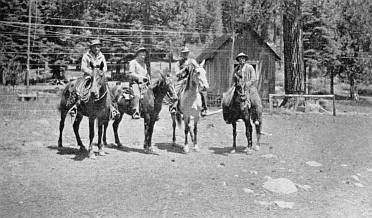
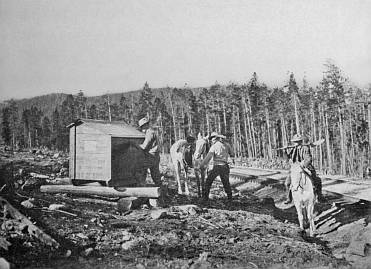
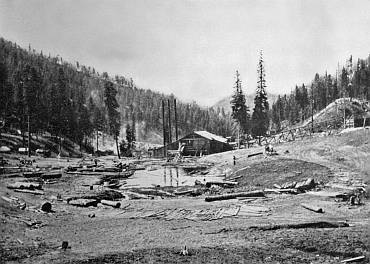
Figure 9. Forest officers in front of the Forest Supervisor's summer
headquarters. Note the many telephone wires that lead from
the office. This is 50 miles from the railroad. Lassen National Forest,
California.
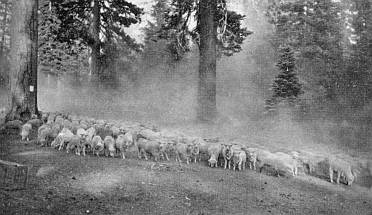
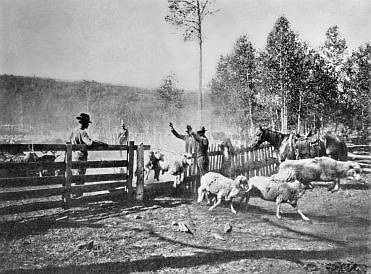
Figure 10. Scene in front of the Forest Supervisor's headquarters.
Sheep leaving the National Forest summer range in the fall to go to
winter range in the valley. Lassen National Forest, California.
The Forest Supervisor. A Forest Supervisor is
in charge of each National Forest and he plans the
work of the Forest and supervises its execution.
He works, of course, under direct instruction from
the District Forester and is responsible to him.
When the amount of business on the Forest warrants
it he is assisted by a Deputy Supervisor.
Both these positions are filled by the promotion of
experienced men in the classified Civil Service.
The Forest Supervisor's headquarters are located
in towns conveniently situated with regard to the
most important points in his Forest. The town is
usually located on a railroad and centrally located
with regard to the various Ranger districts of his
Forest. His headquarters are usually the center
of the system of roads and trails which covers his
entire Forest. From his office also the telephone
system radiates in all directions to his various
District Rangers. In short, the Forest Supervisor's
office is so situated that he has at all times full
knowledge of all the activities of his Forest; he is
therefore in a position to give advice and directions
by telephone to his Rangers and other subordinates
almost at any time of the day or night. Such intimate
communication is of especial importance during
the fire season.
Some Forests have two headquarters, one that
is occupied in the winter and the other that is occupied
in the summer. The summer quarters is usually
most advantageously situated as far as the business
of the Forest is concerned, but owing to deep
snow, which seriously interferes with mail and telephone
connections, a more accessible winter quarters
is occupied from October to May.
The force of men the Forest Supervisor has
working under him varies of course with the amount
of work to be performed. The permanent force is
usually from 10 to 15 men, which during the fire
season may be increased to from 25 to 40 and in
cases of great fire emergency sometimes to several
hundred men, by the addition of temporary employees.
The Forest Assistant. The other permanent
men on a National Forest are the Forest Assistant
or Forest Examiner, Forest Rangers, and a Forest
clerk with his assistant, the Stenographer and Typewriter.
The Forest Assistant or Examiner ranks
next to the Deputy and his work is directed by the
Forest Supervisor, to whom he makes his reports.
The Forest Assistant is the technical man of the
Forest force, who upon making good is promoted to
Forest Examiner. He is employed upon such technical
lines of work as the examination and mapping
of forest areas; reports on applications for the purchase
of timber; marking, scaling, and managing
timber sales; the survey of boundaries; and nursery
and planting work.
Not only is a Forest Assistant called upon to
perform these various lines of technical work. The
very nature of the country he is in indicates that he
must be an all-round practical man. He must be
able to ride, pack, and drive. He must often live
alone and therefore must do his own cooking, washing,
and take care of other personal needs. He
must be strong and healthy and capable of undergoing
hardships, at least be able to stand long days
of walking, climbing, and horseback riding. His
various duties and the different situations that arise
often call for knowledge and practical ability as a
carpenter, a mechanic, a plumber, an engineer, a
surveyor, and many other lines of work. Perhaps
more important than his education and ability are
his personal qualifications. His temperament must
be such that he must feel satisfied and contented
under the most trying conditions. He must be able
to do without most of the comforts of modern civilization
for most of the time. For these reasons
the country-bred western youths are more liable to
make a success of the work than the city-bred easterner.
The Forest Ranger. The Forest Ranger's position
is one of the most important and at the same
time the most difficult positions on our National
Forests.
The Forest Ranger's headquarters are usually at
the nearest business center to his district and if that
is not practicable permanent headquarters are provided
on the Forest. In any case his station is located
as near to the center of the business activity
of his district as possible. If his headquarters
are centrally located in his district, trails, roads, and
telephone lines lead out from his cabin to all parts
of his district. His station is built and maintained
at government expense and usually has, besides
his living quarters, a barn, tool-house, pasture, corral,
and other necessary improvements.
The Forest Ranger performs such routine work
as the supervision of timber sales, grazing, free use,
special use, and other contracts and permits, the
carrying out of the protection and improvement
plans for his district, and other administrative
duties. The average Forest Ranger has a territory
of from 75,000 to 150,000 acres to take care
of. On June 30, 1917, there were about 1,100
Forest Rangers employed on the National Forests
who were assisted by over 900 Assistant Forest
Rangers and Forest Guards. The protective force
was therefore about one man for every 77,800 acres
or about 121 square miles.
The Forest Ranger must be a man who is physically
sound and capable of enduring great hardships.
He is often required to do heavy manual
labor in fighting fire under the most trying conditions.
For this reason he must have great endurance.
They are usually men who have been
brought up in timber work, on ranches or farms, or
with the stock business. They are therefore thoroughly
familiar with the region in which they are
to be employed and especially acquainted with the
rough, semi-primitive life which is characteristic of
remote places in the West.
He must be able to take care of himself and his
horses in regions remote from settlement and supplies.
He must be able to build trails, roads and
cabins; he must be able to ride, pack, and drive and
deal tactfully with all classes of people. He must
know something about land surveying, estimating,
and scaling timber; of logging, mining laws, and the
live stock business. His duties include patrol to
prevent fire and trespass; estimating, surveying,
and marking timber; the supervision of cutting and
similar work. He is authorized to issue permits,
build cabins and trails, oversee grazing business,
investigate mining and agricultural claims, report
upon applications, and report upon and arrest for
the violation of Forest laws and regulations.
The Forest Clerk. The Forest Clerk performs
the clerical work and the book-keeping in the Forest
Supervisor's office. He sometimes has a Stenographer
and Typewriter to assist him and to do the
mechanical work of correspondence. Lumbermen
are specialists who are thoroughly well versed in all
that pertains to logging, milling, scaling, and cruising
timber. They are assigned temporarily to Forests
where need for their work arises. Scalers are
men thoroughly familiar with the art of scaling or
measuring logs, ties, poles, cord wood and other forest
products. Planting Assistants are specialists
in nursery and planting work. Their duties include
the preparation of seed beds, seed sowing,
transplanting and care of seedlings, and field planting.
They are assigned to the Forest Service nurseries.
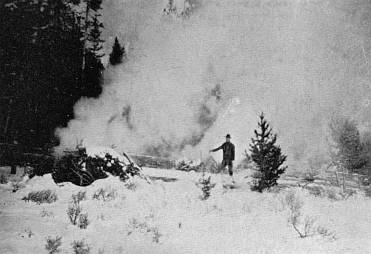
The Work of Forest Officers in the Winter
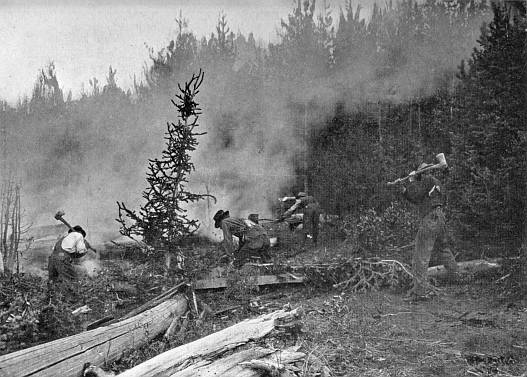
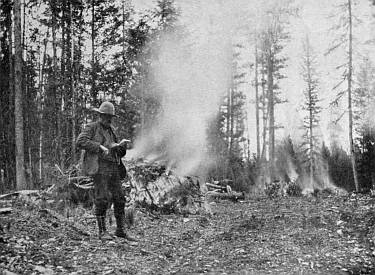
Figure 11. Forest officers and lumberjacks burning the slash resulting
from a timber sale. The snow on the ground makes the burning
less dangerous. Washakie National Forest, Wyoming. Photo by
the author.
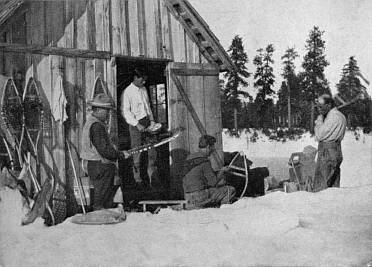
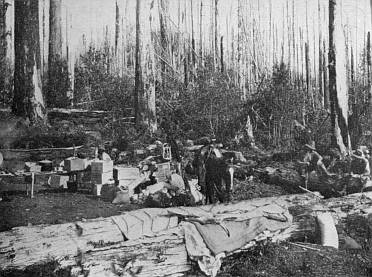
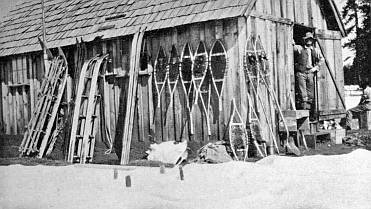
Figure 12. Forest officers at a winter timber-cruising camp repairing
snow shoes. Besides cruising the timber, these men make a
logging map of the government lands, to show how the timber can
best be taken out. Lassen National Forest, California. Photo by
the author.
Temporary Laborers, Forest Guards, and Field
Assistants are employed during the field season
when additional work on the National Forests warrants
it. Forest Guards perform temporary
protection, administrative, and improvement work;
Field Assistants, usually students of forestry serving
their apprenticeships, are usually employed at
minor technical work and timber cruising; Temporary
Laborers are employed by the day or month at
any kind of improvement or maintenance work.
Forest Service Meetings. A general meeting of
the Forest force is usually held annually to give the
Forest officers the benefit of each other's experience,
to keep in touch with the entire work of the Forest,
and to promote "esprit-de-corps." The time and
place of the meeting depends upon circumstances,
but it is usually held at a time of the year when
there is least danger from fire. Often joint meetings
are held with the forces of adjacent Forests.
This annual meeting idea is carried through the entire
Forest Service. The Forest Supervisors in
each administrative district usually meet at the
district headquarters once a year and the District
Foresters of all the districts together with representative
officers from the Washington office usually
meet annually at some centrally located district
office such as the one at Ogden, Utah. These
meetings assist greatly in keeping all the work in
the various branches of the Service up to the same
standard of efficiency, in avoiding mistakes by
learning the experience of others, and in correlating
and summarizing work done on similar problems in
widely different regions.
It is, indeed, a great task to distribute the money
that is each year appropriated by Congress for the
Forest Service so that the Washington Office, the
District Offices, and the 147 National Forests each
get their just share and so that each dollar buys the
greatest amount of good for the whole people without
extravagance or waste. To do this a large organization
has been built up composed of business
men who have absolutely no selfish interest at heart
and among whom graft or favoritism is unknown
and unheard of. It may be said without exaggeration
that the business of the National Forests is on
a thoroughly sound and efficient basis.
Forest Service Expenses. While for reasons already
spoken of, the cash receipts are considerably
below the expenses for running the Forests, the
rapidly increasing system of roads, trails and telephone
lines points not only to a constantly increasing
use and service to the public but also as a consequence
to increased financial returns.
The expenses of the Forest Service on the National
Forests are of a two-fold character. There
are costs of administration and protection on the
one hand which might be called ordinary running
expenses, and the costs of improvements, reforestation,
and forest investigations on the other. The
latter are really in the nature of investments, and
do not properly fall into the category of operating
costs. Yet they are absolutely necessary to the
welfare of the Forests. They comprise expenditures
for roads, trails, telephone lines, and similar
improvements, the establishment of forests by the
planting of young trees which have been destroyed
by past fires, the carrying on of research and experiments
to aid in the development of the best
methods of forestry, and expenses connected with
the classification and segregation of agricultural
lands in the Forests. The establishment of permanent
boundaries and the cost of making homestead
and other surveys are also in the nature of
investments. Such expenditures may be looked
upon as money deposited in the bank to bear interest;
they will not bring direct financial returns now
but will produce great revenue many years hence.
The Agricultural Appropriation Bill. The fiscal
year in the Forest Service extends from July
1 of one year to June 30 of the next. Every
year, in the Agricultural Appropriation Bill that
comes before Congress, there is an appropriation
for the Forest Service for its work. This appropriation
is not in a lump sum but by allotments or
funds. There is the fund for Fire Fighting, one
for General Expenses, another for Statutory Salaries,
another for Improvements, another for Emergency
Fire conditions, and usually there are special
appropriations for various purposes. For the fiscal
year 1918 (extending from July 1, 1917, to June
30, 1918) there are special appropriations for Land
Classification, for purchasing land under the Weeks
Law, for coöperative fire protection under the
Weeks Law, and for the Federal Aid Road Act.
The Ranger's Protection and Improvement
Plans. Long before this bill reaches Congress
every Forest Ranger on every National Forest,
every Forest Supervisor, and every Branch of the
Washington and the District Offices have been estimating
how much money they will need to carry
out the plans proposed for the next fiscal year.
Each Forest Ranger works and studies over his
plans for the next year with which he hopes to protect
his district from fire. He plans and figures
out what improvements are urgently necessary to
make the remote parts of his district more accessible.
He tries to arrive at a safe estimate of the
cost of so many miles of trails, roads, and telephone
lines, so many cabins, barns, corrals, etc., which he
thinks are absolutely essential to the proper administration
of his district, and he estimates the number
of Forest Guards, lookout men, and patrol men he
will need for the protection of his territory. Usually
these items are summed up under his annual
Improvement Plan and his Protection Plan respectively.
The Supervisor's Plans. When the Forest Supervisor
receives such estimates and plans from each
of his Forest Rangers he studies them over carefully
and tries to decide in an impartial way what
improvements are most necessary in each Ranger
district and what additional men are necessary for
the adequate protection of the region in question.
He carefully weighs the arguments for and against
each expenditure and decides what improvements
must be made now and which ones it would be
possible to postpone for one or more years without
detriment to the work of his Forest as a whole.
For in most cases the amount of necessary work to
be done on each Ranger district is far in excess of
the amount which the Forest Supervisor could approve
owing to the inadequacy of the Forest Service
funds. So, for the Forest Supervisor, it is
merely a question of how low he can keep his estimates
for money for the ensuing year until such a
time when Congress will appropriate more money
so that all the important and necessary work can
be done. In most cases therefore the major part
of all the expenditures recommended by the Forest
Ranger is warranted, but the Forest Supervisor
knows that he must cut all the estimates down considerably
in order to bring the total Forest estimate
reasonably near the amount he is likely to get, basing
his judgment upon what he got the year before.
Approval of Plans by the District Forester.
The District Forester then gets the National Forest
estimate from every one of his 25 or 30 Forest
Supervisors and he in turn must decide what projects
on each Forest are immediately necessary and
which ones can be postponed. The same process
is repeated in the Washington office when all the
estimates from the District Foresters are received,
and the Forester in turn sends to the Secretary of
Agriculture his estimates by allotments or funds,
which in turn are put before Congress. While
Congress sometimes makes minor changes in the
Forest Service appropriation, in most cases the bill
is passed as it stands.
The District Fiscal Agent. The money appropriated
by Congress is allotted to each district, and
in turn to each National Forest and finally to each
Ranger district by funds, such as General Expenses,
Fire Fighting, Improvements, etc. In each
district the financial matters are taken care of in the
Office of Accounts by the District Fiscal Agent.
He is the Assistant of the Chief of the Forest Service
Branch of the Division of Accounts of the Department
of Agriculture and pays all the bills incurred
by the district and receives all the money
which comes in from the sale of National Forest
resources. The amount of money appropriated for
the district is credited to him and he disburses this
appropriation in accordance with the Fiscal Regulations
of the Department of Agriculture. No
other officer is allowed to receive money for the sale
of timber, forage, or other resources; in fact no
other official in the District handles any of the
Forest Service funds whatsoever.
All remittances by users of the National Forests
are made to the U. S. District Depository. If a
rancher has bought some timber from a Forest
Ranger, he is given a letter of transmittal showing
the amount of the purchase which he must send to
the District Fiscal Agent with the amount necessary
to pay for the timber. The letter of transmittal
explains the purpose of the remittance.
Tax Money Paid to the States. Another interesting
feature of the National Forest business is the
money paid each State out of the annual receipts
in lieu of taxes. It must be remembered that National
Forests do not pay taxes to the States in
which they are located. On the other hand, if the
National Forests were private property they would
bring into the county and state treasuries yearly
taxes. To compensate the State for the taxes lost
in this way each National Forest pays to each
county in proportion to the area of the National
Forest lands located in that county a sum of money
equal to 25 per cent, of the total gross receipts
each fiscal year. From the receipts of the fiscal
year 1917 this amounts to about $850,000. It is
provided that this money is to be expended for
schools and roads in the county in which the National
Forests lie. Recently a law was passed giving
the Secretary of Agriculture authority to expend
an additional 10 per cent. of the National Forest
receipts for the construction of roads and trails
for the benefit of local communities. From the
fiscal year 1917 this amounts to about $340,000.
These moneys for roads, trails, and schools are of
course a great benefit to the mountain communities,
since usually the amount of taxable property in
such remote localities is small and hence the amount
of taxes received is small. These allotments to the
counties have helped to develop the communication
systems of local communities and have also made
the National Forests more accessible and useful.
The Property Auditor and Property Clerk.
The depot for equipment, supplies, and blank forms
is located at Ogden, Utah, and this office furnishes
all the Forests in all the districts with most of the
equipment necessary. The record of the property
of the United States in the custody of the Forest
Service is kept by a man called the Property
Auditor. Requisitions for supplies and equipment
are made by the Forest Supervisor to the Property
Clerk. Government property is considered expendable
or non-expendable depending upon its
character. Each Forest has a Property Custodian
who has charge of all the property assigned to the
Forest. When property is received from the
Property Clerk or if property is transferred from
one forest officer to another, the Property Custodian
must note the change on his records.
Blank Forms. The blank forms which are supplied
by the Property Clerk are printed standard
forms used in issuing permits, making contracts,
reports, examinations, timber sale agreements, in
short, those used in almost every business transaction
of the Forest Service. Even timber estimates,
tree measurements, and other similar public records
are kept on standard printed forms for permanent
uniform record.
Supplies. Supplies such as stationery, typewriters,
pencils, ink, notebooks, paper for map
work, compasses, measuring tapes, and a host of
other articles are furnished upon requisition by the
Property Clerk. Equipment such as filing cases,
tables, chairs, typewriters, tree-measuring instruments,
tents, cooking utensils, surveying instruments,
snow shoes, skiis, knapsacks, water buckets,
canteens, kodaks, and many other forms of equipment
are furnished by the Property Clerk, although
in cases of emergency some of these things may be
purchased locally by Forest officers by the authority
of the Forest Supervisor.
The Need of Improvements. It is but natural,
from their situation, that the National Forests represent
pioneer conditions; conditions that one might
expect to find in a wild, rugged, mountainous country.
This was true to an extreme degree when the
National Forests were first established and it is true
in a very large degree even to-day, since the amount
of time and money which it will be necessary to
expend on the construction of improvements on the
155,000,000 acres of National Forests is something
enormous. For a long time to come, then, the National
Forests will need improvements in order to
make them secure against fire and in order to make
the resources, now locked up, available. Proper
protection and the fullest use of National Forest
resources depend mainly upon facilities for transportation,
communication, and control. All parts
of the National Forests should be accessible by
roads and trails; there should be telephone communication
between settlements and Forest officers'
headquarters and with the lookout stations; and in
most cases suitable living accommodations must
be provided for the field force. For the fullest use
of the forage resources, water for the live stock must
be developed and range fences constructed; to reduce
the hazard and the cost and difficulty of controlling
forest fires, firebreaks and other works
must be constructed.
Transportation Facilities. Adequate facilities
for travel and transportation are of first importance.
Steam roads, electric roads, and boat lines
are utilized in the National Forest transportation
system as well as the existing roads and trails.
Added to this, new roads and trails are being constructed
every year to complete the already existing
network.
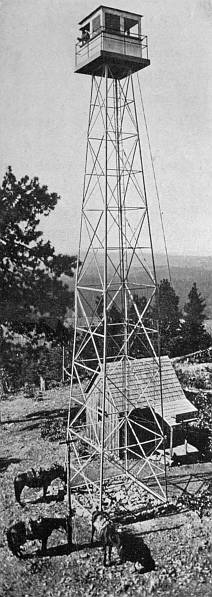
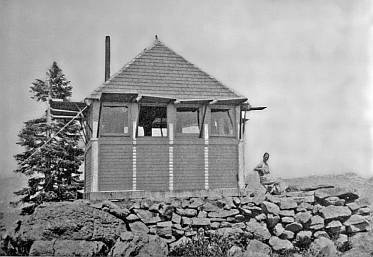
Figure 13. A forest fire lookout tower on Leek Springs Mountain.
Eldorado National Forest, California.
The need for new roads and trails depends upon
the number of them already existing, the value of
the resources that it is necessary to make accessible,
the fire liability, and the amount of unrealized revenues
due to lack of transportation facilities. If
valuable grazing land or timber land can be made
accessible there is good reason for building a new
road. In many cases roads and trails are built to
facilitate the protection of large remote areas from
fire. Such areas may have large bodies of valuable
timber which if destroyed by forest fires would
involve a heavy loss. Even aside from valuable
timber on an area, it is absolutely necessary when a
forest fire breaks out to get to it with men and fire-fighting
equipment in the shortest possible time
before it spreads. If the fire gets to be a large
one, many men with provisions, tents, fire-fighting
tools, and other equipment must be transported to
the scene of the fire. Any delay in the transportation
of these things may prove fatal and may result
in an uncontrollable conflagration.
The transportation system that is proposed for a
National Forest, if the one that exists is inadequate,
is usually planned many years ahead. The ultimate
or ideal system is always kept in mind so that
every mile of road or trail that is constructed is
made a part of it. If not enough money is available
for a good road, a trail is built along the line
of the proposed road. Later this trail is widened
into a permanent road. The Engineer connected
with each District Office usually has charge of laying
out big road projects. A few miles of permanent,
good, dirt road with good grade is always preferred
to many miles of poor road with heavy grade and
improper drainage. A road and trail system is
planned for each National Forest which will eventually
place every portion of the Forest within a
distance of at least 7-1/2 miles of a wagon road. A
pack-train can then transport supplies from the
point to which they are delivered on the wagon
road to any field camp and return in a single day.
In trail and road construction it is very often
necessary to build bridges. Sometimes a very simple
log bridge meets the need, but in bridging many
large mountain torrents, which become very high
and dangerous in the spring, large bridges are
necessary. Cable suspension bridges and queen
and king truss bridges are built where occasion
arises for them, but only after being planned in
detail and after the District Forester has approved
their design and method of construction.
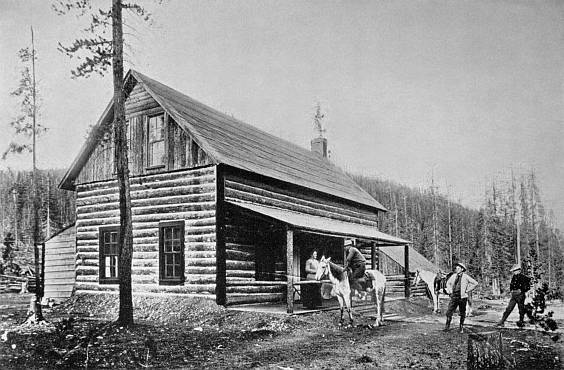
Figure 14. A typical Forest ranger's headquarters. Idlewood Ranger Station, Arapaho National
Forest, Colorado
Very often navigable streams and lakes are used
as a part of the transportation system on a National
Forest. On the Tahoe National Forest in
California launches are operated by the Forest
Service on Lake Tahoe to patrol the region around
the lake for forest fires. Ferries, boats, and
launches belonging to private companies or individuals
are used by agreement or if necessary are
bought by the Service from the Improvement
funds. Speeders, motor cars, and hand cars on
railroads or logging roads are often used when an
agreement has been made with the company. In
this way railroads are made a part of the transportation
system of the Forest.
Communication Facilities. The system of communication
on the National Forests is scarcely less
important than the system of transportation. This
system includes telephone lines, signal systems, and
mail service. The telephone system, as can be
readily seen, is of the utmost importance for the
transaction of all kinds of National Forest business.
In case a Forest Ranger wishes to speak to
his Supervisor about controlling a large fire, it
makes a great difference whether he can talk to
him over the telephone or whether he must send a
messenger on horseback perhaps 60 or 70 miles.
In the former case practically no time is lost, in
the latter it would take at least two days for the
messenger to reach the Forest Ranger, and in the
meantime the fire would continue to rage and
spread.
In the absence of a telephone system a signal
system is used. The one probably used the most
in forest fire protection work is the heliograph, by
which code messages are sent from one point to
another by means of a series of light flashes on a
mirror. The light of the sun is used and the flashes
are made by the opening and closing of a shutter
in front of the mirror. Very often these heliograph
stations are located on mountain tops in the
midst of extremely inaccessible country. Where
there are a number of these stations at least one is
connected by telephone to the Forest Supervisor's
office. When the Forest officer at the telephone
gets a heliograph message about a certain fire he
immediately telephones the news directly to the
Forest Ranger in whose district the fire is located,
or if he does not happen to be in direct communication
with the Forest Ranger he notifies the Forest
Supervisor, who then notifies the officer concerned.
Of course it is all prearranged who should be notified
in case a fire is reported to the heliograph man.
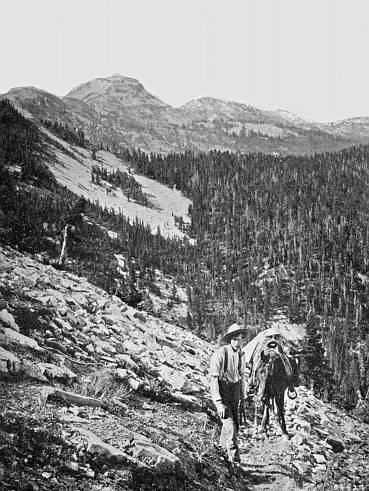
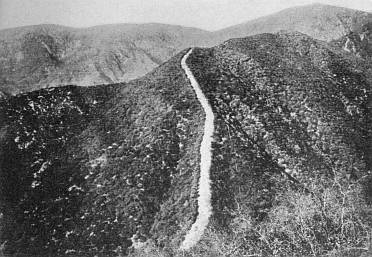
Figure 15. A typical view of the National Forest country in Montana.
Forest Service trail up Squaw Peak Patrol Station, Cabinet
National Forest.
Unfortunately it has been found that this system
of communication is not satisfactory even under
favorable conditions. This system depends upon
direct sunlight; without it is useless. When there
is much smoke in the air it is also of uncertain
value. The heliograph system has perhaps reached
its greatest development upon the California National
Forest, but even here experience has shown
that it is only a temporary makeshift and the plan
is to replace it by a telephone system as soon as
possible.
The Forest Supervisor, especially in his summer
headquarters, depends directly upon the mail service
for communication with the District Forester
and the outside world. In many cases the fact that
the Forest Supervisor has his headquarters in a
small mountain community in the summer has
made it possible for that community to receive a
daily mail service or mail at least three times a week.
When the Forest Supervisor becomes satisfied that
mail service is desirable in certain mountain communities
he investigates local settlers' needs for
mail facilities; or he may coöperate with the people
in the nearest village who are petitioning for mail
service. Often his influence proves the deciding
factor in getting it.
As I have said before, telephone communication
is indispensable to fire protection and to quick and
efficient methods of conducting National Forest
business. Not only do Forest Service lines enter
into the National Forest telephone system but all
private lines are also made use of. By coöperative
agreements with private companies the National
Forest lines are used by private companies, in return
for which private lines are used by the Forest
Service. In this way a complete network of telephone
lines is established connecting not only the
Forest Supervisor with all his Rangers and his forest
fire lookout stations, but also connecting each
one of these with local communities and the large
towns at a distance. Thus, when a forest fire occurs
and the available local help is not sufficient to control
the fire the telephone system is put to use to call
help from the nearest villages and towns.
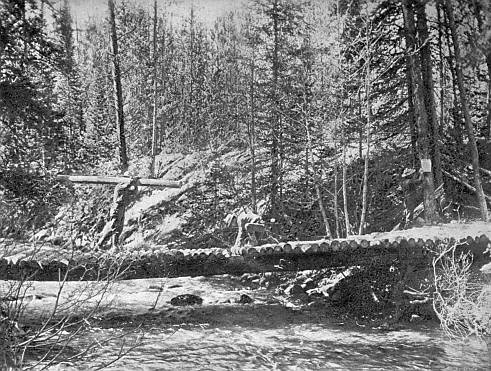
Figure 16. Forest Rangers repairing a bridge over a mountain stream.
Arapaho National Forest, Colorado
Grazing Improvements. It is often necessary
for the complete and economical use of the forage
on a National Forest to coöperate with the local
stockmen to develop range by constructing improvements.
Water may have to be developed;
fences, corrals, bridges, trails, and other works may
have to be constructed. Often cattle belonging to
different stockmen are grazed on adjacent areas
which are not separated by natural boundaries such
as rivers, ridges, or swamps. If there is no obstacle
to prevent the cattle from drifting from one range
into another, a drift fence is built, thus definitely
separating one stockman's range from the other.
Often good range would remain unused on account
of lack of water altogether or on account of lack of
water during the dry season only. In this case the
Forest Service usually coöperates with the stockmen
to provide water. Roads, trails, and bridges
are often necessary to enable sheep and cattle to
reach range lands.
Protective Improvements. Ranger stations,
cabins, lookout stations, firebreaks and similar
works are required to protect the forests from fire
and are known as protective improvements. Buildings
are constructed for the field force to afford
necessary shelter and to furnish an office for the
efficient transaction of business. Land is often
cultivated for the production of forage crops and
fences are built to insure necessary pasturage for
live stock used by the Forest officers in their work.
The buildings may be substantial houses to be used
throughout the year or they may be merely such
structures as will afford the necessary shelter and
domestic conveniences for Forest officers in the
summer. These summer camps are constructed
where needed for the use of patrolmen, officers engaged
in timber sale work or at such points as will
serve the needs of officers traveling through the
forest. Barns, sheds, and other small structures
are constructed at the Ranger's headquarters when
they are needed. Office buildings are also constructed
for the use of Forest Rangers or for summer
headquarters of the Forest Supervisor.
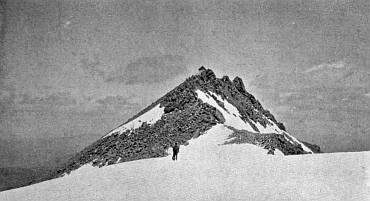
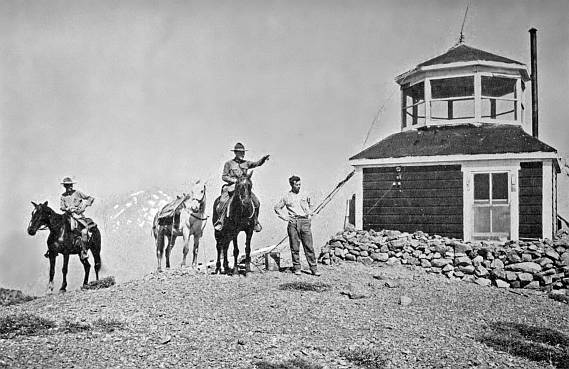
Figure 17. A forest fire lookout station on the top of Lassen Peak,
elevation 10,400 feet, Lassen National Forest, California. This cabin
was first erected complete in a carpenter's shop in Red Bluff, about
50 miles away. It was then taken to pieces and packed to the foot
of Lassen Peak. On the last two miles of its journey it was packed
piece by piece on forest officers' backs and finally reassembled on the
topmost pinnacle of the mountain. Photo by the author.
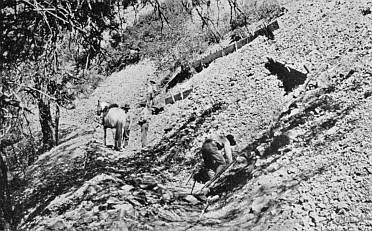
Figure 18. Forest officers and laborers building a wagon road
through trap rock. Payette National Forest, Idaho.
Appropriations for Improvement Work. The
money for the construction of National Forest improvements
is secured from various sources. The
annual Forest Service appropriation usually carries
a considerable sum for this purpose. In the fiscal
year 1918 $450,000 has been appropriated for this
work, which divided among the 147 National Forests
gives an average only of about $3,000 per Forest.
This is really a very small sum considering
the size of the average National Forest. Fortunately
there are other appropriations and funds and
each year sees more money available for this most
important work. Under the law 25 per cent. of the
receipts are paid to the States in which the National
Forests are located to be expended for roads and
schools. The amount to be paid to the States in
this way from the receipts in 1917 is about $848,874.00.
By the acts of Congress organizing them
as States, Arizona and New Mexico also receive
for their schools funds an additional share of the
receipts based on the proportion that their school
lands within the National Forests bear to the total
National Forest area in the States. The approximate
amounts due on account of the receipts for
1917 are $42,844.80 to Arizona and $18,687.56 to
New Mexico. Congress has also provided that 10
per cent, of the receipts shall be set aside as an
appropriation to be used under the direction of the
Secretary of Agriculture for road and trail building
in National Forests in coöperation with state
authorities or otherwise. The amount thus appropriated
on account of the fiscal year 1917 receipts is
$339,549.61. This added to the amount carried
over from the 1916 receipts fund, $136,981.23, and
the amount appropriated for improvements, in the
regular Agricultural Appropriation Bill, $450,000.00,
brings the total available for the construction
of roads, trails, cabins, bridges, telephone lines,
etc., on the National Forests for the fiscal year 1918
to $926,530.84.
There is still another fund recently appropriated
which will enable roads and trails to be built on a
very much larger scale than hitherto has been possible
and will result in the rapid opening of forest
regions at present practically inaccessible. The
Federal Aid Road Act, passed by Congress in 1916,
appropriated ten million dollars for the construction
and maintenance of roads and trails within
or partly within National Forests. This money
becomes available at the rate of a million dollars a
year until 1927. In general, the States and counties
are required to furnish coöperation in an amount
at least equal to 50 per cent. of the estimated cost of
the surveys and construction of projects approved
by the Secretary of Agriculture. The apportionment
among the States is based on the area of National
Forest lands in each State and the estimated
value of the timber and forage resources which the
Forests contain.
The total amount from all sources available for
roads, trails, and other improvements on the National
Forests during the fiscal year 1918 is therefore
$1,926,530.84.
The classification and consolidation of National
Forest lands is a matter of great importance to
their proper administration and protection. If all
the lands within the Forests are to be put to their
highest use for the permanent good of the whole
people the lands inside of their boundaries must be
classified and permanent boundaries established for
each Forest. Through this kind of work the National
Forests gain in stability. The classification
and segregation of the agricultural lands is most
important, for these lands are open to entry under
the Forest Homestead Act.
Land Classification. The land classification
work is organized in the Washington and District
Offices under the Branch of Lands. Crews of men
are sent out from the District Offices and the work
of classification, carefully planned ahead, is done by
projects, that is, large contiguous areas are examined
together. For instance, the Hat Creek Project
on the Lassen National Forest consisted of a
number of large areas containing scattered parcels
of agricultural lands along the Hat Creek valley
in that Forest. For the classification of the lands
on a big project a surveyor and a lineman, one or
more timber cruisers, and an expert from the Bureau
of Soils constitute the crew. As a result of
this work over 1,100 individual tracts within the
Forests were made available for entry under the
Forest Homestead Act during the fiscal year 1916,
because this land was found to have a greater value
for growing agricultural crops than for growing
timber. Under this same policy since 1912 about
12,000,000 acres were eliminated from the Forests,
partly because they were of greater value for agricultural
use, or because they were not suited for the
purposes for which the National Forests were created.
Up to June 30, 1917, 127,156,610 acres of
National Forest land have been examined and classified.
Such work as this, once and for all time,
will settle the controversy now and then waged in
Congress by certain Congressmen that the National
Forests have large and valuable tracts of agricultural
lands locked up within their boundaries and
therefore should be abolished, or turned over to the
States, or equally radical disposition made of them.
Such Congressmen usually are working for some
predatory private interests who want to secure the
great wealth in the National Forests that is being
wisely conserved for the people.
The Consolidation of National Forest Lands.
There has also been a great need for consolidating
the National Forest lands where these were interspersed
with private or state lands. Congress has
recognized this need and from time to time has
granted authority to exchange lands with private
owners or States where such an exchange would be
advantageous to the Government through the resulting
consolidation of holdings. Thus by getting
the government lands into a more compact body
their administration and protection are materially
facilitated in many ways.
Before any exchange is made it must be ascertained
that the land which the Government is to
receive has equal value with that relinquished, also
that the land is chiefly valuable for the production
of timber and the protection of stream flow. Recent
additions to the Whitman National Forest in
Oregon consisted of privately owned cut-over timberland
rapidly reproducing to valuable timber
trees. Title to this will be secured by exchange for
government owned lands.
Reforestation and the Timber Supply. More
than 15,000,000 acres of National Forest lands
which are capable of producing timber and valuable
chiefly for that purpose have been denuded of their
original tree growth. These lands are not adapted
to agriculture and possess but a small value for
grazing. In their present condition they are practically
unproductive barrens.
It is probable that one-half of this area will reforest
itself naturally through the reseeding of
burns, and the encroachment of tree growth upon
natural openings, parks, grass lands, and brush
lands. This natural extension of the forest on such
areas is progressing at the estimated rate of 150,000
acres annually. The remaining half of the denuded
area, 7,500,000 acres, must be reforested by
artificial means. This land is unquestionably
adapted to growing timber and useful to the nation
primarily for that purpose. Every year that it lies
idle the country suffers a great financial loss, for
such an immense area is capable of growing at least
three-quarters of a billion feet of timber annually.
It was recently estimated that the timberlands on
the National Forests are producing between five
and six billion feet of lumber annually by growth.
The complete restocking of the areas now denuded
or sparsely timbered will increase the annual production
of wood at least 25 per cent., an item
certainly worth considering.
Reforestation and Water Supply. Even more
important than the value of the timber which is lost
annually is the part which these large areas play in
the conservation of water supply. Most of this
area is on the watersheds of western streams and
rivers and the fact that it is denuded is a dangerous
menace to the equable flow of the rivers which drain
those areas. The National Forests contain over
1,175 watersheds which supply many municipalities,
324 water-power projects, and 1,266 irrigation
projects, aside from many other outside power and
irrigation projects which are fed by watersheds
within the Forests. The cities of Salt Lake City,
Utah; Denver and Colorado Springs, Colorado;
Portland, Oregon, and Seattle, Washington, all derive
their municipal water supply from streams arising
in the National Forests. The proposed water
system for the city of San Francisco, California, is
also to be taken from the National Forest streams.
A few years ago planting was undertaken on the
watershed of the Colorado Springs, Colorado, reservoir.
This water supply is worth annually from
$80,000 to $100,000. Besides this the 2,000 horsepower
hydro-electric plants are valued at $40,000
and the 40,000 undeveloped horsepower are said to
have an additional value of $400,000, making the
total value of the watershed more than $500,000,
with the probability that a greater water supply
having a far greater value will be needed as the city
grows.
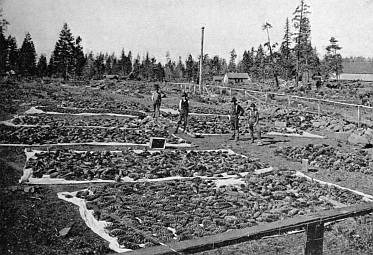
Figure 19. Drying pine cones preparatory to extracting the seed.
Near Plumas National Forest, California.
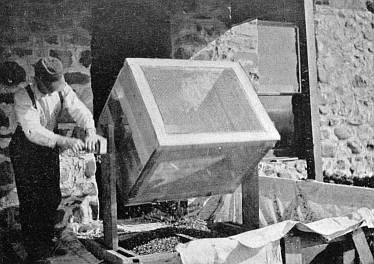
Figure 20. Extracting tree seed from the cones. The dried cones
are shaken around until the seeds drop out through the wire mesh
which forms the sides of the machine.
And there are many evidences that the people of
the West have begun to realize that the National
Forests are the key to the entire water-supply situation
in the West no matter for what purpose the
water is used. The public consideration now being
given to flood control, the requests from many western
cities for special measures to protect their municipal
water supply, the concern expressed by irrigation
associations in Colorado and elsewhere, lest
even the regulated cutting on the National Forests
may reduce stream flow, and the rapid rate at which
unused reservoir and power sites in the Forests are
being developed, all are evidences of the importance
of Forests in protecting water supplies. Reforestation
is essential so that the National Forests
can effectively discharge this function.
Government Reforestation Policy. The duty of
the Forest Service to put the denuded areas which
will not be reforested naturally into a condition of
productivity admits of no further argument. But
the problem is not so easily solved as it is made
clear. Under the semi-arid conditions prevailing
on many National Forests this work involves uncertainties
and unsolved problems. On the National
Forests artificial reforestation was an untried
field when the Forest Service entered it. The Government
therefore had to develop its own practice
in the face of a great variety of conditions, largely
unfavorable. The situation still calls for intensive
experiments to develop the best methods from the
standpoint of both cost and results. More than
that, it calls for a different set of methods for each
forest region of the West which has its peculiar
trees, climate, and soils. Then, lastly, when the
proper methods have been demonstrated by experiment,
the new methods can be applied on a large
scale with a very good chance for success.
Therefore intensive experiments must come first.
Business prudence requires the development of all
methods in detail and reasonable certainty as to
their results before large sums are expended upon
field operations. In the least favorable regions like
the semi-arid mesas of the Southwest, the work is
restricted for the present to small, carefully conducted
experiments, the result sought being reliable
information upon how to proceed rather than
the reforestation of many acres. In the most favorable
regions, as the western slopes of the Rocky
Mountains and the Cascade Ranges, the results already
obtained have been so excellent, due to an
unusual combination of good growing conditions,
that operations upon a larger scale have been justified
simultaneously with continued intensive investigations.
As the work is extended into each new
region or new National Forest, the most favorable
sites are always chosen first. After the possibilities
and limitations of each method have been ascertained
by experience under the best conditions of
each locality the work can either be intelligently
extended or restricted. But the work is always
conducted from the standpoint of the maximum return
for each dollar expended.
In accordance with the policy outlined by the
Forest Service watersheds used for municipal supply
or irrigation continue to receive first consideration.
Large sums are not, however, being spent on
such watersheds where any uncertainty as to the
outcome exists; that is before successful methods
have been perfected by experiment. In addition to
watersheds, reforestation work is being conducted
for the primary object of producing timber only
where climatic conditions and other factors are extremely
favorable. As far as possible these areas
are being selected with reference to the low cost of
the work, natural conditions which insure rapid tree
growth, and urgent local need for additional timber
supplies. These favorable conditions generally obtain
in Washington, Oregon, Idaho, Montana, Minnesota,
and Michigan and it is in these States that
the best results have been obtained. In California,
Utah, Nevada, Colorado, and the Southwest the
work is restricted to intensive experiments on a
small scale, until successful methods of meeting
the adverse local conditions have been perfected.
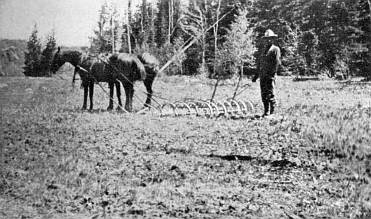
Figure 21. Preparing the ground with a spring-tooth harrow for
the broadcast sowing of tree seeds. Battlement National Forest,
Colorado. This view was taken at approximately 10,000 feet elevation.
Photo by the author.
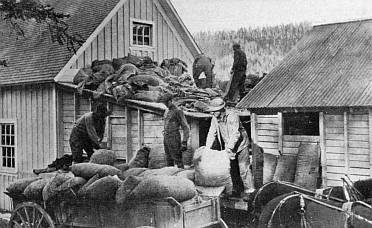
Figure 22. A local settler delivering a load of Lodgepole pine
cones at the seed extractors, for which he receives 45 cents per
bushel. Forest officers receiving them. Arapaho National Forest,
Colorado.
Methods of Reforestation. Two general methods
of reforestation have been developed. The
first is called the direct seeding method, in which
tree seed is sown upon the ground with or without
simple forms of cultivation. The other method is
the planting method by which seedlings are grown
in nurseries under ideal conditions of soil, light,
and moisture until they are large enough to be
transplanted and stand the rigors of the open field.
Direct seeding, where successful, is the cheaper
method, but is necessarily limited to sites whose
soil and moisture conditions are exceptionally favorable
to tree growth. The inability of the newly
germinated seedling to establish itself except in
comparatively moist soil makes the success of this
method on the semi-arid mesas of the Southwest,
for example, very problematical, especially since
these localities are subject to long dry seasons. In
such localities the use of the direct seeding method
must be restricted to experiments designed to determine
the exact range of conditions under which it
is feasible. The main effort, however, of the Forest
Service has been given to direct seeding on areas
where reasonable success appears to be assured.
The planting of 2 or 3 year old seedlings or transplants
largely overcomes the adverse soil and moisture
factors which appear to have made direct seeding
unsuccessful in many localities. This method,
which is the general practice in European forestry,
must without doubt be employed to reforest a considerable
portion of the denuded lands. The
growing and planting of nursery stock is carried on
simultaneously with direct seeding. The object of
this is to ascertain the comparative results of the
two methods, the sites on which the greater success
will be obtained from each, and the proper relation
of the two methods in the future development of
reforestation work.
Since reforestation work was begun on the National
Forests about 135,500 acres have been sowed
or planted. The larger part of this acreage
was reforested by direct seeding. Until only a few
years ago larger areas were direct seeded each year
than were planted to nursery stock, but at the present
time more planting is being done. During the
fiscal year 1916 about 7,600 acres were planted and
about 2,800 acres were seeded. The average cost
in that year of planting was about $10.00 per acre,
that of the seeding was about $4.50 per acre. The
1917 costs were slightly higher, due to the increased
cost of labor and supplies.
The reforesting methods of the Forest Service
mean the collection of large quantities of seeds and
the growing of large quantities of small trees for
planting. Since 1911 the Forest Service has collected
over 175,000 pounds of seeds for its direct
seeding and planting work. During the fiscal year
1916 the Forest Service had 14 large tree-nurseries
and 7 small ones, which had in them over 37 million
young trees which would, in a short time, be planted
in the field. From these figures it is readily seen
that the reforestation work on the National Forests
is conducted on a large scale.
Direct Seeding Work on the National Forests.
The direct seeding work on the National Forests
involves many more problems than one would at
first thought suppose. Seed must be collected and
extracted; it must be stored, if it is not used immediately;
if the seed is sown it must be protected
from rodents and very often the ground must be
prepared before the seed is sown.
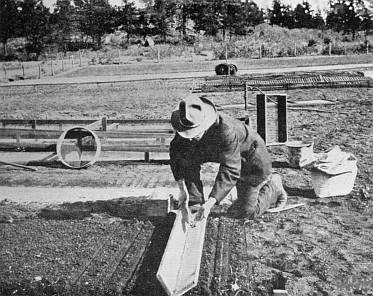
Figure 23. In the forest nursery a trough is often used for sowing
seed in drills. The seed scattered along the sides of the trough rattles
into position at the bottom and is more even than when distributed
by the ordinary worker at the bottom of the trough. Pike
National Forest, Colorado.
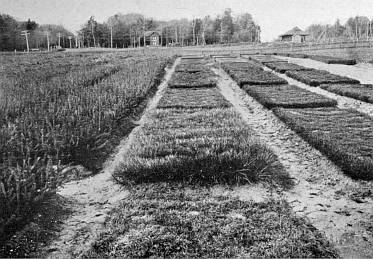
Figure 24. Uncle Sam grows the little trees by the millions.
These will soon cover some of the bare hillsides on the National
Forests of the West.
Seeds are collected in various ways. Often
cones are purchased at advertised rates from persons
who make a business of seed collecting. The
collectors deliver the cones to a specified Ranger
station or to some seed extracting plant. But such
collectors are not always available. Seed is collected
by Forest officers by stripping cones directly
from standing trees or from those felled in logging
operations. Large quantities are also gathered
from the vast stores or caches assembled by squirrels.
Seed extraction is usually done most economically
by experienced Forest officers. It requires
drying by exposure to natural or artificial heat to
open the cones; threshing to separate the seed from
the scales and woody portions of the cone; and
cleaning or fanning to remove chaff and dirt.
Much of the extraction has hitherto been done in
small quantities at a large number of stations and
with very simple home-made appliances. In view
of the large amount of seed which must be handled
each year the cost of extraction has been materially
reduced and seed of higher average fertility has
been obtained by concentrating the major part of
the work at central seed-extracting plants equipped
with improved machinery.
A problem of great importance from the standpoint
of final results is that of having seed available
at the season of the year when it is needed.
Past experiments have shown that fall sowing is
essential to success in most parts of the West where
extensive seeding projects will be conducted. Experience
has also shown that seed on a large scale
cannot be extracted in time for use in the same
season. Moreover, every year is not a good seed
year, so that Forest officers must take advantage of
the good years to collect large quantities and store
them for use during years of seed shortage. Purchased
domestic or foreign seed cannot be used to
advantage to make up these deficiencies because it
is sometimes of poor quality and not adapted to the
climatic conditions in which it must be sown. For
these reasons methods had to be devised for storing
large quantities of seeds for several years at a time
and in such a manner that their vitality would not
be impaired. Many storage tests have been made
by the Forest Service to determine the best way of
storing seeds. The tests showed that the sealed
glass jar is the best container and that seed must
be stored either in air-tight receptacles or at low
temperatures to be kept for any considerable period
without loss of fertility.
Probably the greatest obstacle encountered in reforestation
by direct seeding is the destruction of
the seeds by rodents. The failure of many direct
seeding projects has been due primarily to loss from
this cause. Failure has occurred on areas of practically
every character regardless of the time of the
year the seed was sown. Success has been encountered
only where recent burns had largely
eliminated the animals either by outright destruction
or by the loss of food supply. The rodents
which are most destructive to tree seeds are the
ground squirrels, the chipmunks, the mice, and the
gophers. It is not strange that they should seek
out the seed that has been carefully sown by the
Forest officers. In many cases these seeds are their
natural food and they are wonderfully diligent and
expert in searching it out.
In coöperation with the Biological Survey, the
Forest Service has worked on the problem of destroying
the rodents. Many methods have been
tried out in the field. The free use of grain poisoned
with strychnine has thus far produced the
best results and has reduced the loss from rodents
sufficiently to secure satisfactory germination.
The successful elimination of such injury appears
to lie in the thorough poisoning by this method of
areas to be seeded, once or oftener in advance of
sowing.
With successful germination assured by the collection
of good seed and the protection of it after
it has been sowed from rodents, the next problem
lies in cheap methods of cultivation and sowing.
This will enable the young seedling to develop its
root system early enough and rapidly enough to
withstand the first annual drought, the dominant
feature of the climate of all the western National
Forests.
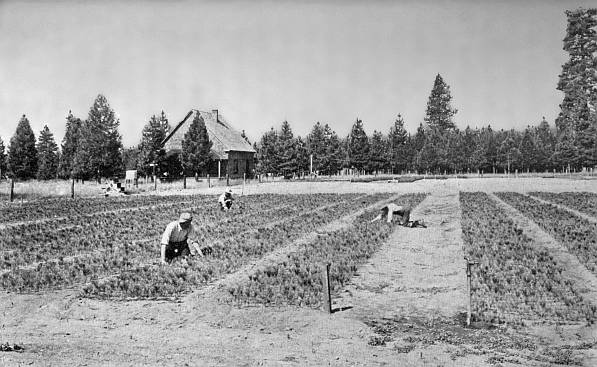
Figure 25. One of the large Forest Service nurseries where the young trees are given the utmost care before
they are large and strong enough to endure the rigorous climate of the National Forests. McCloud Nursery,
Shasta National Forest, California.
There are numerous methods used in sowing tree
seed on the National Forests. Three general
methods are used in most of the work. Broadcast
sowing is practiced in the fall and spring or upon
the snow in the winter, both on ground that has
not been prepared and on soil that has been scarified
by rough brush drags, harrowing, disking, or
partial or complete plowing. In seed-spot sowing
the seed is planted at regular intervals in small
spots where the soil is cleared of vegetation and
worked up loose to a depth of from 5 to 6 inches.
When corn planting or dibbling is practiced the
seed is thrust into the soil by a hand corn-planter,
or, in the case of large nuts, pressed into holes made
with a pointed stick. The corn-planter method is
often combined with the preparation of seed spots
or the plowing of single furrows, in order to plant
the seed in loose soil free from vegetation.
On a large majority of the Forests broadcast
seeding on unprepared ground has not succeeded.
As a rule satisfactory stands have been secured
from broadcasting only after an expensive preliminary
cultivation which would be impracticable in
extended operations and which would exceed the
cost of planting with nursery stock. But broadcasting
on prepared strips and upon recent burns
has given some success. The seed-spot method has
been most successful if done at the proper season.
Late summer and early fall sowing has produced
better results than sowing in spring or winter. As
a whole direct seeding has not succeeded, especially
when the results and costs of the work are
compared with the planting of nursery stock.
Planting has thus far yielded better results, especially
on the less favorable areas. Furthermore,
from the standpoint of final results attained, planting
has actually been cheaper than seeding, in spite
of the greater initial cost of planting. While the
major emphasis in reforestation work is placed
upon planting, considerable seeding is being done,
but it is confined to the most favorable localities
and sites.
Planting on the National Forests. Reforestation
by planting young trees has received much
attention during the last few years principally because
it has produced better results. Much still
remains to be said for both methods and future
experiments alone can decide which method to use
in a specified region and under given conditions of
climate and soil. Usually direct seeding has been
tried first in any given locality where reforestation
work was to be done. In fact the policy of the
Forest Service in artificial reforestation on the
National Forests has been, first, to conduct experiments
to find out what can be done and what is the
best way to do it; second, to reforest by direct seeding
wherever this is feasible; and third, to plant
nursery seedlings where direct seeding has been
found too uncertain.
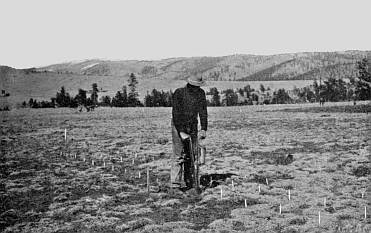
Figure 26. A view of seed sowing with a corn planter. San Isabel
National Forest, Colorado
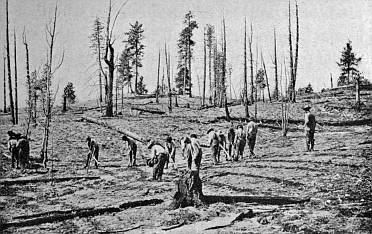
Figure 27. Sowing seed along contour lines on the slopes. Pike
National Forest, Colorado
In selecting areas for planting, preference is
usually given to the watersheds of streams important
for irrigation and municipal water supply
and to land which is capable of producing heavy
stands of a quick-growing species or of a specially
valuable species. Next in importance are areas
which offer good opportunities for object lessons to
the public in the practice of forestry. Some areas
offer combinations of advantages. For instance, a
burned-over tract may be suitable for planting to
some rapid-growing species which is also valuable
for timber and at the same time may be situated so
that it will serve as an object lesson also. It is on
such areas in general that reforestation by planting
is being concentrated.
While the reforestation of the watersheds of
streams important for irrigation and municipal
water supply has a large financial value, this value
is hard to estimate because it involves not actual
cash profit but loss prevented. But when a favorable
site is planted to a quick-growing, valuable,
species, it is comparatively easy to arrive at a fair
estimate of the possible profit on money invested.
It has been estimated that under many conditions
it is highly profitable to reforest waste lands on the
National Forests by planting. From certain experiments
made it is estimated that a white pine
forest artificially established on a second-class forest
soil in Minnesota, will yield about 46,500 board feet
per acre in 50 years, worth at least $10 per thousand
feet, or $465 per acre. Figuring the cost of
planting and the cost of care and protection per
acre per year at 3 per cent. compound interest gives
a total cost of $34.07 per acre at the time the timber
is cut and a net profit of $8.62 per acre per year.
Douglas fir in the Northwest will produce 81,000
board feet in 80 years, worth at least $8.50 per
thousand feet. After deducting all expenses this
would leave a net profit of $555.30 in 80 years or
about $6.94 per acre per year. These profits are
indeed large, considering that the land is not capable
of producing cereal or vegetable crops profitably.
And it must be remembered that in all the
above calculations all the money invested is earning
3 per cent. compound interest and that the net
profits are the earnings in excess of this 3 per cent.
interest.
The little trees that are set out on the National
Forests every year are produced in large nurseries,
where they are grown by the millions. In these
nurseries the little trees receive the most expert care
from the time the seeds germinate until the time
they are large enough to withstand the rigors of
wind and weather on the barren hillsides of Uncle
Sam's Forests. The seeds are first carefully sown
in seed beds and left to develop in these from
one to three years. At the end of one year they
may be transplanted in nursery rows where they
will have more room to develop. Rapidly growing
species like yellow pine are kept only a year in the
seed bed and perhaps one or two years in the transplant
beds; but slow growing species, like cedar,
must remain in the seed beds two years and
usually two years in the transplant beds. All this
depends upon the species and the site upon which it
is to be planted.
If my reader were to visit the Pikes Peak region
during spring or fall he would doubtless encounter
large gangs of men planting young trees on the
barren mountain slopes. Under the proper supervision
of Forest officers some of the men will be seen
digging holes with a mattock while others are coming
directly behind them with bags or boxes with
wet moss or burlap, containing small trees. These
men are called respectively the diggers and
planters. Two men will plant from 500 to 1,000
trees a day, depending upon how deep the holes
must be dug to accommodate the roots, whether the
ground is bare or covered with sod, whether the land
is mountainous or level, and many other factors.
In this way Uncle Sam plants his denuded areas
in the Forests, so that they will be producing timber
for future generations instead of useless brush or
tree weeds. The great variety of climatic and
topographic conditions included in the National
Forest area makes the problem of tree planting infinitely
complex. Nursery stock must be raised in
each region having similar climatic conditions, and
in each of these regions different methods of planting
must be used, depending upon local conditions.
The semi-arid mesas of Arizona and New Mexico
present different planting problems from the humid
forest regions of Oregon and Washington; the
methods used in the sandhills of Nebraska and the
sand plains of Michigan cannot be applied in full
on the high mountain slopes of Colorado; nor are
the planting problems in the vast chaparral areas of
northern California anything like those encountered
in the mountains of Idaho, or in the prairie States of
the Middle West, or in the Black Hills. Then,
again, the reforestation problems of the chaparral
fields of southern California are more perplexing
than any I have mentioned above.
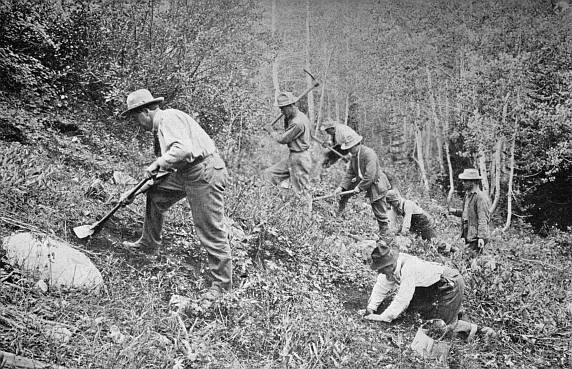
Figure 28. A planting crew at work setting out small trees. The man ahead digs the hole, and the man
behind plants the tree. Wasatch National Forest, Utah
The Need of Scientific Experiments. No science
can make progress without intensive experiments
and investigations, least of all a new science
like forestry. The science of forestry as it has
developed in Europe is several hundred years old,
but the science of forestry as applied to American
conditions is still in the infancy of its development—probably
not over 20 years old. Therefore we
know very little about our trees, our forests, and the
wood which they produce, and the professional foresters
who handle the scientific work on our
National Forests are very much handicapped. To
supply the needed information about the requirements
of many of our tree species, the uses to which
their wood can be put, and many other related subjects,
the Forest Service has established 8 Forest
Experiment Stations (recently reduced to 6) and
one Forest Products Laboratory. It has become
the business of these institutions to study the laws
governing the life of the tree and the forest and
their effect upon the final product—wood. The
Experiment Stations are working on the solution of
the many problems which confront the Forest officers
in the management and the protection of the
National Forests; while the Forest Products Laboratory
was organized to promote the most profitable
utilization and the most economical disposition of
the forest products of the National Forests. Both
sets of institutions, in doing this, are helping materially
to build up the science of American Forestry,
which even to-day can hardly be said to exist.
The Science of Growing Timber. In order to
better understand the many diversified problems
which are being studied at the Forest Experiment
Stations, it is necessary to give the reader a few
ideas concerning the science of forest ecology.
This science is the basis of all problems dealing with
the growing of timber and is therefore a study of
the utmost importance to forestry. Forest ecology
is the study of the relations of trees and forests to
their surroundings. By surroundings (or environment)
we mean all the factors which influence their
growth and reproduction, such as soil temperature,
soil moisture, soil texture, rainfall, light, wind, air
temperature, relative humidity, altitude, slope, exposure,
and surface. Forests, we must remember,
are not warehouses of standing logs; they are not
merely aggregations of individual trees; but they
are complex communities of living organisms, which
are affected in many ways by climate and soil and
which, in turn, affect in no small degree the climatic
and soil conditions in their immediate vicinity. The
forester cannot treat the forest as an aggregation
of individuals, for forests have laws which govern
their behavior which are entirely different from
those that govern the individual tree. Some foresters
and botanists prefer to call this science by
the name of "tree sociology," and they compare it
with human sociology. Individuals, as we well
know, are governed by different natural laws than
communities. Just so with trees and forests. In
order, therefore, to grow a never-failing supply of
timber intelligently and economically we must understand
these complex organisms and communities,
we must study their behavior under different soil
and climatic conditions and ascertain the conditions
under which they grow best. Only by doing this
can the forester achieve all the objects of forestry,
namely, to help Nature to produce more and better
timber, in a shorter length of time and at the
smallest possible cost.
The experimental work of the Forest Experiment
Stations is grouped under such categories as
these: dendrological studies, forestation studies,
studies in forest influences, studies relating to forest
management, studies in forest protection, commercial
tree studies, and grazing studies.
Dendrological Studies. Dendrological studies
include studies in tree distribution and wood identification.
For each tree species growing in the
United States (and there are about 500 of them) it
is desirable to know its geographical distribution,
its commercial distribution, and its local distribution.
The first of these deals with the entire range
of the tree by geographical divisions; the second of
these with the distribution of those bodies of timber
that are of commercial quantity or size; and the last
deals with the distribution of the tree by local divisions,
such as lowlands, slopes, ridges, valleys,
plateaus, etc. This information is usually placed
on maps for permanent record. Observations by
Forest officers on the many National Forests are recorded
by them and at the first opportunity sent to
Washington. Very often it happens that the range
of a species of tree is considerably extended and
that a tree is found growing in a locality where it
was never reported from before. The identification
of woods is done at the Forest Products Laboratory.
The distinguishing characteristics of the
woods of many American tree species have been determined.
The wood of different trees is studied
under the microscope to discover in what way it
differs from other woods closely related. Many
such results are published for the benefit of both
the lumber dealer and the general public in the
form of bulletins. Both the subject of dyewoods
and that of the many woods now sold as mahogany
have been investigated in this way. The resulting
data have been used by many companies and have
helped to protect the public from frauds.
Seed Studies. Experiments in reforestation
are grouped under seed studies, nursery studies,
and sowing and planting. Considerable work has
been done in developing the best methods of seed-extraction.
Much valuable information has been
gathered on the largest amount of seed that may be
extracted from pine cones of different species per
unit of time at different degrees of temperature; the
maximum temperature which may be applied to
seeds of different species without impairing their
vitality; the germinating power of seed extracted at
different temperatures; the comparative length of
time required for the germination of seed extracted
with or without artificial heat; and the most
economical type of seed-extracting plant. Studies
have been made upon the comparative germination
of tree seeds in the field and the greenhouse.
The ultimate success of the plantations being established
on the National Forests in a large degree depends
upon the character of the seed used. Hence
studies are being conducted of the effect of altitude,
soil, age of the tree, density of stand, insect damage
and disease infection, and other factors that affect
the mother tree, upon the character of the seed collected
from those trees, and the growth and form
of the resulting seedling. Also tests to show the
effect of the source of seed on the form and growth
of young seedlings have indicated very clearly that
with all species the seed grown in the locality where
the trees are to be planted give as a rule better results
than seed imported from another region.
Nursery Studies. Nursery studies endeavor to
show the most efficient methods for growing young
trees for field planting for each species of trees.
It is of great importance to know how much seed to
sow per foot in the nursery beds; what is the best
time (spring or fall) for sowing; to what depth the
seed should be covered in order to give the highest
germination; whether better results are obtained by
drill sowing or by broadcast sowing; the best
methods of shading, fertilizing, watering, and cultivating
the seed beds; the methods of securing the
best root development of the young seedlings;
the best time and method of transplanting from the
nursery beds to the transplant beds; the best
methods for retarding spring growth in seedlings to
be used at high altitudes; and other problems of
similar nature.
Forestation Experiments. Experiments in forestation
have, year after year, proven that planting
is much safer than direct seeding and ultimately less
expensive. For this reason a greater emphasis has
been placed upon planting studies. These studies
have attempted to show the best season for planting
each species; the best methods of planting; the
most advantageous classes of stock to use; and what
the most suitable sites are for each species of tree.
Studies of Forest Influences. Studies on the influence
of forests upon stream flow and erosion are
attempting to furnish important data for American
conditions upon this subject. At the Wagon
Wheel Gap Forest Experiment Station in Colorado
such a study is being carried on. The purpose of
the study for the first two or three years has been
to determine the character of the two streams which
are to be measured. The forest cover on the two
watersheds is practically identical. The results so
far obtained indicate that the influence upon the
stream flow must be about the same in both cases,
and, consequently, a comparison of these streams
after the denudation of one watershed will be a
very fair test of the influence of the forest cover
upon the relative height of the flood stage and low-water
stage, the amount of erosion, and the rate of
melting of the snow.
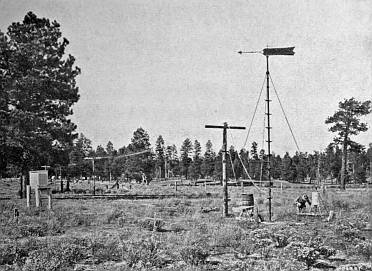
Figure 29. At the Fort Valley Forest Experiment Station, Coconino
National Forest, Arizona. A typical meteorological station
Forest officer measuring precipitation. Note the shelter which contains
thermometers and also the electrically equipped instruments to
record the direction and velocity of the wind.
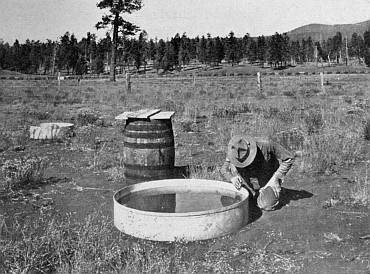
Figure 30. Forest officer ascertaining the amount of evaporation
from a free water surface. Fort Valley Forest Experiment Station,
Flagstaff, Arizona.
Experimental observations which have been conducted
since 1908 at the various Forest Experiment
Stations have shown that the forest exercises a decided
moderating influence upon temperature extremes,
wind motion, and evaporation. Likewise,
the presence of a forest cover retards the melting of
snow in the spring, and in this way huge snowbanks
in the forests feed the nearby streams until late in
the summer. Forests therefore have been shown
to conserve the water supply and also causing this
water to run off slowly rather than in sudden floods.
Studies have also been conducted on determining
the effect of cutting timber upon the climate within
the forest.
Meteorological Observations. The climatic requirements
of forest types have been studied at the
Fremont Experiment Station since January 1,
1910, through experimental observations, and other
stations have taken up the same problem since that
date. The first step in this work at the Fremont
has been to obtain a complete meteorological record
as a basis for determining what climatic conditions
are most important in limiting the natural
range of such important species as Yellow pine,
Douglas fir, and Engelmann spruce. The data
collected so far have shown that soil moisture and
soil temperature are the controlling factors in determining
the existence of the three forest types.
It has also been shown what climatic conditions
each of the three types of forest must have in order
to succeed. This work has since been extended to
include other types of forest and a meteorological
station has been established at timber line on Pikes
Peak. This station, which is at approximately
11,500 feet, is equipped with self-recording instruments
to measure the climatic factors which obtain
at that elevation and which mark the uppermost
altitudinal limit of tree growth in that locality.
Such studies as these, based upon systematic
meteorological observations, have an important
bearing on all other forest problems. The data secured
in this way especially assist the technical
foresters in solving the various problems in forest
management, reforestation, fire protection, and
land classification, besides giving positive knowledge
of the environment in which our trees live and
of the factors affecting their growth and reproduction.
These systematic observations are of prime
importance if we ever hope to have a science of
American Forestry.
Forest Management Studies. Experiments in
forest management are carried on to determine the
best methods of cutting National Forest timber to
secure natural reproduction and at the same time
to improve the quality and productivity of the remaining
stand. These studies are carried on by
means of permanent sample plots, on which all the
trees are carefully measured and recorded. First
the timber is cut on the plots under different systems
of management, or thinnings or improvement
cuttings are made. An exact record is kept of the
amount of timber removed and of the size and distribution
of the remaining trees. Measurements
taken at regular intervals show the precise effect of
the method used on each plot. Close observations
of the reproduction which takes place, brush and
other forms of cover which may establish themselves,
and changes in soil conditions are recorded. On
similar sample plots methods of brush disposal,
methods of marking timber for cutting, and thinning
methods are studied. After logging there are
several ways in which the resulting slash may be disposed,
depending upon surrounding conditions.
In some localities the brush must be burned immediately
on account of the fire danger which its presence
involves; in other places it must be removed
because it interferes with reproduction; in still
other places the brush may be scattered over the
area because there is little fire danger and, in fact,
the brush has been found to assist and protect reproduction.
All these possibilities must be determined
by experiments. Likewise in marking timber
for cutting and in thinning practice various
methods are possible, depending upon circumstances,
the most important of which are the requirements
of the species and the density of the
forest.
Other management studies deal with the determination
by actual measurement of the volumes
of trees and stands, and the growth of trees and the
yields of whole forests. Reliable growth and yield
data for the different species and types are necessary
to properly handle timber sales as well as for
forest management. They are also essential for
determining damages caused by fires and trespass.
Forest Protection Studies. Studies in forest
protection endeavor to find the best methods of
protecting the National Forests from fire, grazing,
disease, insects, wind, snow, hail, and animals.
The most efficient protection of the National Forests
from fire calls for an accurate, scientific knowledge
of all the factors that enter into the problem.
Comprehensive studies are undertaken to secure
the basis for a more scientific method of distributing
National Forest fire-protecting funds. The
aim has been to find the degree of intensiveness in
fire protection warranted by timber, forage, and
watershed values, as modified by their susceptibility
to damage by fire. Under the ideal system of allotting
fire-protecting funds, the most valuable resources,
which at the same time are most in danger
of destruction by fire, should receive the largest
amount of funds and therefore the greatest amount
of protection. Less valuable resources, less susceptible
to fire danger, should receive protection in
proportion. Other classes of fire protection studies
have to do with the various phases of fire prevention,
fire detection, and fire control. Studies have
also been carried on to determine the rapidity with
which fire spreads in different forest types, and under
a given set of climatic conditions.
Protection from Grazing Damage. Studies of
the effects of grazing upon the natural reproduction
of forests are conducted with a view to devising
a system of range control which would minimize
such injury without requiring the total exclusion
of the stock from the range. Studies have shown
that serious damage occurs to seedlings under four
feet in height during the dry season, on areas containing
poor forage, or which have been overgrazed,
or where there was little or no underbrush. It was
found that sheep do twice as much damage as
cattle. Some of the measures that have been
adopted to lessen the injury to reproduction by
sheep and cattle are: the revegetation of overgrazed
areas, reductions in the amount of stock,
provisions for the better distribution of stock by
the regulation of watering places, and the exclusion
of sheep from cut-over areas on which reproduction
is deficient until the seedlings reach a sufficient
height to be out of the reach of the animals.
Protection from Insects and Diseases. In coöperation
with the Bureau of Entomology and the
Bureau of Plant Industry the Forest Service is
conducting a large number of studies and investigations
dealing with the insects and diseases that
do destructive damage to forests. The direct result
of these studies will be the gradual eradication
of predaceous insects and dangerous tree diseases
from the valuable timber forests of the Government.
Control measures already taken have
shown the value of exact scientific information.
On the Klamath National Forest some years ago
about 900 acres were treated for insect infestation.
The cost was about $3,000 and the amount of timber
saved by the eradication of the insects was
worth over $600,000. Other studies are carried on
to identify and describe certain classes of insects,
such, for instance, as those that destroy the seeds of
trees in the cones. The various families, genera,
and species of forest insects are studied and described,
and the results are published in the form
of monographs. Many of these insects are difficult
to identify and concerning others very little is
known. Investigations on tree diseases have not
made such good progress, because tree diseases are
much more difficult to control. Tree diseases, like
human diseases, must be prevented instead of controlled.
A general survey of the tree diseases
prevalent in the National Forests has been made,
especially in California. Further studies have
brought to light little known or even unknown diseases.
In California, studies have shown that a
certain relation exists between old age and disease.
Incense cedar, for example, seems to become infested
after it reaches maturity at an age of about
150 years.
Tree Studies. Commercial tree studies are
made of important tree species. The results are
published in the form of monographs dealing with
the range, silvicultural characteristics, growth,
yield and management of each tree. These studies
bring together all the important facts known about
the tree described, such as: the industrial uses of
the wood, the conditions under which the tree succeeds,
the rate of growth in different situations,
and the most suitable methods of management to
secure the highest returns. Tables are included
to show the volume of the trees at different ages
and sizes, in cubic feet, in cords, in board feet, etc.
Studies are also made of the life history and requirements
of important forest trees, often in connection
with commercial studies. Such studies
cover: local, geographical, and commercial occurrence
of the species, the species which are associated
with it, the habit of the tree, its soil and climatic
requirements for germination and growth,
and the various matters connected with its reproduction.
Such publications as these give the Forest
officers much valuable information about the trees
with which they are dealing, and also furnish the
only sources of information to students in forest
schools on the characteristics and requirements of
the trees important in forestry in this country.
Grazing Investigations. Grazing investigations,
being intimately connected with a great
national industry, have received a considerable
amount of attention. These studies are confined
at present to grazing reconnoissance, the reseeding
of depleted mountain grazing lands, studies in the
best methods of handling sheep on the range,
studies of the effect of grazing on the forest, identification
of range plants, and the systematic elimination
of poisonous range plants and predatory
animals.
Grazing reconnoissance is a stock taking of the
forage possibilities of a certain piece of range land.
This work is usually done by organized parties,
but a small amount is done also by Forest officers in
spare time. This study aims to collect all the important
grazing information, such as: the area of
grazing lands, the kind of forage, the species of
forage plants, the location of streams, springs, and
other watering places for stock, the location of
stock driveways, drift fences, and cabins, the location
of timber lands that do and those that do not
contain forage, and many other matters pertaining
to the grazing of stock. The maps and field data
secured furnish the basis for range improvement
and more intensive range management. Up to
date, over 12,288,885 acres of range lands have
been covered in this way.
All intensive forage and range experiments are
conducted at the Great Basin Experiment Station
on the Manti National Forest. Here intensive
problems are carried on under controlled conditions
and under constant and careful observation
and the necessary care and thoroughness is given
to them which could only be given them at a fully
equipped experiment station. All grazing investigations
on the National Forests are carried on
under the direct supervision of this station.
The seeding of depleted grazing lands is accomplished
either by direct artificial seeding or
through rotation grazing. Under the former
method the seed of native or foreign grasses and
other range plants are sown on the range, in the
attempt to increase the forage crop. By rotation
grazing, that is, permitting the stock to feed first
on one area and then on another, the grasses and
forage plants are allowed to recuperate from the
effect of grazing and allowed to reproduce. The
stock is excluded from one area while the seed is
maturing, and after the seed has matured and become
scattered on the area the stock is allowed to
graze on it. As the stock feeds on the plants it
tramples the seed into the ground and thereby furnishes
favorable conditions for the germination of
the seed. There are few parts of the National
Forests that cannot be completely regenerated by
the adoption of either one or the other of these two
methods.
To reduce interference with the natural processes
of reforestation, damage to tree growth and watersheds,
depletion of grazing lands, and the waste of
valuable forest resources, it is important to develop
improved methods of managing different kinds of
live stock on different types of land. These new
methods of handling stock have been applied only
to sheep. The lambing of sheep in small inclosures
on the open range has resulted in the saving
of a large percentage of the lambs. The new
method of bedding sheep where they happen to be
at nightfall has been found to have many advantages
over the old system of returning them to an
established bedding ground a number of nights in
succession. The results have been better sheep,
less damage to range, and more feed.
It was not so many years ago that practically
nothing was known about the various plants which
make up the forage crop on the National Forests.
Forest officers could not identify the plants or say
whether they were of value for forage or not.
This made it difficult to secure the use of each range
by the class of stock to which it was best adapted,
to apply deferred and rotation grazing and to
eliminate losses from poisonous plants. This obstacle
to efficient range management was overcome
when a system of plant collection and identification
was started by the Forest Service. Some 23,000
specimens of about 3,000 different species have
been collected on the National Forests, identified
by specialists and the collector informed as to the
value of each species. The identification of range
plants is the first step toward securing an intimate
knowledge of the life history of the plant. Such
information as the soil and moisture requirements,
date of flowering and seeding, requirements for reproduction,
and its relation to other range plants
is of the utmost importance if the maximum forage
crop is to be produced on the range each year.
This constitutes the latest stage in the development
of grazing studies.
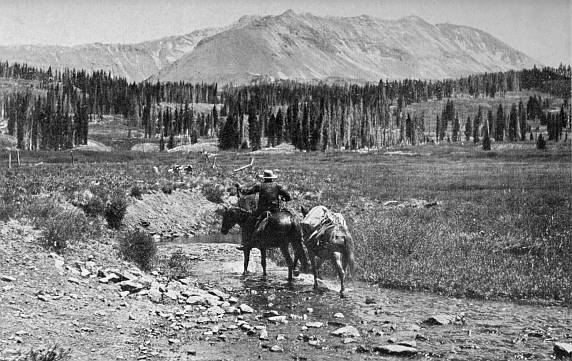
Figure 31. Forest Ranger with his pack horses travelling over his district. Meadow Creek, foot of Mt.
Wilson, Montezuma National Forest, Colorado
Investigations Dealing with Poisonous Plants
and Predatory Animals. In coöperation with the
Bureau of Plant Industry the study of poisonous
plants and the means for reducing the losses from
them has been undertaken. The death camas, the
lupines, the larkspurs, some of the wild cherries,
locoweed, and practically all species of zygadenus
are plants that have been found to cause death
among stock. While the handling of stock to
avoid the poison areas can eliminate the losses to a
small extent, it has been found that the most expeditious
remedy is in digging out and destroying
the poisonous plants. On the Stanislaus National
Forest in California, a cattle range of about 14,000
acres, containing about 67 acres of larkspur, was
cleared of this weed at a cost of about $695. The
average loss of cattle in previous years had been
about 34 head. Following the eradication of the
larkspur the loss was 4 head. The net saving was
valued at $1,800. Similar operations are conducted
on other Forests.
The work of the destruction of predatory animals
has been transferred to the hands of the
Bureau of Biological Survey. Formerly special
Forest Service hunters were detailed to hunt the
animals, and these men used to kill about 4,000 a
year. The Biological Survey, however, still furnishes
traps, ammunition and poison for the destruction
of predatory animals to Forest officers, who do
this work in connection with their regular duties.
Bears, coyotes, mountain lions, lynxes, wildcats,
and wolves are the animals that do the most of the
damage. What makes the problem a difficult one
is that the wolf and the coyote, the two species
which do the greatest damage to game and domestic
stock, are transient visitors on the Forests which
frequent the Forests only when game and stock is
most abundant. They are bred, born, and spend
the greater portion of their lives in the foothills
outside of the National Forests. Under these
conditions the animals killed on the Forests are
quickly replaced by others from outside. For this
reason the matter was handed over to the Biological
Survey, which will destroy these animals
throughout the public domain and the results will
be much more permanent and effective.
Besides the investigations carried on by the Forest
Experiment Stations many studies are carried
on dealing with forest products. The purpose of
the Branch of Forest Research of the Forest Service
is to promote the most profitable and economical
utilization of forest products by means of experiments
and investigations. The work of the
Branch falls into three divisions: National Forest
utilization, the work of the Forest Products Laboratory,
and industrial investigations.
National Forest Utilization Experiments. The
work of the proper utilization of the products of
the National Forests is under the supervision of
the District Forester and the Assistant District
Forester in charge of Forest Products in the districts.
Only three out of the seven districts have
such an organization. These men have charge of
all problems connected with the use and marketing
of National Forest timber, the construction of
improvements on the Forests, and related administrative
questions. The following problems are included:
studies of existing industries, covering
methods and costs of manufacture, grades, and
other specifications of manufactured products and
the prices obtained for such products; the collection
of market prices, mill scale studies to determine
grades and overrun, and investigations in kiln
drying; waste in existing industries and closer utilization
possible through improved methods; new
uses for National Forest species through wood
preservation; introduction of industries which will
result in closer or more profitable utilization, as the
manufacture of pulp and paper, wood distillation,
turpentining, and the manufacture of secondary
wood products; overcoming prejudices against
particular species or classes of material; general
questions of timber supply and demand, markets
and freight rates; advice and assistance in the construction
of National Forest improvements, particularly
in the use of wood preservatives; advice
and assistance to persons on any matter connected
with the utilization of National Forest timber; the
preparation of publications upon subjects covered
by investigations which have practical or scientific
value; and demonstrations of methods or processes
developed by the Forest Service for the benefit of
local communities.
The presence on a Forest of large quantities of
unmarketable timber, or dead timber, or of material
not used in current sales would mean an investigation
of methods for its utilization. Local
problems affecting wood-using industries in manufacturing
or marketing timber, such as sap stain in
lumber, difficulties in seasoning lumber, and the
effect of different silvicultural methods upon the
average grades of lumber manufactured, are also
taken up with the Products experts at the District
Office. Also in the construction of National Forest
improvements the Forest Supervisor may need
assistance in applying wood preservatives to telephone
poles, fence posts, and other material.
Sometimes timber treating plants are erected, if
necessary, to treat not only material used on the
National Forests, but also material used by local
residents near a Forest.
One of the important problems which confronts
the Office of Products in the various National
Forest districts is the utilization of the so-called
low grade or inferior tree species. The terms
"high grade" and "low grade" or "inferior," as
used at present, merely indicate the lumberman's
valuation of the timber from his point of view and
according to his standards of value. If a certain
species will not produce clear lumber, which is
straight-grained, easily worked, and not subject to
splitting or warping, it is at once classed as inferior.
But the Forest Products specialists each year are
making progress in demonstrating that wood, in
order to be of marketable value, does not necessarily
need to be cut in the form of lumber. It is
also being shown that proper methods of drying
lumber make possible the use of inferior woods for
lumber and manufacturing purposes.
The Office of Forest Products in California has
made considerable progress in overcoming the lumberman's
prejudices against the inferior species in
the California National Forests and the species are
beginning to find wider use and to command better
prices. The discovery that Incense cedar was
valuable for making lead pencils caused the price of
this so-called "inferior" species to jump from an
average of $10 per thousand feet in logs f. o. b.
cars to as high as $16. White fir, a species religiously
avoided by lumbermen in the woods, was
found to have special properties which make it
very valuable as a pulpwood. One mill in California
now uses annually upwards of 30,000 cords
of it for making paper. Lodgepole pine has been
shown to have a great value for telephone and telegraph
poles when treated with preservatives. It
was found to be 12 per cent. stronger than Western
Red cedar, the standard pole timber, has a more
desirable taper and can be shipped for less money.
Many other cases could be cited from this and other
National Forest Districts.
Forest Products Laboratory Experiments.
The work of the Forest Products Laboratory includes
investigations on the mechanical properties
of wood; the physical and chemical characteristics
and properties of wood; air seasoning and artificial
drying of wood; agencies destructive to wood; wood
preservation; wood distillation; production of naval
stores; and the production of pulp and paper and
other chemical products of wood. This work is
carried on at the Laboratory and sometimes in
coöperation with the National Forests and district
experts. At the Laboratory there is a director
and a large staff of technical and scientific men,
such as chemists, physicists, and engineers, each of
whom is an expert in his particular line of work.
A good deal of attention is given to testing the
strength of woods grown in the United States, as
a means of assisting users to select the species best
adapted to a given purpose, or to find substitutes
for species which are becoming difficult to obtain.
The strength of a good many species used for
structural timbers has been tested. The species
most used for this class of timber are the Southern
pines, Douglas fir, Norway pine, Tamarack, and
Red spruce. An important discovery was made
several years ago that Western hemlock, generally
considered an inferior timber, showed an average
strength 88 per cent. as great as that of Douglas
fir, one of the best construction timbers in the
United States. Strength tests have also been
made on fire-killed timber and these have shown
that timber killed by fire is almost as strong as
green timber. Other tests have been made to determine
the effect of preservative treatment upon
the strength of timber. As a result of the large
number and variety of strength tests carried on by
this Laboratory the United States Government
now has a more thorough and comprehensive collection
of data on the mechanical properties of
wood than any other nation.
Many studies are also conducted to determine
the physical properties and the structure of the different
kinds of wood grown in this country. The
minute structure of the wood of many of our native
species has been studied by means of microscopic
slides. A study has also been made of a large
number of species to determine the specific gravity
of the actual wood substance. Other tests are
made to determine the specific heat of woods.
The drying or seasoning of woods, more especially
of certain species which have been found
difficult to season, has received a good deal of attention.
A new type of kiln, invented by a Forest
Service man, has been devised to season such woods
as the eucalyptus, which has always been very difficult
to handle in drying. Western larch has been
seasoned with a loss of only 5 per cent., whereas
the loss in ordinary commercial kilns usually ran between
60 and 70 per cent. As a result, many
manufacturers have remodeled their old kilns to
embody the new Forest Service methods. A new
method has also been developed for the rapid dry-kilning
of Eastern hemlock, which has great commercial
possibilities.
Experiments in wood preservation have to do
with the kind of preservatives it is best to use, the
character of the wood to be treated, and the
methods of injection. Experiments have developed
the best methods for treating railroad ties,
mine timbers, fence posts, wood paving blocks,
telephone and telegraph poles, and wharf piling.
Untreated mine timbers have been found to last
only from 1 to 2 years, while treated ones are
usually entirely sound at the end of 4 years. Untreated
railroad ties last from 5 to 10 years, while
treated ones will last over 15. Such experiments
as these have shown the advisability of
treating all kinds of timbers with creosote or zinc
chloride, or some other preservative. Many new
preservatives are being proposed or marketed each
year by various companies or individuals. These
are all tested to determine their value to prevent
the growth of fungi in the wood. Their efficiency
varies greatly and many of them have been shown
to have very small value.
Studies in wood distillation seek to find new
woods which can be used for this industry, new
and more efficient methods which can be employed,
and new uses for wood waste and stumps. Charcoal,
wood alcohol, acetate of lime, and tar are
derived from the distillation of such woods as
beech, birch, and maple, to which tar oils and turpentine
are added for the pines and other resinous
woods. These by-products of wood distillation
have many uses, as well as the many products which
are, in turn, made from these by-products. Charcoal
is used in the manufacture of black powder,
acetic acid is used in the manufacture of explosives,
and wood alcohol is converted into formaldehyde
for disinfection against contagious diseases. By
means of temperature control methods developed at
the Laboratory in the destructive distillation of
hardwoods, the net gain per annum of one company's
plant was over $17,000. About one-half of
the plants of the country have adopted the new
method developed by the Forest Products Laboratory.
Experiments have been conducted by the Laboratory
in the distillation of the needles of coniferous
trees and the distillation of the crude gum of some
of the important timber trees of the South and
West. The oils distilled from many trees in this
way have found great use for various purposes.
Shoeblacking owes its peculiar aromatic odor,
faintly suggestive of the deep spruce and hemlock
woods, to an oil which is distilled from these same
kind of needles. Evergreen tree leaf oils are used
for the perfume of soap, and in the manufacture of
liniments, insecticides, and medicinal preparations.
Investigations have been carried on at the Forest
Products Laboratory in making artificial silk from
sawdust. The industry has already attained considerable
proportions. It consists principally of
converting cellulose into viscose, which, in turn, is
manufactured into an almost endless number and
variety of silk and other goods varying from sausage
casings to silk hose and tapestries. Sawdust
is used also in the manufacture of inlaid linoleum
and dynamite.
Experiments in naval stores are attempting to
improve the old methods of harvesting turpentine,
which have proven very destructive to the forests.
With the approaching exhaustion of the Southern
Pinery as a field for the naval stores industry, it
has become more and more important to find other
species for this purpose. Consequently the Laboratory
has conducted experiments with the various
pines on the National Forests in California, Colorado,
Arizona, and New Mexico.
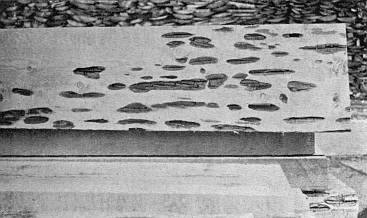
Figure 32. A plank of Incense cedar affected by a disease known
as "pin rot." By cutting the cedar timber when it is mature this
can be largely avoided. Lassen National Forest, California. Photo
by the author.
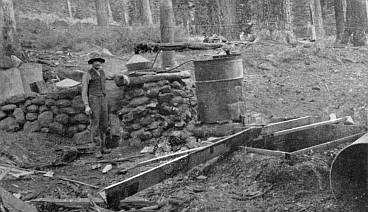
Figure 33. The western pine forests will some day be a great
source for naval stores. By distilling the crude resin of the Jeffrey
pine a light volatile oil—abietene—is secured which has great healing
and curative properties. Lassen National Forest, California. Photo
by the author.
A great many pulp and paper investigations are
also conducted by this Laboratory. The large size
of the industry and the threatened exhaustion of
the native spruce forests which furnish the principal
supply are circumstances which call for intensive
investigations. About nine-tenths of the
paper which we use is made from wood, and the
amount of wood which is converted into paper annually
has reached almost 5,000,000 cords. There
are over 2,500 newspapers in the United States,
and it is said that a single issue of a New York
Sunday paper consumes the trees on about 15 acres
of forest. The main object of the work at the
Laboratory has been to use other species of wood
for the manufacture of paper to offset the fast
waning supplies of spruce. Poplar, hemlock, pine
and balsam are now being used in considerable
quantities. News and wrapping paper has also
been successfully made from many National Forest
species, including Sitka spruce, Western hemlock,
Engelmann spruce, Red fir, White fir, and Lodgepole
pine. Kraft paper has been made and manufactured
into suitcases, bags, wall coverings, twine,
and similar articles. Not only has the Forest
Products Laboratory brought into use species of
trees never before tried for paper making, but it
has also improved some of the old methods of
paper making to such an extent that the results
have been adopted by various large paper mills.
Many strength tests are conducted with packing
boxes. The railroad companies of the United
States are paying annually claims amounting to
many millions of dollars because of goods damaged
in shipment. Much of the damage is preventable
through properly constructed boxes. Tests conducted
at the Laboratory have shown for canned-food
boxes an increase in strength of 300 per cent,
by the use of four additional nails in each end of
the box. The results of these tests are being
rapidly adopted by manufacturers and canners.
The dyeing principle of the Osage orange wood
was not used prior to the investigations conducted
by the Laboratory. The value of this material has
been so conclusively shown that about one million
dollars' worth of the dye is now being manufactured
annually in the United States and practically
all from material which was formerly wasted.
The discovery that sodium fluoride is superior
to sodium carbonate in preventing sap stain in lumber
promises to reduce materially the present estimated
loss of $7,000,000 from this cause.
Industrial Investigations. The function of the
Office of Industrial Investigations of the Branch
of Forest Research is to conduct statistical and industrial
studies of uses of wood in the United
States. The aim of these investigations is to determine
methods and conditions under which wood
is now used; the marketable products obtained from
it; tendencies in methods of manufacture; and improved
methods possible, especially in the utilization
of waste. When practicable, such investigations
are followed by the commercial application
of their results. This office also conducts all statistical
investigations of the production and use of
forest products.
The work of industrial investigations includes
the following: collection and compilation of statistics
on the production and consumption of forest
products, prevailing market and stumpage prices,
imports and exports, and transportation rates; the
compilation and study of specifications of rough
and manufactured forest products; studies of lumber
manufacture and wood-using industries as to
methods, forms of material, waste, costs, equipment,
substitution of one species for another, and
improvements through a more conservative use of
raw material; studies of special problems or features
of wood-using industries; advice and assistance
to States, industries and individuals along
such lines of work; and the dissemination of results
by publications.
Many studies in wood utilization are made not
only of certain industries like the shingle, or the
lumber industry, but also dealing with the industries
of particular sections of the country and with
the various States. These investigations in the
States show the kinds and amounts of woods required
by the various industries, the purposes for
which the various species are employed, and the
extent of their use. So far the wood-using industries
of 35 States have been studied and the results
published.
Records of lumber prices for important woods
are compiled quarterly. These figures are useful
in establishing timber sale prices on the National
Forests. Statistics as to the annual consumption
of lumber in the country are also compiled by this
office.
The wood waste exchange was established in
1914 by the Forest Service. It consists of two lists
of manufacturers, which are sent out quarterly to
persons desiring them. One of these is of "Opportunities
to Sell Waste" and contains the names of
firms which use sawdust and small pieces of wood.
This list is sent to people having waste for sale.
The other list is of "Opportunities to Buy Waste,"
and gives the names of concerns which have waste to
dispose of. This list is sent to people who wish to
buy material. No charge is made for this service,
and at the present time over 500 coöperators are
using this exchange.
By the use of this exchange, makers of wooden
novelties have been successful in finding supplies
of material near their plants. Other wood-working
industries have been able to dispose of their
waste at higher prices than they could otherwise
have obtained. Many firms were located within
short distances of each other, but until recently
have had no way of getting together. A Philadelphia
firm, engaged in the manufacture of composition
flooring, has been able to obtain a portion of
its sawdust from a New York lumber company. A
New York woodworking establishment disposed of
its waste pieces of white oak and sugar maple to a
maker of wooden novelties in Connecticut for use
in the manufacture of furniture knobs. A clock
maker of Connecticut secured waste material for
making clock boxes from the planing mill of a New
York lumber company.