1. Disease was one of the great dangers always
lurking in a town. Plague of some kind or other
was never very far away, and it frequently made
its presence felt. People had not realized the sinfulness
of dirt.
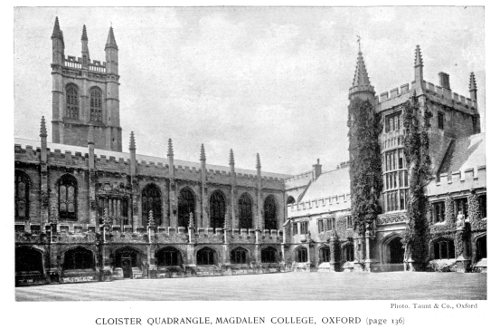
2. The best-drained buildings were the monasteries
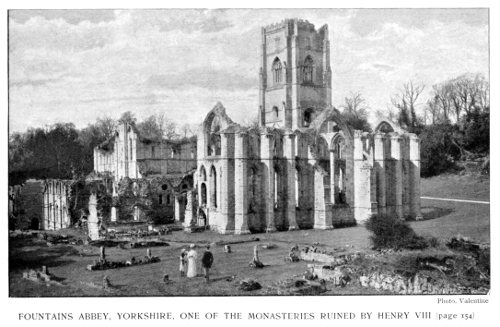
and colleges. Near the ruins of every big
monastery, from time to time, underground passages
have been discovered, many of them big
enough for a man to walk along upright, and leading
nobody knows where. When these were found,
people shook their heads and said: "Ah, those old
monks; you don't know what they were up to.
They made these secret passages, going for miles
and miles underground, so that they might get in
and out of the monastery, and be up to all sorts of
mischief, without anyone being the wiser."
3. Many wonderful tales have been told about
these underground passages; but, as a matter of
fact, most, if not all of them, have turned out to be
sewers, which the monks made from their monasteries
to some water-course, so that the sewage
might be safely carried away. The monks were
usually in advance of the townsmen of those days
in sanitary matters. No doubt a sanitary engineer
of the present day would be able to point out how
much better the drainage-works could have been
carried out; but the monks set an example in this
matter which, bit by bit, the rest of the nation
began to follow.
4. The chief streets of the town and the market-place
were paved with huge lumps of stone, sloping
towards the middle of the street from the houses
on each side of the way, a gutter or "denter"
running down the middle. When a heavy shower
of rain fell, the water flushed the gutter more or
less. If the street happened to be pretty level, the
gutter, or denter, was just an open sewer all the
year round; and it did its deadly work in poisoning
the worthy citizens, high and low, rich and poor,
though they did not realize it. Those towns were
the best drained which were perched on a steep
slope, so that the contents of the gutter found their
way speedily to the nearest water-course.
5. There were no great manufacturing towns in
those days. Most of the ordinary articles used by
the townsfolk were manufactured in the town itself,
and much of the work went on in the open air.
The butcher killed his animals in the street, before
his shop, and that added to the horrors of the
gutter. But then all the butchers in a town were
located in one part of it. Even now most old towns
have got a Shambles, or Butchers' Row, or Butchery
Street, or place of similar name, near the market-place.
Other trades had their own parts of the
town, where they made and sold their goods.
Cordwinder Street or Shoemakers' Row are still
common street names. The smith and the armourer
did much of their work out in the open street; the
joiner put together there any big piece of wood-work
which he had in hand; the wheel-wright
"shut" his tyres; the chandler melted fat and
made candles. The streets of the town must have
been very noisy and very "smelly".
6. There were no footways for passengers.
Wagons, drays, and wheel-barrows there were, but
carriages had hardly been invented, and coaches
and light-wheeled vehicles had not been dreamt of.
7. No doubt the tradesmen were expected to clear
up the mess they made in front of their houses,
and the apprentices had to sweep up. But that
usually meant only drawing the rubbish together
to the great refuse-heap close to the house, which
the fowls and the pigs, to say nothing of the
children, speedily managed to scatter. Now and
then these heaps would be carted away to a spot
outside the town; but usually the street was looked
upon as the handiest place into which to fling any
refuse from the houses. However clean the citizens'
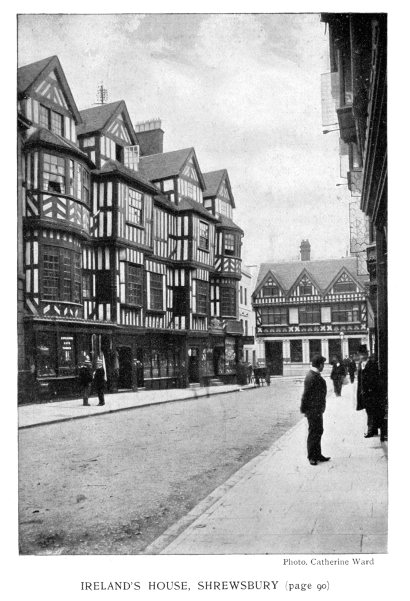
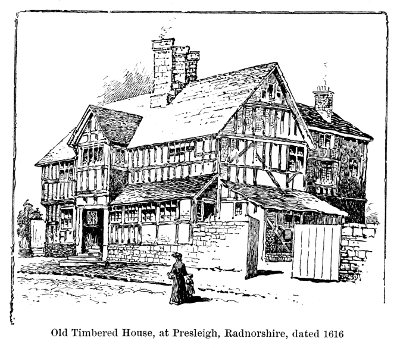
houses might be inside, and however richly ornamented
the wood-work, plague and pestilence was
always very near.
8. Still, though many persons died, and were
buried close by in the little churchyard, where for
hundreds of years the dead had been buried, people
lived, and throve, and did good work. For one
thing, they lived a great deal in the open air, and
they were not so much afraid of draughts in their
houses as we are.
9. The water-supply of a town was a very important
matter. Here, again, the monasteries and
colleges frequently led the way, and showed how
water might be brought by pipes from a distant
spring. It was not an uncommon thing for water
to be brought in this way to a "conduit" in the
market-place, whence the people fetched it as they
needed. Many a good wealthy citizen has performed
the pious work of providing his town with
a supply of water. Parts of old water-pipes, some
of wood and some of lead, laid for such a purpose,
have often been discovered in recent years.
10. Usually, however, a town had to depend upon
wells for its water-supply; and with open gutters
running through the town it is very easy to see
that many of these wells supplied water which, at
times, could not have been pure, however bright
and clear it may have looked.
11. In the villages the dangers arising from want
of proper drainage and from impure water were
not quite so great as in the towns. Yet even now,
in this twentieth century, how to drain our villages
properly, and provide them with a good water-supply,
are questions needing attention in many
places. We have seen that the houses in the villages
were usually close together, and men had not
realized that dirt is one of the greatest enemies of
mankind. There are a good many people, even in
our time, who see no great harm in having pigsties,
refuse-heaps, and manure-heaps close to their
houses.
12. One of the most loathsome of the diseases
common in the Norman times and later was leprosy.
The lepers were kept out of the towns, but at first
very little was done for them. The refuse of the
markets, and the food that was so bad that it had
to be carted outside the town, was thought to be
good enough for them. Gradually, however, we
find hospitals for lepers established. They were
not what we understand by hospitals, places where
sick folk could be doctored and nursed and cured;
they were religious houses which poor lepers might
enter, and in which they might have safe shelter,
care, and attention for the rest of their sad lives.
They were always built outside the walls of the
towns.
13. Other hospitals for poor and suffering people
were also established. They were not large buildings,
with wards holding scores of people. They
were little religious houses, each with its chapel
and priests to carry on its services, providing homes
for small numbers—perhaps half a dozen or a
dozen.
14. Kings, bishops, earls, and citizens all took
part in this good work. Every founder expected
that every day "for ever" he and his family should
be prayed for by the inmates. Some hospitals
were "founded" or established as thank-offerings
for escape from some great danger; some to "make
up" for some wrong that had been done and could
never be put right, and to show that the founder
was "really sorry"; some were built for good
reasons, others for selfish reasons. Nowadays we
arrange fêtes and demonstrations for our hospital
funds, and we are asked to buy tickets, because
"it's a good cause". We get some enjoyment for
ourselves and help the hospital; thus, as it were,
doing good and receiving good at the same time.
Summary.—The monasteries in the Middle Ages were
the best-drained buildings. "Underground passages" often
met with near old monastery ruins were, for the most part,
sewers. The gutter which ran down the middle of the town
streets formed a kind of sewer. Towns on the slope of a hill
were the best drained. In the Middle Ages there were no
big manufacturing towns. Each town supplied most of its
own wants. Different trades had their own quarters in the
town, which is shown in some old street-names. Refuse
was left lying about the streets, and the dead were buried
in churchyards in the town. In some cases water was brought
from a distance in wooden or leaden pipes to "conduits" in
the town. Most towns depended on wells, which were often
tainted with sewage matter. Leper hospitals were founded
and placed outside the walls of nearly all the towns. Other
hospitals sprang up in the towns. None of them were large,
or at all like our hospitals. They were alms-houses and
homes, not places where folk went to be healed.