INTRODUCTION. — HOW I HAPPENED TO WRITE “OTHER WORLDS.”
5
In introducing myself to my readers I believe I can do
no better than to insert the following clipping, taken
from a recent newspaper; for I am answering the cry
that is going out to those who are able to work out the
problem, of finding employment for willing hands to do:
“THE RIGHT TO WORK.”
Is there such a thing as the “right to work?” If so, why
isn’t it enforced on behalf of the great army of unemployed?
It does seem that there should be something for every willing
pair of hands in this great country to do. We have unbounded,
unmeasured natural resources. We have billions of idle wealth.
Ought we not to have wisdom enough to bring the idle wealth
and natural opportunities and the idle hands together?
Think of the suffering women and children who are cold and
hungry because the husband and father cannot find work for
his willing hands.
Think of this, you well-to-do, you statesman; yes, and you
workingman.
Here is a black, horrid blemish on the Christian civilization
of the Twentieth Century. To wipe it out is a work far grander
in the possibilities of its results than to construct wonderful
subways, build libraries and monuments or to perform any of
the wonderful things of which we boast.
And, bear this in mind, if every man will do his duty by his
fellow man, the time will come when the piteous cry, “I cannot
find work,” will be heard no more in this fair land.
You will see, as you read this book, that I believe—as
do many others—that there are other worlds that are inhabited,
as well as this; but that is not the point after all.
This is a story taken from every day life as it is. Many
events will be recognized, though no real characters have
been given.
6If my ideas are carried out, it means freedom to the
oppressed. It means wealth for all industrious people, in
fact, the society I picture in these pages will be able to
confer not only wealth but honors upon all deserving
members. All thinking people know that we are in the
midst of the most awful crisis that this world has ever
known; that the Trusts have us hemmed in on all sides,
that we seem to be helpless. I say “seem to be,” for we are
not helpless, only stunned by the immense power which
money has enabled the Trusts to use against us in taxing
our necessities.
I have written this book believing I could give some
practical ideas that will help to win the battle that is
going against us as a people.
The Trusts are not our enemies in reality; they are
only the whips that have been used to draw us into line
and show us how to manage our affairs as a Nation instead
of in the individual way, with its wasteful competition.
In all the ages past, when nations were menaced, a
leader came to their aid; but in this age we need many
leaders along many lines to take hold, for all people have
been guilty of a crime that few even know was a crime.
It was money that gave the Trusts their power over us,
and it was money that has been the root of evil in all the
ages. It is hard to know when it was established as the
world’s idol, but as an Idol it rules the virtuous as well
as the depraved. “Thou shalt have none other gods before
Me,” the Lord of Heaven has said. Down with the
money Idol, or destruction shall fall on your head, we
say as we look around and see the consequences of its
power. It rules our lives, and is it necessary after all?
is the subject upon which I have written.
I believe in justice to all, and I have written this book
7because I have something to say in it that will help to
bring prosperity for all.
I have done my best, and, if I have not done the best
that can be done, my only wish is that others will take
up the ideas I have given here, until all humanity can
clasp hands and say: Thank the good power of united
action that has shown us how to secure homes and our
necessities independent of the money powers.
May all who read it, choose evolution and safety and
not wait for war and its attending calamities that the
money rulers are bringing, is my greatest wish.
8
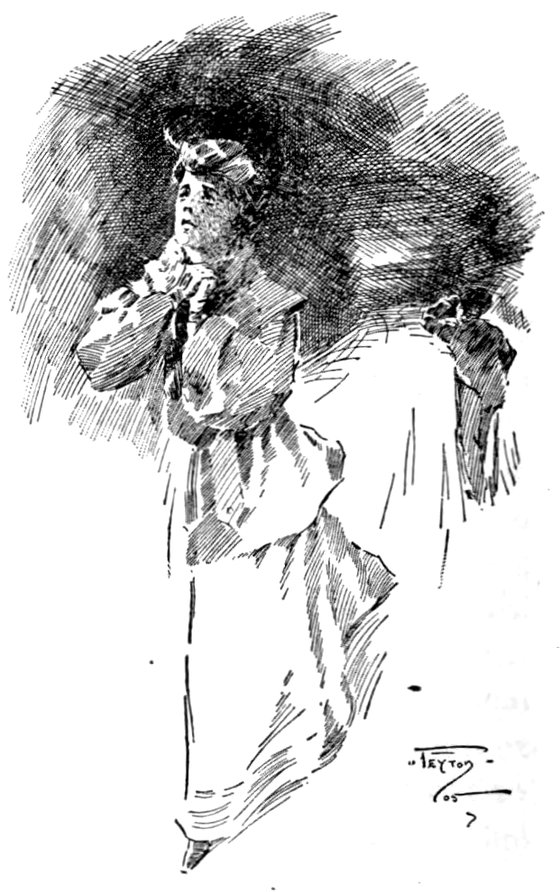
’Twas evening. I was sitting in my parlor alone in the home, not a soul was near.
A strike was in full blast and had been for a year.
Lives had been lost and mourners would weep
As funerals passed slowly down the street.
Watching at the window as a procession passed,
Mentally I asked the question: how long O God! how long shall this thing last?
Is the Idol of the Nation—aye, the Idol of the earth—
That thing, that is called money;—oh—is it of greater worth
Than the creatures thou hast created?
Not knowing I had uttered a prayer, in the fullness of my heart
I sat in the gloaming, and in time it became quite dark.
I was resting—sitting passive—not even trying to think,
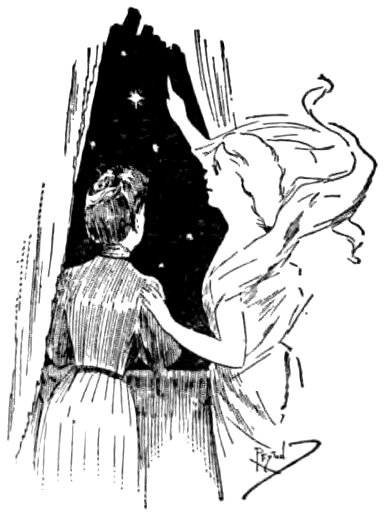
When an angel stood before me! Perhaps ’twas—a dream; who knows?
Who can tell when a dream commences or when we doze,
Or when imagination creates a thing; if practical, why need we care?
To me it was a vision and the angel was most fair,
As she pointed to the stars in the heavens, shining there:
“They too, are worlds,” she whispered, “struggling to the light,
Gaining wisdom by experience and power by their might.
Go write and tell the world about them and how they won:
When powers and principalities seemed greater than the sun.
This monster called ‘money,’ that all love so well;
Has opened wide the very floodgates of hell,
Until you have a toiling, struggling mass called humanity.
Go, now, write the story; I bid you make haste
For your homes are menaced! Your country will be laid waste
By the Trusts who weave webs, as a spider to catch flies;
The Nation may be throttled until it dies.”
CHAPTER I.
9
In a country
place near a town
called Lake View, on
the planet Herschel,
lived a family of the
name of Vivian. They
were known all over
the country for their
hospitality, wealth and
their beautiful daughters.
For generations
the name Vivian had
been associated with
brave deeds, honest
lives and intellect. The
girls were even known
as “those very clever
Vivian girls.” Mira, the
youngest of the four
girls, just sixteen as
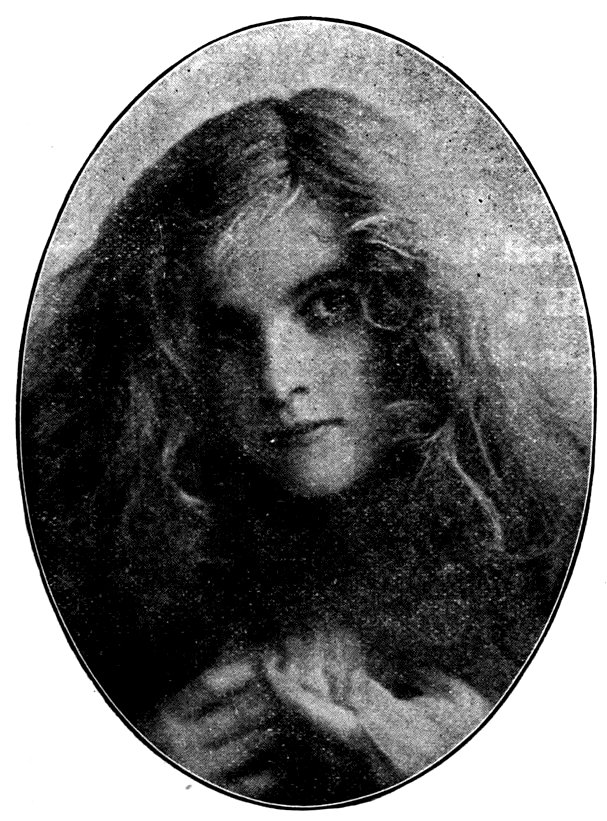
this story opens, was a
bright, winsome girl,
tall and graceful, with
large hazel eyes, a pink
and white complexion, and an abundance of golden hair.
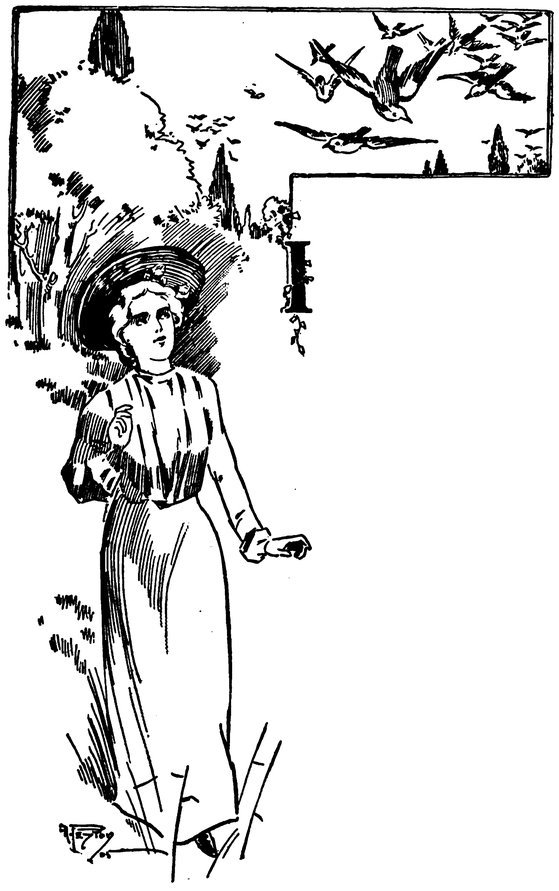
On a bright autumn afternoon Mira was on the lawn
watching the birds and listening to their clatter as they
10collected in large numbers to take their yearly journey to
a warmer climate. “How wise they are,” she pondered;
“though so small, they know more than the people do.
Away they go to another part of the world. I wish I
could go with them. I am so weary of always staying in
one place.” She gazed after them as they took their
onward flight, and her mother, who had been watching
her from the window, seemed to catch the thought, for
she said aloud: “I am afraid, like the birds, she will soon
be leaving me alone.”
“Why, mother,” said a young man, approaching her;
“you are actually talking to yourself. I thought Helen or
Mira was with you. I want one of them to go on the
lake with me.”
“Tom, look at Mira,” the mother exclaimed. “She is
quite grown up. I have never realized it till now. But
before you call either of the girls, I want to talk to you
about the society you young people have been organizing.
The ideas are strange to me. When I was young, married
women didn’t take positions. Is it possible that you
cannot support your wife?”
“Why, of course I could,” the young man replied; “but
when you were young you had no Trusts to absorb your
income as we have in this generation. Nellie and I are
dedicating ourselves to this undertaking. We intend to
work together to free ourselves and all who join us from
their tyranny.”
“It is quite an undertaking,” his mother replied. “I
don’t see how you are going to succeed without capital.
It takes so much money now to start anything to what
it did when your father was young, and he inherited the
property.”
“The world hasn’t shrunk,” Tom replied, “since father’s
time. The only difficulty is in our knowing how to
11meet the situation in a new way. The industry of the
masses in every way, is how wealth has been collected,
and the people are as willing to work now as they ever
have been. But here is Mira.”
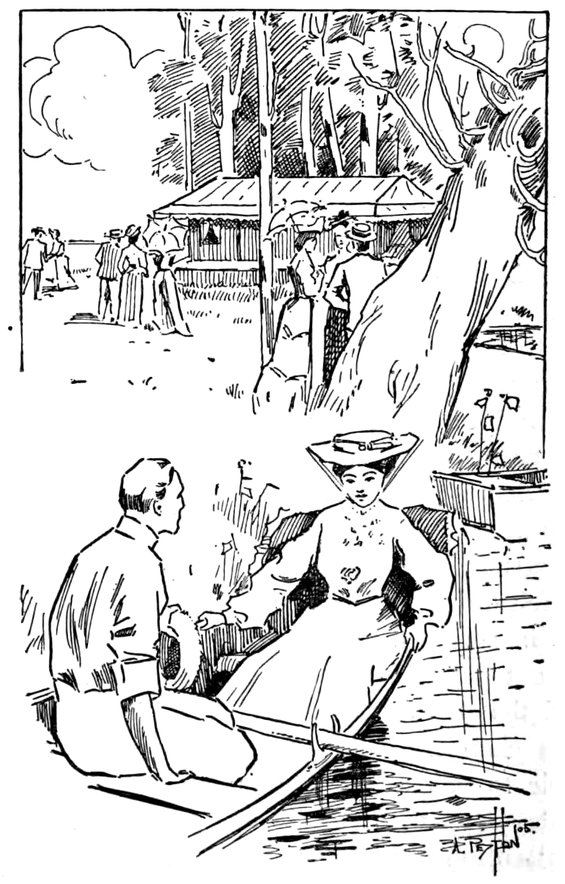
“Will you take a row with me, Mira?” he asks as she
approaches them. “I will tell you all about the society,
mother, when we come back. I want to rest my brain for
a while out on the water. You don’t mind, do you,
mother?” he inquired.
“Oh, no,” she replied; “there is time enough before
you return to the city.”
Mrs. Vivian, her eldest son Geron and his family, besides
Mira, lived on the Vivian estate. The rest of the
family had gone to the city to live, after their father died;
as their wealth had decreased it was necessary. Tom was a
lawyer; Libra had married a banker, and Scoris and
Helen had employment. The next day the rest of the
family arrived at the old homestead, for it was the mother’s
birthday.
The family dinner had been a success, and they had all
assembled in the old-fashioned drawingroom for the
evening. Old friends had been invited to meet the city
members of the family, especially Tom, who at that time
was making a change in the industrial life not well understood
by his friends or some members of the family. The
gentlemen in the party had grouped around Tom to hear
about it, for it had been a surprise to them that he had set
aside his profession to take up this new line of work, for
he had been a successful lawyer for so young a man. In
another corner of the room some of the ladies were discussing
the fashions, while still another group had centered
around Nellie, Tom’s bride.
The room was long and this evening the music room
doors had been thrown open on one side and the library
12opening into it also by large doors afforded an opportunity
for each group to converse without interrupting the other.
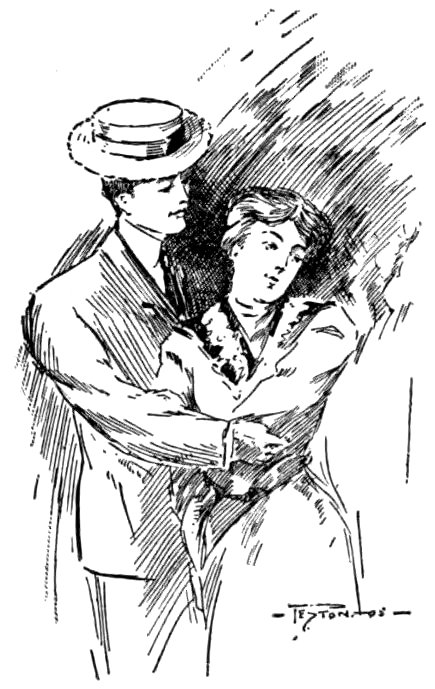
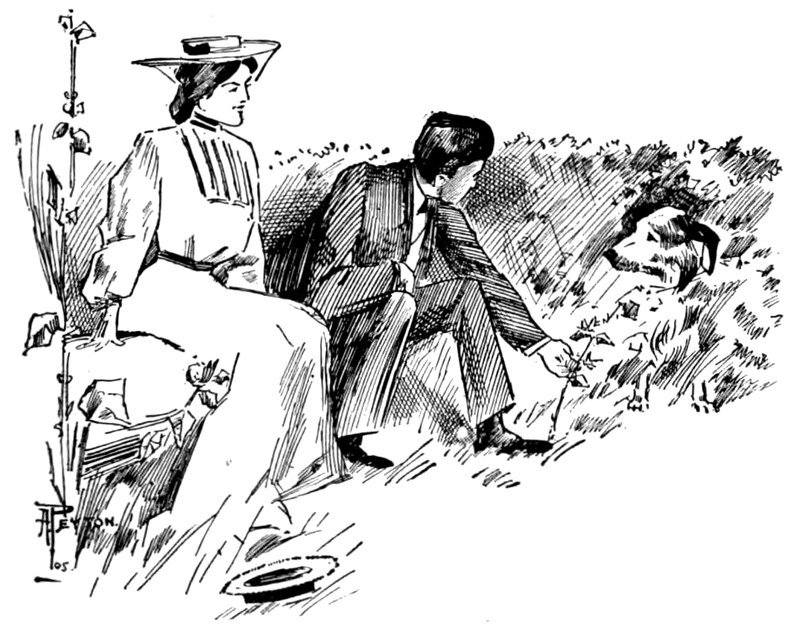
Mira had not been noticed when she and Jack Moberly
(an old acquaintance) had passed out on the lawn. He
had something to tell her, he whispered. He was
going away nearly two thousand miles. An old uncle had
offered him a position superior to anything he could ever
expect if he stayed in Lake
View. He wanted Mira to
marry him and go, too.
“I cannot leave you,” he said;
and she in her inexperience
thought she couldn’t live without
him. They knew her mother
would never give her consent,
for she had been heard to say
that if a child of hers married
under age she would break the
marriage. No one had objected
to Jack, but none had suspected
the true state of affairs between
him and Mira. She was so young.
They joined the rest of the family after a time and the
evening passed, all having enjoyed the music and the singing,
as well as the renewing of old friendships.
No one imagined that this birthday would be a day to
be remembered as the turning point in more lives than
one among them, but it was.
Libra, the eldest daughter, and her husband had returned
to the city. Scoris and Helen, as well as Tom and
Nellie, remained for a few days longer. The next morning
Tom announced that he was going to take Nellie
across the lake, and possibly they would go on farther
13and see some old friends, so would not be back until
evening. The morning was bright and the water was as
clear as crystal as they passed out from the small lake
through the narrows into the larger body of water, then
on to one of the small islands to the wonderful cave Tom
had discovered when a boy. They had fastened the boat,
climbed the steep hill and walked about half a mile
through thickly grown shrubs, trees and brush, and over
rocks; still no cave was in sight. Nellie looked at Tom
inquiringly. She could see a high rock on one side with
shrubs growing on its side in places, but no sign of an
opening except almost at the top, but that was fully ten
feet high.
Pushing aside the brush with one hand and holding the
overhanging limb of a large tree with the other, Tom
said: “Now you follow me and I will show you my old
hiding place.” They went down a narrow passage rather
steep in places, but by hanging onto the roots of an old
grape vine managed to keep their footing until they
landed on solid rock. They walked a few feet, when, before
them Nellie saw an opening about two and a half
feet wide. Beyond she could see a large chamber, lighted
by the opening she had seen on the outside. Part of the
floor was flat and on one side of the wall it was broken,
as if it had been cut out for use at some time, for it
formed a seat and a table, or rather a shelf large enough
to hold the basket of provisions they had brought. Several
boxes were lying about, showing that it had been
used at some time before. Tom selected a box for Nellie,
seated himself on the rock, then exclaimed: “This is the
place; what do you think of it?”
“Think!” she exclaimed; “I haven’t got beyond wondering
yet. And it was here you thought out all the
plans for the society?”
14“Yes,” he answered; “after I had lived in the city and
seen all the miseries the poor have to endure—the injustices.”
“No, no, dear, don’t say it,” she interrupts him. “This is
our resting time, and in such a place we are not going to
spoil our holiday by even thinking of unpleasant things
today. So you came here to be quiet and plan for the
future?”
“Yes, the most important rules were written on that
table of stone.”
“What a lovely memory so many of you have who were
born and raised in the country,” she continued. “How
little the city people know about its resources. Why, this
cave would answer for a summer home. I wish it was
earlier in the season. We could bring in branches of trees
and cover them with pine needles for a bed, some bedding,
rugs, etc., and what more could we wish for as a
quiet place to rest in?”
“Your enthusiasm would make up for deficiencies,”
Tom answered. “While you arrange our lunch I will go
to a spring for water, so we can make tea. Do you see
the stove over there under that opening where the light
comes from?”
“I see a pile of stones,” she answered.
“Oh, you poor, ignorant city girl,” he laughed, “not to
recognize the camper’s most useful kitchen utensil.”
While her husband was gone for water, Nellie looked
around the cave, feeling the calmness of this God-made
Temple. Only the twitter of birds, and the rustle of falling
leaves could be heard. She arranged the table for
their lunch, then waited till he came. Tom made the tea
after he had boiled the water over the twigs he had gathered
and burned in the stone stove. After lunch they
strolled on through the woods, gathering flowers, while
15Tom showed her all the beauties of the place. Evening
came before they realized it and as they ascended the hill
on their return home after securing the boat, when out
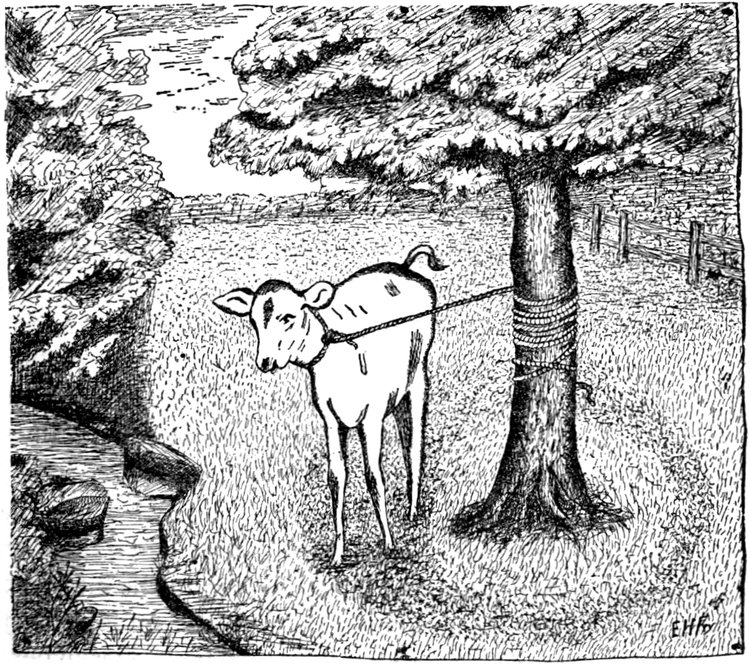
from the shadow of the trees they saw a calf tied to a
tree.
“Oh, Tom!” Nellie exclaimed, “look at that poor, helpless
creature. It cannot even lie down. Who tied it
like that?”
“No one,” he replied. “Don’t you see it has wound
itself up by twisting the rope about the tree as it ran
around it.”
“Such a look of resignation,” Nellie said. “It reminds
me of the people in the cities. They, too, are tied by the
rope that the trusts and custom have wound them up with.
16“They suffer and die without knowing how easy it is to—go
back—just like—the calf. Oh!” she cried; “it will run
over me. I didn’t know the rope was so long.”
“Look out, or he will kick you before I can get hold
of the rope. I had to drive him back the way he came,
and I forgot that you didn’t know the ways of calves,”
Tom said hurriedly, as he ran to secure it. She had
moved far enough away to feel safe before she continued
in the same train of thought.
“It has trampled its food down as it ran around its
shelter, besides amusing itself. Again that is like the
majority of city people. The infants play with rattle
boxes, but the grown children with politics and money. A
shelter and food are gambled for until the age limit confronts
them.”
“There you are, old fellow,” Tom exclaims, not noticing
Nellie’s reverie as he unties the rope. “Now, Nellie,
you go on to the house, and tell them I am coming as
hungry as a bear. I’ll give him a drink before he does
the same thing over again.”
Nellie started and was crossing the orchard when she
saw a number of cows eating apples that had fallen on
the ground. She thought of little children in the city who
rarely tasted an apple and could be seen looking longingly
at the street stands. The abundance of fruit everywhere
on this large estate of several hundred acres was amazing
to her, as she compared the need of these things in
the cities. “Oh, what an unnecessary waste,” she thought.
“It would have seemed incredible if I had been told it.
Here are cows feeding upon the rarest varieties.”
“Well,” exclaimed Mira, laughingly, as she appeared
around the corner of an outbuilding, “are you trying to
cheat the cows? We have been keeping dinner until I
17expect it is spoiled, waiting for you. Mother became uneasy
and sent me to hurry you up.”
As Tom overtook them he laughed also at seeing the
fruit in Nellie’s arms. After dinner he took her to the
cellar and showed her the great bins of apples without a
flaw that were stored for winter, besides all the vegetables
and all kinds of fruit; then they went to the parlor, where
the rest of the family had assembled.
A low fire burned in the grate to make the room
cheerful as it had turned chilly.
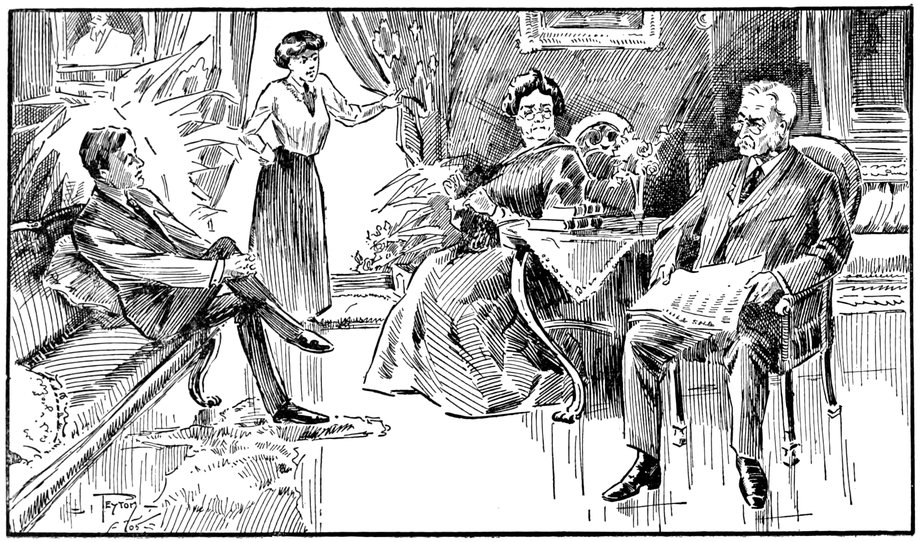
Scoris, the eldest unmarried sister, was trying to interest
Geron’s wife in the society, but in spite of her own
enthusiasm, Grace did not seem to respond. Just at this
time Scoris found it hard to talk on any other subject for
any length of time, it seemed so all-important to her.
Helen, the other sister, and Nellie exchanged glances,
both realizing that there was a prejudice against the society
in the home circle they had not expected. Scoris, with
Tom, had been the means of starting the society, which
had grown so fast that Tom had finally sold out his law
partnership so that he could devote his whole time to it.
In the city almost every one responded that they had
been able to reach, and here were their own relatives
absolutely indifferent.
Several times during the evening Nellie would ask
questions about the abundance of things that were thrown
away or given to the animals. Geron finally explained
that all those things were of less value to them than the
labor would amount to. “We live so far away from the
cities that it doesn’t pay to ship them. Tom’s idea is the
best, evidently, for he intends to bring the people to the
farms where they can secure all the surplus. You will
have your hands full, I can promise you. If I wasn’t
18so far away I would advise you to take my place; farming
don’t pay any too well.”
Tom answered: “You must remember I am not starting
a farm, merely using the land to provide the necessities
at first hand. The object of the society is to secure
homes for its members, then food at first cost, while it
aims to give them employment as nearly as possible according
to their talents and the society’s needs. We take
the farms to build our town because it has to be started
under new conditions, for we must compete with the old
money system for many years.”
CHAPTER II.
19
“Tom,” Geron said, after arising and moving around
aimlessly, “you are going to waste your time. The
trusts are too strong for any one man to undertake to
down them.”
Tom, who had been sitting with his chair tipped back,
reached out to the table to balance himself before he answered,
then he stood up, stretching out his arms and
yawning, said, “I am not trying to down them. You
remember the story of the lion and the mouse, don’t
you, Geron?”
“Yes.”
“Well, for the sake of the case at point, I will liken
the masses to the lion; I will merely pose as the mouse,
as it nibbled the cord that let the lion go free.”
Just then Mrs. Vivian, who had been looking after the
comfort of the room by poking at the fire in the grate,
asked: “What lion are you talking about, Tom?” This
caused all the family to roar with laughter.
“He is trying to convince Geron that he is as harmless
as a mouse,” Scoris replied.
The two men left the room laughing, Geron saying that
he was going out to smoke.
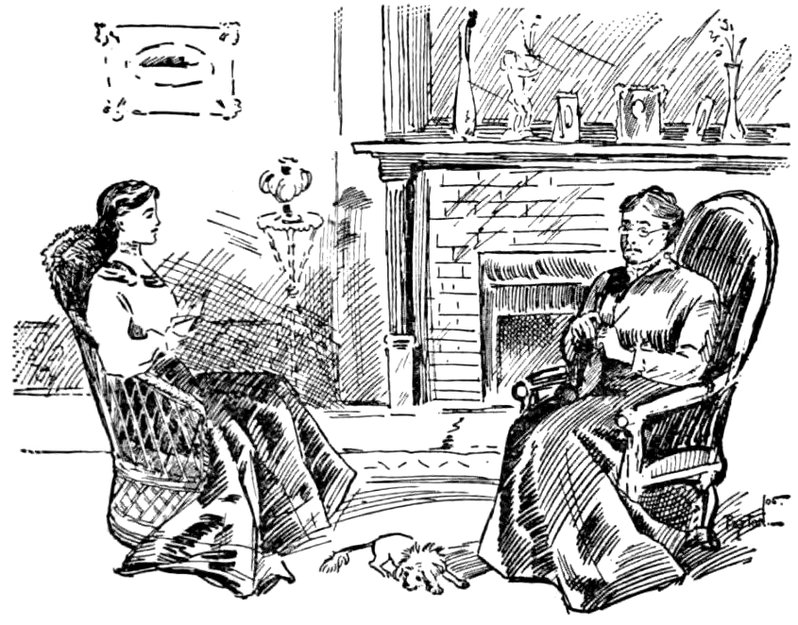
Then Scoris explained it to her mother: “Geron
thought that Tom was trying to break the trusts, and
Tom took that way of explanation, for he is merely
showing the people how to live independently of the
trusts.”
“Tom promised to explain to me what you are all doing
in the society, but he has not had time yet,” the mother
20said. “I wish you would tell me something about it.
Geron says it will fail, he knows it will.”
“Well, it will not,” Nellie answered, her eyes flashing,
as she changed her seat to get nearer to Mrs. Vivian,
“Tom never fails.”
“No,” Scoris exclaimed, she also resenting Geron’s
idea; “and if he did, some one else would take it up! The
people are ready now to free themselves from the trusts.
They have only been waiting for a leader, and Tom is
that man.”
Nellie had arisen and was standing by Scoris. Helen
raised her head, for she had been absorbed in a new
poem, and Nellie’s voice had actually sounded sharp.
Geron’s wife looked apologetic. She stood up, then sat
down, not knowing exactly what was expected of her,
for it looked for a second as if there was going to be a
family dispute. Mrs. Vivian looked distressed until
Scoris laughingly asked:
“How much do you know about it, mother?”
“Not much,” she answered; “only Geron says that
each member pays only one dollar per year for membership,
and that no society could be kept up on such
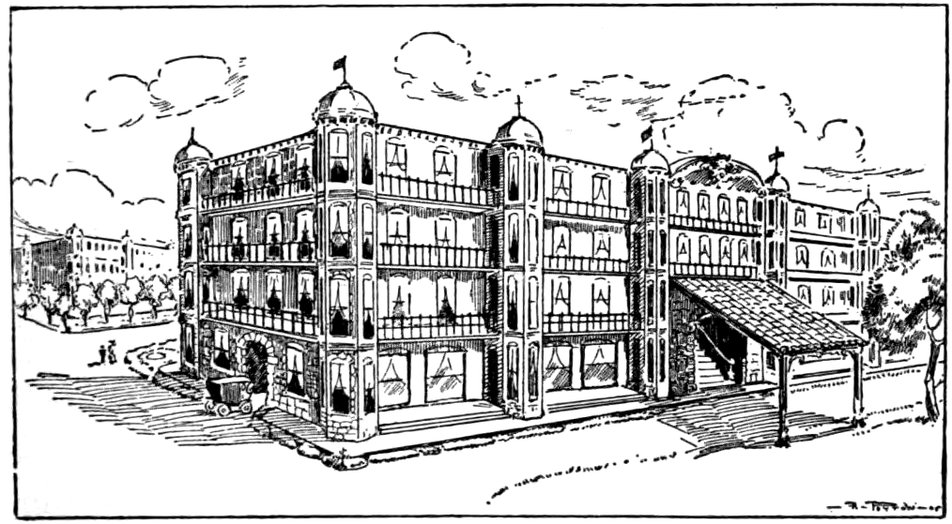
a cheap basis; that Tom intends to build immense hotels
and factories, and he can’t see where the money
is coming from to do it all.”
“Mother, dear,” Scoris answered, “you only know a
very small part of it. The fee is small so as to reach
the very poorest class. They can start as members
on twenty-five cents per week, after the membership
fee is paid, ’tis true, but it is not their money that we
value, but their labor. They can become members by
their labor alone. The poorest member must secure
one share each year, which only amounts to twelve
dollars. We have two hundred such members, but we
21have one hundred that are securing twelve shares yearly,
besides two hundred more that are ranging from twenty
shares each year to many thousands, invested already.
Considering that the society is only one year old that is
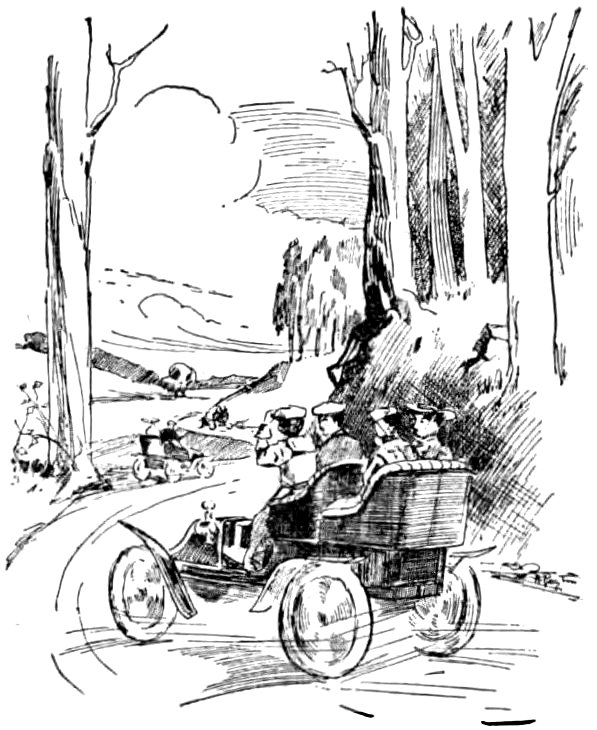
encouraging. The society also owns a number of automobiles
that we have been using instead of cars. I am
sure that don’t look like failure. We employ a large
number of men to manufacture bricks, and what is more,
they did it by hand labor, the old-fashioned way, using
horses to turn the machinery. The men were those that
had been crowded out of employment by the age limit.
Two men, seeing the advantages of the society, advertised
for such men, explained the advantages of the
society to them, then secured the clay land suitable for
bricks. The results are that there is enough to start the
first apartment house in the spring. They have also made
artificial stone to beautify the buildings. Another man
has been burning lime stone on his own place. These are
the principal building materials and they are either found
already or will be by some member, for all are contributing
either their labor or money to secure the success
of the society. Mother, dear, you cannot imagine how
many poor souls were glad to get the work to do, especially
when they knew they were not expected to work
more than six hours each day and that they were provided
with shelter and food besides being able to save for
the future. Some who had always been accustomed to
digging and hard work will dig the foundations in the
spring. Now this is the strange thing about it. The men
who gave them the work did not have to pay them one
dollar in money. They were only too glad to secure a
permanent home for at least this winter. Every one of
them has scrip and shares in the society as a result of
their summer’s work.”
22“Well, that is a good thing for poor men, but how did
the society get the benefit of those two men’s labor who
superintended the work, as well as using their capital in
paying the rent for the brick-clay land, buying horses,
and feeding them as well as the men?” her mother asked.
“The society bought the bricks from them, exchanging
farm produce, and shares as well as scrip, in payment for
two-thirds of their value. The balance was paid in
money; don’t you see?”
“Where did the society get the money?”
“Why, it was taken out of the permanent shares. I
forgot to tell you that we issue two kinds of shares. The
ones of which all members have to secure at least one
each year are the permanent ones. They are paid to the
society in money or labor, and the money representing
them can only be used for buildings or any kind of permanent
wealth. These same men are going to set the
workmen to putting up roughly made buildings on
the farm we have secured, to store ice in for the summer,
as well as a house for themselves to live in. They are
not particular where they live, poor fellows, so long as
it is a shelter and that their food is sure, as well as
clothing. These two men I mentioned have secured materials
from the wrecking companies in the city, for the
buildings will be only temporary ones, boarded inside
and out, and filled in between with sawdust.”
While listening to Nellie’s account Mrs. Vivian had
been anxious when Scoris began, but gradually relaxed
as the explanation advanced. “How very simple after
all,” she remarked. “It is like a broken stitch in a stocking.
Stitch by stitch we draw the thread in and out until
it is whole again!” But she started up, exclaiming,
“Who is going to redeem the scrip?”
“Tom is,” Nellie answered. “At present he has charge
23of all produce, and the different members are providing
for all kind of exchanges.”
“Well, girls,” their mother said, “don’t think me stupid
for not understanding all about it, but how is Tom
to derive an income from what he sells to the members
and redeem the scrip besides?” Scoris and Nellie exchanged
glances to see which would explain. Scoris
motioned to Nellie to proceed, feeling that she knew
more about it.
“Our immediate income,” Nellie answered, “is from
what Tom sells to the members, and we have five hundred
members besides their families that consume food.
Tom has been buying it from the farmers at wholesale
and selling at retail. It has been enough to keep us so
far, and we take charge of the first farm next week, so
then we will be able to buy to better advantage and have
no rent to pay besides, for the society provides that by
the $1.00 membership fee. You see we have over five
hundred members, and they represent that amount. You
know Tom sold out his law partnership. Well, he has
used the money to buy with. Besides vegetables and
fruit, we have charge of the milk which he sells to the
dealers, who allow the members a percentage on all they
buy. The members bought our scrip, then Tom used
the money to secure the milk; he then redeems the scrip
as payment for the milk consumed.”
“Well, I hope it will be a success,” Mrs. Vivian declared,
with a sigh.
“Why, it has already,” both the girls exclaimed together.
“No one had ever imagined that it would succeed
so soon. We all hoped it would in a few years,
but it is growing so fast that it is taking nearly all of
Tom’s time just to manage it. That is how I happened
to become his secretary,” Nellie said.
24During the conversation some young people had called,
and Mira had shown them into the library until her
mother and sisters had finished their talk, then joined
the rest. Jack Mobray was there and it was hard to remember
afterwards how he and Mira could have had a
chance to talk over their arrangements to leave the old
home as they afterwards did, but when the young are
in love they find a way.
In a few days the two girls had returned to the city.
Tom and Nellie to the farm that the society had secured
to start the colony, and, as the mother had predicted,
Mira left her also a few days afterwards, although she
had never thought of her child marrying so young, nor
did she suspect the attachment between them. She did
think that Mira might wish to go to the city. The whole
family had become restless as they grew up; even Geron
had hinted that he was tired of living all his life on the
estate.
Tom and Nellie were settled in the farm house, for
though it was in the fall of the year they had decided to
take up their residence then so as to get ready for the
spring building. Materials were being collected so as to
cause no delay. The past year Tom had gone in different
directions from the city looking the country over before
this place had been selected. In this way it gave him
an opportunity of locating just the kind of land needed
for the many uses that would be required of it.
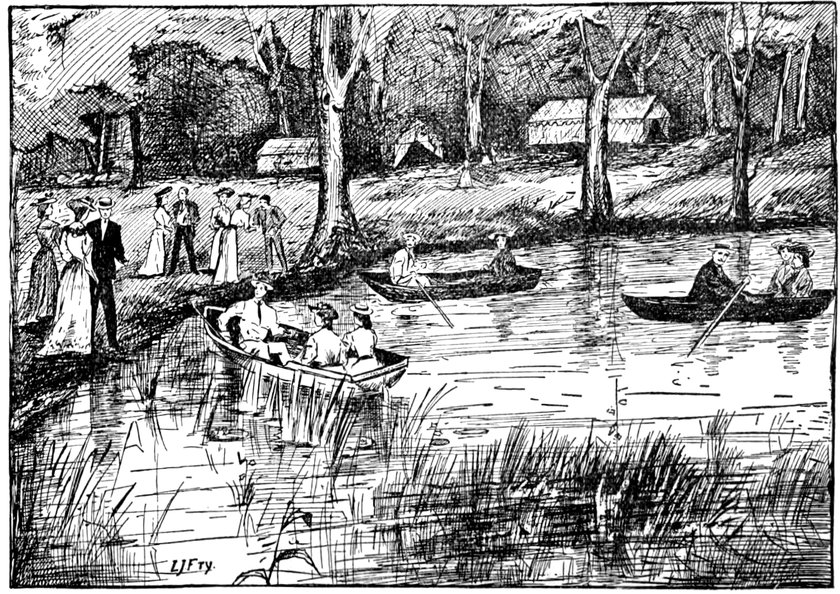
A large lake was on one side with clear, cool water,
an abundance of large trees on its edge, sufficient to make
a pleasant place for a summer resort and yet not interfere
with the farm. This lake was not very far from
the farm buildings and was not on the road but partly
on the next farm adjoining, with sufficient, however, on
25the society’s property to enable them to control or have
the use of it.
They had not intended to take up the land in the fall,
but Tom had seen the advisability of securing it while
it was in the market. The owner had died suddenly,
leaving it to his widow, and she being anxious to go to
the next town to her children who were married, it was
arranged that the rent would not begin until the following
spring. The house was not large or of much account,
but it answered the purpose, and the land had been obtained
cheaper on that account. It was the land and
fruit that had first attracted Tom’s attention after he
had proved the nature of the soil. He had secured a
lease for ninety-nine years with the privilege of buying
the whole of it at any time at a set price, of erecting any
kind of buildings that the society might deem proper,
the said buildings to belong to the society exclusively.
They enjoyed their new home, these two enterprising
people, because they liked to know that they were making
a start for many hundreds, if not thousands, of others to
live happily and contentedly in years to come.
There, however, I will leave them for the present and
go back to the beginning of the society before Tom’s
marriage.
CHAPTER III.
26
The society met at first in the Vivian parlors, that
is, in Tom’s flat, where Scoris and Helen, his sisters,
assisted in entertaining their friends as well as helping
to form the society. On the evenings of the society
the rugs were taken up and all the furniture excepting one
table and the chairs were stored in a smaller room. This
was done to save expense, for it was not a money
scheme, remember, and “infants creep before they walk.”
In the same way the society wished to know how to keep
on its feet when it got there.
The new ways of earning a living were talked over
at the meetings held in the Vivian parlors.
“Automobiles are one of the first necessities in this
society,” a Mr. Suegran declared one evening, and it
caused such a roar of laughter that it was some time before
he was allowed to explain his meaning. No one
had taken him seriously, and when they saw that he was
in earnest, they tried to hide their lack of interest by
taking up a less important subject; and he, feeling rather
crushed, let the matter drop. The next evening he called
on the Vivians. Helen was the only one in. He said
that he wished to see Mr. Vivian and would wait till he
came in if he wouldn’t be intruding. Helen assured him
that he was welcome and in a few moments the conversation
turned to the usual topic, “The Colony.”
“You know, Miss Helen,” he said, “I want to talk to
your brother about the subject I mentioned last evening,
I am sure that I am right, automobiles are the greatest
necessity the society has at the present time!”
27“What about capital?” Helen asked. “Automobiles
cost more than our society could afford at the present
time.”
“That is where I don’t agree with you,” he replied, “the
society has men who work in automobile factories. They
are willing to give a certain amount of their time evenings
and on holidays to make one to start with, and we
have a young man who has invented a new model that
he is willing to have us use.” As he said this Tom came
in and Mr. Suegran repeated the advantages he had told
Helen about, then asked Tom if the society could supply
the money to buy materials? Tom told him no, that according
to the rules that had been made to protect the
members’ wealth, the shares could only be invested in
buildings, land, or anything that would yield an income,
or in the implements of labor or in its products.
“I can tell you what to do, though,” Tom continued.
“You bring these facts before the meeting and I will see
that you have a hearing. In the meantime go to any of
the members that you think will help you out, tell them
that I sent you; then you can form a company among
you, each paying for shares representing the amount required,
but remember the price of all materials, labor,
and everything concerning the transaction must be kept
on record. If you are successful, then the society will
buy it from you and in all probability will start the men
in business who gave their time. I have no right to risk
any wealth intrusted in my keeping by the members, but
they may risk any money they have to spare over and
above what the society exacts, and you may promise them
10 per cent for the risk and we will pay you that
amount on your time as well as your labor, and you
know we pay union wages.”
At the next meeting the subject of transportation was
28taken up and the members were shown the advantages
to themselves in owning a system of traveling that would
not necessitate the laying of tracks or limit them to any
one street. Mr. Suegran then proposed his automobile
scheme and asked the members to buy shares. In a few
weeks the amount was vouched for. Mr. Suegran was
required to give security as well as to keep an account of
every item of expense. This was done not only to test
the honesty of the men who were manufacturing the machine,
but to protect the management against any unjust
suspicion. There was another reason also and it
was an important one. It was taxation. The society
expected to pay all just taxes, but had no intention of
paying for inflated stock. The officer in charge of that
meeting explained to the members that the society was
formed to protect its members’ wealth in every possible
way and that in doing so it was necessary to guard the
small items. “We all realize the importance of homes,
and the most of you know that to secure them is not
the whole difficulty overcome. We must have a way of
getting to them. Automobiles solve that difficulty, especially
when we own them. Then they can be used as soon
as they are ready right here in the city to take the members
to and from their employment. The society might
as well have the benefit of fares and by providing our own
conveyances the members may use the society’s scrip
to pay them. For, remember, the more scrip the society
can issue the sooner it can secure employment for its
members. The automobiles once established as means of
transportation will bring about the settlement on the land
of those who would otherwise stay in the city for several
years to come. As we cannot lease any land to build
upon until we have enough members to represent the
amount of rent that we will have to pay each year, we
29may as well devote ourselves to securing our transportation
first.”
The members who risked their money to perfect the
first automobile were given a good percentage, and they
either loaned it again for the same purpose or withdrew
it for some other enterprise. These undertakings paid a
large profit, but were not secured by the society and only
those who could afford to risk losing in case of failure
were allowed to invest. No money was lost, however,
and the members who were natural speculators found in
it an opening to increase their money faster than in
shares, “for,” they argued, “we can buy extra shares with
the interest so obtained.” At all times the value of numbers
had to be kept in view, because every member added
to the society increased its market. The society by its
numbers secured a market for anything its members had
to sell. The first automobile, being a success, was bought
by the society, as were others made later, and when the
land was secured a factory was built upon it to manufacture
them as well as implements of labor.
In this way the society gained control of the industry
and kept the wealth so produced in trust for its members.
After the factory was built on the land controlled
by the society, the society took charge of it and paid the
workmen the same price as the union paid for the same
work. The advantage gained by living in the Colony decreased
their expenses to such a degree that it was equal
to double the amount of money in the city. Of course
all had to agree to accept scrip or shares in payment for
labor, but scrip bought everything, even money, so was
just as good and safer.
The president was appointed for five years with this
proviso: That he proved himself capable of directing
the affairs of the Colony in a satisfactory manner to at
30least three-fourths of the members; that he had the
ability to manage so as to ensure the returns from the
money or labor invested that the society guaranteed to
its members; that he was working for the advantage of
the largest number instead of a privileged few; that he
was keeping all revenue on record as well as expenditure,
so that the members could at any time have the
accounts audited; that his security was increased as the
wealth of the Colony advanced, so that he could not endanger
the members’ shares as so many people have
done; that when the temptation became too strong (from
the members’ indifference or overconfidence) he could
not if he would “feather his own nest” by neglecting the
members’ interests.
Tom Vivian made these rules, not to protect the members
against himself, but all members in all societies that
were formed later. He saw the temptations that inexperienced
members left in his hands, and he knew that
riches harden the majority of people’s minds, so he intended
to protect them in every possible way that he
could think of.
A president had to be an honorable member of
society, and not addicted to any habits that would bring
disgrace upon said society. He had to be honest and
truthful in his dealings. He had to live in the Colony
that he was overseeing and give his undivided attention
to its interests (except in its beginning when he had to
provide for his living as well), attending to the society’s
business transactions, etc. The president had to be free
from all burdens that would interfere with his giving
his whole attention to the society except as stated in the
first year or two, or as long as it took him to place it on
a paying basis.
The president being organizer as well as manager of the
31society was allowed a percentage of shares instead of a
salary. The members realizing that he had devoted several
years of his time and energy to the cause, presented
them to him when the first farm was secured. He, realizing
that he had to be self-sustaining at first when he
took up his duties on the farm, purchased enough cows
to supply the members with milk and butter. He also
bought poultry (particularly hens), as milk and eggs were
always in demand, they helped to secure him an income.
He was also given the benefit of all the garden truck he
produced the first two years, the members being allowed
10 per cent on anything they bought from the society.
He also received a percentage on each member that was
enrolled on the day the society was organized.
This percentage was one dollar per member, but was
not paid in coin but was allowed him on the purchase
of permanent shares. In paying for labor on his personal
account he could sell these shares, excepting the
amount the society compelled him as well as all other
members to keep in the society.
He could issue scrip with the consent of the members
to the amount of his personal wealth or security.
The third year the society was able to buy out both
the hennery and dairy, for they were in a position then
to give him a percentage of all its business transactions.
Several farms had to be secured at this time for pasture
lands, and a separate place for the hennery. The president
secured a large number of shares by the transaction,
but he could not exact money. His shares secured him
a suite of rooms in an apartment house, then the percentage
he received on all the business he managed for
the society secured him a better income.
CHAPTER IV.
32
There is a direct law of attraction that very few people
recognize. In the beginning of the society, if Tom
Vivian had been told that he would marry soon, he
would have scorned the idea. “I am devoted to the cause
of the people,” he would have told you, “and I have no
time to devote to love affairs,” and yet he was the first to
succumb. Nellie Gaylord was a friend of Scoris Vivian,
and when the society was started she took an active interest
in it. It was soon seen that Tom Vivian referred
oftener to Nellie’s opinion than he did to others in cases
of importance, until he believed that she was necessary
to the success of the society. That he was in love no
one doubted, and it was a satisfaction to many members
when they were able to say: “Didn’t I tell you so? Oh,
you can’t fool me.”
Nellie’s life had been a sad one in some respects before
she became identified with the society, then everything
changed for the better. She had some one to love, honor,
yes, almost worship, in Tom Vivian. I am going back
in her life, though, to the time when she was earning her
living before she was married. She had been a stenographer
and when her eyesight troubled her she found
that she would have to take employment in something
that would require less application. At this time she
was in a factory where she was head forewoman over a
large number of girls, all running power sewing machines,
making ladies’ underwear. Her duty was to inspect
the work and see that no one wasted time. She
sometimes regretted that she had to work among a class
33who never seemed to think of anything beyond pay-day or
“their fellows,” as they expressed it. The idea of bettering
their condition never seemed to enter their mind unless
it was perhaps some day to marry a rich man like
some other girl they had heard of. To marry one day
was fully expected, but pay-day generally outweighed all
other considerations. Today, however, she was thinking
of herself as this was her twentieth birthday and it
brought up the sad memories of a time when her mother
used to remember it by some little gift, or her father
would arrange to take her to some amusement in honor
of the occasion. Now both had gone from her and she
was among a lot of girls to whom she thought she
couldn’t possibly talk of the things that interested her
most. She looked up presently and saw two girls holding
out a silk waist for the admiration of their friends.
“I am thirty-six bust measure and will try it on if you
like,” she said, as they were looking at her after asking
who was that measurement.
“Oh, what a pretty waist; whose is it?” she asked.
Their mother’s birthday present, they told her, which
would be next day and the mother would never suspect
they had walked to and from work every day for two
months to save car fare, and had done without fruit or
cake for their lunch, just to be able to make it their own
present. “For you see we give her all we earn and it
is all we three have to live upon, and she makes it spin out
someway by earning a little, sewing when she can get it
to do, but she does our sewing and washing and takes
care of the home, so this is something she will prize, and
we are so glad we could get it in time,” they explained.
“Well, girls, you are lucky to have a mother, and your
mother is to be congratulated for having two such self-denying
daughters. I lost my mother just two years ago
34and this is my birthday.” One of the girls took her hand
and held it lovingly, while both remarked how nice she
looked in the waist and hoped their mother would look
as well.
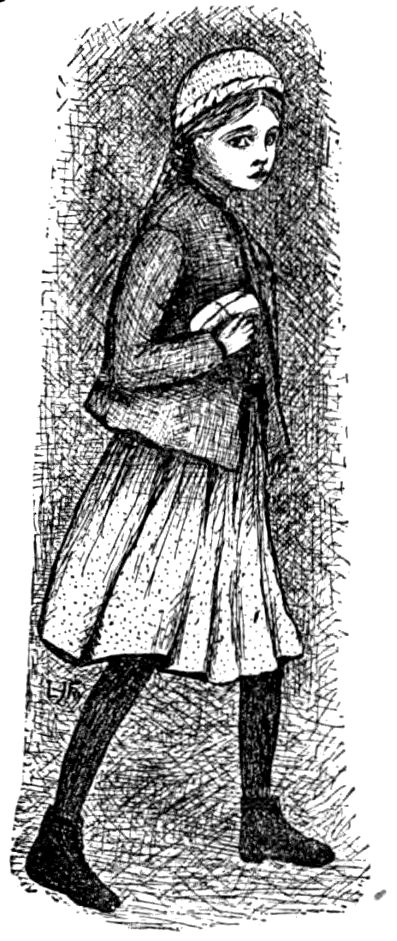
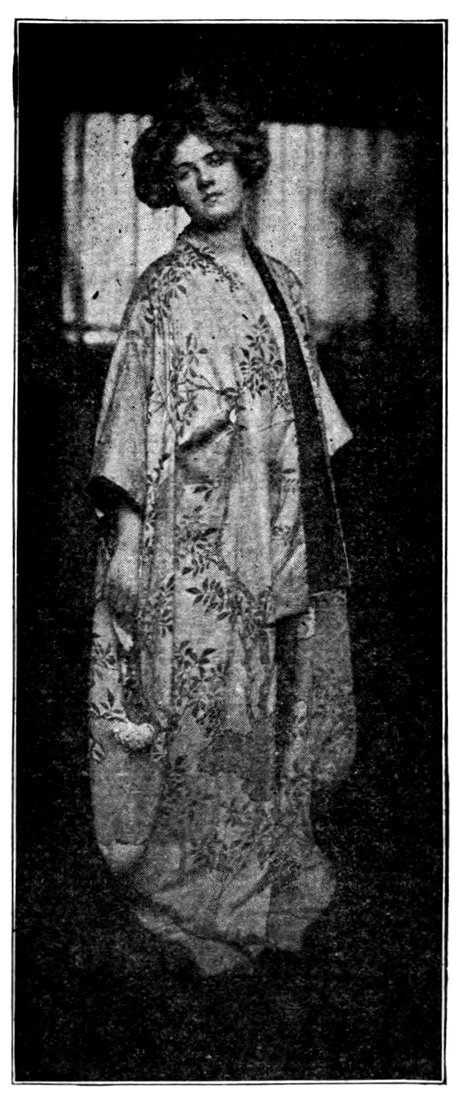
Mary Smith, the only support of the family.
This little incident, born of sympathy, the touch
of the hand, the kindness to the mother, spoke volumes to
Nellie, and she and the sisters
became friends. She had felt
alone when she first came into
the factory. When one spends
long, weary hours with people
who have different ideas, life is
more lonely than if one were in a
solitary place.
She had been considered reserved,
or “proud,” as some had
called her, but her quiet, firm
manner had been her main recommendation
to the head of the
firm. She acquired a great liking
for many of the girls, however,
as their little difficulties came
under her notice. Their hardships
with poverty, although
never called by that name, were
borne so bravely. The insults
they endured from girls employed
in offices or stores on their way home at night, the
sneers and the drawing of their clothes aside for the fear
of coming in contact was enough to make them feel inferior,
even though they were not. To Nellie this was
abominable, for labor is labor, in the banking house,
store or factory, in the home, or anywhere, and should be
respected.
35One day a little cash girl had been hurt by a street car.
The newspapers told how this little child of eleven years
was the only member of a family of four who was earning
anything, and all she got was two dollars a week;
how she lived two miles from her work and had to walk
each way, then run from eight in the morning until six
at night.
When one evening while returning home the accident
occurred. It was pitiful to hear her cry after her ankle
had been attended to, for the pain was not the worst part
of her trouble. Oh! if she should lose her employment,
what would they do at home? she cried. Baby Bob
couldn’t have his milk. Why, they couldn’t have any
food at all. Her anxiety about the money touched the
girls’ sympathy who were taking her home. They had
carried her to the car and were trying to comfort her.
The girls found an old frame building that had been
abandoned as unsafe, propped up to keep it from falling.
There were no lights and voices were heard asking what
had happened. They got her to bed, still in the dark, and
no one offered to help. Through sobs that shook the
whole building, the mother explained that she couldn’t
move because of rheumatism. The father was also too
weak to do anything and the baby cried because Mary
and his mother were crying. The girls went home for
their mother and a light and when they returned saw the
most pitiful sight they had ever seen. Four helpless people,
and not enough food in the house to satisfy the hunger
of one.
The Healey girls did not forget little Mary Smith, the
cash girl, but said nothing at the time in the factory.
Every few days they went to see that she was not in need
and did all they could for the family. Mrs. Healey soon
drew the story of their wretched life from them, and their
36gratitude to her and her daughters was the opening of a
friendship that only those who have gone through such
misery can realize its strength.
John Smith, the father, had been a builder and carpenter,
and though he was a first-class workman and his
labor had helped to build some of the best homes in the
city, yet he had only a condemned shell to die in, for
dying he was, from the effects of poverty, sickness and
inability to get work. This last stroke of misfortune,
Mary becoming helpless, at least for a time, was too much
for his shattered nerves and two days afterwards he
died. The shock had been so great that both mother and
child were stunned as well as helpless. They had one
comfort, he at least had not been separated from them,
which had been his greatest fear. Many times he had
laid on his bed, unable to escape the cold winds that blew
through cracks in the wall or the rain that fell through
the roof. There was no comfort for him unless it was
being with his loved ones and they knew if the authorities
discovered his condition, he would be taken away
and possibly they would never see each other again.
Before coming to this place, the Smiths had been unable
to pay their rent, the husband had been ill for more
than a year; so one day feeling better than usual, had
gone for a walk. When he returned, he found all their
possessions on the sidewalk, the door shut against them
and nowhere to go. His wife was away washing. He
saw the things they treasured scattered around at the
mercy of any one and was too weak to gather them up.
All he could do was to watch them until some kindly
neighbors came and moved them to this old ramshackle
place.
When Mary came home at night, weary, footsore
and worn out, there was no warm supper to cheer her, not
37even a shelter, and it was some time before she found her
parents and Bob. Poor little soul, she had been forgotten
in the efforts of getting the household goods under
cover before night. All events till now were dated back
to this last degradation. The mother had become unable
to work since then, and now even Mary was helpless.
What would they do? It was a trial an older person
might find hard to bear, but a child of eleven years
looked upon it in desperation.
“Surely there must be something wrong with our whole
social structure,” Nellie had thought when the girls told
her the next day. “What can we do to help in such
cases? Simply nothing. We have all we can do to earn
enough to exist ourselves.”
Fortunately the city sent help, and as the girls talked
it over in the large work room, it was rather interesting
to hear the old wornout ideas get their quietus as a quiet,
pale-faced girl sitting in a corner by herself remarked,
“But this was not a case of drinking or laziness, but misfortune
caused from ignorant management in the affairs
of our city and we may say, in our country itself. Employment
should be provided for all, then such things
wouldn’t occur.”
“Well,” one of the girls said, “we never receive charity
and I don’t believe any one needs to become so poor as
to need help from the city.”
“I don’t see why they shouldn’t,” the pale-faced girl
continued, “when they are the ones who contribute all
their labor to provide, not only for themselves, but their
employer besides, and make it possible for the city to
have a fund for that purpose.”
This caused a general roar of laughter from most of
the girls. The bell rang. Work began and was continued
for the rest of the day, but the next day some one
38of the girls asked her what she meant, and Nellie, seeing
them a little excited, joined them also. Then she said
that Annie, which was the girl’s name, was right.
“We are all employed by Mr. Forbes. He pays us so
much for our labor or time. Well, he has to have a large
profit, or it wouldn’t pay him to hire us. Out of our labors,
he has to pay rent, support his family and see that
he gets sufficient interest on his capital. All this comes
out of our labor. He merely manages the buying and
selling and it does not end here; his landlord has to have
the rent to pay taxes and receive his living. That is
what Annie meant. Who do you think is most dependent,
Mr. Forbes, or us?”
“Why, we are,” they all exclaimed.
“No, you are wrong. We could take our sewing machines
at home and earn just as much as we do here, if
the market was assured us. He could not earn single-handed
what we earn for him, we three hundred girls,
don’t you see? Now in this case you have been so interested
in, that man has built a large number of homes right
here in this city and yet he was unable to even have the
use of one to die in, let alone to live in. Girls, I belong to
a society that some time I would like you to visit. It
would help you to solve some of the problems of life,
that no one has a right in these days to shirk, for it is our
industry and every other working person’s that keeps the
machinery running, not only of the factories, but of the
cities.”
“Then we sent money and provisions to keep that family
from starving,” one of the girls remarked, “even
though we did it unconsciously.”
“Yes, all who work do their share towards paying the
taxes and when the society called ‘The Wealth Producing
and Distributing Society’ is stronger and been in
39operation twenty or fifty years, we will cease to have human
beings living at the mercy of so-called charitable institutions,
poorhouses, or, worse still, starving to death,
as they are at the present time. There is another thing,
girls, that I want to tell you; whenever you are called
‘factory girls,’ as you are so often by shop girls, just keep
a dignified silence. Your labor is just as necessary as
theirs and if you only considered it a little, you are of as
much importance also. Every intelligent person should
honor his own industry and remember that he is fulfilling
his mission in life, and if all did so, heartaches would
cease. Any bright person would do the best he could
under existing circumstances and would even raise conditions
which he considered beneath his dignity to his
own level, as you may learn if you join our society. Respect
yourselves and address each other as you do Mr.
Forbes. Learn to appreciate yourselves, your advantages,
and then create new opportunities as your ability
points out the way. All useful employment is honorable,
and now is the time to raise labor to its proper dignity
among all honorable people.”
Many of those girls not only attended the meetings,
but joined the society. Even Mr. Forbes, who owned
the business, saw that he could do better by becoming one
of them, so he became a member and eventually moved
out to the Colony.
CHAPTER V.
40
Nellie stood looking out of the window one morning
early in the spring, and as she hummed a merry tune
and was so bright and happy, she seemed to reflect the
brightness in everything about her. The sunshine smiled
and the very trees breathed contentment. This was her
first spring in the country and the arrangements for the
coming colony were bringing some funny experiences.
A large number were there already and each day more
were applying or inquiring about the resources before
41venturing, questions would come up and have to be answered
until Nellie said she could fairly sing the answers,
for they had told so many the same thing. She
laughed aloud finally and Tom, who was reading, looked
up and said, “What is it?” “Oh, I was thinking of the
men who were here yesterday, and do you know, Tom,
most of them had the same helpless expression as the calf
you liberated last fall. Do you remember how helpless
and perplexed it looked? You unwound the cord for
the calf, and now you have some cords to unwind in
dealing with these people, for they need their freedom
as much as the calf, but don’t see how to go about it.
“Ideas and actual demonstrations are necessary to
teach most of them. It seems so simple to us who have
studied the situation from every standpoint, and when one
of them asked you how you are going to collect the rest
of the materials for building without money, he looked
so wise in his own conceit and convinced that he had you
in a corner, I noticed he winked at the rest. I had to
leave the room, for I knew I would laugh aloud if you
ever tried to show him up in his ignorance. He certainly
did deserve it. Every one of them were from ten to
twenty years older than you are. All had a trade or
some means of earning a living, yet had to appeal to
you to explain every working plan separately.”
Tom replied: “I told them that as members they would
not only receive their wages at the time, but have an interest
in the permanent buildings and improvements. That
instead of a capitalist owning the property the different
labors each produced, the society got it and kept it in
trust for those who earned it.
“It was hard to make them comprehend that it was
a Wealth Producing and a Wealth Distributing Society,
giving to all industrious people an opportunity
42to secure for themselves the full value of their industry,
and explained that all buildings represent permanent
wealth and so did fruit trees. The trees remaining
but the fruit was consumed; that when we
give up the tree, we have no right to the fruit.
“I further explained that as members of our society
they had an interest in all the wealth created,
whether it was fruit trees or buildings; that fruit
would pay for any necessary article or food needed.
I tried to make them see that it was just as good as
money to them and represented a part of their wealth.
I succeeded at last in making them see that when they
worked for the society, they received their wages
the same as when they worked for an outsider, with
this difference, they still retained an interest, for the
buildings represented the value of their shares in the
society, and that the materials they spoke of were
produced in the same way. I told them we were already
making bricks and producing lime and also had
a sand suitable for mortar, which were brought within
the control of the society by the industry and perseverance
of individual members, who over and above
actual necessities were leaving all they produced with
the society, for knowing it was safe and that their
labor was as valuable to the society as money it could
be entered in the books to their credit; that we kept
an account of their labor as the banks do of money.
Before another year, I told them, we expected to control
a lumber district and saw mill, for all classes were
awakening to the necessity of protecting themselves
and their own labor, which is wealth, and they never
could do so under any other system, and all other exchanges
were meeting us half way at least.
“The wealth each member creates belongs to him
43or her individually and by the society’s holding its
value would be increased to a greater extent than
if held separately. As the society increased in numbers
and resources the necessity of money would decrease.
When I made this explanation one of the
men wanted to know if they did our building what
they were going to do for cash with which to support
their families. I told them they could come out here
and live, if they had to pay rent in the city, for we
allowed them to build tent houses to live in during
the summer, or until the permanent brick ones were
built, or until they owned shares enough in the society
to entitle them to live in the apartment we were building.
I tried to make them see that the economy they
could practice would be more to them than big pay
in the city. A little inconvenience at first and patience
would place them on their feet in a short time and
their homes would be secured with almost no expense.
Being able to buy food where it is grown, cuts down
expenses to a very small amount comparatively.
When I told them this, one of them acknowledged
that he could see that they would have less expense,
but that they would still have need of money. ‘You
bind us to take all we earn in scrip or shares for our
labor?’ one of them asked of me. ‘Certainly,’ I said,
‘that is the protection of the society.’ But I told them
they could buy money with their scrip. ‘Oh,’ they
cried, ‘it is money that we want.’ ‘All right,’ I said,
‘if we are in need of you, we will send for you, but I
don’t wish to raise your hopes, for we have so many
among our members who want something more substantial
than money. You can’t eat money,’ I continued,
‘but you need a home and clothing.’ I tried
to make them see that our members, according to our
44rules, come first, and that the society wanted men
and women to create wealth and those who knew
enough to keep it for themselves instead of giving it
to the capitalists. The society was formed for
the concentration of the wealth produced by the industrious
and for the purpose of bringing it to one
center; then all can have the comforts of the public
buildings, etc., at less expense than their earnings
would eventually secure them a pension in their old
age. I pointed out to them the tent houses and told
them that some of these people own enough shares
even now to live in the first apartment houses that
are built, but they intend living as they are during
the summer so that they can save for their temporary
shares. This was a surprise to them all, and one of
them said, ‘Well, I would have enough to keep me
for life, if I had not been unfortunate.’ Then he told
us how one day he had lost every dollar. ‘I was
taking the money to the bank,’ he said, ‘and stopped
in several places on my way and when I reached the
bank, it was gone. It represented the savings of all
my life. I had just gotten it in one lump, and intended
investing it again in another mortgage. When
I found it was gone, I was nearly crazy, I admit.
Now you see I need money, not scrip.’ Then I
asked if he was sure he needed the money most, and
told him about the member who had lost his all last
fall. You remember, Nellie, the one who had saved
right from the beginning to the society, the one who
preferred scrip to shares, and only left with us sufficient
to secure the right to vote. He liked the
scrip best because it could be drawn out like money
and he could always get money for it. Well, when he
was done working for us he obtained other employment
45at good pay and saved it. He had so few expenses
while with us he had saved the most of his
scrip to buy food direct from the society and also
clothing from our members who could use it in return
for their food stuffs. In this way, he had more
than half used up the scrip. You remember, Nellie,
when the treasury bank failed all the money he had
saved was in it and he had lost it. He took all the
scrip that was left and went flying around to different
members to get it cashed so he could pay his
rent and have car fare until his salary was due. Well,
he was a nervous sort of a fellow, and by some unlucky
chance he lost it, then came to our secretary like
a madman to prevent any one else from using it.
Immediately all members were notified that the scrip
of certain numbers was lost and were forbidden to use
it until it was returned to the owner. It was
found, but the money he had in the bank that he
prized so much more, he will never receive. Had he
used it to buy shares in the society, he could never
have lost it. I explained to them that we had no
debts or mortgages, and if any one tried to use scrip
that did not belong to them, they could be very
easily detected, and now the man who lost his money
goes to the other extreme and changes all his money
into scrip or shares to make sure that it is safe. And
it is safe, for we are represented by thousands already
who are accumulating wealth and bringing it
to this center city we are building and it is to be invested
in factories, warehouses, dwellings, etc., where
the earnings of the members can be saved for their
own use.”
CHAPTER VI.
46
“The society receives the profit over and above the
expenses incurred for buildings, improvements, street
pavements, etc., or any necessary expenses that are
required for the convenience of the colony. Out of all
the profits so obtained, there is still a balance that
is used to increase the standing wealth of the society.
Then I told them to look around and see the buildings
in the cities and to realize if they could how few
are owned by those who built them. The society not
only secures to every member a profit on his earnings,
but the net earnings of the society as a whole. When a
man plants fruit trees and is paid for his labor his
individual claim is satisfied, but the society owns the
fruit each year, and the same applies to their labor
in the building. The society will exact rent from the
builder, if he should occupy the building until he
owns sufficient shares to represent his right to occupy
the house, and the man who plants the fruit trees belonging
to the society will have to pay for the fruit of
those same trees, if he eats it.
“Then I explained that the society must own everything
and govern its own interests, and when they
realized its strength, they were sure to desire its protection,
for each individual is a part of the whole.
The buildings alone are a sufficient guarantee. You
have direct returns for any amount you leave with
the society, no matter how large or small, I told them,
and those advantages are not given in any other society.
There is no bank to fail here. I said, ‘My friends,
47money is not wealth, for money scatters your wealth
in most instances and gives it to others. You need
your labor, which is really your wealth, protected,
and that is what we are doing.’ Then I asked, ‘Do
you still want money for your labor?’ The only one
who answered said, ‘I don’t know. You have a good
theory, but—’
“At this point, an old member came in to see the
treasurer and naturally the attention of all turned
to him, for he had his hands full of scrip that he
wanted to exchange for money. The men listening
to the transaction were amazed at the large amount
the roll of scrip represented. ‘Oh,’ said one of them,
‘then you do use money. I thought you only used
them homemade tickets and that they were no better
than milk tickets.’ ‘Neither are they,’ I said, ‘nor
are they any better than railroad tickets. We use our
“tickets,” as you call them, to protect our interests;
the railroads do the same. If every one paid the conductors
the companies would often be robbed (except
with five cent fares.) Those large combinations
study economy in every way and so do we. In signing
our agreements to pay for your labor in scrip or
shares we do it to protect the society, but very often
we haven’t as much scrip as we have money, so we do
pay a portion in money at such times. Then of course
we know at the present time, you need it for some
things that we cannot supply, so we usually pay
you a percentage in coin. We cannot even issue
scrip until we have its worth, either in product or
some wealth that would redeem it. This is where
your labor is valuable to us all and scrip becomes a
medium of exchange and is safer than money, for it
cannot be lost as money can, but each year our standing
48wealth will increase and of course every season
will find us in a position to issue that much more
scrip as well as shares. That is the way millionaires
were produced. It was the labor of the people. They
banked their money, the banks loaned it to the rich
and in turn they became millionaires by speculating
with it. We have no right to their wealth now,
though, for we gave it to them. Now we are producing
for ourselves and intend to keep these millions
for our own necessities.’
“If we didn’t have the land to build upon or produce
building materials, or grow our food, we couldn’t
issue scrip as we do now. It is from the ground that
our wealth comes, but labor is required to produce it.
After we had first secured the land we were ready
to bring those here who could work upon it and those
who were capable of making good roads. The Government
granted us such a small sum in comparison
to what we needed that of course the real laborers
came first. Now we need you builders.”
“Well, what have they done about it?” Nellie
asked.
“As they realize it is about the only way they can
live, now that trusts and combinations are hedging
them in on all sides and strikes are only bringing
them poverty in the long run, the most of them have
arranged to come. Some have actually signed to do
portions of the mason work, and I expect we will be
getting the buildings erected immediately.”
“Did you read those letters, Nellie?” Tom asked.
“No. What are they about?” she inquired.
“A number of old people have applied to be taken in
the society and while most of them have enough to pay
for the permanent shares entitling them to live here,
49many have not enough to pay for their consumable
shares; they are able to do a certain amount of work;
but they want the protection of the society. Others again
wish to place their savings in the society and live where
they are with their relatives until the amount required
is decided upon. Of course we cannot tell to a certainty
how much will be needed to keep one person. Their
ideas are so varied, but after they have secured their
permanent shares that entitle them to one room, then
we can place to their credit what is left and give them
employment so they can earn sufficient to make up the
balance on their consumable shares. They will have to
judge for themselves as to the amount they will require.
This they can do after living here for at least a year, for
in that time they can calculate from what it has cost
them in that time to buy food or other necessities.
“Here is a very pathetic letter:
“‘Mr. Vivian.
“‘Dear Sir:—My wife and I are alone. Our children
are dead and now that we are old, we feel the noises,
heat and other discomforts in the city more every year.
The intense cold this last winter has been terrible and
we want to get to the country where we can have the
necessary comforts within our means. We have been
investigating your society and want to join if our means
are sufficient to buy the permanent shares that will give
us two rooms.
“‘We have been trying to get in several places, but in
every one we would be separated. We have only five
hundred dollars between us in cash, but I am still able
to work, if you think you can find something we can do
to make up the balance that we will require for our consumable
shares, as you call them.
50“‘If you can help us to be together for the rest of our
lives we will be very thankful to you. Yours truly,
“‘John G. Smith.’
“Here is a portion his wife has written separately, as
a postscript to his letter:
“‘I am as able to work as he and if we could have a
little garden and be allowed to keep chickens and a goat,
to supply us with milk, we would not be a burden to any
one.
“‘We both lived in the country in our early life and
know how to work and would be willing to do anything
to help, we are so anxious to be together while we live.
“‘Mary Smith.’”
“Well, Tom, I really think we will have to do something
to meet these cases. I have heard that the usual
amount for people over sixty years of age is about $300
each and is kept up by charitable societies. Of course
this not being a charitable affair, it must be not only self-sustaining,
but self-respecting as well.”
“Well,” replied Tom, “we could place a certain sum of
money as the lowest amount that we could accept, and in
that way we could reach a large number. The ready
money just now would be sufficient to secure them a home
together and would be a benefit to the society. As
they are able to work we will not be running a risk. We
will bring it before the board at our next meeting and
hear what they think about it.”
CHAPTER VII.
51
After Scoris and Helen Vivian had returned to the
city they were amazed one morning by a letter from their
mother, telling them that Mira and Jack Moberly had
married and left Lake View, having gone to his uncle
somewhere in the far West. Not long afterwards another
letter came from Geron, saying that their mother was
terribly grieved about Mira and asking them if they remembered
to what city Jack had said that he was going,
for they had tried in every way to find out something
about them.
Neither of them could remember, so they wrote to
their mother in sympathy, telling her that they
would do all they could to find out about her. Their
lives were busy ones, so the time passed quickly. Scoris
was an artist, employed by an illustrating firm, and Helen
had a position in a large department store. They still
lived in the flat they had shared with Tom before his
marriage, and were giving all the time they could spare
from their employment to the society in the city. The
winter had passed, Mira had written to her mother, asking
forgiveness, and the depression on her account had
ceased, for she had declared that she was happy.
“Well,” Helen remarked one evening, as she and her
sister were dressing, “who would have imagined one
year ago that we would be benefiting from the society’s
industry as soon as this? Do you know, Scoris Vivian,
that I used to be actually envious of any one who could
ride around leisurely in automobiles?”
“Well, I think if we are to be ready in time for our
52ride you had better finish lacing that shoe,” Scoris replied.
“Do you know that it is only half done?” Helen
looked down in surprise, smiled and gave her hair another
twist, puffed it out here and there, secured it with hairpins,
then sat down leisurely and finished tying her shoe.
Scoris watched her as she started to draw on her gloves.
“Oh, wait till you fasten my waist,” Helen said, backing
up to her. “I never can do it alone.”
While Scoris fastened it, Helen said to her: “How
quickly you dress. I don’t see how you do it.”
“As I am older than you,” Scoris said, “I suppose I
have learned a few things by experience, and one thing I
am persistent in, and that is to have my waists fastened in
front so I can be independent of every one else. But
there they come. Four have passed and are lining up
farther down the street. Yes, there is Paul and his sister
in a two-seated one. Don’t take time to look, Helen,
just hurry.”
“Oh! Scoris, please get my veil and gloves while I pin
my hat on.”
“There they are; tie your veil and come. I will let
them see that we know that they are here,” Scoris said,
as she goes to the door.
“Now come along, you will do, Helen dear; we must
not keep them waiting.”
The girls appeared amid smiles of anticipation, while
Paul Arling assisted them into the automobile.
As they followed the crowd of automobilists winding
in and out of the streets, then out to the country on their
way to the Colony, I will tell you something about Paul
Arling, for he is one of the members and an interesting
one. He first became acquainted with Scoris in the illustrating
firm where they were both employed, and when
the society was first formed in the Vivian parlors she
53asked him to attend the meetings. He did so and soon
became an interested and enthusiastic worker. He had
supported his widowed mother and young sisters for
several years. Now all were doing for themselves but
his mother, and the interesting thing about him was his
devotion to her. It brought out his sterling worth because
he made duty a pleasure to himself as well as to
her. This evening Scoris took her seat beside him while
Helen sat in the one
behind with his sister.
It was her first
automobile trip in
company with a party
going to the Colony
and she was elated.
Presently she remarked:
“How quickly ideas
are taken up.”
“Yes,” he answered
understanding her,
“why wouldn’t they
be when our profits
and pleasures are combined? These conveyances being
owned by the society, it gets the profit, enriching the
members by increasing the value of their shares. The
trusts have been great educators, the more they have
crowded us the quicker we have learned to protect ourselves.”
“Yes,” Scoris replied, “and it has brought out many a
hidden talent just by giving it an opportunity to unfold.
Ideas are like seeds planted in the ground—they must
have a chance to bloom or they are no better than a
weed. No one will know the difference.”
54Helen called from the back: “What are you two moralizing
about? I do believe you two have forgotten how
to enjoy yourselves.”
“Oh, no!” Scoris answered. “I am just learning how
to appreciate a new way.” Mr. Arling smiled at Helen
and the conversation became general.
“Scoris said they had missed the drives around the
country so much since they had been in the city,” Miss
Arling remarked in a resigned way. “We have never
known the pleasure before. The street cars have been
our carriages principally. Don’t you think, Paul, that
you are going too fast?”
“Why, no; all the rest are ahead of us; does it frighten
you? We will go slower if you are uneasy.”
“Just a little,” she gasped. “I suppose I will get used
to the speed in time. Oh, look at those trees! How
beautiful they are,” she exclaimed, as the machine entered
a thickly wooded road.
“The country is always beautiful in June,” Scoris said,
“for its young leaves are so fresh and bright, and automobiling
is so exhilarating; this is the loveliest ride I
have had in years.”
Mr. Arling looked gratified, and while the veils
streamed out behind and the girls hung on to their hats,
they flew on until they reached the rest of the party and
in a short time the Colony also.
It was a lovely evening during the latter part of June.
Tom and Nellie had moved into a tent for the summer,
as the farm house had been needed for an office.
Their city acquaintances were very curious to see
everything and were surprised at the comforts to be had
under the circumstances.
The apartment houses were only partly built and some
of the factories were actually running, so it was a small
town of tents and makeshifts until their permanent homes
were ready.
55
56All were glad to see their friends. They were to form
a boating party, and before starting to the lake, Paul
Arling said to Tom Vivian: “I want to secure four more
shares for my mother. You see, we came out here on
business as well as pleasure. I want permanent shares
and I came direct to you, for I want them to secure the
five-year interest, for in that time I hope to have secured
her pension as well as her apartments, so that she may
feel safe for life. It is better than an insurance policy,
for nothing can be lost here, and in case of my death she
is not competent to invest money left in that way. Besides,
if I survive her, which I will in all probability, I
will have the benefit of the permanent shares. There is
a young millionaire in our crowd to-night, did you know,
Vivian? He seems to be interested in some of the ventures
that have been taken in starting the factories. I
don’t suppose he will invest in them. He never earned
a dollar in his life, knows nothing about the distress of
the struggling classes, just has some friends who are
members; that is how he happened to come. He wanted
to know why we started before we had more capital. I
told him five hundred members now constituted a market,
for all farm produce to commence with, made the transaction
a good and sufficient reason for securing a farm. A
second reason, that being near the city the president secured
work for the unemployed. The society having secured
transportation by manufacturing enough automobiles
during the first summer that the society was forming
to take the toilers to the land independent of the
railroads, was the means of starting enough laborers to
grow the food and dig the foundations of the buildings.
57Many people said at the time, ‘But how can you find
enough land near the city to make it pay?’ he asked.
“‘Our owning automobiles solved that difficulty,’ I told
him, ‘as long as we had land to build upon and raise
garden truck the first few years. We only secured as
much land as we could pay rent for by the membership
fee.’ There he is now, he evidently knows Birch, for they
have recognized each other.”
Yes, he knew him, for at one time he and Birch were
rivals. As they looked at each other, he exclaimed:
“Why, what are you doing here?”
“I am living here,” replied Birch.
“What!” he said, in surprise, “living in this slow place
where there is nothing to be seen, and you a graduate of
the first college in the country? Well, if I had passed
with the honors that you did, I would have been in some
city practicing law. We all thought you intended to.”
“No, sir,” Birch replied, “no profession for me in these
days. I want freedom. Hundreds of our fellows are scattered
among our cities with their shingles out to practice
on the helpless sick, so I am doing what I can for
others who are not even as fortunate, by giving them
something to do in my restaurant. I have two learning
to cook. You see they want a good living and
know they will be as much respected as cooks as
poverty-stricken doctors and lawyers who fill up the
offices in the down-town buildings. This society,
you know, honors all labor, and the higher the education
the better the prospects will be, for those who
are on the spot to take what comes.”
“But I don’t see how you can ever become rich.”
Young Birch answers, “To become rich in these
days is to usually become a gigantic swindler or
pirate. I don’t care to be either. I want to be a
58self-respecting man and expect to be honored as a
man of the best class, not necessarily rich. I do intend
to be a man of means and prosperous. This society
protects the people of small means and those
who have talent. But here is my wife, you know her.”
Yes, he knew her for she had been the one in all
the world to him, only two years before, but young
Birch had been preferred to him; he had never known
why. Most girls are foolish, he had thought, and now
he knew it.
The whole party filled the boats and were enjoying
the fun, singing and telling funny stories; in one
boat, some were making love and the others having a
good time watching them. Then one boat would get
away from the others and some would start singing,
another would answer, and all the boats would take
it up until it was time to start for the shore. When
they returned to the tents the city friends were deeply
interested in the supper when they learned it had
been cooked by college men.
“You see we have our meals here,” Tom explained,
“and the one dining room answers for all. Mr. and
Mrs. Birch have charge of this building and they attend
to all the tables and cooking.”
Mrs. Birch remarked, “Yes, we even did the work
until there were enough to cook for to enable us to
pay for having it done, and I am proud of my accomplishments
in that line, I can assure you.”
“You may be sure we all appreciate your talent not
only in that line, but in many others besides,” said
Tom gallantly.
Mr. Birch had ordered the supper to be ready and
all sat down to do justice to the luscious strawberries
and good rich cream, hot biscuits and other delicacies
59of the farm. Then all the city guests said “good
night” and went back, spinning along in their automobiles
and enjoying the cool air while they talked
over the possibilities of the Colony and their interest
in it.
CHAPTER VIII.
60
There is nothing that gives a better opportunity
for friendship than for people to be thrown together
in some interesting work or undertaking.
A great deal has been written about love affairs
that were started on board ship but the society had
broken the record, for it, unlike the short passage on
the ocean, had been continuous. The men and women
have had an opportunity to learn more about each
other. It raised the standard in each sex. Each became
independent of the other financially, therefore
real love matches were the result. Men’s responsibility
were being shared by their wives, and they were
not so afraid to venture on the matrimonial journey.
One thing, they are not so likely to step into it without
preparation. Paul Arling was becoming fond of
Scoris Vivian, but he felt that he had no right to neglect
his mother’s interests even for her. She was
young, while his mother was too old to support herself. He knew that Scoris had many admirers and
yet he thought to himself, “she certainly favors me. I
wonder if it is because she sees more of me than the
rest. I would like to know, but I have no right to ask
her until I know that mother is provided for. And
yet, the society has made it possible to so centralize
our interests that the risk is not what it would have
been without it. She wouldn’t be an added burden,
for she has more shares than I have. What a blessing
is rightly directed industry, combined with economy!
We don’t have to wait until we can fit up an establishment.
But here I am taking it for granted that
61she loves me and that she would have me. Ah! well,
longings and wishes sometimes blind our vision. It
may be purely imagination on my part, but the expression
of her eyes rest on me so differently from
any other. I have watched her closely, I am sure she
cares for me. She thrills me through and through if
she but smiles upon me; and she does not smile in
the same way at any one else. Surely it is so. I
would like to call upon her to-night, but I have no
excuse,” he still muses. But love always finds a
way, and in looking around for it, his mother appeared
dressed for the street.
“Where are you going?” he asked.
“Oh, just for a walk, not anywhere in particular.
Won’t you come along?”
“Which way?” he asked, as they stand at the door,
apparently uncertain.
“I usually go to the lake,” she answered. “The air
is so clear and fresh there and I like to watch the
water rolling and see the people. I go there often.”
“Very well,” he replied, and they start in that direction,
he turning over the thought uppermost in his
mind all the time. “You go to the lake often do you?”
“Yes, quite often. Why, do you want to go anywhere
else?” (She had noticed his abstracted air.)
“It is immaterial to me; I am so glad to have you take
a walk with me I will go anywhere.”
“Oh! that is not quite fair,” he answered, smiling.
“You always have the girls to go with you, so I don’t
like to intrude.”
“Lucky thought,”—he said to himself. “That new
building near the Vivians’ flat, with the figures on
it that were drawn by a member of our society, I
will take her to see it. You know Will Green, the
62architect,” he continued. “Well, if you don’t mind
I would like you to see a building he has been erecting.
It is around on another street. We will turn
here. Clever fellow, clever fellow,” he said absently.
His mother looked at him sideways, wondering what
he meant. He slipped his arm under her’s while
they crossed the street. Presently she said: “There is
no hurry, is there?” for he had quickened his pace like
a horse on the home stretch, not quite running, but
faster than she was accustomed to walking.
“Oh, no,” he answered as he slackened suddenly, “I
didn’t know I was going so fast.” Some middle-aged
women learn to be diplomatic, though it is not usual.
She knew that this walk was not taken on her account,
but she was not going to spoil it by letting
him see that she knew it. They stopped at the building
he had spoken of. He pointed out the stone
carving he had brought her to see, all in a mechanical
way. Then they walked along a little farther, when
he in the most surprised way, that even his mother
did not detect at first, said: “Why, here is where
the Vivians live! Let’s make a call.” At that moment
Scoris appeared at the window, and thinking
that they were coming for that purpose smiled and
came to the door. The intimacy between the two
families became closer as time passed, for there was
always something to bring them together.
Scoris would wonder sometimes if Paul really did
care for her. He would seem so interested in her,
take such pains to bring his family and hers together
and his eyes had often spoken more than words, yet
he was silent. She would like to have known. “But
after all,” she said to her self, “we are not in a position
to marry if he did care for me.”
63Two years passed and she had so many cares to occupy
her mind that she was satisfied to let things remain
as they were. She had secured a number of shares in
the society, saying to herself, “marriage is not the only
aim in life, and I will devote myself to art. I am weary
of seeing my creations used for advertisements—of working
for a firm that looks upon me as a part of its machinery.
If our society was older advertisements
wouldn’t be needed. What will you do then?” she asks
herself. “Why, why,” she hesitates, then thinks again,
“what will I do?” The answer didn’t come right away.
She returned to it many times. Once she thought, “I
will have enough saved to keep me before then. I can
live in the Colony where the necessities of life are of more
consequence to all than luxuries, and I can do without
many things I like. Why, I do now. First my drawings
and paintings are used to attract trade. The firm
gets the credit for them, and about ten times more than
I receive for them. Do I like that? It has greater expenses
I am aware, but not ten times the amount. I work
six days out of the week from 8 a. m. to 5 p. m., with
about two weeks’ holidays once a year, and then I have
to lose my time. If my eyesight fails in middle life, the
age limit will pounce upon me with the lash of necessity.
I certainly do not like the prospect. Marry the millionaire
that Libra has taken so much trouble to persuade
you to.
“Marry? No, if I ever marry, it will be for love and
companionship. He is a nice fellow, his money would
help to carry out the very things I am working for! I
like him and he is fond of me. If I had never seen Paul
I would have learned to love him. He and others who
are wealthy have proved to me that human nature is the
same whether rich or poor. Both kinds of people can be
64selfish and they average the same in generosity, both he
and Libra’s husband are generous. Lear is a rich man
and Libra is happy with him, why couldn’t I? Because,”
she answers the one-sided debate, “we wouldn’t be companionable
and because he knows nothing about the poverty
in our midst. He would expect me to out-rival
other women and display his wealth while I would know
that little children were hungry and the aged were cold
and homeless. Every time I took up the daily newspaper
and saw the accounts of suicides and all the rest of the
misery caused by money being drawn into the hands of
the few, I would have to say to myself ‘coward!’ No, I
will not marry him. I never encouraged him. He would
never have asked me but for Libra. I can hear him say
it yet, in answer to an argument brought up about the
working classes, ‘No one can reach them all, so what is
the use of our trying to do an impossible thing?’ ‘No one
person can change any condition in which all the people
are involved, but if each one does his or her share, individually,
it can be done,’ I told him, ‘and I will not desert
the cause.’”
Scoris had been alone all evening, and as she loosened
her hair and let it fall around her shoulders, she arrived
at this mental conclusion; then she heard Helen unlock
the front door and come in to their parlor.
“I thought you had gone to bed, you were so quiet,”
Helen said.
“Did you enjoy the play?” Scoris asked, as she fastened
her loose gown and slipped on her soft shoes.
“Very much,” Helen answered. “Libra and Lear would
have come in if they had known you were up.”
“I am glad they did not,” Scoris said. “You know what
Libra is after, and I have made up my mind that I will
never marry.”
65
Scoris had been alone all evening and as she loosened
her hair and let it fall around her shoulders she arrived at
this mental conclusion.
66“Never?” Helen asked in a quizzical way. “There are
other men besides the millionaire.”
“Yes, dear, I know,” Scoris answered, “but some of
them, like me, don’t wish to marry.”
“I have not seen you since morning,” Helen said after
a while. “Well, I have been promoted.”
Her duties were in a basement of the store where she
was employed and she had discovered that her eyesight
was becoming defective. She was told that it was from
the glare of the electric light and that she would have
to wear glasses after two or three years there. “You
cannot tell the colors accurately without them,” the oculist
had said.
It was bad enough to have to work in a basement, day
by day from one year’s end to another, without having to
impair her eyesight. Glasses were her horror, but she
must work, and at last she applied to the head manager
to give her something where she could work by daylight
for at least a part of the day, and was sent up to the dress
department.
“You see, Scoris,” she explained, “after my capabilities
had been inquired into as a saleswomen, then I had to be
looked over for all the world as if I was a horse for sale.
I passed on the strength of my figure, height and ladylike
appearance. The humiliating ordeal was trying, but
I won’t have to wear those glasses, thank goodness, and,
do you know, Scoris, my salary will be raised. But I
have to get a new tailor-made gown with a train, made
in the latest style, so as to make the best appearance.
“Well,” Scoris remarked, “it is very nice to be dressed
well and I am pleased you are going to be out of
that basement. I felt uneasy about your eyes. I have
seen so many people who had to give up work altogether
on account of the long hours under the electric light.
67Especially when their work is steady all day, as yours
has been. Now, my work is more trying to the eyes
than yours, and if I had to use electric light it would
blind me, even with my shorter hours.”
The next evening Helen came home in her new dress,
walking rather slowly, paying more attention to the
holding up of her skirt than to her surroundings. She
walked past her own door before she noticed it. Scoris
meeting her, she exclaimed:
“Do you know this dress has cost me so much that it
will take me over two months to pay for it, and when the
weekly amount is taken out of my salary I won’t have
as much as I did in the basement? No wonder they
pay more for this kind of work, or agree to, for in reality,
they don’t pay as much, as we have to get new gowns
every three months so as to be in style.”
“Never mind,” said Scoris, “it won’t last many years,
for the society is gradually gathering in all the industries.
Then we will only have to work about half the time that
we do now and have more holidays, and rest. I have
just been reading the society’s paper for this month. Listen
and see what you think of this.
“‘Mrs. Thorn and our president have just completed
the transferring of the property to the society. We know
all our members will be pleased to learn that we now
own the land our principal buildings are on, as well as the
buildings themselves. I also wish to draw attention to the
increase of the society’s wealth in being able to secure this
land in such a short time since we began our society. It
proves the theory of concentrated effort as well as the
combined industry of us all. Our old obligations to
Mrs. Thorn are the same as to any other member. She
now owns sufficient shares in the permanent wealth to
entitle her to a three-room apartment. These shares are
68in the names of her three children, giving her a life interest
in said shares. Besides, she receives a pension
during her life. This places her in a better position
than when she only received the rent, securing for her
a better home than she had before. Her apartments have
a hot water bath and other conveniences and are heated;
then, like all the other tenants, she has the use of the
dining room and kitchen, public parlor, etc., in fact, it
makes her independent for life and secures to her two
married daughters as well as to her son a home during
their lives, after her death, of at least one room each,
they having become members so as to entitle them to
that privilege. Our business transactions have been very
satisfactory with her and we take great pleasure in
recommending her for the title we are about to confer
on all honorable members, and this is the first publication
of her name. The society is about to confer the
title of “The Honorable” to Mrs. Thorn’s name, if
there are no just reasons why such title should not be
given. This notice will be published in regard to her and
the other members, for three months, and the list will be
found on the second page of this paper.
“‘All members who have proven themselves to be
honest and trustworthy in their lives and an honor to our
cause during the past two years are eligible. Their
past life up to two years ago we do not hold against
them, as we believe this society enables all to live honestly.
If, however, it is proved that any who have applied
for the honors we wish to confer upon them are
unworthy, or if they in any way break the law of the
country, they cannot receive these titles until they have
reformed. Again, no person in our society can retain
any title if at any time proven unworthy. These titles
cannot be transferred to any other person, nor are they
69hereditary, nor can a husband confer a title upon his
wife. A wife cannot give this title to her husband. They
are issued to our honorable members to give them prominence
over the idle and the undeserving, also to show
our respect for all labor. We believe that in this way
the generations of the future may become equal. We
know they are not at the present day. We are treating
facts as we find them and intend doing our duty by
honoring the best among us by titles. Those who do not
come up to the standard we do not condemn, but silently
ignore in all business transactions where they could get
the best of us or disgrace us. They are not allowed to
hold office nor to help make the laws or to sit in the
Council of this society. Therefore, the title gives to the
society a dignity that is required in the present time on
account of the dishonesty that prevails among all classes.
We are sure that all honest people will appreciate these
titles, for by them they will be known.’
“Quite an article, don’t you think so?”
“Why, yes, indeed, but it will be years before we can
use them; that is, you and I. We would be ridiculed in
the store or illustrating house where you are. Just think,
if it were known that you are ‘The Honorable’ Scoris
Vivian, for now you are considered only a good servant
by the firm, and nothing more.”
“Oh, yes, of course,” Scoris replied, “still it is a good
deal in our private life to be held worthy of the honor.
It will always give us a standing among the best class of
people, and to be known as an honorable person is a
protection for us in that class. Holding a title will show
where we belong socially, no matter what our employment
may be. In the present time, if we do certain kinds
of work, we lose caste, because labor is not honored as
it should be. See the position I am in—illustrating for
70a firm that gets the benefit of my talent and ability.
I have no opportunity of enjoying the triumphs; all is
the work of the firm and they can be depended upon—the
public says. ‘According to the opinions of the money
class this is as it should be. This woman is only too glad
to find employment. We who have money have a right
to dictate.’ I think differently. It is mine and I
should have the benefit of my own creations and industry,
and it is hard to bear when some rare illustration
has been used for common advertising.”
“Yes, Scoris, I know it is harder for you than my position
is for me, but I would sooner do anything else.
When I mentioned the fact to Libra she begged me not
to do so or it would disgrace her if it became known
among her set. I hate to be on my feet all day,
bowing and saying polite things to the people I serve in
that store, and then to think I only receive a bare living.
I know I have talent and it makes me almost despise
myself to be subjected to it.”
“Patience, Helen dear, the times are changing and
you are doing your share. That article you wrote last
week was a rousing good one and I have been complimented
on having such a clever sister who was capable
of expressing herself so fearlessly in the cause of right.
Keep up your writings until you are better known and sufficient
returns come in to justify you in making it your
life’s work. You are not the first or the last to be
placed in an unpleasant position.”
“And just think, Scoris, so many have asked me how
I ever got such a nice position. Oh, well, every one to
their taste.”
“Here is a letter from Nellie,” Scoris said, “and she
and Tom are coming to make us a visit.”
“I don’t suppose we will see very much of them for
71already the different members are arranging to entertain
them. Tom will change places for two weeks with
the city manager and will be very busy. I am glad they
are coming,” Helen replied.
One morning Scoris received a letter from her mother,
saying that Geron had mortgaged his portion of the estate
and that Lear Shuman had secured him a position in
the city at such a good salary that they were all going to
move in a few months. The girls had heard about his
dissatisfaction and were not surprised at the news, but
regretted it, for they knew that it was a mistake. “One
comfort we will have out of it: mother will live with
us,” Helen remarked.
“Yes,” Scoris said, “it will be nice for us, but hard
for her, after living all her life in the freedom of the
open country, away from smoke and dust. Think of
Geron investing the money he received on the mortgage
in stocks. The uncertainty of it and that Lear advised
it. That is the outcome of that visit Geron and Grace
paid them a year ago. The salary Geron is to receive
seems large to him now, but how little he knows about
the destruction of clothing and household goods with
the constant dust. I am afraid they will regret it.”
CHAPTER IX.
72
In another week Tom and Nellie arrived in the city on
a visit and were astonished at their reception. They had
intended seeing their old friends and enjoying a quiet
time, but instead were rushed from one place to another
and were constantly told that “of course you must see so-and-so,
for they are such good workers in the cause,
don’t you know, and will be encouraged if you will only
see them.”
They went everywhere and enjoyed the occasion, being
pleased that they were so well received.
“But, Tom,” Nellie said one morning, “we must see
more of Scoris. I am getting impatient to see the effect
those presents will have upon her and the surprise they
will be. Do you know, Tom, what Scoris Vivian is like?
A beautiful diamond—a continual surprise; the setting
is so simple, so unobtrusive, but the gem is always seen.
To me her life is one continual sparkling ray of love that
is never hidden. Just think of it! Here we have been feted
and given receptions by members who were so glad to
honor us for what you have done, and she had as much
to do with this movement in the beginning as you had
and a great deal more than I, yet no one seems to realize
it. We are receiving all the presents from the manufacturers,
and I am glad I found out her taste in regard to
dress. Now we can give her her choice, for she certainly
deserves the best. I never was dressed so well
before and it helps the cause that much more. I am
glad it pays them to send them to us.”
“Pays them!” laughed Tom. “Well, I should think
73it did. Do you know how many cases our members have
already taken from that firm that was the first to send
these samples?”
“No; how many?”
“I forget the exact figure, but it was more than any
of the old firms they have been dealing with, I was told,
and we are only in our infancy as a society. It has paid
them well to become members and will start others to do
so, for of course we secure them a market in a way
that helps the society and makes them no expense for
advertising and the returns are large. It will be only a
matter of time when they will manufacture under the
name of the society.”
“So you have gotten away from them all at last!” exclaimed
Scoris, as she met them at the door the next
evening. “We were afraid they were going to monopolize
you during the whole visit, you are so popular. I
have felt so gratified. And your beautiful gowns! Why,
Nellie, you are bewitching! Come, now, stand up for
inspection. That dress is lovely and fits like a glove.
From your hat to your shoes all is perfection. I am
going out to that colony, for I see you have a fairy godmother
out there. Why, my dear, you look like a girl of
sixteen.”
Tom drew the two women to him who had been so
much to him, while all laughed at the demonstration of
affection.
“A bright group worthy of a larger audience,” said
Helen, as she breaks in on their meeting.
“But the fine clothes,” said Scoris.
Nellie laughed and struck an attitude that the girls
might see all the beauty of the costume, while all were
convulsed with laughter at the faces she made.
74“Has that colony struck a gold mine?” Helen asked,
“or from whence cometh all this grandeur?”
“Yes and no,” continued Tom. “We have struck a
mine of wealth and it produces gold when that metal is
desired. So it amounts to the same thing and it is the
greatest mine on earth, too, for it is producing what
gold cannot buy, and that is the kindly interest and affection
of our members. We all stand by each other.”
“We have something here for you, Scoris, so you can
take your choice. You come first then. Helen, then we
will send the rest to other workers in the cause. We
want you to help us select and sort them.”
“Why, Nellie,” said Scoris, “these are beautiful. I
never had anything like this silk, and when can I
wear it?”
“The occasion will be marked by well dressed members
of the Colony,” Tom said, “and it is just as it
should be. Our coronation days should be so distinguished
by well dressed people that they will always be
remembered and the picture will make a decided impression
upon the minds of every one.”
“Oh,” exclaimed Scoris, “here is something I have
wanted for years. It is so light, cool and beautiful,
these dainty lawns, these woolens, silks and cloths.
Why, they will last me for years. Everything I need is
here in the way of clothing.”
Helen was given her choice, then amid the exclamations
of joy and satisfaction of being the first to appear in
all these samples sent out from the manufacturers, the
conversation soon turned to the discussion of dress-makers.
They abounded in the Colony, but the one who
made Nellie’s dresses was preferred. It was apparent
that her style was superior and the work of the best.
“Now, girls, all you have to do is to look lovely as
75becomes a thriving and wealthy community. These
presents make it possible, and remember you are producing
wealth and should be making use of the best of
everything. In this exchanging of interests and materials
we must make a good appearance. We owe it to ourselves
as leaders and it will have a great effect on the
people at large.”
“Nothing succeeds like success,” continued Tom. “The
appearance of it stimulates the ones who are afraid to
venture. A nicely dressed person always lives in our
memory.”
The girls laughed.
“Well, if you don’t believe this, try the effect of walking
down the dreary, dirty streets in any of our large
cities and see if it doesn’t have a depressing effect. Then
cross over to the ones that are bright with all that prosperity
gives to enhance the general appearance of both
the houses and the people and see if the memory of the
latter will not be stimulating in comparison, especially
when you have it in your power to improve your own
surroundings, as this society gives you. The main thing
is to fix your aim high. To build a grand house it is
necessary to dig and make lots of dirt in laying the foundation
and so it has been in achieving the end we had
in view, but when we meet together to enjoy the well-earned
recreation, we must see to it that our bodies are
properly clothed, for they will show the amount of our
ability and will prove how much we know of the power
of concentration, or the law of attraction. No one
should be ignorant of these things.”
“Well, Tom, I believe you have studied human nature
from every standpoint,” said Scoris. “I will certainly
profit by all these lovely things, for I was beginning to
be ashamed to go out anywhere. I have saved so much
76of my salary to secure shares that I have hated to spend
anything for clothes, but I believe you are right. My
whole life is before me, and I may as well enjoy it.”
A day or two later, when Tom and Nellie found themselves
in their home again, Tom said, “We have had a
pleasant time and I thoroughly enjoyed it, but I am glad
to get home again. These apartments we are using this
year are so superior to anything we ever had in the city.
Fresh air is certainly a luxury, and an atmosphere free
from dust is another.”
CHAPTER X.
77
At this time the society was in its sixth year and many
changes had taken place. Tom Vivian had proved to the
most skeptical that wealth producing and distributing
among the members was the only just way of doing business.
He and Nellie were talking it over one day when
he exclaimed quite abruptly:
“Nellie, I have just found out that our sister Mira has
signed away her legacy that she should receive now on
her twenty-first birthday. She signed it away two years
ago. I wish we could find out where she is, for mother
is grieving herself to death, it is so long since we have
had any word from her. I find Geron is sorry that he
ever mortgaged his place. He seems to be very blue,
and that may be partly the reason mother is looking so
worried. We must cheer her up when she comes.”
“I will do my best, Tom dear. I think the sight of the
children will do her good, they are so bright and happy.
78Everything is systematized here and our apartments are
so cheery and bright that I feel sure she will enjoy her
visit.”
Mrs. Vivian came the next day and Tom and Nellie
showed her all the improvements made since her last
visit. She seemed most interested in the children’s department,
but thought the idea of having them in a public
nursery might be all right as long as the parents were in
constant communication. “But I cannot see that it is
best to separate them.”
“But, mother, we are not separated. We can have
them here as we like, only the advantage to them is
greater.”
Next day Mrs. Vivian took her place in the nursery
and was there long enough to be convinced that this kind
of place was the best on earth for children. The top
floor was the infants’ department from a month old to
the age when they could walk. Every contrivance to
teach the oldest ones to use their feet and at the same
time protect their bodies was here to aid them until they
were strong enough to stand on their feet. Swinging
chairs and frames to push around in learning to walk
were placed around on the bare floors, which were white
and clean. In another apartment were little cots in a
row and an arrangement (if one became restless) was
attached to each cot so that it could be rolled out into
another room.
The nurses had eighteen hours for themselves in their
own homes and six in the nursery. These short hours
made them much more patient than mothers who have
usually from two to six children to take care of, besides
cooking and taking what time they can get to rest at
night.
79Telephones were in all the buildings and the night
watchmen in the apartments were kept at close range so
that the parents might be called at any time.
The next floor was where the older children live. These
from the time they were old enough to learn are placed
in the kindergarten three hours daily. The rest of the
time is spent in resting and amusing themselves. Another
grade, still older, are taught to be useful for a
short time each day, to form industrious habits. Then
they amused themselves the rest of the time and were
under the watchful eye of the nurses and teachers.
In the evening Mrs. Vivian was ready to tell of her
experience.
“Well, I am surprised,” she said. “I never thought
of having children all in one place and special people to
take care of them. Certainly the children are the better
for the good system it necessitates. I was impressed
with the graceful bearing of the girls and the manliness
of the boys. All speak to each other in such a polite,
kindly way. When you consider that some are born of
parents who are ignorant of the refinements of social life,
it is surprising. At the table particularly they handled
their knives, forks and spoons as if bred and born in a
social atmosphere of ease and refinement. I must say,
Tom, that I don’t understand this. I have always supposed
that children born of parents who only understood
work could not be taught these things but would show
their breeding at least for three generations.”
“Well, mother, you are right to a degree, for the
breeding of human beings has been so terribly neglected
that it requires the constant attention of our nurses to
watch and guide these unformed minds in the principles
of right living and thinking. The latter is the most important,
of course, for thought precedes action; every
80means is employed to direct their thoughts into the right
channels. We employ a number of artists to guide
the first impressions of these young minds. Every picture
on the wall teaches some lesson, and the reward of
loving deeds must be taught by those in charge. The
nurses must be in good health, patient and bright, for
the future of these children demands it. In the beginning
of this colony we carefully selected women who
were not only educated, but adapted to teaching, guiding
and nursing. We realize that the early life of children is
the most important, for the impressions gained then and
the habits formed are hard to change. We don’t allow
any harsh dealings with them, though determination is
absolutely necessary.”
The next day Mrs. Vivian reported her experience.
“Well,” she said, “the more I see of the simple arrangements
the more perfect the system seems to me. I only
saw the long tables yesterday, where all sat up as straight
as soldiers, with their napkins spread over their laps,
instead of being tucked into the necks of their waists,
but today I discovered there are grades, and the newcomers
are placed at a table behind a screen until the
nurses see how they behave. Those who have been there
a long time are not allowed to see the little strangers
until they are taught to behave properly. A roar and
a scream of laughter was heard from some new children.
As I glanced their way I saw a teaspoonful of milk
thrown with good aim in the face of one of them by a
culprit who looked as innocent as if he couldn’t do such
a thing. Only the twinkle in the eye that the
children could see gave evidence of the guilty one.
Bits from the table were scattered upon the floor and one
was holding her plate with both hands, actually licking
it. Presently, one after the other jumped down and seeing
81one left, ran around and drew her chair from in under
her. Down she came, spilling her milk all over her
clothes. All were laughing and choking with their
mouths full and began running around the building.
Still not one word was said to them. The other children,
at a signal from the lady principal, stepped down from
their chairs, waited in line until told to move, which they
did as orderly as soldiers on parade, and passed from the
room.
“The small table and the polished floor were left in
the same disorder until all the rest of the dining room
was straightened and the children out of sight. Then the
little strangers were called in and told to pick up everything
and remove the cloth. They immediately resented
the authority, so the nurse told the one she had noticed
licking her plate that when little girls didn’t obey orders
they were not allowed to have any more preserves and
that all their cake was taken and given to the good children.
It had the desired effect and she gave in, seeing
which the others did also. The worst boy was only a
daring, bold, fun-loving urchin who had never been
taught his own rights, much less those of others, so the
nurse said, ‘Come, let us hurry or we will miss all the
fun they are having outdoors.’ She showed them how,
and they laughed at the mistakes made, but they did their
best, just the same. The floor had to be swept and they
were amused at the unusual play, as they considered it,
for the nurse kept them laughing until all was done.
When they were through they found all the other children
had gone and were told they could put on their flannel
suits and wade in the pond and throw all the water they
liked on each other so long as it did not hurt them. They
still looked longingly around to see where the rest of the
children were. The nurse told them they would always
82have to play by themselves until they had learned to be
tidy. They saw the rest having a good time, while they
were like chickens in a coop, thrusting their little, chubby
hands through the wire fence, trying to get out, with
wistful glances turned to the nurse in charge. She
played horse to amuse them, still they realized that
they were not having the same privileges that the rest
were, and it had the desired effect. A lesson in obedience
had been taught; they had learned that even fun in the
wrong place and at the wrong time was a mistake. If
they bring those children under the same discipline that
the rest are I will give them more credit than any one
I ever knew.”
CHAPTER XI.
83
Both Tom and Nellie explained to their mother everything
they could.
Nellie told her that only those who are born under
certain zodiacal signs were capable of teaching children
and have the natural patience necessary. “We have it all
down to a science. We have every child’s birthday recorded
and can tell almost to a certainty their dispositions.
Some can be managed through their affections
and crave to be caressed; others will push you away and
resent such familiarity, even when quite small; some are
so fond of their pretty dresses that dressing them plainly
at such times serves as a punishment; others don’t care
what they wear. We have certain people thoroughly
taught to attend to this one branch of their education,
and we chose our lady principal from those who have
been thoroughly drilled along this line. They know which
children will be attracted to each other and don’t interfere
with their likes or dislikes. They only need guiding.
Now in their homes they don’t have the same advantages
that they have here or among a number. Children born
in a fire sign very rarely agree with those born in
a water sign and constantly fret each other, and there is
a continual spluttering and sissing such as we find where
fire comes in contact with water. Among the four elements
that the race represents is a vast variety of dispositions,
and it takes persons of great ability as well as
experience to classify them and bring out the best in each
child. We believe that human beings have as good right
to be bred as animals, but we don’t find they are, so we
84have to make the best of them as they are. We do all
we can to make each little life a pleasure to itself and to
every one else. We have no favorites; one child gets
the same attention as all the rest.
“Did you see our babies today, mother?” Nellie inquired.
“Why, I see them every day I go. Do you suppose I
could go where they are and not see them? Your boy
is growing finely and little Scoris so like her namesake.
I feel that you have named her under an inspiration.
She is so demure and quiet, yet so determined when she
imagines she is not being treated right. Today the head
nurse asked her to take a shoe to the nurse that a baby
had kicked off, but Scoris shook her head. ‘Take the
shoe, Scoris, dear,’ the nurse repeated. ‘No, me won’t,’
Scoris said. ‘Yes, be quick, that is a good girl.’ ‘No,
me will not,’ said the mite, at the same time running and
giving it as she had been told, yet resenting that she had
to do it. ‘Now, me won’t,’ she continued, stamping her
little foot. It was hard to keep from laughing, she looked
so angry. They say she won’t be ordered without a
protest, unless in one of her best moods. They know
what to do, however, and she minds as a rule and has
one of the best dispositions. I saw her at the sand pile
afterwards and her voice could be heard above the rest
and her laugh was the merriest. Then again I found
her at the pond, splashing water and enjoying life as all
children should. That pond is a splendid thing. I never
saw children enjoy anything as much as they do that
basin called ‘the pond,’ and the water being kept at the
right temperature, makes it safe. They have three sizes
I was told today.”
“Why, yes,” said Tom, “for all children like to
splash in water and we have the right dimensions according
85to their size. Each day they are allowed to
splash and wade in it. The doctors say it is healthful for
them. Then usefulness is taught as young as they can
understand it. Obedience is enforced in one way or
another, and thus it makes harmony. We get Scoris
nearly every evening and take her out during the fine
weather, but if she has been rebellious, we don’t. She
understands and has needed only one or two lessons.
“It is a comfort to have such intelligent women to take
charge of them while we are busy attending to the affairs
of the society. Not only ours but every child has everything
to make them happy and contented, and all are
bright and healthy. Such a contrast to the homes shared
with grownup people! Those who have charge of them
giving their whole attention to them and no scolding or
faultfinding! Just a continual guiding and patience while
the young minds are expanding. The merry laughter and
fun always acts as a tonic after I have been there. Everything
is done in such an intelligent manner. The way
those women study the dispositions of each child and
bring out only the best in each is wonderful.”
The next day the little ones who had been rebellious
were so much better that they were allowed to have their
table where they could see the others. One remarked:
“I wish we could have flowers.” Another asked: “Can’t
we have a linen tablecloth instead of the oil cloth?” The
nurse said, “Yes, when you stop spilling your milk and
food on this.” “And the nice dishes with flowers on
them?” another said. “Yes, but you must learn to use
your knives and forks correctly first, and then you may
sit at the long table.”
“In this way they were taught to look upon each improvement
as a promotion and tried all the harder to be
neat so they could be with the rest, so you see punishment
86was not necessary, for one child taught another
unconsciously.
“The flowers in the garden were enclosed so the small
children could see but not reach them, and this was done
to teach them to love nature; but the wire fence shows
that restrictions are a part of their education, and as soon
as they can be trusted or are old enough to understand
they may go among them. They are not for show alone
or beauty. The older ones work among them and consider
it a privilege to weed or rearrange them.”
“Yes, I see,” said Mrs. Vivian, “and I think the idea
of making them useful is a splendid one.”
“Oh, we do,” continued Tom. “The older children
always help to gather the fruit and a strict account is kept
of their labor and we place it on their shares. During the
fruit season our school hours are short, for we consider
industrious habits of just as much value to them as book
learning. The kindergarten is kept up the same for
the small ones. The work keeps the children out of mischief
and makes them self-reliant, and as their future is
provided for there is no need to hurry them. During the
heat of the day they rest or amuse themselves. Our
strawberries pay well and the children do most of the
gathering. The boys also climb the fruit trees while the
girls pick the lower branches for all other kinds of fruit.
Their playing, sleeping and resting is all looked after.
They are only allowed to work about two hours a day
and we look upon it as the exercise that is necessary to
develop muscle and strengthen the body, and the brain
being occupied at the same time, while they are breathing
good, pure air, will make them stronger men and women.
“The most of our great men have lived at some time
of their lives in the country, or were so surrounded by
nature that they have been able to breathe the pure air in
87their earliest childhood. Certainly their clear brains have
proved the virtue of it. It is wonderful what children
can do on the farm when protected by the laws of the
society from overwork, and it will be a benefit to them
all their lives, for without healthy bodies you cannot
have expert brains or well rounded lives.
“The surroundings of large cities are responsible in a
great degree for the crimes committed there. Money is
such a necessity, there being no other exchange for labor,
it has got to come some way. Then the poor, stunted
brains with only enough animal cunning to realize their
present necessities, steal. Are they responsible for their
action, especially when their labor is at a discount or no
work to be had at all? All their muscles are stiff and
in need of exercise that some regular employment would
give them.
“We are not rearing children to amass fortunes for the
idle.
“The society was growing rapidly, branches had
sprung up near every city with their full equipments of
industries, all being separate at first. Each one as they
had proved their ability to manage their own affairs were
applying to the original society to unite, and we are ready
to do so,” Tom explained to his wife and mother.
“We own large tracts of land in every direction and
control a number of mines, timber lands, rubber plantations,
coal in every grade and coal oil. We own sheep
ranches and cattle, besides large cotton districts in our
southern climate. The society has at this time, its order
houses, representing everything, all managed under the
scrip system, yet using money when necessary. No new
system could change the old order of things all at once.
Those who imagined the working people were created for
their special use were indignant that intelligent people
88should introduce a system compelling them to pay larger
salaries and decrease their dividends. They had imagined
that the working people were born especially to earn
a living for them. When I refer to working people, I
include all who earn their living from those who work
in the ditch to those who call their employment positions,
it’s all labor. Intelligent people have shaken off their
burdens since the society has shown them how. They
have taken their experience, gained by serving others,
into a co-operative system protected by the society and
they are accumulating the wealth for themselves that
they used to give away.”
“Yes,” Nellie answered, “and this natural result is
strengthening us on all sides.”
CHAPTER XII.
89
“Well, the children are off my hands at last,” said
Mira Moberly. “What a comfort it is to be able to sit
down and think once in a while! Oh, dear! there is the
bell. No wonder some people think heaven is a state of
rest, if they all long for it as I do. A letter from mother!
Oh, I am so glad!” As she reads her letter, we will tell
you about her life since she left her old home.
She had the fate of thousands of others. She had come
to a large city a young, inexperienced bride, very much
in love with her husband. The uncle who had been the
cause of their coming, fitted up their home with every
luxury, besides showing her many kindnesses. Jack was
proud of her and through his uncle’s influence they were
introduced to a circle of acquaintances. She was happy
and enjoyed being a center of attraction the first few
months. She was often homesick but Jack did all he could
to make her contented.
The first year passed, then the baby took up her attention.
The third year came and two babies claimed
her. The fourth year found her a sad-faced matron
with more cares than she knew how to bear. Jack had
changed. He was no longer the loving husband, but was
becoming bloated and reckless with drink, so that even
his little children shrank from him. This was what she
had left home, mother and plenty for. This was the man
she had promised to love, honor and obey. Could she
love a man who neglected her children as well as herself?
Could she honor this drunkard and gambler?
Could she obey such a specimen of manhood? In what
90could she respect him? And yet the memory of other
days would come to her and she would try again and
again to change him. He was the father of her children
and she must save him. Thus the years had passed. Then
the uncle died and failed to remember Jack in his will.
The firm changed hands and he lost his position. That
was over a year ago, and though friends had helped him
and other positions had been secured, he lost one after
another. No one wanted a man who could not be trusted.
An old acquaintance who had known her family lived
in the city. He had told her to come to him if she was
ever in any trouble. She thanked him and said she would.
That was in the second year of her marriage and she had
said in jest, “Of course I will.”
Her third child was four months old now and her
piano was gone for the mortgage. She felt weak and
helpless, for now she saw that Jack was a wreck, incapable
of looking after them. She had never earned her
own living, and how were her children to be supported?
“I thought I was doing wonders when I did my own
work and took care of them, but what am I to do now?”
she questioned herself. She sat down and thought and
presently she remembered the promise of her old acquaintance.
“He told me to come to him and I will ask
him to lend me some money until I am of age.” She
went to his home in the evening, thinking at that time she
would be more likely to find him.
As she looked around at his magnificently furnished
home, she thought, “Of course he will help me, but I do
wish I didn’t tremble so.” She hesitated to speak as she
looked more closely at his face. “Surely I must be mistaken,”
she thought as she realized how cold and indifferent
his manner was. Was this the same Mr. Carron
she had remembered in her childhood days, who had told
91her to come to him? How well she remembered his very
words, his admiring glances, and the same evening, as
she thought, accidentally, she heard him tell an acquaintance
how beautiful she was and what a good family the
Vivians were and that he considered Jack Moberly a
lucky fellow to have won her. In her inexperience of what
a large number of men are, who live in affluence in our
large cities, she considered his reference to her as flattery.
Now she felt sensitive about letting any one know of her
position and the necessity of talking about her husband,
but he had told her to come.
“Mr. Carron,” she said, “I am in trouble and have
come to you for assistance. I want to borrow some
money until I am of age.” Looking at his hard face, she
said, “I am willing to pay you any interest that you wish.
You know I will have a legacy from my father’s estate
then.”
“Why, Mrs. Moberly,” he began, “I would like to help
you very much, but I don’t quite see my way. I hear
your husband is gambling and drinking and not taking
care of you and I don’t see how you can ever repay it.
Now, if it were not for him, I wouldn’t mind giving you
a lift. You must know that I have many cases of charity
coming to me all the time, and I am sorry to say that they
are more urgent than your case can possibly be. I
don’t see how I can help you. Of course, you haven’t
told me all about your troubles, but I know all about
these matters. Ladies imagine they have troubles.” He
had gone that far when she realized if she remained in
his presence another moment she would cry aloud. He
had been her only refuge and he had not only refused her,
but called her request charity. Crushed and helpless, she
wished him good night and went out into the darkness.
Then she realized the straits they were in. The tears she
92had restrained came now, in spite of all she could do, so
she walked on as quickly as she could for fear some one
would speak to her. Oh, the misery of it all as she remembered
the little faces that had looked so appealingly
to her when she could only give them sufficient food to
keep them alive and now she cried, “Oh, God! What
shall I do? What shall I do?”
She had no car fare and it was dark. The shortest way
home was across a lot
of vacant property
and the fenced-in estate
of wealthy men.
The streets were
lighted only on the
corners and between
them was dark, for it
was in the fall of the
year. She had two
miles to go and fully
one-half was dark. It
was the first time in
her life that she had
been out on the street
alone in the dark and
she was afraid. When
no houses were in
sight she ran on and
on and at last a man
met her about half way in one of the darkest
spots. She remembered all the terrible things
she had read in the papers of men assaulting women.
Still he came nearer and nearer and when close enough to
ask her a question, it was only about the locality. She
was trembling so much she couldn’t answer him. In her
93fear she had forgotten her unsuccessful mission. Now
it loomed up before her with renewed force. She had
been refused help! Another dark stretch of the street
was before her. She had walked nearly three miles,
counting the walk there and the distance back, but there
was no help for it, and she began running, crying as she
ran, imploring God to help her and not to let her children
starve. “They say there is a God of the fatherless and
the widows, but is there none for the drunkard’s wife and
his children?” she cried in her misery.
The next day she was ill in bed, her baby cried and
there was no one to care for them, all was confusion, and
a neighbor called and offered help. In her gratitude she
told her of the state she was in and also how her old
acquaintance had treated her.
“Oh, yes, you might have known that he wouldn’t help
you,” she said, “for he is a hard man.”
“Then why did he tell me to come to him? I never
supposed I should need help when he offered.”
“Oh, he knew the signs of the times better than you
did. He possibly thought you might become like many
others at such a time, and then when you came to him
he would know how to get around you.”
“Oh, no, no, Mrs. Carr, he couldn’t have had such a
thought. I cannot believe it.” Then Mrs. Carr said,
“Why didn’t he help you?”
“I don’t know, but he could not be so cruel as that.”
“Well, I don’t think he could have been worse than he
has been. Now I am going to tell you what to do, Mrs.
Moberly, so you can earn a little money. Sell your best
furniture. Fit up your dining room and kitchen for yourself
and your children and rent the rest.”
CHAPTER XIII.
94
In a few weeks, she had her rooms rented to gentlemen,
but they only stayed one week at a time. She saw
it was on account of the children, who would cry at night
sometimes. Her friend and adviser then said, “Take
women, for you must live and no one wants them in
rooms; do your best and give them the use of your
kitchen.” The house filled; she could pay her rent and
gas bill, with a little over. Her husband had been keeping
sober now for a long time. Perhaps he had reformed—how
she hoped that he had. A friend took him up
again and got him something to do, but he had to travel
and that left her alone with the children. Six weeks had
passed since he had left. All the money she had to live
upon for the four of them, counting the baby, was $3.00
per week and they lived in an expensive city. She had
eaten bread enough to keep her alive, no butter, not even
syrup. She drank the weakest tea, sweetened to soak the
bread in. For six long weeks nothing else had passed
her lips. One evening one of the roomers found
her sitting with her baby in her lap, her elbows
on the table, her hands holding her temples,
while her poor little baby was trying to
nurse her dry breast, tugging and pounding it with his
little fists, kicking, and occasionally giving vent in a disappointed,
pitiful cry. The roomer spoke to her, but she
was unconscious from the pain in her head, caused by
starvation. The woman took the baby and fed it and got
it to sleep, then did what she could for the mother, working
over her all night. In a few days her husband came
95home, but only for a day. He had brought her a few
dollars, all he could spare, he had said, after paying his
own board and expenses. In leaving, he took a heavier
coat and left the one he had been wearing hanging up
among her things. In taking it down, a letter dropped
from its pocket that she found was addressed to herself.
The stamp showed that it had been received a year before.
She found that it was an answer supposed to have
come from her to a money lender who got their piano.
She went to him to see what it meant and
found that her husband had imitated her writing
and had received from him about a fifth of the
money she was to have received from her father’s
estate; by this act the money lender was able
to secure it all. What had Jack done with it? In the
midst of all the rest of her poverty he had robbed her of
that! The money lender could send him to prison if she
demanded it from him. This was the last straw! She
wrote to him never to come back.
It had been hard enough to bear children and then support
them, but injury to insult had followed. What was
she now? A drunken gambler’s wife—ah, even worse
than that—he was a forger as well. Her twenty-first
birthday would soon be here. Oh, how she had looked
forward to that time! She had intended going to her
mother and telling her all and asking what she should do
for her children, but it was impossible now.
One day a new roomer told her she wished she knew
of some one who could sew fur, as she needed help.
Mira said, “I would like to learn it if you will teach
me.” That was the first time she had ever seen it done
but she went at it diligently until she was as proficient
as her teacher. It was paying work and she soon
found that she could make her living by it.
96We left her reading her mother’s letter filled with messages
of love and begging her to come back to them once
more, if only for a short visit. Oh, if she only could!
How little they knew at home of her hard struggle! Possibly
they thought she was as selfish as she had been
when she left them all. When it was over she would tell
them, but not before.
Only one year before, she shuddered as she remembered
how she had walked through the streets of the
wealthy and fashionable people, trying to find the person
who had answered her advertisement for fur work. As
she passed the well lighted homes on the streets and
saw the luxury, she realized how she had become year
by year poorer. Happy faces, free from care, were in
those homes.
Finally she found the place. The lady had given the
work to another, so she had her walk for nothing. Weary
in mind and body, she returned home. There were her
children huddled together on the couch. Evidently they
had cried themselves to sleep. The oldest had the baby
in her arms. “My God! what a contrast to the homes I
have just had a glimpse of,” she thought. “How I have
worked and struggled and tried to live in the last two
years. Did I say ‘two’? It seems a century. What is
the use of it all? These children may have to do the same
as I when they grow up. I would sooner see them dead
than go through it. I don’t wonder at people taking the
lives of those they are responsible for, as well as their
own, and yet how could they?”
Just as this thought had crossed her mind, little Freddie
aroused and was in her arms in a moment. “Oh,
mamma, I did cry so hard for you and you didn’t come.
Little baby cried and Nellie, her cried, too. I’se hungry,
mamma, awful hungry.”
97“My darling, I don’t wonder you cried. I have been
gone a long time, but mother couldn’t help it, darling;
mother couldn’t help it. There, you have awakened the
baby. Oh, children, do be quiet,” for all three were crying
by this time.
It took her fully an hour to get them all quiet and
asleep. Next day, first one and then another of her
roomers came to tell her that they had to leave. Some
made one excuse, some another; only one told her the
truth, saying, “You ought to know better than to keep
people in your house when your children cry as they did
last night. I hate to leave you, but it unnerves me to
hear such a racket. I work hard all day and must rest
at night. This is the third time now. You ought to put
them in a home like other women do.” It was this that
made her decide to go to the colony that was near the city
she had been living in. It was one of the many branches
that had been successful and had been exchanging with
the original society in its productions.
That spring found her living comfortably among green
fields and free to earn a living by renting tents to those
who only wished to stay in the country a few weeks at a
time. Her baby was then two years old and she kept him
in the nursery; this left her free to attend to her business,
as the other children were in the boarding school.
CHAPTER XIV.
98
Mrs. Moberly was looking forward to the time when
she could secure enough money to take her back to the
relatives she had left so many years before. Little by
little she was selling her household goods, the members
securing customers so as to help her. Any new members
coming to the colony were asked to buy of her, if they
needed anything. The story would be told over and
over again how that she hadn’t seen her mother for many
years. She had sold everything except the things she
needed for her personal use. The new comers had been
told how she rented tents in the summer by putting her
surplus furniture in them, and many bought to do the
same thing. She had now enough to cover all her expenses
for traveling when who should appear but her
husband. He was well dressed and upon asking for her
was told at once where to find her. No one suspected
who he was.
“Mira, don’t drive me away. I am sorry that I treated
you as I did,” he said. “I want to see my children.
Where are they?”
“Jack Moberly, how dare you even come in my presence
after the wrong you have done me?”
“Mira, I must see the children.”
“They are not here,” she answered, “and neither can
you see them until you have assured me that you will go
away after you have seen them.”
“Mira, won’t you live with me again?” he begged. “I
love you. I love my children.”
99She looked at him for a moment, and a great longing
came to her that it might be true.
“No,” she said, “a man who could leave a woman to
get along the best she could with his helpless children,
has no heart.” As she gazed at him, all the misery he
had caused her seemed to pass before her like a panorama.
She even wondered at herself. Here was the man who
turned her head in her youth and inexperience, who had
been the magnet that had drawn her away from all that
she had held most dear. As he stood before her for the
first time in three years, she could think of but one thing
and that was to get him away.
He had only told her that he loved her to hear what
she would say. He laughed to himself at the joke. He
had a curiosity to see her and the children and nothing
more. Just as though he would give up Rosy for this
thin, careworn woman, who at any time might upbraid
him for his past life. Then, besides, he thought, “who
wants to be tied to a woman? I had enough of it. Rosy
suits me now, and if I get tired of her, there are others.”
Finally he promised he would leave as soon as he had
seen the children. She took him to the public parlor, not
wishing to leave him in her apartment and then went to
the school for them. In about fifteen minutes, she had
them before him, not a little proud to show him how well
she had been able to get along without him. They approached
him rather timidly, as they would a stranger,
even Nellie feeling the change and neglect. His whole
attention was given, however, to Freddie, who ran up to
him.
“You know papa, don’t you, my boy?”
“Of course I do,” said the little fellow, as he cuddled
up to him.
100Mira noticed that he did not look at the others, but
that he could not take his eyes off of Freddie.
“My poor little boy,” he said. Then tears came to
his eyes.
It was harder than Mira had anticipated. The man
really seemed to have some feeling for his boy, but the
thought came to her, “It is only one of his outbursts. The
man is not all bad, but too vile for me to have any more
of these meetings.” Then he turned to her and asked
if she would not live with him, if she at least would not
give him the boy, for she had the other two.
With one rush, she grabbed the child and ordered him
to leave her, reminding him of his promise.
“Give you my child!” she said in scorn.
“You forget he is mine as well as yours,” he replied,
“and the law will give him to me, so you had better take
care.”
Their gestures and loud voices frightened the children
and their cries brought the superintendent of the building.
Mira explained and the superintendent told him that
he must not come there; that Mrs. Moberly was there under
their protection.
He turned to her and hissed between his teeth, “I see
you have some man keeping you.”
That was too much.
“You insolent wretch,” she exclaimed, “Go!”
The superintendent touched a button. Two able bodied
men appeared and Jack Moberly left quietly.
After he had gone she decided to get away to her relatives
as soon as possible. Now that he had started to
come back he might annoy her in many ways.
The few shares that she had were transferred to the
original society where Tom and her family were, so she
101telegraphed them that she was coming home sooner than
she had intended. Then the journey began. Over
two thousand miles were to be covered and they must
travel night and day. “Only eight hundred more,” she
said to herself, as they were changing cars and were
walking around the large station, looking at the many
different kinds of people, all waiting for their trains to
be called. Suddenly, she fancied she saw a face that
looked like Jack, but she came to the conclusion that it
couldn’t be, that she was mistaken. So many look alike
when you are traveling, she mused, and thought no more
about it.
After they had been on the train some time, a nicely
dressed lady made herself attentive to the children. She
gave them candy and showed them pictures in the book
she had until finally Freddie took up his quarters in the
seat with her. All day long she amused him and the
others. She became friendly with Mrs. Moberly also
and they chatted about the children and other things.
Mira began to feel a relief at having some one to help
care for the children.
The second evening, this lady proposed that Freddie
should sleep with her as she was alone in her berth and
it would give Mrs. Moberly more room. Freddie was delighted
with the idea, so it was arranged. Mira and the
other children had slept well all night and were aroused
by the porter, announcing that she should get off at the
next city. She dressed herself, then the two children and
started to find Freddie. She found that no such persons
had been seen since the middle of the night when a man,
woman and child had left the train. From the description
of the man she knew it was Jack. They also said
they heard the child call him papa. Poor Mira! And
102this was her homecoming, her poor little child at the
mercy of that man!
Just then the name of the city was announced and all
left the train. Everything was changed and strange to
her, but there was Tom, dear old Tom. He would know
just what to do about Freddie, and there was her mother
and Scoris. They didn’t know her and were looking in
every direction, but there she was. At last she reached
them and tried to attract their attention but it was too
much for her and she fainted at their feet. All was confusion
and even then they could not recognize her, she had
changed so much. Nellie explained, “It is because Freddie
has gone. Papa took him away last night.” She
began to cry, for this was not the introduction she had
pictured in meeting her grandma or the aunts and Uncle
Tom. The family then realized that it was Mira and her
family that was before them. They had her carried into
the waiting room until she recovered consciousness; then
when she told them what had occurred Tom promised to
find him. She told them about her life in the six years
since she had left them.
They tried to show her it was necessary to keep up
her strength so that at the proper time she could give the
information that would be needed not only in regard to
Jack, but the woman who had assisted in stealing the
child.
Detectives were sent out and Mira began to rally, yet
no clue amounted to anything. Disappointments seemed
to be the order of the day. Nothing resulted from any
clue they were given. Advertisements also failed, and
she often wondered, “Had he followed, or had he seen
them by chance?” All the misery she had endured was as
nothing to this terrible uncertainty of the child being uncared
103for, and the longing to see him once more was intense.
“Freddie, my boy, my boy,” she would cry out in her
agony, “I must, I must see you.”
CHAPTER XV.
104
Mrs. Vivian, Scoris and Helen had been living in the
colony for two years before Mira came. Scoris still
did drawings for illustrations and Helen was doing well
at writing for magazines and the society paper.
Their apartments were nicely fitted up, each one having
one room, while they shared the parlor together. They
had intended to secure one more room for they often had
their meals sent to them when they were unusually busy,
instead of going down to the dining room, but since Mira
and her children arrived they all saw that she must have
help.
She couldn’t live in the same apartment building because
children were not allowed there nor were the conveniences
the same as in those built for children. They
had tried to persuade her to leave them in the nursery and
for her to live with them, but she couldn’t be separated
from them at night. Jack might come and steal them,
she said. “They are all right in the daytime, but at night
I must have them in sight.”
“Poor girl,” her mother had said, “we can do without
the extra room and secure two for her, besides help to
provide for the children.”
“Yes, indeed,” Scoris had answered, “this help to her
now will be worth more to her than an extra room to us.”
“Our sympathy without practical help wouldn’t be very
cheering,” Helen said, “and I intend to provide for one
of the children until they are old enough to provide for
themselves.”
105“And I shall support the other,” Scoris declared.
“She has had her share of punishment for her willfulness,”
her mother remarked, “and the least we can do is
to relieve her of some of her burden. How my heart
has yearned to see her all these years, and I am willing
to give up anything to help her. I think Libra will assist
her also, but she must keep herself busy; it is the only
thing that will help her to bear this new trial.”
One day Scoris and her mother were having a chat by
themselves when Scoris said:
“Mother, do you know that you are constantly spoken
of as the mother of the Vivian family?”
“Well, Scoris, why shouldn’t I be called your mother?”
“Because you are as much to be honored as any one,
and if, as is the custom now among us, you were called
‘The Hon. Mary Vivian,’ that would settle it without
further pretext. Being Tom’s mother is not a personal
honor, but being an honorable woman, you should stand
the challenge. We are all called ‘Honorable’ but you, and
106naturally we want you to hold the first rank among our
social acquaintances. The title is given so all may know
whom to trust.”
“But, Scoris dear, I am not in any business, so what
difference does it make? I like the old ways that I am
accustomed to. The name of Mrs. Vivian has always
designated who I am.”
“Very well, mother, do as you like. We would sooner
you were taking the honors because they, like a uniform,
show where each person belongs. In our old town the
name was sufficient, but customs have changed. People
are thinking more deeply than they used to do and it
has become necessary to classify our members so all may
know where each stands. The old families were honored
because of their wealth and their influence and their ability
to employ dependent people.”
“Well, my dear, what has this to do with me?”
“The society wishes to honor you because your life has
been honorable in every way. You are a woman of good,
sound judgment and are badly needed in the Council.
Only honorable members can sit in the Council and we
are anxious to have an equal number of men and women
preside. Only women can understand all that is in a
woman’s life, and they must not shirk from their duty.
Both women’s and children’s interests are involved and
until the members become more accustomed to seeing their
interests as fully recognized as the men, they will suffer.
It is the duty of our Council to define carefully the value
of every man, woman and child’s labor, for there is a
mental as well as a physical value to be considered and
this needs fine calculating. Only one just and right way
is by the profits when the products are either sold or exchanged.
The profit must be the value awarded all
equally. If a child earns as much as a grown person, that
107child must receive the same amount. Mother, you have
thought more deeply than the majority of women and
have the faculty of seeing the point at issue more clearly
than most women, or men, either, for that matter.”
“You know the strawberries were picked by children
mostly this year. Well, do you know those children didn’t
get as much as the grownup people for the same labor?”
“Well, why not?”
“Because some of the Council argued that children’s
time was not of as much value as an adult’s. Now that
was not just under this new system, for it aims to give
full value for the labor done, no matter by whom. I
claim that when the berries were sold for the same price
as those picked by adults, that the children had the same
right to the profits.”
“So do I. But you know I have never had anything to
do with public affairs and am pretty old to be drawn into
it now.”
“There is one thing certain, mother, you cannot start
younger, so please think it over, for you are needed.”
Not long after this Mrs. Vivian heard an old woman
and the secretary counting how much was coming to her
from her summer’s work. He looked over the accounts
and told her. Mrs. Vivian thought it was a small amount.
She remembered how hard the poor old soul had worked
all summer, never losing a day and being always ready
to do everything. A young man asked about his account
and was told, but Mrs. Vivian knew the young fellow and
was familiar with his habits. She knew that he had not
worked as the old woman had, still he had double the
amount to his credit and they had both done the same
amount of work.
Mrs. Vivian had a talk with the woman a few days
afterwards. She saw her limping along when Mrs.
108Vivian questioned her. She said she was thankful to be
allowed to stay in the colony as she had been unable to
pay the dues.
“Of course,” she added, “I got all I asked, but I wish
I could earn more so I would be sure that when I die I
will be decently buried. I don’t want my body in the potters’
field. My back aches awful bad,” she said, “I can’t
sleep for the pain at night.”
She passed on, but Mrs. Vivian couldn’t forget the
conversation. She kept thinking to herself, “That woman
ought to have as much as that man, if not more, and I
am going to find out why she didn’t get it.” So she asked
the foreman.
“Well,” he said, “she came here without any recommendation.
She said she was willing to work for her
food and a place to sleep. I consulted the president and
he said to take her and see if she was capable of anything,
if so, to let her stay a while.”
“Now, foreman,” Mrs. Vivian said, “don’t all get the
same price for the same work?”
“Oh, no,” he said. “These outsiders don’t ask so much;
in fact, don’t expect as much as the members who pay in
their dues.”
“Poor souls,” Mrs. Vivian said. “Some way must be
found to supply them with work enough to keep them
from living in misery. If they have to work I shall see
that they are paid for all they earn.”
Next day Mrs. Vivian told Scoris that she wanted to
apply for the title and she wished she had done so before.
CHAPTER XVI.
109
“Oh, mother,” she said, “I am so glad, for I made application
for you. I was sorry you did not see the advantage
of it, and now there will be just time enough for
your name to be advertised, so you can get it on the first
coronation day. I was sure you were too good a soldier
to let old-fashioned ideas hold you back. No good woman
will stand idle in these days, especially when so many are
needed to face the foes of humanity. Why was that poor
woman afraid to ask sufficient for her labor? Because
she didn’t know that her labor was wealth.
“Many old men and women who had been poor
all their lives, who had never known anything
but poverty, were given light work to do, such as
gardening with short hours, under the direction of a
competent gardener. In this way the grounds in
the colony had been beautified, trees had been
planted, waterways dug. The women helped to take care
of infants in the nursery for a few hours each day, or do
necessary housework, mending, etc. As the society was
formed to secure homes, it was as easy to feed these poor
creatures as it was animals, and they could earn what
they got also.
“The majority of people crave independence. Did
you ever see a number as large as we have here take
such pride in pointing out the beauties of the place?
You see it is their wealth. Their labor has been expended
to make it what it is. It is so much more to be enjoyed
than a park that any one can use, so, of course all take
great pride in it. It is so lovely to be able to step down
110from our apartments and crossing the street enter a thick
foliage, swing hammocks among the trees and look up
into the beautiful green so restful to the eyes. To lie
there seems like a taste of heaven.”
“Yes, Scoris, I agree with you and when I remember
that it is my son who has been the leader in bringing out
this happy state of affairs, I am very much gratified, and,
oh, so proud! I feel that all the old warriors, who have
been honored for their share in all the great changes that
have come to the world, have not done more than he has,
if as much. Under this system wars will cease. I have
had quite a talk with an old friend on this subject. Your
father and I met her years ago, while abroad. Her oldest
son was killed in one of the late wars and two others
wounded. One is blind and the other had both legs amputated,
one below the knee and the other above. He
wears artificial limbs as a result. All three had wives. I
asked if the cause they had fought for was worth the
glory; if the duty they had been called upon to perform
for their country, the bloodshed, the blindness of her son
and the mutilation of the others, the total loss of the oldest
one had been any alleviation. ‘No,’ said she, ‘oh, no;
but of course they were honored for their heroism. One
has been knighted and both receive a pension and the
widow of the oldest son also has a pension, but of course
it would not support them without our help. They were
all such good, brave boys. I shall always feel very proud
of them.’
“‘So am I proud of my son,’ I remarked. Well, dear,
I shall never forget her face nor the effect the remark had
upon her as she mentally drew the picture.”
“‘Your son, the General, you mean? Oh, but he is a
genius, you know.’ ‘I believe your sons were also,’ I
111said. ‘All were brave men and ready to do their duty as
they saw it.’
“‘Well,’ she said, as she sighed, ‘I would have been
one of the happiest of women today if they had only seen
the facts as your son did. You all have in prospect a
much larger income than my living sons are receiving
from the government. You have them all alive and whole
with you, not one maimed, or one who has had to suffer
as mine did. Your son is more honored than any man
who ever conducted an army of men. No title conferred
upon him can ever adequately describe how much he is
appreciated, and your daughters and his splendid wife
are equally admired for the part they have taken in this
movement. Now see the difference: my poor Frank is
dead; the others have only the merest pittance to live
upon; they only exist, for it is not living to be blind, nor
to be crippled as they are, and the cause was not won or
the enemy vanquished. Then that war raised the taxes
to such an enormous sum that it leaves us very little to
take us through life, considering our habits and mode of
living.’
“I asked her if she knew we considered this movement
in the light of war? She said, ‘Why, no, how can it be?’
I told her it was a bloodless one, nevertheless a war upon
all oppression; that the rich were determined to keep the
working people in all subjection, and that as the working
people outnumbered the moneyed class they could tie up
all kinds of industry and that by their united efforts
showed that the odds were just about even. When the
laborers become indignant and the strikes rule for a
time, there is only distress for the majority and another
lesson learned by those in power to divert their minds
in some other quarter until they could outwit them, or
keep them out of employment until all their savings were
112gone. The people have never had justice until this society
secured land for them and started all their industries
running. Now the trusts can bring all the emigrants
from other countries to take the place of the home
laborers that they like, and the society is gathering them
in and sending them further out on to the land where
they are being self-supporting and at the same time
could not interfere with the wages of the people.
“‘Well,’ she said, ‘I never bother about these things.
They only excite me. I really think a gradual evolution
is taking place and the right results will come in the long
run.’
“I told her that I had once felt as she did on the subject,
but I had known many persons to prepare for a
journey and to miss the train on account of their indifference
to the time table.
“‘My not knowing that there was a war of conquest,’
she said, ‘of more consequence to us all than the ones my
sons fought in has left me in my old age a very sorrowful
woman. Think if we had only had our thoughts directed
in this greater cause of justice, I and my boys might have
been living in comfort and affluence instead’—then she
broke down and cried so bitterly that she broke me up
also. You see, Scoris, she had never realized that she
had any part in the world’s great events. She wanted
them to excel and as the army glorifies the successful
ones, there was a chance for her sons. I feel sorry
for her, but I also feel sorry for the unthinking thousands
who are venturing along life’s paths, unprepared for the
future.”
CHAPTER XVII.
113
So many changes had been brought about since the
society started that a large number had leased land for
a long term of years, building their own houses or cottages
near the colony after they saw the advantages of the
society. They did not like to live in the apartment houses
or hotels, nor did they care to have their children in the
boarding schools, but did like the system of revenue that
came so regularly from the factories, stock farms, cotton
plantations, etc., and the short hours that all the members
had to give to the society’s industries. These people
lived where they liked. Their shares were placed in the
different industries. As they already owned their homes
it secured them a regular income. It also provided for
the future of each member of their family, instead of
an insurance; all saw its advantages and appreciated the
fact that they could become honored members of the society.
It gave them rank that nothing else could, because
the members wouldn’t allow dishonest people to be called
Honorables. All sorts of discussions took place for and
against the idea of having children under a system of
government. It generally came from the older people or
from those with large incomes. It had caused a prejudice
to arise among many and naturally they talked it over.
One lady, a Mrs. Holmes, had pronounced it a breaking
up of homes, and her father had written several articles
about it in the papers. He was coming on a visit. When
he arrived he looked into the subject.
“Yes, indeed, you may count upon me in opposing all
114such ideas as that. Our little children should be right in
the home with us.”
So they arranged to have a party come to discuss the
matter, for and against it. He had only been with them
a few days when it was arranged to have the meeting.
The hour was to be at three o’clock in the afternoon. Now
it was just two when Mrs. Holmes came into the library
where her father was sitting and said:
“Papa, would you like to have the care of the little ones
for half an hour or so? I will have to go to the dressmaker.”
“Certainly,” he answered, “I would be delighted to have
them all to myself.”
She replied, “I let the nurse go out this afternoon, not
knowing that I would have to try on my dress, and tomorrow
will be my reception day. The baby is asleep and
these two little ones will keep you company. Cook will
attend the door if any one comes, so I will go now and
be back in time for the meeting.” As she waved her
hands, saying, “Bye-bye, precious ones, be good children
and amuse grandpa,” she closed the door and was gone.
Grandpa held a child on each knee. This was an event
in their lives, to have grandpa all to themselves.
“Well,” he says, “what shall we do while mamma is
away?”
“Oh,” says five-year-old May, “let’s play horse and let
me ride on your back.”
“No, me,” cried Roy, while May climbed the quickest
and got there. Roy pulled her feet and they quarreled until
grandpa decided that he would get down on all fours,
then both could get on, while May held on to her doll.
Away they went, in and out of the two rooms, the children
laughing and screaming as they lurched from side to
side in danger of falling, while grandpa enjoyed the fun
115almost as much as they, even though he was puffing and
blowing. When that failed to amuse they played hide
and seek. Grandpa soon discovered that he is not so
young as he used to be and laid back in the big arm chair
to rest.
“Now, children, you play a little while by yourselves,”
he said, as he put his hands to his head.
“Now you amused us,” said May, “so it is our turn and
we will amuse you. Want your head rubbed? I can do
it like mamma rubs papa’s when he’s all tired out.” She
looked at him so coaxingly that he said:
“Yes, to be sure.”
“All right,” she consented, climbing to the back of his
chair and running her fingers through his hair. She did
it so quietly and soothingly as she scratched gently back
and forth, that he thought to himself, “What a little fairy
she is!” He got no further, for sleep had claimed him
and May soon discovered this.
Grandpa had nice long hair, so here was her opportunity,
for she loved to braid hair. She would do it so
gently and “My! wouldn’t he be glad when he saw how
pretty she had made it!” Then she espied some wool in
a work basket of her mother’s. Such pretty colors—blue,
green, yellow, red and white! “What a lot,” she
said in glee. In a little while she had gone all over his
head and fine little braids were standing out in all directions
tied with wool. As she stood admiring her handiwork,
her eye detected Roy in the next room teasing her
kitten. He saw by her glance what was coming. In two
seconds he had bounded up the back stairs, flying madly
on and on until he reached the nursery, then he fell. She
grabbed the kitten. Roy set up a howl and baby awakened.
May quieted baby, took it up and set it on the
116floor, then started after Roy again, who had made off
with the kitten.
At this moment the door bell rang. The cook ushered
in several strangers. It was three o’clock and the committee
had arrived. The
confusion awakened the old
gentleman asleep in the
chair. Just as the door
opened, he straightened
down his vest, smoothed
his trousers and believed he
was all right. He advanced
to explain that his
daughter would be in in a
moment, and noticed
that they were looking
at him strangely
and laughing so hard
they could not speak.
He rushed into the
hall only to see his
daughter acting worse
than those in the
117library. She was stealthily running up stairs, and as
he looked up to the top step he saw the eight
months’ old baby kicking his heels and seeming
to be enjoying the situation, as the mother cried,
“Wait for mother, darling, wait—” Just then the
baby sprang forward and she caught him only in
time to keep him from going head first to the bottom of
the stairs. There she sat the tears streaming down her
face while she hugged her baby. She looked down upon
hearing her father’s voice and roared with laughter. He,
thinking that she was hysterical, begged her to calm herself.
It was all she could do between screaming and
laughing to hold her child, he looked so funny. By this
time every one was in the hall, roaring as they looked at
the staid old gentleman. His daughter led him to the
mirror. It is needless to say that there was no meeting.
Their arguments were answered before begun. Children
are safer when certain people are responsible for their
care and welfare. The society heard no more about families
growing apart.
CHAPTER XVIII.
118
On a bright afternoon, two old men could be seen
strolling along leisurely, talking of the difference the society
had made in their lives.
“Who would have thought fifteen years ago, John, that
you and I could be living in the comfort and ease that we
are today? The most
comfortable house ever
built on ground, large or
small, when built separately,
could never have
the advantage these
apartment buildings
have. Our large windows
give the necessary
light we old people need,
and I tell you when the
eyesight is dim, especially
when we had good
sight, it is very hard to
go stumbling along, especially
in your own
home. I think the society’s
determination to preserve its light and air and not
allow the buildings to be crowded together, is a very
great advantage. It suits me, I can tell you.”
“The variety in the cooking is what I like,” said Mr.
White. “When our girls got married and wife and I
had the farm to ourselves, she seemed all played out and
couldn’t cook as she used to. Then one after the other
119of the boys left us and went to the cities. They thought
the farm work was too hard, when they could have the
money in their hand each week, and it seemed a lot to
them out on the farm, where they had no board bills to
pay, but they have found out the difference and I have
now arranged to have them all here now. When I signed
over my farm to the society all three came out in a great
state of mind. They thought I had done them an injustice.
I told them, ‘You must remember that after your
mother and I had raised you and worked hard to keep
the place together, first paying for it when you children
were too young to be of any help, we fairly begged you to
stay with us and help us when you were grown up. Oh,
no, the city was the only place for you then.’ Then I
said, ‘Do you think we are going to work and pay out all
we can rake and scrape together for hired men to work
the place, so you boys can have it after our death? Have
we no rights? Are you children of more consequence than
we are? Who earned it?’
“Well, they didn’t like the way I was doing it. What
was I going to do with the stock? I told them I had
given it all over to the society and arranged it so that
wife and I had permanent shares in exchange to keep us
in comfort the rest of our lives. We also had the satisfaction
of seeing younger men and women earning
enough to make up any deficiency in a way that you
would not do if we should need it.
“‘Well, what will become of your shares after your
death?’ one said.
“‘They will go to the society,’ I told them unless they
joined it. In that case I could leave them to my children
if they would do as other members would and increase
their own shares. I told them that all had to look ahead
for their old age if they became members, for the society
120was representing wealth and wouldn’t take any one that
would spend everything they earned while in the freshness
of youth. I said that they could easily save enough
in the next fifteen years to make them comfortable the
rest of their lives if they became members and I wished
that they would. Then I asked them why they didn’t tell
us that it was more loneliness than hard work that took
them to the city. They looked surprised and one said
that it wasn’t. I told them that I had thought it was,
since I had lived in the community where all could hear
good music and lectures, see good plays and something
worth listening to in the conversation with those one
came in contact with. I had become convinced that they
were right in leaving the farm, and I did not blame them.
“‘Still you don’t secure your property to us?’ one said.
“‘Oh, no,’ I told them. ‘If you boys have not the ability
to earn sufficient for your old age, you don’t deserve
to have anything. These young men and women who are
keeping up the work in the society have the best right to
what I leave, unless you show that you will do as they
are doing.’
“Oh, yes, young people can leave their parents just at
the time when they are most needed and if in after years
there is any property left, they think it a great hardship
if their parents leave it to any one else.”
The old friends talked on and presently their wives
joined them. They, too, had been taking a walk and
hearing the last of the conversation, gave some of their
ideas of the society.
“What I like about it,” remarked Mrs. White, “is the
freedom from care. On the farm it is continual work, late
and early, looking after the stock and feeding or growing
food. Now I can rest. Our apartments need only a
little straightening and dusting once a week. Each day
121while I make the bed, husband waters the flowers and I
must say I like the wide porches with the boxes of plants
on the edges. We make the porch our sitting room in
the summer and when winter comes, the windows are so
large, we can keep a nice lot of them and send the rest
to the greenhouses.”
The four walked along and talked of the society and
wondered they had not thought of it years before. The
short hours the young people have to work and exercise
the different portions of their body until it becomes a
pleasure to be employed, is a great change from the
drudgery of the past.
Mrs. Brown here stated that she expected their married
son to come on in about a month or six weeks.
“We have arranged for him to receive our permanent
shares after our death,” Mr. Brown said. “He, like your
boys, did not see what advantages the society offered
him until we reminded him that our permanent shares
could go to him, but he would have to keep increasing his
own shares. It was hard for him to understand that we
were leaving a certain amount in consumable shares and
using them in our living. He is not very strong and his
wife thinks they can have the children in the nursery
and she can work in one of the factories to help them out
while the children are small. We told them the advantage
they would have of buying their food already cooked,
leaving her free to earn all that she could while the children
would have the advantage of every kind of learning
that their minds were capable of receiving, or their
age or strength permitted.
“You were not here last year, Mrs. Brown, when the
men all came home from the wheatfields? I suppose you
know the society sends all our men that are required to
harvest the grain. Well, they have to go hundreds of
122miles away and the last few years when they return they
bring the unmarried men back with them; that is, all who
wish to come, to spend the winter in the Colony. Only a
few were married when the Colony started, so many men
go out and take up the land on the prairies and bush land
also. Well, they get settled there and for years never
have a chance to see any women to speak of. Now our
Colony invites them to come here during the winter and,
if they want it, we find them work. However, many
come to share the social advantages and to learn the new
ideas that are being taught. It makes the winter very
lively, I can tell you. I never saw so many marriages as
this exchange of interests brings about and they are the
right kind, too. This bringing the unmarried men from
those new parts of the country back here where they can
find wives and the sending of our able bodied men out
there to work for the summer is exchanging with a
vengeance.”
“But do our men want to go out there?” asked Mr.
Brown.
“Certainly,” says Mr. White, “they volunteer. You
see our steam wagons make it possible for them to go
with very little expense. They are fitted up with folding
beds, cooking utensils, and with the use of gasoline for
steam and to cook with we make the exchange a very easy
one. They also bring the grain with them when they
come. Our men can earn higher wages by going out
there and of course they want to go. Then the novelty
to the young men of sleeping wherever night overtakes
them. The covered wagons are as comfortable as their
own beds at home; then the advantage to the men who
have the land and the grain to harvest is more than most
people think, besides having the ready market assured
them at prices that make it pay. It does away with the
123gamblers and stock exchange as far as the society is concerned.
We store it on our own property. Well, here
we are at our own home. I expect it is near dinner time,
so good-bye for the present.”
They then went to their apartments.
A day long to be remembered was when the boys and
men were expected home from the wheatfields. It had
been a successful season and in the Colony all had been
excitement for days, preparing for their return.
“Oh, what a bright day,” a young girl exclaims as she
rushes to the window in the morning. “I am so glad it
is fine. We can all enjoy meeting them together out
in the grounds now. I wonder who will see them first.
I wish they would allow us to go on the watch tower. We
could see so far away from there.”
Several other girls were now at the windows and one
said, “Do you see the dust just beyond the hill? That
is them.”
Then they rushed into the homes to tell the news.
Soon the verandas were filled with expectant and happy
faces, all wishing to get a glimpse of the dear ones returning
to their homes.
Such an army as it takes to attend to this industry!
Nearly all are able bodied men and they were waving
their handkerchiefs and tossing their hats in the excitement
of getting home again. All were brown as berries.
There were husbands and brothers, sweethearts, fathers,
all to be welcomed and the older women were attending
to the dinner for the hungry men and boys. It was a
great event to the boys, especially those who had gone
away for the first time. So many strangers were there
to be entertained also. It was funny to see how shy many
of the girls became. The sparkle of their eyes indicated
their excitement as the old and the new comers appeared.
124
All rushed to the balconies to welcome them. Such a
happy, jolly lot. Just then the home band that had gone
out to meet them struck up the glad strain of “Welcome
Home,” while cheer after cheer sounded again and again.
A father lifted a little child up on his shoulder after kissing
her. She struggled and tried to get down, looking
startled at such familiarity. Every one roared, laughing,
until some one cried out, “It is a bad case when your own
children won’t recognize you.” “This is papa,” you would
hear in one direction, or brother, as the case might be,
while many were trying to coax the little ones to kiss
them. All were so tanned and dusty, yet looking well
and strong.
CHAPTER XIX.
125
Geron Vivian was sitting in his arm chair. It was the
day of rest, or should have been, but none had come to
him. He was constantly thinking how he could manage
to get back to his farm and wondering how he had ever
been enticed to leave it.
The salary that he had received had seemed enormous
while he lived upon
the farm, but now
he reasoned, money
is like holding water
in your hand. It
slips through your
fingers, no matter
how tightly you
hold it, or how much
you have. I have
spent more money
in the last four years
than in all my lifetime
before. First
comes rent, gas bills,
servants’ wages, and
clothing—more
needed in three months than in that many years
in the country—and shoes! Why, they are a
weekly tax for some one of the family; stone
pavements scour them to pieces. “Then car fare—well
I had better stop or I will have the blues
worse than ever. I don’t feel quite myself today and I
suppose I am blue from worry over that mortgage. In
126six months’ time the lease will be up and we shall go back
to our home and when once that mortgage is paid I will
never place another dollar on anything I own.”
Walking to a large mirror he exclaimed: “Father! is it
possible?” and then glanced around to see if any one was
within hearing. “I thought it was he, but how old I am
looking—as old as he did a short time before he died, and
yet he was thirty years older than I. He raised a large
family out there on the land and amassed wealth, while I
have played the fool by coming to the city. Tom is a
brighter man than I, I see now. One comfort I have—that
interest was paid on the mortgage yesterday and if
I can only sell those stocks, I will get that mortgage paid.”
Just then Lear and Libra Shuman drove up to the
door in their carriage. He greeted them cordially, as
Grace, his wife, brought them into the room. The conversation
became general for a time and then the ladies
went off by themselves. Geron and Lear talked of their
business affairs.
Finally Geron says, “I want to sell those stocks and
clear off that mortgage, Lear. Do you think I can do it
before spring, for I intend going back to the farm
again?”
“They have gone up and down,” Lear replied, “and they
must advance soon, so I would advise you not to be in a
hurry.”
“I wish they had gone up before I ever mortgaged my
property to buy them, or down to perdition, I don’t care
which,” Geron replied.
“Well, you must not blame me, for I did the best I
could for you. You wanted to give your boys a chance
to attend the colleges here in the city and have the refining
influences of association not to be had in the country.
I am sure it has improved them and gives them a polish
that they never would have had had they not come.”
127On the way home afterwards, Lear told Libra that her
brother seemed to imply that he, Lear, was to blame for
the mortgaging of the estate.
“I don’t think I am,” he said. “I merely told him how
he could secure the stock. I bought heavier of it than he.
He complains because he has never received any dividends,
only promises. Neither have I.”
In about two months Geron thought he had a customer.
Every evening as he came home the old, bright expression
seemed returning. He was already planning for a return
to the old home. Grace had begun to prepare for the
packing, and she had just come to the front door to look
over some plants she had felt uncertain about taking with
her when who should stand before her but Geron, his
lips drawn and his face as white as snow. Before she
realized what he was about he had fallen across the floor.
All was confusion. The members of the family were
running about in all directions. A physician was summoned
and said it was paralysis, caused by some sudden
shock.
In a day or two he changed his mind and declared it
was brain fever caused by several other ailments and he
must be kept quiet. Weeks went by and his delirium was
terrible, as he shrieked, “I am ruined!” and then again
over and over, he cried, “Watered stock, watered stock—I
am ruined!”
Then he would imagine he was on the farm again and
he would tell them how he wanted everything done.
Again he would become partly conscious and cry out, “All
the money is gone, all is lost. We are paupers!”
It took all the strength of two men to hold him at these
times. Finally he became conscious with a full realization
of his great loss, and almost the first word he heard
was a voice in the hall, saying, “I must have my rent or
128I will send him to the hospital, and I will only wait a few
days longer. If you have not the money for me day after
tomorrow I will send the ambulance. He ought to be
there anyway.”
Poor Geron became unconscious again. In a few hours
he revived and wanted to know what it all meant. What
had happened to him?
His wife implored him to be patient and not to mind
until he was well and by coaxing succeeded in getting
him quiet again. But memory would return and with it
the awful straits they were in, but he said, “I will not sink
under this and leave my helpless family alone. Yes, I
will be quiet. I have will power to do that much. I
will get well, but I must know one thing; have I lost my
situation?” Poor Grace only looked the answer she was
afraid to put in words.
“I see,” he said, “it is as I feared. The same schemers
who sold those stocks to me have taken all else that I
have. It was only a part of the scheme to entice me to
risk all.”
“Not all, Geron dear, you have the boys, and am I not
worth having?”
“Oh, Grace dear, to think that I should have been so
foolish.”
For an answer she kissed him and begged him to go to
sleep and they would talk it over when he was stronger.
When he revived the first thing he said was, “Thank
goodness mother’s property is safe and we can live on
that and the mortgage does not close for two years. With
the boys’ help we can make a living. Will they be willing
to go back to farm life?”
They were just at the age when boys who have lived
in the city consider it a great hardship to live in a smaller
place.
129“Yes,” they said, “we will go if you will only get well.”
In a few weeks he was better and then he would say,
“To think of being robbed by your friends. Fiends would
be a more appropriate name for them.” And to think
that Lear had advised him! They raised enough to appease
the landlord until he was better and by selling most
of their furniture got back to the old home once more. All
was so different now. None of the conveniences he had
had in the years past belonged to him and all he could
do was to work with the tenant and take it on shares. It
was a terrible humiliation, but it was better than the uncertainties
of the city. The best part of their mother’s
home had never been used by the tenants and all the best
furniture had been left there, so old Mrs. Vivian could
have gone back had she wished, but she had always found
it too lonely and had never gone.
For two years at least Geron would have to pay interest
on the mortgage, and after that he could not calculate
what would be done. He saw no way of paying the principal
and though her land was exempt, still it could not
be sufficient to supply the family with the present prices
that they would make from the farm.
CHAPTER XX.
130
Mr. and Mrs. Birch had given up the restaurant
in the Colony at the time he was required to
take a position in the interests of the Society.
He turned out to be a splendid organizer and they
had gone from city to city to get the colonies in
line. In the meantime two children had been
born, and first one, then the other had been left at the
original Colony on account of the parents traveling about.
Both Mr. and Mrs. Birch were good talkers and very
much in demand. Everywhere they went success followed
the enterprise. Just at this time they were staying
at the hotel in the Colony to be near their children
and to arrange to have their shares transferred to another
part of the country where the weather was not so severe.
In fact it was summer there all the year and they preferred
making it their home. Six years had been devoted
to the society; now they intended to live a domestic
life and be with their children.
Mrs. Birch and Scoris Vivian had always been friends
and while the Birches were going from place to place,
Scoris (after moving to the society) saw that their babies
had enough attention that they should not feel the loss of
their parents; in that way she had become very much attached
to them, and to the little tots she was a second
mother, in fact they called her “’nother mamma,” to express
their own sentiments. Their father had been trying
to teach the youngest one to call her Miss Vivian,
but she shook her head and said, “No, her is another
mamma.”
131Living in the Colony had brought about very close
friendships. Those who had to keep their little ones in
the nursery while employed could not give them all the
fondling that children crave, but others were glad to take
an hour every day or so. There was not a child in the
nursery but what it had some one or other to take it out
and give it recreation if it was only to take a walk. The
lady principal of the establishment knew every one in
the place and knew who to trust with their care.
Scoris felt the loss of the Little Birches more than she
had anticipated, and when an invitation came for her to
visit their parents she gladly accepted.
Paul Arling and his mother had just nicely settled in
the Colony and Scoris was glad to get away for a time
to overcome what she considered her foolish attachment
for him. She had always thought it more womanly to
let others see that you care for them, than to hide it, so
while they had lived in the city the family had been more
intimate than she intended they should in the Colony.
Like many others she had found that to let a man see
that you care for him is a mistake until they are ready
to declare themselves. She knew his position but thought
he could confide in her under the circumstances if he
actually cared as much for her as at first she thought he
did. In bitterness she realized that a spark of fire may
be quenched if not allowed to burn too long, so she made
up her mind that a change would indicate her indifference
to him and possibly bring it about. Time had passed
quickly nevertheless since she had been associated with
the society, and she had formed habits that brought her
in touch with nearly every family there. One thing, no
one in the association knew that her heart had gone out
to Paul Arling. It was only in the secret of her own
soul that she acknowledged it.
132In this new country the change had been so complete
that she forgot she ever had any other motive for going
away than pleasure. The society papers had announced
her arrival and before she knew it all kinds of demonstrations
were on foot to honor her as the Honorable Scoris
Vivian, who had helped to bring about the conditions under
which they all were prospering. She had forgotten
that she ever had heartache for everyone treated her as
if she was a princess and she was beginning to believe that
she liked this new country better than the old. Men who
were wealthy as well as devoted to the cause of the people,
asked her to marry them. One in particular wouldn’t
take no for an answer and he paid her such marked attention
and had said so persistently that he would win her
that it was announced in the papers that there was an engagement.
There was much to see and the warm climate
made a difference in the buildings which interested
her, for instead of building them in apartments as in her
home Colony, they were built separately because land was
not so expensive nor was building material.
Laborers, machinists and builders were not as plentiful
as land, but almost any one could put up a shelter,
and improve upon it as their shares increased. She
thought what a fine place it would be for aged or delicate
people who suffer from severe climates, and she was
looking around for possible employment for them. She
knew that with the automobile system they could be sent
there. She was interested in “the Solar system” that had
been discovered there also, and intended to bring it before
the home Colony when she returned. Her attention
had been wholly on the affairs of the society, so she was
not aware of the personal interest that she was attracting.
Her letters to her mother described the system instead
of telling them news about herself.
133“The Solar system was produced by using mirrors
shaped like a large basin,” she wrote. “This was so arranged
that it reflected the rays of the sun and the heat
generated was focused upon a large, furnace-boiler, producing
steam, this in turn was used to produce electricity
and was stored in a storage battery. The reason the
mirror had to be a basin shape was to focus the rays of
the sun directly upon one spot, otherwise the heat
wouldn’t be sufficient to produce the steam. It was so inexpensive
that it soon revolutionized every other system
of heating, lighting or producing electricity in that part
of the country. It could be erected on the top of a house,
or on a building built for that purpose which was found
best where new conditions were practiced as they were in
this colony. The fact that heat could be secured by reflecting
the sun’s rays on a mirror was one of the greatest
factors in making this colony a success. Its simplicity
placed it within the reach of any intelligent person. Of
course all kinds of patents were claimed for the different
patterns, but even the trusts could not monopolize the
sun, and small boys began to shape pieces broken from
glasses in their homes or go to the factory and collect
any kind and shape them together in a circular basin
with the use of plaster paris and then stand it against the
wall or a box and let it reflect the sun upon a pail of water
suspended from a string that couldn’t come in contact
with the rays.”
Helen and her mother were talking about Scoris’ letter
and the advantage of the solar system would be to all the
colonies. Presently Helen says I am sorry for Paul for
I know he has always loved Scoris, and she doesn’t deny
what the papers are saying.
While they were talking Paul Arling’s mother called.
134She said she had come to ask if it was true that Scoris
was going to marry someone out in the new Colony?
Mrs. Vivian told her that Scoris had never written
them about it, but she hadn’t denied it either. That possibly
she had intended waiting until she came home before
letting them know.
They had been old friends, Mrs. Arling reminded Mrs.
Vivian, and she had hoped that some day Scoris would
have been her daughter-in-law.
Mrs. Vivian sat with her chin resting on her hand, looking
away out to the future; in thought she, too, had
wished that Paul and Scoris would marry sometime.
“Our dreams rarely come true,” she replied, softly. “I
had hoped that all my children would be near me while
I live, but, ah, well,” she sighed, “Scoris has always been
a sensible girl and I am sure will not make a mistake.”
Mrs. Arling reported the conversation to Paul and it
seemed to him a fact that he had lost Scoris after all
these years waiting to have something to offer her. He
didn’t try to hide his grief from his mother, and when
he told her why he hadn’t spoken to Scoris, she reminded
him that he had been in fault.
“You must remember that it is the custom for women
to keep silence on that subject. I always supposed that
there was an understanding between you.”
“To tell the truth, so did I,” he answered.
“There you go!” she said. “Like all the rest of men,
taking things for granted. I would sooner have had one
room for the rest of my life than to have come between
you two. Why, with the advantages we have here in
this colony I would have been more comfortable, for I
would have less care.”
135
PRINCESS LOVECHILD.
136There was a touch of human nature; she had been
selfish, and now as she thought she had made her son
unhappy she blamed him.
“I see I am to blame,” he soliloquized when alone. “I
should have consulted her; perhaps she would have married
me now. I have enough to start with, for it doesn’t
require as much in a colony like this, where you are sure
of employment as long as you need it.”
He had invested a small sum in starting some exchanges
and the dividends had been unusually large.
“If I could only have had it before!” he said to himself;
“I would have known just what to do. Now I suppose
I have lost her.”
About this time Helen’s engagement had been announced
to a young Prince and he saw the effect Scoris’
engagement had upon Paul Arling, for Paul had been unable
to hide it. The four had been constant companions
in the city and he believed that Scoris cared for Paul.
One evening he called for him to take him automobiling
and after they had left the Colony behind and were going
slowly through a cool stretch of bush, where the trees
almost touched their heads, the Prince said:
“Helen and I are going to be married in the fall.”
“And I suppose Scoris will be married also?” Paul
questions.
“I don’t know,” the Prince answered. “You are referring
to that announcement in the paper. She will be
home in two weeks, and we will know then. I am disappointed,
old fellow,” he continued, “for I used to think
that your heart was in that direction.”
“It was, and is yet,” Paul answered softly. “I am
dazed with the news. You know, Charley, I had nothing
to offer her until now.”
“Well, neither had I; but I let Helen know I loved
her, so she wouldn’t learn to care for some one else.”
137“But you hadn’t anyone else to support, as I had,”
Paul said. “I will go away before she comes back,” he
continued. “I never could live here and witness that
wedding. I don’t know when I began to love Scoris
Vivian. Long before I saw her she was my ideal in
imagination, and I knew her to be my fate when she appeared.”
“And you never told her this?” Charley asks.
“How could I, when I was not able to give her a home
such as she deserves?”
“Paul Arling, the trouble with you is that you are too
cautious. I didn’t even have a position when this Colony
started, but I pitched right in and now I can take
life easy. I was bound to win and nothing daunted me.
I kept Helen posted all the time, and she encouraged me
to succeed.”
CHAPTER XXI.
138
In thinking it over Prince Charley said to himself:
“What a strange thing man is anyway! Some plod all
their days and every one connected with them holds
them in one place at the point of duty, while others are
looking around for the chances that are sure to turn up
if the mind is clear. You never catch me taking bracers
to steady my nerves, nor smoking to derive comfort, as
some say. Those things take money and when I made
up my mind that I wanted Helen Vivian for my wife,
not one cent was spent that didn’t count for necessities.
My mind was clear because I had no habits to attract
my attention and compel me to pander to them. I intended
to succeed, and I did. The men who smoke may
succeed in business if they have plenty of backing but I
have never known one man start out with only his two
hands and brain for capital succeed so that the world
would hear from them if they were smokers.
“These brains of ours need to be kept clear by plenty
of rest, good food to keep the body vigorous, lots of pure
air, exercise, physically and mentally. If we are attending
to these necessities and look upon our bodies as an
instrument that must be kept in tune as we would a
musical instrument, then harmony will result. Harmony
is the secret of concentration. Concentration leads to
success.
“Paul Arling is a pattern among domestic men and yet
he has lost the one thing his inner nature craves for
because he has allowed himself to be swayed by circumstances.
139“I intend to look into this matter for them, for I’ll be
blessed if I don’t think it is a mistake all around. Let
me see,” he mused, as the machine slowly mounted a
long hill going over the same ground that it did a few
evenings before when Paul was with him. “Scoris is to
stay a few days at the colony in Tripside. That is only
two days’ ride from here. I shall persuade Paul to take
the trip with me. He will never know what I am after.
Then I will throw them together, for if I don’t get him
away from here before she comes home and her engagement
is announced then nothing can stop it.”
Paul readily accepted his invitation, not knowing that
Scoris would be there. Leaving Paul at the hotel upon
arriving the Prince hurried to the friend’s apartments
where Scoris was visiting.
“Why, Charley!” Scoris exclaimed, laughing, “did
you come all this distance just to meet me?”
“Yes, I did, sister-in-law,” he answered, using his pet
name for her. Then aside he told her that he must
have a talk with her alone as soon as it could be managed.
She was rather startled at first, fearing that
something must have happened at home.
“Everything is all right,” he assured her. “It is about
yourself I wish to talk. Is it true that you are going to
be married?”
She laughed heartily. It seemed so absurd for him
to have come all that distance to ask her that.
“Why, Charley, what gave you such an idea?”
“It has been in all the papers,” he answered.
“In the papers!” she exclaimed; “before I had even
told my own family! How strange!”
“Then it is true?” the Prince said as a matter of
course.
“I hope so,” she answers teasingly.
140“Paul Arling is with me,” he announces to see the
effect upon her.
“Oh! how nice!” she answers. “I am so glad he came
too. It shows that I am appreciated.”
“Scoris Vivian, don’t you know that Paul Arling loves
you and has all these years?”
“How could I,” she answers, “when he never told
me?”
“He told me so only two weeks ago, but I knew it long
before,” the Prince said.
“And he came to meet me thinking that I was engaged
to another! How neighborly you all are!”
“Do stop your bantering, Scoris,” the Prince answered.
“He doesn’t know that you are here. That was
my doing.”
“Well, Charley, it was good of you and I appreciate it.
Go back to the hotel and bring him to join the boating
party that we are to have this evening. Tell him I want
to see him.”
The Prince started for his hotel going in a round
about way to gain time. “What will I tell him? He will
know at once that I put up a job on him. I believe I
have made a fool of myself after all; but nothing venture
nothing win,” he said to himself.
He quickened his pace when nearing the hotel, rushed
to Paul’s room in a breathless way and then said:
“Who do you suppose is here in town?”
“Well,” Paul questioned, “how can I tell?”
“It is some one you will be pleased to see. It is Scoris
and she wants to see you.”
Paul turned pale for a second, then answered: “I came
here hoping to avoid seeing her until I become accustomed
to the fact that she will soon belong to another.”
“Well, it is too bad,” the Prince answers; “but you
141better go to the party. I am going and I don’t wish to
leave you alone. Besides, if you don’t go she will feel
badly.”
“Do you think she would care to see me?” Paul asks
in a hopeful way.
“I am sure she meant what she said when she asked
you to come.”
“I don’t think I’ll go,” Paul said after a while. “The
man she is engaged to may be there.”
“No, I am sure he is not,” the Prince answered, “or
she would have said so. It would be much better to
meet her away from home the first time too. No one
here knows about you.”
“I believe you are right,” Paul answered; “and yet I
am sure to say or do something I should not.”
“See here, Paul,” his friend replies, “it is a lovely
evening and there will be quite a crowd and it will be
the best time to see her. Come!”
When Scoris met them she was so natural that Paul
was soon at his ease. She asked after his mother, sisters
and friends in the colony and before the evening was
over he felt quite comfortable with her, they had so many
interests in common.
The next day they met in the park and he made up
his mind that he would see her all that he could while
he had a chance. They were with a party and it was
impossible to talk about themselves.
Two days passed and still every one seemed to claim
Scoris’ attention until Paul became desperate. “See her
alone I will!” he exclaimed at last to the Prince. “Here
is an answer to my note saying that she will go for a
drive with me; now I intend to have it out with her. I
can’t stand this any longer. If she is going to be married
at home I shall leave the Colony until it is over.”
142“That is all right,” the Prince had answered, “but
while there is life there is hope, they say.”
They had driven two or three miles and every topic
had been exhausted, still Paul had not touched on the
one subject he was determined to talk about before they
returned to the Colony.
Scoris could see by his face that he was suffering, but
she had waited a long time for him to tell her what she
143now believed he was going to say and she wouldn’t help
him. They had reached a grove that had been used for
picnics and she suggested that they alight and walk
around for a change. Wild flowers grew in abundance
and she was gathering some when Paul said:
“Scoris, I would like to have a talk with you while we
are here by ourselves. It is about your engagement. I
had hoped to be able to say our engagement some time.”
He paused a moment as if waiting for an answer, but she
let him continue while she laid the flowers down in her
lap to attend to what he had to say. “Do you love him?”
he questioned, “and are you sure that he is good enough
for you?”
“I am very much in love,” she answered, “and I believe
he is good enough for me.”
“Of course I have no right to tell you this now,” Paul
144said; “but I have loved you ever since I first saw you
and I do yet; but if you love another I will never obtrude
upon your affections. One thing I ask, and that
is that you will always think of me as a good friend.”
“Paul Arling,” she cried, “I will not take you for a
friend. It is you that I love and if we are not engaged
then I am not going to be married.”
“Scoris,” he exclaims, “is this true?”
The log upon which they had been sitting for some
time was surrounded by a thick foliage.
Well, and then, after a little of that sort of thing, Paul
began to sort the flowers. Scoris had jumped up to pick
up one that had fallen, for some one was coming. Just
then an inquisitive collie dog poked his head through the
bushes. Nothing but the dog appeared, however, and
confidence was restored once more.
The Prince and Paul arrived home the next day,
Scoris the one following.
The public announcement of the engagement was
rather a surprise when it became known that it was Paul
Arling instead of the stranger all had supposed him
to be.
CHAPTER XXII.
145
It was gratifying to know that the society had been
kept up all these years by the industry of the people,
although it could not be claimed that any one system
could have done it alone, and it had been recognized that
the honors conferred upon the deserving had a great
deal to do with the success. It brought together larger
numbers of the better class than could have been done
under any other system. Those who came into the ranks
supplied with money enough to last them their life time
were not able to receive even the title of “Honorable”
unless his or her life was truthful and honest in their
dealings with the public. Brave deeds were not ignored
because those who accomplished them were only ordinary
people. Each member who lived a self-denying life to
better the whole people was honored publicly, and by
so doing the world was made better for such acts. All
could not gain the highest titles, but all could be “Honorables.”
Only the honorables could make the laws that
governed.
The society had princes and princesses simply because
these people had lived princely lives. Some of them had
brought to the society large fortunes in money, land,
mines and jewels. They gave their wealth to promote
the welfare of the whole community, keeping, in many
instances, only the amount the society compelled each to
hold during their life. Still their money could not buy
for them even the smallest title. What then? Labor, for
all holding titles had to honor labor in some way. This
is the way one princess gained hers:
146Princess Lovechild was the daughter of a man who
had been disinherited by his father for marrying against
his wishes. His father sent him adrift without money
enough to keep him a year. He had no profession, so
he went to the mining district of a new country, and
was given employment overseeing miners. In this way
they got along for several years. A child had been born
to them the second year. She was the pet of the camp
and considered their mascot. Every time a large find
of gold was discovered, she was given a share, the father
investing, besides buying several for himself. One day
a great grief came to the mother and child; the father
was killed. They had to leave the camp, it not being
safe for them to remain. The kind-hearted men gave
them gifts to take on their journey as well as buying the
claims. The mother took the child to a city to find employment.
Before she was successful, her money had
been spent. She tried among her friends, but they
were unable to help her; then she got cooking to do,
but that separated her from her child. She then obtained
a place as housekeeper, even doing the hardest
work to keep her little girl with her. It was not long
before the man who employed her gave her to understand
that he expected more from her than she was willing
to give, so she was obliged to leave and live in a noisy
district that racked her nerves because those who had
nice houses refused to take children. In time her money
was gone again and she had no friends who would help
her. One day when the child was about six years old the
mother became ill and died.
The child was placed in an orphans’ home, and then
given to a woman who used her as a little drudge. It
was hard to have no mother to love her, no pretty clothing,
but she could love the baby that she had to mind and
147her poor little love nature had all gone out to that baby,
even when it had grown older and would abuse her until
she cried with pain, she still loved it. The husband in
this home died, and again she was homeless.
She was at the age of thirteen then and had taken a place
as nurse, when one day she had been called into the breakfast
room to answer some questions about her name and
her father, by the master who was reading the morning
papers. After a day or two she was startled to find that
she was expected to show a new nurse where to find all
the things belonging to the baby and children; then she
was told that in the future she was to be one of the family
and was asked how she would like to go to school. It had
been her secret ambition; she studied hard and was admitted
to one of the best colleges. At the age of twenty
she was home again, or rather the place she had learned to
look upon as home and still did not know why these
people had so suddenly changed toward her. One day
she was reading the paper and saw her mother’s name.
She had often read over her marriage certificate and
found it was the name advertised for. She had often
wondered why she had to sign a paper for the allowance
which they were giving her; it seemed strange. She answered
the advertisement, however, and discovered that
her mother had fallen heir to a fortune which became
hers. Instead of these people rejoicing with her, as she
had expected, they were angry. They said many things
about ingratitude that made her feel so uncomfortable
that she left them. Her lawyer discovered that she had
had a larger fortune left her by her grandfather years
before, she being the only direct heir on her father’s
side. Suitors and friends sprung up like mushrooms, but
the man she loved died. Life lost all interest for her
then in a personal way. She could never forget the poverty
148she and her mother had suffered. She was watching
to see what she could do with the money that had
come too late to be of use to the parents who had needed
it so much.
Then she heard about the society. She said, “What a
good thing that must be.”
Then she donned plain clothes and went to work in the
worst paid places she could find, just to learn the histories
of the women who were forced to work in such places.
This is how she gained the title (she worked for a cause).
As is the case with so many who are already rich, the
mines that had been theirs had not been sold according
to law. Now all this money had come to her without any
effort on her part. She had merely inherited it, so she
determined that it should do the most good to the largest
number of people.
She had become acquainted with Scoris, Helen, Tom
and the rest of the family, and was given the name of
“Princess” because the people among whom she had
worked had always spoken of her as “The Princess Lovechild.”
A little girl once asked her name and she replied,
“Love, child,” not intending that her name should be
known, but the child said it was Lovechild, and all thinking
the name appropriate, it clung to her.
She was now past thirty years of age. Always finding
out where her money was needed the most, she gave
freely. She had given it for factories, to help along the
exchanges, to buy shares for the old who were unable to
do for themselves. She used it to place hundreds of children
in the society until they were old enough to earn
their own living. The society said the name of “Princess”
was none too good for her, for she had given in return
the love of her very being. Some brought their
149jewels to her to be set in her crown that she wore on
coronation days.
She was not the only princess by any means, but they
all had to earn their titles.
One day she had been going the rounds to find the deserving
who could be brought into the society, when she
heard a child crying bitterly at a window. She walked
slowly past and smiled. The little fellow looked at her
and then called out, “I am all alone and it is getting so
dark. Oh! I am afraid; and the door is locked. Won’t
you stay here until mamma comes?” She did so and
what was her surprise to hear the child say that his name
was “Freddie Moberly.” Then he looked around and
said, “No, it is Freddie Smith. I forgot.” She questioned
him and found he was the child who had been lost
for nearly two years. She told him not to be frightened
that she would stay until his “mamma,” as he called the
woman, returned. In a moment or two she came, and
as the child drew back into the room, the Princess
walked on, but no sooner had the door closed than she
returned and rang the bell. As Mrs. Smith appeared,
she asked to be allowed to go in as she wished to talk to
her. The child was sent out of the room and the Princess
started at once on the subject for which she had called.
In a short time, Mrs. Smith told her if Mrs. Moberly
would get a divorce from her husband that she could
have the child. “He was a wreck from drinking and I
nursed him back to life. We were attracted to each other
and when he afterwards told me he was married and his
wife would not live with him, I was sorry for him. I
knew at once that it was drink, and I also knew that if
left to himself he would be as bad as ever, for I could
stop him from drinking. Well, you see the result. He
will support himself and me, but he wouldn’t keep sober
150long enough, even if she would live with him, to support
his wife. Now I am not all bad, as she thinks I am. I
am sorry that we have the child; I don’t want to take him
from his mother, and I certainly didn’t take her husband
from her, as the papers said. You see we know all about
it. It is not a case of kidnaping, either, for the law has
never given her the child and she cannot get him until
she secures a divorce. I cannot see my mother until I am
his lawful wife. Now, madam, you see how it is.”
The Princess had never known such a case before.
That woman did not seem to be a thoroughly bad woman
and there was evidently something in the man to make
it worth her while to stick to him. His selfishness and
drinking had embittered the whole of his wife’s early
life and shadowed the childhood of his children as well
as leaving them dependent.
The next day the Princess drove to the Colony. She
saw Tom Vivian and talked over what was to be done.
They sent for Mira and told her.
Shortly after Tom called at the house where the child
had been found by the Princess, but as he expected, they
had gone.
CHAPTER XXIII.
151
The title of Prince had been given Charley Evens because
he had proved himself an unusually bright and
shrewd as well as a liberal and broad-minded man; all
classes liked him. He secured the first coal mine for the
society by his clear reasoning among his friends who had
money saved.
“Invest it,” he had said to them all, “I have been to the
mine; I have worked in it. I tell you it will pay with the
society’s protection.”
His manner was so forceful that they believed him
and it turned out as he had said. The mine was the
means of increasing the members to many thousands in
the city because coal could be bought cheaper by members.
Then he pushed the automobile system. Everything
he did was a success because he gave his whole mind to
it. From small beginnings, the savings of the members
to thousands of dollars he had used to start factories.
All trusted him; in return they were receiving
dividends that were earning them neat little incomes.
Of course he was a favorite and one and all said he was
a prince; it is a pleasure to do business with such a man
and they demanded that he receive the title of Prince
Charley Evens, just to show their appreciation. He had
secured a good income for himself besides helping others
who needed assistance. He was a friend upon whom all
relied. When he found that Geron Vivian was in danger
of losing his property by foreclosure he went quietly
152to work to secure it to the family and presented it to Mrs.
Vivian, Geron’s mother.
It had been arranged that a double wedding would take
place after Thanksgiving day, and Prince Charley and
Paul had secured apartments in a new building especially
fitted up for young married couples. They each had a
suite of rooms opening into the same hall and Scoris and
Helen were giving them their finishing touches before
their friends arrived. Beautiful presents were in each
apartment, many gifts from people the least expected to
remember them. Everywhere evidences of the love in
which they were held in the community. All had seen the
rare china, the silk drapery embroidered by loving hands.
Everything that could make a home lovely and a place of
rest was there. They were holding a reception so all their
friends could see them before they left for their travels.
It seemed as though the family could do nothing all day
but walk through the apartments and admire it all. Each
hour brought some new gift. Mrs. Vivian enjoyed it as
much as the rest.
Mira was trying hard to be cheerful amidst all the festivities
that were going on. Her heart still yearned for
her boy and now she realized all she had lost by her foolish
infatuation. But as yet nothing had been heard of
the child.
About three o’clock in the afternoon a carriage drove
up to the door and Princess Lovechild was announced.
All came forward to express their pleasure in seeing her.
Her manner was so constrained that they soon saw she
had something to tell. Her eyes kept following Mira and
then as their glances met, the Princess looked toward the
door. Mira turned and there stood Freddie, looking
153rather startled at seeing so many people he had never seen
before.
“My boy, my own Freddie,” Mira cried, “at last!”
Then they all wanted to know how she had found him.
“Oh, it was not a case of finding him at all. I received
a letter from Mr. Moberly that I could take him to his
mother, so you may be sure I lost no time in going for
him, and we came as fast as the ponies could bring us,
didn’t we, Freddie?”
Poor child, he couldn’t speak. Everything had been
done so quickly that he was bewildered. Soon his sister
and little brother arrived, then he realized that he was
home once again. His mother, sister and brother were
inseparable. The baby, seeing all the attention that Freddie
was getting, began to feel slighted. Nellie was jumping
around like a mad child in the midst of it all. The
Princess left the room to find Tom. Presently they returned
and Tom said:
“Mira, I have your divorce papers. If you wish, you
can take your maiden name again. Will you?”
154“Indeed I will,” she answered.
“Then,” Tom says, “after the next coronation day,
you will be known as the Honorable Mira Vivian.”
“Yes,” she murmured, “and with the name of Moberly
gone forever, I and my children are free. Freddie,
dear, your name is Vivian.”
“What,” exclaimed the child, “another name!” They
all laughed. Mira and her children then withdrew to her
apartments.
CHAPTER XXIV.
155
The wedding day dawned clear and bright and the
weather was all that could be desired, and in the midst
of a profusion of flowers the ceremony took place. The
costumes were beautiful and two fairer brides were never
led to the altar. The picture remained in the minds of
all who saw them for many years. The wedding was in
the morning so they could leave on the mid-day train for
their honeymoon.
A special car belonging to the society had been placed
at their service and was fitted up with drawing room,
state room and dining room accommodations.
The guests had departed and Mrs. Vivian went alone to
the apartments of the newly married daughters. They
were so bright and had every convenience for comfort
and rest.
The pictures on the walls and the statuary were works
of art, all showing the taste of the occupants as well as
their own industry. All displayed the fact that their
friends who had presented them with so many of these
things were artists as well as people of wealth.
“Well, I intend to enjoy these rooms while they are
away,” Mrs. Vivian thought. “What a pleasure it is to
know these apartments are secured for them during their
lives. No mortgages can ever be placed on them to torment
them in the years to come. What a comfort! It
is certainly a great comparison between their newly married
life and my own and yet my marriage was considered
a good one in that day, and it was, both from a financial
standpoint and in our affection for each other. Still
156all the wealth my husband left me did not give me an
income the last few years. If these girls had not secured
my shares I am afraid the outlook would not have been
so bright and comforting as it is now. I suppose Geron
did the best he could, but, oh, men risk so much! He did
so differently from what the girls have done. Oh, girls,”
she soliloquized, “you will never know how happy you
have made me by your self-denial.”
She turned and looked at a picture of her husband which
Scoris had painted. “Yes, my dear,” she says sadly, “I
wish things could have been different and we could have
gone through life longer together. As I look at your
dear face it is so lifelike that my heart yearns for you.
Dear me! dear me! I do hope no one will come in until
I have washed away the trace of these tears. Will I
never get accustomed to seeing that picture? She painted
it as she remembers him and it is not like any other that
we have. What a wonderful talent she has! Paul Arling,
you are a lucky man to have won her.
“I am going to sit right down here so I can see them
all. Why, how sleepy I am! I will rest just a moment.
My!” she exclaimed opening her eyes, “it only seems a
moment since I sat down and here I have slept an hour!
These rooms are so restful and have such a soothing effect.
Everything speaks of harmony. Well, I wish every
mother I know could feel as contented as I do over the
choice that their daughters have made. They have married
men who are worthy of them and that is admitting a
great deal. I really feel that I have gained two more
children. Time will tell, but until then I am going to
look upon them as such.”
Next day, Paul Arling’s mother called upon Mrs. Vivian
to invite her to go for a drive. Paul had purchased
a small pony for her just before he was married and she
157knew that her old friend would enjoy it as much as she
would. Their sympathies were very near and now that
a relationship had been established between them it was
closer than ever. Both loved to drive out into the open
country, over the hills and along the lake shore, letting the
pony jog along as he liked. It was so pleasant to breathe
the balmy air as they talked over the wedding of their
beloved children. Mrs. Arling remarked:
“Paul is without doubt the best son I have ever known,
for although he has loved Scoris all these years, yet he
has stuck to me.”
Mrs. Vivian replied: “Yes, but there were two in that
bargain, you must admit. Possibly if Scoris had not had
me to think of after Geron had lost my income, you
would have had another daughter long before now.”
“Well, she would have been just as welcome as she is
now, bless her dear heart. I am as proud of her as you
are.”
“Did you not think Helen looked very pretty in her
bridal robe?”
“Oh, yes, indeed, but to tell you the truth, I hardly saw
any one but Paul and Scoris,” Mrs. Arling answered.
“They both looked so happy. I think Scoris the handsomest
bride I ever saw.”
“Isn’t that funny,” replied Lady Vivian, “Mrs. Carry,
Prince Charley’s sister, made the same remark about
Helen.”
“Certainly, ‘every crow thinks his own the blackest.’”
“Well, now, what do you think yourself, Mrs. Vivian?
“Oh, I don’t know. They are so different,” continued
their mother, “for to me they have always been beautiful,
each in her own way, and their characters equally so.
Did you know, Mrs. Arling, those girls turned all
158their own permanent shares over to my account before
Tom knew that Geron had lost either his own or my income?
Besides this, they gave up a portion of their salary
for me each week. The other members of the family
have made it up to them in the last year and I appreciate
it, but after all, it was their self-denial that proved
their affection for me.”
Just then a scream of laughter from childish voices
was heard, and the sound of several automobiles that
were coming up on the road behind them.
“Oh, dear!” exclaimed Lady Vivian, “I hope they will
not frighten the pony.”
Mrs. Arling turned off to one side to let them pass,
and as they came nearer they slowed up so as not to
frighten the horse. “It is hard to realize,” she said, “that
there are fully one hundred children in those three cars.
Doesn’t it do your heart good to see Mira with all three
children around her at last?”
The two brides who are on their wedding trip are not
happier than Princess Lovechild, who is the life of the
159party. To give happiness to those who would have been
deprived of it without her assistance was to her full recompense
and she was truly the happiest among them
after all.
“Well it is a wonder to me how the Princess and Mira
can stand the racket those youngsters are making. It
may be their way of expressing their joy, but I must confess
that I like to be beyond their voices.”
CHAPTER XXV.
After the wedding party had returned home, the Vivian
family met to talk over the gift that Prince Charley had
made Lady Vivian of the mortgage of Geron’s property.
The mother did not feel justified in giving it to Geron,
as had been the idea at first. He had risked losing it
once and now she thought it her duty to come to an understanding
with him. If he would deed the property to her,
she would secure for him shares that would keep him
during his life, by turning the property over to the society.
He could then help his boys to secure their necessary
shares as they grew to manhood, besides giving them
the advantages of the society. This he was willing to do,
so the affair was settled.
CHAPTER XXVI.
160
Twenty-five years had passed. Tom Vivian was governor
of the state and his son was in charge of the first
Colony which had become a large town, or groups of
towns, rather, for the many industries had settlements in
different localities. Human beings had become as valuable
as property, and when one part of land was built up another
had been selected.
“This is the era of happy reunions and grand old age,”
said Tom Vivian to a friend as they shook hands one
evening. “Everywhere we go it is the same and all seem
to have good health. Certainly a contented mind is more
than half the cause.”
“You remember, Tom,” replied his friend, “that twenty
years ago we could not take up a daily paper without
reading about suicides and murders. In these days we
rarely hear of such a thing, for instead of enduring misery,
we are curing it by reasonable methods. Poverty
which was in most cases the cause, is now only a memory.
Do you know, Tom, for what you are admired the most
of all?”
“Well, no, I can’t say that I do.”
“It has been the largeness of your mind in seeing the
little things that went towards the building up of the
system of this society. Take the apartments, houses, or
hotels that are arranged so as to give those of small means
as much comfort as those of large money interests. The
houses having every provision made for comfort show
clearly what a keen eye you had on the domestic situation.”
161“You forget it was not always I who thought out all
these improvements. It has oftener been the men and
women who occupy them. They all wanted front rooms,
so I called them together and with their aid and suggestions
we adopted the method of constructing the buildings
that way.”
“I consider,” continued his friend, “that one of the
greatest improvements you have made is the one that
enables us to keep our families together. For, after we
secured a suite of rooms in the apartment hotel, my wife
had no further care in the housekeeping for she objects
to keeping help. Our children were young when we
started and the kindergarten boarding apartment took
them in. It was a great comfort to know that when we
wanted them with us my wife, instead of being tired out,
had plenty of time and felt fresh and rested so as to be
able to enjoy them. Now that our family has been reared
with less expense than we could have done in the old
way, I have been able to secure sufficient shares to start
every one of the children with a separate suite of rooms
when they are married. As circumstances demanded we
changed our apartments so as to be near each other. I
have found it much more satisfactory than it would have
been to have left any wealth I have accumulated or of
insuring my life, leaving them thousands of dollars of
which any one could have robbed them. What a comfort
it is to be assured that they have a home and employment
as long as they will need it and an allowance or pension
for their remaining days.
“I met an old acquaintance the other day who hadn’t
been able to see along the lines as we did years ago. Now
he has no standing or titles in the country. You see he
couldn’t grasp the situation and ideas. The old ways
162were good enough for him. I see your sister, Mrs. Shuman,
has at last taken an apartment.”
“Yes,” replied Tom, “the Shumans were glad to come
and had they done so before money depreciated as it
necessarily had to do before the new order of things, they
would have been better off. Why, he even blamed me
for his losses. I didn’t quarrel with him on account of
my sister, but I wrote in the next issue of our paper an
article describing his position, then I saw that he got it.
You know he was a very wealthy man at one time. Well,
he came in one day and told my sister that he had made
thirty thousand dollars through wheat advancing that he
had bought on a margin. My sister said to him, ‘All
that money on a margin and you never saw the wheat?
Well, I think that was wonderful.’
“‘Yes,’ he replied, ‘you see, money makes money.
When a man has it and the rest of the people have not,
why it is easy as rolling off a log. A friend gave me a tip.’
“‘Lear, tell me how that sort of thing is done. How
do these people know that wheat and all these commodities
are going up? And, then, how can they control such
an immense amount of money in their exchanges? How
is it possible for people to make such a large amount
of money just through a few cents profit on the bushel?’
she said.
“‘Oh, I can’t explain all that to you now. I just hurried
home to give you your third of it all. I was afraid
I might be tempted to invest it in something else and lose
it, for it is a gamble. I believe in a man giving his wife
her third while he is alive, then both can enjoy it.’
“After he had gone back to the bank Libra sat down to
think it all over. She had everything that she actually
needed, but she would like the diamonds he had spoken
of a few days before. Well, she could have them now
163and she believed she would get them; they would add
so much to her appearance. She had just decided this
point when Scoris called to see her. Of course she told
her of Lear’s generosity, then asked what she would do
if any one gave her such a splendid gift.
“‘Do with it?’ exclaimed Scoris. ‘Why, I should secure
shares in the society as soon as I could get to the
treasurer’s office to attend to it.’
“‘Why, Scoris, I never thought of that,’ she answered.
‘I have a good mind to do it, or at least half of it. Supposing
I send it to Tom and ask him to arrange it for me.
I can sell it,’ she said in a hesitating way, ‘at any time I
like, can’t I?’
“‘Yes, to the members,’ Scoris said, ‘but I hope you
never will, for if anything happened to Lear you would
be provided for.’
“‘Oh, come now, Scoris,’ she replied, ‘I don’t have to
provide for my future, my husband will take care of that,
but I would like to take some shares in the society. I
don’t know anything about business and don’t know
which is right, he or Lear. Of course, if Tom is right,
my husband is wrong, so we won’t talk about it. I can
do as I like with this money, so I will do this. I often
feel ashamed to hear people talk about the success he is
making and not to be able to tell them something about
it myself.’
“‘All right,’ Scoris had said, and that was how they
happened to have shares. When her husband sank all
they had in trying to bolster up his failing fortune years
after, he was amazed to find that those shares provided
him with a home and was even the means of helping him
to gain a position in the bank after he had learned its different
methods.
“Libra became interested in the society after she had
164made an investment in it and often asked questions that
showed she was thinking.
“She asked me one day what was meant by margins on
the price of wheat. I told her that all over the wheat
belts of the country the railroads had immense elevators
that the farmers could store their grain in them free from
charge. This saved the farmers the expense of storage
houses; they, of course, made use of the railroads. The
railroads control it and possession is nine points in the
law. ‘You see, Libra,’ I explained, ‘the controlling element,
which is the money power, keep themselves in
touch with each other. The railroads are a part of that
power. So is the stock exchange where the price of the
grain is fixed. Then the price is telegraphed to the different
points where the elevators are situated and the dealers
announce the price to the farmers. If they have to
sell at any price to straighten out their indebtedness at
the stores or for hired men who help them to seed and
then thresh and get it in, as many do, they will sell at the
first chance; they can’t help themselves. The dealer will
own it now who is living on any profits he can get out
of it and he is usually a bright, sharp man. He in turn
holds it for the city dealers; all have to risk something
for each tries to get all they can. Now remember, it may
never have left that elevator where it was stored in the
first place by the farmer, still, all these men have a profit
out of it. Now, your husband bought at a certain price
and he sold his margin or profit to someone else. He
couldn’t sell the wheat for he never had it, nor did he
ever intend to get it. He had the money to invest and he
was assured that he could make that amount out of it, or,
in other words, he held or “cornered it” for a few hours
or days, and that is perhaps what he did.’
“Then she asked, ‘But how do they get the money?’
165I answered, ‘From the banks and insurance companies
usually; of course, that is only one way. There are many
others.’
“‘But how is it that the banks and insurance companies
get all those millions that rich people can control?’
“‘They come from the savings of the industrious
classes.’
“‘Don’t the banks and insurance companies risk more
than they have a right to in loaning that money?’
“‘No,’ I said, ‘they secure it by mortgages or in some
other legal way.’
“She studied for a moment, then said:
“‘After all I don’t see how some people know when
prices are going up.’
“I answered, ‘If you had all the wheat under your control
and had money enough to keep it there, you would
soon know for the people would pay any price to get it.
A cent or two extra on bread when millions are consumed
each day amounts to a large sum of money,’ I told her.
“‘Why, of course,’ she answered, ‘I see now.’
“‘I don’t think it is honest,’ she said after a while.
“‘Well, no,’ I answered, ‘that is why I started this society,
so that the people could protect themselves from
the money power.’”
CHAPTER XXVII.
166
The Honorable Thomas Vivian first started the Wealth
Producing and Distributing Society when but a young
man, and though he is only middle aged now, he is more
honored than any other man in the country. Hundreds
have formed societies as he did, still all looked up to him
as their head and superior. The latter he objected to,
for he claimed that every locality should place their best
managers at the head and then conduct the business so
that those who excelled could have the credit of their
own ability.
It only takes four or five years to show what kind of
people are at the head of any enterprise, then after each
separate colony has proved its standing, it should be recognized
by the older branches, always in business and
honors also. It had been proved a wonderful incentive
to the good morals and honesty of the society, to confer
titles and whole neighborhoods were known by their prevailing
sentiments, even if they were peculiar regarding
their ideas. If one branch found that another was not
truthful and honest as a whole society, they declined to
do business with them, or look upon their titled members
as their equals, therefore all aimed to be worthy of the
highest honors, each in their own locality.
It gave women a better title than Miss or Mrs., for
marriages were not always a mark of honor in those days.
Then, besides, women did not lose their identity as they
did before in marriage. It was considered that titles were
a step higher for them. Each man and woman was known
by their own merits and if the names were changed it
167was a combination of both names, or they kept their own;
or if they wished to keep the old custom it was no one’s
business. Still the wife was the Hon. Mary, etc.
No society could regulate these things, but all right-living
people lived so as to be an honor to the cause, continually
keeping the greatest good to the largest number
in view.
Again we find the Vivian family assembled to honor
their mother’s birthday. The grand-children with their
husbands and wives make up a good-sized crowd by
themselves, but they cannot outdo their parents’ enthusiasm
in making this the happiest birthday the mother and
grandmother has had in years, and here we leave them
to enjoy the fruit of their labors.
THE END OF FIRST STORY.
THE WEALTH PRODUCING AND DISTRIBUTING SOCIETY.
168
We, the members of this society, consider life, liberty,
and happiness sacred beyond all other earthly considerations.
Therefore we protect life, we liberate human beings
from the bondage that money holds over them, we make
it possible for them to secure homes and a pension that
never can be taken away from them as long as they live.
In securing this much for them we believe that we are
laying the foundation for their happiness.
Each member, as they sign their names promising to
keep the laws and rules of the society, must remember
that they are binding themselves to protect the life, liberty
and happiness of all members. As the society holds all
wealth in trust for the members its laws are enforced to
protect their interests.
Each member is expected to know the value of wealth
in comparison with money. They must recognize that
money is only a medium of exchange and that the shares
of the society represent their wealth earned by labor, and
that the society is the only source in which labor can be
protected sufficiently to ensure homes and a pension.
In joining the society all must agree to the following
rules and regulations and in no wise can any become
members without doing so:
I hereby promise to keep all rules laid down by the
wealth producing and wealth distributing society.
In using the society’s property in the pursuance of labor
or pleasure, its waterways or conveyances, or anything
169in connection with said society, I promise to protect
it from law suits or any other unnecessary expense or
trouble. I take my own risk as to accidents and will in
no wise injure the said society by appealing to the law
of the country.
I hereby agree to take the society’s shares, scrip, produce,
or other commodities in exchange for my labor or
money expended in shares, and will in no case exact coin
from said society.
I hereby take oath that all money I place with the
society is legally mine.
I also agree to give up to the society my shares either
bought with money or labor in case of any law suit
brought against me. I do this to protect said society.
I agree to abide by the decision of the officers in charge
of the society in all cases of disagreement.
I promise that I will not employ those outside of the
society to perform any labor for me if I can find what I
need in the society and that whenever possible I will buy
from the members of the society.
Any member breaking these rules also agrees to forfeit
all claim on said society. Members may sell their
shares to other members, but cannot withdraw them
from the society, because each share represents the
strength in the society’s structure, in the same way as
the bricks in the wall of a building. If bricks were taken
out of the building it would soon fall. The same with
the shares; they must remain intact because the money
and labor that these shares represent was used to build
the members’ home, to ensure employment and a pension
when too old to labor.
Each member pays $1.00 per year for general expenses,
then agrees to buy at least one permanent share each
year at $12.00 per share. Permanent shares represent all
170buildings on the land belonging to the Colony as well as
improvements. When a member has sufficient permanent
shares to entitle him to live in an apartment building
or hotel he is exempt from paying taxes or rent, and
when he has sufficient consumable shares to justify the
society in awarding him a pension he will be independent
for life.
All money and labor is invested in permanent shares to
buy materials, to build factories, hotels, apartment houses,
land or machinery that will be permanent, fruit trees,
etc. Members who had homes of their own could buy
sufficient consumable shares to ensure them an income.
Then as many permanent shares as would be required to
allow them to live in an apartment house. It wouldn’t
exempt them from paying the regular $1.00 per year for
general expenses except in cases where the whole amount
had been paid to insure them an income for life.
Scrip was issued with the consent of the officers in
charge and only issued to the amount of their security.
The signature of the president, secretary and cashier was
necessary to make it legal.
It was issued for the purpose of exchange among
members. It paid for any kind of labor done for the society,
the president having power to issue sufficient to
satisfy the demand of its members.
One benefit of scrip is that it cannot be stolen nor can
it be issued by any one except those appointed by the society
and it must be for value received.
As nearly all members lived in the city and were paid
in coin for their labor in the beginning of the Colony,
money was as plentiful as scrip and could always be exchanged.
This society having its central Colony within
thirty miles of the city, made it easier to exchange either
its scrip or produce. The city members had money to buy
171either shares or produce. The manager of the Colony
having the land secured by the membership fee each
year could secure all labor by issuing scrip. He could
buy from the farmers in large quantities at wholesale the
first year or until he was able to grow the food that the
members needed; he could then sell to them in exchange
for the scrip he issued for their labor, at retail market
prices if he employed them. If he sold to the city members
they would have money to pay; this money he could
use to buy from outside dealers such articles as the Colony
could not produce at first.
Special apartments were used for the aged. They were
quiet and restful. No children were allowed in the buildings.
There were several parlors where they could meet
each other when socially inclined, but their own rooms
were private. In the beginning of the society some of
these old people contributed the best of their furniture
towards fitting up these parlors. The society bought
them, allowing their value to go on their shares, besides
they contributed their tables and chairs for the dining
room. Elevators were used on all the floors so as to make
it easy for them to go up and down. Separate sections
were used for lone men and women. The men’s parlors
were fitted up so they could smoke or rest, read, or talk
and make themselves comfortable in their own way, only
men were allowed in them. The women’s apartments
were separated from the men’s by those used by the aged
married couples, the married people using those situated
in the center.
As the buildings were built the length of the street,
this was an easy matter. The public dining room was
all in one, but each family or group of friends used
tables by themselves. Their own homes and freedom to
172live as they wished was the object the majority had
in view.
In some instances young married people also used
apartments in these buildings if they had no children.
One large public parlor for both men and women was
on the lower floor and was used at first for entertainments.
All the parlors were furnished with good, comfortable
chairs, rugs, pictures, draperies, etc., not necessarily
new, but in as good order. The main object being
to have them homelike and cozy.
The society was able to reach a larger number by
practicing these economies and it helped these old members
to dispose of their things when they first joined the
society. Five hundred dollars enabled one person to secure
one room and a small pension for life after they
were sixty-five years of age with all privileges allowed
in the apartment buildings. This did not include their
board, but gave them more freedom in their choice of
food and besides they could use the scrip issued for clothing
or any purpose. They could cook their own food if
they wished or buy it already cooked.
As the aged had no social homes provided for them the
society found it could supply that difficulty by accepting
members over 65 years of age for not less than $300.
This amount would allow them one room, heat, light and
their laundry done, or where two occupied one room it
was $500 for their lifetime. This included their board.
They were expected to find their own furniture, bedding,
etc., and attend to their own rooms and wait upon themselves
unless they were ill. After their demise if any
means was left it went to the society.
Five hundred dollars was the lowest sum accepted
where a pension was granted, and that only secured a
small room. One thousand dollars secured a larger and
173better room and a larger pension. The age of the person
made a difference also and these figures are only given
to indicate possibilities that would suit all kinds of people.
The apartments were also arranged so that the people
could be classified. They could change their apartments
if they wished also. This low amount is stated to
encourage those of small means and help all to secure
homes.
The society’s apartment hotels were built to accommodate
not only wealthy people but those of refinement, who
had only a small amount of money. Small rooms could
be found in all the buildings as well as large. They were
built in different localities to suit the habits and tastes of
all. The main idea being to secure the people against
fraud and robbery by the failing of so many insurance
companies, banks, and mortgages or where their savings
had been placed, and to secure all from poverty, from the
infant to the aged person.
Men and women who had been accustomed to give a
percentage of their wages each week in times of strikes,
found that it was as easy to pay the same amount into the
society for shares, for the money that secured shares
was not lost even though the depositor failed to keep it
up. It was safer than in a bank also and drew a better
interest even than if it was on a mortgage. The small
amount accepted (twenty-five cents per week) brought
it within the reach of all industrious people. The advantage
of free burial in case of death, besides their being
able to sell the whole amount of shares in case of sickness,
or disaster, was appreciated. The money so invested
could not be lost to the depositor, because it was
either invested in land, buildings, or other valuable properties
that secured it. Never before in history had the
people’s savings been so perfectly secured to them; no
174matter how large or small the amount. People gave up
their life insurances and when they lived in the Colony
even their fire insurance, because the society was sufficient
assurance for everything connected with their
lives. Those who were saving money to buy homes invested
it in permanent shares because the shares earned
for them $1.20 each year, per share, which amounted to
$6.00 each single share in five years. In this way two
shares bought one more in five years with its interest
alone. (As it had to stand five years before being added
to the principal it did not earn compound interest.) Those
who wished to secure homes within a limited time and
whose income was small could do so with less money than
in any other way. For they could secure shares entitling
them to use one room or as many as they could afford.
Inexpensive apartment houses were built first so as to
meet the demand of the majority who would be employed.
The members lived in the apartments and paid rent for
them when they couldn’t pay for them in shares; but if
they lived there five years that rent was allowed on the
shares.
Apartment houses were built instead of cottages, for
many reasons. They were cooler in summer, and could
be heated better and with less expense in winter. They
also afforded protection to lone women, as night and day
watchmen kept guard in the halls.
Some apartments had small kitchens so as to meet the
demands of all the people, but many used the public
ones, for each could have their own stoves, etc., and the
persons in charge kept them clean. The majority, however,
bought their food already cooked or left their orders
each day with the cooks in charge. All apartments had
large windows and porches. They were built the length
of the street, the streets being shorter than usual, so as to
175make the gates that opened into the houses on the ground
floor convenient to go through with the steam wagons or
automobiles.
This track was used to bring everything into the building,
the main doors being kept in better order by this
method. The kitchens and dining-rooms were on the
lower floor or basement as they were called and were on
one side of the track, the other side being used for store
rooms. This arrangement kept everything unsightly
(such as many back dooryards are) from the gaze of the
curious and enabled the apartment windows to face the
street with its flowers and trees on each side in summer.
They were built facing east and west, so that all occupying
them could benefit by the sun’s rays and yet be
protected from the intense heat in summer from the south
side, or from the severe cold in winter on the north side.
The public parlors and library were at the end of each
upper floor. The inexpensive apartment houses were
built not only to last for ages but to give comfortable
homes to its inmates. They were built plainly but of material
that gave them a superior appearance. As the society
owned the buildings, the members could secure better
apartments as they increased their shares, or as soon
as a better grade was built. Apartment hotels were built
in modern style to accommodate those of large means
and who wished to secure their money by investing it in
the society’s shares. Money so invested proved to be
absolutely safe besides returning a better interest, and
whether a small amount or large it came to the member
(without any annoyance or delay) either weekly, monthly
or quarterly.
All members had to be truthful and honest in their
dealings or they could not receive titles. Only titled
176members had votes on the regulations and rules pertaining
to the society.
Members were allowed $100 on their shares for every
new member they presented if the member thus secured
remained in the society two years and paid all dues.
This percentage was added towards the purchasing
of shares for the member who presented the new member.
Many members secured shares in this way that helped
them eventually to have homes that they could never have
in any other way.
Members could build tent houses for summer use by
paying rent for the land.
Members who lived on the land controlled by the society
had the benefit of free burial when they lived in the
Colony two years, and had paid for two shares (these
shares were used to partly pay the expense, the society
paying the balance); this was only done when the members
were buried in the Colony’s burying ground or cemetery.
All members who intended leaving their shares after
their demise to any one except to the society had to make
a will to that effect, or the society claimed the right to
use the value of such shares for the benefit of the aged
members who were unable to provide all they required.
All shares left with the society by members who dropped
out and did not sell them was used for the same purposes
in five years after the last payment was made.
When any member left children or any one dependent
upon them they were expected to secure their shares to
them, and if the children were young the society held
said shares until the children became members entitling
them to the privileges, or it used the amount for their
care until they were old enough to work. In such cases
177the society or some member adopted the children and became
responsible for them.
Many children were adopted by the society when their
mothers had been left destitute. These children were provided
for by a special fund for that purpose. It took care
of them until they were old enough to provide for themselves,
but they were then bound to return to the fund a
percentage of their earnings each day to keep up the
same advantages for other children situated as they had
been. Children adopted by the society were not taken
away from their parents as they were from private persons,
for the parent could live in the Colony, but the society
could compel the children to live in the Colony until
they had repaid it for any expense incurred in their
childhood.
All young people who were employed by the society
left a percentage of their earnings to be used for present
necessities for either the aged or children, then they were
exempt to the amount as well as the interest that would
accrue from buying consumable shares, for the rising generation
could do the same for them in their old age. This
was one of the greatest advantages in the society, after
the first generation of children were grown, for by that
time the society knew the average expense of supporting
each member.
The amount each member had to pay was so small
that a large number invested their savings in factories.
The stock was five dollars. That gave all a chance to invest.
The poor man or woman who had their savings in
the bank or those who lived on the investment of money,
all had a chance to secure better interest. You see there
was no risk. The market was already secured. Every
member was interested.
Every dollar’s worth sold had to be by a member appointed
178by the President and approved by the members.
For ten per cent on every dollar’s worth had to be allowed
the society for securing the market. Ten per cent
had to be allowed the member who bought from them
also, but was not paid them in coin but added to the
shares. That made it cheaper to them than advertising.
The company had to employ the society’s members. Factories
were started in the city, but only remained there
until they were built in the Colony.
A committee of members could build a factory on the
land secured by the society free from ground rent if it
could be done without their going in debt, for no materials
unpaid for could be brought upon the society’s
land. This rule was made to prevent law suits that would
endanger the society.
These members were allowed to make all they could out
of it, within the rules, for a certain number of years, but
had to sell to the society when the time was up, at the cost
price of labor and materials, etc.
One or more people would take up the different
branches and were given the exclusive right to sell to the
society as long as they kept within the rules. The rules
were that a member was to receive ten per cent on every
dollar’s worth of goods they bought. This percentage
was to be added to their shares. All goods to be sold at a
price regulated by a committee of members and those
who were investing in the enterprise. Dry goods of all
kinds were represented, hardware, crockery, etc. A
general overseer was appointed to see that a right percentage
was paid to the society for securing the customers.
Three men started a hat factory, for both men and
women’s hats. They were given the exclusive right to
179manufacture them as long as they kept within the rules
of the society.
Two women started the millinery department. Four
others dressmaking. Three men did tailoring, others
took charge of the shoe department, all using their own
capital, each group paying their share of the rent. Every
line of business was represented that the members required.
It gave all a chance to invest their savings. As each
business venture enlarged so that more partners were
required to run it, the society took charge of it. In
every instance those who started the business and had
brought it to that point, were given charge of it at a
percentage that paid them more than it would to keep on
alone. The society had to pay cash for everything that
it controlled; so did the members when they sold under
the society’s patronage. If there was no debt there was no
danger of the society being wrecked.
In all the large department stores several salesmen and
saleswomen saw the advantage to themselves in co-operation
with the society and soon such stores were
started in the cities. They realized their benefits and determined
to secure homes and pensions without delay.
Each department was represented by those that understood
the business. The money that had been kept in the
banks was withdrawn and the days of small beginnings
had returned once more.
It was a satisfaction that no one could become rich
from their labor except those who were co-operative with
them. The people lived more simply, the chief aim being
to live honorable, truthful lives; to gain titles that
showed friends and strangers who and what they were
was worth more to them than all the flash and make-believes
that had contented them in days gone by.
180The society found it cheaper to make good roads with
the labor of crowded-out men than to use the old system
of cars. Automobile cars that carried coal and grain, as
well as every kind of produce, spoke loud and plainly as
to the price they were going to pay those magnates of
commerce.
Wealth beyond what each could use was only foolishness.
It was almost as bad as giving their labor away.
They received honors when they donated wealth to the
society for the benefit of little children, invalids, or the
aged. Young people were given extra advantages who
cheerfully helped those who belonged to them and who
were unable to do all for themselves, but no member was
allowed to support another if that other was better able to
work for themselves than the one who was doing it. The
society gave employment to all healthy men and women
who were members and paid their dues. All being consumers,
they helped to keep the scrip in circulation. In
the beginning of the society many city members sent
their aged parents to the colony to live. It gave them a
chance to do light work when they were able, and their
permanent shares could be added to those members at the
old peoples’ death.
Those who held highest rank were always given the
best offices. They also controlled the councils, because
they gained their titles for honesty and truthfulness first,
then for special services to the society, bravery in times
of danger, self-denial in giving up their wealth for the
love of the people. Merit, not money, ruled. Often those
who held the highest titles saw that someone besides
themselves were better fitted for the duties that naturally
came to them. In those cases the best person was appointed
of either sex. No one could hold an important
office that had not received a title, nor could they in any
181way be placed over members who had proved themselves
superior.
The object of giving titles was to place the best members
in control. Money had ruled so long and so unjustly
that it was necessary to place the members in positions
that they would be honored for their integrity. So the
custom was established at the beginning of the society.
All knew what to expect when they joined and could not
complain if they saw a certain class preferred to themselves.
No person’s honesty was taken as a matter of
course. The business of all concerned had to be constantly
under the supervision of committees formed each
month to audit the accounts, receive complaints, and settle
disputes. It is a well-known fact the world over that
some people are always in trouble. That kind know
nothing else and they must be weeded out of the association,
otherwise they will cause a dissatisfaction that no
power can stop if let run on. They are like a small fire
that can be controlled in the beginning. Compel such
people to sell their shares if reasoning fails to bring them
to their senses. The greatest good to the largest number
must always prevail. There is nothing so contagious as
unreasoning discontent among a mixed people.
Patience is necessary in all walks in life, but was never
needed more than in becoming accustomed to the new
forms of government. So many would forget and fall
back to the old ways at first, and those who were careless
were nearly always jealous of the persevering members
who surpassed them.
The scale of wages was the same as union men and
women received in factories outside of the society, even
if the hours were less per day, excepting in cases of piece
work that was done by old or infirm people, who only
worked as they were able at any time.
182The pensions paid to members for the first ten years
were according to dividends earned in the factories, etc.,
in which their money or labor was invested. After ten
years it was increased, but at no time could it be decreased.
Ten per cent each year was paid for interest on these
shares until the pension was paid, but had to be left to
accumulate with the society until then. When a member
begins to draw a pension the amount will have to be
according to the number of shares and the age of the
members when the first allowance is paid. When a pensioner
begins to draw his pension at forty-five years of
age, it will be less than if they did not draw it till they
were fifty-five or sixty years of age, for the amount of
shares will have to be divided so that they will last at
least until the member is seventy-five years old.
This does not mean that the pension will cease at that
age, for it will be paid as long as the member lives.
To protect itself the society had to make rules to pay
pensions, according to the members’ shares, but it was
found by practice that such large amounts were donated
for this purpose that their shares were much larger than
their personal shares represented.
This rule had to be made during the first generation,
but after the first generation of children had the advantage
of being provided with homes and an education
in childhood, and regular employment in mature years,
the society was able to pension them at forty-five years of
age, because it had the whole benefit of their labors until
that time. In winter we had the machinery so arranged
that it could either run the weaving of cotton or the different
kinds of materials just by adjusting a certain lever
of machinery. In this way we kept men and women employed
all the time, securing at least eight hours a day
183to all who needed it. At night the white materials were
woven when practical and night workers were given
shorter hours with the same pay as the day workers. In
this way all were secured steady employment, for the
same was done with every kind of factory work. In the
summer a large percentage of these people were given
different employment. Some went to the wheat fields,
others to the cotton plantations, for the steam carriages
made it possible, or the fruit farms, etc. The first few
years it was necessary to work just as many hours in the
society as out of it; as soon as all the exchanges were
complete the hours were shortened, and those who were
not able to work so long each day, even at the first, were
given less to do, for the society never was a money scheme
but a protection to labor. At the same time those who
only worked three or four hours a day got that much less
for their labor. It had to be that way at first or idle
people would have shirked their responsibilities. This
put a stop to overproduction in all lines of goods. All
had a large field of employment to choose from and
nearly all were satisfied, at least all were better satisfied
than they had been before they joined the society.
At the end of five years the society owned the first land
that it had built upon and all the industries on it, besides.
Then dividends were granted to members, either in permanent
or consumable shares, according to the amount
they had at the time. The society holding the right to
keep in its possession sufficient money or script to increase
the standing wealth. The dividends were secured to the
first members at this time to reward them for trusting its
management and giving the society its impetus. It
showed the value of small beginnings and taught a lesson
in co-operation among the members in the most practical
way.
THE END OF THE RULES.
THE PLANET VENUS. SECOND STORY. — CHAPTER I. — CHAPTER II.
185
A gentleman and his wife were sitting in their study.
He was reading; she was doing some fancy work. In a
few moments their son came in, and seeing his father
occupied, took a seat by the window to wait until his
father was through.
These people were titled, or, rather, the father and
mother were. The elderly gentleman was a lord and his
wife a princess. They had both received their titles for
their grand and faithful work in helping to restore order
to the country in which they belonged. Their name was
a combination of both their names, Just and Ring, consequently
he was Lord Justring and she was Princess
Justring. She could not raise him to her title, nor could
he change hers, even had they desired it. Their two children
were therefore known as the Justrings, they had received
the title Honorable, and their parents wished them
to gain greater titles which was the custom of the country.
Their motto was: “The world is better for my living in
it,” for when any one did a great self-sacrificing act, it
always added to their title in some way.
In a few moments Lord Justring looked up to see what
it was that his son wanted.
The young man approaching, said:
“The study of worlds may be a very interesting subject,
but, father, I am positively sick of it. There is
nothing in it to reward you for all your trouble, that I
186can see. Take the planet Earth, for example. The missionaries
have not made one beneficial change in the condition
of the masses from what they were twenty-five
years ago. The fact that we are able to hear as well as
see them, I admit, is something to our credit, but what
good is it to them? I thought after we had perfected
those last instruments that we would be able to make
them catch the ideas we are trying to convey to them.”
“Your life can only be perfected by the good you do
for the more ignorant worlds. You must be patient; but
why are you discouraged?”
“Because the ones I wish to reach and help don’t catch
the messages. Instead of helping them I have found that
we are actually helping the wealthy people to see their
advantage, for they are the only ones who have been able
to make use of the suggestions. This wealth, in turn, is
being used to cement all the closer the bond of servitude
and those who toil are in a worse plight today than in
any time during the Earth’s history. Since I have taken
up this work, I have no peace of mind and I cannot enjoy
life.
“It is a fearful thing to see millions upon millions of
people toiling to sustain life, even in times of peace, besides
knowing that those who work the hardest have the
least for their labor, while the cry of those who are starving
because they have no work to do, is unbearable. Then
the unnecessary wars all brought about to enrich those
in power and keep the ignorant dependent.”
“Why, my son, that is the reason that we who live on
the older planets form these societies to reach the younger
ones; the planet Herschel has caught the messages sent
to them. That should be encouraging.”
“Yes, it is, but only a few in comparison with the multitude
of worlds after all.”
187
188“Well, all have to make a beginning; then they can go
on and perfect their system as we have done ours.”
At this point of the conversation a young lady entered
the room. Her face showed a depth of thought unusual
in one so young. She looked at them for a second to see
if she would be interfering with the
conversation, but as they seemed to
be on the same subject she commenced:
“Father, is it necessary for me to
continue my efforts to reach the
planet Earth?”
“Why, my dear, surely you are
not going to complain also. Your
brother has just told me that he
would like to give it up. It would grieve me sorely if
either of you do.”
“Oh, brother, you don’t mean it? Men are so strong,
they ought not to give in so soon.”
“It is all very well to say so, but I have not had any
peace since I took it up, sister mine. I don’t understand
why I should give up so much of my life to what
seems such a hopeless task.”
“Well, children, sit down and tell me what you have
accomplished.”
“Father,” the young lady replied, “I have accomplished
nothing, absolutely nothing that I can see.”
“Well, tell me what you saw.”
“It is so discouraging that I hate to talk about it. The
last time I used the instrument I could not only hear all
they said, but see them. One of the first things that I
saw made me so ill that I can hardly sleep. I saw a
woman who lived in a city, in a part of the world they
call America, burning her children to death. You know
189I had asked to take that part of the world because I was
told it was the home of freedom. I couldn’t see what the
term ‘Freedom’ meant when little children could be left
at the mercy of a lunatic. I tried to get away from the
instrument, but I was fascinated. Then I directed the instrument
to a home, not fifteen minutes’ walk away, and
saw the other extreme. I saw women and girls dressed
for a reception in beautiful gowns and quantities of jewels;
they actually had on their persons enough wealth to
support twenty such families for the rest of their lives.”
“Well, I should think that is all the more reason that
you should persevere in trying to reach those and make
them hear you.”
“Oh, well, father, I cannot talk any more about it today.
It is too terrible.”
Lord Justring looked at his children for a few moments
and then said:
“You must remember one thing, that you owe to many
others besides your mother and I all the blessings you
now enjoy. Had we become discouraged at seeing the
terrible things all around us when we were at your age,
you would not be enjoying all the recreation that you do
now, the holidays or the advantages of travel that afford
you so much pleasure. Forty years ago the government
secured all the land and gave it back to the people,
believing that everything created by nature belonged to
all; but it did not give them a particular amount to live
upon. Myself and others had to work very hard to convince
the majority that it was the only just way to do.
Now your income is so large that you will never use it
all. I have never used all mine, nor do I need it. If you
will read the history of the last fifty years you will see
a wonderful difference in the lives of the people. They
live longer because they have more time to take care
190of their bodies. They were not compelled to work so
many hours, even forty years ago, as they had done in the
ages past, but as I said before, there was no special income
for all, as there is now.
“At that time we felt justified in setting a certain sum
or value for every individual born in our district. Strange
as it may seem, humanity was left until the last, all kinds
of property were secured to us in this part of the country,
but human beings had not had their right value set.
We then enforced a law that every man, woman and
child had a right to be fed, housed and clothed. An industrial
army had been a fact before and the proceeds of
their labor enabled the government to secure to all the
people an income.
“You know that even yet those who will not work are
locked up and deprived of the income they would have
otherwise. When they have had enough of solitary confinement
we try them again, but don’t allow them a choice
of their occupation until they do the best in what we
give them to do.
“The people ran riot on this planet, robbing each other
as they now are doing on other worlds. History repeats
itself over and over again in everything. Well, after the
people had gone through the struggle of gaining so much,
they were satisfied to let results remain as they were.
The majority could not see the dangers ahead, but we
who did were determined to settle matters once and forever.
Some wanted money given to each individual instead
of cards representing their wants.
“‘No,’ we said, ‘money was the enemy that had robbed
labor at all times and now money must go.’
“We told them that without its use we had emptied the
cities of its criminals; we had scattered the people into
the country where all could have sunshine as well as
191homes. If we still retained money it would only be a
short time before a few people could corner the majority
in the cities that we had built.
“Children, every advantage that the people possess, the
working people had to fight for and they did it by determination
and the exacting of their own rights. Even the
public schools had to be fought for. The rich were determined
that the ‘common people,’ as they always termed
those who served them, should not have them. It would
raise the taxes, they said, and why should they pay for
other people’s children? Common children didn’t need
an education. Then many of those ignorant dependents,
like so many parrots said, ‘Oh, no, we did without an education,
and so can our children.’ This was all before our
time. Every generation has its new duties to perform. We
received help from older worlds, just as you have been
appointed to do our part to the planet Earth. If they had
done as you children wish to do, we would have been just
where the people upon that planet are now.”
“Well,” his daughter replied, “I will try it again.”
The son answered: “I will not be left out of the struggle
now that I see my duty plainer.”
Their father thanked them and when they had left the
room said to their mother:
“We must encourage them more, for it is a hardship
to see suffering when you cannot relieve it.”
192
Professor Longrin had been appointed to select the
missionaries in the different worlds. Princess and Lord
Justring were talking over their children’s discouragement
with the professor, for they were feeling quite badly
over their desire to give it up.
“The people of the Earth have my sympathy,” said the
Princess, “and we must find some one who will be willing
to devote their time to reaching them. Many public
school children among the poor are so hungry that they
cannot study in many of the large cities. Then you will
hear a great cry go up, ‘A bank has failed for $400,000,
or perhaps more, the savings of widows and orphans, all
lost by speculating.’ The bank failure seems by far the
most important to the inhabitants. Buildings are erected
to keep and protect money in that cost more than would
support all the poor little starving children in the world.
Just consider all the labor that is thrown away in earning
all those millions besides the amount stored in them.
Then think of the temptation to rob by those in charge
when money means so much to every one.”
Professor Longrin told Princess Justring that she
could take up work with her children and possibly she
could encourage them by her experience for a time at
least.
In a few days she with her daughter called upon a
young married friend who had twin babies, and while
there one of the public officers called to present the young
mother with her babies’ card entitling them to draw upon
the government for their support. The quiet and matter-of-fact
193way that the mother accepted it recalled to Miss
Justring’s mind the difference between the mothers on
the Planet Venus and those on the Planet Earth, so she
said to the happy mother:
“You may be glad that you don’t live on the Planet
Earth, with two babies at once to care for.”
“Why, I don’t see what difference it makes whether
there is one or two, in fact it seems to me better for
them because they will always be such companions and
I think any mother would be glad.”
“Not all mothers,” replied the princess, “Gondell and
her brother are studying the Planet Earth and are trying
to civilize it.” “Oh,” continued Gondell, “children are
born to some mothers there who have nothing to feed them
or herself and the poor things die from neglect.” “Why,”
exclaimed the young mother, “what are the people doing
to allow such a thing? Why, I think we mothers are
doing our part in life supplying the world with its men
and women, without supporting them.” “Well,” replied
Gondell, “little children are dependent upon their mothers
and the majority of mothers on their husbands, their
husbands in turn are dependent upon some one to employ
them, who has money. In fact they are the worst
kinds of slaves, for if the rich owned them, they would
be sure of being fed, clothed and given a shelter.”
“But why should they be slaves,” replied the friend,
“haven’t the people any intelligence?” “Oh, dear, yes,”
Gondell says, “but they allowed the rich to control the
medium of exchange, which is money, until they have
gained control of nearly everything. Few people realize
their position or know that it is money that compels
them to pay a tax on everything they consume. They
don’t even know that they are slaves. Mothers are of no
194account in comparison to men. Men are given pensions
in the police force and other public positions, such as the
army where they kill other men, but never to women
or children. Women cannot even earn as much as men
when they do the same kind of work.”
“Why, I think they are fools to marry and risk being
mothers until they know how they are going to be protected,
don’t you think so, Princess Justring?” “No, I
don’t think they are fools, but I do think they are not as
brave as they ought to be or they would set everything
aside that interests them in life until they had secured
to every child born, every woman and man an income
to protect them for life.”
“It certainly is wrong to become mothers when they
cannot protect helpless infants against poverty under
every circumstance,” the young mother said.
“Money does not protect the rich either, for even the
largest fortunes are lost in many cases. Under the present
conditions no one is safe from poverty all their lives,”
the Princess replied.
Looking lovingly at her infants the mother said,
“Thank God, I don’t have to worry about them.”
“Come,” said the professor, the next time they were
assembled, “I want you to see an ideal home in the
country of America, among the working people.
Look at that man, isn’t he a noble specimen of
manhood, using all his energies to secure wealth
to lavish upon his wife and children. See with
what pride he gazes upon all their attainments. No
exertion is considered where they are concerned, and the
wife takes her share of responsibility in managing and
controlling all within the home so that her husband may
have all the rest and comfort possible after his hard
work in the office. The children are their pride, nothing
195must interfere with their attainments, while he works
to supply the means, she works to fit them to be an honor
to their name. All the united affection these two can
lavish upon them, is considered only justice to the little
ones they have been instrumental in bringing into the
world. With what loving care the mother gets up in the
night to carry the little one that is crying beyond the
ear of the father, who has to work next day. See her
as she rocks it in her arms, then walks the floors, anything
to secure him the rest that he must have if he is
going to continue the success that he has had in business.
The next morning the children are sitting on
each side of the breakfast table while he is at one end
and his wife at the other. A merry conversation ensues
about the childish pleasures and interests that each have
in the other. The husband goes to his employment with
that picture in his memory to encourage him and to hasten
his home coming. And yet they are living in as great an
uncertainty as the poorest in the land. That home may
be wiped out and the wife and children become as desolate
under existing customs as any others. While
it lasts it is fine, but nothing is certain for anyone.”
The members of the class each took their turn in studying
out the conditions, and after a while they became
confident that something had happened to awaken or at
least startle the inhabitants.
“Well, Princess Justring,” says the Professor, “we
may be reaching them after all. Come to the observatory
again tomorrow and we will see what is going on.
Good-bye, my friends, for the present.”
Princess and Lord Justring with their children arrived
the next day to find an unusual amount of excitement
among the other members. Something had happened on
a portion of the planet Earth called the United
States of America. The money power was in
196an uproar. Some one in a position to know facts
was telling the whole country how their money was
being invested. This man was daring enough to denounce
the whole system in sufficiently plain language that there
could be no mistake. The people were excited. Those
who had a few dollars in the banks to those who had
invested their thousands in stocks of different kinds.
The great men of finance were rushing to their telephones,
commanding subordinates to appear before them,
and the excitement was increasing. Was it some one of
their associates that had fallen through to earth? Had
the President of the country died, or what did it all
mean? Something far worse than anything yet guessed.
One of their own familiar spirits had dared to expose
the tricks by which they had amassed their millions.
“Well, why all this excitement here on the planet
Venus?” asks one of the members.
Professor Longrin answers: “After all the years that
we have taken to perfect our instruments so we could
reach the planets and suggest to them better management,
giving them our experiences, helping them to originate
telegraphs, telephones, everything we could imagine that
would civilize them, when, lo and behold, the Great Ruler
of the Universe chose a millionaire to expose the whole
money scheme, chose one who obtained his money by the
same methods that he now denounces. Nothing could
be more convincing to the rest of the world that lets other
people do their thinking for them, than this. I believe
we can leave the results with those who are awakened
on a part of the earth at least, and now friends we will
direct our effort toward showing them the remedy. The
remedy is to organize a society that will protect them
from all dangers, poverty heading the list.”
WE ARE GOING TO BE INSPECTED.
197
BY GARRETT P. SERVISS.
(This clipping was taken from a newspaper in the winter
of 1905.)
There is something on the cards for this winter of wider
interest than social functions, theater parties, Wall street
plunges, politics, and even war—it is an inspection of
which the whole earth will be the subject. The inspector
can already be seen approaching, lantern in hand (for it
is a nocturnal job), peeping over the rim of the world at
sunset. This inspector is the planet Venus.
Venus, we have excellent reasons for thinking, is a
world crowded with intelligent inhabitants, and as, for
several months to come, it rises higher every night, and
beams more and more brilliantly, we may almost feel the
eyes of those inhabitants fixed curiously upon us. For if
we think of them, can they fail to think of us?
But their opportunity for observation is far better than
ours. It is customary for us to consider other planets
only as they present themselves to the earth. Quite as interesting,
and infinitely more novel, is it to consider the
earth as it presents itself to other planets, and particularly
to Venus, its nearest planetary neighbor, and its closest
counterpart.
Once grant that there are intelligent beings on Venus
and the conclusion follows with irresistible force that
they must study our globe with an intensity of interest
and application proportional to the ease with which their
observations can be made. And this is exactly the particular
in which they possess a great advantage over us.
198In fact, there is no place in the entire solar system where
an astronomer could have so favorable a position for examining
another world than his own as he would have on
the planet Venus.
The reason is very simple; it is because when Venus is
nearest to the earth—about twenty-six million miles away—she
lies between the earth and the sun. At that time we
cannot see her at all, because our eyes are blinded by the
flood of sunshine which envelops her. But, on the other
hand, at that time the earth is in the middle of Venus’
midnight sky, blazing with light reflected from its continents
and oceans and polar snows, and looming so large
and splendid that the sight must be unutterably magnificent—such
a sight as a terrestrial astronomer would sit
up all night to gaze at, and then feel that the swift pace
of time had robbed him.
In order to comprehend how great the earth must appear
from Venus when the two are in line with the sun,
it will only be necessary the coming winter to look at
Venus herself, shortly after sundown—at the same time
remembering that the splendor which dazzles our eyes
comes from but a small fraction of the illuminated surface
of that planet, while the earth as seen from Venus will
show its whole round face like a full moon!
To my mind there is nothing, not mathematically
demonstrable, more certain than that the astronomers of
Venus are already preparing for the great spectacle that
will adorn their heavens late in the coming winter, when
the earth, with its attendant moon, swims in the midnight.
The culmination of the earth must be one of the
greatest events in their calendar. Studying it with powerful
telescopes, they must long ago have familiarized
themselves with the geography and the meteorology of
199our planet. Our continents and oceans, and even our
groups of islands, our vast river valleys, our mountain
chains, must all appear on their school globes of the
earth. We have made school globes of Mars, but Mars is
far away, and our opportunities for studying his features
are insignificant compared with those which the people
of Venus have for studying the earth.
To the readers of this book I have this to say: I believe
the ideas it contains are a prophecy. Time will prove it
if it is so, and every one can do a part towards helping
along its fulfillment.
Lena Jane Fry.
There are a number of people in
Chicago who are about forming a
Wealth Producing and Distributing
Society. Any one wishing to join them
or learn the particulars concerning said
Society, can do so by sending a self-addressed
stamped envelope for reply, to
MRS. LENA J. FRY
Lock Box 366,
Chicago Post-Office
CHICAGO, ILLINOIS
This book is published privately, and
can be secured by sending either a
Post-Office or Express Order to MRS.
LENA J. FRY, if it cannot be found
in the nearest book store.
Price for Cloth Bound Book, $1.00
TRANSCRIBER’S NOTES
P. 114, changed “ride our your back” to “ride on your back”.
There was no CHAPTER IX or XV. Renumbered the chapters.