Our knowledge of the Orkney Islands before the
Norse settlement in the latter part of the ninth century
is of a slight and fragmentary character. In particular,
what Latin writers say gives no sure information, the
references in poets like Juvenal and Claudian being
manifestly for literary ornament.
The earliest writer of British race to throw any light
on the Islands is Adamnan, who mentions that in the
sixth century Cormac, a cleric of Iona, with certain
companions, visited the Orkneys, and adds that the
contemporary Pictish ruler of the Islands was a hostage
in the hands of Brude Mac Meilcon, King of the Northern
Picts. Whatever degree of power this Pictish king
may have exercised over the Islands, we learn from the
Annals of Ulster that in the year 580 they were invaded
by Aidan, King of the Dalriadic Scots, and as the next
mention of the Orkneys in the native chronicles is the
record of their devastation by the Pictish King Brude
Mac Bile in the year 682, it is perhaps a fair inference
that Dalriadic influence had predominated there during
the intervening century. That the Islands were
christianised about this period by clerics of the Columban
or Irish Church, is a point too firmly established by
archaeological, topographical, and other data to require
any insistence on here. Many pre-Norse church dedications
to St Columba, St Ninian, and other Celtic
saints, tell their own story.
Little is known of the state of the Islands during two
centuries preceding the date of the Norse settlement
c. 872 A.D., but from that era until the year 1222 Orkney
possesses in the Orkneyinga Saga a record of the highest
value. The Saga states that the Islands were settled
by the Norsemen in the days of Harald the Fair-haired
(Harfagri), but had previously been a base for Vikings.
Harald Harfagri had about the year 870 made himself
sole King of Norway, and in so doing had incurred the
odium of a large section of the Odallers, or landowners,
many of whom in consequence emigrated to Iceland,
Shetland, Orkney, the Hebrides, and the coasts of
Ireland. The settlers in Orkney, Shetland, and the
Western Islands took to piracy, and so inflicted the
coasts of old Norway, that in 872 Harald followed up
the fugitives, conquered all the islands of the Scottish
seas, and placed his partisan Rognvald, Earl of Moeri,
as hereditary Jarl over Orkney and Shetland. This
nobleman, however, preferring to live in Norway, gifted
his western jarldom to his brother Sigurd, who is commonly
considered the first, as he proved one of the
greatest, of the long line of Orcadian Jarls. Sigurd
speedily spread his power over northern Scotland as far
south as Moray, and from his time until the close of the
thirteenth century the Orkney Jarls had the controlling
hand in Caithness, Sutherland, and Easter Ross. Jarl
Sigurd died in 875, and was ultimately succeeded by
the scarcely less strenuous Torf-Einar, a son of Jarl
Rognvald, and a half-brother of Hrolf (Rollo), the
conqueror of Normandy. Einar got his sobriquet of
“Torf” from the fact of his having learned in Scotland,
and taught the islanders, the practice of cutting turf
for fuel. He was succeeded by three sons, of whom
the two elder, Arnkell and Erlend, fell in the battle of
Stanesmoor in England, in 950. The third, Thorfinn
Hausacliuf (Skull-Splitter), proved as good as his name,
and well maintained the doughty reputation of a family
which later, in a collateral line, produced William the
Conqueror.
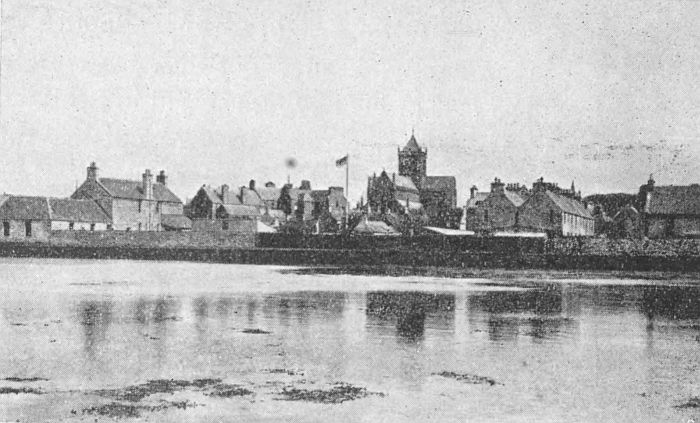
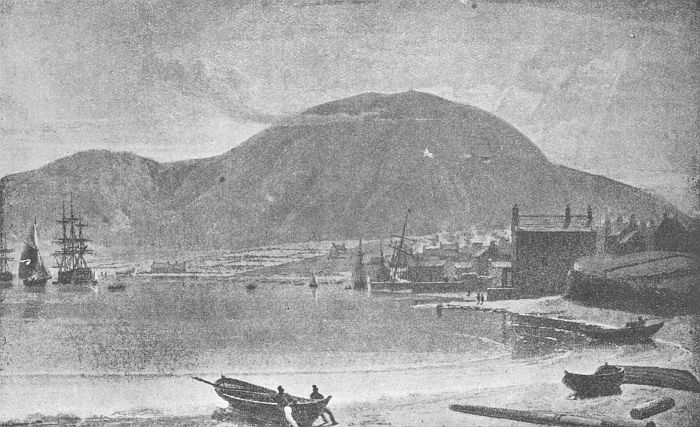
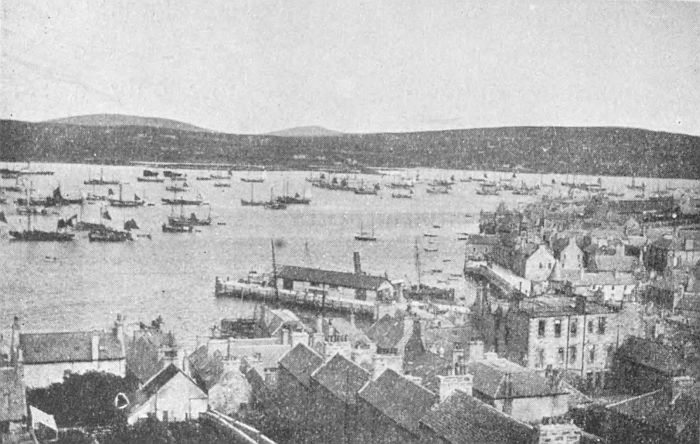
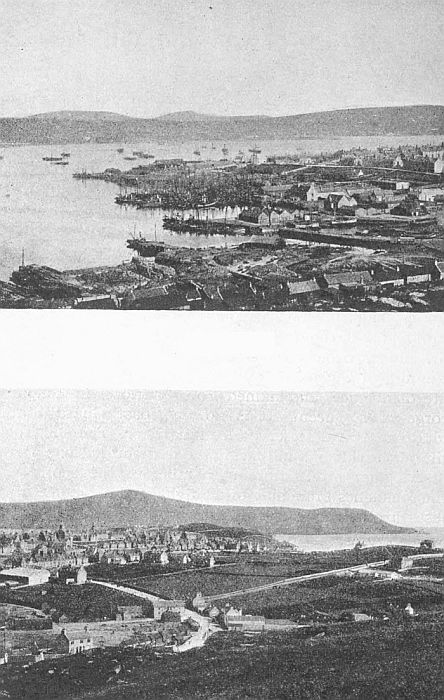
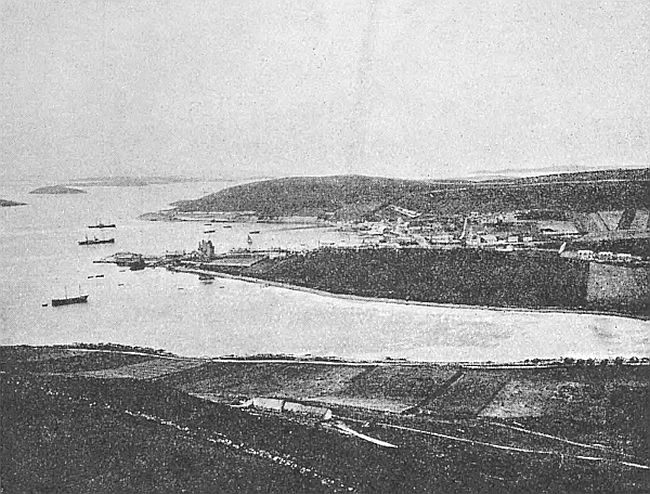
Kirkwall
Let us pause here, however, to outline the polity and
state of society which had now become established in
the Islands. The Orkney Jarls were not autocratic
rulers. The Odallers, assembled at the Thing, made
the laws, on the advice or with the concurrence of the
Jarls, but these laws were superimposed on a body of
old Norse oral laws which the settlers had brought with
them from over-sea. The land law taking no account
of primogeniture, the sons of an Odaller succeeded
equally to his estate, and a daughter could claim half
the share of a son. The eldest son, however, could
claim possession of the Bu (English by, as in Whitby),
or chief dwelling. An Odaller could not divest himself
of his odal heritage, except for debt, or in security
for a debt, and in such a case a right of redemption
lay for all time, not only with his nearest heir, direct
or collateral, but on refusal of nearer heirs to avail
themselves of it, with any descendant whatsoever.
Under such a system free men without landed interest
actual or prospective were few, and the odal-born
formed the bulk of the population. Some of the
wealthier Odallers, however, possessed a limited number
of thralls, and thraldom was hereditary. Land tax,
or scat, was paid by the Odallers to the Jarl, and by the
Jarl to the King, but in both cases the payment was
a fiscal imposition rather than a feudal exaction, the
Crown of Norway recognising the obligation of defending
the Islands against outside foes in final resort. Apart
from this, the overlordship of the mother-country was
so slight that in the European diplomacy of the times
the Jarls were treated as sovereign princes.
Thorfinn Hausacliuf died c. 963; and the rule of his
five sons, Havard, Hlodver, Ljot, Skuli, and Arnfinn
is noticeable for the first of those family feuds which
form so marked a feature of the history of the Jarls.
Skuli took the title of Earl of Caithness from the King
of Scots, and fared against Ljot with a host provided
by the King and the Scots Earl Macbeth. Ljot defeated
him in the Dales of Caithness, Skuli being slain.
Earl Macbeth with a second host, was in turn defeated
by Ljot at Skidmoor (Skitton) in Caithness, and here
Ljot fell. His other brothers having already disappeared
in domestic strife, Hlodver was now left sole. He
married Edna, an Irish princess, and their only son
Sigurd Hlodverson, the Stout, is one of the most famous
characters of the Saga. Succeeding his father in 980,
Sigurd held Caithness by main force against the Scots.
A Scots maormor, Finnleik, the father of the celebrated
Macbeth, having challenged him to a pitched battle at
Skidmoor by a fixed day, Sigurd took counsel of his
mother, for she, as the Saga says, “knew many things,”
that is, by witchcraft. Edna made her son a banner
“woven with mighty spells,” which would bring victory
to those before whom it was borne, but death to the
bearer. Armed with this uncanny device, Sigurd
defeated his challenger at Skidmoor, with the loss of
three standard-bearers. An incident of wider consequence,
however, befell Sigurd in the year 995. Olaf
Tryggvi’s son, King of Norway, came on the Jarl aboard
ship in a small bay in the South Isles. The King had
the superior force, and, a recent convert himself, he
there and then forced christianity upon the reluctant
Jarl, and laid him under an obligation to impose the
faith upon the people of Orkney. The Saga adds, “then
all the Orkneys became christian,” and so indeed the
Islands henceforth remained. Sigurd himself, however,
reverted to the old gods, and in the year 1014,
he joined the great Norse expedition against Brian,
King of Ireland, which led to the battle of Clontarf.
In that famous fight the Skidmoor banner again did
service, but the spell was broken. “Hrafn the Red,”
called out the Jarl after two standard-bearers had fallen,
and an Icelander who knew its fatal secret had declined
to touch it, “bear thou the banner.” “Bear thine own
devil thyself,” rejoined Hrafn. Then the Earl said,
“’Tis fittest that the beggar should bear the bag,” at
the same time taking the banner from the staff and
placing it under his cloak. A little after, the Earl was
pierced through with a spear.
Most famous of all the Jarls in the eyes of the Norse
was Thorfinn the Great, Sigurd’s son by a second
marriage with a daughter of Malcolm II, King of Scots.
Sigurd, however, was at first succeeded in Orkney by
Brusi, Somerled, and Einar, sons of an earlier marriage,
while Thorfinn, a boy of five, who had been fostered
by the Scots King, was invested by his grandfather in
the Earldom of Caithness and Sutherland. On attaining
manhood, however, Thorfinn made good his claim to
a share of Orkney also, and after many vicissitudes of
fighting and friendship with his half-brothers, and with
Jarl Rognvald I, Brusi’s son, was finally left sole ruler
there. He extended his power far and wide over northern
Scotland, controlled the Hebrides, and ruled certain
parts of Ireland. He even invaded England in the
absence of King Hardicanute, and, according to the
Saga, defeated in two pitched battles the forces that
opposed him. In later life Thorfinn visited Rome,
and he built a minster, known as Christchurch, in
Birsay, the first seat of the Bishopric of Orkney. He
died in 1064. Thorfinn’s sons Paul and Erlend succeeded,
and two years later shared the defeat of their
suzerain King Harald Sigurdson (Hardradi) at Stamford
Bridge. Returning home by grace of Harold Godwinson,
the Jarls ruled in peace for some years. As their sons
grew up, however, Hakon, Paul’s son, quarrelled with
his cousins Erling and Magnus (the future saint), Erlend’s
sons, and matters grew so unquiet that in 1098 King
Magnus Barelegs sent the two Jarls prisoners to Norway,
and placed his own son Sigurd over the Jarldom. On
the death of King Magnus in 1106, Sigurd returned to
Norway to share the vacant throne with his brothers,
and the overlords restored Hakon, Paul’s son, and Magnus,
Erlend’s son, to the Jarldom. Quarrels were renewed,
with the final result that in the year 1116 Magnus was
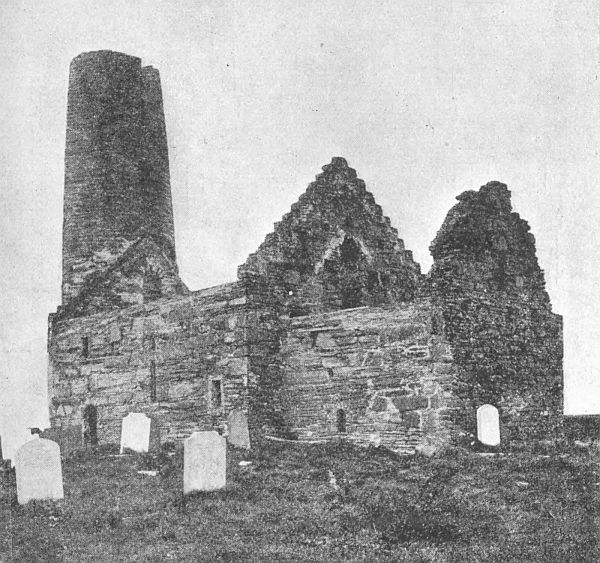
murdered in the island of Egilsey, where the cousins had
met to discuss their differences, by the followers of
Jarl Hakon, Hakon himself more than consenting.
The fame of St Magnus soon spread over the whole
Scandinavian world, and at an early date a church was
dedicated to him even in London. Jarl Hakon, after
the manner of the times, made an expiatory journey to
Rome and the Holy Land, and thereafter ruled Orkney
with great acceptance until his death in 1126. He was
succeeded by his son Paul. While in Orkney in 1098,
however, King Magnus Barelegs had married Gunnhilda,
a daughter of Jarl Erlend, to a Norwegian
gentleman named Kol. To their son Kali, Sigurd
King of Norway now granted a half share of the
Islands, with the title of Jarl, and from a fancied resemblance
to Jarl Rognvald I, insisted on changing
his name to Rognvald. The royal grant being strenuously
opposed by Jarl Paul, Rognvald vowed that if
he succeeded in making good his claim, he would erect
a stone minster at Kirkwall, and dedicate it to his
sainted uncle, Jarl Magnus. After many vicissitudes
by sea and land, Rognvald finally proved successful,
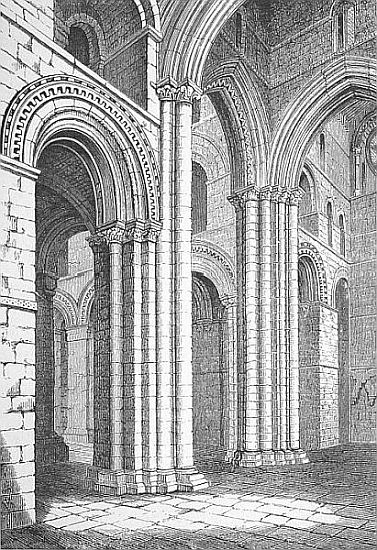
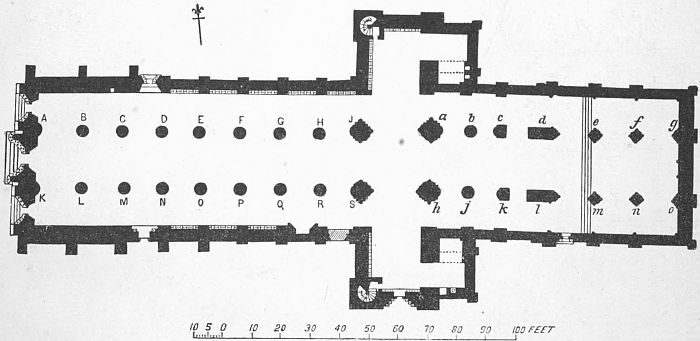
and how he fulfilled his vow the Cathedral Church of
St Magnus still shows. St Rognvald—for in 1192 he
too was canonised—was at once the most genial and
the most accomplished of the Jarls, and one of the
great characters of the Orkney Saga. He made a famous
voyage to Palestine (1152-1155), fighting, love-making,
and poetising by the way. Incidental to his great
struggle for power with St Rognvald, Jarl Paul had
in 1137 been seized by the famous viking Swein Asleifson
and carried off to Athole, where he was placed in the
hands of Maddad, Earl of Athole, who had married his
half-sister Margaret. The whole affair is shrouded by
mystery, but Countess Margaret appears to have intrigued
both with her brother and with Jarl Rognvald
to have her son Harald, a boy of three, conjoined with
Rognvald in the Jarldom. In the sequel Jarl Paul
mysteriously disappears, murdered, according to one
account, at the instigation of the Countess; and in
1139 Jarl Rognvald accepted the young Harald Maddadson
as his partner. With occasional intervals of
friction this somewhat oddly assorted pair ruled together
until 1159, when the checkered career of the genial
and many-sided St Rognvald was closed by his assassination
in a personal quarrel in Caithness. Thereafter
Harald ruled the Islands alone until his death in 1206.
A powerful and overbearing man, he quarrelled with
John, Bishop of Caithness, blinded the prelate and
caused his tongue to be cut out; barbarities which
brought King William the Lyon to the borders of Caithness
with an army (1202). Harald bought off the King,
and on the whole maintained his own in Caithness,
although all the circumstances of the times show that
a now feudalised Scotland is becoming increasingly able
to reassert its authority in these northern parts. Harald
got into difficulties with his Norwegian suzerain, King
Sverrir, who deprived him of Shetland, which was not
again conjoined with Orkney until two centuries later.
Harald was succeeded by two sons, David and John,
the former of whom died in 1214. Jarl John, like his
father, came into conflict with the Church and with
Scotland. Adam, Bishop of Caithness, successor to the
mutilated Bishop John, having proved too exacting in
the collection of Church dues, the laity appealed to the
Jarl, who, however, declined to intervene. Whereupon
the outraged laymen burnt the Bishop in a house into
which they had thrust him. King Alexander II, came
with an army, and not only heavily fined the Jarl,
but also had the hands and feet hewn off eighty men
who had been present at the Bishop’s death. Jarl John
was slain in a brawl at Thurso in 1231, and, as he left
no son, the line of the Norse Jarls of Orkney ended.
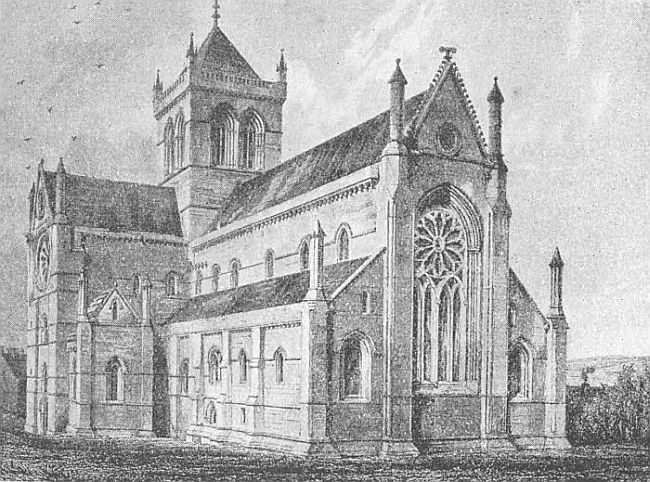
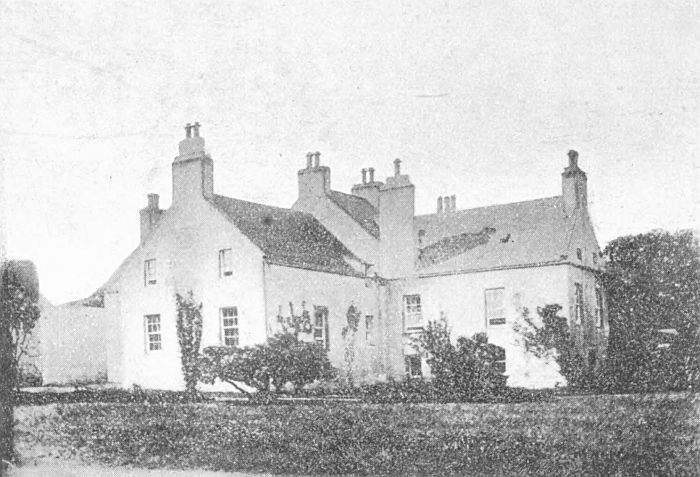
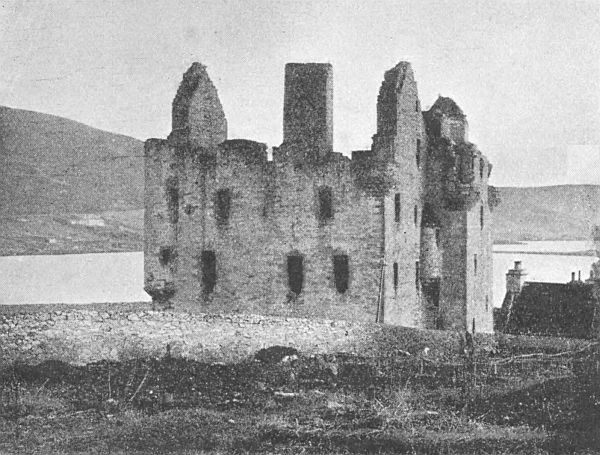
St Magnus’ Cathedral, Kirkwall, from South-East
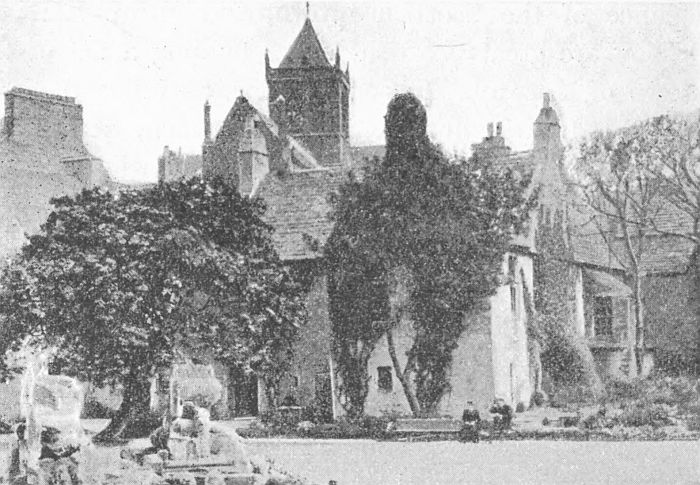
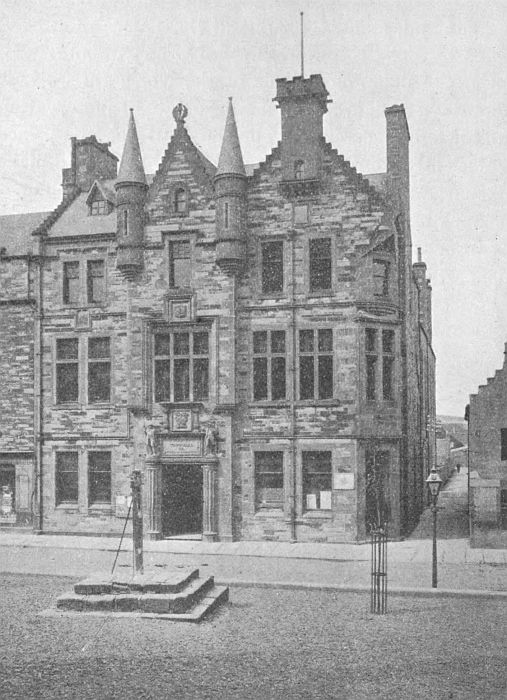
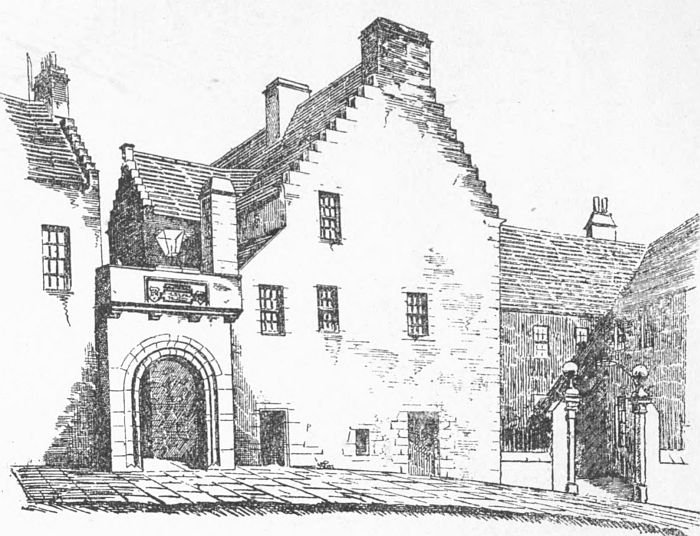
Tankerness House and St Magnus’ Cathedral
King Alexander II of Scotland granted the Earldom
of Caithness, now finally disjoined from Sutherland,
to Magnus, second son of Gilbride Earl of Angus, whose
wife was a daughter or sister of the late Jarl, and Magnus
was also recognised as Earl of Orkney by the King of
Norway. The old Jarls had been Norse nobles who
held the northern shires of Scotland more or less in
defiance of the Scottish Crown, the future Earls of
Orkney are great Scottish nobles holding a fief of the
Crown of Norway. In consequence, an influx of Scots
into the Islands now commenced, which, accelerated
by their cession to Scotland in 1468, in the end was
the means of transforming the Orcadians into a British
community. The history of this Scoto-Norse period
is obscure, the Icelandic records largely failing us, but
the law of primogeniture being now tacitly applied
to the succession, Earl Magnus was followed by two
Earls of the name of Gilbride, and the second Gilbride
by another Magnus. The latter is mentioned in the
Saga of King Hakon Hakonson, of Largs fame, as
having accompanied the King on that expedition,
after which the monarch came back to Orkney with
his storm-shattered fleet, and died in the Bishop’s
palace at Kirkwall on 15th December, 1263. By the
treaty of Perth in 1266 Hakon’s successor, Magnus the
Seventh, ceded to the Scottish Crown all the islands
of the Scottish seas, except the Orkneys and Shetland,
for an annual payment of 100 merks, to be paid into the
hands of the Bishop of Orkney, within the church of
St Magnus. Earl Magnus died in 1273, and was successively
followed by his sons Magnus and John,
the latter of whom, as Earl of Caithness, swore fealty
to Edward I of England in 1297. In 1320, however,
John’s son and successor Magnus subscribed, as Earl
of Caithness and Orkney, the letter to the Pope in which
the Scottish nobles asserted the independence of Scotland.
This Magnus was the last of the Angus line of Earls,
and was succeeded in 1321 by Malise, Earl of Stratherne,
who is supposed to have married his daughter. Malise
fell at Halidon Hill in 1333, and his son of the same
name succeeded to the three Earldoms of Stratherne,
Caithness, and Orkney. Malise II died c. 1350, leaving
only daughters, and after an unsettled period of
conflicting claims to the succession, Hakon King of
Norway in 1379 finally invested Henry St. Clair of
Roslin, grandson of Earl Malise I, and son-in-law of
Malise II, not only in the Earldom of Orkney, but in
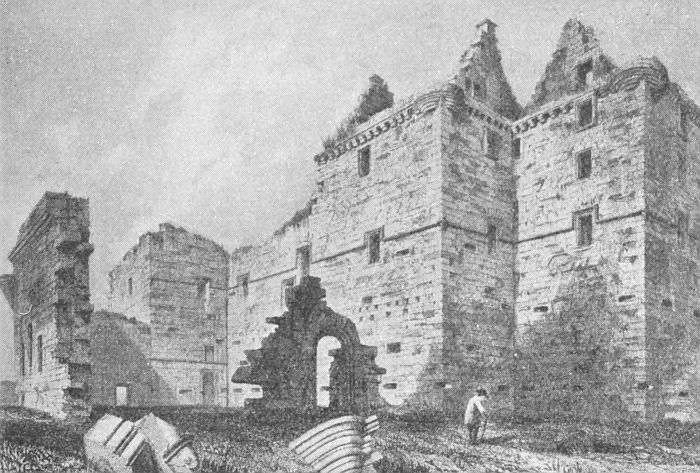
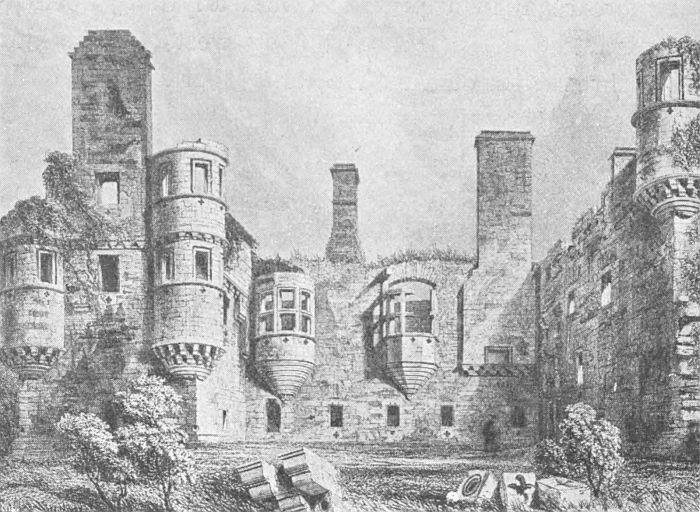
the Lordship of Shetland also. Earl Henry made
himself practically independent of Norway, and built a
castle at Kirkwall in defiance of the Norwegian Crown.
He was succeeded in 1400 by his son Henry, whose active
and interesting career as Lord High Admiral belongs
to the history of Scotland. The Earls of the Sinclair
family lived with considerable state, styling themselves
Princes of Orkney, and their rule was on the whole
popular and fortunate; but little of outside interest
took place in the Islands at this period. Scottish
customs, however, and traces of Scottish feudal law were
slowly encroaching on the old Norse system. Earl
Henry II’s son William was the last Earl of Orkney
under Scandinavian rule. By the Union of Calmar
in 1397 the suzerainty of the Islands had already passed,
with the crown of Norway, to the Kings of Denmark.
In the years 1460-61 a series of raids were—not for the
first time—made on Orkney by sea-rovers from the
Hebrides, and Christian I, King of Denmark, Sweden,
and Norway, failing to obtain redress from the Scottish
Crown for this and other grievances, demanded the
long arrears of the annual tribute payable by Scotland
in respect of the Hebrides, in terms of the treaty of
1266. Charles VIII of France having been called in
as arbitrator, a somewhat ugly contretemps was happily
adjusted by the marriage of Christian’s daughter
Margaret to the young King James III of Scotland,
and by the terms of the marriage-contract the Danish
monarch not only relinquished the quit-rent for the
Hebrides, but agreed to pay down a dowry of 60,000
florins. As Christian was able to find only 2000 florins
of this money at the time, the Orkneys and Shetland
were given in pawn to the Scottish Crown until the
balance should be paid, the agreement expressly stipulating
for the maintenance of Norse law in the Islands
meantime. This happened in 1468, and a few years
later King James negotiated the surrender by Earl
William St Clair of all his rights in the Islands; whereupon
by Act of the Scottish Parliament the Earldom
of Orkney and Lordship of Shetland were in 1471
annexed to the Scottish Crown, “nocht to be gevin
away in time to cum to na persain or persains excep
alenarily to ane of ye Kingis sonis of lauchful bed,” a
proviso which went by the board.
The long and painful story of Scottish oppression
in Orkney and Shetland has a literature of its own,
and can only be briefly referred to here. The Scottish
Crown from the first treated the scats, in origin and
essence a public tax, as a sort of personal perquisite
of the King, or part of the Royal patrimonium, and
farmed them out, along with the Earldom lands, to one
needy favourite or importunate creditor after another,
Orkney at the same time being now made liable to all
Scottish taxation. Many of these grantees received
the jurisdiction of Sheriff, a circumstance which led
to the accelerated encroachment of Scottish feudal
law on the old Norse legal system. Mere treaty stipulation
proved a frail protection to the oppressed Odallers,
when the only appeal against strained laws and unjust
exactions lay to the Scottish Crown itself, which had
installed the oppressors, and whose ministers and judges
knew and cared nothing about Odal law. Twice indeed,
first in 1503, and again in 1567, the Scottish Parliament
expressly recognised the obligation to maintain Norse
law, pious or perfunctory opinions which had no practical
effect. The two most notorious, because the most
powerful, of these Scottish oppressors of Orkney and
Shetland were Lord Robert Stewart, whose half-sister,
Queen Mary, in 1564 granted him the Sheriffship of
both groups, together with all the Crown rights and
possessions therein, and Lord Robert’s son Patrick.
In 1581 Lord Robert was further created Earl of Orkney
by his nephew King James VI, and Patrick succeeded
him in 1591. Rents and scats being payable to a large
extent in kind, by tampering with the old Norse weights
and measures, these two harpies in a few years actually
increased their revenues from the Earldom one-half.
Owing to the unceasing complaints of all classes of the
community Earl Patrick was finally imprisoned, and
in 1615 executed for high treason. As it had now
become apparent that the holders of the Earldom rights
had all along simply utilised the local courts and forms
of legal procedure for their private advantage, by an
Act of the “Lordis of Secret Council,” of date 22nd
March, 1611, all foreign (i.e. Norse) laws theretofore
in use in Orkney and Shetland were discharged, and
all magistrates in those islands were enjoined to use
only “the proper laws of this kingdom.” Although
this Act was of doubtful validity on more grounds than
one, yet it has held good; and apart from the maintenance
of Norse law in its integrity, an ideal
which the conditions of the times rendered unattainable,
the change was probably the best thing that could
have happened for the Islands.
Although the fact had only a transient bearing on
the history of the Islands, we must not fail to record
that Queen Mary, on her marriage with Bothwell, in
1567, created him Duke of Orkney. After the Queen’s
defeat at Carberry, Bothwell fled to the Islands, to be
repulsed from Kirkwall Castle by the governor. Thence
he proceeded northwards to play the pirate in Shetland,
and finally to find imprisonment and death in Scandinavia.
In the year 1633 the Earldom lands and rights
were granted by the Crown to the Earls of Morton,
one of whom sold them in 1766 to Sir Lawrence Dundas,
with whose descendants, now represented by the Marquis
of Zetland, they still remain.
Montrose on his way to invade Scotland in 1650,
first landed in Orkney, and the major part of the
force with which he met his final defeat at Carbisdale
was recruited in the Islands. Under the Commonwealth
Cromwell maintained a garrison at Kirkwall,
and the Islanders are said to have picked up improved
methods of gardening and other domestic amenities
from the Ironsides. In the following century the vexed
question of Stewart versus Guelph brought Orkney
its own share of commotion, but the details are, from
an historical point of view, of purely local interest.
Of vastly wider import has been the latest appearance
of the islands in the arena of history. In that
great contest, the sound and fury of which has barely
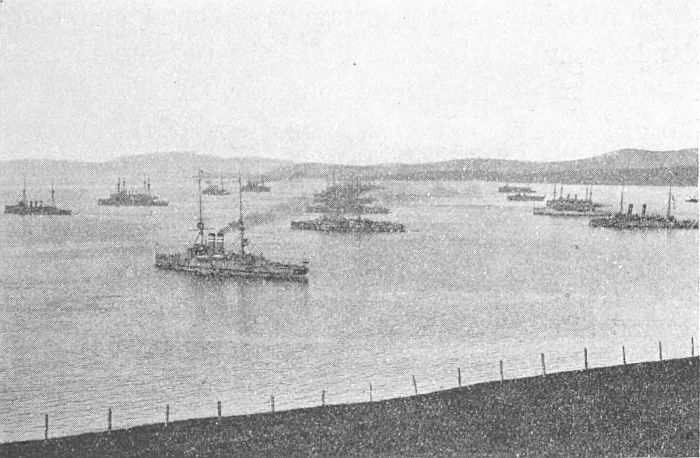
subsided as we write, the Royal Navy found in Scapa
Flow an ideal base for the conduct of its widely-spreading
operations. And if, as many skilful observers appear
to hold, successful strategy at sea proved the slowly-working
but inevitably certain cause of the final defeat
of the foe, it is not too much to say that for four eventful
years the little Archipelago, whose “rough island
story” we have here told in outline, stood forth as the
pivot of the world’s history and of its fate.
The dramatic death of the great Earl Kitchener in
Orcadian waters, in June 1916, further riveted the attention
of the modern world on a region which to its
own sons has never ceased to be the haunted home of
Harald the Fair-haired, Olaf Tryggvi’s son, and other
sea-kings of old.