Aback—Said of a sail when the wind blows on the back or
wrong side of it and forces the boat sternwards.
Abaft—Towards the stern, as abaft the mast.
Abeam—At right angles to the length of the vessel, as a dock
is abeam when it bears directly off one side.
Aboard—On the vessel, as come aboard, get the anchor aboard, etc.
About—To go about is to tack.
Adrift—Broken loose, as the boat is adrift, the sheet is adrift, etc.
Aft—Back or behind, as come aft, haul the mainsheet aft,
meaning to pull it towards the stern.
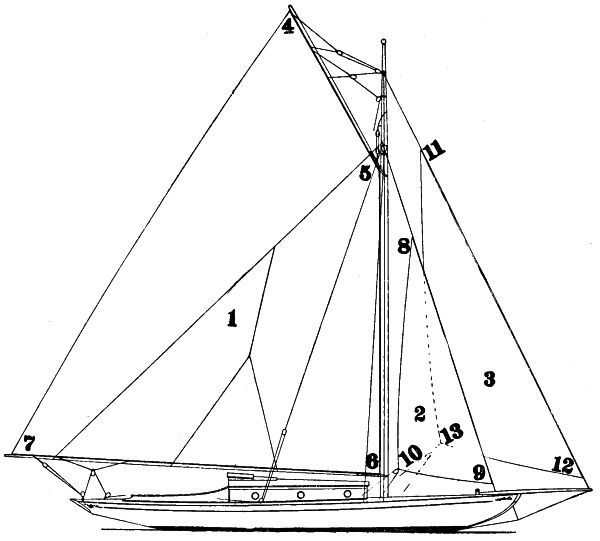
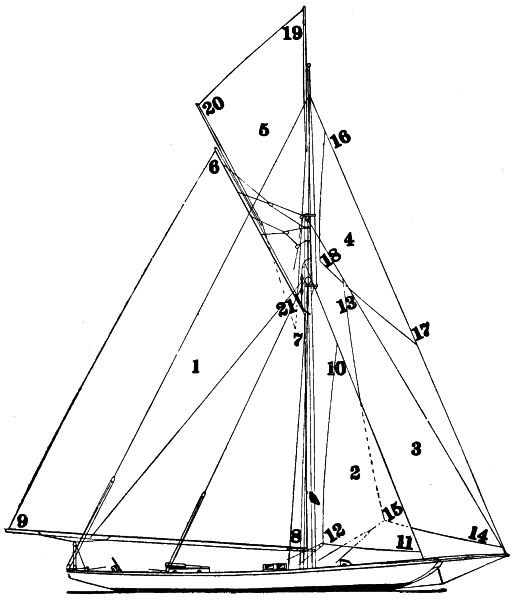
After—As after sails, meaning the sails set behind the mast.
In a sloop the mainsail is an after sail and the jib a foreward
one.
Ahead—In front of, as a buoy is ahead when steering towards it.
A-lee—An order to put the helm over towards the lee side.
The helm is hard a-lee when it is as far over towards the
lee side as it will go.
Aloft—Up above.
Alongside—Close to the side.
Amidships—In line with the keel.
Anchor—The instrument used to hold a vessel to the bottom,
usually made of iron.
Astern—Behind the vessel.
Athwart—Across, as athwartships, meaning that a thing is
lying across the vessel.
Avast—An order to stop.
A-weather—An order to put the helm towards the windward
side.
Ballast—Weight placed in or hung to the bottom of a boat to
keep her upright.
Beating—Tacking. Sailing towards the source of the wind by
making a series of tacks.
Becalmed—Being without enough wind to propel the boat.
Beehole—A hole bored in a spar for a rope to pass through
and move freely.
Belay—To make a rope fast to cleat or pin.
Bend—To bend is to fasten, as to bend a sail, i. e., lace it to the
spars. Bend the cable, meaning to fasten it to the anchor.
Bight—The slack or loop of a rope.
Bilge—The inside of the lower part of the bottom of a boat,
where the water she leaks in stands.
Binnacle—A box for the steering compass which can be lighted
at night.
Blocks—The instrument through which ropes are rove so as to
facilitate the hoisting and trimming of the sails, called by
landsmen pulleys.
Board—A tack.
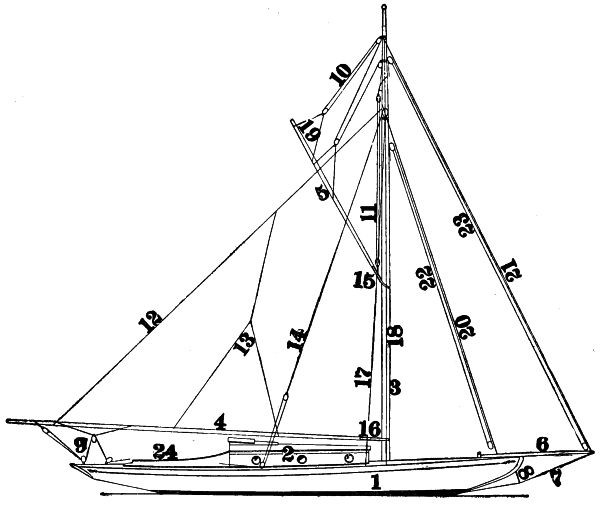
Bobstay—A rope generally of wire extending from the end of
the bowsprit to the stem to hold the spar down.
Bolt-rope—The rope sewn round the edge of a sail to strengthen it.
Boom—The spar used to extend the foot of the mainsail or
foresail.
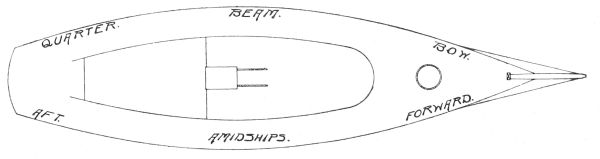
Bow—The forward end of a boat.
Bowsprit—The spar thrust out from the bow upon which the
jib is set.
Burgee—The ensign or house flag of a yacht club.
By the head—A boat is said to be by the head, when she is
drawing more water forward than aft, or is out of trim
owing to her bows being overloaded and depressed.
By the stern—The opposite to by the head.
By the wind—Same as on the wind, or close-hauled.
Cable—A rope or chain used to anchor a boat.
Capsize—To upset.
Cast off—To loosen, as cast off that line.
Casting—To pay a boat’s head off from a mooring by getting
the sails aback or by using a spring line.
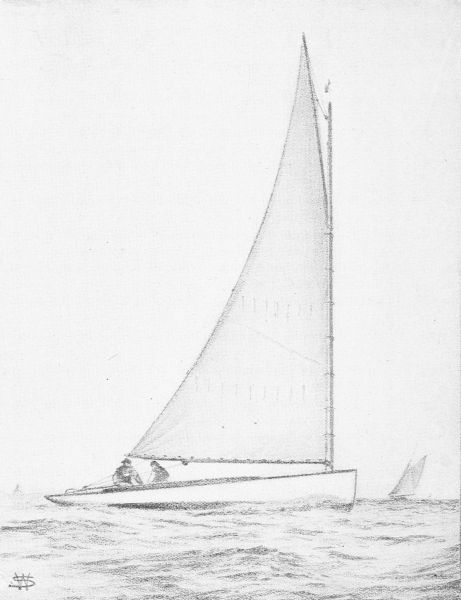
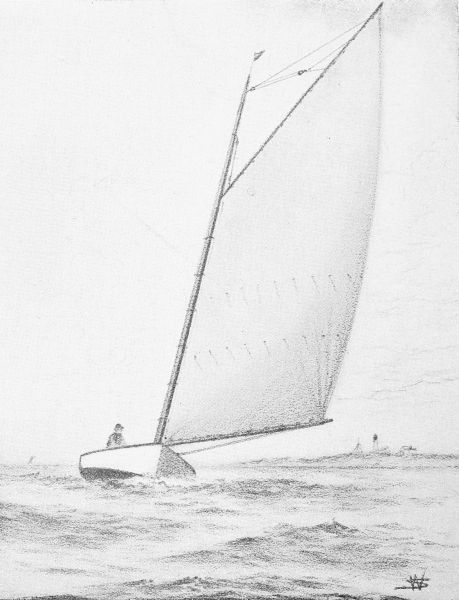
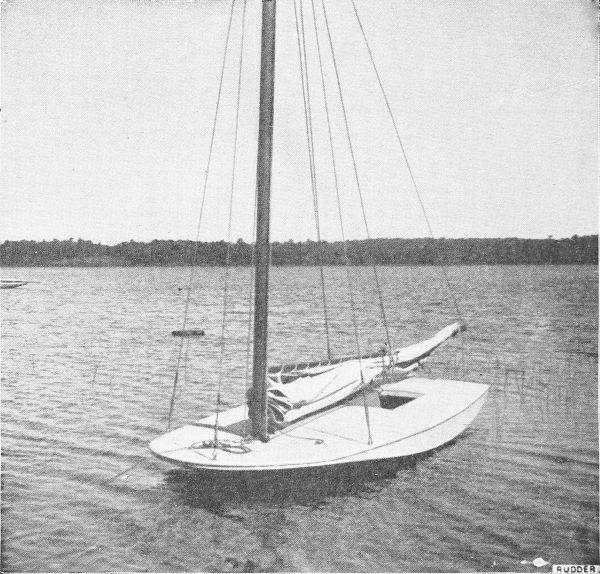
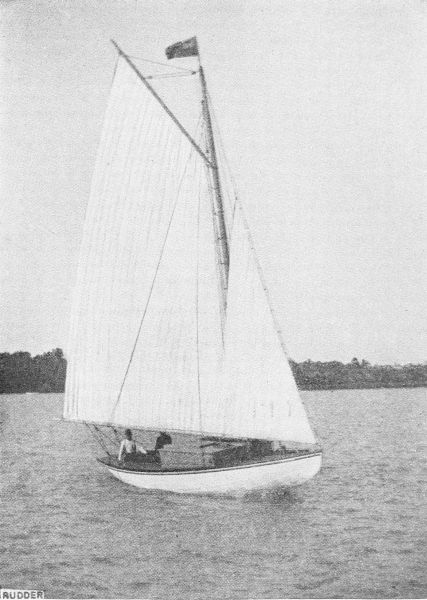
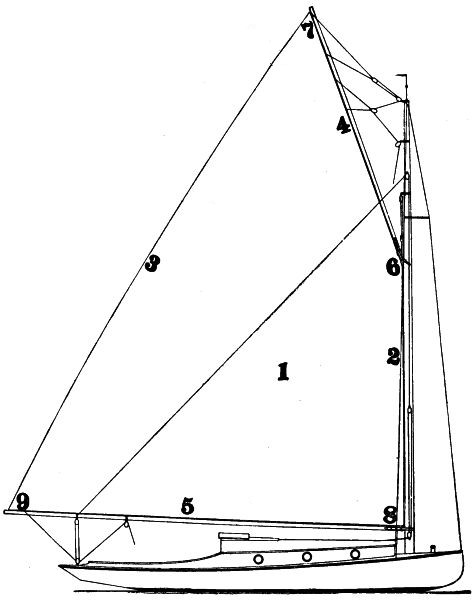
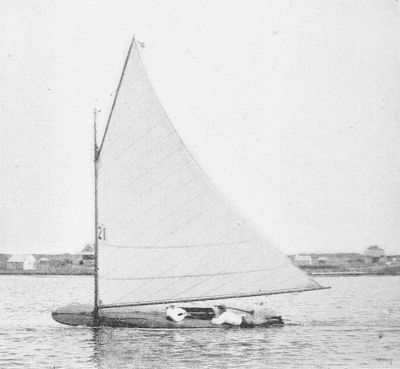
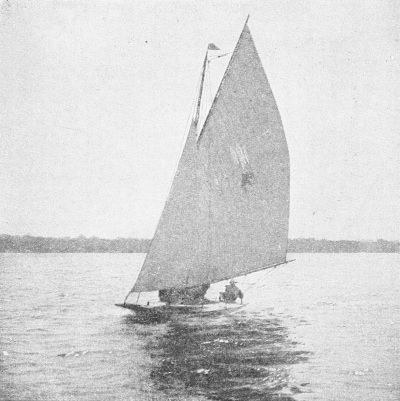
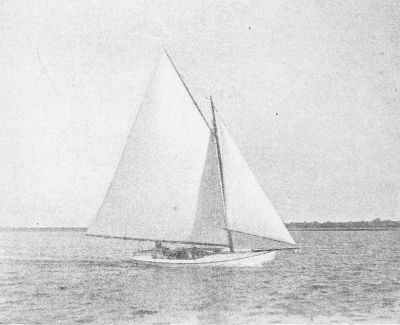
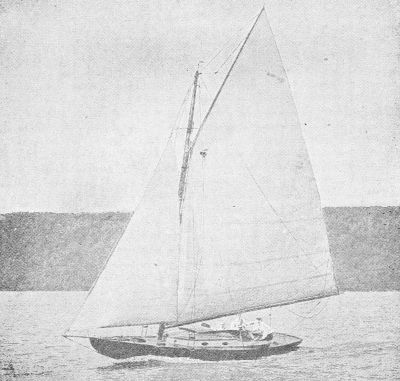
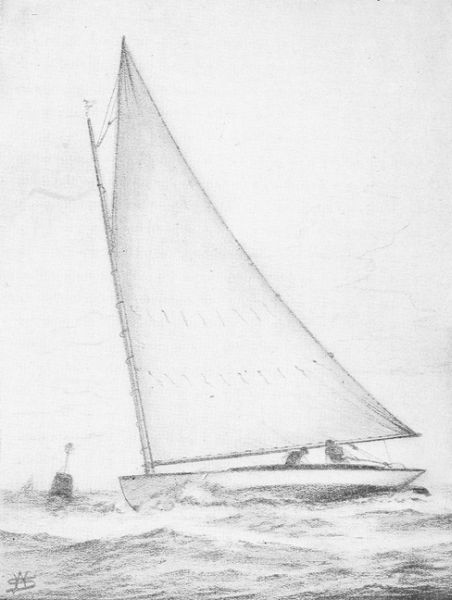
Cat rig—A vessel with one mast, placed right in the bow, and
carrying a single sail.
Centerboard—A keel that can be lifted up and down. It is hung
in a trunk or box which is built up inside the boat to keep
the water out.
Cleat—A piece of wood, iron or brass used to fasten or belay
ropes to.
Clews—The corners of a sail.
Close-hauled—A vessel is close-hauled when she is sailing as
close to the wind as possible.
Coil—To gather a rope into a series of circles so that it will roll
out again without getting tangled.
Con—To direct a helmsman how to steer.
Course—The direction or path which a boat sails.
Cringle—An eye worked in the bolt rope of a sail for a small
line to pass through.
Crotch—Two pieces of wood put together like a pair of scissors
and used to hold the boom up when the vessel is at anchor.
Downhaul—A rope used to haul a sail down.
Draught—The depth of water necessary to float a boat, the
amount in feet and inches a vessel’s hull is immersed.
Drift—To move sideways or sternways, as when a boat is becalmed.
The drift of a tide or current is its velocity.
Ensign—The national flag always flown furthest aft, either from
the gaff end or on a flagpole over the stern.
Fathom—Six feet. A measure used by seamen principally to
designate depths of water.
Flukes—The broad, arrow-shaped parts of an anchor.
Fore—The part of a vessel nearest to the bow.
Fore and aft—Parallel to the keel. A fore-and-after is a vessel
without square sails like a sloop or schooner.
Foul—Entangled or caught, as a rope is foul, meaning it is
caught in someway. To foul another boat is to run into it.
Furl—To roll up and make sails fast so that the wind cannot
distend them.
Gaff—The spar that extends the head of a main or foresail.
Gasket—A short piece of rope used to tie up sails with, frequently
called a stop.
Gripe—A boat is said to gripe when she tries to force her bow
up in the wind, and has to be held off by putting the helm up.
Halyards—Ropes used to hoist a sail.
Hanks—Rings made fast to the luff of a jib to hold it to the
stay up which it is hoisted. On small boats snap-hooks are
generally used.
Haul—To pull.
Heel—A vessel is said to heel when she leans to one side. This
term is often confused with careen.
Helm—The tiller.
Hitch—To hitch is to make fast. A hitch is a simple turn of rope
used to make fast with.
Hove-to—Brought to the wind and kept stationary by having the
sails trimmed so that part of the canvas pushes the vessel
backward and part pushes her forward; often confused with
lying-to.
Hull—The body of a vessel.
Irons—A vessel is in irons when having lost steerageway
she refuses to obey the helm.
Jibing—Passing a sail from one side to the other when a vessel
is sailing free.
Keel—The largest and lowest timber of a vessel, upon which
the hull is erected.
Leach—The after edge of a sail.
Leeward—The direction toward which the wind is blowing.
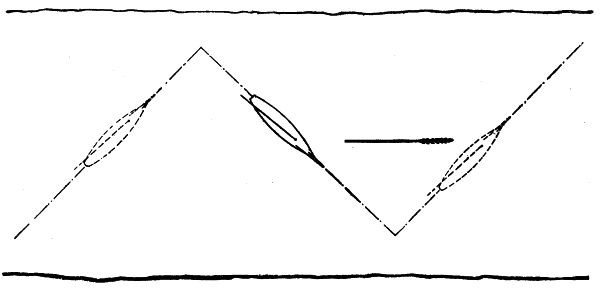
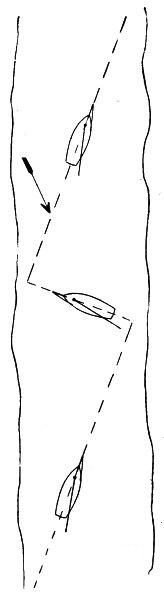
Long leg—The tack upon which a vessel in beating to windward
remains longest, owing to her point of destination not lying
directly in the wind. See diagram.
Log—The record kept of a vessel’s work. A ship’s diary. Also
an instrument for ascertaining a vessel’s speed through the
water.
Luff—The fore edge of a sail, also an order to bring a vessel
closer to the wind.
Lying-to—A vessel is lying-to when she is brought close to the
wind under short sail and allowed to ride out a storm. See
hove-to.
Moor—To anchor a vessel with two or more anchors. To tie up
to a mooring.
Mooring—A permanent anchor.
Near—A vessel is said to be near when her sails are not properly
full of wind, owing to her being steered too close.
Miss-stay—To fail to tack or go about.
Off and on—When beating to windward to approach the land
on one tack and leave it on the other.
Overhaul—To haul a rope through a block so as to see it all
clear. To overtake another vessel.
Painter—The rope attached to the bow of boat by which it is
made fast.
Part—To part a rope is to break it.
Pay off—To pay off is to recede from the wind or from a dock.
Peak up—To peak up a sail is to haul on the peak halyards so
as to elevate the outer end of the gaff.
Pooping—A vessel is said to be pooped when, owing to her not
moving fast enough ahead, the sea breaks over her stern.
Port—The left-hand side of a vessel looking forward, formerly
called larboard. Designating color, red.
Preventer—A rope used to prevent the straining or breaking of a
spar or sail.
Pennant—A narrow flag, also a short piece of rope commonly
spelled pendant.
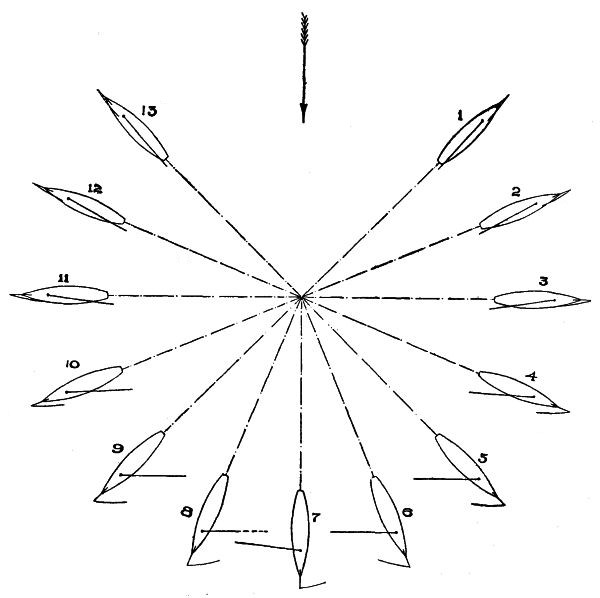
Quarter—See diagram A.
Rake—The inclination of a spar out of the perpendicular.
Reef—To reduce a sail by rolling up and tying part of it to a spar.
Reeve—To pass a rope through a block.
Ride—As to ride at anchor.
Right—A vessel is said to right when after being on her side
she regains an upright position.
Right the helm—To put it amidships.
Rode—A hawser used to anchor with.
Scope—The length of cable a vessel is riding to when at anchor.
Serve—To wind cord or canvas round a rope or spar to protect
it from chafing.
Seize—To make fast by taking a number of turns with small line.
Sheer—To sheer is to move away from the proper course. The
sheer of a vessel is the fore-and-aft curve of the deck line.
Ship—To ship is to take on board.
Shiver—To shake the canvas by bringing the luff in the wind.
Slack—The part of a rope that hangs loose.
Slip—To slip is to let go of a cable without taking it on board.
Snub—To check the cable when running out.
Sound—To try the depth of water by casting the lead.
Spill—To throw the wind out of a sail by putting the helm
down or by easing the sheet.
Spring—To spring a spar is to crack it.
Spring—A rope used to cast or turn a vessel.
Stand on—To keep a course—to proceed in the same direction.
Stand-by—To be ready for action, as stand-by to let go the
anchor.
Starboard—The right-hand side looking forward. Designating
color, green.
Steer—To direct a vessel by employing the helm.
Stow—To furl. Properly speaking, a boom sail or any sail that
lowers down is stowed. Square sails are furled.
Swig—To haul a rope by holding a turn round a cleat and pulling
off laterally.
Tack—To beat to windward. See diagram.
Tackle—An assemblage of blocks and rope used to hoist and
control sails, lift spars, etc.
Taut—Tight.
Tender—The small boat carried by a yacht generally called a
dingey.
Tow—To drag behind.
Truck—The uttermost upper end of the mast through which
the signal halyard is rove.
Unbend—To untie, as—unbend the cable.
Wake—The furrow left by the passage of the vessel through the
water.
Wear or veer—The opposite of tacking—to turn from the wind.
Warp—A hawser used to make fast with. To warp is to haul
or move a vessel by pulling on such a rope.
Watch—A division of the crew, also the space of time they
are on duty.
Way—A vessel’s progress through the water. To get underway—to
set sail, to move off.
Weather—To weather a vessel or object is to pass to windward
of it.
Weather side—The side upon which the wind blows.
Weather shore—The weather shore is the shore from off of
which the wind blows if viewed from the sea, but it is the
shore upon which the wind blows if viewed from the land.
Weigh or way—To way the anchor is to lift it from the bottom.
Wind’s eye—The exact direction from which the wind blows.
Windward—Toward the place from where the wind comes. To
go to windward of another vessel is to pass between her and
the source of the wind.
Yaw—To swerve from side to side as a vessel does when running
free.

 ON
ON