Habana, Cuba,
December 5th.
“Habana,” says the Cuban and Spanish mouth, and the b is so gently
uttered that you cannot tell it from a v.
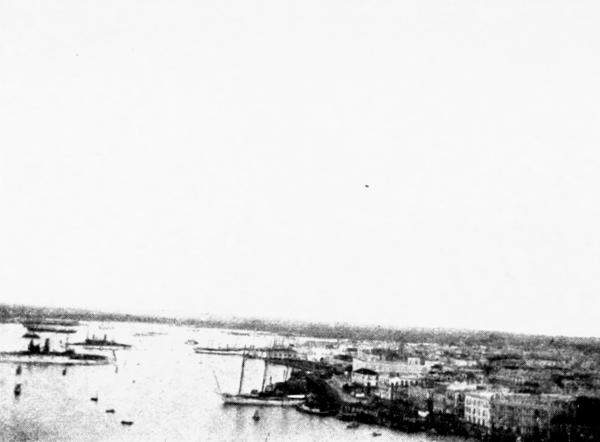
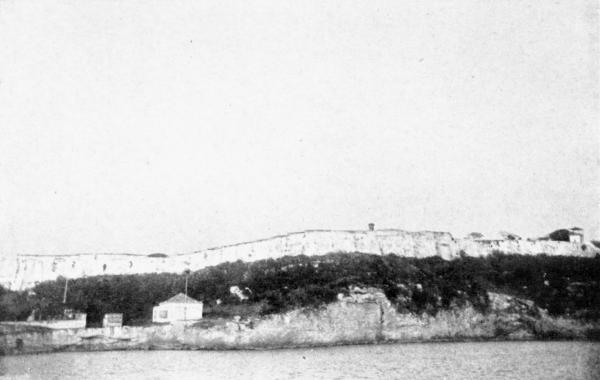
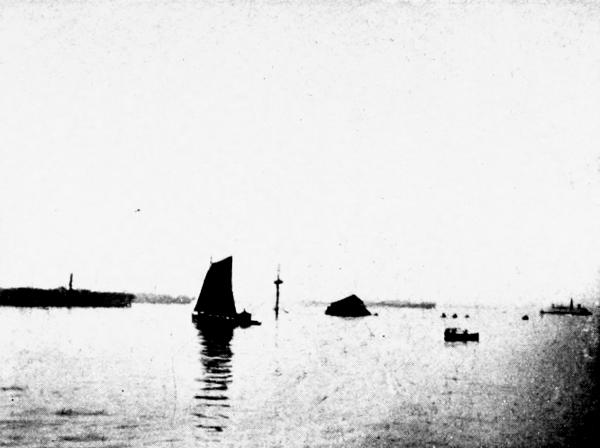
Yesterday morning, Tuesday, we cast anchor beneath the ramparts of the
great fortress of La Cabaña (Cabanya) in the wide landlocked bay; many
other ships swung to their moorings in the quiet waters, among these
the battleship Massachusetts and two cruisers, Kentucky and
Kearsarge, of the navy of the United States.
The harbor of Habana, you will remember, is a mile or more wide and
nine or ten miles long, capable of accommodating an extensive
shipping. Now, since it has been dredged and cleaned of the
accumulated filth of centuries, the largest boats may come up to the
docks and sea wall along the city’s marge. The larger vessels,
however, just as at Vera Cruz, still prefer to anchor out in the bay,
and send passengers and freight ashore by means of tugs and lighters.
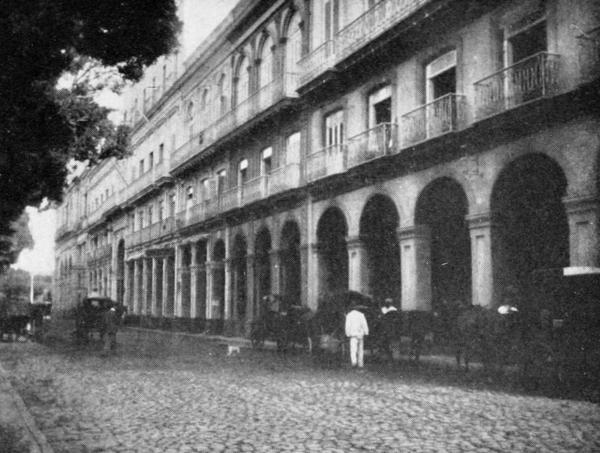
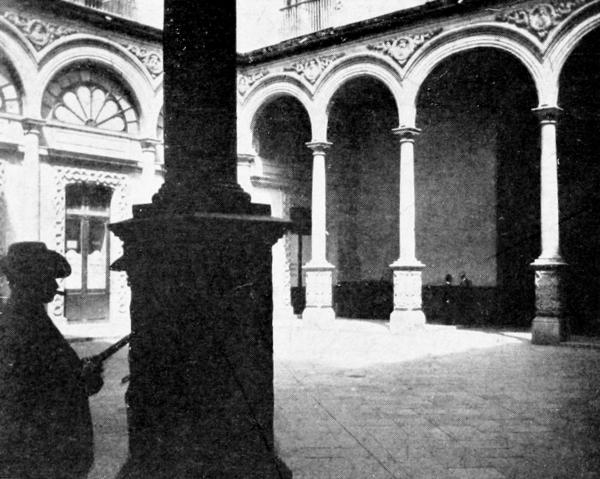
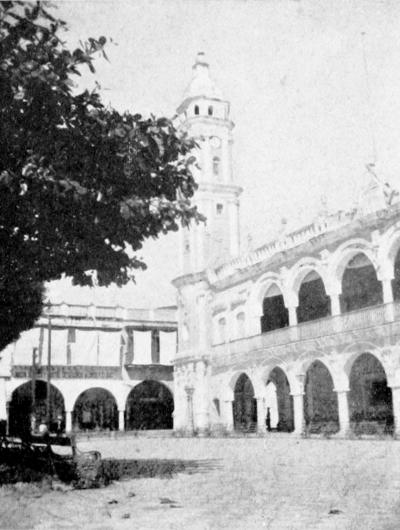
A SPANISH HOTEL—HAVANA
We were scarcely moored, when a multitude of small boats surrounded
us, all apparently offering to ferry us to the city. We ignored their
clamor and clambered aboard the large steam tug to which our baggage
was also transferred, and were quickly landed at the customshouse.
My two steamer trunks and big basket of Mexican pottery I left in care
of the customs officers, and came up into the city with only a valise.
The customshouse is a long, low, stone building, with an iron fence
shutting it in and enclosing also an extensive paved storage yard. The
Cuban officers, who were very polite, are yet under the military
control of the United States and of General Wood, and they all spoke
English fluently.
Passing out through the great iron gates, we signalled for a
cochero, when half a dozen galloped up gesticulating and
vociferating eagerly. We choose the cleanest-looking cocha of the
lot, a curious ancient vehicle, which seemed to be a cross between the
German fiacre and a Parisian voiture. Into this three of us
climbed, when we set off on a gallop through narrow streets up into
the city, halting at last before the Spanish-kept Hotel Pasaje. It is
big and airy, and I have a room at the top where I can catch any
breeze which may be blowing. The floor of my chamber is tiled; it is
fitted with an iron bedstead with wire mattress, and neat American
cottage furniture. An electric incandescent lamp dangles from the
ceiling, and there are two large sashless windows with slatted
Venetian curtains which may be let down to shut out wind and light. My
first view of Habana was from one of these windows. I looked out over
a city of flat roofs, where much domestic labor was carried on, and
then beyond, across the palm-ornamented plaza and along the
beautiful Prado to the sea.
My first commercial transaction was the purchase of really fine cigars
at a most reasonable figure; and then a packet of postal cards
illustrated with views of Cuba. Down in the corner of each card was
the legend, “Made in Detroit.” When I called the attention of the
Spanish salesman to this fact, he declared “there is no such place as
Detroit,” and “undoubtedly the words are the name of the Spanish
artist who designed the cards!”
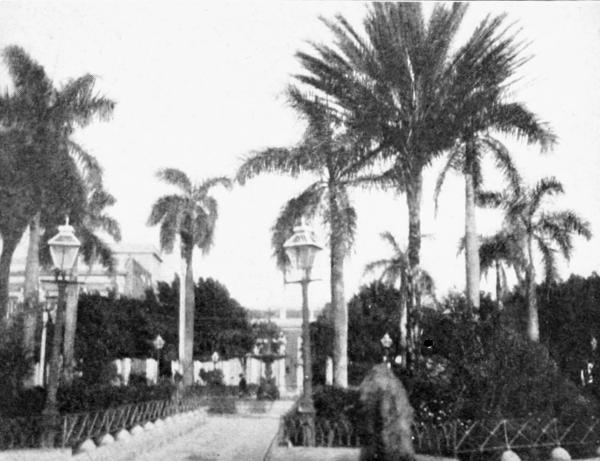
Leaving the hotel, I sauntered toward the Plaza Grande, an open square
of several acres, traversed by gravel walks, and shaded by many Royal
and other graceful palms; and then crossing it I came to the Prado.
“Muy bonita esta el Prado,” (very lovely is the Prado), is the
common phrase of every Habanista; and rightfully are the Habanese
proud of their splendid parklike boulevard.
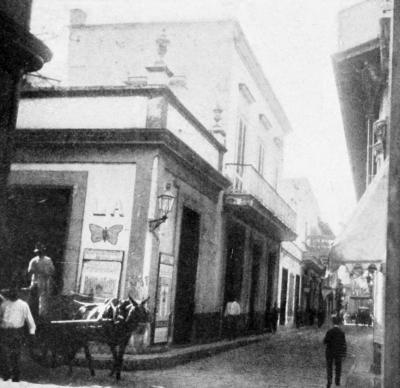
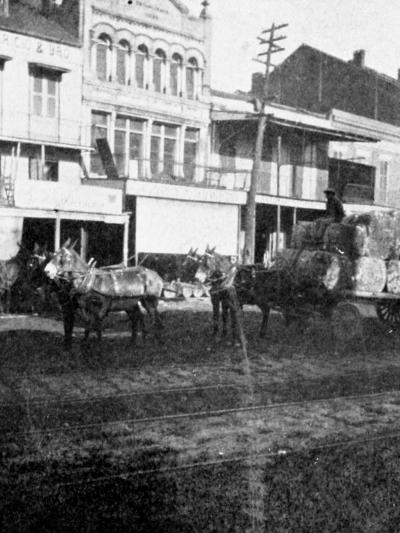
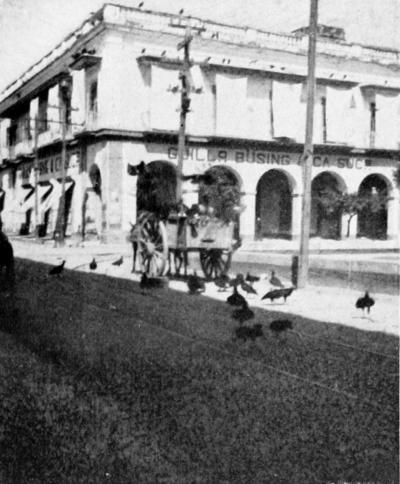
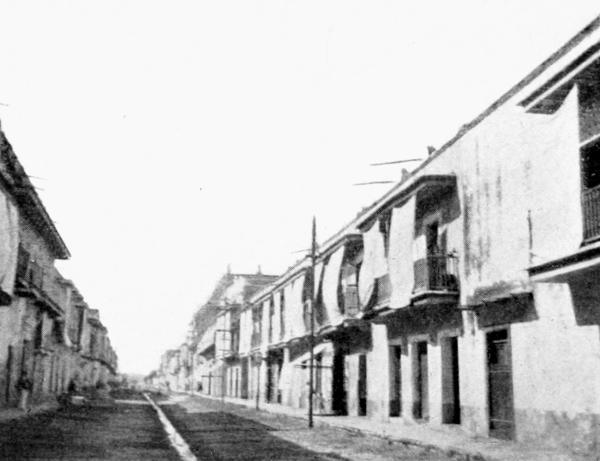
CALLE OBISPO—HAVANA
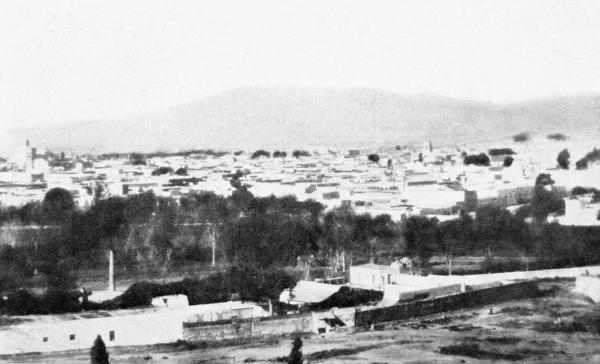
Habana is built upon a low, broad-topped hill, which descends gently
to the water side. On the flattened crest of this hill is the Plaza
Grande, and from the Plaza down to the sea, a mile or two in length,
stretches the Prado;—a wide boulevard on either side of a broad green
strip of park, where a walk-way passes beneath a double row of ancient
and umbrageous trees, and comfortable seats are placed at intervals.
It is on the Prado that the fashion and beauty of Habana drives and
promenades and lingers to see and be seen of all the world. Along its
borders, on either hand, are built many of the noblest mansions of her
merchant and planter magnates. To have a residence upon the Prado is
to command respect.
The Spaniard and Cuban cared little for his streets, but he devoted
himself with lavish attention to beautifying the interior of his home.
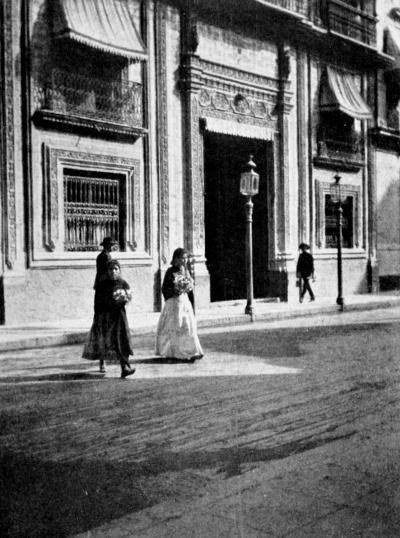
Hence, in the Cuban as in the Mexican cities, you often pass along
between bare uninteresting walls, while the costliest marbles, the
richest fabrics, the rarest paintings within, quite hidden from all
curious eyes, may be collected.
Later in the day I wandered through the shopping districts along the
famous Calles Obispo and O’Rielly, streets so narrow that during the
heat of the day they are wholly overspread with awnings while wheel
traffic must go down O’Rielly and up Obispo. Here are gathered in
plain unpretentious buildings many sumptuous shops. The Cuban has not
yet learned the art of window display; he is not up even to the
Mexican in that. But once you are within and know what to ask for,
beautiful fabrics and expensive goods are shown you without stint.
Among other shops, the hat store holds an important place in Cuban as
well as Mexican life. In Mexico, the sombrero, costly or cheap,
marks the social status of the wearer and, just so, here in Cuba the
quality of your panama determines the amount of consideration which
you receive. I entered the Hotel Pasaje wearing a modern American felt
hat, and when I bloomed out in a really good panama, the clerks and
servants treated me with markedly increased respect. In the same way,
when you enter a shop, the clerk sizes up your hat and treats you
accordingly.
A noteworthy thing about Habana is the great number of cigar stores.
No city in the world possesses so many. Nor are the cigars there
purchased to be surpassed. Every one smokes cigars in Habana. The
cigarette holds the inferior place. The men smoke cigars; the boys
smoke cigars; even many of the women smoke cigars. In Mexico, in the
hotels and railway cars, the ladies were usually smoking cigarettes.
Here in Habana delicate feminine lips close tenderly upon el segaro.
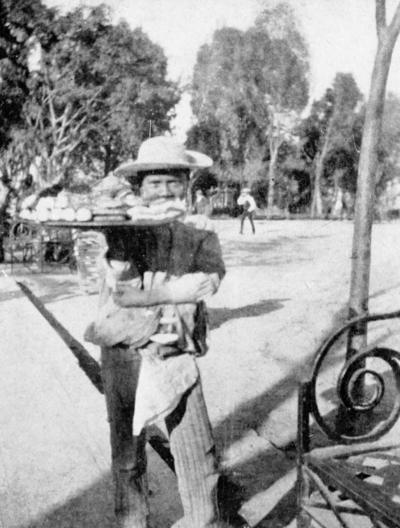
There is also much fruit sold at little stands along the street curbs
and at the corners, but in nothing like the quantity or profusion seen
in the Mexican cities, nor have I met any dulce boys with trays of
candied fruits upon their heads.
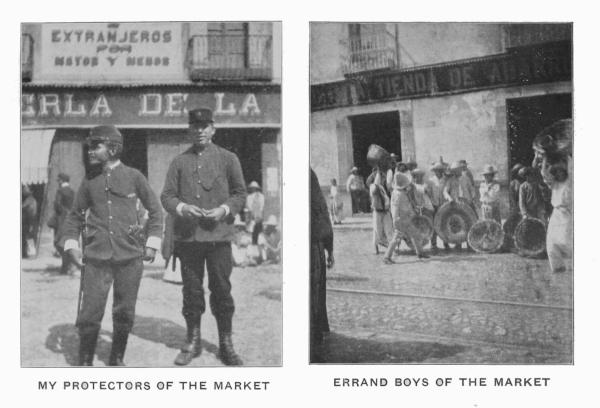
There are two chief markets in Habana; one is by the water side, where
the fishermen come and where I was greatly interested. There were the
splendid red-snapper—which I saw in the markets of Mexico fresh
from the sea,—a large handsome fish of deep-red color, weighing five
or six pounds; and multitudes of sorts I did not know. The other, a
large market where flowers and fruits and vegetables are sold is on
the hill a mile or two from the sea.
The vegetable gardens in the outskirts of the city, are in the hands
of the Chinese, who bring the vegetables to the markets where they are
sold by the Cubans. They work the gardens just as they would in
Shanghai, in Canton, in Pekin; they have come over from China direct;
they already control the greengrocer trade of Habana, and are said to
be fast growing rich.
The markets are neither so large, nor so abundantly supplied as those
of Mexico City, where the fruits and vegetables of the temperate
highlands, and also those of the tropics are offered in the same
stall.
It was the day before Christmas when I visited the larger market, and
the chief interest of the buyers seemed to be centered in the display
of live and suckling pigs. It is the custom of the Cuban to celebrate
his Christmas with a royal banquet of roast pig. So the housewife
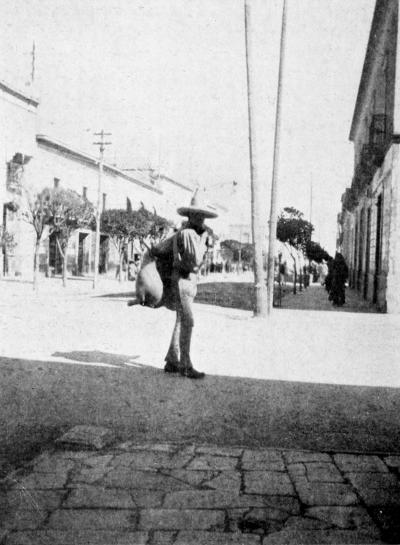
selects a “live and squealing dinner,” ties him together by his four
legs and with a cord slung across her shoulder, carries him home,
lustily vociferating beneath her arm. I saw few pigs in Mexico, only
an occasional hog or shoat, lean and wild, scampering along the
wayside in Michoacan; but here, in Cuba, the pig is el gran Señor.
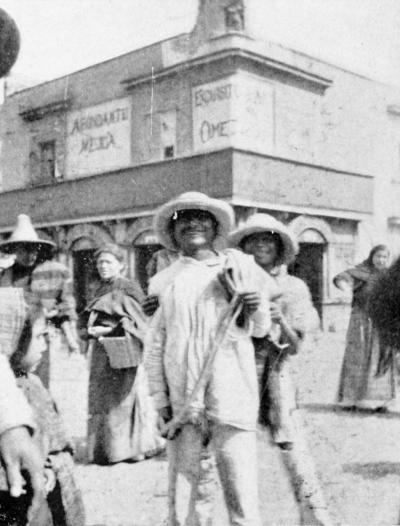
The crowds gathering in these markets were in strong contrast to those
of Mexico. Here, were none of the warm brown Indian tints, but instead
the yellow mulatto and the very dark Spaniard or negro. The curious
thing about these Cuban crowds is that the Spanish mulatto, instead of
carrying the white man’s color with the negro’s features, bears, on
the contrary, the white man’s features with the darker color of his
African blood, and hence, the impression created by a Cuban crowd is
rather that of men having Caucasian features shaded in color from the
paler to the darker hues. It is also said, that many of the darker
faces have in them no negro blood at all, but are those of the
descendants of the ancient Moors, who, once the lords of old Spain,
have left as legacy a proud lineage and swarthy skin. To the
unpracticed eye, it is almost impossible to distinguish between the
Spanish negro and the “Black Spaniard.” Thus in Cuba the color line of
race distinction, as drawn in the United States, becomes almost
impossible. Nor does it exist. Men of all shades mingle and mix in
social functions, for who can tell whether the dark face is shaded by
the infused blood of the lowly negro or the haughty Moor?
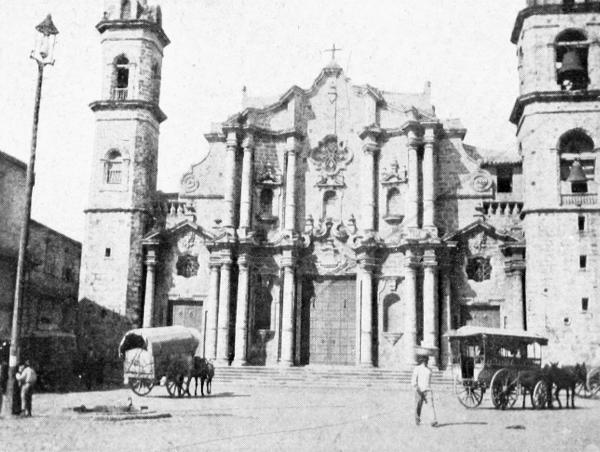
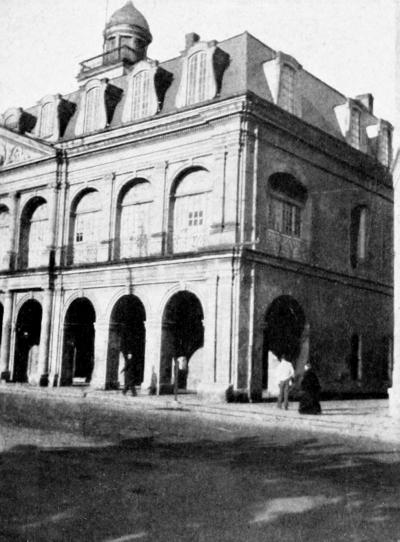
THE CATHEDRAL—HAVANA
In the late afternoon I took my way down along the Prado, and,
stopping before No. 55, touched an electric bell. The door opened and
I entered a spacious patio; on one side stood a modern
automobile,—on the other, pots of flowering plants, and I entered a
large and airy drawing room.
I might have been in my own country, for it bore the marks of modern
taste. It was the drawing room of Señora —— who as Miss ——, I
had known and admired in the United States. She expressed delight at
seeing me, greeting me with the cordiality of an old friend. She at
once insisted that I accompany her that evening to Mrs. General Wood’s
private box at the dinner to be given by the citizens of Havana to the
United States naval officers now here with the squadron. The dinner
was to be held in the Opera House. It would be the most notable
function of the year; all that was distinguished in Cuban, Spanish,
and American social, military and naval life would be there assembled.
I was a passing traveler, and my white duck trousers and blue flannel
coat were scarcely the costume to wear among so brilliant a company;
but it was the best I had and what better could I do than accept? My
hostess’ husband, as one of the receiving committee, must be separated
from her and my escort would stand her in good stead.
A few hours later we were ushered into the big theater, and shown with
much ceremony to the private box of the wife of Cuba’s Military
Governor. Here were gathered Mrs. Wood herself, the wife of Admiral
Converse, and the ladies of their entourage. The scene was splendid.
The spacious Opera House, built by the Spaniards with their
appreciation of pomp and ceremony and brilliant functions, was filled
with a distinguished assemblage; from floor to lofty roof were tiers
of boxes, and these boxes were occupied with the beauty and fashion of
Cuba. The great parquet of the theater was floored over and upon this
space were set long tables. The dinner had already some time ago
begun. The company there gathered were nearing the hour when toasts
are offered. Young Señor Garcia, son of the Cuban General, was Toast
Master of the occasion. On his right sat General Wood; upon his left
the Archbishop of Santiago, in rich and gorgeous robes, the first
native Cuban priest to reach that high dignity. The American naval and
military officers were in full dress uniform, and the Cuban Generals
were brilliant in warlike trappings and gold lace. The civilians wore
dress suits, and I was conspicuous as the only guest of the evening in
white duck and blue flannel.
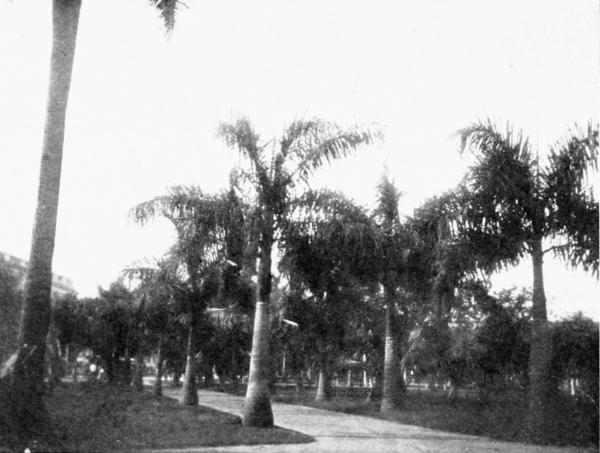
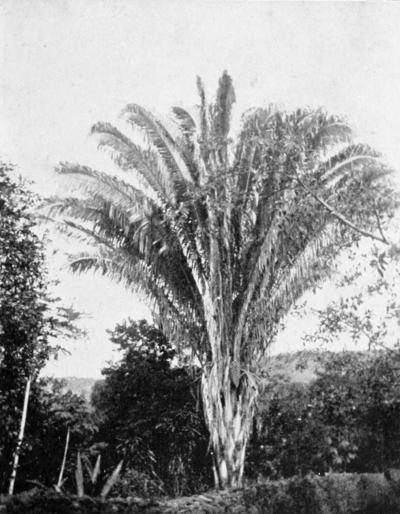
THE FIRST GREENSWORD—HAVANA
The speeches were in Spanish and English, and great enthusiasm and
good fellowship prevailed. In the course of the evening, most of the
gentlemen present came to pay their respects to the wife of Cuba’s
Governor, and I had the good fortune to be introduced to the greater
part of them.
The sentiment between the Cubans and the Americans is now most
cordial, or, perhaps I should say, between the governing and more
cultivated Cubans and ourselves; for among those whose knowledge of
the United States is gathered chiefly from contact with a soldiery,
not altogether courteous in enforcing order, there is little good
feeling, but rather a sense of sharp antagonism, which, though usually
suppressed, nevertheless now and then crops out.
After the dinner and the closing of the function, I wandered out
beneath the stars along the Prado and through the Plaza Grande to my
hotel. The streets were yet alive with people, although it was late.
In the great square the band had not finished its nightly concert, and
the chairs which, in Havana as in Mexico, are rented to the public,
were yet well-filled with those who lingered to enjoy the music and
the cool night air.
Continuing my way homeward, I caught the distant hum of voices and an
occasional shout. The sounds grew nearer. Looking down the Prado, I
beheld many moving lights. Then a band began to play. A procession was
approaching. I paused to watch. First came a band, men in smart
uniforms; following these were men on horseback, some in uniform, some
in civilian dress. Then came several other bands, and men and boys on
foot carrying banners and lanterns and illuminations. A multitude was
marching through the streets. Every now and then they shouted the name
“Masso, Masso,” and broke into vivas and bravos. At the Hotel
Pasaje they halted and renewed their cheers and cries, the wide street
becoming packed with the pressing mob, a cheering crowd, mostly
dark-faced. The procession was a demonstration in behalf of Masso by
the followers of the “Massoista” party. He is the candidate they would
elect to the Presidency of the Cuban Republic in opposition to
Estrada Palma.
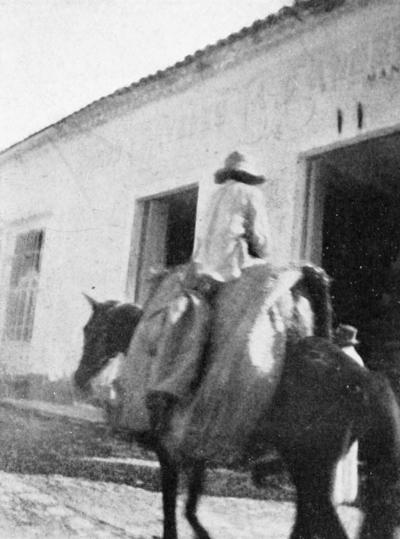
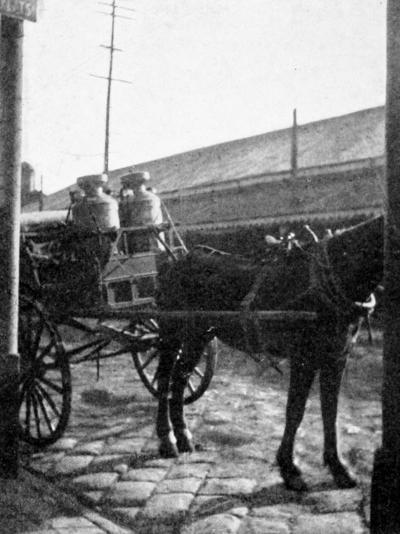
SELLING VEGETABLES—HAVANA
On the afternoon of the following day, I was riding on the tramway in
company with a friend, toward the suburbs on the hill, when a tall and
courtly Cuban came toward us. He took a seat next to my friend and
after a few moments’ conversation, turned to me and said in perfect
English that he had noticed me the night before in the box of
“Señora General Wood,” and, “that he had remarked me for a stranger
in Habana.” He said that he was shortly to leave the car, and asked
whether we would not like to visit an old Cuban mansion, in order to
see how people in Cuba lived in the style of the old regime.
Knowing the gracious manner of compliment habitual among the Spanish
peoples, I was going to thank him for the proffered courtesy and
decline; but my American friend, to my surprise, promptly accepted the
invitation. We left the car in company with our guide, Señor ——,
who belongs to one of the oldest Cuban families of French
descent,—and is a lawyer of distinction.
We approached a stately residence built of white marble, a series of
high marble pillars before a marble portico running along the front.
We passed through a small gate within a larger one in a high, wrought
iron fence, through a small glazed door in a large doorway and came
into a high, wide drawing room, extending across the front of the
house. All was white marble,—the floors, the wainscoting, the
doorways;—there was no woodwork anywhere. Handsome rugs lay upon the
floor and French rattan furniture of easy shapes was scattered about
the room. At one side we entered another lofty chamber, similarly
floored and wainscoted, used as a ladies’ boudoir, and thence passed
out across a wide piazza, into a beautiful and well-kept Spanish
garden. The walks were carefully laid out, the beds were full of
blooming plants—there were many palms of different varieties, and a
marble bath house with running water and a large swimming pool. Beyond
the flower garden, we entered a vegetable garden, close to which stood
a commodious stable; then returning to the house El Señor asked
whether we would like also to see the kitchen. We were shown into a
big square room, in the center of which stood an octagonal blue-tiled
“stove,” about ten feet across at the top, and four feet high, a sort
of porcelain table, containing many niches wherein to build small
charcoal fires, a single fire to cook each separate dish. An old negro
servant, a freed slave, was preparing the evening meal. We next
entered the large dining room, with old mahogany furniture, a long
table for banquets, and at one side a small table already set for the
evening meal. There was much handsome silver and cut glass upon the
high, old-fashioned mahogany sideboard. From the dining room we passed
into a library, the shelves filled with French and Spanish and German
and English books. Here the father of my host, an eminent judge, had
gathered about him much of the world’s choicest literature. Then we
came out into the wide patio, square and open to the sky, a fountain
playing in the middle, and many potted palms and flowering plants set
round about. The great house was of one story, and all rooms opened
upon the central court. None of the windows were sashed with glass,
and Venetian blinds kept out the light and too much air.
Here, in this sumptuous home lived for half a century one of the
distinguished families of Havana; here now were living the
grandchildren of those who built it.
Our host then led us up to the wide flat roof, whence stretched out
before us a panorama of the city, the bay and the open sea.
My friend, who had long lived in Havana, holding a prominent post in
government employ, had never before enjoyed the privilege of
inspecting so beautiful a Cuban home. As we parted that evening he
turned to me and said, “Perhaps the white duck trousers and blue
flannel coat, which were so conspicuous last night in the box of
Cuba’s Governor General, are to be thanked for this opportunity now
come to both of us.” El Señor had been pleased to show a courtesy to
the guest of the first lady of the Island.
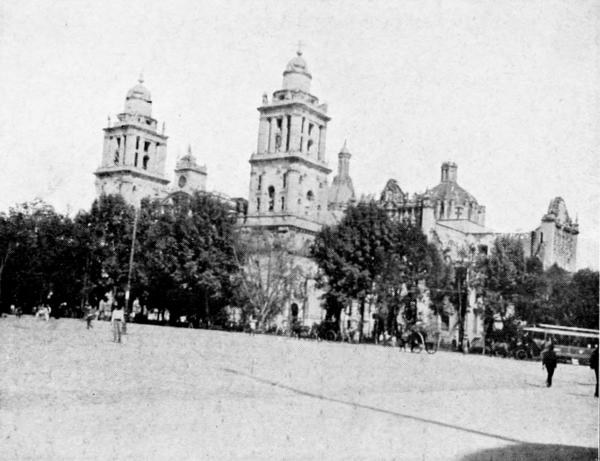
Neither the great cathedral of Havana, nor any of her churches, nor
the honored chapel where Columbus’ bones are supposed to have lain,
nor any of her public buildings, not even the “Palace” of the Spanish
Captain Generals, are of so striking and splendid architecture as one
sees generally in Mexico. The allurement and dazzling fame of the
Empire of Montezuma attracted thither all that was daring and forceful
and brilliant in old Spain. Even the wonders of Cuba and the Antilles
paled before the tales of fabulous wealth and treasure of the conquest
of Cortez. The noble churches and architecture of Mexico have no
rivals among the Cuban cities. Nor is there among the Cubans that
picturesqueness in garb, that striking brilliancy of coloring, which
one sees upon the streets of the Mexican cities. In Cuba you see no
scarlet and green and blue zerapes; no purple and blue and pink
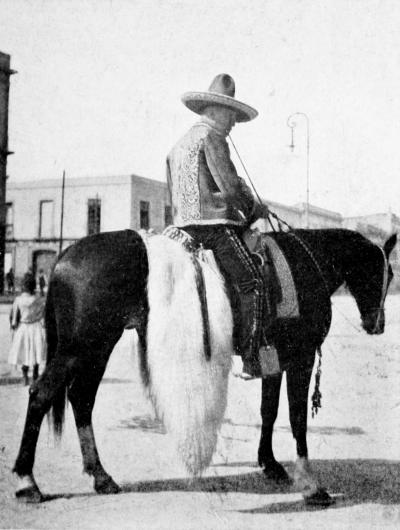
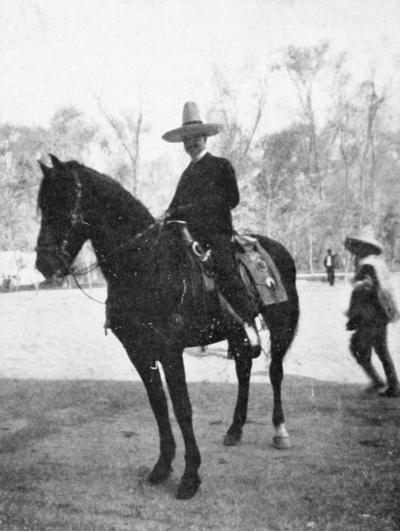
rebozos; no rancherros and caballeros in velvet jackets and
tight-fitting trousers, laced and spangled and buttoned with threads
of silver and gold; none of the splendor in coloring and dress of the
sixteenth century, which still clings to the street scene in
Mexico. Cuba in its outward aspects is distinctly, unromantically
modern. The black coat is de rigueur; the black hat or the panama
is the only covering for the head, and even conventional millinery has
begun to drive away the graceful mantilla from the brows of las
señoras. There is no poetry, no artistic coloring in the life scheme
of the Cuban. His face and movements lack the vivacity and alertness
inspired by the keen, quickening air of the Mexican Highlands. Even
the clothes he wears and the way he wears them bespeak the heavy, sea
level atmosphere he breathes. Nor has the language of the Cuban
preserved the ancient grace and forcefulness which distinguish the
almost classic Spanish of the Mexican. The Spanish spoken in Cuba has
added to its vocabulary a multitude of words from the French and
English of its neighbors, and from the provincial patois of the
formerly numerous Spanish soldiery.
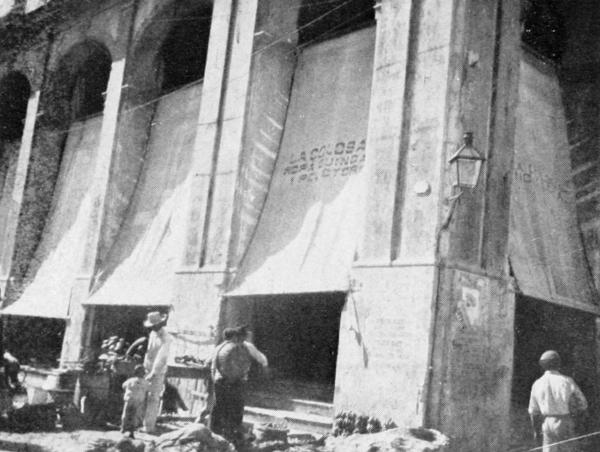
A CORNER OF THE MARKET—HAVANA
Another time we rode out to the attractive suburbs of Vendado, where
are many fine houses and extensive gardens, the greater part of them
built in the old Spanish style, but some of the newer buildings after
the fashion of modern American architecture. These last are less
attractive than those which the Spaniard has evolved from his
centuries of living in the latitudes of the tropics.