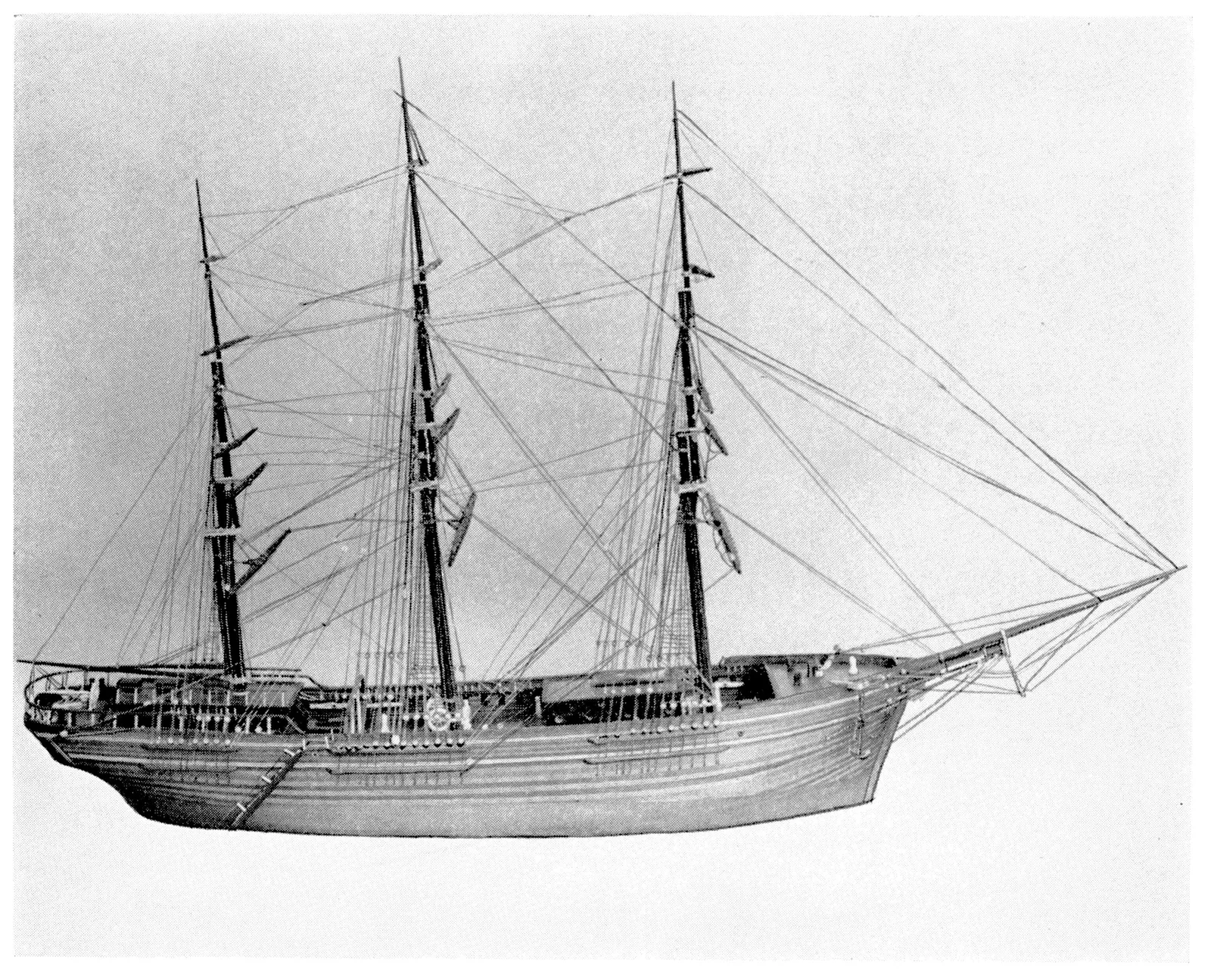
The beautiful mahogany, rosewood and ivory scale
model of the “Frank N. Thayer”, pictured on the
frontispiece, was built by Captain Starrett, her Master
1872-1877.
BY ANNE A. CRAIG
AT THE OPENING OF THE EXHIBIT OF
THE CAPTAIN HENRY ATHERTON STARRETT
COLLECTION, ON SEPTEMBER 10, 1961, THIS
BOOKLET IS PRESENTED IN COOPERATION
WITH THE FARNSWORTH MUSEUM OF
ROCKLAND, MAINE.
design and decoration
by VERA BOCK
Printed by The Courier-Gazette, Rockland, Maine
Copyright 1961, by the
William A. Farnsworth Library and Art Museum
The following story is a description of the author’s
life as experienced aboard various sailing vessels in
her early youth. Anne Atherton Starrett Craig,
daughter of Captain and Mrs. Henry Atherton Starrett
of Warren and later Belfast, was born on April 26,
1865 aboard the ship “T. J. Southard” which lay
anchored in Singapore Harbor. The first twelve years
of her life were spent sailing the Seven Seas with her
parents and her younger brother, Francis James Starrett.
In order to complete her education Anne spent
the following four years with her aunt in Belfast,
where she attended the public high school, and the
succeeding two years in Germany at a private school.
But meanwhile she joined her family for short Atlantic
voyages during the summer months.
Except for parts of the final page, which she had
not completed, the story is as she wrote it a few years
before her death in 1943. It is published with deep
affection and respect for its author by:
Her Daughters
Mrs. Mabel Atherton Bryant
Mrs. Harold R. Stone
Her Nephews
Col. Henry Atherton Starrett
Mr. Frederic Durham Starrett
Her Cousin
Mrs. William James Lindenberger
(Edith Atherton Vaughan Lindenberger)
Transcriber’s Notes
An American
ship lay at anchor in one of the great
harbors of the Orient. The young captain, as he stood
for a moment on the quarter-deck, ready for a business
trip ashore, glanced with special satisfaction at the
American flag flying above him. He felt that that
flag helped to insure full-fledged American citizenship
for me, his tiny daughter, just born that day in the
ship’s cabin. What mattered the foreign environment,
thought he, since I was born of American parents, on
an American ship, built and owned in the State of
Maine, and with the stars and stripes floating overhead?
From the very beginning my life was lived on
shipboard and when, some three weeks later, we sailed
away, homeward bound, my seafaring days began in
earnest.
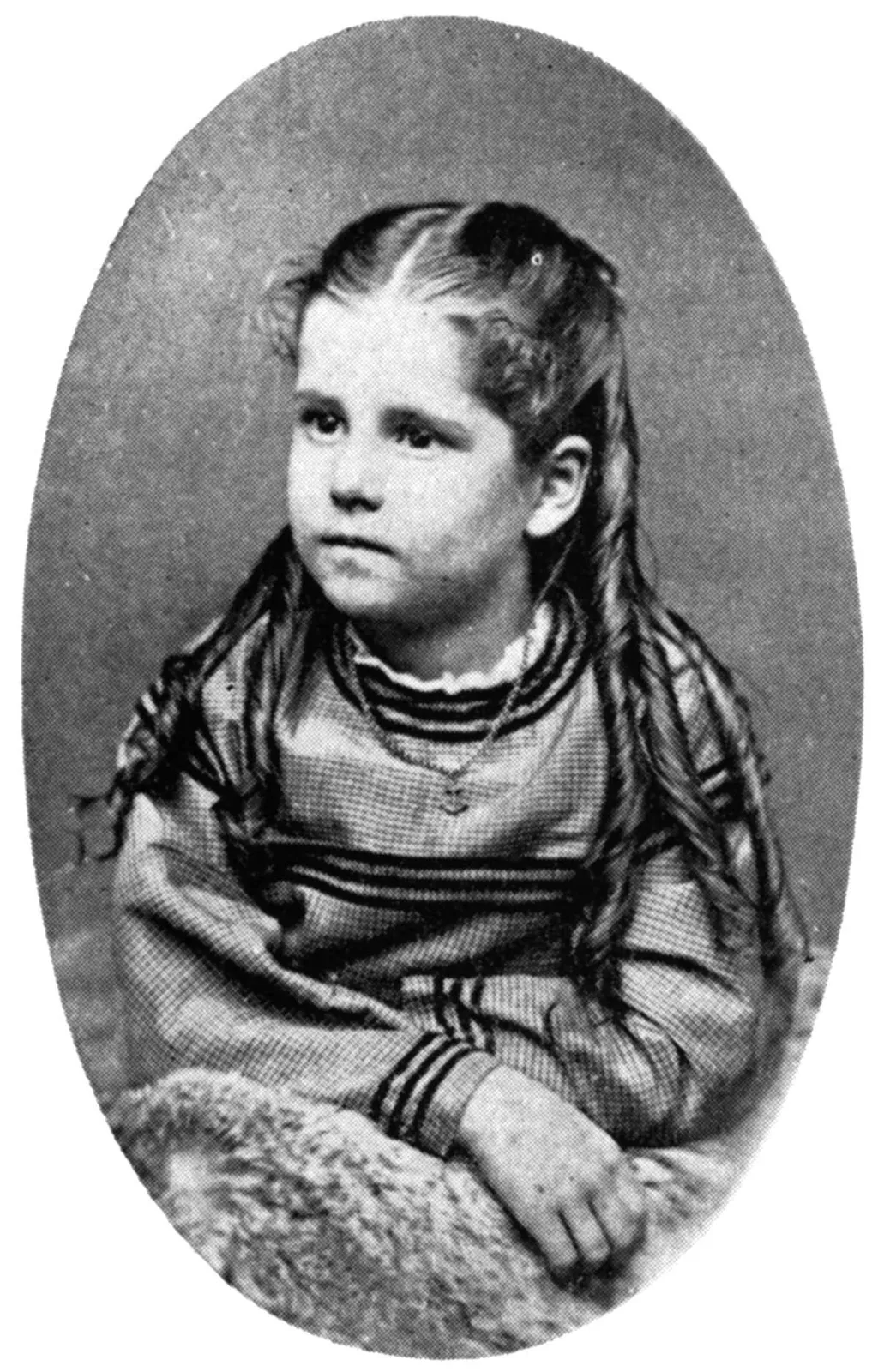
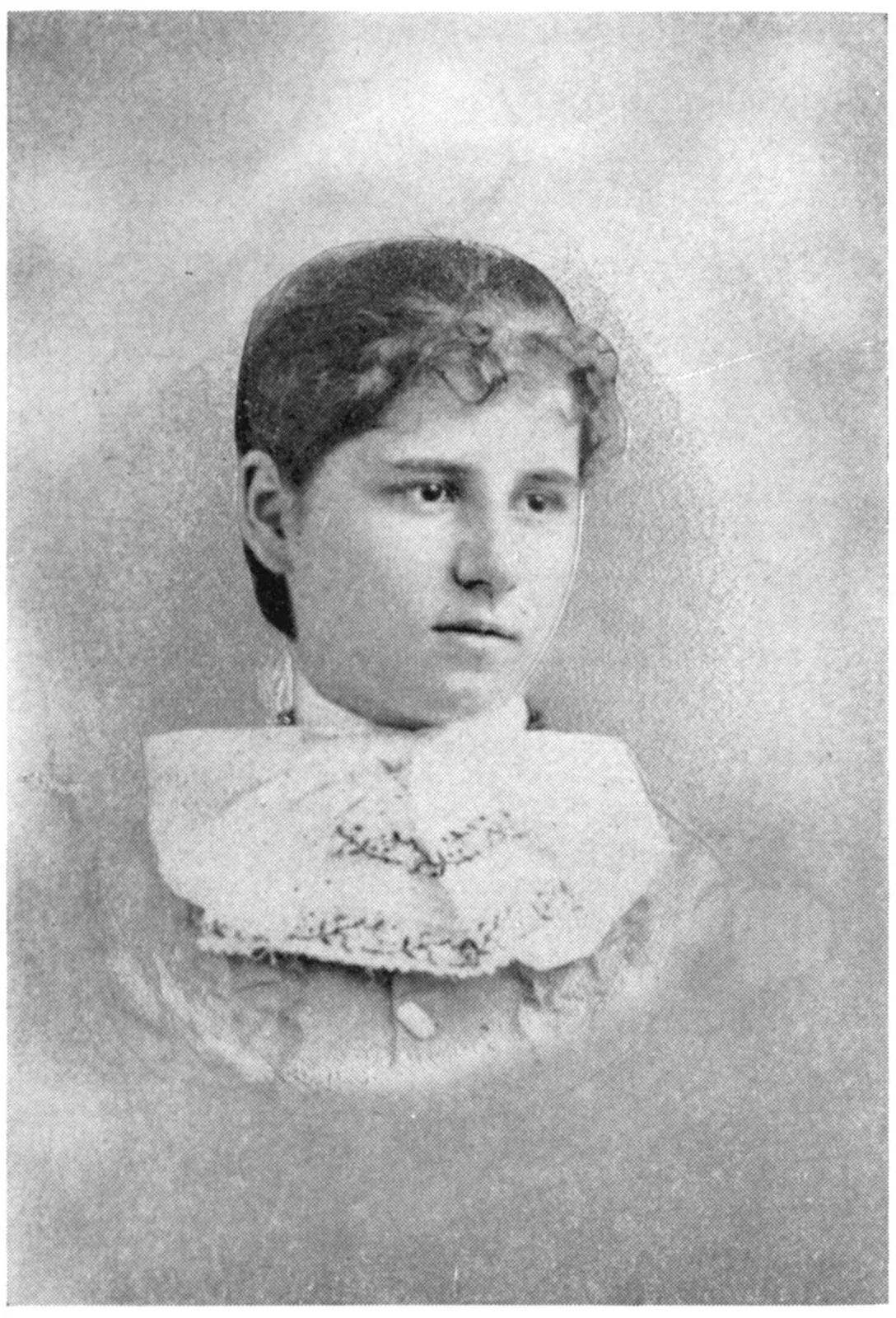
ANNE A. STARRETT AGED 8
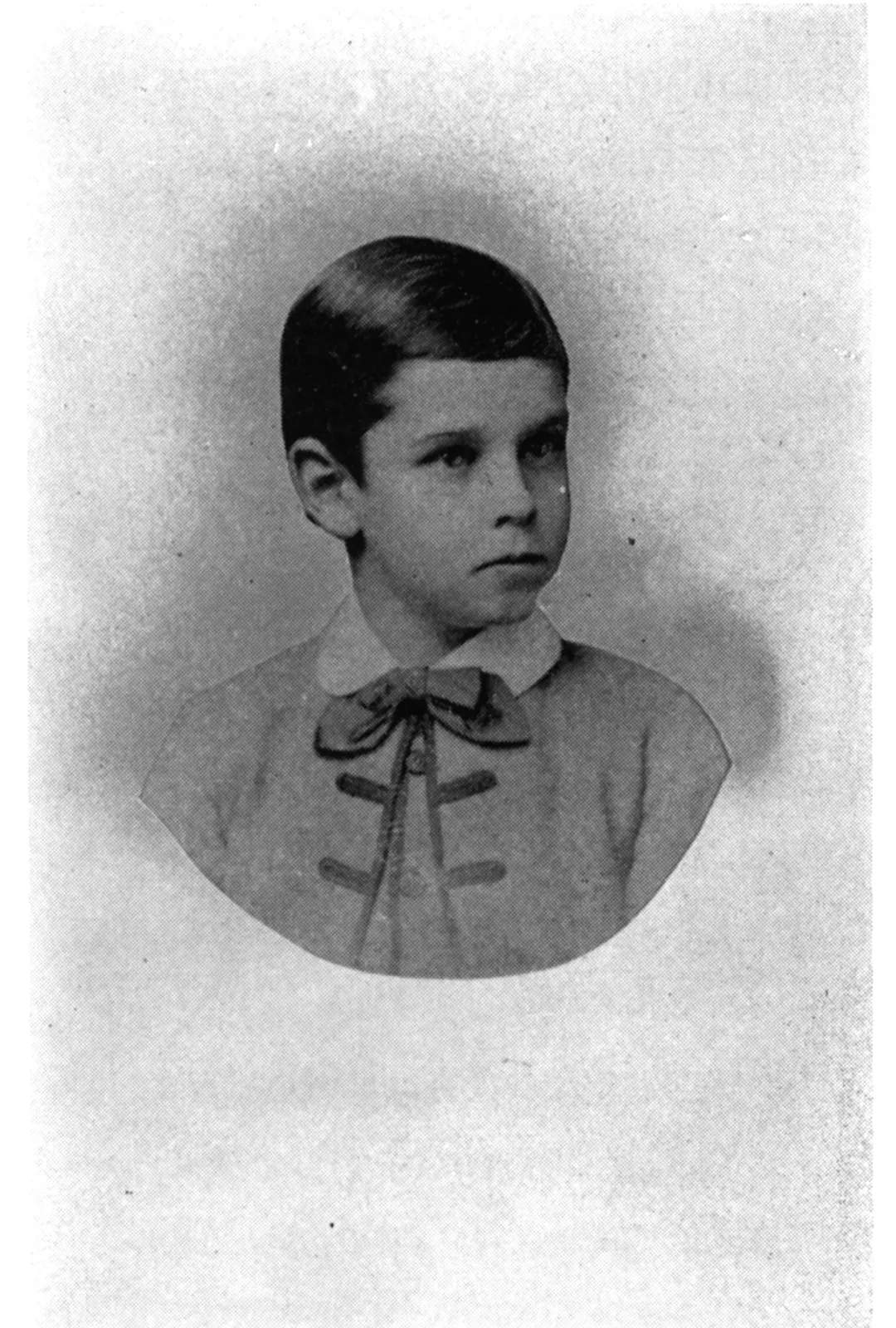
HER BROTHER FRANK
Those childhood voyages have left many happy
memories-—There are no longer any such experiences
for any child-—The day of sailing ships is past. But
in the last half of the nineteenth century the square-rigged
clipper ships were things of beauty and of service.
They were carriers of merchandise around the
world and it was no uncommon thing for a captain
to have his family on board with him. Captains were
proud of their ships, and as a class, they were men of
ability and of resource. They needed to be so, for every
sort of task was theirs, from navigation to surgery. I
have known my father to extract an aching tooth,
prescribe medicine for an ailing sailor, anoint and
bandage sore hands, and once he even set a broken
leg. He had always a keen sense of humor, and I still
recall his amusement when some sailors requested the
same sort of ointment which they had used before and
found so healing. It was some my father had concocted
himself of very simple ingredients, and the recommendation
of the sailors amused him considerably.
The ship had a “medicine closet” supplied with staple
remedies, and our library contained a medical book
describing every disease known to man with the required
treatment. This was all very well in its way but
it needed to be supplemented with a large slice of
Yankee common sense.
My earliest recollections are of the little cabin which
was “home” to us, our living room. It was finished
with the highly polished hard wood which seems such
a distinctive feature of ships cabins. The floor, though
carpeted when we were in port, was bare when we
were at sea, and was carefully scrubbed each week.
The furniture, (center-table, chairs, sofa, sewing-machine)
was screwed down securely to guard against
the rolling and pitching of the ship. The skylight in
the center was fitted at either end with shelves which
held my mother’s plants. She found that geraniums
and fuchsias were hardy enough to thrive and blossom
in the salt air. Wandering Jew too grew well and was
ornamental in a hanging pot. In the middle of the
skylight hung my yellow canary, swinging happily
with the motion of the ship, unmindful of the vagaries
of wind and weather which play so large a part in the
life of a sailor. Our family was never timid; I do not
recall ever hearing a word or hint of fear. But necessarily
weather rules life on shipboard. Was it calm
and pleasant? I could busy myself with jump-rope,
or top, or toys of any kind, on the house or on the
quarter-deck; I could use the swing which my father
put up for me on the main deck just outside the door
of our forward cabin. I could set dolls and playthings
about on the cabin floor. But when it was stormy and
rough, that was indeed a different matter. Things
could not be left scattered about. Everything that
was loose must be secured. I early learned, in sailor
phrase, to stow my belongings carefully. The little
shelf assigned to me, across the foot of my bunk, was
filled with boxes, my doll’s stove, and like treasures,
and all were so carefully stowed that in roughest
weather nothing could come adrift. Beds were of
course built in bunk fashion and a board, nearly a
foot high, fitted into grooves in front of my bunk to
prevent my rolling out. Our dining-table was fitted
with a rack, a compartment at each place holding a
plate. Down the center of the table was a swinging
shelf which held safely our glasses of water or cups
of coffee.
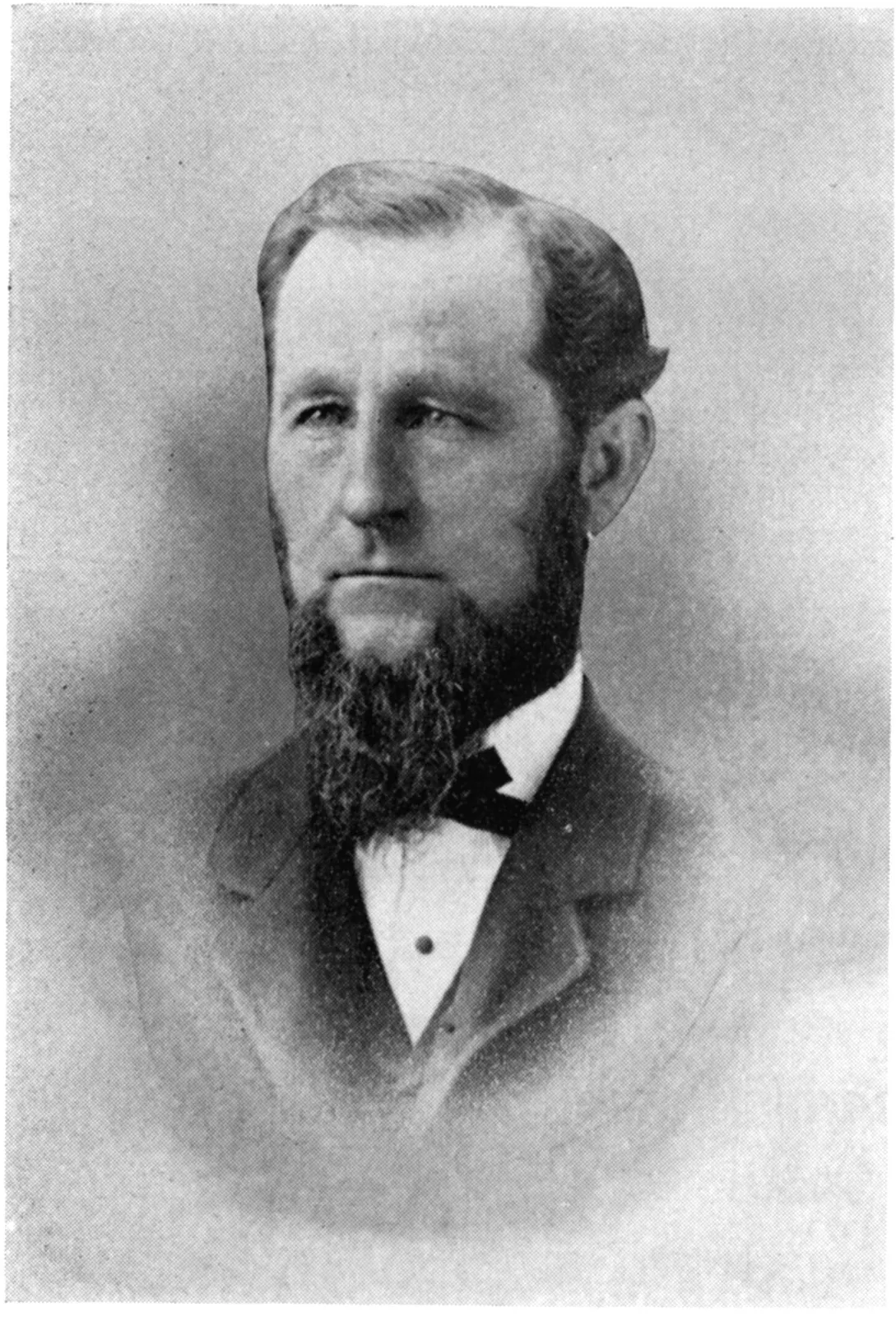
CAPTAIN HENRY ATHERTON STARRETT
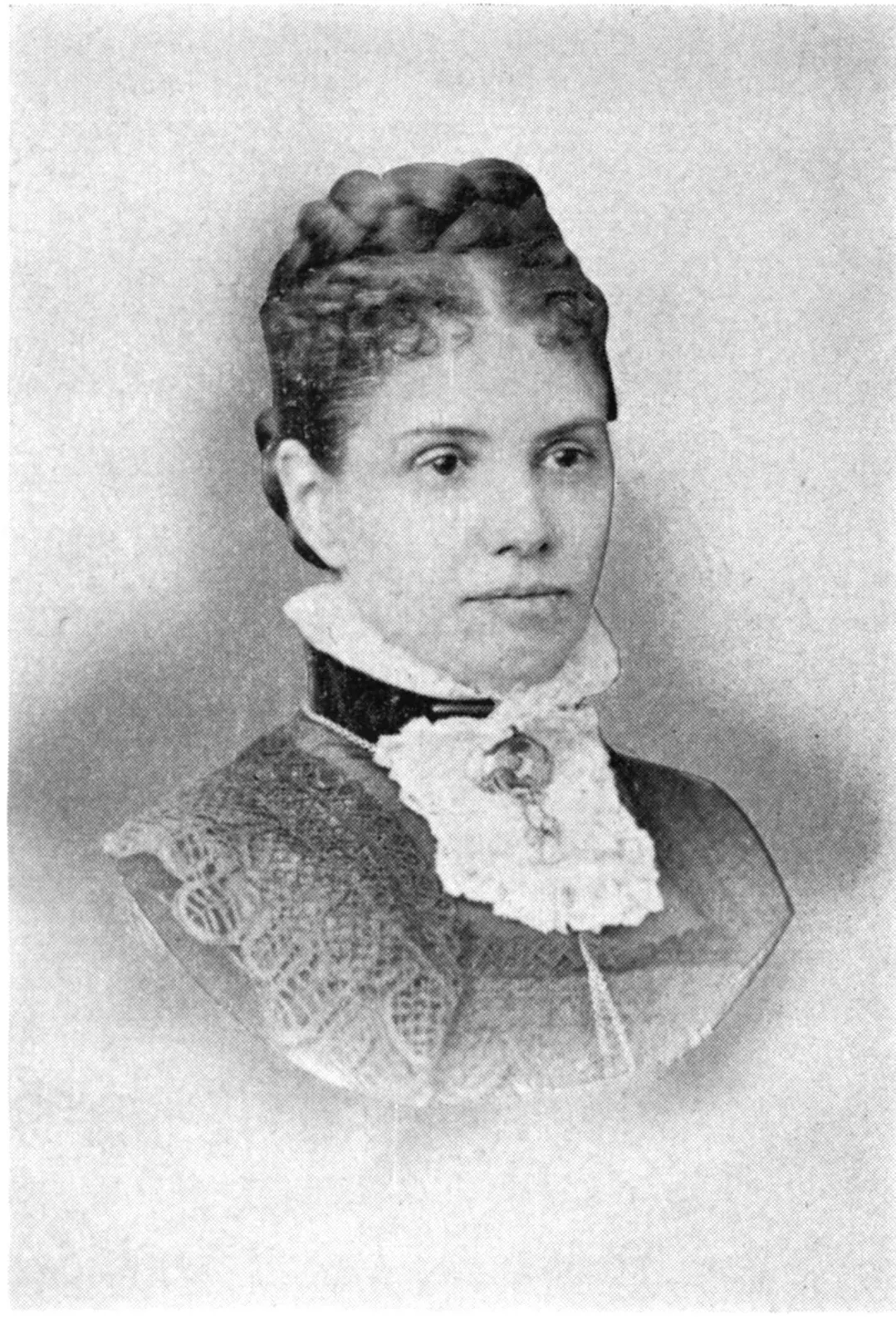
MRS. STARRETT
ANNE AGED 15
In a severe storm when the sea was very heavy, our
windows had their thick wooden shutters closed. Since
this left us in utter darkness the little swinging lamps
would be lighted and my mother and I would be comfortably
established on the bed with books, or perhaps
we might sit on the floor, braced between the bookcase
and the wall, or in some other similar nook.
It was sometimes possible to stand at the most
sheltered of our three outside doors and to watch
the rush and force of the sea-—a fascinating sight!
Such tremendous power! Foam-crested rollers coming
on in unending succession, and each great wave seeming
higher than the last, when suddenly a deluge of
water poured over the rail, the decks would be awash,
and as the ship rolled and pitched the water would
swash back and forth, carrying with it everything
movable. Sometimes a rope, securely fastened at the
ends, would be stretched the length of the deck, a safety
line for the sailors in case of need. The men, in high
rubber boots, oilskin suits, and sou’westers, kept as
dry as they could. A man might add a belt of rope,
humorously known as a “soul and body lashing”, to
keep his coat more snug and tight. In such weather,
and indeed in all weathers a burden of responsibility
rested upon the captain. How much sail should he
take in? Just what slight change of course would
enable the vessel to meet more easily the wind and the
sea? The safety of the ship and the welfare of the
crew depended on the captain’s skill and judgment.
How often I have watched my father come down from
the deck to consult the little barometer which hung
on the wall in his room. Back and forth he went at
intervals throughout the day or night, watching closely
for any sign of change in wind and weather.
The howling of the gale, the roar and pounding of
the waves, the creak and rattle of the rigging, the
lurching of the ship, are all closely associated in my
mind with that small barometer and my father’s unfailing
watchfulness-—when at last the barometer
started up, there was hope for a cessation of the storm,
and daily life would gradually slip back into its usual
routine.
On shipboard bells tell the hours and call to the
appointed tasks. Our ship carried a crew of 16 men,
with three officers, and a cook, a steward and a carpenter.
The crew was divided into two watches which
changed at eight bells, i.e. at eight and twelve and four
o’clock. The time from four to eight P.M. was subdivided
into two hour periods, known as dog-watches;
the watch changed then at six o’clock too, so as to
alternate the periods-—the men on duty before midnight
on Monday would be on duty after midnight on
Tuesday.
The dog-watches were the leisure time of day, supper
was served just before six to one watch, just after
six to the other. The men were free to amuse themselves
as they chose. Some one might play an accordion
which seemed to be a favorite instrument with sailors,
or they could always swap sailor yarns.
“Seamen’s Libraries” were supplied to ships and
the men could take books whenever they cared to ask
for them. Also chests of clothing known as “slop
chests” were furnished by the captain and the men
could buy needed garments and have the price charged
against their wages. We had three such chests, made
by the ship’s carpenter under my father’s supervision,
and they are now counted among the interesting souvenirs
of our sea voyages, along with charts, a spy-glass,
and a sextant. Our carpenters were usually Swedes
and were good workmen.
My father treated his men well and seldom had
trouble with them, but the propensity of sailors for
growling is proverbial. If they came aft to complain
of the food, they would be told just what the United
States law allowed them, so many pounds per week
of salt beef, salt pork, hard tack, white flour, rice,
beans, and so on. A few days of legal rations would
convince them that they were better off before, and
all would be again harmonious. The basis of the weekly
menus was like this-—Monday, salt beef; Tuesday,
baked beans; Wednesday, rice and curry; Thursday,
salt pork; Friday, baked beans; Saturday, salt fish;
Sunday, fish and canned meat. With these there were
always potatoes in plenty, sometimes other vegetables
or thick pea soup with croutons, or canned soups.
Rice and curry was my favorite dish, and fritters,
served for dessert, appealed to me-—They were large,
buttered, sugared, rolled like jelly roll. Plum duff,
always associated with sailor fare, was good with hot
sweet sauce.
Lime juice, tamarinds, and some substitute for
lemon juice were among our supplies. A limited quantity
of lemons and oranges might be included, preserved
in this effective way: Each one, carefully
wrapped in paper was tied, and a loop made of the
string. One by one they were dipped into hot pitch
and hung up. The pitch coated the paper completely,
making an air-tight covering.
Fresh meat and potatoes were necessary for the prevention
of scurvy. On long voyages we often had a
pig which could be butchered in the cool weather of
the south Atlantic to furnish a supply of fresh pork. A
small flock of hens was useful in the same way. Fish
might be caught under favorable conditions and bonita
was a welcome addition to our menu. Sharks were no
help as food, but sailors are enthusiastic over catching
the hated man-eaters-—Sometimes one was caught
with hook and line, the bait being red flannel, or one
might be harpooned.
We often had Chinese cooks and stewards, and
found them satisfactory. One of our Chinamen boasted
that he could make seventeen kinds of bread. Another
one is remembered for quite a different reason. He had
a feud with the second mate, and one day when the
mate was at dinner the steward struck him, cutting
his head. The mate retaliated by throwing the first
dish that came handy. Doors were standing open between
the forward cabin and our cabin. My father
reached for the loaded revolver which was always in
readiness at the head of his bed, and springing over a
sofa which stood across the nearest open doorway, he
appeared before the two angry men. The revolver and
his threat to shoot the first man that moved, calmed
them somewhat, and they were ordered to their rooms
for a couple of day, or until they could keep the peace.
The routine of daily life must have been much the
same on all ships. Breakfast at seven bells (7:30
o’clock) dinner at seven bells again (11:30 o’clock).
The noon hour was always important. Then captain
and mate came on deck with their sextants for the
daily solar observation, which should determine the
exact location of the ship. Latitude and longitude were
carefully reckoned, and the result was recorded on the
chart, with the date. Then the clocks were set; ahead
if we were sailing eastward, or back if we were heading
west. If the ship had made a good day’s run, say 160
miles or more, there was general satisfaction.
In cloudy weather when the sun was not visible
for an observation, navigators must figure their position
by “dead reckoning”. This meant figuring the
course steered and the mileage per hour as shown by
the log. With careful calculation it could be done very
accurately. On one short, gray Atlantic voyage we
sighted land on the fourteenth day, just at the time
and place indicated by the dead reckoning.
Many times we crossed the Atlantic-—to Liverpool
often, to London, Cardiff, Bristol, Havre, Genoa, Antwerp
and to Baltic ports, sailing on return voyages to
New York, Boston, Philadelphia, Baltimore, Norfolk,
Charleston or New Orleans. While the ship was discharging
and loading again in these nearer American
ports, my mother and I usually managed a visit to the
small New England town which we called “home”,
because there my mother’s relatives lived, with their
latch-string always out to us. One autumn it was decided
that we should spend the winter there, my father
making the trip to Liverpool without us. My first taste
of school and of a New England winter was a pleasant
adventure to me. But my father’s adventure was the
most disastrous of all his life as sea captain. In late
November there came to us from the owners of our
bark, “Egeria”, a telegram; “Cable dispatch. Egeria
totally lost. Captain S —— safe at Waterford, no particulars.”
The particulars, which came to us later, were these—Off
the Irish coast in storm and fog the vessel had
been driven ashore in spite of all that could be done.
The anchors would not hold. The shore was sheer rock.
The ship at the last was thrown by each oncoming
breaker against a high detached boulder-—some of
the men had already been washed overboard. My
father saw only one possibility of escape-—to jump
onto that rock as the ship was dashed against it. He
watched his chance, and succeeded in keeping his footing
on the rock. The little group of men eagerly watching
him from the deck set up a shout of cheer and one
by one they followed his lead. But even then they
found themselves still far from safe-—on an isolated
rock, with the tide rising toward them and the fog still
dense. If only the fog would lift! And it did lift, and
the vigilant coast guards, ever on the look-out for
ship-wrecked sailors, saw these men in distress. They
shot them a line, and soon were able to bring them
all safe to shore. Not long afterward the tide had
completely covered the rock on which the men had
stood. My father reached home just in season to join
the large family gathering about the Christmas tree.
And the next fall saw us sailing again, on a long voyage
this time, bound around Cape Horn for San Francisco.
We were all going, including my small brother. It was
nearly four years before our next visit to New England.
I had an eighth birthday in San Francisco, a ninth one
at sea, and a tenth one in Liverpool. On previous long
voyages our ship had been at Callao, where my mother
gathered and pressed beautiful specimens of sea-mosses:
At Rio Janeiro, where to her great delight
she found an old school-mate; at Rangoon, where the
mercury in her cabin registered 96 day and night; and
at various other ports,-—Singapore, Chinchi Islands,
Acapulco.
It is on long voyages that one comes to really know
the sea in all its varying moods. Between the two
extremes of storm and calm, are the normal commonplace
days when with a fair moderate breeze the ship
makes her way smoothly and swiftly through the
glistening, dancing blue water, leaving astern a straight
white wake which one loves to watch. There are other
days when the wind is ahead, “dead ahead”, and to
make even a few miles of actual progress the ship
must tack back and forth in zigzag lines. A tedious
game, requiring skill and patience. To my carefree
child mind it was always rather thrilling to hear the
shout “Call all hands, Bout ship”, and to see the men
hurrying out, each one to his assigned post. Then came
the hauling of ropes, the rattle of the spars, and the
flapping of the sails as the ship bore away on the new
tack.
The sailor’s chanties were always of interest, and
my brother early learned to join in the lusty songs,
particularly “Blow the man down, Johnny, Blow the
man down, Way, Hey, blow the man down.” That
was his special favorite and it certainly had a swing
and rhythm about it, which helped the men to give
the needed “pull all together.”
In my experience Cape Horn was never as black as
it is painted. One recollection of it is of the picturesque
sunset light on the barren rocky islands along the straits
of Le Maire, and of our watching it from the deck.
The next morning as we turned northward in the
Pacific we sighted a small English vessel with signals
set, meaning “I am on fire.” Further signals gave the
information that she was loaded with coal which had
taken fire from spontaneous combustion. The crew had
been fighting the fire without much success, and asked
if we had a force pump to give them. We had one—-a
row-boat was lowered and the mate, with sailors to
row, carried it to the other ship. We lay by them until
the next morning in case they should need further
help. Then another ship was sighted, and strangely
enough proved to be an English vessel of the same
ownership as the first one. She of course offered to
stay by her sister ship, and we sailed on. We heard
afterwards that the fire was extinguished and the ship
reached port safely, only to be sunk in the English
Channel on her next voyage.
It is a rare thing indeed that a captain at sea can
have a call from a personal friend. But this was one
of the pleasant happenings which came to us. We
sighted a ship commanded by a special friend. A calm
pleasant afternoon made it possible to row over to our
ship, and the captain availed himself of this opportunity
for a neighborly call at sea.
In the tropics come those dead calms so trying to
the soul of a mariner: the poet’s line “As idle as a
painted ship upon a painted ocean,” is no longer a
figure of speech, but a realistic description of the plight
of a vessel in such a calm, and somber thought, though
the ship stands still, expenses do not—they are mounting
steadily and alarmingly. This quiet weather was a
time for extras and the crew was kept busy with repairing
of sails, splicing of ropes, painting of woodwork,
tarring the rigging, polishing the brass, holystoning
and oiling the decks. All these things could be
done toward making our craft trim and shipshape. My
father could work at odd minutes on the ship model
which was for seven years his special hobby.
The model is now a valued family heirloom, admired
especially by nautical people who appreciate
its fine workmanship and perfection of detail. We
helped him in the twisting of fine wire or machine silk
for the ropes, and in the polishing of the ivory blocks,
capstans, capstan bars, belaying pins, and other small
articles. Two little tables, a foot-stool and an inlaid tray
are other souvenirs from the ship’s workshop.
A problem arose one Christmas time, when we were
still at sea instead of in port as had been expected.
What to do for a small child who confidently anticipated
Christmas gifts? My mother turned to her
sewing-machine, my father to his carpenter’s shop. Results
were eminently satisfactory. On December
twenty-fifth there appeared a wooden train of cars
with engine, tender, passenger and freight cars, all
complete and carefully painted; a doll’s cradle, fitted
with bedding, and an old doll transformed by her
layette into a new baby-doll to fit the cradle.
Animals were often a part of life on shipboard; cats
for ridding us of mice and rats, dogs for companionship.
My tiny white Skye-terrier was a most aristocratic
creature. In his estimation the quarter-deck belonged
to the captain and the captain’s family only, and to
no one else. The sailors must have hated him. Whenever
one came aft to take his turn at the wheel, out
came “Friday” barking, growling, and nipping at the
man’s heels.
My brother had a fine black retriever and her family
of eight pups were an enlivening feature of one passage.
In Calcutta a small Himalayan pony was added to our
circle and voyaged with us across the Indian and
Atlantic Oceans.
Among other adventures of that four-year voyage
were a stop at Honolulu, where the tropical fruits delighted
us, and a brief visit at a tiny island of the
Pacific where we loaded guano to be used as fertilizer.
On this island lived only one white family, with the
natives employed by them in the guano trade. The
shore was lined with nests of the sea-birds, and they
were so fearless that one could almost come within
arm’s length of them.
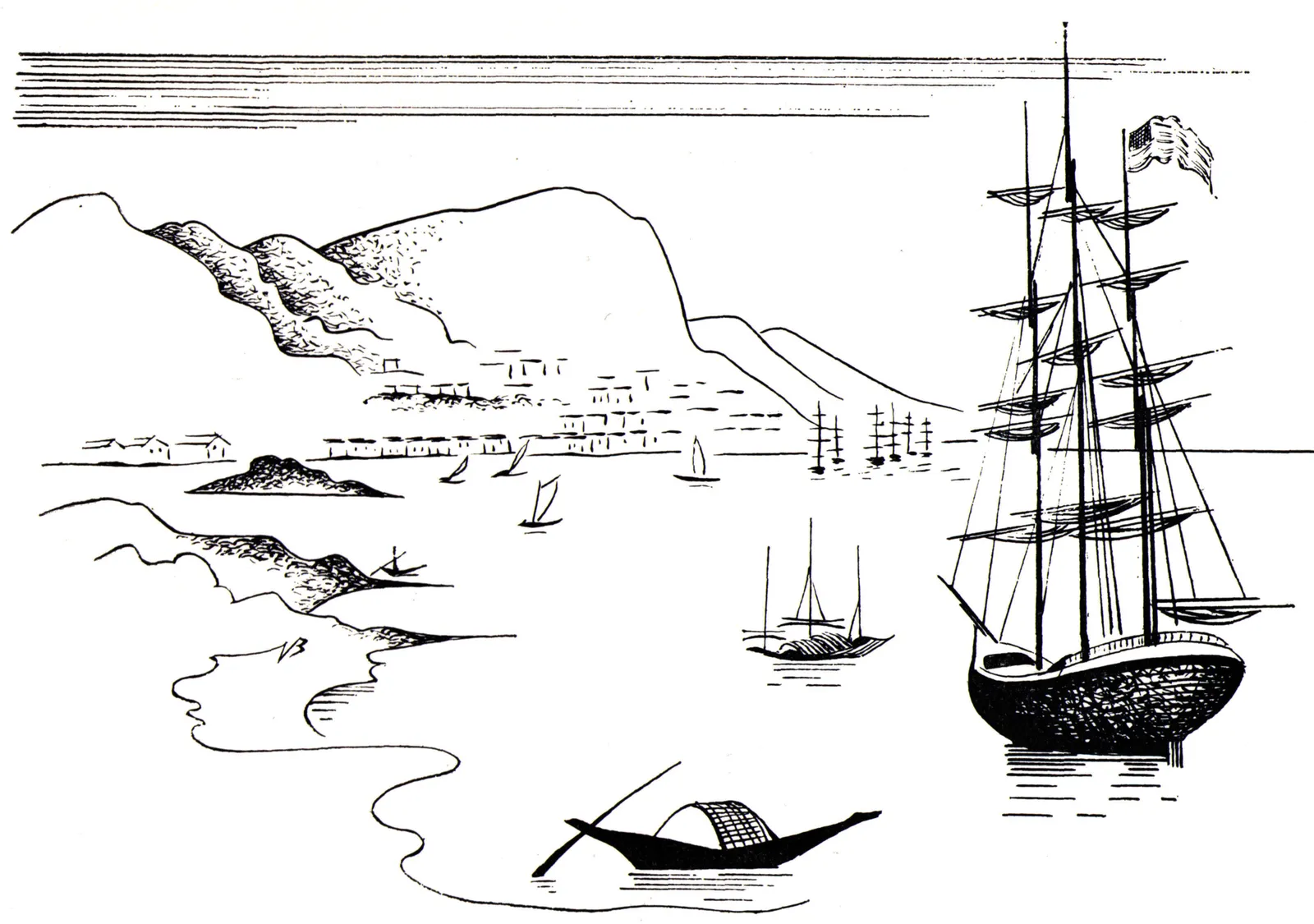
On again to the great Chinese port of Hong Kong,
where the family life lived on the small boat of our
Chinese Boatman attracted my special attention,-—a
tiny Chinese baby boy, dressed in the same costume as
the older children, had the usual little coin sewed on
his cap to ward off the evil spirits.
Pleasant memories of our stay in Calcutta are associated
with the missionaries there. Dr. Thoburn,
afterward Bishop in the Methodist Church, was
friendly to us, and a group of Episcopalian workers
helped us to get a glimpse of native life. I was allowed
to accompany one of them on a visit to a Zerana home
and to a hospital. The elaborate Indian temples, the
street scenes, and the native forms of worship on the
banks of the sacred River Ganges form a composite
picture of misery and superstition in my recollection.
After Calcutta there were only two more ports to
make: Liverpool and New York. And then of course
it was on to, where the Warren and Belfast
relatives lived.
Soon afterward a ship, the “Levi B. Burgess”, was
built in Thomaston, Maine, and my father was given
command of her. The launching was a great event in
our family. We were all launched on board, together
with some of the relatives who were also guests at a
family breakfast in the immaculate new cabin. In this
new ship we again rounded the Horn, this time on our
way to Astoria, on the Columbia River. But that is
another story.
Six years more-—and we exchanged our ship’s cabin
for a New England homestead, (14 High Street, Belfast),-—our
seafaring days were over.
Illustrations have been moved to appropriate locations in the text.
Perceived typographical errors have been silently corrected.