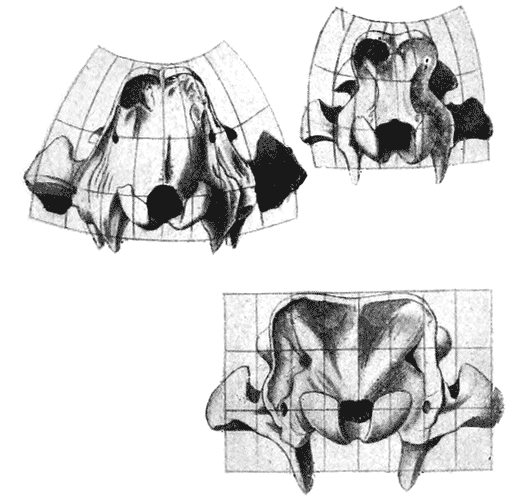
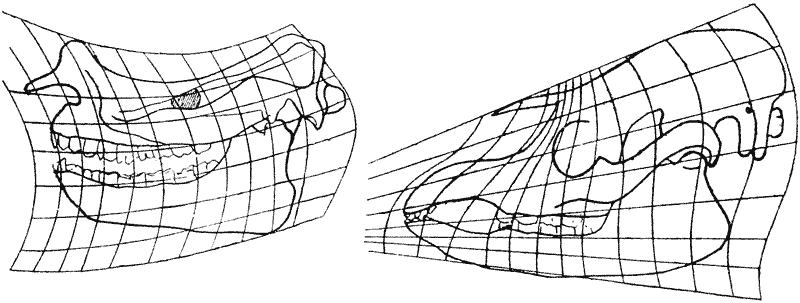
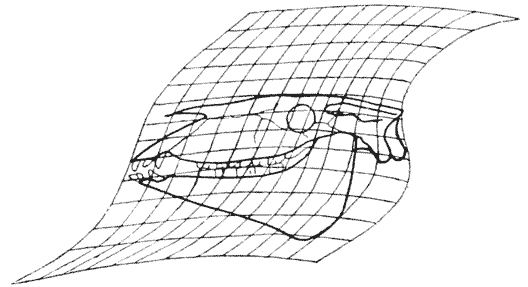
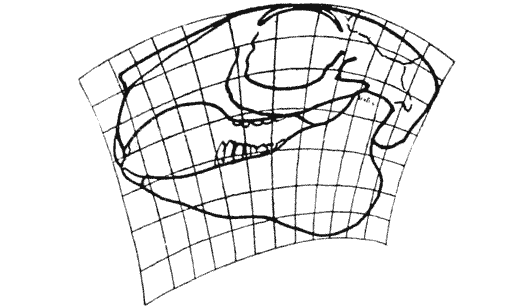
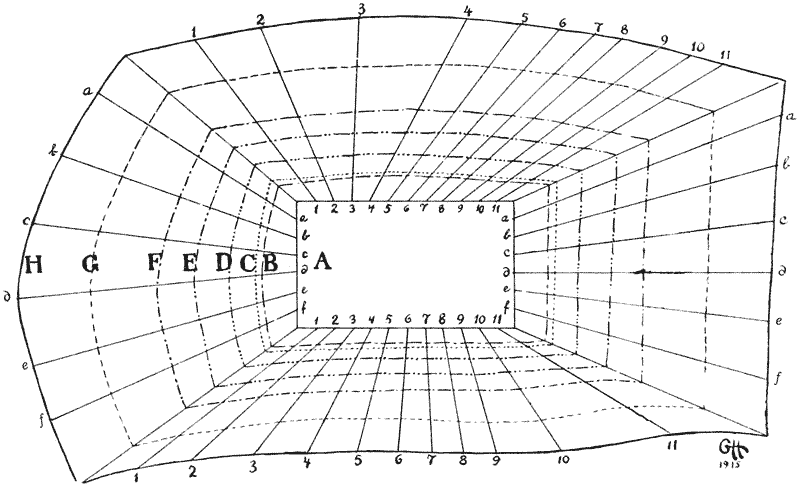
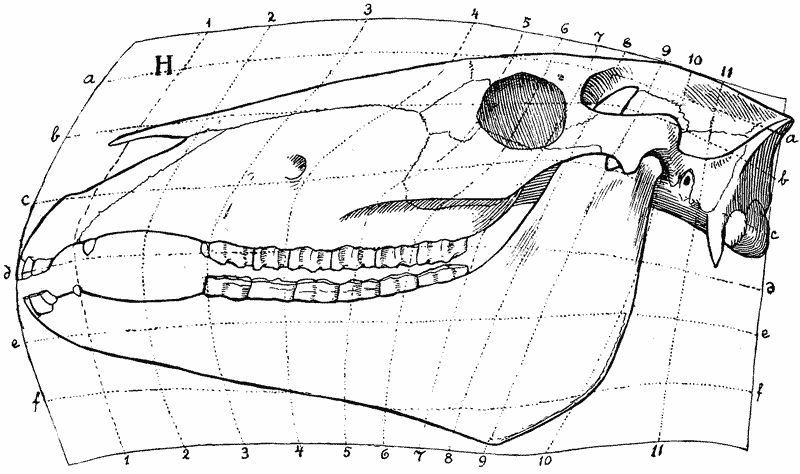
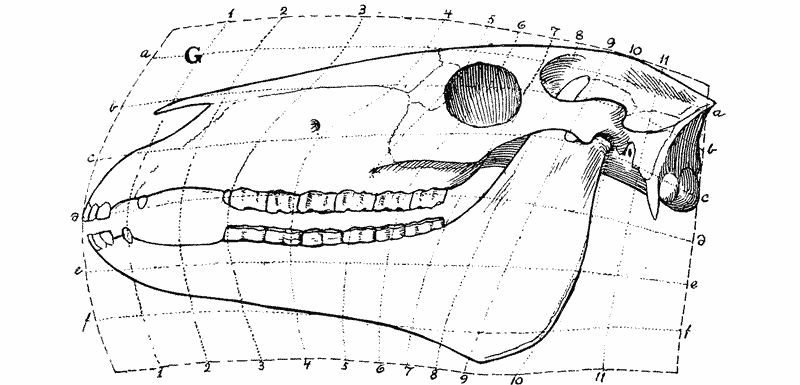
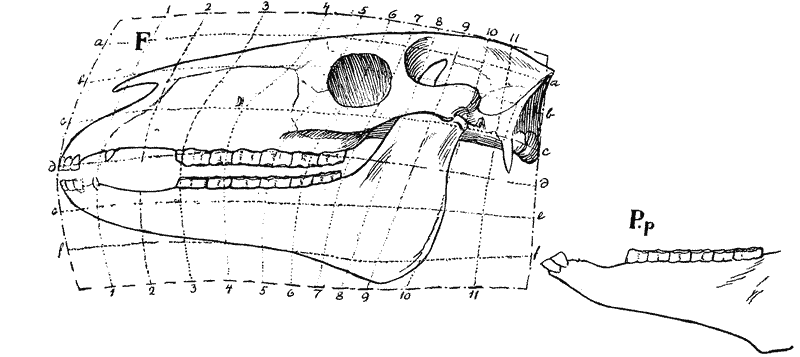
In the beginning of this book I said that its scope and treatment
were of so prefatory a kind that of other preface it had no
need; and now, for the same reason, with no formal and elaborate
conclusion do I bring it to a close. The fact that I set little store
by certain postulates (often deemed to be fundamental) of our
present-day biology the reader will have discovered and I have
not endeavoured to conceal. But it is not for the sake of polemical
argument that I have written, and the doctrines which I do not
subscribe to I have only spoken of by the way. My task is finished
if I have been able to shew that a certain mathematical aspect of
morphology, to which as yet the morphologist gives little heed, is
interwoven with his problems, complementary to his descriptive
task, and helpful, nay essential, to his proper study and comprehension
of Form. Hic artem remumque repono.
And while I have sought to shew the naturalist how a few
mathematical concepts and dynamical principles may help and
guide him, I have tried to shew the mathematician a field for his
labour,—a field which few have entered and no man has explored.
Here may be found homely problems, such as often tax the
highest skill of the mathematician, and reward his ingenuity all
the more for their trivial associations and outward semblance of
simplicity.
That I am no skilled mathematician I have had little need to
confess, but something of the use and beauty of mathematics I
think I am able to understand. I know that in the study of
material things, number, order and position are the threefold clue
to exact knowledge; that these three, in the mathematician’s
hands, furnish the “first outlines for a sketch of the Universe”;
that by square and circle we are helped, like Emile Verhaeren’s
carpenter, to conceive “Les lois indubitables et fécondes Qui sont
la règle et la clarté du monde.”
For the harmony of the world is made manifest in Form and
Number, and the heart and soul and all the
poetry of Natural {779}
Philosophy are embodied in the concept of mathematical beauty.
A greater than Verhaeren had this in mind when he told of “the
golden compasses, prepared In God’s eternal store.” A greater
than Milton had magnified the theme and glorified Him “who
sitteth upon the circle of the earth,” saying: He measureth the
waters in the hollow of his hand, he meteth out the heavens with
his span, he comprehendeth the dust of the earth in a measure.
Moreover the perfection of mathematical beauty is such (as
Maclaurin learned of the bee), that whatsoever is most beautiful
and regular is also found to be most useful and excellent.
The living and the dead, things animate and inanimate, we
dwellers in the world and this world wherein we
dwell,—πάντα γα μὰν τὰ γιγνωσκόμενα,—are
bound alike by physical and
mathematical law. “Conterminous with space and coeval with
time is the kingdom of Mathematics; within this range her
dominion is supreme; otherwise than according to her order
nothing can exist, and nothing takes place in contradiction to her
laws.” So said, some forty years ago, a certain mathematician;
and Philolaus the Pythagorean had said much the same.
But with no less love and insight has the science of Form and
Number been appraised in our own day and generation by a very
great Naturalist indeed:—by that old man eloquent, that wise
student and pupil of the ant and the bee, who died but yesterday,
and who in his all but saecular life tasted of the firstfruits of
immortality; who curiously conjoined the wisdom of antiquity
with the learning of to-day; whose Provençal verse seems set to
Dorian music; in whose plainest words is a sound as of bees’
industrious murmur; and who, being of the same blood and
marrow with Plato and Pythagoras, saw in Number “la clef de la
voûte,” and found in it “le comment et le
pourquoi des choses.”
1
These sayings of Kant and of Du Bois, and others like
to them, have been the text of many discourses: see, for instance,
Stallo’s Concepts, p. 21, 1882; Höber, Biol. Centralbl.
XIX, p. 284, 1890, etc. Cf. also Jellett, Rep. Brit. Ass.
1874, p. 1.
2
“Quum enim mundi universi fabrica sit perfectissima, atque
a Creatore sapientissimo absoluta, nihil omnino in mundo contingit
in quo non maximi minimive ratio quaepiam eluceat; quamobrem dubium
prorsus est nullum quin omnes mundi effectus ex causis finalibus, ope
methodi maximorum et minimorum, aeque feliciter determinari queant
atque ex ipsis causis efficientibus.” Methodus inveniendi, etc. 1744
(cit. Mach, Science of Mechanics, 1902, p. 455).
3
Cf. Opp. (ed. Erdmann), p. 106, “Bien loin d’exclure les
causes finales..., c’est de là qu’il faut tout déduire en Physique.”
4
Cf. p. 162. “La force vitale dirige des phénomènes qu’elle
ne produit pas: les agents physiques produisent des phénomènes qu’ils
ne dirigent pas.”
5
It is now and then conceded with reluctance. Thus
Enriques, a learned and philosophic naturalist, writing “della economia
di sostanza nelle osse cave” (Arch. f. Entw. Mech. XX,
1906), says “una certa impronta di teleologismo quà e là è rimasta, mio
malgrado, in questo scritto.”
6
Cf. Cleland, On Terminal Forms of Life, J. Anat.
and Phys. XVIII, 1884.
7
Conklin, Embryology of Crepidula, Journ. of Morphol.
XIII, p. 203, 1897; Lillie, F. R., Adaptation in Cleavage,
Woods Holl Biol. Lectures, pp. 43–67, 1899.
8
I am inclined to trace back Driesch’s teaching of
Entelechy to no less a person than Melanchthon. When Bacon (de
Augm. IV, 3) states with disapproval that the soul “has
been regarded rather as a function than as a substance,” R. L. Ellis
points out that he is referring to Melanchthon’s exposition of the
Aristotelian doctrine. For Melanchthon, whose view of the peripatetic
philosophy had long great influence in the Protestant Universities,
affirmed that, according to the true view of Aristotle’s opinion, the
soul is not a substance, but an ἑντελέχεια, or function. He
defined it as δύναμις quaedam ciens actiones—a description
all but identical with that of Claude Bernard’s “force vitale.”
9
Ray Lankester, Encycl. Brit. (9th ed.), art. “Zoology,”
p. 806, 1888.
10
Alfred Russel Wallace, especially in his later years,
relied upon a direct but somewhat crude teleology. Cf. his World of
Life, a Manifestation of Creative Power, Directive Mind and Ultimate
Purpose, 1910.
11
Janet, Les Causes Finales, 1876, p. 350.
12
The phrase is Leibniz’s, in his Théodicée.
13
Cf. (int. al.) Bosanquet, The Meaning of Teleology,
Proc. Brit. Acad. 1905–6, pp. 235–245. Cf. also Leibniz (Discours
de Métaphysique; Lettres inédites, ed. de Careil, 1857, p. 354;
cit. Janet, p. 643), “L’un et l’autre est bon, l’un et l’autre peut
être utile ... et les auteurs qui suivent ces routes différentes ne
devraient point se maltraiter: et seq.”
14
The reader will understand that I speak, not of the
“severe and diligent inquiry” of variation or of “fortuity,” but merely
of the easy assumption that these phenomena are a sufficient basis
on which to rest, with the all-powerful help of natural selection, a
theory of definite and progressive evolution.
15
Revue Philosophique. XXXIII, 1892.
16
This general principle was clearly grasped by Dr George
Rainey (a learned physician of St Bartholomew’s) many years ago, and
expressed in such words as the following: “......it is illogical to
suppose that in the case of vital organisms a distinct force exists
to produce results perfectly within the reach of physical agencies,
especially as in many instances no end could be attained were that the
case, but that of opposing one force by another capable of effecting
exactly the same purpose.” (On Artificial Calculi, Q.J.M.S. (Trans.
Microsc. Soc.), VI, p. 49, 1858.) Cf. also Helmholtz,
infra cit., p. 9.
17
Whereby he incurred the reproach
of Socrates,
in the Phaedo.
18
In a famous lecture (Conservation of Forces
applied to Organic Nature, Proc. Roy. Instit., April
12, 1861), Helmholtz laid it down, as “the fundamental
principle of physiology,” that “There may be other agents
acting in the living body than those agents which act in
the inorganic world; but those forces, as far as they cause
chemical and mechanical influence in the body, must be
quite of the same character as inorganic forces: in this
at least, that their effects must be ruled by necessity,
and must always be the same when acting in the same
conditions; and so there cannot exist any arbitrary choice
in the direction of their actions.” It would follow from
this, that, like the other “physical” forces, they must be
subject to mathematical analysis and deduction. Cf. also
Dr T. Young’s Croonian Lecture On the Heart and Arteries,
Phil. Trans. 1809, p. 1; Coll. Works, I, 511.
19
Ektropismus, oder die physikalische Theorie
des Lebens, Leipzig, 1910.
20
Wilde Lecture, Nature, March 12, 1908;
ibid. Sept. 6, 1900, p. 485; Aether and Matter, p. 288.
Cf. also Lord Kelvin, Fortnightly Review, 1892, p. 313.
21
Joly, The Abundance of Life, Proc. Roy.
Dublin Soc. VII, 1890; and in Scientific
Essays, etc. 1915, p. 60 et seq.
22
Papillon, Histoire de la philosophie moderne,
I, p. 300.
23
With the special and important properties
of colloidal matter we are, for the time being, not
concerned.
24
Cf. Hans Przibram, Anwendung elementarer Mathematik auf Biologische
Probleme (in Roux’s Vorträge, Heft
III),
Leipzig, 1908, p. 10.
25
The subject is treated from an engineering
point of view by Prof. James Thomson, Comparisons of
Similar Structures as to Elasticity, Strength, and
Stability, Trans. Inst. Engineers, Scotland, 1876
(Collected Papers, 1912, pp. 361–372), and by Prof. A.
Barr, ibid. 1899; see also Rayleigh, Nature, April 22,
1915.
26
Cf. Spencer, The Form of the Earth, etc.,
Phil. Mag. XXX, pp. 194–6, 1847; also
Principles of Biology, pt. II, ch. I,
1864 (p. 123, etc.).
27
George Louis Lesage (1724–1803), well known
as the author of one of the few attempts to explain
gravitation. (Cf. Leray, Constitution de la Matière,
1869; Kelvin, Proc. R. S. E. VII, p. 577, 1872,
etc.; Clerk Maxwell, Phil. Trans. vol. 157, p. 50, 1867;
art. “Atom,” Encycl. Brit. 1875, p. 46.)
28
Cf. Pierre Prévost, Notices de la vie et des
écrits de Lesage, 1805; quoted by Janet, Causes Finales,
app. III.
29
Discorsi e Dimostrazioni matematiche, intorno à due nuove scienze,
attenenti alla Mecanica, ed ai Movimenti Locali: appresso gli Elzevirii, MDCXXXVIII.
Opere, ed. Favaro, VIII, p. 169 seq. Transl. by Henry Crew and A. de Salvio,
1914, p. 130, etc. See Nature, June 17, 1915.
30
So Werner remarked that Michael Angelo and Bramanti could not have built
of gypsum at Paris on the scale they built of travertin in Rome.
31 Sir
G. Greenhill, Determination of the greatest height to which
a Tree of given proportions can grow, Cambr. Phil. Soc.
Pr. IV, p. 65, 1881, and Chree,
ibid. VII, 1892. Cf. Poynting
and Thomson’s Properties of Matter, 1907, p 99.
32
In like manner the wheat-straw bends over
under the weight of the loaded ear, and the tip of the
cat’s tail bends over when held upright,—not because
they “possess flexibility,” but because they outstrip the
dimensions within which stable equilibrium is possible in
a vertical position. The kitten’s tail, on the other hand,
stands up spiky and straight.
34
The stem of the giant bamboo may attain a
height of 60 metres, while not more than about 40 cm. in
diameter near its base, which dimensions are not very
far short of the theoretical limits (A. J. Ewart, Phil.
Trans. vol. 198, p. 71, 1906).
35
Trans. Zool. Soc. IV, 1850, p. 27.
36
It would seem to be a common if not a general
rule that marine organisms, zoophytes, molluscs, etc., tend
to be larger than the corresponding and closely related
forms living in fresh water. While the phenomenon may have
various causes, it has been attributed (among others)
to the simple fact that the forces of growth are less
antagonised by gravity in the denser medium (cf. Houssay,
La Forme et la Vie, 1900, p. 815). The effect of
gravity on outward form is illustrated, for instance, by
the contrast between the uniformly upward branching of a
sea-weed and the drooping curves of a shrub or tree.
37
The analogy is not a very strict one. We
are not taking account, for instance, of a proportionate
increase in thickness of the boiler-plates.
38
Let L be the length, S the (wetted)
surface, T the tonnage, D the displacement (or volume)
of a ship; and let it cross the Atlantic at a speed V.
Then, in comparing two ships, similarly constructed but of
different magnitudes, we know that L
= V2 , S
= L2
= V4 , D
= T
= L3
= V6 ; also R (resistance)
= S · V2
= V6 ; H (horse-power)
= R · V
= V7 ;
and the coal (C) necessary for the voyage
= H ⁄ V
= V6 . That is to say, in ordinary engineering language, to
increase the speed across the Atlantic by 1 per cent. the
ship’s length must be increased 2 per cent., her tonnage
or displacement 6 per cent., her coal-consumpt also 6 per
cent., her horse-power, and therefore her boiler-capacity,
7 per cent. Her bunkers, accordingly, keep pace with the
enlargement of the ship, but her boilers tend to increase
out of proportion to the space available.
39
This is the result arrived at by Helmholtz,
Ueber ein Theorem geometrisch ähnliche Bewegungen flüssiger
Körper betreffend, nebst Anwendung auf das Problem
Luftballons zu lenken, Monatsber. Akad. Berlin, 1873,
pp. 501–14. It was criticised and challenged (somewhat
rashly) by K. Müllenhof, Die Grösse der Flugflächen, etc.,
Pflüger’s Archiv, XXXV, p. 407, XXXVI,
p. 548, 1885.
40
Cf. also Chabrier, Vol des Insectes, Mém.
Mus. Hist. Nat. Paris, VI–VIII,
1820–22.
41
Aerial Flight, vol. II
(Aerodonetics), 1908, p. 150.
42
By Lanchester, op. cit. p. 131.
43
Cf. L’empire de l’air; ornithologie appliquée
à l’aviation. 1881.
44
De Motu Animalium, I, prop. cciv, ed. 1685,
p. 243.
45
Harlé, On Atmospheric Pressure in past
Geological Ages, Bull. Geol. Soc. Fr. XI, pp.
118–121; or Cosmos, p. 30, July 8, 1911.
46
Introduction to Entomology, 1826,
II, p. 190. K. and S., like many less learned
authors, are fond of popular illustrations of the “wonders
of Nature,” to the neglect of dynamical principles. They
suggest, for instance, that if the white ant were as big as
a man, its tunnels would be “magnificent cylinders of more
than three hundred feet in diameter”; and that if a
certain noisy Brazilian insect were as big as a man, its
voice would be heard all the world over: “so that Stentor
becomes a mute when compared with these insects!” It is an
easy consequence of anthropomorphism, and hence a common
characteristic of fairy-tales, to neglect the principle of
dynamical, while dwelling on the aspect of geometrical,
similarity.
47
I.e. the available energy of muscle, in
ft.-lbs. per lb. of muscle, is the same for all animals: a
postulate which requires considerable qualification when we
are comparing very different kinds of muscle, such as the
insect’s and the mammal’s.
48
Prop. clxxvii. Animalia minora et minus
ponderosa majores saltus efficiunt respectu sui corporis,
si caetera fuerint paria.
49
See also (int. al.), John Bernoulli, de
Motu Musculorum, Basil., 1694; Chabry, Mécanisme du Saut,
J. de l’Anat. et de la Physiol. XIX, 1883; Sur
la longueur des membres des animaux sauteurs, ibid.
XXI, p. 356, 1885; Le Hello, De l’action des
organes locomoteurs, etc., ibid. XXIX, p. 65–93,
1893, etc.
50
Recherches sur la force absolue des muscles
des Invertébrés, Bull. Acad. E. de Belgique (3),
VI, VII, 1883–84; see also ibid. (2),
XX, 1865, XXII, 1866; Ann. Mag. N. H.
XVII, p. 139, 1866, XIX, p. 95, 1867.
The subject was also well treated by Straus-Dürckheim, in
his Considérations générales sur l’anatomie comparée des
animaux articulés, 1828.
51
The fact that the limb tends to swing in
pendulum-time was first observed by the brothers Weber
(Mechanik der menschl. Gehwerkzeuge, Göttingen, 1836).
Some later writers have criticised the statement (e.g.
Fischer, Die Kinematik des Beinschwingens etc., Abh. math.
phys. Kl. k. Sächs. Ges. XXV–XXVIII,
1899–1903), but for all that, with proper qualifications,
it remains substantially true.
52
Quoted in Mr John Bishop’s interesting article
in Todd’s Cyclopaedia, III, p. 443.
53
There is probably also another factor involved
here: for in bending, and therefore shortening, the leg we
bring its centre of gravity nearer to the pivot, that is to
say, to the joint, and so the muscle tends to move it the
more quickly.
54
Proc. Psychical Soc. XII, pp.
338–355, 1897.
55
For various calculations of the increase of
surface due to histological and anatomical subdivision,
see E. Babak, Ueber die Oberflächenentwickelung bei
Organismen, Biol. Centralbl. XXX, pp. 225–239,
257–267, 1910. In connection with the physical theory
of surface-energy, Wolfgang Ostwald has introduced the
conception of specific surface, that is to say the ratio
of surface to volume, or S ⁄ V. In a cube, V
= l3 ,
and S
= 6l2 ; therefore S ⁄ V
= 6 ⁄ l. Therefore if
the side l measure 6
cm., the ratio S ⁄ V
= 1, and such a cube may be taken
as our standard, or unit of specific surface. A human
blood-corpuscle has, accordingly, a specific surface of
somewhere about 14,000 or 15,000. It is found in physical
chemistry that surface energy becomes an important factor
when the specific surface reaches a value of 10,000 or
thereby.
56
Though the entire egg is not increasing in
mass, this is not to say that its living protoplasm is not
increasing all the while at the expense of the reserve
material.
57
Cf. Tait, Proc. R.S.E. V, 1866, and
VI, 1868.
58
Physiolog. Notizen (9), p. 425, 1895. Cf.
Strasbürger, Ueber die Wirkungssphäre der Kerne und die
Zellgrösse, Histolog. Beitr. (5), pp. 95–129, 1893; J.
J. Gerassimow, Ueber die Grösse des Zellkernes, Beih.
Bot. Centralbl. XVIII, 1905; also G. Levi and
T. Terni, Le variazioni dell’ indice plasmatico-nucleare
durante l’intercinesi, Arch. Ital. di Anat. X,
p. 545, 1911.
59
Arch. f. Entw. Mech. IV, 1898, pp.
75, 247.
60
Conklin, E. G., Cell-size and nuclear-size,
J. Exp. Zool. XII. pp. 1–98, 1912.
61
Thus the fibres of the crystalline lens are of
the same size in large and small dogs; Rabl, Z. f. w. Z.
LXVII, 1899. Cf. (int. al.) Pearson, On the Size
of the Blood-corpuscles in Rana, Biometrika, VI,
p. 403, 1909. Dr Thomas Young caught sight of the
phenomenon, early in last century: “The solid particles of
the blood do not by any means vary in magnitude in the same
ratio with the bulk of the animal,” Natural Philosophy,
ed. 1845, p. 466; and Leeuwenhoek and Stephen Hales were
aware of it a hundred years before. But in this case,
though the blood-corpuscles show no relation of magnitude
to the size of the animal, they do seem to have some
relation to its activity. At least the corpuscles in the
sluggish Amphibia are much the largest known to us, while
the smallest are found among the deer and other agile and
speedy mammals. (Cf. Gulliver, P.Z.S. 1875, p. 474, etc.)
This apparent correlation may have its bearing on modern
views of the surface-condensation or adsorption of oxygen
in the blood-corpuscles, a process which would be greatly
facilitated and intensified by the increase of surface due
to their minuteness.
62
Cf. P. Enriques, La forma come funzione della
grandezza: Ricerche sui gangli nervosi degli Invertebrati,
Arch. f. Entw. Mech. XXV, p. 655, 1907–8.
63
While the difference in cell-volume is vastly
less than that between the volumes, and very much less
also than that between the surfaces, of the respective
animals, yet there is a certain difference; and this it
has been attempted to correlate with the need for each
cell in the many-celled ganglion of the larger animal to
possess a more complex “exchange-system” of branches, for
intercommunication with its more numerous neighbours.
Another explanation is based on the fact that, while
such cells as continue to divide throughout life tend to
uniformity of size in all mammals, those which do not do
so, and in particular the ganglion cells, continue to
grow, and their size becomes, therefore, a function of the
duration of life. Cf. G. Levi, Studii sulla grandezza delle
cellule, Arch. Ital. di Anat. e di Embryolog. V,
p. 291, 1906.
64
Boveri. Zellen-studien, V. Ueber die Abhängigkeit
der Kerngrösse und Zellenzahl
der Seeigellarven von der Chromosomenzahl der Ausgangszellen. Jena, 1905.
65
Recent important researches suggest that such
ultra-minute “filter-passers” are the true cause of certain
acute maladies commonly ascribed to the presence of much
larger organisms; cf. Hort, Lakin and Benians, The true
infective Agent in Cerebrospinal Fever, etc., J. Roy. Army
Med. Corps, Feb. 1910.
66
Zur Erkenntniss der Kolloide, 1905, p. 122;
where there will be found an interesting discussion of
various molecular and other minute magnitudes.
67
Encyclopaedia Britannica, 9th edit., vol.
III, p. 42, 1875.
68
Sur la limite de petitesse des organismes,
Bull. Soc. R. des Sc. méd. et nat. de Bruxelles, Jan.
1903; Rec. d’œuvres (Physiol. générale), p. 325.
69
Cf. A. Fischer, Vorlesungen über Bakterien,
1897, p. 50.
70
F. Hofmeister, quoted in Cohnheim’s Chemie der
Eiweisskörper, 1900, p. 18.
71
McKendrick arrived at a still lower estimate,
of about 1250 proteid molecules in the minutest organisms.
Brit. Ass. Rep. 1901, p. 808.
72
Cf. Perrin, Les Atomes, 1914, p. 74.
73
Cf. Tait, On Compression of Air in small Bubbles,
Proc. R. S. E. V, 1865.
74
Phil. Mag. XLVIII, 1899; Collected
Papers, IV, p. 430.
75
Carpenter, The Microscope, edit. 1862, p.
185.
76
The modern literature on the Brownian Movement
is very large, owing to the value which the phenomenon is
shewn to have in determining the size of the atom. For a
fuller, but still elementary account, see J. Cox, Beyond
the Atom, 1913, pp. 118–128; and see, further, Perrin,
Les Atomes, pp. 119–189.
77
Cf. R. Gans, Wie fallen Stäbe und Scheiben in
einer reibenden Flüssigkeit? Münchener Bericht, 1911,
p. 191; K. Przibram, Ueber die Brown’sche Bewegung nicht
kugelförmiger Teilchen, Wiener Ber. 1912, p. 2339.
78
Ueber die ungeordnete Bewegung niederer
Thiere, Pflüger’s Archiv, CLIII, p. 401, 1913.
79
Sometimes we find one and the same diagram
suffice, whether the intervals of time be great or small;
and we then invoke “Wolff’s Law,” and assert that the
life-history of the individual repeats, or recapitulates,
the history of the race.
80
Our subject is one of Bacon’s “Instances of
the Course,” or studies wherein we “measure Nature by
periods of Time.” In Bacon’s Catalogue of Particular
Histories, one of the odd hundred histories or
investigations which he foreshadowed is precisely that
which we are engaged on, viz. a “History of the Growth and
Increase of the Body, in the whole and in its parts.”
81
Cf. Aristotle, Phys. vi, 5, 235 a 11,
ὲπεὶ γὰρ ἅπασα κίνησις ἐν χρόνῳ, κτλ. Bacon
emphasised, in like manner, the fact that “all motion or
natural action is performed in time: some more quickly,
some more slowly, but all in periods determined and fixed
in the nature of things. Even those actions which seem to
be performed suddenly, and (as we say) in the twinkling
of an eye, are found to admit of degree in respect of
duration.” Nov. Org. XLVI.
82
Cf. (e.g.) Elem. Physiol. ed. 1766,
VIII, p. 114, “Ducimur autem ad evolutionem
potissimum, quando a perfecto animale retrorsum
progredimur, et incrementorum atque mutationum seriem
relegimus. Ita inveniemus perfectum illud animal fuisse
imperfectius, alterius figurae et fabricae, et denique rude
et informe: et tamen idem semper animal sub iis diversis
phasibus fuisse, quae absque ullo saltu perpetuos parvosque
per gradus cohaereant.”
83
Beiträge zur Entwickelungsgeschichte des
Hühnchens im Ei, p. 40, 1817. Roux ascribes the same views
also to Von Baer and to R. H. Lotze (Allg. Physiologie,
p. 353, 1851).
84
Roux, Die Entwickelungsmechanik, p. 99,
1905.
85
Op. cit. p. 302, “Magnum hoc naturae
instrumentum, etiam in corpore animato evolvendo potenter
operatur; etc.”
86
Ibid. p. 306. “Subtiliora ista, et
aliquantum hypothesi mista, tamen magnum mihi videntur
speciem veri habere.”
87
Cf. His, On the Principles of Animal
Morphology, Proc. R. S. E. XV, 1888, p. 294:
“My own attempts to introduce some elementary mechanical
or physiological conceptions into embryology have not
generally been agreed to by morphologists. To one it seemed
ridiculous to speak of the elasticity of the germinal
layers; another thought that, by such considerations, we
‘put the cart before the horse’: and one more recent author
states, that we have better things to do in embryology
than to discuss tensions of germinal layers and similar
questions, since all explanations must of necessity be of
a phylogenetic nature. This opposition to the application
of the fundamental principles of science to embryological
questions would scarcely be intelligible had it not a
dogmatic background. No other explanation of living forms
is allowed than heredity, and any which is founded on
another basis must be rejected ....... To think that heredity
will build organic beings without mechanical means is a
piece of unscientific mysticism.”
88
Hertwig, O., Zeit und Streitfragen der
Biologie, II. 1897.
89
Cf. Roux, Gesammelte Abhandlungen,
II, p. 31, 1895.
90
Treatise on Comparative Embryology,
I, p. 4, 1881.
91
Cf. Fick, Anal. Anzeiger, XXV, p.
190, 1904.
92
1st ed. p. 444; 6th ed. p. 390. The student
should not fail to consult the passage in question;
for there is always a risk of misunderstanding or
misinterpretation when one attempts to epitomise Darwin’s
carefully condensed arguments.
93
“In omni rerum naturalium historia utile est
mensuras definiri et numeros,” Haller, Elem. Physiol.
II, p. 258, 1760. Cf. Hales, Vegetable Staticks,
Introduction.
94
Brussels, 1871. Cf. the same author’s
Physique sociale, 1835, and Lettres sur la théorie des
probabilités, 1846. See also, for the general subject,
Boyd, R., Tables of weights of the Human Body, etc. Phil.
Trans. vol. CLI, 1861; Roberts, C., Manual of
Anthropometry, 1878; Daffner, F., Das Wachsthum des
Menschen (2nd ed.), 1902, etc.
95
Dr Johnson was not far wrong in saying that
“life declines from thirty-five”; though the Autocrat
of the Breakfast-table, like Cicero, declares that “the
furnace is in full blast for ten years longer.”
96
Joly, The Abundance of Life, 1915 (1890), p. 86.
97
“Lou pes, mèstre de tout [Le poids, maître
de tout], mèstre sènso vergougno, Que te tirasso en bas de
sa brutalo pougno,” J. H. Fabre, Oubreto prouvençalo, p.
61.
98
The continuity of the phenomenon of growth,
and the natural passage from the phase of increase to that
of decrease or decay, are admirably discussed by Enriques,
in “La morte,” Riv. di Scienza, 1907, and in “Wachsthum
und seine analytische Darstellung,” Biol. Centralbl.
June, 1909. Haller (Elem. VII, p. 68) recognised
decrementum as a phase of growth, not less important
(theoretically) than incrementum: “tristis, sed copiosa,
haec est materies.”
99
Cf. (int. al.), Friedenthal, H., Das
Wachstum des Körpergewichtes ... in verschiedenen
Lebensältern, Zeit. f. allg. Physiol. IX, pp.
487–514, 1909.
100
As Haller observed it to do in the chick
(Elem. VIII, p. 294): “Hoc iterum incrementum
miro ordine ita distribuitur, ut in principio incubationis
maximum est: inde perpetuo minuatur.”
101
There is a famous passage in Lucretius
(v. 883) where he compares the course of life,
or rate of growth, in the horse and his boyish master:
Principio circum tribus actis impiger annis Floret equus,
puer hautquaquam, etc.
102
Minot, C. S., Senescence and Rejuvenation,
Journ. of Physiol. XII, pp. 97–153, 1891; The
Problem of Age, Growth and Death, Pop. Science Monthly
(June–Dec.), 1907.
103
Quoted in Vierordt’s Anatomische ... Daten
und Tabellen, 1906. p. 13.
104
Unsere Körperform, Leipzig, 1874.
105
No such point of inflection appears in
the curve of weight according to C. M. Jackson’s data
(On the Prenatal Growth of the Human Body, etc., Amer.
Journ. of Anat. IX, 1009, pp. 126, 156), nor
in those quoted by him from Ahlfeld, Fehling and others.
But it is plain that the very rapid increase of the
monthly weights, approximately in the ratio of the cubes
of the corresponding lengths, would tend to conceal any
such breach of continuity, unless it happened to be very
marked indeed. Moreover in the case of Jackson’s data (and
probably also in the others) the actual age of the embryos
was not determined, but was estimated from their lengths.
The following is Jackson’s estimate of average weights at
intervals of a lunar month:
| Months |
0 |
1 |
2 |
3 |
4 |
5 |
6 |
7 |
8 |
9 |
10 |
| Wt in gms. |
·0 |
·04 |
3 |
36 |
120 |
330 |
600 |
1000 |
1500 |
2200 |
3200 |
106
G. Kraus (after Wallich-Martius), Ann. du
Jardin bot. de Buitenzorg, XII, 1, 1894, p. 210.
Cf. W. Ostwald, Zeitliche Eigenschaften, etc. p. 56.
107
Cf. Chodat, R., et Monnier, A., Sur la courbe
de croissance des végétaux, Bull. Herb. Boissier (2),
V, pp. 615, 616, 1905.
108
Cf. Fr. Boas, Growth of Toronto Children,
Rep. of U.S. Comm. of Education, 1896–7, pp. 1541–1599,
1898; Boas and Clark Wissler, Statistics of Growth,
Education Rep. 1904, pp. 25–132, 1906; H. P. Bowditch,
Rep. Mass. State Board of Health, 1877; K. Pearson, On
the Magnitude of certain coefficients of Correlation in
Man, Pr. R. S. LXVI, 1900.
109
l.c. p. 42, and other papers there quoted.
110
See, for an admirable résumé of facts,
Wolfgang Ostwald, Ueber die Zeitliche Eigenschaften der
Entwickelungsvorgänge (71 pp.), Leipzig, 1908 (Roux’s
Vorträge, Heft V):
to which work I am much
indebted. A long list of observations on the growth-rate
of various animals is also given by H. Przibram, Exp.
Zoologie, 1913, pt. IV (Vitalität), pp.
85–87.
111
Cf. St Loup, Vitesse de croissance chez les
Souris, Bull. Soc. Zool. Fr. XVIII, 242, 1893;
Robertson, Arch. f. Entwickelungsmech. XXV, p.
587, 1908; Donaldson. Boas Memorial Volume, New
York, 1906.
112
Luciani e Lo Monaco, Arch. Ital. de
Biologie, XXVII, p. 340, 1897.
113
Schaper, Arch. f. Entwickelungsmech.
XIV, p. 356, 1902. Cf. Barfurth, Versuche über
die Verwandlung der Froschlarven, Arch. f. mikr. Anat.
XXIX, 1887.
114
Joh. Schmidt, Contributions to the
Life-history of the Eel, Rapports du Conseil Intern. pour
l’exploration de la Mer, vol. V, pp. 137–274,
Copenhague, 1906.
115
That the metamorphoses of an insect are
but phases in a process of growth, was firstly clearly
recognised by Swammerdam, Biblia Naturae, 1737, pp. 6,
579 etc.
116
From Bose, J. C., Plant Response, London,
1906, p. 417.
117
This phenomenon, of incrementum inequale, as
opposed to incrementum in universum, was most carefully
studied by Haller: “Incrementum inequale multis modis fit,
ut aliae partes corporis aliis celerius increscant. Diximus
hepar minus fieri, majorem pulmonem, minimum thymum, etc.”
(Elem. VIII (2), p. 34).
118
See (inter alia) Fischel, A., Variabilität
und Wachsthum des embryonalen Körpers, Morphol. Jahrb.
XXIV, pp. 369–404, 1896. Oppel, Vergleichung
des Entwickelungsgrades der Organe zu verschiedenen
Entwickelungszeiten bei Wirbelthieren, Jena, 1891. Faucon,
A., Pesées et Mensurations fœtales à différents âges de
la grossesse. (Thèse.) Paris, 1897. Loisel, G., Croissance
comparée en poids et en longueur des fœtus mâle et
femelle dans l’espèce humaine, C. R. Soc. de Biologie,
Paris, 1903. Jackson, C. M., Pre-natal growth of the human
body and the relative growth of the various organs and
parts, Am. J. of Anat. IX, 1909; Post-natal
growth and variability of the body and of the various
organs in the albino rat, ibid. XV, 1913.
120
Variation and Correlation in Brain-weight,
Biometrika, IV, pp. 13–104, 1905.
121
Die Säugethiere, p. 117.
122
Amer. J. of Anatomy, VIII,
pp. 319–353, 1908. Donaldson (Journ. Comp. Neur. and
Psychol. XVIII, pp. 345–392, 1908) also gives
a logarithmic formula for brain-weight (y) as compared
with body-weight (x), which in the case of the white rat
is y
= ·554 − ·569 log(x − 8·7), and the agreement is
very close. But the formula is admittedly empirical and
as Raymond Pearl says (Amer. Nat. 1909, p. 303), “no
ulterior biological significance is to be attached to it.”
123
Biometrika, IV, pp. 13–104, 1904.
124
Donaldson, H. H., A Comparison of the White
Rat with Man in respect to the Growth of the entire Body,
Boas Memorial Vol., New York, 1906, pp. 5–26.
125
Besides many papers quoted by Dubois on the
growth and weight of the brain, and numerous papers in
Biometrika, see also the following: Ziehen, Th., Das
Gehirn: Massverhältnisse, in Bardeleben’s Handb. der
Anat. des Menschen, IV, pp. 353–386, 1899.
Spitzka, E. A., Brain-weight of Animals with special
reference to the Weight of the Brain in the Macaque Monkey,
J. Comp. Neurol. XIII, pp. 9–17, 1903. Warneke, P.,
Mitteilung neuer Gehirn und Körpergewichtsbestimmungen
bei Säugern, nebst Zusammenstellung der gesammten bisher
beobachteten absoluten und relativen Gehirngewichte bei
den verschiedenen Species, J. f. Psychol. u. Neurol.
XIII, pp. 355–403, 1909. Donaldson, H. H., On the
regular seasonal Changes in the relative Weight of the
Central Nervous System of the Leopard Frog, Journ. of
Morph. XXII, pp. 663–694, 1911.
126
Cf. Jenkinson, Growth, Variability and Correlation in Young Trout,
Biometrika, VIII, pp. 444–455, 1912.
127
Cf. chap. xvii, p. 739.
128
“ ...I marked in the same manner as the Vine,
young Honeysuckle shoots, etc....; and I found in them
all a gradual scale of unequal extensions, those parts
extending most which were tenderest,” Vegetable Staticks,
Exp. cxxiii.
129
From Sachs, Textbook of Botany, 1882, p.
820.
130
Variation and Differentiation in
Ceratophyllum, Carnegie Inst. Publications, No. 58,
Washington, 1907.
131
Cf. Lämmel, Ueber periodische Variationen in
Organismen, Biol. Centralbl. XXII, pp. 368–376,
1903.
132
Herein lies the easy answer to a contention
frequently raised by Bergson, and to which he ascribes
great importance, that “a mere variation of size is one
thing, and a change of form is another.” Thus he considers
“a change in the form of leaves” to constitute “a profound
morphological difference.” Creative Evolution, p. 71.
133
I do not say that the assumption that these
two groups of earwigs were of different ages is altogether
an easy one; for of course, even in an insect whose
metamorphosis is so simple as the earwig’s, consisting only
in the acquisition of wings or wing-cases, we usually take
it for granted that growth proceeds no more after the final
stage, or “adult form” is attained, and further that this
adult form is attained at an approximately constant age,
and constant magnitude. But even if we are not permitted
to think that the earwig may have grown, or moulted,
after once the elytra were produced, it seems to me far
from impossible, and far from unlikely, that prior to the
appearance of the elytra one more stage of growth, or one
more moult took place in some cases than in others: for the
number of moults is known to be variable in many species of
Orthoptera. Unfortunately Bateson tells us nothing about
the sizes or total lengths of his earwigs; but his figures
suggest that it was bigger earwigs that had the longer
tails; and that the rate of growth of the tails had had
a certain definite ratio to that of the bodies, but not
necessarily a simple ratio of equality.
134
Jackson, C. M., J. of Exp. Zool.
XIX, 1915, p. 99; cf. also Hans Aron, Unters. über
die Beeinflüssung der Wachstum durch die Ernährung, Berl.
klin. Wochenbl. LI, pp. 972–977, 1913, etc.
135
The temperature limitations of life, and to
some extent of growth, are summarised for a large number of
species by Davenport, Exper. Morphology, cc. viii, xviii,
and by Hans Przibram, Exp. Zoologie, IV, c. v.
136
Réaumur: L’art de faire éclore et élever en
toute saison des oiseaux domestiques, foit par le moyen de
la chaleur du fumier, Paris, 1749.
137
Cf. (int. al.) de Vries, H., Matériaux pour
la connaissance de l’influence de la température sur les
plantes, Arch. Néerl. V, 385–401, 1870. Köppen,
Wärme und Pflanzenwachstum, Bull. Soc. Imp. Nat. Moscou.
XLIII, pp. 41–110, 1870.
138
Blackman, F. F., Ann. of Botany,
XIX, p. 281, 1905.
139
For various instances of a “temperature
coefficient” in physiological processes, see Kanitz,
Zeitschr. f. Elektrochemie, 1907, p. 707; Biol.
Centralbl. XXVII, p. 11, 1907; Hertzog, R. O.,
Temperatureinfluss auf die Entwicklungsgeschwindigkeit der
Organismen, Zeitschr. f. Elektrochemie, XI, p
820, 1905; Krogh,
Quantitative Relation between Temperature and
Standard Metabolism, Int. Zeitschr. f. physik.-chem.
Biologie, I, p. 491, 1914; Pütter, A., Ueber
Temperaturkoefficienten, Zeitschr. f. allgem. Physiol.
XVI, p. 574, 1914. Also Cohen, Physical Chemistry
for Physicians and Biologists (English edition), 1903;
Pike, F. H., and Scott. E. L., The Regulation of the
Physico-chemical Condition of the Organism, American
Naturalist, Jan. 1915, and various papers quoted therein.
140
Cf. Errera, L., L’Optimum, 1896 (Rec.
d’Oeuvres, Physiol. générale, pp. 338–368, 1910);
Sachs, Physiologie d. Pflanzen, 1882, p. 233; Pfeffer,
Pflanzenphysiologie, ii, p. 78, 1904; and cf. Jost,
Ueber die Reactionsgeschwindigkeit im Organismus, Biol.
Centralbl. XXVI, pp. 225–244, 1906.
141
After Köppen, Bull. Soc. Nat. Moscou,
XLIII, pp. 41–110, 1871.
143
Leitch, I., Some Experiments on the Influence
of Temperature on the Rate of Growth in Pisum sativum,
Ann. of Botany, XXX, pp. 25–46, 1916. (Cf.
especially Table III, p. 45.)
144
Blackman, F. F., Presidential Address in
Botany, Brit. Ass. Dublin, 1908.
145
Rec. de l’Inst. Bot. de Bruxelles,
VI, 1906.
146
Hertwig, O., Einfluss der Temperatur auf
die Entwicklung von Rana fusca und R. esculenta,
Arch. f. mikrosk. Anat. LI, p. 319, 1898.
Cf. also Bialaszewicz, K., Beiträge z. Kenntniss d.
Wachsthumsvorgänge bei Amphibienembryonen, Bull. Acad.
Sci. de Cracovie, p. 783, 1908; Abstr. in Arch. f.
Entwicklungsmech. XXVIII, p. 160, 1909.
147
Der Grad der Beschleunigung tierischer
Entwickelung durch erhöhte Temperatur, A. f. Entw. Mech.
XX. p. 130, 1905. More recently, Bialaszewicz has
determined the coefficient for the rate of segmentation in
Rana as being 2·4 per 10° C.
148
Das Wachstum des Menschen, p. 329, 1902.
149
The diurnal periodicity is beautifully
shewn in the case of the Hop by Joh. Schmidt (C. R.
du Laboratoire de Carlsberg, X, pp. 235–248,
Copenhague, 1913).
150
Trans. Botan. Soc. Edinburgh,
XVIII, 1891, p. 456.
151
I had not received, when this was written,
Mr Douglass’s paper, On a method of estimating Rainfall
by the Growth of Trees, Bull. Amer. Geograph. Soc.
XLVI, pp. 321–335, 1914. Mr Douglass does not fail
to notice the long period here described; but he lays more
stress on the occurrence of shorter cycles (of 11, 21 and
33 years), well known to meteorologists. Mr Douglass is
inclined (and I think rightly) to correlate the variations
in growth directly with fluctuations in rainfall, that is
to say with alternate periods of moisture and aridity; but
he points out that the temperature curves (and also the
sunspot curves) are markedly similar.
152
It may well be that the effect is not due to
light after all; but to increased absorption of heat by the
soil, as a result of the long hours of exposure to the sun.
153
On growth in relation to light, see Davenport,
Exp. Morphology, II, ch. xvii. In some cases (as
in the roots of Peas), exposure to light seems to have no
effect on growth; in other cases, as in diatoms (according
to Whipple’s experiments, quoted by Davenport, II,
p. 423), the effect of light on growth or multiplication
is well-marked, measurable, and apparently capable of
expression by a logarithmic formula. The discrepancy would
seem to arise from the fact that, while light-energy always
tends to be absorbed by the chlorophyll of the plant,
converted into chemical energy, and stored in the shape
of starch or other reserve materials, the actual rate of
growth depends on the rate at which these reserves are
drawn on: and this is another matter, in which light-energy
is no longer directly concerned.
154
Cf. for instance, Nägeli’s classical account
of the effect of change of habitat on Alpine and other
plants: Sitzungsber. Baier. Akad. Wiss. 1865, pp.
228–284.
155
Cf. Blackman, F. F., Presidential Address
in Botany, Brit. Ass. Dublin, 1908. The fact was first
enunciated by Baudrimont and St Ange, Recherches sur le
développement du fœtus, Mém. Acad. Sci. XI, p.
469, 1851.
156
Cf. Loeb, Untersuchungen zur physiol.
Morphologie der Thiere, 1892; also Experiments on
Cleavage, J. of Morph. VII, p. 253, 1892;
Zusammenstellung der Ergebnisse einiger Arbeiten über die
Dynamik des thierischen Wachsthum, Arch. f. Entw. Mech.
XV, 1902–3, p. 669; Davenport, On the Rôle of
Water in Growth, Boston Soc. N. H. 1897; Ida H. Hyde,
Am. J. of Physiol. XII, 1905, p. 241, etc.
157
Pflüger’s Archiv, LV, 1893.
158
Beiträge zur Kenntniss der Wachstumsvorgänge
bei Amphibienembryonen, Bull. Acad. Sci. de Cracovie,
1908, p. 783; cf. Arch. f. Entw. Mech. XXVIII,
p. 160, 1909; XXXIV, p. 489, 1912.
159
Fehling, H., Arch. für Gynaekologie, XI, 1877; cf.
Morgan, Experimental Zoology, p. 240, 1907.
160
Höber, R., Bedeutung der Theorie der
Lösungen für Physiologie und Medizin, Biol. Centralbl.
XIX, 1899; cf. pp. 272–274.
161
Schmankewitsch has made other interesting
observations on change of size and form, after some
generations, in relation to change of density; e.g. in the
flagellate infusorian Anisonema acinus, Bütschli (Z. f.
w. Z. XXIX, p. 429, 1877).
162
These “Fezzan-worms,” when first described,
were supposed to be “insects’ eggs”; cf. Humboldt,
Personal Narrative, VI, i, 8, note; Kirby and
Spence, Letter X.
163
Cf. Introd. à l’étude de la médecine
expérimentale, 1885, p. 110.
164
Cf. Abonyi, Z. f. w. Z. CXIV, p.
134, 1915. But Frédéricq has shewn that the amount of NaCl
in the blood of Crustacea (Carcinus moenas) varies, and
all but corresponds, with the density
of the water in which the creature has been kept (Arch.
de Zool. Exp. et Gén. (2), III, p. xxxv, 1885);
and other results of Frédéricq’s,
and various data given or quoted by Bottazzi (Osmotischer
Druck und elektrische Leitungsfähigkeit der Flüssigkeiten
der Organismen, in Asher-Spiro’s Ergebn. d. Physiologie,
VII, pp. 160–402, 1908) suggest that the case of
the brine-shrimps must be looked upon as an extreme or
exceptional one.
165
Cf. Schmankewitsch, Z. f. w. Zool.
XXV, 1875, XXIX, 1877, etc.; transl.
in appendix to Packard’s Monogr. of N. American
Phyllopoda, 1883, pp. 466–514; Daday de Deés, Ann.
Sci. Nat. (Zool.), (9), XI, 1910; Samter und
Heymons, Abh. d. K. pr. Akad. Wiss. 1902; Bateson,
Mat. for the Study of Variation, 1894, pp. 96–101;
Anikin, Mitth. Kais. Univ. Tomsk,
XIV: Zool.
Centralbl. VI, pp. 756–760, 1908; Abonyi, Z.
f. w. Z. CXIV, pp. 96–168, 1915 (with copious
bibliography), etc.
166
According to the empirical canon of
physiology, that (as Frédéricq expresses it) “L’être
vivant est agencé de telle manière que chaque influence
perturbatrice provoque d’elle-même la mise en activité de
l’appareil compensateur qui doit neutraliser et réparer le
dommage.”
167
Such phenomena come precisely under the head
of what Bacon called Instances of Magic: “By which I
mean those wherein the material or efficient cause is
scanty and small as compared with the work or effect
produced; so that even when they are common, they seem like
miracles, some at first sight, others even after attentive
consideration. These magical effects are brought about in
three ways ... [of which one is] by excitation or invitation
in another body, as in the magnet which excites numberless
needles without losing any of its virtue, or in yeast and
such-like.” Nov. Org., cap. li.
168
Monnier, A., Les matières minérales, et la
loi d’accroissement des Végétaux, Publ. de l’Inst. de
Bot. de l’Univ. de Genève (7), III, 1905. Cf.
Robertson, On the Normal Rate of Growth of an Individual,
and its Biochemical Significance, Arch. f. Entw. Mech.
XXV, pp. 581–614, XXVI, pp. 108–118,
1908; Wolfgang Ostwald, Die zeitlichen Eigenschaften der
Entwickelungsvorgänge, 1908; Hatai, S., Interpretation of
Growth-curves from a Dynamical Standpoint, Anat. Record,
V, p. 373, 1911.
169
Biochem. Zeitschr. II, 1906, p. 34.
170
Even a crystal may be said, in a sense,
to display “autocatalysis”: for the bigger its surface
becomes, the more rapidly does the mass go on increasing.
171
Cf. Loeb, The Stimulation of Growth,
Science, May 14, 1915.
172
B. coli-communis, according to Buchner,
tends to double in 22 minutes; in 24 hours, therefore, a
single individual would be multiplied by something like
1028 ; Sitzungsber. München. Ges. Morphol. u. Physiol.
III, pp. 65–71, 1888. Cf. Marshall Ward, Biology
of Bacillus ramosus, etc. Pr. R. S. LVIII,
265–468, 1895. The comparatively large infusorian
Stylonichia, according to Maupas, would multiply in a month
by 1043 .
173
Cf. Enriques, Wachsthum und seine analytisehe
Darstellung, Biol. Centralbl. 1909, p. 337.
174
Cf. (int. al.) Mellor, Chemical Statics and
Dynamics, 1904, p. 291.
176
See, for a brief resumé of this subject,
Morgan’s Experimental Zoology, chap. xvi.
177
Amer. J. of Physiol., X, 1904.
178
C.R. CXXI, CXXII, 1895–96.
179
Cf. Loeb, Science, May 14, 1915.
180
Cf. Baumann u. Roos, Vorkommen von Iod im
Thierkörper, Zeitschr. für Physiol. Chem. XXI,
XXII, 1895, 6.
181
Le Néo-Vitalisme, Rev. Scientifique, Mars
1911, p. 22 (of reprint).
182
La vie et la mort, p. 43, 1902.
183
Cf. Dendy, Evolutionary Biology, 1912, p.
408; Brit. Ass. Report (Portsmouth), 1911, p. 278.
184
Lucret. v, 877. “Lucretius nowhere seems to
recognise the possibility of improvement or change of
species by ‘natural selection’; the animals remain as they
were at the first, except that the weaker and more useless
kinds have been crushed out. Hence he stands in marked
contrast with modern evolutionists.” Kelsey’s note, ad
loc.
185
Even after we have so narrowed the scope
and sphere of natural selection, it is still hard to
understand; for the causes of extinction are often
wellnigh as hard to comprehend as are those of the origin
of species. If we assert (as has been lightly done) that
Smilodon perished owing to its gigantic tusks, that
Teleosaurus was handicapped by its exaggerated snout,
or Stegosaurus weighed down by its intolerable load of
armour, we may be reminded of other kindred forms to
show that similar conditions did not necessarily lead to
extermination, or that rapid extinction ensued apart from
any such visible or apparent disadvantages. Cf. Lucas, F.
A., On Momentum in Variation, Amer. Nat. xli, p. 46,
1907.
186
See Professor T. H. Morgan’s Regeneration
(316 pp.), 1901 for a full account and copious
bibliography. The early experiments on regeneration,
by Vallisneri, Réaumur, Bonnet, Trembley, Baster, and
others, are epitomised by Haller, Elem. Physiologiae,
VIII, p. 156 seq.
187
Journ. Experim. Zool. VII, p. 397,
1909.
188
Op. cit. p. 406, Exp. IV.
189
The experiments of Loeb on the growth of
Tubularia in various saline solutions, referred to on p.
125, might as well or better have been referred to under
the heading of regeneration, as they were performed on cut
pieces of the zoophyte. (Cf. Morgan, op. cit. p. 35.)
190
Powers of the Creator, I, p. 7,
1851. See also Rare and Remarkable Animals, II,
pp. 17–19, 90, 1847.
191
Lillie, F. R., The smallest Parts of
Stentor capable of Regeneration, Journ. of Morphology,
XII, p. 239, 1897.
192
Boveri, Entwicklungsfähigkeit kernloser
Seeigeleier, etc., Arch. f. Entw. Mech. II,
1895. See also Morgan, Studies of the partial larvae of
Sphaerechinus, ibid. 1895; J. Loeb, On the Limits of
Divisibility of Living Matter, Biol. Lectures, 1894, etc.
193
Cf. Przibram, H., Scheerenumkehr bei
dekapoden Crustaceen, Arch. f. Entw. Mech. XIX,
181–247, 1905; XXV, 266–344, 1907. Emmel,
ibid. XXII, 542, 1906; Regeneration of lost
parts in Lobster, Rep. Comm. Inland Fisheries, Rhode
Island, XXXV, XXXVI, 1905–6; Science
(n.s.), XXVI, 83–87, 1907. Zeleny, Compensatory
Regulation, J. Exp. Zool. II, 1–102, 347–369,
1905; etc.
194
Lobsters are occasionally found with two
symmetrical claws: which are then usually serrated,
sometimes (but very rarely) both blunt-toothed. Cf. Calman,
P.Z.S. 1906, pp. 633, 634, and reff.
195
Wilson, E. B., Reversal of Symmetry in Alpheus heterochelis, Biol. Bull. IV,
p. 197, 1903.
196
J. Exp. Zool. VII, p. 457, 1909.
197
Biologica, III, p. 161, June. 1913.
198
Anatomical and Pathological Observations, p.
3, 1845; Anatomical Memoirs, II, p. 392, 1868.
199
Giard, A., L’œuf et les débuts de l’évolution,
Bull. Sci. du Nord de la Fr. VIII, pp. 252–258,
1876.
200
Entwickelungsvorgänge der Eizelle, 1876;
Investigations on Microscopic Foams and Protoplasm, p. 1,
1894.
201
Journ. of Morphology, I, p. 229,
1887.
202
While it has been very common to look upon
the phenomena of mitosis as sufficiently explained by
the results towards which they seem to lead, we may
find here and there a strong protest against this mode of
interpretation. The following is a case in point: “On a
tenté d’établir dans la mitose dite primitive plusieurs
catégories, plusieurs types de mitose. On a choisi le plus
souvent comme base de ces systèmes des concepts abstraits
et téléologiques: répartition plus ou moins exacte de
la chromatine entre les deux noyaux-fils suivant qu’il
y a ou non des chromosomes (Dangeard), distribution
particulière et signification dualiste des substances
nucléaires (substance kinétique et substance générative ou
héréditaire, Hartmann et ses élèves), etc. Pour moi tous
ces essais sont à rejeter catégoriquement à cause de leur
caractère finaliste; de plus, ils sont construits sur des
concepts non démontrés, et qui parfois représentent des
généralisations absolument erronées.” A. Alexeieff, Archiv
für Protistenkunde, XIX, p. 344, 1913.
203
This is the old philosophic axiom writ large:
Ignorato motu, ignoratur natura; which again is but
an adaptation of Aristotle’s phrase, ἡ ἀρχὴ τῆς κινήσεως,
as equivalent to the “Efficient Cause.”
FitzGerald holds that “all explanation consists in a
description of underlying motions”; Scientific Writings,
1902, p. 385.
204
As when Nägeli concluded that the organism
is, in a certain sense, “vorgebildet”; Beitr. zur wiss.
Botanik, II, 1860. Cf. E. B. Wilson, The Cell,
etc., p. 302.
205
“La matière arrangée par une sagesse divine
doit être essentiellement organisée partout ... il y
a machine dans les parties de la machine Naturelle à
l’infini.” Sur le principe de la Vie, p. 431 (Erdmann).
This is the very converse of the doctrine of the Atomists,
who could not conceive a condition “ubi dimidiae partis
pars semper habebit Dimidiam partem, nec res praefiniet
ulla.”
206
Cf. an interesting passage from the Elements
(I, p. 445, Molesworth’s edit.), quoted by Owen,
Hunterian Lectures on the Invertebrates, 2nd ed. pp. 40,
41, 1855.
207
“Wir müssen deshalb den lebenden Zellen,
abgesehen von der Molekularstructur der organischen
Verbindungen welche sie enthält, noch eine andere und in
anderer Weise complicirte Structur zuschreiben, und diese
es ist welche wir mit dem Namen Organisation bezeichnen,”
Brücke, Die Elementarorganismen, Wiener Sitzungsber.
XLIV, 1861, p. 386; quoted by Wilson, The
Cell, etc. p. 289. Cf. also Hardy, Journ. of Physiol.
XXIV, 1899, p. 159.
208
Precisely as in the Lucretian concursus,
motus, ordo, positura, figurae, whereby bodies
mutato ordine mutant naturam.
209
Otto Warburg, Beiträge zur Physiologie der
Zelle, insbesondere über die Oxidationsgeschwindigkeit in
Zellen; in Asher-Spiro’s Ergebnisse der Physiologie,
XIV, pp. 253–337, 1914 (see p. 315). (Cf. Bayliss,
General Physiology, 1915, p. 590).
210
Hardy, W. B., On some Problems of Living
Matter (Guthrie Lecture), Tr. Physical Soc. London,
xxviii, p. 99–118, 1916.
211
As a matter of fact both phrases occur, side
by side, in Graham’s classical paper on “Liquid Diffusion
applied to Analysis,” Phil. Trans. CLI, p. 184,
1861; Chem. and Phys. Researches (ed. Angus Smith), 1876,
p. 554.
212
L. Rhumbler, Mechanische Erklärung der
Aehnlichkeit zwischen Magnetischen Kraftliniensystemen und
Zelltheilungsfiguren, Arch. f. Entw. Mech. XV,
p. 482, 1903.
213
Gallardo, A., Essai d’interpretation des
figures caryocinétiques, Anales del Museo de Buenos-Aires
(2), II, 1896; La division de la cellule,
phenomène bipolaire de caractère electro-colloidal, Arch.
f. Entw. Mech. XXVIII, 1909, etc.
214
Arch. f. Entw. Mech. III,
IV, 1896–97.
215
On various theories of the mechanism of
mitosis, see (e.g.) Wilson, The Cell in Development,
etc., pp. 100–114; Meves, Zelltheilung, in Merkel u.
Bonnet’s Ergebnisse der Anatomie, etc., VII,
VIII, 1897–8; Ida H. Hyde, Amer. Journ. of
Physiol. XII, pp. 241–275, 1905; and especially
Prenant, A., Theories et interprétations physiques de la
mitose, J. de l’Anat. et Physiol. XLVI, pp.
511–578, 1910.
216
Hartog, M., Une force nouvelle: le
mitokinétisme, C.R. 11 Juli, 1910; Mitokinetism in the
Mitotic Spindle and in the Polyasters, Arch. f. Entw.
Mech. XXVII, pp. 141–145, 1909; cf. ibid.
XL, pp. 33–64, 1914. Cf. also Hartog’s papers in
Proc. R. S. (B), LXXVI, 1905; Science Progress
(n. s.), I, 1907; Riv. di Scienza, II,
1908; C. R. Assoc. fr. pour l’Avancem. des Sc. 1914, etc.
217
The configurations, as obtained by the
usual experimental methods, were of course known long
before Faraday’s day, and constituted the “convergent
and divergent magnetic curves” of eighteenth century
mathematicians. As Leslie said, in 1821, they were
“regarded with wonder by a certain class of dreaming
philosophers, who did not hesitate to consider them as
the actual traces of an invisible fluid, perpetually
circulating between the poles of the magnet.” Faraday’s
great advance was to interpret them as indications of
stress in a medium,—of tension or attraction along
the lines, and of repulsion transverse to the lines, of the
diagram.
218
Cf. also the curious phenomenon in a dividing
egg described as “spinning” by Mrs G. F. Andrews, J. of
Morph. XII, pp. 367–389, 1897.
219
Whitman, J. of Morph. II, p. 40,
1889.
220
“Souvent il n’y a qu’une séparation physique
entre le cytoplasme et le suc nucléaire, comme entre deux
liquides immiscibles, etc.;” Alexeieff, Sur la mitose dite
“primitive,” Arch. f. Protistenk. XXIX, p. 357,
1913.
221
The appearance of “vacuolation” is a result
of endosmosis or the diffusion of a less dense fluid
into the denser plasma of the cell. Caeteris paribus,
it is less apparent in marine organisms than in those of
freshwater, and in many or most marine Ciliates and even
Rhizopods a contractile vacuole has not been observed
(Bütschli, in Bronn’s Protozoa, p. 1414); it is also
absent, and probably for the same reason, in parasitic
Protozoa, such as the Gregarines and the Entamoebae.
Rossbach shewed that the contractile vacuole of ordinary
freshwater Ciliates was very greatly diminished in a 5 per
cent. solution of NaCl, and all but disappeared in a 1
per cent. solution of sugar (Arb. z. z. Inst. Würzburg,
1872, cf. Massart, Arch. de Biol. LX, p. 515,
1889). Actinophrys sol, when gradually acclimatised to
sea-water, loses its vacuoles, and vice versa (Gruber,
Biol. Centralbl. IX, p. 22, 1889); and the
same is true of Amoeba (Zuelzer, Arch. f. Entw. Mech.
1910, p. 632). The gradual enlargement of the contractile
vacuole is precisely analogous to the change of size of
a bubble until the gases on either side of the film are
equally diffused, as described long ago by Draper (Phil.
Mag. (n. s.), XI, p. 559, 1837). Rhumbler has
shewn that contractile or pulsating vacuoles may be well
imitated in chloroform-drops, suspended in water in
which various substances are dissolved (Arch. f. Entw.
Mech. VII, 1898, p. 103). The pressure within
the contractile vacuole, always greater than without,
diminishes with its size, being inversely proportional
to its radius; and when it lies near the surface of the
cell, as in a Heliozoon, it bursts as soon as it reaches
a thinness which its viscosity or molecular cohesion no
longer permits it to maintain.
223
The elongated or curved “macronucleus” of
an Infusorian is to be looked upon as a single mass of
chromatin, rather than as an aggregation of particles in
a fluid drop, as in the case described. It has a shape of
its own, in which ordinary surface-tension plays a very
subordinate part.
224
Théorie physico-chimique de la Vie, p. 73,
1910; Mechanism of Life, p. 56, 1911.
225
Whence the name “mitosis” (Greek μίτος,
a thread), applied first by Flemming to the whole
phenomenon. Kollmann (Biol. Centralbl. II,
p. 107, 1882) called it divisio per fila, or divisio
laqueis implicata. Many of the earlier students, such as
Van Beneden (Rech. sur la maturation de l’œuf, Arch. de
Biol. IV, 1883), and Hermann (Zur Lehre v. d.
Entstehung d. karyokinetischen Spindel, Arch. f. mikrosk.
Anat. XXXVII, 1891) thought they recognised
actual muscular threads, drawing the nuclear material
asunder towards the respective foci or poles; and some
such view was long maintained by other writers, Boveri,
Heidenhain, Flemming, R. Hertwig, and many more. In fact,
the existence of contractile threads, or the ascription
to the spindle rather than to the poles or centrosomes of
the active forces concerned in nuclear division, formed
the main tenet of all those who declined to go beyond the
“contractile properties of protoplasm” for an explanation
of the phenomenon. (Cf. also J. W. Jenkinson, Q. J. M. S.
XLVIII, p. 471, 1904.)
226
Cf. Bütschli, O., Ueber die künstliche Nachahmung der karyokinetischen
Figur, Verh. Med. Nat. Ver. Heidelberg, V, pp. 28–41 (1892), 1897.
227
Arrhenius, in describing a typical colloid precipitate, does so in terms that
are very closely applicable to the ordinary microscopic appearance of the protoplasm
of the cell. The precipitate consists, he says, “en un réseau d’une substance
solide contenant peu d’eau, dans les mailles duquel est inclus un fluide contenant
un peu de colloide dans beaucoup d’eau ... Evidemment cette structure se forme
à cause de la petite différence de poids spécifique des deux phases, et de la consistance
gluante des particules séparées, qui s’attachent en forme de réseau.” Rev.
Scientifique, Feb. 1911.
228
F. Schwartz, in Cohn’s Beitr. z. Biologie der
Pflanzen, V, p. 1, 1887.
229
Fischer, Anat. Anzeiger, IX, p.
678, 1894, X, p. 769, 1895.
230
See, in particular, W. B. Hardy, On the
structure of Cell Protoplasm, Journ. of Physiol.
XXIV, pp. 158–207, 1889; also Höber,
Physikalische Chemie der Zelle und der Gewebe, 1902.
Cf. (int. al.) Flemming, Zellsubstanz, Kern und
Zelltheilung 1882, p. 51, etc.
231
My description and diagrams (Figs 42–51) are
based on those of Professor E. B. Wilson.
232
If the word permeability be deemed too
directly suggestive of the phenomena of magnetism we may
replace it by the more general term of specific inductive
capacity. This would cover the particular case, which is
by no means an improbable one, of our phenomena being due
to a “surface charge” borne by the nucleus itself and also
by the chromosomes: this surface charge being in turn the
result of a difference in inductive capacity between the
body or particle and its surrounding medium. (Cf. footnote,
p. 187.)
233
On the effect of electrical influences in
altering the surface-tensions of the colloid particles, see
Bredig, Anorganische Fermente, pp. 15, 16, 1901.
234
The Cell, etc. p. 66.
235
Lillie, R. S., Amer. J. of Physiol.
VIII, p. 282, 1903.
236
We have not taken account in the above
paragraphs of the obvious fact that the supposed
symmetrical field of force is distorted by the presence
in it of the more or less permeable bodies; nor is it
necessary for us to do so, for to that distorted field the
above argument continues to apply, word for word.
237
M. Foster, Lectures on the History of
Physiology, 1901, p. 62.
238
Op. cit. pp. 110 and 91.
239
Lamb, A. B., A new Explanation of
the Mechanism of Mitosis, Journ. Exp. Zool.
V, pp. 27–33, 1908.
240
Amer. J. of Physiol. VIII,
pp. 273–283, 1903 (vide supra, p. 181); cf. ibid.
XV, pp. 46–84, 1905. Cf. also Biological
Bulletin, IV, p. 175. 1903.
241
In like manner Hardy has shewn that colloid
particles migrate with the negative stream if the reaction
of the surrounding fluid be alkaline, and vice versa.
The whole subject is much wider than these brief allusions
suggest, and is essentially part of Quincke’s theory of
Electrical Diffusion or Endosmosis: according to which the
particles and the fluid in which they float (or the fluid
and the capillary walls through which it flows) each carry
a charge, there being a discontinuity of potential at the
surface of contact, and hence a field of force leading to
powerful tangential or shearing stresses, communicating
to the particles a velocity which varies with the density
per unit area of the surface charge. See W. B. Hardy’s
paper on Coagulation by Electricity, Journ. of Physiol.
XXIV, p. 288–304, 1899, also Hardy and H. W.
Harvey, Surface Electric Charges of Living Cells, Proc.
R. S. LXXXIV (B), pp. 217–226, 1911, and papers
quoted therein. Cf. also E. N. Harvey’s observations on the
convection of unicellular organisms in an electric field
(Studies on the Permeability of Cells, Journ. of Exper.
Zool. X, pp. 508–556, 1911).
242
On Differences in Electrical Potential in
Developing Eggs, Amer. Journ. of Physiol. XII,
pp. 241–275, 1905. This paper contains an excellent summary
of various physical theories of the segmentation of the
cell.
243
Gray has recently demonstrated a temporary
increase of electrical conductivity in sea-urchin eggs
during the process of fertilisation (The Electrical
Conductivity of fertilised and unfertilised Eggs, Journ.
Mar. Biol. Assoc. X, pp. 50–59, 1913).
244
Schewiakoff, Ueber die karyokinetische
Kerntheilung der Euglypha alveolata, Morph. Jahrb.
XIII, pp. 193–258, 1888 (see p. 216).
245
Coe, W. R., Maturation and Fertilization
of the Egg of Cerebratulus, Zool. Jahrbücher (Anat.
Abth.), XII, pp. 425–476, 1899.
246
Thus, for example, Farmer and Digby (On
Dimensions of Chromosomes considered in relation to
Phylogeny, Phil. Trans. (B), CCV,
pp. 1–23, 1914) have been at pains to shew, in confutation
of Meek (ibid. CCIII, pp. 1–74, 1912), that the
width of the chromosomes cannot be correlated with the
order of phylogeny.
247
Cf. also Arch. f. Entw. Mech. X, p.
52, 1900.
248
Cf. Loeb, Am. J. of Physiol. VI,
p. 32, 1902; Erlanger, Biol. Centralbl.
XVII, pp. 152, 339, 1897; Conklin, Biol.
Lectures, Woods Holl, p. 69, etc. 1898–9.
249
Robertson, T. B., Note on the Chemical
Mechanics of Cell Division, Arch. f. Entw. Mech.
XXVII, p. 29, 1909, XXXV, p. 692. 1913.
Cf. R. S. Lillie, J. Exp. Zool. XXI, pp.
369–402, 1916.
250
Cf. D’Arsonval, Arch. de Physiol. p. 460,
1889; Ida H. Hyde, op. cit. p. 242.
251
Cf. Plateau’s remarks (Statique des
liquides, II, p. 154) on the tendency towards
equilibrium, rather than actual equilibrium, in many of his
systems of soap-films.
252
But under artificial conditions, “polyspermy”
may take place, e.g. under the action of dilute poisons,
or of an abnormally high temperature, these being all,
doubtless, conditions under which the surface-tension is
diminished.
253
Fol, H., Recherches sur la fécondation,
1879. Roux, W., Beiträge zur Entwickelungsmechanik des
Embryo, Arch. f. Mikr. Anat. XIX, 1887. Whitman,
C. O., Oökinesis, Journ. of Morph. I, 1887.
254
Wilson. The Cell, p. 77.
255
Eight and twelve are by much the commonest
numbers, six and sixteen coming next in order. If we may
judge by the list given by E. B. Wilson (The Cell, p.
206), over 80 % of the observed cases lie between 6 and 16,
and nearly 60 % between 8 and 12.
256
Theory of Cells, p. 191.
257
The Cell in Development, etc. p. 59; cf. pp.
388, 413.
258
E.g. Brücke, Elementarorganismen, p. 387:
“Wir müssen in der Zelle einen kleinen Thierleib sehen, und
dürfen die Analogien, welche zwischen ihr und den kleinsten
Thierformen existiren, niemals aus den Augen lassen.”
259
Whitman, C. O., The Inadequacy of the
Cell-theory, Journ. of Morphol. VIII, pp.
639–658, 1893; Sedgwick, A., On the Inadequacy of the
Cellular Theory of Development, Q.J.M.S. XXXVII,
pp. 87–101, 1895, XXXVIII, pp. 331–337, 1896.
Cf. Bourne, G. C., A Criticism of the Cell-theory;
being an answer to Mr Sedgwick’s article, etc., ibid.
XXXVIII, pp. 137–174, 1896.
260
Cf. Hertwig, O., Die Zelle und die
Gewebe, 1893, p. 1; “Die Zellen, in welche der Anatom
die pflanzlichen und thierischen Organismen zerlegt,
sind die Träger der Lebensfunktionen; sie sind, wie
Virchow sich ausgedrückt hat, die ‘Lebenseinheiten.’
Von diesem Gesichtspunkt aus betrachtet, erscheint der
Gesammtlebensprocess eines zusammengesetzten Organismus
nichts Anderes zu sein als das höchst verwickelte
Resultat der einzelnen Lebensprocesse seiner zahlreichen,
verschieden functionirenden Zellen.”
261
Journ. of Morph. VIII, p. 653,
1893.
262
Neue Grundlegungen zur Kenntniss der Zelle,
Morph. Jahrb. VIII, pp. 272, 313, 333, 1883.
263
Journ. of Morph. II, p. 49, 1889.
264
Phil. Trans. CLI, p. 183, 1861;
Researches, ed. Angus Smith, 1877, p. 553.
265
Cf. Kelvin, On the Molecular Tactics of a
Crystal, The Boyle Lecture, Oxford, 1893, Baltimore
Lectures, 1904, pp. 612–642. Here Kelvin was mainly
following Bravais’s (and Frankenheim’s) theory of
“space-lattices,” but he had been largely anticipated by
the crystallographers. For an account of the development
of the subject in modern crystallography, by Sohncke, von
Fedorow, Schönfliess, Barlow and others, see Tutton’s
Crystallography, chap. ix, pp. 118–134, 1911.
266
In a homogeneous crystalline arrangement,
symmetry compels a locus of one property to be a plane or
set of planes; the locus in this case being that of least
surface potential energy.
267
This is what Graham called the water
of gelatination, on the analogy of water of
crystallisation; Chem. and Phys. Researches, p. 597.
268
Here, in a non-crystalline or random
arrangement of particles, symmetry ensures that the
potential energy shall be the same per unit area of all
surfaces; and it follows from geometrical considerations
that the total surface energy will be least if the surface
be spherical.
269
Lehmann, O., Flüssige Krystalle, sowie
Plasticität von Krystallen im allgemeinen, etc., 264
pp. 39 pll., Leipsig, 1904. For a
semi-popular, illustrated account, see Tutton’s Crystals
(Int. Sci. Series), 1911.
270
As Graham said of an allied phenomenon (the
so-called blood-crystals of Funke), it “illustrates the
maxim that in nature there are no abrupt transitions, and
that distinctions of class are never absolute.”
271
Cf. Przibram, H., Kristall-analogien
zur Entwickelungsmechanik der Organismen, Arch. f.
Entw. Mech. XXII, p. 207, 1906 (with copious
bibliography); Lehmann, Scheinbar lebende Kristalle und
Myelinformen, ibid. XXVI, p. 483, 1908.
272
The idea of a “surface-tension” in liquids
was first enunciated by Segner, De figuris superficierum
fluidarum, in Comment. Soc. Roy. Göttingen, 1751,
p. 301. Hooke, in the Micrographia (1665, Obs.
VIII, etc.), had called attention to the globular
or spherical form of the little morsels of steel struck
off by a flint, and had shewn how to make a powder of such
spherical grains, by heating fine filings to melting point.
“This Phaenomenon” he said “proceeds from a propriety which
belongs to all kinds of fluid Bodies more or less, and
is caused by the Incongruity of the Ambient and included
Fluid, which so acts and modulates each other, that
they acquire, as neer as is possible, a spherical or
globular form....”
273
Science of Mechanics, 1902, p. 395; see
also Mach’s article Ueber die physikalische Bedeutung der
Gesetze der Symmetrie, Lotos, XXI, pp. 139–147,
1871.
274
Similarly, Sir David Brewster and others made
powerful lenses by simply dropping small drops of Canada
balsam, castor oil, or other strongly refractive liquids,
on to a glass plate: On New Philosophical Instruments
(Description of a new Fluid Microscope), Edinburgh, 1813,
p. 413.
275
Beiträge z. Physiologie d. Protoplasma,
Pflüger’s Archiv, II, p. 307, 1869.
276
Poggend. Annalen, XCIV, pp.
447–459, 1855. Cf. Strethill Wright, Phil. Mag. Feb.
1860.
277
Haycraft and Carlier pointed out (Proc.
R.S.E. XV, pp. 220–224, 1888) that the amoeboid
movements of a white blood-corpuscle are only manifested
when the corpuscle is in contact with some solid substance:
while floating freely in the plasma or serum of the
blood, these corpuscles are spherical, that is to say
they are at rest and in equilibrium. The same fact has
recently been recorded anew by Ledingham (On Phagocytosis
from an adsorptive point of view, Journ. of Hygiene,
XII, p. 324, 1912). On the emission of pseudopodia
as brought about by changes in surface tension, see also
(int. al.) Jensen, Ueber den Geotropismus niederer
Organismen, Pflüger’s Archiv, LIII, 1893. Jensen
remarks that in Orbitolites, the pseudopodia issuing
through the pores of the shell first float freely, then
as they grow longer bend over till they touch the ground,
whereupon they begin to display amoeboid and streaming
motions. Verworn indicates (Allg. Physiol. 1895, p. 429),
and Davenport says (Experim. Morphology, II, p.
376) that “this persistent clinging to the substratum is
a ‘thigmotropic’ reaction, and one which belongs clearly
to the category of ‘response.’ ” (Cf. Pütter, Thigmotaxis
bei Protisten, A. f. Physiol. 1900, Suppl. p. 247.) But
it is not clear to my mind that to account for this simple
phenomenon we need invoke other factors than gravity and
surface-action.
278
Cf. Pauli, Allgemeine physikalische Chemie
d. Zellen u. Gewebe, in Asher-Spiro’s Ergebnisse der
Physiologie, 1912; Przibram, Vitalität, 1913, p. 6.
279
The surface-tension theory of protoplasmic
movement has been denied by many. Cf. (e.g.), Jennings,
H. S., Contributions to the Study of the Behaviour of
the Lower Organisms, Carnegie Inst. 1904, pp. 130–230;
Dellinger, O. P., Locomotion of Amoebae, etc. Journ. Exp.
Zool. III, pp. 337–357, 1906; also various papers
by Max Heidenhain, in Anatom. Hefte (Merkel und Bonnet),
etc.
280
These various movements of a liquid surface,
and other still more striking movements such as those of
a piece of camphor floating on water, were at one time
ascribed by certain physicists to a peculiar force, sui
generis, the force épipolique of Dutrochet: until van
der Mensbrugghe shewed that differences of surface tension
were enough to account for this whole series of phenomena
(Sur la tension superficielle des liquides considérée
au point de vue de certains mouvements observés à leur
surface, Mém. Cour. Acad. de Belgique, XXXIV,
1869; cf. Plateau, p. 283).
283
Or, more strictly speaking, unless its
thickness be less than twice the range of the molecular
forces.
284
It follows that the tension, depending only on
the surface-conditions, is independent of the thickness of
the film.
285
This simple but immensely important formula
is due to Laplace (Mécanique Céleste, Bk. x. suppl.
Théorie de l’action capillaire, 1806).
286
Sur la surface de révolution dont la
courbure moyenne est constante, Journ. de M. Liouville,
VI, p. 309, 1841.
287
See Liquid Drops and Globules, 1914, p. 11.
Robert Boyle used turpentine in much the same way. For
other methods see Plateau, op. cit. p. 154.
288
Felix Plateau recommends the use of a weighted
thread, or plumb-line, drawn up out of a jar of water or
oil; Phil. Mag. XXXIV, p. 246, 1867.
289
Cf. Boys, C. V., On Quartz Fibres, Nature,
July 11, 1889; Warburton, C., The Spinning Apparatus of
Geometric Spiders, Q.J.M.S. XXXI, pp. 29–39,
1890.
290
J. Blackwall, Spiders of Great Britain (Ray
Society), 1859, p. 10; Trans. Linn. Soc. XVI, p.
477, 1833.
291
The intermediate spherules appear, with great
regularity and beauty, whenever a liquid jet breaks up into
drops; see the instantaneous photographs in Poynting and
Thomson’s Properties of Matter, pp. 151, 152, (ed. 1907).
292
Kühne, Untersuchungen über das Protoplasma,
1864, p. 75, etc.
293
A Study of Splashes, 1908, p. 38, etc.;
Segmentation of a Liquid Annulus, Proc. Roy. Soc.
XXX, pp. 49–60, 1880.
294
Cf. ibid. pp. 17, 77. The same phenomenon
is beautifully and continuously evident when a strong jet
of water from a tap impinges on a curved surface and then
shoots off it.
295
See a Study of Splashes, p. 54.
296
A case which we have not specially considered,
but which may be found to deserve consideration in
biology, is that of a cell or drop suspended in a liquid
of varying density, for instance in the upper layers of
a fluid (e.g. sea-water) at whose surface condensation is
going on, so as to produce a steady density-gradient. In
this case the normally spherical drop will be flattened
into an oval form, with its
maximum surface-curvature lying at the level where the
densities of the drop and the surrounding liquid are just
equal. The sectional outline of the drop has been shewn to
be not a true oval or ellipse, but a somewhat complicated
quartic curve. (Rice, Phil. Mag. Jan. 1915.)
297
Indeed any non-isotropic stiffness, even
though T remained uniform, would simulate, and be
indistinguishable from, a condition of non-stiffness and
non-isotropic T.
298
A non-symmetry of T and T′ might
also be capable of explanation as a result of “liquid
crystallisation.” This hypothesis is referred to, in
connection with the blood-corpuscles, on p. 272.
299
The case of the snow-crystals is a
particularly interesting one; for their “distribution” is
in some ways analogous to what we find, for instance, among
our microscopic skeletons of Radiolarians. That is to say,
we may one day meet with myriads of some one particular
form or species only, and another day with myriads of
another; while at another time and place we may find
species intermingled in inexhaustible variety. (Cf. e.g.
J. Glaisher, Ill. London News, Feb. 17, 1855; Q.J.M.S.
III, pp. 179–185, 1855).
300
Cf. Bergson, Creative Evolution, p. 107:
“Certain Foraminifera have not varied since the Silurian
epoch. Unmoved witnesses of the innumerable revolutions
that have upheaved our planet, the Lingulae are today what
they were at the remotest times of the palaeozoic era.”
301
Ray Lankester, A.M.N.H. (4), XI, p.
321, 1873.
302
Leidy, Parasites of the Termites, J. Nat.
Sci., Philadelphia, VIII, pp. 425–447, 1874–81;
cf. Saville Kent’s Infusoria, II, p. 551.
304
Brady, Challenger Monograph, pl. XX, p. 233.
305
That the Foraminifera not only can but do hang
from the surface of the water is confirmed by the following
apt quotation which I owe to Mr E. Heron-Allen: “Quand on
place, comme il a été dit, le dépôt provenant du lavage
des fucus dans un flacon que l’on remplit de nouvelle
eau, on voit au bout d’une heure environ les animaux
[Gromia dujardinii] se mettre en mouvement et commencer
à grimper. Six heures après ils tapissent l’extérieur du
flacon, de sorte que les plus élevés sont à trente-six ou
quarante-deux millimetres du fond; le lendemain beaucoup
d’entre eux, après avoir atteint le niveau du liquide,
ont continué à ramper à sa surface, en se laissant pendre
au-dessous comme certains mollusques gastéropodes.”
(Dujardin, F., Observations nouvelles sur les prétendus
céphalopodes microscopiques, Ann. des Sci. Nat. (2),
III, p. 312, 1835.)
306
Cf. Boas, Spolia Atlantica, 1886, pl. 6.
307
This cellular pattern would seem to be related
to the “cohesion figures” described by Tomlinson in
various surface-films (Phil. Mag. 1861 to 1870); to the
“tesselated structure” in liquids described by Professor
James Thomson in 1882 (Collected Papers, p. 136); and to
the tourbillons cellulaires of Prof. H. Bénard (Ann.
de Chimie (7), XXIII, pp. 62–144, 1901, (8),
XXIV, pp. 563–566, 1911), Rev. génér. des Sci.
XI, p. 1268, 1900; cf. also E. H. Weber.
(Poggend. Ann.
XCIV, p. 452, 1855, etc.). The phenomenon is of
great interest and various appearances have been referred
to it, in biology, geology, metallurgy and even astronomy:
for the flocculent clouds in the solar photosphere shew
an analogous configuration. (See letters by Kerr Grant,
Larmor, Wager and others, in Nature, April 16 to June
11, 1914.) In many instances, marked by strict symmetry
or regularity, it is very possible that the interference
of waves or ripples may play its part in the phenomenon.
But in the majority of cases, it is fairly certain that
localised centres of action, or of diminished tension, are
present, such as might be provided by dust-particles in the
case of Darling’s experiment (cf. infra, p. 590).
308
Ueber physikalischen Eigenschaften dünner,
fester Lamellen, S.B. Berlin. Akad. 1888, pp. 789, 790.
309
Certain palaeontologists (e.g. Haeusler and
Spandel) have maintained that in each family or genus the
plain smooth-shelled forms are the primitive and ancient
ones, and that the ribbed and otherwise ornamented shells
make their appearance at later dates in the course of
a definite evolution (cf. Rhumbler, Foraminiferen der
Plankton-Expedition, 1911, i, p. 21). If this were true it
would be of fundamental importance: but this book of mine
would not deserve to be written.
310
A Study of Splashes, p. 116.
311
See Silliman’s Journal, II, p. 179,
1820; and cf. Plateau, op. cit. II, pp. 134,
461.
312
The presence or absence of the contractile
vacuole or vacuoles is one of the chief distinctions,
in systematic zoology, between the Heliozoa and the
Radiolaria. As we have seen on p. 165 (footnote), it
is probably no more than a physical consequence of the
different conditions of existence in fresh water and in
salt.
313
Cf. Doflein, Lehrbuch der Protozoenkunde,
1911, p. 422.
314
Cf. Minchin, Introduction to the Study of the
Protozoa, 1914 p. 293, Fig. 127.
315
Cf. C. A. Kofoid and Olive Swezy, On
Trichomonad Flagellates, etc. Pr. Amer. Acad. of Arts and
Sci. LI, pp. 289–378, 1915.
316
D. L. Mackinnon, Herpetomonads from the
Alimentary Tract of certain Dungflies, Parasitology,
III, p. 268, 1910.
317
Proc. Roy. Soc. XII, pp. 251–257,
1862–3.
318
Cf. (int. al.) Lehmann, Ueber scheinbar
lebende Kristalle und Myelinformen, Arch. f. Entw.
Mech. XXVI, p. 483, 1908; Ann. d. Physik,
XLIV, p. 969, 1914.
319
Cf. B. Moore and H. C. Roaf, On the Osmotic
Equilibrium of the Red Blood Corpuscle, Biochem. Journal,
III, p. 55, 1908.
320
For an attempt to explain the form of a
blood-corpuscle by surface-tension alone, see Rice, Phil.
Mag. Nov. 1914; but cf. Shorter, ibid. Jan. 1915.
321
Koltzoff, N. K., Studien über die Gestalt
der Zelle, Arch. f. mikrosk. Anat. LXVII, pp.
364–571, 1905; Biol. Centralbl. XXIII, pp.
680–696, 1903, XXVI, pp. 854–863, 1906; Arch. f.
Zellforschung, II, pp. 1–65, 1908, VII,
pp. 344–423, 1911; Anat. Anzeiger, XLI, pp.
183–206, 1912.
323
As Bethe points out (Zellgestalt, Plateausche
Flüssigkeitstigur und Neurofibrille, Anat. Anz.
XL. p. 209, 1911), the spiral fibres of which
Koltzoff speaks must lie in the surface, and not within
the substance, of the cell whose conformation is affected
by them.
324
See for a further but still elementary
account, Michaelis, Dynamics of Surfaces, 1914,
p. 22 seq.; Macallum, Oberflächenspannung und
Lebenserscheinungen, in Asher-Spiro’s Ergebnisse der
Physiologie, XI, pp. 598–658, 1911; see also W.
W. Taylor’s Chemistry of Colloids, 1915, p. 221 seq.,
Wolfgang Ostwald, Grundriss der Kolloidchemie, 1909,
and other text-books of physical chemistry; and Bayliss’s
Principles of General Physiology, pp. 54–73, 1915.
325
The first instance of what we now call an
adsorptive phenomenon was observed in soap-bubbles.
Leidenfrost, in 1756, was aware that the outer layer of
the bubble was covered by an “oily” layer. A hundred years
later Dupré shewed that in a soap-solution the soap tends
to concentrate at the surface, so that the surface-tension
of a very weak solution is very little different from that
of a strong one (Théorie mécanique de la chaleur, 1869,
p. 376; cf. Plateau, II, p. 100).
326
This identical phenomenon was the basis of
Quincke’s theory of amoeboid movement (Ueber periodische
Ausbreitung von Flüssigkeitsoberflächen, etc., SB. Berlin.
Akad. 1888, pp. 791–806; cf. Pflüger’s Archiv, 1879, p.
136).
327
J. Willard Gibbs, Equilibrium of Heterogeneous
Substances, Tr. Conn. Acad. III, pp. 380–400,
1876, also in Collected Papers, I, pp. 185–218,
London, 1906; J. J. Thomson, Applications of Dynamics
to Physics and Chemistry, 1888 (Surface tension of
solutions), p. 190. See also (int. al.) the various
papers by C. M. Lewis, Phil. Mag. (6), XV, p.
499, 1908, XVII, p. 466, 1909, Zeitschr. f.
physik. Chemie, LXX, p. 129, 1910; Milner, Phil.
Mag. (6), XIII, p. 96, 1907, etc.
328
G. F. FitzGerald, On the Theory of Muscular
Contraction, Brit. Ass. Rep. 1878; also in Scientific
Writings, ed. Larmor, 1902, pp. 34, 75. A. d’Arsonval,
Relations entre l’électricité animale et la tension
superficielle, C. R. CVI, p. 1740. 1888; cf. A.
Imbert, Le mécanisme de la contraction musculaire, déduit
de la considération des forces de tension superficielle,
Arch. de Phys. (5), IX, pp. 289–301, 1897.
329
Ueber die Natur der Bindung der Gase im
Blut und in seinen Bestandtheilen, Kolloid. Zeitschr.
II, pp. 264–272, 294–301, 1908; cf. Loewy,
Dissociationsspannung des Oxyhaemoglobin im Blut, Arch. f.
Anat. und Physiol. 1904, p. 231.
330
We may trace the first steps in the study
of this phenomenon to Melsens, who found that thin
films of white of egg become firm and insoluble (Sur
les modifications apportées à l’albumine ... par l’action
purement mécanique, C. R. Acad. Sci. XXXIII, p.
247, 1851); and Harting made similar observations about
the same time. Ramsden has investigated the same subject,
and also the more general phenomenon of the formation
of albuminoid and fatty membranes by adsorption: cf.
Koagulierung der Eiweisskörper auf mechanischer Wege,
Arch. f. Anat. u. Phys. (Phys. Abth.) 1894, p. 517;
Abscheidung fester Körper in Oberflächenschichten Z.
f. phys. Chem. XLVII, p. 341, 1902; Proc. R.
S. LXXII, p. 156, 1904. For a general review
of the whole subject see H. Zangger, Ueber Membranen
und Membranfunktionen, in Asher-Spiro’s Ergebnisse der
Physiologie, VII, pp. 99–160, 1908.
331
Cf. Taylor, Chemistry of Colloids, p. 252.
332
Strasbürger, Ueber Cytoplasmastrukturen, etc.
Jahrb. f. wiss. Bot. XXX, 1897; R. A. Harper,
Kerntheilung und freie Zellbildung im Ascus, ibid.; cf.
Wilson, The Cell in Development, etc. pp. 53–55.
333
Cf. A. Gurwitsch, Morphologie und Biologie
der Zelle, 1904, pp. 169–185; Meves, Die Chondriosomen
als Träger erblicher Anlagen, Arch. f. mikrosk. Anat.
1908, p. 72; J. O. W. Barratt, Changes in Chondriosomes,
etc. Q.J.M.S. LVIII, pp. 553–566, 1913, etc.; A.
Mathews, Changes in Structure of the Pancreas Cell, etc.,
J. of Morph. XV (Suppl.), pp. 171–222, 1899.
334
The question whether chromosomes,
chondriosomes or chromidia be the true vehicles or
transmitters of “heredity” is not without its analogy
to the older problem of whether the pineal gland or the
pituitary body were the actual seat and domicile of the
soul.
335
Cf. C. C. Dobell, Chromidia and the
Binuclearity Hypotheses; a review and a criticism,
Q.J.M.S. LIII, 279–326, 1909; Prenant, A., Les
Mitochondries et l’Ergastoplasme, Journ. de l’Anat. et de
la Physiol. XLVI, pp. 217–285, 1910 (both with
copious bibliography).
336
Traube in particular has maintained that
in differences of surface-tension we have the origin of
the active force productive of osmotic currents, and
that herein we find an explanation, or an approach to an
explanation, of many phenomena which were formerly deemed
peculiarly “vital” in their character. “Die Differenz der
Oberflächenspannungen oder der Oberflächendruck eine Kraft
darstellt, welche als treibende Kraft der Osmose, an die
Stelle des nicht mit dem Oberflächendruck identischen
osmotischen Druckes, zu setzen ist, etc.” (Oberflächendruck
und seine Bedeutung im Organismus, Pflüger’s Archiv,
CV, p. 559, 1904.) Cf. also Hardy (Pr. Phys.
Soc. XXVIII, p. 116, 1916), “If the surface film
of a colloid membrane separating two masses of fluid were
to change in such a way as to lower the potential of the
water in it, water would enter the region from both sides
at once. But if the change of state were to be propagated
as a wave of change, starting at one face and dying out at
the other face, water would be carried along from one side
of the membrane to the other. A succession of such waves
would maintain a flow of fluid.”
337
On the Distribution of Potassium in animal and
vegetable Cells; Journ. of Physiol. XXXII, p.
95, 1905.
338
The reader will recognise that there is
a fundamental difference, and contrast, between such
experiments as these of Professor Macallum’s and the
ordinary staining processes of the histologist. The
latter are (as a general rule) purely empirical, while
the former endeavour to reveal the true microchemistry of
the cell. “On peut dire que la microchimie n’est encore
qu’à la période d’essai, et que l’avenir de l’histologie
et spécialement de la cytologie est tout entier dans
la microchimie” (Prenant, A., Méthodes et résultats de
la Microchimie, Journ. de l’Anat. et de la Physiol.
XLVI, pp. 343–404, 1910).
339
Cf. Macallum, Presidential Address, Section I,
Brit. Ass. Rep. (Sheffield), 1910, p. 744.
340
In accordance with a simple corollary to the
Gibbs-Thomson law.
341
It can easily be proved (by equating the
increase of energy stored in an increased surface to the
work done in increasing that surface), that the tension
measured per unit breadth, Tab, is equal to the
energy per unit area, Eab.
342
The presence of this little liquid
“bourrelet,” drawn from the material of which the
partition-walls themselves are composed, is obviously
tending to a reduction of the internal surface-area. And it
may be that it is as well, or better, accounted for on this
ground than on Plateau’s assumption that it represents a
“surface of continuity.”
343
A similar “bourrelet” is admirably seen at the
line of junction between a floating bubble and the liquid
on which it floats; in which case it constitutes a “masse
annulaire,” whose mathematical properties and relation
to the form of the nearly hemispherical bubble, have
been investigated by van der Mensbrugghe (cf. Plateau,
op. cit., p. 386). The form of the superficial vacuoles
in Actinophrys or Actinosphaerium involves an identical
problem.
344
In an actual calculation we must of course
always take account of the tensions on both sides of each
film or membrane.
345
Hofmeister, Pringsheim’s Jahrb.
III, p. 272, 1863; Hdb. d. physiol. Bot.
I, 1867, p. 129.
346
Sachs, Ueber die Anordnung der Zellen in
jüngsten Pflanzentheilen, Verh. phys. med. Ges. Würzburg,
XI, pp. 219–242, 1877; Ueber Zellenanordnung und
Wachsthum, ibid. XII, 1878; Ueber die durch
Wachsthum bedingte Verschiebung kleinster Theilchen in
trajectorischen Curven, Monatsber. k. Akad. Wiss. Berlin,
1880; Physiology of Plants, chap. xxvii, pp. 431–459,
Oxford, 1887.
347
Schwendener, Ueber den Bau und das Wachsthum
des Flechtenthallus, Naturf. Ges. Zürich, Febr. 1860, pp.
272–296.
348
Reinke, Lehrbuch der Botanik, 1880, p. 519.
349
Cf. Leitgeb, Unters. über die Lebermoose,
II, p. 4, Graz, 1881.
350
Rauber, Neue Grundlegungen zur Kenntniss der
Zelle, Morph. Jahrb. VIII, pp. 279, 334, 1882.
351
C. R. Acad. Sc. XXXIII, p. 247,
1851; Ann. de chimie et de phys. (3), XXXIII, p.
170, 1851; Bull. R. Acad. Belg. XXIV, p. 531,
1857.
352
Klebs, Biolog. Centralbl. VII, pp.
193–201, 1887.
353
L. Errera, Sur une condition fondamentale
d’équilibre des cellules vivantes, C. R., CIII,
p. 822, 1886; Bull. Soc. Belge de Microscopie,
XIII, Oct. 1886; Recueil d’œuvres (Physiologie
générale), 1910, pp. 201–205.
354
L. Chabry, Embryologie des Ascidiens, J.
Anat. et Physiol. XXIII, p. 266, 1887.
355
Robert, Embryologie des Troques, Arch. de
Zool. exp. et gén. (3), X, 1892.
356
“Dass der Furchungsmodus etwas für
das Zukünftige unwesentliches ist,” Z. f. w. Z.
LV, 1893, p. 37. With this
statement compare, or contrast, that of Conklin, quoted on
p. 4; cf. also pp. 157, 348 (footnotes).
357
de Wildeman, Etudes sur l’attache des cloisons
cellulaires, Mém. Couronn. de l’Acad. R. de Belgique,
LIII, 84 pp., 1893–4.
358
It was so termed by Conklin in 1897, in his
paper on Crepidula (J. of Morph. XIII, 1897). It
is the Querfurche of Rabl (Morph. Jahrb. V,
1879); the Polarfurche of O. Hertwig (Jen. Zeitschr.
XIV, 1880); the Brechungslinie of Rauber (Neue
Grundlage zur K. der Zelle, M. Jb. VIII, 1882).
It is carefully discussed by Robert, Dév. des Troques,
Arch. de Zool. Exp. et Gén. (3), X, 1892, p. 307
seq.
359
Thus Wilson (J. of Morph. VIII,
1895) declared that in Amphioxus the polar furrow was
occasionally absent, and Driesch took occasion to criticise
and to throw doubt upon the statement (Arch. f. Entw.
Mech. I, 1895, p. 418).
360
Precisely the same remark was made long
ago by Driesch: “Das so oft sehematisch gezeichnete
Vierzellenstadium mit zwei sich in zwei Punkten
scheidende Medianen kann man wohl getrost aus der Reihe
des Existierenden streichen,” Entw. mech. Studien, Z.
f. w. Z. LIII, p. 166, 1892. Cf. also his
Math. mechanische Bedeutung morphologischer Probleme der
Biologie, Jena, 59 pp. 1891.
361
Compare, however, p. 299.
362
Ricreatione dell’ occhio e della mente, nell’
Osservatione delle Chiocciole, Roma, 1681.
363
Cf. some of J. H. Vincent’s photographs of
ripples, in Phil. Mag. 1897–1899; or those of F. R.
Watson, in Phys. Review, 1897, 1901, 1916. The appearance
will depend on the rate of the wave, and in turn on the
surface-tension; with a low tension one would probably see
only a moving “jabble.” FitzGerald thought diatom-patterns
might be due to electromagnetic vibrations (Works, p.
503, 1902).
364
Cushman, J. A. and Henderson, W. P., Amer.
Nat. XL, pp. 797–802, 1906.
365
This does not merely neglect the broken
ones but all whose centres lie between this circle and a
hexagon inscribed in it.
366
For more detailed calculations see a paper by
“H.M.” [? H. Munro], in Q. J. M. S. VI, p. 83,
1858.
367
Cf. Hartog, The Dual Force of the Dividing
Cell, Science Progress (n.s.), I, Oct. 1907, and
other papers. Also Baltzer, Ueber mehrpolige Mitosen bei
Seeigeleiern, Inaug. Diss. 1908.
368
Observations sur les Abeilles, Mém. Acad. Sc.
Paris, 1712, p. 299.
369
As explained by Leslie Ellis, in his essay
“On the Form of Bees’ Cells,” in Mathematical and other
Writings, 1853, p. 353; cf. O. Terquem, Nouv. Ann. Math.
1856, p. 178.
370
Phil. Trans. XLII, 1743, pp.
565–571.
371
Mém. de l’Acad. de Berlin, 1781.
372
Cf. Gregory, Examples, p. 106, Wood’s Homes
without Hands, 1865, p. 428, Mach, Science of Mechanics,
1902, p. 453, etc., etc.
373
Origin of Species, ch. VIII (6th
ed., p. 221). The cells of various bees, humble-bees
and social wasps have been described and mathematically
investigated by K. Müllenhoff, Pflüger’s Archiv
XXXII, p. 589, 1883; but his many interesting
results are too complex to epitomise. For figures of
various nests and combs see (e.g.) von Büttel-Reepen,
Biol. Centralbl. XXXIII, pp. 4, 89, 129, 183,
1903.
374
Darwin had a somewhat similar idea, though
he allowed more play to the bee’s instinct or conscious
intention. Thus, when he noticed certain half-completed
cell-walls to be concave on one side and convex on the
other, but to become perfectly flat when restored for
a short time to the hive, he says: “It was absolutely
impossible, from the extreme thinness of the little plate,
that they could have effected this by gnawing away the
convex side; and I suspect that the bees in such cases
stand on opposite sides and push and bend the ductile and
warm wax (which as I have tried is easily done) into its
proper intermediate plane, and thus flatten it.”
375
Since writing the above, I see that Müllenhoff
gives the same explanation, and declares that the waxen
wall is actually a Flüssigkeitshäutchen, or liquid film.
376
Bonnet criticised Buffon’s explanation, on the
ground that his description was incomplete; for Buffon took
no account of the Maraldi pyramids.
377
Buffon, Histoire Naturelle, IV,
p. 99. Among many other papers on the Bee’s cell, see
Barclay, Mem. Wernerian Soc. II, p. 259 (1812),
1818; Sharpe, Phil. Mag. IV, 1828, pp. 19–21;
L. Lalanne, Ann. Sci. Nat. (2) Zool. XIII,
pp. 358–374, 1840; Haughton, Ann. Mag. Nat. Hist. (3),
XI, pp. 415–429, 1863; A. R. Wallace, ibid.
XII, p. 303, 1863; Jeffries Wyman. Pr. Amer.
Acad. of Arts and Sc. VII, pp. 68–83, 1868;
Chauncey Wright, ibid. IV, p. 432, 1860.
378
Sir W. Thomson, On the Division of Space with
Minimum Partitional Area, Phil. Mag. (5), XXIV,
pp. 503–514, Dec. 1887; cf. Baltimore Lectures, 1904, p.
615.
379
Also discovered independently by Sir David
Brewster, Trans. R.S.E. XXIV, p. 505, 1867,
XXV, p. 115, 1869.
380
Von Fedorow had already described (in Russian)
the same figure, under the name of cubo-octahedron, or
hepta-parallelohedron, limited however to the case where
all the faces are plane. This figure, together with the
cube, the hexagonal prism, the rhombic dodecahedron and the
“elongated dodecahedron,” constituted the five plane-faced,
parallel-sided figures by which space is capable of being
completely filled and symmetrically partitioned; the
series so forming the foundation of Von Fedorow’s theory
of crystalline structure. The elongated dodecahedron is,
essentially, the figure of the bee’s cell.
381
F. R. Lillie, Embryology of the Unionidae,
Journ. of Morphology, X, p. 12, 1895.
382
E. B. Wilson, The Cell-lineage of Nereis,
Journ. of Morphology, VI, p. 452, 1892.
383
It is highly probable, and we may reasonably
assume, that the two little triangles do not actually meet
at an apical point, but merge into one another by a
twist, or minute surface of complex curvature, so as not to
contravene the normal conditions of equilibrium.
384
Professor Peddie has given me this interesting
and important result, but the mathematical reasoning is too
lengthy to be set forth here.
385
Cf. Rhumbler, Arch. f. Entw. Mech.
XIV, p. 401, 1902; Assheton, ibid.
XXXI, pp. 46–78, 1910.
386
M. Robert (l. c. p. 305) has compiled a
long list of cases among the molluscs and the worms, where
the initial segmentation of the egg proceeds by equal or
unequal division. The two cases are about equally numerous.
But like many other writers, he would ascribe this equality
or inequality rather to a provision for the future than to
a direct effect of immediate physical causation: “Il semble
assez probable, comme on l’a dit souvent, que la plus
grande taille d’un blastomère est liée à l’importance et
au développement précoce des parties du corps qui doivent
en naître: il y aurait là une sorte de reflet des stades
postérieures du développement sur les premières phénomènes,
ce que M. Ray Lankester appelle precocious segregation.
Il faut avouer pourtant qu’on est parfois assez embarrassé
pour assigner une cause à pareilles différences.”
387
The principle is well illustrated in an
experiment of Sir David Brewster’s (Trans. R.S.E.
XXV, p. 111, 1869). A soap-film is drawn over the
rim of a wine-glass, and then covered by a watch-glass.
The film is inclined or shaken till it becomes attached
to the glass covering, and it then immediately changes
place, leaving its transverse position to take up that of a
spherical segment extending from one side of the wine-glass
to its cover, and so enclosing the same volume of air as
formerly but with a great economy of surface, precisely
as in the case of our spherical partition cutting off one
corner of a cube.
388
Cf. Wildeman, Attache des Cloisons, etc., pls. 1, 2.
389
Nova Acta K. Leop. Akad. XI, 1, pl. IV.
390
Cf. Protoplasmamechanik, p. 229: “Insofern
liegen also die Verhältnisse hier wesentlich anders als
bei der Zertheilung hohler Körperformen durch flüssige
Lamellen. Wenn die Membran bei der Zelltheilung die von dem
Prinzip der kleinsten Flächen geforderte Lage und Krümmung
annimmt, so werden wir den Grund dafür in andrer Weise
abzuleiten haben.”
391
There is, I think, some ambiguity or
disagreement among botanists as to the use of this latter
term: the sense in which I am using it, viz. for any
partition which meets the outer or peripheral wall at right
angles (the strictly radial partition being for the
present excluded), is, however, clear.
392
Cit. Plateau, Statique des Liquides, i, p. 358.
393
Even in a Protozoon (Euglena viridis),
when kept alive under artificial compression, Ryder found
a process of cell-division to occur which he compares
to the segmenting blastoderm of a fish’s egg, and which
corresponds in its essential features with that here
described. Contrib. Zool. Lab. Univ. Pennsylvania,
I, pp. 37–50, 1893.
394
This, like many similar figures, is manifestly
drawn under the influence of Sachs’s theoretical views, or
assumptions, regarding orthogonal trajectories, coaxial
circles, confocal ellipses, etc.
395
Such preconceptions as Rauber entertained
were all in a direction likely to lead him away from such
phenomena as he has faithfully depicted. Rauber had no idea
whatsoever of the principles by which we are guided in
this discussion, nor does he introduce at all the analogy
of surface-tension, or any other purely physical concept.
But he was deeply under the influence of Sachs’s rule of
rectangular intersection; and he was accordingly
disposed to look upon the configuration represented above
in Fig. 168, 6, as the most typical or most primitive.
396
Cf. Rauber, Neue Grundlage z. K. der Zelle,
Morph. Jahrb. VIII, 1883, pp. 273, 274:
“Ich betone noch, dass unter meinen Figuren diejenige
gar nicht enthalten ist, welche zum Typus der
Batrachierfurchung gehörig am meisten bekannt
ist .... Es haben so ausgezeichnete Beobachter sie als vorhanden
beschrieben, dass es mir nicht einfallen kann, sie
überhaupt nicht anzuerkennen.”
397
Roux’s experiments were performed with drops
of paraffin suspended in dilute alcohol, to which a little
calcium acetate was added to form a soapy pellicle over the
drops and prevent them from reuniting with one another.
398
Cf. (e.g.) Clerk Maxwell, On Reciprocal
Figures, etc., Trans. R. S. E. XXVI, p. 9, 1870.
399
See Greville, K. R., Monograph of the Genus
Asterolampra, Q.J.M.S. VIII, (Trans.), pp.
102–124, 1860; cf. IBID. (n.s.), II, pp.
41–55, 1862.
400
The same is true of the insect’s wing; but in
this case I do not hazard a conjectural explanation.
401
Ann. Mag. N. H. (2), III, p. 126,
1849.
402
Phil. Trans. CLVII, pp. 643–656,
1867.
403
Sachs, Pflanzenphysiologie (Vorlesung
XXIV), 1882; cf. Rauber, Neue Grundlage zur
Kenntniss der Zelle, Morphol. Jahrb. VIII, p.
303 seq., 1883; E. B. Wilson, Cell-lineage of Nereis,
Journ. of Morphology, VI, p. 448, 1892, etc.
404
In the following account I follow closely on
the lines laid down by Berthold; Protoplasmamechanik,
cap. vii. Many botanical phenomena identical and similar to
those here dealt with, are elaborately discussed by Sachs
in his Physiology of Plants (chap. xxvii, pp. 431–459,
Oxford, 1887); and in his earlier papers, Ueber die
Anordnung der Zellen in jüngsten Pflanzentheilen, and Ueber
Zellenanordnung und Wachsthum (Arb. d. botan. Inst. Würzburg,
1878, 1879). But Sachs’s treatment differs entirely from
that which I adopt and advocate here: his explanations
being based on his “law” of rectangular succession, and
involving complicated systems of confocal conics, with
their orthogonally intersecting ellipses and hyperbolas.
406
There is much information regarding the
chemical composition and mineralogical structure of shells
and other organic products in H. C. Sorby’s Presidential
Address to the Geological Society (Proc. Geol. Soc. 1879,
pp. 56–93); but Sorby failed to recognise that association
with “organic” matter, or with colloid matter whether
living or dead, introduced a new series of purely physical
phenomena.
407
Vesque, Ann. des Sc. Nat. (Bot.) (5),
XIX, p. 310, 1874.
408
Cf. Kölliker, Icones Histiologicae,
1864, pp. 119, etc.
409
In an interesting paper by Irvine and Sims
Woodhead on the “Secretion of Carbonate of Lime by Animals”
(Proc. R. S. E. XVI, 1889, p.
351) it is asserted that “lime salts, of whatever form, are
deposited only in vitally inactive tissue.”
410
The tube of Teredo shews no trace of organic
matter, but consists of irregular prismatic crystals: the
whole structure “being identical with that of small veins
of calcite, such as are seen in thin sections of rocks”
(Sorby, Proc. Geol. Soc. 1879, p. 58). This, then, would
seem to be a somewhat exceptional case of a shell laid
down completely outside of the animal’s external layer of
organic or colloid substance.
411
C. R. Soc. Biol. Paris (9), I, pp.
17–20, 1889; C. R. Ac. Sc. CVIII, pp. 196–8,
1889.
412
Cf. Heron-Allen, Phil. Trans. (B), vol.
CCVI, p. 262, 1915.
413
See Leduc, Mechanism of Life (1911), ch.
X, for copious references to other works on the
artificial production of “organic” forms.
414
Lectures on the Molecular Asymmetry of Natural
Organic Compounds, Chemical Soc. of Paris, 1860, and
also in Ostwald’s Klassiker d. ex. Wiss. No. 28, and
in Alembic Club Reprints, No. 14, Edinburgh, 1897; cf.
Richardson, G. M., Foundations of Stereochemistry, N. Y.
1901.
415
Japp, Stereometry and Vitalism, Brit. Ass.
Rep. (Bristol), p. 813, 1898; cf. also a voluminous
discussion in Nature, 1898–9.
416
They represent the general theorem of which
particular cases are found, for instance, in the asymmetry
of the ferments (or enzymes) which act upon asymmetrical
bodies, the one fitting the other, according to Emil
Fischer’s well-known phrase, as lock and key. Cf. his
Bedeutung der Stereochemie für die Physiologie, Z. f.
physiol. Chemie, V, p. 60, 1899, and various
papers in the Ber. d. d. chem. Ges. from 1894.
417
In accordance with Emil Fischer’s conception
of “asymmetric synthesis,” it is now held to be more likely
that the process is synthetic than analytic: more likely,
that is to say, that the plant builds up from the first
one asymmetric body to the exclusion of the other, than
that it “selects” or “picks out” (as Japp supposed) the
right-handed or the left-handed molecules from an original,
optically inactive, mixture of the two; cf. A. McKenzie,
Studies in Asymmetric Synthesis, Journ. Chem. Soc.
(Trans.), LXXXV, p. 1249, 1904.
418
See for a fuller discussion, Hans Przibram,
Vitalität, 1913, Kap. iv, Stoffwechsel (Assimilation
und Katalyse).
419
Cf. Cotton, Ann. de Chim. et de Phys. (7),
VIII, pp. 347–432 (cf. p. 373), 1896.
420
Byk, A., Zur Frage der Spaltbarkeit von
Razemverbindungen durch Zirkularpolarisiertes Licht, ein
Beitrag zur primären Entstehung optisch-activer Substanzen,
Zeitsch. f. physikal. Chemie, XLIX, p. 641,
1904. It must be admitted that further positive evidence on
these lines is still awanting.
421
Cf. (int. al.) Emil Fischer, Untersuchungen
über Aminosäuren, Proteine, etc. Berlin, 1906.
423
Rainey, G., On the Elementary Formation of
the Skeletons of Animals, and other Hard Structures formed
in connection with Living Tissue, Brit. For. Med. Ch.
Rev. XX, pp. 451–476, 1857; published separately
with additions, 8vo. London, 1858. For other papers by
Rainey on kindred subjects see Q. J. M. S. VI
(Tr. Microsc. Soc.), pp. 41–50, 1858, VII, pp.
212–225, 1859, VIII, pp. 1–10, 1860,
I
(n. s.), pp. 23–32, 1861. Cf. also Ord, W. M., On
Molecular Coalescence, and on the influence exercised by
Colloids upon the Forms of Inorganic Matter, Q. J. M. S.
XII, pp. 219–239, 1872; and also the early but
still interesting observations of Mr Charles Hatchett,
Chemical Experiments on Zoophytes; with some observations
on the component parts of Membrane, Phil. Trans. 1800.
pp. 327–402.
424
Cf. Quincke, Ueber unsichtbare
Flüssigkeitsschichten, Ann. der Physik, 1902.
425
See for instance other excellent illustrations
in Carpenter’s article “Shell,” in Todd’s Cyclopædia,
vol. IV. pp. 550–571, 1847–49. According to
Carpenter, the shells of the mollusca (and also of
the crustacea) are “essentially composed of cells,
consolidated by a deposit of carbonate of lime in their
interior.” That is to say, Carpenter supposed that the
spherulites, or calcospherites of Harting, were, to
begin with, just so many living protoplasmic cells. Soon
afterwards however,
Huxley pointed out that the mode of formation,
while at first sight “irresistibly suggesting a cellular
structure, ... is in reality nothing of the kind,” but “is
simply the result of the concretionary manner in which the
calcareous matter is deposited”; ibid. art. “Tegumentary
Organs,” vol. V, p. 487, 1859. Quekett (Lectures
on Histology, vol. II, p. 393, 1854, and Q.
J. M. S. XI, pp. 95–104, 1863) supported
Carpenter; but Williamson (Histological Features in the
Shells of the Crustacea, Q. J. M. S. VIII,
pp. 35–47, 1860) amply confirmed Huxley’s view, which
in the end Carpenter himself adopted (The Microscope,
1862, p. 604). A like controversy arose later in regard
to corals. Mrs Gordon (M. M. Ogilvie) asserted that the
coral was built up “of successive layers of calcified
cells, which hang together at first by their cell-walls,
and ultimately, as crystalline changes continue, form the
individual laminae of the skeletal structures” (Phil.
Trans. CLXXXVII, p. 102, 1896): whereas v.
Koch had figured the coral as formed out of a mass of
“Kalkconcremente” or “crystalline spheroids,” laid down
outside the ectoderm, and precisely similar both in their
early rounded and later polygonal stages (though von Koch
was not aware of the fact) to the calcospherites of Harting
(Entw. d. Kalkskelettes von Asteroides, Mitth. Zool.
St. Neapel, III, pp. 284–290, pl. XX,
1882). Lastly Duerden shewed that external to, and
apparently secreted by the ectoderm lies a homogeneous
organic matrix or membrane, “in which the minute calcareous
crystals forming the skeleton are laid down” (The Coral
Siderastraea radians, etc., Carnegie Inst. Washington,
1904, p. 34). Cf. also M. M. Ogilvie-Gordon, Q. J. M. S.
XLIX, p. 203, 1905, etc.
426
Cf. Claparède, Z. f. w. Z. XIX, p.
604, 1869.
427
Spicules extremely like those of the
Alcyonaria occur also in a few sponges; cf. (e.g.), Vaughan
Jennings, Journ. Linn. Soc. XXIII, p. 531, pl.
13, fig. 8, 1891.
428
Mem. Manchester Lit. and Phil. Soc.
LX, p. 11, 1916.
429
Mummery, J. H., On Calcification in Enamel and
Dentine, Phil. Trans. CCV (B), pp. 95–111, 1914.
430
The artificial concretion represented in
Fig. 202 is identical in appearance with the concretions
found in the kidney of Nautilus, as figured by Willey
(Zoological Results, p. lxxvi, Fig. 2, 1902).
431
Cf. Taylor’s Chemistry of Colloids, p. 18,
etc., 1915.
432
This rule, undreamed of by Errera, supports
and justifies the cardinal assumption (of which we have
had so much to say in discussing the forms of cells and
tissues) that the incipient cell-wall behaves as, and
indeed actually is, a liquid film (cf. p. 306).
434
Cf. Harting, op. cit., pp. 22, 50: “J’avais
cru d’abord que ces couches concentriques étaient produites
par l’alternance de la chaleur ou de la lumière, pendant le
jour et la nuit. Mais l’expérience, expressément instituée
pour examiner cette question, y a répondu négativement.”
435
Liesegang, R. E., Ueber die Schichtungen bei
Diffusionen, Leipzig, 1907, and other earlier papers.
436
Cf. Taylor’s Chemistry of Colloids, pp.
146–148, 1915.
437
Cf. S. C. Bradford, The Liesegang
Phenomenon and Concretionary Structure in
Rocks, Nature, XCVII, p. 80, 1916; cf. Sci.
Progress, X, p. 369, 1916.
438
Cf. Faraday, On Ice of Irregular Fusibility,
Phil. Trans., 1858, p. 228; Researches in Chemistry,
etc., 1859, p. 374; Tyndall, Forms of Water, p. 178,
1872; Tomlinson, C., On some effects of small Quantities
of Foreign Matter on Crystallisation, Phil. Mag. (5)
XXXI, p. 393, 1891, and other papers.
439
A Study in Crystallisation, J. of Soc. of
Chem. Industry, XXV, p. 143, 1906.
440
Ueber Zonenbildung in kolloidalen Medien,
Jena, 1913.
441
Verh. d. d. Zool. Gesellsch. p. 179, 1912.
442
Descent of Man, II, pp. 132–153,
1871.
443
As a matter of fact, the phenomena associated
with the development of an “ocellus” are or may be of great
complexity, inasmuch as they involve not only a graded
distribution of pigment, but also, in “optical” coloration,
a symmetrical distribution of structure or form. The
subject therefore deserves very careful discussion, such as
Bateson gives to it (Variation, chap. xii). This, by the
way, is one of the very rare cases in which Bateson appears
inclined to suggest a purely physical explanation of an
organic phenomenon: “The suggestion is strong that the
whole series of rings (in Morpho) may have been formed
by some one central disturbance, somewhat as a series of
concentric waves may be formed by the splash of a stone
thrown into a pool, etc.”
444
Cf. also Sir D. Brewster, On optical
properties of Mother of Pearl, Phil. Trans. 1814, p. 397.
445
Biedermann, W., Ueber die Bedeutung von
Kristallisationsprozessen der Skelette wirbelloser Thiere,
namentlich der Molluskenschalen, Z. f. allg. Physiol.
I, p. 154, 1902; Ueber Bau und Entstehung
der Molluskenschale, Jen. Zeitschr. XXXVI,
pp. 1–164, 1902. Cf. also Steinmann, Ueber Schale und
Kalksteinbildungen, Ber. Naturf. Ges. Freiburg i. Br
IV, 1889; Liesegang, Naturw. Wochenschr. p. 641,
1910.
446
Cf. Bütschli, Ueber die Herstellung
künstlicher Stärkekörner oder von Sphärokrystallen der
Stärke, Verh. nat. med. Ver. Heidelberg, V, pp.
457–472, 1896.
447
Untersuchungen über die Stärkekörner, Jena,
1905.
448
Cf. Winge, Meddel. fra Komm. for
Havundersögelse (Fiskeri), IV, p. 20,
Copenhagen, 1915.
449
The anhydrite is sulphate of lime (CaSO4);
the polyhalite is a triple sulphate of lime, magnesia and potash
(2 CaSO4 . MgSO4 . K2SO4
+ 2 H2O).
450
Cf. van’t Hoff, Physical Chemistry in the
Service of the Sciences, p. 99 seq. Chicago, 1903.
451
Sphärocrystalle von Kalkoxalat bei Kakteen,
Ber. d. d. Bot. Gesellsch. p. 178, 1885.
452
Pauli, W. u. Samec, M.,
Ueber Löslichkeitsbeeinflüssung
von Elektrolyten durch
Eiweisskörper, Biochem. Zeitschr. XVII, p. 235,
1910. Some of these results were known much earlier; cf.
Fokker in Pflüger’s Archiv, VII, p. 274, 1873;
also Irvine and Sims Woodhead, op. cit. p. 347.
453
Which, in 1000 parts of ash, contains about
840 parts of phosphate and 76 parts of calcium carbonate.
454
Cf. Dreyer, Fr., Die Principien der
Gerüstbildung bei Rhizopoden, Spongien und Echinodermen,
Jen. Zeitschr. XXVI, pp. 204–468, 1892.
455
In an anomalous and very remarkable Australian
sponge, just described by Professor Dendy (Nature, May
18, 1916, p. 253) under the name of Collosclerophora,
the spicules are “gelatinous,” consisting of a gel of
colloid silica with a high percentage of water. It is not
stated whether an organic colloid is present together
with the silica. These gelatinous spicules arise as
exudations on the outer surface of cells, and come to lie
in intercellular spaces or vesicles.
456
Lister, in Willey’s Zoological Results, pt
IV, p. 459, 1900.
457
The peculiar spicules of Astrosclera are
now said to consist of spherules, or calcospherites,
of aragonite, spores of a certain red seaweed forming
the nuclei, or starting-points, of the concretions (R.
Kirkpatrick, Proc. R. S. LXXXIV (B), p. 579,
1911).
458
See for instance the plates in Théel’s
Monograph of the Challenger Holothuroidea; also Sollas’s
Tetractinellida, p. lxi.
459
For very numerous illustrations of the
triradiate and quadriradiate spicules of the calcareous
sponges, see (int. al.), papers by Dendy (Q. J. M. S.
XXXV, 1893), Minchin (P. Z. S. 1904), Jenkin
(P. Z. S. 1908), etc.
460
Cf. again Bénard’s Tourbillons cellulaires,
Ann. de Chimie, 1901, p. 84.
461
Léger, Stolc and others, in Doflein’s
Lehrbuch d. Protozoenkunde, 1911, p. 912.
462
See, for instance, the figures of the
segmenting egg of Synapta (after Selenka), in Korschelt and
Heider’s Vergleichende Entwicklungsgeschichte (Allgem.
Th., 3te Lief.), p. 19, 1909. On the spiral type of
segmentation as a secondary derivative, due to mechanical
causes, of the “radial” type of segmentation, see E. B.
Wilson, Cell-lineage of Nereis, Journ. of Morphology,
VI, p. 450, 1892.
463
Korschelt and Heider, p. 16.
464
Chall. Rep. Hexactinellida, pls. xvi, liii,
lxxvi, lxxxviii.
465
“Hierbei nahm der kohlensaure Kalk eine
halb-krystallinische Beschaffenheit an, und gestaltete sich
unter Aufnahme von Krystallwasser und in Verbindung mit
einer geringen Quantität von organischer Substanz zu jenen
individuellen, festen Körpern, welche durch die natürliche
Züchtung als Spicula zur Skeletbildung benützt, und
späterhin durch die Wechselwirkung von Anpassung und
Vererbung im Kampfe ums Dasein auf das Vielfältigste
umgebildet und differenziert wurden.” Die Kalkschwämme,
I, p. 377, 1872; cf. also pp. 482, 483.
466
Op. cit. p. 483. “Die geordnete, oft so
sehr regelmässige und zierliche Zusammensetzung des
Skeletsystems ist zum grössten Theile unmittelbares Product
der Wasserströmung; die characteristische Lagerung der
Spicula ist von der constanten Richtung des Wasserstroms
hervorgebracht; zum kleinsten Theile ist sie die Folge von
Anpassungen an untergeordnete äussere Existenzbedingungen.”
467
Materials for a Monograph of the Ascones, Q.
J. M. S. XL. pp. 469–587, 1898.
468
Haeckel, in his Challenger Monograph, p.
clxxxviii (1887) estimated the number of known forms at
4314 species, included in 739 genera. Of these, 3508
species were described for the first time in that work.
469
Cf. Gamble, Radiolaria (Lankester’s
Treatise on Zoology), vol. I, p. 131, 1909. Cf.
also papers by V. Häcker, in Jen. Zeitschr.
XXXIX, p. 581, 1905, Z. f. wiss. Zool.
LXXXIII, p. 336, 1905, Arch. f. Protistenkunde,
IX, p. 139, 1907, etc.
470
Bütschli, Ueber die chemische Natur der
Skeletsubstanz der Acantharia, Zool. Anz. XXX,
p. 784, 1906.
471
For figures of these crystals see Brandt, F.
u. Fl. d. Golfes von Neapel, XIII, Radiolaria,
1885, pl. v. Cf. J. Müller, Ueber die Thalassicollen, etc.
Abh. K. Akad. Wiss. Berlin, 1858.
472
Celestine, or celestite, is SrSO4 with some
BaO replacing SrO.
473
With the colloid chemists, we may adopt (as
Rhumbler has done) the terms spumoid or emulsoid
to denote an agglomeration of fluid-filled vesicles,
restricting the name froth to such vesicles when filled
with air or some other gas.
474
Cf. Koltzoff, Zur Frage der Zellgestalt,
Anat. Anzeiger, XLI, p. 190, 1912.
475
Mém. de l’Acad. des Sci., St.
Pétersbourg, XII, Nr. 10, 1902.
476
The manner in which the minute spicules of
Raphidiophrys arrange themselves round the
bases of the pseudopodial rays is a similar phenomenon.
477
Rhumbler, Physikalische Analyse von
Lebenserscheinungen der Zelle, Arch. f. Entw. Mech.
VII, p. 103, 1898.
478
The whole phenomenon is described by
biologists as a “surprising exhibition of constructive
and selective activity,” and is ascribed, in varying
phraseology, to intelligence, skill, purpose, psychical
activity, or “microscopic mentality”: that is to say,
to Galen’s τεχνικὴ φύσις, or “artistic
creativeness” (cf. Brock’s Galen, 1916, p. xxix).
Cf. Carpenter, Mental Physiology, 1874, p. 41;
Norman, Architectural achievements of Little Masons,
etc., Ann. Mag. Nat. Hist. (5), I, p. 284,
1878; Heron-Allen, Contributions ... to the Study of
the Foraminifera, Phil. Trans. (B), CCVI,
pp. 227–279, 1915; Theory and Phenomena of Purpose and
Intelligence exhibited by the Protozoa, as illustrated
by selection and behaviour in the Foraminifera, Journ.
R. Microscop. Soc. pp. 547–557, 1915; ibid., pp.
137–140, 1916. Prof. J. A. Thomson (New Statesman,
Oct. 23, 1915) describes a certain little foraminifer,
whose protoplasmic body is overlaid by a crust of
sponge-spicules, as “a psycho-physical individuality
whose experiments in self-expression include a masterly
treatment of sponge-spicules, and illustrate that organic
skill which came before the dawn of Art.” Sir Ray Lankester
finds it “not difficult to conceive of the existence of a
mechanism in the protoplasm of the Protozoa which selects
and rejects building-material, and determines the shapes of
the structures built, comparable to that mechanism which
is assumed to exist in the nervous system of insects and
other animals which ‘automatically’ go through wonderfully
elaborate series of complicated actions.” And he agrees
with “Darwin and others [who] have attributed the building
up of these inherited mechanisms to the age-long action of
Natural Selection, and the survival of those individuals
possessing qualities or ‘tricks’ of life-saving value,” J.
R. Microsc. Soc. April, 1916, p. 136.
479
Rhumbler, Das Protoplasma als physikalisches
System, Jena, p. 591, 1914; also in Arch. f.
Entwickelungsmech. VII, pp. 279–335, 1898.
480
Verworn, Psycho-physiologische
Protisten-Studien, Jena, 1889 (219 pp.).
481
Leidy, J., Fresh-water Rhizopods of N.
America, 1879, p. 262, pl. xli, figs. 11, 12.
482
Carnoy, Biologie Cellulaire, p. 244, fig.
108; cf. Dreyer, op. cit. 1892, fig. 185.
483
In all these latter cases we recognise a
relation to, or extension of, the principle of Plateau’s
bourrelet, or van der Mensbrugghe’s masse annulaire, of
which we have already spoken (p. 297).
484
Apart from the fact that the apex of each
pyramid is interrupted, or truncated, by the presence of
the little central cell, it is also possible that the solid
angles are not precisely equivalent to those of Maraldi’s
pyramids, owing to the fact that there is a certain amount
of distortion, or axial asymmetry, in the Nassellarian
system. In other words (to judge from Haeckel’s figures),
the tetrahedral symmetry in Nassellaria is not absolutely
regular, but has a main axis about which three of the
trihedral pyramids are symmetrical, the fourth having its
solid angle somewhat diminished.
485
Cf. Faraday’s beautiful experiments, On the
Moving Groups of Particles found on Vibrating Elastic
Surfaces, etc., Phil. Trans. 1831, p. 299; Researches in
Chem. and Phys. 1859, pp. 314–358.
486
We need not go so far as to suppose that
the external layer of cells wholly lacked the power of
secreting a skeleton. In many of the Nassellariae figured
by Haeckel (for there are many variant forms or species
besides that represented here), the skeleton of the
partition-walls is very slightly and scantily developed. In
such a case, if we imagine its few and scanty strands to be
broken away, the central tetrahedral figure would be set
free, and would have all the appearance of a complete and
independent structure.
487
The “bourrelet” is not only, as Plateau
expresses it, a “surface of continuity,” but we
also recognise that it tends (so far as material is
available for its production) to further lessen the free
surface-area. On its relation to vapour-pressure and to the
stability of foam, see FitzGerald’s interesting note in
Nature, Feb. 1, 1894 (Works, p. 309).
488
Of the many thousand figures in the hundred
and forty plates of this beautifully illustrated book,
there is scarcely one which does not depict, now patently,
now in pregnant suggestion, some subtle and elegant
geometrical configuration.
489
They were known (of course) long before Plato:
Πλάτων δὲ καὶ ἐν τούτοις πυθαγορίζει.
490
If the equation of any plane face of a crystal
be written in the form
h x + k y + l z
= 1, then
h, k, l are the indices of which we are speaking.
They are the reciprocals of the parameters, or reciprocals
of the distances from the origin at which the plane meets
the several axes. In the case of the regular or pentagonal
dodecahedron these indices are 2, 1 + √5, 0. Kepler
described as follows, briefly but adequately, the common
characteristics of the dodecahedron and icosahedron: “Duo
sunt corpora regularia, dodecaedron et icosaedron, quorum
illud quinquangulis figuratur expresse, hoc triangulis
quidem sed in quinquanguli formam coaptatis. Utriusque
horum corporum ipsiusque adeo quinquanguli structura
perfici non potest sine proportione illa, quam hodierni
geometrae divinam appellant” (De nive sexangula (1611),
Opera, ed. Frisch, VII, p. 723). Here Kepler
was dealing, somewhat after the manner of Sir Thomas
Browne, with the mysteries of the quincunx, and also of
the hexagon; and was seeking for an explanation of the
mysterious or even mystical beauty of the 5-petalled or
3-petalled flower,—pulchritudinis aut proprietatis
figurae, quae animam harum plantarum characterisavit.
491
Cf. Tutton, Crystallography, p. 932, 1911.
492
However, we can often recognise, in a small
artery for instance, that the so-called “circular” fibres
tend to take a slightly oblique, or spiral, course.
493
The spiral fibres, or a large portion of
them, constitute what Searle called “the rope of the
heart” (Todd’s Cyclopaedia, II, p. 621, 1836).
The “twisted sinews of the heart” were known to early
anatomists, and have been frequently and elaborately
studied: for instance, by Gerdy (Bull. Fac. Med. Paris,
1820, pp. 40–148), and by Pettigrew (Phil. Trans.
1864), and of late by J. B. Macallum (Johns Hopkins
Hospital Report, IX, 1900) and by Franklin P.
Mall (Amer. J. of Anat. XI, 1911).
494
Cf. Bütschli, “Protozoa,” in Bronn’s
Thierreich, II, p. 848, III, p. 1785,
etc., 1883–87; Jennings, Amer. Nat. XXXV, p.
369, 1901; Pütter, Thigmotaxie bei Protisten, Arch. f.
Anat. u. Phys. (Phys. Abth. Suppl.), pp. 243–302, 1900.
495
A great number of spiral forms, both organic
and artificial, are described and beautifully illustrated
in Sir T. A. Cook’s Curves of Life, 1914, and Spirals in
Nature and Art, 1903.
496
Cf. Vines, The History of the Scorpioid Cyme,
Journ. of Botany (n.s.), X, pp. 3–9, 1881.
497
Leslie’s Geometry of Curved Lines, p. 417,
1821. This is practically identical with Archimedes’ own
definition (ed. Torelli, p. 219); cf. Cantor, Geschichte
der Mathematik, I, p. 262, 1880.
498
See an interesting paper by Whitworth, W.
A., “The Equiangular Spiral, its chief properties proved
geometrically,” in the Messenger of Mathematics (1),
I, p. 5, 1862.
499
I am well aware that the debt of Greek
science to Egypt and the East is vigorously denied by many
scholars, some of whom go so far as to believe that the
Egyptians never had any science, save only some “rough
rules of thumb for measuring fields and pyramids” (Burnet’s
Greek Philosophy, 1914, p. 5).
501
Cf. Treutlein, Z. f. Math. u. Phys. (Hist.
litt. Abth.), XXVIII, p. 209, 1883.
502
This is the so-called
Dreifachgleichschenkelige Dreieck; cf. Naber, op. infra
cit. The ratio 1 : 0·618 is again not hard to find in this
construction.
503
See, on the mathematical history of the
Gnomon, Heath’s Euclid, I, passim, 1908;
Zeuthen, Theorème de Pythagore, Genève, 1904; also a
curious and interesting book, Das Theorem des Pythagoras,
by Dr. H. A. Naber, Haarlem, 1908.
504
For many beautiful geometrical constructions
based on the molluscan shell, see Colman, S. and Coan, C.
A., Nature’s Harmonic Unity (ch. ix, Conchology), New
York, 1912.
505
The Rev. H. Moseley, On the Geometrical Forms
of Turbinated and Discoid Shells, Phil. Trans. pp.
351–370. 1838.
506
It will be observed that here Moseley,
speaking as a mathematician and considering the linear
spiral, speaks of whorls when he means the linear
boundaries, or lines traced by the revolving radius
vector; while the conchologist usually applies the term
whorl to the whole space between the two boundaries. As
conchologists, therefore, we call the breadth of a whorl
what Moseley looked upon as the distance between two
consecutive whorls. But this latter nomenclature Moseley
himself often uses.
507
In the case of Turbo, and all other
“turbinate” shells, we are dealing not with a plane
logarithmic spiral, as in Nautilus, but with a “gauche”
spiral, such that the radius vector no longer revolves
in a plane perpendicular to the axis of the system, but
is inclined to that axis at some constant angle (θ). The
figure still preserves its continued similarity, and may
with strict accuracy be called a logarithmic spiral in
space. It is evident that its envelope will be a right
circular cone; and indeed it is commonly spoken of as
a logarithmic spiral wrapped upon a cone, its pole
coinciding with the apex of the cone. It follows that the
distances of successive whorls of the spiral measured
on the same straight line passing through the apex of
the cone, are in geometrical progression, and conversely
just as in the former case. But the ratio between any two
consecutive interspaces (i.e.
R3 − R2 ⁄ R2 − R1)
is now equal to
ε2π sin θ cot α ,
θ being the
semi-angle of the enveloping cone. (Cf. Moseley, Phil.
Mag. XXI, p. 300, 1842.)
508
As the successive increments evidently constitute
similar figures, similarly related to the pole (P), it
follows that their linear dimensions are to one another
as the radii vectores drawn to similar points in them:
for instance as
P P1 ,
P P2 ,
which (in Fig. 264, 1) are
radii vectores drawn to the points where they meet the common
boundary.
509
The equation to the surface of a turbinate
shell is discussed by Moseley (Phil. Trans. tom. cit.
p. 370), both in terms of polar coordinates and of the
rectangular coordinates x, y, z. A more elegant
representation can be given in vector notation, by the
method of quaternions.
510
J. C. M. Reinecke, Maris protogaei Nautilos,
etc., Coburg, 1818. Leopold von Buch, Ueber die Ammoniten
in den älteren Gebirgsschichten, Abh. Berlin. Akad., Phys.
Kl. pp. 135–158, 1830; Ann. Sc. Nat. XXVIII,
pp. 5–43, 1833; cf. Elie de Beaumont, Sur l’enroulement des
Ammonites, Soc. Philom., Pr. verb. pp. 45–48, 1841.
511
Biblia Naturae sive Historia Insectorum,
Leydae, 1737, p. 152.
512
Alcide D’Orbigny, Bull. de la soc. géol.
Fr. XIII, p. 200, 1842; Cours élém. de
Paléontologie, II, p. 5, 1851. A somewhat
similar instrument was described by Boubée. in Bull. soc.
géol. I, p. 232, 1831. Naumann’s Conchyliometer
(Poggend. Ann. LIV, p. 544, 1845) was an
application of the screw-micrometer; it was provided also
with a rotating stage, for angular measurement. It was
adapted for the Study of a discoid or ammonitoid shell,
while D’Orbigny’s instrument was meant for the study of a
turbinate shell.
513
It is obvious that the ratios of opposite
whorls, or of radii 180° apart, are represented by the
square roots of these values; and the ratios of whorls or
radii 90° apart, by the square roots of these again.
514
For the correction to be applied in the case
of the helicoid, or “turbinate” shells, see p. 557.
515
On the Measurement of the Curves formed
by Cephalopods and other Mollusks. Phil. Mag. (5),
VI, pp. 241–263, 1878.
516
For an example of this method, see Blake, l.c. p. 251.
517
Naumann, C. F., Ueber die Spiralen von
Conchylien, Abh. k. sächs. Ges. pp. 153–196, 1846;
Ueber die cyclocentrische Conchospirale u. über das
Windungsgesetz von Planorbis corneus, ibid. I,
pp. 171–195, 1849; Spirale von Nautilus u. Ammonites
galeatus, Ber. k. sächs. Ges. II, p. 26, 1848;
Spirale von Amm. Ramsaueri, ibid. XVI, p. 21,
1864; see also Poggendorff’s Annalen, L, p. 223,
1840; LI, p. 245, 1841; LIV,
p. 541, 1845, etc.
518
Sandberger, G., Spiralen des Ammonites
Amaltheus, A. Gaytani, und Goniatites intumescens,
Zeitschr. d. d. Geol. Gesellsch. X, pp. 446–449,
1858.
519
Grabau, A. H., Ueber die Naumannsche
Conchospirale, etc. Inauguraldiss. Leipzig, 1872; Die
Spiralen von Conchylien, etc. Programm, Nr. 502, Leipzig,
1882.
520
It has been pointed out to me that it does not
follow at once and obviously that, because the interspace
AB is a mean proportional between the breadths of the
adjacent whorls, therefore the whole distance OB is
a mean proportional between OA and OC. This is a
corollary which requires to be proved; but the proof is
easy.
521
A beautiful construction: stupendum Naturae
artificium, Linnaeus.
522
English edition, p. 537, 1900. The chapter is
revised by Prof. Alpheus Hyatt, to whom the nomenclature
is largely due. For a more copious terminology, see Hyatt,
Phylogeny of an Acquired Characteristic, p. 422 seq.,
1894.
523
This latter conclusion is adopted by Willey,
Zoological Results, p. 747, 1902.
524
See Moseley, op. cit. pp. 361 seq.
525
In Nautilus, the “hood” has somewhat different
dimensions in the two sexes, and these differences
are impressed upon the shell, that is to say upon its
“generating curve.” The latter constitutes a somewhat
broader ellipse in the
male than in the female. But this difference is not to be
detected in the young; in other words, the form of the
generating curve perceptibly alters with advancing age.
Somewhat similar differences in the shells of Ammonites
were long ago suspected, by D’Orbigny, to be due to sexual
differences. (Cf. Willey, Natural Science, VI,
p. 411, 1895; Zoological Results, p. 742, 1902.)
526
Macalister, Alex., Observations on the Mode of Growth of Discoid and
Turbinated Shells, P. R. S. XVIII, pp. 529–532, 1870.
527
See figures in Arnold Lang’s Comparative
Anatomy (English translation), II, p. 161, 1902.
528
Kappers, C. U. A., Die Bildung künstlicher
Molluskenschalen, Zeitschr. f. allg. Physiol.
VII, p. 166, 1908.
529
We need not assume a close relationship, nor
indeed any more than such a one as permits us to compare
the shell of a Nautilus with that of a Gastropod.
530
Cf. Owen, “These shells [Nautilus and
Ammonites] are revolutely spiral or coiled over the back of
the animal, not involute like Spirula”: Palaeontology,
1861, p. 97; cf. Mem. on the Pearly Nautilus, 1832; also
P.Z.S. 1878, p. 955.
531
The case of Terebratula or of Gryphaea would
be closely analogous, if the smaller valve were less
closely connected and co-articulated with the larger.
532
“It has been suggested, and I think in
some quarters adopted as a dogma, that the formation of
successive septa [in Nautilus] is correlated with the
recurrence of reproductive periods. This is not the case,
since, according to my observations, propagation only takes
place after the last septum is formed;” Willey, Zoological
Results, p. 746, 1902.
533
Cf. Woodward, Henry, On the Structure of
Camerated Shells, Pop. Sci. Rev. XI, pp.
113–120, 1872.
534
See Willey, Contributions to the Natural
History of the Pearly Nautilus, Zoological Results, etc.
p. 749, 1902. Cf. also Bather, Shell-growth in Cephalopoda,
Ann. Mag. N. H. (6), I, pp 298–310, 1888;
ibid. pp. 421–427, and other papers by Blake, Riefstahl,
etc. quoted therein.
535
It was this that led James Bernoulli,
in imitation of Archimedes, to have the logarithmic
spiral graven on his tomb, with the pious motto, Eadem
mutata resurgam. On Goodsir’s grave the same symbol is
reinscribed.
536
The “lobes” and “saddles” which arise in this
manner, and on whose arrangement the modern classification
of the nautiloid and ammonitoid shells largely depends,
were first recognised and named by Leopold von Buch, Ann.
Sci. Nat. XXVII, XXVIII, 1829.
537
Blake has remarked upon the fact (op. cit.
p. 248) that in some Cyrtocerata we may have a curved shell
in which the ornaments approximately run at a constant
angular distance from the pole, while the septa approximate
to a radial direction; and that “thus one law of growth is
illustrated by the inside, and another by the outside.” In
this there is nothing at which we need wonder. It is merely
a case where the generating curve is set very obliquely
to the axis of the shell; but where the septa, which have
no necessary relation to the mouth of the shell, take
their places, as usual, at a certain definite angle to the
walls of the tube. This relation of the septa to the
walls of the tube arises after the tube itself is fully
formed, and the obliquity of growth of the open end of the
tube has no relation to the matter.
538
Cf. pp. 255, 463, etc.
539
In a few cases, according to Awerinzew and
Rhumbler, where the chambers are added on in concentric
series, as in Orbitolites, we have the crystalline
structure arranged radially in the radial walls but
tangentially in the concentric ones: whereby we tend
to obtain, on a minute scale, a system of orthogonal
trajectories, comparable to that which we shall presently
study in connection with the structure of bone. Cf. S.
Awerinzew, Kalkschale der Rhizopoden, Z. f. w. Z.
LXXIV, pp. 478–490, 1903.
540
Rhumbler, L., Die Doppelschalen von
Orbitolites und anderer Foraminiferen, etc., Arch. f.
Protistenkunde, I, pp. 193–296, 1902; and other
papers. Also Die Foraminiferen der Planktonexpedition,
I, 1911, pp. 50–56.
541
Bénard, H, Les tourbillons cellulaires, Ann.
de Chimie (8), XXIV, 1901. Cf. also the
pattern of cilia on an Infusorian, as figured by Bütschli
in Bronn’s Protozoa, III, p. 1281, 1887.
542
A similar hexagonal pattern is obtained by the
mutual repulsion of floating magnets in Mr R. W. Wood’s
experiments, Phil. Mag. XLVI, pp. 162–164,
1898.
543
Cf. D’Orbigny, Alc., Tableau méthodique
de la classe des Céphalopodes, Ann. des Sci. Nat.
(1), VII, pp. 245–315, 1826; Dujardin. Félix,
Observations nouvelles sur les prétendus Céphalopodes
microscopiques, ibid. (2), III, pp. 108, 109,
312–315, 1835; Recherches sur les organismes inférieurs,
ibid. IV, pp. 343–377, 1835, etc.
544
It is obvious that the actual outline of a
foraminiferal, just as of a molluscan shell, may depart
widely from a logarithmic spiral. When we say here, for
short, that the shell is a logarithmic spiral, we merely
mean that it is essentially related to one: that it can
be inscribed in such a spiral, or that corresponding
points (such, for instance, as the centres of gravity of
successive chambers, or the extremities of successive
septa) wall always be found to lie upon such a spiral.
545
von Möller, V., Die spiral-gewundenen
Foraminifera des russischen Kohlenkalks, Mém. de l’Acad.
Imp. Sci., St Pétersbourg (7), XXV, 1878.
546
As von Möller is careful to explain,
Naumann’s formula for the “cyclocentric conchospiral” is
appropriate to this and other spiral Foraminifera, since
we have in all these cases a central or initial chamber,
approximately spherical, about which the logarithmic spiral
is coiled (cf. Fig. 309). In species where the central
chamber is especially large, Naumann’s formula is all the
more advantageous. But it is plain that it is only required
when we are dealing with diameters, or with radii; so long
as we are merely comparing the breadths of successive
whorls, the two formulae come to the same thing.
547
Van Iterson, G., Mathem. u. mikrosk.-anat.
Studien über Blattstellungen, nebst Betrachtungen über den
Schalenbau der Miliolinen, 331 pp., Jena, 1907.
548
Hans Przibram asserts that the linear ratio
of successive chambers tends in many Foraminifera to
approximate to 1·26, which
= ∛2; in other words,
that the volumes of successive chambers tend to double.
This Przibram would bring into relation with another law,
viz. that insects and other arthropods tend to moult, or
to metamorphose, just when they double their weights,
or increase their linear dimensions in the ratio of
1 : ∛2. (Die Kammerprogression der Foraminiferen als
Parallele zur Häutungsprogression der Mantiden, Arch. f.
Entw. Mech. XXXIV p. 680, 1813.) Neither rule
seems to me to be well grounded.
549
Cf. Schacko, G., Ueber Globigerina-Einschluss
bei Orbulina, Wiegmann’s Archiv, XLIX, p. 428,
1883; Brady, Chall. Rep., p. 607, 1884.
550
Cf. Brady, H. B., Challenger Rep.,
Foraminifera, 1884, p. 203, pl. XIII.
551
Brady, op. cit., p. 206; Batsch, one of
the earliest writers on Foraminifera, had already noticed
that this whole series of ear-shaped and crozier-shaped
shells was filled in by gradational forms; Conchylien des
Seesandes, 1791, p. 4, pl. VI, fig. 15a–f. See
also, in particular, Dreyer, Peneroplis; eine Studie zur
biologischen Morphologie und zur Speciesfrage, Leipzig,
1898; also Eimer und Fickert, Artbildung und Verwandschaft
bei den Foraminiferen, Tübinger zool. Arbeiten,
III, p. 35, 1899.
552
Doflein, Protozoenkunde, 1911, p. 263;
“Was diese Art veranlässt in dieser Weise gelegentlich zu
varüren, ist vorläufig noch ganz räthselhaft.”
553
In the case of Globigerina, some fourteen
species (out of a very much larger number of described
forms) were allowed by Brady (in 1884) to be distinct;
and this list has been, I believe, rather added to than
diminished. But these so-called species depend for the
most part on slight differences of degree, differences in
the angle of the spiral, in the ratio of magnitude of the
segments, or in their area of contact one with another.
Moreover with the exception of one or two “dwarf” forms,
said to be limited to Arctic and Antarctic waters, there is
no principle of geographical distribution to be discerned
amongst them. A species found fossil
in New Britain turns up in the North Atlantic: a species described from the West
Indies is rediscovered at the ice-barrier of the Antarctic.
554
Dreyer, F., Principien der Gerüstbildung bei
Rhizopoden, etc., Jen. Zeitschr. XXVI, pp.
204–468, 1892.
555
A difficulty arises in the case of forms
(like Peneroplis) where the young shell appears to be
more complex than the old, the first formed portion being
closely coiled while the later additions become straight
and simple: “die biformen Arten verhalten sich, kurz
gesagt. gerade umgekehrt als man nach dem biogenetischen
Grundgesetz erwarten sollte,” Rhumbler, op. cit., p. 33
etc.
556
“Das Festigkeitsprinzip als Movens der
Weiterentwicklung ist zu interessant und für die
Aufstellung meines Systems zu wichtig um die Frage
unerörtert zu lassen, warum diese Bevorzügung der
Festigkeit stattgefunden hat. Meiner Ansicht nach lautet
die Antwort auf diese Frage einfach, weil die Foraminiferen
meistens unter Verhältnissen leben, die ihre Schalen in
hohem Grade der Gefahr des Zerbrechens aussetzen; es muss
also eine fortwahrende Auslese des Festeren stattfinden,”
Rhumbler, op. cit., p. 22.
557
“Die Foraminiferen kiesige oder grobsandige
Gebiete des Meeresbodens nicht lieben, u.s.w.”: where the
last two words have no particular meaning, save only that
(as M. Aurelius says) “of things that use to be, we say
commonly that they love to be.”
558
In regard to the Foraminifera, “die
Palaeontologie lässt uns leider an Anfang der
Stammesgeschichte fast gänzlich im Stiche,” Rhumbler, op.
cit., p. 14.
559
The evolutionist theory, as Bergson puts
it, “consists above all in establishing relations of
ideal kinship, and in maintaining that wherever there
is this relation of, so to speak, logical affiliation
between forms, there is also a relation of chronological
succession between the species in which these forms are
materialised”: Creative Evolution, 1911, p. 26. Cf.
supra, p. 251.
560
In the case of the ram’s horn, the assumption
that the rings are annual is probably justified. In
cattle they are much less conspicuous, but are sometimes
well-marked in the cow; and in Sweden they are then called
“calf-rings,” from a belief that they record the number
of offspring. That is to say, the growth of the horn
is supposed to be retarded during gestation, and to be
accelerated after parturition, when superfluous nourishment
seeks a new outlet. (Cf. Lönnberg, P.Z.S., p. 689, 1900.)
561
Cf. Sir V. Brooke, On the Large Sheep of the
Thian Shan, P.Z.S., p. 511, 1875.
562
Cf. Lönnberg, E., On the Structure of the Musk
Ox, P.Z.S., pp. 686–718, 1900.
563
St Venant, De la torsion des prismes, avec des
considérations sur leur flexion, etc., Mém. des Savants
Étrangers, Paris, XIV, pp. 233–560, 1856.
564
This is not difficult to do, with considerable
accuracy, if the clay be kept well wetted, or semi-fluid,
and the smoothing be done with a large wet brush.
565
The curves are well shewn in most of Sir V.
Brooke’s figures of the various species of Argali, in the
paper quoted on p. 614.
566
Climbing Plants, 1865 (2nd edit. 1875);
Power of Movement in Plants, 1880.
567
Palm, Ueber das Winden der Pflanzen,
1827; von Mohl, Bau und Winden der Ranken, etc., 1827;
Dutrochet, Mouvements révolutifs spontanés, C.R. 1843,
etc.
568
Cf. (e.g.) Lepeschkin, Zur Kenntnis des
Mechanismus der Variationsbewegungen, Ber. d. d. Bot.
Gesellsch. XXVI A, pp. 724–735, 1908; also A.
Tröndle, Der Einfluss des Lichtes auf die Permeabilität
des Plasmahaut, Jahrb. wiss. Bot. XLVIII, pp.
171–282, 1910.
569
For an elaborate study of antlers, see Rörig,
A., Arch. f. Entw. Mech. X, pp. 525–644, 1900,
XI, pp. 65–148, 225–309, 1901; Hoffmann, C.,
Zur Morphologie der rezenten Hirschen, 75 pp., 23 pls.,
1901: also Sir Victor Brooke, On the Classification of the
Cervidae, P.Z.S., pp. 883–928, 1878. For a discussion
of the development of horns and antlers, see Gadow, H.,
P.Z.S., pp. 206–222, 1902, and works quoted therein.
570
Cf. Rhumbler, L., Ueber die Abhängigkeit des
Geweihwachstums der Hirsche, speziell des Edelhirsches,
vom Verlauf der Blutgefässe im Kolbengeweih, Zeitschr. f.
Forst. und Jagdwesen, 1911, pp. 295–314.
571
The fact that in one very small deer, the
little South American Coassus, the antler is reduced
to a simple short spike, does not preclude the general
distinction which I have drawn. In Coassus we have the
beginnings of an antler, which has not yet manifested its
tendency to expand; and in the many allied species of the
American genus Cariacus, we find the expansion manifested
in various simple modes of ramification or bifurcation.
(Cf. Sir V. Brooke, Classification of the Cervidae, p.
897.)
572
Cf. also the immense range of variation
in elks’ horns, as described by Lönnberg, P.Z.S.
II, pp. 352–360, 1902.
573
Besides papers referred to below, and many
others quoted in Sach’s Botany and elsewhere, the
following are important: Braun, Alex., Vergl. Untersuchung
über die Ordnung der Schuppen an den Tannenzapfen, etc.,
Verh. Car. Leop. Akad. XV, pp. 199–401, 1831;
Dr C. Schimper’s Vorträge über die Möglichkeit eines
wissenschaftlichen Verständnisses der Blattstellung, etc.,
Flora, XVIII, pp. 145–191, 737–756, 1835;
Schimper, C. F., Geometrische Anordnung der um eine Axe
peripherische Blattgebilde, Verhandl. Schweiz. Ges.,
pp. 113–117, 1836; Bravais, L. and A., Essai sur la
disposition des feuilles curvisériées, Ann. Sci. Nat.
(2), VII, pp. 42–110, 1837; Sur la disposition
symmétrique des inflorescences, ibid., pp. 193–221,
291–348, VIII, pp. 11–42, 1838; Sur la disposition
générale des feuilles rectisériées, ibid. XII,
pp. 5–41, 65–77, 1839; Zeising, Normalverhältniss der
chemischen und morphologischen Proportionen, Leipzig,
1856; Naumann, C. F., Ueber den Quincunx als Gesetz der
Blattstellung bei Sigillaria, etc., Neues Jahrb. f.
Miner. 1842, pp. 410–417; Lestiboudois, T., Phyllotaxie
anatomique, Paris, 1848; Henslow, G., Phyllotaxis,
London, 1871; Wiesner, Bemerkungen über rationale und
irrationale Divergenzen, Flora, LVIII, pp.
113–115, 139–143, 1875; Airy, H., On Leaf Arrangement,
Proc. R. S. XXI, p. 176, 1873; Schwendener,
S., Mechanische Theorie der Blattstellungen, Leipzig,
1878; Delpino, F., Causa meccanica della filotassi
quincunciale, Genova, 1880; de Candolle, C., Étude de
Phyllotaxie, Genève, 1881.
574
Allgemeine Morphologie der Gewächse, p. 442,
etc. 1868.
575
Relation of Phyllotaxis to Mechanical Laws,
Oxford, 1901–1903; cf. Ann. of Botany, XV, p.
481, 1901.
576
“The proposition is that the genetic spiral
is a logarithmic spiral, homologous with the line of
current-flow in a spiral vortex; and that in such a system
the action of orthogonal forces will be mapped out by
other orthogonally intersecting logarithmic spirals—the
‘parastichies’ ”; Church, op. cit. I, p. 42.
577
Mr Church’s whole theory, if it be not based
upon, is interwoven with, Sachs’s theory of the orthogonal
intersection of cell-walls, and the elaborate theories of
the symmetry of a growing point or apical cell which are
connected therewith. According to Mr Church, “the law of
the orthogonal intersection of cell-walls at a growing apex
may be taken as generally accepted” (p. 32); but I have
taken a very different view of Sachs’s law, in the eighth
chapter of the present book. With regard to his own and
Sachs’s hypotheses, Mr Church makes the following curious
remark (p. 42): “Nor are the hypotheses here put forward
more imaginative than that of the paraboloid apex of Sachs
which remains incapable of proof, or his construction
for the apical cell of Pteris which does not satisfy the
evidence of his own drawings.”
578
Amer. Naturalist, VII, p. 449,
1873.
579
This celebrated series, which appears in the continued
fraction 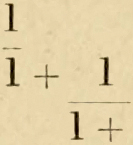 etc. and is closely connected with the Sectio
aurea or Golden Mean, is commonly called the Fibonacci
series, after a very learned twelfth century arithmetician
(known also as Leonardo of Pisa), who has some claims
to be considered the introducer of Arabic numerals into
christian Europe. It is called Lami’s series by some,
after Father Bernard Lami, a contemporary of Newton’s,
and one of the co-discoverers of the parallelogram of
forces. It was well-known to Kepler, who, in his paper
De nive sexangula (cf. supra, p. 480), discussed
it in connection with the form of the dodecahedron and
icosahedron, and with the ternary or quinary symmetry of
the flower. (Cf. Ludwig, F., Kepler über das Vorkommen
der Fibonaccireihe im Pflanzenreich, Bot. Centralbl.
LXVIII, p. 7, 1896). Professor
William Allman, Professor of Botany in Dublin (father of
the historian of Greek geometry), speculating on the same
facts, put forward the curious suggestion that the cellular
tissue of the dicotyledons, or exogens, would be found to
consist of dodecahedra. and that of the monocotyledons or
endogens of icosahedra (On the mathematical connexion
between the parts of Vegetables: abstract of a Memoir
read before the Royal Society in the year 1811 (privately
printed, n.d.). Cf. De Candolle, Organogénie végétale,
I, p. 534).
580
Proc. Roy. Soc. Edin. VII, p. 391, 1872.
581
The necessary existence of these recurring
spirals is also proved, in a somewhat different way, by
Leslie Ellis, On the Theory of Vegetable Spirals, in
Mathematical and other Writings, 1853, pp. 358–372.
582
Proc. Roy. Soc. Edin. VII, p. 397,
1872; Trans. Roy. Soc. Edin. XXVI, p. 505,
1870–71.
583
A common form of pail-shaped waste-paper
basket, with wide rhomboidal meshes of cane, is well-nigh
as good a model as is required.
584
Deutsche Vierteljahrsschrift, p. 261, 1868.
585
Memoirs of Amer. Acad. IX, p. 389.
586
De avibus circa aquas Danubii vagantibus
et de ipsarum Nidis (Vol. V of the Danubius
Pannonico-mysicus), Hagae Com., 1726.
587
Sir Thomas Browne had a collection of eggs at
Norwich, according to Evelyn, in 1671.
588
Cf. Lapierre, in Buffon’s Histoire
Naturelle, ed. Sonnini, 1800.
589
Eier der Vögel Deutschlands, 1818–28 (cit.
des Murs, p. 36).
590
Traité d’Oologie, 1860.
591
Lafresnaye, F. de, Comparaison des œufs
des Oiseaux avec leurs squelettes, comme seul moven de
reconnaître la cause de leurs différentes formes, Rev.
Zool., 1845, pp. 180–187, 239–244.
592
Cf. Des Murs, p. 67: “Elle devait encore
penser au moment où ce germe aurait besoin de l’espace
nécessaire à son accroissement, à ce moment où ... il devra
remplir exactement l’intervalle circonscrit par sa fragile
prison, etc.”
593
Thienemann, F. A. L., Syst. Darstellung der
Fortpflanzung der Vögel Europas. Leipzig, 1825–38.
594
Cf. Newton’s Dictionary of Birds, 1893, p.
191; Szielasko, Gestalt der Vogeleier, J. f. Ornith.
LIII, pp. 273–297, 1905.
595
Jacob Steiner suggested a Cartesian oval,
r + m r′
= c, as a general formula for all eggs (cf.
Fechner, Ber. sächs. Ges., 1849, p. 57); but this formula
(which fails in such a case as the guillemot), is purely
empirical, and has no mechanical foundation.
596
Günther, F. C., Sammlung von Nestern und
Eyern verschiedener Vögel, Nürnb. 1772. Cf. also Raymond
Pearl, Morphogenetic Activity of the Oviduct, J. Exp.
Zool. VI, pp. 339–359, 1909.
597
The following account is in part reprinted
from Nature, June 4, 1908.
598
In so far as our explanation involves a
shaping or moulding of the egg by the uterus or “oviduct”
(an agency supplemented by the proper tensions of the egg),
it is curious to note that this is very much the same as
that old view of Telesius regarding the formation of the
embryo (De rerum natura, VI, cc. 4 and 10), which
he had inherited from Galen, and of which Bacon speaks
(Nov. Org. cap. 50; cf. Ellis’s note). Bacon expressly
remarks that “Telesius should have been able to shew the
like formation in the shells of eggs.” This old theory of
embryonic modelling survives only in our usage of the term
“matrix” for a “mould.”
599
Journal of Tropical Medicine, 15th June,
1911. I leave this paragraph as it was written, though
it is now once more asserted that the terminal and
lateral-spined eggs belong to separate and distinct species
of Bilharzia (Leiper, Brit. Med. Journ., 18th March,
1916, p. 411).
600
Cf. Bashforth and Adams, Theoretical Forms of
Drops, etc., Cambridge, 1883.
601
Woods, R. H., On a Physical Theorem applied to
tense Membranes, Journ. of Anat. and Phys. XXVI,
pp. 362–371, 1892. A similar investigation of the tensions
in the uterine wall, and of the varying thickness of
its muscles, was attempted by Haughton in his Animal
Mechanics, pp. 151–158, 1873.
602
This corresponds with a determination of the
normal pressures (in systole) by Krohl, as being in the
ratio of 1 : 6·8.
603
Cf. Schwalbe, G., Ueber Wechselbeziehungen
und ihr Einfluss auf die Gestaltung des Arteriensystem,
Jen. Zeitschr. XII, p. 267, 1878, Roux, Ueber
die Verzweigungen der Blutgefässen des Menschen, ibid.
XII, p. 205, 1878; Ueber die Bedeutung der
Ablenkung des Arterienstämmen bei der Astaufgabe, ibid.
XIII, p. 301, 1879; Hess, Walter, Eine mechanisch
bedingte Gesetzmässigkeit im Bau des Blutgefässsystems,
A. f. Entw. Mech. XVI, p. 632, 1903; Thoma,
R., Ueber die Histogenese und Histomechanik des
Blutgefässsystems, 1893.
604
Essays, etc., edited by Owen,
I, p. 134, 1861.
605
On the Functions of the Heart and Arteries,
Phil. Trans. 1809, pp. 1–31, cf. 1808, pp. 164–186;
Collected Works, I, pp. 511–534, 1855. The
same lesson is conveyed by all such work as that of
Volkmann, E. H. Weber and Poiseuille. Cf. Stephen Hales’
Statical Essays, II, Introduction: “Especially
considering that they [i.e. animal Bodies] are in a manner
framed of one continued Maze of innumerable Canals, in
which Fluids are incessantly circulating, some with great
Force and Rapidity, others with very different Degrees of
rebated Velocity: Hence, etc.”
606
“Sizes” is Owen’s editorial emendation, which
seems amply justified.
607
For a more elaborate classification, into
colours cryptic, procryptic, anticryptic, apatetic,
epigamic, sematic, episematic, aposematic, etc., see
Poulton’s Colours of Animals (Int. Scientific Series,
LXVIII),
1890; cf. also Meldola, R., Variable
Protective Colouring in Insects, P.Z.S. 1873, pp.
153–162, etc.
608
Dendy, Evolutionary Biology, p. 336, 1912.
609
Delight in beauty is one of the pleasures of
the imagination; there is no limit to its indulgence, and
no end to the results which we may ascribe to its exercise.
But as for the particular “standard of beauty” which the
bird (for instance) admires and selects (as Darwin says
in the Origin, p. 70, edit. 1884), we are very much in
the dark, and we run the risk of arguing in a circle: for
wellnigh all we can safely say is what Addison says (in the
412th Spectator)—that each different species “is most
affected with the beauties of its own kind .... Hinc merula
in nigro se oblectat nigra marito; ... hinc noctua tetram
Canitiem alarum et glaucos miratur ocellos.”
610
Cf. Bridge, T. W., Cambridge Natural History
(Fishes), VII, p. 173, 1904; also Frisch, K. v.,
Ueber farbige Anpassung bei Fische, Zool. Jahrb. (Abt.
Allg. Zool.), XXXII, pp. 171–230, 1914.
611
Nature, L, p. 572; LI, pp.
33, 57, 533, 1894–95.
612
They are “wonderfully fitted for ‘vanishment’
against the flushed, rich-coloured skies of early morning
and evening .... their chief feeding-times”; and “look like a
real sunset or dawn, repeated on the opposite side of the
heavens,—either east or west as the case may be”: Thayer,
Concealing-coloration in the Animal Kingdom, New York,
1909, pp. 154–155. This hypothesis, like the rest, is not
free from difficulty. Twilight is apt to be short in the
homes of the flamingo: and moreover, Mr Abel Chapman, who
watched them on the Guadalquivir, tells us that they feed
by day.
613
Principal Galloway, Philosophy of Religion,
p. 344, 1914.
614
Cf. Professor Flint, in his Preface to
Affleck’s translation of Janet’s Causes finales: “We are,
no doubt, still a long way from a mechanical theory of
organic growth, but it may be said to be the quaesitum of
modern science, and no one can say that it is a chimaera.”
615
Cf. Sir Donald MacAlister, How a Bone is
Built, Engl. Ill. Mag. 1884.
616
Professor Claxton Fidler, On Bridge
Construction, p. 22 (4th ed.), 1909; cf. (int. al.)
Love’s Elasticity, p. 20 (Historical Introduction), 2nd
ed., 1906.
617
In preparing or “macerating” a skeleton, the
naturalist nowadays carries on the process till nothing
is left but the whitened bones. But the old anatomists,
whose object was not the study of “comparative” morphology
but the wider theme of comparative physiology, were wont
to macerate by easy stages; and in many of their most
instructive preparations, the ligaments were intentionally
left in connection with the bones, and as part of the
“skeleton.”
618
In a few anatomical diagrams, for instance in
some of the drawings in Schmaltz’s Atlas der Anatomie des
Pferdes, we may see the system of “ties” diagrammatically
inserted in the figure of the skeleton. Cf. Gregory, On the
principles of Quadrupedal Locomotion, Ann. N. Y. Acad. of
Sciences, XXII, p. 289, 1912.
619
Galileo, Dialogues concerning Two New
Sciences (1638), Crew and Salvio’s translation, New York,
1914, p. 150; Opere, ed. Favaro, VIII, p.
186. Cf. Borelli, De Motu Animalium, I, prop.
CLXXX, 1685. Cf. also Camper, P., La structure des
os dans les oiseaux, Opp. III, p. 459, ed. 1803;
Rauber, A., Galileo über Knochenformen, Morphol. Jahrb.
VII, pp. 327, 328, 1881; Paolo Enriques, Della
economia di sostanza nelle osse cave, Arch. f. Ent. Mech.
XX, pp. 427–465, 1906.
620
Das mechanische Prinzip. im
anatomischen Bau der Monocotylen, Leipzig, 1874.
621
For further botanical illustrations, see
(int. al.) Hegler, Einfluss der Zugkraften auf die
Festigkeit und die Ausbildung mechanischer Gewebe in
Pflanzen, SB. sächs. Ges. d. Wiss. p. 638, 1891; Kny,
L., Einfluss von Zug und Druck auf die Richtung der
Scheidewande in sich teilenden Pflanzenzellen, Ber. d.
bot. Gesellsch. XIV, 1896; Sachs, Mechanomorphose
und Phylogenie, Flora, LXXVIII, 1894; cf.
also Pflüger, Einwirkung der Schwerkraft, etc., über die
Richtung der Zelltheilung, Archiv, XXXIV, 1884.
622
Among other works on the mechanical
construction of bone see: Bourgery, Traité de l’anatomie
(I. Ostéologie), 1832 (with admirable illustrations
of trabecular structure); Fick, L., Die Ursachen
der Knochenformen, Göttingen, 1857; Meyer, H., Die
Architektur der Spongiosa, Archiv f. Anat. und Physiol.
XLVII, pp. 615–628, 1867; Statik u. Mechanik des
menschlichen Knochengerüstes, Leipzig, 1873; Wolff, J.,
Die innere Architektur der Knochen, Arch. f. Anat, und
Phys. L, 1870; Das Gesetz der Transformation
bei Knochen, 1892; von Ebner, V., Der feinere Bau der
Knochensubstanz, Wiener Bericht, LXXII,
1875; Rauber, Anton, Elastizität und Festigkeit der
Knochen, Leipzig, 1876; O. Meserer, Elast, u. Festigk.
d. menschlichen Knochen, Stuttgart, 1880; MacAlister,
Sir Donald, How a Bone is Built, English Illustr.
Mag. pp. 640–649, 1884; Rasumowsky, Architektonik
des Fussskelets, Int. Monatsschr. f.
Anat. p. 197, 1889; Zschokke, Weitere Unters. über das
Verhältniss der Knochenbildung zur Statik und Mechanik
des Vertebratenskelets, Zürich, 1892; Roux, W., Ges.
Abhandlungen über Entwicklungsmechanik der Organismen, Bd.
I, Funktionelle Anpassung, Leipzig, 1895; Triepel, H.,
Die Stossfestigkeit der Knochen, Arch. f. Anat. u. Phys.
1900; Gebhardt, Funktionell wichtige Anordnungsweisen der
feineren und gröberen Bauelemente des Wirbelthierknochens,
etc., Arch. f. Entw. Mech. 1900–1910; Kirchner. A.,
Architektur der Metatarsalien, A. f. E. M. XXIV, 1907;
Triepel, Herm., Die trajectorielle Structuren (in
Einf. in die Physikalische Anatomie, 1908); Dixon, A.
F., Architecture of the Cancellous Tissue forming the
Upper End of the Femur, Journ. of Anat. and Phys. (3)
XLIV, pp. 223–230, 1910.
623
Sédillot, De l’influence des fonctions sur la
structure et la forme des organes; C. R. LIX, p.
539, 1864; cf. LX, p. 97, 1865, LXVIII.
p. 1444. 1869.
624
E.g. (1) the head, nodding backwards and
forwards on a fulcrum, represented by the atlas vertebra,
lying between the weight and the power; (2) the foot,
raising on tip-toe the weight of the body against the
fulcrum of the ground, where the weight is between the
fulcrum and the power, the latter being represented by the
tendo Achillis; (3) the arm, lifting a weight in the
hand, with the power (i.e. the biceps muscle) between the
fulcrum and the weight. (The second case, by the way, has
been much disputed; cf. Haycraft in Schäfer’s Textbook of
Physiology, p. 251, 1900.)
625
Our problem is analogous to Dr Thomas Young’s
problem of the best disposition of the timbers in a wooden
ship (Phil. Trans. 1814, p. 303). He was not long of
finding that the forces which may act upon the fabric are
very numerous and very variable, and that the best mode of
resisting them, or best structural arrangement for ultimate
strength, becomes an immensely complicated problem.
626
In like manner, Clerk Maxwell could not help
employing the term “skeleton” in defining the mathematical
conception of a “frame,” constituted by points and their
interconnecting lines: in studying the equilibrium of
which, we consider its different points as mutually acting
on each other with forces whose directions are those of the
lines joining each pair of points. Hence (says Maxwell),
“in order to exhibit the mechanical action of the frame in
the most elementary manner, we may draw it as a skeleton,
in which the different points are joined by straight lines,
and we may indicate by numbers attached to these lines the
tensions or compressions in the corresponding pieces of
the frame” (Trans. R. S. E. XXVI, p. 1, 1870).
It follows that the diagram so constructed represents a
“diagram of forces,” in this limited sense that it is
geometrical as regards the position and direction of the
forces, but arithmetical as regards their magnitude. It is
to just such a diagram that the animal’s skeleton tends to
approximate.
627
When the jockey crouches over the neck
of his race-horse, and when Tod Sloan introduced the
“American seat,” the object in both cases is to relieve the
hind-legs of weight, and so leave them free for the work of
propulsion. Nevertheless, we must not exaggerate the share
taken by the hind-limbs in this latter duty; cf. Stillman,
The Horse in Motion, p. 69, 1882.
628
This and the following diagrams are borrowed
and adapted from Professor Fidler’s Bridge Construction.
629
The method of constructing reciprocal
diagrams, in which one should represent the outlines of
a frame, and the other the system of forces necessary to
keep it in equilibrium, was first indicated in Culmann’s
Graphische Statik; it was greatly developed soon
afterwards by Macquorn Rankine (Phil. Mag. Feb. 1864,
and Applied Mechanics, passim), to whom is mainly due
the general application of the principle to engineering
practice.
630
Dialogues concerning Two New Sciences
(1638): Crew and Salvio’s translation, p. 140 seq.
631
The form and direction of the vertebral
spines have been frequently and elaborately described; cf.
(e.g.) Gottlieb, H., Die Anticlinie der Wirbelsäule der
Säugethiere, Morphol. Jahrb. LXIX, pp. 179–220,
1915, and many works quoted therein. According to Morita,
Ueber die Ursachen der Richtung und Gestalt der thoracalen
Dornfortsätze der Säugethierwirbelsäule (ibi cit. p.
201), various changes take place in the direction or
inclination of these processes in rabbits, after section of
the interspinous ligaments and muscles. These changes seem
to be very much what we should expect, on simple mechanical
grounds. See also Fischer, O., Theoretische Grundlagen für
eine Mechanik der lebenden Körper, Leipzig, pp. 3, 372,
1906.
632
I owe the first four of these determinations
to the kindness of Dr Chalmers Mitchell, who had them made
for me at the Zoological Society’s Gardens; while the great
Clydesdale carthorse was weighed for me by a friend in
Dundee.
633
This pose of Diplodocus, and of other
Sauropodous reptiles, has been much discussed. Cf. (int.
al.) Abel, O., Abh. k. k. zool. bot. Ges. Wien,
V. 1909–10 (60 pp.); Tornier, SB. Ges. Naturf.
Fr. Berlin, pp. 193–209, 1909; Hay, O. P., Amer. Nat.
Oct. 1908; Tr. Wash. Acad. Sci. XLII, pp. 1–25,
1910; Holland, Amer. Nat. May, 1910, pp.
259–283; Matthew, ibid. pp. 547–560; Gilmore, C. W.
(Restoration of Stegosaurus). Pr. U.S. Nat. Museum,
1915.
634
The form of the cantilever is much less
typical in the small flying birds, where the strength of
the pelvic region is insured in another way, with which we
need not here stop to deal.
635
The motto was Macquorn Rankine’s.
636
John Hunter was seldom wrong; but I cannot
believe that he was right when he said (Scientific Works,
ed. Owen, I, p. 371), “The bones, in a mechanical
view, appear to be the first that are to be considered.
We can study their shape, connexions, number, uses, etc.,
without considering any other part of the body.”
637
Origin of Species, 6th ed. p. 118.
638
Amer. Naturalist, April, 1915, p. 198, etc.
Cf. infra, p. 727.
639
Driesch sees in “Entelechy” that something
which differentiates the whole from the sum of its parts
in the case of the organism: “The organism, we know, is
a system the single constituents of which are inorganic
in themselves; only the whole constituted by them in
their typical order or arrangement owes its specificity
to ‘Entelechy’ ” (Gifford Lectures, p. 229, 1908): and
I think it could be shewn that many other philosophers
have said precisely the same thing. So far as the argument
goes, I fail to see how this Entelechy is shewn to
be peculiarly or specifically related to the living
organism. The conception that the whole is always
something very different from its parts is a very ancient
doctrine. The reader will perhaps remember how, in another
vein, the theme is treated by Martinus Scriblerus: “In
every Jack there is a meat-roasting Quality, which
neither resides in the fly, nor in the weight, nor in any
particular wheel of the Jack, but is the result of the
whole composition; etc., etc.”
640
“There can be no doubt that Fraas is correct
in regarding this type (Procetus) as an annectant form
between the Zeuglodonts and the Creodonta, but, although
the origin of the Zeuglodonts is thus made clear, it still
seems to be by no means so certain as that author believes,
that they may not themselves be the ancestral forms of the
Odontoceti”; Andrews, Tertiary Vertebrata of the Fayum,
1906, p. 235.
641
Reprinted, with some changes and additions,
from a paper in the Trans. Roy. Soc. Edin. L,
pp. 857–95, 1915.
642
M. Bergson repudiates, with peculiar
confidence, the application of mathematics to biology.
Cf. Creative Evolution, p. 21, “Calculation touches, at
most, certain phenomena of organic destruction. Organic
creation, on the contrary, the evolutionary phenomena which
properly constitute life, we cannot in any way subject to a
mathematical treatment.”
643
In this there lies a certain justification
for a saying of Minot’s, of the greater part of which,
nevertheless, I am heartily inclined to disapprove. “We
biologists,” he says, “cannot deplore too frequently or too
emphatically the great mathematical delusion by which men
often of great if limited ability have been misled into
becoming advocates of an erroneous conception of accuracy.
The delusion is that no science is accurate until its
results can be expressed mathematically. The error comes
from the assumption that mathematics can express complex
relations. Unfortunately mathematics have a very limited
scope, and are based upon a few extremely rudimentary
experiences, which we make as very little children and
of which no adult has any recollection. The fact that
from this basis men of genius have evolved wonderful
methods of dealing with numerical relations should not
blind us to another fact, namely, that the observational
basis of mathematics is, psychologically speaking, very
minute compared with the observational basis of even a
single minor branch of biology .... While therefore here
and there the mathematical methods may aid us, we need
a kind and degree of accuracy of which mathematics is
absolutely incapable .... With human minds constituted as
they actually are, we cannot anticipate that there will
ever be a mathematical expression for any organ or even a
single cell, although formulae will continue to be useful
for dealing now and then with isolated details...” (op.
cit., p. 19, 1911). It were easy to discuss and criticise
these sweeping assertions, which perhaps had their origin
and parentage in an obiter dictum of Huxley’s, to the
effect that “Mathematics is that study which knows nothing
of observation, nothing of experiment,
nothing of induction, nothing of causation” (cit. Cajori,
Hist of Elem. Mathematics, p. 283). But Gauss called
mathematics “a science of the eye”; and Sylvester assures
us that “most, if not all, of the great ideas of modern
mathematics have had their origin in observation” (Brit.
Ass. Address, 1869, and Laws of Verse, p. 120, 1870).
644
Historia Animalium I, 1.
646
Cf. Osborn, H. F., On the Origin of Single
Characters, as observed in fossil and living Animals and
Plants, Amer. Nat. XLIX, pp. 193–239, 1915 (and
other papers); ibid. p. 194, “Each individual is composed
of a vast number of somewhat similar new or old characters,
each character has its independent and separate history,
each character is in a certain stage of evolution, each
character is correlated with the other characters of the
individual .... The real problem has always been that of the
origin and development of characters. Since the Origin of
Species appeared, the terms variation and variability have
always referred to single characters; if a species is said
to be variable, we mean that a considerable number of the
single characters or groups of characters of which it is
composed are variable,” etc.
647
Cf. Sorby, Quart. Journ. Geol. Soc.
(Proc.), 1879, p. 88.
648
Cf. D’Orbigny, Alc., Cours élém. de
Paléontologie, etc., I, pp. 144–148, 1849;
see also Sharpe, Daniel, On Slaty Cleavage, Q.J.G.S.
III, p. 74, 1847.
649
Thus Ammonites erugatus, when compressed,
has been described as A. planorbis: cf. Blake, J. F.,
Phil. Mag. (5), VI, p. 260, 1878. Wettstein has
shewn that several species of the fish-genus Lepidopus
have been based on specimens artificially deformed
in various ways: Ueber die Fischfauna des Tertiären
Glarnerschiefers, Abh. Schw. Palaeont. Gesellsch.
XIII, 1886 (see especially pp. 23–38, pl.
I). The whole subject, interesting as it is, has
been little studied: both Blake and Wettstein deal with it
mathematically.
650
Cf. Sir Thomas Browne, in The Garden of
Cyrus: “But why ofttimes one side of the leaf is unequall
unto the other, as in Hazell and Oaks, why on either side
the master vein the lesser and derivative channels stand
not directly opposite, nor at equall angles, respectively
unto the adverse side, but those of one side do often
exceed the other, as the Wallnut and many more, deserves
another enquiry.”
651
Where gourds are common, the glass-blower is
still apt to take them for a prototype, as the prehistoric
potter also did. For instance, a tall, annulated Florence
oil-flask is an exact but no longer a conscious imitation
of a gourd which has been converted into a bottle in the
manner described.
652
Cf. Elsie Venner, chap. ii.
653
This significance is particularly remarkable
in connection with the development of speed, for the
metacarpal region is the seat of very important leverage
in the propulsion of the body. In the Museum of the Royal
College of Surgeons in Edinburgh, there stand side by
side the skeleton of an immense carthorse (celebrated for
having drawn all the stones of the Bell Rock Lighthouse
to the shore), and a beautiful skeleton of a racehorse,
which (though the fact is disputed) there is good reason to
believe is the actual skeleton of Eclipse. When I was a boy
my grandfather used to point out to me that the cannon-bone
of the little racer is not only relatively, but actually,
longer than that of the great Clydesdale.
654
Cf. Vitruvius, III, 1.
655
Les quatres livres d’Albert Dürer de la
proportion des parties et pourtraicts des corps humains,
Arnheim, 1613, folio (and earlier editions). Cf. also
Lavater, Essays on Physiognomy, III, p. 271,
1799.
656
It was these very drawings of Dürer’s that
gave to Peter Camper his notion of the “facial angle.”
Camper’s method of comparison was the very same as ours,
save that he only drew the axes, without filling in the
network, of his coordinate system; he saw clearly the
essential fact, that the skull varies as a whole,
and that the “facial angle” is the index to a general
deformation. “The great object was to shew that natural
differences might be reduced to rules, of which the
direction of the facial line forms the norma or canon;
and that these directions and inclinations are always
accompanied by correspondent form, size and position of
the other parts of the cranium,” etc.; from Dr T. Cogan’s
preface to Camper’s work On the Connexion between the
Science of Anatomy and the Arts of Drawing, Painting and
Sculpture (1768?), quoted in Dr R. Hamilton’s Memoir of
Camper, in Lives of Eminent Naturalists (Nat. Libr.),
Edin. 1840.
657
The co-ordinate system of Fig. 382 is somewhat
different from that which I drew and published in my former
paper. It is not unlikely that further investigation will
further simplify the comparison, and shew it to involve a
still more symmetrical system.
658
Dinosaurs of North America, pl. LXXXI, etc. 1896.
659
Mem. Amer. Mus. of Nat. Hist. I,
III, 1898.
660
These and also other coordinate diagrams will
be found in Mr G. Heilmann’s book Fuglenes Afstamning,
398 pp., Copenhagen, 1916; see especially pp. 368–380.
661
Cf. W. B. Scott (Amer. Journ. of Science,
XLVIII, pp. 335–374, 1894), “We find that any
mammalian series at all complete, such as that of the
horses, is remarkably continuous, and that the progress
of discovery is steadily filling up what few gaps remain.
So closely do successive stages follow upon one another
that it is sometimes extremely difficult to arrange them
all in order, and to distinguish clearly those members
which belong in the main line of descent, and those which
represent incipient branches. Some phylogenies actually
suffer from an embarrassment of riches.”
662
Cf. Dwight, T., The Range of Variation of the
Human Scapula, Amer. Nat. XXI, pp. 627–638,
1887. Cf. also Turner, Challenger Rep. XLVII,
on Human Skeletons, p. 86, 1886: “I gather both from my
own measurements, and those of other observers, that the
range of variation in the relative length and breadth of
the scapula is very considerable in the same race, so that
it needs a large number of bones to enable one to obtain an
accurate idea of the mean of the race.”
663
There is a paper on the mathematical study
of organic forms and organic processes by the learned
and celebrated Gustav Theodor Fechner, which I have only
lately read, but which would have been of no little use
and help to our argument had I known it before. (Ueber
die mathematische Behandlung organischer Gestalten und
Processe, Berichte d. k. sächs. Gesellsch., Math.-phys.
Cl., Leipzig, 1849, pp. 50–64.) Fechner’s treatment is
more purely mathematical and less physical in its scope and
bearing than ours, and his paper is but a short one; but
the conclusions to which he is led differ little from our
own. Let me quote a single sentence which, together with
its context, runs precisely on the lines of the discussion
with which this chapter of ours began. “So ist also die
mathematische Bestimmbarkeit im Gebiete des Organischen
ganz eben so gut vorhanden als in dem des Unorganischen,
und in letzterem eben solchen oder äquivalenten
Beschränkungen unterworfen als in ersterem; und nur sofern
die unorganischen Formen und das unorganische Geschehen
sich einer einfacheren Gesetzlichkeit mehr nähern als die
organischen, kann die Approximation im unorganischen Gebiet
leichter und weiter getrieben werden als im organischen.
Dies wäre der ganze, sonach rein relative, Unterschied.”
Here in a nutshell, in words written some seventy years
ago, is the gist of the whole matter.
An interesting little book of Schiaparelli’s (which I ought
to have known long ago)—Forme organiche naturali e forme
geometriche pure, Milano, Hoepli, 1898—has likewise come
into my hands too late for discussion.
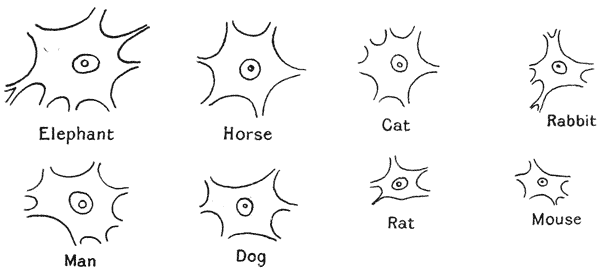
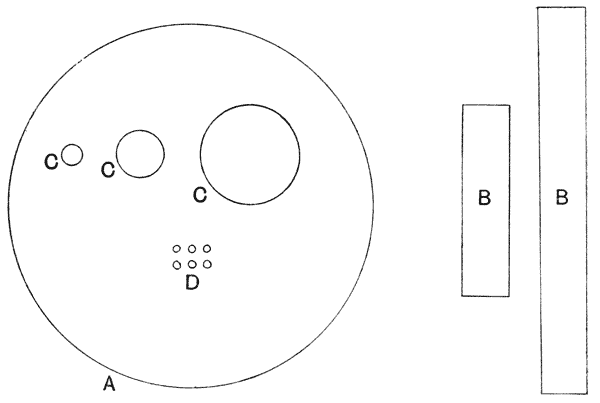
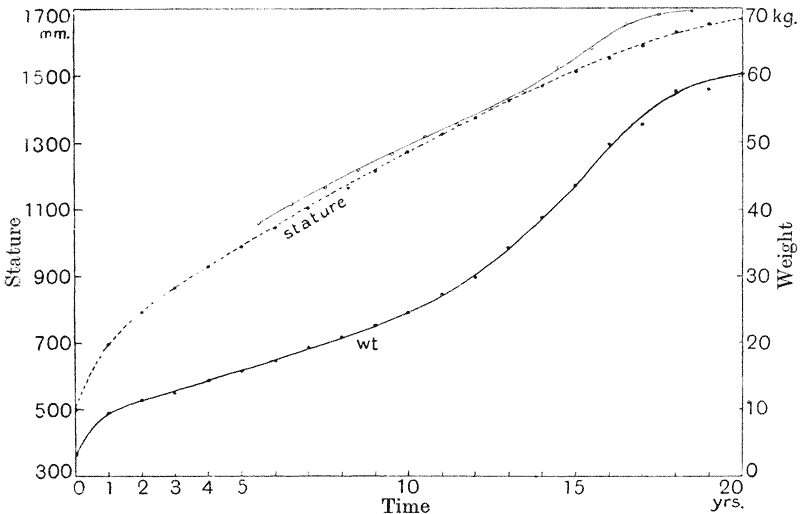
 );
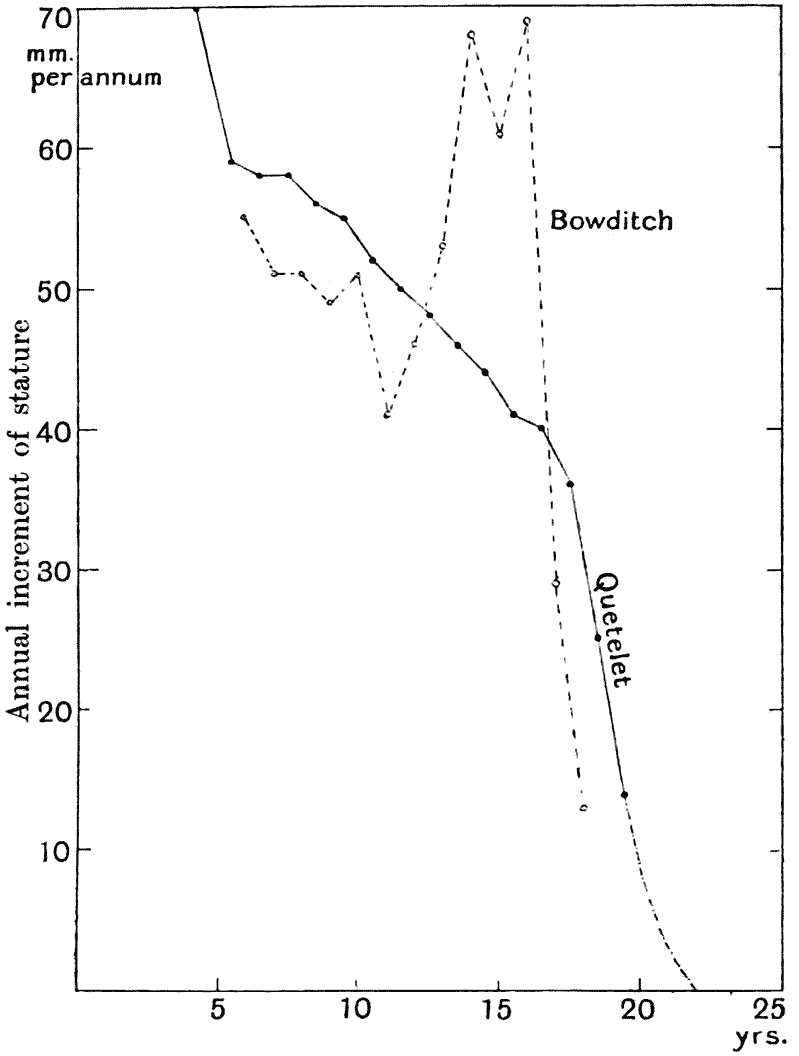
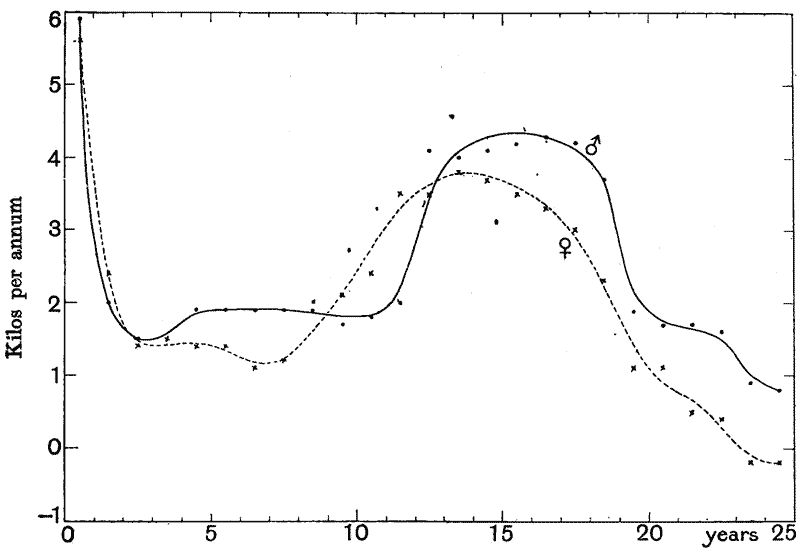
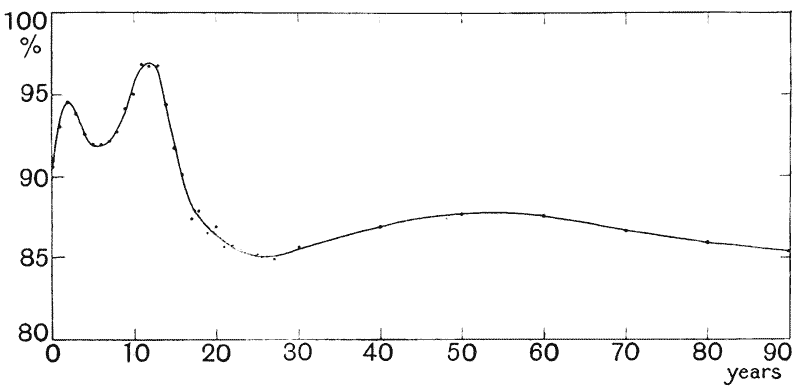
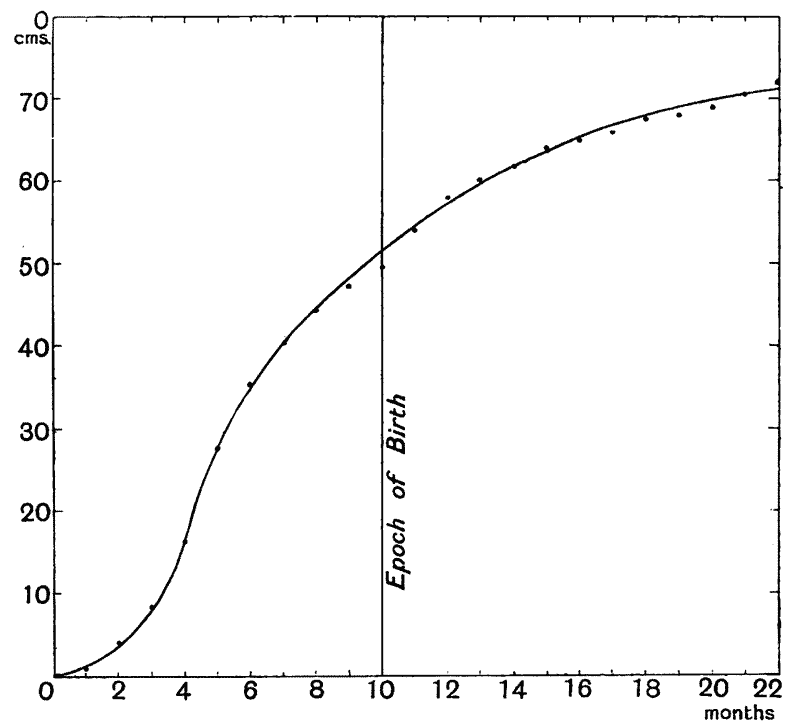
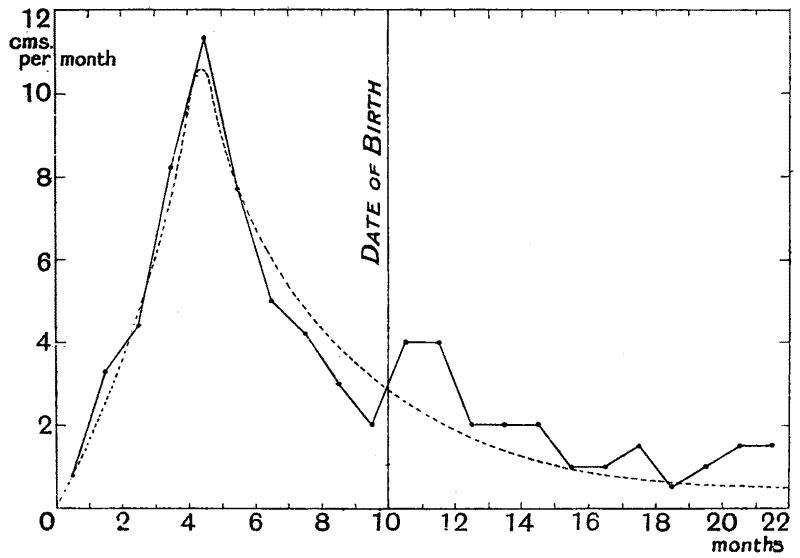
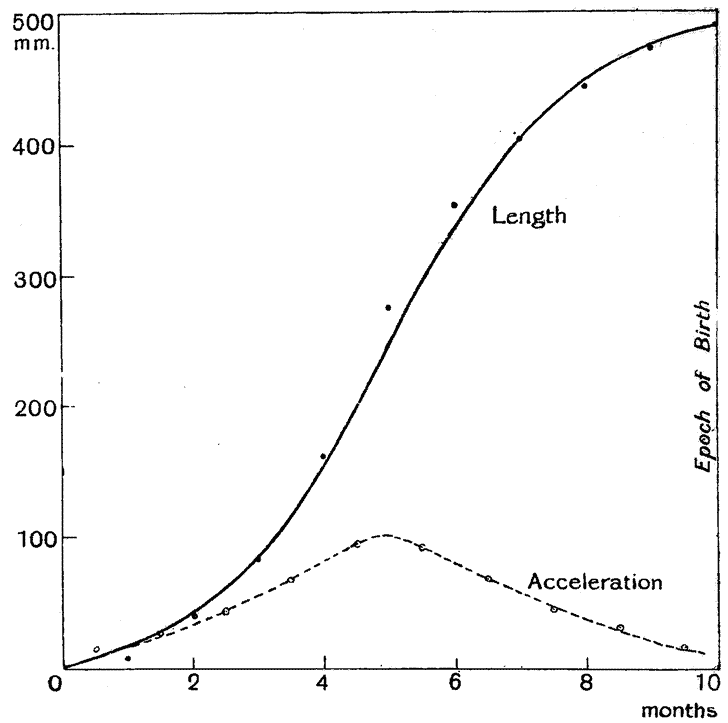
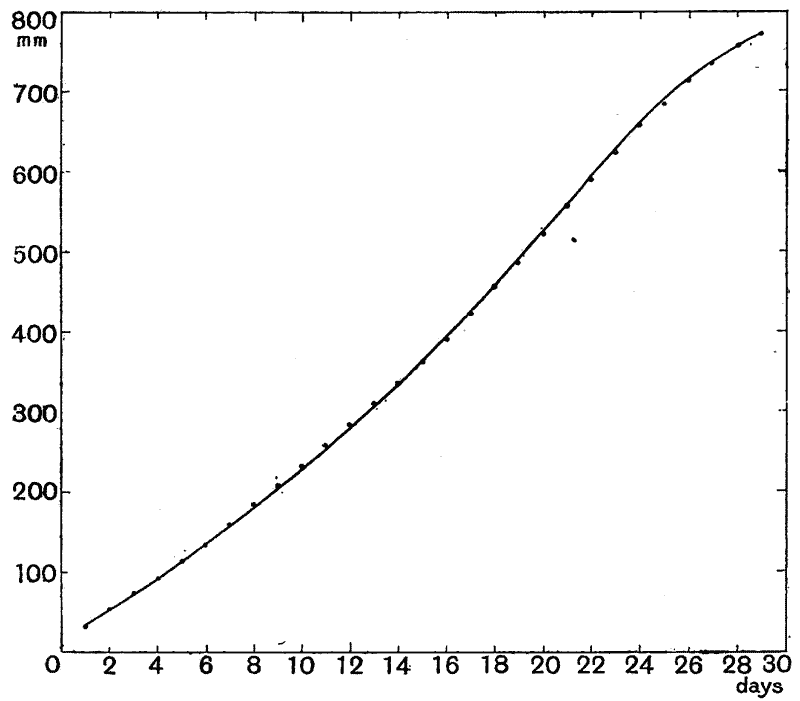
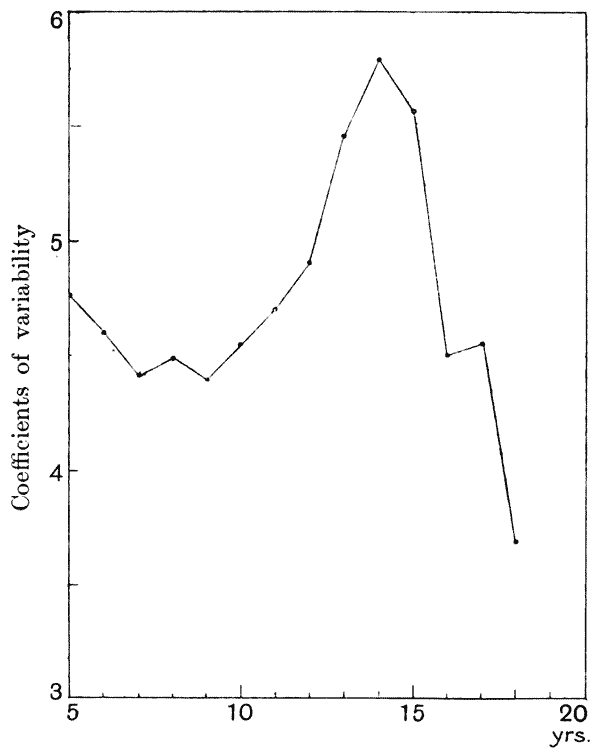
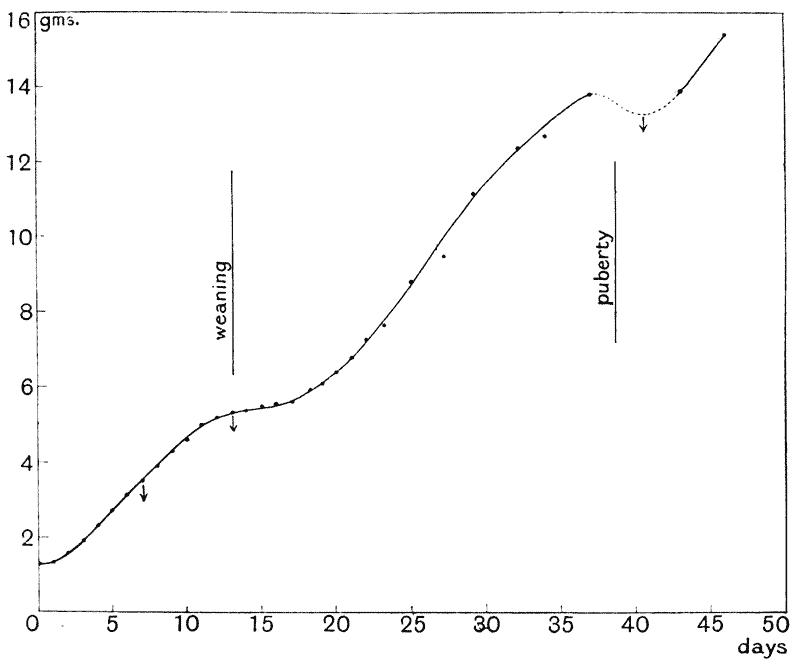
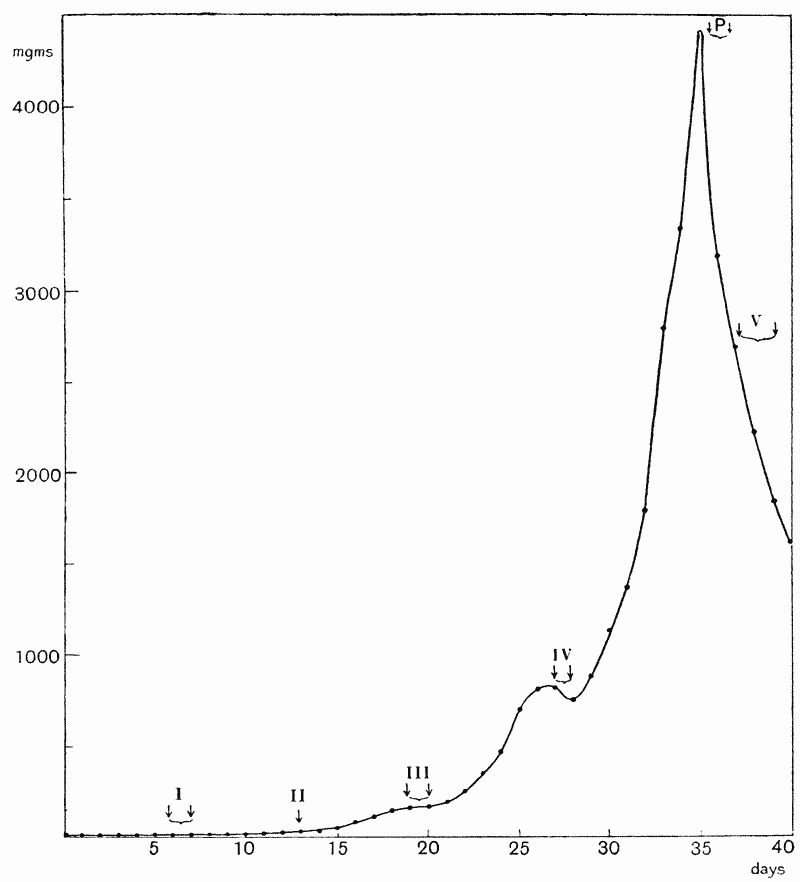
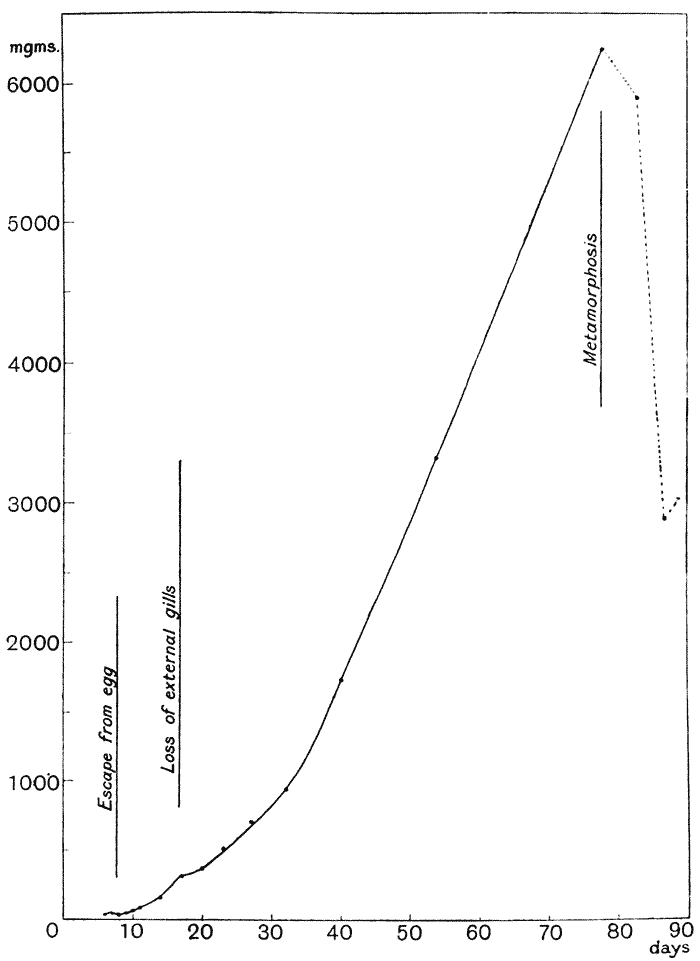
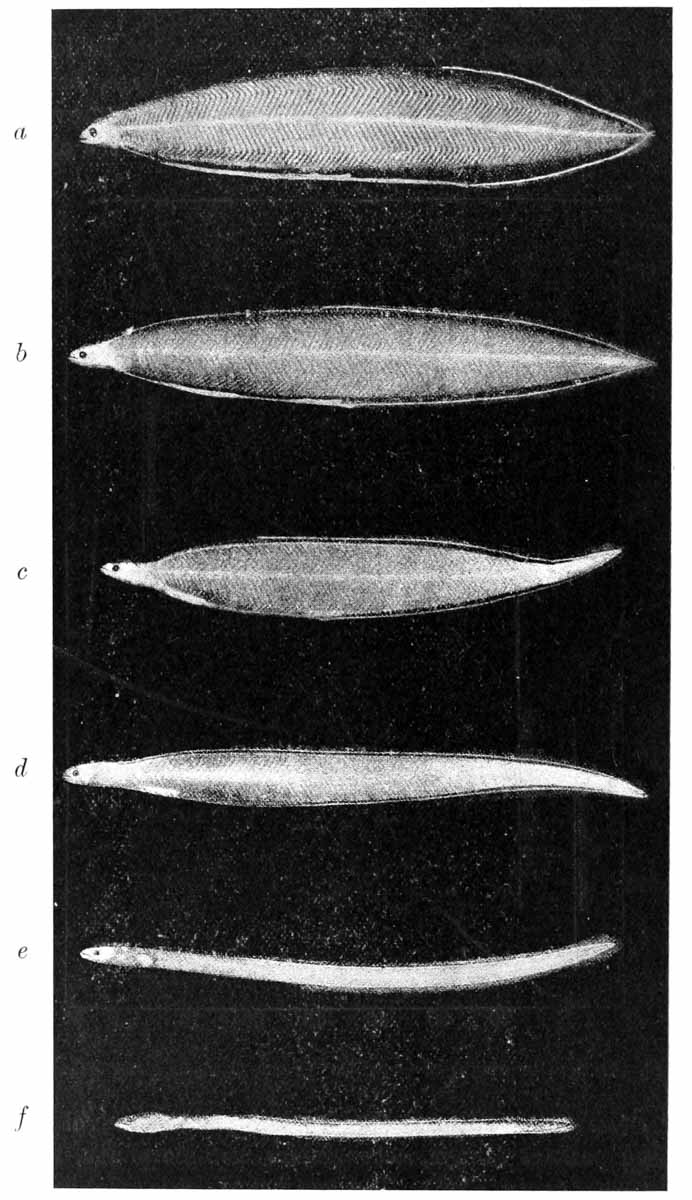
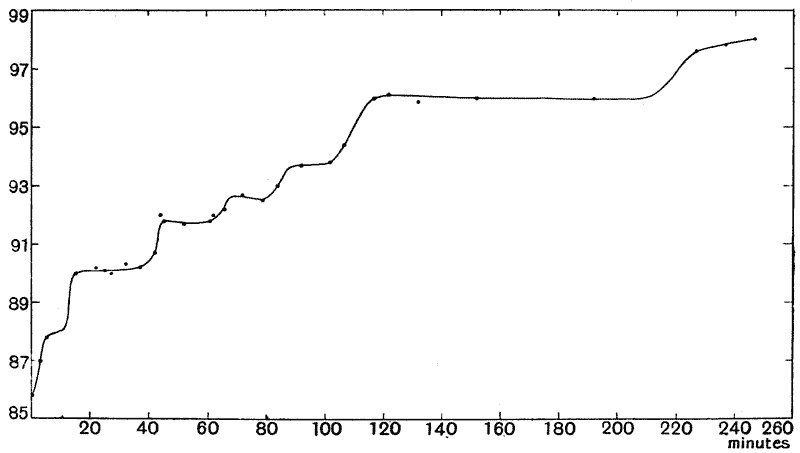
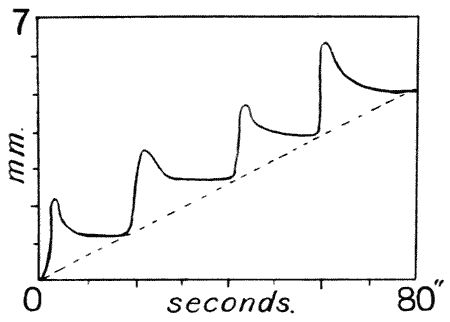
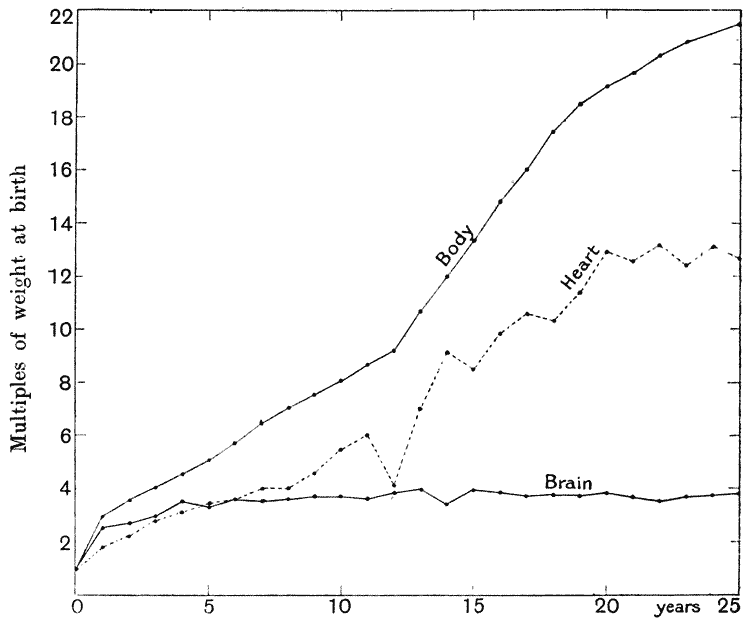
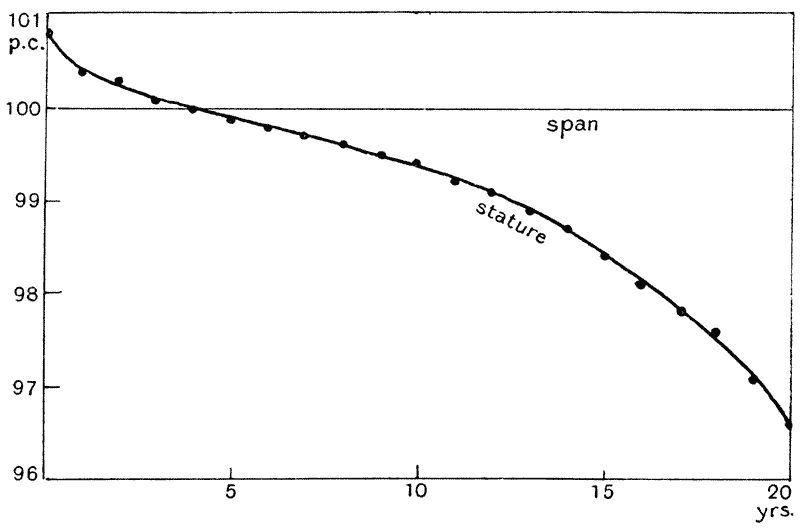
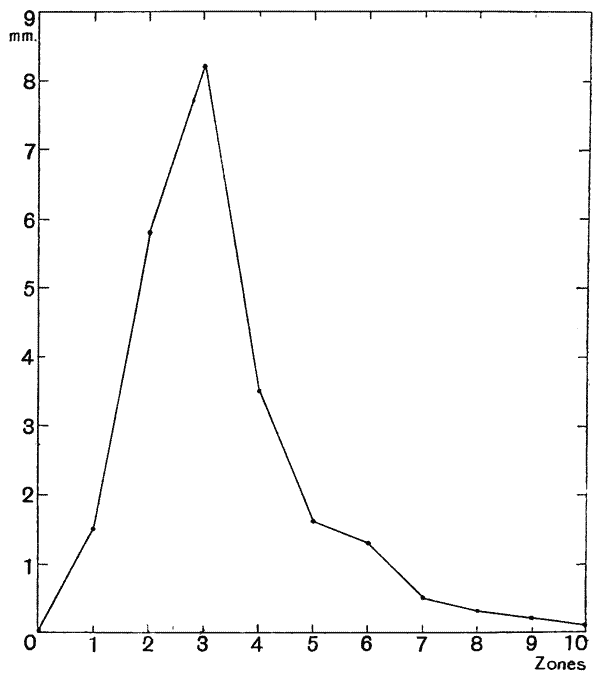
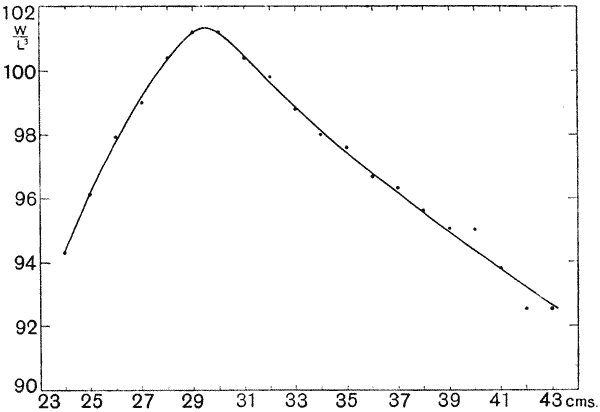
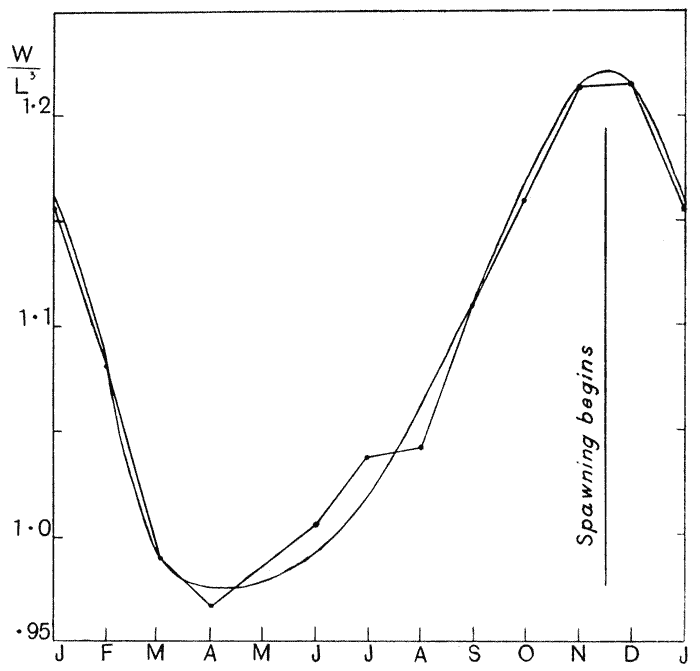
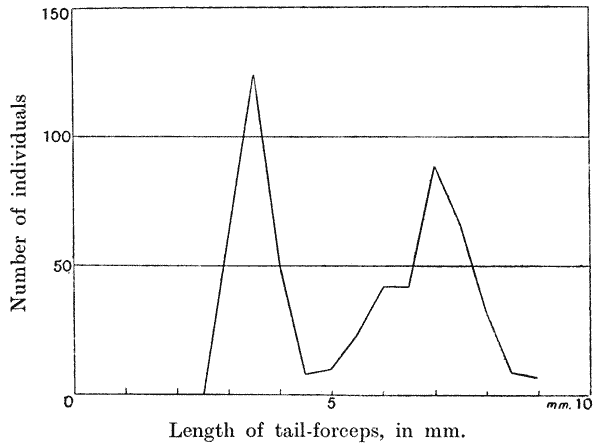
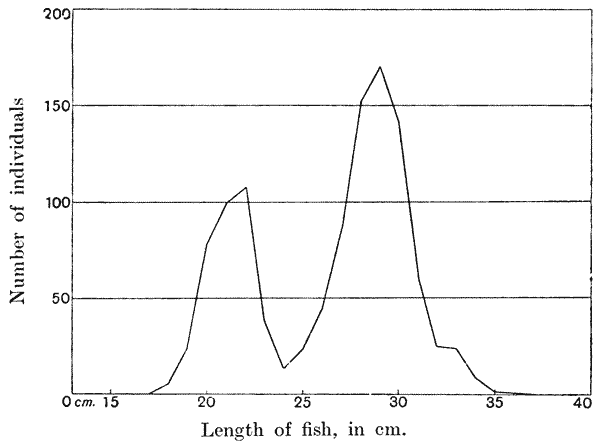
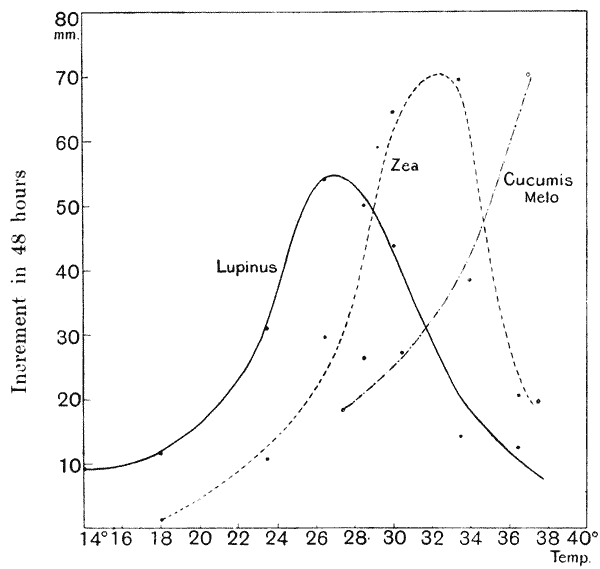
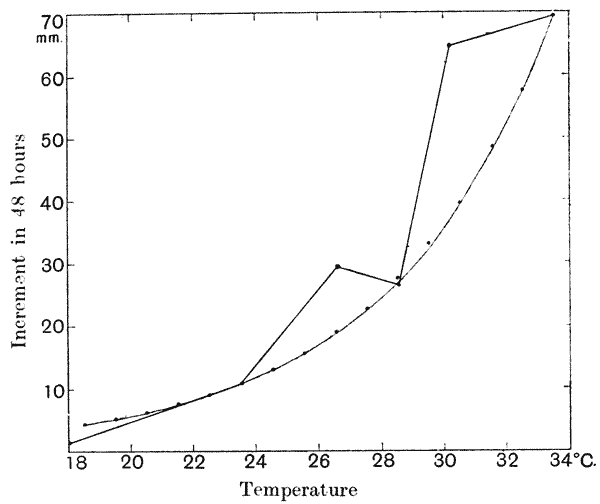

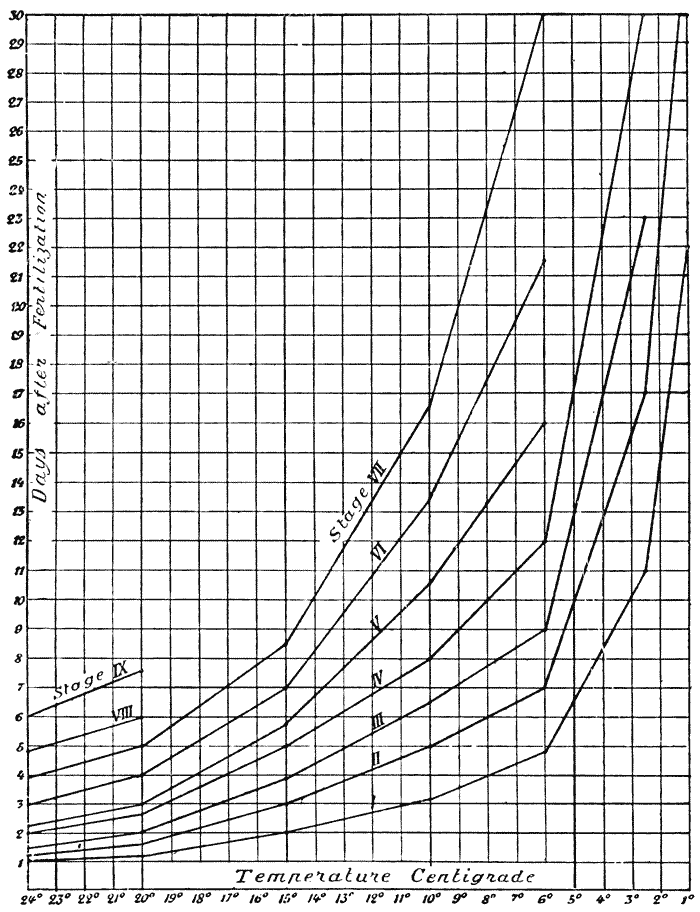
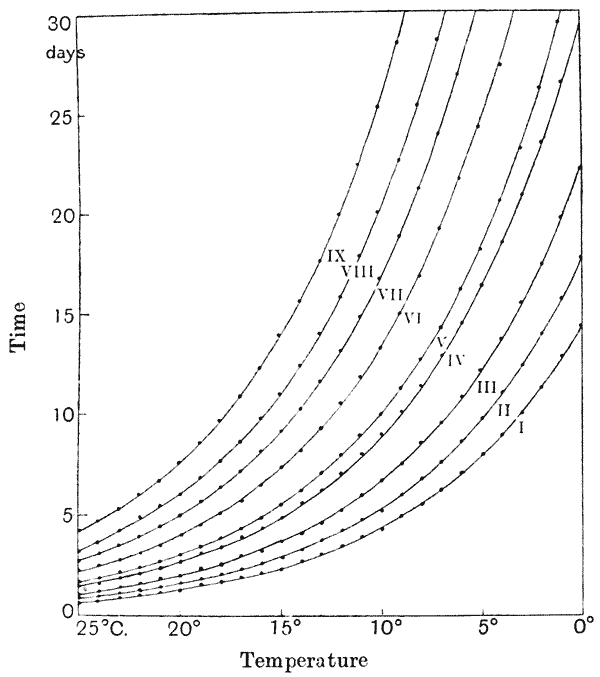
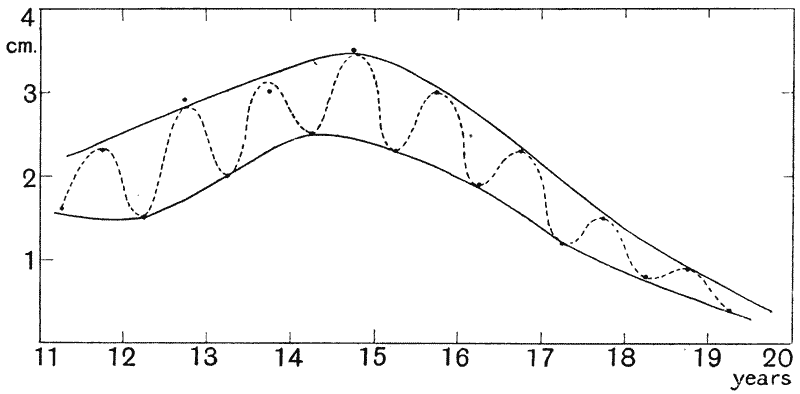
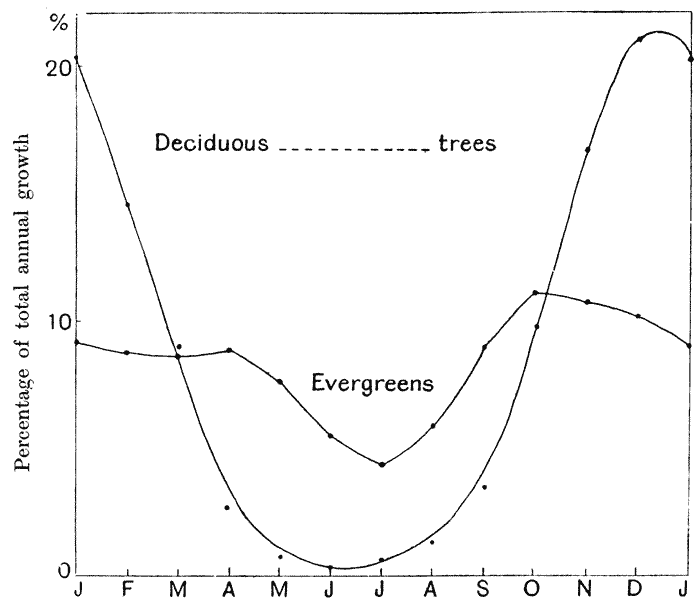
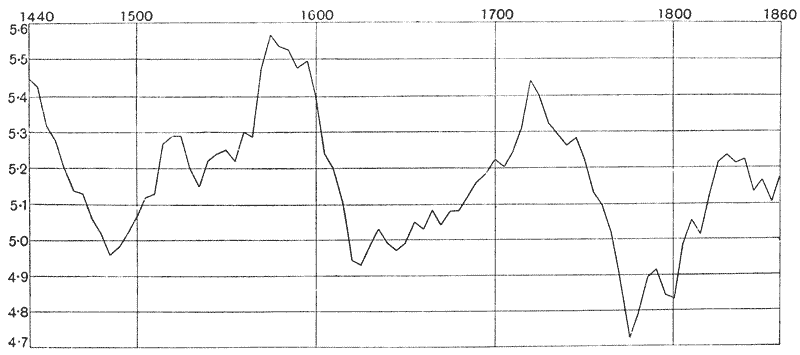

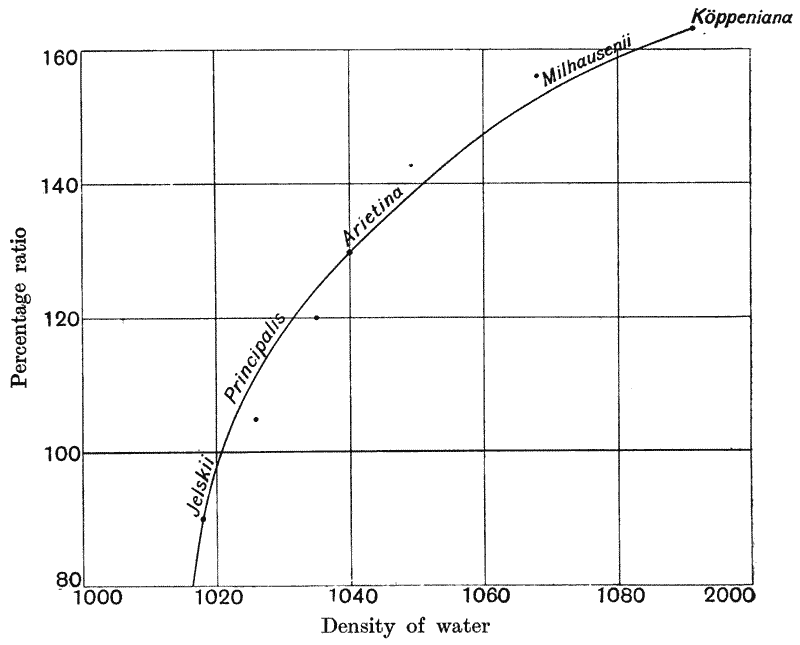
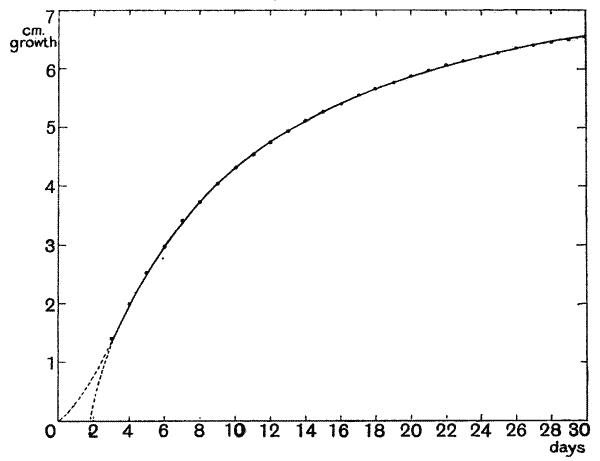
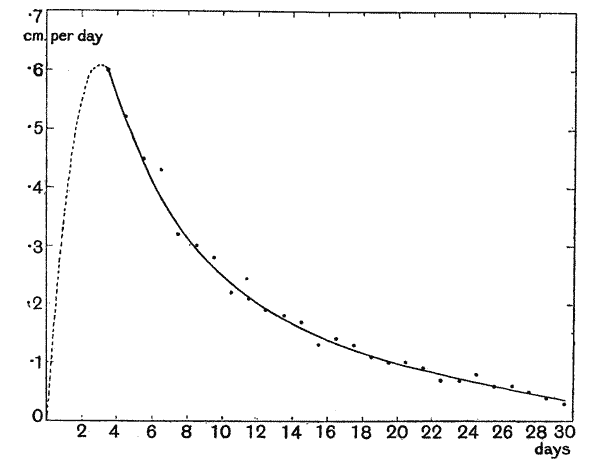
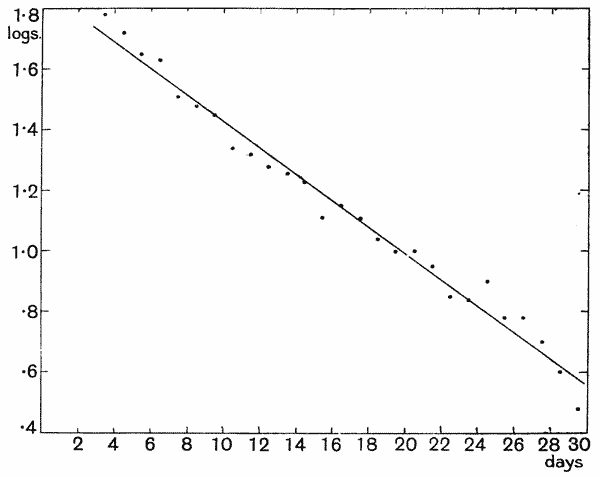
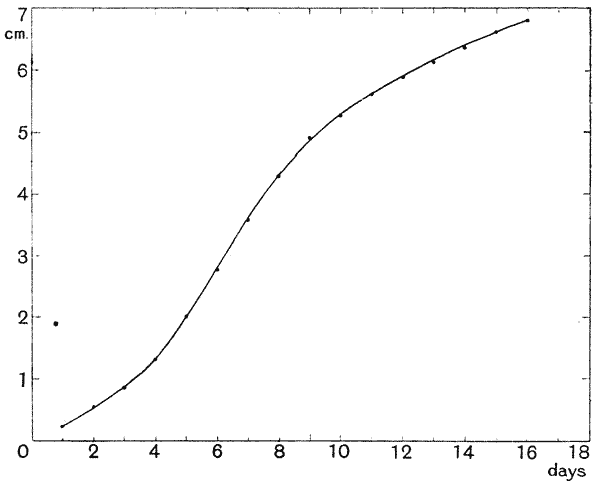
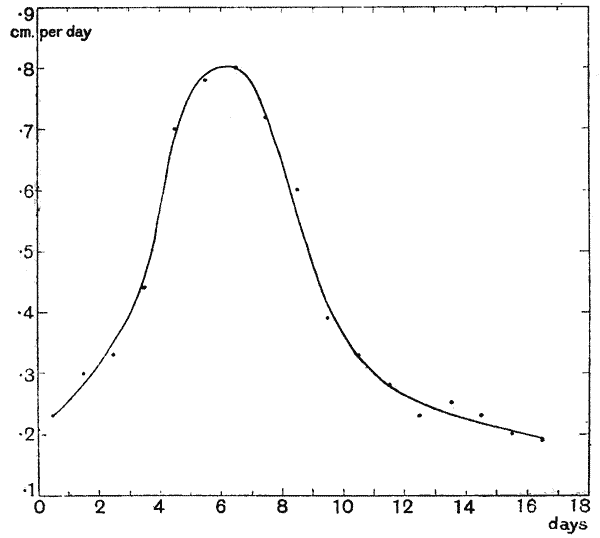
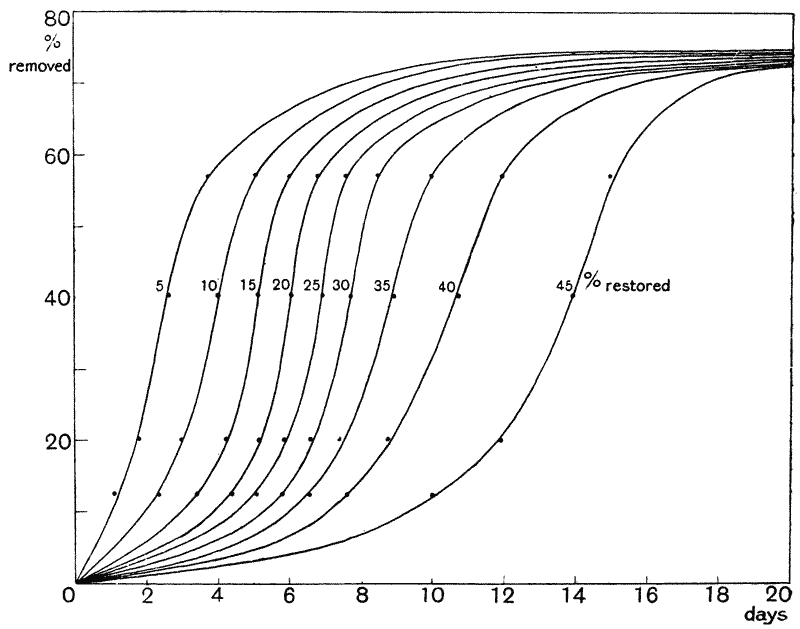
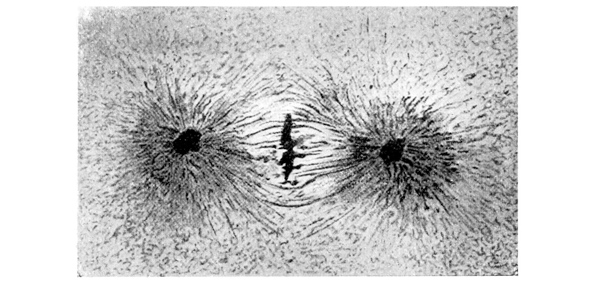
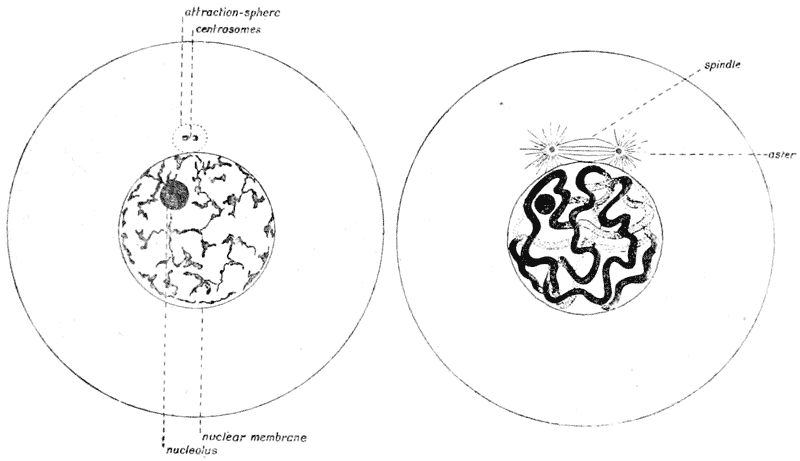
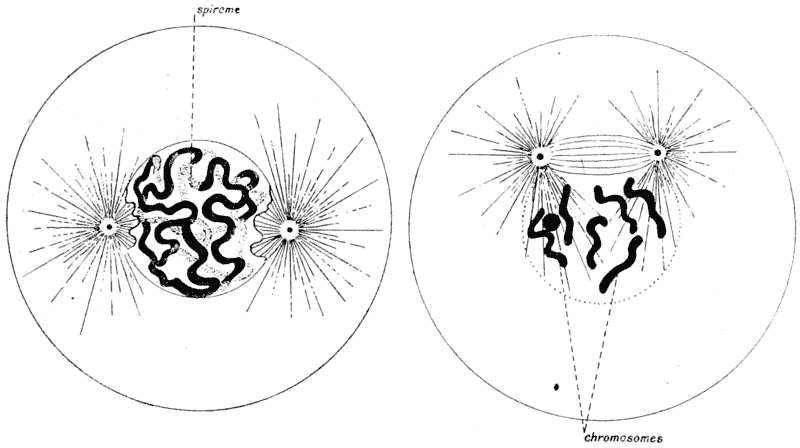
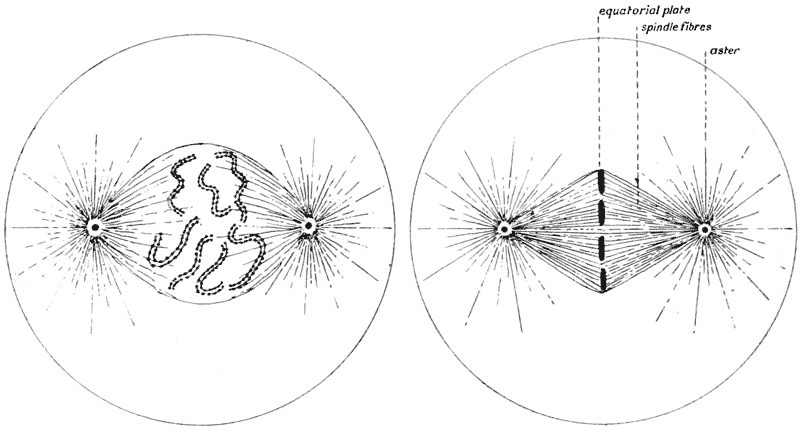
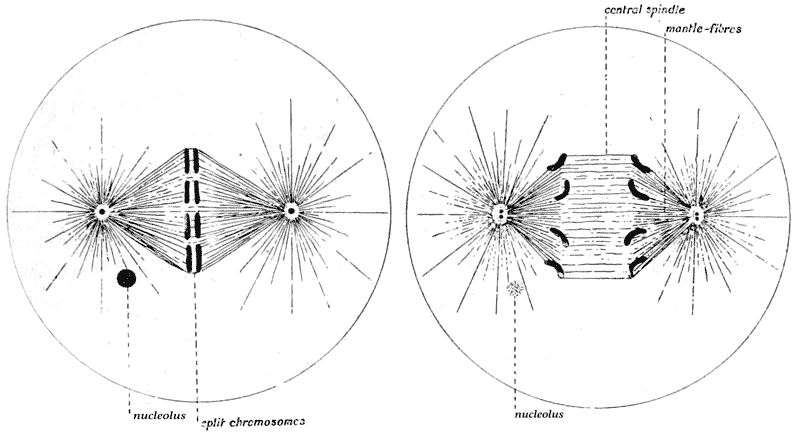
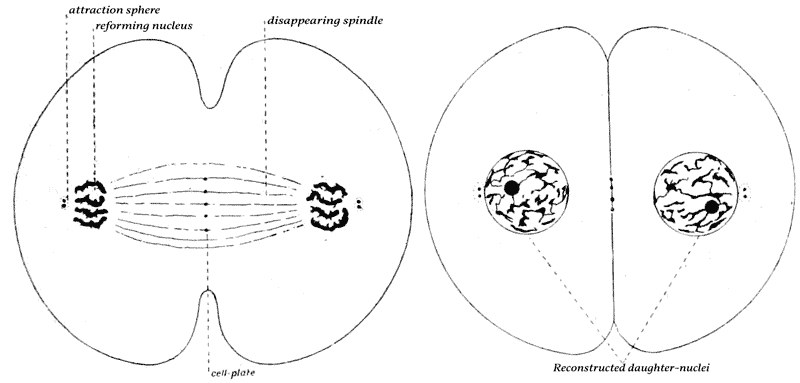
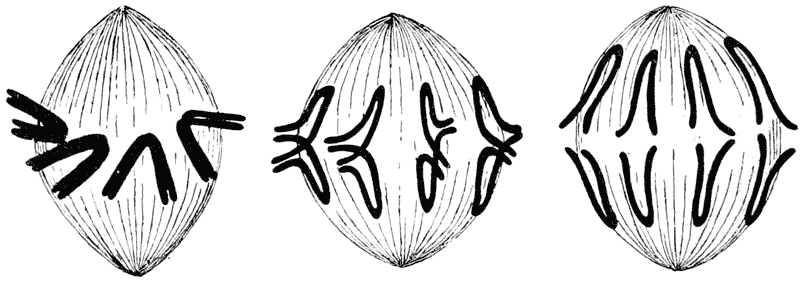
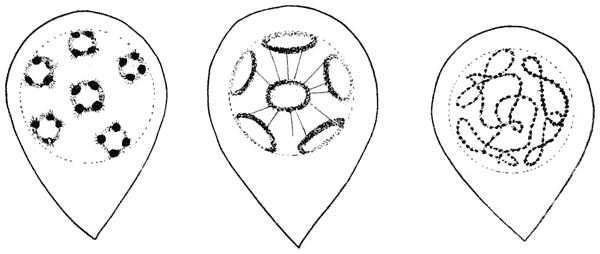
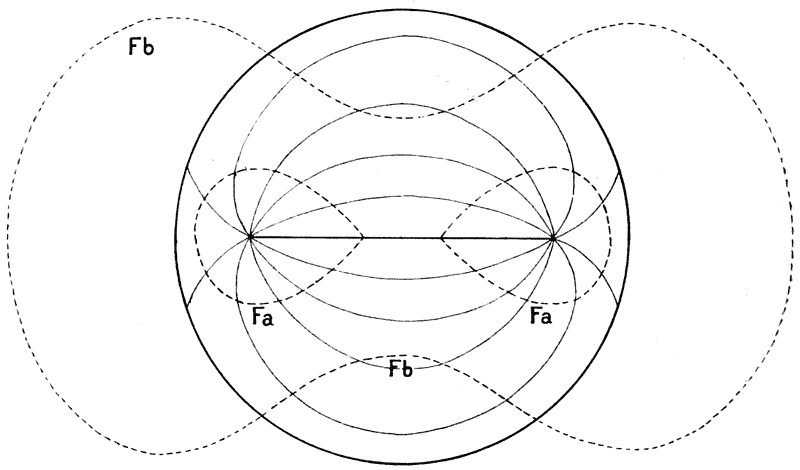
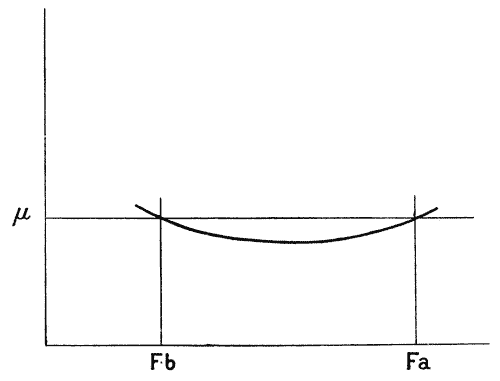
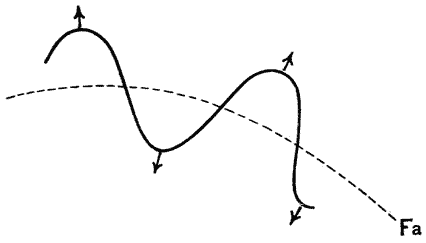
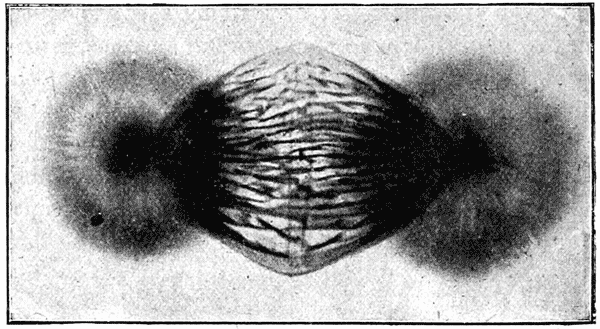

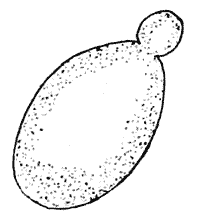

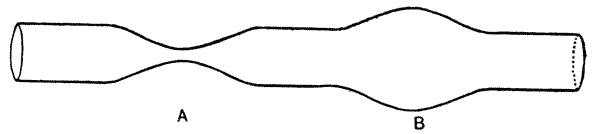
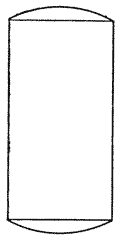
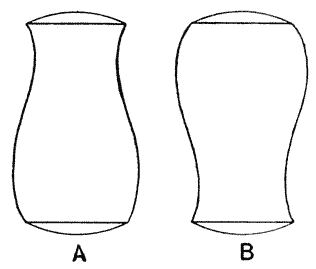
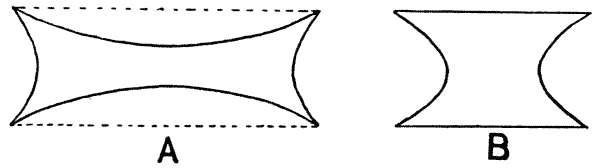
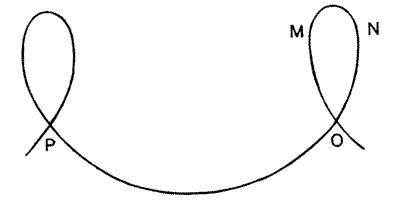
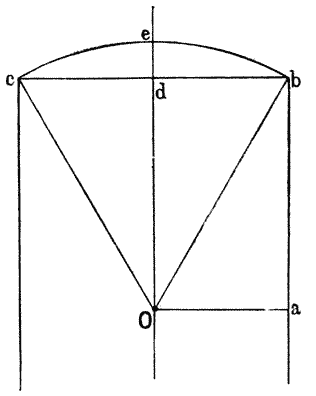
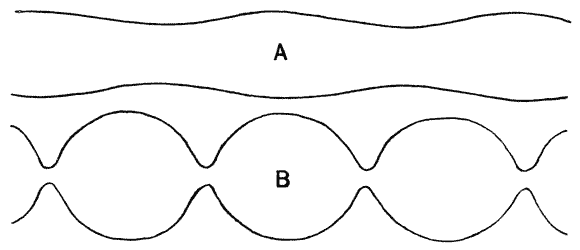

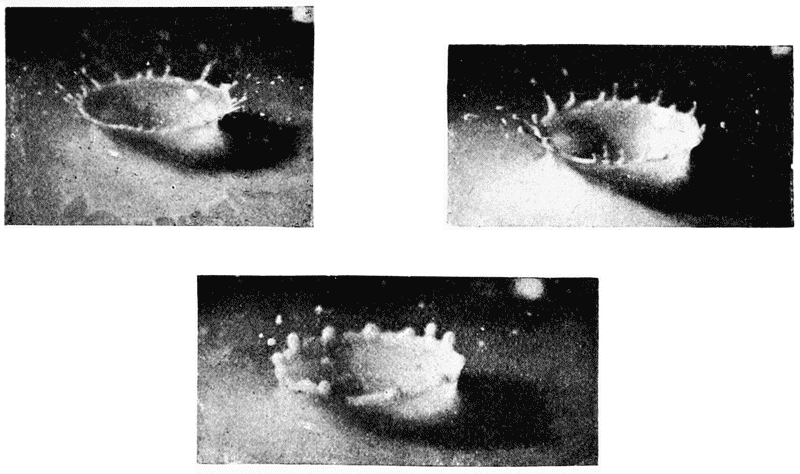
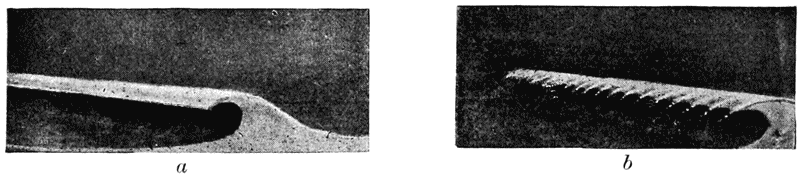
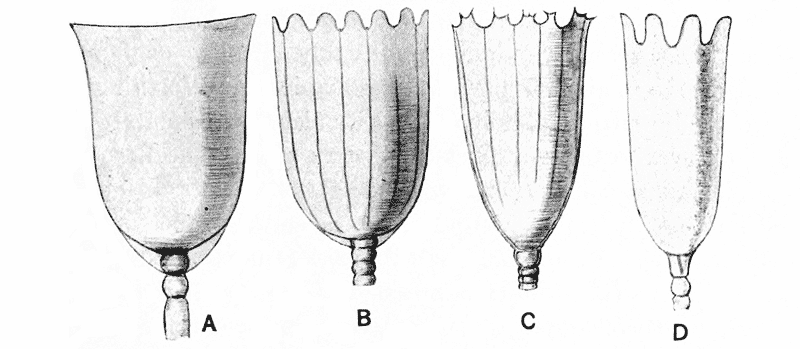
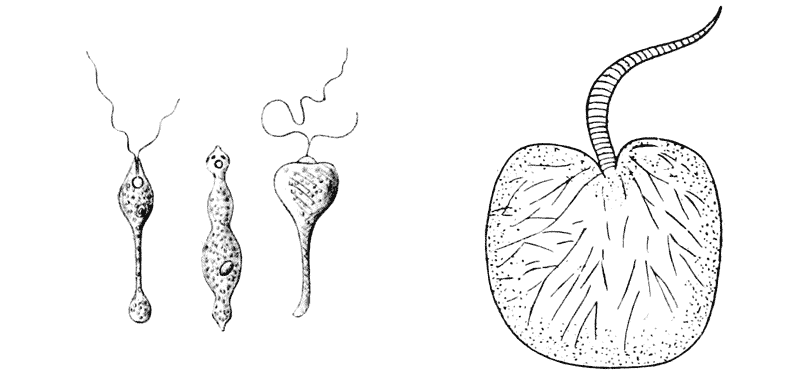

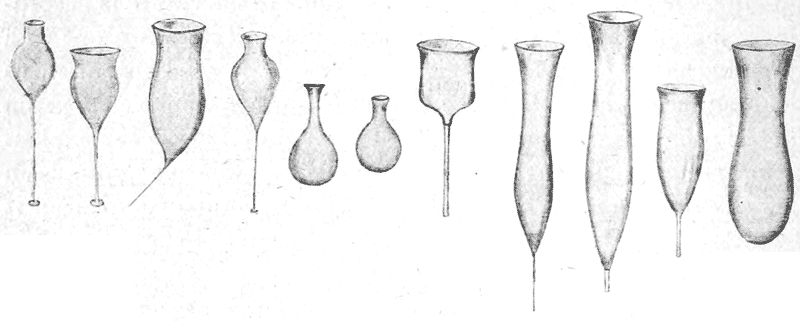
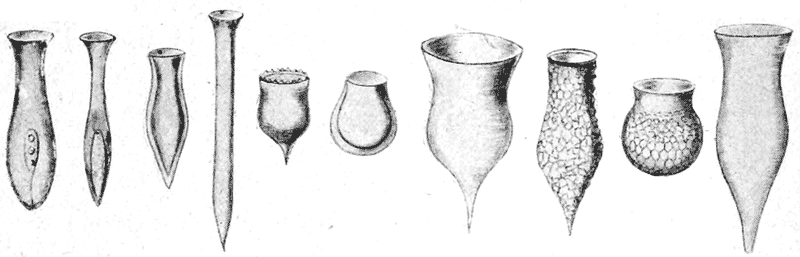
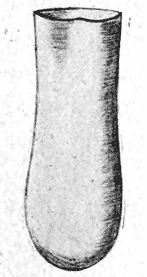
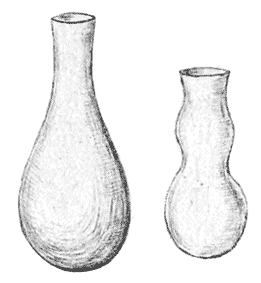
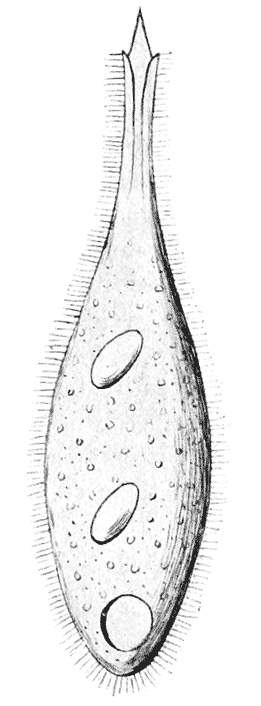
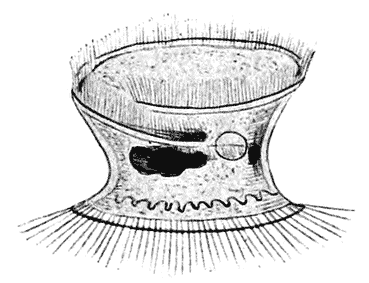
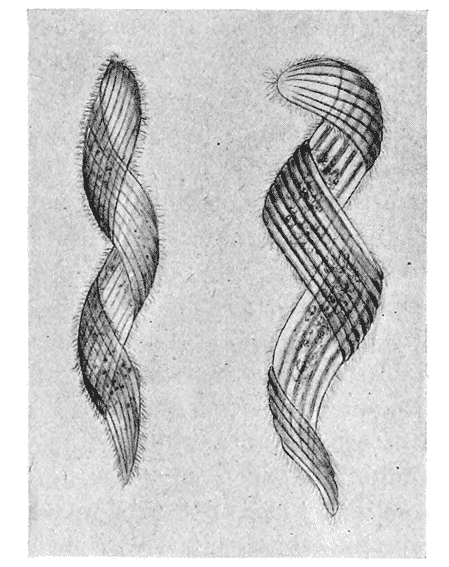
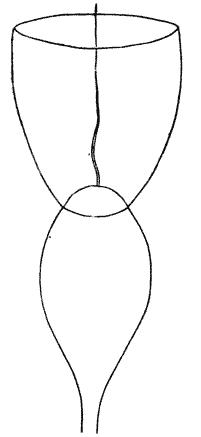
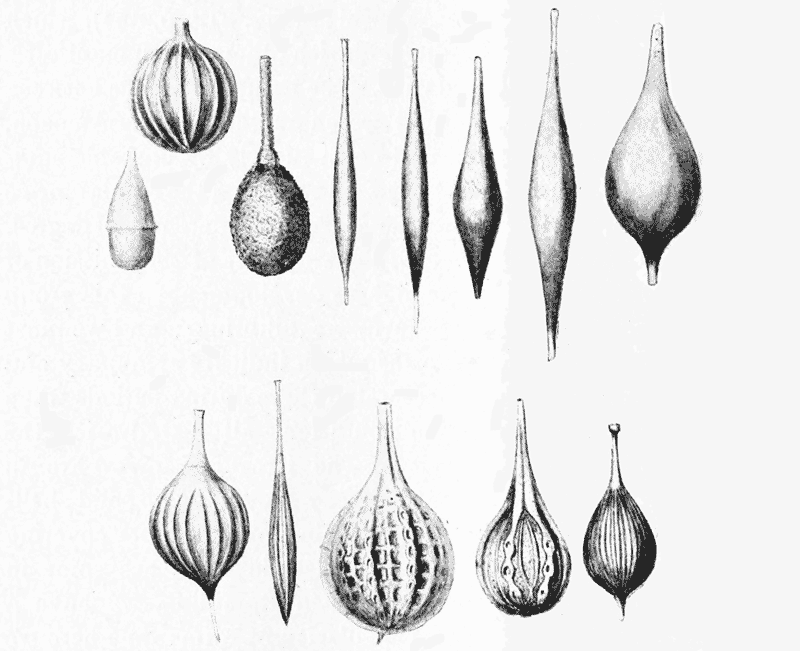
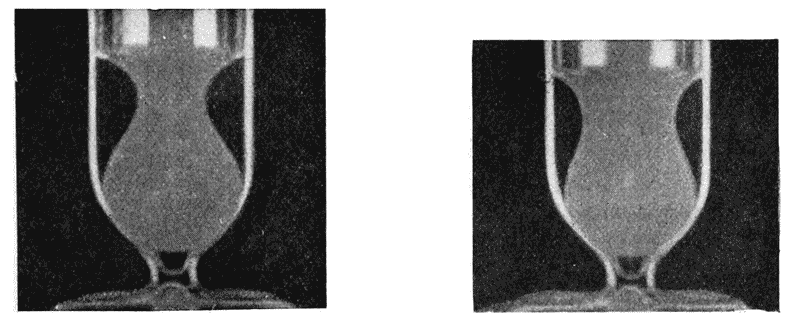
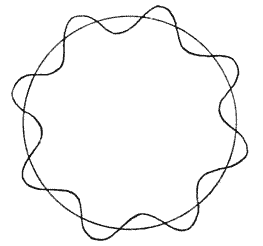
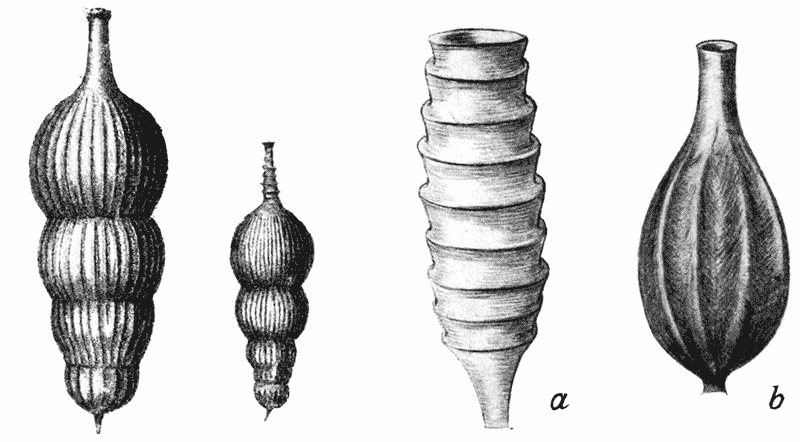
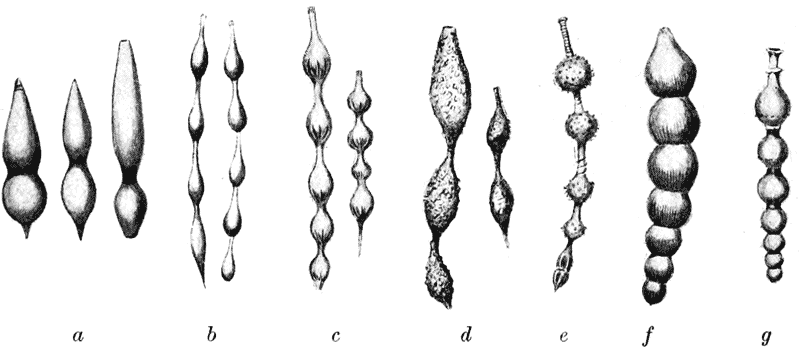
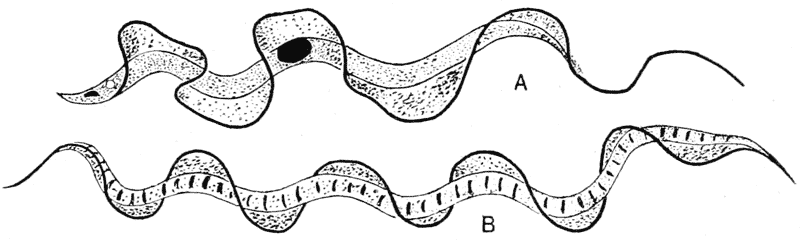
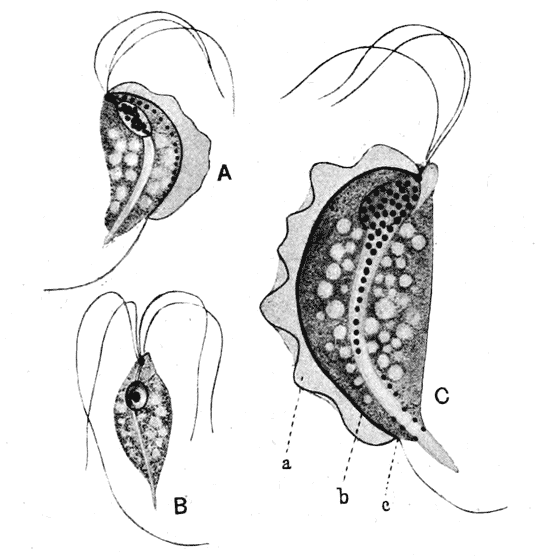
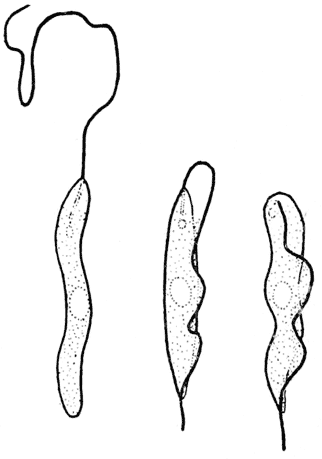
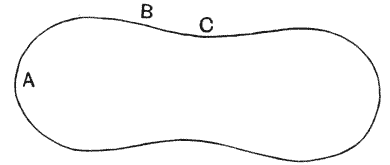
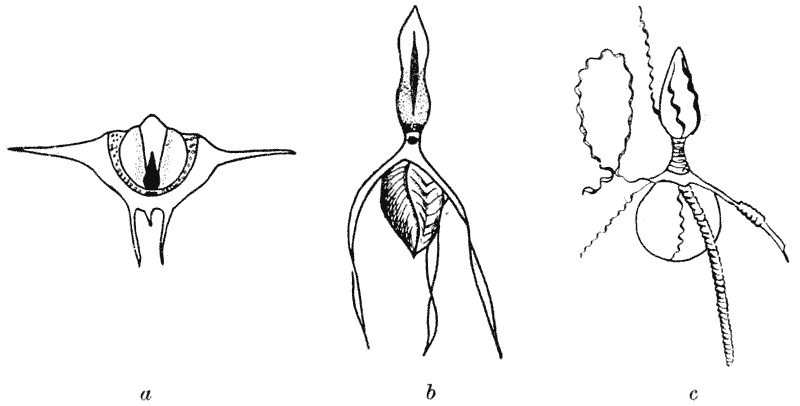
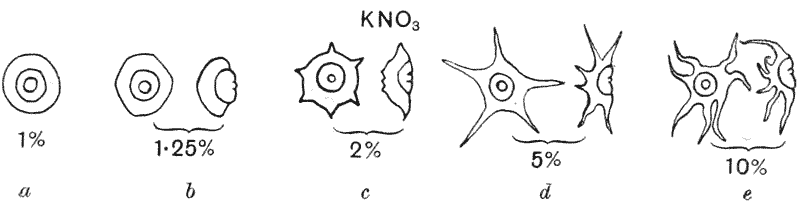
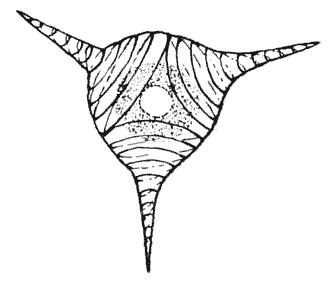
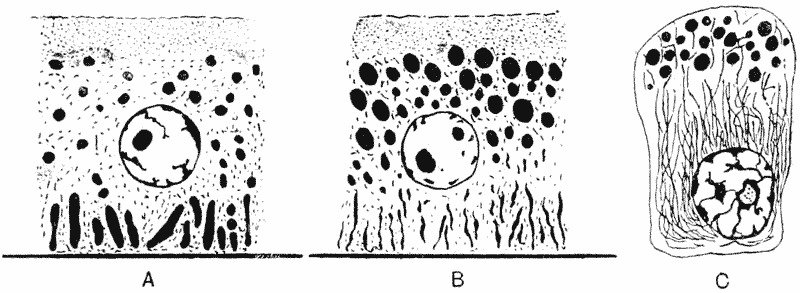
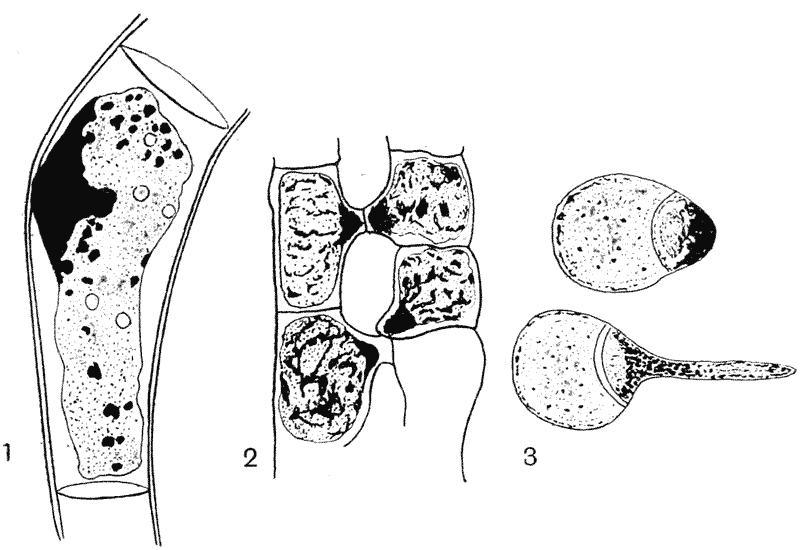
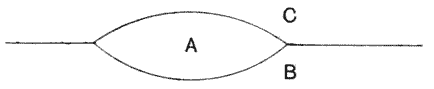
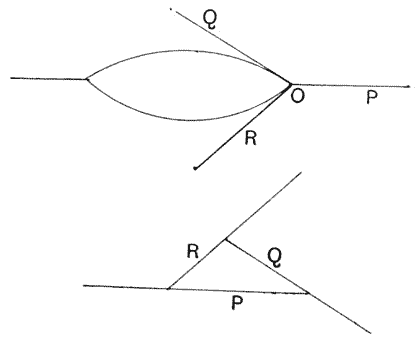
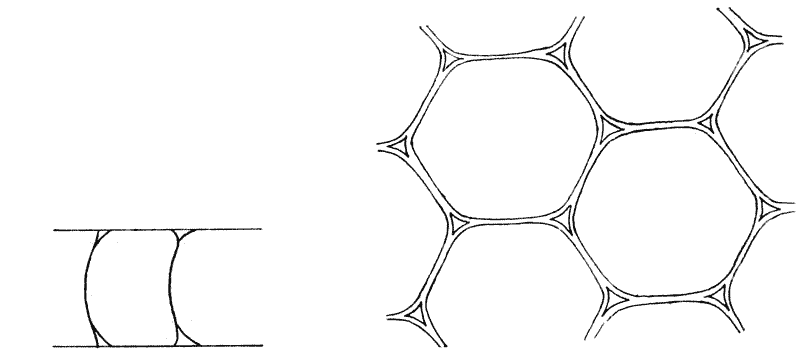
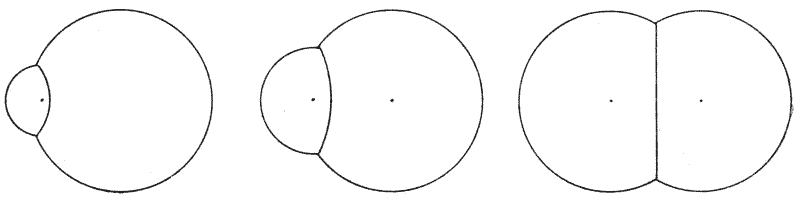
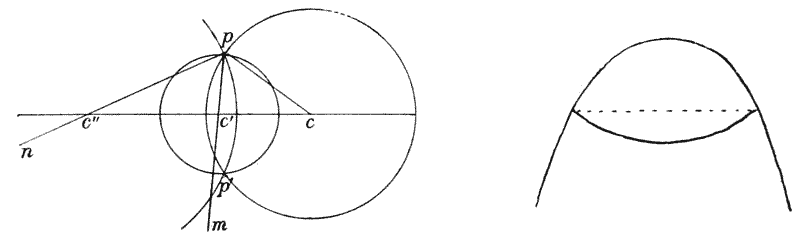
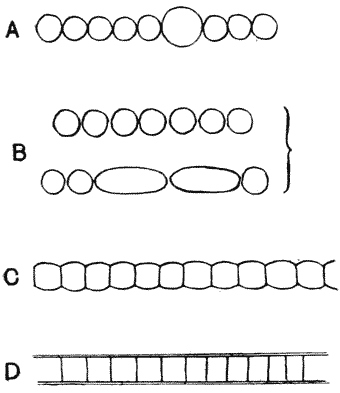
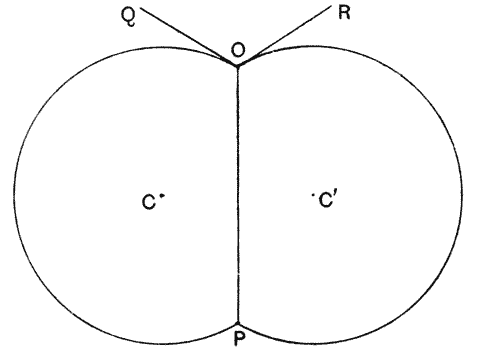
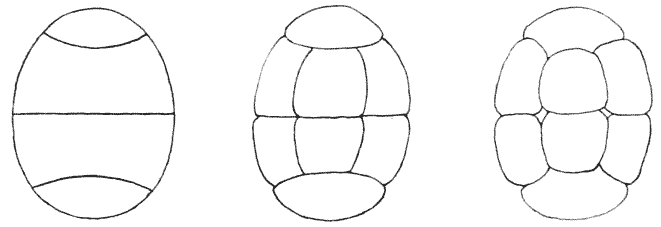
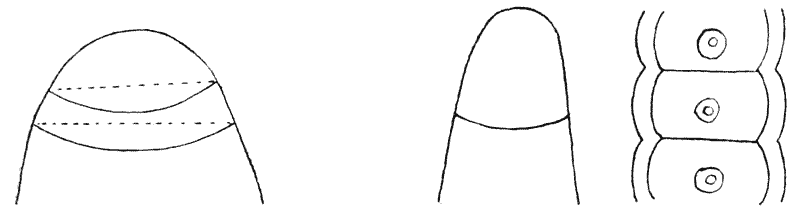
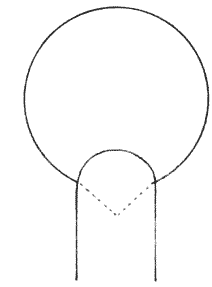
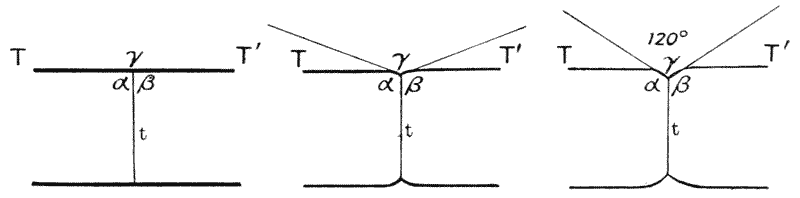
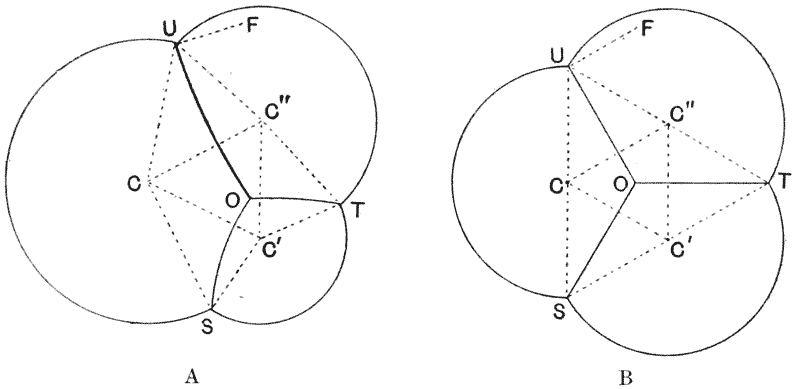
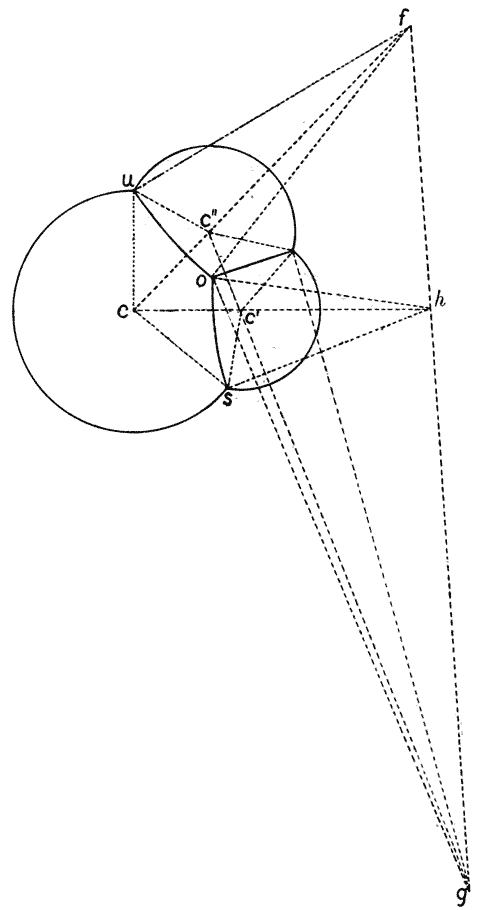

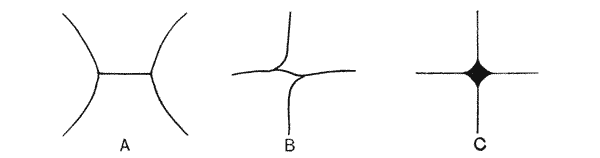
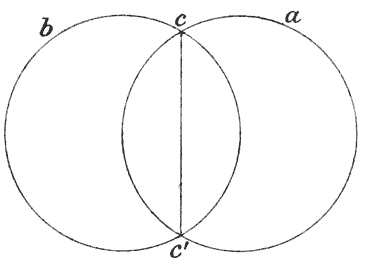
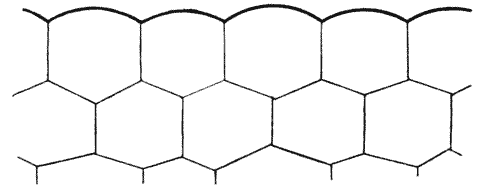
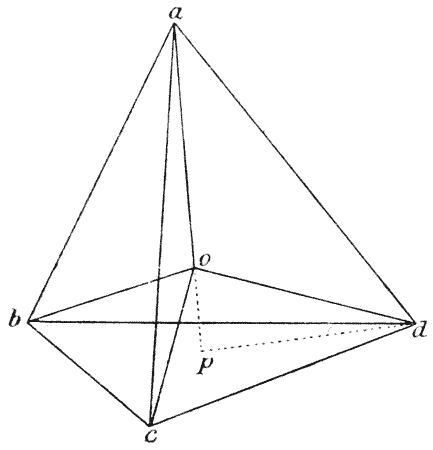
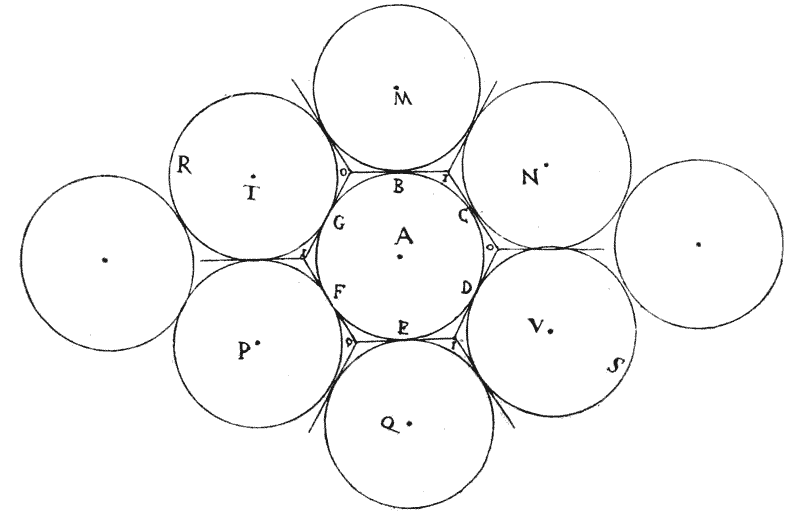
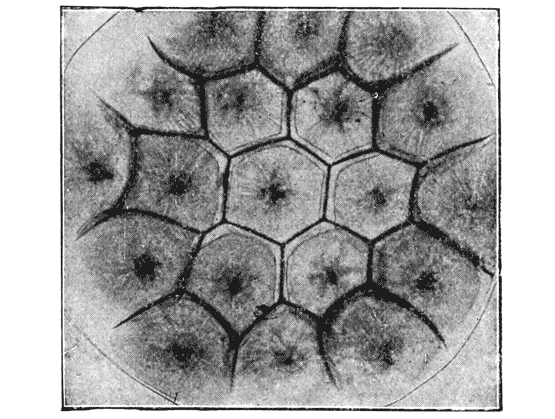
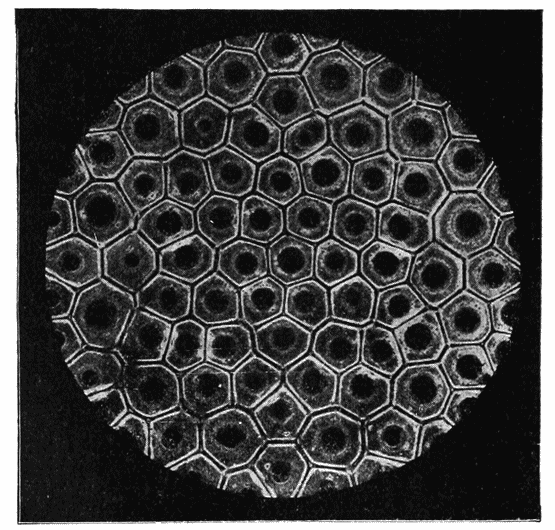
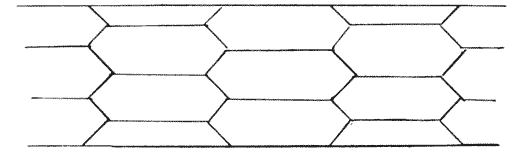
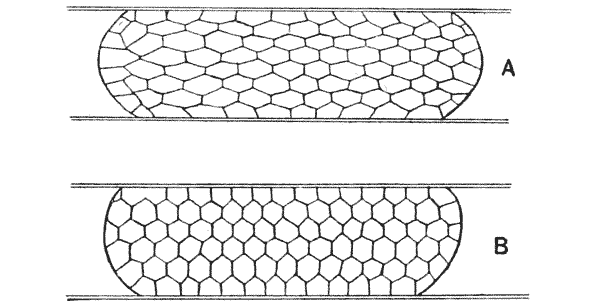
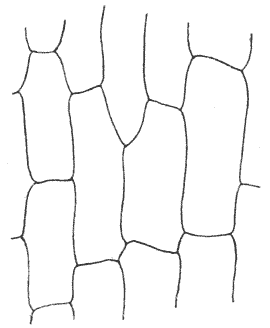
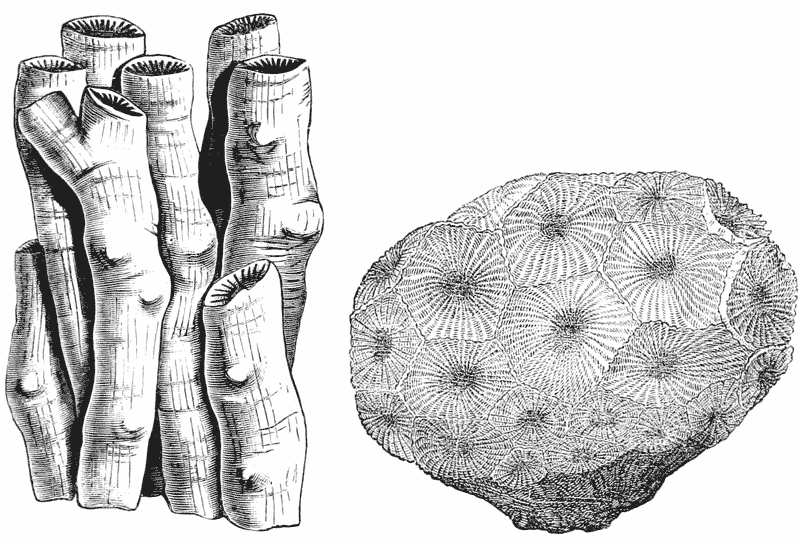
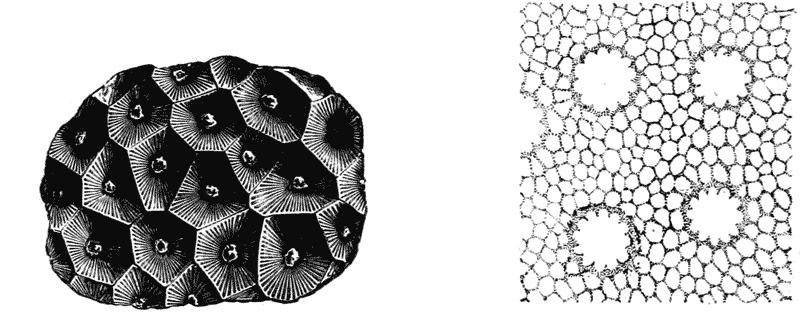
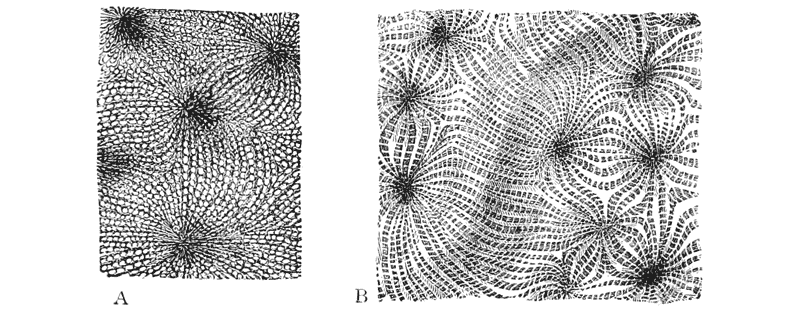
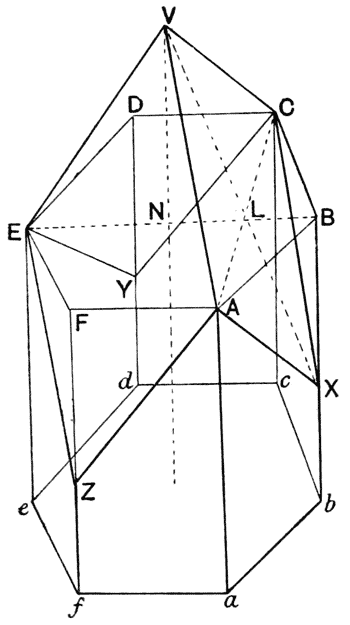
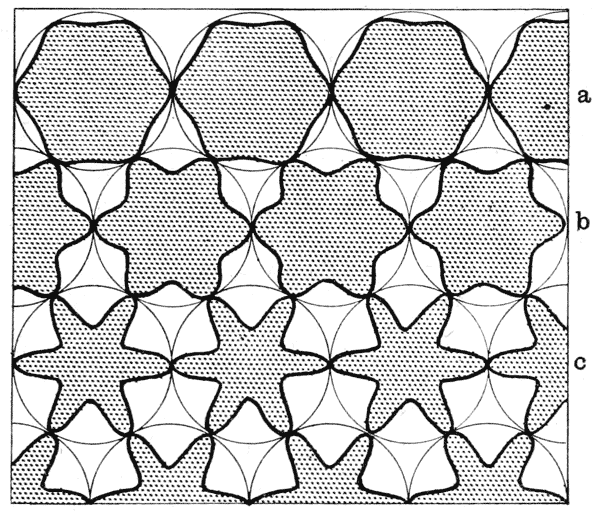
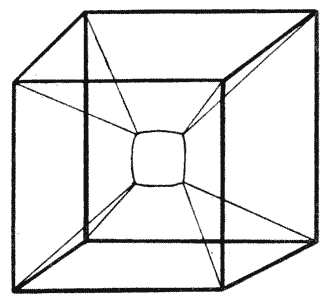
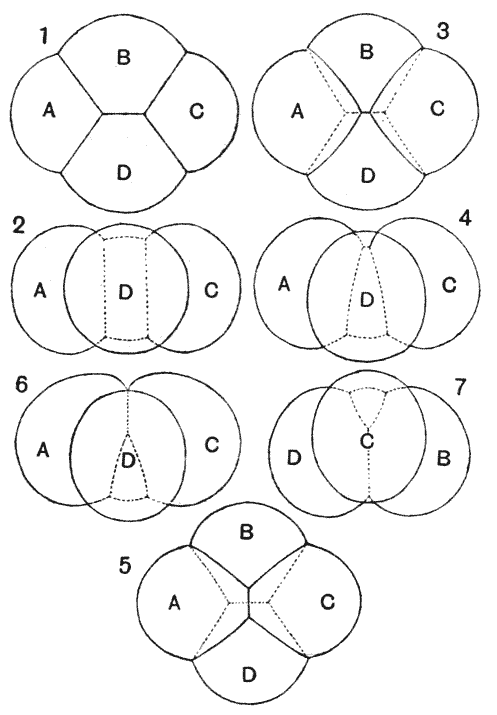
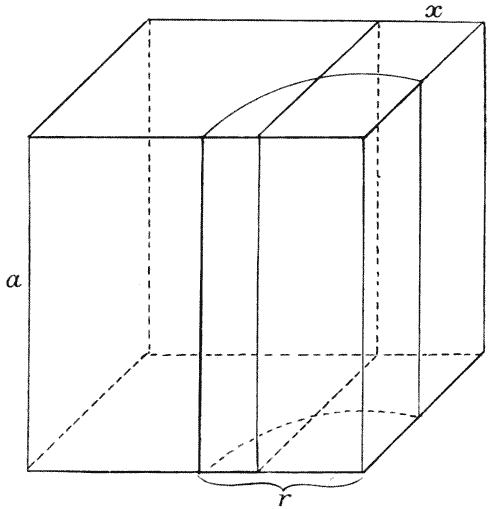
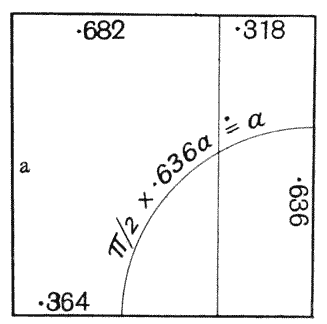
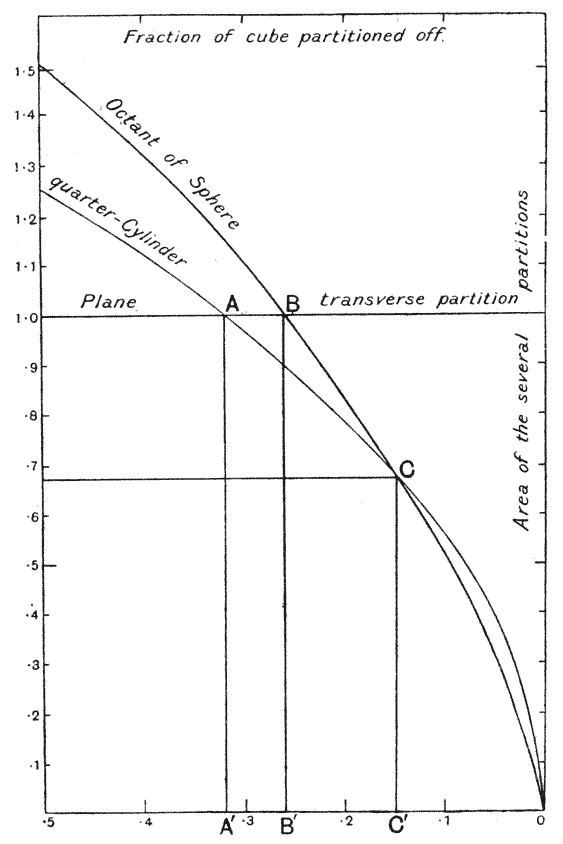
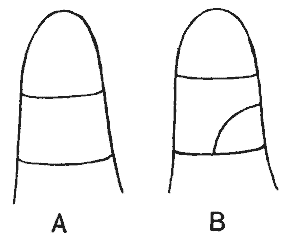
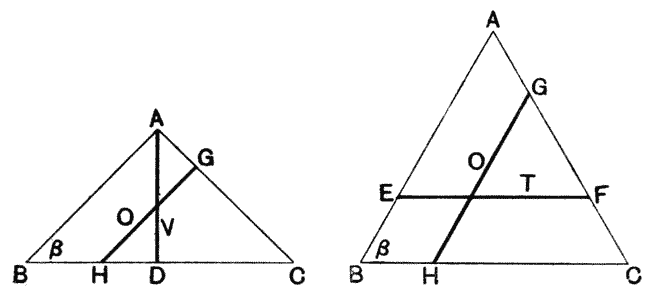
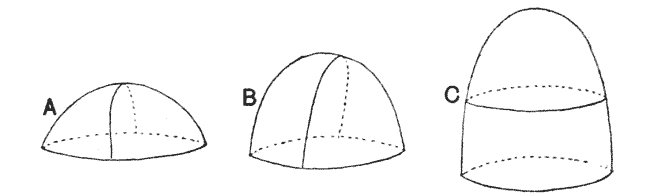
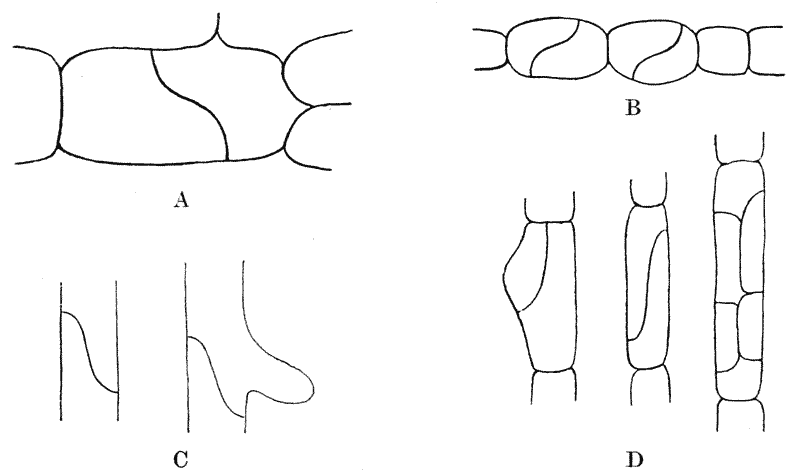
 -shaped
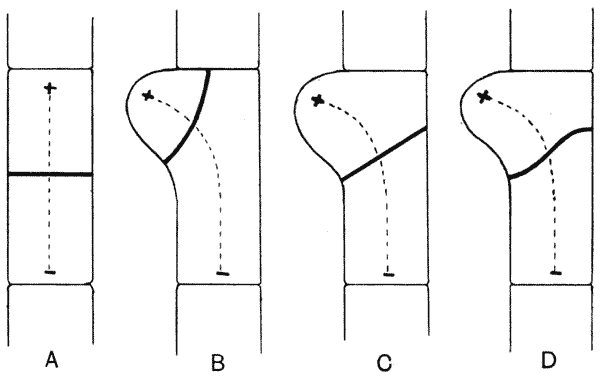
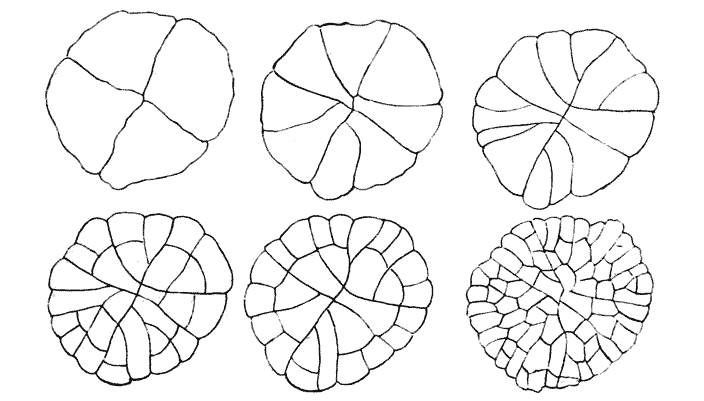
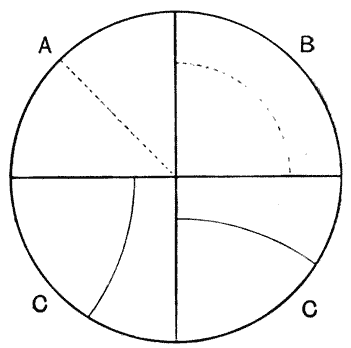
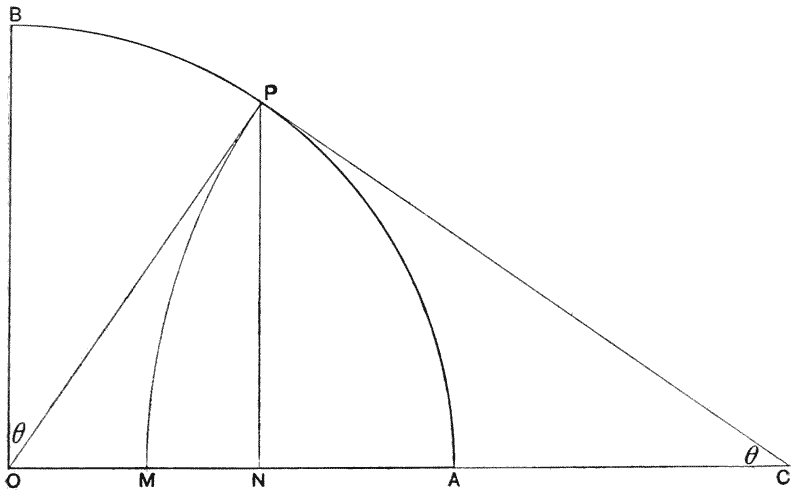
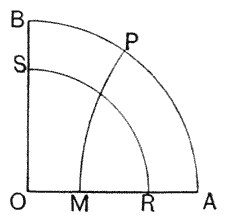
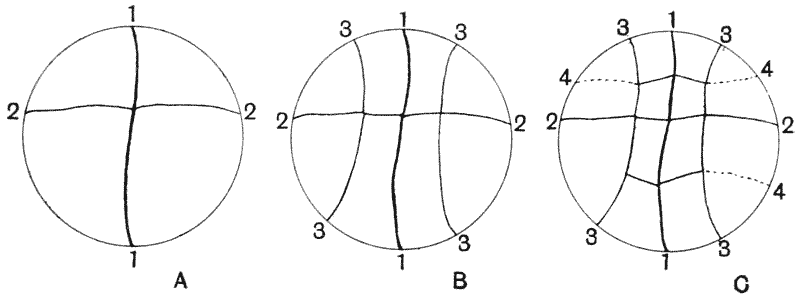
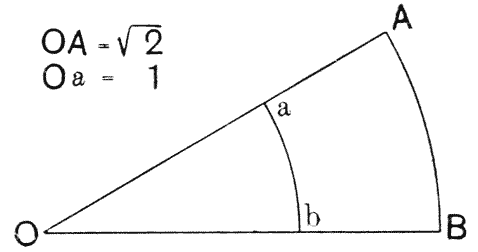
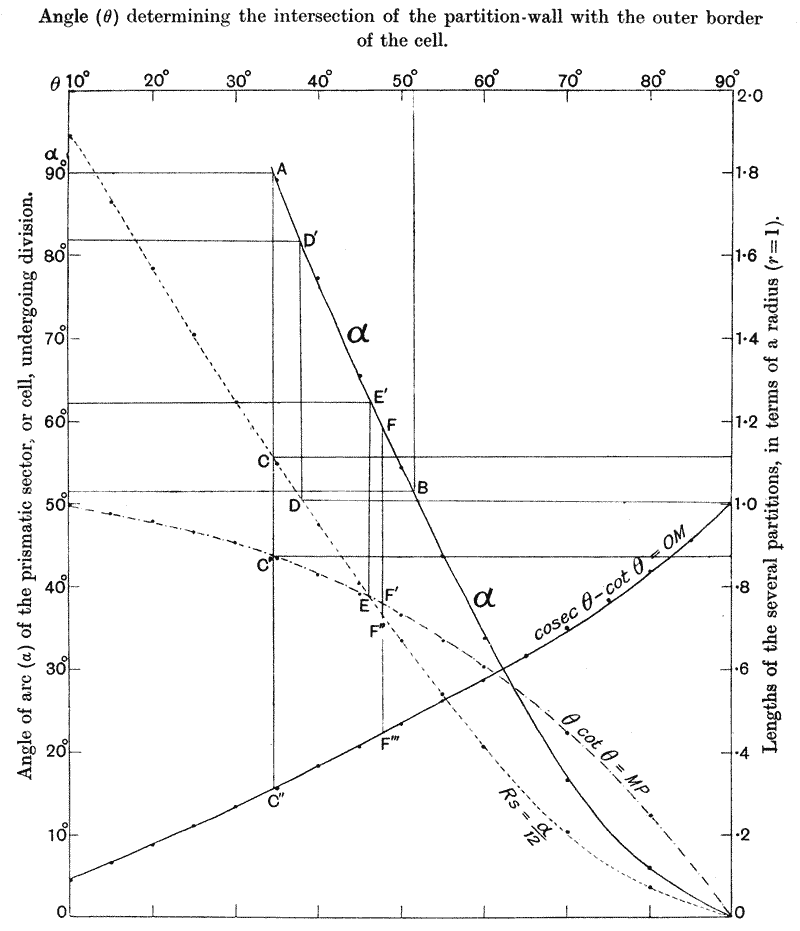
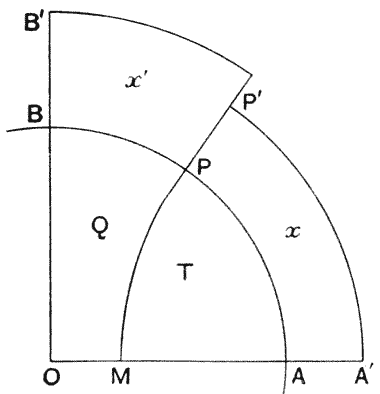
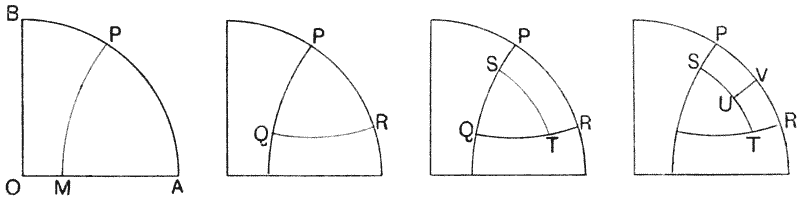
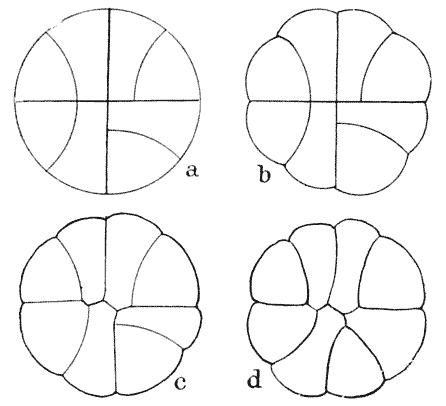
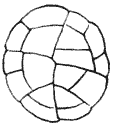
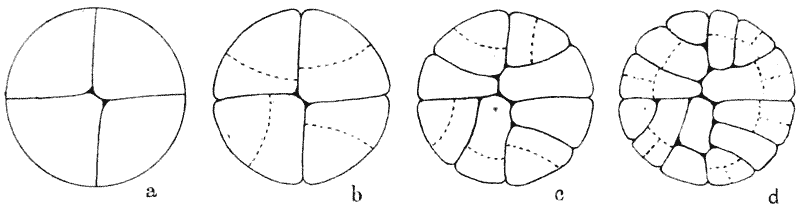
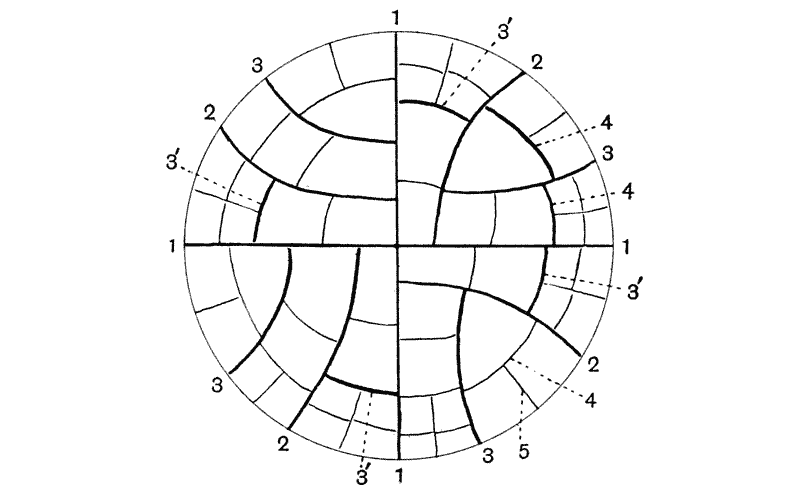
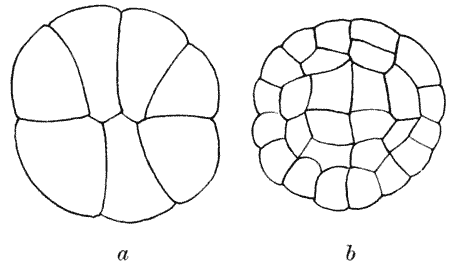
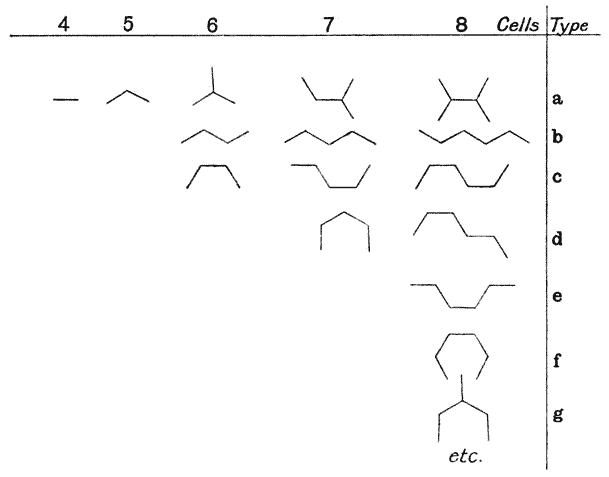
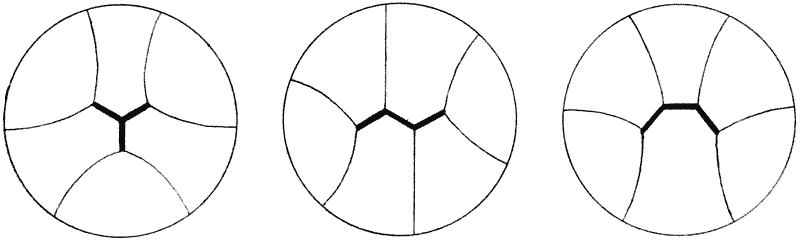
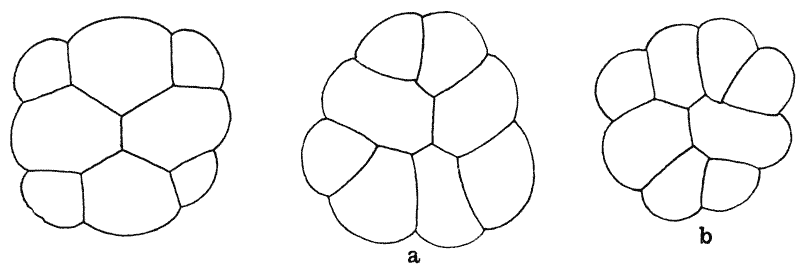
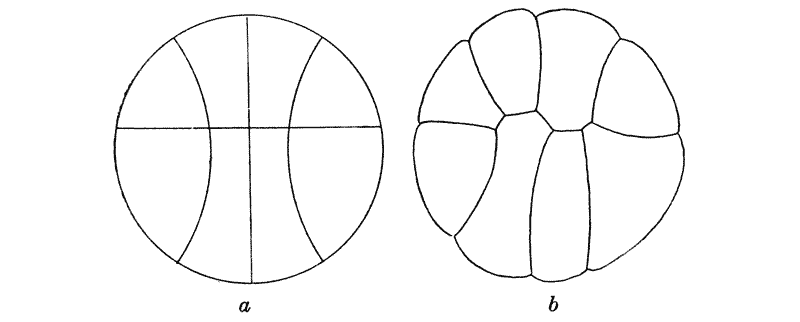
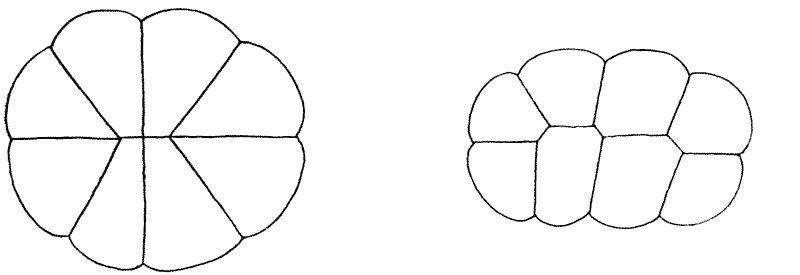
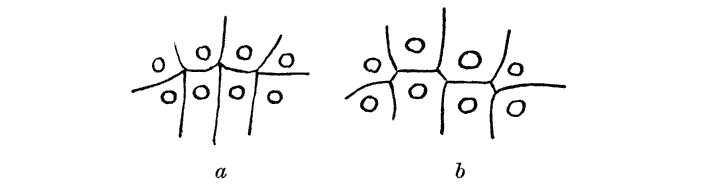
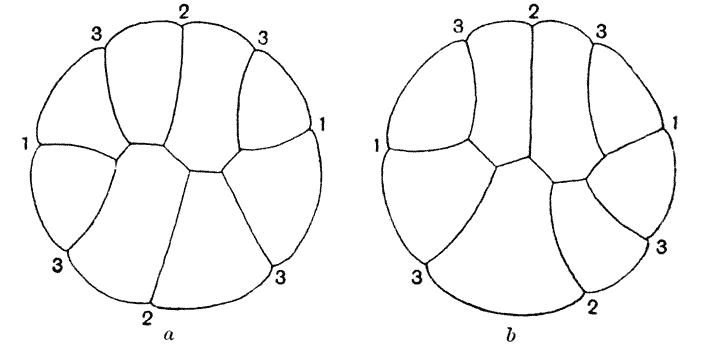
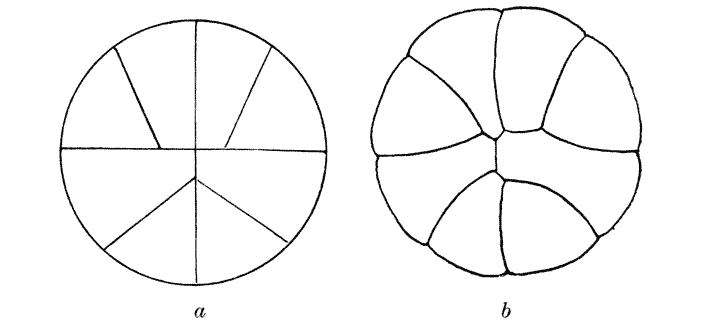
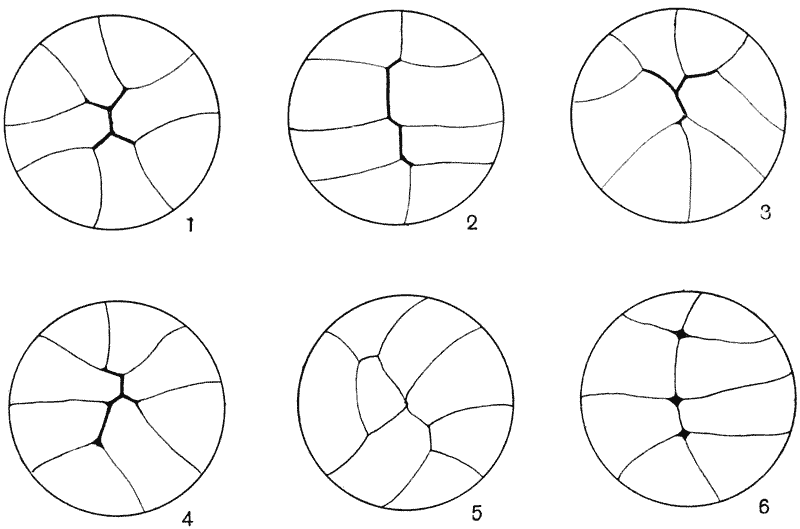
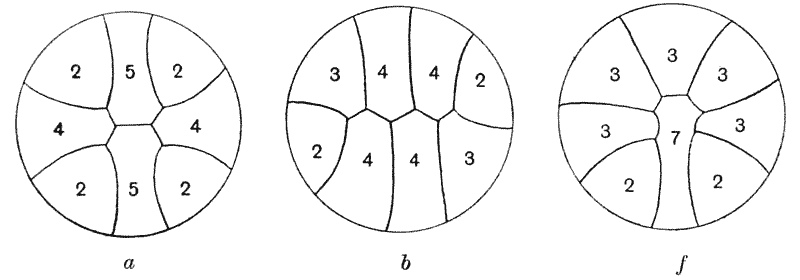
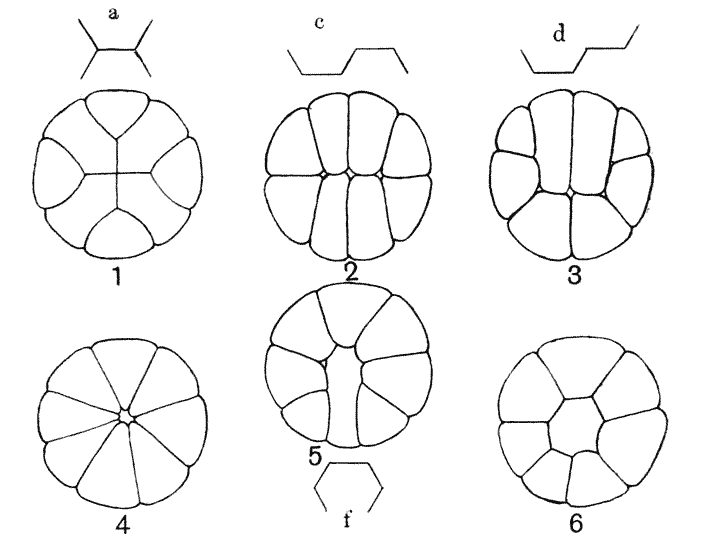
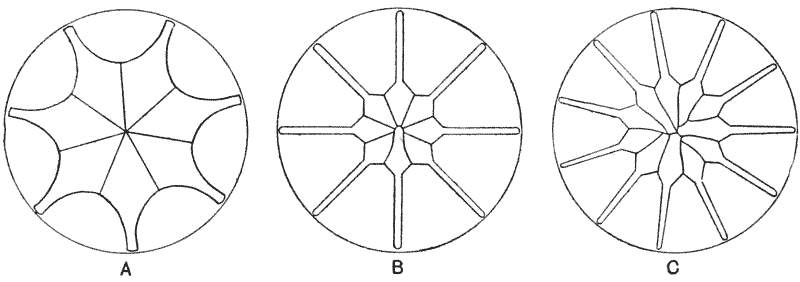
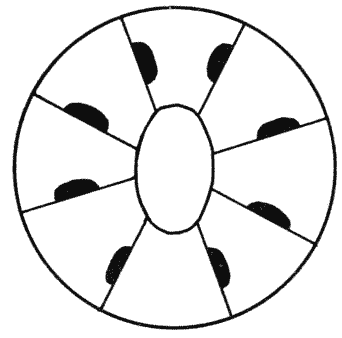
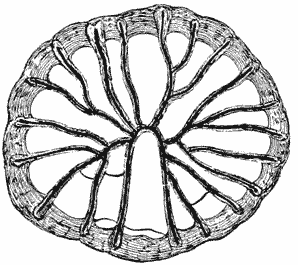
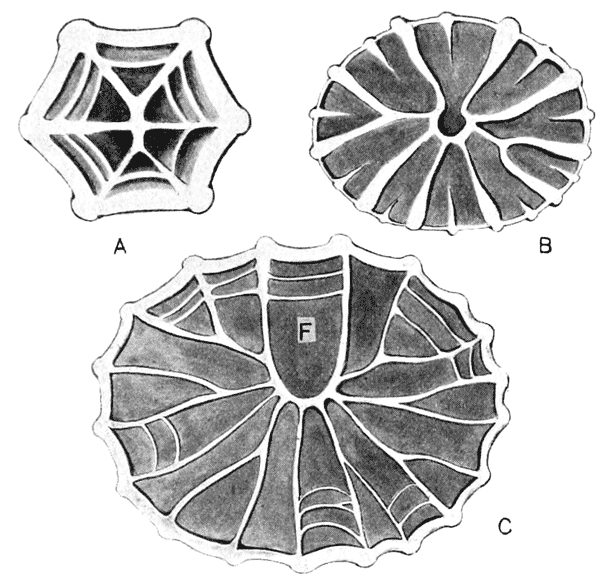
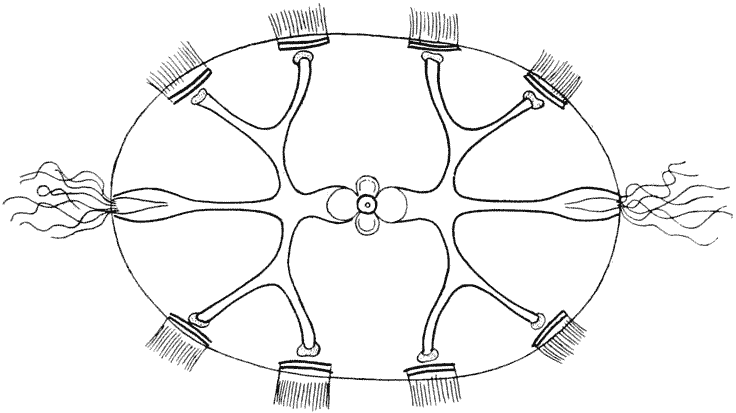
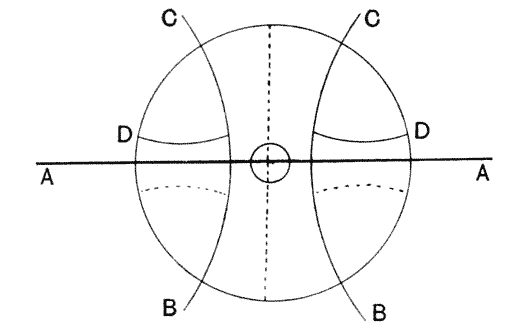
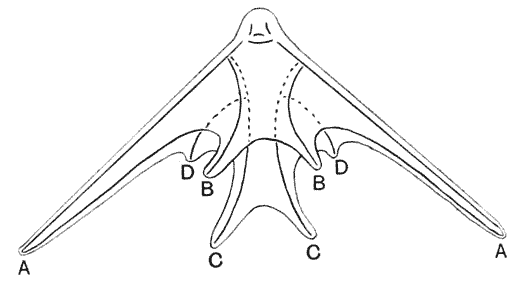
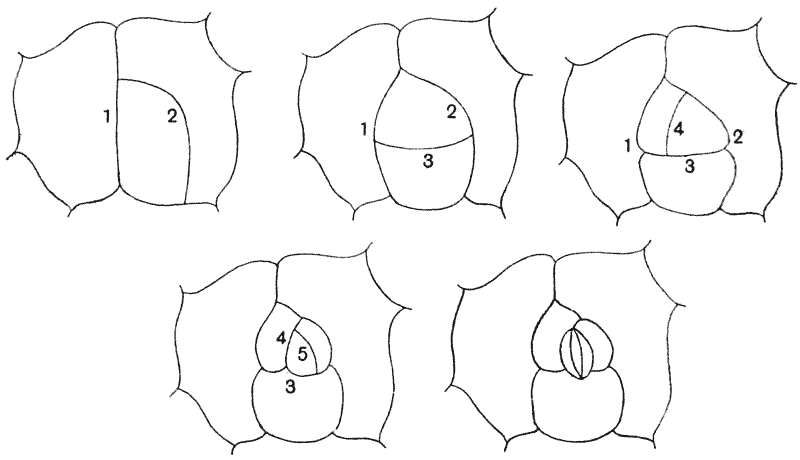
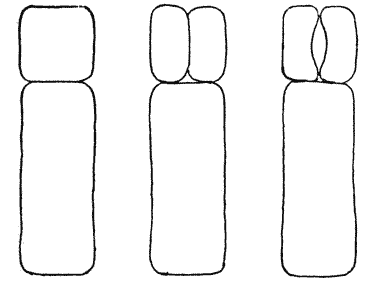
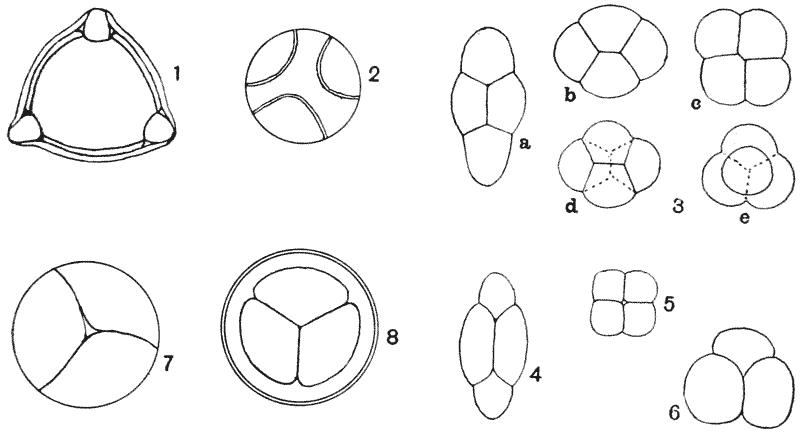
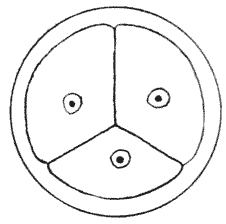
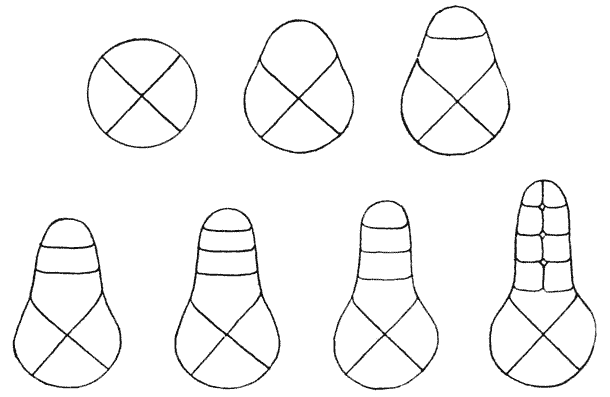
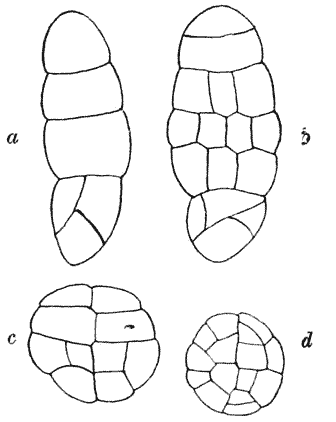
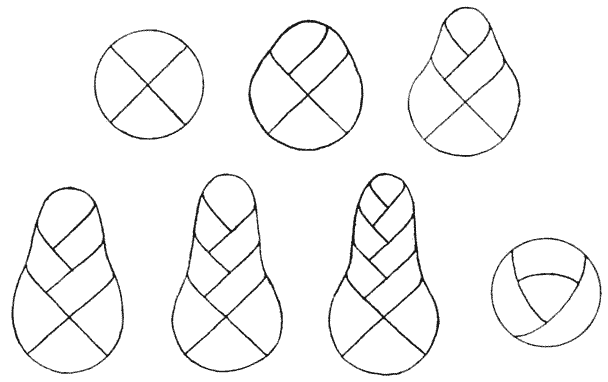
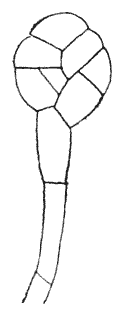
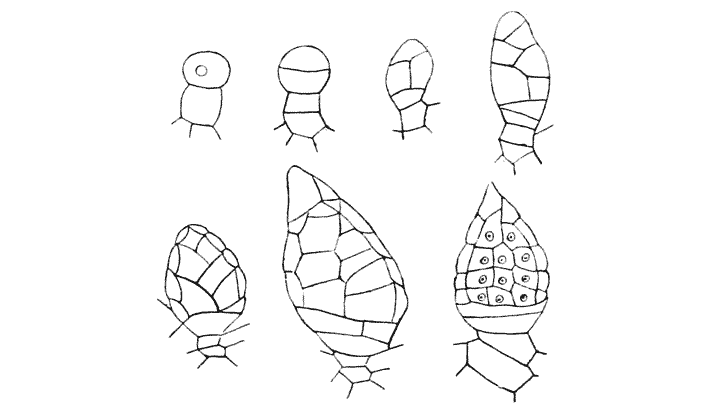
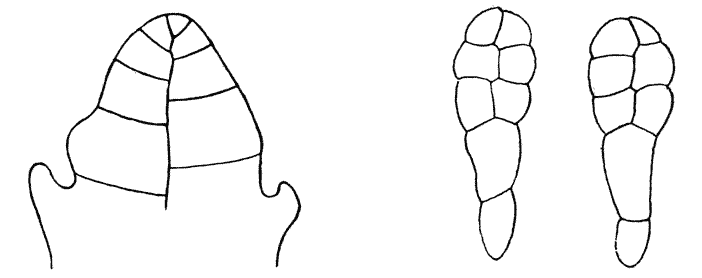
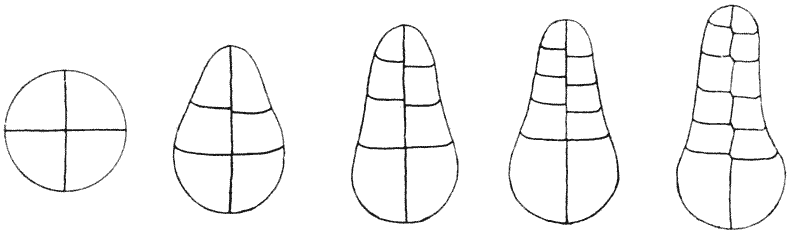
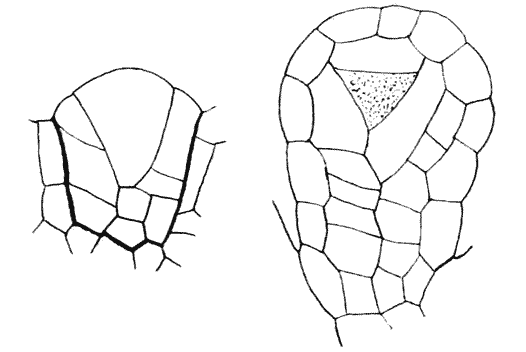
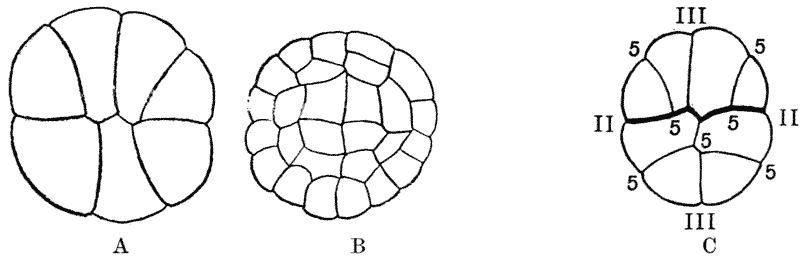
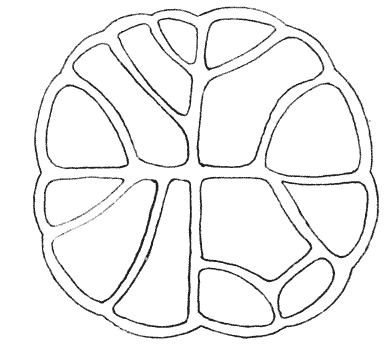
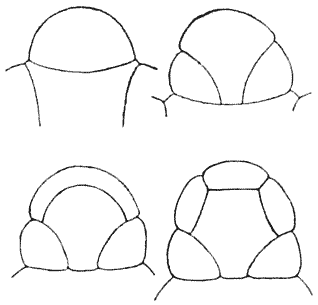
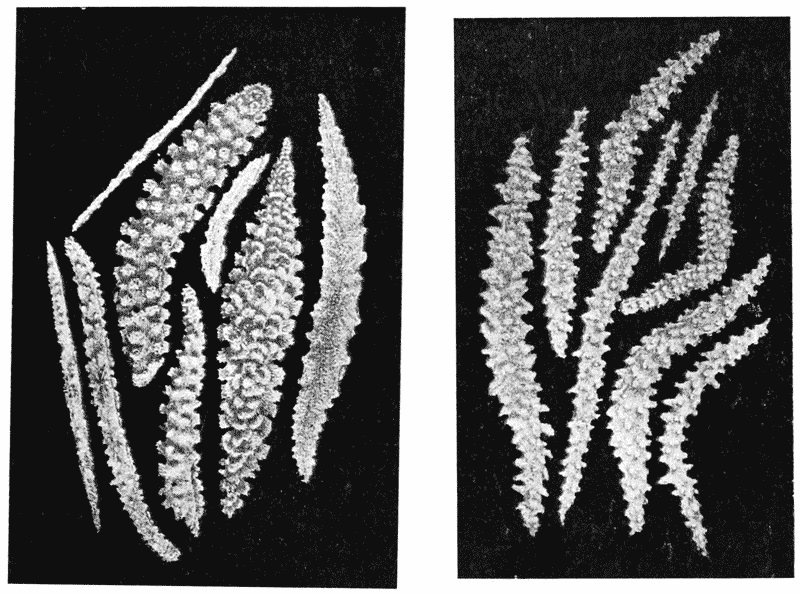
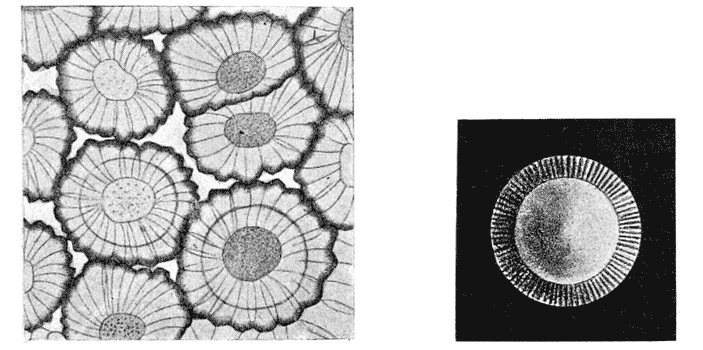
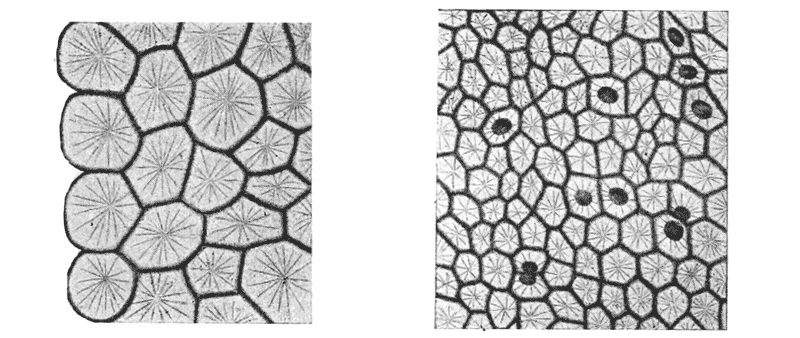
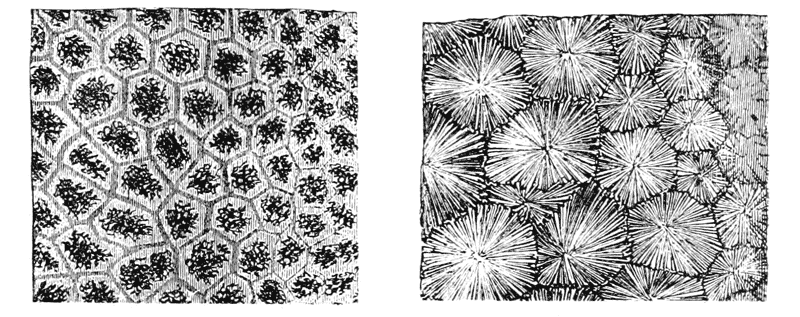
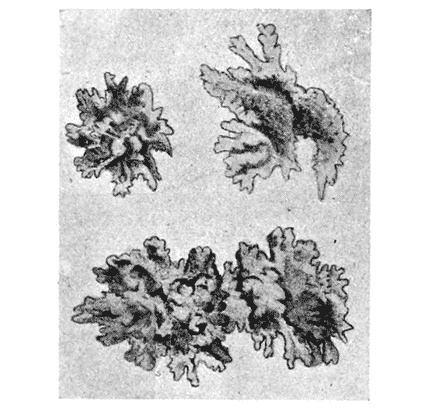
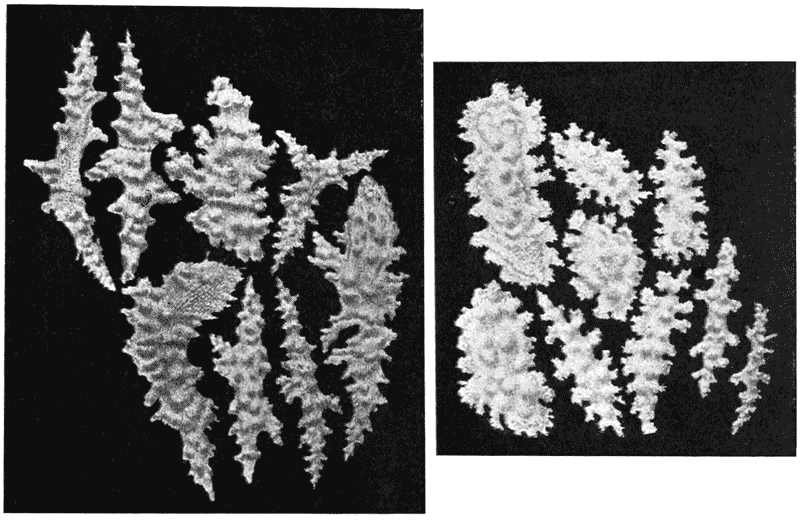
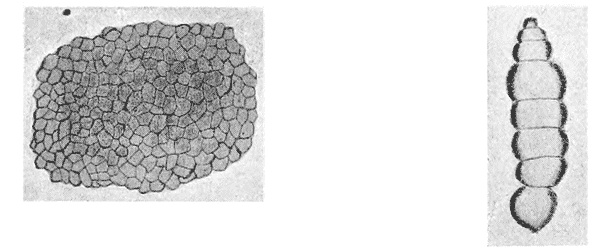
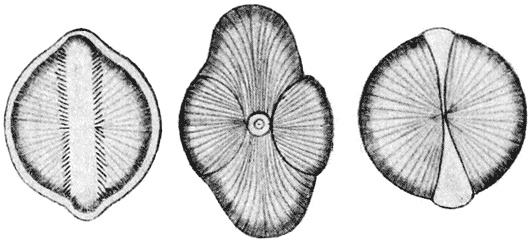
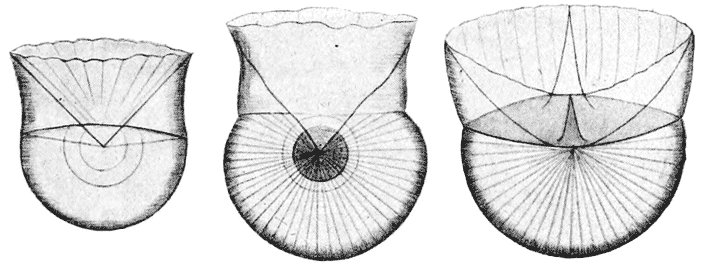
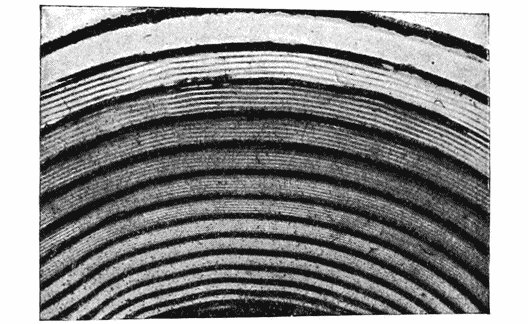
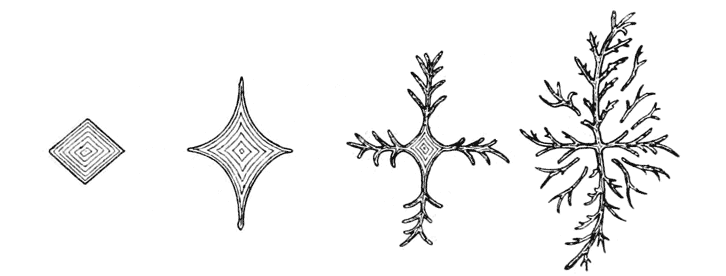
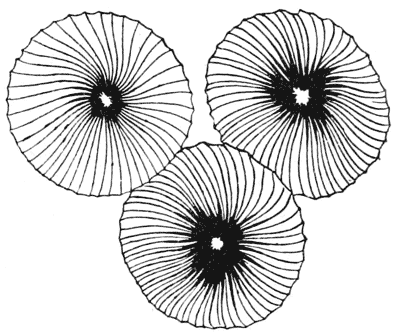
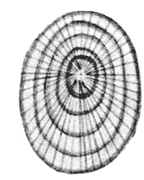
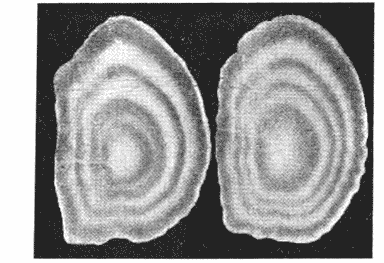
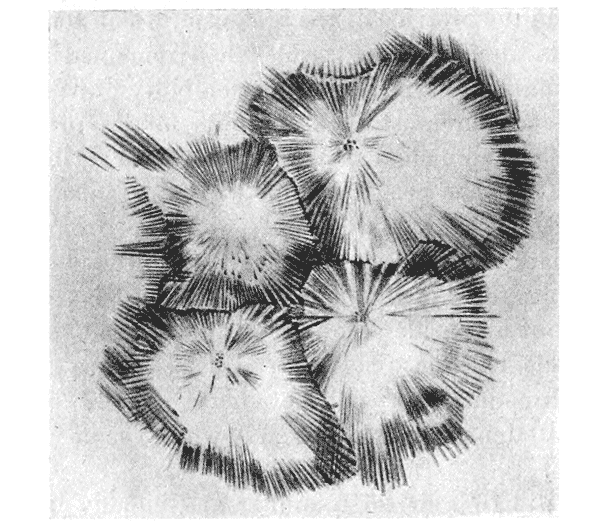
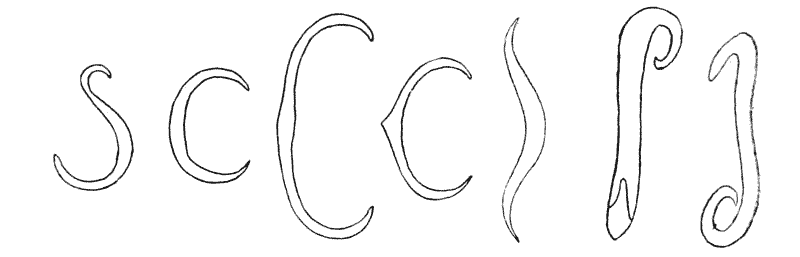
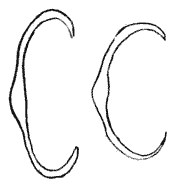
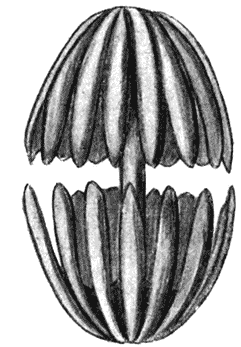
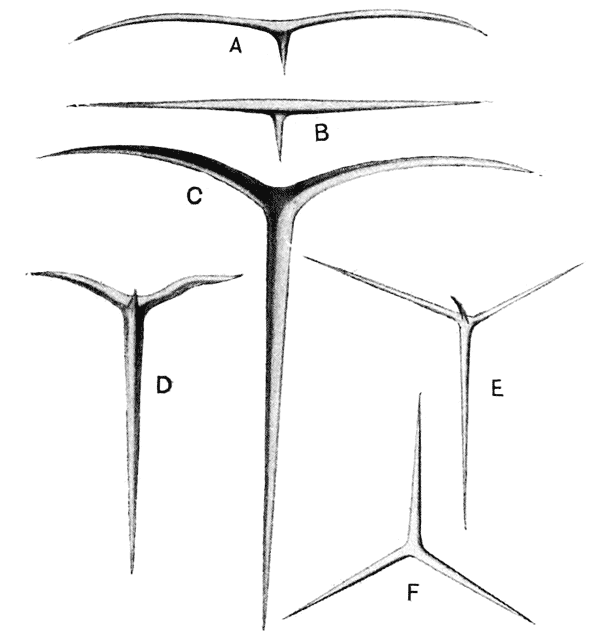
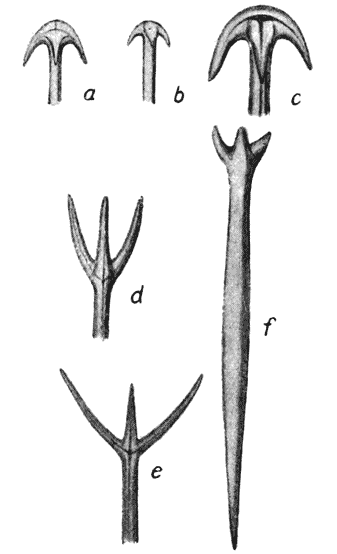
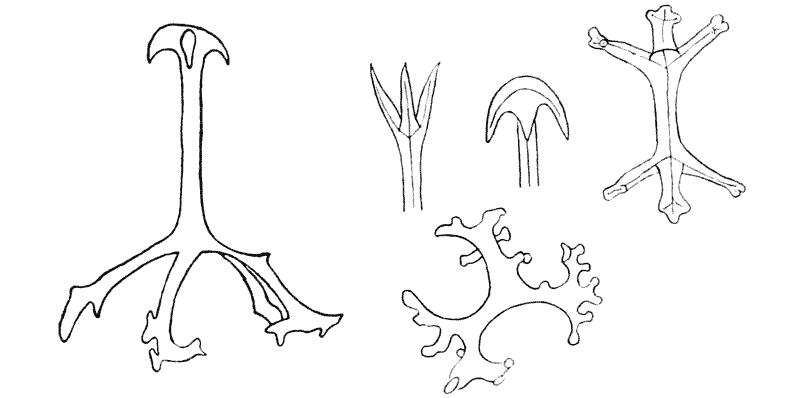
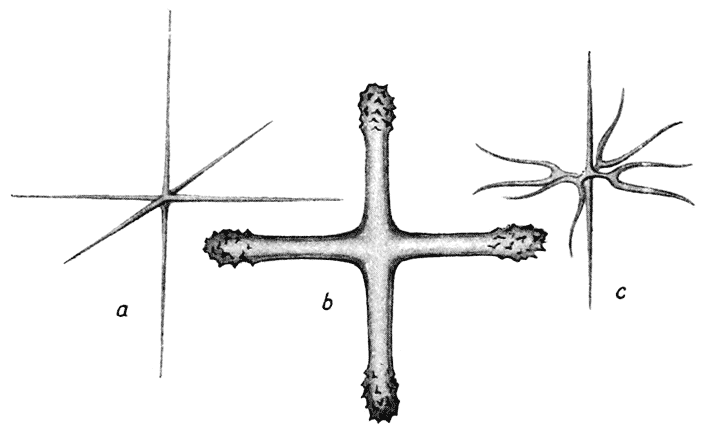
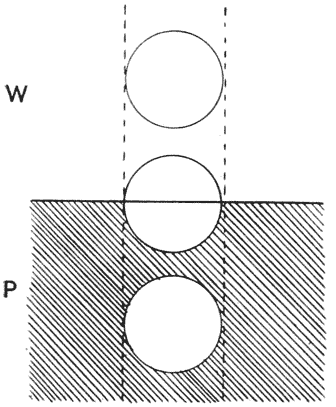
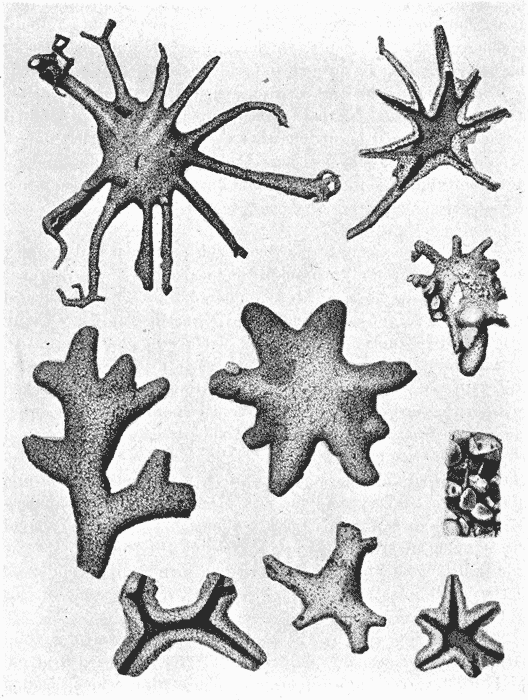
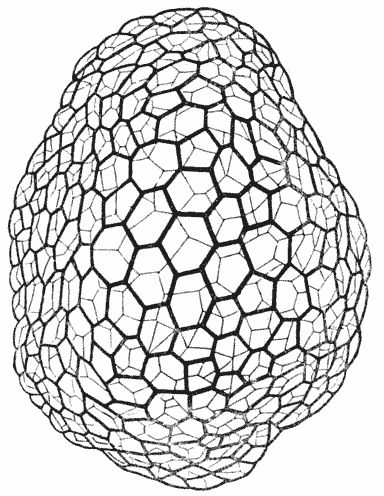
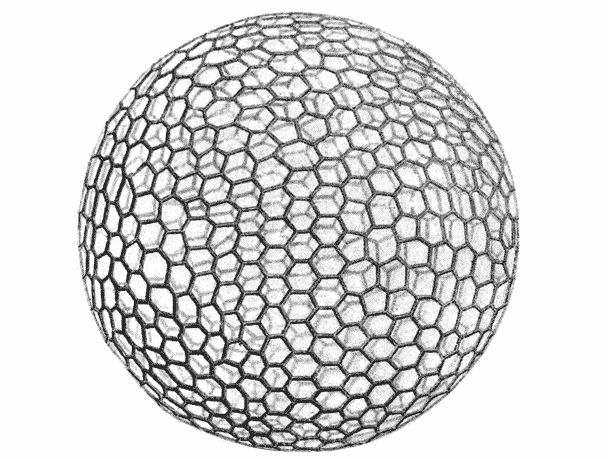
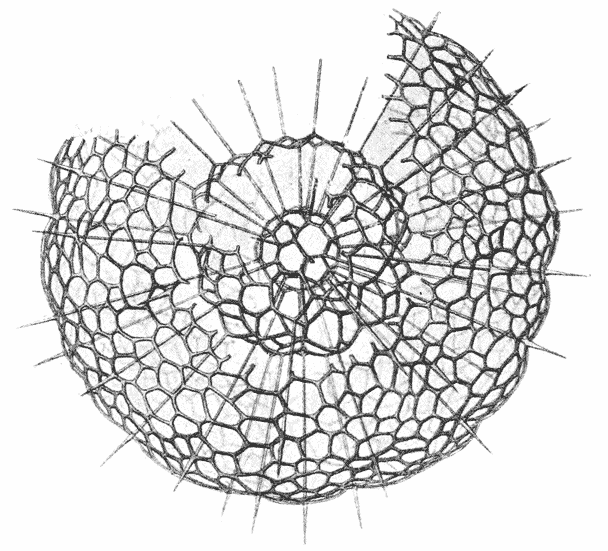
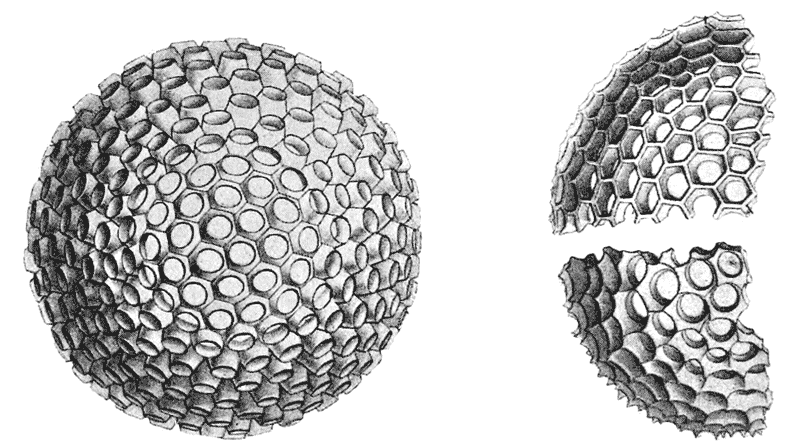
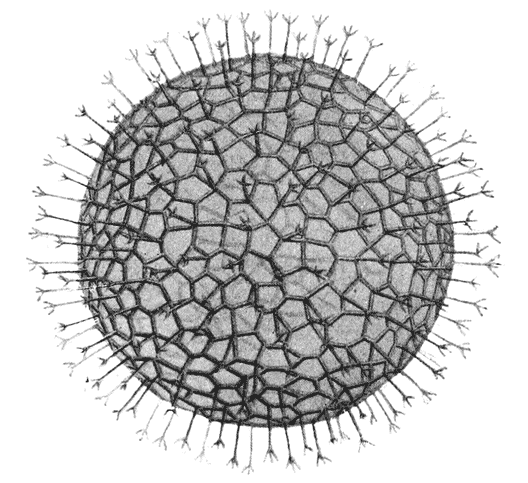
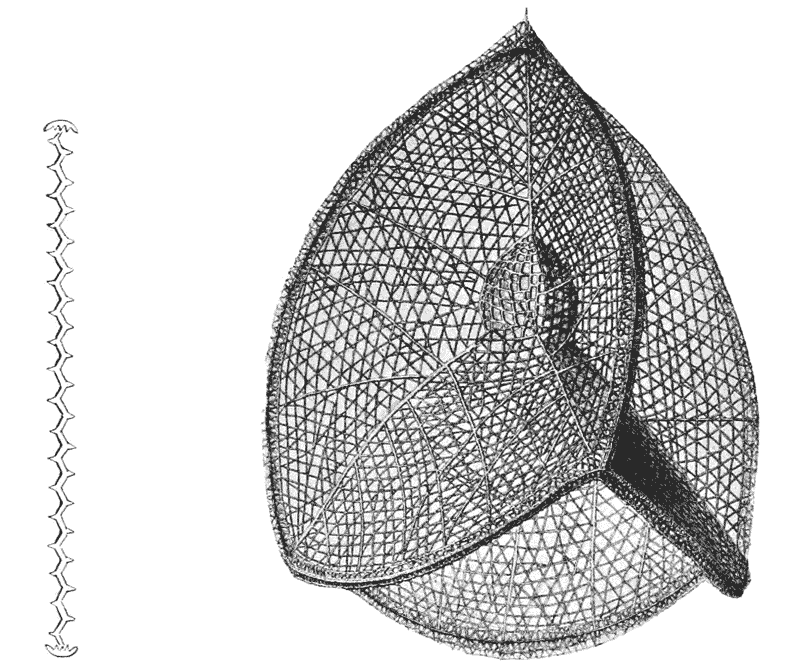
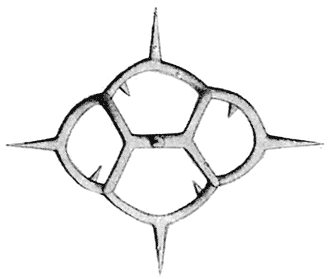
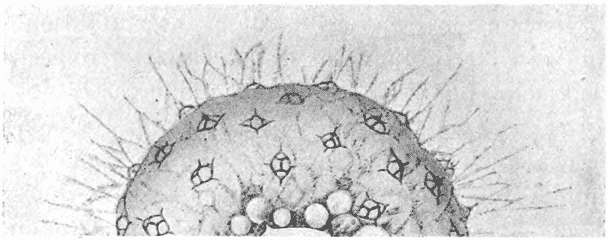
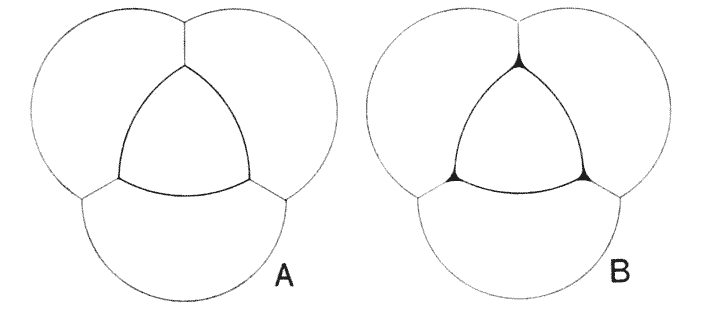
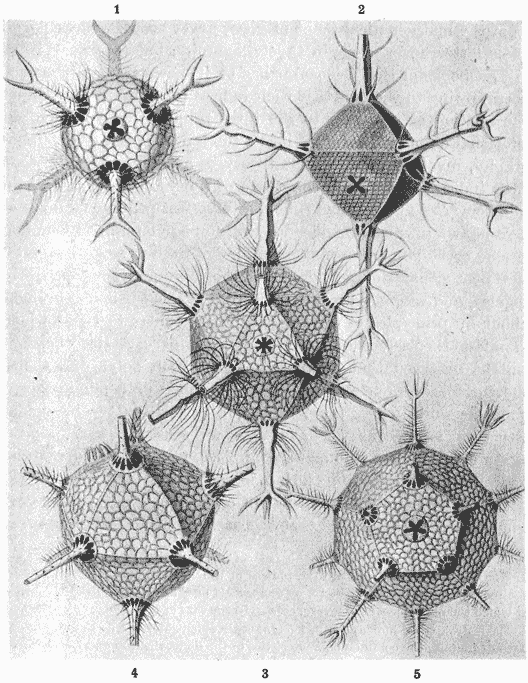
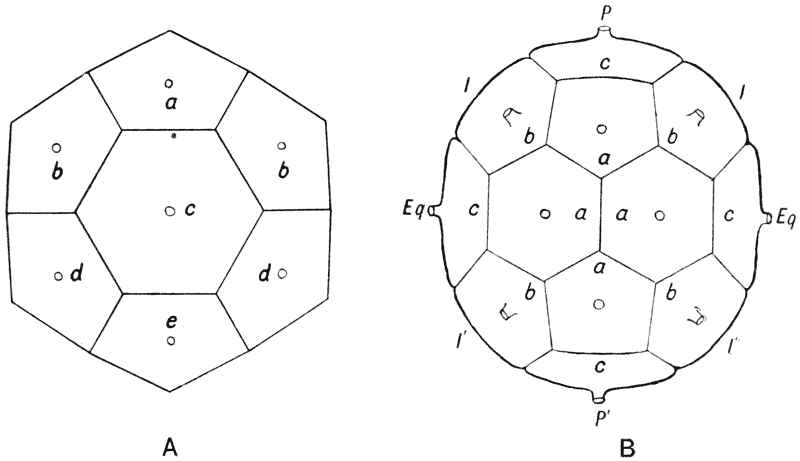
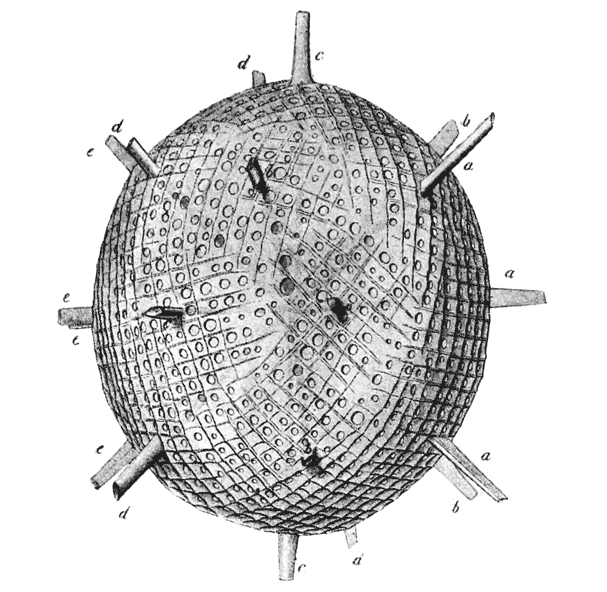
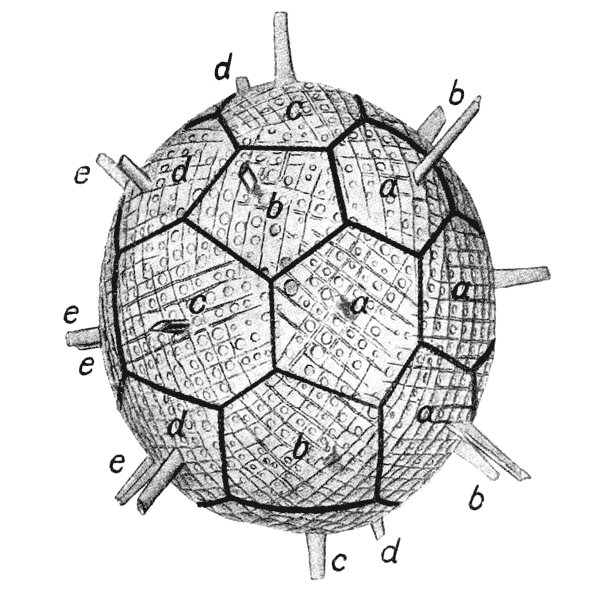
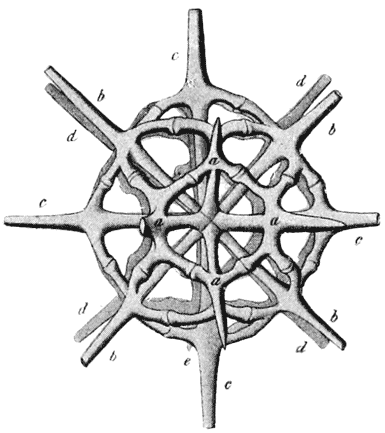
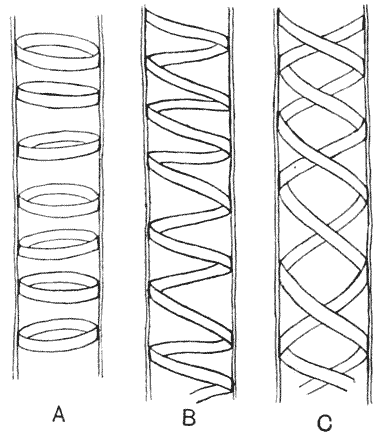
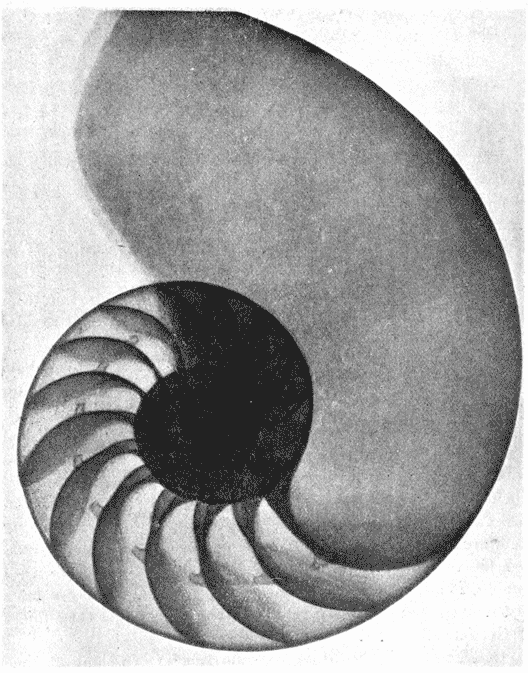
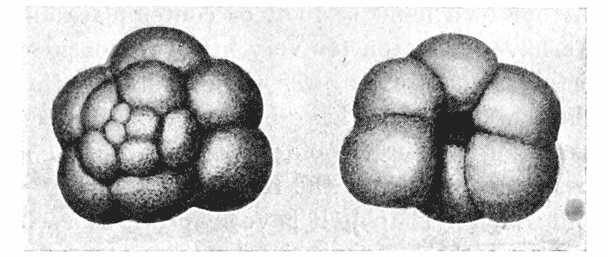
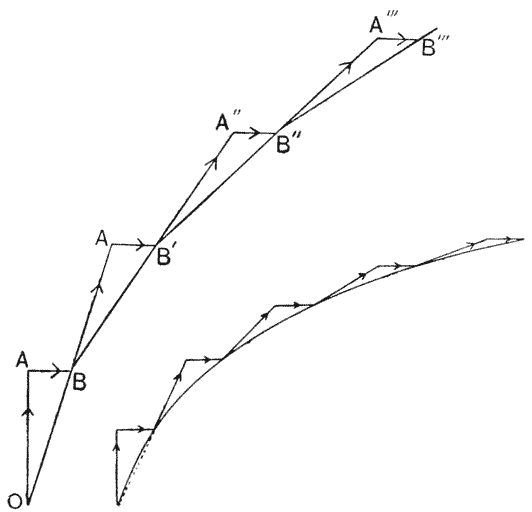
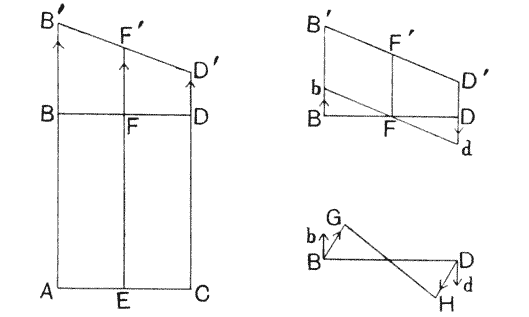
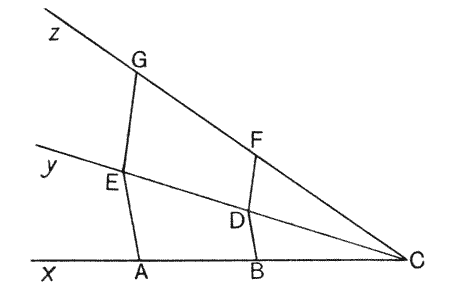
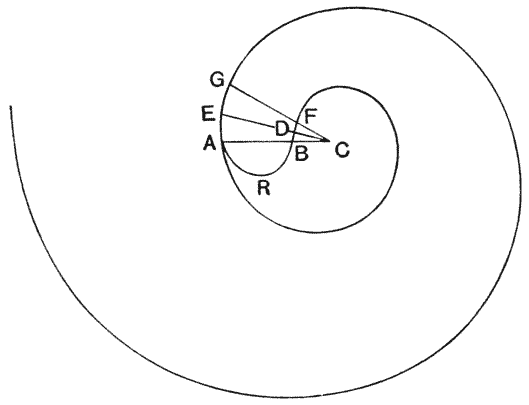
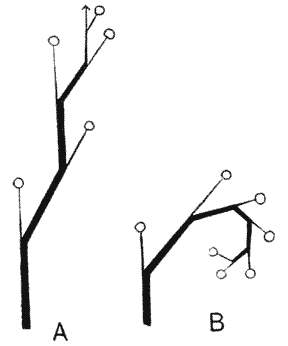
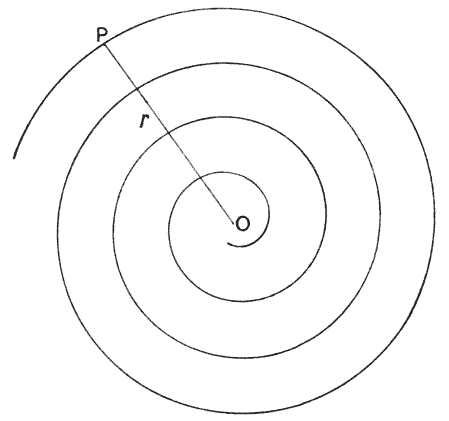
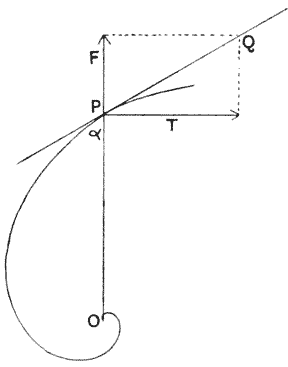
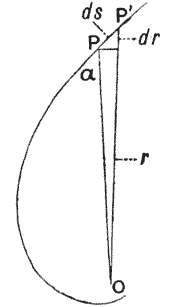
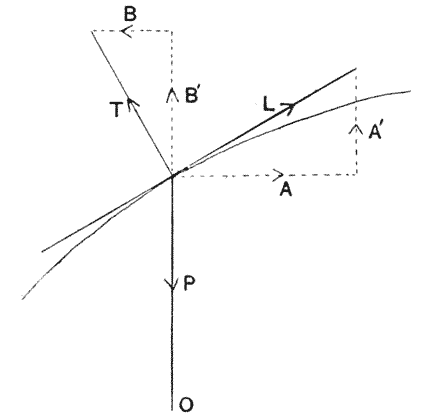
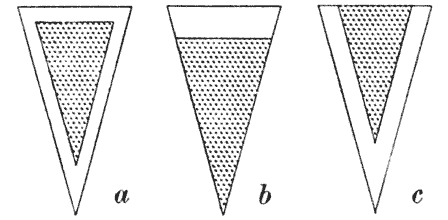
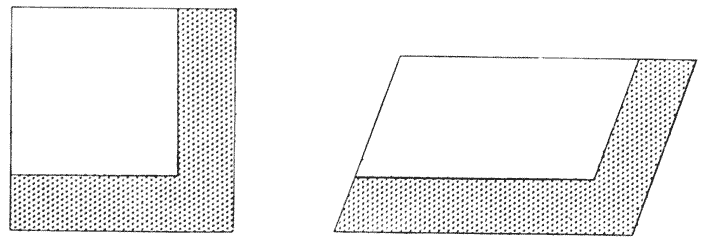
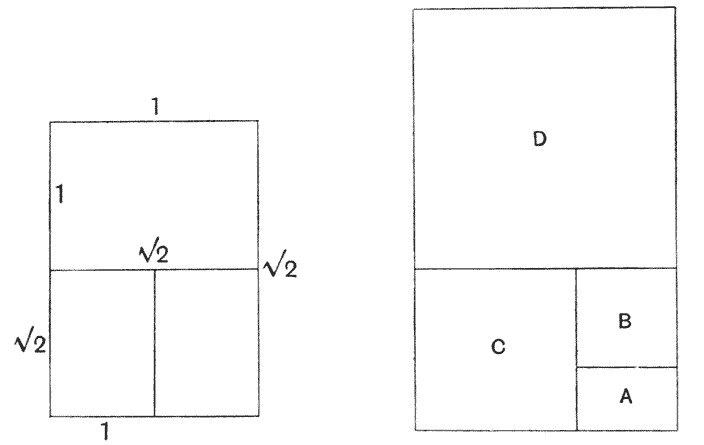
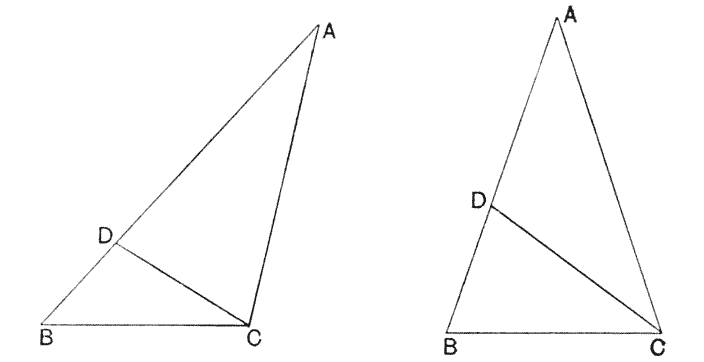
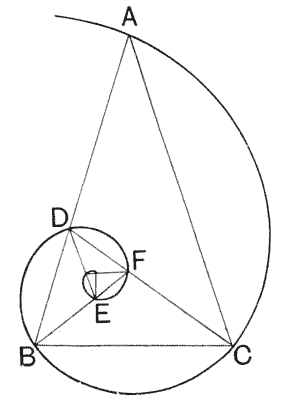

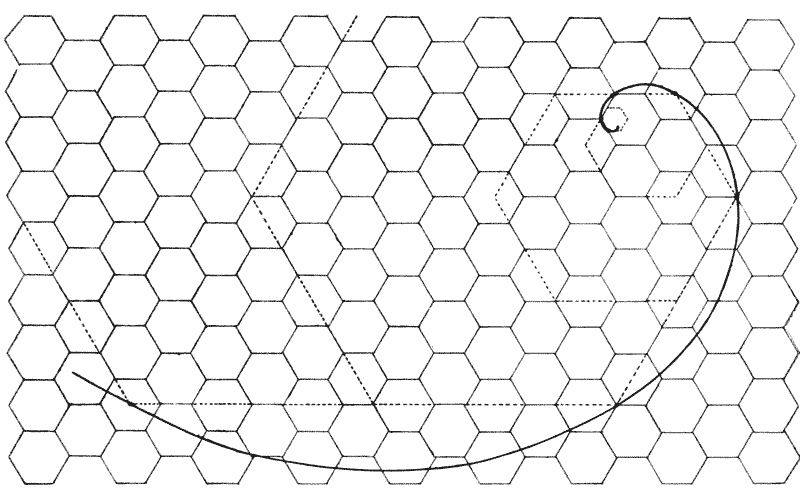
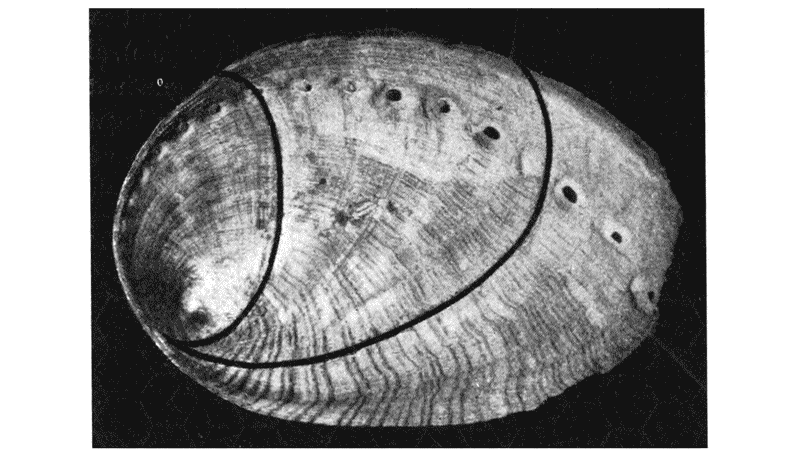
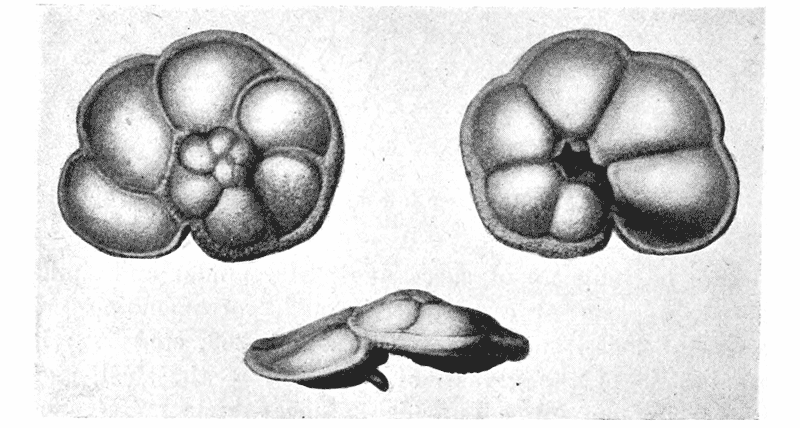
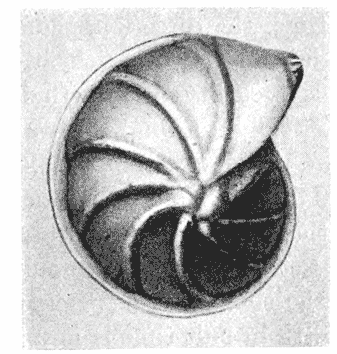
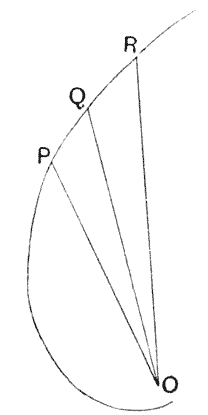
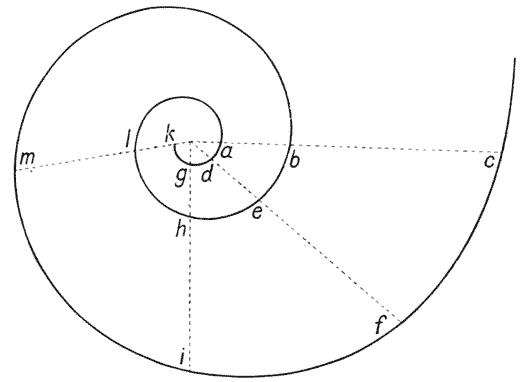
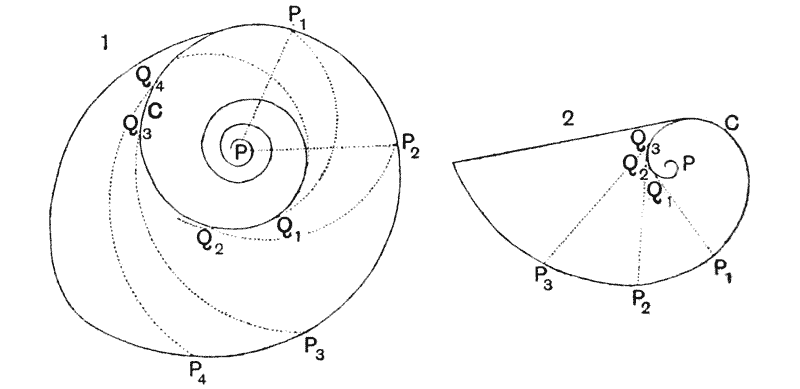
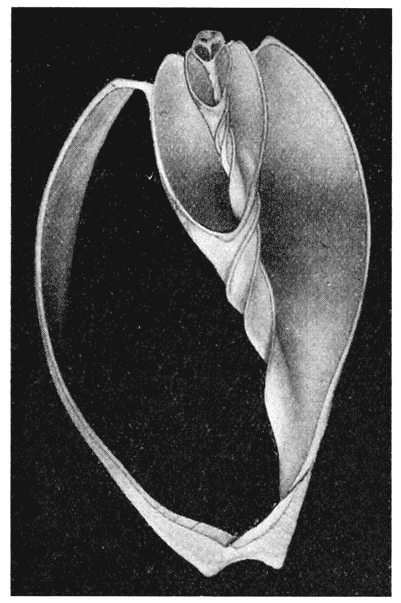
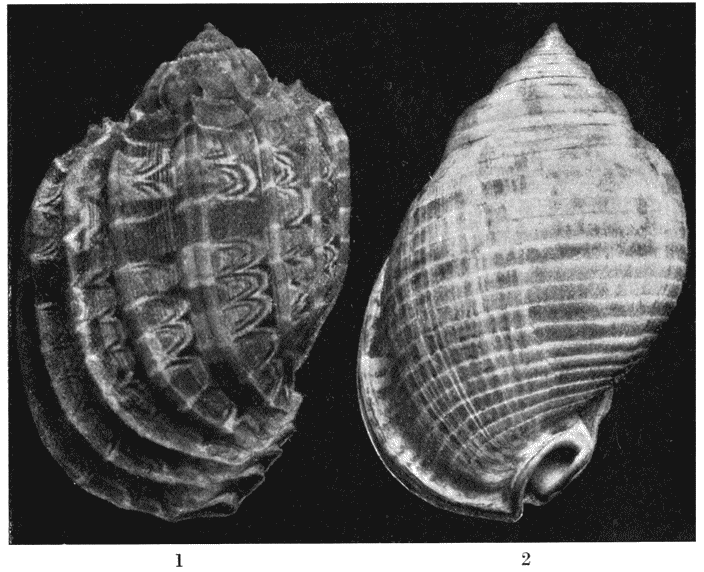
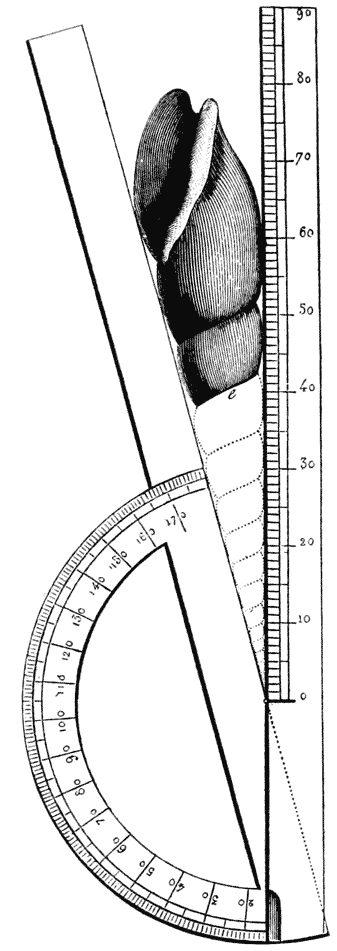
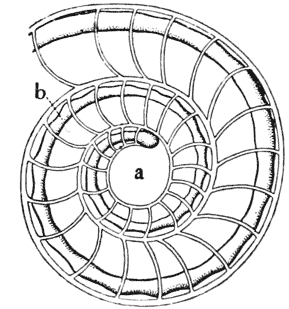
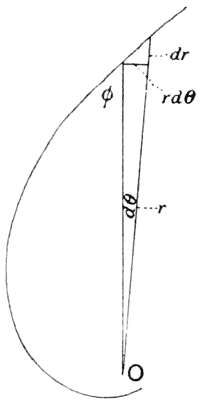
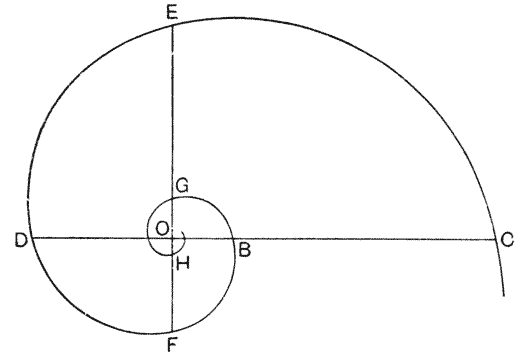
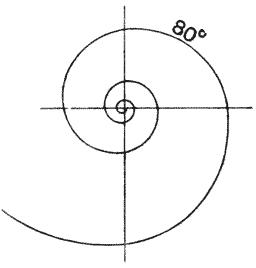
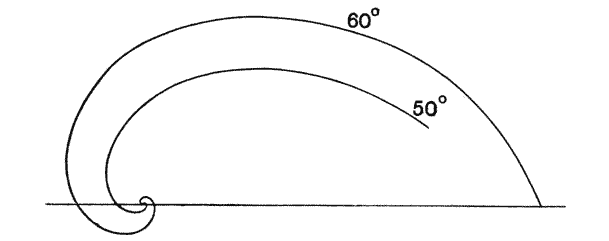
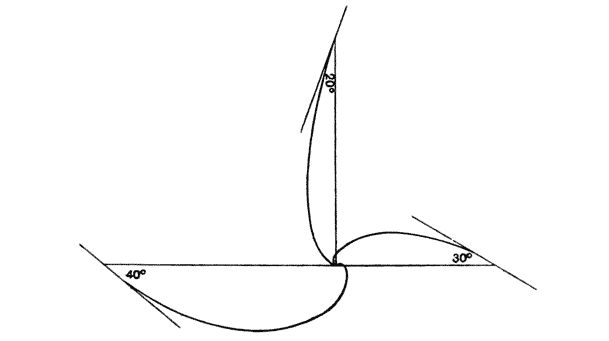
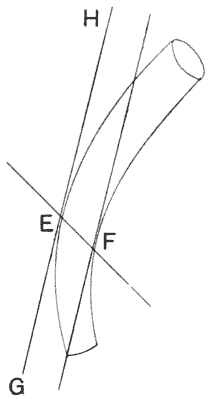
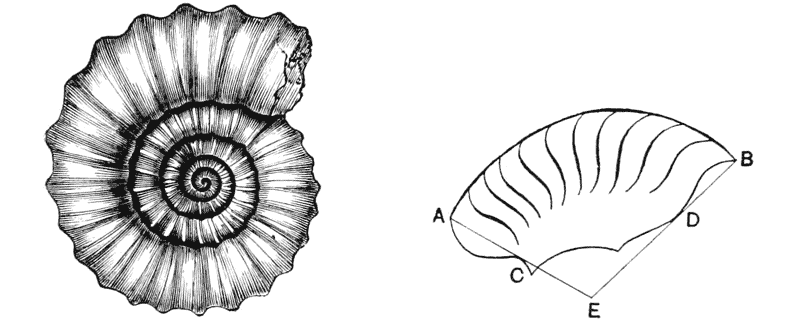
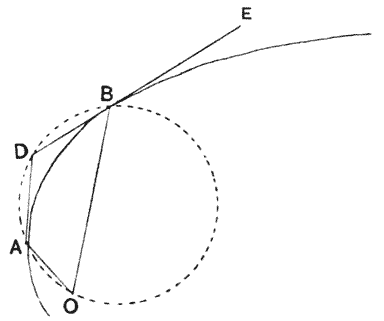
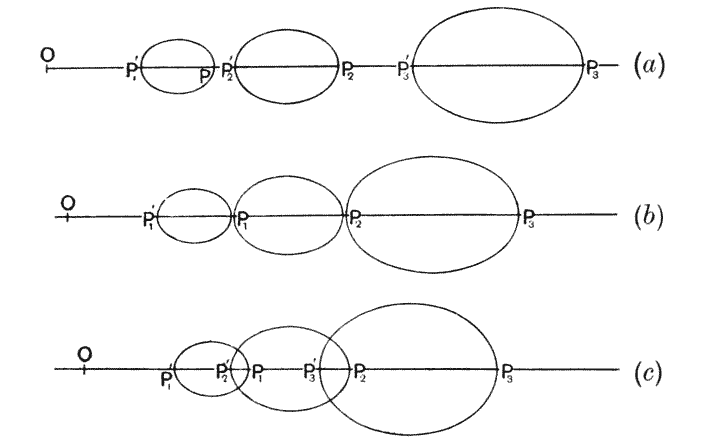
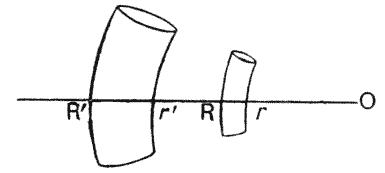

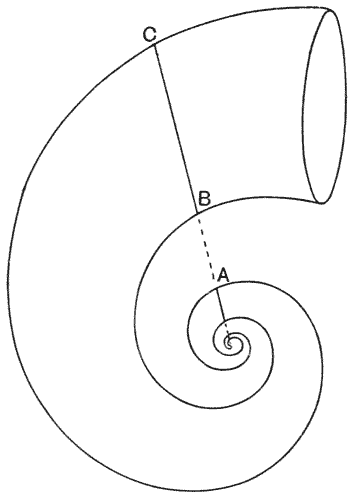
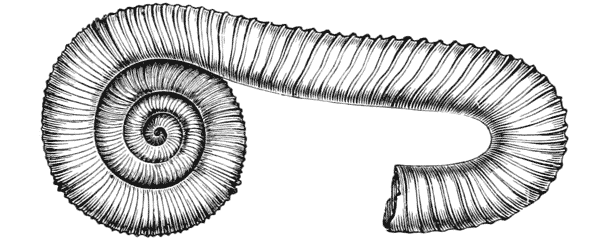
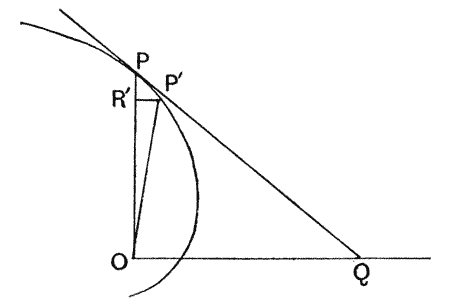
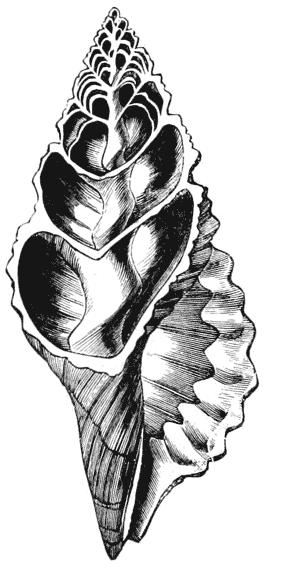
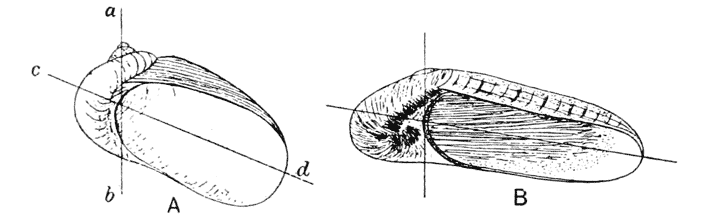
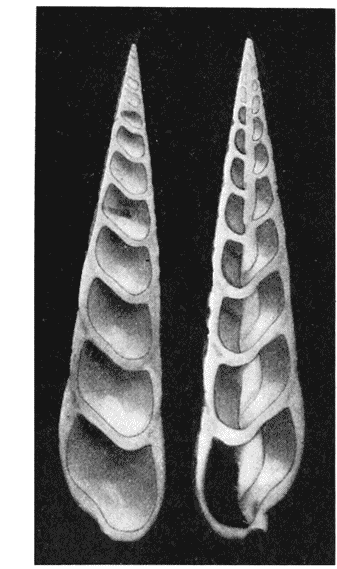
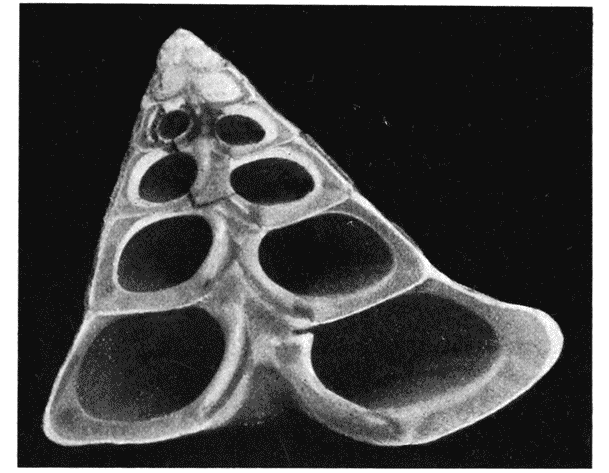
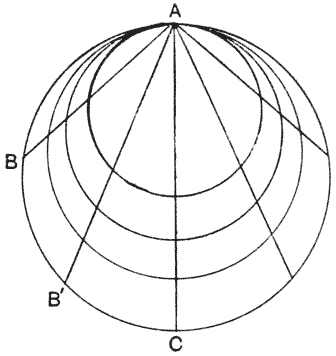
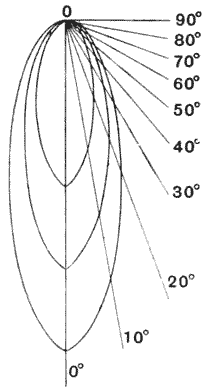
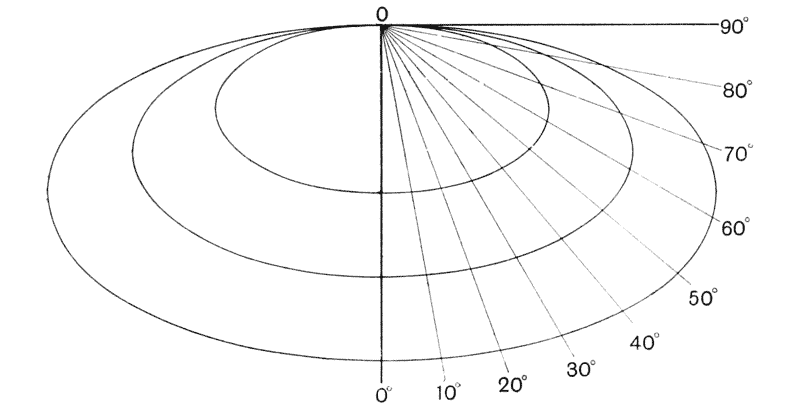
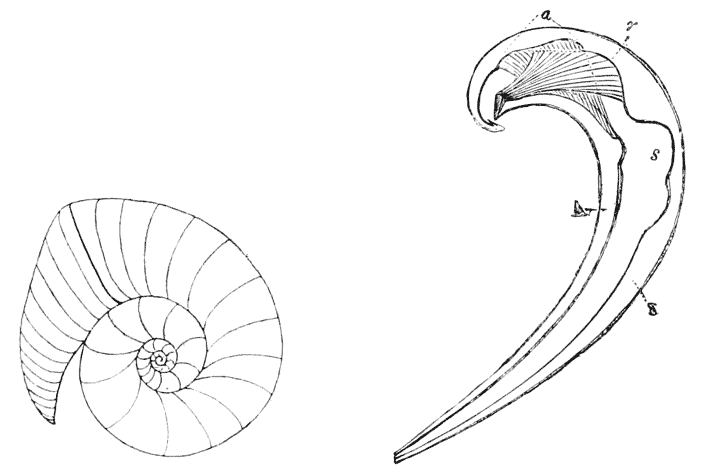
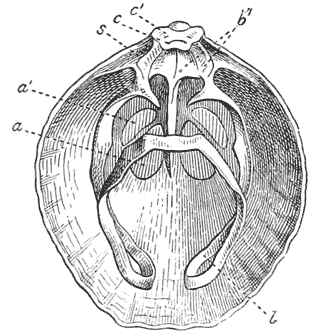
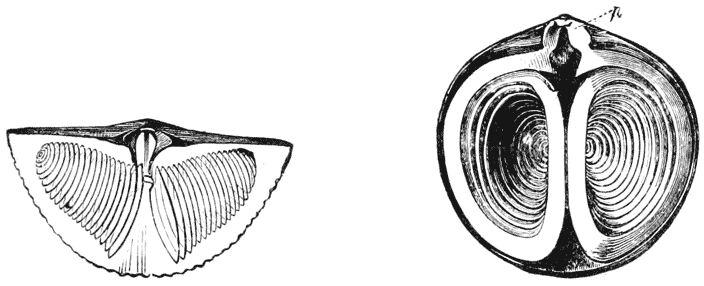
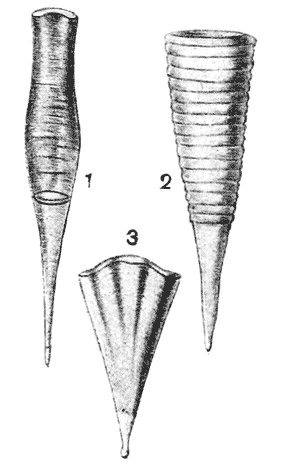
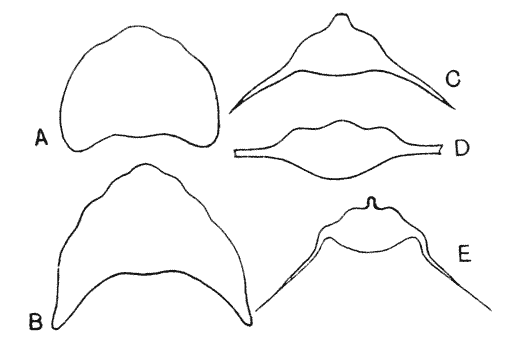
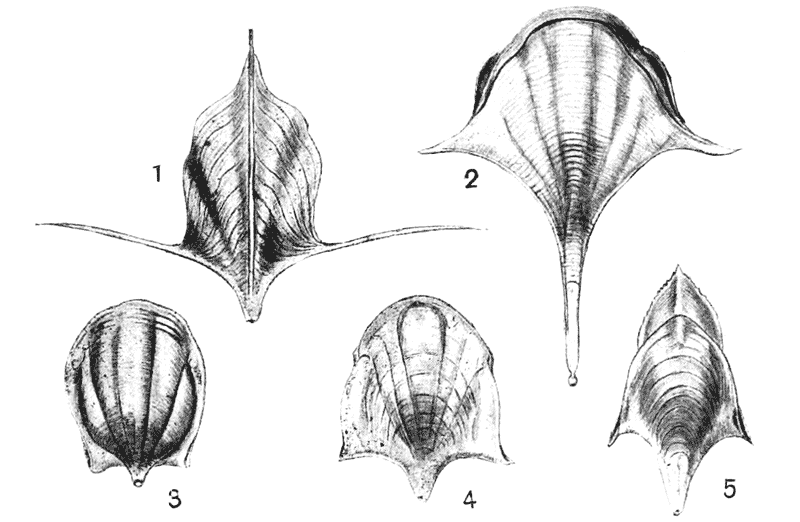
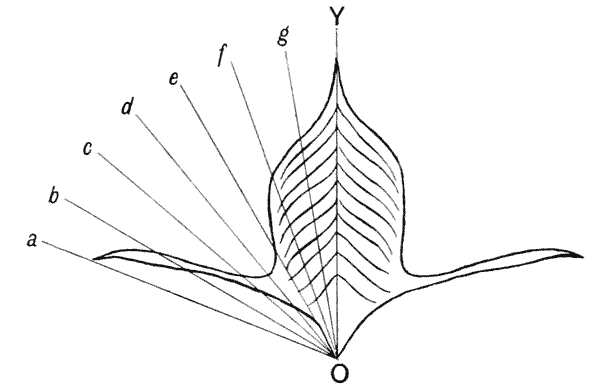
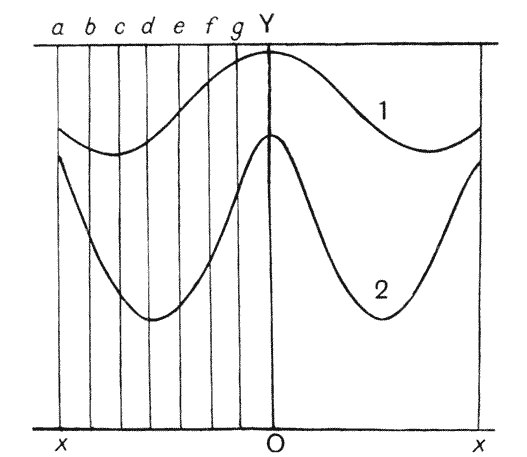
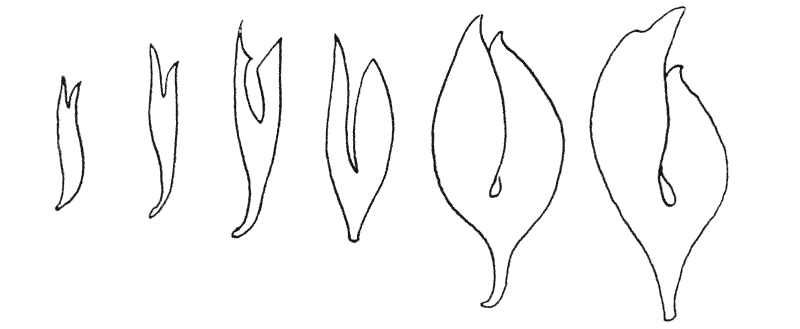
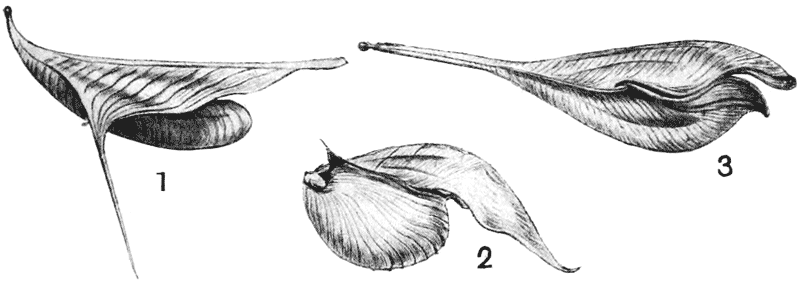
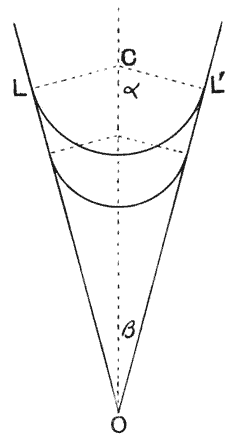
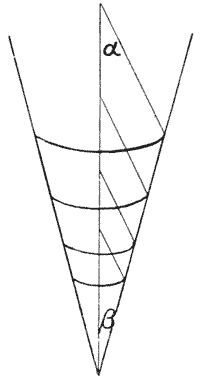
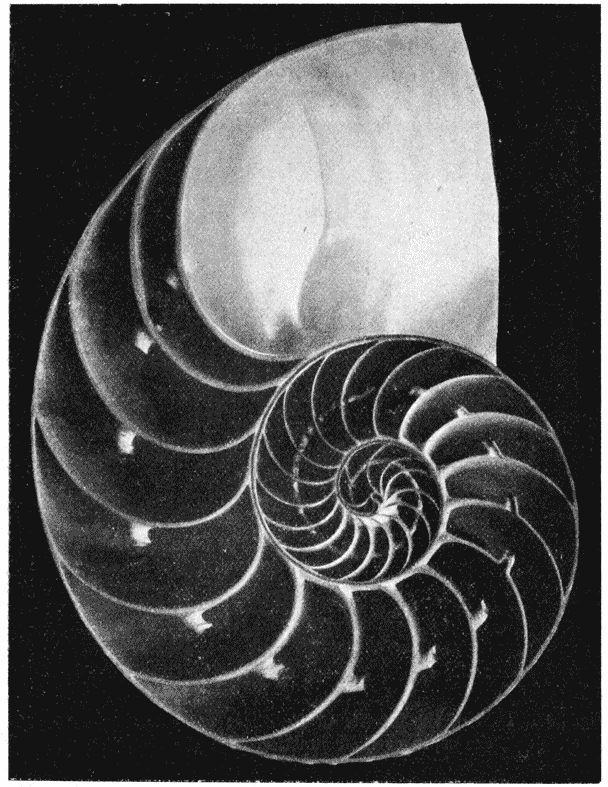
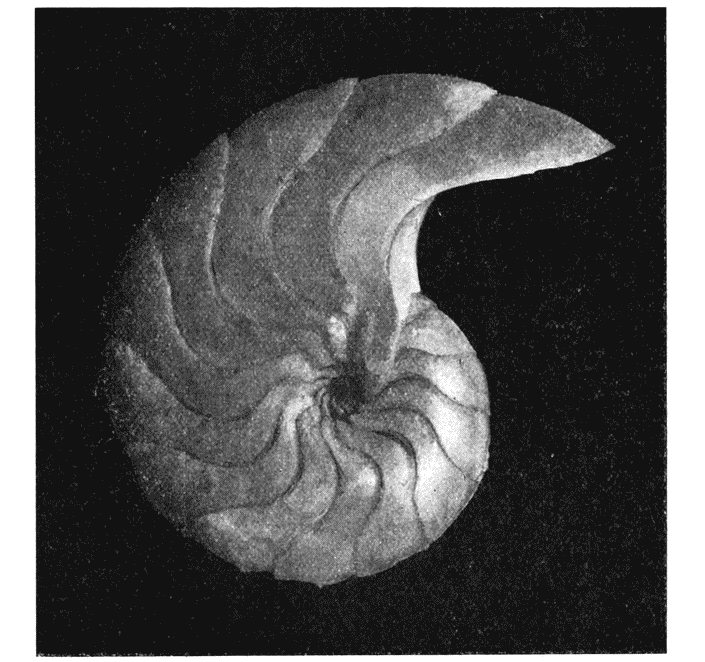
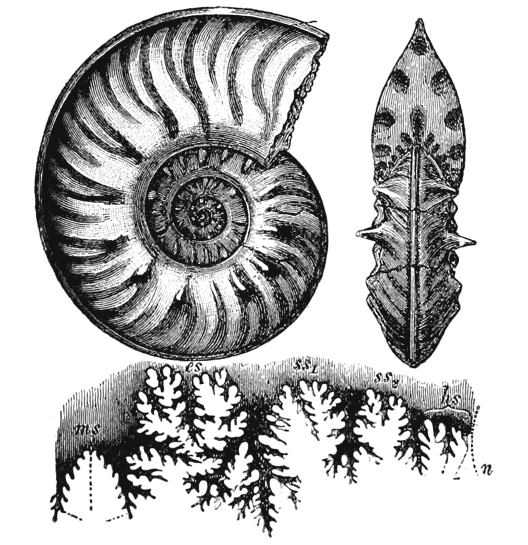
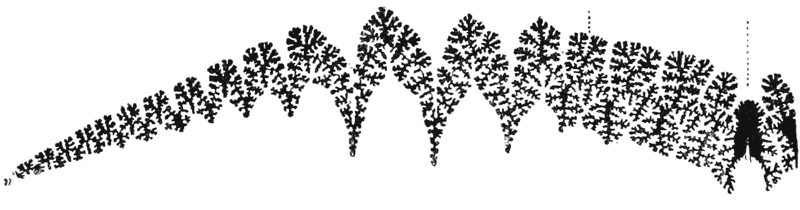
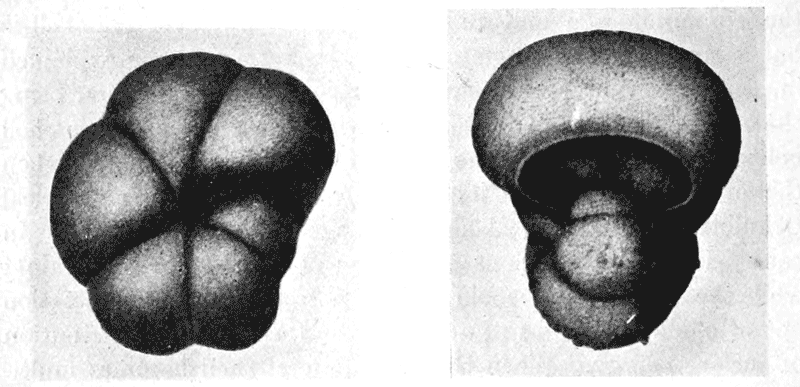
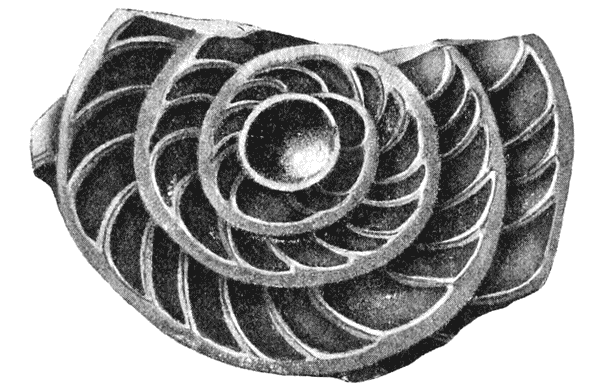
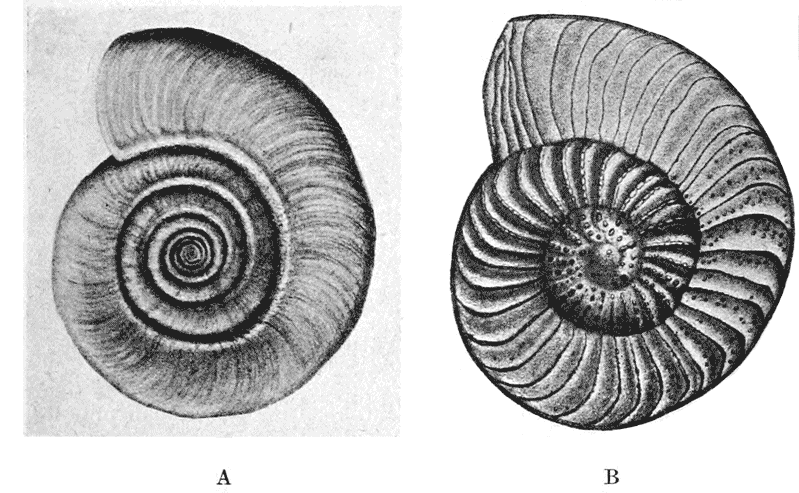
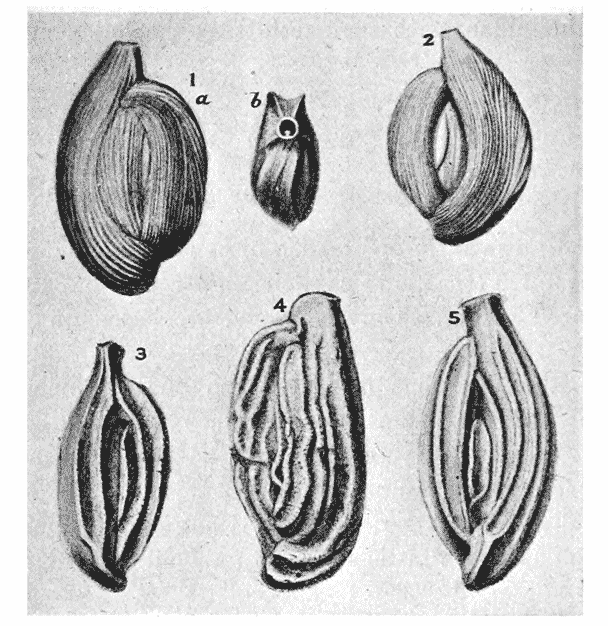
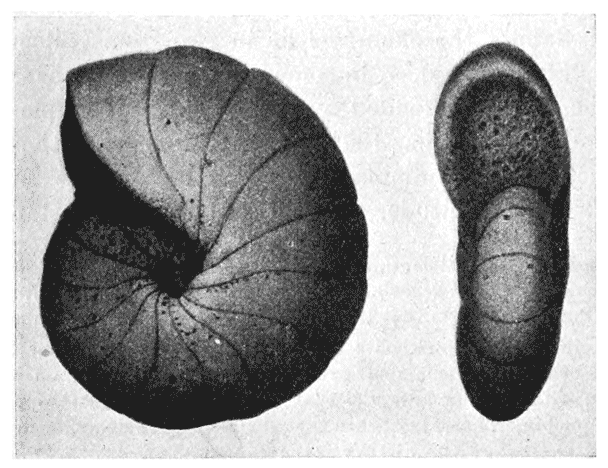

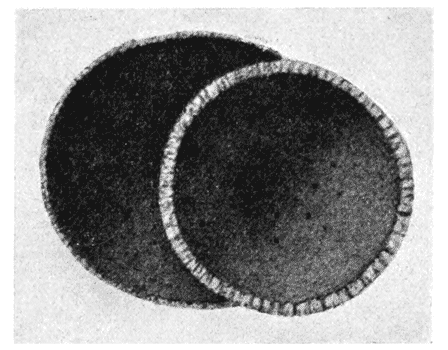
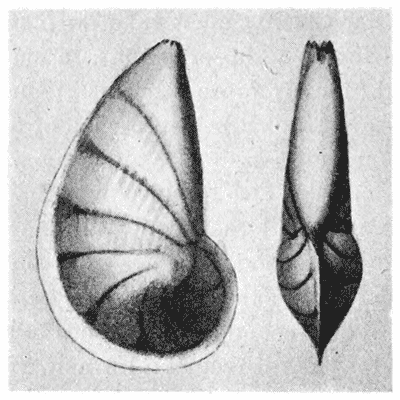
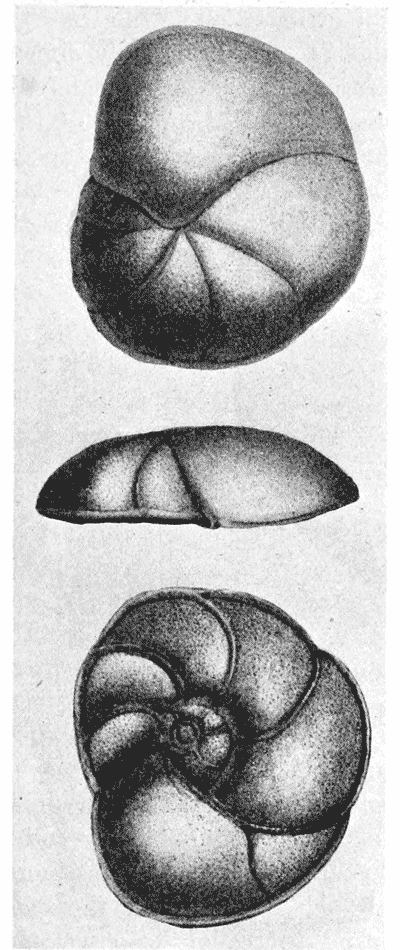
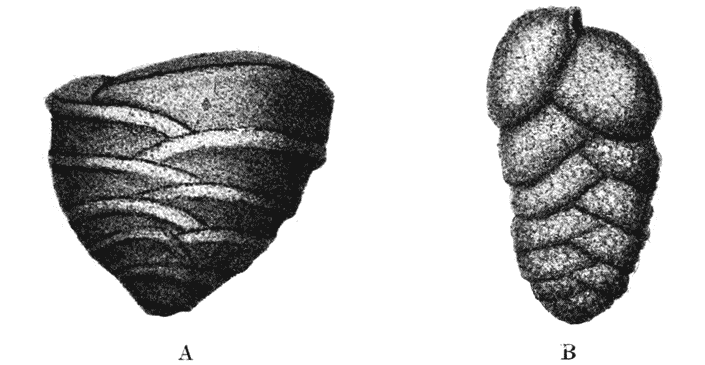
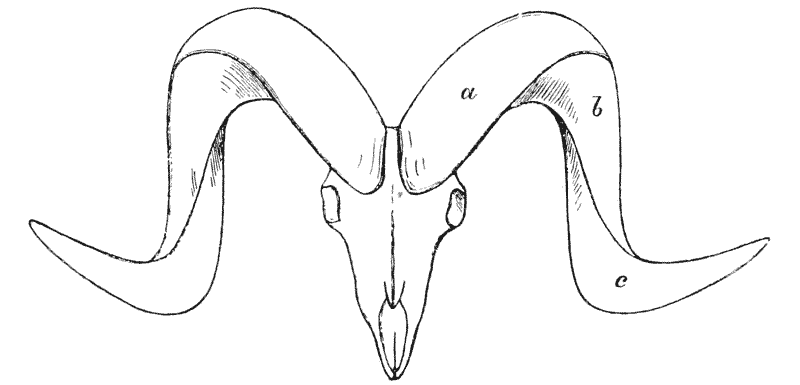
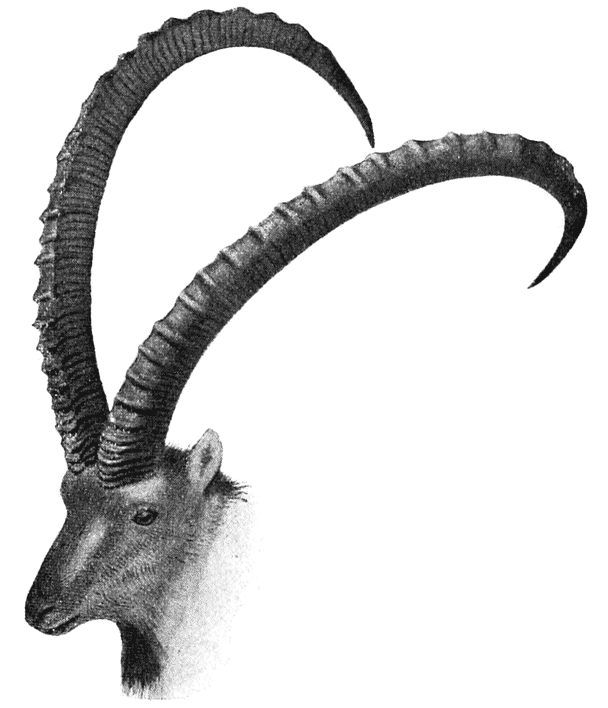
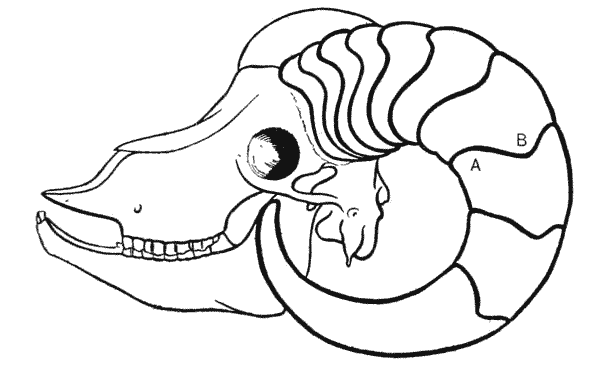
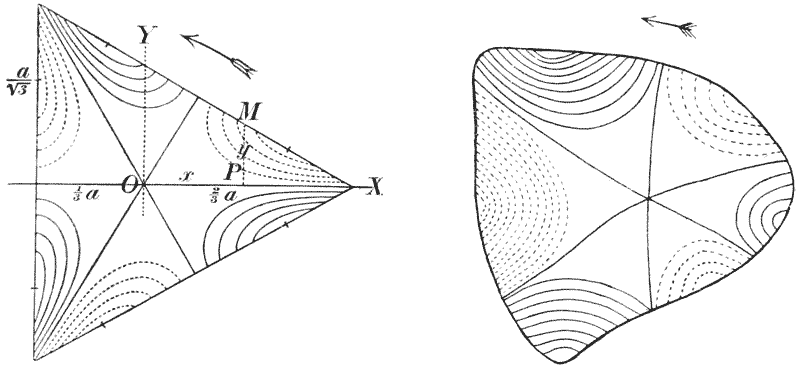
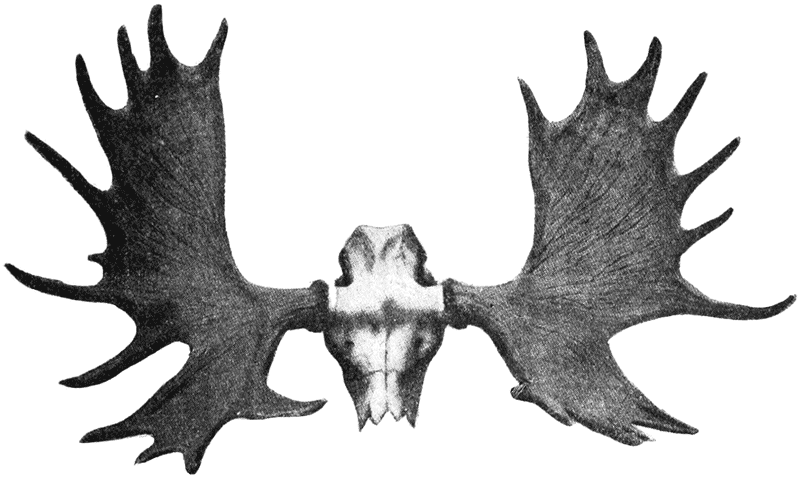
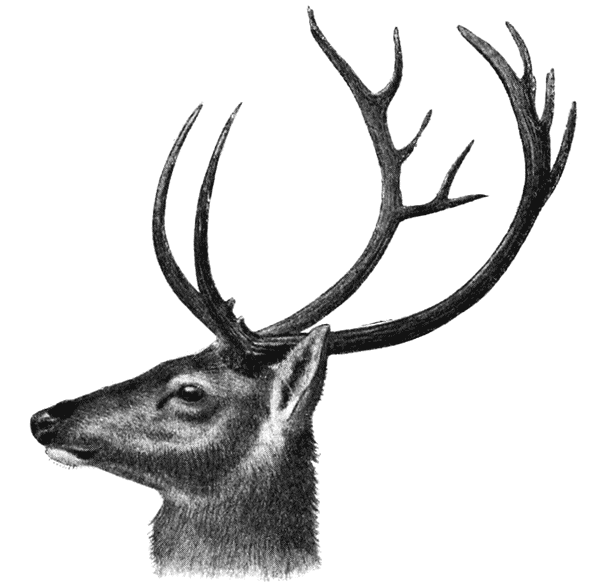
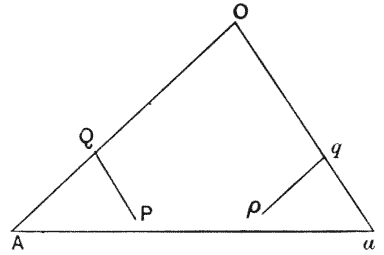
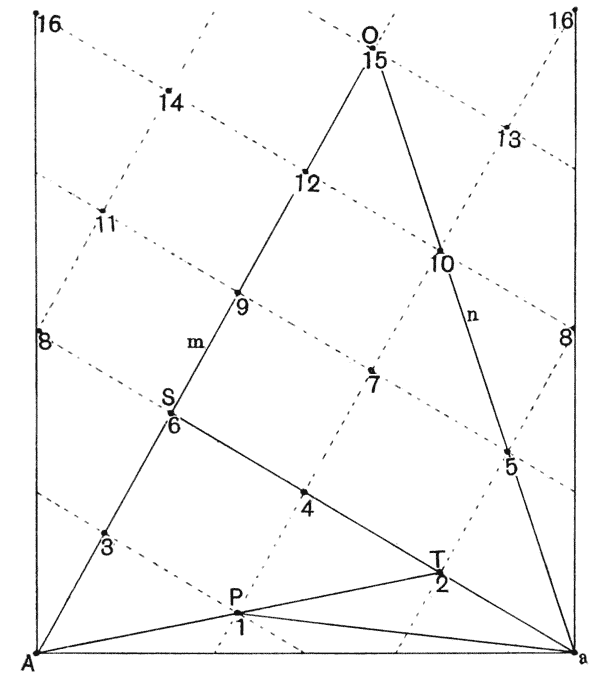
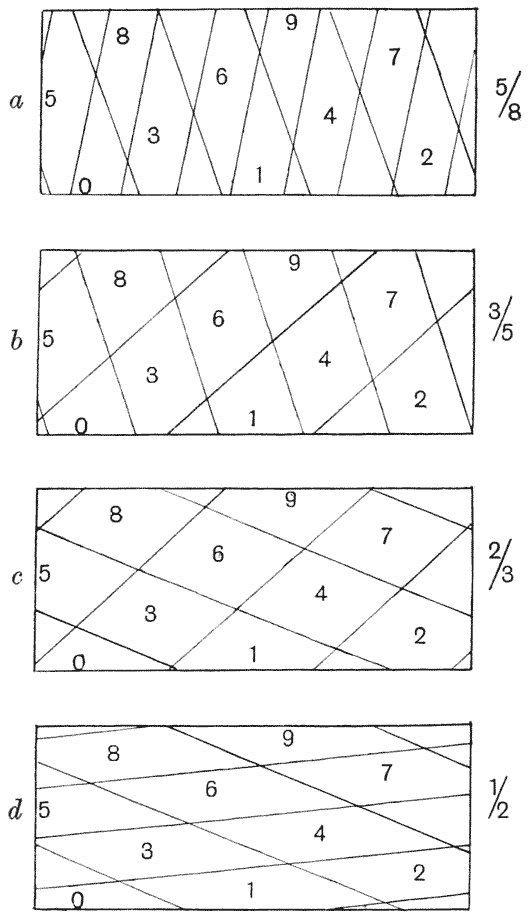
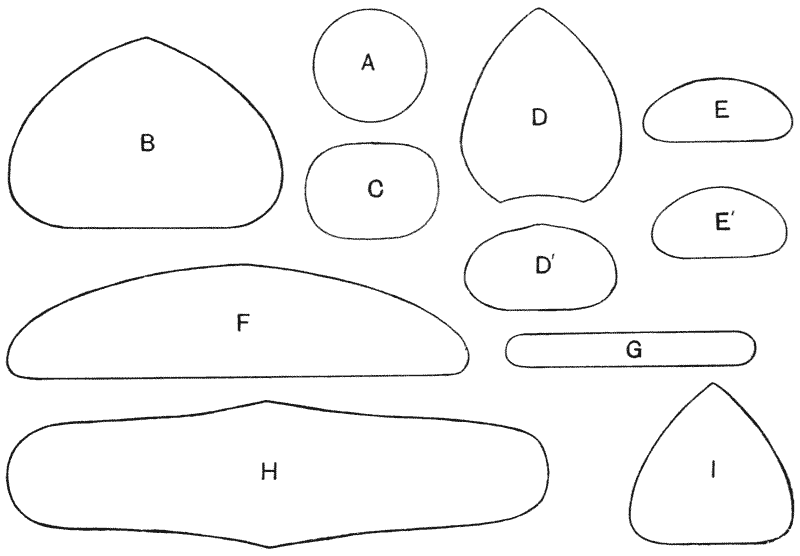
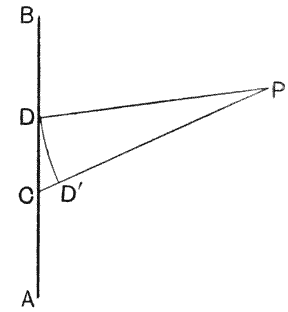
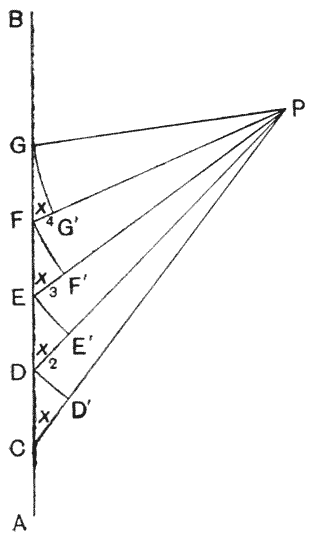
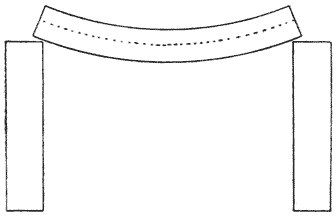

 .